Submarine Telecoms Forum is published bi-monthly by WFN Strategies, L.L.C. The publication may not be reproduced or transmitted in any form, in whole or in part, without the permission of the publishers.
Submarine Telecoms Forum is an independent commercial publication, serving as a freely accessible forum for professionals in industries connected with submarine optical fibre technologies and techniques.
Liability: while every care is taken in preparation of this publication, the publishers cannot be held responsible for the accuracy of the information herein, or any errors which may occur in advertising or editorial content, or any consequence arising from any errors or omissions.
The publisher cannot be held responsible for any views expressed by contributors, and the editor reserves the right to edit any advertising or editorial material submitted for publication.
Contributions are welcomed. Please forward to the Managing Editor: Wayne F. Nielsen, WFN Strategies, 19471 Youngs Cliff Road, Suite 100, Potomac Falls, Virginia 20165, USA.
Tel: +[1] 703 444-2527, Fax:+[1] 703 349 5562.
Email: wnielsen@wfnstrategies.com
General Advertising
Email: sales@wfnstrategies.com
Designed and produced by Unity Marketing
Welcome to the 31st issue of Submarine Telecoms Forum magazine, our Finance & Legal edition.
With tax time coming to much of Europe and America, it seems timely to talk once again about finance and legal issues affecting our industry. Long gone are the Romanesque parties of yesteryear; those high flyers are cooling their heels today in some picturesque federal facility. Instead, our industry is much smaller, much more focused than before. Money is available, but not free wheeling; but it is moving again.
In turn, we have some excellent articles for this issue.
Andy Lipman and Ulises Pin discuss financing for private submarine cable networks, while John Golding outlines one company’s proactive efforts in sustainability. Robert Mazer details the change in the ownership, market and technology of submarine cables, as John Weisbruch illustrates issues affecting system rights-of-way and permitting. A new cable factory in Thailand is highlighted, and we reprise an earlier, excellent article by Charlotte Winter and Marianne Murfett describing simply what to do when things go wrong. Jean Devos returns with his ever insightful observations, and of course, our ever popular, “where in the world are all those pesky cableships” is included as well.
Good reading.
A synopsis of current news items from NewsNow, the weekly news feed available on the Submarine Telecoms Forum website.
Asia Netcom Appoints Chief Financial Officer
Asia Netcom has announced the appointment of Brett Lay as Chief Financial Officer for the company.
www.subtelforum.com/NewsNow/11_february _2007.htm
AT&T to Invest $750 Million-Plus Globally in 2007
AT&T Inc. has announced that it will invest more than $750 million in 2007 to accelerate the delivery of global IP services and solutions to businesses and multinational companies in key markets worldwide.
www.subtelforum.com/NewsNow/18_march _2007.htm
Bookham 980nm Pump Technology Selected by Tyco Telecommunications
Bookham, Inc., a leading provider of optical components, modules and subsystems, has announced that the company’s 980nm OceanBright™ pump laser technology has been selected by Tyco Telecommunications (US) Inc. for deployment in its undersea cable systems.
www.subtelforum.com/NewsNow/25_february _2007.htm
BT to Acquire i2i Enterprise Ltd
BT has announced that it has signed an agreement for the acquisition of i2i Enterprise Pvt Ltd, a Mumbai-based enterprise services company specializing in Internet protocol (IP) communications services for major Indian and global multinational companies.
www.subtelforum.com/NewsNow/11_february _2007.htm
EASSy Awards Supply Contract to Alcatel-Lucent
Alcatel-Lucent has signed a turnkey contract with the East Africa Submarine Cable System (EASSy) consortium to lay a submarine cable network landing in East Africa.
www.subtelforum.com/NewsNow/18_march _2007.htm
E-marine Sets Up New Submarine Cable Depot
E-marine Private Joint Stock Company (E-marine PJSC), Etisalat’s marine services unit that is at the forefront for submarine cable installation, maintenance, storage and related activities in the Persian Gulf and Indian Ocean regions, has recently concluded a long term lease agreement with the Port of Salalah for constructing a new depot and additional berthing facility for permanently stationing one of its cable ships.
www.subtelforum.com/NewsNow/18_march _2007.htm
GCN, Antilles Crossing Announce Joint Venture
Global Caribbean Networks (GCN) and Antilles Crossing, two submarine cable operators in the Caribbean, have announced a new joint venture called Global Caribbean Fiber (GCF).
www.subtelforum.com/NewsNow/11_march _2007.htm
Global Crossing Supports GCN to Promote Development of Caribbean Region
Global Crossing has announced that it is working with Global Caribbean Network (GCN), a submarine cable operator headquartered in Guadeloupe, French West Indies, to enhance global IP connectivity to the Caribbean region.
www.subtelforum.com/NewsNow/4_february _2007.htm
Global Marine Board of Directors Appointed
Global Marine Systems Limited has announced three new additions to their Board of Directors.
www.subtelforum.com/NewsNow/28_january _2007.htm
Iceland Says New Cable Will Make It the World’s Data Storage Leader
With the completion of a second submarine cable between Iceland and the UK scheduled for 2008, Iceland will add yet another reason to the long list of why it is being considered one of the best places in the world for high-security data storage, according to an announcement made by Iceland’s investment agency, Invest in Iceland.
www.subtelforum.com/NewsNow/11_march _2007.htm
Inauguration of International Fiber Link between Dhiraagu and Deutsche Telekom
Dhiraagu, the national communications provider and largest service operator of the Republic of Maldives, has signed a contract on 13th February 2007, with Deutsche Telekom’s International Carrier Sales & Solutions (ICSS).
www.subtelforum.com/NewsNow/25_february _2007.htm
IT Wins Installation Contract for
SHEFA-2
IT International Telecom announced that it has signed a contract with Faroese Telecom, the incumbent telecom operator of the Faroe Islands, to install the new SHEFA-2 fiber optic submarine cable.
www.subtelforum.com/NewsNow/21_january _2007.htm
Lighthouse Completes Cabled Seismic and Tsunami Detection System
A Houston based research and development company, Lighthouse R & D Enterprises, Inc, has recently completed the development of the first integrated real-time cabled seismic and tsunami detection system.
www.subtelforum.com/NewsNow/4_march _2007.htm
Marine Survey for Next Iceland Cable Planned
A submarine cable route survey is planned in the summer of 2007 between Iceland and the United Kingdom or Ireland.
www.subtelforum.com/NewsNow/25_february _2007.htm
Matrix Chooses Tyco Telecommunications for Indonesia-Singapore System
Independent Indonesian telecommunications provider PT
NAP Info Lintas Nusa and Tyco Telecommunications, a business unit of Tyco Electronics and an industry pioneer in undersea communications technology, have announced the signing of a contract between NAP Singapore-based affiliate Matrix Networks and Tyco Telecommunications to construct an undersea fiber optic system that will provide high bandwidth connectivity between Jakarta, Batam and Pontianak, Indonesia and Singapore.
www.subtelforum.com/NewsNow/4_march _2007.htm
MedNautilus and CYTA Will Build First Submarine Ring to Cyprus
The Mediterranean Nautilus Ltd., a fully owned subsiydiary of Telecom Italia Sparkle, and Cyprus Telecommunications Authority (CYTA) have signed an agreement for the construction of a new ring from Cyprus to Sicily, the Minerva System.
www.subtelforum.com/NewsNow/11_february _2007.htm
New World Network to Build New Submarine Network for Trinidad
Columbus Communications Inc. continued its investment commitment in the Pan Caribbean Region as its wholly owned subsidiary, New World Network Ltd., announced that it is building a new undersea fiber optic network that will connect Trinidad to Curacao and further expand the reach of its ARCOS network.
www.subtelforum.com/NewsNow/4_february _2007.htm
New Name Server to Be Installed in Egypt
Internet Systems Consortium (ISC) and GPX Global Systems Inc. have announced the installation of a new mirror of the F-root server in Cairo, Egypt.
www.subtelforum.com/NewsNow/18_february _2007.htm
NSW Wins Faroe Island Submarine Cable Supply Contract
Faroese Telecom has announced the award of a supply contract for the SHEFA-2 cable to NSW to supply the Faroe Island cable.
www.subtelforum.com/NewsNow/21_january _2007.htm
NTT Com Increases Japan-U.S. Backbone
NTT Communications (NTT Com) have announced that it has significantly increased the U.S.-Japan data transmission speed of its Global IP Network to 100 Gbps, further enhancing the company’s leadership position in Tier 1 transpacific IP connectivity, the company said in a statement.
www.subtelforum.com/NewsNow/11_february _2007.htm
NTT Com Says Its Services Fully Restored after Earthquake
NTT Communications (NTT Com) announced that as of January 16, it had restored all communications services that were disrupted after submarine cables were damaged by an earthquake off Taiwan’s southwestern coast on December 26.
www.subtelforum.com/NewsNow/28_january _2007.htm
NTT Com, TTC to Build Japan-Russia Submarine Cable
NTT Communications Corporation (NTT Com), a global ICT solution provider, and Closed Joint Stock Company
TransTeleCom (TTC), a Russian telecom backbone operator, have signed a Memorandum of Understanding (MoU) by which the two companies will jointly establish a 500 kilometer high-capacity undersea fiber-optic cable -- the Hokkaido-Sakhalin Cable System (HSCS) -- that will transmit data at up to 640 Gigabits per second between Ishikari, Hokkaido, in Japan and Nevelsk, Sakhalin, in Russia, based around Dense Wavelength Division Multiplexing (DWDM) technology.
www.subtelforum.com/NewsNow/4_march _2007.htm
Phoenix Locates Adam Air Flight 574
Phoenix International, Inc., (Phoenix) announced its key role in the successful discovery of Indonesian Adam Air Flight 574 lost west of Pare Pare, South Sulawesi in 5,500 feet of water.
www.subtelforum.com/NewsNow/25_february _2007.htm
SBSS Awarded Contract to Manage Dulam Providence
SBSS announced the award of a contract by Dulam International to provide manning and management services for the dive support vessel Dulam Providence. The vessel, previously named Fu Lai, was owned by SBSS with the sale being completed on 30th November 2006.
www.subtelforum.com/NewsNow/4_march _2007.htm
Submarine Cables Damaged by Earthquakes Repaired
Cable operators have reported to the Hong Kong Office of the Telecommunications Authority (OFTA) that the repair of the six submarine cable systems damaged by the earthquakes in December 2006 has been completed.
www.subtelforum.com/NewsNow/18_february _2007.htm
T-Com Details Efforts to Restore Services after Quake
T-Com has released the following description of the events following the Taiwan earthquake of December 26, 2006.
www.subtelforum.com/NewsNow/18_february _2007.htm
Tyco Telecom Completing Work on ARCOS Upgrade
Tyco Telecommunications announced that it expects to complete the multi-million dollar project that will enhance the performance of the ARCOS network operated by Miami-based New World Network as scheduled.
www.subtelforum.com/NewsNow/4_february _2007.htm
T-Systems Says It Is Open for Strategic Partnerships
T-Systems plans on exploring strategic partnerships as a means for continuing its international growth.
www.subtelforum.com/NewsNow/11_march _2007.htm
Xtera’s Nu-Wave XLS Selected for Record Breaking Submarine Cable
Xtera Communications, the leading supplier of all-Raman optical transport solutions, has announced that Faroese Telecom has selected Xtera to supply and deploy the transmission equipment for the SHEFA-2 submarine cable system, providing connectivity between the Faroe Islands, Shetland, Orkney and Scotland.
www.subtelforum.com/NewsNow/28_january _2007.htm
www.suboptic.org
Hosted by: On May 14, a remarkable event will begin. The best minds of the undersea telecommunications industry and related fields will gather in Baltimore, Maryland, for SubOptic 2007. When great minds get together, they use lessons from the past to create the future. And what they discuss at SubOptic 2007 will enable global communications for generations to come. SubOptic only comes along once every three years. Join the discussion.
Financing a New Private Submarine Cable Network
By Andrew D. Lipman and Ulises R. Pin
In the past twelve months there have been several new submarine cable networks announced and the submarine cable industry appears to be rebounding nicely after the stagnation of the past few years. But as any sponsor knows, the construction of a new submarine cable network generally requires hundreds of millions of dollars. So, how does a sponsor obtain funding to bring a project to fruition? Although there is no “one size fits all” answer to the preceding question, the key appears to be in developing a well thought out business plan and diversifying the sources of funding.
Identifying a market opportunity is the first thing in developing a new submarine cable network. Crafting the appropriate business plan is largely what separates a funded project from one that is simply a good idea. Gone are the days of “connect the world” business plans. Today’s systems will likely need to be more regional or local in scope. Developers need to find an underserved region or area where additional capacity is required to cope with expected demand for broadband and other next generation Internet applications. Among the most likely areas where new systems will be funded are the Middle East, Africa and South Asia.
Once a market opportunity is found, the
next step is securing the appropriate technology vendor, which in turn, is a precondition to obtain financing. Until a firm commitment is received from the technology vendor, sponsors cannot be sure of project costs. After the technology vendor is on board, then, sponsors need to take appropriate time to craft an adequate business plan. Suppliers of finance generally want to see detailed, phased budgets that take into account all costs, including finance charges during the construction and operation periods, as well as ample contingencies for cost over-runs and delays. Sponsors need to propose reasonable debt and equity levels and approach short and long term debt sources and equity providers with adequate rewards for the risks involved. Among the most important issues to consider in putting together a successful business plan are: (i) being realistic on assumptions and valuation of the project; (ii) considering the likely requirements from many equity financiers who may have different levels of risk tolerance; (iii) diversifying the sources of debt financing (which may include some form of vendor financing from the technology vendor); (iv) addressing the regulatory/environmental issues; (iv) assembling a top-notch management team; and (v) maximizing tax efficiencies. Securing millions of dollars for a new submarine cable network is
a time consuming affair that involves many moving pieces. Successfully assembling the jigsaw puzzle takes patience.
With respect to the equity piece of the puzzle, it is no secret that in the past few years, private equity firms and venture capital funds have made significant investments in traditional and not so traditional telecom ventures. But is there a role for venture capital or private equity in the submarine cable business? The answer appears to be affirmative. However, private equity firms tend to fund later stage companies and may not be the solution for new developers. Thus, venture capital is likely where the bulk of the equity commitments will come from.
Venture capital funds are extremely selective with respect to the opportunities they pursue. On average, only one in every 400 business plans initially reviewed by these funds would eventually be funded. A key element to financing is knowing the due diligence requirements of the capital sources.
The still fragile state of the submarine cable industry does not enthuse much confidence in the investing community and hence there is resistance to high levels of exposure. Accordingly, the risk will likely need to be shared by various funds. Moreover, venture capital funds likely will not provide all the equity necessary for the project. Equity will need to come from various sources, including some of the sponsors’ own funds as well as pre-sales or capacity commitments that the sponsors can obtain.
After the equity commitments are secured, the next step is finding the debt. In general, a project would require no less than one third equity with the rest of the capital to come in the form of debt. Submarine cable networks are generally financed using a pure “project finance” structure (i.e., senior secured, non-recourse or limited recourse debt payable solely from the cash flows
of the project). The obvious choice for obtaining funding is looking to one or more commercial banks. However, these institutions were some of the most affected by the restructurings of the late nineties and have some natural doubts about returning to the industry. Nevertheless, in the past few months we have seen some banks starting to look favorably again to submarine cable projects, but the conditions on the loans are becoming more stringent.
However, not all the debt needs to come from the same source. An alternative to commercial debt or an additional source of funding may be the availability of financing from multilateral organizations. Depending on the location of the project, sponsors should look to national or regional organizations (e.g., Asia Development Bank, Inter-American Development Bank, OPIC, World Bank, etc.). These multilateral organizations generally provide better financial terms than commercial banks. However, financing usually comes with more rigid conditions, including restrictive provisions not typically found in commercial debt documents.
Moreover, multilateral organizations generally provide much more than just debt. Although not typical, development agencies may also act as equity sponsors. An example is the International Finance Corporation’s (“IFC”) equity program for telecommunications companies. Under this program, the IFC becomes a long term, passive investor subscribing between 5%-15% of the project’s equity. Other services generally provided by multilateral organizations are acting as guarantors, providing political risk insurance or currency risk insurance as well as technical cooperation or grants for feasibility studies.
In conclusion, although the submarine cable industry would likely never be as exuberant as it was in the late nineties, the future of the industry looks much brighter than in the recent past.
Based on recently announced new projects and our own impression of the market, the industry appears to be on an upswing and more money is flowing to sponsors. Nonetheless, only by crafting a well planned business plan will sponsors maximize the likelihood of success.
Andrew Lipman has spent more than 25 years developing the firm’s Telecommunications, Media and Technology Group into one of the largest practices of its kind in the nation. He practices in virtually every aspect of communications law and related fields, including regulatory, transactional, litigation, legislative and land use. The TMT Group is international in scope, representing clients in the U.S., Central and South America, Europe, Asia and other parts of the world. Andy represents clients in both the private and public sectors, including those in the areas of local, long distance and international telephone common carriage; Internet services and technologies; conventional and emerging wireless services; satellite services; broadcasting; competitive video services; telecommunications equipment manufacturing; and other high-technology applications. In addition, Andy has managed privatizations of telecommunications carriers in Europe, Asia and Latin America. He has been involved in nearly every new legal and regulatory policy at the Federal Communications Commission (FCC), at state public service commissions, in Congress and before courts to open the U.S. local telephone market to competition. He also helped shape crucial provisions of the Telecommunications Act of 1996 and has used similar approaches to promote the opening of foreign
markets. He also obtained one of the first competitive local service and interconnection agreements in continental Europe and the first competitive fiber network application in Japan. Andy’s expansive practice includes the strategic analysis of companies’ telecom user agreements, including renegotiating existing agreements, and when necessary, negotiating new, more favorable telecom user agreements.
Ulises Pin represents domestic and international telecommunications companies before the Federal Communications Commission as well as telecommunications regulators in Mexico, Latin America, Europe and Asia. He advises clients on wireline, wireless and international communications, value-added services, VoIP, infrastructure projects (land and submarine networks), satellite services and emerging technologies. He also represents emerging and established companies in M&A transactions, public and private security issuances, as well as in debt and vendor financings in various industries, including, telecommunications, technology, energy, retail and waste management. He has extensive experience in the drafting and negotiation of telecommunications and technology contracts on behalf of telecommunications operators, equipment manufacturers and large telecommunications users. Prior to joining the firm, he worked at Herrera y Asociados, S.C., a corporate law firm in Mexico City where he advised Mexican and international investors in corporate and securities matters.
Saving the Planet Means Being Green At Sea As Well: One Company’s Proactive Efforts in Sustainability
By John Golding
All of a sudden, the world seems keen to be green. Politicians are photographed on bicycles, prominent figures are making pledges to reduce or even stop their personal travel via air, and international corporations are publishing statements and updates on how they are reducing their carbon footprint.
Sustainable development is a new concept, informed by growing levels of mass consumption and the effects that any irresponsible industry can have on the earth’s resources. Global warming and recycling are not new themes, but we finally are waking up to the stark reality that if we continue at such a rate the planet will not survive forever.
Because of its interface with land and sea, shipping is a unique form of transport and has a pivotal role to play in the development of sustainable practices. But the challenges are numerous. Shipping may currently be enjoying good times, but commercial pressure demands higher speeds and sleeker fleets, this means higher costs, not least in recruiting and retaining talented crew members.
Pollution is also a major concern and countries like France are taking more serious measures against environment pollutions from incidents such as oil slicks. Since 2002, the court in Brest has handled 37 cases of illicit pollution and in 2004 it raised its fine for
such an offence to an average of £550,000, with commensurate prison sentences going up from two years to 10 years. The natural corporate reaction is to review policy and procedure to safeguard against illegality, whether intended or otherwise.
Our business brings us into contact with all elements of sea life and the marine ecosystem. The environment is subsequently an important concern for us and as a result we have established a dedicated committee which meets on a quarterly basis to review the environment efforts of our business and to establish benchmarks. We have also put in place a dedicated ecology policy.
A Switch-it-off; campaign throughout Global Marine, from ship to shore discourages redundant power usage such as idle computers and mobile chargers. Kettles, light switches, even light-bulbs have all been targeted alongside conventional wisdoms on recycling. Even our e-mails come with a postscripted question at the bottom: Do you really need to print this e-mail?
However, this didn’t happen overnight - we took advice from the Carbon Trust and we are continually looking for new ways to save both power and energy.
All the offices and warehouses at Portland where our UK ships are docked have
entered in the review and engaged with the importance of energy-efficient equipment.
The Carbon Trust audit also suggested things like putting heaters on timers and halving the number of fluorescent lights in place. An additional benefit is that cost savings on this initiative alone are running at £150 per month.
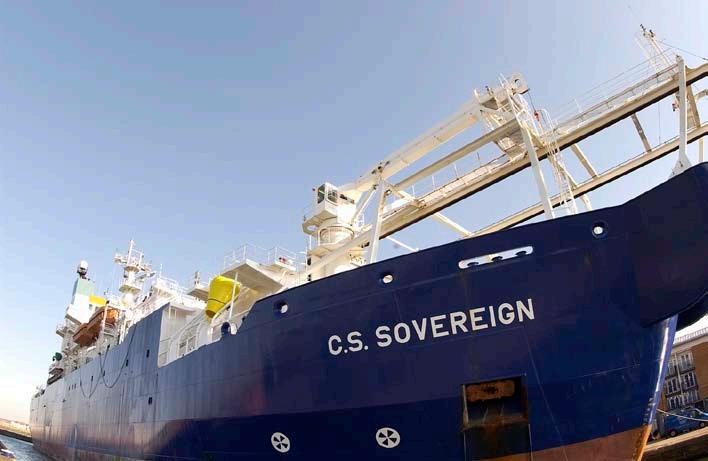
Our goal is to have 50% of our fleet connecting to shore power in port instead of keeping motors running; this is less realistic for the remaining half due to geographical locations and prohibitive costs. The Sovereign and Wave Sentinel vessels connect to shore power in UK ports, with the Wave Venture doing the same at its base in Victoria, Canada.
Working with electricity provider Swalec in the UK, we have also agreed a new tariff (having previously consumed across five tariffs in one day, much like a factory) to ensure effective and optimal use of power. Using day/ night tariffs also allows for better long-term planning on energy consumption. The savings on this are much higher than anticipated with almost a £4,000 monthly reduction per vessel.
The effect on the bottom line is three-fold. Emissions are cut, tariff costs are slashed and maintenance requirements are reduced, with parts having to be replaced less frequently.
Approximately three tonnes of fuel are saved per ship each day through this smarter use of energy, something which is incredibly important in a situation where 40-50 crew members live on board.
based ships. This alone has resulted in a 70% reduction in waste costs over a three-year period.
Further efforts are concentrated on reducing waste with the crew recycling all paper, cardboard, plastic and cans on the two UK-
We are committed to achieving our environmentalist strategy throughout the fleet. In Bermuda, home port for the Cable Innovator, for example, shore power is limited due to infrastructure but recycling water is easier and more effective. Water there can cost as much £3 per tonne, three times the
cost of domestic facilities, which proves an expensive burden. One ship used to spend as much as £17,000 each year on water. So In Bermuda, we now collects the rainwater from its depot and recycles it for on-board usage.
We have recently invested in biodegradable Panolin oils in all of our sub-sea operational equipment. Contamination is a potential risk factor in the sub-sea arena, but we have to be aware of sensitive environmental issues
and need to achieve carbon neutrality. This is an expensive option but what price can you really put on the cost of on the environment and value of marine life.
John Golding is Company Security Officer and Designated Person Ashore for Safety at Global Marine, which means he is responsible for the company’s fleet of ships, their masters and commanders, officers and crew. As Operations Director John also manages Human Resources and Training; his focus is on how we can best develop our people and meet everyday personnel needs. After working on ships for 20 years he came ashore in 1999 and since joining Global Marine John has implemented a number of successful initiatives including a fleet security plan, which resulted in Global Marine having the first British flag vessel with an International ship security certificate. After working on ships for 20 years he came ashore in 1999 and since joining Global Marine John has implemented a number of successful initiatives including a fleet security plan, which resulted in Global Marine having the first British flag vessel with an International ship security certificate.
From CirCuits to terabits
by robert mazer
The last ten years has been a wild ride for submarine cables. The change in the ownership, market and technology of submarine cables during this time has been nothing short of astonishing. Up until the middle 1990’s, submarine cables were owned by a small club of international carriers. It had been this way for over 100 years since the first transatlantic cables were brought into service. Both ownership and access to submarine cables were tightly controlled. With the introduction of private (non-club) cables this began to change. Non-club members purchased Indefeasible Rights of Use (“IRU”) and privately owned cables were constructed. In 1990 cables primarily carried telephone calls and some data services. Does anyone remember the emergence of x.25 networks? Today, submarine cables are the backbone of the worldwide web, numerous private networks as well as international telephony which has become increasingly accessible to everyone. Zeros and ones are zipping over these networks to places all over the world. As the traffic has grown, the cost to consumer of international telecommunications has rapidly declined. This has only fueled increased traffic demands. The technology has also made enormous strides in the last ten years. It was
not so long ago that we were speaking of cable capacity in terms of individual telephone circuits. Today we are speaking about Terabit cables, with vast amounts of capacity to send very large volumes of data almost anywhere in the world.
With all this change in the world of undersea cables, there has been one constant: the law of supply and demand. Historically, cables were built based on meticulous traffic planning projections by the club cable operators. Historical traffic growth patterns and new traffic demands were analyzed before a decision was made to build a new transoceanic cable. AT&T, the predominate U.S. carrier, was the leader of this process and worked closely with its subsea cable division. This process allowed for the orderly replacement and upgrades of the subsea cables, facilitating the raising of the capital necessary to pay for the new cable. While not a perfect system, it provided for a process to get the best possible information on demand in order to ensure that there was sufficient revenue to cover the cables cost.
This process began to break down in the early 1990’s when a confluence of events made it possible to finance and construct new subsea cables. First, the new competitive
telecommunications carriers watched their international traffic grow and began to look to own and operate their own cables. They were increasingly leery of obtaining international telecommunication services from their principal competitor — AT&T — which had a bottleneck access to the cable landing stations in the U.S. Often, competitive carriers would have to pay extremely high rates to get backhaul access to the cable landing stations. As the competitive environment grew, competitive carriers increasingly sought new international telephony facilities.
Second, regulations were revised to allow new competitive cables to be built and operated. This was initially allowed in the U.S., later in Europe and finally in Asia. The changing regulations helped ferment an environment that would lead to the introduction of new competitive cables. The initial private cables were built by new emerging carriers. These carriers had immediate traffic requirements and were in a position to match supply and demand. While these cables were more speculative than traditional club cables, these new competitive operators could with some assurance make revenue projections that would assist in supporting the capital requirements for the cable.
Third, at the same time as the introduction of competitive telecommunications service providers, two other things were happening that moved cable deployment away from the historical planning process. The emergence of the internet, Virtual Private Networks, and private corporate networks all contributed to soaring traffic growth. Also, new innovative means to raise capital facilitated the development of large projects with large financial requirements. Relatedly, as the equity and debt markets exploded in the late 1990s the need to demonstrate that the revenue would exist to support a submarine cable project began to disappear.
In this environment it was only a matter time before highly speculative cables would emerge. In the late 1990s Global Crossing proposed a transatlantic cable which setoff a wild scramble to raise capital and build and operate new private cables around the world. Over the ensuing years billions of dollars were raised and numerous cables were built. All this was done based on the notion that telecommunications traffic fueled by the internet would grow in an exponential fashion. Unlike the planning for the club cables, the business case for these new cable were not based on historic traffic projections but rather on future
views about a developing market. Multiple submarine cables were financed and developed across the Atlantic, to South American and across the Pacific. Billions of debt and equity dollars were raised to pay for the construction of these cables.
With these new companies weighed down by debt, the markets closely scrutinized their progress to see if the traffic projections that were used to support the financing of these cables were met. It was here where the law of supply and demand met up with these new cable operators. First, there was a significant misjudgment on supply. Instead of one or two cables being built across the oceans, there were three or four or even five. Relatedly, the technology evolved so quickly that by the early part of this decade we were talking about terabit cables.
With so many independent competitive companies making independent decisions to build cables and the financial community willing to provide the necessary capital to pay for the cable’s construction, it is not surprising that serious errors were made in assessing supply. Likewise, it appears that there were serious miscalculations of demand. This resulted in deeply discounted sales of capacity and numerous gimmicks such as capacity swaps
to shore up public perception of demand. This environment and the miscalculations led to a number of companies unable to service debt and being forced into filing bankruptcy. 360 networks filed for bankruptcy in June 2001 followed shortly by Global Crossing, FLAG, WorldCom, Asia Global Crossing and Tyco, Level 3 abandoned the submarine cable business when it sold its subsea asset to Reach. Subsequently, the cables were sold to companies in India, Singapore and China. Billion dollar assets were sold for mere pennies. This vastly reduced capital structure, without the need to service massive debts, allowed the new owners of the cables to have viable business models even if the cables were significantly under utilized. Today, it appears that the existing submarine cable infrastructure can, at a minimum, accommodate demand for the next few years.
Over the last five years transoceanic cable construction has come to a halt. However, there has been some very limited cable construction. These new cables have been for very narrow markets with precise needs requiring small capital budgets. For instance, since 2002, the U.S. FCC has granted four separate submarine landing licenses to serve various islands in the Caribbean and three to
serve points in Alaska. A license was recently granted to BP Exploration and Production to connect oil rigs in the Gulf of Mexico and an application is pending to link the Hawaiian Islands. The last transoceanic license issued by the FCC was in 2001 for a cable and wireless U.S.-France cable.
So where are we today? The bubble has burst and the law of supply and demand is once again being adhered to. Asian companies control much of the transoceanic cables. There is ample capacity to meet demand for the foreseeable future and virtually no transoceanic cables are likely to be built in the short term. However, niche cables for niche markets are being financed and constructed. What will we learn from the lessons of the last ten years? Who knows but history seems to have a way of repeating itself.
Robert Mazer’s principal area of practice is international telecommunications law. Since leaving the Federal Communications Commission staff in 1983, he has represented international, wireline, wireless and satellite companies, and companies engaged in the development of emerging telecommunications technologies. For these companies he has provided a broad range of strategic, regulatory and corporate support. He currently advises several companies on U.S. and international telecommunication regulatory issues. He has assisted clients in obtaining submarine cable landing licenses in the U.S., Venezuela, and Brazil and in obtaining regulatory approvals to offer a variety of international telecommunication services in many countries throughout the world. Additionally, Bob conceived and assisted in the establishment of several emerging telecommunications companies. For instance, he conceived the idea and founded a company that is currently developing a technology that will allow all existing AM and FM analog radio stations to convert to digital formats enabling reception of compact disc quality sound by all radio listeners. In another matter, he was a founder and assisted in the conception and wrote the business plan for a company that has established a telecommunications network for the financial services industry.
At submarine depths, Nexans goes deeper
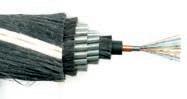
Nexans was the first to manufacture and install a 384 fibre submarine cable. Nexans has qualified and installed their URC-1 cable family for fibre counts up to 384 fibres.
For further information please contact:
Nexans Norway AS P.O. Box 6450 Etterstad
N-0605 Oslo Norway
Phone: +47 22 88 61 00
Fax: +47 22 88 61 01
Erik Rynning Sales & Project Manager Offshore:
“We produced the so far world’s deepest umbilical which was installed at 2350 metre in the Gulf of Mexico.”
Telecom: Rolf Bøe
Phone: +47 22 88 62 23
E-mail: rolf.boe@nexans.com
Oil & Gas: Jon Seip
Phone: +47 22 88 62 22
E-mail: jon.seip@nexans.com
System Rights-Of-Way and Permitting – An Exercise in Patience
After a company has made the strategic decision to move forward with a telecommunications network system build, a number of factors related to the project’s specific requirements will then need to be considered. During this sequence, system design, preliminary engineering, construction planning and materials provisioning are typically given much of the attention by the technical people and their consultants, while those assessing the corporate business and financial aspects deal with issues including cost and benefit analysis, direct and indirect return on investment projections, and personnel demands for the endeavor. Once these basic areas of concern have been addressed and the project plan moves beyond the generally internal office environment, matters related to actual system field implementation become more prominent.
One of these external components, falling somewhere between the two groups of primary tasks is the acquisition of route right-of-way and any required permits, license agreements or occupancy fees for the proposed system build. Unlike the above-mentioned categories which tend to be more structured and better accommodated for the planning, budgeting and scheduling processes, right-of way and permitting is often much less predictable, both in scope of work and timeframes for completion.
exercise to a complex, arduous drain on time, resources and forward momentum. These conditions include basics like project location and geographic placement (offshore, onshore, or both; topography and terrain; rural and/or urban locales; proximity of the proposed system to existing network facilities; use of public roads, utility corridors or private property), dedicated system technology, facilities and configuration (buried fiber optic or wireless; point-to-point; hub and spoke; network ring; tower or building antenna/base station siting; physical plant, including structures and equipment sites), and system connectivity commitments (location and number of any required building, manhole or switch service entrances or other point-ofpresence tie-ins). Obviously, many of these factors will be dealt with during the early planning and engineering stages, and will be incorporated into the design.
By John Weisbruch
Depending on conditions unique to each such proposed undertaking, the process and relative ease (or difficulty) of acquiring right-of-way and the variety of installation permits could range from a very simple and streamlined
These and other particular considerations combined provide a starting point for any effective route right-of-way and permitting acquisition needs analysis. Ideally, the analysis will be conducted through a route and permitting feasibility study, a comprehensive investigation of all issues related to the legal installation of the proposed system as designed. Although the following summary deals primarily with a fiber optic cable system scenario, many of the same permitting demands may also apply for a wireless network build.
To begin with, a determination must be made about which governmental entities or subdivisons have jurisdiction over the
geographic territory to be traversed by a buried cable (or located by site presence via wireless) system. Then, each of these controlling authorities must be contacted individually in order to ascertain what activity permits, occupancy fees, licensing agreements, zoning waivers or other legal clearances may be required, if any, for both the installation phase of the project and the perpetual presence of such a system and its facilities or components in each of these jurisdictions.
These types of legal requirements may be either inclusive of, or apart from any additional installation permits required by parallel departments within a specific local entity. For instance, municipal road, sewer and water, electric utility and other public works departments or agencies may require permits and impose various fees independent of those of the central administration. Sometimes these permits are for the parallel use of street and road right-of-way (linear occupancy) for a cable system; other times the permits are only for the rights to cross or intersect these streets and roads (thus occupying only the areas under these public way crossings) when right-of-way from another provider is utilized either side of these intersections. In many cases, linear occupancy of a public roadway may be allowed under a single right-of-way installation permit, making this option the best for simplicity and permit cost. The downside tradeoffs of occupying public road right-of-way include having to contend with other utilities and the consequent exposure to associated maintenance activities of these competing
utilities within the same right-of-way, and the possibility of needing to relocate a buried system if the road authority schedules a lane widening or periodic reconstruction.
After the municipal and local concerns have been explored, county and regional seats of government should be next on the contact list. Usually, but certainly not always, a county or township defers to local political entities in matters of permitting when the work will take place within the limits of an incorporated town, borough, village or city. Exceptions may occur when a county or township road within a local entity is owned or maintained by the county or township. Other regional agencies with possible involvement may include an area council of government, planning and zoning commission, board of supervisors, or development commission.
It is important to point out that even the most thorough feasibility study will not be able to provide more than a general estimate of the total numbers of individual permits or agreements that will be required, or their total anticipated costs. Typically, each bureaucracy has its own submittal and permitting review standards, and each has considerable discretion in how regulatory codes and ordinances should be applied. In many cases, a written proposal, plan drawing or map will need to be submitted for review by engineering and administrative staff, and then forwarded to their attorney for a legal opinion before any specific permitting requirements can be outlined. As a result of this ambiguity, officials in these communities are
often unable or unwilling to provide any accurate estimate for overall permitting costs prior to an internal plan appraisal.
In conjunction with the progression to the state and federal levels of government involvement, agencies with environmental permitting and oversight authority should be next in line for inquiry. A list of these state and federal permitting authorities could include the U.S. Army Corps of Engineers, departments of environmental protection, fish and wildlife protection, soil and water resources protection, cultural and archaeological preservation, and public parks.
In many ways, this area of interest can trump all other permitting issues if project activity will be conducted in or near any sensitive and restricted area. Initial efforts of the planning group should have already taken into account any obvious impact the proposed system might have on such an area. Nevertheless, a certain amount of indepth environmental impact assessment will likely need to be conducted in order to satisfy requirements at various levels of government. Even the most innocuous of projects, perhaps one lying entirely within an established utility corridor or along a busy roadway will require some environmental permitting and review processes. An environmental consultant could be indispensable for handling these complexities and, if hired, they should be included in the planning aspects of the project as soon as possible.
Though a buried system may not require more than a minimal amount of surface and upper soil horizon disturbance during construction, preand post-construction concerns and conditions can add time and expense in the form of a more detailed installation plan mandatory for the application submittal and review. Soil conservation districts, for example, require details regarding erosion and drainage control measures for construction, as well as for postactivity surface and vegetation restoration. Waterway crossings – ranging from wetlands, rivers, streams, creeks, and even man-made canals or drainage ditches intersected by the proposed system must be identified and delineated on any application plans or maps; this will require adhering to strict standards which specify the criteria to be used for this identification activity, particularly for wetlands areas.
Permit fee amounts are usually determined by the type and number of separate applications the project will require, and these particulars are usually outlined during a pre-application meeting with the involved agencies or departments.
Using an environmental specialist at this stage could be of great benefit, both in potential cost savings and overall time frame. A detailed and clearly targeted plan presentation at a preapplication meeting can work to minimize the number of agencies involved, and required permits, by narrowing the focus on the proposed activity and any anticipated environmental impact. Further, a professionally researched and accurately prepared formal application package should move through the review and
approval process as quickly as possible, thereby greatly reducing the likelihood of any plan rejection or permit disapproval. The expense in time and money required for preparing an amended application, a re-submittal, and second review could delay final acceptance and approval by many weeks or months; and project planning and construction scheduling would be delayed indefinitely as a result.
Remaining tasks for the feasibility study could include the development of one or more route alternatives, in the event that parts or maybe the entire original route proves to be unsatisfactory. Also, private property tracts lying in the path of the proposed route could be noted, and then researched at the local land records office in order to determine basic facts such as numbers of separate tracts, and the names of the individual land owners that would be involved. Negotiating with individual property owners is usually deferred until the acquisition phase of the project, though some companies may choose to pursue potentially vital sections of a route as soon as possible.
An experienced right-of-way and permitting specialist, in close cooperation with the planning and engineering staff, can certainly perform many field implementation tasks throughout the lifespan of a project. Although tangible results from these pursuits may not always translate into a fixed number on an accounting spreadsheet, the contributions of these field agents can be essential nonetheless to the overall success of these system installation activities.
John Weisbruch has been involved in the telecoms for over 20 years. He completed a BA in Geography at the University of Houston Central Campus then worked as a Marine Technician on international scientific research ship. After four years in a very intensive work environment, with many unique professional and associated international travel experiences, he transitioned into the field of telecommunications route permitting and right-of-way acquisition. He has been involved in a wide range of telecommunications projects – fiberoptic, cellular and microwave – and has performed work in a variety of project specializations. His areas of expertise include submarine & terrestrial rights of way acquisition; route/site feasibility investigation; permitting; route development; pre-construction surveying and engineering coordination with local property owners and governmental entities; and construction and installation oversight. He joined WFN Strategies in 2006 as Rights of Way Manager based in Texas.
JDR Establishes New Cable Factory in Thailand
(As seen in the December issue of the Manufacturer)
It’s an unfamiliar variation on a familiar theme. The news that a company had commenced operations in south-east Asia would normally be a prelude to discussion of outsourced production and low-cost labour, but JDR Cable Systems’ new venture goes quite against the expectations that we’ve learned to entertain.
JDR Cable Systems – a company with facilities for producing a wide range of precision extruded, braided and armoured cable and umbilical products – comprises two distinct businesses. JDR Smart Solutions is based in Rotterdam and focuses on cables with seismic, defence and other specialist
applications. JDR Umbilical Systems is based in Littleport in Cambridgeshire and serves the offshore oil and gas industry and its sub-sea field developments. The UK site functions as both heart and brain of the Umbilical Systems business, providing the necessary design, project management and manufacturing expertise. In addition, the company’s ability to serve worldwide markets is strengthened by a service centre in Houston, Texas, that has for some years been supporting the export of Littleport products to the Gulf of Mexico.
“Historically, we have specialised in providing cables and umbilicals for intervention applications from surface to seabed,” explained managing director Patrick Phelan, “and as offshore developments have gone into ever deeper waters, the umbilicals have needed to become longer (up to 3km) and more complex. We also provide ‘step-out’ units to link floating or fixed offshore platforms to seabed installations. But because we are
land-locked at Littleport, there are limits on transportation: from here we can only supply units weighing up to 100 tonnes. We therefore needed to consider a quayside location from which we could transport units of greater weight.
“A couple of years ago we undertook some very careful market studies, and we identified a significant developing market in southeast Asia. Major competitors were present in Europe, the Gulf of Mexico and Brazil, but none of them were in or even near that region. So we saw the area as offering a great opportunity to establish a site for producing step-out units of up to 300 tonnes.” The result is a new plant at the Royal Naval Base in Sattahip, Thailand. “It’s a development of the company’s business of which we’re very proud,” said Phelan. “We recognised where the market was going, and we saw a gap. Then we managed to get the factory equipped and open within 12 months. But two months before the work was completed, we won our first major contract to fill the order book for the first year, and we’ve secured two further orders since then. Installation of the equipment, incidentally, was handled by a combination of experienced JDR staff from the UK, local machinery and installation companies, and the newly-recruited members of our Thai workforce. They took great pride in supporting the building of the factory, and
that same pride is very evident when you go to the plant today.”
But, he pointed out, the Thai factory remains a firmly controlled extension of the Littleport operation. “To allow fast entry into the market and to minimise any risks involved in developing products in that region, we kept all the component manufacturing in the UK. The specialist electrical cables and the highpressure hoses are manufactured here and exported by container to Thailand, where we lay them up to a length of around ?10 kilometres, apply locally-sourced armoured wire, and supply them at the quayside on reels that are nine metres in diameter. That has given us a real competitive advantage: our competitors and their clients have to pay the shipping costs of these large reels, whereas we can supply them locally from Thailand.”
The choice of Thailand, he stressed, was about closeness to market rather than labour costs. “There’s a huge demand for oil and gas from China, Indonesia and other developing economies in the region; there are significant resources to be developed there; and the local oil and gas companies are keen to do the development themselves. So our opening of this new plant is actually the reverse of what many people are doing. We’re not
outsourcing or reducing our UK manufacturing in order to import from south-east Asia. In fact, we’ve been installing more machinery and employing more people to manufacture the products that we ship out to Thailand. We believe that quality control on our components is absolutely paramount, and to outsource the work would involve a potential for risk that we don’t want to take at this stage. We’ve already automated much of our manufacturing in the UK, and we’ve a very high material-to-labour percentage on the components we make, so to outsource manufacturing would only bring a small benefit in terms of costs.”
The fact that Sattahip is purely an assembly and final test operation has kept it very lean, and careful monitoring from the UK ensures that efficiency is maintained. Only around a dozen local operators are employed, and they have spent time in England to receive training that is now being reinforced and extended in their own country. In addition, automation at the Thai plant is combined with internet links to the parent site to allow a constant flow of information. Statistical process control data is fed from the Thai machines to the Cambridgeshire base, and advanced webcams have been installed to allow observation of what’s happening in the new facility. So, if a problem arises, specialists in England can zoom in on the component in question and
provide prompt advice to the other side of the world.
Meanwhile, at home in Littleport, there is constant attention to effective and efficient production. Having looked critically at its complete product offering, the business has moved decisively in the direction of providing a complete package, supplying not just subsea cables and umbilicals but also such things as reeler systems and control panels. “Traditionally,” said Phelan, “customers might buy a reeler system from one company, an umbilical from another, and undertake the integration themselves. But, given the rate at which the market is currently expanding, they are increasingly inclined to make a smaller number of sub-orders, and we can support them by becoming a one-stop shop for their systems and providing complete packages.”
As for the manufacturing, JDR has chosen the theory of constraints (TOC) as the key to its lean thinking.
Based on the simple fact that a multi-phase process can only move at the pace of its slowest element (and on the recognition that as soon as one element has ceased to be the slowest, another has qualified for the definition), TOC offers a five-step process of continuous improvement. From that initial theory has evolved the Drum-Buffer-
Rope concept, which JDR finds a valuable scheduling technique. “With traditional finite scheduling, you try to predict exactly when each of a series of interdependent operations takes place,” Phelan observed, “and that’s fine in theory. But it’s hugely difficult in practice. With Drum- Buffer-Rope, however, we can schedule our manufacturing to minimise lead times and maximise throughput, and it gives us reduced work-inprogress and inventory costs.”
Another key development at the Littleport operation has been the design and installation of fatigue- testing equipment to simulate the operation of umbilicals offshore. The results of these tests are fed back to the R&D department to inform future design. But they also have the more immediate
effect of demonstrating (to the satisfaction of both manufacturer and customers) that the company’s products offer total long-term reliability: they really will endure in a harsh marine environment for their full 20-year life.
The fact that products are designed to last does not, however, mean that innovation can take a back seat, and Phelan outlined some of the ways in which the company has been pushing forward. “We’ve been developing a range of high pressure hydraulic hoses that will operate at working pressures of up to 15,000psi and that are verified by carrying out impulse tests to 200,000 cycles; and we have a range of high-temperature, high-collapseresistant hoses that operate at up to 100ºC, which is important when products are used in the new ultra- deep-water offshore fields.
“Finally, there’s the renewable energy sector, where we supplied medium-voltage power and fibre-optic cables to the Beatrice Wind Farm demonstration project for Talisman Energy. Wind-power is a very fast-growing market, particularly offshore in the North Sea, but over the last decade other sub-sea power companies in the UK closed down and moved their operations overseas. So now, just as the market is showing a surge in demand for the support of offshore wind farms, we’re the one company with the capacity to produce
the medium-voltage cables that are required. Our innovation in this field is to take some of the termination and installation aids that we’ve developed for offshore oil and gas and to apply them to wind-farms, so reducing the very high cost of installation. It’s one more market that will represent a major area of development for us in the future.”
The global leader in the design and manufacture of custom-engineered, specialty, dynamic or static umbilical and cable systems used in subsea and surface applications for the oil and gas industry. JDR’s technological strengths and innovation in cable design have been applied in other industries, most notably, military defense, scientific endeavors and multiple or continuous sensor applications.
What to do when things go wrong
Making the most of a cable break
By Marianne Murfett and Charlotte Winter Construction, Energy and Transportation Dispute Resolution Group, Norton Rose
You have just had a report that one of your cables has been damaged. Although you might be able to establish where the damage occurred relatively quickly, it may be much harder to establish who the perpetrator of the damage was. However, if action is taken quickly it may be possible to identify the culprit and recover some of your costs from him. This article will look at: 1) finding the culprit; 2) proving your loss and expenditure; 3) proving the culprit’s liability; 4) applying pressure with the aim of inducing a favourable settlement; and 5) your duties as the injured party.
Identify the culprit vessel
The key ingredient is speed. Immediate action must be taken on notification of the damage to identify the vessels in the vicinity at the time of the break. Unless the vessel responsible for the damage is identified quickly (within 24 hours), it will prove extremely difficult even to draw up a list of suspects, let alone pin the blame on one vessel.
Cable or pipeline operators should have an emergency response system with a reporting line clearly set out so that the investigation, and any other action which needs to be taken after the incident, is not delayed.
The first step in any investigation is to contact the port and harbour authorities. In areas where traffic volumes are high, the au-
thorities may have a Vessel Traffic Service (VTS) or other system of traffic control which automatically records details of vessels in the area. The usefulness of radar systems as a means of identifying vessels has vastly improved following the introduction of the International Ship and Port Facility Security Code (ISPS) on 1 July 2004. The ISPS establishes a requirement for all ships over 300gt but less than 50,000gt (although all passenger ships and tankers must also satisfy the requirement) to install an Automatic Identification System (AIS). This is a transponder which transmits details of the ship which appear on the controlling authorities’ and other ships’ radars, giving them the means to identify the vessels that were in a particular area at any given time. The coastal authorities must, however, be equipped with VTS and have recording facilities for this information to be of any use to a cable operator. If VTS is in place, it is very persuasive evidence, and records of movements of ships may be kept for months, in some cases years, depending on the practice of the relevant authorities. A party can approach the relevant authorities and request a recording of radar and radio information for a small fee. Whether it is available will depend on the approach of the national authority and the type of recording equipment used.
If VTS is not available, it is nevertheless useful to contact the port and harbour authorities in the first instance. In many cases, they may have received a report from the defendant vessel itself
Marianne Murfett is a solicitor and associate in the Construction Energy and Transportation Dispute Resolution Group at Norton Rose, London. Her experience covers a wide range of disputes including international arbitration, mediation, shipping, submarine cable disputes, international trade and energy.
Charlotte Winter is a solicitor and associate in the Construction Energy and Transportation Dispute Resolution Group at Norton Rose, London. She has worked on a wide variety of shipping and insurance matters including charterparty disputes, ship arrests, as well as energy and international trade disputes. Charlotte also spent 2½ years in Norton Rose, Bahrain where she worked on shipping and insurance but also dealt with telecoms, banking and construction.
informing them of the incident. They will monitor (but not necessarily record) a radar picture which will now have AIS information on the display and might recall vessels that did not make contact.
All possible efforts should be made to identify any vessels in the vicinity, either using radar
readings or more traditional methods (such as sending representatives to identify ships visually or talking to local fishermen and yachtsmen). Steps should then be taken to contact these ships. It is surprising what a good source of information other vessels can be and particularly now each vessel can positively identify other vessels using the AIS information. Give details of the time and place of the cable break and ask whether they recall a vessel in the vicinity. Ensure that a record is kept of any information provided and in particular who gave the information. Memories fade quickly, so it is important to make contact early.
If the defendant vessel was going to anchor when the damage occurred, it may be intending to land. Immigration authorities may be able to provide details of what vessels have asked permission to land personnel. Local chandlers, agents and suppliers may have supplied provisions. If the vessel docked, it may have used on shore services such as wholesale food suppliers or laundry services. These services are all potential sources of information to tap when trying to identify the culprit. The key is to be imaginative and not delay your investigations.
Once you have found your suspect, it is often surprisingly easy then to build a case and find evidence against them.
Gather evidence to support your claim
It is essential to keep an accurate record of when and where the cable break occurred. Retain all
physical evidence including the damaged cable itself. If possible, seal and tag the section of the cable which is removed during repairs. If analysis is required at a later stage, this will be a vital piece of evidence, providing clues as to the cause of the damage, for instance was it trawled over by a fishing vessel or dragged up by an anchor.
Cable repair ships keep very detailed recordings of their work and these should be obtained. Request that reports are prepared detailing what repairs were undertaken, when, by whom and, where there were several repair options, a justification for the course of action chosen. Keep all invoices from the repair works as these are evidence of expenditure.
Keep precise records of any other loss which has resulted from the damage as these may also be recoverable. The extent to which recovery is possible will however depend on the jurisdiction in which the claim is heard.
Evidence from the suspect
Apart from gathering and collecting evidence to do with repair of the cable and other losses, you will need to obtain further evidence from the vessel you suspect was responsible for the damage in order to strengthen the case against it.
In certain jurisdictions it will be possible to require disclosure before proceedings have started. You should consult local counsel early on this point as evidence may be lost
if action is delayed. If pre-action disclosure is a possibility it is important to request the following:
Log books - including deck logs, navigational logs, fixing logs and Global Positioning System records.
VDR - this is the equivalent of a ship’s black box and will record the position, course and speed of the ship, the radar picture, conversations and radio traffic on the bridge which may not have been appropriately logged in the ship’s log. As a record of the incident, it is extremely powerful evidence. However, this must be recovered quickly. VDR was designed as a record in the case of a collision, and so, is designed to over-record entries automatically, after a certain time depending on the system installed (often as little as 12 hours).
Pressure tactics
Once the defendant vessel has been accurately identified, establish who are the owners of the vessel and write to them informing them of the incident and the action you propose to take. At this stage, it would be appropriate to request the pre-action disclosure described above.
It is important to ensure that the defendant has sufficient assets to meet your
claim. Vessels are often owned by special purpose companies whose only asset is the ship itself. Swift measures should be taken to ensure that the vessel responsible for the damage is not sold or otherwise put beyond reach when the time comes to enforce any decision or award.
The best way to achieve this, whether the claim is pursued by litigation or by arbitration, is to arrest the ship in question. The ship is then detained until the claim has been decided or acceptable security is put up, often by the ship’s third party liability insurers in the form of a Letter of Undertaking. However, claims for wrongful arrest can be large so you do need to be sure of your case.
It is advisable to track the movements of the vessel and wait until it has entered a jurisdiction in which arrest is cost effective and efficient, at which point local legal advice
Senior System Engineer
should be sought. You will want to be in a jurisdiction where you can either make a ‘security only arrest’ or in a country in which you would be happy to bring your claim. However, the reality is that the arrest of a ship is a significant inducement to settle any claim early.
Duties of the injured party
It is wrong to suppose that, once damage has been sustained to the cable, all losses flowing from that event will be recovered. In most jurisdictions, recovery is subject to the claimant’s duty to mitigate its losses.
All reasonable steps should be taken therefore to minimize any losses by initiating any contingency plans as soon as practicable. Ensure that scrupulous records are kept, as any claim will be scrutinized, and seek legal advice early on. If the
The University of Washington’s Applied Physics Laboratory is seeking a seasoned Senior Engineer with a proven track record of managing the system development of large, complex, ocean-related engineering projects. This is an exciting opportunity for an experienced system engineer to work on a major long-term University of Washington initiative to design, build, install, and operate the new Regional Cabled Observatory (RCO) off the Washington and Oregon coasts. The RCO will comprise 1500 kilometers of fiber optic cable that will deliver 100 kilowatts of power and high bandwidth communications to deep-water science nodes distributed over the Juan de Fuca tectonic plate.
The selected candidate will be responsible for managing the systems engineering tasks for the lifecycle of this large complex development. This will include developing requirements documents, evaluating appropriate technologies, developing risk management procedures, quality assurance procedures, configuration management controls, interface control documents, acceptance test procedures, and lifecycle support plans.
damaged cable is insured, the injured party has a duty to act as a ‘reasonable uninsured’. This means that insurers will require the claimant to take any steps to protect its property that an uninsured person, acting reasonably, would be expected to take. Insurance claims may be rejected or reduced unless such steps are taken.
Conclusion
In summary speed is of the essence. Legal advice should be sought early on in the claim so that the evidence can be preserved and action can be taken with a view to early settlement. Act quickly to identify the defendant vessel, to gather your evidence and to obtain security for your claim. Failure to do so may prove fatal to your case and may result in you obtaining a less favorable settlement.
Requirements:
• Bachelors degree or higher in a relevant engineering discipline with above average academic record
• Minimum 10 years systems engineering experience working on complex oceanographic systems
• Demonstrated ability to manage engineering teams with diverse technical specialties
• Experience in all aspects of system lifecycle development
• Good verbal and interpersonal communications skills
• U.S. citizenship, as the applicant selected will be subject to a government security investigation and requirements for access to classified information
To apply go to: http://www.washington.edu/admin/hr/jobs/ Requisition Number 31122
Since 2001, Submarine Telecoms
Forum has been the platform for discourse on su b marine telecom cable and network operations. Industry professionals provide editoria l content from their own niche and focus.
Each bi-monthly edition includes commentary and information on system and service provision, and issues critical to the industry.
Advertising Rates
Website Banners
Post your web linked banner to the home page, as well as News-Now sections of the Submarine Telecoms Forum website, where some 5000+ readers can come as often as every week to view the latest news feed, or our bi-monthly magazine.
Feature Section Sponsorship
Available at full-page advertisement rate, section sponsors are identified with a banner (link) at the beginning and end of the featured section.
All advertising rates as at December 2003.
Letter to a friend from Jean Devos
My friend,
Zanzibar and Fachoda. The recent signature of the EASSy supply contract is yet another step toward the implementation of one or several optical cables along the coast of East Africa.
My Dear Friend
“Botany Bay”
I remember something like it 25 years ago, when I was in charge of Alcatel’s submarine cable business. A visitor from the Middle East was introduced to me by the chairman of the company. He was bringing to us an opportunity one should not miss - the design and construction of an Oman - Zanzibar submarine cable. While he was developing all its arguments about this project, which according to him had a lot of regional political support and was already fully financed, I had to glance to the world map on the wall of my office and locate properly Zanzibar.
axis of Cairo to Cap Town and prevent the French from any influence on the Red Sea coast. This is why the French authorities decided in 1893 to create their axis of presence linking Dakar on the Atlantic, to Djibouti on the Indian Ocean. The “mission Congo Nil” was sent there, nothing more than 250 people on a small steamer on the Congo River, then the Nile. They had settled in Fachoda, Sudan where they raised the French flag on July 12 1898 after 2 years of slow progression through the continent. They even renamed the place “Fort Saint Louis,” but at the same time an army of her Majesty was moving toward the high Nile and put the Egyptian flag on Fachoda on September 18 1898.
Warrior event was still in everyone’s memory. It is for these reasons among others that STC (UK) rejected the Alcatel‘s suggestion to come with a joint bid, to offer a “European” solution.
One of the winning factors has been the Port-Botany cable factory. Such a factory was a strong requirement from OTC (now Telstra) and the Australian Government.
Big incident!
Alcatel was the most motivated. Such a factory could expand its influence in the Pacific where the three other players were historically well established in this region, which represents a large part of their market. They saw this factory as a risk for their existing facilities!
I published recently a modest novel, whose title is Botany Bay. It is the place in Australia where Alcatel established a submarine cable factory in 1989 as part of its contract for the Tasman 2 link. In this same bay, where two centuries before the French expedition
from Durban, serving Ste Lorenço Marques, Dar as Salaam, Mombassa and Zanzibar and connected to the England - Australia backbone in Aden. This network was also landing in Seychelles and Mauritius! The last segment of this British Empire backbone, BombayAden (4.398 km) was laid by the Great Eastern in 1870. The Aden to Durban cable was installed around 1880. This “Eastern” program was named “The All Red Route”. In 1877, the size of the global telegraph submarine cable network was 118,500 Km; in 1901, 357,800 Km and 657,900 Km in 1928! Impressive! In 1901, out of the 357,800 Km, 220,400 Km was “British”!
and l’Astrolabe, landed in 1788 to discover that Captain Cook was already around bearing the British flag. So Botany Bay is now for me the symbol of a dream which becomes a reality!
Both governments became hysterical! Both parliaments started speaking of a new war! In front of the British determination the French finally gave up. The historian’s have now made clear that the British had the big advantage of being able to communicate with their people in the field, thanks to their submarine network, when the French government was completely in the dark. Fachoda has been a trigger in the fact that the French have then developed their own network. Around 1900 there was even a plan to construct a cable from Dakar to Saigon through La Réunion!
SubOptic ‘87 in Versailles came at the right time. It is where the Australian teams discovered the French model, a close cooperation between Alcatel and FT, exactly what they wanted to establish in their country.
This cable never happened and it is only now that the East coast of Africa which was left out of the recent boom will see one of several modern cables being finally built. But it will not be the first cable along the east coast of Africa.
If one looks at the submarine cable network map of 1901, one can see a telegraph cable coming
“La Pérouse” made of two ships, La Boussole
I remember, learning at school the famous Franco-English story of Fachoda, a small place on the White Nile. The English had occupied Egypt in 1882. This was difficult to swallow for the French since Napoleon Bonaparte’s expedition in Egypt, but even more, since the construction of the Suez Canal by Ferdinand de Lesseps, “The great Frenchman,” which was inaugurated in 1869 with even the creation of Aïda by Verdi for that circumstance. England had the clear ambition to create an
Tasman 2 has been yet another chapter in this long Anglo-French competition! The award to Alcatel came out as a big surprise to many, including inside Alcatel. Everybody was naturally expecting the British to win that battle, and such an expectation was at that time very logical.
There were so many difficulties and misunderstanding between Australia and France, the main one being the French presence in the Pacific area, the worse being the nuclear bomb experiment in Tahiti! The sad Rainbow
My friend, this is all history.
The world, even though unperfected, looks much better today. The world is a community of countries dealing with each other.
My friend, things are changed since, but one thing stays true: When you offer something, the reader can see between the lines if you are or not genuinely motivated and sincere. Then your offer becomes really attractive and this opens the route to “Botany Bay.”
The East Africa modern network will be constructed with no other intention than the good development of the region.