
EXORDIUM
FROM THE PUBLISHER
WELCOME TO ISSUE 139 OF SUBTEL FORUM, OUR SPECIAL DATA CENTERS & NEW TECHNOLOGY EDITION FEATURING A PREVIEW OF PTC ‘25 AND CELEBRATING 23 YEARS OF SUBTEL FORUM!
Last month, I ran my 31st marathon. This time, I trained harder than I have in years—pushing myself with better splits, shedding a good chunk of weight, and starting the race armed with a clear strategy. The results? Mixed. My half split was faster than any I’ve clocked in the past five years, but as the miles piled on, so, too, did the pace. My overall time was my best since before Covid, but it wasn’t quite as fast as I’d hoped. Age, it seems, is an uncompromising force. Yet, I can’t help but hope I’ll be that guy 30 years from now, still pounding the pavement with determination. Only time will tell.
In many ways, my marathon journey feels like a metaphor for SubTel Forum itself. Over the past 23 years, we’ve pushed hard, adapted, and grown—driven by strategy and resilience. This issue is a testament to that progress. Here’s a look at what we’ve been working on:
13TH ANNUAL SUBMARINE TELECOMS INDUSTRY REPORT
Earlier this month, we released our 13th Annual Submarine Telecoms Industry Report , highlighting over $15.4 billion in active new projects. Of these, $8.2 billion in contracts are already in place, with $6.3 billion worth slated for completion in 2024 alone. We’re also honored to feature a foreword from Doreen Bogdan-Martin, Secretary-General of the International Telecommunication Union, who shared her insights on the ITU’s submarine cable initiatives. Haven’t had a chance to dive in yet? Click HERE to access the report.
ANNUAL INDUSTRY SENTIMENT SURVEY
Thank you to everyone who participated in our Annual Industry Sentiment Survey! Your feedback, reflected in the
report, provides critical insights into the mood and direction of our industry.
2025 SUBMARINE CABLE MAP
We’re hard at work on the 2025 Submarine Cables of the World wall map, set for release early next year. This map will be distributed at key conferences like PTC ‘25, Submarine Networks EMEA, and Submarine Networks World, ensuring your brand remains front and center on walls around the globe. Want your logo included? Click HERE to secure your spot!
PTC ‘25 CONFERENCE
We’re thrilled to be heading to Honolulu in January for the PTC ‘25 Conference . The Pacific Telecommunications Council always delivers a stellar event, and we look forward to reconnecting with industry friends while exploring the latest innovations.
SUBTEL FORUM: 23 YEARS AND COUNTING
When Ted Breeze and I launched SubTel Forum in 2001,
the industry was in a dark period. With little more than a severance package, some borrowed software, and a lot of determination, we took a leap of faith. Our first issue featured eight articles and seven complimentary ads—a humble beginning during challenging times.

Now, 23 years later, we’ve grown beyond anything we could have imagined. We’ve embraced new approaches, redefined our mission, and reaffirmed our commitment to our founding principles:
• To provide a wide range of ideas and issues.
• To incite, entertain, and provoke in a positive manner.
This year’s progress reinforces our core belief: education and communication remain vital to our industry’s success.
A HEARTFELT THANK YOU
To our more than 100 sponsors and 725 authors—thank you for helping us reach this milestone. A special thanks to this issue’s advertisers: Fígoli Consulting, Ocean Networks, AP Telecom, PTC ‘25, Submarine Networks EMEA, Trans Americas Fiber System, and WFN Strategies. And, of course, don’t miss our fan-favorite feature: Where in the World Are All Those Pesky Cableships?
We hope SubTel Forum continues to be your go-to destination for submarine cable industry news and analysis. As always, we’re here to illuminate, educate, and inspire.

Good reading – Slava Ukraini , and save me a seat at the Mai Tai Bar… STF

Wayne Nielsen, Publisher
A Publication of Submarine Telecoms Forum, Inc. www.subtelforum.com | ISSN No. 1948-3031
PRESIDENT & PUBLISHER: Wayne Nielsen | wnielsen@subtelforum.com | [+1] (703) 444-2527
VICE PRESIDENT: Kristian Nielsen | knielsen@subtelforum.com | [+1] (703) 444-0845
ANALYTICS: Kieran Clark | kclark@subtelforum.com | [+1] (540) 533-6965
SALES: Nicola Tate | ntate@associationmediagroup.com | [+1] (804) 469-0324
DESIGN & PRODUCTION: Weswen Design | wendy@weswendesign.com
DEPARTMENT WRITERS:
Andrés Fígoli, Brian Moon, Ella Herbert, John Maguire, Kieran Clark, Michael Brand, Nicole Starosielski, Philip Pilgrim, Syeda Humera, Carolyn Pohl, and Wayne Nielsen
FEATURE WRITERS:
Bill Burns, Devon A. Johnson, Fernando Borges Azevedo, Joel Ogren, José Amaro, Kieran Clark, Kristian Nielsen, Mark Englund, Raj Jayawardena, Stewart Ash, and Tony Frisch
NEXT ISSUE: January 2025 – Global Outlook and Submarine Networks EMEA Preview

Submarine Telecoms Forum, Inc. www.subtelforum.com/corporate-information
BOARD OF DIRECTORS: Margaret Nielsen, Wayne Nielsen, Kristian Nielsen and Kacy Nielsen
Contributions are welcomed and should be forwarded to: pressroom@subtelforum.com.
Submarine Telecoms Forum magazine is published bimonthly by Submarine Telecoms Forum, Inc., and is an independent commercial publication, serving as a freely accessible forum for professionals in industries connected with submarine optical fiber technologies and techniques. Submarine Telecoms Forum may not be reproduced or transmitted in any form, in whole or in part, without the permission of the publishers.
Liability: While every care is taken in preparation of this publication, the publishers
cannot be held responsible for the accuracy of the information herein, or any errors which may occur in advertising or editorial content, or any consequence arising from any errors or omissions, and the editor reserves the right to edit any advertising or editorial material submitted for publication.
New Subscriptions, Enquiries and Changes of Address: 21495 Ridgetop Circle, Suite 201, Sterling, Virginia 20166, USA, or call [+1] (703) 444-0845, fax [+1] (703) 349-5562, or visit www. subtelforum.com.
Copyright © 2024 Submarine Telecoms Forum, Inc.
FORUM IN THIS ISSUE
ISSUE 139 | NOVEMBER 2024

6 QUESTIONS WITH BRIAN MOON AND PTC PREVIEW
Talking Submarine Cable Industry with PTC's CEO

RETHINKING SUBMARINE CABLE CYBERSECURITY IN THE AGE OF SMART CABLES TECHNOLOGY AND THE NIS2 EU DIRECTIVE

40 60 48 64 52 68
WET-PLANT: INNOVATION AND SPECULATION
Exploring subsea cable innovations and future trends
By Tony Frisch
Enhancing cybersecurity for SMART subsea cables under NIS2 By José Amaro

THE EVOLUTION OF CABLE LANDING STATIONS: POWERING THE NEXT WAVE OF SUBSEA AND TERRESTRIAL NETWORK INTEGRATION
CLS evolution pivotal in global data connectivity By Joel Ogren

INTO THE FUTURE: QUANTUM TECHNOLOGIES AND THE IMPACT ON THE RESILIENCE OF THE SUBSEA CABLE SYSTEM
Exploring quantum technology's impact on subsea resilience. By Devon A. Johnson

SINES, PORTUGAL, EMERGES AS THE EUROPEAN ATLANTIC HUB
Portugal’s Sines emerges as a key connectivity hub By Fernando Borges Azevedo

WHAT HAVE THE BRITISH EVER DONE FOR US? PART 2
By Bill Burns and Stewart Ash


By Kristian Nielsen


By Kieran Clark
By Raj Jayawardena and Mark Englund


INSIDE THE WORLD OF SUBTEL FORUM: A COMPREHENSIVE GUIDE TO SUBMARINE CABLE RESOURCES
TOP STORIES OF 2019
The most popular articles, Q&As of 2019. Find out what you missed!
NEWS NOW RSS FEED
Welcome to an exclusive feature in our magazine, where we explore the captivating world of SubTelForum.com, a pivotal player in the submarine cable industry. This expedition takes us on a detailed journey through the myriad of resources and innovations that are key to understanding and connecting our world beneath the oceans.
mapping efforts by the analysts at SubTel Forum Analytics, a division of Submarine Telecoms Forum. This reference tool gives details on cable systems including a system map, landing points, system capacity, length, RFS year and other valuable data.
DISCOVER THE FUTURE: THE SUBTEL FORUM APP
CONNECTING THE DEPTHS: YOUR ESSENTIAL GUIDE TO THE SUBTEL FORUM DIRECTORY
Keep on top of our world of coverage with our free News Now daily industry update. News Now is a daily RSS feed of news applicable to the submarine cable industry, highlighting Cable Faults & Maintenance, Conferences & Associations, Current Systems, Data Centers, Future Systems, Offshore Energy, State of the Industry and Technology & Upgrades.
PUBLICATIONS
Submarine Cable Almanac is a free quarterly publication made available through diligent data gathering and
Submarine Telecoms Industry Report is an annual free publication with analysis of data collected by the analysts of SubTel Forum Analytics, including system capacity analy sis, as well as the actual productivity and outlook of current and planned systems and the companies that service them.
CABLE MAP
In our guide to submarine cable resources, the SubTel Forum Directory shines as an essential tool, providing SubTel Forum.com readers with comprehensive access to an array of vetted industry contacts, services, and information. Designed for intuitive navigation, this expansive directory facilitates quick connections with leading vendors, offering detailed profiles and the latest in submarine cable innovations. As a dynamic hub for industry professionals, it fosters community engagement, ensuring our readers stay at the forefront of industry developments, free of charge.
2024 marks a groundbreaking era for SubTel Forum with the launch of its innovative app. This cutting-edge tool is revolutionizing access to submarine telecommunications insights, blending real-time updates, AI-driven analytics,
The online SubTel Cable Map is built with the industry standard Esri ArcGIS platform and linked to the SubTel Forum Submarine Cable Database. It tracks the progress of

and a user-centric interface into an indispensable resource for industry professionals. More than just a technological advancement, this app is a platform fostering community, learning, and industry progression. We encourage you to download the SubTel Forum App and join a community at the forefront of undersea communications innovation.
YOUR DAILY UPDATE: NEWS NOW RSS FEED
Our journey begins with the News Now updates, providing daily insights into the submarine cable sector. Covering everything from the latest technical developments to significant industry milestones, this feed ensures you’re always informed about the latest trends and happenings. It’s an essential tool for professionals who need to stay on top of industry news.
THE KNOWLEDGE HUB: MUST-READS & Q&AS
Dive deeper into the world of submarine communications with our curated collection of articles and Q&As. These insightful pieces offer a comprehensive look at both the history and current state of the industry, enriching your understanding and providing a broader perspective on the challenges and triumphs faced by submarine cable professionals.
IN-DEPTH PUBLICATIONS
• Submarine Cable Almanac: This quarterly treasure trove provides detailed information on global cable systems. You can expect rich content including maps, data on system capacity, length, and other critical details that sketch a vivid picture of the global network.
• Submarine Telecoms Industry Report: Our annual report takes an analytical approach to the industry, covering everything from current trends to capacity analysis and future predictions. It’s an invaluable resource for anyone seeking to understand the market’s trajectory.
VISUALIZING CONNECTIONS: CABLE MAPS
• Online SubTel Cable Map: An interactive tool mapping over 550 cable systems, perfect for digital natives who prefer an online method to explore global connections.
• Printed Cable Map: Our annual printed map caters to those who appreciate a tangible representation of the world’s submarine fiber systems, detailed in a visually appealing and informative format.
EDUCATIONAL OPPORTUNITIES: CONTINUING EDUCATION
SubTel Forum’s commitment to education is evident in our courses and master classes, covering various aspects of the industry. Whether you’re a seasoned professional or new to the field, these learning opportunities are fantastic for deepening your understanding of both technical and commercial aspects of submarine telecoms.

SCAN
FIND THE EXPERTS: AUTHORS INDEX
Our Authors Index is a valuable tool for locating specific articles and authors. It simplifies the process of finding the information you need or following the work of your favorite contributors in the field.
TAILORED INSIGHTS: SUBTEL FORUM BESPOKE REPORTS
• Data Center & OTT Providers Report: This report delves into the evolving relationship between cable landing stations and data centers, highlighting trends in efficiency and integration.
• Global Outlook Report: Offering a comprehensive analysis of the submarine telecoms market, this report includes regional overviews and market forecasts, providing a global perspective on the industry.
• Offshore Energy Report: Focusing on the submarine fiber industry’s oil & gas sector, this report examines market trends and technological advancements, offering insights into this specialized area.
• Regional Systems Report: This analysis of regional submarine cable markets discusses capacity demands, development strategies, and market dynamics, providing a detailed look at different global regions.
• Unrepeatered Systems Report: A thorough examination of unrepeatered cable systems, this report covers project timelines, costs, and operational aspects, essential for understanding this segment of the industry.
• Submarine Cable Dataset: An exhaustive resource detailing over 550 fiber optic cable systems, this dataset covers a wide range of operational data, making it a go-to reference for industry specifics.
SubTelForum.com stands as a comprehensive portal to the dynamic and intricate world of submarine cable communications. It brings together a diverse range of tools, insights, and resources, each designed to enhance understanding and engagement within this crucial industry. From the cutting-edge SubTel Forum App to in-depth reports and interactive maps, the platform caters to a wide audience, offering unique perspectives and valuable knowledge. Whether you’re a seasoned professional or new to the field, SubTelForum.com is an indispensable resource for anyone looking to deepen their understanding or stay updated in the field of submarine telecommunications.
SUBTEL CABLE MAP UPDATES
BY KIERAN CLARK
The SubTel Cable Map, built on Esri’s ArcGIS platform, offers a dynamic and interactive way to explore the global network of submarine cable systems. This essential resource provides detailed information on over 440 current and upcoming cable systems, more than 50 cable ships, and over 1,000 landing points. Directly connected to the SubTel Forum Submarine Cable Database and integrated with our News Now Feed, the map gives users real-time insights into the industry, allowing them to view current and archived news related to each cable system. Submarine cables are the backbone of global communications, carrying over 99% of the world’s international data. These cables connect continents and enable the seamless connectivity we rely on for everything from daily communications to critical business operations. Without this vast network, fast, efficient communication between countries and continents would not be possible. Our analysts work diligently to keep the SubTel Cable Map up-todate with data from the Submarine Cable Almanac, along with valuable feedback from users. This ensures a comprehensive and accurate view of the industry, highlighting both the latest deployments and key updates. As the year draws to a close, updates to the map may slow slightly as we move into the holiday season, but our commitment to delivering timely, reliable information remains as strong as ever.
Submarine cables are the backbone of global communications, carrying over 99% of the world’s international data. These cables connect continents and enable the seamless connectivity we rely on for everything from daily communications to critical business operations.
We’re also excited to highlight ACS Cable Systems for their continued support as the official sponsor of the SubTel Cable Map. ACS, a leader in wholesale carrier services, proudly displays their logo on the map, linking directly to their offerings at Alaska Communications. This ongoing sponsorship reflects our shared commitment to global connectivity and reliable infrastructure. Known for their dependable services, ACS Cable Systems is a trusted partner for international carriers, offering top-tier customer service and connectivity solutions worldwide.
We invite you to explore the SubTel Cable Map and gain a deeper understanding of the vital role submarine cable systems play in our interconnected world. As always, if you are a point of contact for a system or company that requires updates, please email kclark@subtelforum.com

Below is the full list of systems added and updated since the last issue of the magazine:
We hope the SubTel Cable Map proves to be a valuable resource for you, offering insight into the continually evolving submarine cable industry. Dive into the intricate network that powers our global communications today. Happy exploring! STF

KIERAN CLARK is the Lead Analyst for SubTel Forum. He originally joined SubTel Forum in 2013 as a Broadcast Technician to provide support for live event video streaming. He has 6+ years of live production experience and has worked alongside some of the premier organizations in video web streaming. In 2014, Kieran was promoted to Analyst and is currently responsible for the research and maintenance that supports the Submarine Cable Database. In 2016, he was promoted to Lead Analyst and his analysis is featured in almost the entire array of Subtel Forum Publications.
Do you have further questions on this topic?
NOVEMBER 18, 2024
UPDATED SYSTEMS:
• Chile Antarctica
• Hawaiian Islands Fiber Link (HIFL)
• Humboldt Cable System (HCS)
• Philippine Domestic Submarine Cable Network (PDSCN)
• Proa
• Saudi Vision Cable
• Taiwan-Philippines-United States (TPU)
SUSTAINABLE SUBSEA NETWORKS ATTENDS SUBMARINE NETWORKS WORLD 2024
BY ELLA HERBERT AND MICHAEL BRAND
Subsea cable leaders from around the globe gather in Singapore each year at Submarine Networks World, an annual event dedicated to the industry. Key industry members come together to discuss crucial issues impacting the sector — this year including AI, cable security and protection, cable maintenance, and new technologies. This conference provides a rare opportunity to meet some of the most important figures in the subsea industry in person. Therefore, you can imagine our excitement when we were given the chance to represent Sustainable Subsea Networks, an initiative of the SubOptic Foundation, and present on the topic of PUE at the Cable Landing Station alongside our colleague Hesham Youssef from Telecom Egypt.
As undergraduate students, our journey into the industry has been largely shaped by observing discussions at industry conferences. Starting at the Pacific Telecommunications Council (PTC) Conference in January of 2024, we were amazed by the scale of the discussions happening — it felt as if a significant change in the digital infrastructure space was happening before our eyes. The ability to be part of that change by presenting on energy efficiency metrics at the
Cable Landing Station felt surreal. Our invitation to the conference also demonstrates the eagerness for young voices in the industry.
Through our experience at the conference, we had the opportunity to learn from the panels and presentations given by an array of speakers on hot topics and trends. As for the other conferences we have attended, we tried to absorb as much information as we could and learn more about the industry as a whole, seeking out advice and information that could contribute to our mission of making digital infrastructure more sustainable.
In this month’s column, we will provide an overview of our presentation at SNW. We will also share our key sustainability-related takeaways
which include a significant focus on carbon emissions, a surge in discussions about the power used for AI and its implications for sustainability, and the growing need for industry and policymaker alignment.
SPEAKING TO AN INDUSTRY AUDIENCE: PUE AT THE CABLE LANDING STATION
At SNW, our team tackled the topic of sustainability metrics at the Cable Landing Station, specifically focusing on PUE. First, we gave a brief overview of the paradigm between the necessity of metrics to quantity sustainability progress and the oversimplification that metrics can cause which hinders sustainability goals.
Then, we elaborated on this discussion by bringing up one of
the most popular metrics in the data center industry, Power Usage Effec tiveness, also known as PUE. We explained that its simplicity as a ratio has many pitfalls that can lead to its misuse, which highlights the need for a broader suite of metrics. PUE is now being used at Cable Landing Stations which currently have no sustainability framework or standards. The activities of the SubOptic Global Citizen Working Group’s Cable Landing Sta tion team were highlighted, especially their work on the first-ever global sustainability survey of Cable Landing Station facilities.
With Hesham Youssef, a Senior Transmission Engineer at Telecom Egypt, we gave an in-depth overview of PUE calculation at the Cable Landing Station and pointed out avenues for improvement. Finally, an overview of Telecom Egypt’s sustainability efforts was provided, including their monitoring of PUE at Cable Landing Stations. Overall, we concluded that PUE should be used within the context of CLS operations; however, it only makes sustainability sense if used in conjunction with other metrics.

With this presentation, we were happy to bring discussions of sustainability to SNW, but also observed many interesting trends and ties to sustainability in panels and presentations during the event.
CARBON EMISSIONS: A SUSTAINED FOCUS FOR ENVIRONMENTAL ACTION
At this conference, sustainability was spotlighted with a dedicated Keynote Panel on the topic. The assembled panel included industry executives Carlos Casado Gallardo from Telxius and Aurelien Vigano from Orange. They were joined by Aileen Chia, from the Infocomm Media Develop-

ment Authority (IMDA) under the Singapore Ministry of Digital Development and Information, and Michael Logan who is on the advisory board of Sustainable Subsea Networks.
The very first question of that session focused on carbon footprints and carbon neutrality, and both the Orange and Telxius representatives came forward with strong plans to reduce
Ella Herbert, Michael Brand, and Hesham Youssef presenting “P.U.(E.), Does something smell fishy?” Photograph by Submarine Networks World
Keynote Panel: “Sustainability and Subsea- threat or ally?” Photograph by Submarine Networks World.
their CO2 footprint. Vigano stated that Orange was committed to going carbon neutral by 2040 and reiterated how they incorporate emissions impact into their decision-making as a business. Gallardo echoed similar goals of reducing carbon usage by using more renewable energy and looking towards innovative solutions such as drones for quality check commitments and investing to make data centers more efficient. Additionally, Ms. Chia emphasized the commitment of the Singapore government to reduce their carbon footprint to about 60 million tons by 2030 and reach net zero emissions in 2050. Carbon savings continued to be a central theme of the sustainability discussion across the panel.
It was clear even in the first five minutes of this panel that sustainability commitments are becoming increasingly serious and have evolved into clear emissions goals that are backed up by strong actionable plans to reduce carbon usage. However, it remains to be seen if other companies will follow suit in this trend and follow through on strong carbon reduction commitments as well. While some large corporations have already done so, many in the industry are not yet advancing planning for emissions reductions. However, if this conversation continues, and carbon emissions reduction continues to become the standard rather than a fleeting trend, there could be even more significant, industry-wide change.
Another perspective on reducing carbon emissions manifested in discussions about the possibility of deploying a green cable fleet. When asked about possible challenges in implementing ESG inclusions,

Gallardo from Telxius said that there was a need to work towards evolution in the cable ship fleet by the owners of the vessels. This conversation was also brought up in a panel about cable laying in a complex operating environment. The panel was asked about the business case for making cable ships greener, and Didier Dillard, the CEO of Orange Marine, brought up customer buy-in as the biggest challenge. He said that many customers were not willing to engage in the trade-off of reduced speed or higher cost for fewer emissions. He suggested asking first how to replace the fleet. Electric vehicles and alternative energy solutions were suggested by the other panel members briefly, but it appeared the consensus was that it would be a difficult business case to make since it requires increased cost and investment.
A greener fleet for cable ships would be an enormous advancement
towards sustainability goals, but more collaborative efforts and substantial investment would be needed to make it a reality.
In short, carbon emissions remained at the center of sustainability discussions at SNW, and many promising commitments were stated by key industry players and markets. There appear to be clearer plans for reaching those goals, and hopefully, this is a trend that continues across the industry. However, it is also clear the business side of sustainability improvements is very complex and requires further collaboration across the industry to develop paths forward.
AI AND POWER: A HOT TOPIC WITH SEVERE SUSTAINABILITY IMPLICATIONS
AI was a consistent topic at each of the presentations at SNW this year. It seemed to come up in every discussion in which people were looking toward the future, and it
“Escaping the Matrix: AI and Submarine Cables” Alan Mauldin, TeleGeography Photograph by Submarine Networks World.
seemed that everyone had a different opinion about how they think AI will impact the market. Jürgen Hatheier of Ciena argued in a session about the AI revolution that there was unprecedented growth in data center capacity and that in the Asia Pacific region, capacity was expected to more than double in the next two years. AI also came up in a session about collaboration in the industry with Fergus Innes of Crosslake Fibre saying it would increase bandwidth by 120%. AI was also a central topic of the talk given by Walid Wakim, CTO of Infinera. He claimed with AI applications, we could expect to see zettabytes of traffic monthly by 2030. Overall, there was a clear consensus that AI would dramatically increase capacity and bandwidth demands.
With this increased capacity and bandwidth comes an increasing struggle for power grids to keep up with data center growth. This issue will be exacerbated by the growth of AI. Industry members have continuously discussed data center growth following power availability, especially in relation to green power. During the sustainability panel, both Aurelien Vigano from Orange and Carlos Gallardo from Telxius agreed that AI was a challenge to sustainability advancements. They were concerned about the power needed for data centers and the subsequent impact on emissions. Depending on the power sources, AI could set back advancements in emissions reductions for the industry as a whole. Alan Mauldin of TeleGeography dedicated his keynote presentation to AI and tied this trend to bandwidth demand. A key point he made was that attempting to shift the workload of AI among data centers to optimize power affordability and car-
bon usage would boost the long-haul demand for AI.
Overall, in regards to sustainability, AI could lead to increased motivation to seek out renewable energy sources and also lead to data center expansion in locations that offer affordable and green energy sources. However, it could also lead to a disastrous spike in carbon emissions from the data center sector that threatens sustainability advancements in subsea. The potential spike in demand following AI that was frequently discussed at SNW will put the industry at a crossroads for choosing power sources that will shape the development of sustainability for many years to come.
INDUSTRY AND POLICY ALIGNMENT: A NEED FOR COMMUNICATION, COLLABORATION AND CERTAINTY
Across the conference, many presentations called for more regulatory certainty from governments. In light of an ever-changing geopolitical landscape, industry members are increasingly concerned about regulations designed to tackle security challenges. For example, there was a full keynote panel dedicated to geopolitics and digital sovereignty where Kent Bressie, International Cable Law Advisor at the ICPC, covered the developing digital sovereignty regimes in China, the European Union, and the United States which were all out of alignment. Government policies focused on security and privacy may force cable layers to avoid certain areas, drastically altering optimal subsea cable routes. Without advance notice, these regulations may require route alterations or cause massive delays for cable layers increasing permitting costs.
This level of uncertainty exists within emerging environmental policies
as well. On the sustainability panel, Michael Logan noted with the Biodiversity Beyond National Boundary Jurisdiction agreement moving forward there may be multiple implications for the subsea cable industry not just from the agreement itself but also the increased awareness about sustainability issues. For example, there may be more restrictions in route selection with the development of high seas marine protected areas or more countries may choose to call for environmental impact assessments during the permitting process. There remains a massive amount of uncertainty surrounding how governments will shape environmental regulations for subsea cables in the future. Logan notes that this is causing some companies to choose non-optimized routes to “take into account any regulatory issues known today, unknown or future” potentially resulting in higher costs and more carbon emissions from the ships laying the cables.
Industry and policy alignment is essential for creating secure and sustainable subsea networks. Sonia Jorge, Founder and Executive Director of the Global Digital Inclusive Partnership, noted in her keynote presentation that “regulatory certainty is essential” to facilitating an inclusive and equitable internet. She furthered that achieving this requires coordinating with policymakers so they “understand how the sector is evolving and the needs of the sector.” Across the conference, speakers noted a handful of cases where government policies may be helpful for the industry — cable protection zones, subsidies for recovering outof-service cables, internal government information sharing to reduce redundant studies and permits among them — but for any of them to be actualized
SUBSEA

requires communication and collaboration between industry members and policymakers.
A SUBSEA CABLE DOCUMENTARY
In addition to the conference itself, we were lucky enough to interview a handful of industry leaders for a new Sustainable Subsea Networks film project. Led by recent UC Berkeley graduate Sebastian Johnson-Deal, our team is developing a 15-minute documentary encapsulating the lifespan of a subsea cable — portraying the cable itself as an integral part of a dynamic, living system. Through a combination of animation and live action, the film spotlights researchers and industry
professionals working to make digital infrastructure more sustainable.
During the conference, we interviewed several industry experts gaining a wide range of perspectives on the intersection of sustainability throughout the processes of laying, maintaining, and recovering a subsea cable. We discovered that everyone has slightly different definitions of sustainability, which impacts what actions they prioritize the most. Some interviewees were primarily concerned with the end-of-life aspect of cable recovery, some prioritizing carbon emissions, and some most concerned about the sustainability of the industry itself, regarding the importance of hiring young profession-
als. Overall, the interviews illustrated the importance of collaboration in sustainability, so that initiatives in each of those separate areas can come together to shape improvements across the industry.
LOOKING TO THE FUTURE
At the confernce, we were delighted to see more young voices in the room. Youssef pointed out that one of the key highlights at SNW was “the involvement of talented young professionals in the industry.” Adam Ball, General Manager of Terrapinn (event owner and organizer of SNW) enthusiastically echoed this sentiment. , reflecting that the “new wave (of young professionals) will bring
Sebastian Johnson-Deal, Ella Herbert, and Michael Brand Interviewing Gabriel Jack. Photograph by Submarine Networks World.
new ideas, an outside eyes looking in approach and possibly an alternative way of thinking.” Similarly, Youssef explained that engaging with these emerging professionals not only brings fresh perspectives but also offers “opportunities for experts in subsea cables to both learn and teach,” which strengthens sustainability efforts across the board. As the industry evolves, Youssef noted, “sustainability is becoming central to our activities.” He emphasized that collaborating with research teams like Sustainable Subsea Networks and other industry initiatives “can meaningfully extend and enhance those efforts.” Inspired by this collaborative spirit, our team is excited to continue connecting the next generation with industry professionals, fostering innovation and sustainability.
Researchers connected to Sustainable Subsea Networks are also visiting the SubOptic Foundation’s WAVE Symposia on subsea cables over the course of this fall. Tochukwu Egesi, a Ph.D. student in Computer Science at the University of Cape Town, presented at the Wave Symposium in London, England earlier in October. Egesi reported back from the symposia: “Participating in the WAVE Conference as a panelist on “The Economic Impact of Submarine Cables in Africa” was a pivotal opportunity to shed light on how digital infrastructure, particularly submarine cables, plays a transformative role in driving economic growth across the continent. Our discussion explored how these cables are not just technical achievements but also engines of economic development, fostering new business opportunities, enhancing connectivity, and accelerating innovation. I had the chance to
emphasize the importance of building robust, sustainable infrastructure to ensure long-term benefits, particularly for underrepresented communities in Africa. The insights shared during the panel highlighted the need for strategic investments in submarine cables as part of a broader digital ecosystem that can bridge the digital divide and support economic resilience in Africa.”
In terms of sustainability, Egesi found that “sustainability was at the core of many discussions at WAVE. Conferences like this provide a critical platform for the exchange of ideas and the formation of industry collaborations that focus on creating long-term, environmentally conscious solutions. In the context of submarine cables, sustainability takes on a dual meaning: it’s about reducing environmental impact during deployment while also ensuring that these technologies are sustainable in terms of their social and economic benefits. Engaging with industry leaders and experts at WAVE reaffirmed the importance of integrating sustainability into every aspect of our digital infrastructure planning, not only for the health of our planet but also to ensure that these systems are inclusive, accessible, and beneficial for all.”
Over the course of November, two of our academic researchers will be presenting our team’s sustainability work. Isabel Jijon, a master’s student at Sciences Po in France, will present on sustainability in subsea networks at the WAVE Symposium in Paris, and Iago Bojczuk, a PhD candidate at Cambridge University, will share the team’s work at a symposium at Portugal’s Regulatory Agency for Communications (ANACOM), in Lisbon.
When we entered UC Berkeley as college students a little over a year ago and joined the Sustainable Subsea Networks project, neither of us expected to find ourselves traveling across the world meeting with industry leaders, let alone presenting at prominent industry conferences. Our growth as researchers would not have been possible without the support of an industry that is truly invested in supporting the development and viewpoints of the next generation. At every single conference, we have felt welcomed, valued, and encouraged to share our ideas. We look forward to continuing our journey at PTC’25 where we will be, as always, eager to document how sustainability is being discussed across the industry. STF
This article is an output from a SubOptic Foundation project funded by the Internet Society Foundation.

ELLA HERBERT is an undergraduate student at UC Berkeley pursuing her B.S. in Environmental Science. She is currently a research assistant for the SubOptic Subsea Sustainable Networks research team, focusing on data center sustainability by exploring metrics, industry trends, and publications within the field of telecommunications.

MICHAEL BRAND is an undergraduate student at UC Berkeley studying Environment Economics and Policy. He is also a research assistant on the SubOptic Foundation’s Sustainable Subsea Networks research team. His research focuses on the intersection of behavioral economics, environmental policy, and public communication for the development and regulation of digital infrastructure.
ANALYTICS
IClick here to view the entire 2024-2025 Industry Report
n SubTel Forum’s 2024/25 Submarine Industry Report, a comprehensive examination sheds light on the current landscape and emerging trends within hyperscale data centers and their interdependence with submarine cables. This report delves into the transformative role of Hyperscalers, such as Google, Amazon, and Microsoft, as they increasingly invest in and own critical subsea infrastructure, reshaping data connectivity and data center expansion worldwide. Hyperscalers are driving new cable deployments to ensure greater control over data capacity, latency, and cost structures, fundamentally altering the dynamics of global connectivity. The report further highlights how Hyperscalers’ investments are fostering edge computing, expanding internet access in underserved regions, and prompting traditional telecom operators to adapt to an evolving market. Technological advancements, regulatory challenges, and the imperative for sustainable growth underscore the report’s forward-looking perspective, positioning these developments as crucial to the future of global internet infrastructure.
HYPERSCALERS AND DATA CENTERS: A Snapshot Of Where We Are And Where We Are Headed
[Reprinted Excerpts from SubTel Forum’s 2024/25 Submarine Industry Report]
HYPERSCALERS, DATACENTERS, AND THE EVOLUTION OF SUBMARINE CABLE OWNERSHIP
Perspectives of Alex Vaxmonsky
Submarine cables, the fiber optic systems lying on the ocean floor, have been the lifeblood of global communication for decades, facilitating over 99% of international data traffic. Traditionally, these cables were owned and operated by telecom consortia, but in recent years, Hyperscalers (massive cloud and tech companies like Google, Amazon, Meta, and Microsoft) have transformed the landscape of submarine cable ownership. This shift has also significantly influenced data center expansion and integration. In this analysis, we explore how Hyperscalers have
disrupted the traditional subsea cable industry and how the evolution of submarine cable ownership has catalyzed new growth patterns in the data center market, fundamentally reshaping global connectivity and infrastructure.
Hyperscalers have increasingly taken control of the physical backbone of the internet by investing directly in submarine cables.
HYPERSCALERS AND SUBMARINE CABLE OWNERSHIP
The Rise of Hyperscalers, which include major cloud providers and internet giants, operate at an unprecedented scale, managing massive volumes of data across global networks. The rapid growth of cloud computing, social media, and data-intensive
services like video streaming, AI, and IoT has driven the need for more efficient and extensive global infrastructure. In response, Hyperscalers have increasingly taken control of the physical backbone of the internet by investing directly in submarine cables. This shift started around the mid-2010s, with companies like Google leading the way. Historically, telecom operators and consortiums dominated submarine cable ownership, but Hyperscalers now account for a significant share of new cable projects. For example, Google owns or co-owns over a dozen submarine cables globally, including high-profile systems such as the Curie cable connecting the U.S. and Chile and the Grace Hopper cable linking the U.S., U.K., and Spain.
MOTIVATION FOR HYPERSCALERS’ INVESTMENT IN SUBMARINE CABLES
The primary driver for Hyperscalers’ direct investment in submarine cables is control over network capacity, latency, and costs. By owning their own cables or having substantial shares in cable systems, these tech giants can bypass traditional telecom carriers, ensuring their global infrastructure is optimized for their own services. This reduces the reliance on third-party carriers, allowing for better predictability in cost structures and network performance. Additionally, Hyperscalers are incentivized to reduce latency—the time it takes for data to travel from one point to another across the globe. Latency is critical for services such as cloud computing, real-time communication, and video streaming. By owning submarine cables, Hyperscalers can lay cables along the most direct routes, minimizing latency and improving user experience for their customers. Moreover, as data demand explodes with AI, edge computing, and 5G rollouts, Hyperscalers’ strategic investment in submarine cables positions them to meet future bandwidth needs. Ownership also gives them more flexibility in negotiating capacity with other network operators and partners.
sortium that includes Microsoft and Meta, as well as Telxius. This new model of ownership allows Hyperscalers to pool resources and reduce costs, while still maintaining control over critical infrastructure.
DATA CENTERS AND CHANGING STRATEGIES
The
growth of submarine cables is also tied to the rise of edge computing, where data processing happens closer to end-users to reduce latency. Submarine cables enable edge data centers to flourish in previously underserved regions, transforming coastal cities and developing markets into data hubs.
The shift in submarine cable ownership has had profound effects on data center expansion and integration. Hyperscalers, with their direct investments in submarine cables, are now building out massive, globally distributed data centers, often located near the cable landing stations. Historically, data centers were concentrated in key metropolitan hubs with proximity to major population centers and traditional telecom infrastructure. However, the rise of hyperscale ownership of submarine cables has shifted this paradigm. Now, we see a growing trend of data centers being strategically located in coastal areas or close to key cable landing points. For example, Google’s investment in the Curie submarine cable, which connects the U.S. to South America, also coincided with their expansion of data center facilities in Chile. This demonstrates how submarine cables are closely integrated with Hyperscalers’ global data center strategies.
EDGE COMPUTING AND REGIONAL DATA CENTER GROWTH
HYPERSCALER-CENTRIC CONSORTIA
While some Hyperscalers build and own their cables outright, others form consortia with telecom operators or other tech companies. These hyperscale-centric consortia are different from traditional telecom consortia because the tech firms generally drive projects. For example, the Marea cable, which connects the U.S. to Spain, is owned by a con-
The growth of submarine cables is also tied to the rise of edge computing, where data processing happens closer to end-users to reduce latency. Submarine cables enable edge data centers to flourish in previously under-served regions, transforming coastal cities and developing markets into data hubs. By improving connectivity and reducing latency in far-flung regions, Hyperscalers are able to expand their services globally and push more data-processing capabilities to the network’s edge. For instance, submarine cables landing in Africa and Southeast Asia are fostering new data center investments in these regions, providing local populations with faster access to cloud services and encouraging economic growth. The rollout of subsea cables such as Google’s Equiano cable, which connects Europe to Africa, is driving this trend. This cable system, when coupled with local data centers, allows Hyperscalers to expand their reach and serve growing markets with highspeed, low-latency infrastructure.
INTERCONNECTION AND INTEGRATION OF DATA CENTERS
The role of submarine cables in fostering greater interconnection between data centers cannot be overstated. Hyperscalers’ submarine cables link their global data center networks, creating an intercontinental web of high-speed data highways. This increased interconnectivity allows Hyperscalers to offer services with minimal latency and seamless global integration. For example, Google’s private subsea cables, such as Dunant (connecting the U.S. and France), serve to link their global data centers, ensuring faster and more reliable data flows across continents.
The development of multi-tenant data centers, where different cloud providers and enterprises co-locate their servers, has also been influenced by submarine cable routes. By collocating near cable landing stations, data centers can offer their tenants superior connectivity, driving the demand for interconnected infrastructure. This interconnectedness is crucial for cloud services, CDNs, and the broader Internet ecosystem to function optimally.
The growing role of Hyperscalers in submarine cable ownership also presents new geopolitical and regulatory challenges. Submarine cables are critical infrastructure, and their ownership and control can raise national security concerns.
operators have responded by partnering with Hyperscalers in cable consortia or focusing on providing value-added services like managed cloud solutions or local fiber networks. Others have diversified into data center ownership, attempting to capture a share of the cloud infrastructure market by building facilities near cable landing points or offering interconnection services to cloud providers.
NEW GEOPOLITICAL AND REGULATORY CHALLENGES
IMPACT OF GLOBAL CONNECTIVITY AND INDUSTRY DYNAMICS
Democratization of Global Internet Access Hyperscalers’ investments in submarine cables are having a democratizing effect on global internet access. Regions that previously lacked affordable, high-speed international bandwidth are now benefiting from new submarine cables. These cables reduce the cost of international internet traffic, making it easier for local ISPs to offer affordable services to their customers. For instance, in Africa, new cables like Google’s Equiano and Meta’s 2 Africa have the potential to drastically reduce the price of bandwidth, improving internet penetration and allowing millions of people to access digital services for the first time. This helps narrow the digital divide and promotes economic development.
DISRUPTION OF TRADITIONAL TELECOM OPERATORS
The rise of Hyperscalers as major submarine cable owners has disrupted the traditional telecom-centric model. Telecom companies, which previously dominated the submarine cable market, are now competing with Hyperscalers for control over key international routes. This has led to increased competition, driving down prices for bandwidth and forcing telecom operators to rethink their strategies. Some telecom
The growing role of Hyperscalers in submarine cable ownership also presents new geopolitical and regulatory challenges. Submarine cables are critical infrastructure, and their ownership and control can raise national security concerns. Governments may become increasingly wary of allowing foreign tech companies to control cables that land in their territories, particularly as tensions rise around issues of data privacy, cybersecurity, and digital sovereignty. Countries like China, for instance, have shown interest in building their own cable systems to reduce reliance on Western infrastructure. Meanwhile, the U.S. government has blocked Chinese firms from investing in U.S. connected submarine cables due to security concerns. This dynamic could lead to a fragmentation of the global internet, with countries building parallel infrastructure to avoid reliance on foreign-owned cables.
CONCLUSION
The evolution of submarine cable ownership, driven largely by Hyperscalers, has ushered in a new era of global connectivity and data center integration. As Hyperscalers invest directly in submarine cables, they are transforming not only the subsea cable industry but also the broader data center landscape. By strategically integrating cable routes with data center expansion, these tech giants are reshaping the future of global internet infrastructure, fostering faster, more affordable, and more widespread connectivity. This shift also presents challenges for traditional telecom operators and raises new questions about the geopolitical implications of hyperscale-owned infrastructure. As submarine cables continue to play a critical role in global communication, the power dynamics between tech companies, telecoms, and governments will likely evolve, with long-term implications for global digital economies and internet governance. STF
HYPERSCALER ANALYSIS
7.2.1 CURRENT SYSTEMS IMPACTED
Since 2016, the ownership and development of submarine cable systems have steadily shifted toward Hyperscalers like Google, Amazon, Microsoft, and Facebook, who increasingly find it more efficient to own their own infrastructure rather than relying on leasing capacity from traditional telecom companies. This trend has continued as these companies seek to support their massive data needs, which are driven by global cloud services and content delivery across vast distances.
For the period from 2020 to 2024, Hyperscalers were responsible for driving 22 systems, representing 25.29% of the 87 total systems that went into service during this period. This shows a slight increase in the percentage of systems driven by Hyperscalers compared to the 2019-2023 period, where they were behind 24 systems, accounting for 23.5% of the 102 systems that were put into operation. While the total number of systems involving Hyperscalers decreased by two, their proportional influence has grown. This indicates that, despite the fluctuating total number of systems being built, the importance and involvement of Hyperscalers in the global cable market have continued to expand.
new cable projects as they continue to seek greater control over their connectivity infrastructure.
The continued involvement of Hyperscalers is driven by several key factors. The increasing need for higher bandwidth between their global data centers is one major driver. In addition, the desire to secure greater control over their infrastructure, improve the efficiency of their networks, and avoid potential bottlenecks or supply constraints in the traditional leasing model are all factors that continue to push these companies toward building their own systems.
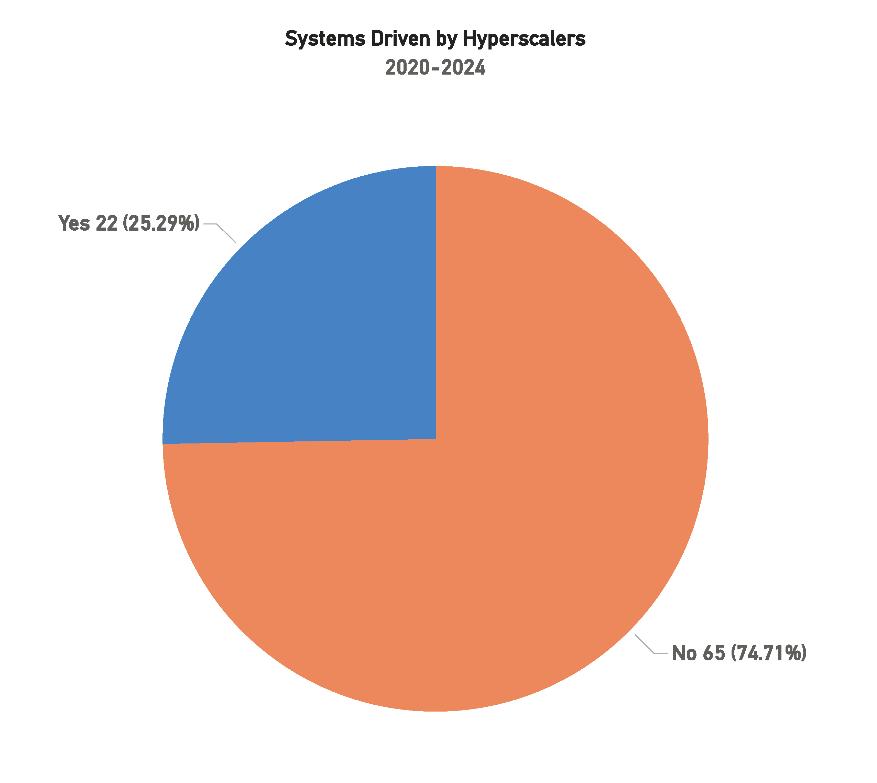
The data shows that the role of Hyperscalers has not diminished but has instead become more strategically important. While there was a slight drop in the number of systems attributed to them, their influence relative to the total number of systems being developed has grown. This suggests that Hyperscalers continue to prioritize infrastructure investments that meet their specific needs for greater control and flexibility, reflecting their long-term commitment to managing their global connectivity requirements independently.
Looking at 2024 in isolation, Hyperscalers have been the driving force behind 22 systems, which is a significant portion of the total systems that have gone live in that year. This continues the trend seen in previous years, with 2023 seeing 14 systems, 2022 seeing 11 systems, and so on. This steady increase illustrates the growing role that Hyperscalers play in
The exponential growth of Hyperscalers continues to drive increasing demand for bandwidth, which is now outpacing the capacity available from traditional carriers. In the past, these companies would have purchased bandwidth from existing telecom providers, but the rapid pace of their growth has made this approach inefficient. As a result, Hyperscalers are now opting to build their own submarine cable systems, which offers several key advantages.
Figure 1: Systems Driven by Hyperscalers, 2020-2024

First, it provides them with greater control over their infrastructure, allowing them to manage and allocate bandwidth based on their specific operational needs. This direct control also reduces their reliance on traditional carriers, eliminating the need to compete for limited capacity on existing circuits. Owning and operating their own infrastructure streamlines the process of increasing capacity. Previously, acquiring additional circuits could take weeks or months; now, Hyperscalers can activate additional bandwidth within days.
The trend of Hyperscaler involvement in submarine cable systems has steadily grown year over year. In 2020, only 5 systems were driven by Hyperscalers out of a total of 20 systems. However, by 2024, Hyperscalers are driving 22 systems out of 65 total systems, marking a significant increase in both their absolute involvement and their share of total systems. This trend shows consistent growth: in 2021, Hyperscalers were involved in 8 systems out of 31 total systems; in 2022, they accounted for 11 systems out of 43 total systems; and in 2023, they were behind 14 systems out of 50 total systems.
The continued involvement of Hyperscalers in submarine cable systems is driven by their increasing need for higher bandwidth between global data centers, as well as their desire for greater control over their infrastructure. Owning their own systems allows these companies to improve network efficiency and avoid potential bottlenecks and supply constraints associated with the traditional leasing model. This strategic approach enables Hyperscalers to manage their global connectivity requirements with greater flexibility and efficiency.
Despite a slight drop in the total number of systems attributed to Hyperscalers, their influence relative to the total number of systems being developed has grown. This highlights a long-term strategy aimed at securing more control over the global connectivity landscape. With the rise of cloud computing, data storage, and global data transfers, controlling infrastructure has become increasingly critical for these companies.
The financial implications of this shift are substantial. While the initial investment in transoceanic cable systems can exceed $100 million per route, the long-term potential revenue generated from controlling these vast networks is significant. Hyperscalers can also benefit from lower operational costs relative to the substantial gains they achieve through improved scalability and reliability. These infrastructure investments not only meet their current bandwidth needs but also ensure their ability to sustain future growth as demand for global data connectivity continues to rise.
7.2.2 FUTURE SYSTEMS IMPACTED
For the upcoming period of 2024 to 2028, 26.47% of the 34 planned systems are expected to be driven by Hyperscalers, a noticeable increase compared to 14% of the 56 systems projected in last year’s report.
This growth demonstrates that, despite recent internal restructuring and market challenges faced by companies like Facebook and Google, Hyperscalers remain significant players in the development of submarine cable infrastructure. Several factors likely contributed to this change. Although
Figure 2: Systems Impacted by Hyperscalers by Year, 2020-2024
challenges like the global chip shortage and COVID19’s lingering effects impacted technological develop ment across industries, Hyperscalers have maintained strong financial positions, enabling them to continue investing in infrastructure projects. The chip shortage, which began in 2020, is expected to resolve soon, likely accelerating technological progress and investment in new systems (J.P. Morgan, 2022). This could explain the higher percentage of systems driven by Hyperscal ers moving forward.
Looking ahead, Hyperscalers’ financial strength ensures that systems they back are more likely to reach implementation. While non-Hyperscaler proj ects often struggle to secure the necessary funding and prove viable business cases, Hyperscaler-driven projects benefit from significant financial support and reduced risk. As more Hyperscaler-backed projects are announced over the next few years, the percentage of systems they influence may rise further. However, the trend currently indicates that Hyperscalers will play a major role in nearly a third of the upcoming submarine cable systems, reflecting their continued expansion into this critical infrastructure.

In terms of financial investment, Hyperscalers are expected to contrib ute $2.65 billion, or 36.32%, of the total projected investment of $7.29 billion over the next several years. This represents a notable increase in both total investment and share compared to previous years. While Hyperscalers may not be the sole owners of every system they invest in, their contributions are vital to ensuring these projects move forward. Hyperscal ers’ financial backing often determines whether a system reaches completion, and their participation is a major factor in sustaining the overall health of the sub marine cable industry.
It is also important to note that while general industry statistics indicate that only about 52% of announced cable systems eventually go into service (Clark, 2019), Hyperscaler-backed systems have historically been more successful in this regard. These systems are typically not announced until they have achieved the critical Contract in Force (CIF) milestone, meaning they are highly likely to be implemented. This reinforces the dominant role Hyperscalers are expected to play in shaping the future of the submarine cable industry, both in terms of system count and financial investment.

Lastly, while no new Hyperscalers have announced plans to enter the submarine cable market, the existing leaders like Google, Amazon, and Microsoft are expected to maintain their investments in upcoming systems. Their ongoing involvement ensures that the submarine cable industry will continue to grow, driven by the need for ever-greater global data connectivity and the associated infrastructure. STF
Figure 3: Systems Driven by Hyperscalers, Future
Figure 4: System Investment Driven By Hyperscalers, Future
DATA CENTER EXPANSION AND STRATEGIC GROWTH PROJECTIONS
Data center providers have become increasingly integral to the submarine telecommunications ecosystem over recent years. A major trend is the strategic positioning of data centers and colocation facilities near submarine cable landing stations to enhance interconnection and optimize network services. This trend is driven by the need for low-latency, high-speed data transmission, and closer proximity to cable landing stations can dramatically reduce network latency. Additionally, hosting data centers near cable landing stations simplifies network infrastructure by minimizing the number of hops required for international data transmission.
Such configurations are especially advantageous for cable landing stations that support multiple submarine cables. These data centers can tap into a broader range of customers, providing them with extensive interconnection opportunities. For instance, Marseille, France, has become a key interconnection hub due to its strategic cable landing facilities, which accommodate 13 international submarine cables. This makes the city a gateway for high-speed connectivity across Europe, Africa, the Middle East, and Asia. Data centers in Marseille benefit from the city’s role as a global interconnection point, providing easy access to backhaul services and interconnection options.
such as artificial intelligence and machine learning. In particular, Equinix and Digital Realty have continued to grow their data center portfolios near key cable landing points, providing high-density interconnection platforms that are critical for cloud service providers and enterprises seeking low-latency connections to global markets.
With data center capacity projected to expand by over 5 GW by 2025, the submarine cable and data center industries are set to grow even more interdependent. This symbiotic relationship will likely spur additional investments in both infrastructure types, further solidifying the role of data centers as pivotal components in global telecommunications.
Moreover, the cost of establishing data centers remains substantial, with construction costs ranging from $7 million to $12 million per megawatt (MW), depending on the location and scale of the facility. This investment is further justified when considering the demand for low-latency, high-performance networks, particularly in locations with multiple cable systems. As these landing stations become critical interconnection points, they offer access to broader customer bases, interconnecting carriers, and service providers. This has incentivized carriers like Equinix and other non-Hyperscaler providers to invest in strategic markets close to these landing points, enhancing their competitiveness.
With data center capacity projected to expand by over 5 GW by 2025, the submarine cable and data center industries are set to grow even more interdependent. This symbiotic relationship will likely spur additional investments in both infrastructure types, further solidifying the role of data centers as pivotal components in global telecommunications.
The rise in data center investments has been particularly strong in regions like North America, Europe, and Southeast Asia. According to Energy Monitor, global data center capacity is expanding rapidly, driven by the need for increased processing power and storage to support new technologies
The global data center market is experiencing remarkable growth, with hyperscale data centers driving much of this expansion. Hyperscale facilities, which are primarily operated by large cloud providers such as Amazon, Microsoft, and Google, surpassed 1,000 globally in early 2024. These

massive infrastructures continue to play a critical role in supporting the growing demand for cloud services, AI workloads, and large-scale data processing. Over the past four years, hyperscale capacity has doubled, and experts project that this trend will continue, with capacity expected to double again within the next four years. (McKinsey & Company, 2023) (Synergy Research Group, 2024)
The increasing reliance on hyperscale data centers is largely attributed to the exponential rise in data generation and the growing adoption of artificial intelligence (AI). AI workloads, which are highly compute-intensive, are reshaping the infrastructure requirements of data centers. Hyperscale operators are responding by scaling their facilities, increasing rack power density, and enhancing cooling technologies to support the massive power consumption driven by AI and cloud computing. Furthermore, the geographical distribution of data centers is also expanding, as companies prioritize proximity to end users to reduce latency and improve efficiency. This is evident in the rise of smaller, strategically placed data centers that complement the larger core facilities. (Synergy Research Group, 2024)
In the U.S., which currently houses 51% of global hyperscale capacity, there are ongoing efforts to expand data center infrastructure across several key regions. Northern Virginia remains the dominant player, contributing nearly a third of the nation’s capacity. However, other regions, such as Texas, Georgia, and North Carolina, are emerging as important hubs for data center development. This diversification is driven by several factors, including power availability, favorable tax
incentives, and increased demand for connectivity across different parts of the country. (Synergy Research Group, 2024)
Globally, the future of data center expansion looks equally robust, with over 440 hyperscale projects currently in various stages of development. These projects are expected to come online over the next few years, further cementing the critical role that hyperscale data centers play in global IT infrastructure. The rise of cloud services, e-commerce, social networking, and AI-driven applications is a key contributor to this rapid growth, pushing both existing hyperscale operators and new entrants to continually expand their capacity to meet demand. Additionally, data centers are increasingly focusing on improving energy efficiency and sustainability as they scale up. The power-hungry nature of data centers has prompted operators to invest in renewable energy sources and advanced cooling techniques to reduce their environmental footprint. Regions like Scandinavia and the Pacific Northwest have become attractive locations for new data centers due to their access to renewable energy and favorable climate conditions that reduce cooling costs. These developments underscore the growing importance of sustainability in data center operations. (Synergy Research Group, 2024)
The combination of rising infrastructure investments, a growing pipeline of projects, and the increasing adoption of AI and cloud technologies suggests that the data center market will continue to expand at a rapid pace. This growth will likely reshape the global landscape, with key regions and hyperscale operators driving forward the next generation of digital infrastructure. STF
Figure 5: Data Center Cluster Map


The 2024/2025
INDUSTRY REPORT READ IT NOW!
MAIN TOPICS FOR THIS Y EAR’S REPORT INCLUDE:
• Global Overview
• Capacity
• System Ownership
• Supplier Analysis
• System Maintenance

• Cableships
• Market Drivers and Influencers
• Special Markets
• Regional Analysis and Capacity Outlook
WHERE IN THE WORLD ARE THOSE PESKY CABLESHIPS?
BY SYEDA HUMERA
ENHANCING MARITIME OPERATIONS EFFICIENCY: A POWER BI-DRIVEN ANALYTICAL OVERVIEW OF NAVIGATIONAL DATA
In today’s globalized world, maritime operations continue to play an essential role in enabling the smooth flow of commerce, data, and connectivity across continents. The latest 2024 Power BI-driven analysis of Automatic Identification System (AIS) data reveals new insights into the operational trends, vessel movements, and regional activity within the global submarine cable fleet. With advancements in predictive analytics and real-time data visualization, the maritime sector is poised to harness these insights to enhance efficiency, optimize resources, and reinforce global connectivity.
This month’s analysis focuses on updated AIS data, offering a fresh perspective on navigational patterns, vessel types, and zone activity within the maritime industry. The attached charts provide detailed visualizations of vessel speed fluctuations, navigation status distribution, draught-speed relationships, vessel types, and zone-specific activity. Each of these aspects is critical in understanding the broader dynamics at play in submarine cable operations and maintaining a resilient global communications network.
One of the key metrics observed is vessel speed, which reflects the dynamic nature of maritime operations. The line chart details daily fluctuations over recent months, underscoring the influence of environmental conditions, seasonal demand, and strategic positioning on operational speeds. The analysis reveals specific high-activity periods, which likely correlate with increased demand in global data flow and stra-
tegic vessel positioning to support network reliability.
Navigational status offers another layer of insight, with the bar chart showing a breakdown of vessel operations across different statuses. This data highlights the balance between active navigation and stationary periods, painting a picture of how the submarine cable fleet is being utilized. Understanding these patterns enables stakeholders to make data-informed decisions that improve operational efficiency and safety.
The relationship between vessel draught and speed, shown in the scatter chart, further illustrates the diversity of operations within the maritime sector. This plot captures how various vessel classes and cargo weights affect operational speeds and performance, providing a nuanced view of how these ships are navigating the seas under differing conditions.

The donut chart categorizes vessel types based on AIS data, presenting a clear view of the global maritime fleet’s composition. With a significant portion labeled as “Other Type,” there remains an opportunity to refine vessel classifications to improve fleet management. The distribution also highlights the role of specialized vessels, such as those engaged in dredging and underwater operations, underscoring their importance in global maritime infrastructure.
Lastly, the area chart on zone activity maps the global reach of submarine cable fleet operations, showing the most active regions. Key areas such as East Asia, North America’s West Coast, and the North East Atlantic emerge as focal points for submarine cable maintenance, installation, and repair. This regional distribution reflects not only the demand for connectivity but also the strategic importance of these zones in supporting global communication links.
As this report delves into these insights, it becomes evident that the maritime industry is evolving through data-driven strategies, embracing technological advances to meet rising connectivity needs. The integration of AIS data with advanced analytics offers unprecedented opportunities for the industry to adapt, anticipate, and respond to the demands of a digital, interconnected world. With each update, stakeholders are empowered to leverage data for optimized fleet management, sustainable operations, and enhanced global connectivity.
LINE CHART
In this month’s analysis of the line chart detailing the average vessel speeds by day, several notable trends emerge that offer insights into operational dynamics within the maritime industry. The line chart displays daily fluctuations in average speed over September and October, with some significant peaks and dips that likely correspond to varying operational conditions and environmental factors.
September’s data reveals consistent variations in daily speeds, mostly ranging between 3.0 and 5.0 knots. Notably, there is a sharp dip to 1.2 knots on the 13th, followed by an immediate recovery back to a more stable range. This pattern might suggest periods of congestion or specific operational requirements causing temporary reductions in vessel speed. Such dips are indicative of dynamic shifts within maritime
operations, where vessels may encounter constraints due to weather, route congestion, or strategic repositioning.
A particularly prominent spike is observed on September 30th, reaching 11.9 knots, marking the highest recorded speed over the two-month period. This peak likely correlates with operational adjustments, such as strategic repositioning or fast transits across open waters. Peaks of this nature are often a response to urgent logistical demands or favorable environmental conditions that allow for higher speeds. This elevated speed, however, is quickly followed by a drastic decrease at the beginning of October.
The first week of October is unique in this dataset, as multiple days display an average speed of 0.0 knots. This anomaly is due to issues within the data collection process, which led to incomplete or absent speed data for several days in October. Such gaps highlight the challenges in maintaining consistent data accuracy, especially in a large-scale maritime monitoring system where technical disruptions or reporting lapses can occur. This temporary interruption in data collection limits our ability to analyze trends for this period accurately, leaving some uncertainty about the operations occurring during those days.
Beyond the initial days of October, data collection resumed, with vessel speeds showing a return to variable but consistent averages, often ranging from 2.0 to 6.4 knots. Peaks on October 9th (5.2 knots) and October 10th (6.4 knots) reflect potential increases in activity, possibly aligning with favorable conditions or heightened operational demands. Following these peaks, speeds gradually stabilize, suggesting a return to typical operational patterns as vessels maintain moderate speeds in line with standard maritime logistics.
Throughout the rest of October, the data continues to reflect fluctuations, with several dips to lower speeds, such as 1.2 knots on October 22nd. These lows, interspersed with moderate highs, provide a snapshot of how vessels adapt
CABLESHIPS
to the varying demands of maritime operations, possibly navigating restricted waters, adjusting routes, or positioning strategically for upcoming assignments. By the end of October, average speeds appear to settle within a range that suggests regular operations, with the final days displaying values between 2.7 and 4.1 knots.
This analysis of the line chart offers insights into the rhythm of maritime operations, showing how vessels’ average speeds change in response to operational demands, environmental factors, and data collection issues. The noticeable spike on September 30th, coupled with the zero readings at the beginning of October, emphasizes the importance of accurate data collection for actionable insights. Addressing data gaps is crucial for understanding patterns fully, allowing stakeholders to make informed decisions based on consistent and reliable information.
BAR CHART

“Restricted Maneuverability,” with 2.79K entries, captures vessels that are operational but constrained in their movements, possibly due to close-proximity maneuvering in harbors, or maintenance activities. This status provides insight into vessels engaged in specialized operations that require precision and limited mobility, often seen in congested or strategic areas where navigation flexibility is reduced.
The bar chart displaying navigation statuses for September and October offers a comprehensive view of the operational distribution within the maritime industry during this period. Each category reflects distinct aspects of vessel activity, providing insights into how the fleet is utilized, from active navigation to stationary states.
The “(Blank)” status leads with 3.51K entries, signifying instances where vessels either did not report their status or where data gaps exist. This unclassified segment highlights the potential challenges in data consistency, where incomplete or missing entries can obscure a full understanding of fleet operations. Improving data reporting accuracy within this category would enhance visibility into vessel activity and support more refined analysis.
Close behind, the “Moored” status has 3.40K entries, indicating a substantial portion of vessels remained stationary in port or near coastlines. This status suggests periods of inactivity, likely due to docking, loading, or maintenance activities. High counts in the “Moored” category could reflect a combination of routine port operations or even temporary pauses in operations due to external factors such as weather or geopolitical constraints.
The “Under Way Using Engine” category records 2.39K entries, representing vessels actively navigating and making way under engine power. This count provides a direct view into the fleet’s active transit phase, where vessels are moving between destinations. It is a critical indicator of maritime activity levels, as vessels in this status contribute significantly to global logistics and supply chain flows.
The “At Anchor” status, with 0.86K entries, represents vessels that are stationary but not moored to a dock. These vessels may be waiting to dock, positioned in anchorage zones, or holding for further instructions. This status is common in congested port areas or strategic locations where vessels need to wait before proceeding.
In comparison, the “Under Way Sailing” status shows only 0.08K entries, highlighting a minimal segment of vessels navigating without engine power, such as those under sail. This count reflects the limited use of non-engine-based navigation in contemporary commercial maritime operations.
Finally, the “Not Defined (Default)” and “Not Under Command” categories record minimal to zero entries. These categories, which typically represent vessels without explicit navigation instructions or those experiencing a temporary loss of control, show very low occurrence, suggesting that most vessels in the fleet are accounted for under more ac-
tive or stationary statuses.
This distribution across navigation statuses provides a detailed snapshot of maritime operations, illustrating how vessels are engaged in various states of activity or inactivity. The high entries in “(Blank)” and “Moored” statuses emphasize the importance of port and stationary operations, while “Under Way Using Engine” reflects the active movement essential to global trade. Understanding these distributions aids stakeholders in managing resources, planning fleet operations, and adapting to changing demands within the maritime sector.
SCATTER CHART

maneuvers in restricted or congested waters. The diversity in speeds for vessels with lower draughts could reflect different stages of port activities or transit through shallow routes where speed variations are necessary for safe navigation.
The scatter chart showing the relationship between vessel speed and draught offers valuable insights into operational behaviors within the maritime industry. The distribution of data points illustrates how vessels operate across varying depths and speeds, revealing patterns that inform both performance and operational dynamics.
Most data points cluster around a draught of 6 meters, with a wide range of speeds extending from 0 up to approximately 12 knots. This clustering suggests that many vessels maintain a standard operational depth around 6 meters, which likely represents a typical configuration optimized for balance and efficiency in different maritime conditions.
Speeds for vessels in this common draught range mostly fall between 4 and 8 knots, indicative of moderate cruising speeds suitable for steady operations in open waters. This range likely reflects typical transit speeds, balancing fuel efficiency and travel time, and aligns with standard operational protocols for vessels in favorable maritime conditions.
Interestingly, the plot reveals no strong correlation between draught and speed, as indicated by the relatively flat trendline. This absence of correlation suggests that the operational speed of a vessel is generally independent of how deeply it sits in the water. Instead, factors such as the type of cargo, destination, or environmental conditions are likely to have a greater influence on speed than draught alone.
Lower draught values, falling between 4 and 5 meters, show a broader range of speeds, with some vessels operating at very low speeds close to 0 knots and others reaching up to 8 knots. These vessels may be lighter in terms of cargo or performing
At the upper end of the speed range, a few points exceed 10 knots, and these tend to align with the standard 6-meter draught. These higher speeds are likely indicative of specific operational needs requiring faster transit, possibly due to time-sensitive missions or optimal weather conditions allowing for more rapid movement.
The scatter of data points and the lack of a definitive speed-draught relationship reflect the diversity of maritime operations. Vessels appear to navigate based on a combination of operational requirements, external conditions, and navigational constraints rather than a fixed relationship between speed and draught. This variability allows for a flexible approach to navigation, where vessels can adapt their speeds and depths to suit changing conditions or specific demands.
For maritime stakeholders, this analysis emphasizes the complex nature of vessel performance, illustrating that both speed and draught are influenced by a multitude of operational factors. Understanding this interplay aids in resource planning and decision-making, ensuring that vessels can operate efficiently and safely across varying maritime environments. The chart also provides a framework for further analysis, where other operational attributes could be examined alongside speed and draught to uncover deeper insights into vessel performance and fleet management strategies.
DONUT CHART
The donut chart provides a breakdown of vessel types based on AIS data, with each category representing a unique aspect of the global maritime fleet. Interestingly,
CABLESHIPS
every category shows an identical entry count of 14,479, each accounting for 9.09% of the total. This uniform distribution suggests potential limitations in data classification, where specific vessel details may be lacking or generalized under broader categories. Such a pattern calls attention to the importance of refined categorization within AIS data to improve the clarity of fleet compositions.
“Other Type, All Ships of This Type”: This category indicates a catch-all group encompassing various vessel types that don’t fit into traditional classifications. Its prevalence underscores the flexibility within maritime operations, where many vessels operate outside typical frameworks, likely due to unique functions or multipurpose roles.

category, this encompasses various cargo ships. However, the uniform entry count with other categories diminishes the specificity that would be expected in a trade-focused segment, emphasizing a gap in data detail.
“Not Available (Default)”: This label suggests entries where AIS data on vessel type was either unavailable or not explicitly reported. While standard in data collections, default categories reduce the precision of the dataset and may mask the actual variety in vessel types.
“Noncombatant Ship According to RR Res.”: This category could represent ships designated for specific non-military support roles, perhaps for governmental or research purposes. While essential, it represents a niche area within the broader maritime industry.
“Dredging or Underwater Operations”: Vessels in this group are involved in construction, maintenance, or other underwater operations essential for port and offshore infrastructure. The equal share with other categories highlights its importance but also suggests a need for further sub-categorization.
“Diving Operations”: This category includes vessels engaged in specialized underwater tasks, often for exploration, repair, or salvage operations. Given its specific function, further granularity within this category might reveal more operational insights.
“Cargo, No Additional Information”: Cargo vessels are a cornerstone of global trade, and this group includes those for which detailed classifications (such as container or bulk carrier) are unavailable. This general label underscores the need for more precise cargo data to better track trade flow types.
“Cargo, All Ships of This Type”: Like the previous
“Reserved” and “Other Type, Reserved for Future Use”: These categories likely represent placeholders or vessels that don’t fall within existing classifications. The high count in each reserved category suggests there are numerous vessels awaiting further specification, underscoring a need for updated classification systems as maritime operations evolve.
“(Blank)”: This label captures instances where vessel type data is entirely absent. High counts here reflect potential lapses in data entry or reporting, further reducing the dataset’s overall specificity.
“Other Type, No Additional Information”: Similar to the first category, this group may represent diverse or multi-role vessels, but without any extra details. The lack of additional information limits insights into these vessels’ operational roles, making this a prime area for refinement.
The equal distribution across these categories raises questions about the granularity and classification of AIS data in its current state. While each segment has operational significance, the lack of differentiation within each group hinders deeper analysis of fleet composition and functionality. For maritime stakeholders, addressing these classification gaps could enhance the utility of AIS data, allowing for more effective resource allocation, operational planning, and compliance with international maritime regulations.
Improving vessel classification would empower industry analysts to derive more actionable insights from AIS data, offering a more precise understanding of global maritime dynamics.
This data refinement could help identify trends in specialized vessel operations, support regulatory compliance, and optimize fleet management strategies, thereby supporting the industry’s ongoing evolution toward data-driven decision-making.
AREA CHART
The area chart detailing zone activity provides a geographical overview of where submarine cable fleet operations are most concentrated. Each region’s activity, represented by the number of AIS entries, reflects varying levels of demand for cable maintenance, installation, and monitoring across global waters.
East Asia (2.23K entries): Leading in activity, East Asia underscores the immense connectivity demand driven by its high population density, tech-centric economies, and the critical role of data flow in this region. The elevated entries suggest substantial cable-related operations, likely to support the rapid data exchange between major economic hubs.
China Coast (1.39K entries): The China Coast, with its significant data needs and economic importance, emerges as a key area for submarine cable infrastructure. This activity reflects China’s connectivity requirements and strategic focus on data links within Asia and globally.
North East Atlantic Ocean (1.39K entries): This region serves as a major corridor for transatlantic cables connecting Europe and North America, making it essential for
international connectivity. The high AIS count highlights ongoing installation, maintenance, and repair activities vital for the transatlantic data flow.
North America West Coast (1.29K entries): This region’s activity stems from cables connecting North America with Asia-Pacific markets. The West Coast serves as a gateway for trans-Pacific cables, reinforcing its strategic role in linking major global data hubs.
South East Asia (0.88K entries): As a bridge between Asia, Australia, and Europe, South East Asia plays a pivotal role in submarine cable networks. The region’s growing digital economies drive the need for robust infrastructure, supported by the observed fleet activity.
Persian Gulf (0.61K entries): The Persian Gulf’s cable activity supports connectivity for the Middle East, where data links are critical for regional and international communication. This area’s strategic location as a link to Asia and Europe underscores its importance for telecommunications infrastructure.
Indonesia (0.55K entries): Indonesia’s archipelagic nature necessitates extensive submarine cables to ensure connectivity across its islands. The activity here highlights the ongoing efforts to maintain and expand connections in a region where physical geography presents unique challenges.
Caribbean Sea (0.52K entries): This region, with its numerous islands and strategic location, relies on submarine cables for connectivity. The fleet activity reflects both the

FEATURE
maintenance of established routes and the support needed to connect the Caribbean with North and South America.
Red Sea (0.49K entries): A key passage for cables connecting Europe and Asia, the Red Sea’s activity highlights the importance of this route in supporting global data flows through narrow and strategically significant waterways.
South Pacific Ocean (0.48K entries): Linking Oceania with the Americas and Asia, the South Pacific Ocean sees substantial activity to support international data exchange across this vast oceanic region.
North Sea (0.46K entries): This critical zone for Northern Europe’s connectivity sees significant cable operations, linking multiple European countries and supporting regional infrastructure.
West Africa (0.65K entries) and West Mediterranean (0.43K entries): These regions play essential roles in connecting Africa to Europe, with notable AIS entries suggesting ongoing infrastructure maintenance and expansions to meet increasing data demand on the African continent.
Additional Zones: Regions like the Baltic Sea (0.39K entries), East Mediterranean (0.33K entries), South America East Coast (0.24K entries), and Indian Coast (0.17K entries) all reflect moderate levels of fleet activity, underscoring their importance in regional connectivity. Lesser but still notable entries in the Arabian Sea, US East Coast, and other areas highlight their contributions to global and regional data exchanges.
This distribution of AIS entries provides a clear picture of the most active areas for submarine cable operations, with East Asia, China Coast, and the North East Atlantic Ocean emerging as the focal points. These zones reflect a blend of high population density, economic significance, and strategic positioning for international data transmission. For stakeholders, these insights are invaluable in planning fleet operations, prioritizing maintenance, and anticipating future infrastructure needs to support global connectivity demands.
By understanding the geographical distribution of activity, the submarine cable industry can optimize its resources, ensuring efficient deployment in high-demand zones and contributing to a robust and resilient global communications network.
CONCLUSION
The analysis of AIS data for submarine cable fleet operations in this report builds on observations from prior articles, highlighting consistent and emerging trends within the maritime sector. Over recent analyses, East Asia, the Northeast Atlantic, and North America’s West Coast have persistently ranked as key activity zones. This recurring pat-
tern reflects their strategic roles in facilitating high-demand connectivity and maintaining critical infrastructure for data flow across continents.
From vessel speed trends to navigation status distributions, each dataset layer underscores the adaptability and complexity of the maritime industry. Vessel speeds show seasonal peaks, influenced by operational demands and environmental conditions, while navigation statuses reveal how the fleet balances active transit with stationary maintenance and mooring activities. Compared to the previous analysis, this report observes a slight decrease in the “Under Way Using Engine” status, suggesting a possible shift toward port activities or a response to specific seasonal or geopolitical factors impacting global trade flows.
Furthermore, the scatter chart consistently shows no strong correlation between speed and draught, which reinforces a recurring insight: maritime performance is shaped by a blend of factors, from cargo type to route constraints, rather than a single operational characteristic. This insight remains valuable for strategic planning, indicating that fleet management requires a nuanced approach that considers the multifaceted demands of maritime logistics.
The analysis of vessel types through the donut chart reveals ongoing challenges with classification granularity, as categories like “Other Type” and generic “Cargo” still dominate. Addressing these classification gaps could unlock more detailed insights, allowing stakeholders to optimize resources and fleet assignments based on specific vessel capabilities and roles.
Lastly, the geographic zone analysis consistently places high emphasis on regions critical for global connectivity, such as East Asia and the North East Atlantic. This persistent pattern across multiple reports points to a need for focused resource allocation and risk management in these high-traffic areas to maintain and enhance infrastructure resilience.
In conclusion, AIS-driven insights provide a powerful tool for understanding and optimizing global maritime operations. As data integration and classification improve, the maritime industry will continue to benefit from more precise insights, guiding efficient, adaptive, and resilient operations to meet the world’s growing connectivity needs. STF

SYEDA HUMERA, a graduate from JNTUH and Central Michigan University, holds a Bachelor’s degree in Electronics and Communication Science and a Master’s degree in Computer Science. She has practical experience as a Software Developer at ALM Software Solutions, India, where she honed her skills in MLflow, JavaScript, GCP, Docker, DevOps, and more. Her expertise includes Data Visualization, Scikit-Learn, Databases, Ansible, Data Analytics, AI, and Programming. Having completed her Master’s degree, Humera is now poised to apply her comprehensive skills and knowledge in the field of computer science.

Hawaiian Islands Fiber Link: Connecting Communities
Hawaiian Islands Fiber Link (HIFL) is a low latency and robust design submarine cable system that will improve Hawai‘i’s interisland connectivity and digital services. HIFL will be a carrier-neutral, open-access system with 24 ber pairs, expected to be ready for service in late 2026.
Līhue, Kaua‘i
Kapolei, O‘ahu
Kaunakakai, Moloka‘i Kahului, Maui
Mānele Harbor, Lāna‘i
Hilo, Hawai‘i
CAPACITY CONNECTION
EDITION SIX: DYNAMICS OF THE SUBMARINE CABLE BANDWIDTH MARKET
Where Are We and Where Are We Going?
BY JOHN MAGUIRE
INTRODUCTION AND OVERVIEW
Welcome to Edition Six of Capacity Connections. While we’ve been focussing in previous editions on specific issues affecting our market—all the while trying to keep our discussion in context—I thought it might be worthwhile as the year draws to a close to increase our altitude and have a more holistic look at our current situation and where we might possibly be headed over the next few years.
Submarine cables are not just the “critical infrastructure in global communications” that we hear and read of with apparently increasing regularity in global mass media, each one is a complex, multi-year infrastructure project. And each one takes a sometimes subtly— sometimes not so subtly—different set of inputs and delivers something unique into the market for subsea bandwidth. Evolution is the only constant.
The market: buyers and sellers collectively, along those who design, build and maintain the submarine systems, and the environment in which they all operate, is, as we have seen, undergoing change in every category. This has always been the case—but never previously has it wrought such significant change in such a short time.
WHERE ARE WE? (AND HOW DID WE GET HERE?)
GEOGRAPHICAL EXPANSION INTO EMERGING MARKETS
The first telegraph cables were
installed across the Atlantic Ocean to connect what were then the biggest international markets. As the prevalence of submarine cables began to grow, and services continued to develop, cable reached deeper into markets that were comparatively less significant.
If we consider the SeaMeWe 3 (SMW3) cable, which went ready-forservice (RFS) in 1999, as the apotheosis of the consortium cable, we see a system that landed in 39 locations, in 31 countries, construction of which was commissioned by a consortium of European, Middle-Eastern and Asian telecom operators. By the time the construction and maintenance agreement (C&MA) was signed by 92 (yes,
ninety-two, largely state-owned) parties in 1997, the system connected to places as far east as South Korea in the north and Australia, in the south directly to Europe, via the Red Sea. The consortium members were the PTTs of the places where the cable landed.1
It’s difficult for a civilian to access the historical record at this remove, but humor me while I assert that by the time SMW3 followed quickly on from its coaxial predecessors, SMW1 and SMW2, not only had fiber optics matured to the point where they could be deployed underwater and over long distances but, perhaps more
1 https://web.archive.org/web/20010308195229/http:// www.smw3.com/Html_Static/background.htm
importantly in the context, a tsunami of corporatisation and privatisation had commenced: a process that would quickly lead to the creation of competitive national markets for telecom services across much of the globe. The coming growth wave was clearly visible—and the concept of the consortium cable was firmly established.
EXPANSION OF COMPETITION IN MARKETS
By the time the APCN2 system went live in 2001, competition was frenetic in many of the more developed markets. The consortium that built the APCN-2 cable system, a loop connecting Japan and Singapore, now included many smaller players seeking to make their fortunes in the burgeoning wholesale business. Money to invest in submarine cables was plentiful—and certainly far more plentiful than the returns the smaller players would ever earn.
If we look at the initial parties of APCN22, however, the most obvious thing to note is that consortium members, the investors, are no longer obviously national PTTs. The system landed into 10 locations in seven countries. There were 26 initial parties and, somehow, 45 consortium members. Concert (the AT&T-BT 50:50 joint venture) invested from Bermuda and the parents of the Hong Kong landing party, REACH (the PCCW-Telstra 50:50 joint venture) separately invested from Hong Kong and Bermuda, respectively.
This was a feeding frenzy and it was to end as such events generally do,
with the weakest being devoured3 RATIONALISATION
OF TELECOM MARKETS
In the early 2000s, the wholesale telecom market balloon had burst— the end of the “dot.com” boom arrived. REACH, of our earlier acquaintance, famously acquired the Asia business and assets of Level 3, including a partially constructed submarine cable and US$ 90 million of working capital, in return for assuming Level 3’s obligations to complete construction and to maintain the cable.4 A significant separation of wheat from chaff occurred—and what was left was largely those companies who were direct descendants of the original PTTs. Consortium cables were still the generally accepted approach to building new systems, but lessons had been learned from the unwieldy SMW3 experience. SMW4 was completed in 2005, landing at 16 points in 14 countries and commissioned by a consortium of only 16 operators, each of which was a recognizably senior player in its local telecom market and more broadly internationally. Rationality had returned
EMERGENCE OF THE HYPERSCALERS
From the late 2000s, the hyperscalers had started to emerge as players in the capacity markets. Their presence was first felt when they became large customers of existing cables, purchasing through consortium members. It was in very short order, however, that they arrived at the table to take positions as investors in cables.
3 I have personal recollection here of a small Australian company having raised the ante to naively invest in a system-wide MIU (perhaps an STM-1 in those days?) and, having made its investment, from the British Virgin Islands, desperately attempting to monetise capacity it had no idea how to connect to. I am unsure of what happened to the MIU, but the company saw its best days prior to RFS and was liquidated and deregistered as early as November 2001.
Google—the daddy of them all for our purposes—first invested in the Unity cable system. This simple, point-to-point transpacific system, connecting Japan and the USA, was commissioned by a consortium of only six senior players, including Google, and went live in 2009. It was obvious at this stage that not only did an actor like Google have much more traffic than a classic telco, but that the nature of the traffic was completely different. This tended to affect the design process with seamless global and nationally licensed players, respectively, having diverging traffic grooming objectives.
SO WHERE ARE WE NOW?
In the early- to mid-2020s we find ourselves in a world where hyperscalers and telcos operate within overlapping worlds.
Many of the former PTTs have retrenched into their local markets and focus on enterprise and/or mobile communications. If we look at the parties to the intra-Asia, APCN2 consortium, for example: Concert ceased to be. Neither AT&T nor BT—formerly giants—is as active in submarine circles compared to days prior to the joint venture. REACH still owns satellite and cable stations in Hong Kong, but is no longer an operating company, the parents long since having gone their separate ways—although both still active. C&W, now Vodafone, has been consolidating and has reduced its field of interest to the hemisphere where it has thriving operating companies. Similar could be said of KPN, focused locally and, indeed, of the remaining U.S. operators, who have largely consolidated into Verizon.
2 https://www.submarinenetworks.com/en/systems/intraasia/apcn-2/apcn-2-submarine-cable-system
4 https://www.computerworld.com/article/1408077/ telstra-pccw-buy-level-3-s-asian-operations.html
The persisting strong telcos continue to pursue consortium builds, frequently involving hyperscalers
CAPACITY CONNECTION
such as Meta, AWS and Microsoft—and occasionally Google. Telefonica’s Telxius and Orange of France are among the strongest of these. Alongside the telcos, the current crop of wholesale network providers—e.g., EXA Infrastructure, Aquacomms, Crosslake—have built significant networks.
Google has gone off at a gallop and is building an incredible number of systems around the world, particularly in the Pacific, as we saw in Edition 5. Given its incredible resources, one imagines Google could operate wholly independently of any partners, if it were not for nation states seeking to retain control over critical infrastructure such as submarine cable and requiring that landing parties be locally licensed telcos.
Meta is gathering momentum at an incredible pace. If rumors are to be believed, and they are as rarely fully wrong as they are fully right, the social networking giant plans to connect the east west coasts of the U.S. via a new cable across the Atlantic, Indian and Pacific oceans.
WHERE ARE WE GOING?
History is one thing. Henry Ford considered it “more or less bunk”. And Churchill warned us that “those that fail to learn from [it] are doomed to repeat it”. Neither remark is of much relevance to us, however. The far more interesting question today is: Where are we headed?
Elsewhere in the series we have looked separately at the effects of technological development, developments in cloud, data centers, and the emergence of 5G, AI and hyperscalers. To prognosticate, we need to take a rounded view of all these factors—and perhaps some more!

GROWING DEMAND FOR DATA
Statista tells us that global consumer internet traffic is growing at a whopping compound annual rate of 27%5. Now this is consumer traffic, so one assumes it ignores network traffic such as that created in training AI models, for example.
5G as a wireless and mobility phenomenon, like 3G before it, is probably unlikely to have significant demand growth ascribed to it later, but mobile communications have been the great democratizer, delivering relatively large bandwidths into the hands of people living in places where copper and fiber have never properly reached.
Add growing expectations of resilience… We are going to need more submarine cables.
5 https://www.statista.com/statistics/267202/global-datavolume-of-consumer-ip-traffic/
SIMPLIFICATION OF BUILDING MODELS
There is a trend towards simplifying cable building consortia. Smaller groups or developers mean fewer design compromises, leading to more efficient development processes and more efficient cables delivered—as well as faster decision making, leading to better market responsiveness. Hyperscalers bolster this trend by bringing their financial heft to the table.
INCREASINGLY DIVERSE ROUTING
Transatlantic, transpacific (which includes intra-Asia aggregation) and the SMWX routes have been the historical highways of global submarine infrastructure. Increasingly, developments are occurring outside these hot routes. Google’s south Pacific and south Indian Ocean routes, Humboldt, 2Africa and, perhaps, Meta’s rumoured
The global cable ship fleet. Note that submarine cables are not confined to telecom applications and many of these ships are also involved in offshore energy projects
long-way-around global system, all point to this.
As demand grows in these formerly underserved markets, so too will connectivity. It is not only consumer demand, however, that stimulates new cable builds. Cables need to terminate in data centers and data centers consume huge amounts of power. Accordingly, the data centers will be built where such power is more readily available—and cables will too. It’s not just any power either. The builders of the big data centers, prominent among them our friends the hyperscalers, need to access clean or renewable power to meet their corporate social responsibility obligations and climate change objectives.
SO IT’S ONWARD AND UPWARDS?
Before we get carried away with how there’s massively growing demand for bandwidth and correspondingly for new cables, let us consider what might inhibit the industry’s ability to timely deliver all this.
GEOPOLITICS
Such is the nature of the current geopolitical environment that even as it promotes developing of new systems on new routes (e.g., systems increasingly seeking to avoid hotspots such as the Red Sea or South China Sea) it simultaneously inhibits the ability to deliver.
AVAILABILITY OF RESOURCES
The capacity to manufacture submarine cables—and to deploy and maintain them—has been finely tuned to over the past 20-30 years. The system has oscillated mildly around an equilibrium that has never been totally stable. The coming massive demand for new cable, however, threatens to upset
this balance. The sheer number of planned cables and the buying power of the hyperscalers, threatens to create demand that cannot readily be met from current capacity. And bringing up new capacity is not something that can be done overnight. Economics 101 tells us what happens next.
Nowhere is the capacity pinch more keenly felt than in vessels: the ships that deploy and maintain our submarine systems. (See Figure 1). The ability of a ship to operate is tightly restricted in many geographic markets through maritime cabotage laws. Add to this political limitation the geopolitical issues mentioned earlier, and it is no surprise there is a squeeze in ships.
The Submarine Telecoms Industry Report7 and Light Reading8 mutually corroborate the general view that availability of ships with ability to operate in given waters is and is going to continue to be an issue into the medium term at least. On the bright side, some operators are seeking to grow their fleets, among them OMS6--but new ships, like Rome, are not built in a day.
CONCLUSION
The market for international data services on submarine cables is growing and evolving rapidly now, driven by technological advancements, ever rising data demand and, importantly, the voracious appetites of the currently powerful hyperscalers. Apart from their appetite for raw bandwidth, and absent the need to serve customers on any sort of national basis, their direction of travel would appear to be guided by massively increased demand for resilience and the need to locate landing stations in places where
6 https://www.lightreading.com/cable-technology/ oms-group-secures-292-5m-loan-for-fleet-expansion-asindustry-grapples-with-cable-ship-shortage
the energy environment is friendly towards the massive data centers that need to be located at the nodes.
The burgeoning demand from and the immense purchasing power of the hyperscalers is such that pre-ordering fiber, repeaters and expensive submarine line terminating equipment (SLTE)—committing to future construction in a way that was never possible for nationally based telecom companies—now creates a bottleneck in what has become a seller’s market.
Expect that contractors will begin to decline to bid for what they consider less attractive projects, and that the prices quoted for projects for which they do bid will increase quite significantly over the next several years, until capacity catches up with demand. All the while, expect there to be significant delays and further increased cost arising from limited availability of vessels to perform installations.
But as the wise king Solomon is reported once to have said… This too shall pass. The question is how. STF

Currently Director, EMEA, with APTelecom, JOHN MAGUIRE has experience gained across a broad spectrum of telecommunications roles and businesses over the past 30 years. He has sold security and network control software to mobile networks worldwide; established a regional federation fibre network across a family of affiliated telcos and, several times, established interconnect networks and wholesale structures for leading telco brands in new entry and emerging markets. He’s done this in roles across the business: using satellite and cable technology, for OEM and service provider companies and in fixed and mobile domains—including for start-ups and mature companies. His roles have encompassed general management, sales management, direct and indirect sales, business development, market development and operations. A native of Dublin, Ireland, he’s also lived and worked in Australia, UK, Singapore, Hong Kong, Thailand, Qatar, UAE and Malaysia. John holds a B.Tech. degree from University of Limerick in Ireland and an M.A. from Macquarie University Graduate School of Management in Sydney, Australia.

IN NUMBERS

BRIAN MOON
Join us in Honolulu for the most anticipated industry event of the year. Building on the success of PTC’24, PTC’25 promises engaging hot topics, insightful talks, and unparalleled networking opportunities.
Discussing Submarine Cable Industry with PTC’s CEO
Don’t miss out—register now for the best rates on registration and accommodations!

1.
ENGAGE WITH AND INFLUENCE THE SUBMARINE CABLE MARKET?
PTC’25 engages with and influences the submarine cable market by fostering industry collaboration, driving thought leadership on emerging technologies, and shaping regulatory discussions. The event offers insights on market trends, investment opportunities, and innovations in cable infrastructure. It also acts as a key platform for forming partnerships and influencing strategic decisions that shape the future of global connectivity.

2. WHAT KEY INNOVATIONS IN SUBMARINE CABLE TECHNOLOGY OR APPLICATIONS WILL BE HIGHLIGHTED AT PTC ‘25?
At PTC’25, several key innovations in submarine cable technology will be highlighted, focusing on enhancing regional connectivity and fortifying resilience, themes that resonate deeply in our increasingly interconnected world.
Focus will be placed on new regional networks that extend the reach of major undersea cables, emphasizing their importance in connecting remote areas and enhancing global digital accessibility.
• Resilience in Network Design: Discussions will cover the latest advancements in creating resilient networks, including technologies that improve redundancy, security from external threats, and overall reliability to ensure continuous service, even in the face of disruptions.
• Integration of Complementary Technologies: The conference will explore the integration of new technologies, such as Low Earth Orbit (LEO) satellites, with submarine cables to provide robust and cost-effective communications infrastructure tailored to specific regional needs.
• Diversity in Connectivity Solutions: Innovations aimed at increasing diversity in cable routes and landing points will be presented, including partnerships with regional operators to enhance local connectivity for transoceanic networks.
• Data-Driven Metrics for Success: The use of advanced metrics and analytics to assess the performance and resilience of submarine cable systems will be showcased, highlighting how data can inform better decision-making and strategic planning in network development.
These innovations will underscore the vital role of submarine cable technology in shaping the future of global communications and connectivity.
3.
HOW IS PTC’25 DRIVING DIVERSITY AND INCLUSION WITHIN THE SUBMARINE CABLE AND TELECOM SECTORS?
At PTC’25, the conference is making significant strides in promoting diversity and inclusion within the submarine cable and broader digital infrastructure sectors. A key focus of PTC is fostering a culture that embraces diverse voices and backgrounds. This initiative is especially visible through the integration of diversity, equity, and inclusion (DEI) into leadership and industry discussions. For example, several industry leaders and panelists champion DEI efforts by highlighting the importance of supporting underrepresented groups, fostering gender diversity, and bridging generational gaps in the workforce.
Moreover, the event underscores the importance of inclusive leadership and psychological safety, encouraging organizations to embed DEI practices across all aspects of business operations. These initiatives aim to not only improve company culture but also drive innovation and business outcomes, leveraging diverse perspectives from across the globe.
The conference also supports action-oriented DEI initiatives, like promoting STEM education and addressing the skills gap, particularly in regions that may be underserved. These efforts demonstrate a broader commitment to making the digital infrastructure industry more inclusive and representative of various communities worldwide
4. WITH SUSTAINABILITY TAKING CENTER STAGE, HOW IS PTC ‘25 SUPPORTING THE SHIFT TOWARDS A CIRCULAR ECONOMY IN THE CABLE INDUSTRY?
At PTC’25, sustainability will be a significant focus, particularly in promoting a shift towards a circular economy in the submarine cable industry. One key approach involves the recovery and recycling of decommissioned cables. Historically, unused cables left on the seabed have contributed to congestion and environmental waste. However, efforts from PTC member companies, specializing in recovering and repurposing cables, show how the
industry is adopting circular practices. By refurbishing, relocating, and recycling old cables, valuable materials like metals and plastics are reclaimed, reducing waste and environmental impact. This also clears cable routes for future installations and reduces the need for new materials.
5.
HOW DOES PTC ‘25 FOSTER THE SHARING AND PROMOTION OF NEW DEVELOPMENTS IN SUBMARINE OPTICAL FIBER TECHNOLOGIES?
PTC attracts senior representatives from around the world to Honolulu - all with a primary goal to identify and develop opportunities that grow and sustain their international trade and business. Key to this activity is participation and representation by high-tech companies such as Ciena and Infinera, who are both very active and leaders in submarine optic fiber technologies. At PTC’25, new developments in submarine optical fiber technologies are promoted and discussed through a series of technical panels and presentations by the key industry players.
6.
HOW IS PTC ‘25 ADAPTING TO THE RAPID DIGITAL TRANSFORMATION WITHIN THE INFORMATION AND COMMUNICATIONS TECHNOLOGY (ICT) SECTOR, ESPECIALLY WITH THE EVOLVING DEMANDS ON SUBMARINE INFRASTRUCTURE?
PTC’25 promises to be a melting pot of innovation, offering a unique blend of professional growth opportunities and global exposure. Set against the stunning backdrop of Honolulu, Hawai’i, PTC’25 is not just an event, it’s a beacon for shaping the future of digital connectivity. Attendees can look forward to engaging with top executives, policymakers, and industry leaders, gaining invaluable insights into the latest trends and advancements. STF
As CEO of the Pacific Telecommunications Council (PTC), BRIAN MOON is responsible for carrying out the strategic plan of PTC, managing and guiding PTC’s operations and activities, and serving the PTC membership community, along with the Secretariat.
Brian held a variety of roles over a span of 15 years at the Consumer Technology Association (CTA). Prior to joining PTC, he was the vice president of sales and business development at CTA, where he led the sales and business development team for CTA and CES, driving growth and industry engagement. Previously he was vice president of international sales from 2014 to 2020 and national accounts manager from 2003 to 2009.
In addition to his two tenures at CTA, Brian was also vice president of sales, convention and allied membership with the National Restaurant Association, and manager of industry relations and exhibits at the Association of Women’s Health, Obstetric, and Neonatal Nurses.
Brian holds a Bachelor of Science degree in Professional and Technical Communication with a concentration in Marketing from Rochester Institute of Technology. He is a member of the International Association of Exhibition and Events (IAEE) and is certified in exhibition management (CEM).
PTC’24 IN NUMBERS
AGENDA OVERVIEW
JANUARY 19, 2025
• 7:00 AM: Registration & Speaker Ready Room opens
• 7:30 AM: Participants’ Breakfast
• 8:30 AM: Submarine Cable Poster Session
• 8:45 AM: E-Health & Education Session
• 9:00 AM: MEF & Submarine Cable Sessions
Join us in Honolulu for the most anticipated industry event of the year. Building on the success of PTC’24, PTC’25 promises engaging hot topics, insightful talks, and unparalleled networking opportunities.
• 12:00 PM: Lunch & Networking
• 1:30 PM: AI and Data Center Sessions
• 3:00 PM: Zellennials Cocktail Event
• 6:30 PM: Opening Reception
Don’t miss out—register now for the best rates on registration and accommodations!
JANUARY 20, 2025
• 7:45 AM: Power Women Breakfast Series
Register now at ptc.org/ptc25
• 9:15 AM: Private Equity & Tech Investments
• 10:15 AM: Data Center Models & AI Sessions
• 12:00 PM: Satellite Leaders Luncheon
• 2:00 PM: National Security in Telecom
• 4:00 PM: Mentor Networking Cruise
• 5:00 PM: Barstool Pitch Competition
JANUARY 21, 2025
• 5:45 AM: PTC’25 5K Charity Run
• 7:30 AM: Participants’ Breakfast
• 9:00 AM: Mega-Project & Fiber Sessions
• 12:00 PM: Lawyers’ & Regulators’ Luncheon
• 2:00 PM: Edge Unleashed Session
• 5:00 PM: Women’s Networking Reception
JANUARY 22, 2025
• 9:00 AM: Awards Ceremony
• 11:00 AM: Members’ Meeting & Luncheon
• 3:00 PM: PTC’25 Football Match
Note: Subject to change. For detailed updates, visit the ptc.org/ptc25.
PTC’25: SHAPING THE FUTURE OF GLOBAL TELECOMMUNICATIONS IN HAWAII
BY CAROLYN POHL
Honolulu, Hawaii — In January 2025, the Pacific Telecommunications Council (PTC) will once again host its highly anticipated annual conference, PTC’25, at the Hilton Hawaiian Village on Waikiki Beach. Scheduled to take place from 19-22 January, this flagship event is recognized as one of the most important gatherings in the global telecommunications, digital infrastructure, and ICT (information and communication technology) sectors. Known for fostering collaboration, innovation, and knowledge exchange, PTC’s annual conference draws industry leaders, innovators, and professionals from around the world.
Each year, PTC’s event attracts thousands of participants, including executives from telecom carriers, cloud
service providers, data centers, infrastructure operators, and technology companies. With attendees from over 60 nations, PTC’25 serves as a hub for strategic networking, providing opportunities for professionals to connect with peers, potential partners, and investors in a setting designed to encourage meaningful conversations.
Brian Moon, CEO of PTC, emphasizes the significance of the conference as a platform for industry stakeholders to come together and address the challenges and opportunities facing the telecommunications sector. The conference is more than just a series of talks; it is about creating a space for collaboration and innovation that drives the industry forward. This commitment to fostering global dialogue has made PTC’s annual conference a cornerstone for professionals in the digital infrastructure, telecommunications and ICT sectors.
The conference is set in Honolulu, where there is a unique environment that balances professional engagement with opportunities for connection. The combination of sessions, workshops, and networking events in a tropical setting makes PTC’25 a distinct experience that attendees look forward to each year.
PTC’25 will feature a comprehensive agenda that includes keynotes, panel discussions, and hands-on workshops, all designed to explore the latest industry developments and trends. The event’s focus this year will include critical topics such as 5G rollouts, advancements in artificial intelligence (AI) and automation, cybersecurity challenges, and the future of satellite and subsea cable communications. By bringing together experts and thought leaders, PTC’25 aims to provide attendees with insights that can help them navigate the complexities of the evolving digital landscape.
Discussions will also explore the ongoing rollout of 5G technology and its impact on global connectivity. Industry experts will discuss the advancements in 5G infrastructure and how it is enabling new applications in areas such as the Internet of Things (IoT), smart cities, and autonomous vehicles. These discussions are expected to highlight the opportunities and challenges associated with deploying next-generation networks, particularly in regions with varying levels of technological growth.
Artificial intelligence and automation will also be a key focus, with sessions exploring how these technologies can optimize network operations, enhance customer experiences, and improve efficiency across the telecommunications sector. As AI and machine learning continue to advance, their integration into network management and service delivery is expected to transform the industry. Panels will cover the practical applications of AI, examining case studies of companies that have successfully leveraged these technologies to gain a competitive edge.
Cybersecurity remains a top concern for the telecommunications industry, especially as the reliance on digital infrastructure continues to grow. At PTC’25, experts will address the latest strategies for protecting networks from cyber threats, ensuring data privacy, and complying with evolving regulatory requirements. As digital transformation accelerates, securing networks against increasingly sophisticated attacks has become a priority for businesses across the sector. Attendees can expect discussions on best practices for mitigating risks, managing vulnerabilities, and building resilient infrastructures.
In addition to the core programming, PTC’25 will explore the role of satellite and subsea cable technologies in enhancing global connectivity. As demand for highspeed internet access increases, particularly in remote and underserved areas, satellite and subsea cable networks play a crucial role in bridging the digital divide. The conference will feature sessions that examine the latest innovations in these technologies, the challenges of deployment, and the strategies for expanding connectivity to new markets.
PTC’25 is not just about listening to industry leaders; it also offers a strong opportunity for hands-on learning. Prior to the start of the conference, PTC will also host PTC Beyond – The Academy Master Class from 17-18 January in Honolulu. This class provides exceptional management training to rising industry leaders. Gain insights into the global telecom sector, learn about emerging technologies, and acquire the mindset of a top executive as you develop strategies for solving today’s business challenges and seizing tomorrow’s opportunities. A core team of expert instructors with senior executive experience leads each course, using a mix of presentations, in-depth case studies, and interactive exercises.
One of the unique aspects of PTC’s annual conference is its commitment to supporting emerging companies and innovators. This year, PTC’25 will introduce the Barstool Pitch Competition, where startups will have the opportunity to present their ideas to potential investors and industry leaders. This competition is designed to give visibility to entrepreneurs who are working on groundbreaking technologies in the telecommunications and tech space. By providing a platform for these innovators, PTC aims to foster a culture of innovation and encourage the development of new solutions that can address the industry’s most pressing challenges.
In addition to its focus on innovation, PTC’25 will also address the importance of diversity and inclusion within the industry. The conference will host sessions aimed at empowering women and underrepresented groups, with discussions on leadership development, mentorship, and creating more inclusive work environments. Notably, PTC hosts dedicated events such as Women’s Power Breakfast Series and
PTC’24 IN NUMBERS
80+
Join us in Honolulu for the most anticipated industry event of the year. Building on the success of PTC’24, PTC’25 promises engaging hot topics, insightful talks, and unparalleled networking opportunities.
Don’t miss out—register now for the best rates on registration and accommodations!
have access to exclusive market reports and industry research. These resources are intended to provide insights into the latest trends, challenges, and investment opportunities shaping the telecommunications landscape. For participants looking to make informed strategic decisions, these reports offer valuable data that can guide their planning for the year ahead.
What sets PTC apart from other industry conferences is its unique location. The serene setting of Honolulu provides an ideal backdrop for professional engagement and relaxation. The conference’s location at the Hilton Hawaiian Village allows participants to take advantage of Hawaii’s natural beauty, whether by enjoying a beachfront dinner or simply unwinding between sessions. The relaxed atmosphere fosters open conversations, creative thinking, and meaningful connections, making PTC’25 a memorable experience for all attendees.
As industry sectors face new challenges in 2025, PTC’25 is positioned to play a crucial role in addressing the industry’s most pressing issues. By bringing together a diverse range of stakeholders, the conference aims to drive conversations that will shape the future of global connectivity, digital transformation, and innovation. For those interested in attending, registration details and a full
PTC’24 IN NUMBERS
19-22 JANUARY 2025 | HONOLULU, 10900+ 230+ INDUSTRY ATTENDEES SPEAKERS
80+
50+ NATIONS REPRESENTED SPONSORS

Join us in Honolulu for the most anticipated the year. Building on the success of PTC’24, engaging hot topics, insightful talks, networking opportunities.





SPONSORSHIPS AVAILABLE


FEATURE RETHINKING SUBMARINE CABLE CYBERSECURITY IN THE AGE OF SMART CABLES TECHNOLOGY AND THE NIS2 EU DIRECTIVE:
The Future is Just Around the Corner!
BY JOSÉ AMARO

Imagine a network of nerves running across the ocean floor, silently pulsing with the world’s heartbeat—each strand transmitting trillions of data, fueling economies, enabling global communication, and protecting national security. These cables, though invisible to most, are the backbone of the digital economy, supporting everything from financial transactions to military communications. However, beneath these “calm waters,” lies a fragile system, now classified as critical infrastructure under the NIS2 Directive (Article 2(2)(d)), vulnerable to cyberattacks, natural disasters, and geopolitical sabotage.
With the introduction of the NIS2 Directive by the European Union, the approach to securing subsea cables has expanded beyond physical protection to embrace cybersecurity as a core component of resilience (Article 21(1)). Operators of these critical infrastructures must adopt advanced cyber risk management strategies to protect
against the increasingly sophisticated threats posed by both physical and digital attacks. NIS2 calls for infrastructures to go beyond basic measures, requiring the integration of new technologies, such as SMART Cables (Science MonitoringAnd Reliable Telecommunications), to create dynamic, “cyber-aware” ecosystems that enhance real-time incident detection and response.
Historically, subsea cables were treated merely as passive channels for data transmission. However, in the current digital environment, these cables have assumed a central role as essential components of each country’s digital sovereignty (Article 3). Any disruption, even brief, can have catastrophic consequences, halting financial transactions or interrupting critical national defense communications. The NIS2 Directive addresses this new reality by expanding its scope to include operators of essential services like subsea cables (Article 2), making them a vital part of the EU’s

cyber defense framework.
One of the key advancements introduced by NIS2 is the robust cyber risk management mandate (Article 18(2)). It requires operators of critical infrastructure, including subsea cables, to implement sophisticated cyber risk management measures to mitigate emerging vulnerabilities and ensure rapid response to both physical and cyber threats. This regulatory framework focuses on long-term resilience, urging operators to prioritize not only protection but also the ability to quickly recover from attacks and other disruptions.
A crucial component of meeting the NIS2 requirements is the adoption of SMART Cable technology. These cables are equipped with advanced sensors that can monitor their surroundings in real-time, detecting changes such as seismic movements or temperature variations that might signal imminent threats. By incorporating these technologies, operators can not only detect physical vulnerabilities but
also digital threats, such as malware or unauthorized access attempts, aligning with the Directive’s call for “cyber-aware ecosystems” (Article 18(3)).
In line with this article, these cables operate in cyber-aware ecosystems, not only transmitting data but also generating critical information about their operational status, contributing to a distributed and adaptive defense network (Article 11).
Real-time monitoring and rapid incident response are further emphasized in NIS2, particularly in Article 21(4) and 21(2), which makes these capabilities mandatory for critical infrastructure operators. The Directive promotes a coordinated approach across the EU, encouraging collaboration between member states and operators to share threat intelligence and establish proactive defense mechanisms. This interconnectedness strengthens the collective resilience of Europe’s critical infrastructures, including subsea cables.
Today’s maritime threat landscape encompasses more than physical damage to submarine infrastructures - on and under the sea (economic[1], environmental[2], political[3], technological, and infrastructural security challenges[4], as well as food security[5], scientific research and resource exploration,[6] and maritime navigation and transport[7].
The NIS2 Directive recognizes the evolving nature of threats (Article 16(1)), including ransomware attacks, malware infiltrations, and covert operations aimed at intercepting or corrupting data flowing through subsea cables (Article 21). These cyberattacks, if successfully coordinated, can cause devastating disruptions to the global economy. Under NIS2, a multi-layered cybersecurity approach (Article 18 and Article 21) ensures that such threats are detected and addressed swiftly, protecting global communications channels and minimizing the risk of widespread failure.
Real-time monitoring and response systems, now mandatory under Article 21, ensure that submarine cable operators can quickly detect threats and act effectively to avoid significant disruptions (Article 18). Moreover, this regulatory framework promotes the sharing of threat information among operators and Member States, enabling the creation of a coordinated and proactive defense system, strengthening the collective security of critical infrastructures.
Another critical aspect of SMART Cables is their multifunctionality. In addition to enhancing cyber resilience, these cables contribute to environmental monitoring and protection, aligning with NIS2’s vision of critical infrastructures playing a broader role in the sustainable management of resources. SMART Cables, equipped with environmental sensors, can monitor ocean conditions, detect pollution, and even alert authorities to illegal activities like unregulated fishing, reinforcing the EU’s commitment to protecting both digital and environmental frontiers. This dual functionality also supports a sustainable blue economy by providing real-time data on marine ecosystems[8].
modernizing existing infrastructures. Upgrading subsea cables to meet the directive’s requirements for cyber and environmental resilience demands substantial financial and technological investments. Risk management, real-time monitoring solutions, and intelligence sharing will require deep modernization of protection systems, which many operators are currently ill-equipped to handle.
Despite the challenges of implementing NIS2, the benefits are undeniable. By fostering a coordinated, intelligence-sharing approach among member states and infrastructure operators, the directive enhances cybersecurity and can contribute to broader goals, including environmental sustainability when viewed in conjunction with other EU frameworks. The Marine Strategy Framework Directive (Directive 2008/56/EC), for instance, emphasizes the need for good environmental status of marine waters, which SMART cables equipped with environmental sensors can help achieve through real-time monitoring of ocean conditions. Similarly, the Common Fisheries Policy (Regulation (EU) No 1380/2013) seeks to combat illegal, unreported, and unregulated (IUU) fishing, an objective that can be supported by SMART cables that monitor illegal maritime activities.
By performing these environmental monitoring functions, SMART cables can alert about climate changes and contribute to the protection of sensitive marine ecosystems.
This modernization of infrastructure builds trust among nations and strengthens both the global digital environment and the sustainability of marine ecosystems, ensuring the resilience of critical infrastructures against emerging threats. Furthermore, by aligning with the EU Blue Economy Strategy, which promotes the sustainable use of ocean resources for economic growth while protecting marine ecosystems, the integration of cybersecurity and environmental monitoring through SMART technology not only secures data flows but also supports the preservation of marine environments.
By performing these environmental monitoring functions, SMART cables can alert about climate changes and contribute to the protection of sensitive marine ecosystems. This multifunctional evolution of subsea cables reflects the vision of NIS2, which advocates a holistic approach to protecting critical infrastructures.
However, the implementation of NIS2 presents significant challenges (Article 22(1)), particularly in terms of
In my point of view, the NIS2 Directive (Articles 18, 21, and 22) and the integration of SMART technology into subsea cables represent not only a critical advancement in protecting global communications but also a unique opportunity to address environmental challenges. By adopting a resilient, adaptive security approach, operators can ensure the continuity of essential services while contributing to environmental protection through real-time monitoring of marine ecosystems.
Under NIS2, supported by a holistic vision, Europe is leading the way in modernizing critical infrastructures, balancing digital security with environmental sustainability,
and creating a safer, more stable global future.
[1] Piracy and theft remain significant threats in various regions worldwide, especially in the Gulf of Guinea. This criminal activity has a direct and negative impact on trade and maritime transport, resulting in substantial economic losses and increased security costs for companies operating along these routes. Disruption to international trade is another growing concern. Cyber or physical attacks on maritime infrastructure can cause serious interruptions to global trade. Congestion at ports or strategic routes, such as the blockage of the Suez Canal, demonstrates how these interruptions can have deep economic consequences, affecting supply chains and global goods flow. Illegal, unreported, and unregulated (IUU) fishing poses a direct threat to the economy and the sustainability of fisheries resources. This illegal practice affects the income of coastal communities and compromises the long-term viability of fishing industries, exacerbating unregulated ocean exploitation
[2] Pollution and environmental disasters, such as oil spills, chemical leaks, and the increasing presence of marine debris (such as plastics), have devastating effects on marine environments. These disasters severely impact industries that depend on marine ecosystems, such as fishing and tourism, threatening biodiversity and local economies. Ocean acidification, caused by carbon dioxide absorption, is altering ocean chemistry. This phenomenon negatively impacts coral reefs and marine biodiversity, affecting food chains and, consequently, coastal economies that rely on these natural resources.
[3] Sovereignty conflicts in strategic maritime zones, such as the South China Sea, pose a serious geopolitical threat. These areas are crucial for the control of natural resources, such as oil, gas, and fisheries, as well as affecting international navigation routes, exacerbating tensions between nations. Maritime terrorism is another emerging threat. Terrorist organizations use maritime routes to carry out attacks and illegally traffic weapons and people. Strategic infrastructures, such as ports, pipelines, and subsea cables, are potential targets, increasing the global security risk. Cyber interference has become an increasingly greater threat with the digitalization of maritime operations. Cyberattacks on ships, port systems, and subsea cables can disrupt global trade and communications, causing severe economic and operational damage
[4] Sabotage and espionage of submarine infrastructures also represent a major concern. Subsea cables, responsible for most global communications, are vulnerable to physical sabotage and cyberattacks. Any disruption to these critical infrastructures can have global economic and security consequences. Technological obsolescence puts older maritime
systems at risk. With the advancement of technology, older navigation and communication systems become vulnerable to failures and attacks, requiring constant modernization of maritime infrastructure to ensure security
[5] Overfishing and the destruction of marine habitats, such as coral reefs and spawning grounds, threaten the food security of millions of people who depend on marine resources. The degradation of these ecosystems compromises the long-term sustainability of fisheries and livelihoods. Changes in fishing patterns, caused by climate change, affect the migration of marine species, jeopardizing traditional fisheries resources. This change can generate new economic and geopolitical tensions as countries compete for resources that were once abundant.
[6] Interference in oceanic scientific research is often limited by political and security issues, especially in disputed areas. This restriction hinders the development of new technologies and the sustainable exploration of underwater resources, compromising scientific progress. The exploitation of natural resources in the maritime environment, such as oil, gas, minerals, and renewable energy, can lead to conflicts of interest and environmental damage. Without proper regulation, these activities can have negative social and ecological impacts, affecting both local communities and ecosystems
[7] Autonomous navigation presents new challenges in the maritime sector. The introduction of autonomous ships requires the creation of a robust legal and regulatory framework to ensure cybersecurity and safety on maritime routes, as this new technology may revolutionize navigation and transport
[8] More info: Marine Strategy Framework Directive (MSFD) – Directive 2008/56/EC; Common Fisheries Policy (CFP) – Regulation (EU) No 1380/2013 and EU Blue Economy Strategy. STF

JOSÉ AMARO is a Cybersecurity/Maritime Security Consultant for EU, Africa and Indo-Pacific, Privacy Law Consultant, Jurist, and ISO/27001 Lead Auditor. He has been actively engaged in managing projects related to maritime security, cybersecurity, compliance, governance, and risk management, with a focus on the Maritime and Telecommunications sectors. He has a law degree from the Faculty of Law of the University of Lisbon and a postgraduate qualification in Securities and Capital Markets Law, as well as a postgraduate qualification in EU Data Protection Law (Advanced), in Lisbon University.
He holds certifications as ISO/IEC 27001:2022 Lead Auditor, Data Privacy Practitioner (CDPP) from the Irish Computer Society, Maritime Ports Facility Security Officer, and Project Management Professional (PMP®).
Currently, he serves as a senior international consultant and advisor, specializing in critical infrastructure security and cybersecurity.Additionally, he participates as a legal advisor in EU Maritime Security projects across Africa and the Indo-Pacific.
FEATURE INTO THE FUTURE
Quantum Technologies and the Impact on the Resilience of the Subsea Cable System
BY DEVON A. JOHNSON

This is only a foretaste of what is to come, and only the shadow of what is going to be.
––Alan Turing, The Times, 1949
The father of computing, Alan Turing, made the above comment regarding an early computing machine fabricated by colleagues at the University of Manchester.1 The remark not only embodies a prescience as to the limitless possibility ascribed to the computers of the modern age, but the reflection also seamlessly applies to a new technology, sitting at the nexus of physics, mathematics, computation, and encryption, that has the same boundless scope for impact: quantum.
Whilst the remit of its deployment includes the fields of defence, agriculture and medicine, quantum is further staged to impact the telecommunications industry and, as a result, the subsea fibre-optic cable systems currently powering the world’s internet and economy. Carrying over 96% of digital traffic and over $10 trillion in financial transactions each day, submarine telecoms cables are the peripheral nervous system of the internet and the backbone of the global economy. Criss-crossing the world’s oceans, lakes and seas, they are, in short, the very literal
1
lines of communication facilitating humanity’s interconnection. From sending emails to posting photos of your holiday on social media to messaging friends via text or various chat fora, the preponderance of society interacts on a daily basis with this critical international infrastructure. And, given “the augment of Artificial Intelligence and the Internet of Things [evidencing] society’s new information reliant reality”, humanity is poised to become ever more reliant on this critical component of subsea. 2 Consequently, the key role submarine fibre-optic cables have played, and will continue to play, in upholding such vital functions of society render it meritorious of a closer look as to how an emergent disruptive technology could affect the industry.
Though quantum in and of itself remains very nascent, with quantum computers still in the early stages of development, academics and practitioners alike have already begun to prepare for its forthcoming reverberations. Even back in 1994, when “quantum computers were still years away from becoming a physical reality,” Peter Schor developed an anticipatory algorithm to create a method
2
Alan Turing in The Times, June 11, 1949.
Matthew T.E. Bowden, Glenn A. Lipsham and Devon A. Johnson, “Diving Deep: Britain’s Critical Submarine Cable Infrastructure,” in Maritime Britain: In the 21st Century, ed. Kate Jamieson, Kevin Rowlands and Andrew Young (Dartmouth: Britannia Publishing, 2024), 228.

for quantum computers to factor large numbers at a rate exponentially faster than its classical counterparts.3 Whilst the academic body of scholarship on subsea infrastructure is in fact growing, the ramifications of quantum have fallen victim to the digital divide. Scholars have not yet sought to bridge the gap between the realm of the technical and the realities of industry and practice. The purpose of this essay, therefore, is to produce a qualitative assessment analyzing if and how quantum computing, quantum communications, and quantum sensing will impact the resilience of the broader subsea fibre-cable system.4 Preceding this analysis will be two brief sections to define key terms and outline necessary context through a succinct literature review as well as a brief summary of the relevant technical principles underpinning the assessment.
LITERATURE REVIEW
At present, there is only one existing article examining the impact of a quantum cable, however, it is only analyzed in the context of political economy as opposed to the infra-
3 Amit Katwala, Quantum Computing: How It Works, and Why It Could Change the World (London: Penguin Random House, 2021), 59, 60-61.
4 Whilst this essay acknowledges that each subsea cable is considered to be a system in and of itself, for the purpose of this essay, ‘the broader subsea cable system’ will refer to the holistic international submarine infrastructure comprised of the individual cable systems.
structure itself and the broader subsea industry.5 This does not comes as a surprise given that the topic of quantum, in the words of a lead analyst for a prominent industry magazine, is “cutting edge” and has thus not yet breached the microcosm of subsea.6 Therefore, this paper, in seeking to fill not merely a gap but a void in the general literature, will serve as a first attempt to apply the technical innovations in the domain of quantum to subsea cable infrastructure with a focus on subsea fibre-optic cables. Specifically, the research aims to explore the impact upon the greater system’s resilience which, with respect to the industry, is largely synonymous with a broadly defined notion of security. This was most recently evidenced in February of 2024 when the European Commission released a Commission Recommendation citing the need for Member States to bolster the resilience of submarine cables given the criticality of the infrastructure and “the current context of heightened risk and antagonistic man-made security threats”.7 It should be noted that, given the limitations of this study, the specific threats to subsea cable security, including both man-made and environmental, will be referenced and contextualized accordingly but will not address debates concerning their likelihood of occurrence and prioritization. To that end, within the framework of this essay, resilience to better secure the infrastructure will refer broadly to three key areas: capacity, secure communications, and monitoring. Each of these will be explored in relation to one of the three aforementioned quantum technologies.
A BRIEF FORAY INTO THE TECHNICAL
Quantum, the shortened form of quantum mechanics, is a field in the discipline of physics that, despite the abbreviation’s recent transition to contemporary buzz word, has been researched since the early 20th century. At its core, it is the study of matter and light at the atomic and subatomic levels. In particular, it focuses on the behavior of electrons. Whilst a classical computer runs on code that is binary, with a bit holding a value of either 1 or 0, a quantum bit, or qubit, can be 1, 0 or both.8 A qubit in this latter state is in quantum superposition, the harnessing of which is the key to creating the quantum chip––the cornerstone of a quantum computer––as well as encrypt-
5 See Pierluigi de Rogatis, “The Political Economy of Submarine Cables: the Quantum Cable Project in the Mediterranean Sea,” theSquare Insights no. 18 (May 2022), doi: https:// dx.doi.org/10.13140/RG.2.2.33877.29926.
6 Kieran Clark, text message to author, July 29, 2024.
7 “Commission Recommendation of 26.2.2024 on Secure and Resilient Submarine Cable Infrastructures,” European Commission, February 26, 2024, https://digital-strategy. ec.europa.eu/en/library/recommendation-security-and-resilience-submarine-cableinfrastructures, 1.
8 Katwala, Quantum Computing, 10, 24.
FEATURE
ing the transmission of information and thereby securing communications through a cryptographic protocol known as Quantum Key Distribution (QKD). Whilst great strides have been made, a prime example being the advent of Google’s Sycamore quantum chip, it may be argued by some that the infancy of quantum and its related technologies negate the need for study given the early stages in its development. As the technology is imperfect (error-prone) and in most cases not yet commercially viable, assessments of its future potential deployment remain limited to a largely hypothetical framework.9 Regardless, the swift pace in technological advancements and the forward-looking approach to research that the scientific community has adopted, in conjunction with the potential for transformation, necessitate a general analysis of the impact of quantum, particularly on an industry which is inextricably linked to cyber.
QUANTUM COMPUTING: CAPACITY
When it comes to subsea cable security, capacity is often conflated with resilience.10 If a cable faults, ideally, traffic is rerouted through other nearby cable systems so that minimal disruption to service is felt by customers. Cable redundancy is therefore reliant upon capacity. An excellent example of this is when cables were severed by the dragging anchor of the sinking Rubymar vessel which was struck by a Houthi missile.11 Although internet traffic and telecommunications were impacted in the Middle East, with reverberations in connectivity felt in parts of Africa, Asia and Europe, the internet was not shut down thanks to redundancy. However, as individuals and global society become ever more connected and reliant upon the internet, and the advent of generative AI leads to a significant uptick in content, capacity and processing will need to expand in tandem. Given the exponential increase in the computational power of quantum, it is logical to assume that an application of quantum computers to the telecommunications industry could positively impact the resilience
Whilst there are no other quantum submarine cables projected in the near future, there remains a question as to whether upgrades to quantum cable systems, strictly in terms of capacity, will be necessary.
of subsea cables by increasing the amount of traffic a single quantum cable could transmit. Quantum Cable, a new cable system connecting NEOM City in Saudi Arabia to Cyprus and other landing points in the Mediterranean, has the capacity to, according to its website, “handle up to 60% of the world’s internet traffic at peak time”. Whilst there are no other quantum submarine cables projected in the near future, there remains a question as to whether upgrades to quantum cable systems, strictly in terms of capacity, will be necessary. According to Gayatri Gambhir, a Market Analyst at Ciena, AI is not currently having the impact it was predicted to have in terms of content generation, and so it is also possible that the ‘quantum buzz’ is just merely that and the application of its technologies with respect to quantum computing will, in the short- to mid-term, only have the greatest effect in certain niche use cases and industries.12 And thus, unlike with quantum communications and sensing, as will be examined below, at the current levels of quantum computing, it is difficult to assess the extent of impact on the resilience of the broader subsea cable system, if it will have an impact at all.
QUANTUM COMMUNICATIONS: SECURE COMMUNICATIONS
9 Karmela Padavic-Callaghan, “Microsoft and Quantinuum’s Quantum Computer May Be Most Reliable Yet,” NewScientist, April, 3, 2024, https://www.newscientist.com/ article/2425243-microsoft-and-quantinuums-quantum-computer-may-be-most-reliable-yet/.
10 “Commission Recommendation,” European Commission, 8.
11 Sean Monaghan, Michael Darrah, Eskil Jakobsen, and Otto Svendsen, “Red Sea Cable Damage Reveals Soft Underbelly of Global Economy,” Center for Strategic & International Studies, March 7, 2024, https://www.csis.org/analysis/red-sea-cable-damage-reveals-softunderbelly-global-economy.
The contemporary world’s most precious commodity is data, the collection of which is not just a concern for individuals but also state actors. And today’s digital ‘black gold’ is similarly carried through a vast network of submarine infrastructure, undersea fibre-optic cables, which are in fact susceptible to espionage. Historically, when subsea cables were comprised of copper cores, their communications could be intercepted and monitored. Such was the case during the Cold War when the high stakes SIGINT operation, Ivy Bells, provided the American National Security Agency (NSA) with prized Soviet intelligence. 13 The daring feat was achieved by attaching “a pod with monitoring equipment” to the cable, thereby allowing the American submarine to “periodically pick up the recorded [Soviet] communications rather than have to sit on the sea bottom and record them directly”. 14 The operation proved to be
12 Gayatri Gambhir, interview by Devon A. Johnson, August 6, 2024.
13 Matthew Aid, “The National Security Agency and the Cold War,” Intelligence and National Security 16, no. 1 (2001): 52.
14 Jan Goldman, The Central Intelligence Agency (Santa Barbara: ABC-CLIO LLC, 2015), 205.
what intelligence officials described to Congress as “one of the most valuable source [sic] of information available to NSA during the latter half of the Cold War”. 15 Carrying everything from diplomatic and military communications to credit card numbers and medical documents, it is clear that the data carried through today’s fibre-optic cables would prove an equally enticing source of intelligence as it did in the past. Not surprisingly, the threat to the security of the traffic passing through cables has once again resurfaced. Concerns have been raised that Chinese cable manufacturers and, most recently, cable repair ships, could insert backdoors into cables, thereby enabling China to monitor and collect the global metadata transiting through them. 16
Though the data is protected by end-to-end encryption, the current method of public-key cryptography will be vulnerable to decryption by “large-scale fault-tolerant quantum computers”.17 As NATO’s Assistant Secretary General for Emerging Security Challenges, David van Weel, asserts, “a fully functioning, full-scale quantum computer could revolutionize the fields of encryption and communication and make current methods of securing information obsolete”.18 However, whilst the rise of quantum computers poses a threat to the resilience of the subsea cable system in regard to the security of its data, the vulnerability can be improved by the implementation of another quantum technology: QKD. Photonic superposition can be utilized to send quantum keys between short distances in unrepeatered cable systems––cable systems without amplifiers to boost signals down the length of the cable––such as Rockabill, a cable project testing underwater quantum communications between Ireland and the United
15 Aid, “The National Security Agency,” 52.
Kingdom.19 For repeatered cable systems covering longer distances, such as transatlantic cables, special quantum repeaters to amplify quantum signals, presently in the research and development phase in labs across the world, could help bring the reality of a secure subsea quantum cable network to fruition.20
There is, however, a more existential concern that the same advancements in quantum communications could be applied to satellites, thus rendering the subsea cable industry obsolete.
Whilst espionage in the wet-plant makes for reliable clickbait, it is important to note that subsea cable systems are not just vulnerable to tapping at sea. The dry-plant section of a cable system––the cable landing station (CLS) and the point of presence (POP)––could also be a prime target of interception. Cable landing stations are notoriously lacking in physical security, oftentimes guarded only by a fence, and the POPs, connected to the CLS by terrestrial fibre networks, are increasingly data centers, further broadening vulnerabilities. Thus, another benefit QKD offers is a seamless solution to encryption across the entire length of the cable system. With the ability for quantum keys to be shared across the world’s vast bodies of water, the ability to eavesdrop is not only nearly eliminated but renders the threat of espionage of telecommunications cables itself redundant. From a defence perspective, this is advantageous. However, it would be remiss not to consider the implication this would have on offensive intelligence collection operations. Yet, the transition to a quantum cable network would likely be gradual given it would require new fibre to be laid.21 It is also possible that not all systems would be upgraded.
16 Dale Aluf, “China’s Subsea-Cable Power Play in the Middle East and North Africa,” The Atlantic Council, May 2023, https://www.atlanticcouncil.org/wp-content/ uploads/2023/05/ChinasGrowingInfluence_052423-1.pdf, 10; Dustin Volz, Drew Fitzgerald, Peter Champelli, and Emma Brown, “U.S. Fears Undersea Cables Are Vulnerable to Espionage From Chinese Repair Ships,” The Wall Street Journal, May 19, 2024, https://www.wsj.com/politics/national-security/china-internet-cables-repair-ships93fd6320#:~:text=Underwater%20cables%20are%20vulnerable%20to,on%20land%2C%20 industry%20experts%20say.
17 “Position Paper on Quantum Key Distribution,” French Cybersecurity Agency (ANSSI), Federal office for Information Security (BSI), Netherlands National Communications Security Agency (NLNCSA), Swedish National Communications Security Authority, January 26, 2024, https://www.bsi.bund.de/SharedDocs/Downloads/EN/BSI/Crypto/ Quantum_Positionspapier.pdf?__blob=publicationFile&v=4, 2.
18 “Quantum Technologies and the Science for Peace and Security Programme,” NATO, November, 2023, https://www.nato.int/nato_static_fl2014/assets/pdf/2023/11/pdf/231130SPS-Quantum-1487-23.pdf, 3.
There is, however, a more existential concern that the same advancements in quantum communications could be applied to satellites, thus rendering the subsea cable industry obsolete. Whilst it is true that satellites could distribute encryption keys, Professor Tim Spiller, Director of the Quantum Communications Hub and the York Centre for Quantum Technologies, maintains that undersea fibre cables “are clearly very good at sending lots of encrypted data at very high speeds”.22 Already, satellites account for an incredibly small percentage of telecommunications and internet trans-
19 Katwala, Quantum Computing, 85; “First Time Test of UK/Ireland Quantum Communications with Underwater Cable,” University of York, October 3, 2023, https:// www.york.ac.uk/news-and-events/news/2023/research/quantum-communicationsunderwater-cable/.
20 Tim Spiller, interview by Devon A. Johnson, July 31, 2024.
21 Spiller, interview.
22 Ibid.
FEATURE
missions, therefore, given the cost and efficiency of cables, it would appear unlikely that satellites would eventually assume the role as the main transiter of data. In sum, QKD, through the cable systems it would be deployed, will serve to better secure communications through its encryption, therefore making the subsea cable system more resilient and better protected against the threat of espionage.
QUANTUM SENSING: MONITORING
Although sabotage caused by nefarious actors operating in the grey-zone is primarily discussed in the media when it comes to subsea cable security, in reality, more often cable faults are a result of trawling or anchors from fishing vessels and environmental occurrences. Depending on the location where the fault occurs, particularly at bottlenecks or chokepoints, they can be equally as devastating as a planned attack. For example, in March of this year, an underwater rockslide off the coast of Côte d’Ivoire impacted thirteen countries on the continent, causing “a near-total Internet outage” in Côte d’Ivoire alone, and disrupting service for over 17 million customers.23 Quantum sensing technologies offer an ability to sense and monitor the marine environment, from tracking the progression of climate change to recording seismic activity.24 The application of quantum sensors to subsea fibre-optic cables could equip cable systems with the ability to detect underwater earthquakes and tsunamis, integrating into an early warning system. Resilience of the broader subsea cable system is as much about increasing proactivity as it is about response. Thus, the significant increase in accuracy quantum sensing offers will clearly have a positive impact on the overall resilience of the cable system.
In the realm of defence, quantum sensing could also assist in the detection and identification of submersible vessels. Russia’s deployment of vessels to map critical seabed infrastructure as well as its suspected engagement in subsea cable sabotage through submarines such as Losharik could perhaps be diminished with technologies such as quantum sensing that could lead to vessel identification, therefore denying the actor the coveted anonymity and plausible deniability associated with sub-threshold activity.25 This
23 “2024 West Africa Submarine Cable Outage Report,” Internet Society, April 18, 2024, https://www.internetsociety.org/resources/doc/2024/2024-west-africa-submarine-cableoutage-report/; “Internet Restored in Côte d’Ivoire after Submarine Cable Disruption,” APA News, March 15, 2024, https://apanews.net/internet-restored-in-cote-divoire-aftersubmarine-cable-disruption/.
24 “What is Quantum Sensing?” BAE Systems, accessed August 8, 2024, https://www. baesystems.com/en-us/definition/what-is-quantum-sensing#:~:text=Quantum%20 Sensing%20is%20an%20advanced,collected%20at%20the%20atomic%20level.
25 “Russian Submarine Hit Royal Navy Warship Sonar in North Atlantic,” BBC News, January 6, 2022, https://www.bbc.co.uk/news/uk-59898569.
method of ‘deterrence by detection’ has been suggested as a cost-effective short-term solution to boosting resilience as “hostile actors are less likely to attack undersea infrastructure if they know (or suspect) they are being watched”.26 Whilst there are current technologies such as distributed motion and acoustic sensoring which provide fibre-optic cables with monitoring capacity, quantum sensors make technological devices “exponentially more accurate, more thorough, more efficient, and more productive”.27
It is acknowledged, however, that although quantum sensing can contribute to data collection and notification of impending faults, quantum sensors do not protect the continuous flow of information once a cable has faulted. Yet, as mentioned above, it is important to underscore that the resilience of the subsea cable system should not merely be viewed in respect to cable severance and post-fault redundancy. Quantum sensors cannot prevent a cable from being severed, but it can help advise how to best reroute traffic, the data it gathers can lead to predictions as to where and when a fault is likely to occur, and the sensors can give sufficient advance warning so that repair ships can be mobilized sooner. Further evidence that these contributions would positively impact the industry can be found in the European Commission’s recommendations. As the report underscores, “security and resilience increases would include scoping of physical and logical redundancy in a project, high security standards and technology, such as sensor and monitoring systems, as well as the capacity of the deployment, maintenance and repair vessel fleet”.28
AHEAD AND BEYOND: CLOSING REMARKS
It is still early days for quantum technology, and so a preliminary assessment of its potential impact on the greater subsea cable system’s resilience remains limited to hypothetical assumptions that certain milestones in the technology will be reached. It is too premature to gauge if quantum computing will directly affect the capacity of subsea fibre-optic cables, or if it will even be necessary. However, there are clear indications that QKD and quantum sensors could have a positive impact on shoring up resilience with respect to secure communications and monitoring. At a more macroscopic level, whilst the character of the subsea industry may indeed change with the new tides of quantum tech, the nature will, it seems, remain intact, as will the industry as a whole. To truly understand the scope for impact in relation to subsea infrastructure, further analyses should
26 Monaghan et al, “Red Sea Cable Damage.”
27 BAE Systems, “What is Quantum Sensing?”
28 European Commission, “Commission Recommendation,” 8.
be undertaken with respect to power cables as well as oil and gas pipelines. In the meantime, in the words of Alan Turing, this is only a foretaste of what is to come, and so we must wait for continued progress in the field of quantum before more quantitative assessments can measure precisely how this new and exciting technology can help the industry predict, prepare and react to various threats both man-made and natural. STF

DEVON A. JOHNSON is a Junior Sector Specialist at Red Penguin Marine. She has consulted for the Ministry of Defence on the UK’s High North strategy and frequently writes on subsea infrastructure security, recently co-authoring a chapter in “Maritime Britain: In the 21st Century”. A Freeman of the City of London, Devon is a Trustee for the Worshipful Company of Security Professional’s Charitable Trust and is always eager to support initiatives that give back to the industry community and promote education and development amongst aspiring security professionals.
BIBLIOGRAPHY
Interviews
Gayatri Gambhir. Interview. By Devon A. Johnson. August 6, 2024.
Tim Spiller. Interview. By Devon A. Johnson. July 31, 2024.
Sources
“2024 West Africa Submarine Cable Outage Report.” Internet Society. April 18, 2024. https://www.internetsociety.org/resources/ doc/2024/2024-west-africa-submarine-cable-outage-report/.
Aid, Matthew M. “The National Security Agency and the Cold War.” Intelligence and National Security 16, no. 1 (2001): 27-66. https:// doi.org/10.1080/02684520412331306200a.
Aluf, Dale. “China’s Subsea-Cable Power Play in the Middle East and North Africa.” The Atlantic Council. May 2023. https://www. atlanticcouncil.org/wp-content/uploads/2023/05/ChinasGrowingInfluence_052423-1.pdf.
Bowden, Matthew T.E., Lipsham, Glenn A. and Johnson, Devon A. “Diving Deep: Britain’s Critical Submarine Cable Infrastructure.” In Maritime Britain: In the 21st Century, edited by Kate Jamieson, Kevin Rowlands and Andrew Young, 216-229. Dartmouth: Britannia Publishing, 2024.
“Commission Recommendation of 26.2.2024 on Secure and Resilient Submarine Cable Infrastructures.” European Commission. February 26, 2024. https://digital-strategy.ec.europa.eu/en/library/recommendation-security-and-resilience-submarine-cable-infrastructures.
“First Time Test of UK/Ireland Quantum Communications with Underwater Cable.” University of York. October 3, 2023. https://www. york.ac.uk/news-and-events/news/2023/research/quantum-communications-underwater-cable/.
Goldman, Jan. The Central Intelligence Agency: An Encyclopedia of Covert Ops, Intelligence Gathering, and Spies [2 Volumes]. Santa Barbara, CA: ABC-CLIO, LLC, 2015.
“Internet Restored in Côte d’Ivoire after Submarine Cable Disruption.” APA News. March 15, 2024. https://apanews.net/internet-restored-in-cote-divoire-after-submarine-cable-disruption/.
Katwala, Amit. Quantum Computing: How It Works, and Why It Could Change the World London: Penguin Random House, 2021.
Marra, G. et al. “Optical interferometry–based array of seafloor environmental sensors using a transoceanic submarine cable.” Science 376, (2022): 874-879. doi: 10.1126/science.abo1939.
Monaghan, Sean, Michael Darrah, Eskil Jakobsen, and Otto Svendsen. “Red Sea Cable Damage Reveals Soft Underbelly of Global Economy.” Center for Strategic & International Studies. March 7, 2024. https://www.csis.org/analysis/red-sea-cable-damage-reveals-soft-underbelly-global-economy.
Padavic-Callaghan, Karmela. “Microsoft and Quantinuum’s Quantum Computer May Be Most Reliable Yet.” NewScientist. April, 3, 2024. https://www.newscientist.com/article/2425243-microsoft-and-quantinuums-quantum-computer-may-be-most-reliable-yet/.
“Position Paper on Quantum Key Distribution.” French Cybersecurity Agency (ANSSI), Federal office for Information Security (BSI), Netherlands National Communications Security Agency (NLNCSA), Swedish National Communications Security Authority. January 26, 2024. https://www.bsi.bund.de/SharedDocs/Downloads/EN/BSI/ Crypto/Quantum_Positionspapier.pdf?__blob=publicationFile&v=4
“Quantum Technologies and the Science for Peace and Security Programme.” NATO. November, 2023. https://www.nato.int/nato_static_ fl2014/assets/pdf/2023/11/pdf/231130-SPS-Quantum-1487-23.pdf.
Rogatis, Pierluigi de. “The Political Economy of Submarine Cables: the Quantum Cable Project in the Mediterranean Sea.” theSquare Insights, no. 18 (May 2022): 1-20. doi: https://dx.doi.org/10.13140/ RG.2.2.33877.29926.
“Russian Submarine Hit Royal Navy Warship Sonar in North Atlantic.” BBC News. January 6, 2022. https://www.bbc.co.uk/news/ uk-59898569.
Volz, Dustin, Drew Fitzgerald, Peter Champelli, and Emma Brown. “U.S. Fears Undersea Cables Are Vulnerable to Espionage From Chinese Repair Ships.” The Wall Street Journal. May 19, 2024. https:// www.wsj.com/politics/national-security/china-internet-cables-repair-ships-93fd6320#:~:text=Underwater%20cables%20are%20vulnerable%20to,on%20land%2C%20industry%20experts%20say.
“What is Quantum Sensing?” BAE Systems. Accessed on August 8, 2024. https://www.baesystems.com/en-us/definition/what-is-quantum-sensing#:~:text=Quantum%20Sensing%20is%20an%20advanced,collected%20at%20the%20atomic%20level.

18th - 19th February, 2025
| London
Submarine Networks EMEA is the largest annual subsea connectivity event, bringing together 1,000 senior leaders from the global subsea market for two jampacked days of learning, collaboration and networking.
In addition to offering plenty of networking opportunities, attendees will be able to enjoy thoughtleading panels, technical presentations, workshops and cable project and connectivity hub updates.

#SubNetsEMEA


FEATURE

Installed in 1986, UK-Belgium 5 was the first subsea cable system to exploit optical fibers. It used 1310 nm single-wavelength transmission and 3 fiber-pairs to achieve a total capacity of about 0.75 Gbit/s over a distance of around 120 km. The latest subsea systems use coherent transmission at 1550 nm, WDM and 16-24 fiber-pairs to achieve capacities greater than 500 Tbit/s over thousands of kilometers. This factor of over 600,000 has been achieved with a number of innovations, and it’s interesting to speculate on what might happen next.
Moving from 1310 nm to 1550 nm improved the attenuation, but a more significant change was the move from fixed rate regenerators to optical amplifiers which can amplify many wavelengths and exploit more complex modulation schemes.
Erbium-doped fiber amplifiers were first introduced to subsea systems around 30 years ago and have evolved steadily to satisfy the demands for more capacity.
WET-PLANT Innovation and Speculation
BY TONY FRISCH
Over the years bandwidth has increased to around 38 nm (using gain-flattening filters) and output power has grown significantly, aided by more powerful pumps. Most recently we have seen the fiber count increase to 16-24 fiber-pairs, with one or two 48 fiber-pair systems planned. Another trend has been higher levels of pump-sharing to improve resilience to pump failures, but the basic amplifier architecture and construction hasn’t really changed much. The figure shows a simplified schematic for a pair of amplifiers.

A WDM filter “W” couples 980 nm light to pump the Erbium-doped fiber “E.” A gain-flattening filter “G” and an isolator make up the remainder of the amplifier. Some couplers “B” provide a path for backscattered light to go between the two directions to allow a COTDR to be used for fault location. There may be additional isolators and components to create loop-back paths or to monitor optical power levels. Typically a few pumps are shared between 8-16 fibers.
Increasing the number of fibers has meant an increase in the size of the repeaters. In part this has been because the size of the amplifiers has not decreased, but also because the repeater surface area needs to be larger to dissipate the heat generated by the additional amplifiers. In other respects, the construction of the repeater has not changed that much.

The first subsea cables had fibers embedded in soft polymers, or in thixotropic gel inside a hard plastic core with slots, but these designs were rapidly replaced with fibers inside a central metal tube surrounded by tensile wires and polyethylene insulation, a design which has been adopted by most suppliers and also not changed much for some time. [The following simplified schematics are not to scale and the number of tensile wires and fibers isn’t precise.]

By contrast there have been several changes in fiber, the first being the use of Dispersion-Shifted Fiber (DSF), which was replaced by Dispersion-Managed Fiber (DMF) and then +D/-D fibre, the last two being a periodic mix of fibers aimed a producing a net zero dispersion while maintaining local dispersion to minimize non-linear effects. The last innovation, enabled by coherent transmission, has been to use +D fiber only, with dispersion compensation using digital signal processing in the terminal equipment.
The continued pressure to get more and more capacity has created considerable interest in multi-core fibers, where some suppliers have produced two and four core fibers with good attenuation and low cross-talk. These are interesting to a cable designer, as they offer a solution to the problem of fitting more and more fibers into the relatively small metal tube which forms the core of most subsea cables. Increasing the tube diameter makes the tube stiffer and also requires the electrical insulation to be thicker. This obviously adds to cost of the cable, but also means that less cable can be loaded onto a given laying vessel, so significant increases are quite undesirable. The first approach to this problem has
been to use 200 micron diameter fibers, which have cross-sectional areas 35% smaller than the 250 micron fibers used in previous generations of cable. Note that the fiber itself is not changed, but the coating thickness is reduced, along with changes to maintain good resistance to micro-bending.
The alternative of using a 250 micron fiber with just two cores would give a space saving of 50%; four cores would give an even more significant space saving. Using multicore fiber also reduces the number of splicing operations, although it does requires the use of a new type of splicing machine which includes mechanisms to rotate the fiber to align both cores simultaneously.

It’s important to appreciate, however, that even if there are more cores in the cable, each one still requires amplification and amplifiers need power and space, so increasing the number of cores significantly will create some challenges for the repeater design. The need for extra power is likely to require the cable to have a lower electrical resistance and/or higher insulation, so some modifications to the cable design may be needed.
In principle the repeater could use existing amplifiers, with the addition of a component “C” – often called a “Fan-out/Fan-in” component – which connects the multi-core fiber to a number
FEATURE
of single-core fibers. For simplicity the figure shows just two cores.
The Fan-out/Fan-in component should not be difficult to make but it will add some loss. This is a problem because loss reduces the potential capacity of a system by approximately 5% for every 0.5 dB; or for the same capacity, it would increase the number of repeaters needed, and thus the system cost. The cost issue would be small for a short system but significant for a longer one.
An apparent way to avoid the need for extra components could be to use multi-core fibre for the amplifier. Amplifiers using multi-core fibers, where the cores have been doped with Erbium, with the pump light injected into the cladding and then absorbed in the cores, have been produced, and in principle one could simply splice signal and amplifier fibers together, as shown below.


So far, such amplifiers have needed more pump power than amplifiers based on a number of single-core fibers, but a more significant issue is that a complete amplifier needs to include a number of components – gain-flattening filters, isolators, couplers … – that connect to individual cores. How can this be done without a Fan-out/Fan-in component?
There are two obvious technologies which are worth considering. Photonic Integrated Circuits (PICs), which use waveguides on a substrate, could connect to a dual core fiber which is simply butted against two waveguides with the correct width and spacing, after which the waveguides separate to allow more complex structures, such as couplers and filters, to be incorporated.
The simplified schematic shows two cores, but 3D structures are possible, which would in theory allow connection to a 4 core fiber. Waveguide technology has been successfully used to fabricate devices such as fiber gyroscopes and papers describing amplifiers based on doped waveguides have been published. As an alternative, a Semiconductor Optical Amplifier (SOA) can be built on an Indium-Phosphate substrate, producing a very compact device, but so far with disappointing noise performance. While this sounds like an attrac-
tive technology there are, of course, some problem areas. Waveguides have losses which increase in proportion to the length of the waveguide, and the length has to increase to include the additional components – 980 nm couplers, gain-flattening filters etc. – that are needed for a complete amplifier. Although the amplifier can compensate for loss, it requires more pump power and also results in a higher noise figure. Another problem is that waveguide technology isn’t well suited to constructing isolators.
The other technology is free-space optics, where a lens transforms the light from the fiber core into a parallel beam into which components, such as filters and isolators, can be placed. [The lenses shown in the schematic could equally be Graded Index (GRIN) rod types.]
At the end of the process a second lens focuses the beam back into the fiber. This arrangement could be readily extended to connect a dual-core fiber to two single-core fibers.

This technology is used in isolators, filters etc. and it can be used to make more complicated devices, for example a wavelength-selective switch (WSS), where a number of fibers are connected via a grating, a curved reflector and a beam steering reflector, along with a few other optical elements. An attraction of this technology is that adding an extra component into a parallel beam produces little loss beyond the intrinsic loss of the component. Alignment, however, is critical and it becomes more difficult as the beam length increases to accommodate more components. For an amplifier only a few components are needed, and all but the doped fiber are compatible with free-space optics. The doped fiber would need to be external to the other optics which could all be packaged as a single assembly, offering the potential for low losses and a relatively compact package with two or more amplifier modules.
would simplify manufacture. To be useful, low losses and good reliability need to be achieved.
Developing either technology will be costly and will have to overcome the very natural conservatism of the subsea communications market. It isn’t clear that multi-core fiber will be adopted by the industry, although some systems using dual-core fiber are being implemented. An alternative worth noting is 180 micron fiber, which is now available, and offers roughly the same packing density as dual-core fiber without any need for a fundamental technology change.

One key question is whether these technologies could offer the reliability needed for subsea use? While there is no reason to think that the waveguide structures should have reliability issues – it is after all based on well-known materials – there is equally very little reliability data. In contrast, simple free-space components have been widely deployed in subsea systems and have a good reliability record; is there any reason to assume that greater integration will create problems? Integration of huge numbers of electronic components has resulted in integrated circuits which are more reliable than the equivalent circuits based on discrete components but it has required very significant development of processing and packaging to achieve this. High levels of integration are not required for subsea amplifiers and the complexity is probably less than that of a WSS.
There are WSS’s in subsea ROADMs, albeit with duplication for reliability, but there is now some evidence suggesting that the reliability of an unduplicated WSS is not so different from that of a typical subsea amplifier module – to make a ROADM, however, requires four WSS’s, hence the duplication.
Waveguides and free space optics both offer solutions for coupling to multi-core fibers, and they should also reduce the number of splices and fiber handling needed, which
Whether the number of fibers or the number of cores increases, the number of amplifiers will go up, so reducing the number of splices, improving the packing density and loss of amplifiers will still be worthwhile. Component suppliers have already started on the road to modest integration, typically putting two components in the same package and it seems probable that the process will continue.
It’s worth noting that researchers are currently investigating fibers with significantly more cores and using techniques to transmit several spatial modes, and we have already seen capacities well beyond 1000 Tbit/s per fiber [1], albeit over quite short spans. While these are extremely impressive and interesting, it’s worth remembering that for subsea cables, capacity will be limited by our ability to deliver power to the subsea electro-optics. Maybe this is where we will see the next innovation. STF

TONY FRISCH has been involved in subsea telecoms in a number of roles, having started at British Telecom Research. A move to Alcatel Australia gave him practical experience in testing and commissioning submarine systems. After this he was at Bell Labs working on terminal design and troubleshooting. This was followed by a return to Alcatel in France, where he worked in Alcatel Submarine Networks’ Technical Sales before moving to head Product Marketing. In 2004 he joined Azea (which was acquired by Xtera), initially managing Marketing and Proposals and then Wet-plant products. He is currently Xtera’s CTO.
[1] “Randomly Coupled 19-Core Multi-Core Fiber with Standard Cladding Diameter,” Georg Rademacher et.al. OFC 2023.
From Finisar; need agreement
FEATURE THE EVOLUTION OF CABLE LANDING STATIONS:
Powering the Next Wave of Subsea and Terrestrial Network Integration
BY JOEL OGREN

Cable Landing Stations (CLS) have long been the unsung heroes of global telecommunications infrastructure. These critical nodes serve as the terrestrial endpoints for submarine cables, which carry nearly all international data traffic. Historically, CLS have provided the essential function of linking undersea cables to land-based networks, enabling global connectivity. However, as the demand for data and connectivity continues to surge, driven by technological advancements and strategic needs, CLS are evolving to meet new challenges and opportunities.
BRIDGING OCEANS: THE TRADITIONAL ROLE OF CABLE LANDING STATIONS
Historically, cable landing stations have functioned as simple endpoints for submarine cables. Their primary role was to convert optical signals from undersea cables into data that could be routed through terrestrial networks. This traditional model has been effective but limited in scope, primarily offering basic connectivity without much room for scalability or integration with modern network demands. The limitations of the traditional CLS model have become increasingly apparent as global data traffic continues to surge. The rise of cloud computing, streaming services, and global internet usage has placed unprecedented demands on these infrastructures. A growing roster of
industry innovators have recognized these challenges and are leading efforts to modernize CLS facilities, integrating them more closely with data centers to improve efficiency and scalability. We are seeing new capabilities, such as enabling connections to multiple cloud providers and networks through a single port, demonstrating how CLS can evolve into sophisticated connectivity hubs. Today’s CLS are no longer passive facilities but dynamic hubs that play a crucial role in global connectivity. This evolution is driven by several factors:
• Increased data demand
• Integration with data centers
• Expansion of content delivery networks
• Need for lower latency
These factors have transformed CLS from basic cable termination points to integral parts of the broader data ecosystem, offering colocation services and acting as interconnection hubs. The modern CLS is designed to meet the demands of increased reliability, lower latency, and more direct access to data, playing a pivotal role in shaping the future of global connectivity.
STRATEGIC SITING: LOCATION MATTERS
Choosing locations for CLS involves strategic consid-
erations such as proximity to major population centers and connectivity hubs. Being close to these areas ensures better access to high-demand markets and reduces latency, enhancing user experience. For example, landing stations located near major urban centers can provide faster connections to large user bases.
The strategic placement of CLS has become a critical factor in their effectiveness. Cable landing station siting hinges to some extent on proximity to major data center clusters and internet exchanges, yes. These decisions are also impacted, like the rest of the industry, by AI-fueled growth, constrained power markets, and the rise of secondary, tertiary and edge markets.
Key considerations in CLS development include:
• Proximity to major population centers and connectivity hubs
• Geopolitical and regulatory factors
• Environmental and geographical considerations
• Availability of robust backhaul networks
Geopolitical stability and regulatory environments significantly impact the siting of CLS. Countries with favorable policies towards telecommunications infrastructure attract more investments in submarine cable projects. Environmental factors play a crucial role in determining CLS locations. Areas prone to natural disasters or harsh weather conditions pose risks to infrastructure stability and require additional protective measures.
The ideal CLS location should offer multiple terrestrial backhaul options, preferably three or more, to ensure network resilience and redundancy. However, in some cases, the reality of having only one backhaul network presents significant challenges that need to be addressed.
THE RISE OF HYBRID CLS MODELS
As the demands on CLS grow, we’re seeing a trend towards larger, more versatile facilities. These hybrid CLS models are often multi-megawatt facilities catering to global networks and edge deployments. The convergence of cable landing stations and data centers is creating a new class of hybrid facilities that can support both subsea cable termination and large-scale colocation services. Integration with data centers represents a significant shift in how CLS operate. By colocating with data centers, CLS can offer lower latency connections and improved data handling capabilities. This synergy allows for more efficient data processing and storage, benefiting both service providers and end-users. Companies like Equinix have successfully implemented this integration in various regions, strategically placing data centers near landing stations to optimize connectivity.
Major data center operators are also getting involved, aiming to land cables directly within their ecosystems. This trend towards integration of CLS with data centers is reshaping the landscape of global connectivity.
THE OPEN CLS CONCEPT: A NEW ERA OF FLEXIBILITY
The emergence of the “Open CLS” concept marks a significant shift in how these facilities operate. Open CLS allows multiple operators to share infrastructure, reducing costs and fostering innovation by creating a more competitive environment. This model supports dynamic ecosystems where new cables can be integrated more seamlessly, benefiting from shared resources and collaborative approaches.
Google’s Dunant cable, which connects the United States to France, exemplifies this trend. The cable utilizes a novel “open” design that allows multiple network operators to obtain optical fiber pairs, promoting competition and reducing barriers to entry in the transatlantic connectivity market.
These configurations allow cable owners to choose where to land their terminal equipment, promoting flexibility and neutrality. In fact, “Open and Neutral CLS” is the only way to go. It offers flexibility, faster connectivity, and removes barriers the industry is less and less willing to accept.
TECHNOLOGICAL ADVANCEMENTS AND CLS CAPACITY
Recent technological advancements are dramatically increasing the capacity of subsea systems, which in turn affects CLS design and capabilities. For instance, the Anjana cable system connecting Virginia Beach to Spain represents a significant leap in capacity.
The capacity of submarine cables has increased dramatically due to advancements in fiber optics and optical technologies. Modern cables now boast higher fiber pair counts and improved data transmission capabilities. For example, the MAREA cable, a joint project between Microsoft, Facebook, and Telxius, can transmit up to 160 terabits per second, showcasing the immense capacity of modern submarine cable systems.
Emerging technologies like multi-core fiber systems are on the horizon. These systems, whether dual-core or four-core, will require additional power and infrastructure support, further driving the evolution of CLS design and capabilities. It’s hard to quantify these impacts yet, but there’s a consensus emerging that the power requirements could be much greater. Of course, that ripples through floor space, heat load, heat dissipation, all of that.
Colocating with data centers, CLS can offer lower latency connections and improved data handling capabilities. This kind of integration is providing a global data center
FEATURE
platform that interconnects major metropolitan areas and technology hubs.
These technological changes and advancements are exciting opportunities, for certain. And your teams across the board will be working hard to optimize for these changes and maximize value. Complex environments are also changing environments.
NAVIGATING REGULATORY CHALLENGES AND ENVIRONMENTAL CONCERNS
The development and operation of CLS face significant regulatory challenges globally. Environmental assessments, permitting processes, and local regulations can cause substantial delays in project timelines. As an industry, we need to prioritize early engagement with regulatory bodies and comprehensive planning to mitigate these risks.
The process can be time-consuming and costly, requiring careful planning and stakeholder management. Recent projects, such as the Jupiter cable system connecting the U.S., Japan, and the Philippines, have faced scrutiny over potential environmental impacts, highlighting the need for thorough environmental assessments and mitigation strategies. International regulatory frameworks are also evolving to address the growing importance of submarine cables and CLS. The International Cable Protection Committee (ICPC) plays a crucial role in promoting best practices for cable protection and providing a forum for industry collaboration on regulatory issues.
THE IMPACT OF AI AND DATA CENTER GROWTH
The rapid growth of AI and the expansion of data centers into secondary and tertiary markets are having a profound impact on CLS development. Power constraints in major data center hubs are driving demand for CLS in new locations, reshaping the global network topology.
Artificial Intelligence (AI) and Machine Learning (ML) are also poised to revolutionize CLS management. These technologies can enable predictive maintenance, optimize resource allocation, and enhance overall network performance. For instance, AI-driven systems can analyze vast amounts of data from submarine cables and CLS to predict potential failures before they occur, significantly reducing downtime and maintenance costs.
Machine learning algorithms can also optimize routing decisions in real-time, ensuring that data takes the most efficient path through the network. This level of automation and intelligence is crucial as the volume and complexity of global data traffic continue to grow exponentially.
LOOKING AHEAD: FUTURE-PROOFING OUR NETWORKS
As we look to the future, the evolution of CLS will be driven by industry collaboration, advancements in cable technology, and strategic planning across sectors. The integration of edge computing with CLS infrastructure promises to bring data processing closer to end-users, reducing latency and improving service delivery for applications like autonomous vehicles and augmented reality.
Sustainability is becoming a priority in CLS design as well. Innovations focus on reducing energy consumption and minimizing environmental impact through eco-friendly practices. For example, some CLS are exploring the use of renewable energy sources or implementing energy-efficient cooling systems to reduce their carbon footprint.
Working closely with regulatory bodies and addressing environmental and data sovereignty concerns will be crucial for the success of future CLS developments. As these stations evolve, they will not only support increased data traffic but also provide resilient, secure, and efficient connectivity across continents.
In conclusion, the transformation of cable landing stations from simple connection points to sophisticated, AI-driven hubs of global connectivity represents a critical evolution in our digital infrastructure. As we continue to push the boundaries of what’s possible in global communications, CLS will remain at the forefront, adapting to new technologies and challenges to ensure that our increasingly connected world remains seamlessly linked across vast oceans and diverse continents. STF

JOEL OGREN is the CEO and founder of Assured Communications (ASSURED), with over 38 years of experience in the Information and Communications Technology industry across both public and private entities. Joel has spent much of his career working with and for various 3-letter agencies assisting in the development of the backbone of U.S. communication systems. Joel has managed the center for national and nuclear communications under the Bush Administration and advised on disaster planning and continuity communications. Joel was a Telecom SME at the Johns Hopkins University Applied Physics Laboratory, as well as a founding member of the leadership for the University of Hawaii Applied Research Laboratory. Transitioning to the commercial market, Joel has served as the COO for Ocean Networks managing the development of subsea fiber optic cable systems within the Pacific region, and has also served as a Managing Partner of GoTo Networks, focused on developing new submarine cable systems into underserved markets.
Leveraging his extensive experience within the telecom industry, Joel founded ASSURED in 2013 to connect the unconnected. He and his team are driven by the transformative power of connectivity for underserved and developing regions, working to develop innovative solutions to these complex challenges. Recognized as a trusted advisor in the mission-critical communications industry, Joel is known for his ability to deliver results when it matters most. As a retired U.S. Marine, Joel brings a disciplined and mission-driven approach to advancing global connectivity, a commitment that defines both his career and his vision for ASSURED.
PROVEN PROCESSES AND METHODOLOGIES
• Defined Processes
• Template Driven
• PMP Based Project Management Approach
• Rigorous Documentation Controls
• Quality Assurance Focused
• Secure Records Storage
• Accessible and User Friendly
INTRODUCING THE VIRTUAL REP
• In-Field Analysis Without In-Field Risk
• Remote real-time analysis and reporting without the added cost of today’s in-field representation liabilities.

SINES, PORTUGAL, EMERGES AS THE EUROPEAN ATLANTIC HUB
BY FERNANDO BORGES AZEVEDO
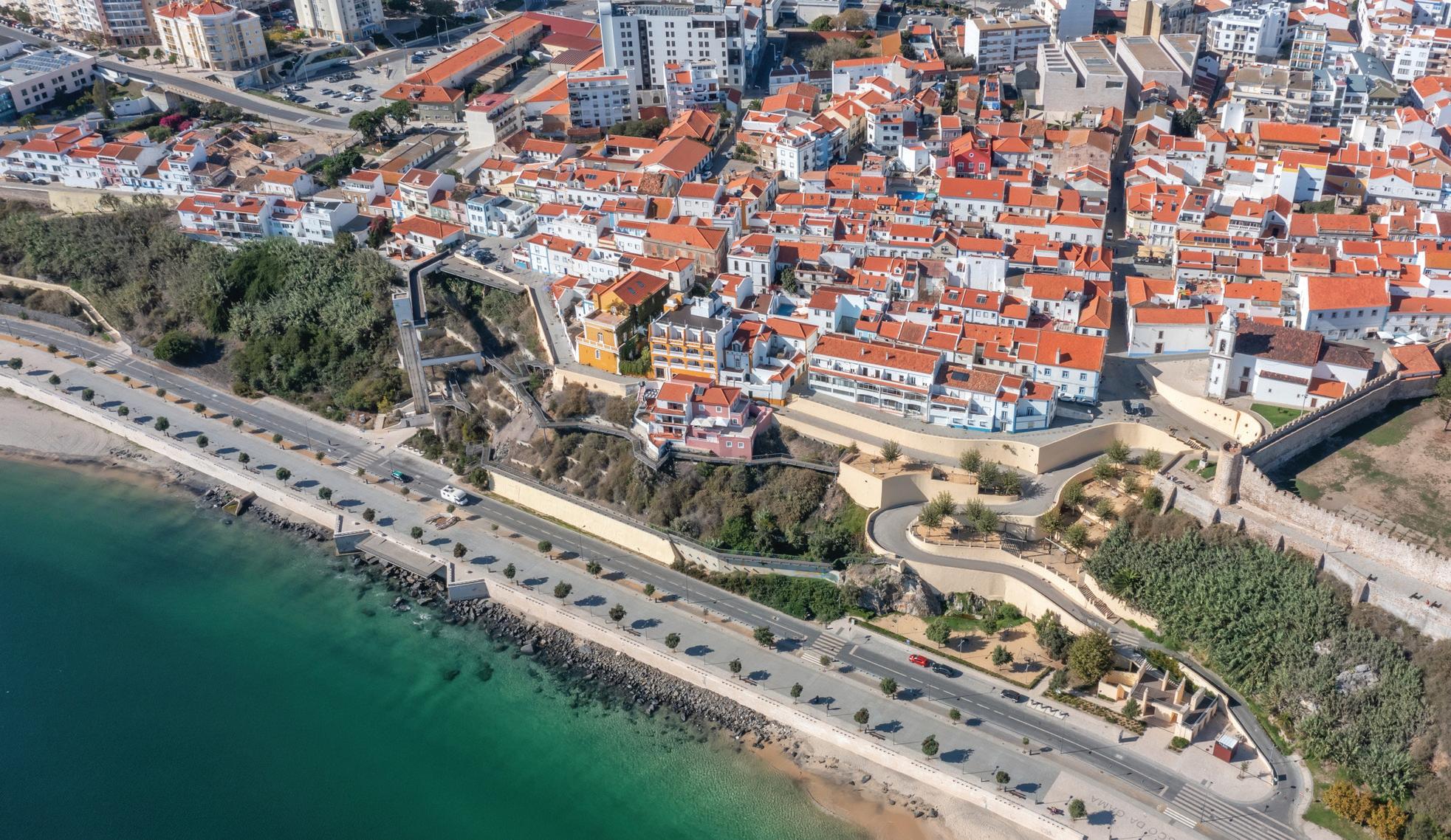
Aremarkable transformation is underway in Sines, Portugal. As data consumption surges, a new frontier for expansion and global connectivity is emerging in Portugal, a country that is strategically positioned to capitalize on it.
Our increased reliance on global cloud services, streaming services, social media platforms, and high-speed internet has elevated subsea connectivity and data centers to a pivotal role in our digital world, where exponential demand has become the norm. In response, data center operators and developers must look to new locations and innovative designs to meet rising demand. Start Campus’s SINES Project — a 495 MW hyperscale green data center campus, is creating a perfect opportunity for Portugal to rise above the crowd as the new European hub for digital migration and transformation.
Start Campus, a Portugal-based sustainable data center provider for hyperscalers, is positioning itself at the forefront of what is becoming known as the “European Atlantic Hub,” a confluence point for subsea-to-terrestrial telecommunications cables linking North and South America, Europe, Africa, and onward to the Middle East. This juncture has ushered in a heightened spirit of collaboration among service providers, positioning Portugal as a strategic hub that has become increasingly attractive to data center operators as well as subsea cable providers, terrestrial operators and other providers of digital infrastructure. According to TeleGeography, used international bandwidth connected to Portugal is forecasted to increase
five-fold from 2022 to 2029.
For decades, Portugal has maintained a prominent role in the realm of subsea connectivity, though it was somewhat diminished by the proliferation of new subsea fiber connections in the early 2000’s that connected to other landing points in the UK and mainland Europe. Today, however, Portugal is rapidly becoming the “digital gateway” to Europe, particularly as it lies further south than the typical route to the UK, Ireland, and mainland Europe, a crucial distinction in light of building moratoriums in locations such as Frankfurt, London, Amsterdam and Paris — the so called FLAP-D markets. While other global markets vie for supremacy in the digital infrastructure landscape, Portugal’s prospects are especially promising as the new European Atlantic Hub.
Spain has already secured the landing of a modern subsea cable connecting the United States in Bilbao to the North, and more recently new subsea systems have landed in Barcelona to service the Mediterranean, EMEA and Asia, signaling the time-sensitive nature of investment decisions in this arena. Seizing this opportune moment, Sines, Portugal — in particular — is positioned to consolidate its global standing if colocation and data center operators can follow the imperative to set down roots in the area. Portugal must emphasize its transparent, neutral, and secure submarine cable hub capabilities, fostering collaboration among international service providers if it is to seize the opportunity at hand.
For a success story in this venture, we can look at what was previously achieved in Marseille. The city of Marseille had the
foresight to facilitate and enable new submarine cables, quickly becoming one of the most important data hubs of Europe connecting to the Middle East, Africa, Asia and the rest of the world. Marseille holds the distinction of being Europe’s premier submarine cable hub due to its extensive network of connected cables. With the objective of establishing a neutral “plug-and-play” submarine cable hub, the Marseille port secured licenses and developed the necessary infrastructure — such as marine ducts and manholes — for linking new submarine cables to existing metro networks and a local colocation/exchange center (Interxion). This involved the implementation of six horizontal directional drills (HDDs) that connected directly to Beach Manholes (“BMH”) and the network. To streamline and expedite the deployment of new submarine cables, the Port introduced a Special Licensing Office, offering a convenient “one-stop-shop” approach that resulted in reduced project risks and increased attraction for multiple industry players. Remarkably, in under five years, Marseille expanded its cable connections from six to 15, reaching a point of congestion with no additional slots currently available. With any luck, Sines, Portugal, will be hot on the heels of this successful hub initiative.
Additionally, on the other side of the Atlantic, Fortaleza, Brazil has become the Marseille of South America. GlobeNet (now known as a V.Tal network) seized the opportunity to deploy a carrier-neutral colocation Internet Exchange facility, initially by establishing clear rules of engagement in how to interconnect at their massive Cable Landing Station (CLS), which attracted Brazil’s IX.BR, all regional terrestrial network service providers, and edge nodes of global players such as Netflix, Meta, and others. The success in their approach led to the recent launch of a 6 MW Edge data center-like colocation facility, where customers are deploying communications, caching, and compute nodes to service the Northeast region of Brazil. Over the years, Fortaleza has become the second largest Brazilian Internet exchange point, just behind São Paulo.
TATA has used Portugal as their TGN gateway to the UK and Europe since the early 2000’s, enabling, for example, the extension of Africa’s WACS cable system to the UK. Today, and through collaborative efforts, like the ones of Marseille and Fortaleza, Portugal can facilitate streamlined, secure, and low-risk connectivity points to major European hubs and data centers. Industry players are already recognizing the significance of this opportunity, with key players such as EXA, EllaLink, and Start Campus establishing subsea-to-terrestrial handoffs through Sines.
By creating a clear and effective model of engagement, Sines will further attract the landing of new submarine cables, data
center operators, and enable terrestrial fiber connectivity, thus building the foundation of the new European Atlantic Hub. Furthermore, by having the core infrastructure in place supported by the Portuguese government, this offers a qualitative leap forward in the deployment of new digital infrastructure, where the timeline between inception and the commencement of operations typically unfolds at a sluggish pace. All necessary regions and rights of way have been pinpointed, with a significant portion falling under the jurisdiction of aicep Global Parques, the Public Domain (DGRM and Port Authority), the local municipality, and Start Campus. The collaborative efforts of partner companies and official entities fortify the prospects of various projects that increasingly position Sines as the European epicenter for the burgeoning era of intercontinental connectivity. A government-backed enterprise primarily owned by aicep Portugal Global, the nation’s agency for investment and foreign trade that specializes in the development and administration of business and industrial parks throughout Portugal, is providing valuable strategic support to its prospective partners. The organization currently oversees the operations of ZILS, a Logistics Activities Zone in Sines, alongside two additional business parks situated in Setúbal and Sintra.
Similarly, EllaLink is supporting the efforts by establishing a cutting-edge optical platform that ensures secure and high-capacity connectivity on a one-of-a-kind, low-latency diverse transatlantic route. This new route, launched in June 2021, seamlessly connects the significant terrestrial and subsea hubs in Europe, passing through Sines, and extending to Latin America. This network marks the introduction of a high-capacity link between these two continents, with points of presence strategically located in key cities such as Sines, Madrid, Lisbon, Marseille, Barcelona, Fortaleza, São Paulo, and Rio de Janeiro. Moreover, it provides onward connectivity to regions across the US, Europe, Asia, Africa, and the Middle East.
The importance of these entities all working together is that digital infrastructure itself cannot operate like an island. It must be an archipelago — a number of islands working together to deliver a seamless service. The European Atlantic Hub concept envisions an open framework that facilitates “plug-and-play” solutions, enabling multiple systems to connect seamlessly. These redundant, resilient locations will all become part of the process of offering wholesale connectivity to the world at large.
The hub also operates out of a “protected area,” providing secure access for subsea infrastructure while delineating specific seabed utilization in various zones. This ensures the harmonious coexistence of diverse marine life and activities within territorial waters. The creation of this safeguarded cable corridor — based on the International Cable Protection
Committee (“ICPC”) Recommendation — not only “is intended as a guide to aid cable owners and other seabed users in promoting the highest goals of reliability and safety,” but also furnishes international carriers and hyperscalers with a robust infrastructure blueprint for the development of secure telecommunications networks into Europe. To further bolster these efforts, additional measures should be considered, such as making Sines a subsea cable depot location.
In the post-Brexit landscape, Europe is in search of a fresh aggregation hub that offers a secure and diversified gateway into the heart of the European digital ecosystem. Portugal emerges as an ideal candidate for this role, bolstered by its natural geographical advantage, boasting the largest Exclusive Economic Zone (EEZ) in the Atlantic Ocean. It has already established itself as a pivotal link connecting Africa, and the nation holds the potential to elevate its status further. Portugal, with the added security of NATO protection, stands ready to become the new premier submarine cable hub, facilitating direct connectivity between four continents. This ambitious initiative lays the groundwork for the initial transformation of Sines into a prominent interconnection hub, with future phases paving the way for its evolution into a comprehensive content zone.
The coastal city of Sines already serves as the home to the Olisipo, Medusa and 2Africa cables, three vital subsea routes all landing at Start Campus’s SINES Project. Google has also recently announced that its Nuvem Cable connecting Bermuda and the US will land in Portugal, bringing even more notoriety to the area, and the potential for more to follow is imminent. This location is particularly significant, given the decommissioning of various late 1990’s and early 2000’s transatlantic systems and ongoing technological advancements, which lead to an uptick in new redundant submarine cable deployments to meet escalating capacity demands. Enhanced cooperation among service providers will become a pivotal endeavor to solidify Portugal’s position as a global connectivity hub.
The introduction of a European Atlantic Hub also has significant implications for the country as a whole. The full-scale project has the potential to positively impact the Portuguese economy by more than €2.7bn in the next 25 years. It effectively reduces the cost of trading data between global regions, thereby dismantling barriers to trade. This has a favorable impact on foreign direct investments, stimulating hosting countries and enabling the development of digital gateways and digital services. Key digital infrastructure enhancements support possibilities for teleworking and online meetings, thus maximizing productive working hours. Companies benefit from reduced commuting and travel costs, while consumers enjoy improved welfare through access to high-quality internet. Additionally,
the enormous scalability potential for digital services, such as streaming, further contributes to enhanced consumer welfare.
The SINES Project alone is expected to bring substantial economic benefits to the region as it boosts job creation, stimulates local economic activity, and contributes to the growth of the digital economy. The facility is projected to create up to 1,200 direct, highly skilled jobs and 8,000 indirect jobs by 2028, encouraging technology companies to establish a presence in the area for a mutually beneficial ecosystem.
By drawing this activity to Portugal, there is potential for data center operators to access sustainable energy practices such as seawater cooling systems that provide sustainable cooling without consuming potable water. Portugal also offers ample opportunity for renewable energy sources, bridging the digital infrastructure world with the sustainable energy world. The main factor restraining most data center developers is availability of power. A company may have all the connectivity options available, but without available power to move data they are stymied.
Portugal has abundant opportunities to utilize wind and solar power, as well as cold Atlantic Ocean seawater for water-cooling systems. With sustainability initiatives like the iMasons Climate Accord and the EU taxonomy regulation, the data center industry is being forced to move away from fossil fuels into greener energy, adding another level of appeal to the Portuguese coast. The SINES Project is a prime example of how the use of site selection can help companies wishing to move toward these initiatives in two important ways: the potential for repurposing existing, decommissioned infrastructure and implementing sustainable use of wind and solar power, as well as ocean-water cooling. This further encourages the digital migration to the area as it proves the validity of creating new green and sustainable data centers without compromising power — all possible in Portugal.
In the rapidly evolving digital world connected by a web of high-capacity subsea cables, Sines, Portugal, has all the key ingredients necessary to develop and shine as the new European Atlantic Hub, ushering in a new era of global digital infrastructure collaboration and innovation. The future looks promising for this coastal gem as it takes center stage in the world of subsea telecommunications. STF

FERNANDO BORGES AZEVEDO is Head of Connectivity at Start Campus. Joining in June 2024, Fernando brought expertise from AWS in Dublin, where he served as Network Development Manager for AWS’s global backbone, leading projects that enhanced network resilience and capacity across regions. His experience spans several industry leaders, including Angola Cables, where he contributed to major connectivity advancements across the Atlantic. Fernando is passionate about building scalable, resilient infrastructures that enable global digital transformation.


WHAT HAVE THE BRITISH EVER DONE FOR US?
BILL BURNS AND STEWART ASH
In September’s issue we told you about the British contribution to the Telegraph & Telephone Eras of the submarine cable industry, a period from 1850 up until 1986, when STC Submarine Systems installed the last coaxial telephone system, connecting India and the United Arab Emirates. At that time there were three other major suppliers of submarine cable systems: Alcatel SubMarcom in France, AT&T Submarine Networks in the USA, and Japan Inc’s Fujitsu & NEC. (Fujitsu and NEC built their systems using Ocean Cable Company Ltd (OCC) cable and never bid against each other). At the end of the Telephone Era STC Submarine Systems was still the leading supplier, winning 50% of the undirected supply contracts. However, because of the developments necessary to make optical fibre transmission possible over submarine cables, these four companies were effectively starting on equal terms. As a precursor to the Optical Era, the term ‘Convergence’ was, once again, made a buzz word by the chairman of STC plc, Sir Kenneth Corfield (1924-2016). In 1984, he masterminded a takeover of UK computer company ICL. His rationale for this move was that technologies were bound to converge, and in the future individuals would have one device to provide computer, telephone and television services. Instead of lauding Corfield as a visionary, which in hindsight he undoubtedly was, the markets considered his strategy ridiculous and castigated him. The share price plummeted, the company went into decline, Corfield was eventually forced out, and STC was finally taken over

by Canadian company Northern Telecom (Nortel) in 1991. (See Back Reflection Issue 79 November 2014). We now know that Corfield was ahead of his time, but this acquisition is a strong indication of the direction of STC’s senior management strategy at the beginning of the Optical Era. Converting analogue signals into digital information is a fundamental part of optical fibre transmission, and once again this was a British invention. In 1938, the technique of sampling analogue signals and converting them into a digital code was conceived and patented as Pulse Code Modulation (PCM) by Alec Harley Reeves (1902-71). However, the required circuitry was complex and was not commercially viable until after the invention of the transistor in 1947. Reeves joined Western Electric Ltd in 1923, at its North Woolwich factory, becoming an STC employee in 1925, when ITT acquired the site. After the Second World War, Reeves went to work for STC’s research division, Standard Telephone Laboratories (STL), initially at Enfield in North London and then at Harlow.
Of course, the fundamental requirement of optical fibre communication is to be able to transmit optical signals though glass fibres, and here again it was the British who solved the problem. Two young research engineers, Charles Kao Kuen (1933-2018) and George Alfred Hockham (1938-2013), who were working for Alec Reeves at STL Harlow, developed the idea that information could be transmitted not as radio waves, or by electric currents, but in beams of laser light carried down thin fibres of
George Hockham and Charles Kao
Courtesy Alcatel Submarine Networks
glass. In 1966 they published their proposal in a research paper, and this started the optical fibre communication revolution.
It took several years to turn these two theories into viable commercial products with the high reliability required for submarine cables. Much of the initial development was carried out and tested on terrestrial networks, and it wasn’t until 1980 that STC installed in Loch Fyne a small experimental submarine cable system that included a single Repeater. 10km of cable containing 6 fibres (4 multi-mode and 2 mono-mode) was laid in a loop by British Telecom’s CS Iris (III). This trial was overlooked by Minard Castle on the north bank of the loch, which had been the summer estate of Sir John Pender (1816-96), the first chairman of Telcon and The Eastern & Associated Telegraph Companies, known during his lifetime as ‘The Cable King’.
STC Submarine Systems laid the first commercial international repeatered optical fibre submarine system, UK-Belgium No 5, in 1986. This system connected Broadstairs in the UK to Ostend in Belgium, a route length of 113 km. The cable contained three fibre pairs, consisting of six nylon-silgard covered mono-mode fibres operating in pairs to provide three separate transmission circuits.


Transmission per fibre pair was at a single wavelength of 1,310 nm and the line rate was 280 Mbits/s. To make the North Sea crossing, the signal had to be regenerated three times, and this was done by means of three Repeaters powered from the terminal stations with a line current of 1.5 Amps. STC’s 14 MHz coaxial system, installed the same year, offered purchasers a capacity of 1,860 x 3 KHz voice channels, but UK – Belgium No. 5 was in another league altogether, providing a total design capacity of 11,520 x 64 Kbit/s voice channels (See Back Reflection Issue 44 May 2009). At the same time that optical technology was delivering such a leap forward in system capacity, commercial fishing was becoming more intensive. Trawlers were getting larger and were operating in greater water depths, so the decision was made to protect the cable by burying it in
Loch Fyne Sea Trial Courtesy of Alcatel Submarine Networks
Heavy Duty Cable Plough Being Deployed Courtesy of Alcatel Submarine Networks
FEATURE
the seabed. UK-Belgium No. 5 was laid and buried by BT Marine’s CS Alert (IV) using a radical new plough developed by BT in collaboration with Soil Marine Dynamics (SMD). This British invention forms the basis of the vast majority of modern submarine cable ploughs (See Back Reflection Issue 52 July 2010).
1986 can be seen as the start of the Optical Era, but UK-Belgium No.5 was only a short-haul system. The first transoceanic Optical Fibre system was TAT-8, commissioned by AT&T, British Telecom and France Telecom. The system included a new submerged housing, a ‘Y’ shaped Branching Unit (BU) to provide power switching and fibre routing. This allowed a three-legged system to be built. The USA leg was manufactured by AT&T Submarine Networks, the French leg by Alcatel SubMarcom, and the UK leg by STC Submarine Systems. To achieve the project deadlines purchasers and manufacturers worked together in joint committees sharing research and development information. TAT-8 operated at a wavelength of 1,310 nm and a line rate of 280 Mbits/s, providing 8,000 x 64 Kbits/s voice channels. It went into service in 1988, and, with the exception of cable jointing, this would be the end of this level of international technology collaboration. From then on it was out-and-out competition.

line rate of 420 Mbits/s. To supply these two systems STC Submarine Systems opened a new cable factory in Portland, Oregon. These were the first privately owned transoceanic systems since the Telegraph Era, so Eric Sharp saw himself following in the footsteps of his illustrious predecessor Sir John Pender, the Cable King. Both systems were laid by the C&W Marine vessel CS Cable Venture. The NPC main lay was what is known as an epic ‘Marine Adventure’ (See Back Reflection Issue 85 November 2015). NPC went into service in 1991.
For more information about the NPC lay see: https://vimeo. com/1021837524/a26119f882
The three suppliers for TAT-8 had provided three different cable designs, which gave the system owners a major problem. To maintain (repair) the system they had to invest in three different jointing technologies. It was recognised that a common jointing technology would be needed going forward, so in 1990 the Universal Consortium was formed. Led by BT Marine, the founder members included AT&T Submarine Networks and Les Cables de Lyon (the cable supplier to SubMar-
The first transatlantic optical fibre system that was manufactured by a single supplier was PTAT-1, supplied to Cable & Wireless by STC Submarine Systems in 1989. This was a four fibre pairs system operating at a wavelength of 1,310 nm and a line rate of 420 Mbits/s, achieving a design capacity of 18,000 x 64 Kbits/s voice channels. It went from the UK to the USA with a branch to Bermuda, and mid-way through the supply contract a branch to Ireland was added.
PTAT-1 was the first step in the vision of the chairman of C&W plc, Sir Eric Sharp (1916-94), of a global digital highway. The second step was the North Pacific Cable (NPC) from Japan to Oregon with a spur to Alaska. Supplied by STC in consortium with NEC, it was a four fibre pairs system at a wavelength of 1,310 nm and a

CS Cable Venture Leaving New York for Lay 1B of PTAT-1 © Dr John Colmer
Portland Oregon Cable Factory Courtesy of Alcatel Submarine Networks
com). This consortium developed the Universal Joint (UJ) for repeatered cable designs and the Universal Quick Joint (UQJ) for repeaterless cable designs. All the key patents and design rights were held by the British company, so up until 2001, they carried out the majority of the design work, all cable qualification, and the supply of piece parts plus jointing tools. By then BT Marine was part of Global Marine Systems Ltd (GMSL). Today the UJ Consortium comprises ASN, GMSL, KCS and SubCom LLC.
By 1990, technology had advanced further and transmission wavelength had moved to 1,550 nm with a line rate of 565 Mbits/s, providing 80,000 x 64 Kbit/s voice channels over each fibre pair. This transmission capability was now in excess of the capacity available via satellite, so once again, by the end of the 1980s submarine cables had become the dominant international telecommunications medium. This must have been beyond Hockham and Kao’s wildest dreams; but much more was to come.
Optical Repeaters of this first generation were regenerative (detecting an incoming signal and generating a new one for onward transmission).

The beginning of the second generation can be traced back to 1986, when the erbium-doped fibre amplifier (EDFA) was first demonstrated by Professor David Payne and his team at Southampton University in the UK (See Back Reflection Issue 57 May 2011). In simple terms, the EDFA consists of a length of optical fibre doped with the rare earth element erbium, which, when excited by a pump laser, amplifies the incoming transmission signal. The EDFA is much simpler and more reliable than regenerative circuitry and offers direct amplification independent of the signal line rate. It also allows for greater Repeater spacing, reducing system costs.
In the early 1990s Nortel had run into financial difficulties. Despite STC Submarine Systems’ success, it had always been an outlier to Nortel’s core business, and in 1994 it was sold to Alcatel Alstrom. The merger of STC Submarine Systems and Alcatel SubMarcom brought together
the vast experience and expertise of the British and French companies. The combined company was, for a short period, known as Alcatel Submarine Systems, but on 4 November 1994 Alcatel Submarine Networks (ASN) was born.

STC Southampton Cable Factory with CS Mercury on 109 Berth Courtesy of Alcatel Submarine Networks
Submarine
FEATURE
The Portland, Oregon and Southampton cable factories were shut down, ending 143 years of manufacture of submarine cables in the UK. All cable production was moved to Calais, with all Repeater, Branching Unit (BU), Power Feed Equipment (PFE) and Optical Line Transmission Equipment (OLTE) manufacture moved to Greenwich, which also became the centre for management of all marine services.
By 1994, transmission line rates had increased to 2.5 Gbits/s and in 1996 the first optically amplified transatlantic systems, TAT-12 and TAT-13, went into service, creating a ring network. They used a transmission wavelength of 1,550 nm and a line rate of 5 Gbits/s on two fibre pairs, providing a design capacity of 10 Gbits/s. Around this time the transmission capability of submarine cable systems ceased to be quoted as the number of 64 Kbits voice channels, and became expressed as total capacity.

to another product offering from the suppliers: ‘System Upgrades.’
All submarine systems were, and still are, designed to have a specific ‘design capacity,’ based on the technology available at the time. Generally, they are equipped at a lower capacity, allowing for growth over their theoretical 25-year design life. However, in a relatively short timescale, the available capacity on a fibre pair had moved from one λ at 5 Gbits/s in the mid-1990s to an industry standard offering of 64 λ , each carrying 10 Gbits/s — making 640 Gbits/s per fibre pair — by the year 2000.
During early experiments it was found that the EDFA could simultaneously amplify signals at two or more wavelengths ( λ ), a technique known as wave division multiplexing (WDM) which was not possible with first-generation systems. WDM was quickly developed to offer 16 λ per fibre pair. The ability to reduce the spacing between wavelengths was then further developed for terrestrial systems, giving birth to dense wave division multiplexing (DWDM), which was quickly taken up by the submarine cable industry. This gave suppliers the opportunity to develop and offer systems with even more capacity on a single fibre pair.
Because of the EDFA, the concept of the ‘transparent pipe’ became popular — the idea that the capacity of a fibre system is limited only by the equipment connected to each end. This is, of course, an over-simplification, as system design is always contingent on current knowledge and the available technology. However, this would lead
The year 2000 also marked the 150th anniversary of the start of the submarine cable industry and ASN, BT, C&W and GMSL (previously C&W Marine & BT Marine), collaborated to celebrate the British contributions to the industry. This included an exhibition at the National Maritime Museum in Greenwich and a coffee table booklet, ‘From Elektron to ‘e’ Commerce’, which was reprinted in SubTel Forum in three parts: Part 1 ‘Birth of the Industry 1720-1856’ (See Issue 14 May 2004), Part 2 ‘The Tele-

Cover of the 150th Anniversary Booklet
CS Cable Innovator © Dr John Colmer
graph Era 1856-1956’ (See Issue 17 November 2004) and Part 3 ‘The 1960s – 1990s’ (See Issue 19 March 2005). Five years on, the co-authors of this booklet got together again to write an Epilogue to the story (See SubTel Forum Issue 22 September 2005).
As part of the celebrations, the GMSL flagship, CS Cable Innovator, was brought up the Thames and moored in front of the Old Royal Naval College. Several guided tours of the vessel were arranged for industry and banking luminaries plus key politicians, including the then Deputy Prime Minister, John Prescott. On 28 August, a gala dinner was held onboard. The Guest of Honour was Prince Andrew, Duke of York and the guest list contained descendants of the leading Victorian pioneers, including Sir John Pender’s great-great grandson, John Willoughby Denison-Pender (1933-2016), third Baron Porthcurnow and retired C&W Director, accompanied by his wife, Lady Julia, née Cannon (1943-2013) (See SubTel Forum Issue 125 July 2022).

Launched in 1996, CS Cable Innovator was designed by C&W Marine. Taking advantage of advances in DP propulsion systems and GPS navigation, she was the first purpose-built, ‘stern working only’ cable laying vessel, and provided the blueprint for all modern cableships.
During the 20th Century, ASN had subcontracted its marine installation services, but in 2000 they decided to create their own division, forming a Joint Venture with ALDA Marine to do this. Around the same time Alcatel acquired Telecom Denmark Marine, having worked closely with them for some
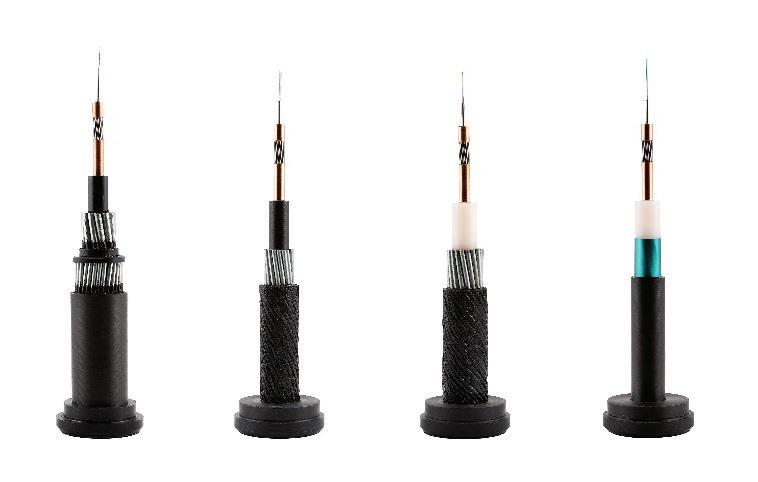
years, and the subsidiary was renamed Alcatel Submarine Networks Marine A/S. Initially, management of the marine services was split into two groups: installation activities, managed by the existing Marine Installation Department on the Greenwich site, and cable maintenance activities, managed by a Marine Maintenance team in Copenhagen. With CS Peter Faber based in Calais, France, and CS Maersk Fighter based in Korsoer, Denmark, under the North Sea Cable Maintenance Agreement (NSCMA) and Baltic Sea Cable Maintenance Contract, ASN’s Marine Maintenance looked after cable systems for customers such as BT (UK), TDC (Denmark), FT (France), TeliaSonera (Sweden), DTAG (Germany), TPSA (Poland).
For the early history of CS Peter Faber see: ASN/Ture Jönsson/ Celebrating Telecoms on Vimeo
Since 1965, cable maintenance in the Atlantic had been controlled by a consortium of cable owners, the Atlantic Cable Maintenance Agreement (ACMA). They joined together to provide a pool
CS Ile de Molene
Courtesy of Alcatel Submarine Networks
ASN 17 mm Cable Set OALC4 Courtesy of Alcatel Submarine Networks
FEATURE
of dedicated, third-party marine resources, servicing the cables in the agreement. The ACMA model has become known as the ‘Club Maintenance’ model and has been copied for numerous maintenance zones around the world.
Following the deregulation of telecoms in Europe and the US, system owners known as the ‘Carriers Carrier’ appeared, dramatically increasing and diversifying the number of cable owners. Some of these new cable owners wanted to explore alternatives that might be more focussed on their cable systems, as they felt that the Club model was more likely to favour the established operators that owned most of the cables in the agreements.

Seeing this as an opportunity to challenge the Club Maintenance monopoly in the Atlantic, ASN started signing private maintenance agreements with independent cable owners, under the Atlantic Private Maintenance Agreement (APMA), managed by a dedicated team based on the Greenwich site. To compete with the Club Maintenance offering, APMA provided a package of fixed service level terms to ensure that cable owners got their systems repaired in a timely manner, but also made full use of the marine resources by allowing the vessels to undertake other work outside of the agreement, when not needed for repair work.
This model developed by ASN proved to be very successful, and in 2001 they went on to form a North Asia Private Maintenance Agreement, providing marine maintenance services in the region with CS Lodbrog, based in Taiwan. ASN subsequently set up a North Pacific Private Agreement (NPPA) in 2004 with the CS Maersk Defender based in Vancouver, Canada. Again, in 2004 the South Pacific Maintenance Agreement (SPMA) was established with CS Ile de Re based in Nouméa (New Caledonia).
Now, 20 years later, ASN continues to offer marine maintenance services in the North Sea, the Atlantic, the North Pacific and the South Pacific through private maintenance agreements. These services are supported by the ASN fleet managed by the French company Louis Dreyfus Armateurs, and, at various times, though teaming agreements with TE SubCom and Optic Marine (OMS). The contracts are managed from Greenwich and cover an ever-growing number of submarine cables worldwide. Most recently, ASN has purchased and equipped for maintenance two new additions to the fleet: CS Ile d’Ouessant, and CS Ile de Molène. The original optical fibre cable designs were based on a 21 mm diameter LW cable, but in the early 2000s, to save money, this was reduced to a 17 mm LW design. For what are known as repeaterless systems, a 14 mm LW cable design became the industry standard. As their name suggests, repeaterless systems do not require in-line Repeaters and so the number of fibres in the cable

Alcatel Submarine Networks Factory Greenwich 2000 Courtesy of Alcatel Submarine Networks
‘Lay Lines’ Behind Enderby Wharf Next to Enderby House 2018. Courtesy of Bobby Lloyd
could be increased and high fibre count submarine cables were developed. The total capacity of a submarine cable is a function of three factors: line rate; the number of wavelengths that can be transmitted on a single fibre; and the number of fibre pairs in the cable. For repeatered systems, the number of fibre pairs is constrained by the number of amplifiers that can be accommodated in the Repeater and powered through the cable. From its inception, the repeatered system model had been built around a maximum of four fibre pairs per cable, but during the ‘dotcom’ boom, design and development was undertaken for six and eight fibre pair Repeaters. However, even greater increases in line rates, plus advances in coherent and DWDM technology, rendered these bigger Repeaters unnecessary for most systems.
Early repeaterless systems were based on 12 fibres (6 fibre pairs), but 24 and 48 fibre cables were quickly developed. The highest fibre count cable to be installed to date is Tangerine, a 121 km cable between Broadstairs in the UK and Ostend in Belgium. Installed by ASN in 2000, it contains 192 fibres (96 fibre pairs).
was being deployed on long-haul terrestrial systems, and then in the 2000s, Raman Amplification was introduced to repeaterless submarine systems.
The next technology to extend the lengths of repeaterless systems was Forward Error Correction (FEC). This is one of the few fundamental technologies that the British cannot claim any pioneering credit for, as the concept was developed by the American mathematician Richard Wesley Hammond (1915-98). By combining all these technologies, repeaterless systems can, depending on the number of wavelengths to be transmitted, have a span of >600 km.

To extend the length of repeaterless systems, additional technologies were required. The first step was to use high-powered EDFA amplifiers in the Cable Landing Stations (CLS). Then a Remote Optically Pumped Amplifier (ROPA) was developed. For this an EDFA is included in the shore end cable and the pump laser signal is sent from the CLS to it, on the same fibre as the traffic signal. The next step was Raman Amplification. This technology takes its name from Raman Scatter, a phenomenon first described by Indian physicist Chandrasekhara Venkata Raman (18881970) in a paper published on 28 February 1928. At that time Raman was a British citizen. (See Back Reflection Issue 82 May 2015). It wasn’t until the 1970s that this phenomenon was examined as a basis for optical amplification, but with the development of the EDFA much of the research was put aside. By the 1990s Raman Amplification
In early 2002, ASN entered a joint venture agreement with C&W plc to build a transatlantic system called Apollo, in which ASN took an equity stake. This was a unique model for the Optical Era, but harks back to the Telegraph Era, when many of the Eastern Telegraph Company’s cables were built by Telcon and paid for, in part, with shares in the operating company.
The Apollo system has a ring structure: Apollo North is 6,200 km and Apollo South approximately 7,000 km. Both segments support 4 fibre pairs with a design capacity of 3.2 Tbits/s giving a total system capacity of 6.4 Tbits/s. It went into service in February 2003. The collaboration between C&W and ASN produced a system design that was built for maximum reliability. Apollo can still claim the best fault history when compared to any other optical fibre system crossing the Atlantic. (See SubTel Forum Issue 74 January 2014)
In 2008, Alcatel S.A. acquired Lucent Technologies Inc. That same year, ASN sold the river frontage of the Enderby Wharf site to West Properties, reducing the submarine systems factory to just 5 acres. Unfortunately, West Properties acquired the site just in time for the global financial crisis and the company went into receivership. Their site was abandoned and became derelict until the distressed asset was purchased by Morgan Stanley in 2013, who then appointed Barratt London to redevelop it as a housing complex.
A Stack of ASN Repeaters Courtesy of Alcatel Submarine Networks
The planning permission for the redevelopment required Barratt to include an ‘art Installation’ which would reflect the history of the site. In June 2017, Barratt engaged East London based artist Bobby Lloyd, who produced a concrete sculpture, ‘Lay Lines’, completed in December 2018: https://www.bobbylloydstudio.com/ lay-lines-development. The authors were able to provide Bobby with the necessary historical and technical information to inform this project.
In December 2014, ASN sold off a further 3 acres of the remaining site to U + I plc for a redevelopment project called ‘The Telegraph Works’, which comprises 256 apartments and 16 town houses. As part of this arrangement, U + I redeveloped and refurbished the remaining ASN site into the facility that exists today, accessed from ‘Telcon Way’!
As with all optical amplified systems, Apollo could be upgraded to higher capacities by taking advantage of advances in optical transmission technology and changing the OLTE in the CLS. In 2014, the Apollo cable system was upgraded to a system capacity of 25 Tbits/s with Alcatel-Lucent’s 1620 Light Manager (LM) submarine line terminal equipment using coherent transmission at 100 Gbits/s. In 2015, the capacity was further increased to 8 Tbits/s per fibre pair. Once again, ASN was an outlier to Alcatel-Lucent’s core business and was sold to Nokia that year. However, since then ASN has continued to trade under the same name.
book and Google have entered the market as system owners, and this has driven a demand for even higher fibre count repeatered systems to interconnect their data centres.
Today ASN are building 24 fibre pair repeatered systems capable of delivering >30 Tbits/s per fibre pair. Recently ASN has made significant advancements in their state-ofthe-art 24FP systems and a new generation of Branching Units (BU). These BUs support enhanced electrical switching capability with sophisticated optical paths, including Full Fibre Drop (FFD) fibre pairs switching, and Optical Add – Drop Multiplexing (OADM) wavelength switching, over and above simple fibre routing. These allow efficient routing of fibre pairs, enhancing the overall performance and flexibility of submarine cable systems.

It is difficult to identify a point or points in time when FEC was introduced into both repeatered and repeaterless systems. It is easier to identify the date that Raman Amplification was combined with EDFAs in Repeaters. A Repeater combining both forms of amplification was launched by British company Xtera in 2015, and all the major suppliers introduced similar designs shortly afterwards. This combination of amplification could either increase the span between Repeaters or increase the amplifiers’ bandwidth to allow more wavelengths to be transmitted. At that time, submarine cable systems could support more than 100 λ, each carrying 10 Gbits/s, multi-wavelengths at 40 Gbits/s, or a combination of the two on a single fibre pair. 100 Gbits/s technology had already been deployed to upgrade existing systems – and 100 x 100 Gbits/s per fibre pair was being offered for new systems.
In the past decade, companies such as Amazon, Face-
With the forecasts that Artificial Intelligence (AI) will create demand for significantly greater data transmission and storage capability in the global network, further advances in submarine cable system design will be required in the near future. The innovations in 24FP systems and Branching Units are designed to meet the increasing demand for higher data transmission capacities and more efficient network management. They are crucial for supporting the growing needs of global data traffic and ensuring reliable and high-capacity communication networks.
This month sees the 30th anniversary of the formation of Alcatel Submarine Networks, an Anglo-French partnership that can trace its history back to the very first days of the submarine cable industry. Submarine systems have been manufactured and installed by ASN and its predecessors from the Enderby Wharf site since 1857, and submarine cable has been made in the Calais factory
ASN Branching Unit Courtesy of Alcatel Submarine Networks
since 1891. This is a proud record that no other company in the industry comes anywhere near matching. No matter who owns the company, ASN remains one of the world’s leading suppliers of submarine cables.
At the beginning of our story, we explained that the first 100 years of submarine cables was very much a British story. For most of the Victorian era the only practical use of electricity was for telegraphy, so it was British scientists and engineers that led the way in research into ‘retardation’ and the standardisation of electrical units for quality control.
In December 1859, the British Government and the Atlantic Telegraph company formed a Joint Committee of Inquiry to examine the causes of the failure of the Atlantic cable, as well as that of the Red Sea cable, which failed during the term of the Committee. One conclusion of its April 1861 report was that accurate and agreed standards of electrical resistance were essential for the future success of the cable industry.
Based on this recommendation, in September 1861 the British Association for the Advancement of Science appointed a Committee on Standards of Electrical Resistance, whose initial task was to establish a standard value and a defined unit for resistance (See Back Reflection Issue 74 January 2014). In 1864, the Committee published its resistance standard, and in 1865 the unit was named the Ohm. Over the next fifteen years the Committee continued to define and name the other fundamental electrical units: ‘Current (Amperes),’ ‘Electromotive Force (Volts)’ and ‘Capacitance (Farads).’ Thanks to British scientists and telegraph cable engineers, these are globally recognised today! Britain’s leading role in establishing the science of electromagnetic field theory (the whole spectrum including light) stems largely from its pioneering role in telegraphy as a whole, but mainly from its near total dominance of the early submarine cable industry.
Electricity has always been a key technology of submarine cables, initially for signal transmission and fault location, then later for powering repeaters. While fibre systems rely heavily on optical testing to locate submarine cable faults, low current DC testing is still a good and accurate method of locating a cable break and the only way of finding the position of a shunt fault with any accuracy, if the fibres are not broken.
Today, submarine cables are the arteries of the Internet, something that the global economy and social media are totally reliant upon. The Internet supports the World Wide Web, which is an invention donated to the world by Sir Timothy John Berners-Lee OM, KBE, FRS, RDI, FRAS DFBCS, FREng. Yet another Brit!
ACKNOWLEDGEMENTS
The authors would like to thank Alcatel Submarine Networks for its cooperation in the production of this article, including permission to include the two video interviews and many of the images. We are particularly grateful for the contributions of ASN personnel: Hayley Adlam, Julian Clark, Olivier Courtois, Guillaume Fausten, Oliver Henry, David Tossel & David Wall. Also, special thanks must go to Bobby Lloyd for information about ‘Lay Lines.’
FURTHER READING
If readers are interested to learn more about the technical and commercial contribution of the British to the submarine cables industry during the Victorian Era, we would recommend the following books: IMPERIAL SCIENCE: Cable Telegraphy and Electrical Physics in the Victorian British Empire, Bruce J Hunt 2021: ISBN 978-1-10882854-3, and The CABLE KING: The Life of John Pender, Stewart Ash 2018: ISBN 978-1986762830 STF

BILL BURNS is an English electronics engineer whose career began at the BBC in London. In 1971, he moved to New York and worked in the high-end audio industry, writing reviews and articles on audio, video, computer equipment, and electronic music instruments. His research sparked an interest in early technology, leading him to collect artifacts related to electricity and communications.
In 1994, Bill discovered a section of the 1857 Atlantic cable, igniting his fascination with undersea cable history. He created the Atlantic Cable website (https://atlantic-cable.com), which now has over a thousand pages on undersea communications history. Bill has visited every surviving telegraph cable station globally and numerous archives and museums. He has presented papers at various conferences and organized the 150th Anniversary Celebration for the 1858 Atlantic cable in 2008. In 2016, he participated in celebrations for the 150th anniversary of the 1866 Atlantic cable.

Since graduating in 1970, STEWART ASH has spent his entire career in the submarine cable industry. He began at STC Submarine Systems as a development engineer, then moved to field engineering, managing global coaxial cable installations and becoming Shipboard Installation Manager. In 1986, he established a division for installing fiber optic systems.
In 1993, Stewart joined Cable & Wireless Marine, advancing to account director before becoming General Manager of Global Marine Systems Ltd’s engineering division in 1999. There, he oversaw system testing, jointing technology, and ROV operations and chaired the UJ Consortium. Since 2005, he has been an independent consultant, assisting with system procurement, operations, maintenance, and repair.
Stewart’s interest in submarine cable history began in 2000, leading him to co-author “From Elektron to ‘e’ Commerce.” He has written extensively on the subject, including a chapter for “Submarine Cables: The Handbook of Law and Policy” and books supporting the preservation of Enderby House. His biography of Sir John Pender, “The Cable King,” was published in 2018.
FEATURE TOO ‘CRITICAL’ FOR THE PUBLIC
Nationalizing Subsea Communications in the 21st Century
BY KRISTIAN NIELSEN

Subsea communication cables are the invisible backbone of the modern digital age. They carry over 95% of international data traffic, enabling everything from financial transactions to social media interactions.
As global dependency on these cables intensifies, the debate over their management has gained prominence: Should governments nationalize these critical infrastructures to protect them, or should private investment continue to drive innovation and efficiency?
This article explores the complexities of managing subsea communications by examining academic insights from Stephen Korbin and D’Souza & Megginson. We will delve into the potential benefits and challenges of nationalization and privatization and consider how Public-Private Partnerships (PPPs) can offer a balanced solution that leverages the strengths of both models.
KORBIN’S INSIGHTS: UNDERSTANDING NATIONALIZATION
Stephen Korbin’s research in the 1980s provides a foundational understanding of why governments choose to nationalize industries. His studies show that nationalization is often a strategic decision driven by economic motivations,
rather than political opportunism. It is typically selective, targeting industries of strategic importance, such as oil and telecommunications, where national control can significantly influence economic stability and security.
One of Korbin’s key concepts is the ‘Domino Effect.’ During the 1970s, Libya’s decision to nationalize British Petroleum’s assets inspired a wave of similar actions across the Middle East. Countries like Algeria, Iraq, and Iran followed suit, driven by a desire to control their natural resources and assert economic sovereignty. These actions were not merely reactive; they were part of a broader strategic effort to increase state revenue and reduce foreign dependency.
Korbin’s methodology was rigorous. He analyzed political and economic factors across a broad range of countries and industries from 1960 to 1980. By identifying patterns and outcomes of nationalization efforts, he highlighted how these actions align with broader national goals. His research suggests that governments may consider nationalizing subsea cables for similar reasons: to protect national interests, secure critical infrastructure, and reduce reliance on foreign entities.

THE CONSEQUENCES OF NATIONALIZATION: A DECLINE IN INNOVATION
While nationalization can increase state control over critical assets, it often comes at a cost—particularly to innovation. Several factors contribute to this decline:
REDUCED INCENTIVES FOR INNOVATION:
• Nationalized companies typically focus on stability and employment rather than risk-taking and innovation. In Venezuela, for example, after the nationalization of the oil industry in 1976, the state-owned company PDVSA initially maintained high levels of technical competence. However, over time, political interference and underinvestment in research and development (R&D) led to a significant decline in technological advancement. By the early 2000s, PDVSA’s exploration and production capabilities had deteriorated compared to its global peers.
BUREAUCRATIC CONSTRAINTS:
• State-owned enterprises (SOEs) often have less flexibility in decision-making due to bureaucratic structures. A study by the OECD on SOEs across various sectors
found that these entities generally have lower productivity and innovation levels compared to private firms. The lack of competitive pressures and profit incentives reduces the urgency to innovate, leading to stagnation.
DECREASED R&D INVESTMENT:
• Nationalization frequently results in a decline in R&D spending as funds are redirected toward meeting state priorities. In the telecommunications sector in Latin America during the 1980s, state-owned companies were slow to adopt advancements like digital switching and fiber optics. The privatization wave in the 1990s led to a surge in innovation and infrastructure upgrades, highlighting the innovation gap during the period of state ownership.
SHIFT IN OPERATIONAL FOCUS:
• Nationalized industries often prioritize strategic goals over profitability. In the Indian banking sector, for instance, nationalization led to an increased focus on financial inclusion and employment generation. While these are valuable social objectives, they were achieved at the expense of technological innovation and service improvement.
These examples illustrate the complex trade-offs associated with nationalization. While it provides governments with greater control over critical industries, it often results in a decline in innovation and efficiency. For the subsea communications industry, where technological advancement is crucial for maintaining secure and reliable connections, these potential drawbacks are particularly concerning.
CASE STUDY: NATIONALIZATION OF THE LIBYAN OIL INDUSTRY
A prime example of nationalization is the Libyan oil industry in 1970. Driven by rising nationalism and a desire to control its resources, Libya nationalized British Petroleum’s assets, marking the start of a broader nationalization campaign across its oil sector. This move significantly increased state revenues and reduced foreign influence, allowing Libya to assert its economic sovereignty.
The impact was profound. Libya gained control over its most valuable asset and set a precedent that inspired other countries in the region, such as Algeria, Iraq, and Iran, to take similar actions. However, the nationalization of Libya’s oil industry also had drawbacks. The efficiency of the sector declined as state-owned companies lacked the technological expertise and management skills of their private predecessors. This led to decreased production capacity and strained
FEATURE
relations with foreign investors and governments.
This case illustrates the double-edged sword of nationalization: while it enhances state control and revenue, it can also lead to operational challenges and reduced efficiency.
D’SOUZA & MEGGINSON: THE CASE FOR PRIVATIZATION
In contrast to Korbin’s findings on nationalization, D’Souza & Megginson provide a compelling argument for privatization. Their analysis of 85 countries found that privatization often leads to significant performance improvements, particularly in utilities and telecommunications. Privatized firms tend to be more profitable, efficient, and innovative due to competitive pressures and a focus on profitability.
A notable example is the privatization of Mexico’s national telecommunications company, Telmex, in the 1990s. Before privatization, Telmex struggled with inefficiencies, poor service quality, and limited network coverage. However, after being sold to private investors, including Grupo Carso, led by Carlos Slim, Telmex underwent a remarkable transformation. The company invested heavily in expanding its network, improving service quality, and modernizing its infrastructure. Within a decade, the number of fixed telephone lines had nearly doubled from 6.4 million in 1990 to over 12 million by 2000.
This example illustrates the potential benefits of privatization: increased efficiency, better service, and greater investment in infrastructure. However, it also raises questions about accessibility and affordability, as privatized entities often prioritize profitability.
THE MIDDLE GROUND: PUBLIC-PRIVATE PARTNERSHIPS IN SUBMARINE CABLES
Public-Private Partnerships (PPPs) have emerged as a viable middle ground, blending the benefits of both nationalization and privatization. In the submarine cable industry, PPPs bring together the resources, expertise, and capital of private companies with the regulatory support and strategic oversight of governments. These partnerships are particularly effective for large-scale projects that require significant investment and have strategic importance.
PPPs enable governments to maintain a degree of control and influence over critical infrastructure while benefiting from private sector efficiency and innovation. They help share the financial and operational risks associated with these projects, which are often too large and complex for a single entity to manage alone.
CASE STUDY: THE HAWAIKI SUBMARINE CABLE
One of the most successful examples of a PPP in the
submarine cable industry is the Hawaiki Submarine Cable, which connects the United States, Australia, New Zealand, and several Pacific islands. This 15,000-kilometer cable provides high-capacity connectivity across the Pacific region, enhancing digital connectivity for millions of people.
The project was developed through a partnership between Hawaiki Submarine Cable LP, a private company, and several government entities. The New Zealand government, through its Crown Infrastructure Partners, invested in the project to ensure that it met the country’s national broadband objectives. This involvement was crucial in addressing New Zealand’s reliance on existing trans-Pacific cables, which were nearing capacity.
The strategic importance of the Hawaiki cable cannot be overstated. It provides critical internet redundancy for New Zealand and reduces the country’s dependency on other cables, thereby enhancing both resilience and security. This partnership exemplifies how PPPs can align commercial viability with national strategic interests.
CASE STUDY: THE CORAL SEA CABLE SYSTEM
Another noteworthy example is the Coral Sea Cable System, which connects Australia with Papua New Guinea and the Solomon Islands. This 4,700-kilometer cable was developed through a public-private partnership, with the Australian government contributing AUD 137 million, covering about two-thirds of the project’s total cost. The remaining investment came from private sector partners and the governments of Papua New Guinea and the Solomon Islands.
The Coral Sea Cable System is part of Australia’s broader strategy to provide secure and reliable internet infrastructure in the Pacific region, countering potential influence from Chinese state-linked companies. By participating in this project, the Australian government not only improved regional connectivity but also strengthened its strategic influence in the Pacific. This case demonstrates how PPPs can serve as tools for strategic geopolitical influence, ensuring that infrastructure development supports both economic growth and national security objectives.
CASE STUDY: ASIA-AMERICA GATEWAY (AAG) SUBMARINE CABLE SYSTEM
The Asia-America Gateway (AAG) Submarine Cable System, which connects Southeast Asia with the United States, is another example of a successful PPP. This 20,000-kilometer cable system provides connectivity to countries like Malaysia, Thailand, Singapore, the Philippines, and Vietnam. It involves a consortium of state-
owned and private sector telecom companies, including Telekom Malaysia and PLDT (Philippines). Governments supported the project through regulatory facilitation and, in some cases, direct investment from state-owned telecom operators. The AAG cable system is strategically important as it provides an essential data route between Southeast Asia and the U.S., reducing dependency on other trans-Pacific cables and enhancing connectivity for the participating countries. This example highlights how PPPs can effectively balance the need for strategic control with the benefits of private sector participation.
THE BENEFITS OF PUBLIC-PRIVATE PARTNERSHIPS IN SUBMARINE CABLES
Public-Private Partnerships offer several key benefits in the submarine cable industry:
1. Risk Sharing: One of the primary advantages of PPPs is the distribution of financial and operational risks between the public and private sectors. This approach enables large-scale projects, such as the Coral Sea Cable System, which would be too risky for a single entity to undertake alone.
2. Access to Capital and Expertise: PPPs allow governments to leverage private investment and technical expertise. In the case of the Hawaiki cable, private sector efficiency in design, deployment, and maintenance was complemented by public support to ensure the project met national infrastructure goals.
3. Alignment with National Interests: Governments can ensure that submarine cable projects align with national security and economic development goals. The New Zealand government’s investment in the Hawaiki cable ensured that the project supported the country’s broadband objectives.
4. Enhanced Infrastructure Development: PPPs can accelerate the deployment of critical infrastructure, especially in underserved regions. The Asia-America Gateway improved connectivity for multiple Southeast Asian countries, fostering regional economic growth.
5. Strategic and Geopolitical Influence: By participating in submarine cable projects, governments can enhance their strategic influence in key regions. The Coral Sea Cable System is a clear example of how infrastructure development can also serve as a tool for geopolitical strategy.
CONCLUSION: BALANCING CONTROL AND EFFICIENCY WITH CASE STUDIES AS VALIDATION
The academic findings from Korbin and D’Souza &
Megginson provide valuable insights into the debate over nationalization versus privatization in the subsea communications industry. Korbin’s research demonstrates that while nationalization can secure strategic interests, it often leads to operational inefficiencies and a decline in innovation. The case of Libya’s oil industry, where nationalization increased state control but eventually led to reduced efficiency and technological stagnation, validates Korbin’s conclusions.
On the other hand, D’Souza & Megginson’s research shows that privatization enhances performance through improved profitability, efficiency, and innovation. This is exemplified by the transformation of Mexico’s Telmex, which moved from being a state-owned entity with limited network coverage and poor service quality to a profitable, innovative company with widespread service improvements and infrastructure expansion.
These academic insights align with the outcomes of PPPs in the submarine cable industry. The Hawaiki Submarine Cable and the Coral Sea Cable System demonstrate how PPPs can effectively combine the strengths of both models. The New Zealand government’s investment in the Hawaiki cable ensured alignment with national strategic interests while leveraging private sector efficiency and innovation. Similarly, the Australian government’s involvement in the Coral Sea Cable System enabled the project to support regional security goals while benefiting from private sector participation.
These case studies validate the academic arguments, showing that a hybrid model—where public oversight is combined with private sector dynamism—can provide a balanced solution for managing critical infrastructure like subsea communications. As global dependency on subsea cables continues to grow, the decisions made today will shape the future of global connectivity and security. By adopting a hybrid model that integrates the strengths of both public and private sectors, we can ensure that this critical infrastructure remains robust, efficient, and secure for years to come. STF

KRISTIAN NIELSEN is based in the main office in Sterling, Virginia USA. He has more than 15 years’ experience and knowledge in submarine cable systems, including Arctic and offshore Oil & Gas submarine fiber systems. As Chief Revenue Officer, he supports the Projects and Technical Directors, and reviews subcontracts and monitors the prime contractor, supplier, and is astute with Change Order process and management. He is responsible for contract administration, as well as supports financial monitoring. He possesses Client Representative experience in submarine cable load-out, installation and landing stations, extensive project logistics and engineering support, extensive background in administrative and commercial support and is an expert in due diligence.
TRANSFORMING WORKFLOWS WITHAI
Practical Solutions for Today’s Challenges
BY KIERAN CLARK

Artificial Intelligence (AI) has transitioned from futuristic speculation to an indispensable asset for businesses across industries. It’s reshaping workflows and introducing efficiencies that are crucial in an increasingly data-driven world. While complex algorithms and machine learning models grab headlines, the most impactful AI applications often come from simple, day-to-day tools that automate repetitive, time-intensive work.
For the submarine telecoms industry, managing extensive data and documentation across global projects requires accuracy, efficiency, and consistency. By leveraging large language models (LLMs) and accessible programming languages like Python, operations can be significantly streamlined—freeing up time for high-impact analysis and decision-making.
AI’s utility in text and data processing has inspired us to develop automation solutions for our content distribution, documentation, and data integration needs. The goal is to
improve workflows across our organization by identifying time-consuming tasks that can be automated, allowing us to focus more on industry insights and strategic development.
LLMS: A PRACTICAL ENTRY POINT TO AI-POWERED WORKFLOWS
The rise of large language models (LLMs) offers a powerful, accessible entry point into AI for teams across industries. With their robust language processing capabilities, LLMs are highly effective at managing text-heavy workflows. Tasks that previously required hours of manual work—such as summarizing lengthy reports, reformatting documents, and reorganizing information—can now be completed in minutes. These models enable teams to produce high-quality outputs rapidly, transforming labor-intensive processes into streamlined workflows.
While the technical expertise required to operate LLMs might seem daunting, many tools can be easily managed by non-coders using Python, an accessible and versatile programming language. Even those without formal pro-

gramming experience can use Python to automate data retrieval, document formatting, and more. This combination of accessible AI and basic Python programming empowers teams to develop and customize tools without the need for a dedicated development team, providing flexible, targeted solutions to meet unique organizational needs.
The efficiency and quality improvements that LLMs bring can pave the way for broader AI adoption. Many teams quickly begin to identify other areas where these models can save time and improve accuracy, often leading to the development of specialized tools that further enhance productivity and consistency.
EXAMPLE USE CASE: CLEANING AND FORMATTING DATA FOR GIS INTEGRATION
In submarine cable projects, route position lists (RPLs) contain critical data on installation, maintenance, and survey details. However, these lists are often provided in inconsistent formats that need adjustment for integration with geographic information systems (GIS).
Python-based tools can process these RPLs by merging
rows, standardizing columns, and converting coordinate formats to make them GIS-compatible. Degrees and Decimal Minutes (DDM), commonly used in maritime navigation, are converted to Decimal Degrees—a format compatible with most GIS software. The result is a clean, standardized data file ready for analysis and mapping.
Automating this process not only improves efficiency but also enhances data reliability by reducing the chance for manual errors. When integrated with GIS, these tools ensure accurate mapping, facilitating better decision-making and more precise project execution.
EXAMPLE USE CASE: AUTOMATING WEEKLY NEWSLETTER DISTRIBUTION
For many organizations, keeping stakeholders informed requires consistency and reliability in communications. Submarine telecoms, a global industry, demands regular updates to subscribers who rely on accurate, timely information. Manually compiling and formatting newsletters weekly can be time-consuming and error prone.
An automated newsletter tool serves as an ideal use case for LLMs and automation. By setting up a process to retrieve recent articles and updates from a website’s content management system (CMS), tools like Python can automate content formatting and email distribution. With a simple set of instructions, these scripts can dynamically populate templates, replace placeholders with new content, and deliver branded newsletters with minimal manual input.
For added efficiency, the tool can interface with an email platform to manage subscriber lists and track communication metrics. The result is a polished, consistent newsletter that reaches subscribers with the latest updates, all without the need for repetitive, manual formatting each week. This automated approach has saved considerable time, allowing teams to focus on developing high-quality content.
EXAMPLE USE CASE: GENERAL EMAIL CAMPAIGN MANAGEMENT
Beyond weekly newsletters, organizations often need to reach segmented audiences for specific campaigns or announcements. An automation tool designed to manage email campaigns provides scalability and control, particularly when batch-sending to larger groups. With in-house tools, organizations can save on third-party service costs, maintain control over their communications, and tailor messages precisely to their audience.
Python-based tools make it easy to embed images, customize content, and format HTML emails. By breaking down recipient lists into manageable batches, these tools also avoid overloading servers, ensuring that emails are
FEATURE
reliably delivered. For each campaign, tools can log errors, track delivery rates, and maintain detailed records—enabling teams to improve future communications through insights on audience engagement.
In addition to cost savings, these tools support brand alignment and consistency across all communications. The same system that manages campaign messages can store the full history in a CRM, ensuring detailed, trackable follow-ups for each segment.
EXAMPLE USE CASE: STANDARDIZING PERSONNEL DOCUMENTATION
In industries that rely on contractor expertise, managing consistent documentation is essential. CVs and resumes from contractors worldwide often come in a variety of formats, which can complicate document management. Manual reformatting to meet organizational standards is both time-consuming and prone to inconsistency.
Here, LLMs provide a powerful solution. They can identify and extract key sections from documents, organizing information in a consistent format. By guiding the LLM with detailed instructions, it’s possible to extract data on employment history, skills, certifications, and educational background, organizing it into sections that align with an organization’s branding. Python libraries that handle Word or PDF processing further streamline this process, formatting CVs in professional layouts with designated sections, headers, and bullet points. This automation tool enables teams to present personnel profiles in a polished, standardized format, enhancing document quality and saving time on repetitive formatting tasks.
To achieve this, we are integrating a vector database—a specialized system designed for unstructured data retrieval based on similarities in meaning rather than exact keywords. Unlike traditional databases, a vector database enables AI models to locate conceptually related information across various formats, including text documents, PDFs, and Word files. This setup will allow the chatbot to answer complex, nuanced queries by synthesizing information from multiple sources within our knowledge base, even when exact phrasing doesn’t match the question.
In addition to empowering our internal team and direct clients, we are also exploring ways to make this AI-powered chatbot accessible to the general public. This public-facing capability would allow a broader audience to access SubTel Forum’s wealth of industry knowledge, offering valuable insights into the submarine cable industry in real time.
A major goal for SubTel Forum in 2025 is the development of an AIpowered chatbot that will serve as a dynamic knowledge assistant, capable of retrieving detailed, contextually relevant information from SubTel Forum’s extensive industry data library.
FINAL THOUGHTS
The advancements we’ve made with AI have already streamlined workflows, increased accuracy, and freed our team to focus on strategic initiatives. By leveraging LLMs and accessible tools like Python, SubTel Forum has been able to automate critical tasks that once required significant manual effort. This approach allows us to stay nimble, efficient, and responsive in an evolving industry landscape.
LOOKING FORWARD: REALIZING AN AI-POWERED KNOWLEDGE ASSISTANT
A major goal for SubTel Forum in 2025 is the development of an AI-powered chatbot that will serve as a dynamic knowledge assistant, capable of retrieving detailed, contextually relevant information from SubTel Forum’s extensive industry data library. This ambitious project will enable our team, clients, and stakeholders to instantly access years of insights across reports, articles, and internal documents, enhancing their understanding of the submarine telecoms landscape.

AI isn’t just a buzzword; it’s a powerful tool with the potential to transform everyday work. As we move toward implementing our AI-powered chatbot, we see AI as a key ally in making our data even more accessible and actionable. Built to learn and adapt, AI will continue to be a cornerstone of SubTel Forum’s strategy for operational excellence, empowering us to drive forward in a world increasingly shaped by intelligent technology. STF
KIERAN CLARK is the Lead Analyst for SubTel Forum. He originally joined SubTel Forum in 2013 as a Broadcast Technician to provide support for live event video streaming. He has 6+ years of live production experience and has worked alongside some of the premier organizations in video web streaming. In 2014, Kieran was promoted to Analyst and is currently responsible for the research and maintenance that supports the Submarine Cable Database. In 2016, he was promoted to Lead Analyst and his analysis is featured in almost the entire array of Subtel Forum Publications.
SENTIENT
THE AGE OF SUBMARINE CABLES BECOMING IS HERE
BY RAJ JAYAWARDENA AND MARK ENGLUND

If you’ve ever wondered why your downloads are a dismal drag, or your streaming service is stuttering, cast your mind to the sea.
Underneath the water, nestled on the seafloor or just under the seabed, lie vast networks of fiber-optic cables —thin strands of glass—that carry almost all the world’s internet traffic. In fact the world’s IT and commerce are fully dependant on them, with 99% of daily internet traffic criss-crosses the globe at high speed through 600+ cables on the ocean floor, powering more than US$7 billion of transactions every minute.
It’s the biggest financial metropolis you’ve never seen, right under your boogie board.
A FRAGILE ECOSYSTEM
Alarmingly, every second day, a subsea cable suffers a critical break. Depending on the size of the snap, it could plunge your screen, website or livelihood into debilitating downtime.
Although buried up to one metre under the sea floor, submarine cables are relatively easy to break. Not surprising, when you think about it:
• Strong water currents traverse the cables constantly, sweeping the sand and exposing cables to potential hazards
• Tectonic activity and underwater landslides, rarely major incidents, are daily reminders that our planet is in perpetual motion
• Anchor drags as ships come close to shore, deliver a quick and dirty cut as the culprit glides in
• Fishing net trawls as fishermen go about their daily business inadvertently sever the cable.
More recently and somewhat alarmingly, we have experienced the looming threat of intentional disruption to these cables from bad actors, state sanctioned or private.
The cost of repairing these cable breaks is escalating to as much US$2-3m to repair a major cut to a submarine cable system.
Setting cost aside, limited repair vessels can blow out the time needed to fully restore a subsea cable from several weeks to many months, leaving critical IT systems and workloads out of operation.
SAFEGUARDING CRITICAL ASSETS
Network operators know that supplying high-speed global connectivity is non-negotiable. Customers expect it. Industries rely on it. Innovation is built on it.
Environmental damage and rising physical sabotage— deliberate cuts to cables, sometimes by terrorists—equals omnipresent threats to cable security.
To protect these critical assets from accidental and intentional damage, operators must safeguard their networks 24/7, to prevent line breaks or locate pain points quickly when damage occurs.
With an estimated 200 cable breaks occurring each year, it’s easier said than done.
How do you get eyes and ears onto approximately 1.4 million kilometres of subsea cables on the ocean floor when your people are on dry land?
SELF-PROTECTING CABLES
“If you need a job done right, do it yourself” is the saying. Perhaps fiber-optic cables, sick of being sabotaged, accidently or otherwise, have been listening.
Once mere data conduits, subsea fiber optic cables— enhanced by cutting edge fibre sensing technology— now protect themselves; vigilant sentinels that never sleep.
Fiber optics have long been known for their ability to transmit data with minimal signal loss over long distances. Ongoing developments in fiber sensing technology now support the deployment of virtual sensors on the cables (no more costly hardware!) enabling them to continually monitor their own conditions and the surrounding environment with incredible precision. Total awareness provides defence grade security and resilience.
More than monitoring, the technology-enhanced cables are identifying, tracking and pinging network cable operators with alerts to a variety of real-time cable threats like seabed interventions and dark vessels.
SIGNIFICANT ADVANTAGES OVER TRADITIONAL SYSTEMS
• Respond proactively: Unlike traditional systems that fed information back after the event, fiber sensing cables can now report imminent threats in their environment. This allows operators to use agile practices so teams can activate prevention strategies before problems escalate, reducing the time and resources required to address them.
• Targeted repairs: Cable operators can now know when and where a previously buried cable has become exposed. A suspended cable will ‘strum’ or vibrate, sending a fatigue notice to the network operator. Instead of undertaking expensive sonar or visual inspections, operators can rapidly navigate to the exposed cable, remedy the issue, and avoid a critical failure and expensive outage in the future.
• Cable longevity: Ironically, lifting cables out of the sea for maintenance inspections risks the cable’s integrity. Instead of following a potentially unnecessary and risky manoeuvre, operators can use the data generated by fiber sensing to perform predictive maintenance on necessary interventions, reducing risks to the cable and operational costs.
• All-in-One system: A huge positive string to the fiber sensing bow is its ability to simultaneously measure temperature fluctuations, cable deformation and strain, acoustic emissions, pressure and velocity changes. It’s no longer necessary to own and operate a raft of discrete sensors to get the job done.
• Cheaper Monitoring: Fiber optic cables are known for their durability and resistance to harsh environmental conditions, making them ideally suited for deployment in the challenging subsea environment. Once installed, fiber sensing through the cable requires minimal maintenance compared to conventional mechanical sensors, which may require frequent servicing or replacement. This reduces the long-term cost of monitoring systems and ensures continuous, uninterrupted protection for subsea cables.
EMPLOYING THE RIGHT SAFEGUARDS
The subsea cable industry and the cables that power it are marvels of engineering requiring extremely high reliability. Any sensing solution that is applied to these systems must pass through rigorous technical, commercial and regulatory hurdles to be successfully deployed commercially. Fiber optic sensing providers must work diligently with customers and regulators to deliver a sensing solution for submarine cables that is well engineered, failsafe and meets with regulatory requirements. This requires a multi-disciplinary engineering and operations team that includes expertise in:
• defence grade sonar engineering
• high reliability engineering design for subsea cables
• subsea optical equipment integration engineering
• telecommunications repeater and optical fiber subsystems design
FEATURE
Dual Purpose Fibers: A game-changer for subsea cable operators is the ability of the fiber sensing signal to run alongside other traffic such as communications on the same fiber. Operators no longer need to sacrifice fiber in the cable to dedicate to sensing, meaning cable operators can commercialise all the fibers in their cables whilst getting all the benefits of real-time sensing.
This In-line sensing, done properly with the right safeguards on communication traffic and power, is seamless and the communications traffic is unaffected. (If your sensing solutions provider can’t guarantee no overpowering of the data stream or first repeater hardware, do not proceed with them.)
NEW USE CASES
Marine monitoring: Fiber sensing cables are a very versatile detection system for monitoring the very marine ecosystems in which they operate. They have unlocked a treasure trove of useful data about our oceans and waterways, such as wave velocity and impacts of ocean currents. Cable operators can not only create new business opportunities, but importantly, can provide societies, especially coastal communities, with vital and timely information about exactly what’s going on in our oceans.
Biological detection: With fiber sensing, cables can now light up the presence of marine life, detecting and tracking wildlife…like whales! By monitoring and mapping the movements of marine animals, we can avoid inadvertent harm to sensitive ecosystems, profile and monitor specific species and marine ecosystems, aligning with global efforts to protect marine biodiversity.
Seismic Reporting: Fiber sensing cables can detect, track and report seismic events, such as tsunamis, earthquakes, volcanic activity and underwater landslides. A fiber sensing feed, integrated with existing tsunami detection arrays, offers a more comprehensive picture of these devastating events as they unfold and of their aftermath. By continual monitoring of the underwater environment, these systems can detect the early signs of an impending tsunami, giving coastal communities valuable time to evacuate.
Enabling Clean Energy Production: Subsea cables are integral to offshore wind farms, which are a key part of the transition to renewable energy. These wind farms require reliable subsea cables to transmit power back to shore. By using fiber sensing to monitor the condition of the subsea cables connecting to wind farms, operators can ensure the integrity of these critical systems, reducing downtime and preventing disruptions to clean energy production.
WHAT’S THE CONCLUSION?
In summary, fiber optic sensing is not just the future of subsea cable protection; it is the present. By using the subsea cables themselves as sensors, this technology offers a low-maintenance, cost-effective, and highly versatile solution to the myriad threats facing subsea infrastructure. The ability to monitor temperature, strain, acoustic emissions, and environmental factors in real time helps prevent damage and enables a more efficient, proactive maintenance strategy.
Moreover, fiber optic sensing aligns with global ESG goals, offering tangible societal and environmental benefits. It contributes to disaster preparedness, marine conservation, and renewable energy protection, while also reducing the operational and environmental risks associated with cable repairs. Ultimately, fiber optic sensing provides a more agile, less risky, and more efficient way to protect subsea cables, ensuring the continued flow of global commerce and communication.
As the global digital economy grows and the importance of subsea cables increases, fiber sensing will become an even more integral part of the subsea landscape. Its ability to monitor and protect these vital systems promises to enhance not only operational efficiency but also safety, security, and sustainability on a global scale.
The message for subsea cable operators? Dive in – the ocean floor is teeming with untapped potential. STF

RAJ JAYAWARDENA is EVP, Business Development & Transformation at FiberSense. Raj has a Bachelor of Electrical Engineering from the University of Auckland and prior to FiberSense has accumulated 20+ years’ experience in the telecommunications industry holding senior roles within a number Australian carriers (Optus, PowerTel, Nextgen and Vocus).
With 10 years’ experience in the submarine cable industry with operators such as, Australia Singapore Cable and Hawaiki; Raj has both commercial and operational insights and knowledge about the opportunities and issues that face the industry. Currently in his role of EVP, Business Development & Transformation at FiberSense; Raj is helping to bring groundbreaking sensing, insights and protection to critical infrastructure such as submarine cables, telecoms and utility infrastructure, by using the fiber in the cable itself as the detection mechanism.
DR. MARK ENGLUND is CEO & Founder of FiberSense. Mark holds a PhD in the core sensing technology of FiberSense and has a strong entrepreneurial track record and demonstrated future vision. Mark has 25+ years’ experience in optical fiber technology engineering and business building. Former founder and CEO of Redfern Optical Components Pty Ltd (acquired by TE Subcom in 2010) and former Vice President of Strategy and Business Development at $25B NYSE listed TE Connectivity.
Client Reps On Demand

EXPERTISE WHEN AND WHERE YOU NEED
With Client Reps On Demand, you get:
• 150+ seasoned professionals for survey, installation, repair, MMO, and maintenance.
• Positioned near key marine hubs for deployment within 24 hours.
• ISO-certified training for unmatched safety, compliance, and precision.
• Real-time database ensures the perfect match for your project’s needs.
• Trusted oversight delivering efficiency and excellence globally.

more information, contact: Kristian Nielsen, IoD +1 703.444.0845 knielsen@wfnstrategies.com


We’re a family business and we take great pride in our people, services and publications.
An Appreciation THANKS TO ALL OUR OUTSTANDING AUTHORS
BY SUBTEL FORUM STAFF
Since our first issue in November 2001, SubTel Forum has been privileged to feature the voices of 725 subject matter experts from all corners of the globe. These individuals have provided unique perspectives, technical expertise, and forward-looking insights into the complex and ever-evolving world of submarine cable technology. Through their contributions, we have been able to offer our readers a timely and comprehensive understanding of the innovations, challenges, and trends that shape this critical industry.
Submarine cable technology is vital to global connectivity, yet few understand the intricate work and pioneering advancements that keep this network robust and reliable. SubTel Forum’s mission has always been to act as the “Voice of the Industry,” and it is our authors’ voices that make this possible. Through their articles, they have not only kept our community informed but have also sparked essential conversations, inspired innovations, and influenced the direction of the industry itself.
To each of our authors – past and present – thank you for your dedication, knowledge, and passion. Your work has helped SubTel Forum remain a respected and trusted source of industry insights for over two decades. Here’s to the last 23 years, and with your continued support, to many more.
Thanks to all the outstanding Authors who have contributed to SubTel Forum Magazine over the last 23 years!
Abhijit Chitambar
Abiodun Jagun Ph.D.
Adam Ball
Adam Hotchkiss
Adam Kelly
Adam Sharp
Adebayo Felix Adekoya
Adrian Jelffs
Aislinn Klos
Alain Peuch
Alan Mauldin
Alan McCurdy
Alan Robinson
Alasdair Wilkie
Alex Vaxmonsky
Alexandra Middleton
Alexis DiGabriele
Alexis Pilipetskii
Alfred Richardson
Alice Amiri
Alice Leonard de Juvigny
Alice Shelton
Allan Green
Amanda Prudden
Amber Case
Amy Marks
Anders Ljung
Anders Tysdal
Andrea Rodriguez
Andrés Contreras
Andrés Fígoli
Andrew Desforges
Andrew Oon
Andrew Ray
Andrew Rush
Andrew Woollven
Andrew Evans
Andrew Lipman
Andrew Ljung
Andrew Lloyd
Andrzej Borowiec
Andy Bax
Andy Cole
Andy Lumsden
Andy Palmer-Felgate
Andy Riga
Andy Shaw
Anjali Sugadev
Anne LeBoutillier
Anne Pasek
Anne Pasek
Antoine Lécroart
António Nunes
Anup Changaroth
Arnaud Leroy
Arunachalam Kandasamy
Ashutosh Bhargava
Asubam Weyori
Barbara Dean Ph.D.
Basil Demeroutis
Ben Basson
Benoit Kowalski
Bernard Logan
Bertrand Clesca
Bill Barney
Bill Burns
Bill Carter
Bill Glover
Bill Kolb
Bill Redpath
Bjørn Rønning
Bob Fredrickson
Bran Herlihy
Brendan Press
Brett Ferenchak
Brett O’Riley
Brett Worrall
Brian Crawford
Brian Lavallée
Brian Moon
Brittany E. Buhler
Bruce Neilson-Watts
Bruce Rein
Byron Clatterbuck
Captain Nick Parker
Caroline Elliott
Cate Stubbings
Catherine Creese
Catherine Dixon
Catherine Kuersten
Cato Lammenes
Cengiz Oztelcan
Charles Laperle
Charles Foreman
Charlotte Winter
Chris Barnes
Chris Bayly
Chris Benjamin
Chris Butler
Chris de Josselin
Chris Ellis
Chris van Zinnicq Bergmann
Chris Wood
Christian Annoque
Christian Keogh
Christian von der Ropp
Christine Cabau Woehrel
Christopher Noyes
Christopher Wood
Chuck Kaplan
Cliff Scapellati
Clifford Holliday
Clive McNamara
Colin Anderson
Coran Darling
Craig Donovan
Dag Aanensen
Dag Roar Hjelme
Daishi Masuda
Dallas Meggitt
Dan Parsons
Daniel Carragher
Daniel Hughes
Daniel Perera
Daniel Wiser
Darwin Evans
Daryl Chaires
Dave Crowley
David Cassidy
David Coughlan
David Eurin
David Kiddoo
David Korede
David Lassner
David Latin
David Lipp
David Liu Jianmin
David Martin
David Mazzarese
David Miller
David Robles
David Tappin
David Walters
David Warnes
Dean Veverka
Debra Brask
Delphine Rouvillain
Denise Toombs
Denise Wood
Dennis Chan
Derek Cassidy
Derek Greenham
Derek Webster
Devin Sappington
Diego Matas
Dixit Shah
Dmitri Foursa
Domingos Coelho
Don Klikna
Donald Hussong
Doug Madory
Doug Ranahan
Doug Stroud
Douglas Burnett
Dr. Y. Niiro
Eduardo Cezar Grizendi
Edward Pope
Edward Saade
Edwin Danson
Edwin Muth
Elaine Stafford
Ella Herbert
Emily Lane
Emma Martin
Emmanual Delanoque
Emmanual Desurvire
Ening Philip
Eric Handa
Erick Contag
Erlend Anderson
Eugene Park
Eve Griliches
Evelyn Namara
Eyal Lichtman
Fan Xiaoyan
Fernando Margarit
Fiona Beck
Francis Audet
Francis Charpentier
Frank Cuccio
Frank DiMaria
Frank Donaghy Ph.D.
Fredrik Hane
Funke Opeke
Gabriel Ruhan
Gareth Parry
Gary Gibbs
Gary Kennedy
Gavin Rea
Gavin Tully
Genius Wong
Geoff Ball
Geoff Bennett
Geoffrey Thornton
Georg Mohs
George Baker
George Foote
George Krebs
George Miller
George Ramírez
George Samisoni
George Tronsrue
Georges Krebs
Gerald Soloway
Gil Santaliz
Gilberto Guitarte
Gisle M. Eckhoff
Glenn Gerstell
Glenn Hovermale
Glenn Maule
Glenn Wellbrock
Global Maritime Initiative
Gordon Duzevich
Graham White
Graham Cooper
Graham Evans
FEATURE
Authors
Greg Berlocher
Greg Kunkle
Greg Otto
Greg Rocheleau
Greg Stoner
Greg Twitt
Greg Varisco
Gregor McPherson
Guillaume Huchet
Gunnar Berthelsen
Guy Arnos
Hans Christian Nilsen
Hardeep Sidhu
Harold Bock
Harry Baldock
Hector Hernandez
Heiner Ottersberg
Helen Veverka
Henry Lancaster
Henry Lancaster
Hermann Kugeler
Herve Fevrier Ph.D.
Hesham Youssef
Hicham Maalouf
Himmat Singh Sandhu
Horst Etzkorn
Houlin Zhao
Howard Kidorf
Hubert Souise
Hugh Thomson
Hunter Newby
Hunter Vaughan
Iago Bojczuk
Ian Davis
Ian Douglas
Ian Fletcher
Ian Gaitch
Ian Mathews
Ian Thomas
Ian Watson
Igor Czajkowski
Ilissa Miller
Inge Vintermyr
Inger Gloersen Folkeson
International SOS
Ioannia Konstantinidis
Iris Hong
Isaac Kofi Nti
Isabel Jijon
Isabelle Cherry
Isobel Yeo
Italo Godoy
Jacie Matsukawa
Jack Richards
Jack Runfola
James Barton
James Case
James Cowie
James Halliday
James Herron
James Hunt
James Neville
James Panuve
Jan Kristoffer Brenne
Jan Petter Morten
Jas Dhooper
Jason O’Rourke
Javier Izaguirre
Javier Valdez
Jaynie Cutaia
Jean Devos
Jean-Francois Baget
Jean-François Bilodeau
Jean-Marie Fontaine
Jean-Marie Vilain
Jed Duvall
Jeff Gardner Ph.D.
Jeffrey Hill
Jeffrey Hoel
Jeffrey Snider
Jeffrey Wilson
Jennifer Ruch
Jennifer Gibbons
Jeremiah Mendez
Jerry Brown Ph.D.
Jim Baumann
Jim Bishop
Jim Byous
Jim Fagan
Jim Lemberg
Jing Ning
Jiping Wen
Joanna El Khoury
Joe Capasso
Joel Ogren
Joel Whitman
Joerg Schwartz Ph.D.
John Golding
John Hedgpeth
John Hibbard
John Hill
John Horne
John Kasden
John Manock
John Melick
John Murray
John Pockett
John Schulz
John Tibbles
John Walker
John Weisbruch
Jon Seip
Jonathan Boes
Jonathan Liss
Jordan Kearns
Jorge Orlando Garcia
Lozano
Jorn Jespersen
Jorn Wardeburg
Jose Andres Ph.D.
José Chesnoy
Jose Duarte
Jose Sousa Barros
Joshua Henson
Judi Clark
Jukka-Pekka Joensuu
Jules BenBenek
Julian Rawle
Kaori Shikinaka
Karen Boman
Karl Jeffery
Kate Panayotou
Katherine Edwards
Kathy Kirchner
Katsuyoshi Kawaguchi
Kaushik Sengupta
Keith Russel Shaw
Keith Schofield
Keith Shaw
Ken du Vall
Ken Weiner
Kent Bressie
Kerry Merritt
Kevin Mackay
Kevin Summers
Kieran Clark
Kjetil Korslund
Kristian Nielsen
Kristian Ohleth
Kristin Berdan
Kristina Shizuka Yamase
Skarvang
Kurosh Bozorgebrahimi
Kurt Ruderman
Kylie Wansink
Lara Garrett
Larry Schwartz
Laura Curwen
Laura O’Reilly
Laure Duvernay
Laurent Campagne
Laurie Miller
Leetal Weiss
Leigh Frame
Leo Foulger
Lewis Baxter
Liam Talbot
Lidia Galdino
Linda Evans
Lindsay McDonald
Ling Zhao
Lionel Carter
Luca Possidente
Lucia Bibolini
Lynsey Thomas
Madeleine Findley
Mai Abou-Shaban
Manuel Costa Cabral
Marc Fullenbaum
Marc Kebbel
Marc-Richard Fortin
Maria Garcia Alvarez
Maria Mato
Marianne Murfett
Mark Davidson
Mark Englund
Mark Enright
Mark Hukill
Mark Wickham
Marsha Spalding
Marta Lahuerta Escolano
Marta Ribó
Martin Connelly
Martin Foster
Mathias Balling
Matt Reber
Matthew Milstead
Matthew Mitchell
Matthew Richwine
Mattias Fridström
Maui Sanford
Maurizio Pizzi
Maxim Bolshitysnsky
Mencía Martínez
Meredith Cleveland
Merete Caubert
Merrion Edwards Ph.D.
Michael Brand
Michael Clare
Michael J. Sanchez
Michael Reimer
Michael Stanton
Michael Williams
Michael Craigs
Michael Jones
Michaël Marie
Michael Nedbal Ph.D.
Michael Ruddy
Michael Schneider
Michael s Carter
Michel Chbat Ph.D.
Michel Martin
Mick Greenham
Mike Conradi
Mike Daniel
Mike Hynes
Mike Last
Mike Pan
Mikinori Niino
Miro Napoleão
Mohamed Ahmed
Mohamed Eldahshory
Mojeed Aluko
Molilaauifogaa Seanoa-La-
mua
Morgan Heim
Motoyoshi Tokioka
Muhammad Rashid Shafi
Murray Eldridge
Nancy Cai
Nancy Poirier
Natalia López
Natasha Kahn
Neal Bergano
Neil Lambert
Neil Tagare
Nguyen Vu
Nicholas Kazaz
Nick Silcox
Nicole Starosielski
Nigel Bayliff
Nigel Parnell
Nigel Shaw
Nikos Nikolopoulos
Ning Jing
Norma Spruce
Ola Khaled
Olav Harald Nordgard
Olivier Courtois
Olivier Plomteux
Olivier Tremblay-Lavoie
Omar Jassim Bin Kalban
Owusu Nyarko-Boateng
Pamela Barnett
Panagiota Bosdogianni
Pascal Pecci
Patricio Boric
Patricio Rey
Patrick Faidherbe
Patrick Parsons
Paul Abfalter
Paul Budde
Paul Davidson Ph.D.
Paul Deslandes
Paul Eastaugh
Paul Gabla
Paul Gagnier
Paul Grant
Paul Hibbard
Paul Kravis
Paul McCann
Paul Polishuk Ph.D.
Paul Rudde
Paul Savill
Paul St. Clair
Paul Szajowski
Paul Treglia
Paula Dobbyn
Per Handsen
Per Ingeberg
Pernilla Eriksson
Pete LeHardy
Peter Bannister
Peter Bekker
Peter Evans
Peter Ford
Peter Lange
Peter Liu
Peter Phibbs
Peter Talling
Peter Worthington
Phil Anderson
Phil Footman-Williams
Philip DeGuzman
Philip Roche
Philippe Dumont
Phillip Pilgrim
Pierre Tremblay
Priyanth Mehta
Puja Borries
Rachel Justis
Ragnhild Katteland
Raj Jayawardena
Raj Mishra
Ralph Manchester
Rannveig Bergerød Aase
Rannveig Li
Raul Magallenes
Ray Chrisner
Ray Drabble
Rebecca Dippel
Reese Jones
Remi Galasso
Rendong Xu
René d’Avezac de Moran
Renzo Ravaglia
Rex Ramsden
Rich Potter
Richard Faint
Richard Kram
Richard Nickelson
Richard Norris
Richard Wysoczanski
Richard Blann
Richard Buchanan
Richard Elliott
Richard Romagnino
Riley Kooh
Rita Melo
Rita Rukosueva
Rob Chambers
Rob Eastwood
Rob Hudome
Rob Munier
Robert Bannon
Robert Haylock
Robert Lingle Jr.
Robert Mazer
Robert McCabe
Robert Mecarini
Robert Stuart
Robert Thomas
Robert van de Poll
Robin André Rørstadbotnen
Robin Russell
Rogan Hollis
Roger Carver
Roland Lim
Rolf Boe
Ron Crean
Ron Totton
Ronald Rapp
Ross Buntrock
Ross Pfeffer
Ross Slutsky
Rubayet Choudhury
Russ Doig
Rusty O’Connor
Ryan Wopschall
Sally Sheedy
Sally Watson
23
FEATURE
Authors
Salon Ma
Samir Seth
Samiuela Fonua
Sammy Thomas
Sandeep Narayan Kundu
Sandra Feldman
Sanjai Parthasarathi
Sarah Lockett
Sarah Seabrook
Saurabh Maral
Scott Foster
Scott Griffith
Scott Mabin
Scott McMullen
Sean Bergin
Serena Seng
Sergei Makovejs
Sergey Ten
Seth Davis
Shaheen Qamar
Shane Cronin
Shashank Krishna
Shawn Xu
Sherry Sontag
Shreya Gautam
Shu Zhuang
Siddhartha Raja
Siew Ying Oak
Simon Brodie
Simon Frater
Simon Webster
Sir Christopher Bland
Sonia Jorge
Sorcha Ffrench
Søren Arentsen
Stacia Canaday
Stan Kramer
Steinar Bjørnstad
Stephane Delorme
Stephanie Ingle
Stephany Fan
Stephen Dawe
Stephen Dres
Stephen Grubb Ph.D.
Stephen Jarvis
Stephen Lentz
Stephen Nielsen
Stephen Scott
Stephen Wright
Steve Arsenault
Steve Briggs
Steve Duthie
Steve Grubb Ph.D.
Steve Lentz
Steve McLaughlin
Steve Misencik
Steven Gringeri
Steven Shamburek
Steven Wells
Stewart Ash
Stuart Barnes Ph.D.
Sushin Adackaconam
Svante Jurnell
Sverre Myren
Taaniela Kula
Tahani Iqbal
Tayo Adelaja
Ted Clem Ph.D.
Teijiro Kitamura
Theresa Hyatte
Thomas Popik
Thomas Soja
Tiejun Xia
Tim Doiron
Tim Janaitis
Tim Pugh
Toby Bailey
Todd Borkey
Tom Davis
Tom McMahon
Tom Stronge
Tong Liu
Tony Frisch
Travis Kassay
Troy Tanner
Trygve Hagevik
TSA Newsfeed
Tsunekazu Matsudaira
Ulises Pin
Ulrik Stridbæk
Uriel A. Mendieta
Valey Kamalov
Vegard Briggar Larsen
Venkata Jasti Ph.D.
Vicky Liang
Vinay Nagpal
Vinay Rathore
Vince Nacewski
Vincent Gatineau
Vineet Verma
Virginia Hoffman
Vivian Hua
Wahab Jumrah
Wang Jingwei
Wang Ke
Wang Yanpu
Wayne Pelouch
Wayne Nielsen
Wendy Wang
Wesley Wright
Wildred Kwan
WilliamBarattino Ph.D.
William Harrington
William Harris
William Marra Ph.D.
William Wall
Winston Qiu
Xiaoyan Fan
Xu Yewei
Yali Liu
Yiannis Koulias
Yoani Sanchez
Yoshio Utsumi
Yuzhu Hou
Yves Baribeau
Yves Ruggeri
Yvonne Lin
Zatri Arbi
Zhang Kai
Zhao Ling
Zhu Hongda
THANKS TO ALL OUR AWESOME COMPANY SPONSORS
BY SUBTEL FORUM STAFF
Since our first issue in November 2001, over 100 company sponsors have played a pivotal role in making SubTel Forum Magazine possible. Their ongoing financial support has been instrumental in enabling us to deliver high-quality, relevant content that connects, informs, and inspires the global submarine cable industry.
These sponsors have been more than just financial backers; they are true partners who believe in SubTel Forum’s vision and value the importance of a dedicated platform for our unique sector. With their support, we’ve been able to expand our coverage, deepen our industry impact, and continue as a trusted resource in a rapidly evolving field.
To all our company sponsors – past and present – thank you for your commitment and belief in what we do. Your support has been essential to our success and growth, and we are incredibly grateful for the opportunity to serve this industry together. Here’s to many more years of partnership and shared achievements!
Thanks to all the awesome Company Sponsors that have supported SubTel Forum over the last 23 years!
Digital Energy Journal
Digital Oilfields
BJ
Boss
Cable
Caldwell
Ciena
Columbus
Concept Experts
Corning
CTC
CYTA
Deltaic Systems
EGS
Ellalink
e-Marine
Entelec
Ericsson
Esri
euNetworks
Exfo, Inc.
Fígoli Consulting
FLAG
Fugro
FEATURE
Sponsors
General Offshore
Global Marine Systems Ltd
Global Netwave
Globalinx Subsea Colocation
GlobeNet
Great Eastern Group
Hengtong Marine Cable Systems
Hexatronic
Huawei Marine Networks
ICPC
IEEE Workshop
IHC EB
Inchcape Shipping Services
Indigo
Infinera
Information Gatekeepers International
Subsea & Telecoms Services
ISTS
IT International Telecom
KDDI
Kokusai Cable Ship Co., Ltd.
KT Submarine
LL Flex
Lloyds Register - Fairplay
Makai
MENA Submarine Cable System
Mertech Marine
Mobius Group
NavaTel
NEC
Nexans
Nortel Networks
NSW
NTT-WEM
OCC
Ocean Networks
Offshore Communications Conference
Offshore Site Investigation Conference
OFS
OilComm
OMS Group
Optical Fiber Communications
Optical Transmission Vision
Pacific Telecommunications Council
Parkburn PHS
Pearce Services
Point One
Promet
Prysmian Group
PTC Academy
S. B. Submarine Services
Sifam Tinsley
Smit-Oceaneering Cable Systems
Southern Cross Cable Network
Spellman High Voltage
STC
STF Analytics
STF Events
Submarine Cable Forum
Submarine Cable Society
Submarine Communications
Submarine Networks World
SubOptic Association
Subsea Communications Conference
T Soja and Associates
TE SubCom
Telecom Egypt
TeleGeography
Terabit Consulting
Thales
TMS International
TPG Telecom
Trans Americas Fiber System
Tyco Telecommunications
Undersea Fiber Communication Systems
Virginia Beach Economic Development
WFN Strategies
Xtera
DISCOVER THE OCEAN OF OPPORTUNITY
Your Premier Portal to Locate Companies for Submarine Telecoms Collaboration

Content Highlights:
• All-Encompassing Listings: Dive into a world-class directory of submarine telecom product and service providers.
• Intuitive Search: Effortlessly navigate to the services and solutions tailored to your mission.
• Spotlight on Innovation: Engage with the leaders driving the industry forward through technological advancements.
SET SAIL FOR SUCCESS

BOOKMARK THE SUBTEL FORUM INDUSTRY DIRECTORY TODAY!

BACK REFLECTION
NEW YORK TO LONDON TELECOMS SETBACK OF 1853
BY PHILIP PILGRIM
This Back Reflections article provides insight into the collapse of the first transatlantic cable enterprise, and how it was transitioned to a new and successful enterprise. This whole episode ultimately drove Frederic Newton Gisborne out of telecommunications, for a brief period.
Not much is known about this dark time for Gisborne. Nearly all historical writings skim over it. I have been fortunate to find a nugget in the September 20, 1858 issue of the Daily Alta California newspaper. The writer of the article worked for the NYC financial backers of Gisborne’s efforts, and he provides behind-the-scenes details of what transpired. By following the money, a clearer picture is provided. There is also skullduggery going on with the Nova Scotia government at the same time. Some politicians vehemently attack Gisborne’s efforts in public papers. Further investigation on my part, is needed to reveal the details, however, some of the dots are appearing that connect both the N.S. and NYC parties that abandoned Gisborne.
I will begin with a background of the events leading up to Gisborne’s 1853 ruin. This will be followed by the transcript of the Daily Alta newspaper article. A final section will align some of the hidden facts.
By 1853, Gisborne had aligned the stars for a solid team and business
plan to Connect London to NYC via a high-speed communication link. Uncertain financial backers, inability to win concessions with the US Government’s mail services, an early death of a key partner, and a recession in 1853 contributed to the collapse of the endeavour. Here are the critical path items that Gisborne had secured. These seemed like a strong foundation to make the project viable:
1. High speed Atlantic ships. Horace B Tebbetts and associates were deeply involved in ocean transport and ship designs. He had secured one of the fastest ocean steamships in the world the, William Norris [Fig 2], to run between St. John’s and Galway (the shortest path across the Atlantic). They also planned to intercept the other ocean liners of Collins and Cunard off Newfoundland for even more content.
2. Telecom links from St. John’s to NYC. This line was mostly built by 1853. Gisborne just needed to build a line across Newfoundland and lay a cable to PEI (he successfully connected NYC to PEI in Jan. 1853)
3. Telecoms links from London to Galway. This network was running once the 1853 Irish Sea cable was laid. Note: Nearly all terrestrial telegraph in the UK and Ireland was subterranean at that time.
4. Darius B Holbrook [Fig. 7] was a financial heavyweight backer of the team. He had connections to the
U.S. Gov., to railways, and even to developing a super city. He conceived and constructed a hub (Cairo City, Illinois) [Fig.3] that was connected by most major waterways in the USA. The robust NYC-LON plan would have seemed logical and viable to him.
By late 1850, Gisborne was working for the Nova Scotia government. He had just completed the construction of their first telegraph line, that connected Halifax to New York city. He also personally telegraphed the first European news to New York City from the Associated Presses first foreign office, located in Halifax. At that time, international news was like today’s internet content and connecting London to NYC (old world to new world) was paramount. The only problem was the delay in the news travelling slowly by vessel across the Atlantic Ocean. In the 1840’s, ocean sailing ships evolved to steamships, however, they took days to carry news across the pond. Collins Line connected Liverpool to NYC and Cunard Line connected Liverpool to Halifax to Boston. By extending telegraph lines to Halifax, news could reach NYC even faster. In 1850 Gisborne had also learned of the Brett brothers’ submarine telegraph cable across the English Channel. He immediately realized that is was now possible, by using submarine telegraph cables, to extend the telegraph lines further east of Halifax to the eastern
most point of North America. He also knew that the next logical step would be a submarine telegraph cable across the Atlantic.
In early 1851, Gisborne was granted leave of absence from his N.S. work to first petition the Newfoundland government to build a small [100 km] telegraph system in their economic region (St. John’s to Carbonear), and a second petition to build a longer [600 km] line across the south coast of Newfoundland. This line could then be connected to Nova Scotia (and to NYC) by using the new submarine telegraph cable technology. Gisborne also mentioned the lucrative business with the newspapers of the USA and that transatlantic steamships would call upon St. John’s. This last point was very important and welcomed by the Nfld. govt. as they were debating for the past five years on how to attract these vessels to call on St. Johns. Their NYC to Liverpool route passed within sight south of Newfoundland.
Later in 1851, Gisborne constructed, with help from his brother Hartley, the St. John’s to Carbonear telegraph line, and surveyed the route across southern Newfoundland. In early 1852, his report of the survey and estimates for system construction, and submarine cable to Nova Scotia were tabled and approved by the Newfoundland govt. Gisborne obtained financial, real estate, and mineral concessions, but his most valuable asset was exclusivity for landing submarine cables in Newfoundland for 30 years. Gisborne now needed to form a company and gather financial backers to proceed. He immediately set off for
Wall Street to find these good men.
In the first month of 1852, Gisborne travelled to NYC where he met a Mr. Horace B. Tebbetts.
Tebbetts was located on Wall Street and was in the business of shipping. He owned several ships that worked the east coast and west coast of the USA. In the late 1840’s, the California gold rush lead many to travel from NYC to San Francisco, via Panama. Tebbetts did well.
Gisborne’s plan fit well with Tebbetts’ ships and it would let Tebbetts’ expand his fleet with a new line from St. John’s to Galway. Galway was used to further reduce the distance across the Atlantic, and Gisborne knew that the island of Ireland would be connected to England, via submarine cable, just as he planned to connect the island of Newfoundland.
Tebbetts and Gisborne agreed to terms to form the Newfoundland Electric Telegraph Association and also a separate New York and Galway Steamship Company. Gisborne returned to the Newfoundland Govt. with news of the new companies and financial backing. In parallel, Gisborne managed the project and set about dealing with the critical path items. He travelled to Nova Scotia where he sought telegraph passage to NYC, over their lines, but was refused. He then decided to bypass Nova Scotia. He travelled to Prince Edward Island and to New Brunswick where he received rights to land cables. The next step was to buy the equipment needed for a submarine cable from PEI to New Brunswick. At that time there was only one submarine cable operating in
the world, so he travelled to England to meet its owners. The discussions were favourable, and Gisborne returned to Canada having ordered the submarine cable, backhaul wire, and custom insulators built to his specification. It is worth noting that Gisborne had been involved in the construction of most lines in Canada up to that point. His work began in Montreal in 1847, just two years after Samuel Morse’s first line. In Montreal, Gisborne worked under Morse’s partner and operator, Orrin Wood. Gisborne would have been acquainted with the leading supplier of telegraph wire and insulators at that time, Marshall Lefferts, who imported galvanized telegraph wire from the UK. Gisborne was now importing from the UK, like Lefferts.
Tebbetts was connected to leading steamship builders at the time so a propeller (new technology) driven steamship was constructed for laying the cable. It was built in Philadelphia and christened the Ellen Gisborne. It laid the first successful, and significant cable in North America in November 1852 between N.B. & P.E.I. Gisborne and his brother then completed the backhaul connections to Charlottetown PEI (capital city) and to Sackville, New Brunswick; where the telegraph system continued to NYC. At some time over the past year, a Darius Holbrook joined the company and was a key financial backer along with Tebbetts
In early 1853, Gisborne returned to Newfoundland to begin construction of the telegraph system across the province. It required hundreds of
BACK REFLECTION
men and supplies. Work began in June, after the snowy wet weather ended. After only two months of line construction the financial backing from Tebbetts and Holbrook terminated the without notice. Cheques were not honoured in August 1853. [Fig. 8] Correspondence between the financial backers and the Govt. of Nfld over the following months were filled with untruths and buoyed false hope.[Fig. 6]
All of the unpaid workers, including Gisborne, now suffered. Gisborne was the only accessible member of the company in Newfoundland and would have been sent to debtors’ jail, but support from friends (Hons. Charles Young and George R. Goodman of P. E. Island), prevented this. Gisborne liquidated all of his personal assets and those of the company (including the vessel Ellen Gisborne) to help pay the workers. He promised to make things right. Sadly, at this lowest point, his wife Ellen, passed on Jan. 4, 1854. Their first child was born just months before.
In late January of 1854, Gisborne again repeated his journey to NYC in search of financial supporters. He secured Cyrus Field and his many wealthy friends. In Q1 of 1854, they returned to the Newfoundland government, established a new company, transferred land rights, mineral rights, and now 50 years exclusivity cable landing rights to the new company, of which Gisborne was one of the directors. The company paid off the debts of the previous company and quickly set about to complete the Nfld. telegraph line and submarine cable to
the mainland. Gisborne supported the new company’s work but had disputes with some of the members who were related to Cyrus Field. In 1855, he departed the company but remained on good terms with Cyrus and was even invited on their 1855 Gulf Cable attempt to connect Nfld. to N.S. The terrestrial line was also progressing slowly, and Cyrus was planning the Atlantic Cable, so he needed these links completed. Cyrus petitioned Gisborne to return and complete the work. He did return and completed the terrestrial work across Nfld., as well as support the successful 1856 Gulf Cable lay and the 1856 P.E.I.N.B. cable lay. Gisborne planned to conduct further subsea projects with Cyrus Field abroad, but was again betrayed. He returned to the good people of Newfoundland where he became a mine and mineral official for the Government. Sadly, Gisborne contributed so much to early telecommunications, yet few know his name.

THE ORIGIN OF THE TRANS-ATLANTIC CABLE, AND A FEW FACTS OF LIFE IN WALL STREET— THE ORGANIZATION’ OF COMPANIES—CALIFORNIA’S SHARE IN THE ENTERPRISE.
The submarine cable is a success, and all America unites in praise of the enterprise and energy of Cyrus W. Field, and well has he earned his crown of fame. Yet there are others
connected therewith whose names have not found publicity, and events, too, surpassing strange in the chain of connection, which it is as well that the Pacific should send to the Atlantic than the Atlantic to the Pacific; events which, taken in conjunction with the success that has been obtained, alone are important.
When the California fever broke out in the Atlantic border, among the other merchants of New York city who entered into the shipping business was Mr. Horace B. Tebbetts, a name which will doubtless be recognized by many of our citizens. He purchased ships, taking as a basis for the venture a charter party to freight coal for the various steamship lines which were then running on the Pacific. For the mail Company this freight money was paid for by the notes of Howland & Aspinwall, at six, eight and twelve months, which were as good as cash, for the New York banks readily discounted them at low rates. Among others who dealt with him— and in those days (‘50 and ‘51) freights ran high, twenty-seven dollars per ton having been paid for coal — was the firm of J. Howard & Son, the agents of the Crescent and Empire City, on the Atlantic side, and several steamers on this.
In 1851, the house failed for a large amount, being then engaged in the construction of the steamer Golden Age, now in the mail line, and amongst others, Mr. Tebbetts was a heavy looser ; I may say, had what might be termed a handsome fortune swept away, or, at least, I always so
understood it, In 1852, Mr. Tebbetts removed his office from opposite the Exchange to No. 11 Wall street [fig 1.], corner of New St., and; I, at that time, tired of newspaperdom, feeling anxious to establish myself in a mercantile line, formed a partnership with a young Englishman of considerable ability, named Charles T. B. Keep. We were young, of small means, but great expectations j sanguine, in fact, too sanguine. When Mr. Tebbetts removed to No. 11 Wall street, by arrangement we occupied the same office, and it was a proud day when our names emblazoned in gilt and black were first mounted on the exterior of the building, and held a modest position beneath his sign on the office door. Business (ours was in the ship and Custom House brokerage line) came in rather slowly, and to give us an air of occupation, we became de facto Mr. Tebbetts clerks. Our office was a snug, aye, a handsome one ; in the rear, surrounded by insurance companies. It was neatly furnished, the walls adorned with drafts of ships in all the stages of construction, models, etc. Among those who, in the course of business, called therein, was a Mr. Griffiths, a naval constructor of Baltimore, who was anxious to build a steamer on a new plan, sharp at both ends, with air-tight compartments, slight displacement of water, etc ; and whilst we were engaged in investigating the designs and arranging to facilitate him in his operations, Mr. Tebbetts one morning introduced to our notice a young gentleman who had the day previous arrived from Newfoundland


via Halifax, in the British steamer, (Mr. F. N. Gisborne, Civil Engineer) who desired to organize a company to build a line of telegraph through Newfoundland and Cape Breton, to connect with the Halifax line, for which he had received a grant or charter from the Colonial Legislatures.
Mr. Gisborne, a rather slim, faired haired man, diffident in manner, was
[Fig. 1] Wall Street 1852. 11 Wall Street building is last on the left (with lower street canopy)
[Fig. 1’] Tebbetts office (below R in Republic) Corner of Wall and New
BACK REFLECTION

asked to take a seat and me went into a council of war on the subject. Mr. G. opened narrative by stating that the success which had attended the laying of the submarine cable from Dover to Calais, had demonstrated to him the feasibility of forming a similar connection between Europe and America, a telegraphic communication at that time being agitated by Prof. Morse, and other parties, some one of whom desired to use the water is a conductor. Mr. G. knew it was a gigantic undertaking and like all such must have a beginning. Knowing that the nearest route was from the coast of Ireland to that of Newfoundland he had taken time by the forelock and secured the American end. The importance of the charter he urged in another light. At the period considerable attention was being drawn to expeditious passages across the Atlantic. If a telegraph could be established through Newfoundland, the steamers as they passed could supply a news boat with intelligence which could be immediately telegraphed over the line and reach New York, at least on the seventh day from Liverpool, a
very important matter.
After some three hours conversation, Mr. Tebbetts obtained the refusal of the offer of purchase until the next day, and Mr. Gisborne left. On his departure, the whole affair was duly canvassed in secret council, and it was vot-
to run from Galway to Newfoundland, and make the trip in six days!

ed nem. con. that the charter must not be allowed to pass from our hands (i.e. , Mr. Tebbetts and clerks), as on it we immediately hinged the building of the new steamer, as propped by Griffiths, the formation of a steamship company
Elated with the prospect, we left Wall street that day, enwrapped in a perfect cloud of mind-pictures of future wealth and position. Mr. Tebbetts betook himself to his quarters at the Astor, Keep hurried to his wife and his little cottage at Harlem, and I to my bachelor’s quarters, near St. Thomas’ church. That either of us slept that night I am not certain; my belief is we did not. The ensuing day, Mr. Tebbetts, made a formal tender for the charter, so much cash down, and so much in the stock of the company we were about to form, and as it would be a New York and an English organization, we had no fears but that any amount of money could be raised. The offer was accepted, the charter passed into Mr. Tebbetts’
[Fig. 2] St. John’s Galway Steam ship” William Norris”
[Fig. 3] Cairo City and Connected Waterways
possession, and that day two new organizations sprang into existence : the Newfoundland Telegraph Co., and the Galway Steamship Co. The light of our mercantile firm, however, was extinguished, for Charley and I tossed up for the secretaryships, he won the chance and selected the Telegraph Co., and I per force, took the steamship.

Strange, is it not, that the objects of both these associations should have since been accomplished, one only by American aid. The telegraph and cable are in operation, and a steam communication formed on precisely the plan we devised; but I am digressing.
Mr. Gisborne, being anxious to return to Newfoundland, before the close of the Colonial Legislature, to communicate the good news to his friends, and those who had assisted him, among whom, was, I believe the Attorney General, and several others of the Colonial Government, Mr. Tebbetts resolved to proceed to Philadelphia to consult with Capt. R. F. Loper, the celebrated propeller man, on both subjects, and I accompanied him. Captain Loper, a careful analyzer, studied the subject, and thought so well of the matter of the telegraph, that he suggested to Mr. T. a plan to open coast trading in Newfoundland, by steam, and recommended that Mr. Gisborne should be entrusted with the subject of obtaining some charter or benefits therefor. We returned to New York, and on the new subject being broached, Mr. G. approved so heartily
that he predicted the obstinance of a yearly subsidy. Charged with this negotiation, Mr. Gisborne departed-for Newfoundland.
In New York our work commenced. Being considered handy at “quill driving,” the getting up of the prospectuses was entrusted to Mr. Keep and myself, and we went to work heartily. The documents were completed and ready for the press, when Mr. Wm. L. Norris, of the celebrated engineer family, was induced to enter into the steamship line, and Mr. Griffith commenced his labors at a shipyard in Williamsburg. After filing the documents creative of associations, by the law of the State of New York, in the County Clerk’s Office of the city of New York, in which, although my memory is not quite assured on the point, I think my humble name was duly inscribed, our pamphlets saw light, although they were not generally circulated. Certificates of stock were duly engraved, bound into books, and placed safely under lock and key.
On Mr. Norris’ means alone, the steamer, which was duly named the “ Wm. L. Norris” was being constructed,
and whilst we awaited Mr. Gisborne’s return and the success of his mission, Mr. Tebbetts purchased the ship North Star, and she was fitted out for California, sailing to this city under the command of Captain Barclay. This was the dose of Mr. Tibbets California business.
I may not, writing as I do from memory, get all the various incidents in exact chronological order, but what I do state are the simple facts.
Mr. Gisborne returned, with success crowning his efforts. The Legislature had granted a subsidy of, I believe, £12,000 per annum, for each, steamer engaged in the coasting trade. This fact was communicated to Capt. Loper, who changed the name of his propeller-yacht, the Stevens, then just completed, to that of the Victoria, and the little steamer was soon at her post doing duty.
The next step taken was to dispatch Mr. Gisborne to Newfoundland, and endeavor to obtain a subsidy for opening and maintaining a roadway from Cape Race to Cape Ray, on the line of which the telegraph was to be built, but whether he succeeded or no, I do not now remember.
[Fig. 3] Cairo City at Ohio River & Mississippi River Junction
BACK REFLECTION
Our mere local operations were as follows: Mr. Tebbetts and myself went to Washington at the session of Congress of ‘52 and ‘53, the last of Fillmore’s Presidency, to endeavor and obtain a contract to carry the mail from New York by our Galway line. Our headquarters were Willard’s Hotel, and the first move was to secure a lawyer, which resulted in the selection of Mr. Rockwell, an ex-member of Congress from Connecticut, who, on receiving a handsome fee, with a still larger one contingent on success, went to work. Here I met Rodman M. Price, then member from New Jersey, who espoused our cause. We called on Mr. Hall, Postmaster General, who thought well of the matter, particularly as the telegraph through Newfoundland was connected therewith ; put in various propositions to carry the mail, etc. Washington was filled with mail contractors ; E. K. Collins was there, and a host of the railroad contractors, eager for a share in the spoils of the dying administration. To sum up a long story, beyond newspaper articles, dinners with foreign ministers and members of Congress, we accomplished nothing, although our bid, accompanied by excellent securities, offered to carry the European mail for $5,000 a trip, or $ 10,000 a round voyage, and we returned to New York. Affairs worked slowly however. What money that was required for the telegraph was advanced I believe, by a gentleman named Holbrook, and shortly after Mr. Cyrus W. Field became interested and was, if I err not, almost the sole man to aid it. Mr. Gis-

borne went to Europe where he contracted for the wire, cables, and posts, iron I believe, to be paid for in stock of the company, still the company was not organized. In the meanwhile, as
nothing was doing with the steamship matter, I became rather dubious of my chances at fame and fortune, and took again to the quill, still retaining my desk at Mr. Tebbetts’ office. The
[Fig. 4] Tebbetts overly optimistic claim or Newfoundland Government
steamer progressed however, but I may as well here say never was launched as intended, Mr. Norris’ sudden death stopping the matter, and she was sold I believe to Capt. Graham, who, as her hull was finished, changed the plan and built upper works, called her the Ocean Bird, and launched her. She has since proved herself the fastest steamer afloat, in her running between New York and Mobile, and is I believe; now tied up in litigation in New York.

Mr. Tebbetts removed on the completion of the Trinity Buildings to the first floor thereof, but, owing to the advice of friends who conceived I was throwing away my best days in following an hallucination, I took leave of him, much to my regret, for of the ultimate success of both enterprises I felt assured. Mr. Keep remained.
The line through Newfoundland was built, but the larger cable which was to bind the Islands of Newfoundland and Cape Breton, some eighty miles distant, was broken in laying it, in 1856. A second attempt, in which the steamer James Adger was employed, the following year, was more successful, the particulars of which are too well known to need comment now.
In thus presenting this hurried reminiscence I only desire to inform the public who first designed the telegraphic communication, and whose hands first gave it nourishment. To Mr. Gisborne, the first credit falls, and to Mr. Tebbetts the second. He nourished and cherished it for years,

induced those who have brought it to a successful cumulation to enter into the enterprise, but he most assuredly would have failed had it not been for

Mr. Field. Is it asking too much, that the names of Gisborne and Tebbetts be associated with that of Field, in the grateful memories of the people of the United States?
Your’s respectfully, Manuel M. Noah
Manuel Noah reveals that Tebbetts was unable to secure U.S. Gov. financial support for his planned new Galway - St. John’s line, so his interest in continuing the telegraph line was dimmed. There would be few passengers and goods needing transport between these ports. As well, the passing of William Norris, who was also invested in the steamship side of the company, meant the loss of his new futuristic high-speed streamlined vessel. This ship was to be used for the initial Galway to St. John’s work.
I have seen documents between Tebbetts and the N.S. govt. seeking
[Fig. 5] Richard Fanning Loper and Propeller Design
[Fig. 7] Darius Blake Holbrook
BACK REFLECTION
exclusivity, but I am unable to locate them at this time. It would seem logical that the N.S. politicians against Gisborne’s project may have reached out to his backers at this time.
There is also a Supreme court lawsuit against Cyrus Fields, by Darius Holbrook, in 1856. It is for $50,000 dollars regarding the sale of the first company to the second.
A little investigation shows that Tebbetts, a steamship man, turned to telegraph systems shortly after deserting Gisborne. In early 1855, he began work with Taliaferro Preston Shaffner to promote an alternate transatlantic cable connecting Canada to Norway by hopping the islands of Faroes, Iceland, and Greenland. In 1856, Tebbetts obtained rights in Florida to construct telegraph lines and to lay submarine cables. Although he abandoned Gisborne, it was apparent he profited by the short acquaintance.
Manuel Noah mentions the new little steamer (The Stevens) of Captain Richard Fanning Loper, [Fig.5] to be renamed the Victoria, but it is in fact The Ellen Gisborne. Loper is credited with developing the propeller [Fig 5]. STF

PHILIP PILGRIM is the Subsea Business Development Leader for Nokia's North American Region. 2021 marks his is 30th year working in the subse a sector. His hobbies include "Subsea Archaeology" and locating the long lost subsea cable and telegraph routes (and infrastructure). Philip is based in Nova Scotia, Canada.
References:
https://issuu.com/subtelforum/docs/subtel_forum_129 https://issuu.com/subtelforum/docs/subtel_forum_130


[Fig. 8] Gisborne’s Statements on the Start and End of the Matter.

LEGAL & REGULATORY MATTERS
THREE THINGS YOU NEED TO KNOW ABOUT CABLE LANDING AGREEMENTS
BY ANDRÉS FÍGOLI

Cable landing agreements are critical to the deployment and operation of submarine communications cables when many parties are involved. Here are three things you need to know about them:
THE LEGAL FORM HAS EVOLVED
Traditionally, they have been considered ancillary to a Construction and Maintenance Agreement (C&MA) or Joint Build Agreement (JBA) for a cable consortium, where a local member would own the portion of the infrastructure in jurisdictional waters and the cable station, and obtain all related local permits. It would then sell capacity and collocation space to the other members of the consortium. In this way, the consortium would prevent the creation of multiple local entities, not have to apply for local permits for multiple parties, and avoid any risk of
permanent establishment if the other consortium members intended to provide services only up to the cable station and not in the hinterland.
If a fishing trawler damaged such a local portion (domestic waters), who would pay the repair costs? These traditional landing agreements established that all parties owning that segment (country A to country B) would cooperate with their respective shares to afford such costs. It did not matter that the landing party owned 1% of the local portion of the affected segment, because the majority of that segment, the other 98% in international waters, was owned by other parties, and the remainder was owned by a different landing party in another country.
This legal form has evolved in recent years into a contract per se or stand-alone contract, where the cable system owners basically need a local
entity in a landing country to provide local space in the landing station and an access connection to the new cable. This basic need can also lead to other possible, hybrid scenarios, assuming that the local entity is any or all of the following:
• Holder of the local permits to install the cables or even to provide telecommunications services
• Owner of the local portion (territorial waters)
• Holder of the right to use the capacity of the new system
The possibility of being the owner of the international portion of the new system would be excluded, as it would otherwise lead to the traditional cable landing agreements as described above. These new hybrid legal forms actually extend the old concepts of administrative law, where a licence to
provide and install an infrastructure or provide a service had to be tied to some degree of ownership of the asset to be exploited, or at least a minimum use of it. Here, a landing party would have ownership of the 12 or 200 nautical mile portion of the cable to the middle of the ocean, depending on the jurisdiction of the local authorities, but not of the majority of the submarine system. It would be like claiming ownership of one wheel of a car for the local authorities, but not the other three.
Things become even more challenging when we add that the local entity is not responsible for operating the submarine cable system in these hybrid legal situations. Thus, this scheme would only work in those countries where a prior legal opinion by a local firm assures all parties involved that it is not a façade hiding the real owners of the system, those who operate and even use it.
In some jurisdictions, this would be allowed subject to the fact that the landing entity is a user of such system, without any further requirement regarding its quantum of ownership, through an Indefeasible Right of Use (IRU) of capacity or fibre pair, or a lease of E-1 to be renewed until the expiration of such local permits.
In any case, it is always advisable in all these cases to include a provision in the cable landing agreements related to the fact that if the local authorities change their mind during the system life, then the parties may negotiate the modification of such agreement or its termination in order to choose another suitable landing party.
THEY ARE NOT PARTNERS
While in the traditional cable landing agreements it was common to establish that the local consortium member would be the one responsible for environmental and safety issues, with the appropriate indemnity provisions and internal mechanisms to reimburse the affected party, in the hybrid agreements there is no such justification for the landing party to assume such responsibilities.
Firstly, the local party has not intervened to negotiate the supply agreement with the cable manufacturer and installer, so it knows nothing about the cable specifications and the operations to be performed at sea for its installation. How then can such a landing party take responsibility for environmental issues for years to come?
In such hybrid scenarios, the landing party may be obligated to provide and maintain in efficient working order its own cable station, but not the environmental, health and safety (EHS) risks associated with the installation of wet plant, even though it has assumed ownership of the local portion of the subsea system. Indeed, these are risks to be shared not as partners, which the parties are not, but as subcontractors, where the principal assumes the main obligation and cannot allocate its risks to an entity that is not clearly in control of seabed operations during the installation or operation of the system after its activation.
This is a red-line issue when negotiating such hybrid contracts, as the CEO of the landing party may be held criminally liable for any work accident incurred by the personnel of the cable
layer contracted by the owners of the international portion of the cable system. Similarly, such landing party in hybrid scenarios should never assume any liability for Intellectual Property Rights (IPR) claims regarding the ownership of such local portion. Otherwise, it would be unnecessarily involved in an international dispute over a component buried in the seabed that it may not even know is there since it was not involved in the negotiations with the cable manufacturer.
PREPARE FOR A DEFAULT SCENARIO
The local portions of a cable system are unique in that they are more regulated than in international waters, where mainly the UN Convention on the Law of the Sea (UNCLOS), the Biodiversity Beyond National Jurisdiction (BBNJ) Treaty, and the International Seabed Authority’s regulations are what can affect the installation and maintenance of this infrastructure. Therefore, the risk of non-compliance by the landing party is greater than that of other owners in international waters. Accordingly, the mechanism for deterring a local party from breaching a landing cable agreement by failing to comply with evolving and sometimes intricate local regulations should be very clear from the outset, with a right of inspection of the landing site by any of the other cable owners at any time.
In addition, there should be specific step-in rights in favour of the consortium or other system owners in either scenario of a traditional or hybrid cable landing agreement, so that they can easily contract, for example, security service providers to control access to the cable station
LEGAL & REGULATORY MATTERS
THREE THINGS YOU NEED TO KNOW ABOUT CABLE LANDING AGREEMENTS
BY ANDRÉS FÍGOLI
or other services that may be temporarily neglected by the landing party. These high-risk situations are typically those that need to be urgently secured to comply with international standards and local approvals in other jurisdictions. For example, Team Telecom’s network security agreements in the U.S. require compliance with security standards not only in cable stations in the U.S., but also in those in other countries for a cable system landing in the U.S.
With respect to the latter obligation with a governmental body, it is important to note that any change in the shareholder structure of the landing party may trigger an obligation to notify the governmental body, which may in turn decide to impose further obligations. Therefore, the parties should make it clear in the landing agreements which issues are subject to prior consultation by the parties. Otherwise, they would be exercising undue control over the legitimate activities of the landing parties.
Furthermore, there should also be a provision that if a Landing Party decides to terminate the Construction and Maintenance Agreement (C&MA) or Joint Build Agreement (JBA) applicable to a consortium, its Landing Cable Agreements may also be terminated. And the other members of the consortium would like to do the same in the other direction and in a coordinated manner, because they need the local partner to fulfil its obligations as a landing party as otherwise they would be forced to look for
another trusted partner in the area.
Of course, in such cases, the termination of a landing cable agreement should not automatically terminate the other consortium agreements. It should be optional for the non-breaching parties who consider that such a consortium member is still useful in the long term.
In order to avoid a detailed description of a landing party’s obligations for the next 25-30 years, it is generally agreed to undertake to have suitable facilities provided and maintained on terms no less favourable than those granted to other international telecommunications companies for transmission facilities of similar type and quantity transiting that country.
Finally, in accepting to become a landing party, a right may be established for each fibre pair owner in the consortium to interconnect, directly or indirectly, with other submarine cables or terrestrial systems. The landing party owner should carefully consult its regulatory experts to ensure that any such interconnection with other submarine cable systems will not affect its good standing with Team Telecom, as there may be restrictions on operations of this kind if such landing stations are already being used for a cable system landing in the United States.
CONCLUSIONS
Cable landing agreements have evolved from their traditional form as ancillary agreements to CMAs or JBAs to stand-alone agreements with
hybrid scenarios where the landing party may not even be a user of the submarine cable system. In order to avoid any risk with regard to local legislation, the landing party must always verify that such new contractual forms are within the limits of the local laws.
In addition, it is important that a landing party in a hybrid scenario not assume responsibility for EHS, IPR or other sensitive issues beyond its control. To do otherwise would expose it to risks not inherent to a cable station owner.
Last, any cable landing agreement should include strict provisions regarding inspection of the premises, step-in rights in favour of the consortium and a specific procedure to change the landing party if the breach situation persists. Given that these are 25-30 year investments, strict control of any non-compliance is mandatory to avoid further complications in other jurisdictions with respect to regulatory obligations. STF

ANDRÉS FÍGOLI is the Director of Fígoli Consulting, where he provides legal and regulatory advice on all aspects of subsea cable work. His expertise includes contract drafting and negotiations under both civil and common law systems. Additionally, he has extensive experience as an international commercial dispute resolution lawyer. Mr. Fígoli graduated in 2002 from the Law School of the University of the Republic (Uruguay), holds a Master of Laws (LLM) from Northwestern University, and has worked on submarine cable cases for almost 21 years in a major wholesale telecommunication company. He also served as Director and Member of the Executive Committee of the International Cable Protection Committee (2015-2023).

ON THE MOVE
IN THE DYNAMIC REALM OF CORPORATE ADVANCEMENTS, THIS MONTH SPOTLIGHTS A SERIES OF NOTABLE TRANSITIONS AMONG INDUSTRY LEADERS.

ALASDAIR WILKIE has joined Telchines Ltd as Director. Alasdair brings years of expertise in submarine telecommunications to the role, drawing on his recent experience as CTO Marine at Digicel Group. His leadership and operational skills span a variety of key industry projects, making him well-suited to ensure smooth project lifecycles and effective client solutions in his new position at Telchines Ltd.
These transitions underscore the vibrant and ever-evolving nature of the industry, as seasoned professionals continue to explore new challenges and avenues for impactful contributions.
SUBMARINE CABLE NEWS NOW
CABLE FAULTS & MAINTENANCE
Internet Service Restored in Pakistan After Cable Repairs
Real Culprit Behind Pakistan 2024 Internet Disruptions
Kuwait Internet Restored After Submarine Cable Disruption
Bangladesh Internet Disruption Expected Due to Cable Work
TM Reports Submarine Cable Fault Impacting Unifi Service
Digicel Faces Submarine Cable Failure Amid Legal Dispute
CONFERENCES & ASSOCIATIONS
IWCS Successfully Hosts 73rd Cable & Connectivity Forum
Valentia Conference Highlights Need for Subsea Cable Protection
Sparkle, UniGe, SubOptic Launch Submarine Cable Program
CURRENT SYSTEMS
Successful Completion of Internet Gateway Upgrade in PNG
Aqua Comms Upgrades AEC-1 Subsea Network
DATA CENTERS
Equinix Completes Integration of MainOne in Nigeria
FUTURE SYSTEMS
Hexa Selects GTA as Guam Landing Partner for MYUS Cable
Meta to Build Around-the-World Subsea Cable – Report
Vodafone Greece Lands IEX Subsea Cable in Crete
Meta’s Anjana Subsea Cable Lands in Santander, Spain
Converge Selects Infinera’s 1.2T ICE7 for Bifrost Cable System
Telin Breaks Ground on Minahasa Bifrost Cable Station
IOEMA Announces Network Expansion and New Supplier
LitUp Network, IGC Partner to Enhance Thailand’s Connectivity
Details of Google’s Proa Subsea Cable Shared
BPCS Starts Bangladesh-Singapore Subsea Cable Construction
OFFSHORE ENERGY
Pioneer Chosen for Petrobras Campos Basin Cable Project
STATE OF THE INDUSTRY
CRDF Global and APTelecom Sign Strategic Agreement
FCC to Take Up Undersea Cable Review in November
US Senators Urge Review of Undersea Cable Security
Angola Cables Launches European Subsidiary TelCables
Italy in Talks with Google for Submarine Network Base in Sicily
OMS Group Orders New Cable-Laying Vessels with Royal IHC
EU Launches €865m Plan to Boost Europe’s Digital Infrastructure
Vietnam Plans New Undersea Cables Amid Security Concerns
BSCCL Reports Revenue Decline After 8 Years
US and Partners Call for ‘Verifiable’ Subsea Cable Suppliers
SUBTEL FORUM
Submarine Telecoms Industry Report Issue 13 – Out Now!
TECHNOLOGY & UPGRADES
Ciena Launches 1.6 Tb/s Coherent Pluggable for Cloud Growth
ADVERTISER CORNER
BY NICOLA TATE
Welcome to this issue’s advertising and marketing tip! Last issue I covered the importance of an effective call to action in your marketing. This time I would like to highlight the importance of consistent branding. If you are sensing a pattern or order to my marketing tips you would be correct! We started simple by looking at ways to track URLs and then dove into the importance of a value proposition, a call to action, and now branding. These are the basic principles to effective advertising campaigns, and especially when looking at the submarine cable industry where purchasing decisions take a long time, these can be especially effective at building a “relationship” with our audience.
So why is branding so important? Branding connects your advertising campaigns together, it defines your sense of purpose, and reinforces (or creates) a level of trust. Consistent branding will connect and elevate your campaigns, which is important when your product or service has a long purchasing timeline. The consistent “voice” along with the look and feel of your marketing messages will help campaigns build upon one another over time, even subconsciously, with the target audience.
Here are a few steps to align your campaigns with your existing brand.
1. Make sure that you can identify the tone and voice of your brand and match it with your ad copy (both your value proposition and call to action, as well as imagery and colors). For example, if your brand
utilizes elegant fonts (think like Tiffany & Co) you can’t really have jokey tone and text as it won’t match. Likewise, if you have a fun font (think Ben & Jerry’s) it would be hard to present a very serious message.
2. Make sure that visual elements of your brand match the creative for your campaigns. A great example is Volvo. Their brand is Swedish design, tasteful and simple. If you view their advertising, it always matches the brand.
3. Utilize the same fonts in each advertisement.
4. Place your logo in the same area in each advertisement regardless of format.
I hope you find these tips helpful, and if you are seeking to put all of them into action there is simply no better place to facilitate connections and showcase your product or service than SubTel Forum properties. Contact me to find out the latest, most effective ways to make a connection. STF

Originally hailing from the UK, NICOLA TATE moved to the US when she was just four years old. Aside from helping companies create effective advertising campaigns Nicola enjoys running (completed the Chicago marathon in 2023 and will be running in the Berlin marathon in 2024), hiking with her husband, watching her boys play soccer, cooking, and spending time with family.
Submarine Telecoms Advertising

A T A GLANC E
Submarine Telecoms Forum is the leading digital platform for the submarine cable industry, offering a dedicated e-magazine, daily news, and streaming video content. We serve over 150,000 users across 125 countries, providing free, comprehensive insights into submarine telecom cable and network operations. As a trusted source for information, we ensure you stay informed and connected in the fast-paced world of submarine telecommunications.
OU R SPONSORS INCL U DE :

Top 10 Countries by Readership


United States (30.1%)
France (13.22%)
United Kingdom (11.23%)
South Africa (10.47%)
Singapore (7.11%)
India (6.78%)

Japan (6.1%)
Australia (5.48%)
Germany (5.46%)
Philippines (4.05%)
THE DECISION MAKERS: 64.28% of the SubTel Forum audience are either the final decision maker or have a high influence on the final purchase. 35.72% are involved in making purchasing recommendations.
DEEP INDUSTRY EXPERIENCE: 85.72% of the SubTel Forum audience have greater than ten years of industry experience.

Lorem ipsum
MAGAZINE
SubTel Forum, the premier publication in the submarine telecoms industry, stands out with:
• Over 100,000 Downloads:
• Two Months Exposure & Endless Archiving:
SPONSO R SHIP BENEFITS W ITH SUBTEL FO R UM :
• Video Embedding:
• Social Media Shoutouts:
• Dedicated Email Campaign:
A R T & V IDEO R EQ U I R EMENTS :
• Print Ads:
• Video Ads:
•
EDITORIAL CALENDAR:
January 2025: Global Outlook and SNW EMEA preview
March 2025: Finance & Legal and ICPC preview
May 2025: Global Capacity and SubOptic preview
July 2025: Regional Systems and SNW World preview
September 2025: Offshore Energy and IWCS preview
November 2025: Data Centers & New Technology and PTC preview

ALMANAC
The SubTel Form Almanac, released quarterly,is a key reference for the submarine cable industry. Each issue showcases major international systems with detailed pages featuring system maps, landing points, capacity, length, and RFS year, among other data.
QUA R TE R LY DO W NLOADS & EXPOSURE :

SPONSO R SHIP BENEFITS :
A R T & V IDEO R EQ U I R EMENTS :

2 PAGE SPREAD 11” x 17”
The SubTel Forum Annual Report offers the latest, comprehensive data on the submarine fiber market, analyzing system capacity, productivity, and industry outlook. Key features include:
• Annual Downloads & Exposure: Over 560,000 downloads, with one-year exposure and permanent archiving.
ANNUAL PRICE: $3,200
SPONSO R SHIP BENEFITS :
• Two-page Spread Ad.
• Social media acknowledgement.
• Press release and mailer acknowledgement.
A R T & V IDEO R EQ U I R EMENTS :
• Two-page Spread: 17” W x 11” H, 300 dpi in PDF or JPG.
• Optional video: include a blank box for overlay; no size restrictions.
LOCK IN NO W FO R 20 2 5 !
• Global Overview
• Capacity
• Ownership Financing Analysis
• Supplier Analysis
• System Maintenance
• Cable Ships
• Hyperscalers and The Evolution of Submarine Cable Ownership
• Special Markets
• Regulatory Outlook
• Regional Analysis and Capacity Outlook
NEW FOR 2025 - THE SUBMARINE TELECOMS FORUM DIRECTORY
This new directory is designed for industry professionals to locate companies that provide products or services to the submarine telecom cable and network operations sector. Engage the more than 150,000 users across 125 countries that consume Submarine Telecoms Forum’s e-magazine, daily news, and streaming video content.
• Starting at $599/year
Learn more, customize your campaign, or place an order by contacting Nicola Tate at [+1] 804-469-0324 or ntate@associationmediagroup.com
PRINT CABLE MAP
Limited Availability:
Wide Distribution:
Over 4,500 copies shared at key industry events including PTC (January 2025), Submarine Networks EMEA (Februray 2025), and IWCS Cable & Connectivity Forum (October 2025), ensuring a year-long exposure. Additionally, an updated print-ready PDF cable map will be available for all sponsors.
ANNUAL PRICE: $4,500
SPONSO R SHIP PERKS :
• Comlimentary Web Banner on News Now feed
• Social Media shoutouts
• Acknowledgement in press releases and mailers
• Optional 30-second video in 1280 x 720 or 1920 x 1080, MP4 format.
• In addition to the print copies that you may pick up during key industry events you can secure a print-ready PDF to print copies for staff and customers. Updated quarterly!
Add a special printing for SubOptic 2025 happening June 2025. $1,750 additional cost for annual sponsors or $3,500 for the single printing.

ONLINE CABLE MAP
• • • • • QUARTERLY PRICE: $3,000
SPONSORSHIP BENEFITS FO R THE SUBTEL FO R UM ONLINE C A BLE M A P :
• Duration:
• Visibility:
•
• Social Media Recognition:

Learn more, customize your campaign, or place an order by contacting Nicola Tate at [+1] 804-469-0324 or ntate@associationmediagroup.com

