SubTel Forum Issue #11 - Second Anniversary and Industry Developments
Submarine Telecoms Forum is published quarterly by WFN Strategies, L.L.C. The publication may not be reproduced or transmitted in any form, in whole or in part, without the permission of the publishers. Liability: while every care is taken in preparation of this publication, the publishers cannot be held responsible for the accuracy of the information herein, or any errors which may occur in advertising or editorial content, or any consequence arising from any errors or omissions.
Submarine Telecoms Forum is an independent commercial publication, serving as a freely accessible forum for professionals in industries connected with submarine optical fibre technologies and techniques. The publisher cannot be held responsible for any views expressed by contributors, and the editor reserves the right to edit any advertising or editorial material submitted for publication.
Contributions are welcomed. Please forward to the Managing Editor: Wayne F. Nielsen, WFN Strategies, 19471 Youngs Cliff Road, Suite 100, Potomac Falls, Virginia 20165, USA.
Designed and produced by Ted Breeze BJ Marketing Communications, Colchester, UK..
Exordium Exordium Exordium Exordium Exordium
November’s issue marks the second anniversary of Submarine Telecoms Forum, and what a ride it has been, not only for us your humble editors, but the industry as a whole.
In our first issue, we set out a few principles, which we have tried to hold firm.
Submarine Telecoms Forum was dedicated to providing an international medium for the communication of ideas and opinions pertaining to the dynamics and technologies of the submarine telecom industry. We envisioned Submarine Telecoms Forum as being a platform for discourse on submarine telecom cable and network operations where industry professionals can provide guest commentary and information on system and service provision.
We promised then, and continue to promise you, our readers:
· That we will provide a wide range of ideas and issues;
· That we will seek to incite, entertain and provoke in a positive manner.
It’s not a perfect medium, and we have surely made our share of mistakes, but we hope in the long run that we have supported our industry in a small way through some rather troubling times. We do appreciate that such times are not entirely behind us, and that we must continue to fight the good fight.
And in a year from now when we are all sitting around fat and happy, we can look back at these times with some amusement, and congratulate ourselves for our prowess and fortitude - at least let’s hope we can.
Bon appetit Wayne
Emails to the Editor
Thanks and great issue! Good stuff.
Sara L. Pratt
Tyco Telecommunications
I just saw, yet again, another great issue.
Elaine Stafford
The David Ross Group
Excellent magazine, which I have used a lot to research something I am doing at present.
Coming back into the industry after a long break, it surprises me that one area that you and the rest of the industry have covered in parts but not as a whole is business continuity. Whilst it is a well-developed tool for on land networks, it seems relatively new to sub cables, although it should not be as we roughly used the principles years ago. I have only found one reference to it and wonder if you should run an
article on it sometime in the future, as it fits with some recent articles you have done about getting better use and availability from existing assets.
This seems particularly relevant to your readers when large organisations such as ACMA seem to be moving towards just penalising suppliers for failure, instead of running a balanced scorecard, which can reward or penalise in direct relationship to the way in which they improve or worsen the fortunes of their customers.
I guess the other area of concern I have found in the example I have been looking at is that, whilst planners may do an availability and contingency management study prior to implementation, these may not be monitored regularly to assess whether in practice changes and upgrades need to be made.
John Pockett Pockettbook Associates Ltd
Thank you for producing yet another interesting and thought provoking issue of Submarine Telecoms Forum. It is a crucial link in keeping information flowing in a highly disrupted environment. My attention was drawn particularly by the list of round table subjects listed in the SubOptic survey, which showed cable-laying analysis at the head of the list. This has long been a subject of interest to me, and one in which I have participated and attempted to improve over a number of years. If you have any further information from the survey regarding the nature and level of the interest in this subject it would be useful to me in considering future ways to address the issues to assist in meeting industry performance objectives.
Alan Jordan Spectral Solutions Limited
[While we don’t have further industry survey details about the subject, one can make direct contact with the secretary to the SubOptic Executive Committee, John Horne, at john.horne@bt.com, who would welcome all good ideas.]
AsiaNetcomMigratesIndonesianISPs Traffic
Asia Netcom has announced that PT Dyviacom Intrabumi has completed migration of its Internet connection to Asia Netcom’s global IP network.
Telecom carrier responses to KMI’s 2003 Optical Networking Equipment Survey indicate that carriers plan on increasing their optical-networking equipment spending in 2004 and beyond. www.subtelforum.com/NewsNow/ 28_september_2003.htm
There is already a requirement for new submarine capacity within the Caribbean region and a lack of capacity designed to handle intra-regional Latin American traffic, say Pioneer Consulting.
www.subtelforum.com/NewsNow/ 26_october_2003.htm
DeutscheTelekom,TelecomItaliaUnits toCollaborate
International Carrier Sales and Solutions, and Telecom Italia Sparkle SpA, a subsidiary of Telecom Italia SpA, have agreed to collaborate.
A brief synopsis of current news items from NewsNow, the weekly news feed available on the Submarine Telecoms Forum website.
FLAG Telecom Group Limited has entered into an Agreement with Reliance Gateway Net Private Limited, a subsidiary of Reliance Infocomm Limited. Reliance Gateway will acquire 100% of the company’s common shares on a fully diluted basis for an aggregate purchase price of $207 million.
www.subtelforum.com/NewsNow/ 19_october_2003.htm
FranceTelecomExpandsinPacific
France Telecom has opened a point of presence at Equinix’s Singapore Internet Business Exchange to improve connectivity for carriers and ISPs in AsiaPacific and for customers on its global network. www.subtelforum.com/NewsNow/ 12_october_2003.htm
From business case to operation, from satellite networks to submarine, from Alaska to Bahrain to New Zealand
Global Crossing is supporting the first trans-European 10 Gigabit Ethernet connection between the Dutch national research network (SURFnet) in and the European Organization for Nuclear Research. www.subtelforum.com/NewsNow/ 2_november_2003.htm
Level3AnnouncesNewServices
Level 3 Communications, Inc. has announced that it has leveraged its award-winning ONTAP(SM) system to launch a new wholesale private line service in the U.S. and Europe. www.subtelforum.com/NewsNow/ 9_november_2003.htm
Global Crossing and Singapore Technologies Telemedia have announced that the Federal Communications Commission has approved Global‘s application for transfer of control to ST Telemedia.
www.subtelforum.com/NewsNow/ 19_october_2003.htm
Not everyone has our depth of experience or breadth of capability - but now everyone can profit from it
Realise your business vision with Cable & Wireless www.cw.com/uk/nss/
SriLankaallowsSEA-ME-WE-3purchase
Pursuant to the investigation by the Telecoms Regulatory Commission of Sri Lanka all operators permitted their own international transmission infrastructure could now purchase IRUs in the cable capacity of the SEA-ME-WE-3.
www.subtelforum.com/NewsNow/ 2_november_2003.htm
SWIFTPicksSprintforIPLs
Sprint has renewed its 10-year relationship with SWIFT, the cooperative providing secure messaging services for 7,500 financial institutions worldwide.
OFS innovates today’s major submarine networks with fibers that support longer distances and higher capacities than ever before. The results? Lower system costs and unrivaled performance.
OFS has the optical fiber to support all your emerging system design needs –Lower dispersion management cost Higher reliability
Greater capacity and bandwidth
To unleash your system’s full capabilities while keeping your costs competitive, choose OFS fiber for your next submarine cable project.
For more information on OFS’ complete family of fibers for the submarine market, please visit the OFS Fiber website at www.ofsoptics.com or call Tom Davis at (973) 655-1502
Alcatel has reinforced its family of dense wavelength division multiplexing (DWDM) products with the introduction of the Alcatel 1626 Light Manager, a new core DWDM platform.
www.subtelforum.com/NewsNow/ 5_october_2003.htm
AlcatelCompletesPortugalDomestic System
Alcatel and PT Comunicações — a subsidiary of the Portugal Telecom Group, the largest telecommunications and multimedia business organization in Portugal – have announced that a new optical undersea cable network, named CAM Ring, has entered service.
www.subtelforum.com/NewsNow/ 5_october_2003.htm
ALSTOMSellsROVUnit
ALSTOM has sold its Robotics business located in Davis, California in a management buyout.
www.subtelforum.com/NewsNow/ 19_october_2003.htm
DutchSeaCableinWindFarmProject
Twelve km off the east coast of Ireland, Dutch Sea Cable is taking part in the construction of a pilot wind farm on the Arklow Bank.
www.subtelforum.com/NewsNow/ 2_november_2003.htm
EastAfricanLeadersSupportEASCS
East African leaders are touting the recently proposed East African Submarine Cable System as a key to economic development in the region.
www.subtelforum.com/NewsNow/ 9_november_2003.htm
FirstCableforEastAfricaAnnounced
A consortium of Southern and East Africa carriers plan to build a system from South Africa to Djibouti.
The damaged FOG cable that has slowed Bahrain Internet browsing speeds for the past few weeks has been fixed, announced Batelco head of corporate affairs, Ahmed Al Janahi.
www.subtelforum.com/NewsNow/ 2_november_2003.htm
GlobalMarineLaunchesJADE
Global Marine has announced a revolutionary technology to improve the quality of cable jointing.
Makai Ocean Engineering Inc. reports that a number of cable ships have now added the company’s MakaiLay At-Sea Cable Lay Monitoring System software.
www.subtelforum.com/NewsNow/ 12_october_2003.htm
NAZPicksTycotoSurveyCablesin CaliforniaWaters
The North America Zone (NAZ) Maintenance Agreement has recently announced that it has selected Tyco Telecommunications to conduct undersea survey and inspections of two submarine telecommunications cable systems off the California coast.
Nexans of Norway recently supplied a URC-1 DA2 cable with 96 cores G655 to the Dutch installer Jan de Nul, now Boskalis, for one of the segments for the PGN project in Indonesia.
Parkburn PHS recently announced the award of a Contract from Emirates Telecommunications & Marine Services FZE (e-marine) of the United Arab Emirates for an 18 Wheel pair AC Drive Linear Cable Engine (LCE) and Emergency Cable Brake.
FZE (e-marine) in the United Arab Emirates has awarded Pirelli the contract for supplying submarine and land fiber-optic cables, terminal transmission equipment, and accessories for a prestigious project which will link Kuwait City with Ganeveh in the Iran.
Polarnet is an ambitious submarine cable project that will link Europe, the United States and the Pacific Rim with a cable running along Russia’s Arctic Coast.
www.subtelforum.com/NewsNow/ 9_november_2003.htm
MAINTENANCE NEWS MAINTENANCE NEWS
RPSGROUPAcquiresHydrosearch
RPS, Europe’s leading environmental consultancy, announced the acquisition of Hydrosearch Associates Ltd, a significant provider of geological and other environmental services to the energy sector.
Pakistan Telecommunications Company Ltd. (PTCL) reports that submarine cable SEA-MEWE-3 will be out of service from 05-15th October 2003 due to the replacement and repair of faulty branching unit (BU) on Segment 5 in the Indian Ocean.
www.subtelforum.com/NewsNow/ 5_october_2003.htm
SMDSetToAcquireOngoingBusinessOf Hydrovision
In a joint press release issued recently by Soil Machine Dynamics and Hydrovision it was confirmed that Heads of Agreement have been signed for SMD to acquire the ongoing Hydrovision business subject to the usual diligence and contract.
In a recent press release, John Reece, MD of SMD, confirmed that SMD has completed the acquisition of the ongoing business of Hydrovision.
www.subtelforum.com/NewsNow/ 9_november_2003.htm
TycotoSellTGN
Tyco International Ltd. intends to sell the Tyco Global Network (TGN), its undersea fiber optic telecommunications network, as well as to exit more than 50 other businesses.
WFN Strategies recently announced the establishment of a strategic alliance with the K.W. Tunnell Federal Services Group of Springfield, Virginia for the joint marketing of submarine cable management services to the US government.
www.subtelforum.com/NewsNow/ 26_october_2003.htm
SUBOPTIC 2004 goes from strength to strength
by John Horne
With the launch of the Preliminary Programme for SubOptic 2004, the planning for this event, the principle International Convention for the Subsea Communications industry goes from - Strength to Strength.
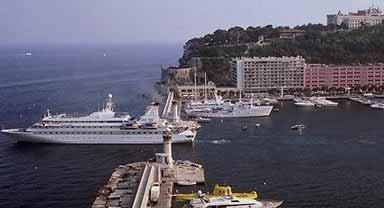
SubOptic 2004, which will be held in Monaco, from 29 March to 1 April 2004, will
clearly be the “must attend” Convention of our industry.
Despite the dramatic downturn the industry has experienced since Kyoto in 2001, it is becoming clear that Monaco will be a success. This will help to give the industry the launchpad occasion it so clearly has been looking for.
Why so?
I can already hear the cynical ones amongst you say this man is clearly on something?
Well what is the evidence?
At the end of August the SubOptic Programme Committee were inundated with well over 200 abstracts for papers to be submitted at Monaco. This number was almost identical with the number submitted for Kyoto, which attracted an audience of nearly 1200 attendees.
These abstracts covered a diverse range of topics and came from well over 60 organisations. So there is an industry out there who have survived or are new entrants and are interested in telling their message to others in the community.
The Programme Committee after reviewing these abstracts, a task supported by over 60 referees - another sign of the strength of our community - have decided upon a programme of 60 oral presentations in 12 sessions and one longer sessionof 100 poster presentations. These sessions will cover topic areas such as Market Place, Business and Commercial, Network Architecture and Design, Equipment and Component Technologies, Cable Design and Marine Operation, and Network Operation and Service Level.
Our aim at the start was to try to strengthen the programme in the Market and Business/ Commercial areas and I am pleased to say that
John Horne has been involved with the development, planning, and implementation of Submarine Communications Systems since 1969. In the 1980’s he was responsible for the development activity, which supported the introduction of BT’s first optical fibre submarine systems. He later took responsibility for Project Managing the major International Transmission Centres at the heart of BT’s Digital Transmission Network. He left BT in 1996 and has since worked as a Consultant. At SubOptic 2001, he was one of the Vice-Chairmen of the Papers Committee and took on the role of Secretary to the SubOptic Executive Committee, the body that provides strategic management to the SubOptic series of International Conventions.
our target of achieving about 1/3 of the presentations in these areas has been achieved. In support of these presentations the PC have also prepared a range of Tutorial and Short Course presentations. These cover 12 areas as diverse as Financing and Business Case preparation at one end to Fibre Non-linearity at the other. So all requirements will be catered for.
What about the Keynote Speakers and Roundtable Sessions? Well these have not been
overlooked. We have invited an impressive range of Keynote Speakers who will give the audience something to think and talk about. These include Serge Tchuruk, Chairman and CEO of Alcatel and Phil Metcalf CEO of Global Marine who have already accepted. We will keep you updated as we receive the acceptances from the others.
Two Roundtable Sessions have been organised and in another first for SubOptic, individuals still working in the heart of our industry will moderate these. The first to discuss the “Future Shape and Size of the Industry” with an operator/carrier/financial perspective will be chaired by Leigh Frame (Alcatel). We have invited Brian Rousell (WCI) to chair the second to discuss “How to ensure competitive supply” from a manufacturing/services perspective.
So that’s the outline of the formal programme. The opportunities to socialise, network and discuss what has been presented have not however been overlooked.
The Convention will be supported by an Exhibition, which has already attracted, at the time of writing, nearly 50 booths and by a wide range of sponsors. Another sign of the strength of the industry, supporting SubOptic 2004.
As another innovative feature, SubOptic is also launching a Market Corner initiative. This is aimed at small organisations or new entrants to the industry who want to promote themselves in the Exhibition Hall, but without the expense of taking a conventional booth.
So there you have it, at this stage SubOptic 2004 has already attracted:
As many abstracts as Kyoto, which had 1200 attendees
A programme that is as rich and more varied than Kyoto and will be supported by Keynote Speakers and Roundtables you will not wish to miss.
An attendance base which is larger at this time than at a similar time for Kyoto
An Exhibition Hall representative of our industry.
Unparalleled networking opportunities provided by our sponsorship and social programme.
So that’s the evidence that makes me say that SubOptic 2004 will be a success in achieving our objective, which quoting from our Constitution is: “To promote the interests of the Submarine Telecommunications Cable community by exchanging ideas and information, educating within the Community and fostering debate.”
Our website http://www.suboptic.biz provides all the information you need about SubOptic 2004, so it only leaves me to say:
“IF YOU WANT YOUR ORGANISATION TO PARTICIPATE IN SHAPING THE FUTURE STRENGTH OF OUR INDUSTRY, JOIN US IN MONACO”
New life discovered under water in the Caribbean Basin
A friend of mine recently said to me, “You know, when the telecom market picks up, it won’t be a ‘turnaround’, it will be an entirely new and different market.”
Nowhere is this truer than in the Caribbean. For, while the submarine cable market itself went into a coma, other drivers in the commercial environment, such as free trade agreements, privatisation, de-regulation, market liberalisation, and broadband penetration have continued to operate.
So what is the demand forecast for the Caribbean?
Where are the growth opportunities and how attractive are they?
The Caribbean Market
The Caribbean submarine cable market is fragmented.
With the exception of concerted action by the Organization of Eastern Caribbean States (OECS) to end the monopolies of Cable & Wireless, each Caribbean state generally follows its own telecom development strategy.
As a result, there is a broad range of growth rates for the 21 Caribbean nations included in a recent study by Pioneer Consulting.
Demand for submarine capacity on each island is forecast to grow at anywhere between 12% and 34% per year.
Most of this growth is coming from Internet demand.
Of the 21 Caribbean states studied:
15 have privatised PTT’s (with Bahamas going through the process now).
5 have totally open telecom markets.
3 maintain state monopolies.
13 are in the process of liberalising their telecom market.
14 retain monopolies on ILD (10 of which are controlled by C&W).
Segmenting The Market
Exhibit 1 throws up some interesting anomalies :
All countries with a relatively low GDP but relatively high Internet penetration are served by C&W. Could it be that monopolies have a beneficial role to play in helping people get online ? GDP’s in Bahamas and Netherlands Antilles are inflated by banking and oil revenues respectively.
Countries in the “Low/Low” category represent 82% of the Caribbean population. Of these, 89% live in Cuba, Haiti, or the Dominican Republic. For a variety of reasons, Internet markets in
Exhibit 1 : Caribbean Internet Market Segmentation
Antigua and Barbuda
Dominica
Saint Kitts and Nevis
Saint Lucia
Trinidad and Tobago
Martinique Puerto
Barbados
Cuba
Dominican Rep.
Grenada
Guadeloupe
Haiti
Jamaica
St. Vincent and the
Grenadines
Netherlands
these three countries have not developed as fast as elsewhere.
End of C&W’s monopoly
Cable & Wireless remains the dominant player in the Caribbean region, especially in terms of international traffic and submarine connectivity. However, the drive towards free markets has exposed C&W businesses, traditionally regarded as “cash-cows”, to new competition.
Given the disastrous forays into the global IP market and cable TV in the UK, Cable & Wireless needs to continue to generate cash from its Caribbean assets. C&W still holds monopolies on ILD service in a number of Caribbean islands. These monopolies will gradually be broken down but C&W will maintain a strong presence and offer stiff competition to any new entrants. Success in competing with C&W in the ILD market will depend mainly on price. This means that next generation network infrastructure will be required to provide a cost advantage over C&W’s existing cable assets.
Development of Broadband
The rate at which Internet users transition from dial-up to broadband is key to providing opportunities to install new submarine fibre optic capacity. Broadband take-up in the Caribbean has so far been relatively slow. However, some governments are recognizing the importance of this technology for the
development of the economy and a number of “e-initiatives” have been taken. Pioneer forecasts that 13% of Caribbean Internet users will have a broadband connection by 2013.
Bandwidth Usage and Access Speeds
How much bandwidth each Internet user requires to drive their favourite applications and the amount of bandwidth available in the access loop are both critical factors in estimating satisfiable Internet demand.
Caribbean access infrastructure is clearly inadequate to support demand for Internet connectivity (see Exhibit 2). The access bottleneck is constraining demand growth, limiting it to an average of 30% per year across the region.
This restricts the size of attachments which can be sent via e-mail, it sends dynamic web pages into slow motion, and multi-media applications, such as games and music downloads, become an exercise in futility.
Obsolete cables
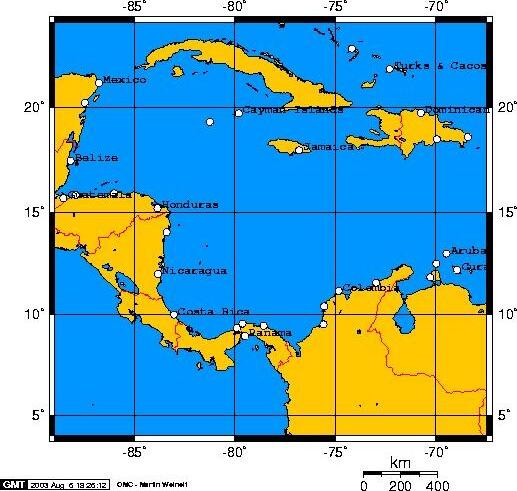
There are six relatively modern ultra-long haul cable systems serving the rim of the Caribbean Basin (see Exhibit 3) but “Americas-2” is the only ultra-long haul connection available from a point inside the Caribbean region. Within the Caribbean Basin itself, there are only two regional submarine cable systems with multiple landing points.
The Eastern Caribbean Fibre System (ECFS) was commissioned by Cable & Wireless in 1995 and has a design capacity which is less than half of the total estimated demand for Caribbean regional connectivity today. TCS-1, which connects Puerto Rico with the Dominican Republic, Martinique, and Colombia, was built in 1990 and has a capacity of only 100 Mbps. Together with “Cayman-Jamaica” (CJFS), these regional systems are regarded as a composite backbone connecting the Western Caribbean to the Eastern Caribbean via Puerto Rico. None of these systems has the technology to meet future demand either in terms of quality or capacity.
Opportunities in the Caribbean
Demand forecasts indicate that new submarine cable systems will be required in Antigua & Barbuda, Barbados, and Guadeloupe over the next ten years. High demand growth rates have also been forecast for Cayman, Netherlands Antilles, Puerto Rico and USVI. Internet traffic in the Caribbean is driven mainly by demand
Exhibit 3 : West Caribbean Submarine Cable Systems
for North American content and yet there is no direct North American submarine cable connection to Barbados, Dominica, Grenada, Guadeloupe, Jamaica, St. Kitts & Nevis, St. Lucia, and St. Vincent & Grenadines (see Exhibit 4).
The sale of TeleBermuda International, resulting from Brasil Telecom’s acquisition of the “360americas” cable system, has caused questions to be raised about the island’s dependence on a single cable system. A debate is currently raging in the Netherlands Antilles over the privatisation of incumbent Antelecom. A Free Trade Agreement between the United States & Dominican Republic is expected in 2004.
Cuba has no submarine cable connectivity to the outside world but it has attracted foreign investment in its telecom sector from Italy and Canada. If either the Castro regime collapses or the U.S. government lifts its economic embargo, the significant Cuban population would certainly have an impact on the regional demand profile.
Similarly, if the political situation in Haiti ever stabilizes, there is significant pent up demand from the large population for basic Internet connectivity which cannot currently be satisfied by the existing international satellite links.
To Puerto Rico
Source : Pioneer Consulting, LLC
Exhibit 4 : Estimated Current Market Share of Demand for North American Connectivity in Leading Caribbean Countries
Since joining Pioneer Consulting, Julian Rawle has brought his broad international industry experience and his knowledge of the market to bear on issues facing the submarine fibre optic industry today. He has completed a number of ground-breaking market reports, most recently focusing on Asia Pacific, the Caribbean, Latin America, and Eastern Mediterranean regions. He has also led several projects for major corporate clients such as JP Morgan, C2C, Intelsat, and General Dynamics.
Julian has a first degree from Manchester University, U.K. in Russian Studies and a MBA from Cranfield.
New Systems Proposed
Already a number of new systems have been proposed to meet growing demand within the Caribbean. Island Fibre are proposing to build “East Caribbean-1” (EC-1) a repeaterless 6-fibre pair SDH ring connecting Puerto Rico with Trinidad via most of the other East Caribbean islands. West Indies Network – I, LLC has proposed an almost identical route for “WIN-1”, a repeaterless 16-fibre SDH ring. Telkom Caribe has proposed a two-phase project for “Calypso1”, initially connecting Barbados and Trinidad to the South American continent and then
extending north into the East Caribbean archipelago. All of these Caribbean networks are designed to carry at least 1 terabit of capacity.
The common link between these three projects is that none has been able to secure funding. Pioneer’s research suggests that there is indeed a need for new capacity along the proposed routes of these systems but insufficient demand to support all three.
Bottom Line
The Caribbean region offers a number of opportunities for investment in telecom
After initially pursuing a 10-year career in the oil industry, Julian spent 4 years as Cable & Wireless Representative Director in Moscow, building up a profitable business, based on aggregation of international PSTN traffic and provision of managed data services to multi-nationals. He then accepted a post with Global Marine as International Marketing Director, Japan. He assisted Global Marine’s Japanese joint venture partner, NTTWEM, to implement a new international marketing strategy.
infrastructure. However, in keeping with a worldwide trend, the scale of these opportunities is far smaller than the global initiatives which have dominated the market in the recent past. The business models used to take advantage of these opportunities will therefore be different.
Private investors are already making a play in the region but the major constraint is funding. Capital availability has been undermined by a loss of confidence in the telecom sector although there are signs that financiers are becoming uncomfortable with the lack of telecom investment in their portfolios. System Suppliers continue to fight shy of vendor financing while they struggle to realign their balance sheets.
It seems likely that the first source of capital to come available will be from the major telco’s.
C&W has a strong incentive to maintain its cash flow from the region and AT&T has a strong position, particularly in Puerto Rico, a key regional hub. America Movil is also implementing a major expansion and acquisition strategy which may encompass the Spanish-speaking part of the Caribbean.
We may therefore see a model similar to the one used for the “ARCOS” project, consisting of private investors taking the upfront risk backed by guarantees from the major telco’s for future capacity purchases.
Whichever model is used and whatever the scale of development, there is indeed life in the Caribbean Basin.
Undersea telecommunications systems represent a substantial investment to network owners. Continuous operation of these systems ensures an on-going revenue stream and is a pre-requisite for end customer satisfaction and retention. There are numerous ways in which the outage risk of undersea systems can be reduced, including geographically diverse cable routes, judicious armoring and burial of cable, and advanced network protection switching protocols.
After proper route planning and network architecture engineering, one of the most
Reliability
by Reliability by Reliability by Reliability by Reliability
design – in design – in design – in design – in design – in practice and practice and practice and practice and practice and in the field in the field in the field in the field in the field
Dr. Barbara Dean and Dr. Jeff Gardner
Tyco Telecommunications Laboratories
important factors in minimizing outages is ensuring high reliability of the submerged equipment, so that ship repairs are minimized. Ship repairs represent a considerable cost to the network, since recovery and repair of the system is a lengthy and expensive process during which the network owner typically purchases restoration capacity, incurring even greater expense. The reliability record of a supplier is therefore an important metric which guides customers in their choice of system supplier.
Reliability management at Tyco Telecommunications is driven by the principle
of Reliability by Design. By this, we mean that the reliability impact of all design decisions, from the network architecture level to the equipment component level, is understood in terms of physics rather than merely statistics.
Through the use of this Reliability by Design principle, we have consistently delivered highly reliable submerged equipment. Since the beginning of the 980-nm repeater program in 1999, we have installed more than eleven thousand 980-nm amplifier-pairs in approximately 2,200 repeaters, accumulating more than 180 million component service-hours. To date, we have not had a single observed service-affecting repeater failure or 980-nm laser diode failure in these repeaters.
Typical Reliability Requirements for Undersea Systems
The industry metric for the reliability of submerged equipment is the expected number of ship repairs over a 25 year system life. The general industry target is fewer than 2 ship repairs, excluding faults due to external aggression, for a 7,000-km long system with four fiber pairs.
To interpret what this target means in terms of submerged equipment reliability, if this 7,000km system were deployed using a typical network design, each repeater in the network would require a probability of failure of less than 1% over the life of the system.
Our Reliability Philosophy
Reliability management at Tyco Telecommunications includes the implementation of Reliability by Design across all aspects of system supply, including robust network architecture, resilient transmission design, and reliable equipment designs. Network reliability requirements at the highest level are addressed via network architecture and are cascaded down to transmission design requirements, such as the allocation of sufficient system performance margins for system aging over life. Where necessary, the prudent use of redundancy of certain components adds additional reliability and removes single points of failure. Tyco Telecommunications’ transmission design philosophy ensures the resiliency of the system to submerged equipment degradation, including degradation of amplifier power due to component failures in the amplifier pump path, without affecting end-to-end transmission. This goal is achieved by operating the repeater amplifiers in significant gain compression, where the strength of the transmitted optical signal is naturally self-regulating. For example, should one span in a chain of repeaters experience a greater than expected loss, subsequent amplifiers automatically compensate by increasing their gains. In this way, the system performance is more tolerant to submerged equipment degradation.
Tyco Telecommunications’ Repeater Design
A repeater consists of one or more amplifier-pairs — one for each fiber pair in the system — contained within a strong housing of Beryllium Copper which protects the electro-optical equipment from the undersea environment.
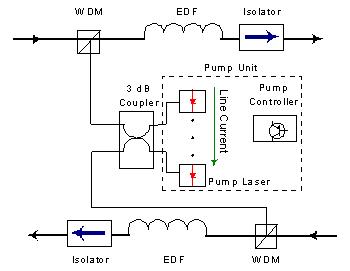
Figure 1 shows a simplified diagram of a repeater amplifier-pair. Incoming signals are amplified by passing through the coil of erbium-doped fiber (EDF) which is excited by several pump
lasers. Discrete optical components in the amplifier include combiners and splitters which couple the light from the pump lasers together and then divide it evenly between the outgoing and incoming paths, and isolators which prevent downstream reflections from interfering with amplifier operation.
With the exception of the pump lasers and their associated controller electronics, all components of the amplifier-pair are passive.
Figure 1: Simplified schematic of a Tyco Telecommunications undersea amplifier-pair.
This is important, since passive components in general have fewer failure modes and hence lower failure rates than active components. For components which are directly in the transmission path, such as the isolator shown in the figure, demonstration of ultra-high reliability is required, since the failure of any of these components would result in transmission loss. The reliability of the parts of the amplifier that depend on active components, such as the pump unit, is dramatically improved by the prudent use of redundancy. Such designs allow for failure of one or more redundant components without failure of the amplifier. Thus, the amplifier is robust to single failures in the pump
Repeater Reliability Budget
We have developed a Reliability Budget for the Tyco Telecommunications 980-nm repeater, summarized in Table 1.
These allocations include historical estimates for the passive components gained through more than 15 years of experience in designing undersea optical repeaters. Here, 1 FIT
Table 1: Failure rate allocations for repeater components. unit, so that multiple simultaneous failures would be needed in order to affect system performance. This results in an effective failure rate which may be many orders of magnitude smaller than the individual component failure rates.
Barbara Dean joined Bell Laboratories in the early 1980s after receiving the Ph.D. in Chemical Physics from Ohio State University. At that time, she contributed to the development and reliability analysis of optical transmitters, receivers and passive components for both terrestrial and undersea applications, authoring several papers on the concept of functional reliability.
During the introduction of opticallyamplified systems, her engineering team was responsible for the qualification and certification strategy for the first-generation undersea pump lasers. In the late 1990’s, Barbara joined the undersea system division (now Tyco Telecommunications) and is currently Managing Director, responsible for Quality Management Implementation and Reliability Management and assessment.
(Failure in Time) represents one failure in one billion device operating hours.
As explained above, the pump lasers and their associated control electronics are redundant in this design. Because of this, the failure rate of the components in the pump unit, especially the pump lasers, may not simply be added to the failure rates of other components in the repeater to determine the total failure rate. Rather, pump failures must be treated separately to determine the probability of a given number and distribution of pump laser failures over system life, and thus, the resulting effect on system performance. The failure of a single pump laser in any given amplifier-pair would not generally be cause for a repair. Only in the case of multiple simultaneous pump laser failures, and then only for certain combinations of failures, would an immediate ship repair be necessary. These combinations include, for example, the loss of more than 3 dB of pump power in a single amplifier-pair, or the loss of 3 dB of pump power in consecutive amplifier-pairs of a fiber pair in a repeater chain. This robustness to certain classes of failures is a benefit of the self-regulating transmission design of these systems.
Verification of Repeater Reliability
The philosophy of Reliability by Design dictates that, to the extent possible, failure modes in equipment and components be eliminated by the product design through a detailed
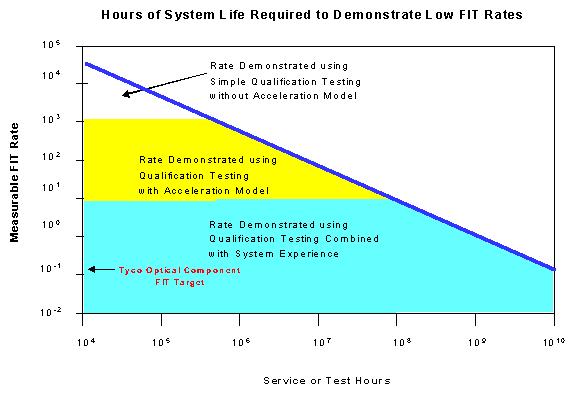
Figure 2: Measured failure rate at 90% confidence as a function of service device hours without any observed failures (Chi-Squared Statistical Model).
understanding of the underlying device physics.
As part of this process, potential failure modes are identified through theory, exploratory testing, and experience with manufacturing and field use of similar devices.
We utilize a thorough regimen of testing and surveillance in our product design and
manufacturing processes including: Design Capability Testing, Design Maturity Testing, Qualification Testing with and without Acceleration Models, and on-going surveillance of component reliability metrics in both the suppliers’ and our own manufacturing facilities. Perhaps the most direct data on reliability,
however, is gained through actual field experience with installed systems.
Field Validation
Tyco is a leader in system supply and has more 980-nm amplifier-pairs in operation than anyone else in the industry. Because of our role as both a leading system supplier and network operator, we are able to monitor reliability directly through data from the Tyco Global Network (TGN) as well as through feedback from our system customers. Thus, we are in a unique position to supplement qualification and manufacturing results with actual field experience.
The large number of devices installed in the field, combined with continuous use over the long term, makes it possible to infer component failure rates even though expected rates are extraordinarily low. For ultra-high reliability components, the most likely result is the observation of zero failures over a long time period. The translation of this
Table 2: Measured failure rate of 980-nm amplifier-pairs based on field data.
observation into a failure rate at a given confidence level is a well-known statistical problem with an equally well known solution. For the case of 90% confidence, Figure 2 shows a graph of the measured failure rate versus the number of elapsed device hours without an observed failure.
The graph illustrates an important principle in trying to measure the failure rate of ultra- high
reliability devices. The observation of zero failures in any finite time period provides an upper bound of the failure rate for a given confidence level. The only way that this upper bound can be reduced to approach the actual failure rate, while maintaining high statistical confidence, is by accumulating more device hours.
Given a few thousand devices in the field for a few years, one could accumulate a few hundred million device hours, which is the time period necessary to demonstrate failure rates of 1 FIT or less.
Experience and Results
Table 2 shows the failure rates for 980-nm amplifier-pairs as measured directly by our field data for various levels of statistical confidence.
To date, we have deployed approximately 2,200 repeaters based on 980-nm pump lasers for a total of over 11,000 amplifier-pairs in service. Given the approximately 180 million amplifier-
pair hours accumulated with zero failures observed, we deduce a maximum measured amplifier-pair failure rate of 17.2 FITs, with 95% confidence. For a 50% confidence level, the measured failure rate is 3.9 FITs. This result shows that we are close to demonstrating that our reliability design target of 3.9 FITs per amplifierpair has been fully proven in the field.
Conclusion
System reliability continues to be one of the most important metrics by which customers evaluate potential system suppliers. At Tyco, we have accumulated an outstanding reliability record over several decades and across numerous technology changes by successfully applying the Reliability by Design philosophy.
Using this philosophy, we remove potential failure modes from our products by implementing designs that are based upon the knowledge of the failure physics. Rigorous qualification programs combined with on-going supplier surveillance ensure consistent reliability of components, while continuous analysis of field data for indications of failures helps further enhance our knowledge of component reliability. The result of this philosophy has been impressive — to date, there has not been a single reported traffic-affecting failure of our 980-nm repeaters.
Our experience and knowledge of system reliability is continually expanding as our
Jeff Gardner received Bachelor of Arts and Master of Science degrees in Physics in 1986, and a Ph.D in Atomic, Molecular, and Optical Physics in 1993. His post-
doctoral research centered on using semiconductor lasers to create and study ultra-cold atomic samples as well as experimental studies of optical amplifiers. He has co-authored a number of articles in these and other areas of interest to the optics community. His experience carried over to his research at Tulane University, where he was an Assistant Professor of Physics. Jeff joined the Reliability Management group at Tyco Telecommunications Laboratories in 2001 as a Distinguished Member of Technical Staff. His primary focus remains on optics, particularly the reliability of semiconductor pump lasers used in Tyco Telecommunications’ undersea amplifiers.
systems accrue more and more operating hours. This knowledge will be used to its fullest extent as we consider new technologies, components, and product designs driven by the continued market need for ultra-high reliability, low cost system solutions.
The following prices are for digital reprints of editorial pages from Submarine Telecoms Forum magazine, without alteration. Page size is 8-1/4" x 11-3/4" on 28lb paper stock. Shipping cost is in addition to reprint price.
www.ptc2004.org
New Times- New Strategies: ICT Rising from the Ashes
11-14 January 2004 • Hilton Hawaiian Village Beach Resort & Spa, Honolulu, Hawaii, USA
New Times - New Strategies, the theme for PTC’04, emphasizes the opportunities that currently exist in the global marketplace for information and communication technologies (ICTs). While North America and Europe still struggle to reinvigorate their economies, several Asian countries have surged ahead in leadership positions with new technologies. PTC’s annual conference offers a congenial venue to interact with major players in the Asia-Pacific region. The conference has long been the most important event that ties Asia to the Americas and the rest of the world.
Seize this golden opportunity to maximize your total participation in PTC’04:
• register early and save • exhibit • sponsor • advertise
Please contact Dolores Fung at +1.808.941.3789, email: dolores@ptc.org or visit the PTC’04 website at www.ptc2004.org for more information.
PTC members enjoy 40% discount on the conference fee. If you are not a PTC member and are interested in joining, please email Justin Riel at Justin@ptc.org.
A UNIQUE EVENT
PTC’04 : New Times – New Strategies: ICT Rising from the Ashes
by Richard Nickelson, Senior Advisor, Pacific Telecommunications Council
The Pacific Telecommunications Council (PTC) is an international non-profit, nongovernmental membership organization with global membership that was founded in Honolulu in 1980 to bring together all those who have an interest in telecommunications in the vast Pacific Hemisphere. It serves the digital information age through a major annual conference, regional seminars, a respected quarterly magazine and a variety of other activities.
PTC’s annual Pacific Telecommunications Conference in January has become one of the most important regular events held in Hawaii. Its impact extends far beyond the participants who attend, as it serves to focus the attention of the major providers, operators, manufacturers and users of
information-age services in the Pacific on Hawaii as the geographic center and natural meeting place of the region.
The Council attracts virtually all providers and major users of telecoms and information systems and services, as well as manufacturers,
policy-makers, regulators, technologists, lawyers, scientists, academics and others who share an interest in the development and beneficial use of telecommunications in the region.
The Council prides itself on being a “people-centered” organization. The personal contacts formed through the Council in the amicable and informal environment of the annual conference and seminars are a primary benefit of membership. Important business and academic relationships are established. In past years, hundreds of millions of dollars worth of contracts resulted from meetings and contacts during PTC’s annual conference.
In many ways, PTC is unique in the ICTworld. It serves as a focal point and a meeting place to iron out otherwise intractable problems and to transact business. In short, PTC is the place to be in the world’s
Hilton Hawaiian Village
most dynamic growth region in telecoms. (Visit www.ptc.org. )
PTC’s 26th annual conference will open in Honolulu on Sunday, January 11th at the Hilton Hawaiian Village in the heart of Waikiki. The four-day event offers unparallel opportunities to exhibitors and attendees.
Submarine cables
Submarine cable systems provide Hawaii’s lifelines to the world. Partly because of Hawaii’s location as a landing and transit place for major trans-Pacific cables, PTC’s annual conference features special sessions on submarine cables and systems. The SubOptic Executive Committee has organized a high-level session on Wednesday morning, 14 January, that will examine funding and managing international infrastructure for the industry.
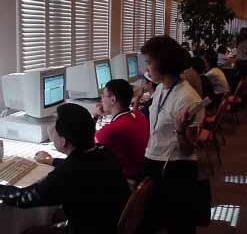
Students at PTC
Satellite communications
The Global VSAT Forum has organized an all-day Asia-Pacific Satellite Communications Summit that will highlight the opening of the conference on Sunday, 11 January. Luncheon panels on Monday and Tuesday will examine the commercial satellite launch services industry and the private sector’s role in military satellite communication requirements in the Pacific, respectively. Concurrent-session panels will deal with an analysis of the new reality of the satellite industry and satellites as the backbone of the “intelligent community” in Asia. Tuesday afternoon will feature a high-level satellite CEO roundtable organized by the Satellite Industry Association and PBI Media, LLC.
Other topics
The conference will include all topics of current interest in the information and communication technology industries. The ITU Regional Office for Asia and the Pacific is organizing a session that will include participants from the highly successful ITU Youth Forum . Workshops and panels will focus on a number of country, regional or global issues and means for financing needed developments.
Alternative sessions will include topic tables, round tables, panels and workshops.
Richard Nickelson received BEE and MSEE degrees in electrical engineering from the Georgia Institute of Technology and has 40 years of experience in international telecommunications. Starting in 1963, he participated in a series of pioneering satellite communication experiments with the U.S. Army Satellite Communications Agency. From 1967 to 1971 he was on the staff of the Massachusetts Institute of Technology Lincoln Laboratory and contributed to major experiments in digital mobile communications by satellite. He held several senior positions with the International Telecommunication Union (ITU), Geneva, Switzerland, from 1971 until 1995, including five years as Technical Coordinator for the ITU/UNDP portion of the Satellite Instructional Television Experiment (SITE) in India. From 1981 until 1995 he was Senior Counsellor and head of the ITU/ CCIR department dealing first with broadcasting and later including frequency management and monitoring. He returned to his native United States in 1995, where he is currently Senior Advisor at the Pacific Telecommunications Council in Honolulu and has also been Editor of the Pacific Telecommunications Review since 1995. (See http://www.ptc.org/library/ptr/ index.html .)
Education, including distance learning, will be treated in concurrent sessions and preconference associated meetings of regional distance-education organizations on Saturday, 10 January.
The Federation of Regional Associations (FORA) roundtable on Sunday afternoon, 11 January, will focus on the role of the Internet in the management of regional organizations and how to bridge the digital divide.
Exhibits and other activities
PTC’s annual conference exhibits of new technology, products and services for the region will be open from Sunday morning until Tuesday noon. The conference attracts numerous peripheral activities sponsored by PTC members and exhibitors.
There are also pre- and post-conference workshops and other activities sponsored by related organizations, as well as PTC executive and committee meeting. Social activities, including the traditional lagoon-side opening reception and the closing reception are always well attended.
Featured speakers
Featured high-level speakers at plenary and super sessions include: MICHAEL BINDER, Assistant Deputy Minister – Spectrum, Information Technologies and Telecommunications, Industry Canada,
Canada ; FRED BRIGGS, President, Operations and Technology, MCI, USA; MICHIO FUJISAKI, Member of the Board and CTO, Fujitsu Limited & President, Fujitsu Laboratories Limited, Japan ; AMBASSADOR DAVID GROSS, U.S. Coordinator, International Communications and Information Policy, U.S. Department of State , USA ; SALMA JALIFE, Chair of APEC-TEL and Senior Consultant to the Telecommunications Authority, Mexico ; JOHN LEGERE,
CEO, Global Crossing, USA ; OLOF LUNDBERG, UK ; TADASHI ONODERA, President, KDDI CORPORATION, Japan ; VIRGILIO PEÑA, Undersecretary for ICT, Philippines ; TADAO SAITO, Professor, Chuo University and Honorary Professor, Tokyo University, Japan ; NOAH SAMARA, Chairman and CEO, WorldSpace Corporation, USA ; KENNETH TOMLINSON, Board of Directors, Corporation for Public Broadcasting, USA.
THOSEOTHER SUBMARINE UTILITIES
During this somewhat rather slow market for submarine telecom cable installers I am constantly reminded on a daily basis of the busy times of bygone days. (Actually those days were not that long ago).
I reside in Manasquan, New Jersey USA. Manasquan is a pleasant beachfront (Seaside for the Brits!) town on the Jersey Shore about 60 miles south of New York City. During the summer it is a magnet for hundreds of thousands of “Bennies”1 from New York and North Jersey who go “Down the Shore” for their week-end R&R.
byBillWall
During the winter it reverts to a pleasant beachfront town with a genuine “Hometown USA” atmosphere.
Manasquan is also a major terminus for transatlantic submarine cables on the US East Coast; numerous systems (PTAT, Tat-14, Gemini, TGN, Apollo etc) come ashore at beach landings about a mile from my house. I park my car each night on top of a C&W manhole housing the Apollo South land cable. As it makes its way from the beach to the terminal station Apollo runs right along my street a mere twenty feet from
my front porch steps. I have spent countless hours explaining to neighbors how this thin strand of glass, copper & steel runs down the road to the beach and then pops over the Atlantic Ocean to the northern coast of France where it once again meanders down a suburban road to a terminal station, amazing they say.
So after driving over Apollo in the morning I head to my office in Toms River NJ, which is about ten miles north of Tuckerton NJ, another major East Coast terminus of transatlantic telecom systems. At the week-end I coach my sons soccer team which plays on a field directly in front of the TAT 14, Gemini & PTAT terminal stations. Cap this with the fact that almost 70% of my company’s revenues were derived from the installation and maintenance of submarine telecom cable during the period 1998 thru 2001 and the pessimist in you could say that we were in for troubled times from late 2001 onwards.
Other Marine Markets
Having started my marine career on a C&W cableship and then spent the next 12 years traveling the world repairing, laying or burying submarine telecom cables I was under the impression that these copper & steel (coax) links were the only submarine utility (or at least the only one worth worrying about).
1 Bennies: a nickname used by Jersey Shore locals for out of town visitors who come for the “Benefits” of the shore
In 1983 after leaving the staid & starched world of the big white wire boats I served my penance in the oil field conducting drilling support, subsea pipeline surveys and platform construction with ROVs out of Grand Isle Louisiana. (I say penance because you try switching from your own cabin and a mahogany lined dining salon to 4 to a bunkroom and a steel box called a canteen!) This opened my eyes to other submarine utilities: oil & gas pipelines, flexible umbilicals, power cables etc. It was obvious that there was a whole other submarine infrastructure outside of the submarine telecom world where the skills learned in the submarine telecom world could be put to good use. I spent the next 15 years helping to build a submarine infrastructure service company that although it specialized in submarine telecom systems also developed a whole new market of submarine utility services to the alternate submarine markets of energy pipelines, power cables, sewers
and outfall lines. Detecting minute fluid leaks on high voltage Self Contained Fluid Filled submarine power transmission cables, building and operating an active tracking system so a towed high pressure water jet sled can guide itself along a 345Kv submarine power transmission cable during a Post Lay Burial Operation, laying, splicing and burial of 15Kv distribution submarine cables for the US Navy, locating and surveying the terrestrial section of a river crossing pipeline buried over seventy feet deep; all these tasks completed utilizing techniques originally developed for use on submarine telecom cables. With the current state of the telecom market this period was definitely time well spent.
Stretch Markets
Another learned contributor2 to this publication recently coined the phrase “Stretch” markets in an article. This term describes other submarine utility markets that submarine telecom cable contractors can turn to during this downturn. These stretch markets include offshore pipelines, submarine power cables, offshore wind farms, river, lake, bay, harbor crossings and regional repeaterless systems. I agree with all the stretch markets except maybe the offshore pipeline market which could require too much of an investment in new and larger equipment to see any return within a reasonable amount of time. So discounting the offshore pipeline market most
2 Thanks Tom Soja
(We also do short and medium haul systems)
The name Caldwell has been synonymous with submarine cable installation and repair for over 40 years. The Caldwell Group is a marine construction group specializing in submarine cable operations worldwide.
of the alternate submarine utilities are within coastal or inland waterways. Also apart from a few long distance pipelines most other submarine utilities are relatively short distance compared to the inter-continental routes of the submarine telecom world.
In North America alone there is a whole network of submarine power cables both transmission (High Voltage) and distribution (Low & Medium Voltage). These cables cross river estuaries, bays, harbors; they interconnect offshore islands with the mainland and provide barrier islands with power without having to depend on local generation. As a great testament to the power industry laboratories and cable manufacturers a lot of these systems were installed during the late 60’s and early 70’s and, if untouched by external aggression, most if not all of those systems are still operating today. The inland submarine utility market suffers from the same threats of external aggression that have plagued the international telecom arena, mainly fishing and vessel anchoring. Fishing activities are not as big a concern as they are to telecom operators but vessel anchoring and marine construction activities can cause heartburn.
On the shorter inland power cable routes marine route surveys are not given the attention that they are in telecom. The changes in bathymetry in a 5Km bay-crossing route are usually negligible and most burial assessment requirements can be taken care of in a diver
survey. That’s not to say that all inland power projects have a very brief survey specification just that most are quite straightforward. Permitting regulations are as, if not more, stringent and time consuming than the offshore telecom counterparts. This is especially true in the USA if the utility is an interstate line crossing a state border underwater.
Offshore wind farms, wave turbines and current generators probably represent the largest segment of a new stretch market. A short length of submarine power distribution cable must interconnect each turbine in a wind farm, then a longer length of transmission cable would be utilized to “Export” the power from the wind farm ashore. The marine construction applications are multi-faceted including civil, electrical and telecom disciplines. Also “Merchant” power providers are now discovering the possible usage of submarine links to deliver their product to market. (Lets hope they don’t saturate the market?)
Inland submarine pipelines are very abundant in any medium to large port city that has petroleum refining facilities within its boundaries. A number of 8" & 12" product transport lines criss-cross the busy harbor confines. During a recent project we had to dredge material from above a buried, abandoned 12" product pipeline in order to remove that line so that the owner would be compliant with his permit requirement. This pipeline was crossing one of the busiest commercial shipping channels in the world. Not such an easy task when there
Bill Wall has spent over 30 years in the sub-sea cable industry. Starting at British Telecom (then GPO), for a 3year apprenticeship Wall then spent 12 years with Cable &
Wireless Marine staff, (now GMSL) where he was very active in the development of cable ready ROV systems. He was a member of the original Scarab 1 operations team. Wall then spent 18 years at Margus Co. where he was VP Operations.
He has a broad background in sub-sea operations and project management including Shore Ends, ROV operations, Plowing, repair operations. After a short stint with General Dynamics he is currently the Business Development Manager at Caldwell Marine International in New Jersey.
are 20 other submarine utilities crossing the same harbor channel and any as-built surveys were 20 or more years old. The line had no coating left and as such would not support a tracking signal. In order to ensure that we had the right line and to guarantee that we dredged material from directly above this line we reverted to an old telecom technology. A pig was sent through the
line pulling a 10 gauge insulated copper wire, a 25hz tone was injected onto the wire and a handheld diver probe was used to pinpoint the line utilizing GPS. The dredge was brought in and eight to ten feet of cover was removed for a thousand linear feet and the line was recovered and removed without incident.
Fiber Requirements
A large number of inland infrastructure lines require either Supervisory Control And Data Acquisition (SCADA) facilities or straight telecom applications. Either a composite fiber within a power cable or an external submarine fiber cable “Wrapped” around the utility can fill these requirements. High fiber count, repeaterless operation is usually the norm.
Summary
Wayne Nielsen recently mentioned Tangier Island in the Chesapeake Bay in one of his editorials herein and then a reader wrote about duck hunting memories of Tangier Island. I also have memories of Tangier Island but not from hunting or fishing but from locating and repairing the submarine power cable that feeds Tangier Island from the Eastern Shore mainland.
When and if this current slump in the submarine telecom industry ever ends then the resourceful, the nimble and the downright lucky will still be around to carry on the good fight, in the meantime carry on stretching!
Its Not Al Its Not Al Its Not Al Its Not Al Its Not All A Bed Of Roses l A Bed Of Roses l A Bed Of Roses l A Bed Of Roses l A Bed Of Roses
Let’s face it, there are a multitude of ways to protect cables and flowlines along the seabed ranging from trenching to sheathing through to rock dumping, etc., but let’s take a step back for a moment and ask why protect them and what are we protecting them from. Again a number of reasons spring to mind from protection from trawling to dropped objects, etc.; but what do you do when none of all the available solutions suffice? This was the dilemma faced by Petrobras not too long ago.
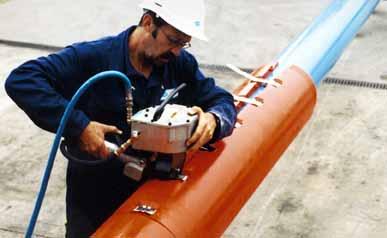
Petrobras, a committed user of Uraduct®, a half shell cable protection system, found that in the ultra deep waters of the Campos Basin region (offshore Brazil) there was a common occurrence of Coral reefs.
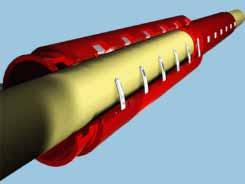
Dead coral, with its razor sharp fingers abrades the outer sheath of unprotected flexible pipes and umbilicals in a matter of months. For several years, Uraduct® has been fitted with its specially developed abrasion resistant PU shells and Inconel banding, boasting high tensile strengths and suitability for long term sea water immersion. A concern remained with the
by Scott Griffith
standard Uraduct® design in that the exposed metallic banding would also be prone to abrasion.
A solution had to be found that still allowed the flexibility to fit an enhanced protection system in specifically targeted areas, but would not compromise the installation time or costs and would be ecologically friendly.
CRP commenced a three-year development and qualification program specifically aimed at addressing this problem and meeting all of Petrobras’ stringent requirements.
The coral would abrade very hard materials yet would tear softer more pliable ones, and would regenerate around the pipe or cable, leading to an exhaustive supply of abrasive material; hence the potential for proportionately short life spans of the unprotected flowlines and umbilicals.
In turning internally to its R&D laboratories and bringing in external expertise in the form of marine biologists, CRP evaluated numerous materials with varied properties testing each variant in specially built abrasive
centres. CRP’s chemists tuned and honed base materials, formulating significantly improved polyurethane, which offered the characteristics needed to provide a long trouble free life.
Focus was simultaneously given to the metallic banding system that is used within the Uraduct® range of cable and flowline protection systems.
Without the aid of alchemists, there are only so many metals that can be used in a strip-banding configuration, and CRP had over the years tailored its product
offerings to only a handful of the most suitable variations.
While a new more resilient polyurethane had been developed, Inconel 625 remained the material of choice for its banding system, however if exposed to the coral it would potentially suffer from similar abrasion patterns as experienced on unprotected umbilicals.
Formally working for Dresser for nearly a decade, Scott Griffith joined the CRP Group over six years ago. In his role of Group Marketing Manager Scott is involved in the day-to-day marketing activities of each of the groups divisions –CRP Group Ltd, OCP Cable Protection Ltd, CRP Group Inc., Emerson & Cuming Composite Materials, Inc., CRP Balmoral Inc. and several divisional offices in France and Norway.
Around 6 years ago, CRP had developed a band seal sleeve system for a client who wanted to encapsulate the seal prior to deployment. This concept speared the development of a completely new cable protection system, heralded as Uraduct®+, and the new product was an evolution from a internationally used Uraduct® protection system that had been used by the majority of cable layers over the past 10 years.
Uraduct®+ was constructed using the new range of abrasion resistant polyurethane, and encapsulated the Inconel banding within the main moulding leading to over a 90% reduction in the area of banding exposed to the coral. Petrobras recognised that the solution not only met and exceeded all of its stringent criteria, but they would also further benefit from potentially reduced installation times as the banding was both pre-cut and preinstalled within the factory environment.
Uraduct® has now been adopted by Petrobras as their first choice system and have already installed several kilometres on a number of projects beyond depths of 1000MSW.
Nexans Norway AS P.O Box 130 Økern, N-0509, Oslo Norway
Tel: + 47 22 63 88 20
Fax: + 47 22 63 74 55
US Contact: Les Valentine
Tel. +1 281 578 6900
Fax: +1 281 578 6991
E-mail: les.valentine@nexans.com
wfnstrategies
WFN Strategies assists clients involved in a variety of activities from business development, marketing & sales planning/implementation to installation support, submarine cable provision, system design, system or product procurement, system engineering and investment services.
One of our key strengths is the ability to help you re-evaluate your products or services for alternate markets and future market positioning. Our corporate mission is simple: To assist customers by increasing their profitability, corporate and stockholder value WFN Strategies, LLC
Youngs Cliff Rd Suite 100 Potomac Falls, Virginia 20165 USA
Tel: +1 (703) 444-2527
Fax: +1 (703) 444-3047
Sales@wfnstrategies.com
www.wfnstrategies.com
everyone has our depth of
or breadth of capabilitybut now everyone can profit from it
Letter to a friend from
Jean Devos
My Dear Friend,
I was on my way to tell you in this letter that the submarine cable activity may have seen now the worse, and that one can hope that things will start to catch up somewhat. We have many signs of this. But today I am reading in my favourite economy newspaper that Alcatel chairman told the analysts “the submarine cable market is virtually dead,” and that “further costs reduction needs to be achieved in this sector.” Can we reconcile both statements?
My friend, as you know perfectly, everything takes time, even in our fast moving world! It takes time to admit the obvious, like a virtually dead market! When you have benefited for years of the beauty of a booming and then profitable activity, when such an activity is at the heart of your company culture and capability, I can understand that it is painful and time consuming to finally accept the reality. But the market has been clearly dead for nearly 3 years now, and it is hard to believe that costs have not yet been cut up to the rock bottom!
Does this Alcatel statement announce something else? Some other form of restructuring?
It would make a lot of sense!
The important point for the supplier industry is that the future market will probably be modest, nothing to compare with the last years of the last century! Something like 1 or 2 billion dollars a year globally, i.e. 50,000 kms of system length a year! Not enough for so many players, and more importantly, not enough for dedicated units.
We may see tomorrow the big telecom equipment suppliers (Alcatel, NEC, Fujitsu and why not Lucent, Nortel, etc.) providing the “Network electronic and software”, and other companies providing the “submerged plant” portion. Two very different set of skills! The Japanese model, more adapted to the low tide period could finally prevail.
So, my dear friend, yes, there is clearly going to be a future submarine cable market thanks to the wide band Internet. It will still takes several years before the thick traditional routes will need new investment, but in the meantime, India and China are clearly emerging, and represent more than two billion inhabitants!
But this does not contradict the idea that the supplier industry needs some restructuring.
Jean Devos
President AXIOM.
Diary Diary Diary Diary Diary
FORTHCOMING CONFERENCES AND EXHIBITIONS
17-20 November 2003 Shallow Survey 2003, Sydney, Australia, www.dsto.defence.gov.au/corporate/conferences/swsurvey/
24-26 November 2003 Hydro 2003: 4th Australasian Hydrographic Symposium, Christchurch, New Zealand, www.hydrographicsociety.org.nz/conference.htm
11-14 January 2004 Pacific Telecom Conference 2004, Honolulu, Hawaii USA. www.ptc.org/ptc2004
17-19 February 2004 Underwater Intervention 2004, NewOrleans, Louisana, USA. www.underwaterintervention.com
16-19 March 2004 Oceanology International 2004, London, UK, www.oceanologyinternational.com/
28 March - 1 April 2004 SubOptic 2004, Principality of Monaco, www.suboptic.biz
6-9 April 2004 International Cable Protection Committee Plenary, Southern France, www.iscpc.org
3-6 May 2004 Offshore Technology Conference 2004, Houston, Texas USA, www.otcnet.org/2004/
15-18 June 2004 CommunicAsia 2004, Singapore, www.communicasia.com 24-27 August 2004 Offshore Northern Seas 2004, Stavanger, Norway, www.ons.no/ 14-16 September 2004 Offshore Communications 2004, Houston, Texas USA, www.offshorecoms.com
21-23 September 2004 Submarine Networks World 2004, Singapore, www.carriersworld.com
10-15 October 2004 SEG International Exposition & 74th Annual Meeting, Denver, Colorado USA, www.seg.org/meetings/calendar/
2-4 November 2004 Hydro4, Galway, Ireland, www.hydrographicsociety.org
9-12 November 2004 Oceans 2004 MTS/IEEE, Kobe, Japan, www.oceans-technoocean2004.com