FEATURE
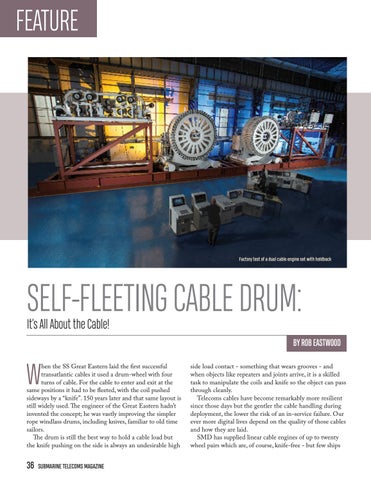
Factory test of a dual cable engine set with holdback
SELF-FLEETING CABLE DRUM: It’s All About the Cable!
BY ROB EASTWOOD
W
hen the SS Great Eastern laid the first successful transatlantic cables it used a drum-wheel with four turns of cable. For the cable to enter and exit at the same positions it had to be fleeted, with the coil pushed sideways by a “knife”. 150 years later and that same layout is still widely used. The engineer of the Great Eastern hadn’t invented the concept; he was vastly improving the simpler rope windlass drums, including knives, familiar to old time sailors. The drum is still the best way to hold a cable load but the knife pushing on the side is always an undesirable high
36
SUBMARINE TELECOMS MAGAZINE
side load contact - something that wears grooves - and when objects like repeaters and joints arrive, it is a skilled task to manipulate the coils and knife so the object can pass through cleanly. Telecoms cables have become remarkably more resilient since those days but the gentler the cable handling during deployment, the lower the risk of an in-service failure. Our ever more digital lives depend on the quality of those cables and how they are laid. SMD has supplied linear cable engines of up to twenty wheel pairs which are, of course, knife-free - but few ships