SUBMARINE TELECOMS

If it’s July, it must be time for the Tour de France! This year’s event, unlike all others, won’t finish in Paris due to the Olympics; so, we are witnessing a very different race where much of the hard fought effort will be in the south. As of this writing, race leadership is pretty much as expected and few surprises have been seen. But it’s still early…
Thank you to all who have added the SubTel Forum App to their smartphones. This app provides real-time updates, comprehensive data, and interactive features for submarine cable projects, seamlessly integrating with our website for easy access to industry insights and collaboration tools. Dive in and explore it today.
The Submarine Telecoms Forum Directory enhances access to resources and celebrates the industry’s collaboration and technical prowess, aiming to be the premier reference for advancing global connectivity. Check it out and share your thoughts.
The next Submarine Cable Almanac, releasing in August and sponsored by TPG Telecom, features updated and validated data, organized by supplier for clarity on developments and upcoming systems, keeping you informed about global submarine cable advancements.
We’re releasing the updated 2024 Submarine Cables of the World wall map at Submarine Networks World in September. Advertisers can gain visibility among key industry stakeholders. Contact Nicola Tate for details.
Roly Stansfield first visited my office in McLean, Virginia in 1985 when representing BTI Marine Services. He was looking for a Washington, DC based defense marketing consultant to grow their cableship business with the DoD. I barely understood ball valves and dynamometers or even ship shafts, and certainly knew nothing about submarine cables, but after negotiating a whopping $350 monthly retainer, set out with the two of us traversing the country in hopes of finding new business and within six months had secured a $6M contract to ‘fix’ the Commando Fox range for USAF offshore Okinawa. Three years later and a number of new contracts in hand and while drinking bitter and eating pickled eggs in his favorite pub in the Hampshire countryside, I let slip that I had decided to leave the firm, and the next day he marched me into a

meeting in Southampton with the newly minted BT Marine Board of Directors to discuss my future. Roly was the man who brought me into this business, my mentor, and lifelong friend. He was larger than life, could tell the best, longest, funniest stories that would make a hardened Marine Corps General blush and then bust out in uncontrolled laughter. He would reminisce about playing the ‘board’ for Yes, or play with my then babies under the kitchen table. He taught me how to drink whisky “with a wee bit of branch water” in his front room in Hamble. Later in life he would play his bagpipes on the Normandy beaches for several D-Day remembrances. A few years ago, Peg and I met Roly and his wife, Lyndsey, in a Lyndhurst pub and I had the chance to say thank you for changing my life and that of my family for the better.
We lost Roly Stansfield in May, and he will certainly be missed. But in his honor, I continue to carry forward the lessons he taught, savor his exuberant joie de vivre, and cherish the moments we shared.
Thank you as always to our awesome authors who have contributed to this issue of SubTel Forum. Thanks also for their support to this issue’s advertisers: AP Telecom, AP Procure, Fígoli Consulting, Indigo, IWCS, TPG Telecom, Submarine Networks World, and WFN Strategies. Of course, our ever popular “where in the world are all those pesky cableships” is included as well.
Good reading and vive le tour! – Slava Ukraini …STF


Wayne Nielsen, Publisher
Publication of Submarine Telecoms Forum, Inc. www.subtelforum.com | ISSN No. 1948-3031
PRESIDENT & PUBLISHER: Wayne Nielsen | wnielsen@subtelforum.com | [+1] (703) 444-2527
VICE PRESIDENT: Kristian Nielsen | knielsen@subtelforum.com | [+1] (703) 444-0845
ANALYTICS: Kieran Clark | kclark@subtelforum.com | [+1] (540) 533-6965
SALES: Nicola Tate | ntate@associationmediagroup.com | [+1] (804) 469-0324
DESIGN & PRODUCTION: Weswen Design | wendy@weswendesign.com
DEPARTMENT WRITERS:
Adam Ball, Andrés Fígoli, Isabelle Cherry, John Maguire, Kieran Clark, Nicola Tate, Philip Pilgrim, Syeda Humera, and Wayne Nielsen
FEATURE WRITERS:
Anders Ljung, Brendan Press, Guy Arnos, John Hibbard, Kristian Nielsen, Matt Reber, Paul McCann, and Saurabh Maral.
NEXT ISSUE: September 2024 – Offshore Energy
Submarine Telecoms Forum, Inc. www.subtelforum.com/corporate-information
BOARD OF DIRECTORS: Margaret Nielsen, Wayne Nielsen, Kristian Nielsen and Kacy Nielsen
SubTel Forum Continuing Education, Division of Submarine Telecoms Forum, Inc. www.subtelforum.com/education
Contributions are welcomed and should be forwarded to: pressroom@subtelforum.com.
Submarine Telecoms Forum magazine is published bimonthly by Submarine Telecoms Forum, Inc., and is an independent commercial publication, serving as a freely accessible forum for professionals in industries connected with submarine optical fiber technologies and techniques. Submarine Telecoms Forum may not be reproduced or transmitted in any form, in whole or in part, without the permission of the publishers.
Liability: While every care is taken in preparation of this publication, the publishers cannot be held
responsible for the accuracy of the information herein, or any errors which may occur in advertising or editorial content, or any consequence arising from any errors or omissions, and the editor reserves the right to edit any advertising or editorial material submitted for publication.
New Subscriptions, Enquiries and Changes of Address: 21495 Ridgetop Circle, Suite 201, Sterling, Virginia 20166, USA, or call [+1] (703) 444-0845, fax [+1] (703) 349-5562, or visit www.subtelforum.com.
Copyright © 2024 Submarine Telecoms Forum, Inc.
ISSUE 137 | JULY 2024

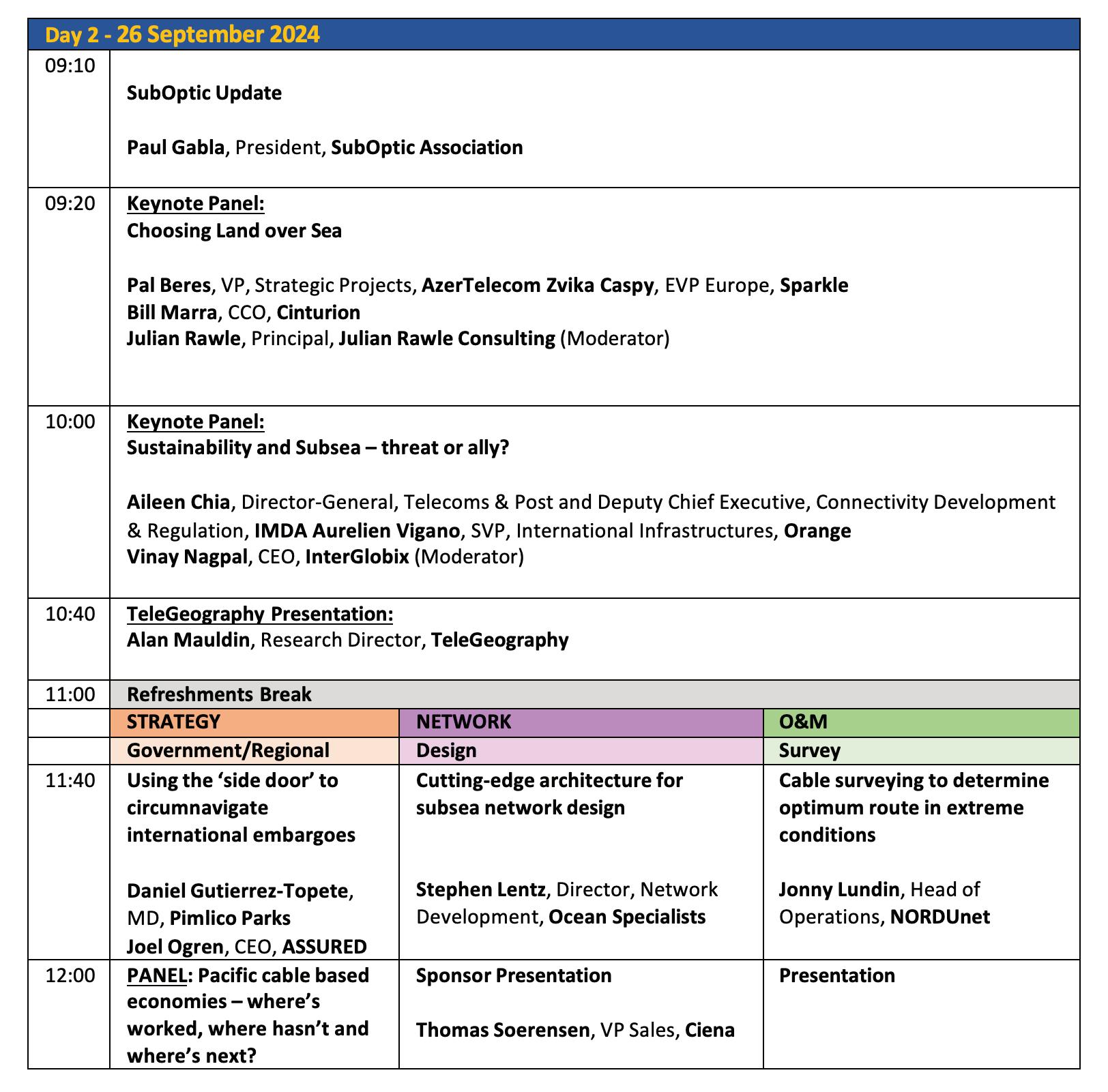
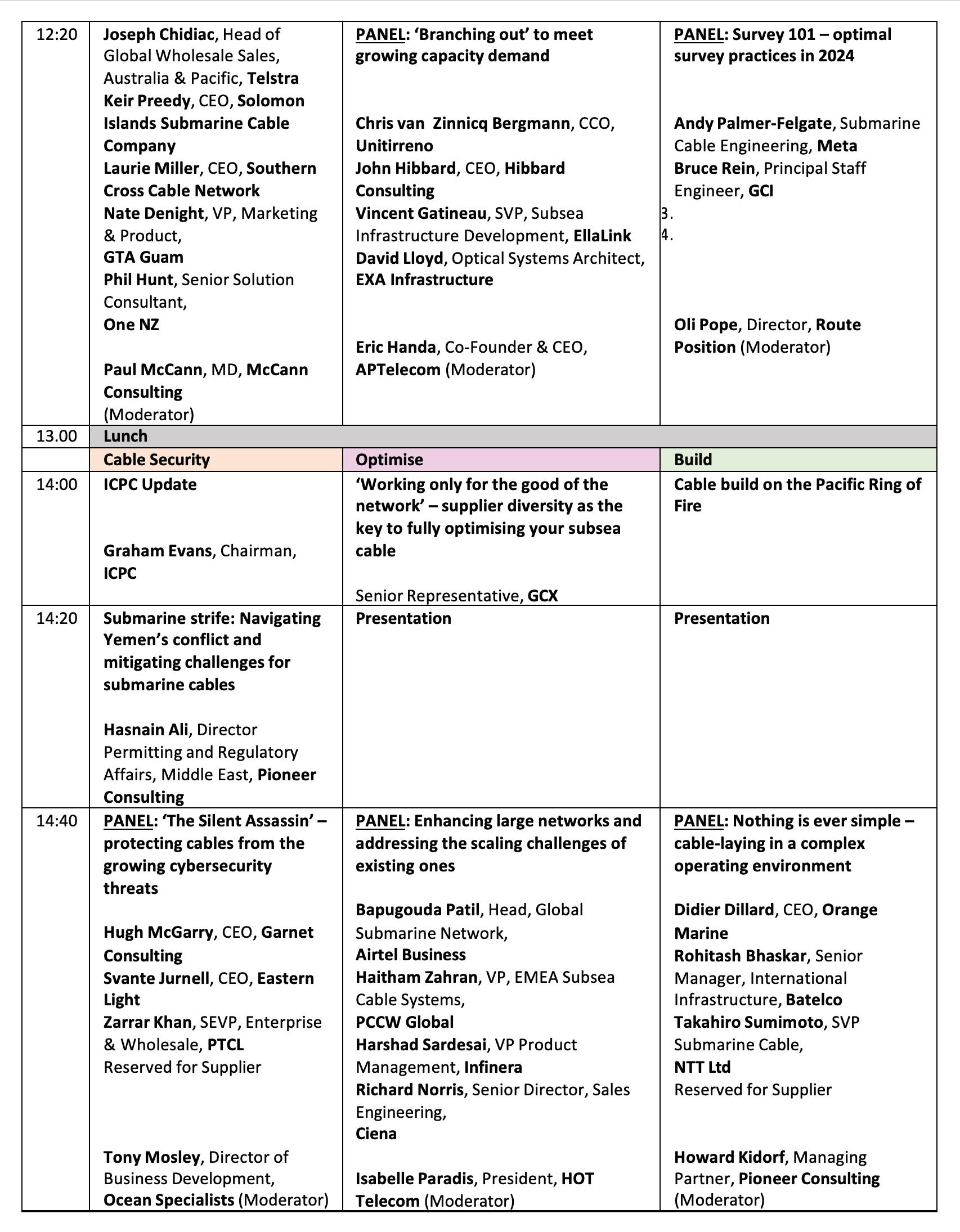
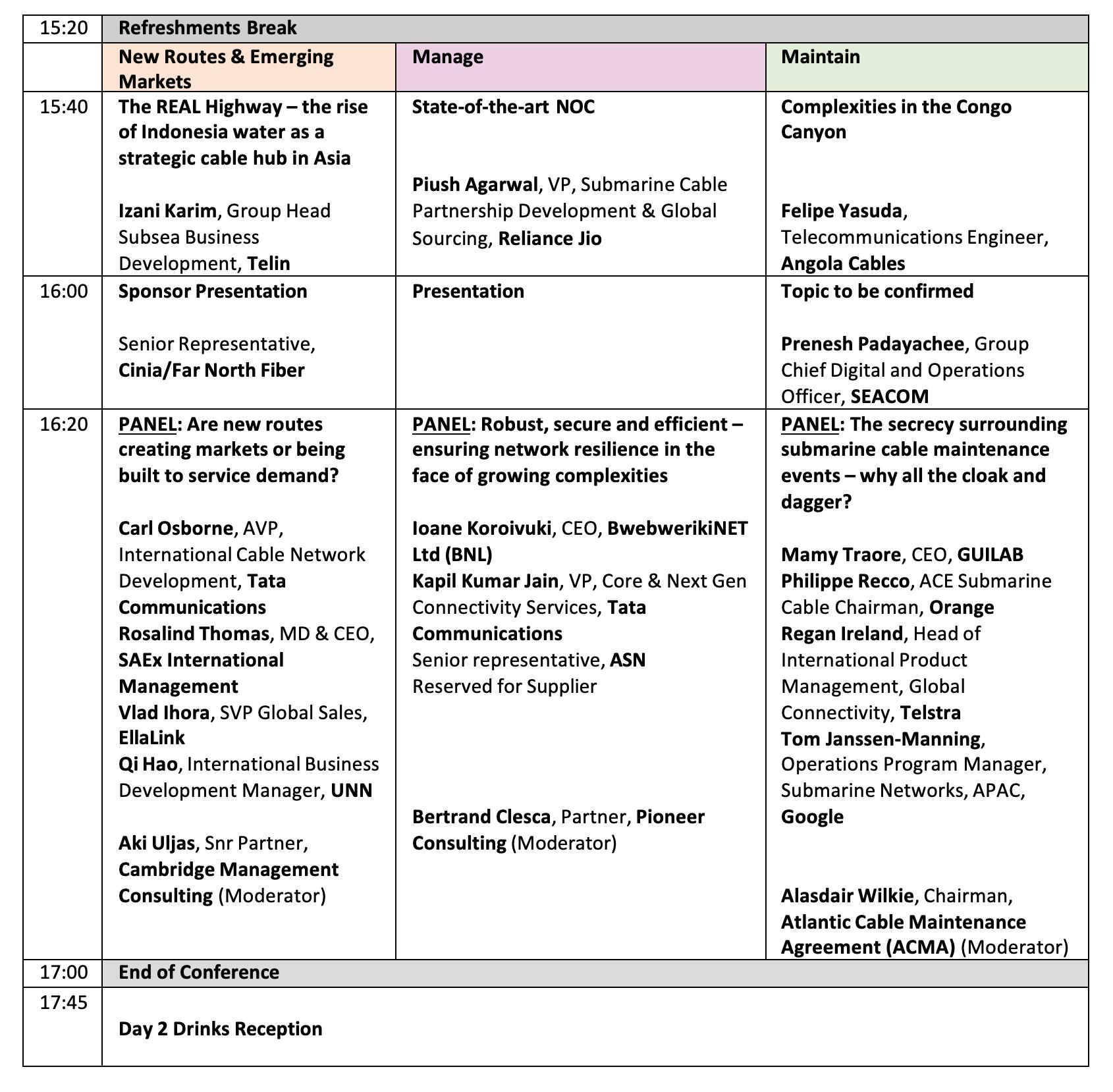
Talking Submarine Cable Industry With Submarine Network World’s General Manager / Agenda of SNW ’24 / WHY ATTEND SNW ‘24?

Highlighting their cost-effectiveness, unrepeatered submarine cables are crucial yet often overlooked for regional connectivity.
By Anders Ljung
Enhancing connectivity, TAM-1 aims to meet bandwidth demands and boost growth in Latin America and the Caribbean.
By Guy Arnos
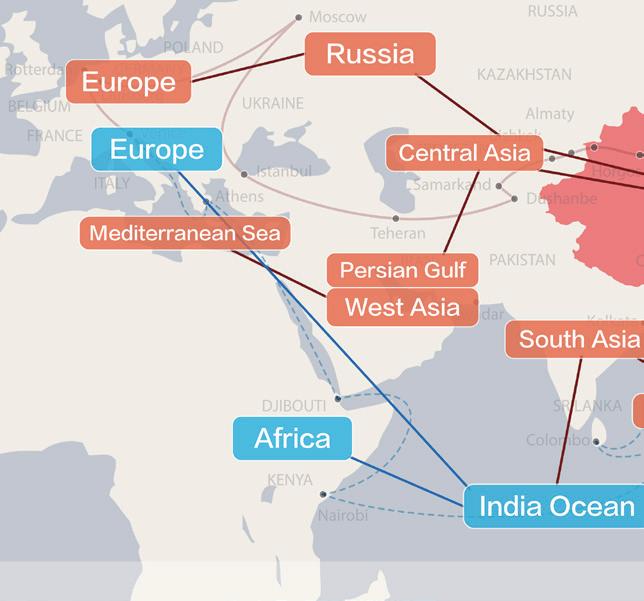
Emphasizing the need for diverse digital connectivity through route diversification to mitigate Red Sea subsea cable disruptions.
By Brendan Press
Addressing commercial challenges Pacific Island countries face for reliable, affordable submarine cable connections. By John Hibbard and Paul McCann

Extending submarine cables to Antarctica enhances connectivity for critical research despite harsh conditions.
By Saurabh Maral
Addressing key digital infrastructure issues, PTC’DC will discuss technological advancements, geopolitical impacts, and cybersecurity.
By Matt Reber

Stressing the critical role of effective onboarding in aligning efforts, managing expectations, and fostering communication for successful projects.
By Kristian Nielsen
2 EXORDIUM
Find out about advertising opportunities to connect with our specialized audience.
3 IMPRESSUM/MASTHEAD
Meet our team, from editors to designers, establishing our commitment to transparency.
6 SU BTELFORUM.COM
8 INTERACTIVE CAB LE MAP UPDATES
Get the latest on global submarine cable infrastructure from our interactive map.
10 SUSTAINABLE SUBSEA
Discover industry innovations for reducing environmental impact and protecting marine life.
14 WHERE IN THE WORLD ARE ALL THOSE PESKY CABLESHIPS?
Follow the missions of cableships crucial to undersea connectivity.
19 CAPACITY CONNECTION
Effects of the Emergence and Growth in Artificial Intelligence.
66 BACK REFLECTION
The Crash Of Pisces III (Sea Burial, Not Burial at Sea)
74 LEGAL & R EGULATORY MATTERS
How To Negotiate Agreements With the OTTs
80 ON THE MOVE
Track the career movements within the submarine telecom sector.
81 NEWS NOW
Stay updated with the latest developments in the submarine telecom world.
82 ANALYTICS
Regional Systems: A Snapshot of Where We Are and Where We Are Headed.
118 ADVERTISER CORNER
Find out about advertising opportunities to connect with our specialized audience.

The most popular articles, Q&As of 2019. Find out what you missed!
Welcome to an exclusive feature in our magazine, where we explore the captivating world of SubTelForum.com, a pivotal player in the submarine cable industry. This expedition takes us on a detailed journey through the myriad of resources and innovations that are key to understanding and connecting our world beneath the oceans.
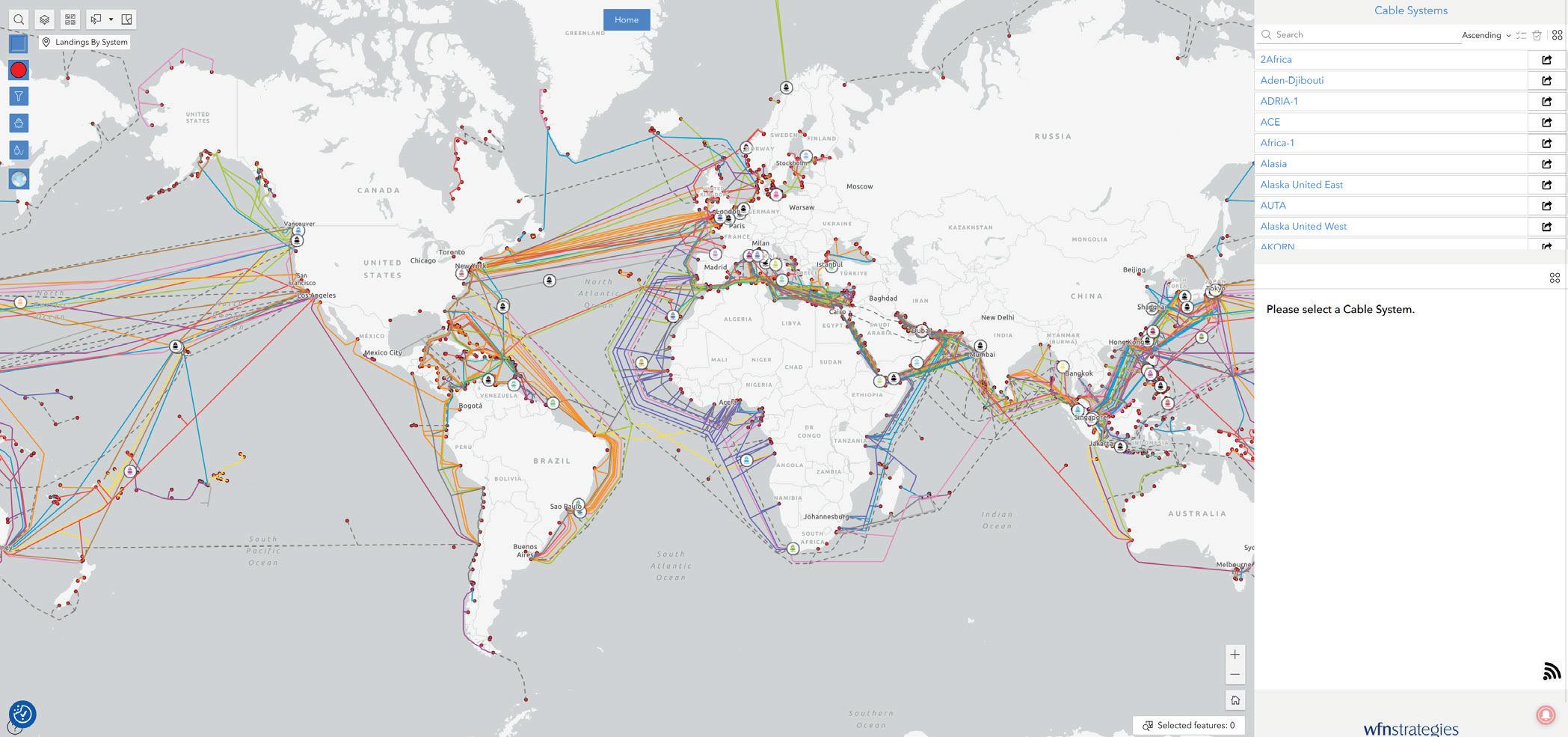
mapping efforts by the analysts at SubTel Forum Analytics, a division of Submarine Telecoms Forum. This reference tool gives details on cable systems including a system map, landing points, system capacity, length, RFS year and other valuable data.
CONNECTING THE DEPTHS: YOUR ESSENTIAL GUIDE TO THE SUBTEL FORUM DIRECTORY
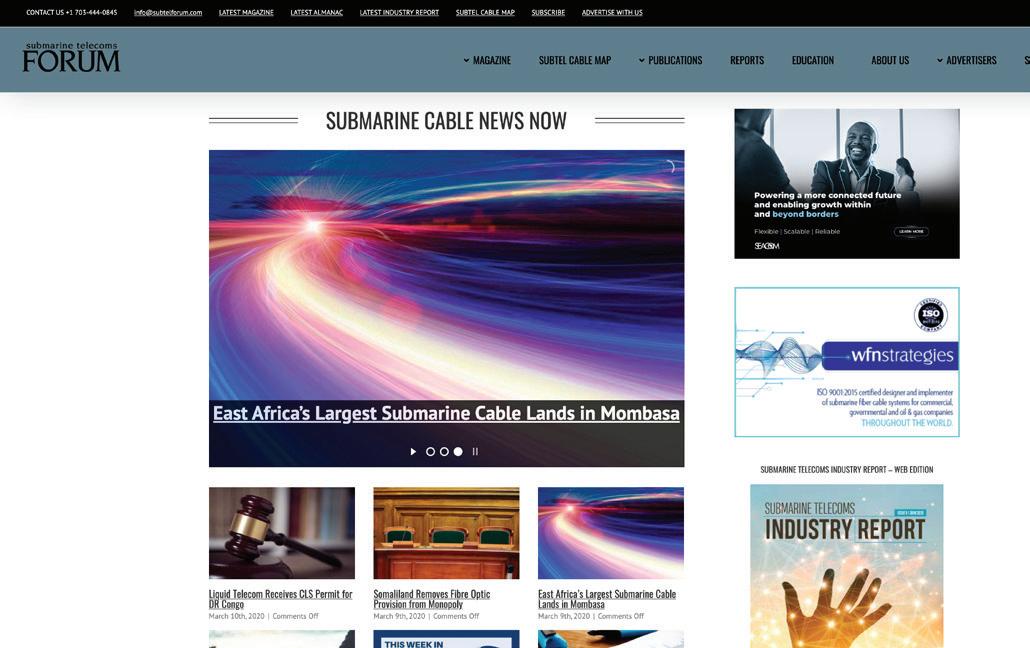
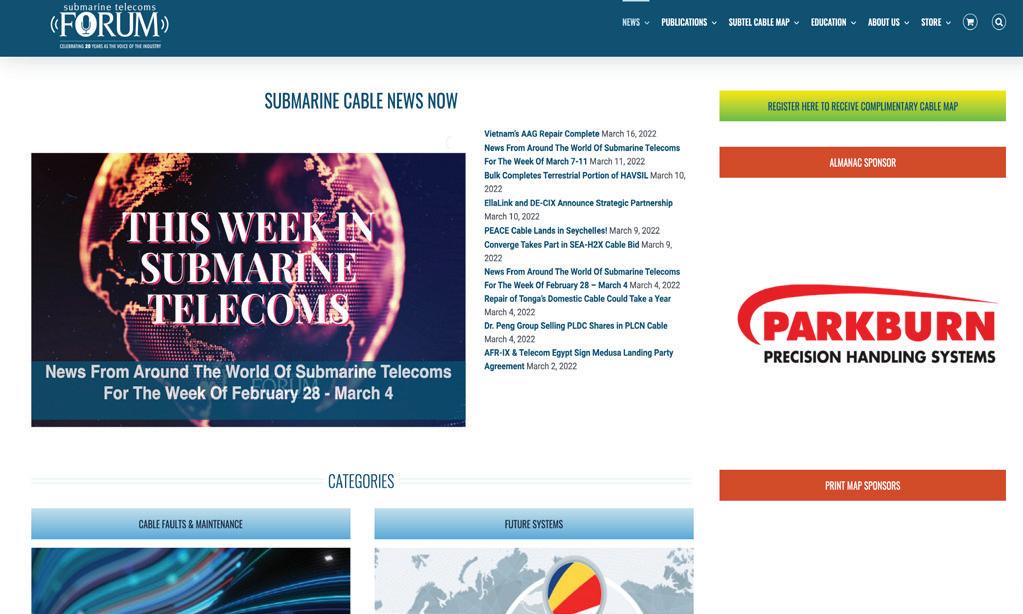
Keep on top of our world of coverage with our free News Now daily industry update. News Now is a daily RSS feed of news applicable to the submarine cable industry, highlighting Cable Faults & Maintenance, Conferences & Associations, Current Systems, Data Centers, Future Systems, Offshore Energy, State of the Industry and Technology & Upgrades.
Submarine Cable Almanac is a free quarterly publication made available through diligent data gathering and
Submarine Telecoms Industry Report is an annual free publication with analysis of data collected by the analysts of SubTel Forum Analytics, including system capacity analy sis, as well as the actual productivity and outlook of current and planned systems and the companies that service them.
In our guide to submarine cable resources, the SubTel Forum Directory shines as an essential tool, providing SubTel Forum.com readers with comprehensive access to an array of vetted industry contacts, services, and information. Designed for intuitive navigation, this expansive directory facilitates quick connections with leading vendors, offering detailed profiles and the latest in submarine cable innovations. As a dynamic hub for industry professionals, it fosters community engagement, ensuring our readers stay at the forefront of industry developments, free of charge.
2024 marks a groundbreaking era for SubTel Forum with the launch of its innovative app. This cutting-edge tool is revolutionizing access to submarine telecommunications insights, blending real-time updates, AI-driven analytics,
The online SubTel Cable Map is built with the industry standard Esri ArcGIS platform and linked to the SubTel Forum Submarine Cable Database. It tracks the progress of
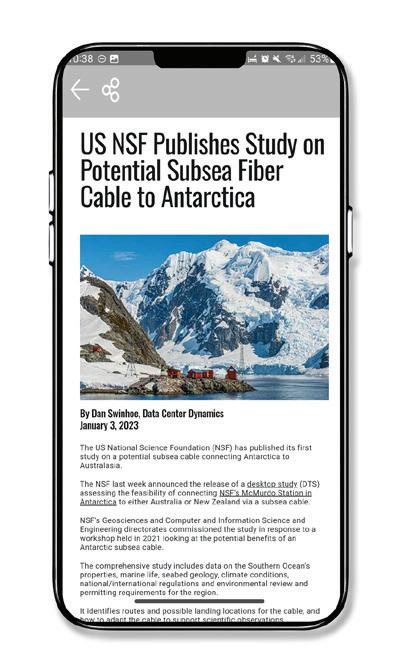
and a user-centric interface into an indispensable resource for industry professionals. More than just a technological advancement, this app is a platform fostering community, learning, and industry progression. We encourage you to download the SubTel Forum App and join a community at the forefront of undersea communications innovation.
Our journey begins with the News Now updates, providing daily insights into the submarine cable sector. Covering everything from the latest technical developments to significant industry milestones, this feed ensures you’re always informed about the latest trends and happenings. It’s an essential tool for professionals who need to stay on top of industry news.
Dive deeper into the world of submarine communications with our curated collection of articles and Q&As. These insightful pieces offer a comprehensive look at both the history and current state of the industry, enriching your understanding and providing a broader perspective on the challenges and triumphs faced by submarine cable professionals.
• Submarine Cable Almanac: This quarterly treasure trove provides detailed information on global cable systems. You can expect rich content including maps, data on system capacity, length, and other critical details that sketch a vivid picture of the global network.
• Submarine Telecoms Industry Report: Our annual report takes an analytical approach to the industry, covering everything from current trends to capacity analysis and future predictions. It’s an invaluable resource for anyone seeking to understand the market’s trajectory.
• Online SubTel Cable Map: An interactive tool mapping over 550 cable systems, perfect for digital natives who prefer an online method to explore global connections.
• Printed Cable Map: Our annual printed map caters to those who appreciate a tangible representation of the world’s submarine fiber systems, detailed in a visually appealing and informative format.
SubTel Forum’s commitment to education is evident in our courses and master classes, covering various aspects of the industry. Whether you’re a seasoned professional or new to the field, these learning opportunities are fantastic for deepening your understanding of both technical and commercial aspects of submarine telecoms.

SCAN THE QR CODE TO ACCESS ALL THE RESOURCES THAT SUBTELFORUM.COM HAS TO OFFER
Our Authors Index is a valuable tool for locating specific articles and authors. It simplifies the process of finding the information you need or following the work of your favorite contributors in the field.
• Data Center & OTT Providers Report: This report delves into the evolving relationship between cable landing stations and data centers, highlighting trends in efficiency and integration.
• Global Outlook Report: Offering a comprehensive analysis of the submarine telecoms market, this report includes regional overviews and market forecasts, providing a global perspective on the industry.
• Offshore Energy Report: Focusing on the submarine fiber industry’s oil & gas sector, this report examines market trends and technological advancements, offering insights into this specialized area.
• Regional Systems Report: This analysis of regional submarine cable markets discusses capacity demands, development strategies, and market dynamics, providing a detailed look at different global regions.
• Unrepeatered Systems Report: A thorough examination of unrepeatered cable systems, this report covers project timelines, costs, and operational aspects, essential for understanding this segment of the industry.
• Submarine Cable Dataset: An exhaustive resource detailing over 550 fiber optic cable systems, this dataset covers a wide range of operational data, making it a go-to reference for industry specifics.
SubTelForum.com stands as a comprehensive portal to the dynamic and intricate world of submarine cable communications. It brings together a diverse range of tools, insights, and resources, each designed to enhance understanding and engagement within this crucial industry. From the cutting-edge SubTel Forum App to in-depth reports and interactive maps, the platform caters to a wide audience, offering unique perspectives and valuable knowledge. Whether you’re a seasoned professional or new to the field, SubTelForum.com is an indispensable resource for anyone looking to deepen their understanding or stay updated in the field of submarine telecommunications.
BY KIERAN CLARK
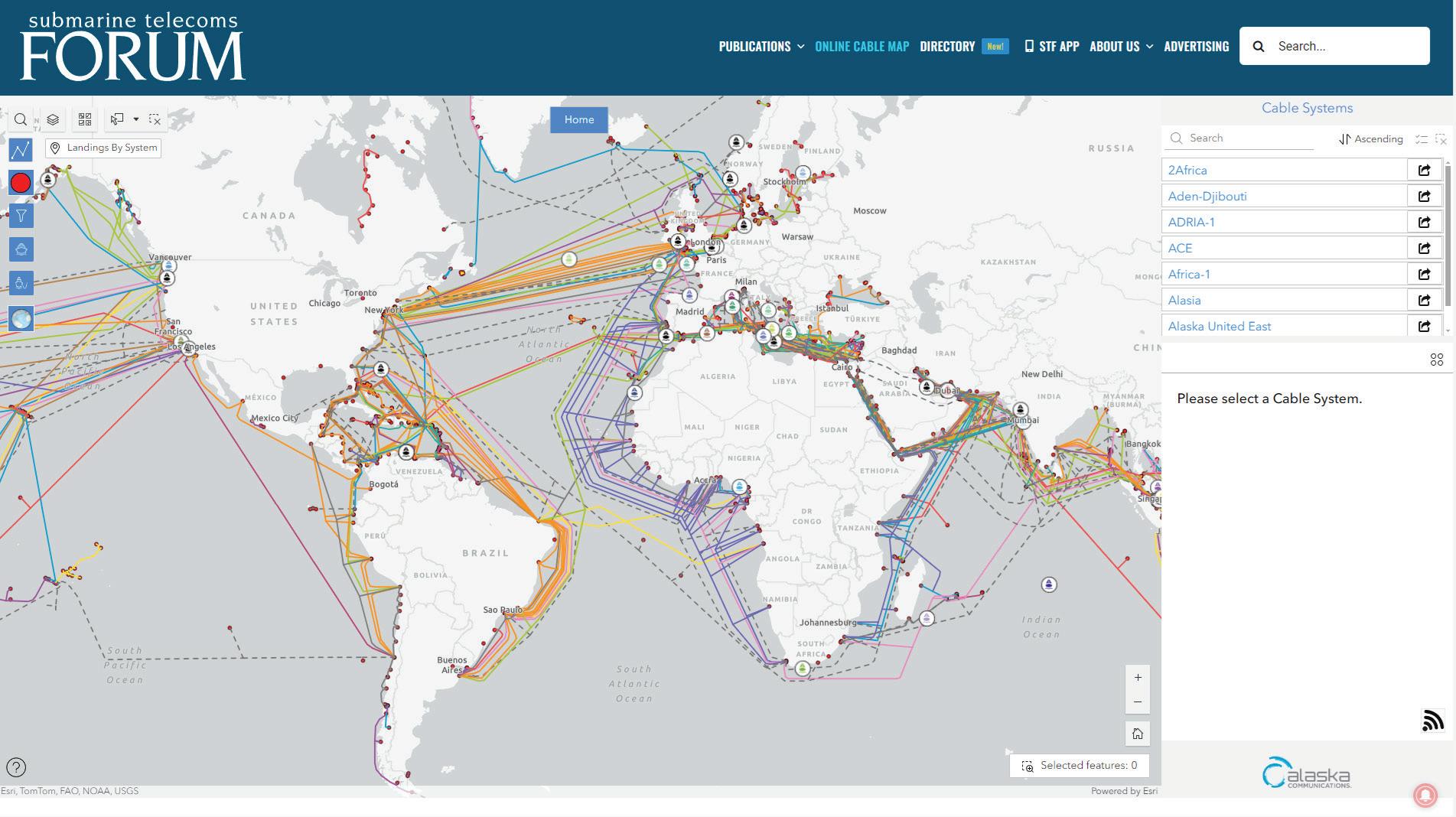
The SubTel Cable Map, built on the industry leading Esri ArcGIS platform, offers a dynamic and engaging way to explore over 440 current and planned cable systems, 50+ cable ships, and more than 1,000 landing points. This interactive tool is linked to the SubTel Forum Submarine Cable Database, providing users with a comprehensive view of the industry.
We are proud to highlight ACS Cable Systems, a leading provider of wholesale carrier services, as the official sponsor of the SubTel Cable Map. The ACS logo is prominently displayed on the map, serving as a direct link to their comprehensive offerings at Alaska Communications. This sponsorship underscores our mutual commitment to supporting the submarine telecommunications industry by providing critical infrastructure and connectivity solutions. ACS Cable Systems specializes in delivering high-quality, reliable services tailored to meet the needs of global carriers, enhancing the value they provide to their clients. This integration ensures that our users have instant access to a trusted partner renowned for their expertise in connectivity and customer service.
For more information about ACS Cable Systems and their services, please visit their website.
Submarine cables play a pivotal role in global communications, acting as the backbone of the internet. They are responsible for transmitting over 99% of all international data, connecting continents and enabling global connectivity. Without these underwater highways, the speed and efficiency of global internet communication that we enjoy today would not be possible.
The Esri ArcGIS platform, upon which the SubTel Cable Map is built, is a powerful geographic information system (GIS) for working with maps and geographic information. It is used for creating and using maps, compiling geographic data, analyzing mapped information, sharing and discovering geographic information, and using maps and geographic information in a range of applications. Its
robust capabilities make it an ideal platform for the SubTel Cable Map, allowing for dynamic, interactive exploration of complex data.
With systems connected to SubTel Forum’s News Now Feed, users can easily view current and archived news details related to each system. This interactive map is an ongoing effort, updated frequently with valuable data collected by SubTel Forum analysts and insightful feedback from our users. Our aim is to provide not only data from the Submarine Cable Almanac, but also to incorporate additional layers of system information for a comprehensive view of the industry.
We encourage you to explore the SubTel Cable Map to deepen your understanding of the industry and to educate others on the critical role that submarine cable systems play in global communications. All submarine cable data for the Online Cable Map is sourced from the public domain, and we’re committed to keeping the information as current as possible. If you are the point of contact for a company or system that needs updating, please don’t hesitate to reach out to kclark@subtelforum.com
We hope the SubTel Cable Map serves as a valuable resource to you and invites you to dive into the ever-evolving world of submarine cable systems. We invite you to
start your exploration today and see firsthand the intricate network that powers our global communications. Happy exploring! STF

KIERAN CLARK is the Lead Analyst for SubTel Forum. He originally joined SubTel Forum in 2013 as a Broadcast Technician to provide support for live event video streaming. He has 6+ years of live production experience and has worked alongside some of the premier organizations in video web streaming. In 2014, Kieran was promoted to Analyst and is currently responsible for the research and maintenance that supports the Submarine Cable Database. In 2016, he was promoted to Lead Analyst and his analysis is featured in almost the entire array of Subtel Forum Publications.
Do you have further questions on this topic?
Below is the full list of systems added and updated since the last issue of the magazine:
JULY 15, 2024
SYSTEMS ADDED:
• Halaihai
• Honomoana
• North Pacific Connect Interlink
• Proa
• South Pacific Connect Interlink
• Tabua
• Umoja
SYSTEMS UPDATED:
• Asia-America Gateway
• Bangladesh to Myanmar
• Barat Timur Indonesia
• Central Pacific Cable
• Chile Antarctica
• Hawaiian Islands Fiber Link
• Japan-Guam-Australia South
• Nuvem
• Trans Americas Fiber System
BY ISABELLE CHERRY
In the first of a new Sustainable Subsea interview series, undergraduate UC Berkeley Environmental Policy and Management student Isabelle Cherry interviews Alwyn du Plessis of Mertech Marine about his experience in cable recovery and recycling.
This series will feature interviews of subsea cable leaders and experts conducted by students and young professionals. These interviews offer a view for the next generation of the challenges and opportunities of working in the cable industry, especially while keeping sustainability in mind.
Since recovery and recycling of subsea cables contributes to the circular economy and enhances sustainability, we begin with this emerging area.
In the following dialogue, Alwyn du Plessis recounts the challenges and memorable experiences of his time at Mertech Marine, and comments on the significance of recognizing sustainability in his career. The conversation offers insights into the continued difficulty of working on the ocean despite all technological advancements, the need to stay agile and adaptive, and the ongoing importance of collaboration.
What are some of the biggest challenges in subsea cable recovery and recycling that you have encountered over the course of your career?
The entire journey was actually quite challenging. When we started off, we were really pioneering the commercial recovery and recycling of subsea cables. Everything we did was new, and there were not really any people we could go and ask. It took quite a lot of time and capital investment.
One of the challenges that does stand out is working in the high seas, which is quite difficult by itself. In this industry, there are more things that are out of your control than in your control. You’ve got the sea that you have to contend with. You’ve got weather, you’ve got specific weather windows. You don’t know whether the cable is actually still there. There might have been an earthquake or a landslide or sand migration. All sorts of things could have happened. And you might not find the cable. Some of the older cables that we recovered, there was very little information around for those cables. We didn’t know exactly what the makeup of the cable was from a value point of view, exactly what the water depths were, or the exact lay positions.
Commodity pricing can also vary. You may be pursuing a cable for years and then by the time you get it, the commodity prices might be completely different from when you started off on that journey.
The industry has moved quite a lot from where initially recovery and
recycling wasn’t something anybody thought about. Today, a lot of companies are thinking about recycling and they see it as an opportunity. But in the beginning, you really had to twist people’s arms to get them to agree.
Yes, that definitely sounds like significant uncertainty and a lot of figuring out things on the fly. That leads to my next question: is there a particularly memorable project that you could share with us?
It’s difficult to just identify one specific project. I think the ones that stand out for me are the recovery of the TAT-1 cable, which ran from Canada to the UK. This was the first submarine telephone cable laid across the Atlantic, although there were obviously telegraph cables before that. It was the first telephone cable ever recovered. Some of the equipment in that system was really quite high-tech at the time. Obviously, it was laid in around 1961, so by the time we recovered it in 2016, it was quite outdated. But the technology that was in there was really quite cutting-edge back in the 1960s.
Then there’s China-US, for which we did a turnkey decommissioning. This was actually the first turnkey, let’s call it a “mega-decommissioning” of a cable system, where the cable owners engaged with us even before
the cable system was switched off. We started planning with them how we were going to recover the shore ends (which needed to be recovered from a regulatory point of view) and to clear out the cable depots of spare cables. I think there was something like four and a half thousand tonnes of spare cable in the depots. And then, the recovery of the deep water sections running from China to the US, that was a memorable one. I always say that I went to the University of Decommissioning at the University of China-US. We learned a lot of expensive lessons in that project.
Another project, which isn’t necessarily a cable, but we recently launched a new vessel. She’s currently busy with a maiden voyage. We’re really excited to get that going. That was a big milestone for us. We have a remote processing facility in the Philippines, which has been running for the past 18 months or so, which is also very exciting. There have been lots of new things that we’ve learned in the process.
I would say something which for me really propelled my own enthusiasm for where we are going is when we got some external people in to help us analyze our carbon footprint. We looked at the various scope one, scope two, and scope three emissions to ask the question: is what we’re doing, is it really good? What is the net impact of what we’re doing? It was satisfying to actually see that the numbers do add up and that by recovering and recycling these cables from a carbon point of view, it does actually add a lot of benefit overall.
ISABELLE:
Looking to the future, are there any upcoming technologies or trends that you’re particularly excited about?
I wouldn’t say that there are trends. It’s not like we’re a mainstream business. Most of the R&D that we have is done by us. We obviously try to see whether there are clever technologies that we can borrow from other industries or from our peers in the cable laying and cable maintenance industries. We are working on some exciting technology internally on the R&D side, but I can’t really tell you what that is, but within the next year, I think we will be deploying some new technology that we’ve been developing that we think might make a big difference.
I think for us, the main thing is really about staying agile and to make sure that we can adopt solutions and adapt to changing circumstances really quickly. The way cables are laid and recovered is still done very much the way it was done many years ago. I think part of it is just the challenges of working at these depths, there’s not much that you can do to change that.
Yes, it seems like this is an interesting environment in terms of how you have to research and develop internally and yet also work with other industries. I’m curious, was there ever a point where you met a major supply chain challenge and how did you address it?
ALWYN:
Shortly after COVID, there was a massive increase in freight rates, especially from Asia. That really took us by surprise. It was really sudden and it was really sharp. I mean, the increase of the freight cost of moving our material to our processing facility was significant, not just double or triple. It was
more than that. That’s actually how our Philippines operation was born. Our remote processing facility is a backup site to be able to have a failover solution in case transport rates go completely out of sync. You’ve got a facility where you can recycle at least for a temporary period, you can process some cable there and keep the business going. That lasted for a couple of years, but we managed to actually field that one well by being agile and dealing with it in a practical way.
That sounds difficult, but amazing that you were able to set up a new facility and be able to expand your operations to have that resiliency. Shifting gears a little, what do you think the most significant regulatory issues are that impact your operations?
ALWYN:
I think the most significant ones are the most recent ones, the ones from the BBNJ (Biodiversity Beyond National Jurisdiction). It is still very uncertain exactly how this regulation is going to be implemented and managed. Nobody really knows exactly what’s going to happen there. In our business, your logistics have to be extremely sharp. You can’t have vessels lying around idling. You really need to work constantly, continuously. If we get significant delays because of further regulations in international waters, which is more in line with what you get in territorial waters, that will definitely have a significant impact on our business. At this stage, we don’t know exactly what those impacts are going to be. We’re really waiting with bated breath to see what the outcome is going to be.
It also goes hand in hand with ma-
rine protected areas and how different jurisdictions will be dealing with those. Then there’s obviously deep sea mining, which is becoming more and more active. So just the contestation of the use of the seabed over time will become more and more difficult to manage. It’s not a regulatory issue as such, but I think regulation will probably be a solution to solving some of those challenges.
ISABELLE:
Given that there’s a lot of people trying to use the same seabed areas, what have been some of your most significant partnerships?
ALWYN:
If you ask me about the most significant partnerships in our business, then that’s certainly our marine operations team based in the Netherlands, where we’ve got a very strong team in the Netherlands, where we’ve got a partial joint venture with wind in the Netherlands. They’ve been a really good partner to us from a regulatory point of view. We’ve worked with various consultants and specialists around the globe, whether it’s Brazil or Spain or the US, where you need skills around making sure that from a regulatory point of view, your vessels are up to standard, you have the necessary permits and approvals before you start doing work. The partnerships are a really important part of our business.
ISABELLE:
That’s great that you really get to connect with people and work together on making sure that everything flows smoothly. As a student, it has been amazing to hear more
about your experience in the industry and the fact that your work increases sustainability. What advice would you give to younger people who may be interested in learning more about cables and recycling?
If you say cables, specifically submarine telecommunication cables, what is really important is to realize that it’s really quite tough. You need a bit of tenacity if you want to get into the industry. It’s very unknown. Sometimes you might think a lack of regulation might be a benefit, but often it’s also a challenge because your business can fall in between the cracks of where regulations are helping to facilitate business. If you come up to a country or a regulator or an authority and you explain something you’re doing which is unknown to most people, it’s sometimes difficult to do your work. Awareness, creating awareness of what you’re doing is an important part of promoting the business. Otherwise, you really struggle because of a lack of awareness and people not really understanding what you’re trying to achieve and not knowing exactly how a government or authority can actually support your business.
I think another thing which is really important is you cannot look at our work on subsea cables in isolation. This is part of a bigger universe of recycling, of the use of the seabed, of being responsible, of looking at sustainability. It’s really a wide field, so you should not have blinders on. You should really be looking. There’s geopolitical issues to keep in consideration. There’s extreme weather considerations. You’ve got to be a gen-
eralist, but you can’t be too shallow. You need to have a really wide and a medium level of understanding.
Ultimately, I think the big thing for me is teamwork. We’ve partnered with some really good people around the globe. If you can work in a team, then whether it’s recycling or something else, I think that’s really the key to success: having a good team that you can trust.
Thank you. Some wise words, and especially since as I’m learning more about it, I’m seeing that the cable industry is really interconnected. Everyone’s connected.
This series is brought to you by the Sustainable Subsea Networks initiative of the SubOptic Foundation, established early in 2021 as the charitable arm of the SubOptic Association. The SubOptic Foundation focuses its efforts on education & research. The Foundation’s educational programs are designed to support the development of the future subsea workforce. The Foundation’s research programs are centered in areas where broad research and cooperative data-sharing benefit the industry as a whole, including sustainability and resilience. STF

ISABELLE CHERRY is an undergraduate student pursuing a B.S. degree in Environmental Policy and Management at the University of California, Berkeley. She is also a research assistant on the SubOptic Foundation’s Sustainable Subsea Networks research team. Her research explores sustainability metrics relating to the global manufacturing, deployment, and disposal of subsea telecommunications cables with a particular focus on how regulations impact cable recycling efforts.
















BY SYEDA HUMERA
INTRODUCTION:
In today’s data-driven world, the maritime sector stands to gain significantly from advanced analytical insights. Managing the vast expanse of the oceans, our role in maintaining global commerce through innovative and efficient maritime operations is crucial. This month’s report delves into the extensive data from the Automatic Identification System (AIS), providing detailed insights into ship movements, traffic patterns, and navigational trends. Key technological advancements and significant geopolitical changes impacting maritime logistics are highlighted in our analysis.
The primary goal of this report is to transform AIS data from mere numbers into a strategic asset. Our redesigned Power BI visuals offer stakeholders a dynamic, interactive dashboard. This includes real-time positional mapping and advanced predictive analytics to forecast potential maritime congestion and collision zones. Each visual not only enhances understanding but also empowers decision-makers with actionable insights for optimal route planning, fleet management, and optimized maritime operations.
Embracing the technological frontier, we also explore the integration of autonomous vessels and the use of digital twin technologies in maritime logistics. These advancements promise to reshape operational practices, improving efficiency and reducing the reliance on large human crews. By incorporating these cutting-edge technologies, the
maritime sector can enhance its operational efficiency and adaptability to changing conditions.
Additionally, the submarine telecommunications network plays a vital role in global connectivity. These extensive channels form the backbone of our digital communications, making them essential infrastructure in the digital age. Our report examines the interplay of innovation, demand, and strategic planning that shapes the submarine telecommunications landscape.
Our visuals map the intricate web of submarine cables on the ocean floor, updated to reflect the connectivity grid of 2024. This mapping includes the latest cable deploy-
ments with advanced materials for increased durability and data transmission capabilities. We highlight the use of AI-driven routing technologies that optimize signal integrity across vast distances, dynamically responding to underwater conditions and global data demands.
The industry’s timeline, enriched with the most recent data, chronicles key advancements over the past year. We emphasize the deployment of ultra-low-loss fiber optics, significantly expanding bandwidth capacities to meet the growing global demand for faster and more reliable internet connections. Additionally, our visuals capture the emergence of environmentally sensitive cable-laying techniques that minimize the ecological impact on marine ecosystems, reflecting the industry’s shift towards sustainability.
dynamics. This report explores the factors that shape vessel velocities and influence maritime telecommunications.
Through these enhanced Power BI visuals, stakeholders gain a comprehensive understanding of the technological progress and evolution of a network that supports the communication capabilities of nations and enterprises. These updates demonstrate a commitment to environmental stewardship and innovation, illustrating how recent advancements influence both the current state and future trajectory of global communications infrastructure.
By integrating these elements, our report provides a holistic view of the maritime and digital navigation sectors, offering valuable insights into their ongoing transformation. Stakeholders can leverage this information to make informed decisions, ensuring that maritime operations and global communications continue to advance efficiently and sustainably.
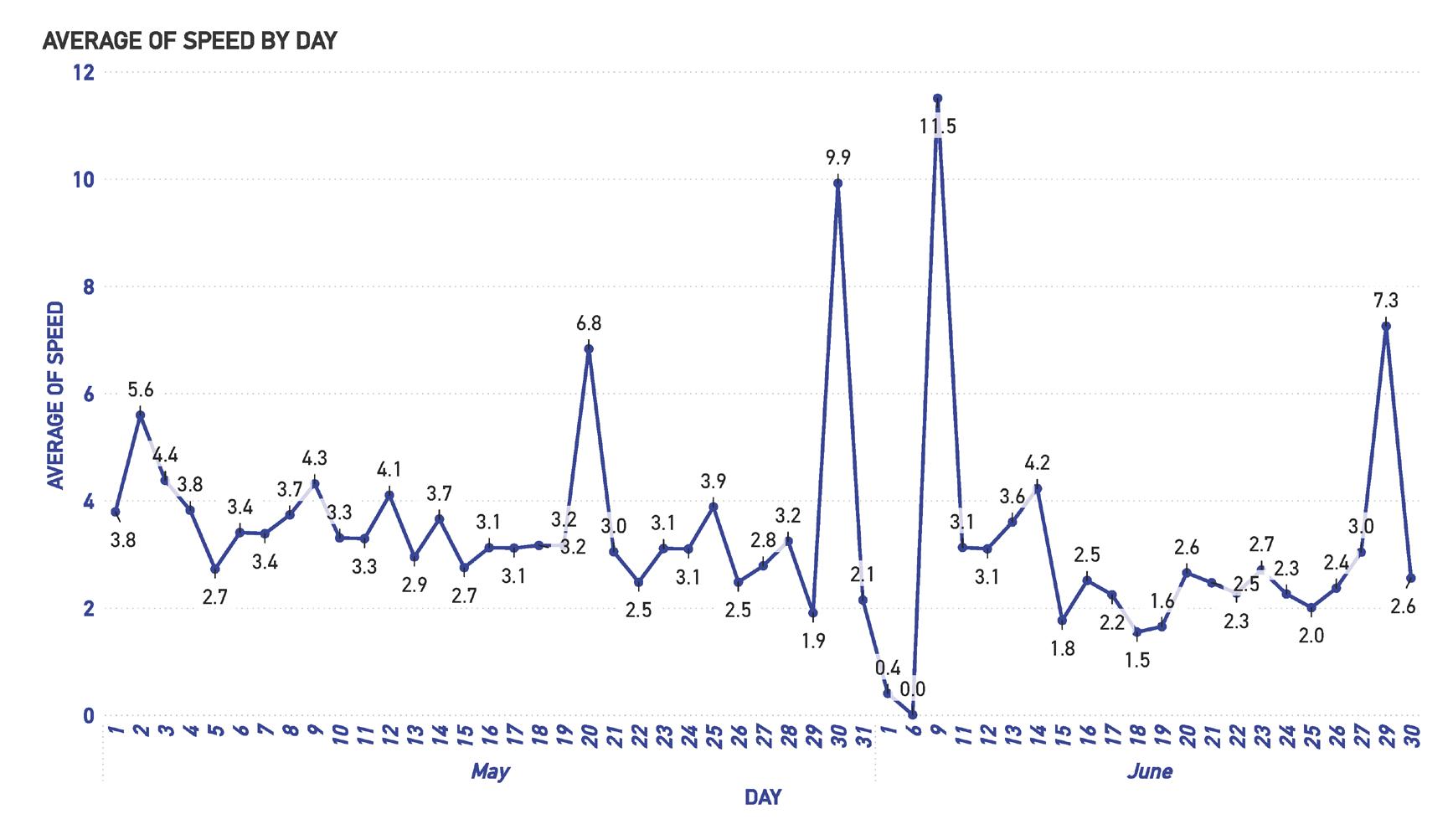
In the maritime industry, data is crucial for global trade and communication. Analyzing vessel speeds offers essential insights into sea traffic dynamics. Building on our previous analysis from last issue, we now focus on June 9, which accounts for 8.54% of the total AIS speeds. This makes it a significant point for detailed examination of its significance and the factors influencing this statistic.
The impact of June 9 on speed metrics goes beyond mere statistics; it reflects evolving trends and operational
The 8.54% contribution on June 9 is multifaceted. Various potential drivers include shifting environmental conditions, seasonal adjustments, and strategic vessel deployments in response to market demands or geopolitical developments. Each percentage point represents a snapshot of the operational environment, depicting maritime mobility.
In examining this data, we aim to determine whether this increase is an outlier or part of a predictable pattern. Does this surge align with specific routes or regions? Is it indicative of advancements in navigation systems or propulsion efficiency? Or does it correspond with increased economic activities mid-year?
The average speed on June 9 impacts operational protocols and strategic decision-making in maritime enterprises. This includes scheduling, fuel consumption, port operations, and supply chain logistics. Understanding the implications of this speed surge allows stakeholders to anticipate similar trends, allocate resources more efficiently, and refine route planning strategies.
Situating June 9 within the broader operational landscape of the year, this analysis benchmarks the increase and sets a precedent for predictive analytics in maritime operations. The data from this day serves as a benchmark for comparative analysis, gauging the industry’s performance and efficiency.
Environmental conditions significantly influence vessel speeds. Seasonal changes, such as weather patterns and sea
states, impact navigational conditions. Calmer seas may allow for higher speeds, while rougher conditions necessitate slower navigation. Understanding these patterns helps in forecasting and preparing for seasonal variations.
Geopolitical developments also influence vessel speeds and maritime traffic. Strategic vessel deployments respond to geopolitical tensions or economic sanctions, affecting ship movements and speeds in specific regions. Increased military presence or trade embargoes can lead to rerouting and adjustments in speed for safe navigation through sensitive areas. Monitoring these developments provides valuable context for analyzing speed variations.
Economic activities drive changes in vessel speeds. As global trade fluctuates, the demand for shipping services changes. Mid-year, particularly around June, often sees an uptick in commercial activities. This surge can lead to increased vessel speeds as shipping companies meet delivery schedules and capitalize on market opportunities. Analyzing these economic indicators alongside speed data offers a comprehensive view of the industry’s performance.
Advancements in technology, including improvements in propulsion systems and navigation tools, contribute to variations in vessel speeds. Innovations enhance the efficiency and capability of modern ships, allowing them to travel faster and more safely. The adoption of more efficient engines or advanced route optimization software can result in noticeable changes in average speeds. Tracking technological trends and their adoption rates within the industry is essential for understanding speed metrics.
By analyzing June 9 within the broader operational context, we provide stakeholders with a comprehensive understanding of the factors driving changes in vessel speeds. This detailed examination of environmental, geopolitical, economic, and technological influences offers a holistic view of maritime operations. As the report progresses, we will continue to explore these themes, providing deeper insights and actionable intelligence to support strategic decision-making in the maritime industry.
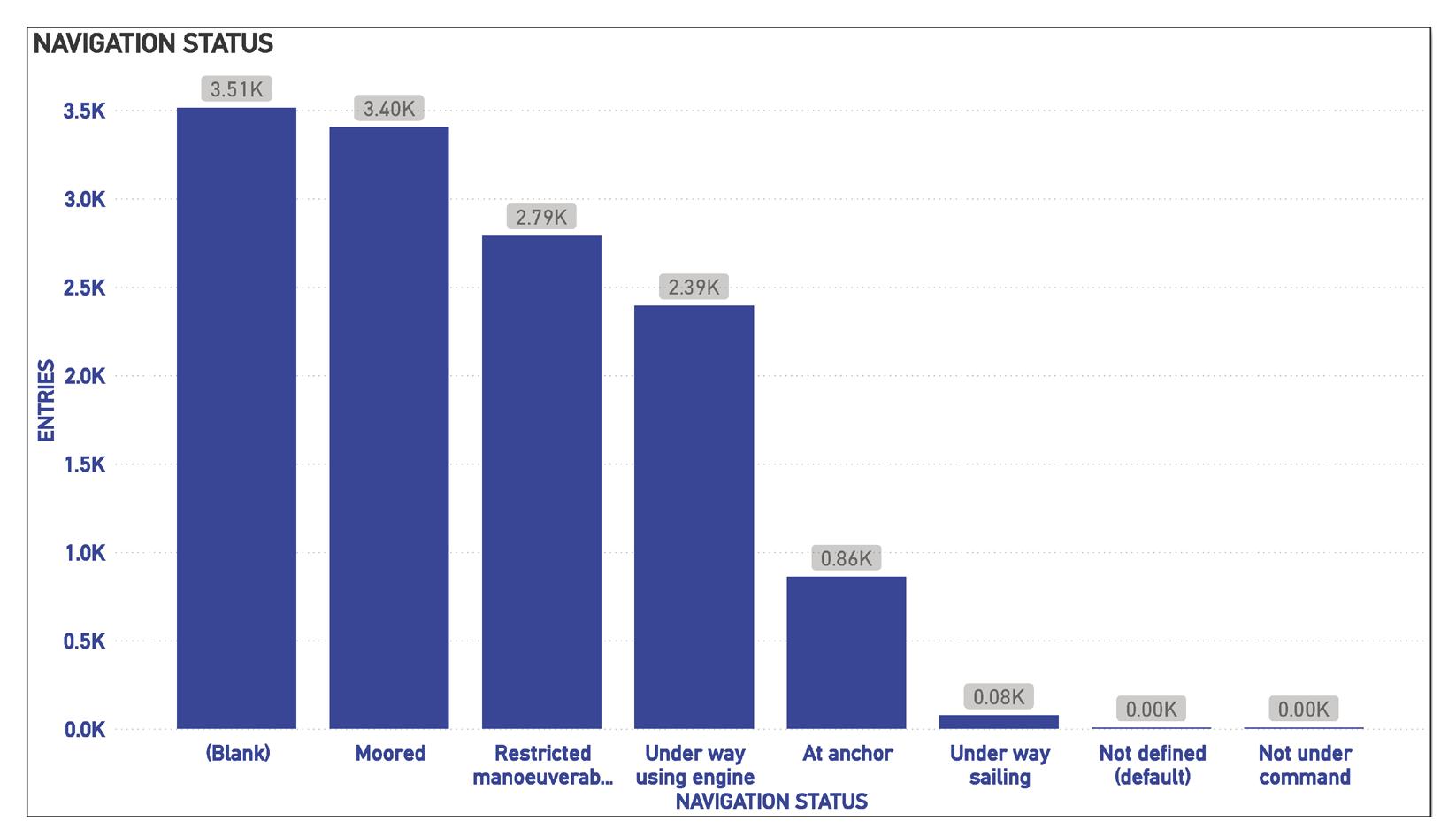
In our latest analysis, the “Underway Using Engine” status emerges with prominence, recorded at 3,512 instances. This figure represents the multitude of vessels actively navigating the world’s oceans. “Underway Using Engine” involves coordinated efforts in crew operations, cargo transport, and essential navigation, playing a crucial role in facilitating the seamless flow of global trade.
In stark contrast, the status “Not Under Command” has a solitary count of 1. This status signals a vessel’s compromised maneuverability, highlighting the unpredictability and inherent risks of maritime journeys. Although minimal statistically, this outlier underscores the moments when even the largest ships are at the mercy of nature’s forces.
The “Underway Using Engine” status, with its 3,512 counts, is 351,100.00% higher than the “Not Under Command” status. This vast disparity highlights the operational diversity within the maritime sector, from serene harbors to vessels powering through open waters. “Underway Using Engine” accounts for 26.94% of the total count, affirming its pivotal role in maritime operations.
The range in status counts—from 3,512 for “Underway Using Engine” to 1 for “Not Under Command”—encapsulates the full breadth of maritime activity. This variation is influenced by factors such as environmental conditions, regulatory frameworks, and the demands of global logistics. By analyzing these data points, we gain a comprehensive understanding of maritime operations.
AIS data provides a detailed picture of the maritime sector’s operational dynamics. “Underway Using Engine”
status represents vessels in active transit, reflecting the continuous movement essential for global trade. In contrast, the “Not Under Command” status emphasizes the need for robust safety measures and preparedness for unforeseen events.
This analysis shows the strategic, operational, and logistical elements that form the complex fabric of international maritime travel. With these insights, AIS data acts as a guide, steering the maritime industry towards increased safety, efficiency, and environmental responsibility. It underscores the importance of understanding our current position and future trajectory, charting a course for maritime navigation that is both informed and ambitious.
The exploration of maritime data is a continuous journey, highlighting the robustness and adaptability of this essential industry. Each data point and trend represents resilience, chronicling the strategic ingenuity that propels the global fleet. This analysis provides valuable insights into the operational landscape, enabling better decision-making and strategic planning in the maritime sector. By understanding the various navigational statuses and their implications, stakeholders can enhance operational protocols, improve safety measures, and optimize resource allocation.
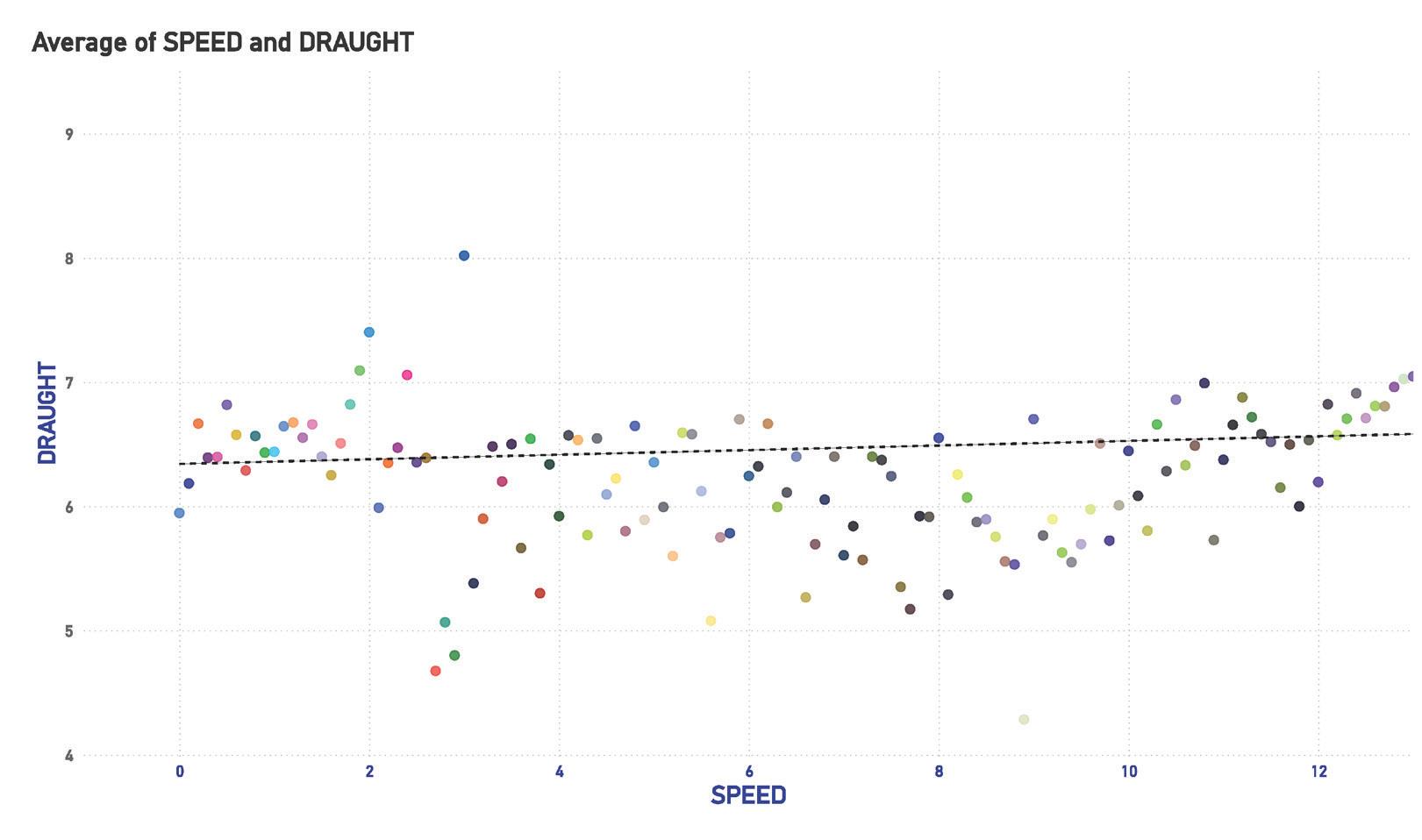
In the complex realm of global maritime operations, vessel capabilities are intricately captured by the Automated Identification System (AIS). Our analysis focuses on the critical relationship between two key attributes: speed and draught. This year, we examine POLARIS 3 and ASEAN RESTORER, two vessels that exemplify exceptional performance in these domains, setting new standards in maritime operations.
POLARIS 3: The POLARIS 3 has redefined maritime speed, recording an average AIS speed of 102.30. This high velocity underscores its capability to navigate vast oceanic expanses efficiently, positioning it as a leader in operational efficiency and technological advancement in ship engineering. On our scatter plot, POLARIS 3’s data points reach the highest levels of speed, illustrating its dominant stance in maritime navigation.
ASEAN RESTORER: The ASEAN RESTORER is notable for its significant draught, commanding the highest average AIS draught of 9.50. This substantial draught indicates its ability to navigate various marine environments while bearing heavy loads. It highlights the vessel’s role in global logistics and trade, crucial for heavy cargo operations. On the scatter plot, ASEAN RESTORER’s data points cluster at the upper extremes of the draught spectrum, marking it as a key player in heavy load capacity.
Our dynamic scatter plot analysis highlights the interactions between speed and draught, unearthing potential correlations or distinctive patterns that define the operational profiles of POLARIS 3 and ASEAN RESTORER. Notably, the analysis reveals that POLARIS 3’s average speed of 102.30 is significantly higher than the lowest recorded average speed of 0, showcasing its remarkable speed capabilities. Additionally, the data indicates a negative correlation between average speed and average draught, suggesting that as one increases, the other tends to decrease. This highlights the trade-offs in vessel design and operational strategies.
The divergence between average speed and average draught is most pronounced when the speed was 102.20, with the average speed being 96.59 higher than the average draught. This significant divergence underscores the distinct operational profiles of vessels optimized for speed versus those designed for carrying heavy loads. Across all 160 recorded speeds, the average speed ranged from 0 to 102.30, and the average draught ranged from
4.28 to 9.50. This spectrum highlights the diversity of vessel operations and various design philosophies to meet different maritime needs.
Identifying outliers within this data is particularly revealing, offering insights into extraordinary operational capabilities or groundbreaking navigational strategies. These statistical deviations are explored not as anomalies but as insights into innovative practices that could redefine industry standards or highlight areas for potential technological advancements.
This deeper exploration into speed and draught attributes, focusing on POLARIS 3 and ASEAN RESTORER, sheds light on the navigational dynamics that characterize the maritime industry. By mapping these attributes on an advanced scatter plot, we enhance our understanding of the interplay between speed and draught in maritime operations.
Through this analysis, we gain valuable perspectives that aid in optimizing vessel performance and operational efficiency. This comprehensive view educates and inspires strategic thinking and operational improvements among maritime industry stakeholders.
Understanding the distribution of vessel types through AIS data is critical for numerous stakeholders within the
maritime industry, including regulatory bodies, shipping companies, and maritime safety organizations. The AIS. TYPE classification serves as a key indicator of the composition of the maritime fleet, offering insights into shipping trends, operational priorities, and potential areas for policy development.
The focused analysis reveals a distinct pattern of distribution across different AIS.TYPE categories within the dataset. This examination highlights the predominance of specific vessel types, shedding light on the current dynamics of maritime operations.
Highest Count Observed: The dataset shows that the “Other Type, all ships of this type” category recorded the highest count with 4,526 instances. This figure significantly surpasses the counts of other vessel types, marking it as the most prevalent within the maritime data analyzed.
Percentage Share: The “Other Type, all ships of this type” accounted for 34.70% of the total AIS.TYPE count observed in the dataset. This substantial proportion underscores the central role of this vessel type in maritime operations, suggesting widespread application and critical importance in the industry’s ecosystem.
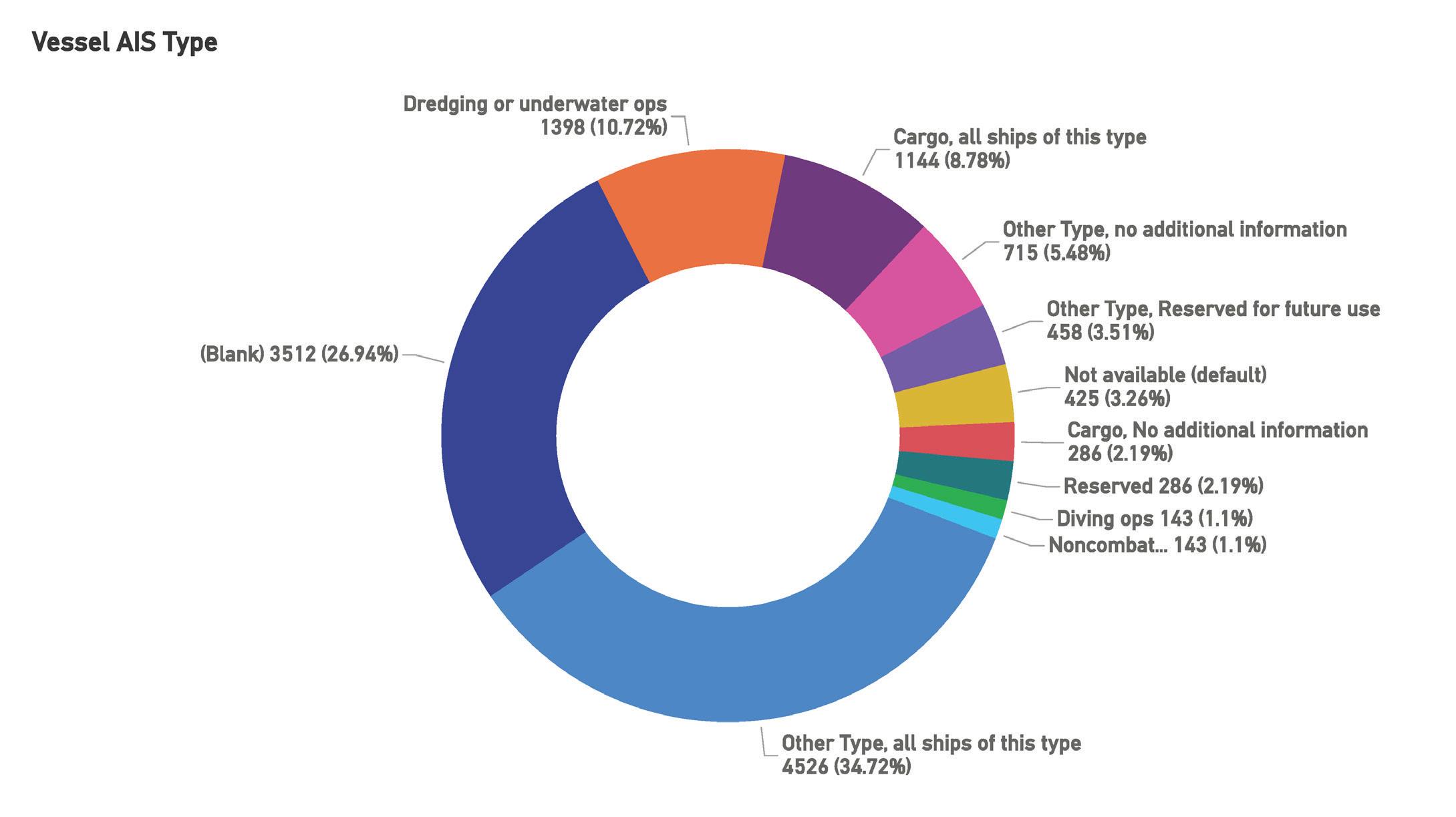
Following Leaders: While the “Other Type” leads in prevalence, categories such as “Dredging or underwater ops” and “Cargo” also emerged as notable vessel types within the dataset. Though these categories do not match the volume represented by the “Other Type,” their presence is crucial in demonstrating the diversity and range of vessel operations captured through AIS data.
Operational Implications: The variation in the count of AIS.TYPE categories reflects the multifaceted nature of maritime operations. The high prevalence of the “Other Type” might indicate specific operational or logistical preferences within the industry, potentially driven by factors such as vessel functionality, regulatory compliance, or market demands.
Strategic Insights: Stakeholders can leverage these insights to strategize fleet management, regulatory oversight, and safety measures. The dominance of a particular vessel type may inform targeted strategies for enhancing operational efficiency, compliance monitoring, and safety protocols.
Future Research Directions: The findings also open avenues for further research into the specific characteristics, uses, and operational patterns associated with the leading vessel types. Understanding the reasons behind the dominance of the “Other Type” and its implications for maritime
logistics and safety represents a valuable area for in-depth investigation.
The detailed analysis of AIS.TYPE distribution enhances our understanding of the current maritime operational landscape and informs future strategic decisions and policy development within the maritime sector. The data shows a range across all 11 Type Descriptions, from 143 to 4,526, further highlighting the diversity within the maritime fleet and pointing to areas where targeted interventions could yield significant improvements in operational effectiveness.
This comprehensive view of vessel type distribution, centered on the significant presence of the “Other Type” category, underscores the diverse and dynamic nature of global maritime operations. By leveraging these insights, stakeholders can drive forward more informed, efficient, and safe maritime practices.
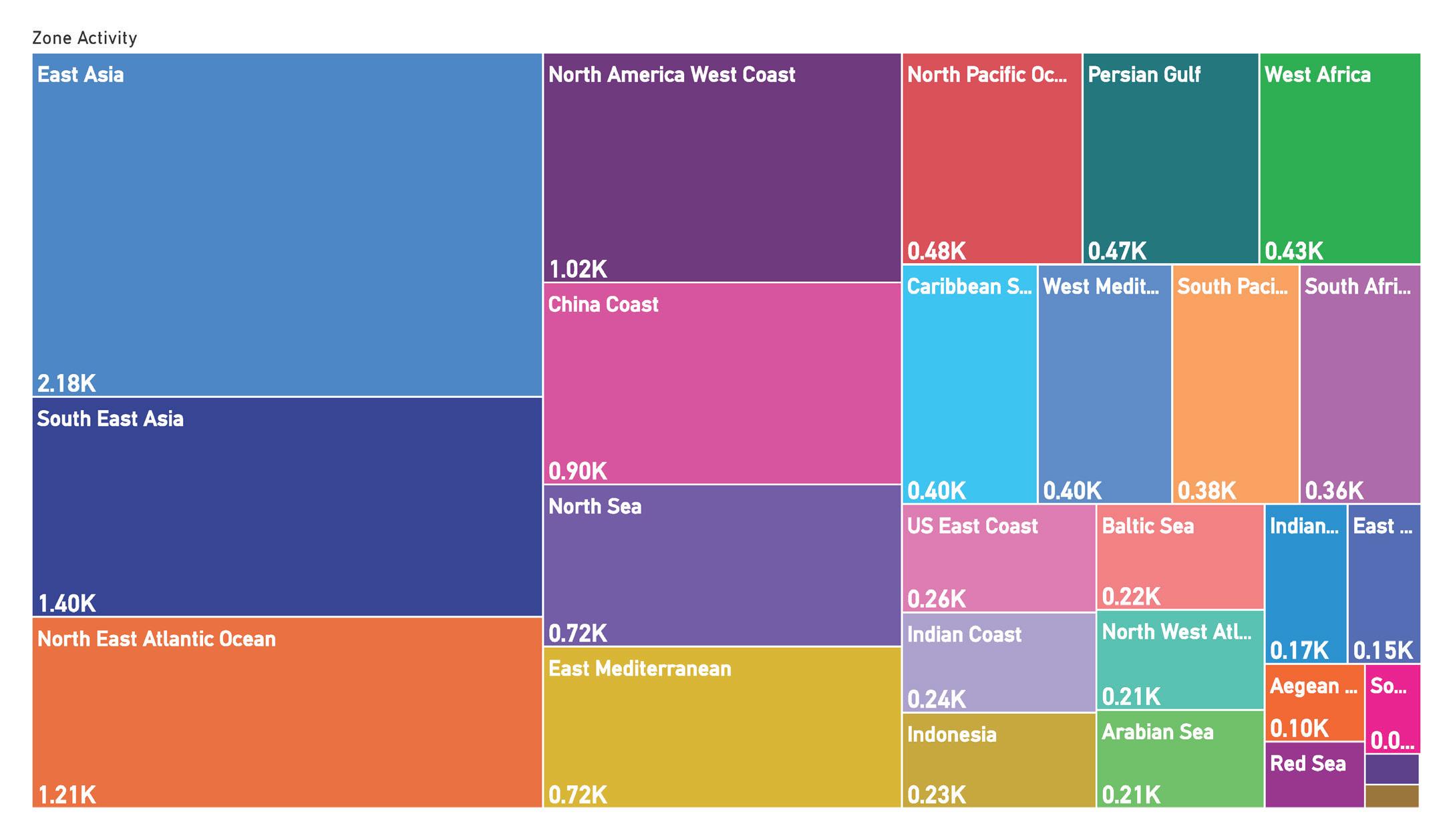
The zone activity chart provides a detailed visualization of AIS entries across various geographic zones, highlighting the distribution and concentration of maritime activities globally. Understanding these patterns is crucial for stakeholders, including shipping companies, regulatory bodies, and maritime safety organizations, to optimize operations and enhance strategic planning.
• East Asia: Dominating the chart, East Asia accounts for
the highest activity with 2.18K AIS entries. This region’s prominence underscores its critical role in global maritime trade, driven by major ports and shipping routes.
• S outh East Asia: With 1.40K AIS entries, South East Asia also shows significant maritime activity. This region’s strategic location and bustling ports contribute to its high entry count.
• North East Atlantic Ocean: Recording 1.21K AIS entries, this zone is a vital corridor for transatlantic shipping, reflecting the heavy traffic and economic importance of the area.
• North America West Coast: The chart shows 1.02K AIS entries, highlighting the busy maritime routes along the North American west coast, which are essential for trade with Asia.
• North Pacific Ocean and Persian Gulf: Both zones exhibit notable activity with 0.48K and 0.47K entries respectively, indicating their importance in connecting major global trade routes.
• China Coast: With 0.90K AIS entries, the China Coast is a critical area for maritime operations, reflecting the country’s robust shipping industry.
• North Sea and East Mediterranean: Each showing significant entries, these regions are key players in European maritime activities.
The distribution of AIS entries across these zones highlights the strategic importance of certain regions in global maritime logistics. The high concentration in East and South East Asia indicates a focus on these areas for shipping companies, which need to manage port congestion and optimize route planning.
Stakeholders can leverage this data to enhance fleet management, ensure compliance with regional regulations, and improve safety protocols. The insights gained from the zone activity chart can inform targeted strategies for resource allocation and operational efficiency.
Further analysis can explore the reasons behind high AIS activity in specific zones and identify emerging trends. Understanding the underlying factors driving maritime traffic in these regions can lead to improved predictive analytics and more effective maritime strategies.
This comprehensive view of geographic zone activity, centered on the significant presence of East Asia, South East Asia, and the North East Atlantic Ocean, underscores the dynamic nature of global maritime operations. By lever-
aging these insights, stakeholders can drive forward more informed, efficient, and safe maritime practices.
The analysis presented in this report highlights the intricate dynamics and operational complexities of the maritime industry. By leveraging AIS data and advanced Power BI visuals, stakeholders can gain deep insights into vessel movements, speed, draught, type distributions, and geographic zone activities. The examination of key metrics, such as the predominance of the “Underway Using Engine” status, the significant presence of the “Other Type” category, and the high AIS activity in East Asia, underscores the diversity and critical functions of the global maritime fleet.
Understanding these patterns enables stakeholders to optimize route planning, enhance fleet management, and implement effective safety protocols. The integration of cutting-edge technologies, such as autonomous vessels and digital twin applications, promises to further revolutionize maritime operations, improving efficiency and reducing reliance on human crews.
Environmental, geopolitical, and economic factors continue to shape maritime logistics, requiring adaptive strategies and informed decision-making. The zone activity analysis reveals the strategic importance of regions like East Asia, South East Asia, and the North East Atlantic Ocean, highlighting the need for focused resource allocation and operational efficiency.
This report serves as a valuable resource for navigating these challenges, providing actionable intelligence to support the ongoing transformation of the maritime sector. As the industry moves forward, embracing technological advancements and sustainable practices will be crucial in maintaining operational excellence and ensuring the safety and efficiency of global maritime operations. This data-driven approach not only enhances current practices but also paves the way for future innovations, driving the maritime industry towards a more resilient and informed future. STF

SYEDA HUMERA, a graduate from JNTUH and Central Michigan University, holds a Bachelor’s degree in Electronics and Communication Science and a Master’s degree in Computer Science. She has practical experience as a Software Developer at ALM Software Solutions, India, where she honed her skills in MLflow, JavaScript, GCP, Docker, DevOps, and more. Her expertise includes Data Visualization, Scikit-Learn, Databases, Ansible, Data Analytics, AI, and Programming. Having completed her Master’s degree, Humera is now poised to apply her comprehensive skills and knowledge in the field of computer science.
BY JOHN MAGUIRE
Welcome to Edition Four of Capacity Connections. Over the past few editions, we have traced the technical and commercial history of submarine cables and have drilled down from an overall historical point of view, identifying how some technological, regulatory and commercial developments affected the market and, most recently, on the effects of cloud computing and data centers. In this edition we delve a little deeper—although I’m not sure with any improved resolution—into the matter of artificial intelligence and its possible effects on the submarine bandwidth market.
Interestingly, while artificial intelligence is the hot topic of the moment, and while there are clear impacts that arise because of it, including in the market for submarine cables and bandwidth, most of the effects play out under-the-hoods of the hyperscalers who generate so much of the activity.
Artificial intelligence (AI) is headline news across the spectrum of human endeavor. It has burgeoning application in financial markets, medicine, pharmaceuticals, energy, retail and, of course, in cloud computing and telecommunication networks… There is a long list. But what is AI?
For our purpose, we really need only consider AI as that range or spectrum

of machine performed activities from machine learning (where devices use real-world feedback internally to improve their performance of some defined tasks) through deep learning1 (using neural networks), through application of natural language processing (NLP) and large language models (LLM) that we may be familiar with in customer services “bots” or helpful applications like ChatGPT, through to the esoteric probabilistic graphical models2 used in complex risk assessments and diagnostics.
1 https://www.ibm.com/topics/deep-learning
2 https://towardsdatascience.com/introduction-to-probabilistic-graphical-models-b8e0bf459812
In the context of our broad information and communication technologies (ICT) sector, AI has more than one important dimension. On one hand, AI may be used in designing networks, network traffic flows and in optimizing redundancy/protection arrangements. But at Subtel Forum, we are concerned, on the other hand, especially with how the higher order AI activities generate huge demand for compute power and consequently for data center capacity, feeding these effects into demand for international bandwidth.
For as long as traffic specific to AI applications remains separately indiscernible from other traffic generated
by hyperscalers who are the prime generators of AI volumes, we must use a proxy for this traffic and the most obvious of these is our familiar friend: the data center.
Data centers are currently being built with what may previously have been considered incredible power density, in no small part to accommodate AI’s expected demand for power (in compute and consequently energy terms). Certain factors in this equation, specifically access to sufficient energy to supply the data centers, becomes a critical design issue, particularly in respect of where new data centers are going to be built. This has a knock-on effect on bandwidth demand including, as we shall see, on submarine networks.
Data centers originally emerged as, inter alia, neutral “meet-me” facilities for competing telcos. Accordingly, they evolved in population centers, not surprisingly, as this is where telcos tended to have their international gateways. As the sector has developed, especially in respect of cloud computing, subsequent growth has occurred largely in these same (and similar) population centers. Over time, the power density of data centers has continuously increased with both accelerating miniaturization of telco equipment and in particular as data centers have evolved from serving predominantly communications applications to serving predominantly cloud applications. It is an evolution that continues with AI.
Humankind’s use of the planet’s resources has been an issue for a gen-
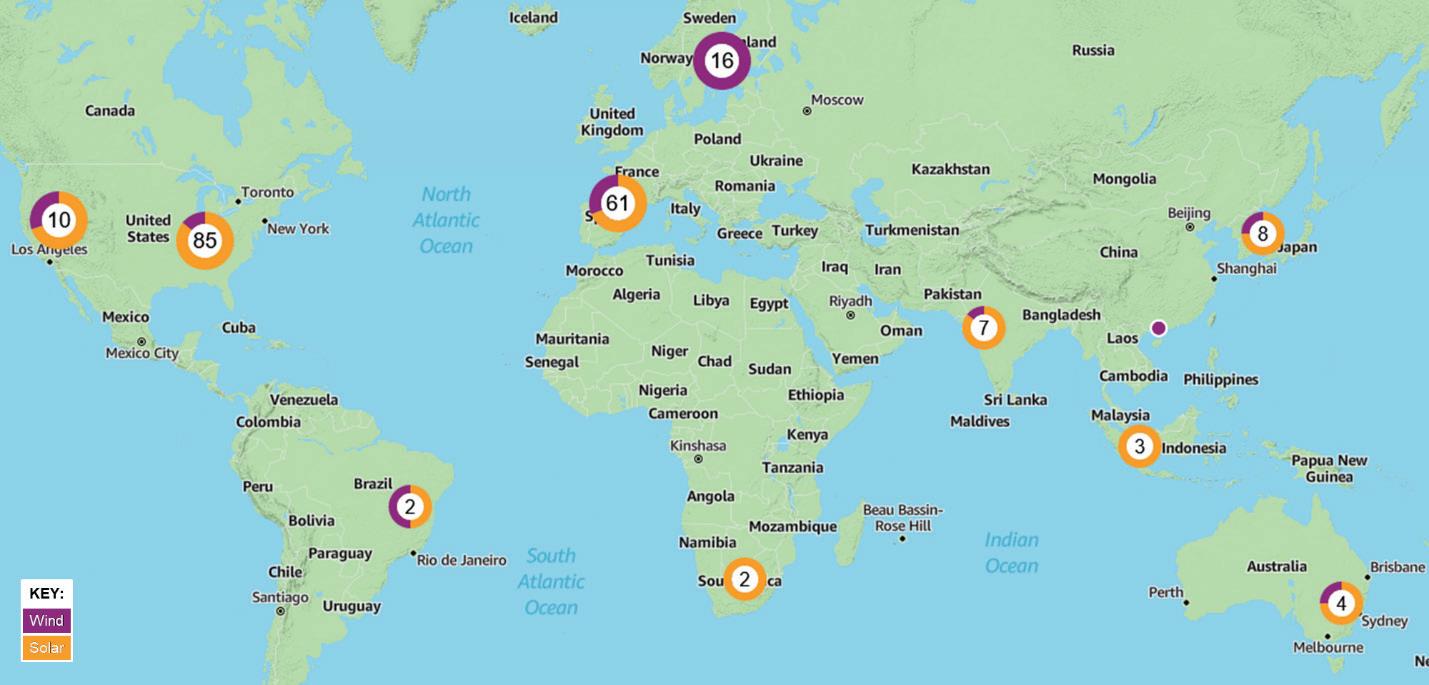
Figure 1: Amazon’s renewable energy deals Source: https://sustainability.aboutamazon.com/products-services/the-cloud?energyType=true#renewable-energy
eration, if not longer. Recognizing that the science of this is beyond our remit, prudence—and perhaps compliance— demands that we must strive to reduce our consumption of non-renewable natural resources, especially fossil fuels. There are two main ways of doing this: use less energy in absolute terms and replace non-renewable with renewable sources.
While growth in demand for their services shows no sign of easing, indeed with AI it may be accelerating, the data center industry is addressing the energy imperative in several ways. Some of these, to the extent they do not impact submarine cables directly, we can largely ignore here. These include use of energy efficient devices, energy management systems, some advanced cooling technologies (e.g., liquid cooling) and integration of renewable sources on site, or nearby.
The change that does affect submarine cables is the emerging trend to locate new data centers close to large renewable energy sources such as solar photo-voltaic and wind generation facilities and in cold climates. Of necessity, large scale solar and wind energy sources are separate from large
population centers, in more sparsely populated areas. Accordingly, we can expect to see data centers in future built in sunny or windy areas, or in cold climates where free cooling3 may be more readily available, or where geo-thermal power can be harnessed.
Figure 1 shows Amazon’s currently reported renewable energy arrangements. What we see, drilling down into this map to the individual deal level— which we don’t do here for reasons of space, but a link is provided—is that there is huge purchase of solar energy in hot, sparsely populated areas and of wind in cold, sparsely populated areas.
Since it is far more difficult and expensive to transport power than data, it is logical—especially when the price of land is taken into consideration—to expect many more data centers to be built in such regions.
Historically, submarine cables have been built to connect countries to countries, or perhaps cities to cities. A telco’s international gateway was connected to others. As the indus-
3 https://www.techtarget.com/searchdatacenter/definition/ free-cooling
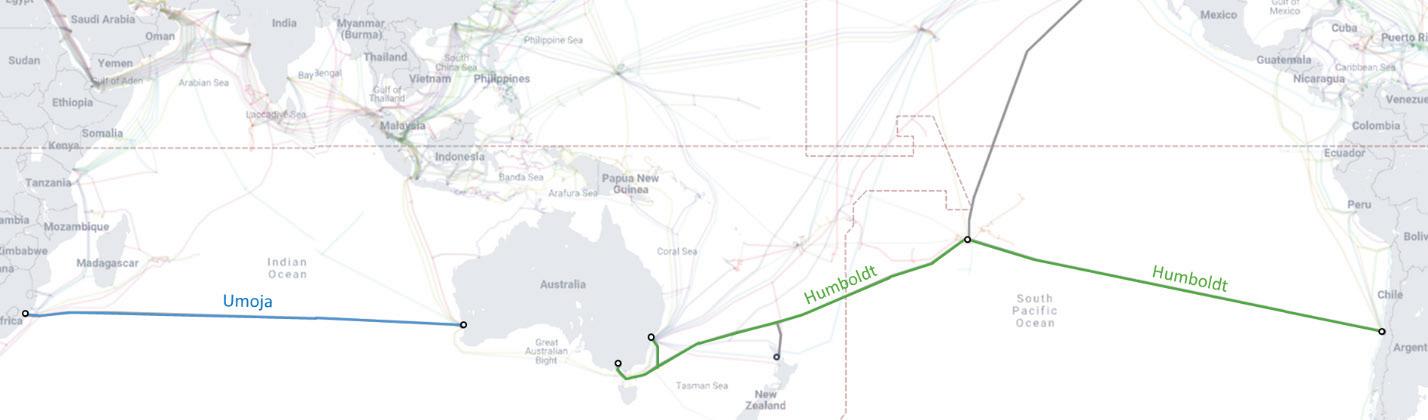
Figure 2: Submarine cable routes recently announced by Google. https://cloud.google.com/blog/products/infrastructure/investing-in-connectivity-and-growth-for-africa (Umoja, MAY24) https://cloud.google.com/blog/products/infrastructure/announcing-humboldt-the-first-cable-route-between-south-america-and-asia-pacific (Humboldt, JAN24)
try has evolved—as competition has increased and as technological developments have lowered barriers to entry historically enjoyed by PTTs—telco international gateways were initially joined by data centers as service endpoints for submarine cables, and eventually superseded by them. Today, a submarine cable can be thought of as a facility that principally connects data centers to other data centers. The open cable concept means that a single cable landing can serve multiple data centers, at the fibre-pair level, in the same general geographical area.
Having regard then for where data centers are moving to, we expect to see submarine cable routes following them as shown, for example, in Figure 2. The recent announcements by Google of these cables connecting Australia west to South Africa and east to Chile— two non-traditional routes that do not connect significant population centers—are cases in point.
It may well be the case that the underlying core purpose of these cables is to increase diversity and resilience, but even if that is the case, the need for resilience is, as we saw in the previous edition, a requirement of data centers and cloud communications—and remains no less the case for AI applications.
The effects of AI on the submarine cable bandwidth market are real. Thus far, however, they occur at a level, or levels, generally below that which is to be perceived in the bandwidth market through offer prices or available capacity on city-pair routes. Rather the effects, to date, are to be seen in the new routes being developed by hyperscalers to accommodate them refocusing their data center locations.
Over time, we can expect other effects to emerge. Comparing the cables in Figure 2, and cables on traditional transpacific or trans-Indian ocean routes, we may previously have more confidently expected to see an active secondary market, where promoters sell fiber-pairs or spectrum to wholesalers, than we can expect in respect of these new cables. Bearing in mind the distance of some of these new landings from the traditional interconnect nodes used by telcos, and from concentrations of data centers, it is rather to be expected that the secondary market—if it emerges—will exist elsewhere.
Interesting developments are also like to emerge in regional areas, where hyperscalers alone do not currently have a business case for a dedicated cable and seek to build in cooperation with regional wholesale and local telco players.
Other possible effects of the expected growth in AI also remain to be seen. Will the huge demand for energy open the industry up to the prospect of different categories within the data center ecosystem—viz., AI, cloud, and telecommunications—competing for available energy? Given their close symbiotic interrelationships, that sounds like an equation that will quickly find equilibrium, but finding it may, nonetheless, turn out to be an interesting process. STF

Currently Director, EMEA, with APTelecom, JOHN MAGUIRE has experience gained across a broad spectrum of telecommunications roles and businesses over the past 30 years. He has sold security and network control software to mobile networks worldwide; established a regional federation fibre network across a family of affiliated telcos and, several times, established interconnect networks and wholesale structures for leading telco brands in new entry and emerging markets. He’s done this in roles across the business: using satellite and cable technology, for OEM and service provider companies and in fixed and mobile domains—including for start-ups and mature companies. His roles have encompassed general management, sales management, direct and indirect sales, business development, market development and operations. A native of Dublin, Ireland, he’s also lived and worked in Australia, UK, Singapore, Hong Kong, Thailand, Qatar, UAE and Malaysia. John holds a B.Tech. degree from University of Limerick in Ireland and an M.A. from Macquarie University Graduate School of Management in Sydney, Australia.





1.
WORLD AND WHAT IS THE CONFERENCE’S MISSION?
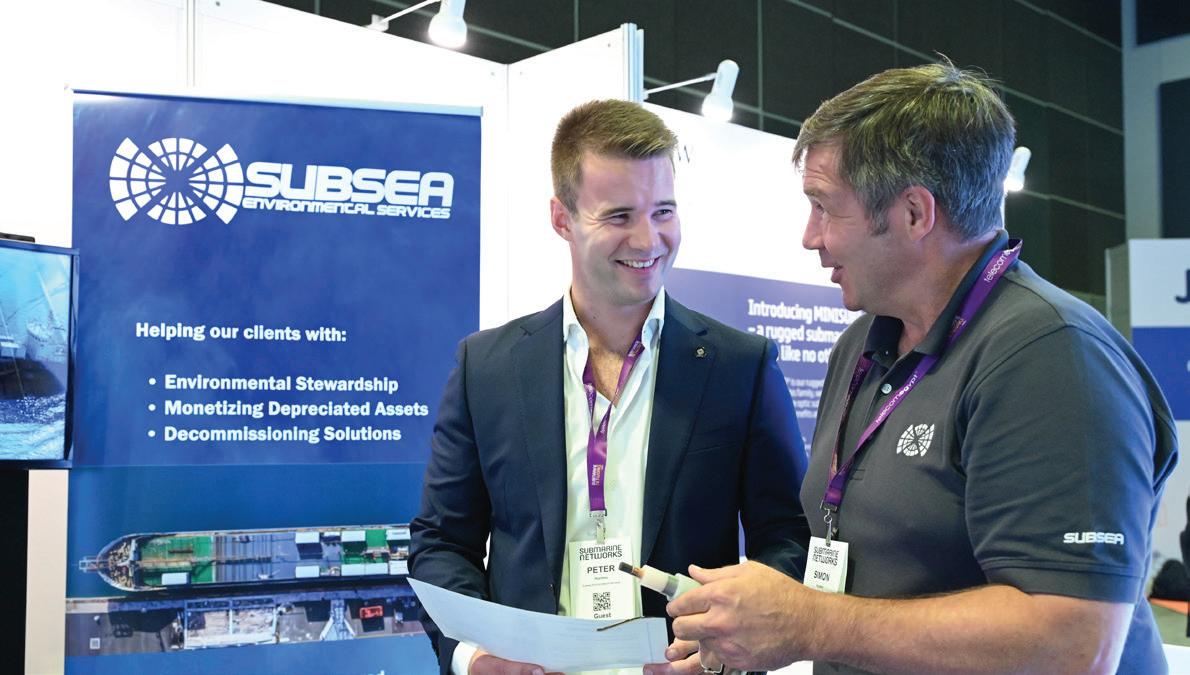
SNW is the leading global subsea telecoms event. The mission (should we choose to accept it – which we always do) is to remain No.1, and most important, rightfully so.
2.
HOW DOES SUBMARINE NETWORKS WORLD PARTICIPATE IN THE SUBMARINE CABLE MARKET?
By providing a closed-door, subsea telecoms–only, private event where ‘both ends of the cable (and everyone in between) meet and do business.’ No other subsea event offers the same level of global coverage.
3.

WHAT ADVANCEMENTS IN SUBMARINE CABLE DESIGN OR APPLICATIONS ARE INCLUDED IN SUBMARINE NETWORKS WORLD ‘24?
SNW is the place to present news to a genuinely
‘hear it here first’ – there is no reason why 2024 would be any different.
4.
WHAT ARE THE ELEMENTS OF SUBMARINE NETWORKS WORLD’S SUCCESS?
People come from across the globe to participate and attend in Singapore every September and this level of global coverage that gets delivered, year after year (and is only growing) is essentially what makes SNW unique.
Add in the respecting of a long-term pedigree product, combine with not being afraid to make changes (for better or worse – we don’t always get it right) and constantly strive year-on-year to improve the event wherever possible. We can only keep it fresh; we can only keep it forefront and most importantly of all we can only make sure the event delivers on a business level.
HOW IS SUBMARINE NETWORKS WORLD HELPING TO PROMOTE A MORE DIVERSE AND INCLUSIVE CABLE INDUSTRY?
In 2022 SNW started an initiative where ALL companies who are attending or participating at the event are entitled to FREE CONFERENCE PASSES FOR EMPLOYEES AGED 25 AND UNDER.
I write this in capitals because we receive a remarkably low number of applications each year. What better place for those on graduate schemes to listen, learn and meet with the heads of the industry all in one room? Invaluable experience.
6. AS SUSTAINABILITY HAS BECOME A HOT BUTTON ISSUE, HOW IS SUBMARINE NETWORKS WORLD ALSO GETTING INVOLVED?
Look out for the Day 2 Keynote Panel ‘Sustainability and Subsea – threat or ally?’ along with the presentation in the CLS session on Day 1 from The SubOptic Foundation initiative Sustainable Subsea Networks.
Sustainability from a different angle to that usually discussed onstage and the two students from UC Berkeley bringing their CLS research – it doesn’t get more ‘hot button’ than that!
7.
SUBMARINE NETWORKS WORLD ’24 IS AROUND THE CORNER, WHAT DO WE HAVE TO LOOK FORWARD TO THAT’S NEW AND DIFFERENT?
Each year we scour the globe to find ‘new to the event’ in every format. As a result, SNW 2024 is no exception to the upward trajectory of the event.
I can guarantee anyone who attends will experience new speakers presenting/discussing on panels, topics they have never seen onstage anywhere before. New suppliers offering products, solutions and services for every stage of any cable project – from concept to completion. New companies across every profile, new cable projects being presented/announced at the event and even new countries being represented onsite for the first time.
Serious about subsea? Then see you in Singapore in September - you’d be bonkers to miss it! STF
ADAM BALL is General Manager of Terrapinn responsible for the management of Submarine Networks World since 2018. He is an experienced sales leader with a proven track record in both London and Singapore. Coupling an affable nature with outstanding influencing and communication skills, he has directly formed and maintained long-term business relationships of integrity and success across a variety of high value/high profile products and services.
With the demand for global submarine cable capacity growing at almost an exponential rate, the role of subsea networks has clearly evolved into mission critical infrastructure, facilitating all communications across the globe.
In line with the growing connectivity and appetite for greater bandwidth - lower latency, greater capacity and more diverse networks continues to escalate. Meeting these ongoing challenges will require agility, scalability and further innovation.
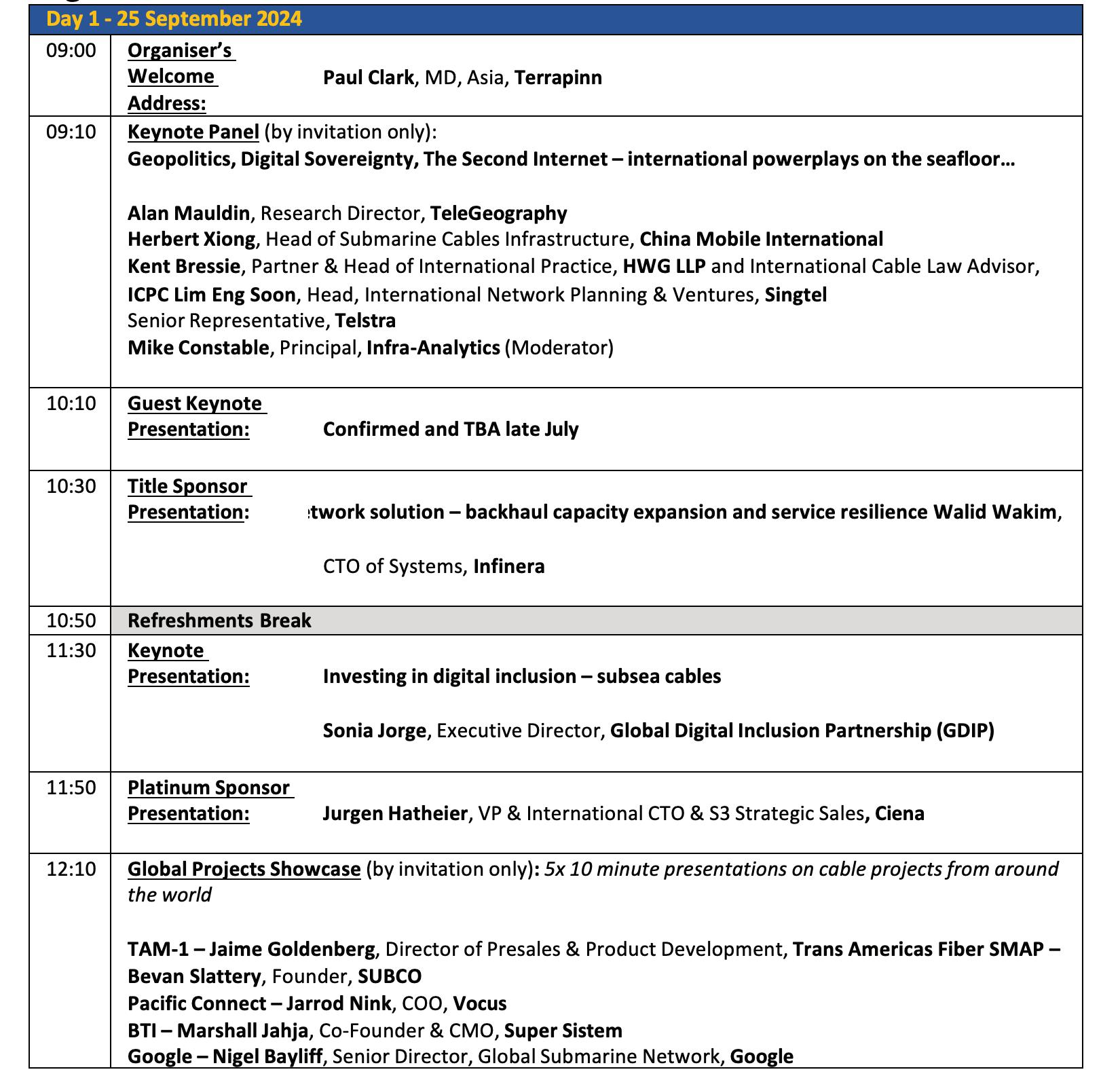
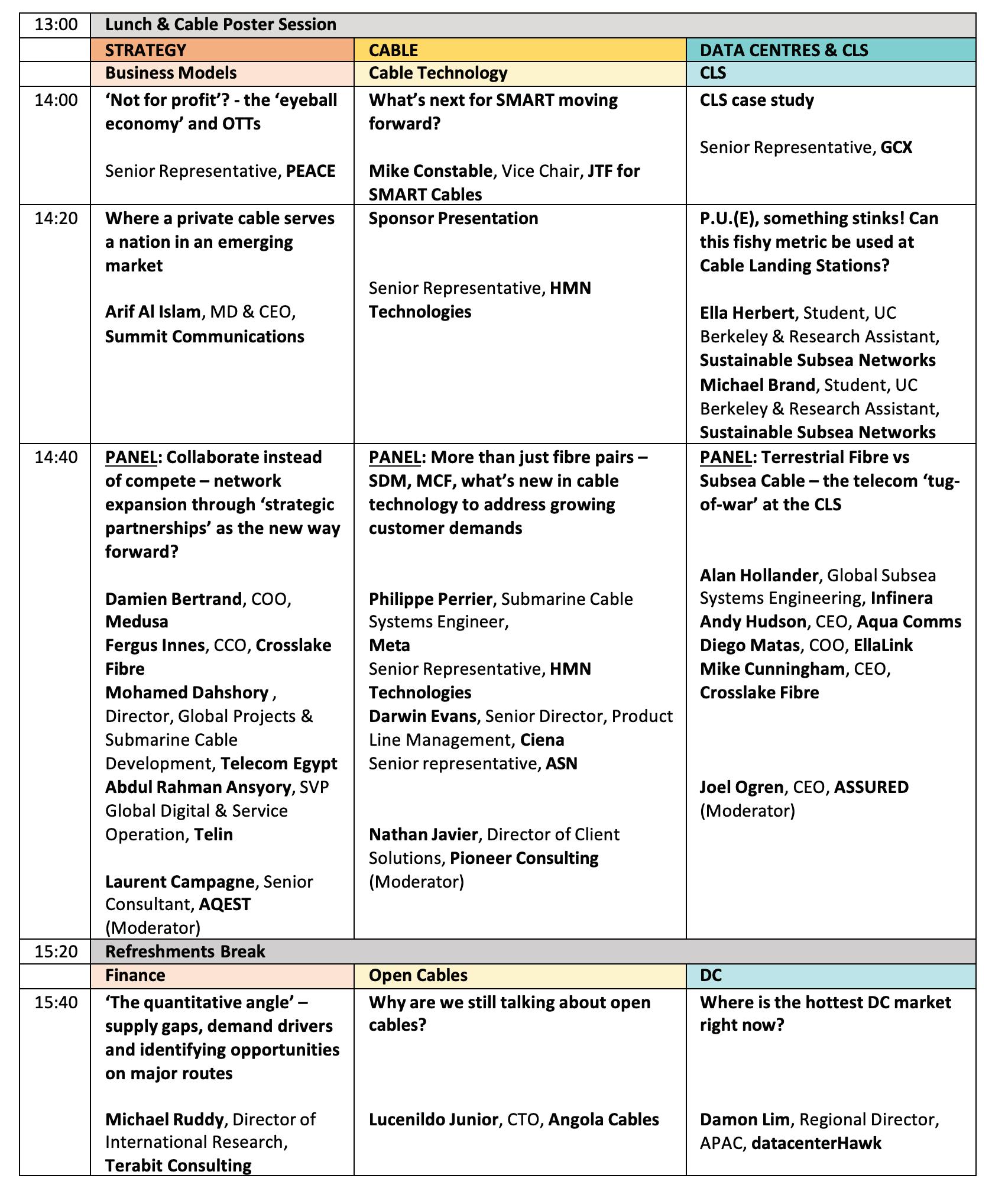
Submarine Networks World is established as the premier subsea communications conference - offering a dedicated setting to exchange knowledge, explore the latest projects, develop strategies, and form lucrative new partnerships to drive the industry forward.
In 2024, you will meet with more than 900 subsea influencers and decision-makers from every continent, over 130 top-tier speakers and more than 60 sponsors and exhibitors waiting to showcase what they can do to design, build, install, maintain, and manage your network.
Get ready for inspirational keynotes, lively and thought-provoking debates, and new ideas and new connections to help grow your business at the world’s largest annual gathering of the global subsea communications community, Submarine Networks World.
For event information and the full conference agenda, visit www.terrapinn.com/snwsubtel. Group bookings, with savings of up to S$1,500 per person, are available.



BY GUY ARNOS

Over the last 35 years I’ve watched the international subsea market and technology develop in ways that we only dreamed of at the advent of fiber optic telecommunications. We now live in a time where digital connectivity is crucial to economic growth and social development, and submarine cables serve as the backbone of global internet infrastructure. The capacity of those cables has grown from single digit gigabits per second to hundreds of terabits per second. Over 98% of global internet traffic is transmitted through a sprawling network of over four hundred submarine cable systems, collectively stretching 1.2 million kilometers across the ocean floor. This critical infrastructure is essential to supporting the relentless growth of digital data, especially in regions like Latin America and the Caribbean, where bandwidth demand is skyrocketing to the tune of a 30% growth rate annually. This surge has been driven by the increasing penetration of streaming services, mobile internet usage, cloud data centers, artificial intelligence (AI), virtual reality (VR), and the advent of 5G technology; all of which is driven by our daily dependence on having the internet immediately accessible to our phones and other mobile devices. Having worked in this region for several decades, I am staggered to see the effect these new technologies is having
on capacity requirements across the Americas. Yet, the region faces significant challenges in meeting these demands due to outdated infrastructure, limited competition, monopoly pricing, and a heavy reliance on connecting to the United States for internet access. Amidst these challenges, the launch of TAM-1 submarine cable system by Trans Americas Fiber System represents a pivotal development. TAM-1 has been designed to enhance digital connectivity and support the burgeoning data transmission needs of the region. Scheduled for completion in late 2025, our 7,000-kilometer cable system promises to transform the digital landscape of Latin America and the Caribbean, addressing both current and future demands. In this article I’ll explain the rationale behind the system’s design and delve into our current build status and future plans.
The ownership and investment landscape of submarine cable systems is undergoing a significant transformation. As we know, historically, the majority of these systems were consortium-owned, with a few privately built systems, but in recent times there is a growing trend of investment from global technology giants like Google, Meta, Amazon, and Microsoft. These companies are driving demand for high-capacity
infrastructure to support their extensive digital services, and several of them are happy to go-it-alone on new international system builds. This shift in ownership profile is crucial for addressing the mounting bandwidth requirements spurred by the evolving consumer and industry trends mentioned above.
Despite the soaring bandwidth requirements, the trans Americas region confronts formidable challenges in internet access and connectivity. Issues such as limited competition, monopoly pricing, reliance on outdated submarine systems, and the imperative for Caribbean and South American nations to connect to the US for internet access pose significant obstacles. Furthermore, existing regional cables are approaching the end of their operational lives, lacking the necessary accessibility, capacity, and scalability to meet rapidly escalating future demands.
It is clear that new build activity is required to break the monopolistic status-quo created by mergers in the region, to foster competition and to incentivize cost-based pricing for essential internet services. Once the pricing challenges and bandwidth limitations of the existing infrastructure are addressed with new systems, we can expect the market to grow. Several systems have been announced over the few years, all designed to replace the aging infrastructure and add diversity to the region, but not many have realistically progressed. The TAM-1 network is fully funded and moving ahead on schedule with its impressive specifications and high connectivity design.
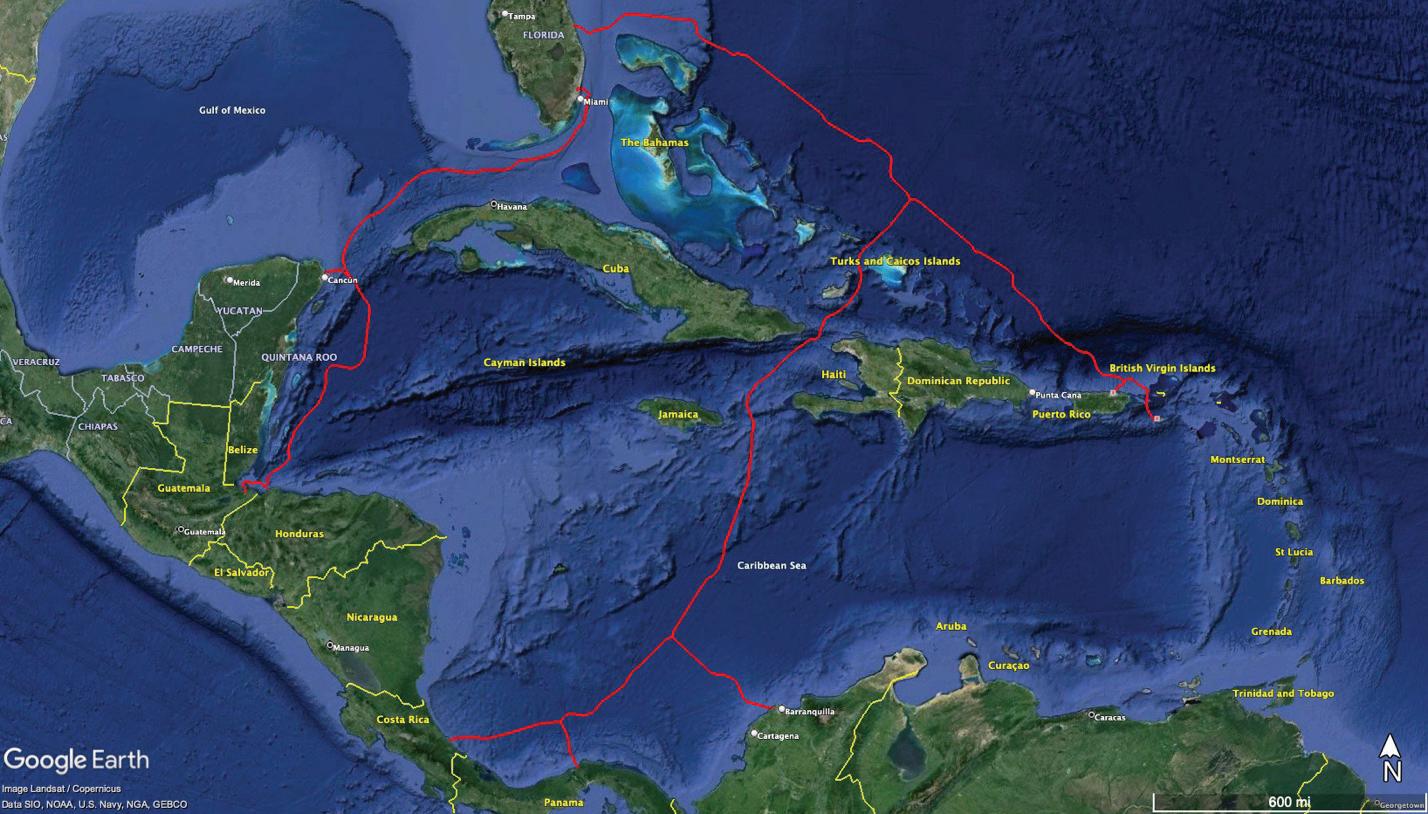
The TAM-1 submarine cable system is made up of two separate segments which we call the North and South Systems. The South System consists of 24 fiber pairs from Vero Beach, Florida to a branching unit (BU) just north and east of the Turks & Caicos Islands. From the BU, 20 fiber pairs are directed towards Panama, Colombia and Costa Rica and 8 fiber pairs are directed towards the Dominican Republic, Puerto Rico, and the US and British Virgin Islands. Two of the fiber pairs are routed from Panama to the USVI. The North System is made up of a 12 fiber trunk from Hollywood, Florida to Honduras with 8 fiber branches to Mexico and Guatemala.
The longest digital line segments (DLS) are capable of delivering a minimum of 18 terabits per second of bandwidth with shorter DLS capable of even higher line rates. These line rates, combined with fiber counts create a huge amount of capacity not previously available to the region. This capacity is essential for addressing the escalating demand for high-speed internet and data services in the region. As the existing older systems near the end of their operational life, TAM-1’s advanced technology will provide much-needed capacity, accessibility, and scalability. Our product offering consists of dark fibers, spectrum and lit capacity solutions which will allow customers to dynamically tailor their networks while maintaining their desired level
of autonomy. Connections will be low latency and secure, thanks to a high-reliability system design.
The geographical reach of TAM-1 is extensive, connecting the United States (Florida) to various countries across the Caribbean, Central America, and South America. The planned landing points include Puerto Rico, the US Virgin Islands, the British Virgin Islands, Mexico, Guatemala, Honduras, Costa Rica, Colombia, Panama, the Dominican Republic, and future connectivity to the Netherlands Antilles and other locations. This future connectivity is facilitated by strategically placed BUs which will allow network extensions without service interruptions to the main trunks. This strategic coverage ensures that key regions are interconnected, fostering economic growth and offering route diversity to enhance network resilience. By providing a cross-Caribbean route, the system addresses the connectivity challenges faced by national Caribbean carriers and governments. It introduces a diverse and redundant path for north-south traffic, which is crucial for maintaining reliable internet services. Additionally, by reducing reliance on legacy systems and introducing stateof-the-art technology from system supplier Xtera, TAM-1 is set to revolutionize the region’s digital infrastructure. Our technology includes fiber switching in the branching units as well as a band-switched OADM capability.
The socio-economic impact of improved digital infrastructure across the Americas cannot be overstated. Enhanced connectivity can drive economic competitiveness, attract private investments, and support the development of a digital economy. By bridging the digital divide, we hope to enable greater access to information, products, and services, thus fostering growth across various sectors. This is particularly significant for the Caribbean and Latin American nations, which have historically struggled with limited internet access and high costs. Importantly, the deployment of TAM-1 aligns with the United Nations’ 2030 Sustainable Development Agenda, emphasizing the importance of affordable internet access. Improved connectivity in the Caribbean and Central American regions can help bridge the development gap with more advanced economies, promoting sustainable and inclusive growth.
Our selection of strategic landing points was a multi-faceted process, aimed at optimizing efficiency, reliability, and strategic positioning. By leveraging existing infrastructure where possible and building new landing stations where necessary, the project ensures seamless connectivity and minimal deployment delays. Significant progress has been
made on the TAM-1 project. Marine surveys, essential for planning the cable route, have been completed by EGS and Fugro NV. These surveys covered key locations along the cable route, including future potential BU locations, ensuring a thorough understanding of seabed conditions. Cable route engineering is also complete. Production of wet plant and terminal equipment by Nexans, Xtera and others is well underway, with cable manufacture currently on-going in Rognan, Norway and amplifier production in the UK. IT International Telecom has been secured to perform the marine installation operations early next year, ensuring that the project remains on track for its 2025 launch. Permitting in all jurisdictions is well underway and on track. Seven of the ten planned landings are in existing cable landing stations and the three stations being built by Trans Americas Fiber System are in the design process and all sites have been procured. Terrestrial backhaul routes are also in the process of being procured.
Looking ahead, our network is poised for further expansion. Future phases are planned to extend connectivity to the Bahamas and Eastern Caribbean. These expansions will amplify the reach and impact of TAM-1, bringing advanced digital infrastructure to previously underserved areas.
We are excited and proud to bring this state-of-the-art system to the region to provide the vastly expanded and geographically diverse digital connectivity to Latin America and the Caribbean that TAM-1 represents. By addressing the region’s escalating bandwidth demands and providing a modern, high-capacity infrastructure, our system is set to bridge the digital divide and help foster economic growth. The project exemplifies the transformative power of robust digital infrastructure, underscoring its importance in the digital age. We continue to progress on target towards our planned Ready for Service (RFS) date in 2025, which stands as a testament to the collaborative efforts of the Trans Americas team and all our partners and regional stakeholders. STF

GUY ARNOS has over 40 years of experience in submarine and terrestrial networks, and has been responsible for the planning, engineering and implementation of transoceanic, transcontinental and metropolitan telecom systems. He has supported efforts in a number of submarine and terrestrial telecom projects. including the design, procurement and implementation of two submarine cable systems for the US Government totaling 2,600km; the study of inter-platform submarine cable systems in Abu Dhabi; and the engineering and provision of worldwide broadband services and trans-oceanic submarine cable systems.
Currently he is supporting the ongoing operations of the two US Government submarine cable systems and is the Program Manager for the TAM-1 cable system.
Guy has a Bachelor of Science in Mechanical Engineering (BSME) from MIT.
• Defined Processes
• Template Driven
• PMP Based Project Management Approach
• Rigorous Documentation Controls
• Quality Assurance Focused
• Secure Records Storage
• Accessible and User Friendly
• In-Field Analysis Without In-Field Risk
• Remote real-time analysis and reporting without the added cost of today’s in-field representation liabilities.

BY JOHN HIBBARD AND PAUL MCCANN
Over the past decade, we have watched as the number of Submarine Cables connecting into Pacific Island Countries (PIC) has grown. The expectation in this quest has been to improve the lives of the people of these nations by enhancing the connectivity of their country into the global web of the internet network via high speed, cost effective, low latency submarine cable systems! To a certain extent our work has been successful, bridging the gap between the haves and the have nots of the Pacific Region! But delivering such benefit to the people of the Pacific has not without significant commercial challenge – something which was anticipated – but has not always been simple to manage – especially with the growing need for second cables!
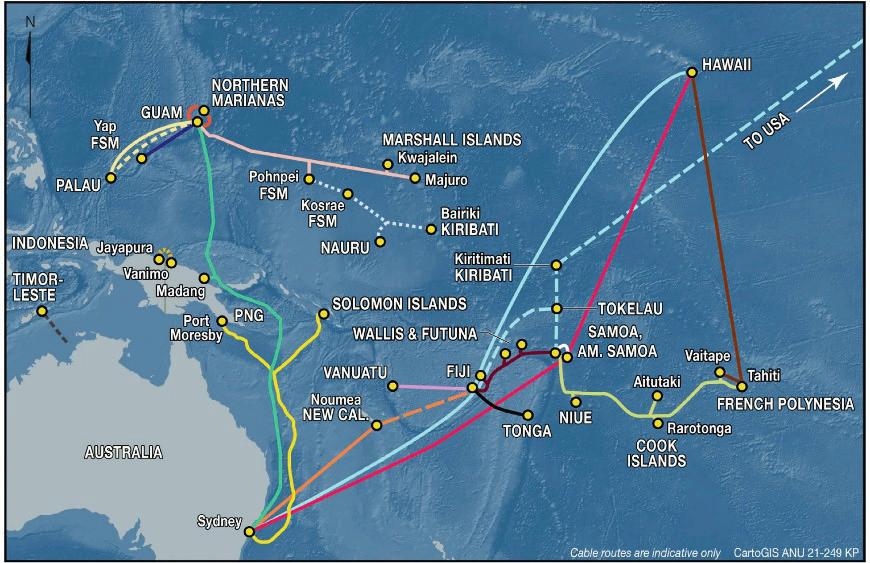
There are 22 designated so-called PICs, albeit that a number of these are actually territories rather than countries. Notwithstanding that, the various islands are extremely remote and spread widely across the world’s largest ocean, all but one now has either a submarine cable connection or one under construction. The only absentee from the list is Pitcairn Islands with a total population of some 50 people and 2500 kms from the nearest country with an international cable connection. But here’s something interesting - even Pitcairn may soon get a cable! It is now on some cruise ship itineraries and with the proposed Humboldt cable from Tahiti to Chile well within range of a spur – so who knows – even Pitcairn could get a cable!
The provision of the submarine cables to these PICs has provided the opportunity for good connectivity to be delivered at a more reasonable price. With operating funds being limited within each PIC, the higher unit cost of sat-
ellite connectivity encouraged operators to squeeze as much traffic as possible onto less bandwidth, severely degrading the quality of service with the consequence that demand for international connectivity was suppressed. The construction of abundant capacity being provided by fibre optic submarine cable has seen the demand balloon with consequential reduction in international access pricing to retail service providers and ISP’s. Services to the end consumers are enhanced and population is delighted as is the economy, particularly where tourists frequent.
Palau is a great example where pre-cable in 2016 the total satellite demand was 400Mbps and now, following the introduction of cable connectivity in 2017 there is more than 10G in service - with applications for more capacity in place. The quality of service to retail consumers is RollsRoyce thanks to supporting upgrades by the local operators. Tourists are delighted when they arrive there, and new airline services are operating. Palau is a great example of
the improvements a submarine cable can bring, and the importance of such to the economy of a country.
Vanuatu is another country where the entrepreneurship of Simon Fletcher secured the country its first cable. Originally pre-cable, satellite capacity in 2014 totalled 150Mbps at some $2000 per Mbps and is now approaching 20Gbps at less than $50 per Mbps.
These are but two examples of how the introduction of a submarine cable has released demand for international connectivity - there are many more examples like this! However there is an emerging issue. The success of the cables brings a concern – vulnerability! The country and its economy become dependent upon the continued operation and availability of a single cable. Appreciation of this was heightened with the volcanic eruption in Tonga where that country was cut-off for days and communications degraded for more than a month.
Some PICs have multiple cables to connecting points with access to the global internet highway but others have one umbilical cord to serve their nation.
As dependence on the single submarine cable grows, interest increases in getting a second cable to provide the security of service as the potential for using satellite as back-up for a country as a whole has significant limitations. However the challenge of getting a second cable is far greater than getting the first cable.
When a country, particularly a small Pacific Island does not have a cable, then there is real potential for obtaining financial assistance either from Multilateral Development Banks (MDBs) such as Asian Development Bank and World Bank, or from major regional Governments via Aid Budgets. So the importance of global connectivity can enable a reasonable argument to be made for funding the Capex needed. Furthermore being the first cable, the optimum configuration can be adopted thus keeping the Capex at a manageable level.
Since the country has previously been operating on thin route satellite, the ongoing operational costs per unit of bandwidth are high, and these costs are ultimately reflected in prices to the domestic users. As mentioned earlier, because of this, there is a strong tendency by
the carrier(s) in the country to squeeze as much as they can out of the satellite link. This can severely impact the quality of service and lead the carrier to only offer meagre volumes of data to users.
So, when the new cable comes with abundant capacity at lower unit costs, for the same operational expense the carrier(s) can obtain significantly more bandwidth – as such traffic booms and overall prices drop. Basically - the overall operational costs (opex) remain fairly static and any increase in opex would be covered by the increase in traffic and associated increase in revenues.
In summary, for first cables – with capex being funded by grants or conditional loans – and by the users of such capacity redirecting operational costs across the new cable and any required satellite diversity or redundancy – the economics and business plan can deliver a positive result!
Second cables could be considered as “Nice to Have” rather than “Essential”. As such funding for second cables is far more difficult to secure as the country is already connected to the global internet, a prime goal of the MDBs. So obtaining Capex is much harder - as such, it is essential to keep capex to a minimum. To do this requires connectivity with short cable links – but in many cases this may not be possible – it is not uncommon for the second cable to be longer than the first – irrespective of whether it is connecting to a passing cable of opportunity or a dedicated cable to a diverse location!
That said however – if we think capex may be a challenge - by far the greatest challenge to a PIC securing, supporting or even affording a second cable comes with Opex.
By and large, a second cable generates minimal, if any, new traffic from the country. It is there for security, not for bandwidth. However, it clearly has an operating cost which may be comparable or even larger than the first cable (noting that to a significant extent, operating costs are dictated by length). The crux of the issue is that with two cables the Opex has increased, whilst the traffic (revenue) is much the same - so how do
you maintain the previous user pricing and still keep the cable operation solvent? Raising prices would be commercially and politically unacceptable!
One solution might be to get some external funding to cover the operating cost of the second cable but where do you find that source? Hitherto it had not been a requirement but now it is becoming a serious concern as more small nations look to secure their economies with second cables. We are unaware of any country that has received opex funding for at least the first 5 years or more for a second cable. An option that has already been deployed is to “capitalise the operating costs” into the upfront capex. This method has proven to be effective. Capitalising operational costs can be accomplished by securing an upfront lump sum rather than a series of payments over a number of years which is more acceptable for external funding. Of course, distributing the funds over the years needs independent administration so that money is allotted at an appropriate rate. However, to date capitalising operating costs has been limited in deployment, with focus more clearly on securing capital for the build and supply of a system rather than recognising the need to focus on “affordability”.

provide improved services. This is not good news for the nation as a whole. The situation is compounded if the satellite alternative is adopted by the bigger users, leaving the smaller users to fund the cables. This results in less traffic via cable –and as cable has a virtually constant operating cost, the price to customers will surely have to rise!
Diversely routed second cables represent the solution for ensuring the connectivity of the Pacific Island nation to the global internet to maintain their economy frequently built on tourism. Governments, banks and airlines need certainty of service, and the interruption of a single umbilical cord is unacceptable. But the challenge going forward is how to fund both Capex and Opex for a second cable without raising consumer prices. Currently there is no obvious answer that jumps out to solve this dilemma today - which is why a number of countries continue taking their chances that their first cable will continue to operate without interruption. These countries await a solution that they can adopt to make second cable systems both “economic and affordable”. STF
An issue that small Pacific Islands Countries face is the potential for needing a repair. They will normally have a Marine Maintenance contract which ensures a ship is available but that does not cover the cost of a repair which could be a million dollars or more. The more prudent operators create a reserve fund to cover the cost of a repair. With two cables, the potential for a fault is increased. While traffic can continue on the working cable reducing the urgency for making the repair, it still has to be done at a significant cost draining the reserve fund which subsequently needs topping up. Here is yet another demand on operating costs!
Satellite connections such as Starlink have been suggested as an alternative to second cables, and in some circumstances may be the answer. Affordability – Quality – High Speed – Simplicity - many markets have reported strong take up of Starlink – the result has been positive for some customers – but for the incumbent service providers it is not such a good news story. Local service providers are reporting an ongoing significant drop in revenues, negatively impacting their ability to build local infrastructure and

JOHN HIBBARD is CEO of Hibbard Consulting Pty Ltd. John has worked in the telecommunications industry for over 40 years, and for more than 30 has been associated with submarine cables. An Engineer by qualification, John worked for much of his career at Telstra finishing as Managing Director of Global Wholesale. John was the inaugural Chairman of Australia Japan Cable which he guided to a successful implementation.
Since 2001, John has been an independent consultant in his own company, Hibbard Consulting, involved in strategic and commercial aspects associated with the development and/or implementation of many international submarine cable projects across the Pacific including French Polynesia, Samoa, American Samoa, Tonga, Vanuatu, Solomons, PNG, Palau, FSM, and CNMI. He was President of PTC from 2009 to 2012.

PAUL McCANN is Managing Director of McCann Consulting International Pty Ltd. Paul has over 40 years network planning & development experience in telecommunications both in international and domestic arenas. Prior to returning to consulting in 2012, Paul spent over 8 years with Verizon in Asia Pacific, driving growth of Verizon’s network across Asia by developing & implementing plans delivering major operational cost reductions and improved service performance. Paul is now managing his own consulting business, specializing in development in the Pacific Region, where the core business focus is on “connectivity” with expertise spanning all aspects of planning and development for Satellite, Submarine cable and Domestic access technologies and business. Paul is well known for his personable nature, his rapport with customers and his ability to deliver on time.
BY ANDERS LJUNG

Unrepeatered cables play a crucial role in regional submarine connectivity, providing essential links that are both cost-effective and relatively simple to implement. Despite their importance, these systems have largely been overlooked within the industry. This oversight stems from their straightforward design and distance limitations, which have largely kept them under the radar compared to more complex repeatered systems. Nevertheless, unrepeatered links offer significant benefits, particularly when considering disaggregated supply models and their applications in various markets. This article aims to summarise the advantages of unrepeatered subsea cable systems, both technically, commercially and from an economic perspective.
Unrepeatered links were among the first “Open Systems” in submarine cable technology, primarily due to their passive nature. Their design omits the need for power-feeding equipment and repeaters, resulting in simpler, more cost-effective systems. Typically, these systems connect neighbouring countries, regions, and islands, providing short pointto-point links that enhance international connectivity. They are often used for crossing harbours, rivers, and lakes, making them indispensable in regional contexts.
The simplicity of their design allows unrepeatered systems to be procured in a disaggregated manner. This approach involves sourcing components from multiple suppliers, which can lead to reduced costs and increased
flexibility. The lack of active components like repeaters means that unrepeatered cables are less complex to manage, further supporting the case for disaggregation.
Unrepeatered systems are not limited to traditional telecommunications. They are widely used in the oil and gas industry, offshore wind farms, and ocean observatories. These cables provide critical connectivity to and between offshore installations, offering telecoms paths that either integrate with power systems or function as separate outrider cables. In environments where high-power equipment is undesirable or impractical—such as oil platforms—unrepeatered systems offer a safer and more reliable alternative.
For instance, in the oil and gas sector, the installation of repeaters near power cables can pose not insignificant risks, including electrical interference and complicated maintenance procedures. Unrepeatered cables eliminate these issues, providing a more straightforward and secure solution. Similarly, offshore wind farms benefit from the uncomplicated design of unrepeatered systems, which can be seamlessly integrated with power cables to deliver robust connectivity.
According to our internal sales data and market analysis, the number of installed unrepeatered links significantly exceeds publicly announced projects. We at Hexatronic estimate that for every announced system, approximately
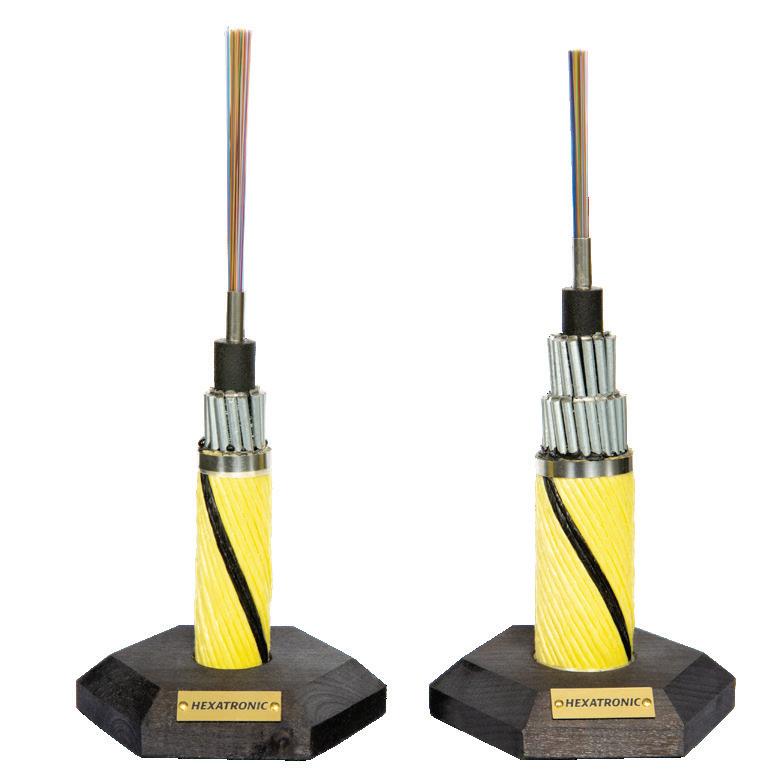
five additional unrepeatered cables are installed globally. For example, between 2016 and 2020, 97 unrepeatered systems were publicly announced, but we believe that nearly 400 additional links were implemented during this period. The general trend shows an increasing demand for unrepeatered systems, paralleling the growth seen in the repeatered market. This growth is expected to persist, driven by new projects in Europe (mainly for offshore wind but also telecom), North America (mainly in Alaska and Canada), South America (Surinam), South East Asia (Philippines; Korea and Taiwan) and the South Pacific (Australia).
The regional distribution of unrepeatered systems is uneven, with significant activity in Europe but less publicly documented work in Asia and Oceania. Europe has seen substantial growth, particularly in power systems and oil and gas interconnects. However, Hexatronic believes that Southeast Asia has also experienced significant, albeit underreported, growth.
From an investment perspective, in recent years the highest expenditures appear to be in Europe and Southeast Asia, and the least investment in the Caribbean. Looking forward, new projects in various regions suggest a continued upward trend in unrepeatered system installations.
Disaggregation in submarine cable systems involves breaking down the supply chain into constituent parts, such as cable, repeaters, branching units, and submarine line terminating equipment. Historically, disaggregation has roots in the early consortium systems, where different suppliers provided various components. This approach resurfaced with the development of the Universal Joint, and the continued dominance of open systems.
The primary advantage of disaggregation is the ability to select the best components from different suppliers, potentially leading to a more optimised system design. For unrepeatered systems, disaggregation is particularly feasible due to their simple design. Since there are no active components to coordinate, the risk of integration issues is minimized. This reduces the potential for project delays and allows for greater flexibility in sourcing components.
However, disaggregation also presents challenges. The success of this approach relies on well-defined contracts and strong project management. Clear deliverables and
responsibilities must be established for each supplier to avoid issues such as mismatched components or installation delays. Effective risk management is crucial, as the responsibility for project integration falls on the owner rather than a single turnkey supplier.
From an economic perspective, unrepeatered systems offer a cost-effective solution for regional connectivity. The absence of repeaters and power-feeding equipment reduces both capital expenditure (CAPEX) and operational expenditure (OPEX). For distances up to approximately 400 kilometres, unrepeatered systems are generally more economical than repeatered alternatives.
The cost per terabit per second (Tbps) of capacity varies with system length. For example, a 72Tbps system shows that unrepeatered designs are more cost-effective up to around 420 kilometres1. Beyond this distance, the need for specialized fibres and the declining capacity of unrepeatered systems make repeatered designs more attractive. However, unrepeatered systems remain competitive for specific applications where high capacity is not the primary concern, such as in the oil and gas industry or for regional festoons.
Technological advancements have significantly enhanced the capabilities of unrepeatered systems. Modern cables can support higher fiber counts, where 96-192 fibers are almost seen as standard today. Improved fiber technology, such as those with lower attenuation and larger effective areas, allows for higher data transmission rates over longer distances. Developments in the Multi Core Fiber (MCF) area will also increase capacity in cables in the near future.
Remote Optically Pumped Amplifiers (ROPA) and advanced pre- and post-amplification techniques have pushed the boundaries of unrepeatered systems. For instance, a system using standard fiber can achieve around 18 Tbps per fiber over 250 kilometres, while specialist fiber can increase this to 24 Tbps. At distances of 450 kilometers, a ROPAequipped system with high fiber count can support substantial capacities, aligning more closely with repeatered systems.
The future of unrepeatered systems looks promising, with continued demand driven by various sectors. As new trans-
1
oceanic systems are deployed, there will be a need for regional connectivity to extend these networks. Unrepeatered systems offer a practical solution for this purpose, providing cost-effective links that can be implemented quickly and efficiently.
Moreover, the growth of alternative energy sources, such as offshore wind farms, will likely drive further demand for unrepeatered cables. These installations require reliable telecoms connectivity, which unrepeatered systems can provide without the complications associated with powered repeaters.
As global data demands continue to rise and the push for sustainable practices intensifies, unrepeatered systems stand to benefit from emerging trends in technology and environmental consciousness. The deployment of smart grids and the Internet of Things (IoT) in remote and offshore locations requires reliable, low-maintenance connectivity, which unrepeatered cables can provide efficiently.
The environmental benefits of unrepeatered systems also merit consideration. The absence of repeaters reduces the energy footprint of these networks, aligning with global efforts to minimize environmental impact. Moreover, the simpler installation process of unrepeatered systems often results in less disruption to marine ecosystems compared to repeatered systems. This aspect is particularly important as regulatory scrutiny and public awareness of environmental issues continue to grow.
Unrepeatered cables also play a critical role in bridging the digital divide, particularly in rural and underserved areas. These regions often lack the infrastructure needed for traditional connectivity solutions. Unrepeatered systems provide a viable alternative, enabling reliable internet access and fostering economic development. By connecting remote communities to larger network hubs, these systems help integrate isolated populations into the global digital economy, promoting social and economic inclusion.
Successful deployment of unrepeatered systems often involves collaboration with local communities and stakeholders. Engaging with local populations not only facilitates smoother project implementation but also ensures that the benefits of enhanced connectivity are realized at the grassroots level. Training local technicians in the maintenance
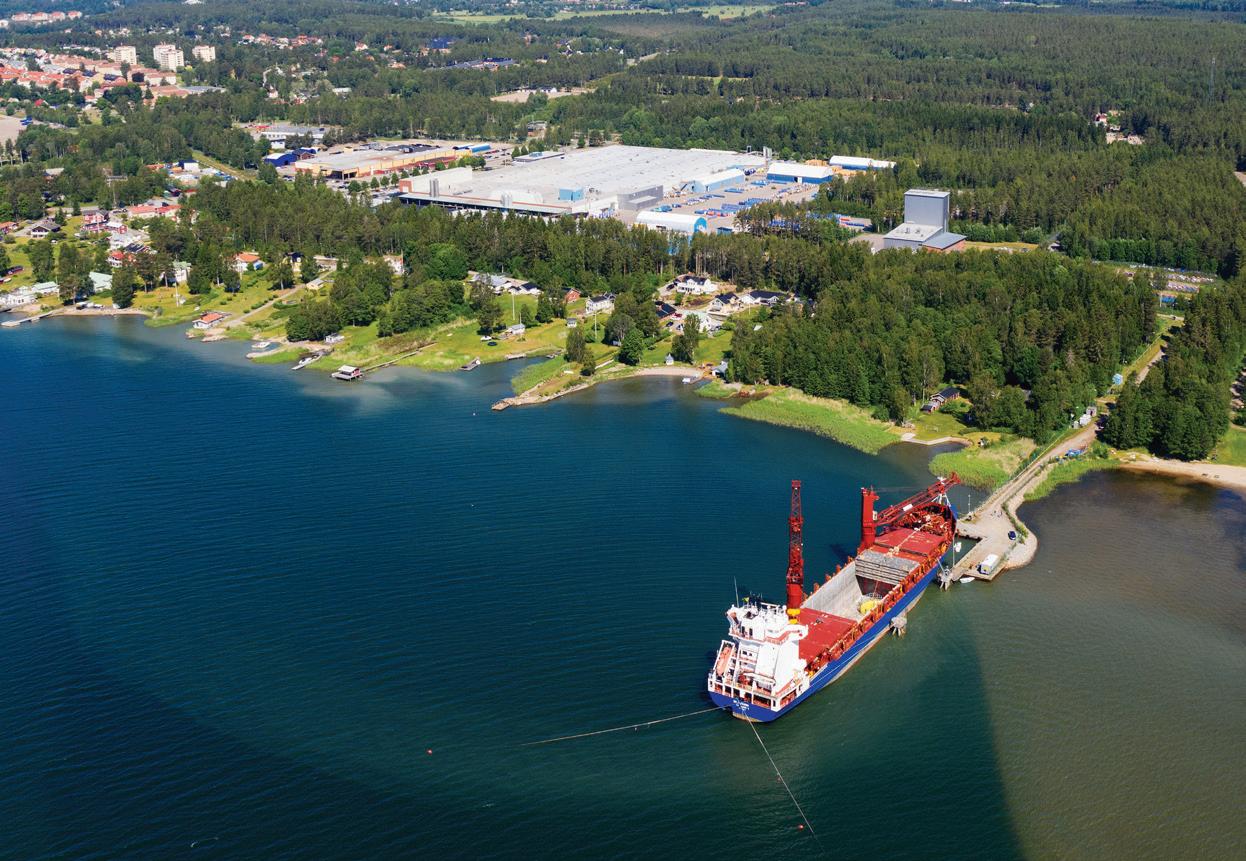
and operation of these systems can further strengthen community ties and build local capacity, contributing to the sustainability of the connectivity solutions.
For governments and regional bodies, unrepeatered systems present an opportunity to integrate submarine connectivity with broader national infrastructure plans. By incorporating these systems into national broadband strategies, countries can enhance their digital infrastructure in a cost-effective manner. This strategic integration ensures that critical sectors, such as healthcare, education, and emergency services, benefit from robust and reliable connectivity.
For the many reasons I have outlined above, unrepeatered systems are a vital component of submarine connectivity, offering numerous advantages in terms of cost, simplicity, and flexibility. Their ability to support various markets, from telecommunications to energy, underscores their importance. The trend towards disaggregated supply further enhances the appeal of unrepeatered systems, allowing for optimized, cost-effective solutions tailored to specific needs. While there are challenges associated with disaggregation, particularly in terms of risk management and integration, the benefits often outweigh the drawbacks. For regional connectivity and specific applications where high capacity is not the primary concern, unrepeatered systems represent an attractive option.
As technology continues to advance, the capabilities of unrepeatered systems will only improve, extending their reach and enhancing their performance. The subsea community must continue to recognize and leverage the potential of unrepeatered cables, ensuring they receive the attention and investment. STF
ANDERS LJUNG is the Business Manager Submarine Cable Solutions at Hexatronic in Hudiksvall, Sweden. Anders holds an MSc in Polymer Mechanics. Anders has been employed for 32 years in the fiber optic cable industry. More than twenty of these years he was in Ericsson’s organization where he held several managerial positions within sales, project management and manufacturing of fiber optic submarine cables. When Hexatronic acquired Ericsson’s telecom cable plant in 2013 Anders was employed in his current position with a worldwide responsibility for Hexatronic’s fiber optic submarine cable portfolio.


BY BRENDAN PRESS
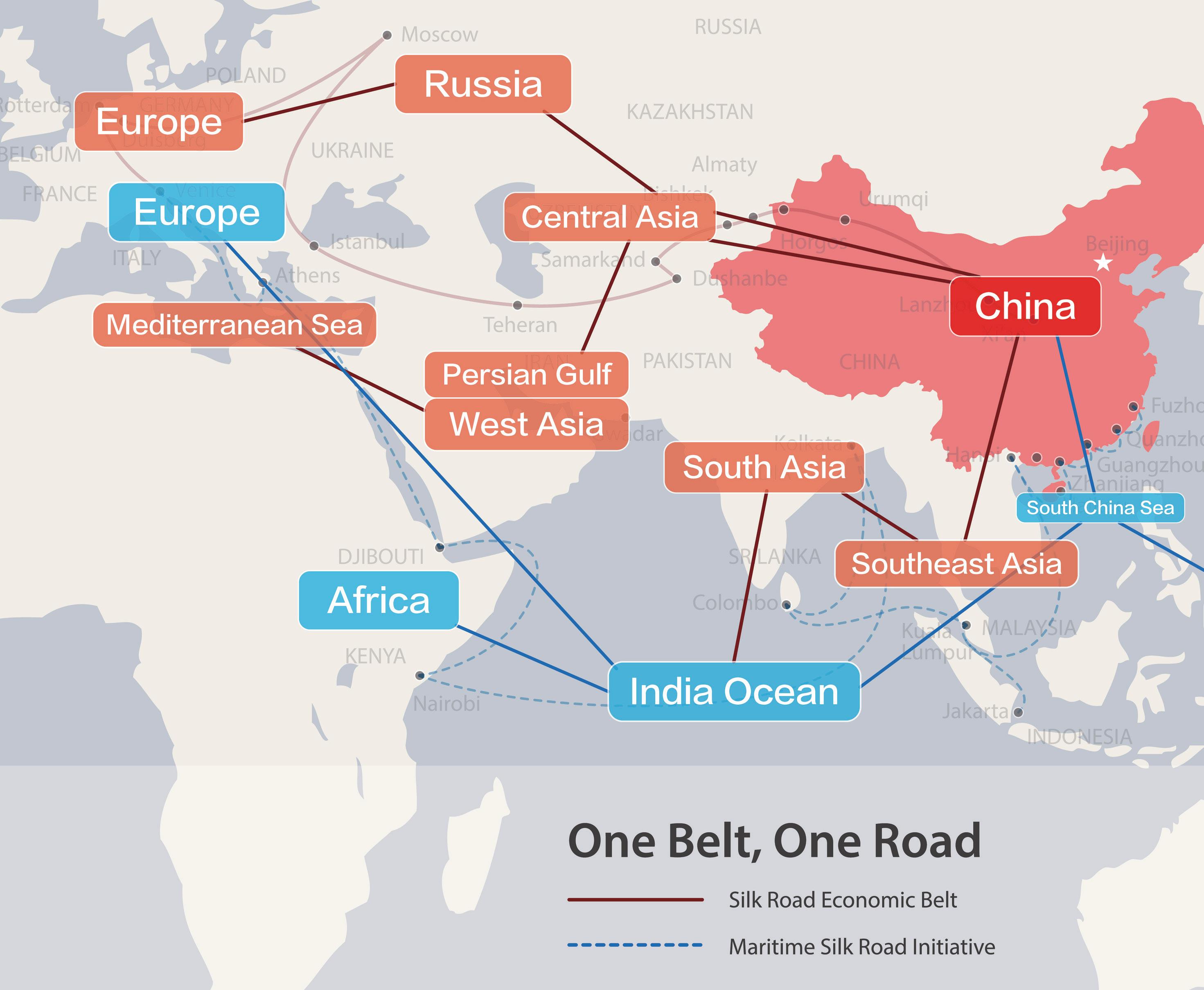
Lying on the ocean floor are a critical but often overlooked component keeping us digitally connected: subsea cables. These undersea networks are the lifeline of our internet. Much like the Silk Road facilitated trade and cultural exchange centuries ago, subsea cables power everything from international calls to financial transactions—forming the backbone of our global communication infrastructure.
The Red Sea—the key chokepoint between the Suez Canal and the Arabian Sea— carries over 90% of the data capacity between Europe and Asia alone and plays a huge role in the infrastructure of the internet. It’s a hub connecting economies and societies. However, the Red Sea is relatively shallow and heavily trafficked, making the cables carrying this data vulnerable to threats of disruption, whether from shipping incidents, environmental damage, or cable cuts. Some cuts affect a significant 25% of data traffic flowing between Asia and Europe, which highlight the importance of diversifying digital highways. Relying on one route can lead to bottlenecks and outages that impact everyone.

In a way, the challenges in the Red Sea echo the historical lessons of the Silk Road. Like traders seeking alternate paths to ensure the flow of goods and meet demand; we now need innovative solutions to maintain uninterrupted data flow. By learning from history and implementing strategic measures, we can enhance the resilience of our digital infrastructure and safeguard the continuous flow of information across the world.
With such a large volume of data between Europe and Asia
travelling via the Red Sea, any threat of disruption underscores the fragility of relying on a single chokepoint for such critical infrastructure, with potentially serious ramifications.
These include implications such as increased latency and decreased performance of internet services. As traffic is rerouted through longer, less direct paths, the speed and efficiency of data transmission are compromised, resulting in slower internet speeds, buffering in video streams, and delays in online transactions—to name a few. These issues collectively degrade the user experience for millions of individuals and businesses.
Additionally, subsea cables are vulnerable to physical damage. Whether natural, accidental, or malicious, the severing of these cables reveals a significant risk to various sectors, including finance, healthcare, and emergency services, which rely on uninterrupted data flow for their operations.
The economic impact of disruptions like these is also profound. Delays and interruptions can lead to financial losses, especially for industries that depend on real-time data exchange, such as stock trading and international banking. Companies may face increased costs as they invest in quick-fix technologies to mitigate these disruptions too.
For example, in March 2024, a significant disruption occurred in the Red Sea when several undersea cables were severed. The damaged cables included critical lines such as the Europe India Gateway (EIG) and the Seacom/Tata cables, which carry a significant portion of the global internet traffic between Asia and Europe. This incident forced internet providers to reroute as much as 25% of data traffic to other cables, highlighting the vulnerability of subsea infrastructure, and the impact that disruption can have.
In the face of these challenges, diversifying our digital connectivity is crucial. Just as ancient traders explored multiple routes to circumvent risks and ensure they met demand; our digital Silk Road will also benefit from diverse routes that mitigate the impact of disruptions.
By establishing redundant pathways across different regions between East to West, network redundancy and availability can rapidly improve, reducing vulnerabilities to single points of failure. Relying on one primary route means that any damage, natural disaster, or geopolitical issue affecting that route can cause widespread disruption, like in the Red Sea. But by having multiple pathways the risk is spread out, ensuring that if one route is compromised, traffic can be redirected.
Route diversification also enhances overall network
performance. Different routes can offer varying latency, with some being more direct and faster than others. This approach can significantly reduce latency by providing more direct paths between key Points of Presence (PoPs), benefiting latency-sensitive applications such as real-time communications, gaming and cloud services, where milliseconds can make a substantial difference.
Terrestrial routes add another layer of reliability. By running multiple streams through different countries, these routes ensure that users remain connected even if one segment experiences an outage. This redundancy is vital for mission-critical operations, especially as more companies accelerate their digital transformation efforts. The ability to maintain seamless operations during outages can be a competitive advantage, preventing costly downtime and ensuring business continuity. Businesses that are faced with high SLAs and are laser-focused on delivering seamless digital experiences need infrastructure that they can rely on.
Additionally, cable providers can gain substantial market advantages by offering guarantees of service continuity and protection-as-a-service. Driven by rising competition and the frequency of network outages, this strategy involves a collaboration between cable providers. By using two cables to support a single connectivity pathway, uninterrupted data transmission is guaranteed, even if one of the cables were to experience an outage.
For example, a strategic initiative addressing the challenges posed by the Red Sea bottleneck is the North Express Route (NER), which provides an alternative path to ensure more reliable and resilient connectivity between Europe and Asia. Alternative paths like these are crucial for meeting the growing demands of the thriving economies in the Middle East and their increasingly data-driven societies.
The importance of robust connectivity cannot be overstated as businesses increasingly prioritize regional investment. However, delivering on this vision requires more than just ambition—it demands dependable infrastructure supported by diverse routes to Europe.
Incorporating alternative routes with cutting-edge technology is crucial. These pathways not only circumvent potential chokepoints but also enhance reliability, ensuring seamless data transmission across continents. Diversified routes facilitate new methods of data sharing, bringing it closer to the edge for customers and enabling a comprehen-
sive end-to-end service.
This greater availability benefits hyperscalers and OTT (Over-The-Top) providers worldwide. Hyperscalers, such as Meta and Microsoft, rely on extensive infrastructure to deliver their services efficiently. By utilizing diversified subsea cables, these hyperscalers can offer lower latency and higher redundancy, which are critical for maintaining service quality and availability
OTT providers, which deliver media content directly over the internet (e.g., Netflix, Apple, Esports, and YouTube), also benefit significantly from diversified routes. These routes ensure that data can be transmitted efficiently and reliably, even during peak usage times or in the event of a disruption in one part of the network. This is especially important as consumer demand for high-definition, gaming and 4K streaming continues to grow.
Moreover, direct remote peering via subsea cables enhances the delivery of content to end-users by reducing the distance data must travel, thus decreasing latency. This proximity allows for faster, more reliable access to content, improving the user experience and enabling services such as live streaming and real-time gaming to function more smoothly.
Recognizing these cables as vital infrastructure is a crucial step in building a more resilient future. The diversification of routes ensures robust and dependable connectivity that supports the growing digital demands of businesses and consumers alike, making it a key piece of the global infrastructure puzzle.
Ultimately, known for connecting civilizations and facilitating trade across large distances, taking a page from the Silk Road’s playbook on strategic flexibility can help us build a more resilient and robust global network—especially when mitigating risks in the Red Sea. Much like those ancient trade routes, our digital infrastructure thrives on diversity and redundancy.
By drawing these parallels, we ensure seamless digital experiences whilst supporting sustained economic growth and building a network that’s ready for the demands of the future. Connectivity is more than just transmitting data—it’s a pathway for progress, collaboration, and mutual understanding across continents and centuries. STF
BRENDAN PRESS is the Chief Commercial Officer of Gulf Bridge International (GBI), bringing over 20 years of experience in the telecommunications industry to the role. GBI is a provider of robust infrastructure that fuels innovation and growth. Connecting East and West via the Middle East, its diverse network is enhancing societies’ access to digital experiences and is the foundation for far-reaching transformation.

BY SAURABH MARAL
As the need for global connectivity increases, extending submarine cable networks to remote areas like Antarctica becomes crucial. Rising human activities in this region have propelled the need for connectivity aiming to provide reliable high-speed internet for research purposes, enhancing data transmission and remote collaboration capabilities. Antarctica’s research stations, such as McMurdo Station and Scott Base, currently rely heavily on satellite internet, which is limited by bandwidth and prone to disruptions by extreme weather conditions. The internet connectivity available to these bases is insufficient, comparable to that enjoyed by a typical family in the United States, which is far from adequate given the extensive data transfer needs of scientific research.
The lack of robust connectivity hinders real-time data analysis and collaboration with institutions worldwide, making the deployment of a submarine cable a critical infrastructure improvement. Extending submarine cables to Antarctica can revolutionize communication on the continent. Submarine cables ensure efficient data transmission, low latency, and high reliability. Consegic Business Intel-
ligence predicts that the Submarine Optical Fiber Cable Market will reach over USD 53,082.13 Million by 2030 from USD 19,214.71 Million in 2022, growing at a CAGR of 13.8% from 2023 to 2030, signifying the bolstering usage of optical fibers.
There are several industry and academic projects funded by organizations and governments to expand the cable network to the frozen region. The Southern Ocean Fiber Link from New Zealand to McMurdo station is one such initiative taking shape into reality at a rapid pace. To enhance communication and reduce reliance on external conditions, a proposed underwater fiber optic cable will connect the largest US-run Antarctic stations with the rest of the world. This innovative development will create faster and more reliable communication. The National Science Foundation (NSF) has designed a 4900-kilometer route with two junctions connecting the Australian station on Macquarie Island and the stations in Terra Nova Bay to the cable. This project will bolster the capabilities of American scientific

endeavors in the region. Another initiative is the Chile-Antarctica Submarine Cable Project plans to lay the first submarine optic fiber cable between Chile and Antarctica a joint venture supported by the Multilateral Cooperation Centre for Development Financing (MCDF) and CAF. It is committed to providing robust, high-quality connectivity to facilitate the operations of more than 30 bases and research centers from multiple countries. These facilities gather vast amounts of data in fields such as climate science, glaciology, biology, and geology. The value of this data hinges on effective internet connectivity, for transmitting data to research institutions in Latin America and globally, as well as for enabling real-time collaboration among scientists, facilitating analysis of findings, and supporting emergency communication.
These projects underscore a broader trend towards integrating Antarctica into the global digital infrastructure and connectivity web, reflecting the continent’s growing strategic and scientific importance.
Antarctica’s extreme weather conditions, with temperatures fluctuating from -80 to -10 degrees Celsius and winds exceeding 20 knots, present significant challenges. Deploying and maintaining submarine cables in such harsh conditions require sturdy solutions. The region’s extreme and harsh environment makes cable laying operations exceptionally challenging. Additionally, the ocean’s harsh conditions, including iceberg movements and deep-sea pressures, pose significant risks to cable integrity.
Equipment and personnel must withstand prolonged exposure to sub-zero temperatures, while the ice-covered terrain complicates transportation and installation processes. Specialized ice-breaking vessels and insulated, heated
shelters for workers are essential for dealing with these environmental challenges. Furthermore, the harsh conditions can cause materials to become brittle. Once installed, maintaining and repairing the cables in such a remote location is daunting. Regular monitoring and maintenance are essential to ensure the cable’s longevity and functionality, requiring the use of specialized ships and equipment, thus increasing the overall costs.
The challenging and dynamic Antarctic ice conditions, including icebergs, sea ice, and ice shelves, pose a significant threat to the stability of submarine cables. Icebergs are capable of drifting and potentially colliding with the cables, while the seasonal formation and melting of sea ice require cable designs that are both flexible and durable. To withstand the physical pressures caused by ice movements, these cables must be constructed with the ability to adapt. Utilizing strategies like burying cables deep beneath the seabed or deploying floating cable segments in areas with substantial ice movement can help mitigate these risks. Furthermore, it is essential to continuously monitor ice conditions and employ predictive modeling to track the paths of icebergs in order to prevent damage to the cables.
Antarctica’s extreme remoteness presents formidable challenges for transporting and deploying cable-laying ships and equipment. The continent’s geographical isolation complicates the logistics of regular maintenance and repairs, demanding the use of highly reliable systems to minimize the need for frequent intervention. Furthermore, cable-laying vessels must navigate treacherous waters, often requiring the assistance of icebreakers to clear pathways, which adds an additional layer of complexity to operations in this region. The limited window of favorable weather conditions each year exacerbates the situation, necessitating meticulous planning and execution of all activities within a narrow timeframe.
Moreover, the importance of emergency response plans and redundant systems cannot be overstated, as they are crucial to ensure continuous operation in the event of equipment failure or environmental disruptions. The challenges posed by the remote location significantly increase the time and cost of projects in this region. Furthermore, the transportation and deployment of cables in remote Antarctica locations require extensive planning and coordination, often involving icebreaker ships, specialized marine equipment, and weather-dependent operations. This com-
prehensive approach is necessary to effectively tackle the unique challenges posed by operating in this exceptionally remote and harsh environment.
Any project involving the construction of infrastructure in Antarctica is subject to rigorous environmental regulations aimed at protecting the delicate and pristine ecosystem of the region. Given the potential impact on the environment, the laying of submarine cables in Antarctica necessitates thorough assessment and the implementation of strategies to minimize ecological harm and safeguard the continent’s unique biodiversity. Environmental impact assessments (EIAs) are essential to meticulously evaluate and understand the potential disruptions to marine life, particularly throughout the cable-laying process. To mitigate these impacts, it is crucial to employ measures such as steering clear of sensitive habitats, utilizing low-impact cable-laying techniques, and establishing real-time environmental
monitoring systems to minimize ecological disturbances. Furthermore, it is imperative to adhere to international agreements such as the Antarctic Treaty System, which imposes stringent environmental protocols to ensure the preservation of the region’s ecological integrity.
Recent improvements in cable technology have resulted in the creation of stronger and more resilient materials capable of enduring extreme cold and pressure. Modern submarine cables are constructed with advanced protective layers and armoring to withstand damage from ice and other environmental pressures. These cables often use highstrength steel armor, polyurethane coatings, and special insulating materials to remain flexible and functional in low temperatures. Additionally, innovations like self-healing materials and adaptive tension systems further boost the
durability and reliability of the cables, ensuring uninterrupted operation even in harsh conditions.
In order to tackle the challenge of ice movements, dynamic cable routing techniques are utilized. These techniques involve constantly monitoring ice conditions and making real-time adjustments to the cable’s path in order to prevent collisions with icebergs and minimize exposure to hazardous areas. Advanced geospatial technologies, such as satellite imagery and underwater acoustic sensors, are used to map and forecast ice movements. Dynamic routing algorithms then compute the best cable pathways, taking into account changes in ice conditions. This proactive approach not only improves the safety and reliability of the cables but also prolongs their operational lifespan by reducing the risk of damage.
The use of AUVs is pivotal for the installation and upkeep of submarine cables in Antarctica. These unmanned vehicles are equipped with state-of-the-art sensors and navigation systems, enabling them to carry out comprehensive surveys, assess cable conditions, and execute necessary repairs in locations that would otherwise be inaccessible to human operators. AUVs are capable of operating under thick ice and in deep-sea environments, providing valuable real-time data on seabed conditions and cable integrity. Ongoing advancements in AUV technology, including extended battery life, enhanced autonomy, and improved sensor capabilities, are essential for the successful execution of submarine cable projects in Antarctica. Moreover, these vehicles can be programmed to conduct proactive maintenance, identifying and addressing potential issues before they develop into significant concerns.
Maintaining the Antarctic submarine cable networks is challenging due to the remote location. To ensure their reliability, remote monitoring systems are essential. These systems use advanced technology to continuously check the cable’s performance, detect issues, and take automated actions to fix problems. For example, fiber optic sensing technology allows real-time monitoring of temperature, pressure, and strain along the cable. When combined with machine learning, these systems can predict and diagnose problems, triggering automated maintenance or alerting human operators to step in. Additionally, remote-controlled robotic systems and drones can be used for targeted inspections and repairs, reducing the need for costly and risky human interventions.
Cutting-edge methods for environmental impact assessments are being utilized to ensure that submarine cable projects in Antarctica comply with international environmental standards. These methods include environmental DNA (eDNA) sampling and remote sensing technologies which help to monitor and minimize the ecological impact of cable installations. eDNA sampling entails the collection and analysis of genetic material from the environment, providing valuable insights into the presence and abundance of marine species without disrupting their habitats. Remote sensing technologies, such as satellite imagery and underwater acoustics, allow for ongoing monitoring of environmental conditions, making real-time adjustments possible to minimize impacts. Collaboration with environmental scientists and a commitment to best practices contribute to the responsible and sustainable execution of submarine cable projects.
The ambitious endeavor of extending submarine cable networks to Antarctica represents a groundbreaking leap forward in global connectivity, overcoming one of the last geographical barriers to communication. Despite the substantial challenges involved in this undertaking, the potential rewards in terms of facilitating scientific exploration, fostering international cooperation, and streamlining logistical operations are truly extraordinary. As these initiatives continue to progress, they are establishing new benchmarks for remote connectivity, showcasing the remarkable technological innovation necessary and the immense potential advantages for advancing global scientific research. The ongoing collaborative efforts of diverse organizations and governments, coupled with the successful deployment of these submarine cables, will undoubtedly signify a profound milestone in the annals of telecommunications and scientific expeditions. STF

SAURABH MARAL is a seasoned content writer currently immersed in the dynamic realms of IT and telecommunications at Consegic Business Intelligence. With over 3 years of professional experience, He has specialized as a ghostwriter for prominent companies and industry publications, delving into intricate topics such as cloud computing, cybersecurity strategies, and the transformative impact of emerging technologies like 5G and IoT.
His journey includes spearheading content projects that demystify complex technical concepts for diverse audiences. Notably, I’ve authored comprehensive guides on deploying 5G infrastructure and explored the intersection of AI and telecom operations, receiving acclaim for bridging technical depth with practical insights.
Driven by a passion for innovation and a commitment to quality, he continuously explores new frontiers in technology and business. His goal is to empower readers with informed perspectives that navigate the evolving landscape of digital transformation and its implications across industries.
Source: Consegic Business Intelligence: Submarine Optical Fiber Cable Market
BY MATT REBER
Mark your calendar for an event that promises to reshape dialogue around digital infrastructure and ICT! The PTC’DC conference, presented by the Pacific Telecommunications Council (PTC) is set to take place on 5-6 September 2024 at the JW Marriott in Washington, DC.
The two-day sessions will focus on innovation, collaboration and forward-thinking discussions where attendees will have the opportunity to engage with leading experts and thought leaders to explore how cutting-edge technologies are impacting the future of digital connectivity. PTC’DC will offer a unique platform to network with industry leaders and peers; gain insights on latest industry developments; and participate in interactive discussions on the evolving landscape of telecommunications and information technology.
Over 250 leaders from government, private equity, policy, finance, technology and regulatory sectors are set to come together under one roof during PTC’DC. This gathering represents an opportunity for government officials and industry stakeholders to foster dialogue and build collaborative initiatives around new innovations that can drive the future of telecommunications and digital infrastructure forward.
“We’re thrilled to welcome leaders and innovators from
the digital infrastructure and ICT sectors to PTC’DC. As we explore the complexities of our interconnected world, it is important that we collaborate to drive positive change. We believe PTC’DC will facilitate meaningful dialogue and collective action toward building a resilient and inclusive future,” said Bill Barney, President and Chair of PTC’s Board of Governors.
What makes PTC’DC stand out? The stellar lineup of speakers, for starters.
Nathaniel Fick, Ambassador-at-Large for Cyberspace and Digital Policy at the US Department of State, will share views on the impact of digital evolution in Asia and the strategic importance of digital infrastructure assets. Marc Ganzi, CEO of DigitalBridge, will discuss the transformative impact of cloud computing and AI and new hurdles investors are facing in seizing these opportunities. Adding to the trending topics, Vint Cerf, Chief Internet Evangelist at Google, also known as one of the “fathers of the internet,” will share his visionary insights on cybersecurity, AI and digital infrastructure.

Other thought leaders taking the stage to share insights during PTC’DC include David Coughlan, CEO SubCom; Randy Brouckman, CEO, EdgeConneX; Hiroshi Yoshida, Vice Minister of International Affairs, Japan’s Ministry of Internal Affairs and Communications (MIC); Guatam Bhandari, Co-Founder and Chief Investment Officer, I Squared Capital; and Roary Stasko, CEO, Telstra International to name a few.
“For nearly half a century, PTC has been about embracing innovation and industry collaboration. PTC’DC will provide yet another invaluable opportunity for open discussion, creating potential partnerships and actionable insights among leaders in digital infrastructure and ICT,” said Brian Moon, CEO of PTC. “The heart of PTC’DC lies in its topical sessions, each designed to tackle today’s critical issues and build meaningful conversations.”
PTC’DC sessions will begin with a look at how geopolitical tensions and policies shape network strategies; the challenges in maintaining secure infrastructure; and the importance of international cooperation. Regulatory frameworks play a significant role in shaping the development of digital infrastructure globally. Discussions will address the impact of policy decisions, the challenges of regulatory compliance and opportunities for collaboration between industry and policymakers. Experts will share insights on strategically managing and building business and investment strategies around today’s complex geopolitical landscape.
As the telecommunications and digital infrastructure sectors undergo a transformative phase with the increasing integration of cloud computing and AI technologies, industry stakeholders are presented with numerous opportunities, alongside new challenges. PTC’DC will examine these developments closely, highlighting how service providers and infrastructure developers are innovating to effectively address the growing needs of users who are increasingly influenced by AI-driven technologies.
Discussions will also extend to the role of these ecosystems in economic growth and customer experience enhancement. Cybersecurity remains a critical issue amidst increasing cyber threats. Speakers will address the latest trends in cybersecurity, protection of critical infrastructure and the evolving threat in the global landscape. Industry experts will share best practices for mitigating risks and responding to cyber incidents, and sessions will highlight advancements in cybersecurity technologies and the importance of education and international cooperation.
In a world increasingly driven by digital advancements, Asia’s rise as a dominant force in digital infrastructure is a hot topic. This session will feature a fireside chat with Nathaniel Fick, who will explore the evolution of digital infrastructure in Asia and its impact on the world, from
a US government perspective. Expect deep dives into the strategic importance of assets like submarine cables, data centers and satellites, as well as discussions on how security concerns are growing exponentially with technological advancements.
Collaboration is key to overcoming geographical challenges, especially in regions like Asia. This session will highlight the remarkable collaborative efforts of the past 24 months, showcasing how technology firms, governments and traditional telecom companies are working together to create a seamless Pan Pacific digital infrastructure. This is a testament to the power of partnership in driving progress.
Cloud, AI, and Their Accelerating Impact on Digital Infrastructure in Asia
In this fireside chat with Marc Ganzi, the conversation will focus on the profound impacts of cloud computing and AI on the global and Asian landscapes. This isn’t just about the obvious growth of the data center indus try but also about the subtle shifts in tower, fiber and edge sectors. Ganzi will also address the operational challenges and opportunities that investors face in this rapidly evolving field.
the socio-economic gap. In this debate, we will explore these impacts on Asia’s digital economies. Will this trend persist, worsen inequalities, or can strategies be devised to bridge the digital divide? This debate will dive deep into the future of Asia’s digital evolution over the next quarter-century.
Vint Cerf will bring his wealth of knowledge to this session, discussing the intersection of AI and digital infrastructure. From serious cybersecurity concerns to the transformative potential of AI-powered technologies, Cerf will offer his insights on the challenges and opportunities that lie ahead. This is a chance to hear from one of the pioneers of the internet about how emerging technologies can bridge the digital divide and accelerate inclusive access.
The digital landscape has transformed dramatically from the days of twisted pairs and copper networks to today’s fiber optics and cloud-based ecosystems. This session will explore the socio-economic impacts of these changes, examining whether the current model will persist or if new efforts will emerge to bridge the digital divide. This is about more than technology; it’s about creating a more equitable digital future.
From 1910 to 1995, telecommunications and cable operators dominated as the primary vehicles for communication and mass digital content delivery. Today, the landscape has shifted dramatically: satellite and subsea fiber optics now power U.S. tech firms, managing content through cloudbased systems. This technological leap has accelerated information flow in advanced economies but has also widened
PTC’DC is more than just a conference; it’s a call to action! The conference is about bringing together the brightest minds in digital infrastructure and ICT to drive positive change. The event’s comprehensive agenda, featuring high-profile speakers and topical sessions, marks another step forward in PTC’s commitment to fostering innovation and addressing the industry’s challenges today.
“We believe this landmark event will establish a new and continuing platform for influential leaders to discuss and address the critical issues shaping the future of digital infrastructure,” said Brian Moon. “Our hope is that PTC’DC will inspire meaningful dialogue and collective action toward building a resilient and inclusive future.”
PTC’DC is not just an event; it’s an opportunity! It’s a chance to be part of the conversation; to network with industry leaders; and to gain insights that could shape the future of your business and the industry as a whole. Don’t miss out on this unique chance to engage with front-line thinkers and doers who are building the foundation of tomorrow’s digital ecosystem. Join us at PTC’DC and be part of the conversation that’s driving our digital future! STF

MATT REBER is an accomplished marketing professional with a diverse background in strategic communications and digital marketing. Currently serving as the Marketing & Communications Director at the Pacific Telecommunications Council (PTC), he has been driving the organization’s marketing initiatives remotely from the Albuquerque, New Mexico area.
BY KRISTIAN NIELSEN

Proper onboarding is a critical phase in the lifecycle of any project, serving as the cornerstone for its ultimate success. This initial stage is not merely a formality but a strategic process that aligns the entire team with the project’s goals and expectations. For a consultancy like WFN, which specializes in the engineering, procurement, and management of submarine fiber optic, power, and hybrid cable systems, proper onboarding is particularly vital. WFN’s extensive experience in telecommunications, as well as their adherence to ISO standards such as ISO 9001:2015, ISO 14001:2015, ISO 27001:2013, and ISO 45001:2018, underscores the importance of meticulous onboarding processes.
At the onset, onboarding ensures that all team members have a clear understanding of the project’s objectives and the client’s vision. For instance, in one of WFN’s projects involving the installation of a submarine cable system in the Arctic, onboarding sessions were essential. These sessions provided the team with a comprehensive overview of the project’s environmental challenges and the specific requirements of operating in such a harsh and remote region. This clarity is essential as it provides a unified direction, helping
to align the team’s efforts toward common goals. By clearly defining the roles and responsibilities of each team member, onboarding prevents overlap and confusion, fostering an efficient and organized approach to resource utilization. In the Arctic project, team members were assigned specific tasks, such as environmental impact assessments and coordination with local authorities, ensuring that every aspect of the project was covered without redundancy.
Effective communication is another vital component established during onboarding. Setting up robust communication channels and protocols facilitates seamless information flow, ensuring that every team member and stakeholder remains informed and engaged. This is crucial for maintaining transparency and coherence throughout the project’s duration. In WFN’s extensive portfolio, including projects in regions like Angola, Azerbaijan, and the Caribbean, the establishment of clear communication protocols during onboarding has been instrumental. For example, in a project in Ghana, regular updates and feedback loops were established during the onboarding phase, ensuring that local partners and stakeholders were continuously informed about the project’s progress and any adjustments made along the way.
Managing expectations is a significant aspect of the onboarding process. It aligns the client’s expectations with the team’s capabilities, setting realistic timelines and deliverables. This alignment helps in avoiding potential misunderstandings and ensures that the project progresses smoothly without unnecessary delays. For instance, during a project in the Trans-Pacific region, WFN used the onboarding phase to outline the project’s scope and deliverables clearly. This early alignment helped in managing the client’s expectations, particularly regarding the logistical challenges of laying submarine cables across vast oceanic distances. By setting realistic timelines and deliverables, the team was able to navigate unforeseen challenges without deviating significantly from the project’s schedule.
Identifying and mitigating risks early on is a proactive benefit of thorough onboarding. By recognizing potential challenges, the team can develop strategies to address them, reducing the likelihood of project derailments. Additionally, proper resource allocation is planned, ensuring that all necessary personnel, equipment, and tools are available and utilized effectively. In a project involving the connection of offshore platforms in the UAE, WFN’s onboarding process included a detailed risk assessment. This assessment identified potential technical and environmental risks, allowing the team to develop mitigation strategies such as contingency plans for adverse weather conditions and equipment failures.
Training and skill assessment during onboarding help in filling any gaps within the team. Providing necessary training ensures that the team is well-equipped with the required knowledge and tools, thereby enhancing their competence and confidence. Familiarizing the team with the processes and methodologies to be employed during the project ensures everyone is on the same page, promoting a smooth workflow. For instance, in a project in Papua New Guinea, WFN conducted extensive training sessions on the unique technological aspects of the submarine cable system being implemented. These sessions ensured that the team was proficient in the latest technologies and methodologies, leading to a smoother execution of the project.
Beyond logistics and planning, onboarding plays a crucial role in boosting team morale and cohesion. It offers an opportunity for team members to get acquainted and build rapport, fostering a collaborative and supportive environment. This sense of unity is vital for overcoming challenges and achieving project milestones. In a project involving multiple stakeholders across Central and North America, WFN organized team-building activities during the onboarding phase. These activities helped in building trust and
camaraderie among team members from different cultural and professional backgrounds, leading to a more cohesive and effective team.
Documentation and knowledge transfer are integral to the onboarding process. Providing access to relevant documentation and insights from previous projects ensures that the team can build on past experiences, avoiding common pitfalls. This transfer of knowledge helps in maintaining continuity and consistency in project execution. For example, in a project in Australia, WFN utilized lessons learned from previous projects in similar environments. These documented insights were shared with the team during onboarding, helping them anticipate and address potential challenges effectively.
Lastly, client and stakeholder engagement during onboarding is essential. Involving them in this process ensures their needs and expectations are clearly understood and documented, paving the way for a collaborative relationship. This engagement is key to ensuring that the project’s direction remains aligned with the client’s vision and requirements. In a high-profile project in Qatar, WFN engaged with local stakeholders and governmental authorities during the onboarding phase. This engagement ensured that the project was aligned with local regulations and community expectations, fostering a positive relationship with all involved parties.
In essence, proper onboarding sets a solid foundation for any project. It ensures that the team is well-prepared, informed, and aligned, leading to a well-organized, efficient, and ultimately successful project outcome. This strategic approach not only enhances project performance but also significantly improves client satisfaction and trust. For WFN, with its extensive experience and commitment to quality and safety, proper onboarding is not just a best practice but a crucial element of their project management philosophy. By investing time and resources in thorough onboarding processes, WFN ensures the successful execution of complex projects across diverse and challenging environments. STF

KRISTIAN NIELSEN is based in the main office in Sterling, Virginia USA. He has more than 15 years’ experience and knowledge in submarine cable systems, including Arctic and offshore Oil & Gas submarine fiber systems. As Chief Revenue Officer, he supports the Projects and Technical Directors, and reviews subcontracts and monitors the prime contractor, supplier, and is astute with Change Order process and management. He is responsible for contract administration, as well as supports financial monitoring. He possesses Client Representative experience in submarine cable load-out, installation and landing stations, extensive project logistics and engineering support, extensive background in administrative and commercial support and is an expert in due diligence.
Your Premier Portal to Locate Companies for Submarine Telecoms Collaboration

Content Highlights:
• All-Encompassing Listings: Dive into a world-class directory of submarine telecom product and service providers.
• Intuitive Search: Effortlessly navigate to the services and solutions tailored to your mission.
• Spotlight on Innovation: Engage with the leaders driving the industry forward through technological advancements.
BOOKMARK THE SUBTEL FORUM INDUSTRY DIRECTORY TODAY!













































MONDAY–THURSDAY, OCTOBER 14–17

































The cornerstone of the IWCS Cable & Connectivity Industry Forum is the Technical Symposium, which allows attendees to experience over 85 previously unpublished Technical Papers featuring research and development for cabling and connector / interconnect technologies, designs, components, materials, fabrication, performance, testing and applications. Listed below are select papers related to subsea cable networks. Additional topics of interest, including fiber optic cables, green energy, cable applications, codes & standards, digital electricity, and cable materials, will also be presented. View the full program on the IWCS website at www.iwcs.org.
"Few-Mode EDFAs in SDM Systems: Modal Gain, Noise Figure and Bit Error Rate Performance"
Presented by: Hesham Youssef, Global Projects and International Network, Telecom Egypt | Sustainable Subsea Networks, SubOptic Foundation
"Evaluating Asset Confiscation's Effectiveness in Managing Submarine Cable Consortiums' Financial Uncertainties: A Comprehensive Simulation Study using Monte Carlo Approach"
Presented by: Tanjil Ahmed, Summit Communications Ltd.
"A Comprehensive Mechanism for Capacity Restructuring in Subsea Fiber Spectrum Sharing"
Presented by: Tanjil Ahmed, Summit Communications Ltd.
"Using Generative AI (Large Language Model) Technology to Design Static and Dynamic Submarine Cables"
Presented by: Yung-Chen Lin, Walsin Lihwa Corporation
"Research and Optimization of Water Penetration Performance on All-Dry Optical Cable"
Presented by: Bo Feng, Yangtze Optical Fibre and Cable Joint Stock Limited Company | Wuhan University of Technology
"Application of a Swellable Water Blocking Fiber Coating for Fully Dry Micro Loose Tube Solution"
Presented by: André Steghuis, BV Twentsche Kabelfabriek TKF
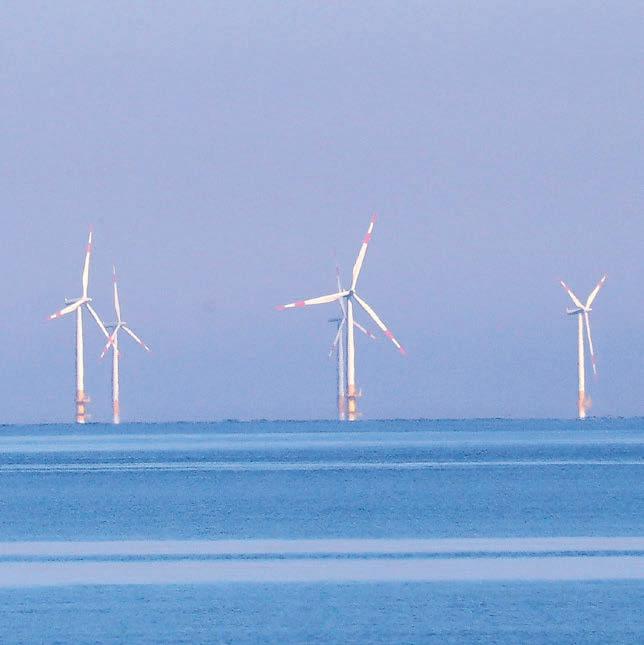
MONDAY–THURSDAY, OCTOBER 14–17
Introducing a new breakout session!
“Navigating the Energy Transition: Smart Grid and Broadband Connectivity”
Attend the 2024 IWCS Forum to experience a new breakout program that fosters discussion on broad trends critical to global connectivity. Industry experts will share innovations related to data, communication, control, and power cables as applied to the grid of the future. How will composite cables and other multi-technology systems operate together to enable advanced power and connectivity? Make plans now to be part of this critical conversation at the IWCS Forum!
The future energy grid
Power demand and communications interconnectivity
Large-scale and municipal infrastructure technology
Leveraging artificial intelligence (AI) and automation for efficient transmission of power and communications
Register early for discounted rates! Visit IWCS.ORG to begin planning your IWCS Forum experience.
Traveling internationally? Promptly ensure your U.S.A. VISA and travel documents are valid through October.

MONDAY October 14
Subject to change. Visit iwcs.org to view the most up-to-date schedule.
TUESDAY October 15
Core Professional Development Courses
Executive Session & Industry Trends Panel
Elective Professional Development Courses
WEDNESDAY October 16
Technical Sessions 4 and 5
THURSDAY October 17
Plenary Luncheon with awards and Keynote presentation
Lunch Concessions Available
Supplier Exhibition™
Technical Sessions 1, 2, and 3
Supplier Exhibition™
Navigating the Energy Transition: Smart Grid and Broadband Connectivity
Technical Sessions 8, 9, and 10
Cable Sustainability and Recycling Panel Discussion
Lunch Break
Lunch Concessions Available
Technical Sessions 11, 13, and 13
Technical Sessions 6 and 7
Poster Paper Session
Welcome Reception
BY PHIL PILGRIM
Just over a year ago, in June, 2023, we witnessed the OceanGate tragedy. Their Titan submersible vessel was lost, and an international rescue effort was rapidly deployed. Sadly, the rescue mission was unsuccessful.
Unknown to most, an event nearly identical, occurred 50 years earlier during a cable lay, and the outcome was more favourable. Here is a synopsis of that event.
In the spring and summer of 1973, the CANTAT 2 submarine cable was laid from Canada (Beaver Harbour) to England (Widemouth Bay). It was supplied by STC. CANTAT 2 was a 14 MHz coaxial cable design that
transmitted bidirectionally in the same waveguide.
By August 1973, post lay burial was underway. This procedure is conducted in the waters of the continental shelves where the maximum depth is only ~ 1.5km. As per the name, the armoured cable is buried under the ocean floor to further protect it from external aggression (fishing, anchors, abrasion, etc.). These days, cable burial is conducted mostly by plows that are towed behind ships. Often a plow cannot pass a repeater though its works, so remotely operated submersibles are sometimes used to bury the larger repeaters. These devices use jets of high pressure water that liquifies the soil
under the repeater. Although sea plows were first developed in the 1930’s and used ever since, they were still undergoing development in the early 70’s and were not widely used [Bell Lab’s Sea Plow I was deployed in 1966, by 1973 the mark was Sea Plow III and it could only work to 0.5 km water depth]. Likewise, Remotely Operated Vehicles (ROV’s) were relatively new and were not yet exploited for cable burial. Their early use was by navies for underwater ordinance work & salvage/ retrieval. At the time of CANTAT 2, small manned submarines were used to conduct post-lay burial of the cable in deeper water using high pressure water jetting. For CANTAT 2, a small submarine was deployed for burial on the continental shelves. It operated

in 8 hour shifts to bury the cable. For the UK side of the cable, 20 days were planned for this work. A submersible called the Pisces III was used. It built by Hyco International Hydrodynamics of Vancouver, Canada in 1969 (4 years after the first: Pisces I). It was qualified to 2 km water depths and this unit was refitted by Vickers of the UK. The crew chamber of the Pisces III was a sphere that provided maximum protection. The aft section of the vessel contained another sealed spherical compartment containing hydraulic fluids and related machinery for buoyancy and operations.
Roger Mallinson and Roger Chapman conducted the post-lay burial. Chapman was a former British Royal Navy submariner and Mallinson was and engineer who led the refit work of the Pisces III at Vickers.
Around 9AM on August 29th, 275km off the coast of Ireland, the Pisces III returned to the surface following 8 hours of burial work. Once on the surface, the support ship [Vickers Voyager] would connect a crane to the submersible and lift it to the deck. During this procedure, tow and lift lines were accidentally connected to the wrong fittings on the sub. This resulted in the rear sealed compartment’s door being pulled off and the aft section flooding and sinking. The 2 ton rated tow rope briefly held the sub at a depth of 150’ but was unable to hold the 16 ton vessel. The rope snapped and the sub quickly sank
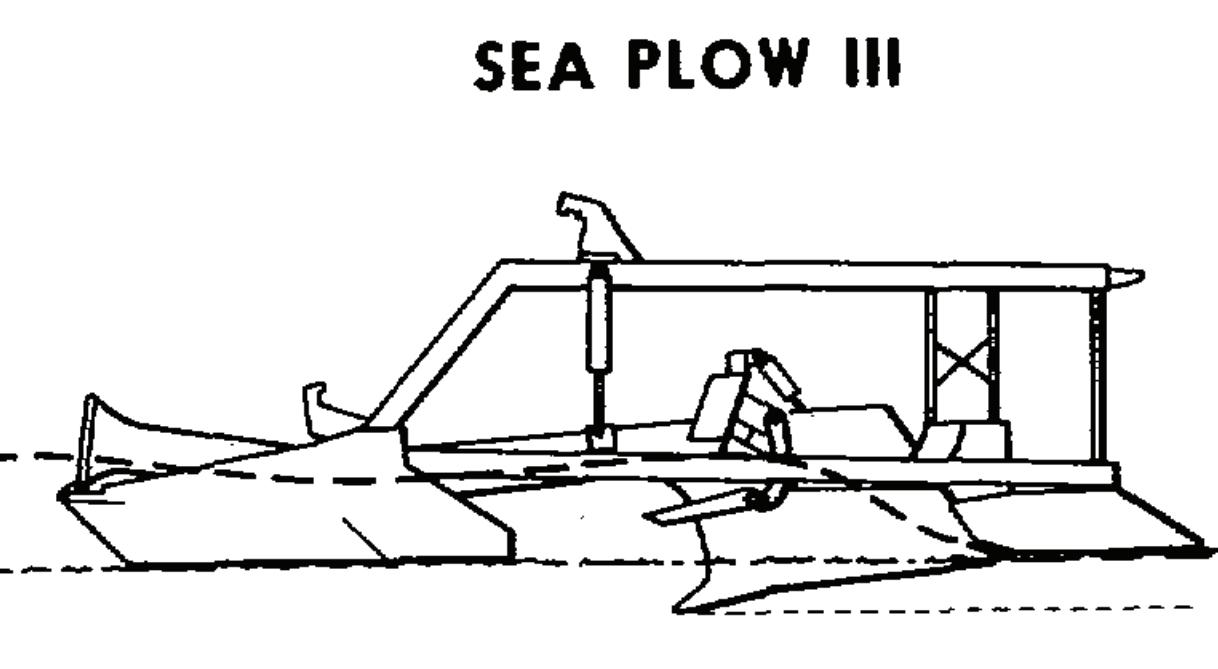
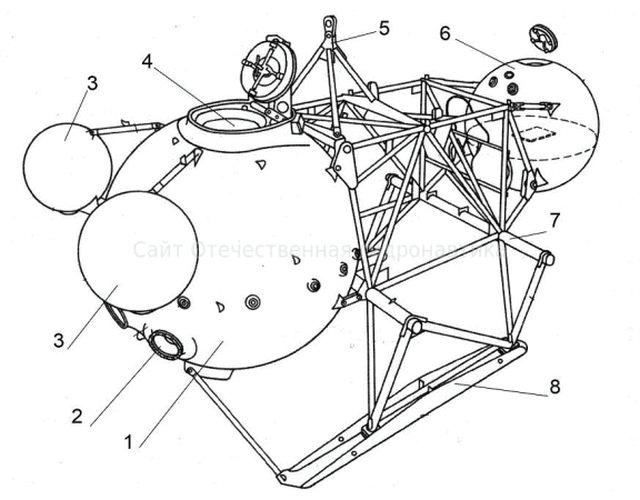
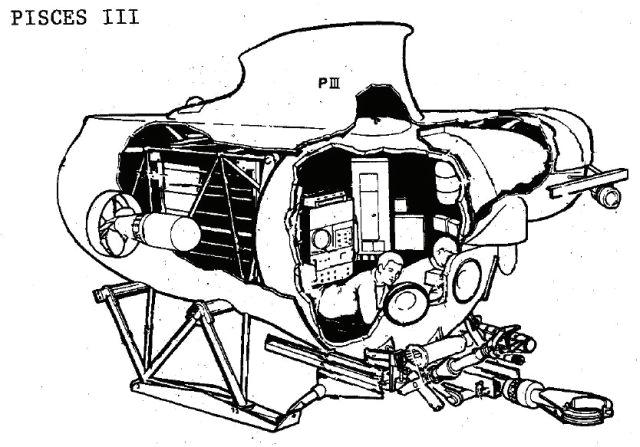
backwards to the bottom at 40mph.
The two well trained pilots realized what was happening and prepared for the impact. They padded and positioned themselves including placing cloth in their mouths to reduce trauma.
The sub struck the bottom but did not break up. It embedded its aft end into the sea floor.
The two Rodgers (not Ronnies) knew their predicament. They assessed their situation, made a plan, and also were able to communicate with the Vickers Voyager above. They immediately began to conserve oxygen by climbing to the highest points in the vessel and laying still. This was done to maximize the oxygen supply and to distance themselves from the deadly heavier carbon dioxide layer that would settle at the bottom of the sphere. An egg timer was set and alarmed every 40 minutes to remind them to activate a device that “scrubbed” the air of CO2 and to prevent the two from falling asleep.
It was fortunate that Mallinson fitted a full oxygen tank at the start of their dive. It would supply 72 hours of oxygen for a two man crew.
It was immediately decided to call for the other two Pisces vessels in use in the region. The Pisces II was on the Vickers Venturer in the North Sea. It raced to the nearest port and the Pisces II was flown to Cork, the nearest

port to the Pisces III. The Pisces V was also flown to Cork but from Canada. Additionally, the US Navy flew an early ROV (CURV III Controlled Underwater Recovery Vehicle) from California to Cork. Note: the CURV I retrieved a Hydrogen bomb from the Mediterranean Sea in 1966.
By approximately 24 hours after the accident, the Vickers Voyager was loaded with Pisces II and V and was underway to the rescue site (10:30am August 30th). The Canadian cable ship John Cabot was also working on this lay and was in the area. It returned to the nearest port, Swansea, Wales and picked up the CURV III ROV.
The Voyager steamed for approximately 13 hours to reach the site at 2AM. The rescue began with the Pisces II attempting to use its manipulator arm to fasten to the stranded vessel. They lost the line and had to return to the surface. The Pisces V was immediately deployed but sustained a power issue then returned to the surface. It was redeployed just after 12 noon on the 31st but again lost the line while trying to attach it to the Pisces III. They then tried to release the Pisces II but a leak was discovered and it underwent repairs.
The John Cabot was on station by this time but the CURV III suffered a power problem and could not be launched.
At 4AM on September 1st, the Pisces II was repaired and deployed. At 5 AM it was able to attach the line to the Pisces III. This was 76 hours
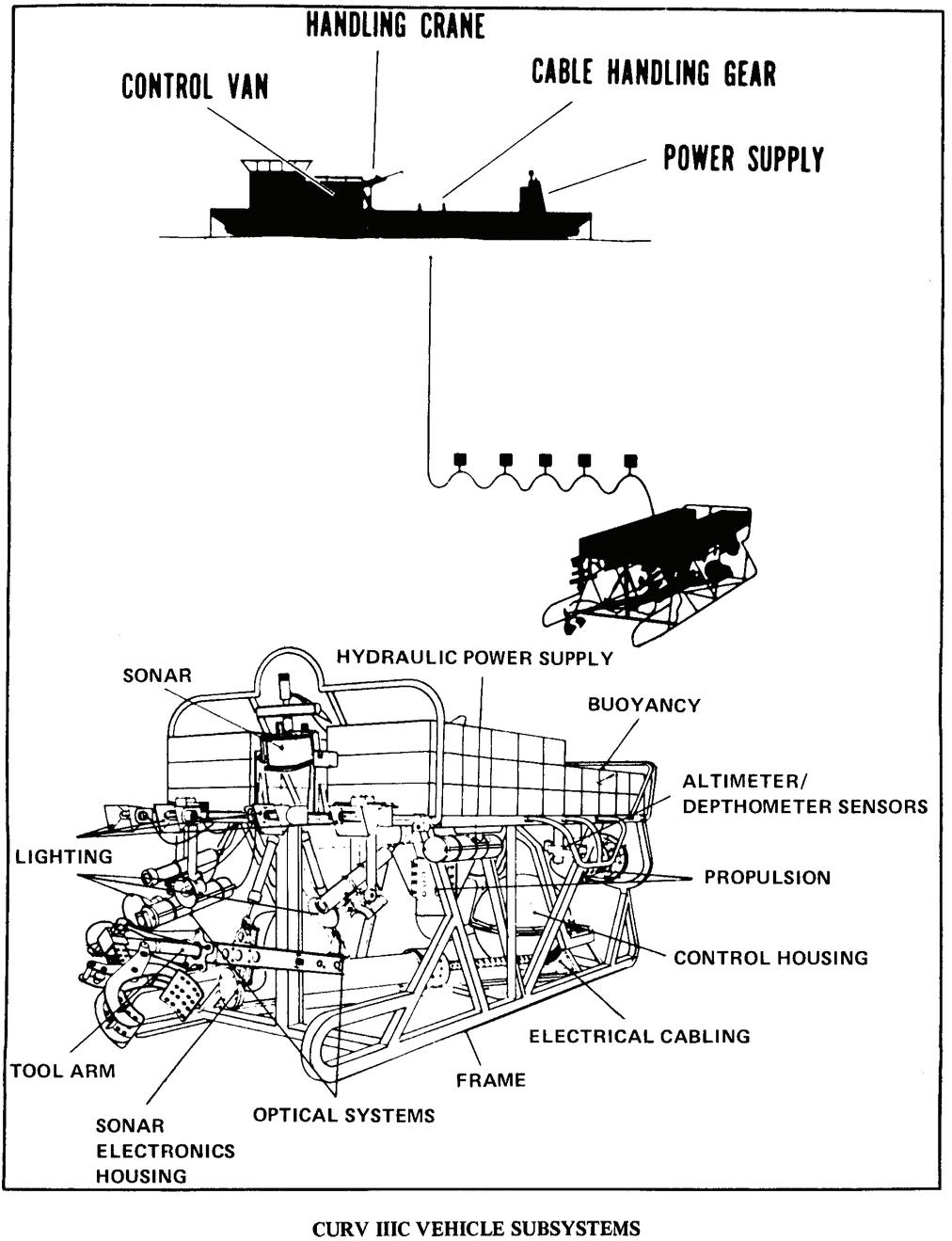
after the Pisces III first launched and 4 hours after its expected oxygen depletion point of 72 hours.
At 10:35 AM, the CURV III was deployed and connected a second line to the stranded vessel. The lift began but was paused after 30 minutes due to the CURV III becoming entangled. This was sorted and the Pisces III was lifted to a water depth of 100’ where divers could attach strong ropes. The vessel was then lifted by the cable ship John Cabot and broke the surface at 1:17pm and it took an additional 30 minutes to open the stuck hatch. Both Mallinson and Chapman were in good form. They were in the vessel for 84 hours and 30 minutes. It is estimated they only had 12 minutes of oxygen left.
My proofreader thinks the Pisces was modeled after her 1960’s GE Mixer STF

PHILIP PILGRIM is the Subsea Business Development Leader for Nokia's North American Region. 2021 marks his is 30th year working in the subse a sector. His hobbies include "Subsea Archaeology" and locating the long lost subsea cable and telegraph routes (and infrastructure). Philip is based in Nova Scotia, Canada.
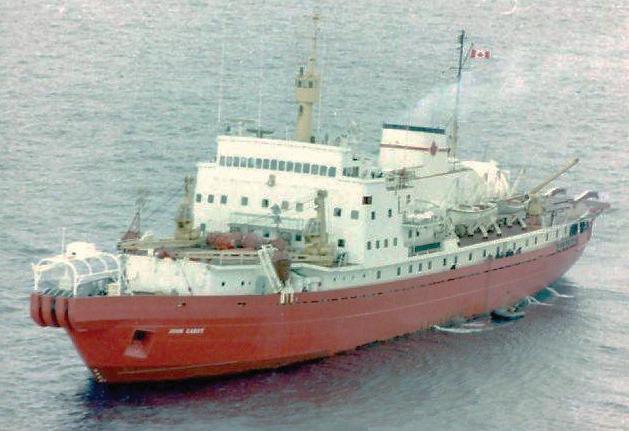
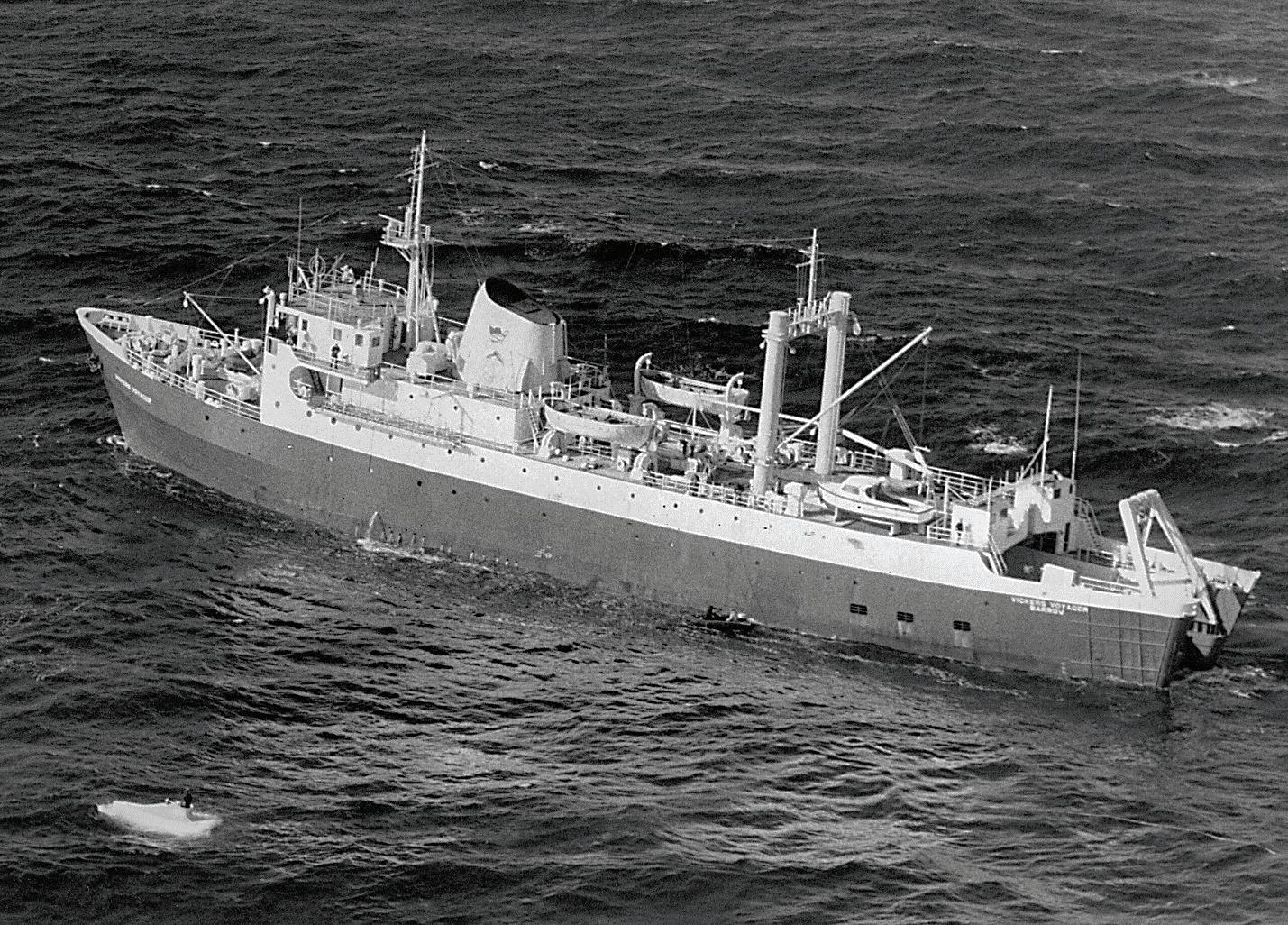



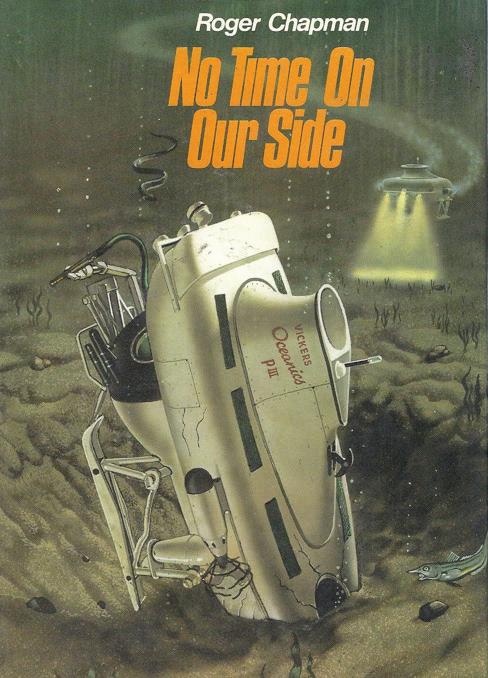

BY ANDRÉS FÍGOLI
Today, Over-The-Top (OTT) companies such as Amazon, Google, Meta and Microsoft have a clear dominance in most submarine cable routes around the world, whether through their own infrastructure, consortiums or even long-term agreements such as fibre or capacity Indefeasible Rights of Use (IRU) agreements. With recent announcements of new long OTT cable systems in almost every ocean, the gap between OTTs and the telcos is widening every quarter.
The situation is familiar to those who were in the industry more than 20 years ago when state-owned telecom operators had national monopolies, but with one major difference, we are now facing the power of economies of scale that drive directly to global dominance in the wholesale market without regard to borders. While an incumbent telecom operator used to land in a country of a certain region that would serve as a beachhead for future investments in mobile operations, towers, urban/rural fibre network deployment, now the OTT scope has expanded to other countries far beyond the usual regional footprint to distant places across oceans to establish new data centres to secure their ultimate online products and services (e.g., online advertising, e-commerce).
If we apply this to the legal and regulatory aspects of the submarine cable industry, each OTT approaches customers, suppliers and local governments to negotiate its agreements in its own style but with similar results, conquering markets and gradually

leaving less and less room for other telecom operators and new entrants to participate. And this should serve as a warning for the possible consequences it may have, as we clearly saw with the monopolies or dominant market participations of incumbent operators some years ago.
In this conservative article, we will analyse some of these behaviours and how they may have a greater impact than in the past decade if antitrust and telecom regulators do not act in time. Of course, we will try to identify some patterns, while not generalizing because they will not necessarily apply to all the parties involved.
Typically, the dominant incumbent telecom operators used to impose their
own IRU template agreements on their capacity suppliers, giving the former an extraordinary advantage from the outset of the contract negotiations. Certainly, most of the provisions were in their favour, such as indemnification clauses or even liability caps, without them having to justify or defend these provisions in any way during the negotiations.
At the same time, they would impose tougher terms on their own customers, leaving a gap between the two types of agreements. This allowed them to reduce their risk exposure and limit their liability for example when dealing with frequent fibre cuts. In some situations, this strategy would allow them to obtain additional credits subject to aggressive Service Level Agreements (SLAs) with their capac-

ity suppliers, and after reselling the same capacity, they would not provide any compensation at all to their own affected customers.
They always won, and it was extremely difficult to deal with them because you knew they were abusing their dominant position in their local markets. And things are not far from that situation today with some OTTs.
The list of possible obligations to be imposed on capacity suppliers is endless: provision of contingency plans in case of outages (i.e. restoration capacity), reduced list of credit exceptions under SLAs (i.e. maintenance permit delays), or even step-in rights to change maintenance suppliers if they are unable to perform their activities within a certain timeframe, among others. And those same terms
are probably not the same when OTTs sell their spare capacity to the rest of the telecom industry.
Add to that the fact that many OTT employees come directly from the telcos that are now their customers or suppliers. So, there is little room for surprises. They are notorious for knowing every network design flaw or the best terms and conditions you can ask for. And in some cases, they will push for tougher provisions that were not even considered in their previous jobs. The same goes for those in government who have to deal with OTTs. More consideration and kindness at the negotiating table is a characteristic of OTT representatives that should not be lacking in these scenarios of never-ending revolving doors in both the private and public sectors.
Another type of negotiation has evolved in recent years with the OTT need to circumvent local regulations with cable landing party agreements. The role of many telcos today is often reduced to providing services to hyperscalers at their landing stations, without even owning the new system or being a user of its capacity, serving merely as a submarine cable landing permit holder.
This ancillary role should not be a sufficient excuse for telecom companies to accept any kind of abusive terms in these agreements, such as assuming responsibility for environmental risks related to the laying and operation of submarine cables, occupational safety and labour aspects of seabed or beach manhole operations. Risk allocation should not be transferred
from the real owner of the seabed infrastructure and local regulations should be respected by both parties.
In all of these agreements, it is recommended to be properly advised by lawyers with international exposure to negotiations with OTTs, who can identify these specific practices and propose alternative ways to reach affordable solutions for both sides. In other contexts, such as negotiations between telecom companies and other national operators, the balance of power is different, and solutions tend to be more equitable.
It is well known that OTTs have enhanced bargaining power with cable suppliers and installers due to volume and cash flow advantages. This translates into competitive advantages over the telcos with better time response for having a new system and its spare parts ready.
Accordingly, OTTs are moving faster than the latter, conquering new markets when conditions are optimal, as these markets are inexorably abandoned by owners of 25-year-old cables who find it difficult to replace them with newer ones and compete with this higher capacity and cost-effective new infrastructure.
With the current low number of cable maintenance vessels available due to geopolitical constraints, strong competition from the oil/gas and offshore wind industries, and with an average age of 24 years of the global fleet, telecom companies find it difficult to launch new systems unless
BY ANDRÉS FÍGOLI
they join with the OTTs in new cable consortiums. Otherwise, the launch of new submarine cable nearby is indeed a high-risk operation that may soon be surpassed by a more capable system at a lower cost.

This also has a side-effect to the detriment of the telcos: they are no longer on the priority list of the cable system suppliers. Therefore, it is imperative that their supply agreements for the deployment of new cable systems or their cable maintenance agreements include special provisions that penalize any delay in the supplier’s fulfilment of its obligations. Whereas a decade ago a cable-laying operation could easily be suspended due to routine overhaul, today each situation must be analysed more carefully to determine whether the priority order has been altered to serve other nearby customers with deeper pockets.
As noted above, negotiations with OTTs and governments have specific characteristics that are different from those that took place two decades ago with dominant local telecom operators. The latter were interested in landing in a new country to deploy fibre to the home, use spectrum in the mobile band, and do other retail business that demonstrated their intention to build
long-term relationships and their commitment to providing a public service to the local population. And that was indeed a good card for both sides to play in any negotiations for years to come.
In contrast, the negotiations between current OTTs and local governments seem to exchange any investment in submarine cables for suitable conditions to install and operate their data centres in the hinterland. Normally, these investment agreements, under Memorandum of Understandings or similar, will be confidential, leaving the population and the rest of the public sector bereft of the proper scrutiny.
However, the implementation phase has raised sensitive issues related to the environmental impact of their infrastructures. Several legal actions against the installation of data centres have been initiated around the world, when local populations and community organizations demand to know the rationale behind the environmental permits granted and insist on the technical reports that support them being published.
In Uruguay, where droughts are not uncommon, the water consumption of a new OTT data centre was calculated to be equivalent to the daily consumption of 55,000 people. In 2024, following a lawsuit filed by a university researcher, the Court of Appeals granted the request to require local authorities to publish the environmental technical reports, arguing that water is a fundamental constitutional right
and that there is no objective reason to keep such information reserved or secret. As a result, the OTT lowered the figures for their projected water consumption.
The public debate would then revolve around the idea that the major infrastructure investment in the form of a package of data centre and submarine cable system is good for the local ICT sector or even the GDP, as informed by consultancy reports paid by the OTTs, or that the sustainability basis of these assets is in line with international standards, usually based on studies from non-independent NGOs.
Certainly, the role of public officials is not an easy one, given the risk of losing much-needed investments that are difficult to obtain, especially in less developed countries. Ten years ago, they would have relied on the national telecom operator to deploy the same cable system and attract new data centre investors, whereas in 2024, the economies of scale used by OTTs gives less space to any of these players.
The public sector should also promote policies that encourage investment in submarine cables to improve connectivity for all players in the telecommunications industry. This includes actively promoting the diversification of cable suppliers that meet the required security standards. It is a matter of not losing digital sovereignty, which should allow each country to respond more quickly in the event of an emergency, such as the multiple

BY ANDRÉS FÍGOLI
cable failures that occurred in several countries in West Africa in March 2024, where redundancy plans failed, and cable maintenance ships were delayed in reaching the affected zone.
Their key role now obliges national telecom regulators to level the playing field and create a regulatory environment that ensures fair competition between OTTs, local telcos or even new entrants. They should first ensure fair access rules that guarantee all stakeholders have fair and reasonable access to new submarine infrastructure. For example, earlier this year, Qatar’s Communications Regulatory Authority launched a public consultation on the “CRA Reference Offer for Access to Submarine Cable Landing Station (SCLS) International Connectivity (ROA for SCLS) Services”1.
In addition, they should eliminate new barriers to entry for telecommunications companies. For example, in Panama, cable owners were recently required to patrol territorial waters to prevent fishing in cable zones, which is a matter exclusively for coastal states, and not every cable owner can afford such costs, apart from OTTs.
To ensure long-term connectivity, governments should also actively condition the granting of new cable licences on the commitment of each
1 Available at: https://www.cra.gov.qa/en/document/ cra-reference-offer-for-access-to-submarine
cable operator to dedicate a percentage of its traffic to national use. Neutrality and traffic prioritization rules should be carefully considered to avoid any indirect circumvention of this condition. Indeed, it is not sufficient to require a cable owner of a new system to sell a fibre pair or capacity services to a local telecom operator if the latter subsequently resells them.
Regarding cable protection, OTTs are usually not interested in taking legal action against those who have damaged their submarine cables. There could be several reasons, one of which is to avoid bad publicity. However, this strategy does not benefit the sector, which needs to actively investigate and prosecute the perpetrators to create a deterrent effect in the country and region. Governments should therefore impose strict obligations to report these incidents promptly to allow law enforcement to investigate. Any untimely investigation usually ends with a final report citing “unknown causes” as the reason for damage to a submarine cable.
With regard to the operation of data centres, many authors have described them as a new form of digital colonialism2 since the data of local residents may be transferred to other countries for unclear purposes. Accordingly, governments receiving these investments should first review their existing telecommunications, privacy, and digital services regulations to align them with the legal frameworks of
2 See Mwema, E., Birhane A., “Undersea cables in Africa: The new frontiers of digital colonialism, First Monday, volume 29, number 4 (April 2024). Available at: https:// dx.doi.org/10.5210/fm.v29i4.13637
other countries that have already been challenged and subsequently corrected in these areas. For example, to protect national consumer data and ensure compliance with data protection laws, the ownership and operation of data centres should be carefully controlled to prevent third party access to data flows and processing.
Self-regulation is no longer an option in any of the areas described above, especially for developing countries that need to preserve their digital sovereignty. A holistic approach based on a human-centred vision is urgently needed if these local governments are to truly control their own futures and leave no one behind.
And lastly, local governments should pay close attention to any market failures in order to promptly propose regulation to change any distortions in the competitiveness of the sector. As seen decades ago, the imposition of most-favoured-customer clauses can create a network effect that distorts a market. Therefore, early and timely scrutiny by regulators is essential, not when it is too late to react. Historically, these mistakes due to their inaction are more difficult to remedy with years of litigation, and usually court decisions come very late to really solve people’s problems.
In the past, dominant foreign telecom operators relied too much on the Bilateral Investment Treaties (BITs), agreements that set the terms and conditions for private investment by nationals and companies of one
state in another state. They established arbitration procedures in the event of disputes over changes to the local rules to ensure effective safety and protection for the laying and operation of submarine cables. There are many arbitration decisions in favour of one side or the other, but certainly this litigation model has not been useful for these companies that wanted to invest in long-term assets in a region, and it attracted more antipathy and reluctance from other nearby governments as well.
Similarly, existing BITs should be carefully reviewed today, before welcoming with open arms any investment in these areas, to avoid a mistaken and unintended interpretation of them as granting any investor the right to override any environmental requirements for the sake of a speedy process3 in obtaining permits for a submarine cable and associated data centre installation.
Therefore, all government lawyers should check beforehand whether the applicable BIT effectively reinforces the right of the state to regulate the environmental requirements for permitting these submarine and onshore infrastructures. For example, the BIT should not be interpreted as a waiver of the requirement to obtain mandatory environmental impact studies prior to the installation of a submarine cable, nor, as seen above, should it allow unreasonable water consumption by a data centre to shatter the sustainability efforts of an entire community.
Moreover, in the pre-OTT era, the dominant telecom player relied on key
local investments that directly reached end users (e.g., fixed voice services) to strengthen its bargaining position with government authorities and to expand its business more easily with additional permits and licences. It was common to hear warnings of divestment if their demands were not met by a local government, while trade unions also joined in with their concerns.
In the current landscape where hyperscalers in some particular cases have data centres that employ an average of only 100 people and use third-party cable landing stations, such players have different leverage with governments based on the volatility of their investments. They can easily sell any of their local assets and transfer their participation in cable consortiums without further consequences.
Hence, governments should also consider introducing stability clauses that require a minimum time frame for these particularly critical infrastructure assets, limiting the transfer of ownership or other indirect means such as fibre or capacity IRUs. Otherwise, they would be relying too heavily on a player who could pull the rug out from under them at any time.
The years 2024 and beyond will be crucial to assess the benefits and constraints of the consolidated dominant positions of OTTs in the submarine cable industry. Local governments should be aware of these tendencies in the sector when designing their international hub strategy plans to show real practices that do not exclude telecom companies involuntarily or not, emphasizing the promotion of connectivity diversification with international
security standards.
Also, telecom companies, now often relegated to a secondary role, especially those without an extensive footprint, need to be aware of their rights and obligations in any negotiation for capacity or fibre IRUs, or even as minor partners in new cable consortiums with OTTs. They should rely on good professional legal advice that can identify abuses and rely on local legislation as the bottom line to avoid inappropriate risk allocation and/or insurmountable costs.
Clearly, the public sector should view telcos and OTTs as key players in preserving digital sovereignty with a balanced regulatory environment that protects consumers, ensures fair competition, and promotes infrastructure investment and connectivity for all stakeholders. Given their experience in dealing with dominant telecom players to avoid harmful consequences for the population, it is now important not to reinvent the wheel, but to recognize that the challenges are of a different magnitude and require corresponding solutions. STF
ANDRÉS FÍGOLI is the Director of Fígoli Consulting, where he provides legal and regulatory advice on all aspects of subsea cable work. His expertise includes contract drafting and negotiations under both civil and common law systems. Additionally, he has extensive experience as an international commercial dispute resolution lawyer. Mr. Fígoli graduated in 2002 from the Law School of the University of the Republic (Uruguay), holds a Master of Laws (LLM) from Northwestern University, and has worked on submarine cable cases for almost 21 years in a major wholesale telecommunication company. He also served as Director and Member of the Executive Committee of the International Cable Protection Committee (2015-2023).


JAS DHOOPER has been appointed Technical Program Manager (TPM) at Google starting May 2024. Previously, Dhooper served as VP Professional Services and Global Infrastructure at Aquacoms for over two years.
BASTIAN WICHAND took on the role of Permitting Manager at Nexans in June 2024. Wichand brings extensive experience from his previous positions at Fugro Germany Marine GmbH, where he was a Permitting Manager and Project Manager.
PETER O’TOOLE joined Xtera as Director of Project Management in May 2024. Before this, O’Toole held multiple roles at Ciena, including Director of Project Management, VP of Quality & Customer Advocacy, and Senior Director Global Partner Operations.


ELENA BADIOLA assumed the role of System Engineer at Xtera in April 2024. Badiola has a strong background from her previous position as Dark Fibre, Colocation & Subsea Services Product Manager at EXA Infrastructure.
JUAN ANTONIO BRAVO was appointed Network Deployment Manager at Telxius starting June 2024. Bravo previously served as Service Manager and Head of Service Operation (NOC) at Telxius.
AMIT SHIVPURI has taken on the position of Technical Program Manager at Google in June 2024. Shivpuri has over 14 years of experience from Infinera, where he was Sr Project Manager - Network Deployment.
These transitions underscore the vibrant and ever-evolving nature of the industry, as seasoned professionals continue to explore new challenges and avenues for impactful contributions.
Submarine Cable Fault Disrupts Internet in Pakistan
Vietnam Internet Disruptions as Three Submarine Cables Fail
Ghana’s Submarine Cables Repaired
WSIS+20 Forum 2024 Session on Submarine Networks
BW Digital to Expand Hawaiki Cable to Connect Tonga
Telecom Namibia Acquires Equiano Subsea Capacity from Sparkle
Digicel, Infinera Partner on Deep Blue One Deployment
NTT DATA-Led JUNO Cable to Use Ciena’s WaveLogic 6
Digicel Launches Deep Blue One Cable
Infinera Targets India’s Booming Subsea and DCI Markets
ST Digital to Build Three Data Centers in West Africa
Global Fiber to Build Subsea Festoon Network in Brazil
Work Commences on Google Project in Fiji
Timor-Leste Marks TLSSC Cable Landing Milestone
ECOWAS Ministers Push Forward Amilcar Cabral Cable
Vietnam to Have 10 New Undersea Fibre Optic Cable Lines
Palau Second Submarine Cable Faces Delay
Datagrid and EGS Begin NZ-Australia Subsea Cable Study
Global Fiber Taps Padtec, Satelital for Brazil Subsea Cable
Airtel Telesonic Launches 2Africa Submarine Cable Network
Vodafone Lands 2Africa Cable in UK
Nokia to Buy Infinera for $2.3B
Nokia Sells Majority Stake in Submarine Networks to French State
OMS Group Signs $292.5M Agreement for Global Expansion
OMS Group Secures $300 Million for Cable Ship Fleet Expansion
Albert Vlodder Wins Rhodes Academy ICPC Writing Award
Submarine Cable Almanac – Issue 50 Out Now!
Japan Agency Uses Submarine Cable to Detect Tsunami
Artificial Intelligence Revolutionizes Data Centers, Subsea Cables
The submarine fiber market continues its robust growth through 2023, maintaining a pace similar to that seen since 2016. While some regions have fewer systems planned beyond 2023, others are witnessing a significant uptick in their overall system count, projected to last through 2026. Overbuild concerns have largely dissipated as demand continues to skyrocket, especially as many existing cable systems approach the end of their economic and technological lifespans and will need replacing.
The landscape of business models is also undergoing a transformation. Increasingly, the focus of the submarine fiber industry is shifting towards meeting Hyperscaler infrastructure needs and connecting data centers, rather than linking population centers. The majority of this Hyperscaler infrastructure and major data center clusters are located in the United States, Europe, East Asia, and South America. As a result, the Transatlantic, Transpacific, and Americas regions are most influenced by this evolving trend.
Current Systems: ................ 19
Capacity: ................. 970 Tbps
Planned Systems: ................. 4
Planned Capacity: ... 782 Tbps
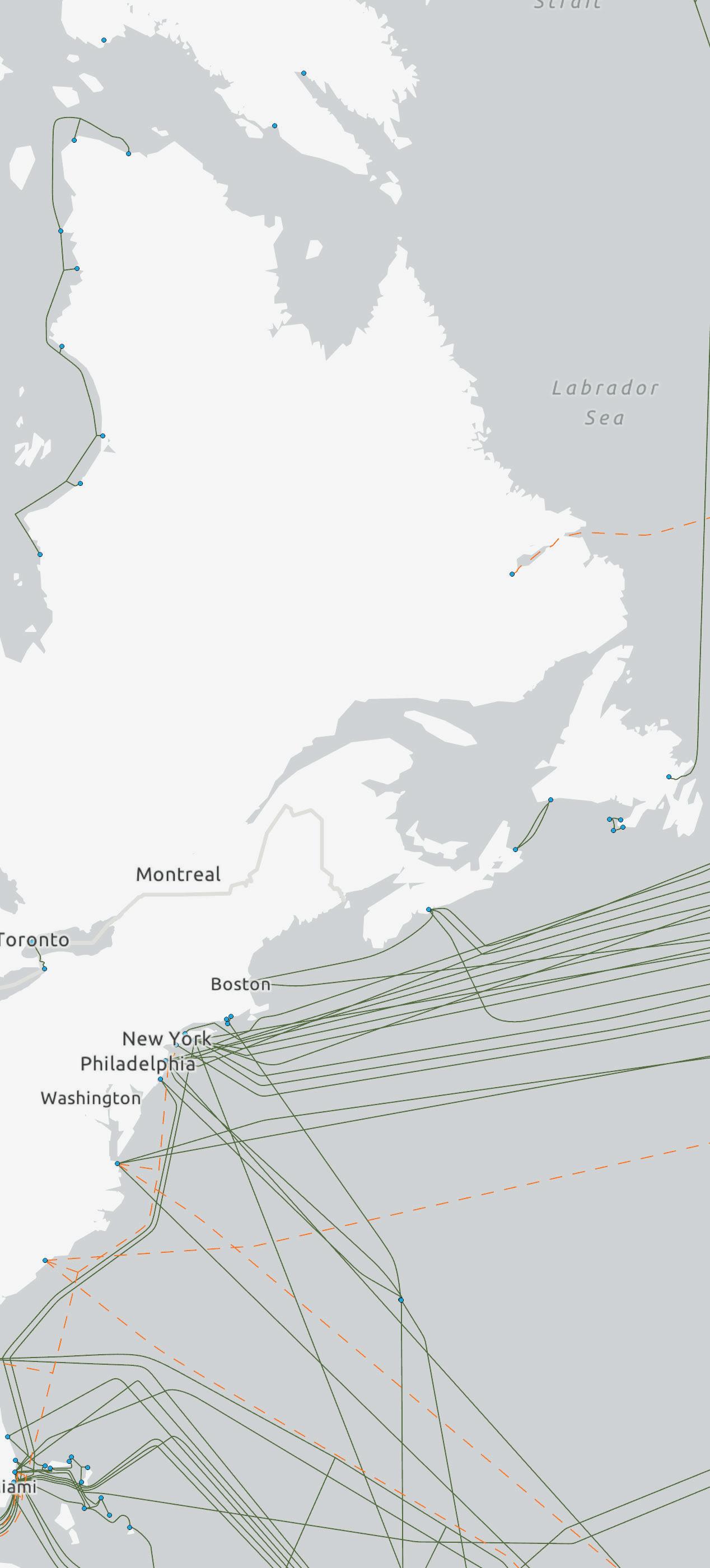
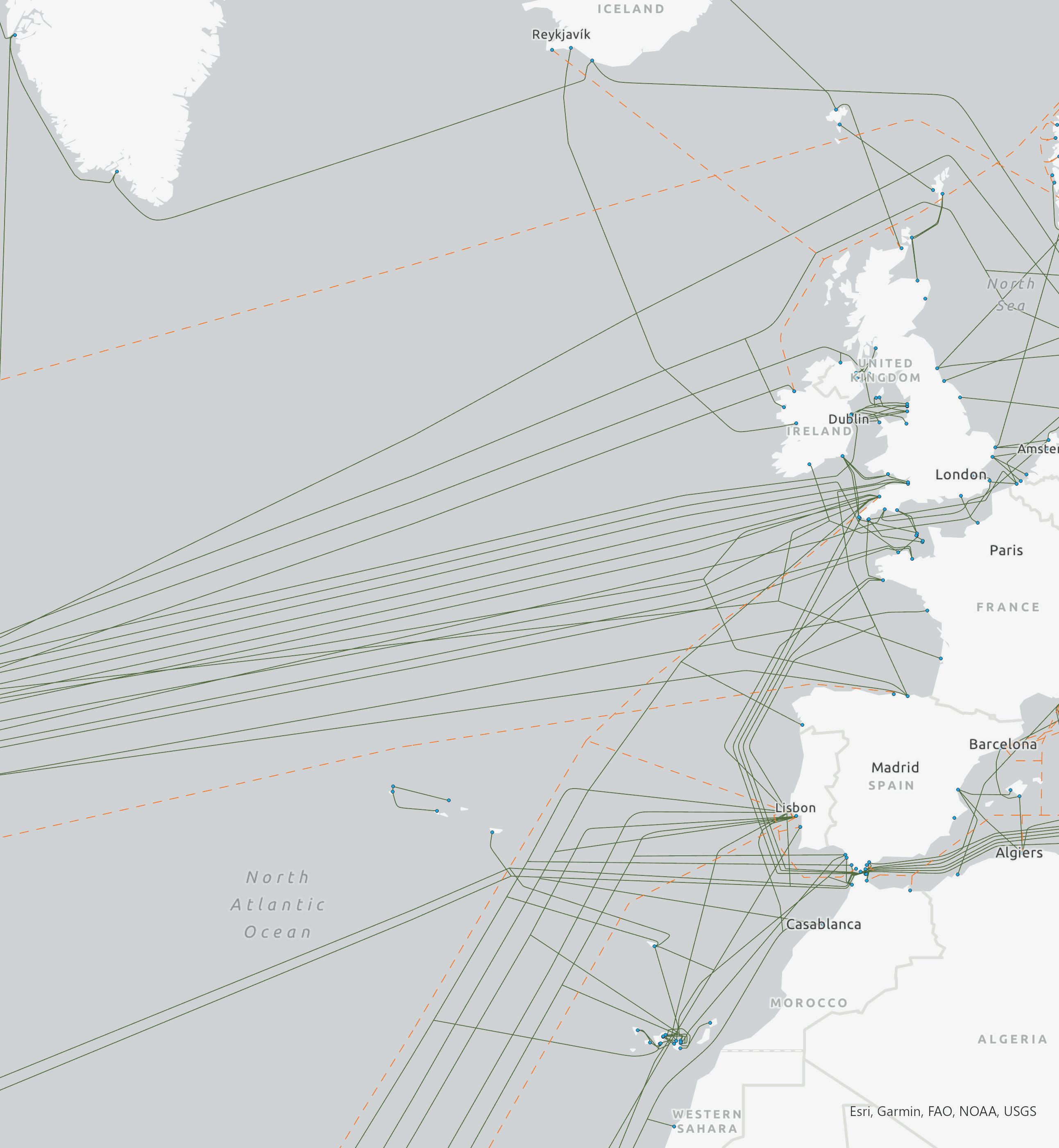
Growth on the Transatlantic route surged from the late 1990s through 2003. Following a 12-year hiatus, the Transatlantic region resumed its expansion, adding a new cable annually from 2015 to 2018. After a brief pause in 2019, the region regained strong momentum, adding at least one new system in 2020 and 2021. Despite a gap in 2022, the Transatlantic region is back on track in 2023, continuing to add new systems and maintain its robust growth.
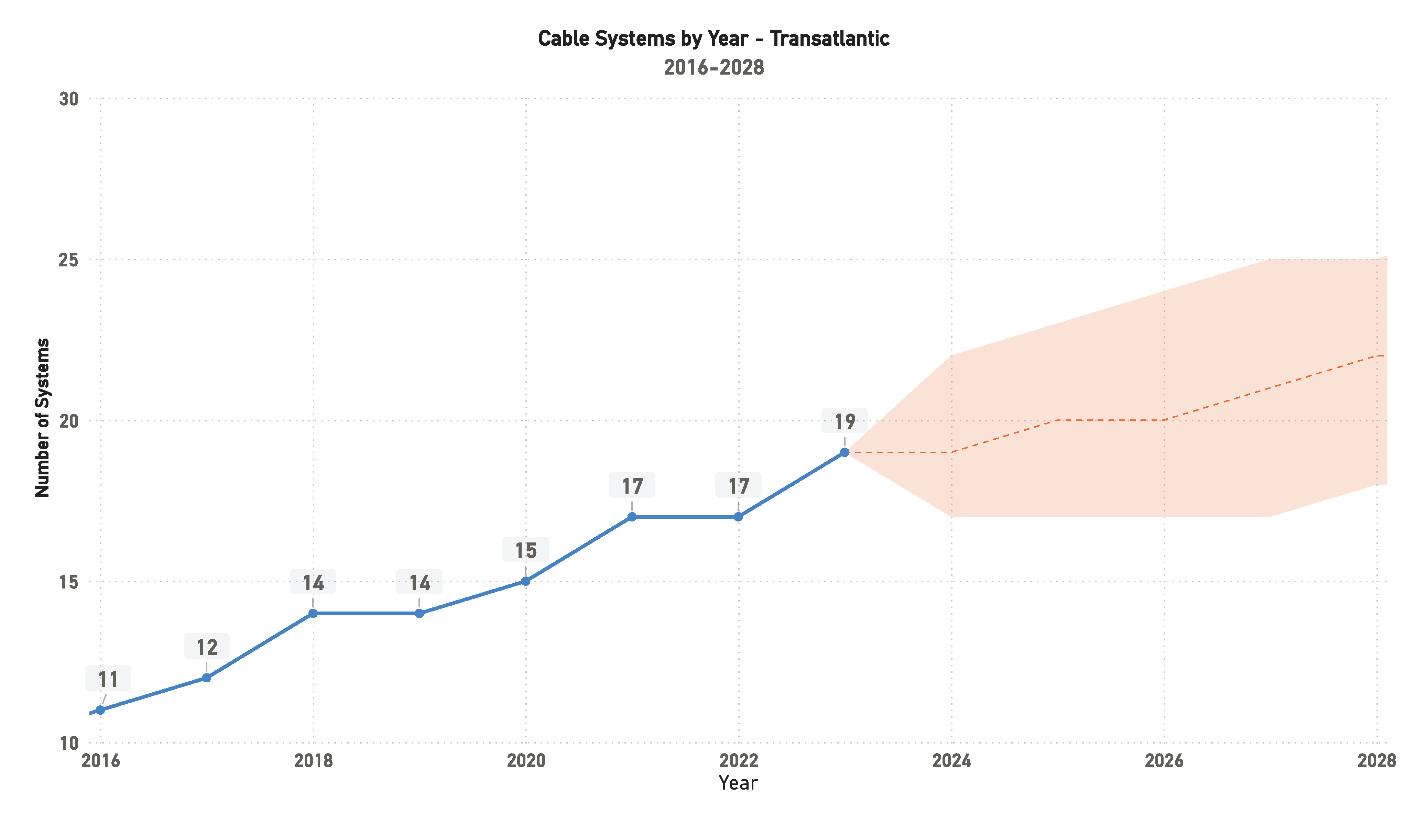
Two primary factors that led to the previous slowdown in development were an excess of capacity and the early 2000s financial crash, triggered by overinvestment in the submarine cable sector. However, with renewed investment and aging systems on the Transatlantic route, new cables are coming into operation. The MAREA system, deployed in 2017, capitalized on surging demand from Hyperscalers, offering a massive potential bandwidth of 200 Tbps on a modern fiber system amid a sea of outdated cables. Alongside the Dunant cable installed last year, these systems offer alternative pathways, enhancing route diversity and establishing more direct links to key data centers in Ashburn, Virginia. While the SACS and SAIL cables launched in 2018 hinted at a growing interest in direct connections to South America and Africa, this trend hasn’t maintained consistent momentum. To further enhance South America’s global connectivity, 2021 welcomed the EllaLink system, which extends across the continent before heading north to Europe.
Amid escalating capacity needs on the northern Transatlantic route between New York and Europe, and a growing appetite for new links to the U.S. Mid-Atlantic and across the South Atlantic, the Transatlantic corridor has
seen sustained growth. This year, two Hyperscaler systems—Grace Hopper and Amitié—became operational, adding to the route’s capacity.
In the early surge of Transatlantic system development, the typical system spanned around 12,000 kilometers, primarily following similar routes between Europe and the U.S. This average length has notably decreased, now hovering around 8,000 kilometers. The shift is largely attributed to new Hyperscaler systems, which prioritize direct routes to their data centers over connecting to major cities.
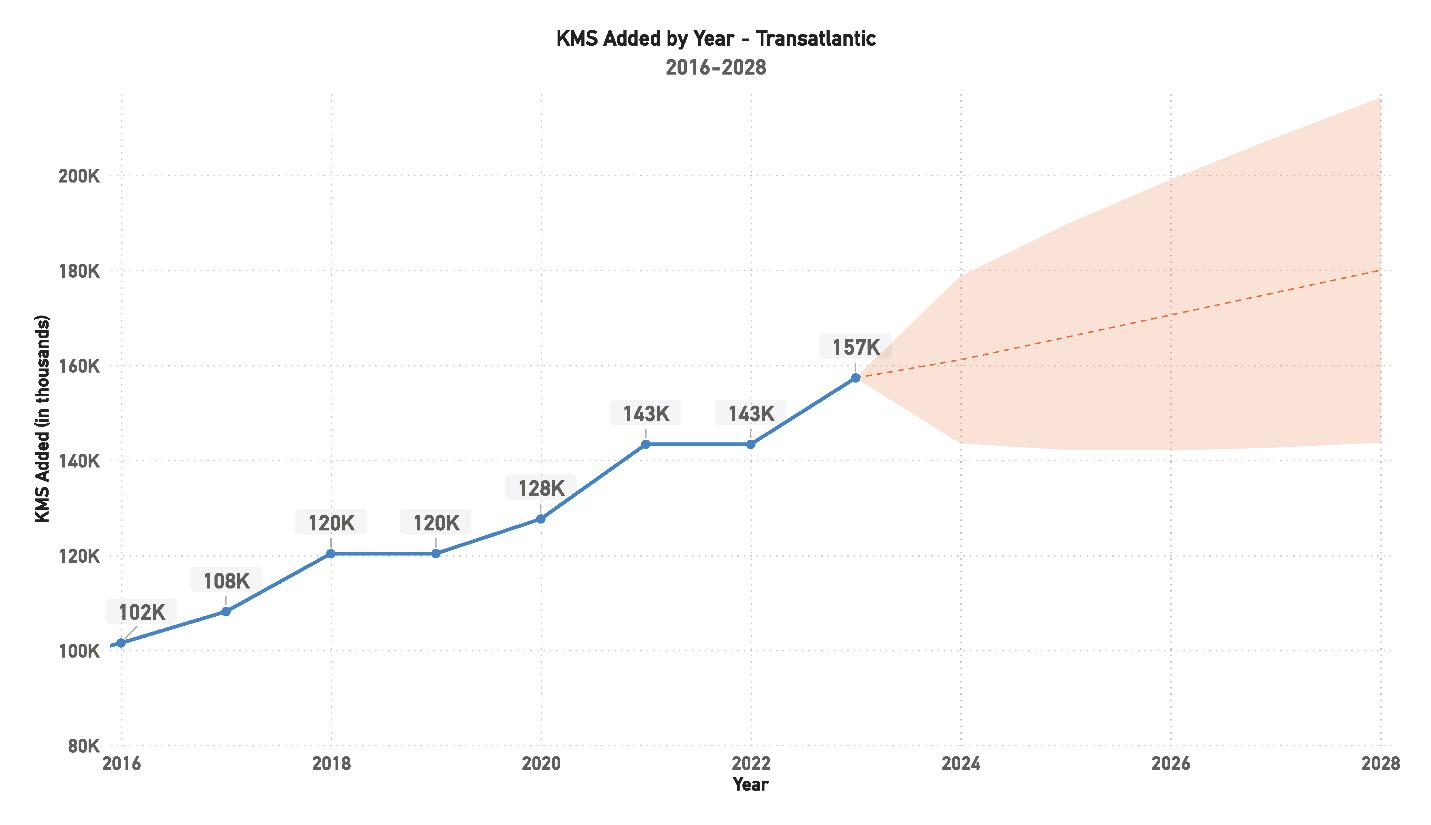
While there’s been a growing demand for alternative routes that deviate from the traditional New York-London axis, the Amitié and Grace Hopper cables have added more connections along this classic route, underscoring its enduring relevance. The evolving customer needs, now focusing not just on bandwidth but also on low latency, have led developers to design routes that are, on average, 18% shorter than their early 2000s counterparts.
Currently, there are three systems planned for the Transatlantic region for the next few years. One of these upcoming systems will pioneer a completely new route to South Carolina, another aims to exploit the shorter northern Atlantic route between Norway and Canada while the third seeks to connect South Africa to the United States via a direct route. These plans indicate that while traditional routes between Europe and the U.S. remain crucial, there’s also room for innovation and new pathways in the network.
One of the three planned Transatlantic systems has successfully achieved the pivotal CIF (Contract in Force) milestone. This points to a more discerning but still strong growth pattern in this region. Considering the significant data traffic between Europe and North America, this robustness is expected to persist. It’s worth noting that two of the new planned cables are not backed by Hyperscalers, presenting challenges in securing funding on the open market. This adds an additional layer of complexity to the evolving landscape of Transatlantic cable systems. STF
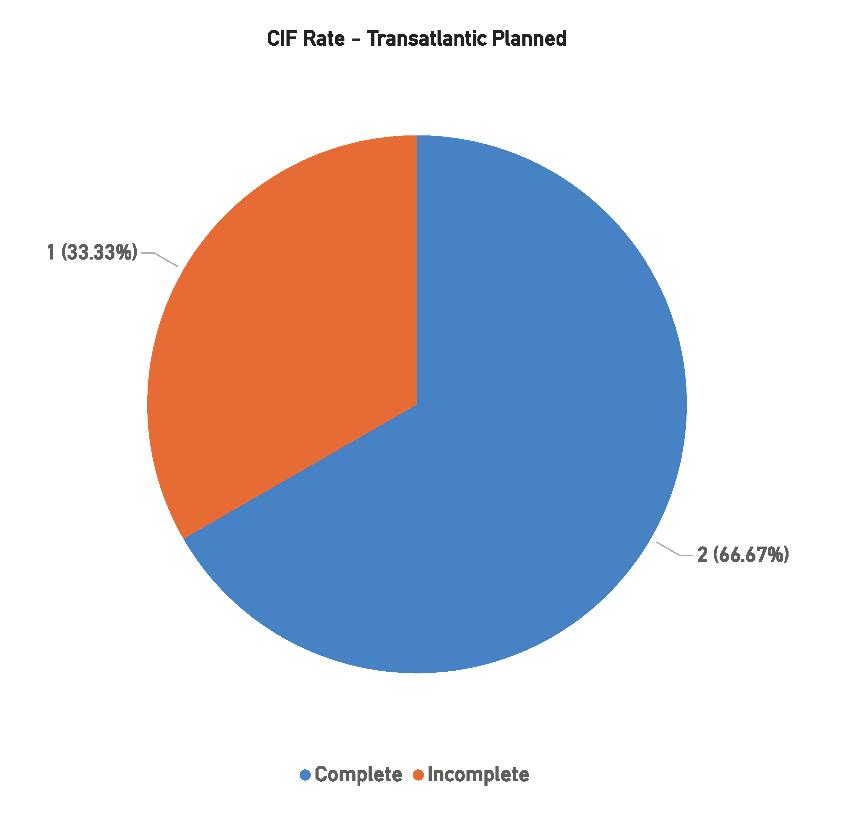
[Reprinted from SubTel Forum 2023/2024 Submarine Industry Report]
Current Systems: ................ 15
Capacity: ................. 742 Tbps
Planned Systems: ................. 9
Historically, the Transpacific market mirrored the Transatlantic market, exhibiting minimal yearover-year growth. However, much like its Transatlantic counterpart, the Transpacific region has recently experienced a significant surge in activity. The primary catalysts for this growth have been Hyperscalers and the demand for route diversity.
Planned Capacity: .. 1112 Tbps
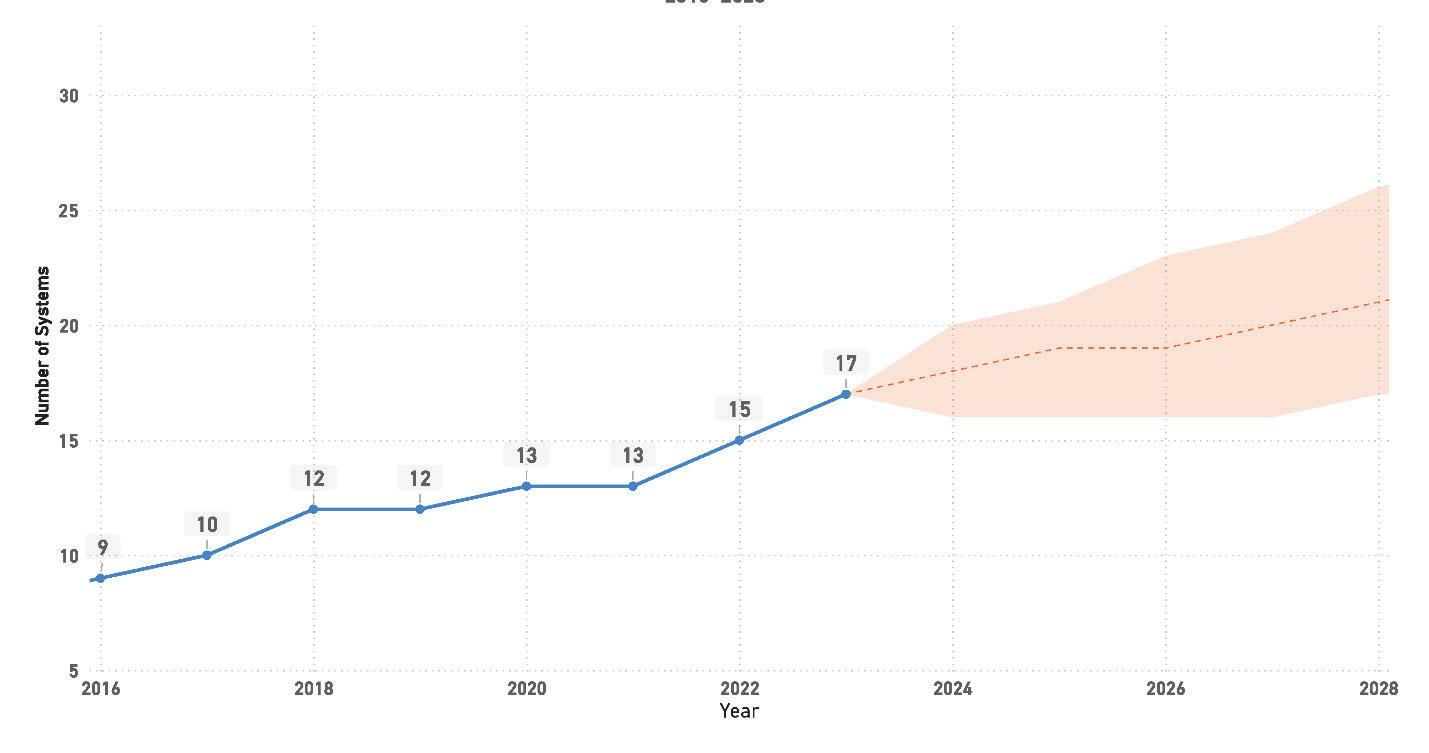
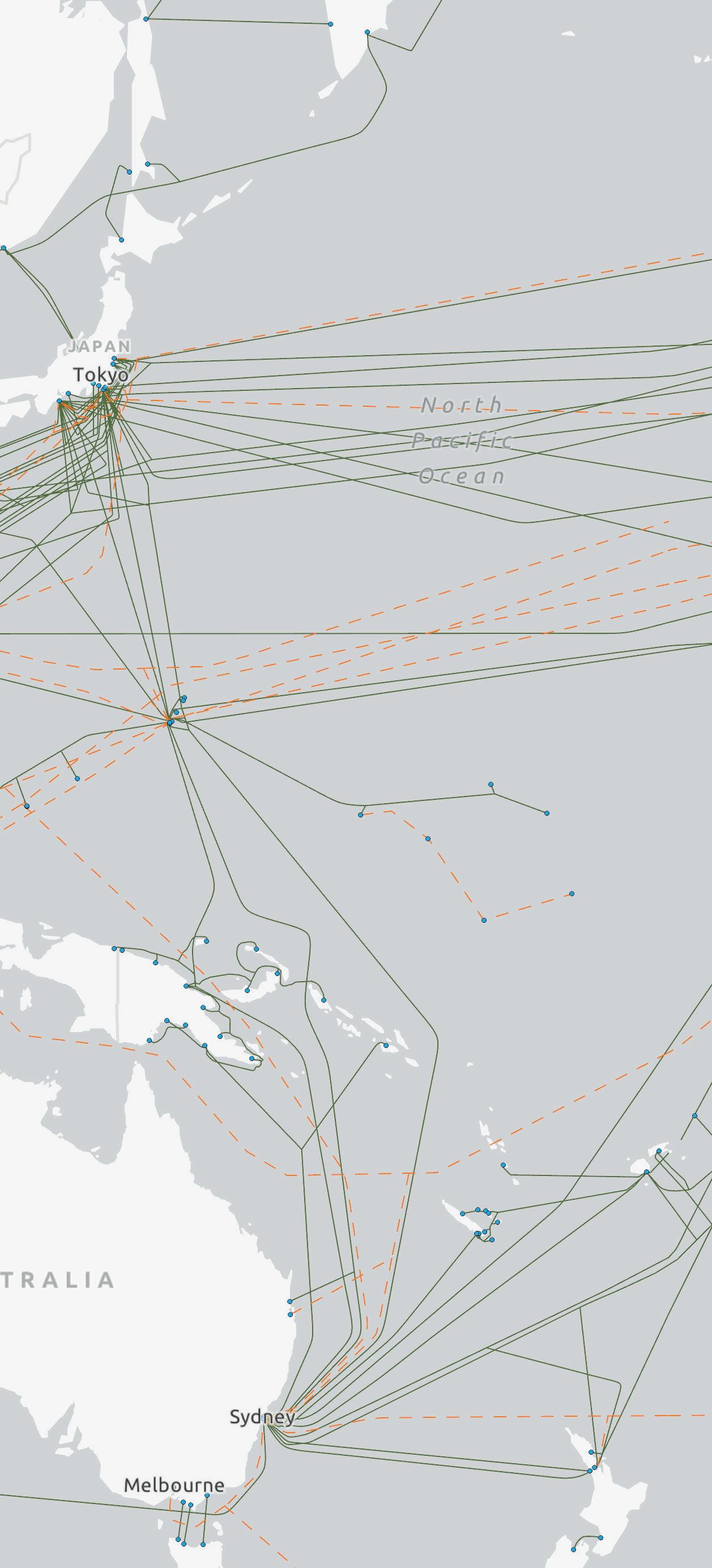
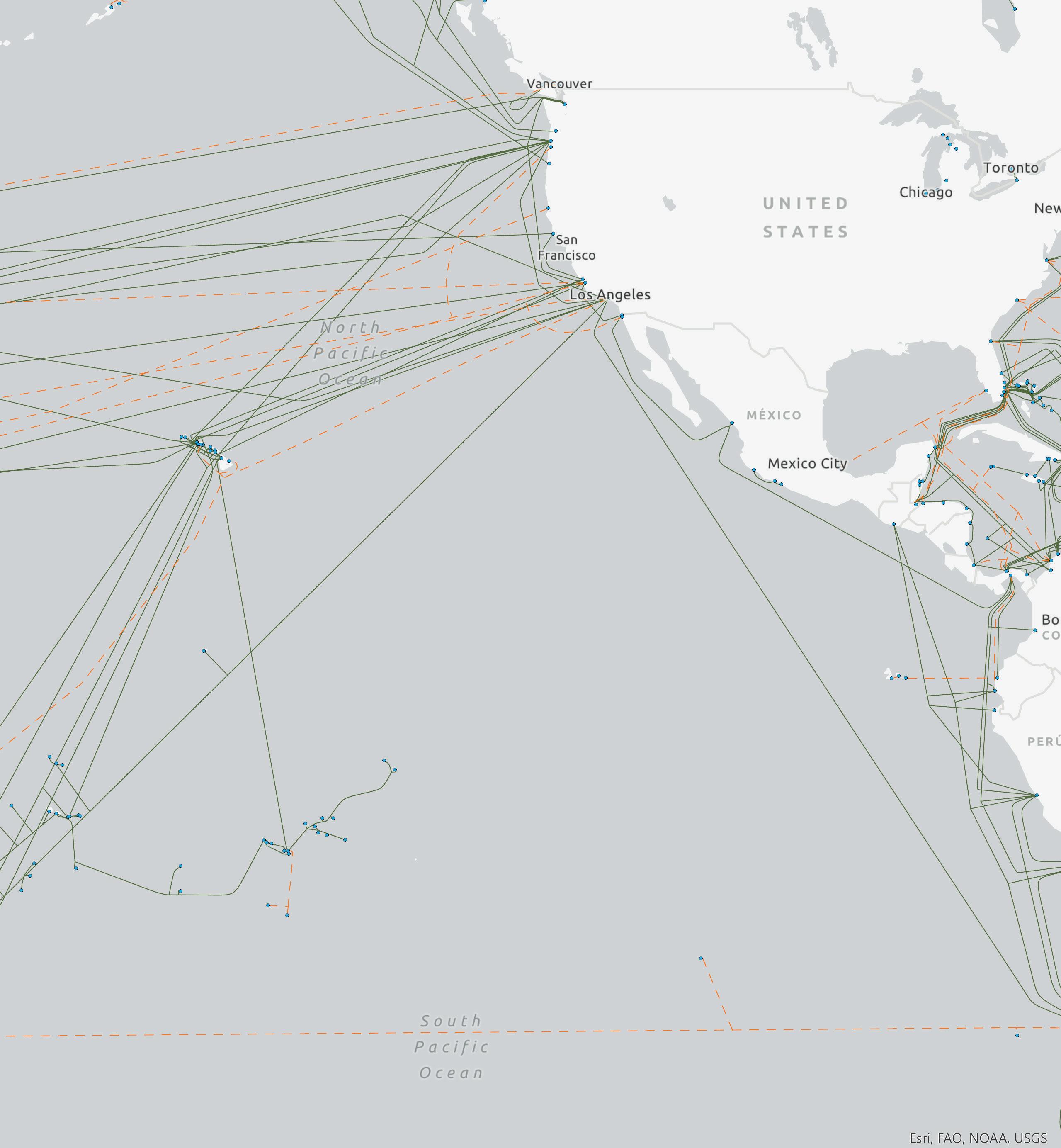
From 2002 to 2016, the region saw the addition of only four systems. The industry downturn in the early 2000s played a significant role in this sluggish growth. Moreover, the absence of new systems on Transpacific routes from 2010 to 2016 can be attributed to the cost-effective capacity upgrades of existing systems, which effectively deterred new competitors.
Until recently, the Transpacific market was nearly saturated, offering limited opportunities for growth beyond enhancing route diversity and reducing latency. However, the landscape has changed. Since 2016, the region has welcomed at least one new cable system annually, except for brief pauses in 2019 and 2021. The driving forces behind these new Transpacific systems include demand from Hyperscalers, the need for route diversity, and the replacement of aging infrastructure. Consequently, eight new systems are in the pipeline through 2025.
The Transpacific region experienced a period of stagnation with no new systems added from 2010 to 2016. However, a shift occurred from 2016 to 2023, marking a phase of steady growth. On average, one new system has been introduced each year during this period, with several more planned through 2027.
Significantly, the amount of cable in the region surged by 67.68% between 2016 and 2023, expanding from 164,000 kilometers to 275,000 kilometers. This increase is particularly noteworthy given that the average system length in the Transpacific region exceeds 15,400 kilometers, making it home to some of the world’s longest cable routes.
Historically, the region remained relatively static, primarily due to the availability of cost-effective capacity upgrades and the extensive systems required to span such long distances. However, recent years have seen a marked uptick in system activity. This surge is largely attributed to the escalating bandwidth demands from Hyperscalers and the widespread adoption of cloud services.
As of now, there are eight planned systems scheduled to be ready for service between 2024 and 2027 in the Transpacific market. Of these, 37.5% have reached the Contract in Force (CIF) milestone, a noticeable decline from last year’s 44%. (Figure 46) The majority of these systems aim to significantly boost capacity along their respective routes, although many are vying for the same or similar pathways. The average system length for all planned Transpacific systems is approximately 13,850 kilometers, making shorter route lengths and reduced latency key considerations for new entrants.
These upcoming systems offer the added benefit of
enhancing route diversity, particularly in the southern part of the region. Several systems that have not yet achieved CIF status are backed by Hyperscalers, effectively removing them from direct competition with other planned systems and mitigating some of the financial risks associated with securing outside investment. Given the renewed interest in the Transpacific region, fueled by rising bandwidth demands from cloud services, this area is expected to experience growth rates comparable to those in the Transatlantic market. STF
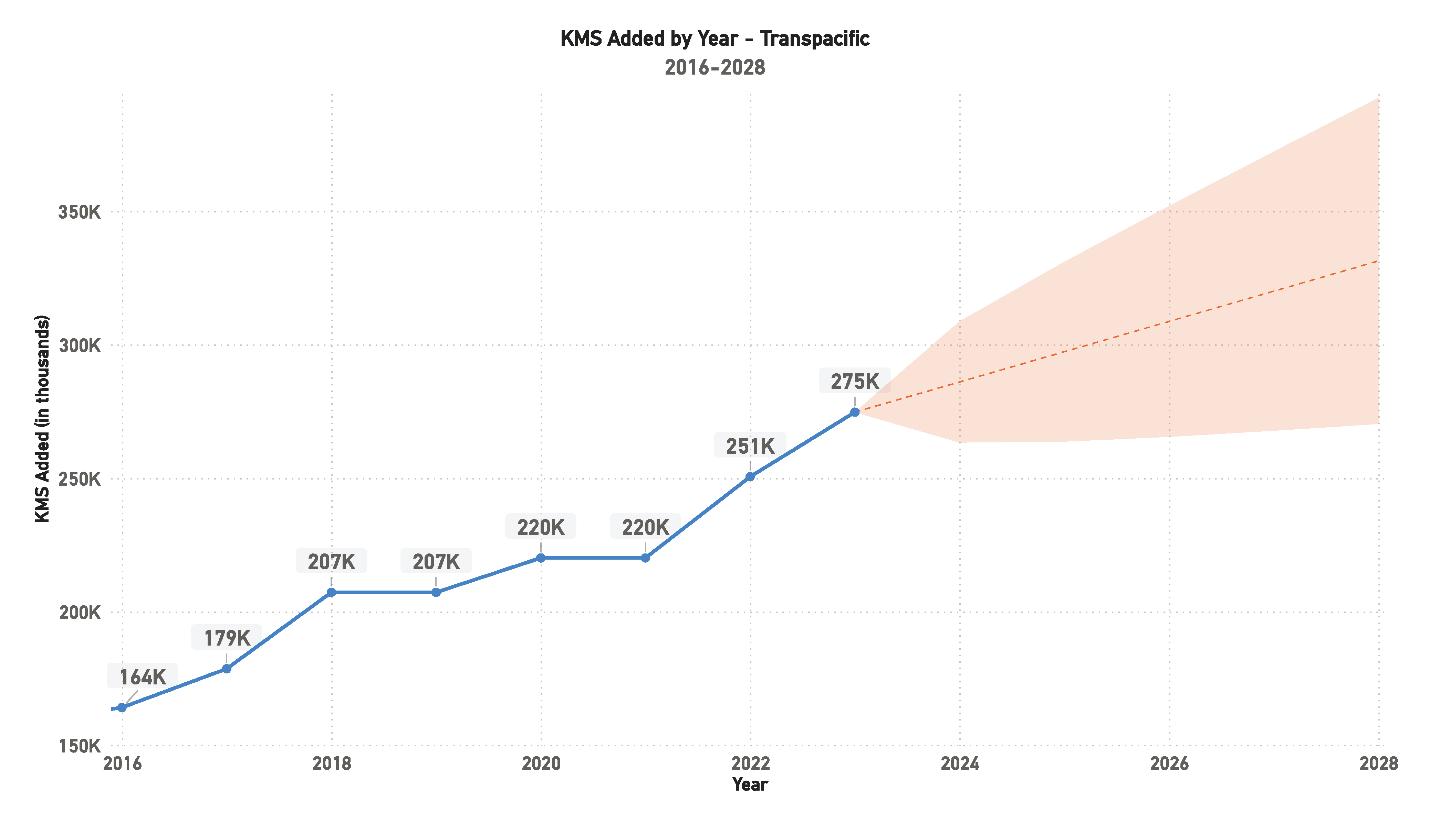
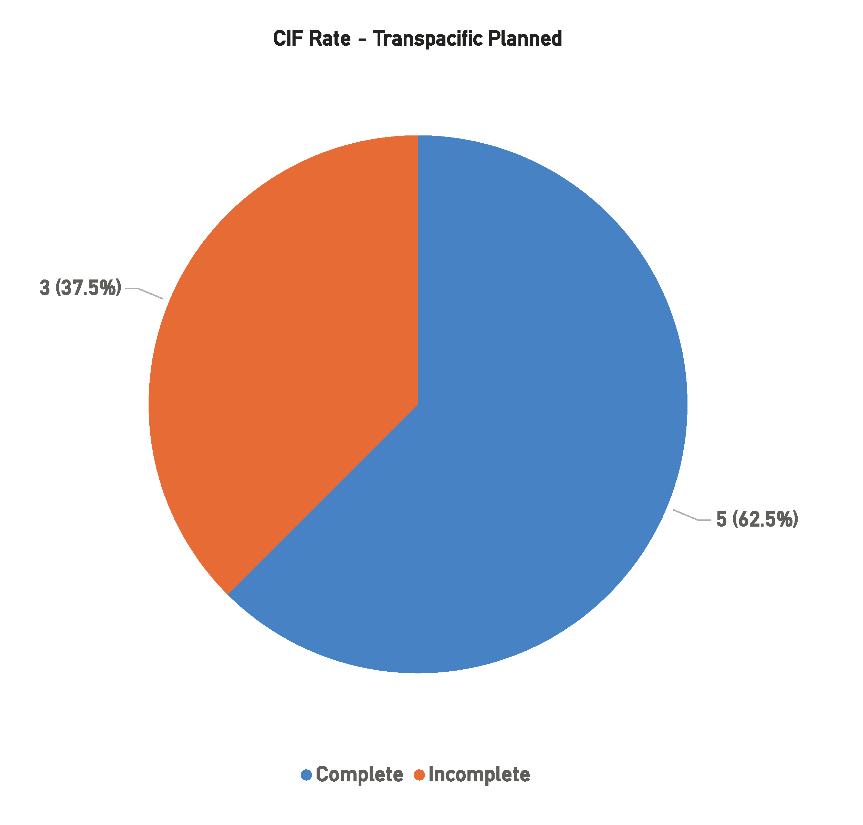
[Reprinted from SubTel Forum 2023/2024 Submarine Industry Report]
Current Systems: ................ 83
Capacity: ................1109 Tbps
Planned Systems: ............... 14
Characterized by steady growth since the early 1990s, the Americas region has continued to see frequent additions over the last few years—going from 62 cables in 2016 to 89 cables in 2023.
After 10 years of steady growth, with an average of about two systems becoming ready for service per year, the region is currently experiencing another surge in development. Four systems were implemented in 2020, another four in 2021, and none are expected to be ready for service by the end of 2022. However, five additional systems are projected to be ready for service by the end of 2023.
Planned Capacity: ... 552 Tbps
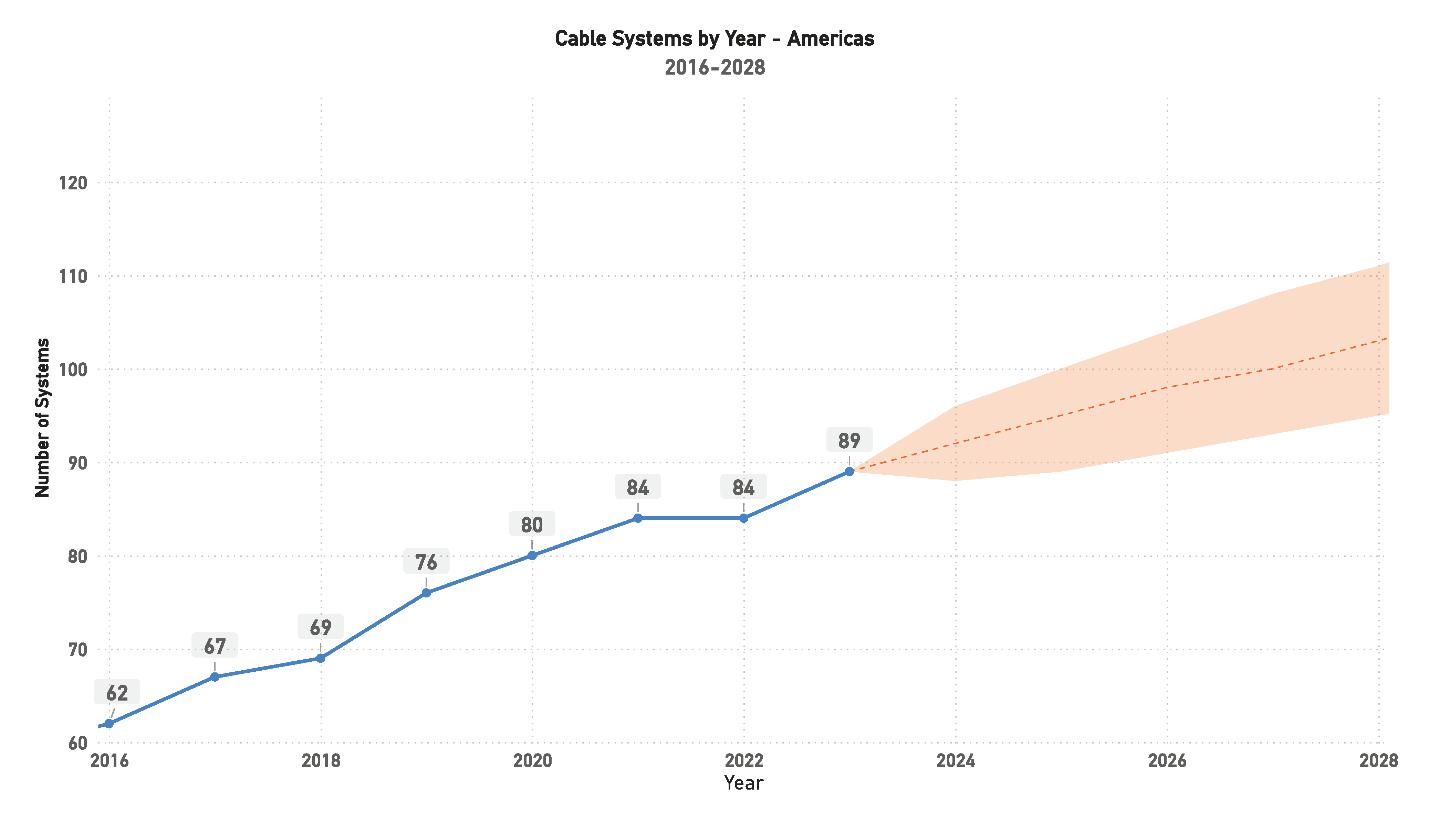
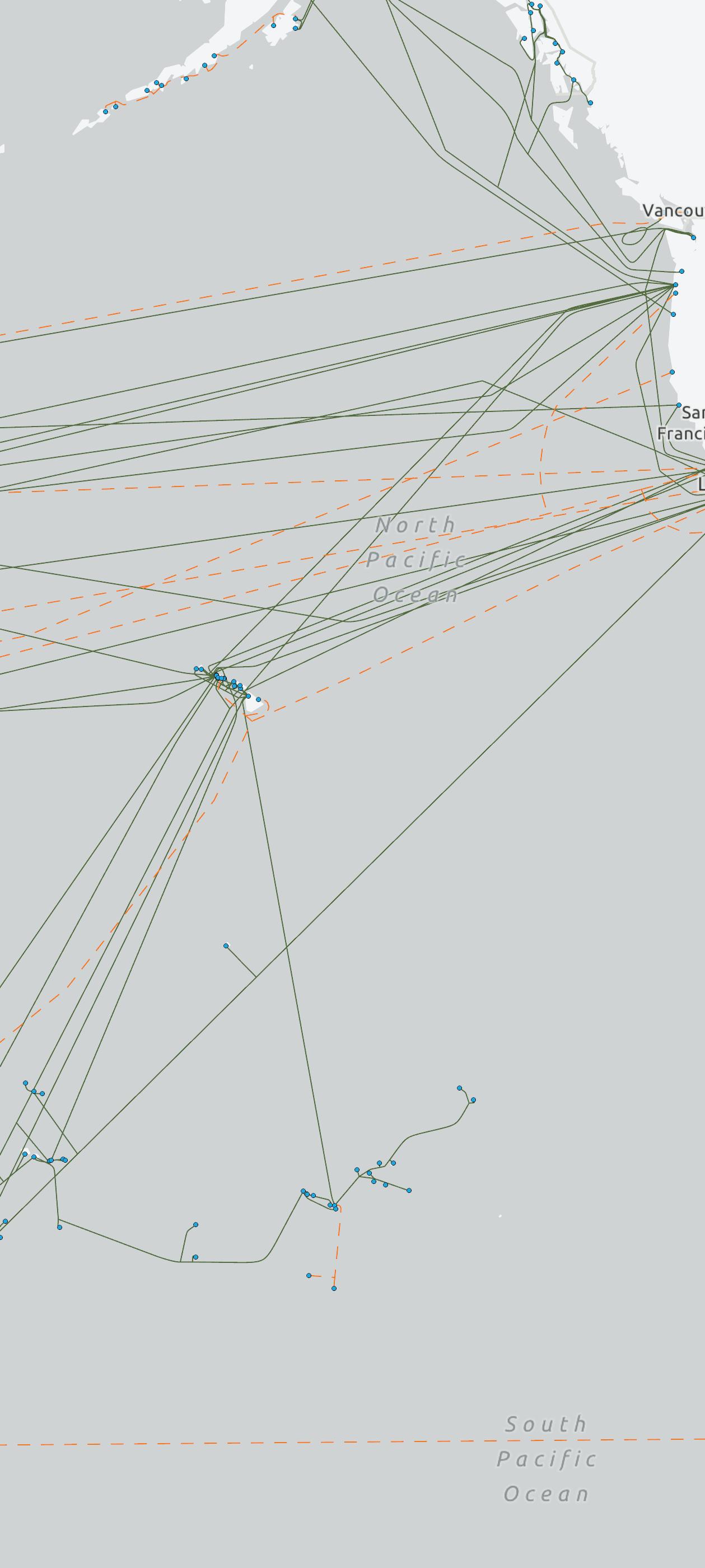

Unlike most of the other markets, the Americas region has consistently observed medium to high levels of growth.
Since 2005, new cable development in the region has consistently added an average of 5 percent more kilometers per year. However, there were notable departures from this trend: a 7 percent increase in 2009, a 10 percent increase in 2014, and an 11.7 percent increase in 2017. The region experienced steady growth until 2017, when an unprecedented 11.7 percent growth rate was observed. Since 2019, the average kilometers added has stabilized, maintaining an annual growth rate of around 5 percent, with no indications of significant changes on the horizon.
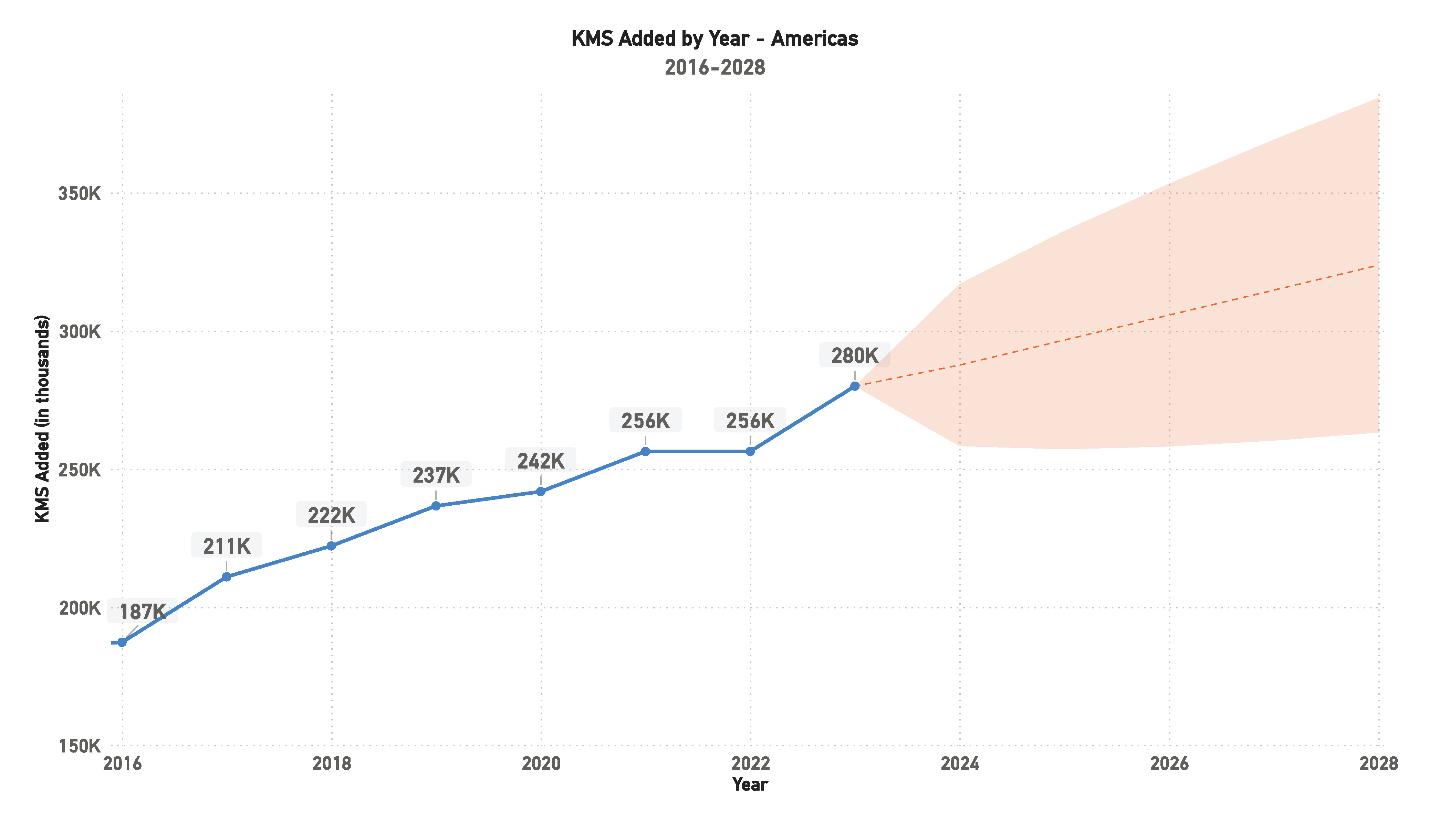
There are currently 7 systems planned through to 2027, indicating a development slowdown compared to the 14 systems that were planned at last year’s report. Only 43 percent of these planned systems have achieved their CIF milestone (Figure 49). While this suggests a more cautious outlook for growth in the region, it’s important to note that economic and political instability throughout the Americas could introduce additional challenges for these planned systems as they progress through their development process. STF
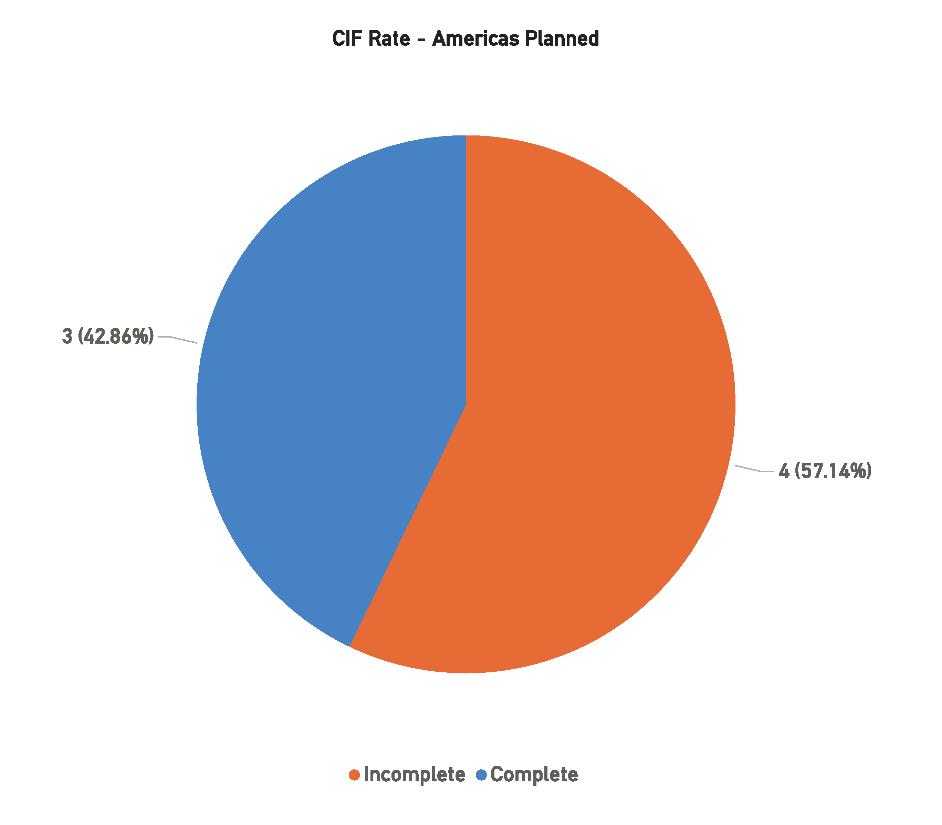
[Reprinted from SubTel Forum 2023/2024 Submarine Industry Report]
Current Systems: .............. 105 Capacity: ................ 1161 Tbps
Planned Systems: ............... 19
The AustralAsia market has experienced significant growth, particularly since 2008, making it one of the most active regions globally. While the period from 2001 to 2005 saw minimal growth, and 2006 witnessed moderate activity, the region truly took off between 2008 and 2009
This surge can be largely attributed to emerging markets in Southeast Asia, including countries like Indonesia, Singapore, and Hong Kong, which have become hubs for new data center growth.
The industry downturn in the early 2000s did have an impact on the timing of this regional boom. However,
Planned Capacity: . 1039 Tbps
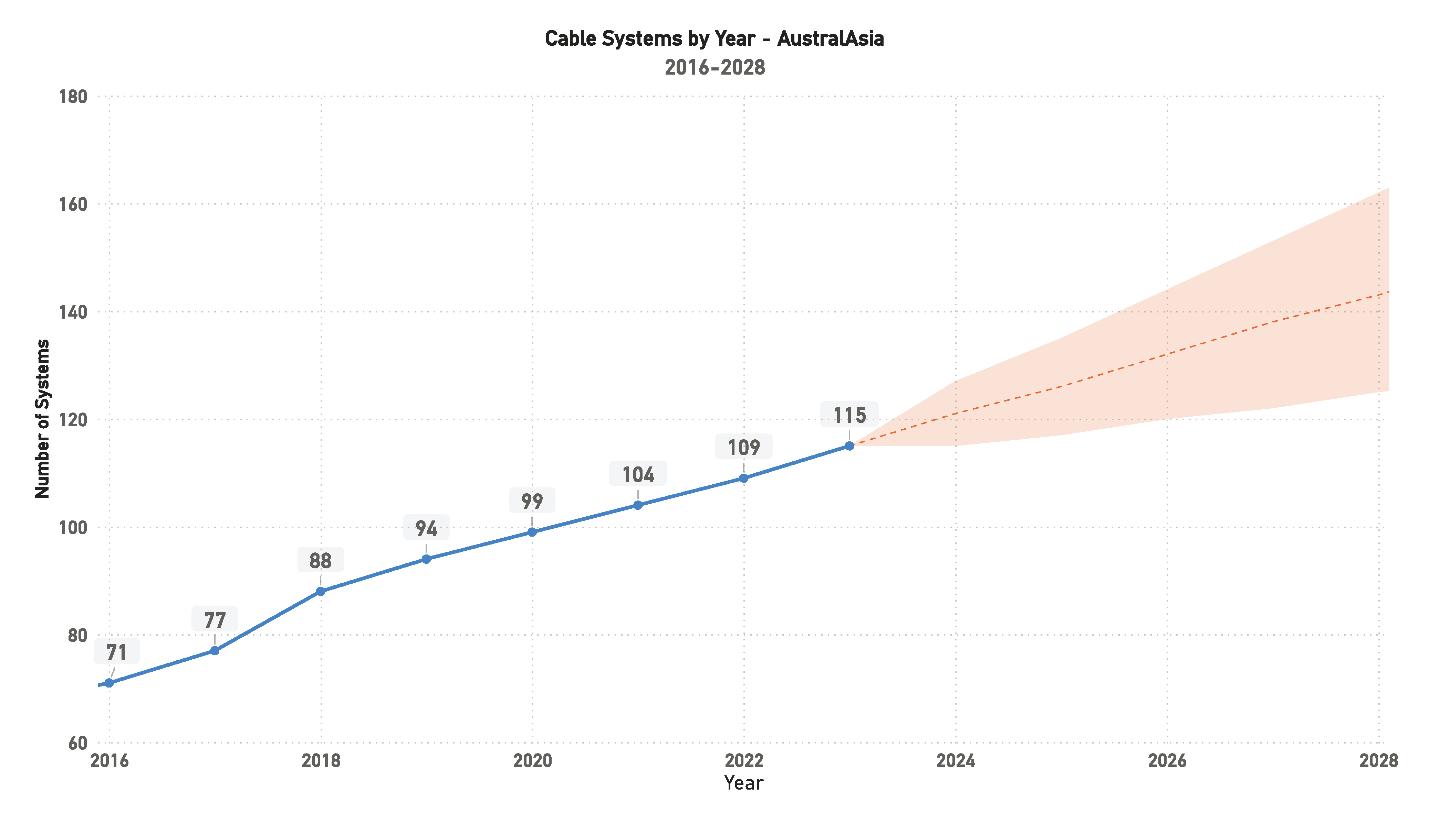
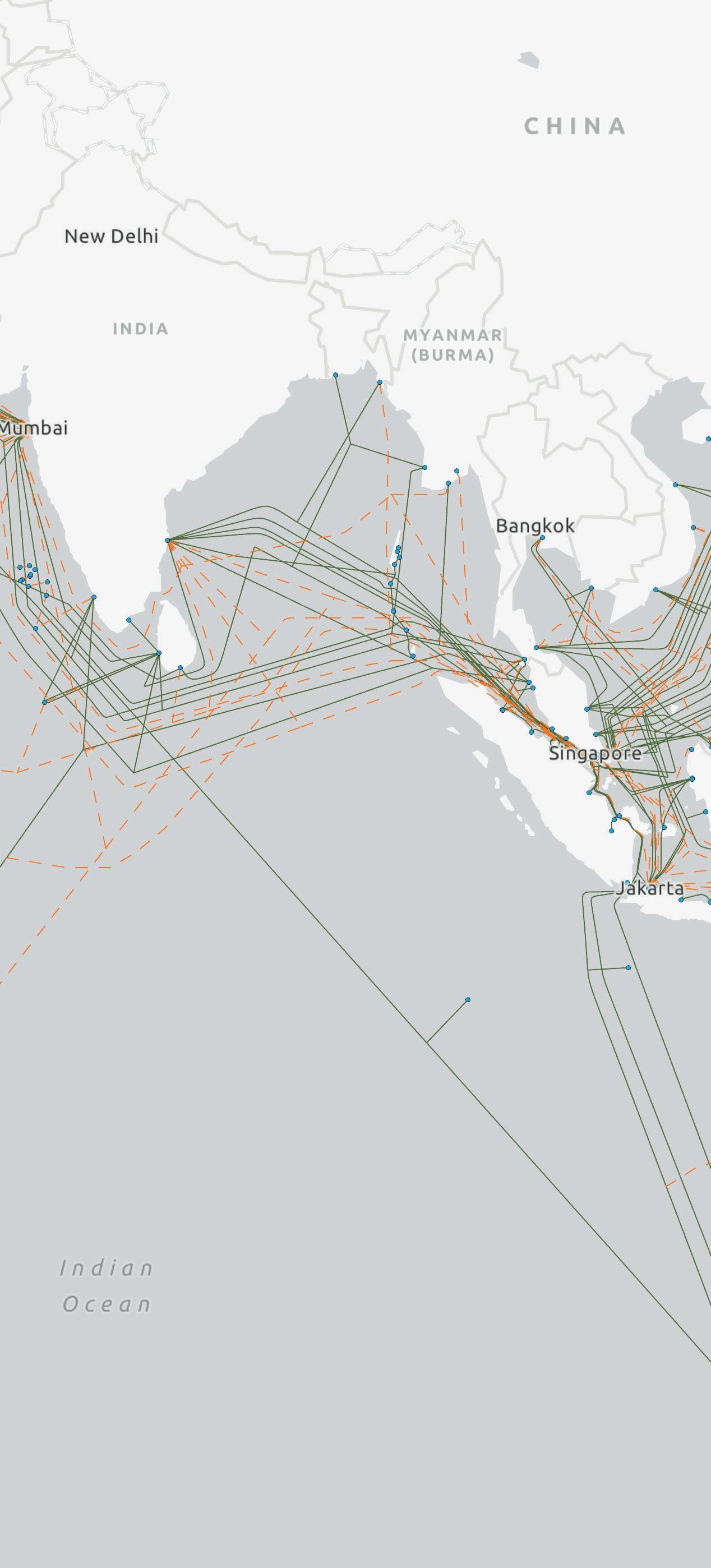
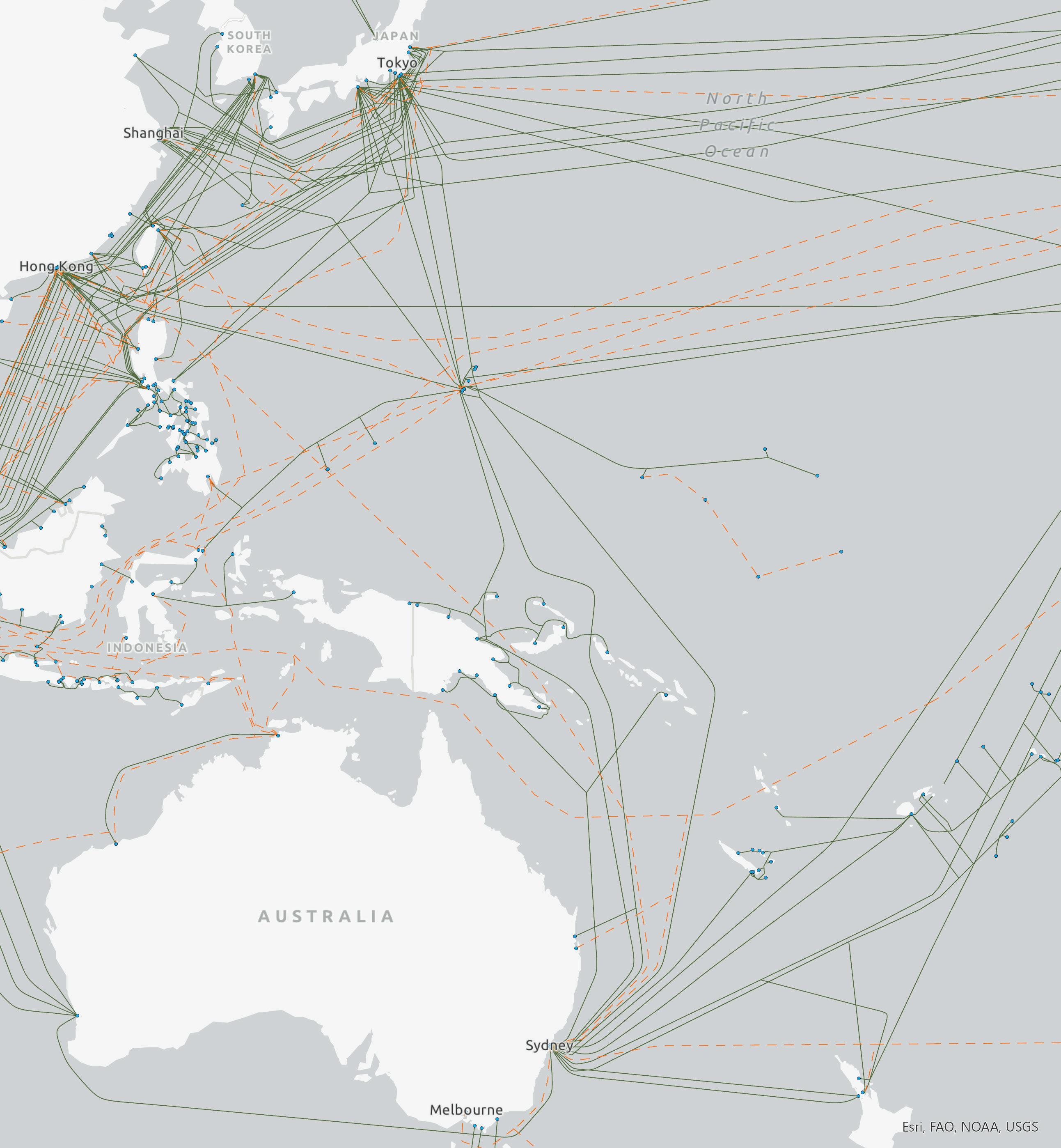
the burgeoning markets in Southeast Asia, driven by a strong demand for international connectivity, have more than compensated for these early setbacks. The adoption of mobile and cloud services, along with the recent influx of Hyperscaler-driven systems, indicates that the region is poised for sustained growth for the foreseeable future.
Following the significant growth spurt between 2008 and 2009, the AustralAsia market has maintained a consistent rate of expansion in terms of cable length added each year.
Since 2012, the region has witnessed an average addition of 17,000 kilometers of cable per year, with the average system length standing at 2,830 kilometers.
Given that submarine cable systems typically undergo a two-year development cycle from the time they are announced, it’s unlikely that many new systems will be announced for 2024 by the end of this year. Therefore, any further system development is expected to take place in 2025 or later. There are currently 7 planned systems set to be ready for service for the period 2024 to 2027. This marks a significant decrease from last year’s 19 planned systems, potentially indicating a cooling regional market. Unlike the typical trend in the AustralAsia region, where several smaller systems connect island nations to major hubs, the current planned systems are fewer in number. Of these planned systems, only 29% have reached the CIF milestone— a noticeable drop from last year’s 53%. (Figure 52) With less than a third of the 7 systems planned through 2027 already at the CIF stage, this suggests that the region may be experiencing a slowdown in growth. STF

Characterized by consistent growth since the early 1990s, the Europe, Middle East, and Africa (EMEA) region has seen a steady uptick in development in recent years. This region stands as one of the most stable growth areas globally, a status attributed to its expansive size and the strategic significance of the Mediterranean Sea and the Suez Canal.
The system count in the EMEA region has remained stable, averaging around five new systems ready for service each year since 2002. The year 2011 marked a peak with the addition of 14 new systems. The lengths of these systems can vary significantly, but the primary drivers behind these growth spurts are the SEA-ME-WE systems and expansive coastal systems around Africa. In terms of the actual number of systems deployed, the EMEA region is unparalleled in its consistency, seemingly impervious to the industry’s cyclical boom and bust patterns over the
Current Systems: .............. 199
Capacity: ............... 1920 Tbps
Planned Systems: ............... 23
Planned Capacity: . 2348 Tbps
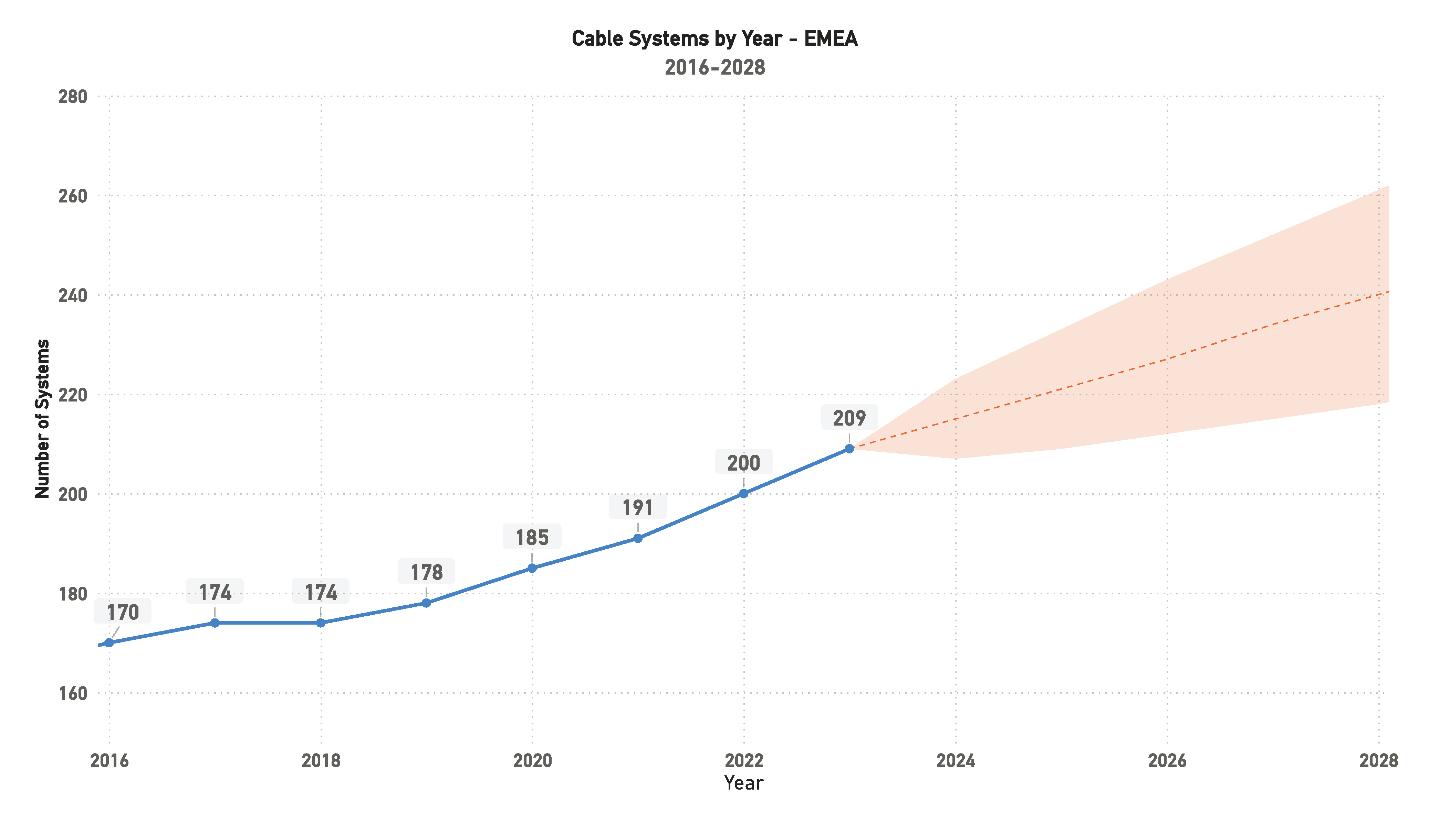
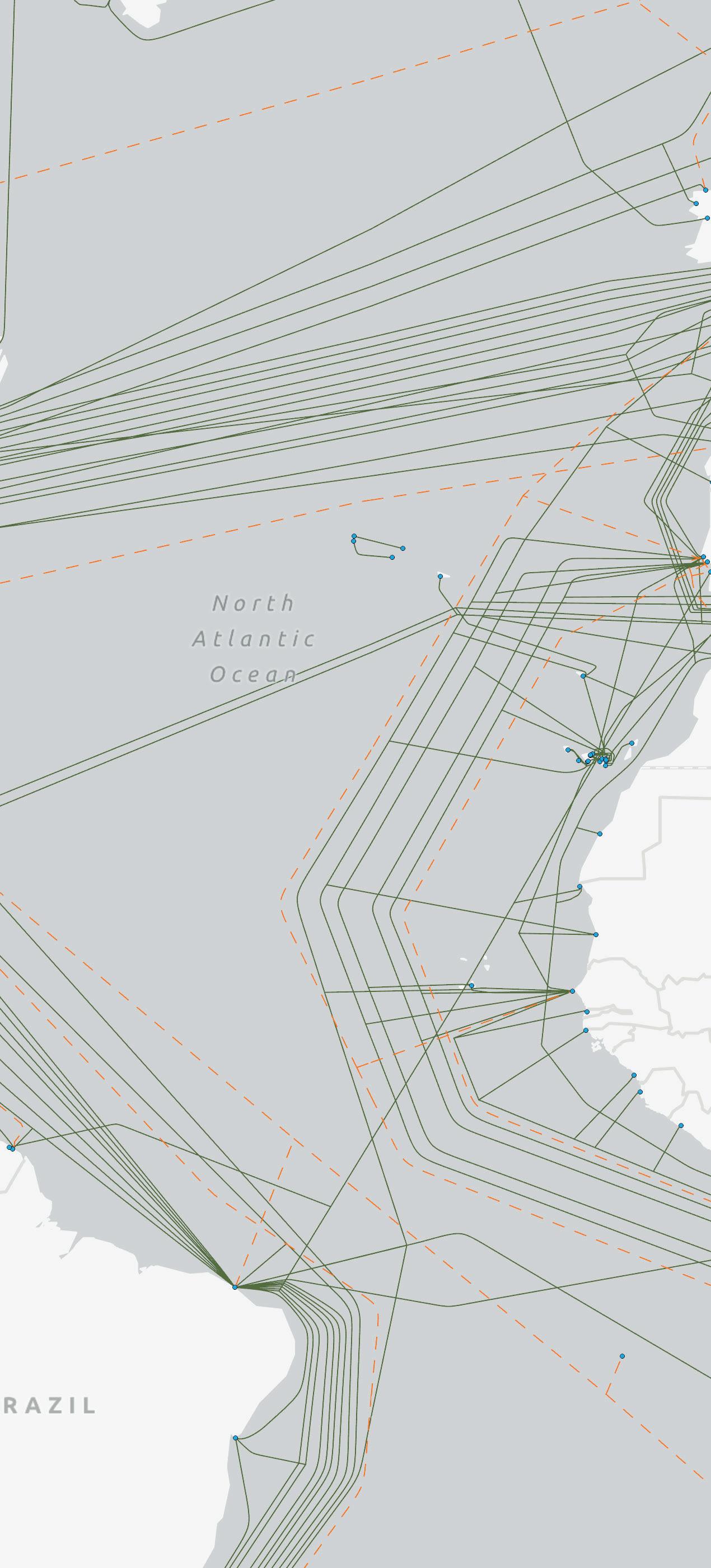
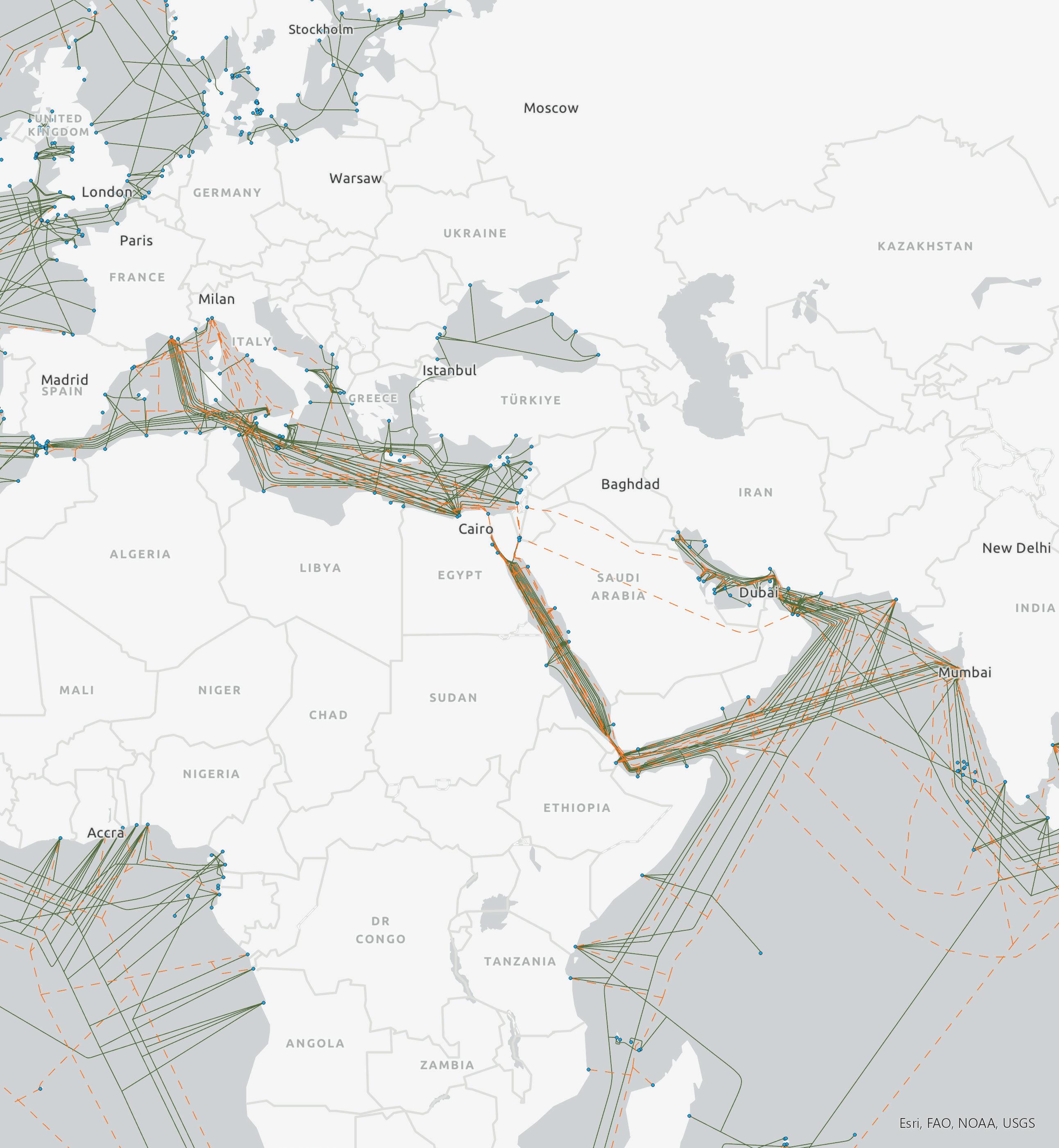
past 15 years.
The EMEA region consistently adds smaller, regional systems each year, complementing larger, multi-regional projects like SEAME-WE, ACE, EIG, and WACS, among others. These large-scale projects span multiple global regions, as opposed to smaller, inter-country routes. They represent some of the industry’s most ambitious undertakings, with each system often exceeding 10,000 kilometers per route—sometimes even surpassing 20,000 to 25,000 kilometers. Despite the steady count of systems, these inter-regional projects result in significant surges in kilometers installed, with the period from 2010 to 2012 marking the most recent growth spurt for the region.
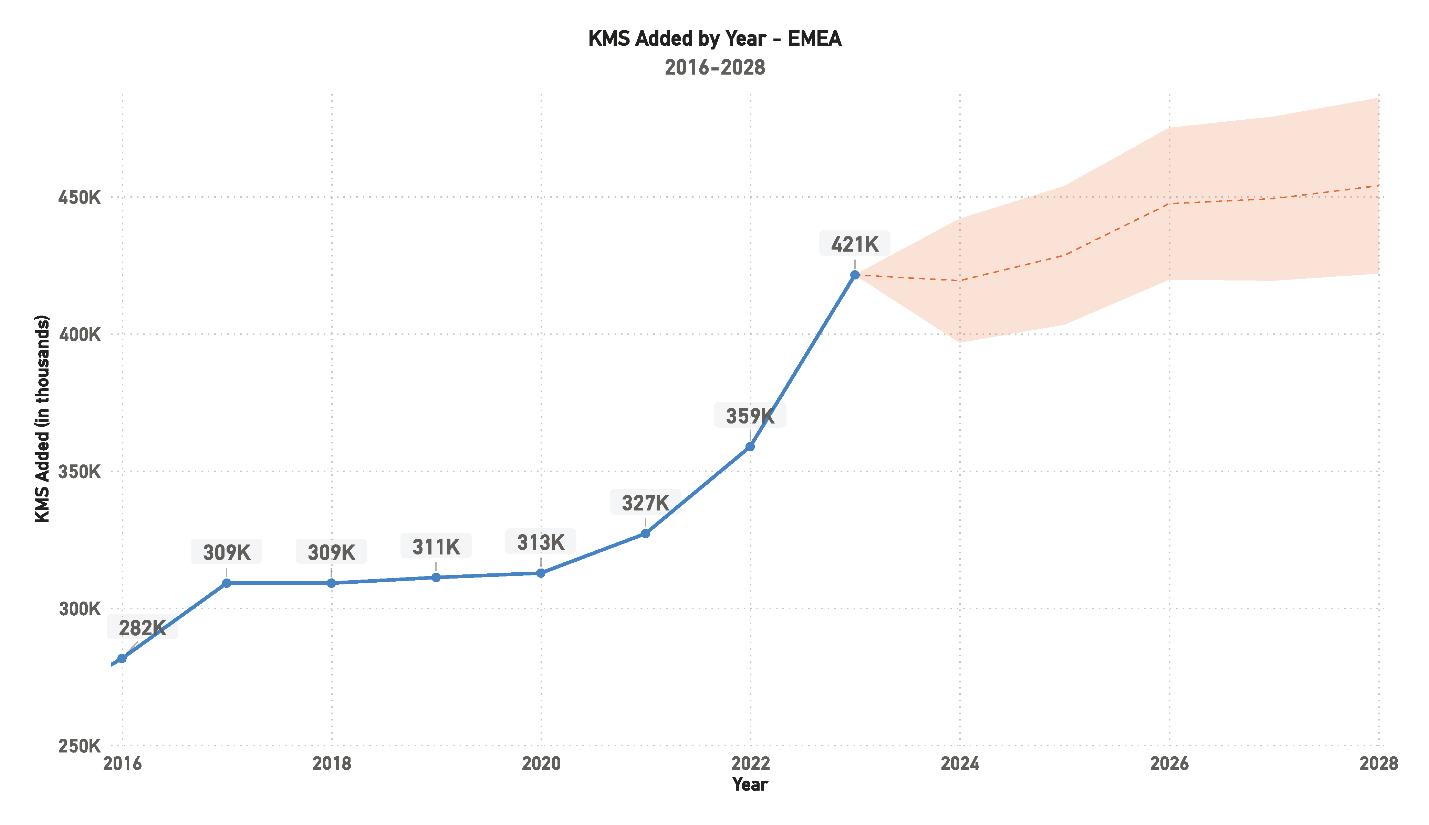
on pg. 163)
As previously noted, the EMEA region stands out for its consistent activity, punctuated by the introduction of ambitious, region-spanning systems at regular intervals.
The rate of kilometers added annually has averaged a 4.1 percent increase since 2012. Notable spikes of eight percent, nine percent, and 12 percent were observed in 2016, 2017, and 2012, respectively. However, a significant slowdown occurred between 2018 and 2020, with a modest 0.4 percent average annual increase. Despite this, the EMEA region is not anticipating a substantial decline in system activity from 2024 to 2027, suggesting that growth will remain stable for the foreseeable future.
In fact, the renewed focus from Hyperscalers on technologically burgeoning countries like Nigeria and South Africa could catalyze a new wave of activity across Africa. Large systems like 2Africa from Facebook and Equiano from Google are poised to significantly boost the region’s connectivity. As these Hyperscalers establish hyperscale infrastructure, they will naturally attract additional business and increase the demand for bandwidth between key data center regions like North America and Europe. These new cable systems, offering more than 140 Tbps of bandwidth, will be particularly beneficial for the west coast of Africa, which currently averages about 8 Tbps per submarine cable.
There are currently twelve systems planned to be ready for service for the period 2024-2027, a significant reduction from last year’s twenty-three. Currently, 42 percent of these systems have achieved the CIF milestone, a rate that is noticeably less than last year’s 65 percent. (Figure 55) With nearly half the total system count and a lower CIF rate, the initial outlook is one of caution. The EMEA region continues to face economic uncertainty and political instability, adding an additional layer of complexity to any prospective projects. STF
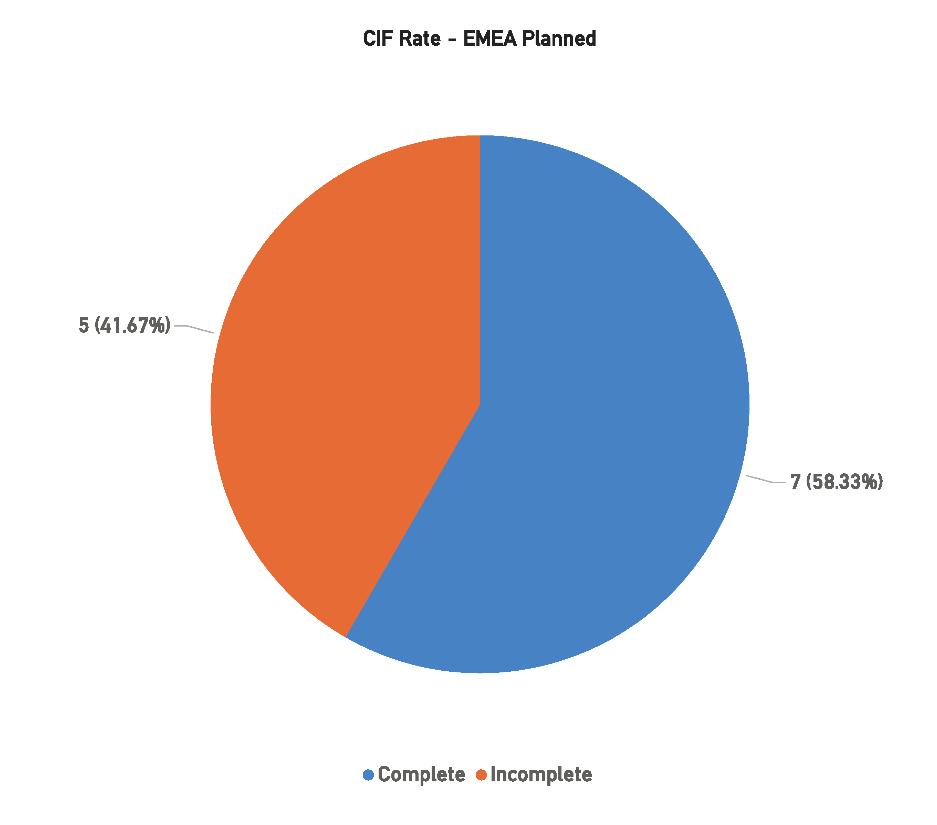
[Reprinted from SubTel Forum 2023/2024 Submarine Industry Report]
Current Systems: ................ 34
Capacity: ................. 387 Tbps
Planned Systems: ................. 8
The Indian Ocean region has maintained a consistent trajectory of growth since recovering from the submarine cable industry’s downturn in the early 2000s. Despite its relatively small geographical footprint, the region serves as a critical junction between the bustling EMEA and AustralAsia corridors, contributing to its steady development since 2003.
The region’s growth has been characterized by cycles of rapid expansion followed by brief lulls. These surges in development have been primarily fueled by trans-regional systems such as SEA-ME-WE 3, 4, and 5, FLAG, Falcon, and AAE-1, among others. These systems have led to three notable spikes in activity during 2006-2007,
Planned Capacity: . 1,441 Tbps
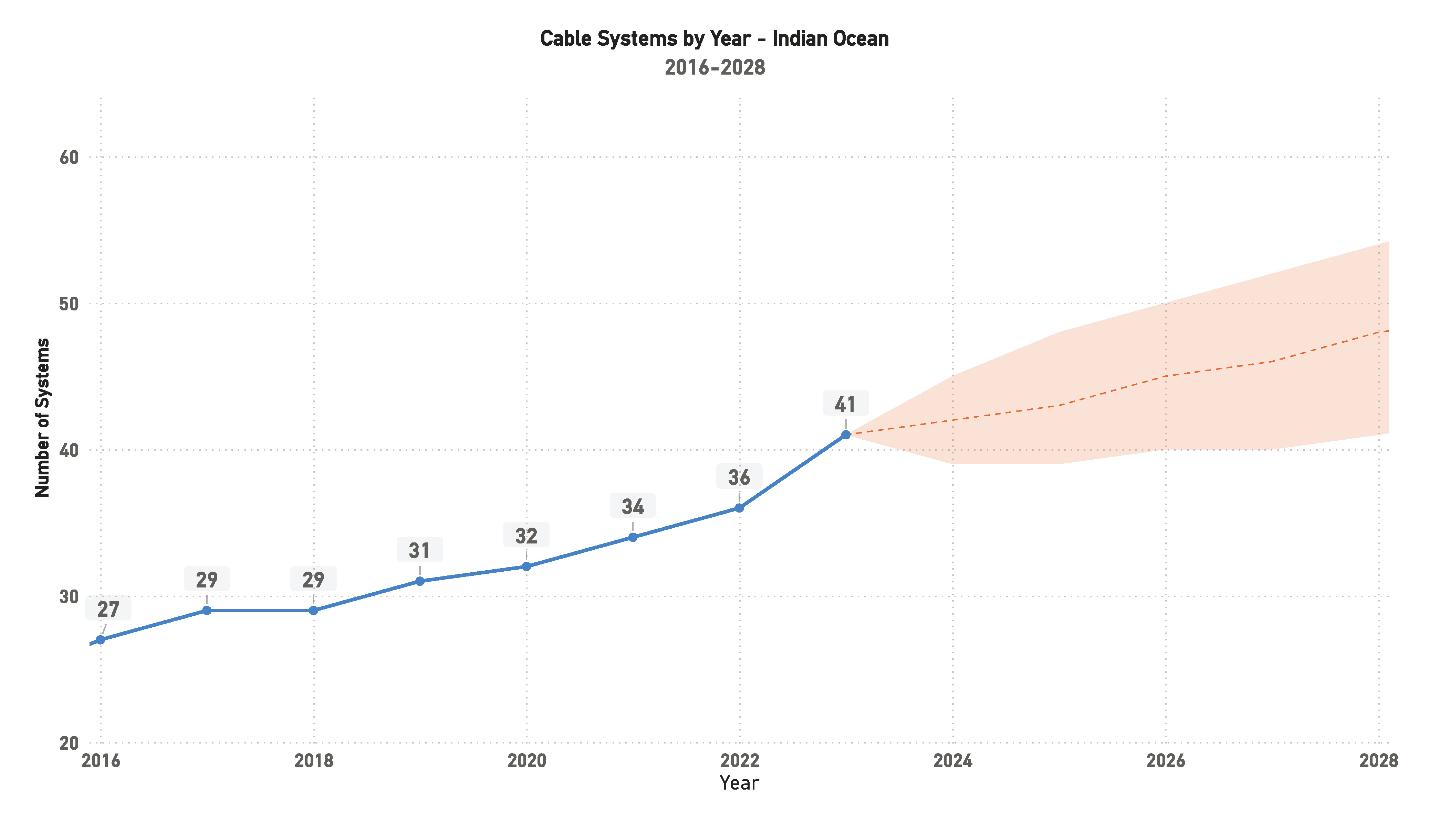
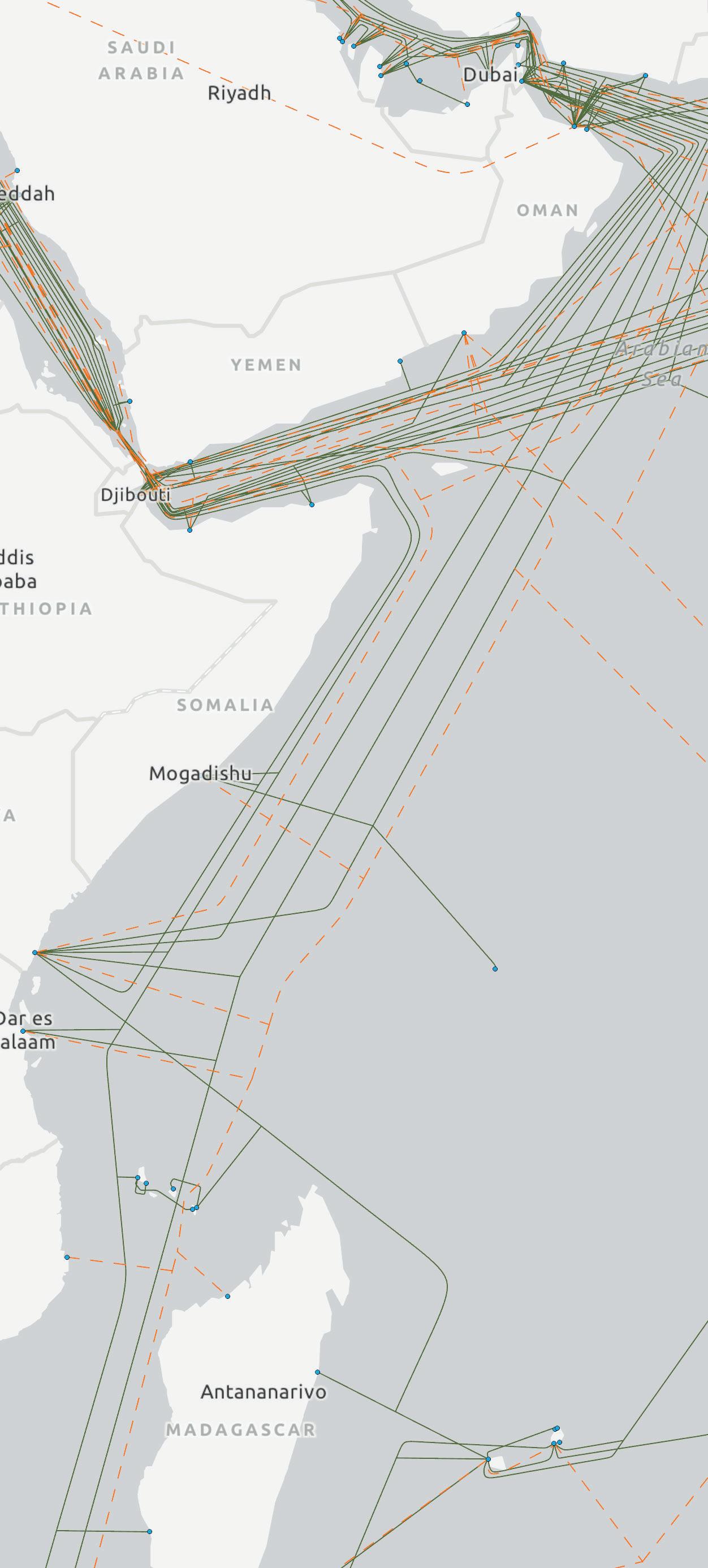
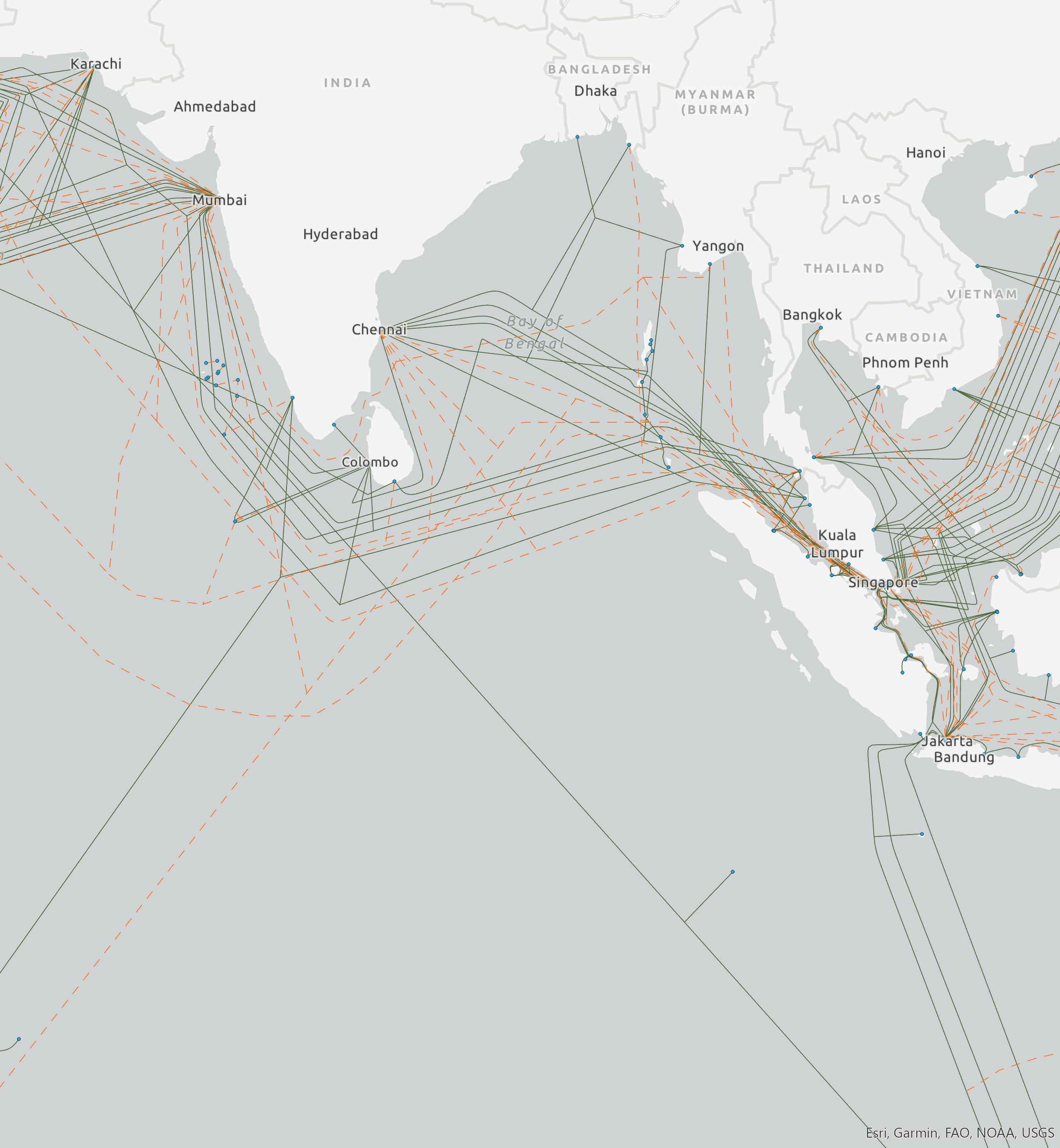
2009, and 2015-2017. (Figure 56) On a local scale, development mainly consists of smaller systems that connect India either eastward to Indonesia or westward to the Middle East, thereby enhancing connectivity for countries surrounding the Indian Ocean.
With two new systems added in 2017, a hiatus in 2018, two more in 2019, one in 2020, two each in 2021 and 2022, and an exceptional five systems expected to be ready by the end of 2023, the pace of new system development in the region remains sporadic. This pattern continues to align with the region’s historical “feast-or-famine” apTABLE 11:
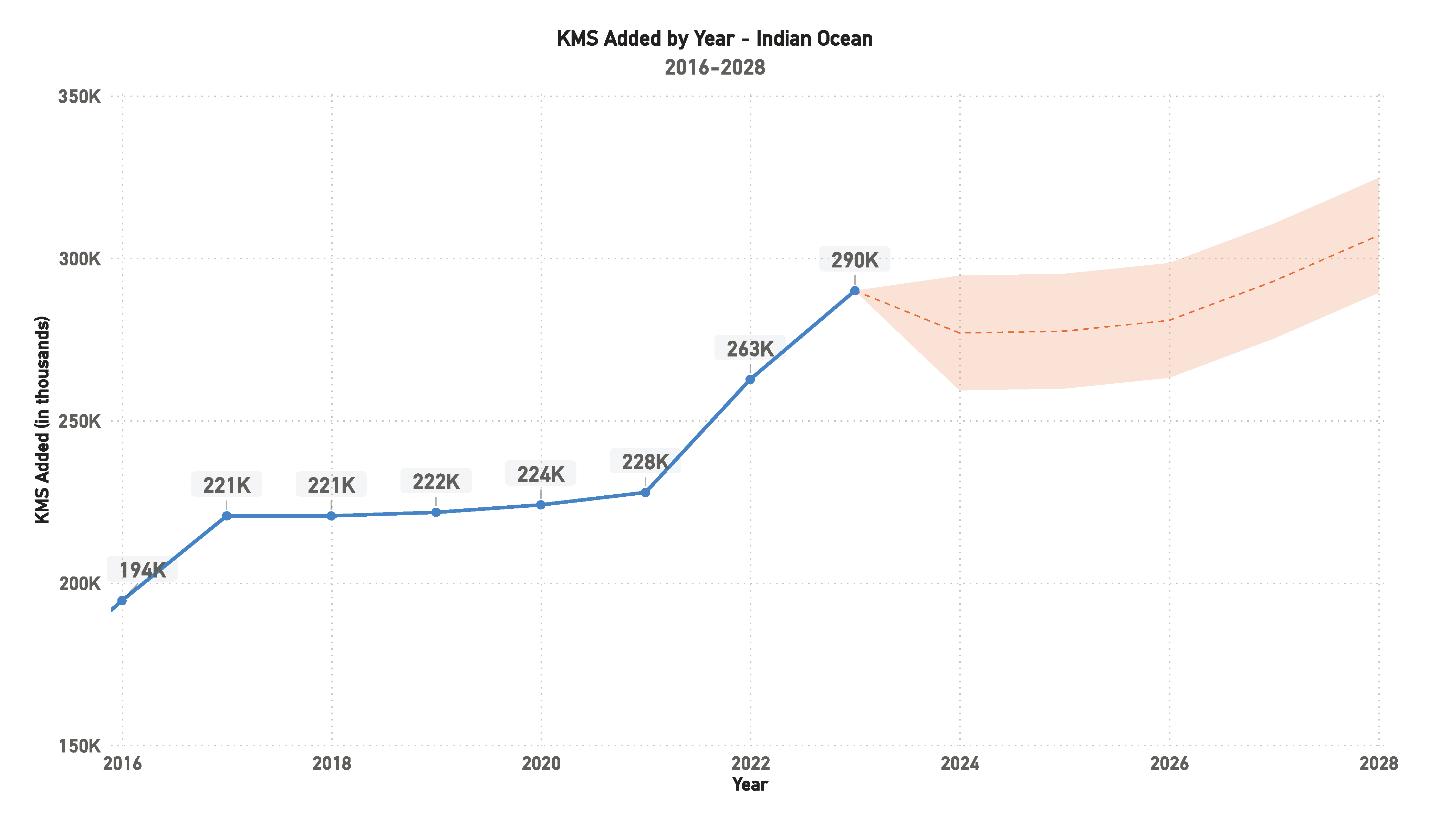
proach to system development. Since 2019, the region has generally seen the addition of 1-2 systems per year, with the exception of 2023, which will see five new systems by the end of the year. For the period 2024-2028, 7 systems are planned, with the potential to add approximately 130,000 kilometers of cable. (Figure 95) As Australia seeks greater route diversity from its western coast and the demand for connectivity between Asia and Europe rises, this steady growth is likely to persist beyond 2028. Moreover, Hyperscalers are investigating routes from the United States to India, which could further stimulate system development in the region.
Of the 7 systems planned through 2028 in this region, 43 percent have achieved the CIF milestone, showing an improvement from last year’s 36 percent. (Figure 58) The majority of these systems serve as “passthroughs,” aiming to connect East Asia to the Middle East and Europe. Despite the ongoing political and economic instability in Europe and the Middle East, these systems have a better chance of securing funding this year. While these systems aim to expand route diversity in the region, several are in direct competition, making it likely that some may not meet their target RFS date. STF
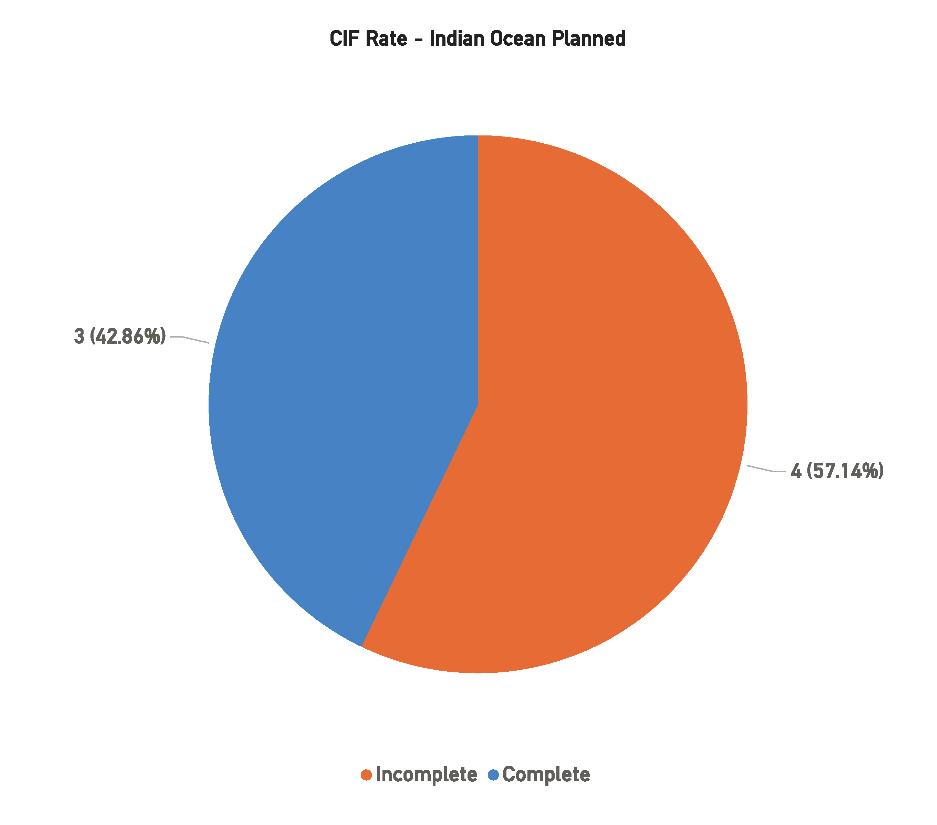
The Polar region witnessed a landmark moment in 2017 with the installation of Quintillion Subsea, the first fully Polar submarine fiber system in industry history. Spanning 1,200 kilometers across six landing points, this system broke new ground, going beyond previous endeavors like Svalbard that merely skirted the Polar region.
Interest in Polar projects has surged in recent years, fueled by the prospect of dramatically shorter routes between Europe, North America, and Asia via the Polar Circle. The success of the Quintillion Subsea system serves as a proof of concept, demonstrating that fully Polar systems are feasible despite the region’s unique challenges.
Developing submarine systems in the Polar region comes with its own set of hurdles. There are limited time windows during the year when construction can take place, inevitably extending the development timeline and escalating costs.
Current Systems: ................ 34
Capacity: ................. 387 Tbps
Planned Systems: ................. 8
Planned Capacity: . 1,441 Tbps
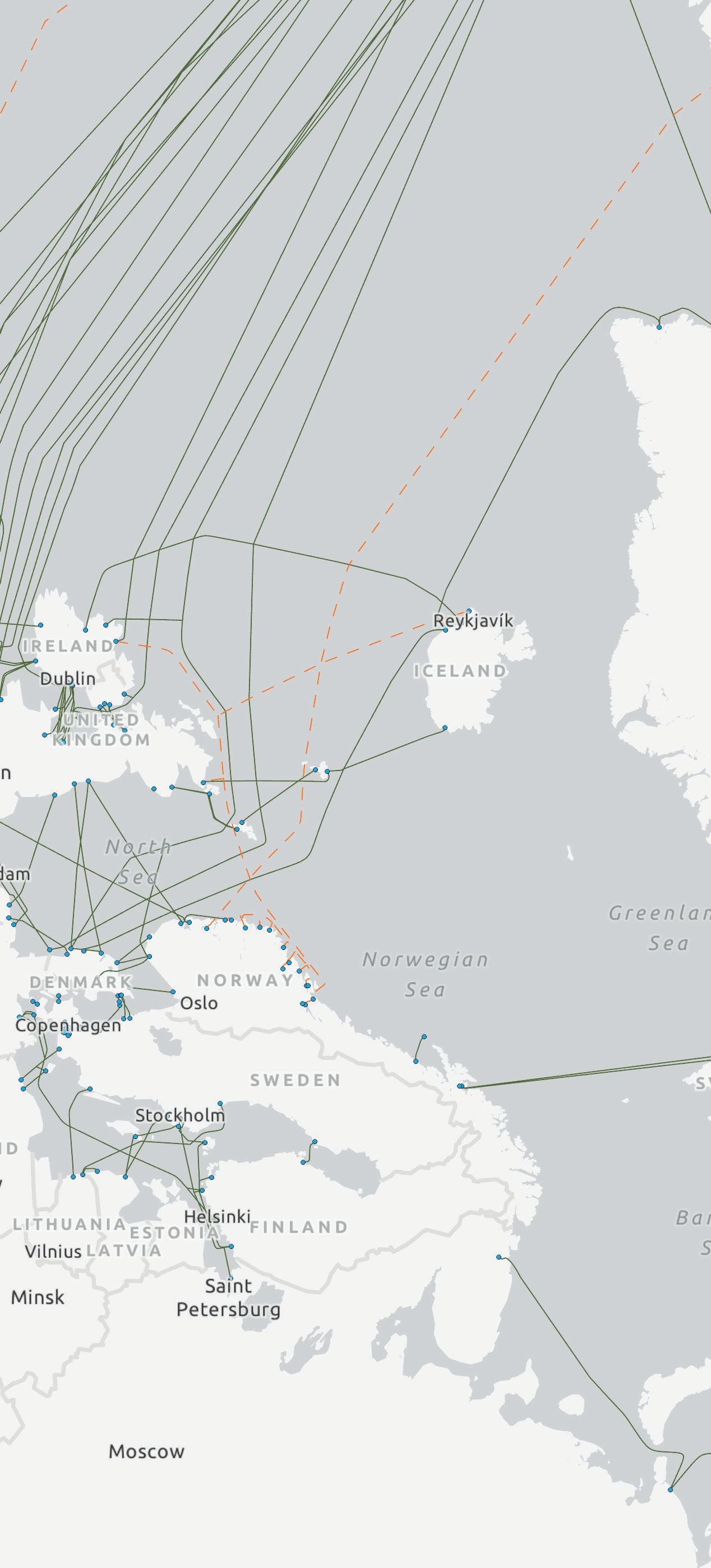
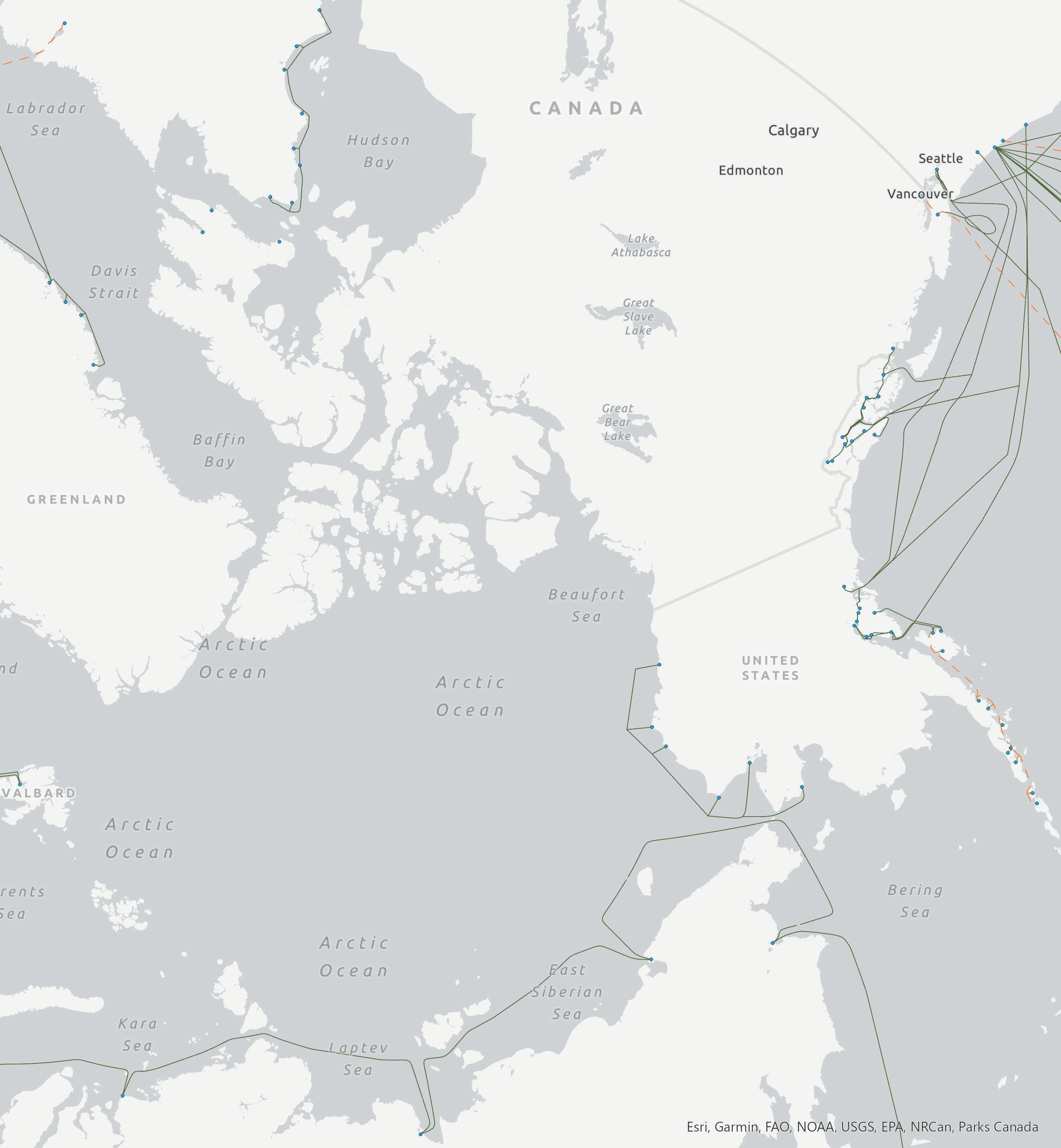
TABLE 13: CURRENT POLAR CABLE SYSTEMS
These systems are primarily designed to serve routes in Canada’s far north, connecting local communities and providing a shorter path between Europe and Asia. For instance, Far North Fiber aims to link Europe to Japan and other points by traversing the top of Russia.
A key objective for Polar systems connecting Europe to Asia is to significantly reduce existing latency. Traditionally, data has had to travel either through the United States or via the Suez Canal and the Indian Ocean, requiring systems of at least 20,000 kilometers. Future Europe-to-Asia Polar routes are planned to be approximately 14,000 kilometers, potentially halving latency. Moreover, these Polar systems bypass the politically unstable Middle East and sidestep potential privacy issues in the United States.
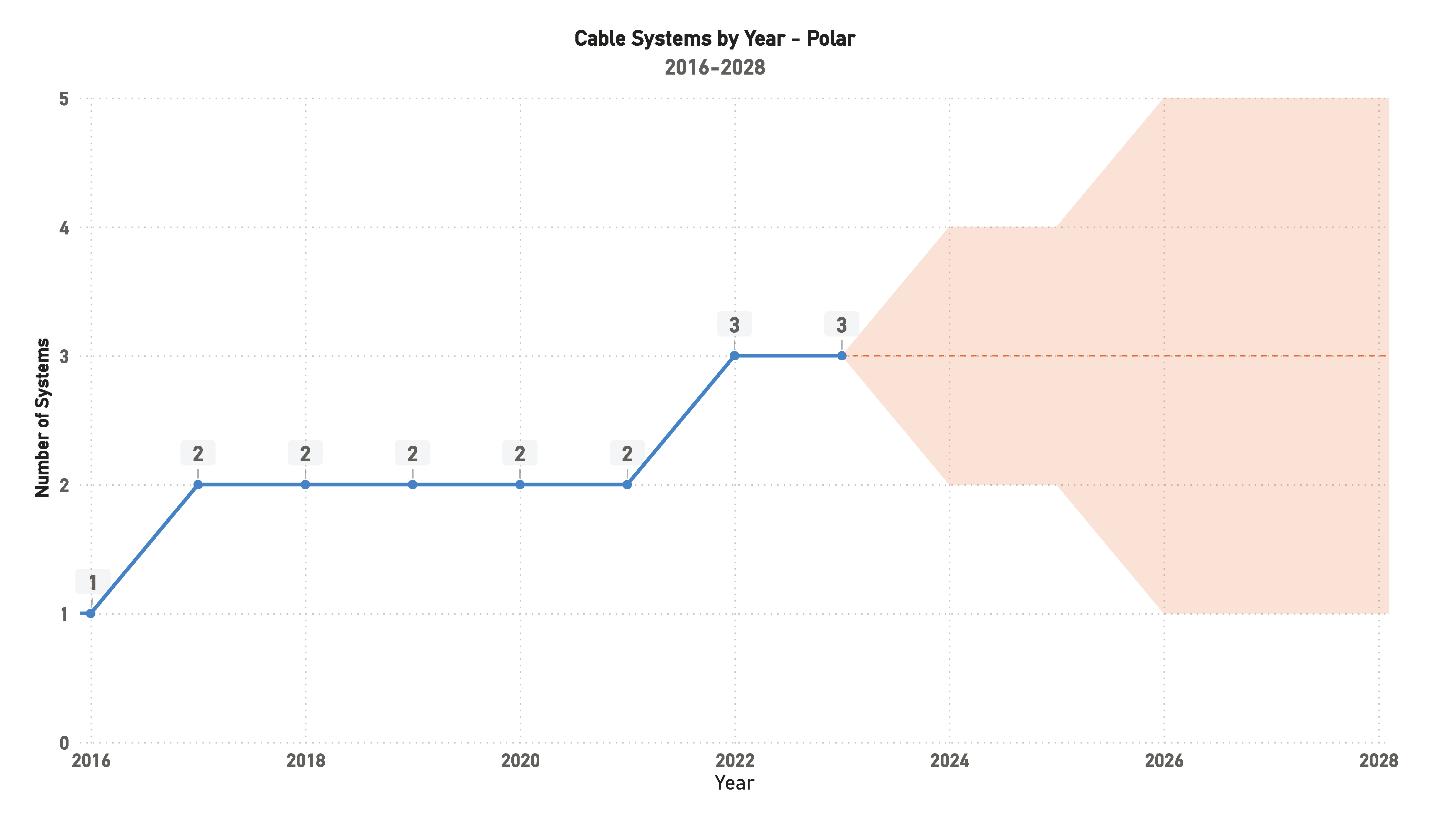
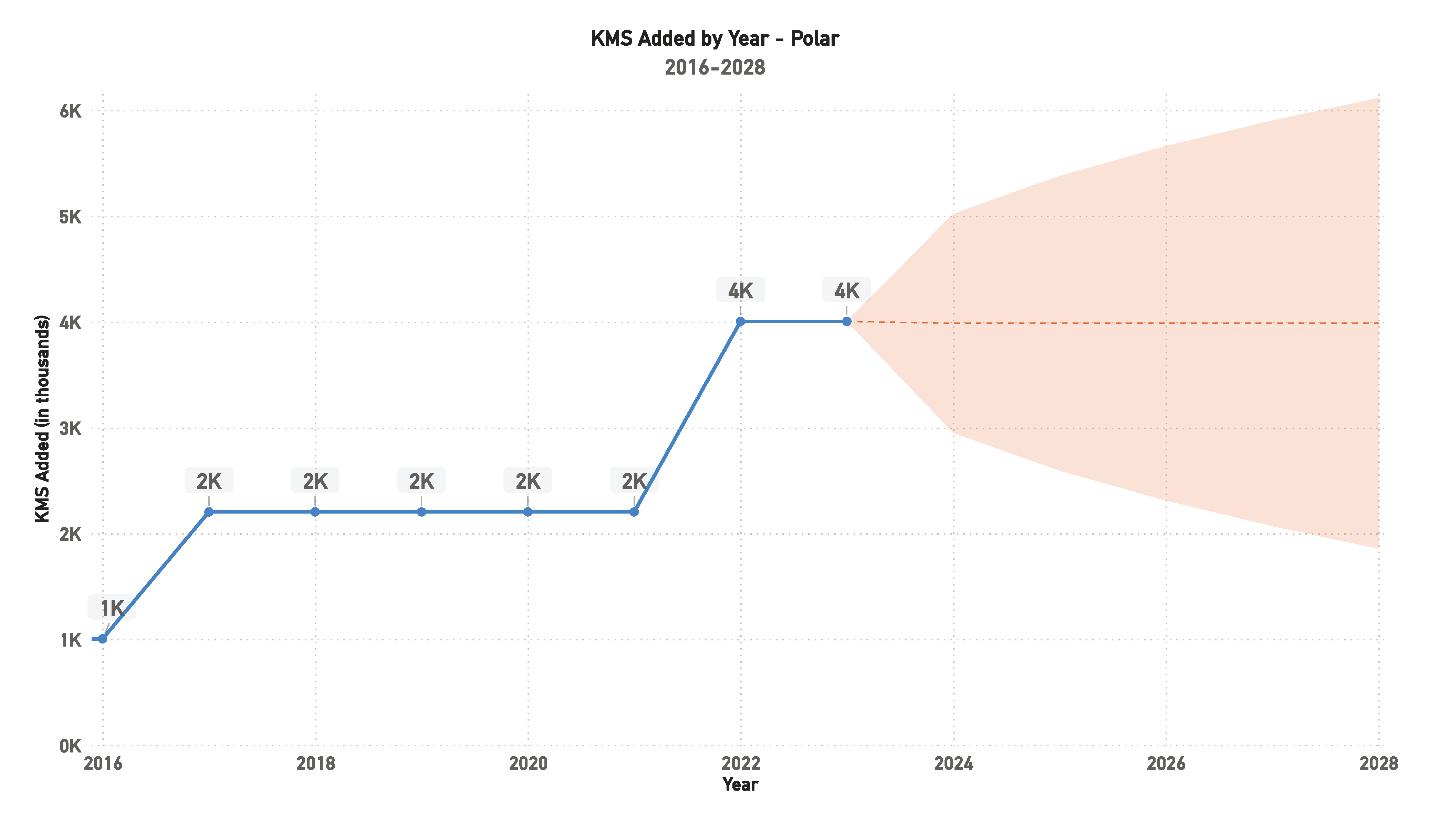
Of the four systems planned for the Polar region through 2028, none have yet achieved the CIF milestone. This highlights the inherent challenges and risks associated with Polar projects. However, as exploration in this region continues, there’s optimism that sustained efforts will pave the way for more consistent project implementation.
Beyond 2027, an early-stage project is being explored to connect South America or New Zealand to research bases in Antarctica. Likely to be a government-backed initiative, this project has a higher chance of success as commercial viability is less of a concern. Establishing
high-capacity, low-latency fiber connections to Antarctic research stations would significantly enhance scientific collaboration and information sharing. STF
TABLE 14: PLANNED POLAR CABLE SYSTEMS
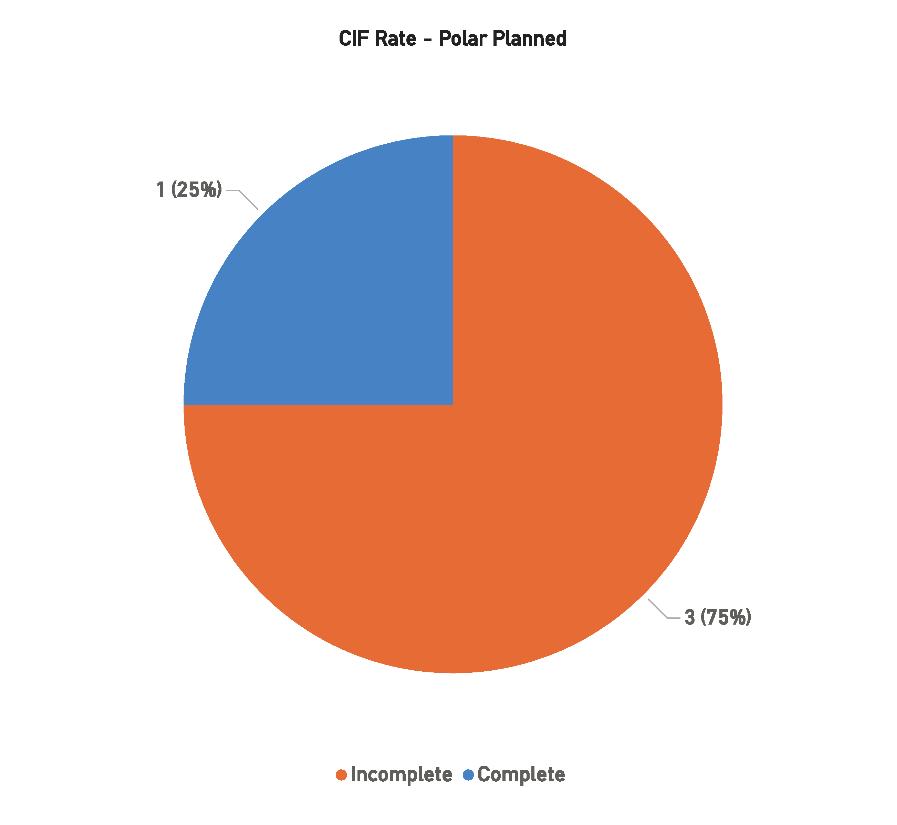
BY NICOLA TATE
Traditionally we use this space to promote all the reasons to advertise in the SubTel Forum Magazine and on other SubTel Forum properties, however, as we were finalizing this issue I thought we could start using this space to also provide one advertising or marketing tip that could be applied to any of your marketing efforts.
This issue’s top tip is a simple one. When running a digital campaign always use a custom, trackable URL for each of your media outlets. A trackable URL, specific to each media outlet, allows you to track what outlets generate the most clicks. By employing different trackable URLs you can measure a retargeting campaign separately from, for example, a banner ad campaign running on SubTelForum. com, while running the same artwork.
There are two basic URL tracking solutions.
• For those of you utilizing Google Analytics you can create one directly with Google and it will also track back into your Google Analytics dashboards. Click here to view basic instructions or scan the QR code below:

• If you do not utilize Google Analytics or prefer a different solution one of the most popular tools is Bitly. Bitly will provide click data, but also some general demographic data about those engagements. Click here to view their site or scan the QR code below:
Don’t forget that reporting traffic via a tracking URL is just a small part of measuring the ROI of your campaigns. Not all clicks represent the same value, however, this is a great starting point to measuring the effectiveness of your campaigns.
Speaking of effective campaigns, if you are seeking to reach high-level decision-makers in the submarine cable industry there is simply no better place to facilitate connections and showcase your product or service than SubTel Forum properties. Contact me to discuss how we may be of service.STF

Originally hailing from the UK, NICOLA TATE moved to the US when she was just four years old. Aside from helping companies create effective advertising campaigns Nicola enjoys running (completed the Chicago marathon in 2023 and will be running in the Berlin marathon in 2024), hiking with her husband, watching her boys play soccer, cooking, and spending time with family.

CONNECT INNOVATIVELY. ENGAGE GLOBALLY. GROW EXPONENTIALLY.
Welcome to a new era of advertising with SubTel Forum in 2024. We’re combining revolutionary and diverse advertising options with a focus on impact and customization. Our offerings this year are designed to cater to a spectrum of marketing strategies within the dynamic submarine telecoms industry, offering a unique blend of opportunities for every advertiser’s need.
Submarine Telecoms Forum is the leading digital platform for the submarine cable industry, offering a dedicated e-magazine, daily news, and streaming video content. We serve over 150,000 users across 125 countries, providing free, comprehensive insights into submarine telecom cable and network operations. As a trusted source for information, we ensure you stay informed and connected in the fast-paced world of submarine telecommunications.
In 2024, we’re expanding our reach to more industry professionals and decision-makers. We are your link to a vast network in the telecom world.
65%
are final decision-makers or high influencers of purchasing decisions.
85% More than
of readers have been in the industry for greater than 10 years.
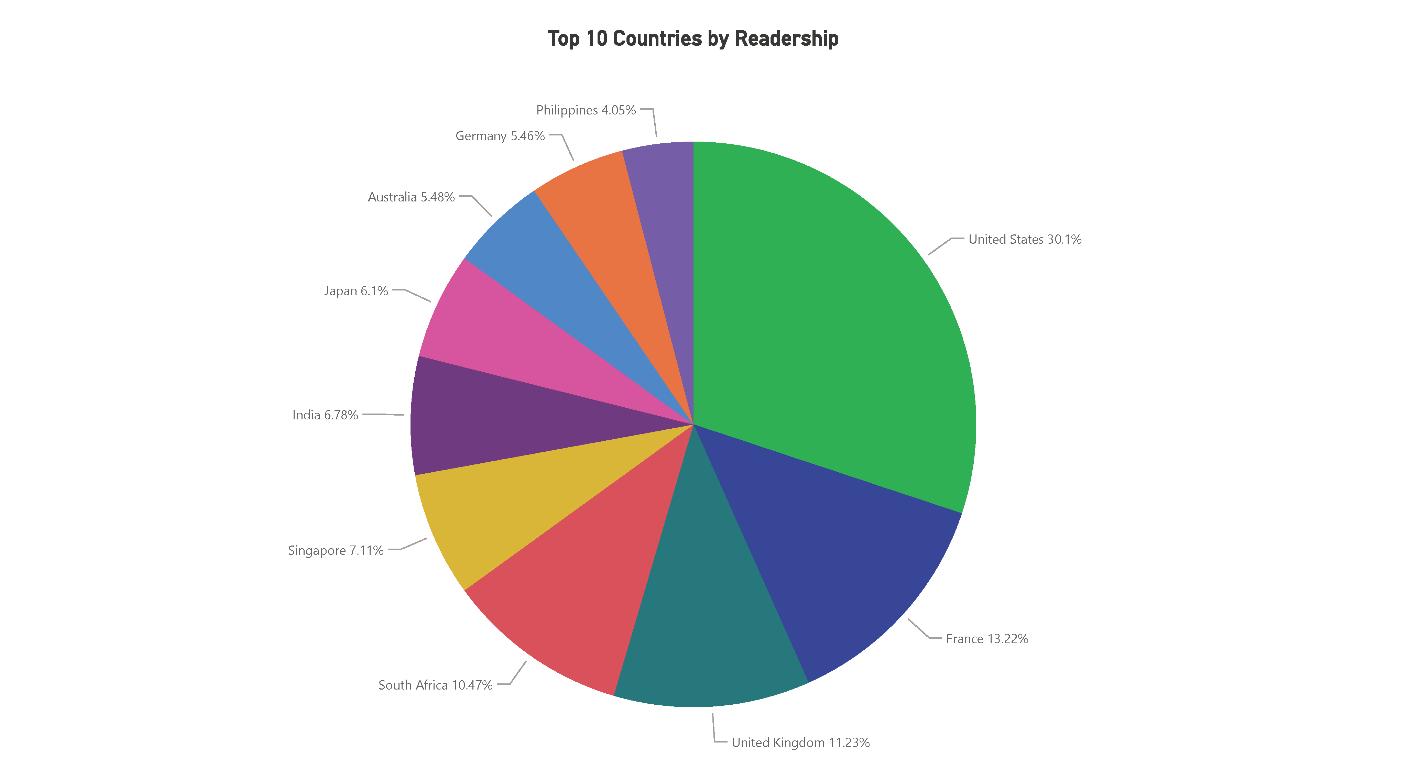
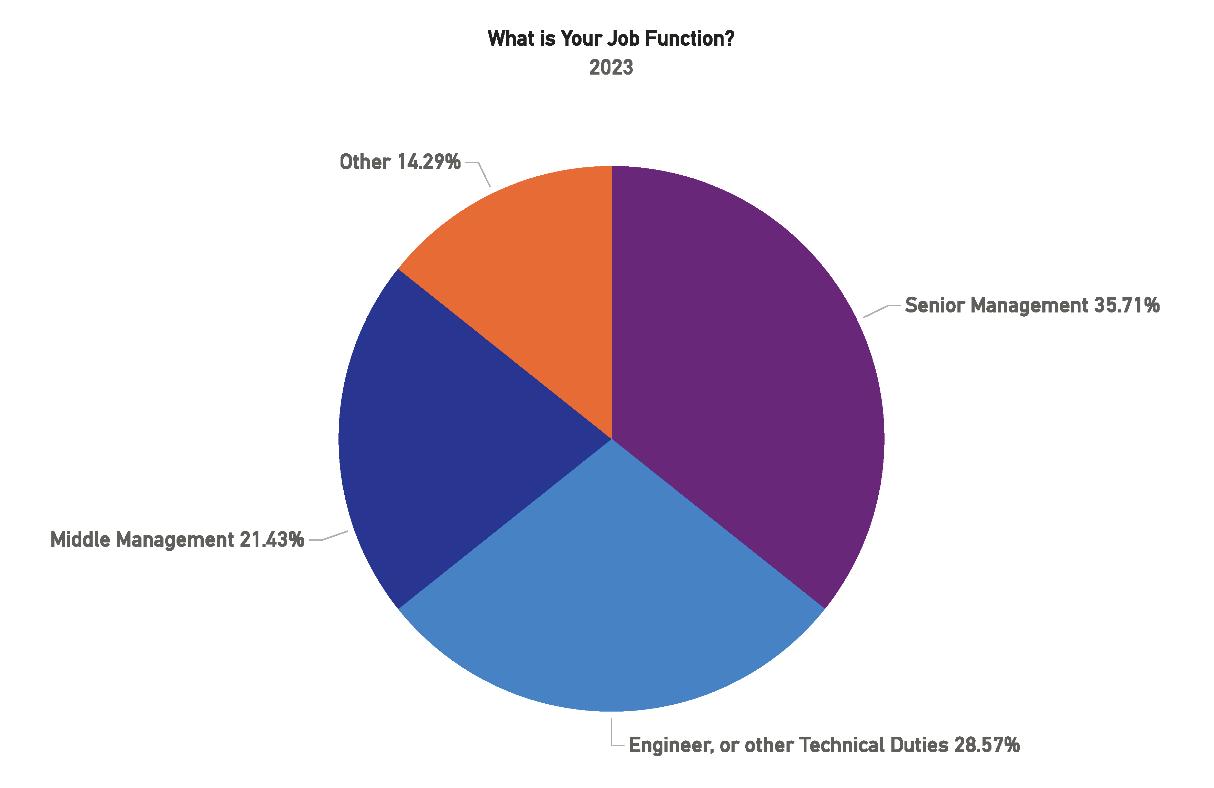
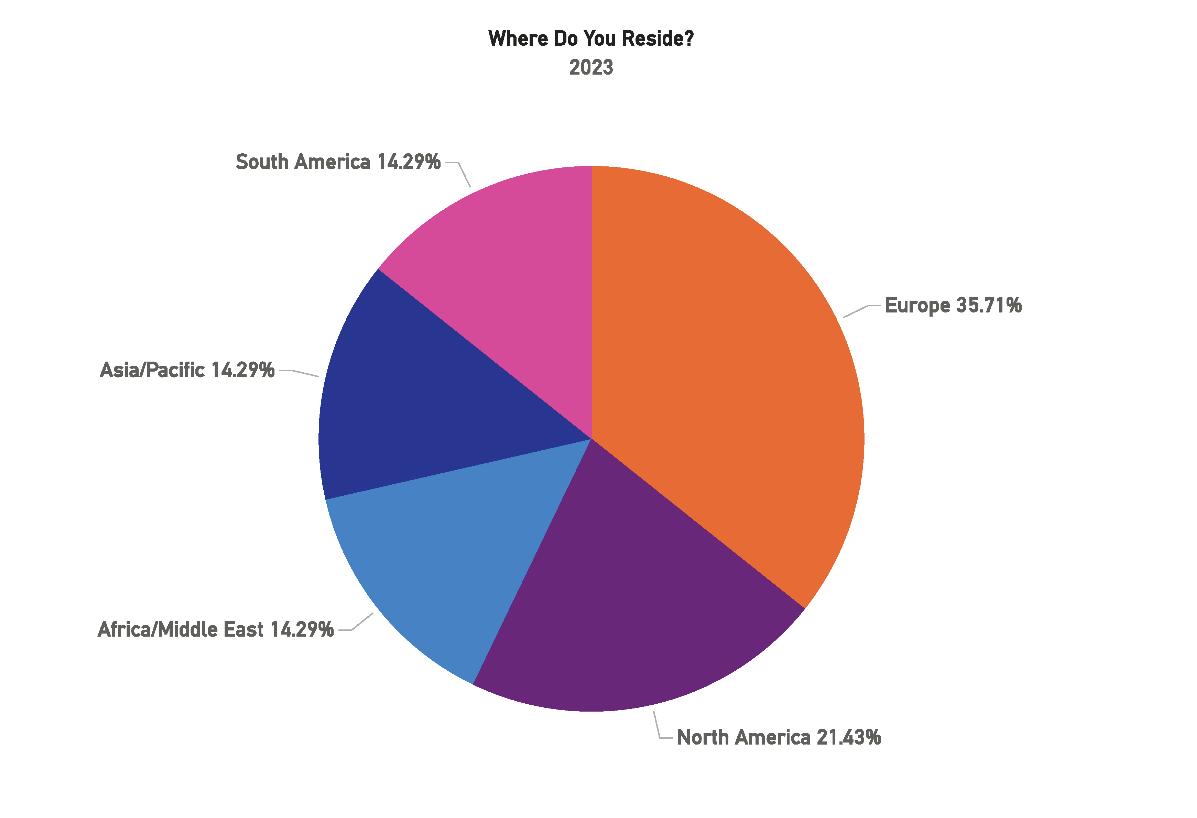
FACEBOOK X/TWITTER followers: followers: followers: clicks: impressions: reactions: 7,063 991 1,398 7,923 265,579 4,376
Ready to elevate your brand in 2024? Reach out to our dedicated team at sales@subtelforum.com for personalized advertising solutions. We’re here to collaborate with you in achieving your marketing aspirations. Let’s make your campaign a success together.
Cable Almanac – Q1
age of the world’s systems.
SubTel Forum Magazine #135 Finance & Legal edition featuring ICPC ’24 Preview: Get the lowdown on the financial and legal aspects.
SubTel Forum Magazine #136
Cable Almanac – Q2
2024 SubTel Forum Magazine #137
Capacity edition featuring SNW World Preview: Explore the world’s data highways and their capabilities.
regions of the world’s systems.
SubTel Forum Magazine #138
2024/25 Submarine Telecoms Industry Report
Energy edition: Uncover the link between energy and subsea cables.
SubTel Forum Cable Map Showcasing every major international submarine cable system.
SubTel Forum, the premier publication in the submarine telecoms industry, offers focused issues that delve into specific market aspects. Each issue stands out with:
• Over 100,000 Downloads: Your message reaches a vast audience with each publication.
• Two Months Exposure & Endless Archiving: Extended visibility and perpetual access for your ads.
We also provide a tiered advertising structure, accommodating various marketing needs and budgets. Choose from half-page, full-page, and two-page spread options, with discounts for multiple-issue commitments.
SPONSORSHIP BENEFITS WITH SUBTEL FORUM:
• Web Banner: Feature on our News Now feed.
• Press & Mailer Recognition: Announcement of your sponsorship.
• Video Embedding: Optional 30-second slot for Full and Two-Page ads.
• Social Media Shoutouts: For Full and Two-Page spreads on LinkedIn, Facebook, and Twitter.
• Dedicated Email Campaign: Exclusive for Two-Page sponsors.
AD OPTIONS (SEE EXAMPLES TO THE RIGHT):
• Half Page: Great visibility, no additional perks.
• Full Page: Includes a social media campaign/mention.
• Two-Page Spread: Maximum exposure with social media and a dedicated sponsor email.
ART & VIDEO REQUIREMENTS:
• Print Ads: 300 dpi in PDF or JPG with crop marks.
• Video Ads: 30-second clips in 1280 × 720 or 1920 × 1080 resolution, mp4 format.
• Optional Video - 30 seconds
• 1280 × 720 or 1920 × 1080 resolution – mp4 Video File
The SubTel Forum Almanac, released quarterly, is a key reference for the submarine cable industry. Each issue showcases major international systems with detailed pages featuring system maps, landing points, capacity, length, and RFS year, among other data.
QUARTERLY DOWNLOADS & EXPOSURE:
• Over 525,000 downloads per issue.
• Three months of exposure plus permanent archiving.
2024 TOPICS INCLUDE:
• Q1 - Age
• Q2 - Region
• Q3 - Supplier
• Q4 - Owner
SPONSORSHIP BENEFITS:
• Prominent Two-Page Spread Ad near the front.
• Logo/Link on cover and webpage acknowledgment.
• Web Banner on News Now feed.
• Social media acknowledgment.
• Press release and mailer mention.
ART & VIDEO REQUIREMENTS:
• Size: 17” W x 11” H for Two-Page Spread.
• Resolution: 300 dpi, in PDF or JPG.
• Optional 30-second video in 1280 × 720 or 1920 × 1080, mp4 format.
The SubTel Forum Annual Report offers the latest, comprehensive data on the submarine fiber market, analyzing system capacity, productivity, and industry outlook. Key features include:
• Annual Downloads & Exposure: Over 560,000 downloads, with one-year exposure and permanent archiving.
• Tiered advertising structure, accommodating various marketing needs and budgets. Choose from half-page, full-page, and two-page spread options.
BENEFITS:
• Web Banner on News Now feed.
• Social media acknowledgment.
• Press release and mailer acknowledgment.
AD OPTIONS (SEE EXAMPLES TO THE RIGHT):
• Half Page: Great visibility, no additional perks.
• Full Page: Includes a social media campaign/mention.
• Two-Page Spread: Maximum exposure with social media and a dedicated sponsor email.
• Optional video: Include a blank box for overlay; no size restrictions.
ART & VIDEO REQUIREMENTS:
• Print Ads: 300 dpi in PDF or JPG with crop marks.
• Optional Video - 30 seconds 1280 × 720 or 1920 × 1080 resolution – mp4 Video File
LOCK IN NOW FOR 2024!
Sponsors can secure a spot in one of the various categories below. First come-first served!
• Global Overview
• Capacity
• Ownership Financing Analysis
• Supplier Analysis
• System Maintenance
• Cable Ships
• Hyperscalers and The Evolution of Submarine Cable Ownership
• Special Markets
• Regulatory Outlook
• Regional Analysis and Capacity Outlook
Feature your logo on our beautiful, large format print map, which proudly showcases every major international submarine cable system. This map is a fixture in many offices across the industry.
• Limited Availability: Only 22 spaces for logos.
• Wide Distribution: Over 4,500 copies shared at key industry events like PTC and Submarine Networks EMEA and World, ensuring a year-long exposure.
ANNUAL PRICE: $4,000
SPONSORSHIP PERKS:
• Complimentary Web Banner on News Now feed.
• Social media shoutouts.
• Acknowledgment in press releases and mailers.
• 25 free copies for sponsors.Resolution: 300 dpi, in PDF or JPG.
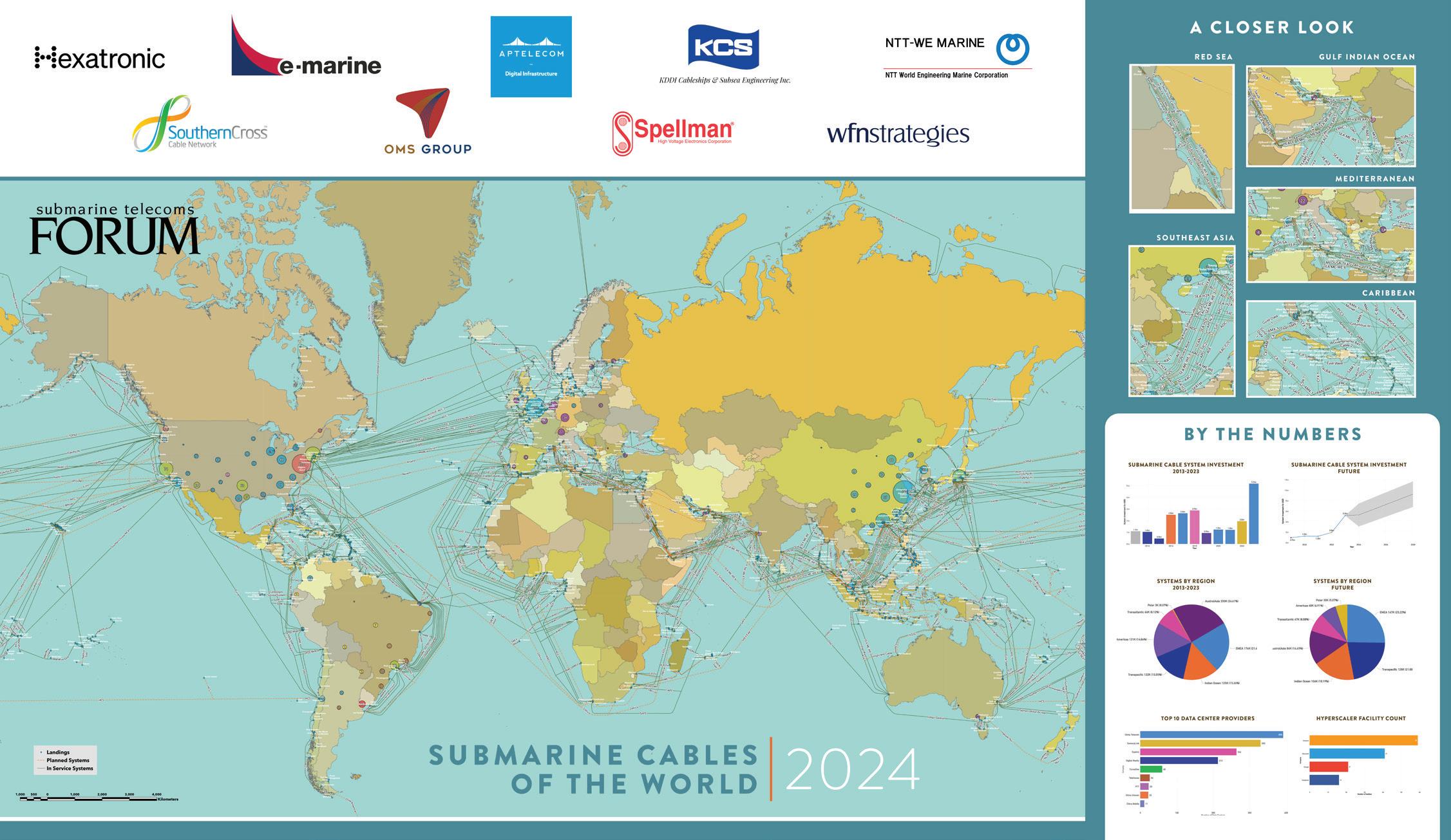
The SubTel Forum Online Cable Map is built with the industry-standard Esri ArcGIS platform, linked to the SubTel Forum Submarine Cable Database. It offers comprehensive tracking of:
• Over 550 current and planned cable systems.
• More than 1,500 landing points.
• In excess of 1,700 data centers.
• 53 cable ships.
• Integration with SubTel Forum’s News Now feed for current and historical news.
This map is a valuable tool for anyone interested in the submarine cable industry, allowing detailed exploration of global cable infrastructure.
SPONSORSHIP BENEFITS FOR THE SUBTEL FORUM ONLINE CABLE MAP:
• Duration: 3-month exposure.
• Visibility: Your logo and link featured on every page.
• Company Profile: 75-word description in the company announcement.
• Additional Promotion: Complimentary web banner on SubTel Forum’s News Now feed.
• Social Media Recognition: Acknowledgment on LinkedIn, Facebook, and Twitter.
• Official Acknowledgment: Mention in press release and mailer.
These benefits offer sponsors significant exposure and opportunities to highlight their company within e-submarine telecoms community.