BACK REFLECTION
BY JOSÉ CHESNOY
DIGITAL SIGNAL PROCESSING INVADED OPTICAL FIBERS THROUGH SUBMARINE CABLES INTRODUCTION
The major arguments in favor of communication through optical fibers was initially the offer of clean “error free” transmission. This argument was built during years 1980 against the radio communication that had intrinsic distortion by fading and so many sources of errors. Thus during more than ten years, in 1980-1990, optical communications were said “transparent transmission” in which the communication signal was untouched. During that time, integrated electronic silicon circuits were initiating their revolution and many areas of technology were starting to implement massive Digital Signal Processing (DSP) in particular for error correction: we can cite indeed radio communications, but also the compact disk (invented in 1979), or data recording on tapes. The marketing image of “error free transmission” with in addition the shared idea that optics was “faster than electronics” raised thus a barrier during 10 years against the introduction of signal processing in optical communication.
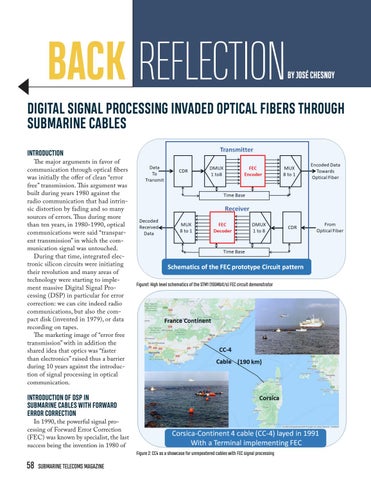
Figure1: High level schematics of the STM1 (155Mbit/s) FEC circuit demonstrator
INTRODUCTION OF DSP IN SUBMARINE CABLES WITH FORWARD ERROR CORRECTION
In 1990, the powerful signal processing of Forward Error Correction (FEC) was known by specialist, the last success being the invention in 1980 of
58
SUBMARINE TELECOMS MAGAZINE
Figure 2: CC4 as a showcase for unrepeatered cables with FEC signal processing