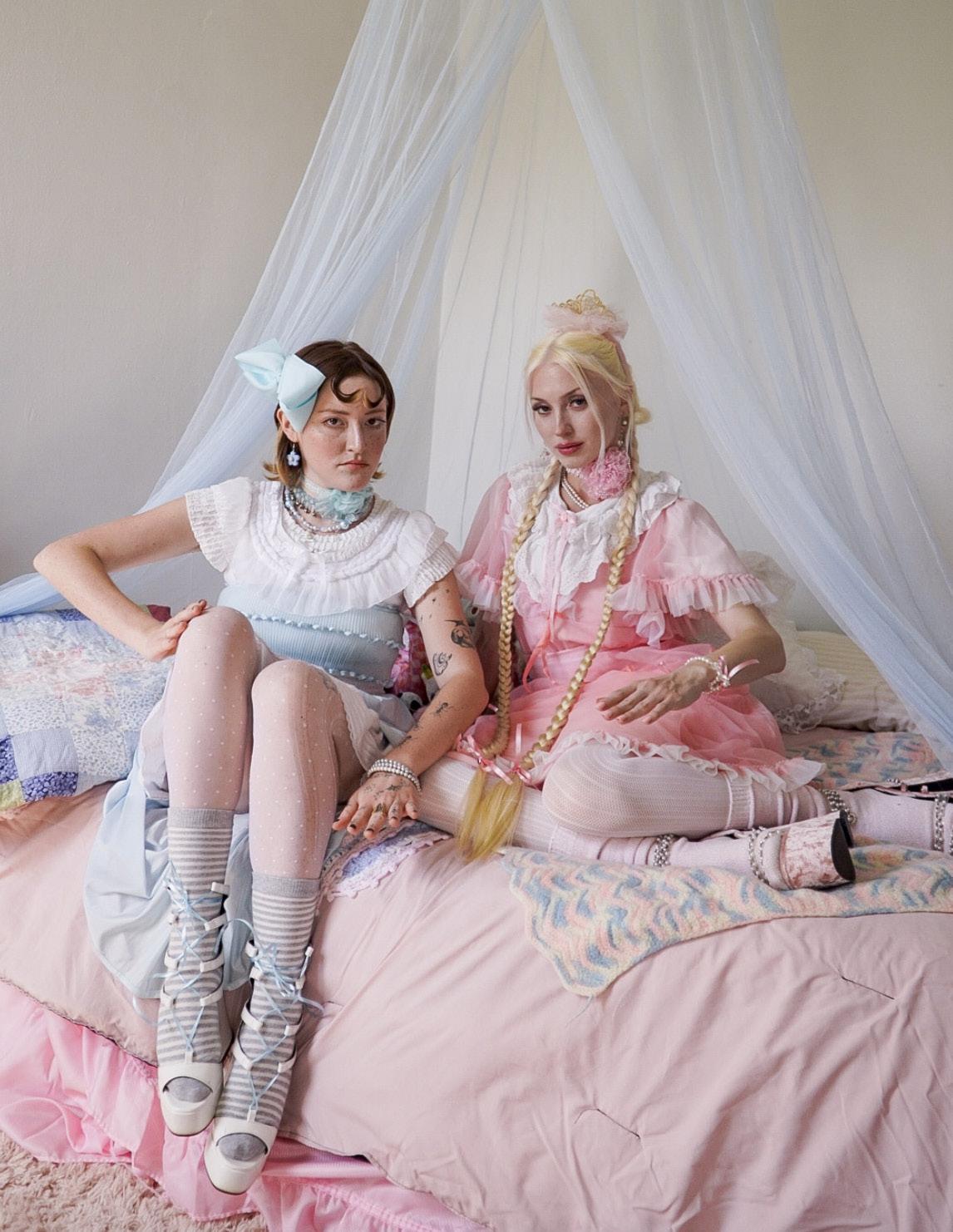
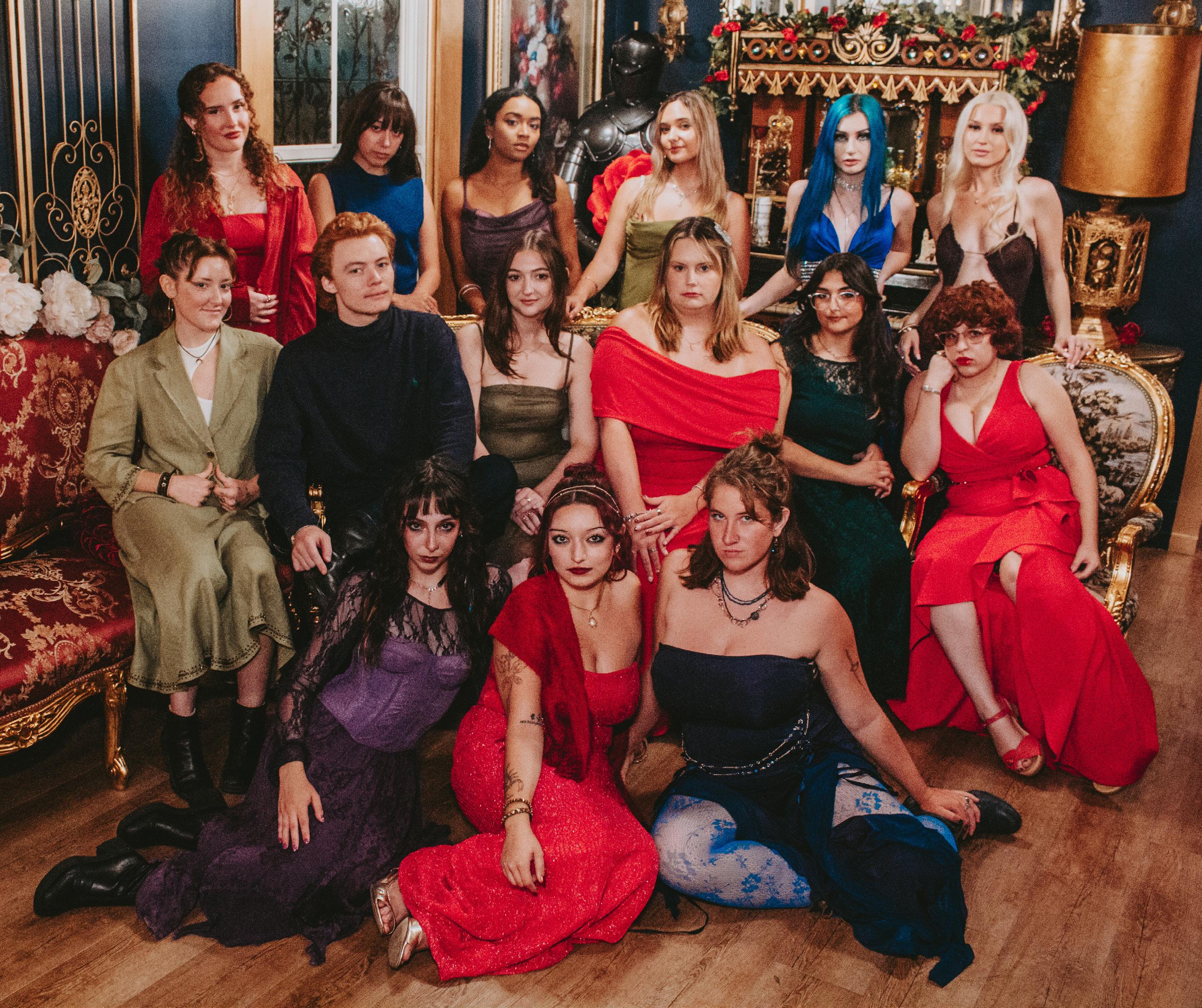
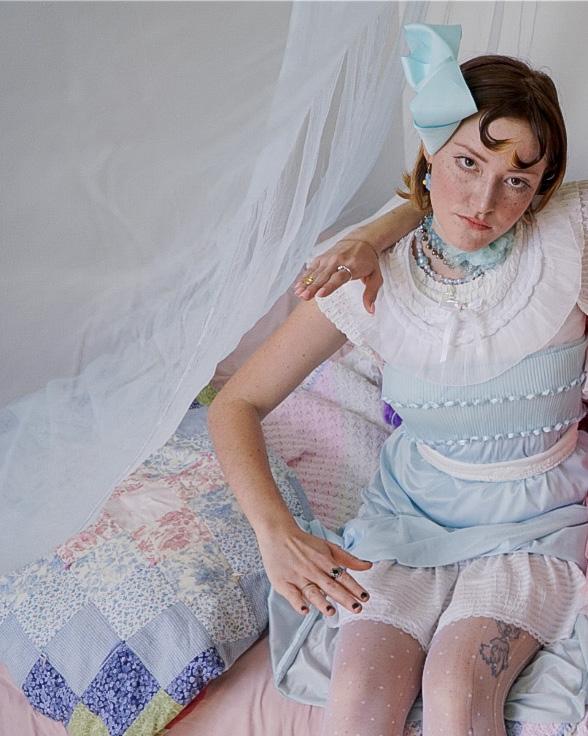
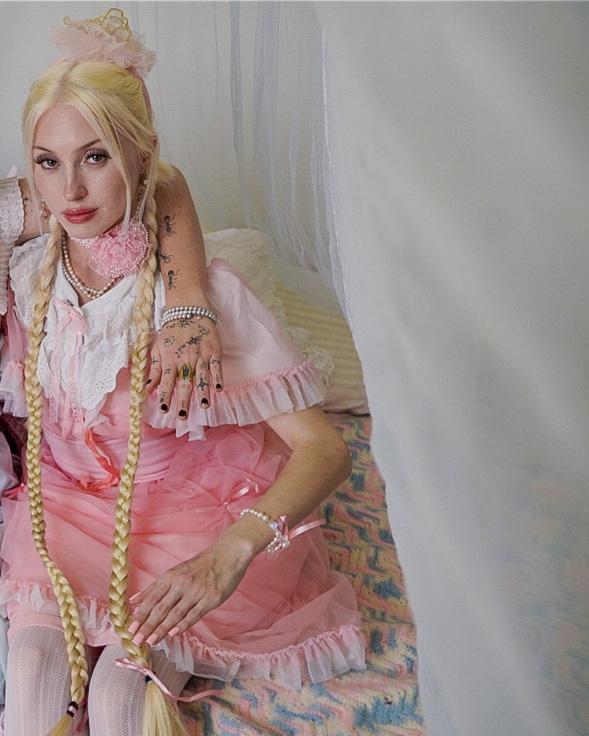
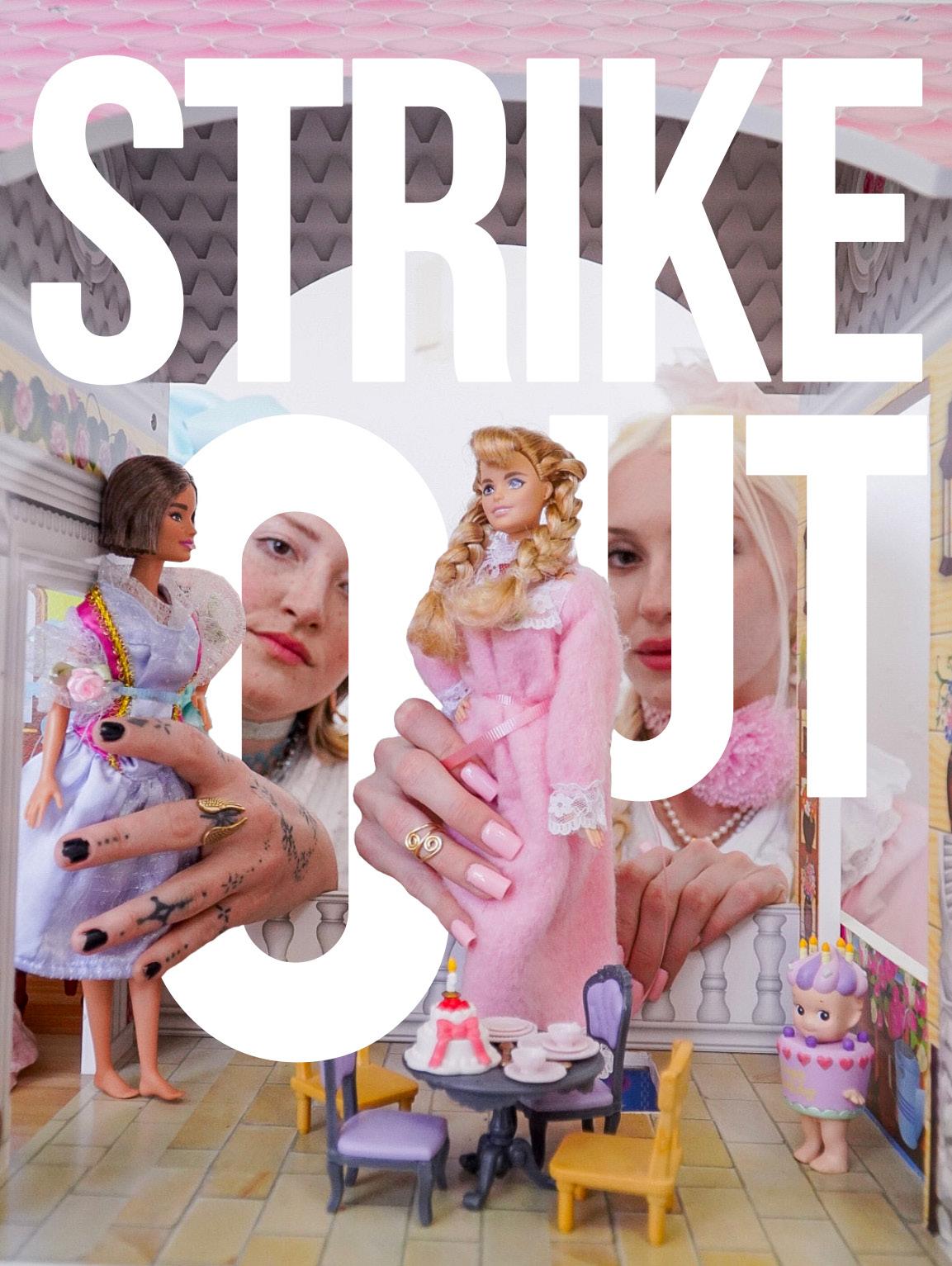
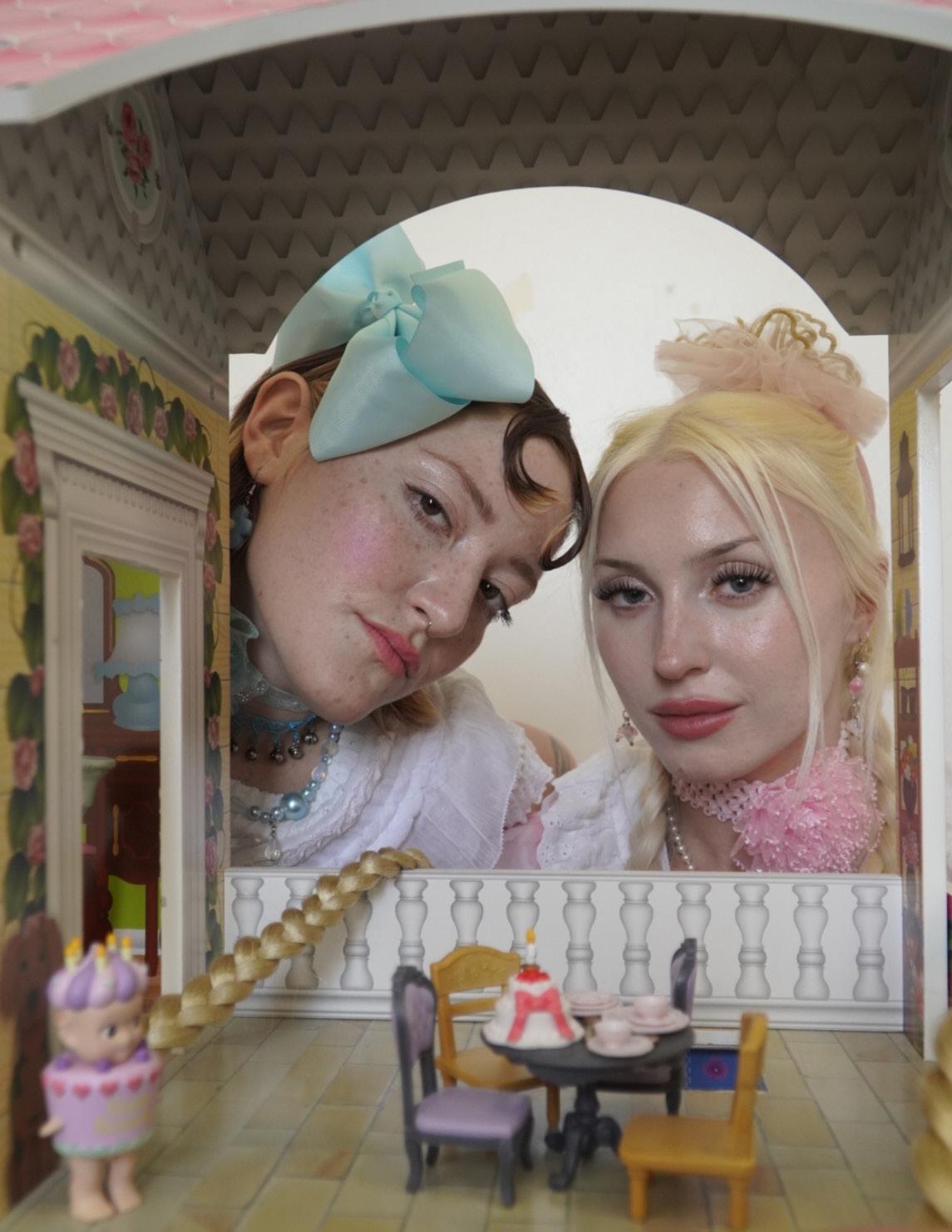
Myth must be kept alive. The people who can keep it alive are artists of one kind or another. - Joseph Cambell
Since the dawn of human existence, we have shared stories to understand our world. Beneath dim torchlights are etched rocks in ancient walls—proof of the myths passed from vocal to the physical. Legends were passed through generations, molding us and our understanding of ourselves and each other.
Stories we met in adolescence, doll-eyed, turning pages with an eager haste as we glide the tip of our fingers across printed ink. These figures, real or not, teach us a moral code. What it takes to be a hero or a monster, what it takes to love or to lose. They teach us when destinies are designated by fate or defined by our own will. These narratives shape who we become.
Joseph Campbell, mythologist and professor, described four functions of myth: the mystical, which stirs awe; the cosmological, which attempts to shape the unknown; the sociological, which structures our communities; and the psychological, which helps us understand ourselves. These functions reveal how myths are not just inherited stories, but ongoing blueprints. They teach us what to long for and what to fear. They tell us what power looks like, what beauty means, what a life should be.
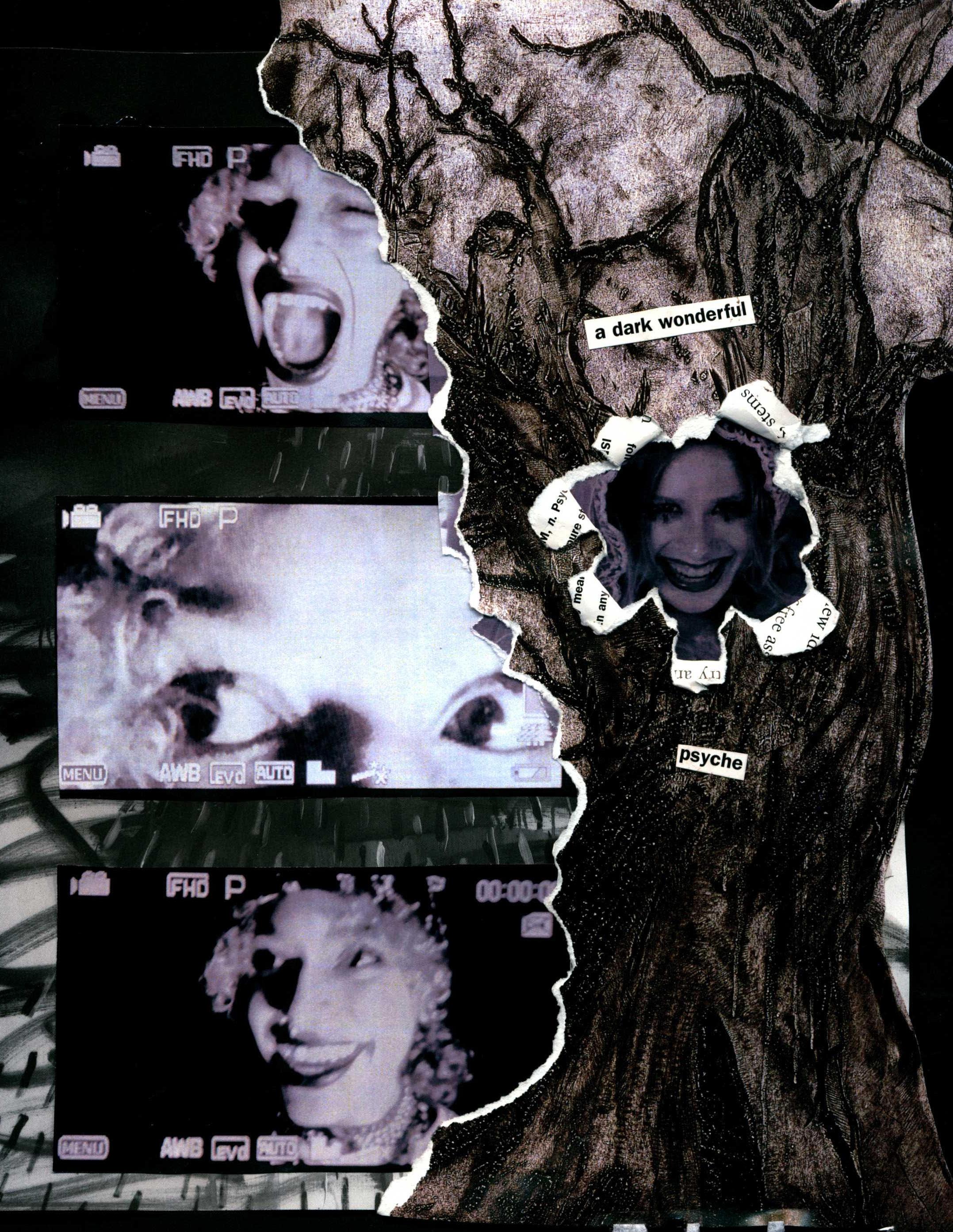
I have always been drawn to stories of reinvention, to the tension between illusion and reality. Gatsby, with his restless ambition and fragile dreams, built himself on myth. In that way, he is not just a character, but a reflection of us, of the narratives we live by without question. It made me wonder: how far are we willing to go to live by a story we tell ourselves? How much of society’s morals are borrowed standards from stories that shaped us?
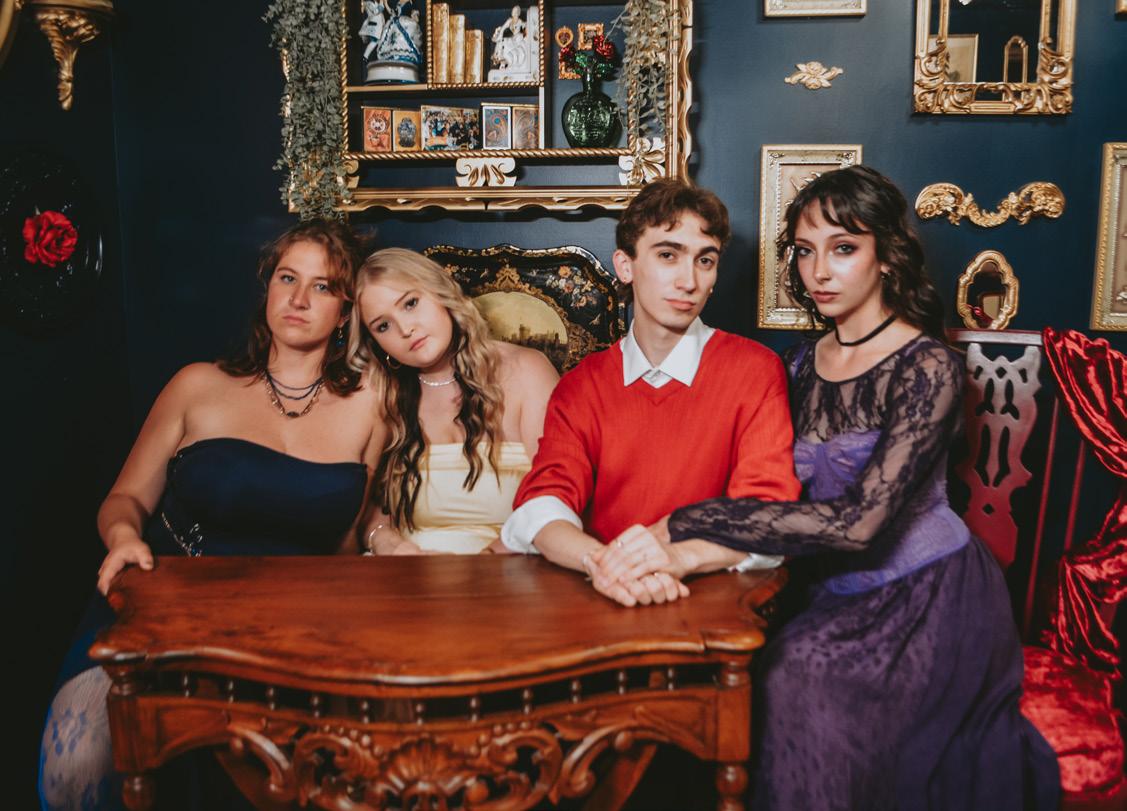
Somewhere along the way, we stop seeing stories as something sacred. We repackage them, put a price on them, and sell them as attractions. St. Augustine is a city enthralled by an identity built on capitalization, where history is reduced to commodity. Rather than appreciating our roots, we exploit them. I wanted to take our home and turn its surroundings into something more than a spectacle.
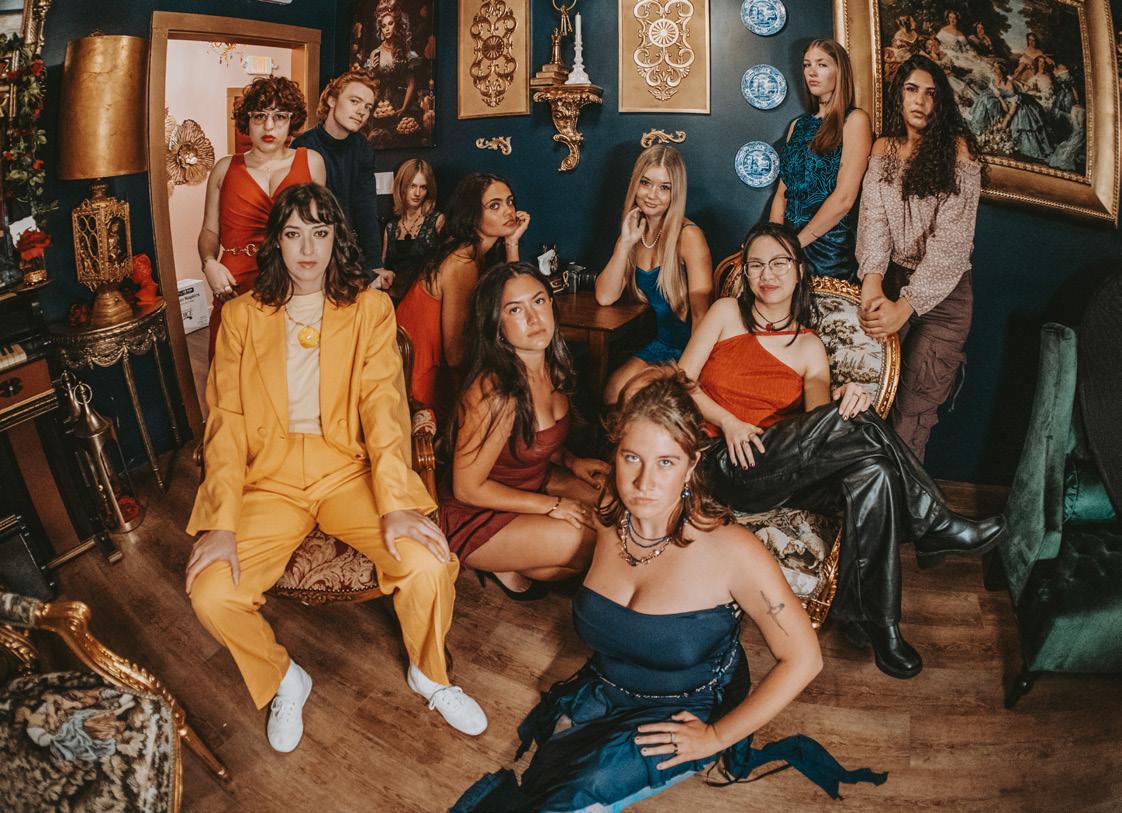
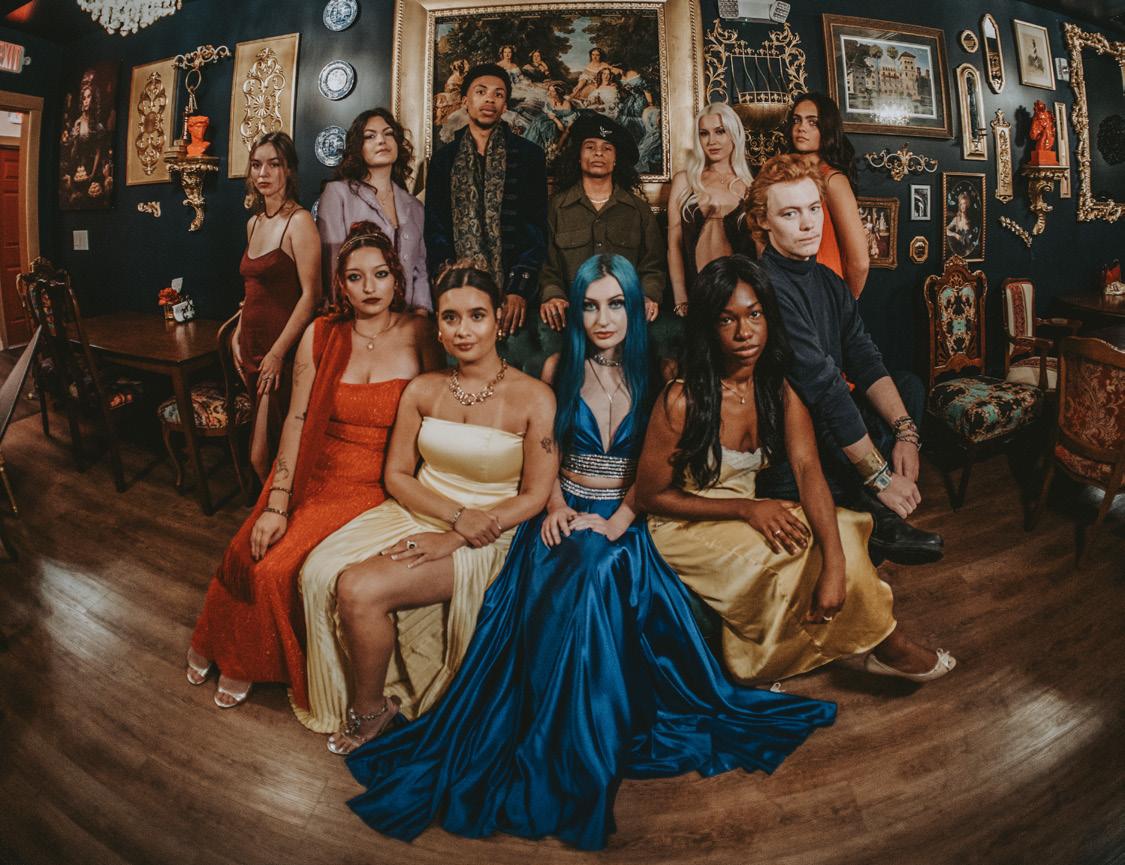
With this issue, I wanted to reclaim that sense of wonder. To give our staff the chance to be children again—to remember what it felt like to lose ourselves in a story, to see the world not as something to be sold, but as something to be imagined. Because stories do not remain stagnant; they evolve alongside us, molded by the hands of those who tell them.
Though retold in different tongues and reshaped by time, their value remains. The myths of the past still hold their truths into the present, their lessons in our ever-changing world. They provide a moral compass, an understanding of love, loss, fate, and free will. And just as myths shape us, we, too, shape them. This issue is an exploration of those narratives—the myths we inherit, the ones we reject, and the ones we continue to construct.
- JESSICA GIRALDO
Staff List
EDITOR IN CHIEF
Jessica Giraldo
Assistant Daisy Pflaum
CREATIVE DIRECTOR
Assistant
HEAD WRITER
Assistant
INTERNAL
Art Director
Magazine Designer
Digital Graphic Designer
Photography Director
Photography Assistant
Photographer
Videography Director
Videographer
Production Director
Production Assistant
Casting Director
Casting Assistant
Fashion Director
Fashion Assistant
Stylist
Beauty Director Makeup Artist
Evita Carrasco
Olivia Pagliuca
Maya Kayyal
Kaya O’Rourke
Evita Carrasco
Sophia Johnston
Sofia Cruz
Katy Lynch
Tilghman White
Lily Sara
Daisy Pflaum
Madison Torres
Molly Melton
Joelle Pakes
Camille Crawford
Eli Alexander
Haven Doyle
Eryn Wagner
Kennedy Fulk
Olivia Pagliuca
Lily Sara
Noa Simon
Kennedy Fulk
Olivia Pagliuca
Daisy Pflaum
Allyson Woods
Lydia Corbin
Jordan Mendez
Daisy Pflaum
Allyson Woods
Allyson Woods
Dominika Mierzwinska
Tilghman White
Sofia Cruz
Tre Evans
Liam Feeney
Sophia Johnston
Haven Doyle
Samantha McGhee
Madison Horlback
Jessica Giraldo
Hair Stylist
WRITING
Creative Writing Director Poet
Blog Director Columnist
Journalism Director Journalist
EXTERNAL
Social Media Director
Social Media Assistant
Public Relations Director
Public Relations Assistants
Marketing Director
Marketing Assistant
Montana Arnold
Dominika Mierzwinska
Allyson Woods
Fae Hunt
Kennedy Fulk
Samantha McGhee
Jackie Green
Jay Cruz
Jackie Green
Indigo Carter
Jay Cruz
E Dunsmuir
Jaden Rudd
Georgia Witt
Jessica Giraldo
Jaden Rudd
Jessica Giraldo
Selah Hassel
Indigo Carter
Kaya O’Rourke
E Dunsmuir
Sophia Massebeau
Lydia Corbin
Amia King
Georgia Witt
Kaya O’Rourke
Selah Hassel
Lydia Corbin
Camille Crawford
Amia King
Emily Braunstein
Molly Rose
Siena Marsico
Madison Horlback
Josie Blaisdell
Kaya O’Rourke
Jayla Clowers-Jones
Nancy Haung
Amia King
Brigitte Traill
Kelsey Hearns
Nancy Haung
Jayla Clowers-Jones
Amia King
Madison Horlback
Letter from the Editor in Chief
JESSICA GIRALDO
Sarasota, Florida
2 Years on Strike
when I first stepped into this role, I knew I was stepping into something bigger than myself. At the time, team morale was low. Strike had structure, but it wasn’t strong yet and there were kinks, as expected. But something in me believed in what Strike could become and the people behind it. Over these past two issues, that belief has transformed into something real. Together, with an incredible team of executives, directors, and artists, we’ve built not just a system, but a rhythm. We’ve expanded our teams, added depth to departments like Videography and Writing, and created space for more collaboration, more creativity, and more intention. We became not just a “fashion” magazine, but something more meaningful, more community-rooted, and more multidimensional.
This school year alone, we produced our first-ever fashion show, organized two successful clothing swaps for charity, and reached beyond campus into the heart of our town—collaborating with local creatives, partnering with small businesses, and showing people exactly what we stand for. We were even invited to speak at Flagler College’s Com Week, a moment that reminded us just how far we’ve come—not just as students running a magazine, but as a creative force on our campus. Strike isn’t just a publication anymore; it’s a platform, a community, and a launching point for so many people finding their voice. Watching it evolve into that has been one of the proudest experiences of my life. But more than anything, Strike has been my lifeline. In my darkest moments, when I felt like I had nothing
Daisy Pflaum
Assitant to the Editor in Chief
left tethering me to this town, Strike reminded me why I stayed. It gave me purpose when I felt aimless and community when I felt isolated. Working with so many creatives, each with their own dreams, histories, and ideas, has shown me the complexity and beauty of being human. I used to think growth was about doing more. Pushing harder. Being the loudest voice in the room. But Strike taught me that real growth is about becoming more intentional. It’s about learning how to show up even when you’re tired or unsure. It’s about recognizing that your leadership affects real people and choosing to be better—for them.
Every person on this team gave me a reason to keep growing. Watching them take ownership of their roles, find confidence in their ideas, and support each other made me want to rise to the occasion. Not because I had to, but because they deserved that. They deserved a leader who was learning alongside them. Being part of a team like this changed me. It made me more honest. More patient. More aware of how my presence impacts others. And I know I’ll carry that with me long after this role ends.
Thank you to everyone who believed in me, challenged me, and made this chapter of Strike unforgettable. You helped me become someone I’m proud of. This role changed my life, and I don’t say that lightly. It has been the greatest honor of my college career to serve as your Editor-in-Chief.
Letter from the Creative Director
EVITA NOELLE CARRASCO
Denver, Colorado
3 Years on Strike
II have always been absorbed by the idea of having a planned future. Quite the gogetter, I knew exactly what I wanted next in life. But even after that degree was to be placed in my hand, it became an ever-socommon question: “Now what?”
I love concepting. I love collaborating with other departments. I love being a visual storyteller. Over the last two issues, my time as Creative Director has made one thing clear: I’ve found what I truly want to do with my career. I wore my blue buttonup blouse and straight-leg Levi jeans, guided by the “How to Dress like a Director”, gifted by my sister this past Christmas. I spent company time at my job printing out papers for models, creating photography guides, and working on social media posts. I adore consuming my time with creative work, and again, how grateful I am to be writing this letter. I get to leave a piece of myself for others to see my work and the time I’ve put in.
This sense of creative fulfillment was especially present during a recent shoot, where I was given the concept of folklore and fable-style stories. I wanted to take stories we’ve heard a thousand times and look at them from a different angle, something less about fantasy for the aesthetics’ sake, and more about how these old stories still reflect things we deal with today. Each shoot started off with a simple well-known story,
Olivia Pagliuca Assitant to the Creative Director
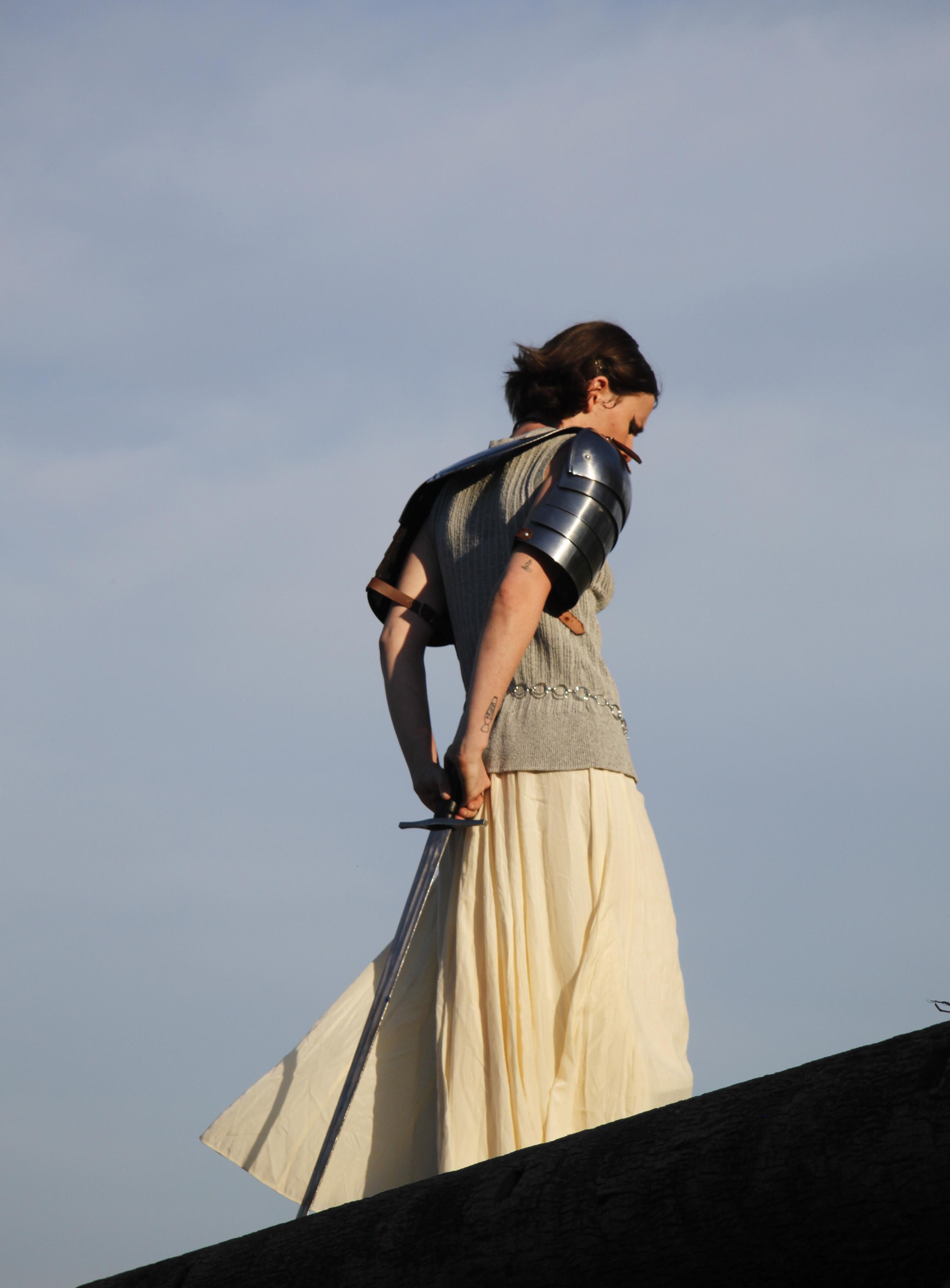
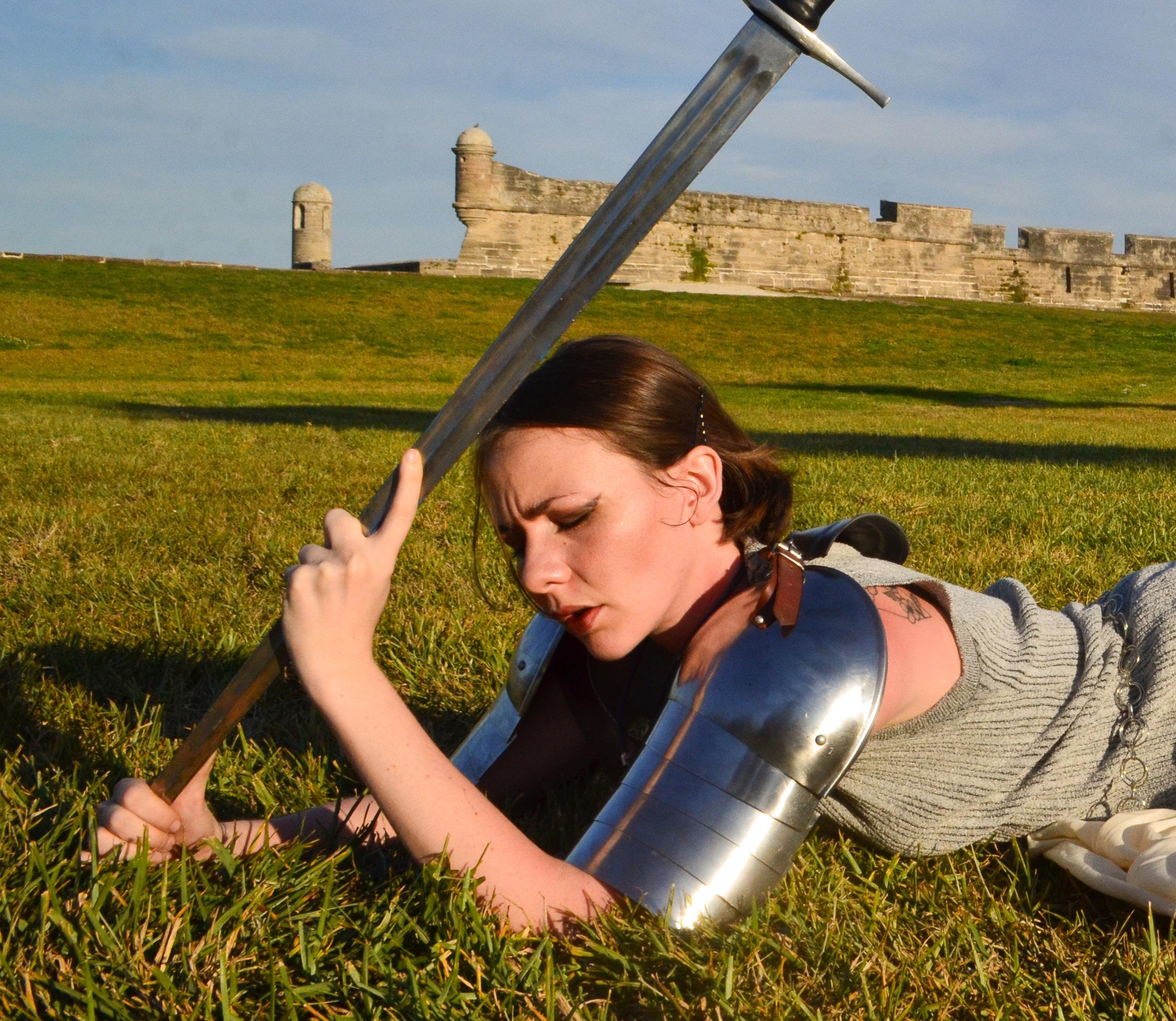
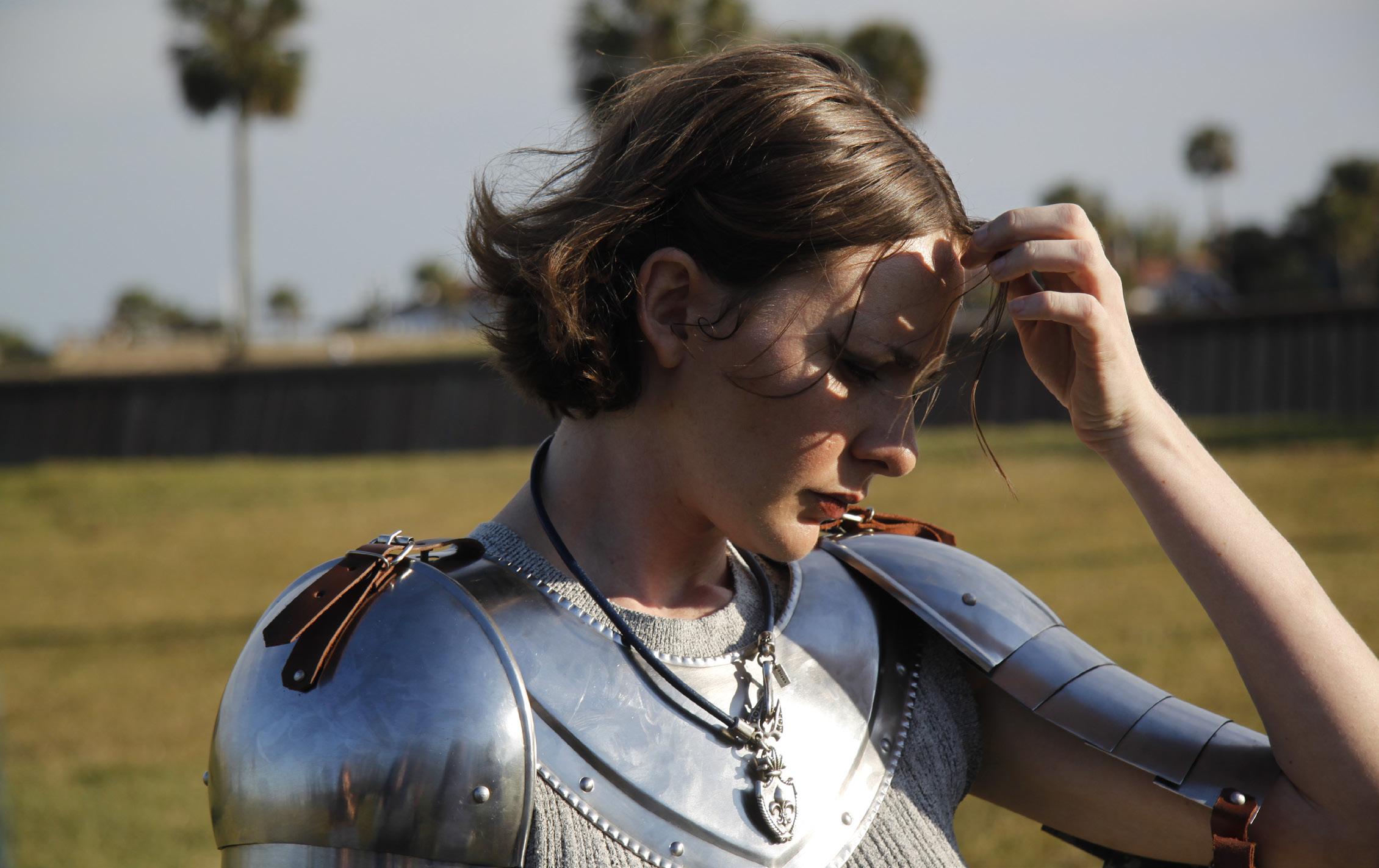
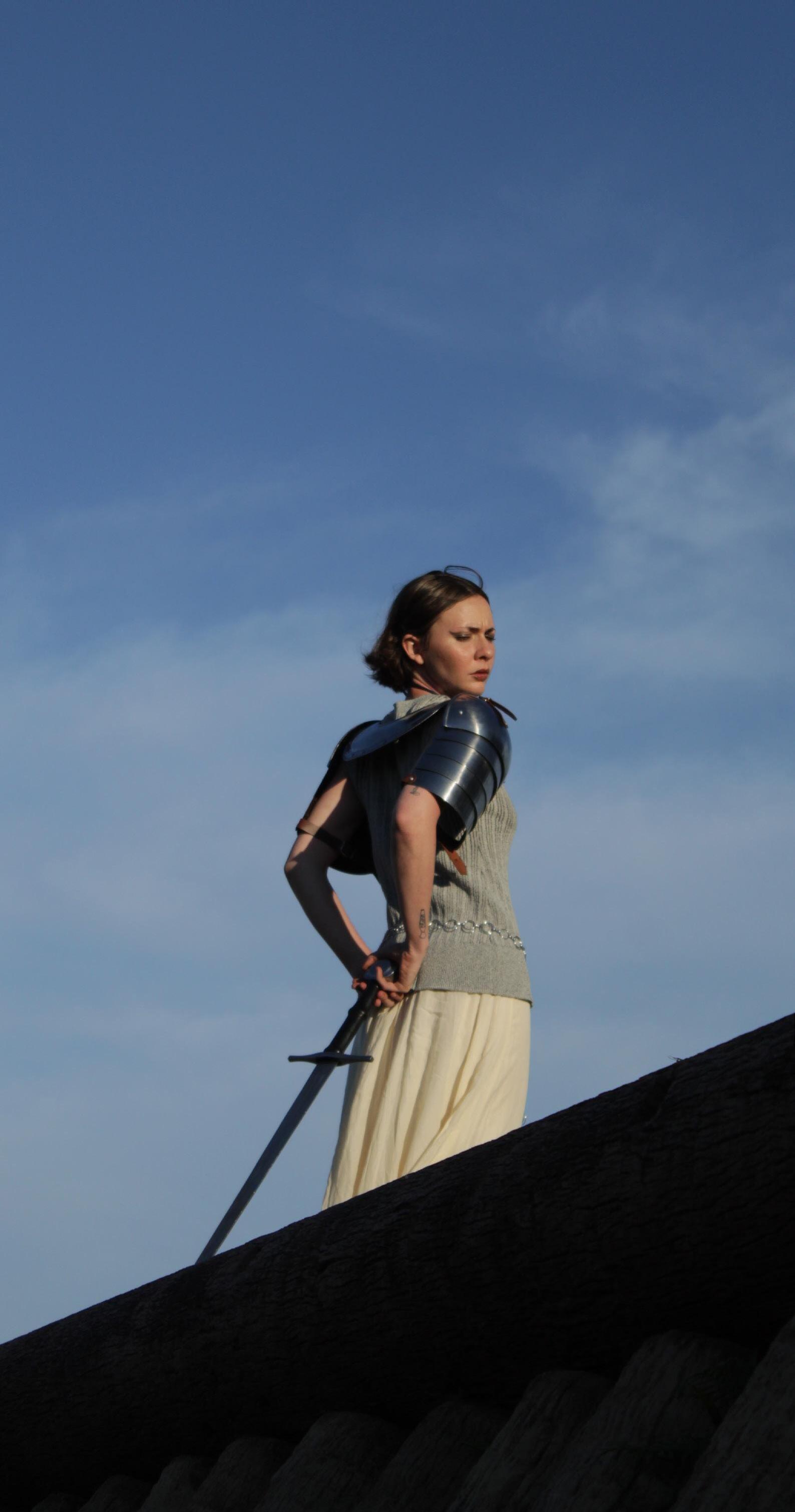
but what would it look like to put a legendary figure or event in modern life? It then became the idea of using a piece of armor as a metaphor for emotional resilience, a woman’s routine, heavy and protective on her body. Or taking an old biblical story about desire and reworking it to talk about intimacy, identity and love in a way that feels more inclusive to today.
With love and great thanks,
And I think of those early spring days. Hot pavement, staff in their seasonal abraded flip-flops. A lazy buzz in the air as production set up the hot lights on an even hotter day. It’s easy to work with a team when a majority of them are branded with just as much creativity as the next. And I hate to be a person who says things just fall in place; that nothing is random, because that’s just stupid. But without Strike, there wouldn’t be certain things in my life. I became closer to others, I met friends I’ll probably have in my life forever. I gained skills for my future, all from a small studentrun fashion magazine tucked away in a northeastern Florida beach town.
It’s been rewarding.
Letter from the Head Writer
MAYA KAYYAL
Ormond Beach, Florida
3 Years on Strike
Recently, I’ve been thinking a lot about circles. That might seem random, but to me, circles represent beginnings and endings, completeness, continuity, and interconnectedness. As my time at Strike and in college comes to close, I feel this era of my life ending as another one begins and both the uncertainty and excitement that brings.
I first learned about Strike at the beginning of my freshman year at Flagler. It seemed like something I wanted to be a part of, but I felt slightly intimidated, not sure if I belonged or if anyone would accept me and my ideas. At the end of my second semester, I bit the bullet and sent in my application to become a Staff Writer for Issue 04. Once I joined the team, I quickly realized I made the right decision. I finally had an outlet to write about topics that intrigued me, impassioned me, and inspired me to be vocal and speak my mind. For Issue 05, I became Assistant Editor, and rose to the Writing Director position starting Issue 06.
This role has given me a sense of community that I could’ve only dreamed of when I started. Getting to create something so meaningful every semester with a group of people I love is something I’ll never take for granted.
One of the greatest outcomes of my time at Strike was meeting Jess, our Miss EIC! It was incredible having the opportunity to welcome her to the writing team as a baby Staff Writer and watch her ascend the ranks to Blog Director (amongst a million other positions she held at the time), and all the way to Editor-in-Chief. Outside of Strikelandia, it has also been a pleasure to gain Jess as one of my close friends. I’m so proud of her and her ability to bring her creative vision to life alongside Evita, our wonderful and talented Creative Director.
As always, Strike Out!
Kaya O’Rourke Assitant to the Head Writer
In my eyes, Issue 09 is really about how different cultures, communities, and individuals use their beliefs and imaginations to discover their identities through myth and story. I’ve always been enamoured with stories, and writing for Strike has definitely helped in the discovery of my own identity.
Wrapping up my time in not only Strike, but in college, it feels very full circle that I am once again terrified for what happens next. But, through my experience with Strike, I know things will always work out in the end and the circle of endings and beginning will repeat once again. And this time, I’m excited for what my future (and the future of Strike) holds.
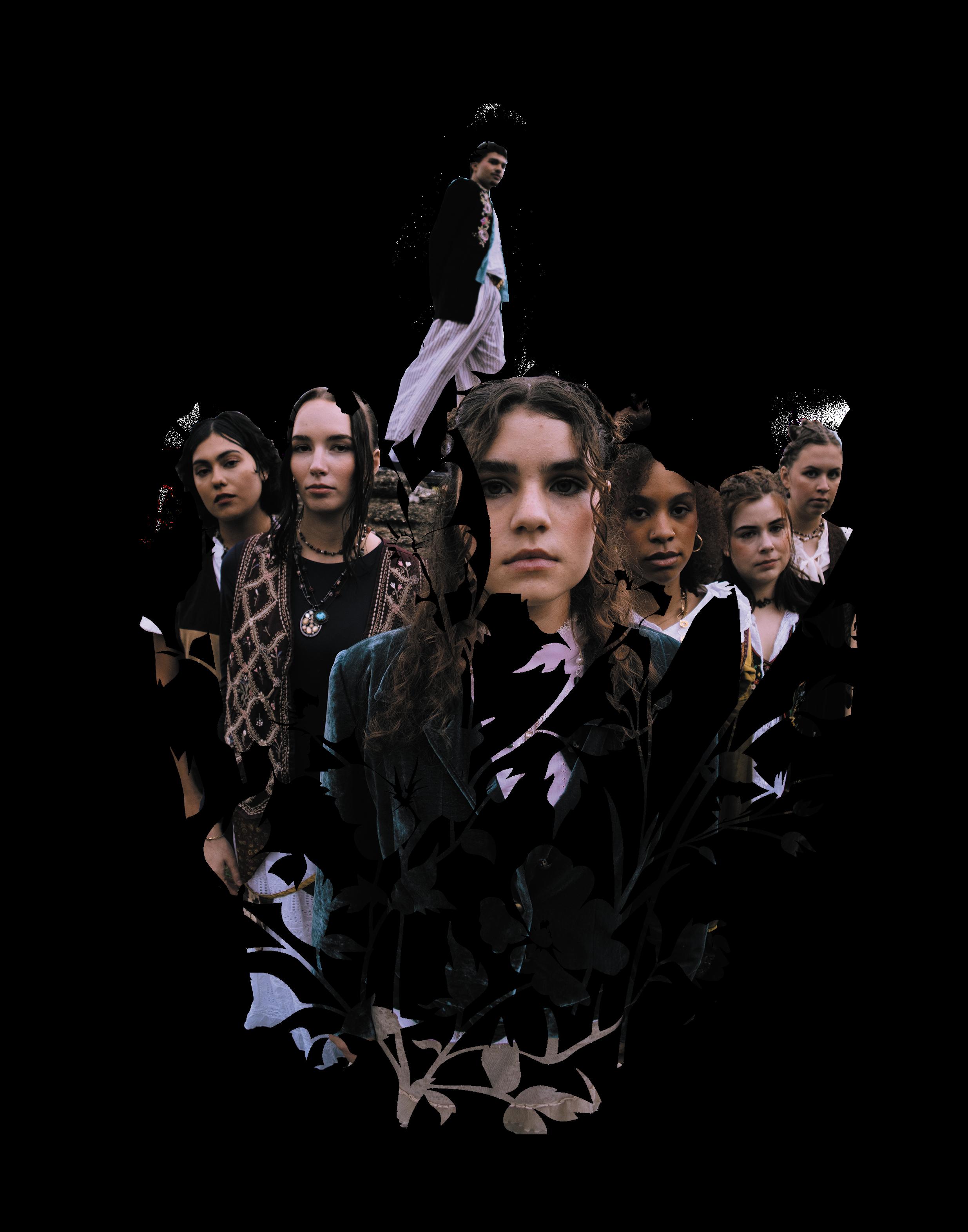
Strike Magazine St Augustine presents
Party Pixies
Chapter 01
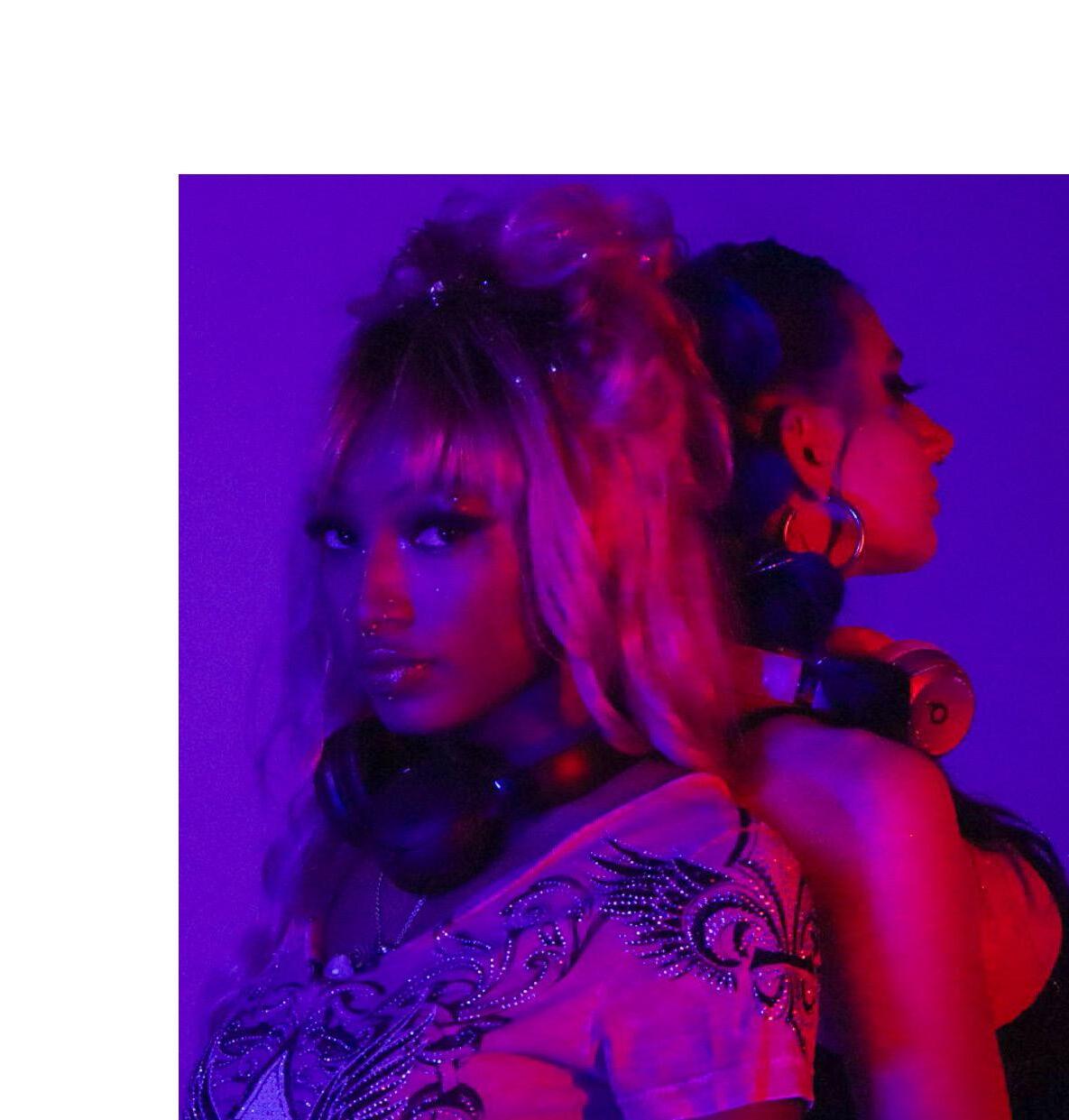
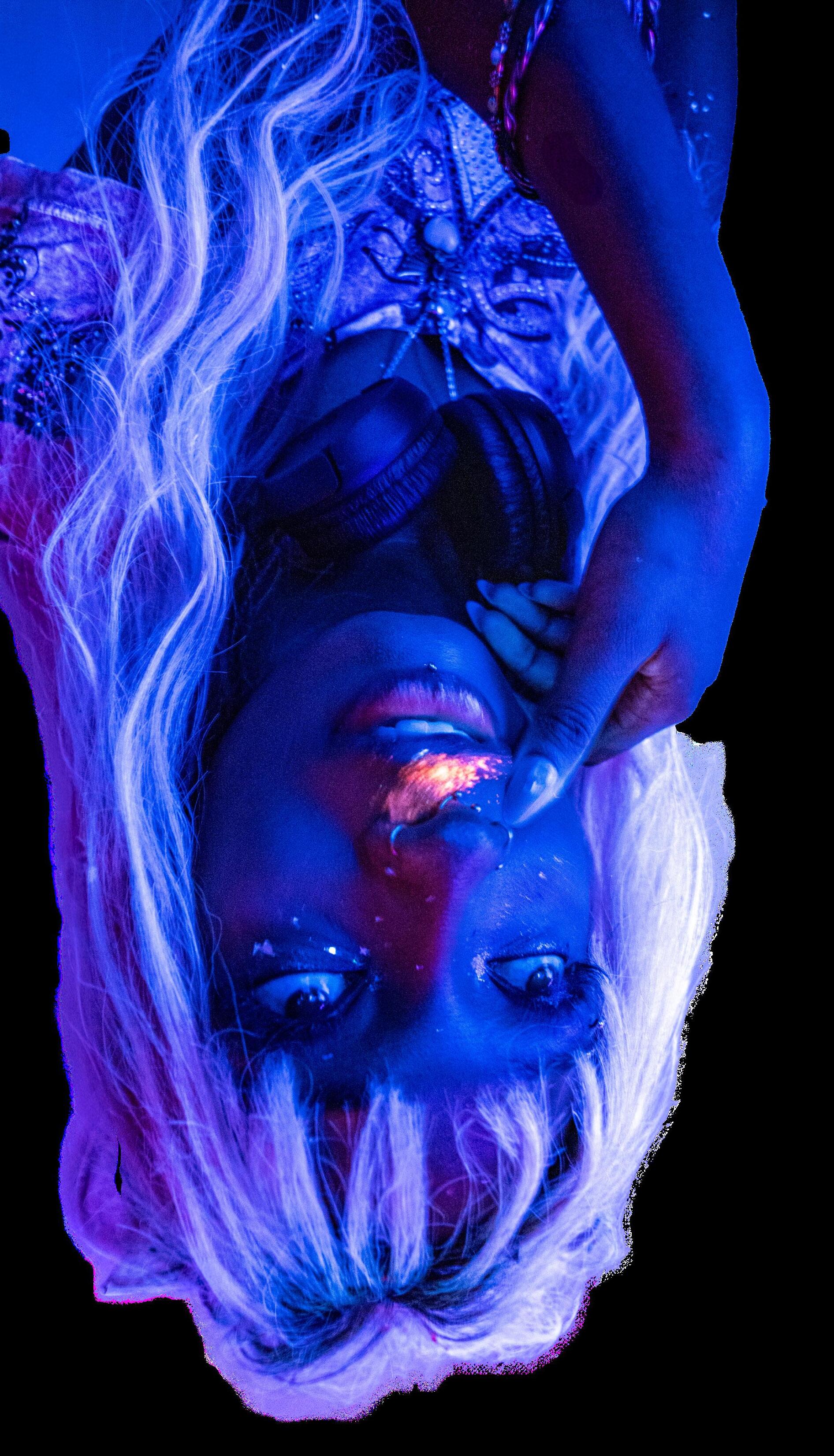
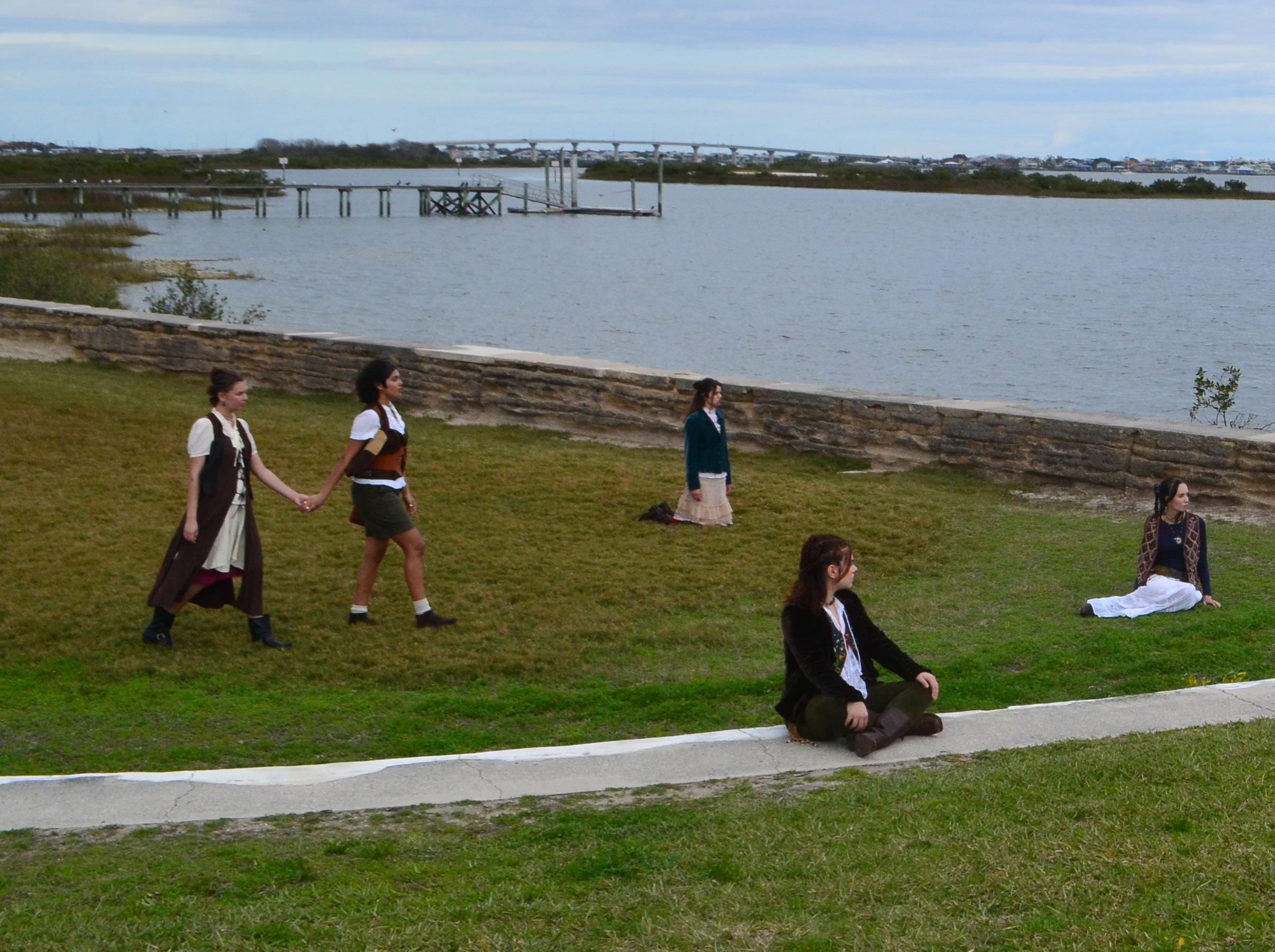
Mystical stories, woven with golden strings of magic, wonder, and the inexplicable, serve a mighty purpose, cultivating awe for the world around us and what is beyond it. These stories transcend the routine monotony of the everyday, reminding us that reality is often far more complex than our intuition suggests. By introducing us to worlds where the unthinkable is imaginable, they foster our fascinations, emboldening us to look beyond the surface. These narratives ignite in us a sense of recognition in the unknown, allowing us to question, explore, and cherish the mystery and beauty that informs our existence on Earth. This, ultimately, deepens our connection to the universe.
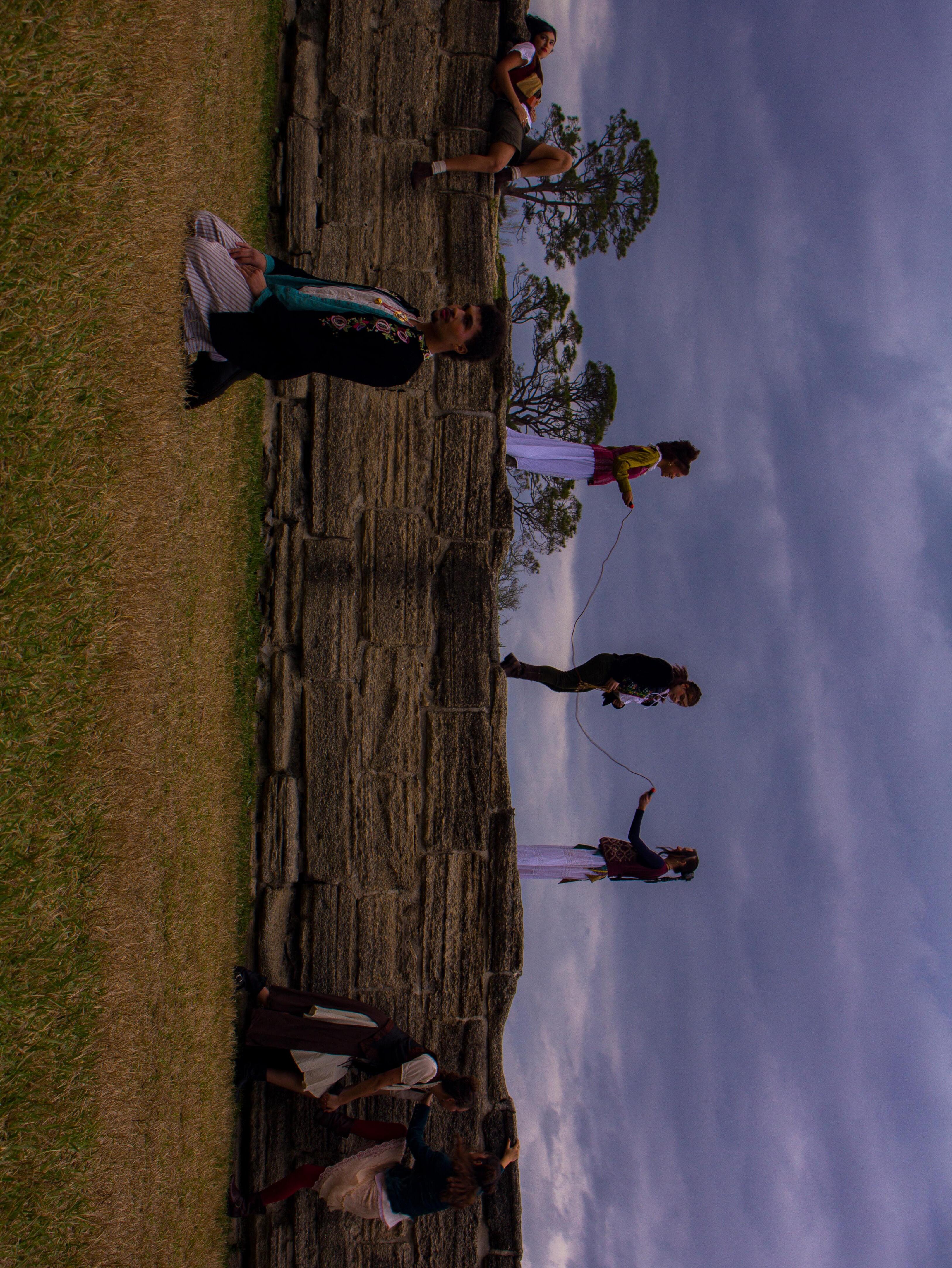
Fairies, mythical beings originating in folklore tied to beliefs from various cultures, embody the very essence of the world’s magical secrets. They are regarded by some as guardians of the forest, others as fallen angels, spirits of the dead, or even pagan deities. Their shimmering presence is a reminder that the ordinary world is not what it seems.
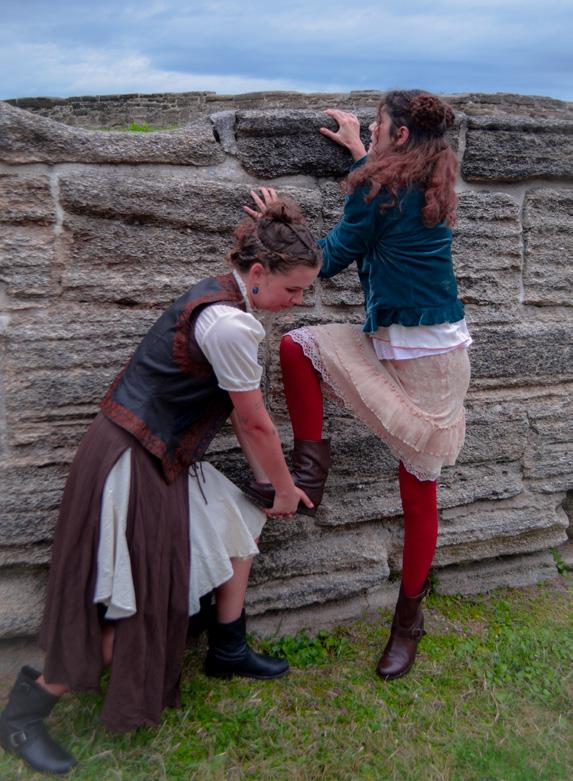
Fairies are ethereal yet fleeting, there in one moment and gone in the next. The transient nature of fairies makes them powerful symbols of escapism. To follow fairies, whether in life or imagination, is to give into the tempting thrill of escape, to peacefully disassociate from the present. Fairies represent the need for slipping away, reaching a subconscious world where joining in on their games offers an appealing, impermanent solace from reality. Like the temporary highs of substances or pleasure, stories of fairies offer a short-lived refuge from the weight of reality, a glimpse into a world where worries dissolve into pixie dust.
By Kaya O’Rourke
by Daisy
Photo
Pflaum
Photos by Camille Crawford, Lily Sara
Clubbing Has a New Tune
By Camille Crawford
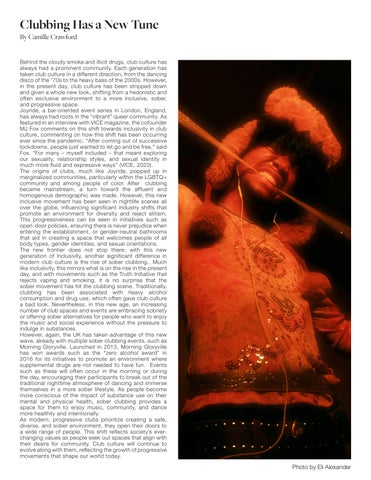
Behind the cloudy smoke and illicit drugs, club culture has always had a prominent community. Each generation has taken club culture in a different direction, from the dancing disco of the ‘70s to the heavy bass of the 2000s. However, in the present day, club culture has been stripped down and given a whole new look, shifting from a hedonistic and often exclusive environment to a more inclusive, sober, and progressive space.
Joyride, a bar-oriented event series in London, England, has always had roots in the “vibrant” queer community. As featured in an interview with VICE magazine, the cofounder MJ Fox comments on this shift towards inclusivity in club culture, commenting on how this shift has been occurring ever since the pandemic. “After coming out of successive lockdowns, people just wanted to let go and be free,” said Fox. “For many – myself included – that meant exploring our sexuality, relationship styles, and sexual identity in much more fluid and expressive ways” (VICE, 2023).
The origins of clubs, much like Joyride, popped up in marginalized communities, particularly within the LGBTQ+ community and among people of color. After clubbing became mainstream, a turn toward the affluent and homogenous demographic was made. However, this new inclusive movement has been seen in nightlife scenes all over the globe, influencing significant industry shifts that promote an environment for diversity and reject elitism. This progressiveness can be seen in initiatives such as open-door policies, ensuring there is never prejudice when entering the establishment, or gender-neutral bathrooms that aid in creating a space that welcomes people of all body types, gender identities, and sexual orientations. The new frontier does not stop there; with this new generation of inclusivity, another significant difference in modern club culture is the rise of sober clubbing.. Much like inclusivity, this mirrors what is on the rise in the present day, and with movements such as the Truth Initiative that rejects vaping and smoking, it is no surprise that the sober movement has hit the clubbing scene. Traditionally, clubbing has been associated with heavy alcohol consumption and drug use, which often gave club culture a bad look. Nevertheless, in this new age, an increasing number of club spaces and events are embracing sobriety or offering sober alternatives for people who want to enjoy the music and social experience without the pressure to indulge in substances.
However, again, the UK has taken advantage of this new wave, already with multiple sober clubbing events, such as Morning Gloryville. Launched in 2013, Morning Gloryville has won awards such as the “zero alcohol award” in 2016 for its initiatives to promote an environment where supplemental drugs are not needed to have fun. Events such as these will often occur in the morning or during the day, encouraging their participants to break out of the traditional nighttime atmosphere of dancing and immerse themselves in a more sober lifestyle. As people become more conscious of the impact of substance use on their mental and physical health, sober clubbing provides a space for them to enjoy music, community, and dance more healthily and intentionally.
As modern, progressive clubs prioritize creating a safe, diverse, and sober environment, they open their doors to a wide range of people. This shift reflects society’s everchanging values as people seek out spaces that align with their desire for community. Club culture will continue to evolve along with them, reflecting the growth of progressive movements that shape our world today.
by Eli Alexander
Photo
Photo by Joelle Pakes
Bluebell Woods: A Sonnet
Photo by Joelle Pakes
For one day, to usher spring, bluebells ring. They grow jointly, drops of periwinkle. When twilight falls, the small bells start to twing, madness starts as the moon winks and twinkles.
We all gather under the flower moon to dance to the hymns of flutists and bards. Tables full of cakes, maybe even prunes, flagons of honey wine, and pigeon chard.
We revel to the great unseelie queen, who takes pride in wicked celebrations. We dance, perform, sing, til our bodies gleam, to honor our mischievous nation.
When morning sun splices through the affair, We attest to goodness—truly we swear.
By Jaden Rudd
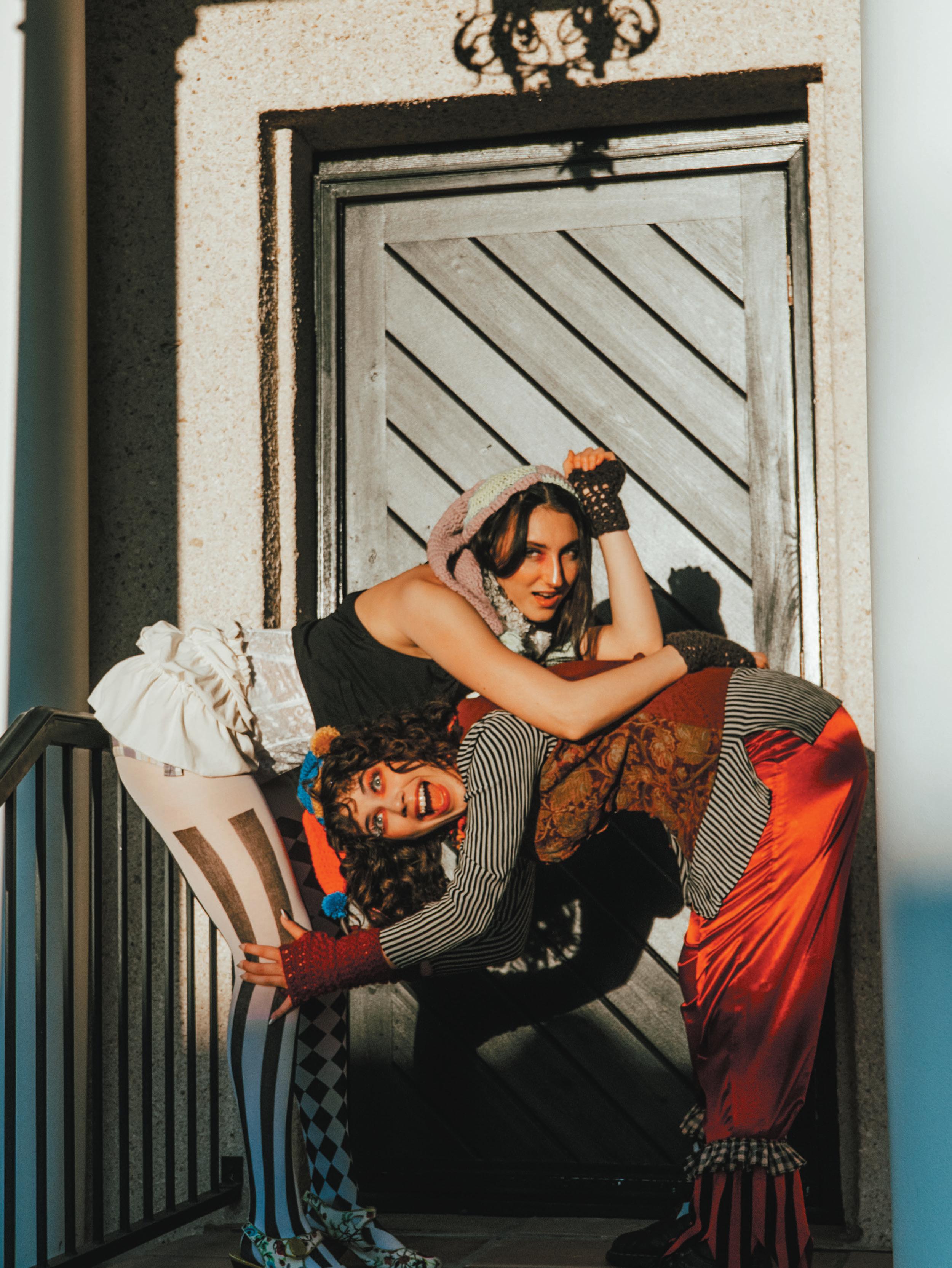
Where courtyards hummed with activity and chambers echoed with secrets, court jesters held a unique and powerful position within medieval life. They bartered in amusement, their tricks and songs an inviting burst of color amidst the somber stone. Yet, veiled behind the facade of their antics lay a sharper understanding of human nature. Cloaked under the guise of foolishness, jesters could safely uncover the falsehoods of the court without fear of conviction, revealing its hidden truths. The jingle of a cap and bells or a well-resolved rhyme could illuminate corruption lost to the shadows.
Where fairies murmur fantastical escapes, jesters deal in the sharper magic of reality. They are the court’s living mirrors, their observations reflecting the world’s imperfections with unyielding clarity. While some seek relief in disassociation, the jester offers a different kind of freedom–the freedom of truth.
In tarot readings, the Fool and the Hanged Man are two cards that celebrate the contradiction that Jesters present between chaos and wisdom. The Fool acts as a figure of playful defiance, a sign to embrace spontaneity. The Hanged Man reminds the reader to pause and reflect, representing sacrifice and patience. When the Fool’s leap of faith meets the Hanged Man’s thoughtful contemplation, one enters a period of transformation, where letting go of old habits could mean the start of new adventures. The Fool and the Hanged Man remind us to stay grounded in our values whilst being open to experiencing change.
MAYA KAYYAL
Photo by Lily Sara
By Kaya O’Rourke
Within the halls of power, both imposing and majestic, a relentless veil of deceit sits idly.
The leaders lounge in their thrones, radiating callousness, while casting shadows over those they claim to care for.
They offer us cold, lifeless ideals and spew false promises–disguised as freedom and the “American Dream.”
We indulge in merriment, laughter, and distractions, while they navigate every second of each of our lives.
A performance for the elite, a source of entertainment, we are called to applaud, to express dissent, to resist. Yet when we stumble, they choose to ignore, our pleas muffled by the sounds of their luxuries.
Our requests belittled, our begging met with snickers, they retreat behind their royal veneer.
Draped in rights and privilege, they consider themselves true monarchs, while we, the jesters, meet their gaze with tears streaming down our faces.
They hold onto the strings too tight, they set the rules too rigid, we choke under their tyranny.
Shrouded in audacity, they act bewildered as to why we can’t
Mere pawns in their neverending chess game, the punchline rests upon us, while they remain detached from the chaos.
The court hums with empty dialogues, as we, the masses, fail to satisfy the thirst they have for control.
Despite it all, we still try.
Try to prevail, try to fight, try to show them they won’t win. We smile, we love, we exhibit kindnesses they could never achieve. It makes their flesh burn.
The crown may shift, the throne may tremble, but jesters flourish in vivid display.
Yet when the day is through, and we drift off to slumber, reality settles in.
They don’t care about us.
We’re nothing to them but sources of entertainment, the toys they play with then toss aside when they’re bored. They maintain the power–after all.
Photo
Beyond the Punchline: The Power of Humor Within Political Activism
By Maya Kayyal
Just as medieval court jesters spoke truths veiled in antics and foolishness, one technique used by political activists today is using humor as a tool for social change. In times like these, it seems like laughter should be the last thing on anyone’s minds. However, laughter has the power to disarm, destigmatize, and create connections that would not exist otherwise.
A conversation about the state of the world, once a normal exchange between people of different parties, has transformed into something akin to entering a war zone. People with different opinions break into the conversation with their defenses already up and fighting words at the ready. Logic, empathy, and reasoned argument, the cornerstones of traditional dialogue, are rendered useless in the face of these heightened emotions. Using humor to mediate such an unpredictable and reactive conversation helps to disengage the situation, creating an environment for genuine communication.
Humor can break through tension and reveal the flaws in stubborn viewpoints in a non-combative way. This brief disengagement creates an opening for productive dialogue, shifting from fighting to listening. This is not about downplaying serious issues, but about creating the mental space for open and flexible discussion.
Humor also creates spaces for meaningful and productive conversation surrounding topics that society commonly stigmatizes. It can be hard to tackle debates in everyday conversation focusing on race, foreign relations, mental health, substance abuse, abortion, incarceration, etc. due to the societal shame surrounding them. Integrating these topics into humorous dialogue, with respect and sensitivity, allows them to be brought into open discussion in a way that feels less charged, and therefore more accessible and approachable.
Atsuko Okatsuka, Lucas Zelnick, Gianmarco Soresi, Marie Faustin,
Photos by Daisy Pflaum
and many other modern comedians are successfully using standup comedy, crowdwork, and short-form digital content to generate laughter while tackling traditionally taboo subjects. When these comedians articulate a shared struggle or make a witty observation about a person in the crowd, it validates the audience’s feelings and fosters empathy, allowing controversial topics to be discussed in the open. This shared emotional release can forge powerful connections, making difficult conversations feel less isolating and more communal.
Faced with a world that often feels anything but funny, we must embrace humor. Its power lies in its capacity to disengage, decrease shame, form relationships, and ultimately, convert seemingly unserious moments into meaningful action. In this way, humor even becomes a creative version of nonviolent resistance against oppression and hate.
The Jesters Within Our Minds
By Lily Sara
Photos by Daisy Pflaum
Forbidden Fruit
Mystical stories have long captivated human imagination, fostering a profound sense of awe for the world and the universe. However, it is an inherent part of humanity to attempt explanations of what seems beyond comprehension. Driven by this impulse, cultures generate cosmological myths, giving physical form to the intangible through stories and rituals. These narratives aim to illuminate fundamental questions and truths about the universe, like the origins of seasons or the purpose of humanity’s existence.
The true significance of a creation myth such as Adam and Eve emerges when we consider the traditional societal expectations it delineates. Adam’s creation as the first human bolsters the notion of male control in the universe, granting him control and the power to name all creation. Eve’s emergence from Adam’s rib suggests her secondary importance and reliant demeanor. Through its emphasis on Eve’s role in the act of eating the forbidden fruit, the story maintains harmful stereotypes, associating women with both temptation and irrational thought, consequently introducing and reinforcing the enduring burdens of shame and guilt that continue to influence cultural perceptions of gender and sexuality.
The landscape of modern relationships illustrates that desire, temptation, and the need for connection are common threads woven through all experiences of love, regardless of gender. Just as Adam and Eve defied a divine command, a pivotal act that reshapes their existence and the course of humanity, modern love stories of any gender defy societal expectations by prioritizing authenticity and truth, openly rejecting and facing down disapproval. The enduring power of cosmological stories, like that of Adam and Eve, lies in their ability to evolve and offer relevant insights to modern life.
by Eli Alexander
Photo
Malus Domestica
Photo by Joelle Pakes
Genesis 3:5:
“For God knows that when you eat of it your eyes will be opened, and you will be like God, knowing good and evil.”
I have been hanging from the tree: succulent and ripe. It doesn’t hurt, only rots me down, my crimson has
Your God can’t taste me, yet his hands molded my core and conceived my stem. I hang for you to pick, for your thick white teeth to sink into my carpels. Many holy men—
aces deprive themselves of passion. Blame the serpent, the shedding skin, rebirth, and ask what happened to prickings of consciousness? I have no scales, I do not whisper, yet a single relish of my flavor will banish you from a paradise that can only love conditionally. I wait for you until my tree burns from both ends. You will never feel a desperation as full and insatiable as mine. Your God made me. Don’t you understand? That as I hang, I catch a glimpse of the rib that can never truly be yours. If I was your God, there would be no tree, no persistent apple, but then I would not exist. I would make that sacrifice for you, I would hang until the worms come. Don’t let me. Please, let me lift your lid. Please, Eve, just try me.
The Serpent Lover
Jay Cruz
by Lily Sara
Never will I forget the delicate touch of your pure hands, for you could never do wrong by me.
Perhaps not delicate, but more brawny or rugged at first glance.
I yearn for the world to see your fingers interlocked with mine.
I should not fret, for you look at me with the same light in your eye as you see her. But even then you bend the laws of nature in order to lay your head next to mine at night.
I cannot help but look at you and think: is it wrong?
Wrong for me to yearn for a taste of something that is not mine?
You do not belong to me, but to another and yetI would do everything in my power to have one last taste of you.
While the earth, the moon, and stars, are fighting against us let us be selfish and allow God himself to see a product of his own creation. Let me breathe you in once more.
I know in the end I cannot consume the sweet fruits you bear. But like a snake
I’ll slither slowly along side you, taking my time to talk a minute longer with you to hear the symphonies of your voice. Even if it hurts me, allow us to continue to walk in the garden forever. Although it was not built for you and I, let us revel in it until the end of time.
Photo
by
Photo
Joelle Pakes
Photo by Eli Alexander
Photo by Daisy Pflaum
by Tilghman
Bite the Apple
E Dunsmuir
A Bible has been thrust in my hand since I could breathe. And yet its contents sing no sweeter to me now than they did to Judas then.
Forced onto my knees to pray, droning words of disease and hellfire wrapping around me. There are so many more enjoyable activities to do on my knees.
“Thou shalt not lie with mankind, as with womankind: it is abomination” Leviticus 18:22
Yet, I wake up next to my husband, my arms wrapped around his waist.
Is it a sin to love so fully? To see the beauty of the same gender? Are we not all the same species? For when I close my eyes at night and dream, he is there.
His forehead pressed against mine, his chest rising and falling as he slips off to dream, I think of where I came from.
Of the Bible, the confession booths, the papal confessions. The fear of my love, my life, my very being, forbidden against the world I grew up in.
Perhaps Eve was right to eat the apple, to gain clarity of herself amongst the world.
Every day I close my eyes against his chest, I bite into my apple. Every day he makes me breakfast or cleans my car or does my laundry.
He keeps me sane and in a garden of paradise, he is all I’ve ever wanted.
Photo
Some allude to her as a wronged woman, a victim of betrayal and tragedy, her spirit forever bound to the mirror. Others paint her as a vengeful spirit, a queen or maiden now seeking justice. The Bloody Mary legend is a haunting tale, where the reflective surface becomes a doorway and the repeated name, a key to unlocking a terrifying, yet alluring, encounter. The ritual of her summoning becomes a test of courage, a daring plunge into a pool of the unknown.
Though a definitive origin eludes us, echoes of this legend resonate across various cultures, akin to many other cosmological stories. Some link Mary to Mary I of England, whose reign was marked by religious persecution. Superstitions about mirrors as portals and trappers of souls, ancient scrying, and Victorian parlor games, where young women attempted to glimpse their future husbands in mirrors, may have morphed into the darker ritual we know today, as cultural anxieties surrounding female vanity and the supernatural intensified.
The legend of Bloody Mary speaks to the thrill of courting the unknown and the fragile vanity within us all. It was a ritual born of curiosity, a taboo experiment performed in front of a darkened mirror, rather than an audience. Today, the digital age has transformed such legends into viral content, with social media platforms becoming fertile ground for their spread and exploitation. The mirror, a threshold between the visible and the unseen, reveals not only our appearance, but also the hidden depths of our longing for acknowledgment. Each whispered invocation is a gamble, a defiant act, a craving for the spotlight, regardless of its unsettling origin. In this perilous game of chance, attention is the prize, and it is won through submitting to the exploitation of humanity’s fascination with the forbidden.
MAYA KAYYAL
Reflection of the Damned
MARY,
Queen of Scots
By Indigo Carter
“I am the Queen of England by the grace of God, and I will not be put down by the will of any man”
-Mary I of England
While reveling in Scotland, do the soft rolling hills, towering cliffs rising sharply from the sea, and winged Seelie inhabiting the forest, make my crown become laden? While reigning in England, does the Thames Riverwith its boats, barges, and bridgescourse like a virgin or a monarch? In shallow water, across the Fens, lie reed beds so tall they nearly whisper: I’m sick of questions. The annulment of my mothers marriage hangs laboriously off the throne, dripping, as blood to the tips of my pointed toes. I suppose Catholic Restoration has a vermilion tint, not birthing an heir is an inability, and the fires only glow orange for heresy. I would rather die than abandon my Faith, and so I shall go into the glass. I see God in the suffering of His Kingdom. I feel the weight entirely in the vast, windswept moors: barren, low hills, heather-covered land. While chanting my name in the mirror, do their voices shake at the second calling?
by Madison Torres
Photo
The Mirror vs. The Screen: A Modern Reflection on Bloody Mary
By Amia King
When you look in the mirror, what do you see? A real, raw, human being with charming flaws. When you open a camera, you will see more decorative flaws, as cameras are not able to capture the true nature of our beauty. A feeling of insecurity urges some to conceal here and there, until we no longer recognize ourselves. But if you were to open a camera on social platforms, enhancements are automatically set in place for us. It all simmers down to our perception of self versus society’s perception of us.
If we upheld the confidence with who we are individually, the urge to change ourselves externally would greatly decrease. In today’s society, screens have become our mirrors. The surface level battle we have with our reflection leads to an internal war led by the feelings others have toward us as people. Bloody Mary, also known as Mary Tudor, former Queen of England and Ireland, experienced degrading judgement while ruling in the highest position. Putting the way people see you above the way we see ourselves is what differs us from Mary.
The urban legend of Bloody Mary is built on sexist concepts. She is an ideal model for staying true to yourself, regardless of how others may paint you to be. Despite her being Queen, she was described as “weak-willed” due to her leading from the heart, like a human being. She was demonized for centuries for actively ruling as any other monarch would. Burning at the stake was a common practice in that era, and I’m not condoning her actions, but Mary was considered a “monster” for allowing it, even though every other monarch did,
too. They painted her as a villain through the lens of sexism, thus creating the legend of Bloody Mary.
In her story, it is said that if you say “Bloody Mary” three consecutive times in the mirror she will appear, but in reality, the outcome is just us staring at our own reflections – or is it? Every woman embodies the free-willed spirit of Mary. Just like her, we are knocked down by society and/or the media solely for being ourselves. Whether we see it in ourselves or not, we are powerful beings with the ability to rule ourselves without the criticism of others. Mary is proof of that.
Mary possesses internal confidence in herself without question. We spend an absurd amount of time second guessing what to put out into the world through our screens due to the judgement of others. Social media has held its reign over us for many years to come, showing us how we should present ourselves to the world. The number of filters and enhancement features that our society deems normal is quite alarming. We want people to believe that we appear to look and live in a certain way that is untrue to ourselves.
When we change ourselves for others, we lose our own identity. This insecurity comes from how we feel about ourselves internally. If we don’t think we can change who we are inside, it is much easier to alter the outside in an attempt to satisfy others. We can learn from Mary’s authentic way of life by unapologetically being ourselves and choosing the mirror over the screen.
Photo by Daisy Pflaum
Bloody Mary’s Lament
By Georgia Witt
She is mere iteration of flesh and blood, an insect caught in a web of reflections, weightless realm where her movements leave no imprint, no vibrations.
Reduced to an imitation of her own self, an image of glass and light untethered to the weight of memory or limbs, her eyes are pure haunts of shadow, two dark flecks in an apparition of shifting dust.
She is a splinter of reality buried in a dark subterranea, an invisible plane of wicked inversions and boundless silence. When you call her vision into glass she savors it, relishes the sharp thrill of being seen, and then she is gone again, withering into the air beside your neck.
Photo by Madison Torres
Mystical and cosmological myths concern themselves with the place of humans within the web of life. Sociological stories build upon these myths to instead sculpt society by enforcing shared values and validating communal norms as absolute truths. These myths have their basis in the moral codes and stories of the cultures that create them, reinforcing the foundations of social order and morality.
The story of the Pied Piper is one such legend, with the earliest known accounts dating back to the 13th century. The story follows a strange piper, dressed in colorful clothing, who is employed by people of the town to eliminate its rat infestation. After the piper successfully coaxes the rats away with his mesmerizing music, the townspeople withhold his payment. The piper returns, enraged, and uses his music to lead the town’s children away, never to be seen again.
The Pied Piper’s tale transcends a simple children’s story, instead reminding us that independent thought prevails in an age where misinformation is rampant. It reveals a sobering reality: unchecked faith in charismatic personalities can lead entire groups, especially the malleable youth, down a dark path of deception and deceit. The story shows how societal dynamics, broken agreements, and the desire for retribution can manipulate everyone involved, even those who seem to be in control. Ultimately, the piper, while enacting his revenge, is also a victim of the situation, highlighting that no one is exempt from manipulation. Whether through enchanting tunes or persuasive speeches, the story forewarns that entire communities can be led astray by following the leader, paying a devastating price for naiveté.
The Piper’s Song
MAYA KAYYAL
Lucid
By Selah Hassel
For the past few weeks, my dreams have been consumed by roaring flames engulfing my town, cannibalistic cults, and the inescapable grip of predation—one nightmare bleeding into the next. I wake, searching for the remains of comfort in my sheets, only to realize that the rotary phone from my dream could never have connected me to the operator, its limits imposed by my own mind.
I take in my bedroom—the paintings, the furniture— everything registers, yet my body feels elsewhere, and for reasons unknown to me, betrayed. The rest of the day slips away, my mind still trapped in that house, crouched beneath the dining room table, hiding from a man who hunts me. Not all my dreams are nightmares, but the pattern remains. I
recount them to co-workers, friends, and mostly strangers— fragments of a life that, to me, feel lived as honestly as waking hours. Since childhood, I have wandered through premonitions and intricate dreamscapes, raising a question that follows me like a stray dog: What is real and what is not? It is clear now—these realities are speaking to each other. Science remains divided on whether dreams serve a purpose or if these vibrant reels are merely collateral—waste expelled by the universe within our minds. Personally, I struggle to see the point in searching for the “why,” having long since moved past the need for those answers. Instead, I now wrestle with a different question—what am I supposed to do with them? I recently started to recognize the start of the dominos as
they fall, tipped over by my nose as I inspect too close to a fault. I rush for a witness. I feel compelled to tell everyone close to me my dreams in the hours and days that proceed, I make sure they remember so there is witness to preminition if the moment presents itself.
These moments, even if microscopic, prove only one prospect—that the anxieties and sentiments echoing between my dusk-to-dawn life, like a Wonderland tunnel around the corner, are realities because I actively choose them to be. The fires still consume structures I do not stand in. Gluttony still gurgles in my intestines, hungry for figures that will never cure the ache of loneliness. And perhaps, in my own dreamscape, I am the predator, the prey, and the
operator who will not pick up.
I digress beneath the weight of my now-heavy lids, shadowing the hollows beneath my eyes. Sleepiness blankets my shoulders, as it does after every worn day—a comfort that exists somewhere I am not. Intangible, yet vivid enough to leave footprints wet enough to slip on.
by Tilghman
Photo
White
Photo by Molly Melton
Following the Leader..but Why?
Admirers. Devotees. Groupies. Whatever you want to call to them, fanatics make the world go round. The presence of influential figures in society has existed for centuries, but over the past twenty years, it has evolved into something so inherently terrifying. Whether we like it or not, “influence” and “following the leader” have seeped into every facet of our popular culture.
For some of us, it’s a concept we’ve known since a young age. The 1953 Disney film Peter Pan features a song where they are literally repeating the phrase “we’re following the leader” over and over, to the point where it sticks in your mind whether you want it to or not. As a child in elementary school, we’re told to “follow the leader” as we parade throughout the school hallways. It’s ingrained. We’ve become desensitized to the idea of blindly doing exactly what we’re told to do by those in charge. But what does this have to do with the story of a man who’s hired to eliminate the rat problems in a town?
Keeping the narrative of the story in mind, the title “Pied Piper” has been adopted in modern times to describe someone who gains followers and attention only to act out via false promises and deceit. It’s safe to say that the influential people, corporations, and powerhouses in our modern world are all, to an extent, Pied Pipers.
By Kaya O’Rourke
The Piper embodies the lure of persuasive promises, while his betrayal illustrates the harm of broken trust. In modern society, influencers and leaders can manipulate followers by offering appealing solutions, often with negative outcomes. The townspeople’s silence warns against sacrificing individuality for conformity, where free speech is suppressed by authority. The story highlights the dangers of a community that shuts down open dialogue, leaving it vulnerable to manipulation with the consequences that are both lasting and irreversible.
I don’t want to discourage being a fan or follower, as the world could use a little unity. However, we must avoid letting our passions spiral out of control, allowing those with more influence to dominate our thoughts and dictate our decisions.
Eventually the powers that be, will be. Society will collapse into itself and we’ll all cease to exist as we have for this long. But in the meantime, let’s do better for ourselves. Identity should be at the forefront of our decision making and questioning of what goes on in the world around us. Otherwise, they’ll lead us away like rats, never to be seen (or have free thoughts) again.
Photo by Daisy Pflaum
Bipolar America
By Camille Crawford
It can end friendships, tear apart families, and even divide nations. Political polarization has been on the rise for a while now, putting American society in a vulnerable position. As defined by Britannica, political polarization is most present in nations that are run by a “two-party system,” such as the American republican and democrat parties. Yet this phenomenon only arises when this division from both parties has reached a state of political detriment. The growing ideological divide between our two rather different political factions will only threaten the stability of our nation.
This divide is evident in skewed voting and public discourse, where once-respected political debates have transformed into hostile exchanges between peers. The media has only contributed to this ongoing polarization, with many organizations catering to extreme political viewpoints. Amidst this storm of ignorance, individuals must form their own opinions rather than being unquestioningly influenced by political parties, media, or social groups. To choose independent thinking will allow people to engage critically with complex issues, fostering a more informed and balanced society. In a well-functioning democracy, citizens are encouraged to debate and discuss different viewpoints, considering various perspectives before making decisions. However, as political polarization intensifies, people become less willing to listen to opposing viewpoints. This has led to a complete breakdown in civil discourse, where political opponents are seen not as fellow citizens with differing opinions but as enemies to be defeated.
According to a survey done by the Pew Research Center, research found that one of the most significant contributors to Polarization was a dislike for the opposing party. It showed that many believe the opposing party’s policies are dangerous and misguided.. This ongoing rise of animosity can cause rapid division and perpetuate like-minded individuals feeding into each other’s beliefs, causing significant group thinking and misinformation to spread. Both of these phenomena are a direct result of political polarization, causing each opposite side to suppress their own doubts or concerns to conform to their political group’s dominant beliefs. This can lead to a lack of critical thinking as individuals prioritize loyalty to their political side rather than independent thought. Along with this pressure, people are more likely to accept information that confirms their preexisting beliefs, even if that information is false. This confirmation bias can have serious consequences for society as a whole. When misinformation spreads unchecked, it undermines the public’s ability to make informed decisions. By questioning mere assumptions and examining the evidence, one can arrive at a well-rounded opinion that is not influenced by the bias of others. Ultimately, the importance of independent thinking in a polarized world cannot be overstated. As political divides deepen, engaging in constructive dialogue, challenging assumptions, and resisting groupthink becomes more important than ever. Forming one’s own opinions allows individuals to approach political issues with a sense of responsibility and intellectual integrity, fostering a more informed and thoughtful society.
by Daisy Pflaum
Photo
by
Photo
Tilghman White
Gilded Illusion
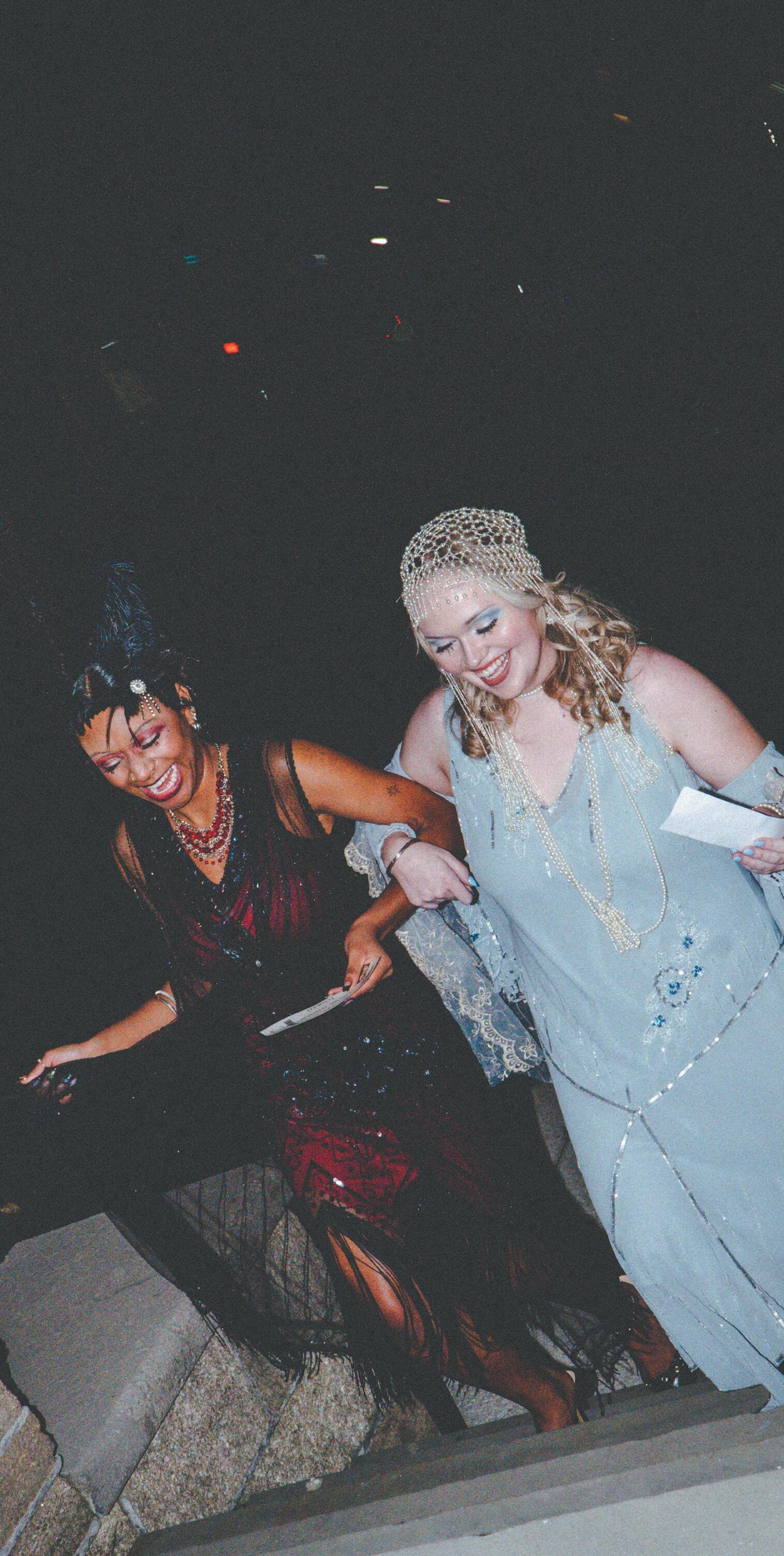
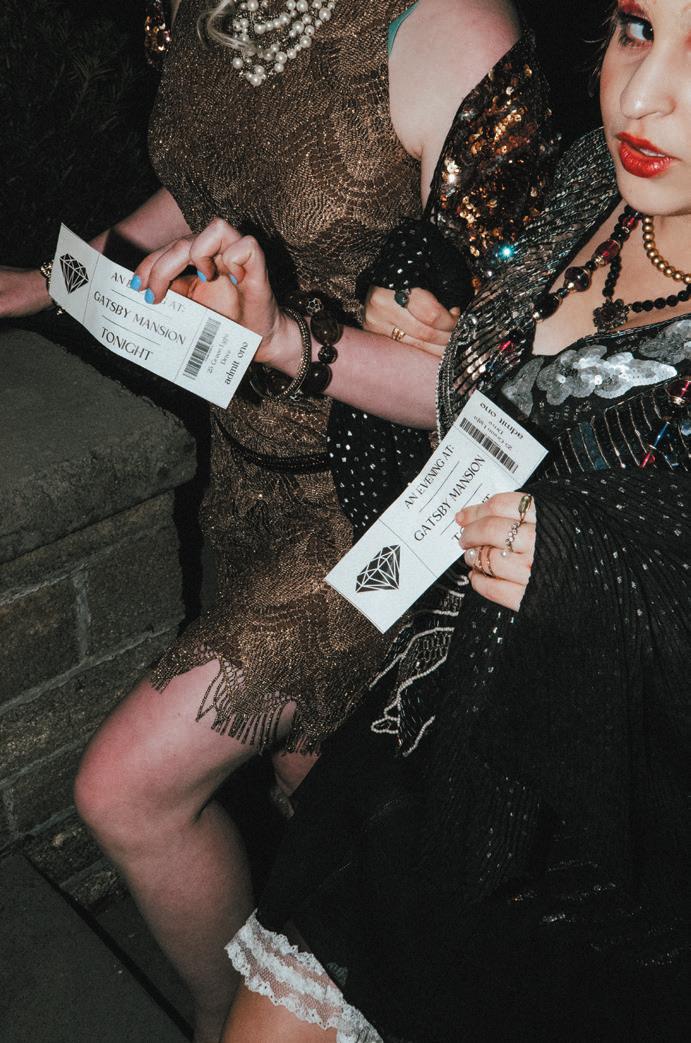
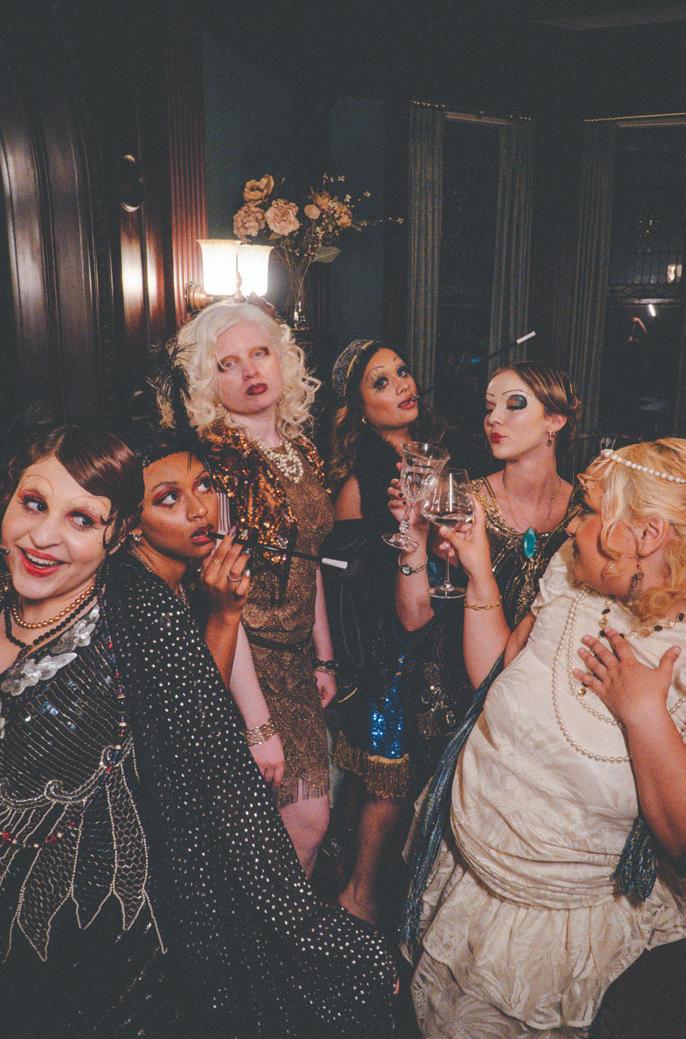
The Great Gatsby, F. Scott Fitzgerald’s masterful sociological story, is a luminous portrayal of the Jazz Age, a 1920s scene electrified by post-war optimism, extravagant wealth, and sweeping social change. This era, characterized by its glittering consumerism and unyielding aspirations, simultaneously unveiled the sharp contrasts between old and new money. Beneath this shimmering veneer, Fitzgerald delivers a profound commentary on the American Dream, revealing its precarious nature when constructed upon the often-tenuous foundations of wealth, privilege, and influence.
The temptation of Gatsby’s famed soirees mirrors our own modern ambitions: the dread of absence, the ache for belonging, the social trophy of presence. Beyond mere riches, it speaks to an ego’s urgent and aggressive yearning for validation, a thirst for inclusion in a gilded circle, forever shimmering just beyond its greedy fingertips. Gatsby, a figurehead of American success–
rich, white, and idealized–sparks both longing and despair. As we chase these fantasies, the question lingers: do we pursue this romanticized dream, or just the approval of those who deem it real?
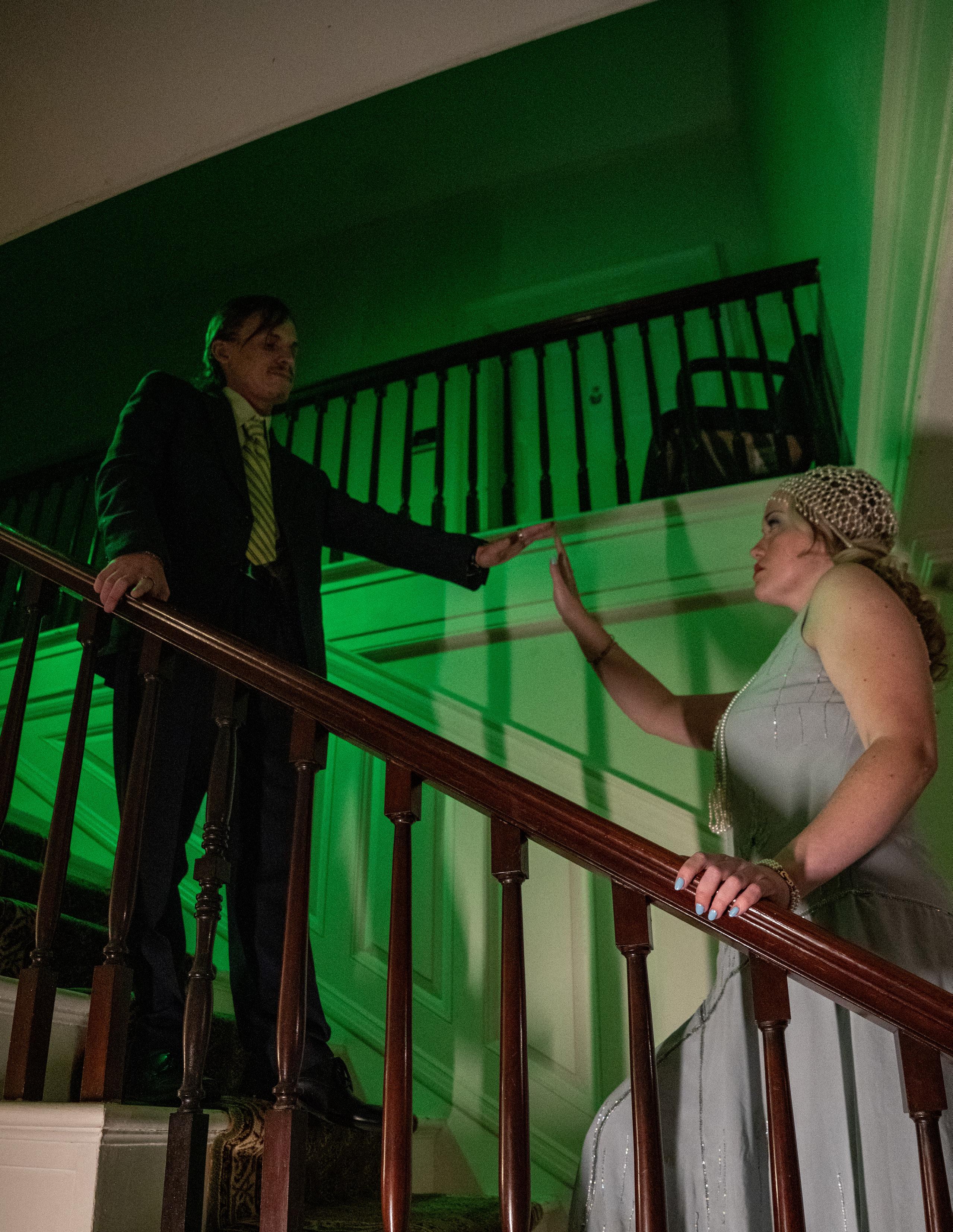
The green light, a shining jewel on Daisy’s distant shore across the murky bay, embodies dreams that forever recede, the unwavering glow of hope, and the ceaseless pursuit of America’s elusive promise. Perched across the water, it becomes the tangible form of Gatsby’s yearning–for Daisy, for a future entwined, and for the glistening mirage of success and happiness. That hazy, green gleam, a constant reminder, echoes the eternal striving for a prize perpetually out of reach.
by
Photos
Daisy Pflaum
Photo by Camille Crawford
by
Photo
Camille Crawford
The Unfulfillment of Filling the Void
By Lydia Corbin
In this life, what makes you feel fulfilled?
Everyone has their pick; from religion, to drugs, money, sex, and even social status. However, do these things actually provide fulfillment, or just a perception of it? With the fast-paced overconsumption lifestyle sold to us in our modern day, it is so much easier to be half a person using a whole bunch of things to fill the deep void inside oneself.
In The Great Gatsby by F. Scott Fitzgerald, Gatsby is the perfect portrayal of oneself chasing after something (or someone) in order to fill a deeper void within. To Gatsby, Daisy acts as a scapegoat for the life he chases after. She not only symbolizes the American dream, but is a lost love to Gatsby. As he throws extravagant parties at his lavish mansion, Gatsby is able to front a performance in Daisy’s view that he is living blissfully. However, such distractions merely provide false idealization of who Gatsby is as a person. His relentless pursuit for Daisy will only make him feel empty and unhappy with himself.
It is only human nature to want to fill the void or fix something we can’t seem to understand. This stems from our desire for human connection and finding one’s purpose. However, our purpose is to live our lives to the fullest capacity, being the truest versions of ourselves that we can possibly be. When we distract ourselves with such escapes from reality, we aren’t truly living. Although some of these facades can be deemed as life experiences, it is important to recognize that everything needs moderation. Partying and having fun has to have its limits, otherwise it can be used as an escape or coping method from reality. Said reality must be faced on its own in order for one to truly be in touch with who they are.
At the end of the day, confronting the fear of being truly lonely and unhappy when it’s just yourself is the only realistic way to overcome a life of unfulfillment. Overconsumption and the party lifestyle is so often used to fill the void, but if we are not happy with ourselves and do not love the life we already have, we will forever be in pursuit of something we cannot achieve.
by
Photo
Camille Crawford
Dirge Mirage
By Jessica Giraldo
A dirge is a somber song of mourning, a lament for what is lost. A mirage is an illusion, a trick of the light that deceives the eye with visions of what is not truly there.
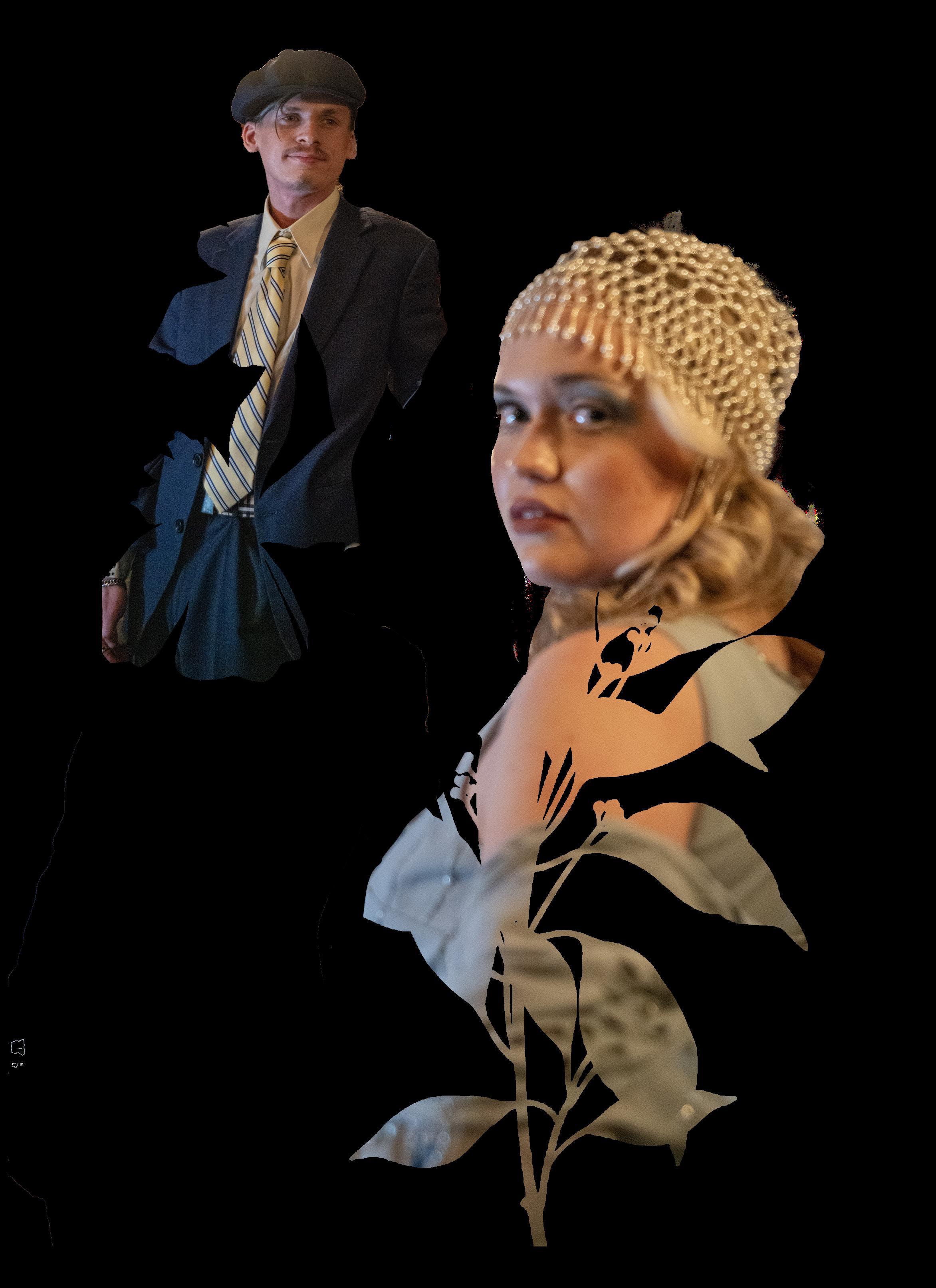
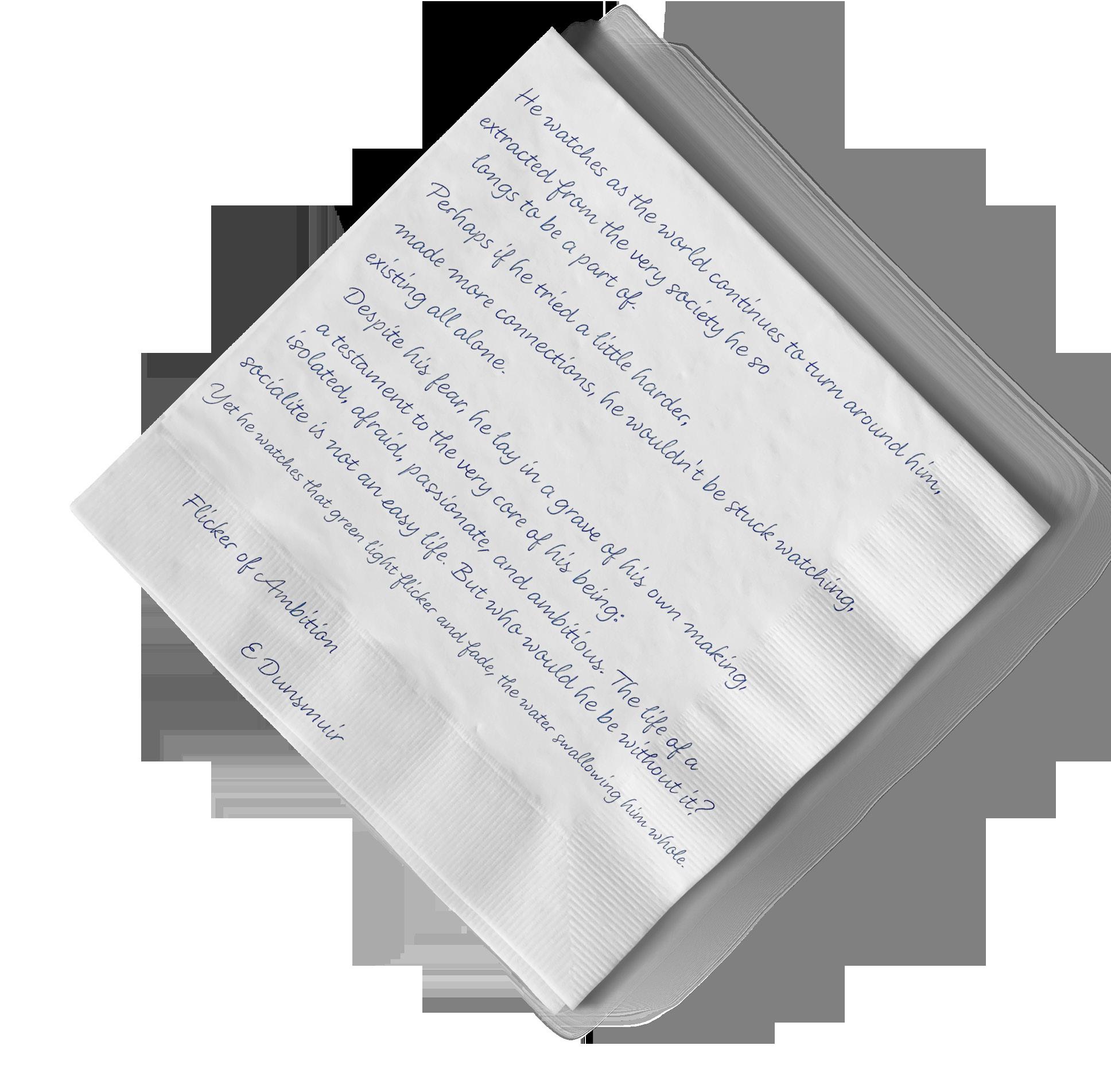
I fall enamored with my ambition, breathe life into figments far too vivid. Compulsive lover, with inhibition, tell me, is it not all so exquisite?
The grin I gleam for you, do you suffer too, dreaming of us dancing in green light, entwined souls in delirium? A lover whose mind permits access only in slight.
I’m not a scoundrel. Just a neurotic bootlegger dependent on their liquor. Whilst you prance around in deep psychotic decrees of love for me, veering bitter.
Behind the glaze, do your eyes hold me? I have big plans for you and me, you see.
Yellowed clippings from the prohibition, your face inspires reveries so wicked. I trace your ink with tender precision, you are beginning to make me livid.
I’ve deciphered your lines, does it smother you that I’ll always be your acolyte? Made a new home within my bed covers, remnants of your dual life, what a sight.
Bellowing through fleets of melancholic tears, must be hard to be a known trickster with trigger fingers. You’re an exotic wallflower who only speaks in whispers.
Your bullet scorned me, your one devotee. I would pay the bond to see you get free.
On the sea, a sickly green mortician light embalms salted dreams in a twisted act of faith from my jaded suspicion. Rumor has it you’ve been found convicted by the jury, they found bits of sulfur on your fingers. They may have to indict you for sins the tide will not remember. The mist swallows a verdant haze so bright.
It calls—oh, how it beckons, melodic. Fog strangles the dock as I step nearer, bare feet slipping, the cold void hypnotic. Golden girl, what a deceptive quitter.
I wail like a banshee, raw in my plea, as the green light fades, forsaking me.
Photo by Camille Crawford
The pedagogical function of myth, being the most intimate, represents profound understanding, where an individual integrates the mystical, cosmological, and sociological narratives, applying their wisdom to the contours of their own existence. This culminates in an appreciation of one’s interconnectedness with community and the universe. These are the myths that nurture and form us, guiding our passage through human life’s journey. Stories of the witch trials illustrate the dangers of mass hysteria and the destructive power of prejudice, allowing for reflection on the consequences of fear overriding reason and empathy.
The infamous witch trials portray a somber chapter in history, ignited by pervasive anxieties surrounding women. Deeply embedded in longstanding European superstitions concerning the devil and his earthly servants, women who defied societal norms or held independent roles were accused of practicing witchcraft, culminating in unjust imprisonment and execution. A confluence of social unrest, fervent religious extremism, and political instability fostered the widespread hysteria, resulting in profound injustice and tragic loss of life.
The echoes of the witch trials resonate in our present, a chilling testament to the persisting fears of female autonomy and influence. Lingering misogynistic perspectives continue to falsely depict women as inherently weaker and prone to wicked influences. Their association with an untamed natural world parallels the social view of a woman’s spirit as untamed, existing beyond the grasp of male dominion, and thus, branded as something “unnatural”. Navigating a timeless struggle for self-determination and respect, women today confront ongoing battles in areas such as healthcare, reproductive freedom, and the broader pursuit of women’s rights. Women’s spirits continue to endure, underscoring the vital necessity of celebrating their indispensable contributions across all spheres of society.
MAYA KAYYAL
The Pyre’s Embrace
Burned at the Stake
By Lydia Corbin
Living in a world where it feels like everyone is out to get you, is not an easy world to live in. Being a woman in 2025 means just that; an abundance of unrealistic expectations with relentless backlash from men who could never manage the same responsibility that we do. Like a witch burned at the stake for false wrongdoings, women are constantly pushed and pressured to fit the expectations of the man’s agenda.
Though in recent years, the pay gap has narrowed, it has always been a relevant topic of discussion when identifying places where women are underserved. In 2022, women earned an average of 82% of what men earned, according to a new Pew Research Center analysis of median hourly earnings of both full- and part-time workers. With the pay gap sitting at 18%, women are at a clear pay disadvantage from men with the same occupations.
Alongside being underpaid, women have to overpay for the same self-care items that men buy. A 2015 study from New York City’s Department of Consumer Affairs found that over their lives, women pay more than men for almost every product that they purchase. Womens paychecks are 18% lower than their male colleagues, yet personal care products cost women 13% more than men on average. These are products that women are expected to buy in order to take care of themselves and meet societal beauty standards. Why is it that women are paid less, yet expected to pay more?
With these disparities between genders, many women choose to speak up and use their voice in order to make an impact. But it wasn’t until more recent years that women could even do so, due to womens previous inability to vote. After the women’s suffrage movement, women were finally able to vote freely like their counterpart male US Citizens. However, women’s voices are so commonly ignored in political conversations. Plenty of men still believe that because women are often expected to stay within the home, that they don’t have the mental capacity to vote or keep up with politics. Yes, it might be a free country now. But women don’t even have the freedom over their own bodies, or for their vote to be properly counted and heard. Due to the supposed invalidity of women’s political opinions, there is a subsequent lack of female representation within politics.
Parallel to political control over women, men have a tight grip on expectations for women’s beauty standards. Being a woman oftentimes comes with expectations to put the absolute most into our physical appearance. However, no matter what women wear, men will either tell them they are trying too hard, or they aren’t trying hard enough. Creating these false perceptions of unrealistic beauty standards for women only lowers women’s self esteem in order for men to build them back up and control the narrative further.
In 2025, women are still treated like witches of the past - punished for simply existing and expected to conform to society’s rigid standards. From unequal pay to overpaying for self-care products with constant scrutiny over their appearance, we as women are damned if we do, and damned if we don’t.
Photo by Daisy Pflaum
by Molly
Photo
Melton
Final Love Ritual
By Jay Cruz
The noose was tight, grasping my neck enough to where I felt the blood vessels pop just beneath my toes. As I hang here patiently waiting for my last breath, I look down and see you, eyes wide
as ever, looking up at me in triumph for this battle you have won. As you rejoice in these final moments of my life, my mind remains at ease with the memory of your tight grip around my throat as you told me you loved
me for the last time. The whispers of, he loves me, he loves me, he loves me chant loudly in my head, grounding me long enough to spare one breath longer. You say it was divine intervention that led us together, and it is with that same sanctity dear,that will
allow me to forever be a part of your weak mind. I shut my eyes quickly, and think for a second as I let the last bits of pain settle, of the last words you ever said to me.You’re a witch! I open my eyes slowly with the last bit of life in me and sing to you my last song,
You love me, I love you.
I will forever be the one thing in life you wished you held on to. From today and into eternity my sweet lover, this will be the fiery picture you see of me. Sing with me, I love her, I love her, I love her. Allow me to enchant your soul until death removes you from this cruel earth.
Photo by Daisy Pflaum
Photo by Molly Melton
Swimming the Witch
by
They bound her to water by stone, assigning weight to her wrists and ankles so that she was made a force of gravity, a slow sinking ship kissing earth’s murky floor, those stones nailing her beneath the oppression of that gray water.
They watched her hair become a floating crown above her head, dark tendrils the only part of her that could reach for breath as she sunk further.
They were a crowd of townsfolk turned mad scientists, axes and mattocks gleaming in their hands like vicious smiles prepared to bite.
They watched the apathy of the water’s surface and waited for the woman to defy their test of nature. They waited for her to release herself from weight and rise to them cold and inhuman, a creature of black magic.
They waited for an answer and found only silence. A soft ripple skimming across the water like gooseflesh, only the faint blur of her body down below, a body meeting its own grave.
Sure that she was gone, they returned home. Flooding over the dark hills, they were a colony of rage dwindling back into peace, glad to know she wasn’t a witch.
By Georgia Witt
Photo
Daisy Pflaum
Photo by Molly Melton
The Maid of Orleans
Born a peasant girl in France around 1412, Joan of Arc ascended to prominence during the belligerent Hundred Years’ War between France and England. Propelled by divine visions, she challenged the traditional perception of women as passive by donning male attire and leading the French army to battle, playing a pivotal role in securing several victories. Joan’s fortunes turned when Burgundian forces captured and condemned her for heresy against the Catholic Church, burning the nineteenyear-old at the stake.
Now a patron saint of France, Joan’s story offers timeless pedagogical lessons of resilience, protection, and defying the expectations set before us. Her unwavering belief in her divine mission, culminating in tragic martyrdom, cements Joan’s place as a complex and enduring character in our story books.
Chapter 08 MAYA KAYYAL
Women are the very embodiment of armor, safeguarding both their own hearts and those they cherish. The everyday woman moves through her world garbed in an armor unseen, yet undeniably present. It is not hammered from cold steel, but from the quiet strength of character, the enduring resilience, and the fierce, protective spirit that lives inside them. This armor gleams, not under the dreaded light of battle, but in the soft glow of dawn as she prepares for the day, in the steady gaze she offers her worried child, in the unwavering stance against the harsh waves of hardship. This inherent resilience, this instinct to nurture and defend, forms an indestructible shield, a silent testament to the extraordinary strength found in a woman’s everyday.
The Valiant Heroine Named Joan of Arc
By Amia King
“One life is all we have and we live it as we believe in living it. But to sacrifice what you are and to live without belief, that is a fate more terrible than dying”
- St. Joan of Arc
Saint Joan of Arc, or Jeanne d’Arc, was a young medieval woman in France whose story became prevalent in light of powerful and authentic women. By defying the system outlined during her time, she sheds light on a past and present societal issue: gender role hierarchy. She is a model for strength and resilience that applies to our modern day society.
Joan’s authentic way of life proposed a threat to the men around her. She was a strong leader and presented herself in a way that transcended gender at the time. Joan led several armies, acting as a military leader in a traditionally male field. Continuing her participation within male standards, she wore masculine articles of clothing and cut her hair to fit an androgynous style. Some may say Joan’s masculine presentation was to
confirm her sexual orientation, transitioning gender, or an act of cross-dressing, when in reality it concealed her armor. Externally, Joan’s male traits challenged tradition, and her internal beliefs followed suit. Joan participated in abstinence and took a vow of chastity. Her refusal to bear children strongly opposed female social norms.
For her beliefs, she was ridiculed by men and put on trial. She was charged with “crimes against the church” and a judge attempted to make Joan repent for the way she represented herself, which she did not comply with. Joan was burned at the stake at the age of 19 years old. Her strong character and bravery was looked up to by many women, and this continues today. At such a young age, she was a powerful military leader and stood up for her beliefs, losing her life with that same mindset.
The present gender stereotypes have come a long way since then, but these are unconsciously engraved within the way we operate. Many young females grow up thinking men go to work and women stay at home to clean, they have to wear colors that are associated with their gender, or that they must have children and pause their lives to care for them–everything Joan denied. Believing in what society expects of you is much different than believing in what we want for ourselves.
Our society has been built on gender norms that we are outgrowing. Not only do women lead physically, but we are just as powerful mentally. Joan’s story shows the need for change today. Saint Joan of Arc is a role model who does not change her beliefs and stays authentic to herself, even if that means going against the norm.
Photo byTilghman White
The girl, fawn-like, heard the voices of angels sing to her through the rose window.
Seventeen and three quarters, she cropped her hair and raised arms to defend her country,
in a time so unkind to rebellious women. She, a French lily, once gentle now forged in steel, shrugs onto her small frame a suit of armor, two sizes too big. A lamb in wolf’s skin.
She will lead the battle of Orléans to victory. The English believe
Jeanne D’Arc to be, a witch, heretic. They tie her to a stake, cut by carpenters.
Dressed in white, she burned, holding but a wooden cross. She cried, Jesus? Jesus!
Maid of
Heaven
By Jaden Rudd
by Madison Torres
Photo
Good People Are Losers
By Selah Hassel
The only time I ever truly felt like a good person was when I lost everything I considered to be permanent. I slowly moved towards a formative arc in my life, which was when I approached a hill, hiding a sun I felt I had not seen in years. There was hope. During this time, I cut the hair that once grazed my hips to fall just under my ears after my mother lost hers in the winter before my first semester of college. I learned after this release that perhaps goodness is something that disperses like dust after a fallout.
If one were to look around at the people in the room they are in, I can almost certainly promise that they will not be able to point out the biggest loser. It takes an enormous amount of love to have anything to lose at all. But the time will come, and eventually something you love will be taken away from you. And when this happens, it is almost too easy to deter ourselves from hurting others, even if we are all frightened animals. Our pain is the
sharp teeth we bite into our friends, our partners, and ourselves. We hardly feel the wreckage we cause. So, I wonder, where does all the love go? And is wanting to be good enough?
I fear a great issue is the common association between goodness and weakness. The truth exists beyond the ego. It exists in the country in which I live, in neighboring countries whose people are searching for that same peak over the rolling hill. A search for hope. And perhaps one day, people will discover that the only lives deserving, are the lives that are willing to live on despite the loss. Living with a reason to, discovered in the goodness we all pray still exists. It starts with empathy, believing that even the worst person you think you know has lost something, too. We must begin to recognize how little time there is in our lives in the universe, and how much there is to lose. We lose our rights, we lose our dignity, the love for our own hearts, and one day, our own flesh and blood.
Photo by Kennedy Fulk
Sharing the bruises, basking in them, or tearing ourselves apart in order for one of our limbs to feel less lonely, will only ever end in our own blindness. I can even admit the loss in my own life has brought me to moments of social alienation. Where will my love go? It is so endlessly tragic to be alive, yet we do. And I believe we should give more people something worth losing. There is only ever room to grow— this is good. I will leave with a familiar voice.
“You do not have to be good you do not have to walk on your knees for a hundred miles through the desert repenting. You only have to let the soft animal of your body love what it loves.”