STRATEGIC VISION for
Taiwan Security

Sunset in Afghanistan
Could US Exit from Kabul be Taiwan’s Gain?

International Cyber Cooperation

Hon-min Yau
Biden’s Security Policy in Asia
Masahiro Matsumura
India and China Battle COVID-19
A.D. Gnanagurunathan
Looking Back on Ten Years of Strategic Vision
Dean Karalekas
Volume 10, Issue 50 w September, 2021 w ISSN 2227-3646
Aaron Jensen
STRATEGIC VISION for Taiwan Security
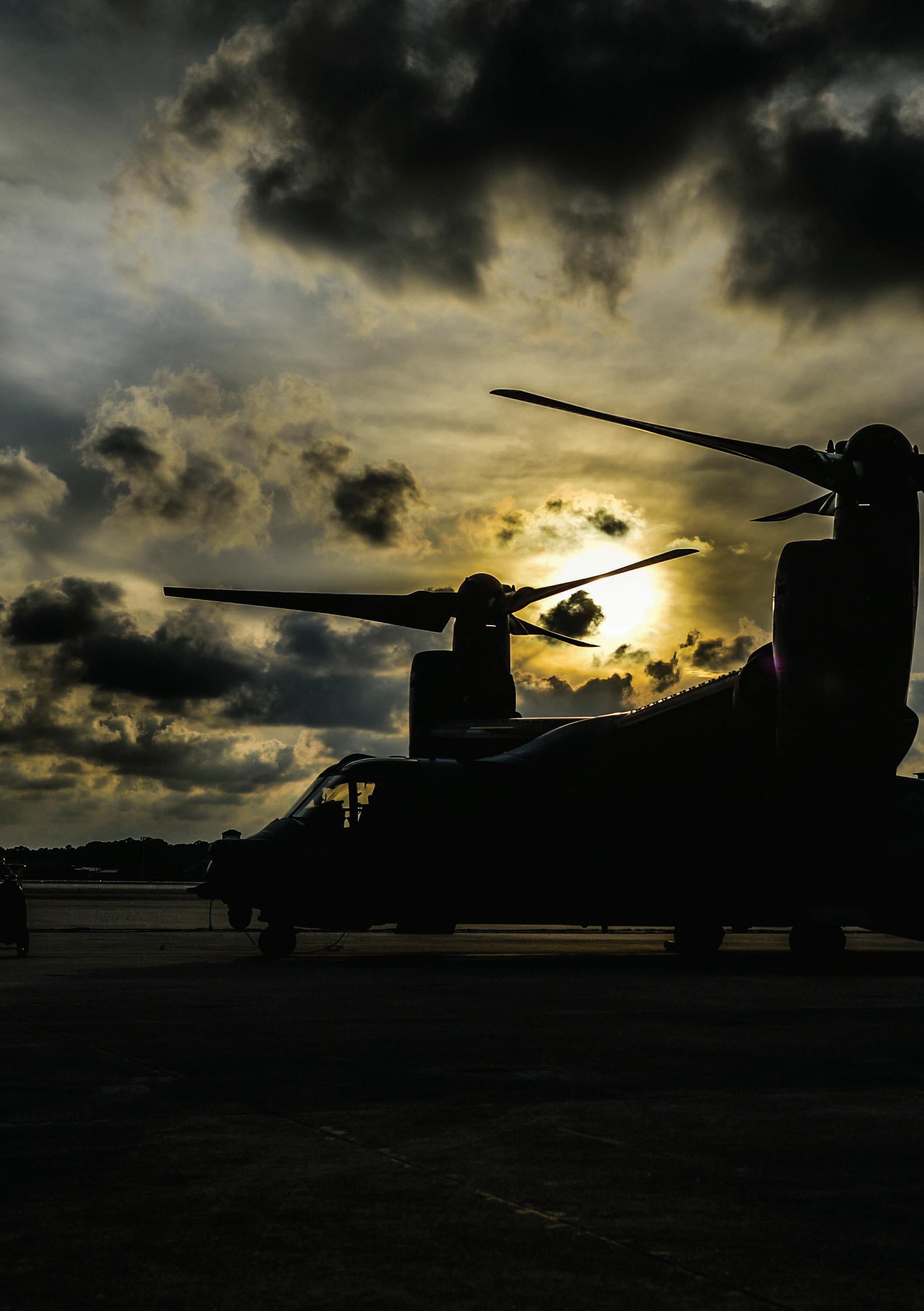
Submissions: Essays submitted for publication are not to exceed 2,000 words in length, and should conform to the following basic format for each 1200-1600 word essay: 1. Synopsis, 100-200 words; 2. Background description, 100-200 words; 3. Analysis, 800-1,000 words; 4. Policy Recommendations, 200-300 words. Book reviews should not exceed 1,200 words in length. Notes should be formatted as endnotes and should be kept to a minimum. Authors are encouraged to submit essays and reviews as attachments to emails; Microsoft Word documents are preferred. For questions of style and usage, writers should consult the Chicago Manual of Style. Authors of unsolicited manuscripts are encouraged to consult with the executive editor at xiongmu@gmail.com before formal submission via email. The views expressed in the articles are the personal views of the authors and do not necessarily represent the views of their affiliate institutions or of Strategic Vision. Once accepted for publication, manuscripts become the intellectual property of Strategic Vision. Manuscripts are subject to copyediting, both mechanical and substantive, as required and according to editorial guidelines. No major alterations may be made by an author once the type has been set. Arrangements for reprints should be made with the editor. The editors are responsible for the selection and acceptance of articles; responsibility for opinions expressed and accuracy of facts in articles published rests solely with individual authors. The editors are not responsible for unsolicited manuscripts; unaccepted manuscripts will be returned if accompanied by a stamped, self-addressed return envelope. Strategic Vision remains neutral with regard to jurisdictional claims in published maps and institutional affiliations. Cover photograph of a CV-22 Osprey at sunset is courtesy of Christopher Callaway.

Volume 10, Issue 50 w September, 2021 Contents Looking back on ten years of Strategic Vision ...............................4 Biden administration policy in Asia ............................................ 10 American forces exit Afghanistan................................................ 16 US seeks accountability for cyber attacks .................................... 21 Great-power rivalries and vaccine diplomacy ............................. 27 Dean Karalekas Masahiro Matsumura Aaron Jensen Hon-min
Yau A.D. Gnanagurunathan
Editor
Fu-Kuo Liu
Executive Editor
Aaron Jensen
Editor-at-Large
Dean Karalekas
Editorial Board
Chung-young Chang, Fo-kuan U
Richard Hu, NCCU
Ming Lee, NCCU
Raviprasad Narayanan, JNU
Hon-Min Yau, NDU
Ruei-lin Yu, NDU
Li-Chung Yuan, NDU
Osama Kubbar, QAFSSC
Rashed Hamad Al-Nuaimi, QAFSSC
Chang-Ching Tu, NDU
STRATEGIC VISION For Taiwan Security (ISSN 2227-3646) Volume 10, Number 50, September, 2021, published under the auspices of the Center for Security Studies and National Defense University.
All editorial correspondence should be mailed to the editor at STRATEGIC VISION, Taiwan Center for Security Studies. No. 64, Wanshou Road, Taipei City 11666, Taiwan, ROC.
Photographs used in this publication are used courtesy of the photographers, or through a creative commons license. All are attributed appropriately.
Any inquiries please contact the Associate Editor directly via email at: xiongmu@gmail.com.
Or by telephone at: +886 (02) 8237-7228
Online issues and archives can be viewed at our website: https://en.csstw.org/
© Copyright 2021 by the Taiwan Center for Security Studies.
From The Editor
The editors and staff of Strategic Vision would like to wish our readers well this summer season. This, our fiftieth issue, also marks the tenth anniversary of our publication. The past decade has been an eventful one in the field of security studies, and we are happy to have had the opportunity to take that journey with you, our readers, as we celebrate this important milestone.
We open this issue with Dr. Dean Karalekas, our editor-at-large, who co-founded Strategic Vision a decade ago with our editor, Dr. Fu-Kuo Liu. Dean takes a look back at some of the topics that we’ve covered, and the major events to have taken place in the Indo-Pacific Region over the past decade.
Dr. Masahiro Matsumura, a professor of international politics at St. Andrew’s University in Osaka, Japan, offers his take on Asia-Pacific security policy under President Joe Biden, and the challenges faced by the new US administration.
This is followed by an article by Aaron Jensen, our Executive Editor. The media has been filled with breathless speculation on how the fall of Kabul will impact confidence in the US security guarantee by its allies, especially Taiwan. Aaron discusses his views on how the US exit from Afghanistan will turn out to be a benefit for Taiwan.
Next, Dr. Hon-min Yau, a professor at the ROC National Defense University, takes a look at the latest international coordination efforts to boost cyber security even as incidents of attacks have ramped up in recent months. Finally, Dr. A.D. Gnanagurunathan, a non-resident fellow at the Taiwan Center for Security Studies, looks at how India and China have contributed to the global fight against COVID-19 even as the large powers in the region—the United States and China—have been fighting to control the narrative.
We hope you enjoy this issue, and look forward to bringing you the finest analysis and reporting on the issues of importance to security in the Taiwan Strait and the Asia-Pacific region, for at least another fifty issues, and another ten years.
Dr. Fu-Kuo Liu Editor Strategic Vision
Articles in this periodical do not necessarily represent the views of either the TCSS, NDU, or the editors
Ten-Year Retrospective
Ten Years and 50 Issues: Looking Back through the pages of Strategic Vision Dean Karalekas

It was almost ten years ago that the editors and staff of Strategic Vision published our inaugural issue. This month, we are publishing our 50th. With such an important landmark, I thought it would be appropriate to observe this milestone by taking a look back at the past ten years of our journal; how we started, and how far we’ve come. As well, it is worth taking stock of how some of the major stories we have covered pertaining to the security situation in the Taiwan Strait, and the Asia-Pacific region in general, have evolved and developed over the past decade. In the latter half of 2011, I was a lowly PhD candidate in the International Doctoral Program in AsiaPacific Studies (IDAS), at Taiwan’s National Chengchi University (NCCU), where I was blessed to have met Dr. Fu-kuo Liu, my professor of security studies,
and a member of the IDAS board of directors. In his capacity as head of the Taiwan Center for Security Studies, a think tank affiliated with NCCU, Dr. Liu had been looking to launch a bi-monthly Englishlanguage security journal, and he had seen a publication I had recently produced, the Asia-Pacific Newsletter, to promote the IDAS program. He asked me to join the team. I had come to academia after having been employed as a journalist, and so I was familiar with the difficulties involved. Nevertheless, I heartily agreed, and we began planning our first issue. It was not long before we had established ourselves as a cutting edge source of defense and security analysis and reporting in English in Taiwan, and were joined in our effort by National Defense University (NDU). It became my very great pleasure to work
4 b Strategic Vision vol. 10, no. 50 (September, 2021)
Dr. Dean Karalekas is one of the co-founders of Strategic Vision and a graduate of the International Doctoral Program at National Chengchi University in Taipei, Taiwan.
Japanese and Taiwanese vessels clash, albeit in a water fight, in the seas near the disputed Senkaku/Diaoyutai Islands in 2012.
photo: ROC Coast Guard Administration
closely with our new NDU board members: officers whose professionalism and expertise took our journal to the next level. Today, we are proud to continue that partnership.
Looking back on that first issue, it is impossible not to be struck by how much has changed—and how much has not—over the past decade. Dr. Ming-shih Shen offered an assessment of Taiwan’s air-defense capabilities after the US government of the day declined to sell new F-16C/D fighter planes to the Republic of China (ROC) military, and instead offered to upgrade its aging fleet of F-16A/Bs. Much of the decade was marked by a back-and-forth on the utility of these upgrades, as well as whether Taipei should seek to purchase the new F-35s, in the ongoing struggle to maintain the island’s air defenses. Today, we see why that struggle is so crucial, as People’s Liberation Army (PLA) aircraft have made increasingly threatening incursions into Taiwan’s Air Defense Identification Zones (ADIZ) over the past several months, the latest at the time of writing being a record 28 aircraft intrusions in a single day.
Moreover, the very tenor of cross-strait relations has shifted over the past ten years. Under Chinese leader Hu Jintao, there was still a hope that China—already well into its meteoric rise as our first issue rolled off the presses—would take its place among the family of nations and become a responsible stakeholder in the international community. Over the past decade our coverage has shown how that hope faded, as Hu was replaced as leader of the People’s Republic of China (PRC) in March 2013 by Xi Jinping, who quickly set about consolidating his hold on power and ushering in a period of aggressive foreign policy and cult-of-person-
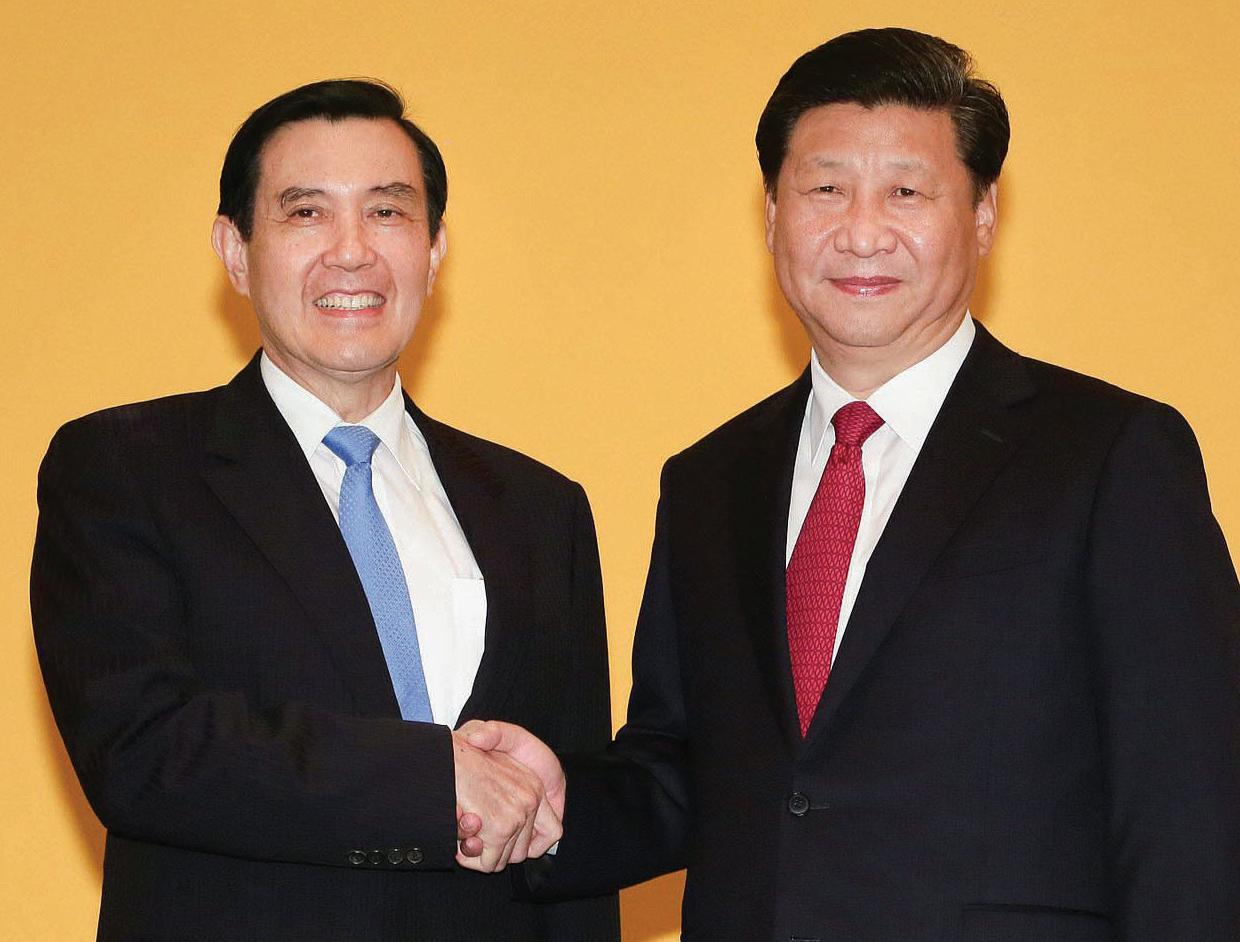
ality not seen since the days of Mao Zedong. We continued to analyze this trend in our pages, following such events as Xi’s groundbreaking 2015 meeting with then-ROC President Ma Ying-jeou, Xi’s abolition of term limits on his office (essentially making himself leader for life), and the hybrid warfare China conducts against Taiwan, wherein assets of the communist state have been using targeted propaganda and infiltration of Taiwan’s remarkably free media environment to engage in psychological-warfare operations for the purpose of influencing elections and steering public opinion toward Beijing.
Domestic political changes
On the Taiwan side, the past ten years has likewise seen many political changes, not the least of which being the shift in tone from the Ma administration to the government formed by President Tsai Ingwen. As covered in our pages, Ma’s policy of pursuing closer economic ties to China, as evidenced by the Economic Cooperation Framework Agreement (ECFA), was not only geared toward boosting the economy through lucrative cross-strait trade and
Ten-Year Retrospective b 5
Ma Ying-jeou shares a historic handshake with Xi Jinping in Singapore in 2015.
photo: ROC Presidential Office
investment ties, but it was predicated on the belief that close economic integration between the two countries would serve as a disincentive to Beijing from engaging in any adventurism aimed at effecting political unification.

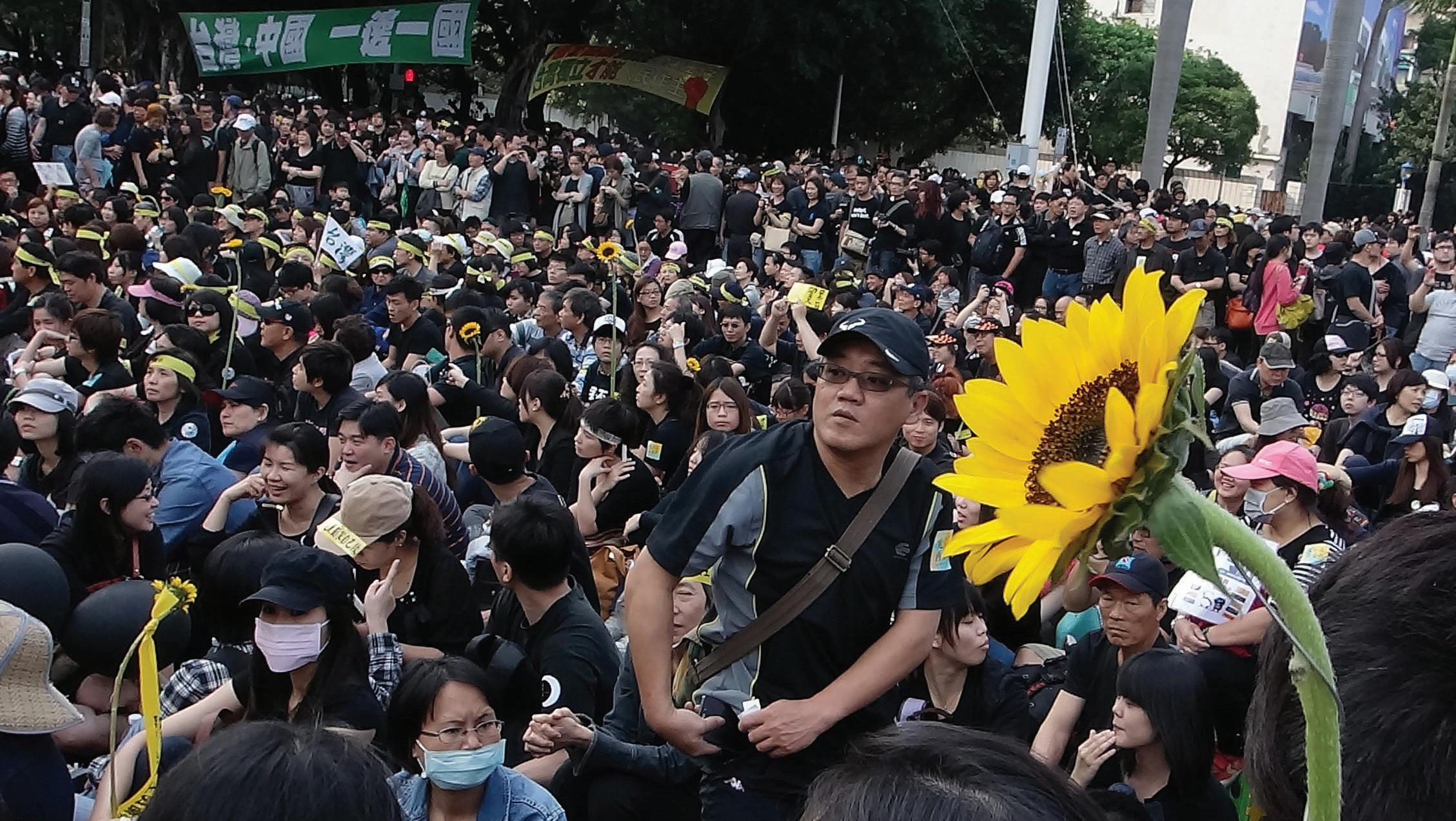
This was far from the prevailing view on the island, however, as evidenced by the Sunflower Movement of 2014, and the historic student occupation of the Legislative Yuan. This peeled the curtain back on people’s apprehensions about becoming too integrated with the mainland, and their desire to follow the rules of procedure and democracy that govern the operations of the ROC Legislature. In 2016, and again last year, Tsai was elected president, and began a move away from the Ma-era policies, launching the New Southbound Policy, for example, which diversified Taiwan’s trade and investments to preclude the island from being held economic hostage by its richer and more powerful neighbor.
In the very first article of issue 1, Dr. Chia-sheng Chen examined what would become one of the most
significant security issues in the region, the overlapping territorial conflicts in the South China Sea. It was a time when the “China threat” narrative was just beginning to be adopted by claimant nations in the region, as opposed to a strictly Western preoccupation with the notion.
Over the past decade, we have continued to cover the topic as Beijing has gradually taken de facto control over that body of water, including via employment of the so-called cabbage tactic of swarming and encircling the islands in consecutive layers of PLA Navy (PLAN) ships, Coast Guard vessels, as well as quasi-civilian fishing boats, cutting the islands off from the assets of the nations that claim it. This “grey zone” tactic proved to be fruitful for Beijing, as it succeeded in normalizing a Chinese presence in the vicinity of disputed islands, forcing other claimants to either press their claims confrontationally, or concede to that presence.
Later in the decade, the world watched as Chinese vessels and crews set about an island-building project,
6 b STRATEGIC VISION
A tent city under the Keleti train station in Budapest. The refugee crisis of 2015 was a major non-traditional security event affecting Europe.
photo: Dean Karalekas
primarily on the Paracel and Spratly island chains, which are also claimed by Taiwan and Vietnam. Again, the international community was largely placated by Beijing’s promises that it would not militarize said islands, but this inevitably happened, with the placement of anti-ship cruise missiles, anti-aircraft batteries and missile defenses, as well as the construction of runways and dozens of hangars for fighter aircraft on several of the islands, substantially extending the PLA’s effective operational reach.
Arbitration award
One of the events with a significant impact on the South China Sea was the 2016 ruling by The Hague’s Permanent Court of Arbitration that essentially invalidated China’s claim predicated on an historical argument and the infamous nine-dash line. Disregarding this ruling, China has continued to press its claims, aided by the 2016 election of a pro-Beijing leader in Manila, President Rodrigo Duterte. Our coverage in Strategic Vision provided a variety of perspectives on the issue, including those of writers and analysts from
Taiwan, Vietnam, the United States, and around the region, including an article by Philippine journalist Marites Dañguilan Vitug.
Another potential flashpoint in the region is the Korean Peninsula, and my own beat: the Democratic People’s Republic of Korea (DPRK). By far the most influential event to take place in North Korea over the past decade was the death of Kim Jong-il and the ascension of his third son, Kim Jong-un, as supreme leader in 2011. Initially, speculation was rampant whether the younger, politically inexperienced Kim would manage to consolidate his hold on power, or whether he would fall victim to a coup or an uprising in the absence of his popular father.
Once Kim Jong-un managed to consolidate power, despite the palace intrigue and suspected political assassinations that allowed him to do so, DPRK relations with the West continued largely unchanged, and they began the decade looking very much like the nuclear brinksmanship leveraged by the elder Kim whenever he wanted some attention in the foreign press. ThenUS President Barack Obama’s policy was something of a throwback to the neo-conservative, hard-line ap-
Ten-Year Retrospective b 7
Taiwanese citizens gather in downtown Taipei during the 2014 Sunflower Movement.
photo: tenz1225
proach taken during the first term of President George W. Bush, and as a result, Kim followed in the same comfortable pattern of seeking negotiation, followed by acting out via missile and nuclear tests.
During this belligerent phase of relations, Pyongyang raised tensions on the peninsula by conducting a series of nuclear tests and launching scores of missiles. In early 2018, the rules of the diplomatic game changed with the unconventional negotiating style of a new US president, Donald Trump. Trump famously began by taunting Kim, calling him derogatory names like “Little Rocket Man,” and publically speculated about the possibility of launching a preventive military strike against the Hermit Kingdom if they didn’t play ball. At the same time, Trump broke with tradition and offered to meet one-on-one with the North Korean leader, conferring great face upon him to the chagrin of more conventional international relations specialists who had become increasingly frustrated by Trump’s unpredictability.
The gambit worked, however, and by early 2018, Kim had embarked upon a charm offensive, holding a dozen summit meetings with regional leaders, and stating publically that he would decommission
the Yongbyon Nuclear Scientific Research Center and work toward eventual denuclearization of the Korean Peninsula. This period saw unprecedented good will between Pyongyang and Washington, perhaps best illustrated by Trump’s impromptu crossing of the Military Demarcation Line and wandering into North Korea during a visit to the Joint Security Area, at which he invited Kim to meet him—much to the dismay of more conventional policymakers, as well as Trump’s security detail. In all, it has been an exciting decade during which to follow North Korea’s place in the world.

Top writers
These and other issues impacting security in the AsiaPacific received our attention and found coverage in the pages of Strategic Vision by some of the top analysts and researchers of the region, and around the world. For as we continued to keep a keen eye on the trends and events of importance in the region, we live in a globalized world, and threats that emerge on the other side of the planet will inevitably have a ripple effect on the security situation at home. We expanded
8 b STRATEGIC VISION
A bicyclist takes a break along the Taedong River in Pyongyang, North Korea.
photo: Dean Karalekas
our coverage to look at the ongoing conflicts in the Middle East; the expansion of Chinese investment in Africa; as well as events in Russia, Latin America, and anywhere our readers need to be informed about. To that end, we selected the best writers with a specialization in the area.
Moh’d Ali Khawaldeh, an officer in the Jordanian armed forces, covered events in the Middle East for us, especially as regards the fight against Islamic State. NCCU alum Michal Thim contributed regular articles on his area of specialization, international cybersecurity. Tobias Burgers kept us all abreast of developments in unmanned aerial and maritime vehicles for use in warfighting. Our regular, repeat contributors have been a joy to work with, including such illustrious names as Alvin Yao, Edward Hsieh, Mignonne Chan, Amrita Jash, David Scott, Raviprasad Narayanan, Michael Sun, and so many more. Our pages have also been graced by such luminary guest contributors as Turkish Ambassador Muzaffer Eröktem, and Norica Nicolai, a Member of the European Parliament who wrote for us about
the work-in-progress that is European democracy. I could hardly have imagined, as I struggled over the layout for the first issue of Strategic Vision in my tiny student apartment ten years ago, that we would grow into one of the premiere sources for English-language news and analysis of cross-strait security, much less that we would still be around a decade later, publishing our 50th issue. Those years, and that duty—for I see my role as Editor-at-Large of Strategic Vision as a duty—have taken me to such places as Iraq, North Korea, Hungary, Russia, and The Sudan; Wherever I have found myself over the past decade, Strategic Vision has been a part of my life. In fact, it is a testament to the professionalism and generosity of spirit of Dr. Liu, Aaron Jensen, Richard Hu, Tiehlin Yen, Elsie Chang, and all the fine men and woman who have served as members of our editorial board over the past ten years, as well as all of our many excellent contributors too numerous to mention, that we are still going strong as a trusted source of news and analysis about the state of security in the Asia Pacific and the world. Here’s to another 50 issues. n
Ten-Year Retrospective b 9
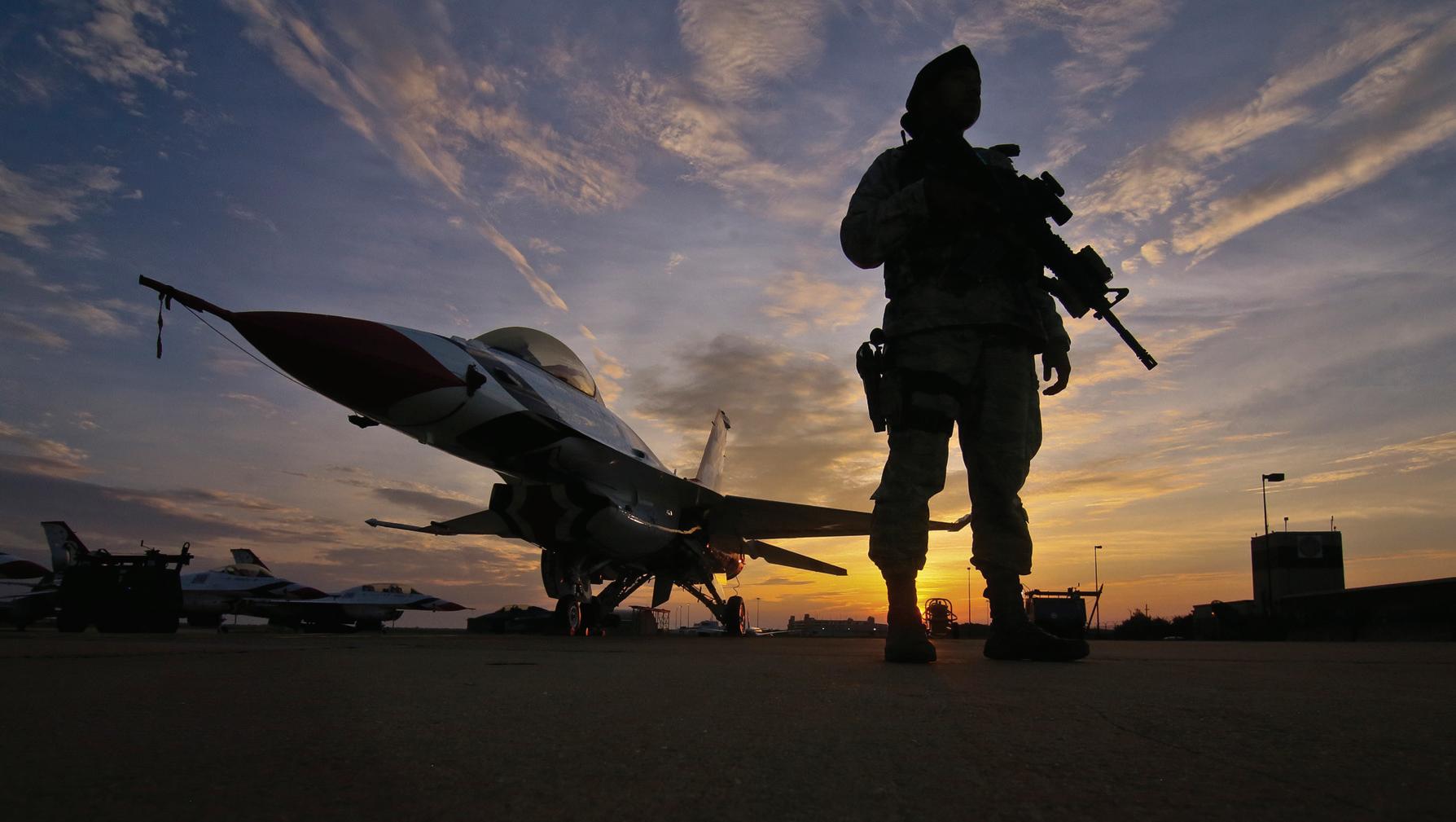
A security forces specialist stands for a portrait with a USAF Thunderbird F-16 on the flight line at sunrise.
photo: Matt Hecht
Strategic Vision vol. 10, no. 50 (September, 2021)
Process vs. Structure
New Biden administration raises questions on East Asian security policy
With China rattling its saber fiercely, the world is now paying significant attention to the issue of security in East Asia. Yet, the new administration of US President Joe Biden is taking a milquetoast position on China policy, neither taking a bold new direction nor clarifying whether the hardline anti-China policies adopted under the previous administration of former President Donald Trump will continue to define the US position on this crucial dossier. A comprehensive analysis employing a global political-economic perspective is necessary to identify where the region’s
security question stands, and why Biden is so indecisive on the China issue.
It is under the conditions of an intensified US-China hegemonic rivalry that Biden has replaced Trump, who took an across-the-board confrontational approach to dealing with Beijing’s aggressive behavior. Yet, this new administration has not developed a coherent strategic vision for dealing with the People’s Republic of China (PRC). This has produced uncertainty over whether or not Trump’s tough stance on China will continue. It also poses difficult policy challenges for frontline states, such as Japan and

10 b
Dr. Masahiro Matsumura is a professor of international politics at St. Andrew’s University (Momoyama Gakuin Daigaku) in Osaka, Japan. He can be reached for comment at masahiro@andrew.ac.jp
Masahiro Matsumura
Then-Vice President Joe Biden raises his glass to toast Chinese President Xi Jinping at a state luncheon in Washington, DC in 2015.
photo: US State Department
Taiwan, which rely on the United States as their sole security guarantor.
Today, the China Question is central to American domestic politics and national security strategy because the United States prospered as a result of China’s growth over the last two decades, even to the point that China emerged into a challenger. The United States first became the region’s hegemon at the close of World War II. However, as its manufacturing sector increasingly lost its international competitiveness, it underwent relative economic decline, beginning with the unilateral cancellation of the direct international convertibility of the US dollar to gold—the Nixon Shock of 1971—and continuing thereafter.
The Latin American debt crisis in the early 1980s manifested a serious dearth of opportunities for domestic capital investment in manufacturing, driving major American commercial banks to extend excessive loans to regional sovereign borrowers, on the incorrect assumption that they would never be insolvent. This means that, at the firm level, American banks could neither expand the scale of businesses nor increase profit-making without investing in thriving manufacturing sectors. At the systemic level, US hegemony based on manufacturing power was destined to decline sooner or later due to its irreversible evolution into a service economy.
Economic revival
Despite these challenges, the United States successfully revived its economic hegemony in the 1990s thanks to demand for capital investment in the then-emerging information technology (IT) sector, which only hastened the shift to financial services. Consequently, US industrial capitalism has morphed into financial capitalism, while turning the national economy into a “world investment bank” vis-à-vis major ex-communist bloc and emerging economies that were thirsty for huge capital investments in their manufacturing
sectors—especially China. Thanks to this investment, the PRC rose to become the “world’s factory,” singlehandedly consuming almost half of the world’s total metal and fossil-fuel resources.
The authoritarian political system in Beijing, eager to stimulate growth, forced State-directed banks to issue bad loans, resulting in a landscape marked by zombie state-owned enterprises and the incessant
construction of empty cities. Economists began to perceive this as an unsustainable growth bubble that, along with the asset-price and credit-market bubbles being created by the US Federal Reserve, are essentially two sides of the same coin. This suggests that the two nations will share the same fate as a consequence of their mutual financial ties.
The rise of populism in the United States and other major liberal democracies is the result of socio-economic bipolarization and political disunity, brought about in part by the industrial hollowing-out effect of financial capitalism. Behind this, there exist entrenched national schisms, which render the Biden administration far politically weaker in terms of a popular mandate than even the Carter administration had been. This weakness is not helped by the murmurings—ignored by the legacy media but nonetheless prevalent both domestically and internationally—that there had been grave electoral fraud in favor of Biden.
Thus, the birth of the Biden administration is a manifestation of anti-Trump reactionary political forces consisting of ousted political appointees, military brass, policy intellectuals, and other beltway lifers who sought to restore the status quo ante and, perhaps, a temporary revival of the ancien regime.
Process vs. Structure b 11
“PRC President Xi Jinping has abandoned the longtime policy of‘hideyourcapabilitiesandbide yourtime.’”
With Trump and his confrontational attitude toward China gone, rent-seeking by establishment insiders and elites could be re-enabled through the structure of interdependency with China. It has not gone unnoticed internationally, for example, that despite the US media playing down the issue for domestic audiences, the allegations against the president’s son, Hunter Biden, about his lucrative, cozy business relationships with Chinese companies, including Bohai Harvest RST, Sinopec Marketing Co. Ltd., China Molybdenum Co., among others, give the outward appearance of cash-for-access deals. While this does not make the Bidens PRC assets, it does have the appearance of grave impropriety, and raises suspicions that these relationships could easily be used by the communist regime as leverage for the adoption of policies sympathetic to Beijing’s interests. Naturally, this is most worrisome in countries, such as Taiwan and Japan, that are in close proximity to the China threat, and which are reliant on America for their national security.
At the politico-strategic level, the United States and
China—the declining hegemon and a rising great power—have fallen into the Thucydides trap, particularly because PRC President Xi Jinping has abandoned the longtime policy of “hide your capabilities and bide your time” and instead adopted an expansionist approach involving an unprecedented arms buildup and aggressive expansion of the PRC’s sphere of influence, particularly through the Belt and Road Initiative. Biden has been implicitly critical towards Trump’s policies, including his powerful pushback against China. Stakeholders fear Biden will be more likely to appease China to preserve the aforementioned structure of profitable interdependency. In fact, Biden’s foreign and national security policy team consists of high-ranking ex-officials from the Obama administration. This makes it highly plausible that the team will repeat Obama’s failed appeasement policy toward China in the name of “strategic patience.”
There are positive signs, however. It is somewhat heartening for Japan and Taiwan that, for the time being at least, the Biden administration has not rushed to change the China policies put in place by Trump. It

12 b
STRATEGIC VISION
China marked the 70th anniversary of defeating Japan in WWII by holding an enormous military parade and declaring a new national holiday.
photo: Eugene Kaspersky
continues to follow the severe trade sanctions and restrictions on direct investment and technology transfers in the IT field, and has not reversed course on the clampdown on the Confucius Institutes that Beijing operates all around America. Moreover, the US Navy has sustained the Trump-era gunboat diplomacy by invoking freedom of navigation and overflight rights in the region, particularly the South China Sea.
Any major policy change would be difficult to justify since the policy’s rationale was outlined by the abrupt declassification of a White House policy memo shortly before the end of Trump’s term. Titled US Strategic Framework for the Indo-Pacific, the memo revealed the growing national security challenges posed by China. Moreover, there is bipartisan recognition of the China threat in Washington, as well as in American society.

Biden’s official policy document of March 2021, the Interim National Security Strategic Guidance, is rhetorically sophisticated yet lacking in specifics. It contains veiled anti-Trump thinking that favors diplomacy and multilateralism over deterrence
and the use of military force. Reading between the lines, however, the guiding values of big government and the welfare state that are tasked with a variety of policy agendas, necessitate the relative weakening of the importance of military and security issues and urging allies to play a larger role in non-military issues, such as pandemic response, public health, and climate policy. The guidance refers to a contradictory policy on nuclear arms that concurrently pursues a lower reliance on nuclear forces and more credibility on the issue of nuclear deterrence. This may shake the credibility of Washington’s extended nuclear deterrence to Japan, as well as the viability of the two nations’ bilateral alliance that serves as the cornerstone of the hub-and-spokes system.
Weary of the forever-wars in the Middle East, the American public is unwilling to support any new, long-term, unilateral, international security commitments. The state’s declining fiscal capacity has resulted from ever-growing cumulative federal debt and an overall economic structural vulnerability, and is now considerably stressed by the unprecedented
Process vs. Structure b 13
Seaman Zachary Douglas looks through binoculars on the bridge wing as the USS Mustin (DDG 89) conducts routine operations near the Paracel Islands.
photo: Cody Beam
levels of spending aimed at countering the COVID-19 pandemic. A significant increase in defense spending will surely deepen America’s indebtedness, vulnerability, and systemic risks. However, the Budget Message of the President for FY 2022 proposes a marginal increase in the defense budget in nominal terms (albeit a decrease in real terms). By and large, Biden’s supporters have little interest in the US role in world politics, while he pays lip service to a “strong America.” On the other hand, Trumpians disagree with America’s longstanding role as the “world policeman,” constantly being asked to sacrifice its blood and treasure to defend the international order. They instead advocate that the United States use its power to defend its own interests in world politics. Evidently, US allies are no longer able to fully depend on the US hegemon to safeguard international peace and security.
The Biden administration seems to be continuing America’s longstanding regional security policies, with a major focus on Japan and Taiwan, to help counter the challenge posed by a rising China. It is also continuing its military-diplomatic efforts to strengthen the Quadrilateral Security Dialogue, con-
sisting of the United States, Japan, Australia, and India, and to build an Indo-Pacific version of a miniNATO.

Joint statement
On March 16, President Biden and Japanese Prime Minister Yoshihide Suga issued a joint statement in Washington DC titled Japan-US Global Partnership for A New Era, to further strengthen the bilateral alliance vis-à-vis a rising China. Yet, there is growing concern in Japan over whether America’s defense commitments will be honored in the event of a Senkaku Island (Diaoyu) contingency. Some view the United States as only having a strategic interest in maintaining the sea lines of communication, and not being willing to risk war with China to protect what might be perceived as Japan’s fishery interests. Aware of the Senkaku Paradox, Japan is pressing hard to beef up its own defensive capabilities.
Several days prior to his meeting with Suga, Biden sent former Senator Chris Dodd and former Deputy Secretaries of State Richard Armitage and James Steinberg as special envoys to Taipei, to assure the
14 b STRATEGIC VISION
Japan Maritime Self-Defense Force JS Ikazuchi, left, USNS John Ericsson, and the USS Ronald Reagan conduct a replenishment-at-sea.
photo: Jason Tarleton
people there of America’s continued commitment to the defense of Taiwan. Reportedly, the US military has dispatched a significant military advisory body to ensure that Taiwan’s military forces are interoperable with their US counterparts. These and other conciliatory signals from the Biden administration may have been designed to reassure the people and government of Taiwan—who were the only Asian nation among those polled in a YouGov survey to have expressed support for a second Trump term—worried about the Biden administration’s commitment to Taiwan’s defense. To make up the difference amid such uncertainty, the island’s leaders have recently been building up their own defensive capabilities. Unfortunately, these moves by Biden require neither significant fiscal investment nor political capital. Biden’s regional security policy remains unclear, and his political commitment is likewise questionable.
The outcome of US-China hegemonic rivalry remains to be seen amidst their dynamic strategic interaction within the stable structure of interdepen-

dency. The two now increasingly rattle their sabers and engage in verbal battles, even as each is burdened with grave socio-economic vulnerabilities. Yet the process and structure will eventually disintegrate as the transition of the world economy to a service economy comes to an end.
During that transition, the effectiveness of mutual deterrence between the United States and China will remain highly uncertain so long as the Biden administration, due to vested interests in support of continued US-China interdependency, is neither equipped with a solid strategic vision nor with the political commitment to stand resolutely against China’s more egregious behavior. Now that Chinese aggression is acknowledged openly, Japan and Taiwan have to enhance their own defensive capabilities, and quickly. They also need to strengthen military-to-military relations with the United States at the operational level. Last but not least, given the fact that they share similar risks, Taipei and Tokyo should informally coordinate their military operation planning. n
Process vs. Structure b 15
The Ticonderoga-class guided-missile cruiser USS Chancellorsville (CG 62) transits the South China Sea during a routine patrol.
photo: Sarah Myers
Standing Strong
End of Afghanistan mission enables increased American support for Taiwan
 Aaron Jensen
The recent fall of Kabul to Taliban forces marked a dramatic end to 20 years of the US presence in Afghanistan. Images of the event have evoked comparisons to the fall of Saigon 46 years ago. Naturally, this event has spurred questions about the strength of America’s commitment to its allies. Predictably, Chinese state-run media outlets like the Global Times, an English-language outlet affiliated with the People’s Daily, have used this crisis as an opportunity to wage psychological warfare against the citizens of Taiwan and undermine confidence over US support to the island. An August 16, 2021, editorial called Afghanistan a “lesson for Taiwan’s DPP,” referring to the ruling Democratic Progressive Party. Another Global Times piece, pub-
lished the same day, argued that US military operations abroad are short-lived failures fueled by bureaucratic opportunism. It asserts that if Taiwan relies on the United States, then it will also be abandoned. In response, leaders in Washington were quick to affirm US support to Taiwan’s defense. US National Security Advisor Jake Sullivan said that the US commitment to Taiwan was as strong as ever and that Afghanistan and Taiwan were two fundamentally different questions in a different context. Going further, President Biden stressed that the United States had always honored its formal security agreements to defend its allies, and that it would do the same for Taiwan. Although a senior Biden administration official later said that the president appeared to have
be reached for comment
16 b Strategic Vision vol. 10, no. 50 (September, 2021)
Aaron Jensen is the executive editor of Strategic Vision and a PhD candidate at National Chengchi University. He
can
at xiongmu@gmail.com
Passengers board a USAF C-17 Globemaster III in support of the Afghanistan evacuation at Hamid Karzai International Airport on August 24, 2021.
photo: Donald Allen
misspoken, clarifying that the United States does not have a formal defense agreement with the Republic of China (ROC), the response dispelled doubts over supposed declining US support to Taiwan.

While American leaders were quick to affirm US support to Taiwan, it is important to take a deeper look at why Taiwan is vital to US national interests in Asia. It is also necessary to look at the military differences between Afghanistan and Taiwan to understand why the US supports Taiwan. Finally, the fall of Afghanistan, and the end of US military and economic investments in Afghanistan, will actually benefit Taiwan’s security in the long run.
Taiwan is central to America’s position in East Asia because it serves as the geographic linchpin which blunts the People’s Republic of China (PRC) from projecting military power far into the Pacific. If the PRC were to take Taiwan by force, it would irrevocably alter the balance of power in the region in China’s favor. The People’s Liberation Army (PLA) would be able to utilize Taiwan’s captured naval bases and airfields to greatly extend the range of its naval and airpower. This would greatly undermine America’s ability to project power into the Western Pacific, and to defend it allies in the region.
If the PRC controlled Taiwan, it would also control the vital sea lines of communication which Japan— America’s most powerful and important ally in East Asia—depends on for energy resources and trade. Faced with such a difficult situation, Tokyo would likely decide to accommodate Beijing, and downgrade its relationship with Washington. South Korea, a country which is already struggling to balance its relationships with the United States and China, would also be more vulnerable to PRC pressure, and would undoubtedly decrease its reliance on the United States and pivot to the PRC.
Tokyo has made it clear that Taiwan is critical for Japan’s security. In April, US President Joe Biden and Japanese Prime Minister Yoshihide Suga issued a joint statement underscoring “the importance of peace and stability in the Taiwan Strait.” For the first time, Japan’s annual defense White Paper asserted that Taiwan is important to domestic and international security, and that, “it is necessary that [Japan] pay close attention to the situation with a sense of crisis more than ever before.” In June, State Minister of Defense for Japan Yasuhide Nakayama warned that Sino-Russian collaboration could pose a threat, and advised protecting Taiwan “as a democratic coun-
Standing Strong b 17
Former US Senator Christopher Dodd meets with ROC President Tsai Ing-wen at the ROC Presidential Office in Taipei.
photo: ROC Presidential Office
try.” The following month, Japanese Deputy Prime Minister Taro Aso said his country “would have to defend Taiwan” along with the United States, should the island be invaded by the PLA.
Australia, a close US ally and member of the Quadrilateral Security Dialogue, would also face overwhelming PRC pressure to abandon its relationship with the United States, and accept PRC hegemony. Australia has already felt China’s wrath in the form of economic coercion and diplomatic ire. With Taiwan under PRC control, the PLA would be able to project military power far into the Pacific. Faced with Chinese military supremacy in the region, as well as Chinese economic and diplomatic power, Canberra would be under immense pressure to drastically downgrade its close relationship with Washington and acquiesce to PRC supremacy.

Southeast Asian countries, which lack the military power of countries like Japan and Australia, would be under even greater pressure to give up their security relationship with the United States. Some Southeast Asian countries have already reduced their military relations with the United States and moved closer into China’s orbit. Under President Rodrigo Duterte, the Philippines—a long-time US ally in the region—re-
duced its military interactions with the United States and even threatened to scrap the 70-year-old mutual defense treaty between the two nations. Voices within the Philippines, such as former Secretary of National Defense and former Senate President Juan Ponce Enrile, are even beginning to doubt whether the US would defend the Philippines in the event that China invaded the island. Similarly, Cambodia has demolished US-built military facilities at its military bases, and scrapped its annual military exercise with the United States.
Psychological and moral blow
With its growing strength, the PRC has been putting pressure on countries in the region to downgrade their relations with the United States and recognize Chinese interests. As shown above, several countries in the region have already ceded to these demands. The loss of Taiwan would be a huge psychological and moral blow to the United States and its democratic allies, and it would dramatically increase the PRC’s regional power. Ultimately, the United States would lose its power and influence in Asia, and China would be the undisputed hegemon in the region.
18 b
STRATEGIC VISION
US Marines prepare to land an F-35B aboard HMS Queen Elizabeth in the South China Sea.
photo: Jay Allen
The United States has increased its emphasis on the defense of Taiwan over time as China has become stronger militarily. In 2001, the administration of then-President George W. Bush initiated the development of a military operation plan to defend Taiwan. CONPLAN 5077—an operations plan in concept only which had existed since the Reagan administration—was developed into a full OPLAN, or operational plan. In 2002, the US Pacific Command (now known as the Indo-Pacific Command) began working on a new strategic concept for the defense of Taiwan. In 2004, the new operation plan, known as OPLAN 5077-04, was complete. With this new plan, the defense of Taiwan was raised to a new level of importance. According to one source, the plan called for US military assets worldwide to be used in the defense of Taiwan. Air, naval, ground amphibious, and missile defense forces would be used to defend Taiwan, including maritime intercept operations in the Taiwan strait, attacks on military targets on the Chinese mainland, information warfare and other non-kinetic operations—even the potential use of America’s nuclear assets.
The United States has affirmed the value of Taiwan by increasing the island’s security with increased arms sales, and bipartisan political support in congress. The Trump administration approved a wide range of arms sales to the ROC, including F-16 fighters, M-1A2 main battle tanks, advanced unmanned aerial systems, MK-48 heavy torpedoes, and a wide range of defensive missiles. The US Congress has passed a number of acts to provide more support to Taiwan, including the Taiwan Assurance Act of 2020, which advocates regular sales and transfer of defense articles to Taiwan. Other acts have supported Taiwan’s participation in international bodies, and paved the way for regular interaction between high-level US and ROC military officers and defense officials. While some commentators have made direct comparisons between Afghanistan and Taiwan, the two
situations couldn’t be more militarily different. The challenge facing the United States in Afghanistan was essentially that it was a nation building project, not simply a military operation. After the destruction of Al Qaida forces in the country, US leaders had hoped to create a stable government and economy in Afghanistan. However, deep tribal and ethnic cleavages, low levels of education and human development, high levels of corruption, as well as a rudimentary economy with little infrastructure were obstacle that ultimately proved too difficult to overcome. Moreover, the US military and its coalition partners were battling an invisible enemy. Taliban forces were often able to strike at coalition forces and then blend back into society. Overwhelming firepower is of little use when the enemy is hiding behind civilians. Throughout the US presence in Afghanistan, the Taliban was also able to thwart US efforts to build relations with local communities. Ultimately, the Taliban had deep roots in Afghan society which could never be removed.
No parallels
The defense of Taiwan presents a sharp contrast to the challenges in Afghanistan. As an island lying 130 kilometers from the Chinese coast at the nearest point, Taiwan is highly defensible. Large-scale amphibious operations are among the most difficult and complex military operations, and would present a gargantuan task for the PLA. An offensive against Taiwan would take time to prepare, and would give ROC and US intelligence collection assets ample opportunity to uncover PLA military preparations. This would take the element of surprise away from the PLA and give ROC and US forces time to prepare further defenses. In order to gain control over Taiwan, the PLA would have to land a large contingent of ground forces on the island over a short period of time. According to Lin Yu-fang, the head of
Standing Strong b 19
security studies at the National Policy Foundation, a KMT think tank, Taiwan’s anti-landing capability is rather strong, and most important of all, the willpower of its military is much stronger than that of Afghanistan. PLA amphibious forces would suffer huge attrition in the Taiwan Strait due to the ROC arsenal of anti-ship missiles, sea mines, coastal artillery, attacks from air cavalry units using Apache and Cobra attack helicopters, and other shore-based defense forces. In the future, Taiwan’s home-grown attack submarines will also present a deadly threat to PLA naval assets. If the massive firepower and destructive capability of the US military is added to the equation, there is little chance that PLA forces could succeed in landing a large enough force on the island to effectively take control.
Shifting resources
In the long run, the US exit from Afghanistan will be beneficial for Taiwan, and other US foreign policy priorities. The United States has spent billions of dollars, and deployed hundreds of thousands of military and civilian personnel to Afghanistan. This money and resources can now be shifted to help respond to near-peer military threats such as the PRC and
Russia. The US military can now decrease its emphasis and resources on counter-insurgency missions, and do what it really wants to do, which is prepare for high-end warfare scenarios such as a PRC attack on Taiwan. Policymakers in Washington will have one less distraction to worry about, and will have more time to focus on Chinese and Russian challenges to US interests.
Taiwan can also create opportunities to strengthen its defense relations with key democratic allies. As China’s power grows, particularly its military power, there is an increasing demand for expertise on China and the PLA. The ROC military is in a unique position to meet this demand, and to help Indo-Pacific democracies build their expertise on the PLA threat. The ROC National Defense University should expand its education programs and provide professional seminars and training on key PLA-related topics to foreign military officers and defense personnel. It could also create several permanent liaison positions in the Ministry of National Defense for foreign military officers and defense officials from countries such as the United States and Japan. These actions would strengthen human and institutional connections, and improve interoperability between Taiwan and its allies. n

20 b STRATEGIC VISION
A Naval Strike Missile undergoes live-fire testing from the Pacific Missile Range Facility Barking Sands, Hawaii.
photo: Dillon Buck
Coordinated Security
US seeks help holding states accountable for hacking attacks and cyber crime
Hon-min Yau
On June 14, 2021, after concluding their summit in Brussels, NATO leaders jointly announced the 2021 Brussels Summit Communiqué. Other than characterizing Russia and China as “security challenges,” one of the highlights was that NATO leaders concluded that a cyberattack could meet the threshold for invoking Article 5, the collective defense article, of the Washington Treaty. Security observers believe this development came in response to the many recent significant cyber security incidents, including the 2020 SolarWinds attacks, the 2021 Colonial Pipeline ransomware attack, and the 2021 Pulse Secure VPN attacks, which allegedly
originated in either Russia or China.
In retrospect, the discussion of whether cyberattacks constitute an act of war within the international community is not new. Early in the 2014 Wales Summit, NATO members already agreed that international law applies to cyberspace and that cyber defense is part of NATO’s core task of collective defense. There are also various efforts within the United Nations (UN) to shape cyber norms and regulate accepted behavior in cyberspace. However, NATO’s high-profile reiteration in 2021 suggests that there is still a huge gap in expectations between what is anticipated by NATO and what is happing on the ground.

b 21 Strategic Vision vol. 10, no.
2021)
Dr. Hon-min Yau is an assistant professor at the Graduate Institute of Strategic Studies, War College, at the ROC National Defense University. He can be reached
for comment at cf22517855@gmail.com
50 (September,
photo: Cristiaan Colen
Cyber threats cross national borders with impunity, as shown by this graphic depicting cyber attacks in real time.
This article intends to briefly review this prolonged endeavor and identify the significant shifts in these international discussions regarding how to better deal with the challenges of cyber security.

Cyber crime wave
It would not be an overstatement to say that cyber security remains one of the critical security issues facing the administration of US President Joe Biden. Right after the US election, SolarWinds Inc., a leading vendor for IT operation management software, was hacked, allegedly by the Russian Foreign Intelligence Service. SolarWinds provides an integrated product, known as the Orion Platform, for organizations worldwide to configure, monitor, analyze, and manage devices within their IT infrastructures. The compromise of this platform is like giving hackers a free pass to a user’s system. This incident disrupted the normal operations of many US government agencies and top enterprises, and it is hard to assess the scale of the damage due to the advanced and persistent nature of this attack.
Not long after SolarWinds was compromised, another attack, known as the Pulse Secure hack, occurred in April 2021, allegedly by China. Pulse Secure is a vendor providing Virtual Private Network (VPN) infrastructure for organizations in both the public and private sectors. Since the global surge of COVID-19, many organizations have deployed VPNs to establish a secure communication channel for their employees to remotely access sensitive information via the public network. VPN technology allows both data integrity and confidentiality for these transmissions. The US Cyber security and Infrastructure Security Agency indicated that five federal agencies had been breached via the compromised VPN in this incident.
The latest well-known incident was in May 2021 when a Russian hacker group, DarkSide, hacked the Colonial Pipeline Co. The cyberattack on this company, which is the primary pipeline infrastructure in the eastern United States, temporarily halted its supply of gasoline and jet fuel, and forced some US airlines to change their schedules. In the end, 17 US states declared a state of emergency on May 9th to provide a legal basis for the use of traditional road
22 b STRATEGIC VISION
Members of the North Atlantic Council visit the NATO cyber security center.
photo: NATO
transportation routes for their fuel supplies.
From the incidents discussed above, three trends emerge. First, cyberattacks in the 21st century are getting more intricate and sophisticated beyond just being an inconvenient nuisance, and even professional organizations cannot escape falling victim to these malicious activities. Second, the recent cyberattacks exhibit stealth and well-coordinated endeavors by groups mobilizing vast technical resources. The looming danger of cyber threats is no longer the product of scaremongering but can actually create an immense amount of financial loss and social turmoil. Finally, all these attacks have intensified both in their scale of damage and the extent of the parties involved. These cyberattacks target the weakest link in a supply chain and attack the IT infrastructure that modern-day operations rely on. Cyberspace itself has become the victim of these malicious activities.
Despite constant cyberattacks on governments and corporations around the world, there is still a lack of clarity in international norms governing our interpretations of malicious activities over cyberspace and recognized approaches to mitigate these prob-

lems. Traditionally, treaty law, customary law, and general principles of law are the three fundamental elements of international laws, based on Article 38 of the Statute of the International Court of Justice, used to deal with such international and transnational issues. The Budapest Convention by the European Union is the only binding international treaty, but it has not been signed by either Russia or China. Hence, challenges lie ahead in the international community’s effort to form some kind of consensus.
In the discussion of treaty law, since the early 21st century, the United Nations—being the dominant international institution—has been working via the UN Group of Governmental Experts (UNGGE) framework, composed mainly of Western countries, in the hopes of coming to some consensus on how to deal with conflicts in cyberspace. However, not only has this working group so far failed to agree on what constitutes the right of a state to self-defense in cyberspace, China and Russia initiated a new UN working group in 2019, the Open-Ended Working Group (OEWG), to undermine the dominance of the Western perspective in such discussions. By 2021,
Coordinated Security b 23
A US Air Force F-22 Raptor takes off at Andersen Air Force Base in Guam.
photo: Richard Ebensberger
both the OEWG and UNGGE maintained that the principles of international law are applicable in cyberspace without agreeing about what constitutes armed conflict in cyberspace. Yet, the UNGGE has not yet extended its mandate, while the OEWG has already received UN support for its work up to 2025. Therefore, we can expect a long process of diplomatic negotiations between the East and West.
In terms of customary law, it is even more troublesome. The plausible deniability of cyberattacks hinders the international community’s ability to observe common practice. In addition, cyberspace is a latecomer in human conflict, and it is difficult to predict whether any cyber practice that is adopted will become long-standing. As such, this may be why the Biden administration has endeavored to initiate a discussion of this issue in other international venues, such as NATO and the G7 summit.
Due diligence
Recent developments indicate that the United States is promoting states’ responsibility to conduct due diligence, from the third element mentioned above; the general principles of law. Traditionally, due to the difficulty of attribution, nations and states often claim no knowledge of cyberattacks originating from their territory. They do this in order to evade responsibility for such cyber incidents. Hence, the discussion of cyber security in policy circles often focuses on exploiting cyberspace, instead of protecting cyberspace. However, as stated by the White House on June 13 during the 2021 G7 Summit in the United Kingdom, “The international community— both governments and private sector actors—must work together to ensure that critical infrastructure is resilient against this threat … and that states address the criminal activity taking place within their borders.” Washington believes that the time is ripe to change the mindset, from thinking about states’
right to exploit cyberspace, to states’ obligation to protect cyberspace.
Such due diligence is not a recent development. Although international laws governing new technologies are often crafted after the technologies have been exploited for conflict, the general principles of law
are often derived from primary sources, such as domestic law and natural law, or secondary sources that inform the primary source, such as work by scholars. Hence, the Tallinn Manual on the International Law Applicable to Cyber Warfare, sponsored by researchers from the NATO Cooperative Cyber Defense Center of Excellence in Tallinn, Estonia, has become very influential given the current legal vacuum over cyberspace internationally. One of the key principles in the latest Tallinn Manual 2.0 is a government’s responsibility for due diligence: “A state must exercise due diligence in not allowing its territory, or cyber infrastructure under its governmental control, to be used for cyber operations that affect the rights of, and produce serious adverse consequences for, other states.” In an analogy of protecting the international environment, this suggests an alternative way forward for the international community to deal with cyber threats.
Coincidently, just prior to the start of the NATO summit, on May 30, 2021, JBS USA Holdings, Inc., a US food processing company and one of the biggest meat processors for the global market, was attacked with ransomware by the hacker group REvil, believed to be based in Russia. The attack raised concerns among the general public about the disruption of the food supply and inflation of the price of
24 b STRATEGIC VISION
“Theplausibledeniabilityofcyberattacks hinders the international community’sabilitytoobservethe common practice by members of theinternationalcommunity.”
meat. On June 13, 2021, the United States announced along with other G7 countries that nations which allow ransomware groups to operate from within their borders, and make no effort to stop such attacks, will be held accountable for their lack of action. In short, what makes the 2021 Brussels Summit Communiqué issued on June 14, 2021, different from the 2014 Wales Summit Declaration is that NATO’s emphasis is on those states “turning a blind eye to cyber criminals operating from their territory, including those who target and disrupt critical infrastructure.” The United States is emphasizing the responsibility of states to provide a safe cyber environment as a remedy to cyber threats.
Although strong words from organizations like NATO and the G7 are an attempt to send a message to the international community about governments’ responsibilities in cyberspace, the future of due diligence remains uncertain. For example, on December 8, 2020, Israel’s Deputy Attorney General Roy Schöndorf suggested that nations cooperate to fight cyber threats through the voluntary cooperation of Computer Emergency Response Teams, but
that it is uncertain what other actions might legally constitute due diligence. Chinese legal experts have always been known for expressing their concerns about existing international law, especially to govern actions taking place in cyberspace, given the difficulty of distinguishing military from civilian facilities, and Beijing’s official stance is still unclear on this matter. Given that Biden has severely criticized Russia for having “some responsibility” in the Colonial Pipeline Hack due to the fact that the ransomware emanated from Russia, it is doubtful whether Russia would accept such a proposal. As a result of these observations, on June 16, 2021, after Joe Biden and Russian President Vladimir Putin met in Geneva for their first face-to-face summit, there is still no clear conclusion that has been reached regarding cyberattacks.
No end in sight
To sum up, cyberattacks blur the line between peace and war, and there is no evidence to indicate these activities will cease anytime soon. The recent cyberattacks suggest that the security breach goes beyond

Coordinated Security b 25
The USS New Orleans sails with Japanese destroyer JS Makinami and Royal Australian Navy frigate HMAS Ballarat.
photo: Thomas Contant
the traditional monetary motivation and espionage purposes by targeting essential critical infrastructure to create massive disruptions to the civilian population. To mitigate the risk, the following strategies could be suggested to the world, and in particular to Taipei, given the fact that Taiwan is often the target of China-based cyberattacks.
First, for geopolitical reasons, some countries often take a passive role in cyber security, to politically benefit from the chaos created by cyberattacks originating from their soil. But such a policy inevitably makes one’s digital territory a safe haven for illegal activities, and inevitably encourages malicious actors. Cyberattacks, like air pollution, respect no border or authority, and thus constitute a transnational issue. Governments’ professed ignorance of malicious cyber activities within their borders has every possibility of backfiring and endangering the wellbeing of their people in the interconnected world. It is time for the international community to deal with cyber problems from a globalist perspective, not just a national approach.
Second, the challenges of establishing countries’ due diligence in cyberspace lies in governments’ exploi-
tation of so-called plausible deniability, even when there is substantial evidence to attribute the origin of attacks. Very often, the evidence that is presented is vehemently denied, disputed, or opposed. The contention is always about states’ choice between genuine intentions or insincere commitment to deal with cyber pollution. A possible way forward may be for the international community to focus on establishing clear standards and to forge a consensus on what constitutes careless guardianship over one’s digital space. Finally, although shaping new norms is often considered a great power game, this does not mean that Taiwan has no role. Taiwan has a good reputation in the ICT industry, and its national team of white hat hackers won second place in 2019, and third place in 2021, at the international annual hacking competition titled DEFCON CTF (Capture the Flag). It would also be a good time for Taiwan to translate these unique cyber security capacities into digital forensic capabilities. Despite its lack of recognition in the international community, Taiwan is well-positioned to raise its international profile and contribute to global security by leveraging its considerable expertise in this field. n

26 b STRATEGIC VISION
photo: J.M. Eddins Jr.
Captain Taiwan Veney watches members of the 175th Cyberspace Operations Group at Warfield Air National Guard Base, Maryland.
Vaccine Diplomacy
Great-power rivalries open door for other states to employ health diplomacy A.D. Gnanagurunathan

It has been almost two years since the outbreak of the COVID-19 virus was first reported on December 31, 2019. As the virus outbreak metamorphosed into a global pandemic within just a couple of months, the world suffered a significant disruption of socioeconomic and political life. Governments were forced to meet enormous challenges in controlling and containing COVID-19. It has intensified great-power discord, ignited domestic political turmoil, reduced international cooperation, and increased tensions with global health institutions, even as each state had to deal with the mounting death toll of its citizenry. In this context, it is useful to understand the extent to which the COVID-19 pandemic has influenced global politics, global health
governance, and health diplomacy.
Historically, disease outbreaks and pandemics have played a crucial role in shaping world politics, be it changing the outcome of wars or in colonizing new territories. The spread of plague in Athens, for example, at the crucial juncture of the Peloponnesian War in 430 BC ruptured the social fabric of the citystate, contributing to its defeat at Syracuse. Likewise, Justinian’s Plague in the sixth century thwarted the rise of the Byzantine Empire, and the smallpox and measles that ravaged the Incan and Aztec civilizations facilitated Spanish conquest of the Americas.
Politics and technology have also increased the rate at which diseases spread, with railroads and steam ships carrying the Spanish flu to the remote corners
b 27 Strategic Vision vol. 10, no. 50 (September, 2021)
Dr. A.D. Gnanagurunathan is a non-resident fellow at the Taiwan Center for Security Studies in Taipei, Taiwan. He can be reached at gnanagurunathan@gmail.com
A shipment of vaccines prepares to depart for the Seychelles as part of India’s Covishield effort.
photo: Salifa Magnan
of the world a century ago. Yet, thanks to improved sanitization and higher standards of living, advancements in medical science (such as the development of vaccines against viruses and bacterial infections) over the past 150 years have, until now, mitigated the impact of pandemics on global politics.
The outbreak of COVID-19 in December 2019 in the Chinese city of Wuhan occurred at a moment in global politics when tensions were rising between the two great powers, the United States and the People’s Republic of China (PRC), though this conflict was taking place mostly within the realm of trade and technology competition. The battle against the virulent outbreak should ideally have elicited robust responses from these great powers, but their reactions were quite different.
Domestically, politicians in the United States initially refused to acknowledge the severity of the crisis and acted slowly. The administration of then President Donald Trump put the blame for the virus on the Chinese government, accusing Beijing of covering up the initial outbreak. In an attempt to shore
up its suffering reputation, the PRC responded with a public relations campaign of its own, calling theories that COVID-19 originated in Wuhan “unsubstantiated,” and accusing the Americans of engineering the virus and having US military personnel release it in China. What ensued was a diplomatic war of words between the two great powers.
Escalating confrontation
Some US allies like Australia jumped on the bandwagon and demanded an international investigation be conducted into the origin of the virus in China, while others remained either muted or calibrated in their response to these demands. The confrontation escalated when the US government imposed fresh sanctions on Chinese semiconductor and communication technology firms, and banned popular Chinese apps like WeChat over national security and data privacy concerns. Washington also provided incentives for American companies to decouple their supply chains and move their operations out of China.

28 b STRATEGIC VISION
Taiwan has played an active role in providing international aid to countries battling COVID-19, yet it remains excluded from the WHO at China’s behest.
photo: zupaBA VUCBA
The Chinese response to these US actions was quite measured, as the PRC had less leverage and more to lose, especially as US presidential elections were right around the corner. The PRC government withdrew the press credentials of journalists writing for US newspapers in retaliation, allegedly for biased reporting. China was keen to win the battle of narratives, however, especially as the virus outbreak had dented its international image as a rising superpower; one that could possibly replace the United States.
China grabbed this opportunity to coalesce its position in the global governance structure. While the United States continues to grapple with COVID-19, even though absolute infection and death rates have dropped significantly, official statistics released by the PRC indicate that the virus was largely contained in China by March 2020. Moreover, China exported personal protective equipment (PPE) consisting of masks, gloves, and other medical supplies globally and sent teams of medical experts to over 16 countries for consultation. Even though China’s actions have drawn criticism from certain quarters for exploiting the global crisis to achieve political gain—as well as
for donating and selling PPE that later proved to be faulty to several countries in need—many developing countries in Asia and Africa have acknowledged China’s efforts.

Likewise, the United States was excoriated for failing to provide assistance to needy countries after it banned the export of medical supplies, instruments, and pharmaceutical ingredients. A wide gap has emerged in US global commitments and doubts have been raised about its policy competence, although this has largely been attributed to the America First stance of the previous Trump administration. Some scholars argue that COVID-19 hasn’t influenced global health norms the way HIV-AIDS did in the homosexual community in the 1980s. China’s apparent success in containing COVID-19 has prompted Beijing to claim a certain authority, and possibly assume a greater role in future global health normbuilding.
In addition to the great-power rivalry hampering the global effort against COVID-19, the North-South divide has further affected global health governance. Prior to the introduction of the COVID-19 vaccines,
Vaccine Diplomacy b 29
US Army personnel help administer COVID-19 vaccinations at the University of Guam.
photo: MacAdam Kane Weissman
the governments of India and South Africa made a radical proposal to the World Trade Organization in October 2020: they suggested that countries should be allowed to manufacture COVID-19 vaccines even without patents, just for the duration of the pandemic. Existing trade rules disallow the cheap, quick manufacture of vaccines, while developed countries not only have the wherewithal to avail themselves of the medicines, but they are also insistent on rejecting such patent waiver proposals. Even influential non-state actors like the Bill & Melinda Gates Foundation, despite its stated commitment to improving healthcare in developing countries and the equitable distribution of COVID vaccines, failed to support the proposal.
As the global endeavor to distribute and vaccinate the world’s population is faltering, the situation is moving toward one in which each nation is concerned only with its own citizens, especially as the emergence of new strains has prompted governments to re-impose lockdowns, undoing the past year’s gains derived from the vaccines.
Health diplomacy is fundamentally about using international aid and cooperation to promote health in order to achieve broader strategic and foreign-policy objectives. While the rich countries rushed to inoculate their populations first with the Pfizer-BioNTech and Moderna vaccines developed using a new mRNA approach, and the Oxford-AstraZeneca vaccine using an adenovirus vaccine vector, developing countries in Asia, Africa, and Latin America had to look elsewhere to survive.

Filling the void
Three states in particular attempted to fill the void created by the West: the PRC, Russia, and India. The governments of these three countries are the contenders challenging the global dominance of the West, though they may have a certain strategic, sometimes tactical, understanding with each other, they compete among themselves as well. China and India have the requisite manufacturing capacity and can scale up production to meet the burgeoning global demand.
30 b STRATEGIC VISION
US President Donald Trump has long held an America First position, and he openly placed the blame for COVID-19 at China’s door.
photo: Michael Vadon
CoronaVac by the Chinese company Sinovac Biotech Ltd.; Sputnik V by the Gamaleya Research Institute, part of Russia’s Ministry of Health; and Covishield manufactured by the Serum Institute of India under license from AstraZeneca and Covaxin, and developed by Bharat Biotech International Ltd., are all being used in their respective countries, as well as for health diplomacy. Meanwhile, concerns have been raised regarding the efficacy of Sputnik V, as well as the safety of the Chinese vaccine. There is generally greater acceptance of products manufactured by American and European pharmaceutical brands among the populace of Western nations, largely because of their familiarity with those brand names.
According a March 22, 2021, report by Chinese state media, the PRC has donated or is donating vaccines to 69 developing countries, and is exporting vaccines to another 43 countries. About 20 countries have agreed to import Sputnik V from Russia, meanwhile. India has so far exported both the Covishield and Covax vaccines to 14 countries, including its neighbors in South Asia. These three countries intend to meet 60-70 percent of the global demand for COVID-19 vaccines. Recently, the European Union

has approved vaccine exports. Despite the competition (at least among these three states) to supply vaccines and augment their health diplomacy, the challenge of inoculating the global population remains a Himalayan task.
Seeing the value in vaccine diplomacy, now that a substantial portion of the US population has been vaccinated, the administration of US President Joe Biden announced a slew of deliveries to Central and Latin America in recent weeks, as well as to some Asian countries, to counter the Chinese and Russian efforts to increase their influence and good will through the supply of vaccines to developing countries.
The COVID-19 pandemic has unraveled the international political environment to a certain extent. It has widened many of the existing fault lines among states and communities as they were utterly unprepared to face such a gargantuan health crisis. Yet, the silver lining has been that non-Western powers have stepped up to share in the global responsibility. Moreover, the resultant vaccine diplomacy has opened up new avenues for power plays in the international system. n
Vaccine Diplomacy b 31
Workers offload PRC-donated COVID-19 vaccines at Robert Gabriel Mugabe International Airport in Harare, Zimbabwe.
photo: Xinhua/Shaun Jusa


Visit our website: www.csstw.org/journal/1/1.htm
