STRATEGIC VISION for Taiwan Security


The Joe Biden Administration
Signalling Rock Solid Support to Taiwan
Thomas J. Shattuck
New Delhi Wary of Beijing’s Sway over Colombo

Mary Kavita Dominic
Canada’s Liberal Party Mishandling China Ties
Dean Karalekas
Europe Wades Into Indo-Pacific
César de Prado
India Remains Alert to China Threat
Ilias Iliopoulos
Volume 10, Issue 49 w May, 2021 w ISSN 2227-3646
STRATEGIC VISION for

Taiwan Security
César de Prado
Ilias Iliopoulos
Dean Karalekas
Submissions: Essays submitted for publication are not to exceed 2,000 words in length, and should conform to the following basic format for each 1200-1600 word essay: 1. Synopsis, 100-200 words; 2. Background description, 100-200 words; 3. Analysis, 800-1,000 words; 4. Policy Recommendations, 200-300 words. Book reviews should not exceed 1,200 words in length. Notes should be formatted as endnotes and should be kept to a minimum. Authors are encouraged to submit essays and reviews as attachments to emails; Microsoft Word documents are preferred. For questions of style and usage, writers should consult the Chicago Manual of Style. Authors of unsolicited manuscripts are encouraged to consult with the executive editor at xiongmu@gmail.com before formal submission via email. The views expressed in the articles are the personal views of the authors and do not necessarily represent the views of their affiliate institutions or of Strategic Vision. Once accepted for publication, manuscripts become the intellectual property of Strategic Vision. Manuscripts are subject to copyediting, both mechanical and substantive, as required and according to editorial guidelines. No major alterations may be made by an author once the type has been set. Arrangements for reprints should be made with the editor. The editors are responsible for the selection and acceptance of articles; responsibility for opinions expressed and accuracy of facts in articles published rests solely with individual authors. The editors are not responsible for unsolicited manuscripts; unaccepted manuscripts will be returned if accompanied by a stamped, self-addressed return envelope. Strategic Vision remains neutral with regard to jurisdictional claims in published maps and institutional affiliations. Cover photograph of F-16 Fighting Falcon aircraft at Yokota Air Base, Japan is courtesy of Yasuo Osakabe.
Volume 10, Issue 49 w May, 2021 Contents Biden expected to support Taiwan .................................................4 Countering Chinese influence in Sri Lanka ................................ 12 European powers seek entrée to Indo-Pacific .............................. 18 India keeps sharp read on China threat.......................................24 Canada’s Liberal Party needs to rethink PRC ties ....................... 28 Thomas J. Shattuck
Mary Kavita Dominic
Editor
Fu-Kuo Liu
Executive Editor
Aaron Jensen
Associate Editor
Dean Karalekas
Editorial Board
Chung-young Chang, Fo-kuan U
Richard Hu, NCCU
Ming Lee, NCCU
Raviprasad Narayanan, JNU
Hon-Min Yau, NDU
Ruei-lin Yu, NDU
Li-Chung Yuan, NDU
STRATEGIC VISION For Taiwan Security
(ISSN 2227-3646) Volume 10, Number 49, May, 2021, published under the auspices of the Center for Security Studies and National Defense University.
All editorial correspondence should be mailed to the editor at STRATEGIC VISION, Taiwan Center for Security Studies. No. 64, Wan Shou Road, Taipei City 11666, Taiwan, ROC.
Photographs used in this publication are used courtesy of the photographers, or through a creative commons license. All are attributed appropriately.
Any inquiries please contact the Associate Editor directly via email at: xiongmu@gmail.com.
Or by telephone at:
+886 (02) 8237-7228
Online issues and archives can be viewed at our website: https://en.csstw.org/
© Copyright 2021 by the Taiwan Center for Security Studies.
From The Editor
The editors and staff of Strategic Vision would like to wish our readers well this spring season. The Indo-Pacific Region remains as dynamic and complex as ever, and we wish to keep our readers abreast of developments. To that end we offer our latest issue.
We open this issue with an article by Thomas J. Shattuck, a research associate in the Asia Program and managing editor at the Foreign Policy Research Institute, who argues that the US commitment to Taiwan will likely remain firm under the Biden administration.
Next, Mary Kavita Dominic, a policy research associate with the Synergia Foundation, looks at China’s growing influence in Sri Lanka, and how this trend is raising concerns in New Delhi. César de Prado, a Taiwan Ministry of Foreign Affairs Fellow at the EU Centre in Taiwan, examines Europe’s recent interest in the security situation emerging in the Indo-Pacific region.
Dr. Ilias Ilioupolis points out that India is playing an increasingly important role in the Indo-Pacific, and examines what this means for regional security. Dr. Ilioupolis is a professor of History and International Relations at the National University of Athens.
Finally, our Associate Editor Dean Karalekas, who is a Canadian researcher with the Centre of Austronesian Studies at the University of Central Lancashire, looks at the Canadian Liberal Party’s failure to steward strong ties with China, and examines various reasons for this failure.
We hope you enjoy this issue, and look forward to bringing you the finest analysis and reporting on the issues of importance to security in the Taiwan Strait and the Asia-Pacific region.
Dr. Fu-Kuo Liu Editor Strategic Vision
All articles in this periodical represent the personal views of the authors, and not necessarily their institutions, the TCSS, NDU, or the editors
Appraising Biden
New US administration seen continuing America’s support for Taiwan security
Thomas J. Shattuck
While Former US President Donald Trump was viewed as one of Taiwan’s greatest friends by certain camps in Taiwan, the US-Taiwan relationship under the Trump administration was largely characterized by uncertainty and unpredictability. After he took office in January 2017, reports—and worries—abounded about whether or not President Trump would use Taiwan as a bargaining chip in negotiations with the People’s Republic of China (PRC). He was, after all, an expert dealmaker who famously put all options on the table. Would he put Taiwan on the table to strike some
sort of grand deal with the PRC? The 45th President infamously compared Taiwan to the tip of a marker in terms of its importance compared to China’s. For four years, career civil servants in the United States and around the world were unable to predict what Trump would do—or tweet—next. Time and time again, US government officials offered reassurances that Taiwan would never be used as a bargaining chip, but this unpredictability never subsided in the media, despite the passage of a number of pro-Taiwan laws during the Trump era. After four years of Trump’s unpredictability at an end, how should US-Taiwan

4 b
Thomas J. Shattuck is a research fellow in the Asia Program and Managing Editor at the Foreign Policy Research Institute. He can be reached at tshattuck@fpri.org
Strategic Vision vol. 10, no. 49 (May, 2021)
Former US Deputy Secretary of State Richard Armitage meets with President Tsai Ing-wen in the Presidential Office in Taipei.
photo: ROC Presidential Office
relations proceed, and what should the new administration seek to accomplish over the next four years?
Four years of breathless media speculation that the White House would use Taiwan as a bargaining chip ended with the inauguration of US President Joe Biden, and it appears unlikely that Biden will consider such an arrangement when dealing with Beijing. The new president’s views on foreign policy, and those of his advisors, can be gleaned from the public record, due to his voting record during his long career in public service. In 1979, for example, then-Senator Biden voted in favor of passing the Taiwan Relations Act after then-President Jimmy Carter derecognized the Republic of China (ROC) on Taiwan.
Biden understands the importance of working with allies and partners, as well as the proper way to treat them. As enunciated in the administration’s Interim National Security Guidance, “We will support Taiwan, a leading democracy and a critical economic and security partner, in line with longstanding American commitments.” This sentence—while

admittedly pretty bland—is the beginning of the administration’s thinking on how to better incorporate Taiwan into US regional strategy and policy, and even how to respond in the event of a military escalation or invasion by the People’s Liberation Army (PLA). Since the interim guidance was released, the administration has scheduled discussions with both Japanese and Australian leaders on the topic of Taiwan’s defense, and Secretary of State Antony Blinken promised that the State Department would make it easier for US officials to meet with their counterparts from the ROC.
In addition to these policy changes and discussions, the administration has been vocal in its support for Taiwan in the face of PRC aggression. In a January 23, 2021, press release, State Department Spokesman Ned Price said, “We urge Beijing to cease its military, diplomatic, and economic pressure against Taiwan and instead engage in meaningful dialogue with Taiwan’s democratically elected leadership.” That sentiment has been echoed by senior Biden officials, particu-
Appraising Biden b 5
Senator and future President Joe Biden with then-President Jimmy Carter in 1979.
photo: US Congress
larly Secretary Blinken, who expressed continued American support for Taiwan during his confirmation hearing. The Biden administration faces a number of challenges, but US-Taiwan relations do not need to be repaired, as do ties with other important allies and partners. The foundation of the relationship is solid, especially with the uncertainty and unpredictability of the Trump era removed, but the Biden administration cannot risk letting the bilateral relationship stall in the face of other pressing issues. President Biden has cited the “China challenge” as one of his top priorities, and Taiwan must be a critical element of any US policy regarding China and the Indo-Pacific.
Foreign policy test
While some political camps in Taiwan watched the American presidential transition with bated breath, the new administration’s first months in office quickly
demonstrated the Biden team’s resolve over Taiwan. The reason that Taiwan became a foreign policy test early on was that Beijing sought to test the new administration’s commitment by increasing the number of military aircraft sent into Taiwan’s southwestern air defense identification zone (ADIZ) from the normal one-to-two aircraft per incursion, to over a dozen. Later reporting by The Financial Times on the January 23-24 incursions confirmed that the PLA aircraft were simulating an attack, not on Taiwan, but on the nearby USS Theodore Roosevelt carrier strike group. In response to the incursions, the Biden administration issued the above press statement voicing support for Taiwan and criticizing Beijing’s continued pressure on Taipei. Despite US statements warning China about its air incursions, Beijing continues to send PLA military aircraft into Taiwan’s ADIZ.
In the face of this pronounced Chinese threat, the administration has dispatched military vessels to transit through the Taiwan Strait, an international

6 b STRATEGIC
VISION
The USS Theodore Roosevelt transits in formation with the Makin Island Amphibious Ready Group in the South China Sea.
photo: Faith McCullum
waterway. On February 4, 2021, the US Navy confirmed that the Arleigh Burke-class guided missile destroyer USS John S. McCain transited through the Taiwan Strait. This journey marked the first such transit during the Biden administration, which at the time had only been in office for three weeks. The US 7th Fleet said in a statement, “The ship’s transit through the Taiwan Strait demonstrates the US commitment to a free and open Indo-Pacific. The United States military will continue to fly, sail and operate anywhere international law allows.” As of April 1, 2021, three such transits have taken place. In addition to the February 4 transit, another occurred on February 24 when the USS Curtis Wilbur sailed through the Taiwan Strait, and again on March 10, when the USS John Finn followed suit. Interestingly, all three transits were made by Arleigh Burke-class guided missile destroyers. Regularizing such transits through the Taiwan Strait will continue to send a consistent message of US support for Taiwan, as well as demonstrate continued American power in the region. Reducing the number of Taiwan Strait
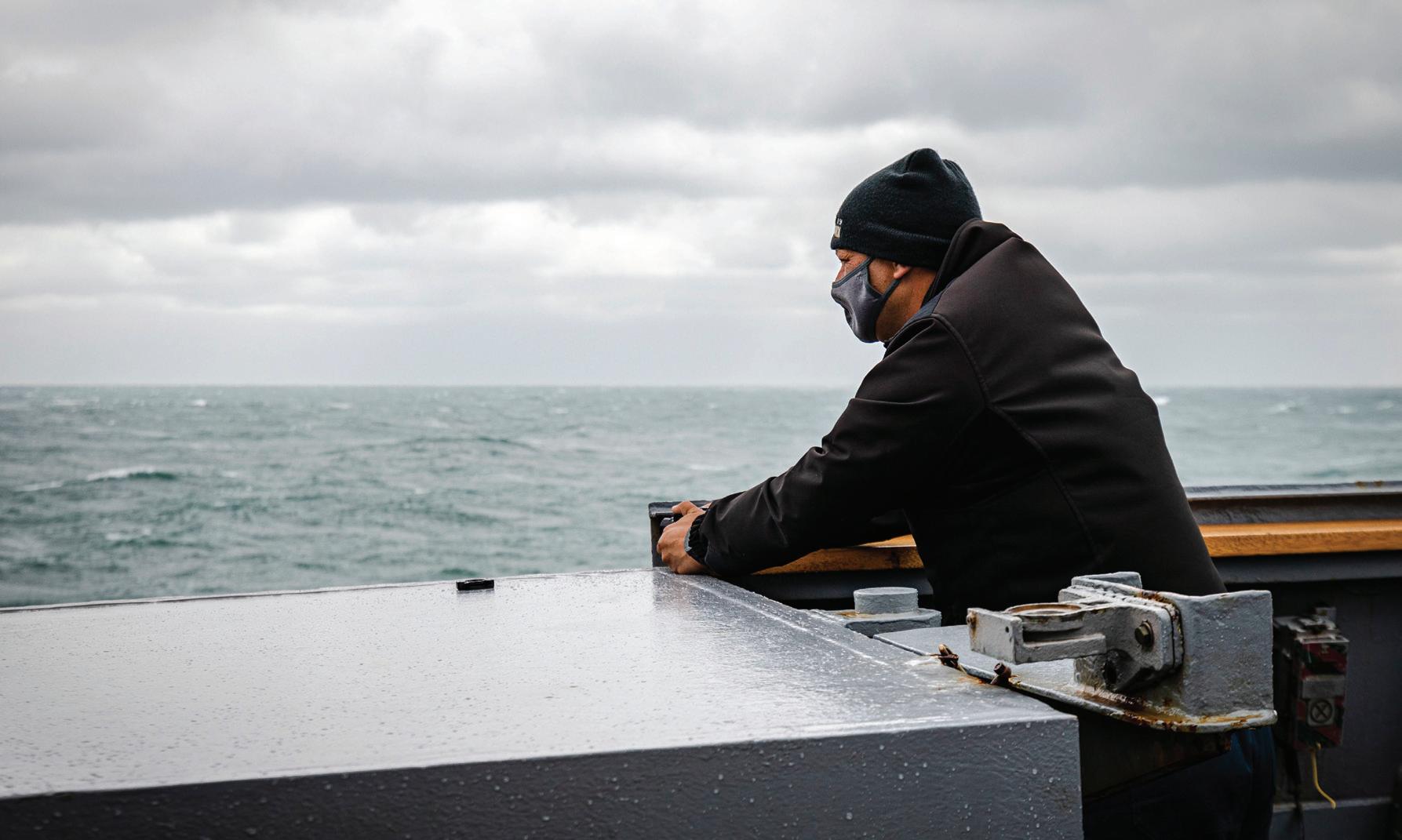
transits—or stopping them altogether—in an effort to reduce tensions with Beijing should not be considered as an option. This would be a sign of deference by the United States, at a time when Beijing should be the one sending signals to Washington that it is willing to reduce regional tensions. Given Director of the Central Foreign Affairs Commission of the Chinese Communist Party Yang Jiechi’s speech to the National
Committee on US-China Relations on February 2, it looks as though Beijing wants to put that impetus on the Biden administration. However, National Security Council Coordinator for Indo-Pacific Affairs Kurt Campbell’s statement that US-China relations will not improve until Beijing changes its behavior regarding Australia suggests that it is unlikely that the Biden administration will fall into that trap: it is incumbent upon China to lower tensions, not the United States.
Appraising Biden b 7
“BeyondregularizingUStransits,the USNavyshouldsendacarriergroup throughtheTaiwanStrait.”
Cmdr. Ryan Easterday, CO of the guided-missile destroyer USS John S. McCain, scans the horizon as the ship conducts operations in the Taiwan Strait.
photo: Markus Castaneda
Beyond regularizing US transits, the US Navy should send a carrier group through the Taiwan Strait and, depending on COVID-19 precautions, conduct military exercises in the East and South China seas as well as in the waters east of Taiwan.
Message of support
While sending guided missile destroyers through the Taiwan Strait shows that the US Navy will not back down, a carrier group would send a stronger message of support—and force. Despite bipartisan support in Washington for Taiwan’s attendance at the 2020 Rim of the Pacific Exercise (RIMPAC) in Honolulu, Hawaii, the ROC military was not invited to join the international maritime warfare drills. Around 30 countries had been initially invited to participate, but in the end, only 10 took part as the exercise was scaled-down due to COVID-19 precautions. In addition to the United States, the navies of Australia, Brunei, Canada, France, Japan, New Zealand, South
Korea, the Philippines, and Singapore participated. Assuming that the COVID-19 pandemic is over by the next RIMPAC in 2022, the United States should formally invite the ROC military, which should accept, and participate fully. The United States sells a significant amount of military hardware and equipment to Taiwan, so it makes sense for the ROC military to be more thoroughly included in US-led military exercises—beyond the simple rationale that the US and ROC militaries should conduct exercises together, as a means of more fully integrating Taiwan into America’s Indo-Pacific strategy. The next RIMPAC will be an important marker for how the United States plans to cooperate with Taiwan; its participation would also force countries around the globe to decide between bowing to the pressure that the PRC is expected to exert in order to force Taiwan’s exclusion, or to allow themselves to be seen participating with Taiwan in such a large-scale, multilateral military exercise. Perhaps pointing to the potential for greater maritime cooperation, Washington and

8 b STRATEGIC VISION
US Air Force Raptors fly alongside a KC-135 Stratotanker during a training flight near Mt. Fuji, Japan.
photo: Rebeckah Medeiros
Taipei announced the establishment of a Coast Guard Working Group to better coordinate policy.
The final area of military cooperation between the United States and Taiwan is the continuation of arms sales. Under the Trump administration, the United States announced over US$18 billion in weapons sales. The Biden administration should continue the practice of not bundling arms sales in giant packages, as had been the custom in previous administrations. Selling items on an as-needed basis provides Taipei with more flexibility in its defense planning, since deliveries do not occur until years after the purchase is finalized. The recent announcement of Taipei’s decision to purchase Patriot Advanced Capability 3 (PAC-3) Missile Segment Enhancement (MSE) interceptors suggest that the Biden administration is committed to continuing sales of military hardware to Taiwan. Former US President Barack Obama infamously declined to sell new F-16s to Taiwan, in an effort not to rupture ties with China. This mindset of connecting arms sales to relations with China does
not appear to be a factor in the Biden administration. If the administration is serious about Taiwan’s defense, then it should work with Taipei to sell arms that fit into the country’s defense plans. Certain items, especially the Terminal High Altitude Area Defense (THAAD) system, are probably off limits for Taiwan. The Chinese government had a strong negative reaction to THAAD’s deployment in South Korea; a similar—and probably more aggressive—response would occur if Taiwan even expressed an interest in purchasing it.

Economic obstacles
While the prospects for greater military cooperation are high under President Biden, economic relations will likely remain an obstacle. The US-Taiwan Trade and Investment Framework Agreement (TIFA), formerly the primary mechanism under which the two sides would discuss trade, is essentially dead. According to the United States Congressional
Appraising Biden b 9
A PAC-3 MSE Missile performs a unique over-the-shoulder manoeuvre to defeat a target attacking from behind during a test at White Sands Missile Range.
photo: John Hamilton
Research Service, TIFA talks stopped after 2016. Talks had previously been suspended in 2007 over agricultural import issues, but resumed in 2013 after Taiwan lifted some of those restrictions. With calls on both sides of the aisle in the United States for a bilateral trade agreement (BTA), and strong interest in Taipei, the Biden administration should re-launch TIFA talks.

A range of issues
The Trump administration initiated the US-Taiwan Economic Prosperity Partnership Dialogue (EPPD) in November 2020, which covers “a broad range of economic issues, focusing on 5G networks and telecommunications security, supply chains, investment screening, infrastructure cooperation, renewable energy, global health, science and technology, and women’s economic empowerment as a cross-cutting issue,” according to a press release from the American Institute in Taiwan, the de facto US embassy there.
The EPPD would be an important forum for the two sides to discuss areas of technological cooperation and integration before a BTA could be realized. If the Biden administration proves reluctant to continue a Trump-era channel of dialogue, however, then the EPPD could be folded into TIFA even though EPPD was not under the auspices of the US Trade Representative. After all, TIFA historically is where the two sides would have discussed such issues. Relaunching TIFA, especially since the ractopamine issue is on the table, would help set the stage for indepth BTA discussions. Concluding a BTA would have a number of legal hurdles for both sides to address due to the unofficial nature of the US-Taiwan relationship. Taipei also needs to deal with certain domestic economic issues. In December 2020, the US Treasury Department added Taiwan to its watch list of currency manipulators. The US Department of Labor (DOL) likewise added Taiwan’s fishing industry to its list of goods produced by forced labor. The DOL report notes that Taiwan was added “for forced labor
10 b STRATEGIC VISION
A fishing crew lands their catch at port on Penghu Island. Taiwan’s fishing industry has been accused by the US DOL of using forced labor.
photo: Kevin Chung
due to reports of adults forced to work in the production of fish on their [distant-water fishing] fleets” and “crews on Taiwan flagged vessels face confiscation of documents, long days with little rest, physical and verbal abuse, and lack of payment.” The Biden administration needs to ensure that labor abuses in Taiwan, especially those regarding migrant labor, are addressed by the Tsai Ing-wen administration if BTA talks are to be conducted.
As long as Taipei works to fix its labor abuses, it is in Washington’s interests to enter into serious BTA discussions at a time when the world is facing semiconductor shortages and supply chain issues. Lowering trade barriers to Taiwan’s semiconductor industry— particularly Taiwan Semiconductor Manufacturing Corporation (TSMC), which produces chips used in F-35 jets, the US fifth-generation fighter program— should be an essential part of the Biden administration’s Indo-Pacific economic plan. American and Taiwanese semiconductor industry leaders called for a BTA during a February 2021 meeting, which, according to Taiwan’s Ministry of Economic Affairs, was attended by Biden administration officials. A BTA with the United States would be a sign for other countries around the world that Taiwan has the ability to be a reliable economic partner. Signing a BTA with the United States is a “gold standard” for countries to
barriers is probably indicative of how BTA talks will proceed (if they even start) since TIFA was originally supposed to be the forum in which a BTA would be negotiated. In 2016, the United States noted Taiwan’s progress on intellectual property (IP) protection and enforcement, while agricultural issues were still a hindrance. Now, the agricultural issues may get resolved depending on the success of the Kuomintang Party’s efforts to hold a referendum with the potential to reverse the government’s decision to lift the ban on US pork imports due to the presence of a controversial feed additive called ractopamine. Overall, there is clear momentum on the BTA issue, but the two sides have never been able to resolve enough sticking points to conclude a trade agreement.
New avenues for cooperation
achieve, and considering Taiwan’s geopolitical status, it would send a message to other countries or trade pacts that Taiwan has made (or is in the process of conducting) necessary economic reforms.
While there is momentum in both countries, neither side should overestimate the likelihood of a reaching a deal. The historical failure of TIFA to reduce trade
Despite former President Trump’s unpredictability, US-Taiwan relations saw new avenues for cooperation open with the bipartisan passage of the Taiwan Travel Act, the Asia Reassurance Initiative Act of 2018, and the Taiwan Allies International Protection and Enhancement Initiative (TAIPEI) Act, as well as National Defense Authorization Acts with important Taiwan clauses. While the bilateral relationship experienced great uncertainty due to the fear that Trump would use Taiwan as a bargaining chip, these laws have created openings for even more cooperation under a more predictable president, Biden. The new administration’s initial signals, messages, and actions show that government officials in Taipei do not need to worry about US-Taiwan relations over the next four years. It may even be working to expand the issue of Taiwan’s defense to other key regional actors. Now, these initial actions must be followed up with further cooperation and integration in the administration’s Indo-Pacific strategy. Nevertheless, those skeptical of the Biden administration can allow themselves to be cautiously optimistic. n
Appraising Biden b 11
“A BTA with the United States would beasignforothercountriesaround theworldthatTaiwanhastheability tobeareliableeconomicpartner.”
Cause for Suspicion
Beijing’s growing influence in Sri Lanka stokes security concerns in New Delhi Mary Kavita Dominic
Sri Lanka has reneged on a 2019 tripartite agreement with India and Japan that would have provided for the joint development of an East Container Terminal (ECT) at the Port of Colombo, putting a damper on New Delhi’s plans to amplify island diplomacy across the Palk Strait. Strategically positioned in the Indian Ocean, this project was envisioned as a counterbalance to the Chinese game of checkers in the region.

Belying these expectations, however, the cabinet of Sri Lanka’s Prime Minister Mahinda Rajapaksa has unilaterally shelved this scheme, purportedly at the behest of port trade unions and nationalist groups who vehemently opposed the sale of national assets
to India. At the same time, other development projects in the island-nation, which bear the imprint of foreign powers like China, have not faced any similar pushback in the country.
Implicit in this seemingly contradictory stance is a complex socio-political history that Sri Lanka shares with its regional neighbors, together with economic and security imperatives that pull its domestic forces in different directions. These dynamics are reflected in the collapse of the ECT infrastructure venture, a fact that Indian analysts will have to take into account as they recalibrate their strategic calculus in the Indian Ocean.
The maritime domain is a critical component in
12 b
Mary Kavita Dominic is a policy research associate with the Synergia Foundation. She can be reached at
marykavitadominic@gmail.com
Strategic Vision vol. 10, no. 49 (May, 2021)
Colombo is the capital city of Sri Lanka, which occupies a strategic position in the Indian Ocean.
photo: Roel Raymond
shaping geopolitical strategy. This reality has been well-appreciated in recent times, with China’s aggressive pursuit of economic and military objectives in areas like the South China Sea. As focus shifts from the Atlantic Ocean to the Indo-Pacific, like-minded nations are seeking to ensure a free, open, inclusive, and rules-based regime in the region.
It is against this backdrop that one must view the strategic relevance of the Indian Ocean. More than 80 percent of the world’s seaborne oil trade passes through here, via chokepoints like the Strait of Hormuz and Malacca straits. This fact has not been lost on major powers like India, China, Japan, Australia, and the United States, which actively cultivate relationships with small island-states in the region through naval establishments, trade, and infrastructure aid. By doing so, they hope to gain proximity to important shipping routes and vital sea lines of communication.

Naturally, fostering rapprochement with Sri Lanka has been an integral part of this strategy. Situated at the northern part of the Indian Ocean, this islandstate overlooks major sea routes that connect West Asia and Eastern Africa to China and the rest of
Southeast Asia, making it an ideal location for global transshipment businesses. With the Great Game ensuing in the Indo-Pacific, its surrounding waters are also a key site for power projection. Only recently, member countries of the Quadrilateral Security Dialogue, or Quad, engaged in a series of naval exercises in the Bay of Bengal. This was viewed with trepidation in Beijing, as it was uncomfortably close to sea lanes through which nearly two-thirds of China’s oil imports pass. Due to critical issues like energy security, therefore, global heavyweights are vying for influence in Sri Lanka, whose ports and other infrastructure are strategic vantage points in the region. The proposed ECT project is just the latest manifestation of this historic rivalry.
Symbol of cooperation
The contentious tripartite pact for joint operation of the ECT was inked in 2019, during the tenure of the Sirisena-Wickremesinghe government. The memorandum of cooperation enjoined India and Japan to participate in enhancing the Colombo port’s harboring capacity so that more international cargo ships
Cause for Suspicion b 13
The Strait of Hormuz and the Persian Gulf are visible in a photograph taken from the International Space Station.
photo: NASA
could be hosted for transshipment activities. Pitched at a cost of US$500-US$700 million, the terminal was to be run by the Terminal Operations Company in which Sri Lanka had a 51-percent stake, while India and Japan together held 49 percent.

When President Gotabaya Rajapaksa came to power, however, the deal was put under review. Since the country’s parliamentary elections were scheduled around the same time, he was keen to ensure that controversial issues like the ECT, which had attracted the ire of domestic port workers’ unions, did not erode his party’s share of the vote. In any case, the majority Sinhala-Buddhist community that forms a core constituency of Rajapaksa’s party has always harbored suspicions about the Big Brother across the Palk Strait. Bearing all this in mind, the project was put on hold by the president until the elections were completed. New Delhi was reportedly assured that things would be back on track once the results were out.
In August 2020, the president’s party went on to sweep the polls under the leadership of his brother and former President Rajapaksa. Ever since then, the Indian government has been urging Sri Lanka
to implement the ECT deal.
For New Delhi, this project is an important trade and connectivity link, as nearly 70 percent of the transshipment businesses at Colombo Port comprise goods coming to and from India. The fact that this venture is planned near the Colombo International Container Terminal, in which an 85-percent stake is owned by a Chinese company, only adds to its allure. Moreover, by including Japan, India was trying to send a strong signal about the ability of Indo-Pacific partners and Quad members to rival China’s deep pockets and provide viable options for development financing. The Rajapaksa government threw a spanner in the works, however, backtracking on the ECT deal. This came despite numerous assurances from the Sri Lankan Government that it would follow an
“India First” foreign policy.
While widespread opposition by port workers’ unions and a feared loss of sovereignty have been ostensibly cited as reasons for Sri Lanka pulling out of the ECT venture, similar objections have not been raised in the case of Chinese-funded projects. It is worth remembering that Beijing has a controlling equity in the Colombo International Container
14 b STRATEGIC VISION
Warships from India and Japan operate off the west coast of India during the Bilateral Maritime Exercise Between Japan and India (JIMEX 20).
photo: Indian Navy
Terminals Ltd., as well as a 99-year lease on the strategic Hambantota Port. Just three kilometers away from the proposed ECT, there is also the Chinesesponsored Colombo International Financial City, where a major investment agreement was concluded as recently as December 2020. Such apparent double standards will not go unnoticed in India, especially when rumors are rife that the Rajapaksa brothers are tilting toward China, based on the personal rapport they share with Chinese President Xi Jinping.
Strategic implications
While China justifies its expansion of ports and other infrastructure in South Asia as an economic endeavor devoid of security imperatives, there are obvious strategic implications that India cannot afford to ignore. For instance, it is entirely conceivable that Beijing’s sea-based silk road may be weaponized as a tool for economic coercion, by foisting partnerstate dependencies on Sri Lanka. In fact, this is how
the Hambantota lease was secured in the first place: China took over the port as debt relief, after Colombo failed to repay the massive amounts invested by the Asian giant in the construction of this project.
At a time when nearly 10 percent of Sri Lanka’s external debt is owed to China, the possibility that such debt diplomacy and “assets-for-money-swap arrangements” may be capitalized upon to establish military and naval bases encircling India remains a pressing concern for New Delhi. While the Hambantota port is only used for commercial purposes at present, it could potentially act as a naval dockyard for Beijing in the future. Together with escalating Chinese ambitions in the Coco Islands, Chittagong, and the Kyaukpyu and Gwadar ports, this supports the widely hypothesized String of Pearls theory, which continues to dominate strategic thinking in India.
Colombo, however, has been quick to dispel rumors about its pro-Beijing tilt. It has proposed the West Container Terminal (WCT) as an alternate avenue for investment by New Delhi and Tokyo, under the

Cause for Suspicion b 15
President Mahinda Rajapaksa introduces Parliamentarian Namal Rajapaksa to PRC President Xi Jinping during an official welcome ceremony in Colombo.
photo: Mahinda Rajapaksa
public-private-partnership model. Claiming that it is strategically no different from the ECT, it has tried to sweeten the deal by offering an 85-percent stake to developers in India and Japan.

Such actions are symptomatic of Sri Lanka’s efforts to strike a balance between India, China, and other major powers in the foreign policy domain. On the one hand, its government has been hosting trilateral security meetings with countries like India and the Maldives, apart from high-level visits by US delegations. On the other hand, it has also been enhancing geo-economic cooperation with China.
At an inflection point
While such balancing behavior or non-alignment posturing may have worked for the country in the past, this will not always be the case. The world is at a decisive inflection point, where even countries like India, which spiritedly advocate for strategic autonomy, are seen to be openly drifting toward specific alliances and partnerships. As China’s relations with other nations continue to deteriorate, it will be
challenging for the island-state to remain neutral in the years to come.
Of course, this is not a desirable position to be in, especially for a relatively small country with no established defense guarantees. Colombo might have to navigate its way out of the binary dilemma posed by the Indo-Pacific construct and China’s Belt and Road Initiative (BRI), through forging strategic partnerships with middle powers. Even then, it may not be entirely possible for the state to avoid making difficult choices at critical times.
Insofar as India is concerned, the ruling administration is visibly miffed by the failure of the ECT venture. There is speculation that it abruptly terminated a US$400 million currency swap facility with Sri Lanka in retaliation. Although both countries have clarified that this is not the case and that the settling of accounts between the Central Bank of Sri Lanka and the Reserve Bank of India was nothing more than a routine matter, the timing is still suspect. It is well-known that Sri Lanka’s foreign reserves are in dire straits, due to an economic crisis triggered by the COVID-19 pandemic. In such circumstances,
16 b STRATEGIC VISION
China’s leader Xi Jinping and former Sri Lankan President Mahinda Rajapaksa inspect a model of the proposed ‘Colombo Port City’ in 2014.
photo: Mahinda Rajapaksa
where the country is hard put to repay its debts, it is inevitable that people will question the hurried nature of this transaction.
In any case, the immediate priority for India is to determine whether it will accept the alternate proposal concerning the WCT. Although it is similar to the ECT in terms of capacity, it will take a longer time to be put into operation, as it has to be built from scratch. Nevertheless, a hasty dismissal of Colombo’s offer would not be prudent, as Sri Lanka continues to be strategically important for India.

New Delhi must embrace the cold reality that projects like the ECT may face impediments from time to time, based on the prevailing political environment in Sri Lanka. Members of the majority Sinhala community continue to be wary about India’s political motives, as questions of Tamil autonomy show no signs of abating in their homeland. Indeed, their approach to foreign policy will always be layered with memories of India’s intervention in the Sri Lankan Civil War.
On the other hand, China has been relatively successful in leveraging its religious and cultural ties
with the erstwhile state of Ceylon. For instance, its support for the Colombo Lotus Tower in the past invoked references to the shared Buddhist history of the two countries. In recent times, such philosophical rebranding has been supplemented by economic strategies that situate Colombo on the map of Beijing’s BRI.
Acknowledging this, New Delhi will have to exercise patience and restraint in its ties with the island-state. Even while choosing future projects more carefully, it will need to place Colombo at the center of its Indian Ocean strategy. The focus should be on bolstering transparent relations, which diminish the glow of China’s debt diplomacy.
At the end of the day, if India is to stand any chance of countering China’s String of Pearls strategy, it will have to diligently nurture relations with its immediate South Asian neighbors. Only a robust “inner arc” strategy can position the country to engage with other partners in the broader arc of the Indo-Pacific sphere through policies like Act East and mechanisms like the Quad. n
Cause for Suspicion b 17
Ships and gantry cranes at the Colombo Harbour in Sri Lanka.
photo: Rehman Abubakr
Strategic Vision vol. 10, no. 49 (May, 2021)
Stepping Up
European powers seek a greater role and presence in Indo-Pacific security César de Prado

Major European countries and multilateral institutions are enhancing their global strategic perspectives to deal with the security issues that Europe faces, primarily through the continent’s main security provider, the North Atlantic Treaty Organization (NATO). To remain relevant after the Cold War, NATO has made compromises over strong differences between its members, transforming itself into a flexible security management organization that balances deterrence
in Europe and the North Atlantic with out-of-area expeditionary missions and operations.
In a December 2019 summit, NATO delegates decided to engage experts to examine ways in which the alliance could address the strategic opportunities and challenges presented by the growing global influence of the People’s Republic of China (PRC). A group of independent experts tasked with elaborating a strategic framework in 2020 argued that NATO should devote much more time, political resources, and ac-
Dr. César de Prado is a MOFA Fellow at the European Union Centre in Taiwan, National Taiwan University. He can be reached for comment at cesar.deprado@eui.eu
18 b
Japanese Maritime Self Defense Force members welcome the British frigate HMS Montrose to Tokyo, Japan.
photo: Royalnavy.mod.uk
tion to the security challenges posed by China, not least because Beijing is already militarily active in the Euro-Atlantic area by controlling critical infrastructure, dispatching ships and planes, and engaging in sophisticated propaganda campaigns there. The group’s proposals included enhancing NATO’s internal capabilities as well as partnerships in the Indo-Pacific, especially reaching out to India. New compromises are expected to be made in the NATO summit scheduled for June 2021, including the anticipated inclusion in the NATO 2030 strategic doctrine of a role for the alliance in the Indo-Pacific.
Integrated review
In March 2021, the United Kingdom released its Integrated Review of Security, Defence, Development and Foreign Policy. In it, London describes its objective to turn the country into a new type of important power, able to confront all kinds of challenges by enhancing its internal and external capabilities. The United Kingdom plans to enhance domestic re-
silience and strategic military forces, especially its nuclear deterrent arsenal. A global Britain would continue to prioritize Euro-Atlantic relations (particularly those with the United States and NATO) while enhancing its links with advanced Anglo-Saxon countries worldwide. Understandably, the European Union is not highlighted. However, it also plans to strengthen vital links with Europe, particularly France, but also Germany.

“By 2030, we will be deeply engaged in the IndoPacific as the European partner with the broadest, most integrated presence in support of mutuallybeneficial trade, shared security and values,” the Integrated Review promises. This goal should not be a surprise, as the United Kingdom has already forged many security links with Europe that it does not intend to break, but rather hopes to strengthen.
The Integrated Review incorporated many suggestions that emerged from an international highlevel Indo-Pacific Commission, which argued in a November 2020 report that, “to fully globalise Britain, the Indo-Pacific region, stretching from the eastern
Stepping Up b 19
French frigate FS Vendémiaire conducts a passing exercise with USS John C. Stennis in the Indo-Pacific Region.
photo: Tomas Compian
Indian Ocean to the western Pacific and Oceania, must become a priority in the United Kingdom’s overall foreign and security policies.” The Integrated Review stated that the United Kingdom “will pursue deeper engagement in the Indo-Pacific in support of shared prosperity and regional stability, with stronger diplomatic and trading ties.”
The plan is to keep economically engaging the PRC and the Indo-Pacific, but also to “invest in enhanced China-facing capabilities,” and to “deploy forces overseas more often and for longer periods of time.” It will enhance bilateral alliances and partnerships with a range of countries in the Indo-Pacific region that are close to NATO. It is expected that the United Kingdom will try to link more with India, in particular.

Since the end of the Cold War, France has gradually evolved from its long-held position of Gaullist independence into a reluctant Atlanticist. Although it had sometimes hoped to render NATO obsolete, France rejoined NATO’s integrated command structure more than a decade ago. French President Emmanuel
Macron is now lobbying—albeit with limited prospects of success—to make the European Union a pillar of NATO. Paris also promotes military intervention initiatives with willing European countries, including the United Kingdom. In 2018-2019, France produced detailed strategies on security in the IndoPacific, the first time ever for a European country.
Paris naturally sees security challenges confronting Overseas France, but it also highlights Taiwan and the surrounding seas, the conflict on the Korean peninsula, and border issues in or near the Himalayas. While priming bilateral and multilateral diplomacy to address conflicts, France is increasingly projecting power in the Indian and Pacific oceans. In particular, it has enhanced its maritime deployments alongside the United Kingdom’s, and it is starting to cooperate more with other EU countries. Its broad array of defense partners in the Indo-Pacific is very similar to those of NATO and the United Kingdom, without forgetting its strong links to former colonies and, importantly, to India.
20 b STRATEGIC VISION
Japanese Ground Self Defense Forces (GSDF), British Army, and US Military personnel take part in exercise Vambrace Warrior.
photo: British Embassy Tokyo
The style of German defense policy has changed from one that was reactive and norm-based in the 1990s, to one that has been assertive, interest-based, and executive-led since the 2010s. Washington and other allies have exerted pressure on Berlin to shoulder more responsibility for its defense, and the German armed forces have hence been deployed more frequently on missions worldwide, even in coalitions of the willing.
Grand strategy
Germany’s emerging grand strategy involves keeping the European Union and the United Nations up, the United States in, and authoritarian powers out (while socializing them into liberal norms). The 2016 German white paper on security policy mentioned the competition springing from China’s economic rise and its high volume of military spending, but China was not seen as a security threat, nor the IndoPacific as a priority military theater; it just noted

that “regional territorial disputes in connection with power projections are a source of concern in particular for the countries of Southeast and East Asia.” In September 2020, however, during its presidency of the Council of the European Union, Germany presented a new strategic document, referred to as “policy guidelines,” in which Berlin started considering the Indo-Pacific as a priority area for strengthening peace, security, and stability.
The novel guidelines take a broad geographic view and aim at peace and security from North Korea to Pakistan, as well as in the Indian and Pacific oceans. They even explicitly mentioned several new goals and plans to deepen action and diversify external links. Berlin’s goals are to maintain freedom and security, open sea routes, and open markets and free trade. On the one hand, Germany aims to strengthen its traditionally strong civil role. It will continue supporting ASEAN-centric multilateralism in accordance with the United Nations, and implementing measures for civil crisis prevention, conflict management, and
Stepping Up b 21
European sailors on March 17, 2021, mark the end of the 36th rotation of Operation Atalanta.
photo: Eunavfor
peacebuilding. On the other hand, Germany will actively work with the European Union and NATO, and their respective strategic partners in the Indo-Pacific, namely Japan, Australia, and India.
The European Union currently has a global strategy, enacted in 2016, that is not designed for great-power confrontation. The European body is constrained from adopting a grander strategy comparable to those of the United Kingdom, France and NATO because its common foreign, security and defense policies are bound by the Treaty of Lisbon, which imposes considerable limits on EU military capabilities and power projection. In March 2021, after a delay of a year, the European Union launched a large-scale public conference on its future inner workings and global outlook. France wished it to be the basis of a treaty upgrade that would, among other things, give the European Union some strategic autonomy within the NATO framework. That will not happen within the remit of the conference, ending in mid-2022, as not all EU countries are willing, though it may induce treaty changes in the medium term. German Chancellor Angela Merkel is already lobbying for enhanced EU prerogatives on several issues, from health to foreign policy. Meanwhile, the European Union keeps advancing strategic documents that indicate its growing range of concerns, and that highlight its need for tools to support both cooperation and power projection in this part of the world.
Strategic compass
The European Union is aiming at setting up a global “Strategic Compass” in 2020-2022. During this biennium, the body will prioritize all kinds of security threats and seek ways of enhancing its internal and external capabilities to be better prepared for crisis-management operations. In April 2021, the 27 EU member states gave the European Commission and the European External Action Service until
September to produce an EU strategy for cooperation in the Indo-Pacific, in the context of intense geopolitical competition. The Council’s long list of requests deals extensively with the EU’s cherished values of democracy, human rights, and the rule of law, but the European Union also has to enhance traditional dialogues, security and defense missions and operations, and especially help develop a European naval presence.
Europe’s key “E3” countries (consisting of France, Germany, and the United Kingdom), as well as various multilateral organizations such as NATO, all still have somewhat different strategic visions and plans for the Indo-Pacific. These are structurally converging, however, as the rise of China becomes an issue of general concern. The great power competition currently being played out pits a rising China against an incumbent United States, and European actors increasingly face the risk of being dragged into a diplomatic, economic, ideological, or even military confrontation. Mutual sanctions between China and the West in March 2021 are a stark reminder of this dynamic. The concept of the Indo-Pacific, which has been greeted with some antagonism from China, has formally been taken up by the E3 (as well as the Netherlands), the European Union, and likely very soon by NATO. While it is difficult to develop domestic capabilities in times of budget constraints, all European security actors are enhancing their links with each other and with similar like-minded partners in the Indo-Pacific.
While the differences that mark the positions of European countries will never fully go away, these differences are becoming more a matter of grade than of nature. The United Kingdom is relatively more concerned with enhancing NATO’s military power, but it is also very eager to profit from diplomatic and economic links with the European Union. France has long partnered in defense with the United Kingdom, but it also spurs the European Union to en-
22 b STRATEGIC
VISION
hance both its military capacities and its value-based diplomacy. Germany prefers to use multilateral diplomatic mechanisms for cooperation, but this is not an impediment to military projection. In fact, Berlin is sending a frigate through the South China Sea this summer. Of course, the future of European action in the new structural bipolarity will doubtless remain bumpy. The internal differences will lead to difficult bargaining sessions prior to taking action, but action will be taken. External factors marked by asymmetric effects, like crises that erupt close to Europe, will prompt new rounds of disagreements and efforts to overcome them, which will divert some attention away from the Indo-Pacific.

After a very long time, Europe is indeed coming back. Taiwan, China, and other Indo-Pacific countries should pay careful attention to the wide-ranging, subtle, interlinked efforts of European actors to play a role in this part of the world. A disregard or a misunderstanding of Europe’s possible projections can
easily lead to unproductive reactions. For instance, some may find it easy to dismiss Europe based on its limited and piecemeal power projection in the past. But the trend is clearly changing, and some new patterns should naturally be expected. The overall impact of Europe’s foray into the Indo-Pacific remains impossible to predict, however. It all depends not only on Europe’s plans and actions, but on the fluid interplay of many proud and nervous actors, as well as factors that now enjoy a tenuous balance, but face many sources of tension. One must be careful when thinking through new dynamics and assigning probabilities to novel scenarios. Some may dream of a rosy scenario in which a level-headed European presence strides into the region and solves all of its myriad troubles: Others may fear that Europe’s entry will only upset the regional apple cart. European planners must therefore take the time to understand the many risks and opportunities that the Indo-pacific region presents. n
Stepping Up b 23
A Eurocorps soldier stands in formation at an event held to mark 30 years of direct elections to the European Parliament.
photo: European Parliament/Pietro Naj-Oleari
Sober Assessment
New Delhi remains clear-eyed on ongoing threat posed by Beijing’s ambitions
Ilias Iliopoulos
Japan’s former Prime Minister Shinzo Abe is widely credited with coining the term “IndoPacific,” or at least injecting it into the modern geopolitical, strategic, and maritime conversation, when he first used the term in his 2007 “Confluence of the Two Seas” speech to the Indian parliament. Truth be told, it was a brilliant officer of India’s Navy, Captain Dr. Gurpreet S. Khurana, former executive director of the National Maritime Foundation of India and a visiting professor at the Naval War College in Goa, who resurrected the “Indo-Pacific” designation, which was introduced almost eight decades ago by another soldier-scholar, Karl Haushofer. Statesmen, diplomats, military officers, and policy analysts in India, as well as in Russia, understand historical and geopolitical realities much better than
many of their American and Western European counterparts. India’s foreign policy and defense community is not fooled by Beijing’s façade of neighborliness. Almost a decade ago, then Chief of India’s Army General Staff General Vijay Kumar Singh warned that India must “wake up” to her military shortcomings and the threat posed by China, adding that unresolved border disputes could be used as a pretext to “put India down” anytime China perceived that India was becoming too powerful. General Singh advocated increased spending on defense and referred to Beijing’s subjugation of Tibet, its wooing of Nepal and Myanmar, and its use of Pakistan as a cat’s paw. One must bear in mind that China’s border disputes with India during the period of 1960–1962 left 3,000 Indian soldiers dead. Notably, the border dispute re-

24 b
Dr. Ilias Iliopoulos is a professor of History and International Relations at the National University of Athens and a visiting scholar at the Taiwan Center for Security Studies. He can be reached at iliasmunich@hotmail.com
Strategic Vision vol. 10, no. 49 (May, 2021)
photo: BMN Network
mains unresolved. The ruling state and party elites of the People’s Republic of China (PRC) claim an entire state of the Federal Republic of India, Arunachal Pradesh, which borders on Bhutan, Bangladesh, Myanmar, and China, and is roughly the size of Portugal. Beijing calls the 90,000 square-kilometer area “Southern Tibet.” Moreover, the PRC continues to occupy roughly 39,000 square kilometers of Indian territory—in Aksai Chin, high in the Himalayas.
At this point, it must be remembered that the PRC has territorial claims against 17 of its 24 neighbors. Moreover, in Beijing’s relations with all of these nations, the potential for the use of force by the People’s Liberation Army (PLA) remains an ever-present possibility. One may see here a remarkable analogy to Turkey: specifically, with respect to Beijing’s geopolitical doctrine of “vital space,” which is roughly equivalent to “Lebensraum” in Friedrich Ratzel’s classic term, which extends far beyond a state’s borders, and includes land, sea, air, underwater, and even space. It bears a striking similarity to neo-Ottoman Turkey’s doctrine of “strategic depth.”
Notably, Beijing’s military outreach is directed more

towards the Indo-Pacific, which is reflected in the type of weaponry it is amassing, including Kilo-class submarines; Sovremenny-class destroyers; Luyang II (Type 052C) class guided-missile destroyers equipped with HHQ-9 SAM (55-NM range) and YJ-62 antiship cruise missiles (ASCMs) (150-NM range); Luyang III (Type 052D) class guided-missile destroyers with an extended-range variant of the HHQ-9 SAM, and YJ18 ASCM (290-NM range); Jiangkai II (Type 054A) class guided-missile frigates; and Renhai-class cruisers (Type 055 destroyers), launched in June 2017. The latter, while formally designated by the PLA Navy as a guided missile destroyer, is closer in displacement and scale of armament to the US Navy’s Ticonderoga-class cruisers than it is to the Arleigh Burke-class destroyers.
The barrel of a gun
There is no doubt that these weapons will unscrupulously be turned against Taiwan, to serve Beijing’s publicly declared goal of annexing the democratic island. They will also enable the PRC to gain control of vital sea-lanes through which 80 percent of its oil
Sober Assessment b 25
US and Indian soldiers train together during exercise Yudh Abhyas at Chaubattia Military Station, India.
photo: Samuel Northrup
imports pass, and to project power in the South China Sea and out into the Pacific.
Since New Delhi officially adopted the Look East Policy in 2006, the Indian Navy has been building a strong base on the eastern front, namely at the Visakhapatnam-based Eastern Naval Command, to keep an eye on the strategically significant South China Sea. Since that time, India has pursued an impressive naval construction program to redress the obsolescence of much of its fleet. Then Chief of the Naval Staff of the Indian Navy Admiral Nirmal Verma, on the eve of Navy Day on December 4, 2011, outlined an ambitious expansion plan for the Navy, which would give India a greater footprint in the South China Sea.
After tremendous efforts had been made—with 46 warships and submarines having been constructed, and another 49 in the pipeline—Admiral Verma declared in August 2012, “Today, I am confident we do not suffer asymmetries with anyone. We have the wherewithal to defend our maritime interests.” It is estimated that by 2027, the Indian Navy will have 500 aircraft of all varieties and 150 ships in its inventory. In this regard, particular reference must be made to the fact that India’s first domestically constructed nu-

clear submarine capable of firing ballistic missiles was part of a program to make India a major power in the Indo-Pacific. The INS Arihant was the first of its class, with four more to follow. The strategic significance of this particular weapons platform lies in the fact that, as Admiral Verma put it, “The advent of INS Arihant into the fleet will complete the crucial link in India’s nuclear triad – the ability to fire nuclear weapons from land, air and sea.” There can be no doubt that the reason for India’s determination to add nuclear-armed submarines to its military is the threat posed by China, although as might be expected, India’s policy-makers and diplomats have been elusive when questioned on this. Remarkably, up until the INS Arihant, the only countries capable of launching a submarine-based ballistic missile were the United States, Russia, the United Kingdom, France, and the PRC.
BRICS disunity
And what of the BRICS, one might reasonably ask. Despite being included—along with Brazil, Russia, China, and South Africa—in this supposed historical, and geopolitically meaningless, “bloc” of major emerging economies, India remains wary of China, if
26 b STRATEGIC VISION
President Tsai Ing-wen visits a Cheng Kung-class guided missile frigate during a visit to Tsoying Naval Base in Kaohsiung, Taiwan.
photo: Makato Lin, ROC Presidential Office
truth be told; as does Russia, which also regards itself as an Indo-Pacific Power, and increasingly so. Despite all the trade and diplomacy that takes place among BRICS members, India’s admittedly wise statesmen and experienced diplomatic corps and military are not so naïve as to let their guard down. They are similarly reticent about placing too much reliance on Washington for their defense, particularly after US President Donald Trump has been overthrown by the pro-China globalist elites inside the United States. For they must know that, in any Indo-Pacific conflict, it is highly unlikely that the United States will confront the PRC.
India is the added factor in the geopolitical equation: full of potential, but in need of drastic transformation to fulfill that potential. In point of fact, India is the key factor of the major Indo-Pacific geopolitical region.
In view of Beijing’s revisionism and expansionism— increasingly and persistently manifested by all means, from full-scale use of sharp power and economic penetration of major regions to the use of force—and also facing Pakistan’s aggressiveness and state-sponsored
terror, India will have to become the pioneer of an alliance among Indo-Pacific nations that resist despotism and bullying in international affairs. Given that Taiwan has explicitly and emphatically been named as Beijing’s next victim—and this likely in the near future—Taipei must carefully examine all possibilities of co-operation with New Delhi, most notably in terms of security and defense.
At this point, one should bear in mind that formal diplomatic recognition is by no means a strict precondition of establishing, maintaining, and strengthening military cooperation between two geo-strategic (i.e., state) actors. The history of international relations, military history, and intelligence history provide strong evidence for this assertion. For instance, despite the complete absence of diplomatic recognition by Israel, there had been an impressively close and long-lasting military co-operation between the Republic of China (Taiwan) and Israel.
As the Orthodox Byzantines learned before us; it is not wise to busy oneself debating the sex of angels while the Ottomans are laying siege to Constantinople. n

Sober Assessment b 27
Indian and American soldiers take part in the Yudh Abhyas exercise, aimed at building an enduring Indian-US partnership and improving interoperability.
photo: US Indo-Pacific Command
Hostage Diplomacy
Despite its ties to China, Liberal Party of Canada is mishandling relations
Dean Karalekas
Republic of China (ROC) President Tsai
Ing-wen was awarded this year’s John McCain Prize for Leadership in Public Service, according to a May 3, 2021, announcement by Canada’s Halifax International Security Forum (HFX). This event is noteworthy for several reasons, primarily because it is rare for a leader in Taiwan to be openly recognized by an international forum or organization, given the pressure customarily exerted by Beijing against such actions. More tellingly, the conferral of the award was covered widely in the media once it emerged that Canada’s Liberal Party government had attempted to put the kibosh on the attempt to honour Tsai.
It was reported by Politico that an official with Canada’s Defense Ministry, in a November 9, 2020, phone call with HFX President Peter Van Praagh, issued an ultimatum: if you give Tsai the award, Canadian Defense Minister Harjit Sajjan will not speak at your forum, as had been previously planned; Moreover, the government will pull its funding for the event. After the details of the ultimatum were leaked to the public, a scandal ensued, forcing the government to backtrack on its threat.
The incident lays bare the primary problem hampering Canada-Taiwan ties, and that is the Liberal Party of Canada. While most international reporting on the HFX award framed the story as an ex-

28 b Strategic Vision vol. 10, no. 49 (May, 2021)
Dean Karalekas is an affiliated research fellow with the Centre of Austronesian Studies at the University of Central Lancashire. He can be reached for comment at dkaralekas@hotmail.com
ROC President Tsai Ing-wen meets Canadian Trade Office in Taipei Executive Director Jordan Reeves on July 7, 2020.
photo: Office of the President, ROC
ample of the Canadian government (or worse yet, the people of Canada) kowtowing to the People’s Republic of China (PRC), in fact this regrettable behaviour was largely confined to the ruling Liberal Party. Indeed, Canada’s loyal opposition, the centerright Conservative Party, found itself in agreement with the New Democratic Party (NDP)—perhaps the most left-leaning of Canada’s mainstream parties—in declaring Tsai to be an ideal candidate for the McCain award, and raised a motion for the government to continue funding the HFX.
If both the right and left sides of Canada’s political aisle both support Taiwan in its efforts to raise its international profile in the face of obstruction from Beijing, then it would seem odd that the nation’s socalled Natural Governing Party, the relatively centrist (at most, center-left) Liberal Party, should be so obstinate in its submission to Beijing. There are a few possible reasons for this.

It could perhaps be cowardice. The Liberals may believe that browbeating Taiwan—and President Tsai
in particular—will put them in PRC President Xi Jinping’s good books. This is especially important at a time when the PRC is holding two Canadian citizens hostage—Michael Kovrig and Michael Spavor—on trumped-up espionage charges, in obvious retaliation for the Vancouver arrest of Huawei Technologies Co., Ltd. CFO Meng Wanzhou on charges of bank and wire fraud surrounding violations of the trade sanctions on Iran.
Detainment discrepancies
It is worth noting, for comparison’s sake, that while the Michaels languish in prison cells, in which the lights are reportedly left on 24/7, and they are routinely denied access to lawyers and consular representatives, Ms. Meng remains free to travel in her chauffeured black SUV to the restaurants and shops of Vancouver, provided she’s back home by 11 p.m. to her US$4.2 million mansion where she waits out the court challenge to her extradition order. Given
Hostage Diplomacy b 29
A group of Canadian and Taiwanese hikers summit Nanhu Mountain. People-to-people ties have always been strong between the two countries.
photo: CTOT
the discrepancy in the conditions of their respective detainment, it seems more likely that Ottawa will be the one to blink first, though this tit-for-tat hostage diplomacy has been ongoing for two years now and shows no signs of being resolved anytime soon.
failing to adequately counter the efforts by Beijing’s United Front Work Department to infiltrate diaspora communities, political parties, large corporations, and of course universities. A report by an Ottawabased think tank, the Macdonald-Laurier Institute, details those efforts, which include the use of “cooptation, bribery, incentivization, disinformation, censorship, and propaganda,” among other methods.
A second possible reason is the enormous influence that Beijing wields in Canadian politics. A recent national security review by the Canadian Security Intelligence Service (CSIS), which investigates and reports on the threat of foreign interference from countries like China and Russia, cautions that Canada presents an “attractive and permissive target,” endangering the “foundations of our fundamental institutions, including our system of democracy itself” by
The Chinese-Canadian community is particularly victimized by Beijing’s attempts to exert power overseas, with the Chinese Communist Party (CCP) enjoying “near total control of Chinese-language media in Canada,” according to one media report. Moreover, the CCP’s ability to leverage the popular social media and mobile payment app WeChat as a conduit of disinformation has been well-documented. It is also an easy platform on which to organize coordinated action, such as in the case of a 2008 civic election in British Columbia, when Vancouver Police and the RCMP investigated a CCP-affiliated organization for allegedly attempting to buy votes for preferred candidates using the WeChat app. In a similar inci-

30 b STRATEGIC
VISION
“The Chinese-Canadian community is particularly victimized by Beijing’s attempts to exert power overseas, with theChineseCommunistPartyenjoying neartotalcontrolofChinese-language media in Canada.”
Canada’s Prime Minister Justin Trudeau meets with Meeting Chinese tycoon Jack Ma, founder and executive chairman of Alibaba Group.
photo: Fortune Global Forum
dent, according to a senior manager at CSIS, the PRC consulate in Toronto was found in 2014 to have been dispatching Chinese students to visit the homes of Chinese Canadians, to pressure them into voting for specific candidates.
Cultivating candidates
The candidates that the United Front Work Department goes to such lengths to elect are, in many cases, those that have already been cultivated by the CCP to represent its interests in the halls of power in Canada. In recent years, a number of scandals have emerged onto the public stage surrounding Canadian politicians and civil servants found to have been benefiting from potentially unethical ties with various Chinese government organizations. These include former Ontario MPPs Vincent Ke and Michael Chan, as well as Canada’s disgraced former ambassador to China, John McCallum.
Even retired prime ministers are not immune to China’s charms, or above taking lucrative sinecures
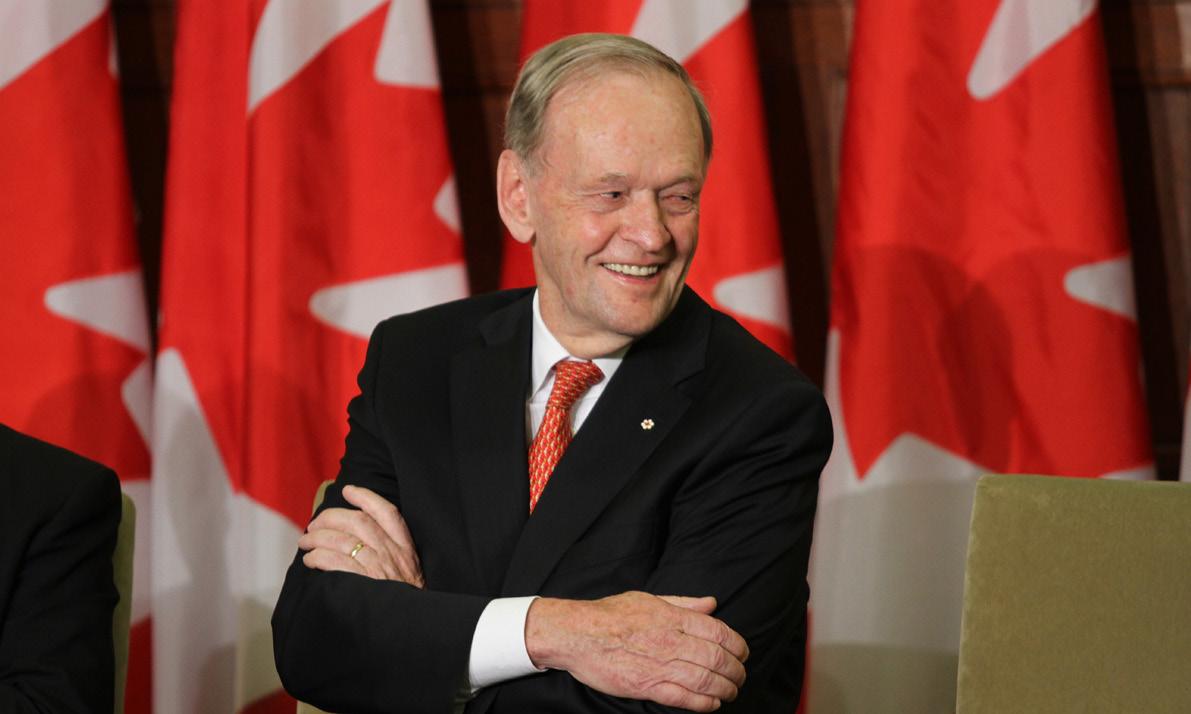
in Chinese-Canadian joint ventures once their tenure as leader is over. Former Liberal PM Jean Chrétien, who broke a longstanding Canadian political tradition in which former leaders demur from voicing political opinions after leaving office, was rebuked for using his pulpit to call for the extradition proceedings against Ms. Meng to be dropped, prompting a MacLean’s editorial to ponder, “Whose side is Jean Chrétien on?”
In 2010, Richard Fadden, then director of CSIS, revealed to CBC News that cabinet ministers in at least two provinces were under suspicion of being controlled or influenced by Beijing—in addition, he called attention to the high degree of industrial espionage being perpetrated against Canadian companies. At the time, the government did not want to call attention to what was happening, likely for fear of upsetting China, and the House of Commons Security Committee rewarded Fadden’s diligence and perspicacity by recommending his ouster.
A third possibility is the tremendous power exerted by the Trudeau family and its bizarre affection
Hostage Diplomacy b 31
Former Canadian Prime Minister Jean Chretien has been called the most pro-China prime minister of the past quarter century.
photo: Michael Ignatieff
for communist regimes. If Canada has a political elite, its apex is the Trudeaus. The scion of the family, Canada’s current Prime Minister Justin Trudeau, has made no secret of his desire to forge closer ties with the PRC and has famously expressed his admiration for Beijing’s “basic dictatorship.” Indeed, recent attempts by his Liberal government to implement federal control over citizens’ online speech, by-passing any House of Commons debate to push the Internet regulation broadcast Bill C-10, smack of following the CCP’s example, and inserting the state into the bedrooms of the nation. (Full disclosure: the author and Trudeau were classmates up at university).
A family tradition
In many ways, Trudeau’s admiration for China appears to be a family tradition. His renowned father Pierre Trudeau, whose four terms as prime minister very much redefined Canada’s values and identity for the postmodern era, was one of the first Western lead-

ers to officially recognize the CCP regime in Beijing, on October 13, 1970. Two years later, Trudeau the elder became the first Canadian prime minister to visit the PRC, giving the CCP regime face even as the people of China were suffering from the violence of the Cultural Revolution. After becoming prime minister in his father’s footsteps, Trudeau the younger wasted little time in attempting to forge closer ties with China, though often in ethically questionable ways. He caused a scandal when he broke Liberal Party guidelines (and his own ethical rules governing preferential access, or the appearance of preferential access, in exchange for political donations) by attending a CAD1,500-a-plate Liberal Party cash-for-access fundraiser at the home of Chinese Business Chamber of Commerce chair Benson Wong, the Globe and Mail reported.
Also in attendance were several Chinese billionaires, political advisers to Zhongnanhai, and a senior apparatchik in China’s state promotional network, as well as one wealthy donor who, at the time, was seeking
32 b STRATEGIC VISION
Pierre Trudeau meets with Mao Zedong in China, in 1973. PM Trudeau pushed to have the PRC admitted to the United Nations.
photo: Canadian Archives
the Canadian government’s approval to open a bank aimed at the Chinese diasporic community. Pointing this out is not to suggest that Trudeau himself accepted cash or favors in exchange for access, or for the enactment of specific preferential policies; rather that Trudeau’s naiveté and adoration for Beijing routinely cause him to be incapable of showing good judgment on issues where China is concerned.
Whatever the reason, the well-considered impression is that Canada’s Liberal Party is hopelessly in thrall to Beijing. Ironically, in spite of this unrequited love (or maybe because of it), Sino-Canadian ties are at their lowest point in decades, with both the Chinese side (the PRC’s consul- general in Brazil called Trudeau a “running dog” who ruined what had been friendly relations) and the Canadian side (MacLean’s described the state of the Canada-China relationship under Trudeau as “smoking rubble”) decrying this falling-out on the Liberal’s watch.
The good news is; it doesn’t have to stay this way. If the Liberal Party—and the Trudeaus in particular—are as close to China as they appear, then they will know something about Chinese culture: they will know that the Chinese respect strength, not weakness. Intentionally browbeating Taiwan—and President Tsai in particular—in the hopes that Xi Jinping will look favorably on them and consent to release his two Canadian political hostages is not the way to earn respect in China’s eyes. Quite the opposite.
The Liberal Party, if it lived up to its values, would be Taiwan’s biggest supporter. Therefore, a better tack would be to embrace Taiwan: take every opportunity to boost Canada-Taiwan ties, and to call for Taiwan’s full membership in various international organizations, such as the World Health Organization, where—if the two countries’ respective COVID-19 response is anything by which to judge—Taipei’s assistance and expertise would be far preferable to Beijing’s obstructionism and political brinksman -
ship. Launch an exploratory committee to examine the feasibility of recognizing the government of the ROC; begin drafting a Canadian equivalent to America’s Taiwan Relations Act, which would allow Ottawa to sell defensive weapons to Taipei;
Invite high-ranking members of the ROC government to speak in Parliament, and send high-ranking members of the Canadian government on visits to Taipei. Do all this, and then see how fast Beijing is willing to come to the table to discuss the release of its Canadian hostages.
Even if the above policy recommendations do not result in the immediate resumption of negotiations on the detainment of Michael Kovrig and Michael Spavor, it would be good for the Liberal Party to earn back a little bit of the integrity it once had, and in doing so, improve Canada’s faltering image in the global community. It would also help to effect a rapprochement between two countries with shared values.
The Taiwan of today is not the Taiwan of 1970: they believe in the values of democracy, human rights, freedom of religion, and of the press, and of individuals to live their lives free of government coercion. Moreover, the Canada of today is not the Canada of 1970: we do not need to cozy up to an authoritarian regime—one that imprisons its ethnic minorities and takes our own citizens hostage—just to differentiate ourselves from America. We can, and should, live up to the Canadian ideal of a values-based foreign policy, just as we can, and should, make good on the Liberal Party’s stated commitment to the belief that the dignity of each individual man and woman is the cardinal principle of democratic society, and the primary purpose of all political organization and activity. n
Hostage Diplomacy b 33
“We can, and should, live up to the Canadianidealofavalues-basedforeignpolicy.”

STRATEGIC VISION for Taiwan Security Taiwan Center for Security Studies National Chengchi University No.64, Wanshou Road Wenshan Dist, Taipei City 11666 Taiwan (ROC) +886-2-8237-7228 https://en.csstw.org/



Visit our website: www.csstw.org/journal/1/1.htm
