STRATEGIC VISION for Taiwan Security


Taiwan and US Indo-Pacific Strategy
Shao-cheng Sun
US and PRC Clash in Asia
Patrick Mendis & Joey Wang
North Korean Missile Launches
Robert McCoy
Asymmetric Defense for Taiwan
Tobias Burgers
Recent Developments in Indo-Pacific
Strategic Vision Editorial Board

Volume 8, Issue 43 w November, 2019 w ISSN 2227-3646
STRATEGIC VISION for Taiwan
Security
Shao-cheng Sun
Robert McCoy
Patrick
Mendis & Joey Wang
Tobias Burgers
Editorial Board
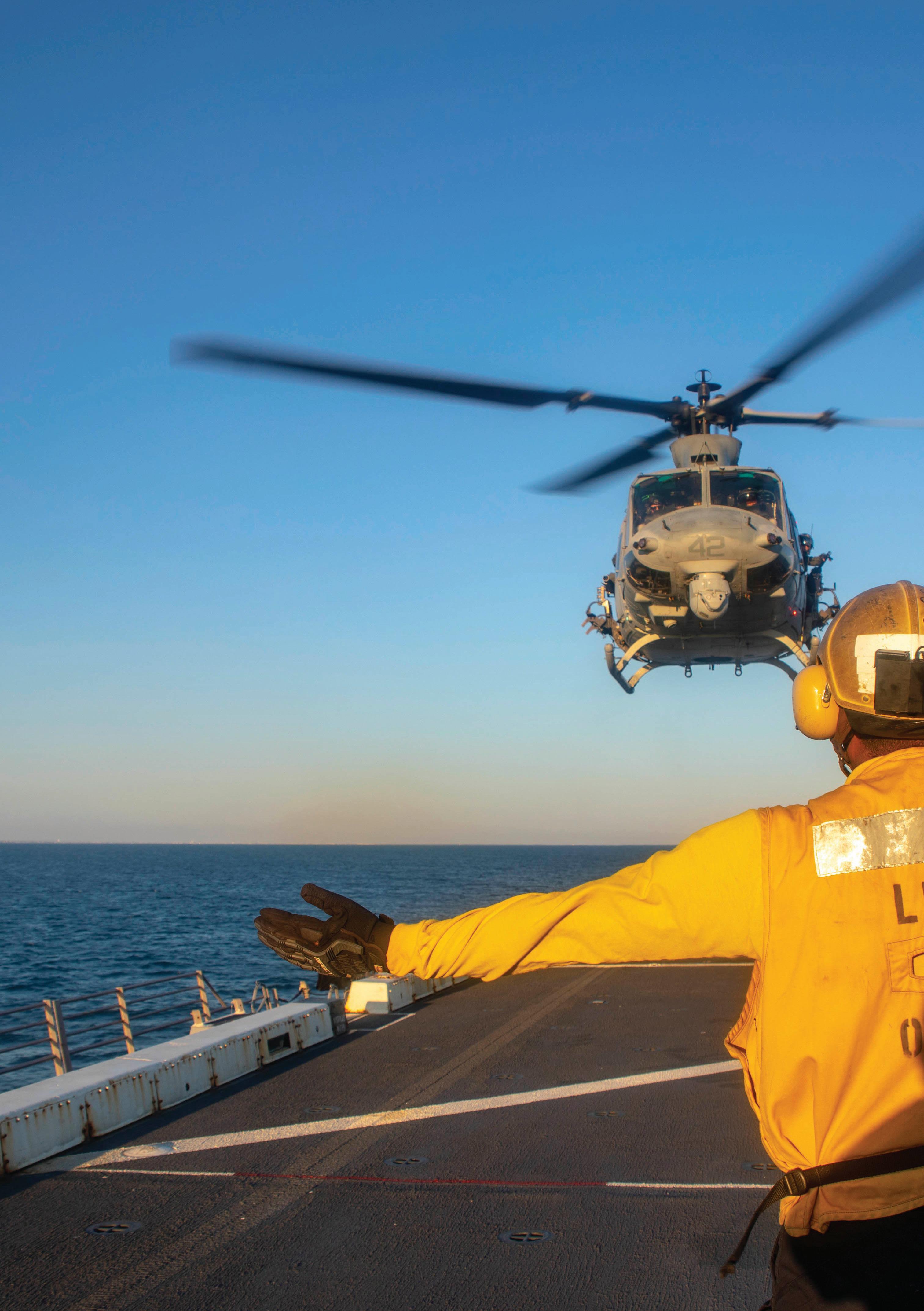
Submissions: Essays submitted for publication are not to exceed 2,000 words in length, and should conform to the following basic format for each 1200-1600 word essay: 1. Synopsis, 100-200 words; 2. Background description, 100-200 words; 3. Analysis, 800-1,000 words; 4. Policy Recommendations, 200-300 words. Book reviews should not exceed 1,200 words in length. Notes should be formatted as endnotes and should be kept to a minimum. Authors are encouraged to submit essays and reviews as attachments to emails; Microsoft Word documents are preferred. For questions of style and usage, writers should consult the Chicago Manual of Style. Authors of unsolicited manuscripts are encouraged to consult with the executive editor at xiongmu@gmail.com before formal submission via email. The views expressed in the articles are the personal views of the authors and do not necessarily represent the views of their affiliate institutions or of Strategic Vision. Manuscripts are subject to copyediting, both mechanical and substantive, as required and according to editorial guidelines. No major alterations may be made by an author once the type has been set. Arrangements for reprints should be made with the editor. Cover photograph of the amphibious transport dock ship USS New York (LPD 21) launching a UH-1Y Huey helicopter is courtesy of Lyle Wilkie.

Volume 8, Issue 43 w November, 2019 Contents Indo-Pacific Strategy opportunities for Taiwan ............................4 Analysis of North Korean missile launches ................................. 10 Taiwan between the US and China .............................................. 15 Assymetric defense for Taiwan ................................................... 20 Recent developments in the Indo-Pacific .................................... 25
Editor
Fu-Kuo Liu
Executive Editor
Aaron Jensen
Associate Editor
Dean Karalekas
Editorial Board
Guang-chang Bian, NDU
Chung-young Chang, Fo-kuan U
Richard Hu, NCCU
Ming Lee, NCCU
Raviprasad Narayanan, JNU
Chris Roberts, U of Canberra
Lipin Tien, NDU
Hon-Min Yau, NDU
Ruei-Lin Yu, NDU
STRATEGIC VISION For Taiwan Security
(ISSN 2227-3646) Volume 8, Number 43, November, 2019, published under the auspices of the Center for Security Studies and National Defense University.
All editorial correspondence should be mailed to the editor at STRATEGIC VISION, Center for Security Studies in Taiwan. No. 64, Wan Shou Road, Taipei City 11666, Taiwan, ROC.
The editors are responsible for the selection and acceptance of articles; responsibility for opinions expressed and accuracy of facts in articles published rests solely with individual authors. The editors are not responsible for unsolicited manuscripts; unaccepted manuscripts will be returned if accompanied by a stamped, self-addressed return envelope.
Photographs used in this publication are used courtesy of the photographers, or through a creative commons licence. All are attributed appropriately.
Any inquiries please contact the Executive Editor directly via email at: dkarale.kas@gmail.com. Or by telephone at: +886 (02) 8237-7228
Online issues and archives can be viewed at our website: www.tcss.org.
© Copyright 2019 by the Center for Security Studies.
Articles in this periodical do not necessarily represent the views of either the TCSS, NDU, or the editors
From The Editor
The editors and staff of Strategic Vision would like to wish our readers well this winter season. The Asia-Pacific continues to undergo important developments. We hope that students and scholars in the academic community have the chance to keep-up with these events. In support of that effort, we offer our latest edition of Strategic Vision.
We open this issue with Dr. Shao-cheng Sun, a visiting professor at the Citadel in the United States, who examines the opportunities for Taiwan under the Indo-Pacific Strategy of the United States.
Next, Robert McCoy, a specialist on the North Korean military, analyzes the motivation behind North Korea’s recent missile tests. Dr. Patrick Mendis, a visiting professor of global affairs at National Chengchi University, and Joey Wang a defense analyst in the United States, gauge the position of Taipei as it finds itself balancing between Beijing and Washington.
Frequent contributor Dr. Tobias Burgers argues that Taiwan should take a more asymmetric approach to defense. Finally, Strategic Vision’s editorial board members offer their insights into recent developments in the Indo-Pacific Region.
We hope you enjoy this issue, and look forward to bringing you the finest analysis and reporting on the issues of importance to security in the Taiwan Strait and the Asia-Pacific region.
Dr. Fu-Kuo Liu Editor Strategic Vision
Strategic Vision vol. 8, no. 43 (November, 2019)
Synchronizing Strategy
Taipei must be proactive in taking advantage of US Indo-Pacific Strategy Shao-cheng Sun
The US department of Defense (DoD) released the “Indo-Pacific Strategy Report” (IPSR) on June 1, 2019. The report outlines four major sections: the US vision and principles for the Indo-Pacific region, US regional strategic challenges, US national interests and defense strategy, and US influence to achieve and sustain its objectives. While the IPSR highlights major points in the development of the Free and Open Indo-Pacific (FOIP) concept, uncertainties remain concerning how well US policies will translate from rhetoric to reality.
The “Indo-Pacific” concept first emerged as a regional strategic framework in US politics in 2010 when then-Secretary of State Hillary Clinton emphasized the importance of the Indo-Pacific basin to global trade. The approach was reinforced in 2016 with the release of Japan’s foreign policy strategy of a “Free and Open Indo-Pacific” to further promote the rule of law, freedom of navigation, and free trade. Now the US strategy combines military and economic aims to contain China’s military expansion. In 2019, the US DoD released IPSR that outlines the follow-

4 b
Dr. Shao-cheng Sun is an assistant professor at The Citadel specializing in China’s security, East Asian affairs, and cross-strait relations. He can be reached for comment at ssun@citadel.edu
photo: ROC Presidential Office President Tsai Ing-wen greets a group of military officers from among Taiwan’s allies at the Presidential Office Building in Taipei.
ing major concepts.
In terms of vision and principles, American leaders recognize that if the United States wants to hold its superpower status they have to continue to lead in Indo-Pacific affairs. In 2017, US President Donald Trump announced the US vision for Indo-Pacific at the APEC Summit. He called for respect for national sovereignty, peaceful resolution of disputes, reciprocal fair trade, and adherence to international rules. Acting Secretary of Defense Pat Shanahan highlights that the Indo-Pacific is the DoD’s priority theater. All nations should enjoy access to international waters and cyber domains. With US military dominance, the DoD has increased its military presence in the region to meet US interests.
Strategic challenges
On the issue of strategic challenges, the Indo-Pacific is confronted with an assertive China that is willing to challenge the status quo. China has militarized the South China Sea in a way that violates a 2015 pledge
by China’s Chairman Xi Jinping to not pursue militarization of the Spratlys. The PLA has increased patrols around and near Taiwan using bomber, fighter, and surveillance aircraft to threaten the democratic island. The traditional US approach was to look for areas to accommodate with Beijing and avoid confrontation. However, in recent years Chinese leaders has focused on building a powerful nation that challenges US leadership. The United States, in turn, has thus taken a more aggressive approach against China. Now, Trump’s security team is more willing to challenge China. The trade war and military confrontation in the South China Sea serve as good examples.
In terms of national interests and defense strategy, the US DoD is working to support enduring national interests, as articulated in the National Security Strategy, which includes: protecting the American people; promoting prosperity through fair economic relationships; preserving peace through strength by rebuilding the military; and advancing US influence by leading in multilateral organizations. The DoD is developing a more innovating Joint Force and is in-

Synchronizing Strategy b 5
photo: Nicholas Filca
US Marines fire an M777 howitzer during Exercise Koolendong, a live-fire bilateral drill to increase interoperability between the two Quad members.
creasing collaboration with allies and partners.
The Trump security apparatus has laid out the following strategies. First, bolster close ties with allies. The United States has strengthened close ties with Japan and South Korea. The United States also engages powers from outside the region, like the European Union. Second, build the free and open Indo-Pacific architecture. The Quad (consisting of Australia, India, Japan, and the United States) provides an important overarching informal network. Third, promote economic freedom. The United States has to encourage economic liberalization across all sectors—goods, services, and investment. Finally, make the US military present. The only step that will impress China is the United States pushing more capability into the theater.
On the issue of regional objectives, those of the Indo-Pacific Strategy translate into the pursuit of preparedness, partnerships, and promoting a networked region. In the area of preparedness, the DoD is undertaking a range of efforts to enhance joint force preparedness. Initiatives include investments in advanced training facilities to present a realistic training environment, investments in air force and naval aviation to achieve an 80 percent fighter
readiness goal, and investments in missile defense systems interoperable with allied systems in Japan and Australia.

Crucial partnerships
The DoD’s preparations focus on realistic training and military investment to confront China’s assertive military buildup. As for the dimension of partnerships, alliances and partnerships are crucial to US strategy. Increasing interoperability involves ensuring US military hardware and software can integrate with allies and partners. Strengthened alliances with Japan, South Korea, Australia, the Philippines, and Thailand; partnerships with Singapore, Taiwan, etc.
With regard to Taiwan, Washington is pursuing a strong partnership with Taipei to ensure that it remains secure, free from coercion, and can engage with Beijing on its own terms. The DoD will continue providing Taiwan with defense articles and services to enable Taipei to maintain a sufficient self-defense capability. The US partnership with regional countries is wide ranging, adopting a more forceful policy to restrict China’s aggressive development.
Third, promoting a networked region. Shared se-
6 b STRATEGIC VISION
photo: China Shock
Maintenance crew members load munitions onto an F-16 at Misawa Air Base, Japan.
curity continues to rest on a growing network of alliances and close partnerships. For example, since its inception in 1995, the Daniel K. Inouye Asia Pacific Center for Security Studies (DKI APCSS) in Hawaii has promoted a networked region based on US interests through its executive education programs, and a network of more than 12,000 alumni.
Destabilizing force
As China’s power grows, it is perceived by many countries in the region as a potentially destabilizing force. Even as China seeks to reassure countries about its peaceful aspirations, mistrust is growing. As a result of their perceptions of Chinese ambitions, regional powers are enhancing their security ties with the United States. Chinese scholars believe that the Trump administration is attempting to hedge against China’s foreign and security policy behavior. Chinese leaders think it is imperative for China to counter what they see as US bullying, which they perceive as evident in the new strategy.

China will likely intensify its pressure campaign against Taiwan. Whatever the triggering event, China could choose a variety of responses. On the diplomatic front, China could decrease Taiwan’s diplomatic space by targeting Taiwan’s remaining diplomatic allies. On the economic front, Beijing could further halt Chinese tourists from visiting Taiwan. On the military front, China could display military power in an attempt to intimidate Taiwan by holding major military exercises. On the societal front, China could increase its use of media channels or social media platforms to send coercive rhetoric and influence the island’s elections in favor of pro-China candidates.
As the United States and China remain deadlocked in a deepening dispute over trade, Taiwan’s strategic value has increased. The Trump administration’s move to include Taiwan on a list of countries appears aimed at confronting China. As a result, policymakers in Taipei should undertake a number of initiatives to ensure that Taiwan’s national interests are furthered.
First, Taipei should strengthen relations with Washington. Since the Pentagon is seeking to in-
Synchronizing Strategy b 7
photo: White House
US President Donald Trump speaks to his Chinese counterpart Xi Jinping during the 2017 APEC Summit in Vietnam.
8 b STRATEGIC VISION
tegrate with allies and partners, the ROC security and military apparatus should actively engage with their US counterparts with incentives by establishing the mechanism of intelligence sharing and security cooperation. The ROC government could provide information about China’s intentions and activities in the East China Sea and the South China Sea, as well as on China’s ongoing cyber-attacks. Taipei could also request that Washington support Taiwan’s deterrence posture. This support could include strengthening reserve forces and developing innovative defense strategies that could help Taiwan mitigate its vulnerabilities and to ensure regional peace and stability.
Second, Taipei would be well advised to expand its military education exchange: As China’s economic and military rapid grow, there are an increasing number of American cadets, military personnel, and security-related officials interested in studying Chinese politics, security, technology, culture, and language. What better place to find this expertise

than in Taiwan, especially since Taiwan and China share a similar culture and speak the same language, The ROC military academy and National Defense University could provide allied students with comprehensive military and security-related courses (from one to four years). They could learn more about China’s ideology, security, and military in-depth from Asian and Taiwanese perspectives. Since these courses are aimed at the long-term goal, it could also nurture good relations between future leaders of both countries.
International support
Third, Taiwan would benefit from bolstering its international support. Just as the United States depends on allies and partners, Taiwan also needs friends from the international community. Taiwan should vigorously seek regional security dialogues with the major powers in Asia, such as Japan, South Korea, Australia, and India. These partnerships could be an
A US Marine with Marine Rotational Force – Darwin (MRF-D), fires his weapon at Kangaroo Flats Training Area, Northern Territory, Australia, July 25, 2019.
photo: Jordan Gilbert
important supporter for Taiwan in case of military conflict in the Taiwan Strait.
Meanwhile, Taiwan could further improve its security relations with the Philippines, Malaysia, Vietnam, Thailand, and Singapore in dealing with Chinese military threat, disease epidemics, cyber security, and terrorism. The United States could also facilitate Taiwan’s efforts to deepen strategic dialogues and exchanges with regional countries to garner more international support.

Fourth, Taiwan should establish an Asia-Pacific security center like the DKI APCSS. This US security center has built a network among national security establishments throughout the Asia-Pacific. The beneficial result is fostering relationships among future leaders and decision-makers. Since Taiwan is situated in an important strategic location in the Indo-Pacific, Taiwan can establish a similar function center and invite fellows from the regional countries to build partner capacity and strengthen security networks.
Such a center could provide a platform where military personnel, police officers, academic scholars,
and diplomats can exchange ideas and brainstorm solutions to the urgent crises in the region. Under the leadership of the Ministry of National Defense, this security center can merge faculty and resources from National Defense University, the Institute for National Defense and Security, security think tanks, and civilian universities. This security center would be aimed at equipping security-related fellows with knowledge of current and future security issues in the Asia-Pacific region and develop their close working ties with their counterparts in Taiwan.
Since President Trump took office, the United States and Taiwan security relations have become more robust. There are things Taiwan can do to further enhance bilateral security relations. For one, Taipei can strengthen relations with Washington by establishing a mechanism for intelligence sharing, expanding military education exchange by providing security-related courses, bolster Taiwan’s international support by deepening strategic dialogues within regional countries, and establish a security center by merging and internationalizing its domestic academic resources. n
Synchronizing Strategy b 9
US Marines arrive at RAAF Base Darwin, Australia. The increase in personnel is evidence of the US commitment to the Australia-US alliance.
photo: Jordan Gilbert
Strategic Vision vol. 8, no. 43 (November, 2019)
Dangerous Dance
Pyongyang’s recent missile launches are aimed at destroying sanctions
Robert McCoy
At the time of writing, North Korea has engaged in at least eight sets of launches since late July that are thought to be of the Songun Iskander short-range ballistic missile (SRBM), the 300 mm KN-09 guided rocket, a new super-large (perhaps 600 mm) rocket, and a version of the US Army’s Tactical Missile System.
Despite US President Donald Trump’s professed lack of concern, the entirety of South Korea—an American ally that is host to 28,500 US troops and 7,700 American dependents—is within the 450-kilometer (275-mile) range of the Iskander missiles. Moreover, even though the KN-09 guid-
ed rockets cannot carry a nuclear payload, they can reach the northern areas of South Korea— notably the densely-populated greater Seoul metropolitan area—with up to a 190-kilogram (410-pound) payload.
There has been conjecture as to why the North is only now testing these battlefield weapons. Assessments offered include the belief that the lull in denuclearization talks with the United States is the perfect time for testing of new weapons, and the contention that North Korean Chairman Kim Jong Un is trying to bully South Korean President Moon Jae-in to break ties with Washington and engage in more inter-Ko-

10 b
Robert McCoy is a retired US Air Force Korean linguist and analyst who has been stationed in Asia for over 14 years.
US President Donald Trump and North Korean leader Kim Jong Un talk at the Capella Hotel during the 2018 Singapore Summit.
photo: Dan Scavino
rean projects. Some analysts reckon that Kim needs to address growing discontent among North Korean citizens, which he does by making a diversion for his domestic audience, or that he is expressing anger at the decision by Seoul and Washington to go ahead with a joint military exercise.
Untested weapons
No doubt that Pyongyang benefits from further testing of these newer weapons. The North has introduced a number of new weapons recently and none of them have been tested to the degree that the United States tests and verifies the operational readiness of its own weapons. The lull in denuclearization talks after the tense times of 2017 is indeed an opportunity to assess weapons such as the Iskander SRBM and the KN-09 300 mm guided rocket. Yet this is likely only an ancillary benefit of the launches.
Moreover, there can be no doubt that Kim is under pressure—as yet still manageable—to grow the
economy and to maintain the loyalty of the elites and senior military officers. With sanctions making the cash-poor country even poorer, Kim must take some steps to ensure the support of his backers. Even so, painting a picture that the North is so threatened that it must rattle a saber or two to deflect attention from domestic issues is not likely to be the prime motivation for the launches.
In all probability, Kim is displeased that the South Korean-United States joint exercise has preceded
despite the vociferous protestations of Pyongyang. Those field drills have been conducted in the past and are perceived—with some justification—as a dry run for an invasion into North Korea. In light of the overwhelming American military machine,

Dangerous Dance b 11
“Kim wants Moon to uphold his promises of economic cooperation withtheNorthdespiteinternational sanctionsstandingintheway.”
photo: Armando Schwier-Morales
The F-16 Fighting Falcon is the compact, multi-role fighter aircraft that enables the base in Korea to accomplish its mission of “Taking the fight North.”
VISION
Pyongyang is understandably concerned. However, such joint activity has been reduced in scope lately, and the threat is likely to be seen as reduced as well. Furthermore, it is undeniable that Kim wants Moon to uphold his promises of economic cooperation with the North despite international sanctions standing in the way. To do that, however, he needs those UNimposed and other sanctions to be rescinded. For that to occur, he must first convince the United States to yield on sanctions. The ways and means for Kim to get Trump to relent are limited.

Multivariate explanation
While none of those scenarios is wrong, neither does any one of them on its own offer a complete grasp of the situation. According to psychology, much human behavior is often overdetermined. That is to say, while any single event or stimulus may or may not be sufficient to provoke an observed response, several events occurring at the same time or stimuli
acting in concert are frequently the cause of the noted behavior. The main stimulus behind the North’s recent spate of rocket and missile launches is most likely its need for sanctions relief. The North did
not have any previous need to test its new weapons, but it did so at this time to send a message to both Seoul and Washington.
Furthermore, as seen from reports on the failed Pyongyang-Washington summit in Singapore last February, Kim desperately needs sanctions relief for two reasons. First, Kim has promised economic improvement for the citizens of the North, and he is
12
b STRATEGIC
North Korea’s 2017 missile test sent shockwaves through Japan, and spurred national warnings on Japanese television.
photo: Stuart Rankin
“Analysis of North Korea’s behavior in dealing with adversaries that appear to not be paying attention to Pyongyang’s wishes reveals that Pyongyang engages in a geopolitical dance that was described some yearsago.”
thereby obliged to deliver. People are getting impatient. Second, the unilaterally-imposed sanctions by the United Nations and others are holding back progress on that. Kim’s negotiators have made a great effort to persuade Trump to relent, but no relief appears forthcoming. In effect, by Washington refusing to allow sanctions relief before complete denuclearization, North Korea is being quite effectively thwarted. With the situation at a stalemate, Kim therefore has to force the issue.
Geopolitical dance
Analysis of North Korea’s behavior in dealing with adversaries that appear to not be paying attention to Pyongyang’s wishes reveals that Pyongyang engages in a geopolitical dance that was described some years ago as being comprised of the following steps. In step 1, North Korea wants or needs something (this time it is sanctions relief). In step 2, North Korea creates tension in order to get attention, often in the form of missile and rocket launches now. In step 3, other parties initially ignore this bluster,

which leads to step 4, in which North Korea ratchets up the tension through extreme rhetoric, or more violent acts. In step 5, the other powers finally pay attention and agree to discussions with North Korea, and in return North Korea agrees to stop its bad
behavior in exchange for what it wants, in step 6. In step 7, once it gets what it wants, the North soon finds—or invents—a way to justify not honoring its commitment.
Given what is at stake—continuing discussions regarding denuclearization or developing some form of détente versus returning to the high tensions of 2017—the response by Washington and Seoul at this inflection point are critical. Pyongyang does indeed need sanctions relief, both to grow the economy and to continue buying the loyalty of the North’s elites and senior military. At the same time, the United States and the nations of Northeast Asia are strongly moti-
Dangerous Dance b 13
US B-1 Bombers and F-35s fly in formation with Japanese Air Self Defense force F-2 fighters during a bilateral mission.
photo: Steven Schneider
“Kim is poorly understood by his adversaries, however, and Trump remainsadiplomaticwildcard.”
vated to find a solution to the North Korean nuclear and missile problem. Conditions are thus favorable for a meeting of the minds.
Kim is poorly understood by his adversaries, however, and Trump remains a diplomatic wild card. Even so, it is unlikely that Kim Jong Un would return to acts of small scale, localized violent provocations against the South, for that would certainly end all chances of sanctions relief. Yet such provocations cannot be ruled out if internal conditions in the North deteriorate to the point that dissatisfaction and unrest reaches a critical level. Kim would then desperately need the diversion that increased tensions with the South would provide.
Seeking détente
At the same time, Trump cannot do much about current missiles and rocket launches due to his desire to be the American president that finally forges an acceptable deal with the North. Given
Pyongyang’s sensitivity to criticism, making anything of the recent missile and rocket launches could very well oblige Pyongyang to walk away from any further negotiations. Finally, though, long-time Korea watchers are slowly coming to the realization that some form of détente—perhaps partial denuclearization in stages linked with phased sanctions relief—is likely the only possible way forward.
Even so, that path is fraught with danger. In its dealings with the outside world, Pyongyang always deflects, dissembles, and obfuscates as it engages in false dealings and outright prevarications. At this time, regrettably, the United States and nations in the region have no viable alternatives: As long as denuclearization discussions are stalled, we ought to expect additional provocations in the form of weapons testing—or something similar but not overtly hostile—in the near term. The issue becomes whether decisionmakers read the writing on the wall correctly and act accordingly. n

14 b STRATEGIC VISION
photo: Ivan Skarum
Young children in Pyongyang get dressed up to celebrate the birthday of the country’s founder and Eternal President Kim Il Sung, on April 15, 2014.
Clashing Visions
Beijing’s Belt and Road Initiative and America’s Quad Meet in Taipei Patrick Mendis & Joey Wang
With the United States Congress now overwhelmingly supporting the White House’s new National Security Strategy, it appears as though the executive branch may have sidelined the US’s longstanding Taiwan policy of strategic ambiguity. This is even more evident now, as the government of Taiwan—like that of the United States—openly encourages the rights of Hong Kong protesters to preserve their democracy in accordance with the stipulations of the Sino-British Joint Declaration.

It is against this backdrop that the administration of President Donald Trump recently conceded to selling
Taiwan US$8 billion worth of F-16 fighter jets. Last year, the US government also permitted Taiwan to import American submarine technologies to help develop the island’s own submarine industry, initially building a US$3.3 billion indigenous submarine in the southern port city of Kaohsiung.
For China’s Chairman Xi Jinping, unifying Taiwan would be an important achievement. However, Beijing’s broader strategy of supplanting American and Western influence in the region cannot be achieved without China’s supporting objectives embedded in the Belt and Road Initiative (BRI), the Asian Infrastructure Investment Bank, Beijing’s con-
Patrick Mendis is an a visiting professor of global affairs at National Chengchi University.
b 15 Strategic Vision vol. 8, no. 43 (November, 2019)
Joey Wang is a defense analyst in the United States.
President Tsai meets with members of a delegation from the National Committee on American Foreign Policy.
photo: ROC Presidential Office
trol over the South and East China seas, and ensuring energy security for its citizens. Viewed in its entirety, these are the ends, ways, and means of China’s grand strategy that focuses directly on Taiwan.
Each of these objectives must be understood within the geopolitics of the regional balance of power through the Washington-led “democratic alliance” of the Quad with Australia, India, and Japan—as well as the increasingly complex US-Taiwan relationship and Beijing’s regional diplomacy that is being exercised throughout Africa, Asia, the Caribbean basin, and Latin America.
Since the end of World War II, the rest of the world has moved on, but for the leaders of the Chinese Communist Party (CCP), the Chinese Civil War and the hostilities that followed have never formally ended. on January 1, 2019, with an iron hand in a velvet glove, Xi Jinping conveyed in a 40th anniversary message to his “compatriots in Taiwan” that “China must be, will be reunified.” Xi offered a five-point proposal for a “peaceful unification,” but also made no promise to renounce the use of force. Invoking Deng’s principles of “one country, two systems” as the
best approach to realizing national reunification, Xi announced that “it is a historical conclusion drawn over the 70 years of the development of cross-strait relations, and a must for the great rejuvenation of the Chinese nation in the new era.”
As China approaches the centenary of the founding of the People’s Republic of China (PRC) in 1949, there is great concern in Taiwan that Xi could become impatient and miscalculate—embroiling the US and destabilizing the entire region in the process. For Taiwan, the hedge against Beijing’s aggressive campaign has no options but the United States. The fate of Taiwan—as history dictates—is inextricably grounded in entanglement with China’s complex relations with America and the democratic alliance of the Quad.

Beijing leaders believe that their strategic objective begins and ends with the survival of the Communist Party and the ardent defense of its very legitimacy to rule. Because the party’s strategic objective is predicated on this legitimacy, the CCP must provide economic and social stability for its citizens. This cannot be achieved without an uninterrupted supply of energy resources to deliver not only economic growth but also to sustain military operations if and when needed. This rationale is key to the preservation of the CCP’s power. It is no surprise that, given China’s current economic challenges, Beijing has called for the “six stabilities” of the economy in 2018—including stability in employment, finance, trade, and investment—for the survival of the CCP.
China’s primary objectives of pressing its sovereignty claims and defending its territorial integrity begin with Taiwan as part
16 b STRATEGIC VISION
The Chinese Civil War ended in a stalemate after the Nationalists retreated to Taiwan.
of its national identity. Even in 1951, the US Central Intelligence Agency (CIA) recognized Taiwan, in a now declassified report, as “the last stronghold of the Nationalist regime” and that the Chinese were resolute in “capturing Taiwan in order to complete the conquest of Chinese territory.”
For China, Taiwan is not merely a renegade province: It is a focal point in the First Island Chain that would provide China with control over what US General Douglas MacArthur referred to as an “unsinkable aircraft carrier,” able to project power out into the Western Pacific and to the Second Island Chain. Andrew Erickson of the Naval War College and Joel Wuthnow of the National Defense University in the US have quoted Chinese military sources, who conclude that, without securing Taiwan, “a large area of water territory and rich reserves of ocean resources will fall into the hands of others.” They caution that “China will forever be locked to the west side of the first chain of islands in the West Pacific.”
These two scholars further cite another Chinese military publication, which concluded that “the biggest obstacle to the expansion of our national interests comes from the First and Second Island Chains set up by the United States.” Thus, the Chinese es-
tablishment of its Air Defense Identification Zone in the East China Sea and the island reclamation followed by a military buildup in the Spratly and Paracel Islands in the South China Sea—as well as the use of its maritime militia—are not only meant to claim de facto rights to the resources within the ninedash-line, they are tactical steps toward employing coercive diplomacy with its neighbors and establishing operational control over the region in its move toward annexing Taiwan. China is also working on the diplomatic front to peel away those few remaining countries that currently recognize the Republic of China (ROC) on Taiwan. Today only the Holy See and sixteen member-states of the United Nations can be counted among their dwindling number.

Unfinished business
A separate but related issue is that China likely believes it still has some unfinished business with Japan—both with respect to the Senkaku (Diaoyu in Chinese) islands in the East China Sea—as well as in the broader historical context of national humiliation. Under the chairmanship of Hu Jintao during the years 2003-2007, on average about 37 Japanese fighter
Clashing Visions b 17
A depiction of countries which have signed cooperation documents for China’s Belt and Road Initiative (BRI).
jets scrambled against Chinese intrusions per year, according to a foreign policy briefing by Masataka Oguro at the Brookings Institution in Washington, DC. However, under Chairman Xi, the number of fighter jets scrambled have averaged 560 per year during 2013–2017, a 15-fold increase.
Historical grudge
According to Jane’s Defense Weekly in April 2019, the Japan Air Self-Defense Force scrambled 999 times in FY2018. If there are any doubts about China’s lingering historical grudge, they can be put to rest with the news that China’s first indigenously built aircraft carrier has been christened the CNS Shandong, referencing a grievance against Japan and the Western colonial powers dating back a century.
The key enabler that has allowed Beijing to protect its sovereignty claims and project its power has been China’s explosive economic growth. As this growth slows, however, major projects such as the BRI will be critical to any future projection of power. On paper, the purpose of BRI is to “promote regional
economic cooperation, strengthen exchanges and mutual learning between different civilizations, and promote world peace and development.” Behind this heady mixture of material, economic, and cultural aspirations, however, there are other hidden motivations not likely to be mentioned in official Chinese literature.

First, the CCP wants to decrease Chinese dependence on its domestic infrastructure investment and begin moving investments overseas to address the capacity overhang within China. The key instrument of this investment transfer is the Chinese system of state capitalism, which has been further solidified by Xi. Among the BRI infrastructure development projects, Chinese companies accounted for 89 percent of contractors, according to a five-year analysis of BRI projects by the Center for Strategic and International Studies in Washington, DC.
Second, China wants to internationalize the use of its currency along the BRI route and with its new partners in Africa, Asia, Latin America, and the Caribbean basin. Making the renminbi (RMB) a global currency in 2015 had been one of the high-
18 b STRATEGIC
VISION
Shanghai’s opulence is a testament to China’s impressive economic growth over the past few decades.
photo: Aapo Haapanen
est economic priorities of Beijing’s grand plan. Use of the RMB would also help authoritarian regimes like Iran, North Korea, and Sudan to undermine the American-imposed financial sanctions on states that engage in child labor, human trafficking, and violations of such norms as human rights. It would also establish Eurasia as the largest economic market in the world, and the changing currency dynamics could initiate a global shift away from the dollar-based financial system.
Perceived vulnerability
Third, China seeks to secure its energy resources through new pipelines in Central Asia, Russia, and South and Southeast Asia’s deep-water ports. Beijing’s leadership for some years has been concerned about the so-called Malacca Dilemma,” as Hu Jintao declared in 2003 that “certain major powers” may control the Strait of Malacca, and China needed to adopt “new strategies to mitigate the perceived vulnerability.” In 2017, China surpassed the United States as the world’s largest crude oil importer.

The CCP’s strategic objectives have remained much the same as they were in 1965, when the CIA concluded, inter alia, that the Party’s goal
for the foreseeable future would be to “eject the West, especially the US, from Asia and to diminish US and Western influence throughout the world.”
The CIA further reported that Beijing also aimed to “increase the influence of Communist China in Asia” as well as to “increase the influence of Communist China throughout the underdeveloped areas of the world.”
Once a popular catchphrase used by the Chinese elite, the term “Peaceful Rise” has long fallen into disuse, as it is clear that the sentiment rings somewhat hollow. Yet, American policies must not embark on a fool’s errand to contain China, which would be an historic blunder. Instead, the United States must continue to engage friends and allies to maintain a consistent and persistent presence—irrespective of the administration in place—as an expression of its resolve, unity, and commitment to security, peace, and stability in the Indo-Pacific region.
In the broader scheme of things, China must measure its ideological priorities against its costs. If and when China and Taiwan unite, it must be based upon mutual amity and the belief that it is in the interest of all the people of both sides to do so—not through coercion and aggression. Beijing cannot bend history to its will. n
Clashing Visions b 19
photo: Japan Maritime Self Defense Force
US Navy, Japan Maritime Self-Defense Force (JMSDF) and Royal Australian Navy ships sail in formation.
Embracing Change
Taiwan must adopt a more asymmetric defensive posture to counter China
Tobias Burgers
In a recent report for the Center for New American Security (CNAS), researchers Robert Work and Greg Grant (2019) argue that China has excelled at beating America at their own game: Using technological advancements to counter an existing military superiority. In their review, they outline how China has over the last two decades, cleverly used new technological innovations to contest American military superiority in East Asia. From the famed DF-21 D, better known as the carrier killer, to innovations in cyber and other information technologies, China has been able to develop a new array of weapon systems that have gradually enabled it to challenge US dominance in the Pacific region.
Whereas during the 1996 Taiwan Strait crisis, the United States illustrated its dominance and superiority by sailing two carrier strike groups unopposed in the region of the Taiwan Strait, now 23 years later, such an outcome would be unlikely. China’s increasing asymmetric military power has enabled it to challenge and contest US dominance within the First Island Chain, and to some extent, through the development of long-range strike projection capabilities, even toward the Second Island Chain, through the deployment of its anti-access, area-denial (A2/ AD) strategy. China is now able to effectively counter American naval and aerial dominance in what Beijing calls the “Three Seas:” the South China Sea, the East China Sea, and the Yellow Sea.
China has arguably challenged US forces through
the use of an A2/AD strategy which focuses heavily on the use of long-range weaponry and integrated intelligence systems. US military bases in Guam, as well as aircraft carriers in the Western Pacific, could become subject to long-range bomber attacks and missiles strikes. While the United States has far from lost its dominance and can still be regarded as the primary dominant military actor in the region, the CNAS report makes clear how technology—the driving factor behind US post-Cold War military dominance—can be applied to create novel asymmetric power capabilities which seriously threaten the status quo.
Indigenous offset strategy
While the report is aimed at an American audience, there is a clear lesson to be learned for policymakers and planners in Taiwan. Somewhat ironically, it could learn from China’s approach of the last decades and apply this to beat China at its own game. Taiwan should understand and copy China’s tricks, and apply these in its cross-strait military dynamics. It should seek to develop an indigenous offset strategy that would enable it to counter Chinese military superiority. This could be valuable as Taiwan has by no means the economic and military means and capabilities to contest China’s growing military resources, power, and its ability to project power, just like China initially didn’t have the economic or military means
20 b
Tobias Burgers is an assistant professor at the Cyber Civilization Research Center at Keio University. He can be reached for comment at burgers@zedat.fu-berlin.de
Strategic Vision vol. 8, no. 43 (November, 2019)
to challenge American dominance.
One might expect that China, having executed such a successful offset counter-balancing strategy, would learn from its own lessons. However, in this case, the opposite seems to be the case. Whereas in its relationship with the United States, China has been developing asymmetric capabilities, it has, in its military relations with its regional neighbors, pursued a much more conventional approach, seeking to improve its military competitiveness via the development of classical instruments of military power such as the development of a series of aircraft carriers, an amphibious corps, and numerous vessels for the People’s Liberation Army Navy (PLAN), as well as other power-projection tools.
The argument for developing such classical instruments of military power projection, as opposed to asymmetric tools, is logical: Not faced with adversaries who have a robust military dominance, it can afford to develop classical non-symmetric power projection capabilities.
Furthermore, whereas Beijing seeks to contest US operations and dominance, in the case of its military
relations with Taiwan, China needs a significantly different approach. Rather than pursuing a denial approach and anti-access strategy, China, in this case, needs offensive abilities that cannot only contest (in

this case, Taiwanese dominance) but foremost to control and to dominate. To achieve such, what is needed are more conventional military capabilities, such as naval and air assets that can patrol, as well as logistical forces that can transport land-based forces. Long-range bombers and missiles are ideal systems to contest territories, but they do not lend themselves to the goal of controlling and dominating.
An impressive armada
Moreover, China’s military buildup in the Taiwan Strait is of a much more general nature. It has sought
Embracing Change b 21
photo: ROC Presidential Office
ROC President Tsai Ing-wen thanks US Admiral Samuel Locklear for his efforts in enhancing Taiwan-US military exchanges.
“China’s military buildup in the TaiwanStraitisofamuchmoregeneralnature.Ithassoughttodevelop animpressivearmada.“
22 b STRATEGIC VISION
to develop an impressive armada. In the last five years, it has built more vessels than the entire British fleet. Between 2015 and 2017 alone, it has, according to an International Institute for Strategic Studies’ report, developed nearly 400,000 tons of vessels, ranging from submarines to destroyers, support ships, and amphibious vessels. A fleet able to easily counter Taiwan’s naval capabilities, but possibly soon as able to transport China’s new 30,000 strong amphibious marine force. In the aerial domain, it has embraced an impressive buildup. As the US Department of Defense noted in its annual report on China’s military strength, it now has more 4th generation fighter jets than the total inventory of all airplanes of the ROC air force.
Prestige capabilities
Faced with this threat, and the growing inequality in hardware and systems, Taiwan has successfully accelerated its defense procurement and development.

Nevertheless, it still seems too focused on acquiring conventional US military resources. From the F-16V to its desire to build submarines with Washington’s help, as well as its US$2 billion procurement of Abrams tanks, the majority of these resources are conventional, high-end military resources that require significant economic and industrial resources: Resources Taiwan doesn’t have. Analysts Colin Carroll and Rebecca Friedman Lissner have aptly called these “prestige capabilities ... with no tangible benefit in deterrence or war.”
Moreover, with Taiwan’s government cutting military pensions, and unable to offer a competitive salary to attract volunteer soldiers, it raises the question of why Taiwan’s defense and political establishment seeks to purchase expensive military hardware that surely will look nice during military parades, but in the event of an invasion would be nothing more than overpriced sitting ducks. In this, as Tanner Greer notes in a recent article for Foreign Affairs, there seems to be a potent political domestic and foreign
Surface-to-air missiles, such as this SA-13 in the Yukon Training Area in Alaska, contribute greatly to air defense.
photo: Isaac Johnson
element: The matter of prestige and the idea that Taiwan can still lead on military matters, as well as the idea that military sales from the United States strengthen Taipei’s relationship with Washington. A simple look at the dynamics of military hardware, and as well various studies by US defense think tanks, however, illustrate that with the current military framework, Taiwan would not be able to withstand an invasion, even in the short term. A hypothetical discussion about if and when US forces could come to the aid of Taiwan in the case of invasion only makes sense if Taiwan demonstrates the capabilities to hold out against an invasion in the first case. With the current defense framework and resources, this seems highly unlikely, essentially making such a debate about Washington’s role moot.
Asymmetric approach
If Taiwan is serious about defense, survival, and the ability to withstand an invasion long enough for outside help to arrive, it should give up pursuing costly military systems that have moderate defensive abili-

ties. Instead, it should focus on an asymmetric approach. As the Center for Strategic and Budgetary Assessments noted in several studies, modern technology favors the defender. Indeed, whereas China would need to invest in highend, costly, extensive, and highly vulnerable military invasion resources, the ROC armed forces have a much simpler goal: ensuring that any of these sys-
tems that carry the invasion force would be neutralized or paralyzed before such systems would be able to deploy their invasion force.
Instead of using existing or future high-end systems, as discussed above, it should seek to accomplish this goal with cheap, agile, and smaller systems. To achieve such, Taiwan should foremost seek to further strengthen its missile program. The development of long-range missiles would offer deterrence against
Embracing Change b 23
“with the current military framework, Taiwan would not be able to withstand an invasion, even in the short term.“
Helicopters crowd the deck of the amphibious assault ship USS Wasp as it enters Sydney Harbor for a port visit.
photo: Benjamin F. Davella III
VISION
possible Chinese strikes and the ability to inflict damage on Chinese civilian targets, as well as supporting military structures needed for a possible invasion, such as naval bases.
It is the short-range missiles that have the most utility, however. Land, airborne, and naval-based missiles such as the recent Yun-Feng land attack missile and Wan Chien air-to-ground missile (if deployed on more advanced systems), combined with the existing ballistic missile arsenal (e.g., Tien Chi and Hsiung Feng II, IIE and III short-range-missiles) would offer the ROC armed forces a sizeable deterrence capability.
Beyond these, it should also develop smaller kamikaze-style drones. Based on existing systems, these small drones would prove challenging to counter, mainly if operated with swarming tactics. It should also seek the development of unmanned systems in the maritime domain through the development of small, agile kamikaze-style UUVs and USVs.

Such systems could produce a sizeable deterrence against Chinese naval forces. Such resources will not be a game-changer in the military balance across the Taiwan strait during peacetime (for this Taiwan would need more large, manned vessels), but it would provide the ROC navy and air force with lethal unmanned capabilities that could threaten a PLA invasion force.
In sum, the disparity between Taiwan and China has only increased in recent years and will only increase further. Ironically, it seems that China’s effort to counter American military dominance in the region offers a possible insight into how Taiwan might also better defend itself against the aggressor. Taipei should take a page from the playbook of the Sino-American power competition and seek to apply it across the Taiwan Strait. Technology by itself cannot win conflicts, but it can offset the increasing advantages that China now holds in the Taiwan Strait. n
24
b STRATEGIC
The MQ-9 Reaper is an armed, remotely piloted aircraft that is employed primarily against dynamic execution targets and for intelligence collection.
photo: Emily Kenney
Pacific Paradigms
Examining Taiwan’s role in Washington’s priorities for Indo-Pacific region
J. Richard Hu, Guang-chang Pien, & Aaron Jensen
For the past year, there has been a noticeable shift in the tenor of US-Taiwan ties, not least because of an awakening realization in Washington that China is not behaving as a strategic partner should, and rather appears to be positioning itself as a competitor and a potential claimant for the title of regional hegemon. Our editorial board weighs in with their thoughts on the new US paradigm on Asia.
J. Richard Hu
The United States Department of Defense
Indo-Pacific Strategy Report (IPSR) was officially released on June 1, 2019, coinciding with the annual Shangri-La Dialogue in Singapore. The report implies that China is harming regional and international systems and order. Not surprisingly, People’s Republic of China (PRC) state councilor and defense minister, General Wei Fenghe, who also attended the dialogue, launched a vocal counter-attack while speaking on the topic of “China and International Security Cooperation” the following day.
From the viewpoint of China’s People’s Liberation Army (PLA), the IPSR is the military edition of the US Indo-Pacific strategy. With the removal of its veil, according to a commentary in the Global Times—a newspaper published under the auspices of the Chinese Communist Party—the IPSR documented a comprehensive landscape of America’s thoughts and ambitions in the Indo-Pacific region based on its tenacious “China Threat Theory.” The PLA’s key views on the IPSR can be further elaborated as follows.
First, as a measure of making excuses and taking opportunities, the United States is aiming at reinforcing its military strategic deployment in the IndoPacific region.

b 25 Strategic Vision vol. 8, no. 43 (November, 2019)
photo: US Department of State
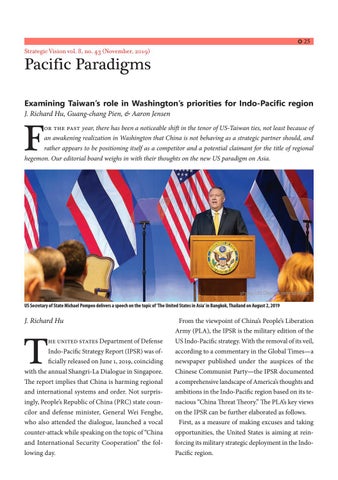
US Secretary of State Michael Pompeo delivers a speech on the topic of ‘The United States in Asia’ in Bangkok, Thailand on August 2, 2019
In the post-Cold War era, the Indo-Pacific region has been the most secure region, with the world’s fastest economic growth. However, the IPSR depicts this region as an area permeated with transnational security threats such as terrorism, drug trafficking, and illicit weapons sales. The United States has deployed more than 2,000 aircraft, 200 warships and submarines, and 370,000 military personnel in this region, and it will further strengthen its military preparations such as by promoting joint and multi-national operations capabilities, developing and deploying new weapons systems, increasing space war capabilities, and boosting strategic coercive measures in regional countries. The primary aim is to encircle and contain China, according to the commentary.
Second, the United States is seeking to construct a new America-centric Indo-Pacific security order. Existing security regimes in this region are not in America’s interests. The IPSR stresses building an America-centered, tri-lateral military cooperative regimes with Japan and South Korea, as well as
Australia and India. This NATO-style alliance, which emphasizes member countries’ equal status, will not be employed in this region by the United States.
Third, with a selfish mindset, the United States Department of Defense (DoD) Indo-Pacific strategy is inflicting a prevailing skepticism among nations in the region. The opaqueness of America’s strategic intentions has increased doubts among regional countries such as Australia. Some countries in the Indo-Pacific region have said that they will not host US intermediate range ballistic missiles on their soil. Constructing a new security order is going to create tremendous and uncertain risks. Allocating and sharing military expenditures might be a key barrier for the realization of the Indo-Pacific strategy.
Fourth, the PLA emphasizes that no approach to regional issues should resort to armed force, nor should they undermine the interests of others. The PLA asserts that the PRC’s core interests and security concerns must be respected. The PRC holds different views than the United States on several issues,

26 b STRATEGIC VISION
photo: Zack Guth
Aqueous Film Forming Foam (AFFF) coats the flight deck of USS Gerald R. Ford (CVN 78) following a successful test of the flight deck AFFF hose reels.
and firmly opposes its “wrong” words and actions concerning Taiwan and the South China Sea. The PLA has voiced a clear signal: “if anyone dares to split Taiwan from China, the Chinese military has no choice but to fight at all costs for national unity.” Furthermore, it stressed that “any underestimation of the PLA’s resolve and will is extremely dangerous.” Over 100,000 passages of ships take place through the South China Sea without any threat each year. Nonetheless, some countries outside the region come and flex their muscles in the name of freedom of navigation operations. This constitutes the real and clear danger which serves to escalate tensions in the South China Sea. Nobody will really benefit from the escalation of confrontation. China’s reclamation efforts on its South China Sea islands and reefs is hardly militarization. China’s defense facilities will be strengthened according to perceived threats from intruders on the basic thought and logic of “where there are threats, there are defenses.”

In October 2019, China hosted the 9th Beijing
Xiangshan Forum and invited defense and military leaders and scholars from many countries around the world to attend. The forum has tended to be an official counterpart of the Shangri-La Dialogue, hosted by the International Institute for Strategic Studies (IISS). There is no doubt that the forum hosted by the PLA will become a new arena for competition and influence in the Indo-Pacific between the United States and the PRC.
Colonel Guang-chang Pien
The Department of Defense (DoD) of the United States published the Indo-Pacific Strategy Report this past June. This report emphasizes the importance of maintaining the Indo-Pacific as a safe, secure, prosperous and free region given that United States is not only a Pacific nation but also one that is involved in various matters around the Indian Ocean. This report clearly identified China, Russia, and North Korea as the
Pacific Paradigms b 27
Richard Bush of the Brookings Institution meets with President Tsai Ing-wen in Taipei on October 31, 2019.
photo: ROC Presidential Office
malefactors that intentionally inject instability into the region through economic, political, and military means. Therefore, the Indo-Pacific Strategy is actually a guideline to suppressing the expansion of these three countries by any means.
In order to meet the aim of this Indo-Pacific Strategy, three key pillars; namely Preparedness, Partnership and Promoting a Networked Region, have been proposed, and their measures are explicitly explained in the report. A grand picture of maintaining military superiority, enhancing the relationship with allies, and building a security network to mitigate the impact caused by the actions of the aforementioned malevolent regimes was illustrated in detail in the report. However, several fuzzy implications are noteworthy.
First, China is easily identified as the main opponent of the Indo-Pacific Strategy, given that the commonly used term Asia-Pacific has shifted to IndoPacific. Although the precise occasion of this change is not easily identified, the change was in line with the geographic coverage of China’s massive OneBelt-One-Road project, which includes numerous
cooperative infrastructure programs. Given that the tremendous economic influence of this project on the countries involved not only imposes great repercussions on national interests but also threaten the US role as global leader, China has been escalated from a strategic competitor to a potential enemy, at least in the eyes of the US DoD.
In addition to the economic leverage it enjoys, the aggressive military activities of China in South China Sea also ramp up the tension in the region. Given that the South China Sea is a critical body of water connecting East-North Pacific to East-South Pacific and the Indian Ocean, the strategic term Asia-Pacific was no longer sufficient to express the strategic needs of the United States, and therefore Washington formulated a new term—Indo-Pacific—to better express the breadth of their strategic vision and to design a new counter strategy against instability caused by China.
Second, through the strategy’s three pillars, one can identify that the United States is no longer the only dominant super power in the world. Although the first pillar of preparedness claimed that the US

28 b STRATEGIC VISION
photo: Dwane Young
A member of Special Operations Command Para-Commandos jumps out of an HC-130J Combat King II aircraft over Nellis AFB, Nevada, Nov. 15, 2019.
DoD will still be the top dominant military power and capable of tackling contingencies caused by their opponents, they have started to ask their allies to invest more in national defense to ease the strain on the US military machine. The corresponding actions were that US President Donald Trump—echoing his message to NATO earlier this year—complained that US allies were not carrying their own weight in the effort to maintain global and regional security, but rather were focusing on growing their own economies while safe under the security umbrella provided by the United States. Trump then directly and publicly requested the US allies to pick up more of the cost of their own security.
This report implied that the United States is not capable of dealing with these three opponents alone, and their allies need to increase their contributions to maintaining the security environment in their region. The US role is transferred from a powerful safety umbrella to a coordinating hub of the security network, comprised of all countries in the Indo-Pacific area. This transfer explicitly shows that the dominant position of the United States is fading, and it now requires
greater support from allies.
Third, Taiwan was also officially listed as a security partner in this Indo-Pacific Strategy. In the Taiwan section, this report illustrated that the security, political, and economic pressure exerted against Taiwan from China is worsening. China has raised the pressure on Taiwan by explicitly showing off its modern military capabilities, reducing Taiwan’s global profile by poaching its diplomatic partners (three in 2018, two in 2019), and restricting Chinese tourists from visiting Taiwan. In order to assist Taiwan in this difficult situation, the United States keeps enhancing Taiwan’s military capabilities by providing military training, selling weapons systems to the island, and conducting personnel exchanges.
In 2019, Washington approved the sale of 66 F-16V to Taiwan for maintaining air superiority in the Taiwan Strait, given that China has demonstrated the capability to field long-distance maritime and air assets. These assets and capabilities explicitly threaten Taiwan’s strategy of using the relative safety of its eastern coast to preserve military assets so that it may sustain the nation for a longer time under Chinese

Pacific Paradigms b 29
photo: Taylor DiMartino Japanese Maritime Self-Defense force members observe operations in the sonar control room aboard the destroyer USS Milius.
attack. However, the concept of the US military arms sales to Taiwan still remains stuck in the paradigm of selling traditional weapons, without providing the strategy and weapon systems for much-needed asymmetric warfare capabilities.
As a result, these increased military sales are increasingly being seen as more symbolic and for enhancing military ties rather than as a means of increasing practical defense functions. However, in the security field, it is a good sign that Taiwan is officially and publicly listed as a strategic partner of the United States in this region. On the other hand, Taiwan needs to increase its investment in the type of weapons systems conducive to asymmetric warfare on its own, given that even with advanced traditional weapons systems from the United States, the Chinese military still outnumbers and outguns Taiwan. Any plans to take on Chinese forces in a conventional engagement must give way to preparations for an asymmetric defense, which would hopefully be more effective in deterring a successful Chinese military invasion— or at least delaying it long enough for assistance to arrive from allied nations—and at a lower cost and higher effectiveness.
Aaron Jensen
With the election of Donald Trump as US President, speculation was rife that he would make a deal with China and sell-out Taiwan’s interests. However, in the years following his election, Trump has managed to bring USTaiwan defense relations to their best state in decades. Thus far, the Trump administration has firmly supported Taiwan’s defense needs with robust arms sales. In June 2017 it approved a package of weapons including torpedoes, air-to-ground missiles, electronic warfare systems for Taiwan’s navy, and other weapons. In July of 2019, the Trump administration approved the sale of 108 M1A2 main battle tanks to
Taiwan. The following month, it approved the sale of 66 Block 70 F-16 fighters. In a sign of further expanding defense relations, the United States and Taiwan held a five-day cyber exercise together in November 2019. The approval of new F-16 sales to Taiwan is arguably the most significant US arms sale to Taiwan since the George H. Bush administration’s decision to sell 150 F-16s to the island in 1992. These arms sales not only boost Taiwan’s defensive capabilities, but they demonstrate continued US resolve to support Taiwan, and sacrifice a good US-China relations at the same time.
In March 2018, Trump signed the Taiwan Travel Act, which was also heavily supported by Congress, and opened the way for high-level meetings between US and ROC civilian and defense officials. Previously, the US had capped officials exchanges to military members at the rank of colonel, and civilian officials at the level of GS-15.
A major motivation for the increased US support to Taiwan has been Washington’s shift in thinking toward the PRC. While previous administrations may have worked under the assumption that China would become more democratic, and therefore more agreeable to the United States, current thinking views the PRC as a major threat to the US and the US-led international order. The 2018 US National Defense Strategy labeled China a strategic competitor: more recently, John Rood, the US undersecretary of defense for policy, asserted that China presented the greatest long-term threat to the US Department of Defense. It appears that attitudes have also hardened against China throughout much of the US bureaucracy, suggesting that recent changes may prove to be a long-term trend.
The Trump administration’s strong support of Taiwan’s defense directly increases the island’s security, and sends a clear message to other allies in the Indo-Pacific region that the United States is determined to support its allies’ defense needs. n
30 b STRATEGIC VISION