St. LouiS AmericAn
Serving, empowering and advocating for equity in St. Louis since
Serving, empowering and advocating for equity in St. Louis since
STLCC promise program to provide tuition assistance and support
By Na’Porsha Williams St. Louis American
St. Louis Community College is preparing to launch a new program next spring that will provide tuition assistance and support services to an initial group of 100 students from St. Louis and North County.
The program is intended to reduce financial and non-academic barriers that can prevent students from earning a degree or certificate. Officials said eligi-
In addition to tuition assistance, the college plans to help students cover expenses such as food, transportation and books.
bility requirements are still being finalized.
“It’s a program we’re hoping to have ready for the spring semester,” said Sharifah
Sims-Williams, a spokesperson for the college. “And the whole idea behind the program is to have support and wraparound services in place to help students overcome barriers to receiving a degree or certification.”
In addition to tuition assistance, the college plans to help students cover expenses such as food, transportation and books.
For Isaiah Dixion, a sophomore at STLCC’s Florissant Valley campus, the support would come at a critical time. He said that while he’s fortunate to have the support he needs to attend college, many of his peers face a very different reality.
“I think this program would be really good for anybody in general, espe-

By Sylvester Brown Jr. and Na’Porsha Williams St. Louis American
Saint Louis University School of Medicine has become the latest target in the Trump administration’s campaign against diversity initiatives, joining four other medical schools under federal civil rights investigation over their admissions practices. The investigations mark a new phase in the administration’s effort to dismantle diversity, equity and inclusion practices in higher education.
Rather than immediately filing lawsuits, federal officials are using coordinated civil
rights investigations to determine whether medical schools’ admissions policies comply with the Supreme Court’s 2023 decision ending race-conscious admissions before deciding whether additional enforcement action is warranted.
The U.S. Department of Education announced last week that SLU’s medical school is among those under investigation for possible violations of Title VI of the Civil Rights Act of 1964. The investigations are being conducted jointly by the Education Department’s Office for Civil Rights, the U.S. Department of Health and Human Services’


cially right now with what’s going on in our country,” Dixion said. “I think a lot of people are struggling with the most basic of needs.”
National research suggests promise programs can increase college enrollment, particularly among Black students. A study published in Educational Evaluation and Policy Analysis found enrollment gains of 51% among Black women and 47% among Black men participating in promise programs.
A study published by the American Educational Research Association examining 33 promise programs at 32 community colleges found first-time, full-time enrollment increased an average of 23%
Mourners leaned on faith for homegoing of three family members in East St. Louis
By Kenya Vaughn St. Louis American
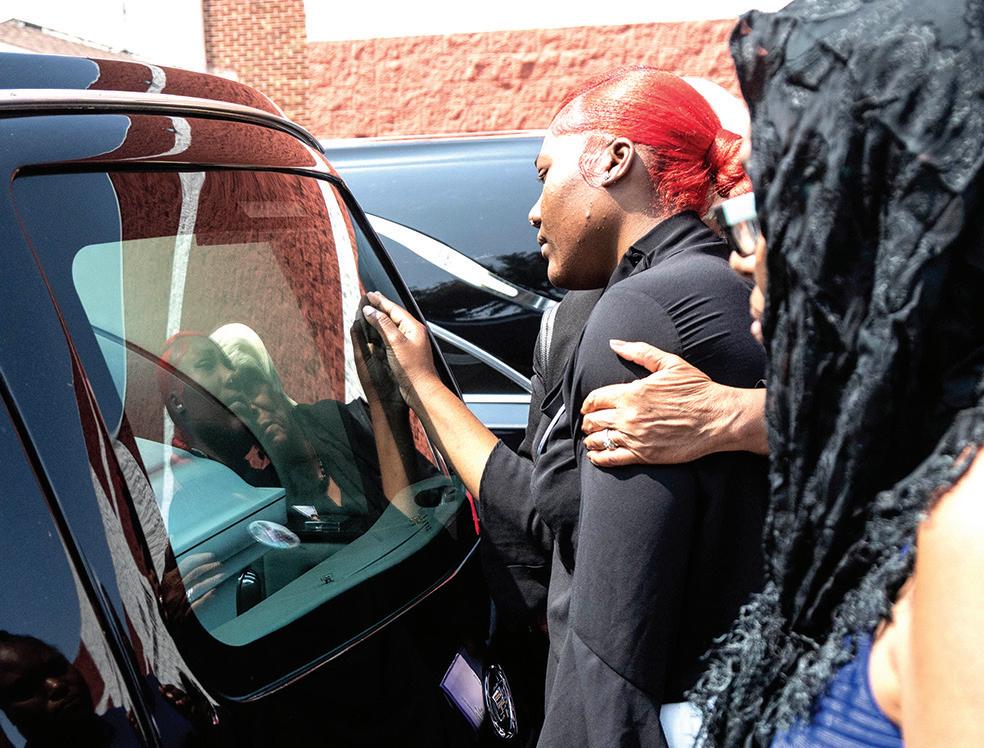
Seeing three caskets in a sanctuary at the same time takes an emotional toll — even on a stranger. The weight was compounded by the tragic circumstances that led to the joint homegoing for three generations of one family: a mother, her daughter and her grandson.
“God has given me a lot of water. He has wrapped his arms around me as I continue to try to deal with this.”
– Patricia May
“This has been a big pill to swallow,” said Rhonda Little, whose sister, Patricia May, was among those lost. “But God has given me a lot of water. He has wrapped his arms around me as I continue to try to deal with this.”
Three life reflections in a single obituary. And a community in mourning. Patricia May, Cherie May and Devin May, all of East St. Louis, were among the lives stolen in what authorities allege was an orchestrated series of killings carried out by two teenagers, including

Tuesday’s ballot presents voters with some extraordinarily consequential choices, from choosing who will represent the St. Louis region in Congress to statewide measures that could raise sales taxes and make it harder for citizen-driven ballot initiatives to win approval. The outcome of these races and measures will be largely determined by the size and demographics of the turnout. The St. Louis American’s Editorial Board offers the following recommendations on key races and ballot measures.
1st Congressional District
This is a hotly contested race, just as in 2024, when The American endorsed then-incumbent Cori Bush. We believed then that she had earned a second term, and replacing her with Bell wouldn’t make a meaningful difference for the Black community. With two years of experience in the seat, Bell has earned our backing for a second term, but with reservations.
Bell will have to decide whether his first obligation is to the people he was elected to represent or other competing interests and concerns that helped put him there. We also believe keeping Bell in the seat makes long-term strategic sense should Missouri Republicans succeed in their wish to redraw congressional boundaries in ways that weaken the political influence of Black and Democratic voters in the district. All things considered, we endorse Wesley Bell for re-election.
St. Louis County Executive
In our view, none of the candidates seeking this important position — Brian Williams, Angela Walton Mosley and Jake Zimmerman — gave voters a compelling reason to believe they were the best choice. The campaigns of all three were underwhelming — and that’s an understatement. Williams would bring limited administrative experience to the office. Still, he has shown an ability to produce legislative results for his Black and Democratic constituents as a Democratic state senator in a difficult, Republican-controlled environment. He also was the only candidate who outlined his goals for the position to members of our Editorial Board. We endorse Brian Williams for County Executive.
State Senate District 14
We are most familiar with his experience and leadership, partly because he was the only candidate who spoke directly to us about his candidacy. Whether serving as a legislator or leading the St. Louis County NAACP, John Bowman has focused on issues that matter to working families. His record reflects years of public service, coalition-building and advocacy on behalf of North St. Louis County residents, both in elected office and beyond. We endorse John Bowman for State Senator representing District 14
St. Louis City Recorder of Deeds
Years of legislative service and committee leadership as a St. Louis alderman
have prepared Shane Cohn to serve as St. Louis recorder of deeds. He sees the office as an opportunity to solve problems, not simply process paperwork. He understands that the recorder’s duties are established by state law and has realistic expectations about what the office can and cannot do. In a generation of urban politicians who are often dismissive, Cohn still does it the old-school way. We trust him as a politician and believe he deserves a promotion. We strongly endorse Shane Cohn for Recorder of Deeds
Missouri Amendment 1
This measure asks voters to renew the Parks, Soil and Water Tax, a more than 40-year-old sales tax that keeps admission to Missouri’s state parks free and funds soil and water conservation programs. It last appeared on the ballot in 2016, when 80% of voters approved it. Vote Yes on Amendment 1.
Missouri Amendment 4
Amendment 4 is the latest effort by the GOP-led legislature to restrict Missouri’s citizen initiative process and override the will of voters. It would require citizen initiatives proposing changes to the Missouri Constitution to receive a majority vote in all eight of the state’s congressional districts, making it extremely difficult if not impossible for voter-initiated constitutional amendments to pass. Meanwhile, proposals placed on the ballot by the legislature would continue to require only a simple statewide majority. It is a major power grab by Jefferson City insiders. Vote No on Amendment 4
Missouri Amendment 5
Amendment 5 would require the Legislature to phase out the income tax and replace it primarily with higher sales taxes. It would also allow lawmakers to bypass existing tax restrictions for five years and impose new taxes without voter approval.
It is a reverse Robin Hood proposal that essentially shifts the tax burden onto low- and middle-income Missourians, who spend most or all of their money on food, clothing and other necessities, while benefiting wealthier residents by eliminating taxes on their income. Missouri already has spent years cutting personal and corporate income taxes, with little evidence of sustained economic growth.
Rather than repeating a strategy that hasn’t worked, the state should invest in education, workforce development and infrastructure — the foundations of long-term economic growth, prosperity and competitiveness. Vote No on Amendment 5
St. Louis County Proposition U
This measure would impose “use” taxes on out-of-state online and mail sellers that otherwise do not pay sales taxes on goods sold in Missouri. It helps level the playing field for retail stores. Vote Yes on Proposition U
By Kevin Harris
The Democratic Party’s decision to elevate South Carolina as the first 2028 presidential primary provides Black voters with an historic opportunity.
Black voters will lead in determining which presidential candidates receive momentum and which campaigns collapse before most Democrats even have a chance to vote in the primary.

Candidates seeking the 2028 nomination will now have to organize in Black communities early. They will need relationships with local leaders, churches, civic organizations, historically Black colleges and universities, small businesses and rural communities.
Their records will be scrutinized on voting rights, health disparities, education, economic mobility, criminal justice and the survival of Black institutions.
Black voters will vote based on which candidate speaks directly to their concerns as opposed to a political calculation rooted in who is the most electable after Iowa and New Hampshire have already picked over the candidates.
With South Carolina, Democrats are now moving the nominating calendar closer to Black voters who are actually the party’s center of gravity.
In the 2016 primary, Clinton won approximately 272,000 votes, or 73.5%, while Bernie Sanders received about 96,000 votes, or 26%. Clinton won 39 pledged delegates to Sanders’s 14. Black voters accounted for roughly six in 10 participants, and exit polls found Clinton won close to nine in 10 of them.
Joe Biden arrived in South Carolina in 2020 with a campaign on the brink of failure after finishing fourth in Iowa, fifth in New Hampshire and second in Nevada. Then Black voters changed the race.
Biden won all 46 counties and captured 39 of South Carolina’s 54 pledged delegates. Exit polls found Black voters made up a majority of the electorate and supported Biden over Sanders by approximately four to one.
A Biden campaign that had appeared close to collapse after New Hampshire became the nomination frontrunner in less than two weeks.
Black voters will vote based on which candidate speaks directly to their concerns.
This decision reflects nearly two decades of election results showing Southern Black voters have been central to selecting Democratic presidential nominees despite being placed later in the nominating process.
Barack Obama’s 2008 Iowa caucus victory established a Black candidate could win in a predominantly white state. But Black South Carolinians solidified the coalition that carried Obama to the the presidency.
More than 530,000 votes were cast in the state’s Democratic primary. Obama received approximately 295,000 votes, or 55%, compared with about 141,000 votes and 27% for Hillary Clinton.
Black voters constituted roughly 55% of the primary electorate, and nearly eight in 10 supported Obama.
Eight years later, Black voters in South Carolina delivered an even more lopsided result for Clinton.
From 2008 to 2020, Black voters were the constituency that crowned the eventual nominee. Only in Iowa with Obama did Black voters validate the choice of a white electorate that voted before them. Still, South Carolina is not a perfect representation of the Democratic coalition. The state has a relatively small Latino population, limited union density and few recent examples of Democratic success in statewide general elections. Nevada and other states can reasonably argue that they test different and equally important parts of the party. But the traditional calendar wasn’t representative either.
Iowa and New Hampshire gave disproportionate power to electorates that were overwhelmingly white and rural. Candidates could spend a year discussing the concerns of those voters and engage seriously with Black communities only after the field had already narrowed.
Putting South Carolina first reverses that sequence. South Carolina is a recognition that Black Democrats have more than earned our say.
Kevin Harris is a Democratic strategist.
Commentary
Use your vote, don’t waste it
By Janice Ellis
We have important elections this year, and elections have consequences.
A lot is riding on how we vote — or, worse, if we choose not to vote at all.
There are concerted efforts at the national level and across many states to make it more difficult to exercise that power. We cannot afford to sit silently by and allow such efforts to win.
First, follow any proposed changes in voting requirements and make sure you are still able to vote.
Then, determine where you stand on the candidates and the issues.
than they were two, three or four years ago? If not, why not? Who and what actions or inactions are responsible?
3. Consult credible local and national organizations and other trusted sources for factual information.
In Missouri, there are very important ballot issues seeking your vote in August and November. Take the time to find out and understand what you are truly being asked to vote for.
Across the country, there are legislative offices — at the municipal, county, state and federal levels — with candidates vying for our vote. Our involvement and vote, or failure to vote, will determine the outcome for those critical offices.
There are ways we can achieve a “comfort zone” around who can best represent us and how we should vote on the ballot issues before us.



Many of the issues and conditions affecting your community, city or state are the same across the country. Some are different. But the important thing is how they are dealt with and what the attendant short- and long-term results are from the people you vote to put in office.
We only have to look at a few critical indicators to reach some rather poignant conclusions:
Our ability to keep up with the cost of living.
The availability and affordability of housing in our communities. Access to quality health care services at affordable prices.
We cannot afford to sit silently by and allow such efforts to win.
1. Take some time to examine and reflect on the issues that are important to you — whether they are your personal quality of life, economic development, community revitalization, jobs for youth, quality health care or some other concern. What has been the overall political and policy direction, and what decisions have been made by those whom you have entrusted to lead?
2. Develop a scorecard on paper or in your mind and see how you, your community, your city, your county, your state or our nation has fared. Ask yourself a few critical questions: Are things better
Access to services such as a good grocery store, pharmacy and auto services.
The state and quality of education our children are receiving. We cannot afford to look only at our personal situation, or just one area, in a vacuum when so much of where we find ourselves is interconnected.
Your vote for a particular candidate can be the change. Find out what actions the incumbents have taken or failed to take on the issues that are most important to you. Ask the challengers for their specific plans to address them should they be elected. Our current political environment is flooded with divisiveness, disinformation, misinformation, no information, downright lies, personal agendas, finger-pointing and the blame game dominating the news and public square. Our vote has the power to make the difference and the changes we need.
Janice Ellis is a columnist for the Missouri Independent, where this commentary was originally published.
“If we aim to get it right with all youth, a productive starting point is to design teaching and learning to the group(s) of students who have been marginalized the most in society and within schools.”
— Dr. Gholdy Muhammad, author of Cultivating Genius and Unearthing Joy
By Kenya Vaughn St. Louis American
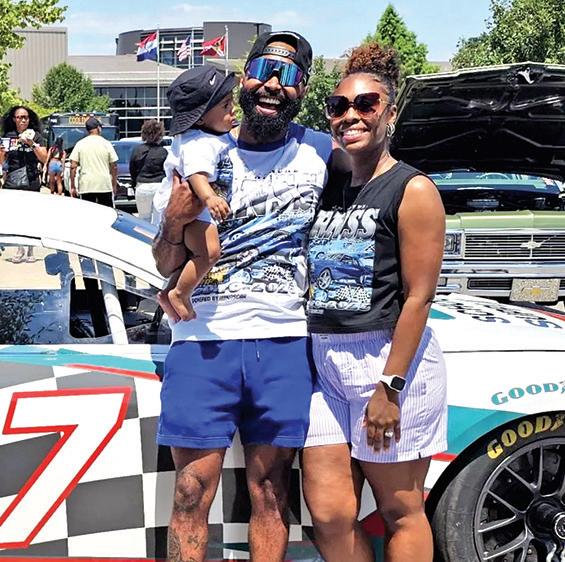
Derrick Walker merged his love for cars and his commitment to young people into an annual event that draws hundreds as students prepare to return to school.
The 8th Annual Rides
N’ School Supplies
Charity Car & Bike Show returns to the YMCA’s
O’Fallon Park Recreation Complex at noon on Saturday, August 1.
Once again, the event is powered by NASCAR.
“This whole thing started with a love for cars and a love for youth — and to make sure that we put on for our kids as best as we possibly can,” Walker said.
He said he was led by God to create the event and believes the support from sponsors and area residents confirms that “their steps are ordered.”
The event feels more like a citywide celebration than a charity drive.
“We didn’t want it to feel like charity. We wanted it to feel like community,” Walker said. “We want the kids to come out, have fun — and leave with something.”
Music, fellowship and fun anchor the afternoon as guests share in Walker’s passion for muscle cars through the car and bike show while easing the financial burden of back-
to-school expenses for families.
“Yes, we will have supplies. Yes, we will award scholarships. Yes, we will have prizes,” Walker said. “But the most important thing we want everybody to take home is the knowledge that there are people and organizations that care about them and want them to succeed — in school and in life.”
Hands on automotive experience
In addition to the annual giveaway and car show, the organization has expanded into automotive education.
“We saw how the car culture can bring people together and offer learning opportunities based on our own experiences as adults,” Walker said. “We thought, ‘Why not give that to the kids?’”
Two years ago, they began offering Automotive Symposiums.
In February, Rides N’ School Supplies held its first one with Ranken Technical College. Walker was driving down Page Boulevard when he noticed the school pulling in a Corvette like the one his team was working on.
“I was like, ‘I’m gonna pull over and shoot my shot,’” Walker said. “This is a program they did for college students, but they revamped it for us.”
Young people ages 9–17 received classroom instruction and a chance to get under the hood.
“This is our first time doing something like this,” said Zach Lueker, Automotive High Performance Department Chair at Ranken Technical College. “I’m glad he stopped by that day so that we could get it going.”
Lueker said the symposium was a learning experience for Ranken as they worked with students younger than their typical collegeaged group.
“I know that my indus-
try needs more young people,” Lueker said. “If we can convince any of these kids that they might like this, then that’s a good thing for us.”
His goal was to cover the basics and give them general knowledge.
“Our long-term goal is to get to a point where we can do this multiple times a year,” Lueker said. “If you figure out that you can fix small things, you can have a little more confidence when it comes to fixing big things — and solving problems.”
Back-to-school event roundup
In addition to the Rides N’ School Supplies Charity Car & Bike Show, several back-to-school events will take place across the region in the coming weeks.
Sat., Aug. 1, 12 noon — Rides N’ School Supplies, O’Fallon Park Rec Plex, 4343 West Florissant Avenue.
Sat., Aug. 1, 1 p.m. — Boys and Girls Club of Greater St. Louis Back-to-School Fair, Mathews/Dickey Boys’ & Girls’ Club, 4245 N. Kingshighway Blvd.
Thu., Aug. 6, 6 p.m. — Riverview Gardens School District Back-toSchool Bash, Riverview Gardens High School, 1218 Shepley Drive. More information: www.rgsd. k12.mo.us
Sat., Aug. 8, 10 a.m. — Normandy Schools Collaborative presents Beyond the Backpack, Normandy Early Learning Center and Normandy Middle School at Lucas Crossing. Registration required: https://bit.ly/4wsGf6N
Sat., Aug. 8, 10 a.m. — Jennings School District Back-to-School Jamboree, Jennings High
School,
For more information on Rides N’ School Supplies, visit RidesNSchoolSupplies. org.

The city of St. Louis has received a $2.9 million federal grant from the Federal Emergency Management Agency to continue long-term recovery services for residents affected by the May 16 tornado.
The grant will fund 10 disaster case managers through June 2027 and could allow the Missouri State Emergency Management Agency to expand the program by hiring 14 additional case managers, bringing the total to 24 to help meet continuing demand for assistance.
City officials said case managers have been working with about 1,200 households, with new applications arriving each week. Their work had been supported by interest earned on the Rams settlement fund, which was expected to be depleted in August.
The city submitted its application for disaster case management funding in September 2025. The award follows Mayor Cara
Spencer’s recent trip to Washington, D.C., where she met with Missouri’s congressional delegation to request additional federal assistance. “Our residents are at the heart of this recovery, and every family deserves the support they need to recover and hopefully return to the neighborhoods they call home,” Spencer said.
The Missouri State Emergency Management Agency submitted the FEMA application and will oversee the program. According to SEMA, the additional positions would help accommodate the high volume of incoming requests for assistance. The United Way of Greater St. Louis will administer the grant and coordinate services with the Salvation Army, Catholic Charities, LifeWise STL and HOPE. The federal funding becomes available Aug. 1.
Panera is moving its headquarters from St. Louis County to Weston, Massachusetts, in July 2027, according to an internal memo obtained by St. Louis Public Radio.
Founded in 1987 as St. Louis Bread Co., the company opened its first location in Kirkwood. It was acquired by Au Bon Pain Co. in 1993 and renamed Panera Bread in
1997, although its local cafes retained the St. Louis Bread Co. name.
Although Panera plans to maintain a support center in St. Louis, many local employees and some remote workers will be asked to relocate to the new headquarters.
Panera operates more than 2,200 locations across the United States and Canada.
St. Louis-based KAI has completed design and construction of a new campus for The Covering House in Jefferson County.
The $9 million, 17,000-square-foot residential facility will serve up to 10 survivors of child sex trafficking, ages 12 to 18, and
includes space for future expansion. The campus provides housing, education, therapy and other support services.
The Covering House, founded in 2009, opened its first residential home in 2015.
The Missouri Public Service Commission is seeking public comments from people who have received assistance through investor-owned utility assistance programs.
Comments are due by Aug. 31 and will help the commission evaluate customer experiences, eligibility requirements, program design, outreach and ways to measure program effec-
tiveness. Utilities covered include Ameren Missouri, Evergy Missouri Metro, Evergy Missouri West, Spire, Missouri American Water, Liberty Utilities and Summit Utilities.
Comments may be submitted to the Missouri Public Service Commission by mail at P.O. Box 360, Jefferson City, MO 65102 or by email at pscinfo@psc.mo.gov.

By Jamala Rogers
Most voters take the valued tools of democracy for granted. We can access them readily without thinking about how society got them, or who’s responsible for protecting them. The foundational, electoral, and direct democracy tools are deeply integrated into the fabric of society. It has only been under the current regime that significant attention has been given to understanding what these tools are and the potential consequences of losing them.
As I See It or, like Prop M on the August ballot in Missouri, change existing laws. Props happen at the local level, while amendments like Amendments 4 and 5 change the state constitution. The irony of Amendment 4 is that if passed, it will make it all but impossible to pass amendments in the future by mandating majorities in every one of the eight congressional districts. If one district misses the mark, it can screw up the passage. This is not what democracy looks like.
The foundational elements include freedom of speech and assembly. In the U.S., citizens readily speak their mind or express their opinions in writing. We gather to meet when we want or to protest when necessary. Under MAGA, people are using their voices and feet to express their concern about government corruption. Mass protests have been a constant during Trump 2.0.
The electoral apex of tools is the right to vote. Trump’s Save America Act is a dangerous threat to the voting process. The desperate despot has pretty much given up on trying to convince stakeholders of the Big Lie. Instead, he is now focusing on bullying Congress to pass the Save America Act. If that fails, it appears that the MAGA regime is preparing to disrupt the November elections under the guise of national security. Americans will be fed allegations of foreign interference, possibly even from the Russians.
We also have the right to petition our government through ballot initiatives, constitutional amendments, and propositions. These tools have become particularly important given the government’s indifference toward meeting the needs of its citizens.
Propositions create new laws
Ballot initiatives are how citizens have won Medicaid expansion or secured increases in the minimum wage. Victories like these were not the result of benevolent legislators. Citizen groups had done the incredible work required to collect signatures, get the initiative on the ballot, educate voters, and ultimately get them to the polls on election day.
The MAGA crackdown will be to weaken the potency of these tools or to eliminate them. We must fight back. Citizens in Festus have provided a good example of how to use the democratic tools at their disposal. They held community meetings and informed their local government that they did not want data centers.
When the city council ignored their demands, citizens voted out the four incumbents who supported the detrimental data center. Citizens proceeded to recall the mayor and three remaining council members. This is what democracy looks like! Citizens and citizenship will be challenged at every step for the next three months. The Trump administration is telling us how it plans to rig elections and strip us of our power. We must be vigilant and proactive. Declawing the talons of authoritarianism is a collective act of resistance. Fighting for a purpose feels so good.

St. Louis American staff
For many small businesses, landing a contract with a Fortune 500 company or major institution can be more difficult than developing a good product. A Greater St. Louis Inc. program opening applications this month aims to help local companies overcome those barriers.
The organization’s Supplier Readiness Accelerator is a 12-week program designed to prepare locally owned businesses to compete for corporate and government contracts by strengthening the skills and systems larger customers often require.
For many entrepreneurs,
winning those contracts involves much more than offering a competitive product or service. Businesses often must navigate complex procurement systems, meet financial and insurance requirements, obtain certifications, manage cash flow and demonstrate they can scale their operations to meet demand.
“Our mission is to drive growth and create more and better jobs.”
Lakesha Mathis
–
The accelerator is part of Greater St. Louis Inc.’s broader SupplySTL initiative, an effort to connect locally
owned businesses with corporate procurement opportunities while encouraging major employers and institutions to purchase more goods and services from companies based in the St. Louis region. “Our mission is to drive growth and create more and better jobs, and we want to help local small businesses be at the leading edge of that growth,” said Lakesha Mathis, a partner at Greater St. Louis Inc. “Our Supplier
SponSored by
&
Readiness Accelerator is a perfect opportunity for companies looking to take that next step and be a part of the supply chain process for major corporations and institutions.”
Greater St. Louis Inc. recently expanded the initiative beyond its original accelerator model to include supplier readiness coaching, capital partnerships and additional business support services designed to help companies become more competitive. According to the organization, its previous Diverse Business Accelerator served more than 55 entrepreneurs and helped create more than
See Contracts, A6

Watch out for automated calls or texts offering free vacations or “vacation deals.” There may not be a
or you’ll be
As you make your summer travel plans this year, or perhaps you’ve already hit the road or you’re on your way to the airport, one thing to keep in mind – without putting too much of a damper on your trip – is to stay financially vigilant when finalizing your vacation plans. The travel and events sector is especially susceptible for fraud and scams as people are looking for deals in locations that might be unfamiliar, with bad actors savvier than ever when it comes to separating travelers from their money. Once travelers figure out their plans, they’re ready to hand over the funds to make their dream vacations happen – and scammers are more than happy to take it. Nakischa Joseph, Chase community manager in St. Louis, offers these tips to help you avoid the latest and most common
Scammers can make caller ID, emails and texts display as messages from your bank or other businesses.
travel scams so you can relax and enjoy your trip.
Vacation rental scams
So you’ve found a great house on a vacation rental website and email the property through the website. You might have received a call back from the “owner,” who asked you to send your deposit through Zelle or another peer-to-peer app. The “owner” will often pressure you into sending a deposit to hold the property, saying there’s a lot of demand for the location, and may ask to move the conversation from the official website to a private messaging app As your trip gets closer, you might reach out to confirm the details or assume all is well and travel to the property at the start of your trip. That’s when you discover the location is already booked,
Westbrooks-Hodge to chair education task force
Pamela Westbrooks-Hodge, who recently completed a six-year term on the Missouri State Board of Education, has been named chair of the St. Louis Region Future of Public Education Task Force.
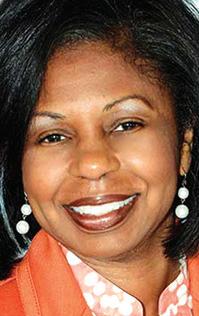
Pamela WestbrooksHodge
The task force held its inaugural meeting last week and plans to develop and evaluate four options for the future of the Normandy Schools Collaborative.
Westbrooks-Hodge said the group is working with education attorneys to ensure its recommendations are legally feasible and plans to collaborate with the Missouri Department of Elementary and Secondary Education, the commissioner of education and the State Board of Education on implementation.
Mathis earns economic development honor
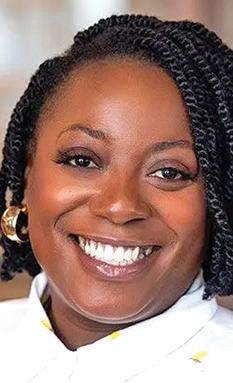
Lakesha Mathis of Greater St. Louis, Inc., has been named one of Consultant Connect’s 2026 Top 50 Economic Developers. Mathis leads Greater St. Louis, Inc.’s community engagement team. The annual recognition honors economic development professionals nominated by peers in the economic development and site selection industries.
Wilson succeeds Davis as AKA regional director
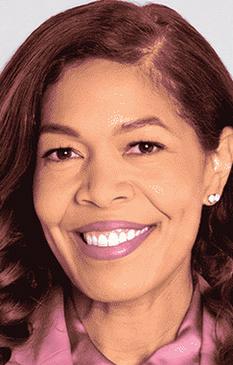
C.
Nicole C. Wilson has been installed as regional director of the Central Region of Alpha Kappa Alpha Sorority Inc., succeeding Kiahna W. Davis, who served in the role since 2022. Wilson was installed during the sorority’s 72nd Boule in Las Vegas last week. A Silver Star and Life Member of the Alpha Mu Omega Chapter in Indianapolis, she has served in several chapter leadership positions, including president and parliamentarian.
Adams takes part in ‘The Great Race’

Denia Adams, a recent St. Louis Community College graduate, participated in this year’s “The Great Race,” a 10-day classic car rally along historic Route 66 from Springfield, Illinois, to Pasadena, California. Adams earned an associate degree in automotive technology and competed as a member of the X-Cup Legacy Team. A Metro High School graduate, she previously received a $5,000 Ford Automotive Tech Scholarship and a $1,500 PepsiCo Foundation Scholars Program scholarship.
Continued from A5
not available to rent or doesn’t exist at all.
The listing you saw could have been fake, or a fake phone number was posted to a real listing, and the true owner has no idea about your reservation. Either way, you’re stuck without lodging and your payment, with little chance of getting your money back.
Most major property rental sites offer fraud guarantees, but only if you pay and communicate with the owners through the site. To avoid lodging scams, try to see properties in person if possible, read reviews from other travelers, and pay through the official platform. Sending deposits through wire transfers or P2P apps is like sending cash -- once you send it you may not be able to get it back.
“Free” trips
Unless you’ve won a legitimate contest or sweepstakes – and even those should be examined – there’s no such thing as a free vacation. If you get a call, text, email or other notification that you’ve won a free vacation, it may be a scam, especially if you don’t remember entering a contest. Watch out for automated calls or texts offering

free vacations or “vacation deals.” There may not be a vacation package available at all, or you’ll be asked to pay processing fees, taxes and other costs to claim your “free” trip, which might include substandard accommodations.
If you did enter a contest and are told you’re the winner, you won’t be asked to send money to claim your prize. The Federal Trade Commission is a good resource for information on recognizing legitimate versus fraudulent contests.
If you hear about a charter flight or other private flight deal to a
destination, sometimes including a tour or hotel stay, be extra careful. Too many would-be travelers find out after paying their money that the flight, and sometimes the entire trip, is nonexistent.
The U.S. Department of Transportation maintains updated lists of approved charter flights so you can make sure the company you’re considering is legitimate.
The event ticket industry is ripe for scammers. You might find an amazing deal for a sold-out show on social media, send money to the seller
and never hear from them again. Not only do you not have concert tickets, there’s also no way to get your money back.
While some social media sellers might be legitimate, the best sources for ticket deals are verified resale sites that handle transactions and guarantee authenticity. If something goes wrong, there’s a digital “paper trail” that can help you get your money back.
While even the most prepared consumers can fall victim to a well-executed scam, remember these tips to protect your vacation plans.
If you hear about a charter flight or other private flight deal to a destination, sometimes including a tour or hotel stay, be extra careful. Too many wouldbe travelers find out after paying their money that the flight, and sometimes the entire trip, is nonexistent.
their official website or call the number on the back of your card. For more financial health tips, visit chase. com/security.
• Zelle and other P2P payment apps should be reserved for family, friends and businesses you know and trust. Treat your transactions like cash -- once scammers get the money, you may not get it back.
• Scammers are advertising on social media and social marketplaces. Whenever possible, shop through official websites and be cautious of deals that seem too good to be true before sending any money.
• Scammers can make caller ID, emails and texts display as messages from your bank or other businesses. If you are ever unsure, end the conversation and reach out to the company directly through
For informational/ educational purposes only: Views and strategies described in this article or provided via links may not be appropriate for everyone and are not intended as specific advice/ recommendation for any business. Information has been obtained from sources believed to be reliable, but JPMorgan Chase & Co. or its affiliates and/ or subsidiaries do not warrant its completeness or accuracy. The material is not intended to provide legal, tax, or financial advice or to indicate the availability or suitability of any JPMorgan Chase Bank, N.A. product or service. You should carefully consider your needs and objectives before making any decisions and consult the appropriate professional(s). Outlooks and past performance are not guarantees of future results. JPMorgan Chase & Co. and its affiliates are not responsible for, and do not provide or endorse third party products, services, or other content. Deposit products provided by JPMorgan Chase Bank, N.A. Member FDIC. Equal Opportunity Lender. © 2026 JPMorgan Chase & Co.
120 jobs before evolving into the broader Supplier Readiness initiative. Participants begin with an assessment of their business before spend-
Continued from A5 ing 12 weeks working through topics such as business development, lead generation, scaling operations, cash-flow management, certifications, vendor portals and sourcing strategies. The program concludes with participants presenting a comprehensive growth plan.
“This is an experience that no matter where you’re starting, it gives you the opportunity to really jump in, connect with the folks that you want to meet, and receive real mentorship from people who are two or three steps ahead
of where you are right now,” said Calvin Dantley, founder and principal of Master Systems LLC and a graduate of the spring 2026 accelerator.
Greater St. Louis Inc. says a survey of graduates from the accelerator and its predecessor program found that 90% reported
gaining significant business knowledge, 60% increased revenue by more than 10%, and 68% added an average of three employees.
Businesses interested in applying must be locally owned, employ 250 or fewer people, generate revenue, operate in the
business-to-business or business-to-government marketplace, have a scalable business model and commit to participating in the full program.
Applications for the fall 2026 cohort are open through Aug. 19.

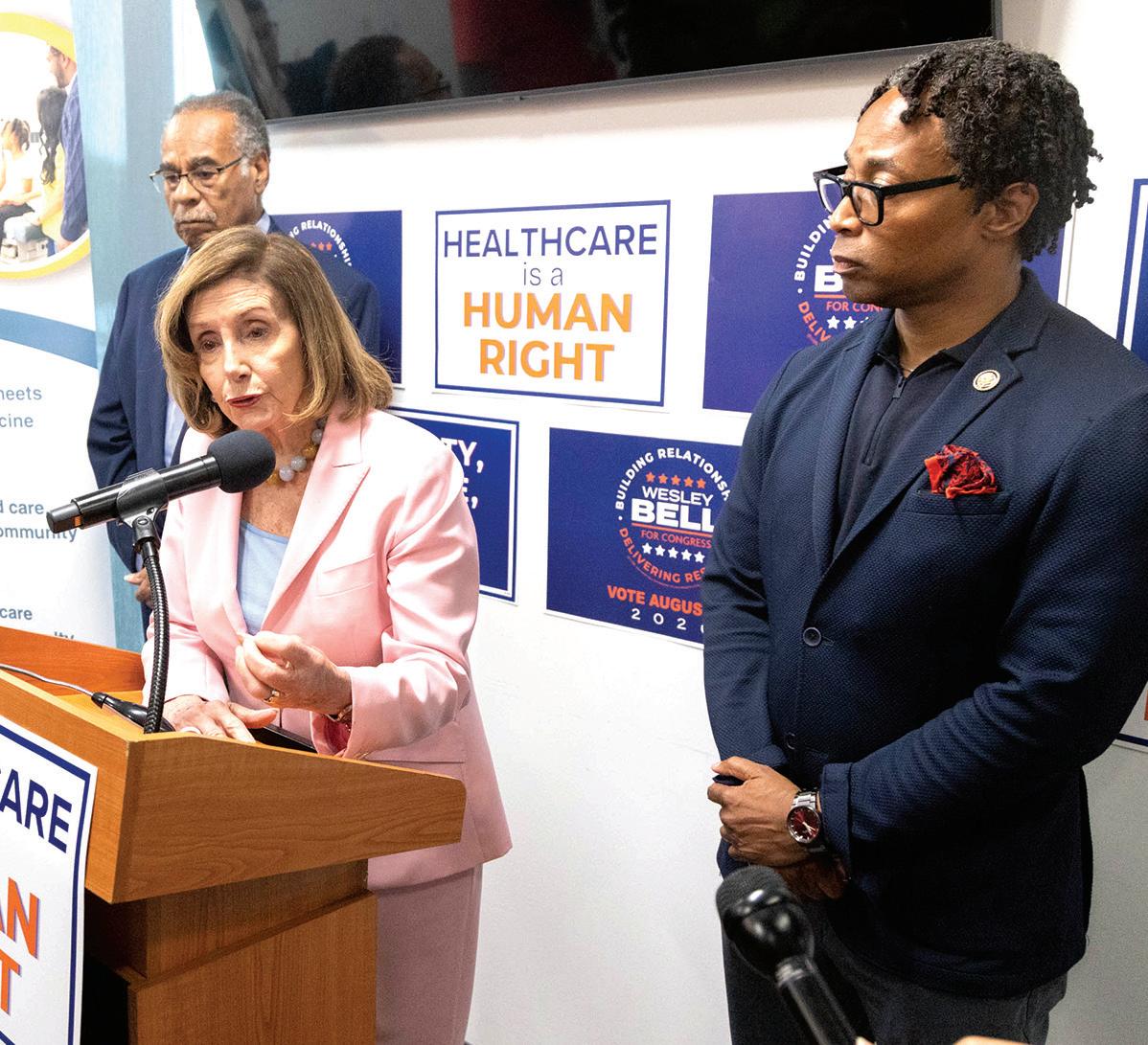
Wesley Bell of Missouri’s 1st District looks on as former House
read, “Healthcare is a Human Right,” described health care as “a right for all, not just for
By Sylvester Brown Jr.
St. Louis American
Potential reductions in federal Medicaid funding could affect community health centers like Affinia Healthcare, which serves more than 43,700 patients across the St. Louis region, Democratic lawmakers said during a visit to the organization’s Ferguson clinic.
Former House Speaker Nancy Pelosi joined U.S. Reps. Emanuel
Cleaver of Missouri’s 5th District and Wesley Bell of Missouri’s 1st District, along with Affinia Healthcare President and CEO Dr. Kendra Holmes, to discuss the role federally qualified health centers play in caring for low-income patients and the potential effects of proposed federal Medicaid cuts.
Affinia Healthcare operates multiple federally qualified health centers across the St. Louis region. According to the organization, more than 90% of
its patients have incomes below the federal poverty level. The Ferguson clinic was developed after a community health assessment identified significant unmet primary care needs in North St. Louis County and was designed to serve about 8,675 patients annually.
Federally qualified health centers receive federal funding to provide primary and preventive care regard-
St. Louis American staff
A planned hospital in the underserved community of Cahokia Heights, Illinois, moved a step closer to construction after receiving state approval July 14, clearing the way for a $231 million project. The proposed 108-bed Touchette Regional Hospital is expected to expand behavioral health services and increase access to medical specialists in Southern Illinois and the Metro East, according to Dr. Dolores Gunn.
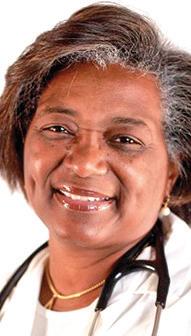
“In recent years, we have seen an increasing number of patients in the area who needed to be admitted but were transferred to other hospitals, primarily in Missouri, and adolescents to Chicago for behavioral health,” Gunn said.
The proposed 108-bed Touchette Regional Hospital is expected to expand behavioral health services and increase access to medical specialists.
“A modern hospital with new capacity will help Touchette recruit the specialists the region needs to keep our patients here at home.” Gunn is a board-certified family medicine physician with more than 30 years of clinical experience in East St. Louis and the Metro East. Touchette’s current facility at 5900 Bond Ave. will discontinue inpatient services once the new hospital opens. Construction is expected to begin in March 2027, and the hospital is scheduled to open in mid-to-late 2029.
The new hospital will include 12 private medical-surgical beds, 48 adult behavioral health beds, 24 geriatric
By Na’Porsha Williams St. Louis American
Actor and former NFL
linebacker Isaac Keys returned to his hometown with a message he said he spent years avoiding: Black men don’t have to hide their struggles with trauma and depression.
Speaking to counselors, violence intervention workers and disaster relief staff at an event hosted by the Urban League of Metropolitan St. Louis, Keys discussed his new memoir, The Grind Don’t Stop, It Just Changes, and reflected on growing up in St. Louis, navigating street culture and processing the death of his father.
“We put on that armor
his
“Isaac is a very unique person. He can speak to so many facets of the urban African American experience.”
– James Clark
to survive, especially growing up in the late ’80s and ’90s,” Keys said. “Writing this book allowed me to release a lot of things — release some anger, bitterness, or just have more understanding
about who I am.”
James Clark of the Urban League Division of Public Safety said Keys’ willingness to speak openly about his own struggles resonated with employees who work every day with residents coping with violence and trauma.
“Isaac is a very unique person. He can speak to so many facets of the urban African American experience,” Clark said. “He sees the turmoil that our young people find themselves in, and he wants to use his life to inspire young people to fight through what they face every day.”
Clark said Keys’ openness about dealing with

St. Louis American
The city of Dellwood will celebrate its 75th anniversary with the Diamond Jubilee Expo from noon to 6 p.m. Saturday at the Dellwood Recreation Center.
The free event will feature a performance by R&B singer Howard Hewett, along with live music, step team performances, food vendors and nonprofit organizations providing information about community services. Attendees also will have an opportunity to meet city officials and local business representatives.
Mayor Reggie Jones said the event is intended to recognize the city’s history while looking toward its future.
“Celebrating 75 years is about more than looking back — it’s about recognizing how far we’ve come and where we’re going,” Jones said.
In April, Dellwood voters approved Proposition D, which will fund a new public safety building on West Florissant Avenue, a turf sports field near Dellwood Park, an events center, a splash pad, a playground and a food truck plaza.
Continued from A7
less of a patient’s ability to pay. Many also serve large numbers of Medicaid recipients and uninsured patients, making them particularly sensitive to changes in federal health policy.
Standing before a sign that read, “Healthcare is a Human Right,” Pelosi described health care as “a right for all, not just for a

Continued from A7
behavioral health beds and 24 adolescent behavioral health beds. The adolescent unit, serving patients ages 12 to 17, will be the only program of its kind in Illinois south of Springfield, according to a news release.
The facility also will include an emergency department, surgery, gastroenterology, diagnostic imaging, laboratory services and pulmonary testing.
The hospital is part of the East St. Louis
privileged few.”
During the discussion, Pelosi, Cleaver and Bell criticized proposed reductions in federal health spending that largely affect Medicaid, the Affordable Care Act and public health programs.
Supporters of the proposed reductions have argued they are needed to reduce federal spending and address fraud and inefficiencies within government health programs. Pelosi countered that proposals to reduce Medicaid spending by about $1 trillion have also drawn concern from some Republicans.
About a dozen House Republicans signed a letter opposing reductions in Medicaid coverage, citing potential effects on vulnerable populations and rural hospitals. U.S. Sens. Thom Tillis, R-North Carolina, and Josh Hawley, R-Missouri, also have spoken publicly in support of preserving Medicaid, with Hawley describing the program as “a vital safety net.”
Pelosi, Bell and Cleaver said the effects of Medicaid reductions would extend beyond urban areas to rural communities that also depend heavily on the program.
Bell said many rural communities already have experienced hospital closures and reductions in health care services.
“I’ve talked to many folks who identify as Republicans who’ve come up to me to say, ‘This fight is important to me,’” Bell said. “Americans on
Continued from A7
depression after leaving football also encouraged counselors and therapists who help others process trauma.
“Our therapist, he talks about trauma [that] plagued him for a long time. So for him to say to her, ‘You know, I deal with trauma,’ empowers her,” Clark said. “This information helps motivate them personally, but then also it gives them more of a reservoir that they can go to when they’re talking to our clients.”
Writing the memoir also meant revisiting experiences Keys had carried for years. Publisher Brian Johnson of Live Your Dreams Out Loud Publishing, who has known Keys since 2004, spent about a year interviewing Keys and shaping
Health Transformation Partnership, a collaboration among Touchette Regional Hospital, Southern Illinois Health Care Foundation, doing business as SIHF Healthcare, and other community partners.
The project will be funded primarily through Illinois’ Healthcare Transformation Collaboratives program.
About $193 million will come from a transformation grant administered by the Illinois Department of Healthcare and Family Services. The Illinois Capital Development Board will contribute $15 million, and Touchette Regional Hospital will
provide the remaining $23 million.
“This project is especially meaningful because it brings together Touchette Regional Hospital, SIHF Healthcare and other community partners around a shared goal — addressing gaps in health care and economic development,” said Larry McCulley, CEO of SIHF Healthcare. “The new hospital is part of a broader, coordinated investment in the region, and we are grateful for the support from the City of Cahokia Heights, Senator Christopher Belt and others in helping make this investment possible.”
both sides of the aisle support access to quality and affordable health care.”
Bell called for regional cooperation to protect Medicaid and federally qualified health centers.
Holmes said community health centers provide a critical access point for patients who might otherwise go without preventive care, behavioral health services or treatment for chronic conditions.
The Ferguson clinic offers primary care, dental services and behavioral health care. It was built
hundreds of thousands of words of notes into a 70,000-word manuscript.
“The one thing that I wanted him to do was get everything out of his head,” Johnson said. “It was a process of sitting down, asking the right questions, being intuitive, and knowing to push in.”
Keys said writing the book forced him to think about what he wants to leave behind.
“Time is really limited, and you don’t know how much time you have,” Keys said. “So what are you doing with your time? What are you doing with your life? What are you leaving behind?”
Among those listening was Jameel Robinson, who had been an Urban League intern for only about a week after joining the organization through its job placement and educational programs.
“He said what I’ve been hearing a lot, but when he
after community health assessments identified significant gaps in access to care in North St. Louis County, particularly for residents managing chronic illnesses and other ongoing health needs.
Pelosi said protecting Medicaid is essential to preserving that safety net.
“Healthcare is a human right,” she said. “It’s a right for all, not just for a privileged few.”
Sylvester Brown Jr. is the Deaconess Foundation Community Advocacy Fellow.
said it, it just hit different,” Robinson said. “It made me want to keep grinding, keep going, stay focused.” Robinson said Keys’ message reinforced his commitment to making the most of the opportunity.
“Like he said, ‘The grind don’t stop, it just changes.’ That really stuck with me,” Robinson said. “It made me not want to lose track of what’s really going on in life.”
Keys said he hopes sharing his experiences encourages young people to face challenges without compromising their values and to recognize that caring for their emotional well-being is part of building a successful life.
“Identify your dreams. Identify your goals,” Keys said. “Life is not gonna be easy. You can create the life that you want to live, but you’ve got to be willing to put the work and the sacrifices in for those things.”

Black Ice, the Philadelphia poet who became one of the most powerful voices in performance poetry, has died. He was 54. Born Lamar Manson, the Def Poetry Jam standout delivered sharp examinations of race, history, identity, and survival. His cause of death has not yet been made public.
According to Allhiphop.com Russell Simmons, Jill Scott, Toni Blackman, Jessica Care Moore, and others paid tribute as news of his death spread.
Scott, who shared a 30-year friendship with Black Ice, wrote, “Rest beautifully WORDSMITH,” in a social media post. “We got to have 30 years as REAL FRIENDS with REAL pens.”
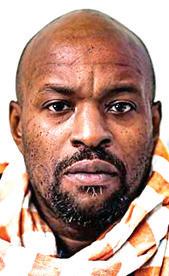
Grammy-nominated singer Nivea revealed she was diagnosed with cancer earlier this year.
The singer told ABC News she was diagnosed with chronic myeloid leukemia in early 2026 after two bone marrow biopsy procedures.

“Life for me has changed in various ways but treatment thus far is working,” Nivea said in a statement. “Taking it day by day with a positive mindset & a heart full of gratitude! I’m blessed with the ability to still do what I love—music, continue to mother my children, and learn new skills that fuel me! I am and have been very blessed in this life and won’t ever take it for granted.”
“A tremendous thank you to everyone for the love & prayers,” she added.
The R&B artist previously opened up in an interview with the “Cadillac Chronicles” video series that she has been undergoing treatment for leukemia, and “everything is going great so far.”
“It’s so cliche to say, you know, you don’t know the time nor the hour, but it’s true, and it just helped me put a lot of things in perspective,” she said during the interview. “And I live in gratitude, like religiously.”
Nivea was diagnosed with chronic myeloid leukemia in early 2026 after two bone marrow biopsy procedures.
One year after actor Malcolm-Jamal Warner drowned in Costa Rica at age 54, his widow, Tenisha Warner, has filed a lawsuit against his mother. She is suing Pamela Warner in her role as successor trustee of the Warner family trust.
The suit, filed on the one-year anniversary of his death, seeks to recover at least $1.2 million from that family trust. The suit alleges, in part, that Malcolm-Jamal Warner did not “purchase and maintain a term life insurance policy on his life in the amount of $1 million” or on Tenisha Warner’s life, as allegedly stipulated in their premarital agreement.
“For the last year, I have attempted to privately settle my beloved husband’s complicated estate and honor his last wishes,” a spokesperson for Tenisha Warner told CBS News in a statement. “Malcolm had every intention to provide for our 9-yearold daughter and me. He was close to finalizing a new estate plan to replace the stale plan created in 1996 when he was 26 years old, 20 years before we met and well before we gave birth to our beautiful daughter. Sadly, he was unable to do so before we lost him.”

A preliminary hearing revealed additional details on some of the evidence prosecutors say they have gathered against singer d4vd in the killing of 14-year-old Celeste Rivas Hernandez. According to CNN.com, this evidence includes testimony about blood stains on various items from his garage, chainsaw purchases and explicit text messages with the girl. The 21-year-old singer, whose legal name is David Burke, is accused of killing the girl after she threatened to expose their relationship and damage his lucrative career as a rising music star. Testimony on Friday included text messages between them that prosecutors say show a sexual relationship with the victim who was just 13 at the time. A judge is weighing whether there’s enough evidence to move forward with a trial.
Celeste’s dismembered body was found in the trunk of d4vd’s Tesla in September 2025, parked near his rented Los Angeles home. The musician has pleaded not guilty to firstdegree murder, continuous sexual abuse of a child under 14, and mutilating human remains.

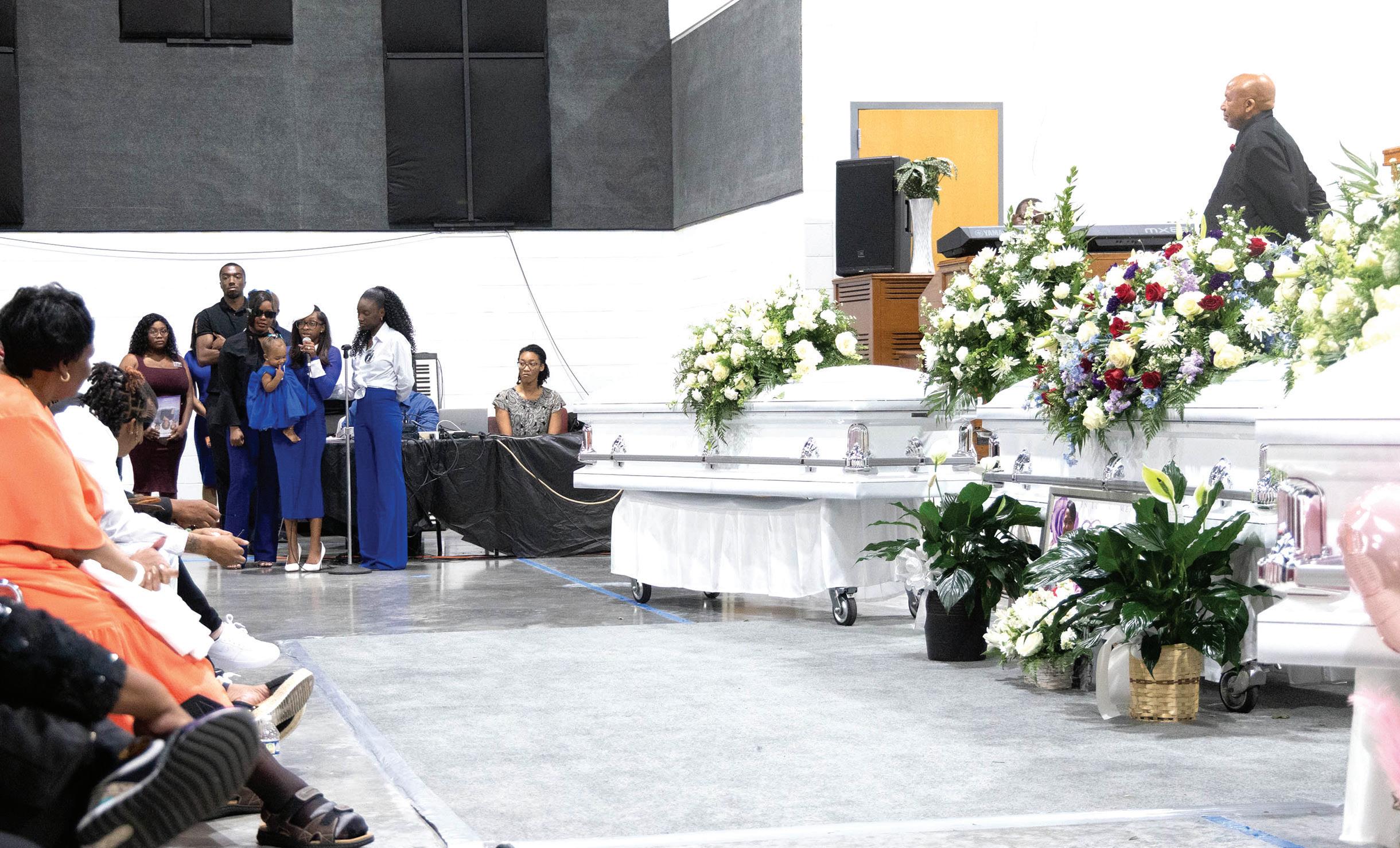
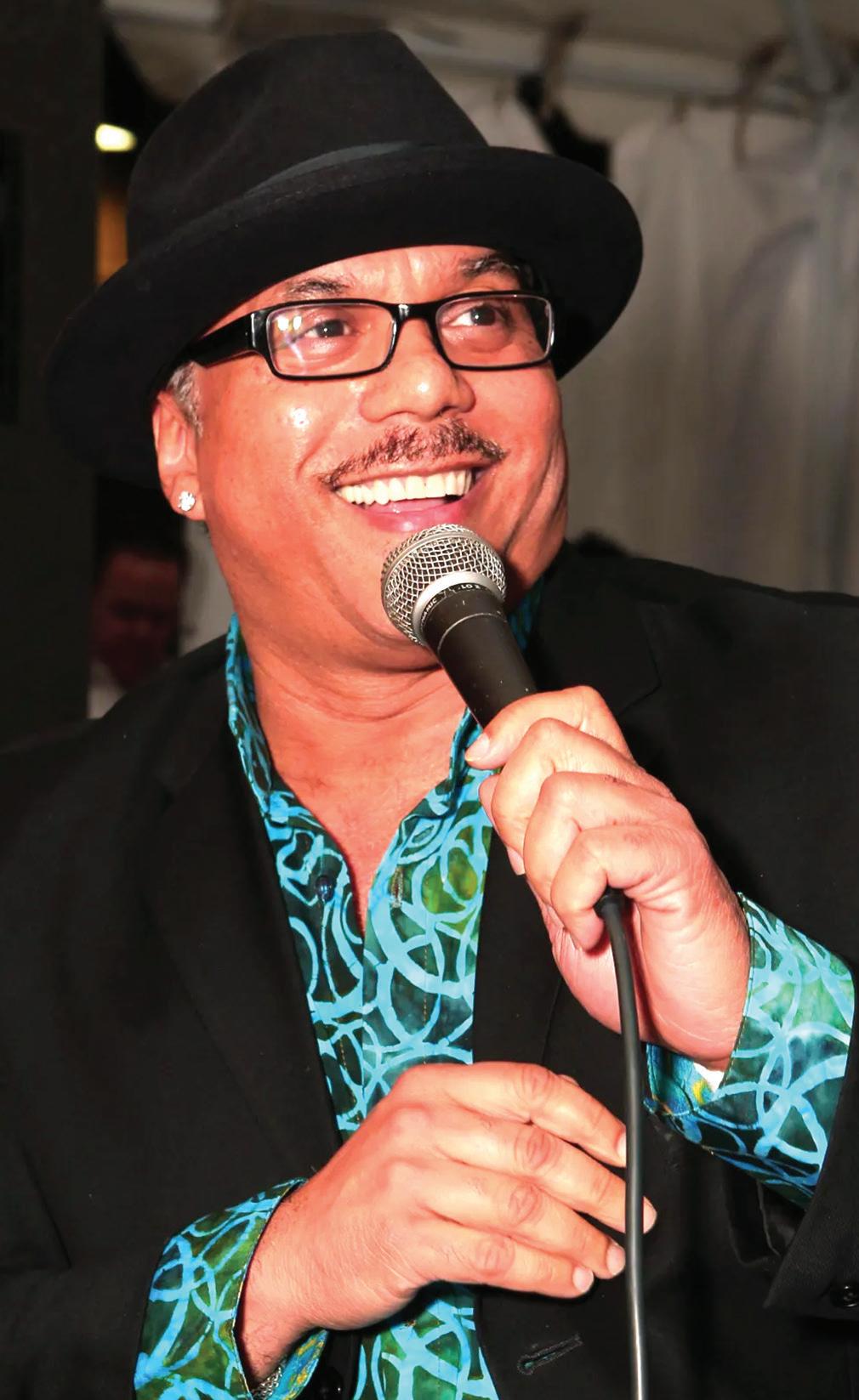
Gatlin speaks while holding her 1 year old daughter, Emery May Gatlin, during the joint homegoing service for
in East St. Louis on July 25.
Continued from A1
a family member. The tragedy left five relatives dead — including Shania Thompson and Quentin L. Thompson — and two more family members critically injured. The deaths and injuries shocked the region and drew national attention.
As the May family was remembered Saturday afternoon at House of Prayer to All Nations Church in East St. Louis — their family church — the focus remained on the impact of their lives rather than how those lives ended.
They weren’t “three of the five victims.” They
Continued from A1
Office for Civil Rights and the Justice Department’s Civil Rights Division.
SLU officials say the university complies with federal law and intends to cooperate with the investigation.
“The university is proud of the outstanding students, alumni and physicians that the SLU School of Medicine has educated over the past 190 years,” Clayton Berry, assistant vice president for communications, told St. Louis Public Radio. “The School’s commitment to excellence in education, research, patient care and service continues to exemplify the best of the
were loving family members who left a lasting imprint.
Pat — as she was known — had friends playfully proclaiming themselves “the original best friend” as they offered condolences and shared memories. She often led 5 a.m. prayer calls, according to Evangelist Linda Galloway. Her daughter Cherie was described as “as sweet as she could be,” welcoming others easily into her circle.
“If you met her, you loved her,” one friend said as she addressed the family. “I ask that you not remember her as a victim, but as a loving person, a mother and a sister to me.”
Six days before he was killed, Cherie’s son
university.”
The other schools named in the investigation are Dartmouth College’s Geisel School of Medicine, East Carolina University’s Brody School of Medicine, Western University of Health Sciences and William Carey University College of Osteopathic Medicine.
Title VI prohibits discrimination based on race, color or national origin in educational programs receiving federal financial assistance.
The Department of Health and Human Services is involved because medical schools and their affiliated teaching hospitals receive federal health funding, giving the agency authority to investigate whether they complied with federal civil
Devin had proposed to his longtime girlfriend, Chelsey Gatlin — on her birthday. The couple shared a 1-year-old daughter who will grow up knowing her father through the memories of others.
A young cousin spoke at the service about how Devin beamed when talking about being a father.
Anthony Pettiford, senior pastor of House of Prayer to All Nations Church, during his eulogy.
“Everybody is talking about the tragedy, but we wanted to take a bit of time to talk about all the blessings that this family gave.”
–Elder Anthony Pettiford
“Everybody is talking about the tragedy, but we wanted to take a bit of time to talk about all the blessings that this family gave,” said Elder
rights laws.
In June, the Justice Department announced investigations into 15 additional medical schools over potential race discrimination in admissions, signaling a broader federal effort focused specifically on medical education.
Most of the targeted institutions have denied engaging in unlawful discrimination. They argue their admissions systems are merit-based, individualized and comply with the Supreme Court’s 2023 decision, which permits applicants to discuss how race has shaped their personal experiences without allowing race itself to be used as a factor in admissions decisions.
Last year, President Donald Trump signed an executive order directing
In her remarks, Galloway read from a letter published in the East St. Louis Monitor from Mayor Charles Powell III.
“It was titled ‘A Message of Hope and Healing,’” Galloway said. “Part of it read, ‘To the young people of our city, I want you to know this: Your life matters. Your futures matter. You matter more than
federal agencies to enforce civil rights laws against what the administration describes as unlawful race-based preferences in education and other sectors. The administration has also sought admissions data from colleges and universities as part of its enforcement efforts.
Assistant Attorney General Harmeet K. Dhillon said when the Justice Department announced its June investigations that many medical schools appear “more concerned about the demographics of their incoming classes than training students to succeed in the profession.”
“Under this Justice Department, we will continue to protect American students from discriminatory and illegal preferences

you could ever know.’”
Galloway — Patricia May’s neighbor and close friend — staked her claim as one of Patricia’s best friends.
Sister Rhonda Little settled it.
“I am her original best friend,” Little said with a laugh. “We grew up in the same bedroom and wore each other’s clothes.”
As people lined up to share reflections, a recurring question surfaced repeatedly. “How could something like this happen to this type of family?” A prayer warrior. A loving father. A devoted mother and daughter.
“When they first called me and told me, I didn’t believe it,” said Sharon Clark. “It went from disbelief to hurt. Then it went
in admissions — especially in professions as critical as medicine, where quality of training should be the top priority,” Dhillon said in a statement from the department.
Dr. David Seres, a retired Columbia University Medical Center professor of medicine, criticized the administration’s investigations.
“I’m not aware of there ever being such a wholesale attack on medical schools,” Seres told Inside Higher Ed. “This has been an overt, politicized attempt to reshape medicine by people who are not experts in medicine.”
Laura Hirshbein, a psychiatrist and professor of the history of medicine at the University of Michigan, said medical schools are particularly vulnerable because of their reliance on federal funding.
“They depend on federal money in a profound sense,” Hirshbein said.
“It’s been quite effective for the federal government to threaten that funding to get medical schools to say, ‘OK, we’ll do whatever you want.’”
from hurt to hate — and from hate to anger.” She said she found comfort in her faith — Psalm 121:1 in particular. She spoke it aloud as she left the podium: “I will lift up mine eyes unto the hills, from whence cometh my help.”
Pettiford used the book of Job as the scriptural foundation for his message, urging mourners not to dwell on the “why” of what happened.
“Grieve, yes. There is a time to grieve,” Pettiford said. “But in the midst of all, worship and bless the Lord. Know that the Lord is there — in the midst of trouble, in the midst of trials and in the midst of tragedy — and he gave us a power in the name of Jesus.”
Continued from A1
compared with colleges without such programs.
“This program could be a great opportunity for people who are less fortunate — who think they can’t go to college. A lot of them are smart, but they don’t have the means to use that talent and edu-
According to The New York Times, some university leaders, medical professionals, legal scholars and state officials have criticized the administration’s investigations as politically motivated attacks on higher education and public health. Last week, Harvard University President Alan Garber defended the independence of higher education institutions in a statement published by The Washington Post.
“No government — regardless of which party is in power — should dictate what private universities can teach, whom they can admit and hire, and which areas of study and inquiry they can pursue.”
This year, the Justice Department also opened civil rights investigations and issued discrimination findings involving the University of California, Davis School of Medicine and Yale School of Medicine. It also joined an ongoing private civil lawsuit challenging the admissions policies at the University of California, Los Angeles David Geffen School of Medicine.
Sylvester Brown Jr. is the Deaconess Foundation Community Advocacy Fellow.
cation,” said Bahaldin Kabara, another student at the Florissant Valley campus. “So, this would be a good thing, not just for them, but for society as a whole. The more educated people there are, the better society is.” STLCC plans to announce finalized application details and guidelines prior to spring registration.



‘Ain’t too Proud’
By Kenya Vaughn St. Louis American
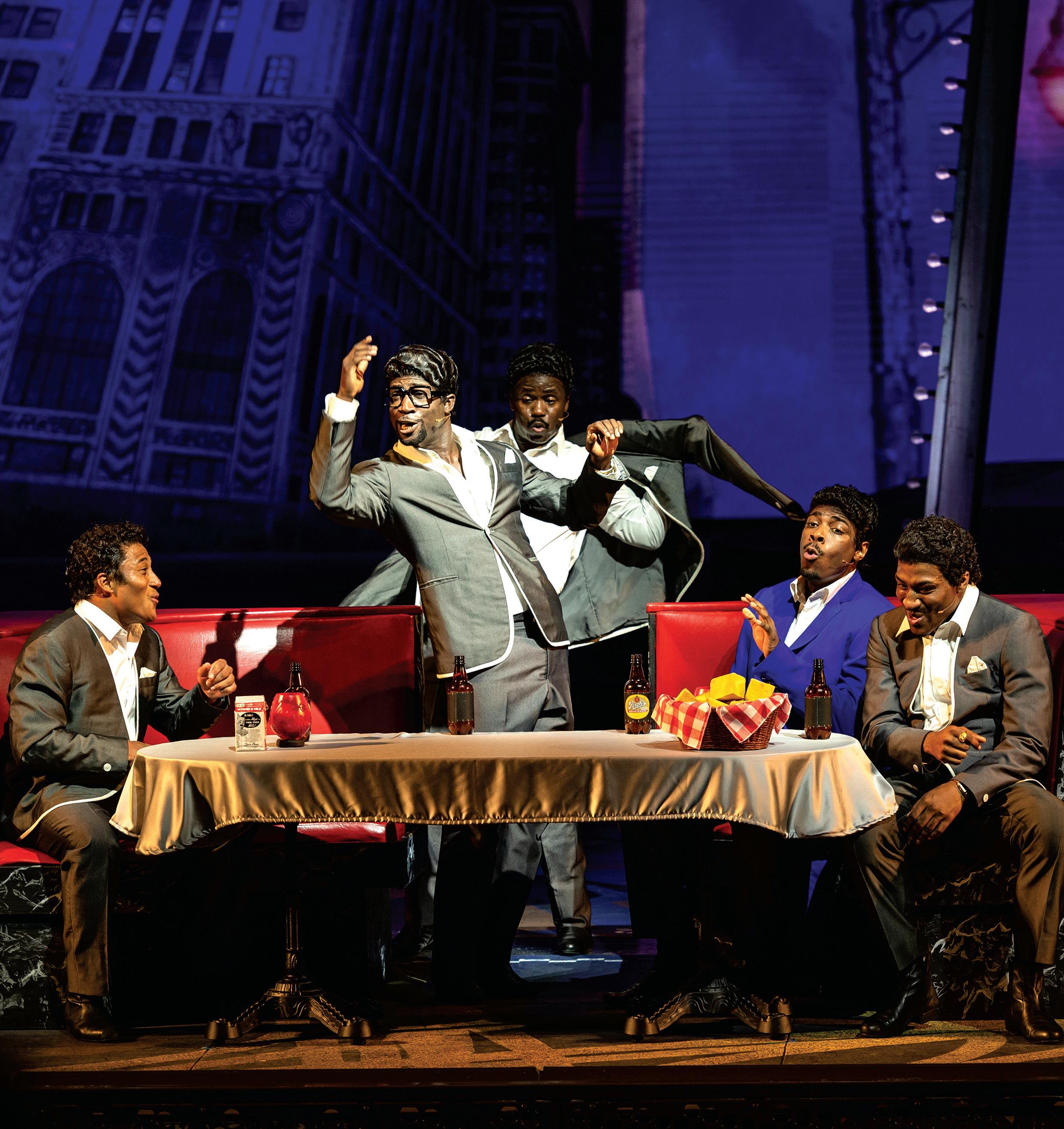
When the Muny premiere of Ain’t Too Proud: The Life and Times of The Temptations kicks off with “Get Ready,” the opening number feels less like an introduction and more like a directive. What follows over the next two-and-a-half hours is a whirlwind of emotion and powerhouse performances that move far beyond jukebox musical nostalgia.
Those expecting a simple sing-a-long should know that Detroit playwright Dominique Morisseau crafted something deeper. She threads the group’s greatest hits — and a few surprises — into a theatrical experience that reveals the sacrifices behind the music. The Temptations left an unmatched imprint on Motown and popular culture, and with a special opening-night curtain speech from Otis Williams, the
By Kenya Vaughn St. Louis American
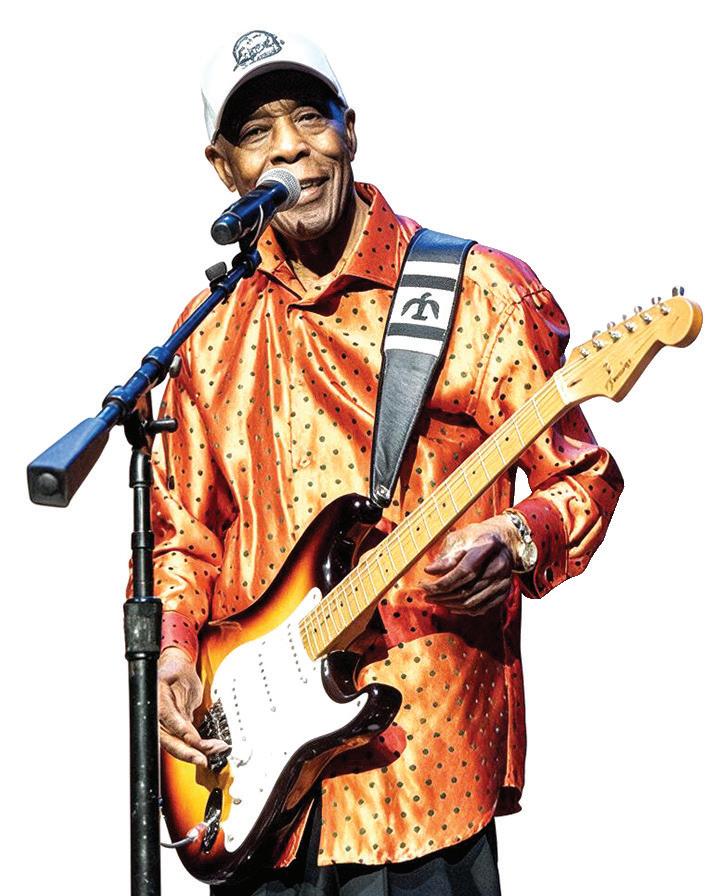
Buddy Guy is the last of the living guitar giants who built their legacy in Chicago’s post-World War II blues scene. Nearly all of the bluesmen whose music reshaped American popular culture arrived there from Mississippi during the Great Migration. Many of the rest — including Little Walter, Bobby Rush and Guy — came up from Louisiana.
“I don’t get this kind of treatment everywhere I go.”
– Buddy Guy on
When Guy played The Factory at The District on Friday night for the St. Louis stop of his Buddy Guy 90 Tour, he reminded the crowd of the moment he often calls his “second birthday.”
“September 25, 1957 is the day that changed my life,” Guy told the audience. It was the day he made it “from a plantation in Louisiana to the concrete jungle of Chicago.”
He arrived hungry, hoping to play for his hero Muddy Waters. He played through the hunger. After leaving the room stunned, he asked for something to eat.
“You play like that, you ain’t never gonna be hun gry again,” Waters told him — a story Guy has repeat ed over the years, including in the 2021 documentary Buddy Guy: Chase the Blues Away. Waters was right. Guy has been “eating” ever since. His signature sound shaped not only the blues, but pop, rock and metal.
St. Louis blues fans witnessed that staying power
By Kenya Vaughn St. Louis American
Tens of thousands packed in for the
St. Louis has had its share of defining moments in Black music — in rooms both intimate and enormous. From W.C. Handy’s appearance at the 1944 Negro Music Festival at Sportsman’s Park to Beyoncé’s Renaissance Tour at The Dome at America’s Center eight decades later, there’s a familiar pride in being able to say, “I was there when…” Another one of those moments unfolded at The Dome last Tuesday night, when tens of thousands packed in for the St. Louis stop of the R&B
St. Louis American Calendar

Sat., Aug. 1, 12 noon, Rides N School Supplies, O’Fallon Park Rec Plex, 4343 West Florissant Avenue.
Sat., Aug. 1, 1 p.m., Boys and Girls Club of Greater St. Louis Back to School Fair, Boys and Girls Club –Mathews-Dickey, 4245 N. Kingshighway Blvd.
Thursday, Aug. 6, 6 p.m., The Riverview Gardens School District (RGSD) Back to School Bash, Riverview Gardens High School, 1218 Shepley Drive. For more information, visit www. rgsd.k12.mo.us.
Sat., Aug. 8, 10 a.m., Normandy Schools Collaborative presents Beyond The Backpack, Normandy Early Learning Center and Normandy Middle School at Lucas Crossing. Registration is required. Register today: https://bit.ly/4wsGf6N
Sat., Aug. 8, 10 a.m., Jennings School District’s Back to School Jamboree, Jennings High School, 8850 Cozens Avenue. For more information, visit www.jenningsk12.org
Sat., Aug. 8, 12 noon, Dem Jeep Girls Back to School Giveaway, 95 North Oaks Plaza.
Sat., Aug. 8, 12 noon, Goodfellas Back to School Picnic, Bayer YMCA, 5555 Page Blvd.
Sat., Aug. 8, 12 noon, Urban League of Metropolitan St. Louis Back to School drive through giveaway, 1408 N. Kingshighway Blvd.
Sun., Aug. 9, 12 noon, The Dwann Dillon Colon Cancer Foundation presents their 16th Annual Back To School and Resource Fair, North County Recreation Center, 2577 Redman Ave., St. Louis MO 63136.
Tues., Aug. 11, 5 p.m., University City annual National Night Out and Back-to-School Rally, Centennial Commons, 7210 Olive Blvd.
Sun., Aug. 16, 12 noon, Inspiring STL Back to School Bash, Hoskins-Jackson Park, 6231 Washington Avenue, Berkeley MO.
CONCERTS
Thurs., July 30, 7 p.m., Lil Wayne: 20 Years of Carter Classics with 2 Chainz, Hollywood Casino Amphitheater. For more information, visit www.livenation.com.
Sat. Aug. 1, The City Winery welcomes Kindred The Family Soul, City Winery, 3730 Foundry Way, St. Louis, MO. For more information, visit www.citywinery.com
Tues., Aug. 4, 8 p.m., Akon & Ne-Yo: Nights Like This Tour 2026, Hollywood Casino Amphitheater. For more information, visit www. livenation.com.

Sun., Aug. 9, 7:30 p.m., Jack Harlow, The Pageant, 6161 Delmar. For more information, visit www.thepageant.com
Thurs., July 30, 6 p.m., Black Tech Midwest presents SIP & TECH Mixer St. Louis Edition, The Post Building, 1190 Cole Street. For more information, visit www.eventbrite. com
Sat., Aug. 8, 3 p.m., The Golden Era of Black Radio, the fundraising event will feature a tribute to the late Doug Eason. The Post-Dispatch Building, Tucker and Cole Street. Fri., Aug. 14-Aug.16, Black Pride St. Louis presents Black Pride

STL Weekend, Marriot St. Louis Grand, 800 Washington Ave. For more information, visit www.blackpridestl.org.
July 31 – Aug. 1, Jess Hilarious, Helium Comedy Club, 1151 St Louis Galleria Street, St Louis MO 63117. For more information, visit st-louis.heliumcomedy. com Sat., Aug. 1, The Factory welcomes Aries Spears, The Factory, 17105 N Outer 40 Rd, Chesterfield, MO 63005. For more information, visit www.thefactorystl.com
Fri., Aug. 7, 7:30 p.m., D’Lai: I Beg Your Pardon Tour, City Winery, 3730 Foundry Way, St. Louis, MO. For
Hitmakers Akon and NeYo have joined forces for the Nights Like This Tour and will be hitting Hollywood Casino Amphitheatre for the St. Louis stop. See CONCERTS for details.
more information, visit www.citywinery.com
Aug. 7 – Aug. 9, Helium welcomes Karlous Miller, Helium Comedy Club, 1151 St Louis Galleria Street, St Louis MO 63117. For more information, visit st-louis.heliumcomedy. com
ST. LOUIS
MUSIC SPOTLIGHT
Sat., Aug. 1, 8 p.m., Simply Brittny Live at The Dark Room, 3610 Grandel Square. For more information, visit kranzbergartsfoundation.org/ the-dark-room/
Fri., Aug. 14, 8 p.m. Scooter Brown Live at The Dark Room, 3610 Grandel Square. For more information, visit kranz-
bergartsfoundation.org/ the-dark-room
Sat., Aug. 15, 1 p.m. CWE Jazz and Blues Festival, Euclid and Laclede in the Central West End. For more information, visit cwescene. com.
Through Aug. 2, The Muny presents Ain’t Too Proud, The Muny, 1 Theatre Dr, St. Louis, MO 63112. For more information, visit https://muny.org
Aug. 6 – Aug. 13, The Muny presents Meet Me In St. Louis, The Muny, 1 Theatre Dr, St. Louis, MO 63112. For more information, visit https://muny.org
ART
Wed., Aug. 5, 5 p.m., Brickline Greenway Art Party, Contemporary Art Museum St. Louis, 3750 Washington Blvd. For more information, visit greatriversgreenway.org. Through Aug. 9, Teaser by Ayana Evans, Contemporary Art Museum, 3750 Washington Blvd, St. Louis, MO 63108. For more information, visit https://camstl.org
Fri., Aug. 14, 6 p.m. Opening reception for the juried exhibition A Hum Beneath the Surface by Lillian Stephen, on display through November 8. The Kranzberg Gallery, 501 N. Grand Blvd. For more information, visit kranzbergartsfoundation.org


By Lyah B. LeFlore-Ituen, AAHI Director
Last week, I had the joy of joining St. Louis Public Radio for a conversation framed around a question that sounded simple enough: Who are St. Louis’s pop culture royalty? The host called out a familiar line up of hometown heavy hitters—Jennifer Lewis, Scott Joplin, Chuck Berry, Tina Turner, and Miles Davis. Each carries a title worthy of a crown: the Mother of Black Hollywood, the King of Ragtime, the Father of Rock ’n Roll, the Queen of Rock ’n Roll, and the King of Cool. It was a fun conversation, but not long after the microphones were turned off, I found myself thinking about something much deeper.
We celebrate these known icons all the time—and we should. But they aren’t the only iconic names with lineage to the soil we stand on. Maybe we have been telling the story of St. Louis all wrong. The question is not only, “Why has St. Louis produced so many remarkable artists?”
The question becomes, “What kind of place creates generations of artists who carry artistic inheritance?”
recognized their names.
East St. Louis tells that same story. Recently I had the privilege of hosting a conversation with Dr. Eugene B. Redmond and Terry “Kujaliwa” Kennedy. I was not simply listening to their powerful journeys; I was witnessing lineage. Dr. Redmond’s literary legacy continues through his daughter, Dr. Treasure Shields Redmond. Kennedy’s late twin brother, Dhati Kennedy, was a gifted African drummer, and their family’s roots extend to the incomparable jazz vocalist Shirley Horn. Their father survived the 1917 East St. Louis Massacre, reminding us that resilience and artistry often grow from the same soil.
And the story continues.
Greatness rarely happens by accident. It is cultivated, mentored, protected, and often passed from one generation to the next until excellence becomes part of a community’s DNA. Look closely at St. Louis, and you see that inheritance everywhere.
The creative brilliance of renowned saxophonist, multidisciplinary artist, and Black Artists Group co-founder Oliver Lake continues through his sons, Gene Lake, one of today’s most dynamic and respected percussionists, and Jahi Sundance, an innovative producer whose collaborations with Robert Glasper have helped shape contemporary jazz, hip-hop, and soul.
The late bassist Darrel Mixon carried forward the extraordinary musical legacy of his father, John Mixon, who performed with Miles Davis, Jimi Hendrix, Clark Terry, and Oliver Nelson.
Lou “Fatha” Thimes helped shape St. Louis radio and entertainment with his unmistakable voice, style, and presence. His daughter, Denise Thimes, inherited not only extraordinary musical gifts, but also a deep understanding of storytelling through song. Today, she is one of America’s premier jazz vocalists—a living legend whose elegance, artistry, and unmistakable voice have carried the sound of St. Louis around the world.
The Bosman family tells another beautiful chapter. Brothers Dwight and Dwayne Bosman have enriched the cultural life of this city for decades through music, education, and community leadership. Their younger sister, Cheryl D. S. Walker, continues to give voice to St. Louis through her poetry, while her son, Kamau O. S. Walker, carries that literary tradition into another generation.
When you step back and look at these stories together, you begin to see something extraordinary. These are not isolated success stories. They are branches of the same tree. Perhaps that is what makes St. Louis, and this entire bi-state region, unlike anywhere else. We do not simply produce artists. We produce artistic families. We produce communities that understand creativity as a sacred trust handed from one generation to the next.
Greatness rarely happens by accident. It is cultivated, mentored, protected, and often passed from one generation to the next until excellence becomes part of a community’s DNA.
Then there is Kinloch. We rightly celebrate Jennifer Lewis, but Kinloch’s story does not end there. The Harrold family reminds us that communities do not simply produce talent—they cultivate it. Grammy-winning trumpeter Keyon Harrold carries the legacy of his family’s Kinloch roots and his upbringing in neighboring Ferguson onto some of the world’s greatest stages. His brother, Emanuel Harrold, has become one of today’s most accomplished drummers, touring internationally with Gregory Porter. Together, they represent another remarkable St. Louis family whose artistry was nurtured long before the world

Continued from B1 founder and last surviving original member, the Muny underscored that The Temptations’ 65-year legacy endures. Morisseau centers the story through Williams’ eyes. A wayward youth who found purpose in Detroit after leaving Texarkana, Texas, he built the group and held it together — even as he often stood in the background while others took the lead. The Temptations were an anomaly: five men who each possessed the talent to stand alone. That truth remains with the current lineup, which includes the soon-to-be 85-year-old Williams and Jawan M. Jackson, who embodies Melvin Franklin’s deep bass both onstage in Ain’t Too Proud and in real life as the newest member of the group.
“I call him my second Melvin,” Williams told the crowd.”
The musical shows that destiny comes with a cost. The strain of maintaining a cohesive unit while life intrudes is at the heart of the story. “Don’t nothing rewind but a song,” Williams says more than once — a line that lands as both optimism and regret for choices that fractured relationships along the way.
For its first staging of Ain’t Too Proud, the Muny could not have assembled a stronger cast. Every performer is a triple threat whose singing, dancing and acting
After all, royalty is not about celebrity. It is about legacy. It is about accepting the responsibility to carry something larger than yourself and ensuring it reaches those who come after you.
Maybe that is the real story of St. Louis. Not simply that we have given America some of its greatest artists, but that, for generations, we have cultivated one of the richest ecosystems of Black artistic excellence anywhere in this country. The roots of Black excellence are firmly planted here. Our job is not simply to admire the tree. It is to water, nurture, and care for it, so generations yet to come will continue to find strength, inspiration, and possibility in its shade.

Saturday, October 17th
St. Louis Union Station Hotel
impress from the start.
Led by James T. Lane as Williams, the principal cast delivers vocal acrobatics that match their kicks, spins and turns — and they bring emotional depth and sharp comedic timing to their roles.
At any moment, one of the “original five” — Lane, Daniel Yearwood as Paul Williams, Jackson as Franklin, Elijah Ahmad Lewis as Eddie Kendricks and Nick Rashad Burroughs as David Ruffin — leaves the audience in awe. Whether it’s a soaring vocal run, a split-second dance move or a heated exchange when being a Temptation becomes too heavy, none of them falter. Burroughs unleashes Ruffin’s volatility against Lane’s moral and emotional compass, while Jackson often steps in as the voice of reason.
The cast’s gifts extend well beyond the leads.
St. Louis’ own Robert Crenshaw shines as Al Bryant, a member of the group before they became a household name. His singing and dancing match the principals, and his later turn as Motown hitmaker Norman Whitfield shows sharp acting instincts.
Nasia Thomas (Josephine), Candice Marie Woods (Diana Ross) and Joseph Anthony Byrd (Dennis Edwards) further elevate the production.
Among the show’s standout moments are the title number, the Supremes medley and the “If You Don’t Know Me By Now” duet between Lane and Thomas.
Beyond the performances, Ain’t Too Proud
offers compelling glimpses into the business of making hits — the financial struggles of emerging artists, the creative restraints imposed for commercial appeal, and the complicated negotiations required to earn one’s worth.
The show’s strength also presents its lone challenge. Director Marcia Milgrom Dodge’s “more is more” approach occasionally tips into over-stimulation. The vocal acrobatics sometimes overshadow the richness of the voices — particularly Lewis and Burroughs — and some of Rickey Tripp’s choreography goes over the top for a group known for suave precision.
Still, the visual elements add to the experience. Edward Haynes Jr.’s scenic design is stellar, and Gail Baldoni’s interpretation of Paul Tazewell’s original costumes is equally impressive.
Williams was all smiles after the cast took their final bows. “You all are amazing. I’m speechless,” he told the audience as he helped close out the night. “I’ve been doing this since I was a little shorty doowop. And now, all these years later, I’m standing before all these wonderful people. We won’t take this for granted. Because if it wasn’t for you, there would be no us.”
Ain’t Too Proud: The Life and Times of The Temptations continues through Sunday, August 2 at The Muny. For tickets and additional information, visit muny.org.


by Lawrence Bryant / St.
MATI rewind: Take two. As I promised, I want to give more space for Music at the Intersection 2026. Yes, it was two weeks ago at this point, but I still have some things to say – and I know y’all want to hear it. First, can we give a shout out to Mrs. Nancy Kranzberg for her undefeated blouse game? I got my whole life from the entire weekend’s assortment. Okay, now let us give the MATI folks bouquets of flowers for who they brought to town. I would have never paired Big Freedia and Killer Mike back-to-back on a bill. But my life will never be the same after experiencing it. That twerk-a-mania that Big Freedia conjured up…I’ve never seen anything like it! You ain’t seen nothing until you bear witness to a man who looks like a 75-year-old retired IRS auditor throwing it in a circle. And Killer Mike should make room for his background singers to drop their own set like The Hamiltones! They blew the roof off The Big Top! I still would have been in hip-hop bliss if it had just been Killa Kill and Trackstar on that stage. I don’t have space to name everything that was right about MATI 2026…just know that it couldn’t have been any righter! A special shout out to all the STL artists who showed what our city is made of musically!
Buddy Guy’s still got it. Listen, y’all know me well enough to know that there are a handful that I will go to the ends of the earth to see hit the stage. And right between Denise Thimes and 8Ball & MJG is my non-biological grandfather Buddy Guy. He hit up The Factory with his Buddy Guy 90 Tour. Before I do another thing, let me shout out The Factory for their top-tier hospitality. I don’t feel a type of way in the least bit for having to drive to West Jesus to catch a show because of the way they treat a sista. Okay, back to Paw Paw Buddy. I know there are folks who feel a type of way about him still being on the road at 90. But if they saw how Buddy cussed out the folks for being off beat and off key when trying to sing along with him, they would know that ain’t nobody forcing him to do a single, solitary thing. And he can still throw down, so why not! Everybody in the building was beyond satisfied – including me! If he can still sing and play, I will be front and center for the Buddy Guy 102 Tour.
Much love to the living legends. This might not be the place for it, but I want to give a shout out to Be The Change Now STL for saluting some of my favorite folks in the region by way of their Living Legend Awards. I had a time in my good clothes at the Missouri History Museum for the sold-out event that brought the who’s who of the city out to show love. Zaki Baruti, Ariel Bivens-Biggs, Sheila Forrest, Sharee Nicole Galvin, Bernie Hayes, Wiley Price, Dr. Eugene Redmond, Anthony Shahid and Lady Ada Taylor.
Happy birthday Michael McMillan. Since I’m talking about getting dressed up and having a good time, I might as well tell y’all about Urban League President Michael McMillan’s birthday gathering at the Missouri Athletic Club. If anyone ever doubted the fact that he is a class act (no one ever will though) Monday’s event settled it. Michael, allow me a moment to me sing the Stevie Wonder’s version of the birthday song to you – it’s the least I can do for how you keep lifting up the community!
Big ups to Brock Seals. I know I’ve been bigging him up his entire career, and Brock Seals gives me every single reason to keep doing it! Saturday night, I made my way to The Hawthorn to catch his latest installment of Art, Mimosa & Pancakes. Even as an artist in his own right, Brock and that baby face of his have been giving space and agency to the creative community for years. And

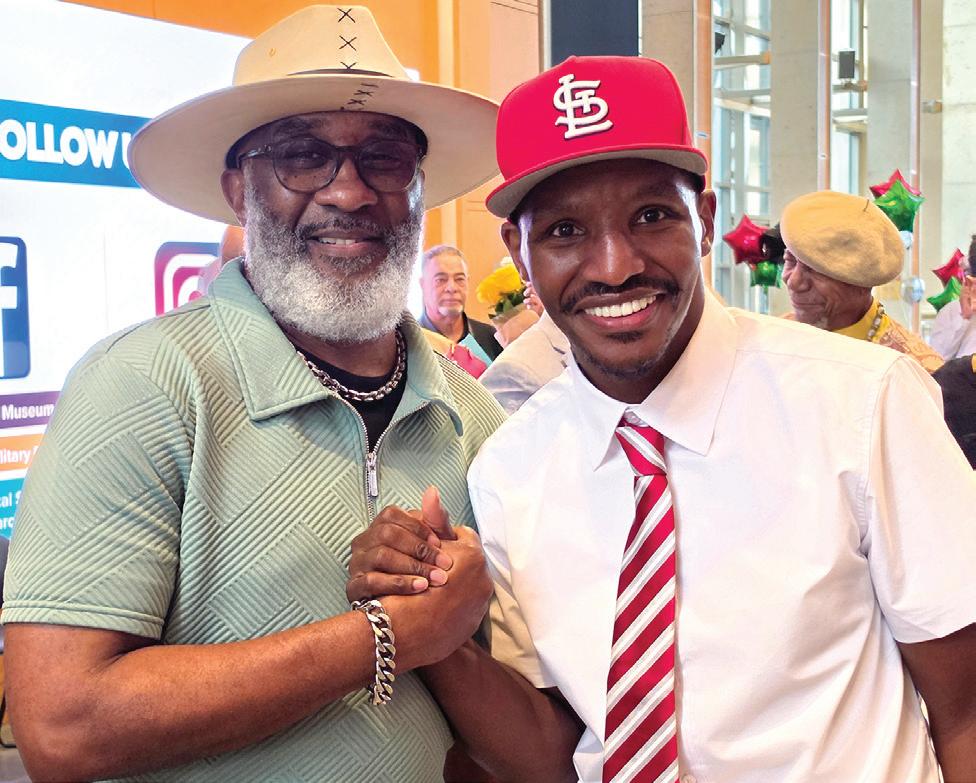
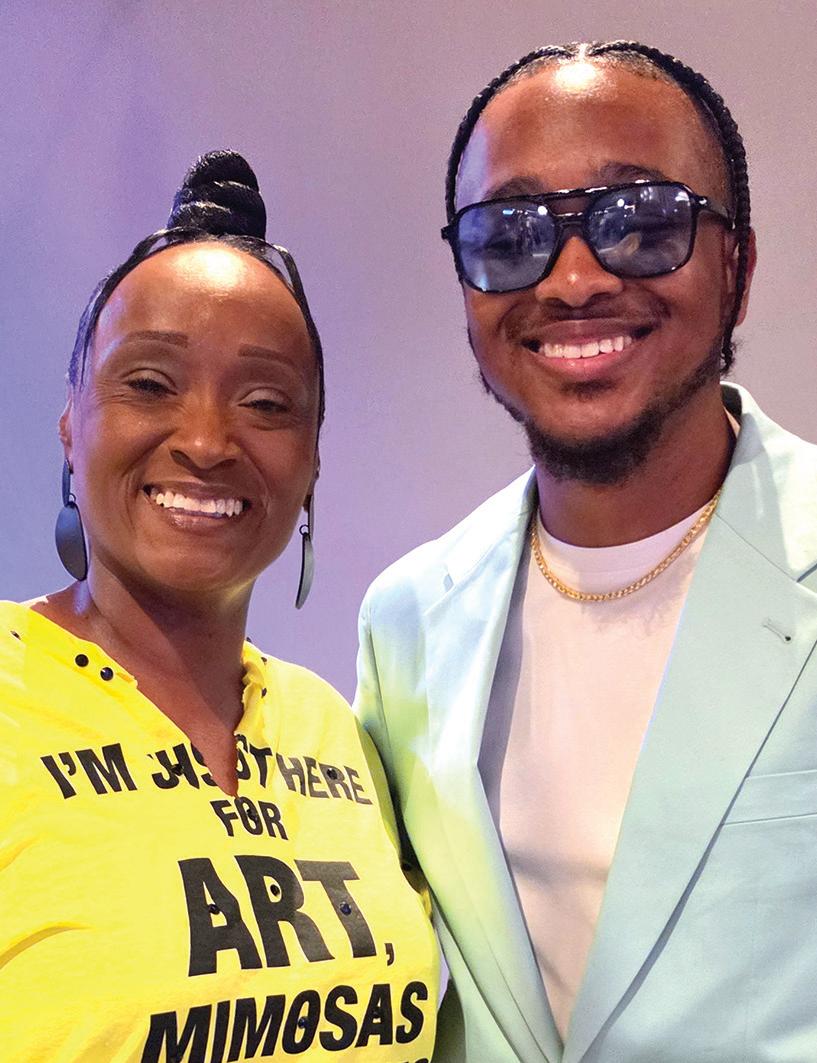
for

Tuesday night at The Dome at America’s Center
Saturday night was no different. I don’t want to compare it to Arts, Beats and Lyrics, because Brock’s set has its own super-STL vibe and energy. But I will say that if ABL is your scene, AMP should be on your calendar every year. I had a ball! I kicked off my Education Salute 2026 diet a week early, so I didn’t partake in the pancakes or the mimosas. My stomach was empty, but the art filled my soul to capacity! And I want to shout out the art of Carol ThompsonRobinson for those glorious paintings and Taylor Marrie for those super-cute chairs.

Continued from B1
once again. “I love coming here,” Guy said as the crowd welcomed him with a standing ovation. They responded throughout the night with applause and verbal affirmation.
“I don’t get this kind of treatment everywhere I go,” he admitted, noting he was five days away from his 90th birthday.
He might not — but he should. Guy is your favorite guitarist’s favorite guitarist. Jimi Hendrix counted him among his biggest influences. Riffs inspired by Guy can be heard everywhere from The Allman Brothers in the 1970s to modern acts like James Bay, Coldplay and Gary Clark Jr. His hour-plus set on Friday served as further
proof that Guy is not a relic. Last year, on his birthday, he released Ain’t Done with the Blues. And at 90, he is still doing his part to ensure the blues — in its original form — lives on.
Guy announced his retirement two years ago.
At 88, he had earned it. But he returned to the road — perhaps boosted by the exposure from filmmaker Ryan Coogler, who gave him a cameo in his blockbuster film Sinners. Or maybe he simply knew he still had something to contribute.
Whatever the reason, Guy delivered a show that demonstrated he still carries what Waters saw in him nearly 70 years ago.
He opened with his classic “Damn Right, I Got the Blues.” He honored Waters with “Hoochie Coochie Man” and moved through blues staples
including B.B. King’s “How Blue Can You Get” and his own “Love Her With a Feeling.” Guy also paid tribute to Bobby Rush — who is still touring into his 90s — with a take on Rush’s “Chicken Heads.” While Ric Hall assisted on some of the guitar solos, Guy managed the weight of the performance. He sang. He played. And he kept the audience engaged from the moment he stepped onstage until his children joined him to close the show. He shared the stage with his son Greg on guitar and his daughter Carlise on vocals. Carlise Guy and her band opened the night with a wellreceived hourlong set that included original music, blues standards and Black music classics like James Brown’s “Sex Machine” and Cameo’s “Word Up.”

With Alvin A. Reid
St. Louisan Derrick Pitts has enjoyed a standout year on the baseball diamond in collegiate and international competition.
The former CBC standout had a breakout sophomore year at the University of Cincinnati. He followed that up this summer with an excellent showing while playing for USA Baseball.
Pitts was a member of the USA Baseball Team that competed in the inaugural World Collegiate Baseball Championships in Taichung City, Taiwan. The talented outfielder helped lead the USA to a 3-1 record and a runner-up finish in the tournament.
field, a few of which were featured on ESPN’s Sportscenter.
Welcome Back Napheesa Collier
The Minnesota Lynx entered the WNBA’s AllStar break with the best record in the league. Right before the break, they received another big boost with the return of star player Napheesa Collier.
Pitts was outstanding during the tournament as the team’s leadoff hitter. He hit safely and drove in at least one run in each of the four games. He finished the tournament with a .500 batting average with four runs batted in and six runs scored.
In the championship game against Japan, he had two hits, scored a run and drove in another run. In the opening game against Korea, he was two for three with one run batted in and two runs scored. In the second game of the tournament against Japan, he went three for five with one run batted in.
During the collegiate season with Cincinnati, Pitts hit .329 with six home runs, 42 RBI, 12 doubles, 49 runs and 17 stolen bases. He helped the Bearcats earn a berth in the NCAA Tournament. He also made some tremendous catches in right
The former Incarnate Word Academy star returned to the starting lineup last week in the Lynx’ victory over the Seattle Storm. Collier had missed nearly a year of action after undergoing ankle surgery following an injury sustained during last season’s WNBA Playoffs.
In her first game back, she looked very much like the perennial All-WNBA player, scoring 24 points and grabbing 10 rebounds in the Lynx’ 86-76 victory. The 6-foot-2 Collier enjoyed her big performance despite playing only 22 minutes.
With Collier back in the lineup, the Lynx will be one of the top contenders to win the WNBA championship this season. Collier will now be teamed with star rookie point guard Olivia Miles, who has been brilliant this season.
J’Dyn Lloyd commits to Missouri State
Belleville West basketball standout J’Dyn Lloyd has given a commitment to Missouri State.
The 6-foot-6 rising

senior guard is one of the top returning players in the St. Louis metro area. As a junior, he averaged 18.8 points, 4.6 rebounds and two assists while leading the Maroons to a 21-10 record.
Lloyd also delivered some of his biggest performances against the top teams on the schedule. In two games against Illinois Class 3A state champion East St. Louis, he scored 30 and 23 points, respectively. He scored 24 points against Missouri Class 6 state champion De Smet and 30 points against
perennial St. Louis power Chaminade. Missouri State’s head coach is former East St. Louis Lincoln star Cuonzo Martin.
Gateway-Knights win P32 national championship
Congratulations to the Gateway-Knights boys basketball team on winning the New Balance P32 National Championship. Gateway won the national tournament last weekend in Memphis, Tennessee. They also dominated the P32 League throughout
With Earl Austin Jr.
the summer with a perfect 18-0 record. The team featured several talented players from the St. Louis area. The championship team members include Sekou Cisse and Gassim Toure of Principia, Sebastian Bolden (Clayton), Liam Nixon (Kirkwood), CJ Nelson (Miller Career Academy), Kyrese Simpson (Springfield Hillcrest), Mike Acton (Daviess County, Kentucky), Akol Akol (Ivory Coast) and Paul Sama (Hamilton Heights, Tennessee). The head
Derrick Pitts was a member of the USA Baseball Team that competed in the inaugural World Collegiate Baseball Championships in Taichung City, Taiwan. Pitts was outstanding during the tournament as the team’s leadoff hitter. He hit safely and drove in at least one run in each of the four games.
coach is Lamar Colvin, who is also the assistant coach at Chaminade.
Scottie Adkinson named to All-Peach Jam first team
Webster Groves basketball standout Scottie Adkinson was named to the All Nike EYBL Peach Jam first team last week. The 6-foot-3 senior University of Missouri recruit led MoKan Elite to the quarterfinals of the Peach Jam. He averaged a team-high 16.5 points, 4.5 rebounds, 3.7 assists and 1.3 steals.
Before we discuss the happenings of Friday, July 24, 2026, let’s revisit March 23, 2014.
On that spring Sunday, I sat near the late PostDispatch sports columnist Bryan Burwell during the opening rounds of Midwest Regional NCAA Tournament games being played at Scottrade Center (now Enterprise Center).
Proud Jayhawk that I am, I was confident we would top Stanford in a second-round game and move on to the Sweet 16 — even without starting center and future NBA top draft pick Joel Embiid. Burwell warned me he thought an upset was brewing. Man, was he right. Stanford 60-57. Since that day, unfairly maybe, I’ve had a sour attitude toward Embiid.
Jayhawks’ final two regular season games and the Big 12 Tournament. There were legitimate concerns about his back pain.
He had averaged 11.2 points, 8.1 rebounds and 2.6 blocks per game, and helped KU land a No. 2 seed in the tournament. They were a favorite to reach the Final Four. Obviously, that didn’t happen.
Embiid would enter the NBA Draft and become the third overall pick by the 76ers. Before playing a game that season, he injured his foot and would miss the entire campaign. A knee injury then cost him another season. His career was going nowhere.
While coach Bill Self never hinted that Embiid could have played, there were rumors that the future Philadelphia 76er had decided to miss the entire tournament.
Embiid had missed the

His first assignment is to energize the sometimes-flighty Embiid. Regardless of his injury status in 2014, I never thought Embiid was as serious about winning the NCAA Tournament as he was playing in the NBA.
His KU teammate Andrew Wiggins, who was also an NBA firstround pick, showed much more enthusiasm for the college game. Wiggins would later win an NBA title with the 2022 Golden State Warriors, something Embiid has failed to do.
concerns.
“I don’t want to be hard on Embiid, but you have to think about all those [health] things,” he said.
“From my understanding, Embiid is doing a hell of a job this summer. It’s the first summer he’s actually been healthy. Not having some type of surgery over the summer, which is always good.” That is hardly a glowing endorsement. For now, I’m excited for Embiid. Let’s see if he lets me, and Philly, down again.
Embiid’s up-and-down career in Philadelphia, which has included some success, fan scorn, and his own questionable attitude and effort, reached its peak when he won NBA MVP honors in 2023. His team has never reached the NBA Finals, though. Suddenly, it has a chance.
The 76ers acquired Jaylen Brown from Boston in a trade earlier this summer that left Celtics fans seething with anger. Then, last Friday, LeBron James announced he would sign a two-year $8 million deal with the 76ers. Add NBA All-Star Tyrese Maxey to the mix of players and Philadelphia could take control of the NBA Eastern Conference.
The reigning NBA champion New York
Knicks still are slightly favored in the conference, but our hometown hero Jayson Tatum and his Celtics find themselves looking up at the upstart 76ers.
“I believe I can help make the Philadelphia 76ers a championship team and I am so excited to energize a new fan base and start this incredible journey one last time,” James said in his announcement on X.
James could be the deciding factor in whether Embiid reaches the elusive goal of a title. James is presumably in his final two seasons, and Embiid is 32. The NBA clock is ticking. Meanwhile, Embiid has not officially commented on James’ decision. When the Knicks chased Philadelphia out of the playoffs, Embiid was healthy. For the first time in a long time (knock on wood) he will begin the 2026-27 season without any physical setback.
James’ agent and lifelong friend Rich Paul didn’t shy from obvious
The Reid Roundup
Jayson Tatum has not publicly commented on LeBron James joining the Philadelphia 76ers, but he may have taken a shot at former Boston Celtics teammate Jaylen Brown while speaking to basketball campers at Wohl Recreation Center in St. Louis last week. “Being a leader doesn’t mean you know it all. Being around somebody that feels like they know it all, I don’t wanna be around that person.”…My guess is that the Celtics and 76ers play on Christmas Day.

For more than 30 years, the Saint Louis Art Museum has welcomed a Romare Bearden Graduate Museum Fellow each year. The Fellowship honors the pioneering legacy of Romare Bearden by creating opportunities for emerging museum professionals to contribute meaningfully to the art world.
One of the nation’s longestrunning programs of its kind, the paid, cross-departmental Fellowship prepares museum professionals from historically underrepresented backgrounds for careers in museums and cultural institutions. During the twoyear program, Fellows gain experience across the Museum in areas including curatorial, programming, and marketing. Specific projects include developing the annual Celebrate African and African American Art brochure, organizing the If It Wasn’t for the Women panel during Women’s History Month, and teaching in the Arts in the Basic Curriculum school program.


Each July, the Museum celebrates a graduating Fellow while welcoming a new Fellow to begin the program. This summer, Cristal De La Cruz (2026–2028) joins the Museum as its newest Romare Bearden Graduate Museum Fellow, Daniella Statia (2025–2027) enters her second year of the Fellowship, and Maggie Brown-Peoples (2024–2026) completes the program.
De La Cruz recently earned a master’s degree in Museum Studies from the Cooperstown Graduate Program and has worked with organizations including National History Day, Emory University’s Michael C. Carlos Museum and Dartmouth College’s Hood Museum of Art. During her Fellowship, she
hopes to gain additional experience working with diverse audiences while contributing to museum accessibility initiatives.
Statia holds degrees in Art History and Museum Studies from the University of Delaware and has focused her research on Blackness and Indigeneity in the art of the Americas. Among her recent SLAM projects, she partnered with the Griot Museum of Black History to produce an online exhibition featuring Saint Louis Art Museum textiles to complement Legend of Kente, currently on view at the Griot Museum. She is also managing and moderating the Museum’s free annual virtual summit, Advancing Change: Shaping Tomorrow Through Art Foundations, taking place on Oct. 1. Check the slam.org website for registration details. Brown-Peoples concludes her Fellowship this summer after two years at the Museum. A St. Louis native, she earned degrees from the University of Missouri and the University of Kansas. She completes her Fellowship with a digital project highlighting the life and work of 19th century African American sculptor Edmonia Lewis. We invite you to learn more about the life and work of Lewis through this interactive experience at slam.org.
“My time as the 2024–2026 Romare
Bearden Graduate Museum Fellow at the Saint Louis Art Museum has been an incredible journey,” said Brown-Peoples. “As a St. Louisan, it has been a privilege to serve the community through this role while gaining invaluable skills and experiences.”
The Romare Bearden Fellowship is supported through private funding and the Museum’s operating budget. Applications for the 2027–2029 Fellowship will be available in November.


Continued from B1
2024. Brown’s Breezy Bowl XX filled The Dome less than a year ago. Each show stood on its own. So it wasn’t surprising that combining their star power resulted in a production that left jaws dropped — not because it repeated what they’d already done, but because it delivered something entirely new.
Aside from the late start — fans arrived well before doors opened at 6:30 p.m., but the show didn’t begin until 9 — there was little to criticize. And thanks to Brown’s tour hype man DJ Fresh, even the delay became part of the atmosphere. By the time Brown and Usher opened with “Party,” the night was already in motion. It was clear from the first song that the audience was in for something memorable.
The R&B Tour lived up to the months of anticipation sparked by a cryptic social media teaser. It offered a distinct experience from their recent solo shows. Over two and a half hours, Usher and Brown reminded the crowd why each is a defining figure in R&B — and why mainstream pop had no choice but to absorb their influence.
The show was curated with intention, leaning on top-tier audiovisual elements that gave it a near-theatrical feel. They could have easily relied on a rapid-fire “all the hits” approach, squeezing in snippets to check boxes. Instead, they performed more than 50 songs between them — and together — while still leaving room for the production to breathe. The pacing allowed the audience to take in the technical elements, including video, pyrotechnics and Brown’s aerial stunts on a 3D wire rig.
The outfits, dancers, scene changes, video interludes and three-tiered set kept the crowd visually engaged. But both artists delivered performances strong enough to stand without any of it.
Twenty years into his career, Brown performed with the urgency of someone still determined to prove himself. Usher’s set carried the confidence of an artist with nothing left

to justify — punctuated by the crown he placed on his head after performing “Confessions” from a throne.
Usher is more than a decade older than Brown, but it didn’t show. If Brown hadn’t respectfully referred to him as “uncle” multiple times, the audience might have forgotten. Both moved with the precision of performance athletes.
Their chemistry was evident as they opened and closed the show together and tagged in and out of segments. It was especially clear during their “Nice and Slow”/“It Depends” mashup, with Usher surrounded by dancers and Brown moving across the stage as screens cut between them.
True to its cinematic nature, the show was divided into acts — each with its own lighting, costumes and occasional pyrotechnics. Brown’s most striking set featured a vintage convertible and styling that appeared to nod to the Black film classic Cooley High. Usher’s bedroom and gentlemen’s club scenes were among his visual highlights.
Usher’s strongest performances included “You Make Me Wanna,” “Yeah” and “Love In This Club,” with vocal standouts on “Climax” and “Burn.” Brown impressed with his
aerial work and nonstop choreography, with vocal bright spots on “She Ain’t You” and “Take You Down.”
Their contrasting approaches to audience-participation seduction moments added levity — Usher gently caressing a woman on satin sheets, while Brown placed his guest in handcuffs. They also brought guests. Emerging R&B artist and longtime Usher background vocalist Eric Bellinger satisfied fans with a brief set. St. Louis erupted when Brown brought out hometown star Nelly, who performed “Dilemma” and “Hot In Herre.” Near the end, Mario delivered “Just a Friend,” “How Do I Breathe” and “Let Me Love You.” Rather than overshadowing one another, they stood comfortably in each other’s light. The final and most visually dramatic segment belonged to Brown, who appeared at the side of the stage and flew to a second platform to perform a trio of songs including “Hearts All Over the World.” They reunited — with Usher wearing a St. Louis Blues jersey — to close the night with “New Flame.” Because the song features both artists, it was a fitting finale.


GUARDIAN AD LITEM – FAMILY COURT - JUVENILE DIVISION
Family Court (Juvenile Division) of St. Louis County is seeking an attorney to serve as guardian ad litem (GAL) in the Family Court to handle juvenile matters/ parent attorney. A GAL who serves the Court must commit to serve on various Family Court (Juvenile) cases on an as needed basis for a monthly retainer to be paid by public funds. The current retainer is in the amount of $2,500.00 per month. Payments for time expended in adoption, guardianship of minor, and termination of parental rights matters may be made over and above the retainer fee.
MINIMUM QUALIFICATIONS: Graduation from an
accredited law school, possession of a current license to practice law in the State of Missouri, up to three (3) years of trial experience preferred; preferably in juvenile or family law (additional years of trial experience and guardian ad litem experience are highly preferred), and completion of necessary guardian ad litem training as required by the Supreme Court of Missouri. Note: This position is subject to continued availability of funding.
To apply, please send a current resume, along with a cover letter, to SLCCourtJobs@courts.mo.gov or to the following address (application materials must be postmarked by August 31, 2026): Family Court of St. Louis County, Attn: Human Resources Department, 105 S. Central Ave., Clayton, MO 63105. EOE. Please contact the Human Resources Department at 615-4471 (voice) or RelayMo 711 or 800-735-2966 if you need any accommodations in the application process, or if you would like this posting in an alternative form.
We Publish every Thursday Newspaperand Online reaching over150,000 People per Week
Food Pantry Support Aides (2 Openings) –$16.50–$18.50/hr FT & PT positions supporting our Client-Choice Food Pantry. Mon.–Fri., with 2–3 weekends per year. High school diploma, valid driver’s license, & successful background check required.
Intake Specialist –$17.00–$19.00/hr FT, Mon.–Fri. with occasional evenings & weekends. Requires a high school diploma; associate degree preferred.
Apply on Indeed or email resume to hr@gasastl. org. GASA is an Equal Opportunity Employer. Positions are funded in part by CDBG through HUD and the City of STL Community Development Administration
ST. LOUIS HOUSING AUTHORITY SOLICITATION RD26-26 RENOVATION
CALIFORNIA GARDENS APARTMENTS
2926 CALIFORNIA AVE, ST. LOUIS, MO 63118
The St. Louis Housing Authority (SLHA) seeks bids to perform the following project:
The General Scope of Work for this project consists renovation of the entire development, including new concrete walkways, new asphalt shingle roofing, new windows, new entry doors, exterior repairs, a new elevator, and electrical service upgrades. The 28 apartment units will be renovated, including new flooring, wall finishes, doors, electrical and plumbing fixtures, casework, PTACS, furnaces, and electrical panel upgrades. Modifications will also occur to the community building. The anticipated performance period for this project is 365 calendar days.
The pre-bid conference will be held at 10:00 AM on Tuesday, August 6, 2026 at the project site.
Sealed bids are due at 1:00 PM on Thursday, August 27, 2026 via QuestCDN or hand delivered to the SLHA Main Office at 3520 Page Blvd, St. Louis, MO 63106.
Latasha Barnes Contracting Officer
AN EQUAL OPPORTUNITY EMPLOYER


Bids for Renovate Interior Headquarters Building, MSHP, Jefferson City Project No. R2410-01will be received by FMDC, State of MO, UNTIL 1:30 PM, August 25, 2026. Project information available at: http:// oa.mo.gov/ facilities
Great Rivers Greenway is requesting bids for Federal Project Number STP-9901(666) GRG Bid Number 2026-008-187B
St. Vincent Greenway: Eskridge High School to St. Charles Rock Road Go to www.greatriversgre enway.org/bids/ for details and submit by August 14, 2026.
www.stlamerican.com
Russell Construction is seeking bids for the Winston Churchill Apartments renovation (MHDC project #25-440TE) at 5475 Cabanne Ave, St. Louis, MO 63112. Project scope includes demolition, concrete repairs, masonry restoration, trim replacement, new roofing, openings, flooring, painting, bath accessories, appliances, cabinetry, MEPF work, elevator modernization, and light sitework.
We encourage subcontractors to attend one of the site walkthroughs for this project on 7/28 @ 11:30 or 7/29 @ noon.
Bids are due on August 6th by 5:00 PM and are to be emailed to estimatingSTL@russellco.com. To access the plans and specifications or for any questions related to this project, please contact Ashley Grass at (314) 781-8000.
Minority-owned and women-owned enterprises are highly encouraged to submit bids. This project has business enterprise goals of 21% African American, 2% Hispanic American, 0.5% Asian American, 0.5% Native American, and 11% Women. Workforce (boots-on-theground) goals are 25% minority, 5% women, 20% city resident, and 15% apprentice.
Great Rivers Greenway is requesting qualifications for print production and mailing services. Go to www.greatrivers greenway.org/ven dors/ for details and submit by August 10, 2026.
Bids for Replace HVAC & Boilers/ Pumps/ Controls, Dept of Public Safety/ Highway Patrol, Macon Project R2511-01No.will be received by FMDC, State of MO, UNTIL 1:30 PM, September 10, 2026
Project infor- mation available at: http:// oa.mo.gov/ facilities
Bids for Fletcher Daniels & Teasdale State Office Buildings - Replace Windows & Tuckpoint., Project No. O2512-01 will be received by FMDC, State of MO, UNTIL 1:30 PM, 8/27/26. Project information available at: http:// oa.mo.gov/ facilities
Bids for Replace MultiTier Porch & Sidewalk, The Lohman Building, Jefferson Landing State Historic Site, Jefferson City, Missouri, Project No. X2514-01 will be received by FMDC, State of MO, UNTIL 1:30 PM, September 3, 2026. Project information available at: http://oa.mo. gov/facilities
Bids for U260701 - Interior Renovations, C Wing Updates, Project No. U2607-01 will be received by FMDC, State of MO, UNTIL 1:30 PM, 8/27/26. Project information available at: http:// oa.mo.gov/ facilities
CITY
TUESDAY, AUGUST 4, 2026
Notice is hereby given to the registered qualified voters of the City of St. Louis, Missouri, that the Missouri Primary Election will be held on Tuesday, August 4, 2026, as certified by the Honorable Denny Hoskins, CPA, Secretary of State, State of Missouri, and the Board of Election Commissioners for the City of St. Louis. The polls will be open from 6:00 a.m. until 7:00 p.m.
The purpose of the Primary Election is to nominate candidates in the Republican, Democratic, Libertarian and Green parties of Missouri and the City of St. Louis for the federal, state and county offices to be voted upon at the General Election scheduled for Tuesday, November 3, 2026; and to submit certain constitutional amendments and local ballot propositions to the qualified voters as set forth below.
REPUBLICAN CANDIDATES FOR NOMINATION
FOR STATE AUDITOR
Scott Fitzpatrick, 118 Skyline Drive, Cassville, MO 65625
Gerald (Jerry) Wistrand Jr., 809 S Harding St, Oak Grove, MO 64075
FOR U.S. REPRESENTATIVE, DISTRICT 1
Paul Berry III, 11932 Barbara Dr, Maryland Heights, MO 63043
Andrew Jones, 3911 McRee Ave, St. Louis, MO 63110
FOR STATE REPRESENTATIVE, DISTRICT 79
Mike Hebron, 3134 St. Vincent Ave, St. Louis, MO 63104
FOR STATE REPRESENTATIVE, DISTRICT 80
Jennie Drag, 3917 McDonald Ave #A, St. Louis, MO 63116
FOR STATE REPRESENTATIVE, DISTRICT 84
Robert Vroman, 4105 Dressell Ave., St. Louis, MO 63120
DEMOCRATIC CANDIDATES FOR NOMINATION
FOR STATE AUDITOR
Quentin Wilson, 1503 Greening Lane, Kirkwood, MO 63122
Gregory Upchurch, 529 Caulks Hill Rd, St. Charles, MO 63304
FOR U.S. REPRESENTATIVE, DISTRICT 1
Alissa Murphy, 831 Westwood Drive #2N, Clayton, MO 63105
Carl E. Harris Sr, 106 Berry Manor Cir, St. Peters, MO 63376
Cori Bush, 721 N. 17th St. Apt. 507, St. Louis, MO 63103
Wesley Bell, 900 S Hanley Rd Apt 8C, St. Louis, MO 63105
Carl Earnest Henderson, 4497 Pershing Ave. Apt. 609, St. Louis, MO 63108
FOR STATE SENATOR, DISTRICT 4
Steve Butz, 3823 Holly Hills Blvd, St. Louis, MO 63116
Gina Mitten, 1615 Hunter Ave, St. Louis, MO 63117
FOR STATE REPRESENTATIVE, DISTRICT 76
Marlon Anderson, 1556 Switzer Ave, St. Louis, MO 63147
FOR STATE REPRESENTATIVE, DISTRICT 77
Kimberly-Ann Collins, 4234 E. Lexington Ave., St. Louis, MO 63115 FOR STATE REPRESENTATIVE, DISTRICT 78
Marty Joe Murray, 2005 Geyer Ave, St. Louis, MO 63104
FOR STATE REPRESENTATIVE, DISTRICT 79
Rachel D’Souza, 4272 Russell Blvd, St. Louis, MO 63110
Adam S. Hopkins, 3517 Hebert St, St. Louis, MO 63107
Helen Bailey, 2939 Dodier St., St. Louis, MO 63107
FOR STATE REPRESENTATIVE, DISTRICT 80
Elizabeth (Lilly) Fuchs, 4228
Wyoming Apt A, St. Louis, MO 63116 FOR STATE REPRESENTATIVE, DISTRICT 81
Tony Kirchner, 6055 Carlsbad Ave, St. Louis, MO 63116
Aaron Nathaniel Clite, 4122 Alma Ave., St. Louis, MO 63116
James (Jimmy) Lappe, 6111
Alabama Ave., St. Louis, MO 63111
FOR STATE REPRESENTATIVE, DISTRICT 82
Nick Kimble, 5456 Gresham Ave, St. Louis, MO 63109
FOR STATE REPRESENTATIVE, DISTRICT 84
Del Taylor, 5738 Etzel Avenue, St. Louis, MO 63112
FOR COLLECTOR OF REVENUE
Gregory F.X. Daly, 4127 Upton Court, St. Louis, MO 63116
FOR LICENSE COLLECTOR
Mavis “Tessa” Thompson, 3510 Dodier Street, St. Louis, MO 63107
Dylan Hassinger, 3022 Wyoming St, St. Louis, MO 63118
FOR RECORDER OF DEEDS
Anthony T. Brandon, Jr., 5932
Harney Ave, St. Louis, MO 63136
Patty Ellison-Brown, 3131 Franke Ct., St. Louis, MO 63139
Shane Cohn, 4666 Tennessee Ave, St. Louis, MO 63111
Yolonda “Yogi” Yancie, 1205 N. Euclid Ave, St. Louis, MO 63113
LIBERTARIAN CANDIDATES FOR NOMINATION
FOR STATE AUDITOR
Dustin Coffell, 80 Fountain View Ter Apt 12, Lake St. Louis, MO 63367
FOR U.S. REPRESENTATIVE, DISTRICT 1
Tom Schmitz, 400 S 4th St Unit 1104, St. Louis, MO 63102
FOR STATE REPRESENTATIVE, DISTRICT 77
Michael Corey, 4232 Enright Ave, St. Louis, MO 63108
PARTY CANDIDATES FOR NOMINATION
FOR RECORDER OF DEEDS
Jerome H. Bauer, 6036 Pershing Ave, St. Louis, MO 63112
Don De Vivo, 4451 Swan Ave, St. Louis, MO 63110
CONSTITUTIONAL AMENDMENTS AND BALLOT PROPOSITIONS TO BE SUBMITTED
The following constitutional amendments and local propositions will appear on all ballot styles, including the Nonpartisan Ballot, per Section 116.240, RSMo, and applicable local authority:
CONSTITUTIONAL AMENDMENT NO. 1
(Proposed by Article IV, Section 47(c); Second Regular Session, SJR No. 1)
Shall Missouri continue for 10 years the one-tenth of one percent sales/use tax that is used for soil and water conservation and for state parks and historic sites, and resubmit this tax to the voters for approval in 10 years?
The measure allows continued collection of the existing sales and use tax, which generates revenue of approximately $140 million annually.
CONSTITUTIONAL AMENDMENT NO. 2
(Proposed by 103rd General Assembly, First Regular Session, HCS HJR Nos. 23 & 3)
Shall the Missouri Constitution be amended to:
* require all charter counties, including Jackson County, to provide for the election of a county assessor; and
* require assessors in all charter counties to comply with any training requirements established by general law?
State and local governmental entities estimate no costs or savings.
CONSTITUTIONAL AMENDMENT NO. 4
(Proposed by 103rd General Assembly, Second Extraordinary Session, HCS HJR No. 3)
Shall the Missouri Constitution be amended to:
* Modify current requirements that a statewide majority of voters may approve initiative petitions to amend the constitution;
* Require a majority of voters in each congressional district to approve initiative petitions to amend the constitution; and
* Make available to each voter the full text of initiative petitions with their ballot?
The Department of Corrections estimates increased annual costs of up to $21,817. The Office of State Public Defender estimates an unknown fiscal impact. Other state governmental entities
estimate no costs or savings. Local governmental entities estimate no costs or savings.
AMENDMENT NO. 5
(Proposed by 103rd General Assembly, Second Regular Session, SS SCS HCS HJR Nos. 173 & 174)
Shall the Missouri Constitution be amended to:
* Require legislative phase-out of the individual state income tax based on revenue growth, and authorize the expansion of sales and use taxes;
* Curtail constitutional limits on taxing goods and services; and
* Require local tax rate cuts without reducing school funding if local sales tax revenue increases?
The proposal has no direct impact on state or local tax revenue. If passed, implementing legislation will have an unknown impact to state and local tax revenue. If implemented, state government entities expect a reduction of $57,000 annually in income tax check-off donations and implementation costs of at least $100,000.
Shall the Charter of the City of St. Louis be amended to modernize language describing City departments, divisions, or other organizations, to provide for modern methods of advertisement and publication, to delete obsolete references to Missouri statute, to delete obsolete references to City departments, divisions, or other organizations, to remove obsolete references to pay scale, to replace pronouns with specific title references, and to standardize capitalization of titles and uniform formatting of numbers?
(submitted to qualified voters residing within the CWE South Special Business District only)
Shall the CWE South Special Business District be authorized to impose a tax on owners of real property, including that real property used exclusively for residential purposes, located in the CWE South Special Business District in a sum not to exceed eighty-five cents on the one hundred dollar assessed valuation?
A sample ballot for each party, and for the Nonpartisan Ballot, is set forth immediately following this notice.











BOARD OF ELECTION COMMISSIONERS FOR THE CITY OF ST. LOUIS
Jerry M. Hunter, Chairperson
Joseph A. Barbaglia, Secretary
Susan R. DiRaimondo, Commissioner Andy Schwartz, Commissioner
Leo G. (Gary) Stoff, Jr., Republican Director D. Benjamin Borgmeyer, Democratic Director
# 57826208, Professional Leadership Development Training Program
Harris-Stowe State University (HSSU) is requesting proposals to contract with qualified individuals and/or organizations to design, develop and deliver a comprehensive professional leadership development training program tailored for higher education leaders.
If interested, a copy of the RFP can be obtained by emailing Barbara A. Morrow at email address: morrowb@hssu.edu and Erika Cotton at cottone@hssu.edu.
Proposals must be emailed no later than 10:00 a.m. CST on Wednesday, August 12, 2026 (there will not be a public opening), and must be emailed to: morrowb@hssu.edu and cottone@hssu. edu.
The University reserves the right to accept or reject any or all responses received, or to cancel this request in part or in its entirety if it is in the best interests of the University to do so.
McCarthy Building Companies, Inc., requests bids from qualified contractors for the following project:
Phelps Health Specialty Pharmacy
Phelps Health is doing a buildout of existing space to hold the new specialty Pharmacy. This project is about 1,500 square feet.
BID DATE:
Friday, August 14th, 2026 by 1pm CST
All contractors interested in this project must contact Brian Nisbet and/or Taylor Patton via eMail at: bnisbet@mccarthy.com and tpatton@mccarthy.com

REQUEST FOR PROPOSALS
UPDATE OF THE ST. LOUIS REGIONAL FREIGHTWAY STUDY
East-West Gateway is seeking submittals from consultants to update the St. Louis Regional Freightway Study. Submittals are due no later than 1:00 p.m. on August 28, 2026. Submittal details and specifications can be obtained at www.ewgateway. org.
Bids for Replace Fire Alarm System, Infrastructure at Moberly and Boonville Correctional Centers, Project Nos. C2511-01 and C2502-01, will be received by FMDC, State of MO, UNTIL 1:30 PM, August 18 and 20, 2026, respectively. Project information available at: http://oa.mo. gov/facilities
Bids for Repave Parking Area Storage Building (Lower Shop), MSHP General Headquarters, Jefferson City, Missouri, Project No. R2505-01 will be received by FMDC, State of MO, UNTIL 1:30 PM, August 27, 2026. Project information available at: http://oa.mo. gov/facilities
Notice is hereby given that the Metropolitan St. Louis Sewer District Requests for Quotes, Bids and Proposals are posted online for public download. Please navigate to www.msdprojectclear.org > Doing Business With Us > View Bid Opportunities
Metropolitan St. Louis Sewer District is an Equal Opportunity Employer.
Sealed bids for the ARS-CRS2 Improvement Program, Package 3 project, St. Louis County Project No. AR-CR-1941 will be received electronically thru the County’s Vendor Self Service portal at https:// stlouiscountymovendors. munisselfservice.com/ Vendors/default.aspx, until 2:00 PM on August 19, 2026. Plans and specifications will be available on July 27, 2026 the St. Louis County Web Site (www. stlouiscountymo.gov) or by contacting Cross Rhodes Print & Technologies, 2731 South Jefferson Avenue, St. Louis, MO 63118 (314) 678-0087.
ST. LOUIS COUNTY
# 57826210, State Government Relations & Lobbying Services
Harris-Stowe State University (HSSU) is soliciting proposals from qualified government relations firms to provide state legislative advocacy and lobbying services. The University seeks a firm to serve as an extension of executive leadership on legislative and appropriations matters before the Missouri General Assembly, the Governor’s Office and relevant state agencies.
If interested, a copy of the RFP can be obtained by emailing Barbara A. Morrow at email address: morrowb@hssu.edu and Erika Cotton at cottone@hssu.edu.
Proposals must be emailed no later than 10:00 a.m. CST on Thursday, August 13, 2026 (there will not be a public opening), and must be emailed to: morrowb@hssu.edu and cottone@hssu.edu
The University reserves the right to accept or reject any or all responses received, or to cancel this request in part or in its entirety if it is in the best interests of the University to do so.
ST. LOUIS HOUSING AUTHORITY
SOLICITATION RD26-26
REDEVELOPMENT OF THE PARKVIEW ELDERLY APARTMENTS
GENERAL CONTRACTOR (GC) SERVICES
St. Louis Housing Authority, acting through its subsidiary, Parkview Limited Partners is soliciting proposals from qualified firms to provide Pre-Construction and Construction services under a modified AIA A102 Agreement Between Owner and Contractor, Cost of Work Plus a Fee with a Guaranteed Maximum Price (GMP). The selected contractor will provide preconstruction services and, upon successful negotiation of a GMP, serve as the constructor responsible for construction means, methods, schedule, cost control, and subcontractor performance.
Project Description
The St. Louis Housing Authority (SLHA) was approved by the Housing and Urban Development (HUD) to convert the 295 units at the Parkview Apartments from Public Housing to a Section 8 project-based program under the Rental Assistance Demonstration (RAD) initiative. The scope of work includes demolition of the existing two-level parking structure, a new surface parking lot in its place, renovations to the building exterior, interior public and common spaces on floors 2-14 (12 floors), and all 295 residential units. St. Louis Housing Authority, acting through its subsidiary, Parkview Limited Partners, is seeking a qualified construction firm to assist SLHA, PLP, St. Louis Design Alliance Architects (STLDA), and Civil Design, Inc. (CDI) in the design, planning, and construction phases of the RAD conversion.
The selected construction firm will be responsible for the development of design estimates, conducting value engineering, and executing the rehabilitation of the site. All services will be performed under HUD RAD rules and regulations. This project will also operate under the guidelines of Missouri Housing Development Commission (MHDC) as PLP has been awarded an allocation of Low-Income Housing Tax Credits (LIHTC) from MHDC. PLP is also pursuing State and Federal Historic Tax Credits for the project.
The pre-proposal conference will be held at 10:00 AM on Tuesday, August 4, 2026 at the project site.
Proposals will be received until: 1:00 PM (St. Louis local time), Friday, August 28, 2026, to the St. Louis Housing Authority Main Office at 3520 Page Blvd, St. Louis, MO 63106.
Latasha Barnes Executive Director Contracting Officer
AN EQUAL OPPORTUNITY EMPLOYER

Reinhardt Construction LLC is Soliciting Bids from MBE/WBE/DBE/ Veteran/SDVE for the following:
T2505-01 Jefferson City Readiness Center Building 1 Repairs to Interior/Exterior Jefferson Readiness Center
Contact: Estimating Department ; estimating@reinhardtconstructionllc. com
Phone: 573-682-5505
By Rev. Dorothy S. Boulware Word in Black
Every day at noon, Dr. LeKesha Attuquayefio’s grandmother disappeared into the bedroom of her modest home in Houston, a Bible in one hand and her family’s burdens in the other.
But when the clock struck noon, every day, he knelt beside her bed and prayed. Those moments remain among Attuquayefio’s most treasured memories.
“They were just what Granny did,” she recalled.
Multifaceted ministry
Many people know Attuquayefio as the leader of the prayer and young adult ministries of Houston’s Wheeler Avenue Baptist Church.
What they often don’t see is that Attuquayefio is building a digital ministry that reaches believers through weekly YouTube programming.
She also coaches pastors and ministry leaders through Essentials Intensified Consulting and Coaching. She mentors women called to ministry, leads international mission experiences, writes books, and teaches leadership and discipleship.
For Attuquayefio, however, none of those facets of her life exists independently.
“They all point in the same direction,” she said.
“It’s about that intensified life in God.”
Long before podcasts became common and churches discovered livestreaming during the COVID-19 pandemic, Attuquayefio was experimenting with digital ministry.
She began creating online content in 2011, but set much of it aside after accepting her assignment at Wheeler Avenue Baptist Church.
Like many pastors, she found herself asking what ministry would look like beyond church buildings. The answer wasn’t creating something new; rather, it was returning to a vision God had planted with her years earlier.
Intensifying lives
“The Intensified Life,” the title of her first book, published nearly two decades ago, has become the organizing principle for everything she now produces online. Today, the YouTube platform functions less as a single program than as a ministry network. Weekly Bible studies sit alongside sermons preached at Wheeler Avenue and churches across the country. Relationship conversations with her husband occupy one playlist. Another series features candid conversations with men about faith and discipleship. Travel experiences, leadership lessons, and spiritual for-
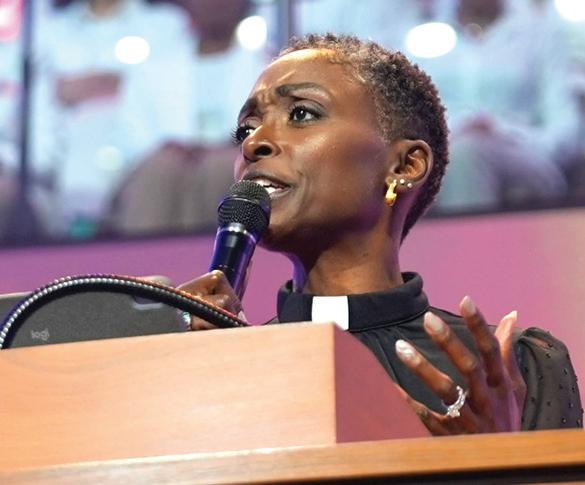
mation round out the programming.
The goal is to help believers discover that following Christ should never become routine.
“I like the new and impossible becoming possible,” Attuquayefio said. “I like asking, ‘What if we could do this?’”
Attuquayefio describes herself as someone energized by vision more than maintenance. She enjoys building systems, organizing teams and preparing people to flourish before moving on to the next assignment.
“If I wasn’t in ministry,” she said, “I’d probably be doing something with organizational leadership.”
‘Light bulb moment’
That calling has resur-

Dr. LeKesha Attuquayefio’s ministry spans preaching, leadership development, YouTube, missions and mentoring women in ministry. She credits her grandmother’s daily prayers as the foundation for her own calling.
ing, he had given her his phone number and deleted the app.
“I really feel like my husband and I coming together was providential,” she said. “It was a miracle.”
faced in Essentials
Intensified Consulting and Coaching, where she helps churches, pastors and individuals clarify vision and navigate seasons of transition.
“I love seeing people get it,” she said. “When they have their ‘light bulb moment.’ When they understand God’s assignment for their lives.”
Years before conversations about women in ministry became more commonplace, Attuquayefio founded Her Call Ministries, a nonprofit designed to train, encourage, and develop women sensing God’s call to preach.
The organization hosted preaching intensives, leadership workshops and conferences
while creating safe spaces for women to develop gifts that were not always welcomed elsewhere.
Divine providence
Today, many of those women serve on church staffs, hold doctoral degrees, and continue using training materials from those early cohorts.
“That’s what it’s about,” she said. “Fruit that remains.”
While ministry occupies much of her public life, Attuquayefio speaks just as passionately about another unexpected gift: her marriage. They met on a dating app during the pandemic. When he saw her profile, he immediately believed she was the woman he had been looking for; within days of their meet-
The couple now shares ministry through what they call the Agape Dance Trio, blending their mutual love of salsa dancing into marriage retreats and relationship workshops that explore trust, communication, and partnership. She celebrates dramatic healing, including answered prayers for members of Wheeler Avenue whose medical reports changed unexpectedly after prayer.
But she is equally captivated by quieter miracles— providential timing, unseen arrangements and divine orchestration that becomes obvious only in hindsight.
“You couldn’t write the script,” she said. Perhaps that’s why she continues returning, even after all these years, to the image of her grandmother kneeling beside the bed. For Attuquayefio, prayer was never preparation for ministry.
Prayer is the ministry. Everything else has simply been God’s answer to it.
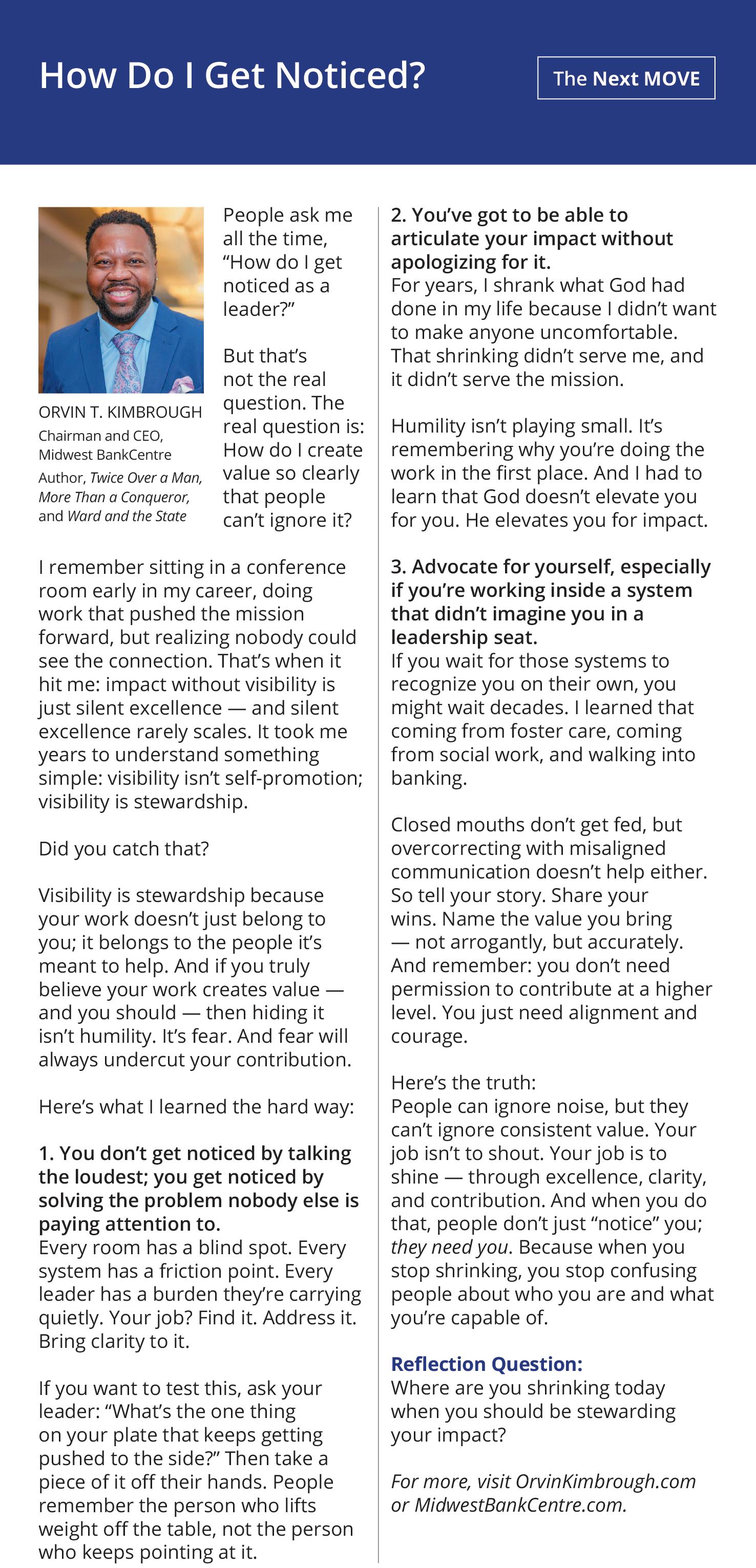

Demographics
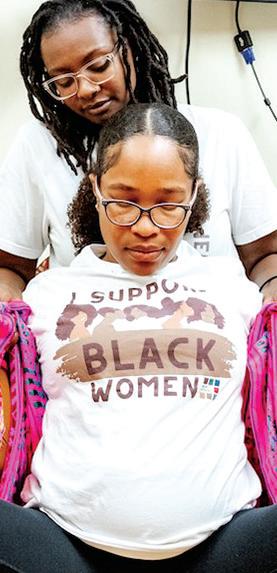
Proposal to end employer race, gender reporting advances
The new proposal, if finalized, would roll back federal oversight and limit employer transparency, experts say.
~ Page C7 ~

Approximately 44% of the books banned in 2024 and 2025 featured characters of color and 39% featured characters who identify as LGBTQIA+. ~ Page D1 ~
For Black women, it’s about more than wages
Black Women’s Equal Pay Day highlights the wage gap Black women continue to face and calls attention to efforts to achieve equal pay and greater economic opportunity.


By Lauren Marisol Preston For The St.
Louis American
Artificial intelligence is changing the way businesses operate, but Keisha Mabry Haymore believes the biggest opportunity isn’t just learning new technology, it’s making sure Black entrepreneurs and underserved communities aren’t left behind.
Black people are using AI as much as — and sometimes more than — other groups to search for information, create content, get news and complete schoolwork, according to recent Pew Research Center data. However, fewer than 5% of technical AI roles in the U.S. are held by Black professionals, compared to roughly 65-70% held by White professionals. Haymore, a certified AI educator who serves as managing director at Per Scholas in St. Louis, has trained more than 15,000 people in AI, digital marketing and ecommerce. She was recently accepted into a Harvard University AI program. She sat down with The St. Louis American to discuss how AI can help businesses grow while keeping people at the center of the work.
St. Louis American: Congratulations on your acceptance into the Harvard program. What inspired you to pursue AI at See Haymore, C4
By Lauren Marisol Preston For The St. Louis American
Landing a promotion often requires more than doing a good job.
Leslie Gill and her team have helped more than 1,000 women build confidence, develop new skills and connect with career coaches.
Career experts say advancement often depends on confidence, preparation and the people willing to advocate for you. Mentors can offer advice, but sponsors — leaders who champion employees behind closed doors — often help determine who gets opportunities to move into management.
That’s the philosophy Leslie Gill has built Rung for Women around. Since
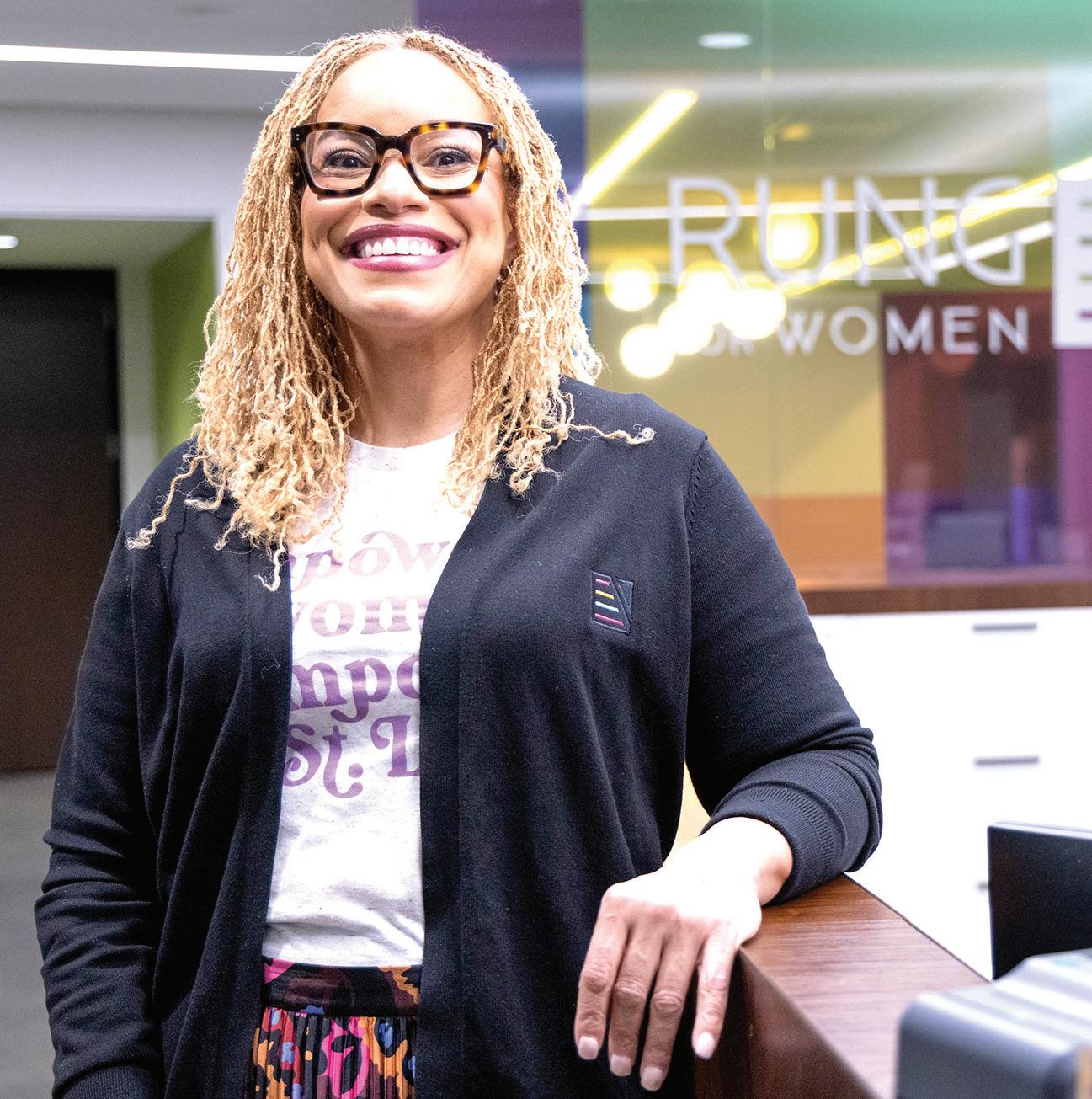
Leslie Gill is president and CEO of Rung for Women, a St. Louis nonprofit that helps women advance their careers.
By Deidre Johnson
My father, who was an entrepreneur, taught me confidence, self-efficacy, and determination. He believed that if you wanted something, you had to assert yourself. Ask for the moon, he said, and if the answer was no, work your way down. Never start low and expect to work your way up. It proved to be good advice.
Grateful as I am for his wisdom, my career trajectory might have been very different if an experienced colleague had spotted my potential and nurtured it. Having a mentor would have made a meaningful difference. And right now, perhaps more than at any
time in recent history, Black women need the steady guidance, insight, and wise counsel a mentor can provide.
Disturbing trends
Across the country, diversity programs are under attack. Commitment to women’s advancement is declining. Companies are scaling back or eliminating anti-bias training For the first time in more than a decade, Lean In’s Women in the Workplace 2025 report found that women are significantly less likely than men to want a promotion at work.
The message is clear: We can’t rely on government programs or corporate enlightenment

to see us. If women, and Black women in particular, hope to preserve the gains we’ve made, it’s up to us to help one another.
you need to flourish. It can help you identify a mentor who can get you to the next level.
Being a mentor doesn’t take special talent, require a course, or even a massive time commitment. All that’s needed is a desire to be of service.
launching the St. Louis nonprofit in 2017, Gill and her team have helped more than 1,000 women build confidence, develop new skills and connect with career coaches, technical training and employer partners as they pursue promotions, higher-paying careers and greater financial stability.
“We believe women have everything they need,” said Gill, The St. Louis American Foundation’s 2026 Salute to Excellence in Business Nonprofit Executive of the Year. “They just need a little support to get to where they want to go.”
“If you’re committed to growing your career,
be very clear on your path forward,” she said. “Find allies within the organization. Look for both sponsors and mentors. Find people who will mention your name in rooms when you’re not present.”
That advice comes at a critical time.
Missouri’s Black unemployment rate stands at 7.2%, compared with 3.2% for White workers, according to the Economic Policy Institute. Meanwhile, the Federal Reserve Bank of St. Louis has described today’s labor market as a “low-hire, low-fire” economy, where companies are hiring fewer workers even as layoffs remain relatively low.
Even after getting hired, advancement isn’t always equal. McKinsey & Company’s Women in the Workplace report found
Mentoring may be the most powerful way Black women protect the next generation of leaders. ance. Don’t make it hard for people to help you. Invite honest feedback. Self-confidence is important, but being self-reflective is, too. Figure out who you are when nobody’s looking and focus on what
In our patriarchal society, women don’t have a great track record of helping one another. That is why we must be very deliberate in our efforts to help the advancement of other women.
I tell young women they must be open to seeking and receiving guid-
that for every 100 men promoted into first-level management, only 54 Black women and women of color receive the same opportunity. Researchers refer to this gap as the “broken rung.”
Stephanie Harris, a human resources executive with nearly 20 years of experience hiring employees, says one of the biggest misconceptions is believing hard work alone leads to promotions.
“The people who consistently get promotions are advocating for themselves,” Harris said. “They have sponsors, they have mentors, and they’re positioning themselves for opportunities.”
Harris says professionals should think beyond simply completing assignments. Building
relationships, increasing visibility and creating advocates inside an organization often make the difference between staying in the same role and moving into leadership.
Gill notes that mentors and sponsors serve different roles. Mentors offer guidance and accountability, while sponsors advocate for employees when promotion and leadership opportunities arise. Both, she said, are essential for long-term career growth.
Confidence is another critical part of the equation.
“Look at the job description knowing that you have the confidence to be curious, learn new things and develop new skills,” Gill said. She encourages professionals to focus on their potential instead of what they think
The best mentors don’t enter a relationship assuming they know anything about the person they’re helping. Instead, they listen. They ask their mentees what they believe are the solution to a problem,
they’re missing.
Harris recommends backing that confidence with preparation by keeping LinkedIn profiles current, updating resumes regularly and maintaining a portfolio of accomplishments.
“Once you start reviewing those things, you’re going to feel better about yourself and more confident that you’ve done a lot of great things,” she said.
As artificial intelligence reshapes the workplace, both experts believe technical knowledge must be paired with strong people skills.
“AI is still very much a co-pilot relationship. It doesn’t exist without humans,” Gill said.
Harris believes emotional intelligence will continue separating good
then — and only then — offer advice. We all need help to get to where we want to be. Assistance in expanding our vision for what is possible for ourselves, our families and our communities is vital. Some of us are comfortable asking for assistance; others are lucky to have someone spot their potential and offer to help develop it. We all need to be mentoring when the time and opportunity allow. I’m committed to helping women grow and prosper as leaders, especially young Black women. It makes a difference.
Deidre Johnson is co-CEO and executive director of the Center for African American Health.
employees from future leaders.
“How you relate to people, connect with people, collaborate and solve problems ... those people are going to stand out,” she said. For St. Louis, helping more Black professionals advance is a regional talent strategy. When skilled professionals stay, grow into leadership and invest in their communities, local businesses become stronger and the region is better positioned to compete for the future, experts say. As Gill reminds professionals working toward their next opportunity, “Remain positive, be persistent and give yourself some grace. The right opportunity will come at the right time.”

By Selena Hill Black Enterprise
Despite the Trump administration’s crackdown on corporate diversity, equity, and inclusion (DEI) programs, a recent report suggests that workplace inclusion efforts are far from disappearing
According to a study released in May by Catalyst and New York University School of Law’s Meltzer Center for Diversity, Inclusion, and Belonging, 80% of U.S. organizations remain committed to workplace inclusion despite growing legal and political pressure surrounding DEI initiatives. The report, titled “A New Path to Inclusion: How to Overcome Legal and Cultural Constraints on Building Fair Workplaces,” surveyed more than 2,000 employees and leaders and found that many companies still value and implement DEI.
The findings arrive as many corporations face increased scrutiny following President Donald Trump’s executive actions targeting DEI programs and the continued fallout from the Supreme Court’s 2023 affirmative action ruling in Students for Fair Admissions v. Harvard
“Despite a high-risk legal environment, our research shows that DEI is not dying—it is evolving,” said Joy Ohm, vice president at Catalyst, in a press release. “We see a majority of organizations adjusting their strategies, so this is a story of adaptation, not a broad rollback.”
The report found that

77% of organizations have altered their DEI investments over the past three years. However, those changes have not been uniform. Among federal contractors, who are subject to heightened government oversight, 51% reported
reducing their inclusion efforts, while only 32% increased them. In contrast, 52% of organizations that are not federal contractors reported increasing their inclusion efforts, compared with just 20% that reported decreases.
“Even in the face of a concerted assault on the values of inclusion and fairness, many organizations remain deeply committed to this work,” Ohm added.
David Glasgow, the executive director of the
Meltzer Center, said the
data illustrates how companies are adapting based on their legal exposure rather than abandoning inclusion altogether.
It’s been extremely challenging for organizations of all kinds to
navigate the legal environment for DEI work over the past few years,” Glasgow said. “Yet we are seeing companies adopt nuanced approaches to inclusion based on their specific risk exposure.”
The report also suggests that many companies are rebranding or reframing DEI efforts around broader concepts such as workplace fairness, belonging, and opportunity while continuing to pursue inclusion goals internally. Researchers argue that the shift reflects a changing landscape rather than the end of corporate diversity efforts.
While companies may be changing the language surrounding DEI, the demand for fair and inclusive workplaces remains firmly in place.
“What organizations say publicly about their inclusion initiatives doesn’t always tell the full story,” said Christina Thomas, who serves as project director at the Meltzer Center.
“Organizations are responding to real legal and political pressure by changing their language and public posture. But the internal work is harder to undo,” Thomas added. “It’s embedded in people, processes, and culture in ways that don’t shift as quickly as a public statement. These findings indicate that the reality inside organizations is more complicated than the headlines suggest, and that matters for understanding where DEI actually stands.”

that level?
Haymore: Thank you!
I’ll be starting in August with an AI in human cognition class and am really excited. I’ve always been interested in higher education. I got my MBA and master’s in secondary education years ago, and recently I’ve been wanting to get back into being a student. This opportunity means a lot to me. It means always going after your goals and never stopping learning. I’ve been in the AI space for a while now. Most of my life’s work has been about providing access and resources to underserved communities. In this space, a lot of people of color, women and other under-resourced communities tend to get left behind. This feels like a continuation of that work. I’m excited to learn myself and constantly put myself at the highest levels so I can equip the community.
The American: Some people are hesitant about AI. What would you tell them?
Haymore: It’s understandable. But what I’ve seen is how technology can be a game changer. I’ve seen learners double, triple and even quadruple their income. For business owners, especially solopreneurs, AI can expand your capacity. You can create different digital team members.
I would also say we’re already trusting technology. We’re already using Google. We’re already on social media. Instead of just being a consumer of technology, use it for production. Use it to produce things in your busi-
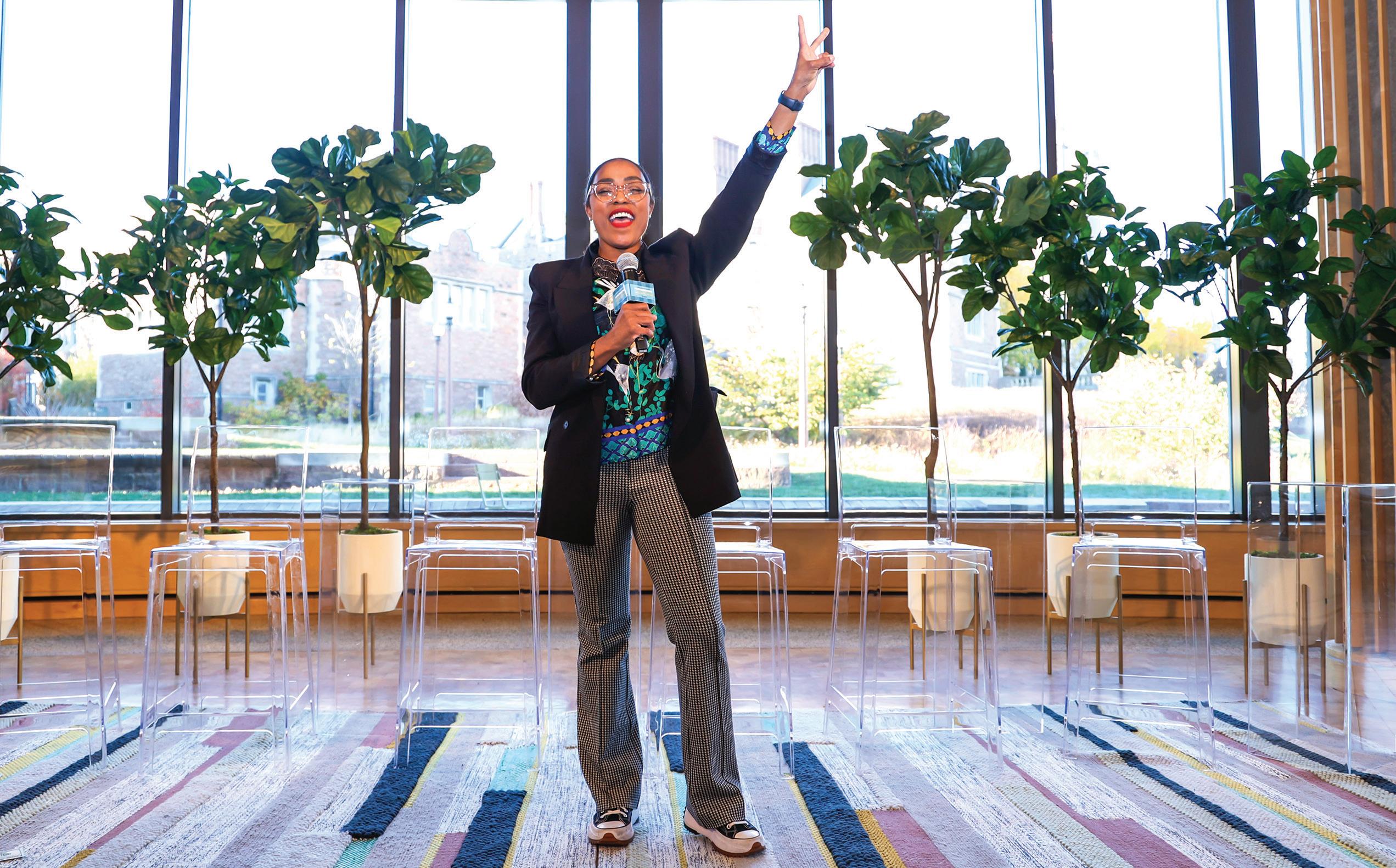
ness that improve your quality of life and your work-life balance.
The American: What’s your philosophy on using AI?
Haymore: Don’t be lazy! It’s a tool, but it’s still not you. AI can be biased. It can have hallucinations. It can be wrong. More than anything, you are the secret sauce.
I always tell people there are two rules of thumb. Either use AI to create a first draft and you create the second draft, or you create the first draft and let AI help with the second. In both cases, the human is in the loop.
The American: How do you think AI will change the workforce?
Haymore: I don’t think it’s replacing jobs. It’s altering jobs. Administrative roles will change, but there will still need to be a human for oversight. In the next few years, I believe we’ll think about the workforce as humans plus AI. AI assistants, AI agents and AI workflows. Managers won’t only manage humans. They may even have to manage AI roles.
The American: What’s one piece of advice you have for professionals who want to prepare now?
Haymore: Everybody
should be upskilling. I always say the “Four Cs”: a course, a certification, a conference, a class or a collaboration. Right now there’s so much free AI training available. Learn AI, but also continue building the skills that got you where you are today.
The American: If readers remember one thing from this conversation, what do you hope it is?
Haymore: Just start somewhere. A lot of people start with the tool instead of starting with the task. Think about what you’re constantly having to do. Make a list of your tasks, then figure
out the tool that makes sense to help you. AI can make, save, analyze and teach. Start with one of those things.
Rapid Fire
Favorite AI tool?
Haymore: None of them. None of them do everything well yet. I tool-stack, so I use all of them.
Best career advice you’ve received?
Haymore: If you have a problem, be prepared to figure out the solution.
Coolest thing you’ve created with AI?
Haymore: My daughter wants to build a reading
app so we can help her learn to read. We’ve been vibe coding a reading app for her.”
If you could have dinner with anyone to talk about AI, who would it be?
Haymore: One of the early pioneers of machine learning. I’d love to learn more about how models were trained and the early days that paved the way for AI.
Find Haymore on social media @ KeishaMabry and keishamabry.com/events, where she posts upcoming workshops. Many are free.


By Olu Gbadebo
Building a strong financial foundation early can shape a person’s confidence, choices and opportunities for years to come. That belief is at the heart of Money Matters Academy, a Commerce Bank financial education program designed to help St. Louis–area high school students develop practical money skills they can use immediately and carry into adulthood.
Launched as a community-focused initiative, Money Matters Academy brings Commerce team members directly into classrooms to reinforce essential financial concepts through real-life examples and hands-on learning. During the
2024–2025 school year, the program supported students at local schools by supplementing Missouri’s personal finance curriculum with engaging, relatable instruction.
Financial education with real-world impact
The program focuses on topics students are likely to face soon after graduation, including checking and savings accounts, budgeting, credit and loans. Rather than relying on lectures, Money Matters Academy emphasizes interaction — games, discussion and practical scenarios that help students understand not just what financial concepts mean, but how they apply in everyday life.
“Our goal is to help students feel prepared and confident, not overwhelmed,” says Colleen Ho, a Commerce Trust data analyst who helped develop the curriculum. With more than a decade of experience as a high school math teacher, Ho brought an educator’s perspective to the program’s design.
At Sumner High School in St. Louis, Money Matters Academy was delivered through multiple classroom sessions over the course of the school year. Students actively participated, asked questions and connected the lessons to their own goals — whether thinking
about their first job, a checking account or future plans after high school.
Strengthening community connections
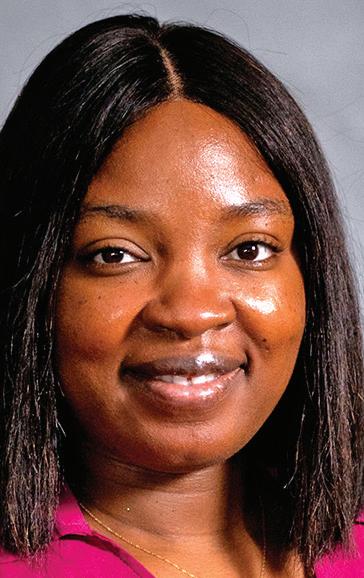
Beyond building financial skills, the program also strengthens connections between Commerce and the communities it serves by building relationships with the students over the course of six lessons/ school visits. Commerce team members volunteer their time to teach alongside Ho, giving students the opportunity to interact with professionals who use these financial principles
every day.
For many students, those interactions and newly formed relationships help make financial topics feel more approachable and relevant. For Commerce team members, the experience reinforces the value of sharing expertise locally.
“Being present in the classroom helps us understand the challenges students face and how we can better support them,” Ho says. “It becomes a shared learning experience.”
The strong foundation established in St. Louis has since allowed the curriculum to be adapted for use in other communities, demonstrating how a locally driven program can create broader impact.
Investing in the next generation At Commerce Bank, financial education is about more than numbers — it’s about empowering people with knowledge and confidence. Money Matters Academy reflects a broader commitment to community involvement by helping students build a healthier relationship with money early in life. By meeting students where they are and focusing on practical skills, the program helps prepare the next generation for a more informed, confident financial future — one classroom at a time.
Olu Gbadebo is community outreach and banking officer at Commerce Bank.
Special to The American
What began as a simple idea to improve rider experiences at bus stops without seating – often referred to as “forgotten stops” – has quickly grown into a transformative movement. In little more than a year, Citizens for Modern Transit (CMT) and AARP in St. Louis, in partnership with St. Clair County Transit District, Metro Transit and local governments, have successfully installed 12 bus benches in
geographically dispersed locations across the bi-state region as part of “The Story of a Bench” program.
Launched in April 2025, the program set out to build better bus stops with the addition of a simple amenity, a bench.
A dozen stops now boast a bright red, all-weather bench featuring the slogan “Enjoy the Ride,” a customized sponsor plaque and QR code that invites riders to share how the bench has impacted their transit experience. This feedback loop, along
with narratives compiled at these MetroBus stops by program ambassadors, has fostered ongoing engagement and helped measure the program’s impact in real time, telling the story of the bench.
Rider feedback indicates that the benches are helping to ease physical and mental stress after a long day at work or school, when carrying groceries or dealing with mobility challenges or health conditions.
“This program exemplifies how small, thoughtful interventions
can yield profound impacts, making transit stops more than just pass-through points by becoming places of rest, connection and community,” stated Kimberly Cella, CEO of CMT. “It has been among our most impactful programs and is moving full steam ahead with a goal of installing 20 more benches by fall 2027.”
To date, benches have been installed at MetroBus Stops #11223 and #11303 along North Illinois Street in Swansea; MetroBus Stop #926 at 4402

Natural Bridge Road and MetroBus Stop #4134 at 1100 S. Grand Avenue in the City of St. Louis; MetroBus Stop #5609 at the southwest corner of South Lindbergh Blvd. and Baptist Church Road in St. Louis County; MetroBus Stop #12961 at 505 S. 8th Street near the Comprehensive Behavioral Health Center in East St. Louis; MetroBus Stop #12985 at 1110 Camp Jackson Road near McDonald’s in Cahokia Heights; MetroBus Stop #15715
one block from the Belleville Town Square at 101 N Illinois Street and MetroBus Stop #12170 in the Hexenbukel Neighborhood on Scheel Street in Belleville; MetroBus Stop #1850 at 7170 Manchester Road and at MetroBus Stop #1980 at 7169 Manchester Road; and MetroBus Stop #9160 at the main entrance to UMSL’s North Campus. These first installs have sparked $50,000 in additional transit stop enhancements at these stops,
Sponsored Content See Transit, C7
By Nada Hassanein Missouri Independent
A federal commission has voted in favor of a Trump administration proposal to rescind requirements that larger employers report the demographics of their workers — information that’s used to help enforce racial and gender antidiscrimination laws.
Most employers with 100 or more workers have been required to submit data annually on staff sex, race and ethnicity since 1966 to the U.S. Equal Employment Opportunity Commission. Earlier this summer, the administration submitted a proposed rule that would eliminate that reporting requirement for companies as well as for state and local governments.
The EEOC contends that demographics reporting requirements place an “impermissible focus on ‘minorities’ and women.” The commission argues the forms “may encourage employers to discriminate against employees who are not considered ‘minorities.’” The proposed rule will be posted
Continued from C6
including bus shelters and other improvements. Ten more bus bench installations are currently in the works.
to the Federal Register for a public comment period of 30 days, and a public hearing will be held Aug. 11, with requests to testify due Aug. 7.
Bloomberg Law reported that the commission voted 2-1 along party lines to advance the plan.
Since President Donald Trump took office, the administration has been focused on eliminating diversity, equity and inclusion initiatives. The new proposal, if finalized, would roll back federal oversight and limit employer transparency, experts say.
If the federal requirements end, states might step in to create their own requirements, said Alexandra Garrison Barnett, a partner at the law firm Alston & Bird in Atlanta, Georgia.
“We might see more states imposing those kinds of requirements in the absence of a federal requirement, or we could see states banning or prohibiting employers from collecting (demographic information),” said Barnett, a labor and employment attorney who helps employers evaluate
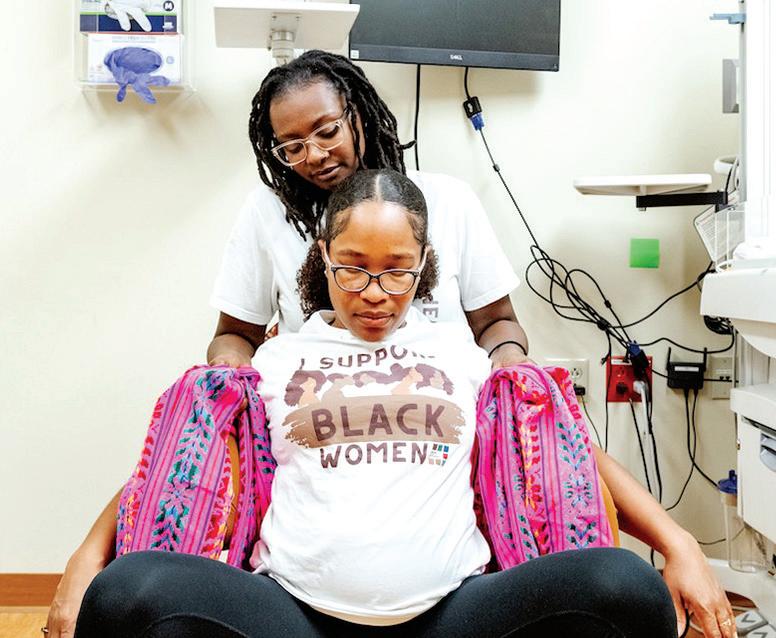
their DEI policies and strategies.
A handful of states already have requirements that employers collect and report on workplace demographic information, she noted.
“What’s great about these benches is that it tells transit users that we are being taken into consideration, that we belong here too, and deserve infrastructure that makes this type of travel comfortable and convenient,” stated a MetroBus rider in St. Clair County, Ill. CMT and AARP in St. Louis are actively seeking additional partners – including businesses, organizations, community groups and individuals – willing to support the installation of “The Story of a Bench” program at bus staops community wide. Bringing a bench to a community is simple.
The commission’s vote comes on Black Women’s Equal Pay Day. Tuesday marks how far into the year Black women must work to equal the average pay earned by a white man by the end of the previous
CMT covers the cost of the bench. Partners fund the installation, which costs between $350 and $4,5000 depending on the site, as well as a commitment to maintain the bench. Sponsor recognition is included on a commemorative plaque at each location.
year. The lack of demographic data will hinder accountability for employers, said labor economist Valerie Rawlston Wilson, director of the Economic Policy Institute’s Program
on Race, Ethnicity, and the Economy.
“(The proposal) is consistent with the general anti-equity push of this administration to eliminate pretty much all of the infrastructure that have been in place for equal employment in this country,” Wilson said. “We have laws in place that prohibit discrimination, but the effectiveness of those laws is really dependent on our ability to enforce those laws. And the enforcement of those laws is facilitated by having consistent reliable data.”
The Institute for Women’s Policy Research reports that Black women make 64 cents for every dollar paid to white men — across all education levels and positions, including leadership positions.
Broken down by state, the gap widens: In Idaho, for example, Black women make 36 cents for every dollar white men make, across all workers with earnings.
The rule, Wilson said, would “severely hinder the ability of the EEOC to carry out its enforcement responsibilities.”
“Transit brings St. Louisans from all walks of life together to ride together for access to jobs, healthcare, education opportunities and so much more. When we ride together, we thrive together. What better way to underscore the importance of this connection in our communities than working collectively to improve our bus stops, one bench at a time,” added Cella. To learn more about this program partnership opportunities, visit www. cmt-stl.org/the-story-ofa-bench-placemakingprogram/
By Levi Perrin
Each year, Black Women’s Equal Pay Day arrives over halfway to New Year’s Eve, marking how far into the calendar Black women must work to earn what white, non-Hispanic men earned in the previous year.
The date is often accompanied by a familiar statistic — Black women earn 65 cents for each dollar a white man earns — a few headlines, and renewed calls for pay equity.
But reducing Black Women’s Equal Pay Day to a wage comparison misses the larger story.
The observance is not simply about unequal paychecks. It is about how work is valued, whose labor is recognized, and what happens when generations of contribution are met with generations of unequal opportunity.
The wage/ opportunity gap
Black women have always worked. They worked in fields and homes while enslaved. They organized the Atlanta washerwomen’s strike of 1881 [Link to Why Black Women’s Labor Story
Still Matters article] , one of the earliest large-scale labor movements led by Black women. They became teachers, nurses, entrepreneurs, domestic workers, federal employees, caregivers, organizers, and business owners. They have sustained families,

strengthened neighborhoods, and helped build institutions that continue to shape American life.
The question has never been whether Black women contribute to the economy. The question is why the economy has so often failed to fully value those contributions.
The wage gap is only one part of a much broader picture.
Lower earnings often mean fewer opportunities to build wealth, purchase a home, invest in a business, or prepare for retirement. Student loan debt can become harder to repay. Caregiving responsibilities
often require impossible tradeoffs between earning a living and caring for loved ones. Over time, these realities compound, shaping not only individual lives but the economic health of families and entire communities.
Changing this picture requires more than closing the wage gap, important as that work is. It also means confronting the structural barriers that continue to limit opportunity: creating pathways into higher-paying industries, ensuring essential jobs are compensated with dignity, and making higher education a bridge to economic secu-

rity instead of a source of lifelong debt.
It means investing in Black women entrepreneurs, supporting worker protections, expanding access to affordable childcare, and recognizing caregiving as work that strengthens families and the broader economy.
It also requires changing the stories we tell.
Changing stories, making investments
Too often, conversations about Black women’s economic lives begin with what is lacking. They measure disparities
Black Women’s Equal Pay Day highlights the wage gap Black women continue to face and calls attention to efforts to achieve equal pay and greater economic opportunity.
deserves investment.
Black Women’s Equal Pay Day should not be viewed as a symbolic date observed once each year. It should serve as an invitation to rethink how opportunity is created, how work is rewarded, and what an equitable economy truly looks like.
More than symbolism
The goal is not simply to move the date closer to January.
The goal is to build an economy where Black women’s labor, leadership, and innovation are valued as essential to the nation’s prosperity.
When Black women thrive economically, the benefits extend far beyond individual households. Families become more secure. Communities grow stronger. Businesses flourish. Democracy itself is strengthened.
without fully recognizing the extraordinary value Black women have created despite those barriers.
History tells a different story — of women who organized labor movements, built businesses, created mutual aid societies, educated communities, and sustained families through generations of economic uncertainty. Their contributions have never been limited to a paycheck. They have shaped neighborhoods, institutions, and movements that continue to benefit the nation.
That history deserves more than recognition. It
Black Women’s Equal Pay Day reminds us how far there is to go. It also reminds us that progress is possible when equity becomes more than an aspiration. It becomes a shared commitment to building an economy that finally values Black women’s work as much as Black women have always valued the work of building America.
This story was provided by Word In Black Joshua Levi Perrin is a writer for Unerased | Black Women Speak.



Since 2021, there have been nearly 23,000 bans on individual books in libraries and public schools.
Many of these bans remove Black and LGBTQIA+ literature from bookshelves. Approximately 44% of the books banned in 2024 and 2025 featured characters of color and 39% featured characters who identify as LGBTQIA+.
Approximately 44% of the books banned in 2024 and 2025 featured characters of color and 39% featured characters who identify as LGBTQIA+.
Targeting books by or about Black people has a long history in the U.S., with classics like Toni Morrison’s 1987 “Beloved” frequently appearing on banned book lists. When books that highlight the richness of Black people’s lives are taken out of circulation or placed on a prohibited list, these stories and illustrations become less available to children of all backgrounds.
Research shows that children’s literature can help readers, including very young ones, see into others’ worlds and explore what it means to be human.
Informed by our roles as parents, educators and literacy researchers, we study “Black livingness” literature.
We describe Black livingness as Black children’s fiction by Black authors that depicts Black children and families as whole, joyful, thriving and engaged in everyday acts of living. Children’s literature can humanize Black people in a way that news coverage, television, films and school textbooks and curriculum often do not, helping to combat racial bias and stereotypes.
Children’s books about everyday Black life
There are many Black children’s books that show-
See Books, page D4


Special to The American
For over 70 years, Nine PBS has been part of the fabric of St. Louis life.
Local programs like Living St. Louis, Donnybrook and Teaching in Room 9 and beloved national programs like Masterpiece, NOVA and Sesame Street have made Nine PBS a St. Louis treasure. The station has brought people together through compelling programs and a commitment to reflecting the community it serves while sparking action to help our region flourish. Today, as the mostwatched PBS station in the nation, Nine PBS continues to link neighbors, ideas and communities in ways that go beyond what you see on television.
That spirit of connection is exactly what brought Nine PBS, Trivers and Tarlton into partnership on the planned transformation of the station’s 51,600-square-foot Grand Center home. More than a renovation, the project represents a shared commitment in the future of St. Louis. Each organization is deeply rooted in this community, and united by a belief in the power of inclusivity and collaboration. From day one, the project has been shaped by teamwork and a collective vision for a more vibrant, prosperous region.
“When we partner with organizations like Nine PBS, we’re reminded that construction is ultimately

about people. It’s about creating places where ideas can take root and where all communities feel seen and supported. This project gives us the opportunity to help shape a space that will inspire future storytellers, innovators and neighbors across St. Louis and our region,” said Sondra Rotty, Tarlton president and COO.
The people-first approach is reflected throughout the reimagined campus design. The new space will blend private workspaces with open, communal areas designed to create spaces that spark conversation and foster creativity. A refreshed entry and lobby welcomes visitors with warmth and accessibility. The Public Media Commons will
evolve into a more dynamic, inclusive destination for events and community engagement. Inside, new visitors and partner will find new community event spaces, upgraded restrooms and corridors, and outdoor spaces that create a sense of movement, connection and possibility. Infrastructure improvements, including elevator modifications, modernized offices and conference rooms, and enhanced technology and acoustics, will support the station’s founding vision for decades to come.
“At Nine PBS, our mission is to inspire pride in this region, and this renovation is about creating a space that reflects that purpose - a place where our community
can gather and celebrate all that makes our region special,” said Amy Shaw, Nine PBS president & CEO. “With Tarlton on board, we really feel like we’ve assembled the right team to make that vision a reality. Everyone involved in the project understands the significance of this investment and is equally passionate about creating a space that will serve, inspire, and connect our community for generations to come.”
The project’s impact extends beyond physical space. Tarlton is bringing forward a meaningful initiative developed in partnership with BJC HealthCare.
The “Thinking Beyond Today,” program –first launched at the
Siteman Cancer Center at Northwest HealthCare jobsite - introduced high school students and community members to careers in construction and healthcare through direct access to industry professionals.
The program continued on the BarnesJewish Campus Renewal Project through a collaboration of Tarlton, McCarthy and BJC HealthCare.
In light of its success, Tarlton, Nine PBS and BJC HealthCare will extend the initiative to the Nine PBS campus this fall, creating new opportunities for students to explore careers in broadcasting, construction and healthcare. Beginning in late September, middle and high school students will visit the campus in small
groups, connecting directly with industry professionals and gaining firsthand exposure to potential career paths.
“Our work is driven by the belief that opportunity should be accessible to everyone. By expanding our careerdevelopment partnerships to the Nine PBS campus, we’re creating pathways that didn’t exist before - pathways that can change the direction of a young person’s life. That’s the kind of impact that lasts far beyond the project,” said Roslyn Croft, Tarlton director of community engagement.
Educator registration
Registration for student visits opens August 1.Educators interested in bringing their students to the Nine PBS campus can email ThinkingBeyondToday@ tarltoncorp.com for more information and to reserve a visit. At its core, this renovation strengthens connection among people, neighborhoods, industries and ideas. By reimagining its home, Nine PBS is creating a more inclusive, accessible environment that reflects the community it serves. And through its partnership with Tarlton and Trivers, Nine PBS is not only transforming a building, but also helping build a stronger, more connected region for generations to come.

By Lauren Marisol Preston For The
St. Louis American
Decades before Dr. Marcus Howard opened GreaterHealth Pharmacy inside Delmar DivINe, his grandmother began her medical career in the same building.
Phyllis Jackson trained there as a nurse when it was St. Luke’s Hospital. She later became the first Black director of the psychiatry department at BJC HealthCare, then known as Jewish Hospital.
Today, Howard operates Missouri’s only Black-owned pharmacy there.
“There is a huge cultural significance to having a Black-owned pharmacy in the city of St. Louis,” Howard said. “I decided to build it in the heart of the community.”
Howard’s pharmacy is one of more than 40 nonprofit organizations, businesses and community partners that now call Delmar DivINe home. The nearly $100 million redevelopment of the former St. Luke’s Hospital has become a hub for organizations focused on health care, education, workforce development and neighborhood investment, with about 1,000 people working, living or visiting the campus each day. By bringing those organizations together on a single campus, Delmar DivINe has become a center for community investment along the historic Delmar corridor.
For Maxine Clark,
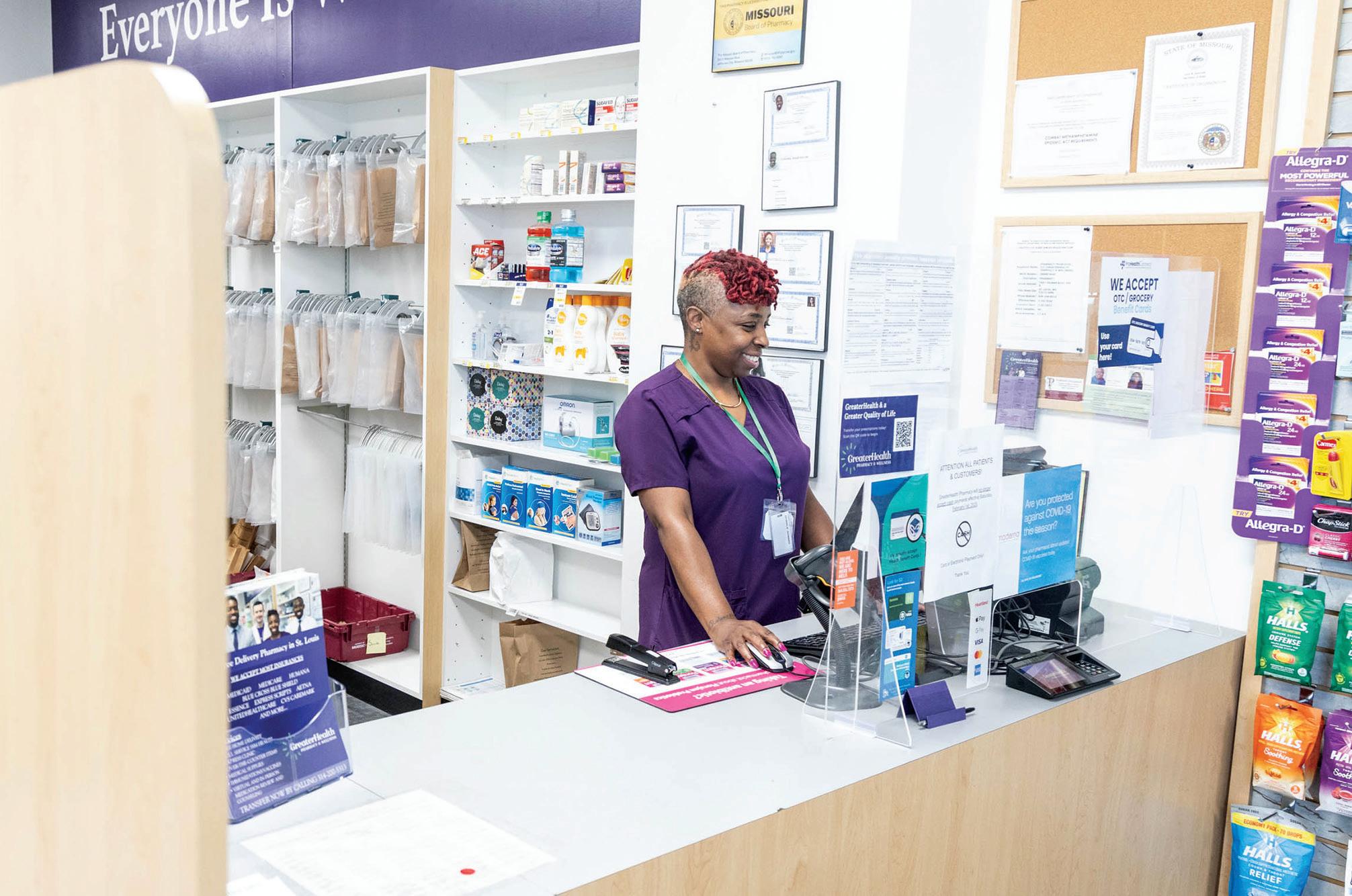
founder of Build-A-Bear and chief inspirator of Delmar DivINe, creating that mix of organizations was the point.
“This is a building with heart,” Clark said. “I wanted people to feel this was a place for them as soon as they walked in. That they could thrive here.”
The vision began taking shape in 2015, months after the death of Michael Brown in Ferguson sparked renewed conversations about racial inequity, economic investment and opportunity.
“When I spent time in Ferguson, young people
The vision began taking shape in 2015, months after the death of Michael Brown in Ferguson sparked renewed conversations about racial inequity, economic investment and opportunity.
would tell me things that they thought needed to be different in St. Louis,” Clark said. “I realized this building could be a lot of those things. It couldn’t be everything St. Louis needed, but it could be a lot of it.”

The Painting for Peace exhibit is permanently installed throughout the ground-floor corridors of Delmar DivINe. It features murals originally painted on plywood during the Ferguson uprising. Art advocate Carol Klein spent
years rescuing the artwork before it found a permanent home there.
Howard said opening GreaterHealth Pharmacy there connected the business to that larger mission while placing it in the community it was created to serve.
The pharmacy provides free prescription delivery, personalized medication counseling and health care designed to eliminate barriers that often prevent residents from accessing medication.
Outside the campus walls, Delmar Main Street supports roughly 250
businesses across eight neighborhoods stretching from University City east to Taylor Avenue.
“Revitalization does not have to mean gentrification,” said Felice McClendon, executive director of Delmar Main Street. “That’s why community participation matters. Developers are listening and really taking their cues from the community. That’s what community building looks like.”
Business owner Tameka Stigers has watched those changes unfold from nearby Locs of Glory Salon & Spa, which has served the Delmar corridor since 2009.
“Today you have businesses on all of the spaces along Delmar,” Stigers said. “There’s some vibrancy in each of the blocks. We just see the shift moving toward more economic vitality. There’s people moving and walking up and down the streets that you didn’t see 20 years ago.”
Clark said Delmar DivINe’s next phase will transform the former nursing school and dormitories into additional apartments, nonprofit office space and expanded community amenities, including afterschool programming, fitness and wellness spaces, outdoor gathering areas and community events.
“We saved that space,” Clark said, “because it gave us a lot more time to learn about the neighborhood and what they wanted.”

By Hiba Ahmad St. Louis Public Radio
The Special School District in St. Louis County will no longer use seclusion and supine restraints on its students after a federal investigation found it was violating the Americans with Disabilities Act.
A supine restraint is when an individual is placed on his or her back, and two staffer members hold down the arms and legs to stop movement. Seclusion is when a student is taken out of a classroom and isolated from other students and staff. Both practices should be used only in a limited capacity, according to the U.S. Department of Education.
The U.S. Department of Justice found the district routinely violated its own policies and Missouri law when it relied on seclusion and restraint as a regular practice, rather than a final
Continued from D1
case the lives of wellknown historical figures in the Black community, like Harriet Tubman, Dr. Martin Luther King, Jr. and Rosa Parks. These books demonstrate how these leaders and activists challenged racism, and they affirm that Black people’s fight against different social inequalities are important to Black life.
But resisting is not the only thing that Black com-

resort, according to a letter sent to the district in February.
In the letter, the DOJ stressed students’ safety was not monitored when they were placed in seclu-
munities do.
These books, particularly when the same few are repeatedly used in schools, run the risk of limiting children’s understanding of Black people’s lives. All children benefit from reading Black children’s literature. Seeing Black children and their families living ordinary yet robust lives in stories undermines negative portrayals.
We have identified three important themes about Black life that emerged across a variety of contemporary Black children’s literature pub-
sion for lengthy periods.
It described an incident in which “a third-grade student hit himself in the face with a shoe for two minutes, giving himself a bloody nose, and then pro-
lished between 2020 and 2024.
Research shows that extended members of Black families serve important psychological, financial and emotional roles in many Black children’s lives.
Nancy Redd’s “Bedtime Bonnet,” for example, is a 2020 book that chronicles a little girl’s search for the bonnet she wears while sleeping, which she eventually finds atop her grandfather’s head.
“Bedtime Bonnet” illustrates the playfulness that can occur in an intergenerational household
The Special School District in St. Louis County has ended the use of seclusion and supine restraints on students following a federal investigation.
continue seclusion and supine restraint practices in its schools and partner districts starting this fall, according to a statement from SSD spokesperson Jennifer Henry.
“These updates build on the important work already taking place across our District and reflect our ongoing commitment to providing safe, supportive learning environments where every student can learn, grow, and realize their potential,”
ceeded to wipe his blood on the floor and wall of the seclusion room.” The student was not removed from seclusion for another hour.
The district will dis-
during the nightly bedtime routine.
The 2021 picture book by Winsome Bingham, titled “Soul Food Sunday,” details a little boy and his grandmother preparing Sunday dinner. “Soul Food Sunday” highlights Black food culture and the important traditions that are passed down at dining room tables.
These books highlight the significance of extended families and normalize the role of grandparents, aunties, cousins and “othermothers” – meaning women who care for children who are not biologi-
A supine restraint is when an individual is placed on his or her back, and two staffer members hold down the arms and legs to stop movement.
Superintendent Michael Maclin said in a statement.
In a notice sent to staff, the district said physical restraint will continue to be used only when the student’s behavior poses an imminent danger of physical harm to the student or
cally their own – in children’s living and growing.
Throughout Black Americans’ long history of struggling for freedom, imagination has been a way of dreaming up new conditions and clinging to hope for the future.
Today, contemporary children’s picture books like “The Year We Learned to Fly,” by Jacqueline Woodson, illustrate this tradition.
After being instructed by their grandmother to play with one another instead of arguing, the siblings in “The Year We Learned to Fly,” pretend
another person. The department opened its investigation into the school district in May 2024 and examined thousands of incident reports from the 2022-23 and 2023-24 school years. The letter states that the supine restraint was used more than 400 times during the two-year period of the federal investigation — nearly all of them occurred at Northview High School, in North County. The school provides special education services to students from Hazelwood, FergusonFlorissant, Riverview Gardens and Jennings school districts.
to escape their apartment and fly above their neighborhood.
The book “Nigel and the Moon,” by Antwan Eady, demonstrates the power of imagination to see opportunities ahead. These books show the ways Black children use imagination as more than a form of escapism or fanciful thinking. They are lessons for all children to see new possibilities for themselves and others.
This story was written by Wintre Foxworth Johnson, Brooke Harris Garad, Jennifer D. Turner and Tiffany D. Meadows.

Sponsored Content
To The American
When an EF-3 tornado tore through the St. Louis region, it left behind more than damaged buildings and fallen trees.
Families lost homes, businesses were disrupted, and entire neighborhoods faced an uncertain future. In those difficult moments, one truth became unmistakably clear: our community is strongest when we stand together.
For more than a century, the Urban League of Metropolitan St. Louis has believed that lasting change happens through collaboration. That belief came to life following the storm as corporations, businesses, foundations, faith organizations, volunteers, and individual donors united with one shared purpose—to help families recover with dignity, hope, and opportunity.
Although the Urban League’s own headquarters and facilities sustained significant damage, the organization immediately transformed its campus into one of the region’s primary disaster response hubs.
Staff members, volunteers, and community partners worked tirelessly to ensure families had access to food, emergency supplies, housing assistance, workforce resources, and the support needed to begin rebuilding their lives.
The response demonstrated the very best of St. Louis.
Corporate partners quickly stepped forward with financial contributions, in-kind donations, employee volunteers, transportation support, and specialized expertise.
Local businesses organized supply drives, donat ed essential goods, and encouraged their employ ees to serve alongside the Urban League.
Foundations invested in both immediate relief efforts and the long-term recovery that would continue well after the news cameras were gone.
Equally inspiring were the thousands of individual donors whose generosity proved that every gift makes a difference.
Families contributed what they could.
Children organized neighborhood fundraisers. Retirees mailed donations with handwritten notes of encouragement. Volunteers spent countless hours loading trucks, distributing food, assembling hygiene kits, checking on seniors, and helping neighbors navigate one of the most difficult chapters in our community’s history.
plies, tarps, tools, and other essential resources to thousands of families.
Teams canvassed affected neighborhoods, conducted wellness checks for senior residents,
with employers, enrolling children back in school, and accessing financial and emotional support. Through strong partnerships across the corporate, nonprofit, phil
ing in people strengthens communities. Together, these partnerships create opportunities that no single organization could accomplish alone.

connected families with critical services, and ensured assistance reached those who needed it most.
Yet recovery extends beyond meeting immediate needs.
Together, these acts of generosity created extraordinary impact.
Through these partnerships, the Urban League provided emergency food, bottled water, hygiene products, cleaning sup-
The Urban League understands that rebuilding a community means restoring stability and creating pathways to longterm success. Families needed assistance replacing important documents, securing temporary housing, reconnecting

anthropic, and public sectors, resources were coordinated to help families move from crisis toward recovery.
This collaborative approach has always been central to the Urban League’s mission.
Every workforce development initiative, youth program, housing service, entrepreneurship effort, educational opportunity, and public safety initiative is strengthened by partners who believe that invest-
The tornado response reinforced an important lesson: relationships built before a crisis become lifelines during one.
Years of trust and collaboration enabled organizations to respond quickly, eliminate barriers, and deliver meaningful assistance where it mattered most. Businesses worked together instead of competing. Nonprofits coordinated efforts to maximize impact. Volunteers arrived ready to serve.
Donors gave generously because they trusted the Urban League to deliver help with compassion, accountability, and urgency.
That same spirit of partnership continues to guide the region’s recovery today.
As families rebuild homes and neighborhoods continue to heal, the Urban League remains committed to working alongside its many partners to ensure that recovery reaches every corner of our community.
While significant progress has been made, the work continues—and so does our shared commitment to creating a stronger, more resilient St. Louis.
It is the corporation that invests not only in business, but also in people. It is the small business owner who donates supplies while facing challenges of their own. It is the volunteer who gives up a weekend to help a stranger. It is the foundation that invests in long-term solutions. It is the individual donor who believes that even a single act of generosity can change a life.
At the Urban League of Metropolitan St. Louis, we are deeply grateful for every partner who answered the call. Their generosity reminds us that resilience is built through shared purpose, collective action, and an unwavering commitment to one another.
As we look ahead, we invite corporations, businesses, foundations, civic leaders, and individuals to continue investing in the future of our region. Together, we can strengthen neighborhoods, expand opportunity, empower families, and ensure that every resident has the chance not only to recover, but to thrive. Because when we work together, we accomplish more than rebuilding structures— we restore hope, create opportunity, and strengthen the fabric of our community. Together, we rebuild. Together, we serve. Together, we thrive.
“Together We Thrive” is more than the theme of this special publication. It reflects who we are as a region.

By Orvin T. Kimbrough
Recently, I set out to visit a friend. I typed “Lift for Life” into my GPS and arrived at Lift for Life Academy, housed in a former bank building on South Broadway. The security officer smiled as I mentioned my friend, Rene Knott. He explained something I didn’t know: Lift for Life Academy and Lift for Life Gym share common roots, but they’ve traveled separate paths for many years. Then I drove north. The trip from the Academy to the Gym is only about three and a half miles, yet it feels much farther because of what changes along the way. As I wound through the back streets of North St. Louis, I was struck by the number of people gathered near the old Greyhound station and by the vacant buildings that have become so common in parts of our city. When I arrived at the gym, there
was nothing flashy about it. Just a modest building on Cass Avenue. Inside, however, was something extraordinary. The CEO quietly pointed toward the neighborhood surrounding the building. He explained that many of the people I had seen were part of one of the city’s largest homeless encampments. He spoke about discarded syringes, the daily realities his staff navigates, and the responsibility they feel to create a safe place for children in difficult circumstances. Then the children started introducing themselves. One young man proudly told me he had lost nearly forty pounds. Another shared how much he had improved since joining the powerlifting team. A young girl confidently talked about preparing for her next competition. They weren’t simply learning how to lift weights. They were learning discipline, confidence, friendship, nutrition, team-
work, and what it feels like when an adult believes in you. Their eyes said something before their words ever could. Hope had found an address.
Watching them transported me back decades to St. Edward’s Catholic Church on the north side of St. Louis. As a young boy, their summer work program became one of the places that kept me off the streets. It wasn’t glamorous. No one would have confused it for a worldclass facility. But it was an oasis.
Someone had decided that children like me deserved a place where we could be safe, challenged, encouraged, and seen. Standing inside Lift for Life Gym, I realized I was standing in another oasis. That word stayed with me as I drove away. As leaders, we sometimes
become overwhelmed by the sheer magnitude of need around us. Every neighborhood has another nonprofit. Every cause has another worthy mission. Every day presents another request for support. If we’re not careful, the size of the problem convinces us that our contribution won’t matter. I’ve learned the opposite. None of us is responsible for solving every problem in St. Louis. But every one of us is responsible for helping build an oasis somewhere.
Business leaders often ask me where they should invest their time, talent, or capital. My answer is simple: find an organization creating an oasis and help make it stronger.
It may be a school, church, neighborhood nonprofit, workforce development program, or a youth
Sponsored Content
Special to The American Community isn’t just where we do business— it’s why we do business.
A strong community isn’t built by one person or one organization. It’s built by neighbors showing up, local businesses investing back into their hometowns, and partnerships creating opportunities for everyone
sports organization. What matters is that somewhere, someone is creating the conditions for another human being to flourish. That’s what I witnessed at Lift for Life Gym. The lesson extends well beyond one organization. Economic development isn’t only measured in cranes, construction projects, and quarterly GDP. Those matter. But lasting prosperity is also measured by whether a twelve-yearold believes tomorrow can be better than today. Whether a teenager has a mentor. Whether a child has a safe place to spend the afternoon instead of the street. Whether someone looks them in the eye and says, “I believe in you.”
Those are investments too.
In banking, we often talk about capital.
Financial capital is important. But there is another kind of capital that communities either accumulate or lose: relational capital. Trust. Belonging. Hope. Opportunity. These are
assets that compound over generations.
Every healthy city depends on institutions willing to build them. As I left that afternoon, I realized I didn’t have to carry the weight of every need I had witnessed. I simply needed to do my part. Many hands really do make light work. Perhaps that’s the invitation for all of us. Don’t wait until you can solve everything. Find an oasis. Strengthen it. Then trust that, together, enough ordinary people making faithful investments in extraordinary places can change the trajectory of a city. It Matters Where You Bank
Orvin T. Kimbrough is Chairman and CEO of Midwest BankCentre and author of Twice Over a Man, More Than a Conqueror, and Ward and the State. For more, visit OrvinKimbrough.com or MidwestBankCentre.com.
to succeed. At FCB Banks, we believe banking has always been about people. Since opening our doors 125 years ago, we’ve remained committed to helping individuals, families, businesses, and communities grow together. While financial services are at the core of what we do, our greatest
investment has always been in the people. This commitment can be seen throughout Missouri and Illinois. Our employees volunteer their time with nonprofit organizations, participate in community events, and serve on local boards that help strengthen our communities. You’ll find us supporting local
programs, investing in neighborhood development, partnering with chambers of commerce, and working alongside organizations that provide resources for families and underserved communities. We’re helping build stronger local economies and vibrant communities for generations to come.
Helping people reach their goals is one of the most rewarding parts of what we do Whether it’s celebrating a family’s first home, watching a business grow, or helping someone become more confident about their financial future, we’re honored to be part of life’s biggest milestones. Those relationships are built on trust and a genuine commitment to helping our customers succeed. Because when families thrive, businesses grow, and communities flourish, we all benefit. That’s what community means to FCB. Visit any of our convenient FCB locations, or learn more at FCBBanks.com


By Danielle Emert
From the time Tebyron Davis was 4 years old, there’s been little doubt that he was wired to build.
His mom, Ronda, calls Tebyron “the LEGO king” because of his ability to use the iconic building blocks to create virtually any structure. “He has always loved to take things apart and put them back together, and he can assemble any product in a box without the instructions,” she recalls. “I think it must be embedded in his DNA.”
After graduating from KIPP St. Louis High School in May 2026, Tebyron knew he wanted to work as a carpenter or electrician, but he wasn’t sure the best path for pursuing that passion.
He explored traditional college programs—even earning a scholarship to Mineral Area College— but sought an option where he could earn a living while learning a trade.
That alternative path materialized thanks to McCarthy Laborer Danyeal Crittenden, a family friend who invited Tebyron and Ronda to visit an active jobsite as part of a May 29 event co-hosted by the Missouri Women in Trades (MOWIT) and McCarthy.
While touring the new SSM Health Cardinal
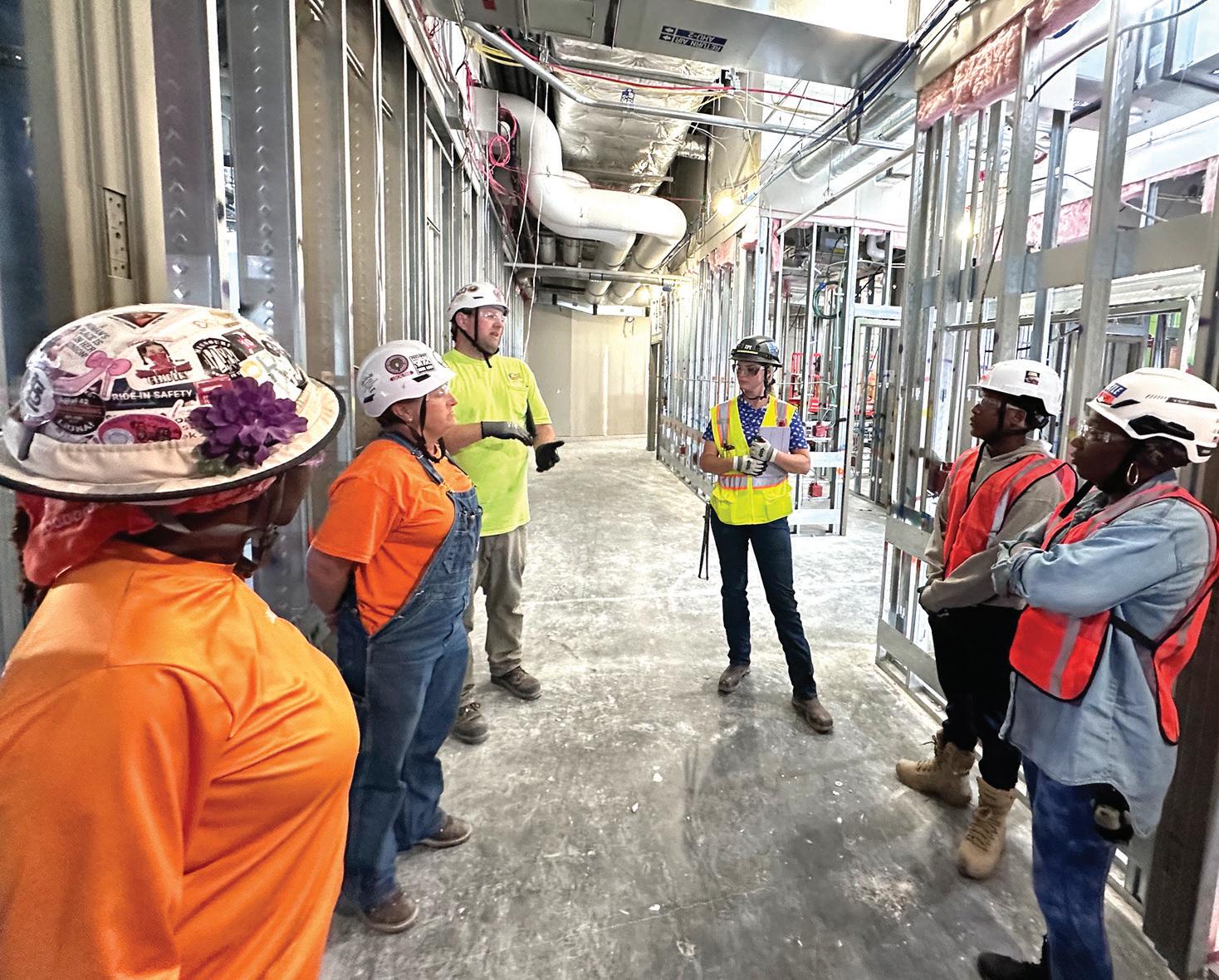
Glennon Children’s Hospital under construction in the city of St. Louis, Tebyron had the opportunity to interact with carpenters, electricians and other onsite crew members about their day-to-day jobs.
“He was really excited just to be inside of a building that was being constructed and learning about the different jobs and how the building comes together,” Ronda said. “The experience made it real for
him.”
After the tour, Tebyron was so energized that he immediately called his friends to encourage them to check out the construction trades for themselves.
Jobsite visits are part of McCarthy’s broader commitment to opening doors to construction career paths for the region’s young people. Several students who visited the same jobsite as part of a Missouri Works Initiative program recently joined
the project team and are actively working alongside experienced trade partners—a full-circle moment that shows what these initiatives can unlock.
McCarthy’s outreach often begins long before high school graduation.
By engaging students in elementary and middle school, the company introduces young minds to the sophisticated techniques and technology of modern building. It also exposes them to the broad range
At a recent tour of the new SSM Health Cardinal Glennon Children’s Hospital under construction in the city of St. Louis, crew members share their expertise with Tebyron Davis (second from right) and his mom Ronda (far right).
Bureau of Labor Statistics projects the construction industry will add roughly 380,000 new jobs by 2033, outpacing the U.S. economy as a whole. For enterprising students like Tebyron, that means the construction trades aren’t a fallback plan—they’re one of the fastest-growing career paths available to them.
of available construction career paths, planting the seed for future opportunities by helping them envision what’s possible.
When someone embarks on a construction career, McCarthy’s investment continues through mentoring and ongoing support. The ultimate goal is to help individuals build long-term, rewarding careers.
The good news is that construction job prospects continue to grow. The U.S.
This fall, McCarthy will open the St. Louis Solutions Center, a new 17-acre equipment and warehouse distribution facility in Maryland Heights. This complex will support McCarthy’s expanding pipeline of complex, large-scale projects across the region. It will serve as home base for dozens of team members who will help McCarthy continue to build a stronger St. Louis community and region. To learn more about McCarthy’s workforce development initiatives, apprenticeship opportunities or to explore open positions in the skilled trades, visit mccarthy.com/ careers. Danielle Emert is Manager of Workforce & Community Engagement for McCarthy Building Companies, where she works with small business partners and executes community outreach and talent pipeline strategies across the region.

By Layla Halilbasic
When Megan Kraus walked into Southern Illinois University Edwardsville’s new Samoan language class, instructor Viliamu Fanene couldn’t quite figure out why she was there.
Most students, he assumed, had Samoan relatives, spouses or some other personal connection to the language.
Kraus had none.
As it turned out, she simply wanted to learn about a culture she’d never encountered before.
Students like Kraus changed the way Fanene teaches. They also reinforced why he believes courses like SIUE’s new Samoan 101 matter.
The university launched the eight-week beginner course last month at its Belleville campus. Based on Fanene’s online language-learning platform Talofa Talk, Samoan 101 teaches sentence structure before vocabulary. It allows beginner students to easily build conversations.
Its inaugural class drew 49 students from the United States, Australia, New Zealand and American Samoa as one of the only university-affiliated Samoan courses east of Utah.
Fanene worries the Samoan language is fading among Samoan families living in the mainland United States, even though hundreds of thousands of people worldwide speak
the language.
“Although Samoan is not an endangered language, as far as I’m concerned, the people here within the diaspora, it is kind of endangered because they’re not really learning the language, especially when you get past the West Coast,” he explained.
He said many first-generation Samoan parents encouraged their children to prioritize English and assimilate into American culture, often at the expense of passing on their native language.
Yet Fanene remains hopeful. He sees more people, both within and outside the Samoan community, wanting to reconnect with or learn about the culture.
“They don’t want to assimilate like that. They want to stand out and they want to be proud of who they are,” Fanene explained.
The class offers an accessible place to start, Kraus said.
The English as a second language teacher said she enrolled because it offered something she couldn’t find elsewhere.
She enjoys studying languages but said most readily available learning resources focus on European languages.
“When I saw the Samoan class, it was definitely something new,” Kraus said. “I know next to nothing about Pacific Islander culture and lan-
guage, so I thought this would be a great opportunity to learn about a new language and a new culture.”
Students like Kraus changed the way Fanene teaches.
Assuming most students had Samoan roots or family ties, Fanene built his early lessons on a shared cultural baseline. Meeting learners like Kraus — with zero connection to the islands — forced him to rethink his approach and even left him wondering, at first, why someone with no Samoan background would sign up at all.
“There’s people in the class that … love to connect and share the culture. Even if they can’t speak the language, they love to share who Samoa is, what Samoa does,” Fanene said.
Now, he begins the course with a blank slate to accommodate new learners.
Fanene hopes students leave with an appreciation for Samoa and all it has to offer. The spirit of welcoming, the instructor said, is as important as any lesson taught during the course.
“You just come to the class, and you’ll get all that kind of love,” he noted. “We give you the alofa, the love people just love to [give] when you show interest in Samoa.”
This story was originally published by St. Louis Public radio.