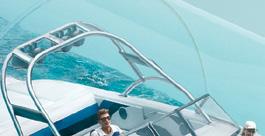
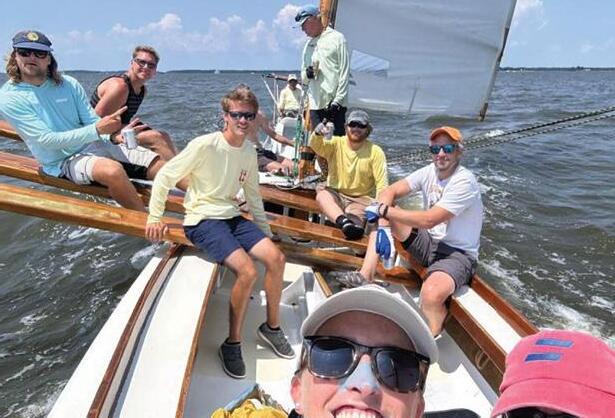
How fast can you go up the Bay in one perfect-wind day?
By Eric Miller
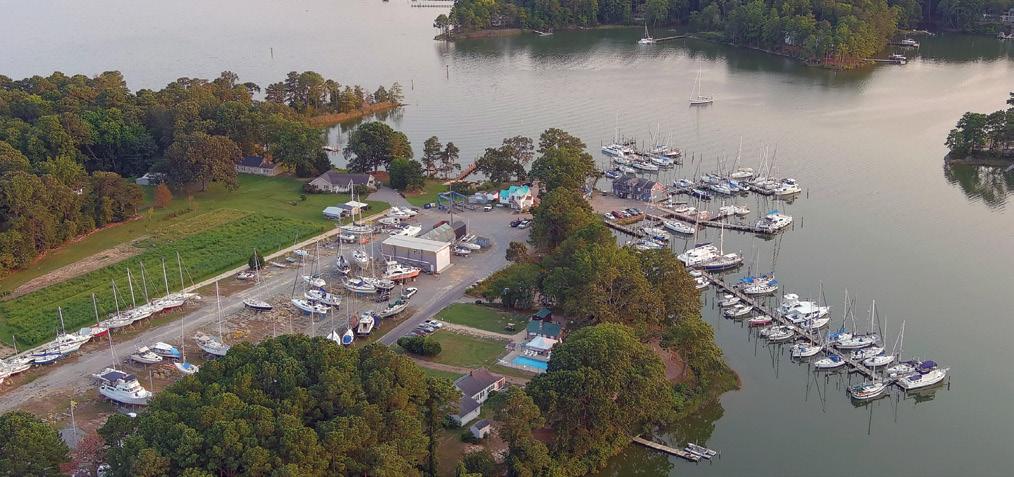
See the Bay: Northern Bay Cruising
Swimming without jellyfish? That’s only one great aspect of cruising in the Northern Chesapeake.
By Captain Cheryl Duvall
presented by Argo
Cruisers Offer Tips for Slipping the Lines
Two Annapolis cruising couples share their tips on safety, cruise prep, provisioning… and going for it!
By Craig Ligibel
40
Feeling at Home at Latitude 38° N
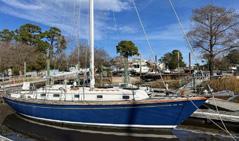
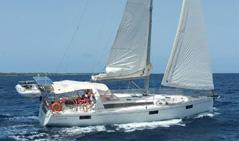
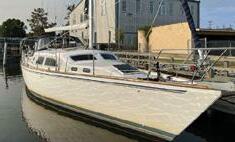
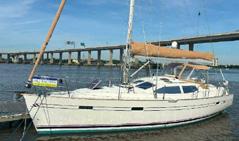
A cruising couple discovers their sailing comfort zone at 38 degrees. By James Lane presented by M yAcht services
52
Youth Sailing Focus
A glimpse into youth sailing regattas on the Chesapeake and local sailors competing beyond the Bay.
By Beth Crabtree and Storrie Kulynych-Irvin
54
Bermuda Racing and Competition at Home on the Bay
Newport to Bermuda and Annapolis Bermuda Race analysis, American Magic’s Terry Hutchinson, women’s match racing, and racing on the Bay: Maryland Cures Cancer Regatta, Rescue Regatta, HHSA Women’s Regatta, and more.
presented by Mount gAy ruM
Dave Gendell took this month’s cover shot of John Dodge and his winning Kobayashi Maru for a Cure team at the Maryland Cures Cancer Regatta June 15.
# Photo by Cheryl Duvall
# Photo by Taylor Berg
# Photo by by Bob Waldrop
32
87
612 Third Street, Suite 3C, Annapolis, MD 21403 (410) 216-9309 spinsheet.com
PUBLISHER
Mary Iliff Ewenson, mary@spinsheet.com
A SSOCIATE PUBLISHER
Chris Charbonneau, chris@spinsheet.com
EDITOR
Molly Winans, molly@spinsheet.com
SENIOR EDITORS
Beth Crabtree, beth@spinsheet.com
Kaylie Jasinski, kaylie@spinsheet.com
COPY EDITOR
Lucy Iliff, lucy@spinsheet.com
FOUNDING EDITOR
Dave Gendell
ADVERTISING SALES
Eric Richardson, eric@spinsheet.com
Katie Lange, katie@spinsheet.com
CUSTOMER SERVICE MANAGER
Brooke King, brooke@spinsheet.com
DISTRIBUTION / BROkERAGE / CLASSIFIEDS MANAGER
Beatrice M. Roderick , beatrice@spinsheet.com
ART DIRECTOR / PRODUCTION MANAGER
Zach Ditmars, zach@spinsheet.com
GRAPHIC DESIGNER / PRODUCTION ASSISTANT
Royal Snyder, royal@spinsheet.com
CONTRIBUTING WRITERS
Kim Couranz, Chelsea Co, Captain Cheryl Duvall, Tom Guay
John Herlig, Eva Hill, Pamela Tenner Kellett, Craig Ligibel, Gwen Mayes, Lin McCarthy, Steven Toole, Cindy Wallach, Ed Weglein (Historian )
CONTRIBUTING PHOTOGRAPHERS
Walter Cooper, Ben Cushwa, Mark Hergan, Will Keyworth, Ted Morgan, Al Schreitmueller, Cindy Wallach
DISTRIBUTION
Martin and Betty Casey, Gregory and Dorothy Greenwell, Dave Harlock, Ron and Colleen Ogden, John and Chrissy Wathen
SpinSheet is a monthly magazine for and about Chesapeake Bay sailors. Reproduction of any part of this publication is strictly prohibited without prior consent of the officers of SpinSheet Publishing Company. SpinSheet Publishing Company accepts no responsibility for discrepancies in advertisements.
SpinSheet is available by first class subscription for $45 per year, and back issues are available for $4 each. Mail payment to SpinSheet Subscriptions, 612 Third Street, Suite 3C Annapolis, MD, 21403.
SpinSheet is distributed free of charge at more than 800 establishments along the shores Chesapeake Bay. Businesses or organizations wishing to distribute SpinSheet should contact the SpinSheet office at (410) 216-9309 or beatrice@spinsheet.com.
Member Of:
navigating peace of mind
Unpredictable waters
THE IMPORTANCE OF BOAT INSURANCE
Embarking on the open water is an exhilarating experience, lled with the promise of adventure and relaxation. Whether you’re a seasoned sailor or a weekend cruiser, safeguarding your vessel with proper insurance is not just a choice—it’s a necessity. Explore the reasons why every boat owner should prioritize boat insurance for a worry-free voyage.
Navigational exibility
The open water can be unpredictable, with unexpected storms, collisions, or other potential accidents. Boat insurance can give you nancial protection if there is damage to your vessel, providing coverage for repairs or replacement.
Damage and injury
Accidents on the water can result in damage to other boats, docks, or even injuries to passengers. Boat insurance offers liability coverage, which can pay for damages or injuries you’re liable for while boating, up to speci ed limits, and lawsuit costs if you’re sued. This includes damage you cause to another watercraft or if someone on or near your boat is injured and you’re found to be legally responsible.
Theft and vandalism
Unfortunately, boat theft and vandalism are realities that boat owners face. Boat insurance has comprehensive and collision coverage that can protect you against events outside of your control, including theft and vandalism.
Incurred medical payments
Accidents on the water may lead to injuries for you or your passengers. Boat insurance offers a range of optional medical payments coverage limits, helping to cover medical expenses if you are in an accident or someone is hurt on your boat, regardless of fault.
Peace of mind for nancing
If you nanced the purchase of your boat, most lenders require insurance coverage to protect their investment. Having boat insurance not only ful lls these requirements but also gives you peace of mind knowing that your nancial interests are safeguarded.
Some water municipalities and marinas may require proof of insurance for docking or accessing certain areas. Boat insurance allows you the exibility to explore different destinations without worrying about entry restrictions.
Emergency towing and assistance
Progressive boat insurance can include optional Sign & Glide® On-Water Towing coverage. If your boat is disabled or breaks down on the water, Sign & Glide® pays for on-water towing, jump starts, soft un-groundings, and fuel delivery.
Wreckage removal
If your boat sinks, Progressive boat insurance will cover the cost of removing your boat from the water (if removal is legally required).
Investing in boat insurance is not just about protecting a valuable asset; it’s about safeguarding the memories, experiences, and joy that come with your on-water adventures. Don’t let unforeseen circumstances disrupt your journey—navigate with con dence, knowing that Progressive boat insurance has you covered. Ensure a smooth and worry-free voyage, because when it comes to your boat, peace of mind is the ultimate luxury. Scan to get a quote in as little as 4 minutes
learn more.
Log Canoe Love
By Molly Winans
In the summer of 2006, I was invited to race one weekend in Oxford aboard the Chesapeake Bay log canoe Mystery, owned by Fran and Suzy Schauber of Chestertown. Today, I found and reread the story I wrote (“Slack Away, Aunt Suzy,” September 2006). I remembered the article and the experience quite well, but I’d omitted a few details.
During the week before the sail, I’d been asked to bring only things I could wear or strap to my body that could get wet. I remember stressing about this, as I’d been used to bringing a backpack onboard race boats for sunblock, an extra shirt or sailing gloves, a water bottle, lip balm. I was also fretting about shorts, as I’d been warned to wear durable ones; I didn’t have the right ones for the task or time to get new ones. I ended up cutting off a pair of old khakis. That fix sufficed, but in retrospect, these cotton cut-offs
could have been terribly uncomfortable had I been fully dunked.
I also left out the part about the crew forgetting my name. To get my attention, they’d say “Hey, SpinSheet!” They did so in the most lighthearted and welcoming way, and it made me feel at home on that well-loved old boat. The crew could not have been kinder to me or more fun to sail with. It certainly helped that we had “the sweet spot” of seven to eight knots of breeze on that sunny summer weekend. It was a terrific one to test out my prowess at crab-crawling up and down the boards.
One of my favorite parts of that day made it into the article: I noted that we were on a collision course with the Oxford-Bellevue Ferry. My message got passed aft from board to board… “Ferry coming,” “Ferry coming.” “Ferry.” Fran said, “Ignore the ferry.” From the helm Mitch said, “Ignoring ferry.” To my
Remaining Log Canoe Race Schedule 2024
August 10-11: Tred Avon YC (TAYC) Oxford Regatta
August 17-18: Cambridge YC Hicks Trophy Series
August 24-25: TAYC Heritage Regatta
September 7-8: Miles River YC (MRYC) Labor Day Series
September 14: MRYC Higgins/Commodore Cups
September 15: Chesapeake Bay Maritime Museum Bartlett Cup
amazement the ferry stopped and let us hold our course. If that is not log canoe love, I don’t know what is.
I still keep my eye on the Mystery crew’s scores and photos and see that a number of sailors I met that weekend still sail onboard—Kyle Leaverton, Mitch Grieb, Ron Mullar—plus some newer crew that I know well such as SpinSheet photographer Mark Hergan and SpinSheet Century Club member James Ronayne.
As we round the corner into the dog days of summer, I encourage you to make your way to a log canoe race this season. Even if sailing these tippy canoes doesn’t appeal to you, spectating log canoe races is a home-grown Chesapeake sport in and of itself and a photographer’s dream.
As I wrote in my last paragraph of that old article and still believe, life is too short to sail on ugly boats.
# Photo by Tim Mangus
The Cure for Complaining About Race Committees
Iappreciate race committees that run sailboat races. They are a key to our sport that requires dedication and skill. Setting a good starting line, finishing line, and a course and running the start sequence takes practice. We are lucky on the Chesapeake Bay to have great principal race officers (PRO). However, too often there are complaints about race committee performance. Hampton Yacht Club (HYC) has a “cure” for the complainers and knows how to grow race committee appreciation.
HYC hosts Wednesday night racing from April through September. There is a set start time for a warning signal, four predestined courses, and a set of flags.
CSkippers who regularly do Wednesday night races are assigned a night to be the race committee. Not to help, but to be the PRO.
So, we all must find a race committee team, pick a course, set a fair starting line, launch three fleets of races, record the immediate finishes, and post the results. It makes skippers and
Dept. of Corrections
orrection for the July issue in Biz Buzz (page 86): the Sequoia was built in 1925 in a shipyard in New Jersey, not for President Kennedy but for a wealthy Philadelphia family.
Peter and Susan Hale
CAT SLIPS AVAILABLE!
Located in Shady Side, MD, offering a warm & vibrant community with quick access to the Bay, Annapolis & Eastern Shore. Membership provides so much more than just a place to keep your boat. Escape. Relax. Enjoy!
New state-of-the-art floating docks
River view pool, clubhouse and restaurant
Boating and non-boating memberships
Reciprocity with 100s of clubs worldwide
crews humble and appreciate every race committee. After a time or two, it is one Wednesday night that we look forward to. Every year, I want to be as good as my friends John McCarthy and Brian Diabler. One day, I might get that good.
Those “beer can races” are a great opportunity to try one’s skills. Thank you, HYC. Alan Bomar Fort Monroe, VA
Send your questions, comments and stories to editor@spinsheet.com
A Q&A With Dave Gendell, Author of “The Last Days of the Schooner America”
Since Annapolis author and SpinSheet co-founder Dave Gendell releases his second book this month, we reached out to him to learn about his writing process:
When did your obsession with the Schooner America
“Obsession” is a strong word, but in this case I think it is accurate. I feel like I have always been aware of the general shape of the America story: the events leading up to the 1851 race in England, that race, and the Cup she won that day. Around 2000 I learned of her connection to Annapolis. I found this part of the story deeply fascinating and quickly realized that it had not been fully researched or told by anyone. I dove in at that point.
You’ve known a lot of sailorhistorians in Annapolis—can you name the most important influences on you?
I love and live by the William Faulkner quote: “I discovered that my own little postage stamp of native soil was worth writing about and that I would never live long enough to exhaust it.” Although in this case we might substitute “patch of brackish water” for “native soil.” To that end, I get great energy from reading, learning from, and, if possible, spending time with those who feel similarly. Thankfully, it seems that sailors, as a community, have a special connection to history, be it the places we sail, the classic boats we all love, or the stories and legends passed down over the generations.
There are, of course, a few specific people who influence and inspire me along the way. Gary Jobson has an insatiable amount of energy and curiosity, and I would add “sailing historian” to the long list of descriptors associated with him. The author Nathaniel Philbrick has
lucky enough to develop close friendships with history-minded sailors such as the late David Dunigan, Fred Hecklinger, and Laurence Hartge, all of whom were deeply influential in the America project.
In terms of getting deep into Annapolis and the specific history
wrote the history of Annapolis’s Bay Ridge neighborhood, and McWilliams is the author of the seminal “Annapolis, City on the Severn”). In recent years that duo has been great with the “pressure tests” for ideas, theories, and concepts. They are also excellent test readers and enthusiastic supporters.
Do you have a piece of the vessel?
The late Fred Hecklinger gave me a nice hunk of what he called “The True Cross” circa 2000. It’s a heavy piece of pockmarked wood, almost black in color. I still keep it on my desk. I like to believe there is some sort of magic in that bit of wood. Over the years Fred passed along a few other sections which I still have. The wood Fred possessed came to him from Charlie Dell who, along with a few others, went to the Annapolis City Dump in 1946, after America was broken up, and dug out sections. Back in 1967 the Annapolis writer Bunny Rigg reported, “To this day bits of her teak planking, still studded with coppering nails, and often carrying shattered bits of the locust tree nails with which the America was fastened still show up under Annapolitan porches or are dragged from barns or dependencies where they had been sentimentally stowed.” I think this still holds true 57 years later.
What makes this book personal for you?
This book was the result of a research and writing project that stretched more than 20 years. I wasn’t working on “The Schooner Book” the entire
time, of course. Inside that timeframe I did the entire Thomas Point Shoal Lighthouse book project, raised a family, had a career, etc. Along the way, there was always a file related to America or the Annapolis Yacht Yard open on my desktop.
During that time, I met and interviewed people who were on the ground at Annapolis during World War II. I met and interviewed the descendants of the story’s protagonists, and I grew deeply fascinated with its dual narrative: as America physically comes apart, the Annapolis Yacht Yard is in a meteoric rise all around her, led by charismatic, patriotic men and a hardworking crew of hundreds of wooden boat designers and builders, all determined to convert the facility to a warship factory for the United States Navy and its wartime allies.
In many ways, the roots of the modern maritime industry in Annapolis and the entire region were set at the Annapolis Yacht Yard. As I wrote in the book’s introduction: “I have never been able to shake free of America and the Annapolis Yacht Yard. These stories are intertwined with the old streets of Annapolis. Parts of them remain visible along the working Eastport waterfront. They are embedded into the hunks of wood the sailors still pass around. They are part of me.”
What was the hardest part about writing this book— or the hardest part of the story to tell?
After I learned that America’s final haulout and failed rehabilitation and the warship building of the Annapolis Yacht Yard existed on the same timeline and at the same physical location with the same people involved in both, the challenge became giving both stories the oxygen they deserved and required. The most interesting challenge was uncovering and exploring the motivations and attitudes of those on the scene and making decisions in the 1940s. They respected and even loved America, of course, but there was a world war underway, a planet to save, and the work they were doing on
the ground at Annapolis was directly impacting that war effort. Finding primary sources that illustrated the motivations behind their decisions or learning enough about them to make some well-informed assumptions about their motivations was a fun challenge.
After that, the biggest challenge was the process of leaving behind some of the tangentially associated stories. Sections with deep, original research on other interesting things happening at Annapolis at the same time—Robert Goddard’s rocket work across the river and the 1942 ArmyNavy football game, played just across the creek from America and the Yacht Yard piers, for example—were cut and moved into new folders, separate from the America book. Always painful for a writer to do that, but they will see daylight on their own someday, the football one very soon!
How can SpinSheet readers order your book?
I am honored to be the one to tell this story and thrilled that there are sailors interested in learning more. The book (hardback and in electronic forms) is available at all the usual online outlets or directly from the publisher (rowman.com). It is also at bookstores, and I love the idea that readers can find it in physical bookstores. There will be some book-related events around the Bay this summer and fall; stay tuned to SpinSheet for more information. I will post updates at davidgendellbooks.com
What’s next for you?
I am under contract to deliver another book to the same publisher. “Battles at Annapolis: Army, Navy, and Two Remarkable Football Games” is scheduled to be published in August 2025. It covers the 1893 and 1942 Army-Navy football games, the last two played at Annapolis. These two games were played under unique circumstances by young men who, not long after the games, were involved in extraordinary combat service on behalf of the United States.
A New Kind of Shrinkwrap
More than 92 million pounds of shrinkwrap are used for boat winterization, transport, and the marine industry in the United States. Most of it ends up in landfills. The company bioaqualife has a more sustainable and green solution.
The company founder, Simon Milne, and his general manager, Carsten Petersen, harbored concerns about plastic use from two different perspectives: one from the cargo industry and the other from the shrinkwrap business. Connected by mutual sailing friends in Newport, RI, they combined forces to develop a product that could biodegrade, rather than take 500 to 1000 years to break down as most shrinkwrap does; most plastics break down into microplastics.
After a couple of years of trial and error to develop the right product, bioaqualife was launched in July of 2023 and offers a unique “biowrap” shrinkwrap alternative that protects vessels from the elements in the off-season and during transportation. The biowrap shrinkwrap is strong,
durable, biodegradable, and recyclable. The product is green in color, making it easy to spot in a boatyard.
“It is outperforming other plastic wraps out there and is more efficient to install due to its unique weldability properties allowing you to use less or zero shrink biotape,” says Milne. “People believe that it will lose functionality, stretchability, or break down on the boat in the light or heat. That is not the case. It’s much more efficient than other shrinkwraps.”
soil and leaves zero microplastics behind.
All bioaqualife products attract microbes to eat and digest the plastic; microbes are attracted by the monomer to create a biofilm and in turn start to eat the plastic films. As the plastic is consumed and digested, the material merely breaks down as gasses and water into the
“Customers love our product,” says Milne. These customers include the American Magic America’s Cup team, Hinckley, New England Boatworks, Safe Harbor Newport, and many marine shrinkwrap installers in New England. Milne relays a story of a three-day storm with heavy winds in Newport. A Hinckley representative called Petersen afterward to testify how well biowrap had held up in such rugged conditions. They were now convinced and committed to use bioaqualife’s biowrap going forward.
Learn more at bioaqualife.com.
Report Stranded Marine Mammals and Sea Turtles
Summer is here and the Maryland Department of Natural Resources (DNR) reminds boaters that marine wildlife—dolphins, manatees, sea turtles, whales, and others—are making their seasonal return to the Chesapeake Bay and its tidal tributaries, as well as the Atlantic Ocean and coastal bays.
Boaters, anglers, and beachgoers should especially be on the lookout for stranded, dead, sick, injured, or entangled animals. Anyone who sees a marine mammal or sea turtle in Maryland waters is urged to report it to the state Marine Mammal and Sea Turtle Stranding Response Program at (800) 628-9944.
In addition to calling the program hotline, anyone who encounters a stranded marine mammal, alive or dead, should not touch the animal and follow these steps if possible:
• Record the location using latitude and longitude, street address, and/or description with landmarks.
• Estimate and record the length, size, color, noticeable body parts, and movements (if alive).
• Take photos of the animal.
• Remain by the animal at a safe distance until stranding staff reach you, if possible.
While Maryland’s most common visitors are bottlenose dolphins and loggerhead sea turtles, more than 25 other marine mammal species and four species of sea turtles have been recorded in state waters.
The department’s Marine Mammal and Sea Turtle Stranding Response program works cooperatively with the National Aquarium in responding to reports of marine animals throughout Maryland’s waters and coastlines.
Marine mammals are specifically protected by federal law, the Marine Mammal Protection Act. In addition, sea turtles and whales are both protected under the 1973 Endangered Species Act. It is illegal to harass, touch, feed, capture, or collect these marine species, alive or dead, including any animal parts or skeletal remains or specimens.
# Photo by Paige Finley, submitted to the Maryland DNR Photo Contest.
The Chesapeake Bay and Watershed Report Card Shows Improving Trend
On July 9, the University of Maryland Center for Environmental Studies (UMCES) released its annual Chesapeake Bay and Watershed Report Card. This report card provides a transparent, timely, and geographically detailed assessment of the Chesapeake Bay and its watershed. Since 2016, UMCES has engaged stakeholders throughout the region to transform the report card into an evaluation of the Chesapeake Watershed’s health, which includes traditional ecological indicators, but also economic and societal indicators.
This is the fifth year the watershed has been scored, and while no new indicators were included this year, there were multiple updates to existing indicators. Linkages and relationships between the ecological, economic, and societal indicators will be evaluated in future report cards.
Overall, the Chesapeake Watershed scored 52 percent, a C. There were four ecological indicators, four economic indicators, and four societal indicators. Overall, the Chesapeake Bay scored 55 percent, a C+, in 2023, showing a significantly improving trend. This is the highest overall grade for the Bay since 2002.
The Chesapeake Bay and Watershed Report Card includes seven Bay indicators (phosphorous, nitrogen, dissolved oxygen, benthic community, water clarity, chlorophyll a, and aquatic grasses) and 12 watershed indicators (protected lands, water quality, fish community, stream benthic community, stewardship, heat vulnerability, social index, walkability, median household income, jobs growth, income inequality, and housing affordability).
The report reads, “The overall Chesapeake Bay score is still showing a significantly improving trend. This is an exciting sign that progress is being made in Bay restoration.”
Find the entire report at ian.umces.edu.
But you need it beneath you, as the wind lets you fly across the horizon, to beat the others across the finish line.
WarpSpeed® 3 SD will help you go even faster. When every ounce counts, from the core to the cover, WarpSpeed 3 SD with SamsonDry® Technology will prevent water absorption, keeping your ropes light and fast.
Clipper Round the World Race DC Stopover
After sailing 35,000 miles over 20 months, crews competing in the 2023-24 Clipper Round the World Race arrived in Washington, DC, beginning June 10. This was the first time DC has been one of the race’s stopover points, and the city celebrated with a vibrant race village.
Yachts were docked at the The Wharf, where boat tours, live music, and other celebratory events peaked June 21-24. On June 25 all 11 teams posed for a group photo on the District Pier before slipping their lines and shoving off for Scotland on the final leg of the race. A parade of sail at sunset on the Potomac, punctuated by a fireworks display, was a grand send-off as the yachts made their way toward the Woodrow Wilson Memorial Bridge and beyond.
The Clipper Round the World Race is a 40,000 nautical mile race around the world. The route is divided between eight legs and is raced on a fleet of identical 70-foot ocean racing yachts that are supplied by race organizers. Participants can choose to complete the full circumnavigation or select one or multiple legs. An intensive
Otraining program permits participants with no prior sailing experience to join a crew. Since the first Clipper Race in 1996, more than 6000 race crew from more than 60 nations have trained and raced in the event.
At The Wharf, the race village filled the waterfront, and more than 2000 people visited the open boats. While in town, Hannah Brewis, the 27- year-old skipper of the home boat Washington, DC, threw out a ceremonial first pitch at a Washington Nationals game.
SpinSheet is aware of two local sailors participating: Shawn Owen of Chronic Sailing in Annapolis, who is aboard Bekezela for Leg 8, and Klas Abrahamsson from Mathews Yacht Club, who is aboard Qingdao for the entire circumnavigation. If you know another Bay sailor who is participating, let us know by emailing beth@spinsheet.com. Learn more about the race at clipperroundtheworld.com.
n June 15, 2024, Chesapeake Region Accessible Boating (CRAB) hosted its semi-annual Recovering Warriors Sailing Regatta (RWSR) at the Annapolis Adaptive Boating Center. The regatta consisted of four races at the mouth of the Severn River.
CRAB volunteer, Joel McCord, started the festivities with a beautiful playing of taps on his trumpet. The 18 warriors and family members boarded CRAB’s fleet of Beneteau First 22A’s and set sail. Winds were 15 knots from the north; waves were one foot and higher on the course. The races provided returning warriors the chance to showcase their sailing skills, while giving first-time sail-
ing warriors a taste of competitive sailing.
The first-place team, a crew of former US Naval Academy All-Americans and lifelong friends Paul Van Cleve and Skipper Tim McGee (RDML ret.) at the helm, showcased their prowess by winning all four races sailing Lindy. The second-place finishers, Jay Streit, his wife Dee Perry, and volunteer skipper Michael Manuzak, demonstrated their resilience by finishing second in the final three races sailing Club Mac. Their second-place finish in the day’s fourth race secured their second-place medal by one point. Closely following in third place were Keith Johnson, Trisha Johnson, skipper Trey Warman, and crew Jenn Shea, who
showed determination by sailing Andrea to the finish line.
The family of Sondra Denise were singing and chanting as they crossed the finish line in last place for most of the regatta. However, they took home the “Spirit Award Medal” and many wonderful memories from their first sailing experience.
The Recovering Warrior Regatta series at CRAB is not just about racing. It is a powerful testament to the strength of the military community and the resilience of the participants. The lunch and awards ceremony at the Adaptive Boating Center overlooking Back Creek was a heartwarming display of the support and camaraderie that defines our community. We extend our heartfelt thanks to Move United Sport for their generous sponsorship of the regatta and to the CRAB volunteers and staff who made the event a memorable experience for our warriors. We eagerly anticipate the Fall RWSR with the Naval Academy Sailing Team in September, which will be another opportunity to come together and celebrate our shared passion.
Learn more at crabsailing.org
# Qingdao at The Wharf for tours. Photo by Jon Deutsch
Support a Schooner and Help Fund Chesapeake Charities
Have you heard about the virtual schooner fundraising race happening this month? Now is the time to join the friendly competition. Here’s how it works.
The Great Chesapeake Bay Schooner Race’s (GCBSR) Virtual Race will unfold online August 21 to 24. All you have to do is jump on the GCBRS website during those three days and make a donation in support of your favorite boat and its chosen Chesapeake nonprofit partner.
Instead of competing under sail, during the virtual race each schooner team will be racing to raise funds for an organization of its choice, so long as it works to preserve and protect the Chesapeake Bay’s history and ecology. The schooner that raises the most money is the winner. This year’s goal is $50,000.
Stacy Spaulding, GCBSR board member for education says, “We are so pleased to support the communities where we live and sail. Our virtual race has raised $176,000 over the last four years, and $112,000 of that has gone directly to 20 charitable organizations. We’re proud to support organizations that are working directly with the public to promote awareness and preservation of our natural resources.”
2024 grant recipients are: the Alexandria Seaport Foundation’s apprentice program; Chesapeake Region Accessible Boating (CRAB) summer sail camp, which pairs underserved youth and area police officers in a learn-to-sail program;
the Patuxent Riverkeeper Eco-Summer Nature Camp; and Tidewater Wooden Boat Workshop.
In 2023, nine nonprofits were awarded grants, including on-water sail programming at the Downtown Sailing Center in Baltimore, Nauticus Foundation in Norfolk, and Brendan Sailing.
Stay tuned for the on-water race and festivities in Baltimore and Norfolk, which run from October 1 to 6. Racing begins at noon on Thursday, October 3, with a start line just south of the Chesapeake Bay Bridge. To learn more about the fundraising competition and to make your donation, visit gcbsr.org/races/virtual-race
# Photo by Eric Moseson
Regatta Party
Eastport Yacht Club • Aug 17, 4 pm
PARTY TICKETS: crabsailing.networkforgood.com/ events/67945-crab-cup-2024
Band: Misspent Youth
Food by Boatyard Bar & Grill
August through Aug 29
st. michaels concerts in the park series
The St. Michaels Community Center hosts its waterfront Concerts in the Park Series at Muskrat Park in St. Michaels each Thursday from 6 to 7:30 p.m. with plenty of shade, treats, and water for sale.
through Aug 3
Yankee point charity concert series At Yankee Point Marina at 6 p.m. through Aug 25
groovin’ by the Bay concerts in hampton
Mill Point Park in Hampton on Sunday nights at 5 p.m.
1
amm tides and tunes concert
Grilled Lincolns live at the Annapolis Maritime Museum at 7 p.m.
8 amm tides and tunes concert
ONO - One Night Only Band live at the Annapolis Maritime Museum at 7 p.m.
9-11 Becoming an outdoorsWoman Workshop
This three-day workshop is for beginners who want to improve their outdoor skills or learn new ones. It is designed primarily for women, 18 years or older.
9-11
pirates & Wenches Weekend
Come by land or by sea to Rock Hall, MD, and experience a town-wide familyfriendly theme party everyone will enjoy.
11 anne arundel county River Days
11 a.m. to 4 p.m. at West River Center (5100 Chalk Rd., West River, MD). Each festival will feature fun activities for all ages, including water activities, environmental educators, boat rides, live music, food trucks, games, crafts, face painting, county agencies, and more. Registration to the festivals is free and required for entry, as capacity is limited. Registration does not include boat ride tickets or kayak lessons, which are also free but must be reserved separately for a specific time slot. Registration opens July 11 at 12 p.m. at aacounty.org/riverdays
11
Watermen’s appreciation Day 10 a.m. to 5 p.m. at the Chesapeake Bay Maritime Museum in St. Michaels, MD. CBMM’s annual celebration of the men and women who make their living on the Chesapeake Bay and their heritage, featuring a boat docking contest, steamed crabs by the dozen, live music, family activities, and more.
15
amm tides and tunes concert Jah Works live at the Annapolis Maritime Museum at 7 p.m.
22 amm tides and tunes concert John Frase Project live at the Annapolis Maritime Museum at 7 p.m.
25 anne arundel county River Days
11 a.m. to 4 p.m. at Quiet Waters Park, Annapolis. Each festival will feature fun activities for all ages, including water activities, environmental educators, boat rides, live music, food trucks, games, crafts, face painting, county agencies, and more. Registration to the festivals is free and required for entry, as capacity is limited. Registration does not include boat ride tickets or kayak lessons, which are also free but must be reserved separately for a specific time slot. Registration opens July 25 at 12 p.m. at aacounty.org/riverdays
29
amm tides and tunes concert Area 301 and All You Need Band live at the Annapolis Maritime Museum at 7 p.m.
August Racing through Aug 23
eYc Beer can Races
Hosted by Eastport YC, Annapolis, MD. through Aug 29
adult Dinghy Racing
Hosted by Cambridge YC every other Thursday.
through Aug 28
aYc Wednesday night Racing series 3
Hosted by Annapolis YC.
1
neRYc moonlight Run Race
Hosted by North East River YC, North East, MD.
2-3 governor’s cup Yacht Race
Hosted by St. Mary’s College of Maryland.
3
hYc tom Brady masters
Hosted by Hampton YC, Hampton, VA.
3
opcYc Yankee station series 4
Hosted by Old Point Comfort YC, Hampton, VA.
4
4
aYc two Bridge Fiasco
Hosted by Annapolis YC.
ccVR Founders Race
Hosted by CCV Racing, Southern Chesapeake.
9
taYc oxford Race
Hosted by the Tred Avon YC, Oxford, MD.
9-11 hampton one Design nationals
Hosted by Norfolk Yacht and Country Club, Norfolk, VA.
10-11 Leo Wardrup memorial cape charles cup
Hosted by Broad Bay Sailing Association, Southern Chesapeake.
10-11 oxford Regatta
Hosted by the Tred Avon YC.
15-18 us sailing team Race championship - hinman
Hosted by Severn Sailing Association, Annapolis, MD.
17 cRaB cup
Eastport Yacht Club, Annapolis, MD. Also featuring a fabulous Shore Party and a poker pursuit for powerboats.
17 plantation Light Race
Hosted by Hampton YC, Hampton, VA.
17-18
cYc hicks trophy Log canoes Hosted by Cambridge YC.
24 a2c Lighthouse challenge Point-to-point race from Annapolis to Cambridge, co-sponsored by Eastport YC and Cambridge YC.
24 opcYc Yankee station series 5
Hosted by Old Point Comfort YC, Hampton, VA.
24-25 taYc heritage Regatta
Hosted by the Tred Avon YC, Oxford, MD.
30 - Sep 1
stingray point Regatta
Hosted by Fishing Bay YC, Deltaville, VA.
31 annapolis Labor Day Regatta Co-hosted by Annapolis and Eastport Yacht Clubs.
September through Sep 7
Free concerts in the park in cape charles
Cape Charles Central Park at 7 p.m.
7 4th annual portsmouth paddle Battle
9 a.m. to 1 p.m. on the Elizabeth River in Olde Towne Portsmouth, VA, followed by the Portsmouth Junior Battle for youth ages 8-14 from 1 to 5 p.m. SUP and kayak categories. Also featuring music, good food, children’s activities, and more. Proceeds will help The Friends support the Portsmouth Naval Shipyard Museum and the Lightship Portsmouth Museum.
7 shaw Bay Raft-up concert Raft up and relax with music by Eastport Oyster Boys and Wye River Band in lovely Shaw Bay along the Wye River. Bring your dinghy, paddleboard, kayak, or sailboat and enjoy the music and scenery. This free concert is held each year to raise funds and awareness for clean water efforts on Maryland’s Eastern Shore. Consider making a donation to Shore Rivers to support their clean water initiatives.
14
anne arundel county River Days
11 a.m. to 4 p.m. at Fort Smallwood Park, Pasadena. Each festival will feature fun activities for all ages, including water activities, environmental educators, boat rides, live music, food trucks, games, crafts, face painting, county agencies, and more. Registration to the festivals is free and required for entry, as capacity is limited. Registration does not include boat ride tickets or kayak lessons, which are also free but must be reserved separately for a specific time slot. Registration opens Aug. 14 at 12 p.m. at aacounty.org/riverdays
15 Bay Bridge paddle East Beach at Sandy Point State Park in Annapolis, MD. Presented by ABC Events. Three course options: The Span (elite) nine-mile course, The Steamer (intermediate) 5K course, and The Soft Shell (Recreational) one-mile course.
21 Boatyard Beach Bash 4 to 10 p.m. at the Annapolis Maritime Museum. Let yourself be whisked away to Key West as you immerse yourself in the incomparable talent or world-class musicians. Tickets: $150 includes drinks and food. Benefits the Annapolis Maritime Museum. Tickets: amaritime.org
24-28 trawlerFest Baltimore
At Harbor East Marina in Baltimore’s Inner Harbor. New and pre-owned cruising powerboats, education and demonstrations, and opportunities to network with fellow cruisers and industry experts.
26 the World is Your oyster Fest
Get ready for an unforgettable shellebration at the Bay’s biggest bivalve bash featuring Baltimore’s premier shucking competition, immersive educational moments that will help you understand the significance of the Bay’s keystone species, and a chance to sip and slurp to your heart’s content. Presented by the Oyster Recovery Partnership at the B&O Railroad Museum. Tickets: oysterrecovery.org
27 havre de grace Lighted Boat parade
Five categories to win prizes: Best Decorated Sailboat, Best Decorated Powerboat, Best Use of Lights, Most Original, and Judges’ Choice. The parade will start at the Amtrak bridge and traverse the shoreline to Green Buoy #17. Prizes will be awarded that evening at the post-parade party. Location TBD but will plan for Market Street Brewery.
27-29
ssca chesapeake Bay gam
At Maryland Yacht Club in Pasadena, MD. (Formerly the Annapolis GAM.)
Three days of practical information for cruisers at every level of experience, including a number of hands-on sessions. Presented by Seven Seas Cruising Association. Open to members and nonmembers. Register: ssca.org
September Racing
through Sep 26
antique and classic sailboat Racing
Hosted by Cambridge YC every other Thursday.
through Sep 1
stingray point Regatta
Hosted by Fishing Bay YC, Deltaville, VA.
1
J/105 Women’s Regatta
Hosted by Sailing Club of the Chesapeake, Annapolis, MD.
6-8 harbor 20 east West challenge
Hosted by Annapolis YC.
7 navy sailing Fall oxford Race
Hosted by Navy Sailing.
7 tri-services cup
Hosted by Old Point Comfort YC, Norfolk Yacht and Country Club, and Lynnhaven YC.
7-8 mRYc Log canoe Labor Day series
Hosted by Miles River YC, St. Michaels.
8 hampton middle ground Light Race
Hosted by Hampton YC, Hampton, VA.
8 taYc hammond Regatta
Hosted by the Tred Avon YC, Oxford, MD.
For more details and links to event websites, visit spinsheet.com/calendar
11-15 J/30 north american championships
Hosted by Eastport YC, Annapolis, MD. 14 hospice cup
Annapolis, MD.
mRYc Log canoe higgins/ commodore cups
Hosted by Miles River YC.
sunfish challenge and Dinghy Distance Race
Hosted by Hampton YC, Hampton, VA.
15 cBmm Log canoe Bartlett cup
Hosted by Chesapeake Bay Maritime Museum, St. Michaels, MD.
15 ccVR Fall series 1
Hosted by CCV Racing, Southern Chesapeake.
17-19 shark class national championship
Hosted by Hampton YC, Hampton, VA.
20-22 505 class east coast championship
Hosted by Hampton YC, Hampton, VA.
20-22 annapolis Yc 3-2-1 invitational
Hosted by Annapolis YC.
21 annapolis Fall Race to solomons
Hosted by Annapolis YC.
21 hampton Roads sunfish challenge and Dinghy Distance Race
Hosted by Hampton YC.
21 seafarers Regatta
Hosted by the Seafarers YC and the Eastport YC.
22 opcYc Yankee station series 6
Hosted by Old Point Comfort YC, Hampton, VA.
25
BBsa oktoberfest Begins
Hosted by Broad Bay Sailing Association, Southern Chesapeake.
27-29 cal 25 national championships
Hosted by Annapolis YC.
28
BBsa neptune’s atlantic Regatta Hosted by Broad Bay Sailing Association, Southern Chesapeake.
28 hdgYc Fall invitational
Hosted by Havre de Grace YC.
28 Ya gotta Regatta
Hosted by the Downtown Sailing Center, Baltimore, MD, to benefit its community outreach and accessibility programs.
28-29 aYc Fall series 1
Hosted by Annapolis YC.
Where Are They Now?
Since 2014 we’ve been chronicling the stories of sailors who took up the sport (or got into it in a big way) as adults. We’re going to keep bringing you such stories, but we also want to bring you updates on some of the sailors we interviewed years ago. If you were featured on this page and would like to update us on your sailing adventures, email beth@spinsheet.com. This month we catch up with Christine Gardella and Derrick Cogburn, who both attended our Start Sailing Now alumni gathering at the Annapolis Spring Sailboat Show.
Christine Gardella: She’s a boat owner now!
We originally interviewed Christine Gardella in early 2022. With a busy career in the healthcare industry and a home in the Washington, DC, suburbs, Christine found sailing on the Chesapeake both exciting and relaxing. She had taken several courses at Annapolis Sailing School and was gaining experience on the water by leasing time on a privately owned Jeanneau docked in Annapolis. At that time, Christine wasn’t sure that she could make the time commitment to be fully responsible for maintaining a boat and its systems. That has changed.
Christine says, “As I fell in love with sailing and being on the water, I outgrew my sailing lease option in Eastport. I couldn’t imagine not having a boat year-round to hang out on. I wanted to sail whenever I wanted and go wherever I wanted. I was lucky enough to find exactly what I was looking for. In October of 2022, I purchased a beautiful 1989 Cape Dory 30 MK2 Nirvana, which I am keeping this summer at Flag Harbor Marina in St. Leonard, MD. From there I can get to the Bay easily. I sail with my friend, and we love to ply the waters of the lower Chesapeake around the Choptank River and Solomons Island, and other nearby areas.”
Christine continues, “I am totally enjoying working on Nirvana. As a boat owner, I do my own work. I sanded and painted her bottom last season. This year I have replaced her water fuel separator, water pressure assembly, and am sanding and oiling her exterior teak, to name just a couple of recent projects. Meantime, I am planning to sail as much as I can on her this season on the Chesapeake and, hopefully, to soon sail beyond the Bay!
Derrick Cogburn: A leader in the sailing community.
Since his initial interview in 2019, Derrick Cogburn has continued to expand his sailing and leadership skills in many ways and is giving back to the sailing community as an active member of many sailing organizations. He has taken the US Sailing Level 1 Instructor course, US Powerboating Instructor Course, and is a certified US Sailing Race Officer and a US Sailing REACH Instructor.
committee, and last year I chaired the Seafarers Regatta.
“Other board work has included serving on the board of the Chesapeake Bay Yacht Clubs Association (CBYCA), as secretary and later as rear commodore. In addition, I currently serve on the board of directors of Brendan Sailing, which uses sailing to help empower youth with learning differences.
Derrick says, “I am a member of the board of the Seafarers Foundation, which is the chartered organization for Sea Scout Ship 1959-Seafarers Commitment, of which I am the founding skipper. Our Sea Scout Ship has enjoyed much success and in 2021 was selected as the National Flagship by BSA and the BoatUS Foundation. I am now in my first year as commodore of the Seafarers Yacht Club (SYC) after serving as treasurer and vice commodore. I am also chair of the SYC racing
“In 2023 I participated in US Sailing’s Sailing Leadership Forum in St. Pete Beach, FL, and at this year’s US Sailing National Sailing Programs Symposium I gave a presentation entitled Diverse Ways to Diversify: Reimagining and Enhancing Diverse and Inclusive Participation in Sailing. Finally, I have been appointed by the board of US Sailing to its DEI committee.
“My wife Noemí, son Sean Manuel, and I continue to enjoy sailing our Hunter Legend 40 Transcend, and we also sail two Sea Scout training
Find a Sailing School
New sailors or those returning to sailing may want to seek instruction or coaching at a sailing school or club. Many such organizations exist on the Chesapeake Bay and its tributaries. They offer certifications for beginners, returning sailors hoping to brush up on seamanship skills, cruisers seeking bareboat chartering or navigation experience, and racers wanting to hone their skills. The following is a sampling of schools and clubs that offer sailing instruction on the Chesapeake. For a more complete list of schools offering certifications outside this region, visit US Sailing or American Sailing.
vessels, Commitment (a Tartan 37), and Persistence (a Seafarer 23), as well as two Sea Scout dinghies, an American 14.6 and a C420. We have five kayaks (two tandem and three solo), and after a flirtation with a powerboat, we purchased a Sea Ray 280 Sundancer Makai.”
Chesapeake Bay Sailing Schools
• Annapolis Sailing School annapolissailing.com
• Annapolis Naval Sailing Association ansa.org
• Blue Water Sailing School bwss.com
• Captain In You Sailing Schools, Inc. captaininyou.com
• DC Sail dcsail.org
• Gratitude Sailing Institute gratitudesailing.com
• J/World Annapolis jworldannapolis.com
• SailTime sailtime.com/annapolis
• Sail Solomons sailsi.com
• West River Sailing Club learn2sailwrsc.com
# Photo courtesy of Gratitude Sailing Institute
# Derrick and Noemí.
Stories of the Century
Let’s Do the Math!
Experienced SpinSheet Century Club members know how to do the math of reaching 100 days on the water by the end of the calendar year. If you were to leave the dock every day between August 1 and Halloween, you could log 92 days on the water! Easy, right?
Ha! Here’s real-life math for boaters who get busy with work and family: there are 13 weekends left between now and Halloween. If you were to get on the water every Saturday and Sunday between August 1, you could log 26 more days before it gets cold! If you add in another 10 weeknights, that could make it 36.
Aspiring Century Club members will “work hard” at playing hard on the water this month. We love keeping up with their progress. Join the fun at spinsheet.com/century-club. All boaters are welcome!
# Mario Santana (53 days) coached a group from Peake Social on a Rainbow 24 out of Annapolis Sailing School.
# Jamey Dumas (68 days) racing on a Sunday evening with Annapolis Sailing School Keelboat Club.
# Our top-scoring Century Club member, David Sites (hands up, 194 days) on his first sailboat race. Photo by Will Keyworth
Drew Mutch
# David Stalfort (79 days) took people sailing on Cape Dory Typhoons out of Youth Sailing Virginia for the Summer Sailstice.
# Naia Wallach (103 days) on a passage from the Dominican Republic to the Bahamas.
# A blue-nosed Casey Firth (51 days) racing log canoes on the Corsica River in July.
No Fluff
By Angus Phillips
An unscientific name for a rising concern in the Chesapeake and beyond.
No fluff. That’s been Matt Rutherford’s mantra for years. He uses it to stay on track. His primary goal in roaming the seas as one of America’s greatest ocean adventurers is to use his sailing skills to advance knowledge, to discover facts, to find and help solve problems, to bring back data. Fluff, to him, is boating for fun or profit without a deeper purpose.
So, imagine their chagrin when he and his longtime science partner at the Ocean Research Project (ORP), Nicole Trenholm, sailed the length and breadth of the Chesapeake twice, from Elk Neck to Norfolk in the fall of 2023 and spring of ‘24, trawling for plastic pollution and came back with almost nothing but—you guessed it—fluff!
That is the uniquely unscientific name most of us use to describe the tiny particles of plastic that slough off fleece pullovers and blankets and kids’ toys and carpets when we wash them, shake them out or just wear them. Scientists call them microfibers, or microplastics. They are small enough to be barely visible or invisible, but there is rising concern they could do bad things to living creatures.
The Washington Post devoted a full page in June to “The Plastics We Breathe,” citing the potential dangers of humans in-
haling or ingesting 74,000 to 121,000 bits of microplastic a year, as one study found to be the case. Tiny plastics burrowing into organs and bloodstreams can cause inflammation, the Post article reported, and chemicals used to make them are known carcinogens. Well, what about marine creatures and the water they breathe?
Matt and Nicole have sailed 15,000 miles together across the Atlantic and Pacific, collecting plastic pollution and documenting their findings for scientific research. But full-scale surveys in bays and estuaries were almost nonexistent. Seeing a need, Nicole (ORP’s science expedition leader) pursued and won a grant to check the Chesapeake, the nation’s largest estuary. The two 10-day tours they conducted in ORP’s 70-foot research sailing vessel Marie Tharp covered 850 miles, including runs up major rivers as far as Washington, DC, in the Potomac. They ran 24 hours a day, nonstop, with a small team of scientists and sailors.
They established 30 testing sites and found plenty of plastic pollution, just not in the form they were used to. In the ocean, Matt says, they encountered visible swaths of busted-up floating de-
bris, most of it recognizable as broken plastic in bits the size of peppercorns to pea gravel and larger.
In the Bay, using a scoop mounted on the bow which swooshed water into the boat’s laboratory and through fine mesh filters, they caught a more insidious invader, so small it was barely visible. Their findings suggest the Chesapeake harbors about 175 microscopic plastic bits per cubic meter of water: an area the size of a washing machine. They mostly tested surface water, but also found microfibers in mud samples from the bottom.
# Trenholm and a colleague at work in the onboard lab.
Discover it all at Herringtonharbour.com
The pollution was more concentrated in the water above the Bay Bridge, but more plastics were in the mud in Virginia waters of the Lower Bay.
The data they collected is now in the hands of the University of Maryland’s Center for Environmental Science (UMCES), where Nicole is studying for a doctoral degree in oceanography.
She says it’s impossible to say whether the Chesapeake is a hotspot for microfiber pollution, because there are no comparable studies elsewhere. “But any amount of plastic in the water is bad.” How bad is yet to be determined.
The good news, says Nicole, is that with the base information in hand and testing stations in place, future studies will be able to determine whether the problem is getting worse—or perhaps better.
She said, “We believe most of the microfibers are coming from grey
water discharges,” such as sewer plant outfalls and factory discharge pipes. With improved filtration, some big improvements could be made. “It’s 100 percent fixable,” she believes.
If that sounds optimistic, so be it. To be a pollution scientist focused on plastic in 2024 is no easy task. In 1950 the world produced 2 million metric tons of plastic, according to the Post article. Last year it was more than 400 million metric tons. What effect plastic microfibers may have on marine life in the Chesapeake Bay is a question now in the hands of the lab scientists at UMCES. Matt and Nicole have other fish to fry. They left home base in Annapolis June 25, bound for the open Atlantic, halfway between Nova Scotia and Bermuda, where they will spend two months mapping an underwater mountain range and its effects on ocean currents with Navy scientists. Hmm. Gulf Stream? July and August? Hurricane Alley? No fluff out there.
Learn more at oceanresearchproject.org
# The water collection unit at work.
M EET L OR i J UL i AN , S EA G LASS S EAGLUNKER
Interview by Gwen Mayes
When a frosty piece of aqua sea glass caught the eye of Tilghman Island transplant Lori Julian she launched into creating art that will inspire you to take a walk on the beach.
What about the Chesapeake inspires your work?
Living on Tilghman Island provides the perfect backdrop for my passion: collecting and creating art with authentic beach glass, beach pottery, and driftwood. The Chesapeake reminds me of my childhood and carries the history to its shores at low tide. My mother was an artist, and my father was an aeronautical engineer. We spent the summers on our houseboat exploring the Chesapeake and the rivers that flow into it.
What makes sea glass so popular?
Sea glass, or beach glass as it’s sometimes called when found along the shore’s bodies of water, is treasured mostly by other beachcombers who share the passion of the hunt. One of the first things that comes to mind after discovering a piece of wave-beaten glass or pottery is: “Where did this come from?” That creates an interest to know more.
When did you first become interested in sea glass ?
When I first moved to the Eastern Shore around 2000, I found a piece on the beach, and was hooked. Now I’m proud to call myself a seasoned seaglunker combing the waterline for treasures that pique my interest and creative urge. By Tilghman’s standards, though, I’ll always be a transplant.
What challenges do you face creating sea glass art?
Finding the right piece. If I have a certain shape in mind, I might spend 40 minutes rifling through my drawers looking for that one piece. Just like working a jigsaw puzzle, though, sometimes I stop, walk away, and when I return, I find it easily.
Do you have any tips for beginners who want to start working with sea glass?
Get a copy of Richard LaMotte’s book “Pure Sea Glass,” which is considered the “Bible” of sea glass history, design, artistry, and how and where to search. LaMotte spoke at the first sea glass festival in St. Michaels, and people still refer to him to help identify a particular shard. Also, be patient and realize that sea glass is harder to find because people don’t throw glass into the water anymore.
What’s the best time to find these treasures?
During the winter when the sun is closer to the earth, we get proxigean tides, which are more dramatic than any other time of year and create super
“negative” low tides. The full moon and onshore winds create what is known as a spring tide, which is also a good time to hunt. Storms churn up the Bay, and we reap the benefits of a storm bounty at the first low tide after a storm.
Do you have a favorite image?
The great blue heron is on my logo and signature piece of sea glass art. I begin with old transom windows that have been taken out of row homes in DC and Baltimore, restore them, and create beautiful sea glass herons!
How do you come up with new ideas?
Sometimes I see ideas from other artists, and sometimes it’s the medium that inspires me. Recently, I salvaged some mast hoops from the Ida May skipjack, which has been retired, and started a series with images of what you’d see looking through a port hole, such as waves and shorelines.
What other forms of art do you specialize in?
I also create driftwood candle holders and cold rolled steel herons that I finish with a metallic patina. The herons are popular as they come in different sizes and can be displayed indoors or out. The process for the herons is a lengthy one involving several coats of a special metallic primer, metallic paint, patina spray, and poly to seal them.
Where can people find your work?
On Facebook and Instagram at Tilghman Island Studio or by email at tilghmanislandstudio@ gmail.com.
About the interviewer: Gwen Mayes,
life coach, workshop host, and docent
Maritime Museum and Park: anchortoself.com
Find the
The ‘Bay in a Day’ in a Beach Catamaran
By Eric Miller
We wondered, “How fast can a 20-foot beach cat like my Nacra 20 make the run from Hampton to Annapolis?”
In 2021 it took us 19 hours, but in variable four- to 12-knot breezes. In 2009 I did it the other direction, Annapolis to Hampton, in 22 hours in light to moderate southerly breezes. But how fast could it be done if we picked the perfect wind day?
My crew Ross Morley (ex New Zealand Navy) and I used PredictWind to look for that right day. As most know, the summer wind on the Chesapeake is predominately southerly. We picked a day in June with a favorable 12- to 20-knot southerly breeze. That’s as good as it gets in summer months on the Bay. Also, no chance of thunderstorms, as T-storms and beach cats do not play well together (ask me how I know this, or related: how fast a capsized beach cat can ‘sail’ away in 40-knotplus summer storm).
Our goal was under 12 hours. Secretly, knowing the speed potential of the Nacra 20, I was hoping for under 10 hours start to finish. My various handheld GPS readings in the 23 years I’ve owned her indicated that an open-Bay cruising speed of 13 to 17 knots is easy-peasy when jib reaching or with the spinnaker up in 10 to 15 knots of wind. Another datapoint for a Nacra 20’s speed: I used to shadow the boats some years during the annual overnight Governors Cup races to St. Mary’s City and have made the run from Annapolis to the Point Lookout rounding mark in just over four hours.
Since bragging rights (aka beer) started kicking in, we decided to Google what the fastest sailboat run from Hampton to Annapolis, or vice versa, was. In 2013 a TP 52 doing the Down the Bay Race sailed from Annapolis to Hampton in seven hours and two minutes. Holy cow! As an additional reference, the venerable Running Tide set the previous record for 11 hours for the Down the Bay Race in 1974.
So, once the PredictWindapproved day was chosen in midJune, we trailered the boat down
a day early to 37 North Marina in Hampton near Fort Monroe. Capt. George who runs the marina there was extremely gracious in our special needs, as this is primarily a big boat marina, not for a little beach cat with no motor. For folks looking for a very nice marina when visiting Hampton by boat, 37 North Marina is the ticket. The Deadrise Restaurant at the marina makes excellent seafood burritos that are roughly the size of a subcompact car!
We started off Fort Monroe at 7:20 a.m. the day after trailering
# Ross and Eric and the Nacra 20 they sailed up the Bay.
down with winds at seven knots from the south. It did not build as fast as anticipated, but within a couple of hours we were cruising at 11 to 13 knots of boat speed. Our game plan was to stay between the western shore and mid-Bay, doing deep broad reaches as true wind was directly astern.
By Smith Point (the southern mouth of the Potomac) we were making 13-14 knots of boat speed and around 12 knots VMG to Annapolis. Ross and I alternated steering every hour or two. If not steering, we navigated with a Garmin 78 handheld, did spinnaker trim, and kept watch for surfacing rays ahead of us, as hitting a ray at speed can shear off a daggerboard or rudder on a beach cat (ask me over a beer how I know this).
At the Patuxent River area the wind was at 17 knots due south, just as predicted. So far so good, making up for our slow start.
Around North Beach the wind built to a steady 20 knots, which is the upper limit for most beach cat sailors.
A bit later I found out why. I was steering when I went high coming down a wave, and we capsized. We both landed on the mainsail and put a 12-foot vertical rip in it. We also mangled the port wing/seat as we held on to it hoping not to fall onto the sail, but the aluminum weld gave in. We were in about 12 feet of water.
We righted the boat and sailed from North Beach to Thomas
Point under the little jib only. We finished before sunset. It took 12 hours and 55 minutes. Our maximum speed was 19 knots and average boat speed was 10.3 knots. We travelled 137 miles on a 120-mile rhumb-line course.
Now next year, I wonder how fast we could do it if we wait for a perfect 12-knot easterly?
Beach cat sailing is fun, fast, and intense #
# Up the Bay in a beach cat in just under 13 hours.
Explore the Bay with Argo
NEW G R o UP s F EAt URE F o R Cl UB s!
Plan trips, message and connect with your club members on the water.
Northern Bay Cruising
By Captain Cheryl Duvall
At a recent SpinSheet Crew Party I found myself discussing favorite anchorages with a few passionate sailors. Swan Creek in Rock Hall was mentioned, with several heads bobbing until one sailor admitted “Oh, I’ve never been north of the bridge.” That comment set off a cheerful exchange about the benefits of Northern Bay cruising, including being able to swim in waters without jellyfish.
For sailors who live south of the Chesapeake Bay Bridge, planning to cruise northern waters may require blocking off a week rather than a few days to enjoy the small towns and secluded anchorages. Those with shallower drafts will have more options, but there are plenty of destinations for deeper vessels. Here is a suggested Northern Bay itinerary, sailing up the Eastern Shore to the C&D Canal and back along the western shore.
‘See The Bay’ is powered by Argo navigation and social boating app (argonav.io). Argo’s Web App allows its premium subscribers to explore, plan, and document their trips on a desktop and sync effortlessly with any device. Use the QR Code above and download today.
Chester River
The Chester River winds more than 24 miles from its mouth to Chestertown and continues well beyond the town’s drawbridge. There are many coves to explore, including Lankford Creek, my favorite Chesapeake anchorage. We typically anchor near Cacaway Island in spacious waters on the east fork. Swimming is jelly-free along the scenic tree-lined shore. The sunsets are stunning. We’ve also anchored in the west fork depending on wind protection and have visited Lankford Bay Marina for fuel and pump out. Other favorite anchorages include Grays Inn Creek, Reed Creek, and the Corsica River.
One year we made it all the way upriver to Chestertown, taking a slip at the Chestertown Marina within view of the Schooner Sultana. Due to winding turns and the fickle nature of the wind, we had to motor all 24 miles. However, that annoyance was quickly forgotten when we explored the college town on foot, with its charming shops, art galleries, and restaurants, including the incomparable Modern
Stone Age Kitchen. Cruisers can reprovision at Chester River Wine & Cheese, Chestertown Natural Foods store, or on Saturdays at the farmer’s market.
Swan Creek (Rock Hall)
We typically sail to Swan Creek at least once a season, taking a mooring ball at Swan Creek Marina or anchoring nearby. Rock Hall is a mile and a half away and is easily reached by bike or on foot. We often stop at a small beach before arriving downtown to have ice cream near the cottage vendors, sip coffee at Java Rock, or provision at Fresh Start Foods. On the return, we frequently stumble upon a waterfront festival, live music, or dine at Waterman’s Crab House. If venturing to Rock Hall seems too far, Swan Creek offers a few waterfront dining options in addition to simply grilling in the cockpit.
Fairlee Creek
I confess. We have never braved the shallow entrance and tricky currents to enjoy Fairlee Creek, but we have sailing friends whose sailboat draws six feet and swear
# Sassafras sunset during dinner at Kitty Knight inn, overlooking marinas in Georgetown.
that it’s worth the sweaty palms. Intrigued, I detoured to Great Oak Landing Marina during a recent Eastern Shore road trip to check it out. From shore, the approach appears as daunting as the charts depict, and yet the inside anchorage is scenic, spacious, and deep enough. There’s a beachside tiki bar (Jellyfish Joel’s) that boats will pass on their port after successfully navigating the narrow entrance. Dining and live music can be found at the marina, and transient slips are available for those who seek all the amenities. I look forward to visiting Fairlee Creek by boat someday, but I can assure you that I’ll be the sailboat approaching at slack on a rising tide.
Sassafras River
We’ve anchored in the scenic Sassafras several times. Before the pandemic, we enjoyed anchoring at Betterton and dining onshore, but sadly that restaurant has closed. However, for those who are willing to travel eight miles upriver, Georgetown offers stunning sunset views from the deck of the Deep Blue Restaurant at the historic Kitty Knight Inn. A couple of nearby marinas offer transient slips. Alternatively, about half the distance to Georgetown, there’s a decent anchorage at Turner Creek Bend, with access to a nearby park and pavilion.
Chesapeake City
We’ve passed through Chesapeake City several times while transiting the C&D Canal. We’ve only stayed overnight once, and that was a few years ago in the tight anchorage on the south side of the bridge. Concerned we were anchored too close to other boats, we discovered some friends who invited us for drinks in their cockpit and assured us our spacing was fine. Later, we caught a water taxi to explore the town and dine at the Bayard House,
where we enjoyed a lovely meal, only to learn that the water taxi quit earlier than the posted hours. Yikes! Thankfully our friends generously responded when we phoned them at 9 p.m. (cruisers’ midnight) to ask for a lift home. Word to the wise: if you consider anchoring, the entrance has become shallower, so be sure to check depths and local knowledge.
Havre de Grace
Magothy River
This historic town on the western shore, which missed becoming our nation’s capital by just one vote in 1789, is one of my favorite places to visit. Yes, it’s another long passage, more than 10 miles from the Bay within a narrow but well-marked channel of the Susquehanna River. Those who visit won’t be disappointed. We typically take a slip at Tidewater Marina, especially in the hot summer months when shore power offers air conditioning. Our favorite places to dine include Tidewater Grille with a view of passing Amtrak trains, MacGregor’s with live music, and La Cucina. Bombay’s Ice Cream is a great stop after a jaw-dropping visit to Washington Street Books & Music, which is sure to amuse young and old with its movie props. For those who need access to good coffee and internet, I’ve spent countless hours at Concord Point and Java By the Bay 2. Museum lovers will enjoy both the Maritime and Decoy Museums. And the distinguished skipjack Martha Lewis recently returned home to Hutchins Park after several years of restorations.
As sailors head south from Havre de Grace, there aren’t many adjacent rivers to explore on the western side due to shallow waters or busy powerboat traffic. When our sailboat was based in Baltimore, we occasionally anchored in Bodkin Creek or near Mike’s in Rock Creek. Then as now, we often ventured farther to turn into the beautiful Magothy River. I’ve lost count of how many times we’ve anchored in Broad Creek, within view of the contemporary glass house. When storms or high winds are forecasted, we often anchor near the horse farm in Eagle Cove, although it’s become quite crowded of late. When time allows, we sail farther up the river to Dividing Creek and Mill Creek.
As you see, there’s much to experience north of the Bay Bridge, in jelly-free water and on land. Whether you plan to loop the Northern Bay counterclockwise as described, or in reverse, or zig zag according to prevailing winds, the rivers and towns will leave you with lasting memories.
About the author: Captain Cheryl Duvall is a USCG Licensed Master, Inland 100 GRT, and is the program director for the Chesapeake Area Professional Captains Association (CAPCA). She sails the Chesapeake Bay on Belle Bateau, a Gozzard 44.
# Approaching Havre de Grace from Susquehanna River.
# Serene Lankford Creek at sunset, anchored near Cacaway island.
Cruisers Offer Tips for Slipping the Lines
By Craig Ligibel
I’ve done my fair share of cruising. A bunch of trips to the Bahamas. A three-year stint in Belize and Guatemala. Thousands of coastal miles in Florida. I always came back in one piece, although I can’t say the same for my boats.
My “go sailing” checklist was a simple one: Make sure my 40,000-pounot center-cockpit Endeavor ketch Wind’s End was in tip-top shape. Have plenty of fuel filters and a spare part or two. Lay in a month’s supply of wine, beer, rum and ballyhoo for trolling for dinner. Charge up my Iridium sat phone. Pay my annual SPOT subscription. Check in with weather router Chris Parker. File a float plan with my shoreside support team. Add in a fresh cannister of mace (if the country I was traveling to permitted). Buy a oneway ticket for my wife to join me at my destination (Colleen loves to sit at anchor but hates the “sailing part”).
When I lived on the Gulf Coast of Florida, navigation was simple. Head out through Charlotte Harbor, turn left, and let the seas unfold enroute to points south. I stopped long distance cruising when I moved to Annapolis, but I can’t get that feeling of the wind and waves of those midnight passages out of my system. Luckily there are a number of cruising sailors within hailing distance of my South River home.
Annapolis sailors Taylor and Alex Berg and Jeff and Cameron Bach take a more disciplined approach to stocking up their respective vessels in preparation for months spent cruising south to Florida and beyond.
Living the dream with their 36-foot Catalina MkII Westwind
Jeff (60) and his wife of 37 years Cameron (55) Bach have the best of both worlds. Presently, Westwind is snugged up to a dock at Palm Cay Marina on the Bahamas’ New Providence Island. The couple pays around $1200 per year for dockage and makes frequent trips via air to cruise Bahamian locales.
“We’ve made the 1200-mile trip from Annapolis to the Bahamas twice. It takes about a month and takes a toll on us and on the boat. We figured better to put the boat in a safe place and use it as a base to explore. That gives us more time on the
water, and Nassau is a convenient port of call for friends and family to sail with us.”
Both Jeff and Cameron have full-time jobs. Jeff sells commercial real estate, and Cameron runs a pottery business in Annapolis called Quirk-Bach Pottery.
Jeff credits his $2500 investment in a marine-grade version of Starlink as “a game changer.” He says, “I get better WiFi speed with Starlink on the boat than I do at home. Although it uses a lot of power, it is totally worth it to have your own private WiFi connection anywhere in the world.”
Monthly costs run around $250.
#
The Bachs’ priority while cruising is safety: “We have all the tools we need to feel safe on the water. That starts with good lifejackets and extends to Radar, AIS (Vesper), B&G Chartplotter, and Navionics. We also have a backup sextant and paper charts for the US East Coast and the Bahamas. Guests we welcome onboard appreciate our attention to safety.”
The couple generally provisions for 60 days. Here are their tips:
• Canned goods go a long way. Mark contents with a Sharpie, and take the labels off (roaches like to lay eggs in
Jeff and Cameron onboard Westwind.
# Cameron in the Exumas.
the glue between the cans and labels).
• Long-lasting veggies (carrots, broccoli, cauliflower, potatoes) are good to hang in nets in the galley.
• Freeze meats in small portions in Ziploc bags.
A• No cardboard boxes. Can be roach motels.
• When something breaks, buy two!
• Keep plenty of fuel filters, belts, impellers, clamps, spare nuts and bolts, extra wire, and anodes.
• Be competent in performing simple repairs.
Annapolis Sailboat Show attendees may recognize Jeff from his work at the Boat Show’s Influencer Sailing Channel cruising booth “Cruisers Creating Content.”
Jeff and Cameron have this advice for people contemplating the cruising lifestyle: “You’ll never be fully prepared. You’ve just got to untie the lines… Get out there. Just do it!”
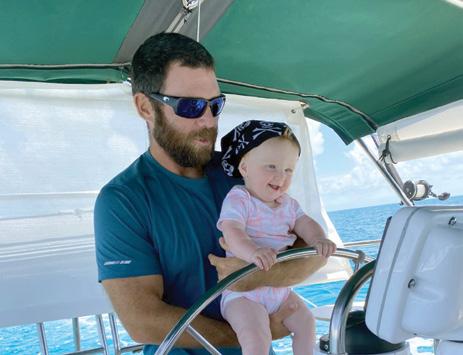
A baby onboard changes the Bergs’ cruising plans
lex and Taylor Berg have been married for five years and have been cruising almost as long.
The Bergs are among a growing group of younger (under 40) sailors who have taken advantage of technology and flexible work environments to cast off the dock lines and explore the world by sailboat.
Literally born onboard, Alex grew up cruising with his parents. He bought a 1987 Sabre 34 named Isabela 11 years ago. Taylor has “bought in” to the cruising lifestyle since the “I do’s.” Their first trip South was an uneventful voyage in October 2020, crossing to the Bahamas on Valentine’s Day, 2021. They spent 100 days cruising around until returning to Georgia for the summer.
In 2023, they crossed to the Abacos on President’s Day. Later that year, Alex motored his 17-foot center console Scout across the Gulf Stream. “The crossing was rough, but having that boat with us in the Bahamas was really great for fishing and exploring,” he says.
In late 2023, the couple welcomed a baby girl, Isla, into their cruising family. They crossed the Gulf Stream yet again in 2024 with the then-six-month-old baby onboard.
“We cruised around the Abacos for six weeks and returned to the States. With the arrival of Isla, we made the decision to not to haul the boat down south but to sail her to Annapolis.”
The Bergs arrived in late June. Their sailboat now makes her home at the Annapolis City Marina.
“My advice to folks sailing with a youngster is to do all you can before they get mobile! Once they are crawling, it’s a full-time job to keep track of them and to keep them occupied,” says Taylor.
Although technically Taylor is available to help Alex with the sailing of the boat, “It’s just not practical with the baby to delegate much for her to do. Taking care of Isla is a full-time job,” says Alex.
The couple divides up the provisioning for their voyages. Alex is a successful spear fisherman, and the larder is always full with fish, conch, and lobster.
“We try to make meals on a theme and use similar ingredients to make different dishes. How many times can you cook conch? Chowder. Fritters. Ceviche. Always something new in the galley,” says Taylor.
Alex likes to store the dry goods himself. “That way I know where everything is,” he says. He puts the chips and beer on top. “There’s always somebody stopping by for a party.”
Alex takes most stores out of the packaging, including boxed wine. “Also, find out what day the mail boat arrives! That’s key for fresh vegetables,” says Taylor.
The couple rents a mooring ball for $30 per day in Hopetown in the Abacos. “That’s a good jumping off point.”
The Bergs will spend the summer in Annapolis and start thinking about their next voyage. “Right now, we’re thinking the northeast: New York and Maine,” says Alex.
He says the key to a successful voyage is “Check the weather; check the weather; check the weather. That, plus check mechanicals, check charts for updates, get paperwork in order, and make sure all your safety gear is in working order. Oh… did I say check the weather?”
Humorist Mark Twain said it best: Twenty years from now, you will be more disappointed by the things you didn’t do than by the ones you did do. So, throw off the bow lines. Sail away from safe harbor. Catch the trade winds in your sails. Explore. Dream. Discover.”
# Alex and isla in Abacos.
# isla and Taylor in Abacos.
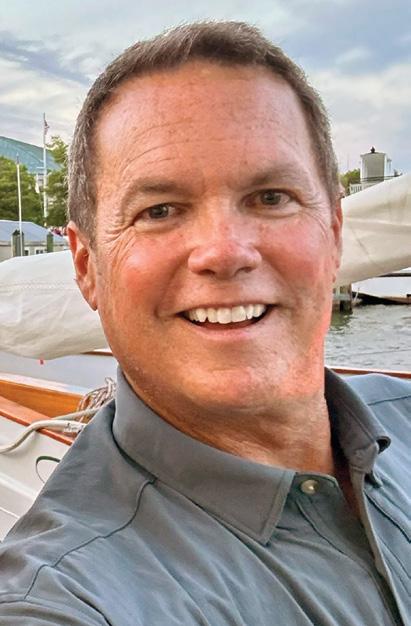
Feeling at Home at Latitude 38° N
By James Lane
a cruising couple discovers their sailing comfort zone at 38 degrees.
From our recent anchorage off Isla Lanzarote in the Canary Islands, 3185 nautical miles away from our previous home waters in Back Creek in Eastport, latitude 38° N seems not only far away but like a different world completely. The Chesapeake Bay is often very kind to us sailing folk, and there is a reason they call Annapolis “The Sailing Capital of America.” That designation is owed in no small part to its place latitudinally on our planet.
While sailing between Bermuda and the Azores, the crew of Cetacea, a 30-foot electric Baba 30 cutter, made an amazing discovery: the 38th parallel is totally awesome for sailing all over the world!
I, James, and my partner Dena started our lives aboard in Seattle in 1999, and
Cetacea’s home port is Orcas Island, WA, which is very thoroughly located on the chilly 49th parallel. We wasted no time heading south, though, and spent five years happily sailing the San Francisco Bay, the Sacramento River Delta, and the west coast of the Americas as far south as Monterrey, CA, in the early 2000s.
When we left for Hawaii in October, 2006, we didn’t spend a whole lot of time at 38° N. We went out to the Farallon Islands, about 20 nautical miles west of the Golden Gate Bridge, and took a left-ish turn that brought us to the tradewinds. All the weather invites you to Hawaii, so that’s where we ended up 20 days later, at latitude 18° N. It was hot. The sun was intense. We ultimately discovered we were about 20 degrees of latitude out of our comfort zone.
# The author at Latitude 38.
The northern hemisphere’s 38th parallel is a Goldilocks zone for older sailing dudes like me, who don’t want to be cold but lack the proper amount of melanin for sailing in an open cockpit closer to the equator without our local star causing epidermal damage. Also, latitude 38° N gets the kind of sun and rain that encourages delicious fruits,
veggies, fishes, and little critters to support communities all around the globe.
Fast forward to 2023, when we coped with a miserable winter and spring too far south, down in the Florida 20s, while jettisoning our old 20-hp Yanmar 3GM diesel in favor of a 10-kw electric motor. The project was made painful by the late spring heat, and it was promising to be a terrifyingly hot summer (which it totally turned out to be). Garbed in lightweight but still sweaty long-sleeved shirts and long flowing pants, we bolted for better circumstances and arrived in Bermuda, situated very nicely on latitude 32° N, after 13 days of sailing. Better, but not quite there.
We left Bermuda, sailed up to latitude 38° N, and hooked a right on our favorite parallel. On leg two of our global circumnavigation, we spent 29 days sailing to Ilha do Faial in the Azores archipelago. It was, of course, like all offshore adventures, incredible in every way imaginable… and an opportunity to muse on what exactly we liked so much about where we were and where we wanted to be in the world.
We chose the longer lubber-line route along latitude 38° N because we were hoping for some of that Annapolis 38° N consistency just above the Azorean High. We didn’t get that at all, and what we did get was changeable like January up the Severn with no more than two days of steady weather for the entire 29-day passage except right at the end, when a stiff nor’easter on the bow made the last 175 nm take almost 72 hours. Ow!
But, the island peaks were beautiful. We weren’t cold, we weren’t hot, and the sun wasn’t torturing us all the livelong day. Latitude 38° N felt good.
Back to the US Atlantic seaboard: on the Chesapeake Bay, where we traveled the last 12 years, 38° N passes right above Smith Island in Tangier Sound and crashes into Crisfield, “The Seafood Capital of the World,” on Maryland’s Eastern Shore. From the Chesapeake, 38° N continues its middle path offshore just north of Chincoteague, VA. And the sailing between Smith Island
and the Bay Bridge is almost perfect year-round.
In the Azores, the archipelago we just sailed away from, latitude 38° N passes right between the islands of Pico and São Miguel. According to Windy, their weather looks like a beautiful sailing day up the South River in September right about now. From the Azores, 38° N kisses the European landmass in the Setubal District of Portugal and doesn’t hit the Mediterranean Sea until the eastern Andalusian coast.
From there, latitude 38° N is jampacked with world-renowned cruising grounds like Marettimo and the Strait of Messina. Reggio de Calabria is a welcome bolthole and one of the most beautiful cities you could ever imagine approaching from the sea. From Italy, 38° N takes off through the Aegean Sea and yes, there are so many great sailing adventures written and retold about this incredible part of the world that it is best you just
sail there and see it all for yourself. The winds are steady throughout the year and the water is so clear and blue that it almost hurts to look at it!
Latitude 38° N passes right through the northern suburbs of Athens (Greece, not Georgia) and just north of Andros, the northernmost island in the Greek Cyclades Archipelago. I have it on good authority that Andros is a must for anchoring people like us, so we’re definitely pointing the boat in that direction the next time we circumnavigate the planet Earth.
My favorite global parallel doesn’t make landfall again until Izmir, Turkey, before
# At anchor in Horta, Azores.
# Riding Latitude 38 from Bermuda.
taking off through the Asian continent, which doesn’t really concern cruising sailors like us. Yeah sure, it splashes into the Caspian Sea for a little while and goes through some truly amazing parts of the world like Iran, Turkmenistan, Uzbekistan, Afghanistan, and China, but good luck getting your cruising sailboat through any of those customs offices in this political climate. No really… good luck and let us know how it went because we would love to sail there someday.
Our dear 38° N does go through China’s inland Yellow Sea, and I hear the cruising there is all the wow. I think the fact that 38° N passes through North and South Korea is kind of bizarre, but hey, I didn’t draw that chart. They each have a coast on latitude 38° N, which says something about the great sailing weather, I’m sure.
When 38° N enters open water again from the west, that water is starting to get
that familiar chill, but make no mistake about it, the Sea of Japan is another worldrenown sailor’s paradise that I can’t wait to discover for myself. From the Miyagi Prefecture in Japan, latitude 38° north plows a 4575 nm unincumbered stretch of Pacific Ocean that lands us at the Golden Gate Bridge, another of my all-time favorite places to sail.
Though we can’t wait to sail south with the trade winds, away from the Canary Islands to our next port of call on our Electric Circumnavigation, we’re not certain that latitude 38° S will be the same as 38° N. Buenos Aires, South Australia, and New Zealand’s North Island all sound intriguing. We’ll report back on what we find there.
What I know for a fact is that we’ll bounce back to Latitude 38° North as often we can, for the feeling of being at home and for the totally awesome sailing. #
A version of this article first ran in Latitude 38 Magazine’s December 2023 issue (page 38). We’re publishing it with permission from Latitude 38.
These sailboat charter companies specialize in sailing destinations such as the Chesapeake Bay, Northeast United States, Northwest United States, South America, Caribbean, Mediterranean, Southeast Asia, and South Pacific. Contact them and book your charter dream vacation today! Charter Directory
# Dena Hankins in Sao Jorge.
A Week or Eight in Salinas
Hearing a description of the harbor in Salinas, Puerto Rico, it sounds like a made-up idyllic spot from a Jimmy Buffett song. It’s a friendly community of sailors, snug in a protected bay guarded with lush mountains, and waters teeming with sea turtles, dolphins, manatees, and rays.
The south coast of Puerto Rico is along the usual path for sailors going both directions through the Caribbean because of the ample safe anchorages to hide away in, as needed. But Salinas is one of those places where sailors stop in, then they blink, and eight weeks later they’re still there and not terribly motivated to leave.
Arriving, it can look crowded on the approach, but the bay is deceptively deep and there’s always a spot to tuck in, even in the high season. With sturdy mountains to the north and protection from some barrier islands, reefs, and mangroves all around, the harbor stays
By Cindy Wallach
mostly calm and settled, even in strong winds. All the way back into the bay puts you closer to Marina de Salinas, a cruiser-friendly staple with a well-run fuel dock. They take annual liveaboards and transient boats, too, though they are often booked months in advance. For a small fee, anchored boats get full access to the dinghy dock, parking, mail service, laundry, ice, showers, and the bars and restaurants that are alive with activities and music on the weekends.
The town of Salinas seems sleepy at first, but walking around the streets you start to uncover most of the things cruisers need and want in a harbor.
There is a hardware store, an excellent vet, a barbershop, and a major grocery store a little more than a mile away. They have a small marine chandlery in town, but if you rent a car, you are about an hour from two different West Marines on the island (the better stocked one is downtown San Juan).
The marina can connect you to a local guy who rents cars to cruisers at a steep discount from the standard places.
Salinas is an excellent base to explore the rest of the island of Puerto Rico, which you do need a car to do.
You’re an easy day trip into Old San Juan, Fajardo, the rainforest, and loads of other touristy spots to check off your list.
We stopped in to collect some mail and spend a week showing my cousin around, who was visiting from Oregon. We left the boat for a couple of nights while we drove around playing tourist. With so many liveaboards and fellow cruisers in the harbor, we had no trouble asking some friends to keep an eye on the boat in case the
Postcard
weather changed drastically. We felt completely safe leaving the boat, which made sightseeing a lot more enjoyable. We loved getting our steps in across Old San Juan, taking in the natural world at El Yunque National Forest, meandering festivals and checking out street art in some of the vibrant small towns, and exploring the Rio Camuy Caves.
My cousin left a week or so later. We had plans to catch the next weather window to the Dominican Republic. And then, blink... more than a month passed. Our dog was unwell, so we took him to the vet. Some boat projects needed doing, and with the West Marine so handy, we couldn’t resist checking those projects off of our to-do list. Friends were coming through, so we lingered to wait for them. All the while weeks were passing by like gentle waves on a following sea.
Even with projects, work, and a sick dog, the days were far from stressful. Mornings I’d pop into my kayak before the rest of the family woke up. Paddling out to the middle of the harbor, I’d drift quietly until I heard a tell-tale breath. They’d curiously surface and say good
# A
morning; the manatees of Salinas harbor are curious and steadfast. While the waters are teeming with other marine life, the manatees seem to be dominant. I’d paddle away from the manatees and head for the shallows, where spotted eagle rays would glide over the sea stars and conch nestled in the seagrass. On the way back to the boat, sea turtles would guide me, and if I was lucky, a dolphin would frolic by.
After projects and work were done for the day, we would take the dogs to one of the many little islets or small beaches around the harbor so that they could run and swim. Other cruisers would congregate there, as well as Puerto Rican families unwinding for the day. With the kids playing and the dogs chasing and the adults chatting, sunset would sneak up on us without warning. Back on the boat under a blanket of stars, I would sit out in the cockpit and listen for manatee breaths in the hushed harbor.
And blink, more weeks passed. We were out of excuses to linger longer in Salinas. I said goodbye to the manatees and soaked up one last dramatic sunset from our cockpit. We lifted anchor early one morning to leave Puerto Rico and continue on our way. With places like this, I always whisper a ‘thank you’ to the harbor for keeping us safe and happy, because who knows if or when we will get to spend a week or eight here again?
About the Author: Cindy Wallach cruised the Caribbean with her family and two dogs aboard their St. Francis 44 catamaran Majestic, which is for sale. Learn more at majesticstfrancis44forsale.com.
friendly community of sailors, snug in a protected bay guarded with lush mountains.
Attention Chesapeake Bay sailing clubs: share your club news and events in SpinSheet’s Club Notes section by sending a 350-word write-up and one or more clear photos of smiling faces or pretty boats to beth@spinsheet.com. We’d love to hear about your cruises, educational programs, and outstanding club members. Let other sailors know about all the benefits your club has to offer! Thanks to Club Notes section sponsor, YaZu Yachting! Find them at yazuyachting.com and on Facebook.
Cruising Through the Heat
The Dog Days of August came early this year, but the Chesapeake Bay Tartan Sailing Club (CBTSC) members made the best of it.
The Wye River Inter-Club Rendezvous turned out to be a winner. Led by Michael Mininsohn, we had seven boats by water and three members by land yacht. There was much socializing and activities such as The Silly Boat Inspection (do you have Old Bay Spice onboard?) and Nautical Trivia. The weather held for the most part although there were a few testy thunderstorms.
Our next event was the Summer Sailstice on June 22, led by Julien and Linda Hofberg. Four boats (Whitmans, Karpas, Hofbergs, and Swans) headed for Harness Creek and anchored toward the back. It was quiet and hot, but the swimming made the heat tolerable. As for the sailing, the wind was good for crossing the Bay. With no mandatory destination, an out-and-back sail was very satisfying.
Then came the fourth of July! Mike and Pat Heilman again offered their home to all CBTSC members and
friends for viewing the fireworks in St. Michaels, MD, on Saturday, July 6. Arriving by dinghy were Glenn and Dawn Noyes (Bhean Na Mara), Paul and Bambi Macpherson (Selkie), and Julien and Linda Hofberg (Phoenix). Mike and Janet DiNapoli (former owners of Aria), neighborhood friends and former club members, also joined.
Due to the heat—and it was hot upon arriving at 7 p.m., we retreated indoors but still had a panoramic
# Beating the
view of the Miles River, just south of the St. Michaels Harbor. Members passed the time storytelling and staying hydrated with refreshments. At 9:15, we moved to the lawn when the spectacular fireworks began. After the finale and watching the many red, green, and white boat lights scurry home across the Miles River, our guests departed, promising to return next year. Looking ahead, we have the 2HOT2Sail land event and the West River Crabs Ashore gathering. Check for details at cbtsc.org
heat during the Summer Sailstice cruise.
Quality Cruising Yachts | Deltaville, VA
Summer on the Water with PSC
By Julie Day
The Pentagon Sailing Club (PSC) continues its mission of encouraging and advancing seamanship skills of all sailors from rank beginners to seasoned “salts.”
Over the summer Duncan Hood, an ASA master instructor, has been conducting both student and instructor certification courses on his 48-foot Cherubini schooner Adventurer for PSC and the Annapolis Naval Sailing Association. His recent courses for PSC have included overnight sails on the Chesapeake where students have had a chance to handle all six sails, practice night-time rescue, an-
choring under sail, live MOB rescues, even baking and many other skills.
With 40 years of experience, Duncan remarks, “We cover a lot of things that you need for cruising anywhere, but in the end it’s about responsible seamanship, practical skills, and camaraderie to squeeze the most enjoyment out of any cruise.”
PSC’s Women on the Water (WOW) hosted Chris Harris at their recent monthly social. Chris talked about this past year’s Clipper Race Around the World. He described the crews’ exhaustive training in London, before sailing on one or more of eight
Mlegs of the race, first to Uruguay, then eastward to Cape Town, Australia, Vietnam, China, the US, and back to London. Roughly 400 crew members covered over 40,000 nautical miles.
Chris showed spectacular videos and was peppered with questions from PSC members.
The racing program at PSC has been hugely successful this summer. The club’s five 22-foot Catalina Capris compete on the Potomac under the sponsorship of the Daingerfield Island Sailing Club. Races are scheduled on Tuesday nights from April to September as well as several weekend regattas and races. PSC captured a first, third, and fourth out of 10 boats in their division at the end of the Summer 1 series, seven races in all. The racing squadron is open to members who have ASA 101 or equivalent experience. For those who have never raced, the more relaxed racing environment of the Pentagon Racing Squadron offers a great opportunity to learn.
For more information contact pentagonsailing.org or find us on Facebook.
ABCW Catches Fireworks and Hosts Nautical Flea Market
embers of America’s Boating Club
Wilmington (ABCW) enthusiastically celebrated multiple special events in July and hosted a Nautical Flea Market.
To celebrate Independence Day, many enjoyed picking number one crabs prior to witnessing the awesome Rock Hall, MD, fireworks display at North Point and Osprey Point Marinas on July 3.
Later in July, North Point Marina slip holders and ABCW members hosted a Nautical Flea Market at the pavilion at North Point Marina. Boaters throughout the area enjoyed searching for the must-have boat
treasures at bargain prices. Additionally, members enjoyed a delectable crab feast. Getting together with fun loving, lively, like-minded friends is always enjoyable and one of our most favorite things to do!
During the summer, ABCW members enjoy monthly weekend raftups or cookouts. Winter activities feature boating education and monthly social events with interesting speakers. To learn more, visit us at abcwilmington.com or contact us at wspsboaters@gmail.com.
# PSC Racing Squadron
A Trifecta!
By Susan Theuns
Members of the Compass Boating Club of the Chesapeake (CBCC) are excited to meet new members who will be sailing with us for the first time this season. Our club is growing, and by popular request we are working on club hats and burgees!
In July, to celebrate Independence Day, several members took in the July 4 fireworks on and around the Bay waters. Next, members Sean Hollis, Rich Tull, and Hank Theuns put together a Three W’s Mini-Cruise that involved Wind, Wooden Canoes, and Wine. It was a fun trifecta of watching the Miles River Yacht Club’s Governor’s Cup Series log canoe races, a stay in St. Michaels, MD, a good sail to a local Eastern Shore winery (Mark Cascia), and finally a sail to the Western Shore for a raftup and dinner the next day at Pirate’s Cove Restaurant.
This month we have a Northern Bay Mini Cruise, which will start with a raftup in Worton Creek. The destinations after Worton will be based on the weather conditions.
Possible ports include the Sassafras River, Bodkin Creek, Hart-Miller Island, and Havre de Grace. If you are reading this in early August, there is still time to sign up and join us as our start date is not until mid-month.
For September, join us in Shaw Bay off the Wye River on September 7 for the annual concert featuring the Eastport Oyster Boys and others to benefit Shore Rivers. Come early to raftup and/or dinghy raft. Our Fall Cruise, Let’s Go South, will be September 14 to 19. We will have a great itinerary, fun activities, and land events for those who may be drive-alongs.
Members can check the club’s Facebook page to sign up for the August and September events. Please feel free to comment and suggest ideas for future raftups, events, or just to buddy-boat on the spur of the moment.
Not a member yet? If you are interested in joining a boating club that is tailored to you, please send a brief description of your experience, contact information, and expectations to CompassBoatingClub@yahoo.com. We look forward to hearing from you!
Night Sail for Summer Sailstice
The Hunter Sailing Association Station-1 (HSA-1) had a night sail for our Summer Sailstice event on June 21. Four sailboats participated with a meetup at sundown at 83A. We sailed across Eastern Bay as the sun was setting and the strawberry moon was rising. It was just beautiful. We sailed to Shaw Bay on the Wye River where we anchored after a beautiful night sail. We spent the weekend cooling off in the water and had a Saturday night social hour with our friends.
Our long sail of the season was a North of the Bay Bridge event which kicked off on June 29 with a club picnic at the Maryland Yacht Club. Aeolus sponsored and organized our first night picnic which was attended by 18 boats. During our nine-day sail we anchored, rafted, and stayed in marinas. We went as far north as Chesapeake City on the C&D Canal. We saw fireworks on July 4 in Chestertown on Fairlee Creek. We sailed, swam, celebrated a birthday and an anniversary, ate, and laughed. All in all, a great time was had by everyone.
Next up is our annual Pool Party on Duvall Creek. Hosted by Blue Heron, the party can be attended by car and boat. We hope all can join us.
If you have a Hunter or Marlow-Hunter in the mid-Chesapeake Bay and are not a member, please check out our club at hsa1.org or email commodore@hsa1.org to learn more about the benefits of membership, which includes access to all club cruises and events and a direct connection to a network of Chesapeake Bay Hunter owners. We hope you will join us!
What Makes Cruising So Special?
By Sue Mikulski
This year, the Sailing Club of the Chesapeake celebrates 80 years of long-standing traditions. On two recent annual club cruises, I was reminded of what makes cruising so special.
For the annual Memorial Day cruise, creative cruise leaders Julie and John King organized outrigger dinghy races, hula hoop contests, yoga, and more. We had an authentic Hawaiian Luau at a stunning property near Shaw Bay on the Wye River. A Hawaiian member of the club loved sharing his culture with other club members. A professional Hawaiian dancer got members up dancing and learning the moves. It was an epic party that will be talked about for years to come.
The June Rendezvous cruise is always a favorite, and this year the week was amazing, with cool nights, beautiful sunsets, and sailing most days. We spent the night on the hook at many charming anchorages. Julie and Bob Neaderthal celebrated all things 1980s with trivia questions on morning announcements and an 80s burger bash at Chesapeake Yacht Club. We had a stunning night on the hook at Baby Owl (pronounced “Boby Owl”) Cove. Most enjoyed a wonderful lay day in Oxford. Under the direction of George Hollendursky, we learned about circle rafting 24 boats—but the wind gods had other ideas. At LaTrappe Creek we found beautiful, protected, and clean water. Eagles flew overhead, and a few of us went swimming. Cambridge Yacht Club welcomed the fleet, and we can’t thank enough Stokes Lyles and Jackie Whisman for their ongoing support and help. Finally, 23 of us kayaked with a guide on the Little Blackwater River, where a large eagle was perched high in the trees as others flew overhead.
The week concluded with our Commodores Dinner. Under the guidance of historian Mark Kellogg we learned, or had our memories refreshed, about the 80 years of our club’s traditions. Then, a few of us went to the Little Choptank for another relaxing night on the hook.
What makes cruising so special? Gazing at stars, wildlife flying overhead, fish jumping, and coffee in the cockpit. I’ll take it!
# Dinghy racing with a windsock. Photo by John Murray
A Little Horsing Around
Braving a gray and drizzly day, Club Beneteau Chesapeake Bay (CB2) members had a great time for the 150th Kentucky Derby Run for the Roses 2024 Season Kickoff Happy Hour, when we celebrated the beginning of sailing season with a little “horsing around.”
The event was hosted at Shipwright Harbor Marina in Deale, MD. The hats and guest horse and jockey were a huge hit, in addition to the delicious appetizers. Once again, it showed that a little rain won’t deter a sailor!
The first afloat event of the season in May was a New Members Raftup on Little Round Bay. The next exciting afloat event was our Beneteau Owners Living the Dream (BOLD) “Discover the Northern Bay” cruise. Departing from Rock Hall, MD, participants visited the ports of Havre de Grace and Baltimore and attended a Baltimore Orioles baseball game. Several anchorages and potlucks were planned for the trip. A second BOLD trip in August will see sailors navigating the DelMarVa Loop. In true CB2 fashion, the Commodore’s Crab Fest in September at Lankford Bay will have folks picking crabs and swapping stories.
CB2, in its 24th year, continues to provide a forum for good fellowship and an arena for the exchange of sailing knowledge. If you are a Beneteau or Lagoon owner and would like to join a sailing club that welcomes novice and salty sailors who enjoy sailboat cruising on the Chesapeake Bay, please visit CB2 at CB2.org. The home page has the complete 2024 schedule and a membership application link. If you would like additional information, please feel free to contact the club’s commodore, Chuck Smith, at chucksmith.o35@gmail.com Come join us!
CB2 hopes everyone has been able to get out on the water and do the thing we all love to do—sail! The club hopes everyone is enjoying a safe and happy summer.
# Kentucky Derby Season Kickoff
Lobster and Crab Feasts? Yes, Please!
By Norm Render
Back Creek Yacht Club (BCYC) recently held its annual Lobster Feast just off the South River on Crab Creek.
The weather was extremely cooperative, and the members dined on one-and-a-half-pound lobsters with the option of a 20-ounce prime rib for those not inclined toward seafood. Participants brought a side dish or dessert to augment the menu, and what a feast it was.
Some of the 50 attending members arrived by land, but the active BCYC boaters arrived in a small navy of 11 craft, both power and sail. The boats were either anchored, moored, or slipped at the dock during the party.
The following morning, we held our big breakfast event known as the
Flip, Flop, and Drop. Officers of the club prepare customized omelets for participants. Each year the chefs show off their culinary skills by flipping the omelets in the air and flopping them onto the awaiting plate. The “drop” only happens occasionally when things don’t go as planned.
All participants had a great time and both events were a resounding
Tsuccess. Upcoming events include a cruise to Rock Hall, MD, and another to Oxford, MD, to see the log canoe races, as well as a Crab Feast at Lankford Bay Marina off the Chester River.
If you are looking to expand your boating horizons on the Chesapeake Bay, look us up at backcreekyc.org and find out what we’re all about.
Chesapeake Bay Cruising Conference
he Seven Seas Cruising Association’s (SSCA) annual Chesapeake Bay Cruising Conference will unfold September 27 to 29, at the Maryland Yacht Club (MYC) in Pasadena, MD.
Formerly called the Annapolis GAM, the name change reflects the growing number of Chesapeake Bay cruisers who are exploring the Chesapeake or who will congregate on the Bay in the fall before heading south on the ICW or offshore to points east and south.
The 2024 GAM will offer three days of practical information for cruisers at every level of experience, including a number of hands-on sessions. Both experienced cruisers and those preparing for their first cruise learn from each other. All benefit from making connections with others who have similar goals or who are perhaps heading in the same direction. Experienced cruisers have expressed how important the
GAMs have been to their enjoyment and safety, and they appreciate the opportunity to share their knowledge.
MYC is located at the entrance to Rock Creek. Slips will be available for attendees. For those who want to anchor, the large anchorage has good holding, and there is dinghy access. Parking will be available for
those who arrive by land vehicle. MYC has excellent facilities, with covered areas for indoor and outdoor programs.
SSCA’s Chesapeake Bay Cruising Conference is open to members and nonmembers. Find more information and registration at ssca.org. Space is limited, so register early!
# New and experienced cruisers are welcome!
# John Yates, Tim Feldman, and Court Treuth
# Hunter Sailing Association Station 1 raftup.
# Youth Sailing Virginia’s Family Learn to Sail program encourages continuous learning for new sailors. Photo by David Stalfort
# Sailing Club of the Chesapeake raftup. Photo by John Murray
# Jon Deutsch aboard Qingdao when members of the Mathews Yacht Club visited the Clipper Round the World Race boats at The Wharf in DC.
# Pentagon Sailing Club members aboard Adventurer for sail and instructor training with Duncan Hood.
2024 U.S. Junior Women’s Championship Presented by Southcoast Wind
From June 27 to July 1, a small and competitive group of youth female sailors met at Roger Williams University in Bristol, RI, for the 2024 U.S. Junior Women’s Championships. The annual event featured a multi-day clinic led by top female coaches, followed by two days of championship racing. Sailors aged 13 to 18 competed for either the singlehanded ILCA 6 or doublehanded 29er trophies.
In the ILCA 6 competition, Chesapeake sailor Leila Pfrang (Hampton Yacht Club) took first out of 18 boats. This was Pfrang’s first time competing in ILCA 6 at Junior Women’s; last year, she and crew Madison Bivins took fourth in the 29er category.
Pfrang started sailing Lasers in the summer of 2021. When she started out, she benefited from training with a “really good group” at HYC, including
TBy Storrie Kulynych-Irvin
her brother Kyle Pfrang, who now sails collegiately at Roger Williams.
At the 2022 Orange Bowl, however, Prang noticed the 29er fleet and wanted to learn more about it. Neither she nor her dad knew much about the boat, but they decided “spur of the moment” to get a 29er. Pfrang asked her best friend and freshman year high school crew if she would join her in the double-handed boat. Pfrang’s friend agreed, and after just a few days of training they competed together at Youth Champs, Nationals, and Junior Women’s. Pfrang feels that “sailing in 29ers helped me so much tactically” in ILCA races. She’s still balancing both boats, though she decided to sail more in ILCAs this summer.
The pre-regatta clinic at Junior Women’s Champs was a forum for sailors to ask questions, train in a small group, and get to know each other. Pfrang cited
newly appointed U.S. Sailing Olympic development coordinator Rosie Chapman as a helpful source of knowledge. The ILCA 6 competition featured close races, making starts and downwinds important times to get ahead. The first day of racing featured medium to light conditions. The second day saw very windy conditions that accentuated the strong current on Mt. Hope Bay. On the second day of racing, Caroline McClain (Chicago Yacht Club/Lauderdale Yacht Club) threatened to take the lead with three bullets in the fourth, fifth, and sixth races. Pfrang says that McClain’s “slightly better” hiking and starts “shot her out… it was that slight difference that is accelerated by the fact that it’s super windy,” yet Pfrang hung on to win the final race and the overall title. Find full results at theclubspot. com/regatta/eyO7JiblG9.
2024 ILCA Under-21 World Championships
By Storrie Kulynych-Irvin
he 2024 edition of the ILCA
Under-21 World Championships was held July 1 to 8 in Viana do Castelo, in Portugal’s Norte region. Nine US female sailors competed in total; only one U.S. woman placed in the top 20, Sophia Debs, who finished in 17th. Chesapeake Bay sailors Alders
Kulynych-Irvin (my sister) and Brooke Bogdan competed in the women’s ILCA 6, finishing 62nd and 76th.
To prepare for the regatta, Bogdan and Kulynych-Irvin competed in the ILCA North Americans in June and attended clinics with coach and Olympic Development Manager Rosie Chap-
man, who also traveled with them to Worlds. Due to the pandemic and conflicts with school, 2024 U21 Worlds was the first major international regatta in which my sister was able to compete. She described the event as “a cool experience in challenging conditions,” noting that she and her teammates needed more practice sailing in ocean swells.
Conditions ranged from 10 to 21 knots for all but the final day of the regatta, which was lighter at 6-8 knots. Each day featured two races, adding up to a total of 12 races to decide the championships. On the women’s side, Eve McMahon (Ireland) was impressively consistent and held on for the win on a final day that featured significant movement in the rankings. In the men’s overall competition, Theodor Middelthon (Norway) secured the win, while Rem Pulci Magen of Israel captured the men’s U19 title and finished 7th overall. Find full results at 2024ilcau21. ilca-worlds.org.
# Alders Kulynych- irvin on Day one of the 2024 iLCA U21 World Champtionships. Photo by ProwMedia
Fishing
Bay Yacht Club Annual Junior Regatta and Virginia Commonwealth Cup
Sustained breeze along with intermittent gusts made for a great test of skills for racers in Fishing Bay Yacht Club’s (FBYC) annual two-day Junior Regatta, June 22 to 23. Three courses were set for four fleets: Red, Blue, White Opti; ILCA and 420s; and the Opti Green fleet.
“We had a robust weekend on the water,” says Steve Utley who chaired the event for the third year. “There was a strong showing of racers from local clubs and as far away as Ontario, and the wind was at the top of the range in which we would send the kids out. With 130 boats participating, this regatta will be the largest event put on by the club this year.”
Utley adds, “Every year I am inspired by the attitudes of the kids and volunteers. The junior racers fearlessly face conditions that can range from strong breeze to fighting off boredom. The adult volunteers, many of whom do not have kids in the program, turn out in strong numbers. For me, it reaffirms everything that’s good in life.” Find full results at regattanetwork. com/event/27804#_newsroom.
AYC Junior Annual Regatta and SSA MacVickar Junior Regatta
July kicked off in Annapolis with two well-organized one-day youth regattas. Despite being held on consecutive days, the wind conditions couldn’t have been more different. On July 1, Severn Sailing Association (SSA) hosted the Sandy MacVickar Junior Annual Regatta. With sustained winds in the
teens from the northwest throughout the day, the regatta was an education for all sailors on wind-shifts, and for several young sailors an opportunity to master heavy wind. The following day, at the AYC Junior Annual Regatta, light wind early in the event allowed for all boats to get in at least one race, but eventually the
breeze shut off completely. Nonetheless, competitors managed to have fun and stay cool, first by swimming and then when an Annapolis fireboat arrived and hosed down the fleet. Watch a fun video by T2PTV at youtube.com, search Annapolis Junior Regatta 2024. Find full race results at theclubspot.com/events
# Fishing Bay Yacht Club Junior Regatta and Virginia Commonwealth Cup. Photo courtesy of Steve Utley
# A little fun while waiting for breeze at the AYC Junior Regatta. Photo by Will Keyworth
On Just the Right Beat Racing to Bermuda
For the 53rd edition of the storied 635-mile Newport to Bermuda Race (N2B) more than 1400 sailors came together at the start off Fort Adams in Newport, RI, June 21. This year’s ocean race proved to be exciting and challenging, featuring a series of fronts causing tricky conditions near the start and a characteristically choppy crossing of the Gulf Stream.
Of the 162 boats that started in Newport, 147 crossed the finish line and docked at the Royal Bermuda Yacht Club (RBYC) in Hamilton. Fifteen boats retired, including the two boats that abandoned ship on the course. All crew of each of the participating boats arrived safely back on land.
Among exceptional Chesapeake finishers were Will Passano (Gibson Island, MD) and his crew aboard his Sydney 47 Polaris, who placed first in the St. David’s Lighthouse 7 division. This was the skipper’s 11th N2B and his fifth as skipper (his first being in 1982 aboard his dad’s Rhodes 41).
“We had 61 combined N2B Races represented by our crew,” says Passano.
Peter Dudley, Ted Steeble, Rob Pennington, Seth Mininger, Ginny Mininger, Matt Graham, Wick Dudley, Elizabeth Dudley, Patrick LaRoche (navigator), Murray Leigh, and Kevin Groner rounded out the crew.
As for what the team did well, the skipper says, “We nailed the Gulf
Stream eddy with a 3.5-knot lift for 10 hours with SOG of 13.5 knots. Thank you, Patrick. The temperature went from 74 to 84 degrees in about 30 minutes and made sitting on the rail more pleasant… We also squeezed an extra half knot with speeds ranging from 8.5 to 9.3 by just concentrating on keeping the boat moving. The crew kept the drivers honest when the speed dropped.
“We kept more sail up and reduced sail only when absolutely necessary… We changed sails about 10 to 12 times during the race. It was all windward work. We had a chute up for about an hour right after the start during the light air, but it was basically a close beat going down the rhumb line…. We sat on the rail and sailed the boat like a dinghy. We didn’t reef in squalls but just feathered the main through the high-end puffs around 20-25 knots and flogged it before reefing. The boat and crew performed flawlessly.”
Although he’d competed in two Annapolis to Bermuda Races aboard the J/124 Jane Says, the 2024 N2B was Bob Dunigan’s first and a spectacular one at that. He and his crew member, David Tabor (Fishing Bay YC), placed second in Doublehanded 2 and third overall in the Doublehanded division. The team took home the Chesapeake Prize for best regional performance.
# The Polaris team arriving in Bermuda.
TASTE THE GOOD LIFE
“We were lucky,” Dunigan says. “We had our conditions the entire way: on a beat. We were thrilled to end up where we ended up. We had a great time in Newport and Bermuda.”
Dunigan credits much of their success to Tabor, an experienced offshore and shorthanded sailor who has competed in the Bermuda 1-2: “He did the navigating. One of the things that helped us out is that he picked out a spot in the meander in the Gulf Stream which gave us a boost. After the meander, we held our place. I think we just got along well together; we’ve sailed together and against each other. We were both pleased with the way things turned out.”
The entire N2B journey will stay with Dunigan: “It was a lot of work to get the boat prepared. From the time we were in Newport through the race and into Bermuda, it was a great experience. I’ve wanted to do this race for a long time, but the logistics didn’t work with my schedule. I really looked forward to it… it did not disappoint!”
Frank Sobchak, Patrick Powers, and their team on the Hinckley 48 Northeast Wind (including several Eastport YC members) topped the Finisterre 1 division and earned the Finisterre Trophy
for best corrected time overall and the Navigator’s Trophy (Chris Conway).
“We had quite an experience in the race,” says Sobchak. “Late into the night before race day we were doing crazy do-it-yourself rudder repairs and then had 635 miles of Mother Nature pouring it on testing a 57-year-old boat and her crew.”
The Northeast Wind crew included Powers (co-captain), Mike Stewart, Wes Marshall, Chris Conway, Edward Allen, and Jack Powers.
Although it was the skipper’s first N2B race, he says, “We had a very experienced crew. Two (Wes and Edward) had completed it four and six times respectively. Among the crew there were dozens of Chicago to Mackinac finishes, and Mike had won it outright.”
“After getting out of Narragansett Bay, we fought to keep moving and were fortunate that most of the crew were experienced Chesapeake Bay sailors who knew how to get the most out of the light air,” says Sobchak.
“Once the air picked back up, we kind of had a trifecta: the right boat for the right conditions with the right crew. We had talked to a few sailing ‘greybeards’ before the race and they had said if conditions were 20-25 off the beam and lumpy, we had a chance to win as those were perfect for an old Hinckley; she was made to run to Bermuda in those conditions that would beat up lighter boats and their crews. We had just those conditions for the rest of the race. Northeast Wind ran like a freight train just off the rhumb line powering through things.”
The crew “were tremendously disciplined, constantly checking the boat’s polars against actual performance and trimming if we weren’t hitting the numbers. No matter the conditions or how late in the race, they were continuously trimming to get every
# Northeast Wind underway.
# The Northeast Wind team collecting silverware. Photo by Stephen Cloutier
TASTE THE GOOD LIFE
last 10th of a knot or 20th of a knot out of her. We also made no real mistakes in tactics or navigation. Chris was a phenomenal tactician, great predictions and ever vigilant. Decision after decision was spot on.”
As for a memorable moment, Sobchak says, “Sometime late on day two our jib halyard blew, and our genoa went into the drink. The team responded like an Indy 500 pit crew. We had the sail up on a backup halyard within eight minutes. It was wild to watch the precision and machine-like functioning.”
While onshore in Bermuda, he says, “When it became clear that we had won the Finisterre division, it was like an electric current ran through us. Most of the crew have raced and sailed for most of their lives, so to realize we had won was quite an emotional experience.”
Among impressive Chesapeake performances was Tom Campbell (Tred Avon YC) and his team on the Cal 40
Nicole who placed second in the St. David’s Lighthouse 2 division and earned the Thomas Fleming Day Memorial Trophy for the yacht under 40 feet with the best corrected time in the division. Nicholas Gibbons of the Navy Offshore Sailing Team led his team on the
Swan 45 Poseidon to third place in the St. David’s Lighthouse 7 division and won the Destroyers Atlantic Trophy for best corrected time in the division.
Learn more about the 2024 race and the next one in 2026 at bermudarace.com
Presented by
Each month during racing season, SpinSheet will bring you the weekly Racing Results presented by Mount Gay Rum, an email summary of race result links from Chesapeake regattas and significant out-of-town regattas Bay sailors love.
announcing our new Mount Gay Rum Red Hat Photo of the Week contest
Each week throughout the racing season a Mount Gay prize will be awarded to the best (chosen by our editors) Mount Gay red hat photo mailed to editor@spinsheet.com, and every week the winning photo will be included in SpinSheet’s racing results email. Photo of the year wins a Mount Gay Duffle from Sea Bags! EntEr today!
Get Chesapeake Bay racing results delivered to your inbox every Monday! Scan QR to sign up for our weekly emails or visit spinsheet.com/email-signup
# The Navy Varsity Offshore Sailing Team entry Poseidon.
Photo by Stephen R. Cloutier/Newport Bermuda Race
THE GOOD LIFE
A Bermuda Boomerang
By James Branson
TTackling
two ocean races in one month. A view from the navigator’s seat.
wo ocean races in the same month. What can go wrong? Most race crews endeavor to complete one ocean race a year. In 2024, the J/42 Allegiant registered for two Bermuda-bound races: Annapolis to Bermuda (A2B, 753 nautical miles) and Newport to Bermuda (N2B, 635 nm).
Completing this ambitious circuit of 2800 nm would entail about eight race days and 10 days of return deliveries. Allegiant’s skipper Bert Bossar and I, as navigator, were to complete all four legs.
With the starts exactly two weeks apart—A2B on June 7, N2B on June 21— was it even possible to do both? Weather routing confirmed that we could complete A2B in time to start N2B, with a handful of days to clean, re-provision, inspect the boat, and conduct any repairs; as optimistic as we were, we weren’t completely oblivious to the demands we’d be putting on Allegiant
The second challenge was finding enough crew. Over the years, Bert and co-skipper Maryline O’Shea have surrounded themselves with excellent sailors and supportive friends who have enjoyed
sailing Allegiant. From this community, 17 souls stepped up to sail the Bermuda Boomerang.
The third hurdle and possibly the biggest was getting the boat and crew ready to meet the safety requirements for both races. If the tasks weren’t monumental enough, with only five months left, Allegiant’s skippers opted to replace the entire electronics network and instruments on the boat.
The Preparation
In winter 2023, Bert poured through the races’ Safety Equipment Requirements (SERs), and constructed a robust to-do list, on top of which were added the annual spring commissioning tasks. Meanwhile, co-skipper Maryline led the electronics replacement program, ultimately choosing Raymarine, whose support during the installation was exceptional. Our friend and “boat doctor” Steve Ormsbee painstakingly stripped the old system and spent more than 80 hours in tight spaces installing the new electronics.
By May 2024, Allegiant was splashed and passed both race safety inspections with flying colors. Not only were the electronics installed, Allegiant also saw her steering rebuilt, her rudder dropped and inspected, and her standing and running rigging checked. A brand-new stove crowned the list of upgrades to the delight of the entire crew.
Attention shifted to crew training. In addition to Safety at Sea seminars and CPR trainings that were attended months earlier, the crew needed to comply with Allegiant’s internal safety protocols and practice the necessary proficiency standards and safety procedures mandated by the races, including communications
# Maryline enjoying life at sea.
# James Branson, Hannah Dickmyer, Jordan Hecht, Maryline O’Shea, Albert Bossar, Stuart Proctor, Noah Martin, and Adam Rybczynski.
TASTE THE GOOD LIFE
familiarization, recovering a person overboard, rigging storm sails, deploying a drogue, and other safety-related maneuvers.
The crew spent hundreds of hours studying, sourcing, installing, refitting, repairing, and seeking the wisdom of others. Through the N2B mentorship program, Bert and Maryline were paired with Connie and Mike Cone, owners of the Hinkley Bermuda 40 Actaea. Their guidance and insights from their extensive Bermuda and ocean racing experiences were invaluable.
Allegiant and its crews were finally ready to conquer the ocean and determined to reach Bermuda fast. Twice.
Race 1: Annapolis to Bermuda
Allegiant started A2B at 1:53 p.m. on Friday, June 7. With our tactician Stuart Proctor at the wheel and the wind on our starboard beam, we executed a near perfect start. We hoisted Big Blue, our largest spinnaker, and made our way down the center of the Bay.
The Bay leg adds the challenge of tidal currents and the reshaping of the gradient wind by the surrounding land. Fortunately, we had perfect conditions for our sail plan, and we exited the Bay second after Aurora, first on corrected time. Our best performance ever for this 120-nm leg.
Next up, the Gulf Stream and the Sargasso Sea. We executed the traditional strategy of heading south and riding the Gulf Stream back up to the rhumb line. Our entry went as planned, and Allegiant reached 12 knots as the current propelled us easterly. The eddies proved challenging as the current models lack accuracy. Passing south of the first one, we rounded
the second eddy to the north, picking up valuable positive current from both. Upon reaching Bermuda, we rounded Kitchen Shoals and sped close-hauled to the finish. We sighted the St. David’s Lighthouse at 291 degrees N on our compass and crossed the imaginary finish line at 5:35 p.m. on June 11, finishing fourth across the line and first overall on corrected time in ORC. Most importantly, Allegiant arrived earlier than projected and suffered no damage or injuries.
Delivery to Newport
After cleaning, re-provisioning, and making a small number of repairs, Allegiant set off for Newport with five crew on the morning of June 15. The conditions looked rougher, with winds forecasted to be against the Gulf Stream current. Fortunately, upon entry the wind dropped, and the crossing went smoothly. We motorsailed most of the way from the western wall of the Gulf Stream to Newport and docked around 7 a.m. on June 19, greeted
by our co-skipper, Maryline, and speed-demon driver, Jordan Stock Hecht, with coffee and breakfast.
Race 2: Newport to Bermuda
This was Allegiant’s first N2B. The fleet of 162 boats marked a strong contrast to the more casual A2B race (18 competing boats). With the new start line moved up the Narragansett Bay, just off Fort Adams, the excitement and anticipation were palpable! We set off in very light winds against a strong current at 3:30 p.m. on June 21. Exiting the bay turned out to be a major phase of the race as several small storm cells shut the wind off. As we sailed towards the Gulf Stream, with the wind filling in from the southwest, we held strong within our class. However, we soon noticed our competition was sailing significantly faster: I had misjudged our entry point and should have taken the boat farther west. Allegiant went from third in class to last, a major navigational error.
Following a motivational word from our tactician, we switched our focus to passing boats in our class, one by one. We managed to catch all but two of the 11 boats in our class, crossing the finish line third, which corrected to sixth place. We also gained 30-plus places in the St. David’s Lighthouse division to finish 29th out of 99 boats. Not a bad recovery and a testament to the focus of our drivers in a race that was shorter yet more challenging than A2B.
On reaching the dock in Hamilton, Mike and Connie Cone welcomed our skippers with a bottle of champagne, congratulating us on completing the “crazy” Bermuda double in a three-week period.
# Hannah Dickmyer getting in her days for the SpinSheet Century Club as usual.
# Skipper Albert Bossar.
TASTE THE GOOD LIFE
Delivery to Annapolis
After much needed rest in Bermuda, three fresh crew joined the co-skippers and me for the return to Annapolis. The crossing was relatively benign except for some stormy weather on the second day as we passed through a trough. Predominantly motor-sailing, we crossed the Gulf Stream for the fourth time with almost no wind and glassy seas.
After entering the Chesapeake Bay around 9 a.m. on July 4, our return home was made special by fireworks on both shorelines clearly put on to celebrate our return! When we finally docked Allegiant in the early hours of July 5, we were thrilled to be home. Safe and sound.
In Clolsing
Completing two Bermuda races in a month was intense! Though disappointed with the navigational error during N2B, we were proud to have competed in two races with such high-quality competitors. We will be back to compete in the 2026 N2B race.
Most importantly, we were fortunate to have such great friends to sail the various legs and could not have done this without them. Each person was an integral part of this demanding endeavor. We also greatly appreciate the support from our extended Allegiant family.
Lastly, one Bermuda race alone requires a huge investment in boat preparation. Imagine two races! We were extremely lucky to have two co-
skippers prepared to take this challenge seriously. The lack of significant breakages and injuries was a testament to the quality of the boat preparation and crew training. What’s next for Allegiant? We have several ideas in mind, one of them is fielding an all-women’s team in next year’s Annapolis to Newport, followed by Marion to Bermuda or Marblehead to Halifax. Find full results in our July issue and at bermudaoceanrace.com; find photos at spinsheet.com/photos
# James (distant green hat), Marilyne, Tom (red hat), Joshua, and Jessica.
TASTE THE GOOD LIFE
Hope Is Not a Strategy
Conversation With American Magic President Terry Hutchinson
By Craig Ligibel
“Igrew up sailing Penguins and Dyer dinghies on the West River just south of Annapolis. It was there that I developed a deep love of the sport and an unabating appreciation for paying attention to every detail about sailing,” the 56-year-old Annapolis native told SpinSheet recently while he enjoyed a short visit to his hometown in between his globetrotting duties heading up the New York Yacht Club’s American Magic America’s Cup Challenger program.
Hutchinson credits his love of the water for his success in the super-competitive world of big boat racing. “Just to feel the wind… it’s good for the mind. Big boat or small boat, a lot of the basics are the same. It’s good to be back here if only for a few days. My days on the Bay formed the basics of my sailing fundamentals.”
Credit goes to the sailing mentors of his youth, including America’s Cup winner and sailing commentator Gary
Jobson and Johnathan Bartlett, who taught at Severn Sailing Association for many years.
Previous America’s Cup campaigns have seen Hutchinson, a two-time US Sailing Rolex Yachtsman of the Year, calling tactics. This time, his role has been redefined. He still carries the skipper’s title but will not be part of the sailing crew, while his role as president of sailing operations sees him facilitating communication between the sailing team and design team. As much as Hutchinson yearns to be on the boat, he knows he is more valuable to the team in his new role providing input and resources each step along the way.
“We have to do whatever it takes to win, full stop,” says Hutchinson. “Achieving the goal will be a culmination of 25 years of work, and the champagne will taste the same!”
SpinSheet readers will recall those heart-stopping moments in March 2021 when the New York Yacht Club entry
in the 36th America’s Cup staged in Auckland, New Zealand, almost sank after a bone-jarring gybe tore a hole in the boat’s hull. Hutchinson was lucky to have been cut out of his cockpit by teammate Cooper Dressler. Despite a heroic 10-day rebuild, the boat never regained its form. The Americans ended up watching the Kiwis defeat the Italians 7-3 from the shore.
As I write this, Hutchinson and his team have little time until competitive racing in the form of the last preliminary regatta in Barcelona August 22-25 begins. That will be the first time the fleet of six foiling monohulls dubbed AC 75s will line up against each other in all-out racing mode.
“We are all competitive. These boats are full-go all the time. Nobody is going to hold back. By the end of the regatta, we will all know where we stand in the fleet,” Hutchinson says.
American Magic helmsman and dual US-Australian citizen Tom Slingsby agrees. “Bring’em on,” Slingsby told SpinSheet as he prepared for another SailSP event as Australia’s helmsman.
# The team celebrates a victory in the Vilanova Preliminary Regatta held in mid-September: (L-R) Terry Hutchinson, Tom Slingsby, Riley Gibbs, Paul Goodison, Doug DeVos, Michael Menninger, and Tom Burnham. Photo by Ricardo Pinto/America’s Cup
# Terry Hutchinson at the Annapolis YC Sailing Center. Photo by Craig Ligibel
TASTE THE GOOD LIFE
“We are going to go flat out, do well in that preliminary regatta, and take each race one at a time as we build confidence in the team and boat.”
Slingsby is well known for his “red mist” attitude both on and off the water. “He’s a fierce competitor, “ Hutchinson says, “but he knows the difference between pushing the envelope too hard and setting a pace that the other boats need to emulate.”
Immediately after the preliminary regatta, sailing starts in earnest in the Chase for the Cup with a series of Round Robin races starting on August 29 and continuing through September 8. Four Challenger teams will emerge from this round; next up are the semifinals and finals, a series of match races that will ultimately decide who will race against Emirates Team New Zealand in the 37th edition of the America’s Cup due to kick off October 12.
Hutchinson says this is serious stuff: “Make a big mistake and you’re out of it.”
When asked which team would be American Magic’s biggest competitor, Hutchison thought a minute and said, “We are our biggest competitor. The team we put on the water in 100 days
will be a different team than we are today. We have a lot of work to do, getting familiar with each other and with the boat. This is all about focusing on winning.”
Hutchinson is firm in his resolve to win the Cup. You can see it in his measured responses to my questions. I told him I hoped the team did well in Barcelona.
“Hope is a nice value,” he shot back with the steely-eyed focus of grim determination “But it’s a horrible strategy. That’s why we do everything we can to eliminate the possibility of failure on the water and off. “
American Magic’s Patriot is a different boat than its predecessor. Lower in the water with pods for four cyclors who will be facing backwards in a recumbent posture, the boat is smaller than its competitors, the result of over 100,000 hours of design and build.
“We have focused on what we think will make the boat faster. In the evolution of the boat’s design, we have settled on a ratio of 13 percent aerodynamics and 87 percent hydrodynamics. Our centerline bustle helps the boat get up and going with minimal drag.”
Hutchinson is outspoken about the Amerca’s Cup racing schedule. “I don’t see how the Challenger of Record (The
Royal Yacht Squadron/INEOS Britannia) agreed to a timeline that clearly favors the defender. Starting the Round Robins only a day or two after the preliminary regatta doesn’t give us much time to make adjustments.”
Hutchinson advises Chesapeake sailors who want to watch the cup in person to make plans early.
“We would love to have a contingent of locals cheering us on. Plan now to get a spot to see us bring the Cup back to the United States.”
To catch the action online, go to americascup.com
# Patriot takes flight in Barcelona. Photo by Amalia infante/American Magic
# Terry Hutchinson on support boat in Barcelona. Photo by American Magic
Maryland Cures Cancer Regatta
The Maryland Cures Cancer Regatta unfolded out of host club Eastport Yacht Club June 15. This popular sailing regatta, its lively Rock the Dock for a Cure party, and a silent auction raise funds for the University of Maryland Marlene and Stewart Greenebaum Comprehensive Cancer Center (UMGCCC). This event is the first of three in the Triple Crown of Charity Sailing; the next two are the CRAB Cup (August 17) and the Hospice Cup (September 14). Following are top three results by class. Find more photos at spinsheet.com/photos
J/30 (2 Boats)
1. Avenger, David Johnson
2. Avita, Dan Watson J/105 (6 Boats)
1. London Calling, Pete Boland
2. Firebrand, Jon Slabaugh
3. Chessie, John Kircher ORC Open (5 Boats)
1. Church Key, Chris and Liz Chadwick
2. Time Machine, Bruce irvin
3. WAR Wagon, William Walker PHRF A2 (2 Boats)
1. Kobayashi Maru for a Cure, John Dodge
2. Blinding Fury, Eric Richardson PHRF B (1 Boats)
1. Rosalita, Tom Lloyd PHRF C (2 Boats)
1. Committed, Warren/Tracey Richter
2. Lark, Richard Turman CRCA Racer (3 Boats)
1. Magic Dragon, David Poff
2. Lucky Eights, Keith Cole
3. Querencia II, Kurt Abendschein CRCA Cruiser (2 Boats)
1. Winsome Ride, Mark Lister
2. Jahazi, David Dodson PHRF N (6 Boats)
1. Vallhalla 3.0, Valhalla Sailing
2. Alaris, Nick iliff
3. Orion, Jon Opert PHRF Cruiser - Spinnaker (3 Boats)
1. Flagfest, Daniel Flagler
2. Cloud Nine, Paul Kaladas
3. Tranquility, Jonathan Adams PHRF Cruiser - Non-Spinnaker (3 Boats)
1. Island Time, Rory Handlin
2. Skimmer, Jack and Marti Detweiler
3. Curlew, David Densmore
# Dan Flagler on Flagfest topped the PHRF Cruiser Spinnaker class. Photos by Dave Gendell
# Pete Boland’s London Calling team proved victorious in the J/105 one-design division.
Saturday, August 17, 2024
Pursuit Race & Poker Pursuit From 12-3 PM Shore Party 4-9 PM JOIN US FOR THE SHORE PARTY RAFFLE * AUCTION
Pursuit Race & Poker Pursuit From 12-3 PM Shore Party 4-9 PM JOIN US FOR THE SHORE PARTY RAFFLE * AUCTION MOUNT
Two Bands, Great Cause, Fantastic Waterfront Location Register for the CRAB Cup Races Today: EASTPORTYC.ORG
Two Bands, Great Cause, Fantastic Waterfront Location Register for the CRAB Cup Races Today: EASTPORTYC.ORG
The CRAB Cup is the year's largest fundraiser for Chesapeake Region Accessible Boating. All Proceeds benefit CRAB programs for people with disabilities, recovering warriors, and youth from underserved communities. To learn more about CRAB Programs and the new Adaptive Boating Center go to: www.crabsailing.org
The CRAB Cup is the year's largest fundraiser for Chesapeake Region Accessible Boating. All Proceeds benefit CRAB programs for people with disabilities, recovering warriors, and youth from underserved communities. To learn more about CRAB Programs and the new Adaptive Boating Center go to: www.crabsailing.org
2. Weather Permitting, Robert and Becky Ranzenbach
3. Calypso’s Spell, Leon Bloom Heintz Non-Spinnaker (2 Boats)
1. NautiGirl, Michael Falk
2. Voyager, Bob Rohwer Cal 25 (3 Boats)
1. Fahrvergnugen, Alisa Finney
2. Harlequin, Leo Surla
3. Alice, David Hoyt Harbor 20 (13 Boats)
1. Sugar, Garth Hichens
2. Riptide, Holger Hinsch
3. Killer Rabbit, Jon Forst
PHRF Non-Spinnaker (4 Boats)
1. Blew Bayou II, Jim Bradshaw
2. Happy Place, Mark Burrows
3. Firth of Tay, Peter Dezendorf
Yacht Club and Eastport Yacht Club AUGUST 24, 2024
This is a point-to-point race from Annapolis to Cambridge. The course passes four lighthouses.
Open to the following classes: PHRF, PHRF N, Multihull, CRCA Racer and CRCA Cruiser, ORC Open, ORC Performance Cruiser, and CHESSS Spinnaker and non-Spinnaker.
Regatta party at Cambridge Yacht Club overlooking the Choptank featuring a live band, beer wagon, oysters, and awards following the race.
Transportation is available to Annapolis after the race. Stay for the party and head home.
For further information, to sponsor or register to race and more: https://yachtscoring.com/emenu.cfm?eID=16479
CRCA Cruiser (2 Boats)
1. Etoile, Barbie and Marcel Klik
2. Kaimana, Lee and Jon Budar-Danoff
information please contact: Molly Hughes Wilmer, Regatta Chairman molly@oysterinsight.com
# The Valhalla Sailing team placed first in PHRF N.
Team Racing on the Bay and Beyond
By Ashley Love
The Chesapeake Bay was well-represented up at the 2024 New York Yacht Club (NYYC) Women’s 2v2 Team Race, hosted at Harbor Court in Newport, RI, June 1-2. Sara Morgan Watters and Janel Zarkowsky Martin skippered with crew Ashley Love, Katie Freeman, Katja Sertl, Allison Gutenkunst, Jenn Calhoun, and Madeline Baldridge.
Sonars with spinnakers are the team racing equipment of choice these days. This event as 2v2 format, and the Corinthian Yacht Club’s National Women’s Invitational Team Race - Thayer Trophy as a 3v3 format shook up the women’s team racing scene four years ago. Back then, a few clubs had enough qualified sailors to send a request for an invitation and teams were formed.
The evolution since then has been a steep curve. Having these marquee, high-level events gave sailors nationwide something to aim for; something to organize, plan, train, and travel for. On the Upper Chesapeake Bay, I have dubbed the effort MATRA, standing for Maryland Area Team Racing Addicts. It’s a coed group of like-minded racers who play on Sonars thanks to Tom Price and the Gibson Island fleet. Our practices range from drills to scrimmages to simply “let’s see what happens when we try this” kinds of plays and maneuvers. As the leader of this effort, it’s incredibly rewarding to see the sailors step out of their comfort zone to grow, network, and build new dexterity.
From the collection of athletes who proved their commitment, talent, and ever-learning attitudes at those practices, teams have been formed to put our skills to the test. These tests have very high costs due to the provided boats; grants are what have made participating possible. The Chesapeake Bay Yacht Racing Association (CBYRA) and Bob and Peggy Seidel Foundation were the first backers four years ago. The Annapolis Yacht Club Foundation has stepped up to support this year’s NYYC 2v2.
Sure, a crew can tack and set and gybe and douse. Can that team also slow down their boat to pin out opponents past lay lines, to balance their pair or know when the right moment is to convert a losing combo to a play? Can each skipper learn the rules of sailing and team racing so thoroughly that they know when to protest, when to self-penalize and to accept two or more spins from an on-the-waterumpire watching your every move? Can the whole crew handle the pace of doing 12-minute races, switching boats, and making small repairs? These are the skills that take time to build.
At any team or match race event, including the NYYC Women’s 2v2, there is a morning umpire briefing for the competitors. At this meeting on the first day of racing he chief umpire, or “Chump,” informed us that we were sailing an entirely new course. We had been training on modified port boxes: left turns around a windward, reach, downwind, reach, upwind box. The initial SIs stated what we were used to.
At the briefing they stated something we’d never seen or heard of before: inner
and outer windward leeward courses with windward marks rounded to starboard and leeward marks to port with a separate finish line. Some teams threw their hands in the air in dismay that a change this big happened so late in the event’s plan, but our team instantly absorbed the diagrams. I as a bow person, made a note that the inside loop had an immediate set with no reach leg and there’d be two sets. That means pole dangles were back in style, and the first douse would have to be clean. The new course design meant something a little different to every position in the boat, but we had so much experience trying different roles and sailing with different teammates, that figuring out a new plan, new comms, and new choreography on the fly was easy.
Light-air mornings and sea-breeze afternoons against nine other incredible teams had us in the top half of the first round-robin standings with a 6-3 record where points carried forward. The gold round is where Team Chesapeake lit up. Our bodies and our minds stayed sharp through the entire experience, implementing changes discussed in debriefs
# Ali Gutenkunst, Madeline Gill Baldridge, Sara Morgan Watters, Jenn Calhoun, Katie Freeman, and Katja Sertl; Front: Ashley Love and Janel Zarkowsky Martin.
Team Racing on the Bay and Beyond
as a team and one-on-one chats at the cocktail hours on the lawns and the big dinner with the rest of the competitors hosted by the event and at our lodging. It all translated into a 3-1 record in the gold round. St. Francis Yacht Club’s team came away with the win. We found ourselves in a three-way tie for second place, but having beat all of the teams,
CONT i NUED
we were tied in the gold round; the tie breaker went our way.
We couldn’t be more proud to represent the mighty, diverse, far-stretching Chesapeake Bay. If anyone, male or female, is a solid sailor that wants to team race or learn team racing, come out April through June on a Monday MATRA night at Gibson Island and sometimes
the Eastport Yacht Club and jump on the bow, trim something, drive a boat. Try a new role, meet new people, challenge your mind. If there’s a co-ed event to apply for that people want to do, let’s do it. If people want to keep going all summer long, let’s do that. The best things evolve and the future of team racing in the Chesapeake Bay is what we make it.
The Corinthian Yacht Club Nationals Women’s Invitational Team Race - Thayer Trophy
By Ashley Love
We’ve all experienced the anxiety that comes from training for something brand new, in a new boat, in a new place with new teammates, but what about going to the same event for the fourth year in a row to a familiar club that welcomes you like you’re coming home, competing with a very similar team lineup, knowing you have the support of Gibson Island Yacht Squadron and the Chesapeake Bay Yacht Racing Association? Does that mean the anxiety is gone? Nope.
For me, as team captain and one of the three skippers with Sara Morgan Watters and Janel Zarkowsky Martin, it was less anxiety and more pressure this time around. With support come expectations.
At any event, especially one where boats are borrowed and your fate is in the hands of umpires, there’s the racing and there’s everything else that happens at the event: breakdowns, green flags, penalties, long byes. I try to reduce all of the worry and stress of everything about an event that isn’t actual sailing for the team, but no amount of practice can prepare for the mental game all 12 of us on the team inevitably have to play.
My favorite part of team racing is the starting line, but sometimes teammates have nerves and setting them up with mentors with more experience brought even more joy than crushing a boat start. Sure, who doesn’t love executing the best double team downwind? I also loved the fact that everyone on our team brought disco clothes
to rock out at the party. Work hard, play hard, party hard. I’ve truly found my people through Maryland Area Team Racing Addicts (MATRA), a bond that was put to the test when the results didn’t add up the way we’d hoped.
The expectations were high for team CBYRA in 2024. We’d finished second or third each of the three years we’ve attended and pushed ourselves as sailors every year to grow, but so have the other teams in attendance. Going into the final gold round, we always give every race everything we’ve got, but the a few key dominoes didn’t fall into place. We ended up off the podium in fourth.
Here is where the team really showed their true colors. We could have pointed fingers, gone our separate ways in the airport, kept it a secret on social media. Team CBYRA did the opposite. We got fourth as a team and celebrated our friendship that feels like family and are proud of the journey, one that will continue in 2025. The search continues for the perfect wave, the perfect race, the perfect regatta where everything adds up right, and I’m loving every minute of it.
Team members: Gwynie Dunlevy, Jenn Calhoun, Alli Gutenkunst, Ashley Love, Jane Millman, Martha Parker, Saidee Price, Katja Sertl, Sunny Sturmer, Sophie Taczak, Sara Morgan Watters, and Janel Zarkowsky Martin.
# Thayer Trophy photo by Bruce Durkee
THE GOOD LIFE
Fun Racing and “Fun-Raising” at the Rescue Regatta
It may have started with a puff but ended with a bang! About six weeks before boats took to the water, the second annual Rescue Regatta had lost its wind. Online registrations remained elusive. Despite posts and text blasts, color ads and fliers, newsletters, and hitting the docks, it seemed as though we could not entice participation. A cancelation would surely mean the end of our momentum and likely the Rescue Regatta for good.
So much time, effort, and funds had already been invested. The Deltaville Maritime Museum had donated one of the best venues possible. Fishing Bay Yacht Club again agreed to host the race. Great talent had long been booked for the two evenings: The Michael Clark Band featuring Tracey Clark on vocals, and core members of Ray Pittman’s Revival Band. Dave Rockafellow agreed to return as master of ceremonies. The MCVRS/Auxiliary and Smokin’ Joe Davenport had already planned the two nights of delicious dinners complete with neatly dressed serving and clean-up crews. We had a marvelous listing of 60 online auction items donated by so many local businesses.
We told ourselves, “If we don’t break even, it will be with our heads held high and a reputation for throwing Deltaville one heck of a party!” We vowed to go the distance at that late date with only five boats registered. Then, about four weeks from the start, we saw some ripples. The wind was building. Another couple boats registered. Actual puffs began to fill our sails… By July 12 we had 30 boats registered. Online ticket sales were about 90 for each evening with more anticipated to purchase tickets at the door.
While this was a race, it was also an event aimed at non-sailors for fundraising, “fun raising,” and community outreach. The Colonial Seaport Foundation’s Luna
First in Class
Cruising Non-Spin: Last Boat III, William Murphy
Cruising Spin: Merriwether (Wanderer), Henry Latell/Jerry Latell
PHRF A: Afterthought, Craig Wright
PHRF B/C: Schiehallion, Brad Miller
was dockside at Safe Harbor Stingray Point for free tours all weekend. Though rain dampened attendance, the Luna crew remained undaunted. Opening night was a smash hit with more than 100 attendees. Saturday morning a total of 28 skippers showed up to race, even with unfavorable weather leading up to the weekend. Fortunately, there was wind and no rain. There were some looming and dramatic clouds that eventually dispersed, but not before photographers Bob Waldrop and Stephen Blue both captured stunning photographs of the boats in pursuit.
With the race over, in addition to dinner and dancing, there was an auction to close, awards to present, and reminders of why any of us were there to begin with. Smokin’ Joe Davenport truly delivered, serving up his specialty smoked pork with classic sides, once again with more than 100 attendees. The dinner and dancing would have been more than worth the price of admission, but that was not the real reason any of us were there.
Randy Crittenden spoke of his experience becoming an EMT and wondered aloud, “How many lives have been saved
by members of the squad? How many citizens have had their wounds bandaged, pain relieved, fears calmed? How many hours of sleep, holidays and family events have been sacrificed, or injuries suffered by our members serving the community?” He answered, “What has been their reward? Ask them. Not money. Not fame. Not special privileges. No. Seeing the good they have done is reward enough for these people.”
The finale nearly upon us, the core members of Ray Pittman’s Rival Band did not disappoint. They kept the tunes rolling to carry us into the night, as only Ray could, and only to be interrupted with a stellar live auction event: the firing of one of Luna’s cannons which drew a hearty $110 bid.
Having ended with a bang, the success of the second annual Rescue Regatta portends a third one in 2025. This is an important vehicle to raise much-needed funds for and awareness of the Middlesex County Volunteer Rescue Squad. At the time of this writing, the event raised well over $20,000. It’s not too late to donate; visit rescueregatta.life/donate.
# Photo by Jon Deutsch
An Exciting EYC Boomerang Race
By Capt. Steven Toole
Hailed as one of the most dangerous races on the Bay during the skipper’s meeting, the 2024 Eastport Yacht Club (EYC) Boomerang Race went off without incident on the evening of Friday, June 28 and into the wee morning hours of Saturday, June 29.
Thirty-seven competing boats spanning six classes ranging from J/105 OD, CRCA, PHRF, ORC, and multi-hulls flocked to the Severn River G9 starting line to embark on a 47- or 56-mile loop course throughout the night. CRCA, PHRF, and J/30 OD were combined into a “Boomerang” class.
The ORC Open 1 class had the long course: 56.3 nautical miles to government mark “Y GR” at the mouth of the Choptank River. All five other classes had the short course to “G83” off Poplar Island with a second loop there from West River entrance “G1” before returning to finish at “G5” on the Severn River.
Fair weather and steady southeasterly winds from 11-14 knots gusted up to 18 at the start, prompting me to reef the main aboard our J/120 Hot Pepper in the CRCA class. Like bulls in a stall at the rodeo, several boats jumped the gun, resulting in an individual recall. A general recall for the J/105 class sent all five entrants to the bottom of the start sequence for redress.
Clear skies at the start yielded to a spectacular orange hue canvassing the horizon at sunset after rounding R2 for the short leg north to round C1 to starboard. Most fleets largely remained under headsail, save for the J/105s bringing up the rear.
First in Class
Like another set change in a Broadway musical, act III brought nightfall to the racing stage in the upwind approach southeast toward WR87 amidst the glow of four ships at rest in the Naval Anchorage. A canopy of heavenly stars, constellations, and the Milky Way above met rolling seas below as we plowed through, sending bow wake clear back to the cockpit to leeward. Having wet feet at the helm of my 40-foot J/120 certainly wasn’t a condition I had prepared for that evening.
120M2 A3 reacher kite with our mainsail still reefed. The starboard-set northbound J/105 fleet caught us momentarily off guard as we settled in on a port-tack beat after our takedown for our second upwind loop, reminding us to always be mindful of surrounding traffic. Shooting stars above reminded us how incredibly special night racing is on the Bay.
J/105: Velvet Hammer, Brian and Kristen Robinson
New characters emerged onto the scene as commercial tugs and ships, dutifully underway, reminded skippers to remain vigilant and keep clear of their path in the shipping lane. One such northbound RORO (roll-on, roll-off carrier) wasn’t a bit shy in using its ship’s horn to make clear its enormous size, speed, and intentions after several Channel 13 radio calls to a racer went unanswered, which went against OA advice during the skipper’s meeting.
ORC Open 1: Tenacious, David Bond
ORC Open 2: Church Key, Chris and Liz Chadwick
ORC Performance Cruiser: Lucky Eights, Keith Cole
Multihull: Cheshire Cat, John Enderle
Boomerang: Vallhalla 3.0, Valhalla Sailing
Steady wind in the mid-teens gave us a wild downwind ride with boat speeds from nine to 11 knots, even under our smaller
Our second loop southbound to G83 was largely a “rinse and repeat” of the first loop for us aboard Hot Pepper. Our second kiteset carried us the rest of the night, around C1 to starboard, TPSL and R2 to port to enter the Severn. The steady midteen wind we’d enjoyed all night dropped into single digits as we gybed our way up the river to finish at 2:46 a.m. to take corrected second place, behind the military veteran-crewed J/30 Valhalla 3.0. Thirtythree boats finished the race, all before sunrise.
Overall, it was a fantastic race for us, followed by a party and awards ceremony with a live band at EYC. If you haven’t experienced overnight racing on the Bay, the Boomerang Race is a great way to start, since the race starts and finishes on the Severn. Props to EYC for running a well-organized, safe, and fun race again this year.
Find photos at spinsheet.com/photos
# The Hot Pepper crew in action.
Photo by Steven Toole
Sail for a Cause Ya Gotta Regatta 2024
Set against the stunning backdrop of Baltimore’s Inner Harbor, the Downtown Sailing Center (DSC) is gearing up to host its much-anticipated annual event, Ya Gotta Regatta, on September 28. More than just a thrilling display of sailing prowess, this year’s regatta promises an unparalleled opportunity to make a difference in the community.
At the heart of Ya Gotta Regatta lies its noble mission: to raise crucial funds in support of the DSC’s youth education and outreach programs which engage Baltimore City’s diverse population and provide the therapeutic benefits of sailing to people with disabilities, recovering warriors, and youth from underserved communities. As a beacon of inclusivity and accessibility and one of the few community sailing centers in the state, the center strives to provide transformative and empowering experiences to all individuals regardless of physical or fiscal means courtesy of its donors.
The regatta features a series of one-design and PHRF races in the Baltimore Harbor and Patapsco River. Attendees will also enjoy a vibrant shoreside atmosphere complete with food and drinks. Participants are encouraged to pledge a donation, turning their passion for sailing into a force for good. Every dollar raised goes towards scholarships, adaptive sailing equipment, and outreach initiatives, ensuring that the DSC continues to provide inclusive opportunities for all.
Join us on September 28 at the Downtown Sailing Center to set sail for a cause and to be part of a tradition that’s about much more than just winning races! Learn more at downtownsailing.org/ygr
Memorial
Aug. 10th & Sunday Aug. 11th, 2024
Little Creek, VA to Cape Charles, VA
Post-race dinner on Saturday evening at beautiful Oyster Farm Marina at Kings Creek! Sunday: Cape Charles, VA to Buckroe Beach, VA Entry Fee - $195 Includes registration, hat, tee shirt, two Saturday dinner tickets, and a skipper’s bag.
# Photo courtesy of DSC
Sailfaster: Starting Techniques
On his Sailfaster podcast, Pete Boland featured Annapolis sailor Scott Nixon, global offshore one design director at Quantum Sails. Here’s an extract:
What’s your recommended pre-start routine?
Ping your start line ends with a ProStart or similar. Know your laylines for committee boat and pin, especially if you’re starting near to either (don’t risk barging). Don’t go faster than four knots when pinging because GPS is accurate but not that accurate! Do a couple of practice starts, for two big reasons: it’s a check on the accuracy of your pings— you can see if you’re off and need to re-ping. Secondly, it will help you plan to hit the line at speed. For example, on Wednesday night races in Annapolis you have that aggressive group of J/105s that always ends up close to the line, slow, with boats over early. When you watch the drone footage, you’re like ‘you guys are doing like three knots off the starting line when your target is five to eight upwind!’ This is where that pre-start practice of time and distance comes into play.
You’re a proponent of starting in the ‘less dense’ part of the line. With a square line is that usually in the middle?
Well, it depends. MarkSetBots are so accurate that lines are often perfectly square until the next wind shift. If it’s square, we start looking early for the less dense part of the line. You can start doing your pre-start loops: starboard tack loops 20-40 meters off the line and port tack loops further out, maybe 40-80 meters off the line. At 2:30 minutes you can see where the line is going to be more crowded. If you’re at the middle of the line and there are more boats to the right, the boat end is probably going to be more crowded than the pin end. That’s when you re-strategize and change your plan from starting at the boat to sliding down towards the pin for that less dense start.
Sign Up For Our Email Newsletters
Where you start on the line must also depend on your intended beat strategy?
Yeah. Say we’re sailing in Annapolis in a strong ebb tide and there’s a northeast blowing. You’ve done your homework—pinged the ends and determined the favored end. Even if the boat is favored by 10 degrees in those conditions, you probably want to start to leeward to go left, get out of the current, and stay off the channel. At three minutes you would start to identify where the fleet is going to be at the gun; if 80 percent of the boats are now to your left towards the pin end, you would probably need to slide up the line to a less dense area. As far as timing goes, say you were going to start at the pin end and normally going to be doing a port approach; you need to be tacking for the line between 30-45 seconds to the gun. If you’re not doing that, it’s going to be hard to start probably three or four boatlengths from the pin end.
To hear the full episode and hear from other top sailors, scan the QR code or search for ‘Sailfaster’ wherever you find your podcasts. Visit sailfaster.net/episodes
Small Boat Scene Help Them Help You
By Kim Couranz
Protests are generally not fun, but they are always opportunities for learning. Moreover, they are an important part of our sport. Many sailors are wary of the protest room, thinking, “It’s always a toss-up, even if I know I was right!”
But that’s not the case. There are ways to improve your chances. Clearly and concisely stating your case on a wellcrafted protest form or request for redress is an important part of sharing your side of the incident with the Protest Committee. You want to walk the Protest Committee through your experience, highlighting key points along the way, that will help them identify the “facts found” that lead to conclusions and a decision supporting your experience.
Your protest/redress form, now called a Hearing Request Form (because it covers protests, requests for redress, and reopening of cases), is how the Protest Committee first gets to know your case. As in so many situations, first impressions definitely count. Here are some tips to make your form resonate with the Protest Committee.
know what you’re getting into.
• Before a regatta, make sure you know what information you need to fill out a Hearing Request Form. Perhaps this is part of an annual review of the Racing Rules of Sailing you do over the winter. The basic Hearing Request Form is available via sailing.org/racingrules: Scroll down to the “Online Rules Documents” section and select “Hearing Request Form.”
• Things to bring to a regatta? Your rulebook, a notebook (for drafts), and good pencil.
• When you arrive at a new regatta site, scope out where Hearing Request Forms for the regatta are located and where to file protests. Knowing where these are can save you precious minutes if you’re trying to file before the close of a protest time window.
• Always, always, ALWAYS create a draft version of your Hearing Request Form before creating the clean copy that you file for the Protest Committee to use. Especially for your diagram, making sure you have it right before committing it to the formal version you will submit will ensure a legible copy for the committee to digest.
Do your homework.
• Present yourself as expert in the situation. How windy was it, and from what direction? Was there current? How fast were you going—and what does that mean for how much distance you covered during the course of the incident? Being clear and consistent with this information can help the Protest Committee know you are well grounded in the facts of the incident—and inform development of your diagram and description.
Small Boat Scene
• Make sure you make it easy for the Protest Committee to follow your diagram and description. When creating your diagram, keep things consistent: The wind should always “blow” from the top of the page.
• In writing your description, make it easy for the Protest Committee to follow your line of reasoning through to the answer you want to hear. Accurate, clear, and concise wins the day. Follow a “facts found,” conclusions, decision format. For example: “As we entered the zone to round the port gate, with both boats on port gybe, I looked up and the other boat’s mast was even with where I sit when I drive. Clearly, I had an inside overlap. The other boat did not give me room to sail the course, as she not only forced me into the mark but simultaneously caused contact between our boats. She violated Rule 18.2. She should be disqualified from this race.”
• Make sure your description and diagram “match”—that how you describe the incident in the description mirrors what is shown in the diagram (and vice versa).
• Elemental but critical: Make sure your document is legible! If handwritten, use your good handwriting. Use a pen or pencil that won’t smudge, and keep your form clean and dry.
Tie a bow on it.
• You’ve done the hard work, but make sure to take care of some final details. Get your form in by the deadline, and make sure you have a copy. If you are submitting an electronic version, you’ll have a copy, but be sure you have your diagram, too. If you are submitting a hard copy and there is no copy machine available, be sure to hang on to your draft version for reference.
• Having witnesses can really bolster your side of the case. Before locking in any fellow sailors to witness for you, make sure that they would represent what you represent—that they would indeed be good witnesses for you. If they are a good match, make sure you have their contact information so you can text them updates on where and when to be for the hearing.
• When and where your protest/redress will be heard will be posted on the notice board, whether on site or virtual. Don’t just be on time, be early.
These tips can help you prepare yourself—and the Protest Committee—for the facts you’ll share during your testimony at a hearing. Next month: Tips for your time in the protest room.
About the Author: Kim Couranz has earned several national and world titles in Laser Radials (ILCA 6), Snipes, and Lightnings. She has also raced J/22s, J/24s, and Ynglings on an international level.
Patience Has its Place on the Racecourse
Sailboat racing is a sport that demands quick and decisive decision making and action. However, it is also chess-like in movements and often requires a more thoughtful approach and a measure of patience. We Type A personalities often struggle with this aspect of the sport. Here in no particular order are some moments on the racecourse that demand patience.
Light-air strategy
The board is moving slowly, and the effects of positioning on the racecourse take time to develop. Also, in light air the classical tactical doctrine of sticking to the middle of the racecourse is less applicable. In all probability we will need to seek out the edges of the racecourse. This means taking risks. It also means there will be a lot of separation in the fleet.
Once you have made your commitment, there is no way short of a transporter beam (something I have wished for on many occasions) magically transporting your boat to the other side of the course. The boats over there may look great, but you have to be patient and stick to your guns. In the crap shoot that is light-air racing the pendulum will swing many times. Good things come to those who wait. Remember it is the last puff or shift that counts.
Splitting for the sake of splitting
It is easy to get frustrated and impatient when you are behind. This is a tough sport. You are going to get off on the wrong foot and miss the first puff or shift many times. The panic reaction is to rationalize that I am behind, so I just need to do something different. The leaders are going right; I am going left and probably all the way to the corner. This is a surefire way to lose big.
Take the early losses. Be patient and continue to do the right thing. Stay on the lifted (upwind) or headed (downwind) tack. Sail the tack that takes you more towards the mark. If 90 percent of the leg is on starboard, don’t flip over onto port just to be different. Count on small, incremental gains to work your way back.
By David Flynn of Quantum Sails
Living in a bad lane
Let’s face it; we are occasionally going to get a bad start (okay, maybe more than occasionally), or get behind and have a bunch of boats ahead of us dictating where we can sail and maintain clear air. This is another time for patience and waiting for the right opportunity. The instinct, often correct, is to bail immediately. Sometimes this is just not possible. If you have a line of boats on your hip, you may have to wait them out before a good spot opens up. Also if you are going to a clearly favored side, it may be worth it to just suck it up and hang in there.
Living in a bad lane means sailing lower and faster upwind. You will not be able to point. Live with it. Downwind it means sailing higher than optimal until you get a chance to jibe and clear your air. In any case keep the big picture in mind. As soon as you have cleared your air and have a clean lane, gybe or tack back and keep going in the right direction. Resist the temptation to keep going and split with the leaders.
The
start
The start of a sailboat race is always chaotic. The frenzy seems to quicken the
pace of everything and often leads to poor judgment. Patience can help promote cool decision making. Imagine you are coming back on port tack with a wall of starboard tackers approaching. You really want to start at the pin and go left. It becomes clear that you are not alone, and there is going to be a big pileup at the leeward end.
Patience allows you to slide farther up the line to an area of lower congestion, giving up the pin but creating the space for a clean start with room to leeward. Or let’s say you want the boat end. As you approach on port, you see that it is popular and going to be difficult to make a clean start. Patience gives you two options. Tack early underneath the mob, not as close to the favored end but with more certainty of a clean start that lets you go straight after the gun. Or, if a boat-end start is critical because strategy says you have to go right immediately, slide in behind the back, start at the boat behind the boat with the perfect start and tack as soon as you clear the boat.
Mechanics
It is not just tactics and strategy that require patience to get the right timing. All crew maneuvers also require a certain
# Good things come to those who wait as successful light-air racers have learned. Photos by Will Keyworth
amount of restraint. If the driver turns before the crew is ready, every tack and gybe will be off. The driver has to remain smooth and steady. No rushing just because you are desperate to turn. A classic example is the spinnaker set. Everybody is all psyched up and itching to do their job. This precipitates a scramble off the rail just when that weight is desperately needed to keep the boat flat so that you can make the turn. In the haste to get the spinnaker up, the hoist is begun before the boat goes flat. Patience my son. Hike and wait until the boat goes flat; then spring into action. Everything will be easier.
Likewise, anxiety kicks in at the bottom mark. The helmsperson is desperate to turn upwind. If you are not patient and wait for the spinnaker to get fully on the boat, it will go horribly wrong. Resist the demons and work with your team to get the job done first before you turn.
The one race that makes the regatta
The first key to winning a major event is to do a lot of them. It is the best way to improve your odds. The second key involves patience. There is going to be a race that is key to any win. It is not the one that you win by a mile. It is the race where you blow the start, go the wrong way, and are deep in the weeds at the first mark. This is the race where we have to
relax and get to work. Nothing fancy, just picking our way one boat at a time. Remember the back markers will probably be easier to pass. Again, not splitting just to do something different. You will also have the advantage of being able to use the boats in front of you to anticipate changes in velocity or direction. Patience will turn that last place into a 10th or a 12th and become the race that saves your regatta.
BRO k ERAGE & CLASSiFiED SECTiONS
S&J Yachts, Brokers for Fine Yachts With 10 locations from Maine to Florida, S&J Yachts is one of the largest full-service yacht brokerages on the East Coast. Our extensive reach & marketing helps find top buyers quickly. S&J Yachts has established an outstanding reputation for integrity and service! Our experienced team of brokers is committed to serving both buyers and sellers, ensuring fair practices and complete satisfaction with every deal. Whether sail or power, we’ll help you find the perfect fit! 410.639.2777 info@sjyachts.com www.sjyachts.com
Meet the newest member of the YaZu Yachting Crew! We are delighted to welcome our new broker, Matthew Lambert. Matt is a sailor, so will be concentrating on continuing to grow the sailboat side of the business. He is energetic and enthusiastic, has years of sales experience, years of sailing experience and strongly espouses the relationship-focused approach to sales that is the core of the YaZu Yachting ethos. “i look forward to building lasting relationships here at YaZu Yachting and growing along with the phenomenal team Jonathan and Anne have assembled here.” Contact info for Matt: 804.432.9037 or matt@yazuyachting.com www.yazuyachting.com
To advertise in the Brokerage and Classified sections, contact beatrice@spinsheet.com
B RO k ER S ERVICES
Yacht View Brokerage, LLC announces our new 8% commission, which may include complimentary Annapolis dockage (for yachts above 100K and up to 80’ in length) and 10% co-brokerage listing commission! We will successfully market your yacht from her current East Coast location or arrange delivery to our secure dockage for yachts from 30’-80’ (Power/Sail). Located 20 minutes from BWi airport, our listings are easily inspected and demonstrated to prospective buyers. Targeted print advertising & Yachtworld.com MLS internet exposure with wide angle/high resolution photos and video. 30 yrs proven customer service! Call/text Capt. John Kaiser, Jr. @ 443.223.7864. Email your yacht’s details for a full market appraisal to: john@yachtview.com www.yachtview.com
BOAT SHARING
Join MASA for Unforgettable Sailing Adventures! Affordable access, small community, unforgettable experiences. Mid-Atlantic Sailing Association (MASA) shares an ‘87 O’Day 322 (Chesapeake Bay) and ‘87 Catalina 27 (Potomac River). Only a few slots available! Karl Kosok, MASA President, 301.467.9987 www.masasailing.org
SAIL CLUB ANNAPOLIS 32’ Hunter Vision Sloop, fully equipped. Annual dues $900. Daily rate $100/day. **ONE Membership Left - CALL NOW** Contact: 434.808.3512 or garudabuss@gmail.com
33’ Reynolds 1D ‘05 Ready to race catamaran. This boat is typically one of the first to finish in any race. Fastest Elapsed Time Race Record Governors Cup. $20,000 Financing available. No slip fees. Call 443.691.9587 or hyperships@yahoo.com www.sailingworld.com/sailboats/thereynolds-33-ripping-it-up-at-22-knots
DINGHIES
10’ 4” Sailing Dinghy Danny Greene Chameleon Nesting Dinghy Design. Fiberglass Over Fir Plywood, Painted interlux Flag Blue. Good Spirit Sail. $950 Call 410.713.9669
2021 18’ Hunter Daysailer With retractable centerboard. in excellent condition. includes a trailer, outboard, extra sails and a custom Dutchman sail system. $18,500 OBO Located in Rock Hall, MD. Call John 610.842.8316
19’ Cape Dory Typhoon 1974/2022 Full restored in 2022. Painted interlux Hatteras Off White. New Rudder, interior Cushions, Custom interior Cabinets. Evinrude 6Hp Outboard, Three Sails. $6,500 includes Load Rite Trailer. Call 410.713.9669
Lovely 1992 Rhodes-19 Centerboard
Sloop Lovingly kept, fully equipped, ready to sail! Two mainsails, jib, spinnaker, Lazy Jacks, Mercury 3.5 & 7 hp engines, boat trailer, garage-kept half the year, two cockpit tents, mainsail cover, two pairs full cockpit cushions, built-in pump, dock lines, life preservers, flotation cushions, two anchors, chain & line, boat hook, two paddles & gobs of fun! $14,500 (possible delivery). Contact 540.729.2283 or jdenegre1@gmail.com – for more info, visit www.bit.ly/3KcjhuH.
21’ Cape Cod Catboat 1975 Completely restored to new condition. FULL rebuild $30,000 - NEW: Yanmar diesel, tanks, electronics, decks, aluminum mast, wiring, interior upholstery, wheel steering, cradle. Sleeps 2, massive cockpit. Freshwater boat. $14,900 231.676.7132 or prussron@gmail.com
1996 Com-Pac 23 in great shape, wellmaintained and loved. Trailer kept, covered in winter. Quantum sails: Main, genoa, working jib, and rehabilitated small jib (2013). Tohatsu 2-stroke 8Hp outboard, Torqeedo-2.0 outboard, and Torqeedo Power-24 lithium battery. New hull paint and standing rigging (2022). Mast raising system. Many spares, replacement parts, all accessories included to start sailing immediately! Contact 540.368.2116 or theankers@yahoo.com
C&C 24 Sailboat Everything NEW –sails, Yamaha, interior, custom teak, more! May be best sailboat in America! Contact Jack 703.727.8941 $9,500 OBO
SAIL
Brokerage & Classified
2006 Alerion 28 Express, Hull # 316 Reluctantly selling my Alerion 28 due to health reasons. Over 25K invested since ownership 3 years ago. $80,000 Contact John Schaefer @ jschaefer404@comcast.net. For more info, see Boat Trader listing: www.bit.ly/2006Alerion28
Tartan 30 1975 Fantastic, strong boat for the bay. Main w/ 2 reefs, 130, 90, storm jib and asym. Tiller steering. Original Atomic 4 in great shape. Open for showings – Cambridge, MD. $8,000 Call 443.944.7257 or email stguy60@gmail.com
1982 Capital Newport 30 Weekender for $5,700 OBO. Nice boat. 2-cylinder 2GM20F 18Hp Yanmar diesel. Wheel steering. Located Norfolk, VA. Please email jamesdraheimsails@yahoo.com or text 757.472.1450.
Catalina 30 Mark II 1988 Wellequipped for Bay/Coastal Cruising. Wing keel, Universal M25, Extra sails w/ Gennaker, Solar panels 140W each, Refrigerator, stove, sink, HW heater, Bimini, Dodger, Davits, anchor windlass. Magothy River. $19,900 lehazel@aol.com
1981 31’ Allmand w/ 11’ 4” beam (37’ Space!) 3’10” draft, 2016 major refit. 2009 Yanmar. Upgraded, customized. Fully equipped for stay-aboard comfort. Not a standard Allmand - MUST SEE! Annapolis, MD. $24,500 View info/specs at https://bit.ly/ MiAlmaFlyer. Contact 772.324.9594 or Info@MiAlma31.com
1985 Bavaria 960 One owner sloop - 31.5’ LOA. Good condition but needs TLC. Nearly new sails. Sold AS iS. $12,500 - Back Creek slip available. Contact: John Halstead, 410.336.3575 or jhalstead@mindspring.com
(Osprey) 33’ FBG Bruce Roberts/ Joshua Slocum Spray This beautiful, sturdy Gaff cutter-rigged sloop will take you anywhere. Perfect for cruising couple. Located Oxford Boatyard, “Osprey” is in good shape but needs some exterior TLC. Could be sailing this spring. Owner is very motivated to sell due to health issues. Asking $29,500 OBO. Call Rich for more pics/specs at 267.640.8245 or email captrich49@gmail.com
Tartan 33 1980 Ready to cruise! Very good condition, all standing rigging new 2018, sails excellent, 2 spinnakers, Universal diesel, autopilot, excellent electronics, sleeps 7, shower, folding prop. $32,000 Call Tag 530.304.1229 www.tinyurl.com/tartan33-1980
1974 Seafarer 34’ Sloop and Dock
Located at Anchorage Marina, Baltimore MD. $30,000 Please email CovertChannel@yahoo.com or call 240.475.8400. For additional photos and info, please visit: www.bit.ly/42HKQEK
1982 36’ S2 11.0 Center Cockpit Sailboat Masthead sloop rigged sailboat. Yanmar diesel engine runs well. Clean inside and out. Sails in good shape. Located in Middle River, MD. Asking $17,000 Call 717.381.9084 for more info and photos.
36’ Gulfstar Sail 1983 Perfect family cruiser! Shoal Draft 4’10’’ keel. Westerbeke 27 Diesel w/ low hours. Refrigeration w/ beautiful teak/holly interior. New mainsail/genoa 2016. Raymarine Depth Speed Wind combo, Raymarine Autopilot. Fortress FX-16 w/ chain rope rode. Vessel has spent her entire life on Chesapeake. Only 2 owners - has been my “baby” for the 34 years. $23,500 Southern Maryland. Call Alan 703.405.0867
2004 Tartan 3700 Great 2 cabin layout, head w/ shower. Fresh bottom paint and zincs, updated electronics, AC, refrigeration, beavertail keel. Doyle stack pack main and roller furling jib. Call John Dennison 443.995.8670 or john@outerreefyachts.com www.outerreefyachts.com/usedyachts/2004-tartan-3700-blindfaith/9123572_2
(Brandy Bay) 1992 Hunter Legend 37 Well-maintained, Yanmar 34 Diesel, all sails/instruments in good condition, heat/AC, Lewmar winches, sheets controlled from cockpit, and more! $39,900 Contact Bruce Jamison, Jamison Yacht Sales, 443.251.3400, jamisonyachtsales@gmail.com For more info/photos, visit: www.bit.ly/HunterLegend37
To find more used boats, visit spinsheet.com
(SEABEE) 1980 O’Day 37 Center Cockpit Sloop Cruiser/Racer Classic blue water cruiser and award-winning racer. Upgrades include A/C, generator, icebox cold plate, radar, HF/ SSB, faired bottom, plus halyards run inside the mast. $44w,000 Contact Captain Kinard: RichKinard@usa.net. SEABEE’s Boat information Book: www.bit.ly/SEABEE
(Five O’clock) 1987 40’ O’Day Racer/ Cruiser w/ reverse cycle heat & AC, windlass, electric freshwater head, refrigerator, stove. in sail away condition - take the family cruising this weekend! Asking $30,000 Call Mike @ 410.533.6096 or m_jool@yahoo.com
(Chardonnay) 42’ Beneteau First Cruiser/Racer ‘81 Frers design. Well-maintained, autopilot, refrigeration, hydraulic vang & backstay. Engine has 365 hours. Cruising & racing sails. 1st in class in Governor’s Cup. 3rd in class at Block island. Price Reduced $69,900 Call Dave van den Arend 443.850.4197 or Dave@CrusaderYachts.com www.crusaderyachts.com/boats-forsale/1981-beneteau-first-42annapolis-maryland-9036488/
(Majestic) St. Francis 44 MkII 1999 Catamaran For sale by owner. in Saint Martin going to Florida. $275,000 More details and photos are available on the website: www.majesticstfrancis44forsale.com
Bert Jabin Yacht Yard
7350 Edgewood Rd., Annapolis, MD 21403
2015 Tartan 101 33’ Ready to race or cruise. North 3Di sails, carbon mast, rod rigging, carbon retractable bowsprit, proven winner. Asking $134,500 Call Dave van den Arend 443.850.4197 or www.CrusaderYachts.com
2009 Hunter 36 Nicely equipped, w/ heat/air, electric windlass, in-mast furling, 2023 canvas, autopilot and more. Step aboard and go! Attractively priced at $87,500 Call Dave van den Arend 443.850.4197 or www.CrusaderYachts.com
2010 Beneteau First 36.7 36’ Offering the best of performance and cruising amenities, this low-hour Beneteau First 36.7 rockets around the cans yet sleeps eight w/ comfort and style. Asking $109,900 Call Dave Townley 410.271.5225 or www.CrusaderYachts.com
2022 Excess 11 37’ Wonderfully equipped and maintained Excess 11SiA has been sailed exclusively on the Chesapeake for weekending and occasional overnights. Very Lightly Used! Genset, Air, Dinghy, Code Zero and More - READY TO CRUiSE!! Asking $539,000 Call Mike Titgemeyer 410.703.7986 or www.CrusaderYachts.com
2022 Beneteau Oceanis 38.1 38’ Amazing opportunity in this late model, lightly used Beneteau 38 w/ warranty. Sailaway today: 2 cabin/1 head, generator, air con, bow thruster, traditional rig, full electronics pkg and more! Asking $329,000 Call Jeff Jordan 410.320.5183 or www.CrusaderYachts.com
1973 Bristol 40 Classic Yawl. Personal yacht of the owner of a premier Annapolis marina. Extensive refit and upgrades. Low hours on Yanmar diesel; 2022 North Sails; blue Awlgrip hull; varnished teak and mahogany; more! Asking $73,000 Call Rod Rowan 703.813.0460 or www.CrusaderYachts.com
1981 Beneteau First 42 Frers design, cruiser/racer. Well-maintained, autopilot, refrigeration, hydraulic vang & backstay. Repowered w/ low hours, she has a full complement of cruising and racing sails. $69,900 Call Dave van den Arend 443.850.4197 or www.CrusaderYachts.com
2017 Jeanneau 44 DS 44’ Extremely clean, well-maintained and equippedstep aboard and go! This won’t last long! $365,000 Call Dave van den Arend 443.850.4197 or www.CrusaderYachts.com
2019 Jeanneau Sun Odyssey 479 Meticulously maintained, all-season, high-performance, offshore ready. Turn-key, extensive storage, never chartered. $435,000 Call Gordon Bennett 410.739.4432 or www.CrusaderYachts.com
2010 Jeanneau 53 3-4 stateroom layout including Captain’s Quarters, AC, Genset, Code Zero, Bow Thruster and More! Asking $339,000 Rod Rowan 703.813.0460 or www.CrusaderYachts.com
2019 Royal Cape Catamaran 530 Superb build quality and offshore capability is just the beginning of this luxury equipped catamaran. Limited time opportunity, contact immediately for showing! Asking $975,000 Call Gordon Bennett 410.739.4432 or www.CrusaderYachts.com
2021 CNB 66 Well-equipped for offshore/distance cruising comfort. 4 cabins, 4 heads w/ Captain/Crew cabin in bow. Reduced $2,220,000 Call Gordon Bennett 410.739.4432 or www.CrusaderYachts.com 409 Chester Avenue, Suite A Annapolis, MD 21403 1.855.266.5676 | info@curtisstokes.net www.curtisstokes.net (Just Chillin) 30’ Catalina ‘89 $23,900 Fletcher C. Bauman 410.263.2000 f letcher@curtisstokes.net www.curtisstokes.net (Confidante) 36’ Vancouver ‘82 $60,000 Jim Edwards 252.474.5000 jedwards @curtisstokes.net www.curtisstokes.net
Brokerage & Classified
Leave 10% Brokerage Fees in Your Wake Jay Porterfield • Knot 10 Sail (410) 977-9460 • jay@knot10.com
2013 Salona 38 Amazing racer/ cruisers. Call Jay 410.977.9460 or Jay@Knot10.com www.Knot10.com
2016 Beneteau Oceanis 38.1 A must see! Call Jay 410.977.9460 or Jay@Knot10.com www.Knot10.com
2005 Hunter 44 DS New to market, very clean. Call Jay 410.977.9460 or Jay@Knot10.com
Brokers for Fine Yachts Brokers for Fine Yachts
Annapolis, MD 410-571-3605
Rock Hall, MD 410-639-2777
Deltaville, VA 804-776-0604 Charleston, SC 843-872-8080 Palmetto, FL 941-212-6121
Island Packet Yachts 27’-52’ List your island Packet w/ the Experts! S&J Yachts is the World leader in selling iPs. No team knows these boats better! We have buyers looking now for these excellent cruising yachts. Call S&J Yachts now for a free market evaluation. 410.639.2777 www.sjyachts.com
Bavaria Yachts Quality Performance Style. Enjoy the expertise of German engineering. C42 in Stock Now. On order for 2024 delivery - C38, C46, C50. Thinking of a new boat or wanting to sell your Bavaria? Contact S&J Yachts 410.639.2777 www.sjyachts.com
2005 Caliber 35 LRCSE Discover the rare elegance of the Caliber 35 LRC SE, one of only two ever built. Modern electricals, lavish cabin, upgraded sails, AiS. ideal for cruising, liveaboard. Spacious, efficient, unique. $138,000 S&J Yachts 410.639.2777 www.sjyachts.com
Sabre 402 2001 Good looks, wonderful sailing characteristics, well thought-out interior plan, fine craftsmanship, first rate equipment, and the very best of care. Wellmaintained and ready for your summer enjoyment. $199,900 Contact S&J Yachts 410.639.2777 www.sjyachts.com
41’ Island Packet SP Cruiser 2008 The sailing performance of this motor sailor by island Packet Yachts astounds everyone w/ the Solent-style rig and electric push button controls for all sail handling. $235,000 S&J Yachts 410.639.2777 www.sjyachts.com
Shannon 43 1988 Available now, this classic, beautifully built blue water passage maker has had many important upgrades over the last few years. $165,000 S&J Yachts 410.639.2777 www.sjyachts.com
2019 Bavaria C45 Fully equipped for cruising, in turn-key condition w/ several notable upgrades, including solar panels, lithium batteries, an arch/ davits, dinghy/outboard, custom hardtop bimini w/ lights, enclosure panels, speakers, and screens. $499,000 S&J Yachts 843.872.8080 www.sjyachts.com
2010 Southerly 57RS Price Reduced! Luxurious Bluewater Performance Cruiser! Raised salon w/ panoramic views. 3cabin/2head. Great cockpit for entertaining. Variable swing keel from 3’ 6” to 10’ 6” at the push of a button. New 150Hp Yanmar engine & complete bottom job. $899,000 S&J Yachts 843.872.8080 www.sjyachts.com
(Felix) 2003 43’ Fountaine Pajot Belize Catamaran New Yanmar diesels, saildrives, inverter, generator, A/C, and more! includes Starlink satellite communication, and more! Perfect for offshore office/workplace. $249,900 Annapolis, MD. Call/text John Kaiser 443.223.7864 or john@yachtview.com For more information/specs, visit: www.yachtworld.com/yacht/2003fountaine-pajot-belize-9458264
2016/2024 61’ Pacific Seacraft ketch Don’t be confused by the original year of construction on this beautiful, headturning, NEW yacht! She is long and lean, safe underway, designed for a quality-minded, adventurous cruising couple w/ occasional guests or crew. Her sleek, narrow frame will allow her to sail in light air, and then spring to her feet in moderate to heavy winds. Price reduced to $1,990,000 Washington, NC. Call/text John Kaiser 443.223.7864 or john@yachtview.com
For more information/specs, visit: www.yachtworld.com/yacht/2024pacific-seacraft-61-ketch-9213812
31’ Catalina 310 ’02 Perfect Bay boat. V-berth & large aft berth. Genoa (2022), Mainsail (+/-2015), Stormsail, Electric Windlass, Autopilot, Universal 25Hp Engine, Refrigeration, Bimini. $49,500 Urbanna, VA. Call Anne Hutchings 804.567.0092 or anne@yazuyachting.com www.yazuyachting.com
40’ Caliber 40 LRC 2003 Total re-furb 2023. Cruising ready. Engine rebuild, Atlantic Arch, Lithium Batteries, Solar, Wind Generator, ROCNA, Garmin CP (2023), Highfield Dinghy & Outboard (2024). See www.yazuyaching.com for more info! $259,000 Savannah, GA. Call Anne Hutchings 804.567.0092 or anne@yazuyachting.com www.yazuyachting.com
40’ Pacific Seacraft 2002 Freshwater till 2022; New Yankee 110% (2023), Aircon, Forced Air Heating, inboom Furling Mainsail, Solar, Composting Toilet, Electric Winch. $259,500 Deltaville, VA. Call Jon Hutchings 804.567.0093 or jon@yazuyachting.com www.yazuyachting.com
42’ Valiant 42 1994 GREAT VALUE! Cruising ready, 2017 Yanmar; Solar, Lithium & Genoa 2022; Standing Rigging 2018, Watermaker, Windvane, Starlink, 2015 Garmin Electronics & More. $199,900 Deltaville, VA. Call Anne Hutchings 804.567.0092 or anne@yazuyachting.com
(Segue) 45’ Freedom CC 1989 Very desirable layout - 2 cabin, 2 head. Centerline aft berth. Owner cabin features head w/ separate shower. Air Conditioning, Lithium batteries, Refrigeration, Freezer, Tons of upgrades. $124,900 Deltaville, VA. Contact Matt Lambert 804.432.9037 or matt@yazuyachting.com www.yazuyachting.com
info@spinsheet.com
MAR k ETPLACE & CLASSiFiED SECTiONS
ART
Seaside Treasures Shop for nautical decor, beach decor, and more for your lake cottage or beach home! A family run business since 2001. Use coupon “SPiNSHEET10” for 10% off! ContactUs@SeasideTreasures.com www.SeasideTreasures.com
CAPTAINS
Licensed 100-ton Captain Available for sunset sail, half day, and/or full day. Possible deliveries. Call 443.994.1553
Seeking Boat Captain to Teach Me About My Mainship 39 Looking to learn, maintain, and make my boat seaworthy. 2/3 days a week for 2/3 months. Located at Liberty Landing Marina, NJ. Please contact Raj Pawar to discuss details: 570.578.3161
CHARTERS
1990 Beneteau for Charter with Captain Sunset sail, half day, and/or full day options available! Call 443.994.1553
CREW
Offshore Passage Opportunities Your Offshore Sailing Network. Celebrating twenty years helping sailors sail offshore for free. Learn by doing. Gain Quality Sea Time! Call 800.4.PASSAGe (800.472.7724). Keep the Dream Alive for the Price of a Good Winch Handle! Since 1993. admin@sailopo.com www.sailopo.com
DELIVERIES
Endurance Yacht Delivery Local and long distance. Twenty-five years of experience with clean insurance approved resume. Power and sail. Please call Captain Simon Edwards 410.212.9579 or email stredwards@gmail.com www.enduranceyachtdelivery.com
EQUIPMENT EQUIPMENT
H ELP WANTED
Annapolis Boat Shows Wants YOU! Annapolis Boat Shows is hiring for the Fall 2024 Boat Shows! Opportunities ranging from water crew to gate support are available August through the Shows in October. Show dates for reference - Powerboat: Oct 3-6, Sailboat: Oct 10-14, Annapolis City Dock. Hourly wage, some meals, and free entry into Shows included. Completion bonus available. To learn more and apply, please visit: www.annapolisboatshows.com/job-opportunities www.annapolisboatshows.com
Marine Mechanics Wanted Port Annapolis Marina is hiring marine diesel mechanics. Must have a strong work ethic, require minimum supervision and at least 2 years of experience with power and/or sail boats. Knowledge of outboards, outdrives and sail drives is a plus. Salary commensurate with experience. Our benefit package includes vacation days, health insurance, 401K, profit sharing and incentive bonuses. Please send resume to richard@portannapolis.com www.portannapolis.com
Seeking P/T Magazine Delivery Drivers for threeday-a-month magazine distribution routes in Maryland (immediate need: Annapolis route). Compensation based upon quantity of stops. Must have a valid driver’s license in good standing, reliable vehicle, and be able to lift up to 25 lbs. For more info, please email info@spinsheet.com
Yacht Sales - Curtis Stokes and Associates, Inc. is hiring new salespeople for our Chesapeake area operation. Candidates must be honest, ethical and have boating experience. This is a commission only position. Contact Curtis Stokes at 410.919.4900 or curtis@curtisstokes.net www.curtisstokes.net
M ARINE S ERVICES
25’ to 45’ Slips Available in Heart of Eastport! Eastport Yacht Center offers a range of slip options, including floating, fixed, and lift slips, to accommodate vessels measuring between 25’ to 45’. The marina is gated, w/ ample onsite parking and an immaculate bathhouse for guests’ comfort and convenience! Call 410.280.9988 to reserve your slip today! info@eastportyachtcenter.com www.eastportyachtcenter.com
30'-50' Deepwater Slips for Sale & Rent Flag Harbor Condo Marina on western shore of Chesapeake in St. Leonard, MD. Slip sales & rentals 410.586.0070/ fhca@flagharbor.com. Storage & Repairs 410.586.1915/ flagboatyard@gmail.com www.flagharbor.com
45’ Slip for Sale in Baltimore, MD Location: Anchorage Marina. Amenities: Gated/Private Dock, Boater’s Lounge, Water & Electric, Pump Out Services, Laundries, Bath House, and more! Restaurants & Grocery within walking distance. $19,000 interested parties, please call 240.463.1029. Galesville – West River Deep Water Slips with water and electricity, 20 to 40 feet. $1,200 to $3,500 per year. 410.212.4867
SURVEYORS
Find all the latest listings online at spinsheet.com
Sailor’s Wharf Marina on Mill Creek off White Hall Bay, 20-to-45-foot slips with water & 30-amp electric. 1651 Orchard Beach Road, Annapolis, MD 21409. For more information, please call 443.336.3615 or email sailorswharfmarina@gmail.com
is the resource boaters use to find service providers they can trust.
Partnership
AkzoNobel reaffirms its steadfast commitment to transitioning all its manufacturing sites globally to 100 percent renewable electricity. The company announces its official partnership in the US Environmental Protection Agency’s (EPA) Green Power Partnership, (GPP) reinforcing its dedication to environmental stewardship. This milestone marks AkzoNobel as a leader in the paints and coatings industry with EPA GPP recognition for using 69 million kilowatt-hours (kWh) of green power annually at its manufacturing sites in the US, achieved through the purchase of renewable electricity with certificates of origin. According to the EPA AkzoNobel’s US manufacturing sites green power use in 2023 is equivalent to the electricity use of more than 6400 average American homes annually. “At AkzoNobel, we have set an ambitious goal to reduce the carbon footprint in our operations (scope 1 and 2) and in our value chain (scope 3) by 50 percent by the target deadline of 2030. We are proud of our partnership with the EPA on the use of renewable electricity in our manufacturing operations in the US,” said Wijnand Bruinsma, AkzoNobel global director of sustainability. akzonobel.com/en
New Destination
The Moorings announces its newest destination in La Paz, Mexico, with yachts available for immediate ownership and guaranteed income. Just north of Cabo San Lucas on the southern tip of the Baja Peninsula, La Paz offers guests a unique charter experience unlike any other currently available with The Moorings. Enjoy the otherworldly contrast of sapphire blue waters against a remote, rugged landscape, and the vibrant marine life in the Sea of Cortez, appropriately named “The World’s Aquarium” by Jacques Cousteau. Available yachts include the 4500 Sail Cat, 403 Power Cat, and the 464 Power Cat. moorings.com
Sailing School
For over 40 years, The Gratitude Sailing Institute has served the needs of the maritime and sailing community. Operating out of the Northern Chesapeake Bay off Middle River, Gratitude Sailing serves the metropolitan Baltimore; Philadelphia; Washington, DC; and New York areas. As an official American Sailing Association (ASA) affiliate, they are committed to exceeding the uppermost levels of established seamanship standards by offering only full-length, non-abbreviated sailing classes. Courses range from beginner to advanced, including ASA’s newest certification, ASA 102. Gratitude Sailing captains are the core of the enterprise. All are USCG licensed, with over 100 years of combined sailing experience, operating vessels that are maintained to the highest maritime standards. For companies seeking a unique way to strengthen their management teams, The Gratitude Sailing Institute conducts the Executive Teambuilding Maritime Challenge. Participants spend two to three days learning team building skills as they traverse the Chesapeake Bay between Annapolis, St. Michaels, and Rock Hall. Guest lecturers augment the curriculum, facilitating teamwork and strategic planning while instructing participants in the use of charts and navigational tools to successfully plot a safe course from port to port. The focus on safety, education, and fun makes Gratitude Sailing the ideal choice for beginner and experienced sailors to safely add elements of excellence to their sailing skill sets. To learn more, reach out at office@gratitudesailing.com, (410) 726-4403, or visit gratitudesailing.com.
Ownership Program
Dream Yacht Sales (DYS), the yacht sales division of Dream Yacht Worldwide, has announced the launch of a new yacht management program that allows new Excess Catamaran owners to embark on a custom round-the-world sailing voyage of a year or even longer, with support from Dream Yacht’s extensive global network of base locations. The program, named Dream Odyssey, makes the dream of sailing voyages through some of the world’s most pristine, far-flung cruising grounds much more attainable with the peace of mind that comes with advice regarding technical support and access to dockage at nearly 40 worldwide Dream Yacht bases.
The Dream Odyssey program is available to new owners purchasing a 37-foot Excess 11 or 46-foot Excess 14 catamaran from Dream Yacht. The Excess Catamarans are specially equipped for their voyages, with further customization for the owner’s layout and equipment preferences. Program participants choose from five thrilling sailing routes named after the world’s great explorers that can be sailed individually or combined sequentially. The routes offer access to the far corners of the world with itineraries that include exciting ocean crossings, intriguing canal passages, and famed cruiser’s playgrounds like French Polynesia, Tonga for whale watching, Australia’s Great Barrier Reef, the Caribbean, and many more. Participation in the ARC (Atlantic Rally for Cruisers) is also an option, allowing cruisers the opportunity to experience a thrilling 2700 NM ocean crossing event from the Canary Islands to St. Lucia. At the end of their Dream Odyssey voyage, owners have the option to sell their yacht with Dream Yacht’s brokerage support, or place their yacht in Dream Yacht’s charter fleet, earning them a potential revenue stream and continued access to owner sailing weeks each year. dreamyachtsales.com
Marina Manager
Hyatt Regency Chesapeake Bay Golf Resort, Spa and Marina, a waterfront resort located on 342 acres of Maryland’s Eastern Shore, welcomes Glenn Shaefer as marina manager. In his new role, Shaefer will oversee the operation of the resort’s 150-slip River Marsh Marina. “We are thrilled to welcome Glenn Shaefer to the Hyatt Regency Chesapeake Bay team,” said Shane Nicolopoulos, general manager. “Glenn’s experience managing marinas around the Bay paired with his enthusiasm and dedication to providing premier experiences for boaters makes him an incredible asset to our team.” Originally from Annapolis, Shaefer has been involved in recreational boating and sailing since he was a young child. He has experience managing various marinas on the Chesapeake Bay as well as South Florida, including Key West and Ft. Lauderdale. Shaefer is a certified sailing instructor and holds a United States Coast Guard 200-ton rated master license.
“I am very excited to be the new marina manager at River Marsh Marina and look forward to working with the great team at Hyatt Regency Chesapeake Bay,” said Shaeffer. “The marina experience is truly a hidden gem here on the Bay with premier docking options and incredible amenities. I look forward to welcoming guests with exceptional customer service to help ensure they enjoy an unforgettable time on the water.” River Marsh Marina is located at 38˚ 33˚ 89˚ N and 78˚ 08˚ 78˚ W. When approaching, the marina can be contacted on VHF Channel 09172 or (410) 901-6380. rivermarshmarinacambridge.com
s end your c hesapeake Bay business news and high-resolution photos to kaylie@spinsheet.com
Anchoring o lympics
While all eyes might be focused on the Paris Olympics these days, there have been unsanctioned spectator sporting events happening all over the Chesapeake Bay this season, as they have been since time immemorial. I snarkily refer to them as the Anchoring Olympics. But the snark applies only to the name of the event, not the games themselves, because we all should know better than to feel superior to other boaters.
The Blue Angels’ performance in May provided ample opportunity to observe the sport. With so many boats attempting to anchor at the same time in the Severn River, there were bound to be mishaps. Fortunately, the stakes were fairly low, as it was daylight and the weather was good. Nevertheless, many hapless boaters unaccustomed to anchoring in water over 20 feet in depth found themselves without enough anchor rode to manage a good hold. Whether they simply didn’t have enough chain and line, or didn’t know how much to put out, it led to much unhappiness, especially when they were perilously close to other boats.
The stakes were somewhat higher over a holiday weekend, where most
By Eva Hill
people in a popular Magothy River anchorage were planning to stay for the night. One salty looking craft slid across the anchorage while its crew was belowdecks, claiming no such thing happened when other sailors tried to get their attention.
A racing sailor of some renown— which I mention because several racers I know take perverse pride in knowing how to sail but not having a clue as to how to dock or anchor—was at the helm of another boat nearby. That captain anchored right on top of us and neither let out enough scope nor backed down. We ended up re-anchoring elsewhere for the night, not trusting their anchoring. We were right to do so, because we watched the boat drag the next morning.
The Fourth of July holiday invites all sorts of mayhem, and we willingly took our chances to join the crowd. Wanting to avoid a busy creek, we anchored our boat just outside the entrance, but we were joined by plenty of others. The darkness, the sheer number of boats, the confusion of anchor lights and running lights, the inexperience of once-a-season boaters, and the amounts of alcohol consumed: these all made for an unhealthy invitation to chaos.
As we watched a small family in a center console boat repeatedly, unsuccessfully attempt to anchor, we could have sat smugly in our cockpit, sipping chilled wine, as we waited for the fireworks. Not everyone wants help, and they certainly don’t want an audience. But after six tries, my husband Rick waved them over and made a suggestion, acknowledging that we’ve all been there. Their next try was successful. We’d done our good deed for the day.
But good deeds don’t always get rewarded. It took us multiple passes into the fairway at our marina, and a few raised voices, to get our recalcitrant boat docked. Luckily, it was dark and there were few observers about. While we could have used a hand, we were happier to struggle without an audience.
We may have learned a few things about anchoring over the years, through repetition and out of necessity. Those years have also taught us many more valuable lessons. That there is always someone more experienced than us. That Mother Nature laughs at our efforts, and karma doesn’t always reward us. That it doesn’t matter how well we’ve anchored when someone else nearby hasn’t done so well. And that sometimes you’re watching the show, and other times you are the show.
Chase stunning sunsets and capture podium wins with Quantum’s Summer Sale. Now is the time to upgrade your adventures with the hottest prices of the year and unparalleled service.
Scan the QR code to start your quote or connect with your local team.