Creating Community through Speech and Debate
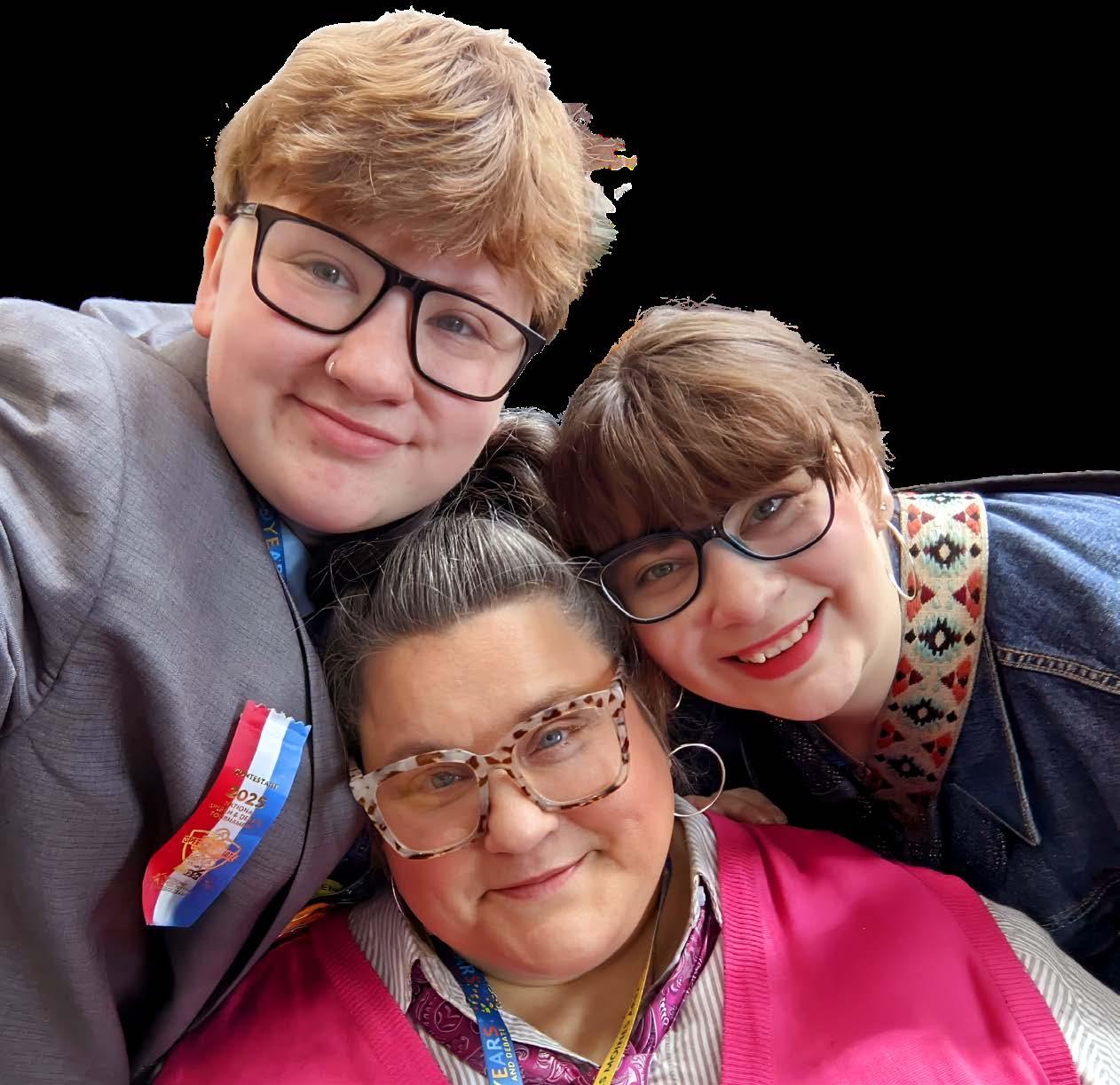
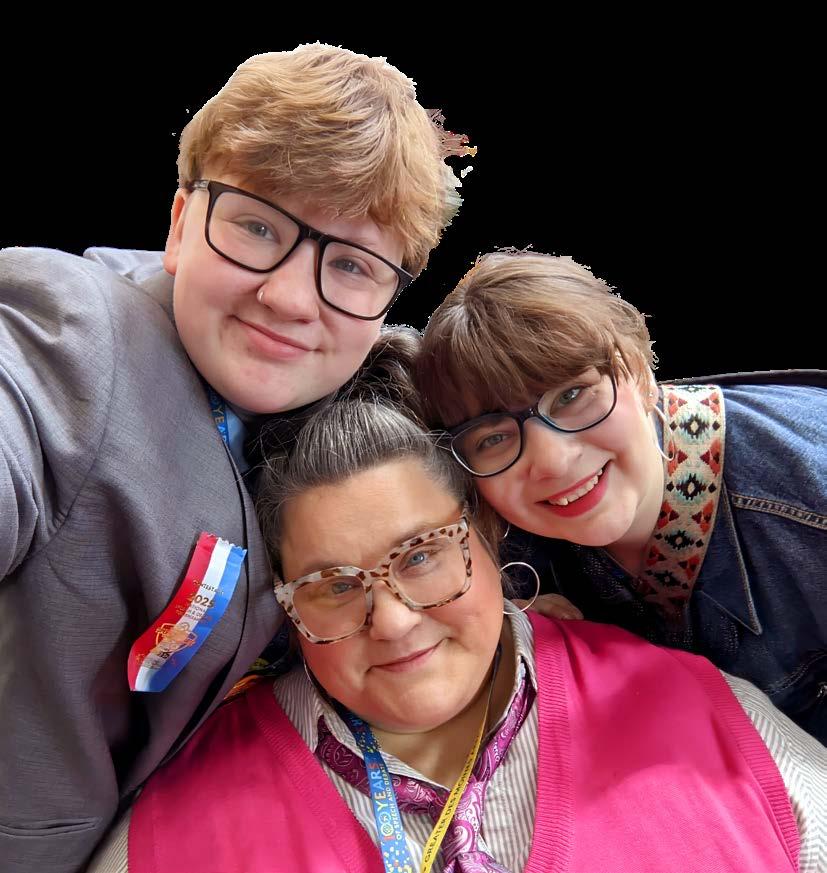
The Kirkpatricks (left to right): Taite, Kelley, and Peri





Family—whether by blood, by choice, or by shared experience—is at the heart of so many speech and debate stories. Be it a parent cheering from the audience, a coach who feels like family, or a Duo Interp partnership forged through trust and teamwork, this activity thrives on meaningful relationships.
In this issue, we explore the theme of “All in the Family” through the lens of dynamic duos, those special pairs who push each other to grow, compete, and connect. Our cover story features coach Kelley Kirkpatrick, the 2025 High School Coach of the Year, and Taite Kirkpatrick, the 2025 National Student of the Year. Their shared path in speech and debate has helped shape their own family as well as their state community. Together, they show how connection and care can turn a team into something much more.
We meet Anthony Babu, a rising senior and back-to-back national champion in International Extemp, who shares his journey alongside his mom, Shannon, who also happens to be his coach. We also profile actor and alum Conor Sherry and his mother Brigid, whose lessons continue to shape his career and confidence.
Beyond these stories, we explore the broader family built by teams, coaches, and alumni who are committed to creating inclusive, supportive spaces where students can thrive—including a holistic approach to addressing mental health in speech and debate, along with our renewed commitment to equity focus areas to help us remain good stewards of the activity.
As the season kicks off, may this issue remind you of the relationships that make our activity more than just competition. Whether your students are pairing up for their first Duo round or you’re mentoring someone who already feels like family, your impact runs deep. Here’s to a year of growth, connection, and going all in—together.
Sincerely,
J. Scott Wunn
Executive Director
Have you renewed your membership?
Visit www.speechanddebate.org/signup by the end of October to ensure you receive the next issue of Rostrum and all the resources and recognition that NSDA membership provides!
Rostrum A PUBLICATION OF THE NATIONAL SPEECH & DEBATE ASSOCIATION 6600 Westown Parkway, Suite 270, West Des Moines, IA 50266 | Phone (920) 748-6206
J. Scott Wunn, Publisher
Amy Seidelman, Editor
Vicki Joss, Managing Editor
Annie Reisener, Associate Editor
Emily Bratton, Graphic Design Assistant
Newsstand Price
$9.99 per issue
Member Subscription Price
$24.99 for one year (5 issues)
Non-Member Subscription Price
$34.99 for one year (5 issues)
Rostrum (ISSN 1073-5526), Copyright © 2025 by the National Speech & Debate Association (NSDA), is published five times per year (Sept., Nov., Feb., Apr., and Aug.) by the NSDA, 6600 Westown Parkway, Suite 270, West Des Moines, IA 50266. Business and Editorial Offices: NSDA, 6600 Westown Parkway, Suite 270, West Des Moines, IA 50266. Accounting and Circulation Offices: 6600 Westown Parkway, Suite 270, West Des Moines, IA 50266. Call (920) 748-6206 to subscribe. Periodicals postage is paid at Des Moines, IA 50318, and additional mailing offices. POSTMASTER: Please send address changes to Rostrum, c/o NSDA, 6600 Westown Parkway, Suite 270, West Des Moines, IA 50266. Rostrum provides a forum for the speech and debate community. The opinions expressed by contributors are their own and not necessarily the opinions of the NSDA, its officers, or its members. The National Speech & Debate Association does not guarantee advertised products and services unless sold directly by the NSDA.
Board of Directors
Byron R. Arthur President Louisiana
David Huston
Vice President Texas
Jamelle M. Brown Missouri
Sara Gibson Washington, D.C.
Adam J. Jacobi Wisconsin
Erez Kalir California
Anoop Mishra Treasurer Alabama
Renee C. Motter Colorado
Wendy Orthman Michigan
Esther Oyetunji Florida
James W. Rye III Alabama
Josh Swartsel Washington, D.C.
Holly Williams Secretary, Administrative Rep Arizona
To learn more about the Board, visit www.speechanddebate.org/ meet-the-team. You may also contact the Board by emailing board@speechanddebate.org.
this Issue
www.speechanddebate.org/rostrum Like us on Facebook www.facebook.com/ speechanddebate
Share with us on Instagram @speechanddebate

Follow us on X @speechanddebate
Follow us on LinkedIn www.linkedin.com/company/nationalspeech-and-debate-association
Follow us on TikTok @nsda.speechanddebate
Topics
Member students and one chapter advisor per school are eligible to vote!
Topic Release Information
Public Forum Topic Release Dates
The PF Wording Committee creates a topic area with two resolutions for each topic cycle. All potential topics for the year are released in June. One week prior to the topic being released for that topic cycle, member students and one chapter advisor per active school will vote on which of the two topics they prefer. The topic that receives the most votes will be the topic for that cycle. The goal of this process is to increase transparency about topic selection and introduce new possibilities for coaches who teach debate in the classroom.
October 1 November/December PF Topic Announced
December 1 January PF Topic Announced
January 1 February PF Topic Announced
February 1 March PF Topic Announced
March 1 April PF Topic Announced
May 1 National Tournament PF Topic Announced
June 22 List of Potential PF Topic Areas Announced for 2026-2027
July 25-31 Voting for the 2026 September/October PF Topic Occurs
August 1 2026 September/October PF Topic Announced
Lincoln-Douglas Topic Release Dates
The LD Wording Committee assigns a set of two topics to each bi-monthly topic cycle. All potential topics for the year are released in June. One week prior to the topic being released for that topic cycle, member students and one chapter advisor per active school will vote on which of the two topics they prefer. The topic that receives the most votes will be the topic for that cycle. The goal of this process is to increase transparency about topic selection and introduce new possibilities for coaches who teach debate in the classroom.
October 1 November/December LD Topic Announced
December 1 January/February LD Topic Announced
February 1 March/April LD Topic Announced
May 1 National Tournament LD Topic Announced
June 22 List of Potential LD Topics Announced for 2025-2026
July 25-31 Voting for the 2026 September/October LD Topic Occurs
August 1 2026 September/October LD Topic Announced
2026–2027 Policy Debate Topic Voting
The National Federation of State High School Associations (NFHS) handles selection of the annual topic. Each state organization, the National Speech & Debate Association (NSDA), the National Catholic Forensic League (NCFL), and the National Debate Coaches Association (NDCA) all have voting privileges.
• Topic synopsis released at www.speechanddebate.org/topics in September
• Preliminary voting on five topics occurs online in September and October
• Final voting on two topics occurs online in November and December
• Topic for 2026-2027 released by the NFHS in January 2026
SEPTEMBER/OCTOBER 2025 Public Forum
Debate
Resolved: The United Kingdom should rejoin the European Union.
SEPTEMBER/OCTOBER 2025
Lincoln-Douglas Debate
Resolved: In the United States criminal justice system, plea bargaining is just.
NOVICE LINCOLN-DOUGLAS TOPIC
The NSDA also offers an optional resolution that may be used during the first two months of a novice LD season— Resolved: In the United States, national service ought to be mandatory. Coaches are encouraged to check with tournament hosts in their area before exclusively prepping for one topic over another.
2026–2026 Policy Debate
Resolved: The United States federal government should significantly increase its exploration and/or development of the Arctic.
Get Involved
Topic Creation Hub
Frequently Asked Questions
We’ve created a central hub to answer your questions about how topics are generated throughout the school year—and ways you can get involved in the process! Visit www.speechanddebate.org/topic-creation-hub to learn more, including:
How do I suggest a debate topic/resolution for consideration by a wording committee?
How are potential topics, prompts, and legislation written?
Who selects the topics, prompts, and legislation used in competition?
Share Your Topic Suggestions
We invite you and your students to send us your debate topic ideas for Lincoln-Douglas, Public Forum, and Big Questions as well as potential motions for consideration in World Schools Debate. Visit www.speechanddebate.org/ topic-creation-hub to access the online submission forms.
Join a Wording Committee
Your voice matters in shaping NSDA events. All coaches and former competitors are invited to apply to join a Wording Committee for PF, LD, BQ, or 2026 National Tournament topics (World Schools, Extemp Debate, and Extemp Speaking). Committees research, draft, and refine topic options, directly impacting tournaments. Virtual meetings run March through April. Learn more and apply by January 16, 2026, at www.speechanddebate.org/topiccreation-hub.
Policy Debate Topic Fellowships

The NSDA has partnered with the National Federation of State High School Associations (NFHS) to offer two Policy Debate topic fellowships with a goal of increased representation in the topic selection process. High school Policy Debate coaches who are interested in writing a topic paper and attending the annual topic meeting to support the mission of choosing timely, accessible, and student-centered topics are encouraged to learn more and apply online by April 1, 2026. More details will be posted at www.speechanddebate.org/ policy-topic-fellowship by October 1, 2025.
Congress Legislation: Seeking Student Voices
Any high school or middle school NSDA member student, regardless of their national qualification status, may submit legislation to be considered for the 2026 National Tournament Docket. Encourage your students to debate the topics they are passionate about—if they wrote it, they can submit it! Students may submit multiple pieces of legislation for consideration. If their legislation is selected to be part of the Nationals Docket, they will be recognized in Rostrum, receive a trophy after the tournament, and be awarded a $100 scholarship. This is a great way to boost students’ resumes and be recognized for their research and writing skills! Complete the online form by February 5, 2026, at www.speechanddebate.org/congress-submission.
Topic Rubric
The NSDA conducts an intentional and ongoing evaluation of the topics we encourage students to explore. Review the Topic Rubric Questions on the next page or download a copy online at www.speechanddebate.org/topic-rubric






NATIONAL SPEECH & DEBATE ASSOCIATION
Topic Rubric Questions
EMPOWERING VOICES FOR TOMORROW.
In 2021, the NSDA published its Topic Rubric Questions to guide intentional, ongoing evaluation of the issues students debate and discuss. Our goal remains the same: to empower students to use their voices responsibly, courageously, and with humility in pursuit of a better world. By regularly assessing the topics we introduce, we ensure students engage with meaningful, relevant issues that help them manage conflict, envision solutions, and create positive change in their schools, communities, and beyond.
Topic Rubric Questions
Language: Does the topic use current and precise language while avoiding cultural idioms or figurative expressions (e.g., “a dime a dozen”) that may disadvantage students unfamiliar with them?
Openness: Does the topic challenge students to think critically through diverse experiences, viewpoints, perspectives, and ideologies?
Relevance: Does the topic encourage students to critically analyze timely topics?
Constructive Dialogue: Does the topic avoid relying on research or arguments that stigmatize, discriminate, or exclude?
From Your Board President
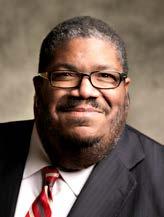
We coaches are bonded together by a shared truth: speech and debate teaches students to think critically, speak empathetically, and solve tough problems together. Our society needs more people, now and in the future, who are trained in speech and debate before they get to college and join the workforce.
As a country, we can see that dialogue, discussion, and critical thinking have broken down, but this activity offers a solution to rebuild these skills and rebuild our society. As speech and debate coaches and supporters, we are all in this together, celebrating everyone’s success, no matter where they come from. I passionately believe that our member students disprove all the naysayers who say young people are not engaged and do not care about the future.
We envision a future in which every school provides speech and debate programs. To make this world a reality, this year, the NSDA is launching the National Speech and Debate Initiative.
And we’re aiming BIG: doubling our number of active schools to 8,000 and doubling our active students to 200,000 by 2030. As part of this initiative, the NSDA is evolving to grow speech and debate by playing a stronger role in recruiting and supporting schools, students, and coaches, and giving all participants the resources needed to thrive. And that’s where you all come in. We hope, we know, you’ll support and join us as we spend the rest of our Centennial Year laying the groundwork for the National Speech and Debate Initiative—and you will be part of it. You all are the foundation for this growth. Because of every
single one of you, the NSDA has the scale, experience, and infrastructure to take on this challenge. Because of your passion, we know we can do this.
From all of us at the NSDA, where your work is understood and deeply appreciated, we just want to say: thank you. Thank you for the time, the heart, and the hope you bring to this community and to the world. Until next time,
Byron R. Arthur NSDA Board President board@speechanddebate.org
We envision a future in which every school provides speech and debate programs.
To make this world a reality, this year, the NSDA is launching the National Speech and Debate Initiative. And we’re aiming BIG.”
FUTURE READY NSDA
Building a Speech and Debate Community that’s Simpler to Navigate and Stronger in Support
The NSDA Board of Directors has a bold vision: a speech and debate program in every school.
In order to help us best understand how to realize that vision, we engaged in extensive conversations over the last two years with a range of stakeholders including coaches, students, district leaders, alumni, administrators, and leaders of other speech and debate organizations. We also conducted targeted focus groups with students and coaches from rural, urban, and small school communities to better understand their unique needs and challenges.
We learned a lot, and at our Spring Board Meeting held April 25-26, the NSDA Board discussed what changes that learning requires us to make as a community. While in many ways the issues we discussed were different, there were two themes that consistently emerged—we need to simplify our processes, and we need to make them more fair.
Please read on for important updates for the 2025-2026 and 2026-2027 school years.
2025-2026 Honor Society Changes
Simplified Speech Points: The NSDA is committed to celebrating a student’s pursuit of excellence. Through conversations with students and coaches about the Honor Society, a consistent theme emerged: the current system is overly complicated and doesn’t always reflect the level of work students put into preparing for competition. This is particularly true in speech, where a student may spend hours researching, writing, memorizing, and delivering a performance, only to receive a single Honor Society point if they place last in a round. In comparison, a student who participates in a debate round will receive three points, even if they lose.
The feedback from our community underscored a need to more fairly recognize the commitment it takes just to compete. To address this, the Board unanimously approved a new baseline: students in NSDA speech events will now receive no fewer than three points per round. Those who place first, second, or third will still earn six, five, and four points, respectively, but those placing lower will receive three points for their participation—honoring the preparation and skills demonstrated, even when a top rank isn’t achieved.
This change will both simplify the process for entering points, making it easier for new coaches and students to understand, and reinforce that every round of competition represents meaningful work.
Reduced School Requirements for Tournaments:
The NSDA believes that every student—regardless of location or school size—deserves the opportunity to be recognized for their competitive efforts. Under the current system, students can only earn Honor Society points at tournaments with four or more schools participating. This rule has made it harder for students in rural or isolated areas to gain recognition for their efforts, even when they are actively competing against peers from another school.
The Board has approved a change to lower the minimum school requirement for earning Honor Society points at competitions from four schools to two schools, and clarified that students are not eligible to earn points for practice rounds against their own teammates. This change acknowledges that high-quality competition can take many forms, especially in smaller or under-resourced communities.
Middle School Points Alignment:

EDITOR’S NOTE This information was originally shared by the NSDA via email to program advisors on May 21, 2025. District leaders can register for a special session regarding these changes, which will take place online October 29, 2025, from 7:00 to 8:30 p.m. CT. REGISTER
The NSDA is committed to ensuring that all students and coaches are recognized for their work, regardless of grade level. In February 2024, in service of that commitment, the Board of Directors approved a change to align the merit points awarded to middle school students and their coaches with those awarded at the high school level. Beginning August 1, 2025, middle school competitors and their coaches will earn the same number of points for rounds of competition as their high school peers.
While point values will not be applied retroactively, this change marks an important step toward creating a more consistent experience for NSDA members across all levels. It affirms that dedication to speech and debate deserves to be celebrated equally, whether it begins in middle school or later in a student’s journey.
The NSDA will observe the impact of this change on total points earned for students to determine whether any other changes to the Honor Society are necessary over time.
2026-2027 Membership Model Changes
Our membership model is too complicated. Basing the cost to a school on the number of student members makes it hard to budget at the beginning of the year and creates a disincentive for coaches to sign students up as members, making it harder for them to access resources and gain Honor Society benefits. This complicated model has also caused confusion with school administrations and additional work and cost to coaches.
As a result, the NSDA has developed a streamlined flat fee annual membership model that will allow students, regardless of location or school size, to have access to the Honor Society, student competition opportunities, and curriculum resources.
Beginning in the 2026-2027 school year, the NSDA Board approved a flat fee membership model that includes school membership, the resource package, and an unlimited number of students from a school for a price of $349 annually. This model assumes the use of digital, printable membership certificates; paper certificates and seals will continue to be available for a small fee.
Subsidies for school membership will be available to existing and new schools based on need to help bring us even closer to realizing our vision—a speech and debate program in every school. This change is not intended to increase revenue to the organization; in fact, it may initially result in lower overall membership revenue for the NSDA. This remodel seeks to make membership and resources easier to navigate and access for current schools and new schools alike.
2026-2027 District Leveling Changes
In conversations with students, coaches, and alumni, as well as feedback from the Competition and Rules Leadership Committee (CRLC), we heard a desire to simplify the district tournament process and create more opportunities for participation. Participation
limits for small schools and a complicated and punitive formula for determining how many qualifiers a district receives in each event were among the complexities frequently mentioned. The Board’s change to the membership pricing model also necessitates a change in this formula.
As a result, the Board voted to simplify and expand participation at district tournaments by establishing the following changes for the 2026-2027 school year:
• All active member schools will be allowed to enter up to four entries in all NSDA district speech and debate events, regardless of their school strength.
• All active member schools will be allowed to enter up to two students in the district Senate and up to 10 students in the district House. Students must participate for the entirety of the preliminary rounds of the competition to be counted as an entry at the district tournament.
• A district’s level will be based on the number of paid member schools the district has by July 31 of the year prior using the following scale:
— Level 1: Districts with between 8-14 active (paid) schools
— Level 2: Districts with between 15-29 active (paid) schools
— Level 3: Districts with 30 or more active (paid) schools
• The Board also agreed to continue to allow districts to earn additional qualifiers in any event that meets the following entry and participation thresholds:
to the National Tournament – Entries Required per Event
Note: Although the new leveling policies will take effect for the 2026-2027 school year, the NSDA will honor the district level established under the current system through the 2027-2028 school year if it is higher to allow districts time to meet the new standards.
National Tournament Host City Rotation
The National Tournament was established to showcase the best speech and debate performances and thereby elevate the quality of speech and debate occurring around the country. As a result, the NSDA continuously seeks ways to make the National Tournament as accessible as possible.
In looking for ways to decrease the overall cost for attendees, but keep a high-quality experience, we found that when we return to a city more than once, the benefits grow: long-term contracts mean the NSDA can negotiate lower hotel rates for schools, local partners commit to higher levels of financial support for the event, and coaches are able to make better informed decisions about travel and meals to lower costs for their team.
As a result, the Board has endorsed a model that allows for a return to the same region once every three years, while not precluding a one-year commitment to a single city. This provides consistency and planning while still offering students geographic variety across their competition years. Most importantly, it helps us create an experience that is more predictable and sustainable for all involved. We believe this model is a critical step forward in ensuring the long-term success of the National Tournament and in supporting the growth of speech and debate nationwide. The next two tournaments will take place in Richmond, Virginia, and Phoenix, Arizona. Details for future tournament locations confirmed as part of this schedule will be available in late 2025 or early 2026.
NEWS + NOTES
Recruit New Members for Your Team
A new season means new recruits! As you consider how to bring in new students, use our guide as a jumping off point. We’ve compiled an array of tools and ideas to help you build your team. Check out a sample student flyer on the next page, and find additional posters social graphics, videos, and more to support your efforts online at www.speechanddebate.org/team-recruitment-strategies
Access Start Here Lesson Plans
Our Start Here series of lesson plans are included with NSDA membership and feature all the instruction needed for students to master events! Visit www.speechanddebate.org/start-here to use them in full, borrow activities or assessments, or share them with students as a tool for peer coaching.
Calendar of Cultural Observations

As we begin a new school year, planning attendance at tournaments throughout the season is a crucial item on the “to do” list of most coaches. As you do so, and as you ask your students to work and prepare for competitions, please consider cultural observations that are often overlooked (especially those associated with faith traditions) and may have implications on student energy and focus. Access the 2025-2026 calendar online at www.speechanddebate.org/cultural-observations-calendar
Read Recent Minutes
Stay up to date on recent rules changes and other decisions impacting your NSDA membership. Find minutes from past Board of Directors’ and Competition and Rules Leadership Committee (CRLC) meetings online at www.speechanddebate.org/minutes-archive
Apply for a Keith West Memorial Fund School Grant
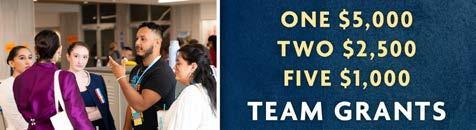
Is your school’s speech and debate team striving for growth and inclusivity? In order to ensure more students have access to speech and debate, the Keith West Memorial Fund will provide one $5,000 grant, two $2,500 grants, and five $1,000 grants to schools who show strong potential, but a significant lack of financial resources. To learn more or get started, visit www.speechanddebate.org/keith-west-memorialfund. Applications are due October 1, 2025, so don’t delay!
FACES IN THE CROWD
Do you know someone who should be recognized?

www.speechanddebate.org
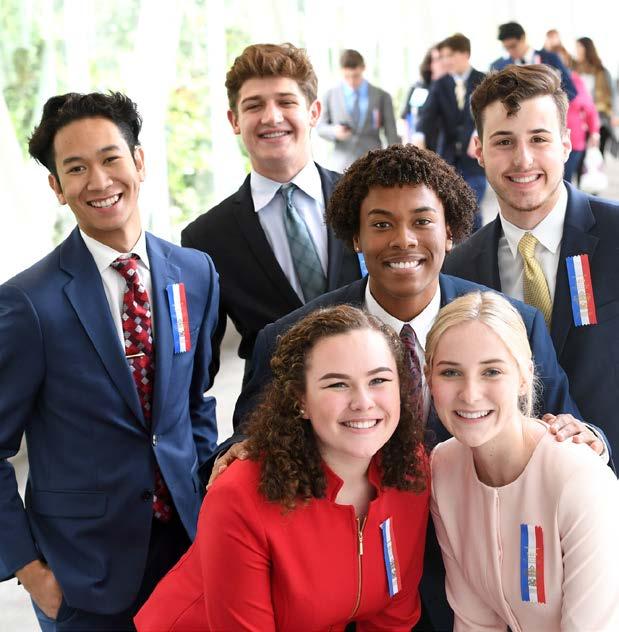
FIND MOTIVATION: You can earn points and track your progress based on your competition and service activities.
UNLOCK AWARDS: Membership determines your eligibility for special NSDA awards for competitive success, academic achievement, or service.
EARN MONEY FOR COLLEGE: Members are eligible to earn a portion of the $150,000 in college scholarships we give annually.
ATTEND NATIONALS: Members have the opportunity to qualify to the National Tournament where our champions are crowned.
ACHIEVE STATE AND NATIONAL RANKS: Members are ranked based on points earned. Witness your growth and celebrate your achievements.
REASONS TO JOIN THE NSDA
Speech and debate helps students discover the power of their voices. An NSDA membership offers the tools to expand your skills and celebrate your achievements.
EXPAND YOUR R É SUM É : As a member, you join one of the oldest and most respected honor societies known to college admissions offices.
BUILD YOUR SKILLS: You can access more than 1,000 competitive resources to practice your events and hone your superpowers.
BE HEARD AND CELEBRATED: Join a community where student voices are given a platform to be heard and celebrated. Find a place to belong and a team that’s like family.
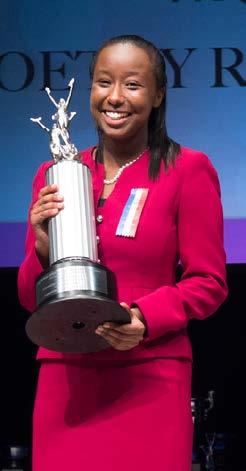
NSDA membership gave me access to the resources that have allowed me to become better at speech and debate and keep a record of my progress.
NSDA Member
READY TO JOIN?
Talk to your coach about purchasing your membership today!
Partners in Belonging and Inclusion: R eflections from the 2025 National Tournament
by Angelique Ronald and Dr. Paul Porter
Creating a welcoming tournament environment is a top priority throughout the season, and the National Tournament is no exception. From ballot feedback to interactions inside and outside of rounds, our goal is for every student, coach, and judge to feel valued and included.
At this year’s National Tournament, two key supports—the Ballot Review Committee (BRC) and the Belonging and Inclusion Station (BIS) were once again in place to help ensure a positive, affirming experience for all.

Ballot Review Committee (BRC)
Building on Year One
The Ballot Review Committee (BRC) launched as a small pilot in 2024, reviewing ballots in just three events. The idea was simple: monitor ballots, identify problematic feedback, and create records to guide long-term improvements. Results were promising—small interventions protected student well-being and improved the educational value of debate.
The Data: 2024 vs. 2025
In 2025, the program expanded to cover every event at Nationals. Tab staff flagged ballots for review, and the BRC stepped in when issues emerged. While no system can catch everything, having more eyes on ballots meant more opportunities to support students and strengthen judge education. Each constructive conversation with a judge improved not only the round at Nationals but also future tournaments and classrooms.
The Ballot Review Process
The process was straightforward. Tournament staff flagged ballots with concerns about tone, clarity, or potential bias. The BRC reviewed them and, when needed, held restorative conversations with judges. The purpose was never punitive but supportive— helping judges deliver feedback that is clear, constructive, and student-centered.
The results were encouraging. Judges engaged thoughtfully, showing a genuine desire to grow. The experience affirmed our belief: when given guidance, most judges want to improve.
Ballot Review Trends – 2025 Nationals
• Harsh or Inappropriate Language – Reports of overly harsh tone tripled, representing more than half of flagged ballots. Even accurate feedback must be delivered constructively.
• Bias and Identity Concerns – These declined but still made up one in five flagged ballots, underscoring their impact and sensitivity.
• Professionalism Concerns – New issues arose, including appearance-based comments, boundaries/private contact, and unclear ballots, which comprised nearly 20% of reports.
• No-Action Cases – About 17% of flagged ballots required no follow-up after context was considered, highlighting the importance of transparency and proportionality.
This year, the BRC reviewed 42 flagged comments across the tournament. Below is a side-by-side comparison of what we found in 2024 (the pilot year) and 2025 (full implementation).
Belonging and Inclusion Station (BIS)
For the third year in a row, the Belonging and Inclusion Station (BIS) provided interpersonal support and safeguards against violations of the Harassment and Discrimination Policy. The intake process remained consistent, with Belonging and Inclusion Advocates conducting inquiries involving both the individuals raising concerns and those identified in the concerns, ultimately resolving matters through educational reflection and support.
This year, the BIS handled a record 42 intakes. Most concerns originated from middle school sites and supplemental events. Encouragingly, disputes related to rules declined, suggesting improved community understanding of the BIS’s core mission: to foster thoughtful reflection on participant behavior and promote growth. Additionally, improper conduct of judges as well as inclusion issues (e.g., name mispronunciation and comments about dress) have both decreased since 2023. Despite the record volume of intakes, every case was resolved through educational dialogue—marking the second year in a row with zero appeals. Finally, improved coordination with tournament managers and enhancements to the intake system strengthened overall responsiveness and support.
Common Issues
• Harassment, Discrimination, and Bullying – Racist, sexist, antisemitic, homophobic, and transphobic incidents, plus misgendering and intimidation.
• Judge and Coach Misconduct – Dismissive or intimidating behavior.
• Equity and Inclusion – Degrading language, dismissal of expressed concerns, and unequal treatment.
• Procedural and Management Issues – Confusion around rules, mishandled incidents, and fairness concerns.
Overall, the growth in BIS engagement reflects both increased trust in the resource and a deeper commitment across the community to fostering a peaceful environment. As we look ahead, continued education, proactive communication, and strong partnerships will be key to ensuring the BIS remains a supportive, accessible resource for all.
(continued on next page)
Belonging and Inclusion Station Usage at the National Speech & Debate Tournament
Common Issues
• Harassment / Inappropriate Behavior: ~40%
• Unprofessional Judge Conduct: ~30%
• Inclusion Issues: ~25%
• Health and Safety Risks: ~15%
• Procedural / Rule Conflicts: ~12%
• Tech / Logistics Issues: ~2%
• Harassment / Inappropriate Behavior: ~37%
• Unprofessional Judge Conduct: ~29%
• Inclusion Issues: ~24%
• Procedural / Rule Conflicts: ~16%
• Health and Safety Risks: ~15%
• Tech / Logistics Issues: ~5%
• Harassment / Disrespect (students, judges, coaches): ~38%
• Unprofessional Judge Conduct: ~26%
• Inclusion Issues: ~21%
• Procedural / Rule Conflicts: ~17%
• Health and Safety Risks: ~10%
• Tech / Logistics Issues: ~5%
Working Together and Looking Ahead
This year, the BRC and BIS partnered closely. While the BRC often worked remotely to review ballots and call judges, the BIS provided an essential in-person presence for urgent or sensitive matters. Together, they ensured that concerns were not only addressed but handled with care for both logistics and student wellbeing.
Though still young, the BRC has already shown its value: protecting students, improving judge education, and elevating the quality of feedback across the activity. The 2025 expansion proved that ballot review can scale without losing its restorative focus. The BIS, meanwhile, continues to grow as a trusted resource for student safety and inclusion.
In 2025-2026, the BIS hopes to deepen its effectiveness through reflective learning opportunities, such as judge training on interpersonal communication competence and units from the Community Learning Series (www.speechanddebate.org/cls). Both the BRC and the BIS will continue to refine their resources, ensuring the community better understands their roles and shared responsibility for participant well-being. Stronger on-site operations, including paired BIS staffing, will make the work more consistent and sustainable.
The long-term vision is simple but powerful: empower adults to step into teachable moments and build a culture where every ballot strengthens learning. Together, the BRC and the BIS will continue to complement one another as critical supports for students, coaches, and judges— creating a tournament environment that is safer, more inclusive, and more educational. Our hope is that more tournaments will adopt and adapt these resources, proving that even small efforts can create lasting impact—one ballot, one conversation, one reminder that words matter.
EQUITY FOCUS AREAS
by Dr. Paul Porter
Our focus on equity stems from a philosophy that all members of our communities deserve a speech and debate space that aligns with our mission. All participants deserve a caring and welcoming environment—one that is committed to conditions of fairness, fosters inclusion, and protects from harassment and discrimination.
• We all have the responsibility to be good stewards of the activity.
• Our students deserve substantive critiques that are helpful and encouraging.
• Our coaches and judges deserve opportunities to grow both their programs and their craft.
• Every member deserves to be respected. Since 2017, the NSDA’s annual equity focus areas have outlined steps to reinforce and advance the core value of equity in our organization. Through these focus areas, we work with intention today so that every voice can thrive in speech and debate tomorrow.

Angelique Ronald is the Chair of the NSDA Ballot Review Committee from California. Dr. Paul Porter is the Director of Belonging and Inclusion at the NSDA.
2024-2025 Year in Review
INTERPERSONAL COMMUNICATION COMPETENCE:
• 82.8% of districts committed to providing a tournament resource focused on interpersonal support and/or addressing harassment, discrimination, or inappropriate conduct (e.g., Belonging and Inclusion Station, Equity Office).
• We launched the Community Learning Series (CLS), with 65% of participants completing at least one unit for professional development credit. The CLS offers structured learning units to help coaches foster inclusive team cultures and tournament environments.
• The Ballot Review Committee (BRC) and the Belonging and Inclusion Station (BIS) worked collaboratively for a second consecutive year. Read more about findings from the 2025 National Tournament on page 14.
WELLNESS:
• The Wellness Committee introduced the Wellness Lens, a tool designed to help decision makers keep health and well-being at the center of every choice. The Wellness Lens encourages reflection on how decisions impact students, coaches, judges, and visitors.
ACCESS:
• We introduced the National Tournament Judge Grant, which helped cover costs for 18 coaches to attend Nationals, bringing more qualified judges who otherwise may not have been able to participate.
• We streamlined the process for submitting ADA accommodation requests at the National Tournament.
• The NSDA awarded more than $145,000 in membership discounts and grant funding through the Pay It Forward and Road to Nationals funds, providing increased access and opportunities to more than 500 schools.
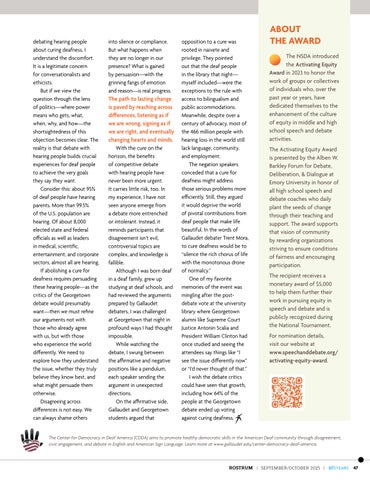
• The third annual Activating Equity Award was presented to the Center for Democracy in Deaf America. As part of the award, the CDDA will receive $5,000 to further its mission of creating equitable opportunities in speech and debate. The funds will support the development of ASL-centric debate training workshops and videos, specifically designed for Deaf debaters, expanding access to resources nationwide.
2025-2026 Focus Areas
WELLNESS: The well-being of participants remains essential to the success and sustainability of our activity. We take a holistic approach, recognizing that spiritual, emotional, social, mental, environmental, and physical dimensions of well-being all contribute to achieving our objectives.
COMMUNITY ENGAGEMENT: Speech and debate should nurture growth, creativity, reflection, and joy. Meaningful engagement with students and coaches ensures the activity continues to flourish.
COACH DEVELOPMENT: This year’s focus includes improving ballot feedback to help students grow and supporting coaches as they guide students toward their best work.
2025-2026 Goals
STRIVE for 100% of district tournaments to feature a Belonging and Inclusion Station or a similar resource for interpersonal support and/or addressing harassment, discrimination, or inappropriate conduct.
AWARD 100 hours of professional development credit through Community Learning Series units.
CREATE a toolkit to encourage helpful, substantive ballot writing.
DEVELOP a resource for hosting tournaments during religious holidays.
ASSEMBLE a working group to understand concerns from conservative-identifying coaches and students.
CONTINUE supporting caucus and interest group co-chairs as they share coaching strategies and connect coaches with the national office.
STRENGTHEN connections between the Ballot Review Committee and the Belonging and Inclusion Station to ensure alignment.
ENHANCE the learning function of the BIS resolution process. Beyond corrective actions, participants may complete a quiz, engage with a CLS unit, or submit a reflection to foster growth.
IDENTIFY the most effective ways for the NSDA to provide direct support and mentorship for coaches—especially new coaches and those exploring new events—while keeping wellness and community at the center.
Dr. Paul Porter is the Director of Belonging and Inclusion at the NSDA.

This year, the NSDA Access and Ability Alliance Coaches’ Caucus is prioritizing a conversation that’s long overdue: mental health in speech and debate. Through our caucuses and publications in Rostrum, we aim to spotlight an issue that deserves far more attention within our community. This article isn’t meant to be comprehensive. Instead, it serves as a foundation; it is a starting point for deeper, more focused discussions to come. Throughout the year, the Access and Ability Alliance will continue to provide resources, strategies, and space for these conversations to grow.
Speech and debate is an absolutely incredible and lifechanging activity. Students
M ental Health in High School Speech and Debate: A Holistic Approach
by Jesse Meyer (Iowa) and Kimberly Reiner (Ohio)
sharpen their critical thinking, become confident speakers, and build resilience that lasts a lifetime. However, behind the polished speeches and trophies, the pressures of competition are pushing students, judges, and coaches to their limits. Stress, burnout, and exhaustion are becoming far too common. It’s time we address this head-on, as a community, with practical solutions that don’t require massive overhauls yet start with how we approach day-to-day participation.
This article won’t cover everything, and that’s completely okay. It’s a starting point for a broader conversation that will continue in our coach’s caucuses and future publications.
Speech and debate is a demanding activity, but it doesn’t have to be an unhealthy one.”
STUDENT COMPETITORS:
The Pressure Cooker
For students, the push to succeed comes from every direction: coaches, parents, and themselves. The pursuit of perfection, combined with a non-stop tournament calendar, creates chronic stress. Co-chair Jesse Meyer once saw a sophomore at a national event, physically ill (vomiting in a trashcan) prior to her round, convinced that her Ivy League future depended on that ballot. Stories like this aren’t isolated. Whether it’s a small local tournament or a national championship, the pressure feels just as real.
Students sacrifice sleep, miss social events, and can easily fall into unhealthy comparison cycles with their peers. The emotional swings of winning or losing outrounds make it difficult to
maintain balance. Over time, these habits simply aren’t sustainable. Students can protect their mental well-being by:
• Prioritizing boundaries: You don’t need to attend every tournament. Plan weekends off where debate is off-limits.
• Redefining success: Focus on growth, not just results. Judging is subjective; one loss doesn’t define your future or your overall worth.
• Leaning on support networks: Stay connected with teammates, coaches, and family. Being open about challenges helps normalize these conversations.
• Practicing mindfulness strategies: Simple breathing exercises or taking a short walk before rounds can help manage pre-round anxiety. Fidgets between rounds can also help.
• Knowing when to ask for help: Mental health matters. If it becomes overwhelming, it’s okay to seek support.
JUDGES:
Essential, Overlooked, and Overloaded
Judges play a vital role in this activity, but their challenges often go unnoticed. Processing fast-paced arguments, making fair decisions, and writing quality feedback across multiple rounds is exhausting. For newer judges, the learning curve can feel overwhelming, especially when they’re not adequately prepared for the tournament environment and may not have competed in tournaments themselves. Tournaments must take judge well-being seriously, too. Judges need real breaks between rounds to reset. The expectation to provide exhaustive feedback after every round isn’t sustainable. Focused, concise comments are just as valuable.
Coaches also have a responsibility here. When signing up a judge, communicate expectations early. Ensure they understand the event schedule, basic judging norms, and who they can turn to with questions.
Tournament organizers can support judges by creating comfortable judging spaces and crafting schedules that respect human needs— not just logistics.
COACHES:
The Architects
Carrying Too Much
Coaches carry a heavy load. They’re not just strategists and mentors; they’re administrators, travel planners, and emotional support systems for their teams. Many juggle full-time teaching loads or external jobs. The late nights spent cutting cards, managing entries, and troubleshooting team dynamics add up quickly. On top of that, school policies and budget constraints often leave coaches with little to no support. For coaches, boundarysetting is essential. Delegating responsibilities to assistant coaches or team captains where possible can lighten the load. Coaches should also feel empowered to advocate for resources, whether it’s asking for a designated practice space or making sure the administration acknowledges the work put in each week. Wins
are important, but not at the cost of a coach’s well-being. No one wins when a program folds due to lack of support for all.
Building connections with fellow coaches through professional organizations can create a network of support. Sharing strategies, frustrations, and solutions with others who understand the unique demands of this activity is invaluable.
Building a Healthier Culture, One Small Step at a Time
Speech and debate is a demanding activity, but it doesn’t have to be an


unhealthy one. Creating a culture that values both excellence and well-being requires intentional choices from all stakeholders— students, judges, coaches, and schools alike.
We’re not suggesting drastic changes or lowering standards. We’re advocating for simple, practical shifts: scheduling breaks, setting boundaries, normalizing conversations about mental health, and respecting the human side of this activity. These small adjustments can have a major impact on the sustainability of speech and debate. At the end of the day, this activity should build voices, not break them.
Jesse Meyer is a Tabroom Manager for the New York City Urban Debate League and an active contributor to the Iowa debate circuit.
Kimberly Reiner is an Ohio teacher and licensed social worker who coaches speech and debate. She is passionate about hosting tournaments that are accessible and inclusive for all students.
Jesse and Kim serve as co-chairs of the Access and Ability Alliance. They both enjoy mentoring new coaches and judges or providing guidance for tournament directors in disability accommodations. They can be contacted by emailing the NSDA at coachesnetwork@speechanddebate.org.
EDITOR’S NOTE
By centering care, sustainability, and intentionality, we can create an activity that not only continues to inspire but also strengthens and uplifts every member of our community. The NSDA Wellness Lens is a starting point. Explore the graphic on page 20, spark conversations, and reflect on your choices. When we prioritize wellness, we don’t just improve individual experiences—we shape the future of our entire community.
The health and well-being of our participants are central to our goal of encouraging practices that help make speech and debate an activity that everyone wants to and can engage in, and no one wants to leave. To that end, the NSDA Wellness Committee has crafted the Wellness Lens, a resource designed to help coaches, organizations, and tournament leaders reflect on the potential effects of their decision-making processes. We hope this document encourages open and thoughtful communication before making decisions that may negatively impact someone’s participation in speech and debate.
PHYSICAL IMPLICATIONS
• How does the proposed action impact participants’ basic human needs (e.g., hydration, nutrition, sleep) and/or ability to function as part of the activity?
• What resources do we have to ensure participants’ physical security and/or safety? What (additional) resources do we need? For example:
» Hydration Stations: Strategically placed water refill stations to reduce dehydration risks.
» Nutrition Planning: Ensure meals cater to a variety of dietary needs (vegetarian, vegan, glutenfree, allergy-friendly).
» Sleep-Friendly Schedules: Avoid late-night rounds followed by early-morning starts to promote rest.
» Comfortable Spaces: Quiet, low-stimulation areas for relaxation between rounds.
• How will the proposed action(s) positively impact students’ and coaches’ desire to participate actively in speech and debate? For example:
» Inclusion and Accessibility: Does the action respect religious observances and avoid excluding economically disadvantaged participants?
MENTAL IMPLICATIONS
• Are there systems in place to foster a positive, inclusive environment?
» Examples include training for judges to give constructive feedback, creating anti-bullying policies, and ensuring accessible and inclusive participation for all students.
• How does the decision contribute to participants’ sense of belonging and self-confidence?
» Are there opportunities to recognize growth, effort, and personal achievements beyond competition results?
• Do the proposed decision(s) help reduce the risk of anxiety, depression, or feelings of shame by addressing hypercompetitive pressures?
» If yes: Explain how.
» If no: What actions are necessary to eliminate risks?
WELLNESS LENS
» Work/Life Balance: How does the action support coaches in balancing professional and personal lives? Examples may include offering clear schedules in advance, ensuring reasonable tournament hours, and providing spaces for coaches to rest and recharge during events.
» Realistic Expectations: Are participation requirements manageable for students and coaches, ensuring sustainable involvement?
» Encouraging Participation: Will the action inspire active engagement without compromising health or well-being?
• How would the absence of the proposed action(s) impact:
» Participation in speech and debate?
» The health and wellbeing of participants?
• Do the members of our community have the multicultural knowledge, awareness, and skills necessary to implement the proposed action(s) without causing mental, physical, or emotional harm to participants?
» If not, how can educational and/or professional development opportunities be provided?
• What can address adverse effects on participants’ wellness resulting from the proposed action(s)? For example:
» Create a feedback mechanism like a Belonging and Inclusion Station to allow participants to report issues in real time.
» Set up wellness check-ins or debrief sessions after tournaments to reflect on what worked well and what can be improved.
UNLOCKING POTENTIAL:
W hy a Speech and Debate Team Might
Consider Starting a Nonprofit Booster Club
by Travis Rother
For many speech and debate coaches, the administrative side of running a competitive team can feel like a second full-time job. From tracking payments and fundraising to covering travel expenses and hiring assistant coaches, it’s a lot to juggle—especially in districts with limited financial support. That’s where a nonprofit booster club can make all the difference.
Across the country, more coaches are recognizing the strategic value of establishing these organizations.Three experienced coaches—Julie Herman (Mountain View High School, California), Jenn Baese (Lakeville North High School, Minnesota), and Artem Raskin (Washington High School, California)—share how they’ve seen firsthand how booster clubs can transform a program.
What Is a Booster 501(c)(3)?
A booster club is a volunteer-run organization formed to support a specific school activity. When it is registered as a 501(c)(3) nonprofit with the Internal Revenue Service, it becomes a legally recognized charity. This status offers several key advantages:
• Tax-deductible Donations – Individuals and businesses can give money or resources and write it off on their taxes.
• Grant Eligibility – Many foundations and corporations will only award grants to recognized nonprofits.
• Independent Finances – The booster club has its own bank account, separate from the school’s Associated Student Body (ASB) accounts, making it easier to pay expenses directly.
• Credibility – Donors, community partners, and even parents often feel more confident contributing to an official nonprofit.
A booster club’s purpose is simple: to raise and manage funds, organize volunteers, and handle logistics around finances so the coaching staff can focus on coaching. Parents and alumni typically serve the board, and the club operates under bylaws that spell out how decisions are made.
Why Go Nonprofit?

For Julie Herman, who has spent more than a decade coaching in a small town, starting a nonprofit booster club was a game-changer. “We needed access to funds while at tournaments, and we didn’t always have time to go through the ASB,” she explains. Also, with a 501(c)(3), her team could fundraise more effectively, accept tax-deductible donations, and apply for grants. “Having the booster opened up a lot of avenues to fundraising,” she says. “It made people more willing to donate.”

Jenn Baese, who coaches in a suburb of the Twin Cities, echoes that sentiment, highlighting how the booster club “allowed the program to grow in a way that school funds never would have.” Her booster handles everything from paying tournament fees to organizing fundraising events, and supporting travel logistics. “It gave us flexibility,” Jenn adds. “When you’re an official nonprofit in Minnesota, you can do charitable gambling like bingo. One Sunday, we made $700 in two hours with almost no effort.”
Administrative Freedom and Financial Clarity

Artem Raskin didn’t just help create a booster club. He paired it with a custom-built website that automates financial transactions, and he is willing to share it with any school interested in that for their club (araskin@fusdk12.net). “The biggest problem I had as a younger coach was keeping track of payments and reimbursements,” Artem says. “Once we had a booster club with its own bank account, I could hook up a payment processor and automate all of that.”
This setup has allowed Artem’s team to process payments quickly and avoid administrative delays. “At a tournament, if we get a judge no-show fine, the booster can pay it on the spot—no waiting for district approval. That alone saves us from major headaches,” he says.
Julie and Jenn both agree: having financial autonomy makes daily operations easier. “Before, we had to route everything through the school finance department,” Jenn notes. “With boosters, we can pay coaches, buy supplies, and reimburse travel quickly.”
Building the Right Foundation
All three coaches emphasize one crucial first step: talk to your administration. “In California, the law says you can’t solicit donations for a public school without the district’s blessing,” Artem explains. “If the principal or superintendent isn’t on board, you’re dead in the water.”
As for the nuts and bolts of starting the nonprofit, Artem encourages coaches to do their research but not be intimidated. “You don’t need a law degree to set this up. If you’re reasonably organized, you can do it,” he says. “Just be ready for the annual paperwork: IRS, state filings, Attorney General, Secretary of State. Document everything so future coaches, parents, and alumni know what to do.”
Jenn Baese was fortunate to have a few team parents who stepped in and handled much of the paperwork filing pro bono; surveying parents for areas they might contribute to can be a great tip for any coach.
Parent Power and Continuity
Recruiting parents for the booster board is essential. Jenn advises, “Get your most organized, passionate parents on board first. It is especially important to have someone comfortable with finances. A good treasurer is gold.”
Artem uses a self-perpetuating board model. “At the end of the year, student officers ask their parents who’s willing to serve, and then the outgoing board votes them in,” he explains. “We make sure all five board members have full access to the bank account, which smooths the transition every year.”
Julie also stressed the importance of recruiting the right parents for the board. “You do potentially give up control of a substantial amount of budgeting power to a parent

Interested in starting your own booster club?
Visit the NFHS website to learn more! https://nfhs.org/stories/booster-clubs-forhigh-school-athletics-one-vs-multiple
committee,” she says. “If you have one or two people who are really self-interested, then sometimes things can go awry if you’re not really cultivating a positive presence on your board.”
Is It Right for You?
While the benefits are clear, Artem is quick to note that a booster club isn’t for everyone. “It’s a serious commitment,” he says. “If your school accounting system works well, and your team is small, maybe you don’t need it. But if you want financial flexibility, or your school system is slow or limited, a booster can open up options.”
Many states require that booster clubs meet between eight and 12 times a year. A strong president and treasurer will keep these meetings productive. While a coach is usually present at these meetings as a non-voting member, it is still an additional lift for coaches.
The National Federation of State High School Associations (NFHS) has resources available for coaches and administrators to support a team through the process (sidebar). Each state is a little different in the paperwork and financial requirements for creating a 501(c)(3), and this is where a lawyer can come in really handy. On average, the initial filings can cost the program between $300 and $700.
Ultimately, a booster club isn’t just about money—it’s about empowerment. “Our team became more professional,” Jenn says. “We could dream bigger because we had the structure to support it.”
Julie agrees. “It made our program more sustainable. And that’s what every coach wants—something that lasts beyond them.”
Travis Rother serves as Membership Coordinator at the NSDA.

FROM POTHOLES TO PROGRESS: The Judge Accreditation Road Trip Continues
by Kara Smith
In the spring of 2024, the NSDA packed its bags and set out on the open road with the launch of the Judge Accreditation System—a journey aimed at strengthening judge preparation and improving consistency across tournaments. Now, the organization is checking the map, taking stock of the miles traveled, and gearing up for the next stretch of the trip.
Checking the Map
Right from the first turn, the system steered judges toward two routes: Level One courses to cover the essentials of judging, and Level Two courses to explore the rules and practices in greater depth. As of August 2025, over 39,000 certifications have been earned by judges, and while many of these certifications are a direct result of requirements for judging at the National Tournament, local area leagues, and even some state

tournaments, have started requiring judges to be accredited through the NSDA’s system. If you are a tournament director and would like to learn more about how to require the NSDA Judge Accreditation courses, please reach out to info@speechanddebate.org for more information.
Miles Traveled
Just as summer road trips sometimes hit unexpected detours or potholes, most new systems rarely run perfectly at first. Whether it was the unexpected turnaround time for course approvals or the tricky “Complete Additional Materials” section, there have been a few bumps along the way. To smooth the ride, several updates have been made. Course approvals are now automated, so when a judge completes a course successfully, approval should arrive within an hour. If it doesn’t, there’s likely another wrench in the works— most often a mismatch between the email used in the NSDA Learn portal and
the judge’s Tabroom.com account. Another common pothole has been judges stopping after the quiz instead of finishing the full course. To fix this, quizzes are now the final step in each course. As always, every quiz must be completed with a perfect score of 100% for certification.
Next Stretch
With those roadblocks cleared, the NSDA is shifting into high gear for the next leg of the journey: launching Level Three. The advanced courses are scheduled to roll out in spring of 2026, providing experienced judges with in-depth training for navigating the most complex scenarios with confidence and consistency. Level Three will focus on how to put lessons into action by showing performance clips and demonstrating how to write constructive feedback on ballots. With the tank full and the route mapped, the Judge Accreditation System is ready for the adventures ahead. The past miles have brought lessons, upgrades, and thousands of certifications, and the road forward promises even more. There may still be twists and turns, but the NSDA is steering confidently toward its destination: a judging experience that’s consistent, fair, and ready for any event on the map.
Kara Smith serves as Manager of Competition and Events at the NSDA.
NSDA JUDGE ACCREDITATION is an ever-growing set of self-paced online judge certification modules. Upon successful completion of each module, judges can download a certificate and will be awarded a badge in Tabroom.com. Get started at www.speechanddebate.org/judge-accreditation.
DUO PARTNER CHEMISTRY
by Dr. Paul Porter
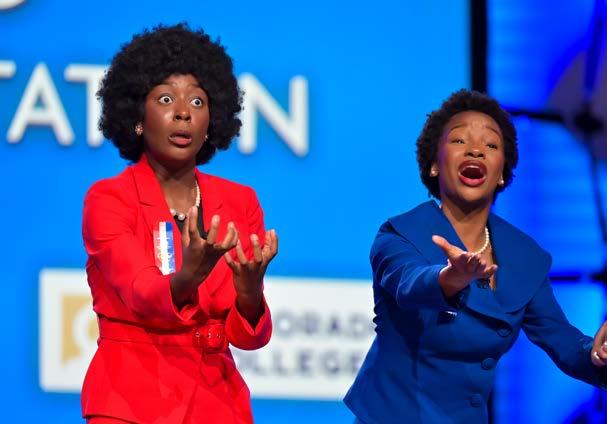
Chemical bonding explains how atoms come together to form molecules, crystals, and the structures that make up both natural and human-made materials. At its core, bonding depends on the attraction between positively charged nuclei and negatively charged electrons. Depending on how those electrons are exchanged or shared, different types of bonds emerge. From semiconductors to food preservation, the way atoms bind determines the properties and possibilities of the materials they form.
A
Duo performance is, in many ways, an experiment in human bonding.”
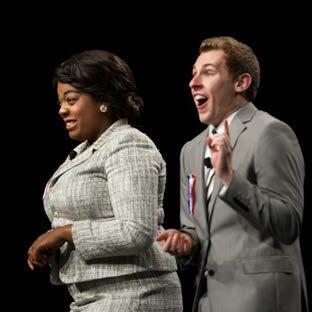
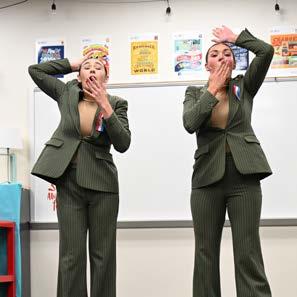
The same principle applies in the world of performance events, particularly Duo Interpretation. A Duo performance is, in many ways, an experiment in human bonding. The script functions as the nucleus—the central organizing force around which the performance revolves. The performers themselves are the atoms, drawn into relationship through their characters, interpretive choices, and shared commitment to the story. Like electrons, their vocal tones, gestures, and rhythms circulate between them, creating a field of energy that gives the performance its coherence.
Just as not all atoms naturally “like” each other, not all Duo partners begin with an obvious personal connection. Chemistry, in this sense, is not about friendship but about sync: the ability to be attuned to the script, to one’s own character, and to the partner’s character simultaneously. Strong duos do more than exchange lines—they enact a collaborative choreography. For example, when one character faces an obstacle, the partner must respond not only with words but with embodied empathy. This responsiveness mirrors how, in bonding, one atom’s change affects the other. The most powerful moments in Duo often occur at the climax, when the emotional charge of one partner directly shapes and amplifies the other’s performance.
Blocking and timing, too, are inseparable from this bond. The precision of a lifted eyebrow, the pause before a punchline, or the decision to turn a body half an inch—these are not merely technical details but demonstrations of a shared field of awareness. When partners are fully bonded, even their smallest movements reinforce one another, producing the crispness and clarity that distinguishes excellent Duo performance.
This does not mean that success is impossible without a strong personal bond. Many accomplished duos have emerged from partners who did not begin as friends. In such cases, the work of character analysis becomes essential. By carefully developing backstories, motivations, and emotional nuances, performers create the conditions for bonding on stage. If a personal connection exists, it can be drawn into the characters; if it does not, disciplined preparation can generate the interpersonal chemistry required. The point is not that performers must already be bonded but that they must commit to creating a bond through the script.
In short, Duo Interpretation is an experiment in human chemistry. When the bond between partners is established—whether through natural rapport or deliberate rehearsal—the result is not just two people performing side by side. It is a single, unified performance, greater than the sum of its parts.
Dr. Paul Porter is the Director of Belonging and Inclusion at the NSDA.
Related Exercises to Explore Character Development and Interplay in Duo Interpretation
Auditory Fight or Dialogue Practice
Purpose: Experiment with overlapping arguments or emotional exchanges.
Identify a piece with a short argument or emotionally intense scene and run it repeatedly, exploring how it sounds if you:
• Speak over one another.
• Alternate lines rapidly.
• Change volume (soft/loud) and/or speed (fast/slow).
• Add sound effects (e.g., footsteps, slamming doors with body percussion).
• What added realism or theatricality?
These exercises help performers think like composers of a piece, not just actors.
Character Walk or Move
Purpose: Explore physicality and embodiment.
• Have students spread out in the room.
• Ask them to “walk or move as themselves” for 30 seconds.
• Then, call out prompts: move as your character, move as if your character is angry/excited/sad, move as if your character is hiding something, etc.
• Encourage variations in pace, posture, weight, and gestures.
Character Analysis Grid
Purpose: Explore the nuances of a character.
• Draw a grid with one row and five columns.
• Label the columns: age, backstory, current story, attitude about life, and physical details
• Fill out each column with as much detail as possible.
Status Switch
Purpose: Help students examine power dynamics in character relationships.
• Explain the idea of “status” (physical, emotional, or social power).
• Assign Partner A “high status” and Partner B “low status.”
• Give them a scenario (e.g., ordering food at a restaurant). Students improvise for two minutes, embodying their assigned status.
• Halfway through, call out “switch!” They must instantly reverse statuses while continuing the scene.
Facilitator Notes: Encourage bold physical and vocal choices. Debrief by asking: How did your choices change? What moments felt real or forced?
Yes, And... (Character Version)
Purpose: Foster deeper understanding of a character through interaction.
• Have students pair up. Each performer chooses a distinct character (voice, posture, backstory).
• Begin a scene using the improv rule, “Yes, and...”—always accepting and building on their partner’s idea.
• The challenge: every “Yes, and...” must reveal something new about their character or their relationship.
Facilitator Notes: Highlight that good interaction is discovery-based, not scripted.
Learn more in the online textbook, Interpretation of Literature: Bringing Characters to Life, included with NSDA membership and available at: www.speechanddebate.org/ interpretation-textbook .
USING INTEGRATED (HOVER-OVER) PROMPTS
by Shunta Jordan -
Whether you are new to using Tabroom.com or consider yourself very knowledgeable, you may have barely noticed or even totally missed a helpful feature of the platform.
Often, when setting up a tournament or making changes to tournament setups, we rely on cloning past tournaments—or simply reaching out to someone else who might be better suited to create the tournament. However, there are some integrated (hover-over) prompts when using Tabroom.com on a desktop computer that may help you become more familiar with certain parts of tournament setup.
Many of these prompts can be found under General Settings. For example, if you are trying to decide whether you will require Tabroom account-based

Learn more about Tabroom.com features on our website:
docs.tabroom.com
tinyurl.com/ yc5cc8fu Sign up to receive the Tabroom.com Newsletter:

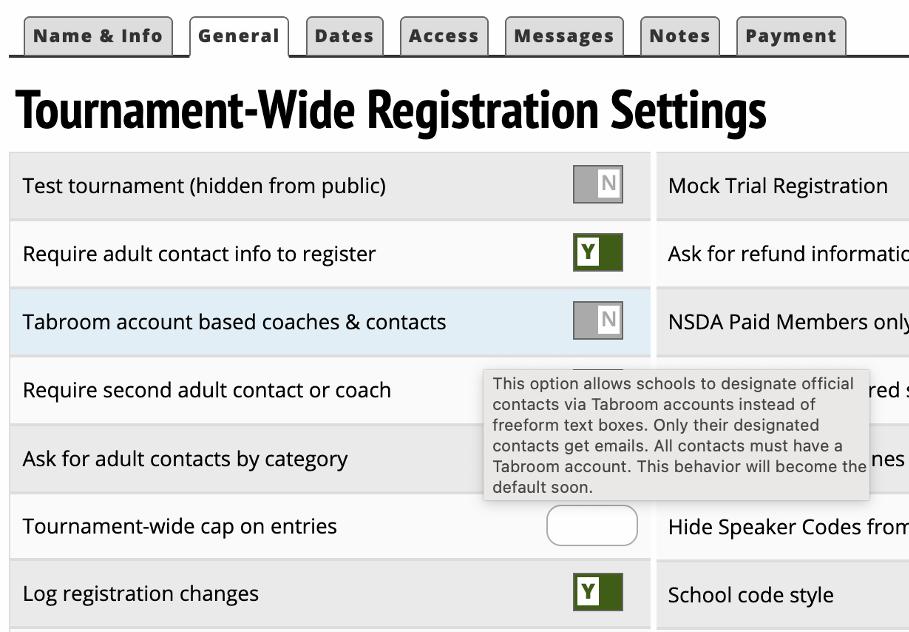
coach contact information for your tournament, you can hover over that item to get a better understanding (figure 1). If you are curious whether you need to set a tournamentwide cap on entries because you have limited space in your buildings, you can hover over that in the settings before toggling it on (figure 2)
Likewise, if you want coaches to be able to drop their competitors during the tournament, without having to communicate with the tab staff, there is an option that you can hover over (figure 3)
Not every element of General Settings has an integrated prompt, so you will need to spend some time hovering over each item to find them.
Another place you can find integrated prompts is in Tiebreakers, which can be found under Rules & Results in the Settings tab. If your tournament offers speech events, you will need to decide how to handle competitors who do not show up to rounds. As such, you can choose to have these individuals place last in the section; when you hover
your cursor over that option, the integrated prompt gives you more details before selecting ‘Forfeits place last in section’ (figure 4)
For every event of your tournament, you will need to set prelim, elim, and speaker tiebreakers, if applicable. In the graphic on the next page (figure 5), four tiebreaks are set for debate speakers. You are free to choose as few or as many tiebreaks as you think you need.
Once you’ve set up your debate speaker tiebreakers, you can hover over any of the columns in that debate event’s results to see what each tiebreaker means (figures 6 and 7)
While not every section on Tabroom.com has an associated integrated prompt, many do—and they are quite useful. Before your next tournament, we hope you have a chance to become more familiar with the platform. Happy hovering and discovering!
Shunta Jordan serves as Tournament Services Manager at the NSDA.

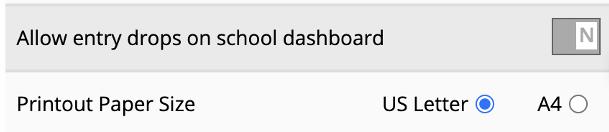

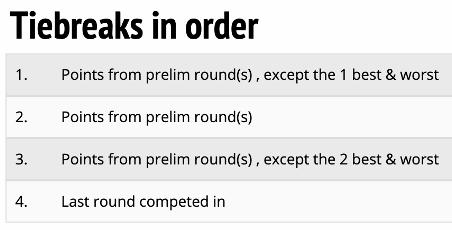
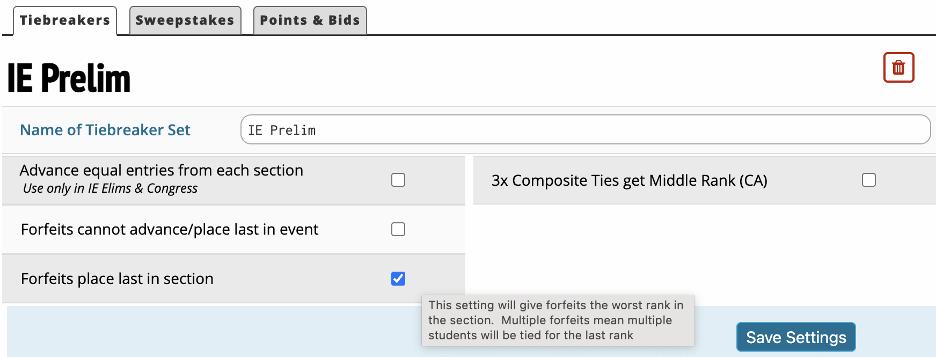
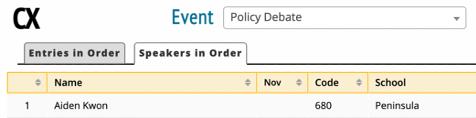
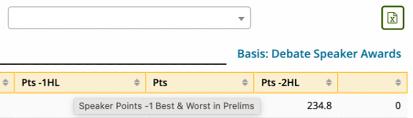
figure 6
figure 7
ALL IN THE Family
Creating Community through Speech and Debate
by Annie Reisener
Kelley Kirpatrick is a two-diamond coach at Mount Vernon High School in Washington and the 2025 High School Coach of the Year. Her child Taite Kirkpatrick was named the 2025 National Student of the Year.
Kelley Kirkpatrick’s return to speech and debate began with a family meeting. Initially hired to coach at her alma mater, Oak Harbor High School, Kelley was familiar with the demands of coaching and had left the activity when she was pregnant with her oldest, Peri, thinking that chapter had closed for good.
Now, it was 16 years later and, thanks to Kelley conspiring with the coach to recruit Peri for the team at Mount Vernon High School, Kelley had taken a small step back into the world of speech and debate. Then, the Mount Vernon coach approached Kelley about taking over the program again.
Kelley had a lot going on already; she was going through a difficult divorce while caring for Peri (15) and Taite (six) and knew the demands of coaching. The three of them sat down at the kitchen table to discuss what a return to coaching would mean for the family. The kids were enthusiastic, and they ultimately decided to go for it together.
Kelley was a single mom, which meant that when the team had to travel to tournaments, they went with Taite in tow. As a child, Taite was exceptionally curious about the world. Kelley remembers Taite begging to tag along with the team’s Policy debaters to rounds and flowing with Crayola markers in the back of the room, proudly announcing that each speaker had their own marker color. In fourth grade, Taite’s teacher called home
The Kirkpatricks (left to right): Taite, Kelley, and Peri
to ask why they knew the word deontology. Debate was certainly making an impact.
Precociousness aside, Kelley noticed a larger shift. Following her divorce, Kelley had watched Taite retreat. “They were always an exceptionally kind and intelligent child, but the divorce really hurt their confidence and made them question themself. Speech and debate gave them that confidence back.”
New Dynamics
When Taite was in middle school, they were finally able to start competing. This introduced new layers to the family dynamic along with new routines. After long tournament weekends, Sundays became sacred.
“Sunday was the day of rest. We’re introverts; we’d been together the entire week and shared a room at the tournament,” Taite explains. “On Sundays, we just wouldn’t talk to each other!”
These silent Sundays gave the two the opportunity to recharge and recuperate. With Peri off at college, Sunday was also Kelley’s time with her. “She would get online from college, overseas in Morocco or Jordan, and
now D.C., to help me enter NSDA points, evaluate ballots, and maintain my debate records. It was a couple of hours every Sunday, like clockwork, that Peri would help my little team succeed.”
Home life and debate life were intertwined. Wickedly competitive card games were intermixed with late nights practicing. Taite was surprised by the difficulty of competing at times, especially in Extemp, having grown up watching others make it look easy. When Taite had a problem, Kelley would often ask, “Do you need me to put on my debate coach hat or my mom hat?” to come at it from the best angle to offer support. But having multiple hats was hard. When Taite would get a bad round result, Kelley was holding her “mama bear” feelings in. Coaching obligations also meant it was difficult for Kelley to watch Taite’s biggest performances. One thing that helped Kelley balance it all was that one of the other Washington coaches, Chris Coovert, was experiencing the same thing, and they were able to support each other and step in to fill the coach role for the kids at times.
Their unique relationship also allowed Taite and Kelley to learn about each other in
a different way. “What my mom has always shown me, especially as a coach on our team, is that everybody has something to offer you,” Taite says. “Especially in today’s world, it’s easy to be judgmental of other people, and I’ve always been a little bit that way.” Kelley has shown Taite how to find the good in everyone, be it a struggling student or an adult who’s being unkind. With the right approach, anyone can be a friend.
The Family Feel
Kelley has been described as someone who believes in students so deeply that they start to believe in themselves. She dismisses her approach as nothing magical, but that ability is a superpower in itself. She suggests two practices for building connection and belief. First, don’t sugar coat things. “Kids know when you are lying. Have the hard conversations,” Kelley says. When her students want to take something on, she speaks to them frankly about what it will take to make their goals happen and they build a plan together. Second, celebrate every day in many ways. Trophies are only one way to judge success; a strong
team culture makes a big difference in what students see as possible.
When one student, Sam, first expressed interest in joining the team, he was struggling academically, often faced suspension, and had no future plans.
Kelley explained the team’s B minus average requirement and, motivated by the team’s support and that goal, Sam improved his grades, took AP classes, and became a state finalist in Informative Speaking. Today, he’s in community college and running for the local school board—an incredible transformation driven by the debate team’s culture, and one that ties in to what Kelley sees as her legacy as a coach: to be remembered for expanding access to the gift of speech and debate. Because Kelley spent so many years with a child on or around the team, the program has always been like a family of sorts, but it’s more than that. “The kids who come to Mount Vernon High School debate really need the program,” Kelley says. “We’re a low-income school, and the kids who get into debate are really using the activity to make their lives better. They take it so seriously, but with so much heart, which I think that leads to having the family feel.”
Expanding Worldviews
If you build it, they will come, right? That’s what Kelley told herself as she organized the first World Schools tournament in Washington. Three local teams signed up, and at Kelley’s urging, things started to take off. “Every week we had new teams give Worlds a try. If we as coaches can show the students that we will continue to invest in the event, the kids will show up.”
Kelley built the playing field: she trained judges, wrote guiding materials, scheduled practice rounds, and took on coaching the district Worlds team. She highlighted successful teams and the fun elements of the event. Her passion has turned World Schools into a popular state event. Another key player in those efforts was Taite, who was an early adopter of the Worlds format. Taite
jumped into Worlds at Nationals their freshman year and was hooked.
“I love Worlds because I think it is the most equitable and educational event!” Taite says. For their school, Worlds has the lowest barrier of entry.
“It allows people to learn in whatever way works best for them and then focuses on being able to communicate what they’ve learned. At the highest levels, you get high quality debates and strong educational value, sometimes even with more portable debate skills.”
In Taite’s sophomore year, Worlds became a state event in Washington. Taite’s skill in Worlds led to them being selected as a member of the USA Debate team, which gave them the opportunity to expand their worldview and build community across countries and further elevated the event’s profile in the state.
The kids who get into debate are really using the activity to make their lives better. They take it so seriously, but with so much heart, which I think leads to having the family feel.”
— Kelley Kirkpatrick, 2025 High School Coach of the Year
Putting Skills Into Action
By their senior year, Taite had built quite the speech and debate resume. Team captain, a state champion in three events, a member of the USA Debate team, co-founder of the Washington State Forensics Association Student Advocacy Committee, All American, Academic All American, member of the NSDA Student Leadership Council, and soon-to-be National Student of the Year. They were using their skills to make speech and debate a better place through leadership.
Outside of the activity, Taite was also president of Skagit Valley Teen Court, a program that focuses on restorative justice at the local level. Criminal justice reform was a throughline in Taite’s speech and debate career, beginning with the 2020 Policy debate topic on reform, which coincided with the George Floyd protests, and crescendoing with the 2024 Lincoln-Douglas topic about whether rehabilitation should be the primary goal of the criminal justice system. The Teen Court program brought research into reality: it allowed students to play roles in the courtroom. With the help of local lawyers, teens are the lawyers, the judge, the clerk, the bailiff, and the jury. “It’s incredibly effective because it’s all
about the idea that justice is supposed to be served by a jury of your peers, and not adults who don’t understand what people in our schools are going through,” Taite says.
Debate had already shifted Taite’s perspective, helping them analyze issues structurally. Now, their eyes were opened to inequities in their own community of Mount Vernon, where gang violence and the schoolto-prison pipeline were present. This experience, combined with growing up in a low-income family, fueled them with both anger and determination. Teen Court let Taite put their passion for justice, equity, and addressing systemic disparities into action, advocating on behalf of peers in court where the judge’s decisions had immediate real-world impacts.
Creating Community
To Taite, community means having people who support each other and encourage you to be your authentic self. Taite grew up surrounded by coaches who were like an extended family, and older students on the team like a mix of siblings and role models. It was through debate where they first met someone who was gendernonconforming whom they could identify with. “That was a really big influence
because there’s just not that many trans people in Mount Vernon, Washington,” Taite laughs.
Taite built community wherever they went, in every leadership role, because they already knew the value. “At my high school, there was pressure to conform. I always surprise people when I tell them that in most of my classes, I would very rarely talk. I didn’t feel connected because there weren’t many people I felt safe to interact with.”
Debate changed that by providing common ground, regardless of what events people did or where they went to school. Even on the USA Debate team, when Taite was meeting people who spoke different languages and came from incredibly different places, there was a shared language: debate.
“They found a community that let them shine and really be who they are,” Kelley says. “Taite’s transgender, and that can
be like a really tough transition. The confidence that Taite got from speech and debate allowed them to make that change so seamlessly.”
Like Taite, Kelley is deeply invested in various speech and debate communities. She serves as district chair, tabs tournaments across the state, and helped create Belonging and Inclusion Stations to meet the state’s needs. Fellow Washington coach Megan Troutman believes the culture Kelley’s built in Washington is remarkable.
“She’ll answer your latenight email. She’ll call in her favors to get that extra judge to the tournament. She never forgets that this is about kids—about giving them a place to find their voice, their confidence, their people,” Megan says.
“Though we are divided by an entire mountain range, we are united in our belonging to this community: every team, no matter how small, every
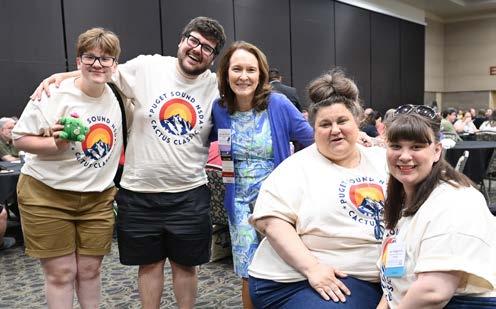
What my mom has always shown me, especially as a coach on our team, is that everybody has something to offer you.”
—
Taite Kirkpatrick, 2025 National Student of the Year
coach, no matter how new, and every kid, no matter what school.”
The division in Washington forensics is literal: the Cascade Mountain range splits the state into east and west. When Taite realized students on the east side of the state were being left out of decision making on the west side that affected the whole state, they collaborated with fellow student Dylan De Leon to co-found the Washington State Forensics Association (WSFA) Student Advocacy Committee, which brings students together for conversations about systemic inequalities and differences in access between regions— particularly between the better-resourced west side and the rural, lower-income east side. The program has built bridges and improved the culture in the state of Washington.
Kelley and Taite exemplify how speech and debate can transform not just
individual lives, but entire communities. As a coach, Kelley built spaces where students could find belonging, confidence, and purpose. As a competitor and leader, Taite carried those lessons forward, using their voice to champion equity, inclusion, and justice on a broader scale. Their intertwined journeys—mother and child, coach and student— demonstrate the power of mentorship, resilience, and community-building. The impact they’ve made, from expanding access in Washington to shaping national conversations, will ripple outward for years to come, reminding us all of the profound difference this activity can make when rooted in care, courage, and connection.
Together, Kelley and Taite show that speech and debate is more than an activity—it’s a family, a community, and a force for lasting change.
Annie Reisener is the Director of Membership at the NSDA.
Making connections at the 2023 National Tournament.
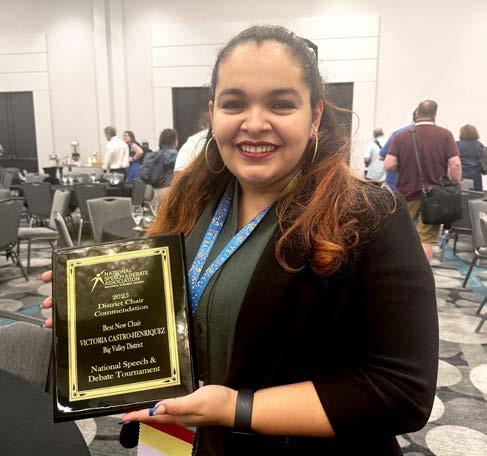
VICTORIA CASTRO-HENRIQUEZ:
ancing Into Leadership in the Big Valley District
by Kara Smith
When Victoria CastroHenriquez became district chair for California’s Big Valley District, she didn’t exactly waltz into the role—though she does know a mean Waltz, along with a solid Bachata and East Coast Swing.
“I was elected somewhat by surprise,” she admits. “At least half the coaches in our district left at the end of the year, and I just started
Stockton, California, serving as assistant coach from 2017 to 2022 and head coach since 2023.
Growing Pains and Grounded Moments
Early in her term, she faced one glaring challenge: the district was still using paper ballots for every tournament. But rather than dwell on the gap, she got to work networking with other educators, sparking interest in starting new programs, and laying the groundwork for the district’s transition to digital ballots this season.
Her “I’ve found my footing” moment came during the district series. “I read the manual so many times I could probably recite it,” she says. “I called the NSDA whenever I had a question. I was so nervous to run my first district tournament, but we pulled it off—and I survived!”
enthusiasm. She encouraged them to try new ideas to make tournaments more equitable and inclusive. Along the way, she leaned on two big sources of support: her coach and mentor, Karen Minick, who introduced her to speech and debate at age 13, and her friend and fellow committee member, Kyle Shallcross, whose encouragement and levelheaded advice helped her steer the district forward.
Looking Ahead
For new chairs just starting out, Victoria’s advice is to lean into the role: “Don’t be afraid—embrace it! It’s a lot at first, but it’s so rewarding over time.”
picking up responsibilities from those who were leaving. Next thing I knew—boom—I was the chair.”
Victoria’s journey with speech and debate began long before the title. As a four-year competitor in POI, Extemp, and Congressional Debate, the activity didn’t just shape her—it taught her to speak up, even in the toughest moments. She went on to coach at Bear Creek High in
A Leadership Style that Listens
Victoria is proud of something she once found hard—being open to constructive criticism. “It’s the only way to really understand what your district needs from you,” she says. Her approach is built on transparency, collaboration, and the belief that the district should feel like one united team. Her committee, many of them new, responded with
As she heads into her second term, she’s focused on growing school memberships, sharing resources, and making sure every tournament feels open and equitable. “I can’t wait to see what this season brings!”
Between the dance floor and the tournament floor, Victoria knows that leadership—much like a Waltz—takes practice, confidence, and a willingness to take the next step, even if you’re figuring it out as you go.
Kara Smith serves as Manager of Competition and Events at the NSDA.
ANTHONY BABU:
Ascent to Excellence
A s a rising senior, Anthony shares his journey to becoming a back-to-back national champion in International Extemporaneous Speaking.
by Daphne Kalir-Starr
Before Anthony Babu was a twotime national champion, he was a 15-year-old who felt a spark. “My first Extemp speech was not at all special,” he recalls, laughing. “It was nine minutes long; I forgot most of my sources—a total mess.”
Less than a year later, he would be standing on the final stage of the NSDA National Tournament, becoming the first sophomore national champion in International Extemp.
Anthony was first introduced to speech and debate in ninth grade, but he didn’t start out with Extemp. “We had a very, very small team,” he continues. “We didn’t have much school funding or team support back then, but I had supportive debate captains, so I

competed in Public Forum throughout my novice year.”
However, by his sophomore year, Anthony was ready for a change. While PF offered hyperspecific topical knowledge, Extemp offered something new: an exploration of current events and a breadth of topics.
“Extemp is so unfathomably unpredictable,” he explains. “You could speak on the Syrian civil war, Russia and Ukraine, Medicare access, or Taylor Swift. It forced me to listen outside of my regular scope of media and turned me into an internationally acclimatized person.”
The moment it clicked came early in the year at the Yale Invitational. Deep in the tournament, Anthony received a niche topic: How could the Food and Drug
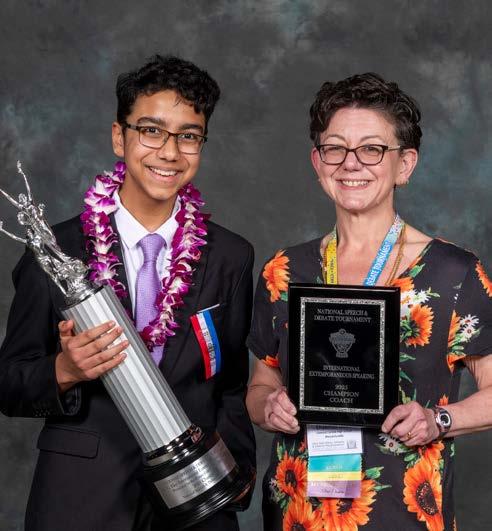
Administration respond to undocumented child labor and fake licenses? The thrill was not just in delivering the speech; it was making an arcane topic into an issue that forced judges to lean forward. “That was my ignition moment,” he says. “Extemp was no longer a speech event, it was a force for change.”
From then on, Anthony developed a practice routine. While many in speech and debate are lucky enough to have a coach employed at their school, Anthony didn’t have that luxury. Instead, he found the value in self coaching.
“I developed a practice routine that was fairly simple,” he explains. “I’ll do
LIVE CHAMPION Q&A • SEPTEMBER 30, 2025 • 7:00 P.M. CT | Join Anthony as he shares his advice for practicing, researching, memorizing, and delivering an Extemp speech! REGISTER tinyurl.com/yc44p6t5
some warm-ups, some tongue twisters, just to get in a good headspace. Interpers know this secret. Sometimes, before I give a speech, I’ll redo a previous speech just to remind myself of previous arguments. After that, I’ll fully prep a speech for 30 minutes and present it to a camera.”
Anthony asserts that the secret of his practice routine doesn’t take place during a speech. “Afterward, I review the recording and take detailed notes on what I could’ve improved. Learning to self analyze is a skill that takes time to develop but is hugely rewarding. It makes me aware of my own tics during a speech.”
Anthony doesn’t always give practice speeches to himself. “I’ll also give a
Anthony with his mom and coach, Shannon
speech to my mom when I can,” he explains, and gladly receives her critiques. “Judges aren’t the Extemp gospel,” he says. “They’re regular people. They’re parents.”
For Anthony, learning to give accessible speeches to those inexperienced in speech and debate made him a better communicator and speaker. Anthony advises others to listen louder to feedback than one speaks. In his own words, “It’s the best advice I’ve heard.”
Anthony’s practice routine has gotten more complicated as he juggles Extemp and World Schools Debate, having joined the USA Debate team at the end of his sophomore year. While the shock of switching to a new event was jarring, the skills he acquired in Extemp were an essential help.
“In World Schools, we often get impromptu motions where we have an hour to prepare and then debate as normal, which is very similar to Extemp’s format of 30 minutes of prep,” he explains. During the 2025 World Schools Debating Championships in Panama, Team USA encountered a motion discussing European involvement with NATO. For Anthony, “that motion was an example of how Extemp can be incredibly useful. We’re accustomed to answering all these questions
about NATO, the EU, budgets, and militaries.”
Yet, for Anthony, USA Debate has been far more than an application of Extemp. “The opportunity to debate alongside such incredible people has been life changing. From competing internationally, I’ve met people from China, Tanzania, Mexico, and Singapore, who are likely the next generation of Nobel Scholars and World Leaders.” Likewise, visiting new countries with the team has been world changing. “I had a far more U.S.-centric view of the world, but seeing places like Zagreb, Croatia, Singapore, Panama City and truly watching inequality, culture, economic development before your eyes is mindset changing.” Grinning, he remarks that USA Debate has been the best experience of his life.
Anthony didn’t go on this journey alone. His mother, Shannon Babu, traveled to every Extemp tournament with him and was proudly announced as his coach after Anthony clinched one national championship after another. But she wasn’t always a fan of presentations. “My mom actually switched her major in college to avoid a public speaking class,” he recalls. “I think that’s pretty ironic.”
Now, after watching hundreds of Extemp
speeches at tournaments, Shannon has the unique perspective of both a parent and an experienced viewer. That nuanced perspective she gathered after watching dozens of prelim rounds has proven invaluable for Anthony. “It’s easy to get locked into your own perspective when you give speech after speech,” he ruminates. “My mom helps me gain a new view on topics when she listens.”
Above all, Shannon has been a support system for her son. “My mom has always been there to support me emotionally. Especially coming from a school that doesn’t have extensive funding or adults to travel the national circuit, it wouldn’t be possible for me to be where I am in speech and debate without her. She’s a lifesaver.”
Today, Anthony stands as an example for what can be achieved without the usual toolkit, and he knows he’s not alone. For those in a situation without a proper coach, team, or resources, he has some essential advice and a message.
First, he recommends seeking out as many free resources as possible, including the NSDA monthly Extemp questions, performance analysis
videos, and final round videos. “I cannot emphasize enough how helpful those final round videos have been to watch and learn from successful extempers in the past. Additionally, nonprofits like Equality In Forensics offer free coaching programs with successful extempers and coaches who are excited and willing to share the resources they have.”
Beyond organizations, Anthony also suggests reaching out to those currently in the Extemp community. “Debaters get a bad reputation for being super competitive,” he asserts. “The reality is, Extempers on the circuit have offered me time and advice. They’ve become close friends. They’ve listened to my speeches, and helped me improve.”
Finally, for those who feel lost or overwhelmed with a lack of resources, Anthony offers a concluding message: “Remain resilient. There’s always going to be inequality and people who have more. But our greatest asset is the things we take for granted: ourselves. If you wake up every day committed to this, you’re already halfway there.”

College Preparatory School in California.
Daphne Kalir-Starr is a member of the NSDA Student Leadership Council from The
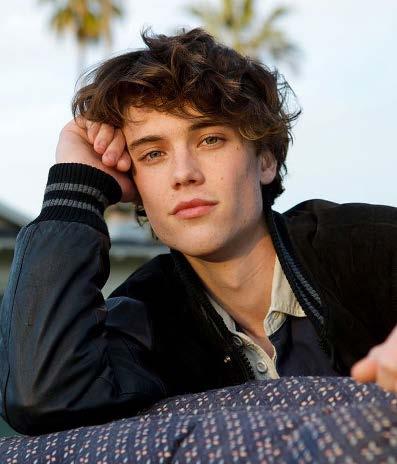
Meet CONOR SHERRY
Congratulations on Happy Gilmore 2!
What was it like being on that set, especially as part of such a beloved franchise? Was there a moment during filming that felt especially surreal, given your background in speech?
Honestly, I think getting to meet Adam [Sandler] for the first time was the most surreal. He had seen my previous film, Snack Shack, and asked to meet with me. I also got to tell him about my Duo from 2018; my partner and I were the California state champions and competed with [a cutting from] Click, a legendary Sandler film.
CONOR SHERRY is the 2019 Humorous Interp national champion from Archbishop Mitty High School in California. He graduated from UCLA with a B.A. in Sociology and is known for his 2022 roles in Are You Afraid of the Dark?: Ghost Island and The Terminal List , along with Snack Shack (2024) and Happy Gilmore 2 (2025). In 2020, Conor and his mom, Brigid Feeney-Sherry, co-founded Breakthrough Coaching, which offers elite one-on-one online training for speech students in all events. Contact brig.feeney@gmail.com to learn more.
So that was cool to crossreference the worlds a bit.
Stepping onto the set, you could feel the energy, similar to a speech tournament—how much passion is around you and how much the project means to people. And working with Adam Sandler? Incredible, of course. He’s the real deal: funny, down-to-earth—and yes, he really does rock Hawaiian shirts and shorts 90 percent of the time.
In what ways did your speech and debate experience, particularly Humorous Interp, prepare you for the comedic timing and performance style that a project like Happy Gilmore 2 demands?
Speech was honestly the best crash course in comedy and performance in general. You learn timing, both in a big room and in a tiny room with one judge. The ability to switch between characters quickly, paired with the ability to “put yourself in the shoes” of multiple characters, forces you to understand and connect with every
character, no matter how broad they might be.
Speech is also incredible because it replicates the real world; it’s honest. There’s no editing, no fancy lighting—just you and the performance. That pressure teaches you to be bold, fully commit, and trust your instincts. I love the quote about how pressure makes diamonds, and I often miss the built-in pressure of an upcoming tournament or a packed schedule. Overall, it gave me the confidence and skills I bring to every acting scene. It’s the foundation I always return to—because you can’t call “cut” in the middle of a Humorous Interp round. Once that clock starts, you’re in it.

as told to Amber Gracia
(left to right) Maxwell Friedman, Ethan Cutkosky, Conor Sherry, Adam Sandler, and Phillip Schneider attend the Happy Gilmore 2 world premiere at Jazz at Lincoln Center on July 21, 2025, in New York City.
Photo by Kevin Mazur/ Getty Images for Netflix
You’ve spoken about spending thousands of hours working with your mom, Brigid—not just as your parent, but as an involved coach and now co-founder of your coaching company. How has your relationship evolved as a result?
Working side by side on speech taught us a lot about each other. We spent late nights editing, rewriting, rehearsing lines, and adjusting the tiniest details until it felt right. As in any creative competitive field, we had our fair share of arguments and would go head to head often, creating an incredible dynamic. In the end, the “best idea wins” mindset helped us grow and foster a deep mutual respect for each other. She believed in my voice and my message, and together we pushed toward perfection and getting to the final round. It wasn’t just about trophies, though those were a nice byproduct. It was about honoring the story and giving everything we had to the work. Now, our company aims to instill the same mindset and provide top-tier, personalized coaching to the next generation of champions.
Which of her lessons still shape you today?
My mom taught me the value of showing up fully. She worked a full-time job and still sacrificed her own free time to support my goals. She was always there, focused, steady, and invested. That taught me what it means to care deeply about something and to follow through. She also modeled how to give and receive feedback with honesty and compassion. She never sugarcoated things, but I always knew her notes came from love and deep support. That balance of personal integrity and genuine care is something I carry with me in everything I do.
How has speech and debate impacted your life beyond competition?
Speech and debate expanded my universe beyond the Bay Area and connected me with uplifting voices and communities with universal values. Beyond shaping my career, speech and debate gave me some of my closest friends. I’ve stayed connected with many for over a decade, including my incredible coaches, Karen and BJ Cruz, whose “all in” philosophy still guides me today. They helped shape not just how I competed but how I think, speak, and advocate for what I believe in. Sure, it’s about so much more than winning, but make no mistake, the competition is real. So don’t hold back. Go for the gold!
MATERNAL MOTIVATION
I’ll never forget the moment Conor taped a piece of paper to his bedroom wall at the end of his ninth grade year that simply said, “Win Nationals.” It became our shared goal, a quiet reminder of what we were building together over the years. The 2019 National Tournament felt like the end of a great movie—an earned ending after so many ups and downs. It was Conor’s final chance to cross that goal off his wall: his last tournament, his last Nationals. The moment he realized he’d won was pure magic.
“Navigating speech and debate as a parent can be both rewarding and challenging, especially when the stakes feel overwhelming. One key piece of advice is to prioritize open communication. Creating a safe space to share frustrations and celebrate progress helps maintain trust. It’s also okay to take breaks when emotions run high so you can come back with a fresh perspective.
“I hope every young competitor takes away much more than trophies or final rounds. This activity teaches students how to think on their feet, craft compelling stories, and express themselves with confidence and clarity. They learn resilience through setbacks, discipline through practice, and empathy by understanding different perspectives. Just as important, they experience what it means to be part of a community that genuinely supports one another. The kindness, encouragement, and friendships they find, often with competitors and coaches alike, create a sense of belonging that stays with them. These lessons and connections become powerful tools they carry with them throughout life—lessons I have seen benefit Conor in real time as he continues to pursue his acting career.” — Brigid Feeney-Sherry
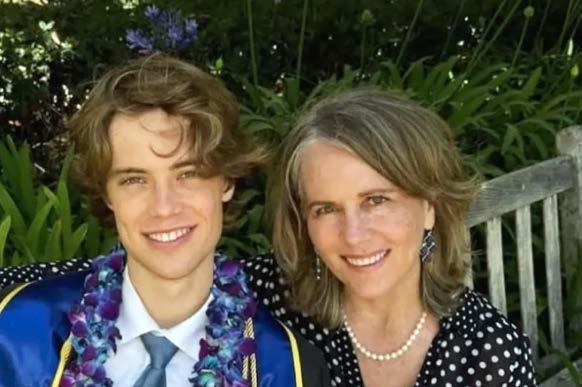
Amber Gracia serves as Student and Alumni Engagement Specialist at the NSDA.
Conor with his mom Brigid at his graduation from UCLA in 2024.
CLAIM YOUR SPEECH & DEBATE
Membership
In our centennial year, we are not just celebrating speech and debate. We are honoring 100 years of community and impact.
Find your speech and debate connection to support and inspire future generations of public speakers.
BENEFITS:
SHAPE THE NEXT 100 YEARS
» Contribute to the legacy of speech and debate, ensuring that its benefits continue to influence future generations.
EXCLUSIVE WEBINARS
» Receive invitations to upcoming webinars and access past webinars, including “Transform Your Speaking Skills into a Career.”
NETWORKING OPPORTUNITIES
» Gain access to our Speech & Debate Alumni Community on LinkedIn and to our Community Calls, where alums can share stories, discussions, and professional development opportunities with one another.
GET PAID TO JUDGE
» Sign up for our Judge Board for the opportunity to get hired by schools in your area.

SUPPORT IN A WAY THAT WORKS FOR YOU:
SHARE YOUR STORY
Share your story of how speech and debate impacted your life, career, friendships, and opportunities.
ADVOCATE
Help create access to speech and debate education in your community by becoming an Alumni Ambassador.
DONATE
Each donation gives speech and debate opportunities to more students and schools. Visit our donation page.
“Speech and debate taught me that our greatest achievements are measured not by trophies but by the relationships we build and the communities we nurture.”
— John Otto, Class of 2024
DYNAMIC DUOS
Sometimes, keeping it in the family is the best strategy! These brothers and sisters teamed up to reach the final round stage through their hard work and determination.
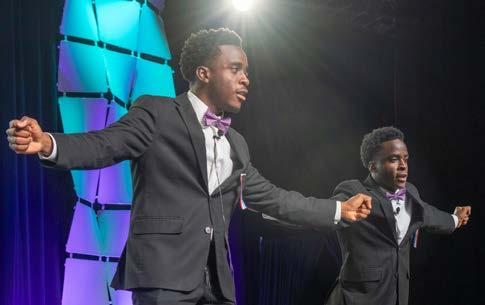

Ayokanmi Adenle and Ayokunnumi Adenle
Prestonwood Christian Academy, Texas
Duo Interpretation
• 2025 Sixth Place Finalists
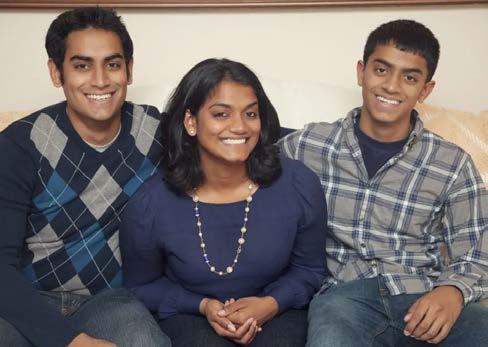
Ishanaa Rambachan
Eastview High School, Minnesota
International Extemp
• 2004 National Champion
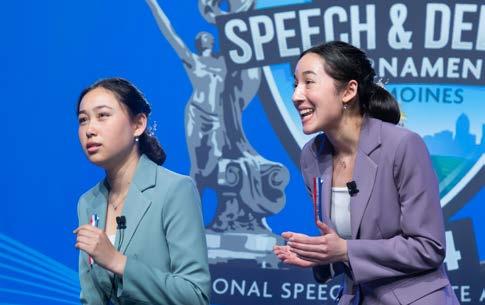
Mirah Lehman and Sarah Lehman
La Jolla High School, California
Duo Interpretation
• 2024 Sixth Place Finalists
SIBLINGS IN SYNC
The Rambachans are the first trio of siblings in NSDA history to win a national speech title in the same event! Today, Ishanaa is a Bay Area partner for McKinsey & Company, Akshar is a physician-investigator and assistant professor of medicine at UCSF Medical Center, and Ashesh is an assistant professor of economics at MIT.
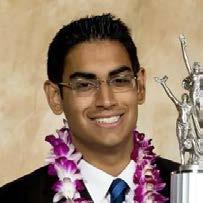
Akshar Rambachan
Eastview High School, Minnesota
International Extemp
• 2008 National Champion

Ashesh Rambachan
Eastview High School, Minnesota
International Extemp
• 2012 National Champion
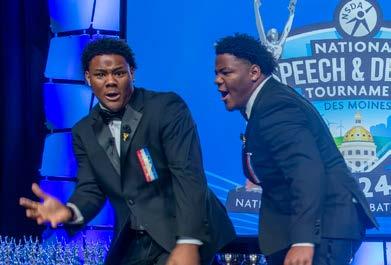
Elias Goss and Elijah Goss
Denver East High School, Colorado
Duo Interpretation
• 2024 Fourth Place Finalists
• 2023 Third Place Finalists
• 2022 Sixth Place Finalists
TWIN TACTICS
Twin brothers Elias Goss and Elijah Goss found success in high school by teaming up in Duo Interpretation. Now, they’ve joined forces to create GossTwinsMedia, which offers a wide range of motivational speaking and facilitation services, including keynote addresses, spokenword performances, workshops, and speaking coaching.
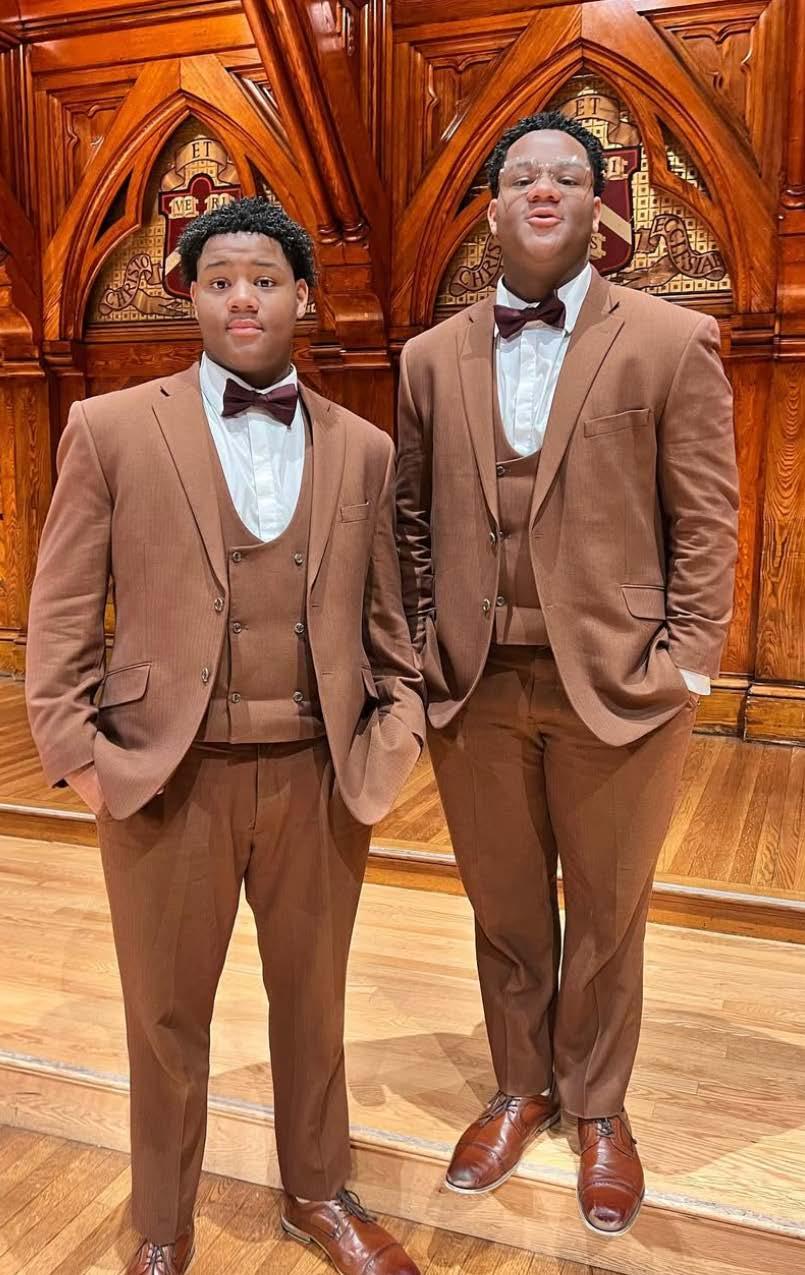
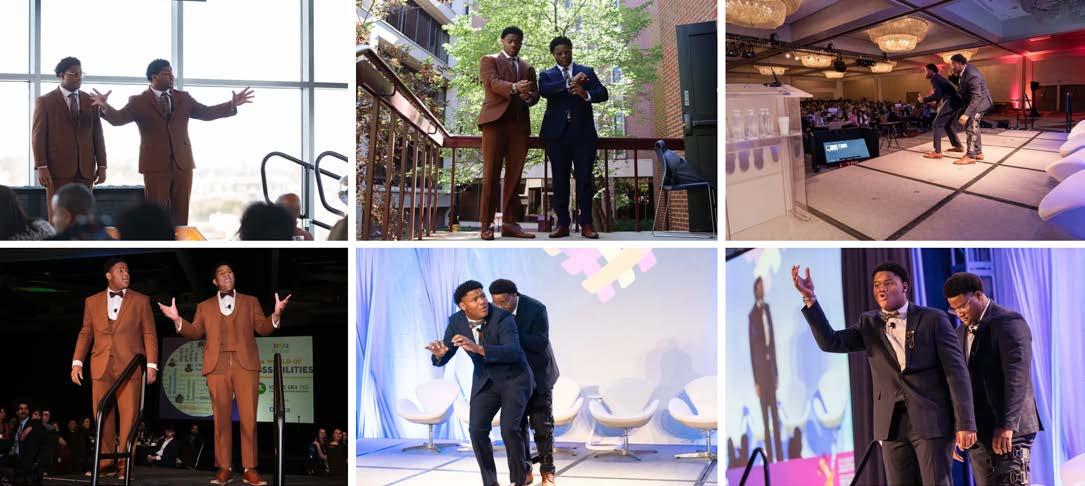
POWER IN PAIRS
The Canalejo sisters graced the final round stage a combined six times during their time in the NSDA!
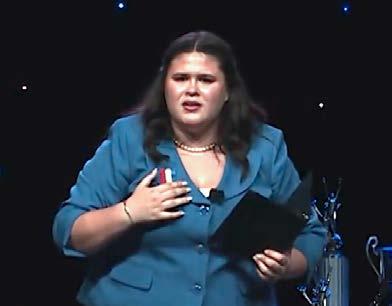
Abigail Canalejo
American Heritage School – Broward, Florida
Program Oral Interpretation
• 2022 Second Place Finalist
• 2021 Second Place Finalist
• 2020 Fifth Place Finalist
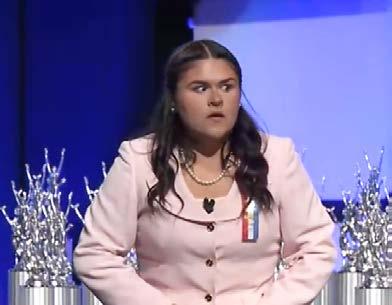
Jaimee Canalejo
American Heritage School – Broward, Florida
Humorous Interpretation
• 2025 Sixth Place Finalist
• 2024 Third Place Finalist
• 2023 Fifth Place Finalist
We invite all District Committees to name winners for these five awards!
NSDA Award Options
District High School Coach of the Year
This award honors high school coaches who reflect outstanding leadership and commitment to speech and debate activities.
District New Coach of the Year
This award recognizes an exemplary new high school coach who is in their first year of NSDA membership. If you’re not sure when a coach membership was paid, please reach out to us!
District Assistant Coach of the Year
This award recognizes an exemplary assistant high school coach serving at an NSDA member school.
District Administrator of the Year
This award honors an administrator who has succeeded in providing high-quality opportunities for students in speech and debate programming, as well as demonstrating exemplary contributions to the profession.
District Student of the Year
This award honors a graduating senior who best represents the tenets of the Association’s Code of Honor: humility, equity, integrity, respect, leadership, and service.

Find the nomination forms at www.speechanddebate.org/ district-leader-forms-manuals.




IN THE NEWS

SA Debate Team Finishes Fifth in the World at the 2025 World Schools Debating Championships
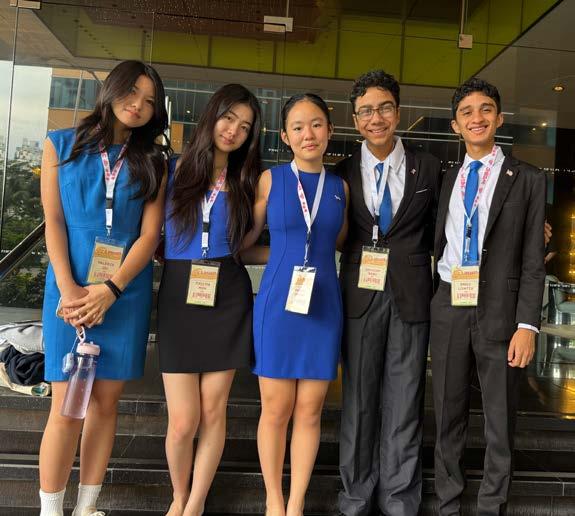

four members ranked among the top 10 speakers in the world. Cailyn Min was crowned the top speaker—another first for Team USA! Valerie Gu placed fifth, Anthony Babu was awarded seventh, and Anuj Lohtia placed tenth.
The graduating seniors wish to congratulate the newest members of USA Debate selected for the 2025-2026 national team, including returning members Anthony
Babu and Jiya Jolly. The prestigious team will compete against top teams from around the globe during the upcoming school year.
The team is coached by Christopher Vincent, Director of Speech and Debate at Isidore Newman School, LA; Shania Hunt, J.D. recipient from UC Law San Francisco, CA; and Aditya Dhar, Ph.D. student in finance at the University of Chicago, IL.
The USA Debate team spent two weeks in Panama City in July attending the 2025 World Schools Debating Championships. The team enjoyed debating timely, engaging topics and meeting new friends.
This year’s delegation consisted of Anthony Babu of Concord-Carlisle High School, MA; Valerie Gu of Milton Academy, MA;
Anuj Lohtia of Plano West Senior High School, TX; Cailyn Min of Bergen County Academies, NJ; and Sherry Zhang of Greenhill School, TX.
Team USA delivered an outstanding performance, breaking to elimination rounds as the top seed— a first for the U.S.—and ultimately finishing fifth in the world. The team also made history with
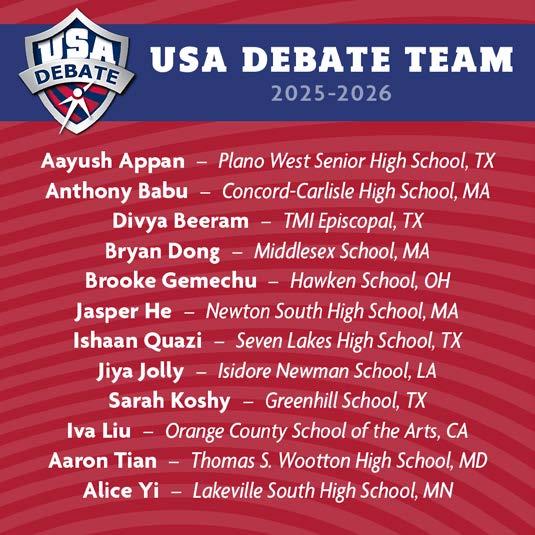


(left to right) USA Debate team members Valerie Gu (’25), Cailyn Min (’25), Sherry Zhang (’25), Anthony Babu (’26), and Anuj Lohtia (’25) traveled to Panama City for the World Schools Debating Championships in July.

MARCH 7, 2025 MARCH 6, 2026
MARCH 7, 2025
#NSDEday
#NSDEday
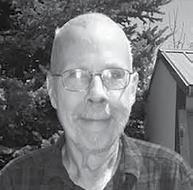
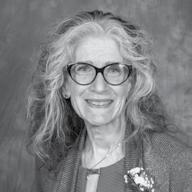
Bill Bennett 2023 • NEW MEXICO
Cat Horner-Bennett 2010 • NEW MEXICO
Dr. Sandra Berkowitz 2025 • MINNESOTA
Shane Stafford 2025 • MINNESOTA
B. J. Naegelin 2001 • TEXAS
Lanny D. Naegelin 1998 • TEXAS
Chuck Nicholas 2025 • SOUTH CAROLINA
Gail Nicholas 2021 • SOUTH CAROLINA
Aaron Timmons 2006 • TEXAS
Cindi Timmons 2012 • TEXAS
Cathy Wood 2010 • KANSAS
Steven Wood 2012 • KANSAS
Joe Wycoff 1992 • Minnesota
The highest honor for any high school speech and debate coach is election to the National Speech & Debate Association Hall of Fame. Each year, nominations are sought from member coaches.

In the month of April, current Hall of Fame members and coaches with at least three Diamond Awards vote to determine which nominees will be elected members of this most distinguished body. Complete the online form by February 2, 2026: www.speechanddebate.org/ hall-of-fame-nomination-form
Visit our website to learn more about these DYNAMIC DUOS who have been inducted into the Hall of Fame over the years! w ww.speechanddebate.org/ hall-of-fame


Pam Cady Wycoff 2007 • Minnesota



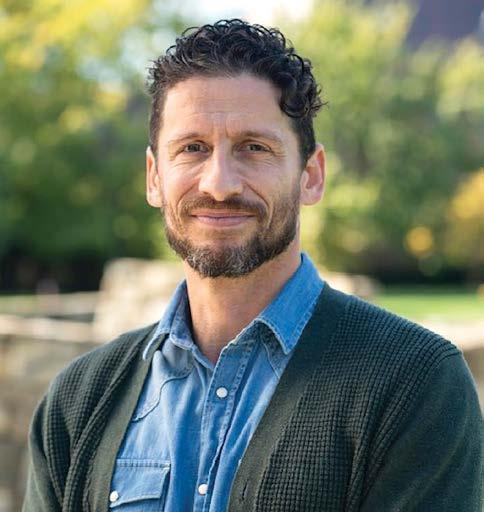
DEBATE, NOT SILENCE:
W hy Confronting Controversial Ideas is Essential to Equity
by Dr. Brendan Stern
Experts predict that emerging gene therapies could soon eliminate deafness. Most people may see it as a positive development, but others fear for the future of deaf people. Activists, ethicists, policymakers, and deaf people are now grappling with how to respond.
For me, it is a clarion call for debate. As the executive director of the Center for Democracy in Deaf America (CDDA) and the head coach of Gallaudet University’s debate team, I have a deep-rooted commitment to curating disagreement rooted in education, experience, and, admittedly, a bi-weekly paycheck.
So, when our debaters visited Georgetown University’s Philodemic Society in the spring of 2024, it should not be surprising that we settled on the question: Should deafness be cured?
In the Deaf community, objections arose immediately. Some Gallaudet alumni and faculty argued that deaf people should not be subjected to a debate with “hearing people” over the potential erasure of their minority identity. Others contended the topic was too controversial for something as competitive as debate. They claimed the event should have taken the form of a collaborative dialogue instead—a process generally described as “fluid, respectful, and cooperative listening aimed at reaching common understanding.”
Their complaints were concerning, but not surprising. After all, Deaf America is a microcosm of the country, where people are increasingly condemning the competition of contentious ideas and instead favoring cooperation, agreement, or even deference—especially when they are not directly impacted.
To be sure, collaborative dialogues are powerful ways to engage in collective problemsolving. This is why dialogues about curing deafness have been and will continue to be hosted.
However, if a collaborative dialogue about curing deafness was the only acceptable alternative for the critics of the competitive debate, it is worth asking why they feel we must choose between the two. Collaborative dialogues and competitive debates should be seen as complementary approaches to problemsolving. While dialogues offer many advantages, they also have limitations that debates help address—and vice versa.
For instance, collaborative dialogues lack the unique advantages of the adversarial process, which is crucial for uncovering complexities through the rigorous challenge and defense of diverse perspectives. Dialogues aim for common understanding but often provide
little incentive to critically engage with opposing views.
By contrast, victory in competitive debate is only possible through thoughtful analysis and effective rebuttal. Driven by the natural desire to excel, debaters embrace the hard work of healthy disagreement. They dig deep, question authority, and sharpen critical thinking to both affirm and oppose arguments.
By doing so, debate is the great clarifier. In the pursuit of victory, debaters sand the bark off contentious issues, chipping away at the illogic, the irrelevant, the untrue, the misframed, the misunderstood, and the prejudiced like wood carvers shaping a block of oak.
As debaters compete with ambition, they cultivate a deeper understanding of the profound disagreements that define us and the possible paths forward. This depth would be impossible through collaborative dialogues alone.
Deaf people deserve this sort of intellectual clarity on the question of curing deafness— not despite its controversial nature, but precisely because it’s so contentious and therefore so important.
For those who specifically objected to the idea of the world’s first and only deaf college debate team
Dr. Brendan Stern is the Executive Director of the Center for Democracy in Deaf America and the 2025 NSDA Activating Equity Award recipient.
debating hearing people about curing deafness, I understand the discomfort. It is a legitimate concern for conversationalists and ethicists.
But if we view the question through the lens of politics—where power means who gets, what, when, why, and how—the shortsightedness of this objection becomes clear. The reality is that debate with hearing people builds crucial experiences for deaf people to achieve the very goals they say they want.
Consider this: about 95% of deaf people have hearing parents. More than 99.5% of the U.S. population are hearing. Of about 8,000 elected state and federal officials as well as leaders in medical, scientific, entertainment, and corporate sectors, almost all are hearing.
If abolishing a cure for deafness requires persuading these hearing people—as the critics of the Georgetown debate would presumably want—then we must refine our arguments not with those who already agree with us, but with those who experience the world differently. We need to explore how they understand the issue, whether they truly believe they know best, and what might persuade them otherwise.
Disagreeing across differences is not easy. We can always shame others
into silence or compliance. But what happens when they are no longer in our presence? What is gained by persuasion—with the grinning fangs of emotion and reason—is real progress. The path to lasting change is paved by reaching across differences, listening as if we are wrong, signing as if we are right, and eventually changing hearts and minds.
With the cure on the horizon, the benefits of competitive debate with hearing people have never been more urgent. It carries little risk, too. In my experience, I have not seen anyone emerge from a debate more entrenched or intolerant. Instead, it reminds participants that disagreement isn’t evil, controversial topics are complex, and knowledge is fallible.
Although I was born deaf in a deaf family, grew up studying at deaf schools, and had reviewed the arguments prepared by Gallaudet debaters, I was challenged at Georgetown that night in profound ways I had thought impossible.
While watching the debate, I swung between the affirmative and negative positions like a pendulum, each speaker sending the argument in unexpected directions.
On the affirmative side, Gallaudet and Georgetown students argued that
opposition to a cure was rooted in naivete and privilege. They pointed out that the deaf people in the library that night— myself included—were the exceptions to the rule with access to bilingualism and public accommodations. Meanwhile, despite over a century of advocacy, most of the 466 million people with hearing loss in the world still lack language, community, and employment.
The negation speakers conceded that a cure for deafness might address those serious problems more efficiently. Still, they argued it would deprive the world of pivotal contributions from deaf people that make life beautiful. In the words of Gallaudet debater Trent Mora, to cure deafness would be to “silence the rich chorus of life with the monotonous drone of normalcy.”
One of my favorite memories of the event was mingling after the postdebate vote at the university library where Georgetown alumni like Supreme Court Justice Antonin Scalia and President William Clinton had once studied and seeing the attendees say things like “I see the issue differently now” or “I’d never thought of that.”
I wish the debate critics could have seen that growth, including how 64% of the people at the Georgetown debate ended up voting against curing deafness.
ABOUT THE AWARD
The NSDA introduced the Activating Equity Award in 2023 to honor the work of groups or collectives of individuals who, over the past year or years, have dedicated themselves to the enhancement of the culture of equity in middle and high school speech and debate activities.
The Activating Equity Award is presented by the Alben W. Barkley Forum for Debate, Deliberation, & Dialogue at Emory University in honor of all high school speech and debate coaches who daily plant the seeds of change through their teaching and support. The award supports that vision of community by rewarding organizations striving to ensure conditions of fairness and encouraging participation.
The recipient receives a monetary award of $5,000 to help them further their work in pursuing equity in speech and debate and is publicly recognized during the National Tournament.
For nomination details, visit our website at www.speechanddebate.org/ activating-equity-award


The Center for Democracy in Deaf America (CDDA) aims to promote healthy democratic skills in the American Deaf community through disagreement, civic engagement, and debate in English and American Sign Language. Learn more at www.gallaudet.edu/center-democracy-deaf-america.

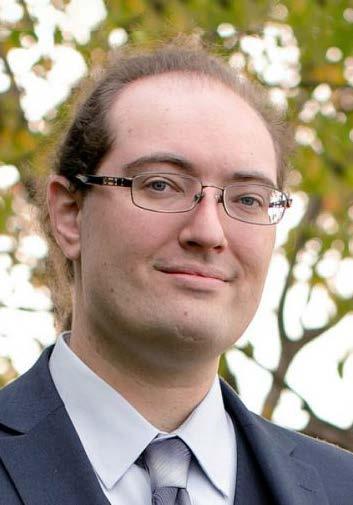
KEITH WEST MEMORIAL FUND
SCHOOL GRANTS


Keith West dedicated his life to coaching and teaching youth in the ways of argumentation and debate. To honor his life and legacy, his family and friends have established the Keith West Memorial School Grant to provide one $5,000 grant, two $2,500 grants, and five $1,000 grants to teams who have strong potential but a significant lack of financial resources. Learn more or apply at www.speechanddebate.org/keithwest-memorial-fund.
2024 GRANT RECIPIENTS
$5,000 GRANT RECIPIENT
Skiatook High School, OK
Coached by Keith Denslow
$2,500 GRANT
RECIPIENTS
Marion C. Early High School, MO
Coached by Traci Dunn
New Manchester High School, GA
Coached by Serena Robertson

$1,000 GRANT
RECIPIENTS
Angleton High School, TX
Coached by Christine Williams
John I. Leonard High School, FL
Coached by Quentin Scruggs
Post High School, TX
Coached by Deborah Garoui
San Elizario High School, TX
Coached by Justin Del Valle
William Henry Harrison High School, IN
Coached by Savannah Staples


2024-2025 NEW CHARTER CHAPTERS
Congratulations to the following schools that were granted charter chapter status in 2024-2025!
Becoming a charter chapter is the highest honor for high schools in the NSDA. A chapter is automatically chartered if, after at least one year at member status, it has earned at least 50 degrees within a three-year period. Small schools with a grade 9-12 enrollment of fewer than 500 students must earn at least 25 degrees within a three-year period. For more details, visit www.speechanddebate.org/school-recognition. Schools are listed in alphabetical order by state/country.
A. J. Dimond High School AK
Ada High School OK
Adlai E. Stevenson High School IL
Admiral Farragut Academy FL
All Saints Episcopal School - Lubbock TX
Allen D. Nease High School FL
American High School CA
American Leadership Academy Gilbert North 7-12 AZ
Anahuac High School TX
Antonian College Preparatory TX
Atascocita High School TX
Athens High School TX
Atherton High School KY
Austin High School TX
Austin Peace Academy TX
Avenues: The World School NY
Bandera High School TX
Barringer High School NJ
BASIS Ahwatukee AZ
BASIS Cedar Park TX
Bayside Academy AL
Belen Jesuit Prep School FL
Bigfork High School MT
Bolingbrook High School IL
The Bolles School FL
Briar Woods High School VA
Brookline High School MA
Brownell Talbot College Preparatory School NE
Burlington High School KS
Burlington High School WY
Career Magnet Academy TN
Carl Sandburg High School IL
Carnegie Vanguard High School TX
Castilleja School CA
Cathedral High School TX
Central Plains High School KS
Chatfield Senior High School CO
Chester-Joplin-Inverness High School MT
Clark Advanced Learning Center FL
Clever High School MO
Coeur D’Alene Charter Academy ID
Collegiate High School TX
Collinsville High School TX
The Colony High School TX
Convent of the Sacred Heart NY
Corpus Christi Carroll High School TX
Crescent Valley High School OR
Custer Co. District High MT
David Thibodaux STEM Magnet Academy LA
Denfeld High School MN
Des Moines Christian School IA
Desert Oasis High School NV
Dirigo High School ME
Douglas High School WY
DRS Yeshiva High School for Boys NY
Dunwoody High School GA
Earl Warren High School TX
El Reno High School OK
Elkhorn South High School NE
Emerald High School CA
Ergos Bilingual School Dominican Republic
Fairless High School OH
Fergus High School MT
Fort Gibson High School OK
Fossil Ridge High School CO
Frazee Secondary MN
The Frazer School FL
Fremont High School NE
George School PA
Grafton High School VA
Graves County High School KY
Great Falls Central Catholic High School MT
H. B. Plant High School FL
Haines High School AK
Haven High School KS
Hays High School KS
Herriman High School UT
The Hill School PA
Hillbrook School CA
Hillcrest High School SC
Hillsboro High School ND
Horizon Honors High School AZ
Idaho Arts Charter High School ID
Innovation High School FL
2024-2025 NEW CHARTER CHAPTERS (continued)
iPrep Academy North High School FL
Jefferson Forest High School VA
Joplin Gloria Deo Academy MO
Kahuku High and Intermediate School HI
Keystone Heights Junior/Senior High FL
Lafayette High School KY
Lake High School OH
Lakeridge High School OR
Lansing Eastern High School MI
Lebanon Trail High School TX
Lightridge High School VA
Lincoln-Sudbury Regional High School MA
Lodi High School CA
Lotus School for Excellence CO
Maggie L. Walker Governor’s School VA
Marvin Ridge High School NC
Math & Science Academy MN
Mayde Creek High School TX
McCallum High School TX
Meadowbrook High School VA
Mid-South Gifted Academy TN
Monterey High School TX
Morgan High School UT
Morrilton High School AR
Mountain Iron-Buhl Secondary MN
Neah-Kah-Nie High School OR
New Orleans Charter Science and Math High School LA
Nicolet High School WI
Nixa High School MO
North Carolina School of Science and Mathematics NC
Oakland Technical High School CA
Okeechobee High School FL
Olympic Heights Community High School FL
Oregon Episcopal School OR
Orlando Science Middle High Charter FL
Our Lady Of Lourdes Academy FL
Our Lady Of The Elms High School OH
Owasso High School OK
Pace Academy GA
Pacific American School CA
Parkway High School LA
Peak To Peak Charter School CO
Pine Crest School FL
Pine Island High School MN
Pope John Paul II Preparatory School TN
Ralston Valley High School CO
Ramaz Upper School NY
Red River High School ND
Redmond High School WA
Regent Preparatory School Of Oklahoma OK
Revere High School MA
Roaring Fork High School CO
Robinson High School FL
Rossford High School OH
Rushville Consolidated High School IN
Ruskin High School MO
Ruston High School LA
Sacred Heart Cathedral Prep CA
Saint Joseph School Dominican Republic
Saint Pius X High School MO
School Of The Woods High School TX
Scotus Central Catholic High School NE
Sheridan High School WY
Shoshone-Bannock Sr. High School ID
Sidney High School MT
Signature School IN
Silverton High School OR
Soda Springs High School ID
Sophie B. Wright Institute Of Academic Excellence LA
South Anchorage High School AK
Southwest Career and Technical Academy NV
Springboro High School OH
St. Catherines School VA
St. Cloud Apollo High School MN
St. Thomas High School TX
St. Thomas More Academy IN Stockton High MO
Success Academy High School of Liberal Arts NY
Summit Christian Academy - Lee’s Summit MO
Summit High School OR
Summit High School CO
Texhoma High School OK
Thomas Jefferson High School WA
Thomas Jefferson Independent Day School MO
Timpview High School UT
Trinity Christian School VA
Trinity High School KY
Troy High School CA
University High School NJ
V. Sue Cleveland High School NM
Verdigris High School OK
Walnut Grove High School TX
Wayne High School OH
Weatherford High School OK
West Anchorage High School AK
West High School CA
Westside High School TX
Wheeler High School GA
Williams High School TX
Windsor Charter Academy CO
Wissahickon High School PA
I decided to include the NSDA in my estate plans because speech and debate is an activity that teaches everything from argumentation and speaking skills to humility and gracefully losing. This activity made me a different and better person, and I want to make sure that students well into the future are afforded the opportunities I was.”
Aarzu Maknojia NSDA ALUM
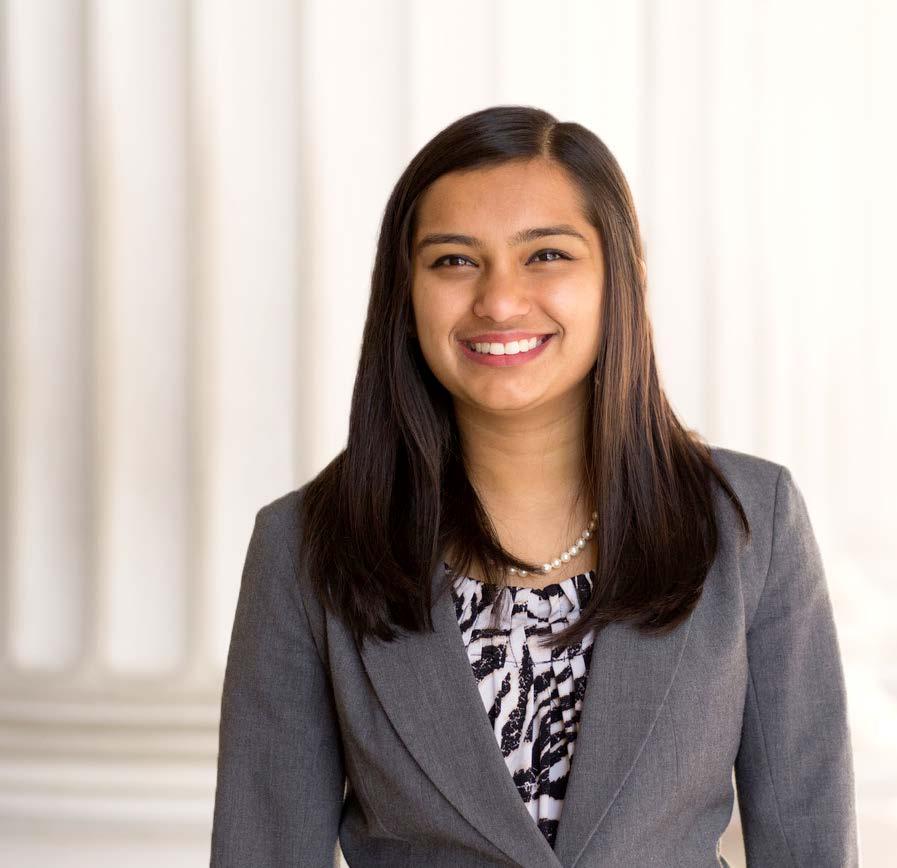
The National Speech & Debate Association is grateful to acknowledge the following 1925 Society members for pledging a generous planned gift contribution.

Susan Anderson
Anonymous
Byron Arthur
Phyllis Flory Barton
Jane Boyd
James Copeland
Don and Ann Crabtree
Rob Dekoven
Dr. Mike Edmonds
A. C. Eley
Vickie and Joe Fellers
Aaron Hardy
Bill and Charlotte Hicks
David and Judy Huston
Jennifer Jerome
Harold Keller
Kandi King
Cherian and Betsy Koshy
Paige Lalicker
Crawford Leavoy and Clayton Alfonso
Dr. Tommie Lindsey, Jr.
Aarzu Maknojia
Pam and Ray McComas
H. B. Mitchell
Athena Murray
Lanny and B. J. Naegelin
Khang Minh Ngo
Albert Odom, Jr.
Randi Oleson
J. W. Patterson
Capt. Joseph L. and Jan Pizzo
David Price
Dr. Polly and Bruce Reikowski
Donus and Lovila Roberts
James Rye, III
Steve and Anna Schappaugh
David Seikel
Michael Shapiro
Sandra Silvers
Yatesh Singh and Liz Vieira
Thadeus Hagan Smith
Richard Sodikow
William Woods Tate, Jr.
Scott and Chan Waldrop
Nicole and Darrel Wanzer-Serrano
Cheryl Watkins
Dr. Sue Wenzlaff
Abigail Wichlacz
Chase Williams
J. Scott and Megan Wunn
Joe and Pam Wycoff
David and Tatiana Yastremski
THE SOCIETY 1925
Leaving your legacy with the NSDA can be done in three easy steps:
1. Add a simple paragraph to your will stating the NSDA as a beneficiary. You can revise your gift at any time.
2. Notify Nicole Wanzer-Serrano that the NSDA has been added to your will. nicole@speechanddebate.org
3. Celebrate knowing that you will impact future generations by joining The 1925 Society!
Contact Nicole for more information: nicole@speechanddebate.org
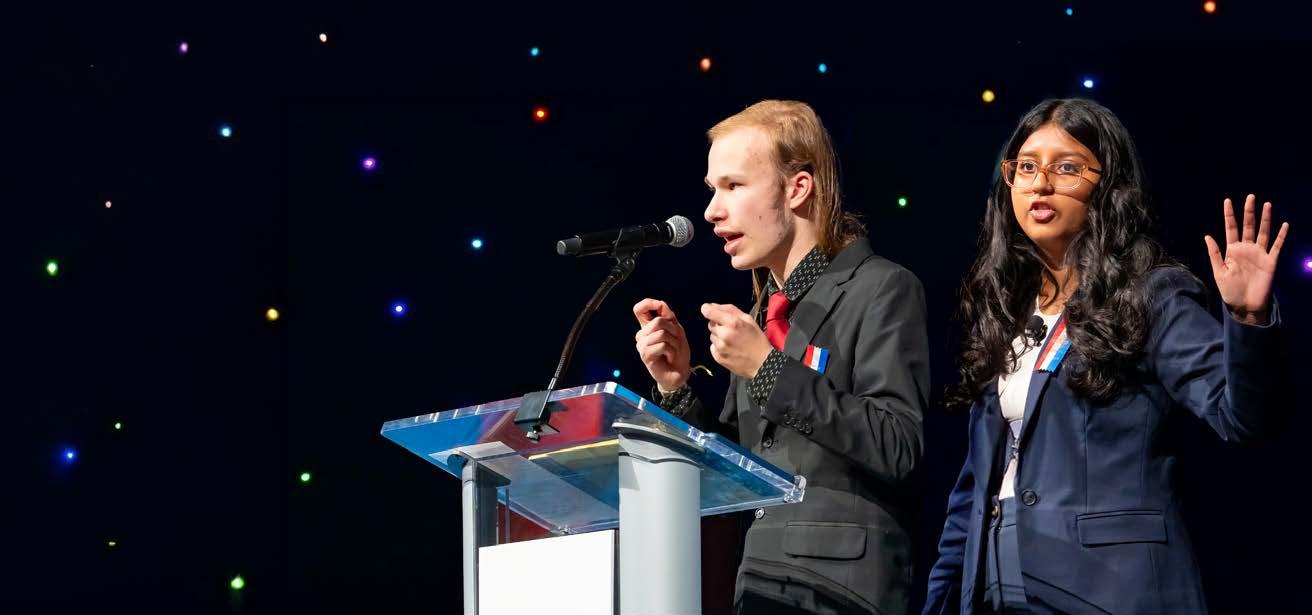

WHAT IS BIG QUESTIONS?
Big Questions is a debate format designed to open students’ minds and encourage them to engage in life discussion that may not align with their previously held beliefs. Whether or not students change their opinion, the rich experience of this debate event will advance their knowledge, comfort, and interest in learning more about the subject matter based on the intersection of science and philosophy.
Students greatly improved in their debate skills as the Big Questions tournament progressed. The students really had fun with it and got into the debate. It was nice for me as their teacher and coach to see improvement in their skills.
RESOURCES
f Big Questions Final Rounds Archive
f Big Questions Judge Training
f BIG QUESTIONS LESSON PLAN –Constructing an Argument f BIG QUESTIONS LESSON PLAN –Refuting an Argument

2025 CHAMPION CALEB WALDRON and 2025 FINALIST HARINI ARUN
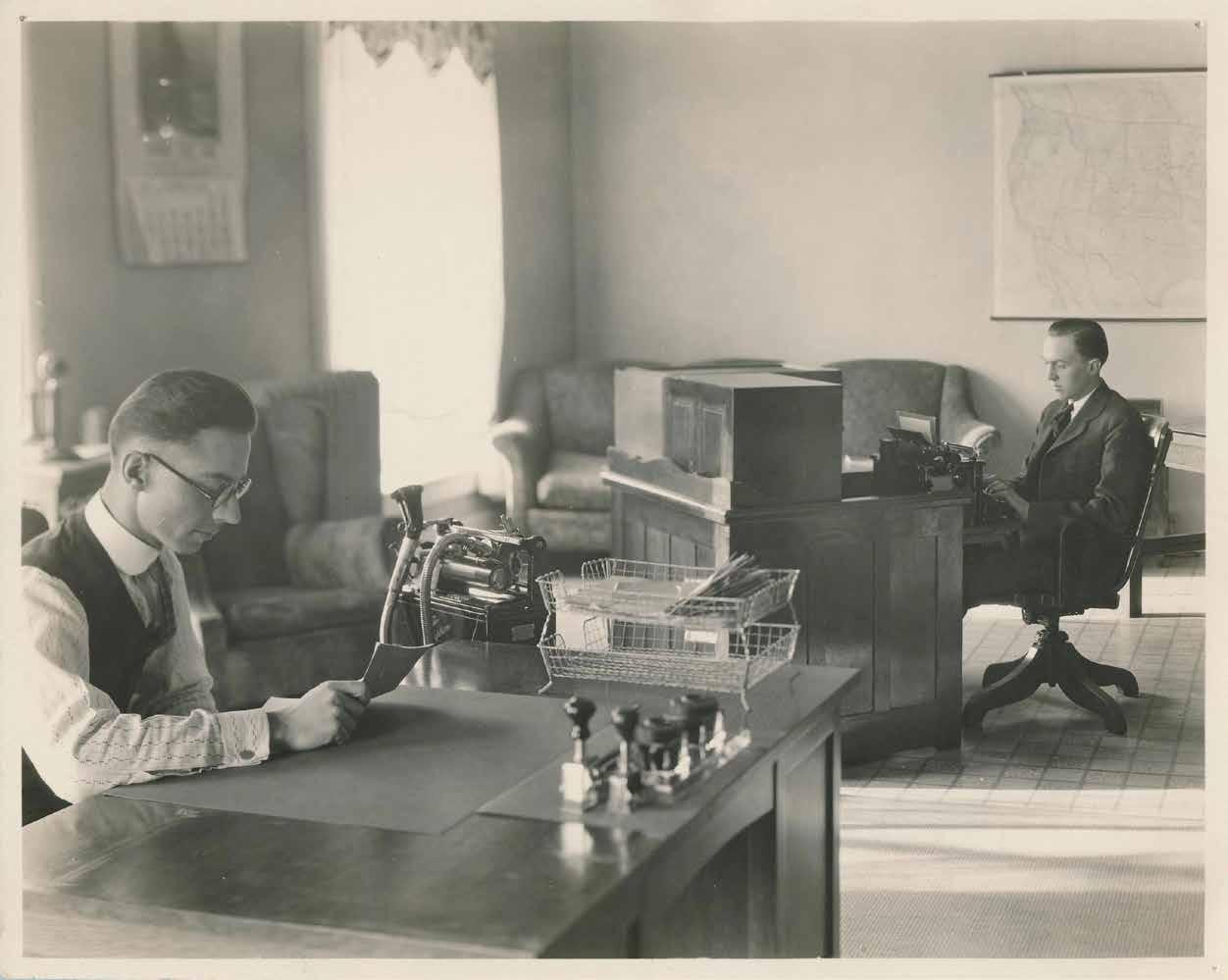
A NEW PRESIDENT
Karl E. Mundt from South Dakota, a fundamental leader in establishing the National Forensic League, was elected NFL Board President.
Explore a Century of Speech and Debate History
Learn how the organization started in 1925, challenges we’ve faced over the years, and how we plan to further our reach over the next 100 years.
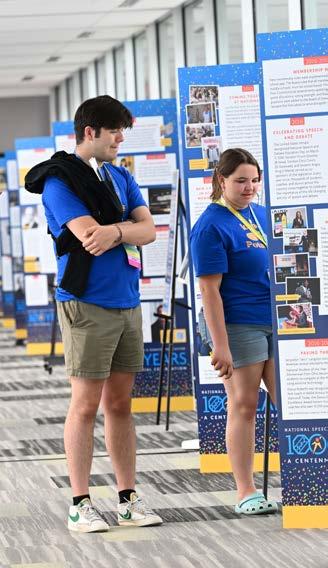
L. Ewbank, Sylvester Toussaint, and Dean Ralph Dennis— received honorary degrees for their support and advancement of speech and debate. They each received a gold key at the sixth National Tournament in Oklahoma City.
The Board set a new limit of 500 charter chapters. A waiting list of schools was established.
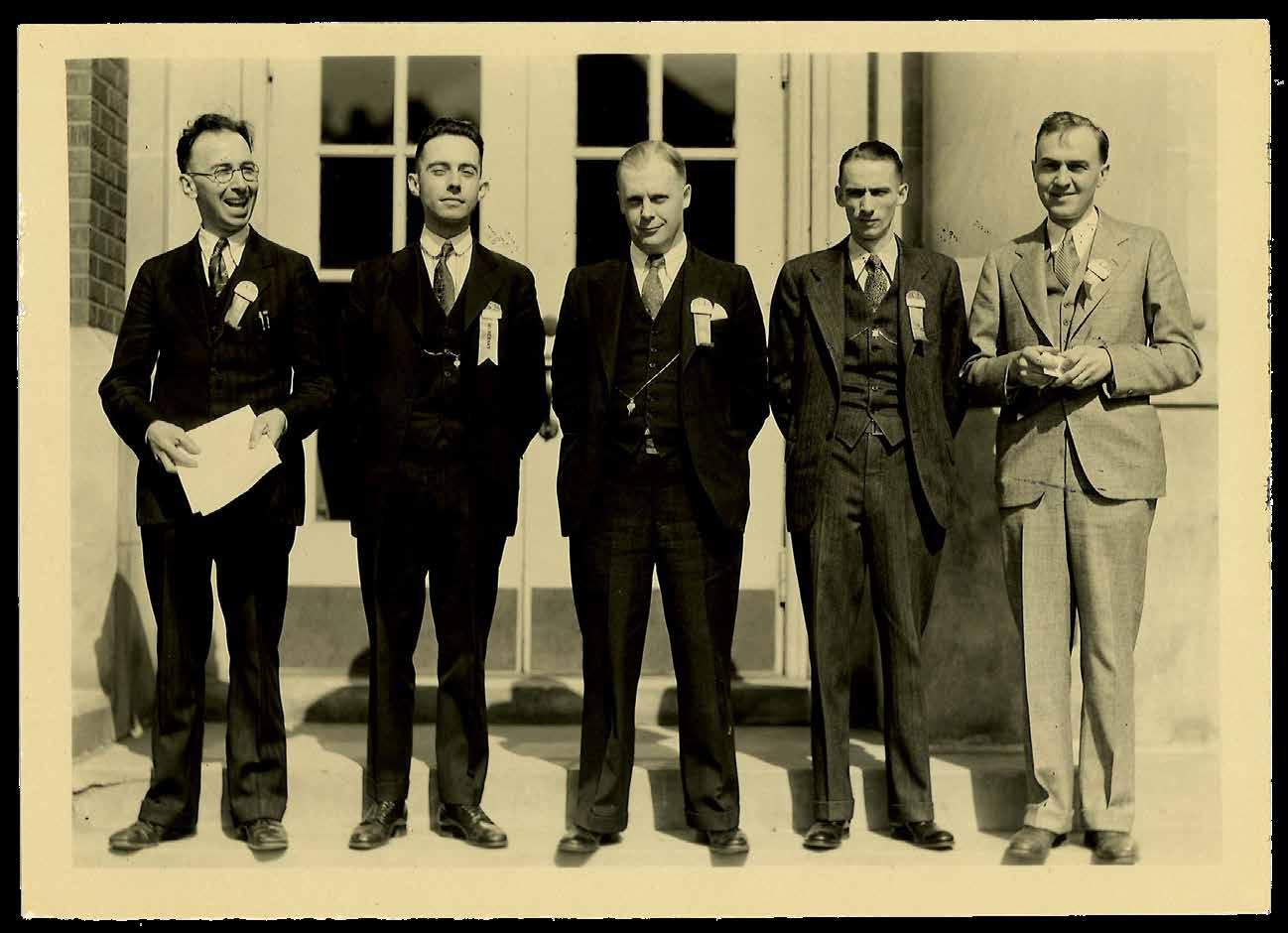
Our history is more than dates. It’s a testament to the lasting impact of speech and debate on individuals and communities. By examining our past, we gain insight into the principles of equity, integrity, respect, leadership, and service that remain central to our mission. As we look to the next 100 years, our history stands as both foundation and beacon— reminding us of the power of words and the importance of thoughtful discourse in a democratic society.
www.speechanddebate.org/centennial-timeline
The Centennial Timeline and accompanying video series are now available in digital format on our website!
Rostrum magazine officially replaced (left to right) John F. Schmidt, Bruno E. Jacob, Karl E. Mundt, J. C. Bond, R. F. Gehner, Sioux City,
Karl E. Mundt, South Dakota
1929
1929
TRYING TIMES
Following the Great Depression in 1929, the NFL faced financial uncertainty. School budgets, teacher salaries, and transportation funds were cut. Bruno E. Jacob kept the organization afloat by donating part of his salary as a professor at Ripon College.
1934 GROWTH PLAN ESTABLISHED
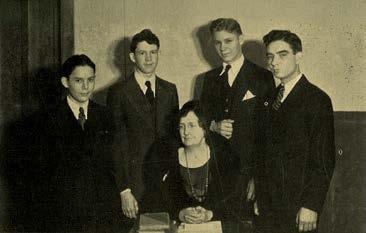
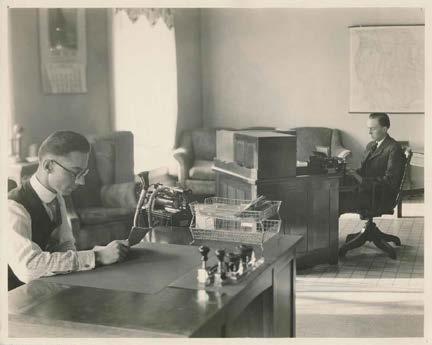
At its first meeting, the Board of Directors proposed 10 constitutional amendments to support membership growth and the rising number of tournaments.
1930-1931
YEAR OF FIRSTS
Despite the economic turmoil, the NFL held the first national high school debate championship at Ripon College in May, 1931. A total of 49 schools from 17 states competed in Oratorical Declamation (now Original Oratory), Extemporaneous Speaking, and Debate (now Policy Debate). Miami High School in Oklahoma, coached by Mrs. W. S. O’Bannon, took home the first NFL championship title. CBS Radio broadcasted the national championship.

1930
INSIGNIA INTRODUCED
Distinguished Service Awards were authorized. The NFL created insignia to honor students and coaches for their dedication to speech and debate. Jeweled pins were designed to designate degrees and gold insignia were established for coaches.
the called Rostrum publication & Debate year, speech news, updates. member
First national debate champions, Miami High School, Oklahoma Tournament Book, 1931
Scan to learn how the National Tournament has evolved and expanded over the years
A collection of vintage insignia
(left to right)
Karl E. Mundt,
Bruno E. Jacob (front) at work, date unknown
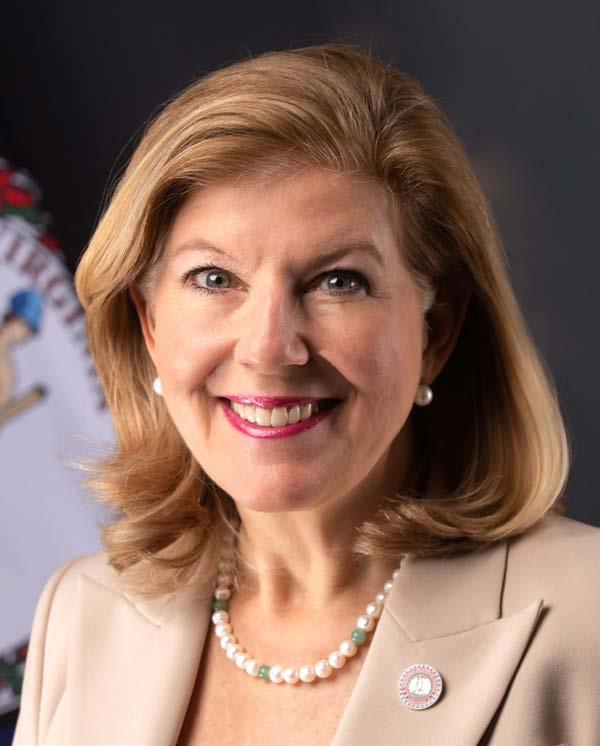
Dear Speech and Debate Community,
Next June, the eyes of the world will turn to Richmond, Virginia— when thousands of students, coaches, and their families arrive in our capital city for the 2026 National Speech & Debate Tournament. As Virginia’s Secretary of Education, I couldn’t be prouder that our Commonwealth will host this extraordinary gathering of talent, intellect, and student voice.
Speech and debate events are more than competitions. They are powerful vehicles for learning, cultivating the habits of mind and character that define an excellent education. When young people stand up to speak, to argue, to listen, and to engage with ideas bigger than themselves, they are doing the real work of becoming thoughtful leaders and informed citizens.
Here in Virginia, we hold a deep and abiding commitment to academic excellence, civic readiness, and access to opportunity. Speech and debate embody all three. Students who participate in these activities sharpen their minds and strengthen their character. They learn to research rigorously, speak persuasively, think critically, and collaborate across differences.
And behind every student rising to meet that challenge is a coach who believed in them first. The hours you spend refining arguments, reviewing ballots, traveling to tournaments, and helping students find their voice—often long after the school day ends—are nothing short of heroic. You are mentors, motivators, and models of what it means to lead with purpose. Virginia salutes you.
We are thrilled to welcome this national community to Richmond—a city shaped by the enduring struggle for justice, the pursuit of knowledge, and the power of discourse. You’ll find a region that is rich in history, alive with culture, and committed to the future of education.
To the students preparing for this journey: know that your voice matters. Your curiosity, discipline, and courage speak volumes—and we are listening. To the coaches, educators, and volunteers who make this possible: thank you for the work you do every day to cultivate not just competitors, but citizens.
We look forward to welcoming you to Virginia in 2026 for a tournament that promises not only rigorous competition but lasting impact.


With pride and anticipation,
Rogstad Guidera Virginia Secretary of Education


Access the schedule and learn more:


free events presented by The Julia Burke Foundation
Your team is invited to join fellow speech and debate students across the nation for a variety of FREE , after-school, synchronous and asynchronous online practice sessions through our Springboard Series!
• NON-MEMBERS WELCOME – NSDA membership is not required!
Fall 2025 Dates
December 6, 2025
Join us for the Springboard Capstone Tournament! Tuesday, October 28
Thursday, November 6
Tuesday, November 11
Tuesday, September 16
Thursday, September 18
Thursday, November 13
Tuesday, November 18
www.speechanddebate.org/springboard-series
Being a member of the National Speech & Debate Association made every dream I had a reality. Through my time in speech and debate, I realized I could turn my passion into a career.
JOSH GAD
N SU University School, Florida – Class of 1999
Actor, singer, producer, author, and three-time NSDA national champion
WE ARE SPEECH AND DEBATE