





www.speechanddebate.org/store

www.speechanddebate.org/store
On behalf of Texas Speech Director Dr. Eva Margarita and Texas Debate Director Dr. Brendon Bankey, thank you to all of the students and coaches who joined us this past summer for the 31st Annual UT National Institute in Forensics. The UTNIF continues to be one of the largest and most accomplished summer forensic programs in the country. Just a few reasons why our students keep coming back year after year: incomparable education, superior resources, unmatched faculty, reasonable rates, tremendous alumni, and the background of the University of Texas at Austin.
Success in any academic activity is a product of excellent and immensely talented students, incredibly hard working coaches, supportive parents and schools, and an investment in time that may include summer opportunities. It is that understanding that makes UTNIF one of the largest comprehensive institutes in the country year after year, and why we have assembled some of the brightest forensic minds in the nation for our program. It is also that educational philosophy that has enabled alumni of our summer programs to succeed at every level, from high school and well into collegiate forensic competition. UTNIF is one of the best places to get your head start on the season.
We offer our most sincere congratulations to all of the students who qualified for and attended the 2024 NSDA National Speech & Debate Tournament. And to all of the students who were recognized with awards, congratulations on a task well-done. To all of our alumni and to our incoming Longhorns, Hook 'Em!


The central theme of this issue is paying it forward—simply put, when someone does something for you, instead of paying that person back directly, you pass it on to someone else. Inside, we meet four speech and debate alums from across the country who are doing just that by taking up the coaching mantle. In this month’s District in Detail, we invite current district leaders to provide insight and encouragement to other coaches who may be considering taking on a leadership role in the upcoming NSDA district leadership election this spring. Part of paying it forward can entail looking back—appreciating where we’ve been so we continue making strong commitments to the future. Twenty-five years after the creation of Tabroom.com, including more than a decade under the NSDA’s umbrella, we explore the tournament management system that makes so many speech and debate events possible every weekend.
Also inside, the NSDA Wellness Committee unveils its new Wellness Lens with the goal of “creating spaces where the activity isn’t just rigorous—it’s sustainable, equitable, and deeply rewarding.” We chat with Dylan De Leon, co-founder of the Washington State Forensics Association (WSFA) Student Advocacy Committee—a group of students from around the state who collaborate virtually to acknowledge, discuss, and solve challenges facing the broader forensic community. NSDA alum Anneteke Adoga shares reflections from her interview with fellow alum and U.S. Supreme Court Justice Ketanji Brown Jackson about the impact speech and debate has had on her life and career. Isabella Royer, the 2023 NSDA national champion and 2024 runner-up in Program Oral Interp, opens up about how she found strength in vulnerability and making a difference as she prepared to perform on the final round stage. Gabriella Otero shares her journey as a three-event middle school national champion and her aspirations to continue mentoring younger students as she enters high school.
As we celebrate our centennial year as an organization, we pledge to pay it forward during the next 100 years so countless more students may benefit from this incredible activity.
Sincerely,
J. Scott Wunn
Executive Director
Rostrum A PUBLICATION OF THE NATIONAL SPEECH & DEBATE ASSOCIATION
6600 Westown Parkway, Suite 270, West Des Moines, IA 50266 | Phone (920) 748-6206
J. Scott Wunn, Publisher
Amy Seidelman, Editor
Vicki Joss, Managing Editor
Annie Reisener, Associate Editor
Emily Bratton, Graphic Design Assistant
Newsstand Price
$9.99 per issue
Member Subscription Price
$24.99 for one year (5 issues)
Non-Member Subscription Price
$34.99 for one year (5 issues)
Rostrum (ISSN 1073-5526), Copyright © 2025 by the National Speech & Debate Association (NSDA), is published five times per year (Sept., Nov., Feb., Apr., and Aug.) by the NSDA, 6600 Westown Parkway, Suite 270, West Des Moines, IA 50266. Business and Editorial Offices: NSDA, 6600 Westown Parkway, Suite 270, West Des Moines, IA 50266. Accounting and Circulation Offices: 6600 Westown Parkway, Suite 270, West Des Moines, IA 50266. Call (920) 748-6206 to subscribe. Periodicals postage is paid at Des Moines, IA 50318, and additional mailing offices. POSTMASTER: Please send address changes to Rostrum, c/o NSDA, 6600 Westown Parkway, Suite 270, West Des Moines, IA 50266. Rostrum provides a forum for the speech and debate community. The opinions expressed by contributors are their own and not necessarily the opinions of the NSDA, its officers, or its members. The National Speech & Debate Association does not guarantee advertised products and services unless sold directly by the NSDA.
Byron R. Arthur
President
Louisiana
David Huston
Vice President
Texas
Jamelle M. Brown
Missouri
Dr. Alan H. Coverstone Virginia
Sara Gibson Washington, D.C.
Adam J. Jacobi Wisconsin
Erez Kalir California
Anoop Mishra Treasurer Alabama
Renee C. Motter Colorado
Wendy Orthman California
James W. Rye III Alabama
Holly Williams
Secretary, Administrative Rep Arizona
To learn more about the Board, visit www.speechanddebate.org/ meet-the-team. You may also contact the Board by emailing board@speechanddebate.org.
I’m so glad I went to ISD. It is truly one of the best decisions I could have made for my speech career.


ISD: CAROLINA - SESSION ONE
JUNE 28 - JULY 11
ISD: COACHES CLINIC JUNE 28 - JULY 11
ISD: CAROLINA - SESSION TWO
ISD: ONLINE
JULY 13 - JULY 26
JULY 14 - JULY 25

@nsda.speechanddebate

Focus on foundational skill building
Access to award winning staff
Preparation for both local and circuit tournaments
Individualized programming
Emphasis on application and practice rounds
Opportunities to take electives
Commuter and residential options

Member students and one chapter advisor per school are eligible to vote!
We’ve created a central hub to answer your frequently asked questions about how topics are generated throughout the school year—and ways you can get involved in the process! Learn more at www.speechanddebate.org/topic-creation-hub
We invite you and your students to send us your debate topic ideas for Lincoln-Douglas and Public Forum as well as potential motions for World Schools Debate. Find the online submission forms at www.speechanddebate.org/topic-creation-hub
We are proud to partner with the National Federation of State High School Associations (NFHS) to support an increase in diversity in the Policy Debate selection process. In order to have topics that best reflect the evolving needs of our diverse membership, we are committed to increasing the diversity of representation in the Policy Debate selection process. To that end, we have created two two-year Policy Debate topic fellowships to assist.
The two fellows will participate in the NFHS Policy Debate Topic Selection Meeting to learn more about the topic selection process from July 31 to August 3, 2025, in Austin, Texas. During the fall of the 2025 school year, the two fellows will write Policy Debate topic papers. In August of 2026, the two fellows will present and advocate for their Policy Debate topics. These fellows will be eligible to serve on the NFHS Wording Committee. Learn more and apply at www.speechanddebate. org/policy-topic-fellowship. Applications are due April 14, 2025.
The NSDA conducts an intentional and ongoing evaluation of the topics we encourage students to explore. Download a copy of the Topic Rubric Questions at www.speechanddebate.org/ equity-topic-rubric
Resolved: In the United States, the benefits of the use of generative artificial intelligence in education outweigh the harms.
Resolved: The development of Artificial General Intelligence is immoral.
The NSDA also offers an optional resolution that may be used during the first two months of a novice LD season— Resolved: In the United States, national service ought to be mandatory. Coaches are encouraged to check with tournament hosts in their area before exclusively prepping for one topic over another.
2024–2025
Resolved: The United States federal government should significantly strengthen its protection of domestic intellectual property rights in copyrights, patents, and/or trademarks.
2024–2025
Resolved: Creativity is a more powerful force than intelligence.

ARCTIC – Resolved: The United States federal government should significantly increase its exploration and/or development of the Arctic.
Widely known as the “final frontier,” the Arctic is filled with current interest by geopolitical, economic, and environmental actors. The Arctic Ocean, and the different biodiversity and geopolitical arguments that it entails, is something that has been discussed around the margins in debates in the past, but not explicitly debated in policy debate despite past student interest. The Arctic has a wealth of projects occurring within it, including U.S. cooperation with the Arctic Council, NOAA and NSF research, and more. This allows the topic to be widely accessible through governmental websites and provides educational opportunities for novice and varsity debaters alike. Novices have an abundance of potential areas for debate including economic and environmental issues, while Varsity debaters can take the topic further by discussing geopolitical, economic, and Indigenous issues within the Arctic Circle.

The 2025 Policy Debate Topic Selection Meeting will be held in Austin, Texas, from July 31 to August 3, 2025. Specific information regarding lodging, travel arrangements, and daily schedules will be made available at a later date. For additional information/details regarding this meeting, visit www.nfhs.org/articles/2025-policydebate-topic-selection-meeting or contact Chris Paulson (cpaulson@nfhs.org) at the NFHS.
On the affirmative, debaters will have the opportunity to take a deep dive into different exploration, biodiversity, scientific research, and trade opportunities. As glaciers melt and shift, there is opportunity for exploration of the Arctic Ocean and its borders, research of potential viruses and bacteria that may surface, and an ability to develop military bases to protect certain areas of the Arctic. The affirmative can also discuss different plans that can prioritize Indigenous voices and protections for that land.
On the negative, debaters will have the opportunity to discuss different agents that should explore and develop the Arctic instead, including but not limited to the Arctic Council, Arctic Peoples, and more. The negative will also be able to access countless disadvantages regarding the conservation of land, economic impacts and geopolitical fallout from different trade routes opening, and biodiversity implications of exploration of the Arctic Ocean. Debaters will also have the opportunity to critique development of Indigenous land, the redrawing of borders as glaciers shift and melt, and securitization.
Topic synopsis courtesy of the National Federation of State High School Associations (NFHS). Learn more at www.tinyurl.com/48aewn6r
I’VE LEARNED THAT YOU SHOULDN’T GO THROUGH LIFE WITH A CATCHER’S MITT ON BOTH HANDS. YOU NEED TO BE ABLE TO THROW SOMETHING BACK.”
— M AYA ANGELOU
M
emoirist, Poet, and Civil Rights Activist

BYRON ARTHUR
N SDA Board President and Hall of Fame Member

“As we continue to look back on 100 years of the National Speech & Debate Association, I hope you will reflect upon all that this activity has given you. I then challenge you to look to the next 100 years and determine how you can best serve others in the way that you have been taught, inspired, and loved by the difference makers in your life.
As I see it, it is not simply a nice thing to do but our obligation to the communities in which we live.”
NATIONAL SPEECH & DEBATE ASSOCIATION
NATIONAL SPEECH AND DEBATE EDUCATION DAY
MARCH 2, 2018
UNLEASH YOUR POTENTIAL WITH SPEECH AND DEBATE.
UNLEASH YOUR POTENTIAL WITH SPEECH AND DEBATE. Since the National Speech & Debate Association was founded in 1925, we have enrolled nearly two million members in all 50 states. Many of these members have risen to the pinnacle of their respective fields, including Supreme Court justices, media visionaries, Academy Award winners, and more. These are just a few of the many prominent faces of the NSDA. Over the years, the faces may change, but our commitment to changing lives never wavers.


Since the National Speech & Debate Association was founded in 1925, we have enrolled nearly two million members in all 50 states. Many of these members have risen to the pinnacle of their respective fields, including Supreme Court justices, media visionaries, Academy Award winners, and more. These are just a few of the many prominent faces of the NSDA. Over the years, the faces may change, but our commitment to changing lives never wavers.


The National Speech &
as we turn 100. We hope you will join in the


The NSDA is excited to recognize and celebrate the positive impact of speech and debate activities on students, schools, and communities. From local celebrations to the National Speech & Debate Tournament, the educational value of speech and debate will be honored near and far in 2025 as we turn 100. We hope you will join in the festivities! Learn more at www.speechanddebate.org
as we turn

Vox Pop Films shares the power of speech and debate in the new documentary, SPEAK. This peek behind the curtain into the competitive world of Original Oratory features NSDA students, member schools, and the National Tournament. Executive produced by NSDA alum Josh Gad, the film premiered in January at the world renowned Sundance Film Festival.
Film Summary: Five American teens (Mfaz Mohamad Ali, Noah Chao-Detiveaux, Noor Garoui, Esther Oyetunji, and Sam Schaefer) spend a year crafting spoken word performances with the dream of winning the world’s largest and most intense public speaking competition, the NSDA National Tournament.
Stay up to date on recent rules changes and other decisions impacting your NSDA membership. Find minutes from past Board of Directors and Competition and Rules Leadership Committee meetings online at www.speechanddebate.org/minutes-archive


When we celebrate diversity, we better understand those around us and strengthen our speech and debate community. In February, celebrate the contributions of Black and African American individuals throughout history. Access our resources, including printable posters, a literature collection, and lesson plans, to honor the achievements of Black leaders and innovators. In March, join us in celebrating the achievements and contributions of women. Browse our collection of literature for relevant topics for your students or utilize our printable posters to create a space where students feel welcomed and encouraged to learn. For additional resources, visit www.speechanddebate.org/celebrating-diversity.
High School (District to National) » Each winner of the following district awards is automatically entered into the running for the national-level award when reported by your district chair. This is a special way to recognize excellence, offer a boost to new or rarely celebrated members, and uplift the members of your community who make speech and debate great.
• District High School Coach of the Year Award
• District New Coach of the Year Award
• District Assistant Coach of the Year Award
• District Administrator of the Year Award
• District Student of the Year Award
Links to these nomination forms can be found online at www.speechanddebate.org/district-leader-forms-manuals. District chairs, be sure to report your winners by April 16, 2025, for national award consideration using this form: www.speechanddebate.org/district-awards-reporting-form
Middle School (National) » Recognize a coach who champions speech and debate! Nominations for the Middle School Coach of the Year Award are due May 1, 2025. These forms are evaluated by the national office to choose the winner. Learn more at www. speechanddebate.org/coach-recognition
2-week Policy Debate Institute: June 1-14, 2025
For students only available the second week who already have Policy Debate experience, please reach out to us
Commuter $1,700; Residential $2,000
For rising 9th - 12th graders and rising 8th graders with coach recommendation
Designed for students who have no experience in Policy Debate and those with 1-2 years of experience, whether in middle or high school
Work with Emory coaches and debaters to learn and sharpen fundamental debate knowledge and skills Our signature program offered since 1966




EDUCATION DAY
NATIONAL SPEECH AND DEBATE
EDUCATION DAY
•MARCH 7 , 202 5
CELEBRATING EDUCATORS. INSPIRING STUDENTS. TRANSFORMING TOMORROW.

•MARCH 7 , 202 5
CELEBRATING EDUCATORS. INSPIRING STUDENTS. TRANSFORMING TOMORROW.
2 0 2 0 2 2 5 TEAM T OOLKIT
TRANSFORMING TOMORROW. , 202 5
• MARCH 7, 2025
National Speech and Debate Education Day (NSDE Day) is an annual celebration that honors and promotes the activity of scholastic speech and debate on the first Friday in March.
N ATIONAL SPEECH AND DEB ATE EDUC ATION D AY — MARCH 7 , 202 5
There are many ways your team can celebrate National Speech and Debate Education Day We’ve outlined some ideas for your team to make this day extra special below, but how you celebrate this day is totally up to you!
N ATIONAL SPEECH AND DEB ATE EDUC ATION D AY — MARCH 7 , 202 5
There are many ways your team can celebrate National Speech and Debate Education Day (NSDE Day). We’ve outlined some ideas for your team to make this day extra special below, but how you celebrate this day is totally up to you!
There are many ways your team can celebrate National Speech and Debate Education Day. We’ve outlined some ideas for your team to make this day extra special, but how you recognize this day is totally up to you!
There are many ways your team can celebrate National Speech and Debate Education Day We’ve outlined some ideas for your team to make this day extra special below, but how you celebrate this day is totally up to you!
Get a LOCAL RESOLUTION passed in your community declaring March 7, 2025, as National Speech and Debate Education Day. Find our template online at www.speechanddebate.org / national-speech-debateeducation-day
Celebrate the CENTENNIAL as part of NSDE Day and your school could win FREE tickets to Adventureland Park or a FREE team party at Spare Time during Nats25! Learn more at www.speechanddebate.org/ centennial-events
Get a LOCAL RESOLUTION passed in your community declaring March 7, 2025, as National Speech and Debate Education Day. Find our template online at www.speechanddebate.org / national-speech-debateeducation-day
MAKE AN ANNOUNCEMENT about National Speech and Debate Education Day during your school’s announcements
MAKE AN ANNOUNCEMENT about National Speech and Debate Education Day during your school’s announcements
MAKE AN ANNOUNCEMENT about National Speech and Debate Education Day during your school’s announcements
Tell us how speech and debate has benefited you by SHARING YOUR STORY with us. Your story may be used in future NSDA materials!
WRITE A LETTER to your principal or administrator thanking them for supporting speech and debate.
WRITE A LETTER to your principal or administrator thanking them for supporting speech and debate.
WRITE A LETTER to your principal or administrator thanking them for supporting speech and debate.
Tell us how speech and debate has benefited you by SHARING YOUR STORY with us. Your story may be used in future NSDA materials!
Tell us how speech and debate has benefited you by SHARING YOUR STORY with us. Your story may be used in future NSDA materials! Visit www.speechanddebate.org/ centennial-stories to get started.
TELL YOUR FRIENDS how speech and debate has impacted your life, as well as your team. Use #NSDEday on social media and encourage your friends to post!
TELL YOUR FRIENDS how speech and debate has impacted your life, as well as your team. Use #NSDEday and #NSDA100 on social media and encourage your friends to post!
TELL YOUR FRIENDS how speech and debate has impacted your life, as well as your team. Use #NSDEday on social media and encourage your friends to post!
WRITE AN ARTICLE about the benefits of speech and debate for your local newspaper and/ or school publication.
Hold an ASSEMBLY, OPEN HOUSE, OR SHOWCASE featuring your team and the benefits of speech and debate activities.
Hold an ASSEMBLY, OPEN HOUSE, OR SHOWCASE featuring your team and the benefits of speech and debate activities.
Hold an ASSEMBLY, OPEN HOUSE, OR SHOWCASE featuring your team and the benefits of speech and debate activities.
Send a PRESS RELEASE to your local media using our free template on www.speechanddebate.org / national-speech-debateeducation-day. Talk with local media to have you or your team interviewed or featured.
Send a PRESS RELEASE to your local media using our free template on www.speechanddebate.org / national-speech-debateeducation-day. Talk with local media to have you or your team interviewed or featured.
Send a PRESS RELEASE to your local media using our free template on www.speechanddebate.org / national-speech-debateeducation-day. Talk with local media to have you or your team interviewed or featured.
Post National Speech and Debate Education Day FLYERS AND POSTERS around your school.
Post National Speech and Debate Education Day FLYERS AND POSTERS around your school.
Post National Speech and Debate Education Day FLYERS AND POSTERS around your school.
Wear T-SHIRTS, PINS, OR BUTTONS from the NSDA store, available at www.speechanddebate.org/ store.
Wear T-SHIRTS, PINS, OR BUTTONS from the NSDA store, available at www.speechanddebate.org/ store.
Wear T-SHIRTS, PINS, OR BUTTONS from the NSDA store, available at www.speechanddebate.org/ store.
Check out our speech and debate fact sheet online at www.speechanddebate.org / national-speech-debateeducation-day
WRITE AN ARTICLE about the benefits of speech and debate for your local newspaper and/ or school publication. Check out our speech and debate fact sheet online at www.speechanddebate.org / national-speech-debateeducation-day
WRITE AN ARTICLE about the benefits of speech and debate for your local newspaper and/ or school publication. Check out our speech and debate fact sheet online at www.speechanddebate.org / national-speech-debateeducation-day
Use the day to FUNDRAISE for your team using our helpful fundraising guide!
Use the day to FUNDRAISE for your team using our helpful fundraising guide!
Use the day to FUNDRAISE for your team using our helpful fundraising guide at www.speechanddebate.org/ fundraising
Like and share items posted on SOCIAL MEDIA from the National Speech & Debate Association.
Like and share items posted on SOCIAL MEDIA from the National Speech & Debate Association.
Like and share items posted on SOCIAL MEDIA from the National Speech & Debate Association.


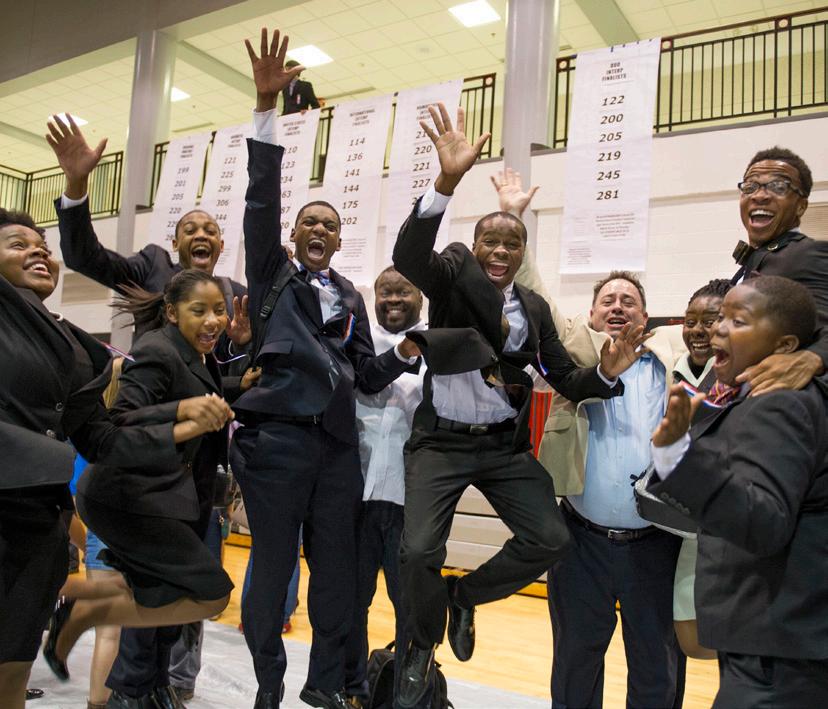


National Speech and Debate Education Day is an annual celebration that honors and promotes the activity of scholastic speech and debate. We know how this activity can change lives and we are thrilled to have a day dedicated to celebrating you, your team, and all you put into speech and debate. We can’t wait to celebrate together on March 7!


by Angelique Ronald
As we celebrate the National Speech & Debate Association’s centennial, we find ourselves at an extraordinary moment. For a century, this activity has empowered students to speak, listen, and advocate— skills that create not just leaders, but changemakers. It has built communities, sparked new ideas, and taught countless individuals the power of their own voice.
Yet, as we look back with pride, we must also look forward with purpose. How do we ensure that the next 100 years live up to this legacy? How do we create a space where everyone involved—students, coaches, judges, and volunteers—can thrive, not just survive?
The answer begins with wellness. By centering care, sustainability, and intentionality, we can create an activity that not only continues to inspire but also strengthens and uplifts every member of our community.
What does this activity look like when wellness is at the center? It’s a space
where students and coaches thrive, where everyone feels supported, and where speech and debate isn’t just rigorous— it’s sustainable, equitable, and deeply rewarding.
The Wellness Lens isn’t about adding more work—it’s about being more thoughtful and intentional with what we already do. Created by the NSDA Wellness Committee, this framework helps us think critically about how our decisions impact everyone in our community.
The lens focuses on four key areas:
• Physical Wellness: Are we meeting everyone’s basic needs? A lack of water, proper meals, or rest can take a toll during long tournaments. Thoughtful schedules, access to quiet spaces, and simple amenities like snacks or hydration stations can make a huge difference in helping community members feel cared for and prepared.
• Mental Wellness: How does our intense focus on competitive culture affect participants’ well-being?
Stress from preparation and performance can weigh heavily on students and coaches alike. By fostering realistic expectations, promoting positive feedback, and creating supportive environments, we can reduce burnout and help participants build resilience.
• Occupational Wellness: How do our decisions affect the balance people need to sustain their involvement? For coaches, it’s about respecting their time and boundaries while providing meaningful support. Everyone in our community brings something valuable to the table, but we need to ensure the demands we place on them don’t outweigh the rewards.
• Implementation and Response: Are we providing our teams, colleagues, and volunteers with the tools and resources they need to turn wellness priorities into reality? Good intentions are a start, but meaningful change requires deliberate action. By embracing a shared commitment to community well-being alongside competitive success, we not only
benefit everyone involved but also demonstrate that positive change is truly possible.
Speech and debate thrives on passion, but passion alone isn’t enough. The Wellness Lens encourages us to reflect on how our decisions—big and small— shape the experiences of everyone involved.
Are we creating environments where people feel empowered to bring their best selves? Are we fostering a culture that values rest, belonging, and growth alongside competition? When we make space for these conversations and adjustments, we build a community that values people as much as it values success.
The Wellness Lens is a starting point. Explore the graphic on the next page, spark conversations, and reflect on your choices. When we prioritize wellness, we don’t just improve individual experiences— we shape the future of our entire community. Because when wellness is at the heart of what we do, greatness follows.
Members of the NSDA Wellness Committee:
Jamelle Brown (MO)
Parker De Dekér (NY)
LaDonna Hayden (IN)
Adam J. Jacobi (WI)
Renee Motter (CO)
Dr. Paul Porter (NSDA)
Angelique Ronald (CA)
Devin Sarno (CO)
Amy Seidelman (NSDA)
J. Scott Wunn (NSDA)
• How does the proposed action impact participants’ basic human needs (e.g., hydration, nutrition, sleep) and/or ability to function as part of the activity?
• What resources do we have to ensure participants’ physical security and/or safety? What (additional) resources do we need? For example:
» Hydration Stations: Strategically placed water refill stations to reduce dehydration risks.
» Nutrition Planning: Ensure meals cater to a variety of dietary needs (vegetarian, vegan, gluten-free, allergy-friendly).
» Sleep-Friendly Schedules: Avoid late-night rounds followed by early-morning starts to promote rest.
» Comfortable Spaces: Quiet, lowstimulation areas for relaxation between rounds.
• How will the proposed action(s) positively impact students’ and coaches’ desire to participate actively in speech and debate? For example:
» Inclusion and Accessibility: Does the action respect religious observances and avoid excluding economically disadvantaged participants?
• Are there systems in place to foster a positive, inclusive environment?
» Examples include training for judges to give constructive feedback, creating anti-bullying policies, and ensuring accessible and inclusive participation for all students.
• How does the decision contribute to participants’ sense of belonging and self-confidence?
» Are there opportunities to recognize growth, effort, and personal achievements beyond competition results?
• Do the proposed decision(s) help reduce the risk of anxiety, depression, or feelings of shame by addressing hypercompetitive pressures?
» If yes: Explain how.
» If no: What actions are necessary to eliminate risks?
» Work/Life Balance: How does the action support coaches in balancing professional and personal lives? Examples may include offering clear schedules in advance, ensuring reasonable tournament hours, and providing spaces for coaches to rest and recharge during events.
» Realistic Expectations: Are participation requirements manageable for students and coaches, ensuring sustainable involvement?
» Encouraging Participation: Will the action inspire active engagement without compromising health or well-being?
• How would the absence of the proposed action(s) impact:
» Participation in speech and debate?
» The health and wellbeing of participants?
• Do the members of our community have the multicultural knowledge, awareness, and skills necessary to implement the proposed action(s) without causing mental, physical, or emotional harm to participants?
» If not, how can educational and/or professional development opportunities be provided?
• What can address adverse effects on participants’ wellness resulting from the proposed action(s)? For example:
» Create a feedback mechanism like a Belonging and Inclusion Station to allow participants to report issues in real time.
» Set up wellness check-ins or debrief sessions after tournaments to reflect on what worked well and what can be improved.
compiled by Lauren McCool
Every NSDA member school is part of an NSDA district, and those districts are led by a District Committee made up of elected volunteer leaders. This spring, the national office will facilitate the next round of elections to choose the leaders for the 2025-2027 school years. While all active coaches at district schools will appear on the ballot automatically, we do encourage coach members to express their interest in serving with the other coaches in their district.
Occasionally, coaches share that they don’t feel comfortable or qualified to serve on a District Committee, so we reached out to the 2024 District Leadership award winners and asked them to provide insight and encouragement to those who may be considering taking on a leadership role!
What are some of the benefits (to you personally, to your team, to your career, etc.) of serving as a district leader?

You get to see the trends and directions the NSDA is heading in and generally gain a deeper understanding of the topics, rules, and procedures. That spills over to being more aware and confident about all tournaments during the year. You see your debate community from a broader and more holistic perspective, which helps you recognize how much you have in common with other coaches.” — Mike Shackelford, Great Salt Lake District (UT)
GET INVOLVED! All active coaches are eligible to serve on their District Committee. From April 2 through April 30, one advisor per school may log in to www.speechanddebate.org/account and select “NSDA Voting” from the left side menu. Complete results of the bienniel election will be announced in early May.

My team has benefited from my service in a few ways. First, I’ve been able to bring a level of transparency about qualifiers that didn’t occur under prior district committee members. That has eased anxious feelings of the unknown. The connections I’ve built have also aided my students after graduation, as I can email district leaders in the cities they move to for college for coaching/judging opportunities.” — Stephanie King, Southern Wisconsin District

I’ve felt a great sense of honor holding this role for the district I competed in, and that my own coach held for many years. My students have gotten to watch me grow into a confident figurehead over my first year in the role. I’ve grown through highs and lows right in front of them, and feel all the stronger for that.” — Scott Caron, New England District (MA)

One of the things I love about serving as chair is that I can set an example of leadership for my students. In this activity, one of the best ways to be a leader is to help organize the tournaments for our community, and I think it’s important to show students that, especially through leading by example. And as the coach of an all-girls high school team, I think setting that example is especially important.” — Mariel Cruz, California Coast District
What would you say to encourage those who haven’t served in
2

There’s no reason not to serve. Every person from any perspective can be an important part of the district leadership. It takes willingness, open-mindedness, and honesty. If you can exhibit those three crucial qualities, then you will be an asset to every district.” — Crawford Leavoy, Carolina East District (NC)

All voices need to be heard and all opinions and experiences are valuable to run a successful district.” — Kim Lenger, Heart of America District (MO)

I know just coaching a team is very time consuming, but if you can also make the time to serve on the District Committee, the rewards are great. You’ll learn so much from longtime coaches, and you’ll get experience on the ‘back end’ of running tournaments. The relationships you’ll build will prove extremely helpful to not just you, but to your team. Like so many things in life, coaching speech and debate really ‘takes a village,’ and stepping in to be a district leader will empower you to create that village of support and camaraderie that every program needs.” — Leilani McHugh, West Los Angeles District (CA)

If you haven’t served as a district leader before, I can confidently say it’s an experience you won’t regret. The work is meaningful, and it ensures the success and growth of speech and debate programs in your area. More importantly, local leadership shouldn’t always fall on the same shoulders. New perspectives and fresh energy are vital to keeping things moving forward. If you find yourself not as active in local leadership at the state level, this would be a great way to take part in a way that isn’t as time intensive but is just as rewarding.” — Eric Gamble, Arkansas District

3

What do you wish you knew when you first became a district leader?
Don’t be worried if you feel that you are not qualified. This is the benefit of being part of a committee. You are there to help prepare and run the district tournament. In the event of a rules discussion, you are not going to make that decision by yourself; it is a group discussion.” — James Harris, Sunflower District (KS)

Serving as a district leader is a great first step at making sure you and your students’ voices are being heard regarding district competition and the National Tournament. I encourage all new coaches and emerging leaders to connect with their district chairs about getting elected to the local district, joining a wording committee, training as a Belonging and Inclusion Advocate, or joining a coaches’ caucus to learn more about how individual coaches, no matter how new, can help serve the greater community!” — David Yastremski, New Jersey District

What I wish I had known before I became a district leader is that I would become so close to the other folks who serve on the committee! Doing the work of the district tournament series is hard, but having four other people to help you do the work is AWESOME!” — Ryan Hennessey, East Texas District
The NSDA staff are incredibly helpful. They have so many insights into tournaments, the rules/procedures, etc., and genuinely want qualifiers to run smoothly. Initially, I feared that reaching out too much reflected poorly on me, or that I was bothering the NSDA staff. In reality, they truly seem to enjoy helping district chairs, having conversations about tournament procedures—and, in turn (in my opinion), it gives them a connected feeling to the students and schools they serve.” — Stephanie King, Southern Wisconsin District
—
How gratifying it is to serve your community.”
Scott Caron, New England District (MA)
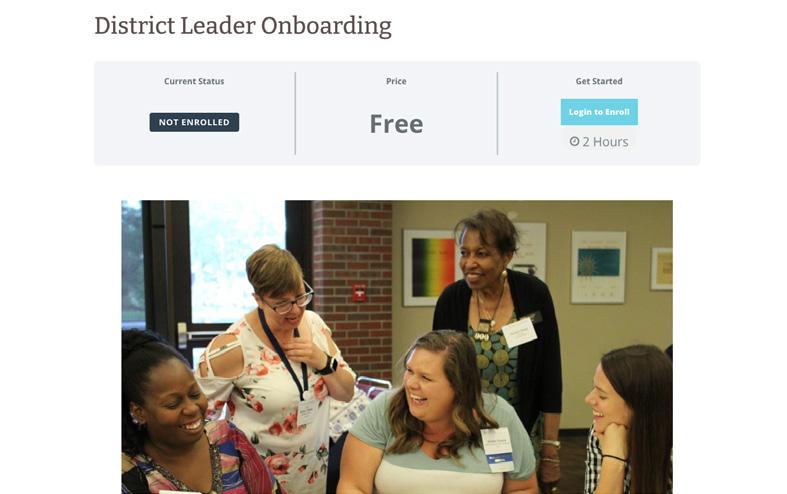
LEARN MORE! Explore our onboarding course for both new and returning district leaders at www.speechanddebate.org/ learn/courses/district-leader-course . CONTACT info@speechanddebate.org with any questions or feedback about the district leadership election process.


Big Questions is a debate format designed to open students’ minds and encourage them to engage in life discussion that may not align with their previously held beliefs. Whether or not students change their opinion, the rich experience of this debate event will advance their knowledge, comfort, and interest in learning more about the subject matter based on the intersection of science and philosophy.

f Big Questions Final Rounds Archive
f Big Questions Judge Training
f Big Questions Round Introduction
f Topic Resources
f Community-Provided Resources
Big Questions debate is a structured format for debating philosophical questions or issues of ethical significance. It encourages participants to engage in critical thinking, articulate arguments clearly, and defend their positions using evidence and reasoning. Overall, it fosters intellectual exploration and helps develop communication and analytical skills.


The NSDA envisions a world in which every school provides speech and debate programs to foster each student’s communication, collaboration, critical thinking, and creative skills. In support of that vision, we offer various grant opportunities for schools throughout the year to increase access and enable participation.
The Pay It Forward grant program offers new or underresourced schools support with membership costs for the year. The complete package includes a one year school membership, coach membership, and ten free student memberships. These grants are especially helpful for brand new programs who may not have budgeted for speech and debate in their first year but want to have access to resources. If you know any teams who are new to the NSDA or don’t join due to costs, please share this program with them! Smaller grants are also available to meet specific expressed needs (e.g., only student memberships). Pay It Forward is made possible through the contributions of the speech and debate alumni of Apple Valley High School (MN) and Joe and Pam Wycoff.

LEARN MORE OR APPLY » www.speechanddebate.org/ membership-support-request

“We are small but mighty and excited to create a space at the forensic table for any student willing to learn. Our students thrive because we embed the mantra that no physical location nor economic situation defines who they are or what they are capable of. Because of your generosity, we can provide another pathway to bring forth talent from poverty and brilliance through effort.” — Anna Rhea, coach of Pay It Forward grant recipient Kemp High School (TX)
RESOLVED:
RESOLVED:
RESOLVED:
Creativity is a more powerful force than intelligence.
Creativity is a more powerful force than intelligence.

Creativity is a more powerful force than intelligence.
Big Questions is a form of debate designed to open students’ minds and encourage them to engage in life discussion that may not align with their previously held beliefs as they grapple with topics at the intersection of science and philosophy. This year’s topic is, Resolved: Creativity is a more powerful force than intelligence. When you hold a Big Questions event during the 20242025 school year, you can earn money for your team! The general format for BQ grants is $50 + ( # of Students * $15) A minimum of 10 students is required; therefore, the minimum grant amount is $200.

LEARN MORE OR APPLY » www.speechanddebate.org/ big-questions
The Road to Nationals Fund, founded by the William Woods Tate, Jr., Memorial Fund, is designed to help students attend the high school National Speech & Debate Tournament. The Road to Nationals Fund provides financial assistance to schools that are lacking financial resources to attend the National Tournament. Applications will open in the spring.

LEARN MORE OR APPLY » www.speechanddebate.org/ road-to-nationals
compiled by Annie Reisener, Director of Membership at the NSDA


Keith West lived with compassion and care as cornerstone characteristics of his personality and dedicated his life to coaching and teaching youth in the ways of argumentation and debate. To honor his life and legacy, Keith’s family and friends have established the Keith West Memorial Fund. In 2024, the fund provided one $5,000 grant, two $2,500 grants, and five $1,000 grants to member schools that show strong potential but demonstrate a significant lack of financial resources. Learn more at www.speechanddebate.org/ keith-west-memorial-fund.
$5,000 GRANT RECIPIENT
Skiatook High School, OK
Coached by Keith Denslow
$2,500 GRANT RECIPIENTS
Marion C. Early High School, MO
Coached by Traci Dunn
New Manchester High School, GA
Coached by Serena Robertson

$1,000 GRANT RECIPIENTS
Angleton High School, TX
Coached by Christine Williams
John I. Leonard High School, FL
Coached by Quentin Scruggs
Post High School, TX
Coached by Deborah Garoui
San Elizario High School, TX
Coached by Justin Del Valle
William Henry Harrison High School, IN
Coached by Savannah Staples
This content is excerpted from the NSDA Learn course Intro to Coaching World Schools Debate by Julie Roos, which is included with individual NSDA membership.

While other formats of debate use cross-examination and crossfire periods to allow debaters to ask each other questions during the round, World Schools (WS) Debate instead uses points of information during individual speeches. The practice is often shortened to POI— pronouncing each letter, P-O-I. Competitors initially can be intimidated by the idea that the other team will interrupt them, or unwilling to interrupt themselves, but most quickly find POIs to be one of their favorite parts of the round.
During each of the eight-minute speeches in the round, the middle six minutes are open to POIs, while the first and last minute are protected time when speakers cannot be interrupted. While the judge is the chair of the round, and therefore ultimately responsible for timekeeping, each team will generally be keeping time to ensure that they know when the first minute of protected time ends, marked by the judge or a designee slapping the table, and when the last minute of protected time begins, again marked by the slapping of a table. Attempting to offer POIs during protected time is viewed as incredibly bad form and generally results in a strategy point deduction for the competitor who attempted to offer the POIs.
POIs are generally offered by standing, sometimes accompanied by a verbal indication like “POI” or “point” or another nonverbal indication, such as holding up a card or raising one’s hand. Merely offering a POI does not ensure it will be accepted, so those attempting a POI must pay attention to cues from the speaker. Any member of the non-speaking team may offer a POI during non-protected time, but there are some accepted norms:
Normally, only one speaker from a team should stand at a time.
• If one speaker has been left standing and undismissed for an extended period, convention does allow another speaker to stand as well, but frequently the first will sit when their teammate takes over the attempt.
Normally, about 15 seconds should elapse between a POI being accepted or dismissed before another is offered.
• Consistently interrupting the speaker is called barracking and normally results in a penalty to the offering team’s strategy points because instead of allowing their opponents to make substantive arguments, they effectively prevented them from doing so.
If something especially incendiary has been said, requiring multiple members of the team to challenge, they should stand as one, not in a sort of crescendo of anger.
While it is normal for speakers to accept two (sometimes one or three) POIs, the offering team should not stop offering simply because two POIs were accepted early.
The speaking competitor controls whether and when they accept POIs. Dismissing a POI is generally done by means of a simple hand gesture indicating that the speaker should sit down (think of the hand gesture a conductor might use to indicate the audience should sit). If this indication is not heeded, a simple “No thank you” also suffices. If a speaker intends to take a POI that is offered, but not immediately, they may indicate this nonverbally by holding up a finger (think “One second”), or saying something like “In a moment” or “When I finish this point.” If a speaker is accepting a POI, they will generally look at the person offering the POI and say simply “Yes” or “I accept your POI.”
POIs are part of both teams’ strategy. Therefore, the speaker should be careful not to allow POIs to rattle them and disrupt the flow of their delivery. Dismissing a POI that is offered at an inconvenient

time with a simple hand gesture, or asking the offerer to wait until the speaker is done with the point allows control to be maintained. Similarly, indicating that there have been no POIs offered by stating “I stand open to a POI” and pointedly looking at the opponents, indicates that the speaker feels in control of the round. There are some norms around accepting POIs as well:
A speaker will generally not take the first POI offered in the round, especially if it’s offered immediately upon the end of protected time, as the other team is almost certainly trying to throw the speaker off their game.
Similarly, while POIs are generally offered by only one opposing competitor at a time, if more than one pops to their feet at the same time to ask for POI, both/all three should probably be dismissed.
Since a speaker is always allowing for an interruption when they take a POI, they should wait until there is a natural pause in their speech before allowing the other team to ask their question.
If a team pops up saying it is the “last chance” for a POI, indicating that protected time is about to start at the seven-minute mark, it’s often inadvisable to take that POI unless very few have been offered. This is an attempt by the nonspeaking team to gain a level of control over the conclusion of the speech and cedes some of the last moments that a speaker has to wrap up their own case to answering their opponent.
POIs are offered in order to question, clarify, or disagree with the statements of the speaker, and should be brief—approximately 15 seconds or less. While most POIs take the form of a question, some may be simple declarative statements, such as, “The burden we set is [x], which the opposition continues to misstate as [y].” As the offerer is attempting to clarify a point under debate, a question would be much more difficult to craft and deliver. The speaker may still respond to a statement, but the judge has already heard it.
When a POI takes the form of a question, it should also be brief, as should the answer. The speaker who accepted the POI remains in control of the round, so they can cut off an especially long or rambling POI with a statement like “Thank you,” “Allow me to respond,” or “I think I understand what you mean.” As soon as the speaker begins answering, the person offering the POI should immediately stop and sit down.
Despite the fact that both the speaker and the opponent offering the POI must be aware of one another, they should face the judge when offering or answering the POI. The judge is, ultimately, the person who will determine whether the POI was effective or not, so they are the person who most needs to hear it. Well-prepared debaters should be able to predict many of the POIs they may be asked over the course of the round, even in impromptu motions, as one member of the team should be formulating POIs against the case.

Coaches and students can enroll in the FREE course to learn more about World Schools!
www.speechanddebate.org/learn/courses/ intro-to-coaching-world-schools
by Shunta Jordan -
Have you ever paired a round and blasted it, only to be notified afterward that a judge you placed is currently judging another event or a competitor who requested ADA accommodations didn’t receive them for that round? Well, there is a feature in Tabroom.com that will help you avoid these issues.
Every tournament now has the option to require its tab staff to complete mandatory disaster checks before publishing and releasing pairings. To begin using this feature, select the “Tournament” category in the “Settings” tab of your tournament. Once there, select the “General” tab to get to “Tournament-Wide Registration

Settings.” You will then need to toggle the button to “Require disaster check before publishing” (figure 1)
Once you’ve turned on this feature, rounds are ready to be paired. Go to the “Schemats” category and choose any event to pair. After you’ve auto- or manually-paired the round, you will notice in the right-side menu a red


disclaimer that the tournament requires a disaster check of pairings (figure 2).
Then, you will select the yellow “Round Disaster Check” box (figure 3) to run the disaster checks for that round. If there are any issues, they will show in red (figure 4). For all checks run without issues, they will show with green check marks.
For each issue in red, you will return to the pairing to fix it. You can run the disaster check each time you correct an issue, or you can run one final disaster check after you’ve made all corrections.
Once you have all disaster checks showing as green check marks (figure 5), you are set to publish and blast your pairing!
One final note: You may choose to force any judge or room into a round assignment. If you do so, please use the disaster check function to see what issues may lie with these forced placements.
If you are a tournament director or spend a fair amount of time tabbing tournaments, we highly encourage you to use the mandatory disaster check function!


As we enter the new year, the NSDA is rolling out a new Tabroom.com Newsletter, which will share what’s new in the site’s software, what’s going on with the code rewrite, and tips and tricks for using Tabroom.com.
Here’s a snippet of newsletter content from NSDA Lead Developer Chris Palmer: We’re in a code freeze for Tabroom.com, so I’m focused on primarily some new things for the next version of the site. Right now, I’m building a module that will take the many data tables of Tabroom and make them paginated (which means no more 300ish tournament limit on the front page) and searchable, as well as some other bells and whistles. I’ve also been focused on some more site reliability measures—better and faster alerts that can help me stay ahead of anyone noticing when an inevitable error occurs.”

The newsletter will be opt-in and available monthly. Sign up at www.tinyurl. com/yc5cc8fu


Public Speaking
Congress
Novice & Sophomore
Policy Debate
World Schools
Lincoln-Douglas
SESSIONS
Session One: June 29 - July 11, 2025
(Online & In-Person)
Session Two: July 13 - July 25, 2025
Only)


IMPORTANT DATES AND DEADLINES:


NSDA LAST-CHANCE QUALIFIER
• April 17 – Deadline to register
• April 24-26 – Happening online
MIDDLE SCHOOL NATIONAL TOURNAMENT
• May 15 – Deadline to register (registration opens March 15)
• June 17-20 – Happening in-person
HIGH SCHOOL NATIONAL TOURNAMENT
• May 15 – Deadline to register (registration opens March 15)
• June 1 – Deadline to register alternates
• June 14 – Deadline for final scripts
• June 15-20 – Happening in-person
HIGH SCHOOL SUPPLEMENTAL EVENTS
• May 15 – Deadline for coaches to pre-register students

• June 17 – Coaches must re-register students in supps to confirm their participation
• June 18-20 – Happening in-person
THE WILLIAM WOODS TATE, JR. MEMORIAL FUND “ROAD TO NATIONALS” TRAVEL GRANTS
• The Road to Nationals Fund provides financial assistance to schools that are lacking financial resources to attend the National Tournament. Applications will open in the spring. Learn more at www.speechanddebate.org/road-to-nationals
NATS25 MERCH
• May 15 – Deadline to pre-order shirts through Tabroom.com for pick up at the National Tournament
• May 23 – Deadline to order shirts online via the NSDA Store and receive in the mail pre-tournament







Our annual National Speech & Debate Tournament will be held June 15-20, 2025, in Greater Des Moines, Iowa. Tournament info is now available on our website, including tentative schedules, logistics, hotel details, and more. As a reminder, staying in the hotel block saves your team 15% on main event and supplemental event entry fees! We also have day-by-day breakdowns for high school and middle school to get a feel for the flow of the event. Please visit speechanddebate.org/ nationals and use the tabs to navigate around. Read on for several highlights about events and qualification.
Students will be able to re-register in up to two total supplemental speech events (one per pattern) at the 2025 Nationals. In late May, all pre-registered supplemental entries will learn if they are competing in the Goldfinch group or the Wild Rose group. Each Extemp Debate group will compete separately on Wednesday and combine to one division on Thursday. Each speech group will compete separately until they have the top three entries in each event who will compete in the final round.

Every member high school has the opportunity to enter up to two nonqualifying students in supplemental events at the 2025 National Tournament. To be eligible, students and their schools must be NSDA members. Participation at districts is not required.
registration will take place in Des Moines the evening of Tuesday, June 17, and competition will run Wednesday through Friday.
The Last-Chance Qualifier will be held online April 24-26, 2025. Eligibility requirements remain the same: schools must have attended their district tournament to participate, but students do not need to have attended the district tournament. Only students who did not qualify in a main event may enter.
Check out a recording of the Nats25 Info Session with NSDA staff and members of the local host committee! www.speechanddebate.org/nationals


The NSDA Last-Chance Qualifier is an opportunity for students who did not qualify through their district tournament to have a chance to attend the 2025 National Tournament in their main event.
For the first time since 2005, the National Speech & Debate Tournament will be hosted in the midAtlantic. It's time to welcome you back!


THANK YOU TO OUR LOCAL SPONSORS



FTwenty-five years after the creation of Tabroom.com, including more than a decade under the NSDA’s umbrella, we explore the tournament management system that makes so many speech and debate events possible every weekend. — compiled by Vicki Joss

ew people may know that the first version of Tabroom actually started out as a college class project. While taking a computer science course in 1999, Chris Palmer developed a database to tabulate public speaking events—a mere “kernel” of what Tabroom would become, he says.
Before the existence of Tabroom.com and other computer software, tournament organizers would spend precious time calculating students’ ranks and speaker points

on paper throughout an entire tournament.
“Tabroom basically grew out of a desire to make tournaments run faster,” Palmer explains. “I started thinking, ‘There should be a better way to do this.’”
He adds, “Debate and speech coaches aren’t always given a whole lot of extra time. They often have to teach a full course load in addition to running a team. If I can save a coach even ten minutes a day, that’s time they can be doing other things.”
Palmer is quick to credit his predecessors and contemporaries for their work in this area (sidebar, opposite page). Dr. Rich Edwards, professor at Baylor University in Texas, developed the original desktop-based
programs in the 1980s and 1990s called TRM and TRPC—short for “Tab Room on the Mac” and “Tab Room on the Personal Computer”—which assisted in the tabulation of debate events.
In 2011, Palmer and Dr. Jon Bruschke, professor at Cal State Fullerton and the creator of DebateResults.com, received a grant to adapt the debate software into Tabroom. When the grant ended in 2014, the National Speech & Debate Association (NSDA) approached Palmer about taking on the project and having him help manage the program.
Today, Tabroom.com’s tournament management system is fully hosted and supported by the NSDA. It has been integrated
into the annual National Tournament and is used by nearly 3,000 other speech and debate tournaments around the globe.
In addition to various tournament registration and calendar features, the system tabulates individual speech events (IEs) as well as debate events including Congress and World Schools formats. It handles public pairings, enables judges to enter decisions and scores via online balloting, and publishes and tracks results online. The NSDA also offers dedicated customer service support for Tabroom.com users.
On the Horizon
A large focus of the NSDA’s current work is rewriting the existing Tabroom.com code, says NSDA Director
Visit the Tabroom.com Help Center to learn more about features available on the site: docs.tabroom.com

of Technology Aaron Hardy. “Tabroom was written in a programming language that is over 20 years old. We’re working to modernize that,” he explains. “If a particular feature breaks or a new function needs to be added, updated code will allow us to make those changes much more efficiently moving forward.”
Palmer adds, “Writing software is often like making a building. The stage where it looks like a giant pit of dirt seems to go on forever, but once you see a support beam sticking in the air, it starts looking like a real building very quickly after that. Or at least, so I hope.”
While the process can be tedious at times,
the long-term goal is to ensure improved access and support for NSDA members and nonmembers alike.
“Our intention is to remain good stewards of the platform and all it has to offer as we embark upon the next 100 years of speech and debate,” says Scott Wunn, NSDA Executive Director.
A new Tabroom.com
Newsletter will help keep the speech and debate community updated on the site’s progress— including new software features, what’s going on with the code rewrite, and tips and tricks for using Tabroom.com. You can learn more in this month’s “Tabroom.com Tip” article on page 21.

Even though client-based debate tabulation software has existed since the mid- to late-1980s, the data entry process was time consuming. The original developers all have a similar story of wanting to give back. I have had the pleasure of working directly with each of them over the years. Our community is indebted to each of them because they found a way to make tournament management easier for others. The time saved in management before, during, and after a tournament allows more time to spend on other pursuits within our community: More time coaching. More time with students. More time helping them amplify their voices.” — Greg Malis, Isidore Newman School, Louisiana


DR. RICH EDWARDS
Tab Room on the Mac (TRM) Tab Room on the PC (TRPC)
BRENT HINKLE
The Joy of Tournaments BEN STEWART
SpeechWire CHRIS PALMER
Tabroom.com


We invited two of Tabroom.com’s “superusers” to offer their tips and reflections about the tournament management system.
— Greg Malis, Isidore Newman School, Louisiana
From a coach’s perspective, Tabroom.com has three parts to it.
PART 1 – The public face » The Tabroom.com home page typically has a list of upcoming tournaments. You can use the calendar drop downs on the right to narrow your search based on year or geography. Whether you are logged in to Tabroom.com or not, the “Home” button at the top gets you to the home page for
you to various parts of the registration process. You can also generate an invoice under the “Fees” tab. If you need to return to the tournament’s public website, the “Website” tab takes you straight there.
In short, Part 1 is for the world to see. Part 2 is for you to manage your team. Part 3 is for you to access a specific tournament.
Tabroom.com itself. This allows you to search for tournaments, tournament results that have been published for the general public (not just to registered participants), and judging paradigms. If you select a tournament name, it takes you to the web page set up by the tournament administrator where they may post the tournament invitation. Yellow buttons on the right may include additional information such as schedule, event rules, fees, judge information, etc. Deadlines that the tournament has set for entries, judges, and so on are also viewable in the lower right.
PART 2 – Your personal home page and team management »
This is where the software initially takes you once you log in. If you navigate away from your home page, even when logged in, you can return to it by selecting your email address at the top. This is where you manage your team. From there, you can update your competition roster and judge roster. You can identify who else has access to your team’s data. Lastly, this is often the easiest place to go to register for tournaments themselves.

PART 3 – Inside a tournament » Once you select a tournament’s name under “Existing tournament registrations” or you select the “Register” tab from a tournament’s Tabroom.com site, you are now managing entries (competitors and judges) for a specific tournament. The different tabs that now appear take
One feature I have found useful is the right side of the Tabroom.com window can be open or closed.
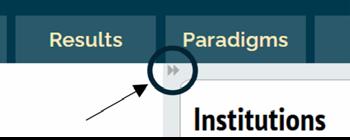
On each user’s home screen, the right side has menu sections for “Institutions,” “Tournaments,” “Judging,” etc. At the very top of that column, there are two small arrows pointing to the right. If you select them, the entire menu on the right disappears. (You can reopen it by selecting the arrows that are now pointing to the left.) There are times when the main screen contains a lot of content and the options on the right are either a distraction or overwrite what I want to see/read. The two instances where I use this feature the most are when I look at a tournament dashboard during a competition or when a tournament’s general page has a significant amount of information or has some formatting issues. In both cases, the static menus on the right may interfere with what I am trying to read in the main section of the screen.

On your mobile web browser, the menu options on the right side of the screen no longer appear automatically. There is a new icon with three horizontal segments in the upper right. Tapping that icon brings up a pop-up menu that contains what used to appear automatically. Then, you will notice the same two rightpointing arrows that close the pop-up menu for you to navigate to other pages and menus. Nothing went away; they are just hidden from view at first.
“Much of what I have learned about Tabroom has been through trial and error,” says Greg Malis. “I know many people may find it intimidating at first because it has lots of bells and whistles. But you don’t need everything it has.”
Malis has the pleasure of serving as an administrator of a regional tournament at his school. “Once you figure out what works best for you and your area, then you can ‘clone’ one set of event settings onto another, which speeds up the pre-registration process,” he says.
“The annual setup now takes maybe 30-45 minutes. Assuming we don’t make major changes in the schedule, events, or rules, we update some dates/times and tweak informational language on our tournament home page. In short order,
our tournament is ready for coaches to begin the registration process.”
Zach Prax, coach from Eastview High School in Minnesota, agrees with the efficiency the site has to offer.

“Tabroom.com makes my life easier! Whether it be the simplicity of registration for a tournament, the auto-posting of NSDA points, the easy compilation of past tournament results and records, or all of the features that make tournament management happen, Tabroom allows me to spend much less time managing and much more time coaching.
“No matter how hard you try, it is almost impossible to break your tournament or cause irreversible damage to tournament data. Not only that, there are a number of veteran Tabroom.com users throughout the country (and very likely in your local area) who are around to support you.”
“The ability to add phonetic spellings within Tabroom.com is a relatively new feature,” Prax says. “It’s a good practice to have all students on your team enter within their account to help maximize the chances that their name is pronounced correctly at awards ceremonies.
“In addition, parents can receive tournament messages/memos you send to your students regarding a tournament that they are signed up for. This is a great way to keep parents in the loop regarding their speaker/debater each tournament weekend.”
“Tabroom.com continues to help the speech and debate community by prioritizing transparency,”


Coaches: Build Better Communities. Earn Professional Development Credit.
• T he Community Learning Series is designed to help coaches enhance their communication skills and foster more inclusive communities. It includes four online learning units, each containing a video and a brief quiz. Completing one unit equates to one hour of professional development credit. • All are welcome! Get started at www.speechanddebate.org/cls .
Prax explains. “When pairings were created on cards, questions could arise about how a pairing was made, or whether a decision was entered correctly.
“Now, tournament directors and managers can easily choose how much information to give to various stakeholders throughout the course of a tournament— including pairings, judging assignments, and results—which has helped to create more inclusive and positive tournament experiences for all.”

www.tabroom.com

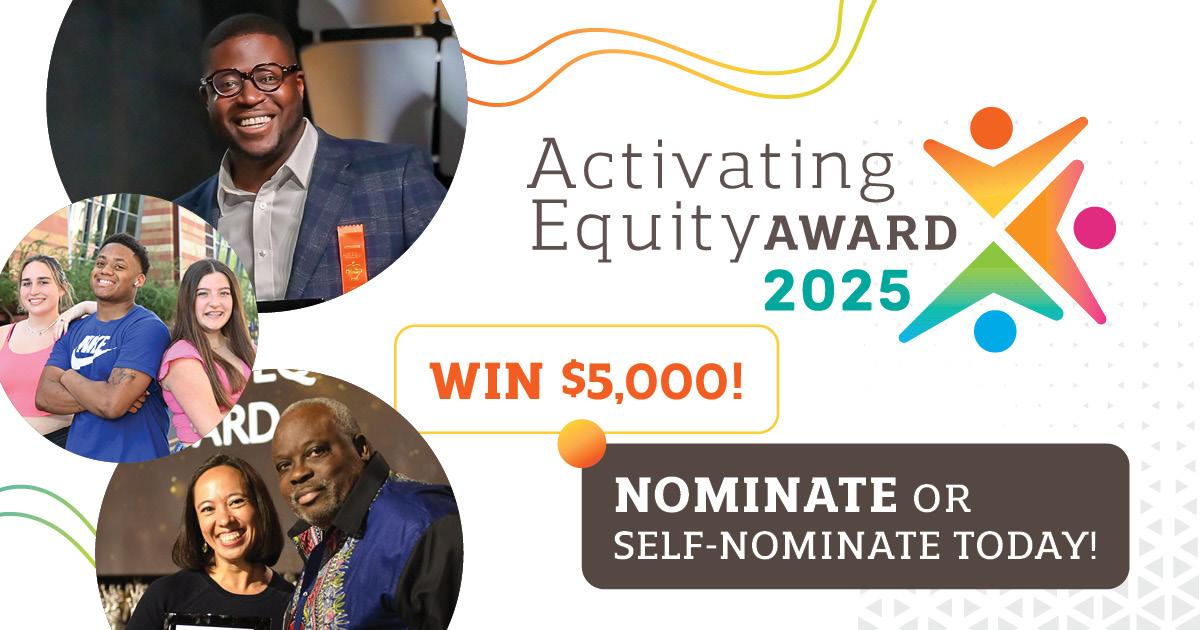
The Activating Equity Award honors a group or organization seeking to enhance the culture of fairness and access in middle school and high school speech and debate. The recipient of this award will receive $5,000 to help further their mission and recognition at the National Speech & Debate Tournament in June. Learn more at www.speechanddebate.org/activating-equity-award.


Director of Individual Events at Plano West High School, TX
Inspired by former coach Raphael Scott Waldrop to pay it forward by becoming a coach
How do you (or how can coaches generally) encourage students to continue to stay involved with their programs in various ways after graduation?
KATY: Every year in that weird void between Christmas and New Year’s, we generally have two days of alumni practice. In the debate world, it’s a great opportunity for different voices to be involved in topic discussions—and in

Assistant Director of Forensics at Bellarmine College Preparatory, CA
Focused on giving back to the program that was his second family as a student

Head Coach at Washington High School, SD
Driven to provide the same safe and supportive space for students that she experienced

Head Coach at Louisville High School, OH
Excited about creating positive opportunities and relationships for students at her alma mater
the speech world, it’s an awesome chance for new eyes to give ideas and fresh perspectives on pieces our coaches have seen consistently since the fall. It keeps the alumni involved in a fun and helpful way, they build relationships with our students so they in turn feel like they are still part of the community, and, most importantly, it teaches our current students the importance of staying involved and giving back.
This year, we had several students return who have
been a part of the team in my last 10 years of coaching, but we also had two students from the early 2000s and even our 1975 team president back, helping to bridge a legacy of 50 years!
REGGIE: After a student has been taught and molded by their coaches, the greatest gift a coach can offer is an invitation to pass that knowledge on to the next generation. This creates a culture that recognizes a legacy isn’t built by a single entity, but by the multitude of
elements coming together to make it great.
As a coach, pay attention to your students. Don’t allow them to produce or accept anything less than their very best. This trust alone will inspire students to return, but extending an invitation for them to invest in the underclassmen will truly cultivate the culture.
XAVIER : Our program often starts by getting ready for the upcoming season over the summer. One way that some alumni
can give back is by offering to help read or comment on speeches over the summer. This takes a load off of coaches and is an easy way to give back to members of the team who have probably listened to their own speeches the year prior and helped them.
Alumni can also help out at a tournament that the school hosts, fundraise for the team by donating or spreading the word on social media, or judging! Often, judging not only helps out with a school’s judging obligation, but also gives alumni the ability to help mentor and coach other students.
ANGELICA: The strong sense of belonging and unity fostered by speech and debate often draws students back to the activity in various roles—whether as judges, coaches, donors, sponsors, or simply as supporters attending tournaments to cheer on the teams. Personally, I prioritize addressing the needs of each student and team member to ensure they feel valued, seen, and heard.
Paying
forward the benefits of speech and debate requires striving for some
semblance of work/ life balance that supports longevity. Do you employ any strategies to protect your personal time and/or mental health?
ANGELICA: My personal approach involves setting clear boundaries with my team and being transparent about my capacity. It’s important for them to see me as a whole person with needs and a life beyond coaching and teaching. As coaches, we dedicate a significant amount of time to our teams, and often, the lines between work and personal life blur. I recognize the importance of taking breaks and investing time in the other areas of my life that bring me joy and fulfillment.
Additionally, I prioritize addressing and resolving conflicts promptly to foster a positive team environment, which helps reduce stressors that can hinder relationshipbuilding and overall team growth.
REGGIE: I give myself one weekend off every month. I believe it’s essential to take time for
yourself—not only to rest but also to reconnect with reality. Unlike most sports, speech and debate doesn’t have an off-season; you’re either in competition mode or preparation mode. Having that monthly weekend where I consciously avoid thinking or talking about speech and debate helps keep me sane. It also allows me to miss it in a way, so I return energized after my break. I make an effort to turn off “coach mode” when I leave school until the next morning.
XAVIER : You don’t need to go to every tournament. You don’t need to help run every single tournament. You don’t need to say “yes” to every single coaching session. In fact, prioritize coaching those students who have really been working hard and have proven themselves to be worthy of your time, rather than any single person who signs up for a coaching session.
If you have multiple coaches who are authorized chaperones, split things up—have one coach take the first two tournaments, you take the next three, and the last coach take the last two. Or better yet, split
things up by day and have one of you cover Saturday and the other Sunday. Further, you can set a time that you handle speech and debate duties every day. During that time, I might input entries for our next tournament, coach students, respond to messages or emails about speech and debate, or prepare for next week’s Interp meeting. Outside of that time, student emails and other speech and debate to-dos can wait.
KATY: I will be honest in sharing that this objective is often very hard for me. I have actually taken over the theatre program at the high school and started to work full time in the building to enhance the programs and help fight to get speech back in the school day curriculum. So on one hand, I am trying to streamline things, but I have come to connect most everything to speech—more updates on my sanity later.
Something I do find helpful is a close group of coach friends with whom I can share successes, stresses, fears, annoyances, teenage angst stories, and be felt and understood. I have great assistant coaches and a super supportive group of
coach friends with whom we can talk and share ideas and excitement, lament through our shared struggles, and remind each other that we need to take care of ourselves or we can’t properly take care of others. I’m incredibly thankful for them.
What’s something you wish you knew when you were first starting out as a coach?
XAVIER : How to approach different learning styles with students. Each student is different, so having the patience to adapt to different learning needs and wants
is important. The other thing I wished I knew was how to have really honest conversations with students. While our program is super large, there certainly are some students who weren’t pulling their weight and not really devoting their time into the activity. It’s important to have honest conversations with those particular individuals about whether they want to continue on the team and whether this is the right activity for them. Having a smaller team with core and devoted students is much better than having a large team where there are many students who don’t put in the work.

REGGIE: That reward is far more important than the award. As young coaches, it’s easy to get caught up in the mindset that “if my students aren’t winning trophies, I’m not doing a good job.” However, this mindset is both damaging and false. Watching these students grow into outstanding citizens is so much more rewarding than any trophy could ever be. It means you’ve coached someone to become a champion in life, and that should be the true passion behind what we do as coaches.
ANGELICA: The importance of having realistic expectations. A team’s success doesn’t happen overnight. Coaching is a learning process for both you and your team—it takes time to navigate transitions and discover what kind of coaching style will allow you to be the most effective and successful. Giving yourself grace as a coach is essential—mistakes are inevitable and a natural part of the learning process. Embracing those moments with patience and understanding allows us to grow and become better for both ourselves and our teams.
KATY: Something I’m STILL learning is that it’s okay to ask for help— whether it be among other schools’ coaches, assistant coaches, those in your school/ district, your students, etc. I tend to always feel that things are MY responsibility and so I need to do it all. I’ve learned, in the right scenarios, people like to help and that things don’t have to be perfect to be great.
I’ve also learned that as incredible and excellent as our kids are, they are still just that—kids. We can’t expect them to always make the right choices, be on top of everything, and act the way we’d want them to act. This activity is a way to take them through opportunities to strengthen skills, both personally and professionally, and I’m often reminded I need to be patient with them.
Pay it forward, please! Can you share a practice activity, drill, or tool with the coaching community?
XAVIER : One of my favorite Interp drills is called the “Energy Drill.” This is great for anyone who feels like their energy is low or feels like they get
in a lull in their speech. Students will deliver a two-minute segment of their speech. Have a timer or stopwatch handy! Gauge from the energy percentage that your student is performing at as compared to where you think you need them. Are they at 75%? 80%? 125%? Where should the energy level of the speech be at? 150%? 200? 50%? After 20 seconds, yell “FREEZE”. Then shout out a number from 50 - 200. Each number stands for an energy percentage (i.e., 50%, 150%, 200%). That student now needs to continue performing in the energy level yelled out. You should cap a percentage level so they don’t have to perform as if they are screaming. To make this even more fun, do it in small groups or in front of a small audience! Repeat this every 25-30 seconds. At the end of the two minutes, students should have a better feel of their range and how they should be performing specific parts of the speech!
KATY: Something we continually strive for is positive team morale and fun outside of tournaments, too. We have evolved a “rock and rookie” type partnership
into “Families” within our team. At the beginning of the year, we separate the team of 30-ish into five Rock Families. I split the teams so they are not all the “besties” together, but mix grade levels, categories, genders, etc. to create opportunities for relationships with those who may not practice together or hang at school together.
We have a family game night and compete for prizes, keep track of family participation in fundraisers, involvement at team events, have a competition at our annual Speech-mas Party and so on. The goal is to empower the “rocks” (upperclassmen) to show the rookies the ropes, encourage them, follow up to make sure they are involved and feel valued. So yes, this is about relationships but achieved through some fun, lessstressful competition. At the end of the year, we crown the “Rock Family” of the year at the banquet with treat baskets and allow them their bragging rights for the year. In actuality, it’s another way to honor some students who may not be racking up the tournament
competition awards. This has grown to be a super fun and influential piece of our team’s culture.
REGGIE: To my fellow interp coaches: consider weaving some of Shurtleff’s guideposts into your interp lessons. While this isn’t the only method for interp—and many other approaches can be equally inspiring and encouraging—Shurtleff’s guideposts have provided the strongest baseline for my interp performers to build upon. It’s a valuable tool, especially for beginning coaches.
ANGELICA: Having multiple coaches to divide responsibilities among events is ideal, as it ensures everyone has a role and prevents overburdening a single person. However, if that isn’t possible, organizing practices by event on different days throughout the week can be an effective solution. This approach ensures all students receive the attention they need without anyone being overlooked, as the focus is on one event at a time during each session alternatively.
compiled by Annie Reisener, Director of Membership at the NSDA
We asked several national finalists to share what it means to have team alumni come back and help their program.
Obviously they have their own lives. They are in college, they are making new friends, and whatnot. It means so much that this speech team holds such a big part in their heart because they are willing to come back and help support us.”
Siyanne Redda, Informative Speaking finalist from Washington High School, SD
It means a lot that they come back because that shows the closeknit bond that our team has. We’re really like a family.”
Jaimee Canalejo, Humorous Interpretation finalist from American Heritage High SchoolBroward, FL
This activity is so important to them that they want to keep contributing to it. I think it just builds a beautiful community, and it makes me feel like I have value in this activity, even when I’m out of it.”
Eleanor Culloton, Informative Speaking finalist from Moorhead High School, MN

by Annie Reisener
This article contains mentions of school and mass shootings.
Isabella Royer wants to do it all. A military kid, she lived in Korea, California, Connecticut, Maryland, and Florida, before settling in San Angelo, Texas. She writes poetry and music, dances ballet and ballroom, does roller derby, runs, and is on the editorial staff for a grunge/rock and roll magazine.
Her interest in dabbling in a bit of everything is part of what attracted her to Program Oral Interpretation (POI). After finding success in Congressional Debate, Isabella gave POI a try because it had a high degree of freedom and allowed her to make creative choices with minimal restrictions.
“I don’t think it fits into a category,” she says. “POI is difficult to make, perform, and hear, but that’s the point—it’s the perfect way to showcase every ability that you have as a performer, creator, and writer and put it all together in a piece that makes you emotional. People feel immersed in the universe you create.”
The subject for Isabella’s junior year piece was solidified after she experienced an active shooter lockdown at school. In the aftermath, she couldn’t shake the feeling of fear. “It started me on this obsessive rabbit hole,” she explains. She stumbled on an article that listed the names, traits, and ages of students who died at Robb Elementary School. One story stood out about a little girl who wanted to be TikTok famous. The story was branded on her heart: there was no other topic to consider.
If there are secrets to Isabella’s success, she’s sure that one is the equation her team uses for POI. In her junior year, Isabella used five poems, two stories (a teacher’s experience at Sandy Hook and The Three Little Pigs), and an operator’s manual to an AK-47. The Three Little Pigs was her something fun, and the manual was her something weird.

“A one-note piece is a failure,” Isabella says. “You have to give the audience space to feel a range of emotions. Having something weird mixed in is what sets you apart.”
While the process of choosing material was simple in her junior year, her senior year POI was another story. Isabella had decided to attend the National Tournament last minute, having autoqualified based on her
At San Angelo Central High School in Texas, the team uses the following equation in Program Oral Interpretation:
championship the year prior. Isabella ran the piece for the first time in the first round at Nationals. “I got two 6s and went 13 minutes,” she laughs.
Isabella was grappling with a larger issue than winning rounds. The central story in her piece was about the Pulse nightclub shooting. As part of her introduction, Isabella came out as queer. And she had to do it repeatedly. “It was like digging a knife into your wound over and over. It was destructive, but it felt like I had to because I don’t fit the stereotype of a queer
POI = two central stories + one to five poems + something fun + something weird
woman. It was important to clarify why I matter in the community.”
While Isabella was drilling her piece and watching her performance soar, she was struggling with how much she was willing to bare. “It got to a point where I told my coach that I wouldn’t perform on the stage if it came to that. But after quarterfinals, a woman came out of the round sobbing. She hugged me and told me that one of her friends was at Pulse.”
That moment changed things for Isabella. “It made me realize that the piece had nothing to do with me. It was about me, but it wasn’t for me. It’s so easy to forget about the domino effect. One choice can change a culture. So many people came up to me and told me they were going to come out to their parents and start being honest. If that had happened for me, it would have changed my life.”
Isabella feels things very deeply, which allows her to build a powerful connection

with a story and an audience. While it’s a tool in her toolkit, she feels it’s a double-edged sword.
“I have a problem as an actress where I am the character,” she says. That meant her feelings weren’t contained to the performance: at times, she would leave rounds crying or drop a tournament.
Yet the connection is also precious to her. “POI specifically helped me so much because a lot of the pieces I performed were relevant to struggles that I had as a child. Hearing people say “me too” or “you changed the way I think about this” healed me in a lot of ways. As a child, I would hide all my emotions in a basket of pain and hurt. I thought if I kept it inside it would go away. Hearing people say my emotional vulnerability helped them come out or be vulnerable—that response is what helped me.”

“I am one of those people who sings and dances all the time. I feel music really deeply. When I walked into my debate class freshman year, I walked in singing. Coach Evers thought it was awesome, not annoying. He recommended I sing more. We had so many impromptu musical sessions in the room, and he thought if we loved it, others would, too. So, in all my pieces, I sang. If there’s something you’re good at, use it.”
Annie Reisener is the Director of Membership at the NSDA.
Check out a breakdown of Isabella’s 2023 champion POI www.speechanddebate.org/ program-oral-interp-breakdown

Check out a video Q&A with Isabella www.speechanddebate.org/ champion-question-and-answer-isabella Learn More from Isabella!
“My junior year piece changed completely after the NIETOC because one of my judges said, ‘I really wish you would fight back’ as the teacher character. A lot of the people I know fall into the camp of ‘if a judge didn’t like my piece, they didn’t get it.’ I think you should take criticism where you can get it, but remember that not all criticism is legitimate. Even people who don’t give you a good score can give good feedback. The judge who gave me the lowest score made the biggest impact on my success and understanding my character. The scene fighting back made such a difference in the piece.”
“It takes a village. My team and coach were extremely helpful in finding material. My champion piece would have been nothing without my team helping with the editing, revision, and cutting. At San Angelo Central, we work as a team.”
by Suriya Gadh
What began as a parentmandated elective blossomed into an extraordinary journey of expression and competitive excellence for Gabriella Otero.
In the fall of 2022, as a seventh grader, Gabi walked into her first speech and debate introduction class at American Heritage School with considerable skepticism. “My parents forced me to take it,” she recalls, as they felt she needed a more academically challenging class as an elective. Little did she know that this decision would set her on a path to becoming a three-event national champion.
Under the guidance of coaches Joele Denis and Spencer Orlowski, Gabriella’s initial reluctance transformed into enthusiasm as she explored various speech and debate events. While new to the competitive circuit, she
discovered that public speaking came naturally to her. “I’ve never found it difficult to speak up in class, engage in conversations, or address a room full of people,” she explains.
Gabriella’s first taste of national success came in seventh grade when she championed Spoken Word at the National Tournament, igniting a competitive fire that would define her eighth grade season. She advanced to multiple elimination rounds at local tournaments and championed Dramatic Interpretation and Poetry at the Florida Forensics League State Tournament. At the 2024 Nationals, she took on an ambitious slate of four events: Poetry, Original Spoken Word Poetry, Dramatic Interpretation, and Duo Interpretation with partner Mathis Rothschild.
Gabriella’s packed schedule kept her

constantly moving between events, barely leaving time for breaks. Yet she found unexpected benefits in this intensity. “I didn’t have time to stress about my rounds or mess-ups because I was already focused on the next piece,” she explains. “Some events were more serious, others more silly, but all were meaningful outlets. I got to educate people and share stories about four different topics that meant a lot to me.”
says. “All those late nights practicing, blocking, and working with Mr. Denis—it was all worth it.”
We’re all so different but so similar because we share such profound love for this activity. We’re just one big happy family of speech kids.” — Gabriella Otero
While she particularly cherished performing her DI as she felt it played to her strengths, each event carried messages close to her heart. In the end, the results exceeded even her highest expectations: claiming the first-place title in Dramatic, Poetry, and Duo Interpretation, plus a runner-up finish in Original Spoken Word Poetry. “It felt surreal standing on the awards stage knowing I had finaled in four events,” she
Speech and debate has become more than just an after-school activity—it was a cornerstone of her middle school experience. The activity provided Gabriella, who has always harbored a creative spirit through reading and poetry writing, with a powerful platform for self-expression beyond traditional academics.
Equally important, the activity fostered a sense of belonging that enhanced her middle school years. “Being a ‘speech kid’ created an instant connection,” she explains, describing how she found herself part of a unique community that extended beyond her usual social circle.
This network has grown to include passionate peers not just within her school but across the country, creating friendships rooted in shared experiences and common interests.
The community aspect of speech and debate is particularly special to Gabriella. She lights up when describing team warmups before tournaments, especially the tradition where teammates take turns running into the middle of the circle. “I love when everyone is just as hyped as I am,” she says. The senior pep talks at the end of warm-ups hold special meaning, too, creating moments she cherishes where “everyone is starting to focus on the day ahead with nothing but positive energy.”
Gabriella credits much of her early achievement to her high school mentor, Sasha-Kay Lindo, who took her under her wing as a seventh-grade novice. At American Heritage School’s Broward campus, high school students regularly
mentor and support the middle school program. From teaching Gabriella how to walk confidently to the front of the room and hold her black book to helping her block her Poetry performances and time her page flips, SashaKay’s mentorship proved invaluable. Sasha-Kay was informally assigned to Gabriella by Mr. Denis during the first weekly middle school practice. They clicked instantly, and Sasha-Kay became a consistent source of guidance throughout the year.
Gabriella practiced individually whenever she had a free moment—at home after finishing her homework, during class breaks, or even in her head before going to sleep. She recorded herself, timed her performances, and made sure her pieces became second nature, fully memorizing each piece before focusing on the physical aspects of delivery. Sasha’s feedback and encouragement

ensured that Gabriella knew her pieces “like the back of her hand,” while Mr. Denis offered one-onone help during the initial stages, ensuring her blocking and structure were strong before letting her take ownership of perfecting the performance.
As she transitions to high school, Gabriella plans to remain involved with the middle school program to mentor young students and pay forward the guidance that helped launch her own success. “I want to mentor someone the way Sasha did for me—maybe even help mentor the next middle school champion!”
Having spent countless hours studying final round videos with awe, Gabriella dreams of standing on that same stage herself. “With all my heart, I want to reach the final round—hopefully more than once,” she says. But her aspirations extend beyond personal glory; her ultimate goal is to inspire others the way past champions have inspired her. The heightened competition and exceptional talent at the high school level don’t

intimidate Gabriella—they energize her. “It makes me want to be better, do better, and work harder to achieve what I know I can do. My main goal is to do well and be proud when I look back at my performances and accomplishments,” she explains.
Perhaps Gabriella’s biggest takeaway from her speech and debate journey thus far is the understanding that everyone has a story and a different way of telling stories. “I’ve learned how to listen to and interact with people I’ve never met before, and how to be empathetic,” she reflects. “We’re all so different but so similar because we share such profound love for this activity. We’re just one big happy family of speech kids.” For a three-event middle school national champion, the impact of speech and debate transcends competitive success. It has become an integral part of Gabriella’s identity, so much so that she “can’t imagine life without it.” What began as an unwanted introduction has blossomed into a transformative journey, because sometimes, the most meaningful paths in life are the ones we initially resist.

Dylan
by Taite Kirkpatrick
Last January, students around Washington State were facing a common challenge: a lack of judges put swaths of students at risk of dropping out of tournaments.
However, Dylan De Leon from Newport High School was unwilling to accept this predicament.
Instead, he dreamed up and later co-founded the
challenge in finding qualified and reliable judges. She asked Dylan for help, but he had little to offer. As Dylan puts it, “I realized that if I didn’t know the answer, maybe somebody else did. What if we could all just talk about it? I naturally think that talking with other people tends to be where a lot of creativity comes from. So, the more voices, the better.”
That same month, Dylan approached the president of the WSFA, the state-level governing body for forensic competition. The WSFA runs the state tournament and has significant influence over the rules and norms for competitions throughout the season. Additionally, its quarterly coaches’ meetings and frequent committee work give coaches a forum for discussion and camaraderie. The WSFA approved the creation of the Student Advocacy Committee and handed it off to Dylan to organize its first meeting.
Washington, being from “across the pass” refers to being from Eastern Washington. While both sides of the state share the WSFA, and accordingly, compete at the same state championship tournaments, the divisions between the two regions are stark and vast.
Parker Alvarez is a senior at Chiawana High School and also serves as the captain of their speech and debate team. Dylan attends Newport High School, which is 220 miles away, near Seattle, the largest city in the state. To drive from one to the other would take four hours on paper, but traveling across the pass can be dangerous in the dark or in the snow. Spokane, the second largest city in Washington State, is around 300 miles away from Newport and can require over five hours of travel.
Washington State Forensics Association (WSFA) Student
Advocacy Committee: a group of students from around the state who collaborate virtually to acknowledge, discuss, and solve challenges facing the broader forensic community.
It all began when a friend from Dylan’s school district approached him and described her school’s
“First, we had to set everything up. We wanted as many people there as possible. We contacted a lot of people from Western Washington, but also wanted to get people from across the pass with different experiences from us,” Dylan explains.
Washington State is divided in two by the Cascade Mountains. To Dylan, from Western
In a typical season, Parker and Dylan would never meet until the state tournament in March. As Parker notes, “The biggest problem in Washington, in almost any field, is that we have a huge mountain range physically dividing the state, which then socially divides us into the West and the East.”
This social divide manifests through tangible resource disparities. In Parker’s words: “In Eastern Washington, we are predominantly farmland. We are farmers, we

teams across the state, as well as challenges facing the entirety of the community. “That’s probably the peak of our collaboration: when we present everything to all the coaches to have a statewide impact,” Dylan states.
wanted to have a diversity of viewpoints. That makes it a lot easier to come up with solutions to problems.”
What we do is really important. Speech and debate has the power to change people’s minds and inspire students to advocate for themselves.”
— Dylan De Leon
are farmhands, we are farmworkers. We typically have less resources for academic competitions, such as speech and debate.” The Student Advocacy Committee evolved into a space to begin acknowledging and reconciling that divide.
The first meeting, held last spring, shortly after Washington finished its
state tournaments, had over 20 students from over 13 schools around the state. Dylan was impressed with the turnout and people’s ideas. “We went in with an agenda, but deviated to follow the flow of the conversation,” he explains.
Students wrote a six-page report with conclusions from the meeting. The report highlighted successes of
This strong beginning provided a model to continue and encouragement that there was interest across the state. The WSFA Instagram account (@wastatedebate) shared a story inviting students to join for their second meeting, held over the summer. “I first heard about it on a post... a couple of my speech and debate friends had a conversation about joining it,” Parker recalls. As the Committee grew, Parker and Dylan would have the chance to meet at that second summertime meeting.
At that meeting, much of the discussion focused on the aforementioned divide between different sides of the state. “I really enjoyed how people were comfortable just coming in, sharing how they felt.” Parker states.
This was a success from Dylan’s perspective as one of the founders of the group. When discussing his initial vision, he adds, “We
Through fostering community, the committee has helped shift focus from competition toward camaraderie. Both Parker and Dylan feel there is still a long way to go to keep improving the community through the Student Advocacy Committee. As Parker notes, “I feel like we’re just getting established,” while Dylan adds, “It’s still in its infancy.”
However, the group already has brought together students who may have never met otherwise and given students from very different areas a chance to bond over key similarities—a shared love for their activity and a shared passion to promote it.
Parker says, “People don’t always see that speech and debate has value in learning organization, research, critical thinking, writing, and timing. These are all such valuable things.”
Dylan agrees: “What we do is really important. Speech and debate has the power to change people’s minds and inspire students to advocate for themselves.”





In October, Isidore Newman School in Louisiana hosted Team USA and Team Canada for a World Schools training event. The team spent time enjoying New Orleans’ culture including the French Market, beignets, and a football game. Along with that, they completed seven friendly practice rounds against their Canadian friends.

In December, the USA Debate team traveled to Croatia to compete in the Winter Holiday Open. Students loved experiencing the Christmas markets, meeting other teams and making friends, and competing internationally for the first time this school year. USA Gold went 3-3 in prelims and USA Red advanced to quarterfinals. Cailyn Min and Rebecca Liu earned ninth and tenth speaker awards, respectively.
The team is coached by Christopher Vincent, Director of Speech and Debate at Isidore Newman School, LA; Shania Hunt, J.D. recipient from UC Law San Francisco, CA; and Aditya Dhar, Ph.D. student in finance at the University of Chicago, IL.


As we offer congratulations to Anneteke on an incredibly successful conversation with U.S. SUPREME COURT JUSTICE
KETANJI BROWN JACKSON discussing her time competing in speech and debate, we check in and ask her to share her post-interview reflections. — compiled by Amber Gracia
When you first found out about the opportunity to speak with Justice Jackson, what was your initial reaction?
I kept rereading the message to make sure I wasn’t imagining it. I was
completely stunned—it didn’t feel real at all. I couldn’t stop jumping up and down with excitement and had the biggest smile on my face for the rest of the week.
Was there a specific moment
or topic from the conversation that has stuck with you the most?
What stood out to me the most was how authentic and genuine Justice Jackson was. Whenever she spoke about her experiences in speech and debate and the steps she’s taken to create similar environments postgraduation, she lit up. Seeing someone I admire so deeply share the same passion that excites me was incredibly inspiring— it made me feel like I, too, am capable of achieving extraordinary things.
Was there anything you were surprised to learn from Justice Jackson during the conversation?
I was genuinely surprised to learn that she’s a huge Broadway enthusiast! As a Supreme Court Justice, you might assume she was entirely focused on debate, but hearing how musical theatre and Humorous Interpretation served as her creative outlets was amazing!
What do you think is the most impactful aspect of these conversations with alumni who have achieved such remarkable accomplishments?
For me, the most impactful part of these conversations is seeing how the skills we develop in speech and debate—communication, critical thinking, and poise—translate into real-life success. I owe nearly every professional opportunity I’ve had to the abilities I honed during countless hours in rounds and practices. Speaking with alumni like Justice Jackson brings this full circle. It’s like seeing a tangible example of the person I aspire to become, and it reminds me that my journey in speech and debate is paving the way for my future.
As an alum yourself, how does it feel knowing that both you and someone as accomplished as Justice Jackson
shared the experience of waking up at 5:00 a.m. and dedicating your weekends to competing in speech and debate?
I love this question because it’s both humorous and empowering. It erases the degrees of separation and reminds me that even the most accomplished people, like Justice Jackson, started in the same place. It’s a humbling realization that fuels my own ambitions.
How would you describe your overall experience of the conversation with Justice Jackson?
The entire experience was surreal. The last time I felt that nervous was before stepping onto the final stage during my senior year of high school. I was shaking the whole time I spoke with her because I couldn’t believe it was happening. It was truly an honor, and it’s a moment I’ll cherish for the rest of my life.
Our alumni community is both vibrant and farreaching. As someone who has actively supported the NSDA’s mission in various ways, what advice or encouragement would you offer to inspire other alumni to give back to the speech and debate community?
My advice to fellow alumni is simple: keep reaching out and staying involved! The NSDA has given me a community that transcends location, age, and time. Through this organization, I’ve met mentors who have profoundly shaped my journey and have had the privilege of paying that forward by mentoring students in my own circles. Staying connected fills my cup—it’s rewarding, empowering, and introduces you to incredible people who share your values and passions. Give back, because the impact you can have is immeasurable.

Understand when you’re thinking about starting [a speech and debate] program—I’m sure you can do many other things with your time and your talent and your money—but this pays dividends beyond just the activity that you think you’re sponsoring in the moment. You’re helping your students and your community build a future. And I think there is no better way to spend your investment than in this kind of activity.”

ACCESS THE COMPLETE RECORDING OF JUSTICE JACKSON’S INTERVIEW!
www.speechanddebate.org/ live-qa-with-ketanji-brown-jackson
As we enter our centennial year, we are not just celebrating speech and debate. We are honoring 100 years of community and impact.


Find your speech and debate connection to support and inspire future generations of public speakers.
SHAPE THE NEXT 100 YEARS
» Contribute to the legacy of speech and debate, ensuring that its benefits continue to influence future generations.
EXCLUSIVE WEBINARS
» Receive invitations to upcoming webinars and access past webinars, including “Transform Your Speaking Skills into a Career.”
NETWORKING OPPORTUNITIES
» Gain access to our Speech & Debate Alumni Community on LinkedIn and to our Community Calls, where alums can share stories, discussions, and professional development opportunities with one another.
GET PAID TO JUDGE
» Sign up for our Judge Board for the opportunity to get hired by schools in your area.


SUPPORT IN A WAY THAT WORKS FOR YOU:
SHARE YOUR STORY
Share your story of how speech and debate impacted your life, career, friendships, and opportunities.
VOLUNTEER
Sign up as a Springboard Series judge. Opportunities for students to compete and learn are only possible because of our volunteers.
ADVOCATE
Help create access to speech and debate education in your community by becoming an Alumni Ambassador
“Speech and debate taught me that our greatest
achievements are measured not by trophies but by the relationships we build and the communities we nurture.”
— John Otto, Class of 2024


Rancho Cucamonga High School, California

Orange County School of the Arts, California
We’re thrilled to highlight individuals whose everyday actions embody the NSDA’s core value of equity and help make speech and debate a more inclusive and supportive activity. Through the actions, attitudes, and leadership shown, these stories are a gentle reminder that even in competition, our community is rich with kindness and care. The individuals in this piece were nominated by either their students, teammates, coaches, or members of the speech and debate community. Join us in celebrating these faces in the crowd!

St. Mary’s School, California
Royce Chang, Iris Wang, and Cyril Zhu collaborated to produce a documentary highlighting mental health in speech and debate. Through leadership, creativity, and dedication, they gave voice to a critical issue impacting students and coaches alike. Their project aligns with the NSDA’s commitment to equity and inclusion by providing a platform for diverse perspectives and fostering open conversations. Their efforts embody the NSDA’s values and foster a more inclusive speech and debate community. — Nominated by Wei Wang
ISHMAEL KISSINGER
Moore High School, Oklahoma
Ishmael was my coach for four years and has shown nothing but leadership. He chose to help me even when I was outcasted. More recently, he was hospitalized for quite awhile. While he was away, he stayed focused and ran his team from a hospital bed. He has always been a key part of every debater’s life. He keeps money aside to buy them lunch if they don’t have money. He often will pull kids aside just to talk. He makes a point to form a connection with everyone. He changed my life and is an inspiration. — Nominated by Zane Gray

James Logan High School, California
Mr. Kurup spends his life being one of the leaders of the Ethnic Studies and Social Justice program, where scholars of all ethnicities learn equity and leadership. He dedicates his time to host many tournaments. He leads the JLHS forensic program of 200 kids of all backgrounds, making sure they all compete even if they can’t afford the costs. He organizes coaches, provides feedback, and runs the program in and outside of school hours, working overtime for his students of both of these programs.
— Nominated by Grace Liu

Mount Mercy Academy, New York
Through Nola’s leadership roles as vice president of the student body and debate captain, she makes sure she takes in everyone’s opinions and ideas. She is a leading representative of our school in the program in our county representing Mount Mercy as the only all girls’ team in a speech and debate league that is already lacking women. She also is a representative of the DEI committee where she works to build a more inclusive and equitable community within the program and school.
— Nominated by Brigid McQueary

St. John Catholic School, Washington
A founding member and co-captain of our speech team, Sofia regularly volunteers in our community, encouraging others to do the same. Whether she’s playing violin during mass, or reading to fourth grade students, Sofia works to improve the lives of others. She creates an inclusive environment where everyone feels valued and heard. I appreciate the leadership she provides in the classroom, supporting new students and nurturing their gifts. Words have power and she uses hers to create a better future. — Nominated by Sue Pierce

Gregory-Portland High School, Texas
Salena has done so much to ensure that her students continue to have the most opportunities within speech and debate as possible. From making four-hour long drives to tournaments just so we could compete, to finding fundraisers so we can continue to have the money TO compete, even reaching out to others and doing her own research to help those at our school trying new events and stunts for their pieces. I don’t know where any of us here at GP would do without her. — Nominated by Chloe Ellis

Wooster High School, Ohio
Pierre is an alum of Wooster High School and is working to make the world a better place. He is the CEO and founder of We Hear You. He leads diversity and inclusion trainings all over the U.S. He is doing amazing work and embodies so many of the NSDA’s core values. Pierre is working to create a more accessible, equitable, and inclusive world. — Nominated by Holly Custer

Ripley High School, West Virginia

www.speechanddebate.org/faces-in-the-crowd
Dani is a founding member, captain, and social media manager of her school’s speech and debate team. As president and founder of West Virginia Equality in Forensics, her state’s chapter of the largest student-led non-profit organization for speech and debate in America, she has recruited 25 members, written three blog posts—one of which was recognized by the TFA and NSDA—advocating for changes in rural speech and debate and uplifting autistic voices in the activity, and is organizing bake sales to fund a statewide resource bank for speech and debate attire. — Nominated by Sheri Scantlin


We are excited to recognize the positive impact of speech and debate activities on students, schools, and communities. From local celebrations to the National Speech & Debate Tournament, the educational value of speech and debate will be honored near and far in 2025.
In addition to special events and programs, thousands will share personal stories of how speech and debate changed their life on social media using the hashtag #SpeechAndDebate. We hope you will join in the festivities as we remember our past, support our present, and inspire our future.
Tear out the facing page to use as a poster and look for more resources with tips and ideas for commemorating our 100th anniversary coming soon! www.speechanddebate.org/centennial

Donate to support our next 100 years! You can provide this generation of young people the opportunity to unleash their true potential and change their world. www.speechanddebate.org/donate


Celebration Ideas
Celebration Ideas
Celebration Ideas
Celebration Ideas
Collect Your Stories
Collect Your Stories
Collect Your Stories
Collect Your Stories
Collect Your Stories
Collect Your Stories
Celebration Ideas
» Behind every team, champion, and coach, there is a moment, mentor, or story. With your words, photos, and videos, you help demonstrate the lasting impact of speech and debate. Add your legacy at speechanddebate.org/centennial-stories
Collect Your Stories
» Behind every team, champion, and coach, there is a moment, mentor, or story. With your words, photos, and videos, you help demonstrate the lasting impact of speech and debate. Add your legacy at speechanddebate.org/centennial-stories .
» Behind every team, champion, and coach, there is a moment, mentor, or story. With your words, photos, and videos, you help demonstrate the lasting impact of speech and debate. Add your legacy at speechanddebate.org/centennial-stories
» Behind every team, champion, and coach, there is a moment, mentor, or story. With your words, photos, and videos, you help demonstrate the lasting impact of speech and debate. Add your legacy at speechanddebate.org/centennial-stories .
» Behind every team, champion, and coach, there is a moment, mentor, or story. With your words, photos, and videos, you help demonstrate the lasting impact of speech and debate. Add your legacy at speechanddebate.org/ centennial-stories
» Behind every team, champion, and coach, there is a moment, mentor, or story. With your words, photos, and videos, you help demonstrate the lasting impact of speech and debate. Add your legacy at speechanddebate.org/centennial-stories .
ADD YOUR LEGACY
» Behind every team, champion, and coach, there is a moment, mentor, or story. With your words, photos, and videos, you help demonstrate the lasting impact of speech and debate. Add your legacy at speechanddebate.org/centennial-stories .

ADD YOUR LEGACY
ADD YOUR LEGACY
ADD YOUR LEGACY
ADD YOUR LEGACY
ADD YOUR LEGACY
Celebrate in Your State
Celebrate in Your State
Celebrate in Your State
ADD YOUR LEGACY
Celebrate in Your State
Celebrate in Your State
Celebrate at Your School
» Enhance your local, district, or state tournament, add to your student showcase event, or use as a focal point for a fundraiser. Events and celebrations are a great way to honor and support your program. Learn more at speechanddebate.org/centennial-events .
Celebrate in Your State
» Enhance your local, district, or state tournament, add to your student showcase event, or use as a focal point for a fundraiser. Events and celebrations are a great way to honor and support your program. Learn more at speechanddebate.org/centennial-events .
» Enhance your local, district, or state tournament, add to your student showcase event, or use as a focal point for a fundraiser. Events and celebrations are a great way to honor and support your program. Learn more at speechanddebate.org/centennial-events .
CELEBRATE LOCALLY
» Enhance your local, district, or state tournament, add to your student showcase event, or use as a focal point for a fundraiser. Events and celebrations are a great way to honor and support your program. Learn more at speechanddebate.org/centennial-events .
» Enhance your local, district, or state tournament, add to your student showcase event, or use as a focal point for a fundraiser. Events and celebrations are a great way to honor and support your program. Learn more at speechanddebate.org/centennial-events .
» Enhance your local, district, or state tournament, add to your student showcase event, or use as a focal point for a fundraiser. Events and celebrations are a great way to honor and support your program. Learn more at speechanddebate.org/centennial-events
CELEBRATE LOCALLY
CELEBRATE LOCALLY
CELEBRATE LOCALLY
CELEBRATE LOCALLY
Celebrate at Nationals
» Enhance your local, district, or state tournament, add to your student showcase event, or use the centennial as a focal point for a fundraiser to support your program. PLUS! Schools that celebrate the centennial as part of NSDE Day (March 7) could win FREE tickets for their team to Adventureland Park or a FREE team party at Spare Time during Nats25! Find more information at speechanddebate.org/centennial-events.

Celebrate at Nationals
Celebrate at Nationals
CELEBRATE LOCALLY
Celebrate at Nationals
Celebrate at Nationals
CELEBRATE LOCALLY
» Join us at the National Speech & Debate Tournament June 15-20, 2025, for the weeklong culmination of the Centennial Celebration! Learn more at speechanddebate.org/centennial .
Celebrate at Nationals
Celebrate at Nationals
» Join us at the National Speech & Debate Tournament June 15-20, 2025, for the weeklong culmination of the Centennial Celebration! Learn more at speechanddebate.org/centennial .
» Join us at the National Speech & Debate Tournament June 15-20, 2025, for the weeklong culmination of the Centennial Celebration! Learn more at speechanddebate.org/centennial .
» Join us at the National Speech & Debate Tournament June 15-20, 2025, for the weeklong culmination of the Centennial Celebration! Learn more at speechanddebate.org/centennial
» Join us at the National Speech & Debate Tournament June 15-20, 2025, for the weeklong culmination of the Centennial Celebration! Learn more at speechanddebate.org/centennial
CELEBRATE AT NATIONALS
» Join us at the National Speech & Debate Tournament June 15-20, 2025, for the weeklong culmination of the Centennial Celebration! Learn more at speechanddebate.org/centennial .
» Join us at the National Speech & Debate Tournament June 15-20, 2025, for the weeklong Centennial Celebration in Des Moines, Iowa! Learn more at speechanddebate.org/centennial
CELEBRATE AT NATIONALS
CELEBRATE AT NATIONALS
CELEBRATE AT NATIONALS
CELEBRATE AT NATIONALS
LEARN MORE
CELEBRATE AT NATIONALS

Information
Information
Information
Historical Timeline
NSDA Historical Timeline
NSDA Historical Timeline
speechanddebate.org/history
1925 - 2025 Milestones
Beginnings
• speechanddebate.org/history
• speechanddebate.org/history
» 1925 - 2025
» 1925 - 2025
» Milestones
» Milestones
» Beginnings
» Beginnings
National Tournament Era
The War Years
NSDA Membership Numbers
NSDA Membership Numbers
NSDA Membership Numbers
• speechanddebate.org/ membership-database
• speechanddebate.org/ membership-database
• speechanddebate.org/ membership-database
» Current Membership Data
» Current Membership Data
» Current Membership Data
» Active Coaches and Students
» National Tournament Era
» National Tournament Era
» The War Years
» The War Years
» Active Schools
» Active Coaches and Students
» Active Coaches and Students
» Active Schools
» Active Schools
» Honor Society Degrees
» Honor Society Degrees
» Honor Society Degrees

Nationals History
Nationals History
Nationals History
speechanddebate.org/ nationals-history
• speechanddebate.org/ nationals-history
» Coach and Student Demographics
• speechanddebate.org/ nationals-history
Tournament Results
Awards Hosts
» Tournament Results
» Tournament Results
» Awards
» Awards
» Hosts
» Hosts
Tournament Book Archive
And More!
Notable Alumni
» Coach and Student Demographics
» Coach and Student Demographics
» Historical Membership Data Sponsors
» Historical Membership Data
» Historical Membership Data
Sponsors
• speechanddebate.org/sponsors
» Tournament Book Archive
» Tournament Book Archive
» And More!
» And More!
Notable Alumni
• speechanddebate.org/sponsors
• speechanddebate.org/sponsors
» Become a Sponsor
» Become a Sponsor
» Current Sponsors
Notable Alumni
speechanddebate.org/ notable-alumni
• speechanddebate.org/ notable-alumni
• speechanddebate.org/ notable-alumni
Nearly Two Million in All 50 States
» Nearly Two Million in All 50 States
» Nearly Two Million in All 50 States
Supreme Court Justices
Media Visionaries
» Supreme Court Justices
» Supreme Court Justices
» Media Visionaries
» Media Visionaries
Academy Award Winners
» Academy Award Winners
» Academy Award Winners
Authors Lawyers
» Authors
» Authors
» Lawyers
» Lawyers
Social Media
NSDA Social Media
NSDA Social Media
» Become a Sponsor
» Current Sponsors
» Current Sponsors

w ww.speechanddebate.org/centennial

I decided to include the NSDA in my estate plans because speech and debate is an activity that teaches everything from argumentation and speaking skills to humility and gracefully losing. This activity made me a different and better person, and I want to make sure that students well into the future are afforded the opportunities I was.”
Aarzu Maknojia
NSDA ALUM


The National Speech & Debate Association is grateful to acknowledge the following 1925 Society members for pledging a generous planned gift contribution.
Susan Anderson
Anonymous
Byron Arthur
Phyllis Flory Barton
Jane Boyd
James Copeland
Don and Ann Crabtree
Rob Dekoven
Dr. Mike Edmonds
A. C. Eley
Vickie and Joe Fellers
Aaron Hardy
Bill and Charlotte Hicks
David and Judy Huston
Jennifer Jerome
Harold Keller
Kandi King
Cherian and Betsy Koshy
Paige Lalicker
Dr. Tommie Lindsey, Jr.
Aarzu Maknojia
Pam and Ray McComas
H. B. Mitchell
Lanny and B. J. Naegelin
Khang Minh Ngo
Albert Odom, Jr.
Randi Oleson
J. W. Patterson
Capt. Joseph L. and Jan Pizzo
David Price
Dr. Polly and Bruce Reikowski
Donus and Lovila Roberts
James Rye, III
Steve and Anna Schappaugh
David Seikel
Michael Shapiro
Sandra Silvers
Yatesh Singh and Liz Vieira
Thadeus Hagan Smith
Richard Sodikow
William Woods Tate, Jr.
Scott and Chan Waldrop
Nicole and Darrel Wanzer-Serrano
Cheryl Watkins
Abigail Wichlacz
Chase Williams
J. Scott and Megan Wunn
Joe and Pam Wycoff
David and Tatiana Yastremski
Leaving your legacy with the NSDA can be done in three easy steps:
1. Add a simple paragraph to your will stating the NSDA as a beneficiary. You can revise your gift at any time.
2. Notify Nicole Wanzer-Serrano that the NSDA has been added to your will. nicole@speechanddebate.org
3. Celebrate knowing that you will impact future generations by joining The 1925 Society!
Contact Nicole for more information: nicole@speechanddebate.org


As part of our Centennial Celebration in 2025, any coach, student, alum, or speech and debate supporter may nominate an individual for consideration as an NSDA Hall of Fame Legend. A Hall of Fame Legend is a coach or non-coach adult who is worthy of consideration for this high honor.
The current NSDA Board President selects a committee of current Hall of Fame members who will serve on the Hall of Fame Legends Selection Committee. The committee will consist of both newly selected and longtime Hall of Fame members, as well as individuals who represent diversity of geography, school size, ethnicity, etc.


The selection committee will accept nominations from current members and the Executive Director, as well as do their own research into potential nominees for that year. This research will be provided as documentation to the committee to determine the credibility of the nominees. Documentation may include NSDA district and national level competition, service, and leadership accomplishments as well as testimony of contemporaries of the time. Noteworthy awards and forensic accomplishments may be included. In April, the Legends Selection Committee will deliberate and select the individual(s) as that year’s Legends pick(s) for the Hall of Fame to be announced with the other elected inductees.
Nominations are due March 10, 2025.
Learn more about the Hall of Fame and nominate a possible Legend at www.speechanddebate.org/ hall-of-fame.




THE JULIA BURKE FOUNDATION IS SEEKING NOMINATIONS FOR THE
Nominees are thought to represent the combination of characteristics that Julia displayed in her love for the activity. These values include excellence in and passion for debate, a commitment to helping others, love and respect for the Policy Debate community.

Nominations are open to all high school seniors who qualify in Policy Debate at the Tournament of Champions in Lexington, Kentucky.


The annual award is presented at the Tournament of Champions (TOC) and includes:
y A perpetual trophy in the shape of a flame, which is inscribed, “The Julia Burke Flame for Character and Excellence in National High School Policy Debate.”
Ì A smaller replica of the perpetual trophy, to be given to the recipient.
y A $4,000 college scholarship to the recipient’s college.
y A $4,000 donation to the charity chosen by the award recipient.
The TOC Nomination Portal can be found at www.JuliaBurkeFoundation.com

Please send any questions regarding the nomination process directly to Joy Johnson, Executive Director, at JoyJohnson@JuliaBurkeFoundation.org

IS MONDAY, MARCH 31, 2025
Policy debaters, coaches, and judges are invited to nominate one individual per person. The finalists are determined by the Julia Burke Award Committee, composed of nationally active present and past high school policy debate coaches and a representative of The Julia Burke Foundation, as follows: Ms. Lexy Green, Director of Forensics, The College Preparatory School, Oakland, California; Ms. Maggie Berthiaume, Director of Debate, Woodward Academy, Atlanta, Georgia; Ms. Shuntā Jordan, Tournament Services Manager, National Speech and Debate Association; Mr. Eric Emerson, Director of Debate, Kinkaid High School, Houston, Texas; Mr. Eric Oddo, Director of Debate, Niles West High School, Skokie, Illinois; Mr. Daryl Burch, Director of Debate McDonogh High School, Owings Mills, Maryland; Mr. Mike Shackleford, Director of Debate Rowland Hall, Salt Lake City, Utah; Ms. Christina Tallungan, Director of Debate Notre Dame, Los Angeles, California; and Mr. Eric Zampol, Board of Directors of the Julia Burke Foundation, Woodward Academy and Dartmouth College. Voting for the award will be conducted during preliminary rounds of the Tournament of Champions. Each student competing in the Policy Division receives one vote; additionally, one coach with entries in the Policy Division receives one vote via a school ballot.

Dear Colleagues,
As a former speech competitor, father of speech and debate competitors, and principal at a high school with a flourishing speech and debate program, my perspective about the value of speech and debate spans all facets of my personal and professional life.
As a young adult attending high school in the rural Midwest, my parents forced me to join the speech and debate team by invoking the classic parental rationale of “it will be good for you.” I was resistant at first but quickly found my voice, made new friends, and gained confidence. As my high school speech coach could attest, my first attempt at Extemporaneous Speaking was awful. My coach’s gentle critique and support gave me the courage to try again. My teammates helped me brush up on current events, showed me how to quickly find the best sources for a topic, and taught me to make the most of my prep time. I was surrounded by a supportive community of adults and peers and, before long, I was experiencing success in multiple events. Throughout high school, I grew as a speaker and thinker. Speech and debate played a critical role in shaping the person I am today.
As a father, I never pressured my children to participate in speech and debate. I didn’t have to. My oldest daughter arrived home one day and informed the family that she had written an Informative speech in her spare time and was going to join the speech and debate team. It turns out that passionate, caring, and well-spoken young adults are excellent recruiters. My oldest daughter’s passion for speech and debate was contagious and, shortly thereafter, my younger daughter joined as well. Over time, my daughters had the opportunity to compete both with one another and against one another. Through speech and debate, my daughters found purpose, became mentors, and learned to effectively communicate ideas to others. It wasn’t always easy. It was sometimes difficult for them to balance schoolwork, activities, and family. My daughters may have even received several lectures from me about cleaning up paper scraps, magnets, glue, and poster board remnants after a marathon session of crafting visual aids. In the end, all these challenges were just part of a productive struggle, and the benefits far outweighed the hardships.
I have also witnessed the power of speech and debate as a high school principal. Many students at our school would not have graduated if not for the influence of speech and debate. Our speech and debate team is best characterized as a tight-knit community that promotes engagement, expression, and belonging. Schools spend a lot of time and energy on school improvement, but more than any other program at our school, speech and debate promotes student achievement, equity, and growth.


Sincerely,
Marc Kerschner Principal, Cheyenne East High School, Wyoming Marc Kerschner


Access the schedule and learn more:


free events presented by The Julia Burke Foundation
Your team is invited to join fellow speech and debate students across the nation for a variety of FREE , after-school, synchronous and asynchronous online practice sessions through our Springboard Series!
• NON-MEMBERS WELCOME – NSDA membership is not required!
Thursday, February 20
Tuesday, February 25
Thursday, March 6
Tuesday, March 11
Thank you for a great Capstone event on November 16! A total of 350 entries from 62 schools participated.
Tuesday, March 18
Thursday, March 20
www.speechanddebate.org/springboard-series


SPEECH AND DEBATE HAS BEEN THE CATALYST FOR MY FINE ARTS JOURNEY, MERGING MY LOVE FOR PERFORMANCE INTO A VIBRANT TAPESTRY OF CREATIVITY AND EXPRESSION.
REGGIE CHAPMAN
Hattiesburg High School, MS - Class of 2010 Director of Individual Events at Plano West Senior High, TX
WE ARE SPEECH AND DEBATE