slmag.net
May/June 2024 five dollars
{St. Louis' Finest}



(314) 576-5888 mitchellwall.com @mitchellwalldesign




17037 Baxter Road Chersterfield, MO 63005 | 363.537.5590 | www.chesterfieldjewelers.com FOPE .COM ANYWHERE, ANYTIME. FOPE PHOTOGRAPHED BY THOMAS LOHR

SULTRY SUMMER
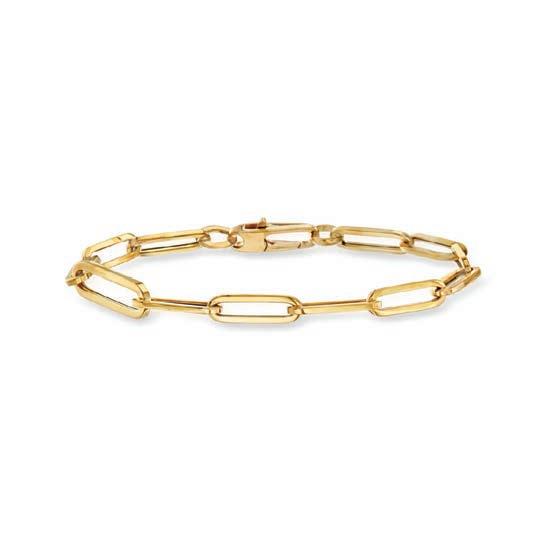
e shift to summer makes for less clothing and an increased real estate for necklaces, bracelets, and even anklets. at said, this summer we’re opting for minimalist pieces with subtle air- think paperclip chains and gemstone beads- that we can layer in a mix-and-match fashion, without overthinking it. Let your jewelry take you from the beach to dining al frescoand everywhere in between.
The Edit
Written By Cortney Vaughn

EXTRAORDINARY ELEGANCE
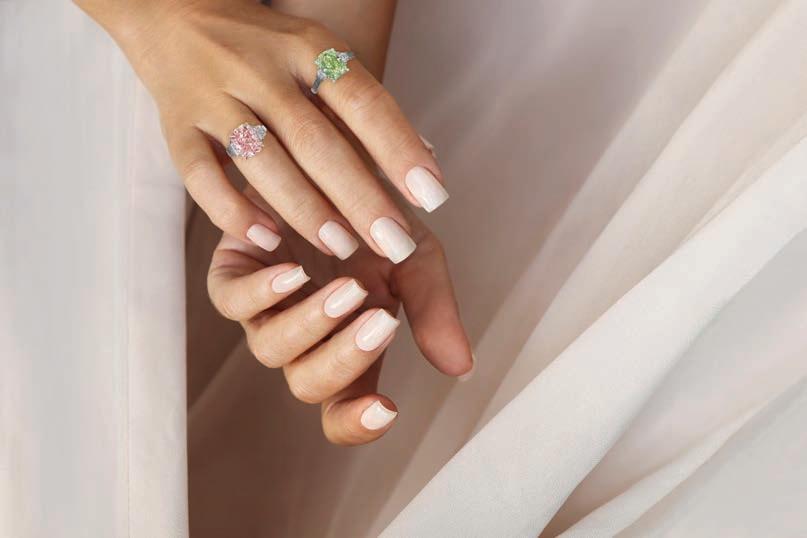
Nothing radiates elegance and glamour like a brilliant, natural diamond. But which types of diamonds are making headlines among contemporary fashionistas? Fancy Colored Diamonds. e allure of pastel diamonds with rich hues coupled with the rarity make these stones the most coveted.
101 South Hanley, Lobby Suite 110, Saint Louis, MO 63105 www.heffern.com | 314.863.8820
Yourself in The Best
It’s all in St. Louis. No need to shop for plumbing fixtures in Chicago, Los Angeles, or New York.
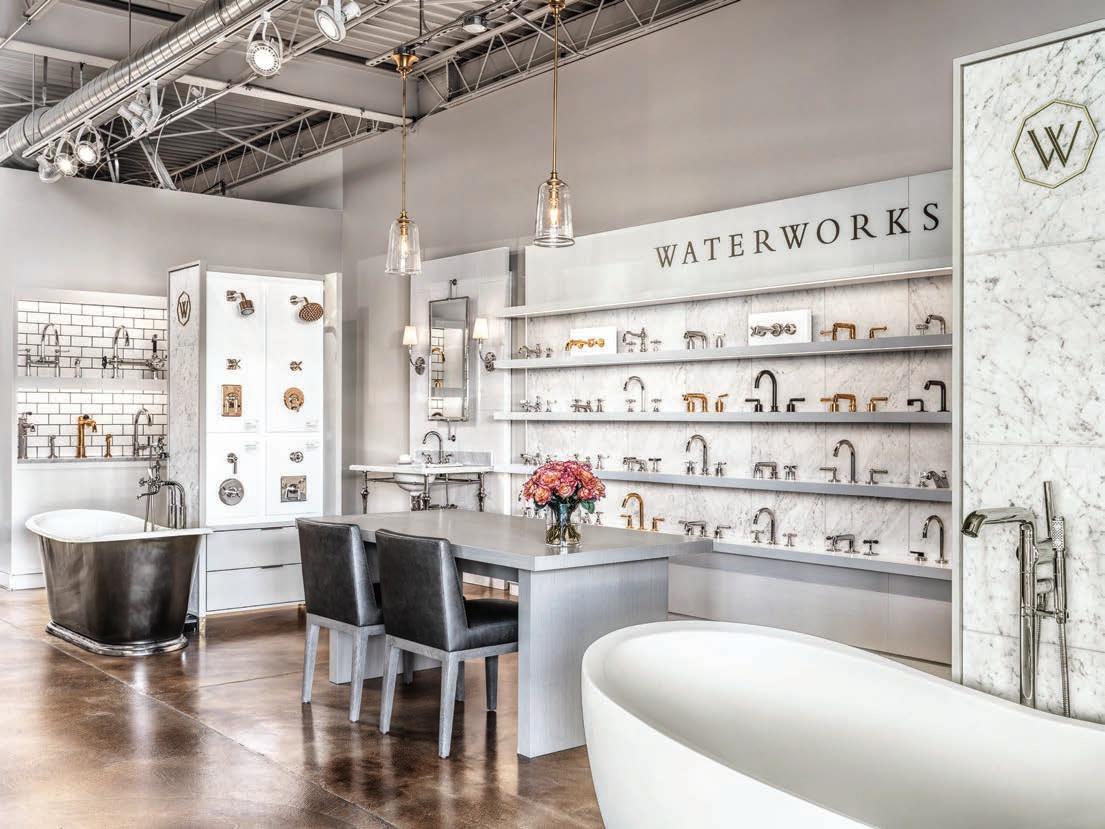

Walk into and you’ll begin to experience kitchens and bathrooms differently. For over 10 years, we have brought the unexpected to our region. Unique brands and unlimited creative possibilities continue to make us the number one choice for designers, builders, contractors, and homeowners. What you thought about fixtures is fictional; visit us to immerse yourself in The Best.
St. Louis’ Experiential Kitchen and Bathroom Gallery BY APPOINTMENT ONLY immersestl.com 836 Hanley Industrial Court, St. Louis, MO 63144 • P: 314-375-1500
May/June 2024 Leave It
to the
a
bite
the
14 Leave It Up to the Chef 22 A Dynamic Duo 29 Housing The Unhoused 33 Girl on Fire 36 East Meets West 38 Flower Power 40 Future Perfect 42 Inside/Outside 46 Betwixt the Bustle 52 Horsing Around 54 Amped Up 56 Home Again 60 Ho Ho Healdsburg 67 Oh, Zillow 74 The Power of Sports 81 Sophisticated Celebrations 83 The Red Gala 85 Gent’s Fashion Show 87 Art in Bloom 89 The St. Louis Public Library’s Stranger Than Fiction 91 Lydia’s House’s Night of Hope and Healing 93 Autism Speaks Chef ’s Gala 95 Mercy Masquerade slmag.net {St. Louis' Finest} May/June 2024 five dollars on the cover:
14 6 slmag.net
Up
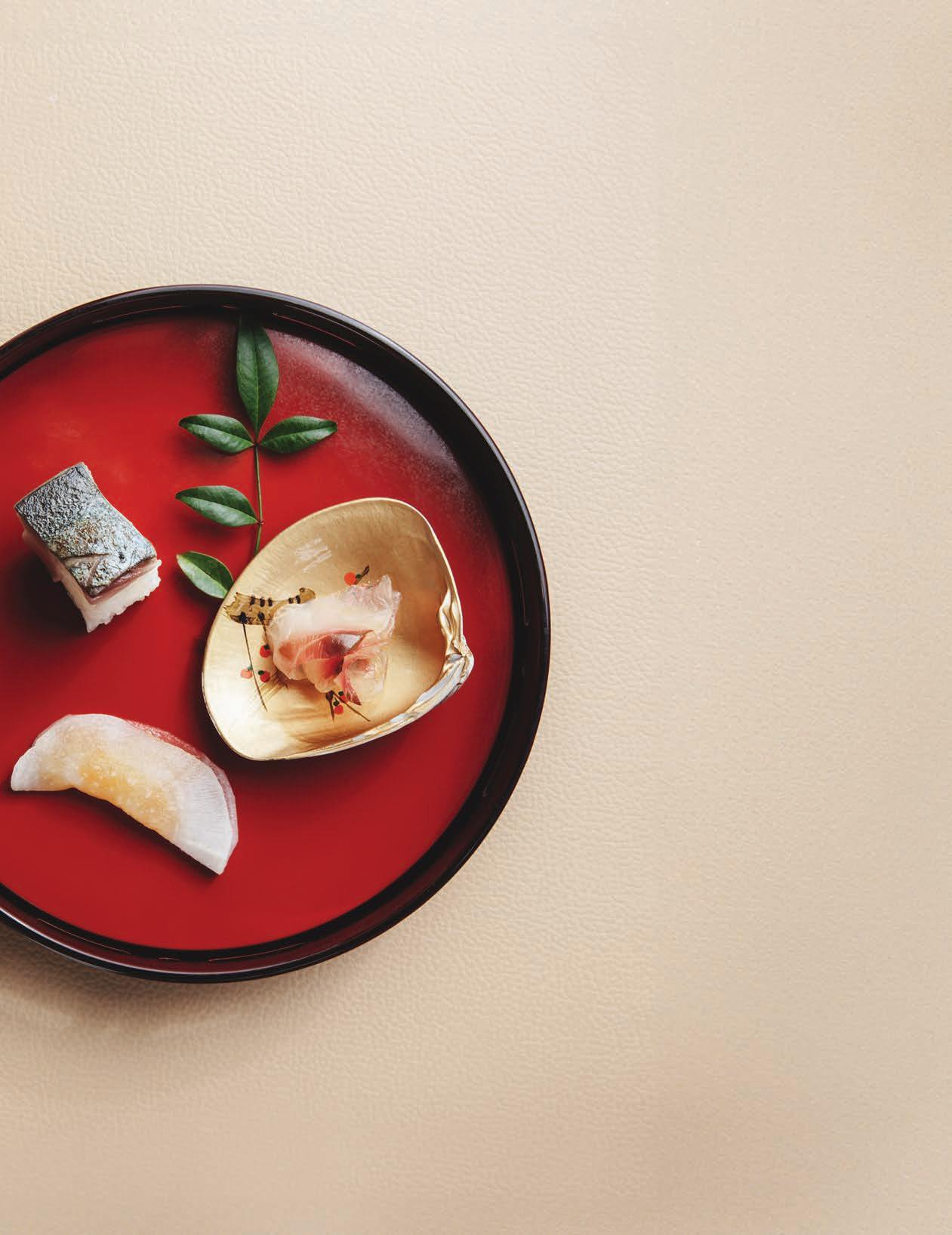
Chef Traveler fish, kumquat wrapped in
pickled turnip, and a smaller
size of
ba-tera. Photo by Carmen Troesser
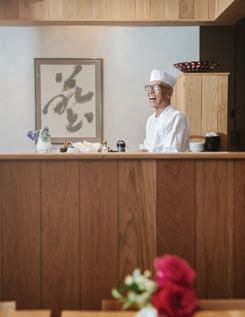
Noboru Kidera, Nobu’s 76-year-old master sushi chef Photo by Carmen Troesser

One resource to create all your #NothingOrdinary karr bick kitchen & bath design • construction • interiors Schedule your free design consultation today at 314.645.6545 or karrbick.com
EAT | SHOP | EXPERIENCE
Summer will be here before we know it, and Colonial Marketplace has it! As in, everything you need for this favorite St. Louis season. With over 20 unique boutiques, great food, and best-in-class services, you can eat, shop, and experience – all in one place.
City Sprouts
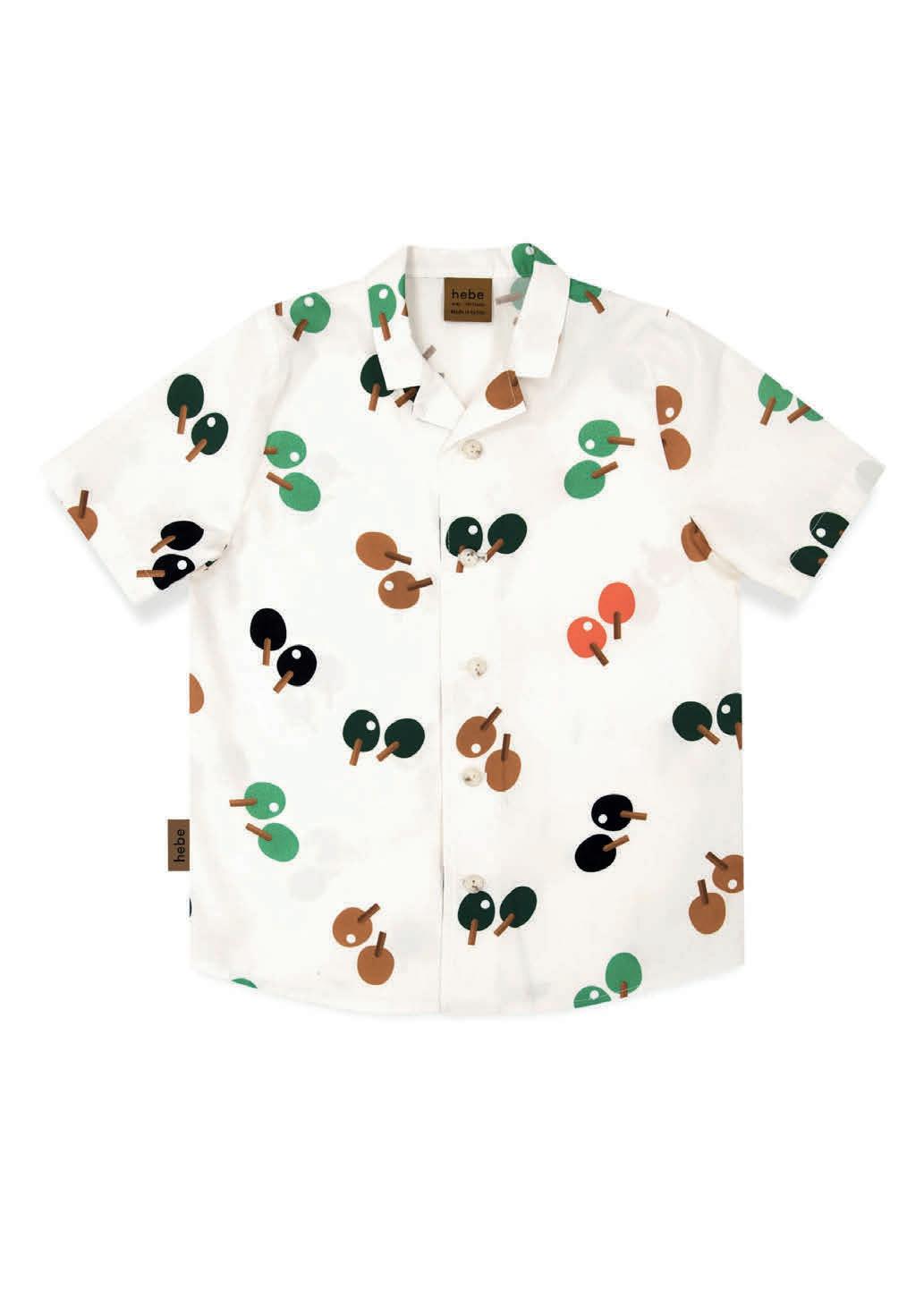
Kids will SMASH it in this Ping Pong Collared Shirt $65
Byrd
Louis Vuitton
NEUAGE Health + Wellness
Medical Weight Loss Therapy with


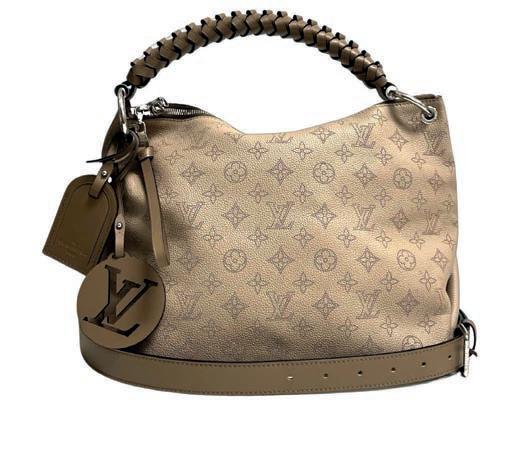
Mahina Beaubourg Hobo $3,400
Marmi
HENKA. Raffia thong sandal with clover ornament, stacked kitten heel. Narrow & Medium widths, and 4 colors available. $150
Splash
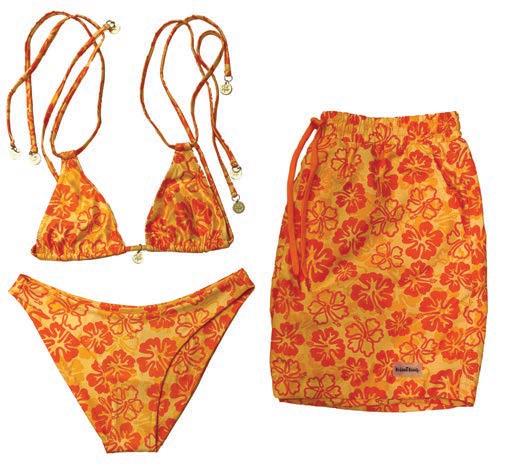
Kulani in Tangerine Dream: Minimal full coverage bikini bottom $66
Halter bralette bikini top $66
Men’s swim trunks $86
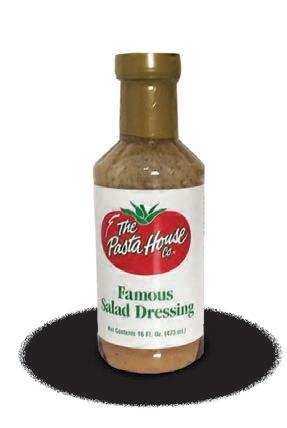
The Pasta House Co. Salad Dressing. $5
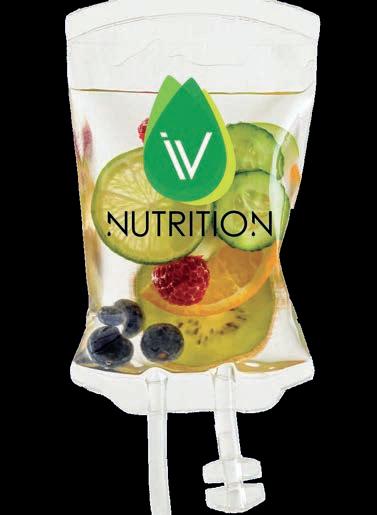
IV Nutrition
Inner Immune $99
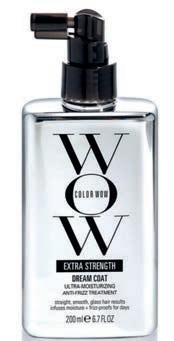
Blown Away
Color Wow Dream Coatavanced anti-frizz treatment $28
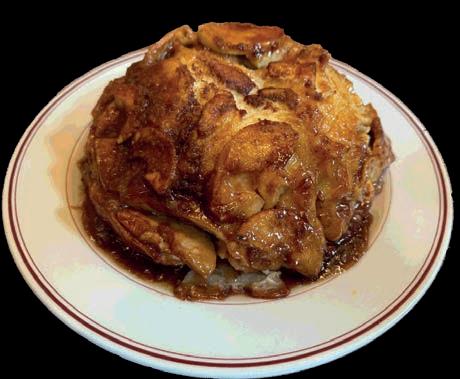
The Original Pancake House
Our famous oven-baked pancake prepared with granny smith apples $13

Dominic Michael Salon
Lightweight oil helps neutralize and detoxify metals inside the hair.
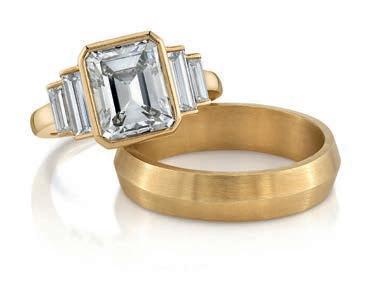
YLANG YLANG
Say I DO with this gorgeous bridal set from Single Stone, exclusively at YLANG YLANG. Prices Available Upon Request
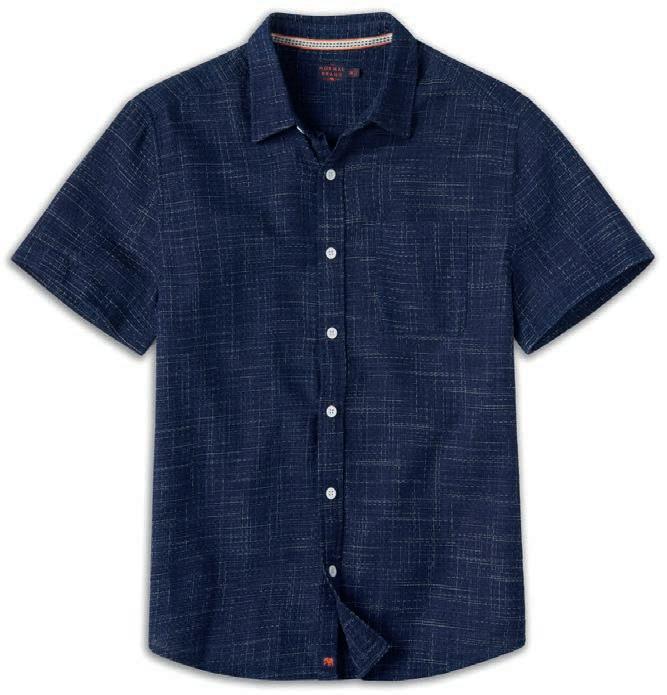
The Normal Brand
Freshwater Short Sleeve Button Up $88

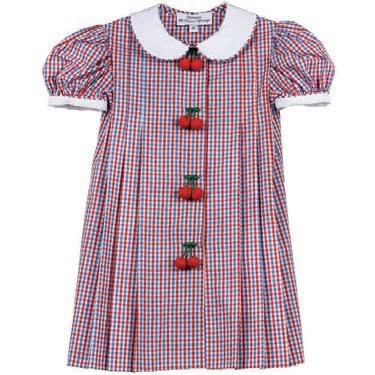
The Woman’s Exchange
Cherry Dress $175
Cherry David Suit in Red, White, and Blue Tri-Check $150

Olive Ovation
Best Friends Always Bring Wine tote. $20
PUBLISHER
Craig Kaminer
Craig@slmag.net
EDITOR IN CHIEF
Christy Marshall EditorSTL@slmag.net
DIGITAL CONTENT EDITOR
Grayling Holmes DigitalSTL@slmag.net
ADVERTISING
Cortney Vaughn Cortney@slmag.net
Rachel Sokolich
Rachel@slmag.net
Karen Palmer Bland
Karen.palmer.bland@gmail.com
Special Projects Consultant
Leslie Tunney
Leslie@slmag.net
CONTRIBUTORS Writers
Grayling Holmes
Craig Kaminer
Jon Feagain
Photography
Carmen Troesser
Eric
Bridget
Greg
Jason
STAND UP T0 JEWISH HATE # HATRED IS A DISEASE. IF THEY HATE ME, THEY WILL HATE YOU TOO. JOIN US AS WE Learn more at StandUpToJewishHate.org
Christy Marshall Design
O’Brien
Suzy Gorman Alise
SOPHISTICATED LIVING MEDIA
Williams
Williams
Butrum
Yann Sophisticated Living® is published by High Net Worth Media, LLC and is independently owned and operated. Sophisticated Living® is a registered trademark of Williams Media, Inc. All Rights Reserved. Sophisticated Living® is published six times a year. All images and editorial are the property of High Net Worth Media, LLC and cannot be reproduced in whole or in part without written permission. Annual subscription fees are $25.00; please add $5 for subscriptions outside the US. Single copies may be purchased for $5 at select fine retail outlets. Telephone 314-82-SLMAG. SLMAG.NET

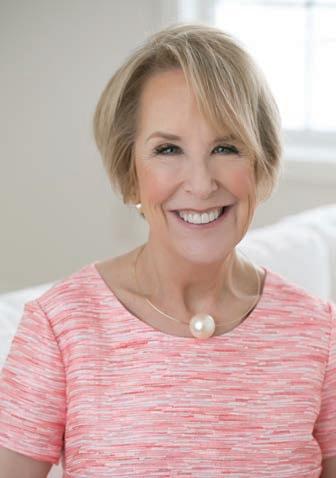
When I slipped the mantle of editor-in-chief of Sophisticated Living St. Louis back on last year, I declared the magazine would focus entirely on what is great about our city.
Easy, right?
Wrong.
NOT… Easy… Not by a long shot.
Every week we are confronted with more and more heinous crimes. Our fair city is being cited in international headlines broadcasting those horrific injustices. And those nightmares could have happened to members of our own families, our friends, to our nearest and dearest.
All I think is: There but for the grace of God.
I suspect that the first thought traipsing the minds of our readers is: Yeah, but it was Downtown. It was in The City. And, we all know The City is dangerous. The population in declining. Now the 23rd-largest U.S. metro for population as of July 1, 2023, (down from No. 21 the year before), in the last census count St. Louis City lost lost 4,439 residents, while St. Louis County dropped by 3,732.
I have friends who won’t consider going Downtown for anything but the Cardinals and then preferably a day game. Recently I had lunch with a dear friend who confessed that she’s too frightened to shop the Galleria. I rolled my eyes.
The Galleria? It’s in Richmond Heights.
Enough is enough is enough.
Fear should not and cannot be our guiding light.
When our founding fathers created this beautiful city, they suffered from severe short sightedness. They drew a circle from the riverfront out and declared they were done. Then in 1876, the voters decided to establish a new home rule charter and approved the separation from St. Louis County. Through the years, the city declined, the county thrived. But no one has ever, sincerely, stepped up to the mic and said, “Divided we fall; united we must stand.”
The only time anyone came close was in 1972 when an agreement was pounded out and passed for both City and County to support the Zoo Museums District. By all measurements, that initiative has been a unqualified success.
After significantly reducing the numbers of homeless in Houston and Dallas, Mandy Chapman Semple was hired last summer by several civic leaders to come to St. Louis, assess the situation here, and submit a plan to resolve it.
She didn’t get that far.
“St. Louis isn’t ready,” she said. “There are some things that need to be put in place, some decisions the community needs to make before they can start thinking about a major initiative. There is some disjointedness among the region. I think this is part of its DNA.”
Yet there are community leaders working furiously to help. Take Jay Shields, ceo of his family-owned company, Schaeffer Manufacturing. Shields has been working hard to help his less-privileged fellow man/woman/child. With the help of Samantha Stangl, executive director of House Everyone STL, and a small army of others, they are working to resolve Chapman Semple’s concerns. The task is Herculean.
The fact remains that irrespective of all those horrible happenings, there is so much going on Downtown that not only deserves our applause but also merits our fervent support.
It’s spring. The breezes are balmy. The days are long. It’s the perfect time to climb into your car and drive down to The Grove. Stop in one of the myriad of restaurants. Spend time in The City Foundry and check out the shops nearby. Explore The Armory. Have a glass of wine and pizza at Scarlett’s Wine Bar. Lunch at Union Loafers. Catch a CITY StL game. Ride the Wheel at Union Station and glance out over our beautiful city. Go to a Cardinals’ game. Cheer on the Blues. Peruse the fanciful finds at Rick Ege’s antique shop on Sydney. Go to the Sydney Street Cafe. Take a leisurely stroll through Tower Grove Park. Start your summer Saturdays frequenting its stellar Farmer’s Market. Have dinner at Bulrush and learn about native Ozark foods that date back to the late 18th century. Walk around The Hill and you will be astonished by all the new housing, offices, shops, and restaurants. Go to 21c; have dinner at Idol Wolf. Trek Forest Park from Skinker to Kingshighway. I could go on and on.
If fear of the “What If” keeps us locked away in our suburban or even Central West End homes, then these enterprises haven’t a ghost of a chance to survive. If we just assume because crimes happen that we are all in danger, Downtown St. Louis will continue to lose and those intrepid entrepreneurs will suffer. And fail.
These are all individuals who refuse to give up on The City. They are fighting for it.
And, they are fighting hard.
Shouldn’t we all be doing the same?
 Christy Marshall, Editor in Chief EditorSTL@slmag.net
From the Editor-in-Chief
12 slmag.net
LEAVE IT UP TO THE CHEF
A Culinary Journey into the Art of Omakase Sushi
By Craig Kaminer / Photos by Carmen Troesser
In the world of gastronomy, few dining experiences rival the artistry and intimacy of omakase sushi. It is a culinary adventure where diners relinquish control and trust the chef to guide them on a journey of flavors, textures, and stories.
Whether in the heart of Tokyo, overlooking the Manhattan skyline, or off the beaten path in St. Louis, omakase sushi offers a glimpse into the soul of Japanese cuisine. It is a celebration of simplicity, craftsmanship, and the profound connection between food and culture.
For those willing to embark on this gastronomic journey, prepare to be dazzled by the skill of the sushi chef, delighted by the freshness of the ingredients, and enchanted by the symphony of flavors. Omakase sushi is not just a meal—it is something to savor, a memory to cherish, and a testament to the enduring allure of Japanese culinary artistry.
While omakase refers to chef’s choice, the fixed menu style is popular with many different chefs and cuisines. Not having the chance to select your favorite thing on the menu is both limiting and liberating. Nothing served is too scary, but the experience will challenge you to try new things, explore different taste and texture profiles, and ultimately to really enjoy the food. Condiments –except those on the food as they are presented – are discouraged. George Kidera, the son of famed St. Louis sushi chef Nobu, laments that many guests want to use a lot of soy sauce but he
encourages everyone to try everything first the way the chef prepares it.
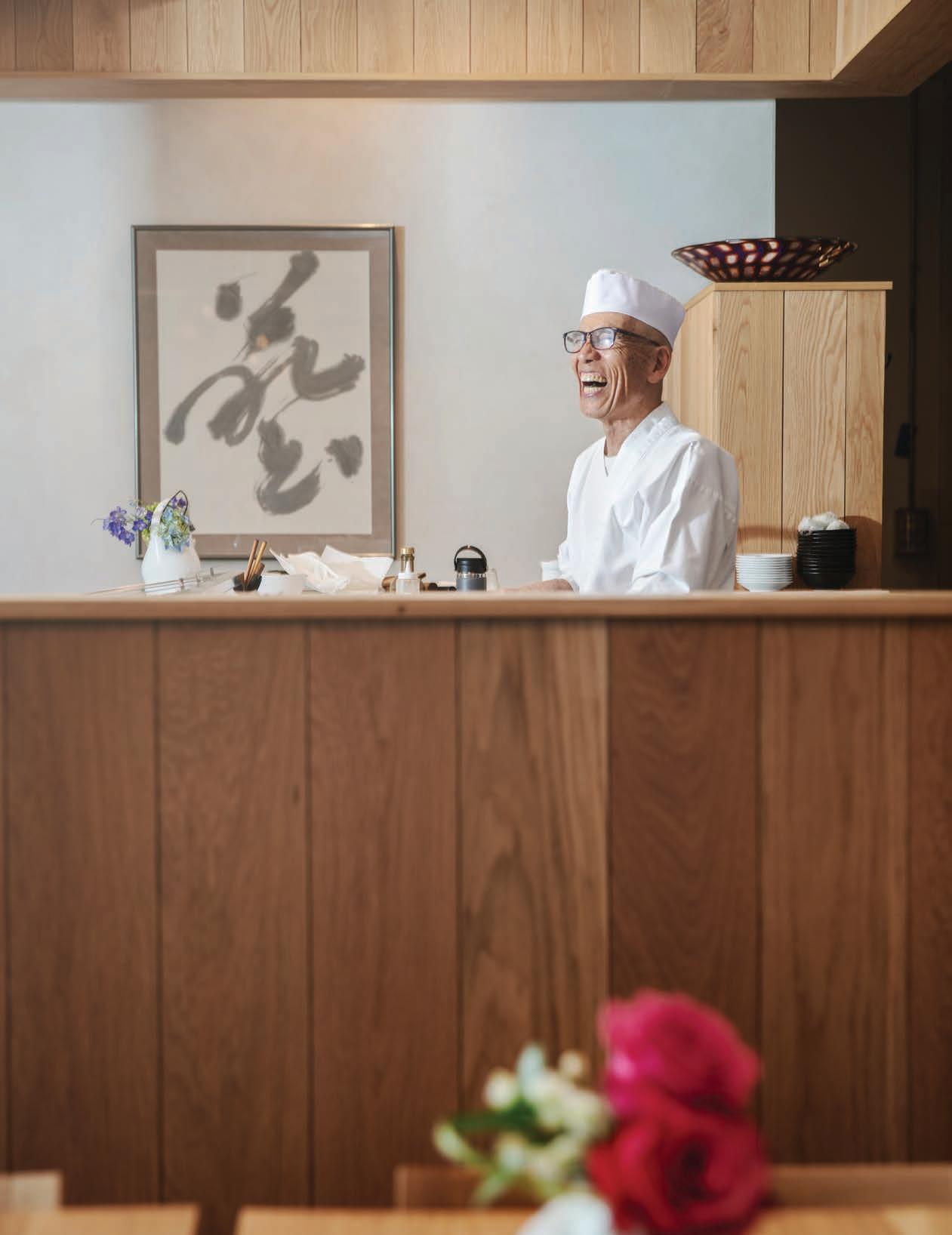
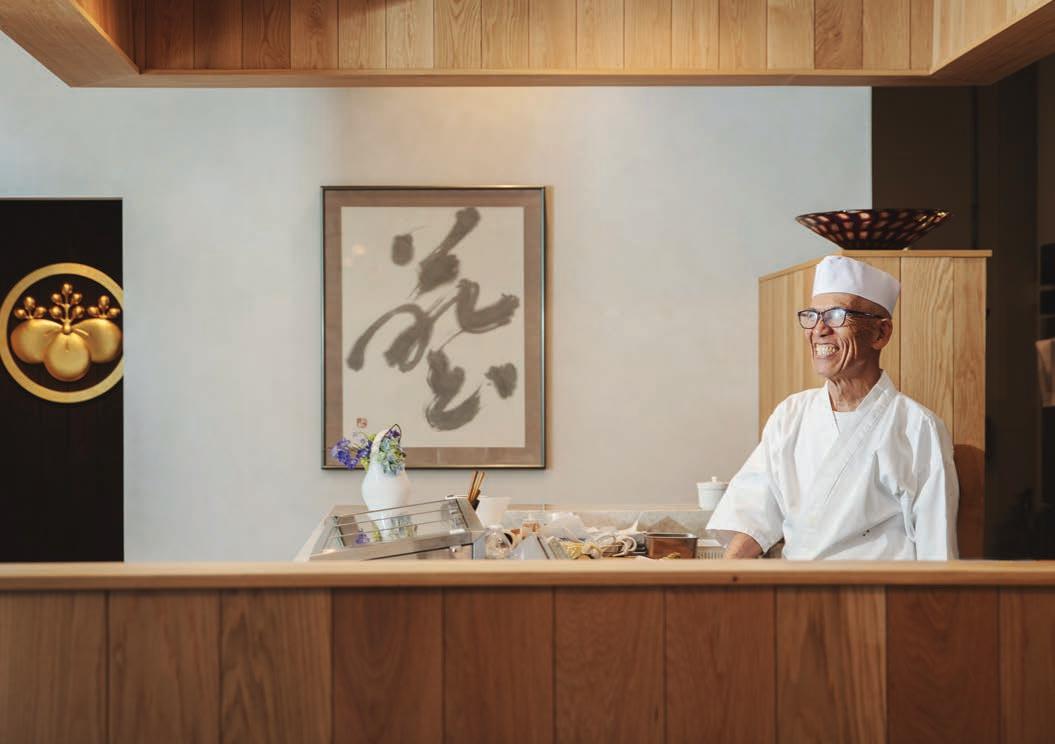
Noboru Kidera, the 76-year-old master sushi chef known as Nobu, is not to be confused with Nobu Matsuhisa with 56 restaurants in 36 hotels around the world including New York, Los Angeles, Miami, and Aspen. The senior Kidera came to St. Louis in 1987. He grew up in Kobe, Japan, started working as an apprentice at the age of 19, and apprenticed for more than nine years. His chef skills took him first to Hawaii, before landing in St. Louis 36 years ago as one of the only local sushi chefs. He started at Tachibana in Creve Coeur as he saved enough money to start his own restaurant, Nobu, at the corner of Delmar and Old Bonhomme. After three years, Nobu moved to a former Pancake House location on Olive Boulevard east of I170. He remained there for almost 30 years until the developers of Costco came with an offer to move that he could not refuse.
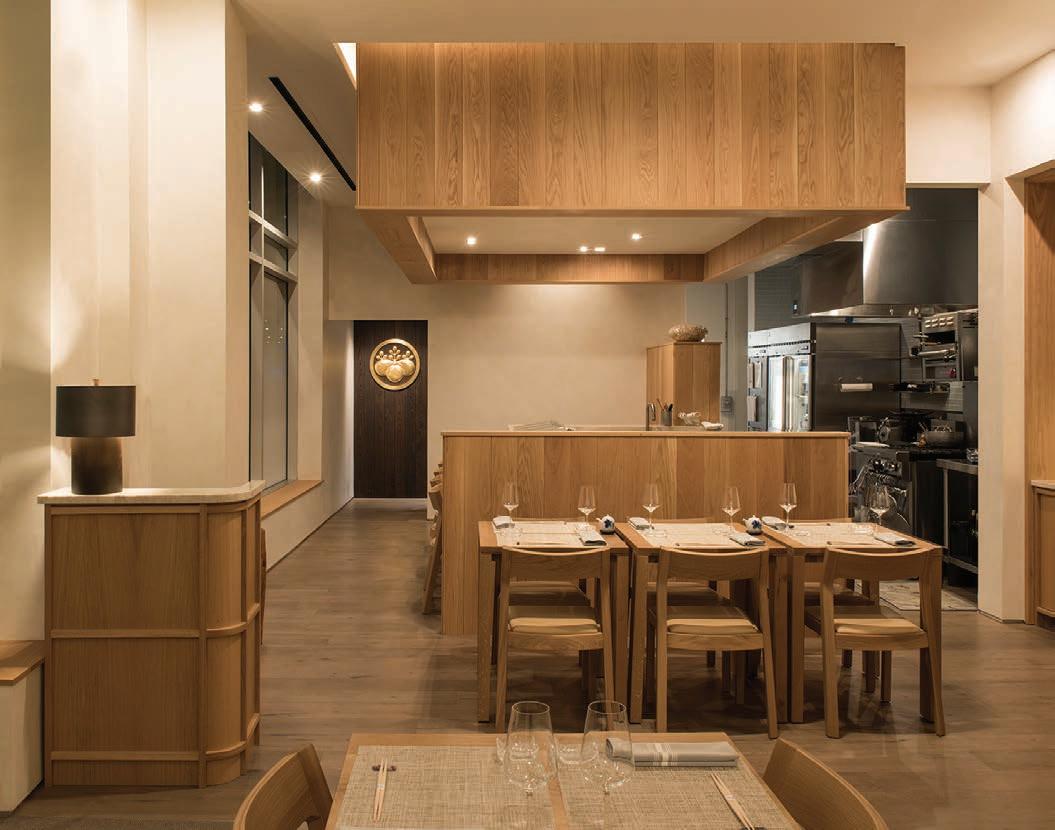
With Covid raging, Nobu and his family used the time to plan an omakese sushi restaurant, a concept not seen very often here. Sasha Malinich of S. Aleksandr Malinich Design, who designs award-winning restaurants and retail spaces around the country, helped conceive of the modern Japanese design. After six months of designing and plotting the launch of the most intimate sushi restaurant in St. Louis, Nobu’s opened in October 2022. Dinner is only served four nights a week from Wednesday to Saturday.
14 slmag.net
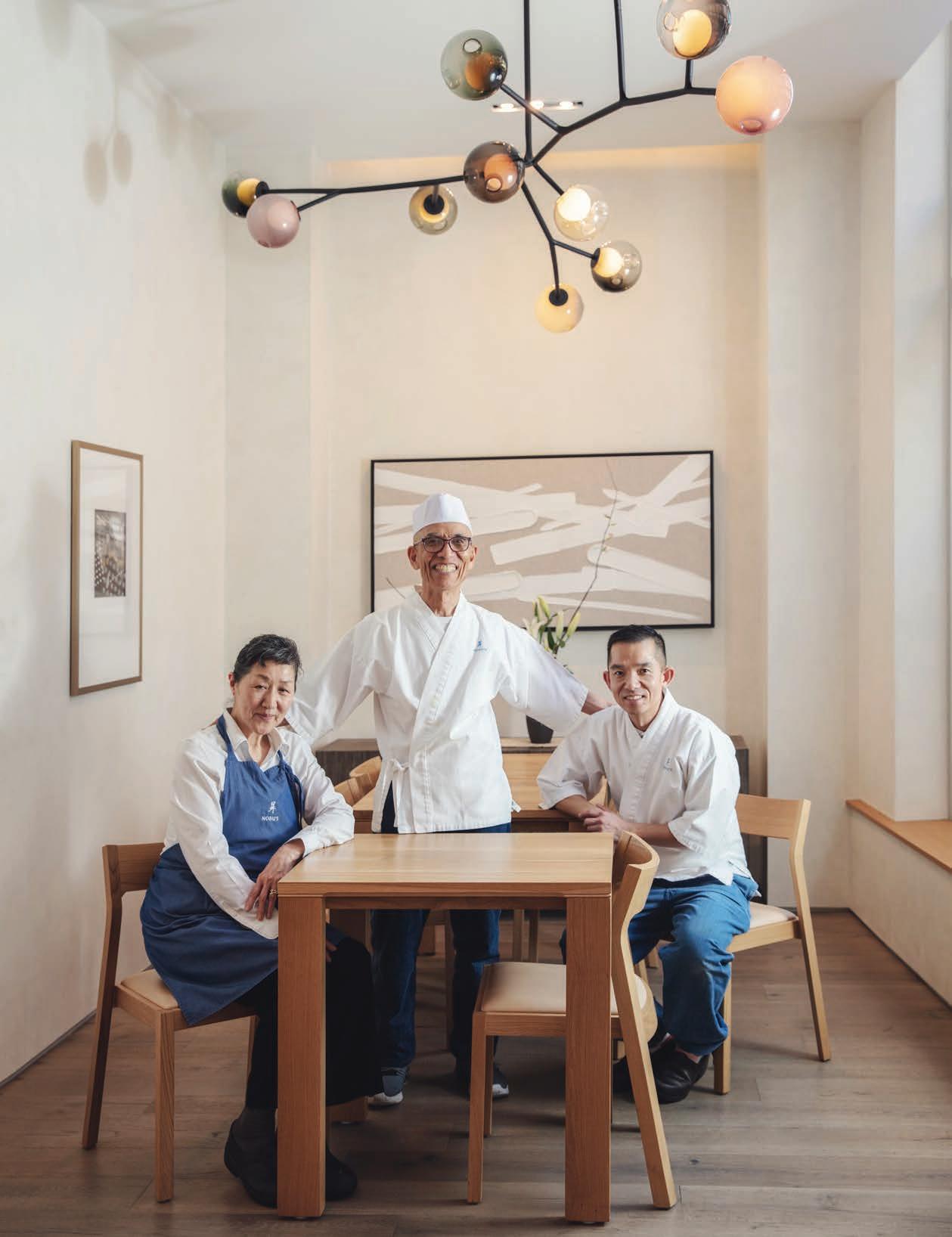
Quintessential Nobu with his big smile and warm personality.
slmag.net 15
Taeko, Nobu and George pose at the best table in Nobu’s
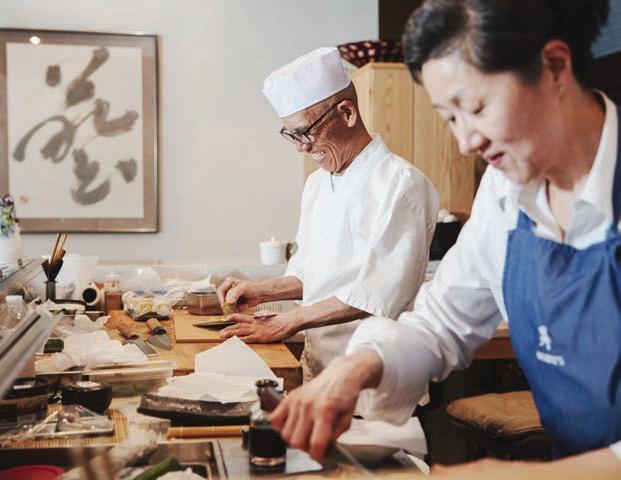
On the nights they are open, you will find the three Kidera family members (Nobu, his wife Taeko and son George) waiting on just 10-12 guests, with the experience lasting 90-120 minutes or more. There are three omakase offerings: three courses for $80, four courses for $120, and six courses for $160 plus the cost of sake pairings, wine, beer or tea, plus tax, and gratuity. This is not for the budget-conscious but you will be surprised how some of their diners are young – frequently WashU students – looking to experience a higher level of sushi.
Throughout the restaurant are Taeko’s beautiful botanical and floral designs. Her Ikebana creations are set at various points within the space with the ‘ancient’ Bonsai provided by Manasseh Bartley.
Omakase means chef’s choice so while they will adjust the menu based on allergies and dietary restrictions, don’t plan on eating the old sushi standbys. That shouldn’t deter you. Nobu is a master and prides himself on presenting things that most people haven’t had, but he
does not shock the diner with the ingredients. When you check in or sit down, you will be asked what you don’t like. They frequently cater to vegans and vegetarians too so don’t worry if you don’t eat fish or shellfish. From that point forward, Nobu will make every attempt to impress you with the freshest sushi in St. Louis, often flown in from Japan or procured from local fishmongers, with seasonal ingredients and edible garnishes. No fake seaweed here.
An omakase experience is intimate and not something you want to rush. It frequently takes 90 minutes (or more), depending on the number of courses, the wine or sake pairings, the extensive explanations by Nobu or George, and of course, the time to savor the sushi and all of the seasonal flavors. While the restaurant seats 16 – 11-12 at tables and up to six at the sushi counter, there are usually on average just 10-12 people sharing an intimate experience hearing stories about the fish, the preparation, where the ingredients come from, and Nobu’s colorful stories of Japan.
On the night my wife and I went to experience it firsthand, we ordered the three-course menu plus the sake pairings with each course. First up was a dish called “nuta” which consists of three
Hidden away in a somewhat unmarked storefront at 6253 Delmar, Nobu’s is unlike any other local restaurant. It places the guests up front and personal with Nobu himself.
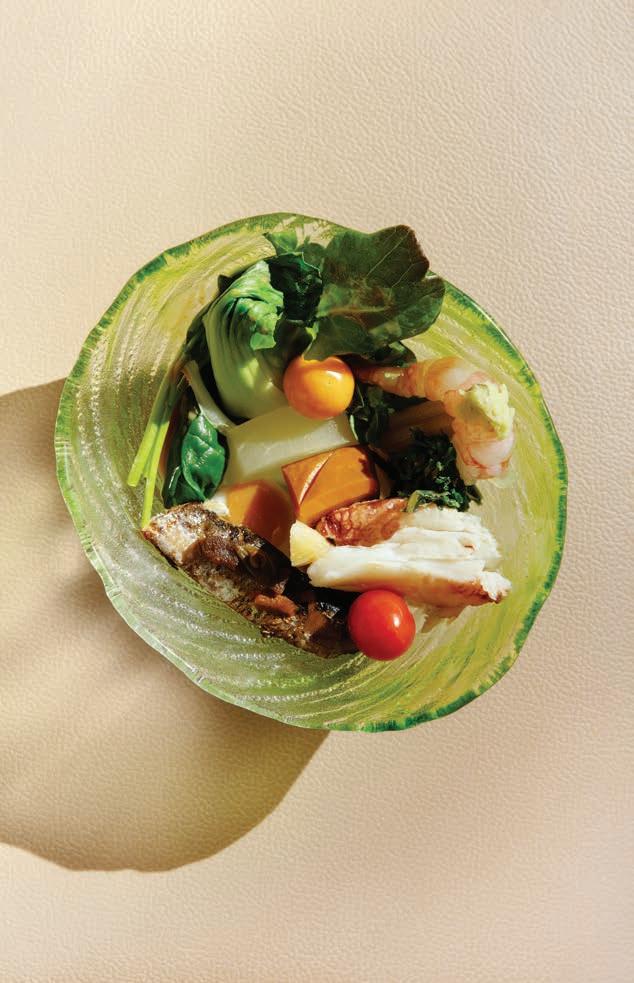
Seafood salad with Dungeness crab, pressurecooked sardines from Japan, raw sweet shrimp, and garnished with seasonal vegetables.
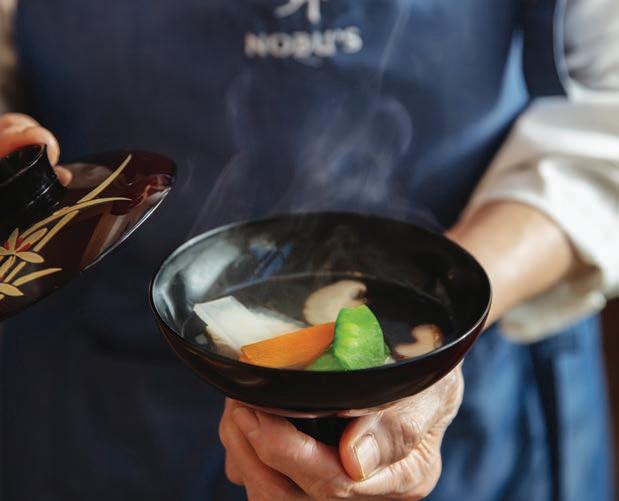
Presentation of miso with fresh snapper bone both.
16 slmag.net
Taeko and Nobu prepping food for busy night.
pieces of seafood (tuna, salmon, and snapper or shima-aji) tossed in karashi-miso (yellow miso mustard) accompanied by vegetable garnish also pre-marinated with sushi vinegar. The second course was a clear miso soup made from red snapper bone broth with some pieces of the snapper. Then we were served a bowl of sashimi consisting of perfectly prepared o-toro, yellowtail or shima-aji and sea urchin (uni) followed by a generous sushi course with eight nigiri pieces without too much rice. Each piece was flavorful, delicate, and unlike any other sushi I have had in St. Louis. With each course, Nobu or George told us what everything was, where it came from, and how it was prepared.
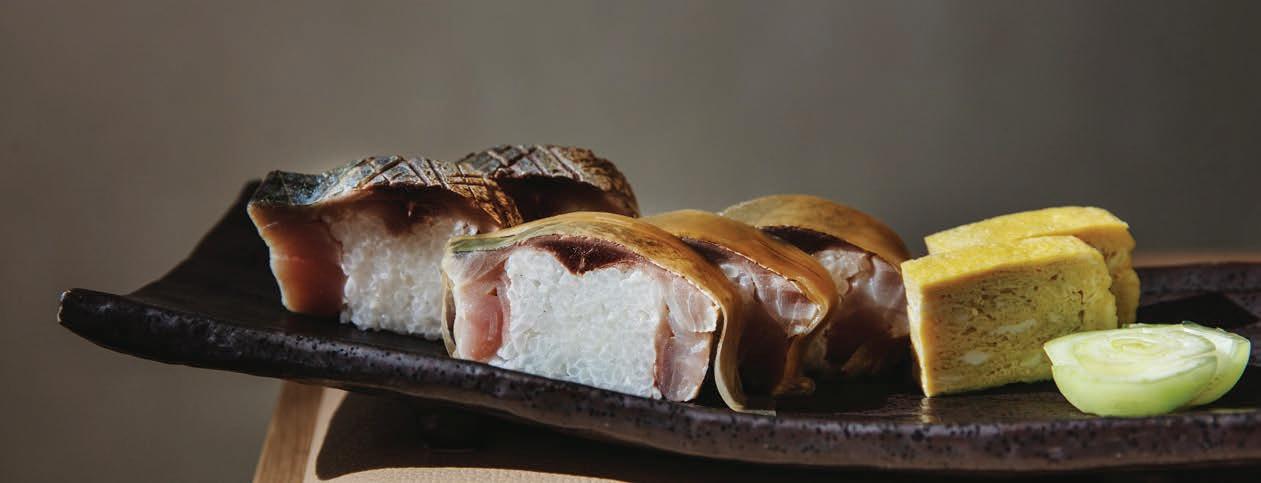
For this story, Nobu prepared saba (also known as be-tera), or a southern Japanese interpretation of rolls, consisting of mackerel from Japan which is cured for several hours, with a slightly sweet vinegar-based kelp on top that counteracts the gaminess of the mackerel with compressed rice to absorb the fish oils. It is a fermented dish and can be eaten for several days following because of the fermentation. To add color and variety to the course, Nobu made his own special tomago, with fish bone
broth mixed with egg and prepared like an omelet. The plate was garnished with a marinated stem of bok choy. Each of the preparations were created with different marination ratios adding to the subtlety of the entire plate.
Next up was a three-part tasting menu consisting of traveler fish (cured in salted kelp, rested for six-to-12 hours), kumquat wrapped in a pickled turnip, and a smaller bite-size of the ba-tera which is typically served on their six course offering.
Perhaps my favorite part of the meal was the seafood salad with Dungeness crab, fresh ginger from Fiji, pressure-cooked sardines from Japan (typically topped with tomato, peppers, plums or okra), raw sweet shrimp topped with fresh wasabi from Japan, and garnished with a seasonal bamboo shoot called takenoko, Japanese pumpkin, yam leaf wrapped around red snapper or shima-aji taken near the bone of the fish when grilled, and hydroponically grown watercress, oak leaf or red gem from locally owned Vertigreens. Nobu also used cherry tomatoes, golden berry, sato-imo (potato) with yuzu-miso, arrow root marination, and marinated spinach.
Nobu prepared saba consisting of mackerel from Japan, tamago, and bok choy.
slmag.net 17
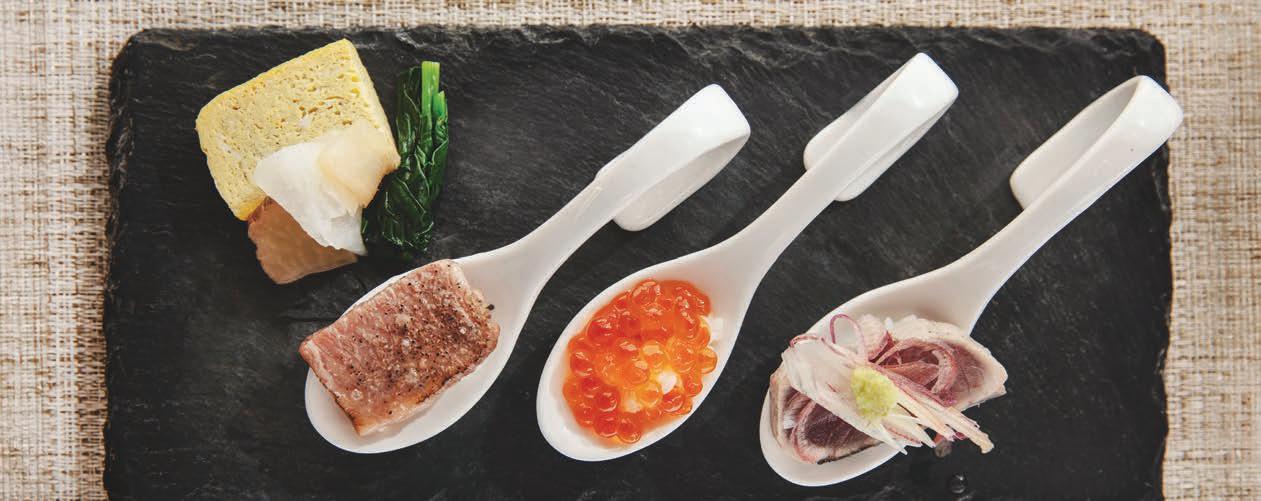
Bonito from Japan with myoga ginger, Alaskan salmon roe, and wagyu beef.
In addition to Vertigreens, Nobu’s also sources some of organic vegetables (daikon radish, hakurei turnip, mokum carrots, scallion, Japanese shishito peppers, eggplant, cucumbers, pasture raised eggs) from Darlene and Ryan Smith at Lucky Dog Farm in Wentzville, MO.
The final preparation was bonito from Japan called katsuo with Japanese myoga ginger from Takachi Prefecture Shikoku Island, Alaskan salmon roe, wagyu beef, and served with a small glass of Pinot Noir.
While chances are good that you will be served similar things when you treat yourself to Nobu’s, the menu is always evolving and changing subtlety on a weekly basis. But you can always expect the ingredients to hail from the highest quality sources and as Nobu says, “We use from nose to tail, and stem to leaf.”
For those who think this sounds over the top, it isn’t.
“If you don’t know how to approach these dishes, I recommend starting with a vegetable, then a protein, then a vegetable, going back and forth between vegetable and protein,” George said. Carefully listening in the background, Nobu smiled and nodded.
“This is how Nobu eats so I think it is the proper way,” George added. But he reminds me that nothing is written in stone and each dish should be consumed the way the guest wants. So I did.
I asked George how much education of omakase has the St. Louis public required. “Many people use too much soy” George said, ”It overtakes what is being served. We brush on house-made soy sauce at just the right amount. We are not offended if you want more soy and wasabi, but we ask that you try it the way it is presented before you do it your way.
While omakase is new to St. Louis, chef’s choice sushi is not. In New York City, for example, zoomakase (zoom + omakase) is the newest trend; it’s served in under an hour and costs under $100. If successful, it will likely come here, too.
George acknowledges the risk of doing omakase in St. Louis because it is unique and guests sometimes feel like they are walking into the unknown. But in the 16 months since Nobu’s opened, reservations have been steady and are often hard to get on short notice.
Recently, Nobu has been awarded the Chef of the Year by the St. Louis Post-Dispatch, Best Sushi by the RFT, and an Editor’s Choice Award by St. Louis Magazine’s food editor, George Mahe.
So if you are interested in food experiences, skip the long flight to Japan, and get a reservation at Nobu’s as soon as you can. sl
We wanted to include chef Nick Bognar of Sado and the soon-to-open Pavillion in this story but unfortunately, Nick suffered an injury the day before the interview and photo shoot.
18 slmag.net
Stunning modern Japanese design by S. Aleksandr Malinich Design
Elevate your workplace.
Elevate your brand.
ARCHITECTURE + INTERIOR DESIGN
Photography by Miranda Kimberlin


Celebrate your home.
& SONS
Luxe environments created here. SAMUEL
11660 Page Service Drive | St. Louis, MO kdrshowrooms.com
BROWN JORDAN

KITCHEN & BATH FURNITURE TEXTILES APPLIANCES HOME AUTOMATION FLOORING RESIDENTIAL & COMMERCIAL ENVIRONMENTS DESIGN SERVICES idcstl.com 314.983.0218 11610 - 11660 Page Service Drive | St. Louis, MO
STUDEBAKER DESIGN
DESIGN GROUP
COLLECTIVE
DESIGN
APPLIANCES
CHRISTIAN
SHOWROOM
St. Louis’s most beautiful interior spaces are created.
WORKING SPACES WALBRANDT TECHNOLOGIES PREMIER PLUMBING STUDIO JOHNSON DESIGN
AMY
JCR
DESIGN
KELLY JOHNSON
YOURS BY DESIGN AUTCOHOME
MARC
FINE CABINETRY *
COMING SOON KDR DESIGNER SHOWROOMS PREMIER PLUMBING STUDIO WALBRANDT TECHNOLOGIES WORKING SPACES Where
Award-winning design, unmatched service, extraordinary products.
A DYNAMIC DUO
STAGES St. Louis’ new leadership has added sparkle and depth to the company
Written by Grayling Holmes / Portrait by Carmen Troesser
STAGES St. Louis implements a ‘jewel box effect,’” according to Executive Producer Andrew Kuhlman. Now, beginning their second season as co-leaders of the organization, he and STAGES St. Louis Artistic Director Gayle Seay carefully pluck each precious gem from their STAGES St. Louis’ jewelry box and allow it to sparkle on its own – from acting, to sets, to costumes.
“STAGES is unique in that way,” Andrew added. “You know how when you open a jewel box sitting atop a dresser and you see every piece together, creating one whole glimmering picture? But when you take pieces out individually, they each still shine on their own?”
And as if singing a duet, on cue, Gayle chimed in, “Every element of a production at STAGES shines, both on its own and as a collective. Our actors, directors, designers, technicians, marketing, box office, and anyone else involved in the show, they are all dedicated to bringing that shine to life day in and day out. That’s what Andrew is talking about.”
Their two-part harmony continued as Andrew said, “Here at STAGES, the audience can see every single piece because our theater is intimate enough to let the audience experience a Broadway-level performance in a unique way.”
They explained that as a team their aim is to bring the STAGES St. Louis tagline, “Experience The Story,” to life. “To do that we have to have AMAZING talent,” Andrew said, raising the pitch of his tenor on the word “amazing”.
Almost in unison, Gayle continued saying that in order to do that you have to bring in storytellers who encapsulate the vision of the show and can take existing scripts and create something fresh and specially designed for STAGES St. Louis.
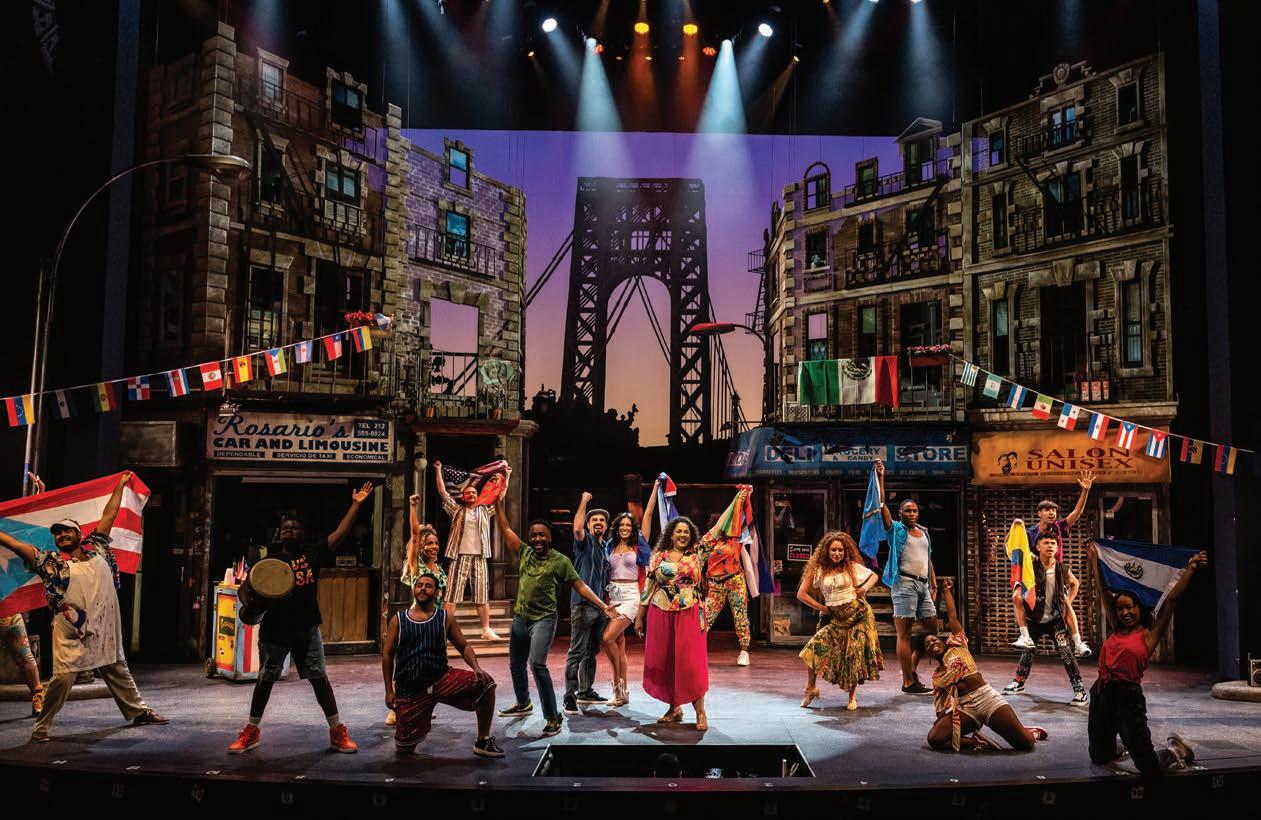
“For instance, with ‘In the Heights’, we hired Luis Salgado, a prolific regional director/choreographer who was also a cast member in the show’s original Broadway run,” she said. “He did everything from sharing his vision for casting to making sure that the set, costumes, sound and musical designers were all on the same page. He had to provide direction for each and every element of the show in order for the audience to essentially experience the story in a new way.” she explained.
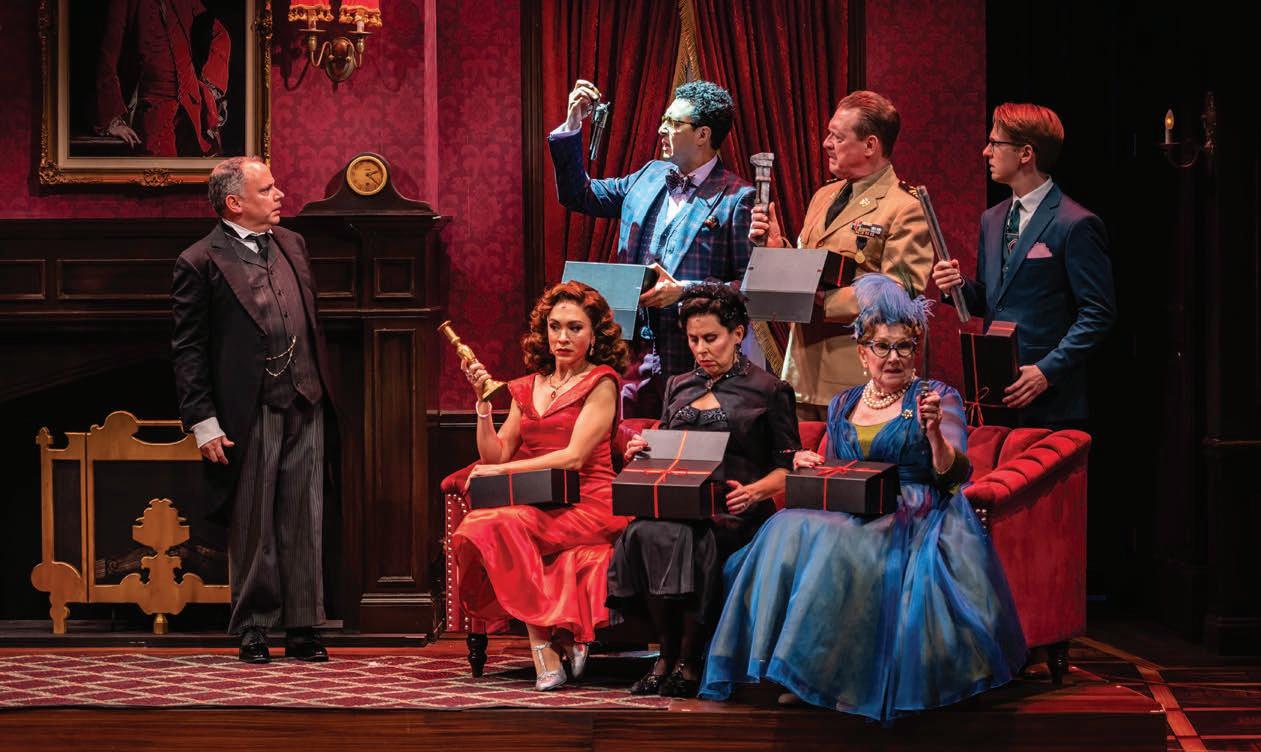
Another example? “Through my position as Artistic Director, I was able to direct our 2022 season production of ‘A Chorus Line’ here at STAGES. Instead of having the actors on stage simply talking to Zach, the play’s director in a distant light, I had Zach actually walk through the audience and approach the actors at the edge of the stage. I created a whole new feel from something audiences who saw the original Broadway production, the touring show, or the movie had seen. Our audience experienced ‘A Chorus Line’ in a whole new way, while maintaining the integrity of the piece.” she explained.
Last summer, I witnessed that jewel box effect myself. It was my first time at STAGES St. Louis and I was expecting to see some second-rate community-theater-type production.
22 slmag.net
Andrew Kuhlman and Gayle Seay

“In the Heights” “Karate Kid” slmag.net 23

Instead, I was blown away the moment I entered the darkened theater at the Kirkwood Performing Arts Center. I came to see Elton John and Tim Rice’s “Aida”. On center stage stood a glowing multi-colored pyramid that, from my vantage point, looked at least a story tall. Other smaller pyramids surrounded it. To add to the unanticipated and while leafing through my Playbill from my third-row seat, I noticed that the cast was lead by none other than Broadway’s Ace Young and his wife Diana DeGarmo, both of “American Idol” fame. Color me impressed.
Next, an enthusiastic young man bounded onto the stage welcoming the audience to the first-ever Pride Night at STAGES. During his pre-show curtain speech, he went on to describe the “Aida” cast, gathered from both local and Broadway talent.
“Aida” began, and for the next two hours I felt that I was witnessing a production on an intimate Broadway stage. On that night, Andrew had reached the top of his own pyramid. Over a dozen years, he climbed from intern to executive producer at the organization. How did a boy from Francis Howell High School take over one of St. Louis’ premier theater institutions, let alone work in tandem with a former NYC casting director, now STAGES Artistic Director, Gayle Seay?
Andrew’s story is that of someone who intended to be an actor and grew into a producer. “In this business, as in others, you oftentimes have a career evolution,” he said.
Born and raised in the St. Louis area, he left only to get a degree from Bradley University in Peoria, IL. “After graduation, I was Chicago-bound ready to do the acting thing,” he said. “I
had even paid a deposit on an apartment when my maternal grandmother, who I credit for anything good in me, was diagnosed with ALS and didn’t have much time to live.”
He moved back to St. Louis and split his time between nursing her and working at his old high school directing shows and coaching the speech team. His first real job in 2012 was as Apprentice for Theatre Leadership at STAGES St. Louis. He never left, rose through the ranks, and in January 2023, he became the second-ever executive producer in the 38-year history of the organization. Co-founder Jack Lane was the first.
“I once thought that acting was going to be my forever job,” reflected Andrew. “Then at one point I realized, ‘Wow! This is what love’ — being a part of the process of creating opportunities for St. Louis. I started focusing on producing and the administrative side.”
He now heads up a team ranging from development to marketing and everything in between. Although he has a development team, Andrew’s primary function is to secure funds to cover Stages’ $8 million annual budget, 55 percent of which is covered by ticket sales and 45 percent earned through contributed income.
“We have an incredibly consistent and loyal group of donors who really love STAGES, but we will always welcome more,” he added.
Gayle had a similar career evolution on the creative side. For nearly three seasons, she has been the Artistic Director, but that was a long road. She can’t answer the perennial St. Louis question, “Where did you go to high school?” because she hails from Trenton, N.J.
“I’ll answer anyway, Grayling,” she said. “I went to Ewing High.” She observed that when she first moved to St. Louis almost
24 slmag.net
Elton John and Tim Rice’s “Aida”
three years ago, there were three things she noticed that were prevalent: acronyms, toasted ravioli, and the high school question. Andrew nodded in agreement.
Her journey has taken her from dancer to performer to casting director, and now to Artistic Director. “I was a performer for most of my life. I started dancing when I was two-and-a-half years old – the usual stuff, ballet, tap, jazz, and contemporary. I continued training in dance only until I went to a performing Arts High School in New Jersey. I went to Ewing High half a day and to a performing arts high school the other. I graduated, went on a tour, and never looked back. I’ve done everything from dinner theatre to national tours to Broadway shows.”
In 1995, her life intersected with STAGES for the first time when she was acting in a national tour of “Crazy for You”. The lead in the STAGES St. Louis production of the same show broke her ankle and Seay’s then boyfriend Scott (now husband) was in the production and knew co-founders Jack Lane and Michael Hamilton. Gayle left the tour, went to STAGES to take over the role, and loved The Lou. She came back the following season to do another show. Later her career transitioned to the world of casting. She co-owned the Wojcik-Seay Casting agency in New York City. She suggested partnering with STAGES on their casting efforts and auditions and she did it for about 15 years.
Approximately four years ago, she was asked to throw her hat in the ring for STAGES’ artistic director position. Michael Hamilton, the company’s founding artistic director, was preparing for retirement, and they were conducting a nation-wide search. She thought about it and realized it was an opportunity she had to grab.
Over the years, she fell in love with St. Louis. “This town has everything any city has to offer. It’s a great food, sports, and arts town. Everything is free from parks to Museums. There’s so much to do, so much to keep you occupied. It’s like a hidden gem and people need to know more about it.”
Gayle works with Andrew, a native. “She’s the Batman to my Batman,” he declared. “There’s no Robin here.”
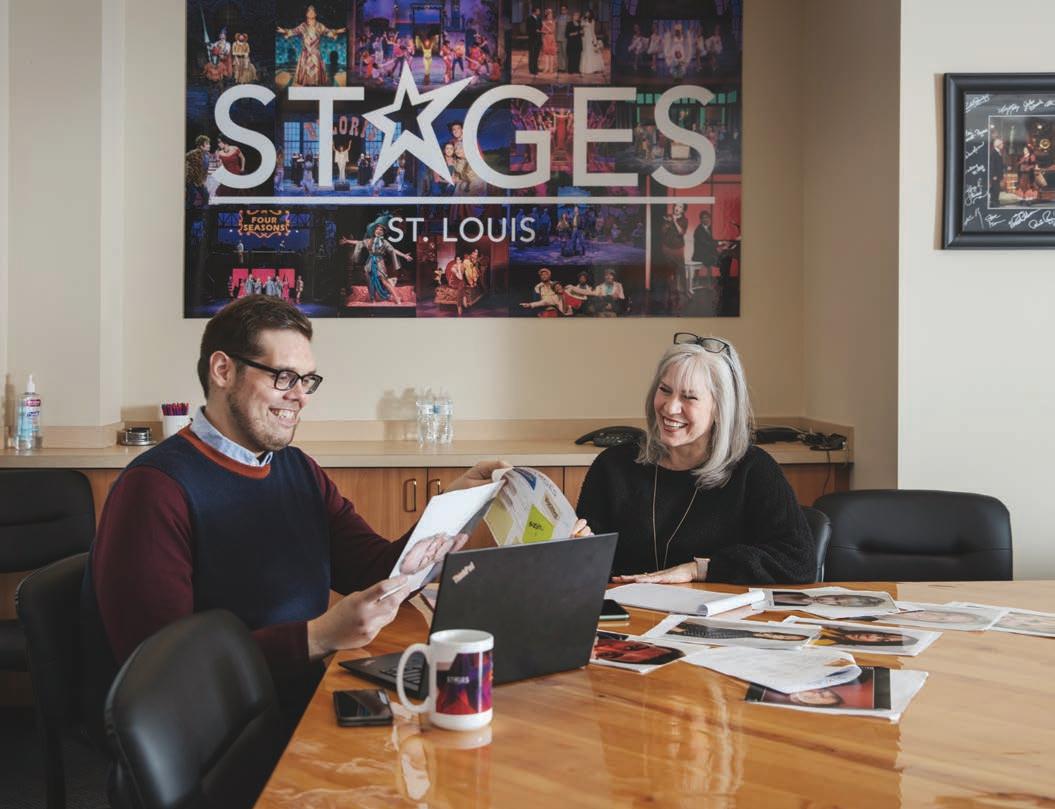
When I walked in on them the day of the interview, there were headshots and resumes spread all over a beautifully handmade lacquered table in the conference room at STAGES St. Louis’ Chesterfield headquarters. Scattered across the table were actors being considered for for the 2024 season’s productions of “Steel Magnolias,” “Ragtime,” and “Newsies.”
“We use each other like sounding boards,” he said. “In an artistic meeting, Andrew is there and in a finance meeting, I am there,” added Gayle.
The Batman and Batman dance continued as Andrew added, “There is so much local talent here, it’s incredible.” Gayle pirouetted and said, “We have been fortunate enough to hire actors, choreographers, and directors from New York and they too are floored about the talent level in St Louis. Once here, they say that they want to come back. They tell their friends and word is getting out. STAGES is a destination, not a stop along the way. Andrew and I are very lucky people indeed to co-captain this ship.”
“We are the first ones to celebrate together when we have a triumph and the first to cry together if something doesn’t work,” Andrew added. “We make each other better.” sl
“Clue” slmag.net 25
INTERIOR DESIGN CONSULTANT
Where Creativity Starts
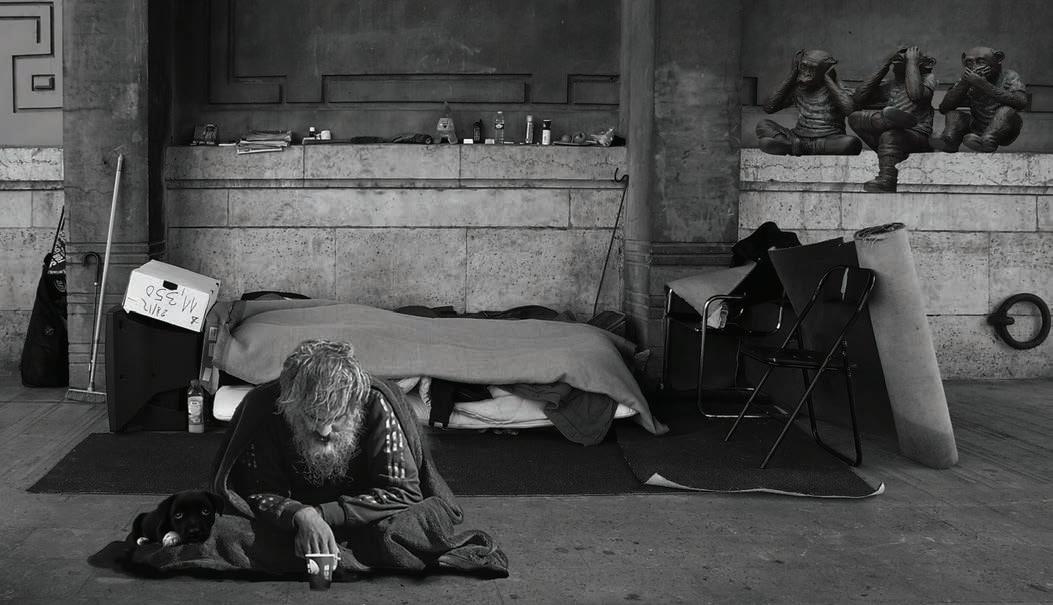
HOUSING THE UNHOUSED
Solving homelessness with permanent housing, not shelters, is the battle cry of House Everyone STL.
By Christy Marshall / Photos of Samantha Stangl by Carmen Troesser
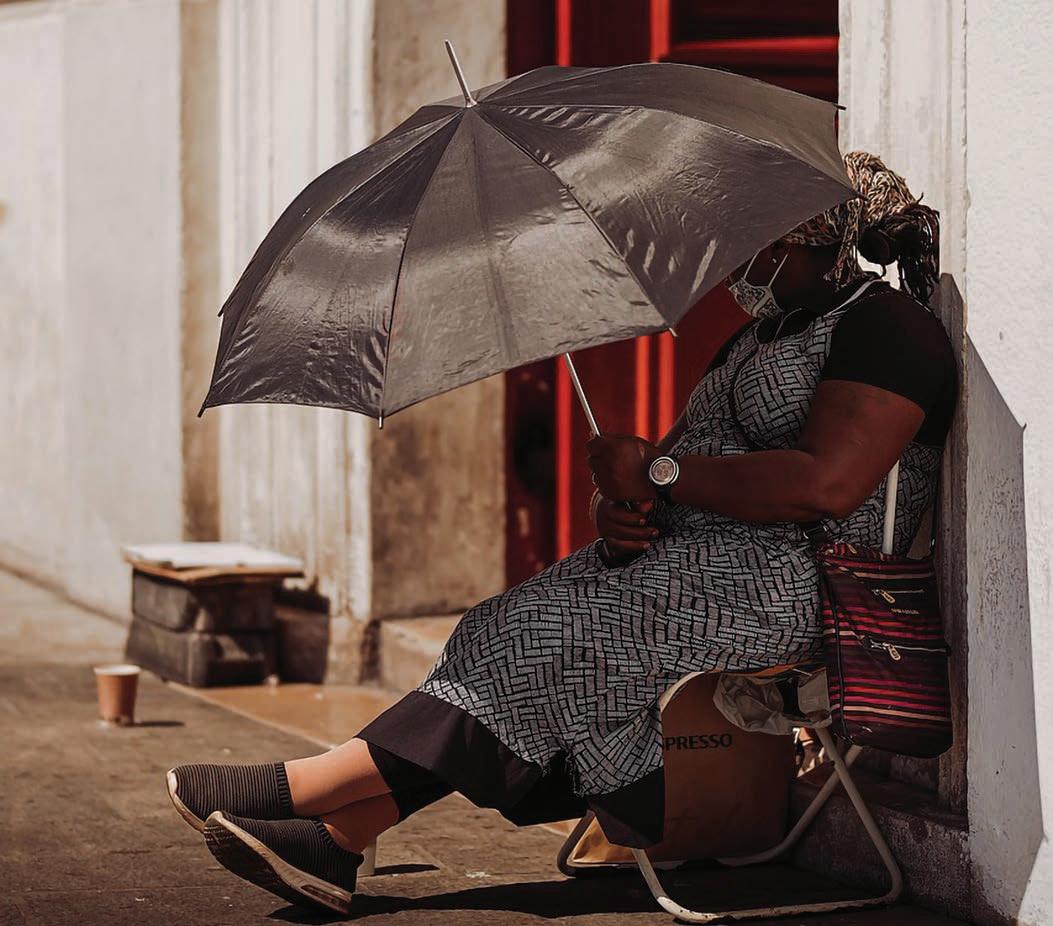
The homeless are everywhere.
But St. Louis is not Los Angeles or Portland, Oregon. In L.A. there are more than 75,000 and in Portland 6,000-plus. Our homeless population hovers around 1,600. It’s still a problem.
Fortunately, a number of St. Louisans have stepped up to the plate to try to solve it.
“Homelessness is like a jigsaw puzzle,” said Jay Shields, ceo of Schaeffer Manufacturing and co-founder of Sons & Daughters of Soulard, a business networking organization that funds homeless services. “I put all the pieces on the table in front of you. But then I hide the box. That is what solving this problem is like … We have to pull the box out from underneath the table.”
Seeing that finished picture has been translated to coming up with a whole new approach.
Currently, Shields leads Think BIG, a component fund of the St. Louis Community Foundation, which is raising money to help improve the delivery of services to St. Louis’ unhoused through systems change. Looking for guidance, they researched cities where the number of homeless had been greatly reduced.
Mandy Chapman Semple was with the Corporation for Supportive Housing (a national non-profit intermediary which
supports and funds the creation of permanent housing) when she started working with Houston Mayor Annise Parker.
“It took us about four years to implement,” Chapman Semple says. “We saw tremendous progress immediately. We saw a 60 percent drop in overall homelessness and 75 reduction in unsheltered people homelessness. When we started in Houston, we had more individuals sleeping outside than in shelter.” Ultimately, she founded a firm called Clutch Consulting Group, based in Houston.
“The strategy is to move people back into permanent housing to stabilize them as quickly as possible,” Chapman Semple says. “In many cases, we want to skip the shelters altogether and get them into housing with wraparound services so they can stabilize in a non-crisis environment. We can work with them in their home to move down a path of recovery, however that may look like for the individual. The [Houston] city and county made a commitment to expand the number of permanent housing units and to find and triage the people who had been in homelessness the longest because those were the individuals who had been left behind in previous efforts. If we could get those people who were being counted year after year after year, that’s how we would be able to bring the overall census down.”
slmag.net 29

Peter Miller, formerly a senior executive with St. Louis-based financial firm A.G. Edwards and a co-founder of Sons & Daughters with Shields, now heads the Meadows Foundation in Dallas. He initiated an effort there to hire Chapman Semple and work toward systems transformation. The foundation raised money toward the effort from several Dallas corporations and foundations. With Chapman Semple’s guidance, Housing Forward was designated as the umbrella organization to set strategy and facilitate coordination and collaboration with Dallas service providers. The (not always cooperative) Dallas’ city and county governments both signed on.
In three years, Dallas rehoused 2,700 persons, closed 10 encampments, and was able to voluntarily place 145 of the 147 people living there into permanent housing. Prior to Housing Forward, Dallas’ best record was placing 250 persons in a year.
“In Dallas, we leaned into rapid rehousing which is timelimited housing and time-limited services,” Chapman Semple says. “The principle is still the same to get people into housing as quickly as possible and help them stabilize in that housing. And then triage them out into our more limited long-term subsidies if necessary. We have been able to develop new ways to use every dollar that is available to us to make that housing as rapid as possible.”
In November 2022, Miller and the Meadows Foundation paid for Chapman Semple to come to St. Louis and relate the success in Dallas at a Sons & Daughters of Soulard meeting which included regional business leaders.
From that meeting, Shields founded Think BIG and established a component fund at the St. Louis Community Foundation to accept tax deductible donations. Its mission: Transform the service delivery system serving the region’s unhoused by bringing Mandy Chapman Semple and her methods to St. Louis. A grant from the Missouri Foundation for Health and Shields’ fundraising prowess enabled Mandy and her associate, Brooke Spellman, to begin working in August 2023. They presented findings in November.
“Before you can launch any of these major initiatives to rehouse you really have to assess the readiness of the community to all work in

concert,” she said. “So our initial engagement in St. Louis was really about doing that assessment.”
The goal was to have Clutch present a plan to address the problem. They did not get that far.
Yet.
“We didn’t get to design a major imitative because what that initial assessment revealed was St. Louis wasn’t quite ready,” Chapman Semple says. “There were some things that needed to be put in place, some decisions the community needed to make before they could start thinking about a major initiative. When we concluded our engagement in November, we left the community with that feedback and the results of our assessment and they have been working very hard ever since to move the pieces around so that they could be ready to start talking major initiative.
“There is some disjointedness among the region,” she continued. “I think this is part of the DNA. When it comes to a major initiative for the City of St. Louis and St. Louis County and the municipalities contained within, at a minimum work needed to be done to develop a regional leadership commitment on this issue and to empower an organization like House Everyone STL to really serve as the backbone of the initiative.”
But the City/County divide wasn’t the only problem. “The provider community within the City of St. Louis was very focused on advocacy and shelter,” Chapman Semple said. “They were going to need to take all of that energy and pivot it into energy for rehousing … What we said was we need you to pivot to getting people out of homelessness. Frankly crisis response is not going to solve your homeless problem. We challenged the providers to take all that energy for advocacy for the crisis response and sheltering and move it into action around rehousing. It’s not that rehousing isn’t a part of how providers do business today, it’s just not the priority. What we know to be true is rehousing has to be the focus of the response system. They must move from being a crisis response system into a rehousing system because rehousing ends homelessness and it immediately solves the crisis.”
30 slmag.net
Jay Shields and Peter MillerMandy Chapman Semple
slmag.net 31
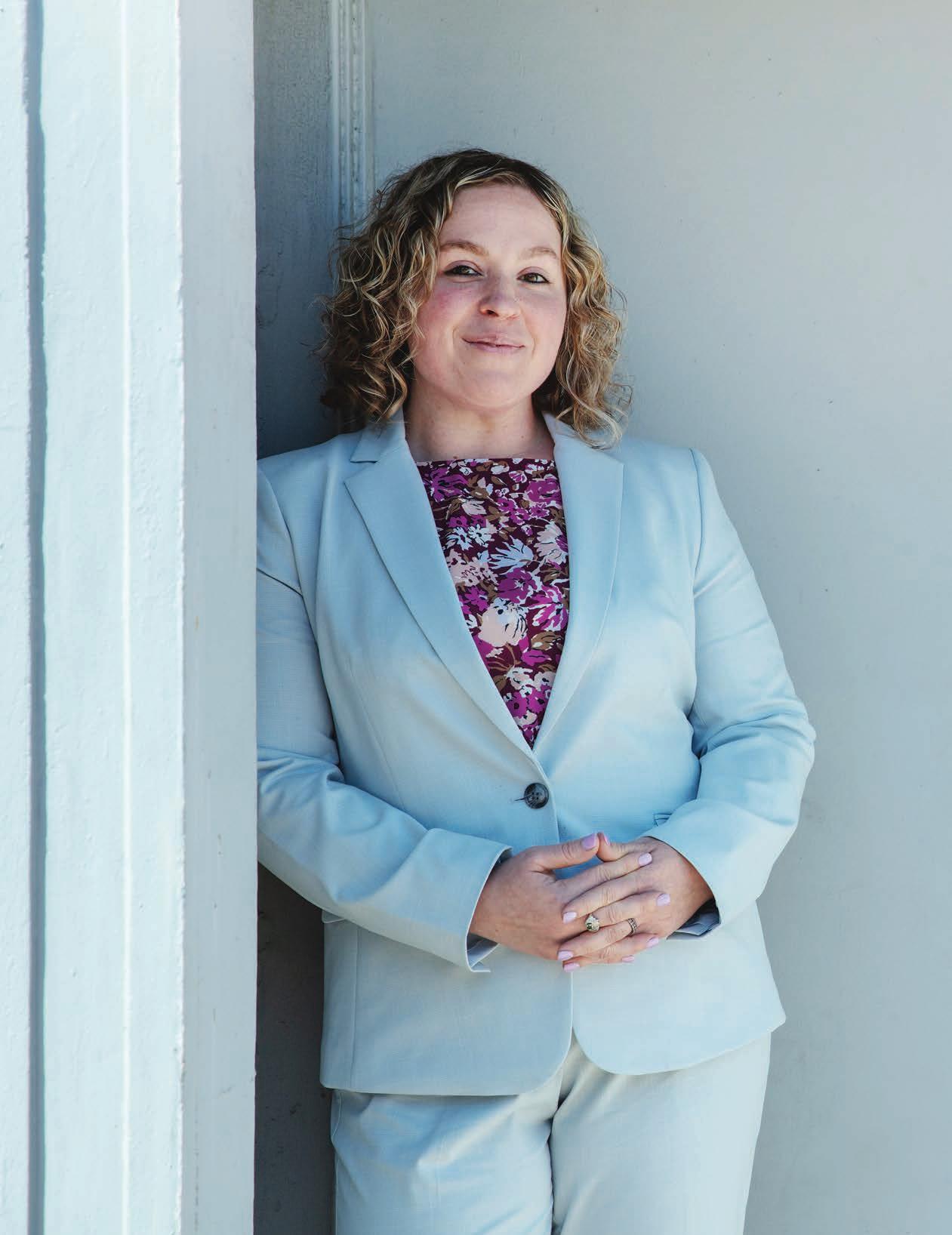
Samantha Stangl, executive director, House Everyone STL
Founded in 2021, House Everyone STL stands ready to turn the tide. At first the organization was headed by Laurie Phillips, who previously led St Patrick’s Center, but in August, Samantha Stangl took the helm. A graduate of Washington U’s Brown School of Social Work, she came with decades of experience as a service provider to the homeless and abused, as well as working for the Clark-Fox Family Foundation and for St. Louis County Prosecutor Wesley Bell.
“I have always just been really drawn to innovation, systems thinking,” Stangl said. “It’s just big picture thinking. I’ve done the individual casework. I know how important individuals are in the community and in these systems but unless we start to really focus upstream, we’re going to keep doing the same thing over and over again. That’s really what House Everyone STL was designed to do.”
“This is not a program, it’s a system,” Jay Shields explained. “The last thing anyone needs is another program or plan gathering dust. This is a system that has worked in other cities like Houston and Dallas and will be tailored to ours. It is intended to move the unhoused off the streets, get them the help they need, and get them housing. We want them to have dignity again.”
Stangl explained that St. Louis has “populations of people who are experiencing homelessness for the first time, who got evicted, lost a job, maybe spent some time sleeping in their car. But we also have folks who, because it’s taking six to 10 months to get referrals for housing, are staying in the crisis part of the system. So our outflow is not matching our inflow. The population within the system is growing because not enough people are exiting to permanent housing. We need to look at how do we rapidly get people into housing?”
Working alongside Continuum of Care agencies serving the unhoused and Adam Pearson, director of St. Louis City’s Department of Human Services, among others, House Everyone STL leverages data to set long-term strategy and coordinate regional efforts. But they are not and never plan on being a direct service provider.
“I’m looking at the forest; the providers can focus on the trees,” Stangl says. “It is our sole and exclusive job to focus on system functioning, innovation, and supporting individual providers so that they can do what they do best, which is care for folks and get them into housing. The solution to homelessness is housing. Not shelters.”
“You need to get everyone together and that is a tall order for St. Louis,” Shields said.
Chapman Semple added “The ball is in St Louis’ court. Given where everyone’s interest is, the resources they have available, and the concentration of where this issue takes place, you are going to do best when you get a region connected … You have seen the tension between the provider community and the City. So if we are going to break that tension, the Mayor, the City needs a larger set of partners that really compel everyone out of that dynamic of tension and into a more generative place focused on moving the system forward.”
Jay Shields and Samantha Stangl are undaunted.
“It’s really coming together,” Shields said. “It’s hard to get unity in a meaningful sense. No one agency or organization can make an impact. The County realizes this is a regional problem and not just a City problem. The City is where the resources are so that is where the homeless go. The County has just as much concern about this as the City does, not to mention Metro East and surrounding counties that feel the burden of homelessness.”
“We have a ton of community providers helping support this effort and vision, and we have enjoyed frequent communication with the business community led by Greater St. Louis Inc.,” Stangl said. “We’re a small organization nation. We couldn’t do any of this without the community support.”
“It feels very solvable,” Chapman Semple says. “Most of the time, this is something we can tackle. It’s not easy but it is doable.”
Samantha Stangl agrees. “This is the time. This is the moment and this is something that we can truly solve.” sl
32 slmag.net
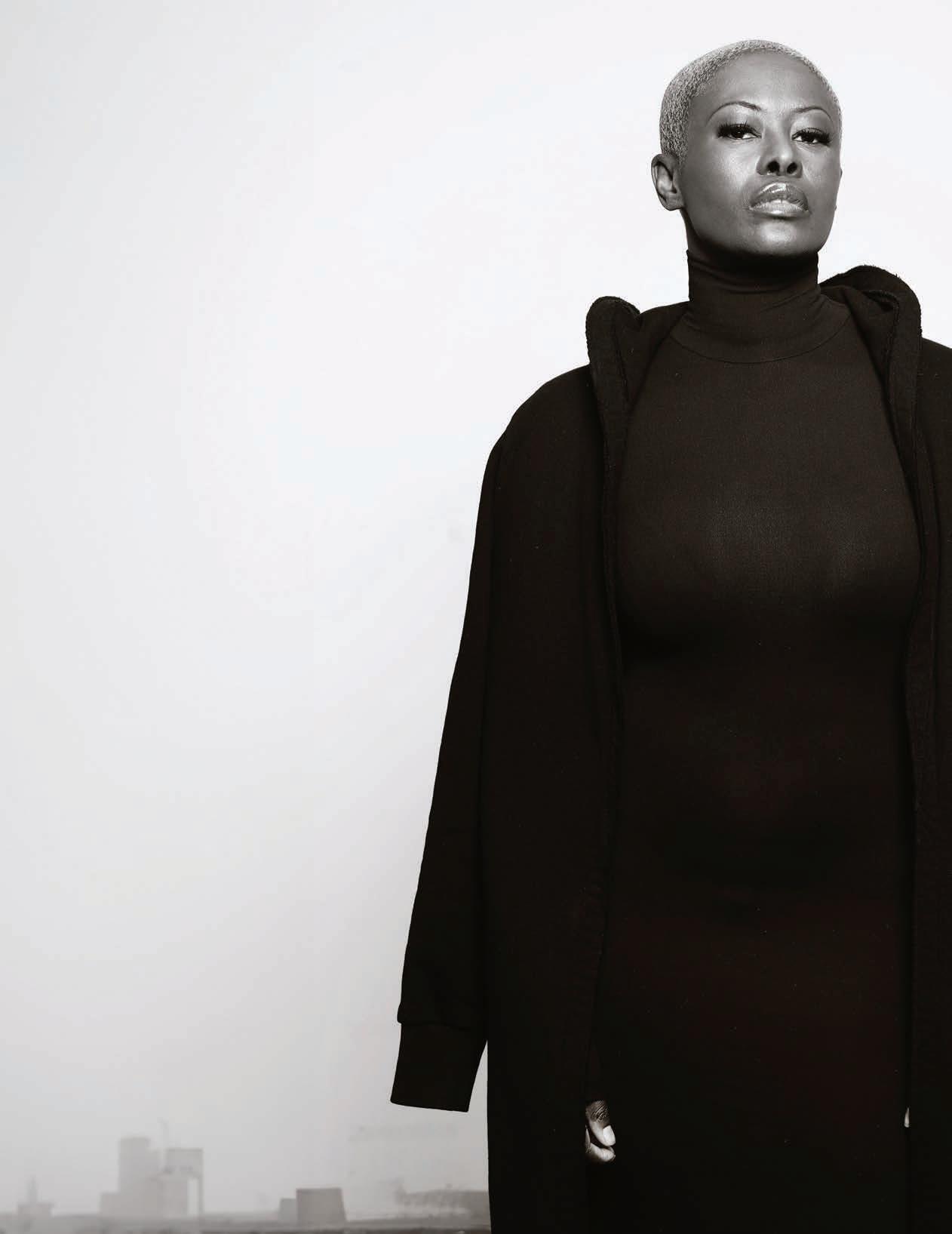
GIRL ON FIRE
Laurence Basse Returns to NYFW with "Burn This City" Collection
Compiled by Bridget Williams
Runway photos by Paolo Lanzi / Gorunway.com
Portrait of Laurence Basse by Britt Carpenter Studios, courtesy of Laurence Basse
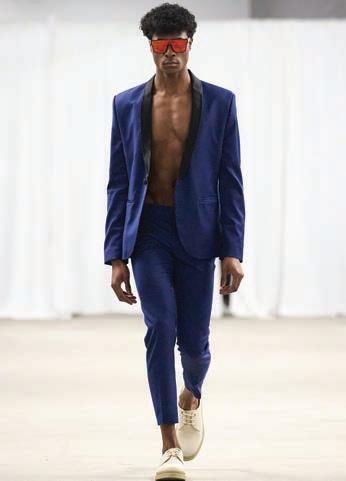
The road to prominence in the fashion world is rarely straight and smooth. French designer and leather expert Laurence Basse's journey to her first solo runway show during New York Fashion Week began decades ago. After being discovered by Jean-Paul Gaultier in the late nineties, Basse, a native of Normandie, France, used the money she made as a print and runway model to go to fashion school in Paris. "I loved to dress up as a kid but never thought of becoming a designer until my brother and I started making clothes in high school. We sold our clothes to the more privileged kids, so it became a hustle! People were hustling drugs, I was hustling clothes," said Basse.
Fans of Project Runway may recognize Basse as a season 15 finalist (2006) and a season 20 "All-Star" runner-up (2023). While these appearances helped elevate her status as a fashion designer, her unwavering commitment to detail and structure is what continues to garner fans, including NBA superstars Dwight Howard and Serge Ibaka, Jada Pickett Smith, actor Aldis Hodge, Grammy winner Samara Joy, and comedian/actor Yvonne Orji.
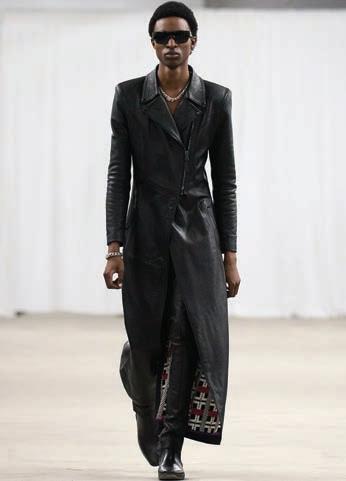
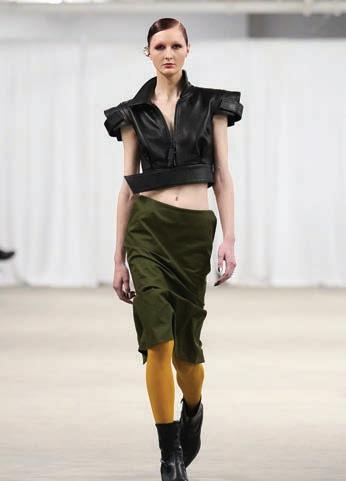
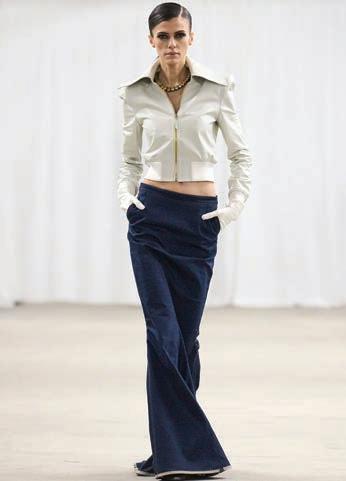
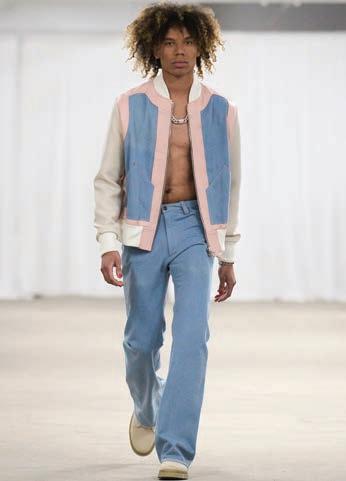
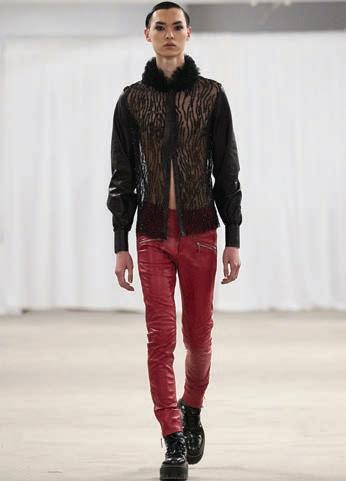
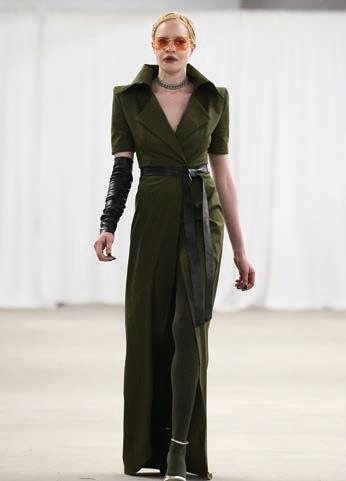
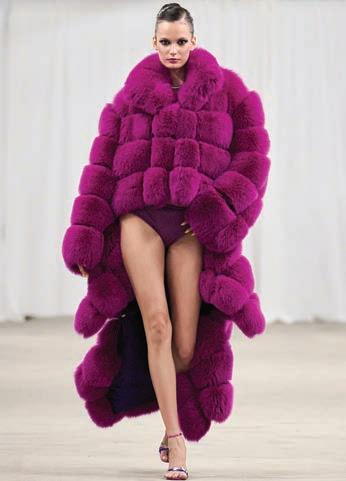
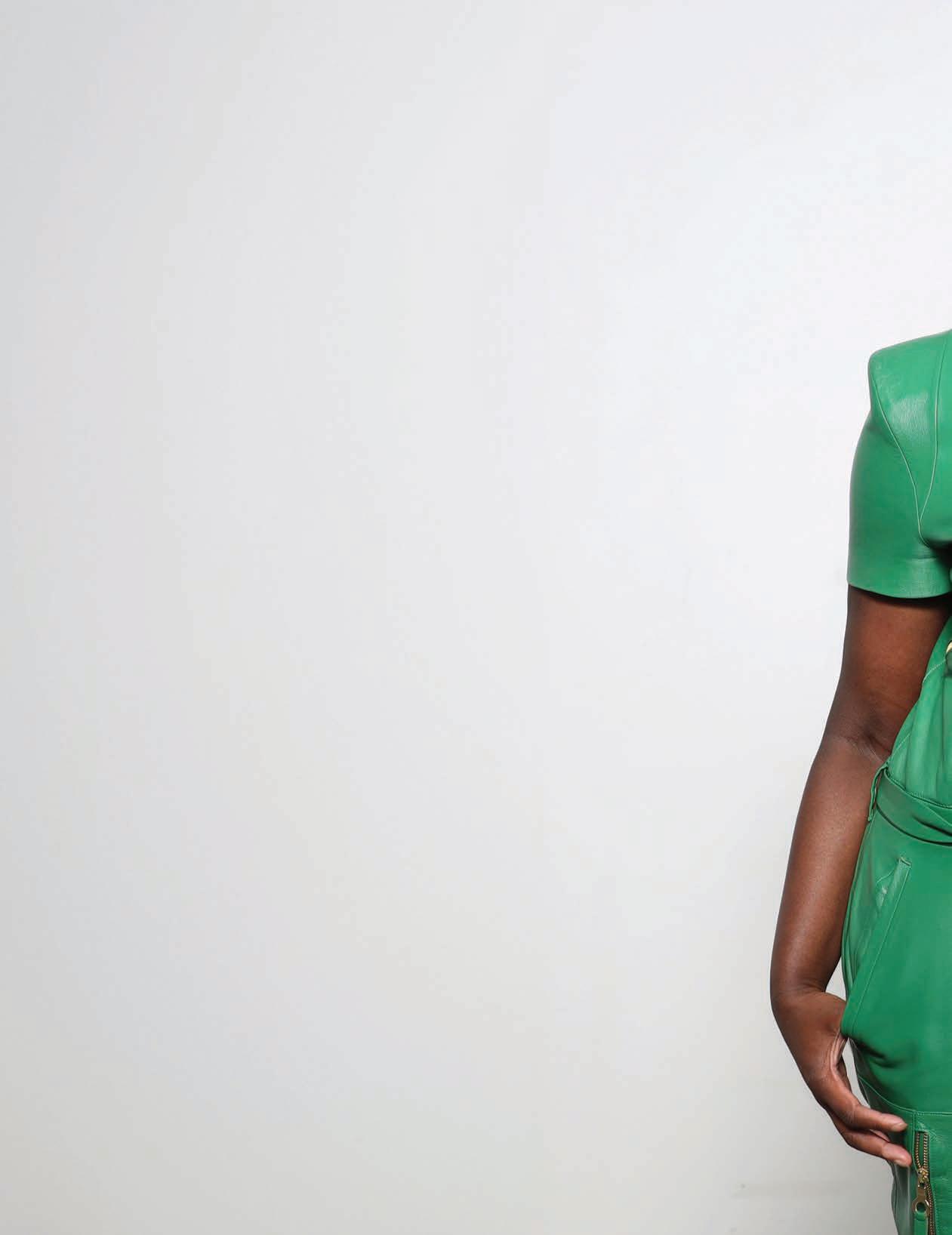
Basse's "Burn This City" FW24 collection was heavy on leather, her signature material, to which she added denim, silk, and wool. Building on a base of black, Basse incorporated tones of pink, blue, green, and sheer metallic. She collaborated with jewelry designer Mr. O Atelier to create custom-designed chain-link jewelry worn by nearly every model.
After her successful runway show, we had the opportunity to ask Basse a few questions about her long career in fashion and what's on the horizon for LAURENCE BASSE PARIS.
slmag.net 33
Laurence Basse


34 slmag.net
Laurence Basse

SL: As someone with a self-professed passion for "well-designed things," what made you gravitate to leather as your preferred material?
I love intricate, simple, and well-made clothes, and I already perfected working with all types of different fabrics. I needed to challenge myself, and I thought that leather was perfect for many reasons: I always thought that leather was only accessible to the rich, and I loved leather but couldn't afford it, so what better challenge than to teach myself? That's how we fell in love (leather and me).
SL: How did you remain relevant in the fashion industry between fashion school and your breakout appearances on Project Runway?
Between the time I left fashion school in Paris and created my LBP line, over 15 years went by, and I never left the fashion world. I was modeling in Paris and NYC during that time and learning the flip side of that business. Of course, it was a struggle to remain in the fashion industry, but when you love what you do as much as I do, there is no other way! I've been in fashion for so long that it's part of my DNA. I never felt pressured to have my work go in a different direction to appeal to a larger audience… that's just not me and never was! I'm an artist and a rebel at heart; I do what I feel, and if you feel me, you'll rock with me. No one can please everyone; that's why you have different brands and different styles.
SL: Describe what it felt like to have your first solo show at NYFW. Do you have a favorite piece in the collection?
It's a dream come true, definitely a milestone in my design career. It was made possible by my incredible team, led by my dear, long-time super-talented friend, MyKel C. Smith.
I have several favorite pieces, but if I have to pick one, I'll go with the all-black leather long skirt (mermaid vibes) and cropped leather jacket with short sleeves and an exaggerated collar. (bottom center image)
SL: What inspires you?
My inspiration comes from everything outside of me, just LIFE and how I feel at the moment of creating. Art is a vessel of communication for me. I am literally inspired by everything around me... it's a gift that keeps on giving. I am never short of ideas...they just keep coming… I'm blessed.
SL: Who is your ideal client?
I have two ideal clients. One of them inspired me during my youth and was instrumental: Grace Jones. My new school client, who has that je ne sais quoi, is none other than Rihanna.
SL: What is the future of LAURENCE BASSE PARIS?
The future of LBP is limitless. We will be a household name next to the GUCCI's and ST. LAURENT's of this fashion game. Let's go BIG or go home… and we ain't going home! sl
For more information, follow on Instagram @laurencebasse or visit laurencebasse.com.

slmag.net 35
EAST MEETS WEST
The Rise of Japanese Whisky
Written by Claire Williams
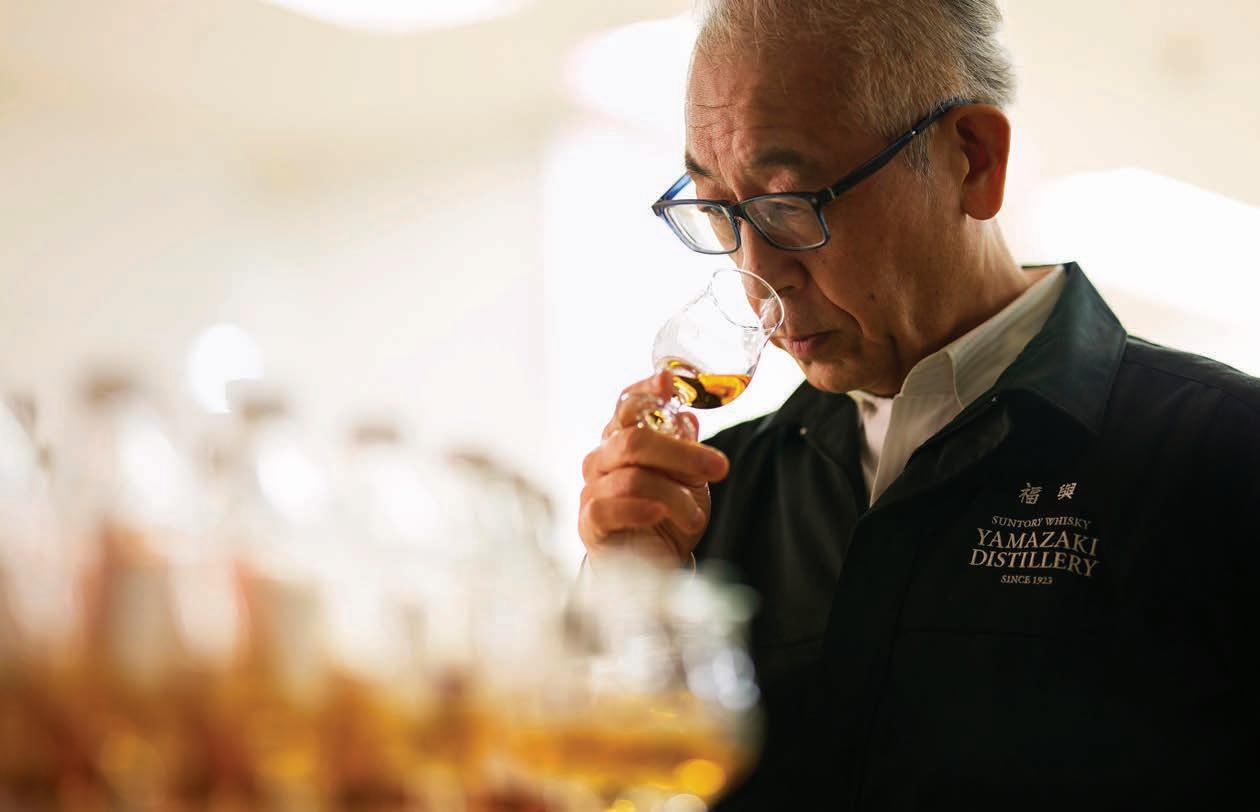
The Land of the Rising Sun has given Westerners plenty of things to geek over, including sushi, samurai, and sake. And now, Japan has mastered a Western classic: whisky. You can put away your choko (traditional Sake glass) and exchange it for a glass tumbler as demand for Japanese whisky continues to explode. In 2022, the Japanese whiskey market was valued at $3.86 billion and is forecasted to triple in value in the next ten years. Comparatively, the US whisky market is valued at $62 billion. Still, the Westerners have also had over five centuries to perfect their craft. The first written records of whisky appeared in Scotland and Ireland in the 15th century, and it would take four centuries for those distilling techniques to migrate to Japan.
While the companies that have sprung forth from the two godfathers of Japanese whisky—Shinjiro Torii and Masataka Taketsuru—exist as rivals today, both were vital to the other's success during their lifetimes. In 1899, Torii opened his first store, Kotobukiya (known today now as Suntory), one of the first stores to sell imported alcoholic beverages, specializing in wine, but he dreamed of creating his own spirit. As his company grew, despite opposition from his executives, he decided to establish a distillery in a suburb of Kyoto, a well-known area for its excellent water quality, and where the legendary tea master Sen no Rikyu, a seminal influence on the Japanese "Way of Tea," built his tearoom.
Torri hired Taketsuru to run his distillery, as both men shared a similar vision of the future of Japanese whiskey. Taketsuru was
born into a family of sake brewers. He set off to study chemistry in Scotland in the early 1900s, where he fell in love with Scottish whiskey and women (he wed Jseeie Roberta "Rita" Cowan in 1920 despite opposition from both families). After moving back to Japan a year later, Taketsuru helped Torri establish his distillery.
The men worked together for over a decade, releasing Japan's first whisky, Suntory Shirofuda, in 1929, almost one hundred years after the first bottles of whisky were sold in the United States. Five years later, Taketsuru founded his distillery on the northern Japanese island of Hokkaido, where he believed the local terroir resembled Scotland's more closely. Taketsuru's company, now known as Nikka, sold its first whisky in 1940. The company was taken over and expanded by Taketsuru's adopted son after his and his wife's death. After the Second World War, Japanese whisky gained traction and popularity on the island nation.
The two distilleries fought for the top position in the 1950s as drinking whisky with Japanese food became increasingly popular. In many bars and izakaya, the "bottle keep" system, where customers could purchase a bottle of liquor and have the unfinished portion stored until the next visit, took root, as well as the popular style of drinking mizuwari (two parts of cold water mixed with one part of the spirit and some ice), which most Western whisky purists frown upon. After a decline in the 1980s, Japanese whisky rebounded in the 2000s in part due to the highball craze and Japanese whiskies garnering numerous awards and accolades. Nikka's 10-year Yoichi
36 slmag.net

single malt kicked it off when they won "Best of the Best" at Whisky Magazine's awards in 2001.
The "terroir" of Hokkaido lends itself to making excellent whisky due to its superior water quality, a climate that leads to faster maturation (producing whisky that tastes older than it is), and high elevation that results in a more flavorful, aromatic, silky smooth whisky.
Japanese whisky has found a way to marry the techniques of Scottish and American whisky styles to create its own avenue that's now become a global phenomenon. Scotch lovers find themselves drawn to Japanese whisky, as the foundation of Japanese whisky was forged in Scottish distilling techniques. However, Japanese whiskey has now taken on a life of its own: the student has become the master. Many distilleries in Japan also import Scottish ingredients to use in their whiskies, such as peat, making it more reminiscent of those dry and smoky styles.
Contrary to this, Japan is currently making its own traditions regarding whisky, similar to American whisky pioneers who enjoy experimenting and trying new flavor profiles even today. The Japanese carefully consider the water used, the boiling point given the altitude of the distillery, and local wood varieties to craft their barrels (a well-known variety is known as the rare Japanese oak tree called Mizurana). All of these give their whisky a unique taste not found anywhere else.
While Japan has an impressive range of whiskies, knowing your preferences will help you find your perfect match. If you enjoy rye
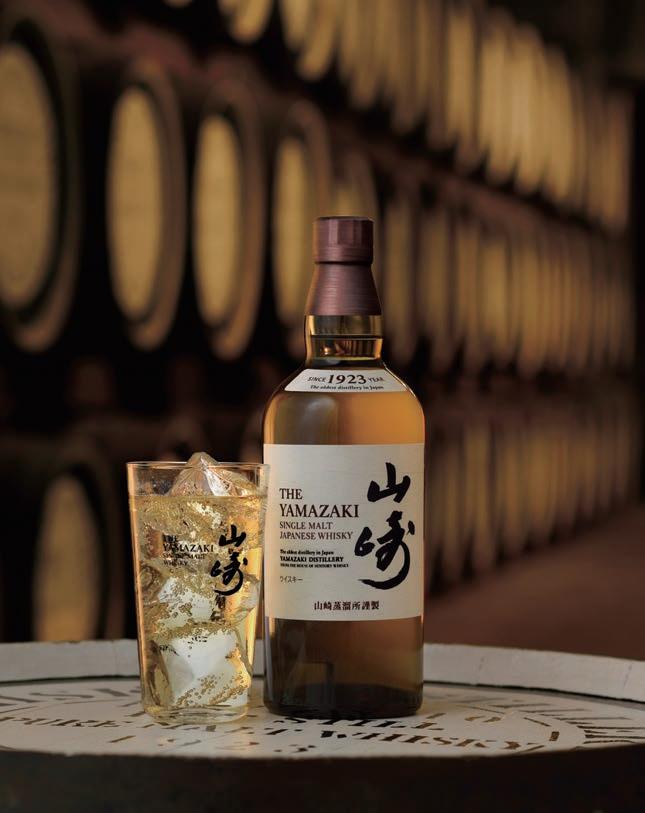
whiskey, you know it often has a drier, peppery, and spicier finish than other American whiskies. You'll likely find most Japanese whiskies pleasant on the palette as they generally resemble rye whiskies. An excellent starting bottle for beginners is Suntory's Yamazaki 12-YearOld Single Malt, which is the core expression of their single malt range and one of their brand's most well-known bottles. The whisky is floral and fruity, and its notes are similar to Scottish whiskies, but it also has a style that's very much its own. Nikka's Yoichi Single Malt is for Scottish whisky fans looking for a lightly peated whisky balanced by tropical fruits and caramel flavors on the palette.
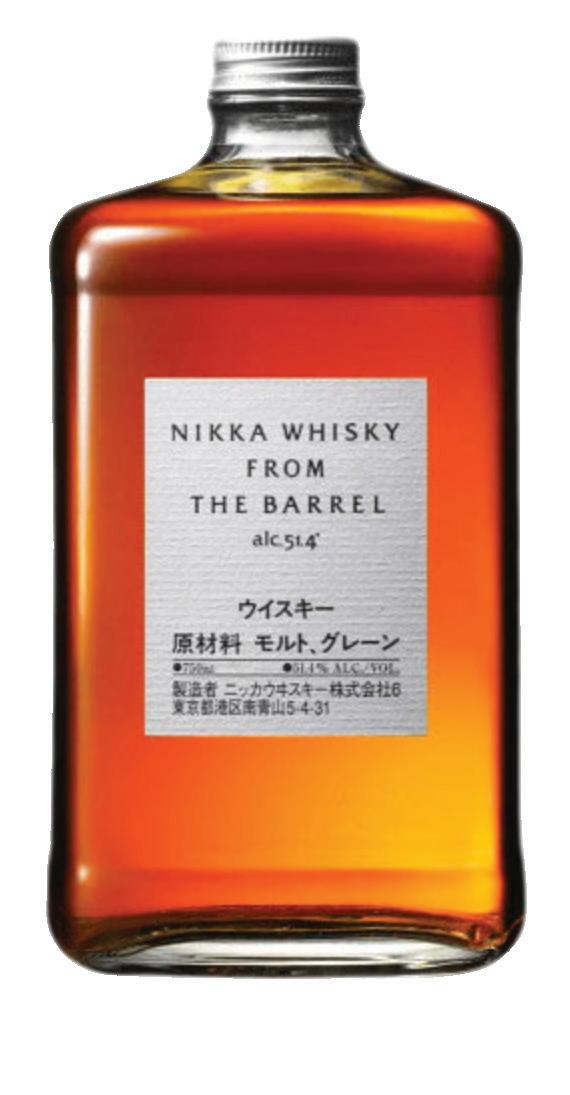
If you're more of a bourbon fan and enjoy a smoother, sweeter whisky, Nikka's Coffey Grain Whisky is made with a majority of corn in the grain mash, giving it a sweeter, creamier finish. Nikka's From the Barrel Whiskey has notes of caramel, vanilla, and oak that Bourbon drinkers would love.
For those who want to have the full "When in Rome" experience, Suntory's Toki Whisky is an ideal choice for highballs. It is a blend of whiskies with notes of pink grapefruit, almonds, and a light vanilla finish. Pair it with sparkling water and a lemon for the perfect highball.
As the American whisky craze rages on, Japanese whisky offers an unexpected compliment to an already booming industry with new styles and unique flavor profiles. Japanese whisky is another opportunity for connoisseurs to fall in love with whisky once again and raise a glass to the future of whisky ripe with innovation; kanpai! sl
slmag.net 37
FLOWER POWER
Compiled by Bridget Williams
38 slmag.net


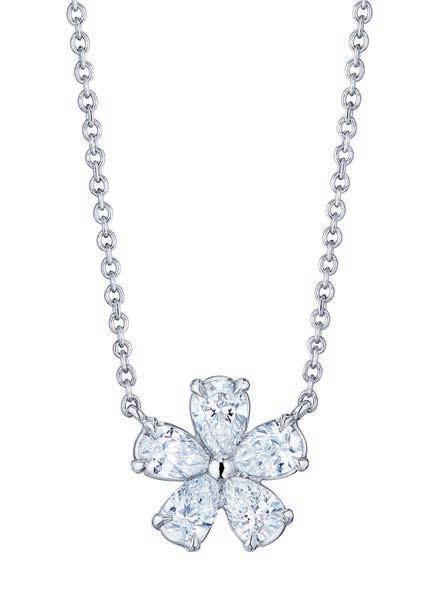
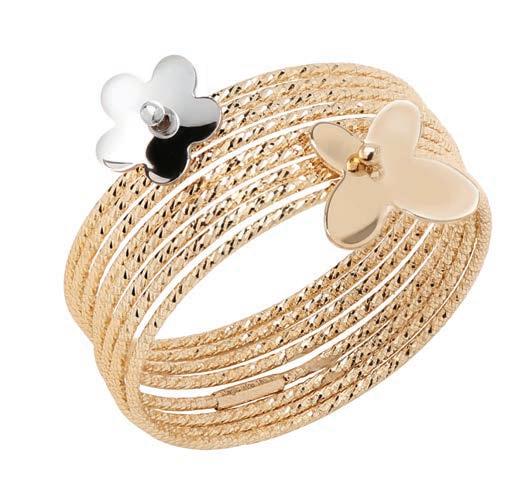
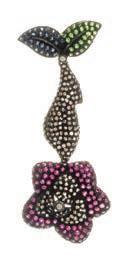
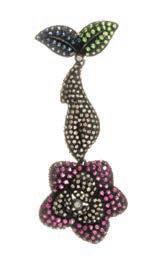
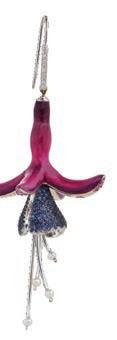
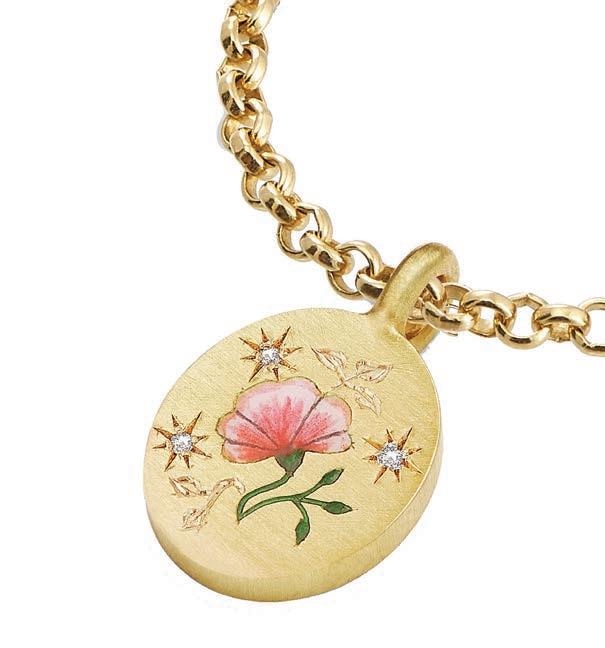

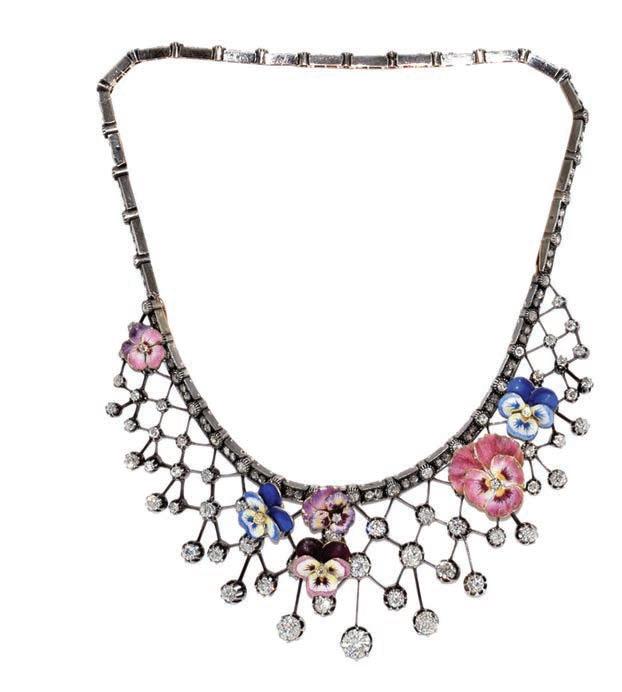
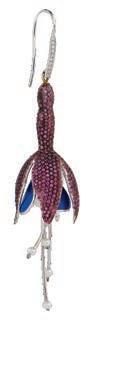
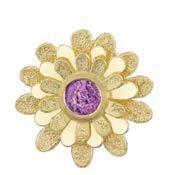
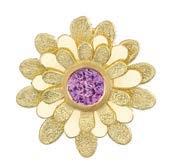
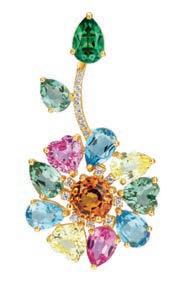
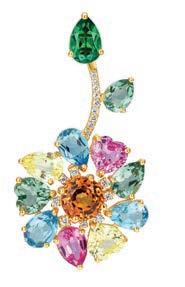
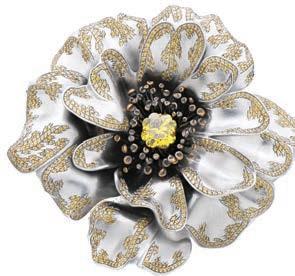
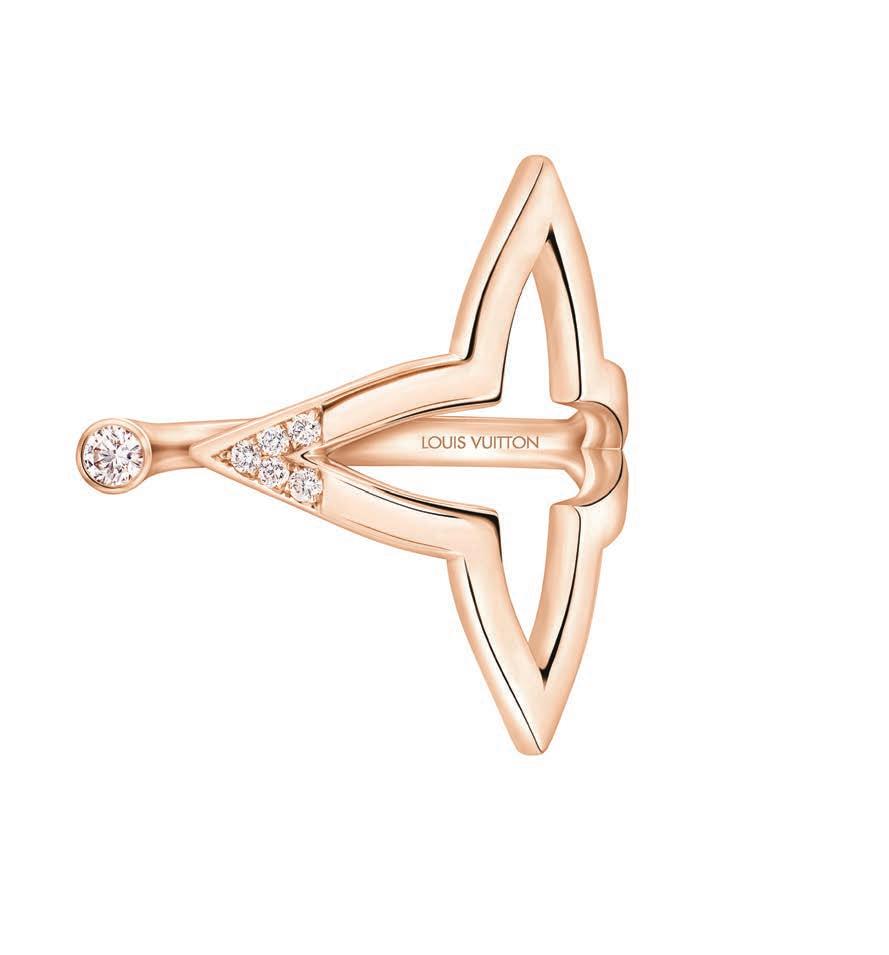
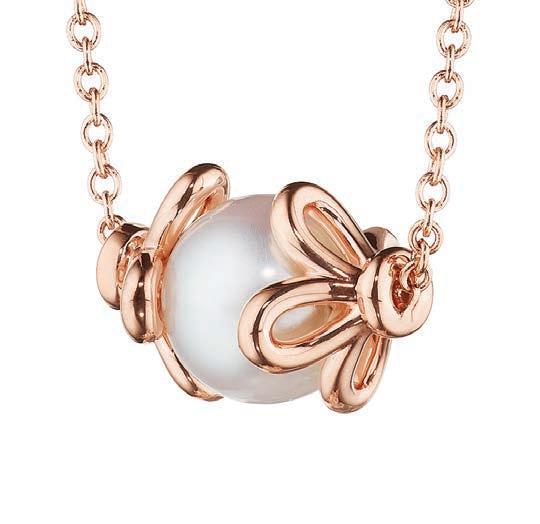
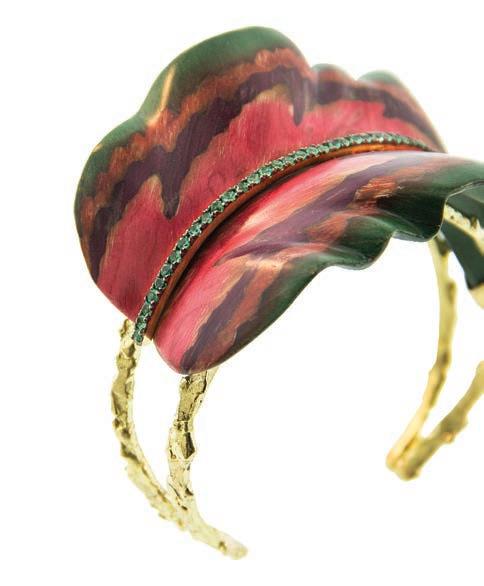
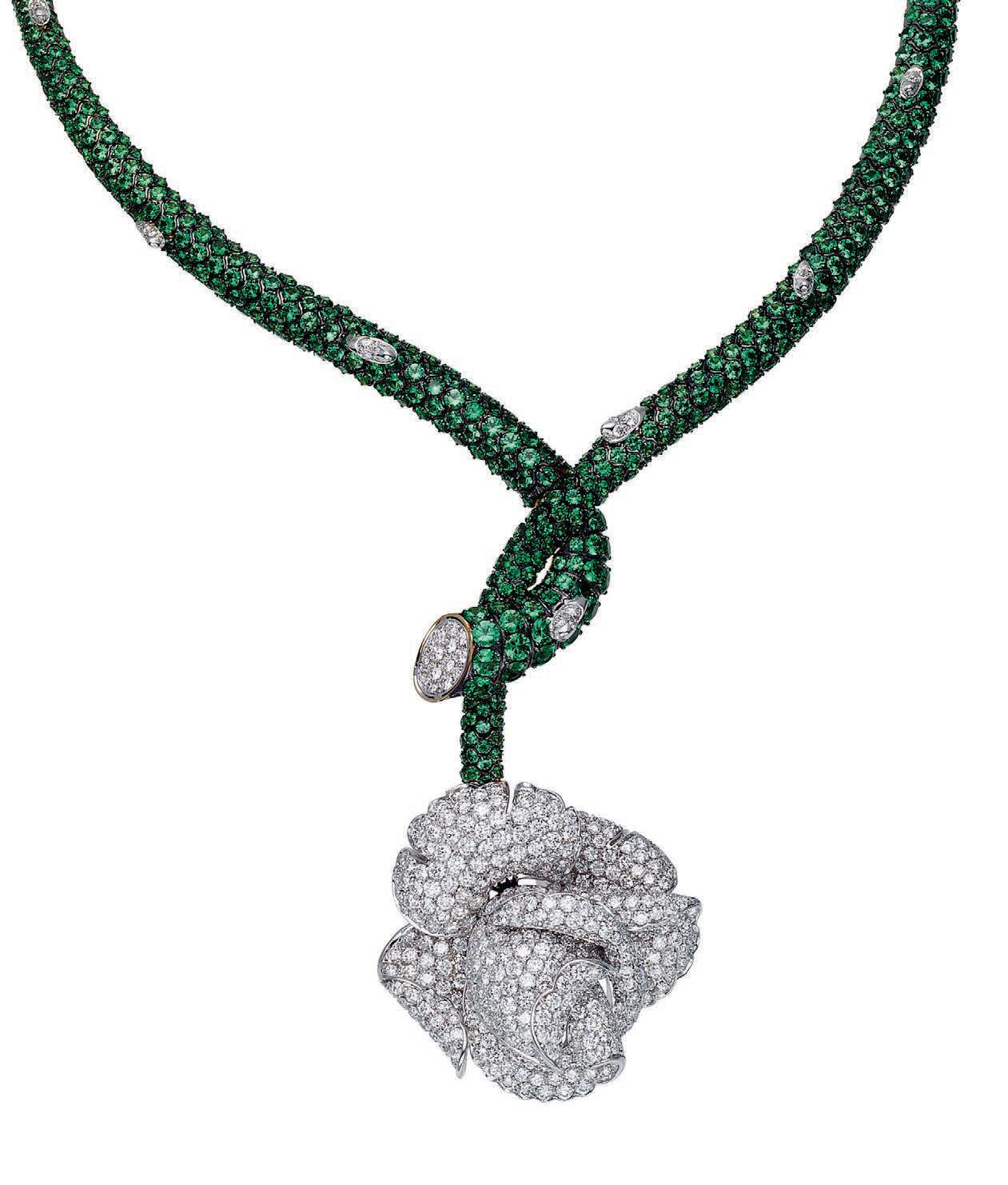
This page, clockwise from top left: Picchiotti diamond and tsavorite necklace ($159,100). Available through Moyer Fine Jewelers in Indianapolis, Elleard Heffern Fine Jewellers in St. Louis, and picchiotti.it. Verragio single pearl necklace ($780). Available through Genesis Diamonds in Nashville and verragio.com. Silvia Furmanovich leaf cuff (silviafurmanovich. com). Louis Vuitton Silhouette Blossom open ring ($3,150; us.louisvuitton.com). Opposite page, clockwise from top left: Gigi Clozeau rose pendant ($255) and Poppy necklace ($415; gigiclozeau.com). Kwiat Cluster floral pendant ($3,950). Available through Reis-Nichols Jewelers in Indianapolis, Elleard Heffern Fine Jewelers in St. Louis and kwiat.com. Cece Jewellery rose diamond pendant (from $2,771; cecejewellery.com). Fred Leighton necklace (fredleighton.com). Lugano titanium flower brooch (luganodiamonds.com). Nadine Aysoy Summer Love earrings ($15,305; nadineaysoy.com). Future Fortune Dahlia earrings ($5,000; futurefortunejewelry.com). Basak Baykal Fuschia earrings (basakbaykal.co.uk). Modern Moghul Pranja earrings ($1,800; modernmoghulcom). Ritique Serenity wire ring ($890; ritique.com). GUZEMA Fine Jewelry brooch ($950; guzema.com).
slmag.net 39

FUTURE PERFECT
BMW Vision Neue Klasse X
Written by Andre James / Photos courtesy of BMW
BMW painted a bold portrait of the brand's future at IAA Mobility 2023, Germany's leading international automotive trade fair, unveiling the BMW Vision Neue Klasse (see the related article in our November/December issue). Building on this vision's aesthetics, technology, and sustainability, the company recently announced that the BMW Vision Neue Klasse X, part of the Sports Activity Vehicles sector, will begin production at their plant in Hungary in 2025.
With vibrant colors, efficient dynamics, and a pared-down yet forward-thinking design emphasizing spaciousness and the joy of driving, the BMW Vision Neue Klasse X presents a decidedly youthful and optimistic face.
"Neue Klasse means BMW driving at an even higher level," explains Frank Weber, member of the Board of Management of BMW AG responsible for development. "The BMW of the
future will have four totally new super-brains: high-performance computers working smartly together on what, up until now, was processed separately. We developed the first super-brain completely in-house. It integrates the entire powertrain and driving dynamics with up to ten times more computing power. The second super-brain will enable the next quantum leap in automated driving. Going forward, we will combine four key control units in a single high-performance computer. The result will be more dynamic performance, more precision, more efficiency, and even more fun to drive."
The BMW kidney grille is notably reimagined as a threedimensional sculpture with vertically aligned and backlit contours. The headlights and kidney grill operate in tandem to create a lighting effect that activates as the driver approaches the vehicle and continues in the interior.
40 slmag.net


A commitment to sustainability has led to several innovations. "Verdana," a wholly plant-based, mineral-based, and petroleum-free surface material, is used on the lower portion of the door paneling and in the center console. Maritime plastics, such as recycled fishing nets, are being utilized for the first time for injection-molded parts. Recycled mono-materials comprise the side skirts and front and rear apron attachments.
Inside the cockpit, the driver's slightly elevated seating position enables a confident driving experience. A redesigned steering wheel with multifunction buttons, a Central Display with intuitive touch control integrated within the instrument panel, BMW Panoramic Vision that projects key information across the entire width of the windscreen, and advanced voice control of the BMW Intelligent Personal Assistant enhance the human-car connection. The sixth generation of BMW's eDrive technology represents its

most efficient yet, with new and now round lithium-ion battery cells and a transition to an 800-volt system, improving charging speed and range by up to thirty percent. A ten-minute charge enables a range of up to 180 miles. A reduction in drag and a brake system optimized for fully electric vehnicles combine to incrase overall efficiency by up to twenty-five percent.
"Together with the BMW Vision Neue Klasse, the BMW Vision Neue Klasse X showcases the breadth of our future BMW model line-up. The Neue Klasse reflects the variety of all the models that customers want today and in the future – from sporty sedan, with all its derivatives, to modern SAV family," says Oliver Zipse, Chairman of the Board of Management of BMW AG. "In this way, we are underlining that the Neue Klasse is much more than just a car or a specific concept; it is redefining the BMW brand – and, at the same time, will be more BMW than ever." sl
slmag.net 41
InsideOutside
Compiled by Bridget Williams
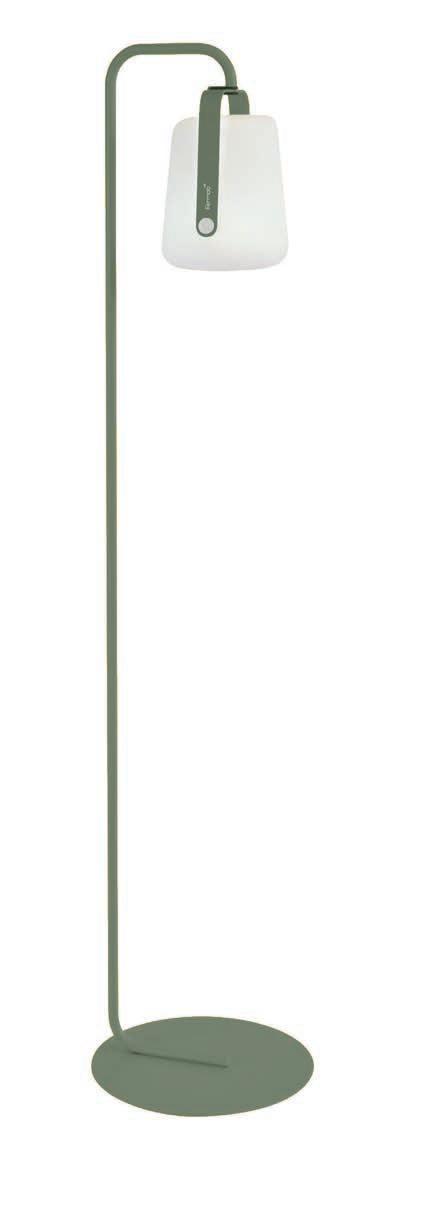
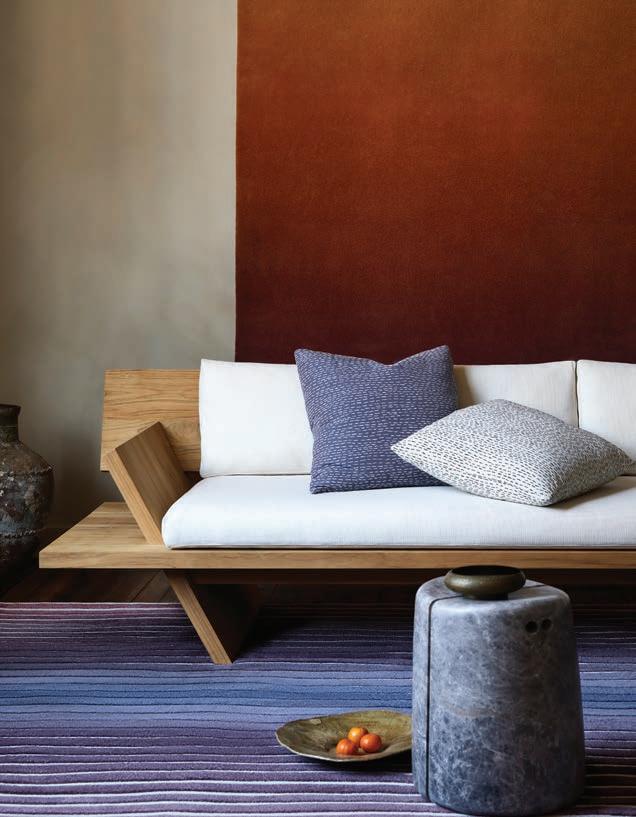
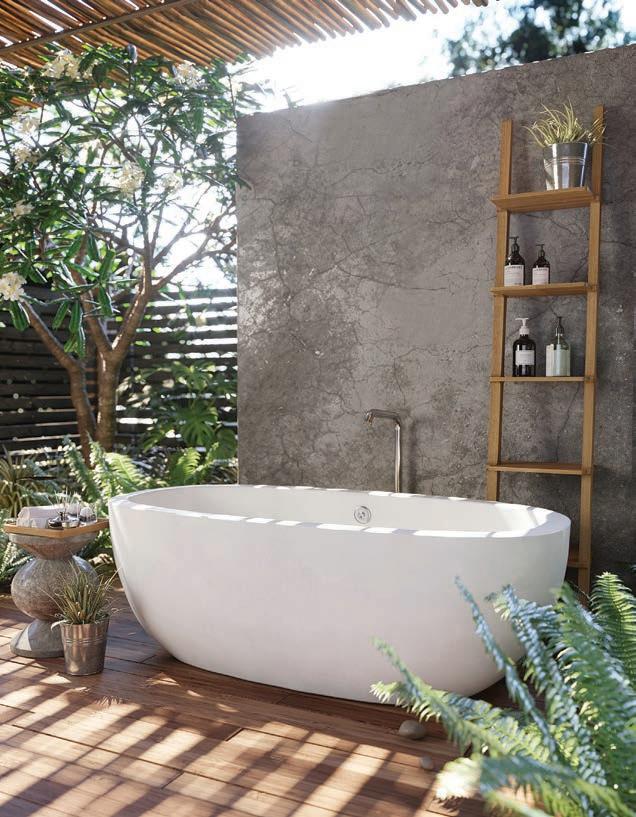
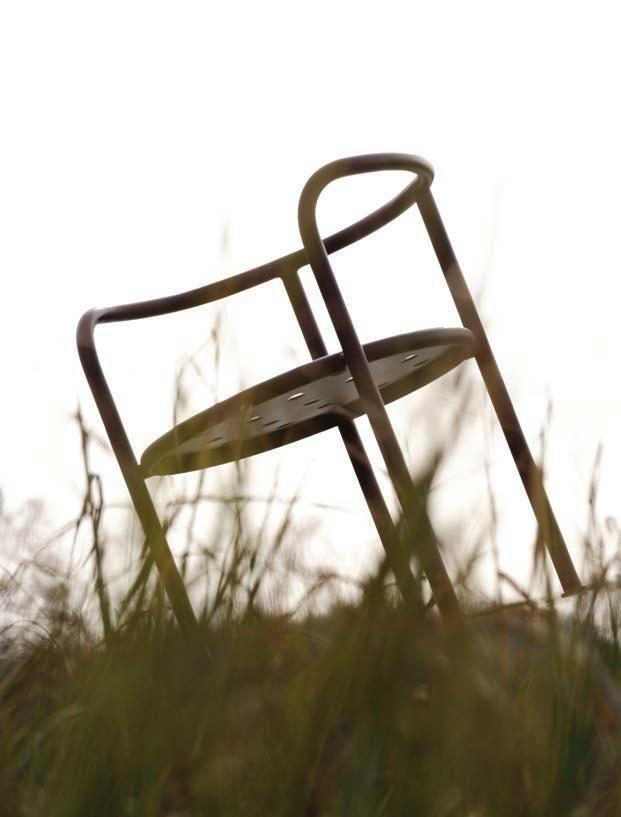
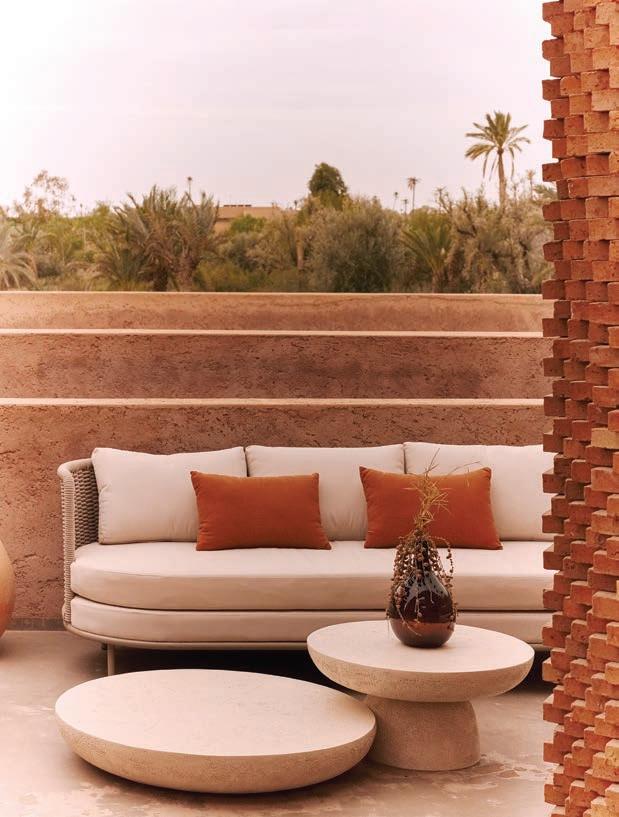
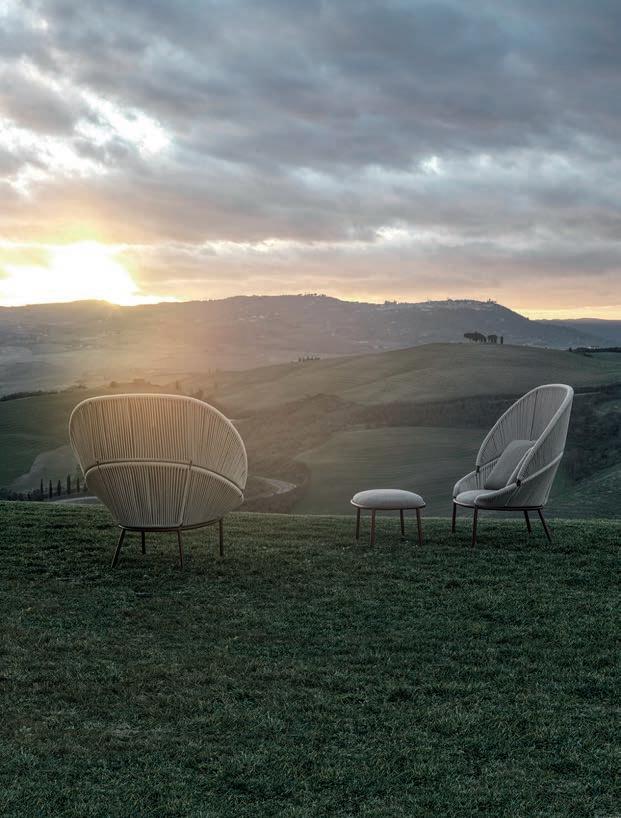
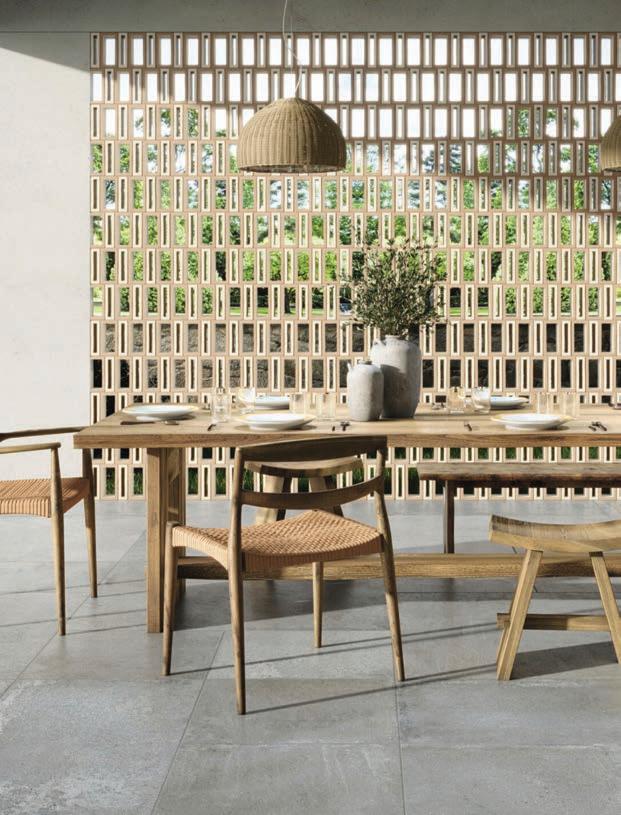
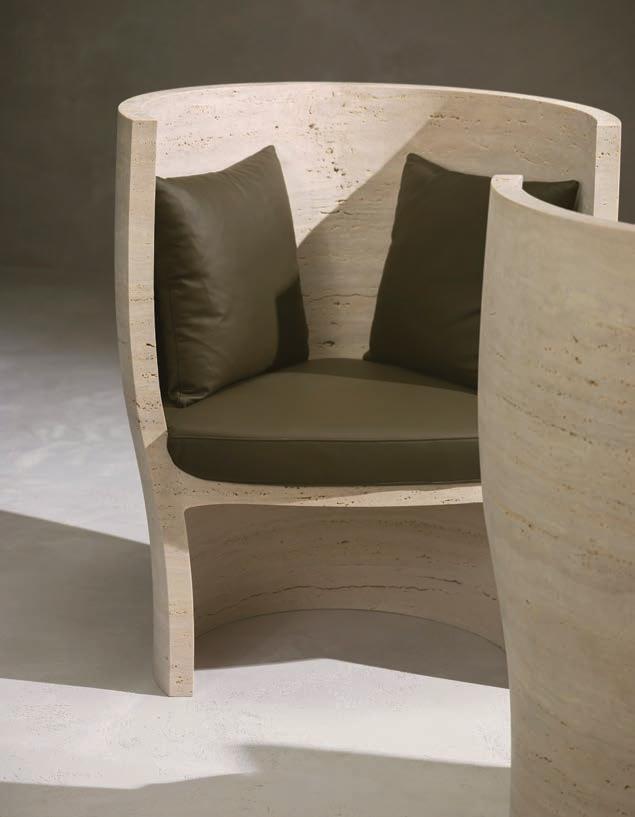
The gradual blurring of lines between indoors and out has led to an increased need for outdoor furniture that looks just as good as its indoor counterparts. That equals high-end, durable, and weather-resistant materials with forms that match or surpass the functional aspect of the designs.
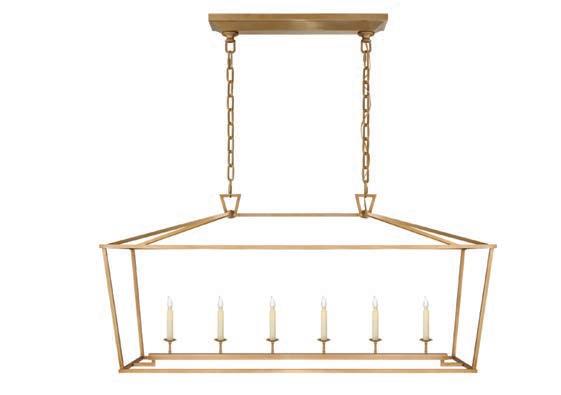
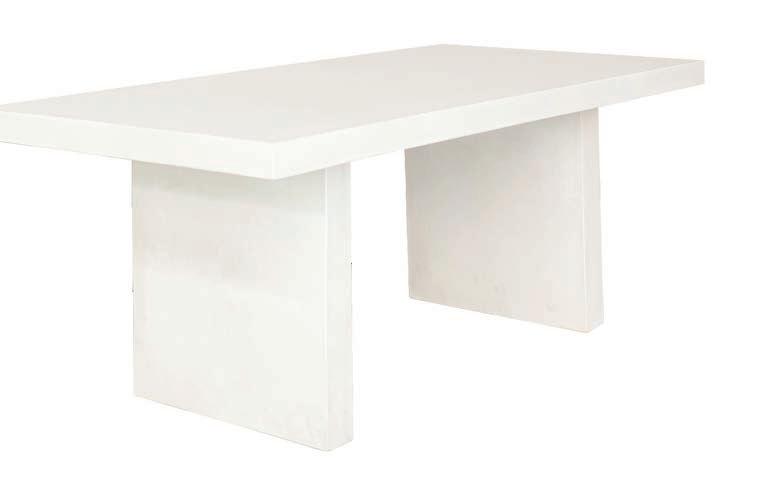
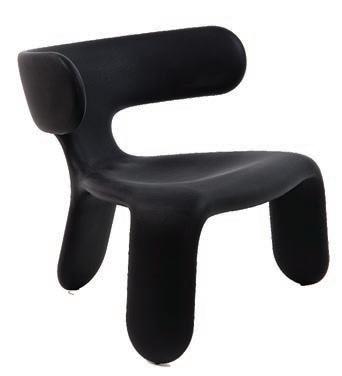
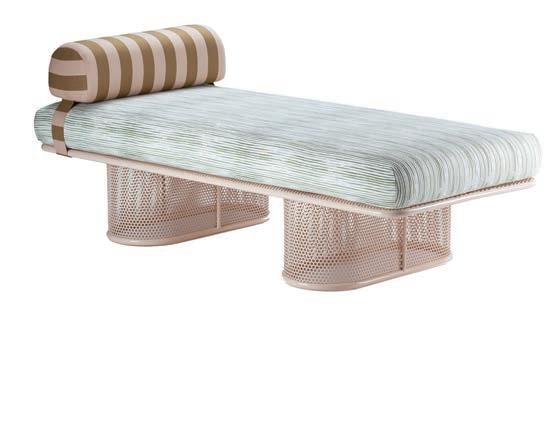
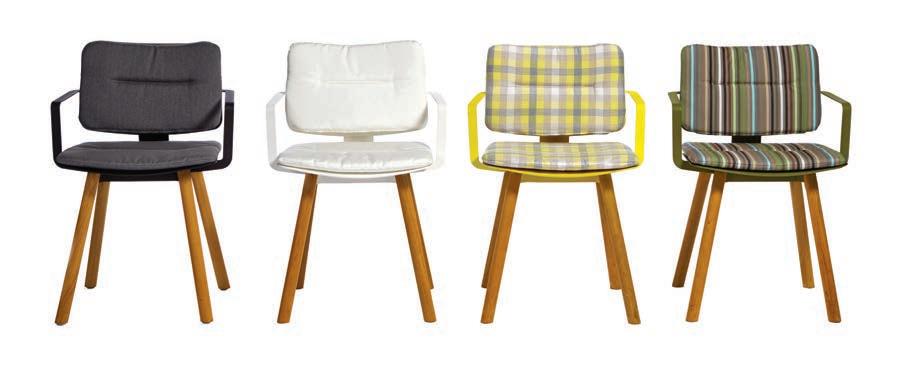
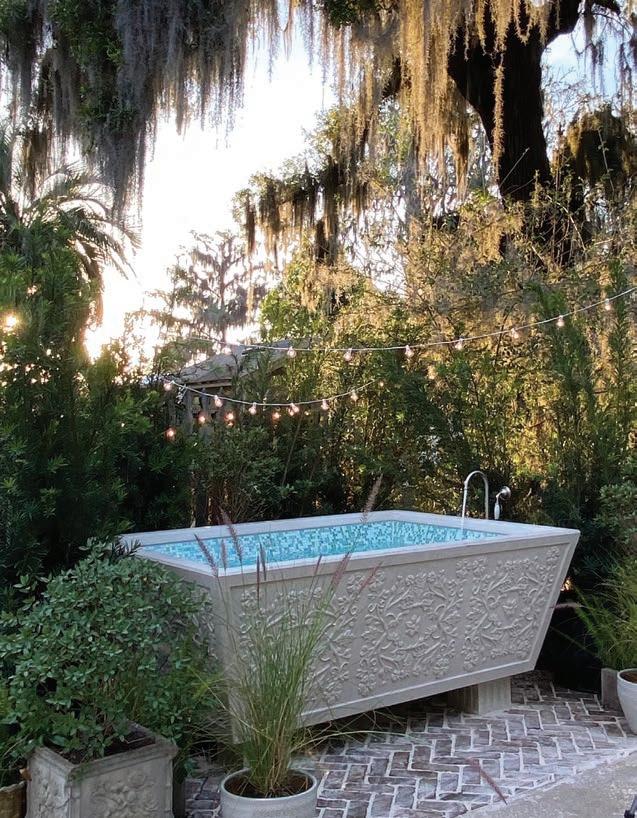
Fernmob Balad stand ($423) and Balad lamp ($329; fernmobusa.com). Darlana Large Linear Lantern ($2,179; visualcomfort.com). Limbo, from Heller, designed by Hlynur Atlason is a versatile indoor/outdoor chair ($1,175; hellerfurniture.com). Riviera bench from Mambo Unlimited Ideas (mambounlimitedideas.com). OASIQ’s Coco armchairs offer customers the ability to fully customize each design (oasiq.com/us). Teak Warehouse raw concrete dining table ($1,189; teakwarehouse.com). Opposite page, clockwise from top left: Wabi Sabi four-seat teak sofa, designed by Sutherland Creative Director Eugeni Quitllet with cushions from Perennials Fabric (perenialsandsutherland.com). Roè chair by Francesco Meda and David Lopez Quincoces for FAST (fastspa.com). Florentino sofa, Esversa and Eivissa coffee trables from NV Gallery (nvgallery.com). Native Trails Avalon 72-in concrete soaking tub ($10,590; nativetrailshome.com).
42 slmag.net
slmag.net 43

44 slmag.net
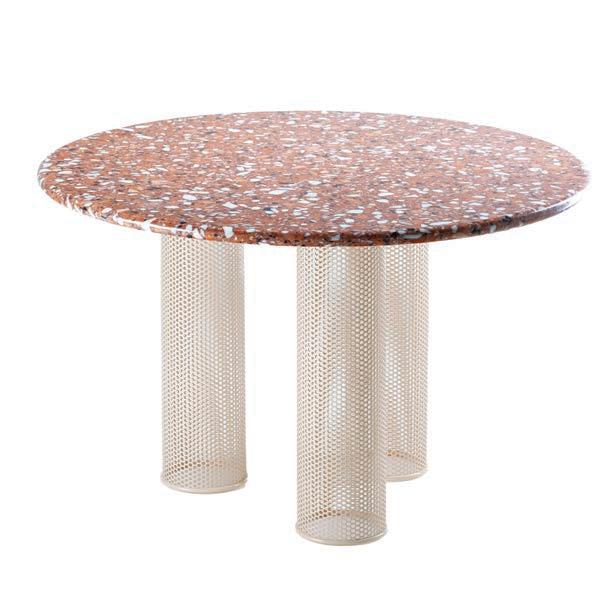
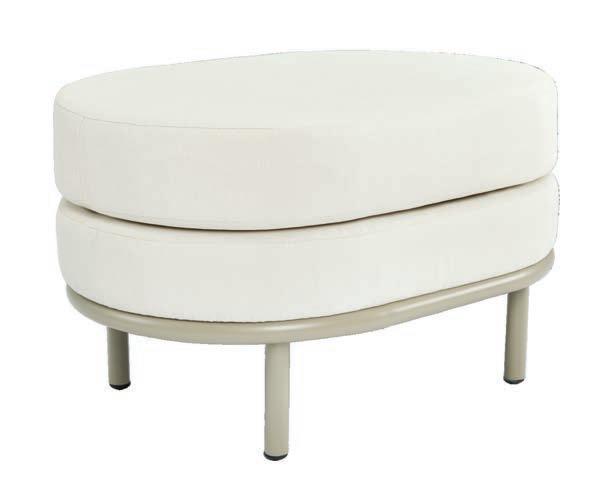
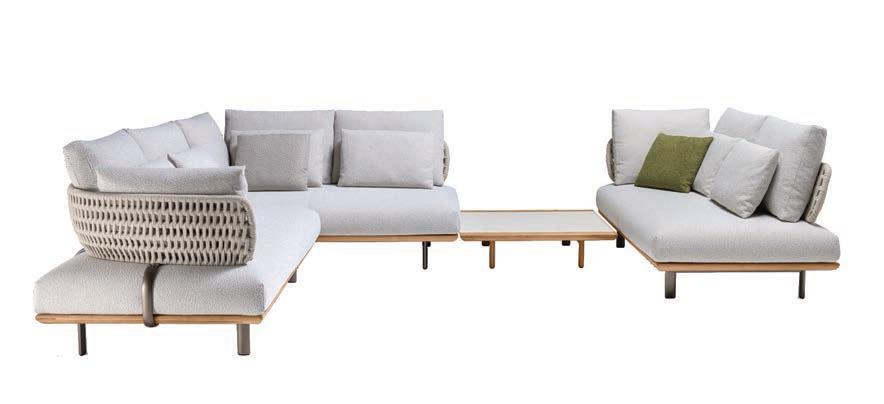
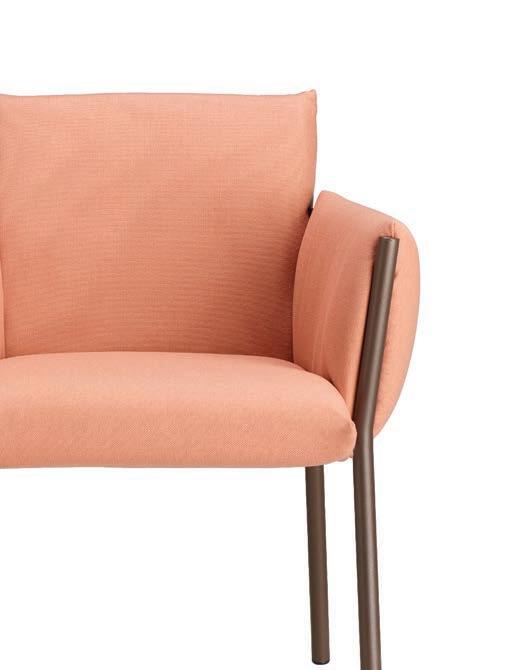
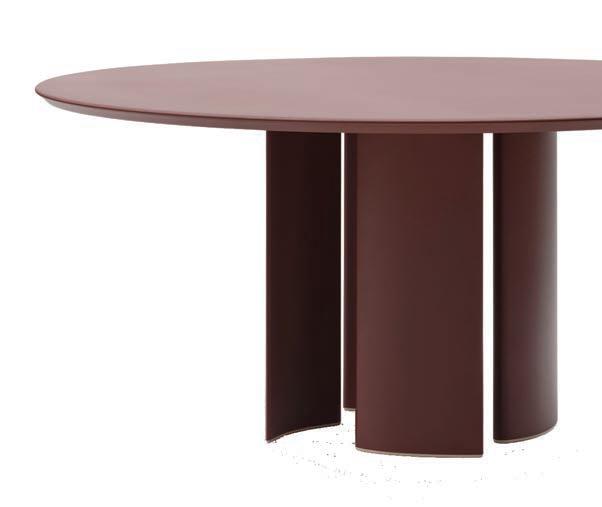
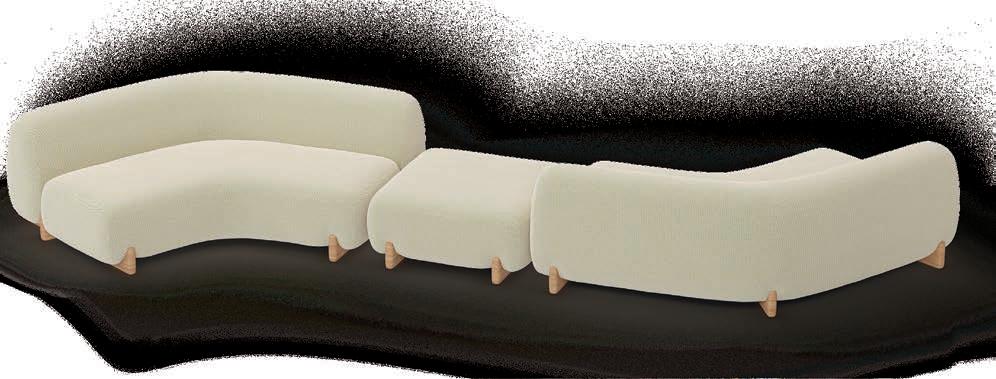
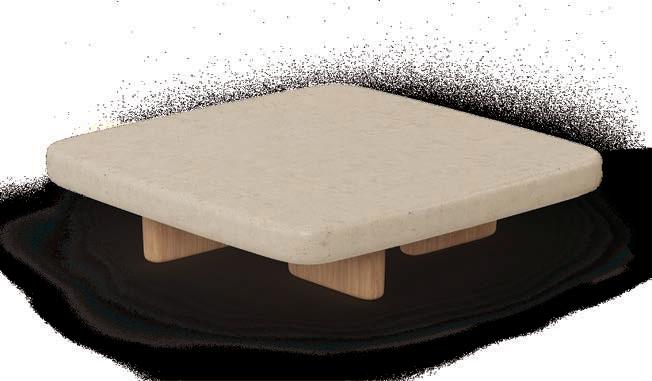
This page, clockwise from top left: Riviera dinner table from Mambo Unlimited Ideas (mambounlimitedideas.com). NV Gallery The Reunion Florentino pouf ($350; nvgallery.com). Naca Table designed by Francesco Meda and David Lopez Quincoces fpr FAST (fastspa.com). Molteni&C Sway sectional (molteni.it). Milos outdoor seating by Vondom (vondom.com). Vondom Milos outdoor coffee table (vondom.com). Brezza chair, designed by Alessandro Stabile for S-Cab (scabdesign.com) Opposite page, clockwise from top left: Petalo outdoor armchairs from Molteni&C (molteni.it). Holly, a marble armchair designed by Christophe Pillett for Kreoo, is suitable both for indoor and outdoor use and it can be customized in Travertino, Calacatta Arabescato, or Bianco Carrara (kreoo.com). Soake Pools Garden Tub (soakepools.com/the-garden-tub).
‘A Piedi' and 'Occhiata' comprise a modular system of three-dimensional ceramic pieces that stack together to create a lattice of extruded stoneware or brise soleil (apegrupo.com/en/products/a-piedi/)
slmag.net 45
BETWIXT THE BUSTLE
In a country laying claim to the world’s most densely populated city, Hokkaido, Japan’s northern island, protects and provides access to one of its last regions of true wilderness.
Written by Bridget Williams
Hokkaido was not the Japan I expected. Deplaning at the sleepy airport in Kushiro, there was nary a geta-shod Geisha, sumo wrestler, or Harajuku girl in sight (although I'd spy the latter two several days later in Toyko). Instead, just outside the terminal were super-sized renditions of this island's most famous inhabitants: Ezo deer, Ussuri brown bears (a smaller cousin of the grizzly), Japanese cranes, and Blakiston's fish owls. Far from EPCOT's version of the Land of the Rising Sun, Hokkaido, the northernmost prefecture in Japan and the country's second-largest island, is graced with mild, low-humidity summers, sub-zero winters with heavy snowfall and a culture that's distinct from the mainland. After a week and some reflection, I surmised that what I experienced was far more authentic than the saccharine version I had anticipated.
Jet-lagged and famished following a 24+ hour travel day, arriving on Hokkaido under cover of darkness had us wondering if it was evening or predawn. Our hosts, representatives from the Japanese National Tourism Organization (japan.travel/en/us/),
ushered us to a van for the one-hour drive to Teshikaga Town in Eastern Hokkaido, one of Japan's few remaining places of true wilderness. We made quick work of beef and fish hand rolls washed down with Hokkaido corn blend tea that smells of freshly baked cornbread. Exclusive to the island, the unsweetened beverage was the first of many forays into culinary parts unknown.
The pungent smell of sulfur greeted us outside Oyado Kinkiyu Bettei SUIKAZURA hotel (suikazura.jp/en), set alongside a hot spring river in a tiny village of a few thousand inhabitants. Slippers sat at the point where my guestroom's vestibule stepped up into the sleeping space, complete with tatami floor mats and a pair of low twin-sized platform beds. A second pair of slippers awaited outside the bathroom, which was a welcome introduction to Japan's affinity for high-tech, derriere-washing and warming toilets. It's a multifunction luxury that extends to even the lowliest gas station loo, which are always clean enough to please kawaya kami, the toilet god and household deity of Shinto, Japan's native belief system.
46 slmag.net
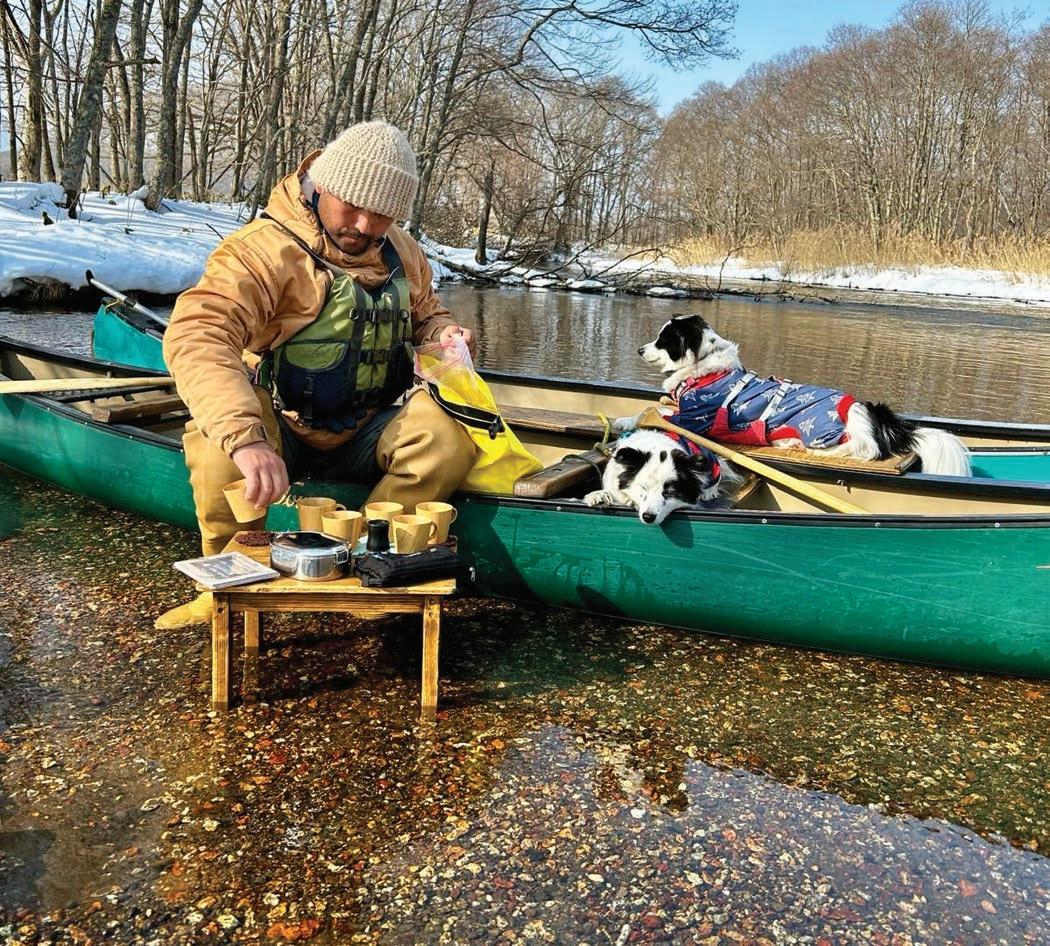
Yoshida Satoshi Kussharo Eco Tours with his dogs Aki and Yuki

 Lake Kussharo
slmag.net 47
Found in eastern Hokkaido, the red-crowned crane is among the rarest cranes in the world. Photo by Ondrej Prosicky
My bewildered body clock allowed me to have the hotel's onsite Kawayu Onsen all to myself (thankfully, given my nervousness about following the rules). There are more than 3000 onsen (geothermal hot spring baths) found across Japan, and specific rules for enjoying them include showering before entry, pulling up your hair, and bathing in the mineral-rich waters in your birthday suit. The most traditional onsens require that visible tattoos be covered. Following a detoxifying dip, I headed to the breakfast buffet, where I grabbed a bento-style plate and proceeded to fill the little squares with an array of mystery meats and vegetables of varying textures and viscosities, comforted in the knowledge that if my experimentation went awry, I had a stash of protein bars back in the room.
Across three days that included canoeing, snowshoeing, and skiing, a common thread among our activity guides was a deep love of the region's natural wonders, including old-growth forests, nine active volcanoes, and pristine caldera lakes. One of these, Lake Kussharo, is popular among canoers and anglers. In the winter, when chunks of ice make the lake unnavigable, enthusiasts take to Kushiro-gawa, the only river flowing out of the lake. You can travel all sixty miles of it to reach the Pacific Ocean.
Our animal-loving guide, Yoshida Satoshi—who greeted us upon arrival at Kussharo Eco Tours (kussharo-eco.com) with an

injured cat contentedly convalescing in the warmth of his insulated coveralls—asked if he could bring along his well-behaved collies, Aki and Yuki, adorably outfitted in matching onesies. We floated along, admiring the pristine setting, and stopped at a natural island for hot chocolate and crispy honey-sweetened pastries made by Satoshi's wife. After our chilly excursion, we warmed up with lunch at cozy Poppotei restaurant (/poppotei.wixsite.com/home/ en) where I thoroughly enjoyed their Mashu-no-Megumi ramen noodles topped with locally sourced vegetables and floating in a salty cow’s milk broth (comically translated as "bovine breast milk").
You can look at but not touch the deep and pristine waters of Lake Mashu, as no trails lead to the shores of this caldera lake in Akan Mashu National Park (japan.travel/national-parks/parks/ akan-mashu). A lack of contaminants lends a unique deep blue color called "Mashu Blue." While two observation decks are accessible via car, during winter, when as much as 600 inches of snow falls, the road is closed, and the caldera's rim is fully accessible to those willing to strap on snowshoes and work up a sweat in search of sights. At the turnaround point of our trek, our guide, Shinobu Katase, served hot lemonade sweetened with maple syrup tapped from trees on his property. Our tour departed from the main visitor's center, whose large gift shop sells "Mashu
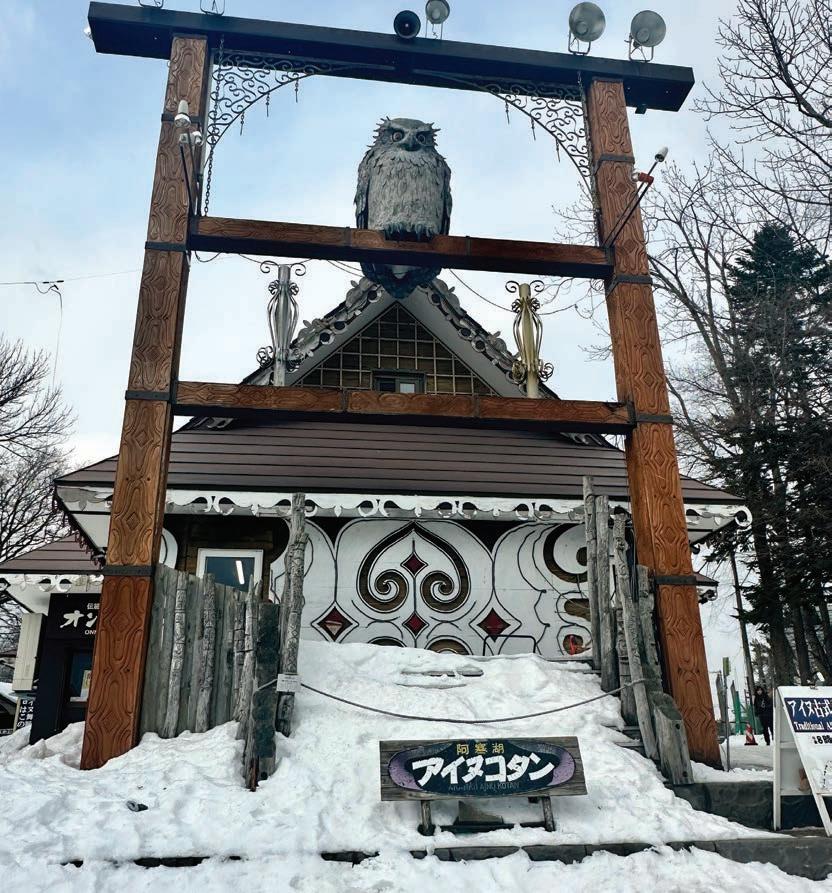
The Akanko Ainu Kotan
48 slmag.net
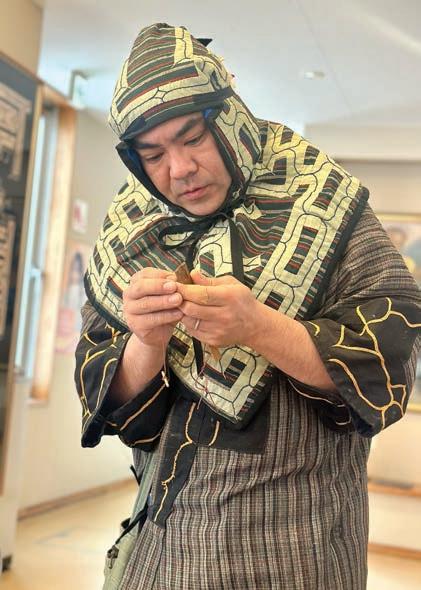
Ainu guide and sculptor Kengo Takiguch making a mukkuri
Blue" jewelry and local treats like caramels, seafood-flavored potato crackers, and yummy freeze-dried strawberries coated in creamy white chocolate.
Prior to 1868, the year that Japanese mainlanders founded Sapporo, Hokkaido's largest city, the indigenous Ainu people had been subsisting as hunter-gatherers as far back as the 12th century. Paralleling the plight of Native Americans, the Ainu saw their language and lifestyle outlawed and their traditional lands seized in the 1800s before gradually reclaiming their rights and legacy in the latter part of the 20th century. In the 21st century, the government of Japan has made efforts to revitalize the Ainu culture, uniquely in tune with the Hokkaido’s abundant natural beauty.
On the shores of Lake Akan, the Akanko Ainu Kotan (akanainu.jp/en) is one of the largest Ainu settlements, introducing the Ainu culture through a multisensory experience encompassing dance, music, art, and food. At the Ikoro theatre, we were greeted by Ainu guide and sculptor Kengo Takiguchi, a man with gentle eyes and a warm smile who learned English while living in Australia. Dressed in traditional winter clothing, Takiguchi taught how to make a mukkuri, a bamboo instrument that vibrates to produce a jaw harp-like sound, before leading us on a snowshoe tour around the lake to show us how his people
relied on the trees and plants of the natural world to survive the frigid winters. We dined on traditional Ainu fare, including deer sashimi and seasonal mountain vegetables at Poronno, which has been in business for over four decades. The restaurant sits in the middle of a steep street lined on both sides by artisan shops laden with carvings of Blakiston's fish owl, the largest living species of owl that the Ainu revere as a divine being.
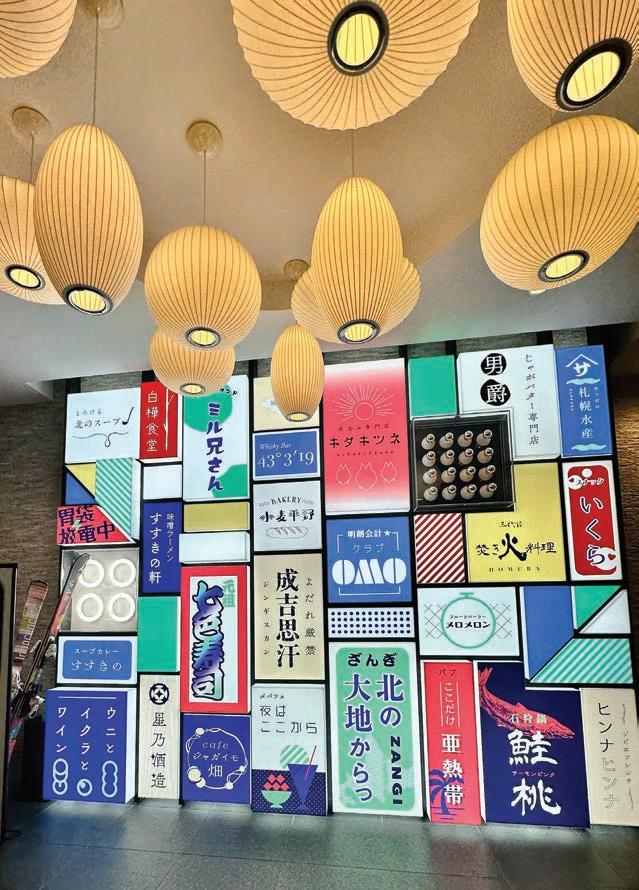
Going from tranquil to frenetic in the span of a few hours, we made our way from the sleepy Nakashibetsu Airport to Sapporo, a city of nearly two million inhabitants and our "base camp" for exploring the Kokusai Ski Resort. Located in the heart of the neon-lit urban jungle and within a 15-minute walk of more than 3,500 restaurants, OMO3 (hoshinoresorts.com/ en) is a youthful offering from Hoshino Resorts with a motto of "staying up late happy." The cheery lobby displays a board with conditions at all six nearby ski resorts, a DIY ski-waxing area, and a large GO-KINJO map, a whimsical creation depicting the neighborhood's attractions and staff recommendations. The property's "OMO Rangers" offer late-night bar and restaurant tours. The all-day grab-and-go area in the lobby provides locally sourced culinary delights, such as a black bean paste with butter on bread that's a regionally popular breakfast item.
slmag.net 49
The lobby of OMO3 in Sapporo. Yozorano Genghis Khan Susukino Kosatenmae offers a Hokkaido's version of Mongolian-style barbeque.
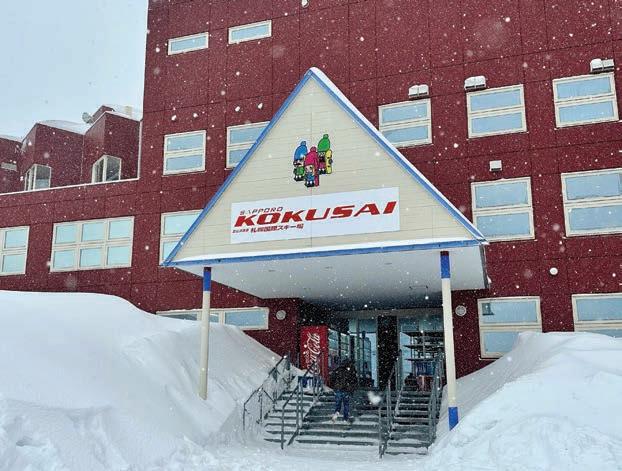
"JAPOW" is what they call the iconic powder of Japan, and for our ski day at Sapporo Kokusai (sapporo-kokusai.jp/en), one of the snowiest ski resorts in Japan, we had plenty of it. OMO3 offers a complimentary shuttle to the resort, about an hour away, amid the Shikotsu-Toya National Park. The drive provides a prolonged view of a picture-perfect winter wonderland as it follows the twists and turns of the Chitose River. Compared with the US, where a one-day pass can cost as much as $300, a lift ticket at Sapporo Kokusai is approximately $30 ($37 with a delicious ramen lunch (après the Japanese way); you can add on skis, boots, poles, a jacket, pants, and goggles for another $60.
After some serious stretching, awkward balance-busting drills that included single-leg skiing, and a few bunny hill runs, our ski instructor announced that our amateur group was ready for prime time and escorted us to the top of a green run. Enjoying the confidence boost from successfully navigating a graceful exit off the ski lift and the near whiteout conditions that gave us little notion of the slope's steepness, we made our way down mostly unscathed, save a few close encounters with flailing beginner snowboarders and an ill-placed but well-padded tree mid-way down the run.
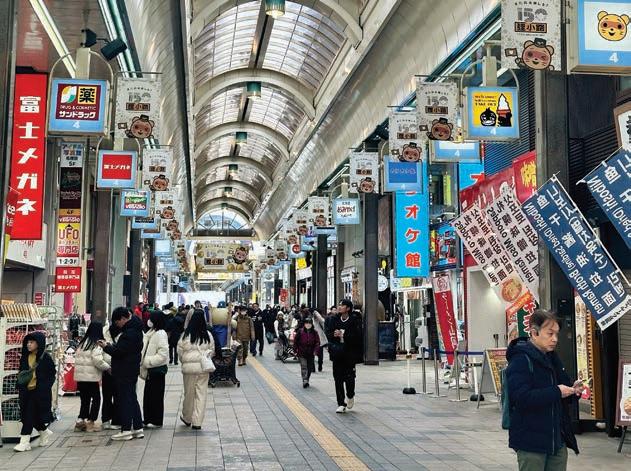
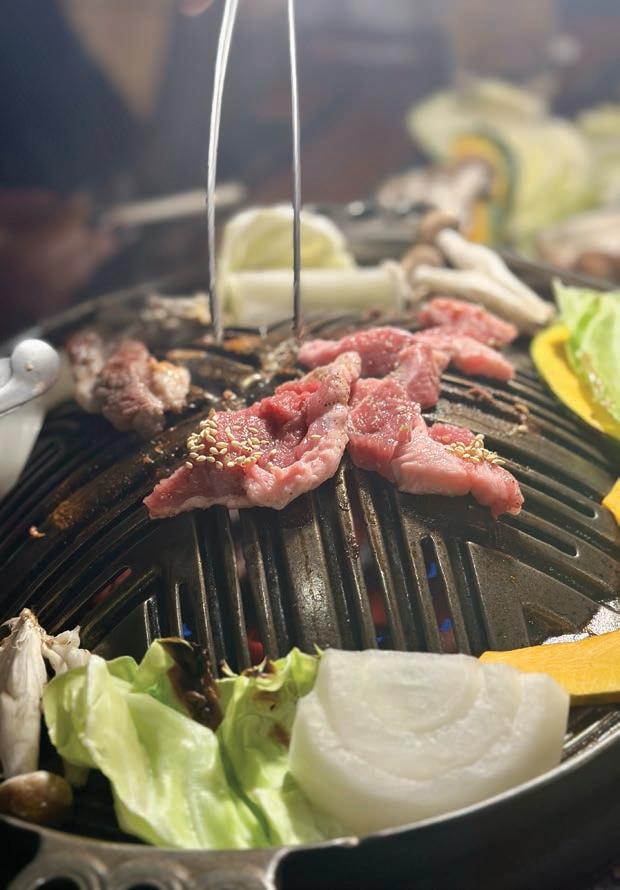
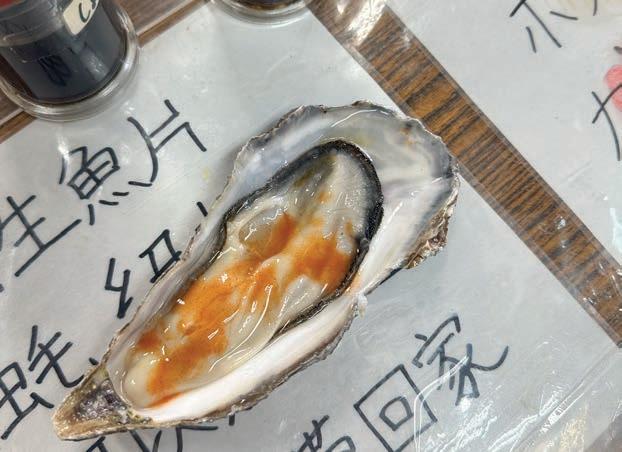
Back in Sapporo, we ate and shopped our way through the neighborhood. At Semina (trattoriasemina.com), we savored a Japanese take on Northern Italian cuisine. In this densely packed city, non-descript multi-story buildings contain a plethora of culinary delights, as we discovered when an elevator opened on the 5th floor and into Yozorano Genghis Khan Susukino Kosatenmae, offering an elevated view of the city's famous 50-foot-tall LED Nikka billboard. This Hokkaido take on Mongolian-style barbecue is a 90-minute all-you-can-eat and drink feast of marinated lamb, beef, pork, and vegetables cooked on a special grill with a raised mound in the center. Our hosts reveled in getting their American guests to try local delicacies, including Shiokara—squid fermented in its viscera and salt—and voraciously documenting our reactive expressions on their iPhones. The scene repeated at Sapporo's Nijo Market, where I slurped down an enormous oyster but passed on the uni.
When our hosts suggested capping off our final evening in Sapporo by experiencing the shime (late-night) parfait culture, I fully expected a basic soft serve layered with fruit and granola, so I was ill-prepared for the towering, elaborately layered, and eyepopping creation far superior to what one would typically seek out at a greasy spoon after last call. And, if you're still not ready to
Tanuki Koji shopping street in Sapporo.
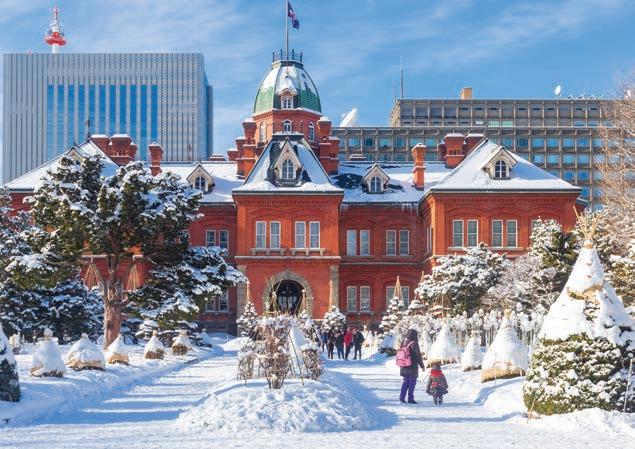
One of Sapporo's most famous landmarks the Former Hokkaido Government Office was built in 1888 and modeled on the Massachusetts State House
50 slmag.net
Fresh Oyter at Nijo Market in Sapporo.

call it a night, head to the Mega Don Quijote Sapporo Tanukikoji Honten. With more flashing lights than a Vegas casino, I must credit one of my travel mates for the intro to this always-open multi-floor Target-meets-Walgreens on steroids and the wonderful world of Japanese skincare products.
We had one day in Tokyo before heading back to the US, so to fully appreciate the sprawling nature of this city of 14 million in such a brief timeframe, we headed up 751 feet to the open-air observation deck at Shibuya Sky (shibuya-scramble-square.com), where you can marvel at Shibuya Crossing. During the busiest times, as many as 2,500 people cross the intersection every two minutes.
After admiring the layered and billowy yet tailored looks of the well-dressed women hustling across the famous intersection, I was excited when our wandering landed us in an upscale department store, allowing me to try to re-create the look. It was a humbling experience to say the least. "You need big size," said the petite clerk, as I held up what seemed to be an oversized dress. I knew her words were not meant as intentional barbs, just pulled from a limited well of English vocabulary. They stung nonetheless, and instead of feeling chic, I looked like someone whose checked bag was overweight, and they were piling on layers to save on excess baggage fees.

Moving onto the famous Takeshita Street in Harajuku, I marveled as people seemed to flow out of side streets like water from an open tap to form a raging current of bodies making their way past sweet shops, "cute couture" clothing boutiques and places offering interactions with various animals including otters, puppies, and pigs.
The sizzle of the iron table grill during lunch on Tsukushima Monja Street (monja.gr.jp)...the crush of the crowds…the discordance of hearing Taylor Swift tunes blaring on every street corner…the smell of seafood at breakfast, lunch, and dinner (particularly pungent to this piscine eschewer)…the constant pulse of neon lights...my head was on a swivel as I tried to take it all in.
The frenetic pace and sensory overload are a continuity of controlled chaos harnessed beautifully by the teamLab Borderless digital art museum (teamlab.art/e/borderless-azabudai/), which opened in Central Toyko in February of this year. Here, dynamic projection graphics flow from room to room, react to one another and morph along with the movement and interaction of onlookers. There's no map as you make your way through the varied installations, which left me beguiled by bewilderment, a sensation I experienced more than once during this varied journey through Japan's natural and humanmade wonders. sl
Ainu guide and sculptor Kengo Takiguch making a mukkuri
slmag.net 51
A gallery at teamLab Borderless digital art museum in Toyko
HORSING AROUND


52 slmag.net
Compiled by Bridget Williams


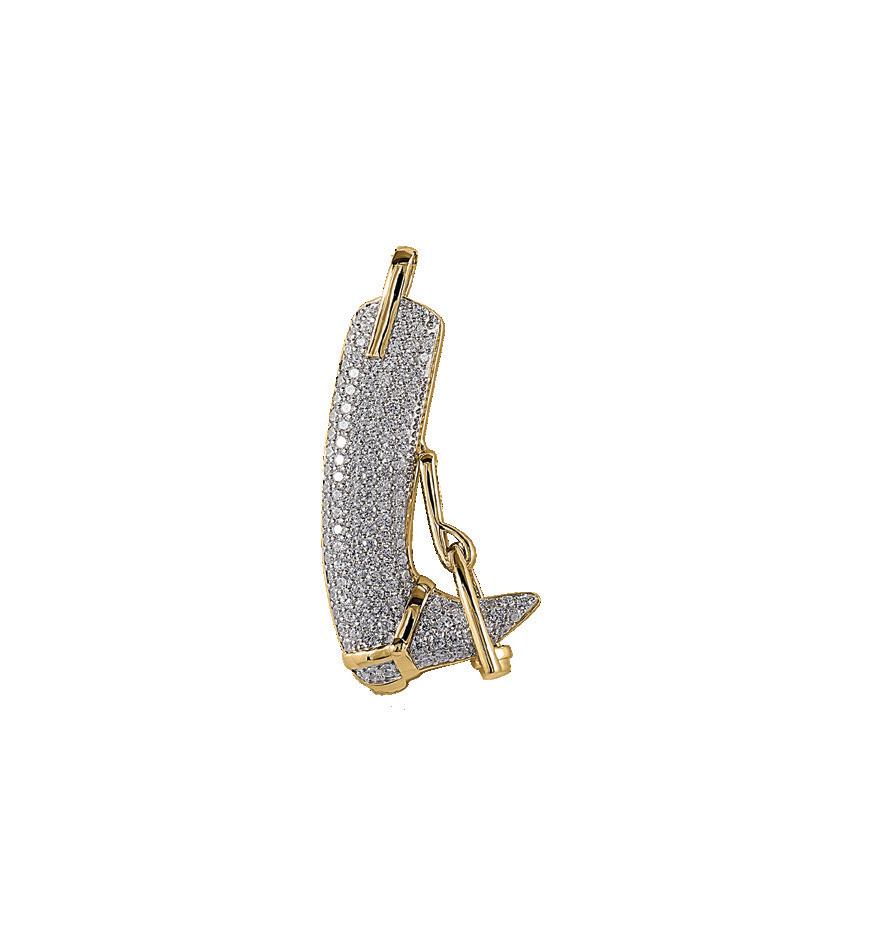
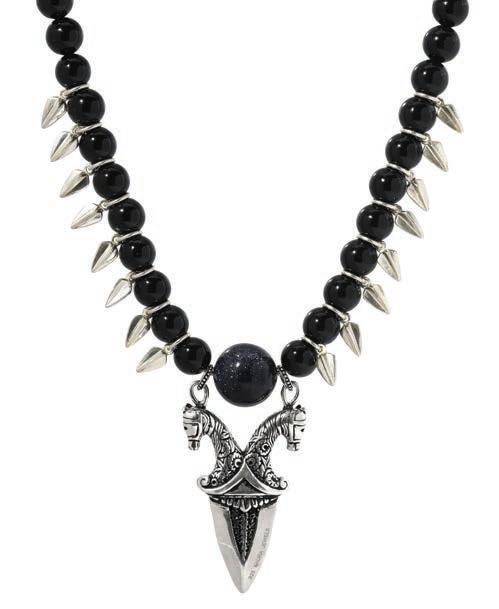
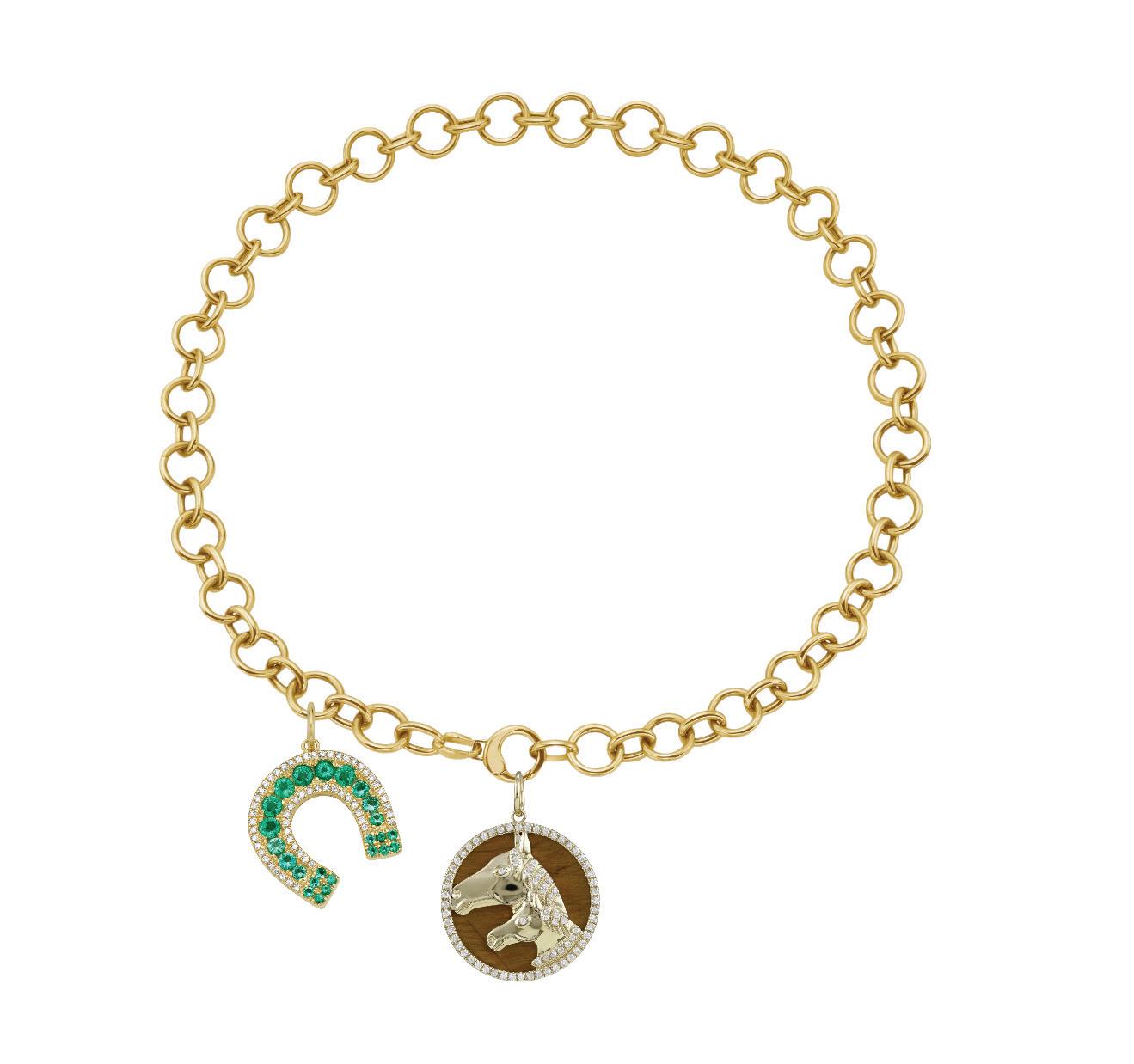
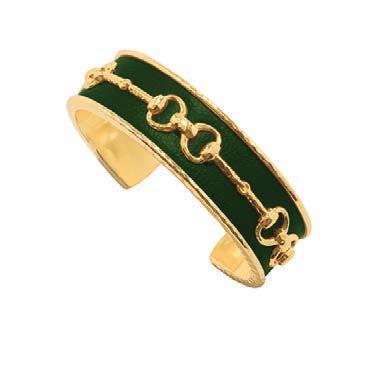
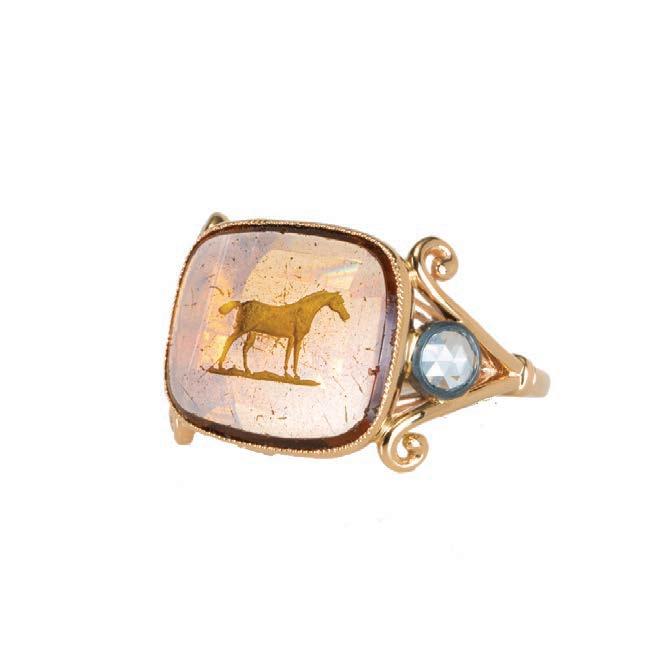
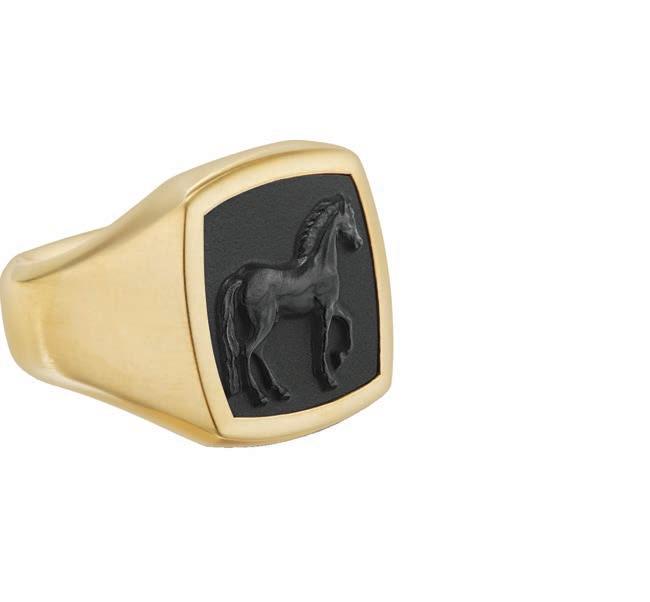

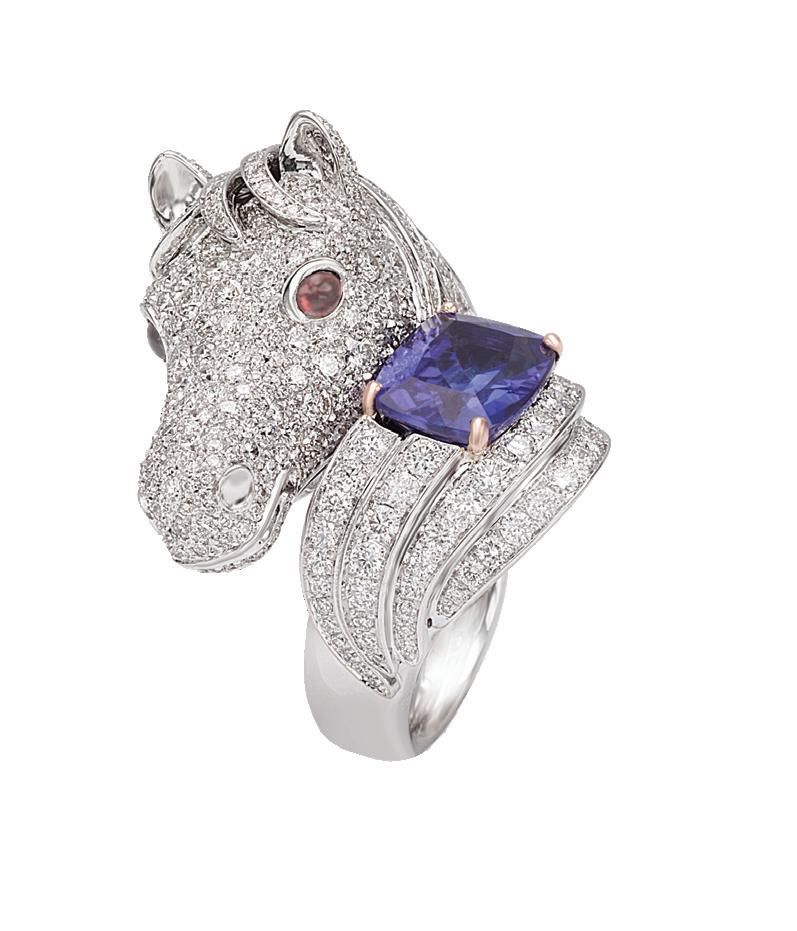
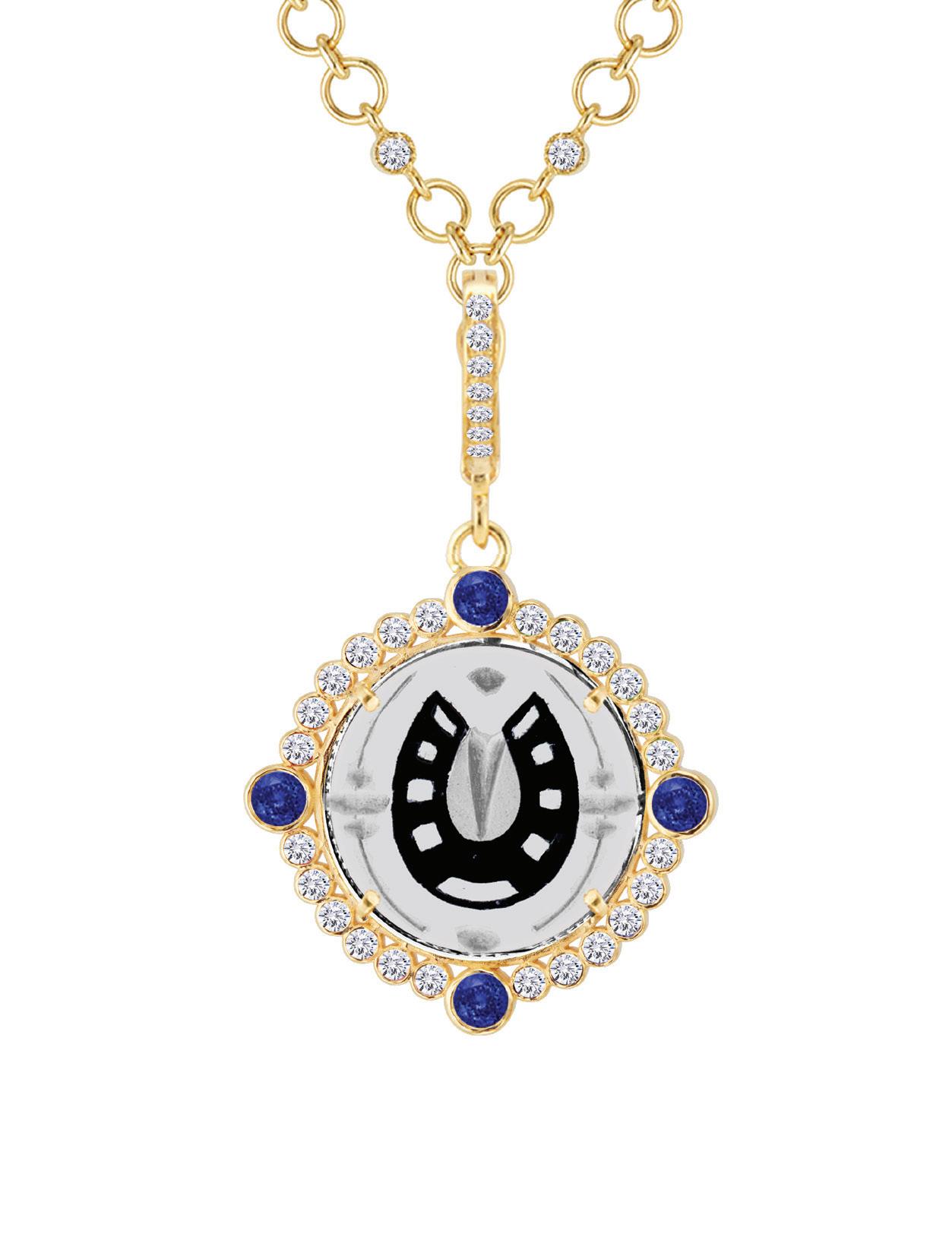
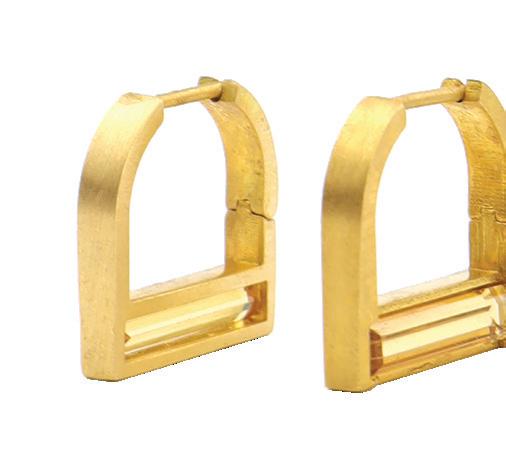
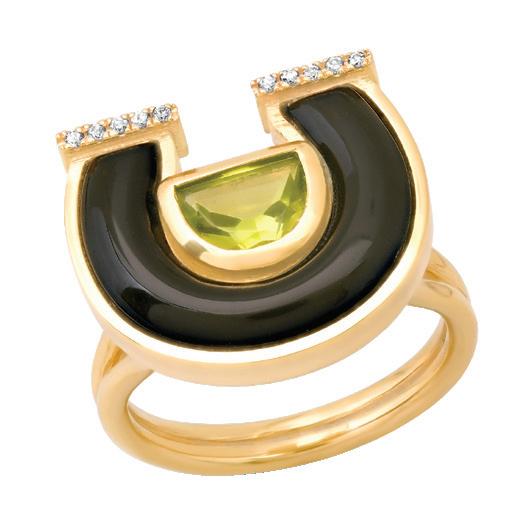
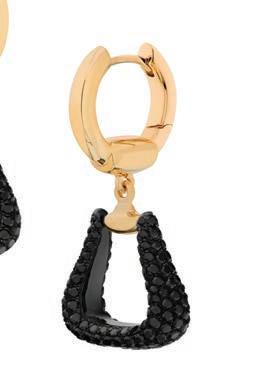

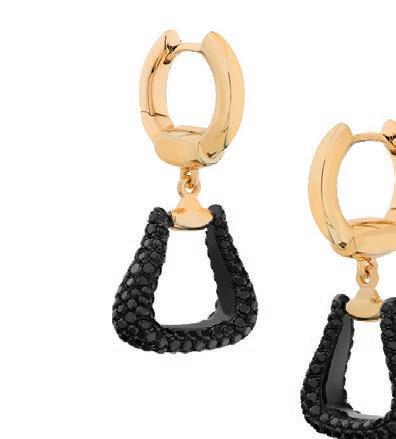
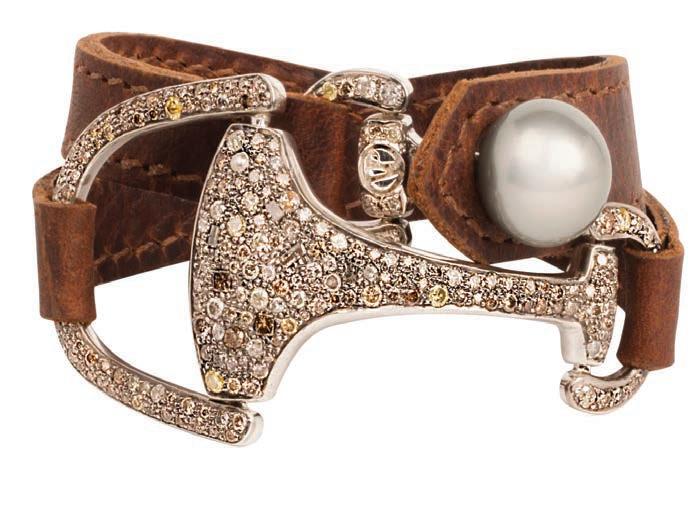
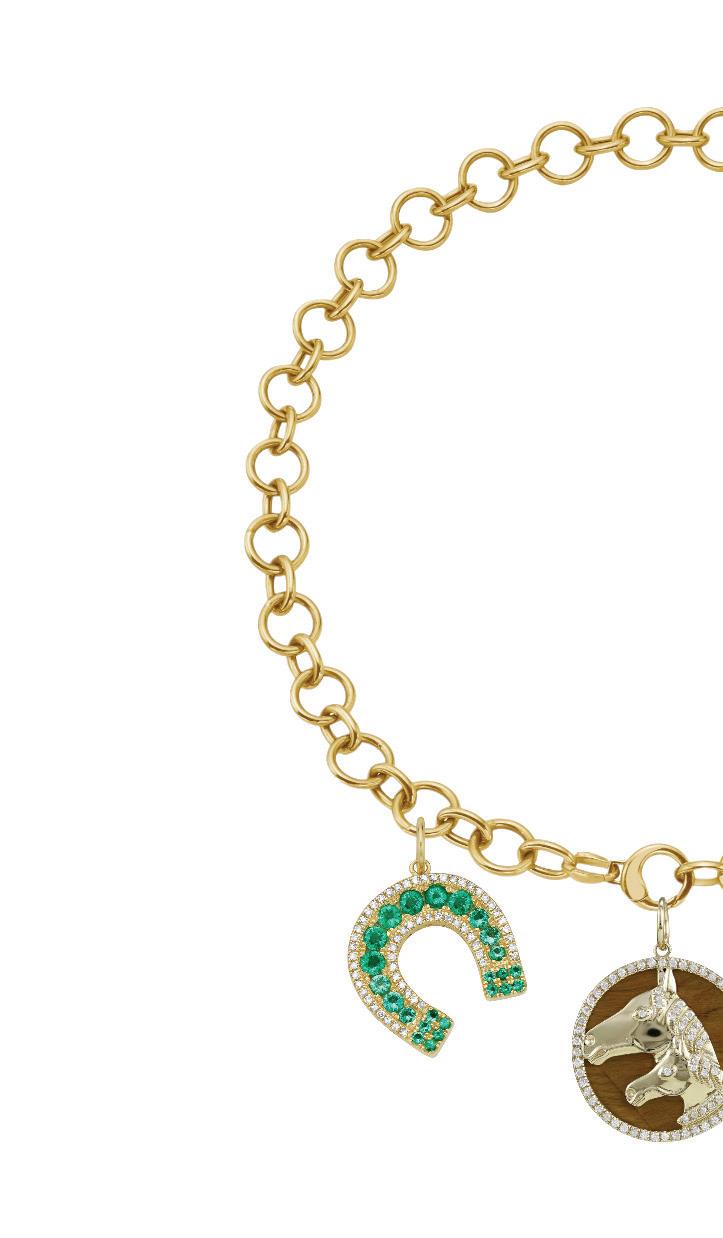
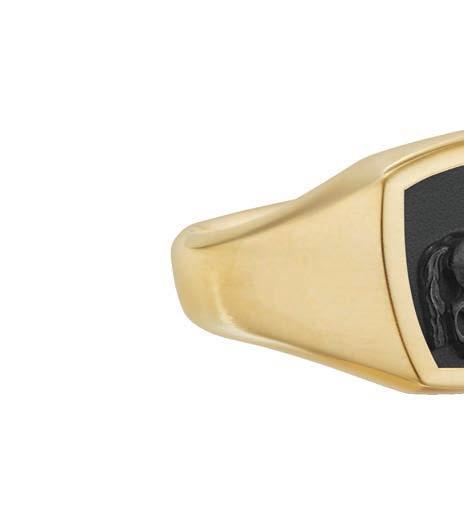
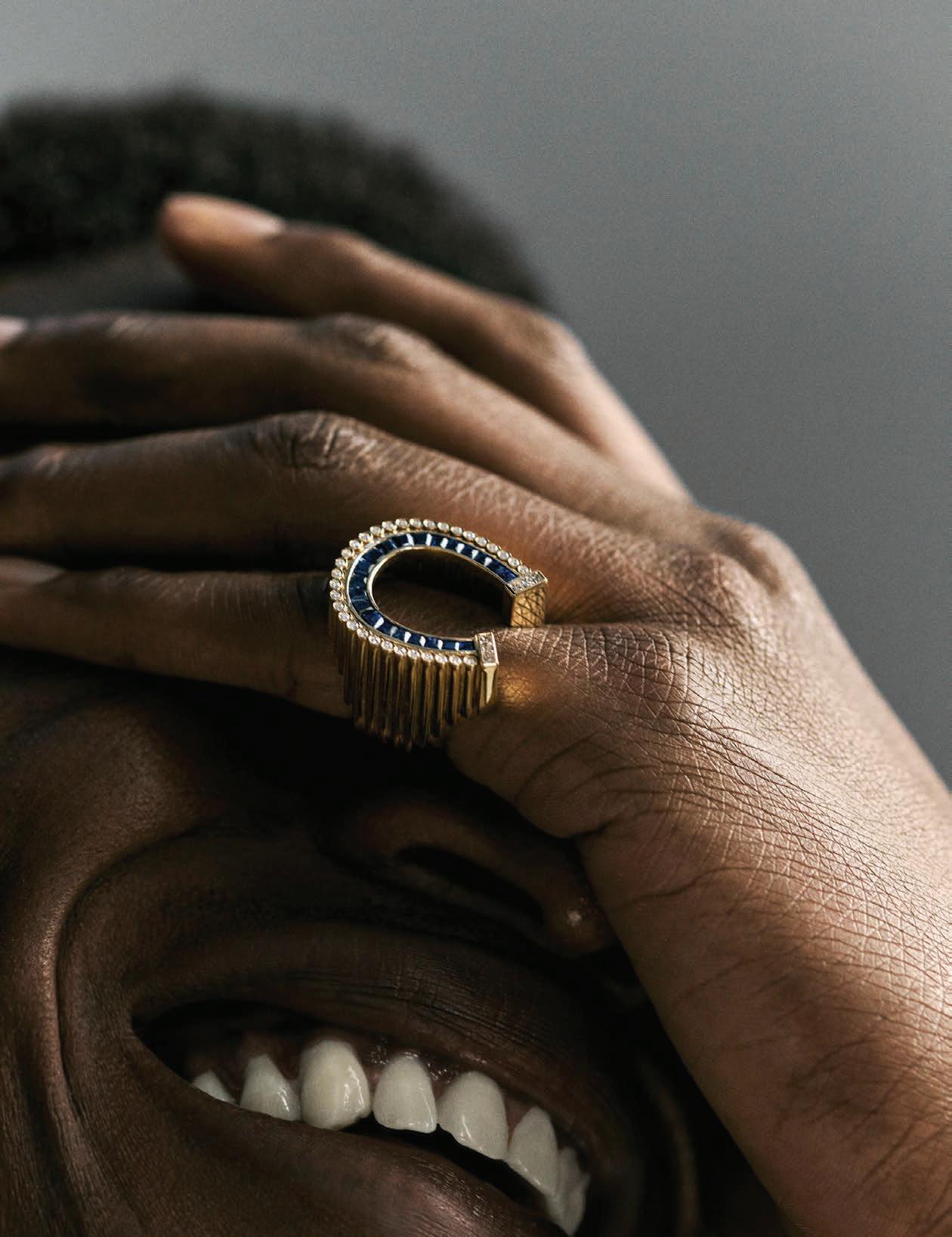
Adina Reyter horseshoe rays pendant ($450; adinereyter.com). Kaura Jewels Warrior Balance Horse Pendant ($750; kaurajewels.com). Karina Brez Horsea lapis Night Star pendant ($4,900; karinabrez.com). Happy Horse pendant with mini paperclip chain ($1,295). Available through Richter & Phillips Jewelers in Cincinnati (richterphillips. com). Love token necklace from Heavenly Vices (heavenlyvicesfinejewelry.com). Lugano bespoke horse head diamond & ceramic ring (luganodiamonds.com). Episodic Montana wrap from Vincent Peach Fine Jewelry ($8,500, vincentpeach.com). Lugano black diamond stirrup earrings (luganodiamonds.com). Meili citrine saddle hoops ($2,600; meilifinejewelry.com). David Yurman Petrvs pinky ring ($2,950). Available through Moyer Fine Jewelers and Reis-Nichols Jewelers in Indianapolis, Davis Jewelers in Louisville, Clarkson Jewelers in St. Louis and davidyurman.com. Kelly Herd Pavé English Riding Boot pendant ($7,995; kellyherdjewelry.com). Capucine de Wulf Equestrian Snaffle Bit Cuff ($250; capucinedewulf.com). Lionheart Jewelry Lucky Emerald horseshoe charm ($2,185), Johanna tiger’s eye horse medallion ($2,370; lionheartjewelry.com). PICCHIOTTI Horse Ring with diamonds and large cushion cut tanzanite. Available through Moyer Fine Jewelers in Indianapolis, Elleard Heffern Fine Jewellers in St. Louis, and picchiotti.it. Golden Pony ring from Seal & Scribe (sealandscribe.com). Sig Ward onyx and diamond horseshoe ring ($3,600; sigwardjewelry.com). Opposite page, clockwise from top left: Marie Lichtenberg horseshoe ring ($15,400; marielichtenberg.com)
slmag.net 53

AMPED UP
Ten years after its launch, the Porsche Macan is heading in a bold new direction.
Written by Andre James / Photos courtesy of Porsche
Earlier this year, Porsche launched its second all-electric model: the new Macan4 and Macan Turbo. “Our aim is to offer the sportiest model in its segment with the all-electric Macan. In many ways, we are taking a very successful SUV to a new level,” says Jörg Kerner, Vice President of the Product Line Macan.
Meeting the discerning standards Porsche owners expect with the spaciousness offered by an SUV, the Macan achieves high efficiency and optimal reproducibility of power output by utilizing the latest generation of permanently excited PSM electric motors on the front and rear axles. Combined with Launch Control, the Macan 4 produces up to 300 kW (402 hp) of over-boost power to sprint from 0-60mph in 4.9 seconds and to a top speed of 136 mph. Even peppier and capable of 161 mph, the Macan Turbo, generating up to 470 kW (630 hp), only needs 3.1 seconds to hit the standstill to 60mph mark.
Under ideal conditions, the lithium-ion (HV) battery in the underbody from which the electric motors draw their energy can be charged from ten to eighty percent within approximately 21 minutes at a compatible fast-charging station. Additionally, Regenerative braking allows up to 240 kW of power to be recuperated via the electric motors while driving.
Both Macan variants boast all-wheel drive, and the electronically controlled Porsche Traction Management (ePTM) operates around five times faster than a conventional all-wheeldrive system and can respond to wheelspin within 10 milliseconds.
“Thanks to its particularly sporty seat position and low center of gravity, as well as its impressive driving dynamics and steering precision, the new Macan delivers a real sports car feeling,” explains Kerner. Thanks to Porsche Active Aerodynamics (PAA), which has
54 slmag.net


active and passive elements and a drag coefficient of 0.25, the new Macan is one of the most streamlined SUVs on the market.
For the first time, the Macan is available with optional rearaxle steering, with a maximum steering angle of five degrees. It enables a compact turning circle of 36.4 feet in urban traffic and when maneuvering while simultaneously enabling exceptional driving stability at higher speeds.
While the compact SUV’s lines are undeniably Porsche, designers added distinctive elements to the all-electric variant, such as a shallow-pitched hood and strongly pronounced fenders that lend a dynamic appearance even when stationary. A longer wheelbase, offset by short overhangs at the front and rear, can be optioned with 22-inch wheels with staggered tire fitment. The Porsche flyline forms a unit with the flat rear window. The sleek, sporty design

is further pronounced by frameless doors with characteristic side blades. A benefit of electrification is increased luggage space, up to 18 cubic feet behind the rear bench seat, depending on the model and equipment fitted. A “frunk” offers an additional 2.9-cu-ft of storage.
The driver positioning is low, spacious, and performancefocused, with large windows and a mix of digital user interfaces with select analog control elements. The new Macan enables a high degree of customization with high-quality and sustainable materials, such as leather-free seats comprised of recycled interior elements and floormats and flooring using Econyl®, which is made from regenerated nylon.
The new Macan will be produced at the Porsche Plant in Leipzig. MSRP for the Macan 4 is $78,800, while the MSRP for the Macan Turbo is $105,300. sl
slmag.net 55
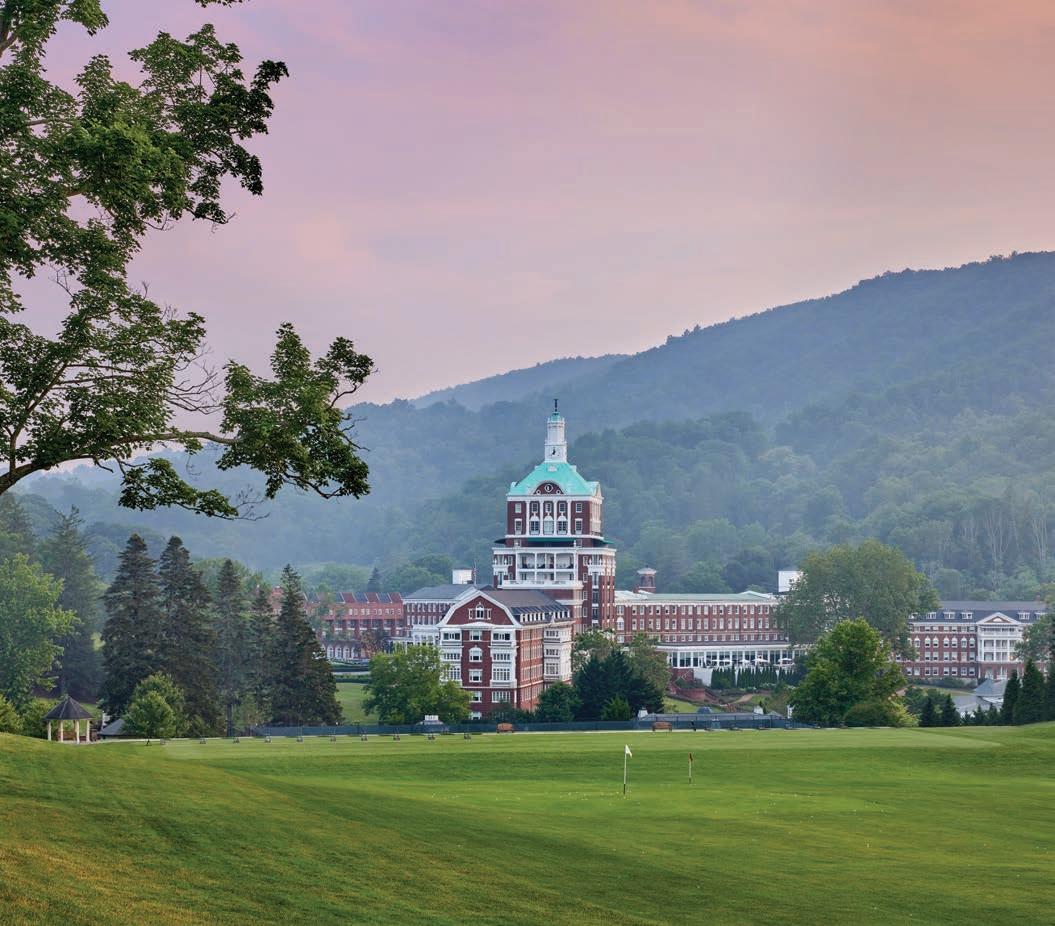
HOME AGAIN
The Omni Homestead, America’s oldest resort, reasserts its prominence following a $150 million renovation.
Written by Bridget Williams
My favorite activity while roaming the hallowed (and hopefully happily haunted) halls of a historic hotel is to imagine what the guest experience would have been like in a bygone era. It's an easy exercise at America's oldest resort—The Omni Homestead in Hot Springs, Virginia— founded ten years before the signing of the Declaration of Independence, where legacy and luxury receive equal billing, even fresh off a $150 million renovation. This star of the Shenandoah Valley sits amid 2,300 acres, offering guests abundant activities inside and out.
The sprawling 483-room resort has an interesting tie-in to my hometown of Louisville, as both can credit their origins to Captain Thomas Bullitt (1730-1778). In 1764, Bullitt, along with Charles and Andrew Lewis, paid 30 shillings to acquire 300 acres that included seven hot and warm springs, and within two years built the first Homestead, named in honor of the homesteaders who built the resort and bathhouses. The original wooden 18-room inn was destroyed in a fire and replaced with a brick structure that stands today. Less than a decade later, Bullitt led a 40-man surveying party into Kentucky, where he laid out a town site near the Falls of Ohio, which later became Louisville.
Twenty-four U.S. presidents, including Thomas Jefferson, Theodore Roosevelt, and George W. Bush, have vacationed here. This National Historic Landmark enjoyed Gilded Age ownership by scions of industry and banking whose last names are synonymous with success. It's where a teenaged Jacqueline Bouvier learned to play golf on one of the first golf courses in America, The Old Course (built in 1892, its first tee is the oldest in continuous use in the U.S.). And it's where I was lucky enough to spend a few blissful days in early spring.
Our visit coincided with spring break, and while some fellow empty-nesters would be less-than-pleased, I loved seeing all the youthful energy. It reminded me of my last visit more than a decade ago with my daughter, who fondly remembers putting on her fanciest frocks for dinner each evening. I can't help but think that the place's grandeur fondly lingers in children's subconscious for a lifetime. My spacious room, which overlooked the resort's verdant" backyard," was buzzing with families playing badminton, croquet, catch, and more from early morning until the last rays of sunshine disappeared behind the Allegheny Mountains.
56 slmag.net
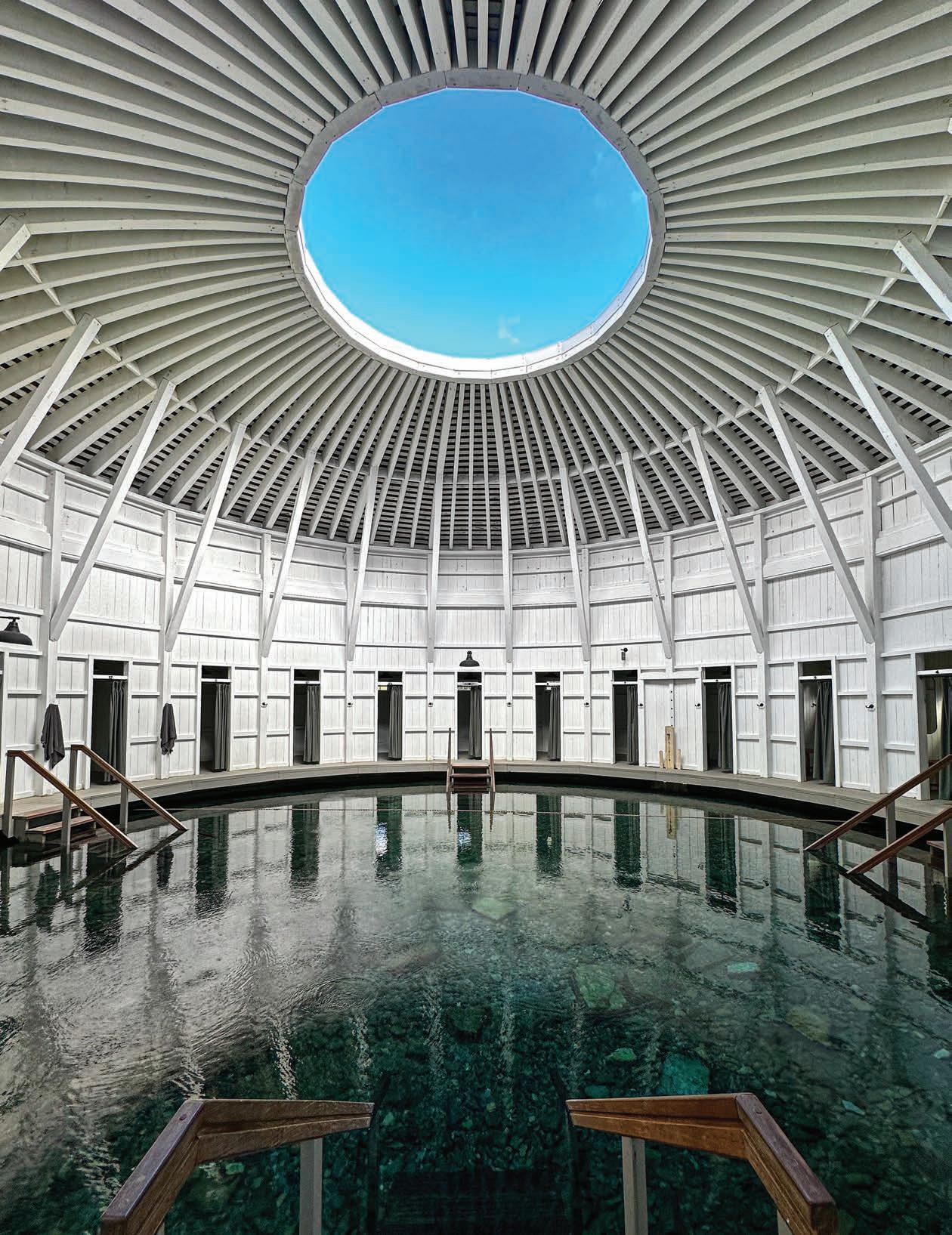
slmag.net 57
Originally built in 1761, the Warm Spring Pools recently reopened following a $4 million rehabilitation.
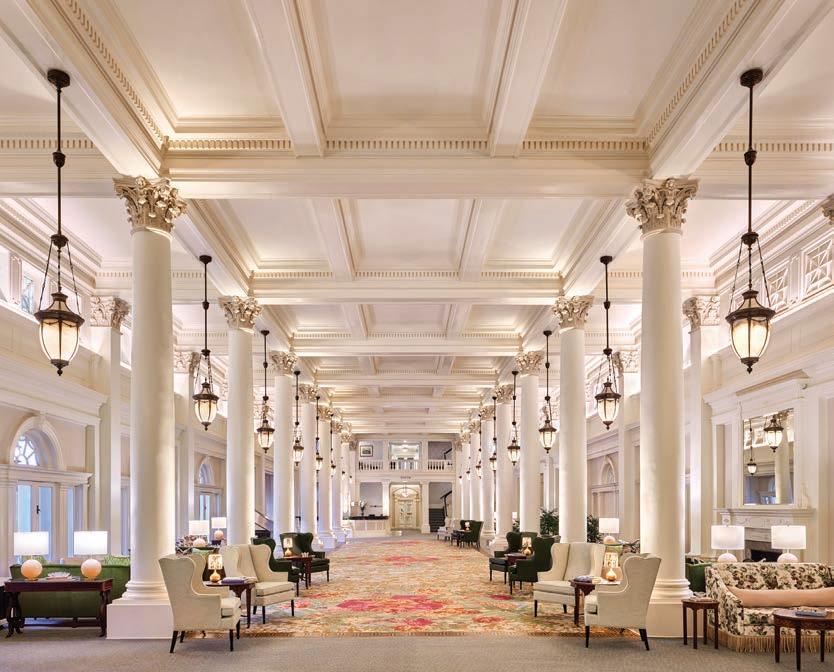
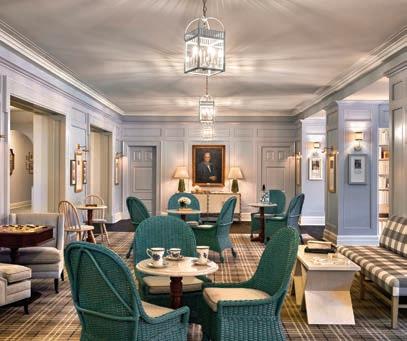
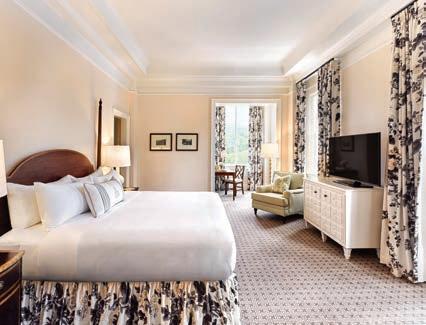
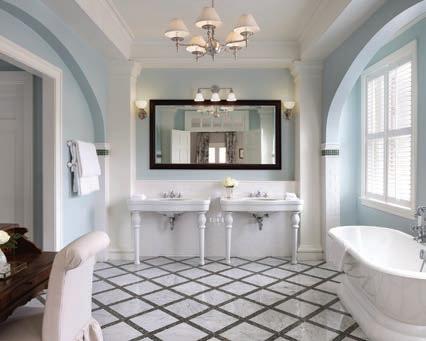
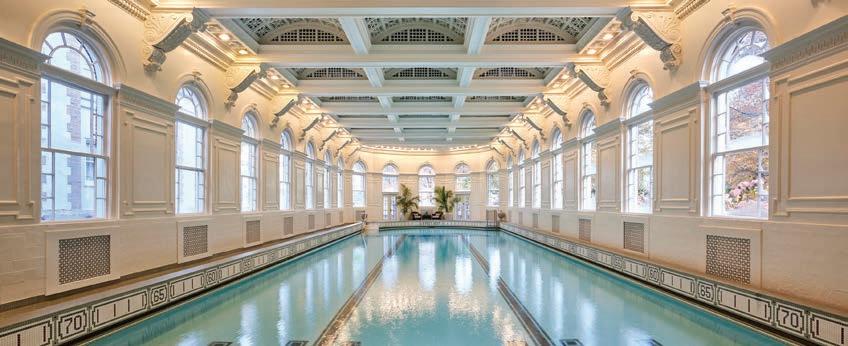
Immediately upon arrival at the recently renovated resort, I could sense a difference in the best way, akin to the work of a deft plastic surgeon. In the soaring colonnaded Great Hall, a long handmade carpet enlivened with a vibrant floral motif dotted with butterflies bisected comfortable seating areas where children squared off against a sibling or grandparent in a chess match. The room is the site of a daily afternoon tea and cookie social complemented by live music.
Once I put down my bags, I headed straight for the spa complex. The resort is so large that it was a workout on its own to reach the impressive 60,000-square-foot homage to wellness, which encompasses a stunning indoor pool (a suitable locale for a silver screen aqua musical starring Esther Williams); a vast fitness area with a boxing studio; men's and women's spa areas with an aqua thermal suite; and an adult's only Serenity Garden with a geothermal Octagon Pool, deluge shower and River Reflexology Walk fed by two hot springs rich in magnesium, potassium and calcium.
For an even more immersive healing water experience, make an appointment to "take the waters" at the historic Warm Springs Pools,
a five-minute drive from the resort and recently reopened after a $ 4 million rehabilitation. While the healing properties of the waters were known to Native Americans thousands of years ago, the original octagonal stone basin that held the water for bathing was built in 1761, establishing it as the first spa structure in America. Our soak in relative silence was made even more magical via a gentle rain that fell through the oculus in the faceted roof.
Equally enchanting is the naturalist-guided Cascades Gorge hike. Rated as intermediate but easily accessible if you can handle short flights of stairs spread over 1.8 miles, the trail follows a deep gorge near the resort's Cascades Golf Course, where a natural spring feeds more than a dozen waterfalls and cascades. It's just one of scores of available year-round outdoor activities. In winter, the resort's ski area offers 45 acres of tubing, skiing, snowboarding, ice skating, and snowmobiling. More temperate weather pursuits include falconry, hiking, biking (or e-biking), kayaking, tennis, horseback riding, golf and mini-golf, zip-lining, a pool complex complete with a lazy river and waterslides, and a shooting club dramatically positioned on a mountaintop offering
The Great Hall
The Washington Library
Premier King Guestroom
58 slmag.net
President's Suite Bathroom
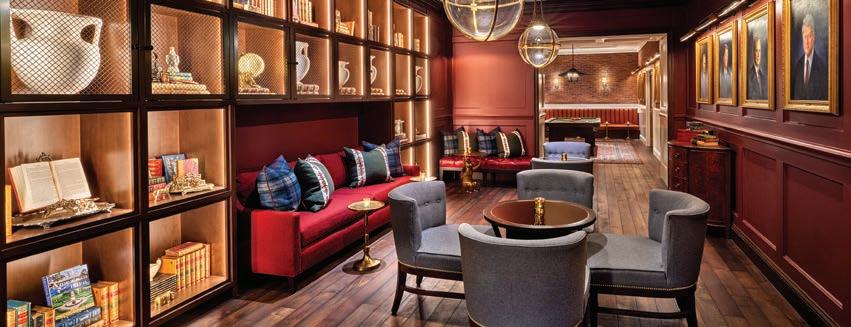
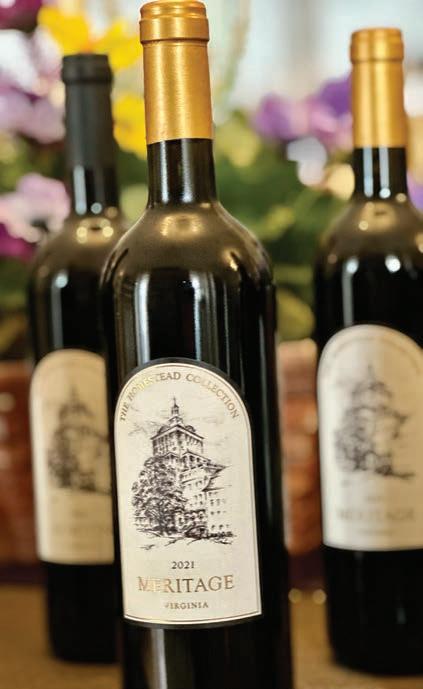

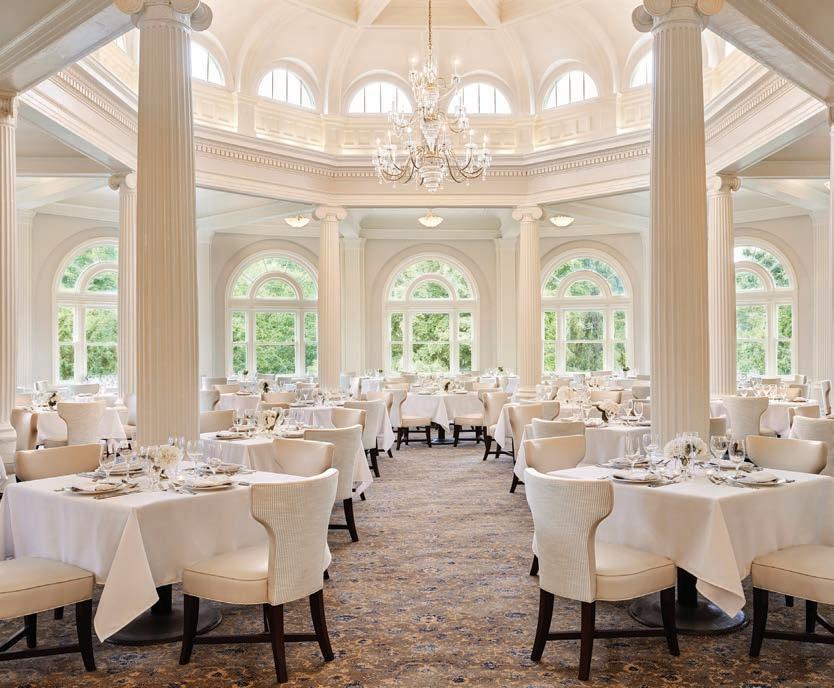
skeet, sporting clays, and a five-stand course (and where a patient instructor "fixed" my aim).
During a rainy afternoon back on property, we did a bit of shopping, followed by a unique Virginia Wine Experience, during which I was surprised to learn that winemaking in the Commonwealth predates Thomas Jefferson's formation of the Virginia Wine Company by 154 years. Quyhn Cohen, The Omni Homestead's sommelier, who is also a certified yoga instructor who leads a regular "poses and pairings" class, has assembled the best offerings from the more than 300 wineries operating in Virginia today, including unique blends and wines made from America's oldest grape, Norton, first cultivated in Richmond.
Our short stay afforded us a taste of two of the resort's signature dining experiences, the American Audubon Dining Room and Jefferson's Restaurant. At the former, the elegant environs, complete with crystal chandeliers and piano music, are a fitting backdrop for the equally elevated cuisine, served with gracious aplomb. In an era of increasing casualness regarding apparel, it was a nice change of pace to see families dressed for
dinner. I continue to be amazed at how donning a blue blazer can somehow get even the most fidgety five-year-old to behave.
We ate heartily at Jefferson's, indulging in a juicy steak topped with truffle butter, with a side of honey-fried Brussels sprouts, and washed down with a pour of Blanton's bourbon from the resort's barrel pick. The clubby Presidential Lounge is an ideal spot for a nightcap and a game of pool. Martha's Market, the resort's popular, all-day outlet, was our go-to for a mid-day sweet treat, and where I enjoyed roaming the room to read anecdotes about past guests of note, including the Duke and Duchess of Windsor who scoffed when receiving a bill at the end of their stay. "What do I do with this? I'm not used to paying bills," the Duke purportedly remarked (while tempting, I did not employ this tactic at checkout).
During our exploration, we wandered into the courtly Crystal Room, empty save for a grand piano in one corner, upon which a teenager wearing basketball shorts was playing "Something Like This" by Coldplay. How fitting, I thought, that this space, which hosted fêtes with ladies in hoopskirts in the 1800s, was now holding the attention of a boy attired for an entirely different hoops game. sl
Presidential Lounge
Virginia wine experience
American Audubon dining room
slmag.net 59
Cascades Gorge
'Twas the First of December in Healdsburg, C-A.
All the citizens were stirring for the holiday kickoff this day.
The vendors were staged round the square with care
Knowing that soon, customers (and St. Nicholas) soon would be there.
A steady drizzle couldn't dampen the cheer, as a countdown progressed and the tree lights appeared
While carolers' dulcet tones tickled the ears, the clip-clop of hooves announced that Santa was near.
The children's eyes widened as the sleigh came into sight, capping off what ended up being a very good night.
HO HO HEALDSBURG
Make plans now to kick off your holidays in the heart of California's wine country.
Written by Elliott Greene
Charming any time of year, the heart of historic Healdsburg— established in the mid-1800s by Ohio native and gold prospector Harmon Heald—is its square. An impressive array of top-notch restaurants, up-scale lodging, tasting rooms, boutiques, and art and jewelry galleries pack the streets facing the central plaza. During the holidays, the scene is made even more magical via Merry Healdsburg Tree Lighting, hosted by the Healdsburg Chamber of Commerce and Stay Healdsburg (stayhealdsburg. com). Lucky guests in rooms at the front of the 56-room Hotel Healdsburg (hotelhealdsburg.com), located on the western edge of the square, have a prime view of the massive Christmas tree and can enjoy its twinkling lights throughout the season from their Juliette balcony.
This December will mark the fourth-annual Merry Healdsburg event, which includes a Holiday Market, carriage rides, live music, and photos with Santa. The Christmas cheer continues the day after the tree lighting with a Holiday Sip & Shop, during which nearly two dozen participating local shops offer ticket holders extended hours and tastings of the area's award-winning wines. A Holiday Tea at Charlie Palmer's Dry Creek Kitchen in Hotel Healdsburg (drycreekkitchen.com) offers the opportunity to enjoy a festive
afternoon out with friends and family of all ages. The elegant afternoon unfolds with piano accompaniment, custom-blend teas, and picture-perfect sweet and savory bites. I don't know what magical spell was cast or bribes made, but we were absolutely enrapt by the number of children in their Sunday best acting their best, which added another level of enchantment.
Healdsburg is perfectly positioned amid the Dry Creek, Russian River, and Alexander Valley AVAs, and the area around the square is home to more than two dozen tasting rooms. Opened last summer, the elegant tasting room of Ernest Vineyards (ernestvineyards.com), designed by LA-based interior designer Matt O'Dorisio, is a fitting pairing for tasting their site-specific wines. Co-founder Erin Brooks and winemaker Joseph Ryan put a premium on vine health, employing organic and regenerative farming methods on their 35 acres of vineyards spread across several distinct cool-climate sites on the Sonoma Coast. Brooks, a Texas native, exited a fast-lane career in tech for a bumpier but far more scenic backroad adventure as a self-taught vintner. Her analytic and technical skills have not fallen by the wayside, as her company boasts one of Wine Country's most sophisticated production facilities, which she makes available to fellow small producers.
60 slmag.net
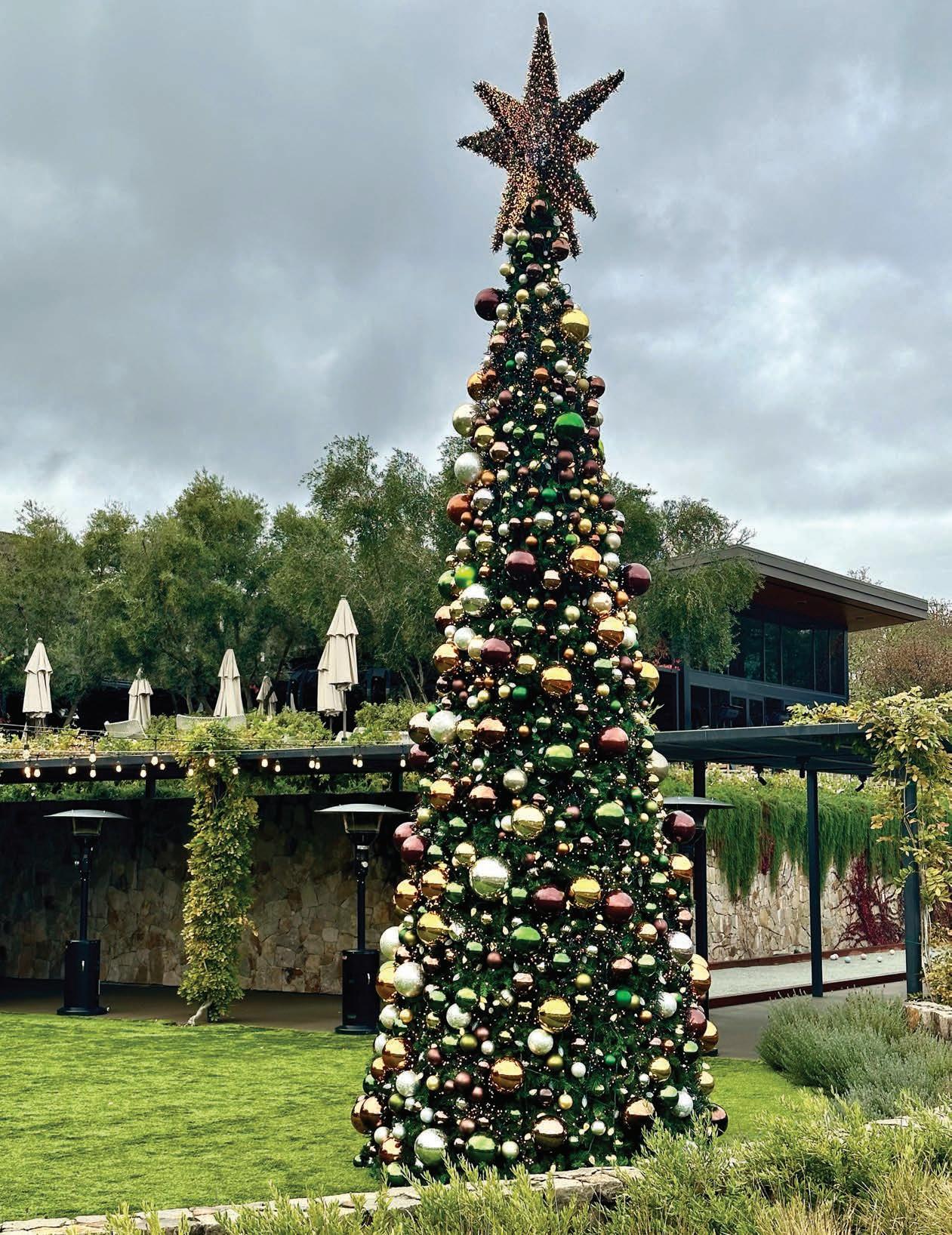
The Montage slmag.net 61

A voracious reader with a nearly insatiable quest for intel on topics in which she's interested, Brooks said that she went from a wine consumer to an enthusiast and now a zealot. She began by tasting lots and lots of wine up and down the Sonoma Coast to define her palette, cold-calling growers, imploring them to sell her grapes, and seeking mentorships from respected vintners and winemakers. While she always felt confident that the "dominoes would eventually fall into place," Brooks says the training wheels didn't come off until she met Ryan. "We just feathered together like two siblings." Ryan, an Iowa native and fellow chardonnay champion, worked in Burgundy and Sonoma County. He executes Brooks' vision for "Burgundian-style wines offering bright acid, low alcohol, minimal oak, and balanced flavor."
When we weren't sipping or shopping—French textiles at Maison Smith (maisonsmith.us), unique men's and women's clothing and accessories at Susan Graf Limited (susangraf.com), beautiful tableware from Forager (foragerhealdsburg.com), and all the pretty things for home and her at Anthem (anthemsf. online), we were eating, a lot. Food always tastes fresher to me in
California. We had no regrets about making quick work of warm Belfiore burrata and fluffy-crust pizza drizzled with truffle oil at the lively PizZando (pizzandohealdsburg.com), located near the entrance of Hotel Healdsburg.
My better half, a committed carnivore, was skeptical about dinner at a one-hundred-percent plant-based restaurant. By the end of our meal at Little Saint (littlesainthealdsburg.com), he didn't miss meat for a moment. Designed as a community gathering place and creative haven, the sprawling two-story establishment encompasses a restaurant, coffee bar, wine lounge, cocktail bar, gourmet graband-go, and music venue outfitted in bohemian-luxe style.
We were thrilled to see that the carrot tahini, cultured carrot spread with tomato chutney, and green lentil hummus we enjoyed as part of a tasting at nearby Marine Layer Wines several years earlier were among the available starters. Just as good as we remembered, we begged the chef to release a cookbook so we could recreate them at home, along with our entrees: a vegan winter squash lasagna with cashew ricotta and a Maitake mushroom au poivre with brandy cream.
62 slmag.net
Merry Healdsburg Tree Lighting

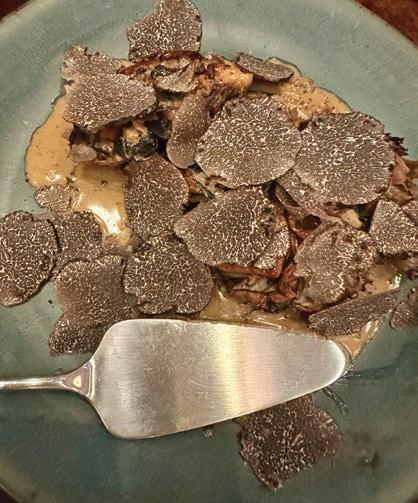
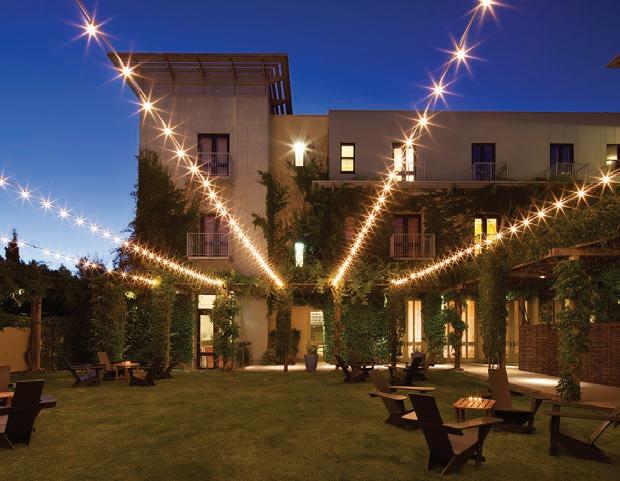
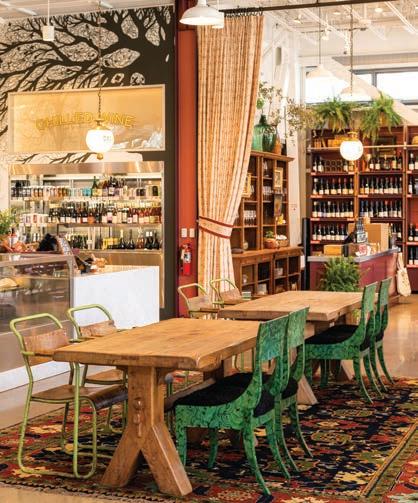
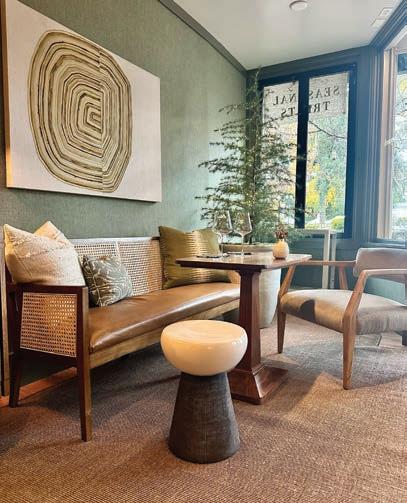
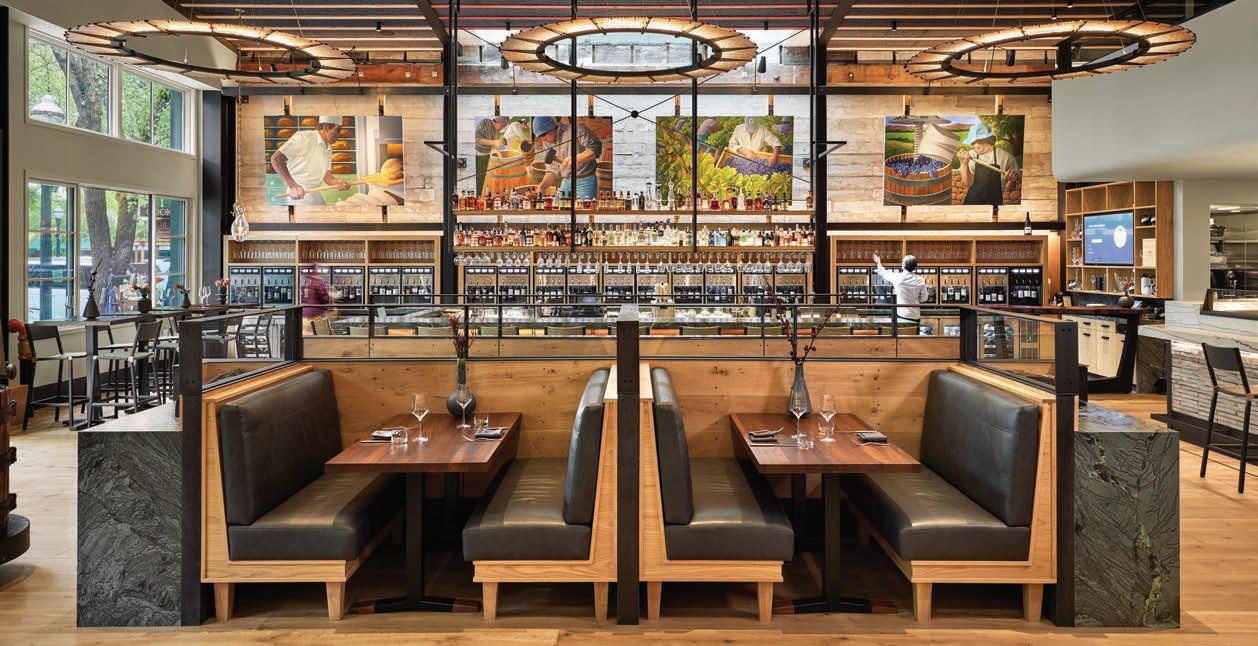 Hotel Healdsburg holiday entrance.
The event green at Hotel Healdsburg
Tons of truffles topping Maitake mushroom au poivre with brandy cream at Little Saint
There are more than 80 wines by the sip or glass to explore along the wine wall at The Matheson.
Hotel Healdsburg holiday entrance.
The event green at Hotel Healdsburg
Tons of truffles topping Maitake mushroom au poivre with brandy cream at Little Saint
There are more than 80 wines by the sip or glass to explore along the wine wall at The Matheson.
slmag.net 63
Dining room at Little Saint Tasting room of Ernest Vineyards
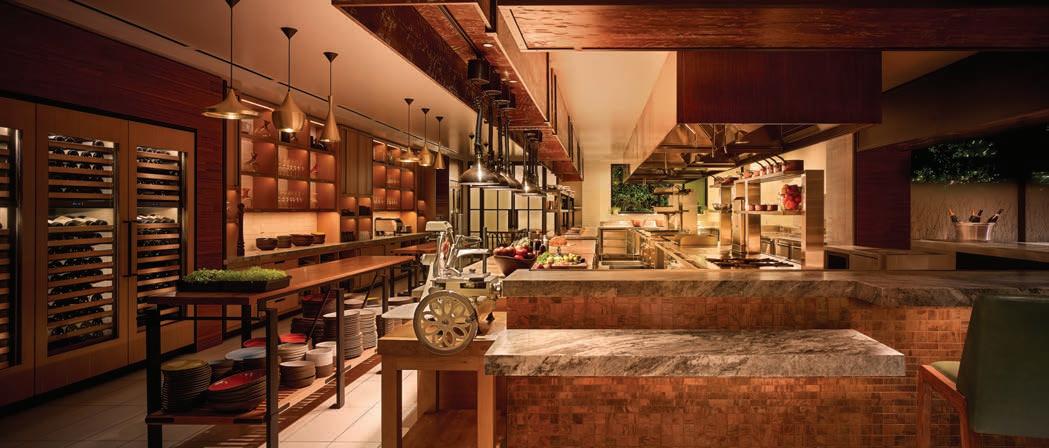

Little Saint's inventive and impressive cocktail menu offers a respite for wine-weary imbibers. At the same time, their conscientious wine list highlights winemakers who are aligned with their business ethos of treading lightly on the earth.
Nirvana for oenophiles, the wine wall at The Matheson offers 88 wines by the dram or glass. While it's obviously heavy on Russian River Valley offerings, there are also popular European classics and several under-the-radar surprises for adventurous imbibers. Similar to Little Saint, the three-story building is home to distinct concepts. Under the leadership of chef/owner Dustin Valette, ambitiousness doesn't hamper ambiance or experience as we enjoyed a delightful seasonally focused dinner in the bustling space, packed to the gills with beautiful people.
A fun spot for breakfast or lunch, don't miss what is likely the largest assemblage of nutcrackers you're sure to spy in one place at Costeaux French Bakery (costeaux.com). From November through mid-January, the century-old institution displays whimsical wooden characters of all sizes, which Will Seppi, the current president and CEO of the bakery, refers to as their "Nutcracker Orphanage."
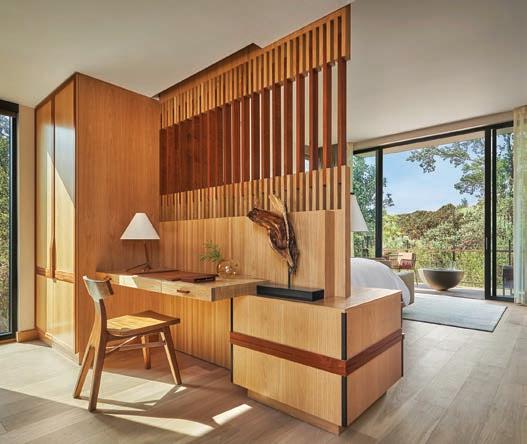
We capped our Healdsburg holiday with a short drive from the square at The Montage (montage.com/Healdsburg), a 258-acre retreat where the 130 modern bungalow-style guestrooms are surrounded by steeply sloped vine-covered hills and stately moss-covered California oak trees. The Montage's sprawling spa boasts one of my favorite fitness studios with a stunning view of their adults-only zero-edge outdoor pool (for a fun off-property workout, book an E-Bike and grab a winery map from Gateway Adventures— getawayadventures.com—to embark on self-guided tour of the area). The refined setting at Hazel Hill, the resort's all-day dining destination, mirrors the terroir-to-table cuisine, quintessentially California with a touch of je ne sais quois .
Elegantly outfitted for the season, the indulgent escape offers tree and menorah lighting ceremonies and other special activities, including a wreath-making workshop. While the décor at The Montage isn't at all saccharine, its daily afternoon hot chocolate station, with a dizzying array of confectionery accouterments, would definitely satiate even Santa's sweet tooth. sl
64 slmag.net
Hazel Hill at The Montage Healdsburg
Gateway Adventures offers guided and DIY bicycle and E-bike winery tours
Forestview guest bungalow at The Montage Healdsburg


www.JohnLore.com 636.898.9086

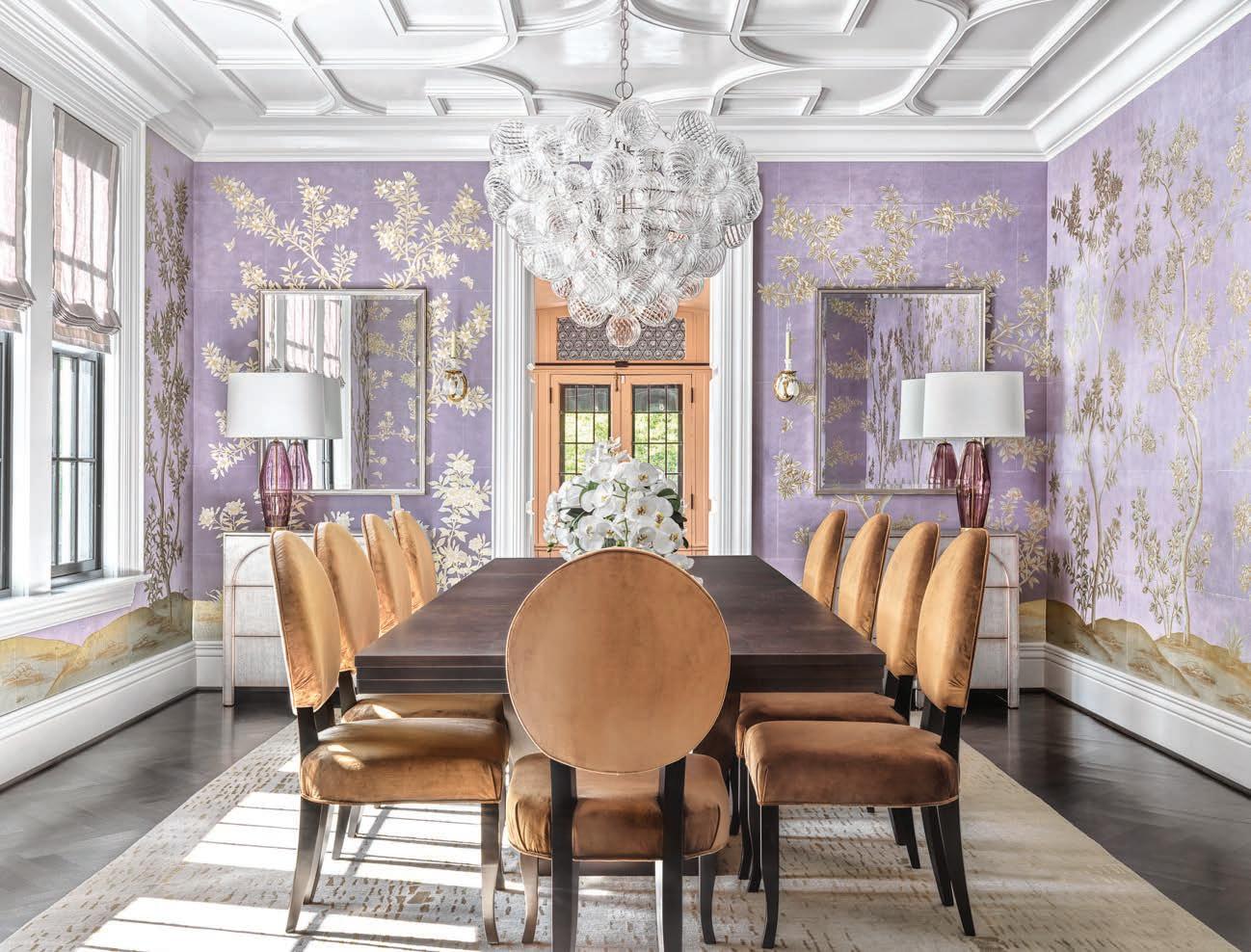
314.733.5877 kellyjohnsondesign.com
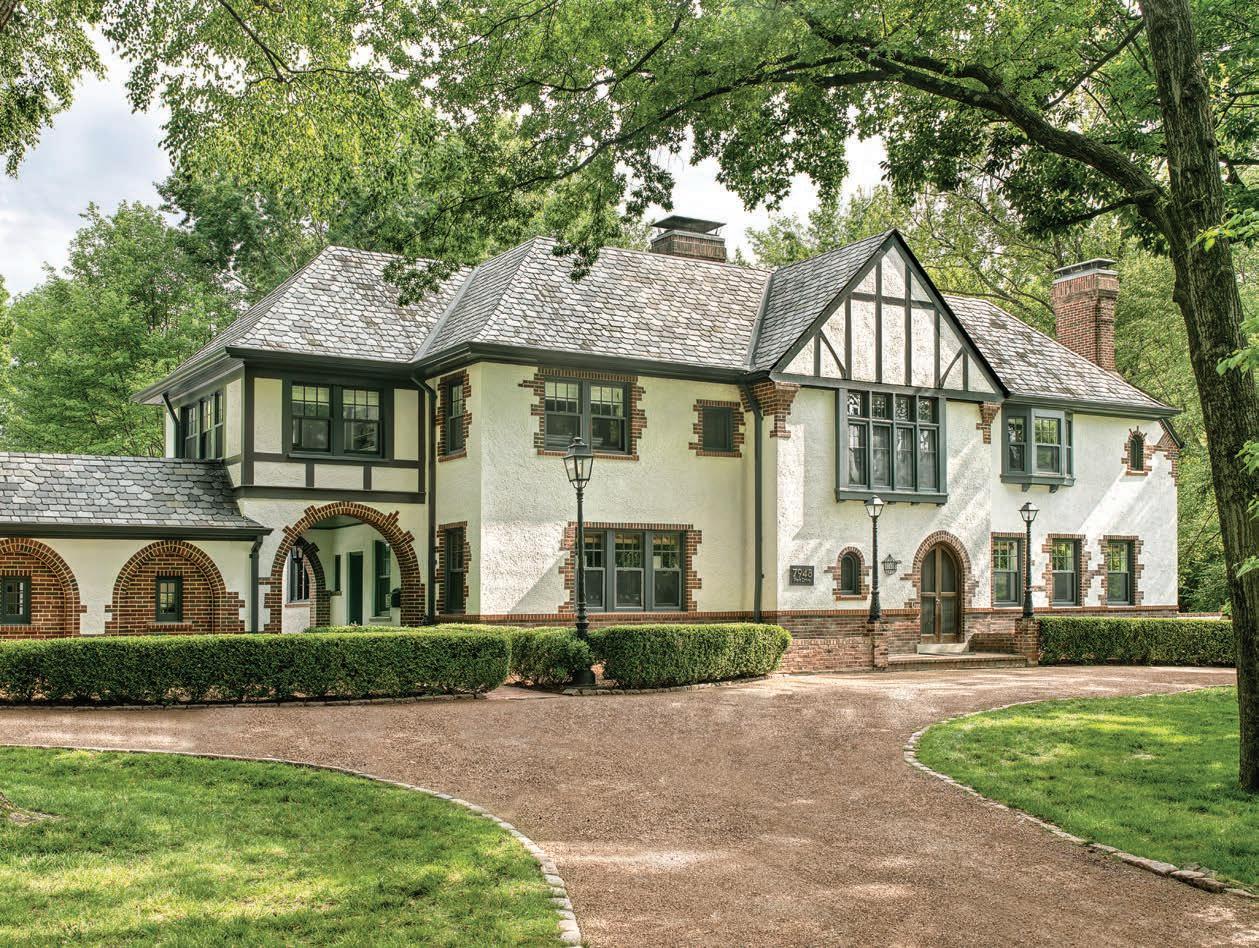
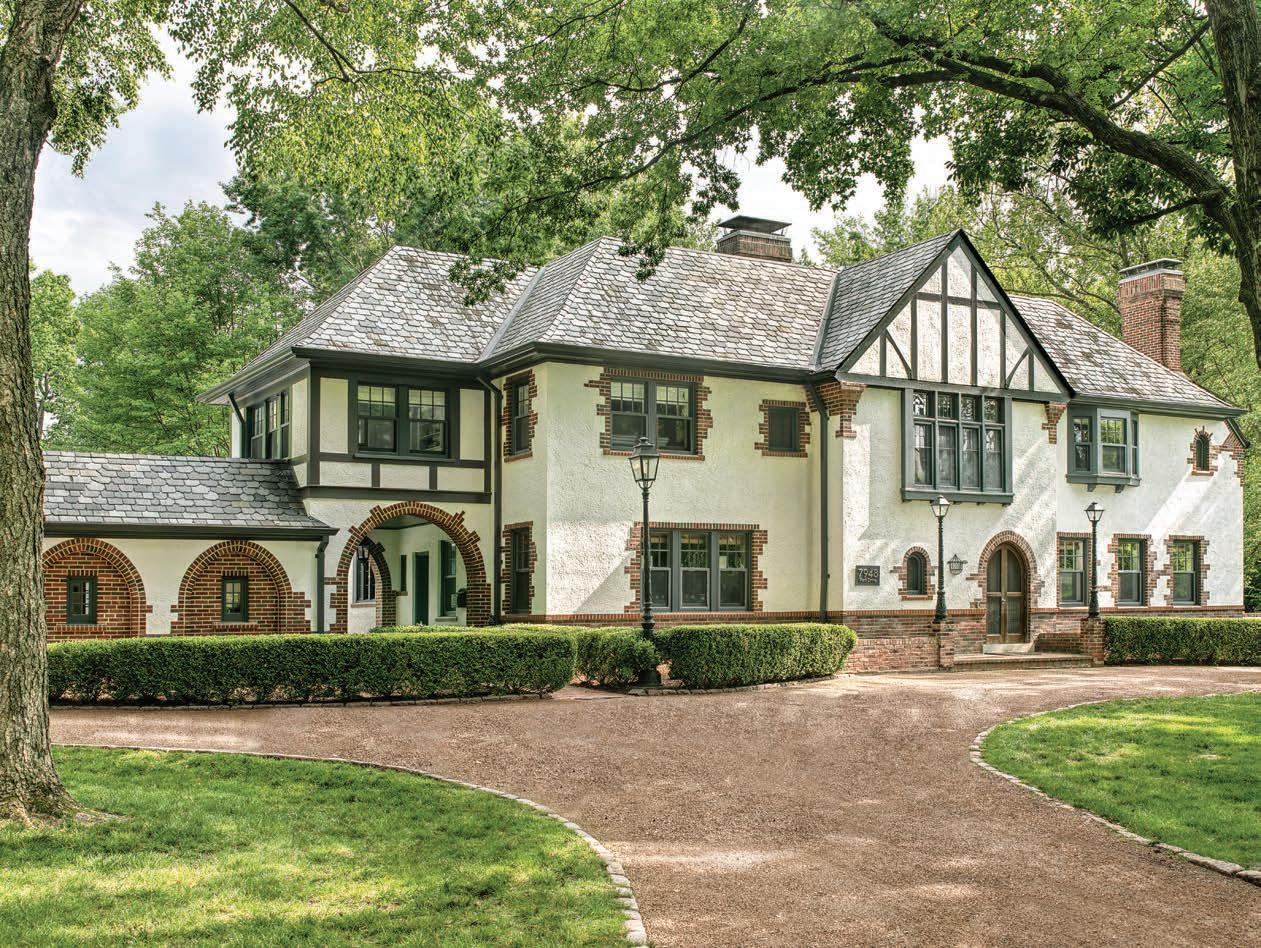
OH, ZILLOW
This couple was living happily in Central West End condo. Then they started browsing online.
By Christy Marshall / Photography by Alise O’Brien
After years in a 6,000-square foot historic home on Westminster Place, they had downsized to a condo.
“And, then, well, Zillow is a horrible thing,” Chris says shyly.
“It is really addictive.”
There in an endless steam of listings was a 1928 gem located in Hampton Park. They saw the slate-roofed house. The yard. “The gorgeous setting,” Chris says. “It was an acre this close to the city and that is what sold us on the house.”
They bought it in July, 2020 and moved in with their cats, Dottie, Blackberry, and Coconut, in November, 2022. The previous owner, a woman born in France, had lived there for four decades. She ran a utility knife business out of the original garage. The house was in need of a serious refresh.
The first item on the couple’s to-do list was a new primary bath upstairs. On a referral from Trivers Associates, they rang up Jessica and Aaron Senne, the principal architects of Studio Lark.
The architects met with Chris and Clif and offered three different designs for the bathroom. “The first two really didn’t have this huge construction component to it,” Chris says. “It was kind of using the existing structure of the house, trying to reconfigure the bathroom that was a Jack and Jill before. We realized immediately that we could not settle for just that. We had to go all in.”
And so they went. All. In.
The existing second floor bath and first floor sunroom were removed and a new two-story addition was constructed by Patrick Moore Construction.
Quickly Clif and Chris realized how steep and slippery the slope can be when you start a remodel. The house was still heated by radiators. Not anymore. The painters were (literally, not figuratively) shocked by the original knob-and-tube wiring when they were painting the stucco exterior.
“We were debating whether or not to rewire and that kind of made the decision for us,” Clif notes ruefully.
Chris Stratmann and Clif LaPlante resided in the Central West End.
slmag.net 67
Chris Stratmann and Clif LaPlante hadn’t thought of moving. But then they saw this Hampton Park beauty, built in 1928. Plans changed.
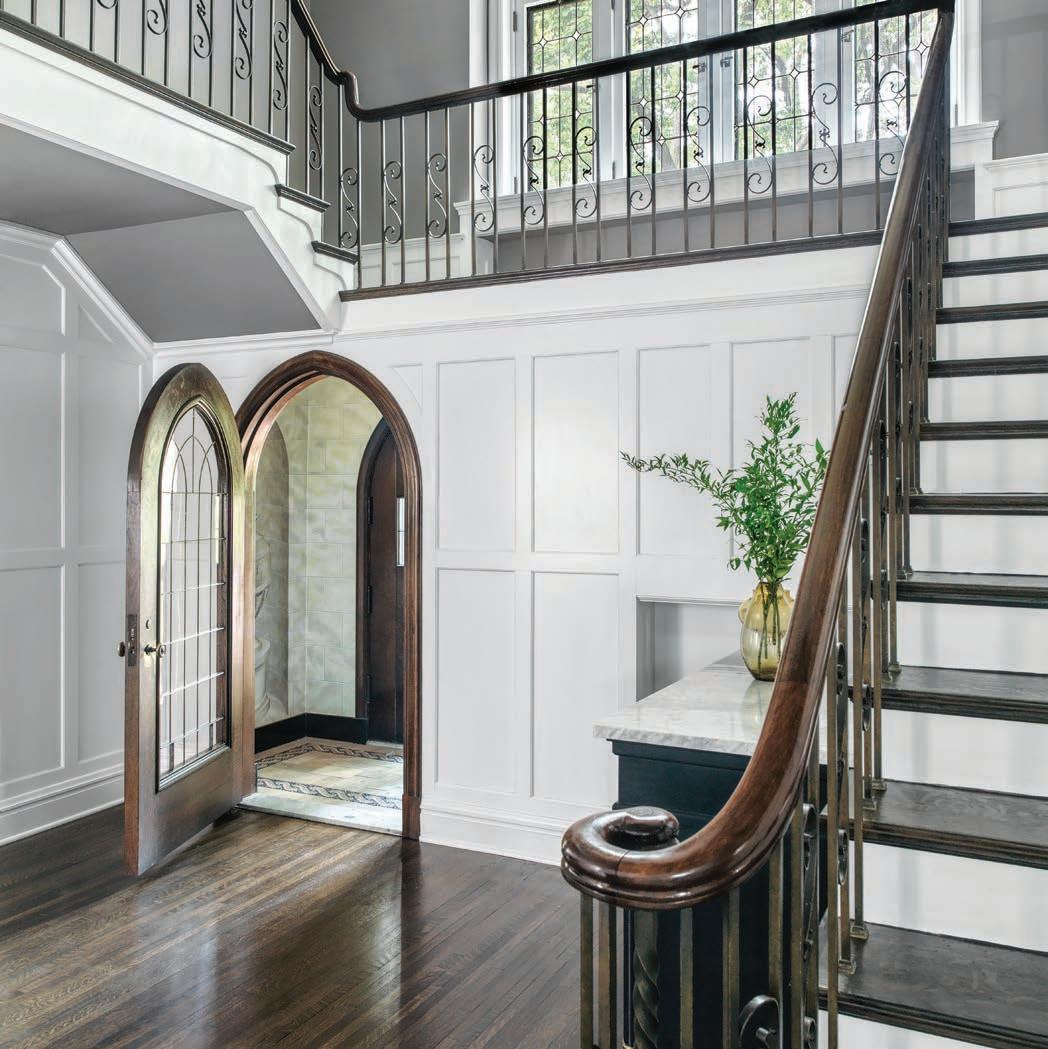
Entering through the 6-foot 8-inch arched front door (which by today’s standards feels almost Hobbit-like), the foyer was dark and dreary when they bought the house. But the original moldings were still intact, as was the flooring and stairway. The stone fireplace stood ready to warm chilled souls.
But Jessica noted, “There was no real connection from the entry to the back half of the house. You had to go through a series of doors. It was really kind of a maze. It was all very closed off.”
An existing hallway was divided it up into a powder room opening to the foyer and a pantry for the kitchen behind. They knocked a large opening into the kitchen from the dining room and another opening in the living room to the newly added den (once sun porch). The entire house was repainted. New baseboards and moldings were created to match the originals.
The kitchen was dark and small with a wall of kitchen cabinetry in front of a window. The refrigerator stood in front of another and a broom closet in front of a third window. The laundry was in a corner.
“I remember when we first came here, looking at this kitchen and thinking, ‘Are you really going to keep this?!’” Jessica says.
The couple loves to cook and to entertain. So, no. They didn’t.
“We reconfigured this area entirely to provide them a gourmet kitchen,” Jessica says.
Marc Christian fabricated the cabinetry. Old windows were replaced with new custom ones designed to match the originals, right down to the divided lights and paint color. Sourced from Webster Windows and Doors, now the exterior windows are aluminum clad for low maintenance. “They’re sort of expressive of steel windows, but not actually steel windows,” Jessica says. They match the 1928 versions perfectly.
The kitchen now gleams with brand-new top-of-the-line appliances and a long island. Clif mans the island; Chris’ sous chef area is off to the right, with its own window and sink. A banquette is built into the corner. A long lighting fixture by Luceplan Compendium hangs over the island.
68 slmag.net
With Jessica Senne of Studio Lark at the helm, the foyer (and entire house) was repainted and updated. The millwork was carefully recreated by Patrick Moore Construction to match the original. An original fireplace was left intact.
When Chris and Clif bought the house, the kitchen was small and dark with a wall of kitchen cabinetry in front of a window. Today it’s a chef’s dream. “We reconfigured this area entirely to provide them a gourmet kitchen,” Jessica says.
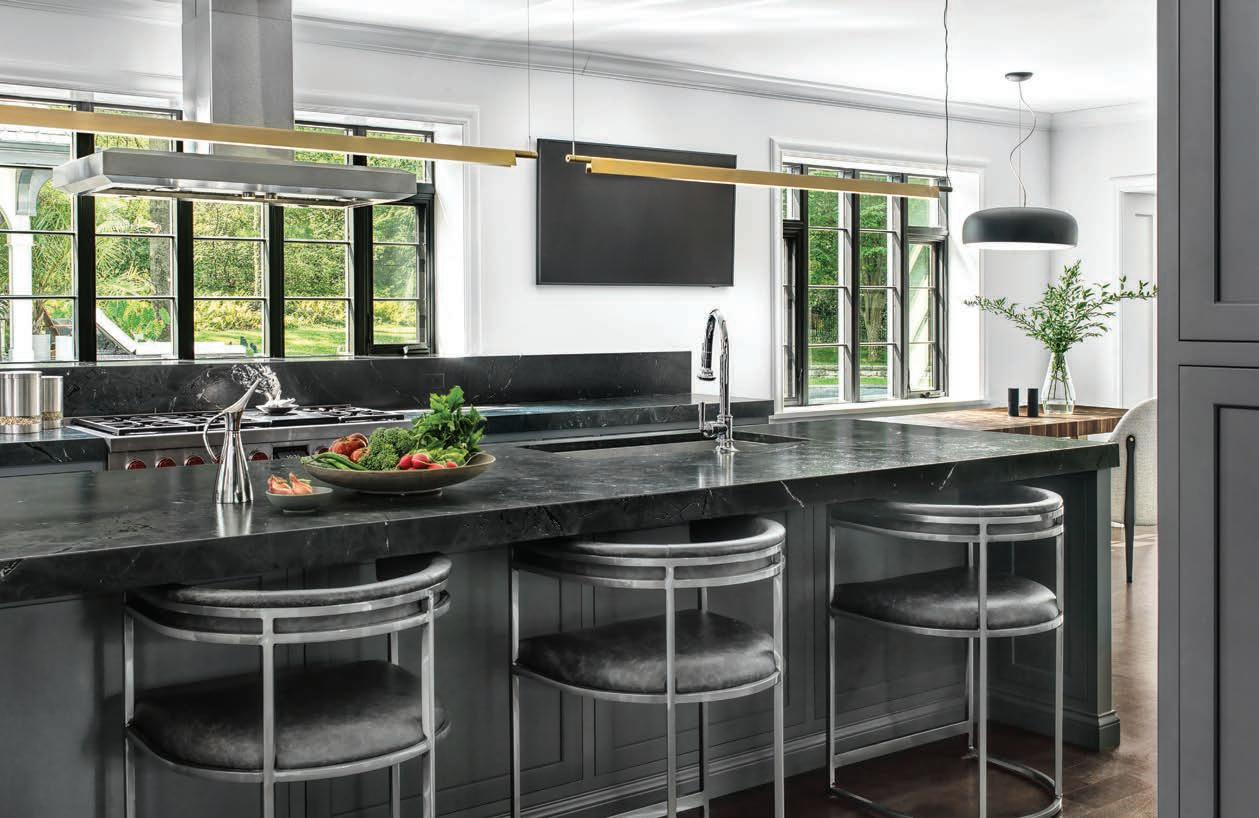
A banquette was built into the corner. Old windows were replaced with new custom designed to match the originals, right down to the divided lights and paint color.
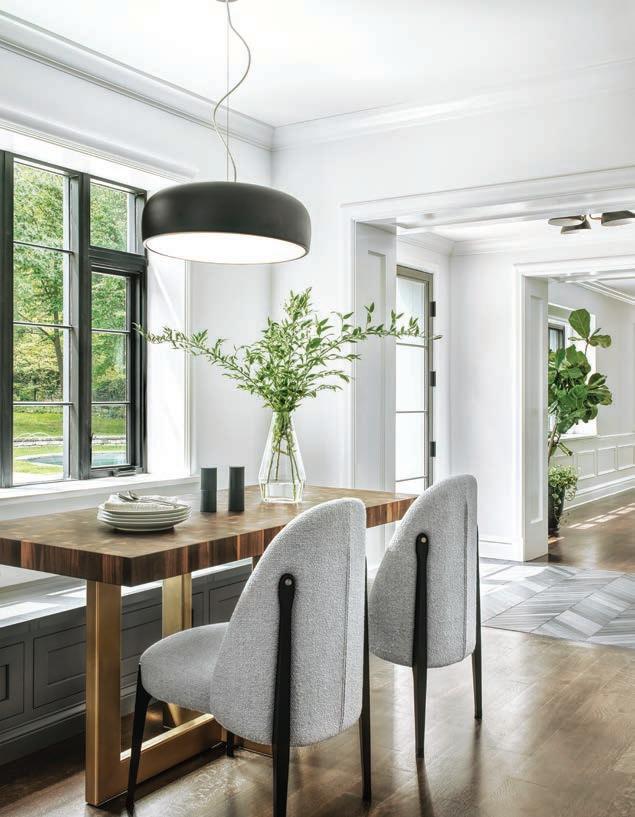
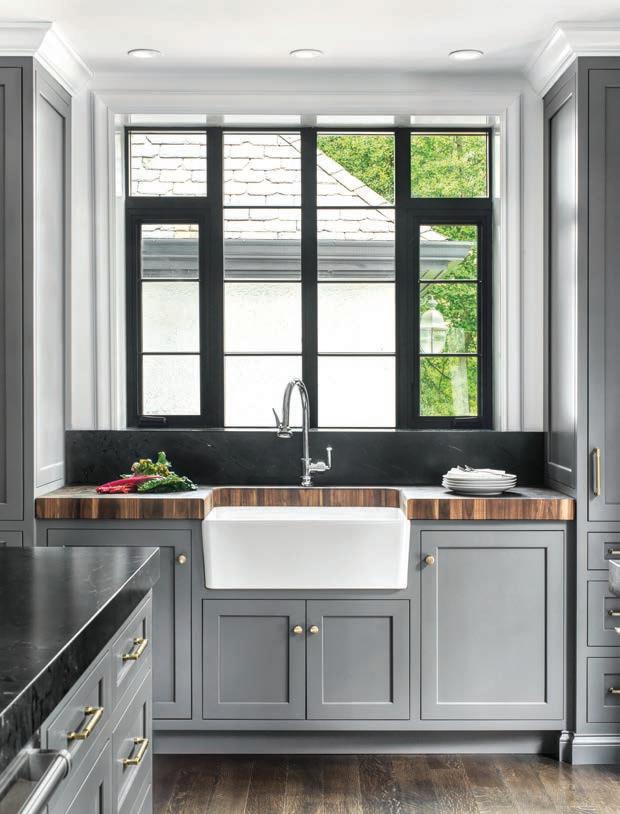
slmag.net 69
Clif mans the island while Chris, the sous chef, works in this area with its own window and sink. Marc Christian fabricated the cabinetry.
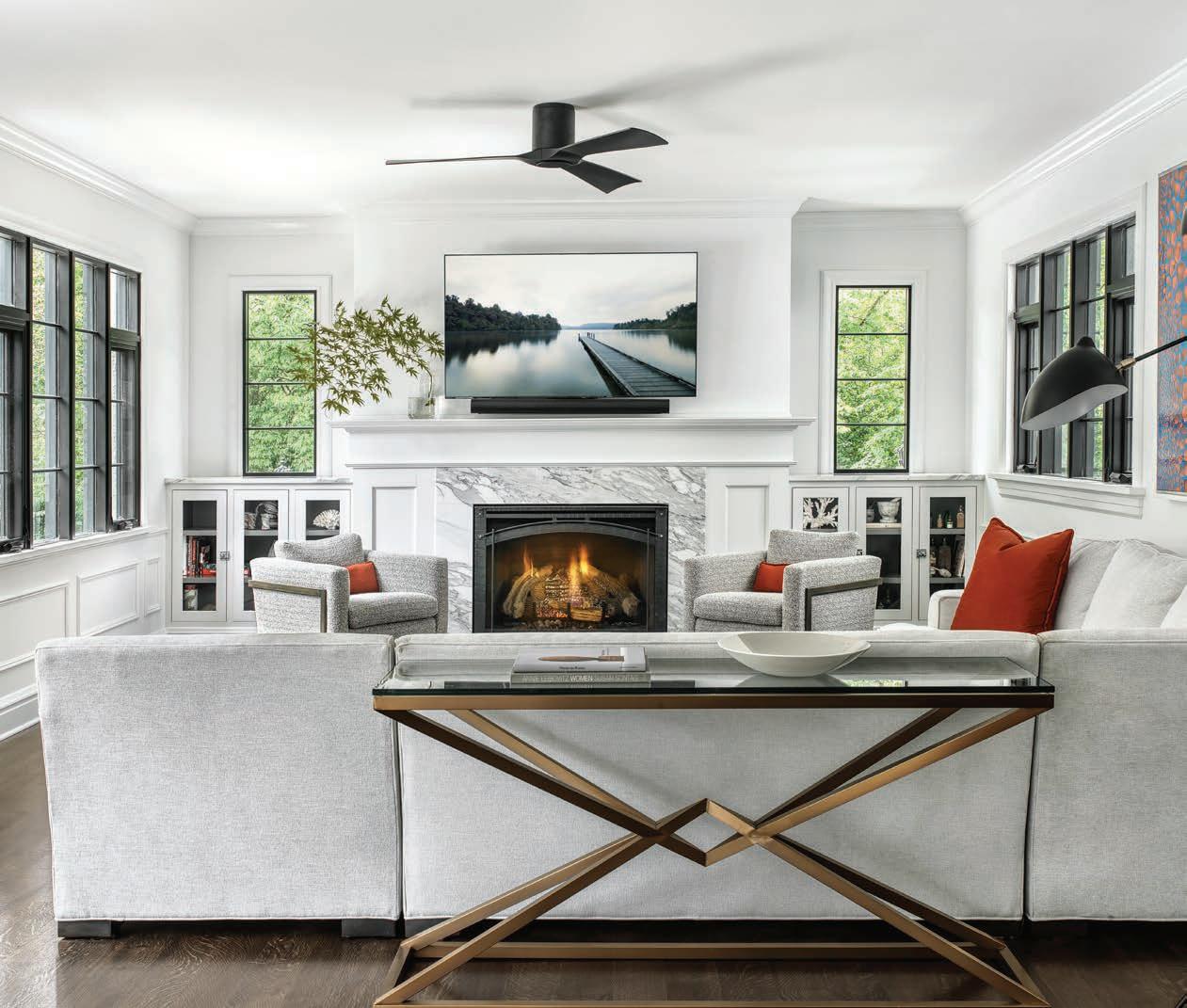

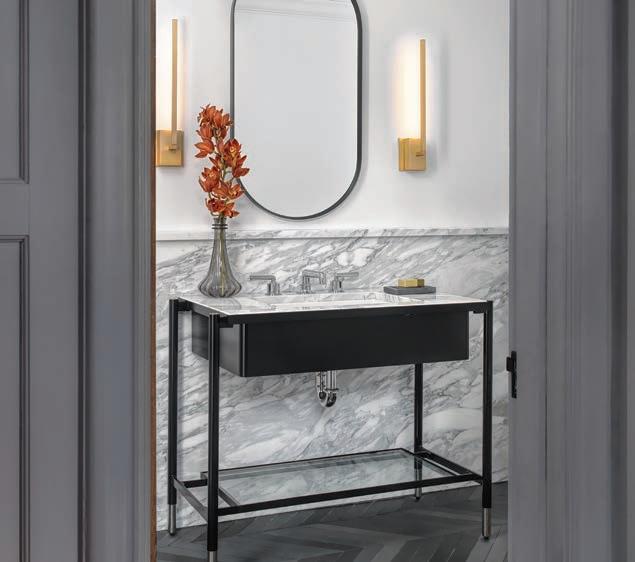 In the den, the Studio Lark architects added features like a stunning mantle flanked with built-in cabinets, all which would have befitted the 1928 original.
The primary bath is now flooded with light from a bank of windows opening to the back yard. “It’s a neutral palette that is timeless, classic,” Jessica Senne says. “They are never going to get tired of these finishes.”
In the den, the Studio Lark architects added features like a stunning mantle flanked with built-in cabinets, all which would have befitted the 1928 original.
The primary bath is now flooded with light from a bank of windows opening to the back yard. “It’s a neutral palette that is timeless, classic,” Jessica Senne says. “They are never going to get tired of these finishes.”
70 slmag.net
An existing hallway was reconfigured in order to add an updated powder room off the foyer.
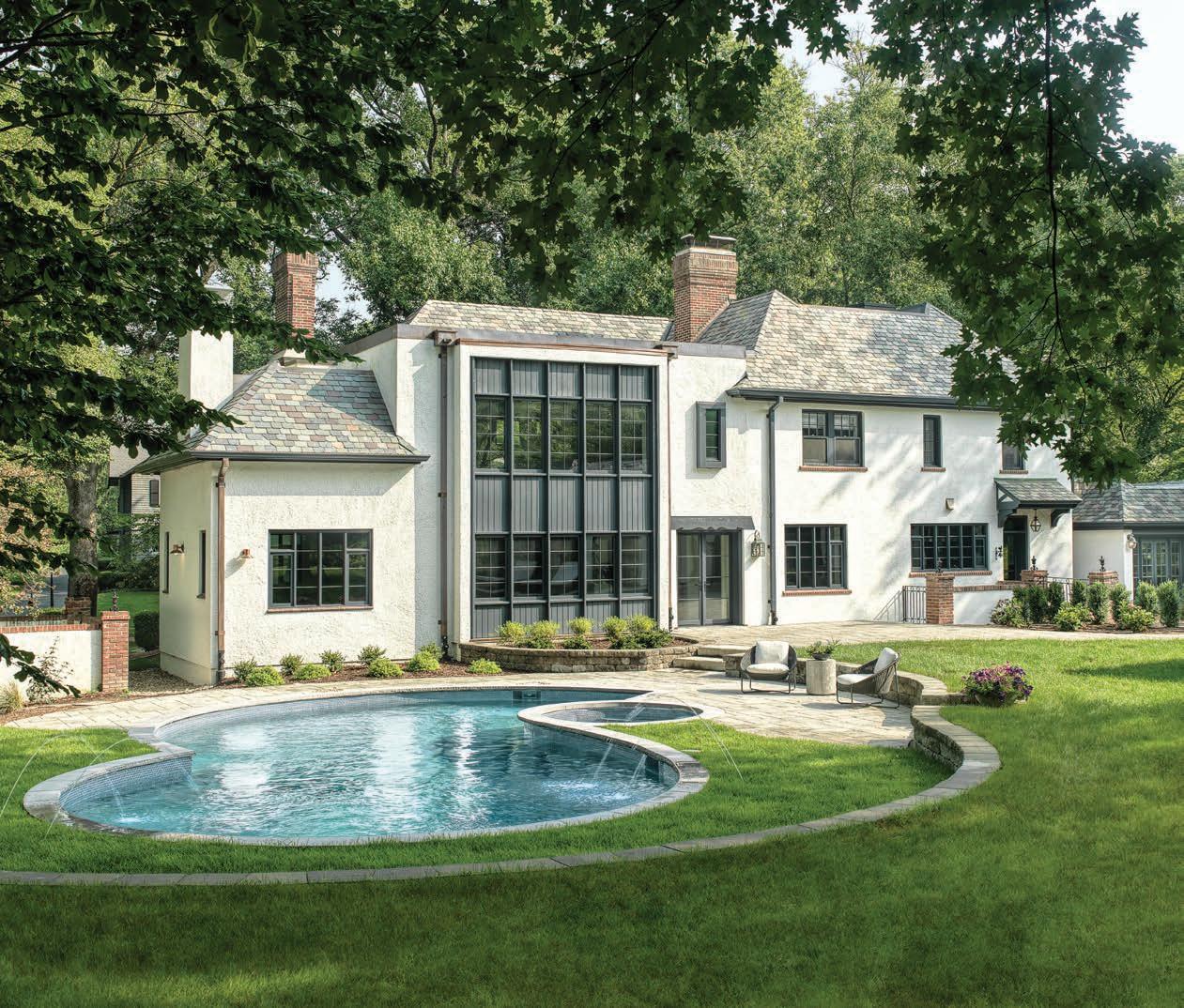
“[The light fixtures] really wash beautiful light on the work surface,” Jessica says. “So, of course, we wanted to minimize any visual obstructions within this golden light.”
The kitchen connects to the den with a passageway that hosts the bar. The sunroom was a step down; the den floor is now even to the kitchen and bar.
“Okay, so there was a bar here before, but of course, again, all of the spaces are adjacent to each other, so we knew we needed to refresh it,” Jessica says. “We did bring all of this up to the same level for better flow and to provide better, more ample natural light.”
In the den, the architects added a stunning mantle flanked with built-in cabinets, which would have befitted the 1928 original.
Upstairs, the architects not only created a new primary bath but redid the primary bedroom as well, adding a new entry into the new addition, replacing two small closets with one whopper of a walk-in dressing room. A new laundry was built. Skylights were slipped in.
The primary bath sports integrated medicine cabinets with TVs, a walk-in shower room, and Carerra marble. And window after window opening to the back yard.
“It’s a neutral palette that is timeless, classic,” Jessica says. “They are never going to get tired of these finishes.”
The refresh (aka slippery slope) went on to other bedrooms and the guest bath.
Outside, the pool needed to be re-piped; the landscaping upgraded. An outside seating area was expanded and a large TV added for afternoon get togethers.
The original owners would recognize the house from the front drive. But that’s all.
“Conceptually, what we endeavored to do was to celebrate the beautiful existing architecture of the house and then update and upgrade for their modern lifestyles,” Jessica says.
And it all started with a simple browse on Zillow. sl
slmag.net 71
Leaving no stone unturned, the revamp continued outside to the pool, landscaping, and outdoor living area. The back reveals the full two-story addition.
A PLACE FOR EVERYTHING LOCALLY OWNED | FREE IN-HOME DESIGN CONSULTATIONS | COMPLETE HOME ORGANIZATION 2626 S. BIG BEND BLVD. | ST. LOUIS, MO 63143 | 314-781-9000

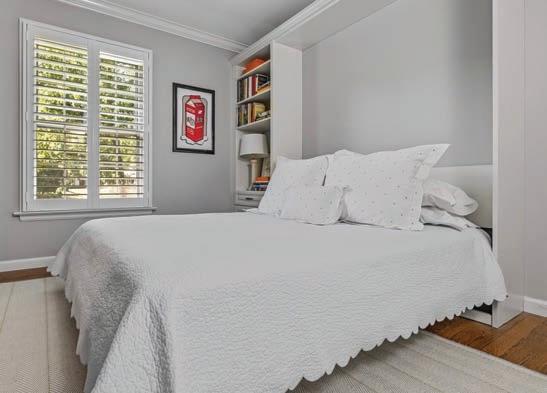
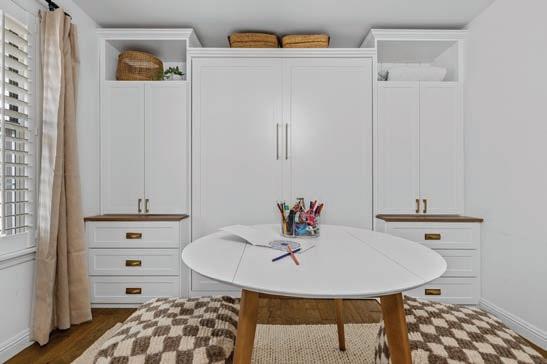
MAXIMIZING SPACE AND STYLE
In the quest for creating a harmonious blend of functionality and elegance in home design, more families are turning to innovative solutions like Saint Louis Closet Co. custom Murphy beds. These space-saving marvels have evolved from the simple fold-down beds into sophisticated, multi-purpose furniture that epitomizes modern living.
With the urban environment growing more compact, every square inch of space counts. Custom Murphy beds answer the call for space efficiency without compromising on style. Perfect for small apartments, guest rooms, or home offices, these beds can magically disappear into a wall or double as a stylish cabinet or shelf when not in use.
Whether you’re in need of a twin, full, or queen-sized sleeping arrangement, the beauty of going custom with the Saint Louis Closet Co. is that your needs are not just met—they’re anticipated and crafted into reality. Each bed size is designed with the understanding that your space is unique, and your furniture should be a complement to your lifestyle.
More Than Just a Bed - Why settle for a bed when you can have a complete home office or an expansive wardrobe unit alongside it? Streamline your furniture by combining essential elements around your Murphy bed. Imagine a seamless transition from daytime productivity in your home office to nighttime relaxation with a comfortable bed—all within the same footprint.
Three tips for selecting the perfect Murphy Bed for your Home; 1. Ensure proper installation by a professional company. 2. The Mattress does Matter, purchase a bed that comes with the proper mattress. 3. Maximize your space.
Custom Murphy beds have transformed from a quirky alternative to a central feature in space optimization. By choosing a custom design, you open up a world of possibilities in terms of style and functionality, making your living space work for you in ways you never thought possible. Whether it’s a snug corner of a studio apartment or a sophisticated guest room ensemble, a custom Murphy bed could be the stylish, space-saving solution you’ve been dreaming of. Call Saint Louis Closet Co. today for a free estimate 314-781-9000.
THE ALLURE OF CUSTOM MURPHY BEDS
EASY TO USE MURPHY BEDS
FLEX ROOM - CRAFT & BEDROOM
GUEST BEDROOM
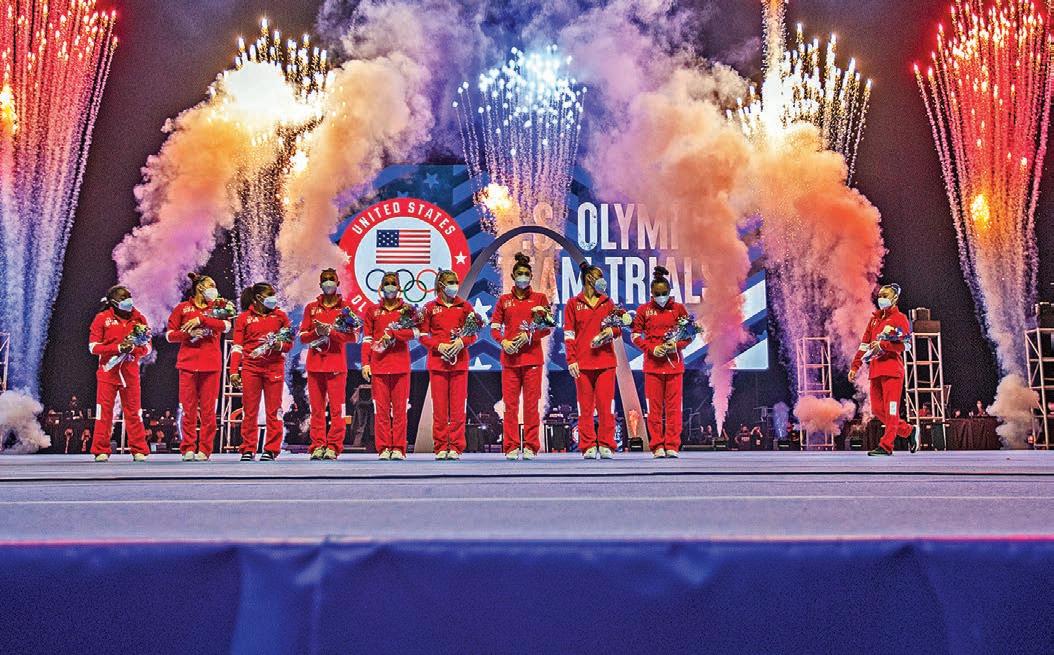
THE POWER OF SPORTS
“We don’t have beaches here or mountains, but we do sports really well.”
Marc Schreiber, president, St. Louis Sports Commission
By Craig Kaminer / Portrait by Suzy Gorman
If you’re a sports fanatic, living in St. Louis is heaven. We’re rarely thought of as a boom town for economic or population growth, but when it comes to sports history, great teams, NCAA competitions, and sportsmanship, few — if any — cities compare. Walk the streets or the airport and you’ll see a large percentage of folks wearing team gear. When you’re out of town, it’s easy to spot a St. Louis fan sporting a t-shirt, jersey, cap, or scarf. And they are not always from St. Louis, but grew up loyal to one of the city’s teams.
For many years, St. Louis was one of the few with a sports commission. Now, following the model established here, most cities have one. The goal is to use the power of sports to enhance the area’s quality of life and to create economic and social benefits for the community. Other sports commissions in other communities get some form of support from their public sectors. Sometimes that will come from the city or county or state government. Sometimes it’ll come from their visitors bureau. Sometimes it’ll come from the local Chamber of Commerce. Not in St. Louis.
“Our model in St. Louis is an independent, privately funded organization,” Marc Schreiber, the president of the St. Louis Sports Commission said. “So it’s the corporate community, the business community here in St. Louis which supports us and generates and provides the resources necessary for us to do our work on behalf of the community and the region.” The Sports Commission operates on a $1.8-million annual budget.
“Essentially, economic development is what the commission does,” he explained. “And that’s important to the corporate community that is trying to recruit and retain talent. They want
to ensure that St. Louis is an active, vibrant region that has offerings that enrich and enhance the quality of life.”
In January 2023, Schreiber, 49, succeeded his long-time boss and mentor, Frank Viverito. A St. Louis native, Schreiber grew up loving sports.
“I was always one of those people who knew very early on what I wanted to do,” he said. “I wanted to go into sports broadcasting and be the next Bob Costas. Bob was my idol growing up. So I pursued a broadcast journalism career. On one hand, I wanted to go into sports broadcasting, but there was also this attraction to doing something good for St. Louis.”
When the 10-day U.S. Olympic Festival was held here in 1994, Schreiber signed up. “The Sports Commission was established in 1989, but it was the organization’s first really big event,” he said. “So I volunteered for that and just was hooked on what it meant for the region and how much it energized the community. So that was my introduction into what the Sports Commission does. And from that point, it was sort of the entrée to wanting to connect to the organization.”
The following summer Schreiber interned for the St. Louis Sports Commission and he was assigned to write the organization’s newsletter. Toward the end of his internship, Frank Viverito was named president, so Schreiber had to interview and write a story about the man who would ultimately be his boss for 25 years. After graduating from Northwestern in the summer of 1998, Schreiber got a second internship that led to a full-time job with the Sports Commission. “And the rest is history.”
74 slmag.net
The 2021 U.S. Olympic Gymnastics Trials at the Dome at America’s Center

slmag.net 75
Marc Schreiber by Suzy Gorman
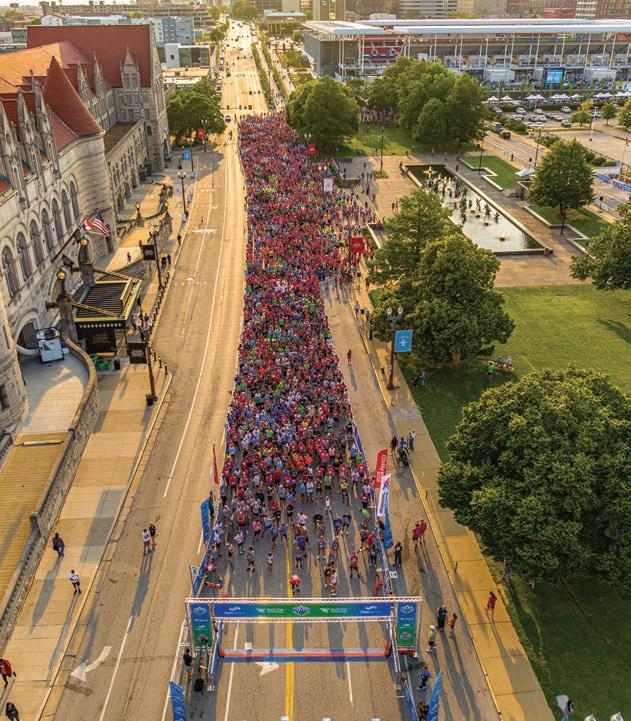
According to Schreiber, financial, venue, and destination are the top three factors that determine where an event’s going to go. “And that financial piece is very much a challenge,” he said.
When you tally up revenues from the Cardinals, the Blues, CITY SC and then the Sports Commission’s events on top of it, the economic benefit to St. Louis is in the billions of dollars.
When the SLSC staff is out pursuing an event, they talk about how great of a sports town and sports community St. Louis is.
“One of the things we love to say is that we’ll put St. Louis’s sports history up against any community,” Schreiber said. “There’s such a rich tradition and rich history over time that manifests into the connection that St. Louisans have with their teams. With sports here, there’s a psychic and economic benefit. Both are significant, and it’s a story that we share with our community all the time just to talk about the power sports have had in St. Louis. It comes back to unifying this region in a way that few other things can. It comes down to an identity that we have.
“We don’t have beaches here or mountains, but we do sports really well.”
The key to the St. Louis Sports Commission’s success is the quality and number of special events coming here. But it does more than that.
“It’s one of those things that’s able to unify St. Louis, and it is a model of what we can accomplish when we’re able to attract a major event,” Schreiber said. “Whether that was the Final Four back in 2005 or the SEC basketball championship in 2018, or the PGA championship in 2018, the Frozen Four, the All-Star games that we’ve had, the NHL Winter Classic, the dozens and dozens of high-

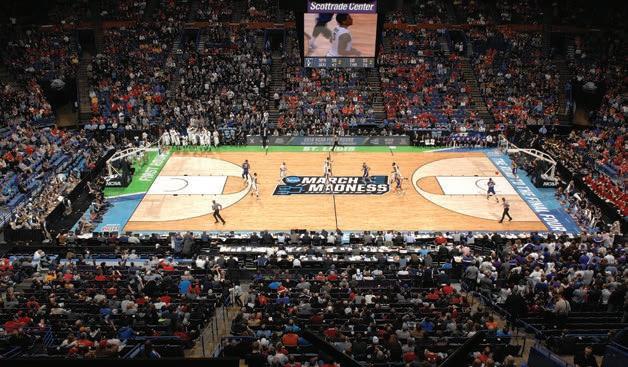
profile NCAA championships we’ve hosted, the Olympic trials that we’ve done— they serve as a model for how we can come together and do big things that make an impact and bring vibrancy to the region, excite residents, and really cast St. Louis in a very positive spotlight nationally.”
But as sports have grown, so has the competition for each and every event. “It just becomes much more difficult, more of a challenge for us to be successful just because we’re going up against so many other cities for any given event.”
The rules have changed since what is considered the heyday of sports events here in the 2000’s. “The Final Four is a little more of a stretch for us now because it’s hard for our dome to compete with its newer counterparts across the country,” Schreiber said, adding that they are still on the hunt for high-profile NCAA championships and Olympic sports events.
“We go up against other markets that are very aggressive financially and we have more limited resources,” Schreiber said. “But, we’re very fortunate with the Enterprise Center and the recent renovations that were done there. So that building is at the top of its game. We can put Enterprise Center up against any of its competitive set of venues. We have an outstanding new facility right behind us in CITY PARK, so that’s terrific.
“It would be tremendously helpful if we had support from our local public sector. And what I mean by that specifically is the city and county.”
The hunt for more events goes on. “We just submitted our bids for NCAA Championships for 2026 thru 2028,” Schreiber said. “We have bids in for the NCAA Wrestling Championships, the Women’s
The Sports Commission’s annual Biz Dash 5K presented by World Wide Technology in Downtown St. Louis 2016 NCAA Men’s Basketball Tournament at Enterprise Center
76 slmag.net
2009 NCAA Women’s Final Four at Enterprise Center

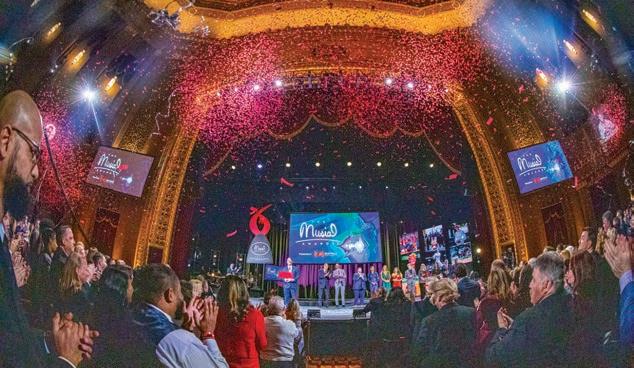
Volleyball Championship and Men’s and Women’s Basketball, the NCAA Gymnastics Championships and a few other events besides those. We’re waiting to hear about the U.S. Figure Skating Championships for 2026. I would love to see us be able to do a Missouri versus Illinois football game again, at the Dome. They have a series that’s on campus from 2026 through 2029. I would love to see us figure out a way to get one or more of those games to our community.
“We’re awaiting word on bids for the US Gymnastics Championships,” he continued. “So you start to see this whole breadth of events that are out there and on the national landscape that we want to try to attract to St. Louis.”
But what’s ahead? “I think the big opportunity is the growth of women’s sports,” Schreiber said. “I’d love to see us land the NCAA Women’s Volleyball Championship. It’s the highest profile NCAA championship we’ve yet to host.”
When asked about if there is an NBA, WNBA, or NFL team on the horizon, Schreiber thinks not. “But at the moment, by all means, we’re doing darn well. When you have the four teams, the Cardinals, Blues, City SC and the Battlehawks all operating at the level they are, that’s pretty phenomenal.”
He added that in terms of motorsports, World Wide Technology Raceway is flourishing. “While we may not get F1 anytime soon, the focus right now is making sure the existing events – NASCAR, IndyCar, and NHRA are successful,” he said. “It’s the only track in America that hosts all three circuits. There’s no one else that has that.”
What the SLSC does is tremendously important to the fabric of this region.

“We’re focusing on where we can have the greatest value to the community,” Schreiber added. “For us, that’s the attraction of events, the creation and production of an event like the Musial Awards, the work that our foundation does to promote sportsmanship in the community, and what we can do to celebrate our Olympic legacy as America’s first Olympic city. “
“We get recognized as having the best fans in baseball. As Bob Costas said, St. Louis fans stand out with their combination of passion and civility,” Schreiber said. “A lot of pride comes from that. You’re told, on one hand, this may be flyover country, but then on the other hand we are saluted for our sports, sportsmanship, and civility. Being a great sports town with great fans, well, we latch onto that narrative as the thing that represents our identity and puts St. Louis in a very positive light.”
Everyone loves seeing the Cardinals on the bat, the flag on the musical note of the Blues, the tinge of pink in the CITY SC logo.
“I think there’s something really special when you’re flying back to St. Louis and there’s going to be several people on that flight who have Cardinal’s or CITY SC or Blues stuff on,” Schreiber said. “We wear it on our chests and sleeves. That’s not so true of other places, and that’s the identity that represents us, and it’s a very positive thing, and it’s emblematic of the pride that St. Louisans have in their community.…
“You hear that all the time, that St. Louisans have this inferiority complex, they’re apologizing for stuff, but we don’t do that with sports,” Schreiber said. “It’s the thing that makes us feel good about this as our hometown — and that’s an important powerful thing.” sl
The Sports Commission’s annual Musial Awards presented by Maryville University at Stifel Theatre
The Missouri vs. Memphis “Mizzou to the Lou Classic” at the Dome at America’s Center in September 2023
slmag.net 77
The NCAA Wrestling Championships at Enterprise Center
You can read concert descriptions, select your set, and purchase tickets by scanning the QR code below, or by calling the Jazz St. Louis box office at 314.571.6000.

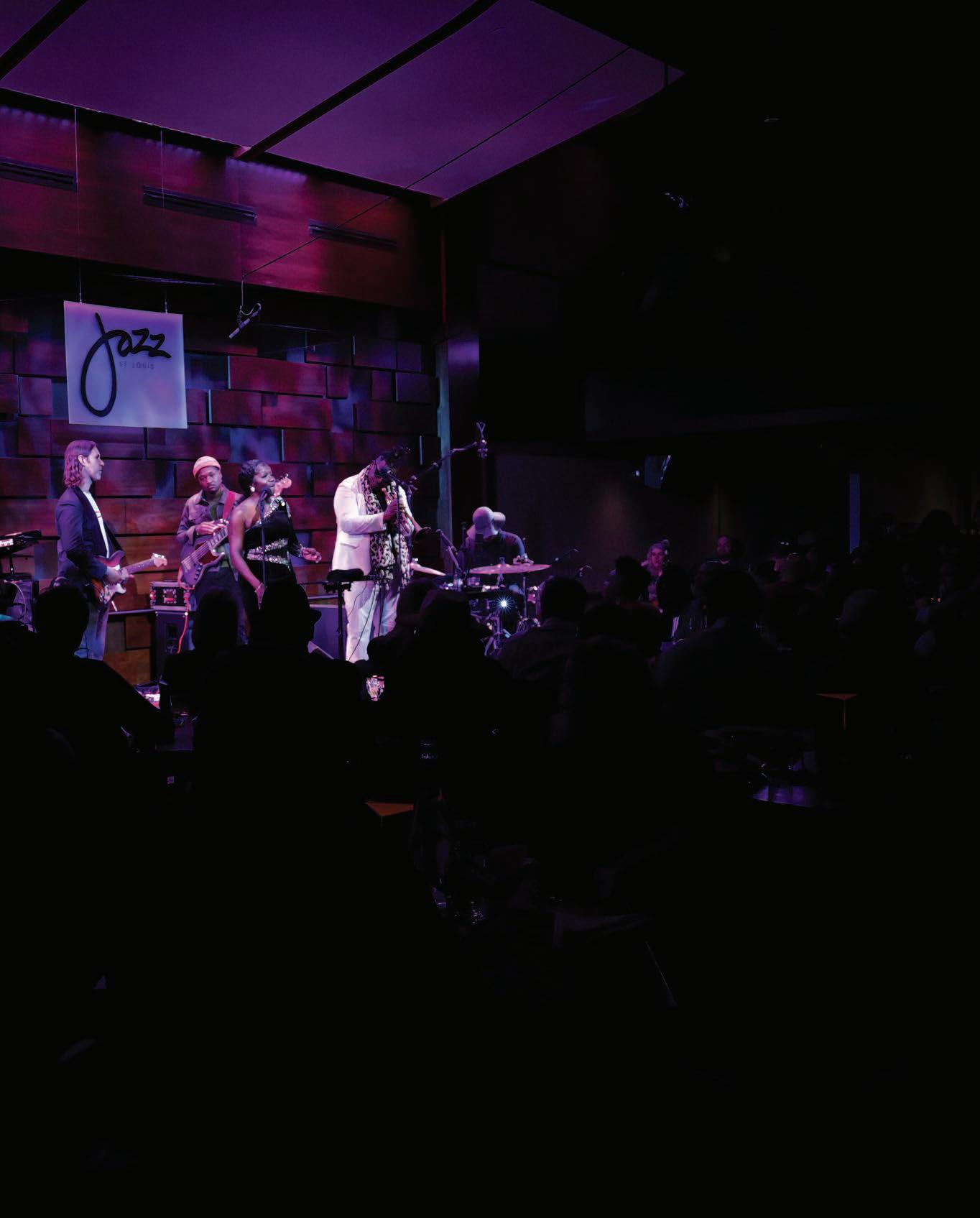
Enjoy seasonal dinner and sensational live jazz at Jazz St. Louis , one of the top listening rooms in the world in St. Louis'
Visit jazzstl.org to learn more and choose your seats!
Jazz St. Louis is a not-for-profit organization whose mission is to lead our community in advancing the uniquely American art of jazz through performance, education, and community engagement.
Steward Center 3536 Washington Avenue St. Louis, MO 63103 Grand Center Arts District!

PhotobyElevatedEyez
Meet Me
for Mediterranean
in the Maker’s District on Delmar
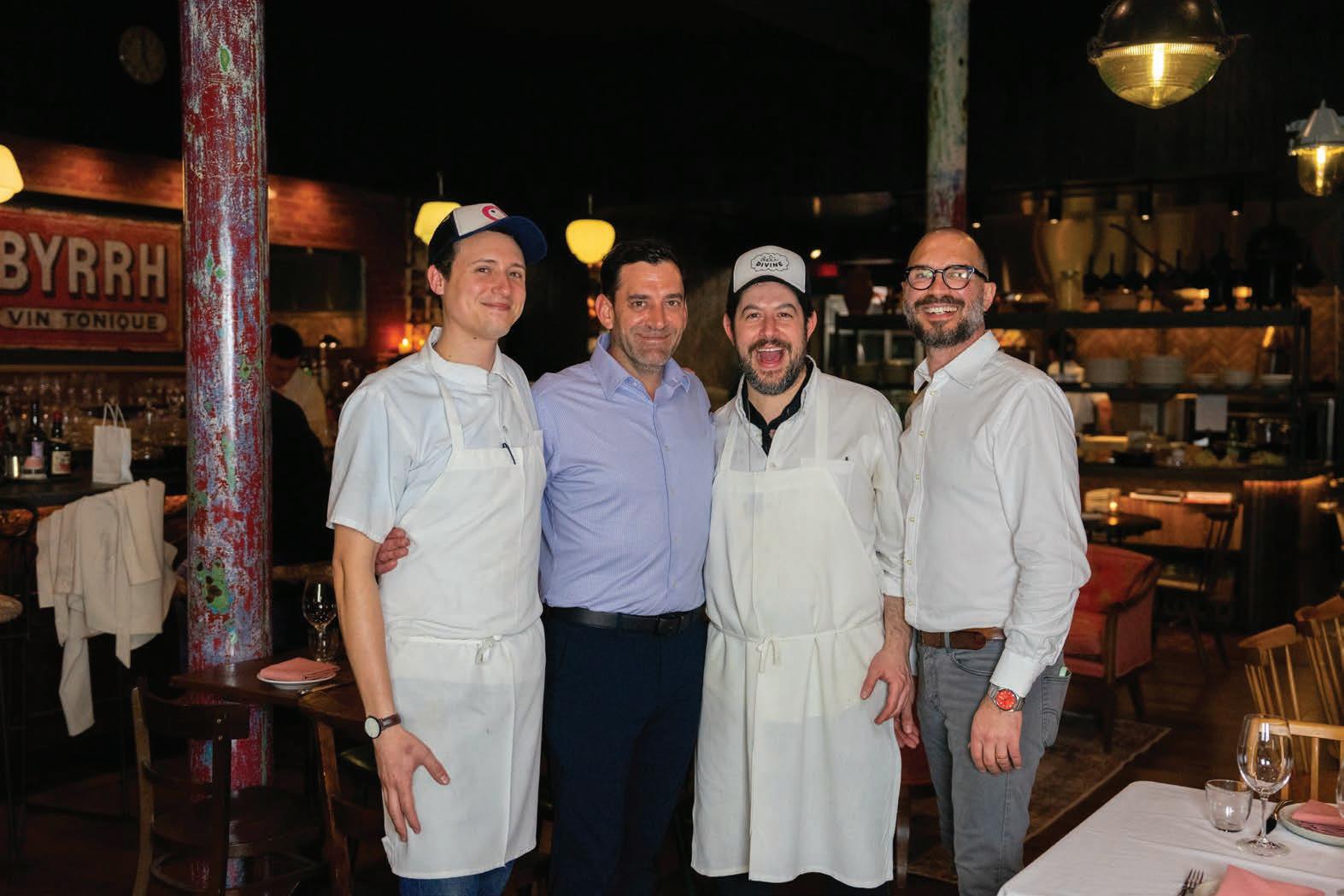
Ben Poremba’s newest creation, Esca, a coastal Mediterranean restaurant featuring meat, seafood and vegetables grilled over charcoal, fresh salads and cold appetizers, classic cocktails, a large amaro selection and a range of indulgent desserts.





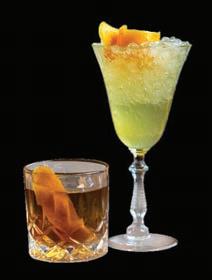

FOO D O F LOV E FOR TH E LOVE OF FOOD Opening soon:

For nearly 50 years, I have had the pleasure of providing quality aviation services to the St. Louis community. I am proud that SpiritJets has some of the best industry professionals providing safe, quality private jet transportation.
Thank you, St. Louis, for the years of patronage! “
Doug McCollum
 St. Louis’ Private Jet Leader
636-735-2222 | SPIRITJETS.COM Offering Private Jet Services From All St. Louis Metropolitan Airports
SOPHISTICATED CELEBRATIONS


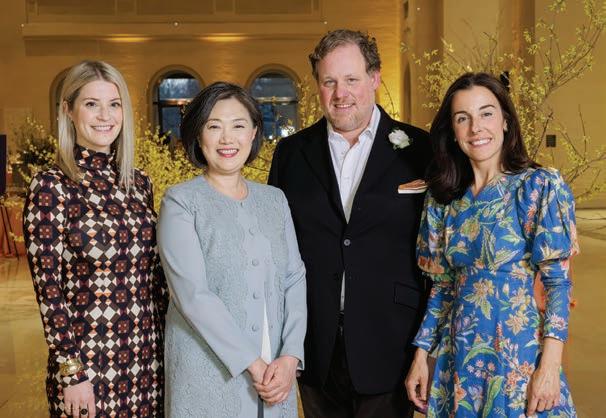
May 3 St. Louis Symphony Orchestra Gala Celebration:Yo-Yo Ma in Concert, slso.org 4 Annual A Night for Newborns, nursesfornewborns.org 7 Lift for Life Academy’s 14th Annual Fashion Show, liftforlifeacademy.org 8 MOMentous Luncheon, Haven of Grace, havenofgrace.org 13 Contemporary Museum of Art Dada Ball and Bash: Future Fantasy, camstl.org 22 Flower Power 2024,Tower Grove Park, towergrovepark.org 25 Center Stage Concert, Opera Theatre of Saint Louis, opera-stlorg 28 2024 Happily Ever After Gala, Saint Louis Ballet, stlouisballet.org June 1 Illumination Gala, The Foundation, Siteman Cancer Center, BJC.org 1 Metro St. Louis Heart Walk, American Heart Association, heart.org 6 Forest Park Forever Hat Luncheon, forestparkforever.org 20 Purses for Pooches, Humane Society, humanesociety.org 21 Zoofari, stlzoo.org Presented by For more Celebrations and party pics, go to sophisticatedstlouis.com slmag.net 81
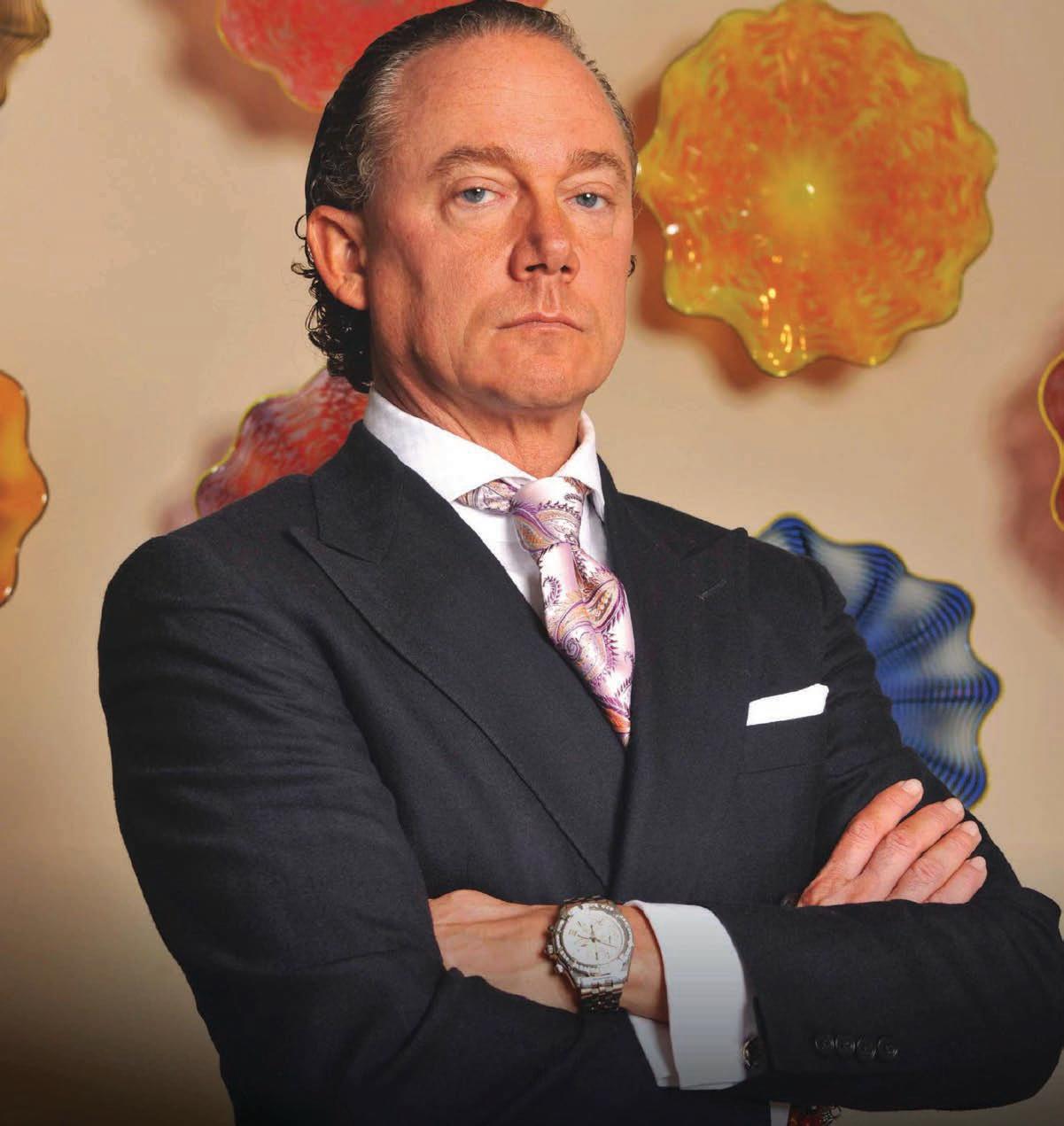

“The choice of a lawyer is an important decision and should not be based solely upon advertisements. Past results a ord no guarantee of future results and every case is di erent and must be judged on its own merits.”
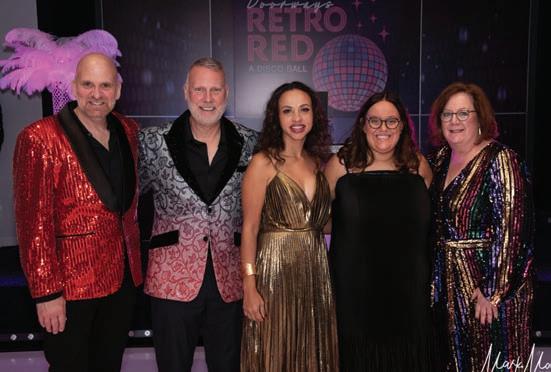
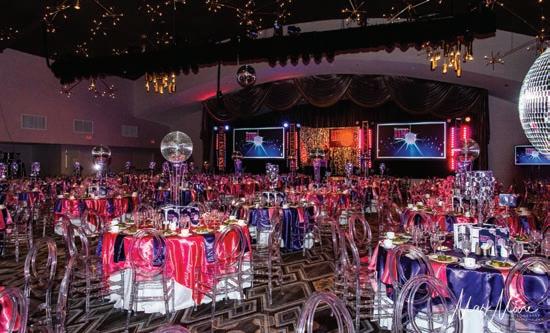
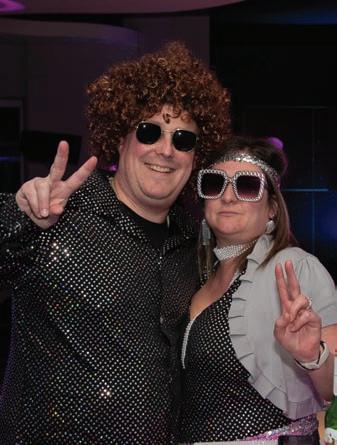

THE RED GALA
On Saturday, February 10, DOORWAYS held its 23rd RED Gala at the Chase Park Plaza. The event featured a RETRO RED, a disco ball theme, and welcomed over 500 guests for an elegant evening. Attendees enjoyed dinner, participated in a pick-your-prize raffle, engaged in a live auction, and danced the night away at the Disco Dance party in the Starlight Ballroom. The event raised over $400,000 in support of DOORWAYS’ mission to provide housing and supportive services for individuals living with HIV.
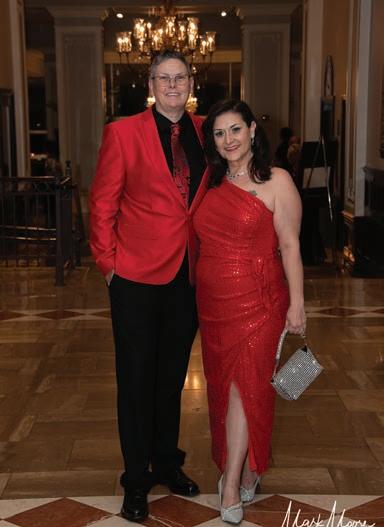
1 4 2 3
Photos by Mark Moore Photography
1) Donna Nickum, Sara Joern, Jay Joern 2) Ballroom 3) Tim Bahr, Ron Jagels, Opal M. Jones, Emma Potts, Sue Potts 4) Jay Perez, Charlie Houska, Bill Donius, Ted Wight, Phil Lyall, Chris Lintz, Ngoc Ngo 5) Kim and Mike Daniels, David and Gina Lipovics, Stephanie and Bernard Pilon and Dale Schotte 6) Ryan and Erin Shananhan
6 7 5 8
7) Shelly Connors, Victoria Anwuri 8) Kelli and Dina Rees-Cushrman
slmag.net 83
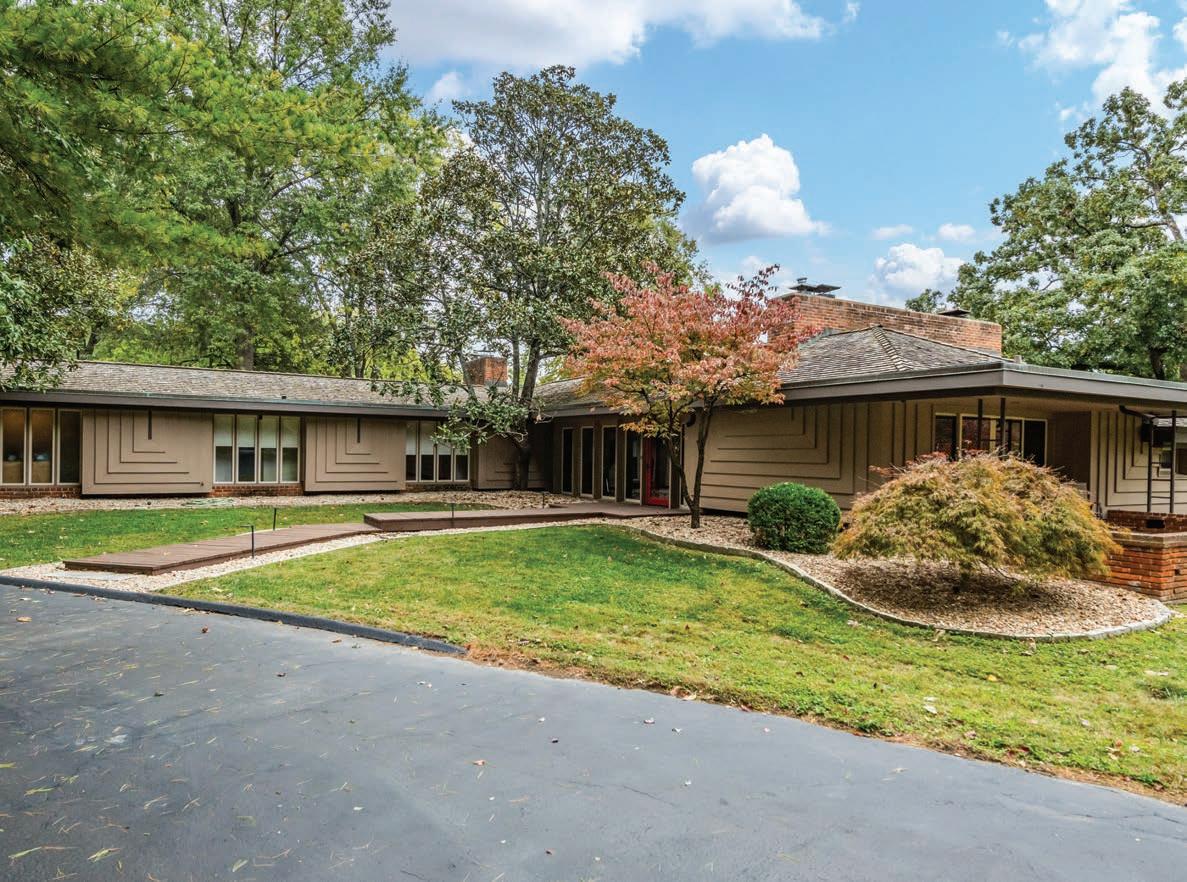
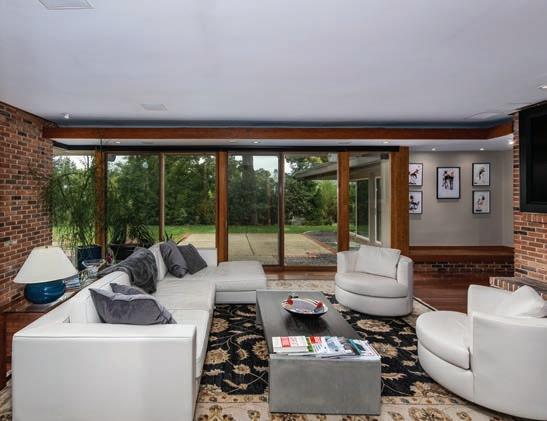


TEDWIGHTREALESTATE.COM dielmannsir.com | 314.725.0009 tedwightrealestate.com | 314.607.5555 TED WIGHT SOLD OFF- MARKET! 8970 MOYDALGAN ROAD DESIGNED BY BERNOUDY
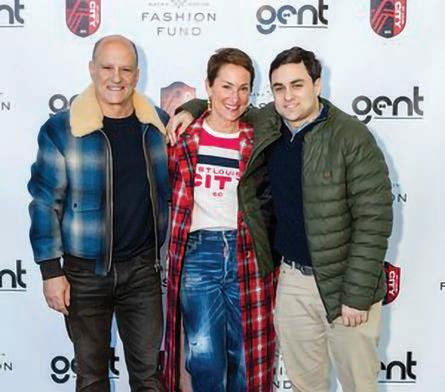

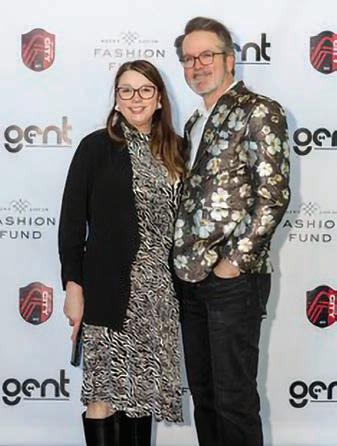

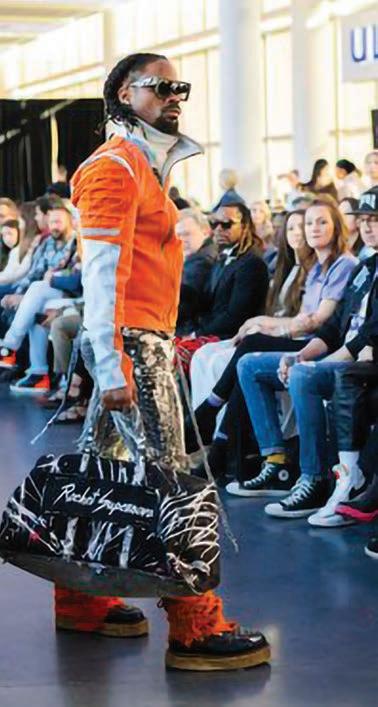


GENT MEN’S FASHION SHOW CELEBRATES LOVE OF FASHION & SPORTS AND STL FASHION FUND’S 10TH ANNIVERSARY
More than 300 people lined the runway at Gent Men’s Fashion Show on February 18th featuring St. Louis CITY SC Sporting Director Lutz Pfannenstiel, Head Coach Bradley Carnell, CITY SC players, CITY Futures youth soccer program participants and special media celebrity models FOX2’s Daniel Esteve, KMOV’s Maurice Drummond, KSDK’s Rene Knott, and Y98 ‘s Joey Zanaboni. This fashion first at St. Louis CITY SC’s Ultra Lite Club featured collections from London-based designer Stuart Trevor, cofounder of AllSaints and Bolongaro Trevor, as well as local menswear designers Paulie Gibson, The Normal Brand, Rocket Supernova, Ying Ying Ying, and Lukas Roe with a special selection from CITY SC. Congratulations to Gent Men’s Fashion Producer & Creator and Saint Louis Fashion Fund Board Member Dwight Carter, Chief Brand Architect/Co-Owner of St. Louis CITY SC Lee Broughton and Fashion Fund Co-Founder/ Board Chair Susan Sherman.
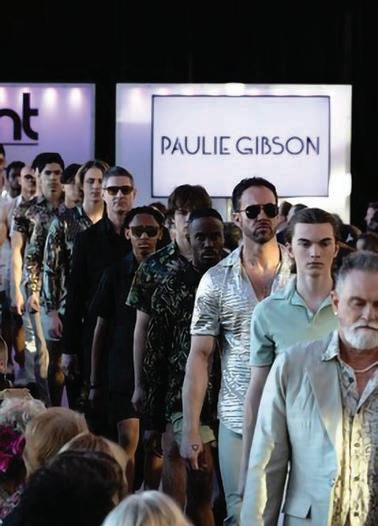
1 2 5 4 3
brand 7 8 6 9
1) David Sherman, Susan Sherman, Keil Sherman 2) PK Johnson, Kristin Johnson, Kristin Stapleton, Mark Stapleton 3) Jacquelyne Craig, Amalia Pfannenstiel, Yoro 4) Model 5) Mastermvnd 6) Dwight Carter 7) Shannon Sowell, Jody Sowell 8) Lee Broughton, Cassell Ferere 9) Runway shot of Paulie Gibson
slmag.net 85
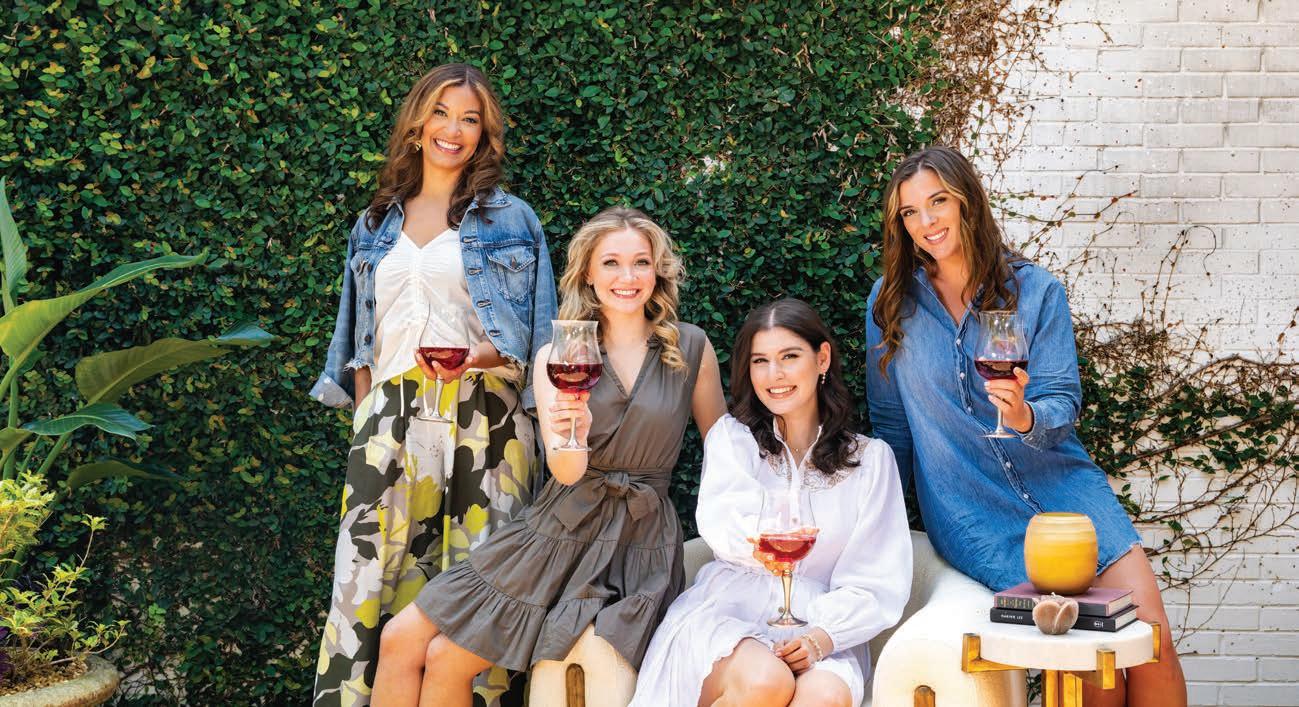
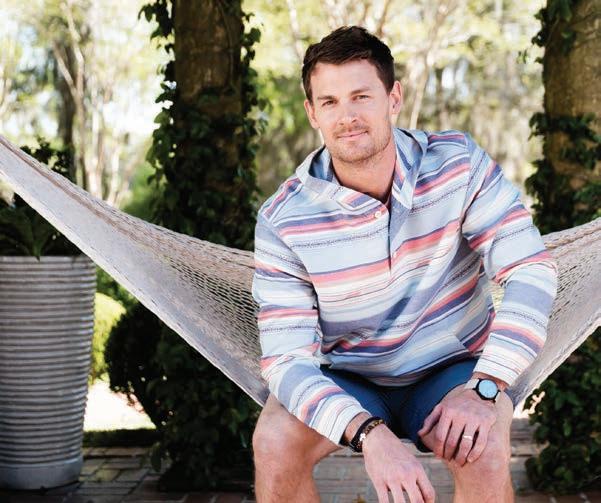

Discover Why Hearth & Soul is More Than A Store 9640 Clayton Road St. Louis, MO 63124 hearthandsoul.com (314) 567-7685 WOMEN’S CLOSET ELAINE KIM | CHRISTY LYNN RUNGOLEE (LOCAL) MEN’S CLOSET TRUE GRIT | CRIQUET | ORLEBAR BROWN FURNITURE ONNO | JAN BARBOGLIO MR. BROWN | FOUR HANDS KITCHEN MONTES DOGGETT | PRATT STANDARD MILLIS MEADOWS HONEY (LOCAL) THURSDAY, MAY 2 | 5-7PM ARTIST EXPOSITION WITH PEERY SPOENEMAN SUNDAY, MAY 5 | 1-5PM CINCO DE MAYO FIESTA SATURDAY, MAY 11 | 3-5PM CHEERS TO MOM - MOTHER’S DAY EVENT FRIDAY, MAY 24 - MONDAY, MAY 27 ALL DAY CELEBRATING MEMORIAL DAY WITH 20% SOULFUL SAVINGS ON STARS & STRIPES GATHER. DISCOVER. SHOP KEEP UP WITH OUR 2024 HAPPENINGS AND EVENTS. FOLLOW US ON INSTAGRAM @SHOPHEARTHANDSOUL MAY EVENTS
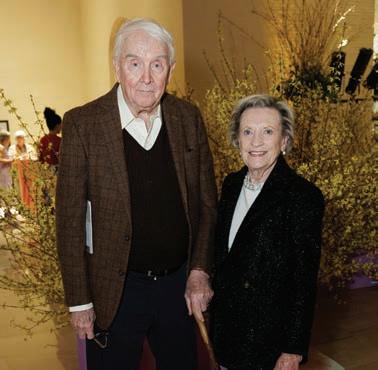
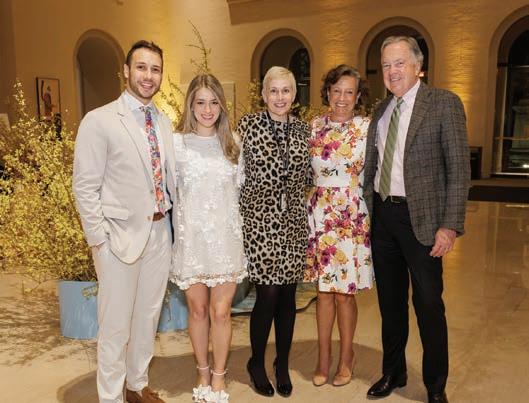
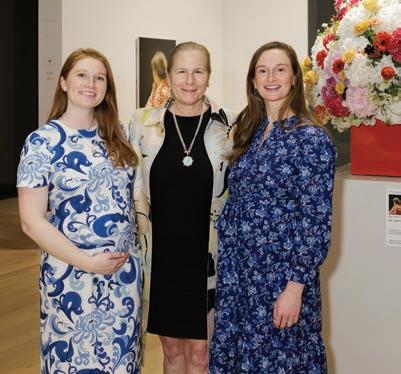
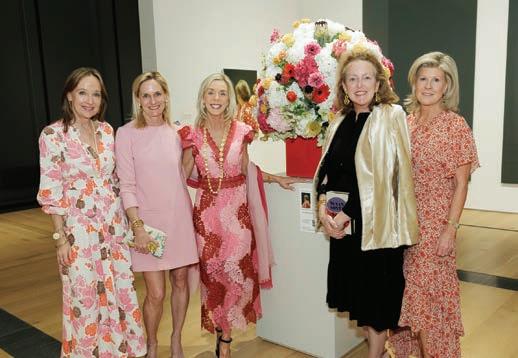
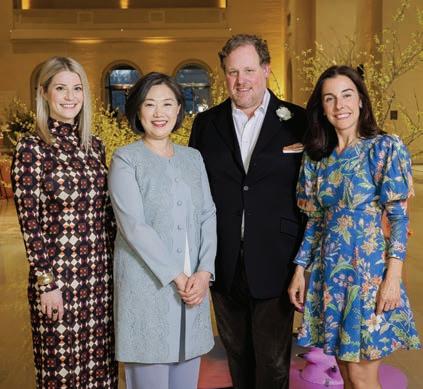
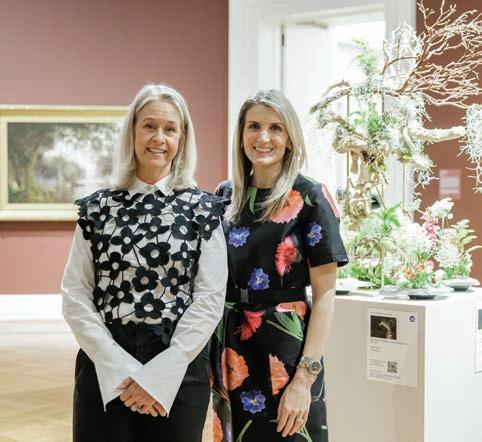
ART IN BLOOM
A garden soirée kicked off the Saint Louis Art Museum’s annual Art in Bloom festival. The preview party, on Thursday, Feb. 29, offered an exclusive first look at the 30 floral arrangements in the festival that local designers created interpreting works of art in the collection. The preview event was chaired by Friends Board members Cheree Berry and Ken Stuckenschneider and the evening featured live music and fine food and drinks in Sculpture Hall. The 2024 Art in Bloom saw record attendance with more than 27,000 visitors coming through SLAM over the three-day event.
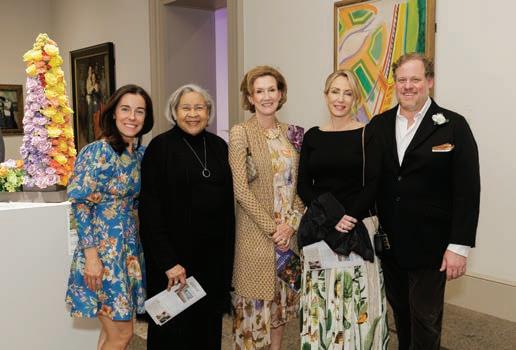
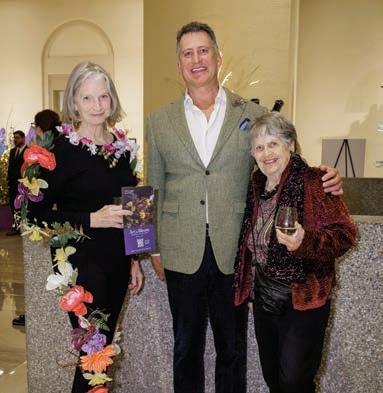
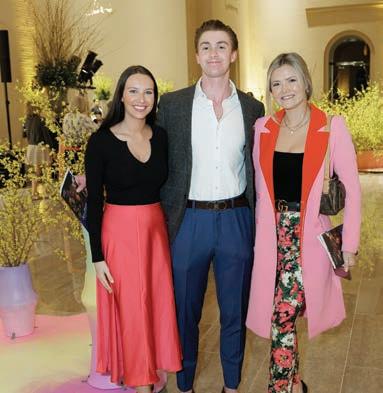
1 2 4 3
Photos courtesy of the Saint Louis Art Museum
5 8 9
1) Anna Pavlishin, Nicholas Pavlishin, Jennifer Thomas, Linda Finerty, Steve Finerty 2) Heather G. Johnson, Alex Thornhill 3) Chuck Cook, Boo Cook 4) Madeline Dunaway, Becky Smith, Emily Breck 5) Harriet Warren, Susan Werner, Jeana Reisinger, Carrie Polk, Lele Bitting 6) Cheree Berry, Ida H. Early, Meredith Holbrook, Tricia Falmer, Ken Stuckenschneider 7) Laura K. Sawyier (Friends Board president), Min Jung Kim (SLAM’s Barbara B. Taylor Director), Ken Stuckenschneider (Art in Bloom preview party chair), Cheree Berry (Art in Bloom preview party chair) 8) Susan Bower, Ted Wight, Celeste Wight Cook 9) Cecilia Brohammer, Ryan Peacock, Victoria Hancock
6 7 slmag.net 87


522 S. HANLEY ROAD @ WYDOWN | CLAYTON, MO 63105 BUDSSTL.COM | 314.371.4646 | HELLO@BUDSSTL.COM | @BUDSFLOWERSSTL SHO P NOW by Tony Montano
Jonathan Adler vase available at Lusso

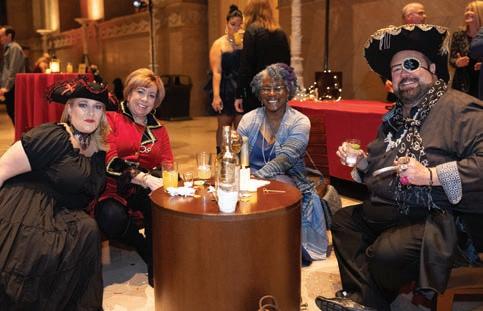
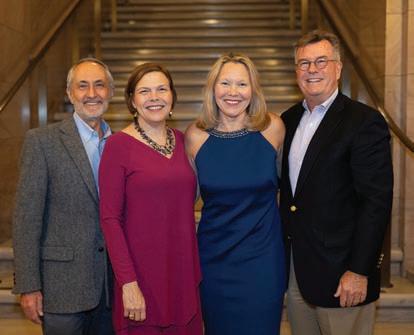
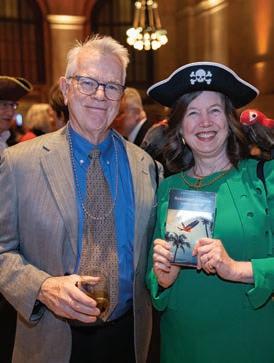
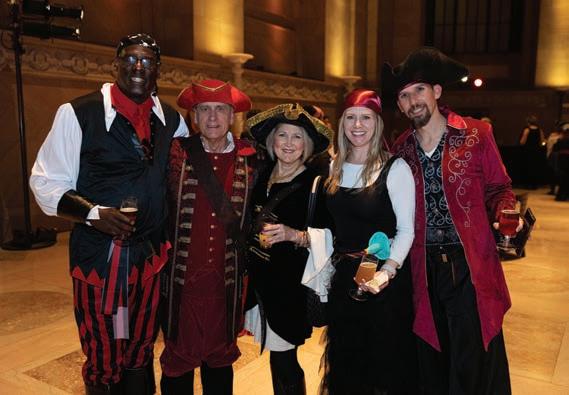


THE ST. LOUIS PUBLIC LIBRARY’S STRANGER THAN FICTION
Swordfighters, walking the plank, diving for treasure and tasty Mermaids Tears were just a few of the things guests were treated to at this year’s St. Louis Public Library Foundation’s Stranger than Fiction: X Marks the Spot fundraising event to support Central Library. Nearly 350 guests gathered on Saturday, March 2, at Central Library, 1301 Olive Street. Proceeds from the event benefit the iconic Central Library, an architectural masterpiece, a St. Louis landmark and an anchor for the St. Louis Public Library system. Guests enjoyed live music from Downtime, a 360 video and photo booth, a 50/50 raffle, food by Ces and Judy’s with a Caribbean flare, drinks, beer donated by Schlafly Beer and Mermaid’s Tears, a signature cocktail designed by Chris LeBeau from Decoding Cocktails. Bill Donius, Author, Speaker, and Ideation Facilitator, was joined this year by co-event chairs Liz DeBold Austin, President, EDA Consulting LLC; Rosalind Early, journalist; and Brooke Meek, owner and CEO of PLNK Fitness.
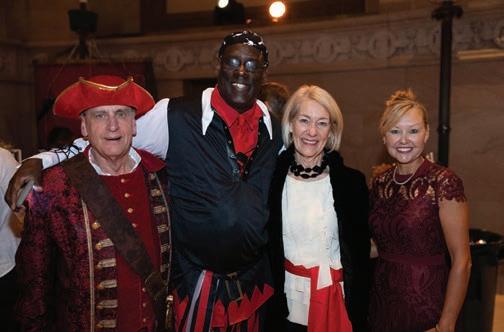
3 2 6 4 7 9 10
1) Andreas Wolf, Sydney Loughran Wolf, Jay Rainey, Ruth Rainey 2) Bree Bowen, Mary Ann Owens, Mary Wimbley, Russell Jackson 3) Keith Savage, Vincent T. Volpe, Sarah Hurst, Nicole Miller-Struttmann, Justin Struttmann 4) Randy Jotte, Susan Jotte, Carolyn Dolan, Scott Dolan 5) Nathaniel Watlington, Janice Watlington, Marsha Mitchell
8 1 3
6) Event Chairs Liz Austin, Rosalind Early, Bill Donius, Brooke Meek 7) Mark Hillis and Patrica Aldrich 8) Paul Gremaud, Julie Gremaud, Sue Green, Tim Green 9) Ken Christian, Sarah Christian, Paul Shaughnessy, Stephaine Zornes, Jeffery Zornes, Laura Shaughnessy 10) Vincent T. Volpe, Keith Savage, Carolyn Farrell, Janet Rainford
slmag.net 89



LYDIA’S HOUSE’S NIGHT OF HOPE AND HEALING
Lydia’s House provides domestic violence survivors and their children a safe place to heal, a voice for justice, and an opportunity for better and sustainable lives. On March 2, 2024, Lydia’s House hosted its annual gala, A Night for Hope and Healing. The evening was full of raffles, silent and live auction items, and survivor testimonials from Lydia’s House residents. Set at The Doubletree by Hilton St. Louis Chesterfield, the theme was “Tropical Nights”. With over 400 people in attendance, Lydia’s House not only broke its attendance record, but also broke their money raised total, raising $440,000!
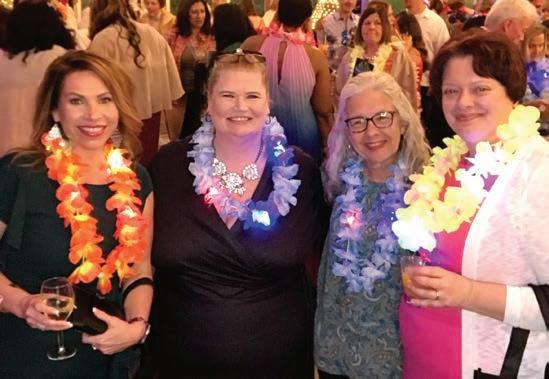
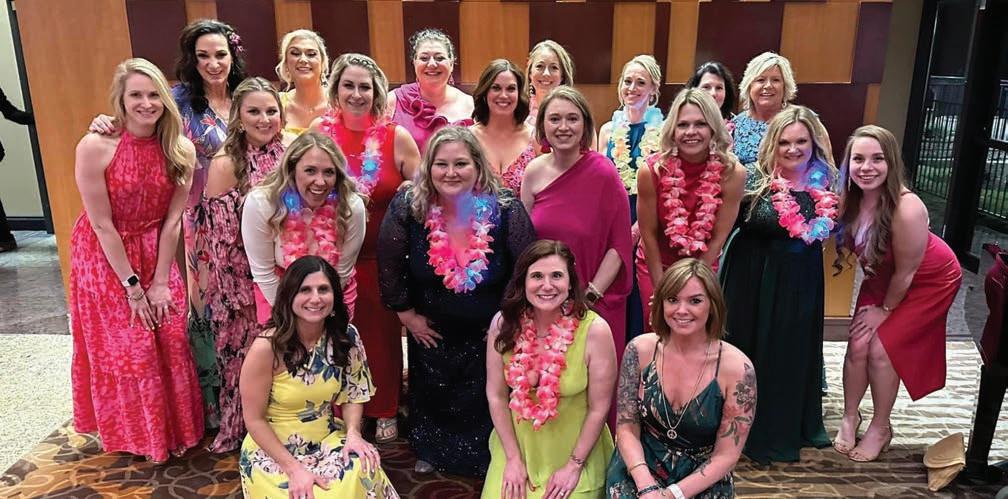
3 1 4 2 8 6 7 5
slmag.net 91
1) Linda Nemanick, Rich Robertson, Jean Robertson 2) Sarah Keen, Lydia’s House President and CEO Karen Kirk 3) Charlotte Moro, Brenda Routsong, Karen Routsong, Katie Saeger 4) Bridget Hoffert, Noel Powers 5) Vince Brockmeier, Sharon Brockmeier 6) Madison Schue, Kathleen Schue, with board member Bob Steinback 7) Stacey Schmoll, Tommie Dugger, Ginny Wefelmeyer, Elizabeth Cassad 8) 2024 Lydia’s House gala committee
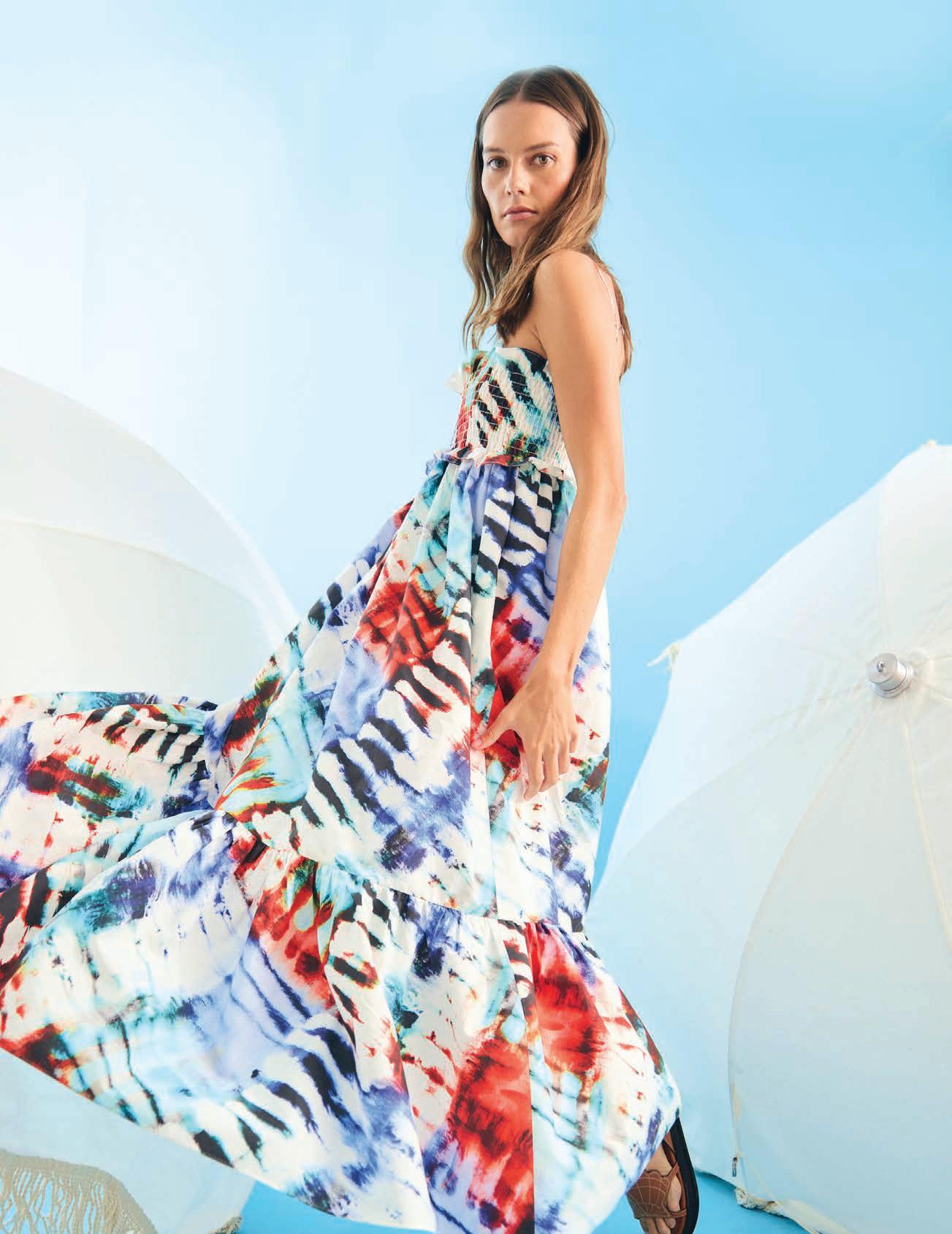

165 Carondelet Plaza, St. Louis, MO 63105 • (314) 725-7205 • @lussotheboutique
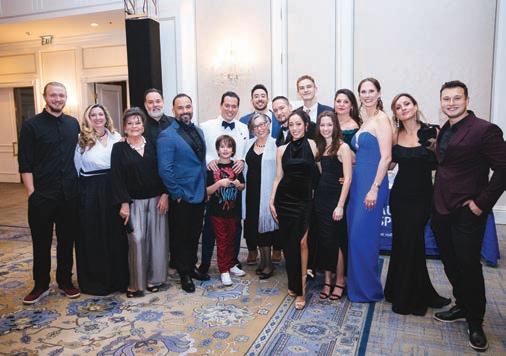

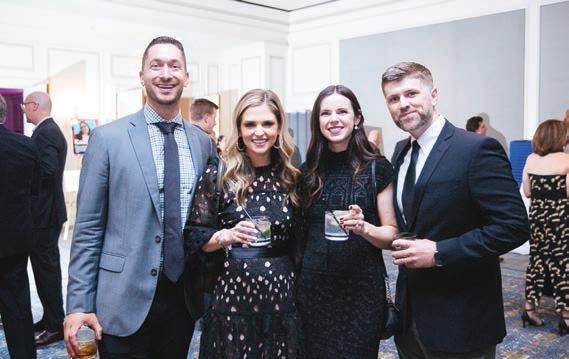

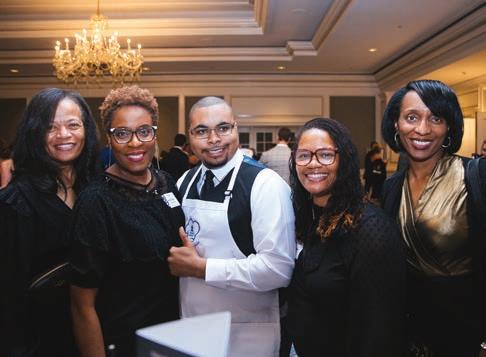


AUTISM SPEAKS CHEF’S GALA
Autism Speaks St. Louis celebrated its 12th annual Chef’s Gala on March 8, 2024, at the Ritz-Carlton. The evening began with a cocktail reception and tasting buffet prepared by a dozen of St. Louis’ top chefs. The gala included a silent and live auction and a short program to showcase the Autism Speaks mission . World Wide Technology was honored as the organization’s Warrior Award Honoree and Ann Deddens of Coeur Academy as the Community Hero Award Honoree. The 400 guests raised over $400,000. Proceeds from this event help promote solutions for the needs of people with autism and their families and will support the group’s continued commitment to create a kinder, more inclusive world. The event was emceed by Fox News National Reporter/Anchor, Christina Coleman and the auctioneer was Adam Jokisch. Event co-chairs were Aaron and Sidney Plaza.

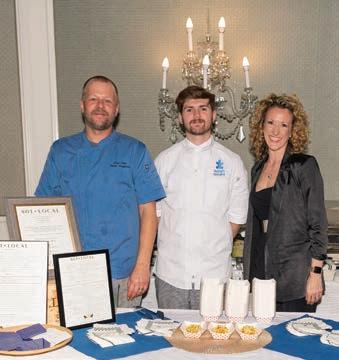
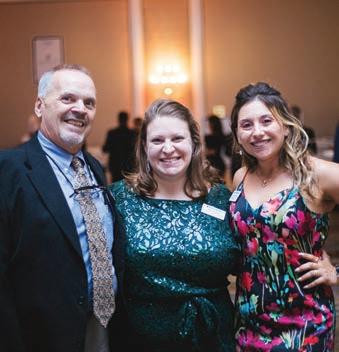
2 1 4 3 5 6 8 7 9 10
1) Tristan Millman, Kathy Jordan, Lorenia Leon, Frank Plaza, Gerry Plaza, Aaron Plaza (Co-Chair), Enzo Plaza, Marco Plaza, Lupe Plaza, Mark Plaza, Devun Pecher, Ariana Plaza, Tia Keating, Kelly Plaza, Sidney Plaza, Shirley Plaza, Tito Plaza 2) Aaron Plaza, Niki Hartrum, Sidney Plaza, Brittany Motz, Madison Kimmel- Independence Elementary 3) Austin Birner, Kylie Birner, Ellie Hathcock, Acea Hathcock 4) Culinary Champion Jake Litvag, Veronica Schuster, Laura Austin (Sugarfire) 5) Emcee Christina Coleman- Fox News 6) Matthew Leach and Miss. Missouri, Hayley Leach 7) Culinary Champion Kaitlyn Yawitz, Greg Yawitz, Julie Yawitz, Culinary ChaJake Litvag- Presenting Community Hero Award to Ann Deddens (Coeur Academy) 8) Dr. Liza Cummings, Amy Miller, Culinary Champion Zerrek Perkins, Terry Dampier, Dr. Tonya Haynes 9) 801 Local- Chef Duane Haughton, Culinary Student Nathan, Tabor McBride 10) Autism Speaks Heartland Staff- Mike Marek, Staci Gerchen, Alexis Warshaw
Photos by Lanex Media Group and Kyle Simmons Photography
slmag.net 93
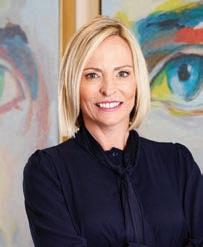
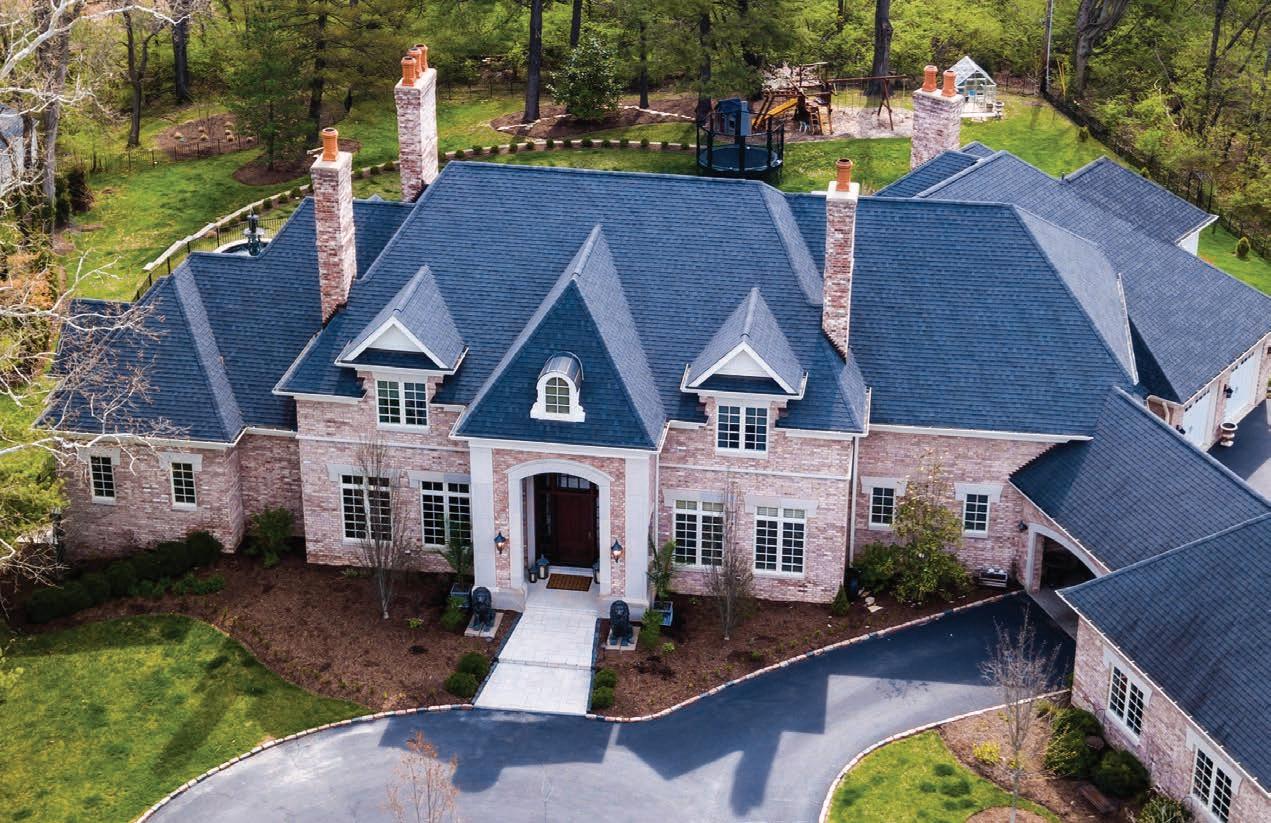
Follow @julielanerealestate on Instagram & Facebook. | 314.997.4800 Elevate your property into a luxury showcase that commands attention. With proven strategies and extensive experience in preparing luxury homes for a quick sale, Julie Lane expertly guides you from your first meeting to your final signatures. Redefining First Impressions Sell Your Home with Confidence Scan the QR code or visit julielanerealestate.com 314.303.6504 JULIE@JULIELANEREALESTATE.COM JULIE LANE Previously Sold in Frontenac’s Countryside Lane by Julie Lane
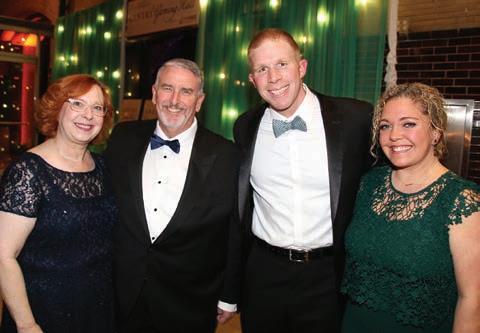
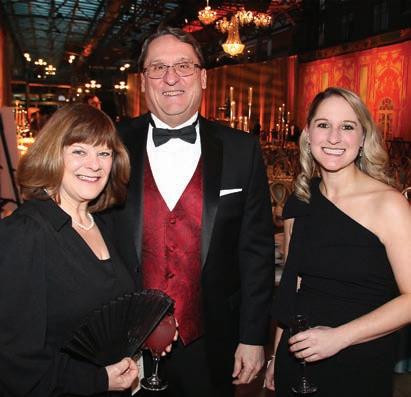
MERCY MASQUERADE
Over 750 guests put on their most regal attire and were transported to the romantic and charming Regency era of London as they attended the 19th Annual Mercy Masquerade on Saturday, March 9 at St. Louis Union Station. Guests were welcomed by the Queen as they entered her most esteemed Ball. This is the fourth year that Mercy Hospital St. Louis and Mercy Hospital South have partnered together to bring one annual gala to the St. Louis Community. The event raised over $1 million for uninsured and underinsured patients in the community. Dr. Peter and Annie DiPasco, Dr. Stephen and Jackie Sanders, Sara Sindelar, and Joseph and Mary Stieven served as co-chairs of the event. Guests enjoyed a cocktail reception and seated dinner followed by an afterparty in the Gentry Gaming Hall and dancing in the Regency Rave. All funds raised from this event will help Mercy Hospital St. Louis and Mercy Hospital South provide access to high-quality medical care for nearly 50,000 uninsured and underinsured families in our community. Over the last 19 years, Mercy Masquerade has raised more than $12 million.

2 1 3 5 4 7 6 8 9 10
1) Debbie Reid, Rick Reid, Eric Stranghoener, Andrea Stranghoener 2) Cheryl and Terry Matejka, Michael Scoffic, Denise Scoffic 3) Carol Huber, Jim Huber, Katie Kramer 4) Dr. Alok Sengupta, Wendy Sengupta, Dr. Nisha Shetty, Dr. Pawel Dyk 5) Mercy Masquerade Co-Chairs (left to right) Dr. Stephen Sanders, Jackie Sanders, Mary Stieven, Joseph Stieven, Sara Sindelar, Dr. Peter DiPasco, Annie DiPasco 6) Ty Thornhill, Alex Thornhill, Maggie Jewell, Nick Jewell 7) Brett Goldschmidt, Leigh Goldschmidt 8) Glenn Guenther, Eileen Guenther 9) Christian Roberson, Arthur Porter 10) Brad Combs, Emily Combs
slmag.net 95
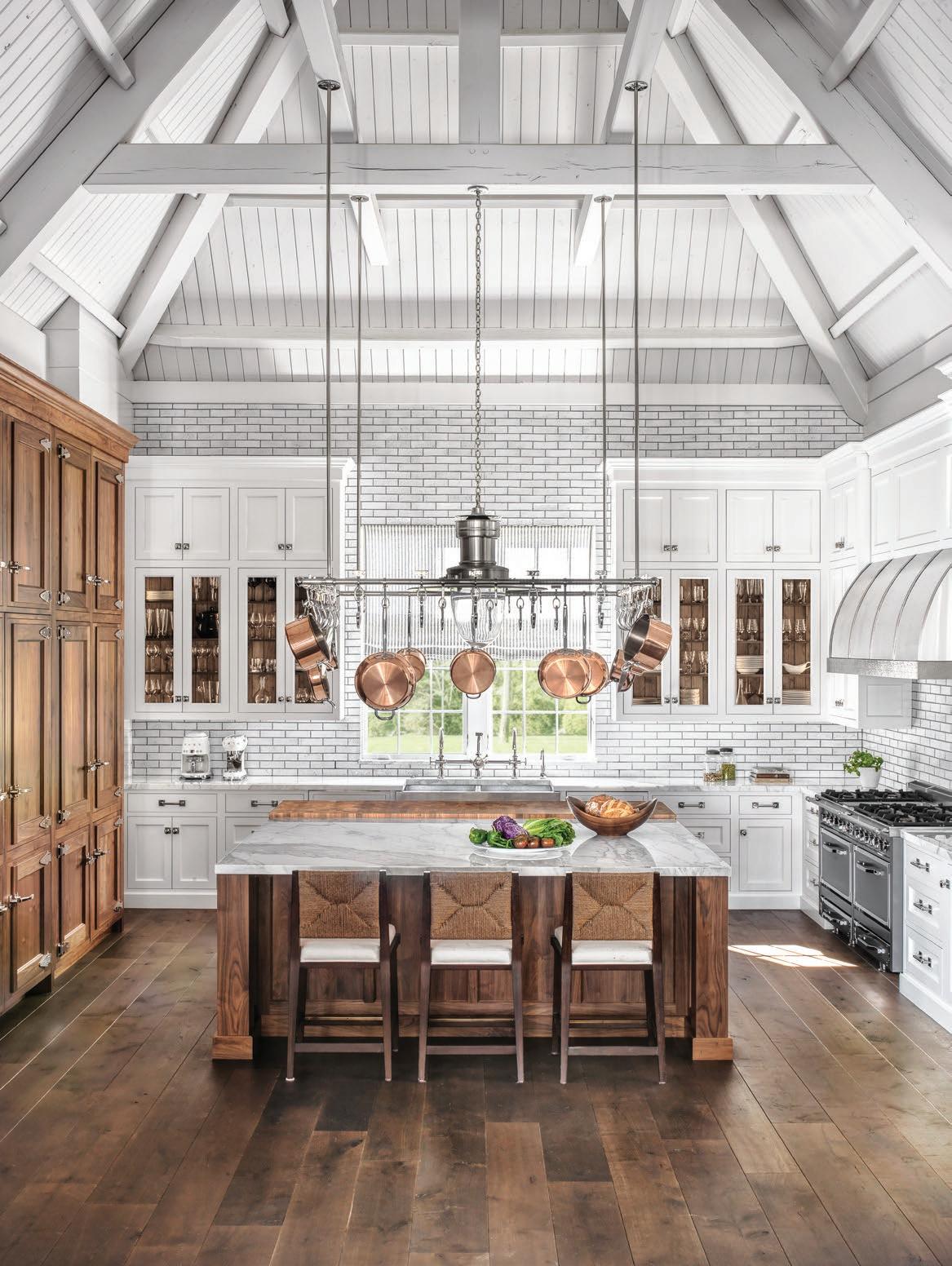
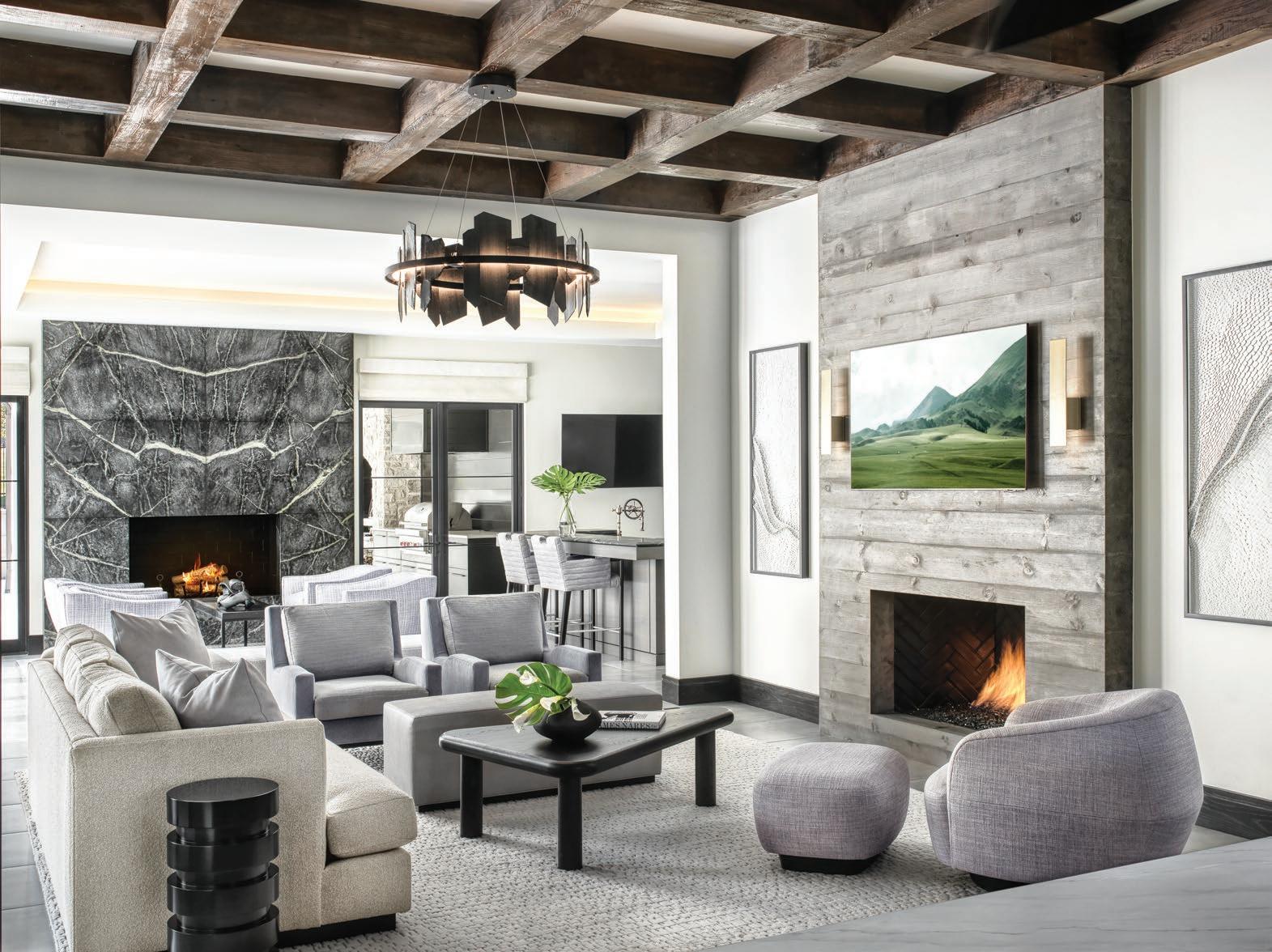
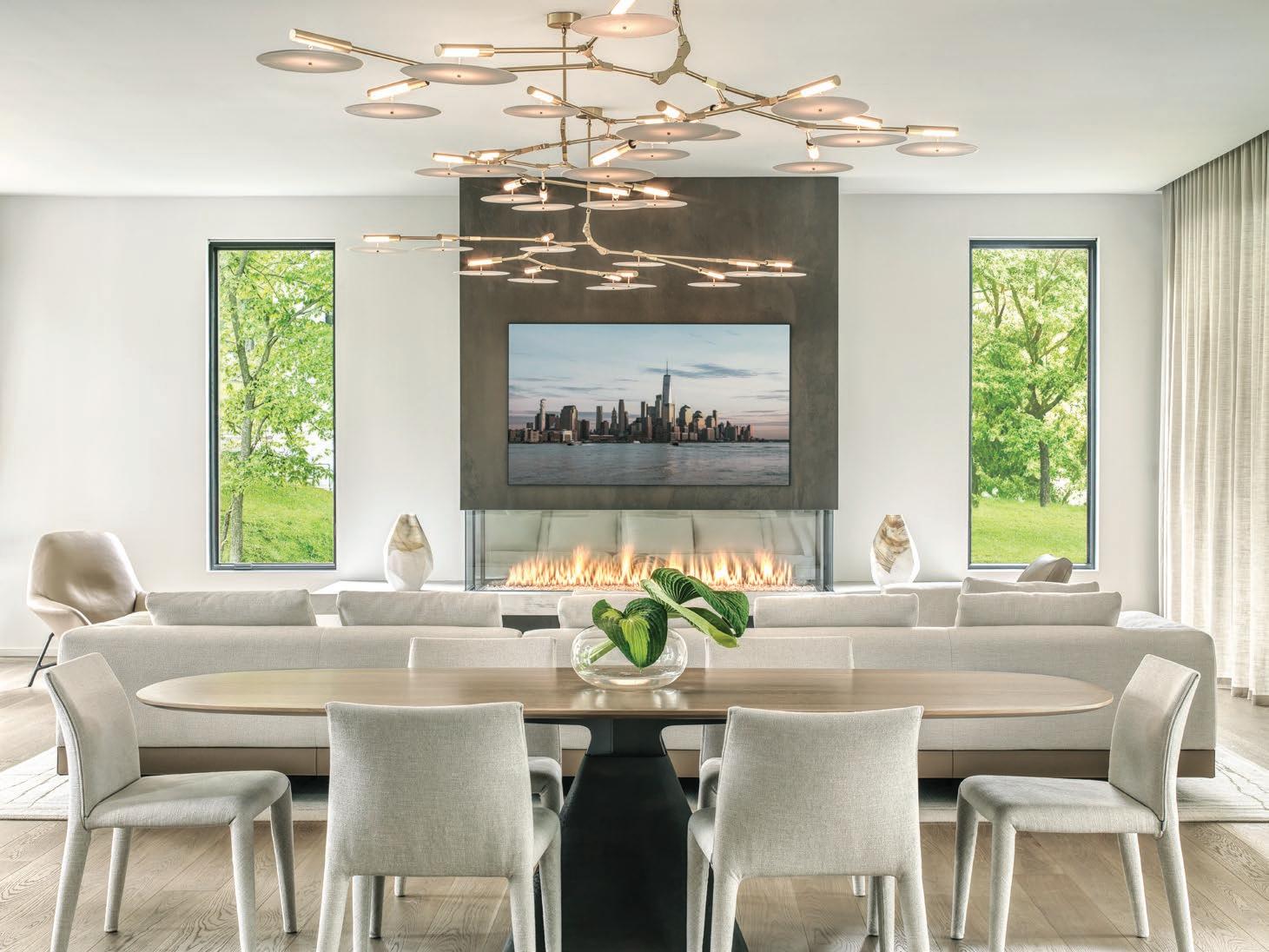
Celebrating Excellence, Our Way!
Introducing the inaugural Sophisticated Living SOPHI AWARDS in celebration of the best and brightest in design, architecture, and building in St. Louis. Our goal: Showcase innovative designers, visionary architects, outstanding builders, and the cutting-edge projects that are shaping the future of our city. Whether preserving the historic, celebrating the modern, or cutting an entirely new path, St. Louis has the outstanding talent, and we are looking forward to featuring their work.
19 Award Categories / 5 Nationally Recognized Judges / Innovator Award
Finalist and Winners will be showcased in the November/December issue and the winners will receive their awards at an industry gala hosted at 21C on November 7, 2024
Entries
Accepted May 1 thru July 15
For sponsorship information contact: Leslie Tunney / leslie@slmag.net

ANNOUNCING SOPHISTICATED LIVING ST. LOUIS’ sophisticatedstlouis.com/SOPHIAwards SOPHISTICATED AWARDS 2024 DESIGN | ARCHITECTURE | BUILDING SOPHISTICATED AWARDS 2024 D ES IGN | ARC HI TECTUR E | BU ILD ING Visionary
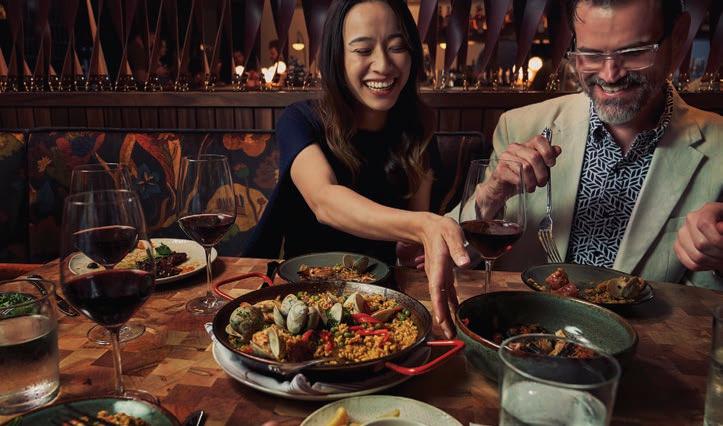
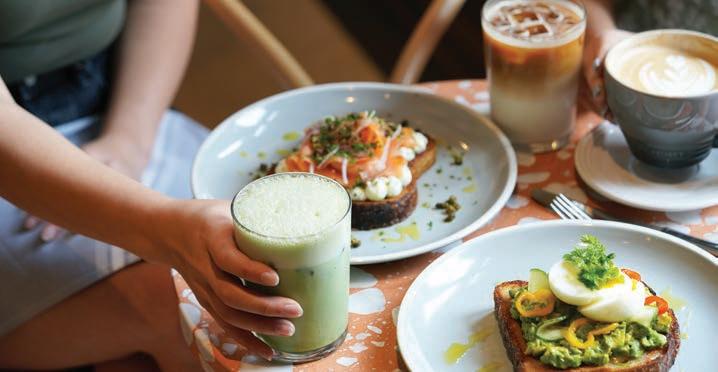
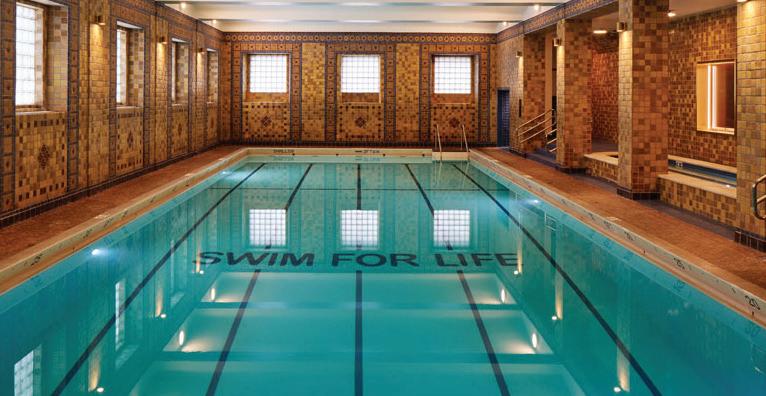
At the corner of curiosity.
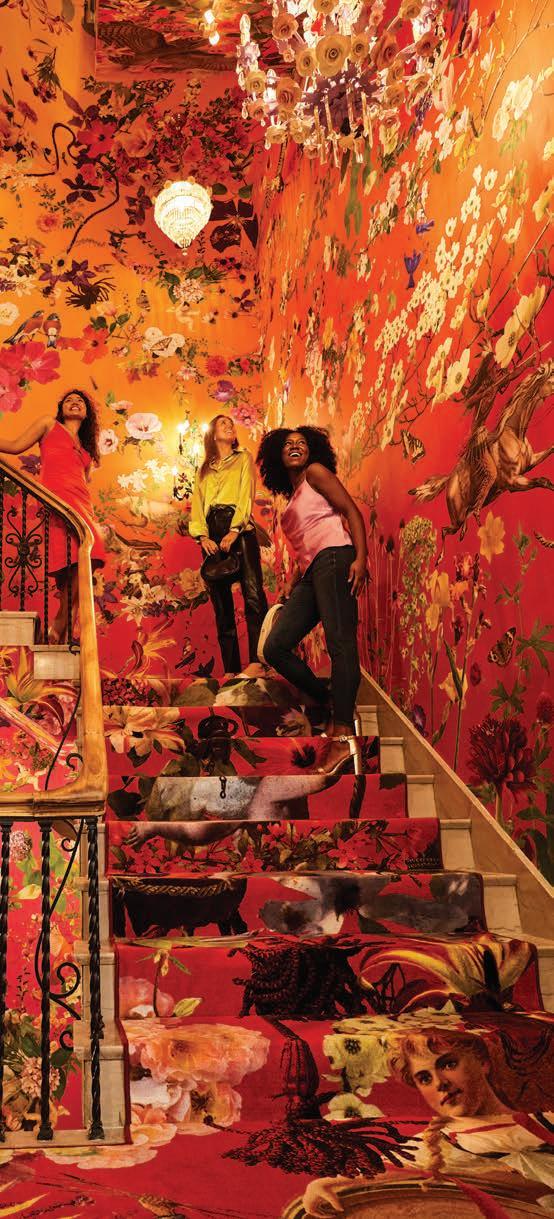
Catch up with family and friends by viewing contemporary art, treating everyone to a spa day, lunch at Good Press, or simply having an amazing dinner together at Idol Wolf. Visit 21c in the heart of downtown St Louis. @21cstl | @idolwolfstl | @goodpress.stl | @locuststreetathletic 1528 Locust Street, St. Louis | 21cStLouis.com Museum open 7 days a week
STRETCH THE DEFINITION OF LUXURY

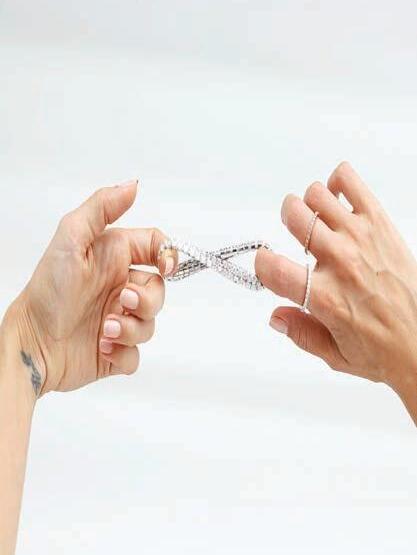
314.863.8820 | 101 South Hanley Road , Lo bb y S u it e 110, Cl a yton, M O 63105 | hef fern.co m AV A IL ABL E