All contributions are the responsibility of the author, and do not necessarily reflect the views of the society. All contributions are personal, except where attributed to an organisation represented by the author.
COPY DATE FOR LL1 2026 IS 14 NOVEMBER
PUBLISHED BY
The Society of Light and Lighting 91-94 Saffron Hill
The Society of Light and Lighting is part of the Chartered Institution of Building Services Engineers, 91-94 Saffron Hill, London EC1N 8QP. Charity registration no 278104
Designed and printed in the UK
Darkhorse Design Ltd
T (0)20 7323 1931 darkhorsedesign.co.uk studio@darkhorsedesign.co.uk
FROM THE EDITOR
Human beings see the world almost entirely in relation to themselves. This anthropocentricity extends to how they literally view their environment and their fellow inhabitants – for example, the presumption that other creatures see exactly the same colours as we do.
Science has chipped away at that, revealing that while the human eye system is based on trichromacy (three receptors that give us a wide range of colours), most mammals are dichromic, some are pentachromic, and creatures from bees and butterflies to hedgehogs and reindeer can perceive ultraviolet. And that is just colour, never mind the myriad other complex factors.
'Many species inhabit visual worlds entirely inaccessible to us – bound as we are within the limits of our own human visual system,' says Benz Roos of Speirs Major, who has designed a light art installation on this theme for LiGHT25 this month (Seeing eye to eye, p7).
The installation is necessarily simplified, based only on colour perception, but is designed to open minds (and eyes) to alternative realities, and the implications for lighting designers and their impact on other species. It also makes the point that even as humans we see differently according to our age or any number of issues with our visual system.
'It is important that we remember that fundamentally none of us can ever truly know how another person sees,' says Roos, 'but we can cultivate awareness, empathy and imagination.'
CURRENT SLL LIGHTING GUIDES
SLL Lighting Guide 0: Introduction to Light and Lighting (2017)
SLL Lighting Guide 1: The Industrial Environment (2018)
SLL Lighting Guide 2: Lighting for Healthcare Premises (2019)
SLL Lighting Guide 4: Sports Lighting (2023)
SLL Lighting Guide 5: Lighting for Education (2011)
SLL Lighting Guide 6: The Exterior Environment (2016)
SLL Lighting Guide 7: Office Lighting (2023)
SLL Lighting Guide 8: Lighting for Museums and Galleries (2021)
SLL Lighting Guide 9: Lighting for Communal Residential Buildings (2022)
SLL Lighting Guide 10: Daylighting – a guide for designers (2014)
SLL Lighting Guide 11: Surface Reflectance and Colour (2001)
SLL Lighting Guide 12: Emergency Lighting (2022)
SLL Lighting Guide 13: Places of Worship (2018)
SLL Lighting Guide 14: Control of Electric Lighting (2023)
SLL Lighting Guide 15: Transport Buildings (2017)
SLL Lighting Guide 16: Lighting for Stairs (2017)
SLL Lighting Guide 17: Lighting for Retail Premises (2018)
SLL Lighting Guide 18: Lighting for Licensed Premises (2018)
SLL Lighting Guide 19: Lighting for Extreme Conditions (2019)
SLL Lighting Guide 20: Lighting and Facilities Management (2020)
SLL Lighting Guide 21: Protecting the Night-time Environment (2021)
SLL Lighting Guide 22: Lighting for Control Rooms (2022)
Guide to Limiting Obtrusive Light (2012)
Code for Lighting (2022)
Commissioning Code L (2018)
SLL Lighting Handbook (2018)
CIBSE TM66: Creating a Circular Economy in the Lighting Industry (2021)
CIBSE TM65.2: Embodied Carbon in Building Services – Lighting (2023)
FROM THE SECRETARY
SLL Ready Steady Light, in association with Rose Bruford College and the IALD, was a great success. A big thank you to all the teams that took part in the 30th year of the competition. There will be a detailed article on the event in the next SLL Light Lines.
Our congratulations to the four finalists of SLL Young Lighter 2025: Katerina Xynogala (Lighting the Way: optimising maintenance factors for tunnels), Lucie Koháková (The Impact of Light on Human Circadian Rhythms), Ruoxi Yin (Perception of Environments for the Neurodiverse: colour in light) and Shivani Manhas (Stellaris). The final took place at Ridge and Partners in Manchester and XAL in London. Thank you to both companies for hosting us.
Looking to forthcoming events, on 12 November, David Mooney, SLL representative for the CIBSE HCSW region, will host a Night-time Photography Walk on London's Southbank (details and registration are on the website, see box).
We look forward to exhibiting at LiGHT 25 at London's Business Design Centre. We will also be hosting a two-hour curated miniconference as part of the talks sessions. This will take place at 11am-1pm on 20 November and will include 15-minute presentations exploring all the facets and processes involved in producing a luminaire.
The talk, titled Light Inside Out, will appeal to many of the attendees at the exhibition including those who want to have a better technical understanding of what they are specifying, as well as early career lighters –another good reason for company managers to send their staff to the exhibition, and especially the SLL talks.
The SLL talks schedule is:
● Nichia: the LED
● Ledil: Optics
● XAL: Luminaire housing
● Eldoled: Driver
● Urbis Schréder: Product testing
● Stoane Lighting: Circularity and embodied carbon
Following the talks there will be a networking lunch in the Associations' Lounge, where we hope you can join us.
The Northern Lighters will meet in Sheffield on the evening of 27 November.
When more details are available we will let the surrounding region know.
We hope that the new publication, LG23: Design, Creativity and Compliance, will be published prior to the Christmas break and we look forward to sharing more information on the guide via the CIBSE #GrowYourKnowledge webinar.
Also coming soon is the free-to-download Factfile 19: Lighting for Neurodiversity.
After the Christmas break I will be travelling to and exhibiting at Light + Intelligent Building Middle East, from 12-14 January 2026. SLL president Kristina Allison and SLL president elect Carolina Florian will both be taking part in the talks programme. We hope to see many of you in the region at the conference and exhibition.
You will have, or will soon have, your Subscription Renewal Notification. We encourage you to renew your subscription to retain your membership benefits. If you are an SLL Affiliate you should consider applying for Associate Member (AMSLL) or the new Member grade (MSLL). If you want to discuss your grade and what grade you should apply for, please do get in contact with us, we are happy to talk.
SECRETARY'S COLUMN
RULES IN THE MAKING
Teresa Telvaggio looks at emerging European circularity regulations that are shaping the future of lighting
SEEING EYE TO EYE
Benz Roos, associate partner at Speirs Major Light Architects, discusses the light art installation the practice is creating for LiGHT25
A YEAR AND A DAY
Ten years on from the International Year of Light, John Dudley reflects on a decade of global outreach
CONGRESS OF VIENNA
Light pollution, AI and human health were among the key topics on the agenda at the CIE Midterm Meeting 2025 in Austria
OBITUARY
Tributes to David Loe
SPECIAL MEASURES
Iain Carlile selects two papers from a special issue of LR&T on the CIE 2023 Quadrennial Session
NIGHT LIGHTS
Top 5: Stewart Langdown on star gazing and celestial phenomena EVENTS
Details/registration for the Night-time Photography Walk: cibse.org/sll-whats-happening For more details/registration for Light25: lightexpo.london/ Light + Intelligent Building Middle East: https://light-middle-east. ae.messefrankfurt.com/dubai/ en.html
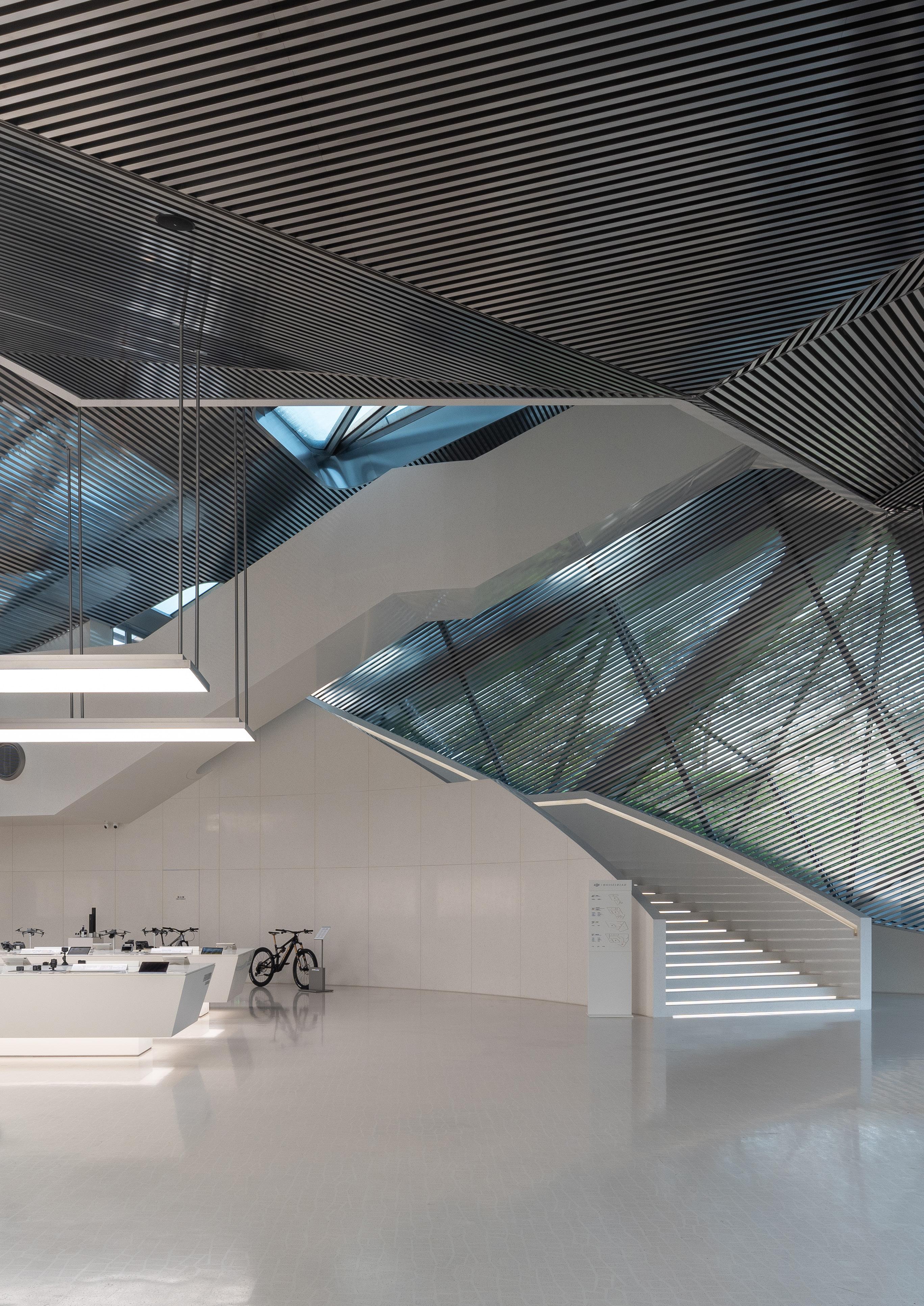
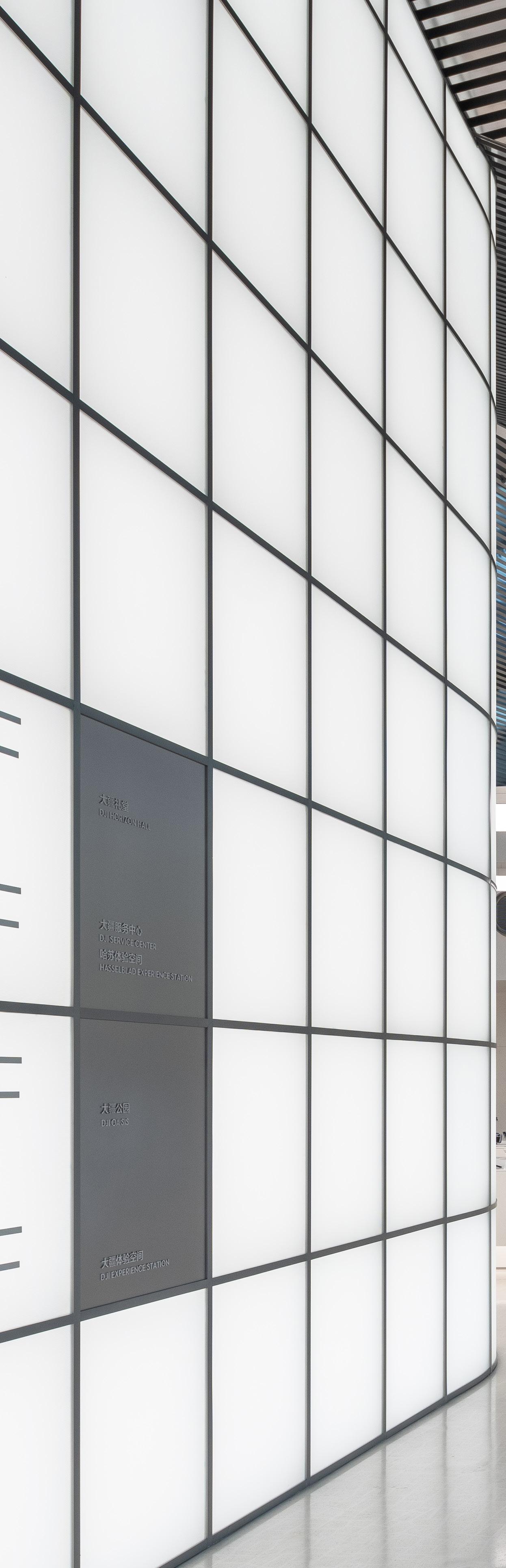
COVER: DJI Flagship Store, Shenzhen, China, lighting design by Grant Sight Design International, winner of a 2025 IALD Merit Award
THE
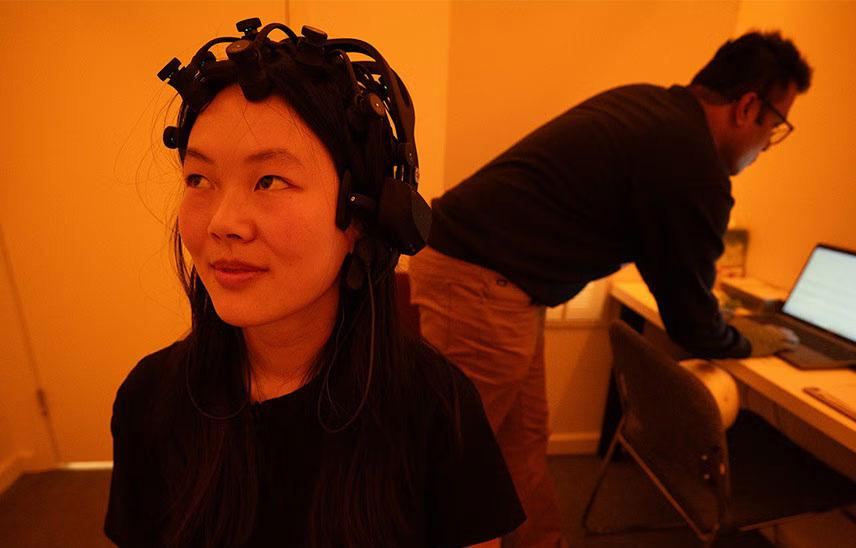
AMBER LIGHT HAS CALMING EFFECT, DISCOVER RESEARCHERS
A UC Davis research team at The Color Lab, part of California Lighting Technology Center (CLTC), has found that amber lighting is particularly effective in alleviating stress and anxiety. The study is an interdisciplinary collaboration between the CLTC and the Center for Mind and Brain (CMB), and backed by companies including Toyota Boshoku America, Seoul Semiconductor and Color Kinetics.
The study was based on an adapted version of the Trier Social Stress Test, with participants completing tasks such as public speaking and mental arithmetic, designed to induce stress in laboratory settings. They were then moved into rooms bathed in one of five ambient lighting colours: white, amber, blue, green or red.
During the experiment (involving 30 participants in the first study, and then 100 in the follow-up), the team monitored the participants’ brainwaves and levels of the ‘stress hormone’ cortisol. Participants also completed behavioural assessments.
‘Amber lighting has the fastest and the greatest stress mitigation impact among the chosen colours,’ said Jae Yong Suk, faculty co-director of CLTC and an associate professor of design. Other discrete colours such as red, green and blue have no added benefit of soothing effects compared to white, which means that they can slow down the stress recovery process.’
The researchers have begun collaborating with partners to design and introduce amber lighting products – such as the Davis Lamp, a table lamp incorporating amber light for relaxation – and integrating circadian lighting systems in healthcare infrastructure.
SOLAR POWER FIRST
Kasakula, one of Malawi’s poorest and most underserved communities, has become the first 100 per cent solarpowered community in the country, says the charity SolarAid.
Using an Energy-as-a-Service model, more than 8800 homes, 12 schools and one health clinic gained access to Tier 1 electricity, as defined by the World Bank’s Multi-Tier Framework.
Across Malawi, 84 per cent of the population live without access to electricity. With no connection to the national grid, 97 per cent of residents live in extreme poverty, and 76 per cent are without education beyond primary level.
SolarAid chose Kasakula to pilot its model in 2021. Co-developed with the local community, it deliberately selected one of Malawi’s most remote and low-income communities to maximise what could be learnt from the exercise.
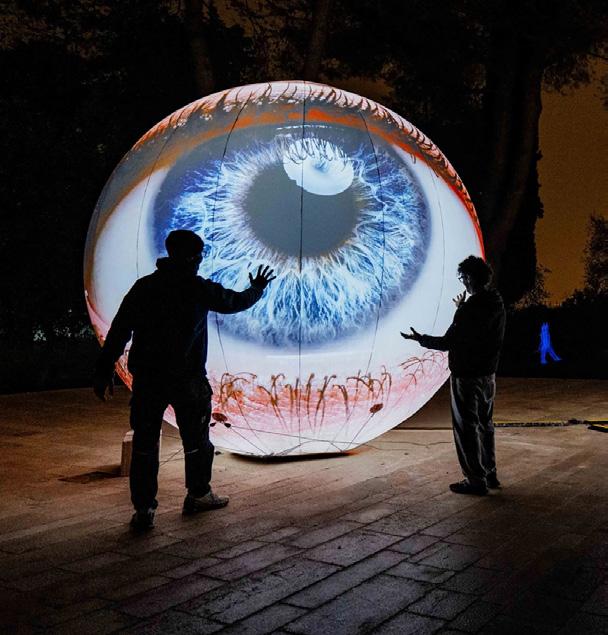
One of those installations that might give you a bit of a turn if you weren't expecting it... Oculucis, by Italian light artist Hermes Mangialardo, was on view at the recent City of Light Festival in Jyväskylä, Finland.
Two giant internally lit spheres very successfully fulfilled the artist's aim of capturing viewers’ attention and inviting them ‘to reflect on universal themes related to observation, introspection and connection to the world’. Definitely worth a second glance.
The model removes financial and ownership-related barriers to access by allowing customers to pay only for the energy they use, at a price comparable to candles. SolarAid handles installation, maintenance and servicing, using real-time usage and revenue data.
The infrastructure now enables solar home systems to be installed in up to 1000 households a week. Nearly 100 local jobs have been created to support installation and maintenance.
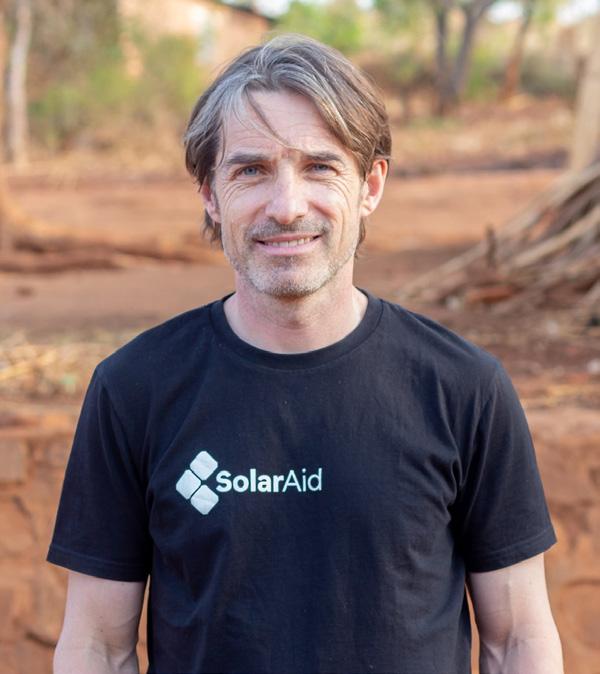
‘This model shows that universal energy access is possible, and achievable, in a matter of years, even in one of the world’s most remote and impoverished communities,’ says John Keane, SolarAid CEO (pictured above).
Alysha Beck/UC Davis
RULES IN THE MAKING
Teresa Selvaggio looks at emerging European circularity regulations that will be shaping the future of lighting
Launched in 2019 by European Commission president Ursula von der Leyen, the European Green Deal was at the core of the EU’s political agenda during her first mandate (2019-2024). It sets the direction for a broad range of climate and environmental initiatives, including the Circular Economy Action Plan, which aimed to rethink how products are designed, produced and used across Europe.
Today, as the Commission shifts its focus towards boosting Europe’s economic competitiveness, simplifying legislation, and enhancing defence readiness, several pillars of the Green Deal remain highly relevant. In particular, its circularity agenda continues to carry significant political weight – not only for environmental reasons, but increasingly as a way to strengthen Europe’s strategic autonomy and security in a complex geopolitical landscape.
In this context, promoting a move from a linear model of production and consumption towards a circular economy remains a central element of the EU policy agenda. During the previous mandate, the European Commission bundled these efforts in the Circular Economy Action Plan, which has already begun reshaping industries – and lighting is no exception. A new action plan, expected next year, will build on this framework with a stronger focus on reuse, endof-life management and end-of-waste criteria.
THE CIRCULAR ECONOMY ACTION PLAN
Published in March 2020, the Circular Economy Action Plan set out a comprehensive strategy to make Europe’s entire value chain – from production to consumption – more sustainable. It called for measures to reduce resource use, extend product lifetimes, and keep materials in the economy for as long as possible.
On the production side, legislators identified the design phase as the stage where a product’s environmental impact can be influenced most effectively, and they have addressed this through the Ecodesign for Sustainable Products Regulation (ESPR).
ECODESIGN FOR SUSTAINABLE PRODUCTS REGULATION
The flagship initiative of the Circular Economy Action Plan is the ESPR. It builds on the existing Ecodesign Directive, which primarily focused on improving the energy efficiency of products. While energy performance remains an important objective under the ESPR, the regulation goes significantly further by introducing requirements related to circularity, recyclability, durability, and the overall reduction of a product’s environmental footprint.
How it works
The ESPR is a framework regulation, meaning it establishes the overarching rules and principles for setting performance and information requirements, which are then specified in downstream legislation for individual product groups. This approach allows the European Commission to target specific environmental impacts while maintaining flexibility for different types of products.
For example, product-specific rules under the ESPR may include measures to:
● Increase durability, so products last longer
● Enable reusability and reparability, ensuring products can be fixed, upgraded, or repurposed
● Improve resource efficiency, reducing the amount of materials and energy required in production
The ESPR also allows the Commission to apply horizontal requirements – for example, on repairability – across multiple product groups with similar characteristics, ensuring consistency and avoiding duplication.
The regulation also establishes several complementary frameworks to support circularity and sustainability:
● Digital Product Passports (DPP):
These are digital data carriers that store key sustainability information of the product, allowing market authorities, manufacturers and consumers to access relevant data on product composition, repairability and environmental performance. It is worth noting that the ESPR allows for exemptions: a product group may be exempt from having a DPP if relevant information is already available in an existing database –such as EPREL for lighting products.
‘With new product-specific ecodesign legislation still under development, the most substantial changes for lighting products are likely still ahead’
Whether lighting products will be subject to the DPP requirement will be defined in the lighting-specific secondary legislation. During the legislative debate on the ESPR, LightingEurope argued that any new sustainability information required for lighting products should be incorporated into the existing energy label and EPREL, rather than creating additional labels or parallel databases.
● Rules on substances of concern:
Manufacturers will need to:
– track all substances of concern in their products
– share this information via the DPP (when applicable), and
– limit certain substances, including those that hinder recyclability or circularity – to be defined in the product-specific secondary legislation.
LightingEurope has been very vocal in calling for the list of substances to be reduced, to allow companies to adapt gradually to the new tracking obligations. LightingEurope has also requested that any bans on substances is addressed in chemical legislation, for example REACH.
● Destruction of unsold consumer goods:
Initially targeting textiles and footwear, a ban to destroy unsold consumer goods may be extended in the next years to other sectors, including electronics, to prevent unnecessary waste of resources. From the outset, large companies also in the lighting sector will be required to publish from 2026 annual data on unsold consumer goods –including their quantity, weight and reasons for disposal. The disclosure requirement will start applying to mid-caps as from 2030. This transparency is intended to discourage wasteful practices and help assess the need for future bans in other sectors than textiles and footwear.
● Green Public Procurement (GPP): ESPR introduces mandatory sustainability and circularity criteria for public tenders, helping create a market for sustainable products and encouraging manufacturers to meet higher environmental standards.
COMPLEMENTARY CIRCULAR ECONOMY LEGISLATION
In addition to the ESPR, several other pieces of EU legislation support the circular economy and may have a direct impact on the lighting
industry. These laws target different stages of a product’s lifecycle, from marketing and consumer information to repair and packaging, helping ensure that sustainability and circularity principles are applied more broadly.
Directive on empowering consumers for the green transition
This directive strengthens consumer rights to make informed, sustainable choices and help prevent misleading marketing practices. It:
● Bans unsubstantiated green claims, ensuring that environmental claims are accurate and verifiable
● Requires manufacturers to provide clear information on product warranties, making it easier for consumers to understand their rights
● Tasks the European Commission with developing a harmonised label that producers will have to use to communicate both the EU-wide legal warranty of two years and any additional commercial guarantee
Right to Repair Directive
The Right to Repair Directive promotes the extension of product lifetimes and supports repair as an alternative to replacement. It:
● Introduces obligations for manufacturers regarding repair services and clear consumer information on repair options
● Requires manufacturers to extend product liability by 12 months after a product has been brought into conformity via repair
● Gives consumers the right to choose between repair or replacement, both free of charge and completed within a reasonable timeframe
The directive works in tandem with existing EU Ecodesign rules. Repair obligations apply primarily to goods already covered by repairability requirements in product-specific legislation (it is not the case for lighting, yet), but it also introduces standalone amendments
that apply to all products regardless of existing rules, like the one on the extension of product liability after repair, that will also apply to lighting.
Packaging and Packaging Waste Regulation (PPWR)
The PPWR focuses on reducing the environmental impact of packaging throughout the supply chain. It:
● Requires minimisation of packaging use
● Significantly reduces empty space in transport packaging (maximum empty/ space ratio of 50 per cent)
● Mandates that transport and sales packaging meet reusability requirements, supporting circular practices in packaging design and usage
The EU has set ambitious objectives that have already significantly impacted many industries across Europe. The shift towards a circular economy is both necessary and beneficial, offering advantages for manufacturers, consumers and the environment. At the same time, achieving these benefits requires careful consideration of market conditions and continuous dialogue with industry stakeholders to ensure that regulations are practical and effective.
With new product-specific ecodesign legislation still under development, the most substantial changes for lighting products are likely still ahead. In the coming months, the European Commission will begin reviewing the Ecodesign Regulation for lighting products and the related Energy Labelling Regulation. It is still unclear whether these reviews will introduce new requirements stemming from the ESPR.
With our UK member association, the LIA, LightingEurope has developed an EU-GB Legislative Tracker – a practical tool for keeping track of European lighting legislation, covering both the EU and the UK. Both LightingEurope and the LIA members have full access to this tracker, providing a clear overview of regulatory developments in a rapidly evolving legislative landscape on both sides of the Channel.
Teresa Selvaggio is director of public affairs at LightingEurope, the Brussels-based trade association that represents the lighting industry in Europe.
lightingeurope.org
SEEING EYE TO EYE
Benz Roos, associate partner at Speirs Major Light Architects, talks to Light Lines about the light art installation the practice is creating for LiGHT25
Led and designed by Benz Roos, the Re:Vision light art installation at this year’s LiGHT25 exhibition literally looks at the world in a different way. ‘We have a personal fascination with how different life forms perceive the world,’ says Roos. ‘How each species, in unimaginable ways, experiences a reality that is completely differently from ours, despite inhabiting the same planet.’
The idea is not just a conceit. Considering the impact of lighting on other species should inform the lighting design process, says Roos. ‘When you consider this, you naturally begin to think about the impact that we as lighting designers might be having on those creatures' experiences by introducing artificial light into their habitats.
‘This installation is intended to start to open minds to this and stimulate a conversation about how we really should begin to think much wider
and consider the needs of not just humans, but the other living beings that share our spaces.’
Clearly, it would be difficult to convey the full complexities of alternative visual systems in this kind of temporary space. ‘Attempting to understand and imagine the differences in the visual experience from species to species is very difficult, as the differences are complex, says Roos. ‘For example, species vary in their field of view, depth perception, and their sensitivity to light and ability to see different parts of the spectrum.
‘The idea is to give viewers some sense of the impact this altered spectrum might have on the perception of the world’
‘Some can see ultraviolet,’ he continues, ‘others perceive selected colour wavelengths discretely rather than as blends as we do, and many inhabit visual worlds entirely inaccessible to us – bound as we are within the limits of our own human visual system.’
Rather than attempting the impossible task of recreating the experiences of other species, the installation instead focuses on one of the most accessible aspects of the visual experience of the world: colour.
Among the animals the team researched were octopuses, crayfish, birds, spiders, rabbits, horses and elephants. The aim was to cover the various forms of colour vision –monochromatic, dichromatic, trichromatic and tetrachromatic – and also the different combinations of colours.
‘For example, unlike humans, not all trichromatic vision is red, blue and green,’ explains Roos. ‘A bee sees
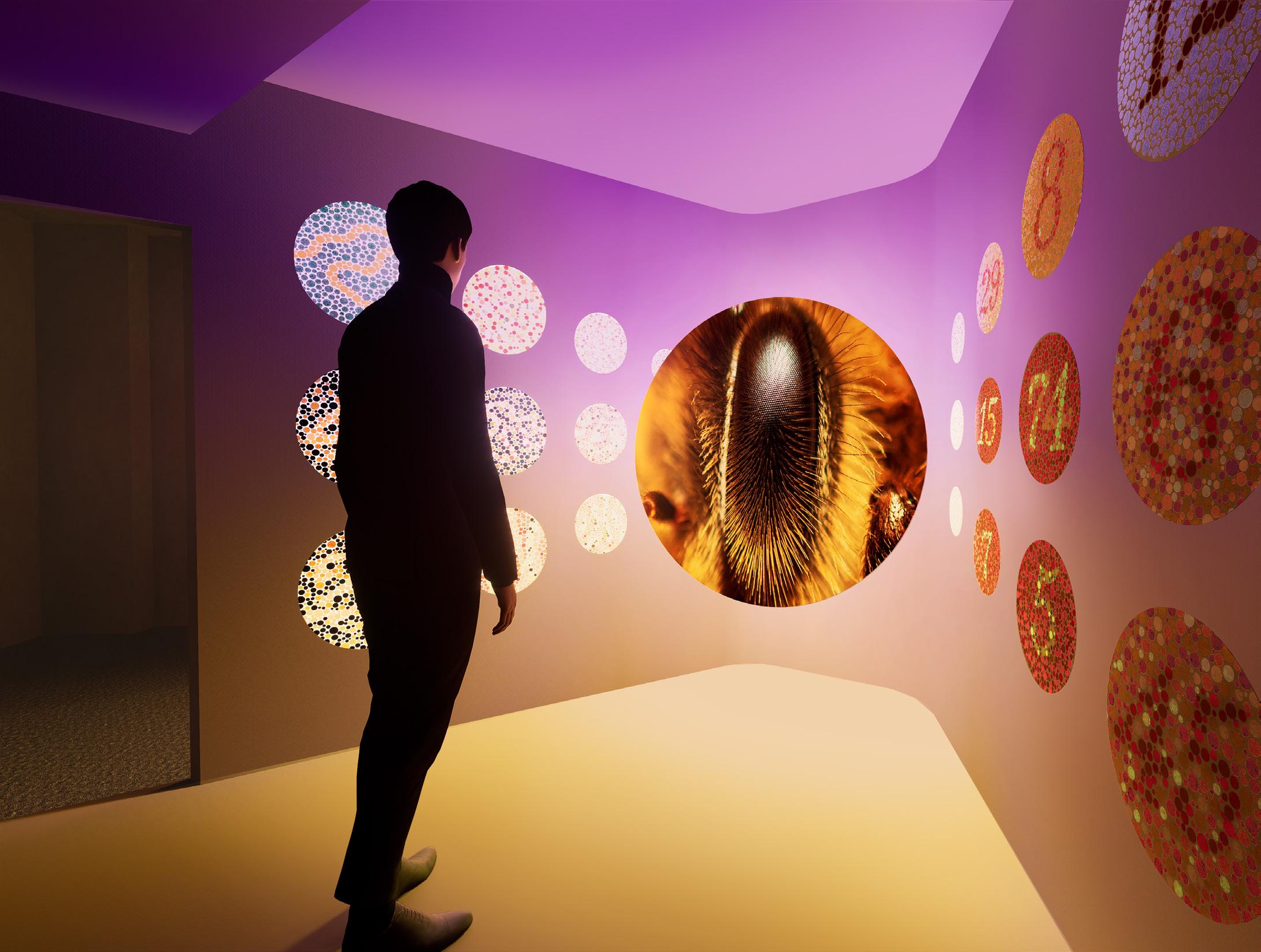
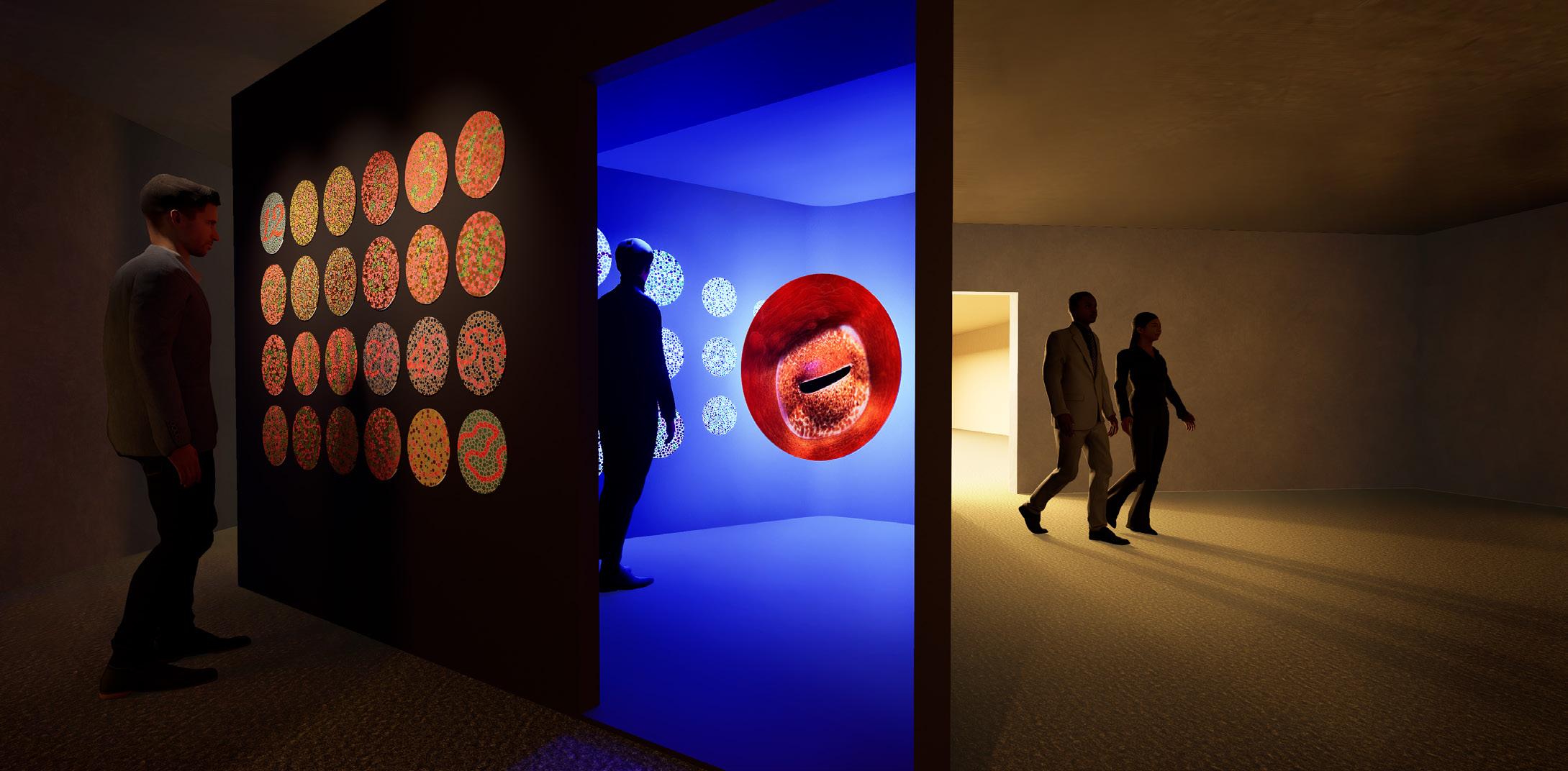
p The Re:Vision installation comprises a series of immersive environments using only the colours each of the featured creatures can experience
green, blue and ultraviolet instead. However, both are trichromatic.’
This research into spectral profiles of selected animals was used to create a series of immersive environments using only the colours each of those creatures can experience.
Ishihara red-green colour blindness charts also feature within the environment. The Ishihara plates feature an array of coloured dots arranged to form numbers or shapes, and these may be visible or not depending on the colour spectrum at play.
‘The idea is to give viewers some sense of the impact this altered spectrum might have on the perception of the world. But of course each person’s experience of the plates could also be impacted by the differences in their own visual system – so it is not a simulation but a means to spark curiosity and stimulate conversation in a fun, sensory way.’
Roos cites philosopher Thomas Nagel and his book, What is it like to be a bat? ‘We can never truly experience the world as another creature does. At best, we can simulate fragments of it. Our installation embraces this limitation, offering a simple, beautiful and accessible way to prompt discussion and expand how we think about design that considers the needs and experience of all the living beings of our planet.’
One of the implications for lighting design, says Roos, is that humans are the only species that actually need artificial light, a need we created in our desire to extend our day and
regulate our calendars. ‘Other animals adapt to natural cycles, produce light themselves, or live without it. Yet our use of artificial light affects them – birds, for instance, are staying awake longer due to urban lighting.’
While Re:Vision looks at other creatures, it is also a reminder that even within our own species perception and ability varies widely, says Roos. ‘For example, in the way that ageing alters our vision and affects our preferences for colour temperature and brightness, and more obviously for those who experience colour blindness and see the world differently.’
Inclusivity and accessibility are beginning to receive greater consideration in design projects, particularly civic and cultural schemes, says Roos, who believes this trend will grow. ‘It is important that we remember that fundamentally none of us can ever truly know how another person sees, but we can cultivate awareness, empathy and imagination.’
The SMLA team worked with Italian family lighting company Formalighting to create the effects. ‘We always begin a project with what we want to achieve and what we want the light to do,’ says Roos, ‘and Forma has been excellent in supporting us to deliver our vision. They also have some great innovations – such as their motorised equipment – that are allowing us to experiment with delivering light in new ways.’
Designers excel at imagining possibilities, says Roos. ‘Through this installation, we are inviting people to step outside themselves, even briefly,
and consider how another creature, or even another person, might experience the world –and ask ourselves how we can design to better support their needs.’
LiGHT 25 takes place from 19-20 November at the Business Design Centre in Islington, London.
The SLL will be in the Associations' Lounge, which has a separate dedicated splinter talks programme that will feature SLL speakers. The talks, Light Inside Out, will take a deep dive into the luminaire, exploring its components and processes from LEDs and optics through to embodied carbon and circularity. lightexpo.london/
NEW TECHNICAL ZONE
Joining the Architectural and Decorative Zones this year is the Technical Zone which will feature some 50 companies specialising in urban lighting, commercial lighting, control systems, components/OEM, lamps and gear, and emergency lighting. Exhibitors include Casambi, Urbis Schréder and Nichia.
A YEAR AND A DAY
Ten years on from the International Year of Light, John Dudley reflects on a decade of global outreach
The year 2015 was proclaimed by the United Nations General Assembly to be the International Year of Light and Light-based Technologies. The aim was to raise awareness of how light science and applications play a central role in science, culture, education and sustainable development.
Coordinated by Unesco as the lead UN agency, an international consortium of public and private sector partners worked together to organise and implement outreach actions around the world.
This year, 2025, marked 10 years of working together with Unesco on these awarenessraising actions, and now is a perfect time to reflect on the many successes, lessons learned and our plans for the future.
As might be expected, working with international political organisations is complex. While 2025 may well be a decade since the IYL was celebrated, working to achieve this proclamation at the UN began much earlier. Although the advantages of using the subject of light to promote educational outreach had long been appreciated among educators, it was only in 2009 that a group of international scientific societies considered coordinating their efforts and approaching the UN.
It soon became clear, however, that a worthwhile idea on its own was far from enough: it was necessary to build a consortium among international partners who could fund and organise an awareness-raising programme on a global scale, and then find a route into the very complex world of international diplomacy.
This process took around three years, but eventually contacts within both Unesco in Paris and the UN General Assembly in New York were made, and this resulted in the proclamation of the International Year of Light at the end of 2013. This gave a full year to prepare for the events of 2015 itself.
At the time, many partners voiced frustration at what appeared to be the slow pace of progress within the diplomatic system. In retrospect, however, this experience proved to be an invaluable lesson, and one that continues to resonate today.
International initiatives undertaken through Unesco must adhere to several key principles: they must be genuinely international, engaging partners from all regions of the world – north and south, rich and poor – and their actions should embrace all dimensions of Unesco’s mandate: education, science and culture.
Moreover, the UN Sustainable Development Goals, first proposed in 2012 and formally adopted in 2015, imposed a framework on which concrete plans and events needed to be built, compelling organisers to adopt a far broader perspective than simply scientists talking to other scientists.
This opened the door to many fruitful partnerships, including the communities of lighting, light architecture and design, and light art, as well as the non-profit and nongovernmental sectors working in developing countries to address problems such as light poverty and the lack of access to eye and vision care.
And so, even at the very start of 2015, a highly diverse and genuinely international consortium had been built, united by the desire to celebrate light and raise awareness of the transformative potential of light technology and photonics on society. By the end of 2015, the community’s enthusiasm had led to more than 13,000 events of all kinds taking place in 147 countries, reaching a truly global audience.
As a legacy to this successful international year, the Unesco General Conference subsequently proclaimed 16 May as the International Day of Light (IDL), to be
celebrated annually, with the first celebration held in 2018. The International Day of Light is now an annual and permanent observance in the Unesco calendar, and the eight celebrations to date have seen more than 3200 events take place worldwide, with an average of around 400 per year.
The event statistics vary from year to year, but typically around 65 per cent are science or technology, in collaboration with universities or professional organisations, 15 per cent are associated with art exhibitions, festivals or light shows, around 10 per cent of events take place in schools, and the remaining 15 per cent include a range of actions such as open days, citizen science, photography competitions and more.
Of course, all events and campaigns are strongly promoted on social media, with more than 400,000 social media impressions annually. However, as is often the case with actions of this kind, the geographical distribution is uneven. Around 50 per cent of events have taken place in Europe and North America, 20 per cent in Asia-Pacific, 15 per cent in Latin America and the Caribbean, but only less than 5 per cent of events typically take place in Africa, although many African partners do participate in the 10 per cent of events that are run online globally. Expanding the organisation of events in Africa in the coming years is certainly one of our priorities.
The concentration of these events around one day of the year creates a focal point for outreach activities, and we have seen this particularly among the many students who participate either through society or university outreach groups, or through activities organised in schools.
Almost all of these activities are initiated at the grass-roots level in local communities, and the role of the IDL secretariat is mainly one of communication, ensuring efficient liaison with the Unesco Science Sector, keeping partners up to date, and adding visibility to the events that are being planned.
‘This opened the door to many fruitful partnerships, including the communities of lighting, light architecture and design, and light-art’
The IDL secretariat is supported by an international steering committee that plays a key role in providing resources and ideas, and in
Ebringing into the IDL community new sectors of the public who are for the first time discovering the excitement of light.
The steering committee also proposes annual themes to provide an additional level of focus for organisers, highlighting important priorities for Unesco such as education, innovation and combating science disinformation. This last theme was the subject of a major Trust Science campaign in 2021 supported by more than 4000 scientists of all ages and sectors, including laureates of the Nobel, Unesco and Breakthrough Prizes.
The International Day of Light is an important and tangible legacy of the 2015 International Year of Light and has become one of the most exciting and anticipated events on the global science calendar. It has seen the
‘UN Sustainable Development Goals compelled organisers to adopt a far broader perspective than simply scientists talking to other scientists’
development of a dedicated community of volunteers and professionals who understand the importance of science communication, and has helped cement effective partnerships with Unesco and other international bodies.
The experience gained over the past 10 years, along with lessons learned, has enabled us to advise on and contribute to the success of similar global initiatives that have followed, including the International Year of the Periodic Table (2019), the International Year of Glass (2022), the International Year of Basic Sciences for Sustainable Development (2022–2023) and the International Year of Quantum Science and Technology (2025).
Finally, while 10 years might seem like a long time, the need to effectively communicate with all sectors of the public about science, education and culture will continue to be important as we work together to address the most critical challenges facing societies now and in the future.
John Dudley (along with Joseph Niemela) is chair of the IDL steering committee. Thanks also to Geethu Paulose, IDL communications coordinator
For more information on the SLL's own contribution to the Year of Light in 2015 – a UKwide project to light Unesco World Heritage Sites from the Giants Causeway to the Tower of London – go to:
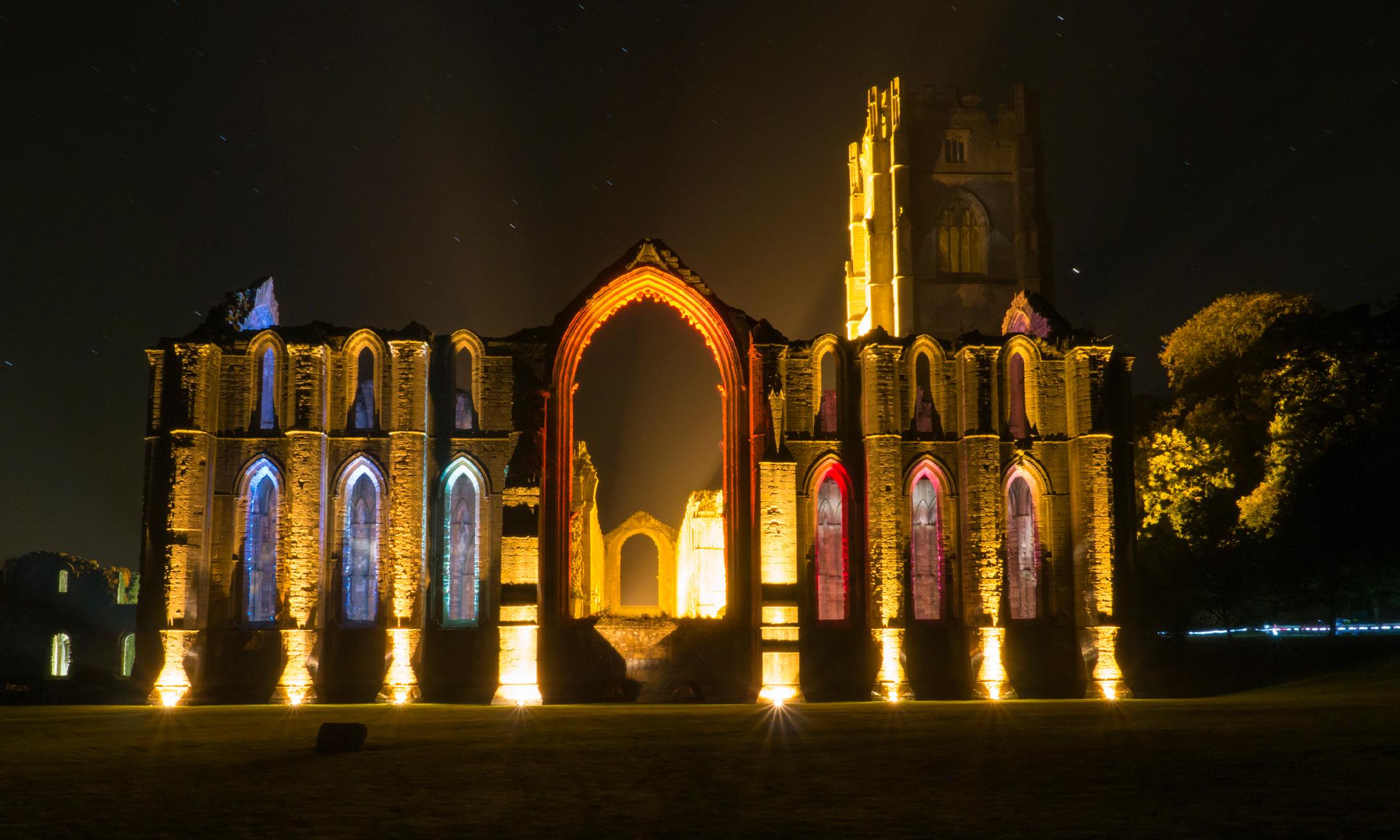
p Fountains Abbey, Ripon, north Yorkshire: one of nine Unesco World Heritage Sites in the UK that were illuminated in one night as part of the SLL's ambitious project to mark the IYL in 2015
CONGRESS OF VIENNA
Light pollution, AI and human health were among the key topics on the agenda at the CIE Midterm Meeting 2025 in Austria
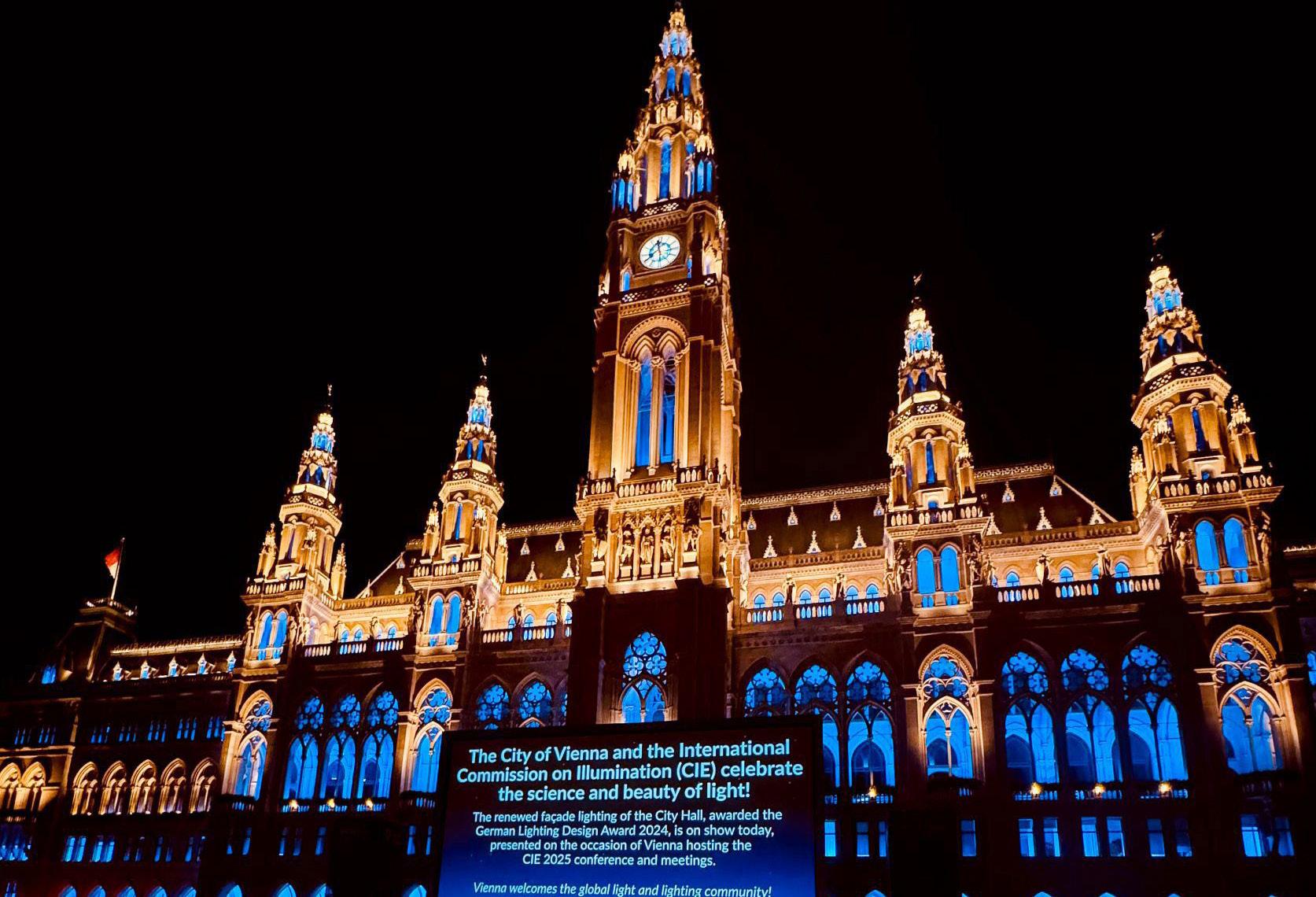
More than 400 participants from 40 countries and territories arrived in Vienna to listen to the papers and mix with fellow lighting professionals at the CIE Midterm Meeting 2025. President Jennifer Veitch opened the three-day conference and noted that although Vienna is home to the CIE, this was the first scientific conference to be held here. The previous major CIE gathering in the city was back in 1963.
As usual at CIE conferences, keynote speakers are invited to open each daily session. It was gratifying to see that two of the three were from the UK.
The first keynote speaker was Dietmar Hager, who pointed out that over the past 150 years for many people the stars have gone and we are no longer closely connected to light from the sky. Light pollution was described as ‘an amputation injury’.
One factor contributing to light pollution has been the dramatic reduction in the cost of artificial light from very expensive in the 1880s to cheap in the 2000s. Light pollution was described as a threat to the natural environment, countries’ economies and human health. The role of melatonin within the immune system was stressed. To help overcome these
difficulties, the lighting industry should strive to make people more aware about light pollution and the importance of exposure to natural light, argued Hager.
The second keynote lecture, Applications of Artificial Intelligence in the Colour Industries, by Stephen Westland, gave a fascinating view of the history of AI. He referred to the current AI climate as being the third-hype phase. As there have been two AI winters following the previous hype-phases, another AI winter is likely to follow. It seems Moore’s Law of computing power doubling every two years still applies.
The takeaways were most interesting: AI will continue to improve with faster computer speeds and better robotics; AI has always over promised and under delivered; the hype is based on increasing stock prices and raising capital.
The final keynote presentation was delivered by George Brainard and addressed light and human health. This included a fascinating account of his work with Nasa on the alleviation of sleep deprivation which resulted in changes to lighting in the International Space Station to improve circadian stability. He drew the meeting’s attention to the special issue of Science, 16 June 2023, on Light Pollution.
Three parallel sessions followed the opening lectures. These included oral presentations and a wide variety of workshops, mainly based on the Divisions within CIE. There were poster sessions during the late afternoons and early evenings of the first two days. These sessions were extremely well-supported with 77 and 73 posters respectively on display, a reflection on the success of the conference in attracting contributions from the world of lighting.
‘The aim of the research was to determine an algorithm for simulating the Moon as a light source’
The session on exterior lighting consisted of a series of short papers. Of particular interest was that covering the effectiveness of road markings on differing road surfaces and how this can be measured. A very good paper considered how comfortable we feel in public places due to lighting, and how this can be measured and then fed back to the design process. An unusual approach discussed using artificial light in landscapes based upon the flicker effect of a candle or firefly, and how this creates interest for the users of the space.
The workshop on the effect of electric light on insects and wildlife highlighted the enormous decline in insect numbers over the past 25 years and the impact this has had on the food chain. Insects are very sensitive to UV and this should be avoided in outdoor lighting. Jolyon Troscianko reviewed the importance of moths as pollinators and why their decline would have an impact on food production. Moths have great night vision, hence pollination goes on throughout the 24-hour cycle.
In the presented posters session, Erkki Ikonen drew attention to the problems of labelling of light sources if the luminous output is given based on Vf(λ) rather than V(λ).
A large part of the second day was devoted to the rapid revision of CIE 115, Lighting of roads for motor and pedestrian traffic. This revision is intended to be based on information currently available. A longer term vision is to have a further update based on research currently being conducted and future studies.
The workshop was supported by several presentations. Jim Uttley described his findings on lighting for cyclists, which confirmed that cyclists have different visual needs to pedestrians and different eye behaviour. The needs of pedestrians and cyclists have previously been treated as one category.
The earlier session on this topic included consideration of illuminance for pedestrian reassurance (Steve Fotios), the risk of crimes where no lighting was provided (Jim Uttley),
p CI E president Jennifer Veitch who opened the three-day conference
road surface reflectance measurements (Valerie Muzet), the prediction of lighting classes in adaptive road lighting systems (Sermon Onaygil) and a review of thresholds for light pollution to help protect wildlife (Annika Jägerbrand).
Three papers covering anthropogenic light at night described using drones to carry out light pollution measurements, a common theme being the difficulty in getting permission to fly in heavily built-up areas. The highlight of this session was an elegant description by Filip Novak of the calculation of horizontal and normal illuminance from the Moon and the corresponding exposure values for any time and place on Earth.
The aim of the research was to determine an algorithm for simulating the Moon as a light source. The calculations assume that the Moon is the dominant light source in the natural nighttime environment and quantifies the variation of its luminance, and hence the illuminance on the Earth's surface, during the year and on individual days of a lunar cycle.
Jim Uttly and Steve Fotios featured again in
the session on walking and cycling, providing much-needed quantitative evidence for the revision of CIE 115.
Anna Pellegrino described some of the studies carried out under the Horizon programme ENLIGHTENme, a project dedicated to exploring the impact of urban lighting on human health and wellbeing. This part was directed at older people in three cities, and aimed to generate outdoor spaces with a ‘Parisian village’ atmosphere with the intention of attracting elderly people to events after dark.
Changing the lighting from 150W HPS to 47W LED with illuminance and colour controls proved to be successful in all three cities.
Road surface reflectance was the topic of one of the final sessions and featured detailed measurements and models from several French laboratories. This is clearly an important subject for the French, much of the funding for the research coming from the government.
Authors: Stuart Mucklejohn, Allan Howard and Nigel Parry
The Midterm Meeting was held during early July in Vienna and was followed by the annual meetings of the Divisions and their associated technical committees. The conference programme, together with the list of papers and papers, can be downloaded from the CIE website:
p The first scientific conference in Vienna attracted more than 400 participants from 40 countries
CIE
DAVID LOE 1935-2025
David Loe, former founder and course director of the MSc Light and Lighting at the Bartlett, UCL, and chair of the CIBSE Lighting Division (now the SLL) in 1989, has died at the age of 90.
Born in London in 1935, he joined the GEC Illumination Laboratory in 1959. From 1963-67 he helped establish the lighting equipment test laboratory at the BSI. He then joined the Bartlett Environmental Studies Group at UCL, contributing to lighting education and research activities.
In 1987 he established the Light and Lighting MSc course and was its director until 1995. He retired as honorary research fellow at UCL in 1995. ‘The MSc at UCL was his brainchild, which we should never forget,’ said Hugh Ogus. ‘David was a friend and colleague at SLL for many years, a charming man who was a giant in his contribution to the profession.’
‘David was one of the stalwarts of the industry,’ said Iain Carlile. ‘His contribution to lighting design through his work at UCL is immense, and there will be so many who benefited from his teaching. He was so very kind and generous, and will be missed by all who knew him.’
Loe was a consultant to the BRE from 1994-2003, and in 2000 was visiting professor to the Lighting Research Center, Rensselaer Polytechnic Institute, in the US.
He joined the IES in 1964, contributing to many committees and publications – he chaired the task group for LG8: Lighting for Museums and Art Galleries in 1994, and the task group for
LG11: Surface Reflectance and Colour in 2001. He was chair of the LR&T editorial board from 2003-08.
He was also the co-author, with Rosemary McIntosh, of Reflections on the Last One Hundred Years of Lighting in Great Britain, published in May 2009. An honorary fellow of the SLL, he received the Lighting Award in 2001.
‘David was a great supporter of the IES and SLL and was a wise counsel to anyone who wanted to chew the fat,’ said Bob Venning. ‘His research work and teaching skills produced many well-known lighting designers and he will be missed.’
‘We were both active in the various professional lighting bodies over many years, said Peter Boyce. ‘I always enjoyed discussing ideas with David. He was a real enthusiast for good lighting with a gift for making the links between research and practice evident. He will be sadly missed.'
‘A true gentleman and great advocate of light,’ said David Mooney.
David married Betty, his wife of 66 years, near Ipswich in 1959, and they had one son, Simon. Having lived in Hemel Hempstead for many years, more recently they moved to Somerset where he enjoyed the arts, especially watercolour painting and visiting the theatre.
‘A true gentleman and great advocate of light’
SPECIAL MEASURES
Iain Carlile selects two papers from a special issue of Lighting Research and Technology on the CIE 2023 Quadrennial Session
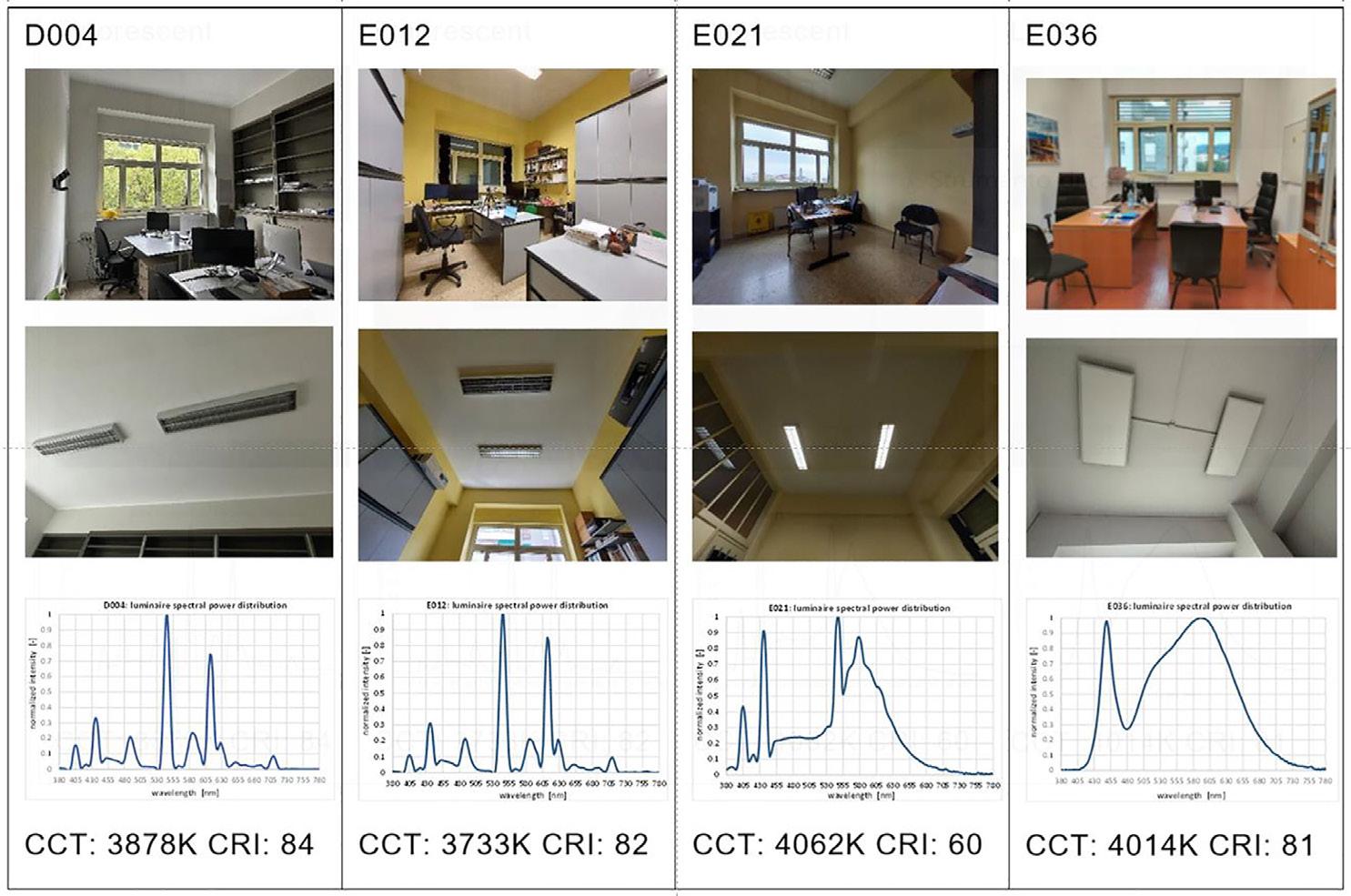
The first paper, by Giovannini et al, features a study on integrative lighting carried out for existing office spaces. The spaces used for the study consisted of four third-floor offices on the main campus of the Politecnico di Torino, Italy. Each space differed in size, orientation, obstruction settings, dimensions, finishes, number and position of workstations, and lighting systems – three spaces had ceilingmounted fluorescent luminaires with parabolic reflectors and anti-glare louvres, while the fourth had LED luminaires with diffusers. All spaces were controlled with manual on/off switching.
The study looked at the combination of both daylight and electric light, focusing on two aspects. First, it investigated whether the lighting conditions could meet the recommendations for light exposure for appropriate non-visual responses, as proposed by the CIE or in the WELL Protocol.
Second, it aimed to assess the influence of daylighting as part of integrative lighting as a function of differing room depths and orientations; electric lighting as a function of differing systems, and finally a combination of both daylight and electric light.
Electric lighting was measured through field studies, while annual simulations were made for the daylighting using Lark v2 software. Where non-visual responses were concerned, the results showed that desk position played an important role under daylit conditions, with only the desks located within 2m of the window able to meet the circadian recommendations. With electric lighting, the supplementary electric light did not always provide sufficient contribution to meet the circadian recommendations over the entire year and across the full area.
Only one of the studied office spaces, which had been retrofitted with LED luminaires, demonstrated melanopic equivalent daylight
illuminance (mel-EDI) values consistent with requirements, but resulted in photopic illuminance at desk level of > 700 lux.
Results from the study, said the authors, highlighted the difficulty for existing built environments to meet lighting recommendations, and showed that traditional electric lighting design schemes can fail in supporting circadian needs. They concluded that further research should be undertaken to provide a common and shared approach to evaluate the effectiveness of light with respect to its non-visual effects.
Martinsons and Picard’s paper looks at a novel method of performing in situ photometric and spectroradiometric measurements under daylight.
Considering that electric light sources often exhibit rapid light fluctuations known as temporal light modulation (TLM), a luminaire’s TLM can be considered as its electrical ‘footprint’. The TLM can thereby be remotely detected and used to perform in situ measurements of very low light levels superimposed on intense backgrounds.
The study showed that illuminance levels approximately 500,000 times smaller than the background could reliably be measured by lockin detection (a well-established technique to measure amplitude and phase of a modulated signal in the presence of noise, background and parasitic signals), allowing photometric measurements to be taken during daytime, including sunny conditions.
Using an optical lock-in spectrometer it was
of signs, luminaires and displays in their normal environments without turning off other light sources. They further note that the rejection of daylight also allows measurements to be taken during daytime reducing the burden of night-time work.
Iain Carlile, FSLL, is a past president of the SLL and a senior associate at dpa lighting consultants
LR&T Vol 57, No 4-5, August 2025, was a special issue based on the CIE 2023 Quadrennial Session. The papers within the issue were identified from the conference papers by the directors of the six scientific divisions of the CIE and authors were asked to adapt them for publication within LR&T and then followed the usual peer review.
Lighting Research and Technology: OnlineFirst In advance of being published in the print version of Lighting Research and Technology (LR&T), all papers accepted for publishing are available online. SLL members can gain access to these papers via the SLL website (www.sll.org.uk)
Analysis of integrative lighting through field measurements and annual daylight simulations in offices
L Giovannini, VRM Lo Verso, L Valetti, JG Daltrozo and A Pellegrino
Untangling light in noisy luminous environments
C Martinsons and N Picard
p Views of the four different offices (Giovannini et al)
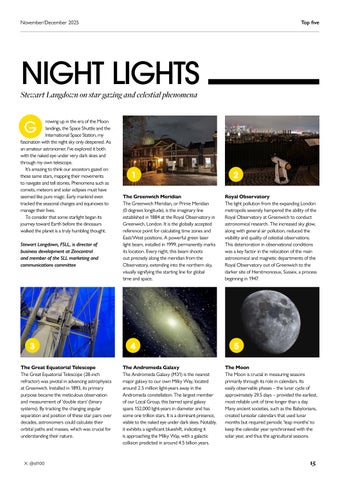
NIGHT LIGHTS
Stewart Langdown on star gazing and celestial phenomena
rowing up in the era of the Moon landings, the Space Shuttle and the International Space Station, my fascination with the night sky only deepened. As an amateur astronomer, I've explored it both with the naked eye under very dark skies and through my own telescope.
It’s amazing to think our ancestors gazed on these same stars, mapping their movements to navigate and tell stories. Phenomena such as comets, meteors and solar eclipses must have seemed like pure magic. Early mankind even tracked the seasonal changes and equinoxes to manage their lives.
To consider that some starlight began its journey toward Earth before the dinosaurs walked the planet is a truly humbling thought.
Stewart Langdown, FSLL, is director of business development at Zencontrol and member of the SLL marketing and communications committee
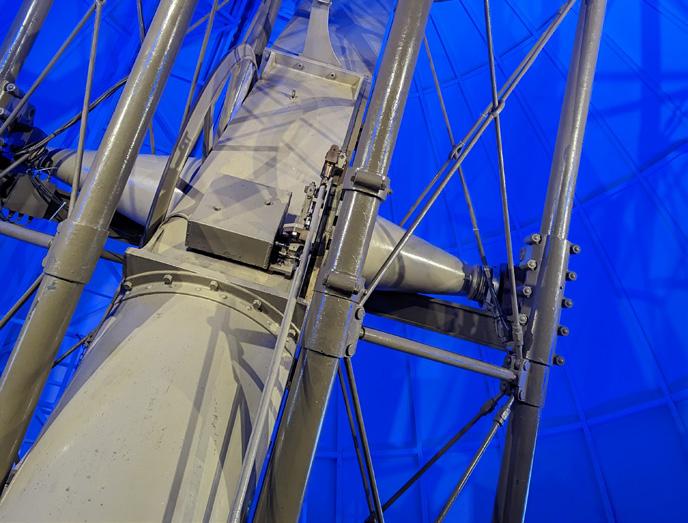
The Great Equatorial Telescope
The Great Equatorial Telescope (28-inch refractor) was pivotal in advancing astrophysics at Greenwich. Installed in 1893, its primary purpose became the meticulous observation and measurement of 'double stars' (binary systems). By tracking the changing angular separation and position of these star pairs over decades, astronomers could calculate their orbital paths and masses, which was crucial for understanding their nature. 2 5 1 4 3
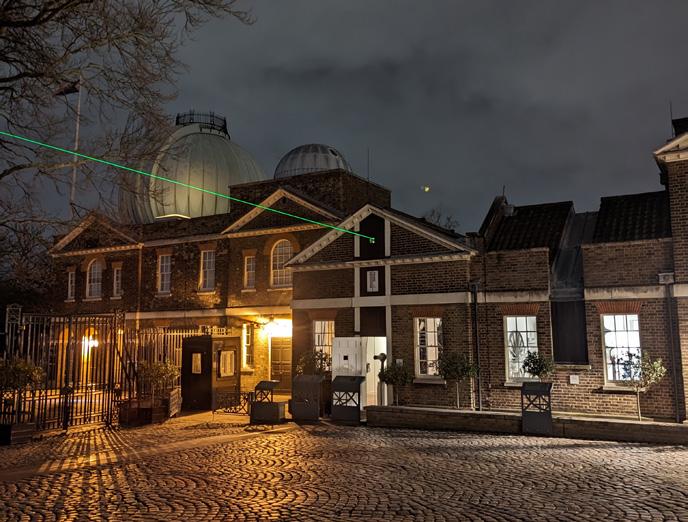
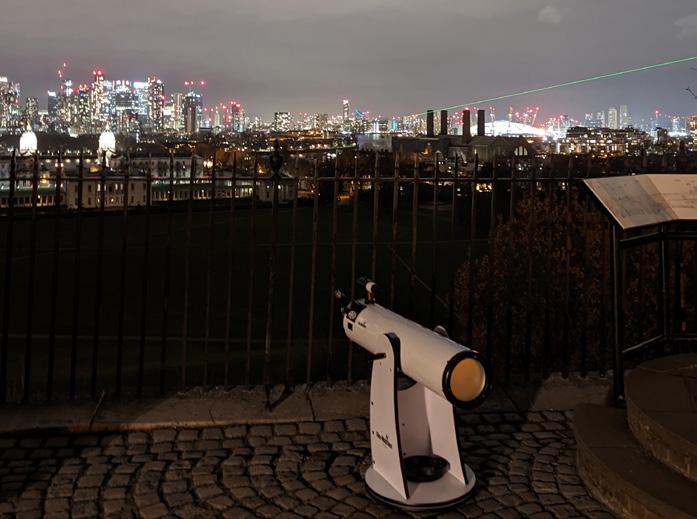
The Greenwich Meridian
The Greenwich Meridian, or Prime Meridian (0 degrees longitude), is the imaginary line established in 1884 at the Royal Observatory in Greenwich, London. It is the globally accepted reference point for calculating time zones and East/West positions. A powerful green laser light beam, installed in 1999, permanently marks its location. Every night, this beam shoots out precisely along the meridian from the Observatory, extending into the northern sky, visually signifying the starting line for global time and space.
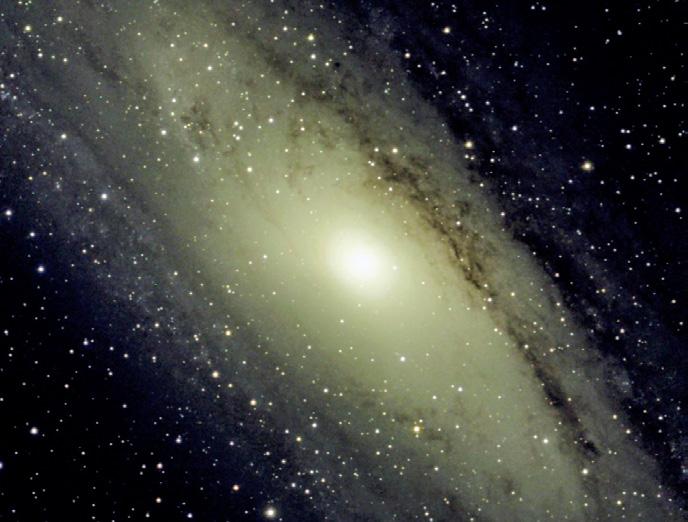
The Andromeda Galaxy
The Andromeda Galaxy (M31) is the nearest major galaxy to our own Milky Way, located around 2.5 million light-years away in the Andromeda constellation. The largest member of our Local Group, this barred spiral galaxy spans 152,000 light-years in diameter and has some one trillion stars. It is a dominant presence, visible to the naked eye under dark skies. Notably, it exhibits a significant blueshift, indicating it is approaching the Milky Way, with a galactic collision predicted in around 4.5 billion years.
Royal Observatory
The light pollution from the expanding London metropolis severely hampered the ability of the Royal Observatory at Greenwich to conduct astronomical research. The increased sky glow, along with general air pollution, reduced the visibility and quality of celestial observations. This deterioration in observational conditions was a key factor in the relocation of the main astronomical and magnetic departments of the Royal Observatory out of Greenwich to the darker site of Herstmonceux, Sussex, a process beginning in 1947.
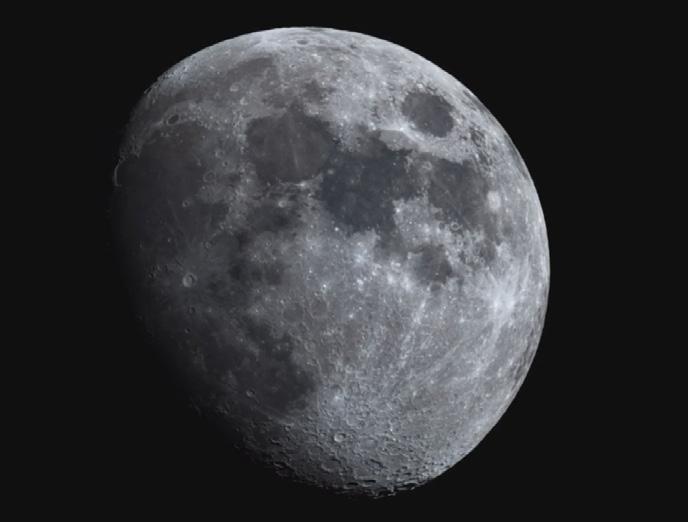
The Moon
The Moon is crucial in measuring seasons primarily through its role in calendars. Its easily observable phases – the lunar cycle of approximately 29.5 days – provided the earliest, most reliable unit of time longer than a day. Many ancient societies, such as the Babylonians, created lunisolar calendars that used lunar months but required periodic 'leap months' to keep the calendar year synchronised with the solar year, and thus the agricultural seasons.
Events 2025
For details of all upcoming webinars, go to: www.cibse.org/society-oflight-and-lighting-sll/sll-events/upcoming-webinars-and-onlinecontent
For previously recorded CPD webinars (including regional webinars), go to: https://www.cibse.org/get-involved/societies/society-of-light-andlighting-sll/sll-events/on-demand-webinars-past-presentations
EVENTS
CONTRASTS IN LIGHTING
(SLL HCNW event)
Date: 6 November
Venue: Samsung Centre, King’s Cross cibse.org/sll-whats-happening
NIGHT-TIME PHOTOGRAPHY WALK
(organised by CIBSE HCSW)
Date: 12 November
Location: London Southbank Guide: David Mooney cibse.org/sll-whats-happening
LIGHT25
(including speaker programme by the SLL in the Associations’ Lounge)
Date: 19-20 November
Venue: Business Design Centre, Islington, London lightexpo.london/
2026
LIGHT + INTELLIGENT BUILDING MIDDLE EAST
Date: 12-14 January
Venue: Dubai World Trade Centre https://light-middle-east.ae.messefrankfurt.com/dubai/en.html
WORKSPACE DESIGN SHOW
Date: 25-26 February
Venue: Business Design Centre, Islington, London https://workspaceshow.co.uk
LUCI CITIES AND LIGHTING SUMMIT
Date: 25-27 February
Location: Oulu, Finland luciassociation.org/events/luci-cities-lighting-summit/oulu-2026/