
Spring 2022 Volume 66 ~ Issue 4 THE MAGAZINE OF THE NORTH-SOUTH SKIRMISH ASSOCIATION, INC. HISTORY. COMPETITION. CAMARADERIE. The N-SSA promotes the competitive shooting of Civil War firearms and artillery while encouraging the preservation of battlefields, artifacts, clothing and education of the period. In this issue: Results from the 145th Fall Nationals. On the cover: Young Skirmisher winners and the 1st Place Musket Team Winter 2022 Volume 67 ~ Issue 4
The Skirmish LineTMis the quarterly publication of The North-South Skirmish Association, Inc. Non-member annual subscriptions are available for $24 per year (U.S. Funds)
Editor & Publisher
Editor, Eddie Davenport ~ skirmishline@n-ssa.net
National Photography Officer ~ Allissa Weber
Contributing Photographers ~ Niki Bethke, Walt ‘JR’ Zdon, Liz Cole, Brittany Cole
Visit our website at: www.n-ssa.org
The N-SSA Corporate Seal and the magazine title, The Skirmish LineTM, are registered trademarks of the North-South Skirmish Association, Inc. Reproduction in any form or manner without the expressed written consent of the N-SSA Board of Directors is strictly prohibited. All pages are copyrighted by the North-South Skirmish Association, Inc. and The Skirmish LineTM magazine. Text and images in this publication are the property of the original owners (authors). Text and images may not be published separately, in hard copy or electronically, without the expressed written permission of their owner(s). The authors and advertisers are responsible to secure the proper permissions and right to publish articles, photos, and illustrations not created by them. The North-South Skirmish Association, Inc., The Skirmish LineTM, and its staff are not responsible for copyright infringement. Please contact the Editor for questions relating to any matter, including but not limited to permission to copy materials herein.
Disclaimer: The North-South Skirmish Association does not guarantee, warrant, or endorse any product or service advertised in this publication. The publisher also does not guarantee the safety or effectiveness of any product or service illustrated, mentioned, offered, or advertised herein. The publisher does not assume responsibility as to whether or not products or services advertised in this publication comply with all state or local laws which may be applicable in regard to the purchase or usage of such products or services.
Warning: The author(s), The Skirmish LineTM and its staff, and the North-South Skirmish Association, Inc. cannot accept any responsibility for accidents or differing results obtained using techniques, products, and combinations thereof that will make results vary. Firearms should be checked before firing and periodically thereafter by a competent gunsmith and all manufacturer’s instructions and warnings must be followed.


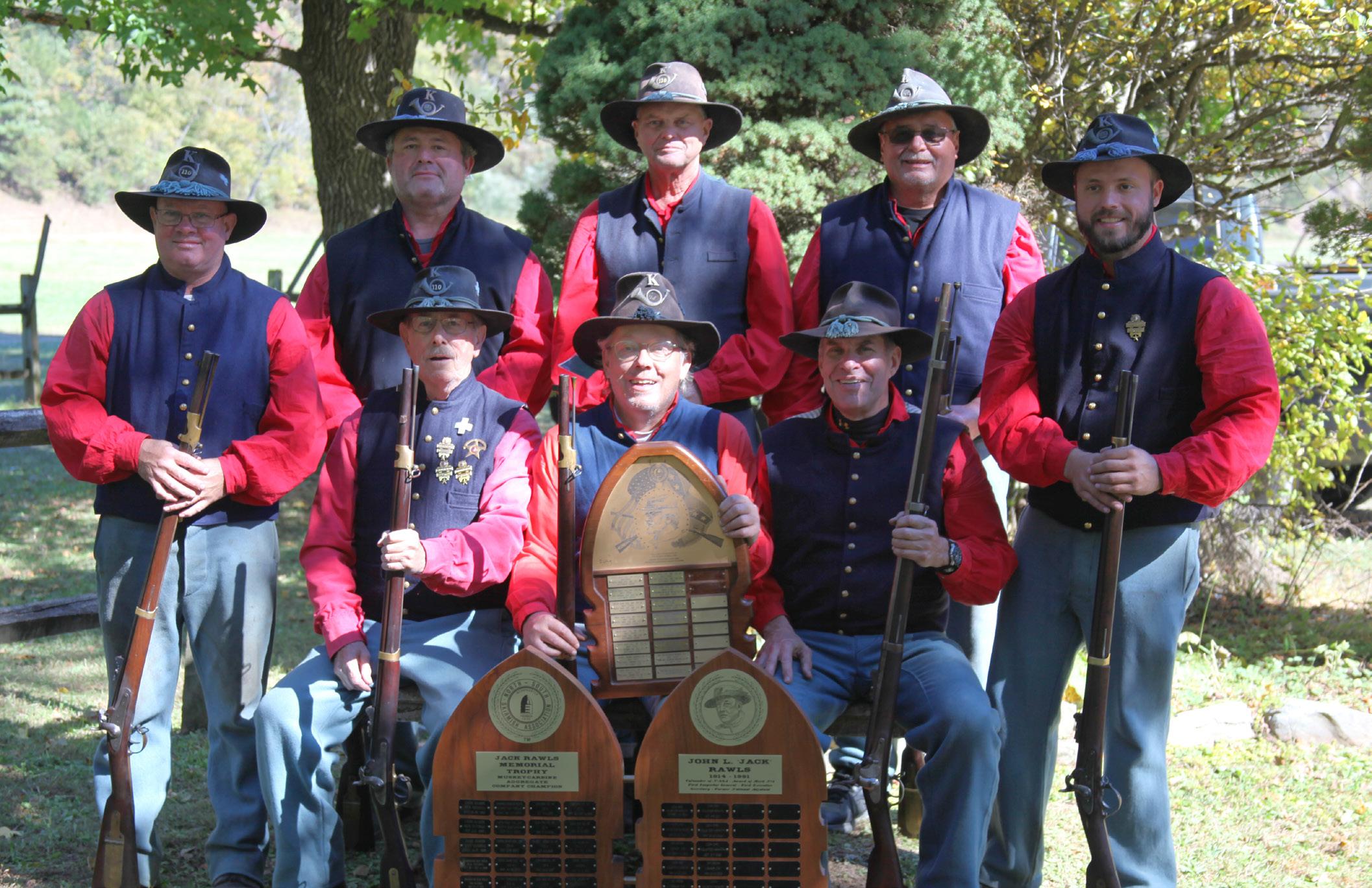
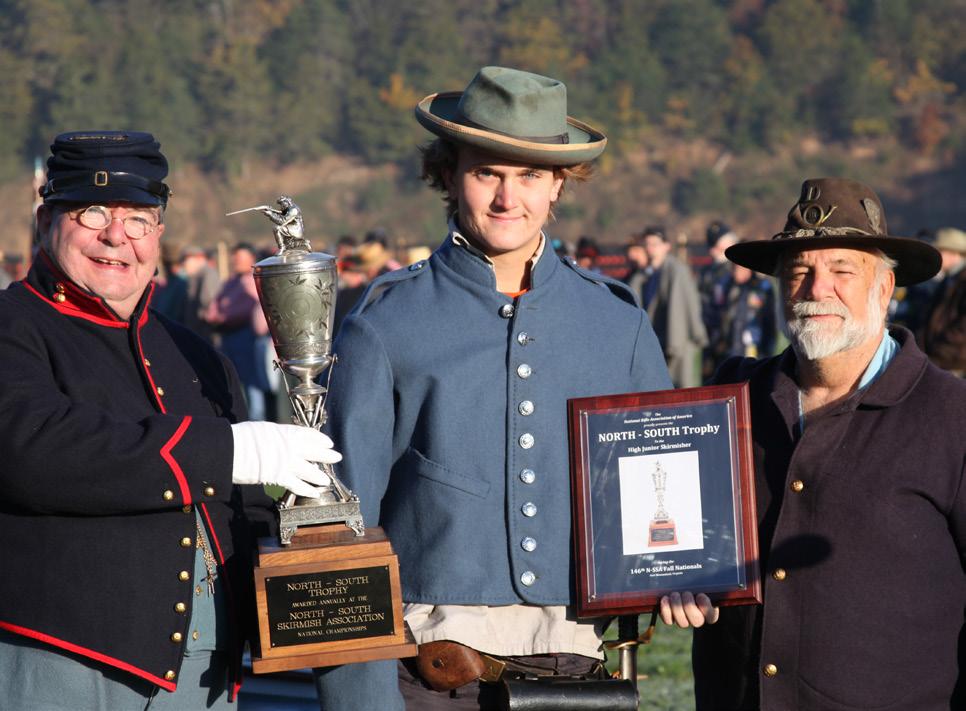
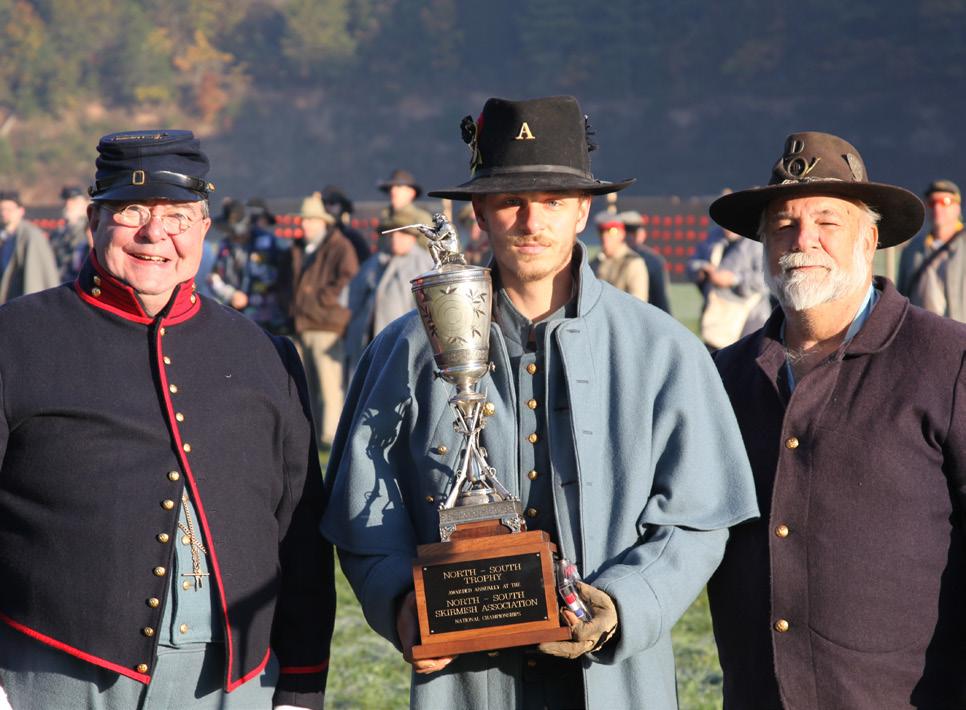
Skirmish Line Winter 2022 1 Change of Address Requests Please send all address changes to: Judy Stoneburner N-SSA Executive Secretary PO Box 218 | Crozet, VA 22932-0218 If your household receives multiple copies that you’d prefer not to receive, please email: execsecretary@n-ssa.net You must include your Zip+4 to receive The Skirmish Line Cover Photos: Top Left: Spencer Ostner, 9th Virginia Cavalry1st Place Young Skirmisher Award Top Right: Thomas Robey, Union Guards - 2nd Place Young Skirmisher Award Center: 110th Ohio Volunteer Infantry, Co A - with the William Francis Keys Trophy for 1st Place A Musket Team and the Jack Rawls Memorial Trophy for 1st Place Musket-Carbine Aggregate. Features Articles and Columns. The Fireing Line 3 New Recruits Welcome 4 Taps 5 National Commander Message 7 N-SSA Contact list 8 Society of Color Bearers 10 146th Fall National Pictures 12 Costume Competition 42 Team Match Results 48 Civil War Drumming 64 American Rifleman TV 65 Individual Results 66 Is it Black Powder? 74 How a Maniac was Born 75 The Ultimate Marksman is Here 76 Commanders Corner 76 Artillery Results 78 Shooting a Cavalryman's Smith 80
Send in any photos or articles that you feel may be of interest to other N-SSA members. When sending photos, please include captions and the names of those pictured. Don’t forget to credit yourself as the writer. Submit all articles in text format (ex. Word, not a pdf). All photos must be at least 300 dpi (credit the photographer). Submit via e-mail to skirmishline@n-ssa.net. You will receive a return email confirming receipt.
2 Skirmish Line Winter 2022
NoteFromtheEditor
Spring issue April
Issue September
Upcoming deadlines to submit
1st, Summer
1st.
The Firing Line
It’s getting cold outside, and Santa’s sleigh is getting ready to ride again. Another year has passed and with it another season of competition in the N-SSA. I want to take a minute to thank all the staff and volunteers that made our shoots run successfully. We could not have the successful organization we have today if it was not for you unsung
heroes. As many of you might have heard I was on TV. It was such a cool experience, oh and by the way I won. Beating a fellow skirmisher was icing on the top. If you want to hear more about my experience on the show look up Ethan Yazel’s podcast, I Love Muzzleloading as I was a guest on the show. Speaking of outreach for the N-SSA. We need to keep recruiting. We are the most unique sport on the face of the planet. I don’t want to see the N-SSA fold; I know you do not either. To accomplish this, we need to become ambassadors to muzzleloading. All of us are ambassadors, take a friend out shooting. Teach a kid, teach a neighbor. This is how we grow our sport. We show the world just how much fun we have muzzleloading.
I hope all of you have a safe and happy holiday, for those of you who celebrate Merry Christmas from the Davenport Household. I look forward to breaking some targets and breathing that wonderful black powder in soon. Until Next Time, Keep your powder dry and your shot X’s.

Eddie Davenport
Hannover Greys 11366V Skirmish Line Editor.
Below: Mike Santarelli, national inspector general, shows the breech operation of the Sharps carbine. He also compared the Sharps to the Smith carbine, a carbine that he has published two books on.
Skirmish Line Winter 2022 3
North-South Skirmish Association National Commanders
*John Gilmer 1956-1958
*James Waters 1959-1962
*Albert Hardin 1963-1964
*Carl Jensen 1965-1970 Richard Corrigan 1971-1974
*Frank Schoch 1975-1976
*John Sharrett 1977-1982
*James McAleer 1983-1984
John Robey 1985-1988
*Royal Inge 1989-1992
Earl Coates 1993-1996 Gary Crawford 1997-2000 Earl Coates 2001-2004
*Charles Smithgall 2005-2008
4 Skirmish Line Winter 2022
Welcome to all New Recruits November 2021 – November 2022
Linwood McMahon 2009-2012 Phillip Spaugy 2013-2016 David Booz 2017-2020 Charles Kindle, Jr. 2021A * denotes deceased commander Allagheny Region 11 Carolina Region 2 Central Virginia Region 24 Chesapeake Region 10 Deep South Region 7 Mid-Atlantic Region 9 Midwest Region 5 New England Region 4 Northeast Region 4 Northwest Region 8 Potomac Region 32 Tidewater Region 13 Western Region 7
Randall L. Baker
TAPS
Fall 2022
6 th Kentucky Volunteer Infantry
Douglas Beeghly 15 th Connecticut Vol. Infantry
Thomas A. Brown 14 th Mississippi Infantry
Ronald W. Bryant Iredell Blues
Dana M. Clark 12 th Regt. PA Reserve Vols.
Bruce V. Cobb 1 4 th Tennessee Infantry Regt.
Kay Cogswell 49 th Virginia Infantry, CSA
Craig Dear Delaware Blues
Jere Hayes Hampton Legion, CSA
Hugh E. “Bud” Mauldin, Jr. Norfolk Light Infantry
Howard Offhaus 1 st U.S. Artillery
Charles W. Smithgall 3 rd US Regular Infantry
Robert H. Stanley, Jr. 9 th Regiment New York Cavalry
Robert A. Stull Chartiers Valley Guards
Skirmish Line Winter 2022 5
“Unable are the loved to die. For love is immortality.” - Emily Dickenson

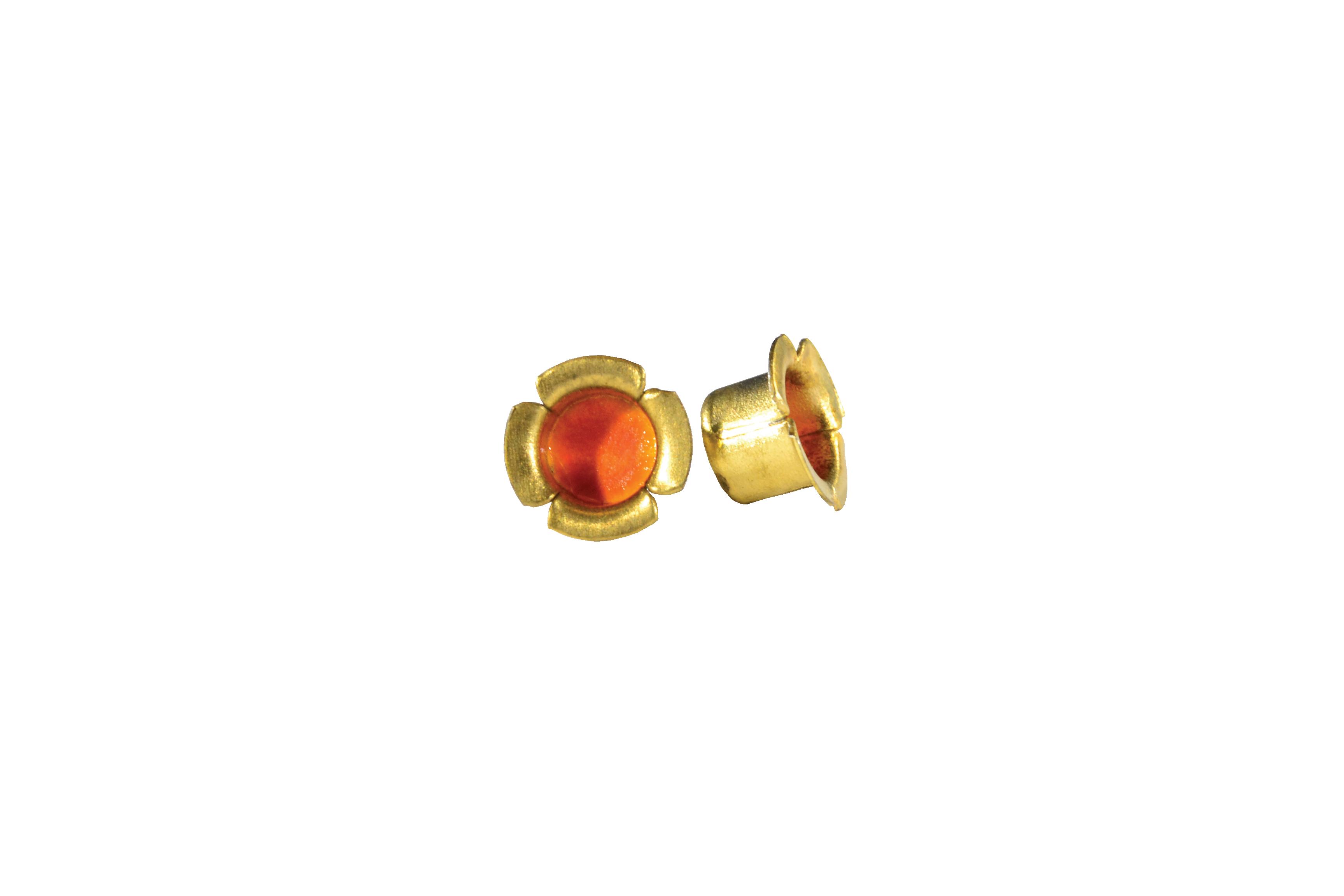



Schuetzen Powder Energetics, Inc. 866-809-9704 www.schuetzenpowder.com Best Quality for Traditional Ri es Schuetzen Black Powder and 4-Wing Musket Caps Best Quality for Traditional Ri es Schuetzen Black Powder and 4-Wing Musket Caps Schuetzen Schuetzen Black Powder Black Powder
From the National Commander
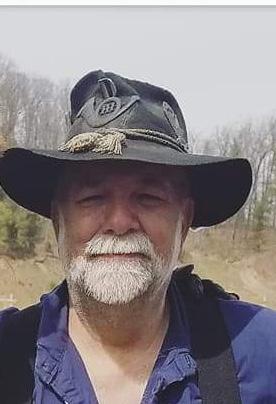
I would first like to start out by thanking Jeff Hall and his staff for hosting the Fall Nationals. Great job! Just a reminder, when it is your turn to host a Nationals, it is your team’s responsibility to provide the appropriate number of members to work at your assigned Nationals. I would also like to pass on another Thank You for the vote of confidence you gave to all the boards members who won their respective elections. As we step into the 2023 season, I hope everyone can participate and has a good time. Just to let you know, are numbers are continuing to increase, so thank all of you for your hard work recruiting new members. The day-to-day business of the organization has been going on as usual since Fall Nationals. The Board of Directors will be holding their annual meeting towards the end of January, and I’m sure there will be plenty of things to discuss. Please notify your team commander if you have a specific issue you want addressed.
I hope everybody has a wonderful Holiday Season, and I am looking forward to seeing all of you in the spring.
Stay safe, and be well,
Chuck
Kindle National Commander

Skirmish Line Winter 2022 7
Chuck
North-South Skirmish Association Contact List
National Officer
National Commander Charles L. Kindle, Jr. 419-346-6768 clk111@Roadrunner.Com
Past National Commander David T.Booz 717-338-9379 dtbooz@yahoo.com
National Deputy Commander David Cole 703-362-7836 cole84_89@verizon.net
National Adjutant Richard H. Clements 703-815-3861 nssa_national_adjutant@aol.com
Inspector General
National Paymaster
Michael J. Santarelli 215-576-5358 1stpacavalry@gmail.com
Bette Ann Shepherd 443-375-2115 paymaster@n-ssa.net
Executive Secretary Judy O. Stoneburner 434-823-4772 execsecretary@n-ssa.net
Region Commanders & Inspectors
Allegheny Commander Douglas K. Walter 717-357-1134 dwalter47@comcast.net
AL IG Craig C. Shedd 570-423-1752 ccsmew@yahoo.com
Carolina Commamder Rex Cockerham 704-576-1652 racockerham@hotmail.com
CR IG Dave Jackson 828-712-1437 gaffergrip65@yahoo.com
Central VA Commander Ralph P. Shaw 804-400-9008 ltnup@embarqmail.com
CV IG Phillip E. Crabill 540-323-3970 pdcrabil@shentel.net
Chesapeake Commander Edwin Thompson 443-532-7841 mdrebel@live.com
CH IG Michael L. Linton 301-873-7110 mlinton1966@yahoo.com
Deep South Commander Charlie Bondurant 502-221-0727 smokinpole@aol.com
DS IG Eddye H. Lawley 205-789-9139 eddyelawley@gmail.com
Mid-Atlantic Commander Roger A. Gray 732-280-8159 ragray1961@gmail.com
MA IG Michael J. Santarelli 215-576-5358 1stpacavalry@gmail.com
Midwest Commander Eric S. Schuessler 216-990-5903 eschues@aol.com
MW IG Ian Egbert 740-357-1415 ian45662@yahoo.com
New England Commander Louis Ruggiero 917-453-0171 tammany42@aol.com
EN IG Richard M. Intravia 860-833-8856 quahog@sbcglobal.net
Northeast Commander Robert D. Kelley 814-484-3415 rkel1858@outlook.com
NE IG Benjamin P. Nevlezer 315-576-3108 bnevlezer@yahoo.com
Northwest Commander Edward Walters 248-346-1962 ewalt1855@gmail.com
NW IG James E. Weber 734-244-6394 shooter575@gmail.com
Potomac Commander Davy Crockett, Jr. 570-888-8686 davyc@stny.rr.com
PT IG Mark E. Elton 443-742-0041 mark.alaska@verizon.net
Tidewater Commander E.R. Mike Davenport 252-453-2726 eddie_davenport@bshsi.org
TW IG Michael S. Stoneburner 434-882-2228 bulletmaker.stoney@gmail.com
Western Commander John P. Mark 920-420-1633 jmark48@hotmail.com
WR IG John T. Thatcher 815-653-9024 Jt450@Aol.Com
Staff Officers & Committee Chairs
Artillery Officer
Robert T. West 757-508-3007 sixpounder1841@yahoo.com
Awards Committee Chair Nancy C. Crockett 570-423-1070 nancyc@stny.rr.com
Bivouac Officer Robert E. Gorsky 410-795-2677 gorsbob@aol.com
Charitable Giving Wayne V. Jordan 703-407-2445 wvjordan@aol.com
Community Relations
Gary J. Crawford 540-931-4033 gary.crawford18@outlook.com
Corporate Relations Officer Allen Minneman 937-272-7520 allenm@mtmcase-gard.com
Costume Committee Chair Sharleen Leigh West 757-868-7844 slwcarr@yahoo.com
Doc’s Place Retail Sales The Intravia’s 860-833-8856 quahog@sbcglobal.net
Ft. Shenandoah Emergency Coord Chester T. Lauck 540-336-3938 lauckc@yahoo.com
8 Skirmish Line Winter 2022
History Center Staff Officer
History Committee
Gary J. Crawford 540-931-4033 gary.crawford18@outlook.com
John P. Zebelean, III 410-747-4161 rebshooter@aol.com
International Muzzleloading Com Errol W. McLean 315-769-6204 captain1@slic.com Insurance Officer Jason Rexrode 540-414-2127 jmrexrode@hotmail.com
IT Manager
Linwood L. McMahon 757-536-5187 linwood.mcmahon@verizon.net
Judge Advocate/Solicitor Lars E. Anderson 703-967-1789 lars.anderson@ofplaw.com Logistics Officer Shawn A. Shaffer 717-449-9114 shawn.a.shaffer@outlook.com
Long Range Planning Chair Edwin Thompson 443-532-7841 mdrebel@live.com
Marketing Committee Chair Chris M. DeFrancisci 540-840-2707 webmaster@washingtonbluerifles.com
National Photography Officer Allissa N. Weber 734-231-6056 bert9258@gmail.com
National Safety Officer Douglas K. Walter 717-357-1134 dwalter47@comcast.net
NRA Liason Officer Craig Stanley 717-649-9461 cws11@ptd.net
Ordnance Officer/Med Liaison John Venskoske, Sr. 540-888-3349 bcgsi@hughes.net
Personnel Review Chair Carlton Layne 678-773-1364 cpllayne@aol.com
Program Officer George McDowell 724-421-9435 mcdingle7472@gmail.com
Property Management Officer Jeffrey C. Hall 703-901-3691 jchall23.jh@gmail.com
Property Manager Timothy D. Scanlan nssapropertymgr@aol.com
Protocol Officer Brandon S. Bowser 419-274-9197 bbowser13@gmail.com Provost Marshall Robert S. Klutas 717-921-8660 stonycrick61@gmail.com
Public Information Officer Bruce W. Miller 248-258-9007 spartan70@sbcglobal.net
Range Officer Scott B. Harris 540-481-4566 cwshooter575@gmail.com
Recruiting Officer Robert M. Harrison 703-599-8865 48thVa@gmail.com
Registration Officer John L. Gaskill 586-291-2557 jlg14tenn@aol.com
Revolver Range Officer Chris M. DeFrancisci 540-840-2707 webmaster@washingtonbluerifles.com Rules Officer Sharon A. Myers 724-255-5830 nssarulesoffice@gmail.com
Sanitation Officer Charles J. Wager 910-326-4833 cwager@ec.rr.com
Signal Officer David Cole 703-362-7836 cole84_89@verizon.net
Skirmish Line Editor Eddie Ray Davenport, III 757-439-4553 nssaeditor@gmail.com
Small Arms Staff Officer John D. Holland, Jr. 716-824-5542 jh44ny@verizon.net Statistics Officer Jeffrey R. Knauss 412-766-2789 j.knauss@verizon.net
Sutler Officer Paul D. Stoneburner 434-242-2533 madforestry6@gmail.com
Uniform Committee Mark E. Latham 603-382-7014 balchiss@hotmail.com
Unit Membership Com Chair Kenneth L. Stiles 571-208-4826 nssa.org.membership@gmail.com
Veteran’s Committee Chair George J. Schell 410-215-7040 gschell516@cs.com Youth Committee Travis Keener keener.travis@gmail.com
Skirmish Line Winter 2022 9
August 19, 2022, June 23, 2022, April 18, 2022,February 24, 2022, February 18, 2022, January 16, 2022
Revised:
Support the N-SSA !! !
The Socie ty of Co lor Bearers
Wayne Jordan, Charitable Giving Committee
Friends and Fellow Skirmishers,
The Society of Color Bearers is made up of the hundreds of skirmishers who have made donations to the N -SSA in recent years. These members all have their reasons for giving extra money to the organization, but the common bond is that the N -SSA is a big part of their lives, an activity that we put a part of ourselves into and becomes a part of our identity. They have enjoyed many days and nights of the camaraderie and competition in this unique activity, often with close friends and family. They donate out of a sense of pride, of appreciation, of a desire to give back, and a desire to see the N-SSA thrive and last for a long time to come.
Will you support the N-SSA with a monetary donation this year? Join the Society of Color Bearers if you haven’t already. The N-SSA is a 501 c 3 nonprofit organization which makes your donations tax deductible. Please review your annual giving plans as we approach year’s end.
Donations to the General Fund, or to a specific project, will strengthen our orga nization today and lay the groundwork for future years. A donation to the new Advance Guard Endowment Fund will help ensure that the N -SSA will be here for future generations of friends and family. There will be more details about the endowment in a separate article in the following pages.
“If you want to see our unique sport endure, you will want to seriously consider an investment in the Color Bearers for today, and the Advance Guard Endowment for the future.” – Bruce Miller, 1st Michigan Vol Inf, 33 year member.
There are numerous ways to maximize the benefits of giving to the N -SSA. Besides the satisfaction of supporting our organization, there are often significant tax advantages to donating to a nonprofit. In effect, you ar e giving some of the government’s money to the N -SSA. Below I’ll discuss some of the ways you can donate.
FIRST, THE EASIEST AND CHEAPEST WAY TO DONATE – Sign up for Amazon Smile on the Amazon website. Then sign in to the smile.amazon.com site to make al l purchases. Amazon will donate a small amount of each purchase to the N -SSA. These small purchases have added up to over $4200.00 in recent years. Or maybe Employer matches or grants to nonprofit organizations like ours are available where you work. Large companies will often match or double your donations. Some will even give grants to your favorite nonprofit if you put in volunteer time, as we all do to operate the N-SSA. For example, Dominion Resources and Chevron have made significant donations at the behest of their employees and retirees who skirmish.
SECOND, THERE ARE TAX BENEFITS TO GIVING YOUR MONEY – Besides simply donating from your bank account, there are numerous other ways to donate tax efficiently.
YOUR IRA ACCOUNT – If you have reached 70 ½ you can donate directly from your IRA account and avoid paying any taxes on the money, which for many p eople is significant. If you’ve reached the age of 72 and must take money out (the RMD) and you don’t need it, this is a great way to minimize
10 Skirmish Line Winter 2022
taxes and avoid the Medicare penalty (IRMAA) that the additional income can cause you to incur. If you have a 401k or certain other tax deferred retirement accounts, you can often roll the money from those accounts into an IRA and then use the money for tax free donations.
APPRECIATED SECURITIES - If you have stocks or other investments that have big taxable gains in them, you can avoid taxes on those gains by giving some of those securities directly to the N -SSA.
THIRD, IF YOU ARE THINKING ABOUT YO UR LEGACY – We are all amassing an estate that will be left behind when we are gone. For many of us this is a very si gnificant amount of money. We may not have heirs, or we may have enough to share with our favorite nonprofits as well as our heirs.
A BEQUEST - You can leave behind a bequest in your will, or directions in your Living Trust. It can be in terms of a cert ain sum, or of a percentage. This can help avoid estate taxes if the estate is large enough to be subject to them.
LIFE INSURANCE, ANNUITIES, IRAs, OTHER RETIREMENT ACCOUNTS
- These types of assets pass to beneficiaries whom you have listed in the account paperwork, not through a will. You can name anyone, or any organization, as a beneficiary, a partial beneficiary, or contingent beneficiary on any of these accounts. In many cases this will also help to avoid large amounts of taxes.
“The N-SSA has been since 1993 a passion that I want to support now and in the future. I have made the N-SSA a beneficiary of my life insurance policy with an eye toward making our coll ective passion available to future generations.” – Walt Kreitler, 12th Regt US Inf
LASTLY, IN MEMORIUM – We’ve received many donations in memorium to fallen skirmishers. Recently, we received the first donation in memorium to the Advance Guard Endowment f rom the Heuer Family in memory of William L. Heuer. Last year our largest donation was from the Dana Family in memory of Anne Dana. Any amount can be given in memorium and will be listed in the annual report.
There are many ways to donate to the N -SSA and many benefits available to donors. If you have any questions, or ideas you’d like to discuss, feel free to contact me at wvjordan@aol.com, or call me at 703-407-2445, and I’ll help you any way that I can.
PLEASE USE THE ATTACHED ENVELOPE TO SEND IN YOUR DONATION
All donors will receive a decal like the Society of Color Bearers logo at the head of this article. Please place it on your vehicle, gun cart, trailer, etc. Show other skirmishers that you are a proud donor to the cause and maybe they will also become donors.
SPECIAL PROJECT THAT NEEDS YOUR DONATION !!!
ROAD REPAIRS AND PAVING – Have you noticed the roads in Ft Shenandoah recently? There have been many repairs, fewer potholes, and even some new paving. But there are still potholes and areas that allow vehicles to kick up a lot of dust. Road work isn’t cheap, but Tim Scanlan would like to do more of it. All he needs is the funds to cover the work and we ’ll continue to see improvements in our roads. Less dust, a smoother ride, and no need for an alignment when you return home – if that sounds good to you, please donate. There is no limit to what is needed, but for now the goal is to raise $10,000 for the roads. As with other projects, any donor of $1000 or more will be listed as a Sponsor Level Donor.
Skirmish Line Winter 2022 11
146th Fall National




12 Skirmish Line Fall 2022
Walter ‘JR’ Zdon, 2nd Maryland Artillery, is awarded with the Skirmish Directors Star for the 145th Spring National.
Front: Miller Awrds Winner - Daniel Finley, 12th Pennsylvania Reserves
Rear: Uniform Commitee members: Mark Latham, Rick Simmons, Michael Vice, James Loba
Certificates of Appreciation for their work on the Museum Updates.
Left to right: Dave Cole, Kenneth Winklepleck, William Jordan, Donna Crawford - awards presented by Nancy Crockett (right).
The band during opening ceremonies
4 Gold Pioneer patches being given out for the tremendous amount of work put back into the Association!
Gold Pioneer Patches were awarded at opening cermonies to Nick Taylor, 21st VA; Danny Bethke, 3rd MD Arty; Brad Hale , 2nd MD Arty, and John Doyle, 2nd VA


Skirmish Line Fall 2022 13
Nansemond Guards, Co A - 3rd Place class A-1 Musket - with the Ed ‘Hog’ Wilhelm Memorial Trophy
9th Virginia Cavalry, CSA, Co A - 2nd Place A-1 Musket Team - with the Robert Hughes Trophy and the Walt Taylor Memorial Trophy (2nd place Musket/Carbine Aggregate)
110th Ohio Volunteer Infantry, Co A - 1st Place A-1 Musket Team - with the Robert Hughes Trophy and the Jack Rawls Memorial Trophy (1st place Musket/Carbine Aggregate)
Musket Team


14 Skirmish Line Fall 2022
49th Virginia Infantry, CSA, Co A - 1st Place A-2 Musket Team - with the A-2 Musket Team Trophy
Chiswell’s Exiles , Co A - 1st Place A-3 Musket Team - with the Army of the Tennessee Memorial Trophy
8th Regiment Virginia Voluntter Infantry, Co B - 1st Place B Musket Team - with the Franklin O Hayes Memorial Trophy
3rd Maryland Artillery, CSA, Co B - 1st Place B-2 Musket Team
Not Pictured:
5th Virginia Volunteer Infatry, Co C - 1st Place C Musket
Smoothbore Pistol


Skirmish Line Fall 2022 15
Nansemond Guards, Co A - 1st Place Smoothbore Pistol Team
50 & 60 Year Memberships
The N-SSA is proud and to award and recognize the following individuals for their long-standing memberships:
Not Pictured:
50 Year:
Alan Robertson, 12th Pennsylvania
Leonard Ohman, 34th Battalion Virginia Cav Howard Taylor, 2nd Maryland Cavalry
60 Year:
Lars Anderson, Washington Blue Rifles

Alan Cox, 3rd Maryland Artilley

Bruce Welther, 24th Michigan Infantry
David Mandy, 15th Virginia Cavalry Ralph Linley, 15th Virginia Cavalry
At Left: Russel Klotz, Chiswell’s Exiles - 50 Year N-SSA Veteran

16 Skirmish Line Fall 2022
Roger Bethke (right), 3rd Maryland Artillery - 60 Year N-SSA Veteran. Pictured with his son, Rob Bethke (left)
- 50
Editor’s Correction - In the last issue a
was spelled incorrectly - please accept our apologies
Thomas Kavanagh - Wheat’s Tigers
Year Membership Pin
competitors name
Revolver Team


Skirmish Line Fall 2022 17
1st
C
New York Dragoons, Co A - 1st Place A-3 Revolver
9th Virginia Cavalry, CSA, Co. B-
Place
Revolver 9th Virginia Cavalry, CSA, Co. C - 1st Place B Revolver 1st
5th Virginia Vol. Cavalry, Co A - 1st Place A-2 Revolver
Harris Light Cavalry, Co A - 1st Place Revolver Team - with the first place revolver team trophy


Breech-loader Rifle/Carbine II Team 18 Skirmish Line Fall 2022 S i n g l eS h o t B r e e c h l o a d e r T e a m
110th Ohio Volunteer Infantry, Co A - 1st Place Single-Shot Breechloader AND 110th Ohio Volunteer Infantry, Co B - 2nd Place Single-Shot Breechloader 8th Virginia Infantry, Co B - 1st Place B Breech-loader/Carbine II
46th Illinois Volunteer Infantry, Co A - 1st Place Spencer Team
110th Ohio Volunteer Infantry, Co A - with the Private’vs Trophy for highest placing repeater team
S p e n c e r T e a m
Lancaster Fencibles - 1st place A-3 Breech-loader/Carbine II
Smoothbore Team


Skirmish Line Fall 2022 19
Nansemond Guard, Co C - 1st Place C Smoothbore
Harlan’s Light Cavalry, Co B - 1st Place B Smoothbore
3rd Maryland Artillery, CSA, Co A - 1st Place A-3 Smoothbore
110th Ohio Volunteer Infantry, Co A - 1st Place A-1 Smoothbore Team, with the Men of the West Trophy.
Not Pictured:
Tammany Regiment, Co A - 1st Place A-2 Breech-loader/Carbine II
29th Wisconsin Volunteer Infantry, Co A - 1st Place A-2 Smoothbore
Mortar & Artillery


20 Skirmish Line Fall 2022
1st Valley Rangers - with the Russell L. Yeagy Memorial Trohpy for highest scoring rifled gun crew, and the Larry Beyer Memorial Artillery Trophy for highest spring/fall aggregate artillery crew. Total aggregate score of 100-9V!
1st Maryland Cavalry (8 Inch) - 1st Place Mortar Team - with the first place mortar trophy
Carbine Team


Skirmish Line Fall 2022 21
48th Virginia Infantry, Co B - 1st Place B-2 Carbine Team
Union Guards, Co B - 1st Place B-1 Carbine Team
First Rockbridge Artillery, Co A - 1st Place A-3 Carbine Team
13th Confederate Infantry, Co A - 1st Place A-2 Carbine Team
110th Ohio Volunteer Infantry, Co A - 1st Place A-1 Carbine Team, with the Alan Bilby Memorial Trophy
BB Gun Competition

22 Skirmish Line Fall 2022
1st Place Junior BB Gun Team (Jude Bethke pictured; Not pictured: Camyrn Blecher, Neala Brown, Alexander Weaver)
Junior Teams


Skirmish Line Fall 2022 23
3rd Place Junior BB Gun Team (Chase Early, Liliana & Lochlan Bechard)
2nd Place Junior BB Gun Team (Pictured: Jocelyn & Joey Plakis; Not pictured: Jeremy & Corey Cox)
Senior Teams

24 Skirmish Line Fall 2022
1st Place Senior BB Gun Team (Kullen O’Bryant, Carley Brennan, Jackson Lee Rock)
BB Gun Competition


Skirmish Line Fall 2022 25
3rd Place Senior BB Gun Team (Pictured: Clarissa Elton; Not Pictured: Nikolas Tomecek, Lawson Cherry, Tristan McCure)
2nd Place Senior BB Gun Team (Sammie Bowser, Cedric Keener, Moira Keener, Alex Noyalas)
Jr. BB Gun Individuals


26 Skirmish Line Fall 2022
Senior
Chase Early, McGregor’s 2nd Battery and Alex Noyalas, 11th Pennsylvania representing the Junior and Senior First Place Individual winners - with the Tenderfoot BB Gun first place individuals trophy Not
Pictured:
BB Gun Individuals - Nikolas Tomecek, 2nd Maryland Artillery, CSA - 5th Place Senior Individuals
Aiden Ruchty, 1st Maryland Cavalry, CSA - 3rd Place Junior Individuals, BB Gun Competition
Joey Plakis, 149th PVI Bucktailsv - 2nd Place Junior Individuals, BB Gun Competition
Chase Early, McGregor’s 2nd Battery - 1st Place Junior Individuals, BB Gun Competition
Junior BB Gun Individuals - Corey Cox, 2nd Maryland Artillery - 4th Place Junior Individuals; Camyrn Blecher, 73rd New York - 5th Place Junior Individuals; Neala Brown, Co C 2nd USSS - 6th Place Junior Individuals
Sr. BB Gun Individuals


Skirmish Line Fall 2022 27
Sammie Bowser, 111th Ohio Volunteer Infantry - 6th Place Senior Individuals, BB Gun Competition
Cedric Keener, Wheat’s Tigers - 4th Place Senior Individuals, BB Gun Competition
Katee Opalecky, 73rd New York - 3rd Place Senior Individuals, BB Gun Competition
Kullen O’Bryant, Southhampton Greys - 2nd Place Senior Individuals, BB Gun Competition
Alex Noyalas, 11th Pennsylvania - 1st Place Senior Individuals, BB Gun Competition
Unit & Individual Awards


28 Skirmish Line Fall 2022
Benjamin T Waits, Nansemond Guards, DSCA 5-Gun Gold
Buzz Smith accepting the Lee A Wallace Unit Award, presented to the 34th Virginia Cavaley Battalion - for their service and commitment to public education about the history of the War Between the States
Individual Awards


Skirmish Line Fall 2022 29
Adam J Bumford, 149th Pennsylvania Infantry, DSCA Carbine Bronze. While not pcitured, Adam also won the following NRA Civil War National Championships: Carbine Aggregate, 1st Place; Smoothbore Aggregate, 2nd Place; and NRA Aggregate, 1st Place.
Joel C Rogers, Iredell Blues, DSCA 5-Gun Gold and DSCA Musket Bronze
Individual Awards


30 Skirmish Line Fall 2022
Adam J Bumford - with the Bruce C. Warburton Memorial Trophy for Highest Carbine Aggregate; the Ernest W Peterkin N-SSA Grand Aggregate Trophy, for 1st Place Grand Aggregate; and the Wade O Huffman Memorial Trophy for the Highest 5-Gun Aggregate; and the Larry Brockmiller 7-Gun Aggregate Trophy for Highest 7-Gun Aggregate
Kent L Snyder - with the Patrick E Felker Memorial Trophy for Highest Musket Aggregate
Individual Awards


Skirmish Line Fall 2022 31
Edward W Schneeman - won the Ben Betterley Memorial Trophy for highest 50-yard Musket target and the Tom Blum Memorial Trophy for Highest Revolver Aggregate (pictured without trophies)
Todd H Hess - with the Brian Haack Memorial Trophy for Highest Smoothbore Aggregate
Individual Awards


32 Skirmish Line Fall 2022
Walter J Zdon, Jr with the Walter T Felter Memorial Trophy for 2nd Place Grand Aggregate
Kreig H O’Bryant - with the Albert N Hardin Memorial Trophy for Highest Musket/Carbine Aggregate
New Team Inspection


Skirmish Line Fall 2022 33
Welcome to the 30th Virginia Sharpshooter Battalion, who stood inspection at the Fall National!
NRA Civil War National Championships


34 Skirmish Line Fall 2022
Joel Rogers with the NRA Civil War National Championship Medal for 2nd Place Musket Aggregate - with a score of 179-1x
Walter J Zdon, Jr - with the NRA Civil War National Championship Medal for 1st Place Musket Aggregate - with a score of 180-2x
NRA Civil War National Championships


Skirmish Line Fall 2022 35
Todd Hess with the NRA Civil War National Championship Medal for 1st Place Smoothbore Aggregate - with a score of 188-6x
Mike McDaniel - with the NRA Civil War National Championship Medal for 1st Place Revolver Aggregate - with a score of 177-1x
Young Skirmisher


36 Skirmish Line Fall 2022
Thomas J Robey - 2nd Place NRA Young Skirmisher Award - with a score of 112
Spencer Ostner - 1st Place NRA Young Skirmisher Award - with a score of 150
Senior Skirmisher


Skirmish Line Fall 2022 37
Mark Hughes - 2nd Place NRA Senior Skirmisher Award - with a score of 177-1x
Michael D Arnette - 1st Place NRA Senior Skirmisher Award - with a score of 177-2x
BB Gun Competition


38 Skirmish Line Fall 2022
BB Gun Competition


Skirmish Line Fall 2022 39
At Sutlers Row


40 Skirmish Line Fall 2022
Around the Fort


Skirmish Line Fall 2022 41
Costume Competition
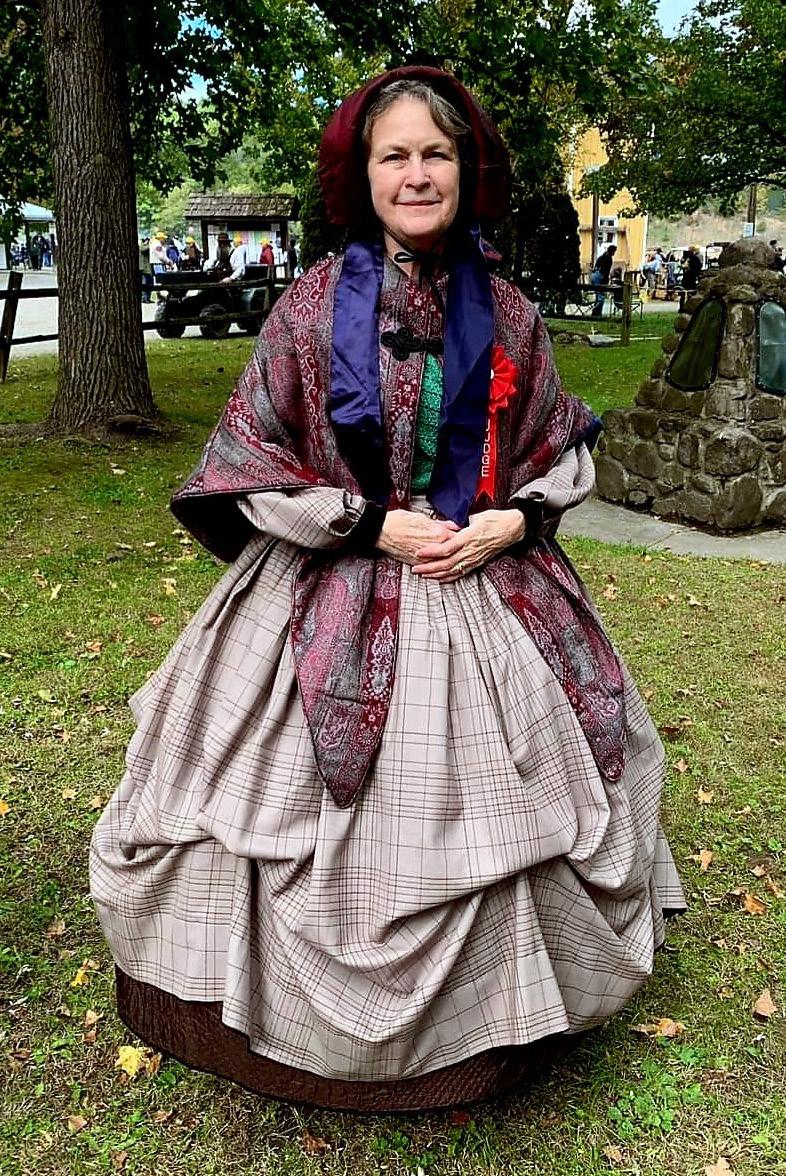
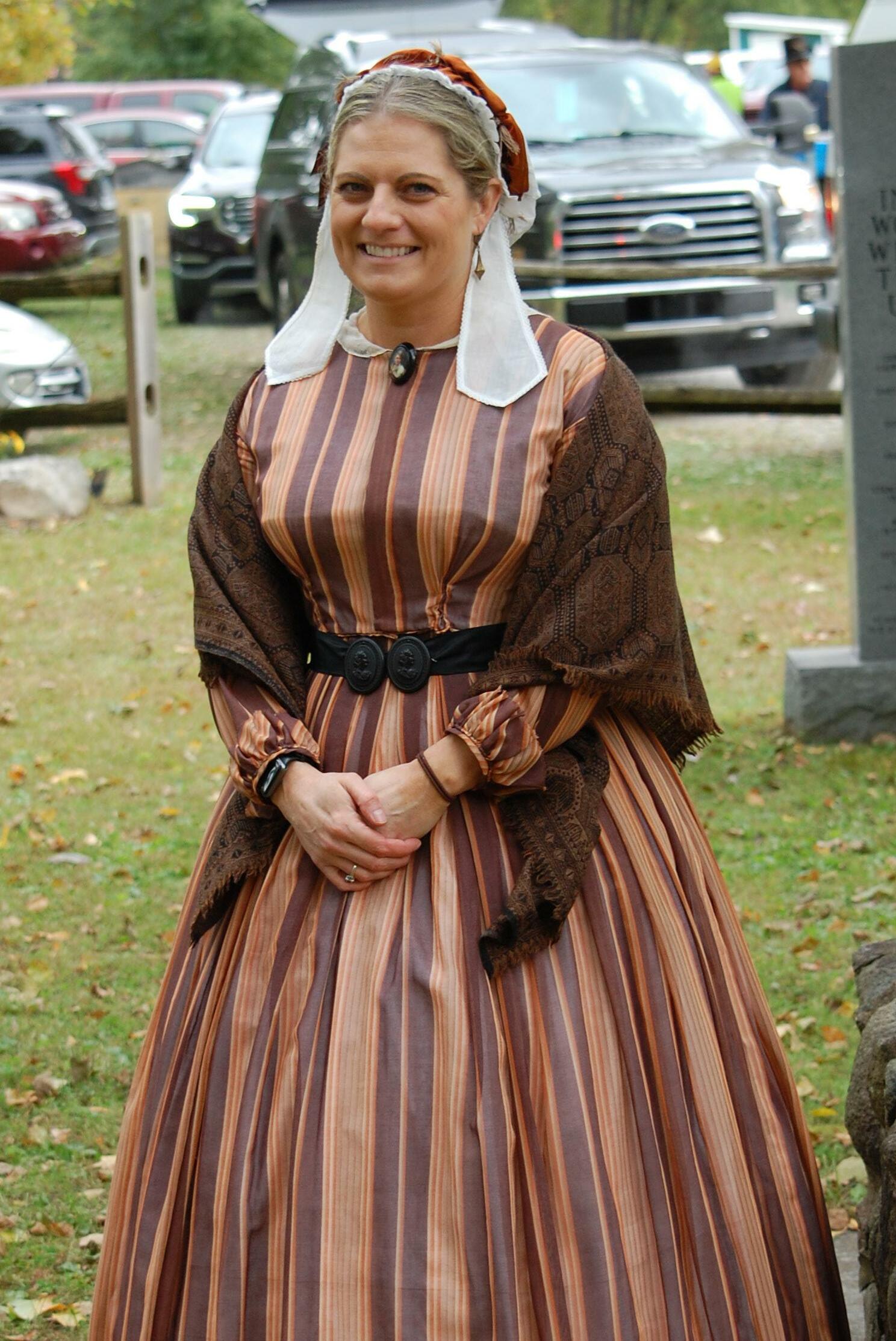
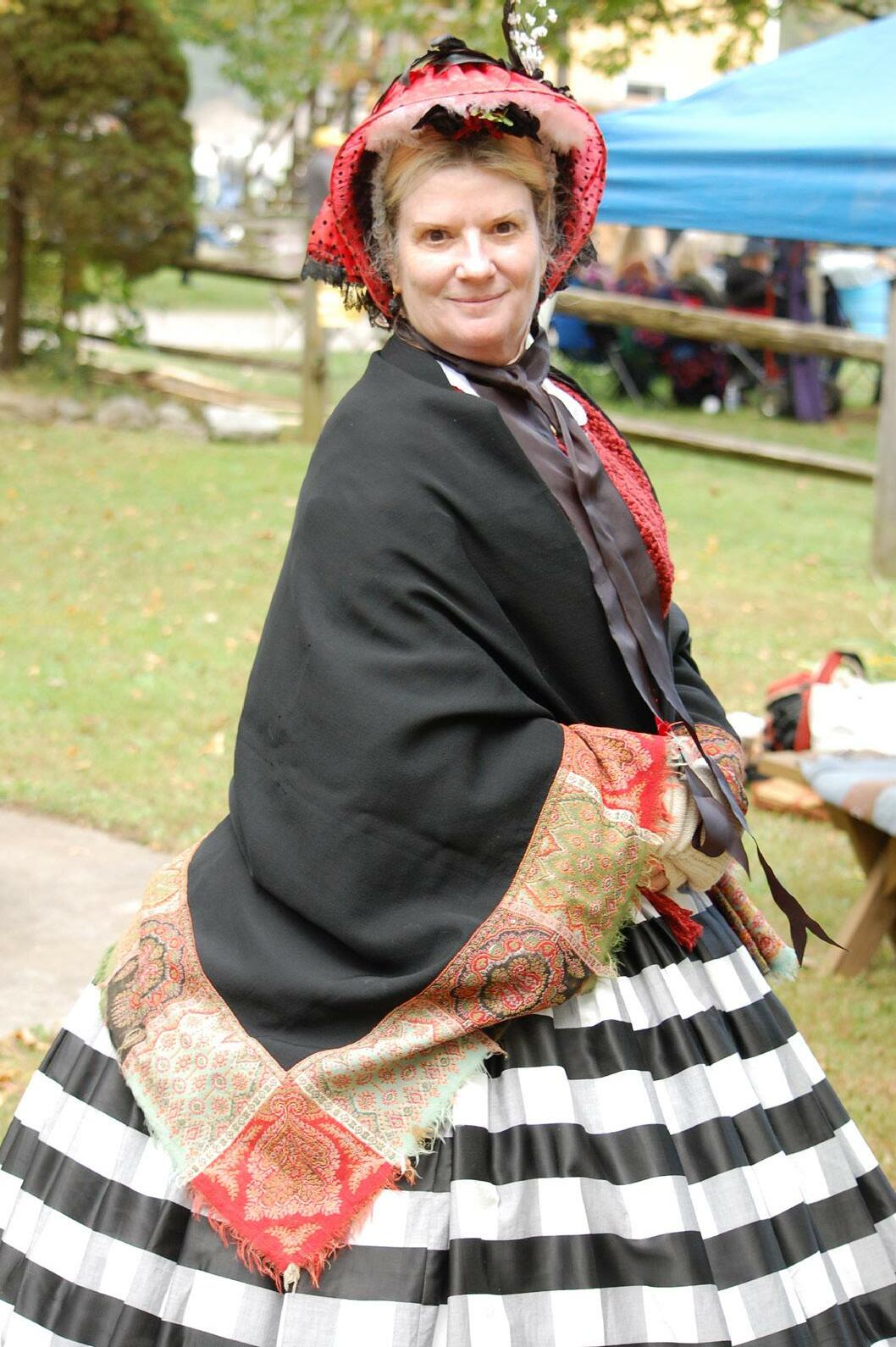
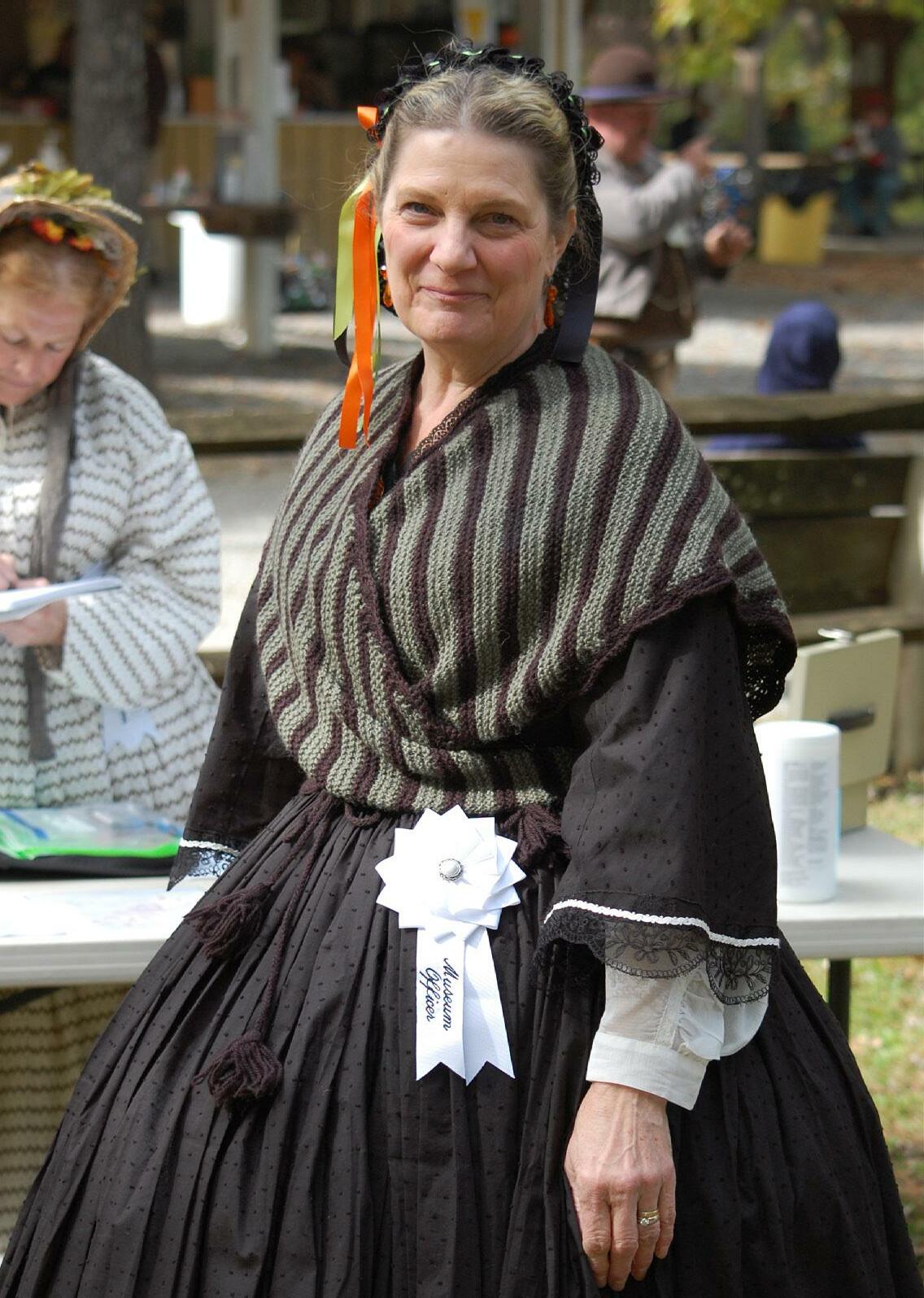
Mallory McCuin’s dress was a striped sheer brown cotton dress. She had a semi-sheer cotton organdy day cap, trimmed with rust-colored ribbons and little tassels, a belt with an antique buckle, antique earrings and brooch, and a knitted shawl.
Marylou Wells constructed and modeled an ice skating outfit. Her dress was a very soft wool in a woven windowpane design with paisley velvet cuffs, and glass buttons. The skirt was lifted in six places with internal tied lifters to show off her hand-made quilted petticoat, and to keep the dress from becoming entangled in the ice skates. She was wearing a green knitted Sontag, also known as a “Bosom Buddy.” Over that was a paisley woolen mantle that fastened with frogs. She carried antique ice skates that curled up at the front with a little acorn finial and a skating lantern. She also had a quilted bonnet for extra warmth.
42 Skirmish Line Fall 2022
Mallory McCuin - 1st Place Best Visual - Seamstress: Mary Deneau
Marylou Wells - 1st Place Specialty Award and the Delaney Award
Costume Competition
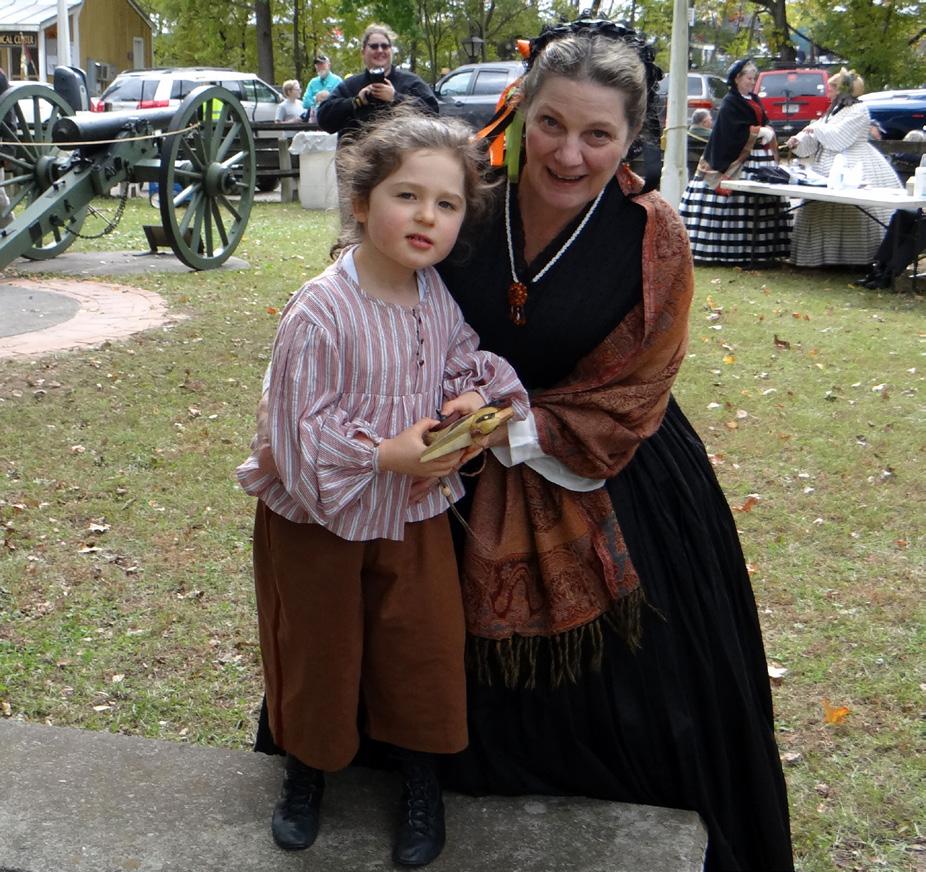
Jackson McCuin is wearing a tunic and short trousers, an age-appropriate outfit. The red/blue cotton woven tunic has a yoked front and back, contrasting self-fabric bias trim and long full bishop-style sleeves. The tunic was copied from a figure in a Currier and Ives print titled “Blind Man’s Bluff”. The brown linen trousers are trimmed in red braid on the outside seams. He also wore black cotton stockings and black leather front-lacing boots. His long hair was combed back into a low ponytail, and he carried a reproduction wooden duck.
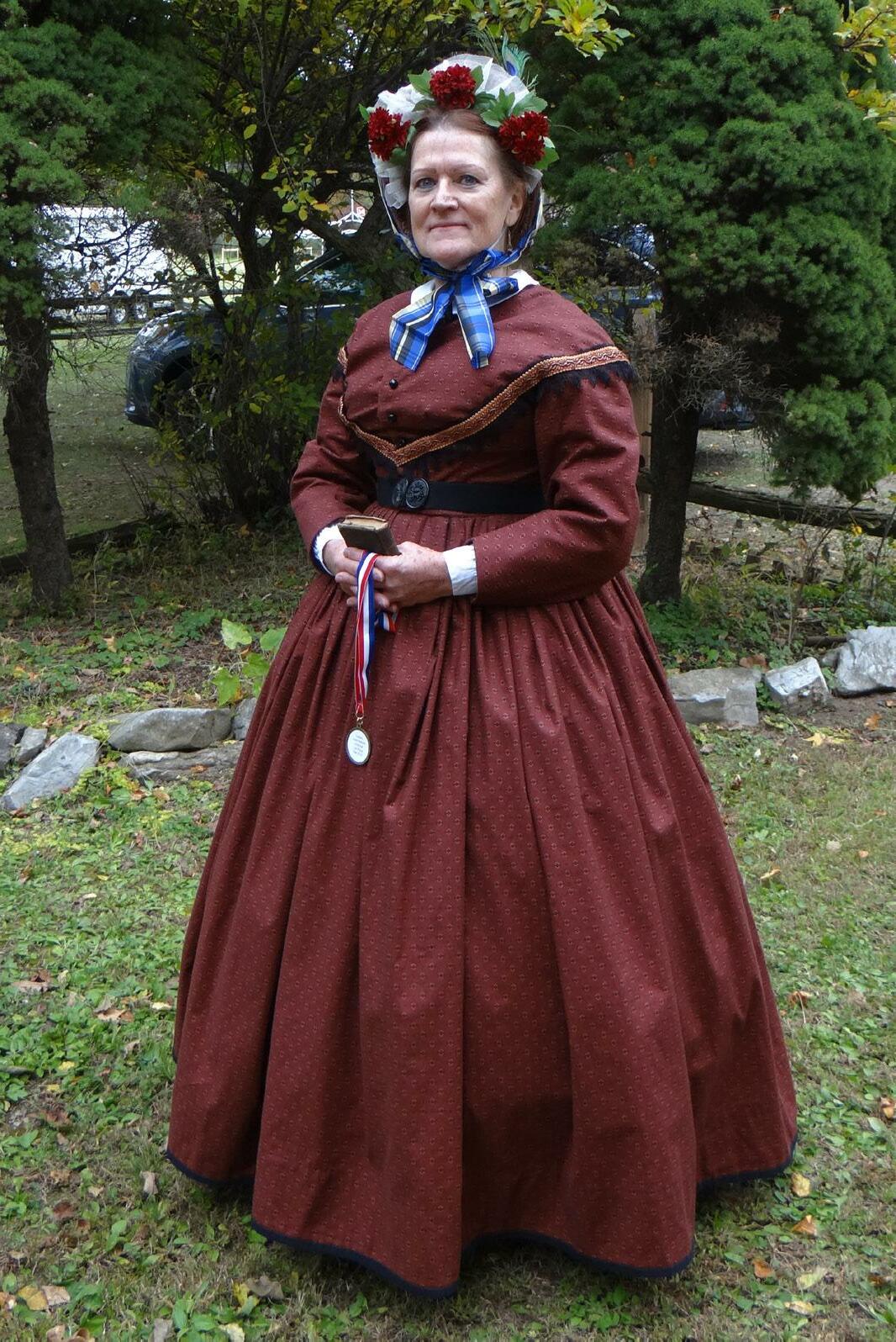
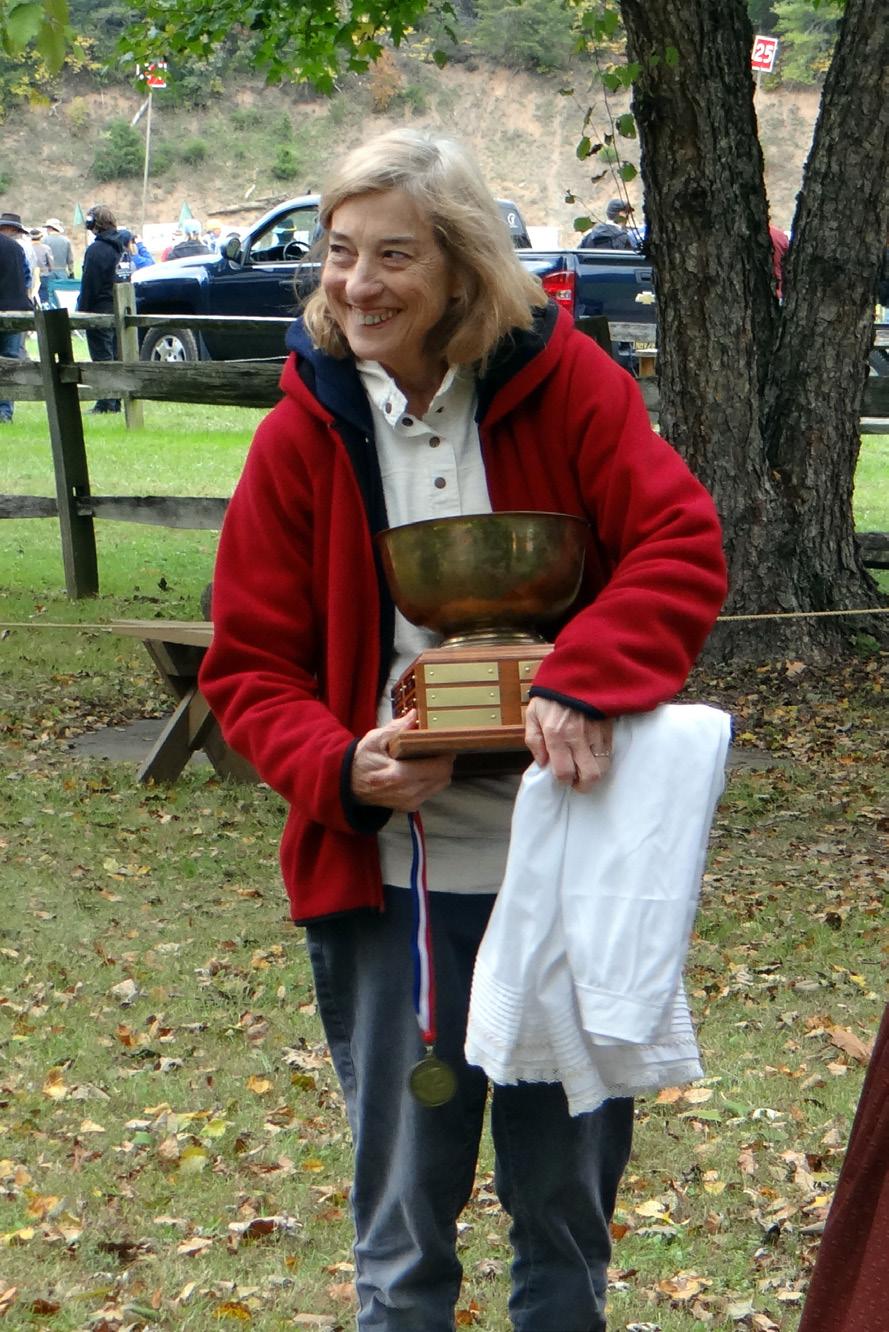
Nelda Platz made her dress, petticoats, chemise, drawers, cage crinoline, undersleeves, belt and bonnet (from start to finish). Nelda has also been a student of our many workshops with Kay and Peggy. She had on a turkey red cotton calico dress with red, black and gold gimp layered over black eyelash lace. Nelda’s bonnet was a covered buckram form and she embellished it with blue and yellow ribbon and red chrysanthemums. She had on antique earrings and a box cameo brooch (it opens to put hair or other mementos in it), very unique! As was often done originally, she stiffened the belt with cardboard, and added a reproduction resin belt buckle. Her shoes were side lace gaiters with patent leather toe foxing. She carried an 1857 Bible as if going to church.
Skirmish Line Fall 2022 43
Jackson McCuin - 1st Place Childrens Best Visual - Seamstress: Maryanne Greketis
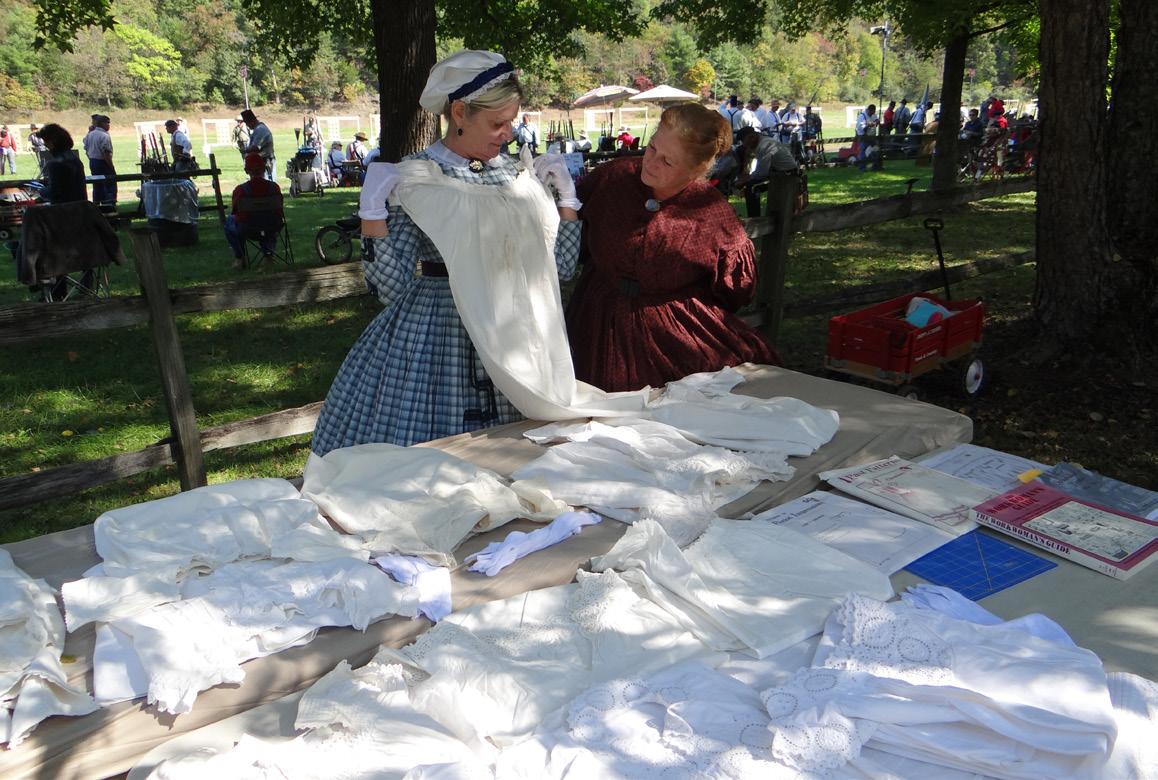
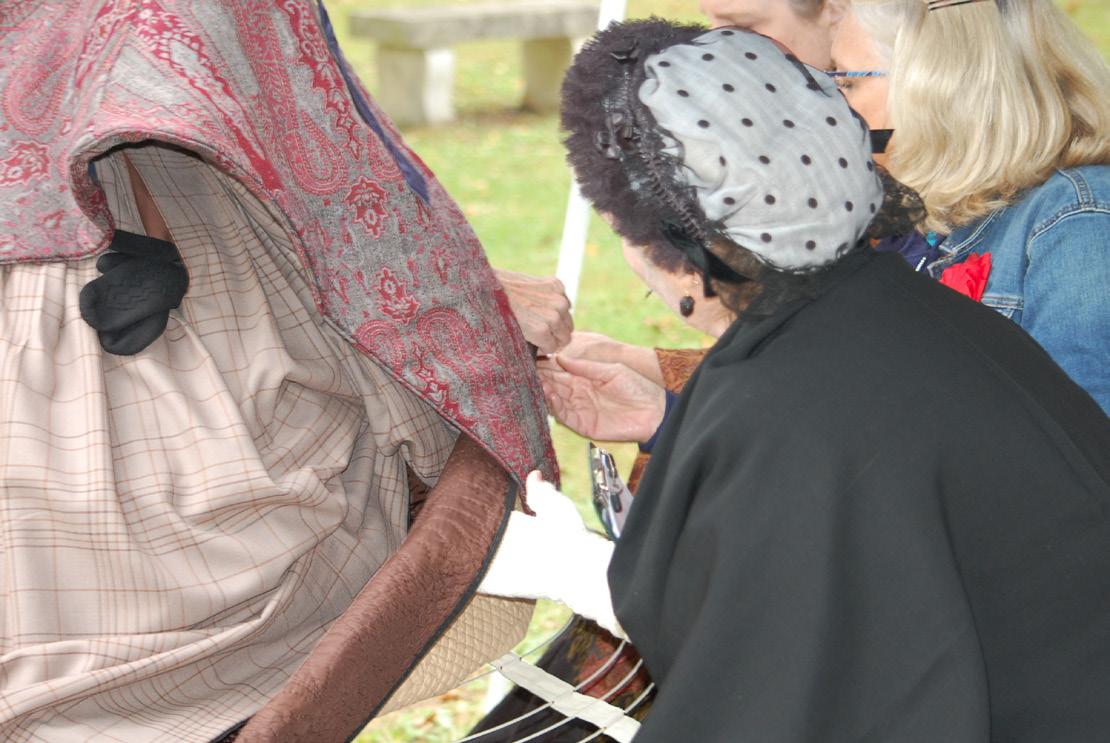
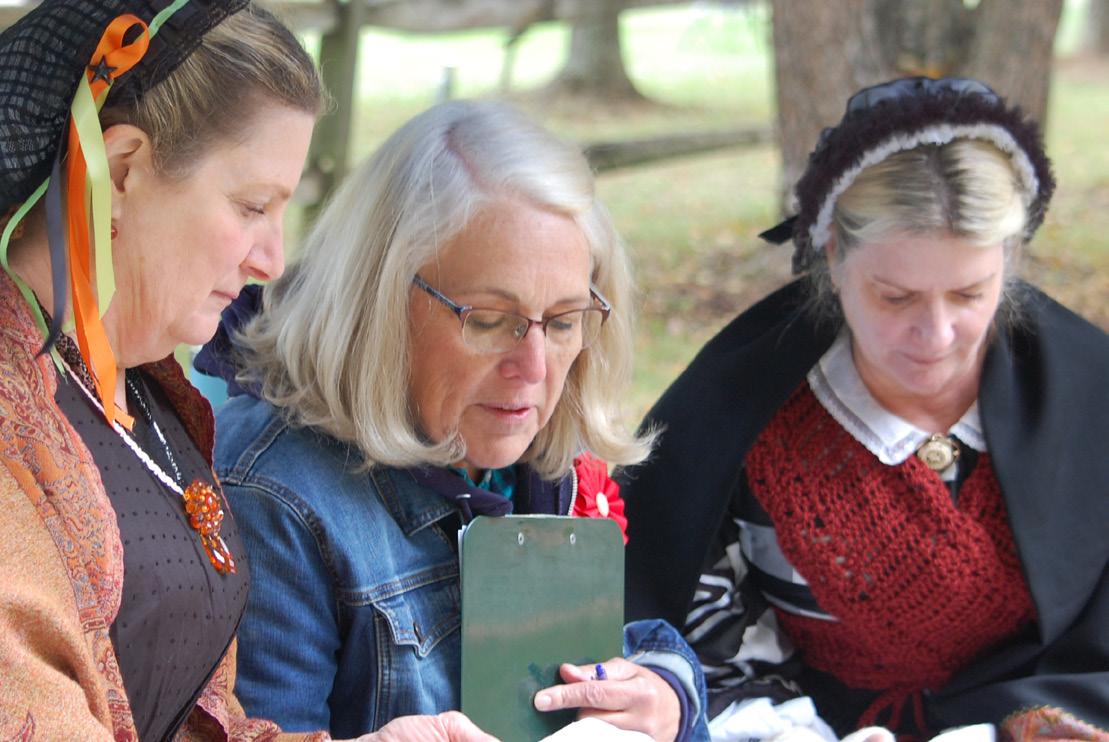
Mary Deneau and Sherleen West study original, antique chemises at the Sewing Circle on Friday. We had excellect examples available!
Nelda Platz - 1st Place Ladies Informal, Intermediate Competition
Costume Competition
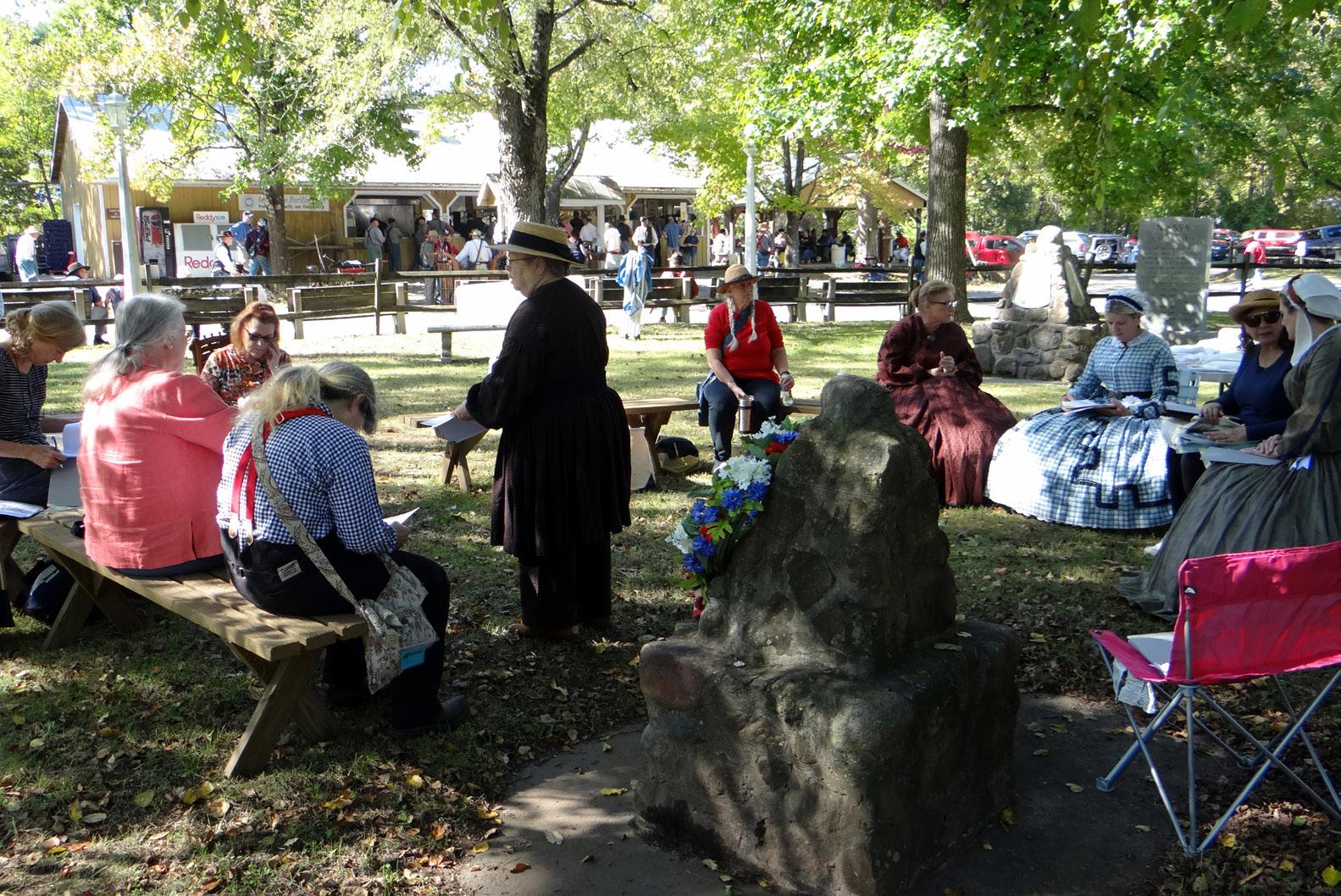
Peggy Edwards-Shaw taught the workshop on the construction of the chemise. We are looking forward to seeing these projects completed at the Spring Nationals, 2023.
44 Skirmish Line Fall 2022
Costume Competition
Elizabeth Hines made a pair of split drawers from an 1862 pattern using white cotton fabric. The project was begun in the Sewing Circle Workshop this past spring.. She trimmed them with a vintage handkerchief and embroidered them with a feather stitch. Construction included flat felled seams which encase all raw edges so they can be washed frequently. As was the practice in the 1860’s, dresses might only get spot-cleaned,but undergarments required frequent laundering. She finished them with hand sewn buttonholes and 2 mother of pearl buttons.
Skirmish Line Fall 2022 45
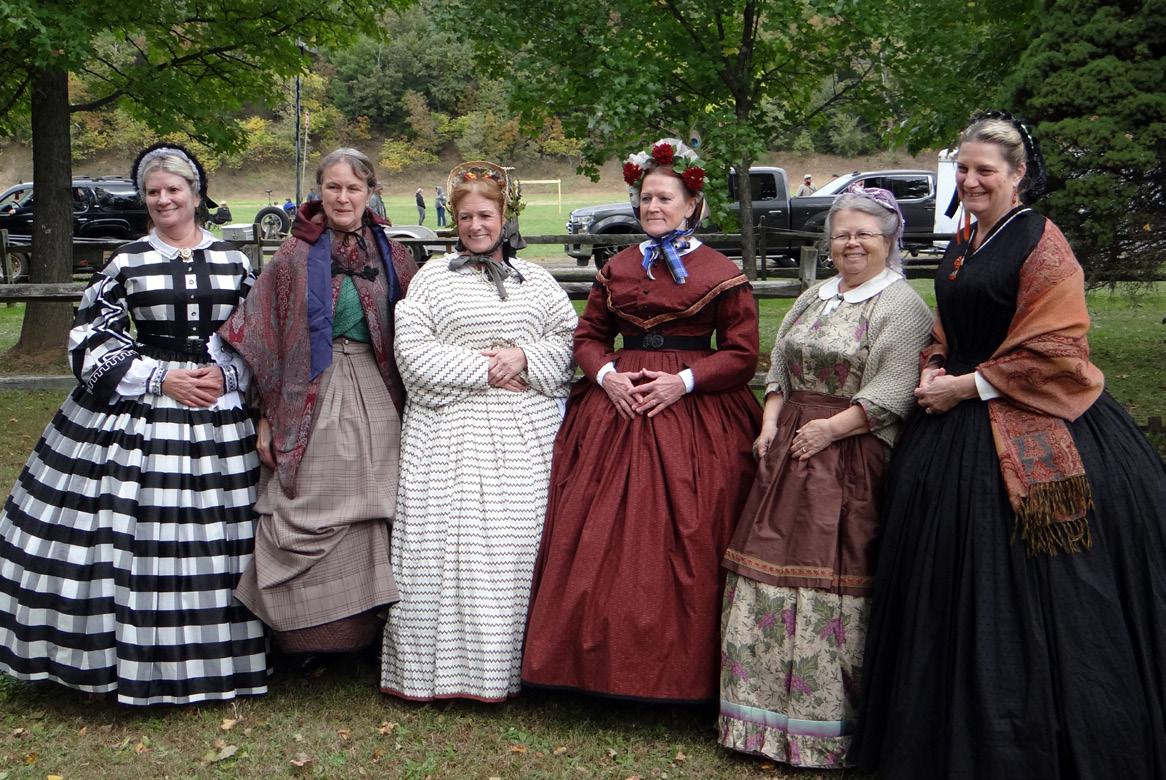
Costume Committee Members - Mary Deneau, Marylou Wells, Sharleen West, Nelda Platz (momentarily taking the place of Patty Grunwald), Peggy Edwards-Shaw, and Maryanne Greketis
Elizabeth Hines - The Susan Brisban Award for Special ProjectDrawers
46 Skirmish Line Winter 2022 Memorial Park – N-SSA Engraved Brick Memorial Request Form NAME UNIT: Year Deceased or memorial notation (ex. From loving family) Description of memorial bricks Bricks are 4” x 8” in size Laser Engraved All bricks will be of the same font and color Directions:
Please print clearly on the form.
members may
brick
bricks may be
will
Number of bricks ordered__________ @ $30.00 each Total Amount submitted $___________ Make Checks Payable to: North-South Skirmish Association Submitted by: Name: _____________________________________________ Unit Name:_______________________________________ Unit Number and Region ________ Contact number or email address___________________________________________________ Mail to: Executive Secretary Judy Stoneburner P.O. Box 218 Crozet, VA 22932-0218 ****************************************************************************** Office Use Only: Date Received: ____________________________ Check #________ Amount $___________ Deposit Date_____/_______/_____ Brick Placement________ Extra Brick: NO YES ____________________
Only deceased N-SSA
have a
placed in Memorial Park. Duplicate
ordered at the same price (Ex. One brick for Memorial Park, one brick for family, team, etc.). Please indicate this on the form. Duplicate brick(s) ordered can be picked up at the secretary’s office during each nationals. Duplicate bricks
not be shipped.

Skirmish Line Winter 2022 47 Classified ad: Interrior only $0.60 cents per word (Minimum 15 words) Thank You to Our Advertisers! Muzzle Blasts 2 Walk the Talk America 3 Larry J Flees 4 Doc’s Place 5 Schutzen Black Powder 6 Single Shot Exchange 7 Back Creek Gun Shop 58 Davide Pedersoli Back Cover Interested in advertisting in the Skirmish Line? Contact us at nssaeditor@gmail.com We publish 4 times a year and reach thousands of potential customers
Team Match Results
Class A-1 Musket
10 Place(s) Paid
# Team Event 1 Event 2 Event 3 Event 4 Event 5 Total Time
1 110TH OHIO VOLUNTEER INFANTRY CO. A 138.9 63.2 53.0 74.2 71.6 400.9
2 9TH VIRGINIA CAVALRY, CSA CO. A 134.1 82.9 96.6 120.3 72.0 505.9
3 NANSEMOND GUARDS CO. A 209.2 78.5 102.7 99.2 94.7 584.3
4 HARLAN'S LIGHT CAVALRY CO. A 207.1 85.9 80.8 104.6 146.9 625.3
5 1ST MARYLAND CAVALRY, CSA CO. A 234.4 80.4 103.0 158.9 64.2 640.9
6 2ND MARYLAND ARTILLERY, CSA CO. A 247.7 102.4 117.9 111.4 65.1 644.5
7 DISMAL SWAMP RANGERS CO. A 212.1 87.0 112.6 119.9 113.4 645.0
8 149TH PA VOLUNTEER INFANTRY CO. A 214.6 89.2 56.8 175.6 121.2 657.4
9 29TH WISC VOLUNTEER INFANTRY CO. A 281.9 76.4 96.0 103.1 142.8 700.2
10 8TH REGT VIRGINIA VOL. INF CO. A 249.8 61.6 104.4 167.9 157.4 741.1
11 3RD MARYLAND ARTILLERY, CSA CO. A 258.9 106.2 124.6 149.8 128.9 768.4
12 21ST VA INFANTRY, MD GUARD CO. A 254.3 78.8 125.4 198.7 138.5 795.7
13 UNION GUARDS CO. A 238.1 118.9 118.8 180.4 162.0 818.2
14 11TH VA CAVALRY CO. A 333.0 99.0 95.1 207.4 105.9 840.4
15 6TH KENTUCKY VOL. INF. CO. A 268.5 145.9 142.2 170.0 116.9 843.5
16 9TH REGIMENT NY CAVALRY CO. A 248.4 71.9 144.8 162.5 216.0 843.6
17 111TH OHIO VOL. INF. CO. A 328.0 110.5 116.5 182.9 109.4 847.3
18 1ST NY DRAGOONS CO. A 288.6 106.4 109.1 272.1 95.5 871.7
19 5TH VA. VOL. INF. CO. A 311.0 115.9 74.1 246.4 128.5 875.9
20 5TH VA. VOL. CAV. CO. A 339.0 116.1 124.7 170.0 140.4 890.2
21 YORK RANGERS, 32ND VA. INF. CO. A 322.0 134.4 146.1 175.9 112.1 890.5 22 NORFOLK LIGHT INFANTRY CO. A 333.0 89.0 145.0 165.6 212.5 945.1 23 12TH REGIMENT PA RESERVE VOLS. CO. A 253.7 135.2 141.9 205.4 217.2 953.4 24 CO. C, 2nd U.S. SHARPSHOOTERS CO. A 311.0 93.0 115.7 272.4 194.7 986.8 25 FORREST'S ESCORT COMPANY CO. A 339.0 112.9 122.5 209.0 224.7 1008.1 26 HAZELWOOD VOLUNTEERS CO. A 367.0 152.0 138.8 263.6 96.0 1017.4 27 TERRY'S TEXAS RANGERS CO. A 356.0 123.2 97.6 300.0 177.8 1054.6 28 1ST FLORIDA CAVALRY CO. A 339.0 130.8 177.2 322.0 125.0 1094.0 29 COCKADE RIFLES CO. A 339.0 176.1 203.2 214.8 163.3 1096.4 30 SOUTHAMPTON GREYS CO. A 356.0 128.2 254.5 225.9 132.3 1096.9 31 HANOVER GRAYS CO. A 316.0 156.4 156.1 333.0 137.2 1098.7 32 66TH NC REGT, CO C. CO. A 361.0 157.3 241.2 242.9 106.8 1109.2 33 MOSBY'S RANGERS CO. A 339.0 186.7 174.5 255.7 159.5 1115.4 34 2ND VIRGINIA VOL. INF. CO. A 350.0 159.4 152.5 299.5 198.9 1160.3 35 IREDELL BLUES CO. A 339.0 114.0 189.3 286.1 239.1 1167.5 36 4TH VIRGINIA INFANTRY CO. A 373.0 247.7 172.5 247.0 255.2 1295.4 37 GENL. W.T.SHERMAN'S BODYGUARD CO. A 384.0 258.9 210.1 271.7 202.6 1327.3 38 3RD NC CAVALRY CO. A 373.0 153.3 160.0 367.0 372.0 1425.3
48 Skirmish Line Winter 2022
Class A-2 Musket
Team Match Results
8 Place(s) Paid
# Team Event 1 Event 2 Event 3 Event 4 Event 5 Total Time
1 49TH VIRGINIA INFANTRY, CSA CO. A 316.0 139.5 142.5 197.9 215.3 1011.2
2 34TH BTTN. VIRGINIA CAVALRY CO. A 322.0 134.7 199.5 227.1 138.8 1022.1
3 R. PRESTON CHEW'S BATTERY CO. A 333.0 124.3 159.3 274.3 179.6 1070.5
4 MC NEILL'S RANGERS CO. A 345.0 161.2 103.3 356.0 121.2 1086.7
5 11TH REGIMENT, PA VOL. INF. CO. A 339.0 168.9 198.8 311.0 90.0 1107.7
6 TAMMANY REGIMENT CO. A 333.0 125.5 193.5 252.1 210.4 1114.5
7 46TH ILLINOIS VOL. INF. REGT. CO. A 367.0 143.8 168.1 282.7 189.9 1151.5
8 PALMETTO SHARPSHOOTERS CO. A 373.0 139.9 206.5 298.4 217.7 1235.5
9 RICHMOND VOL. MILITIA CO. A 361.0 164.5 277.2 356.0 104.0 1262.7
10 14TH MISS. INFANTRY REGIMENT CO. A 395.0 160.3 245.4 266.3 197.0 1264.0
11 1ST TENNESSEE VOL. INF. REGT. CO. A 345.0 222.8 210.1 227.8 271.2 1276.9
12 11TH INDIANA ZOUAVES CO. A 378.0 229.4 192.4 235.7 245.0 1280.5
13 4TH KENTUCKY CAVALRY CO. A 469.0 171.0 223.6 286.6 133.8 1284.0
14 69TH NY STATE VOLUNTEERS CO. A 429.0 211.6 211.5 271.1 169.7 1292.9
15 TUCKERS NAVAL BRIGADE CO. A 406.0 161.2 196.1 356.0 199.2 1318.5
16 1ST VALLEY RANGERS CO. A 361.0 169.1 175.2 311.0 318.0 1334.3
17 17TH VIRGINIA INFANTRY, CSA CO. A 418.0 125.8 262.3 345.0 186.5 1337.6
18 CO B 1ST PENNSYLVANIA CAVALRY CO. A 469.0 172.3 143.2 311.0 276.3 1371.8
19 73RD NY VOLUNTEER INFANTRY CO. A 395.0 176.5 143.4 322.0 336.0 1372.9
20 1ST MICH. VOLUNTEER INFANTRY CO. A 350.0 229.0 189.1 311.0 299.6 1378.7
21 13TH CONFEDERATE INF. CO. A 406.0 236.0 251.5 356.0 176.1 1425.6
22 HARRIS' LIGHT CAVALRY CO. A 406.0 199.0 225.7 412.0 185.4 1428.1
23 72ND NY VOLUNTEER INFANTRY CO. A 373.0 180.4 175.5 412.0 288.9 1429.8
24 27TH NORTH CAROLINA TROOPS CO. A 469.0 222.6 180.3 311.0 263.2 1446.1 25 CO. G, 114TH ILLINOIS INFANTRY CO. A 395.0 210.4 226.9 311.0 318.0 1461.3 26 LANCASTER FENCIBLES CO. A 469.0 180.9 225.8 311.0 285.8 1472.5 27 7TH NORTH CAROLINA VOLUNTEERS CO. A 390.0 171.0 210.6 390.0 336.0 1497.6 28 HAMPTON LEGION, CSA CO. A 390.0 252.3 292.2 322.0 244.9 1501.4 29 WHITE'S CO, 35TH VIRGINIA CAV. CO. A 361.0 177.8 322.0 333.0 318.0 1511.8 30 14TH VIRGINIA CAVALRY CO. A 418.0 260.9 260.3 322.0 252.2 1513.4 31 1ST U.S. ARTILLERY CO. A 457.0 260.1 147.2 367.0 318.0 1549.3 32 14TH TENNESSEE INFANTRY REGT. CO. A 412.0 208.9 311.0 356.0 318.0 1605.9 33 OLD DOMINION DRAGOONS CO. A 406.0 311.0 345.0 300.0 336.0 1698.0 34 DELAWARE BLUES CO. A 412.0 311.0 367.0 390.0 260.5 1740.5
Skirmish Line Winter 2022 49
Team Match Results
Class A-3 Musket
12 Place(s) Paid
# Team Event 1 Event 2 Event 3 Event 4 Event 5 Total Time
1 CHISWELL'S EXILES CO. A 367.0 147.2 131.3 213.9 184.0 1043.4
2 DURELL'S INDEPENDENT BATTERY CO. A 384.0 154.8 136.5 300.0 125.6 1100.9
3 1ST SC VOLUNTEER INFANTRY CO. A 384.0 120.8 117.6 280.3 256.0 1158.7
4 21ST MICH. VOLUNTEER INFANTRY CO. A 345.0 145.7 183.0 261.0 238.3 1173.0
5 48TH VIRGINIA INF. CO. A 367.0 143.4 156.8 311.0 288.4 1266.6
6 13TH REGIMENT NC INFANTRY CO. A 378.0 177.6 311.0 185.7 227.0 1279.3
7 FIRST ROCKBRIDGE ARTILLERY CO. A 367.0 214.0 196.0 258.2 251.0 1286.2
8 LAUREL BRIGADE, ANV. CO. A 378.0 180.5 243.3 367.0 137.1 1305.9
9 1ST RICHMOND RIFLES CO. A 378.0 250.5 181.1 333.0 212.4 1355.0
10 7TH REGT. VIRGINIA VOLUNTEERS CO. A 373.0 170.5 272.3 333.0 251.3 1400.1
11 CHESAPEAKE ARTILLERY, CSA CO. A 412.0 200.9 159.8 345.0 292.2 1409.9
12 118TH PA VOLUNTEER INFANTRY CO. A 322.0 191.0 177.3 322.0 408.0 1420.3
13 7TH MICHIGAN VOL. INF. CO. A 406.0 234.8 218.0 322.0 242.1 1422.9
14 1ST MAINE HEAVY ARTILLERY CO. A 395.0 181.3 311.0 311.0 244.3 1442.6
15 CO G 23RD NC STATE TROOPS CO. A 406.0 245.0 268.9 345.0 178.1 1443.0
16 1ST REGT. ILL. VOL. LT. ARTY. CO. A 384.0 216.0 199.6 367.0 281.9 1448.5
17 11TH N.J. VOLUNTEER INFANTRY CO. A 373.0 249.0 333.0 345.0 217.9 1517.9
18 12TH REGT. U.S. REGULAR INF. CO. A 361.0 333.0 245.8 333.0 270.5 1543.3
19 6TH ALABAMA (RACCOON ROUGHS) CO. A 469.0 224.5 322.0 367.0 183.6 1566.1
20 6TH PA CAV, RUSH'S LANCERS CO. A 469.0 210.6 184.1 378.0 336.0 1577.7
21 7TH TENNESSEE INF. REGT., CSA CO. A 429.0 268.8 211.9 356.0 318.0 1583.7
22 1ST REGT. VA. VOLS. CO. A 412.0 215.8 333.0 378.0 269.6 1608.4
23 WHEAT'S SPECIAL BTTN,LA TIGERS CO. A 406.0 262.5 322.0 356.0 265.6 1612.1 24 4TH MICH. VOL. INF. CO. A 418.0 299.0 322.0 356.0 252.0 1647.0 25 PALMETTO GUARD CO. I, 2ND SC VOL. CO. A 440.0 206.6 378.0 378.0 271.7 1674.3 26 120TH NY VOLUNTEER INFANTRY CO. A 469.0 274.5 267.4 322.0 354.0 1686.9 27 GRAHAM'S BATTERY CO. A 418.0 333.0 345.0 367.0 243.4 1706.4 28 8TH NY HEAVY ARTILLERY CO. A 440.0 283.4 247.4 401.0 336.0 1707.8 29 15TH REGT. NJ VOL. INF. CO. A 435.0 237.1 367.0 356.0 318.0 1713.1 30 15TH REGT., VA. VOL. CAV. CO. A 418.0 249.9 297.1 401.0 354.0 1720.0 31 1ST VIRGINIA CAVALRY REGT. CO. A 418.0 277.8 356.0 378.0 336.0 1765.8
50 Skirmish Line Winter 2022
32 19TH MICHIGAN INFANTRY CO. A 418.0 300.0 356.0 345.0 354.0 1773.0 33 1ST MARYLAND INFANTRY, CSA CO. A 423.0 283.7 311.0 367.0 390.0 1774.7 34 63RD NEW YORK STATE VOL. INF. CO. A 469.0 261.6 345.0 367.0 336.0 1778.6 35 BALTIMORE RIFLES, 1ST MD VOLS. CO. A 412.0 293.6 322.0 367.0 408.0 1802.6 36 5TH CONN VOLUNTEER INFANTRY CO. A 412.0 322.0 356.0 345.0 372.0 1807.0 37 7TH WV VOLUNTEER INFANTRY CO. A 406.0 296.0 311.0 378.0 426.0 1817.0 38 1ST NJ LIGHT ARTILLERY CO. A 395.0 311.0 261.8 412.0 444.0 1823.8
Team Match Results
Class A-3 Musket Continued
# Team Event 1 Event 2 Event 3 Event 4 Event 5 Total Time 39 10TH MASS. BATTERY CO. A 429.0 356.0 322.0 390.0 336.0 1833.0 40 HURON RANGERS RIFLEMEN CO. A 429.0 224.0 345.0 356.0 480.0 1834.0 41 3RD U.S. REGULAR INFANTRY CO. A 345.0 333.0 333.0 446.0 390.0 1847.0 42 ALLEGHENY CITY GUARDS CO. A 435.0 333.0 367.0 367.0 354.0 1856.0 43 BUNCOMBE RIFLES CO. A 429.0 330.6 367.0 412.0 336.0 1874.6 44 2ND MARYLAND CAVALRY CO. A 418.0 356.0 367.0 390.0 372.0 1903.0 45 MC GREGOR'S 2ND BATTERY CO. A 440.0 390.0 378.0 367.0 390.0 1965.0 46 JEFF DAVIS LEGION CO. A 418.0 378.0 378.0 446.0 372.0 1992.0 47 67TH NY VOLUNTEER INFANTRY CO. A 435.0 390.0 412.0 390.0 408.0 2035.0
Class B-1
1 8TH REGT VIRGINIA VOL. INF CO. B 300.0 101.1 131.6 244.8 99.6 877.1 2 UNION GUARDS CO. B 316.0 193.4 177.0 210.6 118.7 1015.7 3 110TH OHIO VOLUNTEER INFANTRY CO. B 345.0 164.7 155.9 215.3 149.2 1030.1 4 9TH VIRGINIA CAVALRY, CSA CO. B 322.0 114.3 150.1 291.5 153.6 1031.5 5 NANSEMOND GUARDS CO. B 361.0 167.7 163.2 102.7 282.4 1077.0 6 5TH VA. VOL. INF. CO. B 305.0 143.1 139.8 288.6 318.0 1194.5 7 2ND MARYLAND ARTILLERY, CSA CO. B 378.0 168.8 208.0 322.0 300.0 1376.8 8 1ST MARYLAND CAVALRY, CSA CO. B 406.0 242.1 212.1 378.0 239.2 1477.4
9 COCKADE RIFLES CO. B 395.0 322.0 189.5 345.0 336.0 1587.5
10 149TH PA VOLUNTEER INFANTRY CO. B 412.0 322.0 322.0 322.0 213.3 1591.3
11 DISMAL SWAMP RANGERS CO. B 423.0 333.0 254.1 390.0 247.5 1647.6
12 5TH VA. VOL. CAV. CO. B 418.0 345.0 271.2 333.0 354.0 1721.2 13 TAMMANY REGIMENT CO. B 423.0 293.8 311.0 378.0 372.0 1777.8 14 29TH WISC VOLUNTEER INFANTRY CO. B 406.0 297.3 322.0 367.0 390.0 1782.3 15 13TH CONFEDERATE INF. CO. B 435.0 297.4 378.0 412.0 354.0 1876.4 16 TERRY'S TEXAS RANGERS
Skirmish Line Winter 2022 51
Team
3
4
5
Musket 6 Place(s) Paid #
Event 1 Event 2 Event
Event
Event
Total Time
17
Class B-2 Musket 3 Place(s) Paid # Team Event 1 Event 2 Event 3 Event 4 Event 5 Total Time 1 3RD MARYLAND ARTILLERY, CSA CO. B 423.0 193.5 230.0 300.0 272.8 1419.3 2 CO B 1ST PENNSYLVANIA CAVALRY CO. B 395.0 262.0 252.3 378.0 372.0 1659.3 3 CO. C, 2nd U.S. SHARPSHOOTERS CO. B 435.0 311.0 281.0 390.0 318.0 1735.0 4 1ST TENNESSEE VOL. INF. REGT. CO. B 451.0 322.0 367.0 401.0 336.0 1877.0 5 48TH VIRGINIA INF. CO. B 395.0 322.0 401.0 435.0 336.0 1889.0 6 63RD NEW YORK STATE VOL. INF. CO. B 457.0 322.0 367.0 401.0 354.0 1901.0 7 12TH REGIMENT PA RESERVE VOLS. CO. B 435.0 345.0 401.0 401.0 372.0 1954.0 8 1ST MARYLAND INFANTRY, CSA CO. B 412.0 356.0 356.0 435.0 408.0 1967.0 9 HARRIS' LIGHT CAVALRY CO. B 412.0 333.0 412.0 435.0 462.0 2054.0 10 15TH REGT. NJ VOL. INF. CO. B 446.0 390.0 412.0 401.0 426.0
CO. B 429.0 345.0 356.0 435.0 426.0 1991.0
34TH BTTN. VIRGINIA CAVALRY CO. B 429.0 401.0 367.0 401.0 426.0 2024.0
2075.0
Team Match Results
Class C Musket
2 Place(s) Paid
# Team Event 1 Event 2 Event 3 Event 4 Event 5 Total Time
1 5TH VA. VOL. INF. CO. C 378.0 196.5 253.7 333.0 257.9 1419.1
Class A-1 Carbine
7 Place(s) Paid
# Team Event 1 Event 2 Event 3 Event 4 Event 5 Total Time
1 110TH OHIO VOLUNTEER INFANTRY CO. A 161.4 61.8 70.9 75.4 82.3 451.8
2 9TH VIRGINIA CAVALRY, CSA CO. A 159.5 83.0 59.5 126.4 44.2 472.6
3 DISMAL SWAMP RANGERS CO. A 166.7 57.0 87.8 103.2 78.5 493.2
4 8TH REGT VIRGINIA VOL. INF CO. A 166.5 65.6 74.9 96.2 109.2 512.4
5 HARLAN'S LIGHT CAVALRY CO. A 206.4 79.6 70.4 120.6 59.0 536.0
6 2ND MARYLAND ARTILLERY, CSA CO. A 207.6 83.3 64.8 66.0 117.9 539.6
7 NANSEMOND GUARDS CO. A 191.5 59.7 109.0 120.8 67.7 548.7
8 29TH WISC VOLUNTEER INFANTRY CO. A 158.3 73.6 76.7 128.3 114.0 550.9
9 149TH PA VOLUNTEER INFANTRY CO. A 141.0 103.0 137.7 95.1 120.5 597.3
10 UNION GUARDS CO. A 138.9 136.2 105.3 153.7 74.2 608.3
11 1ST MARYLAND CAVALRY, CSA CO. A 204.3 79.3 102.0 122.1 121.7 629.4
12 5TH VA. VOL. CAV. CO. A 280.9 63.1 97.2 91.1 117.1 649.4
13 9TH REGIMENT NY CAVALRY CO. A 256.5 79.7 105.1 165.5 71.7 678.5
14 111TH OHIO VOL. INF. CO. A 241.7 91.7 95.6 174.3 79.0 682.3
15 5TH VA. VOL. INF. CO. A 230.0 77.2 96.4 171.2 114.3 689.1
16 21ST VA INFANTRY, MD GUARD CO. A 245.7 116.2 121.7 217.1 75.8 776.5
17 6TH KENTUCKY VOL. INF. CO. A 294.0 88.8 131.2 165.4 112.8 792.2
18 IREDELL BLUES CO. A 275.3 92.3 119.5 146.4 175.7 809.2
19 CO. C, 2nd U.S. SHARPSHOOTERS CO. A 290.0 83.7 87.9 160.3 198.5 820.4
20 1ST MICH. VOLUNTEER INFANTRY CO. A 244.6 119.2 101.9 243.0 128.2 836.9
21 TAMMANY REGIMENT CO. A 267.6 74.3 123.2 241.4 132.2 838.7
22 YORK RANGERS, 32ND VA. INF. CO. A 212.0 86.1 142.7 212.8 191.5 845.1
23 COCKADE RIFLES CO. A 309.0 101.6 106.3 196.7 131.9 845.5 24 1ST FLORIDA CAVALRY CO. A 258.8 128.0 179.9 225.7 96.3 888.7 25 HANOVER GRAYS CO. A 218.0 79.6 130.7 249.8 259.1 937.2 26 49TH VIRGINIA INFANTRY, CSA CO. A 356.0 83.6 189.2 190.6 125.8 945.2 27 CO. G, 114TH ILLINOIS INFANTRY CO. A 309.0 152.0 122.8 228.0 138.7 950.5 28 11TH VA CAVALRY CO. A 297.3 122.6 149.6 247.8 139.6 956.9 29 12TH REGIMENT PA RESERVE VOLS. CO. A 258.4 195.0 154.3 154.5 209.2 971.4 30 MOSBY'S RANGERS CO. A 337.0 122.1 120.6 247.9 153.7 981.3 31 1ST NY DRAGOONS CO. A 356.0 128.1 105.7 215.4 201.7 1006.9 32 1ST STUART HORSE ARTY. CO. A 280.1 139.9 185.4 242.2 169.8 1017.4 33 DIV. OF MARINES, CSS VIRGINIA CO. A 403.0 167.7 61.1 337.0 143.8 1112.6 34 FORREST'S ESCORT COMPANY CO. A 264.5 104.5 127.0 300.0 360.0 1156.0 35 TERRY'S TEXAS RANGERS CO. A 440.0 178.1 177.5 248.4 197.0 1241.0 36 1ST SC VOLUNTEER INFANTRY CO. A 365.0 192.9 172.6 230.6 291.8 1252.9
52 Skirmish Line Winter 2022
w
Class A-2 Carbine
Team Match Results
6 Place(s) Paid
1 13TH CONFEDERATE INF. CO. A 244.8 96.0 125.6 288.4 124.5 879.3
2 46TH ILLINOIS VOL. INF. REGT. CO. A 283.7 123.5 126.9 251.3 118.4 903.8
3 4TH KENTUCKY CAVALRY CO. A 337.0 140.3 219.6 238.9 158.0 1093.8
4 27TH NORTH CAROLINA TROOPS CO. A 393.0 188.0 183.0 240.7 126.8 1131.5
5 R. PRESTON CHEW'S BATTERY CO. A 403.0 183.2 179.4 214.3 158.0 1137.9
6 12TH REGT. U.S. REGULAR INF. CO. A 318.0 99.0 206.9 337.0 203.0 1163.9
7 HARRIS' LIGHT CAVALRY CO. A 318.0 96.1 168.9 468.0 116.0 1167.0
8 14TH MISS. INFANTRY REGIMENT CO. A 346.0 148.2 252.3 218.7 220.2 1185.4
9 GENL. W.T.SHERMAN'S BODYGUARD CO. A 440.0 173.0 149.7 211.9 224.3 1198.9
10 NORFOLK LIGHT INFANTRY CO. A 346.0 198.1 116.2 250.4 291.5 1202.2
11 PALMETTO SHARPSHOOTERS CO. A 412.0 192.6 135.0 278.7 184.3 1202.6
12 3RD NC CAVALRY CO. A 431.0 134.0 152.3 251.7 246.7 1215.7
13 CO G 23RD NC STATE TROOPS CO. A 346.0 148.9 247.4 375.0 142.0 1259.3
14 14TH TENNESSEE INFANTRY REGT. CO. A 356.0 174.9 177.5 318.0 261.2 1287.6
15 21ST MICH. VOLUNTEER INFANTRY CO. A 393.0 236.7 185.8 300.0 172.5 1288.0
16 HAMPTON LEGION, CSA CO. A 393.0 128.2 211.2 229.0 330.0 1291.4
17 CO B 1ST PENNSYLVANIA CAVALRY CO. A 393.0 200.4 229.5 291.5 185.8 1300.2
18 1ST VALLEY RANGERS CO. A 356.0 128.5 144.5 318.0 360.0 1307.0
19 34TH BTTN. VIRGINIA CAVALRY CO. A 459.0 95.7 320.9 289.4 149.7 1314.7
20 CHESAPEAKE ARTILLERY, CSA CO. A 496.0 251.7 172.4 182.8 269.0 1371.9
21 10TH MASS. BATTERY CO. A 440.0 174.6 210.2 256.0 330.0 1410.8
22 17TH VIRGINIA INFANTRY, CSA CO. A 403.0 127.5 356.0 375.0 164.2 1425.7
23 11TH INDIANA ZOUAVES CO. A 393.0 197.3 143.3 431.0 300.0 1464.6
24 SOUTHAMPTON GREYS CO. A 440.0 178.0 191.0 356.0 330.0 1495.0
25 DELAWARE BLUES CO. A 487.0 393.0 412.0 431.0 330.0 2053.0
Skirmish Line Winter 2022 53
# Team Event 1 Event 2 Event 3 Event 4 Event 5 Total Time
Team Match Results
Class A-3 Carbine
7 Place(s) Paid
# Team Event 1 Event 2 Event 3 Event 4 Event 5 Total Time
1 FIRST ROCKBRIDGE ARTILLERY CO. A 298.0 155.0 110.1 144.4 108.3 815.8
2 1ST REGT. ILL. VOL. LT. ARTY. CO. A 365.0 122.4 158.2 179.2 217.4 1042.2
3 118TH PA VOLUNTEER INFANTRY CO. A 403.0 154.2 132.6 177.8 187.6 1055.2
4 7TH TENNESSEE INF. REGT., CSA CO. A 356.0 172.9 158.2 300.0 123.8 1110.9
5 MC GREGOR'S 2ND BATTERY CO. A 384.0 119.8 188.1 259.0 183.3 1134.2
6 DURELL'S INDEPENDENT BATTERY CO. A 375.0 136.5 236.5 216.8 226.1 1190.9
7 2ND VIRGINIA VOL. INF. CO. A 384.0 126.4 212.5 261.7 228.4 1213.0
8 11TH REGIMENT, PA VOL. INF. CO. A 384.0 126.3 199.6 356.0 176.8 1242.7
9 13TH REGIMENT NC INFANTRY CO. A 478.0 167.8 97.8 356.0 150.5 1250.1
10 PALMETTO GUARD CO. I, 2ND SC VOL. CO. A 421.0 114.6 212.7 375.0 157.9 1281.2
11 48TH VIRGINIA INF. CO. A 375.0 127.0 284.0 317.7 247.2 1350.9
12 4TH VIRGINIA INFANTRY CO. A 412.0 195.1 233.0 238.7 300.0 1378.8
13 CHISWELL'S EXILES CO. A 375.0 148.7 243.1 293.0 330.0 1389.8
14 73RD NY VOLUNTEER INFANTRY CO. A 346.0 164.2 266.6 337.0 294.9 1408.7
15 BUNCOMBE RIFLES CO. A 328.0 196.2 258.4 375.0 252.5 1410.1
16 MC NEILL'S RANGERS CO. A 412.0 142.0 243.3 431.0 197.2 1425.5
17 1ST RICHMOND RIFLES CO. A 318.0 168.2 261.3 356.0 360.0 1463.5
18 3RD MARYLAND ARTILLERY, CSA CO. A 487.0 136.9 282.3 375.0 194.1 1475.3
19 6TH ALABAMA (RACCOON ROUGHS) CO. A 421.0 178.0 256.1 318.0 330.0 1503.1
20 LAUREL BRIGADE, ANV. CO. A 328.0 226.9 264.7 356.0 330.0 1505.6 21 14TH VIRGINIA CAVALRY CO. A 403.0 153.8 231.0 431.0 300.0 1518.8
22 15TH REGT., VA. VOL. CAV. CO. A 440.0 299.7 183.3 337.0 300.0 1560.0 23 TUCKERS NAVAL BRIGADE CO. A 506.0 211.6 275.0 393.0 247.9 1633.5
24 15TH REGT. NJ VOL. INF. CO. A 459.0 271.0 263.5 318.0 390.0 1701.5 25 11TH N.J. VOLUNTEER INFANTRY CO. A 421.0 356.0 294.0 337.0 330.0 1738.0 26 19TH MICHIGAN INFANTRY CO. A 469.0 169.1 318.0 431.0 360.0 1747.1 27 1ST MAINE HEAVY ARTILLERY CO. A 459.0 356.0 220.7 356.0 360.0 1751.7
54 Skirmish Line Winter 2022
32 69TH NY STATE VOLUNTEERS CO. A
33 63RD NEW YORK STATE VOL. INF. CO. A
34 OLD DOMINION DRAGOONS CO. A
35 HURON RANGERS RIFLEMEN CO. A
36 6TH PA CAV,
CO. A
37 1ST
VOL. INF. REGT. CO. A
38 15TH
LT ARTY CO. A
28 5TH CONN VOLUNTEER INFANTRY CO. A 506.0 219.9 356.0 431.0 274.2 1787.1 29 1ST U.S. ARTILLERY CO. A 469.0 184.3 318.0 525.0 300.0 1796.3 30 3RD U.S. REGULAR INFANTRY CO. A 478.0 161.2 337.0 450.0 420.0 1846.2 31 72ND NY VOLUNTEER INFANTRY CO. A 459.0 318.0 292.1 375.0 450.0 1894.1
412.0 393.0 243.1 393.0 480.0 1921.1
515.0 337.0 337.0 375.0 450.0 2014.0
459.0 318.0 431.0 393.0 420.0 2021.0
515.0 356.0 412.0 393.0 360.0 2036.0
RUSH'S LANCERS
534.0 356.0 393.0 506.0 420.0 2209.0
TENNESSEE
525.0 393.0 450.0 468.0 480.0 2316.0
IND.BTY, OHIO
553.0 393.0 450.0 562.0 540.0 2498.0
Class B-1 Carbine
Team Match Results
4 Place(s) Paid
# Team Event 1 Event 2 Event 3 Event 4 Event 5 Total Time
1 UNION GUARDS CO. B 288.3 110.7 132.5 142.5 117.2 791.2
2 8TH REGT VIRGINIA VOL. INF CO. B 295.1 101.4 120.0 225.6 125.6 867.7
3 110TH OHIO VOLUNTEER INFANTRY CO. B 384.0 103.2 127.8 193.0 221.3 1029.3
4 NANSEMOND GUARDS CO. B 356.0 165.0 195.0 244.8 222.5 1183.3
5 149TH PA VOLUNTEER INFANTRY CO. B 346.0 170.1 203.9 318.0 250.9 1288.9
6 2ND MARYLAND ARTILLERY, CSA CO. B 346.0 171.3 118.5 393.0 330.0 1358.8
7 5TH VA. VOL. CAV. CO. B 459.0 193.0 250.7 281.0 310.4 1494.1
8 5TH VA. VOL. INF. CO. B 487.0 163.2 259.6 375.0 241.1 1525.9
9 13TH CONFEDERATE INF. CO. B 450.0 375.0 219.5 356.0 266.6 1667.1
10 TERRY'S TEXAS RANGERS CO. B 478.0 276.7 291.3 300.0 330.0 1676.0
11 COCKADE RIFLES CO. B 440.0 284.0 257.7 412.0 330.0 1723.7
12 DISMAL SWAMP RANGERS CO. B 412.0 269.3 337.0 375.0 360.0 1753.3
13 29TH WISC VOLUNTEER INFANTRY CO. B 421.0 238.5 375.0 393.0 420.0 1847.5 14 12TH REGIMENT PA RESERVE VOLS. CO. B 478.0 266.6 300.0 543.0 289.4 1877.0 Class B-2 Carbine 2
1 48TH VIRGINIA INF. CO. B 431.0 244.2 228.1 412.0 237.6 1552.9 2 TAMMANY REGIMENT CO. B 525.0 255.9 431.0 412.0 271.3 1895.2
510.0 2468.0
Skirmish Line Winter 2022 55
Place(s) Paid # Team Event 1 Event 2 Event 3 Event 4 Event 5 Total Time
Team Event 1
1
2
3
4
5
VIRGINIA VOL. INF CO. A 101.8 20.2 79.8 52.1 253.9 6 MC GREGOR'S 2ND BATTERY CO. A 137.2 31.9 43.7 44.1 256.9 7 IREDELL BLUES CO. A 81.7 16.4 124.0 50.9 273.0 8 YORK RANGERS, 32ND VA. INF. CO. A 112.8 18.2 119.0 39.0
9 2ND MARYLAND ARTILLERY, CSA CO. A 165.3 16.5 98.4 38.2 318.4 10 9TH VIRGINIA CAVALRY, CSA CO. A 197.3 22.6 63.0 45.8 328.7 11 FORREST'S ESCORT COMPANY CO. A 177.4 18.4 83.3 76.5 355.6 12 17TH VIRGINIA INFANTRY, CSA CO. A 158.6 39.5 68.8 137.3 404.2 13 1ST STUART HORSE ARTY. CO. A 171.3 18.1 119.7 104.8
14 111TH OHIO VOL. INF. CO. A 156.1 28.8 149.0 86.0 419.9
3 1ST STUART HORSE ARTY. CO. B 506.0 375.0 450.0 412.0 263.0 2006.0 4 CO. C, 2nd U.S. SHARPSHOOTERS CO. B 525.0 337.0 375.0 356.0 420.0 2013.0 5 HARRIS' LIGHT CAVALRY CO. B 553.0 468.0 450.0 487.0
Class A-1 Revolver 6 Place(s) Paid #
Event 2 Event 3 Event 4 Total Time
HARRIS' LIGHT CAVALRY CO. A 35.4 15.6 59.4 29.0 139.4
NANSEMOND GUARDS CO. A 95.0 11.2 36.7 17.5 160.4
21ST VA INFANTRY, MD GUARD CO. A 72.8 33.2 48.6 36.0 190.6
149TH PA VOLUNTEER INFANTRY CO. A 79.9 18.0 48.4 91.1 237.4
8TH REGT
289.0
413.9
Team Match Results
Class A-2 Revolver
3 Place(s) Paid
# Team Event 1 Event 2 Event 3 Event 4 Total Time 1 5TH VA. VOL. CAV. CO. A 104.5 31.4 65.5 111.0 312.4 2 3RD NC CAVALRY CO. A 82.3 12.9 163.8 70.0 329.0 3 JEFF DAVIS LEGION CO. A 177.8 45.4 84.7 39.5 347.4 4 110TH OHIO VOLUNTEER INFANTRY CO. A 136.0 20.2 111.8 89.0 357.0 5 1ST FLORIDA CAVALRY CO. A 225.6 21.3 91.3 32.2 370.4 6 29TH WISC VOLUNTEER INFANTRY CO. A 169.9 84.8 84.1 52.2 391.0 7 COCKADE RIFLES CO. A 139.3 31.0 159.0 63.9 393.2 8 DIV. OF MARINES, CSS VIRGINIA CO. A 225.0 18.6 120.8 84.3 448.7 9 BUNCOMBE RIFLES CO. A 194.8 73.2 158.0 50.9 476.9
Class A-3 Revolver
4 Place(s) Paid
# Team Event 1 Event 2 Event 3 Event 4 Total Time 1 1ST NY DRAGOONS CO. A 195.5 25.9 89.3 66.3 377.0
DURELL'S INDEPENDENT BATTERY CO. A 136.9 78.5 125.3 58.8 399.5
DISMAL SWAMP RANGERS CO. A 192.3 20.5 120.3 69.7 402.8
10TH MASS. BATTERY CO. A 186.6 34.6 138.5 110.2 469.9
12TH REGT. U.S. REGULAR INF. CO. A 190.0 69.6 96.1 161.6 517.3
OLD DOMINION DRAGOONS CO. A 196.5 66.1 134.8 131.1 528.5
HAMPTON LEGION, CSA CO. A 240.0 62.9 75.2 150.9 529.0
19TH MICHIGAN INFANTRY CO. A 179.0 34.2 171.8 145.4 530.4
5TH VA. VOL. INF. CO. A 185.9 34.0 188.0 123.9 531.8
11TH VA CAVALRY CO. A 176.3 31.3 134.4 212.0 554.0
49TH VIRGINIA INFANTRY, CSA CO. A 131.2 28.1 222.5 173.0 554.8
PALMETTO GUARD CO. I, 2ND SC VOL. CO. A 209.9 32.0 135.2 178.6 555.7
120.7 166.4 568.8
56 Skirmish Line Winter 2022
15
16
17
18
19
20
21
22
2
3
4
5
6
7
8
9
10
11
12
13 CO. C, 2nd U.S. SHARPSHOOTERS CO. A 198.5 83.2
14 CHESAPEAKE ARTILLERY, CSA CO. A 255.0 26.0 173.2 123.1 577.3
TUCKERS NAVAL BRIGADE CO. A 180.6 122.6 125.7 150.1 579.0
5TH CONN VOLUNTEER INFANTRY CO. A 205.0 25.6 161.5 202.0 594.1
48TH VIRGINIA INF. CO. B 169.0 103.5 156.7 169.5 598.7
118TH PA VOLUNTEER INFANTRY CO. A 210.0 119.2 188.9 92.5 610.6
9TH REGIMENT NY CAVALRY CO. A 186.1 126.6 157.5 176.0 646.2
6TH PA CAV, RUSH'S LANCERS CO. A 191.4 137.9 183.7 135.3 648.3
4TH KENTUCKY CAVALRY CO. A 175.9 142.5 164.3 191.9 674.6
11TH N.J. VOLUNTEER INFANTRY CO. A 185.0 168.8 213.0 149.0 715.8
Class B
Revolver
Team Match Results
4 Place(s) Paid
Team Event 1 Event 2 Event 3 Event 4 Total Time 1 9TH VIRGINIA CAVALRY, CSA CO. C 79.1 65.0 110.8 86.9 341.8
IREDELL BLUES CO. B 160.0 25.0 139.3 35.6 359.9
149TH PA VOLUNTEER INFANTRY CO. B 160.3 18.0 168.3 73.6 420.2
NANSEMOND GUARDS CO. B 195.1 18.6 107.7 110.4 431.8
49TH VIRGINIA INFANTRY, CSA CO. B 172.6 45.5 201.9 152.8 572.8
HARRIS' LIGHT CAVALRY CO. B 151.6 190.5 108.6 132.7 583.4
29TH WISC VOLUNTEER INFANTRY CO. B 204.5 65.2 153.6 181.0 604.3
2ND MARYLAND ARTILLERY, CSA CO. B 202.4 94.7 187.3 138.8 623.2
19TH MICHIGAN INFANTRY CO. B 205.3 113.4 185.5 142.9 647.1
1ST STUART HORSE ARTY. CO. B 204.6 152.5 166.6 141.2 664.9
2ND MARYLAND ARTILLERY, CSA CO. A 107.1 18.6 40.9 26.4 193.0
8TH REGT VIRGINIA VOL. INF CO. A 137.2 33.2 54.3 23.4 248.1
Skirmish Line Winter 2022 57
Class C Revolver 1 Place(s) Paid # Team Event 1 Event 2 Event 3 Event 4 Total Time 1
2
3
Class A-1 Breech-Loader 4 Place(s) Paid # Team Event 1 Event 2
4
1
2
3
4
5
6
7
8 29TH
9 1ST MARYLAND CAVALRY, CSA CO. A 185.0 54.5
10 1ST NY DRAGOONS CO. A 109.8 43.5
11 1ST VALLEY RANGERS CO. A 175.3 37.7
12 11TH VA CAVALRY CO. A 185.0 29.2 147.2
13 COCKADE RIFLES CO. A 191.0 35.2
122.7 550.9 14 TUCKERS NAVAL BRIGADE CO. A 219.0 61.6 236.0 198.0 714.6 Class A-2 Breech-Loader 2 Place(s) Paid # Team Event 1 Event 2 Event 3 Event 4 Total Time 1 TAMMANY REGIMENT CO. A 157.8 97.4 78.2 91.0 424.4 2 49TH VIRGINIA INFANTRY, CSA CO. A 225.0 46.7 113.5 70.4 455.6 3 9TH REGIMENT NY CAVALRY CO. A 138.3 105.9 175.9 79.4 499.5 4 NORFOLK LIGHT INFANTRY CO. A 176.0 40.2 202.0 114.0 532.2 5 11TH N.J. VOLUNTEER INFANTRY CO. A 241.0 83.0 119.6 120.7 564.3 6 14TH VIRGINIA CAVALRY CO. A 196.0 101.8 270.0 155.7 723.5
#
2
3
4
5
6
7
8
9
10
9TH VIRGINIA CAVALRY, CSA CO. B 150.5 28.3 144.9 140.4 464.1
NANSEMOND GUARDS CO. C 210.0 128.9 116.0 138.3 593.2
HARRIS' LIGHT CAVALRY CO. C 210.0 210.0 180.5 171.0 771.5
Event 3 Event
Total Time
110TH OHIO VOLUNTEER INFANTRY CO. A 69.9 34.9 45.3 31.5 181.6
21ST VA INFANTRY, MD GUARD CO. A 140.4 42.6 46.2 42.5 271.7
9TH VIRGINIA CAVALRY, CSA CO. A 125.6 23.9 67.4 61.8 278.7
IREDELL BLUES CO. A 153.6 26.4 66.2 42.5 288.7
HARLAN'S LIGHT CAVALRY CO. A 101.1 23.7 118.4 46.7 289.9
WISC VOLUNTEER INFANTRY CO. A 196.0 36.8 110.2 40.2 383.2
73.4 71.3 384.2
165.7 75.8 394.8
128.8 143.2 485.0
154.2 515.6
202.0
683.4
694.2
656.6
754.3
1016.0
58 Skirmish Line Winter 2022
3
5
6
7
Team Match Results Class A-3 Breech-Loader 3 Place(s) Paid # Team Event 1 Event 2 Event 3 Event 4 Total Time 1 LANCASTER FENCIBLES CO. A 275.0 132.6 191.0 84.8
2 13TH REGIMENT NC INFANTRY CO. A 270.0 93.6 281.0 49.6
12TH REGIMENT PA RESERVE VOLS. CO. A 241.0 89.3 213.0 198.0 741.3 4 CHISWELL'S EXILES CO. A 264.0 73.8 236.0 198.0 771.8
15TH REGT. NJ VOL. INF. CO. A 303.0 160.3 213.0 198.0 874.3
1ST STUART HORSE ARTY. CO. A 275.0 91.4 225.0 288.0 879.4
1ST NJ LIGHT ARTILLERY CO. A 315.0 225.0 270.0 198.0 1008.0 8 HARRIS' LIGHT CAVALRY CO. A 298.0 202.0 292.0 288.0 1080.0 Class B Breech-Loader 2 Place(s) Paid # Team Event 1 Event 2 Event 3 Event 4 Total Time 1 8TH REGT VIRGINIA VOL. INF CO. B 176.3 46.0 107.3 143.5 473.1 2 9TH VIRGINIA CAVALRY, CSA CO. B 264.0 47.1 213.0 132.5
3 2ND MARYLAND ARTILLERY, CSA CO. B 241.0 126.2 247.0 140.1
4 29TH WISC VOLUNTEER INFANTRY CO. B 315.0 177.5 292.0 198.0 982.5 5 9TH REGIMENT NY CAVALRY CO. B 303.0 191.0 270.0 252.0
Team Match Results
Class A-1 Smoothbore 5 Place(s) Paid # Team Event 1 Event 2 Event 3 Event 4 Total Time 1 110TH OHIO VOLUNTEER INFANTRY CO. A 69.1 45.3 45.4 40.4 200.2
149TH PA VOLUNTEER INFANTRY CO. A 94.3 46.3 46.0 29.0 215.6
HARLAN'S LIGHT CAVALRY CO. A 90.3 36.4 47.3 75.7 249.7
DISMAL SWAMP RANGERS CO. A 66.2 49.2 71.4 72.4 259.2
NANSEMOND GUARDS CO. A 81.1 36.8 50.6 104.5 273.0
IREDELL BLUES CO. A 80.4 67.7 78.3 61.9 288.3
21ST VA INFANTRY, MD GUARD CO. A 77.9 45.8 79.1 93.2 296.0
YORK RANGERS, 32ND VA. INF. CO. A 78.9 59.6 101.0 80.6 320.1
9TH VIRGINIA CAVALRY, CSA CO. A 82.9 44.1 94.2 102.4 323.6
UNION GUARDS CO. A 82.3 54.5 93.1 103.3 333.2
6TH KENTUCKY VOL. INF. CO. A 85.6 81.0 95.0 78.8 340.4 12 FORREST'S ESCORT COMPANY CO. A 102.9 61.8 79.1 113.3 357.1 13 DIV. OF MARINES, CSS VIRGINIA CO. A 100.1 75.1 109.3 92.1 376.6 14 2ND MARYLAND ARTILLERY, CSA CO. B 109.6 72.4 82.3 113.9 378.2 15 CO. G, 114TH ILLINOIS INFANTRY CO. A 126.5 80.6 90.2 98.5 395.8 16 1ST MARYLAND CAVALRY, CSA CO. A 117.4 62.1 141.1 91.0 411.6 17 5TH VA. VOL. INF. CO. B 96.6 97.8 165.9 60.4 420.7 18 HAZELWOOD VOLUNTEERS CO. A 113.0 68.9 105.4 143.0 430.3 19 COCKADE RIFLES CO. A 94.5 64.1 162.7 124.9 446.2 20 HANOVER GRAYS CO. A 174.8 83.1 94.4 100.8 453.1 21 1ST NY DRAGOONS CO. A 118.1 95.0 141.5 101.7 456.3 22 9TH REGIMENT NY CAVALRY CO. A 174.1 63.0 143.7 82.5 463.3 23 1ST FLORIDA CAVALRY CO. A 116.8 77.0 151.7 118.0 463.5 24 CO. C, 2nd U.S. SHARPSHOOTERS CO. A 105.5 53.0 119.4 210.0 487.9 25 8TH REGT VIRGINIA VOL. INF CO. A 129.3 48.5 202.0 115.9 495.7 26 14TH MISS. INFANTRY REGIMENT CO. A 94.6 62.7 202.0 144.9 504.2 27 111TH OHIO VOL. INF. CO. A 285.0 75.9 180.0 87.7 628.6 28 MOSBY'S RANGERS CO. A 120.0 104.3 270.0 163.2 657.5
Skirmish Line Winter 2022 59
Commanders, bring your troops to attention!
2
3
4
5
6
7
8
9
10
11
Team Match Results
Class A-2 Smoothbore 4 Place(s) Paid # Team Event 1 Event 2 Event 3 Event 4 Total Time
29TH WISC VOLUNTEER INFANTRY CO. A 129.7 46.5 88.9 133.3 398.4
12TH REGT. U.S. REGULAR INF. CO. A 112.8 102.7 76.4 131.0 422.9
11TH INDIANA ZOUAVES CO. A 139.0 71.3 120.2 96.9 427.4
3RD REGT. GA. VOL. INF. CO. A 87.1 83.8 97.0 176.2 444.1
TERRY'S TEXAS RANGERS CO. A 166.3 84.3 126.7 83.5 460.8
7TH TENNESSEE INF. REGT., CSA CO. A 127.2 97.0 141.0 122.4 487.6
1ST REGT. ILL. VOL. LT. ARTY. CO. A 195.0 66.7 132.1 102.9 496.7
KNAP'S BATTERY E, PA LT. ARTY. CO. A 157.8 102.7 129.3 111.1 500.9
MC NEILL'S RANGERS CO. A 86.1 85.6 170.9 169.2 511.8
4TH KENTUCKY CAVALRY CO. A 148.4 92.8 180.0 100.4 521.6 11 34TH BTTN. VIRGINIA CAVALRY CO. C 195.0 75.9 91.4 165.0 527.3 12 TAMMANY REGIMENT CO. A 180.0 92.9 108.5 168.8 550.2 13 1ST U.S. ARTILLERY CO. A 177.3 61.8 202.0 137.8 578.9 14 2ND VIRGINIA VOL. INF. CO. A 156.8 108.9 162.0 158.2 585.9 15 11TH VA CAVALRY CO. A 149.2 130.8 90.5 240.0 610.5 16 HARRIS' LIGHT CAVALRY CO. A 225.0 60.0 116.8 210.0 611.8 17 TUCKERS NAVAL BRIGADE CO. A 225.0 106.4 67.2 240.0 638.6 18 15TH CONN. VOLUNTEER INFANTRY CO. A 210.0 79.2 120.9 240.0 650.1 19 49TH VIRGINIA INFANTRY, CSA CO. B 270.0 106.5 110.5 167.6 654.6 20 1ST STUART HORSE ARTY. CO. A 173.8 74.6 202.0 210.0 660.4 21 14TH TENNESSEE INFANTRY REGT. CO. A 225.0 118.3 157.3 210.0 710.6 22 WYTHE RIFLES CO. A 147.6 89.5 247.0 240.0 724.1 23 1ST SC VOLUNTEER INFANTRY CO. A 225.0 72.8 225.0 270.0 792.8 24 BATTERY C, 1ST MICH. LT. ARTY. CO. A 315.0 202.0 202.0 162.3 881.3 25 14TH VIRGINIA CAVALRY CO. A 255.0 174.4 270.0 240.0 939.4
60 Skirmish Line Winter 2022
1
2
3
4
5
6
7
8
9
10
Class A-3 Smoothbore
Team Match Results
5 Place(s) Paid
# Team Event 1 Event 2 Event 3 Event 4 Total Time 1 3RD MARYLAND ARTILLERY, CSA CO. A 128.0 54.5 156.0 61.4 399.9 2 CO G 23RD NC STATE TROOPS CO. A 167.1 78.0 118.8 86.3 450.2 3 27TH NORTH CAROLINA TROOPS CO. A 115.0 82.8 169.3 92.1 459.2 4 12TH REGIMENT PA RESERVE VOLS. CO. A 154.5 56.4 202.0 48.1 461.0 5 FIRST ROCKBRIDGE ARTILLERY CO. A 195.0 49.5 202.0 87.9 534.4 6 5TH CONN VOLUNTEER INFANTRY CO. A 180.0 84.0 209.9 140.4 614.3 7 21ST MICH. VOLUNTEER INFANTRY CO. A 195.0 82.6 202.0 147.3 626.9 8 WHITE'S CO, 35TH VIRGINIA CAV. CO. A 210.0 92.1 139.9 210.0 652.0 9 6TH PA CAV, RUSH'S LANCERS CO. A 210.0 93.9 148.1 210.0 662.0 10 13TH CONFEDERATE INF. CO. A 225.0 80.5 162.8 210.0 678.3 11 120TH NY VOLUNTEER INFANTRY CO. A 172.2 146.6 180.0 180.0 678.8 12 R. PRESTON CHEW'S BATTERY CO. A 210.0 93.1 156.5 240.0 699.6 13 PALMETTO SHARPSHOOTERS CO. A 195.0 225.0 202.0 122.0 744.0 14 46TH ILLINOIS VOL. INF. REGT. CO. A 195.0 202.0 176.5 170.9 744.4 15 DURELL'S INDEPENDENT BATTERY CO. A 240.0 132.6 177.4 210.0 760.0 16 19TH MICHIGAN INFANTRY CO. A 225.0 95.1 247.0 210.0 777.1 17 LAUREL BRIGADE, ANV. CO. A 225.0 131.2 270.0 152.8 779.0 18 6TH ALABAMA (RACCOON ROUGHS) CO. A 180.0 77.6 292.0 240.0 789.6 19 HAMPTON LEGION, CSA CO. A 152.6 143.5 247.0 270.0 813.1 20 72ND NY VOLUNTEER INFANTRY CO. A 225.0 123.4 225.0 240.0 813.4 21 4TH VIRGINIA INFANTRY CO. A 161.0 109.1 247.0 300.0 817.1 22 MC GREGOR'S 2ND BATTERY CO. A 240.0 99.2 247.0 240.0 826.2 23 63RD NEW YORK STATE VOL. INF. CO. A 255.0 225.0 179.7 170.2 829.9 24 1ST MARYLAND INFANTRY, CSA CO. B 225.0 130.3 151.5 330.0 836.8 25 1ST RICHMOND RIFLES CO. A 240.0 177.9 180.0 240.0 837.9 26 1ST REGT ENGINEER TROOPS, ANV CO. A 225.0 131.7 225.0 270.0 851.7 27 1ST VALLEY RANGERS CO. A 285.0 111.5 202.0 270.0 868.5 28 HARDAWAY'S ALABAMA BTTY CO. A 210.0 88.3 337.0 240.0 875.3 29 PALMETTO GUARD CO. I, 2ND SC VOL. CO. A 255.0 163.8 247.0 210.0 875.8 30 3RD NC CAVALRY CO. A 210.0 247.0 292.0 151.0 900.0 31 19TH INDIANA INFANTRY CO. A 270.0 119.9 247.0 270.0 906.9 32 7TH REGT. VIRGINIA VOLUNTEERS CO. A 255.0 130.9 225.0 300.0 910.9 33 11TH N.J. VOLUNTEER INFANTRY CO. A 240.0 180.0 225.0 270.0 915.0 34 1ST REGT. VA. VOLS. CO. A 300.0 202.0 225.0 240.0 967.0 35 11TH REGIMENT, PA VOL. INF. CO. A 255.0 172.8 315.0 270.0 1012.8
Skirmish Line Winter 2022 61
Team Match Results
Class B Smoothbore
4 Place(s) Paid # Team Event 1 Event 2 Event 3 Event 4 Total Time 1 HARLAN'S LIGHT CAVALRY CO. B 70.8 51.5 98.5 90.4 311.2
2ND MARYLAND ARTILLERY, CSA CO. A 143.2 51.3 95.0 92.3 381.8
9TH VIRGINIA CAVALRY, CSA CO. B 107.6 45.7 117.6 112.0 382.9 4 110TH OHIO VOLUNTEER INFANTRY CO. B 116.6 69.5 89.0 109.3 384.4
NANSEMOND GUARDS CO. B 102.8 54.7 132.9 96.0 386.4
DISMAL SWAMP RANGERS CO. B 134.8 83.2 104.0 92.0 414.0
5TH VA. VOL. INF. CO. A 153.2 65.0 95.1 116.1 429.4
8TH REGT VIRGINIA VOL. INF CO. B 102.1 76.9 180.0 136.9 495.9 9 6TH KENTUCKY VOL. INF. CO. B 122.4 67.1 74.0 270.0 533.5 10 149TH PA VOLUNTEER INFANTRY CO. B 115.4 83.5 136.9 210.0 545.8 11 29TH WISC VOLUNTEER INFANTRY CO. B 210.0 64.5 120.3 210.0 604.8 12 1ST MARYLAND CAVALRY, CSA CO. B 136.4 85.0 202.0 210.0 633.4 13 9TH REGIMENT NY CAVALRY CO. B 225.0 75.2 153.9 210.0 664.1 14 5TH CONN VOLUNTEER INFANTRY CO. B 210.0 155.7 202.0 103.8 671.5 15 UNION GUARDS CO. B 148.8 97.4 165.1 270.0 681.3 16 TERRY'S TEXAS RANGERS CO. B 270.0 94.8 225.0 120.0 709.8 17 1ST FLORIDA CAVALRY CO. B 168.2 160.0 247.0 165.4 740.6 18 HARRIS' LIGHT CAVALRY CO. B 195.0 69.6 180.0 300.0 744.6 19 49TH VIRGINIA INFANTRY, CSA CO. A 149.5 154.5 202.0 240.0 746.0 20 34TH BTTN. VIRGINIA CAVALRY CO. A 225.0 97.4 202.0 240.0 764.4 21 CO. C, 2nd U.S. SHARPSHOOTERS CO. B 210.0 125.4 202.0 270.0 807.4 22 4TH VIRGINIA INFANTRY CO. B 154.6 180.0 225.0 300.0 859.6 23 1ST REGT. ILL. VOL. LT. ARTY. CO. B 285.0 150.0 270.0 160.1 865.1 24 13TH CONFEDERATE INF. CO. C 225.0 180.0 202.0 270.0 877.0 25 COCKADE RIFLES CO. B 300.0 148.2 247.0 210.0 905.2 26 1ST STUART HORSE ARTY. CO. B 300.0 202.0 247.0 210.0 959.0 27 12TH REGT. U.S. REGULAR INF. CO. B 285.0 134.4 315.0 240.0 974.4 28 14TH MISS. INFANTRY REGIMENT CO. B 240.0 153.3 292.0 300.0 985.3 29 3RD MARYLAND ARTILLERY, CSA CO. B 270.0 225.0 225.0 270.0 990.0 30 TAMMANY REGIMENT CO. B 240.0 289.4 247.0 270.0 1046.4
62 Skirmish Line Winter 2022
2
3
5
6
7
8
Team Match Results
1 Place(s) Paid # Team Event 1 Event 2 Event 3 Event 4 Total Time 1 NANSEMOND GUARDS CO. C 143.9 93.7 131.5 47.0 416.1 2 110TH OHIO VOLUNTEER INFANTRY CO. C 151.3 62.0 126.4 152.9 492.6 3 8TH REGT VIRGINIA VOL. INF CO. C 210.0 92.8 118.6 138.2 559.6 4 UNION GUARDS CO. C 195.0 101.2 202.0 240.0 738.2 5 5TH VA. VOL. INF. CO. C 285.0 98.2 151.1 270.0 804.3 6 CO. C, 2nd U.S. SHARPSHOOTERS CO. C 210.0 165.4 140.3 300.0 815.7 7 6TH KENTUCKY VOL. INF. CO. C 195.0 149.5 225.0 300.0 869.5 8 13TH CONFEDERATE INF. CO. B 225.0 202.0 292.0 210.0 929.0
Class C Smoothbore
Breech-Loader
Single
Shot
4
Place(s)
Paid # Team Event 1 Event 2 Event 3 Event 4 Total Time 1 110TH OHIO VOLUNTEER INFANTRY CO. A 45.0 57.6 33.7 67.2 203.5 2 110TH OHIO VOLUNTEER INFANTRY CO. B 34.5 129.1 35.2 70.6 269.4 3 1ST MARYLAND CAVALRY, CSA CO. A 68.4 108.3 43.2 53.1 273.0 4 149TH PA VOLUNTEER INFANTRY CO. A 38.4 96.0 48.3 96.9 279.6 5 2ND MARYLAND ARTILLERY, CSA CO. A 87.6 105.8 23.1 66.7 283.2 6 149TH PA VOLUNTEER INFANTRY CO. B 73.7 154.3 48.6 91.0 367.6 7 8TH REGT VIRGINIA VOL. INF CO. B 41.6 153.1 75.3 97.7 367.7 8 29TH WISC VOLUNTEER INFANTRY CO. A 53.9 141.2 72.5 113.3 380.9 9 21ST VA INFANTRY, MD GUARD CO. A 102.4 202.0 40.2 97.8 442.4 10 YORK RANGERS, 32ND VA. INF. CO. A 94.1 148.1 91.5 156.9 490.6 11 8TH REGT VIRGINIA VOL. INF CO. A 237.0 134.4 51.2 76.4 499.0 12 111TH OHIO VOL. INF. CO. A 252.0 174.8 72.7 85.1 584.6 13 CO. C, 2nd U.S. SHARPSHOOTERS CO. A 115.8 202.0 101.7 170.6 590.1 14 29TH WISC VOLUNTEER INFANTRY CO. B 252.0 202.0 157.0 154.4 765.4
Skirmish Line Winter 2022 63
15
16
17
Spencer 1 Place(s) Paid # Team Event 1 Event 2 Event 3 Event 4 Total Time 1 46TH ILLINOIS VOL. INF. REGT. CO. A 371.0 150.6 315.0
2 1ST REGT. ILL. VOL. LT. ARTY. CO. A 360.0 163.5 315.0
3 1ST
4 11TH
1ST FLORIDA CAVALRY CO. A 324.0 202.0 126.1 117.7 769.8
DELAWARE BLUES CO. A 396.0 428.0 270.0 315.0 1409.0
10TH MASS. BATTERY CO. A 540.0 428.0 270.0 360.0 1598.0
180.0 1016.6
180.0 1018.5
MARYLAND CAVALRY, CSA CO. A 394.0 292.0 405.0 216.0 1307.0
REGIMENT, PA VOL. INF. CO. A 484.0 270.0 405.0 504.0 1663.0
Civil War Drumming
Tom Law, 3rd Alabama Volunteer Infantry The following is from the Winter issue Skirmish line of 1999
Historical Background
The fife and drum music you may hear at a Civil War Skirmishes may well be the same music heard by the Union and Confederate soldiers during the war itself. The origin of this peculiar kind of music has been lost in time, but it’s hundreds of years old, and may go all the way back to the 1200’s and the Crusades. The Swiss like to lay claim that they started it since they can document that they played it in the 1500s, but it is the Turks who were first to mass their colors and play martial music on the battlefield as they fought the invading Christians. The Swiss very likely spread fife and drum music throughout Europe with their mercenary armies. Later, in the Colonial, period, the English, and the French brought it to this continent. Fife and drum were a standard during the Revolutionary War and the Civil War. It was used not only by the military, but also for dancing and even church music. After the Civil War, it went into decline as brass horns replaced the fife, and the marching tempo increased. By World War 1, the fife and drum music were rarely heard in the military. But it was being preserved in near obscurity by a group of die-hards who called themselves the “National Association of Rudimental Drummers.” In the 1950s it experienced a vigorous revitalization, and today it is very popular in the New England and Mid-Atlantic states with some interest in the Midwest and California. It is referred to as “the music of the ancients.”
Civil War Drumming
In addition to the officers and men who comprised and Infantry company during the Civil War, there were also support personnel, teamsters, cooks, and one fifer and one drummer. It was the musician’s job to call the routines of everyday camp life, to keep the tempo on the march, to signal over the din of battle, and to perform for the inevitable funeral duty. It is the very high frequency (pitch) of the fife, and the low range of the drum that makes it possible for these instruments to be heard on the battlefield when voice commands are lost in the confusion.
“Music Boys” of 12 to 16 years of age were recruited and taught to play both instruments. The routine was called the “Camp Duty”, and had a special call for practically everything, from the time to get up in the morning, when to eat, call for the NCOs, announcing of the General to when to go to bed at night. Incidental playing was not allowed since it could be mistaken for a signal. Fifers and drummers, therefore, had to practice out of earshot, and silently for the fife and on the knee for the drummers. An accomplished music boy could play a hundred or more pieces by memory- quite a feat by any standard. The youngest known music boy was nine years old, and the oldest was 72!
Learning the Rudiments
Learning the drum was handed down from teacher to student by rote for centuries because there was no formal way of writing it until about 1812. Even today it Is better to be taught than to learn by reading, because the written note may be interpreted differently. “Note” is the wrong word since there is no scale. The “note” symbol is used, but always on the same line, no ups and downs. You read the rudiments,
time, and dynamics. Many contemporary drummers like to trace their teacher-like linage back in time to lend a reverence to the “Ancient” style.
Field Music
When companies formed into regiments, the fifers and drummers were massed together into a Regimental Band. This was “field music” and is not the same as that of a brass band. There were many brass bands at the time, but they were mostly ceremonial, and they did not accompany the troops in movement as the field music did. The inclusion of big brass drums in field music as we see it today, for example, is a mistake in interpretation. Bass drums were rare in field music if no other reason than mobility.
Fifers and drummers were required to play continuously during a march, so they devised many ways to keep from being repetitious. There is nothing more boring than a constant rat-a-tat-tat, for the drummers as well as the troops. Lot of different of difficulty were played. Sergeants would lead by playing a part solo, then the others would play the repeats while he rested. Fancy stick beats could break the monotony. A good drummer can spin and throw his sticks and strike the drumhead right on the beat.
Drum Construction and Tempo
Civil War drums were typically 16 or 17 inches in diameter and 12 inches deep. They were worn slung around the neck, the body, or shell. Were made either of a single piece of wood or of laminations, bent round and overlapped, held together with tacks. The better grades of drums had large tacks made into fancy design in addition to those that held them together. The shells were also frequently painted with regimental names and emblems. The eagle was a popular design in the North. Some original imported drum shells, which were all metal, still survive today.
Civil war type drums are referred to as rope drums, snare drums and field drums. Their heads are tensioned with ropes rather than the modern-day threaded metal rods. The heads were made of animal hides, any type available, but calf and sheep skin were preferred, the thinner the better. The head that’s played on is the “batter” head. It is sometimes cushioned on the underside with a cloth strip to take out the resonance called a “ring.” The bottom head is the “snare” head. It gets the name from the rawhide or gut snares that are stretched across it to produce a distinctive sound.
Wide rope-tensioned skin heads are hard to play on since they are slow to respond, and when the weather is damp, they get loose –making them even more difficult to play on. The slow response of drumheads may be one reason for the slow march tempo of the 18th and 19th centuries. During the Revolutionary War the march tempo was 80 to 90 beats per minute. In the Civil War it had increased to 90 to 110, and a modern-day drum and bugle corps play at 120 beats per minute.
In a departure from strict authenticity, today we use drums that are 16 or so inches deep, slung around the shoulder rather than the neck, and have heads made of a plastic that resembles real skin. All of this
64 Skirmish Line Winter 2022
makes them easier to play on and march with but is somewhat disparaging to purists.
Playing Civil War Style
Unlike the popular mental pictures of the “animal” rock drummer beating his drums with abandon, Civil War drumming is “rudimental” and is as regimented as keyboard playing. Duty calls must always sound the same; one drummer must always be able to play with another; and drums must accompany the fifes. Beatings range the spectrum from the common Civil War style slow “open” rudiments, through the faster concert drumming, to the very fast “crushed” snare drum used in bagpipe bands. There are 26 essential rudiments composed of single strokes, double strokes, and combination tap and accent strokes. Each rudiment has a name that describes either its method of playing, such as a five or seven stroke roll, the sound the rudiments make, like a “paradiddle” or a “ratamacue”, or a name like “lesson 25” simply because there is no other way to describe it.
Rudiments are learned from the slowest mechanics of the stroke to playing it as fast as possible. Practicing a rudiment is called “breaking it down”, and is done by playing it very slowly, gradually speeding it up as fast as you can play, holding to that speed until you tire, then gradually returning it to a slower speed. Slow to fast is called “open to closed.” When practicing, rudiments are played “hand to hand,” which means that each hand must do the same thing with the same speed and power, even though the left hand holds the stick differently from the right. To use an analogy, that’s like writing with your dominant hand, then switching hands and writing with the same speed and character as before. Rudimental drumming is also analogous to language. The rudimental “words” make sentences, sentences make up paragraphs, and all together they form a story, or tune. In theory, any rudimental drummer can play in unison with any other, even if they have never played together. But, in fact, there are regional variations in accents, just as there are differences in speech of Yanks and Rebels. Nevertheless, with a little practice, you can pull it together and get through a tune tolerably well. If Daniel Emmett were to come back to life and visit a contemporary Civil War Event, this Union musician would be pleased to hear his most popular composition played on a fife and drum pretty much like he wrote it more than 130 (156 now – Editor) ago. The name of the tune is “Dixie”.
American Rifleman TV visits the 146th Nationals
 Bruce W. Miller, N-SSA Public Information Officer
This National welcomed a crew from the NRA’s television program “American Rifleman TV” seen on The Outdoor Channel. Evan Brune, Executive Editor, American Rifleman Publications, conducted interviews with N-SSA experts regarding specific firearms: Chris DeFrancisci on revolvers; Mike Santarelli on carbines; Phil Spaugy on smoothbore muskets and Kevin Oyarzo on mortars. The NRA crew also covered the action of the many matches held over the weekend. Brune was also treated to the thrill of firing both a bronze Coehorn mortar and a James Rifle cannon, both courtesy of Tim Scanlan and the 1st Maryland Cavalry. The final edits are expected to create several feature segments for the programs that will air with the new season starting in February of next year.

Skirmish Line Winter 2022 65
Public Information Officer Bruce Miller expands on the history, organization and skirmishing in general for Evan Brune and cameraman Jake Stocke.
Skirmish Adjutant and national revolver range officer Chris DeFrancisci, demonstrates for the camera the working of Civil War revolvers; in this case the Model 1860 Colt Army Revolver.
1 10626 EBERSOLE, M 88-00X 12910 KUSMIERZ, S 90-01X 2 9059 MARK, T 87-00X 13865 SHAW, E 86-01X 3 2685 SOURS, D 87-00X 8910 ASHLEY, J 84-01X
82-02X
66 Skirmish Line Winter 2022 Individual Results 50 Yard Musket 10 Places Paid # Expert Sharpshooter
Marksman Striker
50 Yard Musket 9 Places Paid # Expert Sharpshooter 1
2
3
3475 SPAUGY, P 87-00X 4 4634 BOWLING, G 90-01X 6593 BALLA, S 87-00X 5 12502 ROGERS, J 90-00X 11221 JONES, D 87-00X 6 4354 HUGHES, M 90-00X 10825 KNIPSCHER, W 85-01X 7 4688 SMITH, J 89-01X 1682 WOOD, R 85-00X 8 8464 SLAUGHTER, R 89-01X 3470 CHAPMAN, K 85-00X 9 4894 TROST, R 89-00X 5711 CROSBY, L 85-00X # Marksman Striker 1 9575 PLAKIS, III, J 89-02X 10329 FJELD, D 81-00X 2 8291 LINDSTROM, A 85-02X 4878 D'ALLESANDRO, R 80-00X 3 5898 SHAW, R 85-02X 13884 OPALECKY, W 80-00X 4 1095 ROBERTSON, A 85-01X 8204 FIEBIG, J 76-01X 5 11106 SHAFFER, S 85-00X 2028 HUGHES, D 75-00X 6 9185 MARK, J 85-00X 5218 OERGEL, F 75-00X 7 10626 EBERSOLE, M 85-00X 13686 WHITE, P 74-00X 8 2029 HUGHES, P 84-01X 7579 POPE, D 74-00X 9 1371 CAMPBELL, G 84-00X 8619 CONWAY, J 74-00X
1 3590 SCHNEEMAN, E 97-05X 13655 SCANLAN, C 90-02X 2 6350 SNYDER, K 93-04X 10547 REED, D 89-00X 3 5779 ARNETTE, M 93-02X 12511 CHAPMAN, A 89-00X 4 4688 SMITH, J 93-00X 3470 CHAPMAN, K 88-02X 5 9506 REA, W 91-00X 8482 ANDERSON, E 88-00X 6 11929 ROUCH, M 90-02X 10572 THOMPSON, E 88-00X 7 11692 BUMFORD, A 90-00X 6450 KING, A 88-00X 8 4894 TROST, R 89-02X 4109 BREITNER, G 88-00X 9 6637 LINTON, M 89-02X 12413 EBERSOLE, W 87-01X 10 6629 ZDON, JR., W 89-02X 2488 BROCKMILLER, S 87-00X #
4 1371 CAMPBELL, G 87-00X 7373 MC LEOD, H 83-03X 5 2078 BURGESS, JR., J 86-00X 12705 PETERSON, J 83-01X 6 8231 WARREN, G 85-02X 10961 COCKERHAM, J 83-01X 7 11547 BEALE, C 85-02X 12304 WAWRZYNIAK, S
8 9575 PLAKIS, III, J 85-01X 13884 OPALECKY, W 81-00X 9 11106 SHAFFER, S 85-00X 11943 JANKOWSKI, E 80-01X 10 9274 CAMPBELL, W 85-00X 7352 WATKINS, J 80-00X
11131 O'BRYANT, K 94-02X 13621 NEWMAN, JR., J 91-01X
6629 ZDON, JR., W 91-00X 5494 DAVENPORT, E 87-02X
6350 SNYDER, K 91-00X
Skirmish Line Winter 2022 67 Individual Results Musket Aggregate 6 Places Paid # Expert Sharpshooter 1 6350 SNYDER, K 184-04X 13655 SCANLAN, C 174-02X 2 4688 SMITH, J 182-01X 3470 CHAPMAN, K 173-02X 3 11131 O'BRYANT, K 180-02X 3475 SPAUGY, P 172-00X 4 6629 ZDON, JR., W 180-02X 6593 BALLA, S 172-00X 5 12502 ROGERS, J 179-01X 10572 THOMPSON, E 172-00X 6 4894 TROST, R 178-02X 12413 EBERSOLE, W 171-02X # Marksman Striker 1 9575 PLAKIS, III, J 174-03X 13884 OPALECKY, W 161-00X 2 10626 EBERSOLE, M 173-00X 10329 FJELD, D 150-00X 3 1371 CAMPBELL, G 171-00X 12304 WAWRZYNIAK, S 149-02X 4 11106 SHAFFER, S 170-00X 13686 WHITE, P 149-00X 5 9185 MARK, J 168-00X 3489 MC
M 149-00X 6 9059 MARK, T 167-00X 8204 FIEBIG, J 147-01X Musket Aggregate 6 Places Paid # Expert Sharpshooter 1 9289 SNOOK, D 93-01X 8768 KINNEL, E 89-01X 2 11692 BUMFORD, A 92-01X 10547 REED, D 89-00X 3 3590 SCHNEEMAN, E 90-01X 10414 BROCKMILLER, G 88-00X 4 10496 HARRIS, S 90-00X 4466 SCHELL, G 86-01X 5 11131 O'BRYANT, K 90-00X 8578 HINES, T 86-00X 6 8885 LICHLITER, J 89-01X 9506 REA, W 85-01X 7 2495 WAITS, B 89-01X 8904 FLEES, L 85-01X 8 11048 LYTTON, T 89-00X 9777 SITZMAN, K 85-00X 9 10752 BENNETT, M 87-01X 9372 CHRISTIANSEN, D 85-00X # Marksman Striker 1 11106 SHAFFER, S 89-02X 7066 SHEPPARD, K 85-01X 2 6528 SNYDER, J 88-00X 13351 KARLSON, L 85-01X 3 1876 BAUM, J 85-01X 8910 ASHLEY, J 84-02X 4 13655 SCANLAN, C 85-00X 5664 SPENCE, M 84-01X 5 10358 SHAW, M 85-00X 5821 BARBER, J 82-00X 6 9770 JONES, T 84-02X 6302 COX, J 80-01X 7 5109 BLY, J 83-01X 12705 PETERSON, J 79-00X 8 12511 CHAPMAN, A 83-01X 10961 COCKERHAM, J 78-00X 9 11949 JEZIOR, S 82-01X 13770 CROSBY, S 78-00X
DANIEL,
68 Skirmish Line Winter 2022 Individual Results 100 Yard Carbine 8 Places Paid # Expert Sharpshooter 1 6350
2 11131
3 7403
4 6629
5 11692
6 6450
7 5779
8 12466
# Marksman Striker 1 4272 EARLY,
2 9666
3 13655
4 8173
5 8708
7128
E
6 1824 SPENCE, JR., K 82-00X 12703
M
7 10358 SHAW, M 82-00X 13884
W
8 6515 LOHMEYER, III, J 81-00X 8204
J
Carbine Aggregate 5 Places Paid # Expert Sharpshooter 1 11692 BUMFORD, A 181-02X 10547 REED, D 178-01X 2 11131 O'BRYANT, K 180-02X 8904 FLEES, L 174-01X 3 8885 LICHLITER, J 177-01X 9863 WETZEL, J 172-02X 4 10496 HARRIS, S 177-00X 10414 BROCKMILLER, G 172-00X 5 6629 ZDON, JR., W 176-02X 8768 KINNEL, E 169-01X # Marksman Striker 1 13655 SCANLAN, C 173-01X 13351 KARLSON, L 153-01X 2 10358 SHAW, M 167-00X 12703 ROHDE, M 152-00X 3 9666 COX, J 166-01X 7369 ELLIOTT, G 147-00X 4 11106 SHAFFER, S 163-02X 5821 BARBER, J 146-01X 5 6515 LOHMEYER, III, J 163-01X 7100 HALE, B 146-00X
SNYDER, K 91-00X 7483 ROHDE, G 91-00X
O'BRYANT, K 90-02X 9863 WETZEL, J 90-01X
REA, T 90-02X 10547 REED, D 89-01X
ZDON, JR., W 89-02X 8904 FLEES, L 89-00X
BUMFORD, A 89-01X 9473 OSTNER, B 86-01X
KING, A 89-00X 233 MILES, E 86-00X
ARNETTE, M 88-02X 9895 CHABALOWSKI, R 84-00X
HOWARD, D 88-00X 10414 BROCKMILLER, G 84-00X
JR., G 91-01X 7369 ELLIOTT, G 85-00X
COX, J 89-00X 12267 BOWSER, K 82-01X
SCANLAN, C 88-01X 1560 WHIPPLE, M 79-00X
BETHKE, R 84-01X 12903 TODD, J 77-00X
MCDONALD, G 82-01X
BURTIS,
76-01X
ROHDE,
75-00X
OPALECKY,
74-00X
FIEBIG,
73-00X
Skirmish Line Winter 2022 69 Individual Results 25-Yard Revolver 4 Places Paid # Expert Sharpshooter 1 2495 WAITS, B 97-03X 9289 SNOOK, D 94-04X 2 3590 SCHNEEMAN, E 94-02X 2078 BURGESS, JR., J 93-01X 3 3489 MC DANIEL, M 94-01X 12466 HOWARD, D 93-00X 4 12321 HORNE, N 93-01X 13620 BEST, IV, A 92-01X # Marksman Striker 1 233 MILES, E 89-01X 5509 LINTON, H 79-01X 2 4947 MATUSZEK, J 89-00X 12619 KRUGER, C 77-00X 3 4354 HUGHES, M 86-01X 11106 SHAFFER, S 72-00X 4 5969 ROHRBACH, B 85-00X 11902 WETZEL, E 70-01X 50-Yard Revolver 3 Places Paid # Expert Sharpshooter 1 3590 SCHNEEMAN, E 86-01X 6629 ZDON, JR., W 80-02X 2 11287 WENZEL, T 86-00X 12466 HOWARD, D 80-01X 3 10547 REED, D 84-01X 9289 SNOOK, D 79-00X # Marksman Striker 1 6506 BATLLE, T 80-00X 2603 BEST, W 64-00X 2 9666 COX, J 69-00X 8731 BAUWENS, A 49-00X 3 13674 ANDREASON, K 60-00X 12619 KRUGER, C 49-00X Revolver Aggragate 3 Places Paid # Expert Sharpshooter 1 3590 SCHNEEMAN, E 180-03X 9289 SNOOK, D 173-04X 2 3489 MC DANIEL, M 177-01X 12466 HOWARD, D 173-01X 3 10531 SVENSSON, S 172-03X 6629 ZDON, JR., W 167-03X # Marksman Striker 1 6506 BATLLE, T 164-00X 12619 KRUGER, C 126-00X 2 9666 COX, J 151-00X 5509 LINTON, H 120-02X 3 233 MILES, E 148-01X 11106 SHAFFER, S 119-00X 12.5-Yard Single-Shot Pistol 1 701 FRITZ, E 96-04X 25-Yard Single-Shot Pistol 1 10531 SVENSSON, S 89-01X Single-Shot Pistol Aggregate 1 10531 SVENSSON, S 181-02X
70 Skirmish Line Winter 2022 Individual Results 50-Yard Breech-Loader 3 Places Paid # Expert Sharpshooter 1 7791 ROUCH, M 93-00X 12466 HOWARD, D 93-01X 2 11692 BUMFORD, A 92-01X 6506 BATLLE, T 92-00X 3 4634 BOWLING, G 92-00X 7483 ROHDE, G 89-00X # Marksman Striker 1 5282 SCANLAN, T 91-03X 6528 SNYDER, J 87-00X 2 11046 ROGERS, III, J 87-01X 7194 SHAFFER, JR., R 84-03X 3 6546 DUTY, W 86-00X 10696 COUMES, J 84-01X 100-Yard Breech-Loader 2 Places Paid # Expert Sharpshooter 1 3590 SCHNEEMAN, E 95-04X 6506 BATLLE, T 90-01X 2 4466 SCHELL, G 92-00X 11929 ROUCH, M 88-01X # Marksman Striker 1 12661 TAYLOR, N 89-02X 13620 BEST, IV, A 86-01X 2 4947 MATUSZEK, J 89-00X 2603 BEST, W 83-00X Breech-Loader Aggregate 2 Places Paid # Expert Sharpshooter 1 3590 SCHNEEMAN, E 183-04X 6506 BATLLE, T 182-01X 2 13172 RINDLER, J 180-01X 11929 ROUCH, M 176-01X # Marksman Striker 1 5282 SCANLAN, T 174-03X 7194 SHAFFER, JR., R 164-03X 2 11046 ROGERS, III, J 168-01X 2603 BEST, W 159-01X 50-Yard SS BR/C2 3 places paid 1 11106 SHAFFER, S 91-02X 2 10621 WENCHEL, III, J 89-01X 3 11221 JONES, D 88-02X 100-Yard SS BR/C2 3 places paid 1 6629 ZDON, JR., W 91-01X 2 11692 BUMFORD, A 91-01X 3 8904 FLEES, L 89-01X SS BR/C2 Aggregate 3 places paid 1 11106 SHAFFER, S 180-03X 2 11692 BUMFORD, A 179-01X 3 6629 ZDON, JR., W 177-01X
Skirmish Line Winter 2022 71 Individual Results 25-Yard Smoothbore 4 Places Paid # Expert Sharpshooter 1 3390 KEPPLER, A 96-04X 2357 HARPER, J 92-01X 2 6685 HESS, T 96-03X 11046 ROGERS, III, J 91-02X 3 4634 BOWLING, G 96-03X 12601 PAYNE, J 91-02X 4 10496 HARRIS, S 95-04X 11066 RZEPKOWSKI, III, W 91-01X # Marksman Striker 1 7483 ROHDE, G 93-01X 3580 HOLMES, D 89-01X 2 6546 DUTY, W 93-01X 13655 SCANLAN, C 88-02X 3 4790 GIPE, N 90-02X 9575 PLAKIS, III, J 88-00X 4 10518 BITTNER, T 90-01X 9666 COX, J 88-00X 50-Yard Smoothbore 4 Places Paid # Expert Sharpshooter 1 9506 REA, W 95-02X 6785 FAUBION, C 91-01X 2 11692 BUMFORD, A 93-00X 4272 EARLY, JR., G 88-01X 3 6685 HESS, T 92-03X 11585 WESTERBECK, R 88-00X 4 6350 SNYDER, K 92-01X 10825 KNIPSCHER, W 87-01X # Marksman Striker 1 10358 SHAW, M 92-02X 9575 PLAKIS, III, J 87-00X 2 10882 EYE, D 89-00X 10187 WETZEL, R 85-00X 3 13621 NEWMAN, JR., J 87-01X 9666 COX, J 83-00X 4 6546 DUTY, W 86-00X 13294 KISSEL, J 82-00X Smoothbore Aggregate 3 Places Paid # Expert Sharpshooter 1 6685 HESS, T 188-06X 11046 ROGERS, III, J 178-02X 2 11692 BUMFORD, A 188-01X 12601 PAYNE, J 177-02X 3 9506 REA, W 186-04X 11585 WESTERBECK, R 177-00X # Marksman Striker 1 6546 DUTY, W 179-01X 9575 PLAKIS, III, J 175-00X 2 4790 GIPE, N 175-02X 9666 COX, J 171-00X 3 10358 SHAW, M 174-03X 13655 SCANLAN, C 168-02X
Individual Results
Musket-Carbine
Aggregate Results 12 place(s) paid 1 11131 O'BRYANT, K 360-04X 2 11692 BUMFORD, A 359-03X
6350 SNYDER, K 357-05X
6629 ZDON, JR., W 356-04X
5779 ARNETTE, M 350-04X
10547 REED, D 348-01X
12502 ROGERS, J 348-01X
2495 WAITS, B 347-03X 9 4688 SMITH, J 347-02X 10 8885 LICHLITER, J 347-02X 11 9863 WETZEL, J 346-03X 12 10496 HARRIS, S 345-00X
Five-Gun Aggregate Results
6629 ZDON, JR., W 523-07X
3590 SCHNEEMAN, E 521-10X
2495 WAITS, B 517-06X
4 place(s) paid
50-Yard Aggregate 7 place(s) paid 1 3590 SCHNEEMAN, E 273-07X 2 10547 REED, D 262-01X 3 6629 ZDON, JR., W 256-04X 4 5779 ARNETTE, M 255-02X 5 11692 BUMFORD, A 255-01X 6 4634 BOWLING, G 252-02X 7 12502 ROGERS, J 251-01X Grand Aggregate Results 7 place(s) paid 1 11692 BUMFORD, A 524-05X
1 11692 BUMFORD, A 888-07X 2 6629 ZDON, JR., W 873-10X 3 12502 ROGERS, J 867-07X 4 4634 BOWLING, G 858-07X
12502 ROGERS, J 517-03X
9289 SNOOK, D 515-06X
10547 REED, D 514-02X
Senior Skirmisher Results 2 place(s) paid
Seven-Gun Aggregate Results 1 place(s) paid 1 11692 BUMFORD, A 1240-11X Young Skirmisher Results 2 place(s) paid 1 14034 OSTNER, S 150-00X
1 5779 ARNETTE, M 177-02X 2 4354 HUGHES, M 177-01X
72 Skirmish Line Winter 2022
3
4
5
6
7
8
2
3
4
5
6
7
2 13784 ROBEY, T 112-00X
Skirmish Line Winter 2022 73 NORTH-SOUTH SKIRMISH ASSOCIATION 50-Year Membership Award Form Date _____________________ To qualify for the 50-Year Membership Award, the individual must have been a member in good standing of the N-SSA for a cumulative total of 50 years. The individual is required to sign this form as acknowledgement of his 50-years membership in the N-SSA. This form will not be processed without the member’s verification signature. *Please Print* Name ___________________________________________________ Comp # ________ Street Address ________________________________City ___________________ State _____ Zip ______-_____ Current Unit Name ___________________________________________ Seniority # _______ Region ______ Email Address: _______________________________________@_____________________________ Telephone number: (________) _________-___________ Age _____ Signature QUALIFICATIONS: Total years in the N-SSA: ______ Unit membership history: Seniority #______Unit name: ________________________________ Dates From: ___________ To: __________ Seniority #______Unit name: ________________________________ Dates From: ___________ To: __________ Seniority #______Unit name: ________________________________ Dates From: ___________ To: __________ Seniority #______Unit name: ________________________________ Dates From: ___________ To: __________ Seniority #______Unit name: ________________________________ Dates From: ___________ To: __________ (If more space is needed please continue on reverse side) RETURN COMPLETED FORM TO: Email: nancyc@stny.rr.com Mailing address: Nancy Crockett, Awards Committee Chair 918 West Lockhart Street, Sayre, PA 18840-1011 Revised: February16, 2017
Is it Black Powder?
By Chris De Francisci
At Fort Shenandoah we know that our original and reproduction Civil War-era firearms are required to use black powder. But how do we know it’s really black powder we are using? After all, most powders are black in color. Despite the color of gunpowder, there are some clear identifying characteristics that differentiate modern smokeless powder from black powder. Substituting a modern smokeless powder in place of black powder can be very dangerous.
Burn rates between black powder and modern smokeless powders are significantly different. Whereas black powder is a true explosive, modern smokeless powders are actually propellants and generate significantly more pressure than black powder. Hence, they are dangerous to put into a black powder only firearm even in small quantities. A firearm designated only for black powder loaded with smokeless powder may rupture the barrel or, in a worse case, explode, resulting in significant harm to the shooter and anyone nearby. Here’s a hypothetical scenario illustrating a dangerous assumption. We are loading for musket competition. A friend gives us a can of powder and says it’s black powder. We dump out some, it’s black, so, assuming it’s black powder, we load it in our musket. Not knowing the difference between black powder and smokeless powder, we may have loaded smokeless powder instead. As an example, the powder weight for a .45 ACP cartridge may be 4.5 grains of smokeless powder. Our musket uses the standard 45 to 50 grain loads of black powder. This is 10 times the load for that modern .45 ACP smokeless cartridge. So, without realizing that you have just loaded 45 or 50 grains of smokeless powder in your musket, you have created a recipe for disaster.
Older (and newer) black powder arms cannot withstand the pressure of modern smokeless powder. By pulling the trigger, you will set off a bomb! See the picture to the left.
Here are some examples of modern smokeless powder. Note that in ALL cases, the powder is uniform, either flakes or extruded cylinders. Black powder is granular and not uniform. Modern smokeless powders Note the uniformity of all granules. Black powder. Note the granular composition and non-uniformity of the individual granules.

Always make sure you are using black powder in a firearm designated as black powder only or in original or reproduction Civil War-era firearms.

74 Skirmish Line Winter 2022
How a Maniac was Born
By Melissa Humphries
Guess what happened to a fellow I’ve been married to for 36 years now. I must blame my older brother for a fascinating hobby my husband accidentally got involved with 10 years ago. My older brother called him back in 2013 and said “I have this ol’ black powder gun that I want to give you” ……I’m not going to use it anymore.” The rifle my brother offered him is a Tradition’s Woodsman Hawken 50 caliber Percussion Rifle that was FREE of charge. That was it! I’ve barely seen my husband since that date. Mark has practically given up all other hobbies he once pursued for this new hobby!
In 2016, our teen-age daughter came home from high school and asked my husband Mark if he would help with a video project for her high school video editing class. He helped her with the project, and she received an “A” for her efforts. Hmmm, Mark started thinking, if she can do that, why can’t I do that for a You Tube channel focusing on black powder shooting related videos.
The Black Powder Maniac Shooter You Tube Channel was born in 2016. Mark wanted a You Tube Channel to be an entertaining channel for viewers. He didn’t want any boring videos for viewers to watch. He certainly has held up to that promise! Mark focuses on fun entertaining You Tube videos dealing with a wide variety of topics related to black powder. Mark even boasts on the channel” Stick around to watch some of the craziest, wackiest fun black powder shooting videos on the net.”
The Black Powder Maniac Shooter tackles the use of smoothbores, flintlock rifles, flintlock pistols and shares tips, tricks, “How To” videos all along the way to make your shooting experience better. Mark spends a lot of time introducing new shooters to the black powder hobby through fun You Tube playlists such as the female only playlist “ FLINTLOCK FEMALE FUN videos, 1780’s trekking videos, shooting with different black powder clubs from Texas, Missouri, Tennessee, Ohio, Kentucky and Pennsylvania. Mark is crazy enough to host an annual (usually in freezing cold weather ) New Year’s Day FREE shoot and potluck at the National Muzzle loading Rifle Association’s grounds in Friendship, Indiana.

Twice a year, Mark travels to the National Muzzle Loading Rifle Association’s National Shoots in June and September and of course those video cameras go with him. He posts several shooting videos from those National Shoots every year. ( I sometimes wonder if he loves those cameras more than he does me..!! )
Since hearing about it 3 years ago, Mark’s biggest item on his bucket list is to attend a N-SSA shoot in Virginia. He wants to take all 3 cameras with a full charge of batteries on them! I’m pretty sure he will hand me one of those cameras and put me to work! That’s fine with me due to the fact I really enjoy helping him out using those cameras in previous shooting events. When he does attend the N-SSA, be sure to stop him and say Hi”. He LOVES talking about this fascinating hobby to anyone that will listen. Check out Mark’s YouTube Channel sometime. I’m sure you’ll enjoy it too. – Editors note, Mark will be becoming a regular contributor to our magazine but I wanted to introduce him to you all first.
Skirmish Line Winter 2022 75
The Ultimate Marksman is here
By Your Favorite Editor
In case you didn’t know a couple of skirmishers got to fly out to Montana and kick some butt! Melinda Shaw and yours truly were recently featured on the History Channel’s newest competition show Mountain Men: Ultimate Marksmen. Spoilers, I have the ultimate bragging rights over Melinda as I won our episode and hold the title Ultimate Marksmen and with it 10 grand (It’s nice being the editor sometimes and I can write what I want). Melinda and I were able to share our love of muzzleloading to the big screen and kick some serious tail. If you haven’t watched it yet, well put down the dang magazine and do so!
Commanders Corner
Greetings Members of the N-SSA, Skirmishers and Friends, As we prepare for the Winter break I pause and reflect of the events that have transpired over this past year. 2022 was a year of great loss for the N-SSA and myself- We lost Past Commander John Sharrett, my very good friend Bruce Cobb, past commander Charlie Smithgall and I lost my father (Miss you Grandaddy – Editor). The losses are reflected in our memories and our actions to honor and celebrate their lives and their impact on ourselves and this sport. For myself, all these men had significant impacts on who I am and how I conduct myself. I am grateful for their interaction in my life and hope that my involvement in their lives also brought some peace, support, smiles, and comfort. Our organization has weathered a pandemic, loss of key participants and modification in the way in which we interact and enjoy this sport. We now use virtual meetings to conduct business, try and stay a safe distance when in large gatherings but most of all we persevere to continue to promote and enjoy this sport that we all love. There has been a concerted effort to continue to promote and interact with the public at key events to get the N-SSA message and theme out to the public. For those of you who have worked to support those efforts we owe each of you a huge thank you! Without continued public exposure our sport will die on the vine. The key to our future success is fresh new members, bringing new ideas and enthusiasm to this sport. Male or Female- young or old go out and recruit a new member and guide them to know and love this sport of history, heritage, and competition.
As you prepare for the next season and do all the things, we perform to have our gear ready. Take a few minutes to reflect on those in your circle who support you, give them the thanks they deserve and reach out to them if they are not in your inner circle to let them know you realize what they have done to support you. The N-SSA is a sport that thrives on family involvement. Recognize that fact and encourage others to do so.
Lastly I would be remiss if I did not mention a proud moment for myself, two of our Skirmishers were selected to participate in a televised challenge of shooting skills- Melinda Shaw and Eddie Davenport (your Skirmish Line Editor, and my son) . I cannot tell you how proud I was to watch them both compete and prove that in the N-SSA we are “Real” Skirmishers and have the skills to compete in a nationally televised shooting challenge. When you see them both on the Skirmish Line give them your attention and thanks- they represented our sport well! Oh and by the way – Eddie is the “Ultimate Mountain Man Marksman”!! Well done! See you at the fort!
Mike Davenport #5494 Dismal Swamp Rangers Tidewater Region
Hey Commanders, every issue I will gladly print a letter or statement in this seciton for you. So if you have something you want to say to the organization reach out. Remember this is your magazine as well. - Editor
76 Skirmish Line Winter 2022
JOIN THE N-SSA ADVANCE GUARD
PRESERVE
SKIRMISHING
FOR THE NEXT GENERATION!
Members of the N-SSA Advance Guard will create a $1,000,000.00 endowment fund designated to ensuring the association’s future existence.
This permanently restricted endowment fund will provide a sustainable, long-term source of income that will help safeguard the financial viability of the North-South Skirmish Association.
Members of the N-SSA Advance Guard will be issued a distinctive pin, authorized for wear on their uniform. Likewise, they will also receive a serialized certificate suitable for framing. For posterity, their name will be inscribed on the Advance Guard Plaque which will be prominently displayed in the N-SSA Museum.
The Advance Guard endowment is a simple and direct way of leaving a lasting legacy to the N-SSA.
Our 501(c)3 status makes ALL of your contributions tax deductible!
The North-South Skirmish Association is a unique historic organization devoted to the watershed era of our young Nation’s history. Preserving the heritage and sport of skirmishing is vitally important in commemorating the brave men and women who were part of the War Between the States, a struggle which forever changed America.
Help ensure that YOUR association will be around for many more years to come.
The first 100 donors will be formally designated as the endowment’s elite “Founders Group” . Do your part and JOIN the Advance Guard TODAY!
Join as yourself, or honor someone special by making donations in their name.
For more information, please contact: Chris De Francisci - (540) 840-2708 Chris@washingtonbluerifles.com or; Wayne Jordan Wvjordan@aol.com
Yes!
I want to join the N-SSA Advance Guard.
I pledge to become an Advance Guard member and donate according to the following options
I understand the principal will remain in the endowment and will only be used to generate interest to sustain the N-SSA.
Choose one of the following: One-time donation of $2000.00
Or a Conditional Endowment via 24 monthly payments of $84.00 40 monthly payments of $50.00
Name: Address: City: State: ZIP: Phone: E-mail: N-SSA #: Team #: Signature:
Make all donations payable to: N-SSA Endowment Fund
Mail this slip & your donation(s) to: N-SSA Endowment Fund c/o
Wayne Jordan
8606 Eagle Glen Terrace Fairfax Station, VA 22039
Skirmish Line Winter 2022 77
Team Match Results
Mortar Match Results
# Team Shot 1 Shot 2 Shot 3 Shot 4 Shot 5 Total
1 1ST MARYLAND CAVALRY (8 INCH) #1 3ft-1in 3ft-5in 8ft-3in 7ft-0in 8ft-2in 29ft-11in
2 1ST REGT ILL VOL LT ARTY #1 1ft-1in 4ft-2.5in 5ft-9in 7ft-5.5in 15ft-9.25in 34ft-3.25in
3 12TH REGT US REGULAR INF #1 6ft-4.5in 6ft-4.5in 6ft-9in 6ft-7.5in 9ft-0.5in 35ft-2in
4 3RD U.S. (8 INCH) (SMITHGALL) #1 1ft-0in 4ft-4in 7ft-7in 7ft-9in 16ft-11in 37ft-7in
5 SOUTHAMPTON GREYS #1 0ft-5.5in 2ft-2.25in 3ft-5.75in 14ft-10in 16ft-11in 37ft-10.5in
6 NORFOLK LIGHT INF #1 4ft-9in 6ft-4in 7ft-0in 10ft-2in 10ft-11in 39ft-2in
7 3RD MARYLAND ARTY #1 2ft-2.5in 2ft-5.5in 10ft-11in 11ft-2in 14ft-3.5in 41ft-0.5in
8 MANLY'S BATTERY #1 4ft-1.75in 4ft-4.25in 5ft-4in 12ft-2in 15ft-2.5in 41ft-2.5in
9 30TH VA SHARPSHOOTER BTTN #1 3ft-5in 9ft-6.5in 11ft-9in 11ft-7in 13ft-1in 49ft-4.5in
10 3RD MARYLAND ARTY #2 3ft-1.5in 9ft-4in 11ft-6in 12ft-7in 14ft-6in 51ft-0.5in
11 1ST MARYLAND CAVALRY #2 8ft-1in 8ft-10in 9ft-6in 14ft-11in 12ft-5.5in 53ft-9.5in
12 11TH N.J. VOL INF #1 4ft-7in 7ft-3in 8ft-1in 11ft-8.5in 22ft-7in 54ft-2.5in
13 15TH IND BTTY OHIO LT ARTY #1 5ft-7in 9ft-6in 11ft-10in 12ft-3in 15ft-7in 54ft-9in
14 5TH VIRGINIA VOL INFANTRY #1 6ft-0in 8ft-4in 9ft-4in 15ft-6in 16ft-1in 55ft-3in
15 1ST NEW JERSEY ARTY #1 8ft-10in 8ft-1in 11ft-9in 12ft-0in 15ft-9in 56ft-5in
16 9TH REGIMENT NY CAV #1 0ft-11in 3ft-11in 10ft-11in 13ft-1in 28ft-7in 57ft-5in
17 15TH NJ VOL INF #1 4ft-10in 8ft-10in 12ft-5in 16ft-8in 18ft-9.75in 61ft-6.75in
18 12TH REGT PA RES VOLS #1 0ft-10in 6ft-5.5in 12ft-10in 20ft-4in 24ft-1in 64ft-6.5in
19 WHITE'S CO 35TH VA CAV #1 2ft-9in 15ft-8in 16ft-4in 16ft-6in 17ft-2in 68ft-5in
20 ROWAN ARTILLERY #1 6ft-6in 10ft-5in 15ft-3in 27ft-4in 16ft-6in 76ft-0in
21 15TH NJ VOL INF #2 3ft-2.5in 12ft-11in 13ft-5.5in 14ft-5in 32ft-5.5in 76ft-5.5in
22 69TH NEW YORK ST VOLS #1 12ft-6in 13ft-2in 14ft-3in 16ft-8in 20ft-2in 76ft-9in
23 7TH TENN INF REGT CSA #1 4ft-0in 8ft-7in 17ft-3.5in 23ft-2.5in 24ft-4.5in 77ft-5.5in
24 1ST VALLEY RANGERS #1 8ft-2in 15ft-9in 17ft-5in 20ft-9in 22ft-4in 84ft-5in
25 MCNEILL'S RANGERS #1 9ft-3in 11ft-7.5in 18ft-0in 18ft-0in 31ft-1in 87ft-11.5in
26 2ND MARYLAND ARTY CSA #1 5ft-7.5in 8ft-5in 22ft-9in 24ft-10in 27ft-8in 89ft-3.5in
27 12TH REGT PA RES VOLS #2 7ft-1.5in 22ft-6.5in 23ft-10in 16ft-6.5in 21ft-0in 91ft-0.5in
28 WHEAT'S SPEC BTTY LA TIGERS #1 10ft-1in 10ft-4in 15ft-8in 29ft-4in 29ft-9in 95ft-2in
29 34TH BTTN VA CAVALRY #1 8ft-7in 10ft-0in 22ft-7in 29ft-5in 30ft-8in 101ft-3in
30 7TH MICHIGAN VOL INF #1 8ft-3in 14ft-5in 16ft-10in 23ft-9in 39ft-9in 103ft-0in
31 7TH REGT VIRGINIA VOLS #1 12ft-8in 20ft-2in 20ft-5in 23ft-6in 36ft-4in 113ft-1in
32 8TH REGT VA VOLS #1 5ft-5in 18ft-3in 18ft-11in 31ft-11in 40ft-0in 114ft-6in
33 3RD U.S. (SOSKO) #1 9ft-2in 11ft-1in 20ft-0in 29ft-6in 46ft-4in 116ft-1in
34 YORK RANGERS 32ND VA INF #1 7ft-5in 14ft-5in 28ft-4in 27ft-10in 45ft-4in 123ft-4in
35 1ST NEW JERSEY ARTY #2 7ft-8in 14ft-3in 22ft-0in 36ft-0in 50ft-9in 130ft-8in
36 WASHINGTON GRAYS #1 5ft-6in 22ft-1in 33ft-5in 46ft-8in 53ft-10in 161ft-6in
37 ALLEGHENY CITY GUARDS #1 25ft-10in 26ft-2in 36ft-0in 43ft-6in 44ft-4in 175ft-10in
38 R. PRESTON CHEW'S BTTY #1 41ft-4in 55ft-5in 54ft-4in 60ft-3in 65ft-3in 276ft-7in
78 Skirmish Line Winter 2022
3RD MARYLAND ARTY (ROGER) 32-2V
1ST MARYLAND CAV (MIKE) 48-4V
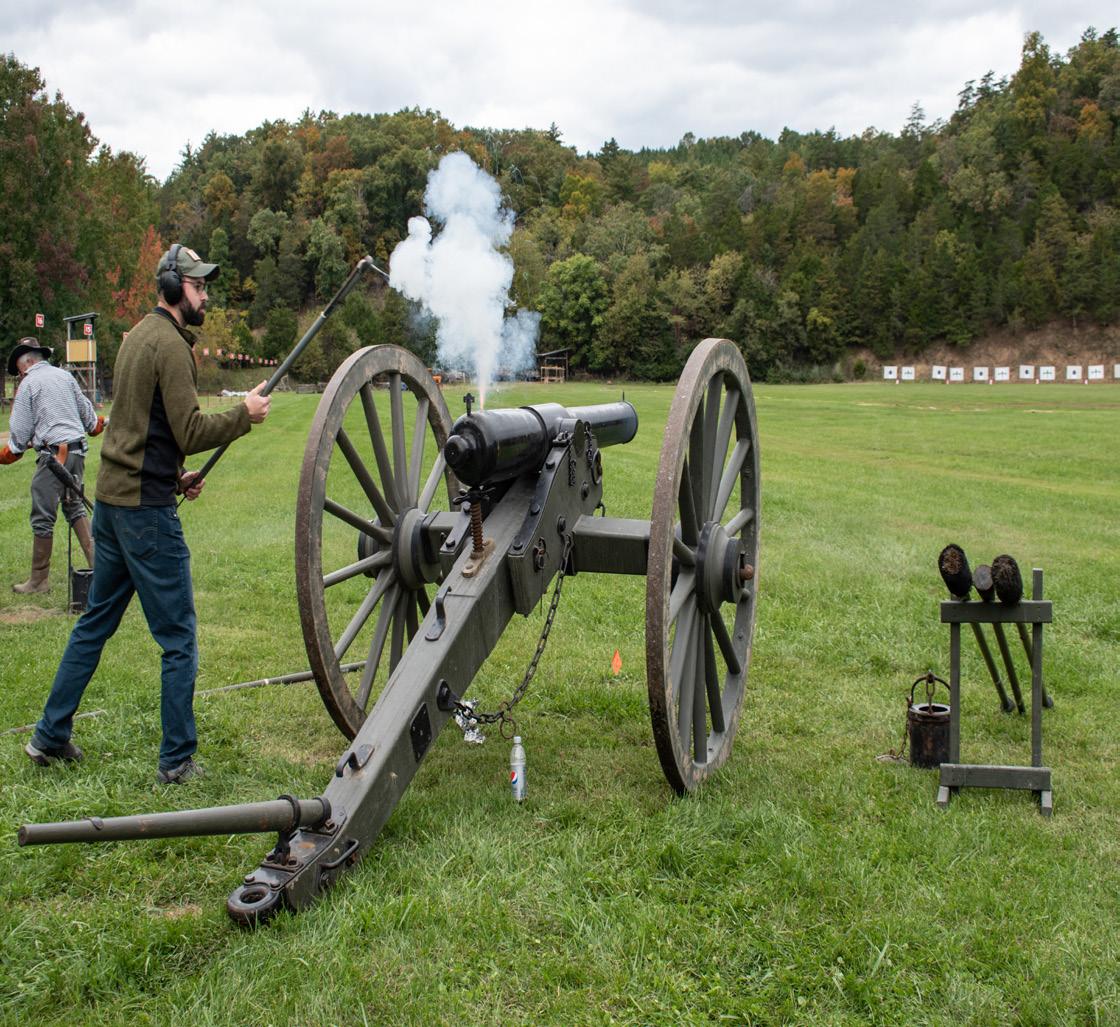
COCKADE RIFLES 32-3V
PALMETTO SHARPSHOOTERS 29-1V
Skirmish Line Winter 2022 79
2
3
4
5
Rifled Results:
Score 1
2
3
4
5
6
7
8
9
10
11
12
13
14
15
17
27 14TH CONN VOL INF 23-2V 28 DIXIE ARTILLERY 23-1V 29 1ST NEW JERSEY LIGHT ARTY 14-0V
Match Results
#
1
2
3
4
5
6
#
2
3
4
5
American Rifleman Publications Executive Editor
Tim
James Rifle
to
Howitzer Results: # Gun/Crew Score 1 ROWAN ARTILLERY 49-1V
3RD MARYLAND ARTY 46-2V
HARDAWAY'S ALA BTTY 46-2V
DIXIE ARTILLERY 42-0V
8TH REGT VA VOL INF 27-1V Artillery,
# Gun/Crew
1ST VALLEY RANGERS 50-5V
CO G 23RD N.C. ST TRP 50-4V
MCNEILL'S RANGERS 50-4V
3RD U.S. (GALLOWAY) 50-3V
12TH REGT US REGULAR INF 50-3V
1ST MARYLAND CAV (TIM) 49-4V
2ND MARYLAND ARTY 49-4V
1ST VIRGINIA VOLS. 49-3V
3RD US (WELLS) 49-1V
BUNCOMBE RIFLES 47-0V
ROWAN ARTILLERY 46-2V
SOUTHAMPTON GREYS NO. 1 45-2V
27TH NORTH CAROLINA STATE TROOPS 45-0V
5TH VA VOL INF 44-2V
SOUTHAMPTON GRAYS NO. 2 44-2V 16 10TH MASS BTTY GUN NO. 1 44-1V
1ST MAINE HVY ARTY 42-1V 18 1ST MARYLAND CAV NO. 2 (KADY) 41-1V 19 8TH REGT VA VOL INF 39-1V 20 MANLY'S BTTY NO. 1 39-0V 21 7TH REGT VA VOL INF 38-1V 22 3RD US (REYNOLDS) 38-1V 23 46TH ILLINOIS VOL INF 34-0V 24 UNION GUARDS 33-0V 25 1ST VIRGINIA CAVALRY NO. 2 32-1V 26 1ST TENNESSEE VOL INF 26-0V
Team
Smoothbore Results:
Gun/Crew Score
3RD U.S. (KURDT) 48-2V
HARDAWAY'S ALA BTTY NO. 1 48-1V
1ST VARGINIA CAVALRY NO.1 36-1V
3RD MARYLAND ARTY NO. 2 30-0V
3RD MARYLAND ARTY NO. 1 16-0V Rifled Howitzer Results:
Gun/Crew Score 1 3RD US (POTTS) 50-2V
15TH IND BTTY OHIO LT ARTY NO. 1 25-0V
Evan Brune fires
Scanlan’s
During the artillery matches. Evan was also treated
firing the 1 st Maryland Cavalry’s mortar.
SHOOTING A CAVALRYMAN’S SMITH CARBINE
By Brannen Sanders, late of the Palmetto Guards Edited by A.M. Beck, Palmetto Guards
Note: This story was related to me by the late Brannen Sanders (Southern Sr. on the N-SSA BB). I have edited lightly for readability
When I first joined the Oglethorpe Light Infantry from Savannah, the only team match shot in North-South Skirmish Association competition was the “Musket Team Matches.” Other arms, such as cavalry carbines and percussion revolvers, were shot in “Individual” competitions using regular “Bullseye” targets, but the emphasis was always on the Musket Team Matches. Just before the Spring Nationals of 1971 [if I recall correctly] a notice appeared in the N-SSA’s “Skirmish Line” magazine that a new competition would be introduced - the Carbine Team Matches. The major difference between the Musket Team Matches and the new Carbine Team Matches was that each team would consist of 5 shooters. The arms used. Any Civil War military issue breechloading or muzzleloading carbine that was fired using a percussion cap. So, while this rule excluded Spencer Carbines, other Civil War carbines such as percussion Sharps, Maynard’s, Burnsides, Stars and Smiths were legal to use. The problem was, I didn’t have a carbine! I was getting ready to leave for the Spring Nationals in a couple of days, so I called Col. Lindsey P. Henderson and asked him if I could borrow a carbine.
Colonel Henderson had grown up in Savannah in the Thirties. Because of his interest in the Civil War, he had started purchasing Civil War artifacts during the Depression. In Savannah, relics from the ‘Late Unpleasantness’ were still plentiful and cheap. Consequently, Colonel Henderson had a fabulous collection of not only Civil War arms but also uniforms, swords, knives and just about everything else. He even established a museum in downtown Savannah to display some of the more interesting items in his collection.
Colonel Henderson was a veteran of not only World War II, but Korea and Vietnam. He had retired from the army after a long and distinguished career. Colonel Henderson was also one of the founding members of the Oglethorpe Light Infantry, but he couldn’t be with the team at the next Spring National.
I lived about 70 miles West of Savannah in a small South Georgia town. The night before I was to leave for Virginia, I gave Colonel Henderson a call and asked him if he had a Civil War carbine, I could borrow to shoot in the new Carbine Team Matches. He asked me when I would be coming through Savannah. I told him that I would be in town around 10:00 A.M. the next day. He invited me to stop by his Factor’s Walk Military Museum on the waterfront in downtown Savannah, where I could pick up the carbine, he would loan me.
I left home early the next morning and by 10:00 I was parking my car in front of Colonel Henderson’s Museum. When I walked into the building, Colonel Henderson wasn’t there. I told the elderly gentlemen that was the museum’s docent that I was there to pick up the carbine that Colonel Henderson was loaning me.
The old man led me over to a glass case by a far wall in the room. That case had not only a Smith Carbine displayed in it but also a sword, pair of Cavalry gauntlets, a pair of brass spurs, a Confederate officers coat and a framed tintype of a young Confederate officer in uniform. The docent told me that the carbine in the case was the one that Colonel Henderson was loaning me! With that he pulled a screwdriver out of his pocket and handed it to me. I had to open the case to get to the carbine! In five minutes, I was in the case and pulled the Smith out. Then I closed the case. I handed the screwdriver back to the docent on my way out of the museum and thanked him for his help.
When I got to my car, I took a closer look at the carbine and saw it was in very good condition. I wrapped it in an old G.I. blanket and placed it on the back seat, got into my car and headed for Fort Shenandoah - a 14-hour drive away.
I arrived at Fort Shenandoah in the middle of the night, found the OLI campsite and got my tent pitched in the dying beam of my flashlight. Exhausted after the long drive, I crawled into my tent, rolled up into some blankets and was soon sound asleep. As the firing range was across a creek and only about 200 yards from the OLI campground, I was awakened early the next morning by the sound of gunfire as the Individual Matches got started.
The Carbine Team Match was scheduled for the early afternoon, and I didn’t have any Smith ammunition! I needed to get up to Sutler’s Row and purchase some Smith cartridge cases and bullets right away. I wolfed down a couple of cold sausages for breakfast and headed up to Sutler’s Row.
The Smith has something of a unique design. It “breaks open” like a modern, inexpensive single barrel shotgun, with a single design exception, more about that later. During the war, Smith ammunition consisted of a rubber cartridge case loaded with powder and a lead bullet!
A quick trip to Sutler’s row netted me a bag of 100 modern nylon cartridge cases. I also found a Sutler that sold me a hundred .5o caliber Smith bullets. I then headed back to my tent. Using a can of DuPont FFFg black powder, I had brought from home and a powder measure, I loaded up a 100 Smith rounds using Crisco for lube and 25 grains of powder in each cartridge.
I was now ready to shoot in the Carbine Team Matches! The OLI had entered a Carbine Team, so just before the matches were scheduled to begin, I headed down to the range with the rest of our team. I did have something of a problem - I had never fired that Smith, or for that matter any Smith Carbine, in my life, and had absolutely no idea of where my bullets would go. In other words, I hadn’t had a chance to “Sight In” the Smith.
I was in my twenties and had what I called “The eyesight of a healthy young buzzard.” My eyesight was much better than just 20/20. My plan was a simple one. The first event in the Carbine Team Matches was 20
80 Skirmish Line Winter 2022
clay pigeons on a cardboard backer board at 50 yards. I would simply pick a clay pigeon, aim at it and shoot - then spot where my bullet went in the cardboard. Back then, in my “pre-bifocal days,” I could easily spot bullet holes in the backer boards 50 yards away! That way, I would know how much “hold off” to use to hit the birds.
The first event started and for my first shot, I took careful aim at a clay bird. I used a “Dead Center” hold and squeezed the trigger. The Smith barked and ‘Lo and Behold,’ the bird I had aimed at disappeared, leaving a dirty, ragged hole in the cardboard where the bird had been a moment before.
I was elated! Reloading the Smith, I again took careful aim, squeezed the trigger and again the clay bird I shot at disappeared! WOW!!! That the carbine was “Dead On!!!” I couldn’t help but feel grateful to Colonel Henderson again. Obviously, he had “Sighted In” the Smith at some time in the past. I just wish he had mentioned it to me because it would have saved me a bit of worry on the way up to the Nationals. I had a great match. I outshot everyone else on the OLI and to tell the truth, developed an appreciation for that Smith Carbine. It was almost as if the little carbine was under a “Spell” and couldn’t miss!
The Smith Carbine is a sleek looking little carbine compared to the solid style of a Sharps with its brute strong receiver, (the Sharps action is so strong, the basic design has been adopted and used for modern day artillery actions!)
The Smith has a unique design. Modern lore has it that rifles with a rigid, solid, heavy receiver along with heavy barrels produce the best accuracy (all other factors being equal.) The Smith cheerfully violates that rule as the receiver of the Smith is split into forward and rear halves, (along with the chamber) and attached by a hinge joint and “locked together” when the arm is to be fired by a flat spring located on top of the barrel and receiver!
After the Nationals were over and I had been home a few days, I still had about 40 rounds of unfired Smith ammo, so I carried the carbine down to the farm pond at home and fired off the last of my ammunition, and even bagged a couple of water moccasins that made the foolish decision to swim across the pond while I was standing on the dam with that “Sighted In” and deadly accurate Smith in my hands. Having burned up all my ammo, I carried the gun home, gave it a very good cleaning and oiling. The next day, I headed to Savannah to return the carbine to Colonel Henderson. I was grateful he had been kind enough to loan that carbine to me.
When I arrived in downtown Savannah, I met Colonel Henderson at the museum to return the Smith. When we were putting it back in its glass case, I mentioned to Colonel Henderson that I really appreciated the fact that not only had he loaned me that Smith carbine but he had also “Sighted it In.”
He gave me a puzzled look and then smiled. He admitted that he had never fired that carbine. Matter of fact, that Smith Carbine hadn’t been fired since the Civil War! Then he told me the “story” of that Smith Carbine.
It had belonged to the Confederate cavalrymen in the tintype displayed next to it in the glass case. The other items in the display had also belonged to that cavalryman. Since the Smith Carbine was a U.S. Cavalry issue arm, obviously it had been captured at some point or other.
According to Colonel Henderson, an elderly lady in Savannah, a friend of his family, gave him her father’s trunk in the late Thirties, right before Colonel Henderson went into the army. She had been born in Savannah during the war after her father left home for Virginia. She was an only child and had never married. In the late Thirties, when she gave Colonel Henderson that trunk, she didn’t have any close relatives that were still alive. She wanted Colonel Henderson to have her father’s mementos because she knew he would take care of them. Her father was the Confederate cavalryman pictured in the tintype. He was from Savannah and had fought gallantly under the command of the legendary Confederate General J.E.B. Stuart. Unfortunately, he had been wounded in one of the cavalry battles outside of Richmond in 1864.
After being wounded in battle, he was carried to a military hospital in Richmond and survived several weeks before succumbing to his wound. After he passed away, someone in his unit had packed all his belongings in his trunk, including that Smith Carbine, and shipped the trunk to his family in Savannah. According to Colonel Henderson, his trunk had contained not only the items in the display, but several other uniforms, a pair of boots, an empty pistol holster, toothbrush, a hairbrush, a Bitters bottle, and a packet of letters written to him by his wife.
After Colonel Henderson finished telling me the story of the cavalryman and the Smith Carbine I had shot at the Nationals, Colonel Henderson looked at me, and then handed me the tintype of that Confederate cavalrymen. He said: “This is probably the man who ‘Sighted In’ this Smith Carbine.
I looked at that tintype, at the young cavalryman that had died so long ago. I felt sorry for him and what had happened to him. I felt sorry for his family, for a daughter he never saw and for the daughter that had grown up never having known her father.
I felt that I had “borrowed” that Smith Carbine not only from Colonel Henderson but also that young cavalryman. A lot of shooters and collectors will lament “if only these old guns could talk.” Well, I knew the story of that young Confederate cavalryman and his Smith Carbine. Sometimes you can get “too close” to history where tragedies and events so long ago cause you to regret and even feel a twinge of grief. On the long drive home, I couldn’t help but think of the story Colonel Henderson had told me about that Confederate cavalryman and his family. I found myself speaking to him in my mind. I said: “Thanks for the use of your carbine, and by the way, Thanks for ‘Sighting it In.’” Of course, he was long dead and gone, so he never heard my words-but they made me feel better speaking them out loud.
Skirmish Line Winter 2022 81

 The Magazine of the North-South Skirmish Associtiation, Inc.
