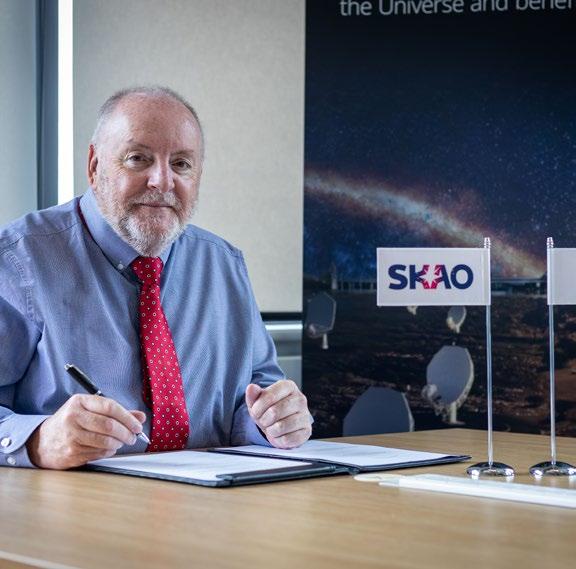
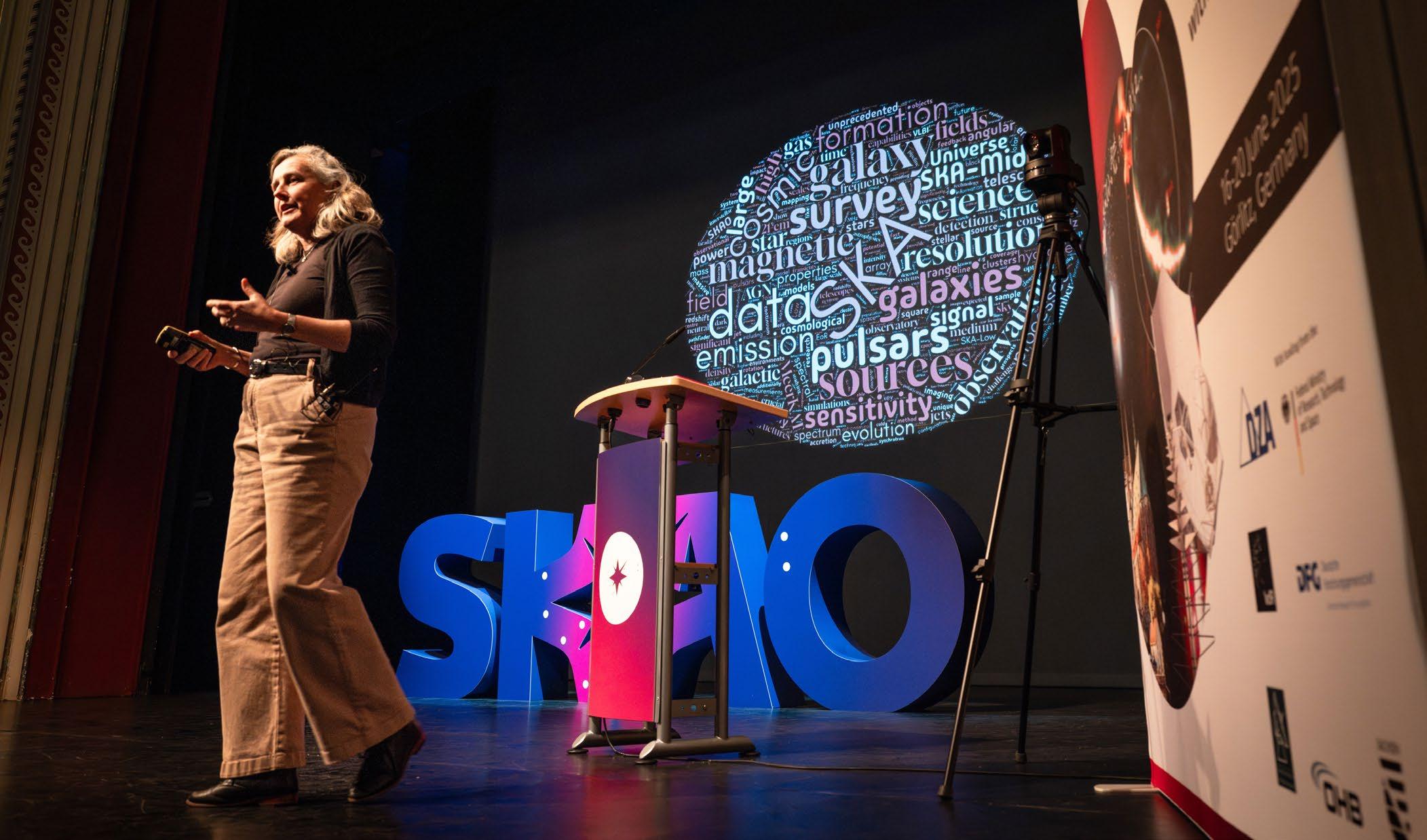
54 Prof. Jessica Dempsey to be next SKAO director-general
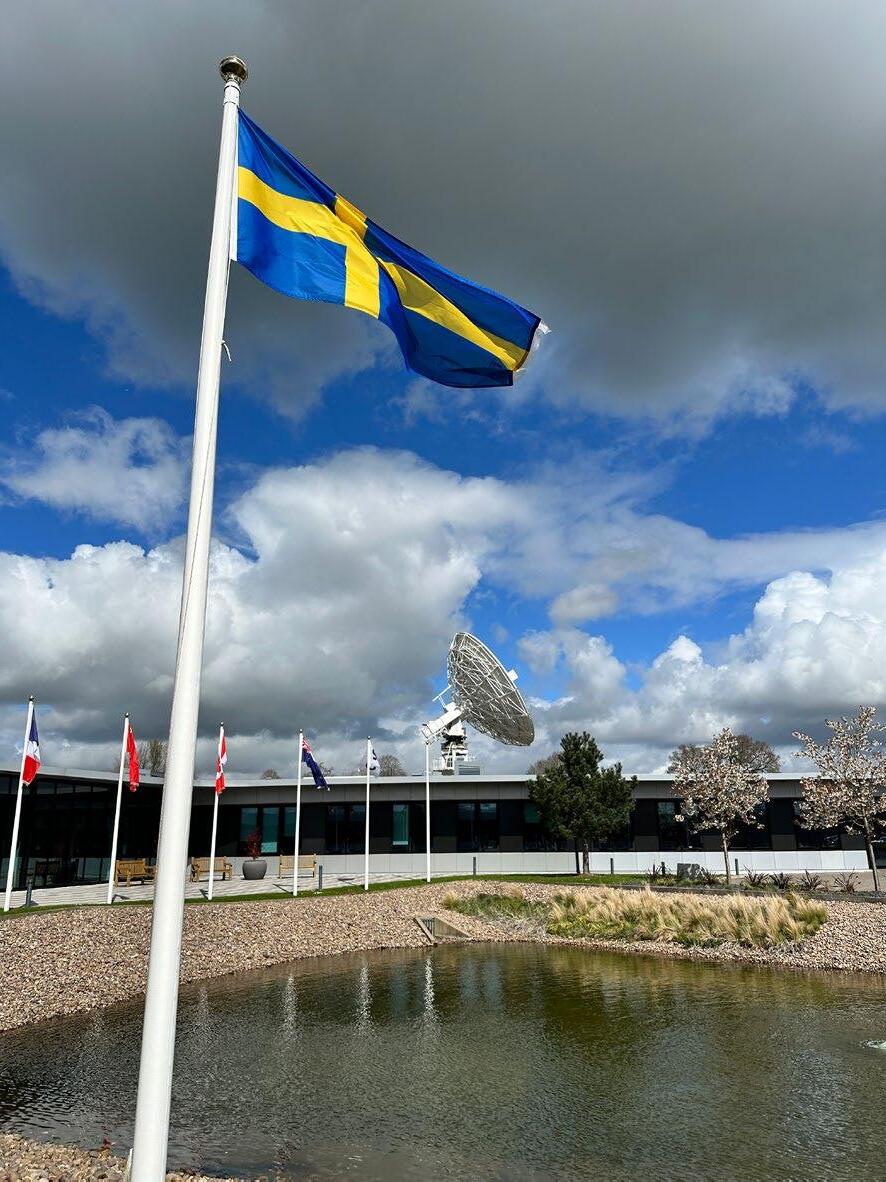
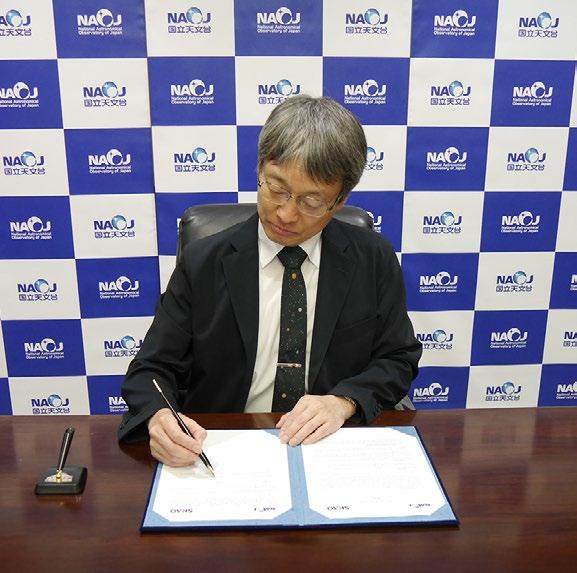
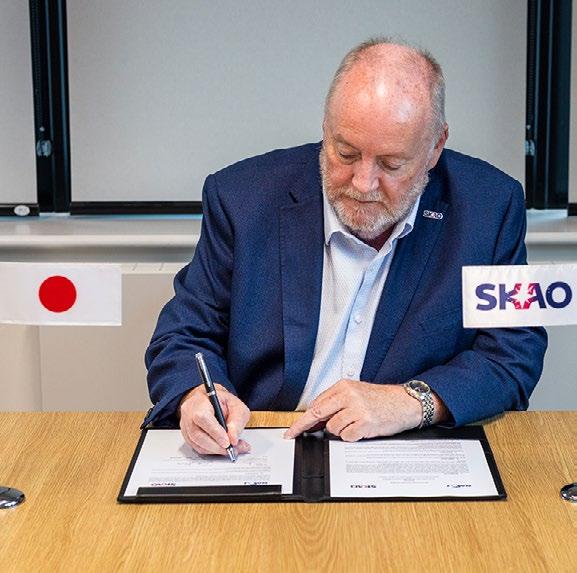
55 Sweden joins the SKAO as South Korea and Japan move closer
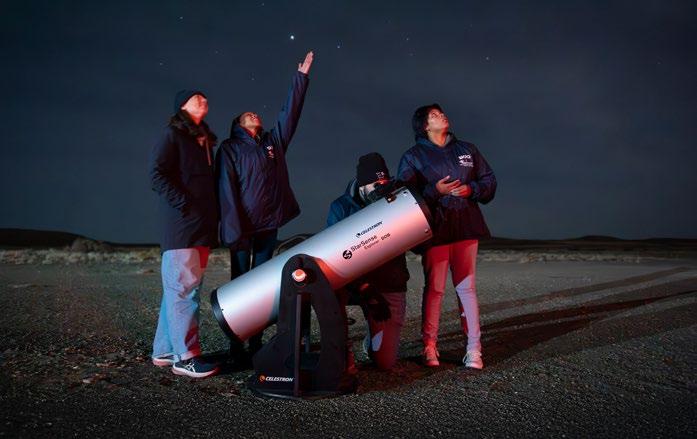
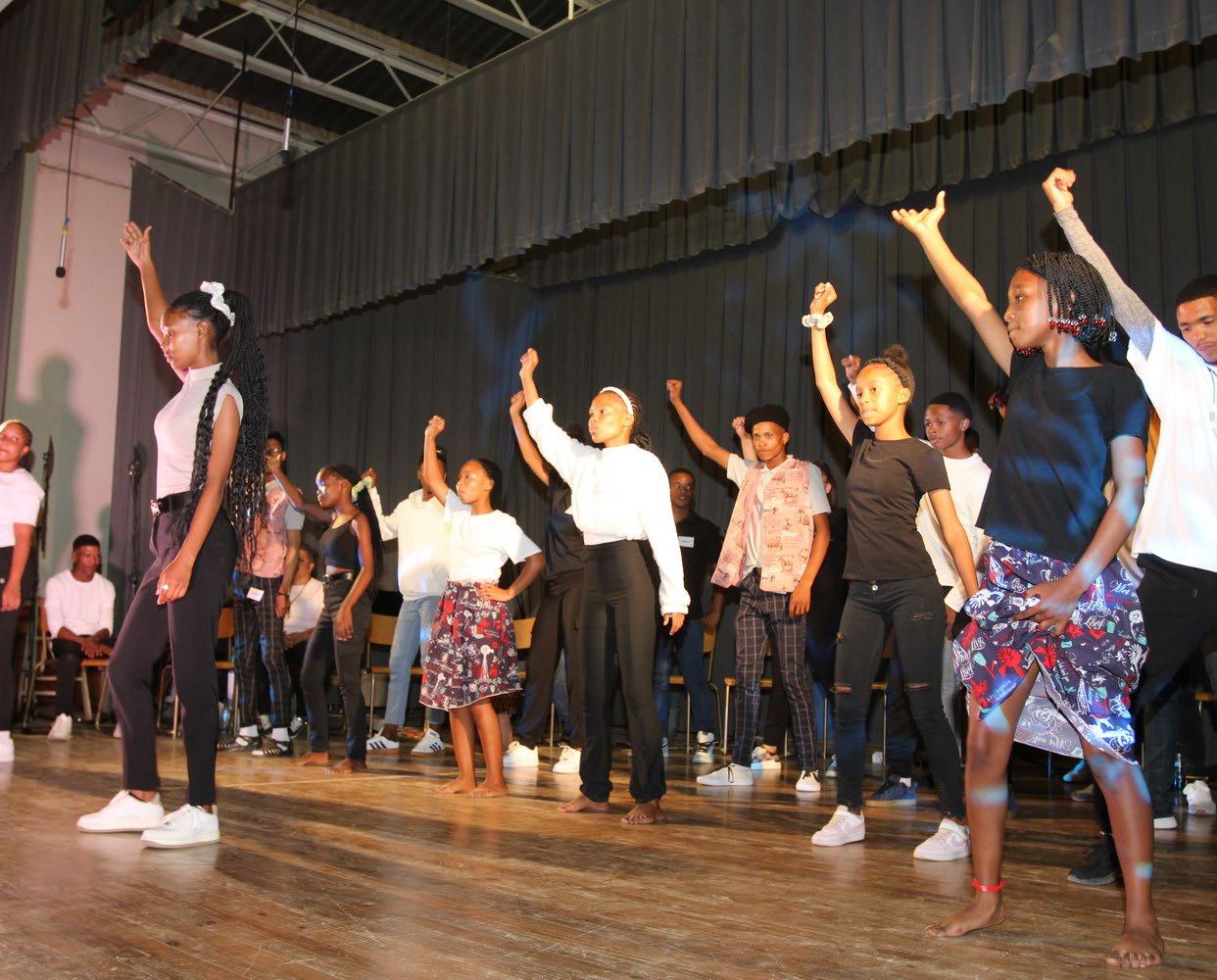
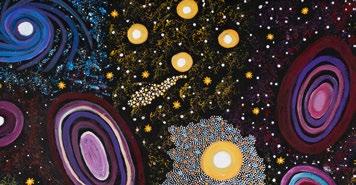
56 The Cosmic Echoes journey in South Africa
TEAM SKA
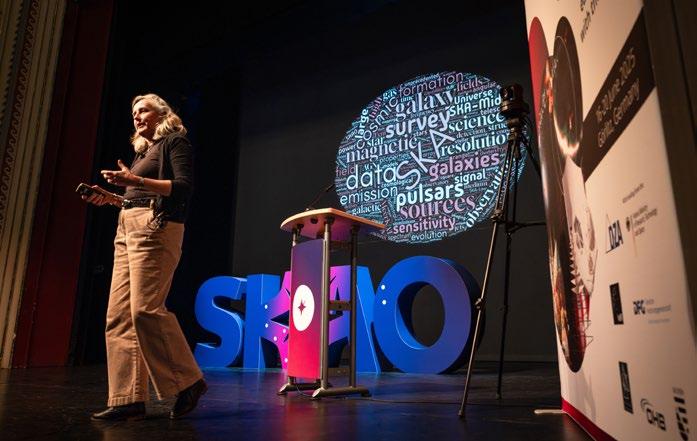
58 Prof. Naomi McClure-Griffiths EVENTS
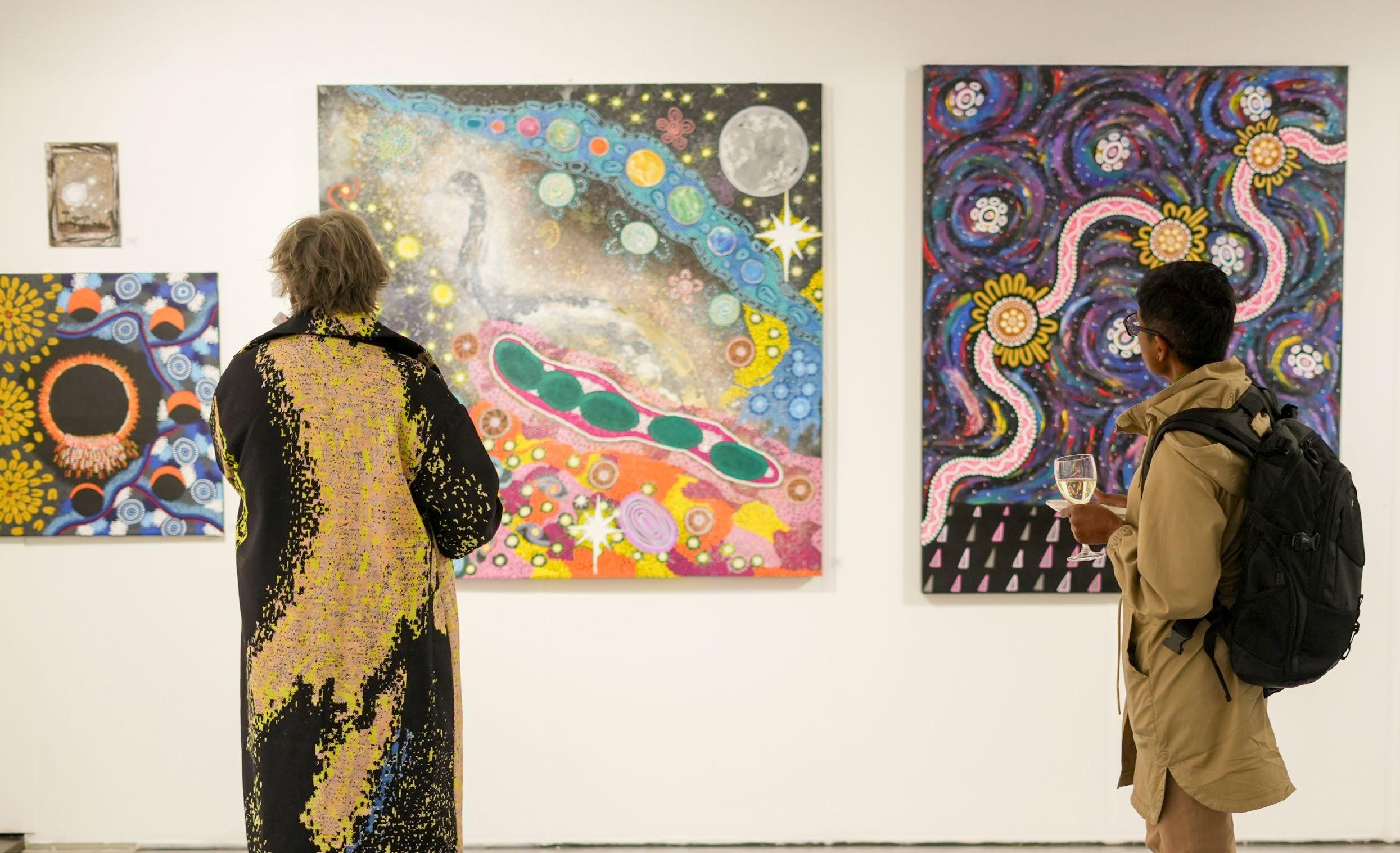
62 Indigenous Astronomy in the Space Age for NAIDOC week
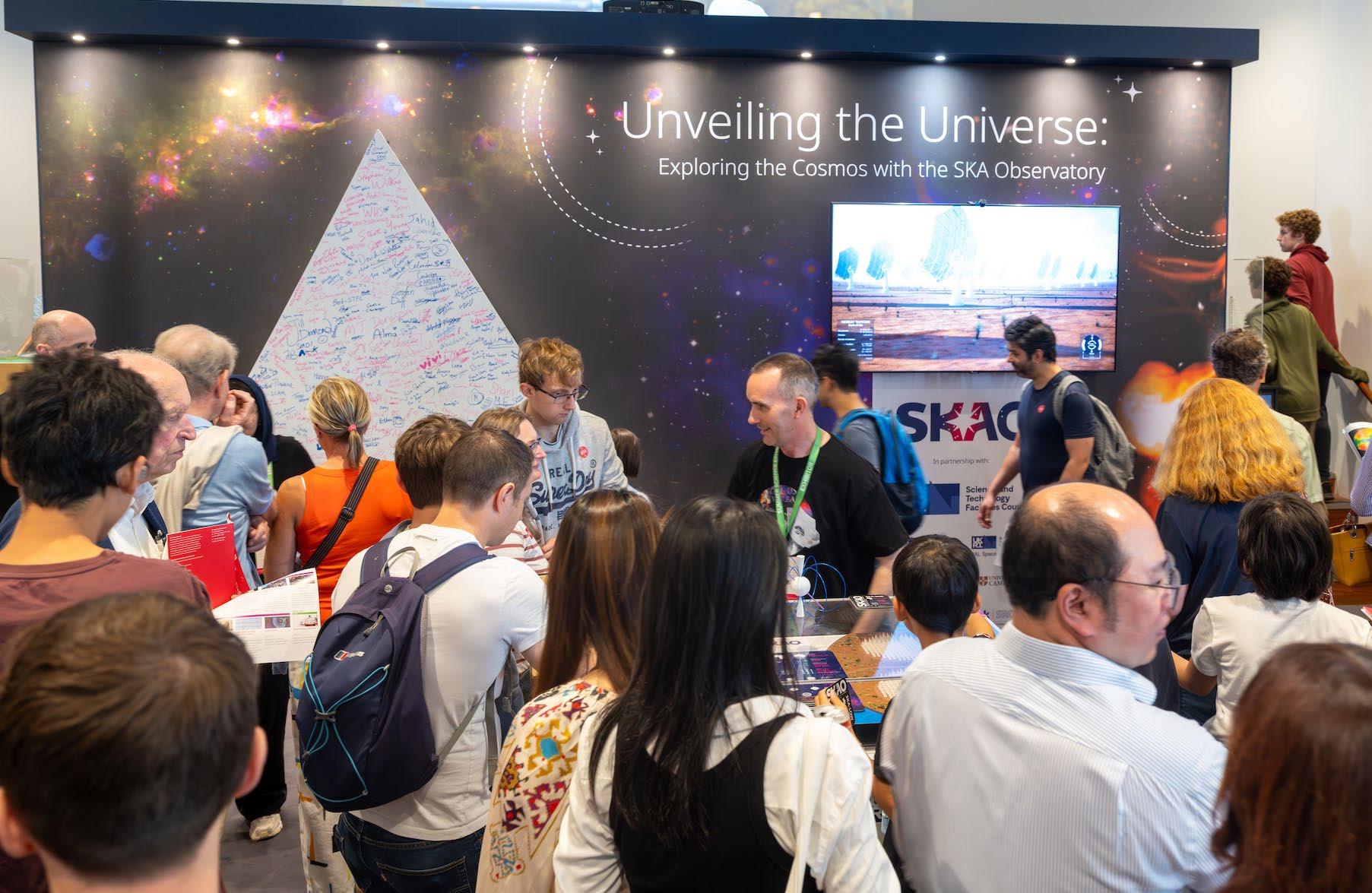
63 SKA project takes centre stage at UK’s oldest science festival
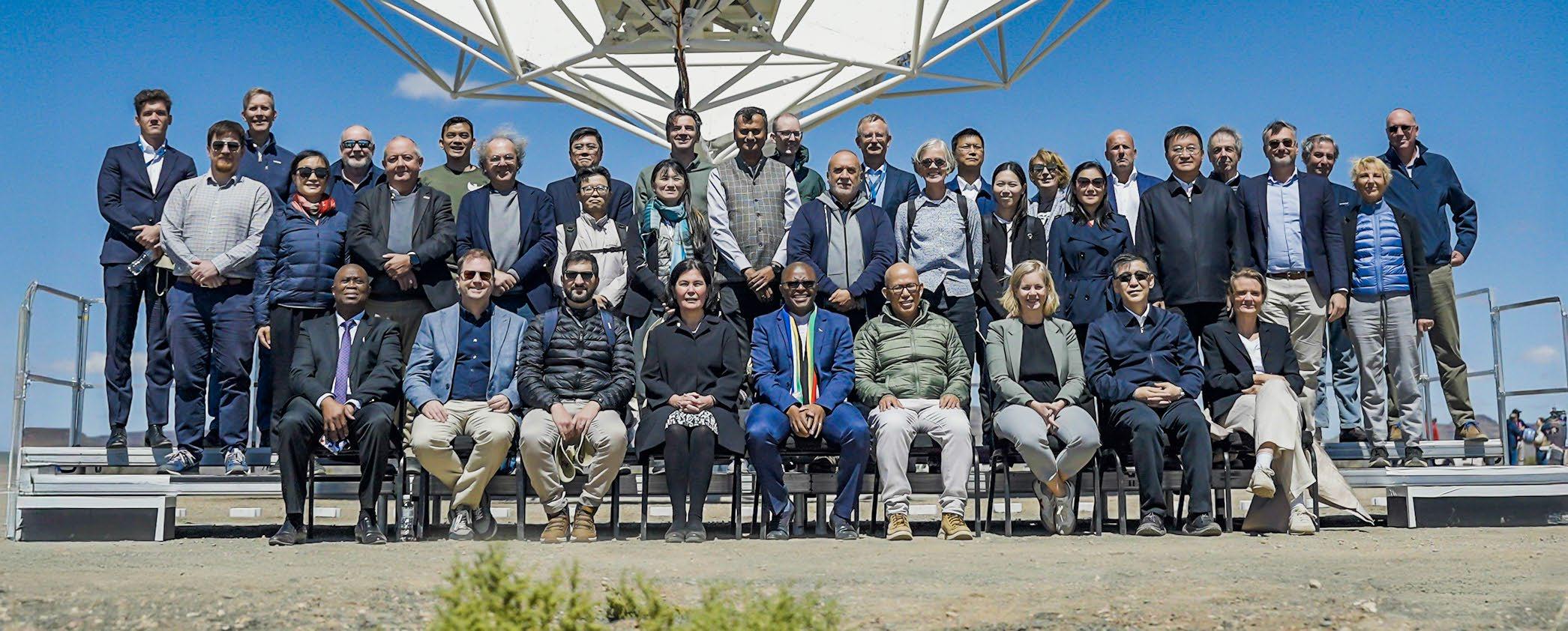
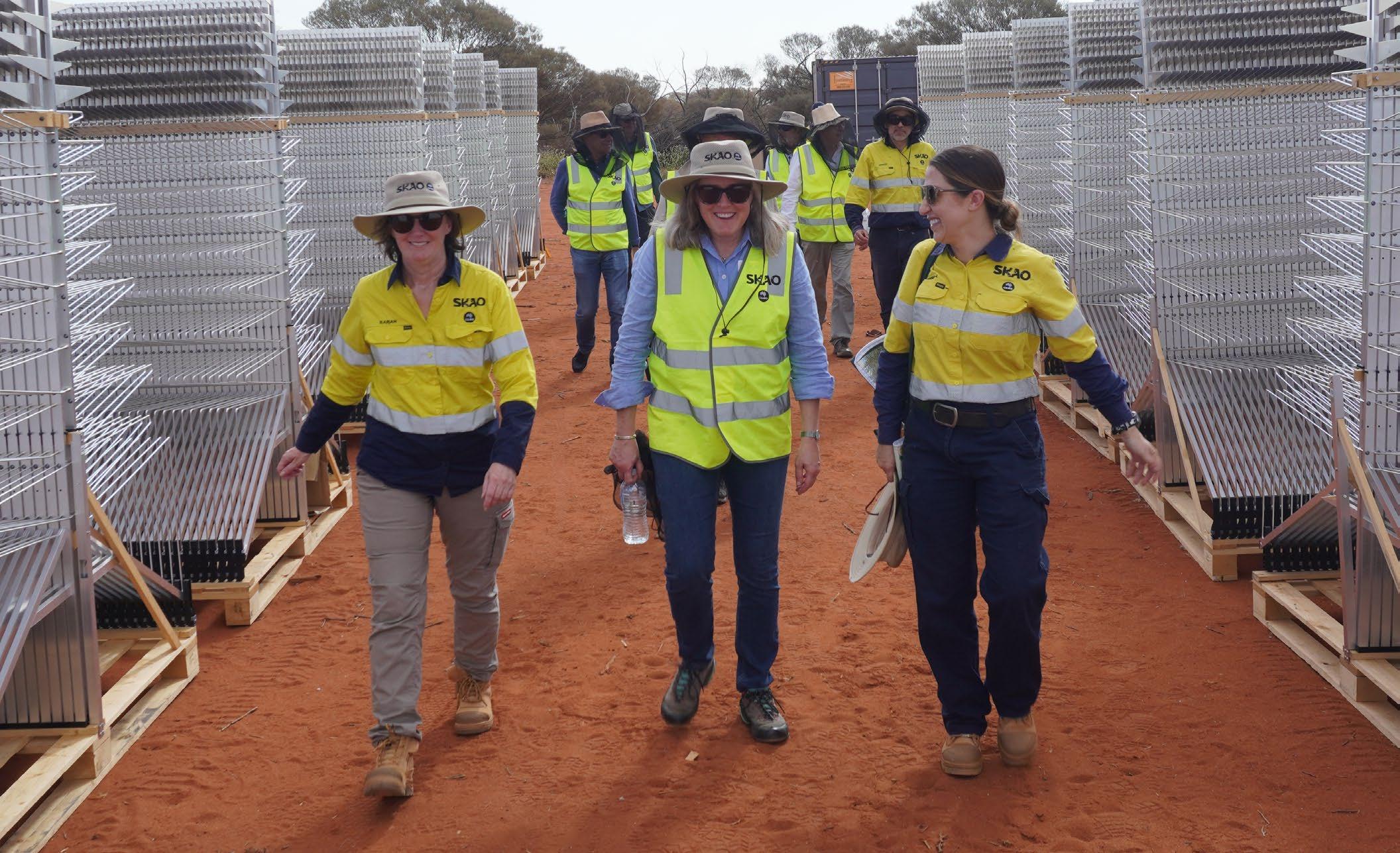
Representatives from 26 countries visited the South African SKA Site following the G20 Research and Innovation Ministerial Meeting in Pretoria. Credit: SKAO
Welcome to the bumper eighteenth edition of the SKAO magazine, Contact. The theme of this issue is Impact!
We are publishing this special issue of Contact on the occasion of South Africa’s presidency of the G20 (the world’s largest economies), with its research themes being open innovation, biodiversity for sustainable development, and diversity, equity, inclusion and accessibility in science, technology, and innovation. This week saw several unique engagement opportunities for the Observatory. First, I was privileged to address the open session of the G20 meeting; then, we took advantage of the presence of so many Ministers and senior officials to organise the very first SKAO Ministerial meeting; and finally, we and our South African partners were able to showcase the concrete impact we are having in society through a remarkable SKA-Mid/MeerKAT site visit attended by representatives of some 26 countries.
This edition begins with two excellent articles from SKAO’s telescope Site Construction Directors, Tracy Cheetham for SKA-Mid and Antony Schinckel for SKA-Low. Both articles describe the tremendous progress that has been made on the telescopes since the start of on-site construction in December 2022. Like many similar projects, we face our programmatic challenges, both technical and natural –the weather doesn’t always cooperate! However, the teams and our contractors have shown considerable inventiveness and resilience as they overcome each problem as they crop up. We reported in the previous issue on the first image being made with SKA-Low; although not quite there yet with SKA-Mid, I was very pleased to recently see the SKA001 dish ‘opening its eyes’ as it took the first spectrum of neutral hydrogen in the Milky Way with our Band 2 receiver. This was an excellent moment for all concerned and will be followed by many more.
I mentioned that the theme of this issue is Impact and you can read the several articles that describe impact in its many forms: from investing in education, offering
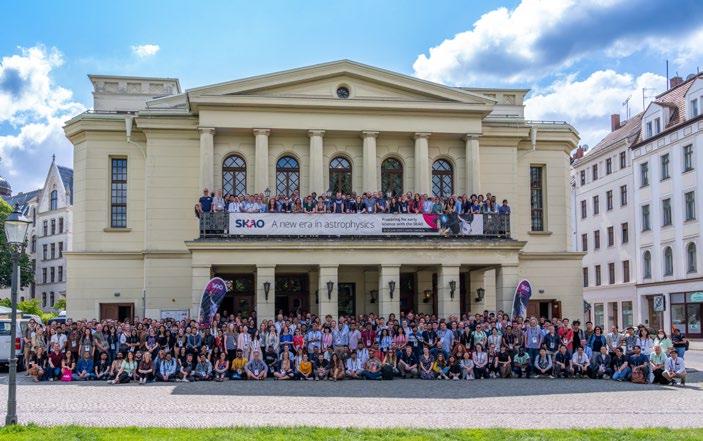
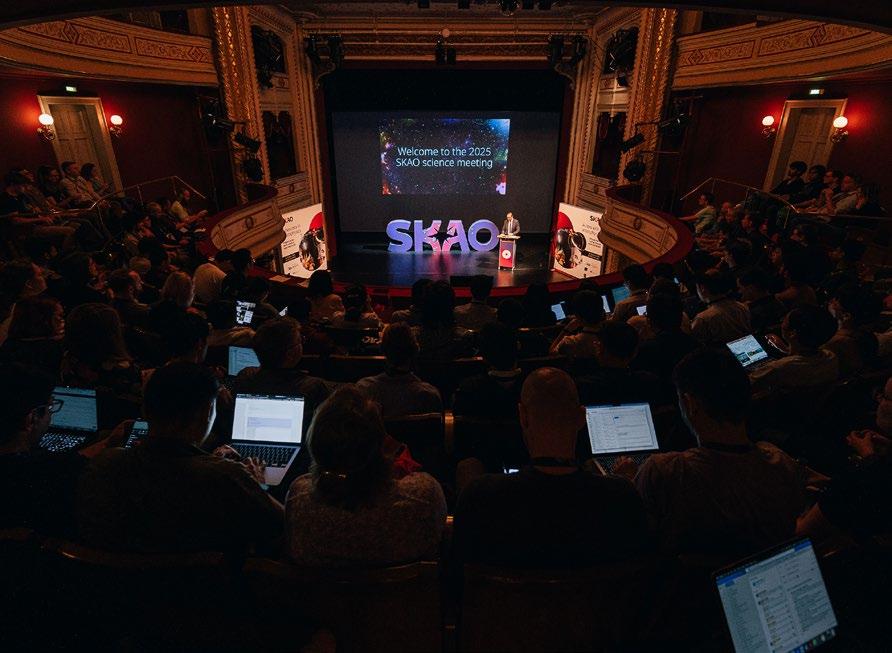
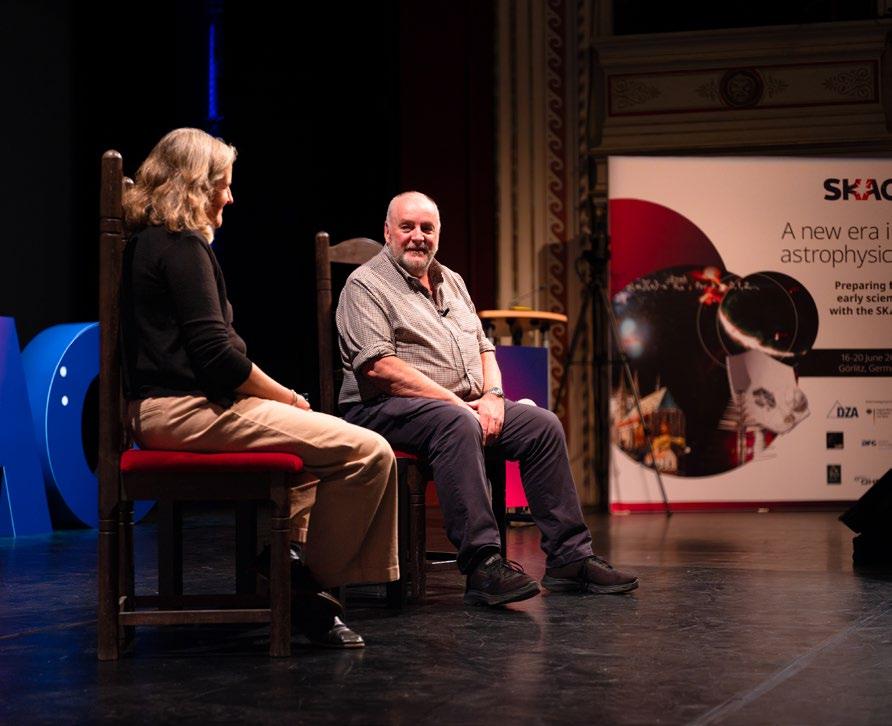
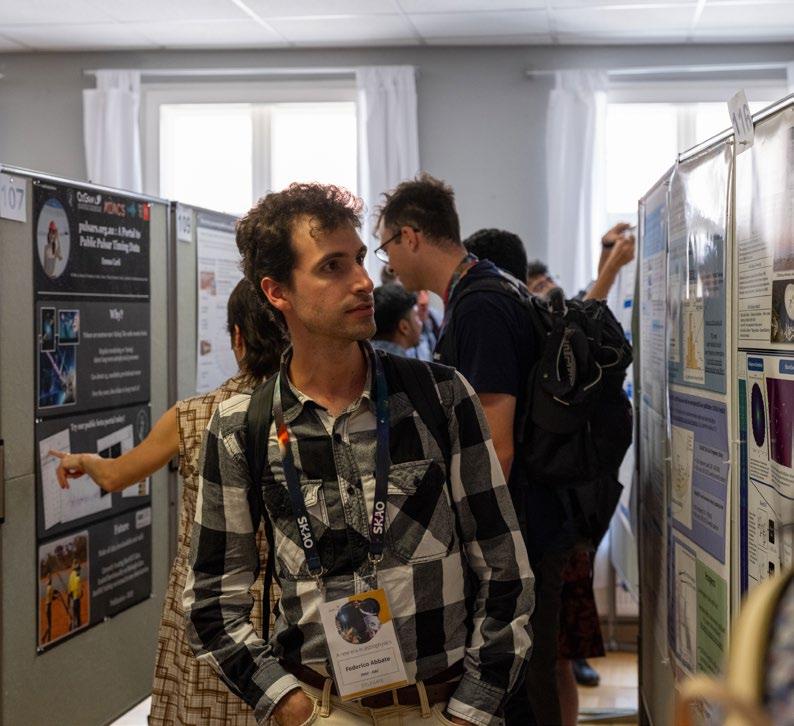
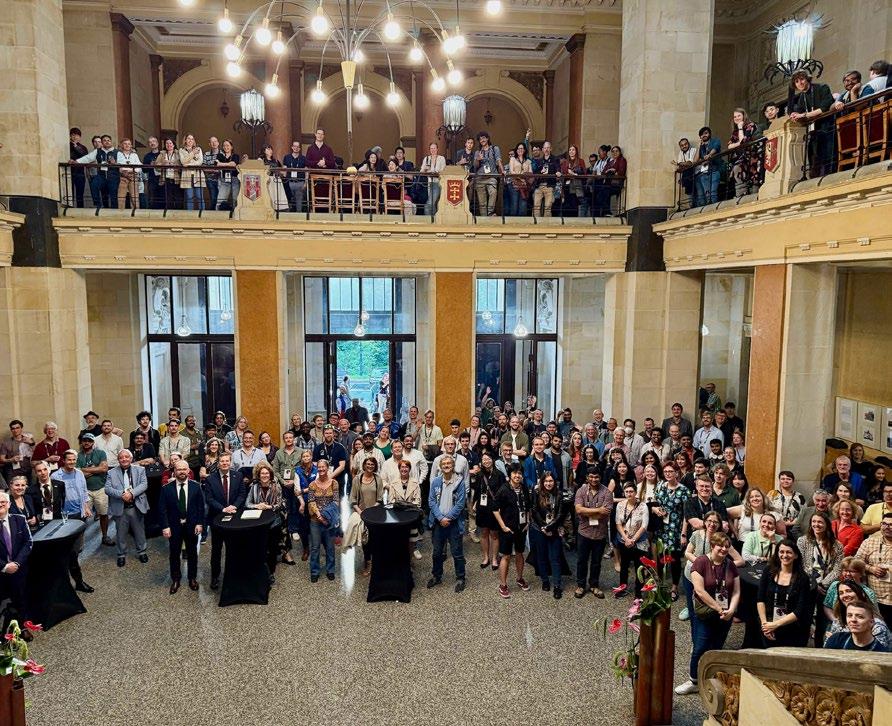
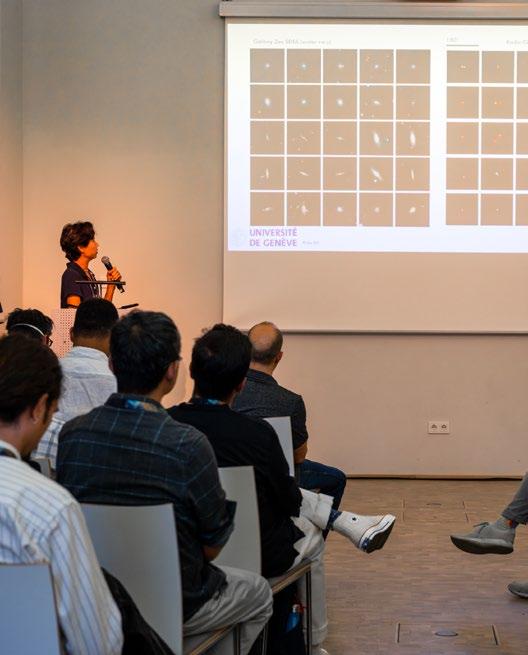
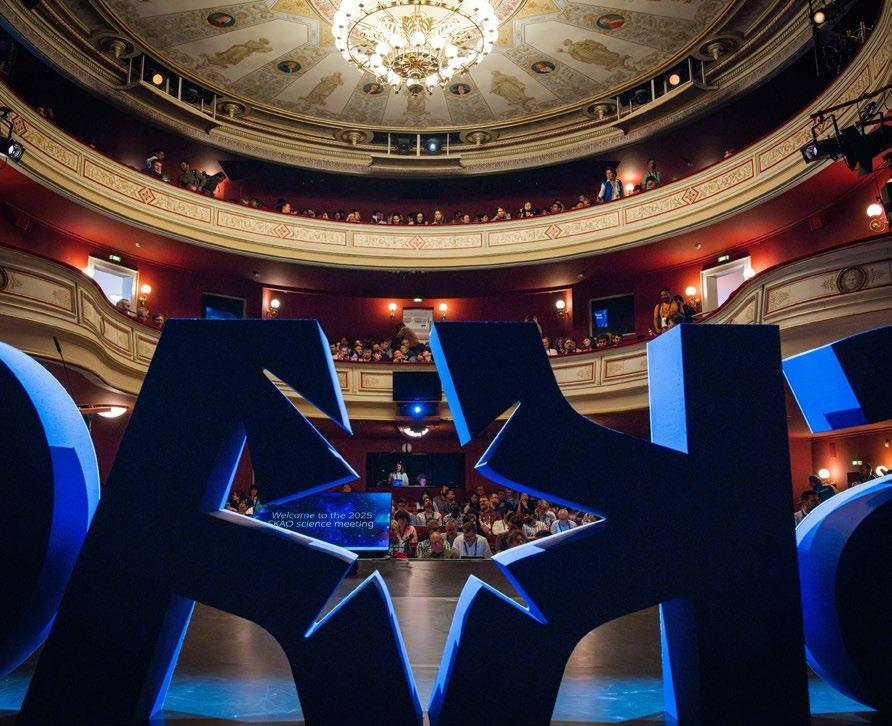
local employment opportunities, preserving fragile environments, helping to safeguard Indigenous knowledge, through to the development of advanced technologies, driving transformational science (see the article on the SKA Science Meeting held in Germany in June) and working with partners to preserve humanity’s dark and quiet skies. All are part of the diverse impacts deriving from the work of the SKAO and its partners. With regard to the international nature of the technology developments, I am impressed with the two images of the national contributions to the antennas and dishes shown on pages 24-25.
We continue to celebrate the achievements of the SKA precursor and pathfinder telescopes, with several such facilities featured. I am also pleased to welcome a new pathfinder to the family with the inclusion of China’s 21 CentiMeter Array, located in the Tianshan Mountains of western China.
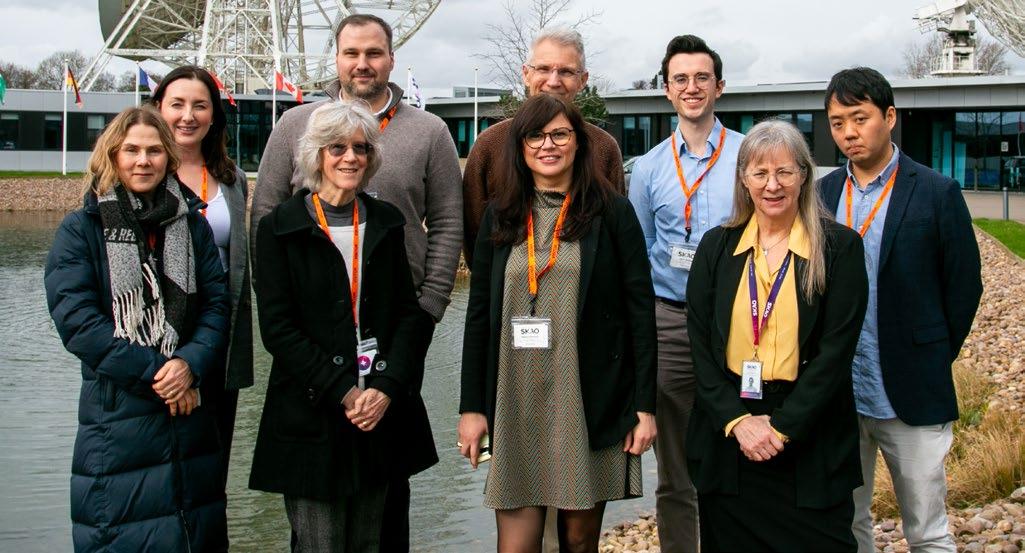
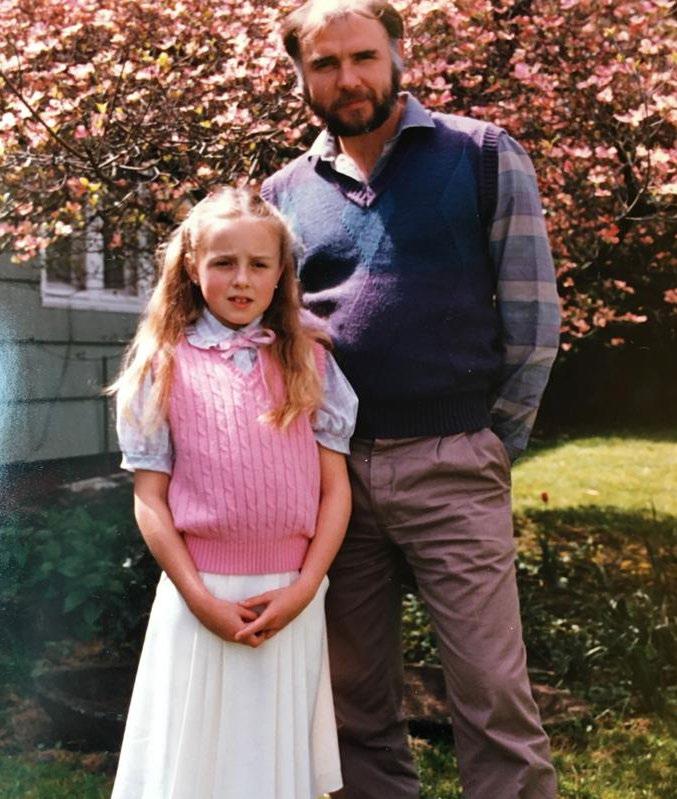
There is a lovely article welcoming Prof. Naomi McClureGriffiths as SKAO’s new Chief Scientist. Naomi started work in July and she is already having a positive impact on our science eco-system.
You will also notice that my successor has been selected. From 1st June 2026, Prof. Jessica Dempsey, currently at ASTRON in the Netherlands, will take over as SKAO’s Director-General. I am, personally, very pleased with the Council’s decision.
Finally, I’d like to congratulate Prof. Michele Dougherty, one of the UK’s Council delegates, on her appointment as the UK’s new Astronomer Royal and the first woman to hold that position in 350 years.
PROF. PHILIP DIAMOND, CBE, SKAO DIRECTOR-GENERAL
‘It’s remarkable to see the changes’
SKA-Mid’s construction progress
BY TRACY CHEETHAM, SKA-MID SITE CONSTRUCTION DIRECTOR
Time has flown since the start of construction on site in December 2022, and it’s amazing to now see such extensive progress.
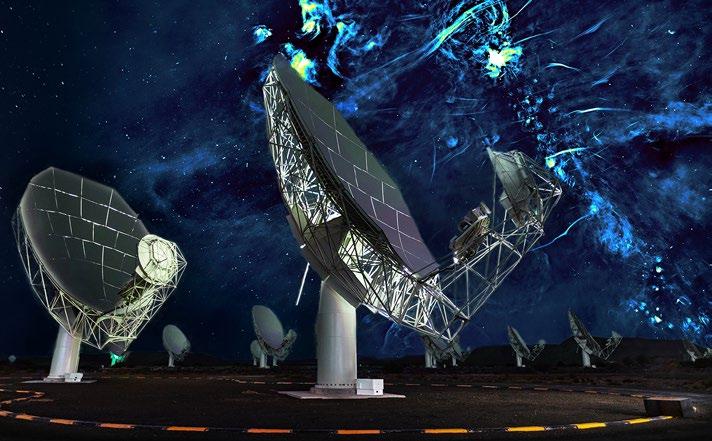
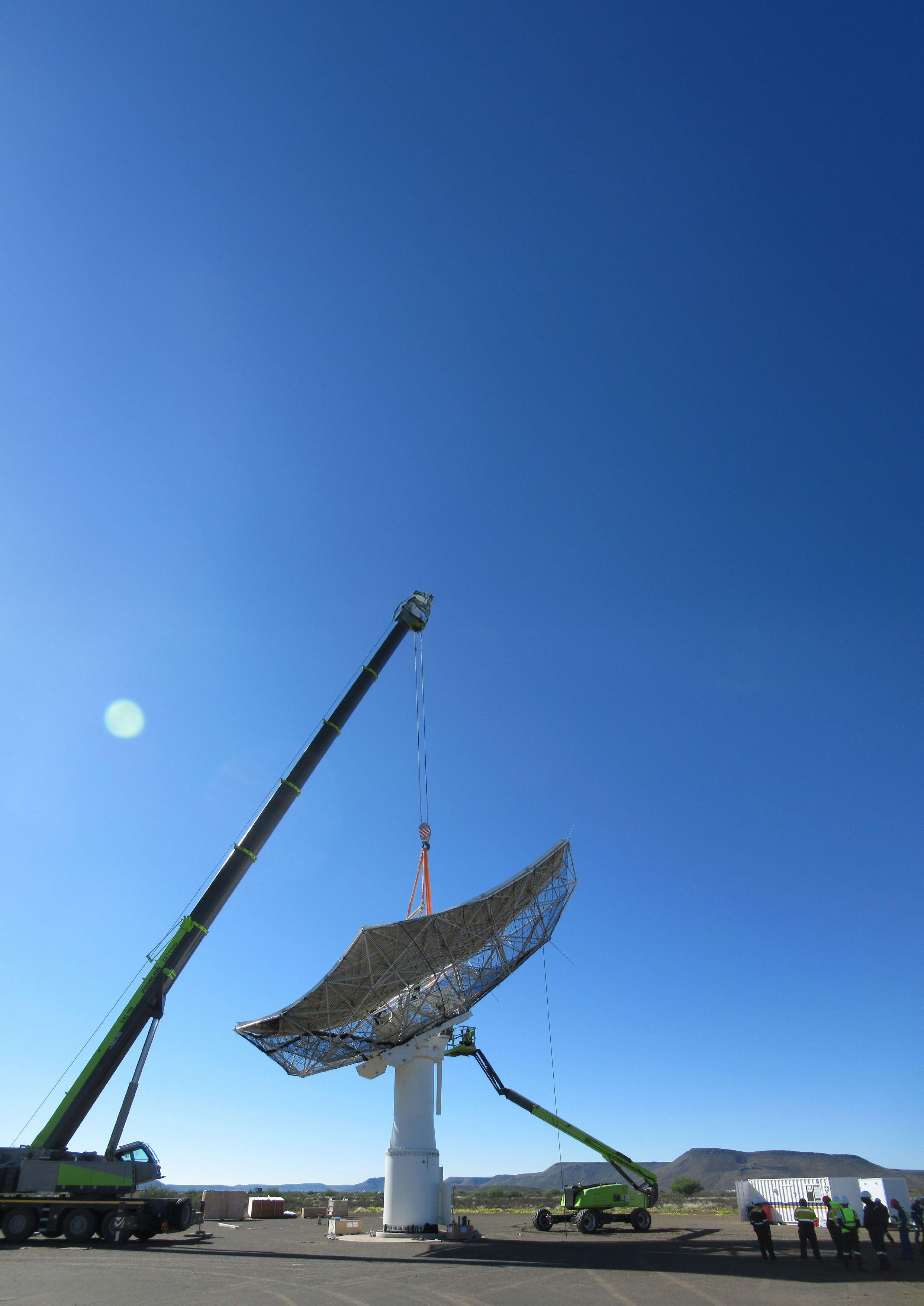
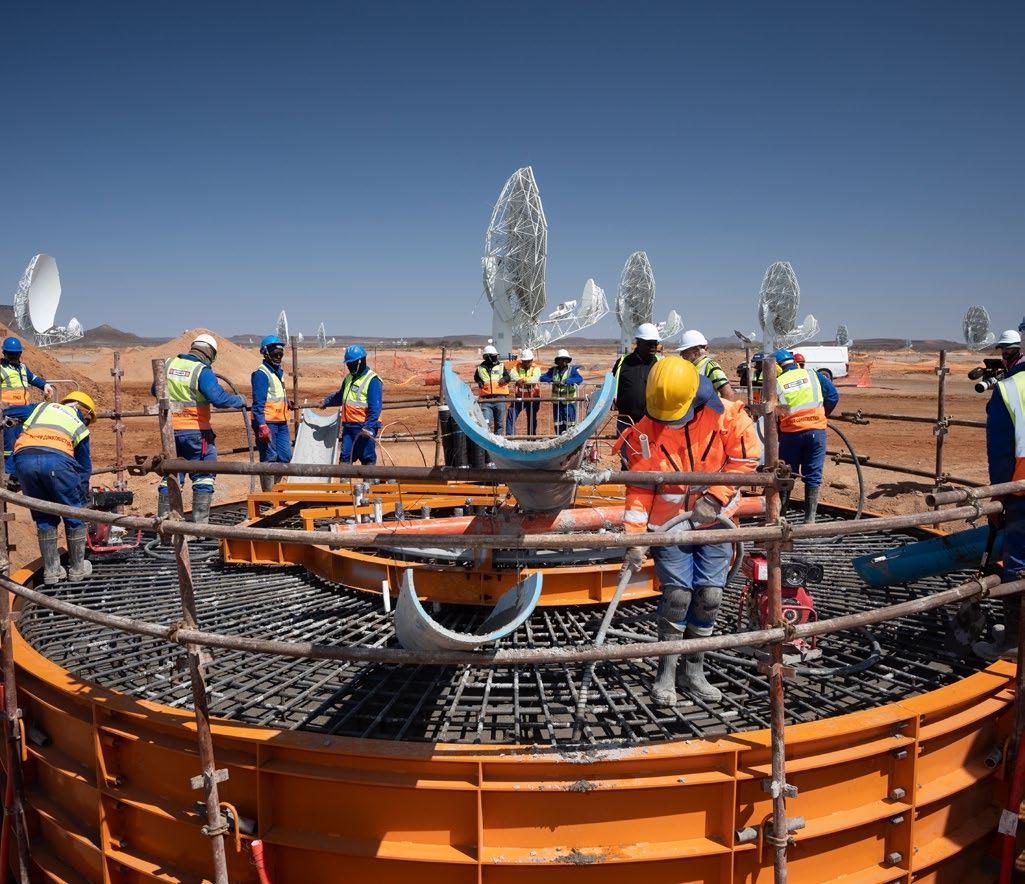
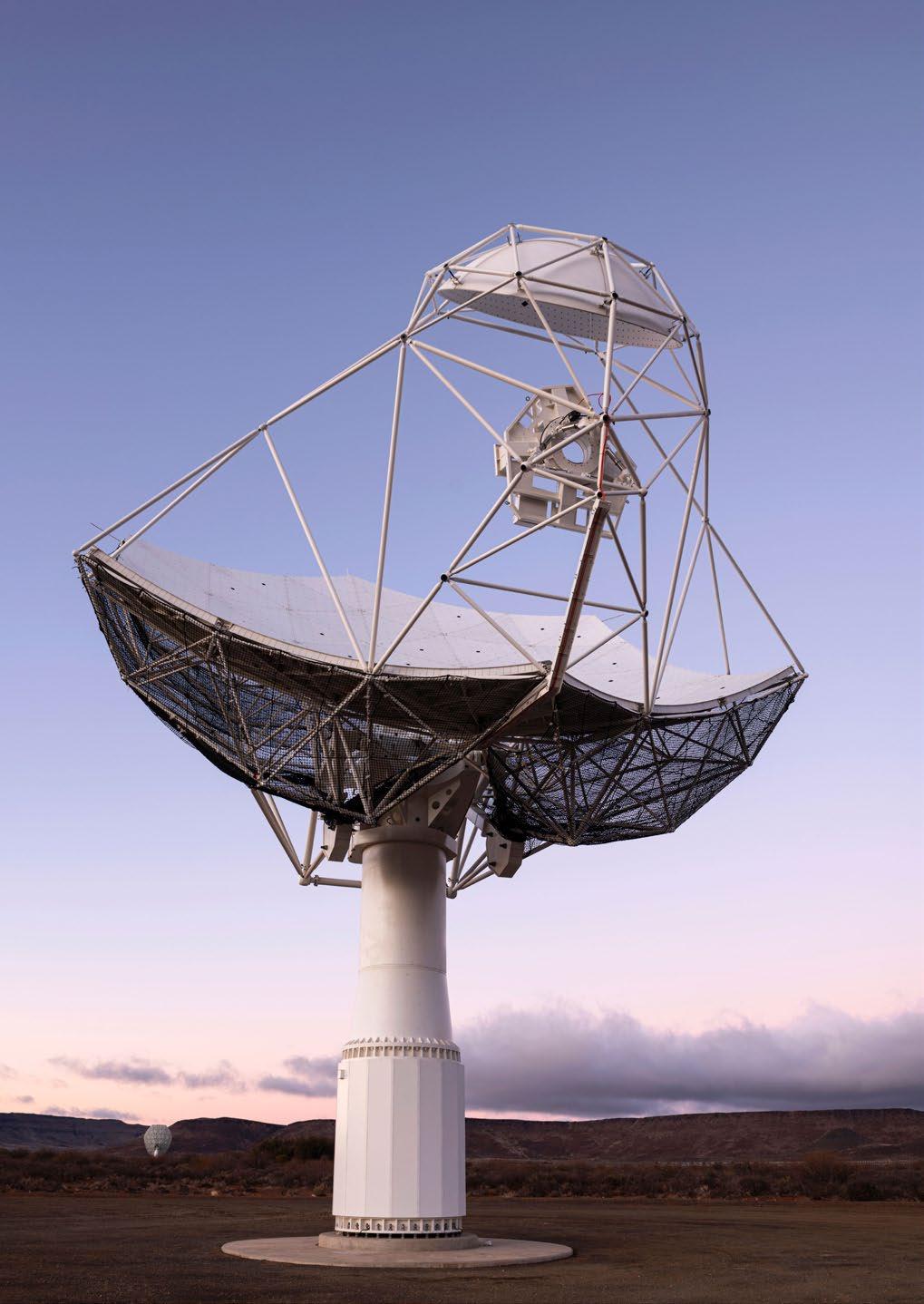
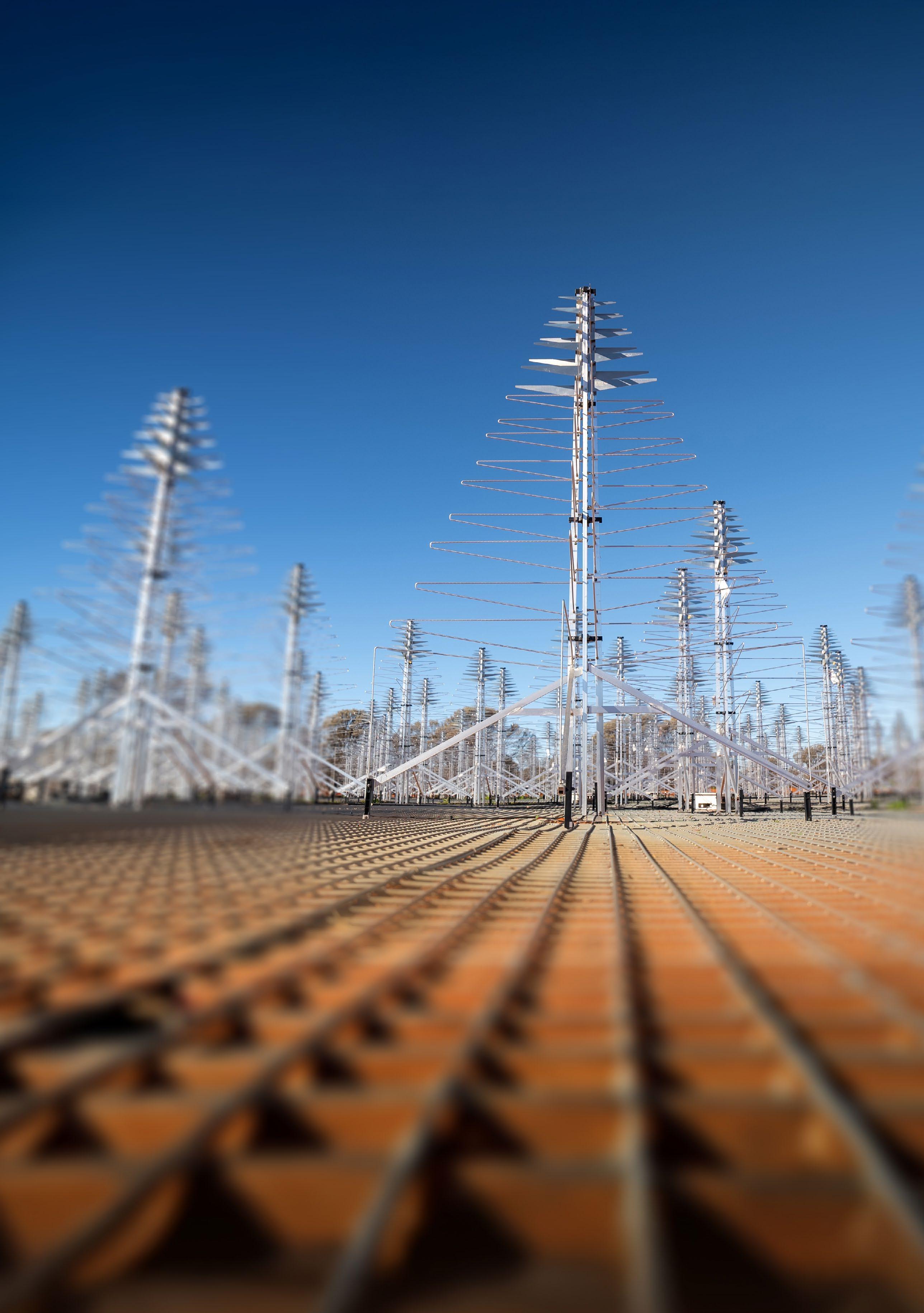
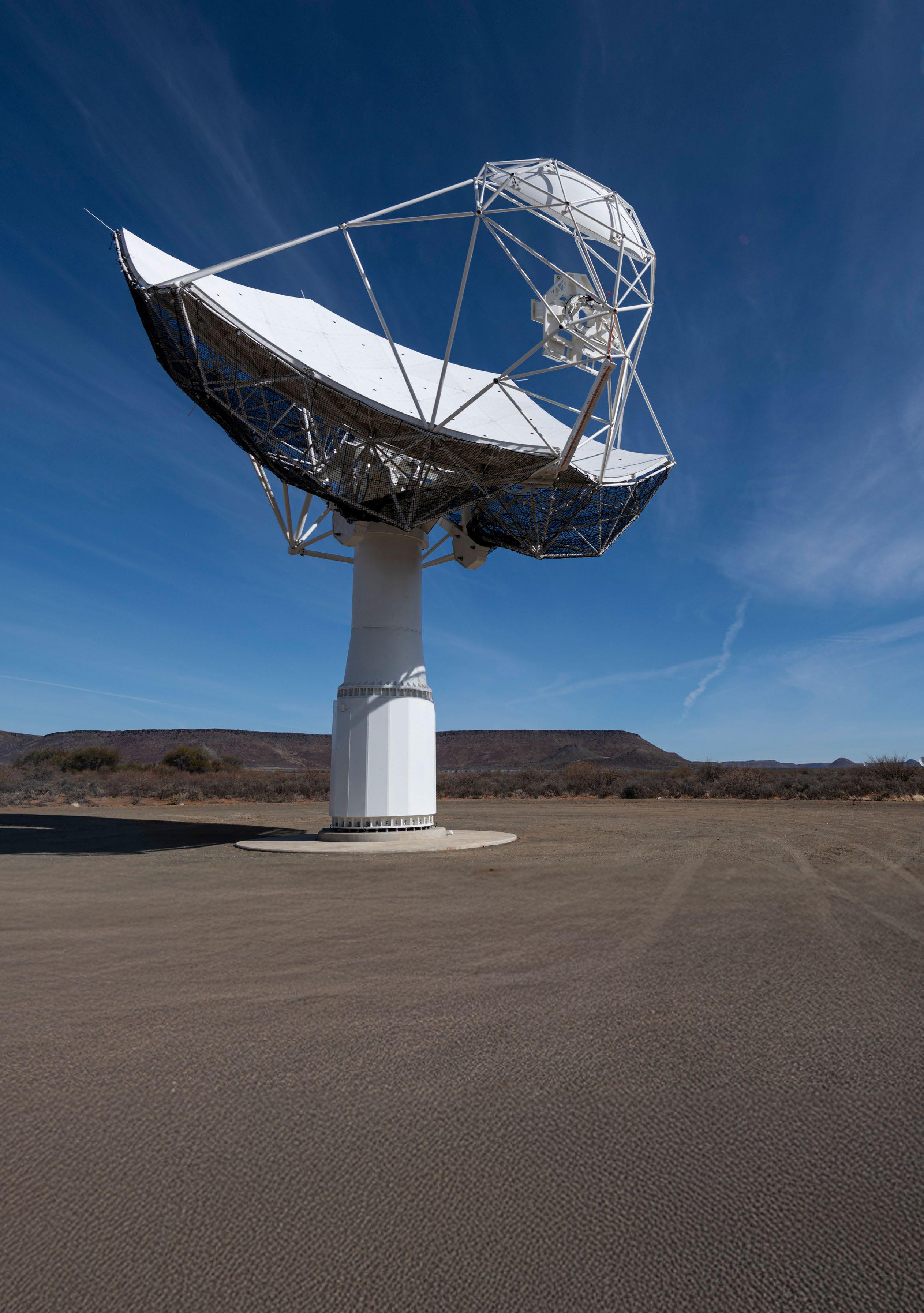
Following the first “big lift” of an SKA-Mid dish in July 2024, we now have five dish structures standing tall on their foundations, with another two under assembly (with more big lifts in the near future), and four more being shipped at the time of writing this article. Activities to integrate and verify the hardware and software for the first dishes are also well underway, and the correlator beamformer – which will align and process signals from the array – and synchronisation and timing system for the first four dishes, known as Array Assembly 0.5 (AA0.5), have been successfully installed in the Central Processing Facility on site. As for the bulk civil and electrical infrastructure, it is now 75% complete overall –no mean feat on this challenging site!
Site infrastructure progress
✓ 90% of the 180 km of new roads
✓ 50% of the farm gates needed on the land housing the telescope’s spiral arms
✓ 76% of the 521 road drifts that prevent access roads being flooded
✓ 101 SKA-Mid dish foundations successfully cast
✓ 70% of underground power and fibre cabling
✓ More than 2,000 poles to carry overhead fibre and power out into the spiral arms
telescope site following three more “big lifts” in March, July and September 2025.
Five dish structures stand tall on the
Credit: SKAO
This impressive site progress is being matched at the System Integration Test Facility in Cape Town, where a simulator for the entire signal chain for the first four dishes is complete. This will serve as an ongoing testbed for verification activities prior to hardware being deployed to site, where such testing would be costly and logistically difficult.
Embedding sustainable practices
From the outset SKA-Mid construction has prioritised sustainability, with all staff and contractors receiving environmental training on recycling, water reuse, biodiversity awareness, and safe waste handling.
Alongside formal management and monitoring planssuch as those on water use, which is strictly managed and monitored - we have also been embracing “upcycling”, turning construction packaging and excess materials, such as wood and transportation crates, into useful items like benches, drawers, notice boards, and storage boxes.
We continue to work with SANParks on protecting local flora and fauna, ensuring minimal disturbance to the natural environment from construction activities and the rehabilitation of disturbed areas to encourage vegetation regrowth. This includes conducting environmental walkthroughs in order to guide infrastructure away from sensitive ecological and heritage areas, and the translocation and monitoring of protected plant species; 29 species were successfully translocated in 2024.
We are also making progress on our renewable power plans. The goal for SKA-Mid is to implement a blended power solution, incorporating a large fraction of renewable power, most likely in the form of solar panels combined with battery energy storage systems, supplemented by grid power and diesel generation. The radio-quiet site poses a unique challenge as, unlike conventional power plants, ours needs to reduce electromagnetic emissions through shielding to levels that won’t interfere with sensitive telescope observations, all while remaining economically feasible.
We currently have a prototype remote solar power station being tested off-site, with on-site commissioning planned for early 2026. This prototype will serve the dual purpose of powering a dish located at the end of the Brandvlei spiral arm and acting as proof of concept for the future remote power stations and a larger centralised power plant.
Power Adenco employs members from the local communities for infrastructure work on site.
Credit: SKAO/Jac Kritzinger
It never rains, but it pours
As expected, there have been a plethora of challenges to overcome in these early years of construction, from machinery troubles to meteorological ones.
Until now, nobody has ever tried to build the best radio telescope on Earth inside the current best radio telescope on Earth – SARAO’s MeerKAT array. We’re striking a delicate balance, requiring strict radio frequency interference (RFI) controls, monitoring and awareness campaigns, continuous communication between scientists, engineers and contractors, and careful coordination with the MeerKAT observing team. We’ve found workarounds and developed solutions –buying older cranes with fewer “noisy” electronics built in, for example, and establishing SKAO-qualified RFI test facilities in several SKAO member states to test hardware before it gets to site. This all ensures we can continue to build SKA-Mid while MeerKAT continues to conduct world-class science.
The weather has not always been kind; we have been confronted with four extreme weather events in the past year, with heavy rain damaging our new road infrastructure and forcing a redesign of the drifts to make them better suited to extreme weather.
There’s also the scale of the site itself to contend with, extending across 150 km and travelling time of up to two hours from the core to reach the end of a spiral arm. That brings with it logistical and safety challenges, which are being eased by a now complete mobile radio system connecting our teams working in the more remote parts of this already remote site. Our collaboration partner SARAO negotiated 79 land agreements with 59 landowners to build and have access to the telescope’s spiral arms - a huge and complex task - and we work with all those landowners to schedule our construction activities.
A testament to teamwork
In the past few years we’ve seen our team in South Africa grow from three people to 68 people today, working across the SKA-Mid site, our Engineering Operations Centre at Klerefontein and our Science Operations Centre in Cape Town. That number will more than double over the next three years as we ramp up construction and head towards early operations.
Working alongside us on infrastructure and site services are many local people and businesses who are essential to the delivery of the telescope. Their involvement – embedded from the start in the conditions for our large construction contracts –is also part of our “social licence to operate”, ensuring we help to uplift the local economy and local people get a sense of belonging in our endeavour.
Local involvement in practice
‣ More than 300 people from the local towns employed to date by our partners Power Adenco and CETC54, 20% of them being women, and the majority aged 18 to 35 years old.
‣ 10 local people supported to national qualifications in construction supervision, and now working on site as supervisors.
‣ 13 small, medium and micro enterprises (SMMEs) from the four nearby towns appointed by Power Adenco for various infrastructure work packages to date, together employing 38 local community members.
‣ Six-month training programme for the SMMEs focused on managing human resources, regulatory compliance, accounting, on-site coaching and mentoring, tendering and site/ contractual administration. These skills will stay with them long after SKA-Mid construction work is complete.
The year ahead
Things will just get more exciting from here. All this work is driving us towards our goal of operating a basic interferometer – what radio astronomers refer to as “first fringes” – by the end of 2025, and achieving our first delivery milestone AA0.5 by mid-2026. From then on we will maintain a continuously working and expanding facility.
Elsewhere we are preparing for construction of the physical optical fibre link between Carnarvon and Beaufort West in January 2026, which will provide the high-speed link we need to get telescope data to our Science Processing Centre in Cape Town. We’re also working on expanding the correlator and beamformer to support the growing array, among many other developments.
We are often so busy that there is no time to take stock of how far we have come. I have been working on site for 18 years and it is remarkable to see the changes – more striking with every visit – from the expansion of the MeerKAT telescope, to seeing more than 550 people currently involved in construction of the SKAMid telescope.
Recent rain means that all around us flowers have blossomed that we have not seen for many years, a reminder of how special it is to work here. Alongside all the construction progress, I am particularly proud that our teams are not only committed to delivering the Observatory’s mission, but doing so in a way that preserves and protects the flora, fauna, ecology and heritage of this beautiful area, and the upliftment of the local communities in the four towns surrounding the SKA-Mid site.
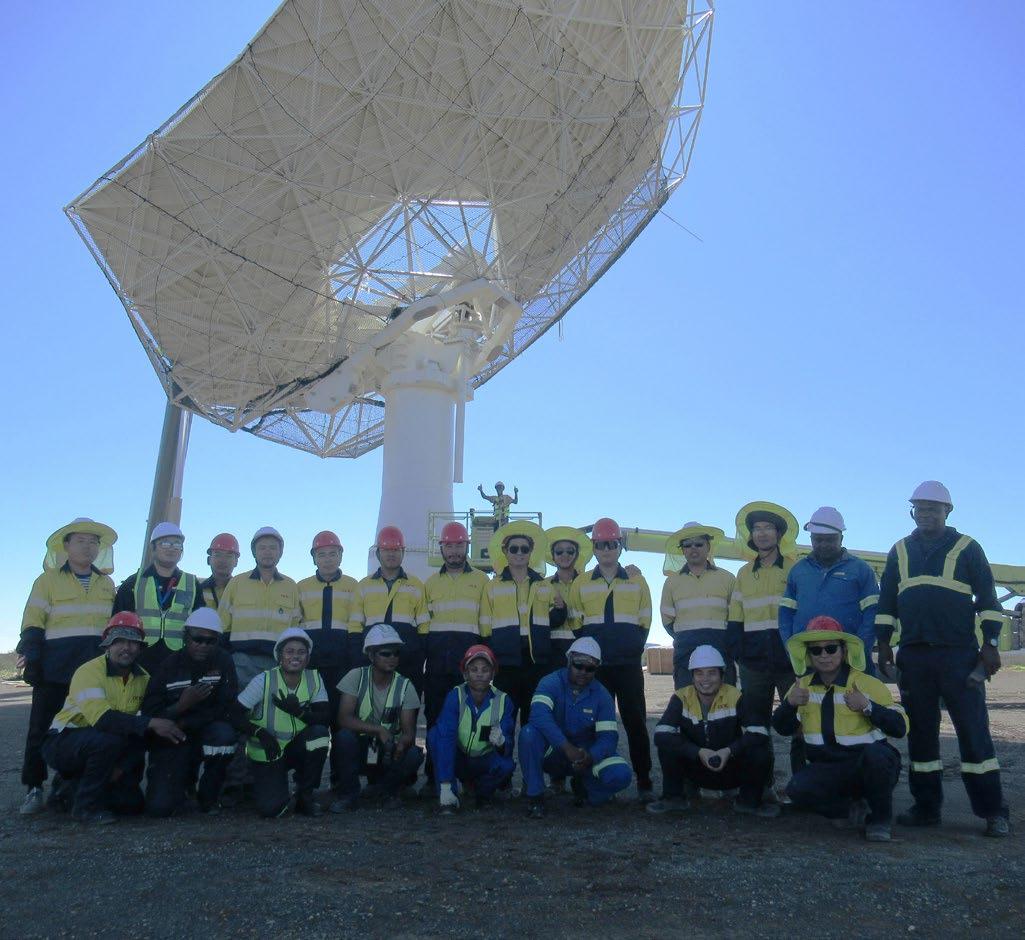
The team after the third big lift on 17 March 2025. Credit: SKAO
10,000 antennas and countingSKA-Low gathers speed
BY ANT SCHINCKEL, SKA-LOW SITE
CONSTRUCTION DIRECTOR
Less than three years after construction of the SKA-Low telescope began, we have an operating first array assembly capable of producing images of the sky.
It is truly remarkable when you take a step back and look at the scale of this project to see how much has been achieved in such a short period.
Building SKA-Low
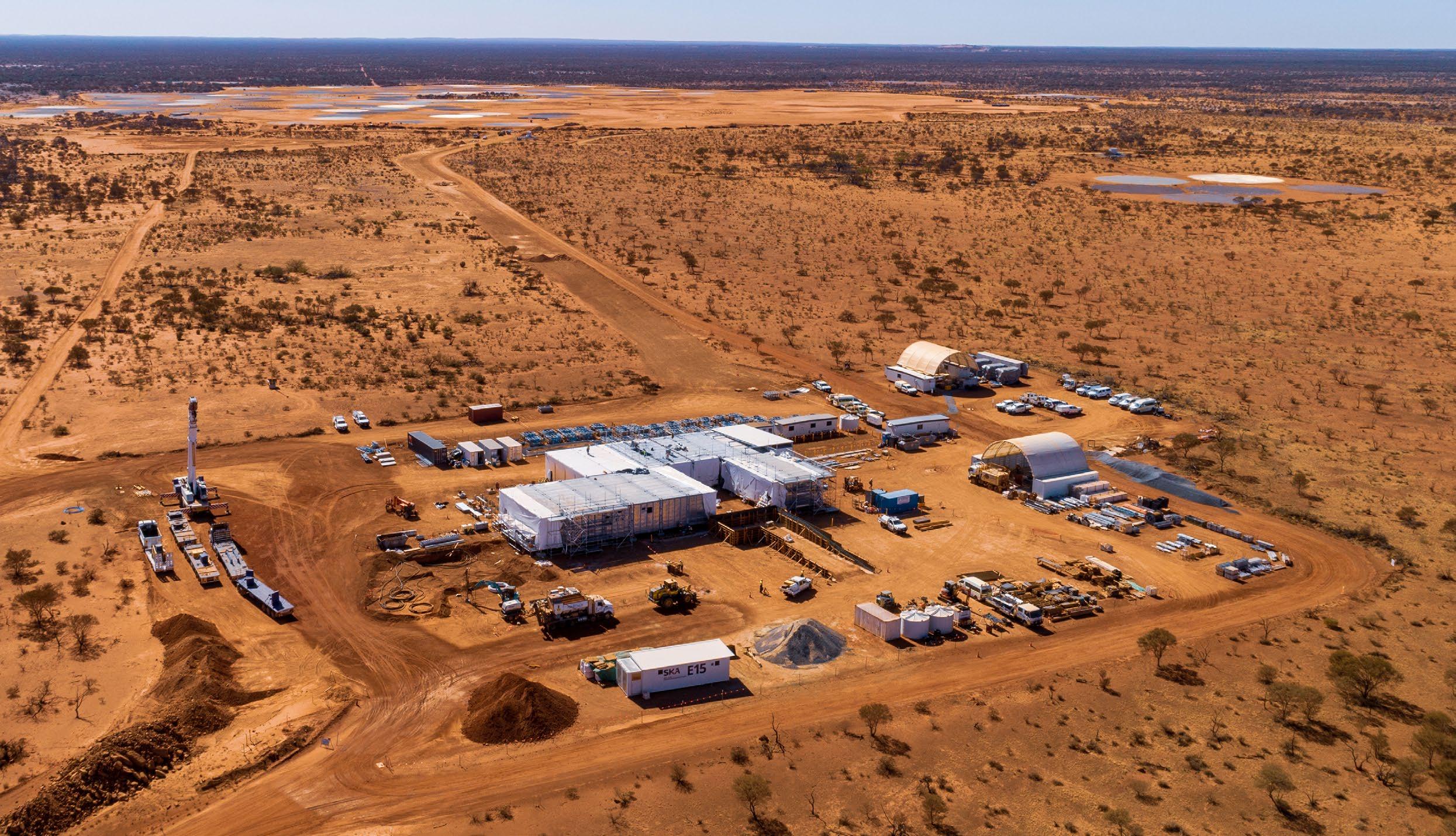
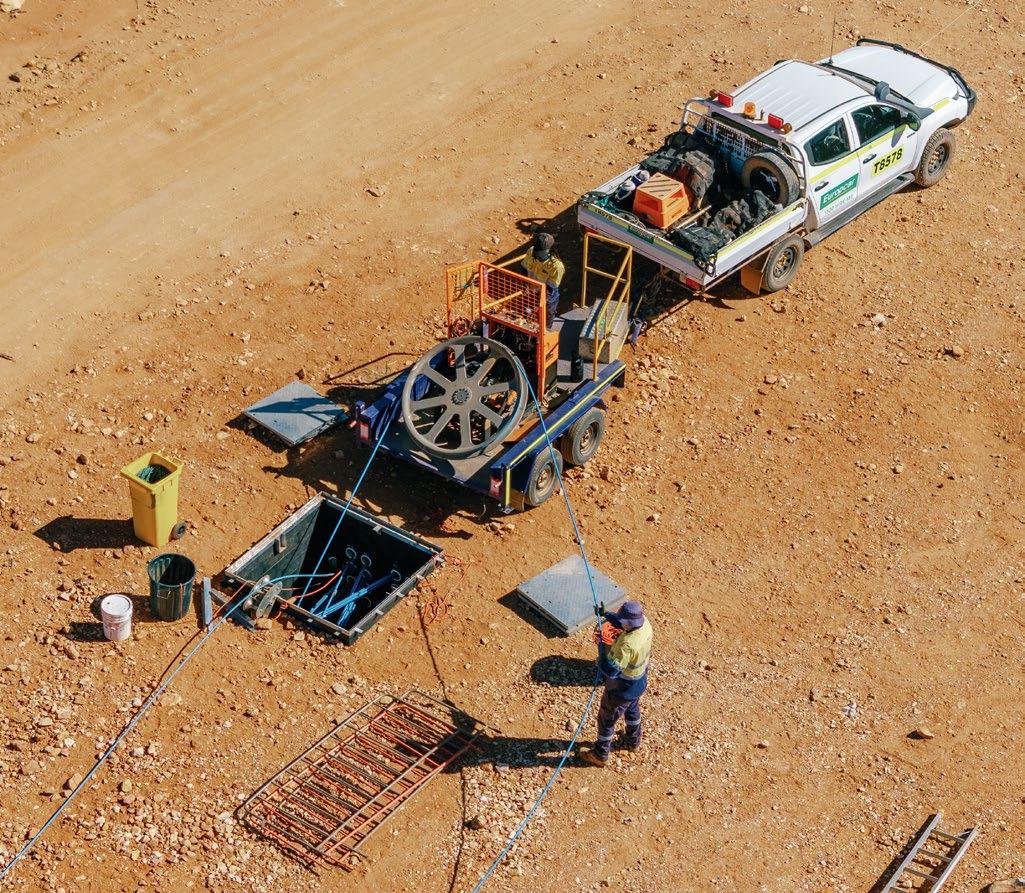
Since construction began we have topographic surveyed hundreds of kilometres of roads, tracks and corridors across the 15,000 hectare site. With our contractors, we have mobilised heavy plant and equipment, established water supplies and quarries and installed and joined hundreds of kilometres of power and fibre cables. More than 330 drums of power cable have been installed, stretching 200 km and weighing more than 500 tonnes. Another 660 km of fibre optics cables, each containing 288 fibres, have been installed across the site and
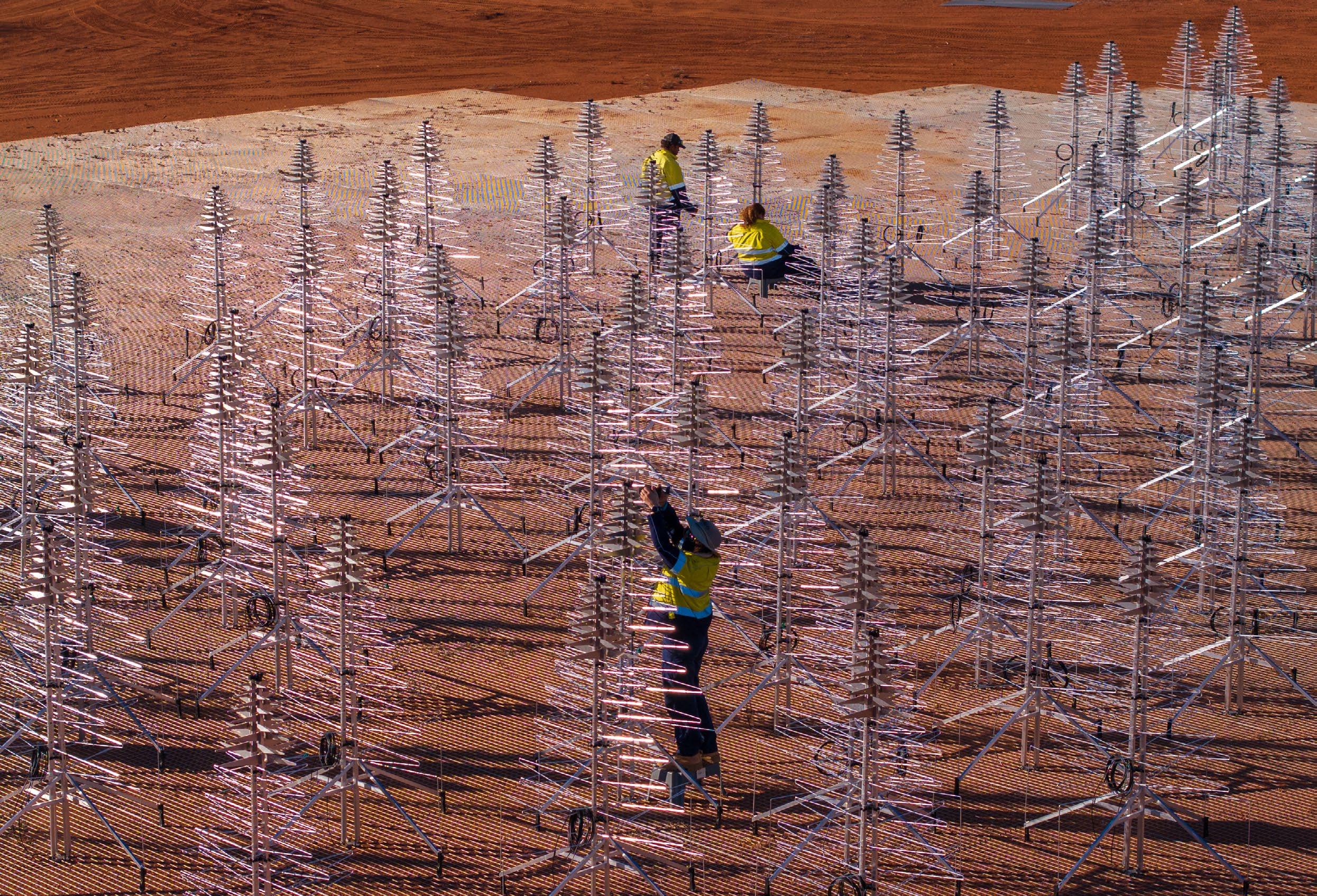
connected to the Central Processing Facility (CPF). If these fibres were separated and laid end-to-end it would reach 191,808 km, enough to wrap around Earth’s equator almost five times. Now, thanks to the involvement of hundreds of people, we have reached a tremendous milestone: the installation of 10,000 antennas. There’s still some way to go to get to 131,072, but this is nonetheless an achievement worth celebrating.
Critical to these works has been the involvement and support of the Wajarri Yamaji, the Traditional Owners and Native Title Holders of the land where the SKA-Low site is being built. Wajarri site monitors were present during all initial ground-disturbing activities to ensure preservation of cultural heritage and the identification and preservation of any cultural artefacts discovered.
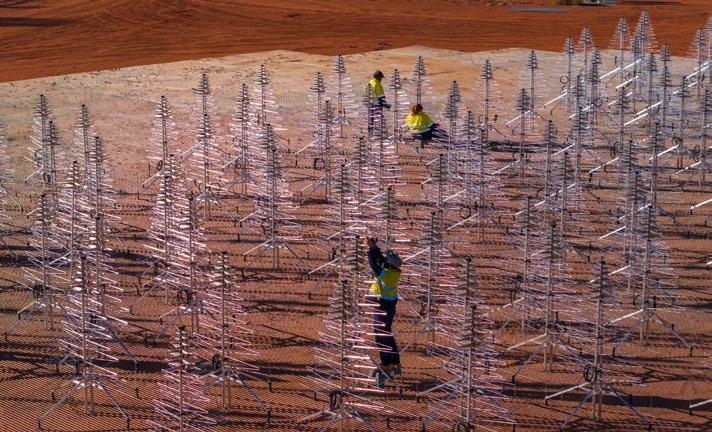
More than 10,000 antennas have been assembled and installed at the SKA-Low site. Credit: SKAO
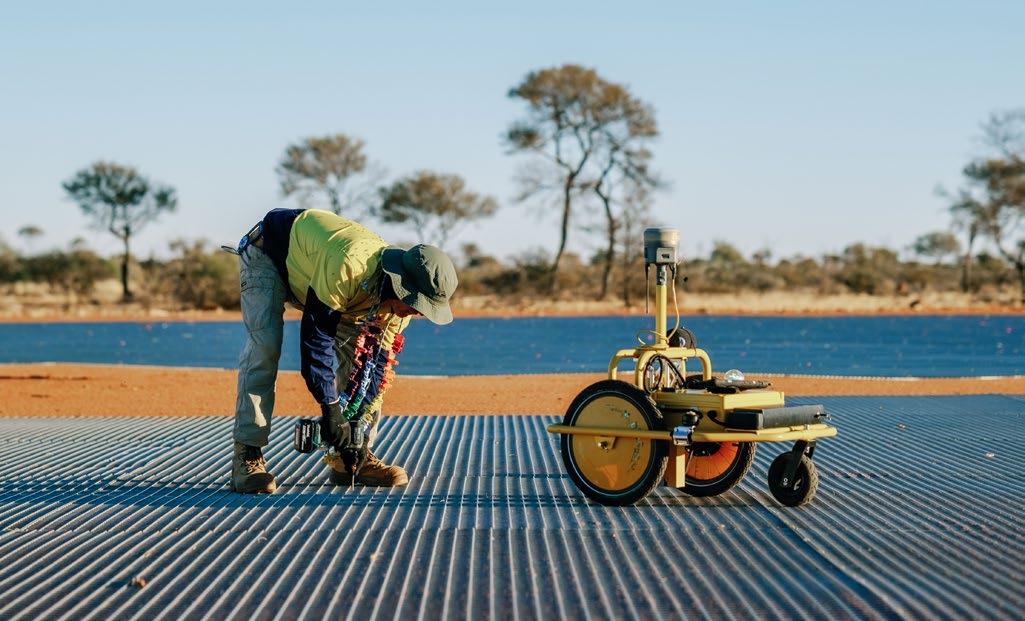
In the last 18 months we’ve cleared and levelled the ground for hundreds of antenna stations. A total of 56,000 sheets of the steel mesh that form the ground plane for each station have been laid, with our Field Technician teams assembling and installing the thousands of antennas that now stand across these stations. Our CPF is under construction. It is here that data collected from these antennas will be processed by on-site supercomputers more than 60,000 times faster than the average home broadband speed. The 18 Remote Processing Facilities (RPFs) that receive signals from the far-flung stations along the SKA-Low’s spiral arms have been installed and some are already processing data.
The first four-station array, made up of the telescope’s first 1,024 antennas, recently completed a final phase of verification testing, demonstrating the necessary architecture and supply chain is in place and working (more on page 50). This follows the exciting milestone delivered earlier this year, when SKA-Low commissioning scientists produced the telescope’s first image of the sky.
To get to this point has been a joint effort, with many collaborators. In addition to the support from the Wajarri Yamaji, CSIRO and our global partners, critical to our success has been the many contractors working on the site. They have been highly responsive, taking a proactive approach to the complex and unusual needs of the project, and embracing wholeheartedly SKAO’s safety culture. The contractor staff continuously push us for more information about the telescope, leading to a series of regular talks at the construction camp by SKAO staff
about many different facets of not only the telescope, but the astronomy research we will do with it.
Sustainable practices
While we are in the early days of the telescope, we know that some decisions have long-term consequences and as such have made sure we’ve embedded sustainability practices and initiatives into our early construction and camp operations.
A sophisticated wastewater treatment plant and evaporation pond have been established on site. This significantly reduces our trucking requirements for waste, limiting our use of diesel fuels. We have also introduced the use of refillable water containers for all people working on, or visiting, the SKA-Low site. This one action has removed our consumption of around 180,000 single-use plastic bottles per year.
In 2026 we will be approaching the market for a renewable power station. This will work in conjunction with an existing base diesel plant, with the goal of maximising the percentage of power we derive from solar energy.
Protecting and preserving the environment on which we operate is critical to our work. While hot and dry, Wajarri Country features many rivers, creek beds and water holes. We have established environmental key performance indicators (KPIs) for the SKA-Low site, in line with United Nations standards, which seek to protect the unique plants and animals that call this landscape home. An example is the successful protection of the endangered Western spiny-tailed skink, with a breeding colony identified and protected on the project site.
Looking ahead
When the SKAO established an office in Australia there were two staff: me and our SKA-Low Telescope Director Dr Sarah Pearce. Today we have grown that number to over 100, as part of our collaboration with CSIRO in Australia, with people working across the SKA-Low site, our Engineering Operations Centre in Geraldton and our Science Operations Centre in Perth. Over the next two years our Australian-based team will grow by another 50 people.
Soon we will commence the first of many transitions at the SKA-Low site, as we slowly phase from construction to operations. This includes the commissioning and handing over of the CPF in 2026 to begin the big task of fitting out the 140 racks with equipment. The process of moving into the building and getting it operating exactly to our requirements will be a great challenge. One of them is the installation of the hydrogen masers. These are three ultra-stable clocks that will need to time signals over decades to measure some of the most interesting astronomical phenomena.
I’m delighted with where we are with SKA-Low construction in Australia, and the immense scale of what our teams, partners and collaborators have achieved. That’s not to say there aren’t significant challenges still to be met, or that we’ll be taking our foot off the gas. We have just celebrated the completion of the first project milestone for SKA-Low, with an operational four-station array (AA0.5). We now work towards our next major milestone – which will see SKA-Low become the most sensitive low-frequency radio telescope on the planet.
The Central Processing Facility, as seen from above, will process much of the data from antennas in the SKA-Low core. Credit: SKAO
Above: More than 56,000 sheets of steel mesh have been laid. Credit: SKAO
Below: More than 660 km of fibre optics cables have been installed across the site and connected to the Central Processing Facility. Credit: SKAO
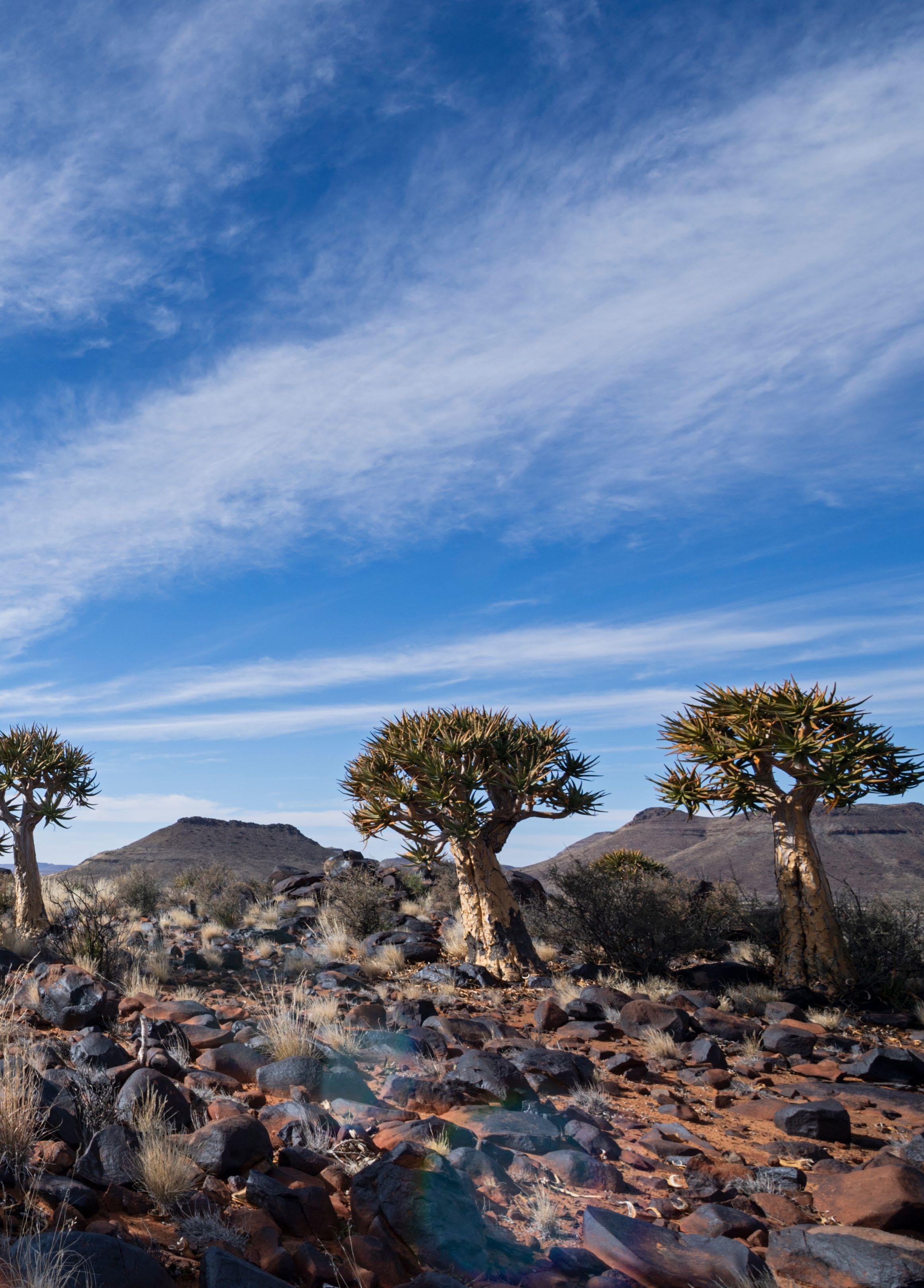
FEATURED IMAGE
The Quiver Tree forest in the Meerkat National Park. One of the only places where new trees are growing. Credit: SKAO/Max Alexander.
Preserving the environment while looking up
BY MATHIEU ISIDRO (SKAO)
While the SKA sites in Australia and South Africa are primarily used for astronomical research, they are providing a unique opportunity to study the environment, protect endangered species, and regenerate the land after years of farming.
In South Africa’s Karoo, in order to protect the area from unwanted interference near the telescopes, the land was declared a conservation area, now known as the Meerkat National Park. The park is now South Africa’s eighth largest national park. The area, now free of livestock, is managed in cooperation with national environmental authorities like the South African National Parks agency SANParks, and is home to one of the world’s largest
and healthiest Quiver tree forests, a very important conservation element as quiver trees are considered a vulnerable species. To help manage the site and remove alien invasive species, SANParks is training additional rangers from the local communities, providing further employment opportunities in the area.
In Australia, the SKA site is located within Inyarrimanha Ilgari Bundara, the CSIRO Murchison Radio-astronomy Observatory, a 4,300 km2 destocked pastoral station on Wajarri Yamaji Country that now hosts radio telescopes. CSIRO, in conjunction with the Western Australian Government, is collating and analysing data on flora and fauna to provide advice to a multitude of agencies and working groups on the impact of grazing activities and climate change in the broader region. The region is also home to a vulnerable species of lizard: the Western spinytailed skink. A skink survey programme took place prior to the first land clearing works to ensure construction operations don’t impact this native creature, and a number of SKA-Low staff trained as fauna specialists to lead future surveys.
So, while astronomy happens on these sites, it also enables the protection of ecosystems and endangered species, and broadens the positive contribution of the project to the UN’s Sustainable Development Goals.
SKA-Mid: creating a sustainable legacy in South Africa
BY ANNE DANIELS (SKAO)
Since the very start of the SKA project in South Africa, it has been a priority to ensure that local people and businesses are involved in and benefit from the presence of radio astronomy observatories in their community. In this article we look at some of the ways that the SKAO and its collaboration partner, the South African Radio Astronomy Observatory (SARAO), are ensuring that the SKA project’s long-term impact is felt across the region that is home to the SKA-Mid telescope and two of its precursors, MeerKAT and HERA.
Of interest!
The CEO of the American Association for the Advancement of Science Dr Sudip Parikh had the opportunity to visit the SKA-Mid telescope site in December 2022. Seeing SARAO’s initiatives in action in the local communities inspired his speech at the World Science Forum where he said: “I am certain that among the children of the Northern Cape that there is a world-leading biochemist, that there is an electrical engineer who will solve the problem of battery storage, that there is an astronomer who will see farther than anyone has seen before.”
Watch his speech here
Investing in education
On a recent winter morning in Williston, a town close to the SKA-Mid site, a team of SKAO and SARAO employees were ready for a day of volunteering. Their task: dismantle an old unsafe building at an early childhood development centre and install a new one up to code. It was Nelson Mandela Day, a day to honour the legacy of South Africa’s former president and practise his values through volunteer action and community service.
“It really was a fantastic team effort between the SKAO and SARAO teams with help from our contractors Zutari, Speedspace, CSG and WBHO,” said Tracy Cheetham, SKA-Mid Site Construction Director.
Sixteen
“We were able to recuperate timber from the building for furniture, and the roof for a patio. The SARAO electrical team rewired the new classroom completely, one of our contractors worked on the plumbing and new learning material arrived ready for the children.”
SARAO and the SKAO are together funding early childhood development centres in the towns near the SKA-Mid site, their first joint education initiative. The centres join a suite of programmes which have been funded by SARAO for many years, encompassing primary, secondary and tertiary education. This means there are now initiatives supporting learners of all ages in the towns, from the earliest years to postgraduate level.
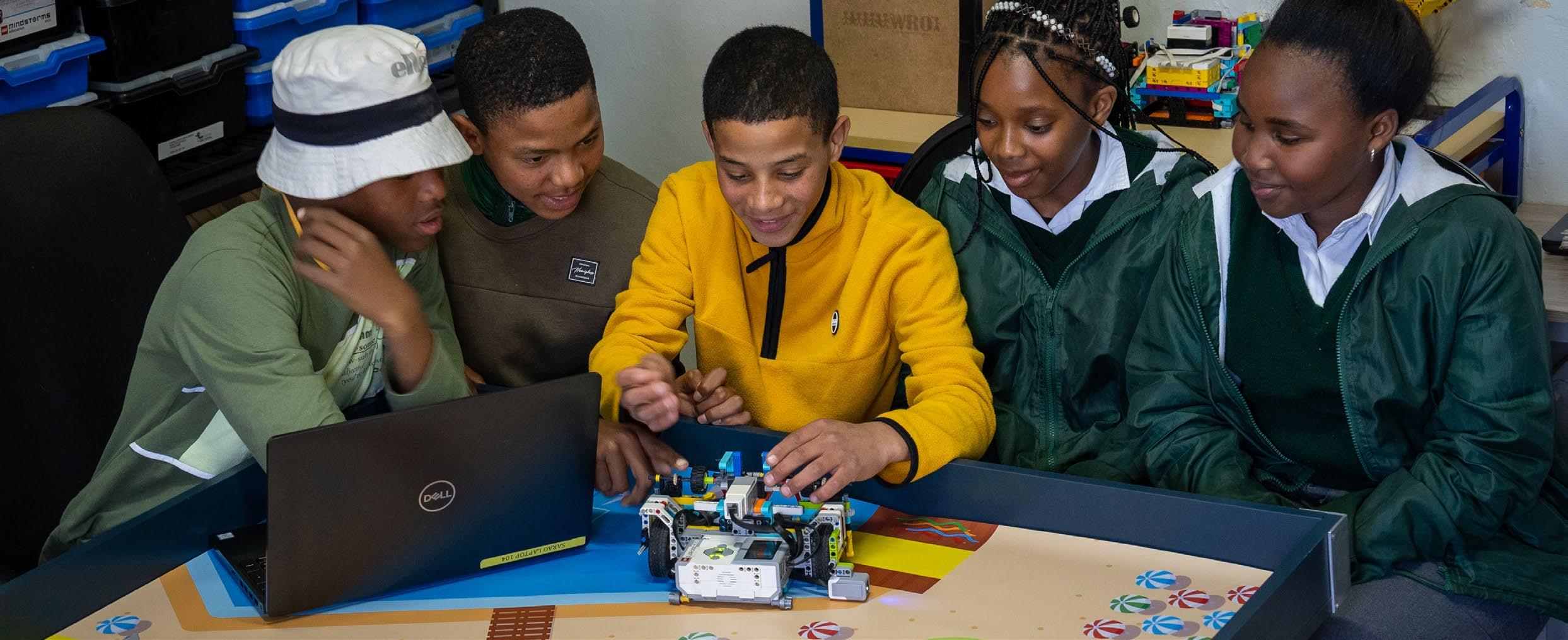
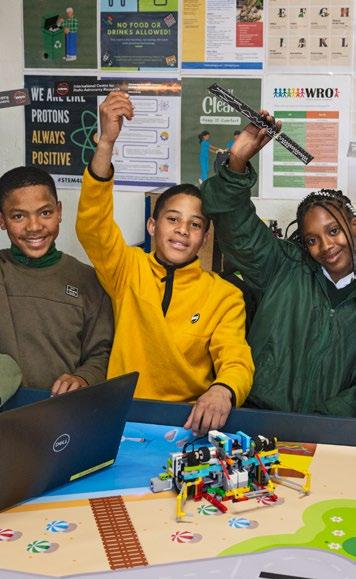
One notable and highly successful example is SARAO’s extracurricular robotics programme, which has been running in local high schools since 2016 with the goal of igniting a passion for STEM by challenging students to code and program their very own LEGO robots.
“In primary schools we don’t have any computer labs in most of our schools. So having them do coding and computer literacy as a foundation, and then having them do robotics is a great opportunity,” said Odwa Magabuko who has been leading the robotics teams in 11 schools in the towns surrounding the telescope site.
As well as teaching technical skills, the programme provides opportunities for travel to competitions in South Africa and further afield, which for many students is the first time they leave their hometown. Since the start of the programme, teams have made it to international competitions in Uruguay, Denmark, Morocco and the United States.
Beyond the towns, the astronomy community in South Africa has been blossoming since its involvement in the SKA project. In higher education, SARAO bursaries are supporting a new generation of students into radio astronomy and related fields, with around 1,700 bursaries awarded for undergraduate, master’s and PhD study since 2005.
In 2024, the SKAO and SARAO signed a memorandum of understanding to further collaboration in human capital development programmes.
Global project brings local opportunities
While SKA-Mid telescope components are being developed all over the world, local people and small, medium and micro enterprises (SMMEs) are central to the construction effort on site.
The Power Adenco Joint Venture was awarded a €53m contract to carry out infrastructure work on the telescope site, with the stipulation that the group should provide a range of subcontract opportunities to local SMMEs and local employment opportunities. Together with China’s CETC54, they have employed more than 300 local community members, more than 58% of them aged between 18 and 35 years.
Power Adenco have been providing 12 local SMMEs with business training with an eye on providing work packages for the SKA-Mid telescope, and equipping them with skills for the future.
“In 2006 I was already involved in the SMME programme. I immediately saw the great opportunity for our area,” said Wilson Mahlo from Williston Construction and Services.
“There were times when I had no income, but now I can put something on the table, help my children with their studies.”
Dalmaine Ross, Site Engineer at Power added: “It’s very important to involve the local people. What we as Power did was development with the subcontractors: managing costs, managing your people, and managing your time on site.”
A separate SARAO artisan training programme also equips local people with skills that are needed on site. The programme has already trained fibre technicians, IT technicians, electricians, boilermakers, fitters and turners, mechanics, and instrument control technicians. These skills are also benefiting the local communities; in Williston artisans-in-training helped install a solar power system in an elderly people’s home, reducing the electricity burden and providing a sustainable electricity supply.
The SARAO robotics team in Carnarvon with their LEGO robot. Credit: SKAO/Max Alexander
South African technology at the heart of SKA-Mid
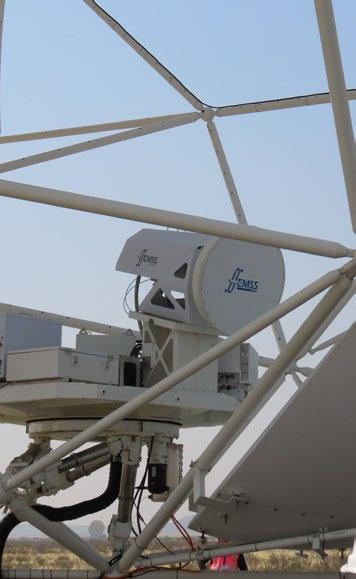
South African companies are also providing high-tech components for SKA-Mid. EMSS Antennas, based near Stellenbosch, first got involved in the development of telescope receivers for the KAT-7 and MeerKAT telescopes, an important experience that landed them the contract for the first 60 Band 2 feeds for SKA-Mid. The expertise built over the years has allowed the company to grow and take on contracts from other big telescope projects including the US Next Generation Very Large Array (ngVLA).
“A big testament to our success are the jobs people find after working at EMSS, going into the space and military technology industries and continuing their careers there,” said EMSS Managing Director Johan van Staden. “We are very proud to be part of enabling that transfer of knowledge between sectors.”
Another significant contract was awarded to South African ICT firm Gijima, which is partnering with Nokia to deliver an optical transmission network which will transfer the observational data from SKA-Mid over hundreds of kilometres to the SKAO processing facilities in Cape Town.
Preserving a fragile environment and safeguarding Indigenous knowledge
A great result of establishing the telescope site in that area of the Karoo was the creation of the Meerkat National Park in 2020, which supports conservation efforts and scientific research. The park is maintained by the South African National Parks service with a mandate to conserve biodiversity and cultural heritage. Conservation efforts in the park include the monitoring of the endangered quiver trees, iconic native trees that were used by the Indigenous San people to make quivers for their arrows.
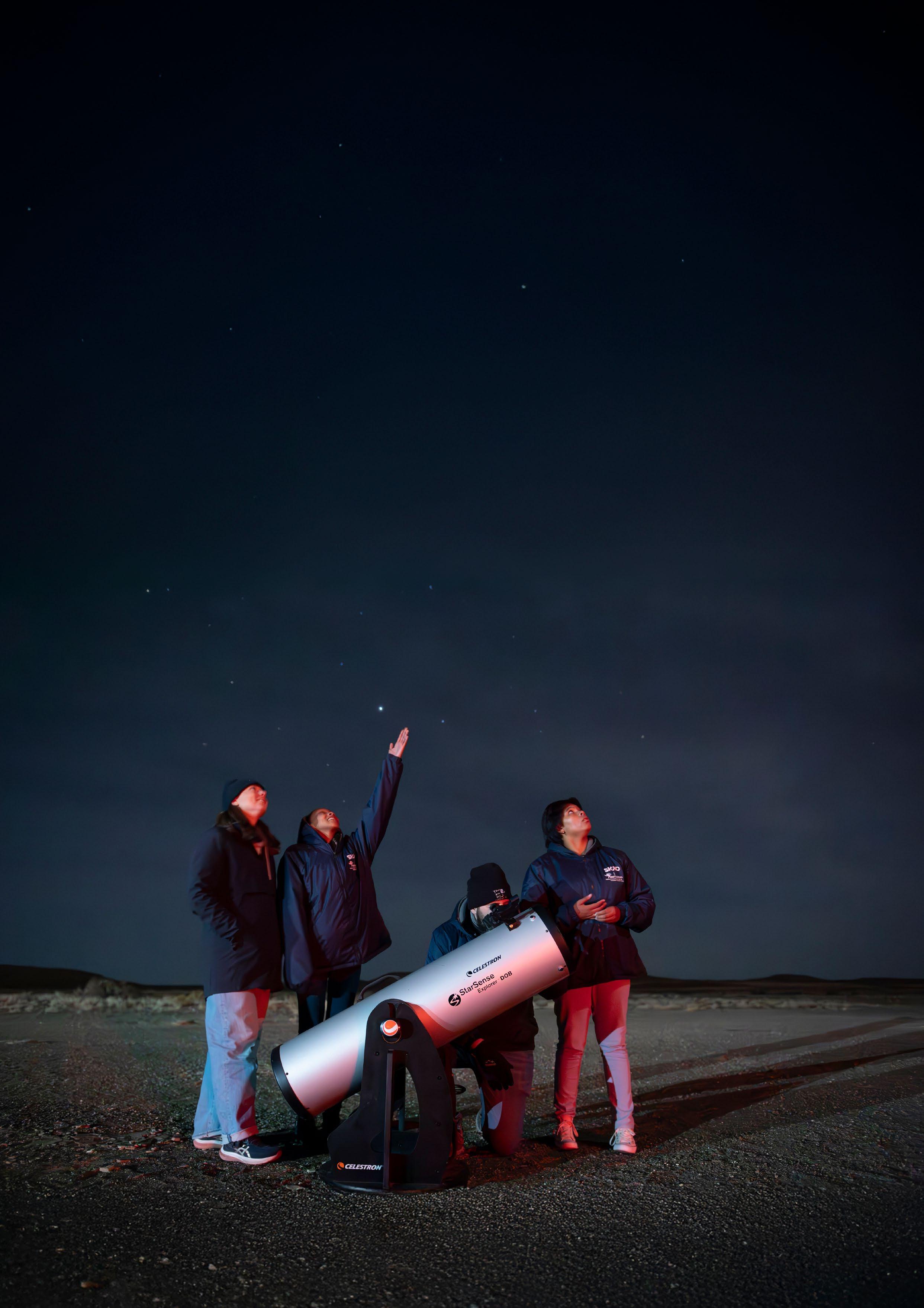
In this area, Indigenous knowledge has been passed down from generation to generation. In recent years, there has been a movement to capture that knowledge, including through an ethno-botanical survey that catalogued 86 medicinal plants that are still being used today. Knowledge of the cosmos lies at the heart of SARAO’s astro-guide training programme which supports the development of astro-tourism in the region by offering immersive night sky tours that incorporate local lore. The programme has so far trained 16 astro-tourism guides who take visitors on an experience connecting the local environment to the cosmos.
“Our great, great, great-parents lived here and they were telling the stories, and for me to be here and also tell the stories is beautiful,” said Nicole Vermeulen, one of the first cohort of astro-guides.
Indigenous peoples’ connection to the sky was also at the heart of the Cosmic Echoes exhibition that brought together Indigenous artists living and working close to the SKA telescope sites in South Africa and Australia [read more about the exhibition on page 52].
In some cases, astro-guides and Cosmic Echoes artists have gone on to be employed on site. Breyton Dakens was involved in a series of workshops that developed art for the exhibition, and went on to find work at the telescope site through an SMME.
“I was unemployed for three years,” says Breyton. “For me it was an honour to be taken on. It makes me proud and it makes my mother happy. Every day I am excited to go to site and it’s all thanks to the SKA project. They are creating so many opportunities.”
EMSS Antennas is providing the Band 2 receiver for the SKA-Mid telescope. Credit: SKAO
SKA-Low – providing lasting benefits to Australia
BY LIZ WILLIAMS AND SEBASTIAN NEUWEILER (SKAO) AND KIRSTEN FREDERICKSEN (CSIRO)
Australia is one of the founding members of the SKAO and is hosting the SKA-Low telescope on Wajarri Yamaji Country, in the outback of Western Australia. Over the past 20 years, Australia’s participation in the SKA project has seen the construction, commissioning and operation of two pathfinder telescopes, the development of new technologies and infrastructure, capacity building in the national astronomy community and training, jobs and business contracts for local and Indigenous communities.
These early impacts provide an indication of the benefits that will flow from the Observatory over the next 50 years, when construction of the SKA-Low telescope is completed, and science operations are well underway.
At the forefront of a scientific revolution
Australia, and its national science agency CSIRO, has been a global leader in radio astronomy since the emergence of the field in the 1940s and has been involved in the SKA project since its inception, demonstrating to the world Australia is well equipped to partner in mega-science facilities. The Australian Government Department of Industry, Science and Resources manages Australia’s role in the SKAO, and the SKAO is partnering with CSIRO to build and operate the SKA-Low telescope. CSIRO and Australian university and industry partners are all involved in developing digital technologies, and ensuring Australian scientists are positioned to benefit.
Credit: SKAO/Max Alexander
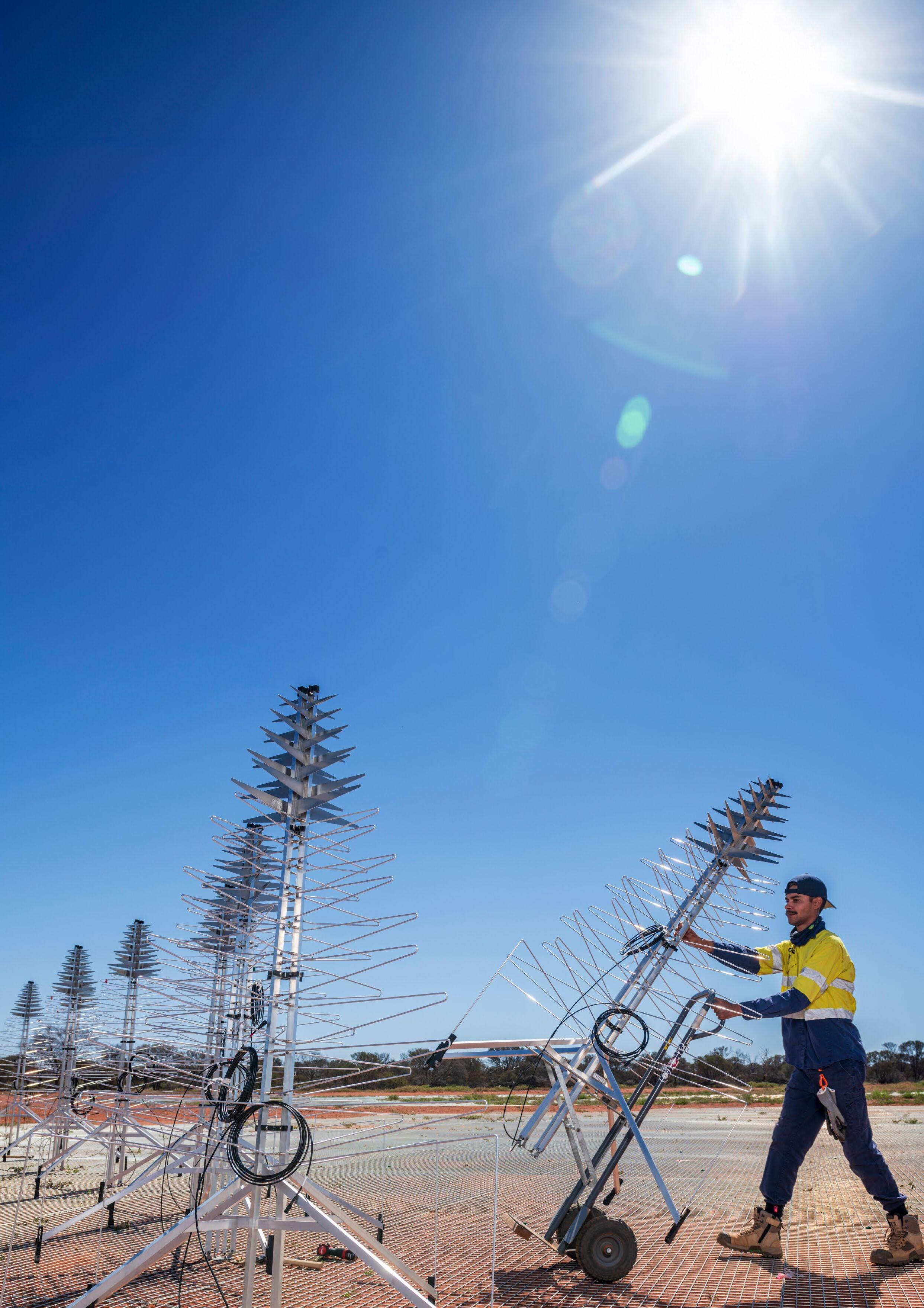
The SKA-Low Field Technician team is made up primarily of Wajarri Yamaji People.
The SKAO’s telescopes will be responsible for many scientific breakthroughs and discoveries, and Australian-based scientists will be at the forefront of this work. The SKA-Low science operations and commissioning teams comprise expertise from around the world, including Australian institutions. The past decade has seen the Australian astronomical community grow substantially from more than 380 to almost 620, with the number of graduates doubling. Much of this growth can be attributed to Australia’s investment in the SKA project. CSIRO’s ASKAP has played a leading role in building expertise towards SKAO science, including on mysterious objects like fast radio bursts (read more on page 31).
The construction of the SKA-Low telescope at Inyarrimanha Ilgari Bundara, the CSIRO Murchison Radio-astronomy Observatory, is also helping to generate an interest in STEM subjects as future generations of students are inspired by Australia playing host to part of the SKA project. The SKAO is supporting the university and government sectors to increase diversity in tertiary student STEM enrolments.
In 2024, the SKAO and the International Centre for Radio Astronomy Research (ICRAR) partnered to deliver the first regional STEM Stargirls+ camp in Western Australia’s Mid West region. This programme was held again in 2025 and provides opportunities for young women and gender minorities to get involved in realworld astronomy projects.
Australia’s biggest free astronomy festival, Perth Astrofest, inspires future generations via interactive exhibits, stargazing, astrophotography and visits by world-leading scientists. Coordinated by ICRAR and supported by CSIRO and the Australian Government Department of Industry, Science and Resources, Perth Astrofest has been held for almost 15 years, visited by tens of thousands of people.
Opportunities, innovation and new skills
Australian businesses are leading the construction of SKALow infrastructure and contributing to the development of new technologies used in the SKA project.
Infrastructure service provider Ventia was awarded an A$200 million contract over three years to deliver infrastructure for the SKA-Low telescope, bringing employment and contracting opportunities for local and Indigenous people and businesses. Ventia is responsible for providing hundreds of kilometres of power and fibre networks that connect SKA-Low’s antenna stations. It is also building and commissioning the on-site Central Processing Facility and Remote Processing Facilities, which were custom designed by CSIRO and Aurecon.
Local and medium-sized businesses are also contributing to telescope construction. Ventia has awarded subcontracts and established accounts with more than 80 businesses in Western Australia.
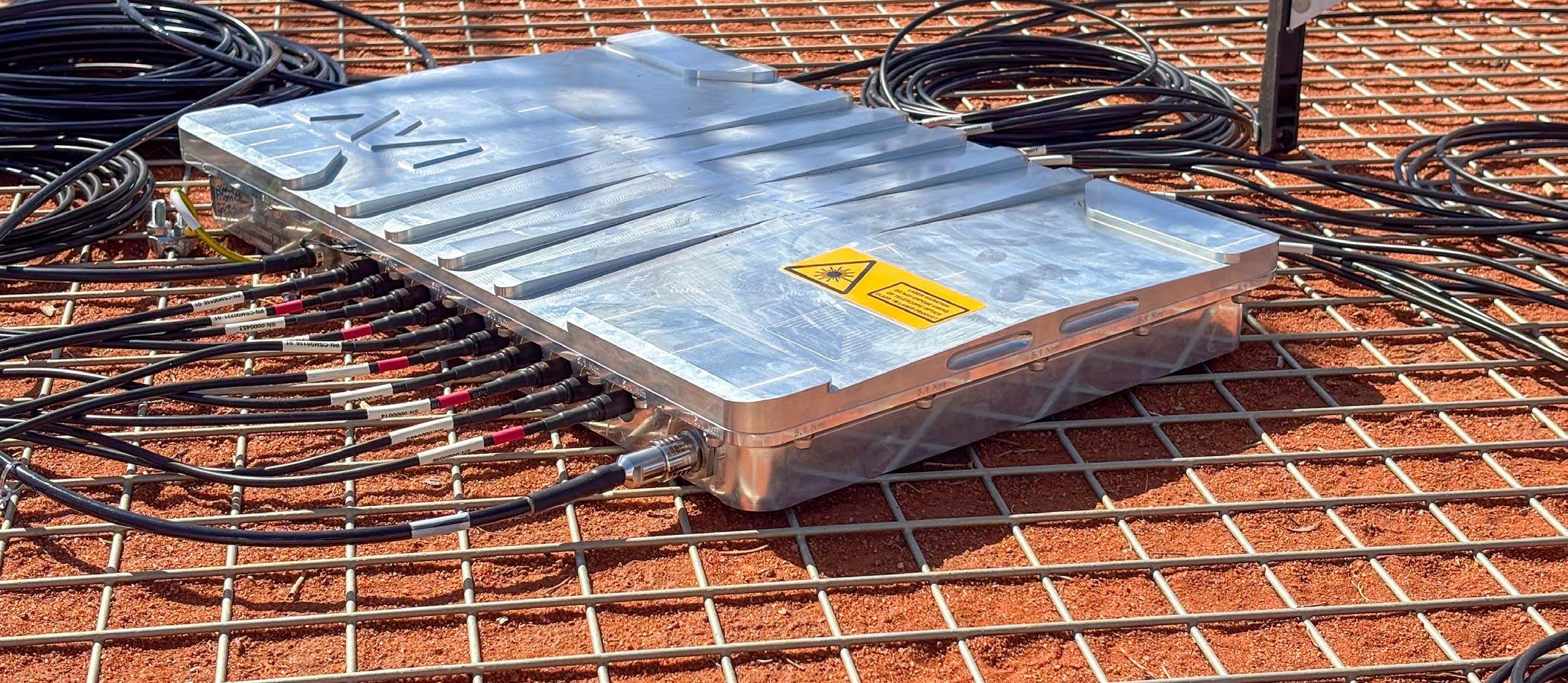
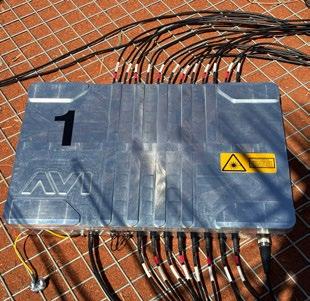
The Department of Energy and Economic Diversification is coordinating the Western Australian Government’s involvement in the SKA project, along with aiming to maximise benefits to Western Australia (WA). Developing cutting-edge technology for the SKA project is exposing local businesses to new skills and capabilities. WA-based company AVI is manufacturing SMART (Small Modular Aggregation Radio frequency over fibre Trunk) boxes to manage fibre optic signals and power for the SKA-Low antennas. This represents the largest contract for the SKA-Low telescope in Australia, outside of on-site infrastructure.
The SMART boxes provide electrical power and collect signals received from the sky before sending them for processing. The highly specialised ‘radio quiet’ electronics within the SMART boxes are an essential component of the SKA-Low telescope.
AVI is manufacturing the ‘SMART boxes’ that manage signals and power for the SKA-Low antennas. Credit: SKAO
The original design of the SMART boxes was first produced in Australia by the Curtin University node of ICRAR. AVI has refined the design for large scale production and to match the challenges presented by the remote and harsh environmental conditions on site. AVI’s successful contract to build the SMART boxes in WA is a promising indication of Australia’s capability in the space industry.
Genuine and long-term relationships
As the Traditional Owners and Native Title Holders of the site where the SKA-Low telescope is being built, the Wajarri Yamaji People are critical partners and collaborators. The SKAO and CSIRO are committed to a genuine and longterm partnership with the Wajarri Yamaji community who are playing a key role in enabling Australia to co-host the SKA project.
The project is already fostering job creation and business opportunities for the Wajarri community. The SKAO and Australian Government have required that Australian contractors engage with local and Wajarri businesses in delivering their work, to ensure economic benefits from the project flow back to the Wajarri People and broader Mid West communities. Ventia has worked with the SKAO to provide opportunities for direct employment of Wajarri People and to encourage their subcontractors to do the same. This has proven very successful and on any given day, between 15 to 25% of people working on site identify as Wajarri.
Ventia and Wajarri Enterprises Limited, a sustainable business enterprise established for the benefit of Wajarri People, also established a Joint Venture partnership. This partnership was awarded a contract by the SKAO to manage the SKA-Low construction village, Nyingari Ngurra, where 180 telescope staff and contractors are accommodated while working on site. This partnership brings together the strengths and expertise of both entities to create opportunities for Wajarri People.
The SKA-Low collaboration team and other parts of CSIRO worked together with the Wajarri Yamaji Aboriginal Corporation (WYAC) to encourage Wajarri applicants for field technician roles, to build and install the first of the more than 130,000 antennas that will make up the SKA-Low telescope.
The field technician team started work in 2024, installing the first SKA-Low telescope antenna in March that year, and have now grown to a team of almost 20, many from the Wajarri community.
In collaboration with the Wajarri Yamaji Aboriginal Corporation and CSIRO, the SKAO seeks to preserve and promote Wajarri knowledge, culture, and heritage. Art is an important way of sharing culture for the Wajarri People. The 2024 art exhibition Cosmic Echoes features
art and stories from Wajarri and South African artists, connecting these ancient cultures and the two SKA telescopes sites. Cosmic Echoes is a continuation of the first SKAO Indigenous art exhibition, Shared Sky, which launched 10 years ago. As the successor to this venture, Cosmic Echoes once again highlights the observations of the night sky made by the communities that live near the SKA telescopes, explaining what they have seen through art and stories for thousands of years (more on page 56).
Hosting the SKA-Low telescope represents an investment in Australia’s economic future, its technological capabilities and its commitment to reconciliation and Indigenous advancement.
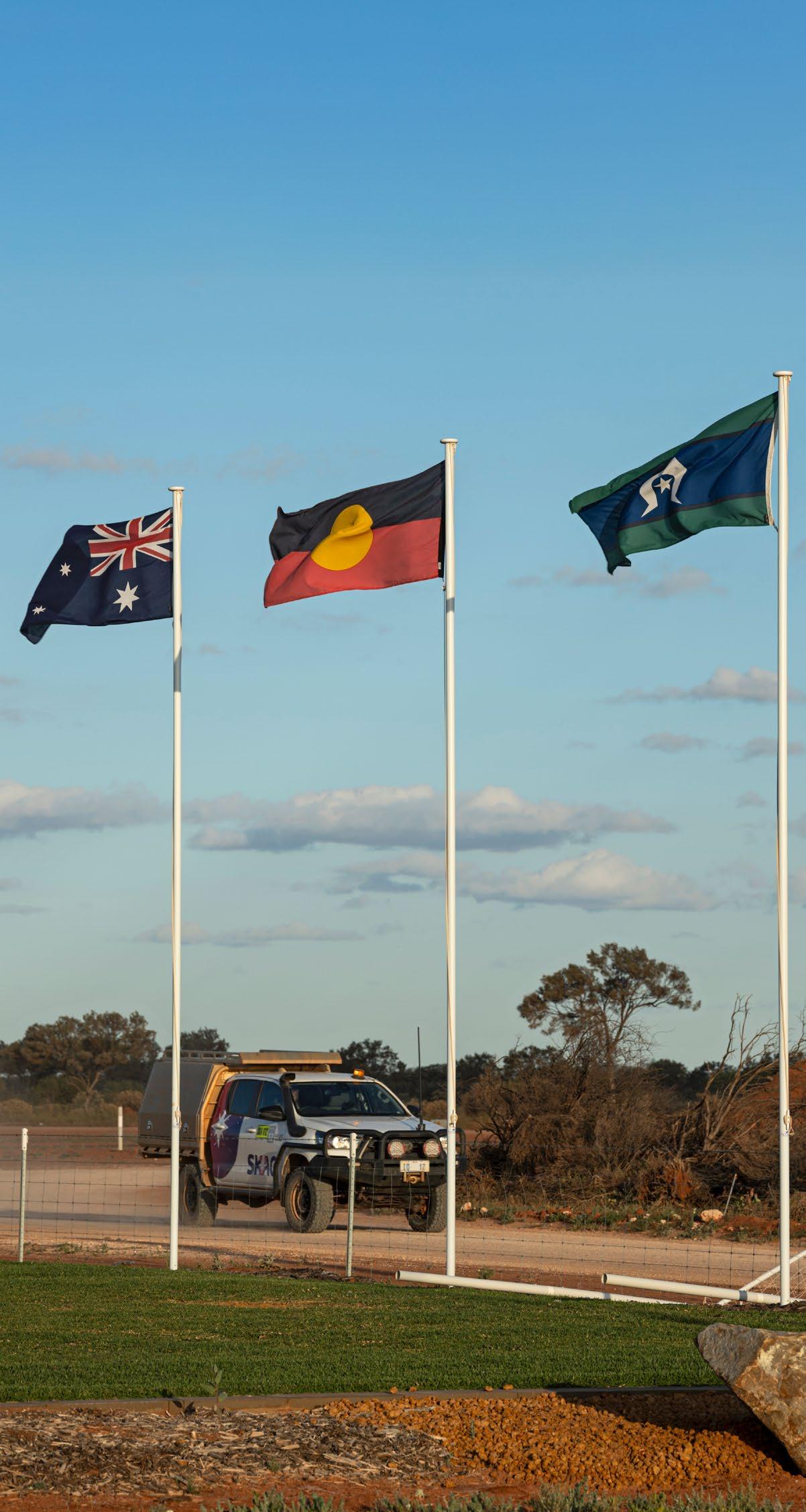
Australian, Aboriginal and Torres
The
Strait Islanders flags flying high at Nyingari Ngurra.
Credit: SKAO/Max Alexander
Inspiring STEM among the next generation
Inspiring young people to study STEM subjects and develop scientific and technical skills which can be applied in a wide range of careers and industries is a powerful impact of the SKA project.
Dozens of educational and outreach activities take place across the SKAO’s member countries and wider SKA community each year, often using creative and fun methods to drive an interest in astronomy and related fields.
Here we look at some recent examples of how the SKAO and more generally the SKA community across the world have sparked the imagination of young people – some of whom may very well be our future employees and collaborators.
Sharing a Baseline: connecting classrooms and observatories across borders
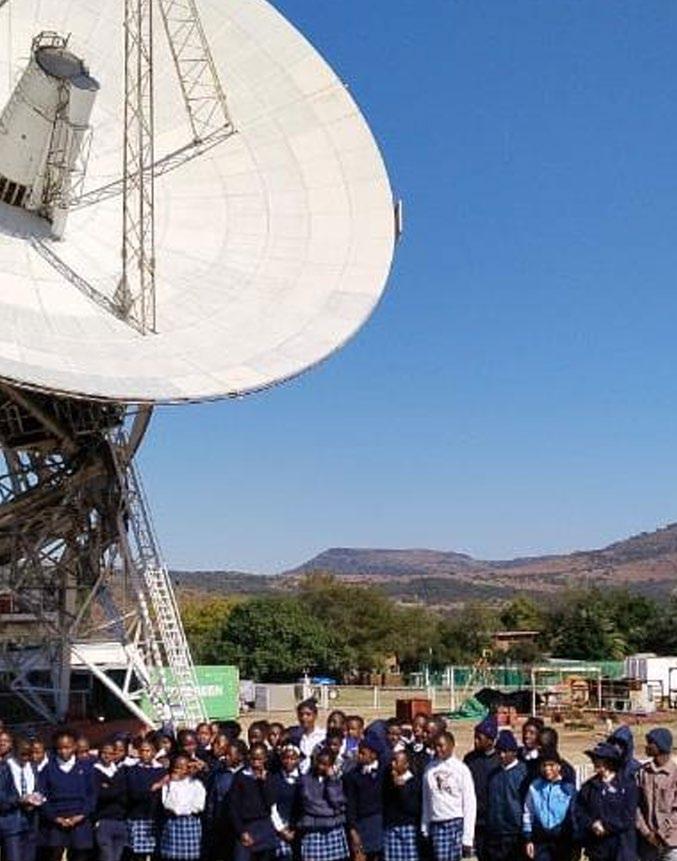
The Sharing a Baseline project brought together schools and radio observatories across Europe during 2024 and South Africa in 2025, giving students aged 14 to 16 a unique opportunity to discover the science and global collaboration behind modern astronomy.
Part-funded by the SKAO and the International Astronomical Union’s Office for Astronomy Outreach, the project aimed to test how to use radio astronomy to foster interest in STEM subjects among students who have not yet chosen their future pathways in life.
Seven radio observatories across six countries – Finland, Italy, Netherlands, Spain, Sweden and South Africa – each paired with a school. Each participating school enjoyed three key activities:
• A scientist visited the school to introduce radio astronomy and why international collaboration is essential.
• Students visited their observatory, met researchers, and in some cases carried out real observations.
• Classes in two countries joined an online meetup to share what they had learned and produced.
The collaborative nature of the project was aimed at mirroring how global partnerships are essential to facilitate science mega-projects like the SKAO.
Feedback from teachers and students showed that observatory visits and online meetups were particularly inspiring. Students valued the chance to talk with scientists, see world-class facilities up close, and interact with peers in other countries. For many learners, it was their first encounter with a scientific research environment.
One teacher noted that “at least a couple of students changed their minds about their future studies – they are now much more interested in STEM.”
Project coordinator Robert Cumming, a communications officer for Onsala Space Observatory and member of the SKA Communications and Outreach Network (SKACON) said: “By linking classrooms across continents, we think a project like this could make a small but important contribution to science diplomacy. We hope it can also
Students visit Hartebeesthoek Radio Astronomy Observatory in South Africa as part of the Sharing a Baseline project. Credit: SARAO
inspire some of the scientists and engineers of the future, and the people that support them. Facilities like the SKAO are going to need many of those!
“Sharing a Baseline’s success points toward exciting opportunities to expand the concept to more SKAO member countries in the future.”
Paper art antennas inspire SKAO outreach activity
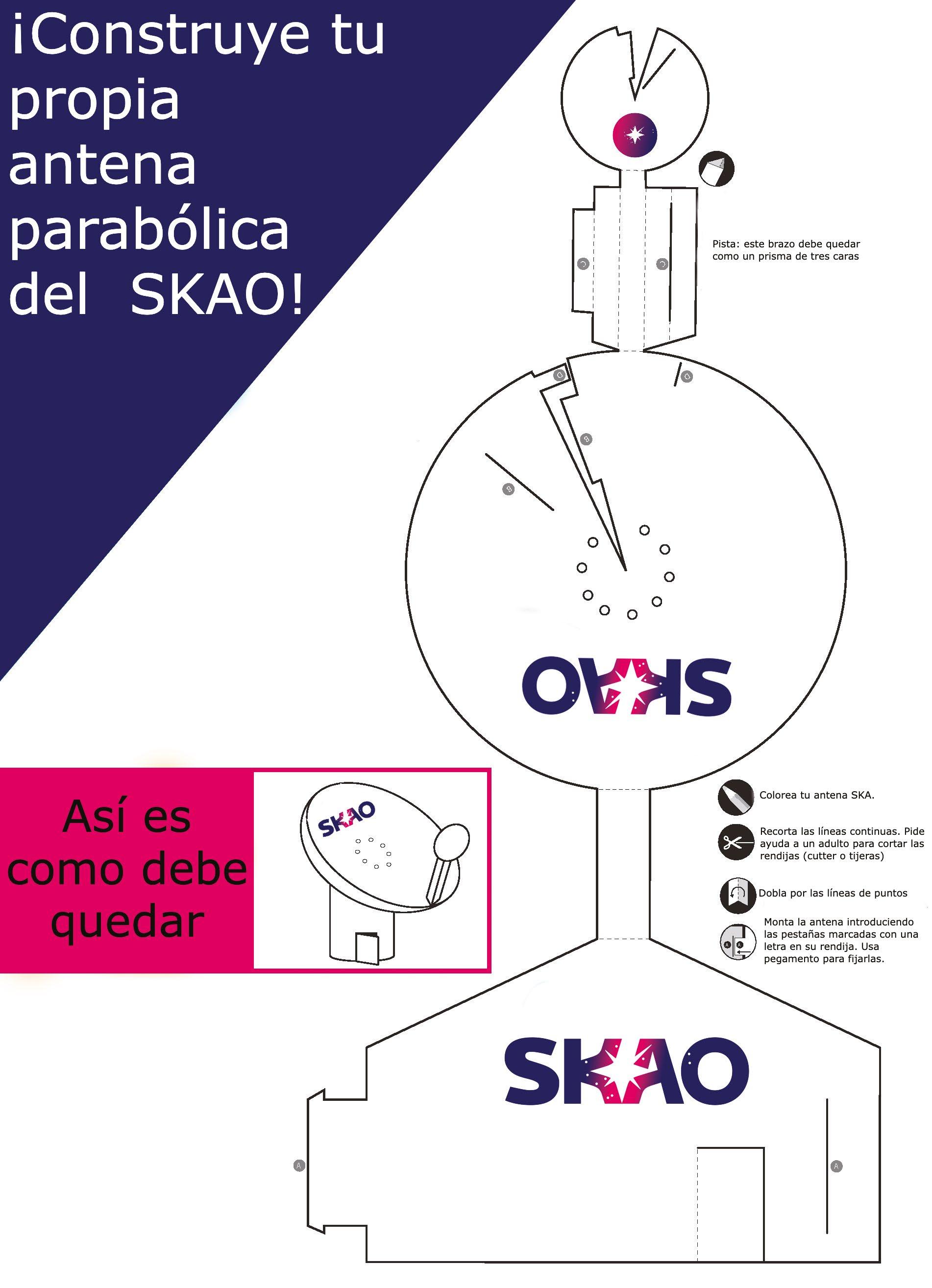
As the nation most synonymous with origami, it’s apt that Japanese SKA community members have inspired a new paper-based outreach activity about the SKA project.
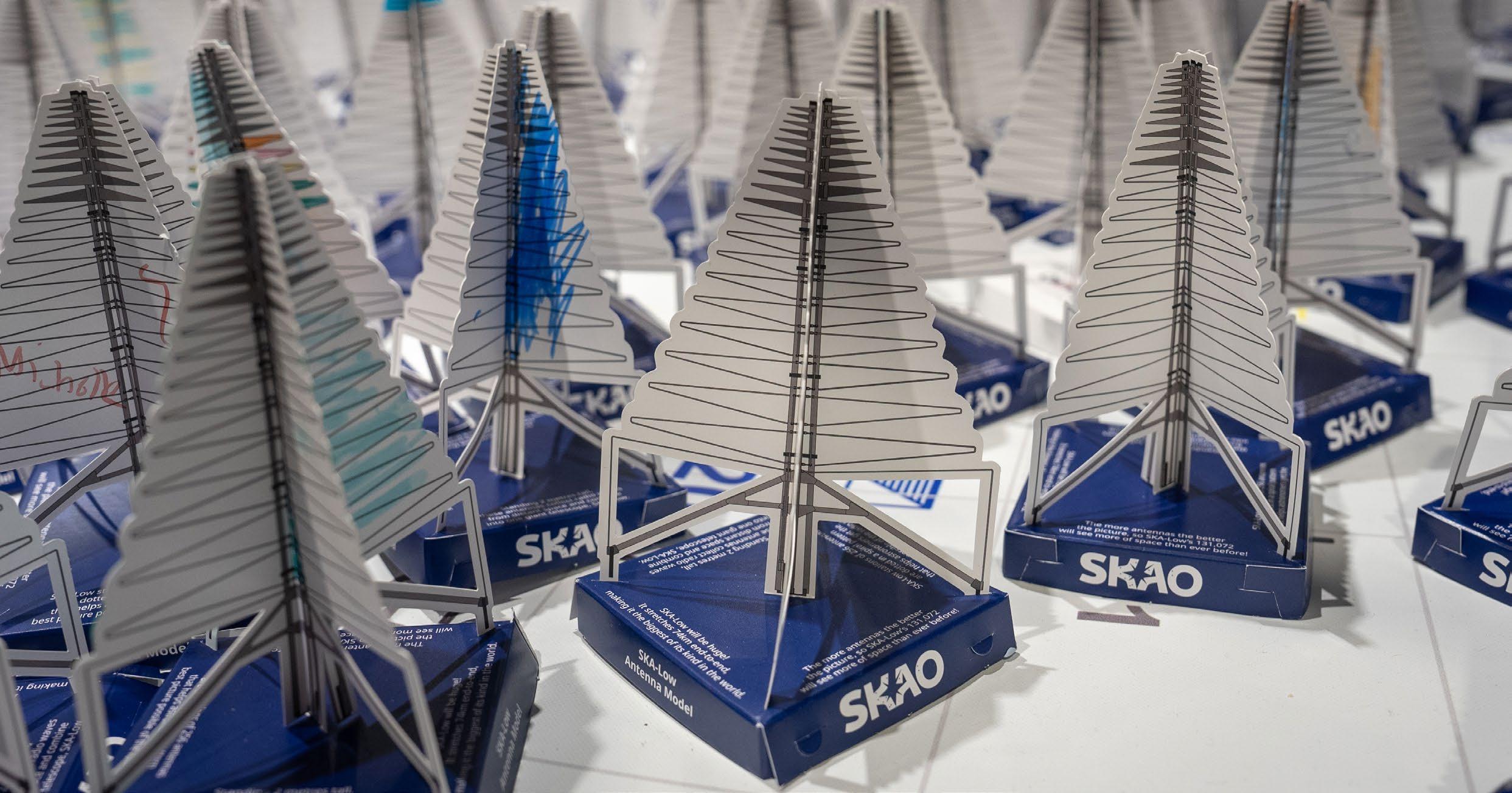
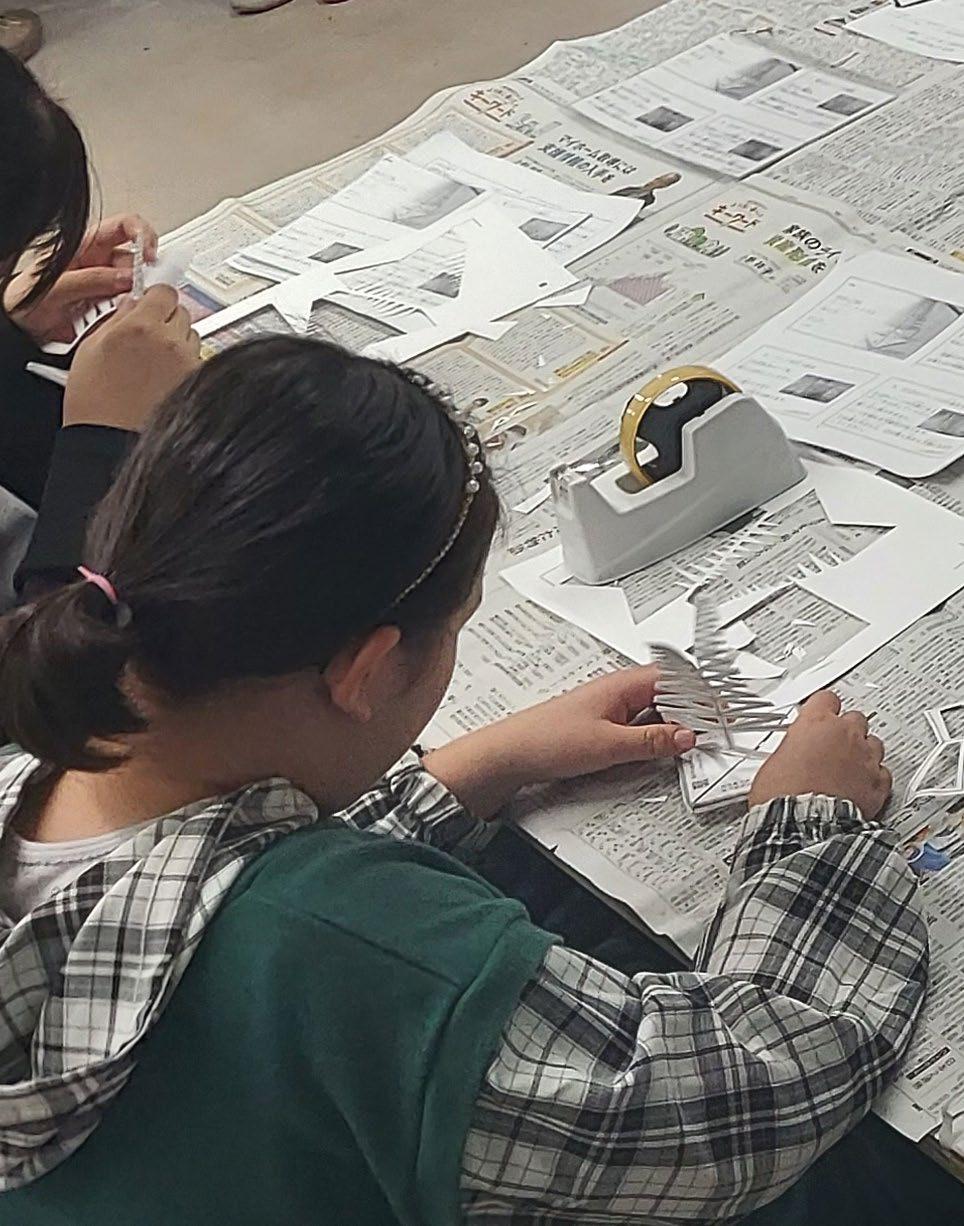
During open days at Kagoshima University, paper craft models of SKA-Low antennas were created to engage visitors with radio astronomy.
Designed by Dr Hiroyuki Nakanishi – a former member of the SKA’s outreach network currently teaching at Ishikawa Prefectural University – and undergraduate students Toshiki Hamamoto and Kaito Kawakami, they proved especially popular among young people.
Nakanishi has been involved in SKA-related research and development since the establishment of the Japan SKA consortium in 2008.
Inspired by the success of this Japanese activity, CSIRO, Australia’s national science agency, built on the original Japanese design further to support education and outreach activities in Australia and beyond. Just last month, the Australian embassy in Thailand used the activity at the National Science and Technology Fair in Bangkok in collaboration with the National Astronomical Research Institute of Thailand.
These models provide a fun, hands-on accessible way for the publics in all countries to engage with the SKA project, its science, and the global collaboration it represents.
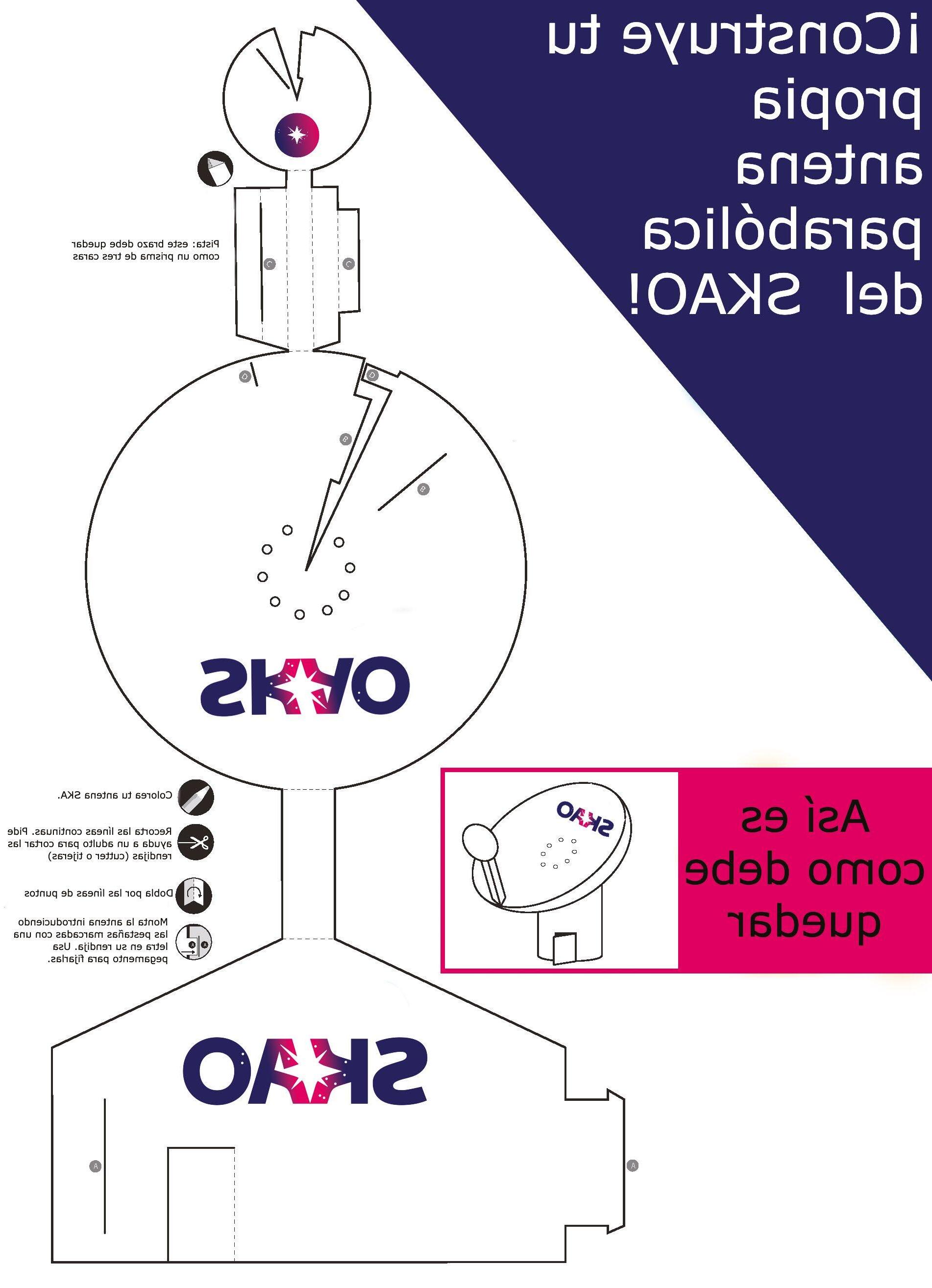
Want to build your own? You can find them in the centre of this magazine, or download more on the SKAO’s outreach and education pages here
An array of assembled SKA-Low paper antennas. Credit: SKAO
Children enjoy making the paper antennas during the open day. Credit: SKA-Japan/Kagoshima University
Virtual work experience reaches 70+ UK students
The SKAO regularly hosts work experience students at its offices, and in October 2024 expanded this effort with a three-day virtual work experience for young people aged 15 to 19 at state schools across the UK, offering a glimpse into the world of cutting-edge astronomy and engineering.
The programme was organised in partnership with Speakers for Schools – a charity aiming to improve social mobility for students by providing free access to quality work placements, and inspirational talks from industry leaders.
The SKAO welcomed 71 participants online, with students hearing directly from experts across the SKAO, including some of those based in Australia and South Africa, during hour-long sessions.
Interactive breakout rooms gave participants opportunities to collaborate with peers, develop problem-solving abilities, and practise communication skills in a supportive environment.
Coding exercises, quizzes, and a sky tour using Stellarium software proved especially popular, helping to balance technical learning with interactive fun. As well as inspiring interest in STEM subjects, the initiative showed that scientific infrastructures require a diverse range of skills.
Feedback revealed that students valued the chance to hear from professionals not only working in science and engineering, but also those in project management, communications and administration roles.
“It’s changed our perception of how many different jobs there are - there’s so many more than we thought, like the legal jobs and government relations. I never expected this to be related to physics,” one student said.
Participants reported feeling more informed about career pathways and more confident in their abilities.
Overall, 93% of participants rated the placement as either “good” or “excellent”.
The initiative’s ability to not only educate, but to inspire, was an important reminder of the importance of enthusing young people about astronomy and associated fields – encouraging future generations onto career paths where they have the skills to be the SKAO’s employees of the future.
Radio Cosmos: a French-language podcast journey into radio astronomy
An SKAO-inspired podcast is helping foster interest in radio astronomy among French speakers.
Radio Cosmos explores how the field – and particularly the SKAO – continues to transform our understanding of the Universe.
The series takes listeners to the far reaches of the Universe, exploring some of the most fundamental scientific questions of our time.
Beginning in January 2025, the SKA Switzerland Consortium (SKACH) developed the podcast to address a comparative lack of Francophone outreach materials compared to English.
This drive to inspire the next generation of French-speaking astronomers and cosmologists is already paying dividends, with more than 1,000 downloads for the first four episodes already, across the likes of Spotify and Apple.
Episodes take listeners back in time to the formation of the first stars and galaxies, uncover the science behind super massive black holes and digest the latest developments in the search for extra-terrestrial life.
“We are thrilled that our radio astronomy series has been downloaded more than 1,000 times, which is very successful for new, non-English language podcasts. Our hosts, Mark Sargent and Alexandra Lagutova were passionate and inspiring, really bringing the cosmos and the work of the SKAO to life,” said Tanya Petersen, Head of Outreach and Communications at SKACH.
Credit: SKA Switzerland
Tapping into industrial expertise for radio astronomy
Building the world’s largest radio telescope arrays is a daunting challenge requiring the best expertise and innovative solutions of companies from across the globe.
Key hardware and software components are being developed in all the SKAO’s member states; since procurement began in July 2021 around 100 high-value construction contracts worth €873m have been awarded by the SKAO.
The case studies below are a snapshot of the significant industrial return being demonstrated across SKAO partner countries, where construction contracts are making the most of recognised expertise and capitalising on years of research and development, while also supporting local companies to expand operations and win future business in different industries.
SKA-Low antennas drive expansion
for Italian firm
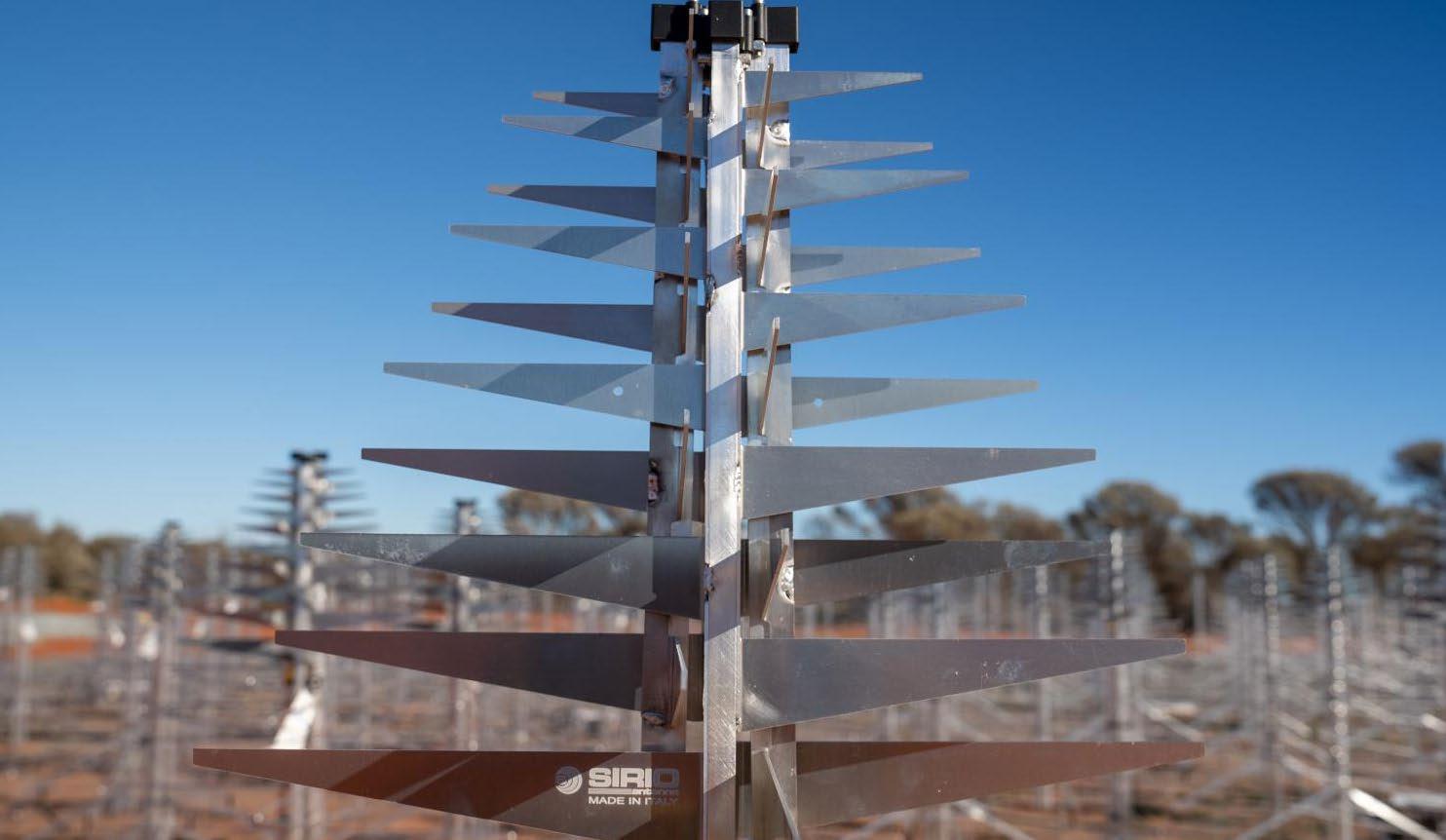
In northern Italy, family-run SIRIO Antenne, an industrial partner of Italy’s National Institute for Astrophysics (INAF), is manufacturing more than 78,000 SKA-Low telescope antennas. SIRIO has been involved in the SKA project since 2017 and played a crucial role in the international consortium behind the design of the lowfrequency antennas.
The impact of its SKAO contract is clear. SIRIO has significantly expanded its operations, adding two new production buildings and increasing facility space by 35%. It has also enhanced its quality control systems by acquiring new measurement and testing
equipment to meet the SKAO’s demanding standards and timelines, and planned a 30% increase to its workforce when production peaks. There are new dedicated training programmes, including extensive training for staff working with the newly installed machinery, and the company has developed expertise in laser welding, a process previously not part of its manufacturing capabilities, which could have applications in other areas.
“The SKA project has allowed us to expand not just in terms of infrastructure and workforce but also to invest in new research and development activities. Collaborating with research entities in the future now seems a natural progression for us,” says Stefania Grazioli, Director of SIRIO Antenne.
Italian family business
SIRIO Antenne is producing the antennas for the SKA-Low telescope.
Credit: SKAO
German receiver expertise secures
SKA-Mid contract
Only months after joining the SKAO in November 2024, Germany was awarded a major industrial contract for the SKA-Mid telescope’s Band 5 receivers.
SKA-Mid’s highly sensitive receivers will enable the telescope to detect faint astronomical signals across a vast frequency range, from 350 MHz to 15.4 GHz (with a target of up to 24 GHz). They are in production in Sweden (Band 1), South Africa (Band 2), and Germany, where OHB Digital Connect has been contracted to supply 86 Band 5 receivers from its facilities in Mainz. The company has been manufacturing both optical and radio telescopes for over 50 years.
OHB’s high-sensitivity, low-noise receivers will operate over the highest part of the SKA-Mid telescope’s frequency range, converting the electromagnetic waves received by the antenna into a usable electrical signal which ultimately can be turned into an image.
It’s a highly complex and advanced system, due to the SKAO’s stringent performance and functional requirements, tight tolerances and demands for maintainability and seamless integration on the dishes.
The project is being implemented in close partnership with the Max Planck Institute for Radio Astronomy (MPIfR) in Bonn, one of the world’s leading institutions for the development of receivers for radio astronomy.
“This project is another important milestone for us as we expand our position as a leading system provider
Portuguese software spin-off born from SKA project
Portugal’s software industry has received €3.1m-worth of SKAO contracts, to develop software services and infrastructures that are central to the Observatory’s operations. Atlar Innovation has grown from an SKA spinoff enterprise to an established specialist firm boasting contracts with the Portuguese Ministry of Defence.
Atlar’s journey began when CTO Hélder Ribeiro and several colleagues were engaged in the SKA design phase through Portuguese universities as part of the EngageSKA consortium, a national radio astronomy research infrastructure backed by the Portuguese
for ground-based astronomy and strengthen our longstanding partnerships with the scientific community,” said Fabrice Scheid, Managing Director of OHB Digital Connect.
OHB Digital Connect will deliver the Band 5 feed for the SKA-Mid dishes in South Africa. Credit: SKAO/Max Alexander
National Roadmap for Research Infrastructures. That work led the team to establish Atlar, which successfully secured an SKAO construction contract in 2021.
The company, led by CEO Miguel Bergano and Ribeiro, has since expanded significantly, growing to a team of 26 people, including seven full-time developers working on projects for the SKAO across three specialised teams. It also offers regular postgraduate placements, giving students valuable experience of working on major international projects like the SKAO.
“It’s quite simple: the company would not exist without the SKA – it was born from big science. It gave us the stability to continue and our people have learned so much that now we are able to gain more projects,” said Ribeiro.
Today, Atlar is a recognised player not only in the field of large-scale radio astronomy but also in critical space infrastructure. The company has ongoing contracts with the Portuguese Ministry of Defence to operate their Space Operations Centre and with industry to monitor largescale energy consumption in factories. These projects highlight Atlar’s expanding expertise and influence beyond astronomy, into national defence and industrial monitoring.
UK timing system to act as ‘beating heart’ of the SKA telescopes
The SKA telescopes’ distributed dishes and antennas can only work together as large arrays if the signals they collect are accurately synchronised, which requires a precision timing system. GMV UK, specialists in position, navigation and timing, is developing this system for the SKAO, drawing on 20 years of experience collaborating with the international time metrology community.
An average of eight terabits per second of data will be transferred over hundreds of kilometres from the SKA telescopes to data processing facilities. For the system to work, signals from each antenna must be aligned with five-nanosecond (five billionths of a second) precision.
The Synchronisation and Timing Timescale for both SKA telescopes is a central system based on atomic clocks that will timestamp each signal, continuously comparing the clocks with each other and via satellite with UTC, the international standard, to identify any inaccuracies. This is expected to operate over the telescopes’ 50-year projected lifespan.
GMV, which has roots in Spain and offices around the world, has a long history of supporting the space sector, having won several contracts for the European Space Agency. To deliver the SKAO contract, GMV UK has scaled up facilities for manufacturing, integration assembly and testing components, and has expanded its timing team, including new software engineers and project managers.
“We maintain our own atomic timescale, which is aligned to UTC within a few nanoseconds, and is used operationally to monitor the accuracy of the time disseminated by GPS and Galileo, among other purposes,” says Ricardo Píriz, Head of the Time and Frequency Division within GMV UK.
Mark Dumville, Chief Executive at GMV UK says: “The SKAO Timescale project is a game changer for GMV UK and together with other recent contract awards puts us in a strong position to capture the emerging market in timescale, time distribution and time transfer services addressing timing and synchronisation needs in new applications ranging from basic scientific research to advanced defence solutions and everything in between.”
Canadian technology central to SKAMid operations
The complex job of processing and aligning the signals from all the SKA telescopes’ stations and dishes belongs to the correlator and beamformer. For SKA-Mid, this powerful data processing engine is being supplied by Canada’s MDA Space, under contract from the National Research Council of Canada (NRC). MDA Space has a long history of innovation in the space sector, including the recent development of on-board data processing for satellites, improving the efficiency of a task traditionally performed on the ground.
“It’s a formidable challenge as the telescope has 197 dishes, creating many different baselines between individual dishes in the array. The correlator also needs to operate across all four SKA-Mid observing modes at the same time: imaging, beamforming for the pulsar search and pulsar timing systems, and operating in VLBI mode,” says SKA-Mid Senior PM Ben Lewis.
“To achieve that, the NRC/MDA Space system uses advanced field programmable gate arrays (FPGAs) which can do the mathematical calculations extremely quickly, provided you have the skills for the highly specialised programming they require. MDA Space brings extensive experience in this area.”
Using state-of-the art embedded computing technologies designed by MDA Space in collaboration with the NRC, the signals will be processed thousands of times faster than average computer download speeds, giving scientists rapid access to vast quantities of new data and insights about the Universe.
“Projects of this size, scope and significance present a unique opportunity to showcase the expertise and innovation of Canadian astronomers, astrophysicists and industry while driving new discoveries and advancements in science and technology,” said Mike Greenley, CEO of MDA Space.
You can explore more case studies on the SKAO website.
Teams from the SKAO, NRC and MDA Space working together on the correlator and beamformer for the SKA-Mid Telescope.
Credit: SKAO
Representatives from GMV visiting the SKAO Global Headquarters. Credit: GMV
Driving industrial innovation globally
Hardware and software for the SKA telescopes are being manufactured and developed across SKAO member states before being shipped to the telescope sites in Australia and South Africa. This global model leverages industrial expertise, fuels innovation and skills transfer, and spurs public-private partnerships. Above all, it reflects the strength of the collaboration at the heart of the SKAO, with thousands of people worldwide helping to deliver this groundbreaking facility.
Antennas Italy
SMART boxes
Infrastructure
Australia
Science data processor
France
Correlator and beamformer
Australia
the Netherlands
Synchronisation and timing
Software, networks and computing
Resources from 30+ suppliers in 10 countries:
Main reflector
Bands 1, 2 and 3 Sweden
Band
South
Digitisers
South
Science
France
Sub-reflector
Spain
China
Feed indexer
Italy
Receivers
Band 1
Sweden
Band 2
South
Band 5
Germany
Dish
Cryocooler
Canada Infrastructure
Synchronisation and timing
Correlator and
Protecting the sky for science and society
BY MATHIEU ISIDRO (SKAO)
Astronomy is often considered the world’s oldest science. Today it is a multi-billioneuro research field involving intricate international collaborations, groundbreaking discoveries, substantial industrial contracts, and innovations like Wi-Fi. But its future faces challenges as the sky becomes increasingly crowded with satellites. The SKAO and others are raising the alarm.
“Protecting the sky is the core mission, because without it there is no science of astronomy.”
This is how Prof. Willy Benz, President of the International Astronomical Union (IAU), describes the ongoing work by astronomers to mitigate the impact of growing numbers of satellites on astronomy. While the benefits of increased internet access for the economy are clear, less obvious is the impact satellites are having on fundamental research. For astronomy, that impact comes in the form of increasingly frequent streaks across images or interference in the data, as satellite numbers grow exponentially and it becomes increasingly difficult for ground-based telescopes to avoid them. The impact also extends to casual stargazers and Indigenous communities across the world who have used the night sky for generations.
Astronomers first raised the alarm in 2019 when the first batch of 60 Starlink satellites were launched, creating a bright train of lights in the sky visible to the naked eye.
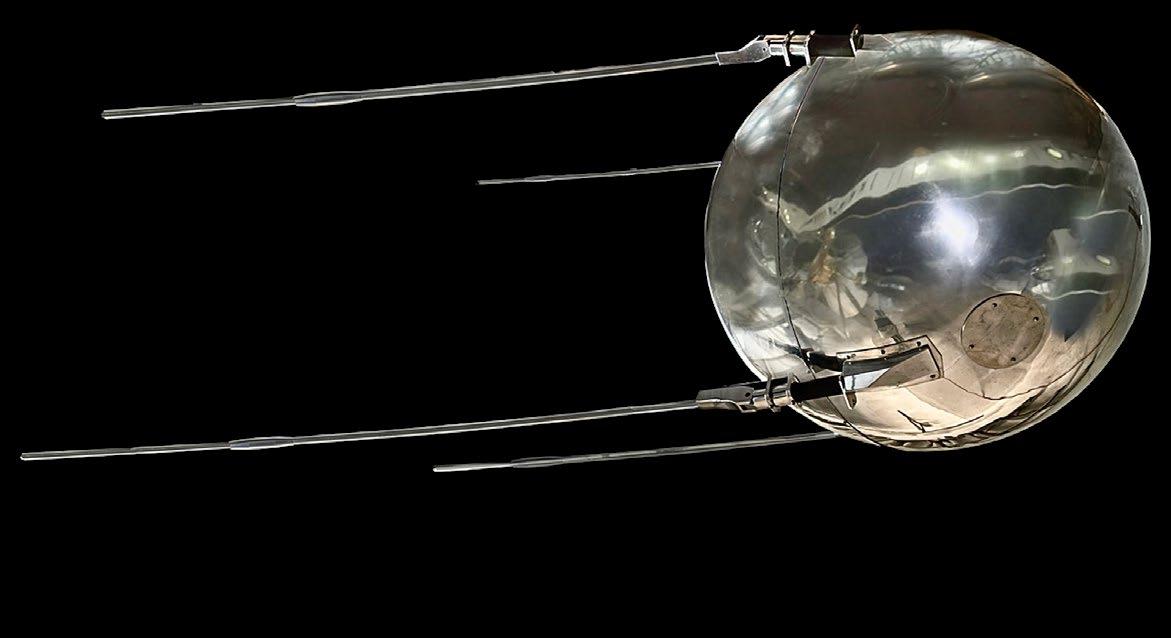
Since then, Starlink have launched over 8,000 satellites, more than all the satellites launched since Sputnik in 1957. They’re not alone. Companies like Amazon, OneWeb, and governments alike are rushing to launch their own constellations in what at times can seem like a new gold rush when there is little legislation in place to regulate the use of space.
For us at the SKA Observatory, a nascent intergovernmental organisation whose founding treaty calls on it to “promote a global collaboration in radio astronomy”, it was a clear call to action, to use our status and networks to raise awareness of the issue and work with others to help ensure a more sustainable use of outer space.
The SKAO is a member of two key UN bodies: the Committee on the Peaceful Uses of Outer Space (COPUOS) and the International Telecommunication Union (ITU). There, the Observatory has been advocating with others for the issue to be discussed.
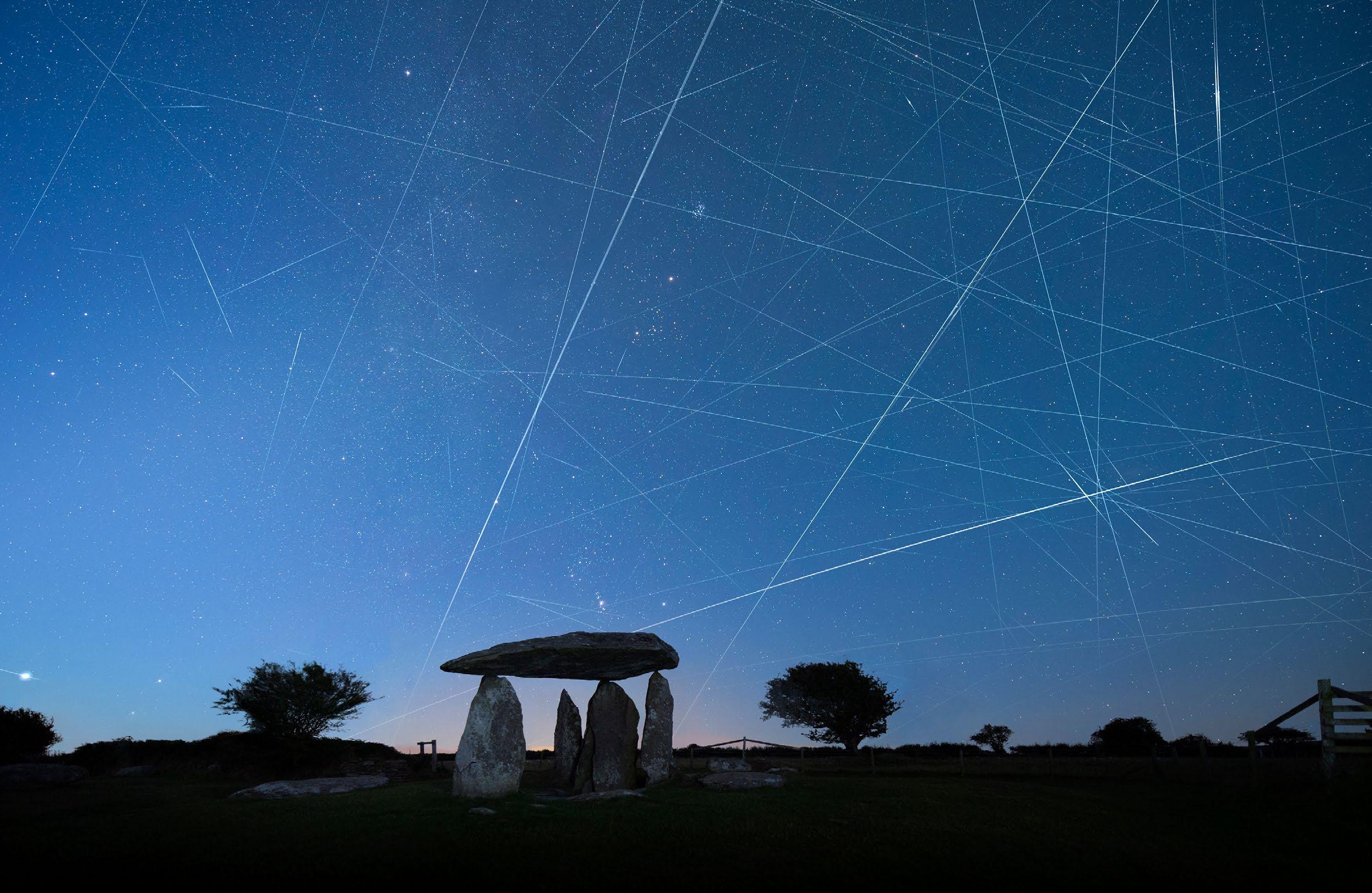
Satellite trails above Pentre Ifan burial chamber in Wales, which has stood for more than 5,000 years. From the photo exhibition
Our Fragile Space. Copyright: Max Alexander
A successful effort that has seen what is now known as “dark and quiet skies for science and society” tabled on the agenda of COPUOS for the next four years, and a group of friends made of 22 delegations emerging to support the initiative. The SKAO is also contributing to an agenda item for the next ITU World Radiocommunication Conference in 2027 discussing satellite constellations and radio astronomy protection.
“The astronomical community have been able to move governments, and this is not easy,” said Mila Francisco, a Chilean diplomat who sits on COPUOS.
In parallel, the IAU, concerned with the lack of a coordinated response in the face of rapid developments, put out a call in 2021 to create a dedicated centre of expertise. The SKAO put its hand up, together with NOIRLab, the US-based National Optical-Infrared Astronomy Research Laboratory under the National Science Foundation.
Over the past three years, the IAU Centre for the Protection of the Dark and Quiet Sky, or CPS for short, has successfully advocated for protecting the large public investments in astronomy, establishing a constructive dialogue with satellite companies, coordinating observation campaigns with active amateur and professional astronomers, and contributing to government and agency consultations on the issue.
The result? A number of companies have been actively engaging with the CPS and trialling mitigations, from altering satellite angles so that highly reflective solar panels point away from Earth, applying special paint to satellites to make them darker, or pointing onboard antennas away while passing over radio telescopes.
Some governments have started legislating, like the US Federal Communications Commission which now requires satellite companies to liaise with the National Science Foundation. And the issue has been raised repeatedly in international forums, including at a recent G7 meeting of science ministers. On the back of these successes, the CPS has just been renewed for another five years to keep working on solutions with all parties.
Those early successes are promising, and offer a glimpse of a future where the use of low Earth orbit follows a set of common guidelines to the benefit of all.
“Efforts by the SKAO and others are helping establish these common guidelines and where necessary regulations, ensuring the sustainable use of outer space for future generations of researchers and stargazers,” said Federico di Vruno, SKAO Spectrum Manager and Associate Director of the CPS.
Centre for the Protection of the Dark and Quiet Sky secures five-year extension
The IAU and its partners SKAO and NSF NOIRLab have agreed to fund CPS’s mission of protecting astronomy and the night sky for the next five years, until 2030.
With the help of its 500+ members across the world, the centre aims to raise awareness of the impact of satellite constellations on professional and amateur astronomy and people’s enjoyment of the night sky, as well as coordinate work to study the impact of satellite constellations, develop potential mitigations, and propose good practice and regulation. Its outputs include developing tools to help observatories minimise satellite encounters, fostering closer links with industry, supporting hardware mitigation development, collaborating with space agencies to facilitate access to up-to-date orbital parameters, as well as establishing satellite observation standards. This next phase will see the centre’s work expand, as astronomers seek to develop mitigations and regulations to safeguard astronomy’s societal impact in the 21st century.
French supercomputing lab enables public-private partnerships in exascale data processing
BY DR CHIARA FERRARI (SKA FRANCE, OCA, CNRS), DR DAMIEN GRATADOUR (SKA FRANCE, OP-PSL, CNRS) AND JACQUES TISSOT (NEOVIA INNOVATION)
In France, the coordination of SKAO-driven supercomputing activities is stimulating the development of new partnerships between research institutions and private enterprise. These collaborations are helping to address challenges around big data processing which can find applications far beyond radio astronomy.
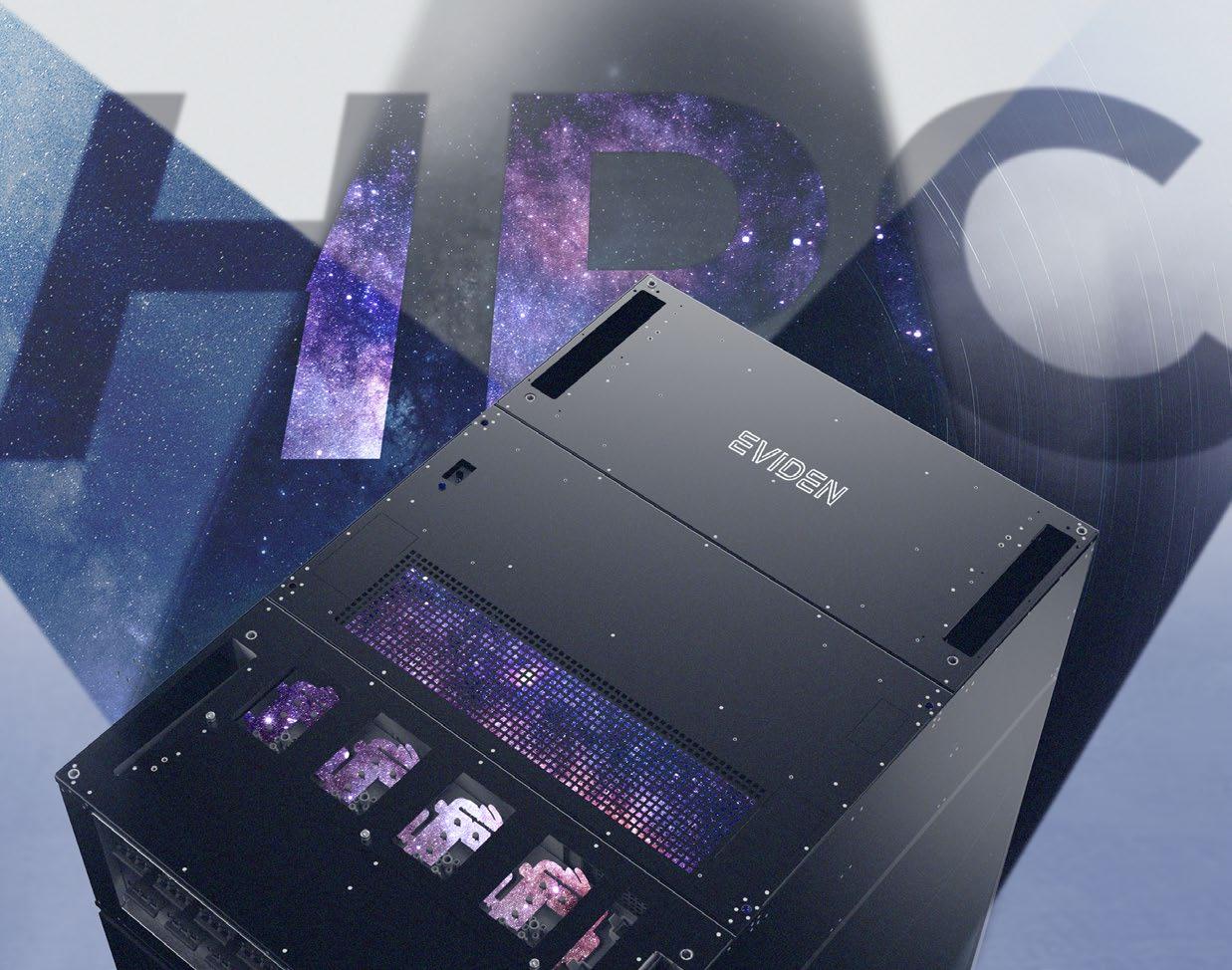
The ECLAT laboratory (Extreme Computing Lab for Astronomical Telescopes), coordinated by the French national centre for scientific research CNRS, brings together the experts from Inria, Paris Observatory and Côte d’Azur Observatory, as well as the manufacturer Bull SAS, operating under the Eviden brand and part of the Atos group, to work on research and development activities in preparation for the data processing challenge posed by the SKA telescopes.
The challenge is immense. The SKA telescopes will operate continuously, producing so much data that it is impossible to store all of it. It will therefore have to be processed largely in real time to transform celestial radio signals into science-ready data products that can be analysed by astronomers. The data captured by the antennas will far exceed Netflix-scale bandwidth, with rates comparable to 100 million 4K streams at this stage of the data journey. This will be reduced “on the fly” down to only a few thousand streams’ worth, ultimately archiving ~700 PB a year.
To meet these unprecedented needs, ECLAT is working with national and international collaborators to develop computing solutions that are both ultra-highperformance and energy efficient, a major asset for these isolated installations and for the decarbonisation of digital technology.
To design solutions tailored to the specific needs of astronomers in the age of data deluge embodied by the SKA project, SKA-France – which coordinates French contributions to the SKA project – established the ECLAT joint laboratory to provide an innovative platform where industry can collaborate with scientists over the long term.
Credit: EVIDEN
ECLAT researchers have worked closely with a state-ofthe-art data processing tool for radio astronomy, the DDFacet algorithm, already used successfully on LOFAR, one of the SKA pathfinders. DDFacet has enabled the publication of more than 250 scientific articles and the completion of the largest radio survey of the sky, LoTSS. As part of ECLAT, Eviden teams contributed to the parallelisation and implementation of a distributed version of DDFacet, meaning they adapted the algorithm so that it can simultaneously exploit tens of thousands or more computing cores distributed across a supercomputer. This adaptation paves the way for even faster and more efficient processing on a larger scale for radio astronomy imaging algorithms.
The impact goes far beyond fundamental research. This close collaboration between scientists and industry enables France to strengthen its expertise in exascale computing architectures and develop unique energy optimisation skills. Innovations resulting from ECLAT can be reused in strategic fields such as seismology, volcanology, climate modelling and designing low-carbon data centres for industrial applications.
By investing in the SKAO via ECLAT, France is not only facilitating major astronomical discoveries; it is also fostering a sustainable technological and economic advantage, positioning its researchers and industrialists at the forefront of global efforts towards carbon-free highperformance computing and AI for scientific discoveries.
Open science: maximising the impact of cutting-edge research
How do we ensure scientific research benefits as many people as possible? One answer is open science – making research collaborative, transparent, and accessible to all.
The open science principle is already being embedded at the SKAO and is increasingly supported by funding agencies worldwide for its ability to boost productivity and research visibility, facilitate innovation, accelerate knowledge transfer and return on investment, and support human capital development and increasing trust in science. UNESCO has highlighted how open science can also help to democratise knowledge generation and play a part in addressing the UN Sustainable Development Goals.
Within the SKA project, open science and the closely related concept of reproducibility – providing access to methodology and tools for independent teams to confirm experiments and validate results – are evident in the development of the federated network of SKA Regional Centres (SRCs), the cloud-based access points to SKAO data for the user community. Unlike the traditional method of researchers individually downloading data, the SRC model will enable greater sharing of tools and knowledge within the network,
Spain, an open science champion
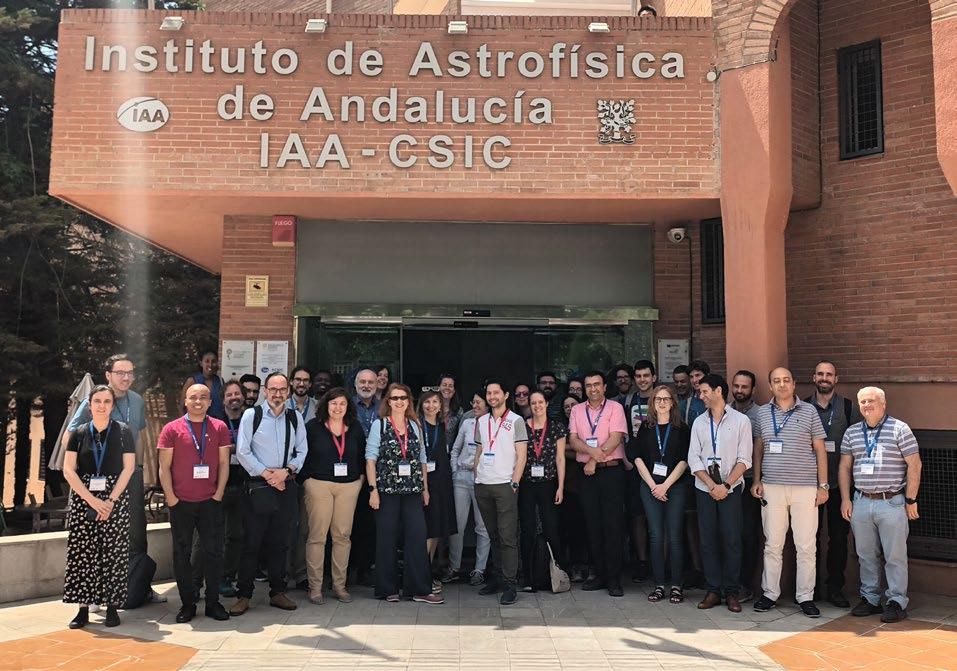
Spanish SKA researchers have been heavily involved in work to promote open science, with the Institute of Astrophysics of Andalucia (IAA-CSIC) in Granada hosting the first SKA Open Science School in 2023, attended by 80 participants from 14 countries. That same year, Spain launched its national Open Science Strategy, joining other SKAO partner states including France and the Netherlands in embedding the principle at the highest level.
“Transparency means other people can give you feedback to improve your work, it’s more efficient and knowledge flows more easily to society,” says IAA Scientific Researcher Dr Lourdes VerdesMontenegro, a long-term proponent of open science and reproducibility as a route to improving access and equality.
“We know many institutions in the developing world don’t have access either to publish or to read journals that you have to pay for, for example. Open Science means you are less restricted by economic capacities.
increasing collaboration and allowing users to reproduce the analysis of other teams.
Science-ready data products will also be made available publicly after a proprietary period, with the SKAO’s science archive expected to grow at the impressive rate of 700 PB every year (equivalent to 1.5 million average laptops) once the telescopes are in operation.
Reproducibility has also been prioritised in the SKAO’s series of data challenges for the scientific community, where reproducibility badges are awarded to teams that share their data analysis code, in order to encourage knowledge sharing and the refinement of tools and processes for the wider benefit of the community.
The SKAO is also using open source for all software development (except where this is not possible due to intellectual property issues) meaning innovations can be harnessed by governments, businesses or entrepreneurs for economic, social and scientific gains far beyond astronomy.
In addition, sometimes people’s work is hidden by the hierarchy, so with transparency you favour inclusivity.”
“The SKAO is the first observatory that I know of in the world that considers the reproducibility of the science that we will do as an indicator of success in addition to other more standard indicators.
The IAA-CSIC
Severo Ochoa SKA Open Science school at the Institute of Astrophysics of Andalusia in 2023. Credit: IAA-CSIC
SKA pathfinders repay investments in science and beyond
The SKAO will tackle a vast array of science cases, among the widest of all large-scale research infrastructures. These cover all areas of astrophysics and cosmology, as evidenced in the 2000-page, 9-kg SKA science book published in 2015, and soon to be updated.
While the Observatory focuses on preparations for early science operations, pathfinder and precursor facilities around the world have been making an impact for many years, in astronomy and beyond. From developing technology and making discoveries that inform plans for when the SKA telescopes come online, to training new generations in high-demand skills, these facilities have shown impressive returns on investment. Some of their stories are explored in the following pages.
Expanding capabilities: the ASKAP impact
BY RACHEL RAYNER (CSIRO)
CSIRO’s ASKAP radio telescope, a 36-dish survey telescope on Wajarri Yamaji Country, has produced revolutionary science and technology and, as an SKA precursor, has overcome challenges of data, spectrum and site management to enable the implementation of the SKA-Low telescope.
Located at Inyarrimanha Ilgari Bundara, the CSIRO Murchison Radio-astronomy Observatory, ASKAP is designed as a survey telescope, with a very wide field of view enabled by revolutionary phased array feed receiver technology. This innovation drives the science being undertaken with ASKAP by nine survey science teams representing thousands of researchers around the world.
Recently, discoveries of dynamic stars, transient events, intergalactic-sized odd radio circles and mysterious fast radio bursts have been made using the telescope, and are informing future SKAO science.
ASKAP was instrumental in enabling researchers to localise the source of fast radio bursts and, as a result, study the distribution of baryonic matter in the cosmos. Using its survey capabilities, ASKAP produced the best
radio continuum sky survey ever made, discovering one million new galaxies and supporting global efforts in multiwavelength astronomy research. The receiver technology that enabled this science has now been replicated by CSIRO for other telescopes around the world.
Production of ASKAP’s receivers required large numbers of complex electronics boards to be manufactured to a high level of accuracy. CSIRO worked with Puzzle Precision, an Australian high-reliability electronic assembly service provider to jointly develop and produce 20,000 sophisticated electronic circuit boards and major components required for ASKAP’s digital systems. This partnership has contributed to the expansion of the company’s production base and enhanced domestic capability.
ASKAP at Inyarrimanha Ilgari Bundara, the CSIRO Murchison Radio-astronomy Observatory on Wajarri Yamaji Country. Credit: CSIRO/Dragonfly Media
ASKAP’s technology continues to develop and expand, with the first trial of a specialised system, CRACO, taking place this year. Designed to rapidly detect transient space phenomena, CRACO has been engineered to sift through signals received by the telescope, equating to 100 billion pixels per second. In addition to making impactful contributions to astronomy research, this technological capability is helping solve the challenge of processing massive amounts of data.
Astronomers are also using machine learning and AI tools to circumvent the need to store massive quantities of data for long periods, be alerted to interesting data, or collect similar objects that may be in very different parts of the Universe. CSIRO researchers have been using machine learning and AI to identify unusual shapes and structures that might point to new physical phenomena, like the images of ‘bent-tailed galaxies’ or ‘odd radio circles’. By classifying different types of radio sources into categories, machine learning and AI is speeding up the processes within astronomy research.
Beyond engineering and research, the process of establishing ASKAP embedded principles of respectful engagement with the Wajarri Yamaji People, the Traditional Owners and Native Title Holders of the observatory site. Each dish has a unique Wajarri name and each ASKAP science group has a unique work by a Wajarri artist, bringing visibility to the local culture alongside the cutting-edge technology. In 2022, a new Indigenous Land Use Agreement (ILUA) was signed between the Wajarri Yamaji People, CSIRO and the Australian government to accommodate a significant expansion of the observatory site and enable construction of the SKA-Low telescope, guiding cultural heritage management and delivering local employment and other benefits for Wajarri Yamaji People.
A survey science project called EMU (Evolutionary Map of the Universe) collects data with ASKAP to build an atlas of the sky tracing the evolution of black holes and star forming galaxies. Around 400 researchers from all over the world are part of this project. Wajarri artist, Zachriah George, was inspired by the project to produce this painting, EMU. Artist: Zachriah George
The ASKAP telescope as seen from the sky.
Credit: CSIRO/Dragonfly Media
SKA-Low telescope antenna model
Instructions:
1. From the card, pop out both antenna pieces and the base.
2. Build antenna by inserting the cut labelled B into the cut labelled A.
3. Build base by folding along the scored lines and insert labelled tabs into corresponding slots.
4. Insert labelled antenna feet into corresponding slots on the top of the base.
5. Congratulations, you’ve built one SKA-Low antenna!
Only 131,071 to go before you have an entire SKA-Low telescope.
The SKA project in Australia
SKA-Low telescope antenna model
SKA-Low stations of 256 antennas are dotted in a spiral pattern that helps astronomers get the best picture possible of the radio sky. SKA-Low will be huge! It stretches 74km end-to-end, making it the biggest of its k ind in the world.
Standing 2 metres tall, these antennas collect radio waves from distant space and combine into one giant telescope, SKA-Low.
SKA-Low is being built by the SKA Observatory (SKAO) and has 131,072 antennas with a central core and three spiral arms.
These 2m-tall antennas will be installed in stations of 256 antennas.
Inyarrimanha Ilgari Bundara, the CSIRO Murchison Radio-astronomy Observatory Perth
We acknowledge the Wajarri Yamaji as Traditional Owners and Native Title Holders of Inyarrimanha Ilgari Bundara, the CSIRO Murchison Radio-astronomy Observatory where the SKA-Low telescope is under construction.
Based on a concept by SKA Japan Credit K. Kawakami & H. Nakanishi (Kagoshima University)
Geraldton
SKA-Mid telescope dish model
The SKA-Mid telescope is being built by the SKA Observatory with the help of the South African Radio Astronomy Observatory. When finished, it will be made of 197 dishes, including the 64 dishes of our South African partners' existing radio telescope called MeerKAT.
The SKA-Mid dishes are organised in a dense central core with three long spiral arms. Each dish stands 20 metres tall, with a 15-metre-diameter main reflector, and weighs more than 50 tonnes!
SKA-Mid's dishes will be spread across 150 km in South Africa's Karoo region. The vast distances between dishes will enable the telescope to study the Universe in very fine detail.
SOUTH AFRICA
Cape Town
Tip: This section folds into a three-sided arm.
SKA-Mid telescope dish model
SKA-Mid telescope dish model
SOUTH AFRICA
SKA-Mid site
SKA-Mid telescope
The SKA-Mid telescope is being built by the SKA Observatory with the help of the South African Radio Astronomy Observatory. When finished, it will be made of 197 dishes, including the 64 dishes of our South African partners' existing radio telescope called MeerKAT.
The SKA-Mid dishes are organised in a dense central core with three long spiral arms. Each dish stands 20 metres tall, with a 15-metre-diameter main reflector, and weighs more than 50 tonnes!
The SKA-Mid telescope is being built by the SKA Observatory with the help of the South African Radio Astronomy Observatory. When finished, it will be made of 197 dishes, including the 64 dishes of our South African partners' existing radio telescope called MeerKAT.
The SKA-Mid dishes are organised in dense central core with three long spiral arms. Each dish stands 20 metres tall, with a 15-metre-diameter main reflector, and weighs more than 50 tonnes!
SKA-Mid's dishes will be spread across 150 km in South Africa's Karoo region. The vast distances between dishes will enable the telescope to study the Universe in very fine detail.
SKA-Mid's dishes will be spread across 150 km in South Africa's Karoo region. The vast distances between dishes will enable the telescope to study the Universe in very fine detail.
What it should look like!
The two low frequency precursors
Credit: CSIRO/Alex Cherney and Tom Fowler
The Hydrogen Epoch of Reionisation Array
BY DR JOSH DILLON, UNIVERSITY OF CALIFORNIA, BERKELEY
The Hydrogen Epoch of Reionisation Array (HERA), an SKALow precursor telescope located in South Africa’s Karoo, is an interferometer designed to detect hydrogen during the so-called Cosmic Dawn. This period saw the formation of the first stars, black holes, and galaxies, which ionised all the gas between galaxies within the first billion years after the Big Bang some 13 billion years ago.
Designed by engineers from the University of California, Berkeley, in the USA, and from SARAO, and constructed by local crews, HERA is one of the world’s largest radio telescopes, boasting over 50,000 m2 of collecting area. That size is enabled by HERA’s low observing frequency (50 to 250 MHz, or 1- to 6-m wavelengths), where ordinary wire mesh behaves like a mirror.
Early HERA results lead the world in sensitivity, already ruling out some proposed models of reionisation. The team is now analysing petabytes of HERA data – enough to make a first detection of the high-redshift 21-cm signal and inaugurate a new era in radio astronomy and cosmology.
Murchison Widefield Array
Made up of 8,192 antennas spread over more than 30 square kilometres on Wajarri Yamaji Country, the Murchison Widefield Array is the longest-running SKA precursor led by Curtin University on behalf of an international collaboration.
The MWA allows astronomers to explore the low-frequency Universe in extraordinary detail and has produced research that has paved the way for the SKA-Low telescope.
The GaLactic and Extragalactic All-Sky MWA survey, or GLEAM, is one of the largest sky surveys of all time, covering 90% of the southern sky. It created the first radio colour panorama of the Universe, combining observations across 20 frequencies to map the sky in unprecedented detail and served as a crucial stepping stone for calibrating the SKA-Low telescope.
Credit: HERA
MeerKAT: driving South African excellence in radio astronomy
BY DR FERNANDO CAMILO (SARAO)
The 2018 inauguration of the 64-dish MeerKAT radio telescope, built and operated by the South African Radio Astronomy Observatory (SARAO) in the Northern Cape province, signalled a step-change in radio astronomy.
A now-iconic radio image of the Milky Way’s galactic centre, unveiled at the inauguration, demonstrated not only MeerKAT’s superb scientific capability, but also South Africa’s success in establishing itself as a leader in the field through the planning, design and construction of the facility. A stunning later version of that first MeerKAT image is shown on the right.
The MeerKAT survey that led to the 2018 galactic centre image has also transformed our scientific understanding of that chaotic and energetic region, which contains many phenomena that cannot be found in the more benign regions of the galaxy, such as our own solar neighbourhood.
In this composite image, the plane of the Milky Way runs diagonally across the image from lower right to top centre, with the 1400-light-year ‘MeerKAT radio bubbles’, perpendicular to the galactic plane, extending from between the two nearest dishes to the upper right corner. Credit: S. Dagnello (NRAO/AUI/ NSF), I. Heywood (SKAO), SARAO
MeerKAT image of the Milky Way’s central region, with the galactic plane running horizontally across the image. This is a 2022 version of the image presented at the telescope inauguration in 2018. Colours indicate bright radio emission, while fainter emission is shown in greyscale. This striking image has been disseminated widely, including in the New York Times and in an exhibit at the Los Angeles County Museum of Art. Credit: I. Heywood (SKAO), SARAO
MeerKAT’s first major discovery, published in Nature in 2019 and shown in the associated figures, was the 1400-light-year radio bubbles spanning the galactic centre – evidence of an explosive event in the heart of our galaxy millions of years ago. As well as new discoveries, MeerKAT gives us a much clearer and more detailed view of previously observed phenomena.
By mid-2025, more than 500 articles containing MeerKAT data have been published in the professional literature. Many of the published findings are groundbreaking, addressing key questions in modern astrophysics. These include the detection of tenuous hydrogen gas, probably falling into far-away galaxies from the posited surrounding ‘cosmic web’ and fuelling their star formation, and the detection of signals likely originating from gravitational waves expected to permeate the Universe, via monitoring the largest sample of pulsars – ultra-stable radio-emitting ‘celestial clocks’ – to the highest precision of any such existing pulsar timing array.
Unsurprisingly, MeerKAT is in great demand. The instrument is available to the worldwide community, and each year up to 200 teams, with leaders from at least 28 countries, submit observing proposals to the National Research Foundation’s South African Radio Astronomy Observatory (SARAO) that built, and now operates, the telescope. The requests typically surpass the available time by a factor of approximately three, and only the most compelling projects are awarded telescope time, selected by independent reviews on the basis of scientific excellence. SARAO has been able to grow the local astronomy community through strategic investments, ensuring significant South African participation on international MeerKAT science projects.
MeerKAT was funded by South Africa’s government through its Department of Science, Technology and Innovation, costing R3.2bn (€156m), with approximately
three-quarters of the budget spent in South Africa. This took advantage of the relevant engineering excellence already available in the country, and in turn the project was a catalyst for the growth of companies in the sector. For instance, EMSS Antennas was later awarded a contract by the SKAO to build exquisitely sensitive radio receivers for the international SKA-Mid telescope, into which MeerKAT will be incorporated. As noted by the UK’sRoyal Astronomical Society in its 2023 Group Achievement Award: “The MeerKAT team has supported the development of science and technology in Africa and stress-tested technology for the Square Kilometre Array (SKA).” The excellence and flexibility of the MeerKAT design also encouraged and enabled investments by collaborators based in Australia, Germany, UK, USA, and Italy that have in turn made the telescope even more capable.
A key outcome of this investment has been SARAO’s capability to design and develop advanced technologies, resulting in products such as low-cost S3 cloud storage, peta-scale tape library storage, Earth observation data infrastructure, energy-efficient ruggedised compute solution, a self-contained fibre-based continuously operating cable measuring and time transfer reference system, and a sampler-packetiser for direct signal digitisation up to 6.4 GHz with 3 GHz bandwidth. As a result, SARAO has been awarded multiple contracts to deliver key astronomy sub-systems.
MeerKAT’s wider impact has been significant. An independent socio-economic study found that, over 10 years, approximately 23,000 job opportunities have been created, directly and indirectly, through radio astronomy investments linked to MeerKAT.
SARAO has also awarded close to 1,700 grants and bursaries in radio astronomy and related engineering disciplines, including technical and artisan training.
LOFAR: a story of continuous innovation and science impact
BY DR VIOLETTE IMPELLIZZERI (ASTRON)
What does the Universe look like at 240 MHz? In a curiosity-driven field, a question like this can inspire the creation of one of the most advanced instruments on Earth.
This is the story of the LOFAR telescope. Completed in 2011 after years of planning, the €160m facility embodied a bold Dutch-led vision – one that continues to lead global radio astronomy 14 years later.
A unique instrument
LOFAR operates between 10 and 240 MHz, with its antennas distributed across 52 stations, spanning eight European countries and anchored by a dense core in Exloo, the Netherlands.
This core, combined with long baselines – which stretch over 1,000 km in the case of the international stations –gives LOFAR unparalleled sensitivity and resolution for low-frequency observations, approaching that of the Hubble Space Telescope in the optical regime.
Financed through government investment, EU regional development funding and international partner contributions, around 90% of industrial contracts for LOFAR construction were awarded to Dutch companies, acting as a catalyst for innovation in the country.
Science at the core
LOFAR was not only an engineering triumph; it was built with an equally strong scientific vision. LOFAR has set the most stringent limits yet on the epoch of reionisation (EoR) signal – the faint, redshifted 21-cm hydrogen line which will enable us to probe the Universe’s dawn, when the first stars and galaxies ionised cosmic gas.
Its vast field of view means LOFAR excels at deep and wide extragalactic surveys, mapping millions of radio galaxies up to intermediate redshifts. It’s also made important contributions to cosmic ray studies, and has proved to be a discovery machine for transients, the variable and explosive phenomena which are linked to the most extreme astrophysical events.
LOFAR operations began in 2011 and continued until August 2024, spanning 21 observing cycles. In that time, 814 proposals were submitted across LOFAR’s 20 calls for proposals, with oversubscription factors
PAPERS PER SCIENCE AREA
EXOPLANETS 1%
LIGHTNING 1%
SOLAR 7%
IONOSPHERE 1%
GALAXY 6%
COSMIC RAYS 3%
INSTRUMENTATION &
EXTRAGALACTIC 55%
PULSARS & TRANSIENTS 12%
LOFAR covers a vast range of science, as evidenced by the papers published from its observations. Credit: ASTRON
of 1.8 (observing) and 1.4 (processing). The collaboration network grew steadily, as shown by the chord diagram in the bottom right tracking authorship links across countries.
A hugely versatile instrument, LOFAR exceeded its initial goals and far surpassed the range of science cases it set out to achieve. Alongside groundbreaking wide/deep extragalactic surveys and transient discoveries, LOFAR has opened new cutting-edge fields for radio astronomy such as studying how lightening is made.
By mid-2025, LOFAR observations had resulted in a total of 889 publications. Even when not directly observing, the publication flow continues based on archival data.
LOFAR research has resulted in numerous prestigious grants and awards, including many European Research Council grants and the 2025 MERAC Prize for early career researchers in new technologies, awarded to Katharine Mulrey for her groundbreaking work on the detection of ultra-high-energy cosmic rays and neutrinos through their radio signals using LOFAR.
Credit: Astron
The future: LOFAR2.0
LOFAR is now undergoing a major €30m upgrade of all its stations. LOFAR2.0 will feature new electronics, a faster supercomputer, improved timing, and the ability to observe high and low bands simultaneously, unlocking new science frontiers. A key aspect of LOFAR2.0 will be its improved ability to perform very long baseline interferometry (VLBI) observations using its international stations across Europe. This will allow for detailed studies of astronomical objects like jets in active galactic nuclei, and high-redshift galaxies at sub-arcsecond resolution.
This upgrade is driving innovation; a four-fold increase in data volumes means LOFAR 2.0 will use cutting-edge networking technology alongside a major upgrade to the heart of the telescope’s digital processing: a new ‘tensor core’ beamformer and correlator has been developed, leveraging the latest GPU advancements to handle up to 40 times more data.
“ASTRON’s ambitions continuously challenge the boundaries of technology, and the other way around,” says Roelien Attema, head of Research & Development at ASTRON.
“Technological feasibility studies invite astronomers to think bigger or differently. ASTRON facilitates this dialogue by bringing both expertise together in one organisation. The same kind of mutual inspiration is realised in technological research projects with technical universities and industrial partners driving innovation in a much bigger ecosystem.”
As of today, new key science projects for LOFAR2.0 are being defined by a growing, diverse community. It promises faster, broader access for global researchers, with an emphasis on inclusivity and scientific innovation. We expect LOFAR2.0 to return to the skies around 2026.
Authorship links across countries for LOFAR results. Credit: ASTRON
Panoramic view of some of the antennas of the GMRT array.
The GMRT: a pathfinder’s enduring impact on global astronomy
BY PROF. YASHWANT GUPTA AND DR TIRTHANKAR ROY CHOUDHURY (NCRA) ON BEHALF OF TEAM GMRT
The Giant Metrewave Radio Telescope (GMRT), an array of 30 massive antennas spread across 25 km in western India, stands as a testament to pioneering science and engineering.
The GMRT is one of the world’s most sensitive lowfrequency radio observatories, observing from 110 to 1450 MHz. Since its release as an international facility in 2002, its impact has resonated through groundbreaking discoveries, technological advancements (including a major upgrade carried out during 2013-2018), and a legacy of training and public engagement.
The telescope’s design is an inspiring story of innovation. To build its huge 45-metre antennas economically, engineers developed the SMART (Stretched Mesh Attached to Rope Trusses) concept, creating very large yet lightweight structures. The GMRT was one of the first radio observatories to use optical fibre links to transmit signals from the antennas to a central processing facility and to employ a software-based digital signal processing system, as well as one of the first interferometric array telescopes to also have a dedicated phased-array mode to support observations of compact objects like pulsars – all of these technologies are now standard in modern radio telescopes.
The facility’s unique capabilities have made it a highly sought-after instrument; it is consistently oversubscribed by a factor of two or more, attracting proposals from researchers worldwide. This global demand is reflected in its usage, with about half of the observation time granted to international scientists from dozens of countries around the world and the other half to researchers from India.
The GMRT’s scientific contributions are vast, enhancing our understanding of the Universe across a wide range of topics. Its high sensitivity at metre wavelengths allows it to probe phenomena from the local solar system to the distant, early Universe. The GMRT has yielded frontline results in studies of pulsars, detection of gravitational waves using precision timing of pulsars, galaxy clusters, galaxy evolution and cosmology, the interstellar medium of our galaxy, transient cosmic events like fast radio bursts (FRBs) and gamma-ray bursts (GRBs). This impressive scientific output translates into approximately 40 to 50 papers published annually in international journals.
Credit: NCRA
Among the highlights are:
• As part of a global network of telescopes, the GMRT played a vital role in providing evidence for the existence of nanohertz-frequency gravitational waves from supermassive black hole binaries.
• The GMRT made the first estimate of the average neutral hydrogen mass of star-forming galaxies at a redshift of z~1, about 8 billion years ago.
• It played a crucial role in observing the largest known explosion in the history of the Universe, which occurred in the Ophiuchus Supercluster.
• The GMRT detected one of the most distant known radio galaxies, located 12 billion light-years away, providing a direct glimpse into the Universe’s past.
• The observatory’s all-sky survey, known as the TIFR GMRT Sky Survey (TGSS), has provided a comprehensive view of the low-frequency radio sky, which is invaluable for a wide range of astronomical research.
The GMRT has led to a major growth of professional astronomy in India, while also spurring the growth of a vast range of technology and capability growth in the country. A large number of students and scientists have been trained on the GMRT to become world-class astronomers, and a strong engineering team has grown around the building, maintenance and upgrade of the facility.
The GMRT also profoundly impacts society through exceptional public outreach. Its annual National Science Day event, spread over two days, draws more than 20,000 visitors, and its weekly visitor programme is heavily oversubscribed. Participation in national exhibits like Vigyan Samagam further inspires scientific curiosity and connects the community to astronomy.
The telescope’s technological and scientific contributions at the regional and global level were recognised in 2020, when it was awarded the coveted status of a IEEE Milestone Facility
The Annual GMRT Science Day is one of the largest science exhibition in India.
Credit: NCRA
e-MERLIN: a history of advancing radio astronomy techniques
BY PROF. SIMON GARRINGTON (JODRELL BANK OBSERVATORY, THE UNIVERSITY OF MANCHESTER)
Seven telescopes spread hundreds of kilometres from one another across Great Britain constitute the UK’s National Radio Astronomy facility, e-MERLIN. Operated by The University of Manchester’s Jodrell Bank Observatory, the network is ideal for studying key areas of astrophysics from the formation of planets and stars to the evolution of galaxies and their central black holes, as well as the evolution of the Universe and fundamental physics.
e-MERLIN evolved from pioneering radio astronomy experiments at Jodrell Bank, stretching back to the very first interferometric observations that resolved radio galaxies and led to the discovery of quasars in the late 1950s. The network saw several upgrades over the years, including a new 32-m dish near Cambridge, followed by a dedicated optical fibre network, new receivers, and digital processing in the early 2000s. The most recent of these is currently underway and will deliver a complete refresh and upgrade of the digital system that underpins e-MERLIN to provide increased capabilities.
With an angular resolution comparable to that of the Hubble Space Telescope in optical light, it remains a world-class instrument for advanced astrophysical research. As an open-skies facility open to observing proposals from all over the world, e-MERLIN is utilised by hundreds of scientists worldwide for a broad array of scientific research, which has resulted in close to 1,200 publications over the past 15 years. The network has gone through 19 observing cycles and is oversubscribed by 4:1, with a majority of proposals coming from earlycareer researchers in the last five years.
The locations of the seven radio telescopes across the UK in the e-MERLIN network.
Credit: e-MERLIN
Enabling SKA science and technology
Many of the foundations of long-baseline interferometry, which underpin the SKA project, were laid in the development of MERLIN, including frequency distribution techniques over hundreds of kilometres; algorithms and software for calibration and imaging, and early adoption of the idea of remotely operated radio telescopes.
Operating at frequencies from around 1 to 24 GHz, e-MERLIN acts as the natural complement to SKA-Mid in the northern hemisphere. When combined with the European VLBI Network, it offers an unparalleled range of baselines from 10 to 10,000 km covering a vast range of imaging scales. Its distinctive and innovative capabilities are continually advancing with ambitious plans to expand across the UK, building on SKA technologies to integrate space weather and space situational awareness capabilities, alongside cutting-edge astrophysics imaging.
Once the SKA telescopes are operational, e-MERLIN will also be able to conduct follow-up observations of SKA surveys, as well as supporting and training the SKA user community. Via the UK SKA Regional Centre, data from e-MERLIN will be accessible through computing hubs at Jodrell Bank, STFC-RAL and in Cambridge, and harmonised services for both e-MERLIN and SKA users will further develop the long-term partnership between the facilities.
Beyond science
Radio telescopes at Jodrell Bank have played important historic roles in space tracking alongside their astronomical work, including the radar detection of the Sputnik I launch rocket in 1957, independent verification of many of the early Soviet space missions, and interception of the first lunar lander images. Today the Lovell telescope and e-MERLIN are also used to boost the sensitivity, positioning and imaging capabilities of space radars for observations of debris and satellites in GEO orbits (Read more on page 43).
Along with the Lovell Telescope, e-MERLIN is the primary operational facility at Jodrell Bank, and it is this ongoing front-rank science which underpins the visitor experience at the Jodrell Bank Centre for Engagement, drawing over 120,000 visitors per year including many school trips. It was also a key factor in the inscription of Jodrell Bank Observatory as a UNESCO World Heritage Site in 2019 –the only site that is also an active scientific facility (read more on outreach on page 18).
The regional breakdown of researchers applying for observation time during the cycles 6 to 15. Credit: e-MERLIN
SKA pathfinder family grows with China’s 21 CentiMeter Array
BY ANNE DANIELS (SKAO)
The 21 CentiMeter Array (21CMA) situated in the Tianshan mountains of western China has been granted pathfinder status by the SKAO.
Pathfinders are telescopes around the world that are developing new techniques and gathering scientific knowledge of relevance to the SKA telescopes.
The recently upgraded 21CMA was originally constructed from August 2004 to July 2006 and consists of an array of 81 pods with 127 log-period antennas, each spread along two perpendicular arms of six and four kilometres.
It has been instrumental in advancing China’s lowfrequency radio astronomy capabilities, building up a database of long-term observations with great scientific potential, and contributing significantly to the country’s SKA science initiatives.
The instrument operates in the low-radio frequency range of 50 to 200 MHz, a range that will also be covered by the SKA-Low telescope. Over the past two decades
21CMA has gathered over 3,000 terabytes of data and constructed a huge catalogue of radio sources. Analysis of the telescope data is performed by scientists at the National Astronomical Observatories of China (NAOC).
The recent updates to the array include the development of a new digital multi-beamforming backend for four antenna stations – to digitally “point” the antennas in a certain direction – and preparations for pulsar observations in the 50 to 250 MHz frequency range.
In October 2024, the new digital backend successfully produced interference fringes and demonstrated its capabilities in beam steering and tracking. Since then, known pulsars have already been detected, and more observations are underway.
“We have learned a great deal about low-frequency radio astronomy through the development and operation of 21CMA. We look forward to continuing our contributions to SKA-Low and its future scientific endeavours, especially in detecting the Epoch of Reionisation,” said Prof. XiangPing Wu, founder of the 21CMA project.
Each of the 81 21CMA pods consist of 127 log-period antennas. Credit: 21CMA project
Let’s talk about… how radio astronomy feeds into everyday life
BY ANNE DANIELS (SKAO)
Checking your emails, navigating to your holiday destination or even tracking spacecraft throughout our Solar System; did you know radio astronomy has had a major impact on various fields – from space exploration and medicine to how we navigate our day-to-day lives?
Big interdisciplinary dishes
Radio astronomy is a relatively modern discipline, but even from its early days its technology found other applications, from enabling early satellite communications to relaying the first Moon landing.
“The field really took off after the second world war, with people that had been working on radar systems moving into radio astronomy,” says Prof. Richard Schilizzi, emeritus professor of astrophysics at the University of Manchester and former International SKA Director.
Around the world very large dishes with diameters of tens of metres were built to catch faint signals from the Universe. The dish technology also proved ideal for satellite communications – think satellite telephony, TV and radio. Companies involved in building radio telescopes later applied their expertise in the domain of telecommunications when the first satellites launched in the 1960s.
VLBI measurements of distant ‘static’ radio sources help define the Earth’s exact shape and rotation speed. Credit: ESA
“During the Cold War, large radio telescopes in the West were also used to try and detect radio emissions in the Soviet Union, from intercontinental missile activity to communications,” notes Richard. “The Lovell telescope at Jodrell Bank Observatory was the first instrument to detect radar reflections from the booster rocket used for the launch of Sputnik 1 in 1957.”
Jodrell Bank in the UK is home to the 76-metre Lovell telescope that towers above the SKAO HQ and is still used for radio astronomy research today.
Perhaps an even more famous use of large radio telescopes in the early days of the space era was the use of the Australian 64-metre Parkes radio telescope as the prime reception station for the signals of the first Moon landing in 1969.
This creativity in the use of big dishes goes both ways. Nowadays, with the advent of fibre optic cable, the world has become less reliant on satellite communications and some dishes are being refurbished as radio telescopes, an example being the 32-metre Ghana Intelsat Station at Kutunse, whose refurbishment was supported by the South African Radio Astronomy Observatory, and which has become part of the African Very Long Baseline Interferometry (VLBI) Network.
Interferometry: from medicine to navigation
The bigger the dish, the higher its resolution and sensitivity* but the more complicated the structural engineering behind it – very large dishes would just collapse under their own weight. That’s why a new technique entered the stage: aperture synthesis uses the principles of interferometry to combine the signal from multiple separate dishes to act together as one.
This new technique was so important that it won its inventor, British radio astronomer Sir Martin Ryle, the 1974 Nobel Prize in Physics. Major radio observatories today operate on this principle, like the Very Large Array in the US, ALMA in Chile, and the SKA telescopes in South Africa and Australia.
The development of the radio interferometric computational techniques underlying the imaging of distant galaxies revolutionised similar developments in X-ray medical imaging using computer tomography in the 1970s. The same computational techniques also have strong ties with those used in magnetic resonance imaging (MRI). This has led, over the years, to a close collaboration between medicine and radio astronomy, with the International Biomedical and Astronomical Signal Processing Frontiers Conference held every two years to discuss common challenges.
Interferometry also lies at the heart of everyday navigation on Earth. Using this technique, networks of radio telescopes across the globe monitor the planet’s shape, rotation, and position in space, building a highly accurate model of the Earth, a field called geodesy.
Radio telescopes helped with the navigation of the descent by the Huygens probe from the Cassini spacecraft down to the surface of Titan, Saturn’s largest moon. Credit: ESA- D. Ducros
”In geodesy, VLBI measurements of a grid of distant radio sources across the sky are used to realise the fundamental reference frame that allows us to determine precise positions on the Earth, and that is what underpins modern navigation,” explains Richard.
Without geodesy there would be no accurate reference map of the planet which is essential for navigation systems like GPS in most modern phones and elsewhere.
Supporting space exploration
Because there is no GPS service in space, determining your location in the Solar System poses a challenge, one that radio telescopes can help with. The same VLBI measurements of distant radio sources used in geodesy to define a stable reference frame for the Earth also define a celestial reference frame, against which the positions of spacecraft and other objects can be measured to determine their location in the Solar System.
“Another application of VLBI was the tracking of the Huygens probe that went from the Cassini spacecraft down onto the surface of Saturn’s largest moon Titan in 2005. That actually turned out to be very important because one of the communication channels didn’t work as planned,” says Richard.
The position of the probe on the sky was measured by comparing its signal to those from distant radio sources in the celestial reference frame, using a 17-station VLBI array comprising radio telescopes in Australia, Asia and the USA as well as data processing in Europe. This achieved an amazing 1-km accuracy for the probe’s position during its descent. Radio telescopes and VLBI observations continue
to refine the celestial reference frame, keeping it accurate and invaluable for deep-space navigation and spacecraft tracking.
More recently, in 2016 the Giant Metrewave Radio Telescope (GMRT), an SKA pathfinder located in India, supported the landing of the European ExoMars Schiaparelli module on the red planet. GMRT’s signal was the only real-time indicator from the module during the critical entry, descent and landing phase.
In South Africa, the 15-metre Hartebeesthoek telescope, originally built as the eXperimental Development Model (XDM) for the SKA to test and refine dish technology, is today used for precision geodetic VLBI, contributing to Earth-space reference frames that underpin modern global navigation and positioning systems. Such facilities will continue to operate alongside the SKA, ensuring that discoveries about the Universe are grounded in an equally precise understanding of both our position in space and our own planet.
From receiving the first signals from the Moon to helping support the tracking of spacecraft on interplanetary missions, radio telescopes have been involved in space exploration from the start and continue to play an important role today.
Developing fast Wi-Fi
Closer to home, the development of new technologies for radio astronomy has led to some amazing applications for society and our everyday life.
“One thing that has had a massive impact on technology and society is fast wireless internet. The communication protocol for this was first developed by scientists at CSIRO, Australia’s national science agency,” says Richard.
The big technological challenge for the invention of wireless internet in the 1990s was to make sure that wireless signals arrived in devices unscathed. Signals would bounce off walls and furniture causing them to arrive all mixed up in your device. The breakthrough at CSIRO came from using their knowledge and techniques derived from studying radio signals from exploding black holes to develop a microchip to unsmear the mixed-up radio signals together with Macquarie University and spin-off company Radiata. This enabled fast reliable connections indoors, and fast Wi-Fi was born.
New technological breakthroughs in the SKA era
Today the SKA telescopes are the next big thing in radio astronomy. The SKAO and its partners are committed to ensuring that the technology and knowledge developed for radio astronomy keep having an impact on society, and already several initiatives have led to new opportunities.
John O’Sullivan, Terence Percival and Graham Daniels with the WLAN test equipment at the National Museum Australia. Credit: National museum Australia
In Portugal, information technology is helping in wildfire monitoring. For the project Eye in the Sky, the ENGAGESKA team created to coordinate SKA efforts in the country helped develop a pointing mechanism for instruments on high-altitude balloons and other aerial vehicles to precisely position them above fire fronts, passing on reliable information to ground-based firefighters.
Sychronisation technology developed by the Perth-based International Centre for Radio Astronomy Research, itself created to support Australia’s bid to host the SKA, has found practical applications in Earth science and geophysics where it can be used to study water table changes over time, and in improving satellite communication with much higher data rates than current radio communications.
The SKA telescopes will produce data on unprecedented scales, bringing new computational challenges and calling for new software solutions that have seen collaborations with the likes of CERN, research networks, and companies. That is why a global network of supercomputers called the SKA Regional Centre Network is being developed - a computer network like no other that will enable a completely novel way of analysing data for astronomers and that promises new innovations in the field of computer science. Machine learning will be at the heart of ensuring an efficient delivery and usage of the SKA’s scientific data products, and in the future AI could help power predictive maintenance and schedule observations.
*The resolution of a telescope defines the fine details that can be distinguished, and the sensitivity determines the weakest signal that can be observed.
This article was edited on 18 November 2025 to add context and clarify language around VLBI and its use in geodesy.
Moonrise over an SKA-Low station in June 2025.
Credit: CSIRO/DISR/Alex Cherney and Tom Fowler
Milestone moment as SKA-Low completes first stage of delivery
BY SEBASTIAN NEUWEILER (SKAO)
Less than three years after construction of the SKA-Low telescope began on Wajarri Country in Western Australia, the first array is officially operational.
The four-station array, made up of the telescope’s first operating 1,024 antennas, completed a final phase of verification testing in July, demonstrating the necessary architecture and supply chain is in place and working.
SKA-Low Array, Verification and Integration Lead Engineer Lucio Tirone said the fundamentals of the telescope’s performance had been proven.
“We now have an operational interferometer array formed by four stations, a synchronisation and timing system, a correlator and beamformer, a science and non-science data network and a computing cluster at the Pawsey Supercomputing Research Centre – in other words, the entire system from A to Z is up and working,” he said.
The milestone follows SKA-Low’s first glimpse of the Universe in March, when commissioning scientists used data collected from the four-station array to
produce an image of the sky, revealing 85 of the brightest known galaxies.
It also comes as the telescope reaches the construction milestone of 10,000 antennas assembled and installed.
SKA-Low Senior Project Manager Ivan Lloro said reaching the construction milestone was a testament to the international collaboration involved on the project.
“This is a stepping stone towards realising our shared dream of scientific discovery with the SKA Observatory,” he said.
“Thank you to all the people, institutions and companies involved for their continued efforts, which are bringing the Observatory closer to early science operations.”
There has been similarly exciting progress for SKA-Mid in South Africa’s Northern Cape.
In July, the first SKA-Mid dish measured its first astronomical signal using the South African-made Band 2 receiver that was installed earlier that month.
During a test observation, the dish picked up the neutral hydrogen signal coming from our galaxy, opening its eyes to the sky for the first time.
Joint workshop with UN to shine spotlight on satellite constellations
The United Nations Office for Outer Space Affairs (UNOOSA) and the SKAO are co-organising a workshop to discuss the impact of satellite constellations on astronomy.
Taking place from 9 to 11 December 2025, the joint workshop will bring together the diplomatic community, astronomers and satellite operators , providing an overview of activities to minimise the impact of satellites on the astronomical sciences.
As well as identifying and discussing mitigation measures, the workshop will also aim to encourage advancement in prediction and measurements resources, and the legal and regulatory aspects of keeping skies dark and quiet.
Participants in the UN Committee on the Peaceful Uses of Outer Space (COPUOS) Scientific and Technical Subcommittee meeting (2 to 13 February 2026 in Vienna), are particularly encouraged to participate. Further information is available here
Six hundred scientists gathered from 16 to 20 June 2025 in the beautiful town of Görlitz, the easternmost point of Germany, and online to prepare for early science with the SKA telescopes.
The SKAO science meeting, hosted in the town’s theatre, attracted scientists from 26 countries with a programme full of updates on user access to the SKA telescopes, news on novel tools and the latest science results from pathfinders.
The week-long gathering spanned the entire town in historic venues, with over 200 talks and 150 posters detailing the vast range of science being conducted across the community, and how astronomers plan to use the SKA telescopes for future discoveries.
“For me the highlight is just the scope of this whole meeting. You see how many people are involved in this project; how many people work and believe in the SKA,” said Yannic Pietschke, a PhD student at the University of Heidelberg in Germany.
The German Center of Astrophysics (DZA) has been established in the town, with a new headquarters soon to be built. The DZA will become a hub for SKA science in Germany and their new building will host the country’s SKA Regional Centre Node.
Credit: SKAO
Local community outreach was also an important part of the event. A well-attended public lecture by Prof. Michael Kramer, Germany’s representative on the SKAO Council, gave a glimpse into radio astronomy to around 250 people, while a workshop organised by the SKAO and DZA enabled local children to build their own tabletop radio telescopes and measure the hydrogen gas of our Milky Way from the heart of Görlitz.
“It was an incredible week, walking around and hearing people talk about their science, thinking of new ideas and building collaborations,” said Observatory Scientist Dr Philippa Hartley, Chair of the Scientific Organising Committee.
“It has been particularly exciting to welcome so many early career researchers to the meeting and hear about how the SKA is helping shape their future careers.”
The week culminated with the news – welcomed by rapturous applause – that Prof. Naomi McClure-Griffiths was to become the SKAO’s first chief scientist, a role she took up on 21 July (hear from Naomi on page 58). An in-depth “fireside chat” between her and SKAO DirectorGeneral Prof. Philip Diamond wrapped up the productive and inspiring week.
Credit for all images SKAO (unless otherwise stated)
Credit: Paul Glaser/DESY/DZA
Credit: Paul Glaser/DESY/DZA
Credit: SKAO
Prof. Jessica Dempsey to be next SKAO director-general
BY CASSANDRA CAVALLARO (SKAO)
Next year will see a leadership change at the top of the SKAO for the first time in 14 years.
Prof. Jessica Dempsey will take over as director-general in June 2026, succeeding Prof. Philip Diamond when he completes his term in May. He also served as directorgeneral of the SKAO’s predecessor – the SKA Organisation – from 2012, and oversaw the establishment of the Observatory as an intergovernmental organisation.
Prof. Dempsey was appointed following a thorough selection process and final decision by the SKAO Council, the Observatory’s governing body representing each of its member states.
Currently the Director of the Netherlands Institute for Radio Astronomy (ASTRON), she is a renowned radio astronomer with extensive experience in senior leadership, having previously been deputy director of the East Asian Observatory in Hawai'i, USA. Prof. Dempsey has also demonstrated a commitment to creating
greater diversity, equity and opportunity at all levels of astronomy, and has spoken extensively about creating inclusive practices in the workplace.
As the next SKAO director-general, she will oversee the Observatory as it transitions into its science verification phase, as well as the continued construction of both arrays in Australia and South Africa. Science verification is when the science community will gain access to early SKAO data, due to begin in the first half of 2027.
“I am amazed to be asked to take up this role, especially at such a vital time for this wonderful observatory. I am humbled, as Phil is a tough act to follow, and excited to join an incredibly talented and dedicated global team,” Prof. Dempsey said.
“We are building an unprecedented discovery engine that will transform what we understand of the Universe, and I am most thrilled at the opportunity to ensure that the SKAO has a true global impact. The SKA project is a human endeavour, and will be a human achievement.”
Sweden joins the SKAO as South Korea and Japan move closer
BY ANNE DANIELS (SKAO)
Sweden has completed its SKAO membership journey, while new agreements with national institutes are paving the way for greater participation in South Korea and Japan.
Sweden officially joined the Observatory on 8 August 2025 following the signing of the SKAO Convention in January and its ratification in July. The country has been involved in the project for many years and Swedish companies are delivering key components to the SKAMid telescope, including the Band 1 feed and digitisers for Band 1 and 2
“This year has been very exciting for the SKAO with Sweden now as an official member,” said SKAO Head of International Relations Thijs Geurts.
“In the meantime, we have also been working with South Korea and Japan, and we have now signed agreements with national organisations in both countries to create new opportunities, which will hopefully eventually lead the way to their membership.”
The agreements with the Korea AeroSpace Administration (KASA) and the Korea Astronomy and Space science Institute (KASI) were signed in May, solidifying South Korea’s involvement in the SKA project.
KASA will be representing South Korea as an observer in the SKAO Council and its sub-committees for the next three years, and Korean scientists and institutes are able to participate in SKA activities.
The memorandum of understanding with the National Astronomical Observatory of Japan (NAOJ), signed in June, helps create opportunities for Japanese researchers to support the SKA project during assembly, integration and verification (AIV) activities. The AIV teams take over once SKA-Low antenna stations and SKA-Mid dishes are constructed to verify that the systems meet the specified requirements before handing them over to the science commissioning teams.
Clockwise from left: The Swedish flag in front of SKAO HQ. Credit: SKAO; NAOJ Director-General Prof. Mamoru Doi and SKAO Director-General Prof. Philip Diamond signing the memorandum of understanding between the SKAO and NAOJ. Credit: SKAO and NAOJ; Young-bin Yoon, Administrator of the Korea AeroSpace Administration and SKAO Director-General Prof. Philip Diamond and signing the memorandum of understanding between the SKAO and KASA. Credit: SKAO and KASA
The Cosmic Echoes journey in South Africa
BY KHOMOTSO MOKORI (SKAO)
Since its launch at the IAU General Assembly last year, the Cosmic Echoes: A Shared Sky Indigenous Art Exhibition has continued to travel across South Africa.
A succession to the 2014 Indigenous art-astronomy exhibition, Shared Sky, Cosmic Echoes is a celebration of the ancient cultural wisdom of the communities that live near the SKA telescopes, who have been observing the night sky and explaining what they see through art and stories for thousands of years.
The genesis of Cosmic Echoes, curated by Sylvia Vollenhoven, takes us back to early 2024, when artists worked with local Indigenous youth and Elders in Carnarvon to prepare for the exhibition. These workshops produced both visual and performance art. Meanwhile in Western Australia, the SKAO and CSIRO worked with the Wajarri Yamaji Aboriginal Corporation to commission visual art pieces from the Wajarri Yamaji People, the Traditional Owners and Native Title Holders of the land where the SKA-Low telescope is located.
After its successful launch at the IAU General Assembly, the Cosmic Echoes tour kicked off at the iconic Artscape Theatre in Cape Town in September 2024, where it was the key inspiration in a Heritage Month Festival called
Reach for the Stars. The exhibition complemented the festival’s Indigenous music, performance, dance and poetry, creating an immersive cultural experience aimed at educating the public about the art’s origins and significance.
The exhibition then made a meaningful stop in Carnarvon, a small town in the Northern Cape Province close to the SKA-Mid site, in early 2025. All the South African Cosmic Echoes facilitators and artists are KhoiSan people, mostly from that region. With an innovative intergenerational outreach programme, Carnarvon youth and elders engaged deeply with the exhibition’s theme, exploring the night sky’s role in Indigenous cultures through community-led events. A joint venture with the Carnarvon Astro Guides enabled participants to observe constellations, guided by both Indigenous knowledge and modern astronomy. At the Exhibition opening in Carnarvon local Riel Dancers, the youth artists and their elders entertained guests with performance and storytelling of how the stars, Moon and galaxies were used by the Elders to determine time and seasons.
The Cosmic Echoes exhibition at the Wits Origins Centre in Johannesburg. Credit: Felix Maponga Photography
The next stop for Cosmic Echoes was the Wits Origins Centre Museum in Johannesburg. A diverse audience including professors, art scholars, young students, and community members, took part in the launch ceremony. To honour the historic Soweto uprising events of 16 June 1976 – a turning point in South African history— a special Cosmic Echoes event at Wits University featured historic student leaders engaging with their modern counterparts. The discussions connected celestial knowledge with contemporary life, fostering an understanding of how the stars have always governed our spiritual essence.
Visitor Vivienne Abrahams of Meadows International captured the exhibition’s impact: “Sylvia Vollenhoven and Basil Appollis bring the night sky’s magic to life. The artists’ vivid imaginations and enchanting storytelling offered a truly spiritual experience. I now see the night sky with new, bright eyes.”
Most recently, the Sol Plaatje University (SPU) in the capital of the Northern Cape, Kimberley, hosted Cosmic
Echoes. The opening was planned to coincide with the end of South Africa’s National Science Week and the historic day in the 1950s when thousands of women marched to protest against the pass laws. As part of this Women’s Day programme, SPU chose to honour KhoiSan cultural icon Ouma Katrina Esau. It was especially poignant because she is featured in one of the Cosmic Echoes artworks, a striking painting titled My Ma se Taal (My Mother’s Language). This portrait by artist Junior Oliphant, a core piece of the exhibition, now holds even greater significance, as it was the first time the young artist could meet Ouma Katrina face-to-face and pose with her, very proudly, next to her artistic likeness.
This encounter not only brought the narrative full circle but also underscored the power of Cosmic Echoes in connecting generations and cultures – a truly resonant milestone on its journey through South Africa.
After its South Africa tour, the exhibition will jet off overseas to continue its global journey in Australia.
Performances by local youth artists opened the Cosmic Echoes exhibition in Carnarvon. Credit: SKAO
Team SKA: Prof. Naomi
McClure-Griffiths - SKAO Chief Scientist
In July the SKAO appointed its first chief scientist. In her new role, Prof. Naomi McClureGriffiths will champion science across the Observatory, working with the astronomy community worldwide, drawing on 20 years of international experience in astrophysics, including four years as chair of the SKAO’s Science and Engineering Advisory Committee.
Naomi obtained her PhD at the University of Minnesota in 2001 and relocated to Australia after becoming a CSIRO Bolton Fellow at the Australia Telescope National Facility. She is leading two large sky surveys with the ASKAP radio telescope, one of the SKA precursor telescopes in Australia. We spoke to her about her international career, her new role as chief scientist, and the science she expects from the SKA telescopes.
Let’s start with your childhood, Naomi, do you remember when your interest in science started?
I grew up in Portland, Oregon in the US and I was always a curious kid but I think more than science, I loved math. My mother used to buy workbooks for me, and I would go along with her to work, and I would sit there working through these math workbooks.
I was always curious to know how things worked, what happened around me, but it was mathematics that really drove me. In high school, I discovered that you could use mathematics to describe the world. I distinctly remember my first physics class, we put a little car on a ramp, and we were supposed to calculate the car going down the hill using the equations of physics. That was a real eye-opener!
Naomi on the stage of the science meeting in Görlitz where it was announced she would take on the role of chief scientist. Credit: SKAO
Naomi during her childhood with her father.
Credit: Naomi McClure-Griffiths
You have spent the majority of your career in Australia. What drove you to go there?
During my undergraduate at Oberlin College in Ohio, I had the fantastic opportunity to go to Australia for six months to work on my honours project. While I was there, I met a professor from a different university in the US, and he suggested that I would do my PhD with him.
In the southern hemisphere the Milky Way goes straight overhead and so being in Australia meant that I could see the best views of the Milky Way. Australia has a great history in radio astronomy because it is a very empty and radio quiet continent. The telescopes plus what I could see in the sky brought it all together.
Before I even finished my PhD, I started hearing about the SKA project. I recently found an email that I wrote to somebody in Australia who was working on a prototype antenna and I said that I’d really like to come and do a postdoc and get involved in the SKA, and ever since I’ve stayed involved in some way, including writing a science chapter for the SKA science book in 2015.
Now you’re working at the SKAO as the chief scientist. What motivated you to apply to that position?
As I’ve gotten more mature in my science career, I’m less interested in driving my own science and much more about how we can do the best science possible, the best astrophysics that is out there. For quite some time I’ve thought: what would be my dream job? It would be to drive the course of science with the SKAO and so that’s what I get to do now.
What will you focus on in the first year?
For the first year, my focus is really on improving and extending our engagement with the ever-growing scientific community at large, beyond just the traditional radio astronomers. You shouldn’t have to be a “black belt” radio astronomer to use a radio telescope. We’ve been heading in that direction; MeerKAT is much easier to use than many other telescopes, ASKAP and LOFAR deliver data products. Our plan is to deliver a telescope that anybody can use and you don’t need to be a radio astronomer to do it.
One of your duties will be to set up an SKAO postdoctoral programme, what is your vision behind that?
The key here is to hit the right time. Almost every wonderful big modern observatory has had a series of postdoctoral fellows. They’re early career users who have really exciting ideas for how to drive the telescope forward and deliver exciting science.
What I want to do is to time it so that when we have the telescope ready to go, we have the first round of those fellows, who I expect to be excited to be in the heart of the observatory that is delivering this amazing new facility.
Naomi during her studies.
Credit: Naomi McClure-Griffiths
In my first postdoc, as a Bolton fellow at CSIRO, I quickly realised that it was really wonderful for the engineers who were working on the telescope to have a scientist in the building to tell them about what I was doing with the instruments that they had created. My vision is to have people who are doing wonderful science, but also capable of communicating that science back to the people who made it all work.
There are thousands of researchers around the world doing amazing science with data from SKA precursors and pathfinders, why is it important to you that we also do science within the SKAO?
There’s a lot of work that is ongoing with the operation of a radio telescope, repairs, improvements, that can become a thankless task if you don’t have a constant feedback loop. If we have only people outside, we definitely get excellent science, but you don’t get that one-on-one connection where a researcher can pop down to the office of somebody who wrote the pipeline for imaging and say: “look at this cool result I got!”
A telescope is not static; it is a living instrument that is going to continually improve and that’s the most exciting part. As an in-house scientist, you get to feed that information back and then interact with the engineers and developers, working together in a constant improvement process.
You just finished your four-year term as the first chair of the SKAO’s Science and Engineering Advisory Committee. How has that helped you prepare for this role?
For the last four years, I’ve been involved in looking at specifications and scientific requirements, so as I’ve come in as chief scientist, I’ve been able to hit the ground running. That said, there is still a lot that I don’t know.
The SKAO is a very complicated organisation and the telescopes are phenomenally complex.
I’m working very closely with the Science Operations and Scientific Services teams; these are the scientists who are working with the Science Working Groupsand also helping to define the data products and operational modes. I’m also working very closely with
the Programmes team to make certain that what they’re building meets what astronomers need. I’m also looking forward to working really closely with the Communications team because there’s no point in doing science if you’re not communicating about that.
During your first two weeks SKA-Mid opened its eyes, detecting its first astronomical signal, and SKA-Low reached the first delivery milestone. How do you view the current status of the SKA project?
It’s incredible. I think the fact that there have been two really big milestones within my first two weeks on the job shows that there is progress happening at an incredible rate.
I know that some parts of the community were surprised that SKA-Mid is going to be a bit later than they had originally thought but I think we’ve got a clear and credible timeline, based on the lessons we’ve learned during these first years of construction. Telescope projects the scale of the SKA are hard; it’s designing and constructing something that’s never been done beforeEvery single time we build a new telescope, we push the boundaries. What that means is that sometimes things take longer than we thought. I’ve seen that happen with ASKAP, I saw it happen with MeerKAT, I’ve watched the VLA begin to upgrade to the ngVLA, and we’ve seen NASA fly space telescopes that were 20 years delayed. What people remember though is the
moment they open their eyes to the Universe and make groundbreaking discoveries; this is priceless!
One of your most famous discoveries was observing a new arm of the Milky Way – what are a few of the major discoveries that you anticipate the SKA telescopes will be capable of?
We really hope that we will map out the entire Milky Way with pulsars; use them as a fantastic tracer of the structure of our own galaxy. We will be able to see how gas came into galaxies out to some of the furthest reaches of the Universe. Detecting the signal from the epoch of reionisation is a Nobel-worthy discovery that the SKA telescopes expect to be capable of.
One of the things that I am going to do now on the job is to think really clearly about what are going to be the first amazing iconic discoveries and images that the SKA telescopes produce. When ALMA came online, everybody remembers those first images of planetary discs around stars. The first images that we saw from JWST were mind boggling.
I want to think about what those will be for the SKAO. I’m absolutely positive that we’re going to see the webs of gas and magnetic fields that connect galaxies in a way that we’ve never been able to see in the past. To see that whole structure of the Universe mapped out in front of us is going to be pretty exciting.
With SKA-Low telescope director Sarah Pearce and Head of Engineering Operations Angela Teale during a visit to the Low telescope site. Credit: SKAO
You did your PhD in the US, then moved to Australia, and along the way you’ve had opportunities to go abroad to conferences and work together with people all over the world. How has your career benefited from this international career, and do you think that this kind of international mobility benefits big projects?
From my perspective, there’s no doubt that people who live and grow up in different places have a different way of looking at the world. They look at problems in different ways. Some cultures are much more detail focused, some big picture focused, some cultures work on being really inclusive and some on being really independent. When you bring all of those people together, you lay down a fabric that is much more effective than just dealing with things in one way.
We challenge each other to think about things differently. That makes projects stronger and more effective. I think that that has made my science better, and I have no doubt that the SKAO will be stronger for being an international endeavour.
How do you view the impact radio astronomy, and the SKA project specifically, is having beyond science?
Within the host countries themselves, the stories are very different because Australia has had a very long history in radio astronomy and South Africa is newer to it, but South Africa has blossomed in its astronomy community, partially because of its investment.
When you go to the places where these telescopes are being built, these are providing jobs and training in areas
In her spare time, Naomi likes to explore the outdoors. Here she is on a hike during a holiday to Norway.
Credit: Naomi McClure-Griffiths
that are totally new and part of the high-tech future. We are seeing the impact locally of injecting, knowledgebased careers into local remote regions.
On top of that, both South Africa and Australia are smaller countries. These are opportunities for those countries to be engaged in a global enterprise with a very high scientific profile and to really build diplomacy through science.
What do you expect to be the impact, technologically or otherwise, coming from the SKA project in the coming years?
I expect some really interesting advancements in machine learning. Everybody’s excited about AI, but it’s really focused around large language models right now. They’re powerful but they rely on taking a lot of what you already know, and then just telling the probability of the same thing based off what you already know.
Machine learning is going to make the next jump, in being able to be predictive without having known what was out there in the past. This is something I think astronomy surveys are really well poised to do because we have iterative building up of the sky.
This provides a fantastic data set for training models to predict what things will be out there. Once they can learn on predicting it, it doesn’t matter whether it’s in astronomy or whether you apply it to other fields, such as medicine. For example, when taking an MRI of a person and taking another one a year later, to see if there is any hint that something is building up to be a tumor in their brain.
I think that the interplay between our big data and the challenging aspects is going to drive machine learning developments. The machine learning people that I know are really excited about what we’re about to provide.
What do you like to do to wind down after work?
I love to spend time with my husband and daughter. I also love being outdoors – I run, hike, play tennis and garden. I’m also a keen cook and baker; I did sourdough before the Covid pandemic!
Helping to assemble an SKA-Low antenna. Credit: SKAO
Indigenous Astronomy in the Space Age for NAIDOC week
BY LIZ WILLIAMS (SKAO) AND KIRSTEN FREDERICKSEN (CSIRO)
NAIDOC week is an Australian-wide celebration recognising the history, culture and achievements of Aboriginal and Torres Strait Islander peoples, held annually in the first week of July.
For NAIDOC Week 2025 the SKAO, together with our partners from the Wajarri Yamaji, Australian Government and CSIRO, ran an extended question and answer panel as part of the IAU 399 Symposium Indigenous Astronomy in the Space Age, in Naarm/ Melbourne, on Wurundjeri Country.
The panel discussion, titled SKAO - Indigenous partnerships enabling mega-science infrastructure: Wajarri Yamaji and the SKA project, focused on the Wajarri partnership for radio astronomy that has enabled the SKA-Low telescope and precursor telescopes in remote Western Australia. The panel discussed:
• the Indigenous Land Use Agreement (ILUA) underpinning construction and operations of the SKA-Low telescope on Wajarri Country;
• the future, decades-long partnership that seeks to realise sustainable and intergenerational benefits to the Wajarri community;
• the historic industry-Wajarri partnership that is operating the SKA-Low construction village Nyingari Ngurra and ongoing commitments to employment and contracting opportunities for Wajarri and Indigenous businesses.
Wajarri panelist Jennylyn Hamlett said the ILUA was important to making sure Wajarri culture was preserved on Country.
“It’s very important to us. It’s a security blanket for us as Wajarri People. We aren’t going to be around in 50 years, but we have children and grandchildren – it’s basically empowering our youth and teaching them the importance of Country,” she said.
Hamlett said the project agreement attached to the ILUA also enabled job opportunities.
“We have field technicians out on Country that are Wajarri; young people building the antennas. One thing I’d like to see one day is maybe a Wajarri scientist, out on Country.”
Wajarri Enterprises Limited (WEL) Chair Des Mongoo spoke about the 50-50 joint venture between WEL and infrastructure contractor Ventia, managing the SKA-Low construction village, Nyingari Ngurra.
“It’s a full 50-50 joint venture, which employes 24 people on site. Fifty per cent of the people employed are Wajarri, and 100% of the people employed within the facilities side of things are Wajarri Yamaji people. The capacity for us to develop Wajarri people within the SKA project is absolutely enormous,” he said.
“It’s a 50-year project and could be extended beyond that. One of the best things is that we have a Wajarri business that can bring every other Wajarri business –starting from a small level – into this process. That’s my takeaway on this,” he said.
The audience asked engaging questions of the panel, and people in the room and online commented on the value of the session and the inspiration they gained from the panel members’ reflections on the trust and friendships that had been borne from the project.
“It was wonderful to hear everything [they] had to say,” said Associate Prof. Duane Hamacher, IAU399 Symposium Chair, as he reflected on the session.
“There are so many applications from this [project] to what is happening around the world. [They are] really bringing things together in a phenomenal way.”
The full presentation is available online.
Panelists Jonathan Rogers (Australian Government), Bec Wheadon (CSIRO), Jennylyn Hamlett (Wajarri Yamaji) and Des Mongoo (Wajarri Yamaji), joined online by Ant Schinckel (not pictured) for the IAU panel on Wajarri partnership in the SKA project.
SKA project takes centre stage at UK’s oldest science festival
BY MATTHEW TAYLOR AND MATHIEU ISIDRO (SKAO)
The SKA Observatory received a royal welcome at a prestigious public outreach event in London, which saw more than 10,000 members of the public pass through over five days in July, as well as over 1,000 school children aged 8 to 16 from across the city and beyond.
The joint bid by the SKAO and the UK’s Science and Technology Facilities Council (STFC) was selected in a competitive process to become one of just 13 exhibitors at the UK’s oldest science festival, the Royal Society Summer Science Exhibition. Invitation-only receptions
also saw 1,200 guests including fellows of the Society, parliamentarians, and government representatives attend, including the current UK science minister, visiting the SKAO stand.
The exhibition dates back to 1778, when the Royal Society’s president started “conversaziones” as an opportunity for society fellows to show their latest research to members of the public, a tradition that continues to this day.
More than 45 volunteers from across UK partner institutions helped to relay the transformative science the SKAO will enable, as well as run simple experiments demonstrating how an array’s configuration and number of antennas impact image quality.
The SKAO exhibition stand featured a full-size SKA-Low antenna and SKA-Mid dish panel, which visitors were encouraged to sign to create a larger-than-life guestbook. There were also virtual reality headsets and interactive demos showing immersive views of the SKA telescope sites, as well as fun outreach and educational demos including the SKAO table-top radio telescope, colour-by-number sheets and paper antennas (available to download here)
The event was also an opportunity to release a visualisation and sonification of a pulsar with SKA-Low for the first time.
Crowds of all ages engaged with some 45 volunteers from across UK partner institutions representing all fields of expertise involved in the SKA project. Credit: SKAO
SKAO in the news
Reuters
Astronomers fear impact of Musk’s Starlink on South Africa mega-telescope observations
Reuters writes about the SKAO and SARAO’s push for licence requirements for Starlink activities in South Africa to reduce the impact on radio astronomy observations.
DFA
Cosmic Echoes: Honouring Ouma Katrina Esau in a celebration of language and culture
South African regional newspaper DFA reports on the arrival of the Cosmic Echoes art exhibition at Sol Plaatje University with a public lecture honouring Ouma Katrina Esau, a language activist who has dedicated her life to preserving the N|uu language and Khoi-San heritage.
Nature
Giant radio telescope was ‘a natural magnet’ for African talent
Prof. Roger Dean from the University of Pretoria spoke to Nature about his career and experiencing first-hand the growing radio astronomy community in South Africa.
Forbes
SKA Radio Array To Spot Habitable Exoearths Via Their Magnetic Auroras
Prof. Joe Callingham, Chair of the Cradle of Life Science Working Group, spoke to Forbes about how SKA-Low may be able to spot the first auroras on planets outside our Solar System.
The Geraldton Guardian
Pulsar observations fine-tune world’s most powerful radio telescope in Murchison ahead of science launch
The newspaper of Geraldton, where SKA-Low’s Engineering Operations Centre is located in Western Australia, reports on the commissioning progress of the SKA-Low telescope.
Midwest Times
Professor Jessica Dempsey named next director-general for Murchison’s Square Kilometre Array Observatory
On 14 July, the SKAO announced that Prof. Jessica Dempsey will be its next director-general, taking up the post in June 2026.
Cartoon Corner
BY MATHIEU ISIDRO (SKAO)
Astronomy is commonly known as the world’s oldest science - Humans have always looked up. Unsurprisingly, astronomers consider astronomy to be the most important science...because it brings mathematics, physics, chemistry, biology, geology, and even philosophy together with the
search for Life out there. Hopefully, with this special edition for the G20, we’ve shown that astronomy is also technology, economics, anthropology, environmental science, education, and arts...
The math and philosophy people also claim everything, but the astronomers argue that the stuff they study really only comprises a small number of paper surfaces. Credit: xkcd.com
We’re hiring
With construction underway on the SKA telescopes, we continue to recruit staff across a number of areas at our three locations in the UK, Australia and South Africa. Some of the South Africa and Australia-based roles are employed through our partners CSIRO and SARAO. Make sure to register on our recruitment website to receive alerts.
SKA-Mid Dish Site Construction Manager
The SKA-Mid Dish Site Construction Manager will supervise the SKA Dish Contractor and deliver the SKA Dishes for the SKA-Mid telescope.
Systems Engineer (Networks)
We are looking for an experienced Systems Engineer with knowledge of networks.
Systems Engineer (Computing)
We are looking for an experienced Systems Engineer with knowledge of high performance computing systems and/or cloud-native technologies.
Radio Spectrum Scientist
The Radio Spectrum Scientist will be responsible for the SKAO contributions to the IAU CPS and work with the SKAO Spectrum Management Group that works to protect and maximise the telescopes’ access to an uncontaminated radio spectrum.
SKA-Low jobs via CSIRO:
‣ Senior HSE Advisor
‣ Licensed Electrician
‣ HVAC Technician
‣ Projects Support Officer
SKA-Mid jobs via SARAO:
‣ Fibre Technician
‣ Electrician Supervisor
Celebrating our community
In this section we celebrate success and recognise colleagues, partners and members of the community who have received prestigious grants, awards and honours in recent months.
Prof. Naomi McClure-Griffiths, who was recently appointed as the SKAO’s first chief scientist, was honoured with the Astronomical Society of Australia’s Ellery Lectureship for outstanding Contributions to Astronomy.
Prof. Michele Dougherty, Executive Chair of the SKAO’s UK partner STFC, has been appointed as the Astronomer Royal in the UK
Dr Sarah Pearce, SKA-Low Telescope Director, was appointed as a member of the Western Australian Science and Technology Council
Prof. Yin-Zhe Ma, Vice President of the African Astronomical Society and a member of the SKAO’s Cosmology Science Working Group, was awarded the prestigious TW Kambule-NSTF Researcher Award at South Africa’s National Science and Technology Forum Awards, for his work in “discovering the missing baryons in the Universe”.
Prof. James Okwe Chibueze, a member of the SKAO’s VLBI Science Working Group, has been awarded the Royal Society’s Rising Star Africa Prize for early-career research scientists based in Africa who are making an innovative contribution to the physical, mathematical and engineering sciences
Dr Katharine Mulrey, co-chair of the SKA science working group on high energy cosmic particles, was awarded the EAS MERAC prize for the best early career researcher in the category New Technologies
Prof. Michael Kramer, Director of the Max Planck Institute for Radio Astronomy, was awarded, together with Dr Marta Burgay, the Frontiers of Physics Award at the International Congress of Basic Science in Beijing for their research on double pulsars.
Dr Guy Perrin, researcher at LIRA (Observatoire de ParisPSL), received the CNRS Medal of Honor for his work as deputy scientific director at the National Institute for Earth Sciences and Astronomy (INSU).
Staff writers: Matthew Taylor, Sebastian Neuweiler, Anne Daniels, Gina Pearse
Proofreading: Peter Grimley
Design and layout: Carbon Creative / Gaz Chadwick
Cover design: Gaz Chadwick
We welcome your contributions to Contact! Get in touch with us at magazine@skao.int
All images in Contact are credited to the SKAO unless otherwise indicated.
ABOUT THE SKAO
The SKAO, formally known as the SKA Observatory, is an intergovernmental organisation composed of member states from five continents and headquartered in the UK. Its mission is to build and operate cutting-edge radio telescopes to transform our understanding of the Universe, and deliver benefits to society through global collaboration and innovation.
The SKAO recognises and acknowledges the Indigenous peoples and cultures that have traditionally lived on the lands on which our facilities are located. In Australia, we acknowledge the Wajarri Yamaji as the Traditional Owners and Native Title Holders of Inyarrimanha Ilgari Bundara, the CSIRO Murchison Radio-astronomy Observatory, the site where the SKA-Low telescope is being built.
FRONT COVER
Like other fundamental sciences before it, the recent development of large scale research infrastructures for radio astronomy is bringing tangible benefits for society, as evidenced in this special edition of Contact focused on impact, published on the occasion of the G20 Research and Innovation week in South Africa. From education, skills training, and job creation, to industrial return, technological innovation and spinoffs, tackling climate change, protecting the environment, and promoting the arts and Indigenous knowledge, the SKA project is testament to the power of science to help address societal challenges. Image credits: SKAO and SKAO/Max Alexander
Contact is produced primarily as a digital magazine. If you are reading a print copy, use the QR code to read this and other issues of Contact online, access the hyperlinks, and subscribe to Contact’s mailing list.