SKAO’s Indigenous astronomical art on tour again

Let’s talk about... galaxy evolution
Issue 09 | November 2021
Team SKA: Meet our mindful engineer, Vivek Mohile

2 CONTACT ISSUE 9 06 14 Contents 07 24 34 32 FOREWORD 3 Prof. Philip Diamond, SKAO Director-General IN BRIEF 4 In memory of Arun Srivastava 5 Smartglow: new green energy system being tested for SKA telescopes 5 Ex-SKA Australia Director recognised with Honorary Membership of the IAU 6 Radio astronomy produces another disruptive spinoff 7 Netherlands treated to ancient astronomical knowledge in art 8 Artificial intelligence sharpens the view into space 9 USA sets out vision for astronomy and astrophysics in decade ahead LET’S TALK ABOUT 10 Let’s talk about… galaxy evolution FEATURED IMAGE 14 Radio telescopes stamp their mark across the world FOCUS ON 16 How to separate galaxies from noise at scale – a science data challenge SKAO CORNER 18 Hosting agreements sealed with South Africa and Australia 19 Agreement brings Swedish astronomical community into SKAO fold 21 Global Careers Fair brings together top science organisations 22 Two minutes with… Pranesthan Govender 22 HQ staff dig deep for charity coffee morning 23 Observatory joins UN space body 23 SKAO HQ welcomes back visitors PATHFINDERS 24 HERA releases first set of data to astronomers 25 MeerKAT captures trove of beautiful, rare galaxies 26 Black hole jet interaction reveals intra-cluster magnetism 27 Neutral hydrogen intensity mapping with MeerKAT: a novel way to explore the Universe 28 Periodic fast radio burst found bare, unobscured by strong binary wind 29 LOFAR reveals inner workings of galaxies in its most detailed images ever 30 FAST detects over 1,600 fast radio bursts from one explosive source 31 New book marks fifth anniversary of China’s FAST 32 One stage to go before Australia’s ASKAP begins full survey science TEAM SKA 34 Vivek Mohile – Software Consultant, Persistent Systems EVENTS 38 China hosts SKA meeting to usher in new phase 38 Virtual symposium: VLBI in the SKA era, 14-18 February 2022 39 Workshop showcases range of SKA activities in Italy 40 Swiss SKA days held at EPFL 40 SKAO takes the stage at World Expo in Dubai 41 A vision for astronomy in Africa NEWS 42 SKAO in the News 42 Cartoon Corner JOBS 43 SKAO jobs

I must start this foreword by expressing my extreme sadness on the untimely passing of Arun Srivastava, our esteemed colleague from the Indian Department of Atomic Energy. I, and many others, worked closely with Arun over several years as he led the Indian engagement in SKA. He was passionate about science, about the SKA and above all in ensuring that India’s role in the project reflected its deep and long radio astronomy tradition. He will be sorely missed.
As I mentioned in the previous edition of Contact, construction has begun. Although we have not yet arrived on site to begin moving earth, the procurement process is proceeding at pace. At the time of writing, we have signed 19 construction phase contracts, totalling ~€60m. These are mainly software contracts along with a couple delivering professional services. The invitations to tender for the major infrastructure contracts in both Australia and South Africa have been or shortly will be issued. I congratulate all those within SKAO and in our partner organisations who have worked hard to get us to this stage.
As our activities ramp up in Australia and South Africa it is good to see the first SKAO staff employed by our partner organisations CSIRO and SARAO start work, and that the SKAO premises in both countries are in the process of being established. Setting up the Observatory in the two countries is a complex effort by a significant number of people; each challenge is being dealt with as it arises and I’m looking forward to visiting our teams there at the earliest opportunity.
A couple of weeks ago, our colleagues in the USA published their vision for astronomy and astrophysics in the 2020s; this decadal survey lays out the key science goals for the next 10 and more years and the new facilities both on the ground and in space needed to deliver them. The highest priority for the ground-based programme is for significant investment in the US Extremely Large Telescopes (TMT and GMT); second was to deliver the next generation of Cosmic Microwave Background facility, and third was to progress the design, prototyping and cost studies for the ngVLA, which in many ways will be a complementary instrument to the telescopes of the SKAO. I congratulate all involved in laying out this ambitious and exciting programme.
This, the ninth edition of Contact, covers a huge range of subjects from AI, Shared Sky on the road again, the latest science by SKA precursors and other instruments to an interesting article on radio astronomy and stamps. I hope you enjoy reading it.
PROF. PHILIP DIAMOND, SKAO DIRECTOR-GENERAL
3 NOVEMBER 2021 CONTACT
Fourth Meeting of the SKAO Council, held by video conference on 14-15 October 2021
CREDIT: SKAO
In memory of Arun Srivastava
1 August 1961 –18 August 2021
BY PROF. YASHWANT GUPTA (NCRA)
Arun Srivastava, who passed away on 18 August 2021, headed the Institutional Collaborations and Programs Division of India’s Department of Atomic Energy (DAE), and was the representative of the Government of India in the SKA Organisation since India joined in 2015, as well as in the recently formed SKAO Council. Born in August 1961, Arun graduated as a chemical engineer from Laxminarayan Institute of Technology (LIT), Nagpur, India, in 1983, and joined the BARC Training School of the DAE immediately after that. Later he did his postgraduate diploma in Management Studies at Mumbai University in 1992 and Chartered Financial Analyst course at the Institute of Chartered Financial Analysts of India, Hyderabad, in 1996. From 1999, he was involved in strategic planning and analysis-related activities in the DAE, and in July 2010 was appointed to the key position of Secretary, Atomic Energy Commission (AEC), the highest policy-making body of the DAE. Arun also received a “Special Contributions Award 2006” from the AEC chairman in recognition of his valuable contributions in the field of nuclear science and technology.


Arun Srivastava
Over the last 10 years or so, he was pivotal in taking forward the joint mega-science projects initiated by India’s Department of Science and Technology (DST) and the DAE. At the national level, he was involved in project committees including the India-CERN Task Force, DST-DAE Coordination Committee, India-based Neutrino Observatory (INO) and LIGO-India Apex Committees, and also the SKA India Steering Committee. He played a key role in organising the first ever, eight-month long travelling megascience exhibition in India, Vigyan Samagam, which had a footfall of about 600,000 visitors in four major cities of the country.
At the international level, he held various positions in the boards and executive councils of large international projects where India is involved, such as Member of the Executive Councils of FAIR and TMT projects, and Council Member of CERN. He was also Council Chair for the ITER project during 2018-19. In the SKA project, he was the Board Director from India since 2015, and led the Indian delegation in the negotiations leading to the framing of the SKAO Convention, as well as in the Council Preparatory Task Force.
Arun’s warm and positive approach, clear views and vast experience will be deeply missed by the international science and technology community, including those who knew and worked with him across the SKA project.
Arun Srivastava (centre) with the late Dr Sekhar Basu, Secretary at the DAE (left), and Dr Ashutosh Sharma, then-Secretary at the DST (right) celebrating the opening of the Vigyan Samagam mega-science exhibition in Kolkata. CREDIT: IBG News
4 CONTACT ISSUE 9
In brief
played a key role in major science projects at both the national and international level.
Smartglow: new green energy system being tested for SKA telescopes
BY DOMINGOS BARBOSA (IT) AND CLARA GOUVEIA (INESC-TEC)
A new Portuguese project has been awarded €1.9m by the Portuguese Innovation Agency to investigate new solar-powered flexible solutions for remote sites, with weak or nonexistent connection to the power grid, such as the SKA telescope sites in Australia and South Africa.
Smartglow (Smart Green Energy system for AA-Low) is led by engineering and public works specialists dstgroup, in collaboration with the Institute for Systems and Computer Engineering, Technology and Science, Instituto de Telecomunicações, and Instituto Politécnico de Beja from ENGAGE SKA. Its aim is to develop a renewable, scalable, reliable electric power supply system with a reduced operating cost and reduced carbon footprint, key characteristics expected for major research infrastructures and future telecommunication and industrial facilities.
Smartglow explores the concept of smart microgrids from the industrial sector. To develop and test the system, the consortium decided to adopt the demanding requirements for power quality and energy autonomy of SKA equipment.
“Sustainability and minimising the environmental impact of the SKA telescopes has been at the core of our thinking for many years. As a result we are well advanced with preparations for the procurement of power with a high renewable energy content, so it’s great to see a proof of concept project under way to help de-risk the future procurement process,” says SKAO Power Engineer Adriaan Schutte. “The SKA Observatory is collaborating with Smartglow to demonstrate the feasibility of providing its telescopes with affordable renewable energy, while operating in an environment that’s highly sensitive to electromagnetic interference.”
The project will implement a pilot, standalone off-grid power system supplying a small SKA-Low prototype station of up to 32 antennas located in Portugal. The system will comprise a photovoltaic production unit as well as a storage unit and a new generation of power converters with reduced electromagnetic emissions. All electronics, including the storage unit and converters, will be housed in a shielded enclosure which will prevent electromagnetic interference with the radio telescopes’ observations. The system will also incorporate the latest smartgrid solutions – software to manage the flow and storage of energy.
“The SKA is an exciting project and will be one of the greatest scientific infrastructures created by humankind,” says João Matos, Executive Board Member of dstgroup. “Smartglow intends to develop and implement a complex integrated energy and telecommunications solution that will be able to respond not only to the SKA telescopes’ demanding requirements, but will also be able to provide solutions to other demanding off-grid energy systems, with a reduced carbon footprint.”

Ex-SKA Australia Director recognised with Honorary IAU membership
BY THE AUSTRALIAN SKA OFFICE
Former SKA Project Director for the Australian Government, David Luchetti, was admitted as an Honorary Member of the International Astronomical Union on 27 August 2021.
This honour recognises David’s tireless work championing astronomy in Australia.
David has been a key advocate for Australian astronomy and has played a central role in facilitating Australia’s engagement with large scale international astronomy projects.
After six years as SKA Project Director, David recently moved positions with the Department of Industry, Science, Energy and Resources that houses the Australian SKA Office to work on the Australian Government’s response to the COVID-19 pandemic.
However, David hasn’t been able to escape the project totally. He is continuing to lead negotiations on an Indigenous Land Use Agreement with the Wajarri Yamatji for the location of the SKA-Low telescope in Western Australia. Previously, David represented Australia on the European Southern Observatory Council and has provided advice to the government on infrastructure needs for astronomy research in Australia.
Congratulations to David for this very welldeserved honour.
5 NOVEMBER 2021 CONTACT

Radio astronomy produces another disruptive spinoff
BY THE AUSTRALIAN SKA OFFICE
A new Australian company is commercialising multi-beam technology developed for CSIRO’s ASKAP radio telescope, one of the SKA precursor telescopes in Western Australia. Quasar Satellite Technologies will use CSIRO’s phased array technology to communicate with hundreds of satellites at once, a breakthrough development.
Around 3,000 satellites already orbit Earth, and tens of thousands more are scheduled to be launched over the next decade. Each satellite needs to communicate with a home base on Earth.


CSIRO commercialisation specialist
Dr Ilana Feain and Quasar CEO
Mr Phil Ridley. CREDIT: CSIRO
But current ground stations can usually only track one satellite at a time. This causes a significant bottleneck for industries that require space data, such as agricultural, weather and natural-disaster monitoring.
Quasar will allow commercial and government entities to connect with satellites from anywhere in the world, in real time. This is made possible by the multiple antenna beams of its phased array, which were originally developed to give ASKAP its unprecedented field of view.
“CSIRO’s phased array technology revolutionised radio astronomy by enabling ASKAP to see enormous portions of the sky at once – about 30 times the area that conventional telescopes could see,” said Dr Ilana Feain, a CSIRO commercialisation specialist and one of the founding directors of Quasar.
Once the technology is adapted to send – as well as receive – signals, it will help meet the booming demand for satellite ground stations.
Quasar is selling ground-station functionality ‘as a service’ similar to the Software as a Service (SaaS) model that is used for cloud computing.
Launched in May 2021, Quasar is backed by AUS$12m in funding, technology and industry expertise from CSIRO as well as other government bodies and private companies. The satellite ground communications market is estimated to be worth US$130bn.
Quasar continues a proud history of Australian innovation. Famously, CSIRO scientists also invented fast WiFi, another commercialised technology originally developed for radio astronomy use.
These examples demonstrate the potential for technologies developed for the SKA to be translated into benefits for industry and society.
The latest evolution of CSIRO’s phased array technology will help Quasar’s ground station service to communicate with hundreds of satellites simultaneously. CREDIT: CSIRO
6 CONTACT ISSUE 9
Netherlands treated to ancient astronomical knowledge in art
BY ANIM VAN WYK (SKAO)
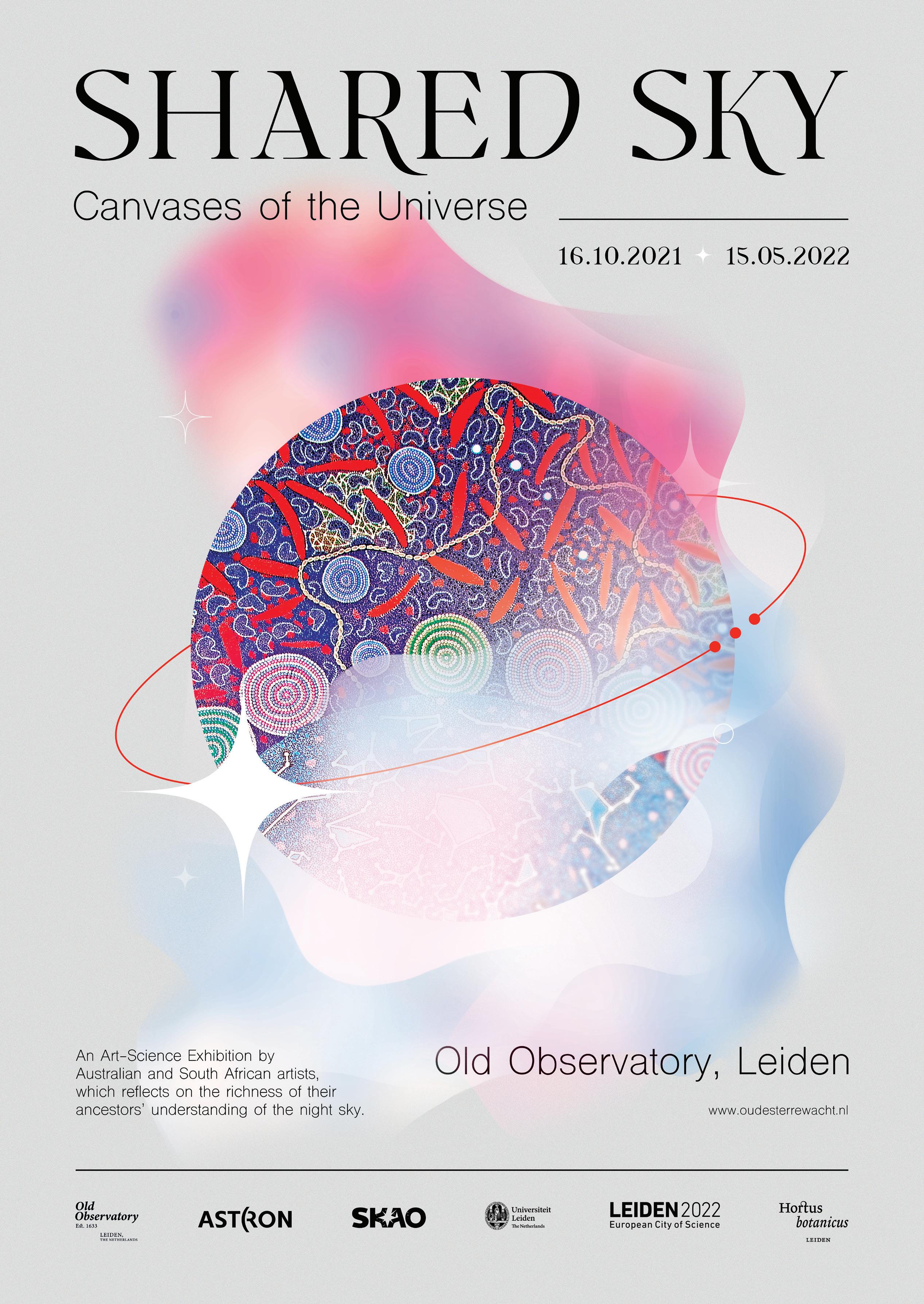
Just like people in many countries, the SKA Observatory’s indigenous art astronomy collection is venturing out into the world once more. The Shared Sky artworks last left the SKAO headquarters in April 2018, making their way to the European Commission Headquarters in Brussels, Belgium
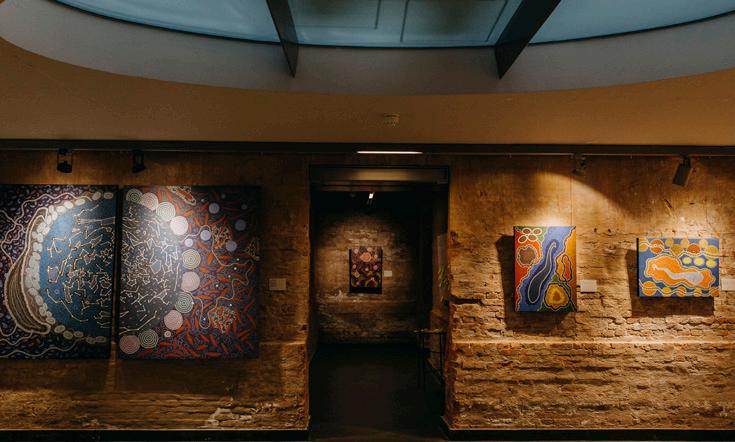
Shared Sky: Canvases of the Universe opened in middle October in the Netherlands at Leiden University’s Old Observatory, the oldest remaining university observatory in the world. Together with the Netherlands Institute for Radio Astronomy (ASTRON) and the SKAO, the Old Observatory is sponsoring this exhibition of artworks by Aboriginal Australian and South African artists.
During its first two weekends on display more than a thousand people came to admire the collection, said the exhibition coordinator of the Old Observatory’s visitor centre, Aiofe Taylor. In total, 20,000 visitors are expected to view the exhibition before it ends in May 2022.
“Visitors responded very positively to the exhibition,” she said. “One person was interested in the link between culture

and the narratives applied to the patterns of the night sky that the exhibition presented. A group of young people who visited the exhibition were curious about the celestial mechanics that cause the ‘Emu in the Sky’ [an Aboriginal Australian constellation] to appear to change position throughout the year.”
“Questions such as these show how valuable art is in sparking people’s interest in astronomy,” said the Old Observatory’s education and community engagement manager, Sanne van Gammeren.
“Our aim is to get the public to wonder about the wonders of the Universe. We were therefore so excited to host the Shared Sky exhibition as it is a very approachable way of connecting people with astronomy.”


Shared Sky: Canvases of the Universe, an exhibition of Indigenous astronomy artworks by South African and Australian artists that are on display until May 2022. CREDIT: Leiden Observatory/Elinoor Veldman Photography

IN LEIDEN OVER A WEEKEND?
Visit the exhibition by using the entrance through Hortus Botanicus Leiden every Saturday and Sunday until 15 May 2022. Details here.
7 NOVEMBER 2021 CONTACT
Aerial view of MPIfR’s Effelsberg radio observatory with two telescopes, the 100-m parabolic dish (top center) and the Effelsberg LOFAR station (bottom

Artificial intelligence sharpens view into space
BY DR NORBERT JUNKES (MAX PLANCK INSTITUTE FOR RADIO ASTRONOMY)
In their search for distant galaxies, rapidly rotating neutron stars and black holes, radio astronomers are collecting an ever-increasing amount of data, which will require greater use of artificial intelligence for analysis.
To this end, eight institutions in the North Rhine-Westphalia (NRW) region of Germany, led by the Max Planck Institute for Radio Astronomy (MPIfR) in Bonn, have joined forces in an “NRW Cluster for Data-Intensive Radio Astronomy: Big Bang to Big Data” to combine radio astronomy and data science. NRW is funding the project with up to €3m.
Radio astronomers look deep into the Universe with increasingly sophisticated observation methods, generating data at ever-faster growing rates. “In the next generation of radio telescopes, data will be generated at rates comparable to all of today’s internet traffic,” says MPIfR Director Prof. Michael Kramer.
Scientists are looking for new ways to cope with this flood of data. “Diligence and powerful computers are no longer sufficient,” says Prof. Frank Bertoldi from the University of Bonn. “Instead, machine learning and artificial intelligence will help researchers in the future to filter out the exciting signals of the Universe from the flood of data.”
The essential purpose of the alliance is to network knowledge and better coordinate the activities of radio astronomers, data scientists and industry. It provides a concerted effort to strengthen research and education, as well as the transfer of knowledge to practical applications through the exchange with industry partners.
8 CONTACT ISSUE 9
right).
CREDIT: MPIfR (Photo: Peter Sondermann, VisKom/City-Luftbilder)
USA sets out vision for astronomy and astrophysics in decade ahead
BY MATHIEU ISIDRO (SKAO)
Every ten years, the US scientific community is called upon to help produce a plan for Astronomy and Astrophysics in a process led by the country’s National Academies of Sciences, Engineering and Medicine.
The massive exercise identifies the most compelling science goals for the next decade and presents an ambitious programme of ground- and space-based activities for future US investment, as well as recommending critical near-term actions to support the foundations of the profession and the technologies and tools needed to carry out the science.
Pathways to Discovery in Astronomy and Astrophysics for the 2020s is the result of that work, and outlines the US community’s priorities for the next decade. Those priorities for the largest astronomy community in the world include the development of a large (~6m aperture) infrared/optical/ ultraviolet space telescope (successor to the James Webb Space Telescope, due to launch in the next few weeks), a significant investment in the US Extremely Large Telescope Program (Giant Magellan Telescope and Thirty Meter Telescope), and a green light for progressing the design, prototyping and cost studies of the next-generation Very Large Array (ngVLA), a radio telescope meant to operate in the higher bands of the radio regime. Those priorities will necessarily have an impact on the science that gets done and the facilities that get built even outside the USA. As we build and operate the SKA telescopes, these US facilities will be those that operate in tandem and in cooperation with the SKAO and we must ensure we maintain our close and valuable links with colleagues in the USA.
Several members of the SKA community took part in the process, such as SKAO’s Programme Director Joe McMullin, SKAO’s SKA-Low site Construction Director Ant Schinckel and SARAO’s Chief Technologist Justin Jonas who advised on technical, risk and cost evaluation assessments of large projects and The University of Manchester’s Professor of Radio Astronomy Anna Scaife who served on the radio astronomy review panel.
Beyond science, the report also makes a number of recommendations for the profession, in particular in terms of education, outreach, training, recruitment, sustainability, engagement with local communities and advancing equality, diversity and inclusion in the field.
While the USA is not a Member State of the SKAO, there are close links between a number of US institutions such as the National Radio Astronomy Observatory (NRAO), the Vera Rubin Observatory, the TMT, the GMT, and the SKAO, with experts serving on review panels and astronomers exploring future scientific synergies between our facilities. US astronomers represent ~7% of members of our Science Working Groups.
The full report is available here

9 NOVEMBER 2021 CONTACT
Let’s talk about... galaxy evolution
BY CASSANDRA CAVALLARO (SKAO)
On 18 December 2021, space watchers will hold their breath for one of the most anticipated launches of recent times, as an Ariane 5 rocket is scheduled to carry the James Webb Space Telescope into space. One of the key goals of this infrared observatory is to study how galaxies form and evolve over billions of years, something the SKA telescopes will study in detail in the radio band. This powerful complementarity promises to give us the best view yet of the processes at work and how they have shaped our Universe.
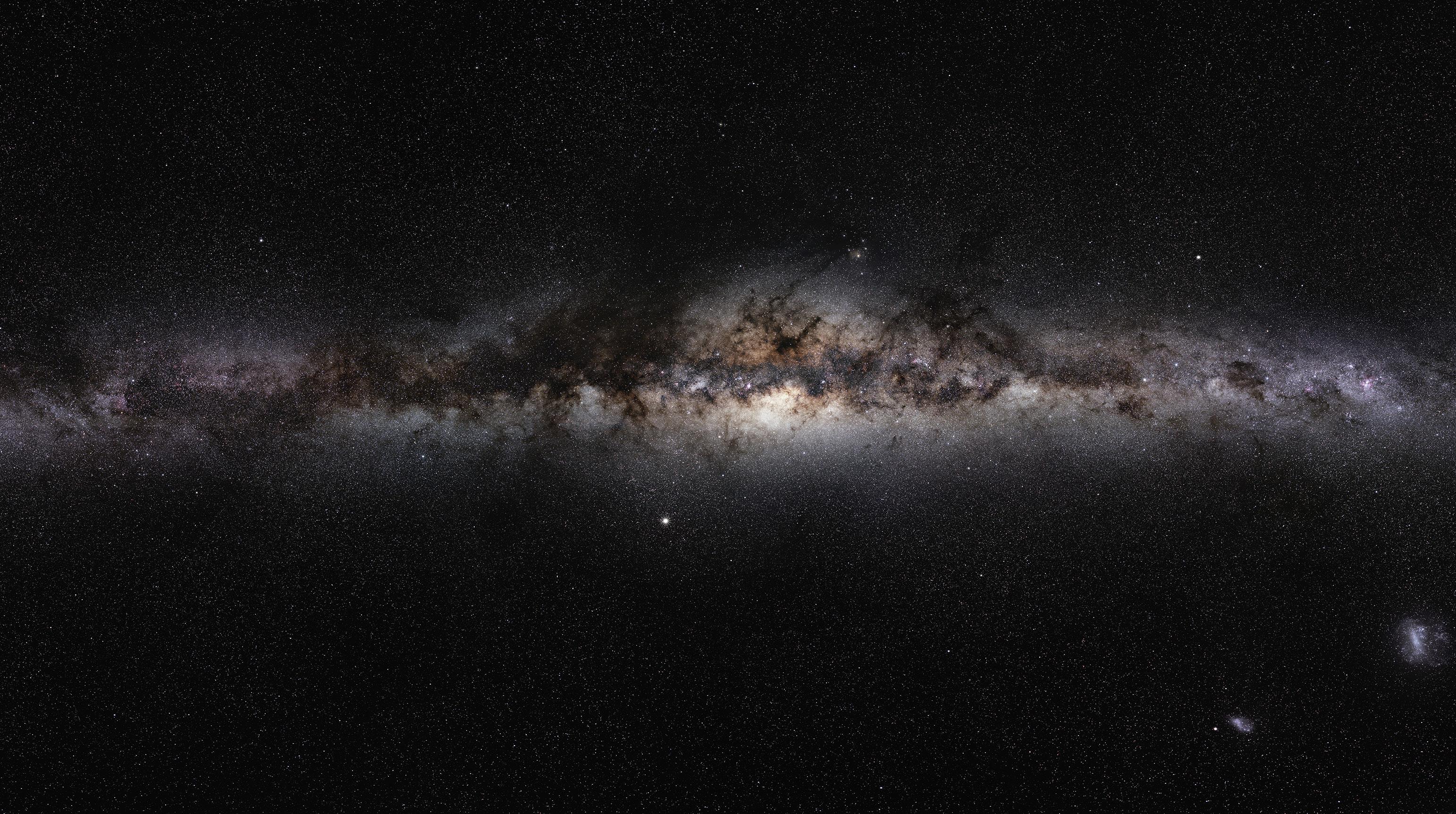
In the vastness of space, galaxies are the mega structures where stars and planets are created, binding together billions of objects through gravity in one huge and sometimes tumultuous galactic community. Within them, neighbourhoods like our own Solar System are just a tiny part, as becomes obvious to anyone who has seen the plane of our own galaxy, the Milky Way, stretching out across a dark night’s sky. “One of the things that’s so exciting about studying galaxy evolution is the variety of galaxy shapes and composition; the sheer beauty and intricacy of galaxies when you can study them in detail,” says Dr Mark Sargent, Science Program Manager at the International Space Science
Institute in Bern, and co-chair of the SKAO’s Extragalactic Continuum Science Working Group, which studies the structure, formation and evolution of galaxies. “At the same time, despite all this variety, there are underlying regularities in how key galaxy properties correlate with each other; these allow us to infer common patterns in how galaxies formed and evolved.”
Let’s examine that variety first. Astronomers aren’t totally sure what causes galaxies’ different shapes, although it’s likely to depend on their environment – more on that later.
The most common type – almost twothirds of those we know about – are the eminently photogenic spiral galaxies, looking like giant celestial lollipops
DID YOU KNOW?
For more than a decade, the Galaxy Zoo citizen science project has been asking volunteers to help classify galaxies by their shape, something that the human eye can still do better than computer algorithms. A similar project, Radio Galaxy Zoo, asks citizen scientists to analyse images from the LOFAR telescope, an SKA pathfinder, to identify supermassive black holes and star forming galaxies, and you can help them too!

The spiral Andromeda galaxy contains hundreds of billions of stars.
CREDIT: Robert
Gendler/ESA
with elegant curling arms. The Milky Way and our nearest large neighbour Andromeda are both barred spirals, their arms stretching out from a central luminous bar of stars.
Next we have elliptical galaxies like Messier 87, a name synonymous with the first ever image of a black hole. These galaxies appear like a circle or slightly squashed into an oval shape. Lenticular galaxies are somewhere between the two types, and include such beauties as the Cartwheel galaxy, imaged by the NASA-ESA Hubble Space Telescope
Finally we have the complete oddballs, or “irregular” galaxies, such as the Small Magellanic Cloud, visible to the naked eye in the southern hemisphere, which have no consistent shape or structure.
But what causes them to form in the first place?
“Regions of higher-than-average density in the distribution of matter very early in the history of the Universe contract under the force of gravity and begin to form bound structures,” says Mark. “It already is clear that the process can be quite fast in cosmological terms: fairly big objects
10 CONTACT ISSUE 9
Let’s talk about
with the mass of around a billion solar masses have already been detected as far back as just a few hundred million years after the Big Bang.”
Both the SKA telescopes and James Webb Space Telescope (JWST) aim to discover how the very first galaxies formed, during a period known as the Epoch of Reionisation (read about that in the last issue of Contact). But astronomers also want to see how those galaxies evolved over time, a process driven by both internal and external factors.
While we might think of galaxies as luminous – just recall those iconic Hubble images – they are shaped in large part by something that emits no light at all: the enigmatic “dark matter”, which exists both within and around galaxies and has a major impact on their evolution, altering the star formation rates.
Dark matter makes up around 26% of the Universe, compared to 5% “normal” matter like stars and planets and everything else you can see, but at present hasn’t been detected directly by any kind of telescopes. That means we can only infer its presence from the behaviour of other objects which we can see.
Dark matter exists within galaxies and forms huge “halos” surrounding them. These halos are what binds galaxies into clusters; galaxies are rotating so fast

“One of the things that’s so exciting about studying galaxy evolution is the variety of galaxy shapes and composition; the sheer beauty and intricacy of galaxies when you study them in detail”
DR MARK SARGENT
that, without the gravitational influence of dark matter holding them together, they would simply break apart. Think of a spinning fairground ride: without a strong restraining force – like a seat restraint or a cable – the centrifugal force would cause people to fly off.
“At a very fundamental level, galaxies as we know them today would not exist without the dark matter ‘scaffolding’ of the cosmic web,” says Mark. “In terms of the total mass, the dark matter component of galaxies is far more important than their luminous (i.e. visible) component. The growth of the dark matter halo of galaxies thus is central to determining the overall gravitational pull a galaxy can exert on material surrounding it, and through this also the rate at which the luminous component grows. At a more detailed level, where a galaxy resides within a dark matter halo (e.g. a central galaxy vs. a satellite galaxy) impacts galaxy properties and their evolutionary path.”
That evolutionary path is closely tied to star formation rates. Galaxies are home to billions, or even trillions of stars – the Milky Way alone is estimated to hold around 100 billion – but star formation is not a constant or steady process. Galaxies that have stopped producing stars are considered “dead”; most ellipticals fall into this category, in contrast to spirals which are active star makers. Our own galaxy is still making new stars, but not as many as earlier in its history.
“Galaxy star-formation histories generally have a ramp-up phase, and then decline again after reaching a peak. Although individual galaxy star-formation histories may fluctuate a lot around this average behaviour,
there are some general trends in that the relative duration of the rising and declining phase, and when the peak is reached, depends on the kind of galaxy you are considering,” Mark says. “For instance, galaxies with a high present-day mass will in most cases have experienced peak star-formation earlier than less massive galaxies. Likewise, galaxies which were born in strong overdensities typically have an accelerated evolution compared to galaxies in less dense regions, as it is easier for them to grow.”
Galaxies which are in an extremely active star-making phase are known as starburst galaxies. Star formation is measured in relation to the mass of the Sun (solar mass); the Milky Way converts gas to stars at a rate of a few solar masses per year, but starburst galaxies are far more prolific.
“The strongest starbursts can reach star-formation rates more than 100 times greater than those of ‘normal’ star-forming galaxies. In the local Universe they might reach a starformation rate of several tens or even a few 100 solar masses each year, and at the peak epoch of galaxy assembly even greater than 1,000 solar masses a year,” Mark explains.
So, what causes these peaks in star formation, and why are some galaxies better at making stars than others? The most obvious factor within the galaxy itself is the amount of gas available; stars are born when clouds of gas and dust collapse under gravity, so it stands to reason that galaxies with huge gas reserves are very active in churning out new stars. However, there is also the aspect of how effective galaxies are at utilising their in-situ supply of gas.
11 NOVEMBER 2021 CONTACT
The spectacular Cartwheel lenticular galaxy. Its shape is the result of a collision with a smaller galaxy. CREDIT: ESA/Hubble & NASA
“Some of the most star-bursting galaxies appear to be especially efficient in quickly converting their gas reservoir to stars. Such starbursts are often triggered by galaxy interactions or by internal gravitational instabilities, both of which lead to large amounts of gas being compressed into small areas,” Marks notes.
There are a host of processes which can reduce the amount or density of gas in a galaxy, from star formation itself, to the jets and winds being spewed out into the galaxy by an active galactic nucleus (AGN - a black hole consuming material), known as “feedback” - a process that the SKA telescopes will be uniquely suited to observe. Then there’s what’s going on “outside”, in the environment around a galaxy. Mark notes that some of the terminology here is “quite colourful”, and he’s not joking…
For galaxies that exist in clusters, there’s the risk of an unpleasant-sounding process called “ram-pressure stripping”. This happens when galaxies pass through the intra-cluster medium (the environment between the galaxies within a cluster), which we can think of as running through a gauntlet of hot gas. This gas acts like a strong wind, and can actually push gas out of the galaxy.
Tidal effects from other neighbouring bodies, similar to the effect of our Moon on Earth’s oceans, can cause the outer parts of galaxies to become stretched, and therefore less dense, which can negatively affect star formation.
Then there’s “strangulation”, which is less violent than it sounds. Due to their huge mass, galaxies exert a gravitational pull on surrounding material, which means they can draw in (accrete) new gas to keep feeding star formation. If there’s no more gas available: galaxy death by strangulation.
“The time scales on which these processes act can range from tens of millions of years to billions of years. A galaxy really ‘switches off’ if, in addition to all gas being removed or consumed, it is also no longer able to accrete new gas,” Mark says. “We know that
accretion rates onto galaxies were significantly larger in the past. That is one of the main reasons why the starformation activity of the Universe as a whole used to be more than an order of magnitude higher than it is nowadays. A significant factor here is the expansion of the Universe, and especially the fact that the expansion is accelerating. The material in between galaxies is thus becoming more and more diffuse, and harder to accrete for galaxies.”
“Importantly, the sensitivity of the SKA telescopes will allow us to study many of these processes in more detail, for example allowing us to map in unprecedented detail the diffuse gas reservoirs around galaxies – from which gas is accreted into the galaxy and can be used to form new stars – through the HI (neutral Hydrogen) emission line. It will also allow us to characterise the sites and effects of AGN and starformation activity in galaxies much better, both for nearby and distant galaxies.”
Radio astronomy is the only way to study these gas reservoirs, as they can’t be seen by optical or infrared telescopes at all, giving the SKA telescopes a unique view.
The same can be said for the effects of magnetism within and between galaxies, which is best studied in the radio spectrum. Magnetic fields of vastly varying strengths are found everywhere in space, including within the giant molecular gas clouds which form stars, and are known to influence the number and size of stars created, as well as possibly even influencing the formation of spiral arms in galaxies. (You can read more about cosmic magnetism, another key area of science for the SKA telescopes, in Contact issue 4).
Galaxies are shaped by their environments, and that can include clashes with neighbours. Galaxy mergers, when two of these giant rotating bodies are drawn together though gravity and collide, is perhaps the most dramatic change a galaxy can experience.

The Antennae galaxies are colliding spiral galaxies about 70 million light-years away, seen here in both radio (in red, pink and yellow) and visible (in blue) light. CREDIT: ALMA (ESO/NAOJ/ NRAO). Visible light image: NASA/ESA Hubble Space Telescope
Researchers have shown that such mergers account for the fact that there were far more galaxies in the early Universe than we can see today. In 2017 a team estimated that there are two trillion galaxies in the observable Universe and 90% of them haven’t been studied yet, because their light is too faint for current facilities to detect. These early galaxies, made ever more distant by the expansion of the Universe, are what JWST and the SKA telescopes aim to study.
Galaxy mergers can have several implications, chiefly creating a new, larger galaxy. In some, the influx of gas is a catalyst for star formation, but recent studies have found collisions can also push gas out of a merged galaxy, inhibiting star formation in the future. Mergers can also lead to the galaxies’ respective central black holes merging, over the course of billions of years. This causes gravitational waves to ripple out across space, something the SKA telescopes will be able to detect through the precise timing of pulsars (as we explored in Contact issue 5).
A galaxy merger is the fate that will likely meet the Milky Way and
12 CONTACT ISSUE 9
Andromeda, which is moving towards us at 400,000km per hour. Happily, that collision is still about four billion years away.
The most effective way to study galaxy evolution is on a grand scale, which is the approach of the Cosmic Evolution Survey (COSMOS), a multiwavelength survey using both space telescopes and land-based observatories to examine two million galaxies in a patch of the sky known as the COSMOS field. It aims to discover how they evolved by looking back in time into the distant Universe, and by studying their environments. With the advent of JWST, a new survey called COSMOS-Webb will begin.
“COSMOS-Webb will push the story of galaxies back to earlier in the Universe and provide higher resolution images in the near-infrared than we have had before,” says Dr Nick Seymour of Curtin University, a member of the SKA working group who is also part of the 200-strong international team of researchers working on COSMOS. “Through the weak-lensing technique
[which measures the total amount of intervening mass present along a given line of sight towards background galaxies] we will be able to measure the distribution of dark matter within the COSMOS field. By supplementing the existing Hubble data, we will be able to trace how the size and shape of galaxies changes over time.
“The number of galaxies well characterised within the first billion years of the Universe is quite small. COSMOS-Webb will give us a much larger sample of galaxies in this important first epoch of galaxy formation. And crucially it will be able to probe even earlier, possibly to just after the first galaxies have formed.
This is a period the SKA telescopes will be able to look back to in the radio part of the spectrum, conducting its own radio continuum surveys which will prove highly complementary to measurements taken by JWST. Astronomers want to study how galaxies developed their stars, and why it is that most galaxies in clusters no

longer produce many – or any – with most new stars being formed in isolated galaxies instead.
“We want to trace how galaxies built up their stellar populations as a function of time and environment,” Nick adds. “Deep radio surveys from the SKA telescopes will be able to accurately trace star-formation and active black holes with jets. This will complement the accurate measures of stellar mass at similar resolutions provided by JWST. Having accurate and independent measures of the star formation rate and stellar mass can tell us when and where star formation occurred.”
As well as directly observing processes in motion, there’s also an important technical angle to this complementarity, which will help both observatories to eliminate instrumental errors which can hamper scientific studies.
“Every survey, in every waveband, no matter how careful you are, could be affected by systematic errors due to the instrument and the analysis,” says SKAO Project Scientist Dr Anna Bonaldi. “However, if you rely on the comparison of two independent surveys, for example the SKA telescopes in radio and JWST in infrared, to make your measurements, you effectively exclude those errors.
The cross-correlation technique is very popular for cosmological studies, where the survey is used to make precise measurements of the quantities governing the whole Universe.”
Even on their own, the SKA telescopes will reveal much more about how galaxies evolve than we know currently because radio telescopes are uniquely well suited to study many of the factors which are key to galaxy evolution mentioned above, which emit signals at radio wavelengths.
It’s clear, then, that in the coming years the SKA telescopes will be at the forefront of discoveries in this field, and by joining forces with new observatories like the JWST will create the clearest and fullest picture yet of how galaxies form and evolve.
13 NOVEMBER 2021 CONTACT
The orange contour lines on this image represent a filament of dark matter that connects two clusters of galaxies – each containing many thousands of individual galaxies – in the so-called cosmic web.
CREDIT: J.Dietrich et. al (2012); background image taken by the Subaru telescope and obtained from the SMOKA science archive.
Radio telescopes stamp their mark across the world
BY MATHIEU ISIDRO (SKAO)
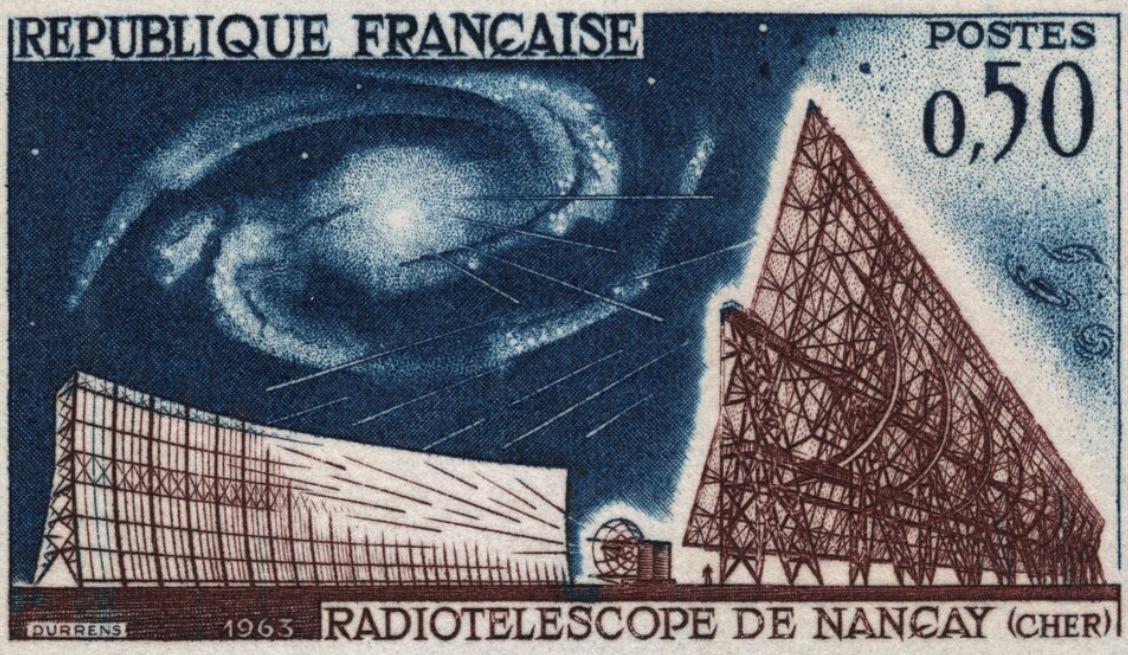
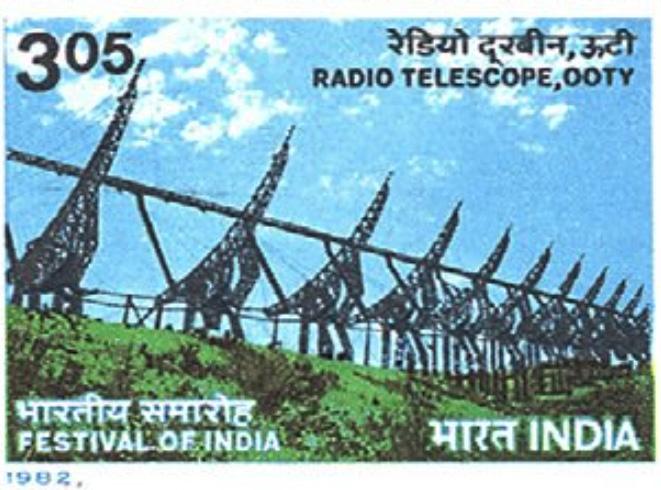
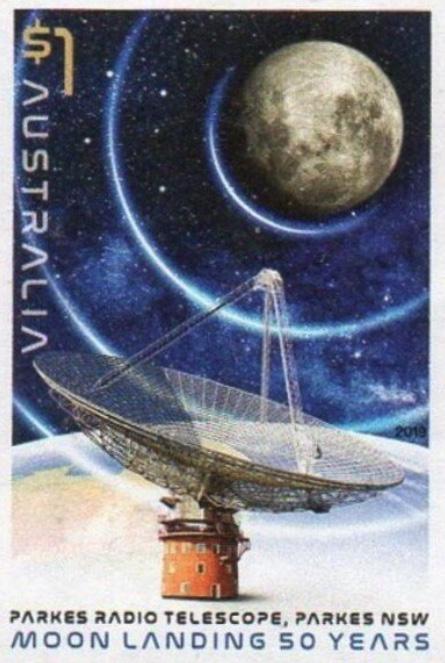
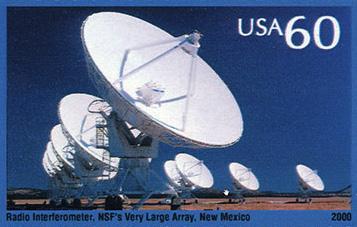
Postage stamps generally feature an illustration of persons, events, institutions, or natural realities that symbolize a nation’s traditions, values, and history. It is therefore perhaps unsurprising that radio telescopes, as the iconic cutting-edge engineering structures that they are, have long featured on postage stamps around the globe.
In honour of World Post Day on 9 October, we therefore took a little tour of this subgenre of philately (the study and collection of stamps) featuring many SKA pathfinder and precursor telescopes, from Cold War era stamps featuring the Lovell Telescope, to current stamps, like the one marking the inauguration of FAST, the World’s largest single dish radio telescope.
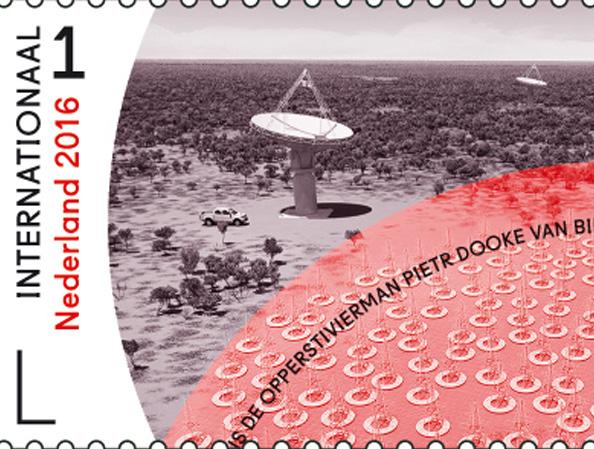
2016
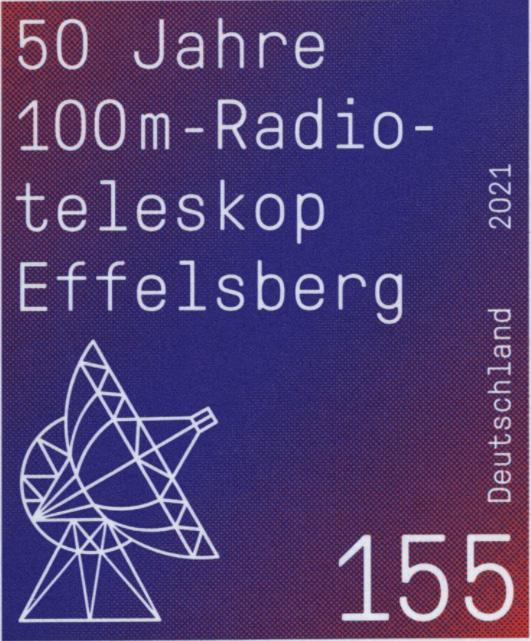
Germany’s Effelsberg 100m Radio Telescope celebrated its 50th birthday in 2021, and marked it by supporting NASA’s Perseverance spacecraft landing on Mars, picking up radio signals broadcast during the tricky descent.

A
14 CONTACT ISSUE 9 Featured image
Dutch stamp featuring ASKAP and an SKA-Low station, part of a set celebrating the 400th anniversary of Dutch explorer Dirk Hartog first setting foot in Australia.
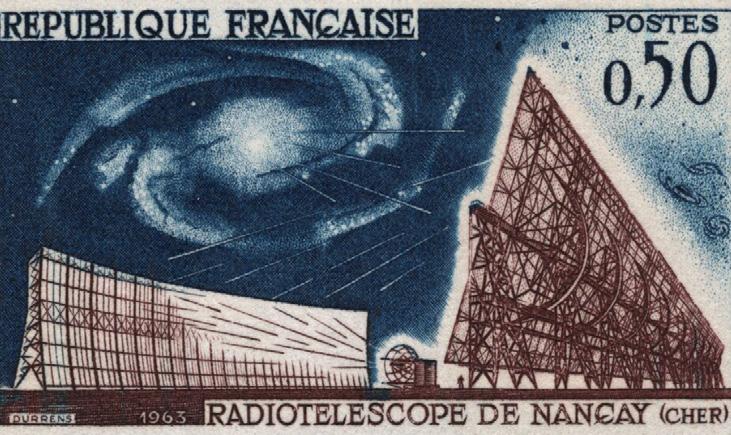
The large radio telescope at Nançay in France had only just been built when this stamp featuring a barred spiral galaxy was released in 1963. The telescope was inaugurated by President Charles De Gaulle two years later.
1965 stamp from Sharjah (now in the United Arab Emirates) depicts the 76m Lovell Telescope at Jodrell Bank in the UK. The city was a British Protectorate at the time.


15 NOVEMBER 2021 CONTACT
The LOFAR telescope’s core is in the Netherlands with its stations spread across Europe, as shown on this 2009 Dutch stamp.
This 2019 Australian stamp commemorates Parkes radio telescope’s role in the 1969 Moon landings, when it helped to deliver those iconic TV images to the world.
A 1982 stamp featuring India’s 530m-long Ooty Radio Telescope, a groundbreaking facility which led to the development of the Giant Metrewave Radio Telescope (GMRT). Last year we published an obituary about their architect and the father of Indian radio astronomy, Prof. Govind Swarup.
2017 Chinese stamp featuring the Five-hundredmetre Aperture Spherical Telescope (FAST), inaugurated the previous year, complete with pulsars and magnetic field lines.
The Very Large Array (VLA) in the USA. This stamp issued in 2000 is part of a set featuring telescopes that probe deep space. Credit: US Postal Service
Science Data Challenge 2
How to separate galaxies from noise at scale – a science data challenge
BY ANIM VAN WYK (SKAO)
A fourfold increase in the number of teams, more than twice as many countries, and a dataset 300 times as large characterised the SKA Observatory’s second Science Data Challenge (SDC2).
Team MINERVA, with members from five institutes in three countries, took the top spot in the challenge set by the SKA Observatory (SKAO). MINERVA was one of forty teams in 22 countries that competed, compared to nine teams from 12 institutions in eight countries that took part in the first challenge in 2018-19.
Building accurate automated tools
Since the SKA telescopes will be much more sensitive than any of their predecessors, astronomers will be working
with crowded images of the sky. To fully exploit the treasure trove of data to come, the radio astronomy community must develop accurate automated tools – especially given the processing power required to churn through enormous datasets. The SKAO data challenges aim to fast-track this process.
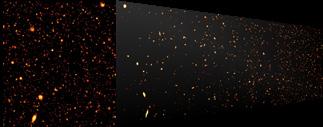
For SDC2, competing teams had to locate and discern the properties of nearly 250,000 neutral hydrogen galaxies in a mock dataset. Neutral hydrogen atoms produce radio emission when their single electron makes a “spin flip” every
16 CONTACT ISSUE 9
Participants 1–5 6–10 11–20 20+ SKAO
MAP OF WORLDWIDE PARTICIPATION THE CHALLENGE IN NUMBERS AusSRC
Perth,
ENGAGE SKA - UCLCA Aveiro &
IAA-CSIC
Spain IRIS (STFC) UK
supercomputing
analysing of astronomical data
registered participants in countries
CPU core hours* and 15 TB RAM available for teams Computing facilities
core hour refers to the number of processor units (cores) used, multiplied by the duration of the job in hours. CSCS Lugano, Switzerland INAF Rome, Italy GENCIIDRIS
China SRC-proto
Focus on
The challenge’s 3D data cube is a series of stacked radio images, each reflecting a different frequency. It shows galaxies across a distance of 4 billion light years.
& Pawsey
Australia
Coimbra, Portugal
Granada,
8
centres 1TB Teams
280 22
15 million
*A
Orsay,France
Shanghai, China
so often. Spin flips produce weak radiation signals, but the vast quantity of neutral hydrogen that tends to surround galaxies like our own means it can be detected. Studying the distribution of neutral hydrogen in space helps astronomers better understand how galaxies form and evolve.
The mock dataset consisted of a series of stacked radio images, each representing a different frequency. At 1TB in size, the resulting 3D “data cube” was far too large for the teams to store and process on their own computers. Instead, eight supercomputing centres around the world generously granted access to SDC2 finalists. This helped level the playing field and also provided an early test run of how the SKAO will in future disseminate the telescopes’ data via SKA Regional Centres.
Complementary methods
Both MINERVA and runner-up team FORSKA-Sweden employed machine learning, specifically deep learning. Also referred to as neural networks, this method entails computers learning to recognise objects after being fed training data, similar to speech recognition software on a smartphone. Other teams used or further developed existing software to apply complex filtering algorithms to the data, making galaxies stand out from the instrumental noise.
“The ability of different teams to perform well on different aspects of the challenge highlighted the complementarity of methods,” said Dr Philippa Hartley, the SKAO postdoctoral fellow who co-led the challenge. “It is likely that a combination of several methods will produce the very best results. These early findings strongly underscore the importance of collaborative, open science – a principle which sits at the heart of SKAO values.”
Wrapping up the challenge
Dr Hartley and the SKAO science team are preparing a scientific paper summarising the different teams’ approaches. The paper will also provide feedback on how well different techniques performed.
“Since the SKAO created the dataset, we can show where errors could occur and which kind of biases might be introduced, as well as how to correct those,” she explained.
To complete the wrapping up of SDC2, Dr Hartley is working with fellows from the Software Sustainability Institute –based at the Universities of Edinburgh, Manchester, Oxford, and Southampton – to score different teams on how welldocumented, easy to use, and easy to install their code is. Each team whose pipeline demonstrates such best practice will receive a “reproducibility award” at bronze, silver, or gold level.
About the winners
MINERVA – an acronym for “MachINe lEarning for Radio astronomy at obserVatoire de PAris” – is a project funded by the Paris Observatory at PSL University. This observatory led the winning team that included members from the Canadian Institute for Theoretical Astrophysics at the University of Toronto and the Strasbourg Astronomical Observatory
Team MINERVA applied two independent methods to the data before combining the results to achieve an improved score. Their algorithms were deployed on supercomputer Jean Zay, named after the French education minister who in October 1939 helped set up the country’s National Centre for Scientific Research but was executed by the Vichy government in 1944. The Jean Zay can reach a peak performance of 28 billion operations per second (28 Pflops/s).
“I am very proud of the MINERVA results,” said the observatory’s president, Dr Fabienne Casoli. “Radio astronomy is one of the top priorities of the Paris Observatory. The methods developed by the MINERVA project are innovative and promising and I look forward to their further development.”
So you want to build a simulated dataset?
The SKAO team wanted to make the simulated dataset used in the SDC2 “as accurate as possible – even if it was very complex and difficult”, explained the co-leader of the challenge, Dr Philippa Hartley. To create it, the scientists followed a three step process.
The team started with real observations of galaxies and modelled their empirical measurements – such as mass, size, and shape – to generate a catalogue of artificial objects.
Then the scientists used real images of galaxies and manipulated them based on the properties of the catalogue objects to create hundreds of thousands of distinct “galaxies”.
“The third step was to apply all the kinds of effects you get when using a radio telescope, such as interference from mobile phones or satellite reflections,” said Dr Hartley. “We included it to make the data less perfect but realistic.”
The code for the simulated dataset will be released as part of the forthcoming scientific paper. By doing so, other researchers can test it out and create their own datacubes – a practice that helps promote Open Science.
17 NOVEMBER 2021 CONTACT
Hosting agreements sealed with South Africa and Australia
BY ANIM VAN WYK (SKAO)
When a momentous milestone occurs, the SKAO council chamber usually erupts in applause. But in these pandemic times, Dr Lewis Ball had to contend with a quiet smile of satisfaction in his home office after host country agreements with South Africa and Australia were signed.
“It was an enormous relief,” said the SKAO’s operations director, who led the last two years of a negotiation process that had been years in the making. “The agreements took a lot of work by a lot of people and are critical for the successful delivery of the Observatory for the next 50 years or more.”
These key documents formalise arrangements for the construction and operation of the SKA telescopes located in Australia and South Africa. They were signed in mid-October by the SKAO Director-General Prof. Philip Diamond, South Africa’s Dr Phil Mjwara, and David Fredericks in Australia. Dr Mjwara is director-general of the department of science and innovation and Mr Fredericks the secretary of the department of industry, science, energy and resources. The signing event followed unanimous approval of the agreements by the seven member states represented at the SKAO Council.
Three practices kept the negotiations on track, explained Dr Ball. The first was to iron out the core of the agreement before legal experts and a broader technical group polished the wording, all the while maintaining the momentum of the process since construction couldn’t start without these in
place. The negotiators were also focussed on keeping the two agreements as consistent as possible.
“The approach we tried to follow was that the two documents should only be as different as they need to be,” said Dr Ball. “The two countries’ legal frameworks are different so there are some variations in wording, but in essence the agreements are the same.”
Examples of differences are that the Australian text recognises that an Indigenous Land Use Agreement with the Wajarri Yamatji, the traditional owners of the SKA-Low site, will be in place before construction at the Australian site begins. The South African text includes details on the incorporation of the 64-dish MeerKAT radio telescope into the SKA-Mid array, which will form an in-kind contribution by South Africa to the Observatory.
In each country, the SKAO will have operations at four separate facilities: the actual telescope arrays in remote regions, an engineering operations centre to support the day-to-day maintenance and reliable physical operation of the telescope, a science operations centre from which the

18 CONTACT ISSUE 9
SKAO Corner
Australia’s Mr David Fredericks (left), secretary of the department of industry, science, energy, and resources; SKAO Director-General Prof. Philip Diamond (middle); and Dr Phil Mjwara, director-general of South Africa’s department of science and innovation, signed the host country agreements.CREDIT: SKAO
scientific programme of observations using the telescope will be run, and a science processing centre where a supercomputer will process the data acquired by the telescope for further distribution.
“The hosting agreements complement the SKA Headquarters Agreement between the Observatory and the UK government signed at the first meeting of the SKAO Council in February,” said Dr Ball.
With these critical documents in the bag, Agreements of Bilateral Cooperation with the South African Radio Astronomy
Agreement brings Swedish astronomical community into SKAO fold
BY ANIM VAN WYK (SKAO)
Hot on the heels of the Swiss, the Swedish astronomical community has also signed an agreement with the SKA Observatory.
Chalmers University of Technology will represent Sweden in the SKA project during the next two years This will allow Swedish companies to bid for construction contracts while national processes continue to eventually incorporate Sweden as an SKAO member country. Astronomers in Sweden will furthermore gain access to the scientific data generated by the project to advance humankind’s understanding of all things to do with space.
“Scientists in Sweden and all over the world want to use the SKA telescopes to ask some of our biggest questions about the Universe,” said Prof. John Conway, professor of radio astronomy at Chalmers and infrastructure director of Onsala Space Observatory. “[This will give them] the chance to make exciting discoveries in astronomy and physics.”
The agreement was signed at the end of September during an online ceremony that connected Gothenburg and Jodrell Bank. The president of Chalmers, Stefan Bengtsson, and Prof. Philip Diamond, the SKAO’s Director-General, sealed the deal on behalf of their respective organisations.
Observatory (SARAO) and Australia’s science national agency CSIRO are next on the agenda. The ABCs will supersede the Memoranda of Understanding and Letter Agreements currently in place. Negotiators have already gathered around the virtual table, buoyed by the recent success.
“The host country agreements were difficult to finalise only because they represented a difficult problem to solve,” said Dr Ball. “This was achieved because everyone involved was focussed on delivering a positive outcome.”
Also read the media release on our website

Onsala Space Observatory’s twin radio telescopes and 25-metre telescope on the right. CREDIT: OSO/Anna-Lena Lundqvist
“Sweden has been involved in the SKA project since the start,” said Prof. Diamond. “It’s wonderful to welcome Chalmers and Onsala Space Observatory in this new official role, just as building work is starting in South Africa and in Australia.”
Onsala Space Observatory represented Swedish interests in the SKA design process between 2012 and 2021 as a member of the SKA Organisation, the precursor of the SKAO. During this time Chalmers and Swedish companies made important contributions to the design and prototyping of the SKA telescopes, in particular in the development of receivers, lownoise amplifiers, and digital samplers.
19 NOVEMBER 2021 CONTACT

Global Careers Fair brings together top science organisations
BY THE SKAO HR TEAM
In early October, the SKAO joined forces with fellow intergovernmental organisations CERN, the European Space Agency (ESA) and ITER in a virtual careers fair aimed at attracting candidates from all over the world.
The event was a key part of the work that the SKAO is doing to build our employment brand globally. This allowed us to showcase opportunities in engineering and computing across the Observatory as well as enabling us to provide insight into what it is like to work for the SKAO.
The candidates had the chance to engage in a livestream broadcast by one of our colleagues and speak directly to current staff who volunteered to have one-to-one chats via instant messaging software during the four-hour event.
The SKAO booth highlighted roles for radio frequency engineers, electrical, electronic, mechanical and telecommunications engineers, system engineers, software developers and UX specialists, with candidates encouraged to register their interest in anticipation of the roles going live in the coming months. The Observatory’s presence at the event was organised by the Human Resources team, supported by colleagues in Engineering, Software and Communications.
“We were delighted to be part of this event along with CERN, ESA and ITER.” says Fiona Davenport, SKAO Head of Human Resources, “By teaming up in this way we have been able to reach a wide pool of diverse candidates to enable us to build our future candidate pipeline.”
“The SKAO’s recruitment activity is growing rapidly now and many of the roles are highly specialised, so events like this enable us to target our efforts in a way that will have the most impact. Our staff spoke to more than 100 interested people on the day, and many signed up to join our candidate pool for future alerts to opportunities.
As a new IGO this was the first time we have taken part in such an event and we will now review feedback as we look to be part of similar events in future.”

21 NOVEMBER 2021 CONTACT
Watch the joint livestream with engineers from CERN, ESA, ITER and SKAO

2 minutes with... Pranesthan Govender
Pran joined the SKAO’s Communications team in April on secondment from the South African Astronomical Observatory (SAAO), which hosts the Southern African Large Telescope (SALT). His six-month secondment has now been extended to a full year, so we caught up with him to hear more about his role.
Welcome, Pran! Tell us about what you have been doing during your secondment.
I’m working on a communications campaign highlighting the nonscience benefits and wider impacts of the SKAO together with our partners, including how we are contributing to the UN Sustainable Development Goals. I’m also supporting the establishment of formal relationships with the IAU’s regional offices, in particular the South-Africa based Office of Astronomy for Development, but also the Office for Astronomy Outreach and Office of Astronomy for Education. With my experience of the South African landscape I’ll work on local engagement and site visit strategies and build closer working relations with South African stakeholders, making the link with the SKAO Comms team at the HQ. I also look forward to supporting as much as I can the newly appointed SKA-Mid Communications and Engagement Manager.
What made you want to apply for the role?
It’s SKAO, one of the biggest scientific projects in our lifetime! I emailed our HR Manager saying that I would apply the minute I came across the role, that’s how much I wanted it. To be a part of the SKAO at its launch felt like a once in a lifetime opportunity and one I am so grateful and proud to have been granted.
Tell us about your work at SAAO. I’m part of a diverse team and primarily support stakeholder engagement for both SALT and the SAAO, nationally and internationally. I have worked with our international stakeholders to foster close relations, and have done extensive outreach work too, contributing to the goals of South Africa’s Science Engagement Strategy.
How has it been doing your secondment remotely from Cape Town, while the Comms team is in the UK?
I always hear from my UK-based colleagues about the very cold weather so in this regard I feel great to be working from sunny South Africa! However, I can’t wait to head to the UK to see the amazing headquarters at Jodrell Bank. Lockdown has also forced me to appreciate time with colleagues in the office, which I took for granted.
Hopefully you can bring the sun with you… Finally, what do you hope to take from your SKAO experience?
I hope to have further exposure to the international environment and teams that work with the SKAO, to learn as much as I can about the project, its goals, objectives and strategies. Working with a team that has expert skills in this environment will definitely assist me too.
HQ staff dig deep for charity coffee morning
BY DANIELA FRANCHINI (SKAO)
As many of us take a few more steps back to normality and the SKAO Global HQ gets busier and busier, some of the traditions which we have enjoyed together in the past are starting to resume.
On 30 September, it was a pleasure to see a small group of SKAO staff attending the 2021 Macmillan Coffee Morning, an annual national event in the UK which raises money to support people diagnosed with cancer, and their carers and families.
Due to the ongoing limitations caused by the COVID-19 pandemic, the array of cakes and treats on offer was not as huge and colourful as in previous years, but that didn’t diminish the generosity of those who attended in person or donated online to this great cause. In total, the event raised more than £1,700 for the charity.
It also provided an ideal opportunity for some of our new starters to meet their colleagues in an informal setting over a coffee and slice of something sweet! A big thanks to all those who showed their support for the event.
Next on the SKAO’s charity fundraising calendar is the annual Christmas Jumper Day in December, organised by the charity Save the Children. This fun event sees staff dress up in novelty knitwear (or perhaps T-shirts for those in the southern hemisphere!) to raise money for the charity’s lifesaving work in more than 100 countries.

22 CONTACT ISSUE 9
Observatory joins UN space body
BY MATHIEU ISIDRO (SKAO)
In September, the SKA Observatory was accepted as a permanent observer on the United Nations’ Committee on the Peaceful Uses of Outer Space (UN COPUOS).
As the only UN committee dedicated exclusively to space matters, COPUOS provides a unique international platform to facilitate space cooperation between UN Member States. The committee serves as a forum to monitor and discuss developments on the exploration and use of outer space, technical advancements in space exploration, geopolitical changes, and the evolving use of space science and technology for sustainable development.
One area of the committee’s work that the SKAO is particularly focused on is protecting radio astronomy from the potential threat of radio frequency interference (RFI)
posed by satellite constellations in low Earth orbit (read our feature story here). The Observatory has been heavily engaged in international efforts to find solutions to this growing issue, in particular as a Sector Member of another UN body, the International Telecommunication Union (ITU). This is the UN’s specialised agency responsible for allocating use of the radio spectrum.
The SKAO joins fellow intergovernmental organisations the European Space Agency and the European Southern Observatory as well as the International Astronomical Union as permanent observers.
SKAO HQ welcomes back visitors
BY MATHIEU ISIDRO (SKAO)
Back in late 2018, the first event to be held in the newly-built SKAO Headquarter’s 160-seat Council Chamber was a workshop on the Search for Extraterrestrial Intelligence, or SETI.
It is therefore fitting that three years later, as the SKAO HQ reopens for business and starts to welcome visitors back in under strict COVID-19 safety protocols, we welcomed representatives of the Breakthrough Prize Foundation back. They came to discuss their latest SETI research and possible future collaborations with the SKAO and give an update to staff from our iconic Council Chamber.
Backed by billionaire investor and philanthropist Yuri Milner and Meta Platforms CEO Mark Zuckerberg, the Breakthrough Initiatives are a suite of space science programmes investigating fundamental questions about life in the Universe. Andrew Siemion, principal investigator for Breakthrough Listen, and Jamie Drew, chief of staff, Breakthrough Initiatives, shared a brief history of the Foundation and gave SKAO staff an overview of current Initiatives, including Breakthrough Listen’s techno signature research programme.
Breakthrough Listen has progressed in leaps and bounds since its high-profile launch in early 2015. The programme relies on several radio telescopes and SKA pathfinder facilities for data, including CSIRO’s Parkes radio telescope and SARAO’s MeerKAT telescope
23 NOVEMBER 2021 CONTACT

HERA releases first set of data to astronomers
BY SARAO
The Hydrogen Epoch of Reionization Array, situated next to the MeerKAT telescope in South Africa’s Karoo region, has released its first set of observations to the world, giving a glimpse of what the Universe looked like about 13 billion years ago.
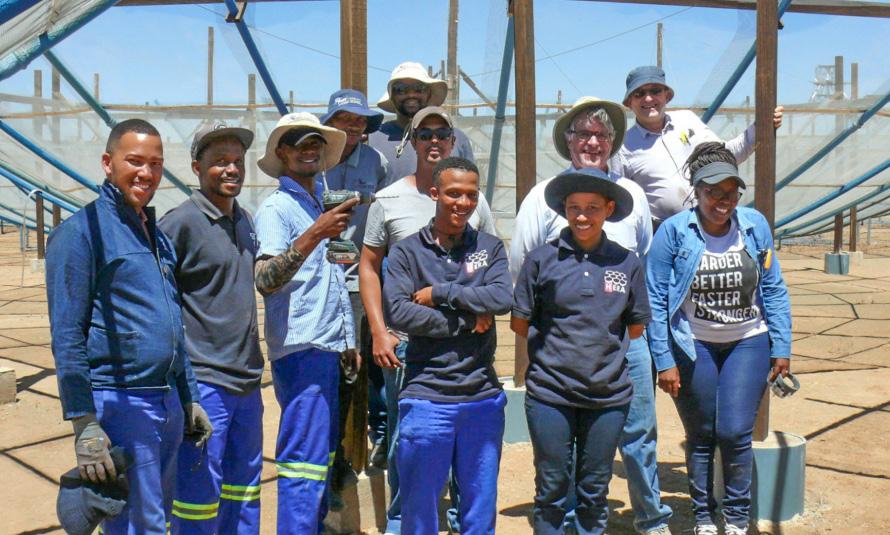
HERA is a large international collaboration, hosted by the South African Radio Astronomy Observatory (SARAO) and being built with the help of a team of local artisans from the town of Carnarvon. Its goal is to observe how the first structures formed in the very early stages of the Universe, as the first stars and galaxies lit up space.
“Construction of the array is phased in such a way that, as antennas are completed, they are hooked into the telescope data correlation system. This enables observations and early science to be carried out while construction continues,” says Kathryn Rosie who supervised the start of construction in 2015 as HERA Project Engineer.
After the initial construction, Phase I observations were carried out in 2017-2018 throughout the southern summer using
about 50 dishes. The array now stands at 332 dishes with the remainder planned to be completed in the coming weeks, bringing the total to 350. HERA’s 14m-diameter dishes are packed closely together and point straight up at the sky. The telescope detects radio frequencies from outer space similar to the ones used in our FM car radios. It is built using wooden poles, a PVC-pipe structure and wire mesh, but this deceivingly simple set-up hides a state-of-the-art technology that makes it possible for astronomers to peer into the Universe deeper than ever before.
HERA’s work will be built upon substantially by the Australiabased SKA-Low telescope which, among its many science goals, will map this period of the early Universe in detail for the first time. SKA-Low will be able to see more of the sky, and in much greater detail, thanks to its 512 stations of 38m in

24 CONTACT ISSUE 9
Above: A section of the HERA array showing its 14m dishes. HERA is a radio telescope with 350 dishes packed closely together and pointing straight up at the sky. CREDIT: Daniel Jacobs.
Right: Part of the team of local artisans from the town of Carnarvon who helped build the HERA telescope, situated next to MeerKAT in the Northern Cape province of South Africa. CREDIT: Scott Dynes.
Pathfinders
diameter, distributed over an area of 65km diameter, which can digitally scan most of the sky above the horizon.
Accompanying the HERA Phase I data release, a few scientific journal articles were co-authored by scientists from the University of the Western Cape, Rhodes University, and the University of KwaZulu-Natal along with the international team. One of the papers presents the most sensitive upper limits to date on the strength of the signal we can detect from the Universe at around 66 million years after the Big Bang. The lead scientist behind this paper, Dr Nicholas Kern, currently a postdoctoral fellow at MIT, says: “This analysis is a big step in demonstrating HERA’s unprecedented sensitivity going forward as construction is completed: with only a couple of weeks of data from the array at fractional capacity we are already producing world-leading limits.”
MeerKAT captures trove of beautiful, rare galaxies
BY SARAO
Astronomers worldwide can now delve into sensitive images of the radio emission from 115 clusters of galaxies thanks to the MeerKAT Galaxy Cluster Legacy Survey (MGCLS).
This huge trove of curated data was released as part of a comprehensive overview paper that will be published in the Astronomy & Astrophysics journal. The images are based on observations between June 2018 and June 2019 by the MeerKAT telescope that is operated by the South African Radio Astronomy Observatory (SARAO).
It took another two years for an international team – led by South African researcher Dr Kenda Knowles of Rhodes University and SARAO – to convert the raw data into detailed images of the extremely faint radio sky using powerful computers. The survey covered a large volume of space.
“That’s what’s already enabled us to serendipitously discover rare kinds of galaxies, interactions, and diffuse features of radio emission, many of them quite beautiful,” said Dr Knowles.
Members of the MGCLS team are already undertaking more
A second paper further elaborates on the implications of those upper limits for models of early Universe star and galaxy formation.
Astronomers are eager to understand how the Universe reached conditions for the very first stars and galaxies to form and HERA will help them understand how it happened.
“Even the most powerful optical and infra-red space telescopes like the Hubble Space Telescope or its upcoming successor, the James Webb Space Telescope, won’t be able to look that far back in time.
That is one of the reasons why radio astronomy is so important,” says Prof. Mario Santos, currently representing SARAO on the HERA board.

This MeerKAT image shows radio evidence of a powerful merger taking place between two or more massive groups of gas and galaxies in the MCXC J0352.4-7401 cluster. It spans approximately 10 million lightyears at the distance of the cluster and is sprinkled with point-like radio emission from even more distant Milky Way-like galaxies. CREDIT: SARAO.
studies into some of the initial discoveries. Beyond that, the richness of the science resulting from the MGCLS is expected to grow over the coming years, as astronomers from around the world download the data from the SARAO MeerKAT archive, and probe it to answer their own questions.
Read the full media release on SARAO’s website
25 NOVEMBER 2021 CONTACT

The bent radio jet structures emitted from galaxy MRC 0600-399 (inside white box) as observed by the MeerKAT radio telescope in the galaxy cluster Abell 3376 (left panel) are well reproduced by the simulation conducted on ATERUI II supercomputer (NAOJ Japan). The nearby galaxy B visible in the left part of the detailed MeerKAT image (right panel) is not affecting the jet and has been excluded in the simulation. The boundary of the observed x-ray cold-front is shown by the dotted blue line. CREDIT: Chibueze, Sakemi, Ohmura et al. (MeerKAT image); Takumi Ohmura, Mami Machida, Hirotaka Nakayama, 4D2U Project, NAOJ, Japan (right panel image).
Black hole jet interaction reveals intra-cluster magnetism
BY DR JOYDEEP BAGCHI (CHRIST (DEEMED TO BE UNIVERSITY), INDIA) AND DR JAMES O. CHIBUEZE (NORTH-WEST UNIVERSITY, SOUTH AFRICA)
One of the key science goals of the SKAO is probing the origin of cosmic magnetism. The study of weak magnetic fields in the Universe at radio wavelengths is a powerful tool which requires tremendous sensitivities that will be provided by the SKA telescopes in future. In the meantime, the MeerKAT radio telescope in South Africa’s Karoo region has provided a rare glimpse into what is to come in our exploration of magnetic fields in the Universe.
A new paper published in Nature highlights recent MeerKAT observations of radio jets (ionised matter travelling at supersonic speed) originating close to the black hole at the centre of galaxy MRC0600-399, in the merging galaxy cluster Abell 3376. These observations reveal the first evidence of an interaction between such jets and compressed magnetic fields in the intra-cluster medium.
The evidence of this interaction are sharp 90-degree bends observed in the northern and southern lobes of the jets, as seen in the 1.28 GHz MeerKAT image of MRC0600-399 (above), and diffuse regions of radio emission on both sides of the deflection points, referred to as ‘’double-scythe’’ structures. The international team behind the research believes that the interaction of the radio jets with organised, compressed magnetic field lines led to the bending of the jets and the production of the double scythe structures.
The organised magnetic field is found at the boundary of a cold gas cloud ejected from the centre of Abell 3376, and the pressure of the hot gas in the cluster on this fastmoving cloud produces an observed gas tail, also seen in the image. It’s thought that this pressure causes the strong magnetic layer to drape around the boundary of the gas cloud, known as the cold front. Without this protective magnetic layer, the cloud would evaporate rapidly, and the cold front would not form.
The team then performed dedicated computer simulations which accurately mirrored the observed bent-jet morphology and the double scythe structures, thereby pointing to the jets’ interaction with the draped magnetic field as the prime cause for its bending. The study has therefore found yet another new tool for revealing the unseen magnetised Universe with sensitive radio eyes.
26 CONTACT ISSUE 9
Neutral hydrogen intensity mapping with MeerKAT: a novel way to explore the Universe
BY JINGYING WANG (UNIVERSITY OF THE WESTERN CAPE) FOR THE MEERKLASS TEAM

A sky map derived using MeerKAT single dish mode. Our Galaxy contributes most of the emission. The magenta dots label the positions of bright radio point sources. CREDIT: MEERKLASS team
MeerKAT and the forthcoming SKA telescopes are large arrays aiming to solve a series of exciting science problems including some of the most fundamental questions about the Universe.
A recent paper led by postdoctoral researcher Dr Jingying Wang from the Centre for Radio Cosmology (CRC) at the University of the Western Cape, South Africa, demonstrates the possibility to push the boundaries of astrophysics and cosmology using MeerKAT’s 64 dishes and an innovative technique called “neutral hydrogen intensity mapping”.
Neutral hydrogen (abbreviated as HI) can be found all over the Universe. It emits radio waves at a distinctive wavelength – 21 centimetres – that can be captured by radio telescopes such as MeerKAT and the SKA telescopes. The expansion of space causes this wavelength to stretch over time (known as redshift), allowing us to infer how long ago the radio waves were emitted through their detected wavelength. Mapping the HI distribution across cosmic time promises to provide valuable new insights into astrophysics and cosmology.
With the full array of 64 dishes now fully operational, MeerKAT should be able to measure the distribution of HI on very large scales. In order to do so, MeerKAT has to be used in the socalled single-dish mode (instead of using the more traditional cross-correlations between dishes), which allows it to scan large enough volumes of the sky extremely rapidly. This in turn will allow us to produce the largest 3D maps of the Universe
and probe the nature of the mysterious dark energy.
Under the leadership of Prof. Mario Santos, pilot surveys with MeerKAT are already under way. The 64 dishes of MeerKAT were employed to finish seven observations (of two hours each) and have produced 8.4TB of raw data.
As a first step towards demonstrating the potential power of the HI intensity mapping technique, Dr Wang and collaborators showed that with their newly developed pipeline for data calibration, they are able to compensate for instrumental and environmental effects in order to recover useful scientific data. Although the observations suffer from human-made radio frequency interference, the researchers successfully calibrated and reconstructed 3D celestial data cubes (across the sky and along frequency) for the sky in this pilot study.
Their results are an important step towards demonstrating the feasibility of using MeerKAT and SKA-Mid in the future to measure the HI distribution and pioneer a novel way to map and explore the Universe on cosmological scales. Similarly, SKA-Low may eventually be used to perform an intensity mapping survey, which would provide unique information about how galaxies form and evolve.
27 NOVEMBER 2021 CONTACT
Periodic fast radio burst found bare, unobscured by strong binary wind
BY ASTRON
By connecting two of the biggest radio telescopes in the world, astronomers have discovered that a simple binary wind cannot cause the puzzling periodicity of a fast radio burst (FRB) after all. The bursts may come from a highly magnetised, isolated neutron star, a magnetar.
The radio detections also show that FRBs, some of the most energetic events in the Universe, are free from shrouding material. That transparency further increases their importance for cosmology. The results appeared in Nature in August.
The use of “radio colours” led to the breakthrough. In optical light, colours are how the eye distinguishes each wavelength. But electromagnetic radiation that the human eye cannot see, is equally real. Radio light for instance extends the rainbow beyond the red edge we see. The radio rainbow itself also goes from “bluer”, short-wavelength radio to “redder” longwavelength radio.
The exact nature of FRBs is still unknown. Some repeat, and in the case of an FRB identified as 20180916B, that repetition is periodic. This periodicity led to a series of models in which FRBs come from a pair of stars orbiting each other. The binary orbit and stellar wind then create the periodicity. The stellar winds were expected to let most blue, short-wavelength radio light escape the system, but the redder long-wavelength radio should be blocked more, or even completely.
To test this model, the team combined the LOFAR and renewed Westerbork telescopes as if they were one telescope. They could thus simultaneously study FRB 20180916B at two radio colours: Westerbork looked at the bluer wavelength of 21cm, while the LOFAR telescope observed the much redder, 3m wavelength.
Expecting to see the bursts only shine in blue as the model predicted, the team was surprised when they saw two days of bluer radio bursts, followed by three days of redder radio bursts. The FRB detections were the first ever with LOFAR – none had been seen at any wavelengths longer than one metre, up to then. This means the redder, long-wavelength radio emission can escape the environment around the source of the FRB.

The Westerbork dishes (left) detected a periodic, short Fast Radio Burst in the blue, high-frequency radio sky. Only much later did the same source emit in the red, low-frequency radio sky. The LOFAR telescope (right) now detected these for the first time CREDIT: Joeri van Leeuwen
“We built a real-time machine learning system on Westerbork that alerted LOFAR whenever a burst came in,” says Principal Investigator Dr Joeri van Leeuwen (ASTRON/U. Amsterdam), “but no simultaneous LOFAR bursts were seen. First, we thought a haze around the FRBs was blocking all redder bursts – but surprisingly, once the bluer bursts had stopped, redder bursts appeared after all. That’s when we realised simple binary wind models were ruled out. Fast Radio Bursts are bare, and could be made by magnetars.”
Such magnetars are neutron stars, of a much higher density than lead, that are also highly magnetic.
The team believes an isolated, slowly rotating magnetar could be behind what they observed.
Read more in ASTRON’s press release
28 CONTACT ISSUE 9
LOFAR reveals inner workings of galaxies in its most detailed images ever
BY DR LEAH MORABITO (DURHAM UNIVERSITY)




After almost a decade of work, an international team of astronomers revealed the most detailed lowfrequency radio images yet of galaxies beyond our own, revealing their inner workings in unprecedented detail.
The images were created from data collected by the international LOFAR, a network of 110,000+ dipole antennas spread across nine European countries, with the majority located in the Netherlands. Much of the work was carried out by early career researchers who will be future key users of the SKA telescopes.
The new images reveal the inner-workings of nearby and distant galaxies at a resolution 20 times sharper than typical LOFAR images. This was made possible by the unique way the team, led by Dr Leah Morabito of Durham University in the UK, used the array. In standard operation, only the signals from antennas located in the Netherlands are combined, creating a “virtual” telescope with a collecting ‘lens’ with a diameter of 120km, corresponding to the distance between the two furthest stations. By using the signals from all of the European antennas, the team has increased the diameter of the “lens” to almost 2,000km. This required the development of special techniques.
The new radio images push the boundaries of what we know about galaxies and supermassive black holes. A special issue of the scientific journal Astronomy & Astrophysics is dedicated to 11 research papers describing how astronomers made these images and the scientific results.
“These high resolution images allow us to zoom in to see what’s really going on when supermassive black holes launch radio jets, which wasn’t possible before at low frequencies,” said Dr Neal Jackson of The University of Manchester, cochair of the LOFAR high resolution imaging working group [alongside the author of this piece].


Much of the work was done by early career researchers. Clockwise from centre top: Etienne Bonnassieux, Roland Timmerman, Christian Groeneveld, Pranav Kukreti, Frits Sweijen, Shruti Badole; centre: Naím Ramirez-Olívencia
Even before LOFAR started operations in 2012, the European team of astronomers began working to address the colossal challenge of combining the signals from its widely distributed antennas. The result, a publicly available data-processing pipeline, (described in Morabito et al. 2021), will allow astronomers from around the world to make high-resolution LOFAR images with relative ease. Early career researchers from a range of European universities and research institutes, like ASTRON and INAF, have not only produced incredible science results using these data processing techniques, but contributed significantly to the development of the pipeline.
This work made use of computing resources in the UK, Italy, as well as the Netherlands.
New highresolution observations taken with LOFAR reveal that the jet in Hercules A grows stronger and weaker every few hundred thousand years.

CREDIT: R. Timmerman; LOFAR & Hubble Space Telescope
29 NOVEMBER 2021 CONTACT
FAST detects over 1,600 fast radio bursts from one explosive source
BY CHINESE ACADEMY OF SCIENCES
An international research team using China’s Five-hundred-meter Aperture Spherical radio Telescope (FAST) has caught an extreme episode of fast radio bursts from a single cosmic source. A total of 1,652 independent bursts were detected within 47 days from the source, known as FRB 121102, beginning on 29 August 2019. It is the largest set of FRB events so far, more than the number reported in all other publications combined.
Such a burst set allows astronomers, for the first time, to characterise the energy distribution of any FRB source, thus shedding light on the central engine powering FRBs.
The team was led by Prof. Di Li and Dr Pei Wang from National Astronomical Observatories of Chinese Academy of Sciences (NAOC), and the results were published in Nature on 13 October.
The origin of FRBs is still unknown, although recent focuses include exotic hyper-magnetised neutron stars, black holes, and cosmic strings left over from the Big Bang. Bursts can be as short as one-thousandth of a second while producing one year’s worth of the Sun’s total energy output. Scientists have found that a small fraction of FRBs repeat. This phenomenon facilitates follow-up studies, including localisation and identification of FRBs’ host galaxies.
FRB 121102 is the first known repeater and the first welllocalised FRB source. Scientists have identified its origin in a dwarf galaxy. In addition, it is clearly associated with a persistent radio source. Both clues are crucial to solving the cosmic mystery of FRBs. The behavior of FRB 121102 is hard to predict and commonly described as “seasonal”.
While testing the FAST FRB backend during the commissioning phase, the team noticed that FRB 121102 was acting up with frequent bright pulses. Between 29 August and 29 October 2019, 1,652 independent burst events were detected in a total of 59.5 hours. While the burst cadence varied during the series, as many as 122 bursts were seen during the peak hour, corresponding to the highest event rate ever observed for any FRB. This is due to the extremely high sensitivity of FAST, which enables even the faintest bursts from FRB 121102 to be detected.
“The total energy of this burst set already adds up to 3.8% of what is available from a magnetar and no periodicity was found between 1ms and 1000s, both of which severely constrains the possibility that FRB 121102 comes from an isolated compact object,” said Dr Wang.
More than six new FRBs have been discovered through the Commensal Radio Astronomy FAST Survey (CRAFTS), including one new 121102-like repeater.
“As the world’s largest antenna, FAST’s sensitivity proves to be conducive to revealing intricacies of cosmic transients, including FRBs,” said Prof. Li.
This project has been part of a long-running collaboration since the commissioning phase of the FAST telescope. Major partner institutions include Guizhou Normal University, University of Nevada Las Vegas, Cornell University, MaxPlanck-Institut fuer Radioastronomie, West Virginia University, CSIRO, University of California Berkeley, and Nanjing University.
Artist’s impression of FAST detecting a burst from FRB 121102 CREDIT: NAOC

30 CONTACT ISSUE 9

New book marks fifth anniversary of China’s FAST
BY DR. JINXIN HAO (NATIONAL ASTRONOMICAL OBSERVATORIES, CHINESE ACADEMY OF SCIENCES)
A new book has been published charting the history of China’s FAST, to mark the landmark facility’s fifth anniversary.
Written by Dr Bo Peng, Director of the Key Laboratory of FAST of the Chinese Academy of Sciences and former Deputy Director General of FAST Project Management Board, the book’s 500 pages reflect on the journey of FAST, from conception to birth, and details how it has become a leading instrument in radio astronomy.
Dr Peng, who was one of the founders of the FAST project, traces the development of the telescope through 300 pictures and rich first-hand information from the perspective of those who witnessed and participated in the whole process.
FAST’s history is inextricably linked to the SKA project, having evolved from a conceptual design for the SKA telescopes. While FAST went on to become a ground-breaking facility in its own right, this shared history has led to strong engagement between the two projects – and more generally China and the international SKA community – over the past 28 years, since those early concepts emerged in 1993.
The publication highlights China’s radio astronomy history, and how the field has grown rapidly in recent years thanks to FAST. It details how the concept for the huge project was formed, the reasons behind its 500m size, why it was decided to locate the vast dish in a natural karst basin in Guizhou Province, and the complex logistics of building the telescope. The book also describes how FAST transformed the local landscape and supported local development through astro-tourism, resulting in a whole astronomy economy built around the telescope.
Throughout FAST’s development, the visionary Chinese team interacted with their foreign counterparts, including those behind the 305m Arecibo radio telescope in Puerto Rico, and the chief designer of Germany’s Effelsberg 100m radio telescope; these interactions are recounted in the book, along with many other little-known anecdotes.
Above all, as FAST celebrates five years of operations as one of the world’s leading telescopes, the book serves to acknowledge the contributions of those who helped to make it a reality.
“My colleagues and I couldn’t be more excited and proud to be part of the FAST journey,” Dr Peng says. “I hope this book will inspire the other participants, whether they are designers, builders or supporters, to share their memories and experiences of the FAST journey so that they can all be recorded, building up a more complete history of the project.”

31 NOVEMBER 2021 CONTACT
The book cover features FAST and its suspended receiver cabin.
CREDIT: Dr Bo Peng

One stage to go before Australia’s ASKAP begins full survey science
BY RACHEL RAYNER (CSIRO)
The ASKAP radio telescope delivered new insights into our Universe even while it was being developed. A final phase of pilot surveys will provide a thorough test of all operations involved in this 36-antenna, multi-beam SKA precursor to ensure many more intergalactic discoveries are made.
Nine survey science teams, consisting of 739 astronomers from 208 institutions around the world, have been exploring the cosmos while assessing the telescope’s capabilities. The test data, processed at the Pawsey Supercomputing Research Centre in Perth, Western Australia, has been incredibly informative. ASKAP, owned and operated by Australia’s national science agency, CSIRO, has already localised fast radio bursts, revealed
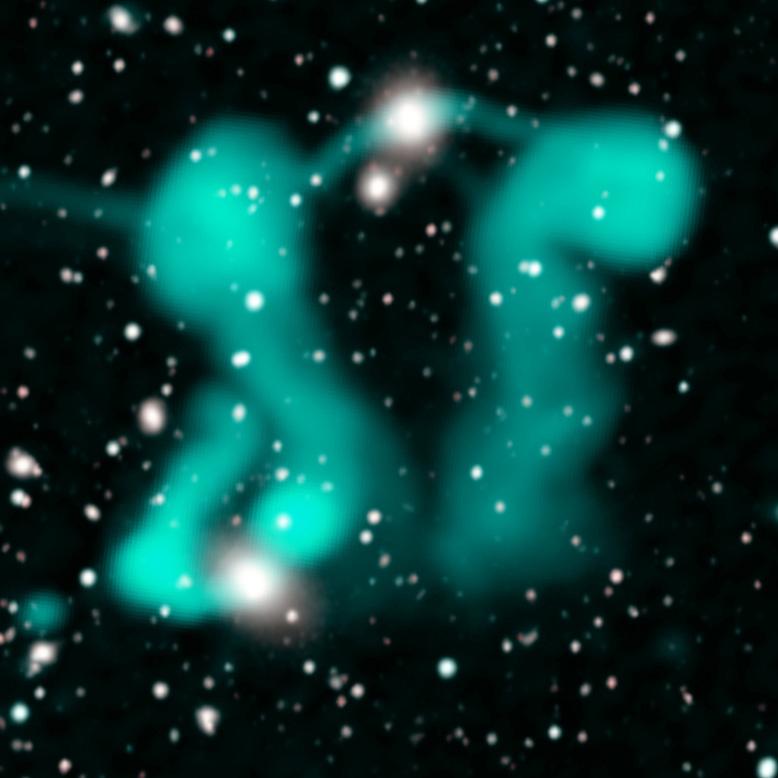
odd radio circles and discovered one million new galaxies.
More highly anticipated results from the initial phase of pilot surveys are currently being released.
The Evolutionary Map of the Universe (EMU) team conducted the largest ever radio survey at the high sensitivities ASKAP enables. Their next surveys will exceed that record and the full survey is predicted to generate a catalogue of 70 million galaxies. In their survey, EMU discovered many peculiar radio sources, including one nicknamed ‘dancing ghosts’ Among the flowing forms are two radio galaxies whose weird shapes are not easily explained by existing models.
A new paper from the ASKAP Variables and Slow Transients (VAST) survey
team reports the discovery of a highly polarised, highly-variable, steepspectrum radio source near the centre of our galaxy. Having also demonstrated ASKAP’s capabilities in detecting variable objects like pulsars and galactic nuclei, they will use this next stage to become even more efficient in crunching the data. Speed can be important, so that when massive flares are detected from nearby stars, other telescopes can be swung into position as soon as possible, to get a better look at the phenomena.
By pushing boundaries and uncovering challenges in the first pilot surveys, these final surveys provide a chance to overcome them. The WALLABY (Widefield ASKAP L-band Legacy Allsky Blind surveY) team, amongst their other surveys, has selected regions of the sky that are traditionally difficult to analyse. Bright radio quasars –though useful in other surveys – can result in imaging artefacts that inhibit the detection of fainter sources. The team will explore how best to deal with such sources in their data. ASKAP’s last pilot stage will help stream-line observations in preparation for the start of the full surveys early next year. And who knows what more will be discovered in the process?
32 CONTACT ISSUE 9
Some of ASKAP’s 36 dishes beneath the Southern Sky. CREDIT: Alex Cherney
Left: Dancing Ghosts - two radio galaxies detected in the EMU pilot survey
CREDIT: Jayanne English & Ray Norris, EMU/Dark Energy Survey
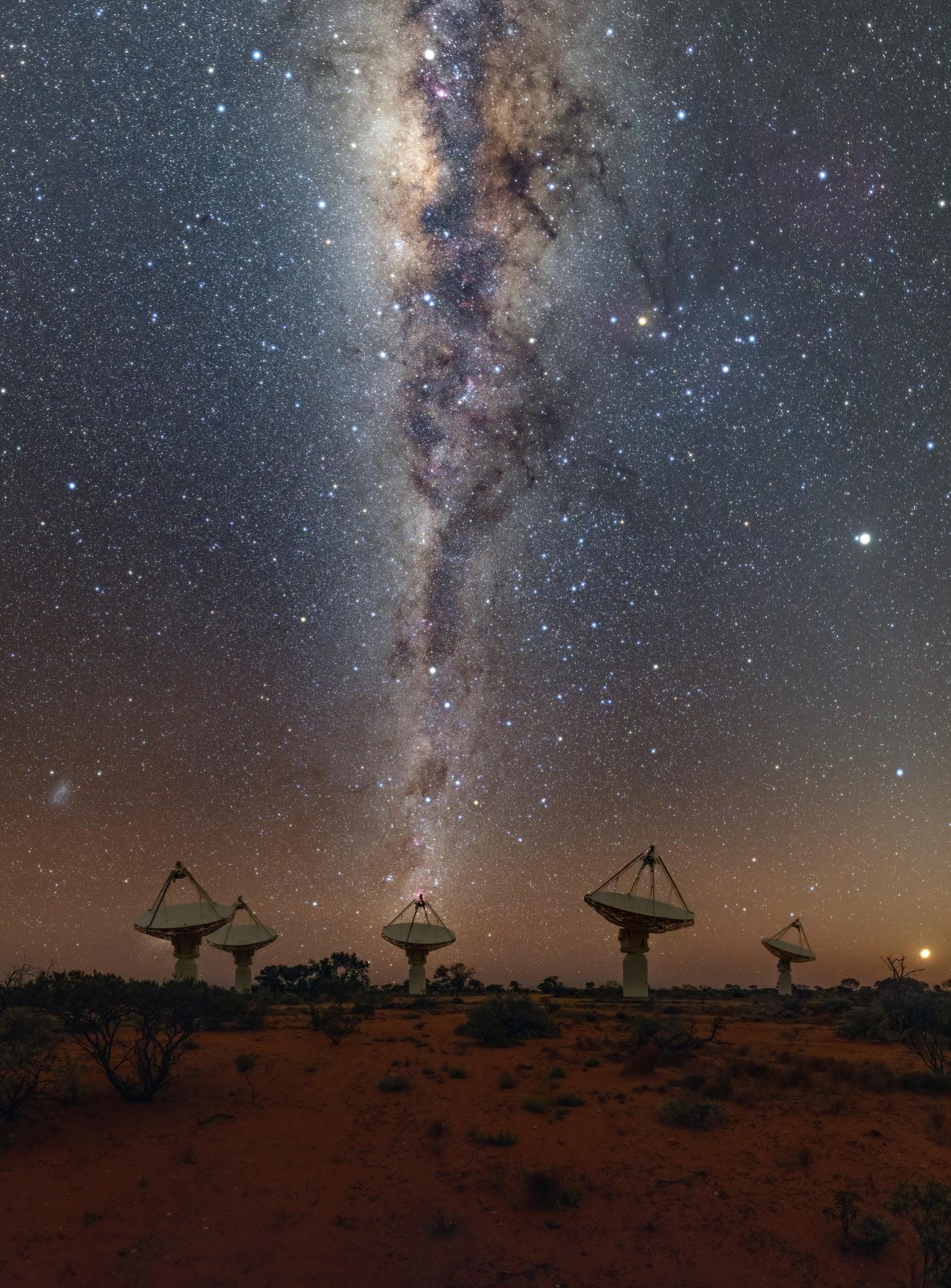
33 NOVEMBER 2021 CONTACT
Five of ASKAP’s 36 dishes beneath the Southern Sky. CREDIT: Alex Cherney

Vivek Mohile Software Consultant, Persistent Systems
Developing the complex software that will control and monitor the SKA telescopes is a years-long effort, involving computing specialists all over the globe. Vivek Mohile has been part of that effort for eight years, based with the SKAO’s industry partners Persistent Systems in Pune, India.
A vastly experienced control systems engineer and product manager, Vivek is also a trained mindfulness facilitator, leading sessions for colleagues to support their wellbeing. Following World Mental Health Day on 10 October, we spoke to him about his career journey, how mindfulness has helped him at work and beyond, and why he volunteered to use his skills to help others.
Let’s begin with your early life, Vivek. Tell us about where you grew up and your family.
My parents were both serving in the Indian Central Government, so we moved around to different cities across the country when they got transferred. I was born in New Delhi, India where I spent my very early childhood, and then Mumbai and Pune are some places
where I did my schooling. Being in senior government roles, I remember my parents always being quite busy, often being away travelling, or coming home late from long meetings. I have an older sister, and my grandmother also mostly stayed with us, and I was very fond of her. She always indulged my demands for cooking up something special if I did not like what was there for a meal. I remember she was an important influence in my growing up, telling me stories that were fun, and yet had some didactic value.
What kind of things were you interested in as a child?
Oh, the usual games, comics and fun stuff that children love, of course. After school I always wanted to quickly finish my homework and go out to play with friends. Cricket was what we played

most often, either in a ground in the community, or even in the parking lots and other spaces between buildings – unless we were banned temporarily for having broken somebody’s window with a shot and run away! Reading was another passion.
34 CONTACT ISSUE 9
Team SKA
Vivek as an infant.
Vivek has worked on control systems in many domains – here he’s with a process control system for chemical vapour deposition equipment, a materials processing technology.
My friends and I were members of a lending library and we used to borrow a new book almost daily during the vacations.
I also remember my fascination with how things work, and wanting to open them up and see what’s inside. This was a precursor perhaps to my future interest in engineering. I remember even before I was a teenager, I had managed to take apart quite a few appliances at home using just some screwdrivers and a spanner set. Of course at that age I rarely succeeded in putting them together again, so I did get into some trouble, but not too much so I continued! My grandmother used to joke that I had already earned the degree of D.E. which stood for ‘Destructive Engineer’. As a teenager I managed to get a little better at trying to fix and make stuff, especially putting together simple electronic circuits.
At what point did you start to get into computing?
My first exposure to programming was in my final school years. We had a couple of BBC Micros at school and I learnt BASIC programming; these machines are considered a milestone in computing history, by the way. I went on to study Electrical Engineering (EE) in college, and was thrilled to be able to join the EE programme at the Indian Institute of Technology Bombay, one of the most competitive universities in the country. Computing and programming is very closely related to EE, which is often considered the foundation discipline on which computing rests, so I had a lot of exposure to programming during the course and internships. I realised I enjoyed it as much as hardware and electronics.
How did your career journey evolve and bring you to Persistent Systems and the SKA project?
The majority of my experience is as a control systems engineer, which has been across many industry domains before coming to controls for radio astronomy. My first job after graduation was as a software developer, but then I
A bachelor’s degree in Electrical Engineering set Vivek on the path to
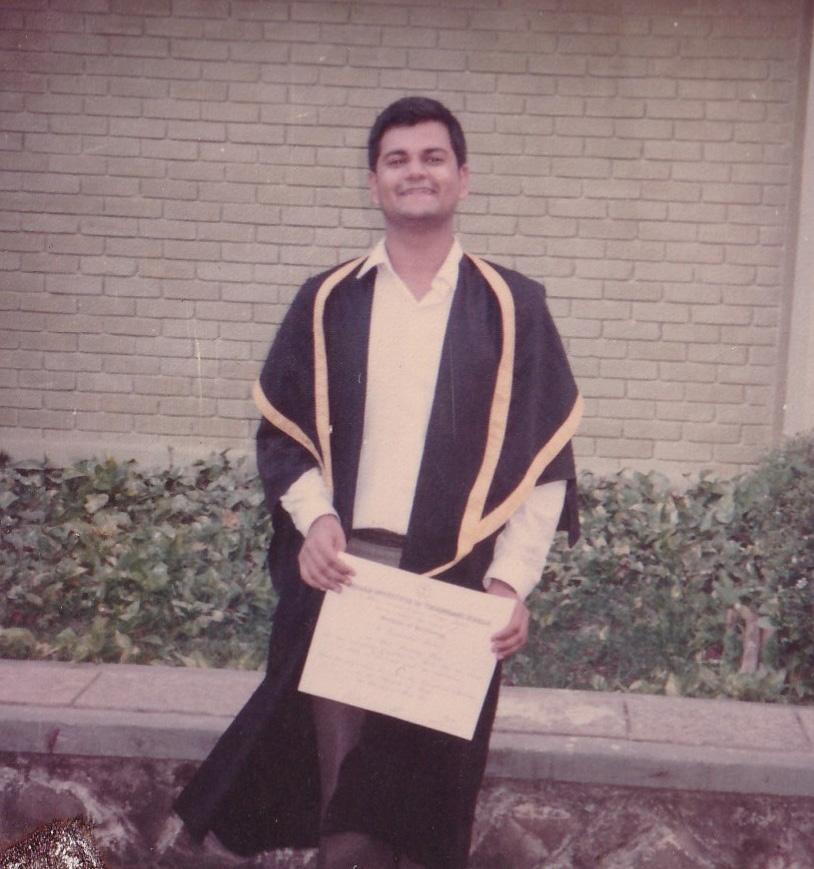
worked in the area of power systems and control and automation engineering, including process control and embedded systems. There is a lot of software involved in all of these of course, but they are usually considered specialised domains and not tagged as traditional software. I worked in companies including Hewlett Packard, Infosys and also a start-up before I joined Persistent, where I have been for more than 14 years. For the last seven to eight years, I have been primarily on the SKA project. This is through the National Centre for Radio Astrophysics (NCRA) in India, which has been the lead organisation for the Telescope Manager / Observation Management and Control area. What made you want to be part of the SKA project in the first place?
There is something deeply fascinating about being able to probe the farthest corners of the Universe, to help find answers to the fundamental questions about how it all came to be. Even for those of us who are outside of the science teams, there is that sense of awe, of being a part of something far bigger than oneself.
One of my early projects at Persistent was working with NCRA on specifying and designing a new control and monitor system. That was also my first introduction to a radio observatory, because I had to study in detail the operation of the Giant Metre Wavelength Radio Telescope (GMRT), which is the largest radio observatory in the metre wavelengths, and an SKA pathfinder. I was very impressed with the GMRT, seeing some of the science that scientists could produce and the beautiful images it had captured. Around that time there were initial discussions on NCRA participating in the SKA project, and when I learnt more about the SKA’s goals and its scale, several orders of magnitude larger than current telescopes, there was definitely this feeling of “wow”, and thinking how wonderful it would be to contribute to this massive international collaboration. Naturally, when NCRA was selected to lead the international consortium tasked with producing the Telescope Manager design, I opted to lead the team from Persistent contributing to this effort.
35 NOVEMBER 2021 CONTACT
the SKA project.
That has involved working within the Scaled Agile framework (SAFe) – a methodology where software is developed and tested in rapid sprints of work – which the SKAO has adopted for its software teams. What has that meant for your work?
Some of the biggest benefits of the Agile methodology I have seen in my past projects are multiple, including the focus on getting to real code over documentation, testing and demonstrating frequently to users as a way to get feedback and improvement. The autonomy and empowerment of team members also makes them productive and enjoy their work. All of these fit naturally into the SKA culture so we are seeing similar benefits. Scaled Agile, which provides a framework for efficiently managing much larger programmes, brings in synergy across multiple Agile teams, fosters collaboration and an alignment to common goals. As the SKA project
has a very large number of people developing software, a framework like SAFe adds a lot of value both for management and teams.
More than 150 people are now involved in the quarterly Program Increment (PI) planning meetings which are intrinsic to SAFe. What is it like to be a part of them, in terms of collaboration with different nationalities and skill-sets?
Indeed, there is so much diversity in the people involved in building the SKA telescopes and I think that is one of the best aspects of an international collaboration. It is wonderful to be able to meet and become friends with people from different cultures, as well as technical backgrounds, because that always serves to complement one’s own experiences and knowledge, and I do miss the face-to-face PI planning meetings where there was more informal interaction. I have always found the culture of the extended SKA
project, which is of course something that people build, to be very welcoming and inclusive. I am always struck by the general groundedness of the people, many of whom are such experts in their area and have achieved so much. All of this of course makes collaboration across different teams, geographies and areas of expertise easier to establish.
Something that bridges both your work life and personal life is a strong interest in mindfulness – for our readers who may not be familiar with it, how would you define mindfulness exactly, and what are some of the benefits it holds?
Mindfulness is often described as a practice that develops non-judgemental, moment to moment awareness of experience. While this is certainly an important aspect of mindfulness, to me it is much more than a few techniques. Rather I would describe it as a set of skillful practices centred around meditation that improves concentration,

36 CONTACT ISSUE 9
Vivek (centre) with his parents, sister and cousin at India’s famous Taj Mahal.
focus and self-awareness, as well as increasing your access to positive emotions like kindness, compassion and gratitude, both towards yourself and others. And while we start with particular techniques and practices to foster these abilities, the ultimate goal is to integrate these as a seamless part of one’s experience of life and improve one’s well-being and happiness.
How did you start practising it, and then sharing it with others?
I have been interested in meditation techniques for a very long time, many of which derive from Eastern spiritual traditions and have been taught over centuries; there is a vast amount of depth and richness in our traditional wisdom in this area. I personally found the practices very beneficial in supporting me when going through ups and downs, and generally in feeling more positive. Having been trained in science and technology though, I was curious about finding studies that applied and validated meditation in a scientific, controlled setting.
There is now a strong movement that seeks to communicate and teach the benefits of meditation and self-awareness in a secular and nondenominational way, and also attempts to validate it more scientifically. That way people globally can access it for their benefit irrespective of their culture and beliefs. All of this you could broadly say comes under the label of “mindfulness”. I see the traditional and the contemporary approaches as very complementary, and I continue to explore both.
A few years ago I undertook training, including a part-time diploma programme at the University in Pune which encompassed traditional wisdom, modern psychology and neuroscience, as well as a more experiential training in mindfulness. After that I felt equipped to explore introducing mindfulness practices to individuals and small groups, something I have continued over the last few years on a voluntary basis.
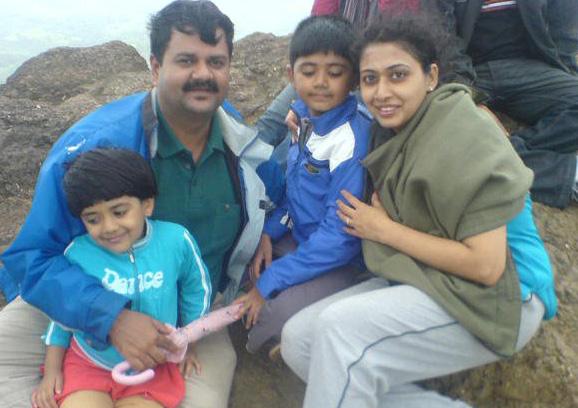
That has included providing free sessions for SKAO staff, so what prompted you to do that and how was it received?
I did a couple of introductory sessions during a visit to SKAO Global HQ before the pandemic, in conjunction with the yoga classes being run for staff by [former SKAO Systems Engineer] Shagita Gounden. Later, I did a session at our last face-to-face PI planning event in Perth. When the pandemic hit, such sessions were impossible of course, so when I learnt that the SKAO was organising a series of online programmes for Mental Health Awareness Week in 2020, I thought a virtual mindfulness session would fit in well. There was good participation, and I was happy to repeat it again this year. The feedback from most people immediately after these sessions has been positive, but the real benefit comes with consistent practise; some who took part have told me that they are continuing the practices and finding them helpful.
Let’s end by discussing some of your other interests beyond work –what helps you to switch off after a long day?
A meditation session is a great way for me to unwind. An interest in music is something I discovered a little beyond childhood. I am pretty eclectic in this regard, and enjoy many
different genres, from heavy metal to Bollywood to classical. The right music can also be a great aid to meditation and mindfulness so I keep looking for interesting tracks that I can use. I enjoy going on hikes with friends and family, and some of the childhood interests I mentioned also still carry over; that includes reading, and a fascination with gadgets and appliances. I still enjoy making things, and hopefully have gotten a little better at fixing stuff as well, though there is even now the occasional unfinished project!
All images courtesy of Vivek Mohile.
TEAM SKA
In each issue of Contact, we’ll get to know one of the many talented people contributing to the SKA project, hearing about their work, how they got here and their advice for the next generation. You can find more profiles on our website
37 NOVEMBER 2021 CONTACT
When not at his computer, Vivek enjoys getting out on a hike (seen here with his wife Tejaswini, son Pushkar and daughter Maitreyee).
China hosts SKA meeting to usher in a new phase
BY SKA CHINA OFFICE
China’s Ministry of Science and Technology (MOST) hosted a major meeting on 31 August to mark the country becoming a full member of the SKA Observatory (SKAO). Around 100 key government officials, scientists and engineers from the SKA China community gathered both onsite in Beijing and online to witness the start of a new phase for China’s involvement in the world’s second inter-governmental organisation dedicated to astronomy in the upcoming decades.
SKAO Director-General Prof. Philip Diamond, SKAO Council Chair Dr Catherine Cesarsky and SKAO Member representatives sent congratulatory video messages recognising China’s consistent contribution to and important role in the SKA project since its inception.
In his concluding remarks, Wang Zhigang, China’s Minister of Science and Technology, expressed appreciation for the messages from international colleagues and said China will work to honour its commitment to the SKAO
Convention, the Observatory’s founding document, and join hands with engineers and scientists across the world to construct and operate the facility to the highest standard, to ensure it delivers on its scientific promise. The meeting also reported on the progress of SKArelated activities in China, and a white paper was released detailing the guiding principle and policy measures for China’s involvement in the project.
Virtual symposium: VLBI in the SKA era, 14-18 February 2022
BY CSIRO
Very Long Baseline Interferometry (VLBI) is essential to enable high-impact radio astronomy science capability, including radio imaging at sub-arcsecond resolution, crucial astrometric measurements, and geodesy.
The SKA telescopes will be an important part of a powerful VLBI network that will be developed by leveraging existing engineering, networking, computational and scientific VLBI expertise. This symposium will explore how we will transition to the SKA-VLBI era, including the development of pathfinder VLBI networks and new technologies; data distribution, reduction, and management approaches; and the emergence of compelling new science goals. Learn more at the meeting website
Abstract submission deadline: 19 November 2021
Registration deadline: 11 February 2022 - register here

38 CONTACT ISSUE 9 Events
Workshop showcases range of SKA activities in Italy
BY DR DARIA GUIDETTI (INAF)
Autumn got off to a great start in Italy with the “Third National Workshop on the SKA Project: the Italian Route to the SKAO Revolution” held virtually from 4 – 8 October, with the enthusiastic online participation of over 200 Italian researchers, a success that confirms how eager the community is for the SKA telescopes to come online.
Italy was one of the first countries to participate in the SKA project, through the Italian National Institute for Astrophysics (INAF), and is a founding member of the SKA Observatory (SKAO). On the way to SKAO operations, INAF joined the International LOFAR Telescope in 2018 and the MeerKAT+ project (a planned expansion of the South African MeerKAT telescope, a precursor to the SKA telescope) in 2020, and is now working towards establishing an Italian dedicated data analysis facility that will join the SKAO Regional Centre network.
This workshop came at the right time to make these points and also look to the future, representing a substantial opportunity for the Italian researchers to:
• review the ongoing scientific activities in Italy in preparation for the future SKA surveys, giving particular emphasis to results from precursors and pathfinders, SKA-related theoretical/ simulations studies, and ideas for synergies with other facilities.
• present and coordinate INAF’s ongoing activities towards the establishment of the Italian SKA Regional Centre as part of the INAF Computing Facility.
• discuss a national scientific roadmap towards full exploitation of SKA surveys with the broader astrophysical community and organise the future SKA Key Science Projects teams.
The workshop showcased the broad range of SKA activities taking place in Italy, and the show has only just begun!

39 NOVEMBER 2021 CONTACT
The workshop poster. Graphics by Davide Coero Borga (INAF)
Swiss SKA Days held at EPFL
BY DR SIMON BERRY AND THIJS GEURTS (SKAO)
The annual Swiss SKA days were held from 7-8 September, hosted by the École polytechnique fédérale de Lausanne (EPFL) and bringing together national and international representatives of academia, industry and government.
In June, EPFL signed a Cooperation Agreement with SKAO which, alongside formalising Switzerland’s participation in the governance of the Observatory, enables Swiss partners to engage in procurement matters in the same way as SKAO Members.
EPFL chose to organise a hybrid meeting, welcoming around 50 participants in person and a similar number virtually. Alongside a talk by SKAO Council Chair Dr Catherine Cesarsky, there was a suite of SKAO presentations on the current status of the project, regional centres, software development, procurement rules and the latest political developments. These
were accompanied by presentations and pitches from Swiss industry and other potential partners.
Having a small SKAO presence in person at the event, the first such international business travel by HQbased staff for 18 months, meant a series of fringe meetings could be held on procurement matters with Swiss and French colleagues present in Lausanne, and most importantly, with officials from the Swiss government to finalise negotiations on Swiss membership of the SKAO. These meetings were particularly useful, reminding us that physical interaction is in some cases irreplaceable.

SKAO takes the stage at World Expo in Dubai
It’s often said that the SKAO was born global, so it’s only natural that the Observatory was represented at October’s Space Week of the World Expo in Dubai
The World Expo is a major global gathering of nations occurring every three or four years that provides an advertising platform for countries to highlight their achievements and brings together experts and policy-makers from around the world to discuss global common issues and challenges.
To coincide with the Expo’s “Space Week”, during which national pavilions put a particular emphasis on space (and by proxy, astronomy), the SKAO jointly organised an event with Australia’s Government Department of Industry, Science, Energy and Resources (DISER), to showcase on a truly global level the history, scientific goals, and recent rapid progress of the SKA project.
Among the speakers, some of whom were present virtually, Head of the SKAO Director-General’s Office Dr Simon Berry spoke about the role and importance of international collaboration across the SKA project, while Prof. Cathryn Trott of ICRAR and Dr Karen Lee-Waddell, Director of the Australian SKA Regional Centre, highlighted the Observatory’s science objectives and data challenges, respectively.
Australia’s SKAO Council representative, Janean Richards of DISER, also gave an overview of the country’s contributions to the SKA project, which of course includes being one of the two telescope host countries alongside South Africa.
Further demonstrating the global nature of the project, the event included updates from SKAO members and observer countries including China, India, Italy, the Netherlands, Switzerland, South Africa, and the United Kingdom.
Despite the challenges of COVID-19, the Expo still welcomed a large number of high-level stakeholders in Dubai, and Space Week saw science ministers, chief scientific advisors, and other senior science policy makers joining events across country pavilions, a great opportunity for the SKAO to demonstrate and increase its global connections.
40 CONTACT ISSUE 9
Dr Catherine Cesarsky giving a talk at the Swiss SKA Days in Lausanne, Switzerland. Credit: SKAO
A vision for astronomy in Africa
BY MATHIEU ISIDRO (SKAO)
In 2018, the International Astronomical Union (IAU) announced that its 2024 General Assembly would be held in Cape Town, South Africa, bringing the largest international meeting in our field to the African continent for the first time in the IAU’s 100 year history.
Phil Diamond provided a letter of support to the bid as Director-General of the SKAO, recognising the unique role of the SKA project in the development of radio astronomy in South Africa. By 2024, construction of the SKA telescopes will be well underway, providing an exciting and unique opportunity on the horizon for young African researchers and students.
In October, organisers behind the South African bid held a “Forum on Astronomy in Africa”, bringing together key stakeholders – including the SKAO – and members of the

astronomy community to develop an ambitious vision for the General Assembly covering people, infrastructure, funding, logistics and opportunities.
The audacious vision calls for an event that changes the way the world sees Africa, promoting the continent’s skills and opportunities in astronomy, as well as its rich culture and many stories to an international audience. By building a strong networked astronomy community and international collaborations, providing clear opportunities and skills, upgrading infrastructure, showcasing African science, engaging with government, industry educational partners and the public, organisers hope to deliver a unique experience for participants and build a long-lasting legacy for the continent following the event. We certainly look forward to it!
Find out more about the 2024 IAU General Assembly

41 NOVEMBER 2021 CONTACT
SKAO in the news
CNN
Strange radio waves coming from the heart of the Milky Way stump scientists - Many news sites reported on these puzzling observations, initially detected by ASKAP in Australia and followed up by South Africa’s MeerKAT telescope (both SKA precursors), including this piece by CNN as well as ones in Daily Mail and El Mundo
Guardian
‘I think there’s life out there’: powerful radio antenna used for first time to find exoplanets – Read an interview with an Australian scientist involved in finding exoplanets using radio antennas (from SKA pathfinder LOFAR in the Netherlands) for the first time. Astrophysicist Dr Benjamin Pope predicts that once the SKA starts operating “hundreds and hundreds of these things” will be found.
Daily Maverick
Eavesdropping on the sky: The backstory of MeerKAT and SKA – A long-form article about the origins of the SKA in South Africa. It features a walk-about on site – and pictures to prove it – with Prof. Justin Jonas, one of the driving forces behind the SKA in South Africa.
Cartoon Corner
ActuIA
Une équipe française du projet MINERVA remporte le SKAO Data Challenge 2021 en utilisant le supercalculateur Jean Zay (in French) - For French readers, a look at the two different techniques the winners of the SKAO’s second Science Data Challenge employed (see also our article in this issue).
Canaltech
Astrônomos detectam conjunto inédito de estruturas em radiogaláxia (in Portuguese) - Brazilian site Canaltech detailed an observation by SKA precursor MeerKAT in South Africa of two opposing radio jets emitted from a rotating black hole with a mass of a billion suns.
Tencent
The world’s largest radio telescope will be built, with an investment of about 15.4 billion, which is stronger than the “China Sky Eye (in Chinese) - This article from Tencent’s self media section details the difference and complementarity of China’s Five-hundred-meter Aperture Spherical radio Telescope (FAST) and the SKA telescopes, as well as the advantages the SKA project holds for this member country.

Cosmic inflation
The SKA telescopes will map millions of galaxies, allowing scientists to build a better understanding of the mysterious dark energy and its effects on the accelerated expansion of the Universe. After months at home through successive lockdowns and with winter approaching, this magazine’s team certainly feels that inflation too.
Credit: Cyanide and Happiness / Explosm.net
42 CONTACT ISSUE 9 News
SKAO jobs
As we enter the start of construction, we will be recruiting HQ based staff in Procurement, Finance, Communications, IT, Health & Safety and Engineering roles. We are also starting to recruit for some roles to be based in Australia and South Africa. Some of those roles will be employed through our partners CSIRO and SARAO. Make sure to register on our recruitment website to receive alerts.
Project Manager SKA-Mid Digital
The Project Manager SKA-Mid Digital will manage the delivery of the Mid Digitiser/Single Pixel Feed receivers, the Mid Central Signal Processor and Correlator Beamformer, and the Mid Synchronisation and Timing for the SKA-Mid Telescope.
Deadline: 22/11/2021
APPLY HERE
Network Engineer
This role will lead the provision of NetTerrain services within the SKAO and will work closely with and operate in support of the SKAO Network Architect, and other stakeholders
Deadline: 30/11/2021
APPLY HERE
Operations Scientist
The Operations Scientist will support the planning for the operations of the SKAO and will bring broad operational and scientific experience within the full range of activities required to run a successful radio observatory.
Deadline: 26/11/2021
APPLY HERE
Scientist
The Scientist’s role will be to champion and safe guard the scientific capabilities and accomplishments of the SKA Observatory.
Deadline: 30/11/2021
APPLY HERE
Lead System Engineer
The Lead System Engineer will work on the design, integration, verification and engineering commissioning of the SKAO radio telescopes, providing highlevel specialist expertise and advice.
Deadline: 08/12/2021
APPLY HERE
SKA Mid – RFI & EMC Engineer (x2)

The RFI & EMC Engineer (SKA-MID) will play a key role, contributing to the co-ordination and management of RFI & EMC matters within the SKA-MID project.
Deadline: 08/12/2021
APPLY HERE
AIV Configuration Manager

The AIV Configuration Manager will implement the Configuration of the accepted products after their hand-over, to develop and maintain the SKA Low Telescope as-built deliverables.
Deadline: 21/11/2021
APPLY HERE
Partner institute jobs
Research grant: Control Software for SKA and MeerKAT+ Dishes (INAF)
This one year research grant is open to international candidates, and the successful applicant will be based at INAF’s Catania Astrophysical Observatory in southern Italy.
Deadline: 22/11/2021
APPLY HERE
43 NOVEMBER 2021 CONTACT
Jobs
Published
EDITOR: William Garnier william.garnier@skao.int
EDITORIAL TEAM: Mathieu Isidro, Cassandra Cavallaro, Anim van Wyk comms@skao.int
DESIGN: Joe Diamond, based on an original design by Carbon Creative
We welcome your contributions to Contact! Find out how to submit ideas here
All images in Contact are courtesy of SKAO unless otherwise indicated.
ABOUT THE SKAO
The SKAO, formally known as the SKA Observatory, is a global collaboration of Member States whose mission is to build and operate cutting-edge radio telescopes to transform our understanding of the Universe, and deliver benefits to society through global collaboration and innovation.
Headquartered in the UK, its two telescope arrays will be constructed in Australia and South Africa and be the two most advanced radio telescope networks on Earth. A later expansion is envisioned in both countries and other African partner countries. Together with other state-ofthe-art research facilities, the SKAO’s telescopes will explore the unknown frontiers of science and deepen our understanding of key processes, including the formation and evolution of galaxies, fundamental physics in extreme environments and the origins of life.
Through the development of innovative technologies and its contribution to addressing societal challenges, the SKAO will play its part to address the United Nations’ Sustainable Development Goals and deliver significant benefits across its membership and beyond.
FRONT COVER: Detail from the quilt “Sun spare my children” by South African indigenous artists attached to the Bushman Heritage Museum, formerly known as the Bethesda Arts Centre. Photo: Leiden Observatory/Elinoor Veldman Photography.

HYPERLINKS: Contact is produced primarily as a digital magazine. If you are reading a print copy, use the QR code to read this and other issues of Contact online and access the hyperlinks.
– THE SKAO MAGAZINE
CONTACT
by the SKAO Communications team.
