Southern Jewish Life
December 2022 Volume 32 Issue 12
P.O. Box 130052 Birmingham,
35213
Southern Jewish Life
AL
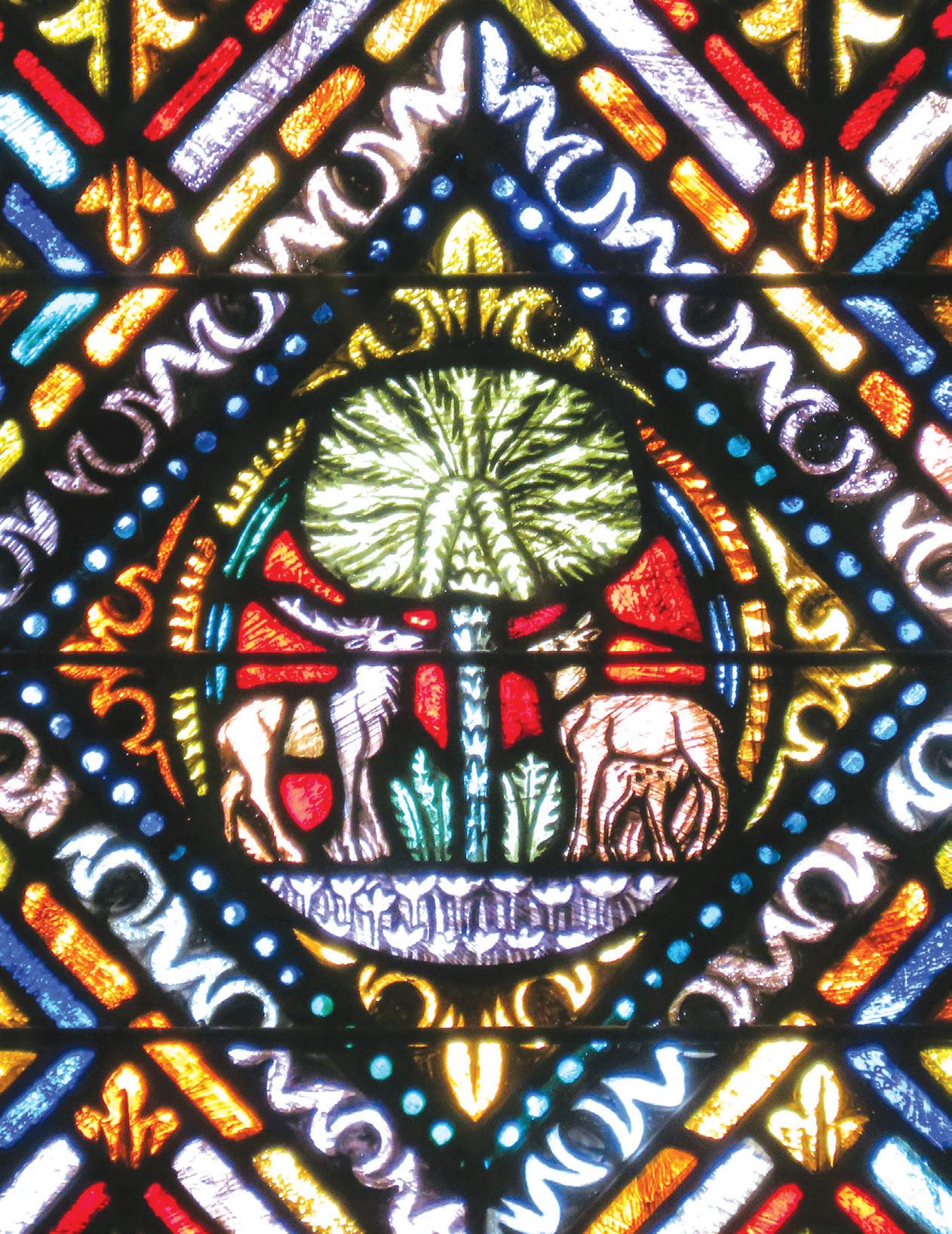
Temple Sinai sanctuary, New Orleans. Photo by Cliff Kern

After some heavy topics in this space over the last few months (which were mainly, but not universally, well received — and yes, I do expect some disagreement and welcome feedback), as the new secular year approaches, we’re just going to kick back and relax a little.
We have a lot going on for 2023. Our list of stories to do is quite long, with a lot of very interesting pieces. We have a new initiative with the Birmingham Times that you will be seeing more about shortly.
We will also be enhancing our online presence, from updates to the website to increased activity on our Facebook, Twitter and Instagram. We plan to start a Throwback Thursday of photos from our 32-year archive.
We’re also revamping our This Week in Southern Jewish Life, the way to stay informed between issues. If you are not receiving our emails, please sign up today as we will have even more information coming via our email list in the coming year. Send your email address to subscribe@sjlmag.com to sign up.
Also, by receiving the weekly email, you can see when we wrap an issue of the magazine and read it online, well before the printer and post office do their parts. If you prefer to read the magazine online and not receive a hard copy, let us know (at the same email address above) and we can adjust the mailing list accordingly.
Another exciting event in the coming year will be the American Jewish Press Association’s annual convention, which will be held in New Orleans in July. We will be co-hosting with Alan Smason (the current AJPA president) and his Crescent City Jewish News, as New Orleans’ two Jewish news outlets.
In an age when printing and postage have become ridiculous, and other communities’ publications are disappearing, we thank those of you who have helped support Southern Jewish Life. If you enjoy our publication, please consider supporting us through contributions, advertising and letting current advertisers know you appreciate their support.

We look forward to informing and entertaining you in the coming secular year!
 Lawrence Brook, Publisher/Editor


WE'RE HERE! Savings and service await you at your GEICO Local Office — right here in Metairie! 504-457-2345 4051 Veterans Memorial Boulevard, Metairie geico.com/nola ¡Hablamos Español! Some discounts, coverages, payment plans, and features are not available in all states, in all GEICO companies, or in all situations. Homeowners, renters, and condo coverages are written through non-affiliated insurance companies and are secured through the GEICO Insurance Agency, Inc. Motorcycle and ATV coverages are underwritten by GEICO Indemnity Company. GEICO is a registered service mark of Government Employees Insurance Company, Washington, DC 20076; Berkshire Hathaway Inc. subsidiary. GEICO Gecko image © 1999-2020. © [[year]] GEICO
MESSAGES
Maccabi USA leader praises Birmingham Games
I have had the honor of attending many Maccabi competitions around the world. From Israel to Australia to South America, Europe and the JCC Maccabi games around the United States and Canada, I have logged many miles seeing how sports can be a vehicle to help build Jewish identity, especially in our young.
Jewish community would feel loss of Birmingham-Southern
The potential closure of Birmingham-Southern College this spring would be a special loss for the Jewish community.
I felt honored to come to Birmingham for the first time and fell in love with not just the city but the people. You have taken Southern hospitality to a new level with your kind and caring approach to the JCC Maccabi Games.
encourage promising Jewish students to come to BSC, and our soccer team has had scholar-athletes from Israel often.
PUBLISHER/EDITOR Lawrence M. Brook editor@sjlmag.com
ASSOCI ATE PUBLISHER/ADVERTISING Lee J. Green lee@sjlmag.com
BSC was the first venue in the city to offer meeting space for the integrated National Conference of Christians and Jews in the 1950s, according to the late Mayer Newfield.
Led by the Sokol and Helds, your hard-working volunteers were wonderful. They partnered with your outstanding staff, led by Betzy Lynch, to make the 2017 JCC Maccabi games a huge hit. I want to take this opportunity as executive director of Maccabi USA to say thank you on behalf of everyone involved.
The first higher education institution in Alabama to have a chapter of Phi Beta Kappa, BSC has a small but very active Jewish student group, and in my 30 years on the faculty I can count at least six Jewish faculty members with whom I’ve worked — a lot for a total faculty of about 100 in a church-related college in the Deep South.
I think many in the Jewish community think of BSC as a “church school” in a part of town they don’t know, but I’m pretty sure it’s the only college/university in Birmingham to have an alumna as a recently ordained rabbi from Hebrew Union College, who spoke at the spring Baccalaureate service.
I had just returned from the 20th World Maccabiah games in Israel with a U.S. delegation of over 1100, who joined 10,000 Jewish athletes from 80 countries. Back in July the eyes of the entire Jewish world were on Jerusalem and the Maccabiah. This past month with 1000 athletes and coaches from around the world being in Birmingham, you became the focal point.
Everyone from the Jewish community and the community at large, including a wonderful police force, are to be commended. These games will go down in history as being a seminal moment for the Jewish community as we build to the future by providing such wonderful Jewish memories.
Every year the Hillel and the office of Religious Life sponsor a sukkah for the full week of the festival, a Pesach seder, a Purim celebration, and the Jewish supporters get an annual High Holiday card from the school.
Jed Margolis Executive Director, Maccabi USA
Harold Abroms maintains a scholarship to
On Charlottesville
I know of no more pro-Jewish campus in the city than BSC, and I urge you to contact the Governor and/or state legislators to approve the essential grant proposal.
Lester Seigel Birmingham
Seigel is the Joseph Hugh Thomas Professor of Music at Birmingham–Southern College, and former music director at Temple Emanu-El
The Rorschach Crossword Puzzle
EDITOR Richard Friedman richard@sjlmag.com
V.P SALES/MARKETING, NE W ORLEANS Jeff Pizzo jeff@sjlmag.com
CREATIVE DIRECTOR Ginger Brook ginger@sjlmag.com
SOCIAL/WEB Emily Baldwein connect@sjlmag.com
PHOTOGRAPHER- AT-LARGE Rabbi Barr y C. Altmark deepsouthrabbi.com
CONTRIBUTING WRITERS
Rivka Epstein, Louis Crawford, Tally Werthan, Stuart Derroff, Belle Freitag, Ted Gelber, E. Walter Katz, Doug Brook brookwrite.com
Editor’s Note: This reaction to the events in Charlottesville, written by Jeremy Newman, Master of the Alpha Epsilon Pi Theta Colony at Auburn University, was shared by AEPi National, which called it “very eloquent” and praised “our brothers at AEPi Theta Colony at Auburn University and… the leadership they display on their campus.”
I have to admit, in the 48 minutes it took me to solve Sunday’s New York Times Crossword Puzzle, I didn’t notice its shape. I also have to admit that I don’t know if 48 minutes is good or bad for a solve time. Please don’t judge me… unless it’s a good time.
Thanks to Twitter, I quickly became aware that the puzzle was shaped like a swastika. It also happened to be the first night of Chanukah. What a way to start the holiday — a holiday that commemorates the enduring survival of the Jewish faith.
I try to live by the Pirke Avot dictum that we should judge every person to the side of merit. The creator of the puzzle said it was designed to look like a whirlpool. I don’t know this puzzle creator or the first thing about his or her motivations. So Judaism teaches us to judge on the side of merit or give the benefit of the doubt. Fine by me.
I did, however, notice the New York Times Editorial Board’s opinion on the impending demise of Israel as a Jewish and democratic state. That one I did not miss.
White supremacy has been a cancer on our country since its beginning, threatening its hopes, its values, and its better angels. The events that took place in Charlottesville represented the worst of this nation. Those who marched onto the streets with tiki torches and swastikas did so to provoke violence and fear. Those who marched onto the streets did so to profess an ideology that harkens back to a bleaker, more wretched time in our history. A time when men and women of many creeds, races, and religions were far from equal and far from safe in our own borders. A time where Americans lived under a constant cloud of racism, anti-Semitism and pervasive hate. The events that took place in Charlottesville served as a reminder of how painfully relevant these issues are today.
I have been following Israel’s elections closely. There have been five democratic elections over the past couple of years (note that this is more democratic elections than many states in the Middle East have had in their existence). If you have attended services at Gates of Prayer, you know that I speak in detail about each of these
Auburn’s Alpha Epsilon Pi stands with the Jewish community of Charlottesville, and with the Jewish people around the country and around the world. We also stand with the minorities who are targeted by the hate that was on display in Charlottesville. We stand with the minorities of whom these white
gation Gates of Prayer in Metairie.
supremacists would like to see pushed back into a corner and made to feel lesser. We stand with and pray for the family of Heather Heyer, who was there standing up to the face of this hate.
BIRMINGHAM OFFICE P.O. Box 130052, Birmingham, AL 35213 2179 Highland Ave., Birmingham, AL 35205 205/870.7889
elections.
There was reason to celebrate in the prior election because, for the first time, an Arab party was part of the governing majority. I missed the NYT Editorial Board’s opinion on that one.
The most recent election put Benjamin Netanyahu (Bibi) back in power in the Knesset. Not only that, his coalition has some extreme voices that include racism, homophobia, and nationalism, and I’ll talk more about that in a moment.
We recognize the essence of the American narrative as a two-century old struggle to rid ourselves of such corners, and allow those in them the seat at the table that they so deserve. It is the struggle to fulfill the promise of the Declaration of Independence, that “all men are created equal… endowed by their Creator with certain unalienable rights.” We know our work is far from finished, but we know we will not move backwards.
I’ll confess that I hoped Netanyahu’s time as Israel’s Prime Minister was over. As part of the Reform Movement, the values of the opposing party are more aligned with our congregation. But I understand why Israel has kept Bibi in power longer than any prime minister in her history.
When men and women, fully armed, take to the streets in droves with swastikas and other symbols of hate, it is a reminder of how relevant the issues of racism and anti-Semitism are today. It is a wake-up call to the work that needs to be done to ensure a better, more welcoming country. But it should not come without a reflection on how far we’ve come.
In a sermon before the second or third election I spoke to our community about what life was like in Israel before Bibi. The Second Intifada left the country on edge for years. It wasn’t safe to ride a bus or eat at a cafe. Suicide bombings and bus bombings were a common occurrence. It was a way of life to leave your house and not be certain you’d return home.
America was born a slave nation. A century into our history we engaged in a war in part to ensure we would not continue as one. We found ourselves confronted by the issue of civil rights, and embarked on a mission to ensure the fair treatment of all peoples no matter their skin color. Although we’ve made great strides, it is a mission we’re still grappling with today.
Bibi brought the country a sense of security and comfort, and he helped create a thriving economy. When members of my congregation go to visit a synagogue in Israel, they are surprised to see less security than we have here in New Orleans. These are very real effects of Netanyahu’s leadership.
America was also born an immigrant country. As early as the pilgrims, many groups and families found in the country the opportunity to plant stakes, chase their future, and be themselves. Few were met with open
NEW ORLEANS OFFICE 3747 West Esplanade, 3rd Floor Metairie, LA 70002 504/249-6875 TOLL-FREE 888/613.YALL(9255)
ADVERTISING
Advertising inquiries to 205/870.7889 for Lee Green, lee@sjlmag.com Jeff Pizzo, jeff@sjlmag.com
Media kit, rates available upon request
SUBSCRIPTIONS
It has always been our goal to provide a large-community quality publication to all communities of the South. To that end, our commitment includes mailing to every Jewish household in the region (AL, LA, MS, NW FL), without a subscription fee
Outside the area, subscriptions are $25/year, $40/two years. Subscribe via sjlmag.com, call 205/870.7889 or mail payment to the address above.
Copyright 2022. All rights reserved. No part of this publication may be reproduced in whole or part without written permission from the publisher. Views expressed in SJL are those of the respective contributors and are not necessarily shared by the magazine or its staff. SJL makes no claims as to the Kashrut of its advertisers, and retains the right to refuse any advertisement.
Documenting this community, a community we are members of and active within, is our passion. We love what we do, and who we do it for.
4 December 2022 • Southern Jewish Life
letters
continued on page 42
January 2021
Southern Jewish Life
December 2022
ASSOCIATE
Rabbi David Gerber
Rabbi David Gerber is senior rabbi at Congre-
agenda
Day School launches Kindergarten free tuition incentive
For the next two academic years, a new scholarship fund is covering two years of tuition for new Jewish enrollees in Kindergarten at Birmingham’s N.E. Miles Jewish Day School.
Robin Berger, director of recruitment and retention, said Sarah Kunin and Carlie Somerville started the initiative to reinvigorate enrollment, which has been slipping in recent years.
They know “a Jewish education through the Day School will have a positive impact on the health and strength of the Jewish Community of Birmingham for the future.”
They approached supporters in the community, and the donors agreed to help cover the cost of making tuition free for young families. The fund will cover Kindergarten and first grade for Jewish students enrolling in Kindergarten during the 2023 or 2024 years. The effort is not tied to any synagogue or organization.
The fund also is working to cover one year of tuition for an older sibling who transfers to the Day School, having not previously attended the school.
In a letter to the community, the scholarship committee, which grew to seven families, said “we want more of our Jewish community members to experience all that NEMJDS has to offer and to see what a wonderful place it is.”
Kunin said she was at the school’s August board meeting and reflected on Kadima, a pro-
gram that Hal Abroms and Rabbi Scott Hausman-Weiss had in 2007, “covering tuition for any student of Temple Emanu-El who wanted to go to the Day School for their first and second year.”
With help from that initiative, there were 22 Kindergarten students in the first year, and the effort also led to increased youth activity at Emanu-El.
After the meeting, “I pulled Carlie aside and said ‘why don’t we do this?’.”
“She and I, as two moms, decided to see if we could raise enough funds to cover the next two Kindergarten classes,” she said.
The idea was to help “remove barriers” to considering the Day School. Receiving the scholarship does not place an obligation to attend the school after the first two years.
In early December, they already had 10 commitments for the coming year and “there are still several we are talking to.”
Berger said “Families are excited, and it looks like it is going to be a nice size class for the fall.”
Kunin added, “I’m optimistic that even the numbers we have — that are wonderful — are the core, and there will still be some additional.”
At 10, the incoming class would double the 2022 class, which had five. Total enrollment in the Kindergarten through eighth grade school is under 50, having peaked around 110 in the 1990s. The school has been in a leadership tran-
sition, with Brian Cain in his second year as interim head of school. Also, a new marketing campaign was unveiled earlier this year.
Nationally, Jewish Day Schools have seen renewed interest, because they generally had in-person classes earlier than most other schools during Covid, there was an increased need for a sense of community during the pandemic, and a desire to have Jewish children confident in their identities before they encounter secular schools as antisemitism increases nationally.
The desire for a sense of community has been evident in a new chavurah of families with children in Kindergarten and younger. Berger said there is a “resurgence of this collective group who believes in the benefits of the value-based education at the Day School,” and they are “acting as Day School ambassadors from a preschool level, and creating this fantastic conversation about the benefits of coming to the Day School.”
Kunin said “I’ve been surprised about how many of the families are just excited to be with other families that are Jewish.”
Through the group, they have identified at least 22 families with children ages 0 to 5 who are committed to sending their children to the Day School. Berger said a recent preschool-age recruitment attracted 31 students.
The fund was structured as a three-year ini-
December 2022 • Southern Jewish Life 5
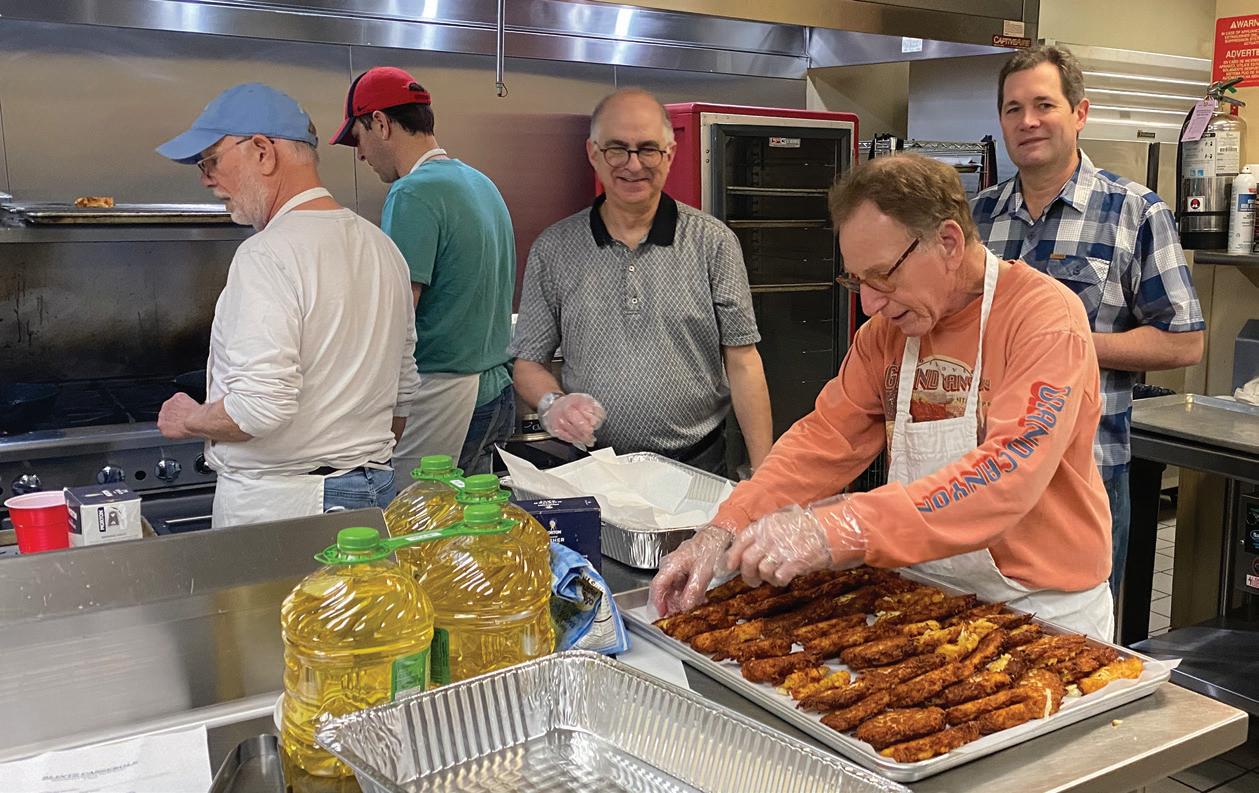
Time to make the latkes: Members of the Brotherhood at Birmingham’s Temple Emanu-El prepare for the Dec. 11 Chanukah lunch.
interesting bits & can’t miss events
Huh... What Was That... Would You Say It Again, Please...
It Could Be Time To Check Your Hearing
tiative to cover two classes. Kunin said “there’s hope this could become something more,” but this was their starting point.
“It definitely makes it easier for people to try Kindergarten,” Kunin said. “We think this place is so great, we want you to see it for yourself.”
“The message is getting out there that there is some interesting stuff going on at the Day School,” Berger said.
(Disclosure: The writer is an alumnus, his wife is current Parent Association co-president, and both sons attended from Kindergarten through seventh grade).
What did Americans in 1930s Europe think about the Nazi rise?
For International Holocaust Remembrance Day, international journalist Andrew Nagorski will speak at the University of Alabama at Birmingham’s national alumni society house, Jan. 23 at 6:30 p.m. An hors d’oeuvres reception will be at 5:30 p.m.
The author of “Hitlerland: American Eyewitnesses to the Nazi Rise to Power” will speak about “Americans, Hitler and the Holocaust.” He explores the lives and views of Americans who were in Germany in the 1920s and 1930s, how they witnessed the collapse of the Weimar Republic and the rise of Hitler.
Nagorski has written several books about that era, having been a correspondent for Newsweek, based in Germany, Poland and Russia. In 1982, he was expelled from the Soviet Union because of his reporting.
When It Comes To Your Health Experience Matters
Call us for an appointment if you’re having having trouble hearing. ENT Associates of Alabama, P.C. is the largest ear, nose and throat practice in Alabama with 9 locations, 15 physicians, and over 600 years of combined staff and physician experience.




Our practice includes general ear, nose, and throat, head and neck diseases and surgeries, cosmetic surgery, robotic procedures, in-office balloon sinuplasty, allergy treatment, and hearing solutions. We concentrate our training and experience in these areas to provide the best possible medical care for our patients.

He will explain that the Americans were hardly alone in often misjudging events. Even Sigmund Freud, the subject of his new book, “Saving Freud: The Rescuers Who Brought Him to Freedom,” was slow to recognize the magnitude of the disaster in the making.
The event is organized by the Alabama Holocaust Education Center, sponsored by the Birmingham Jewish Foundation. Registration is required, and is available through the AHEC website.
Honoring Huntsville’s remaining survivor
Regina Roth Dembo, Huntsville’s remaining Holocaust survivor, will be honored at the Jan. 13 Shabbat service at Temple B’nai Sholom.
The 7 p.m. service will be in honor of International Holocaust Remembrance Day, which is later in January. The community is invited, and a reception will follow.
After a brief service, there will be a screening of an interview Dembo did with the Alabama Holocaust Education Center in Birmingham. Her relatives will be introduced, and son-in-law Sol Miller will read an essay his daughter, Isabelle, wrote 20 years ago and was recognized by the White House’s Become a Leader project.
Born in Vienna, she and her sisters qualified for an Austria quota of immigrants to the U.S., but their Polish parents did not. Their father was arrested and disappeared, and their apartment and possessions were confiscated. A week before the war started in 1939, at age 12, she and her 10- and 8-year-old sisters were sent off to America. Their mother and younger brother were later murdered by the Nazis.
After living with an uncle for a few months, they were placed in an orphanage, then in foster homes. She married Michael Dembo in 1951, and they moved to Huntsville in 1968.
GatesFest offering premium pods
When GatesFest returns on April 2 at Gates of Prayer in Metairie, the music festival will once again have pods — but not because of Covid.
Instead, the Krewe of GatesFest pods will be a “luxury viewing experience” offering shade and premium views. Each pod includes a 10-foot by 10-foot tent with a fan and stocked cooler, 10 VIP tickets, a custom Nan Parati sign, a pod attendant to take and deliver drink orders, a VIP
6 December 2022 • Southern Jewish Life
agenda
Birmingham - Princeton - Hoover - Cullman - Gardendale Alabaster - Jasper - Pell City - Trussville www.entalabama.com or call toll free 888-368-5020
parking space and access to the VIP tent and upgraded restrooms.
The GatesFest Composer level also includes the sponsor name being displayed on a main stage banner, the festival schedule and website, and two on-site parking passes.
The Krewe package is $2,500, and the Composer level is $5,000. Both levels also include a Pod Party on April 1, a catered event with a private performance and the opportunity to personalize the pod for the next day.
General admission tickets are $25. VIP tickets are $180 and include a VIP tent with complimentary light refreshments and an open bar, and access to upgraded restrooms. Tickets are on sale at gatesfest.org.
LJCC suspends search as Bowles becomes interim director
In late November, the board of Birmingham’s Levite Jewish Community Center suspended its search for a new director as Brooke Bowles became interim executive director.
Bowles was named interim director after the resignation of Aimee Johnson at the end of October.
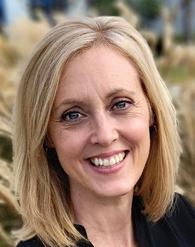
“We’re really happy with Brooke’s work over the past year, and we’re excited to see her lead The J on an interim basis,” says board chair Hilton Berger.
Bowles had been at the LJCC for a year, starting as membership director and head of the newly-formed development team, which together led to her being named associate executive director. Under her direction, a simplified membership model was adopted, and more than $1 million was brought in through grants and various initiatives, including the inaugural J’la gala that was held in August.
“After our experiences of the past year, I am very optimistic about the future of The J,” Bowles said. “As we continue to rebuild after the pandemic, it’s become more clear than ever how important it is for people to have a safe and accepting space where they can socialize and stay fit. The case for that space being The J is only getting stronger.”
The legacy of “The Lonely Child”
Jan. 25 program at Tulane explores Yiddish lullaby
The Grant Center for the American Jewish Experience will present a multimodal program on “The Lonely Child,” Jan. 25 at 6 p.m. at Tulane’s Rogers Chapel, featuring clips from a documentary film in progress that tells the story of a little-known Yiddish lullaby that was written in the Vilna Ghetto during the Holocaust.

The event will include producer and director Marc Smolowitz, writer and producer Alix Wall, and a performance by the New Orleans Klezmer All-Stars. Golan Moskowitz will moderate the discussion.
Wall is the daughter the girl in the song, “Dos Elnte Kind” in its original Yiddish, and has gone on a global quest to find those who are keeping the song alive.
The song was written by Shmerke Kaczerginski, a poet in Vilna who wrote over 230 songs and was part of the Yiddish cultural scene. He and Wall’s grandmother, Rachela Pupko-Krinsky, were selected by the Nazis to go through Jewish objects for their “Museum of an Extinct Race.” They saved Yiddish manuscripts by hiding them under floorboards and smuggling them back to the ghetto.
As they worked, he was inspired to write a song about Pupko-Krinsky’s hidden daughter in 1943. After the war, she married another man and rarely mentioned the song. The daughter, Sorele, had been hidden by a non-Jewish family; her father had been murdered by the Germans in 1941.
Wall, a contributing editor at j. the Jewish News of Northern Califor-


December 2022 • Southern Jewish Life 7 agenda 2424 7th Ave S • Birmingham, AL • 205-323-6036 hannaantiques.com Open Mon-Sat 10am-5pm Happy Hanna-Kah! Rooms and rooms of antiques, curiosities and fun! Browse 27,000 square feet on two floors American and European furniture, rugs, vintage linens, fabulous accessories, and more. 35 showcases of jewelry, silver, and collectibles! Birmingham’s Oldest and Largest Antiques Mall
nia, felt that the song should be shared, and when a friend, Felicia Sloin, offered to sing at her mother’s memorial, Wall suggested that song. Fifteen years later, Sloin sent Wall a video of students at a Jewish Day School in Massachusetts singing the song, changing Wall’s view of her family story.
She began to research others who performed the song, and found many unique versions, prompting the documentary. The film will also explore the role of women who were in the Holocaust resistance.
The event is free and open to the community.
BJF holding annual meeting Jan. 8


The Birmingham Jewish Federation will have its annual meeting and board installation on Jan. 8 at the N.E. Miles Jewish Day School. There will be a reception at 4 p.m., followed by the meeting at 4:30 p.m.
At the meeting, Andrea Haines will receive the Joanie Plous Bayer Young Leadership Award. Stephen Greene and Joel Piassick will receive the Susan J. Goldberg Distinguished Volunteer Award. Janet Aarons will be honored for 25 years of service to the Birmingham Jewish Foundation.
In-person and virtual options are available, and reservations are already being taken. Child care will be provided, with reservations by Dec. 29.
“American Birthright” explores questions of Jewish identity
Why be Jewish?

For Israeli-born Becky Tahel, that question about faith and identity came as an evolution from an exploration of why someone Jewish should marry Jewish, after her younger sister and only sibling married a non-Jew.
Her search for answers led to “American Birthright,” a documentary that will be screened at Sidewalk Cinema in Birmingham on Jan. 11, in a program co-sponsored by the Birmingham Jewish Federation, You Belong in Birmingham, Temple Emanu-El and Temple Beth-El. Tahel will lead a discussion after the screening.
Tahel moved to the United States at age 6 and her family was culturally Jewish, not religious. Still, the reaction in her family to her sister’s choice was very divided, especially for her grandmother, who survived the Holocaust.
Of course, these days, intermarriage is a huge part of the Jewish landscape. But even with it being widespread, that does not make it inconsequential.

An actor and writer, she had sought spirituality, but outside a Jewish framework, and had dated non-Jews. Her sister’s wedding put her on a quest for answers, so she started interviewing experts about intermarriage, bringing a film crew. She eventually saw how little she actually knew about Judaism itself.
Her travels brought her back to Israel, where she immersed herself in classical Judaism, and the question moved from marriage to the much broader question of why one should be Jewish.
The film won Best Documentary at the Seattle Jewish Film Festival, among other accolades. It was whittled down from 150 hours of footage she gathered over seven years on a tiny budget, and she went through 10 versions before the final release in early 2021.

Ultimately, the film becomes her story, as she finds meaning in Judaism and a much deeper connection to her observant grandparents, who were already deceased. She now calls herself Torah-observant, and is married to a religious filmmaker and musician.
Tickets to the screening are $10 and include unlimited popcorn. Doors open at 6 p.m. for socializing at the Sidewalk bar. The film will be at 6:30 p.m., and after the conversation, there will be time for a l’chaim and further mingling.
Registration is at bit.l/bjf-ab.
8 December 2022 • Southern Jewish Life agenda A Magickal Place To Shop And Hold Space 2900 18th Street South, Suite 110 Homewood, Alabama (205) 388-8793 www.ritualshelter.com @ritualshelter Tarot Readings Dream Interpretation Reiki Seminars FreeEventsCommunity Large Selection of Books on Jewish Mysticism DOROTHY McDANIEL’S FLOWER MARKET Simple Bouquets to Elaborate Arrangements • We Decorate Homes and Businesses Non-Floral Services Include Stationery, Linen and Furniture Rental, Tents, Lighting Simply Beautiful Flowers
3300 3rd Ave. So., Birmingham • (205) 871-0092 • dorothymcdaniel.com
Since 1977
New Orleans Federation honors “public servant” Fielkow on retirement
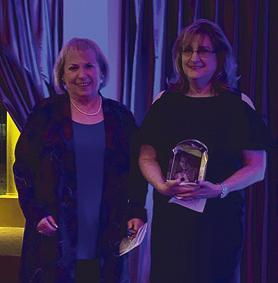
“We must keep meeting like this,” said Touro Rabbi Katie Bauman, in opening the Jewish Federation of Greater New Orleans’ 2022 annual celebration, a nod to the continuing return to normal after Covid.
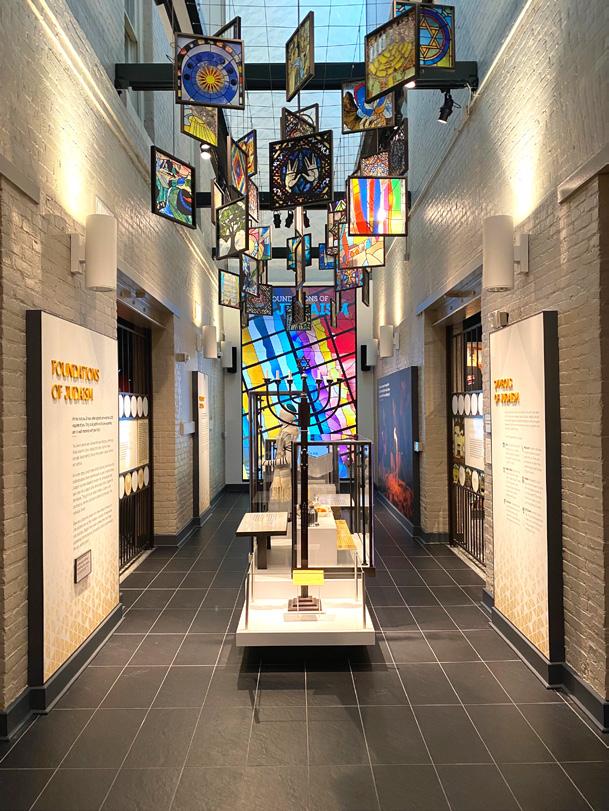
The Dec. 7 event was to celebrate the tenure of Arnie Fielkow as Federation CEO, as he is retiring at the end of the year (see sidebar, page 13). Robert French, his successor, attended the event.
In her invocation, Bauman quoted Ben Zoma in Pirkei Avot, where it is written “Who is wise? The one who learns from everyone. Who is strong? The one who disciplines himself. Who is rich? The one who rejoices in his portion. Who is honored? The one who honors all creation.” She then discussed how Fielkow models each of those, calling him “a gracious individual, seeing the best in people.”
During his presentation as part of the awards ceremony, Bobby Garon said Fielkow likely had another venture up his sleeve, and “we all know he is not done applying his unique, brilliant leadership skills and vision quite yet.”
Board chair Brian Katz spoke of Fielkow’s commitment to kehilla, to community. “Not only have you brought it to the Jewish community, and engaged the entire Jewish community, you have done it to the greater New Orleans community, which is truly amazing and one of the greatest accomplishments you’ve had over the last five years.”
He presented Fielkow with an artwork with verses from Psalms and Proverbs, which was selected “because the Packers gift shop was closed.”
Video Tribute
A video tribute was screened and is also available online.
William Goldring, chairman of the Sazerac Company, said Fielkow “is the true definition of a public servant,” having played numerous roles in the community, in the Jewish community and city-wide. “He’s just touched so many lives.”
U.S. Rep. Troy Carter from Louisiana’s second House district addressed his “dear, dear friend,” saying it is hard to put his name and “retirement” in the same sentence, but easy to use words like “humanitarian,” “philanthropic leader” or “sports enthusiast.” “You have been one incredible leader,” he said.

Carter said he knows this is really “not a retirement, but a passing of the next chapter,” and he wants to be part of every upcoming chapter “because you’re that kind of leader.”
Aaron Ahlquist, director of policy for the ADL Southern division, said “your leadership has enriched and supported not just the Jewish community, but all of New Orleans,” and that Fielkow was a committed partner for the ADL, “fundamentally committed to ensuring the safety of the
NOLA Detox and Recovery Center is a comprehensive addiction treatment program offering residential and outpatient care. Call 504-446-1111 for more information or to claim your recovery date.

Shalom. M Make yourself at home.
www.msje.org 818 Howard Ave. New Orleans, LA 70113 504-384-2480
community
Chris Copeland and Dan Forman, Co-Founders
Located in New Orleans www.noladetox.com
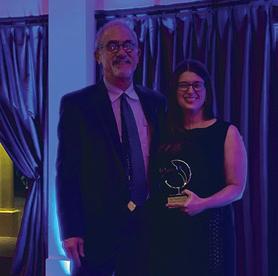
Left: Nancy Timm presents Bissinger Award to Julie Wise Oreck. Right: Lisa Romano presents L’Dor V’Dor Award to Shellye Farber
Happy Hanukkah

Jewish community.”
Jefferson Parish President Cynthia Lee-Sheng praised Fielkow for “helping what is the most diverse parish in the state.”
Joshua Force, Federation board chair from 2019 to 2021, noted the challenging times Fielkow had to deal with, from “hurricanes, a worldwide pandemic, and maybe the most challenging of all, Zoom meetings.” He spoke of the increasing priority of community security, and the establishment of the two centers, for Jewish-multicultural affairs, and for interfaith families.
Fielkow “broadened the reach of Jewish Federation in both the Jewish and non-Jewish communities here in New Orleans,” Force said.
Goldring also commented on the centers, as the Goldring Family Foundation helped establish the Center for Jewish-Multicultural Affairs. He said when Fielkow approached him, “It was kind of tough to put all the pieces together… but Arnie had a plan to do it and made it happen, and it has been very effective over the past few years.”
In the video, he told Fielkow, “You’ve been a real mensch in the city of New Orleans. Everybody loves you, and we really hate to see you give up this position, because you created something that wasn’t there before.”

Additional tributes were from Willian Hines, New Orleans corporate managing partner for Jones Walker, who has worked with Fielkow for over 20 years in various capacities; Joseph Giarrusso, who represents District A on the New Orleans City Council; and David Saginaw, Jewish philanthropic consultant.
“I am so humbled and so appreciative,” Fielkow responded after the video.
He started by recognizing the evening’s honorees. “Thank you each for all that you do.”

At his sendoff 11 years ago at the Jewish Community Center, when he moved to Chicago to become the CEO of the NBA Retired Players Association, “I knew that night that at some point we would return to the city we love, and thanks to Federation, you made that happen.”
He noted that his first year back included a “frightening and shocking” diagnosis of amyloidosis, a rare and incurable disease that leads to buildups of abnormal proteins in organs. “With Federation support,” the Fielkows traveled to specialists around the country, winding up at Vanderbilt for treatment.

He adapted a tradition by Rabbi David Goldstein at Touro Synagogue, who does an open letter to a public figure each year on the High Holy Days, by offering such a letter to his successor, welcoming him to “the most wonderful city and community in the world.
“You will soon be moving to a community with more friendliness, passion, warmth and resiliency than any I’ve ever encountered,” Fielkow continued. “A community which had the strength to overcome Hurricane Katrina 17 years ago, get back on her feet and ultimately, come back

10 December 2022 • Southern Jewish Life
BE INSPIRED BY ANCIENT HEROES ... CELEBRATE THEIR COURAGE AND FAITH WITH GIFTS OF Israel Bonds
Development Corporation for Israel. This is not an offering which can be made only by prospectus. Read the prospectus carefully before investing to fully evaluate the risks associated with investing in Israel bonds. Member FINRA. PERPETUATING A 70-YEAR LEGACY OF ACHIEVEMENT israelbonds.com Brad Young, Executive Director bradley.young@israelbonds.com 404.817.3500
community
Left: Bobby Garon presents the Young Leadership Award to Julie Green. Right: Brian Katz recognizes Annual Campaign chairs Nancy and Steve Timm.
stronger than ever.”
Given his sports career, the call he received 22 years ago inviting him to a position with the Saints “could have come from any city in America, but thank God it came from New Orleans.”
His biggest bit of advice for French — “Buy as much black and gold apparel as you can, and always recite two words: ‘Who Dat!’.”
He told French about the spirit of New Orleanians, during and after Katrina, working through Covid and more recent hurricanes, opening synagogues to congregations needing a home, “gladly raised money to help rebuild, cooked over 30,000 meals for health care workers, and each and every day volunteer to help others in need. This is who we are.”
After talking about watching the Jewish community’s post-Katrina rebuilding efforts from his vantage point on the City Council, he said “I am happy to report that the New Orleans area’s Jewish population exceeds 12,000, 20 percent higher than at the time of Katrina.”
He thanked the Federation staff for their talent and dedication, “making me look good this past five and a half years. I love each of you.”
He told French that “we all look forward to your new leadership and all the great things you will be bringing to the table at Federation. I very much hope I left you with a solid foundation.”
Fielkow referenced the recent strategic plan and thanked those who helped reshape Federation, looked forward to celebrating Israel’s 75th anniversary as part of the Federation’s continued commitment to Israel, and the priority of community security.
He also prayed for an end to the war in Ukraine and urged community members to attend the community-wide Chanukah events, which would include elements about supporting Ukraine.
He concluded by saying that leading Federation “has truly been the honor of my life.”
There are many ways to support Israel and its people this holiday season, but none is more transformative than a gift to Magen David Adom, Israel’s paramedic and Red Cross service. Your gift to MDA isn’t just changing lives — it’s literally saving them.

Donate today at afmda.org/support or call 866.632.2763.
afmda.org/support




December 2022 • Southern Jewish Life 11 community
give the gift of life.
This Chanukah,
ONE STOP KOSHER FOOD SHOPPING Dine In — Take Out — Catering
• Fri &
(Closed Saturday) 3519 Severn, Metairie (504) 888-2010 www.koshercajun.com Outside the New Orleans area? We will ship your order to you!
Mon-Thu 10am-7pm
Sun 10am-3pm
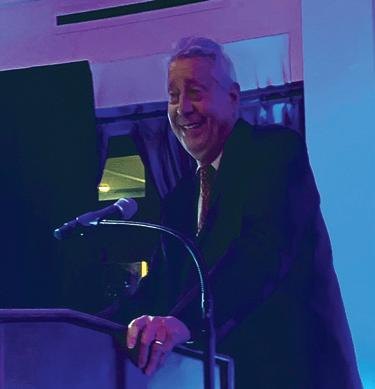
Arnie Fielkow addresses the Annual Celebration
Annual Awards
The evening also included presentations of the Federation’s annual recognitions.
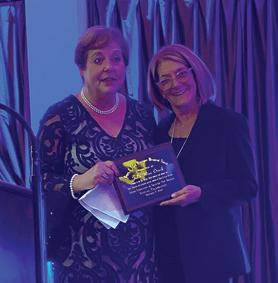
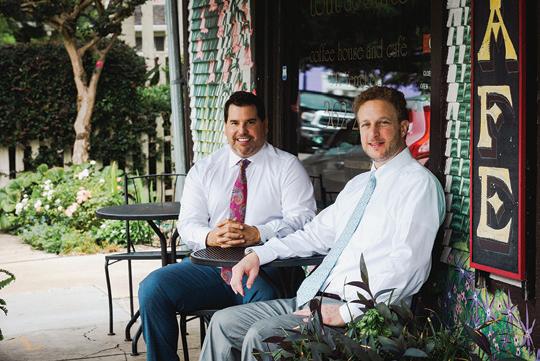
Nancy Timm presented the Roger and Allan Bissinger Memorial Award to Julie Wise Oreck.
Timm noted that Oreck travels to Israel more each year than most people do in their whole lives. She is a past Federation president and annual campaign co-chair, has served on many local boards, and is an alumna of the National Young Leadership Cabinet and board member of the Jewish Federations of North America, Jewish Agency for Israel and the American Jewish Joint Distribution Committee.
“She is a woman with a mission, and I believe my father and my brother would agree she has in fact made a true difference in the world,” Timm said.
In her brief acceptance, Oreck cited the legacy of Roger and Allan Bissinger, saying “I can’t tell you how much of an honor it is to receive this award” that is named in their memory.
Lisa Romano of the Oscar J. Tolmas Charitable Trust presented the Oscar J. Tolmas L’Dor V’Dor Award to Shellye Farber. “This award celebrates the unsung heroes of the Greater New Orleans Jewish community who quietly and consistently aid in repairing the world around them,” Romano said.
“Every Super Sunday, you’ll find Shellye setting up her adding machines,” she said. She is also a long-time volunteer for WYES’ membership drive, and a past president of the New Orleans Section of the National Council of Jewish Women.
Farber has served on many Federation committees, including chairing the PR and allocations committees, and served several terms on the board.
Romano said her service is what the award embodies, “volunteers who give of themselves without expectation of recognition. We’re thrilled to recognize her.”
The custom award was created by Lee Michaels Fine Jewelers.
Farber said she was “surprised and so honored” when she found out about the award. “I’ve always said, if there were a gene for volunteerism, I don’t ever remember a time when my parents weren’t giving of themselves to a non-profit that was dear to them. That gene has been passed on to me.”
Bobby Garon presented the Herbert and Margot Garon Young Leadership Award to Julie Green. He noted the passage of time, as exemplified by how the child of one of his peers is now receiving this award.
“Julie eyewitnessed early her parents’ commitment to our Jewish community and beyond,” he said. Her grandfather, who relocated from town to town, would arrive in a new place, turn on the lights at the new home, enroll the kids in school “and go to the local shul to volunteer,” Garon said. “I love that story.”

After graduating from Emory, Garon said, Green returned to New Orleans. She became co-chair of JNOLA, then participated in Katz-Phillips Young Leadership, and was recently asked to be an advisor to the program. “That’s the best gig Federation can offer,” he said.
During her time leading JNOLA, she established bylaws for the group, solidifying its position at Federation. She is now financial secretary at Gates of Prayer.
Nancy and Steve Timm were recognized for their efforts in leading the annual campaign, which raised $2.64 million from 1,154 households, a 4 percent card-for-card increase. Melinda Mintz and Marc Behar will lead the 2023 campaign.
12 December 2022 • Southern Jewish Life community
Broadening Federation’s Reach Throughout New Orleans
Arnie Fielkow says his retirement as CEO of the Jewish Federation of Greater New Orleans is “bittersweet” as “I have truly grown to love the work I do and the people I am privileged to work with.
“At the same time,” he said, “my retirement allows me one last potential venture which I am excited about and looking forward to in 2023.”
He will be succeeded by Robert French, executive director of Jewish El Paso and The Jewish Community Foundation of El Paso, at the end of the year.
Fielkow returned to New Orleans in the summer of 2017 to take the helm at the Federation, an opportunity that “brought me back to the city that I love.”
Fielkow originally moved to the city in 2000 “because I was able to get an opportunity with the Saints, and we immediately fell in love with the city of New Orleans.”
He was executive vice president of the Saints, parting ways with the team after Katrina. He was then elected to the city council in 2006 and re-elected in 2010. In 2011, he became executive director of the National Basketball Retired Players Association in Chicago.
“We missed New Orleans from the moment we left,” Fielkow said. “We were always keeping an eye on how I could get back to the community.”
The Federation opening “gave me the chance to get back here and raise our daughters here.”
He was always aware that Federation was a significant organization in the community, but felt it wasn’t well known outside the Jewish commu-
nity. After Katrina, “I looked at the Federation and the incredible work it was doing bringing people back to the community.”
Nevertheless, the greater New Orleans community didn’t see the Federation “at the same level as other faith-based organizations,” like Catholic Charities, United Way and so forth.
When he met with the search committee, he said he wanted “to broaden our role so the rest of the New Orleans community knows the good work of the Jewish Federation.”
He says it is important “for us to be part of the fabric of the community at large,” and noted that the Jewish Community Centers serve many nonJews, as does Jewish Community Day School, and “it’s amazing” hearing how many non-Jews utilize the Tulane Hillel and its programs.
The Federation also works closely with elected officials on issues affecting Israel, Judaism or Jewish values. That came to a test early in his tenure in January 2018, as the New Orleans City Council passed what seemed to be an innocuous human rights resolution that anti-Israel groups, who had presented the resolution, immediately publicized as a Boycott, Divestment and Sanctions bill against Israel, though that was not in the resolution’s language. They celebrated what they called the first BDS bill by a major city in the United States, confounding the council members who had no idea that was the motivation.
Within two weeks, “we were able to get that pro-BDS resolution rescinded by a unanimous decision at the city council,” Fielkow said. The episode then led to Governor John Bel Edwards issuing an order against

December 2022 • Southern Jewish Life 13 community
Fielkow reflects on tenure as CEO
BDS, followed by the Legislature passing an anti-BDS law.
Another priority was broadening Federation’s appeal within the Jewish community. Two years before Katrina, Fielkow was on the Federation board, and he remembered that in the community of 10,000, while there was a high synagogue affiliation rate, just a small segment of the community engaged with Federation.
He figured “we have to give a reason why a member of the Jewish community would want to make a donation to the Annual Campaign, other than guilt.”
His mantra was “not everything Federation does will be of interest to you, but something Federation does definitely will be of interest to you.”
Over the last few years, the Federation has done a lot more programming, from Israel to politics, from a range of perspectives, and expanded relations and joint programming with the African-American, Latino and LGBTQ communities.
“When we see what is happening in the world today with antisemitism, hate… it is more important than ever that we have alliances with other minority groups, so we can advocate against hate in all its forms.”
The community itself has been growing, with a current estimate of 12,000.
Another priority has been expanding partnerships with the corporate community, rather than relying entirely on the Annual Campaign. The Federation has gone from about $50,000 per year to $400,000 per year in corporate sponsorships, and all programs are self-funded.


He acknowledged that the Annual Campaign has been flat for many years, partly because of the economy, but also because “people want to give in a different way,” meaning more direct giving and less of an umbrella gift approach.
Nationally, people give to annual campaigns, endowments and supplemental “passion giving” for particular purposes. That last type is becoming a major component of giving, and is reflected in the two Centers the Federation began recently — the Goldring Center for Jewish-Multicultural Affairs and the Leventhal Center for Interfaith Families, where a donor had a passion for seeing a particular need met.
Fielkow said the two Centers, with “incredible lay leadership and two superior executive directors,” are “a source of tremendous pride” and were established by people who “wanted Federation to grow in those areas.”
The Goldring Center is already producing deeper ties with other communities in New Orleans, Fielkow said, and in a decade, “we will look back at the Leventhal Center and say that is one the most important things Federation ever did.”
Intermarriage can be seen as “a major problem or an opportunity,” Fielkow said. “I believe in the latter,” as “we can’t turn a blind eye to it.” The Center helps interfaith couples learn what is available in the Jewish world, locally and nationally, to help them make their own decisions.
Multicultural partnerships include a speaker series with Historically Black Colleges and Universities, and a regular “Cross-Cultural Conversations” show on WBOK-AM.
This past summer’s trade mission to Israel will pay huge dividends, both in the business and research ties that are developing from the trip, and from the relationships forged between the Federation and institutions throughout the state.
While Fielkow’s six years included the challenge of a two-year pandemic and the major disruption of Hurricane Ida last year, he also had a serious health issue to overcome one year into his position. He was diagnosed with a rare, non-curable disease, and after “a brilliant diagnosis” he spent a few months out of town, being treated.
“That was very hard, to try and do the job from afar and battle the medical challenges,” he said. Nevertheless, now “it’s under control, my health is good” and he feels as he did when he returned to New Orleans.
Now, Ukraine is both a professional and personal priority for Fielkow,

14 December 2022 • Southern Jewish Life community BYWATER BREW PUB WITH FULL BAR & VIET-CAJUN MENU 3000 ROYAL STREET • Beers Brewed In-House • Trivia Mondays • Book Your Next Event Here! bywaterbrewpub.com • (504) 766-8118 • @bywaterbrewpub Monday 4pm-9pm Friday, Saturday and Sunday Noon-9pm Have your Bar/Bat Mitzvah Party or Other Simcha Here!
as the Federation movement nationally raises emergency funds for the Jewish community there, and Fielkow works to assist the sisters of Yana and Svetlana, their two adopted daughters from Ukraine.
When the war ends, “rebuilding the Jewish community of Ukraine will be a significant challenge,” taking “a lot of time, a lot of sweat equity and a lot of money,” and he hopes to be part of that effort.
Covid “was a challenge for everybody,” but one silver lining was being able to virtually connect with “many more people that we may not have reached.” But now, “it’s awfully important to get back to in-person work.”
The Federation was able to help the community in many ways during Covid, including thousands of free kosher meals to health care workers who would otherwise be too tired to think of meals when getting off their long shifts. Fielkow said that initiative “was tremendously appreciated,” and also helped the three kosher caterers in town during an otherwise slow period.
On a personal level, his Federation role “brought me back to my Jewish roots.” He explained, “I grew up in a small community in Wisconsin” with 100 Jewish families. He had observant grandparents, was active as a youth with five years at Camp Ramah and family observance of holidays.
“During my professional career in sports, I lost some of that because of travel, the day to day work,” he said. His position at Federation “brought me back to observance, synagogue life, my pro-Israel stances and so much more.” Partly due to the pandemic, he said he has not missed a Friday night in two and a half years. He also reads the weekly portion each week, and hopes to continue that.
The Next Chapter
While Fielkow is retiring from the Federation, there is an acknowledgement that there are still chapters to come.
While working in the sports world is “fun,” he felt his six years on the City Council was “gratifying,” especially because it was right after Katrina and “we were literally rebuilding a city.”
Saying that politics “gets in your blood,” he is “exploring a potential run for office in 2023,” and will decide after the first of the year. An open seat will be available in the Legislature, and he has his eye on running for it. If elected, he would be the only Jewish member of the body.
Fielkow said leading the Federation “has been an absolute joy… and I am going to miss it.”
He said the Federation staff is “the best of the best, and I could not have been given a better group of people.”
The Federation is “a historic organization that does incredibly good work in the Jewish community, and hopefully under my tenure, much more to the community at large.”
He hopes that French “will not only put his own stamp on Federation, but sustain the growth from the last five-plus years.”
WWII Museum offers teacher course on propaganda
The National World War II Museum in New Orleans is offering a free online winter course for teachers, “The Power of Propaganda,” from Jan. 17 to May 2.

The five-module course will focus on teaching media literacy through the analysis of World War II propaganda. Throughout the war, the Allied and Axis Powers created propaganda to solidify support for the war effort and distributed this propaganda through many different mediums, including posters, radio broadcasts, newspaper articles, and movies. Incorporating propaganda in the classroom, then, requires educators to not only teach the historical context of propaganda, but to teach the skills to critically analyze different forms of media.
Enrollment is open through Jan. 24 on the museum’s website.
Need Clergy?
Will Lead Shabbat/Holiday Worship Services Throughout the Region


Bar and Bat Mitzvah Training and Ceremonies
Officiates All Life-Cycle Events, Including Weddings, Funerals, Brises/Baby Namings, Mezuzah Hanging Ceremonies, etc. Shofar Training
Conversion Prep and Ceremonies
• Ordained with a Masters of Sacred Music from the Hebrew Union CollegeJewish Institute of Religion in 1994
• Member in good standing of the American Conference of Cantors for 28 years and on the executive board for three years
• Received honorary doctorate in 2019 from the Hebrew Union College-Jewish Institute of Religion Based in Birmingham, willing to travel the entire SJL region
Call (504) 322-3888
4417 Lorino St, Metairie Off of W. Esplanade mopeclinic.com

December 2022 • Southern Jewish Life 15 community
me on
at Cantor Jessica Roskin
Beginners Hebrew Reading Cantorjroskin@bellsouth.net (205) 266-6549 Find
Facebook
Call Cantor Jessica Roskin!
Shen Yun’s unique artistic vision expands theatrical experience into a multi-dimensional, deeply moving journey. Featuring one of the world’s most ancient and richest dance systems— classical Chinese dance—along with dynamic animated backdrops and all-original orchestral works, Shen Yun opens a portal to a civilization of enchanting beauty and enlightening wisdom.

“It makes you dream of a heavenly world. It’s really a balsam, a salve for the soul. It’s something that really restores you, regenerates you.”
—Filippa Giordano, famous Italian-Mexican Singer
“This is the best I have ever seen. It was so uplifting. It spoke to everything that is good in this world.”
—Glen Duncan, Grammy Award-winning musician
Shen Yun Performing Arts is a nonpro t organization based in New York. Its mission is to revive 5,000 years of traditional Chinese culture. Traditional Chinese culture—with its deep spiritual roots and profoundly optimistic worldview—was displaced by communism in China. While Shen Yun cannot perform in China today, it is sharing this precious heritage with the world.
16 December 2022 • Southern Jewish Life







“There was something pure and bright and very dignified about them. The show gave me a real sense of goodness and meaning in life.”
Liceica, soloist
American Ballet Theatre “Shen Yun brought something most needed in this world—hope: hope for a better world, hope for a better future, hope for a better life.”
Miranda, producer
actress “An extraordinary experience... Exquisitely beautiful!” CHINA BEFORE COMMUNISM ShenYun.com/South 877-663-7469 Montgomery Jan 18 Montgomery PAC Baton Rouge Jan 21 River Center Theater Huntsville Jan 24 Von Braun Center Jackson Jan 31 Thalia Mara Hall Mobile Feb 7 Civic Center Theater New Orleans Feb 11 Mahalia Jackson Theater Birmingham Apr 22 BJCC Concert Hall
—Anna
with the
—Jesse
—Cate Blanchett, Academy Award-winning
Baton Rouge, Mobile Jewish Film Festivals in January
Mobile festival is back in person
As the Mobile Jewish Film Festival returns to in-person programming, there will be one event that isn’t a film.
A live performance of “Anne and Emmett” will be on Jan. 12 at 7:30 p.m. at Joe Jefferson Playhouse. The performance is a gift from the festival, and a limited number of tickets will be available through the festival website, on a first come, first served basis.

The one-act play is an imaginary conversation between Anne Frank and Emmett Till, both of whom were victims of intolerance and hate. They meet in a place called Memory, where they learn about each other and their traumatic pasts — Frank being murdered in a concentration camp after being in hiding from the Nazis, and Till being murdered after being accused of whistling at a white woman in Mississippi in 1955.
The play is produced by the Mississippi State University Theater Department, which hosted the show in November 2020, along with William Carey University in Hattiesburg. In November, the show was performed in Birmingham, including two school performances the day after the public performance.

The festival opens on Jan. 8 at 2 p.m. at Springhill Avenue Temple, with “Farewell Mr. Haffman” (see sidebar). A dessert reception will follow.
On Jan. 10 at 7 p.m., also at Springhill Avenue Temple, “Why the Jews?” explores Jewish achievement. The 2018 Canadian documentary asks the touchy question of why Jews over-achieve in so many places, and what the consequences have been, both positive and negative.
Baton Rouge festival at the Manship Theatre
The Baton Rouge Jewish Film Festival returns to the Manship Theatre for its 17th season, highlighting the diversity of the Jewish experience through film.
The festival opens on Jan. 11 with “Karaoke” at 7 p.m., an Israeli film about a married middle class couple in their 60s, dealing with empty-nest boredom. They are then drawn to their new neighbor, a charismatic bachelor who holds karaoke nights in his apartment, who reawakens their sleepy relationship, but also become dependent on their new friend.
Grand winner of the Israeli Academy Awards and winner of three major awards at the Israeli Documentary Awards, “Speer Goes to Hollywood” presents the enigma of Albert Speer: the highest-ranking Nazi in Nuremberg who, despite his crimes, was spared the death sentence. Instead, he served 20 years in prison, becoming a free man in 1966.
Based on months of audio cassettes recorded by screenwriter Andrew Birkin, the film features Speer’s callous attempt to whitewash his past in a feature film. The rare archival materials selected to illustrate his account offer a chance to look beyond his words and ponder whether this eloquent but ultimately self-serving narcissist was recording history — or recording his story.
The film will be screened on Jan. 12 at 7 p.m.
Two films also in the Mobile festival (see sidebar) will conclude the Baton Rouge festival, with “The Man in the Basement” on Jan. 14 at 7:30 p.m., and “Farewell, Mr. Haffman” on Jan. 15 at 3 p.m.
There is a VIP Movie Club for the festival, which includes early bird access to seats, two free tickets to opening night, $2 off the other screenings, and drink and snack coupons.
Season passes are also available through the theatre. More information is at brjff.com.
18 December 2022 • Southern Jewish Life community
For example, 22 percent of Nobel Prize winners, 33 percent of Oscar-winning directors and 40 percent of world chess champions have been Jews, despite there being just 15 million Jews in the entire world.
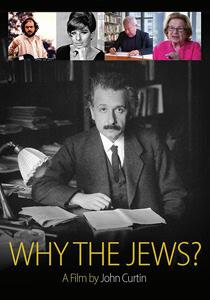
Adaptability has been a secret to survival, but that very success often attracts resentment.



The director, John Curtin, was raised Catholic but had a Jewish father.
The festival continues with “The Man in the Basement” (see sidebar) on Jan. 17 at the University of South Alabama in Fairhope, and Jan. 24 on the Mobile USA campus. Both screenings are at 7 p.m.
“Bad Nazi. Good Nazi.” will screen at the Mobile Museum of Art on Jan. 19 at 3 p.m. It is the story of Wilm Hosenfeld, immortalized as the Nazi who saved The Pianist’s life in Roman Polanski’s film. The film cen-

Two films being screened at both festivals

The Baton Rouge and Mobile Jewish Film Festivals have two films in common this year.
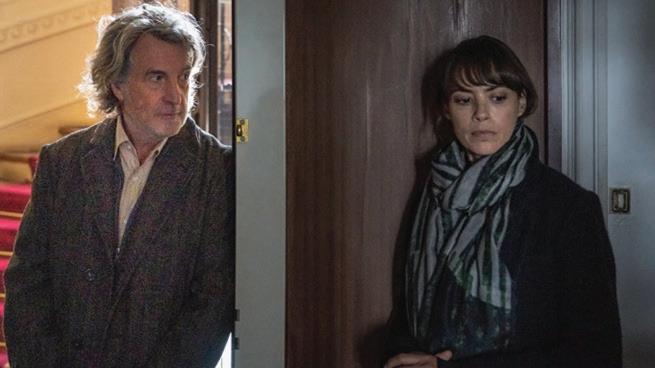
“Farewell Mr. Haffman” opens the Mobile festival, Jan. 8 at 2 p.m. at Springhill Avenue Temple, and closes the Baton Rouge festival, Jan. 15 at 3 p.m. It was also screened as part of Sidewalk’s Jewish Film Week in Birmingham in November.
Based on a multi Moliere Award-winning play, the French film is set in occupied Paris in 1941. When a decree is issued for Jewish residents to come forward and identify themselves, jeweler Joseph Haffman is concerned and arranges for his family to flee, and lets his employee take over the store for the interim. But when his escape plan falls through, he is forced to seek his assistant’s protection, moving in with his assistant and assistant’s wife, leading to a Faustian bargain, with his presence in the basement proving to be growingly hazardous.
Another French film, “The Man in the Basement,” will be in Baton Rouge on Jan. 14 at 7:30 p.m. In Mobile, it will screen twice — Jan. 17 at 7 p.m. at the South Alabama Fairhope campus, and on Jan. 24 at 7 p.m. at the South Alabama campus in Mobile. Author Roy Hoffman will be the guest speaker.
The psychological thriller is about a real estate transaction gone awry — a Jewish couple in Paris sells the unused basement in their building to a nondescript former history teacher, who seems normal. But they soon realize he is an antisemitic conspiracy theorist, and they struggle to rescind the sale. Complicating matters, he insinuates himself with the couple’s naïve teen daughter, turning their world upside down.
December 2022 • Southern Jewish Life 19 PHOTOGRAPHY Executive Portraits Website Photography Product Photography Family Portraits • Pet Portraits Event Photography CUSTOM FRAMING PHOTO RESTORATION and ARCHIVING CONVERT OLD MOVIES to DVD or MP4 213 Country Club Park, Crestline • imageartsetc.com BEFORE AFTER Unique Impressions Catering by Debra Malone Morethan 40years ofexperience in catering kosherevents forthe Jewish community We caterforanyevent and caterto please 205.527.7883 debraarodgers@bellsouth.net Look for Unique Impressions on Facebook
community
The Man in the Basement
SUPPORT QUALITY, INDEPENDENT,
SOUTHERN JEWISH JOURNALISM
communityters on a controversy in Thalau, Germany, over whether to erect a statue honoring him.
He was a devout Nazi in the 1930s while principal of Thalau Elementary School. But a look at his diaries shows how his views changed completely as he saw the atrocities being committed by the SS and Gestapo, especially on infants and children. It turns out that pianist Wladyslaw Szpilman is one of 60 people he ultimately saved, before he was captured, tortured and executed in a Soviet prison camp.
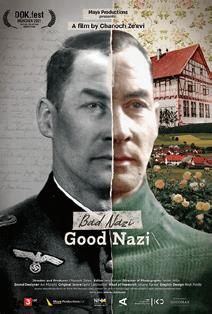
The film is an exploration of how narrative films shape personal legacies.
David Meola, professor in the USA history department, will speak following the film.
“The Narrow Bridge” will be on Jan. 25 at 7 p.m. at the Mobile campus of USA. It tells the story of four people who lost a child or parent in conflict, and now belong to Israeli Palestinian Bereaved Families, working to end violence and battling against political and family opposition.
“Rose,” on Jan. 26 at 7 p.m. at USA in Mobile, is a family matriarch who is suddenly widowed at age 78. She rejects social pressure to “act her age” and decides it is never too late to seek happiness. A dessert reception will follow the film.
The final film, “Exodus 91,” is the Reita Franco memorial film. It will be at Ahavas Chesed on Jan. 29 at 2 p.m. The docu-narrative film is the story of Asher Naim, an Israeli diplomat of north African origin, who is sent to Ethiopia to negotiate the escape of 15,000 Ethiopian Jews from famine and civil war.
He works with colleagues who were themselves smuggled out of Ethiopia a few years earlier. They begin to question if the operation is serious or a publicity stunt in the face of charges that “Zionism is racism.” As the rebels close in on the capital, Naim’s faith is put to the test as he navigates bureaucracy and politics.
Tickets for the festival go on sale on Dec. 18 through the Mobile Area Jewish Federation website, mobilejewishfederation.org. Festival passes are $55, individual movies are $9.
Sponsorship levels start at $100 with two complimentary tickets. The $500 level has eight complimentary tickets and first access to two tickets to “Anne and Emmett.” Levels progress to the $2500 Executive Producer level, with 21 complimentary tickets and first access to eight tickets to “Anne and Emmett.”


There will also be a virtual option for all of the films.
Holocaust remembrance at West Florida
Pensacola’s Jewish institutions and the University of West Florida are hosting a Holocaust remembrance event, Jan. 26 at 5 p.m., at the Rolfs Music Hall Center for Fine and Performing Arts, Building 82.
Holocaust survivor Leon Chameides will be the guest speaker, and there will be live music by the UWF Strings.
Chameides was born in 1935 in Katowice, Poland, where his father was the chief rabbi. While in the Lwow ghetto in 1942, his father met with the head of the Uniate Church in Ukraine, which agreed to hide several hundred Torahs the community had saved, along with Leon and his older brother. They were given new identities, taught how to speak Ukrainian and how to do Christian rituals well enough to pass. Their parents and grandparents died during the Holocaust.
Chameides immigrated to the United States in 1949, and was founding Chair of Pediatric Cardiology at Hartford Hospital and Connecticut Children’s Medical Center. He is regarded as the father of pediatric resuscitation.
20 December 2022 • Southern Jewish Life
Visit supportSJL.com to contribute
ORIGINAL


Anniston’s Beth El holding final Shabbat service
Will be open only for High Holidays

When Anniston’s Temple Beth El convenes for Shabbat on Jan. 27, it will be for the last time — at least on Shabbat.
Citing dwindling numbers, the congregation’s board decided to stop monthly Shabbat services — many of which have been cancelled due to illnesses or other factors, even after Covid — and open only for the High Holy Days each year.
The Beth El building, dedicated in 1892, is the oldest synagogue building in the state that is still used as a synagogue. The congregation was formed in 1888.
Rabbi Irving Bloom served the congregation as visiting rabbi until he retired in 2018. He died in January 2020. Bloom had been a student rabbi in Anniston in the 1950s, and also served Gadsden’s Beth Israel after his retirement from Temple Israel in Dayton, Ohio, in 1997.
As the numbers dwindled in Gadsden, an attempt was made to have more joint events with Anniston, but the Gadsden congregation closed in 2011.
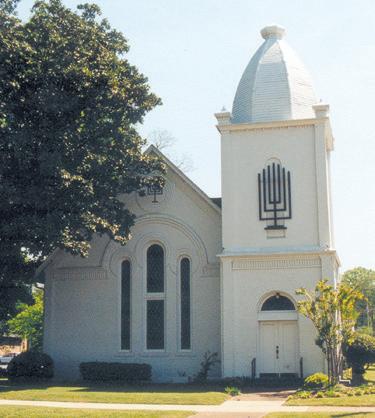
Beth El is currently served by a visiting rabbi, Lauren Cohn of Atlanta.
The congregation was known for its Neighbors Night, where members invited non-Jewish friends to learn about Judaism.
The service on Jan. 27 will be at 7 p.m.
“Banana Man” author, Rabbi Brener join LimmudFest Nola lineup
Registration for LimmudFest New Orleans will open on Jan. 15. The regional weekend festival of Jewish learning, arts, culture and spirituality will be held the weekend of March 17, with over 70 sessions by local, regional and national presenters, with several subject tracks.
Rich Cohen and Rabbi Anne Brener have been announced as speakers for the weekend.
Cohen is the author of 13 books, co-creator of the HBO series “Vinyl,” and a contributing editor at Vanity Fair and Rolling Stone. H will discuss his book “The Fish That Ate the Whale,”

22 December 2022 • Southern Jewish Life
about Samuel Zemurray, a controversial figure who developed the banana industry in the United States and whose company controlled Central American countries, leading to the coining of the term “banana republic.”
“Sam the Banana Man” immigrated to the United States in 1891, winding up in Selma. Traveling to Mobile in 1895, he started his banana business, then moved to New Orleans in 1905, starting the Cuyamel Fruit Company. He was active in supporting the Zionist movement, and donated what is now the president’s mansion at Tulane.
Brener is a New Orleans native who is a faculty member of the Academy for Jewish Religion in Los Angeles and a founding faculty member of Yedidyas Morei Derekh— Jewish Spiritual Direction Training Program. She is a psychotherapist, spiritual director, and author of “Mourning and Mitzvah: Walking the Mourner’s Path.”
At LimmudFest, she will lead a Shabbat morning service, a Jewish meditation workshop, and a session on Jewish responses to grief and loss.
Shabbat events will be at Gates of Prayer in Metairie, where services are held in Reform, Conservative and Orthodox traditions under the same roof, after which all meals are enjoyed together. The events on March 19 will be at the Uptown Jewish Community Center.
Cantorial weekend starts anniversary for Panama City’s
B’nai Israel
B’nai Israel in Panama City will host Cantor Howard Shalowitz the weekend of Jan. 13 to kick off the congregation’s 20th anniversary celebration of its current location.
Shalowitz is an adjunct professor of Jewish music at Webster University, a guest lecturer on Jewish music at the University of Miami, and an instructor at Washington University’s Lifelong Learning Institute.
Since the age of 18, he has been a High Holy Days cantor for several congregations, including nine years at the prestigious Sutton Place Synagogue in New York City. As chairman of the Cantors Assembly’s Ambassador Program Committee, he has led services and lectured on Jewish music throughout North America.
He wrote, narrated and produced four television programs for the Jewish holidays: “The Sound of the Shofar,” “The Light of the Menorah,” “The Cup of Elijah” and “The Scroll of Esther,” which have aired on St. Louis television for over 20 years.
The Bay Jewish Community was formed in 1992, changing the name to B’nai Israel in 1994. In 2000, they received a donation of two acres of land, and the current building was dedicated in 2003.
Confidential individual or couples therapy available by phone, video call or in person.

Most insurance accepted

December 2022 • Southern Jewish Life 23
community
We know you love Southern Jewish Life. Make sure to tell our advertisers!
Collat Jewish Family Services www.cjfsbham.org 205.879.3438 Professional Counseling
Trip shows HBCU presidents possibilities in Israel connections
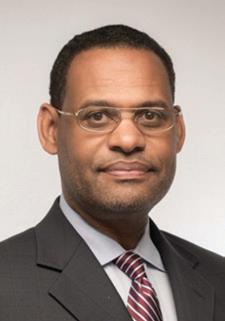 By Richard Friedman and Keila Lawrence


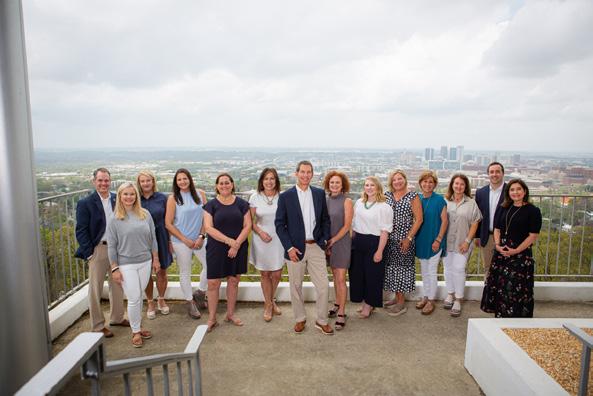
Six distinguished presidents of Historically Black Colleges and Universities visited Israel recently, including two from Alabama. It’s not surprising that two of the six were from Alabama since the state has the highest number of HBCUs in the nation — 14.
The trip was hosted by AJC Project Interchange, an educational initiative of the American Jewish Committee, as part of a partnership with the Thurgood Marshall College Fund, which supports students and programs at HBCUs. Two representatives of the fund were also on the trip. This trip, fueled by the power of connecting two historically oppressed minority groups, aimed to further deepen the African American and Israeli relationship.
“To learn the full story of Israel, it’s vital to see it in action. There really is no substitute for first-hand experience,” explained AJC Project Interchange Director Nisha Abkarian. “Israel is on the cutting edge of so many fields, from agriculture to cyber, and there is a great potential, through this new partnership, for HBCUs to forge important connections with their Israeli counterparts.”
One of the Alabama HBCU presidents, Dr. Charlotte Morris of Tuskegee University, summed up her trip in one word: “Wow!” Both Morris and Dr. Daniel Wims, president of Alabama A&M University in Huntsville, returned home full of ideas.
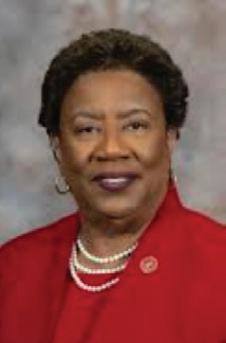

“It was a capacity-building trip,” Morris explained in a recent Zoom interview. “It gave me an opportunity to explore collaborations between some of the things we are doing here at Tuskegee and institutions in Israel.” Israel’s work in three areas especially impressed her. “Israel has super expertise in advanced technology, agriculture and the sciences. I wanted to make sure we explored these areas.”
Last year, Tuskegee University received a $5 million grant from Google. According to Tuskegee, the grant is “designed to help expand pathways and opportunities for increased diverse representation in the STEM industry.” During the trip, Morris had the chance to visit with representatives of the Google office in Israel.
When asked what, in particular, affected her as an African American, the HBCU president spoke about the visit the group made to an Israeli military base. There, they observed a program that trains young Ethiopian Israelis to be pilots.
“Some of us provided information to these students to interest them in coming to America to further their education at HBCUs,” said Morris. It could be a great fit for Tuskegee, she said, because of her university’s historic affiliation with the famous World War II era Tuskegee Airmen “I tried to entice one young lady in particular who told me that she never imagined she’d be able to fly a plane.”
Being in Israel also affected the Tuskegee president as a Christian. “I

24 December 2022 • Southern Jewish Life community For an appointment, call (205) 415-7536 or visit gunndermatology.com Two Locations to Serve You 32 Church Street, Crestline • 391 Rele Street, Mtn Brook Village Follow Us on Instagram @gunndermatology Now Open in Lane Parke! Lakeshore Park Plaza 2204 Lakeshore Drive, Suite 300 Birmingham, AL 35209 www.dentmoses.com PUTTING YOUR SUCCESS FIRST Financial Reporting and Audits • Tax Planning and Compliance Outsourced Accounting and Payroll Technology Consulting, Design and Support At Dent Moses, LLP, we’ll help you create and implement customized financial industry strategies, examine outsourced accounting solutions, and provide reliable professional services built around your accounting, consulting, and tax needs. Proud to work with the Birmingham Jewish Federation
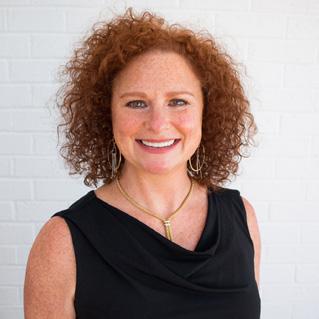
Charlotte Morris and Daniel Wims




December 2022 • Southern Jewish Life 25 Happy Hanukkah! Warm wishes for peace, light and love this holiday season. Local. National. Global. Wherever you need us. dentons.com Dentons, the law firm of the future is here. Grow | Protect | Operate | Finance © 2022 Dentons. Dentons is a global legal practice providing client services worldwide through its member firms and affiliates. No representation is made that the quality of legal services to be performed is greater than the quality of legal services performed by other lawyers. Please see dentons.com for Legal Notices. Helping Buyers & Sellers Since 2004 Ashley Fierman Lewis REALTOR /Associate Broker The Fred Smith Group 205-907-7622 soldbyashley@gmail.com
•
•
•
•
•

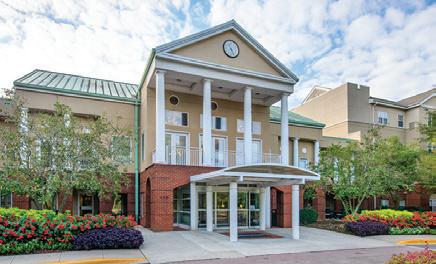
We are excited to welcome new residents and their families to Brookdale University Park. When you arrive for a tour, you will be greeted by our friendly staff and residents. You will notice our walking paths, putting green and refreshing outside areas for you, your family and friends to enjoy.

Once you move in, you are free to come and go in the community as you wish, and visitors are always welcome! Including your 4-legged friends. Our community is your local source for overcoming challenges that older adults face as well as providing an environment where friendships can cultivate and flourish.

Reach out to us today and learn how we can help connect your interests with those of like-age friends.


am a Bible scholar. I don’t know any other way to describe seeing places I had studied in the Bible other than ‘wow’.”
Eye Opening
Alabama A&M president Wims also had a memorable experience.
“Anytime you can study abroad it expands your perspective and allows you to think about your priorities.” Wims said via Zoom. “I am an agricultural professional. I looked at the landscape and lack of arable land. Seeing the water process in Israel is very refreshing. We worry about water in America. Our engineering, agronomy and natural sciences students need to see what’s going on in Israel.”
Learning about Israel’s security needs and its focus on defense made an impression on Wims as an African American. “The Israelis talked about always being under attack. Go to our inner cities and it’s the same conversation. People are on alert. The psychology and language are exactly the same: concern over security, visceral fear and constantly being on alert.”
The group’s visit to Yad Vashem, Israel’s memorial to the victims of the Holocaust, made an impact. Wims noted that HBCUs provided teaching opportunities for Jewish professors fleeing Nazi Germany when other American academic institutions refused.
Tying his reflections together, Wims said he was grateful for the trip. “There is world history there and social and human dynamics that I would love for people to see, along with the physical and geographical challenges and how Israel deals with them.”
Other HBCU presidents on the trip included Makola Mjasiri Abdullah, Virginia State University; Paul Anthony Jones, Fort Valley State University; Larry Robinson, Florida A&M University, and Kent Joseph Smith, Jr., Langston University. The trip took place this past summer.
Langston University is in Oklahoma. Writing in The Oklahoman, Smith reflected on the importance of the trip in an article he wrote headlined, “How do we help students become more well-rounded? Israel could hold the key.”
In his piece, this Oklahoma HBCU president captured the essence of the trip: “How do we help our students become more well-rounded for the future? How do we teach them about other world views and cultures? Israel could hold the key… Partnering with Israeli agricultural and technological schools will help us continue to be innovative on a global scale.”
(Keila Lawrence is a recent graduate of Birmingham-area HBCU, Miles College. She has been at the forefront of educating future African American leaders about Israel.)
26 December 2022 • Southern Jewish Life community 400 University Park Dr., Birmingham, AL 35209 | 205-870-0786
Come Join Our Family! We
• Array of Floor Plans to Choose From • Centrally Located in Homewood • Close to Medical Facilities, Shopping and Social Outings • Updated Amenities • 24-Hour Concierge • Nurse On Site • Social Activities
ICF Professional Certified Coach
Experiencing
Leaders, Parents,
and other Curious Individuals
would welcome the Opportunity to Share our Address with You.
Caryn Corenblum J.D., LICSW
Somatic
PractitionerTM WHO CAN BENEFIT? Executives, Emerging
Retirees
WHAT CAN WE ACCOMPLISH?
Increase your emotional and social intelligence
Find your current purpose and take action towards attaining it
Strengthen, restore and understand your boundaries
Improve your decision making
EXECUTIVE COACHING • LIFE COACHING LEADERSHIP COACHING 205.936.9675
207 20th Street North, Birmingham 205-202-6207 Www.zazabham.com 11-8 Weekdays 10-8 Saturday 10-2 Sunday Brunch A Mom and Pop Pizza Shop
Improve your emotional regulation and emotional courage
caryn@coachcaryn.com www.coachcaryn.com
Three from region make J100 list




Algemeiner honors those positively affecting Jewish life
For its 50th anniversary gala, the news site The Algemeiner released its ninth J100 list of the “top 100 individuals who have positively influenced Jewish life this past year,” though one need not be Jewish to make the list.


In this year’s list, there were three from this region — Auburn Basketball Coach Bruce Pearl, NBA legend and Auburn alumnus Charles Barkley, and Florida Governor Ron DeSantis.
In releasing the list, the Algemeiner stated that there was a particular emphasis “on those standing at the forefront of assisting Ukraine’s Jewish community.” While Pearl made headlines for leading the Auburn basketball team on a groundbreaking trip to Israel in August, it was his comments on Ukraine that the newspaper highlighted.
In a March interview, near Purim, Pearl noted that his Hebrew name is Mordecai, and spoke of the survival of the Jews of Persia in that ancient story. Responding to a call by a fellow coach for donations to Ukraine for every three-point basket, Pearl invoked the memory of the Holocaust and the call for “Never Again” in saying “I’m all in. Help the Ukrainian people.”
In the same interview, he also mentioned the existential threat to the Jewish people from modern-day Persia, through Iran’s quest for a nuclear weapon.
Barkley was honored for his comments on the controversy involving Brooklyn Nets guard Kyrie Irving, who promoted an antisemitic film on his social media.
“You gonna insult me, you have the right, but I have the right to say, ‘You can’t take my $40 million and insult my religion’,” Barkley declared, as he criticized the league for not suspending Irving. “I think the NBA, they made a mistake. We’ve suspended people and fined people who have made homophobic slurs. And that was the right thing to do.”
The first black baby to be born at a segregated, all-white hospital in Leeds, near Birmingham, Barkley did not know Jews when he was growing up, but has become an outspoken defender of the community. In 2021, his daughter married a Jewish man, and the “Round Mound of Rebound” was greatly concerned about the ability of those in attendance to pick him up in a chair during the dancing. He said, “I need all Jewish people on deck, brother. Cause I can only get so skinny by Saturday, man.”
DeSantis easily won re-election as Florida governor in November, with the Republican attracting a substantial amount of Jewish support in the state.
As The Algemeiner stated, “a fervent advocate of closer ties between the US and Israel, DeSantis has promised to be “the most pro-Israel governor in America,” pushing trade and commercial opportunities and vigorously opposing efforts to subject Israel to an economic boycott.
He is also seeking Jewish support for his crusade against “woke” ideology and critical race theory, telling the June 2022 Tikvah Fund Jewish Leadership Conference that “we are not going to teach kids to hate our country.”
Barry Manilow and Bruce Sussman were also listed for their work on “Harmony,” a new musical about the Comedian Harmonists, a renowned musical act in Germany in the 1920s who are virtually unknown today, because they consisted of three Jews and three non-Jews, and the Nazi regime destroyed the group and tried to erase it from history. The Broadway-bound musical was performed at the National Yiddish Theatre Folksbiene earlier this year.
One of the preliminary runs of “Harmony” was in Atlanta in 2013.
Atlanta native Alfred Uhry, who is known for his plays and screenplays about the Southern Jewish experience, is also listed. His 1998 musical “Parade,” the story of Leo Frank, is undergoing a revival this year.
Among his best-known works are “Driving Miss Daisy” and “Last Night of Ballyhoo.”
CONTACT US
2901 CROWNE RIDGE DRIVE BIRMINGHAM, AL 35243 205.970.0344


OVERTONVILLAGE@CROWNEAPARTMENTS.COM



CONTACT US
5050 CAHABA RIVER ROAD BIRMINGHAM, AL 35243 205.203.4606
CAHABARIVER@CROWNEAPARTMENTS.COM
December 2022 • Southern Jewish Life 27 community
Temple Sinai embarks on campaign to restore historic stained glass windows
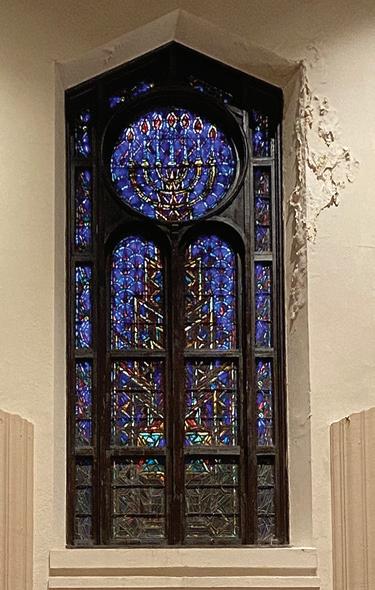
Water damage from Hurricane Ida affected sanctuary
Ellen Cohen, great-granddaughter of Rabbi Max Heller, recently met with Nicholas Frei, great-grandson of Emil Frei, in the sanctuary of Temple Sinai in New Orleans. They were doing more than reminiscing about the relationship between their families as Emil Frei had designed the stained glass windows for the building, the construction of which Heller had pushed for at the congregation’s 50th anniversary celebration in 1922.
They were also starting a new collaboration, looking around the 1928 sanctuary at the windows and the water damage on the walls, a result of wind-driven rain leaking in from when Hurricane Ida came through in August 2021.
The congregation is now embarking on a capital campaign to fund restoration of the windows, as well as waterproofing and protective polymer coatings to protect against wind and vandalism.
They expect that work will begin after the first of the year; because of the heat during much of

the year, work will be done only during the winter.
After close to a century, the windows “have really worn well,” Cohen, who is the congregation’s president, said. She added the frames were made from cypress wood, “the best wood to use in Louisiana.” But as with anything that old, “creaks and aches begin to appear,” and work must be done to ensure the windows’ future.
“Our stained-glass windows have been the most beautiful component of our sanctuary, Cohen said.
The congregation partnered with Frei and Associates from St. Louis because “besides us, no one loves our widows as much as they do,” Cohen said. The firm also did the windows at St. Stephen Catholic Church, St. Joseph Catholic Church and Loyola in New Orleans, St. Ignatius in Mobile, the Basilica of St. Michael the Archangel in Pensacola and St. Michaels in Biloxi.
It wasn’t that long ago that scaffolding filled the sanctuary at Temple Sinai as the building
Hope lives
Our dedicated doctors, nurses, researchers and staff are committed to finding a cure, so kids like Adrian can live their healthiest life – cancer free. We never give up hope of a world without childhood cancer and blood disorders, and that’s why we are here.

28 December 2022 • Southern Jewish Life community
Cancer_Ad-HOPE-Adrian-JewishLife-7.75x5-PROD.indd 1 8/19/22 12:01 PM
Water damage next to one of the menorah windows in the Temple Sinai sanctuary
was repainted. While it is disappointing to have to go back and redo things, there was one advantage to the timing — when damage assessments were being made, there was no question about what damage was new and what could have been attributed to pre-existing wear and tear, because it was a clean slate when Ida hit.
The congregation was also recently cleared by FEMA to begin the repair process, and qualified for FEMA-406 mitigation efforts to prevent future damage.
Executive Director Jennifer Daley noted that the Sinai sanctuary is a community space, holding concerts for local organizations, the induction ceremony for new firefighters and large public lectures.
It also occasionally hosts churches in need of a space to gather. Trinity Episcopal Church will hold its Christmas Eve services there on Dec. 24. The church was damaged in Hurricane Ida, and while it has been able to hold services in its chapel and fellowship hall, they wanted a larger space so the entire congregation could come together for Christmas.
The window restoration and Ida repairs will exceed $500,000, and a capital campaign is underway.
Sponsorship levels range from $500 to $5,000. Naming rights are available for the four menorah windows, the St. Charles Avenue balcony windows, the side balcony windows and the pastel windows in the side staircases.
Touro Synagogue “Lifting the Sky” with campaign for needed projects
In 2027, Touro Synagogue in New Orleans will become the first Jewish congregation outside the original 13 colonies to be able to celebrate a bicentennial.
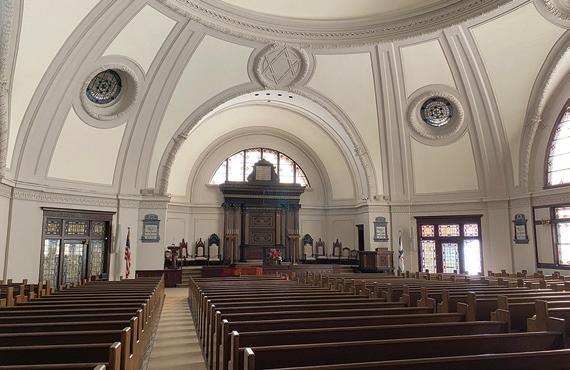
To help ensure the congregation’s future, a $4.5 million Lifting the Sky campaign is underway to accomplish numerous needed projects at Touro’s historic 1908 building.
Rabbi Katie Bauman said the campaign will address “critical infrastructure projects that must be done.”
The 21,000 square feet of flat roofs have been repaired numerous times and need replacement. They are over 30 years old, and due to condition and moisture trapping, are anticipated to be able to last no more than a couple years.
The HVAC system, especially the humidity control, needs replacement, as many components are over 40 years old, and the system is much less efficient than current standards. Other energy efficiency improvement plans include solar panels and tankless water heaters.
“These old buildings are not particularly energy efficient,” Bauman said.
Additional items include more office space, and gender-neutral family bathrooms on the main floor. Brick and mortar replacement will also
December 2022 • Southern Jewish Life 29 community
take place, and a generator will be installed for critical infrastructure, like security.
Another major priority is installing an elevator, which will improve access to the top two floors, meaning some functions that have been only on the ground floor due to accessibility will be able to move upstairs.
That will also open up more office space, as Touro has “a growing staff for a growing congregation,” Bauman said.
“We’ve grown significantly in the last few years,” Bauman said. “We’re beginning to see the need to accommodate for a larger size of congregation than we have been.” The congregation has added over 50 families in the last three years, and they are now over 650 families, which would make Touro the largest congregation in the SJL coverage area. The religious school has also grown by 27 percent.
There is also an increase in the number of b’nai mitzvah, and in a few years there may be more b’nai mitzvah than weekends.
The Touro building on St. Charles Avenue was designed by Emile Weil, using Byzantine and Moorish elements to reflect the congregation’s Sephardic history. The building was completed in 1909. The religious school building was added in 1928, and the modern multi-pur-
pose building was added in 1963. The Norman Synagogue House was completed in 1989, and in 2019 the sanctuary was renovated in honor of Betty Kohn’s 95th birthday.

The public campaign kicked off with a Sukkot celebration on Oct. 9. President Gary Silbert said “We are well on the path to meet our campaign objective… Suffice to say that we will need everyone’s help to reach our ambitious goal.” At that point, $2.9 million had been raised.

The effort was kick-started with a 2020 grant from the National Fund for Sacred Places, a program of Partners for Sacred Places in collaboration with the National Trust for Historic Preservation. Touro received a $126,000 matching grant and is one of only two synagogues ever selected for the matching program toward capital projects. To secure the grant, they had to raise a match of $252,000.
Gianfranco Grande, Partners for Sacred Places’ executive vice president, said the grant program was created for churches, “but we make exceptions when a story is so great, as in the case with Touro.”
He added, “I was impressed by their community engagement. I talked to my colleagues, and we allowed them to make the application. It’s a very important place. They do a very important job.”


30 December 2022 • Southern Jewish Life community
In addition to the congregation itself, the Touro building has housed four newly-created charter schools in the past four years. While that has aided the bottom line, it also adds to the wear and tear on the building. Bauman said making their space available also aligns with the mission of being engaged with the greater community.
In addition to incubating charter schools, Touro does refugee resettlement programming, and has a garden to grow vegetables for the Broadmoor Food Pantry.
With the upcoming renovations, they don’t have a current tenant, but after the renovations, if there isn’t a charter school, “we’ll be open to other types of entities that need space.”

They anticipate getting underway during the second half of 2023, partly because of uncertain lead times for components they will need.
The campaign is being chaired by four past presidents — Ruth and Larry Kullman, and Susan and Lou Good.
Bauman said that while the congregation will generate most of the funds, they hope to attract support from the overall Jewish community locally and around the region “because of our history and national significance.”
She added, “The needs are critical, so we hope people will step up.”
community December 2022 • Southern Jewish Life 31
Confidential individual or couples therapy available by phone, video call or in person following COVID-19 protocols. Most insurance accepted Collat Jewish Family Services www.cjfsbham.org 205.879.3438 Professional Counseling
financial
an annual SJL special section
Pointers for Charitable Gifts of All Sizes

This is the perfect time of year to take inventory of your charitable giving for the current year and the year ahead. Whether your charitable intent is relatively small or large, advance planning can help maximize your tax benefits.

Giving Techniques, Regardless of Size:
Bunching. “Bunching” is a technique to help utilize income tax deductions instead of wasting them. To use the income tax deduction associated with making a charitable gift, a taxpayer must itemize deductions instead of taking the standard deduction. For 2022, the standard deduction is $12,950 for single filers and $29,500 for joint filers. Bunching involves saving your charitable contributions for several years and then making your donation at the most opportune time so that you can itemize your deductions that year.
Qualified Charitable Distributions. If your wealth is concentrated in a traditional IRA, qualified charitable distributions are an ideal way to make gifts and manage your taxable income. If you are 70-½, consider making gifts directly from your traditional IRA to your charitable beneficiary. This technique has notable benefits: the QCD can satisfy your required minimum distribution for the year, and the distribution is excluded from your taxable income. QCDs are limited to $100,000 per year.
Appreciated Securities. Donating appreciated securities may save more tax than donating cash. A cash gift of $10,000 will produce an income tax deduction of $10,000. However, a gift of appreciated stock worth $10,000 will produce not only a $10,000 deduction, but also eliminate the capital gains tax (0%, 15%, or 20%) imposed on the appreciation of the stock upon sale. Note that deductions for a cash gift are limited to 60% of adjusted gross income each year; deductions for donations of appreciated property are limited to 30% of AGI.

Giving Techniques for Moderate to Larger Gifts:
Donor Advised Fund. If you want to make a gift but are undecided about the ultimate charitable beneficiaries, a donor advised fund provides flexibility. A DAF is an investment account held by a sponsoring organization. A donor contributes to the account and receives an income tax deduction for the value of the contribution. The sponsoring organization owns and invests the funds, which grow income-tax free, and distributes to charities as the donor advises. Currently, there are no laws requiring annual distributions from a DAF, but sponsoring organizations often have policies addressing it. Entry-level donations range from $5,000 to $25,000.
Charitable Trusts. Charitable trusts may be useful when you antici-
32 December 2022 • Southern Jewish Life
© 2022 Valley National Bank. Member FDIC. Equal Opportunity Lender. All Rights Reserved. VLY4369 Supporting community growth is about providing financial solutions and guidance that people and businesses can trust. That’s what Valley is all about. Let us help you reach your goals! Visit one of our branches: 1904 1st Avenue North Birmingham 92 Euclid Avenue Crestline 1100 Corporate Parkway Meadowbrook
800-448-8812
It takes a team of dedicated associates who know that banking is about building relationships with partners you can trust. We’re proud to serve the New Orleans area and ready to help you achieve your goals.
Hancock Whitney named among “America’s Best Banks 2022” by
Forbes.
Hancock Whitney—one of America’s strongest and safest banks— has been named to Forbes’ list of America’s Best Banks 2022. Forbes’ 13th annual America’s Best Banks list looks at growth, credit quality and profitability to rank the 100 largest publicly traded banks. Hancock Whitney is honored to be on this list— proving strength and stability for more than 120 years.
The men and women who founded our bank expected their successors to carry on the Honor and Integrity, Strength and Stability, Commitment to Service, Teamwork and Personal Responsibility they set forth for the cornerstone of the company. Well more than a century later, those core values still guide how we do business. Collectively, those principles also support our legacy as a steward for protecting our environment, advocating equitable opportunities for all people and sustaining transparency and accountability throughout our organization.
Guided by a promise to help our clients and communities grow and thrive, in 2021 Hancock Whitney invested more than $5 million in community contributions, $525 million in community development and $743 million in small business loans to help sustain local economies during the pandemic and in the wake of recent storms.
We are here to provide the tools and support our clients need during every step of their financial journey, and this recognition from Forbes reinforces to our current clients and community members that Hancock Whitney has the capabilities and track record to provide ongoing financial success.
When you work with Hancock Whitney, you get the confidence of knowing you’re working with one of America’s Best Banks. We look forward to helping you achieve your dreams, whatever they may be.
Find us at hancockwhitney.com or at your New Orleans area Hancock Whitney financial center.

December 2022 • Southern Jewish Life 33 financial
Ever wonder what it takes to be named one of Forbes’ Best Banks?
hancockwhitney.com
Hancock Whitney Bank, Member FDIC.
Hilary Weiss Realtor
(205) 876-3052 cell hillaryw@lahrealestate.com
pate a taxable event, whether during life or at death, and want to retain an economic benefit from the donated property, whether for yourself or for others. The donor receives tax deduction benefits for the trust interest donated to charity. Generally, these trusts come in two categories, charitable remainder trusts and charitable lead trusts. Charitable remainder trusts and grantor charitable lead trusts help plan for too much taxable income in a reporting year. Charitable remainder trusts and non-grantor charitable lead trusts help reduce estate taxes at death.
Birmingham, AL Location 2501 20th Place South, Suite 350 Birmingham, AL 35223 205-414-2151
2850 Cahaba Road Mountain Brook AL, 35223 lahrealestate.com

Private Foundation. A private foundation allows you to retain control over distributions and develop a formal process for making grants. Additionally, it brings your family into the philanthropic process. You form a nonprofit corporation, donate to it, and then make distributions. Unlike a DAF, a PF must distribute at least 5% of the value of its assets each year. A PF is truly a family business, and a number of business-related formalities must be followed.
As you consider charitable gifts for this year and the next, consult your advisors to determine whether one of these techniques might magnify the benefits of giving for you.
Sarah S. Johnston is a Trusts, Estates and Wealth Preservation attorney at Dentons Sirote PC in Birmingham. No representation is made that the quality of legal services to be performed is greater than the quality of legal services performed by other lawyers.
Jefferson Financial’s mission continues to be serving its members
When Jefferson Financial Federal Credit Union was first chartered in 1966, operating from a second-floor office space above a local florist shop, its primary function was to serve the employees of the Jefferson Parish School System. Five decades later, the years are marked with breakthroughs and advancement that have further solidified Jefferson Financial’s role as an institution that exists to serve and advance the community.
The member-owned, not-for-profit credit union is now comprised of more than 50,000 members across six Louisiana parishes, making it the third-largest credit union in the region. With 14 branches located in Louisiana and over 150 employees, Jefferson Financial FCU is focused on members’ financial success.
“The financial industry has been consolidating for over 30 years, but Jefferson Financial continues to be a significant, growth-oriented company dedicated to serving our members and educating others about the benefits of credit union membership,” said CEO Mark Rosa.
New Orleans, LA Location 1250 Poydras Street, Suite 2400 New Orleans, LA 70113 504-569-2403
Boca Raton, FL Location
5355 Town Center Road, Suite 600 Boca Raton, FL 33486 561-338-8015
www.SWZWMGROUP.com
Members will find many of the same services offered by traditional banks, like online and mobile banking, personal and mortgage loans, vehicle loans, payroll deduction, and more, with notable benefits and assets that help to elevate Jefferson Financial’s membership value.

“One of the top perks of belonging to a credit union is that you have the opportunity to earn higher yields on savings and borrow money at lower financing rates,” Rosa explains.
Jefferson Financial’s mission is supplemented by community action to give back to current and future members. They remain active in their support of several local non-profits, local governments and Chambers of Commerce, contributing resources and skills to ensure continued growth and prosperity for the communities they serve.
Jefferson Financial FCU’s top priority is serving their members, as the members are the owners. “We strive to the best of our abilities to ensure members’ financial service needs are met to put and keep them on the path to their own financial success,” Rosa said. “Our primary goal is to provide members with a secure, sound financial institution.”
34 December 2022 • Southern Jewish Life financial
Pictured from left to right: Alan Weintraub, Financial Advisor, First Vice President-Investments, Bari Bridges, CFP®, Financial Advisor, Steven Wetzel, Financial Consultant, Linda Hodges, Senior Registered Client Associate, Jonathan Schlackman, Branch Manager, Senior Vice President-Investments, Alan Brockhaus, CFP®, ChFC®, Assistant Vice President, Branch Liaison, Joshua Zamat, Financial Advisor, First Vice President-Investments
Investment and Insurance Products: NOT FDIC Insured / NO Bank Guarantee / MAY Lose Value Wells Fargo Advisors is a trade name used by Wells Fargo Clearing Services, LLC, Member SIPC, a registered broker-dealer and non-bank affiliate of Wells Fargo & Company CAR-0521-03268
Whether it is selling your current home or finding a new one, let me help you make the right decision.
chanukah giftguid
IT’S NOT CALLED THE HOLIDAY OF LIGHTS FOR NOTHING. USE THOSE EIGHT DAYS FOR CHIC, SPARKLE AND SHINE.
Gus Mayer
225 Summit Blvd., #700 Birmingham 205/870.3300 gusmayer.com

1. WISH THEM A HAPPY HOLIDAY WITH CUSTOM CARDS
Your favorite shayna punim gets the cover on personalized cards. Cost varies according to quantity ordered.
The Baobab Candle Collection, luxury scented candles and home fragrances, has a unique collection that takes you into an olfactory universe, paying tribute to the imprint of the world’s cultures.

Rudman’s Gifts 741 Veterans Memorial Blvd Metairie 504/833.1286 rudmans.com
to provide
NOLA Gifts & Decor
5101 West Esplanade Ave. Metairie 3001 Ormond Blvd. Destrehan 504/407.3532 nolagiftsanddecoronline.com
At this locally-owned boutique, there is a wide range of New Orleans-inspired home décor, gifts and accessories, as well as Jolie Home Paints. Along with year-round items, there are plenty of seasonal options, including Chanukah merchandise, such as these Chanukah socks. There is also plenty of LSU, Tulane and Saints items for giftgiving, and New Orleans-themed masks, including many local schools. Orders can be placed online for shipping.

M & M Jewelers
440 Inverness Corners Birmingham 205/991-0593 mmjewelersbirmingham.com
M&M specializes in custom jewelry and offers sweet ideas for Chanukah gifts from its Stuller collection. That includes Star of David, Torah scroll and Chai necklaces in white gold or rose gold as well as Star of David charms.

Owner Laura Robinson, who started the store 31 years ago, said some of the items may not be in store, but can be ordered and come in usually within a week. She also said emerald-cut diamonds are also very popular, special gifts.
visitors from around the world with a unique and inviting shopping
Let’s Get This Party Started e
SJLNov2014.indd 59
www.galatoires.com print 504.837.5444 info@ Scott
Rudman’s is a gift, stationery, invitation and greeting card shop with Judaica and unique gifts, and they are especially proud to offer locallly designed and produced Louisiana products. Individualized service is a specialty with wording and design assistance on any time of personal or business correspondence, and their partnership with industry leaders guarantees a top-notch finished product. Customer service they’re famous for, plus free gift wrapping and at-cost UPS shipping them
Traditions ENDURE
chanukah gifts
Chateau Drugs and Gifts
3544 West Esplanade Avenue Metairie 504/889.2300 chateaudrugsrx.com

Chateau Drugs and Gifts has been a pharmacy since 1977, but it also has a diverse selection of gifts, including art and handmade pottery, Judaica, clothes (mostly sweaters, robes, pajamas), lamps, purses, small luggage, kids’ costumes, New Orleansthemed gifts from Jax Frey as well as Purple Pumpkin, Beatrice Ball, toys, bath and body products, wine charms, as well as much more.
She recommends “The Essential Kabbalah, The Heart of Jewish Mysticism” by Daniel C. Matt. It is a “selection of essential teachings from the immense trove of Kabbalah.”
Gates Gifts

4000 West Esplanade Avenue Metairie gatesofprayersisterhood.com/s/shop
The only remaining congregational gift shop in the New Orleans area has been recently renovated with expanded new merchandise, and is stocked for Chanukah, from Judaica to games and gifts for all occasions.

Earthborn Pottery
7575 Parkway Drive Leeds, Ala 205/702.7055 earthbornpottery.net

Earthborn Studios provides artistic pottery plates, bowls and related functional artwork to restaurants around the world. Their clients range from the Bellagio Resort and Casino in Las Vegas to Alabama Power.

36 December 2022 • Southern Jewish Life EXPERIENCE THE MAGIC NOVEMBER 25, 2022 - JANUARY 4, 2023 CLOSED DECEMBER 25, 2022 & JANUARY 1, 2023 BELLINGRATH.ORG | (251) 973-2217 RESIDENTIAL CONSTRUCTION EXPERT STEPHEN FLEISHMANN 504-913-3030 forensicconstruction.com titanconstruction.com Stephen@titanconstruction.com Stephen Fleishmann, owner of Titan Construction, has more than 25 years of construction experience and
years of experience in legal consulting. He is a highly skilled expert witness in the area of value and causation of construction defects and deficiencies. u Construction Damage / Defect assessments u Cost estimation, which may include replacement or reproduction cost estimates u Narrative presentations and reports with inspection findings and conclusions u Code Interpretation u Expert witness testimony for depositions, mediations and settlement conferences, and arbitrations and trials u Expert opinion on residential construction, design/construction defects, building envelope evaluation, and means and methods assessment u Pre-case evaluations u Site inspections u Litigation support u Case analysis Licensed in Alabama, Florida and Louisiana
more than 15
Ritual + Shelter 2900 18th St So Homewood 205/388.8793 ritualshelter.com Owner Jennifer Dorman said the Homewood store continues to grow its selection of candles, books, scents and decorative items.
chanukah gifts
Dorothy McDaniel’s Flower Market
3300 3rd Avenue So. Birmingham 205/871.0092 dorothymcdaniel.com
Crestline Pharmacy
60 Church St Birmingham 205/871.0317
Crestline Pharmacy has significantly expanded its Chanukah gifts selection and moved everything to inside of the Crestline Village store.
This includes decorative menorahs, art, towels, Chanukah-themed porcelain gingerbread houses, lights, wine bottle holders and cards.
Dorothy McDaniel Flower Market celebrates its 41st year of providing floral arrangements, gifts and event floral to the community.
“We’ve been proud to serve the Jewish community,” said McDaniel. “We do most of the flowers at Temple Emanu-El and we’ve done many weddings, Bar and Bat Mitzvahs.”
The store was expanded when they moved to the Lakeview area eight years ago. McDaniel recommends custom arrangements for Chanukah or other celebrations.
They also have a selection of Judaica-themed Chanukah towels, candles and menorahs.

Image Arts
213 Country Club Park Birmingham 205/870.0178 imageartsetc.com
Photographic and video memories can be some of the most special. Crestline Village’s Image Arts converts old photos and movies to DVD or MP4 format.
Owner Hank Spencer, who started the franchise in May 2002, said he has done photos for Chanukah cards and Image Arts also specializes in custom framing. Some of the acrylic frames in the store are also popular gifts.
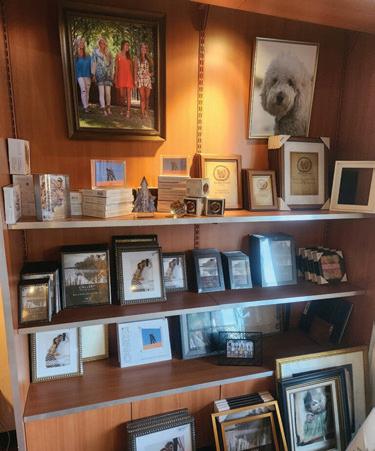
December 2022 • Southern Jewish Life 37
Chanukah has gone Crypto, with the introduction of Manischewitz Crypto Gelt. Typical cryptocurrencies, like Bitcoin and Ethereum, are completely digital and have no physical form. Manischewitz Crypto Gelt is made from milk chocolate, in packaging that mirrors the most well-known logos of popular cryptocurrency.
Wrapped in gold foil, Manischewitz Crypto Gelt can be easily identified by their resemblance to real gold coins, with a stylized “M” and vertical strokes from the dollar sign incorporated above and below. Crypto Gelt is sold in a package of 36 bags, and also in individual bags with four coins per bag. And the only way these have a meltdown is if you keep them in your pocket for too long.

Southern Coin and Collectibles unearths rare treasures
By Lee J. Green
Ethan Thomason considers Hoover’s Southern Coin and Collectibles — to coin a phrase — “a museum of treasures that can be purchased.”
Some of its rare acquisitions dinosaur fossils and the world’s largest collection of $20 bills uncovered from the first, unsolved airline hijacking in 1971.
“We’re fascinated by history and connections to historical events,” said Thomason. “These aren’t just collectibles, these are stories. It’s like history in your hands.”
Southern Coin and Collectibles sells Israeli commemorative coins, including ones focusing on the Six Day War. They also have Chanukah-themed coins and a rare find — a 1943 aluminum coin that circulated in the Jewish Ghetto of Lodz, Poland.

“We also have a set of authentic ancient coins (some from Biblical days) that comes with stories about the coins,” said Thomason.
They also have coins from and newspaper clippings about Bonnie and Clyde. But their “most rare” connection to an historical crime are the D.B Cooper bills.
Pre-state coin from 1934
In 1971, Cooper (a pseudonym, since his actual name wasn’t known) hijacked a Northwest Orient Airlines flight on its way to Seattle, Wash.
He demanded $200,000 in $20 bills and a parachute. Cooper parachuted out of the plane after receiving his money and letting the hostages go. He was never found.
In 1980, a family camping by the Columbia River in Washington found a satchel with fragments of 70 to 75 $20 bills, most just pieces of the bills.
Southern Coins and Collectibles acquired 30 of the bills still known to be in circulation. The complete estimated value of their collection is $250,000, but they are selling the collection in individual pieces. One signed by FBI Agent Max Jarrell, who worked on the case, is valued at $25,000.
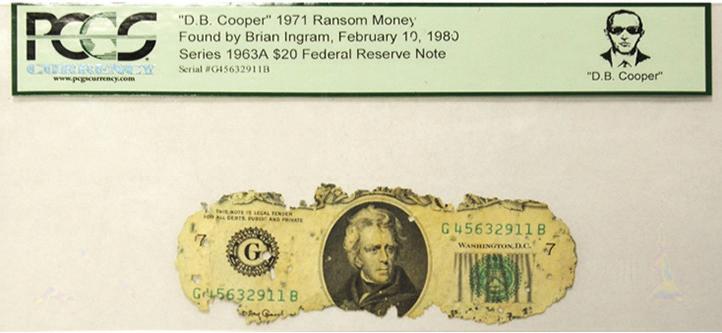
Thomason said he acquired his love of collecting from his father, who started Homewood’s Doug’s Coins and Jewelry in 1984.
Southern Coin and Collectibles also sells sports cards as well as signed memorabilia. Thomason added that they also buy and sell gold, keeping up with market trends to offer customers the most up-to-date information. “We’re passionate collectors too. We love finding unique items and it’s most rewarding when we can help parent instill a love of collectibles in their kids.”
Southern Coin and Collectibles
1564-A Montgomery Hwy. Birmingham 205/822.4900

38 December 2022 • Southern Jewish Life chanukah gifts

McWane Science Center
200 19th Street No. Birmingham 205/714.8300 mcwane.org


The McWane Science Center is on track this holiday season with gift ideas. Last month they opened their annual Trains exhibition, which includes 4,000-square-feet of model trains, a riding train and a zipline.

Marketing Director Miranda Springer said they have model train sets and other related gifts in their gift shop.
“The shop has a lot of books that can introduce kids to trains, space, science and engineering,” said Springer. “There are also science experiment kits and science-related toys/games you likely won’t find in toy stores.”
She said that people can shop in the gift shop, even if they don’t purchase tickets, but added that “memberships make for great gifts that keep on giving.”
Mon Ami

Kosher Cajun
3519 Severn Avenue Metairie 504/888-2010 koshercajun.com
40 Church Street, Crestline Birmingham 205/848.7800 monamibham.com
Mon Ami is French for “my friend” and the Crestline Village store has become the place to get kids’ clothes sizes 4 to 18, as well as Chanukah gifts.
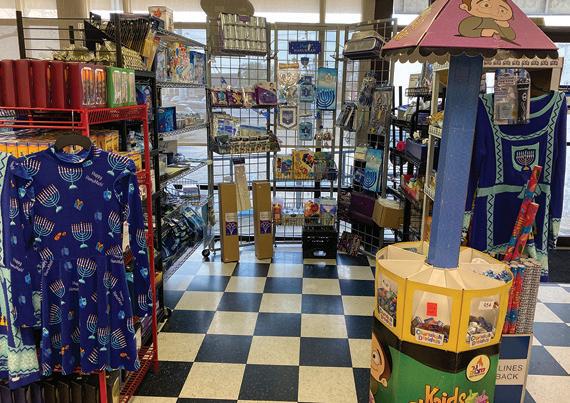
They have holiday-themed puzzles by White Mountain, watches by Watchitude, winter pants by Iscream, Alabama and Auburn Blue Tooth, shirts as well as hair brushes.


Have lunch and get your Chanukah shopping done — in addition to the extensive grocery selections, Kosher Cajun has its Chanukah shop open with a wide range of gifts and decor.

40 December 2022 • Southern Jewish Life
chanukah gifts
Visit PoydrasHome.com or call 504-897-0535 to learn more. Experience Poydras Home Reimagined in 2022 Priority Registration Open Now
Prints Charming brings rare, art antiques
 By Lee J. Green
A visit to Birmingham’s Prints Charming Soho is like taking a trip both across the world and back in time.
The shop, which specializes in finding art antiques and historical treasures dating back to the early 1550s, continues to grow its inventory with a recent addition of rare botanical drawings from renowned Austrian Jewish artist Adolf Weiss, dating back to the mid 19th century.

“Weiss was one of the pre-eminent botanists and artists of the time,” said Prints Charming Owner Ari Millner. “This collection contains beautiful, detailed illustrations from Weiss’s visit to the botanical gardens in Lemberg (what is today L’viv, Ukraine). It’s some stunning original work and it has preserved so well.”
Millner said the original drawings range in price from $75 to $450.
Opened in October 2020 in Mountain Brook’s English Village by Millner and his wife, Jordan, the art antiques store uncovered rare treasures from across the world, dating back to the early 1500s.
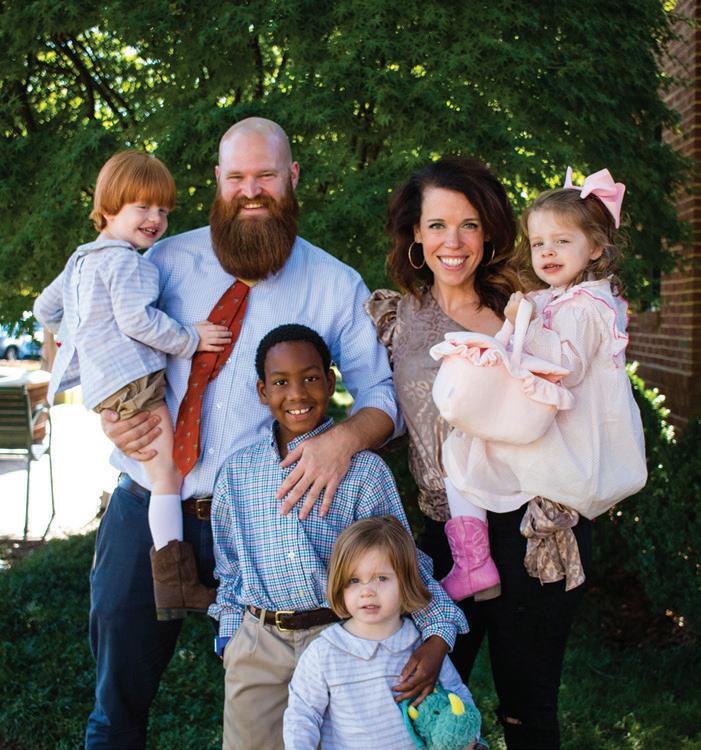
“I love finding things that are old, rare and
to Birmingham

unique,” he said. “I’ve always been into history and through years of antiques dealing, I’ve developed some good connections to help procure these treasures and sell them at reasonable costs.”
Those art antiques range from wax seal collections to old lithographs, including one of King David; music sheets, trade catalog pages and ads from the 1800s, schematic drawings for stained-glass windows, pillows and antique furniture.
“Most of what we have is from Europe — with a specialized focus on England and France,” said Millner. “But we also have rare print plates from an Audubon book on birds dating back to the 1840s.”
Prints Charming Soho also sells pre1850 “wanderbooks.” These “early resumes” were held by trades workers and were stamped by a master of the guild once they completed their jobs.
Currently the oldest items they have in the store are wood-cut engravings from early 16th century Italy. “We’ve developed a niche and bring in things that pair well with our aesthetic,” said Millner.
For more information on Prints Charming and the Weiss drawings, go to www. printscharmingsoho.com.
December 2022 • Southern Jewish Life 41
chanukah gifts Free Prescription Delivery Convenient Curbside Pickup Exceptional Customer Service 60 Church Street, Mountain Brook 205/871-0317 crestlinepharmacyshop@gmail.com Crestline Pharmacy is where your family becomes part of ours! Family owned & operated since 1950
Sanders Painting
Over the years, Netanyahu has come to rely more and more on a far-right-wing coalition that now includes some truly terrible people. But when stabbing attacks, rockets and gun battles are on the rise, it makes sense why people trust Bibi.
The NYT Editorial Board failed to make mention of these considerations, and it also included a few things that deserve a rabbinic, Zionist response.
First, they point out that they have always been a strong supporter of Israel and provided a linked article to prove it. I kid you not; the title of the article they linked is “Israel Digs a Grave for the Two-State Solution.” With strong supporters like these, who needs enemies?
Second, they reiterate what they said in the linked article. They imply that Israel’s government is the barrier that stands in the way of a


What do you think?
Agree? Disagree?
Send your letters to editor@sjlmag.com or mail to P.O. Box 130052 Birmingham, AL 35213

Two-State Solution. Israel said YES to two states in 1948. They said YES to two states at Camp David. They said YES to two states in Oslo. They unilaterally withdrew from Gaza in 2005. They said yes long before Bibi, during Bibi’s tenure, and will continue to say yes long after Bibi is gone. There are barriers to the Two-State Solution, but they are not in Israel.
Finally, the NYT Editorial Board condemns the fact that Netanyahu’s government has among them a handful of racists, homophobes, and nationalists. I condemn that too. And I also recognize that it is no different than the two major political parties in America. And I doubt any government in the world could pass the purity test they put on Israel. It is a double standard that plays into the demonization of the State of Israel.
So no… I didn’t notice the crossword puzzle’s shape on Sunday. But I noticed the biased headline of the NYT Editorial Board. Over the years, I have noticed the media’s constant effort to diminish, disparage and vilify the lone democracy in the Middle East, and the only Jewish state in the world. While the outrage over the swastika is understandable, our outrage about how our homeland is treated should be much greater.
Happy Chanukah
from the Salon Summit Family

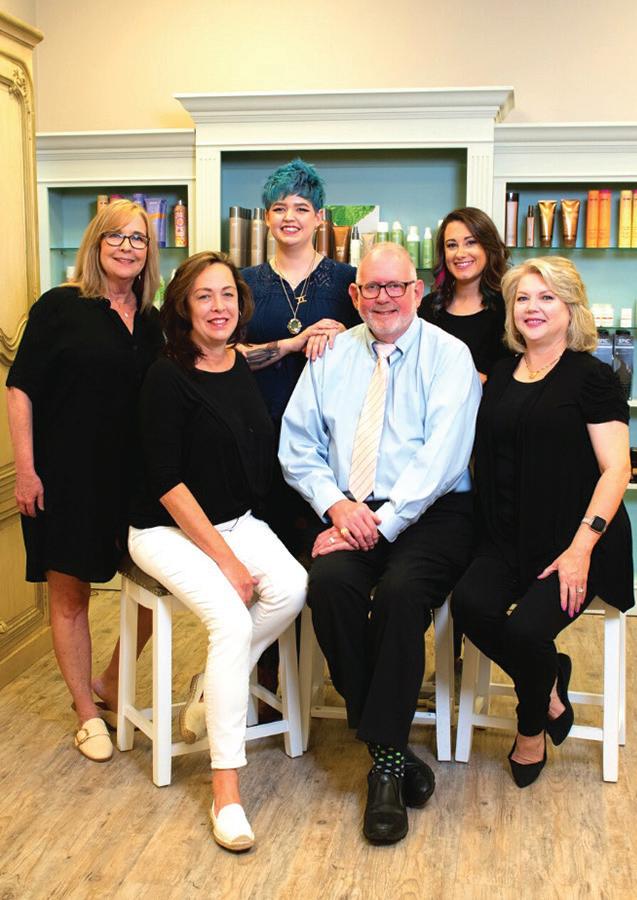
42 December 2022 • Southern Jewish Life
We Carry 3161 Cahaba Heights Road | Vestavia Hills 205.518.0406 | salon-summit.com
Residential Repaint Specialist • Interior/Exterior Painting • Wood, Plaster, & Sheet Rock Repair Family Owned and Operated 205/563-9037 Involved Members of Birmingham’s Jewish Community
>> Crossword continued from page 4 opinion
community
Tulane researcher examining poverty in Jewish community
A first-of-its-kind research study, led by Tulane University’s Ilana Horwitz, PhD, in partnership with Rosov Consulting, will gather data on economic insecurity among American Jews as part of a broader effort to address Jewish poverty.
The study, supported by the Jewish Funders Network through a grant from The Harry and Jeanette Weinberg Foundation, will focus exclusively on the experiences of U.S. Jews facing poverty and economic insecurity. It builds on the work and commitment of the National Affinity Group on Jewish Poverty, a group of funders, service providers, and other stakeholders dedicated to fighting poverty in the American Jewish community.
“Collecting quantitative and qualitative data paints a fuller picture of the lived experiences of the Jewish poor and allows us to share that picture widely across the Jewish communal ecosystem,” said Horwitz. “The data and feedback from survey participants and human service professionals will provide important information that sheds light on the challenges and successes within the community to help enact positive change.”

Horwitz holds the Fields-Rayant Chair in Contemporary Jewish Life at the Grant Center for the American Jewish Experience. Trained in both qualitative and quantitative research methods, she is a sociologist who examines how gender, ethnicity, race, social class and religious upbringing shape people’s lives. “God, Grades, and Graduation: Religion’s Surprising Impact
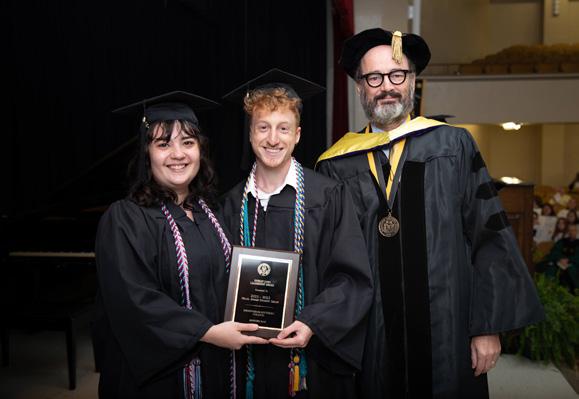
continued on page 45

December 2022 • Southern Jewish Life 43
One of the TOP 20 BEST VALUE schools in the U.S. TOP 10 colleges that lead to GRADUATE SCHOOL 250+ COMMUNITY AND BUSINESS LEADERS MENTOR STUDENTS YOU'LL FIND MORE THAN A COLLEGE ON the hilltop YOU’LL FIND A WORLD OF OPPORTUNITY. BSC Birmingham-Southern College bsc.edu
At BSC’s 2022 Honors Day, the Hillel Jewish Student Group received the Dudley Long Leadership Award.
Special to Southern Jewish Life
SUPPORT QUALITY, INDEPENDENT, ORIGINAL SOUTHERN JEWISH JOURNALISM Visit supportSJL.com to contribute
Photo by Avery White
Ilana Horwitz
counselor’s corner
a monthly feature from Collat Jewish Family Services
Traveling with a Loved One who has Dementia
By Pam Leonard, LBSW, CDP:
Traveling with a loved one who has dementia can be challenging and intimidating. Families often long to be together over the holidays, but it’s important to be realistic about the challenges and limitations of traveling with someone who is cognitively impaired. Before promising to go, caregivers need to ask themselves a few questions:
First, is this a trip you desire to take or one you’re taking because you feel obligated? If the answer is the latter, consider giving yourself permission to cancel the trip and let your family or friends know that traveling won’t work for your family at this time.
Second, will you — and your loved one — enjoy this time away? Again, if the visit isn’t going to be enjoyable for anyone, consider whether it might be just as fulfilling to connect with distant loved ones through Skype or Facetime.


Finally, if you do decide to travel, plan ahead to minimize undue stress. The first thing you’ll need to consider is how you will get to your destination.
If flying is the best or only option
Schedule flights at times when your family member has the most clarity and the least confusion. For example, if the afternoon is the time when your loved one is restless or confused, schedule an early morning flight.
Inform the airline that you are traveling with someone with dementia.
Remember that you need to stay together in the airport — and remember that family bathrooms are not just for parents and small children. A family bathroom can be a lifesaver, especially if you’re traveling with a loved one of the opposite sex.
Pack important medications in a carry-on bag, along with a change of clothes in case of incontinence issues or lost luggage. If your family member has a game, music, or another item that brings them comfort, be sure they have it with them on the plane, along with a blanket or pillow to ensure they are as comfortable as possible.
If you are traveling by car
Calculate how many hours you’ll be in the car and realistically consider whether this is a reasonable distance to drive. If the trip doesn’t go well, will you be able to return in a single day, or will it take longer? Your loved one may need more breaks than usual on a long trip, so be sure to allow plenty of time for rest stops.
If possible, avoid driving when traffic is heaviest; stop-and-go traffic can frustrate you and your loved one who has dementia.
Bring along your loved one’s favorite music to play in the car; listening to familiar melodies can be relaxing and soothing.
Keep it simple
Whether you are traveling for a reunion, vacation, or holiday event, maintain as much of your loved one’s daily routine as possible. Give yourself permission to let go of traditions that are impossible to fulfill or will not be rewarding for you and your loved one. Instead of one large gathering, you may want to consider a few smaller gatherings that are not as overwhelming. Let others take care of the cooking and similar responsibilities.
44 December 2022 • Southern Jewish Life
The patriarch of the Maccabees was Mattathias or, in the original Klingon, Matityahu. While he didn’t last very long into the revolt, his legacy is honored with, not one, but three dishes on the special night’s menu. The first is Matityahunan Beef. For vegetarians, there’s the alternative Matityahu Goo Gai Pan. The menu also lists Matityahu Shu Pork, but it’s always crossed out to symbolize the shooing away of the unkosher food. To cap off the meal are the final fried confection, Fortune Sufganiyot. These jelly-filled Chinese doughnuts are a popular treat, and the fortune inside always gives the same 100% accurate prognostication: “your fingers will remain sticky for two days after you read this.”
Doug Brook tries to finish his December 24 leftovers before the egg foo yung becomes egg foo old. For nearly several more laughs, listen to the (STILL!) FIVE-star rated Rear Pew Mirror podcast at anchor.fm/rearpewmirror or on any major podcast platform. For past columns, visit http:// rearpewmirror.com/
Skip the family quiz show
Ask friends and family members not to engage your loved one in a guessing game about who is present or when they last got together. Instead of asking a loved one if they remember their niece Jane, say “Look, it’s our niece Jane!” People may be tempted to bring out old photos to share with your loved one, but ask them not to ask questions about whether they recognize themselves or others in the pictures. Instead, chat about outfits or what the people in the picture might be smiling or laughing at. If there is any recognition, your loved one will share it voluntarily. Your relatives and friends will appreciate you letting them know how they can help avoid unneeded stress for your loved one with dementia.

If you would like additional information about helping a loved one with dementia or other health/emotional issues, Counseling from CJFS is confidential, and it is often covered by insurance.
To learn more, visit https://cjfsbham.org/our-mission/professional-counseling/, email jfs@cjfsbham.org or call 205.879-3438.
>> Poverty continued from page 43
on Academic Success,” her book published earlier this year, examines how a religious upbringing shapes the academic lives of teens.
Rosov Consulting helps foundations, philanthropists, federations, and grantee organizations in the Jewish communal sector make well-informed decisions through professional research, evaluation, and consulting services.
The project will consist of several components and include multiple methods of data collection and analysis, including a survey of 1,000 U.S. Jews who are experiencing or who have previously experienced economic insecurity, as well as in-depth interviews with about 100 survey respondents and professionals who work in Jewish human service organizations.

Survey and interview questions will focus on the causes and precipitating events of participants’ economic vulnerability; consequences of the economic insecurity, especially for their involvement in the Jewish community; experiences with interventions intended to address economic distress, both within and outside the Jewish community; challenges participants face in moving beyond economic insecurity; and feedback on successful journeys out of poverty.
The study will be completed by December 2023 and results will be made available to the public through the Berman Jewish DataBank and other platforms.

December 2022 • Southern Jewish Life 45 community
continued from page 46 >> Rear Pew >> Dementia continued from page 44
Alabama’s #1 Source for Gold & Silver We Buy and Sell Precious Metals No Sales Tax 1564-A Montgomery Highway, Hoover 205.822.4900 Gold Silver Special Israel Commemorative Coins
Year of the Latke
It’s a common question: What day does Chanukah start this year?
Answer: The 25th of Kislev. The same as every year. Yet it seems earlier every year that the stores start playing their seasonal Jewish music — holiday music largely written by Jewish songwriters.
In some years, like this one, the eight days of Chanukah partially overlap with the 12 days of secular Chanukah. This means that all the annual Chanukah sales are conveniently well-timed for those who observe the secular day as well.
When this overlap lands right, the annual Chinese food seder — which is celebrated on different evenings every year, but always on December 24th on the secular calendar — additionally becomes a Chanukah meal.
Naturally, because it’s Jewish and it’s food, there are traditions. There are special Chinese recipes to eat on this night. There are also stories to tell on this semi-rare occasion about how Chinese food semi-relates to the story of Chanukah itself.
For example, people commonly know the Sunday School story about Chanukah and the menorah in the Temple. There was only one day’s worth of oil but the oil miraculously lasted for eight days, which was necessary because there were eight days of presents to give. But there’s another, relatively obscure yet appetizing anecdote.

The Talmud teaches that when one eats Chinese food, one tends to become hungry again an hour later. Before the final battle when they retook the Temple, the Maccabees were rushed and had Chinese takeout. They should have been hungry after just one hour, but as the fighting wore on, they weren’t hungry for eight hours which was enough time for them to win this culminating clash.
Sunday School stories make it sound like the Maccabee family came out of their revolting conflict smelling like roses; at least, after a shower and change of togas. But several of the five Maccabee brothers — including Judah, by the way — didn’t survive to the end of the conflict.

Fusing Chanukah and Chinese food never went this far…
Eliezer was famously killed in battle when he saw a high-ranking leader riding an elephant. To kill the leader, he ran under the elephant and stabbed it, which had the unfortunate side effect of the elephant collapsing onto Eliezer. This is why on Chanukah people eat latkes: to symbolize Eliezer’s heroic act which resulted in him being pancaked.
Speaking of latkes, they are central to one of the main dishes when Chanukah and December 24 collide. On all other nights, noodles in Chinese food are egg noodles. But on this night, potato noodles are used instead to produce Latke Lo Mein. One can enjoy Latke Lo Mein with soy sauce or applesauce, but hopefully not both together.
Of course, such a special meal should begin with soup. In commemoration of the Maccabean war, and in recognition of the final surviving Maccabee brother (who took over leadership during the revolt when Judah died), it’s traditional to indulge in Wor Yonatan Soup.
One of the main symbols of Chanukah is a nine-candle contraption (Chanukiah) commonly misnamed for its seven-candle cousin, which was the actual accessory in the Temple. A main symbol deserves a tie-in with a main dish, and the Temple’s menorah was lit with oil, which means indulging in the deep-fried delicacy Crispy Beef Chow Meinorah.
46 December 2022 • Southern Jewish Life rear pew mirror • doug brook
continued on previous page