

Israeli university launching unique mental health trauma center spurred by distinctive nature of Oct. 7 attack
By Elana Sztokman
How do you deal with the trauma of the deadliest day Jews have experienced since the Holocaust?
This was the question Israeli trauma experts faced in the wake of Oct. 7, 2023, when over 1,200 Israelis were killed and some 250 taken captive in Hamas’s attack on Israel.

The massive attack by terrorists immediately was followed by additional traumas: The displacement of tens of thousands of Israelis from their homes in the conflict zones. The subsequent war, which has left hundreds more soldiers dead and thousands wounded. Emotional scarring on a national scale.
At the Hebrew University of Jerusalem, some of Israel’s foremost trauma experts set to work to design new clinical approaches and train therapists to deal with these traumas.
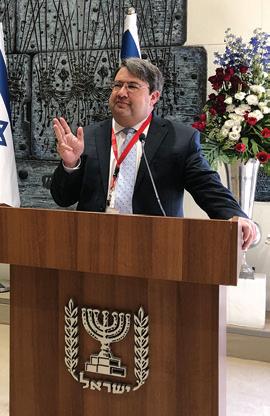
“These experiences are beyond anything we have seen,” said Professor Asher Ben-Arieh, dean of the university’s Paul Baerwald School of Social Work and Social Welfare and CEO of the Haruv Institute for the Study of Child Maltreatment, noting that some children were taken hostage and witnessed their parents’ murder or kidnapping. “The tools we have used until now are not sufficient. We need new solutions and new ideas for how to treat these traumas.”
Ben-Arieh estimates that 25% to 50% of those who experienced trauma were likely to develop problems such as post-traumatic stress disorder (PTSD), depression, anxiety, complex grief, or difficulties in marital, social, or occupational adjustments.
To meet these new needs, Hebrew University’s Israel Center for Addiction and Mental Health set about to launch the Institute for Traumatic Stress and Recovery to create a multidisciplinary, academic-clinical hub to address trauma-related research, training, prevention, treatment, and resilience promotion.
Some have stress, grief, and difficulty coping with the effects of being relocated. Since Oct. 7 people are more stressed in general. They may experience more negative thinking, trouble sleeping, more physical aches and pains, muscle tension. Things may set them off more easily.”
Many experts in the field say it long has been clear that Israel needs to improve its overall approach to mental health. There has been insufficient training of mental health professionals using evidence-based best practices treating trauma, a lack of integration between research and practice, and a lack of awareness among the public at large about the impacts of collective traumatic stress.
The events of Oct. 7 drew attention to those problems while adding the urgent need for new approaches to trauma specific to this historical event.
The new institute, which will offer a rare combination of research with clinical practice, training, and advocacy, has raised 25% of its budget so far and is actively seeking support for the remainder.
“We need enough money to have a stable center to think out of the box,” Ben-Arieh said. “And we need it urgently. We’re not even post trauma. We are not past this. It’s still happening.”
After the shock of the initial Hamas attack, Ben-Arieh and his colleague Ofrit Shapira Berman, a Hebrew University professor who specializes in treating adult survivors of complex childhood trauma, joined an October 7 National Task Force to care for children who were abducted.
Working with Israel’s Ministry of Social Services and other governmental bodies, the task force trained the security services who first greeted the abducted children upon their release in late November 2023 to ensure the children would not be retraumatized in the process of their release. They also worked with their parents.

The Institute for Traumatic Stress and Recovery aims to give therapists and trauma survivors evidence-based practices and technologies, accessible via Israel’s public health system, to enhance the healing and recovery of Israelis grappling with the enormity of these traumas. The institute will conduct research, train therapists in new evidence-based practices, and provide patient-centered, comprehensive, coordinated care.
“This proactive approach will not only enhance the capacity for timely and effective trauma intervention, but also contribute to a more informed and resilient community as a whole,” said Hebrew University psychology professor Jonathan Huppert, who is involved in the project.
“Trauma manifests in many ways and can be different for different people,” Huppert said. “Not everyone has PTSD.
The task force identified six groups of children at high risk since Oct. 7: child hostages; those who witnessed severe violence and murders; newly orphaned children; children who lost a parent, sibling, or other relatives; children whose friends or peers were killed or kidnapped; and children displaced from their homes.

“There is a deep issue of betrayal in childhood trauma,” said Ben-Arieh. “In these cases, these events often happened in places that their parents said were the safest in the world. Parents could not save their children. Or they had to choose. We have new forms of trauma that we don’t understand.” He added, “We need to change the field.”

Show your solidarity with the Hebrew University of Jerusalem by giving to the We Are One campaign. Learn more or donate at AFHU.org
The recent murder of six Israeli hostages, one of whom was an American with ties to our region, sent waves of grief through the Jewish world. Apparently, not long after Israeli forces rescued a hostage who was a Bedouin Muslim, the Hamas cell holding the six hostages nearby went ahead and killed them, fearing that they might be next to be rescued.
Of course, all aspects of this scenario are Hamas war crimes. But what was astounding was how these murders were covered and analyzed, even by the few media outlets that are not hostile to Israel.
We’d become accustomed to hostage rescues minimized as hostages being “released” or “found,” as if Hamas simply said “sure, they can go.” But the murder, by Hamas, of six hostages, was seen as Israel’s fault, for not caving in to
Hamas demands — er, for not being more flexible in negotiations.
Numerous pundits wondered why Netanyahu wasn’t freeing the hostages, even claiming
SUBSCRIBE to our new online Regional Edition! See page 44
Southern Jewish Life is an independent Jewish periodical. Articles and columns do not necessarily reflect the views of any Jewish institutions, agencies or congregations in our region.




ceasefire and hostage release since December. Over and over, the world insists that Israel accept a ceasefire that it has already accepted, and which Hamas continues to reject, though nobody calls them out for it.
What incentive does Hamas have to make a deal, if everyone gives them a pass? Why would they agree to a deal? Everyone is putting pressure on Israel, so all Hamas has to do is sit back and wait — and laugh as the world does the work for them. The longer Hamas waits, the more pressure is put on Israel. Brilliant strategy, and everyone is playing their designated role.
If there were truly a humanitarian disaster, a genocide, a famine — wouldn’t the idea of even an imperfect ceasefire be attractive to whoever is in charge of Gaza, to stop what was happening and to save the lives of one’s own people? But Hamas has no interest in the people of Gaza — the worse they can portray it, the better it is for them, as their goal has been to manipulate world opinion through falsehoods and hope Israel (and those who support Israel) caves from the pressure. For them, total destruction of Gaza would be considered a victory if they are still standing at the end, so they can regroup and plan the
next Oct. 7.
It’s all part of their misguided ideology that if they make life unbearable enough for Israel, the Jews will just give up and go back to “where they came from,” freeing the land for their caliphate. Because they reject the idea that Jews have any connection to the land of Israel.
We must be clear. Hamas is holding our hostages. Hamas is responsible for what has happened to Gaza, having turned its civilian infrastructure into a network for war, and having launched the devastating attack of Oct. 7. And Iran is behind all of it.
Israel does not want war, and wants this to end soon. But the days of the “mowing the lawn” half-measure in Gaza are over — without a complete defeat of Hamas, a premature ceasefire only guarantees another round of bloodshed in another year or two, and continued misery for Gazans under their tyrannical rule.

Lawrence Brook, Publisher/Editor

Southern Jewish Life Staff
Publisher/Editor
Lawrence Brook editor@sjlmag.com
Associate Publisher/Advertising
Lee Green lee@sjlmag.com
Associate Editor
Richard Friedman richard@sjlmag.com
Creative Director
Ginger Brook ginger@sjlmag.com
Social/Web
Emily Baldwein connect@sjlmag.com
Contributing Writers
Kiara Dunlap, Keila Lawrence, Rivka Epstein, Belle Freitag, E. Walter Katz
Columnist
Doug Brook brookwrite.com
Birmingham office: P.O. Box 130052, Birmingham, AL 35213
New Orleans office: 3747 West Esplanade Ave., 3rd Floor, Metairie, LA 70002 (205) 870-7889 • (504) 249-6875 (888) 613-YALL (9255)
ADVERTISING: Contact Lee Green, (205) 870-7889, lee@sjlmag.com
SUBSCRIPTIONS: Subscriptions for the print edition are $24 for one year, $40 for two years. Southern Jewish Life Regional, available online, is $24 per year.
Copyright 2024. All rights reserved. No part of this publication may be reproduced in whole or part without written permission from the publisher. Views expressed in SJL are those of the respective contributors and are not necessarily shared by the magazine or its staff. SJL makes no claims as to the Kashrut of its advertisers, and retains the right to refuse any advertisement.
Documenting this community, a community we are members of and active within, is our passion. We love what we do, and who we do it for.

agenda
interesting bits & can’t miss events

On Aug. 8, Birmingham’s Levite Jewish Community Center raised $172,000 at its annual J’La. In addition to the silent and live auctions, there were “Fund-a-Need” and “Last Hero” sessions. “The J’la is especially important to me personally as it celebrates our mission of service alongside some of our closest friends and supporters — all while making new friends and inspiring new supporters,” said Executive Director Brooke Bowles, who had to watch the event remotely due to Covid.
Office of Jewish Life formed at LJCC
To bolster Judaic programming at Birmingham’s Levite Jewish Community Center, the agency has established an Office of Jewish Life.
The office is managed jointly by Coordinator of Jewish Programs Shannon Brasovan and Director of Special Projects Zoe Weil.
“We are so excited to have Zoe and Shannon not only working here at The J, but working together in this capacity,” said Executive Director Brooke Bowles. “While we’ve been intentional about Jewish programming in the past few years, creating this office will take us to a new level.”
Brasovan will focus on education, activities for youth, and programming around special occasions and holidays, including the monthly “Honor Our Parents” Shabbat services co-hosted with Collat Jewish Family Services. Weil will largely oversee adult programs like Southern Jewish Voices and Questions With the Rabbi, and supervise tai chi, mah jongg, and the Roz Feigelson Circle of Life Knitting Group. She also will be in charge of programming for senior members.
“We are open for business and eager to meet with any and all members as a resource about Judaism,” Weil said. “And of course we’ll also address the community’s need for more Jew-
ish-centric programming.”
“I’m thrilled to be in a place where I can tie together my love of Judaism, family, community, and whole-person-wellness,” Brasovan remarked. “We both look forward to elevating the experience at the J for our Jewish and non-Jewish members.”
Weil grew up in a secular home, but as she was often the only Jew among her peers, she had to be the one to educate them about Judaism.
“Growing up Jewish in a small Southern town propelled me to become a Jewish educator at a young age,” she said. She and her husband, Alec Weil, are members of Temple Emanu-El, and their two daughters attend preschool at the Cohn Early Childhood Learning Center.
Weil is also an adjunct professor at the University of Alabama at Birmingham, where she teaches Holocaust history. She majored in history at UAB, which is also where she earned master’s degrees in history and secondary education. After teaching history in Birmingham City Schools for two years, she left the classroom in order to help improve Holocaust education in Alabama as Director of Educator Engagement at the Alabama Holocaust Education Center. She joined the LJCC staff last October.

Brasovan is a native of Birmingham, growing up in the LJCC summer camp and hanging out as her mother did step aerobics. After graduating from Mountain Brook High School, she attended college at Point Park University for musical theater and dance. She and her husband Peter were married in Birmingham by Rabbi Jonathan Miller.
In Indianapolis, they owned and operated a successful fitness facility while their two children attended Jewish preschool. The family relocated to Birmingham during the pandemic; two of their children now attend the N.E. Miles Jewish Day School and a third attends Cohn ECLC. She is also a personal trainer at the LJCC.
Shannon Brasovan and Zoe Weil


Rocking the memories

Still rockin’ at 99, Holocaust survivor Saul Dreier brought his story, “Survival Through Song,” and his Holocaust Survivor Band to Louisiana, performing at the Jefferson Performing Arts Center in Metairie on Aug. 14, and the Crowne Plaza in Baton Rouge on Aug. 15. The Metairie program was co-hosted by Chabad of Louisiana and Chabad Jewish Center of Metairie, while Chabad of Baton Rouge hosted on Aug. 15. The evening was a tribute to the human spirit’s capacity for resilience and joy.
In Metairie, Rabbi Mendel Rivkin, Robert French, CEO of the Jewish Federation of Greater New Orleans, and Sam Fradella of Metairie Bank gave opening remarks, followed by Rabbi Yossie Nemes interviewing Dreier, who shared his extraordinary story of survival and hope, beautifully interspersed with lively klezmer music.
Dreier was sent to labor camps before winding up in Auschwitz, then to Mauthausen before being sent to work at Linz in Austria. After liberation, he went to the United States in 1949, then formed the band at age 89 after being inspired by a survivor who had just died at age 108.
MSJE hosting Tulane sukkah on roof
A sukkah on the roof? Sounds crazy, no?
The Museum of the Southern Jewish Experience is partnering with undergraduates at the Tulane School of Architecture to host the first off-campus sukkah in the 16-year history of the Tulane Sukkah Build. The student-driven project uses the skills and imagination of architecture students to come up with unique sukkahs.

This year, students are focusing on the themes of peace and life within Jewish culture, exploring the human connection with nature.
The sukkah will be open during museum hours, Oct. 17 to 21 and Oct. 23 from 10 a.m. to 5 p.m.
On Oct. 16 from 5 to 7 p.m. there will be a Sips in the Sukkah event for museum members.
For those who work in the area or just want to stop by, bring a lunch and eat in the sukkah on Oct. 17, 18 or 21 between 11:30 a.m. and 1:30 p.m. No museum ticket is necessary.
On Oct. 20 at 2 p.m. there will be a Sun Crafts in the Sukkah family event, making napkins with photosensitive cloth. Snacks will be provided. The program is $5, free for museum members.
Groups can also reserve the sukkah for events during the week.
Southern Jewish Simcha food stories sought
The co-authors of “Kugels and Collards: Stories of Food, Family and Tradition in Jewish South Carolina” are looking for Southern Jewish food stories throughout the region for their new work, “Southern Simchas: Food Traditions for Jewish Celebrations.”
“Kugels and Collards” was published in 2023 by Lyssa Kligman Harvey and Rachel Gordin Barnett, based on their blog that collected South Carolina Jewish family food-related stories and recipes. While touring to promote the book, they have found that many of the South Carolina stories are echoed throughout the Jewish South, so they began this project to tell those stories.
They explained that Jewish life cycle rituals always involve food, and they want to chronicle the tendency in the South to incorporate Southern aspects into Jewish practices.
They are looking for story contributors to do a 900 to 1100 word piece exploring how their family life cycle events have endured through time and evolved with the addition of new family customs. They are looking for pieces related to family brises, namings, bar/bat mitzvah, confirmations and weddings. The stories should encompass family history, traditions and foods. They encourage the inclusion of three to five family photographs and, where possible, one or two recipes or menus.
Marcie Ferris will be writing the introduction.
Those interested in submitting a story should email rgbarnettsc@gmail.com by Sept. 30. Submissions will be due on March 1. They hope to have a good representation from throughout the region, and want to be sure that smaller communities are represented.


ONE STOP KOSHER FOOD SHOPPING

Dine In — Take Out — Catering Mon-Thu 10am-7pm • Fri & Sun 10am-3pm (Closed Saturday) 3519 Severn, Metairie (504) 888-2010 www.koshercajun.com Outside the New Orleans area? We will ship your order to you!


MARKED BY DARKNESS
MAGEN DAVID ADOM DELIVERED

We can’t ensure this Rosh HaShanah will usher in a peaceful year. But with your support, Magen David Adom can continue to be a source of light, hope, and lifesaving care to all Israelis — no matter what 5785 brings.
Support Israel’s lifesavers at afmda.org/give or 866.632.2763.


The First Judicial Court in Pensacola will hold a hearing on Nov. 1 at 9 a.m. to determine sentencing for three defendants who have entered pleas of no contest for a spree of antisemitic vandalism in Pensacola during the summer of 2023. Waylon Fowler threw bricks into Chabad of Pensacola on July 17, 2023, and Nicholas and Kessler Ferry were involved in other acts around the city, including at Temple Beth El. Members of the community are invited to give the court impact statements detailing how the crimes affected the community, or themselves. In-person testimony is also available. The hearing was postponed from Oct. 2, the eve of Rosh Hashanah.
Beth Israel in Jackson announced that after a Covid-induced hiatus, the congregation’s famous Bazaar will return, on March 26.
Gallery 126 in Florence is exhibiting “Days of Awe and Wonder,” works by artist Bernice Davidson, who used to live at The Farm in Tennessee. The works visualize the moment of life when “time stands still and the Gates of Heaven open” and offer “fleeting glimpses of another world.” The exhibit runs through Oct. 18, the gallery is open from 1 to 5 p.m. weekdays.
In conjunction with the Ten Days between Rosh Hashanah and Yom Kippur, Birmingham’s Collat Jewish Family Services, Temple Beth-El and Temple Emanu-El will have a community mitzvah project, assembling and organizing food boxes at the Community Food Bank of Central Alabama in Homewood. The project will be on Oct. 9 from 1 to 3 p.m.
Jackson’s Steakhouse in Pensacola will have its annual Rosh Hashanah dinner on Oct. 2, beginning at 5 p.m. Chef Irv Miller prepares a traditional meal starting with apples and orange blossom honey, followed by Yukon gold potato latkes, 10-hour braised brisket, Mom’s kugel, and Brussels sprouts halves with toasted almonds. The dinner is $35 per person, and reservations are available.
Bais Ariel Chabad in Birmingham will host a Rosh Hashanah dinner, Oct. 2 at 7 p.m. Reservations are $36 per adult, $18 per child, $120 family maximum.
Gemiluth Chassodim in Alexandria is inaugurating a Family Night Shabbat service and dinner on the first Friday of each month, unless a significant holiday shuffles the schedule. The service will be shorter and have guitar music and participation from students. The dinner will be free with advance reservations. The first service was scheduled for Sept. 6 at 6 p.m.
Temple Beth Or in Montgomery will once again be selling Carnegie Deli cheesecakes for the holidays. Four-inch cheesecakes are $20, 6-inch are $30. There is also presliced corned beef and pastrami, $35 for each 1.5-pound package. Packages of chocolate-covered cheesecake bites are $15, and Black and White cookies are $5. Orders must be received by Oct. 25, for pickup on Nov. 19 and 20.
Chabad of the Emerald Coast in Destin will have a Rosh Hashanah dinner and shofar ceremony, Oct. 3 at 5 p.m.
Irene Shavit, a survivor of Oct. 7 at Kfar Aza, will speak at Louisiana State University on Sept. 29 at 4 p.m., at the Lod Cook Hotel. Shavit was to be married in April, but her fiancé died while saving her life by jumping on a grenade that had been thrown into their home by Hamas terrorists, and she hid behind his body for five hours. “An Evening of Testimony, Resilience and Hope” is free for LSU students, but open to all. Suggested donation is $18. The program is sponsored by Jennifer Litton Ramirez and family, Chabad at LSU and the Greater Baton Rouge Stand With Us Campus.
community
Coalition signs New Orleans Statement of Peace regarding Israel and Gaza
City Council affirms it in contentious Aug. 8 meeting
At the end of July, a coalition of leaders from a wide range of fields in the New Orleans area issued a New Orleans Statement for Peace “in light of the ongoing conflict in Gaza and Israel.”
Numerous rabbis and leaders of the Jewish Federation of Greater New Orleans and the Anti-Defamation League were among the signers, along with the entire New Orleans city council.
The statement calls for unity and peace in New Orleans, condemning all forms of hate, mourning the loss of life on both sides, and supporting diplomatic efforts for a negotiated ceasefire and release of hostages.
Council members have been under intense pressure for months by a coalition of anti-Israel groups to call for a ceasefire. The coalition of anti-Israel groups has denounced the statement, saying they were never consulted for input.
On Aug. 8, the city council unanimously voted on “a resolution recognizing the broad coalition of local faith, community, civic and business leaders supporting the statement for peace in light of the ongoing conflict in Gaza” and “lend(ing) its support” to the statement “during a time of turmoil and division,” in appreciation for “the efforts to call for unity and peace within our city.”
The day before, the Federation and ADL issued a statement where they said they were proud to have participated in the “important initiative in conjunction with the New Orleans City Council and a diverse coalition of local leaders.”
The Aug. 7 statement said “the Statement for Peace was never intended to be a comprehensive take on a highly divisive issue. Instead, it was meant to find and articulate a possible, albeit small, piece of common ground during an incredibly divided moment. This Statement, that was distributed to all voices involved in the ongoing conversation, recenters the focus on what is within City Council’s scope and hopefully indisputable – local civility and peace.”
Federation CEO Robert French said he fully supports the statement, and the Federation “is tremendously grateful to the authors of this statement, New Orleans City Council, and the diverse signatories who stand with us in promoting peace and unity within our community.”
The statement continued, “Unfortunately, some groups have attempted to derail this Statement by advocating for more aggressive (and one-sided) demands on areas of international policy over which the City Council has no control. In spite of their different backgrounds, the signatories of this Statement for Peace share a commitment to unity over division – and to not allowing conflicts and violence abroad to spill over into and define our communities at home.”
Anti-Israel groups respond
NOSHIP issued a statement by a coalition of anti-Israel groups decrying the statement, calling it “insidious in its language.” NOSHIP is New Orleans Stop Helping Israel’s Ports, a group “committed to ending economic and cultural ties between New Orleans and Israel,” and opposed to business ties between Israel and the Port of New Orleans.
The coalition’s statement calls for an “immediate, unconditional, permanent and enforceable ceasefire” in Gaza; the end of arms transfers to Israel, especially through the Port of New Orleans; an “immediate and unconditional exchange of prisoners,” citing over 3300 Palestinian prisoners held by Israel; and “Israel’s immediate compliance with international humanitarian law” allowing unrestricted entry of goods into Gaza. They also demand that the city condemn “attempts to suppress freedom of speech” through the sending of a SWAT team to clear out an anti-Israel


community
encampment on May 1.
They also said the statement was done “behind our backs,” and paints protestors as violent when “the only violence” since October has been by law enforcement toward the protestors. It also refers to Israel’s actions as a “genocide,” supported by the U.S. government.
Those groups have held numerous anti-Israel protests downtown and at Tulane University over the past 11 months.
They said the statement was distributed by the “strongly Zionist” Federation and they were not invited to take part in its drafting, despite meeting with city council members for months and pressuring for a ceasefire resolution.
The coalition has clashed with the Federation in the past, with coalition member Jewish Voice for Peace accusing the Federation of racism and defending genocide. After the Federation placed billboards around the area this summer saying “No Hate in Our Home,” JVP posted a Photoshopped version in the same style, with the message of “Zionism is Racism.”
Contentious council meeting
On Aug. 8, anti-Israel groups packed the Council chamber.
In 2018, many of the same groups presented the council with a “human rights” resolution that did not specifically mention Israel or Palestine, but urged the city to have a procedure to review investments and contracts to be sure the companies align with the city’s values.
After the council passed the seemingly-innocuous resolution, those groups proclaimed to the world that New Orleans had become the first major U.S. city to pass a resolution in favor of the boycott-Israel BDS movement. That came as a surprise to the council members, who then rescinded it in a contentious meeting two weeks later.
Because of a flood of public comment cards submitted, the council added an extra 30 minutes to discussion of the Statement for Peace. Over
The Statement for Peace:
As the world witnesses the conflict in Gaza and Israel, New Orleans prays for peace.
When violence spills over into our country, with extremist attacks on Jewish, Muslim, and Arab communities, New Orleans stands firm: not here.
We, the leaders of New Orleans’ faith-based community, nonprofits, businesses, government, community groups, and civic organizations, call for unity and peace in our city. We strongly condemn all forms of hate, including antisemitic and Islamophobic behavior stemming from the conflict in Gaza and Israel.
We mourn the loss of innocent lives and grieve with our neighbors in New Orleans who have family and friends in Israel and Gaza. We unequivocally reject all actions that endanger innocent people.
We support the diplomatic efforts by the United States for a negotiated ceasefire, including the release of all hostages, and emphasize that far too many lives have been lost. Whether it is here on the streets of New Orleans or across the world, our deepest and most sacred value is to protect life and resolve our differences peacefully through democratic means. Calls for violence and conflict in New Orleans are contrary to the values of our community and our commitment to preserving lives.
We encourage all residents to show compassion and empathy during these difficult times. New Orleans is a diverse and loving city that comes together in tough times, and we are so much stronger for it. Together, we stand united in our determination to keep New Orleans peaceful and all its residents safe.
We pray for peace abroad and at home.
community
100 comment requests were made, mostly in opposition.
In introducing the resolution, Council President Helena Moreno said with the rise of antisemitism and Islamophobia, she appreciated how the statement “condemns these acts and all forms of hate and says not here in our city.”
“It is horrific, the number of Palestinian and Israeli lives that have been lost in this conflict, and I strongly support diplomatic efforts for an immediate ceasefire,” she said.
She noted the council has been asked to take all manner of positions on the issue, and particularly in the previous few days not to bring this up at all. But the resolution localizes it with a call against conflict and violence locally.
When she said there were many people who feared coming to the meeting to comment on the resolution, there were guffaws from the audience.
Palestinian activists said the resolution does not include their voices, saying their voices are already suppressed by the media that instead spreads propaganda and dehumanization.
They noted that they had been pushing the council to pass a “people’s resolution” calling for a ceasefire for months, packing council meetings with activists.
“We don’t have to wonder what kind of people stand by and let a genocide happen. Those people look like all of you,” said Lana Murad.
Daniel Older, a Jewish author, used air quotes when he said “peace resolution,” saying it is a slap in the face to every Palestinian. He asked every Jewish member of the Palestinian groups to stand and challenged the Federation and ADL, which he said do not speak for them, and asked where they were that morning. “They do not care about peace, they do not care about Jewish safety… and have been pro-Apartheid for years.”
Lindsay Friedmann, regional director of the ADL, was two speakers later. She was booed by the crowd, prompting a rebuke from Moreno.
“While our hearts ache for the innocent lives lost and for those who are suffering in the ongoing war between Israel and Hamas, we know conflict waged abroad won’t be resolved here in New Orleans,” Friedmann said. “Nothing in the statement of peace should be objectionable to anyone who cares about how we live our lives here and how we respect our neighbors and our differences.”
She spoke out against “toxic rhetoric that permeates our community” as the conflict continues.
As she spoke, pre-written signs were held behind her saying things like “actually that’s racist,” “no not you supporting genocide,” “peace is the white man’s word” and “Zionism is terrorism.” As she left the podium, several in the audience shouted “F--- the ADL.”
Aaron Bloch, Federation director of Jewish

multicultural and governmental affairs, then spoke, saying the statement “lifts up a commitment to living together in harmony, refusing to draw battle lines through a city that will only serve to tear us apart.”
In conversations over the last 10 months, it has been evident that “people on both sides of this conflict are in pain and have suffered real loss, including Palestinians, Israelis and Jewish members” and that “a minimum degree of civility is never too much to ask for in these conversations.”
Sara Lewis, chair of the Jewish Community Relations Council and advocacy vice president for the local National Council of Jewish Women, also spoke in favor of the resolution. Jewish Voice for Peace crowed that when the Federation’s weekly email went out with a photo of Lewis speaking, in the background was coalition members holding dozens of photos of Gaza children who have been killed in the war.
Other speakers accused Israel of genocide, using figures as high as 138,000 deaths in Gaza. The Gaza health ministry, run by Hamas, claims 40,000 deaths, not distinguishing between combatants and civilians. Israel says roughly 17,000 fighters have been killed, and that Hamas lists combatants who are 16 or 17 years old as “children.”
Sebastian Brumfeld Mejia compared quotes from the resolution to quotes from the eight white clergy in Birmingham in 1963 that prompted Martin Luther King Jr.’s “Letter from Birmingham Jail.” He said both “misrepresent civil disobedience as violence… the only violence comes from law enforcement.”
Rev. Gregory Manning taped signs saying Tikun Olam and referencing Jeremiah 8:11 to the plexiglass when he spoke, quoting Jeremiah’s admonition that people say peace when there is no peace, and he asked how there could be a resolution without the word “Palestinian.” He added that the resolution “has been designed and only puts forward the voice of Jew-


Lindsay Friedmann, regional director of the ADL, addresses the council
ish people who were surreptitiously and in secret putting this together.”
He charged the council members with lying when they have told ceasefire activists that they don’t weigh in on international issues. “That is a lie!” he bellowed, pounding the podium. He said they spoke up for South Africa and Ukraine, but won’t speak up now “because these are brown people like me.”
After his time expired, he said “Tikun Olam. You know what that means, Jewish people.”
Wearing a keffiyah and a shirt that said “New Orleans Demands Ceasefire Now,” Cypress Atlas, “a proud member of the New Orleans Jewish community,” said “I was not paid to be here, but the Jewish Federation is.” Atlas said those who were involved in the resolution will be remembered “not only as supporters of ethnic cleansing but active participants in ethnic cleansing, the erasure of an ethnicity.”
After an hour of public comment, there were no comments from the council members, and as they voted, 6-0 in favor of the Statement for Peace, insults were shouted from the gallery. The council adjourned for a short recess, while the activists remained and did group chants, including “City council you can’t hide, we charge you with genocide.”


GET ON BOARD
Saturday
October 5, 2024
Are you interested in serving on a nonprofit board?
Join us for Get on Board on Saturday, October 5 for a single-day nonprofit workshop at JLNO Headquarters.
Learn from experts across New Orleans sharing their insights on fiduciary responsibilities, strategic planning, leadership development and fundraising.
Secure your spot now by purchasing your ticket at jlno.org/get-on-board.
Screenshot
One year later
Communities make plans to mark first anniversary of Oct. 7
Around the region, there will be commemorations marking the first anniversary of the Oct. 7 attacks on Israel by Hamas and other groups from Gaza.
Early on the morning of Simchat Torah, Hamas launched the infiltration from Gaza, murdering 1,185 Israelis and taking 251 hostages back into Gaza.
The war to eliminate the threat from Hamas has continued since then, and at press time, Israel was responding in force to months of Hezbollah rocket attacks from Lebanon.
In New Orleans, over 20 local Jewish organizations are partnering for “Commemorating October 7th: An Evening of Remembrance, Resilience and HOPE,” Oct. 6 at 6 p.m. at the Jefferson Performing Arts Center. Featured speakers will include Yoni Diller, an Israeli survivor of the Nova Music Festival terror attack, and a representative of the Consulate General of Israel to the Southwest United States.
“This event is for the entire community –not just those who are Jewish,” said Federation Chief Executive Officer Robert French.
“It is inconceivable to American Jews that so many hostages remain in Hamas hands, the ceasefire negotiations have failed, and the security of Israel remains so volatile,” said French. “Even in the New Orleans area, we have watched in horror as our city has been marked by hateful anti-Semitic symbols, unrest on university campuses, and threats to the physical safety for Jewish students and residents. We see New Orleans’ peaceful commemoration of the October 7 attack as a moment of remembrance, reflection and resilience.”
The event will include musical presentations by students from Slater Torah Academy and Jewish Community Day School, and local talent, as multicultural allies, elected officials, and interfaith and community leaders join attendees in reflections on resilience and hope.
The event also features two exhibits, one by local artist Billie Little, and “Humans of October 7th” by Israeli photojournalist Erez Kaganovitz. The images presented pay tribute to the unexpected heroes of October 7th and tell the story of the Jewish people overcoming adversity, fighting back against impossible odds, and emerging stronger on the other side. Doors will open at 4:30 p.m.
Around the region
The Birmingham commemoration will be on Oct. 7 at 6 p.m. at the Levite Jewish Community Center.
In addition to the program, there will be an exhibit of “Resilience in the Rubble: Portraits of
We treat your family like our family.
When it comes to senior living, you want more than a place to live — you need a place to thrive. That’s why at Brookdale University Park, we help take care of the challenges of aging for you.
Amenities:
• Variety of floor plans
• Social events and activities
• Walking paths
• On-site putting green
• Pet-friendly accommodations
• Close to medical and shopping centers
To learn how we can help you connect with new friends and interests, call (205) 506-0214 today.
Brookdale University Park
Independent Living | Assisted Living Alzheimer’s & Dementia Care | Rehabilitation & Skilled Nursing 400 University Park Drive | Birmingham, Alabama 35209

brookdale.com


“Gary became part of the family. When my husband and I first decided that we would put our toe in the real estate waters, I knew the only person I wanted to represent us was Gary. He’s a real gem!” — ST, Metairie
“As first time home buyers, my wife and I were very unfamiliar with the process of purchasing a home. From the moment we met Gary to the day we closed he was great about answering all our questions, walking us through the process and being an advocate for us. I recommend Gary to anyone in the New Orleans area looking to purchase a home.” — DH, New Orleans
Gary Lazarus
Buyer/Seller Representation
Investing & Consulting
Cell: 504.382.2603
Office: 504.866.7733
gary@garylazarus.com
www.garylazarus.com


Strength After Destruction.” The exhibit captures the horrific attacks of Oct. 7 followed by the inspiring journey of healing, hope and recovery. The images paint a stark contrast; raw devastation and horror set against the strength and resilience of the Israeli people.
In Huntsville, the community commemoration will be at First Baptist Church’s Life Center on Oct. 7 at 7 p.m. As part of the commemoration, there will be a display of “October Seventh,” an exhibit from ANU — Museum of the Jewish People in Tel Aviv. The exhibit, which reflects creative expressions of what Israeli society has faced since Oct. 7, will be available for viewing all day, starting at 10 a.m.
Mobile will gather as a community at Springhill Avenue Temple on Oct. 7 at 6:30 p.m. Montgomery’s Oct. 7 commemoration will be at Agudath Israel-Etz Ahayem at 6 p.m.
The University of Alabama Hillel will have a Yellow Ribbon Run and Walk for Remembrance, Oct. 6 at 10:30 a.m., starting at Denny Chimes.
In Fort Walton Beach, the Shabbat Shuvah service at Beth Shalom on Oct. 4 at 6:30 p.m. will be in remembrance of Oct. 7.
The Central Louisiana United Jewish Communities will have an event on Oct. 8 at 6 p.m. at the Diamond Grill in Alexandria. Hananya Naftali will speak on “The Day After October 7 — One Year Later.” A leading figure defending Israel on social media, Naftali served in the Gaza war of 2014, and treated wounded Syrian civilians as a combat medic during the Syrian civil war. The event is open to the public. Admission is a minimum donation of $30 per person and includes dinner. Space is limited, and reservations are required.
On Oct. 7 at 5 p.m., Touro Synagogue in New Orleans will have a study session with poetry and song, followed by a 6 p.m. memorial service in the sanctuary.
The North Louisiana Jewish Federation and community partners will hold a commemoration on Oct. 6 at 2 p.m. at Centenary College in Shreveport. Elliot Malamet will lead “October 7: A Year and a Lifetime Later.”
Malamet is a Jewish educator who moved to Jerusalem after teaching at Canadian universities for 20 years. He teaches Jewish ethics and philosophy at various Israeli institutions.
The event will include a photo exhibit, along with stories, songs and prayers to commemorate the lives lost, honor heroes and pray for the hostages. The event is free but registration is required by Oct. 4.
Beth Israel in Jackson will hold a community remembrance on Oct. 7 at 6 p.m. at the Holocaust memorial, indoors in case of rain.
Israel Bonds worldwide event
Israel Bonds and ILTV News are co-hosting an Oct. 7 commemoration online, honoring the strength of the Israeli people and mourning those who were lost. The event is free and open to all. President Isaac Herzog will be among the speakers.
The family of Sgt. Tomer Ahimas will talk about his sacrifice as he fought Hamas on Oct. 7 at Kibbutz Nirim. His body was taken captive by Hamas and later recovered from Gaza by the IDF.
Major Gen. (Ret.) Eyal Zamir, Director-General of the Ministry of Defense, will give insight about what Israeli soldiers have faced in the past year in fighting Hamas. He served in the IDF for 38 years and was deputy chief of staff from 2018 to 2021.
The virtual event will be at 11 a.m. Central. Registration for the Zoom link is available at israelbonds.com.
Christian support


On Oct. 7, American Christian Leaders for Israel, Generation Zion and The Philos Project will have a commemoration on the National Mall in Washington. According to the organizations, the event “presents an opportunity for the American Christian community to show Israel and the Jewish people that they are not alone in their grief or their fight for survival.”
Large gift boosts record for JCRS college aid
When the Jewish Children’s Regional Service college scholarship committee finished its deliberations for the 2024-25 academic year in July, it had allocated a record of over $409,000 in need-based scholarships to 115 students in the agency’s seven-state region, a large increase from the previous year.
Thanks to a gift from Houston’s Robert Zinn and his late wife Edith, each of those awards will increase by 25 percent, bringing the total amount of scholarships to over $500,000.
The awards, which consist of grants and no-interest loans, average over $4,300 per academic year.
Zinn stated, “I hope my support spurs others to donate to JCRS given the huge impact JCRS has within our Jewish communities.”
According to the agency, the Zinns have been donors for decades, sharing JCRS’ vision “to provide superior levels of needs-based support, resources and services for Jewish youths and families to promote their welfare, education, and self-identity, thereby helping to prepare them to be well-adjusted, self-supporting, young adults.”
The New Orleans-based agency serves Jewish youth in Alabama, Mississippi, Tennessee, Louisiana, Arkansas, Oklahoma and Texas. In addition to college aid, the agency provided summer camp scholarships to 465 youth, totaling over $280,000, and provides financial assistance and case management to 51 Jewish children with special needs.
“Our two-fold goal for this academic year is to fund more Jewish students who need financial assistance with even larger awards. We are proud to fill this important role within our Jewish communities,” said JCRS Executive Director Mark Rubin. “We could not do what we do with-
out the support of our generous donors like Bob Zinn.”
Since 1946, JCRS has provided college or vocational training scholarships based on financial need. Many of the Jewish college students who receive aid from JCRS are from low-income families, but middle-class families are encouraged to apply. More than half of JCRS’s college scholarships are awarded to families whose household income is between $50,000 and $150,000.

Stephen Davis, CPA, is a technical accounting manager for LivaNova, a global medical technology company in Houston. A 2015 Trinity University graduate in business administration, Stephen also holds a master’s of science degree in accounting from the University of Houston, with certificates in oil and gas accounting and assurance/financial reporting. Stephen received college financial aid from JCRS when he studied at Trinity University and later, at the University of Houston.

Carville: Republicans support “whiter” Israelis over Palestinians of color
Long-time Democratic political strategist James Carville of Louisiana thinks he has figured out why Republicans are so supportive of Israel — simple white racism.
Carville, the “Ragin’ Cajun” who became prominent as chief strategist for Bill Clinton during the 1992 presidential campaign, offered his assessment on the Aug. 15 episode of the “Politics War Room” podcast.

He told co-host Al Hunt that “the reason I suspect that most of these people describe themselves as pro-Israel is because the Jews are whiter than the Palestinians, which drives a lot of what I think they are.”
He added that “it’s really about the misogyny and the racism that drives the thing, and we got to recognize that. It’s not about any policy prescription.”
Carville was responding to a question of how a party that “openly embraced” the far-right and neo-Nazis could portray itself as the pro-Israel party.
Moshe Phillips, national chairman of Americans for a Safe Israel, responded that “the majority of Israelis are not white; they’re of Jewish Middle Eastern or Jewish African heritage, meaning that they are just as much ‘people of color’ as Congresswoman Rashida Tlaib.
“It’s disturbing that a political strategist who is so ignorant about Israeli demography would nonetheless offer policy analysis about the subject. We urge James Carville to publicly acknowledge his egregious error.”
Republican support of Israel is largely credited to the prevalence of
evangelical Christian voters, who feel there is a Biblical mandate to bless Israel and the Jewish people, and who cite shared values of freedom and democracy, along with national security, for their support.
As the Democratic National Convention gets underway, Carville said the Republicans did not face the same level of anti-Israel protests that are anticipated in Chicago because, according to what an activist told him, they felt they would not be able to influence the Republicans, but the Democrats “would be more open-minded about this.”
He expressed frustration at that view, saying it is “dumb— political s—” that will “hurt the person that actually has the best chance of resolving this issue in a satisfactory way because you can’t influence the other person.”
Before the primary in Michigan, where the administration made explicit outreach to the large Muslim community, Carville criticized the protest vote for “uncommitted” in the primary because of continued U.S. support for Israel under Biden.
About 100,000 uncommitted votes were cast on Feb. 27, about 13 percent. In recent presidential primaries, about 20,000 Democrats had voted uncommitted. In 2008, almost 240,000 voted uncommitted after the state moved its primary earlier in defiance of the national party’s rules.
Carville had already created controversy with comments around Israel in March when he said that it would be Prime Minister Benjamin Netanyahu’s fault if Biden, who was then running for re-election, lost in November.
Citing a conspiratorial theory that Netanyahu is prolonging the war against Hamas to put off reckoning in personal legal battles he faces, he said the Democrats are “gonna have to tell Bibi Netanyahu, ‘Hey dude, we’re not gonna lose our election because you’re scared to go to jail’.”




Is a solution to the conflict in Gaza even possible? At Israel Bonds event, Kenneth Stein advocates for
As Israel’s war against Hamas continues, Israel Bonds is continuing to address needs in Israel resulting from the war.
On June 18, the Southeast regional office held an event at the Pine Tree Country Club in Birmingham, where Kenneth Stein, president of the Center for Israel Education, gave an update about the current situation in Israel. A former long-time professor at Emory University, Stein has authored six books.
Stein reminded the crowd that the West believes any conflict can be solved through give and take, but this is a conflict of ideologies that are mutually exclusive. He said Sen. Chuck Schumer’s recent comments about solving the conflict were naïve, as the two sides “don’t recognize each other and don’t recognize the other’s legitimacy.”
While there has been a big debate over whether the chant “From the river to the sea, Palestine will be free” at anti-Israel rallies is advocating for the elimination of Israel, Stein said that the chant, when done in Arabic, is “from the river to the sea, it will be Arab.”
increased education about Israel
“What you want as a solution to this conflict may just not be possible,” he said, as Palestinians still want to get rid of Israel, but Israel has no other place to go. “Dreaming of a conclusion that is equitable is highly unlikely.”
Israelis “have a commitment to this place and they are not going away,” he said, but Palestinians believe “if you make life difficult enough for them, if you hurt them, they will ultimately go back to where they came from.”
The Palestinian narrative “essentially says Israel is fake, Israel is artificial and the only reason it exists is it got help from outside.”
Hamas and Hezbollah, of course, get help from the outside, as clients of Iran. Stein said that Israel is about “liberty, freedom, democracy, the right of the individual,” while in Iran, “ideology is much more important than the rights of individuals… Israel is a bulwark against those ideologies that seek to undermine freedom and liberty.”
He added, “does Mr. Schumer really believe this ideology will go away just because Hamas is no longer in charge of Gaza?”
Iran received $36 billion in oil money last

year, and much of it is used for toxic purposes, he noted.
With the constant anti-Israel drumbeat in the press and by anti-Israel groups, Stein reminded that “Israel is much more than the constant criticism.”
He said “criticism of Israel is important, but


Kenneth Stein speaks at the Pine Tree


community
don’t throw the baby out with the bathwater.
“What would it mean if the Jewish state did not exist. It is a major part of our identity, whether we like it or not, and we should learn more about that place,” and his center has a wealth of online educational materials.
Jews should know our past and present to “assure your future.”
He said that as of July 31, this would become Israel’s longest war. Noting the overwhelming support for Oct. 7 among Gazans and Palestinians in Judea and Samaria, he said “you can remove Hamas, but can you remove the ideology?”
He said this is the fifth round of fighting between Israel and Hamas since Israel withdrew from Gaza in 2005, and Israel has decided to try and ensure there will not need to be a sixth round.
Buying bonds
In a typical year, Israel Bonds sells about $1 billion. But since Oct. 7 “we have sold over $3.5 billion,” said Brad Young, regional director of Israel Bonds in Atlanta. That includes $8 million in Alabama after Oct. 7, when numerous states made purchases in a show of solidarity, and an additional $6 million since then.
The greatest needs include relocation of those who lived on the front lines, and rebuilding the communities that have been affected by rocket attacks.
Anti-Israel groups have been pushing back against governmental bodies and institutions purchasing Israel Bonds, through campaigns such as Break the Bonds, where “they have intimidated elected officials over the issue.” Young said the best thing to do is rally as a united community and let elected officials know that they have the community’s support.
And of course, continue to purchase Israel Bonds for IRAs, foundations, trusts and regular investments. “Our rates remain strong, most of our bonds currently pay over 5 percent,” he said.
The event also kicked off the Birmingham Jewish Foundation’s annual Israel Bonds drive, which brought in gifts enabling the Foundation to purchase an $85,000 bond.
Kesher exploring credit course for high school students
Kesher, the joint high school program for Jewish youth in Birmingham, is exploring a new program for 11th and 12th graders, Kesher University. The new course would be in conjunction with CTeens and Yeshiva University, and would enable the student to earn two college credit hours.
Rabbi Yossi Friedman will be the teacher of “Israel and Me,” which would meet for 12 sessions from November to May. An informational Zoom is scheduled for Oct. 8 at 7 p.m.
Since Oct. 7, support for Israel demonstrated through record Israel Bonds sales
State and local governments make large investments as show of support — and to get good returns
In May, Israel Bonds announced that it had sold over $3 billion globally in the six months since the Oct. 7 attacks, triple the usual annual sales. Over 35 state and municipal governments invested, for a total of over $1.7 billion. The largest investor in Israel Bonds is now Palm Beach County, with over $700 million. There has also been a mix of retail and institutional purchases showing broad support.
Mark Ruben, the Palm Beach executive director of Israel Bonds, has been in the middle of that effort, and doesn’t plan on slowing down any time soon. Since he started with Israel Bonds in 1991, he said he has sold over $2 billion — with about $1 billion of that coming since the war started last fall.
“Israel’s supporters around the world have sent a clear and powerful message with their investment dollars in the wake of Oct. 7,” said Israel Bonds President and CEO Dani Naveh. “From the synagogue members buying Bar or Bat Mitzvah Celebration Bonds to state treasurers making unprecedented purchases, Israel Bonds has seen a surge of investments across every category that we do business.”
Palm Beach County purchased $160 million in Bonds in October, then made an additional purchase after the county commission raised the cap on an individual investment in the county portfolio from 10 percent to 15 percent in March. The county’s overall portfolio is $4.67 billion.

Mark Ruben, left, listens to County Comptroller Joseph Abruzzo discuss Palm Beach’s investment in Israel Bonds, Oct. 31, 2023 at Congregation Torah Ohr in Century Village, West Boca Raton.
Palm Beach County Clerk of the Circuit Court and Comptroller Joseph Abruzzo announced on March 26 that the county was the world’s largest investor in Israel Bonds. “My first duty to the taxpayers of Palm Beach County is to make sure that our tax dollars are protected and invested correctly and wisely,” Abruzzo said. “Israel Bonds are paying a higher rate than our U.S. Treasuries and are just as safe.” He said the county would earn $83 million from the investments.
The state of Florida also has $250 million in Israel Bonds investments. After a purchase last October, the state added $50 million in March, ac-


— Carol Ann Hobby


cording to state Chief Financial Officer Jimmy Patronis.
Not everyone in the area is thrilled, as three U.S. citizens of Palestinian descent in Palm Beach County filed suit in May. Abruzzo calls the case “frivolous” and expects that it will be dismissed.
After Oct. 7, Georgia and Oklahoma each purchased $10 million, Ohio and South Carolina each added $30 million, Alabama bought $6 million, Louisiana bought $5 million, Texas added $20 million, among many others.
Israel Bonds is apolitical, Ruben said, and Florida shows how Israel Bonds has “help from across the board politically speaking.” Abruzzo is a Democrat, and Patronis is a Republican. “they have been extremely supportive.”
But Ruben isn’t keeping only to South Florida — he will go “anywhere in the country that there is an interest.” The College of the Ozarks in Missouri was not aware of Israel Bonds, “but lay leadership brought me to them to speak about the role Israel Bonds plays in Israel, always, but in this particular time specifically.”
Brad Johnson, president of College of the Ozarks, announced the college’s investment “as another way to demonstrate our support of Israel. As a Christian institution, we have a scriptural stake in the fate of Israel. Our Board of Trustees and our campus have committed to pray for Israel and for the peace of Jerusalem.”
Ruben said he has had discussions with other Christian colleges. “People from the Christian and the Jewish communities have been in contact with me.”
He said the support from the Christian community “for the Jewish people and Israel is heartwarming, and very much needed now.” He added that he was “grateful for their support and look forward to more.”
He also has spoken with some states that do not currently have Israel Bonds investments.
When he started in 1991 as a field representative, Israel Bonds hit $1 billion in worldwide sales for the first time. Twelve years ago, the U.S. sales started hitting $1 billion per year.
Funds going to Israel through Israel Bonds are not directed at specific projects, but are used for what is needed at the time. Bonds “enabled Israel to become a leader in high tech, for example,” he said.
Through the years, the government often limited the amount of Bonds that could be sold, because they did not want to take on too much additional debt, as they had one of the lower debt to GDP ratio among countries in the Organization for Economic Cooperation and Development. With the current war, “anything we can raise, they are happy to receive.”
With growing institutional and governmental purchases, Israel Bonds has been less event oriented than the days of the annual Israel Bonds dinner in communities throughout the country. Events “are still important to reach our goals,” Ruben said. “It’s a good mix, and we’re happy to do events when they are appropriate.”
Despite the larger numbers of investments coming in, “we’re going to keep pressing,” and he is “always available.”
LJCC hosting “Midlife” author
Birmingham’s Levite Jewish Community Center will welcome author Shayna Kaufman on Oct. 29 at 5:30 p.m. to discuss her new book, “Embrace the Middle: A Woman’s Guide to Mindfully Navigating the Challenges, Celebrating the Joys, and Finding Power in Midlife.”
The book draws from original research on 619 women worldwide, her psychology and Zen backgrounds, and her own midlife metamorphosis to craft an intimate deep-dive into “the messiness and joys” of the middle decade.
The program is free and open to the community, and will include wine and snacks. She will also lead a guided meditation at 11:30 a.m. Reservations are required for both events.
>> Agenda
community
continued from page 8
The Attic Gallery in Vicksburg, owned by Lesley Silver, will have its 53rd anniversary celebration on Oct. 4 at 7 p.m. with the theme show “Portals.”
The annual Pray in Pink Shabbat at Agudath Israel-Etz Ahayem in Montgomery will be on Oct. 18 at 6 p.m.
Bais Ariel Chabad in Birmingham will have High Holiday 101, learning the customs and commandments related to the Days of Awe, Sept. 25 at 7 p.m.
YALA, You Belong in Birmingham and Temple Beth-El will have a Havdalah Happy Hour in the Sukkah, Oct. 19 at 7 p.m. at the Wolnek sukkah. Register through the Federation for the address.
Chabad Emerald Coast in Destin will have a community dinner, Sukkot Under the Stars, Oct. 16 at 6 p.m.
Beth Shalom in Fort Walton Beach will have Havdalah in the Sukkah on Oct. 19 at 6:45 p.m.
Temple Beth El of Pensacola will have a Shabbat Under the Stars service and dinner, Oct. 18 at 6 p.m.
The Unified Jewish Congregation of Baton Rouge will have a Shabbat service with Sukkot mixology, and dinner from Bistro Byronz, Oct. 18 at 6 p.m.
Bais Ariel Chabad in Birmingham will have its Sushi and Scotch in the Sukkah event on Oct. 21 at 7 p.m. The event is adults only. Reservations are $25 per person, $45 for couples. The family Pizza in the Hut will be on Oct. 20 at 4 p.m., with pizza, fries and ice cream, $12 per adult, $8 per child over age 2.
Birmingham’s Knesseth Israel will have a Second Night Rosh Hashanah dinner, Oct. 3 at 7:30 p.m., following the 6:30 p.m. service. Reservations are $36, free for those under 12.
Chabad of Huntsville will have Shofar in the Park, Oct. 3 at 6 p.m. at the Big Spring Park Gazebo. Tashlich will follow.
Chabad of Panama City Beach will have a community Rosh Hashanah dinner and family shofar service, Oct. 3 at 5 p.m.
Chabad of Pensacola will have a Rosh Hashanah Celebration ’85, with a gourmet dinner, on Oct. 3 at 6 p.m. Tashlich By The Bay will be on Oct. 4, walking from Chabad to Bayview Park Dock at 1:40 p.m., with the ceremony and shofar sounding at 2 p.m.
The next Honor Our Parents Shabbat at Birmingham’s Levite Jewish Community Center will be on Oct. 23 at 11 a.m., led by comedian Rebecca Rothman. A complimentary lunch is included, and reservations are required by Oct. 21.
The Henry S. Jacobs Camp in Utica will have a Birmingham lunch gathering for new and returning campers, Oct. 6 at 12:15 at Back Forty.
Challah Bake planned for Baton Rouge
The Jewish Women’s Circle with Chabad of Baton Rouge and the Unified Jewish Congregation of Baton Rouge Sisterhood will hold a Pink Mega Challah Bake on Oct. 27.
There will be a breast cancer awareness presentation by the Women’s Hospital Foundation, and an opportunity to honor special women with a Women of Valor display.
The event will be at Unified Jewish Congregation at 5 p.m. There will be a wine and cheese buffet, along with a challah and dip bar. Registration is $25 through Oct. 1, $32 after. A Woman of Valor sponsorship is $180, and includes one admission. Registration is at megachallahbakebr.com.


I love helping people


Bridget Sikora CRP, GMS Ray & Poynor Properties 205.910.0594
bsikora@raypoynor.com
Embattled Columbia names Indian Springs alumna as interim president
As Columbia University continues to be a battleground for activism over the war against Hamas in Gaza, the university named an interim president with Alabama ties.
Following the Aug. 14 resignation of Minouche Shafik, who served as president for the last 13 months, Katrina Armstrong was named interim president.


Armstrong is a 1982 graduate of Indian Springs School, a private high school just south of Birmingham. In 2022, she was the school’s Alumna of the Year, and earlier this year hosted a gathering of young alumni in the New York area.
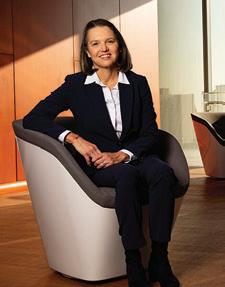
“Katrina is well-known to the Columbia community,” wrote David Greenwald and Claire Shipman, co-chairs of the Trustees of Columbia University. “She has transformed the health sciences at Columbia.”
Armstrong serves in three other positions at Columbia since arriving in 2022: She is CEO of the school’s Irving Medical Center, serves as executive vice president for Columbia’s Health and Biomedical Sciences, and is the Harold and Margaret Hatch Professor.
Greenwald and Shipman wrote that Armstrong “has distinguished herself as a physician, investigator, teacher and leader with a unique ability to listen actively to all voices, incorporate lessons from across disciplines, advance innovative teaching that positions learners of all backgrounds for success, and bring together teams from across communities to work together toward a common purpose.”
Armstrong’s recent research examined health disparities in rural areas, an effort that included partnerships with Lakota tribal communities and groups in South Dakota. She has also focused on exploring the challenges to mental health in the United States.
In her first presidential statement to the university, Armstrong acknowledged the recent challenges the school had seen and her faith they could be overcome.
“I am acutely aware of the trials the university has faced over the past year. We should neither understate their significance, nor allow them to define who we are and what we will become,” she wrote. “Never has it been more important to train leaders capable of elevating society and addressing the complexity of modern life. Columbia University has a long history of meeting the moment, and I have faith that we will do so once again.”
After graduating from Indian Springs, Armstrong received her bachelor’s degree in architecture from Yale University, a doctor of medicine from Johns Hopkins University, and a master’s degree in clinical epidemiology from the University of Pennsylvania, where she began her academic career.
She served in numerous positions at Penn, including physician-scientist fellow, professor, chief of general internal medicine, associate director of the Abramson Cancer Center, co-director of the Robert Wood Johnson Clinical Scholars Program, and director of research at the Leonard Davis Institute of Health Economics.
In 2013, she became the first woman to serve as physician-in-chief at Mass General, Harvard’s teaching hospital, and became chair of Harvard’s department of medicine. Her first day there was during the Boston Marathon, where two bombs were detonated near the finish line. Over three dozen people who were injured in the blasts wound up at Mass General
Photo by Jörg Meyer/Columbia Univ
Katrina Armstrong, M.D.
that day.
At Mass General, she founded the Center for Educational Innovation and Scholarship.
While protests and encampments over Gaza roiled the Columbia campus in the past year, in her medical role Armstrong was mainly on the sidelines. The Forward reported that on Oct. 9, she had a statement, co-signed by the deans of Columbia’s schools of nursing, public health and dentistry, calling on students to “come together and to embrace each other with compassion and empathy.”
While the statement said “the terrible violence and loss of life we witnessed over the weekend following deadly attacks on Israel leave every one of us shaken and deeply concerned about the days ahead,” it did not mention Hamas or call Oct. 7 a terror attack, a common omission that led to condemnation from pro-Israel leaders.
On Nov. 2, she referenced the conflict in remarks welcoming colleagues to a medical school summit on diversity, equity and inclusion. There, she noted the “basic facts” that Hamas was a terrorist organization.
She added, “We must describe Hamas as it describes itself — as an entity openly committed to the destruction of Israel and to attacking the Jewish people — to provide our Jewish colleagues the comfort that comes with knowing that others understand what occurred on October 7 and the terrible psychological impact of that terrorist attack.”
Posting the speech to the medical school website, Armstrong noted that “while antisemitism is a priority topic for any DEI summit, it has now taken on a pressing sense of urgency and requires a deep commitment across the University.” She also referred to the “humanitarian crisis in Gaza.”
In April, she again co-signed a letter by the deans of Columbia’s schools of nursing, public health and dentistry, this time about the importance of freedom of speech. It also repudiated the “hateful language, calls for violence and the targeting of any individuals or groups based on their beliefs, ancestry, religion, gender identity or any other identity or affiliation.”
Brian Cohen, executive director of Columbia/Barnard Hillel, told Jewish Insider that Armstrong is a “strong leader” who has always been responsive to issues he has brought up.
The university has not said how long she will be in the interim position.
Shafik, in her resignation statement, said “I have tried to navigate a path that upholds academic principles and treats everyone with fairness and compassion. It has been distressing — for the community, for me as president and on a personal level — to find myself, colleagues, and students the subject of threats and abuse.”
She has taken a new position with the Foreign Secretary of the United Kingdom at a time when Britain’s new government is distancing itself from Israel.
The Council on American-Islamic Relations called on Armstrong to “protect the free speech rights of students, meaningfully engage with students regarding their reasonable demands, and take steps to sever the university’s financial relationship with human rights abusers.”
CAIR “welcomed” the resignation of Shafik, who they said “called on law enforcement to disband diverse and largely peaceful protests against the Israeli government’s genocide in Gaza and Columbia’s alleged financial connections to the Israeli government.” They added that the New York Police Department’s “violent” crackdown on an encampment led to the activists occupying and renaming a university building.
Even with the resignation, on Aug. 18 anti-Israel activists gathered outside Shafik’s apartment, screaming obscenities at her. A week earlier, activists painted Hamas symbols and released crickets and mealworms at the building where the university’s chief operating officer lives.
On X, CU Apartheid Divest stated “It doesn’t matter who you replace

For kids like Gwen •
Because Gwen came to Children’s for the diagnosis and treatment of her blood disorder, she received the best care available thanks to ground-breaking research made possible by clinical trials for cancers and blood disorders. The research happening today will lead to future cures, and it is happening here at Children’s of Alabama.
Shafik with, our demands remain the same. Columbia must divest. We will not stop. We will not rest. We are committed to a Free Palestine within our lifetime.”
On Aug. 21, Columbia University was subpoenaed by the federal government for documents related to an investigation into campus antisemitism.
“The committee today issues a subpoena due to Columbia’s repeated failure to fulfill priority requests by deadlines that elapsed prior to your accession to the university’s presidency,” Rep. Virginia Foxx of North Carolina wrote to Armstrong.
“While the committee must move forward with compulsory process as previously indicated, we sincerely hope that Columbia’s new leadership will result in increased cooperation,” Foxx added.
Per the subpoena, Armstrong must appear before the committee in the Rayburn House Office Building on Sept. 4 at noon.
University administrators “have slow-rolled the investigation, repeatedly failing to turn over necessary documents,” Foxx said, showing “a continued pattern of negligence towards antisemitism and a refusal to stand up to the radical students and faculty responsible for it.”
Some of the documents in question are related to a misinformation campaign where anti-Israel activists claimed they had been sprayed with army-grade chemical weapons, when in reality it was a counter-protestor using “fart spray” available on Amazon; whether student leader Khymani James, who was banned from campus after posting a video saying “Zionists don’t deserve to live” was indeed expelled or is back on campus; and regarding Professor Joseph Massad, who called Oct. 7 “astounding” and “awesome.”
Additionally, of the 22 students arrested for the takeover of Hamilton Hall in April, 18 remained in good standing, three received interim suspensions, and one earned probation,
HELPING BUYERS & SELLERS IN BIRMINGHAM SINCE 2004
Ashley Lewis and the Fred Smith Group employ an aggressive marketing plan unlike any other Realtors in the area. We believe in marketing beyond the sign, and go the extra mile to help our clients. Our goal is to sell your home or property for the most amount of money in the least amount of time.


which Foxx characterized as a “white flag in surrender” and “a get-out-of-jail-free card.”
A week before Shafik’s resignation, three Columbia deans resigned over controversial text message exchanges where they mocked Jewish and pro-Israel students while attending a May 31 panel on campus antisemitism. The texts dismissed claims of antisemitism, suggested the controversy was being exploited for “fundraising potential” and questioned whether Jewish students were actually being kicked out of student groups. They also used vomit emojis in response to some of the speakers.
Meanwhile, for the first time in over 20 years, the prestigious Jewish high school Ramaz on the Upper East Side does not have a graduate going to the college at Columbia, the New York Post reported. One is attending the School of General Studies and three are going to Barnard College, which is a women’s college affiliated with Columbia. According to the school, the atmosphere at Columbia was a factor.


community
Different this time
Olivia Mannon is once again an Israel lacrosse silver medalist, but Oct. 7 affected the atmosphere
For the second time, Olivia Mannon, who grew up in Birmingham, won a silver medal at the Women’s European Lacrosse Championship, this time as part of Team Israel in the 2024 competition. But she found this year’s tournament in Portugal to be a very different experience than when she was on the team the last time the tournament happened, when Israel was the host in 2019.
While she emphasized that the tournament was an “amazing experience” and she is “so grateful” for the opportunity to once again represent Israel at the highest levels of lacrosse, the war against Hamas and international hostility to Israel were in the background, and she said it was the first time she had been in a situation where her team was seen as a “villain.”
For example, during the championship game against England, parents of the Israeli team sat on the Israeli side, while all the other teams and their entourages were on the England side of the field.
Still, Mannon’s recollections are mainly about the match itself, and how the result was disappointing. “We looked so promising during the pool play,” she said. “We kind of came out flat and didn’t look like we were ourselves… It didn’t seem like things were going our way.”
But she quickly emphasized that “we did great. We had a very good team… We placed second, which was phenomenal. We had four of our native Israeli girls who played almost every game and scored, which is huge for the development of women’s lacrosse.”
England took home its fourth consecutive European title, and eighth


community
out of 12 overall, with that 12-5 win on July 20. The game was a rematch of the 2019 final in Netanya, which England won, 10-7.
Entering the tournament in Portugal, Israel was ranked second in Europe. They began pool play against Switzerland on July 11, with Mannon as the team’s face in promotional graphics online. Israel won, 22-6.
On July 12, Israel took down Poland, 19-2, then swamped Latvia, 20-2. On July 15, they concluded pool play undefeated, beating Germany, 13-5.
Israel’s dominance continued with a win over Italy, 19-5, setting up a semifinals match with Wales, which Israel also dominated, 14-4.
For Israel, it was the second silver medal in the tournament. In all three appearances, Israel has placed in the top four. Israel had four of the top five points earners in the tournament, with Hannah Hilcoff, Jordan Lipkin, Zoe Martin and Jackie Stoller each having over 27 points in the seven matches.
For the Israeli team, this was an opportunity to build momentum from the second place finish in the 2019 European Championship, and a successful run in 2022. Due to timing, Israel had to split its squad between the World Championships in Towson, Md., and the World Games in Birmingham, where Mannon had a homecoming with the Israeli team.
Israel had its best-ever result in the World Championship, placing sixth in the world, and then bested it by placing fifth in the World Games.
By placing in the top seven in Portugal, Israel qualified for the 2026 World Lacrosse Women’s Championship in Japan in 2026. There were 19 teams in the tournament.
Mannon played in all seven matches of the tournament, but as a defensive player did not score. She was named Player of the Game in the quarterfinal win over Italy.
“That was unexpected,” she said. “Typically you don’t see defenders get a ton of accolades,” and most of the statistics relevant to defense were not being kept.
The recognition was special because of how long it has been since her college career. “I haven’t been playing, really, the last two years, and I could come out and hold my own. That was gratifying.”
Mannon moved to Birmingham in fifth grade, having already competed in lacrosse in Maryland. She attended Altamont School and played soccer there, but had to play for Mountain Brook High School because Altamont did not have lacrosse. She signed with Fresno State in 2015.
At the World Games, she had the opportunity to show her teammates where she grew up. A few of her World Games teammates were on the team in Portugal.
Playing for Israel in Birmingham was “a full circle moment for me,” she said. “A couple of the referees I recognized from when I was playing in high school.”
A highlight was a Jewish community welcome for the Israeli athletes at Temple Beth-El. “The Jewish community was so welcoming and warm. It was very special, knowing I was representing that community I grew up in, the Temple I grew up in, had my Bat Mitzvah in… hosting the Israeli athletes in celebration and also coming to the games. It was very special.”
This summer, her parents, who now live in Omaha, flew to Europe for the tournament to see “their adult child running around on the field,” since they weren’t able to take much time off when they were at the University of Alabama at Birmingham to go across the country when she played at Fresno State.
Currently, Mannon is the legislative director for Rep. Nancy Nathanson in the Oregon House of Representatives. This past year, she was an assistant coach with the women’s lacrosse team at Williamette University.
Different vibe
Mannon said she was anxious before this summer’s tournament — with missing work for almost a month, wondering if her skills were still at the level needed, and the security situation. “I took that leap of faith that

things were going to work out okay and that we were going to be safe, and that is exactly what happened,” and she was able to concentrate on performing as an athlete, despite the background noise.
If there was a protest during a game, the mindset was “we’re in the middle of the game… we have to focus and get this win.”
In the past, training camp in Israel was not mandatory before going to championship tournaments. Last fall, Israel Lacrosse changed that and made it part of the process, and kept it as the plan after Oct. 7. “It never wavered,” she said. “I know they were concerned about athlete safety but from the Israeli perspective, it was safe to have training camp in Israel because we are protected by Iron Dome, the IDF.”
When she arrived in Israel, “in a weird way, I felt really safe to be a Jew for the first time in months,” because of how the international community and American media have been portraying Israel’s war against Hamas, and it is difficult to wear an Israel lacrosse shirt in a place like Portland, where there is a lot of anti-Israel activism.
While she was there long after the Oct. 7 attack, she could “still feel the pain and hurt” in the country. “Oct. 7 happened yesterday for people in Israel. I don’t even know if scar is the right word, because it feels so present. It is still a big wound on the nation.”
She reflected, “when we thought about playing, representing Israel and what that meant, it seems a lot bigger this time than it has before,” and having training camp in Israel was “very important, to understand what we were playing for.”
Mannon said “Jews should have a land and be free of religious persecution… Israel embodies that, and Jews have been living in that land for thousands of years. So to go back and remember that, as we walked through Jerusalem as a team… I felt a lot more resolute. That was a
good reminder.”
It also strengthened them, as “we’re now representing a country that has been criticized a lot.”
They had a security briefing before leaving Israel, and certain protocols to follow in Portugal. The main thing was to not be identifiable on the street as Israeli, and if they went out, to do so in groups.
“We had more frequent protests” as the games went on. In the stands, some anti-Israel protestors ran up and snatched an Israeli flag from parents of Israeli team members.
At one point, they had to start bringing a change of clothes to the field, so they would not be identifiable as the Israeli team as they waited for their bus. “We had to blend in.”
The tournament was the next step in the development of lacrosse in Israel. “It’s about growing the game,” she said. “Our performance as a national team says a lot to the government” in terms of where to allocate sports funding.
While Israel qualified for the World Championships by placing second, another possibility is on the horizon, as lacrosse will be in the Olympics starting with the 2028 Games in Los Angeles. Mannon said it will be the Sixes format used at the World Games, and only six to eight teams will qualify. “If Israel is one of them, who knows?”
The thinking is “wow, we have the opportunity to medal in this. What does this mean for Israel, what does this mean for sports in Israel, what does it mean for female athletes, and for Israel to get to the Olympics in lacrosse would be so meaningful,” she said. “Even if I’m not a member of that team, I would love to go see them play.”
For this tournament, “I feel extremely fortunate that Israel lacrosse wanted me back, to be a veteran. To be involved with them as long as I have been has given me the chance to do something greater than myself.”




Southern Jewish New Year
By Anat Sultan-Dadon Clarity
in the Face of Adversity
“May the outgoing year and its curses come to an end, and may the new year and its blessings begin.” We recite these words each year as we welcome Rosh Hashanah, but this year, their meaning feels especially profound.
This past year has been defined by unimaginable pain, a deep and continuous pain since Hamas’s horrific October 7 terror attack on Israel. The loss of so many precious lives, the anguish of our brothers and sisters still held in captivity in Gaza, and the ongoing fight for our survival weigh heavily on us. We stand at the dawn of a new year while the dust has not yet settled from the earth-shattering moment that has changed the world as we knew it.
Yet even in the face of these painful curses, it is important to also acknowledge the blessings. We are fortunate to live in a time when the Jewish people have reclaimed their sovereignty in the land of Israel — a dream generations of our ancestors longed for. Today, we have the ability to defend ourselves, the power to control our destiny. October 7 was a stark reminder that evil still exists and that there are those who continue to seek our destruction. But we are not powerless.
Our people’s strength and resilience — our superpower — has shone brightly in this difficult year. Heroism is embedded in our history, from biblical times to the modern State of Israel. Our history is filled with ordinary men and women rising to extraordinary challenges, and this past year has been a shining example of that. On October 7 and in the war since then, Israelis from all walks of life have rushed to help — soldiers, civilians, security forces and volunteers. They rushed not from, but toward the danger, risking their lives to save others, demonstrating the unshakable will and commitment to one another that has defined our people for millennia.
Beyond Israel’s borders, the Jewish people’s support has been remark-
Pushing back against antisemitism

A self-described group of Presbyterian “Bible study grandmothers,” led by Joan Kendall, held their second “push-back” against antisemitism in downtown Homewood on June 27. The group, having seen enough anti-Israel demonstrations, decided to make their own statement and held their first impromptu event in May in front of Mountain Brook City Hall, in support of their Jewish neighbors. The Jewish Community Relations Council expressed appreciation for the group, and a few members of the Jewish community joined the Homewood event.
Photo courtesy Sherrie Grunfeld
community
able. Here in our Southeastern region and across the globe, our brothers and sisters have stood with us, embodying the age-old value of communal responsibility, that all Jews are responsible for one another. This support has strengthened us, proving that Israel’s strength comes not only from within, but also from the unique bond with our Jewish brothers and sisters in the diaspora. Though we may differ in location, views, or affiliations, our shared identity unites us.
The late Israeli poet Haim Gouri was known to respond to the question, “How are you?” with a simple yet profound statement: “I am as my people are.” Many of us have struggled with that question this year. How can we say we are fine when the blood of our brothers and sisters cries out from the earth? When our brother and sisters are crying out from the dark tunnels in Gaza? When our beautiful children are paying with their lives in the defense of our future? But at the same time, how can we honor their memory if we do not live fully, appreciating the blessings of our peoplehood and our sovereign nation?
As we approach Rosh Hashanah, I would like to ask each of you — in the face of the rampant antisemitism, hold your heads high, stand tall with Jewish pride. Do not let the voices of hate confuse you. The fact that Israel must defend itself from those who seek its destruction does not mean that we are in the wrong. When faced with an enemy that seeks our annihilation, we have two choices: fight or be slaughtered. Our choice is clear and we must not apologize for doing what any sovereign nation would do — defending our people and our homeland.
The declared goal of the Iranian regime and its terror proxies is not political, it is genocidal. And their fanatical agenda extends far beyond Israel and the Jewish people. While the hate filled rhetoric in the international arena may be loud, we have truth on our side. Our path is clear, grounded in the same morals and values that have guided us for millennia. We will fight and overcome this evil, because we have no other choice. And when the time comes, when we face leaders brave enough to choose the path of peace — as others in the region have done — we will pursue every avenue to achieve peace, for the sake of all our children.
May the coming year bring the long-awaited return of all the hostages. May it be a year of renewal, healing and rebuilding. And may we find the strength to enjoy the sweet blessings that surround us.
L’Shana Tova U’Metukah.
Anat Sultan-Dadon is Consul General of Israel to the Southeastern United States. Based in Atlanta, her seven-state territory includes Alabama and Mississippi.


Polina Schlafer Wheeler, REALTOR
“Putting You First since 2009”
Crye-Leike - Oxford 1310 University Ave. Oxford MS 38655
Direct 662.401.4632
Office 662.234.5344
polinawrealtor@gmail.com https://oxford.crye-leike.com/


Alabama is one of three states who currently have an ovarian cancer car tag. The Drive Out Ovarian Cancer car tag raises money for research in hopes that one day, doctors will discover an early detection test for ovarian cancer, so that women will be tested for this insidious disease at their annual checkups just like cervical and breast cancers.
The mission of the Norma Livingston Ovarian Cancer Foundation (NLOCF) is to raise funds for ovarian cancer research and to increase awareness about the risks, symptoms and treatments of this disease.
The net proceeds of the $50.00 are distributed to the NLOCF to be used for ovarian cancer research at the UAB hospital. The Norma Livingston Ovarian Cancer Foundation is a 501(C)(3) nonprofit organization. Your $50 contribution is tax-deductible.
Southern Jewish Health
A family united in wellness
By Lee J. Green
Birmingham’s Rousso family is united by smiles.
Daniel Rousso, who co-leads Rousso Adams Facial Plastic Surgery, beams with pride when he talks about his kids — Emily and Craig — both of whom are successful dentists as well as involved members of the Birmingham area Jewish community.
“I’m extremely proud of my children,” said Rousso. “They’ve blazed their own trails and worked very hard to achieve their goals of having their own practices. Plus, family, community involvement and balance are so important to them.”
Earlier this year, Emily Rousso opened her own pediatric dentistry office in Homewood. Going into the medical field was something she showed an interest in at a young age.
“I remember coming to visit dad at the clinic when I was young and being fascinated by what he did. I knew he helped people and it was something I wanted to do,” she said. Both she and her younger brother, Mountain Brook Smiles Owner Craig Rousso, worked with their dad while in high school.
While at the University of Alabama at Birmingham trying to decide what she wanted to focus on, she talked to a friend in the Jewish community, her pediatric dentist Dr. Stephanie Steinmetz. “She invited me to come shadow her and I learned so much. At about the same time, Craig said he was going into dental school. I felt like the signs were there that this is something I should pursue,” said Emily Rousso.
Craig Rousso graduated with a degree in Biology from the University of Georgia before graduating from dental school at UAB. Both he and Emily completed their residencies in southern California – Craig at UC-Santa Barbara and Emily at USC.
“When I was 13, a friend of the family was president of the Ferrari Club. When I found out she was a dentist, I really sunk my teeth in it,” Craig said. “It’s something that affords us the opportunity to do what we love and to allow a good career/life balance.”
In January 2020, he took over leadership of Mountain Brook Smiles, which has its office just a couple of buildings over from where his dad’s office is on Highway 280 in Mountain Brook.
It was about that time that Emily started planning her own practice. But Covid hit and later that spring, she and her husband learned they would be having a baby girl.
Charlotte was born in December 2020, and “I took a year off and came back to do dental surgery before spending a couple years working parttime out of Craig’s office,” she said. “Our younger daughter, Julie, was born last July and we broke ground on our current space in November.” Rousso Pediatric Dentistry opened this past June.
The Rousso kids said that there is some crossover between what they do and what their father does, especially as it pertains to cosmetic and aesthetic dentistry.
Craig said, “we’ve really been big on cosmetic dentistry. We’ve used
Three practices: Emily Rousso, Daniel Rousso and Craig Rousso
The Ovarian Cancer Research Tag may be
Southern Jewish Health
Botox and fillers to help our patients and I was in on the early side of these being used in dentistry thanks to the knowledge I’ve gained from dad. I’ve consulted with him many times.”
Emily’s undergraduate degree is in art history, so she also enjoys an aesthetic approach to what she does. “There is a medical science and an art to what we do,” she said. “And we’ve always seen the art in what our dad does. We saw that he works on the outside (of the face) and we work on the inside.”
But the health/wellness family connections don’t stop there. The matriarch of the family, Nancy Rousso, used to work as a social worker for Collat Jewish Family Services and more recently was a yoga instructor.
The Roussos said they are all proud to be involved in the Birmingham Jewish community. Craig’s kids – 3-year-old Hannah and five-month-old Lilly – are in the Early Childhood Learning Center at the Levite Jewish Community Center and Emily’s daughters are at Chabad. The families have also been members of Temple Emanu-El for years.
“It’s really cool to see people who you grew up with who are coming to see me as patients and bringing their kids to Emily,” said Craig.
Emily adds, “it’s all part of a wonderful legacy that my mom and dad have built of helping people and community involvement. It is something we appreciate every day.”
A one-on-one approach to fitness
By Lee J. Green
The Fitness Center continues to run strong after more than 30 years of a focus of hands-on, one-on-one personal training.
“Our mission is to help people improve and maintain their fitness through a friendly, safe environment,” said Vic Nigri, who co-owns the Mountain Brook center with his wife, Beth. “All we do is personal training. It’s a very hands-on approach that has worked for us since 1994.”

Dan Tourtellotte, one of the trainers at The Fitness Center, highlighted the variety of services they offer, including personal training, strength training, mobility, balance, cardio, sports enhancement and related wellness programs.
“We tailor our training to meet each individual client’s (fitness/wellness) goals,” he said. “And we are very flexible to adjust our plans based on a client’s changing needs.”
The experienced training staff also includes David Reed, who has been with The Fitness Center for 30 years, and John Crowder, who has been there for 27 years.
Vic Nigri is from New York but moved to Birmingham in the late 1980s. He had been working as a personal trainer when he was approached about opening a location of a fitness training company that had a few other locations.
In 1994, he opened One to One Personal Training as a franchisee and ultimately acquired the location and changed the name to The Fitness Center.
“We’ve been successful focusing on building relationships and we have a lot of clients who have been with us for many years,” said Nigri. “That’s the best testament that what we do is working.”
Beth Nigri sends all members a newsletter with fitness education, nutrition advice and recipes, along with articles on a wide range of wellness topics. “I worked for many years as a schoolteacher,” she said. “Education plays such an important role in wellness. We give them all the tools to help them to lead healthy lives.”


Gray Maddox and Ashley Turner, owners
Our Menus
Southern Jewish Health
Fighting childhood cancer at Children’s of Alabama
In January 2021, Jaxan Jernigan was a vibrant 6 year old with a love for marina life and being out on the water. That’s when he started experiencing headaches. His parents, Craig and Lindsey, thought that perhaps he was simply dehydrated. After all, he was an active child. But just days later, the problem progressed: he suddenly became unresponsive and had to be rushed to the hospital. “He was just sitting on the bed playing with his iPad when all of a sudden he was out of it,” Lindsey explained. “He wasn’t responding to me, and at first, I thought he was just playing around. But it quickly was evident that something was really wrong.”
Jaxan was having seizures, the family soon discovered, and he was rushed to the local hospital in Pensacola. But nothing prepared them for the moments that came next. After a series of tests, the family received the news that Jaxan had a large brain tumor. “In the moment they told us, it was hard to believe it was even possible,” Craig said. “We literally just went from having a healthy child to one that was prepping for major brain surgery.”
The hope was that the tumor was benign, but it wouldn’t be known until it was removed. Two weeks later, the family was waiting for what was to be a six to seven hour surgery to be completed. It ended up taking 14 hours. “We were obviously beside ourselves the whole time, but once it was over, the doctor let us know that everything went well,” Craig said. But they also received the news that Jaxan’s tumor was a central nervous system (CNS) embryonal tumor, which is a high-grade, aggressive tumor. “I don’t think we were in a state of mind to process what that meant; we were just relieved he survived the surgery,” Craig added.
That relief soon turned into a drive to fight the disease with all they had and find the best possible care. That led them to Children’s of Alabama. They
learned about a clinical trial that was taking place there, led by Dr. Girish Dhall, director of the Division of Hematology, Oncology and the Blood and Marrow Transplantation program. With the help of some friends, the family was able to get him in just one day before the deadline. “When we made it to Children’s, it immediately felt like they were there for him and for us and that we would all get through it together,” Craig said. “That was the first time we felt like there were people helping us and maybe things were going to be OK. But we still had no idea what mountain we were about to climb. All we knew was that we felt so much better after meeting Dr. Dhall.”
Jaxan started the Head Start 4 clinical trial, which included seven rounds of high-dose chemotherapy over the course of seven months, as well as three stem cell transplants. After that was over, he then had 30 rounds of brain and spinal radiation every day for 30 days. “No one likes being stuck in a hospital for so long, but they did all they could to make the terrible nightmare better,” Lindsey said. “The child life specialist would come by every day, and he’d have music and art therapies when he felt like it. They even set up an inflatable Nerf gun target game in the hallway and played with him. It really meant a lot.”
Nearly eight months later, with the final radiation complete, Jaxan was considered to be in remission. Though he continues to visit Children’s every few months for scans to ensure remission continues, Jaxan continues to thrive. Today, he’s back to an active life filled with creativity and joy and plenty of time out on the water. “He’s living life to the fullest and is a very carefree and happy child,” Lindsey shared. “We owe so much of that to Dr. Dhall and the entire staff at Children’s. It was obvious that everyone at Children’s genuinely cares, and that’s truly inspiring.”


Acrobatic stars to New Orleans recluses
Film preserves the adventures of sisters Nita and Zita
The world barely noticed when sisters Flora and Piroska Gellert finished their time on it, six years apart, with only the officiating rabbi and a neighbor attending their funerals in the pauper’s section of Hebrew Rest Cemetery No. 1 in New Orleans.
But when that neighbor, Betty Kirkland, was given permission to enter the house of the reclusive sisters and sell their belongings, she found a story about two trailblazing Jewish women who traveled the world as acrobatic burlesque dancers, inspiring other performers and creating a treasure trove of art that filled the house on Dauphine Street in the Marigny.
Their story is now being told in the film “The Nita and Zita Project.” On Sept. 19, the film was screened at the Museum of the Southern Jewish Experience in New Orleans, followed by a talk with filmmakers Marci Darling and Sharon Gillen.
The sisters left Nagybanya, Hungary, fleeing antisemitism, and immigrated to the United States on The Reliance, arriving at Ellis Island in 1922, just before the U.S. drastically cut back on accepting immigrants. Based out of New York, the new U.S. citizens performed as Nita and Zita, combining burlesque and acrobatics on the way to becoming world famous. With two steamer trunks filled with costumes that they made themselves, they traveled the world, performing in France, Manila, Shanghai, Havana, Buenos Aires and many other locations.
Around 1929, New Orleans became a regular performance stop for them as they toured, and in the 1930s their “home address” was some-

where in New Orleans, changing every so often.
In the 1940s they lived in Arizona for a few years, but little is known of their time there other than real estate records. In 1948 they bought the house in the Marigny. After dancing for a few more years and having a teaching studio for a time, they retired and became recluses.
Devoted to their craft, neither sister ever married. Flora died in 1985, and Piroska died in 1991. After their only living relative gave Kirkland permission to dispose of their things, she found thousands of pieces of

Senior Care
Experts in aging


community
handmade clothing throughout the house, their old costumes, hundreds of performance photos, handmade bead curtains, furniture that they had painted with all manner of designs and sponge paint patterns on the walls. This led to an estate sale that lasted five years.
Exploring the mystery
Darling is a bestselling author of mystery novels set in New Orleans who has worked as a professional belly dancer, circus acrobat and burlesque dancer for 20 years. She toured as a dancer with The Go-Go’s, the B-52’s and Paul McCartney, and with numerous famous Middle Eastern performers.
Among her television credits was as the belly dancer for John Boy’s bachelor party in The Waltons TV Special.
She has also written a book about grief, “Divorce Diva: Navigating Grief and Loss with Hope, Humor, and Chutzpah,” after her marriage fell apart, her father died, her mother was lost to dementia and her best friend committed suicide, all within one year starting in 2017.
Darling learned about Nita and Zita in 1997, when she wandered into Judy’s Collage, “this junk treasure shop on Chartres Street” and saw numerous vintage costumes of theirs hanging from the ceiling. “I had been in a bar the night before and saw a picture of them” and was drawn to their vintage look. She “started hearing about them every time I turned around.”
After she returned to Los Angeles, a New Orleans Oyster dancer came to California to put together a show, and wanted to do an act about Nita and Zita. “I had a burlesque act with my dance partner and best friend,” Kim Murphy, who did contortionist acrobatics, and they incorporated Nita and Zita into their routines, performing the act as Honey and Vermilion every Thursday night at the Viper Room in Hollywood before taking the show worldwide.
Darling would eventually move to New Orleans, where “there was a lot of lore and mythology about them, but there wasn’t any real facts about them. People had heard through the grapevine,” Darling said.
About two years ago, she woke up from a dream and knew she had to tell the story about Nita and Zita. With a lack of source material, she figured it would be a five-minute short filmed on her phone about their impact on artists. It wound up being much more.
Through the New England Genealogical Society, she was able to find their travel manifests. “I just started following all the threads and was completely amazed that I was able to corroborate the stories.”
In January 2023, Darling approached Gillen, who had been looking at a career change, and specifically wanted to connect more deeply with her Jewish ancestry. “So when Marci approached me with this project about these Jewish women, I immediately said yes… This is the project” that she wanted to dedicate her time to. “When I found out that they were actually from the same region of Eastern Europe as my ancestors, I felt it was something I needed to pursue and needed to follow, and it was the universe’s way of showing me my next life step.”
Not only that, after the film was finished they discovered that the sisters’ mother’s last name was the same as some of Gillen’s ancestors. “We’re looking to see if there might be some connection,” Darling said.
For Darling, this film was also a way to honor the memory of her dance partner, Murphy, who died in 2018.
Gillen said “healing through creativity is the theme of the movie.”
Darling noted that the sisters grew up during World War I, lived through the White Terror, were in Shanghai during the Battle of Shanghai in 1937, “they were dancing in Berlin, in Budapest in 1939, and they went through so many horrible things, traumatic things,” but “they never lost their joy, they never stopped dancing, never stopped creating.” Even after they could no longer dance, they kept creating.
She said a little known secret in the world is that the opposite of depression is not joy, it is expression. “Creativity can really help people process and make it through difficult times.”
community
They continued to do research on the “very cherished New Orleans characters” that people knew very little about. “People had been seeing their items around, loving them and buying them, there are lots of shop owners in the Quarter who kept altars to them, with all their things, and collected their items,” Darling said.
She added that they found people who “saw them as children, who lived in their neighborhood… They did not interact with their neighbors or the community at all, except people saw them walking down the street in their finest.”
Their finest was self-made clothing, as they never just bought something off the rack and wore it. Darling explained that one dress could have been made from 400 pieces, taking found objects and remaking them in their style. “From tin can crowns to tin can belts, cigarette foil rolled up into pom-poms and sewn onto hats… they made everything their own.”
The estate sale ensured their story was spread far and wide, with artists all over the world influenced by their style.
The story was also preserved through a stage show, “Nita & Zita,” written and directed by Lisa D’Amour, with a score by New Orleans jazz pianist Tom McDermott. The show premiered in New Orleans in 2001, then was successful Off-Broadway in New York, winning an OBIE Award. It returned for a couple more engagements in New Orleans in 2005.
In 2020, during the height of the pandemic, Alan Smason coordinated a Zoom broadcast of the show, with the original cast from 15 years earlier.
For Darling, a challenge in doing research was the constant mis-spelling of their names in the press, as well as them using numerous variants of their names, and their father had changed the family name from Grun to Gellert.
But it turned out that there was definitely source material available, as the sisters saved their flyers and newspaper clippings. “They had newspaper clippings in Hungarian from 1919 that was rave reviews” of their dancing in Transylvania. “A lot of the information is stuff that they kept, which then their neighbor kept,” Darling said. When Kirkland went into a facility because of Alzheimer’s, another neighbor rescued the documents from being thrown out, and they are now at the Historic New Orleans Collection, where they were donated “just at the same time we had started our idea.”

The documents also include tickets from the luxury ships they traveled in, and invitations from the ship captains, as ships used the opportunity to mingle with celebrities as a selling point. “I could have done a documentary just on the ships,” Darling reflected. One of the ships was the “spectacular” Leviathan, which was famous in the 1920s and whose orchestra released their own album. They also did engagements for months at a time in Panama, which Darling discovered “because they saved the contracts.”
Much of the research is preserved on their website, nitazitaproject. com, and Darling is writing a piece for the Southern Jewish Historical Society’s journal.
The film premiered in March at the Salem Film Festival, and it has started winning awards on the film festival circuit. It also had a sold-out screening at the New Orleans Museum of Art.
It will be at the Fort Lauderdale International Film Festival in November, and a possible Arkansas screening in February.
“It’s a scrappy little tale, so quirky and fun,” Gillen said. As first-time filmmakers, they are currently exploring distribution.
“The drive to make (the film) was to tell the story of outsider artists, marginalized women. It’s a very unusual story that was so inspiring to so many people,” Darling said.
Gillen added that after October 7, “I feel so fortunate to have found this Jewish story to talk about… it is so important to tell Jewish stories, now more than ever.”
Darling noted that one other result of the movie is “smashing the stereotypes of Jewish stories, dancer stories, women’s stories, artist stories. Artists are greatly underappreciated in our world.”


New Orleans Southern Jewish Dining

Rosie’s on the Roof
1000 Magazine St., New Orleans (504) 528-1941
This stunning Higgins Hotel rooftop bar and lounge with sweeping views of the New Orleans skyline is the perfect place to start — and finish — your night in New Orleans. Serving small plates, sandwiches and specialty cocktails.

English Tea Room
734 E. Rutland Street
Historic Downtown Covington (985) 898-3988
The Windsor High Tea is comprised of sandwiches, mini-savories, mini desserts, two chocolate dipped strawberries, two scones with house-made clotted cream, lemon curd or preserves.

Galatoire’s
209 Bourbon Street (504) 525-2021
The grand dame of New Orleans’ time-honored restaurants, Galatoire’s is a 119-year-old, James Beard award winning restaurant located in the heart of the French Quarter.

Tal’s Hummus
4800 Magazine St., New Orleans (504) 267-7357
Serving Israeli-inspired gourmet entrees using the freshest ingredients. Specialties include falafel, hummus, pita sandwiches, platters, kebabs, salads and much more. Catering available.

Kosher Cajun
3519 Severn Avenue, Metairie (504) 888-2010
Kosher Cajun New York Deli & Grocery has authentic New York specialties — all Kosher certified. Enjoy classic eats like Reubens and matzah ball soup, plus kosher grocery staples too.

921 Canal Street, New Orleans inside the Ritz-Carlton
M bistro’s menu is an indigenous approach to the preparation of the finest meats, seafood and produce from growers in Louisiana, Texas, Mississippi and Alabama.
M Bistro

Apolline
4729 Magazine Street, Uptown New Orleans (504) 894-8881
Apolline features contemporary French cuisine with Creole influences and locally-grown ingredients. Confit Duck Bowl: Potato hash, peppers, poached eggs, cracklin and hollandaise

Cafe Normandie
1000 Magazine St., New Orleans (504) 528-1941
The Higgins Hotel’s full-service restaurant, Cafe Normandie offers an elevated dining experience showcasing French-influenced cuisine. Open for breakfast and lunch, and Sunday brunch.


Commander’s Palace
1403 Washington Avenue New Orleans (504) 899-8221
Ella Brennan said she didn’t want a restaurant where a jazz band can’t come marching through. Come for the legendary Commander’s Jazz Brunch, stay for the rollicking Louisiana charm and award-winning New Haute Creole cuisine.

Son of a
Bun
4734 Magazine Street, Uptown New Orleans (504) 510-2791
Newly opened Uptown burger restaurant serving fresh homemade burgers, hand-formed and made to order, specializing in creative burgers such as veggie burgers, lamb burgers, and tuna burgers.

Birmingham Southern Jewish Dining

Curry Corner
Now open in English Village, with authentic Indian flavors, and specialties like Butter Chicken, Lamb Rogan Josh, and Biryani. Takeout, delivery and catering services are available. 2037 Cahaba Road Birmingham (205) 201-6530

A nice place for nice people since 2002, Rojo is a casual restaurant in the heart of Highland Park, featuring Latin and American cuisine, with a large patio overlooking Rushton Park. 2921 Highland Avenue South, Birmingham (205) 328-4733

Celebrating its first anniversary in downtown Birmingham, AHKI brings Mediterranean influenced New York street food to the area, with customizable rice bowls, salads and gyros. 121 20th Street North, Birmingham (205) 518-0035

The Fish Market
612 22nd Street So., Birmingham (205) 322-3330
A Birmingham classic, The Fish Market on Southside offers the freshest seafood around, live music and an oyster bar. Private and semi-private dining available, along with catering.

Surf Hound
New from Chef Abhi, Surf Hound Club pays tribute to 1960s-70s surf community culture, with coastal style beach fare, including burgers, wings, fresh fish and signature Abhi dishes. 2721 Cahaba Road, Birmingham Mountain Brook Village (205) 747-0257

361 Rele Street, Mountain Brook (205) 238-5360
Global flavors that are fast and casual: Maro’s Asian fusion by Chef Abhi features appetizing salads, hot and fresh bowls, all crafted with a dedication to using the finest, locally-sourced ingredients.
Rojo
Maro

Abhi

Abhi serves the food Chef Abhi grew up with in Kathmandu, including his famous Momos, sushi rolls, salads, skewers, and innovative dishes with influences from Japan, the Philippines, Thailand and more.

Avine
You’ve never heard a story quite like that of Natchez, Mississippi - a city of change and transformation. Where our iconic historic homes set the stage for diverse and fascinating local characters...and our present is just as lively. Plan your experience at VisitNatchez.org


2225 2nd Avenue No. Birmingham (205) 224-5177
A French inspired wine bar and retail shop in downtown Birmingham, enjoy wines by the glass with small plates, tartines or charcuterie, or order wines by the bottle online for curbside pickup.

Taj India
3028 Clairmont Ave., Birmingham (205) 939-3805
Taj India, Birmingham’s original Tandoori Grill and Curry House, celebrates its 26th anniversary with a new location, serving authentic Indian dishes with a daily lunch buffet and extensive dinner menu.


A commitment to care.
To the Families of New Orleans
Our decision to join the professionals at Lake Lawn Metairie allows us to continue our mission to provide families the highest caliber of care in the most beautiful of surroundings. Lake Lawn Metairie proudly serves all congregations and all local cemeteries. Whether planning in advance or at the time of need, we’re dedicated to serving families with professionalism, compassion and attention to detail that is second to none.
Sincerely,
Stephen Sontheimer & Billy Henry

“All Shuk Up” GatesFest changing format
The fourth GatesFest music festival is “All Shuk Up” as it changes its format to a late afternoon and evening experience at Metairie’s Gates of Prayer.
GatesFest After Dark will be on Oct. 20 from 4 to 9 p.m., with Flow Tribe as the headliner. Additional acts that have already been introduced include Brasshearts Brass Band and Funk Monkey.
The festival will also be moving indoors, to avoid fickle weather and provide a more secure environment. The previous events had been held in the congregation’s parking lot. This year’s event will be in the sanctuary, social hall and community room spaces.
The first GatesFest was held as a way to have a music festival at a time of social distancing due to Covid, with the audience in pods throughout the parking lot.
Central to this year’s theme will be an Israeli shuk, a marketplace of local artists and food vendors, including Bodega NOLA, Bayou Bagels, Dvash and Bad Dog Babka, along with deli from the Brotherhood and Israeli-inspired drinks from the Sisterhood.
A cocktail courtyard will be set up in the Bart community room with spirits, beer, and wine donated by The Goldring Family Foundation.
As part of the festival, there will be a kumsitz, an Israeli-style singalong led by Cantorial Soloist Jordan Lawrence and friends under a tent structure. They will lead communal song and dance sessions between bands.
Tickets are free at GatesFest.org, but required for admission. Every person attending will be asked to produce their own ticket, along with photo identification, except for youth without ID. There is a GatesFest Fund as an option when reserving tickets, with proceeds going toward next year’s festival.
GatesFest sponsors include the Goldring Family Foundation, New Orleans Theatre Association, the Plotkin Family, Wells Fargo, Metairie Bank, the Middleburg Family, NOLA Detox, Henry S. Jacobs Camp, Jewish Community Day School and Humana.
Grants enhance Early Childhood security
The Jewish Federation of Greater New Orleans received a $100,000 grant from the Tepper Foundation and Jewish Federations of North America, to enhance security for Jewish early childhood programs. The funds were distributed to the New Orleans Jewish Community Center Early Childhood Center; Jewish Community Day School, Slater Torah Academy and Gates of Prayer Louise Hayem Manheim Preschool in Metairie; and the Rayner Center at Unified Jewish Congregation in Baton Rouge.
The North Louisiana Jewish Federation announced it received a $10,000 grant.
Overall, there were $9 million in grants issued to 76 local Federations in 30 states, all of whom participate in the LiveSecure Initiative to establish comprehensive security plans.
The Tepper Foundation launched the Security Fund in November 2023 and has now made grants of more than $12 million across the nation to support the security needs of the American Jewish community.


Sanders Painting
Residential Repaint Specialist
• Interior/Exterior Painting
• Wood, Plaster, & Sheet Rock Repair
Family Owned and Operated
205/563-9037

Involved Members of Birmingham’s Jewish Community

counselor’s
Spreading Kindness Daily
By Caleigh Rathmell Alevy

As I exchange pleasantries with a passerby, my children often ask, “Who was that?” Their curiosity never gets old. Sometimes, the person is a friend and I explain how I know them; but often it’s a “stranger” and I’m simply acknowledging them with a wave or a smile and a “hi.”
My kids have witnessed enough of these interactions to know that I don’t mind if the person doesn’t reciprocate my greeting. I remind them that it’s more about giving than receiving. I want to spread kindness and offer human connection, something that sometimes gets lost in today’s digitally connected world.
One of my kids usually follows up with, “Why did you say ‘hi’?”
I explain, “It’s simple, really, I want them to know they are seen. And that we are in this world together.”
When I was a teenager, I yearned to feel accepted and noticed but felt insecure and lacked confidence. Back then, I certainly wasn’t comfortable with taking the chance that someone wouldn’t reciprocate my “hello.” Then in college, I was shocked when a friend who I had known many years but had recently become close to said, “when we were younger, I thought you were snobby because you never looked at me or spoke to me.”
It suddenly became clear I had the power to create a positive impact by focusing on my surroundings, being open and friendly, and spreading kindness. To this very day, I carry that experience with me and try to greet people as often as I get the opportunity.
There is a lot of negativity, outrage and anger in our world today, particularly online. I worry about what lies ahead, especially for my children. As tempting as it is to engage around those messages on social media, I challenge myself to take in my surroundings and remember how rewarding it feels to connect with nature and the people around me. I don’t want to miss a possible opportunity to see someone’s smile or hear their voice. These fleeting moments remind me that there is goodness in the world and hope for our future.
Will you join me and challenge yourself to say hello to a stranger? It is impossible for my children to understand what the world was like before cell phones and computers; but continuing the practice of greetings models for them that engaging face-to-face carries unique value and genuine engagement. Remember too, your kindness may just be a lifeline for someone in need of a smile.
Jewish playwright’s most personal work opens the 2024-25 ASF season
By Lee J. Green
A love letter to the parents of Jewish playwright Ken Ludwig gives a heartwarming opening to the Alabama Shakespeare Festival’s 2024-25 season.
“Dear Jack, Dear Louise” – winner of the Helen Hayes Best New Play Award in 2020 – will come to the Octagon Stage, Sept. 26 to Oct. 13.
“Ken Ludwig is a master of comedy, but this play blends comedy with a deep personal and emotional connection,” said Director Risa Brainin “It’s a love story with drama of World War II as a backdrop.”
Jack Ludwig and Louise Rabiner were introduced by their fathers. At the time, Jack was a U.S. Army captain, a military doctor stationed in Oregon as he begins writing to Louise, an aspiring actress and dancer in New York City. They hope to meet someday, as the war will allow.
But as the war continues and Jack is sent overseas, it threatens to end their relationship before it begins. Ludwig tells the story of his parents’ courtship during the war, through bringing those letters they wrote to each other to life.
“It’s a very intimate story with just the two actors on the stage as they go through different locations and situations,” said Brainin. “The story evolves through the reading/acting out of the letters and becomes more interwoven as they grow closer together despite being so far apart.”
Brainin’s first time directing a show for the Alabama Shakespeare Festival was for Ludwig’s “Comedy of Errors” in 2000. In 2012, she directed an original work from the ASF Southern Writers series called “In the
Book Of,” which focuses on immigration.
The Jewish director started as an actress growing up in Chicago. She would study theatre at New York University and earn a degree from the Carnegie-Mellon University Drama Program, where she first learned directing.
“I was grateful that my parents were so supportive of me wanting to make a career in acting,” said Brainin, who traveled across the country for years as a professional theatre actress before becoming the Resident Director at the Guthrie Theater in Minneapolis and focusing on directing as well as education.
“Starting as an actor has completely informed me as a director,” she said. “I can help actors to discover what they need to discover and to look at the big picture.”
She served for several years as artistic director of Shakespeare Santa Cruz in California. Brainin currently is a freelance director and founder of the new play development program LAUNCH PAD at the University of California in Santa Barbara.
“It has been so fulfilling to act, direct and help to mentor new playwrights,” she said. “And I’m excited that my position at UCSB encourages me to travel across the country to direct shows, then pass that on to my students.”
“It is great to be back in Alabama and at this magnificent facility,” added Brainin. “I know ‘Dear Jack, Dear Louise’ will really resonate with everyone.”

What’s Your TRADITION?




Sriracha Popcorn
4 cups (2 lbs.) unsalted butter, at room 8 tablespoons sriracha sauce, or to 4 tablespoons of honey 20 cloves of garlic, minced 1 tablespoon salt 4 pinches ground black pepper
Melt butter, sriracha sauce, garlic, in a medium saucepan until blended Use about 1/8th cup of the butter per serving of popcorn. Once the butter is added to the popcorn, then add a good pinch of salt, a few dashes of Sriracha and garnish with lime zest.


Aviné
By Lee J. Green
Combining a love of wine with their experience in managing fine-dining restaurants in Birmingham, engaged couple Ashley Tanner and Gray Maddox concocted Aviné.
Critical (acclaim)
“He periodically spells my name right.” – Moses
“Yes, we gave him a graduate degree. We’re looking into it.” – chancellor, Jewish Theological Seminary
“Half of the things he says I said, I never said. Including this.” – his mother
“He knows more about Judaica than most, and you won’t find any of it in this book.” – his fourth-grade teacher
“I’ll deal with him.” – The Almighty Big G


The downtown wine bar and retail shop marries good food, wine and atmosphere.
“We love downtown Birmingham. It was our vision to give people a place where they could get some excellent wines at retail prices and some really good food that pair well together,” said Maddox. “When we saw this space (2nd Ave North in the Loft District), we fell in love and knew it would fill a niche.”
Maddox and Tanner had each worked more than 20 years for restaurants in the Stitt Group. “We learned a great deal and that gave us a good foundation,” he said. They started working on the space in June 2020 and Aviné opened in December of that year.
The wine shop carries mostly French and Italian wines in the $40 to $60 per bottle range. There is a $20 corkage fee for those who want to have those wines at Aviné while they dine. They also serve wines by the glass.
“Our wines were carefully chosen and we have a nice variety of styles,” said Maddox. “But if there is a wine out there that we don’t carry, we’ll order it for a customer.”
Aviné’s menu consists of hors d’oeuvres, tartines, small plates, charcuterie and desserts. Kosher-style items include hummus, goat cheese tarts, beef cheek sliders, chicken sous sliders, summer vegetables tartine (toast) and vanilla crème brûlée.
Most menu items come with a suggested wine pairing and Aviné also serves craft beers as well as cocktails.
The café can accommodate up to 100 people for a celebration. They also host some regular wine seminars and a music series highlighting Muscle Shoals artists the fourth Thursday of every month.
“Ashley is from the Muscle Shoals area and I’m from Huntsville,” said Maddox. “We’re proud of Alabama and want to showcase some entertainers, wines and beers from our home state.”
community
>> Rear Pew Mirror
continued from page 46
Dustin Hoffman still had many years ahead so Offenbach couldn’t know how the story would unfold. Nevertheless, this opera is still performed in various versions that were rounded out by other composers, who thus truly put the “opera” in “cooperation.”
Of course, perhaps the most famous Jewish-originated opera of the 20th Century came from the iconic fraternal collaboration of Leonard, Adolph, and Julius Marx: the 1935 film, “A Night at the Opera.”
This Marx Brothers film features scenes from several actual operas, including multiple moments from “Il Trovatore” which was composed by… the aforementioned Giuseppe Verdi.
Speaking of “A Night at the Opera,” the 1975 Queen album of the same name is often regarded as their best record. While nobody in Queen was Jewish at the time, Adam Lambert has performed with them since 2012.
That film and album might not be operas in the strictest sense, but they’re as enjoyable as a day at the races.
Doug Brook performs as two of the four opera tenors in “A Comedy of Tenors” in August/September, even though he’s a bass. To acquire the new FIVE-star rated book “Rear Pew Mirror: Reflections From the Back of the Sanctuary,” read past columns, or listen to the FIVE-star rated Rear Pew Mirror podcast, visit http://rearpewmirror.com/
Partnership programs give glimpse of situation in Rosh Ha’Ayin
The Partnership2Gether among Birmingham, New Orleans and Rosh Ha’Ayin is holding a series of Zooms about the current situation in Israel. The series began on Sept. 8 with Liat Cohen Raviv discussing leadership and education at a time of crisis in northern Israel.
On Oct. 27 at 1 p.m. Central, filmmaker Itay Ken-Tor will discuss Edut 710, Israel’s largest documentation organization dedicated to creating a video testimony database about the events of October 7. The archive will be the official documentation of the Hamas massacre, with information to be preserved for future generations.
On Dec. 1 at noon, Gabi Cohen, deputy commander of the Rosh Ha’Ayin Emergency Squad, will discuss the challenges, dangers and essential role the volunteers play in safeguarding the community.
Registration links are available through the community Federations, or on the Partnership Facebook page.


Problem Yards Our Specialty
Fiddler of the Opera
Jewish opera. Sounds crazy, no?

If one imagines fiddlers falling off roofs like chandeliers crashing to the stage floor, then it’s crazy, yes.
But, yes, Virginia, there is Jewish opera. Jewish composers have not historically been confined to their prevalence in Broadway musicals and Christmas songs. While the Jewish presence in opera is sparser than in these other musical genres, their presence is felt in both composing and sometimes in providing subject matter.
Among better-known Jewish opera composers are George Gershwin (“Porgy and Bess”), Leonard Bernstein (“A Quiet Place”), and Arnold Schoenberg (the unfinished, dodecaphonic “Moses und Aron”). But there have been numerous others.
For example, soon after composing the music for Brecht’s “The Threeshekel Opera,” featuring the hit mohel song “Mack the Knife,” Kurt Weill composed an opera called “The Eternal Road.”
Weill composed for it on the eve of World War II to shine a light on the tenuous tenor of those times for German Jews. Set in a synagogue and including melodies derived from German Jewish liturgical music, its story features Jews hiding in a synagogue throughout the night while a pogrom rages outside.
It premiered in New York in 1937 and went unstaged again until the year 2000 commemoration of Weill’s birth and death, which were 50 years apart.


This
The long gap between performances is potentially explained by — even after the piece was cut so substantially that Mack the Knife would need a nap — the opera’s running time was still six hours, making it nearly as long as most High Holy Day sermons.
column will be music to your eyes
While not Jewish, despite his first syllable, Giuseppe Verdi composed the Italian opera “Nabucco” which depicts the trials and exiles the Jews faced under the Babylonski king Nebuchadnezzar II.
Verdi is best-known for operas that retroactively provided inspiration to Shakespeare such as “Otello” and “Falstaff,” and also for his 1871 collaboration with Elton John and Tim Rice, “Aida.” This early opera about Judaic woe established Verdi’s career and is performed more than infrequently in modern times.
Giacomo Meyerbeer, a German Jewish composer, was one of the most-performed opera composers of the 1800s. He was so prominent — he was said to be as popular in his day as Beethoven — that the renowned composer and eternally mispronounced antisemite Richard Wagner eventually waged an extensive campaign against Meyerbeer, which some say ushered his legacy into obscurity.
A Frenchman named Fromental Halévy was the son of a cantor and is most remembered for his first successful opera “La Juive” (“The Jewess”) — a medieval tale about love, death, revenge, and other similar things that arise at most people’s Seder tables even today. And there’s an actual Seder scene in Act Two.

Jacques Offenbach composed almost 100 operettas which, if you add them together, do not equal 50 operas, any more than combining two Haftarahs equals one Torah.
However, Offenbach also composed the opera “The Tales of Hoffmann,” which he left unfinished at the time of his death, in part because


