The 2022–27 St. Jude Strategic Plan: Accelerating Progress Globally
The St. Jude Board of Governors approved the FY22–27 St. Jude Strategic Plan in March 2021. The following document, printed in May 2022, contains updates that reflect the expansion of initiatives across the strategic plan and core operational processes. Workforce growth numbers, financial information and other figures have been revised.
First published: April 2021
Updated: May 2022
A New Chapter
When we launched the FY16–21 St. Jude Children’s Research Hospital Strategic Plan, we knew it was ambitious, bold, even audacious. But we also knew its possibilities could be realized by a team of extraordinary individuals working toward a common mission. That’s why we posed an intriguing challenge: “If not St. Jude, then who?”
Our overarching goal was to accelerate progress—and the success has been nothing short of exceptional. We have increased the number of patients in our clinical trials, recruited world-class faculty and staff, enhanced laboratory research, invested in technology and expanded the campus. Many of those achievements occurred amid a worldwide health crisis unlike any that has gone before. And yet, there’s no time to rest on our laurels. There’s much more work to be done.
As we look to the next iteration of the St. Jude strategic plan, our mission—to advance cures and means of prevention for pediatric catastrophic diseases through research and treatment—remains at the forefront of everything we do. Now, as then, our potential is unlimited if we unite as one and move steadily toward the goals detailed within this guide. With this next chapter, we seek to accelerate our institution’s impact on an international scale.
More than 200 people contributed to creating this document. My thanks are owed to the St. Jude faculty and staff, leadership of the St. Jude Board of Governors and ALSAC for the many hours they have dedicated to the strategic planning process.
Let this blueprint serve as both inspiration and instruction as we continue in the quest to find cures and save children with catastrophic diseases.
Sincerely,
James R. Downing, MD President and CEO
St. Jude Children’s Research
Hospital
Mission
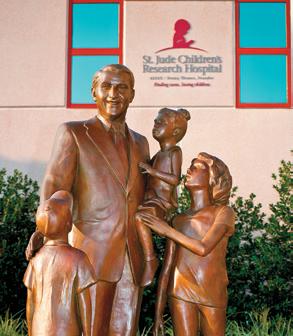
The mission of St. Jude Children’s Research Hospital is to advance cures, and means of prevention, for pediatric catastrophic diseases through research and treatment. Consistent with the vision of our founder, Danny Thomas, no child is denied treatment based on race, religion or a family’s ability to pay.
Values
At St. Jude Children’s Research Hospital, we are guided by seven core values:
Always recognize that advancing treatment for children with catastrophic diseases is at the center of everything we do.
Do what is right; take ownership of what you do.
Work with purpose and urgency—your efforts matter.
Embrace the challenge to create a new tomorrow.
Work collaboratively and help others to succeed.
Always be respectful of your coworkers, our patients and their families, and visitors to our campus.
Make the most of St. Jude resources and be mindful of those who provided them.
FY22–27 St. Jude Strategic Plan: Accelerating Progress Globally
St. Jude Children’s Research Hospital is a place of many firsts. Curative treatments for childhood leukemia, sickle cell disease and bubble boy disease were developed in our laboratories and clinics. As the first fully racially integrated children’s hospital in the South, and the first and only National Cancer Institute–designated Comprehensive Cancer Center dedicated solely to children, St. Jude is where those with a passion for making a difference come to break new ground.
We are bound by a mission that unifies, a vision that inspires, and a strategy that spans departments and disciplines. More than six years ago, we outlined priorities that would allow us to accelerate progress in the research and treatment of childhood cancer and other deadly diseases.
The resulting FY16–21 St. Jude Strategic Plan charted a path for clinical and scientific program growth, infrastructure expansion and reimagined international outreach efforts. Working together, we made incredible gains (see Appendix I, page 90).
Within the past six years, our efforts have led to an unprecedented number of children surviving cancer and, importantly, thriving once treatment ends. We developed approaches that provide a remarkable glimpse into cellular activity, allowing exploration of life and disease at the atomic level.
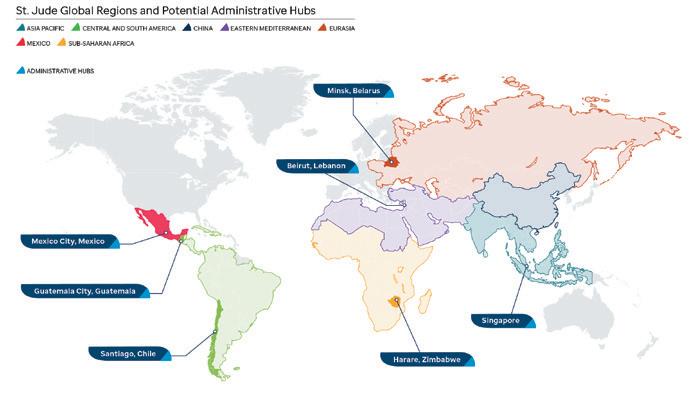
Access to quality care—once a dream for children in low- and middle-income countries—is being realized through an alliance that covers seven
regions of the world. We also increased the number of cancer patients accepted for treatment; increased faculty by 30% and staff by 23%; and embarked on several large-scale construction projects.
In many regards, the FY16–21 St. Jude Strategic Plan can be viewed as a foundational document—a how-to guide for developing expertise and infrastructure to fuel cures for childhood cancer and other pediatric catastrophic diseases. Framed by 11 goals and three operational excellence priorities, the plan sought to accelerate progress on three fronts: in the lab, in the clinic and around the globe. With its successful conclusion, we stand at a new inflection point— stronger than ever and poised to tackle the most important challenges before us.
There is much work to be done. Childhood cancer continues to be the leading cause of death from disease among U.S. children ages 1 to 14. Worldwide, 80% of children with cancer will perish. Cures for sickle cell disease and many pediatric neurological disorders remain elusive. The devastating effect of infectious diseases has been brought into sharp focus with the COVID-19 pandemic.
In addition, the intersection of science and technology, especially the integration of data sciences, is changing how researchers work. There is also a need for greater collaboration among researchers from disparate areas of study to unite to solve complex problems.
FY16–21 ST. JUDE STRATEGIC PLAN GROWTH
7.9% ANNUALLY increase in operating budget
$762 MILLION total capital dollars spent
23% INCREASE in total employees
30% INCREASE in total faculty
20% INCREASE in new cancer patients
20% INCREASE inpatient bed capacity
15% INCREASE in family housing capacity
58% INCREASE in extramural research funding awarded to St. Jude
UP 3-FOLD increase in computing power
UP 8-FOLD increase in computing storage capacity
At the start of this new strategic planning process, we took stock of the past six years. We considered the milestones reached, the established academic foundation of St. Jude and the ample resources provided by an army of generous donors—made possible by ALSAC, the hospital’s fundraising organization.
Then, we asked the question: How can we leverage these incredible assets to accelerate progress and maximize impact for children in Memphis and around the globe?
The new FY22–27 St. Jude Strategic Plan is designed to answer this lofty call.
The plan concentrates on five areas: fundamental science, childhood cancer, pediatric catastrophic diseases, global impact, and workforce and environment.
Across these sections, we outline 11 goals that hold the promise of transforming science and medicine, while strengthening collective efforts to speed cures.
Our aspirations are far-reaching. The plan— a $12.9 billion commitment—will support 2,300 additional jobs; provide $2.3 billion in new construction, renovation and capital needs; and open new areas of research.
While ambitious, this six-year course will allow us to significantly influence the way the world understands and treats childhood cancer, sickle cell disease, neurological disorders and infectious diseases. At its heart, the plan is a call to accelerate progress for children with catastrophic diseases on a global scale.
Hospital founder Danny Thomas sought a day when no child dies in the dawn of life. As we move closer to realizing his dream, let the St. Jude mission serve as our compass and the FY22–27 St. Jude Strategic Plan as our guide for the journey ahead.
FY22–27 Strategic Plan Goals
1 Advance fundamental laboratory-based research efforts to drive new discoveries that accelerate the ability to advance cures
2 Advance cures for pediatric cancers with the lowest survival rates and for children with relapsed disease
3 Reduce the toxicity of cancer therapy and enhance the quality of life for all children who survive pediatric cancer Focus on Childhood Cancer
on Childhood Catastrophic Diseases
4 Advance cures for children with nonmalignant hematological diseases, including sickle cell disease, coagulation disorders and bone marrow failure syndromes
5 Advance cures for children with catastrophic neurological diseases
6 Establish a world-leading research effort in infectious diseases that affect children
7 Improve cure rates for pediatric cancer and catastrophic blood diseases worldwide through St. Jude Global and the Global Alliance Focus on Global Impact
8 Drive scientific collaboration across campus, the U.S. and around the globe to accelerate progress against pediatric catastrophic diseases
9 Set the standard for patient care and the experience patients and their families have during the treatment journey
10 Create a work environment that encourages employees to contribute maximally toward the mission, rewards their contributions and supports their career development
11 Build and support best-in-class environments that help employees advance the institution’s life-saving work and offer patients and their families a home away from home
Exploring an endless frontier of possibility
Back to basics: Focus on Fundamental Science
Fundamental laboratory-based research is the engine that drives most advances in medicine. At the center of this process is the quest to answer questions about normal biology using leading-edge technologies. Answers emerging from these efforts generate additional questions and technologies that will ultimately deepen our understanding.
Knowledge about normal biology is the foundation upon which scientists gain a mechanistic understanding of how diseases alter the normal state. With this information, more effective ways to both diagnose and treat diseases can be created. In the pursuit of curing the toughestto-treat catastrophic diseases of childhood, we
must strengthen the institution’s fundamental laboratory-based research enterprise to generate new knowledge.
At St. Jude, we take pride in making sure laboratory scientists have the best space, equipment and technical support to pursue pioneering research. Around these resources, we have created a culture that drives individuals to chase the most important questions in an open and collaborative way. Importantly, we have also created a training environment to make sure the inquisitive minds of students and trainees are developed in a setting where they can see how their work advances cures for catastrophic childhood diseases.
St. Jude made significant investments in basic science during the last strategic plan. As a result, the impact of the work performed at the institution and the recognition it receives continues to grow.
St. Jude is now known as a place where fundamental advances occur in genomics; immunology; neuroscience; and chemical, structural and cell biology.
To build on this momentum during the next six years, we will increase the number of laboratory-
based faculty by 44%; develop new leading-edge shared resources, department-based technology centers, and centers of excellence; and significantly enhance data sciences and its direct application to biological discovery. In addition, we will augment the St. Jude Graduate School of Biomedical Sciences by increasing enrollment and the number of degree programs offered.
In the following pages, we highlight major areas of investment to reach this strategic goal.
Advance fundamental laboratory-based research efforts to drive new discoveries that accelerate the ability to advance cures
STRATEGIC INITIATIVE 1:
Recruit laboratory-based faculty into basic science departments and improve onboarding, mentoring and management skills.
James Morgan, PhD, scientific director, oversees the institution’s basic science programs and related research efforts. The enterprise structure is shown in FIGURE 1 .
There are currently 73 faculty members across seven basic science departments.
During the next six years, St. Jude will add 32 faculty positions to these departments and another 22 laboratory-based faculty positions across clinical/translational departments. Our objective is to hire outstanding individuals—from those just starting independent research careers to established full professors who bring with them internationally recognized research programs.
SCIENTIFIC DIRECTOR, EVP
James Morgan, PhD
CELL & MOLECULAR BIOLOGY
J. Paul Taylor, MD, PhD
CHEMICAL BIOLOGY & THERAPEUTICS
Aseem Ansari, PhD
DEVELOPMENTAL NEUROBIOLOGY
Michael Dyer, PhD
Gerard Grosveld, PhD IMMUNOLOGY
Douglas Green, PhD STRUCTURAL BIOLOGY
Babis Kalodimos, PhD
FIGURE 1. St. Jude scientific enterprise architecture
TUMOR CELL BIOLOGY
Charles Sherr, MD, PhD
Some of these recruits will work in newly created centers of excellence:
• Center of Excellence for Data-Driven Discovery, directed by M. Madan Babu, PhD, of Structural Biology (described on page 17)
• Center of Excellence for Innate Immunity and Inflammation, directed by Thirumala-Devi Kanneganti, PhD, of Immunology
• Center of Excellence for Advanced Microscopy— a new effort described in detail on page 17
Each center of excellence will consist of two to four faculty members with related research programs. The focus of each center was developed during the strategic planning process as we identified areas of high importance for fulfilling the St. Jude mission.
By physically co-locating several faculty members and staff in these centers, we will facilitate crosslaboratory sharing of technology and expertise and enhance opportunities for collaboration. The development of a critical mass in the centers of excellence will ensure that St. Jude plays a lead role in advancing science in the defined areas.
To integrate newly recruited faculty into the St. Jude culture, we will develop an onboarding service to facilitate the logistics of moving to and working in a new environment. Human Resources, in collaboration with Faculty Affairs, will also develop a curriculum for junior faculty in research laboratory management. The course will cover finances, personnel management, data and record keeping, and legal and regulatory requirements for running a research laboratory. Lastly, we will continue to prioritize enhancing a structured approach to mentoring junior faculty.
STRATEGIC INITIATIVE 2:
Expand support for laboratory-based shared resources and department-based technology centers and create a new Center of Excellence for Advanced Microscopy.
LABORATORY-BASED SHARED RESOURCES
St. Jude has 24 shared resources to support basic and tra nslational laboratory-based research. The philosophy behind these facilities is to offer state-of-the-art technologies oper ated by worldleading faculty and staff and make them available to all research teams. These resources provide investigators access to tools they could not easily support in their own laboratories. What’s more, the shared resources serve as interactive hubs where faculty and staff can learn from each other.
Many of the shared resources are located in the recently constructed Shared Resource Center, a 43,000-square-foot hub on the east campus. The facility includes 13,000 square feet of unassigned space, which provides flexibility for growth or development of other shared resources during the course of the strategic plan. The institution has strong centralized management of shared resources and will continue to invest more than $63 million in operating dollars annually.
TABLE 1 shows all shared resources, department laboratory-based technology centers and centers of excellence. Performance of the shared resources is annually reviewed by a faculty-led process,
where decisions are made to add staff, upgrade or introduce new capabilities, and sunset or create new shared resources.
TABLE 1. Shared resources, department laboratory-based resources and centers of excellence
SUPPORTING INNOVATION IN BASIC AND TRANSLATIONAL RESEARCH
Laboratory-Based Research
Shared Resources
• Animal Resource Center
• Biostatistics Shared Resource
• Cell and Tissue Imaging Center
• Center for Advanced Genome Engineering
• Center for Applied Bioinformatics
• Center for Bioimage Informatics
• Center for in vivo Imaging and Therapeutics
• Center for Modeling Pediatric Diseases*
• Center for High Content Screening*
• Center for Spatial Transcriptomics*
• cGMP Facility
• Cytogenetics
• Diagnostic Biomarkers
• Experimental Cellular Therapeutics Lab
• Flow Cytometry and Cell Sorting
• Hartwell Center for Biotechnology
• Pharmacokinetics
• Preclinical Pharmacokinetics
• Protein Production
• Proteomics and Metabolomics
• Tissue Resources Laboratory/ Biorepository
• Transgenic/Gene Knockout
• Vector Development & Production
• Veterinary Pathology Core
*Future resource
Department-Based Technology Centers
Cell and Molecular Biology
• Cellular Imaging Core Chemical Biology and Therapeutics
• Analytical Technologies Center
• Chemical Biology Center
• Compound Management Center
• High-Throughput Bioscience Center
• Lead Discovery Informatics Center
• Medicinal Chemistry Center Developmental Neurobiology
• Human Neural Stem Cell Lab
• Neurobehavior Lab
• Neurocytometry Lab
• Neuroembryology Lab
• Neuroimaging and Analysis Labs
• Xenograft Lab Immunology
• Flow Cytometry Core
• Immunologic Reagent Core
• Immunometabolism Core
• Microscopy Imaging Core Structural Biology
• Biomolecular NMR Center
• Biomolecular X-Ray Crystallography Center
• Cryo-Electron Microscopy Center
• Protein Technologies Center
Centers of Excellence
Center of Excellence for Data-Driven Discovery
• M. Madan Babu, PhD Structural Biology
Center of Excellence for Innate Immunity and Inflammation*
• Thirumala-Devi Kanneganti, PhD Immunology
Center of Excellence for Leukemia*
• Charles Mullighan, MBBS, MD Pathology
Center of Excellence for Advanced Microscopy*
“
From innovative technologies to expert support, St. Jude shared resources and department laboratory-based technology centers expand the capabilities of each research group.”
– Chris Calabrese, PhD Laboratory Research Operations VP
During the next six years, three new shared resources will come online: two approved prior to this strategic plan (Center for Modeling Pediatric Diseases and Center for High-Content Screening); and one developed as part of the strategic planning process (Center for Spatial Transcriptomics). The latter will work with faculty currently using spatial transcriptomic methodologies in their laboratories to define the best technology and approaches to bring the highest level of service and collaborative
interactions to a broader group of investigators. These new resources will be located in the Shared Resource Center.
DEPARTMENT-BASED TECHNOLOGY CENTERS
Department-based technology centers are another form of scientific infrastructure that provides faculty in a single department with access to advanced equipment and methodologies. The technology centers are run by faculty and staff with significant expertise in the designated area. Examples at St. Jude include the Biomolecular NMR Center and the Cryo-Electron Microscopy Center in Structural Biology, and the NeuroEmbryology Laboratory in Developmental Neurobiology. These technology centers have brought exceptional value to our research.
St. Jude will continue to invest in the development of these centers with the creation of a Cryo-Electron Tomography Center in Structural Biology. This center will bring a new, cutting-edge technology to St. Jude that allows researchers to visualize and characterize biological molecules and macromolecular complexes in their native state in situ. This transformative but developing technology represents the future of structural biology.
With this investment, we will ensure that St. Jude is at the leading edge of applying this technology to fundamental biology, as well as to pediatric catastrophic diseases. The development of this technology center will require the investment of $20 million in operating and capital dollars during the course of the six-year plan. The information gained through this new technology will be complemented by data generated in the Center of Excellence for Advanced Microscopy. Together, these technologies will provide an unparalleled look inside the working of cells from the visible realm down to the atomic scale.
ADVANCED RESEARCH CENTER
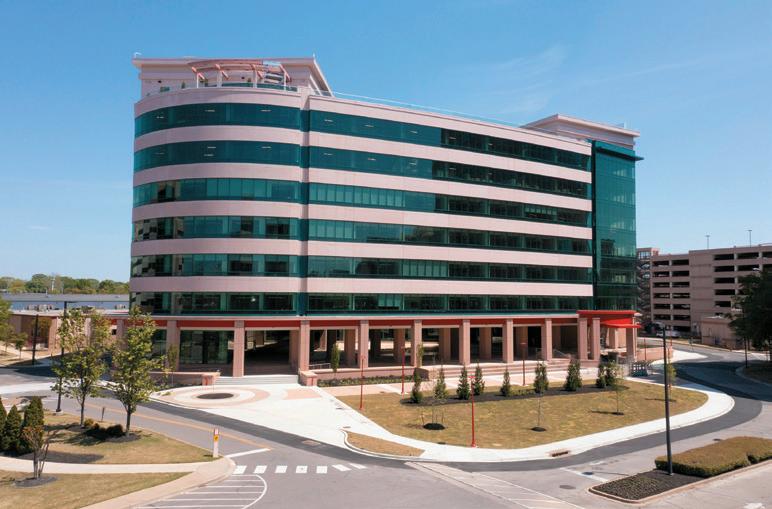
The sheer scale of the St. Jude Advanced Research Center hints at the power of science to transform the human condition. During the summer of 2021, scientists in the fields of developmental neurobiology, immunology, cell and molecular biology, gene editing, metabolomics, advanced microscopy, epigenetics and genomics began to move into the facility.
Designed to foster collaboration and innovation, the building contains nearly 1.8 million square feet of sheetrock, the city’s tallest glass window, and enough rebar to stretch from Memphis to Montreal. Despite its floor-to-ceiling windows and state-of-the-art technology, the power of this building resides in the hearts and minds of the scientists who work there. In the coming years, work conducted within these walls will accelerate progress globally.
CENTERS OF EXCELLENCE
As described on page 13, three new centers of excellence in fundamental science will be developed during the next six years. Two will be led by current faculty members: The Center of Excellence for Data-Driven Discovery will be directed by M. Madan Babu, PhD, of Structural Biology, and the Center of Excellence for Innate Immunity and Inflammation will be led by Thirumala-Devi Kanneganti, PhD, of Immunology. The third will focus on a methodology—advanced microscopy—rather than a specific area of study like the other centers.
The importance of microscopy as a tool to explore biological processes has been significantly enhanced during the last decade. New forms of microscopy, including multi-photon, scanning transmission electron, stimulated emission depletion, lattice-light sheet, and correlative light and electron microscopy, have increased the speed and resolution—and the kind of data that can be obtained.
Through efforts led by the Developmental Neurobiology, Immunology, Cell and Molecular Biology departments; the Cell and Tissue Imaging Center; and the Center for Bioimaging Informatics, St. Jude has become one of the world leaders in using advanced microscopy.
CENTER OF EXCELLENCE FOR DATA-DRIVEN DISCOVERY
The Center of Excellence for Data-Driven Discovery will support research that integrates large, multi-dimensional data sets to address fundamental questions in biology and disease and to discover new biology. These diverse data sets include genomic and gene expression information; protein and cellular structural data derived by multiple biophysical and imaging approaches; and chemical biology data; as well as human genetics, higher order systems biology and clinical information.
The challenge is to use computational approaches—machine learning, for example— to derive actionable information from these large and diverse data sets. This is achieved by bringing together investigators with diverse fields of interest but a common underlying use of data science approaches in one location, such as Structural Biology. These scientists will have access to a core support group with experimental and computational expertise and resources.
Estimates are that there are 150 petabytes of such data in open sources alone, which represents approximately 4 times the total storage capacity of the St. Jude Data Center. To advance their objectives, the group will rely heavily on resources within the Data Center and Information Services, as well as bioinformatics expertise in various shared resources and Computational Biology.
Directed by M. Madan Babu, PhD, of Structural Biology, the center will comprise his research group—Data Science for Discovery and Personalized Medicine—as well as a shared core with seven staff members and three additional senior faculty and their groups who may hold academic appointments in any St. Jude department.
With our expertise in fundamental biology, coupled with our deep experience in the application of advanced microscopy, St. Jude is uniquely positioned to develop a Center of Excellence for Advanced Microscopy, where the next generation of microscopes will be built and used to advance understanding of life and disease. The new center will be operated by multidisciplinary teams of faculty and staff who are experts in optical and biomedical engineering, biophysics, biology and data science.
The teams will partner with commercial microscope developers and investigators from other academic centers with expertise in advanced microscopy. The focus of their efforts will be to build new technology and methodologies that allow us to explore biology in ways never imagined. This center will be a nidus for collaboration, a place where the new technology can be customized to meet the needs of faculty pursuing the most important questions in biology.
These efforts will advance work in all St. Jude basic science departments and across many diseasefocused areas. This undertaking will represent an investment of $61 million in operating and capital dollars during the next six years.
STRATEGIC INITIATIVE 3:
Become a leader in the application of data science to biological discovery
The institution’s journey into data science accelerated with the advent of the Pediatric Cancer Genome Project in 2010. As part of that effort, St. Jude significantly increased the number of data scientists hired and coalesced many into the departments of Computational Biology, Biostatistics, Epidemiology and Cancer Control, and Information Services.
During this time, St. Jude also expanded its data infrastructure by constructing a three-story data center. Formal collaborations with cloud service providers were also established under the leadership of Keith Perry, chief information officer, and Jinghui Zhang, PhD, Computational Biology chair.
This early expansion was driven by genomic studies and their associated clinical data. Over time, these data sources have been dwarfed by the massive amount of data generated through studies in structural biology and advanced microscopy. In response, we have recently created the Center of Excellence for Data-Driven Discovery, housed in Structural Biology, and the Center for Bioimaging Informatics, a shared resource directed by Khaled Khairy, PhD, of Developmental Neurobiology.
The rate of growth of biological and medical data will continue to accelerate during the coming decade. Effectively managing, integrating and exploring these data to generate new knowledge require specialized expertise as well as new organizational and administrative structures. In addition, the culture of data scientists across the broader research community must be carefully cultivated to ensure St. Jude can recruit and retain top data scientists.
As part of this plan, St. Jude is committed to developing an ecosystem that positions the institution as a global leader in the application of data science for biological discovery. A task force has been established to develop the roadmap for the future.
The members are:
• M. Madan Babu, PhD
Structural Biology
• Charalampos Babis Kalodimos, PhD
Structural Biology chair
• Khaled Khairy, PhD
Developmental Neurobiology
• Motomi Mori, PhD
Biostatistics chair
• Jinghui Zhang, PhD
Computational Biology chair
St. Jude is committing $195 million in operating and capital dollars during the next six years, which includes 115 new positions and funding for enhanced infrastructure. New hires will include computer engineers, database specialists, software developers, and experts in machine learning and artificial intelligence. The group will focus on creating the infrastructure for data standardization, warehousing and governance that will allow faculty across the institution to use the data for their research.
This new effort will influence more than fundamental laboratory-based research, extending to translational, clinical and population research. Although the exact roadmap to move forward has yet to be developed, we are confident that the impact of this effort will transform data science at St. Jude.
STRATEGIC INITIATIVE 4:
Expand the St. Jude Children’s Research Hospital Graduate School of Biomedical Sciences
In 2017, the St. Jude Children’s Research Hospital Graduate School of Biomedical Sciences, under the leadership of Stephen White, DPhil, president and dean, accepted its first class into the Biomedical Sciences PhD program. Since then, four additional classes have been enrolled in this program, and two doctoral students have graduated. The school has also created two new degree-granting programs, a Master of Science in Global Child Health and a Master of Science in Clinical Investigations.
By all measurements, the school has been successful. It has brought to campus young, fearless scientists who challenge the status quo and pursue answers to important questions that will ultimately advance cures for childhood catastrophic diseases. The resulting positive impact on the culture of science at St. Jude has been impressive.
It is clear that the unique environment at St. Jude provides an ideal setting in which to train the next generation of scientific leaders. As the
institution expands, we will have the capacity to prepare more students to tackle the challenges that exist in advancing cures for pediatric catastrophic diseases.
To meet this opportunity, we plan to increase the number of students in the Biomedical Sciences PhD, Master of Science in Global Child Health, and Master of Science in Clinical Investigations programs during the next six years.
We will also add a new Master of Science in Data Science program. These expansions will occur after the graduate school receives accreditation from the Southern Association of Colleges and Schools.
As a result of these changes, the steady-state
number of students in the programs will grow from 72 to 140. The cumulative budget for the graduate school during the next six years is $55 million.
“ In the laboratory and in the clinic, talented graduate students offer unique and key ingredients for scientific discovery. They have the creativity to ask unexpected questions and challenge fundamental assumptions, and the energy and fearlessness to tackle difficult problems.”
– Stephen White, DPhil St. Jude Graduate School of Biomedical Sciences President and Dean
Creating a brighter future for children today and generations to come
Transforming research into cures: Focus on Childhood Cancer
For more than half a century, the major focus of St. Jude has been to advance cures for children with cancer. Our efforts have helped to push the overall cure rate for pediatric cancer from 20% when the hospital opened to more than 80% today. For the most common type of childhood cancer, acute lymphoblastic leukemia (ALL), progress has been even better. Survival rates have increased from less than 5% to about 95%.
Despite these successes, much work remains. In the U.S., 1 in 5 children with cancer will not survive. Globally, the outlook is significantly poorer. Survival rates in low- and middle-income countries hover around 20%.
St. Jude remains committed to advancing cures for children with cancer. To accelerate progress, we will strive to develop new therapeutic approaches aimed at curing the pediatric cancers considered incurable. We will simultaneously work to reduce the long-term toxicities associated with treatment. And, we will build a global infrastructure so that children everywhere can benefit from discoveries emerging from our research.
These new efforts will involve all aspects of the institution and will be led by Charles Roberts, MD, PhD, Comprehensive Cancer Center director; Ellis Neufeld, MD, PhD, clinical director; and Carlos Rodriguez-Galindo, MD, Global Pediatric Medicine chair.
At the beginning of this plan, we will appoint a new Oncology department chair. These institutional leaders, along with the chairs of other departments involved in cancer care and research, will work together to advance cures and means of prevention for pediatric cancer on a global scale.
GOAL
St. Jude has developed one of the world’s premier pediatric cancer programs. During the next six years, we will tackle the hardest problems— those from which others shy away. Our mantra has been and will remain: If not St. Jude, then who?
Advance cures for pediatric cancers with the lowest survival rates and for children with relapsed disease
To change the outlook for incurable pediatric cancers and relapsed disease, researchers must gain a deeper understanding of the biological mechanisms that underlie the formation of these cancers, why they resist current therapies, and how their differences from normal cells can be used to improve cure rates. We must then use this new knowledge to develop more precise therapies that target cancer cells, while limiting short- and longterm toxicities to normal cells.
Over the next six years, we will expand the cancerfocused clinical and laboratory research enterprise. The efforts will span from mechanistic studies, to preclinical drug-development, to translational research and frontline clinical protocols. We will also increase investment in cancer immunology and immunotherapy to improve our ability to harness the immune system to treat childhood cancer.
STRATEGIC INITIATIVE 1:
Expand the number of cancer-focused, laboratory-based faculty.
During the course of this plan, we will recruit 10 new faculty members whose research is focused on advancing insights into understanding cancer. We will seek physician-scientists at the interface of medicine and laboratory research, as well as fundamental laboratory investigators focused on cancer. These individuals will bring research programs of the highest quality to complement and expand work underway at St. Jude.
Three of these individuals will be appointed to a new Center of Excellence for Leukemia, led by Charles Mullighan, MBBS, MD, of Pathology.
Despite improvements in pediatric ALL treatment, this type of cancer remains one of the leading causes of death due to disease in children. Progress in acute myeloid leukemia has been even slower, with cure rates below 75%. In addition, current therapeutic approaches for both diseases continue to cause short- and long-term toxicities in a significant portion of childhood cancer survivors. We must do better.
The new Center of Excellence for Leukemia will serve as an interactive hub for St. Jude faculty involved in hematopoietic malignancies research. The center will have a core faculty membership with laboratories located on a single floor in the Danny Thomas Research Center. Other faculty across the institution will participate in the center’s research via progress meetings, workshops and symposiums as associate center members.
Recruitment for the other seven new faculty members will also be led by the Comprehensive Cancer Center and will target individuals working on pediatric solid malignancies, brain tumors, cancer predisposition syndromes, or novel therapeutic or diagnostic approaches that cut across cancer types.
The faculty—and the staff and postdoctoral fellows who are part of their research teams—will work to better understand the biology of pediatric cancer and use this knowledge to improve cures.
This new investment will expand our cancer research portfolio—increasing the number of laboratory-based cancer investigators at St. Jude by 33%. It represents an investment of $46 million in operating and capital dollars during the strategic plan.
“ Cancer is remarkably complex. Like the Comprehensive Cancer Center itself, the new Center of Excellence for Leukemia will bring together a diverse group of physicianscientists to focus on a shared problem.”
– Charles Roberts, MD, PhD
Comprehensive
Cancer Center Director
STRATEGIC INITIATIVE 2: Strengthen the cancer immunotherapy program through the creation of the Translational Immunology and Immunotherapy Initiative (TI3).
The rise of immunotherapy is enabling us to reimagine how we treat cancer. For some adult melanomas, chemotherapy has been replaced with drugs that rewire a patient’s immune system to attack and eliminate the cancer. For other cancer types, immunotherapy has shown promise as a new weapon in the arsenal—to be combined with chemotherapy, surgery and/or radiation therapy— to improve survival.
Although immunotherapy has had the greatest impact on adult cancers thus far, some of the first therapeutic inroads occurred in pediatric patients with ALL.
In the early 2000s, St. Jude developed a chimeric antigen receptor (CAR) that specifically targeted a molecule, CD19, expressed on the surface of B-lineage ALL cells. When expressed in T cells, this chimeric receptor activated them to attack
and destroy leukemia cells. This approach, and the chimeric receptor developed at St. Jude, are now the basis for an FDA-approved CAR T–cell immunotherapy for the treatment of children and adults with certain kinds of leukemia and lymphoma.
In 2018, St. Jude became one of the first pediatric hospitals to provide this new therapy to children with ALL. At the same time, St. Jude significantly expanded research to advance this form of treatment against other forms of pediatric leukemia, solid tumors and brain tumors.
Under Stephen Gottschalk, MD, Bone Marrow Transplantation and Cellular Therapy department chair, a new emphasis on clinical and translational research developed. This effort rapidly expanded, and an institution-wide program was created to facilitate interactions and cross-department collaborations. Gottschalk and Douglas Green, PhD, Immunology chair, led the effort.
During the next six years, we will extend this endeavor through the creation of the Translational Immunology and Immunotherapy Initiative (TI3). Our vision is to incorporate this form of therapy into our quest to both cure incurable pediatric cancers and reduce the associated long-term toxicity of treatment.
This effort will draw investigators across Comprehensive Cancer Center programs and academic departments, including Oncology, Immunology, Bone Marrow Transplantation and Cellular Therapy, Computational Biology, Chemical Biology and Therapeutics, and Infectious Diseases, as well as from the Children’s GMP, LLC.
Through TI3, we will push the boundaries of cellbased immuno-oncology by defining: 1) the landscape of target antigens on pediatric cancers and the features that make an antigen an ideal target for CAR T cells; 2) the optimal ways to activate T cells and sustain their activity against cancer; 3) and the features of the immune microenvironment of cancers that support effective immunotherapeutic interventions.
The initiative will position St. Jude as a preeminent leader in the field of pediatric immuno-oncology— serving at the forefront of basic scientific discovery and translating these findings into innovative, early phase clinical studies, and, ultimately, cures. The expanded effort represents a new investment of $21 million in operating and capital dollars over six years.
STRATEGIC INITIATIVE 3:
Accelerate the rate at which new therapeutic agents can be tested against pediatric cancer
At St. Jude, the discovery of new knowledge has a distinct purpose—to improve human health.
In cancer, improving the outlook for children means developing new therapies that are more effective, while simultaneously causing fewer longterm side effects. Our overall efforts are directed toward identifying the best new therapies, whether developed at St. Jude or elsewhere, and moving those to clinical practice.
The road for a potential new therapy starts with preclinical studies, in which a new agent, or combination of agents, is assessed using models of pediatric cancers. Agents that show promise are moved to clinical trials—from phase I toxicity studies to phase III efficacy trials. Clinical trials require large cohorts of patients to reach definitive conclusions about the efficacy of a new agent.
Pediatric cancer is a rare disease that is made even rarer by the fact that there are more than 20 pediatric cancer subtypes. Many of these are further divisible into unique genetic subtypes. New therapies are often directed against only a small number of subtypes. Thus, the availability of patients is limited at any single institution, or even across a single country, such as the U.S.
The passage of the Research to Accelerate Cures and Equity (RACE) for Children Act in 2017 presents additional challenges for testing new
therapies against pediatric cancer. This act requires that companies developing targeted cancer drugs for adults must also assess those drugs in children when the molecular targets are relevant to a particular pediatric cancer. Although this increases the number of drugs available for testing—a positive—the rare nature of childhood cancer will result in further competition for patients among clinical studies.
To address these challenges, we will strengthen the preclinical platform. This will provide the most rigorous approach to test agents so that only the most promising are advanced to clinical trials. We will also enhance our collaborative clinical trial infrastructure to support studies across the U.S. and around the globe, enabling us to efficiently enroll the number of patients needed to test new agents, or combination of agents, in a reasonable timeframe.
These expanded efforts will help make St. Jude the ideal partner for biotechnology and pharmaceutical companies that need to assess new agents in childhood cancer patients. In addition, the partnerships will help us identify the most promising treatments and move them to pediatric oncology practice.
STRENGTHEN PRECLINICAL TESTING
INFRASTRUCTURE AND ACCESS NEW THERAPEUTIC AGENTS
During the last strategic plan, we significantly expanded our preclinical testing infrastructure through the creation of new shared resources, including Preclinical Pharmacokinetics, Center for in vivo Imaging and Therapeutics, Center for Advanced Genome Engineering, and Experimental Cellular Therapeutics Laboratory. We also recruited Aseem Ansari, PhD, Chemical Biology and Therapeutics chair, and the department is expanding under his leadership.
In the next six years, we will further support these endeavors by finishing the buildout of the Center for Modeling Pediatric Diseases, a new shared resource led by Michael Dyer, PhD, Developmental
Neurobiology chair. The center focuses on developing more accurate models of pediatric diseases through the use of induced pluripotential stem cells, or iPS cells, coupled with CRISPR genetargeting technology. This expanded preclinical platform will significantly bolster our ability to assess new therapies and identify the most promising agents for clinical trials.
To improve our ability to access new therapeutic agents developed by biotechnology or pharmaceutical companies, we will also enhance St. Jude infrastructure for developing and managing interactions with these organizations. Currently, obtaining new therapeutic agents from biotechnology or pharmaceutical companies occurs through a variety of routes, ranging from individual faculty members, to specific Comprehensive Cancer Center programs, to institutional offices, such as Clinical Trials Administration. The lack of a cohesive overall structure has led to unnecessary duplication of effort, as well as insufficient support for faculty pursuing these interactions. Clinical Trials Administration, under the direction of Elizabeth Fox, MD, senior vice president, will focus on improving organization and coordinating communication to help address this.
INCREASE ENROLLMENT ON ST. JUDE–LED COLLABORATIVE CLINICAL PROTOCOLS
Moving from initial discovery to frontline therapy requires clinical trials. We outline two approaches for augmenting enrollment on St. Jude–initiated clinical trials.
First, we will increase the number of new cancer patients admitted to St. Jude by 5%. This moves our target from 600 new patients per year to 630 (TABLE 2). The increase will be reserved for children with high-risk cancers for which we have open clinical trials. Most of these patients will come from international sites. This growth can be managed by the current allocation of inpatient beds and the planned expansion of the outpatient facility and housing.
“ We have a fruitful collaboration with the Chinese Children’s Cancer Group. No single institution or national study can enroll enough patients to conduct definitive randomized clinical trials, especially for rare subtypes of cancer. By working together, we achieve results that benefit children across the world. ”
– Ching-Hon Pui, MD Oncology Chair
The escalation in the number of St. Jude patients, however, will not be sufficient to achieve the volumes needed to complete studies in a reasonable timeframe. The rarity of each cancer subtype will require that most trials are run through a collaborative network, often on a global scale. To accomplish this, we will expand our infrastructure for conducting multi-institutional studies. In this approach, the clinical study will be developed by St. Jude faculty, in partnership with principal investigators from collaborating sites.
St. Jude has gained significant experience during the last several decades in running clinical trials across multiple institutions. For example, our frontline medulloblastoma trials have been conducted through collaborative networks since 1996, with the current medulloblastoma trial, SJMB12, operating at 16 sites across four countries. More recently, we collaborated on a large, international and multi-institutional ALL trial with the Chinese Children’s Cancer Group.
We will expand this approach during the next six years and increase enrollment by 20–30% on St. Jude–led clinical protocols. The collaborative networks will be organized around specific cancer subtypes, providing a level of flexibility essential to ensuring rapid accrual of patients to each study.
The endeavor will be led by leaders of Comprehensive Cancer Center programs:
• Charles Mullighan, MBBS, MD, and Ching-Hon Pui, MD, of Hematological Malignancies Program
• Suzanne Baker, PhD, and Amar Gajjar, MD, of Neurobiology and Brain Tumor Program
• Michael Dyer, PhD, and Alberto Pappo, MD, of Developmental Biology and Solid Tumor Program
Centers with a sufficient volume of patients and clinical expertise will be identified prior to trial development, and the lead investigators from those sites will be invited to participate in the study design.
For some trials, we will look to large international networks and bring together the best cancer centers worldwide to participate in the development and running of clinical trials that address the most important questions. To support this, we will significantly enhance the St. Jude infrastructure for developing and conducting clinical protocols. Our efforts will focus on every step of clinical research— from developing a protocol, to opening and managing the trial, to completing the study and preparing the result for publication.
TABLE 2. FY22-27 New Cancer Patient Projections
Running collaborative trials will require particular attention to collecting data and managing the reporting of trial-associated adverse events. During the last strategic planning period, we began developing a new clinical trials management system, now called Clinical Research Informatics Services Program (CRISP). Installation of the software suites that constitute CRISP will be completed during the early part of this plan. CRISP will allow the collection of data from remote sites in near real time.
These new strategic efforts will strengthen our ability to critically assess new therapeutics and define the best approaches for improving cures for childhood cancer. By taking a lead in designing and directing clinical trials globally, we will better position St. Jude to play an important role in setting the direction for pediatric cancer research.
STRATEGIC INITIATIVE 4:
Enhance the care delivered at St. Jude affiliates
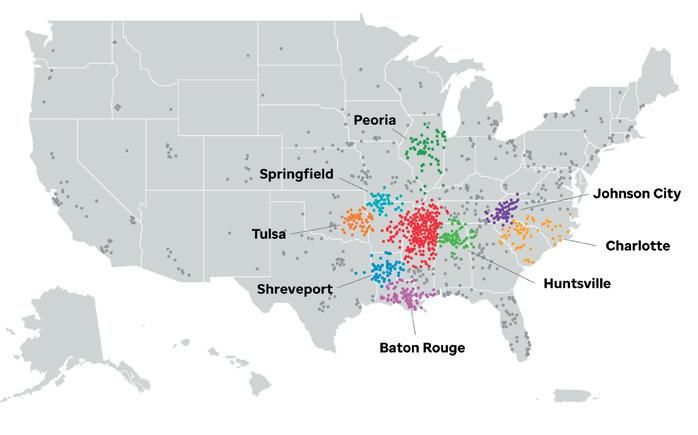
The St. Jude Affiliate Program allows more children to receive care closer to their homes through eight clinics in seven states across the South and Midwest (FIGURE 2). This program is also an important source for patients enrolled on St. Jude–led clinical protocols. About 30% of new cancer patients come from the network annually. We remain committed to strengthening the St. Jude Affiliate Program.
During the next six years, we will focus on three specific areas:
• Improve the quality of care delivered at each clinic
• Increase patient enrollment on St. Jude–led protocols
• Enhance affiliate physician and staff engagement in St. Jude research activities
FIGURE 2. Approximately 30% of new cancer patients accepted for treatment at St. Jude come from the affiliate program network. This image shows new cancer patients for FY16–20.
The affiliates represent an array of medical practice settings—from clinics allied with academic medical centers to those associated with community-based health care systems. As a result, the ability to meet the goals of the St. Jude Affiliate Program varies significantly across the clinics.
In the first year of the new strategic plan, under the leadership of Ellis Neufeld, MD, PhD, clinical director, and Carolyn Russo, MD, Affiliate Program medical director, we will critically assess the clinics’ operational models, staffing levels, access to required support services and approaches,
GOAL
and records of enrolling patients on St. Jude–led clinical studies.
We will then develop specific plans for each clinic to enhance operations across the three specific focus areas outlined. We are open to exploring program changes that include simple collaborative agreements for clinical trials, formal partnerships or St. Jude taking operational responsibility. Through the review process and responding to its recommendations, we will develop a more robust, sustainable approach to the affiliate program.
Reduce the toxicity of cancer therapy and enhance the quality of life for all children who survive pediatric cancer
As more children survive cancer, we must increasingly turn our attention to reducing the lasting side effects of treatment. For over 40 years, the strategy has been to individualize therapy based on both the specific cancer subtype and a patient’s risk of developing unwanted side effects. This approach, referred to as precision medicine, accelerated in the last decade with the application of genomics to childhood cancer and the refinement of radiation therapy. The following pages outline three areas of focus to further improve care and long-term outcomes.
PRECISION MEDICINE
Through the Pediatric Cancer Genome Project and creation of the clinical genomics service, St. Jude has played a groundbreaking role in the application of precision medicine to pediatric cancer. These efforts have helped to define cancer molecular subtypes and identify new targets against which therapeutic agents can be developed.
During the next six years, we will continue to invest in St. Jude clinical genomics, expanding
translational research; clinical genomic diagnostic and pharmacogenomic services; and the Cancer Predisposition Program, directed by Kim Nichols, MD. As a result, we will enhance the ability to accurately diagnose a patient’s specific cancer molecular subtype and determine whether the child has any unique susceptibilities to the proposed treatment.
As part of our precision medicine efforts, we will continue to advance the use of proton therapy for the treatment of pediatric brain tumors, solid tumors and Hodgkin lymphoma. Under the leadership of Thomas Merchant, DO, PhD, Radiation Oncology chair, the St. Jude Proton Therapy Center allows doctors to minimize the dose of radiation to normal tissue, thereby decreasing potential side effects. Clinical studies to assess the best way to use this therapy will be pursued, along with efforts to understand what long-term complications result from this new therapeutic approach.
For patients with high-risk cancer subtypes, the primary focus must remain on improving outcomes. However, for low- and intermediaterisk cancer subtypes, we can begin to ask whether we are over-treating. Can the intensity of current therapy be reduced without decreasing overall survival? Can targeted agents be used instead of current approaches to reduce toxicities, while maintaining current cure rates? The answers to these questions will be pursued through St. Judeled clinical trials conducted via collaborative networks, as well as through clinical trials run through the St. Jude Global Alliance (page 55). The information gleaned will help set the standard of care for future generations of patients.
SURVIVORSHIP
Our efforts must also focus on understanding childhood cancer survivors’ quality of life. We need to accurately identify any long-term complications that develop, determine underlying causes, and explore whether we can develop interventional approaches to lessen their impact. Few organizations have such a long and storied history with survivorship research.
First, in 1984, St. Jude established the After Completion of Therapy (ACT) clinic to closely monitor patients as they grew into adulthood. Two decades later, the Epidemiology and Cancer Control department was created to conduct scientific studies on pediatric cancer survivorship. In 2007, under Les Robison, PhD, department chair, and Melissa Hudson, MD, ACT Clinic director, the St. Jude Lifetime (St. Jude LIFE) cohort began. Through that study, researchers have collected detailed medical and laboratory data on more than 6,000 childhood cancer survivors as they age.
St. Jude LIFE, which has contributed volumes to understanding the late effects of childhood cancer and its treatment, has been referred to as a national treasure by the National Institutes of Health. What’s more, the study has uncovered important details not only on the short- and longterm toxicities patients experience, but also about the therapeutic and genetic features that underlie many of these.
During the next six years, we will continue to invest in these studies. We will also expand research to assess the complications that arise from the use of newer, targeted cancer treatments, including immunotherapy. Although newer agents provide a more precise way to treat cancer, they are not without side effects. Understanding what these effects are and which patients will be most susceptible is essential to individualizing therapy so that every child has the best possible chance of surviving—and thriving once treatment ends.
As of 2017, overall HPV vaccine coverage among U.S. adolescents was 49% . No state had reached the Healthy People 2020 goal of full vaccine of 80% of adolescents aged 13–15 years.
HPV CANCER PREVENTION
To further improve quality of life, St. Jude established in 2020 a program to prevent human papillomavirus (HPV)-related cancers. During the next six years, we will further build this endeavor with the aim of becoming the premier HPV-cancer prevention effort in the U.S.
Nearly 80 million Americans—1 out of 4 people—are infected with HPV. Of those, more than 36,000 a year will be diagnosed with an HPV-related cancer.
These high numbers continue despite the availability of a safe and effective vaccine designed to prevent more than 90% of HPV-related cancers. Fifteen years after the first vaccine was licensed by the FDA and recommended by the Centers for Disease Control and Prevention, HPV vaccination rates remain suboptimal. In fact, some of the lowest vaccination rates are in the mid-southern and southeastern U.S., where rates of HPV-related cancers are highest (FIGURE 3).
FIGURE 3. HPV vaccination rates of U.S. adolescents 13–17 years old (MMWR Morb Mortal Wkly Rep. 2018;67(33):909-17)
THE SKY’S THE LIMIT
At St. Jude, we are guided by a unified plan that outlines bold strategies for the future. But as soon as one plan is finalized, technologies evolve, opportunities arise, or priorities expand. Our robust blue-sky process allows St. Jude to seize these emerging opportunities and nimbly pursue them.
All faculty and staff members can submit proposals that extend beyond the current strategic plan, have the potential for game-changing impact, and establish a unique leadership position for St. Jude.
The HPV Cancer Prevention Program, Global Hemophilia Gene Therapy Trial (page 39), Pediatric Translational Neuroscience Initiative (page 43), Global Initiative for Childhood Cancer (page 55), and Seeing the Invisible in Protein Kinases (page 68) all began as blue-sky proposals.
Our blue-sky projects amplify the strengths of the hospital’s strategic plan—allowing St. Jude to accelerate mission-critical objectives and test novel scientific and clinical approaches. The projects are bold. The possibilities are endless. The sky’s the limit.
ST. JUDE BLUE-SKY INITIATIVES
• Center for Modeling Pediatric Diseases
• COMET – the solid tumor COmprehensive METhylation Database
• Family Commons
• Global Hemophilia Gene Therapy Trial
• Global Initiative for Childhood Cancer
• HPV Cancer Prevention Program
• iTARGETS – Immuno-Oncology Target Identification via Systems Immunology
• Living Well Health & Wellness Center and Pharmacy
• Pediatric Translational Neuroscience Initiative
• St. Jude Cloud expansion
• Seeing the Invisible in Protein Kinases
• Transition Oncology Program
As the only NCI-designated Comprehensive Cancer Center solely dedicated to children, St. Jude has a responsibility to help increase vaccination rates in children everywhere, so that we can prevent these children from developing HPV-related cancers later in life.
The concept for the HPV Cancer Prevention Program arose through the blue-sky process. Heather Brandt, PhD, an internationally recognized social and behavioral scientist with expertise in cancer prevention and control, was recruited to the institution in 2020 as program director, as well as co-associate director of outreach for the Comprehensive Cancer Center.
During the next several years, we will invest $12 million to recruit staff and develop a strategy to significantly improve HPV vaccination rates in children locally, nationally, and eventually, around the globe. Strategies include communication campaigns focused on parents and children; provider education programs, conducted in partnership with governmental and non-governmental groups; and efforts to influence creation of state and federal policies to increase vaccination rates. The program will have a strong base of collaboration with implementation scientists to ensure it materially changes the current trajectory for HPV cancer-related deaths.
“ Pediatric cancers can’t be prevented, but we can reduce the risk of preventable cancers later in life. Our goal is to reduce cancer deaths by establishing a premier HPV prevention initiative.”
– Heather Brandt, PhD HPV Cancer Prevention Program Director
Giving new hope to children with catastrophic
diseases
Beyond cancer: Focus on Childhood Catastrophic Diseases
The St. Jude mission is clear: advance cures and means of prevention for pediatric catastrophic diseases. Although childhood cancer has been a major focus of the institution since its inception, St. Jude has also developed world-class programs in nonmalignant hematological diseases and infectious diseases.
As we look to the future, St. Jude will increase investment in these areas with new faculty recruitment, new technology and a renewed focus on tackling difficult problems. We will also develop a new area of research and treatment in catastrophic pediatric neurological diseases (TABLE 3).
TABLE 3. FY22-27 New Childhood Catastrophic Disease Patient Projections
Nonmalignant Hematological Diseases
GOAL
4
Advance cures for children with nonmalignant hematological diseases, including sickle cell disease, coagulation disorders and bone marrow failure syndromes
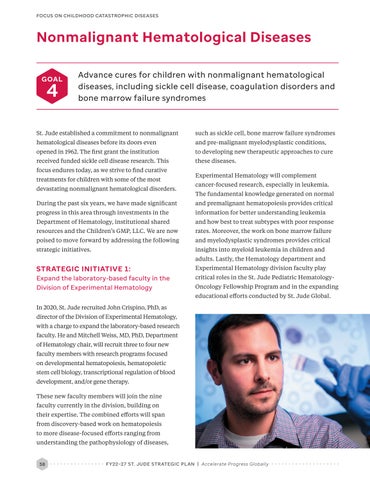
St. Jude established a commitment to nonmalignant hematological diseases before its doors even opened in 1962. The first grant the institution received funded sickle cell disease research. This focus endures today, as we strive to find curative treatments for children with some of the most devastating nonmalignant hematological disorders.
During the past six years, we have made significant progress in this area through investments in the Department of Hematology, institutional shared resources and the Children’s GMP, LLC. We are now poised to move forward by addressing the following strategic initiatives.
STRATEGIC INITIATIVE 1:
Expand the laboratory-based faculty in the Division of Experimental Hematology
In 2020, St. Jude recruited John Crispino, PhD, as director of the Division of Experimental Hematology, with a charge to expand the laboratory-based research faculty. He and Mitchell Weiss, MD, PhD, Department of Hematology chair, will recruit three to four new faculty members with research programs focused on developmental hematopoiesis, hematopoietic stem cell biology, transcriptional regulation of blood development, and/or gene therapy.
These new faculty members will join the nine faculty currently in the division, building on their expertise. The combined efforts will span from discovery-based work on hematopoiesis to more disease-focused efforts ranging from understanding the pathophysiology of diseases,
such as sickle cell, bone marrow failure syndromes and pre-malignant myelodysplastic conditions, to developing new therapeutic approaches to cure these diseases.
Experimental Hematology will complement cancer-focused research, especially in leukemia. The fundamental knowledge generated on normal and premalignant hematopoiesis provides critical information for better understanding leukemia and how best to treat subtypes with poor response rates. Moreover, the work on bone marrow failure and myelodysplastic syndromes provides critical insights into myeloid leukemia in children and adults. Lastly, the Hematology department and Experimental Hematology division faculty play critical roles in the St. Jude Pediatric HematologyOncology Fellowship Program and in the expanding educational efforts conducted by St. Jude Global.
STRATEGIC INITIATIVE 2:
Enhance the laboratory and clinical infrastructure for moving gene therapy and gene editing technology from an experimental concept to widely available cures
The Hematology department has been the driving force behind the institution’s gene therapy efforts for treating diseases, such as X-linked severe combined immunodeficiency (X-SCID), or bubble boy disease, and Factor IX deficiency, a form of hemophilia. These successes have resulted from collaborations between Bone Marrow Transplantation and Cellular Therapy faculty, and Andrew Davidoff, MD, Surgery chair, respectively. During the next six years, we will continue to invest in these programs, working to improve the approaches so that eventually gene therapy will become the standard of care for many single-gene diseases.
An important new aspect of this work emerged through a collaborative blue-sky proposal submitted by the Hematology, Surgery and Global Pediatric Medicine departments. They proposed a clinical trial focused on determining whether gene therapy for Factor IX deficiency can be implemented in low- and middle-income countries.
Currently, in these settings, children with this disease receive minimal treatment. Often by adolescence, they are confined to wheelchairs, and many die in early adulthood. Proof that a gene therapy approach can be implemented within a low-resource setting would be a landmark in medicine. A study such as this could spur a concerted worldwide effort to advance this kind of therapeutic approach to cure this devastating disease, as well as others. The Global Hemophilia Gene Therapy Trial will be conducted during the first few years of the strategic plan.
A second major area of focus in the next six years will be the development of curative treatments for sickle cell disease.
Under the last strategic plan, a multidisciplinary team of scientists and clinical researchers from Hematology and other departments assembled to further this work. The group will be expanded under the new plan. Together, they will pursue approaches that combine innovative hematopoietic stem-cell transplantation with emerging genetic technologies, such as genome editing, base editing and prime editing. Developing new approaches and preventing therapy-induced side effects is another program focus.
We will expand the support infrastructure needed to scale up individual laboratory-based research to production-level work in the Children’s GMP. The therapeutic product will then move into FDA-approved, early-phase clinical trials run at St. Jude and collaborating centers. By enhancing our therapeutic pipeline—fueled by internal scientific discoveries, industry alliances and academic collaborations—and the supporting St. Jude infrastructure, we will accelerate the development of curative treatments for a disease that affects millions of people worldwide.
STRATEGIC INITIATIVE
3:
Strengthen the patient support infrastructure for children with sickle cell disease and other chronic hematological diseases
As the primary treatment center for children with sickle cell disease in Memphis and surrounding areas, St. Jude maintains one of the nation’s largest pediatric sickle cell programs. The Division of Clinical Hematology is led by Clifford Takemoto, MD. Jane Hankins, MD, is medical director of the Sickle Cell Disease Program.
This treatment program offers a host of interventions and resources to help young children and teens adapt to this chronic disease. These include psychosocial support services, academic assistance, a summer reading program, and education for parents on how to effectively manage the disease.
We have also created a comprehensive approach to teaching children about their disease so that as they grow, they can assume more responsibility for their health needs.
These initiatives will be enhanced during the next six years, with new staff recruitment and expansion of the St. Jude School Program and family educational services.
The St. Jude–Methodist Sickle Cell Disease Transition Clinic is an important element in preparing sickle cell patients to assume primary responsibility for their health when they become adults. The clinic—a collaboration between St. Jude and Methodist University Hospital—assists patients with all aspects of this transition.
In addition, the clinic is the home base for the Sickle Cell Clinical Research and Intervention Program, or SCCRIP, research protocol. Modeled after St. Jude LIFE, the study has enrolled more than 1,300 sickle cell patients, many of whom have graduated from the St. Jude clinic and are now receiving care through Methodist Hospital, Regional One and other area health care providers.
As this study grows during the coming six years, it will provide valuable longitudinal information about the health problems that arise from sickle cell disease. Genomic studies have been performed on most of these patients, and the findings are already revealing critical insights into the underlying genetic features responsible for some long-term complications and also provide insights into gene regulation biology.
Individuals living with sickle cell disease require access to health care providers experienced in managing the disease as well as psychosocial support services for themselves and their caregivers. For most St. Jude patients, the clinic and resources on campus meet these needs. However, for those who live beyond Memphis, St. Jude may be too far away for rapid care.
“ While we have made good progress using hydroxyurea to help children and younger adults look after their disease, much remains to be done to slow the progress of sickle cell as older teenagers transition to adult life. ”
– Jane Hankins, MD Hematology
These patients often seek help in emergency departments, or ERs, where they often receive inadequate treatment. As a result, they can have a more complicated disease course and suffer from more long-term problems.
During the first year of the plan, we will establish a remote telehealth hematology clinic in North Mississippi to increase access to care for patients in that region. The clinic, operated under the supervision of St. Jude physicians and advanced practice providers, will offer health maintenance visits and lab monitoring.
For scores of patients who live in an area with limited hematology services, the clinic will offer the convenience of a St. Jude-run clinic without a two-hour drive to access care. This arrangement
abides by Mississippi regulations, which require that telehealth providers maintain offices within 75 miles of the patient population treated. We will launch a prototype clinic during the plan’s first year.
“ I’m not sure you could pull this off anywhere else. Now that we’re following patients into adulthood, our numbers are growing very large. We have the infrastructure here at St. Jude to do the genome studies; we have a fantastic clinic infrastructure to collect all the clinical data. We have it all. ”
– Ellis Neufeld, MD, PhD Clinical Director
Neurological Diseases
GOAL
Advance cures for children with catastrophic neurological diseases 5
Catastrophic neurological disorders of children are among the greatest medical challenges of our time. About 1 in 6 children has some form of neurologic disability, ranging from diseases that affect nerve and muscle function to disorders of brain development that cause seizures, impair intellectual development and can hinder movement. In children, these neurological conditions are often genetic in origin, and it is not uncommon for parents to have multiple children afflicted by the same catastrophic illness. Historically, neurological disorders have been among the most difficult to treat. In fact, until very recently, most often patients and their families could be provided a diagnosis, but no hope of treatment.
Fortunately, decades of fundamental research— combined with remarkable improvements in treatment approaches—have allowed pediatric neurology to enter a new era. Modern approaches
have now proven that early intervention can prevent, slow or even reverse the progression of these disorders. For some children, this is the difference between life and death. For many others, it provides the life-changing opportunity to function independently.
However, enormous challenges are preventing new treatment approaches from reaching the children who need them. Despite a rapidly increasing number of candidate therapeutics emerging from the lab, the pediatric neurology field has been caught unprepared. The impediments to translating advances into effective treatments are many, including a nationwide lack of clinical research infrastructure for pediatric neurology, limited resources for pediatric clinical research and too few clinician-scientist–trained neurologists. The pediatric neurology community is simply unprepared to meet this translational challenge.
At St. Jude, we are uniquely positioned to take the lead in meeting the challenge of speeding cures for children with catastrophic neurological diseases. Through nearly 60 years of work on childhood cancer and nonmalignant hematological diseases, St. Jude has developed a wealth of knowledge, experience and capabilities in pediatric clinical research. Leveraging this expertise can vastly accelerate the pace of translating therapies for neurological diseases from the lab to the clinic.
Over the last two decades, St. Jude has also built world-leading programs in developmental neurobiology, much of which is housed in the
PEDIATRIC TRANSLATIONAL NEUROSCIENCE INITIATIVE
J. Paul Taylor, MD, PhD • Director
CENTER FOR EXPERIMENTAL NEUROTHERAPEUTICS
Richard Finkel, MD • Director
4 NEW CLINICIAN SCIENCE FACULTY
STRATEGIC PARTNERSHIPS OUTSIDE ST. JUDE
Department of Developmental Neurobiology. The department’s laboratory-based faculty have made fundamental discoveries that have fueled progress against pediatric brain tumors.
A byproduct of this crucial work has been deep insight into the normal development and function of the nervous system. In parallel, other laboratorybased faculty, now consolidated in the Department of Cell and Molecular Biology, have uncovered new information about the genetic underpinnings of pediatric neurological disorders, such as those that drive abnormal neurodevelopment. Both departments will soon move into the newly constructed Advanced Research Center, where new faculty recruits and technical infrastructure enhancements will advance neurobiology research.
J. Paul Taylor, MD, PhD, Cell and Molecular Biology chair and a Howard Hughes Medical Institute investigator, has produced critical insights into the pathophysiology of several pediatric neurodevelopmental disorders during his tenure at St. Jude. He is now working to translate these findings into therapies, while improving our capabilities in translational neuroscience research.
PROGRAM DIRECTOR
CENTER FOR PEDIATRIC NEUROLOGICAL DISEASE RESEARCH
Peter McKinnon, PhD • Director
6 NEW TRANSLATIONAL SCIENCE FACULTY
ST. JUDE CENTER WITHOUT WALLS
Engaging the broader St. Jude neuroscience community
With a background in neurology, genetics and fundamental biology, Taylor possesses the skillset and international reputation to help St. Jude become a leader in this rapidly evolving field. Lastly, Le Bonheur Children’s Hospital, an essential, longtime St. Jude partner, has one of the nation’s leading pediatric neurology departments, with expertise in pediatric seizures and movement disorders.
To address this opportunity, St. Jude developed the Pediatric Translational Neuroscience Initiative under Taylor’s leadership. The concept began as a St. Jude blue-sky idea, and after a thorough planning process that involved a vast number of internal and external experts, it was formally initiated in 2020. The Pediatric Translational Neuroscience Initiative has an ambitious objective: to change the outlook for children with catastrophic neurological diseases.
The Pediatric Translational Neuroscience Initiative encompasses two complementary centers—Center for Experimental Neurotherapeutics, led by Richard Finkel, MD, and Center for Pediatric Neurological Disease Research, led by Peter McKinnon, PhD (FIGURE 4).
The initiative will partner with the Department of Pediatric Neurology at Le Bonheur Children’s Hospital. Although still in their infancy, the initiative and centers will continue to grow and realize potential during the next six years.
CENTER FOR EXPERIMENTAL NEUROTHERAPEUTICS
In recent years, a growing number of experimental approaches have emerged to treat pediatric neurological diseases, including gene therapy, antisense oligonucleotides and more traditional small-molecule drugs. When tested in clinical trials, some of these therapies have resulted in dramatic early responses in a handful of pediatric neurological diseases.
Most prominent has been the breakthrough recently achieved in the use of antisense oligonucleotides for treatment of spinal muscular atrophy (SMA).
Buoyed by this success, investigators in academia, pharmaceutical companies and biotech industries have pushed forward with innovative therapeutic approaches for an expanding list of diseases. However, translating these potential therapies into effective treatments has been stymied by the lack of organized efforts, infrastructure and commitment to these conditions.
The Center for Experimental Neurotherapeutics seeks to change this by focusing on genetically defined pediatric neurological diseases, in which a causative gene has been identified and the basic disease mechanism is understood. In short, the center will take new treatments from the laboratory and move them toward lifelong cures.
Richard Finkel, MD, joined St. Jude in early 2020 as center director. He is an international leader in developing and running clinical trials for pediatric neuromuscular diseases. The center will recruit four additional clinician-scientist faculty, along with clinical and research staff, during the next three years. The team will work to identify a small number of neurologic disorders with high unmet needs, develop a strategic plan to bring drugs for these conditions from the lab to the patient, and build a program to attain these goals efficiently and quickly.
Initial clinical trials will build upon recent successes in treating SMA, and will be geared toward advancing antisense oligonucleotides, gene therapy and other treatments for this disease. Innovative gene editing therapy is also being considered for treatment of Duchenne muscular dystrophy, or DMD. Small-scale phase I/II clinical trials will be conducted at St. Jude through the newly created neurological disease outpatient clinic. As the center evolves and grows in stature, the number of diseases studied will also grow.
Future priorities will include genetically defined causes of epilepsy, movement disorders and brain metabolic diseases. We will reach out to potential patients about open St. Jude clinical trials through strategic partnerships with pediatric neurological disease advocacy groups and foundations, which are currently the main conduit for communicating to families and recruiting children on clinical trials.
The Pediatric Translational Neuroscience Initiative will serve an important role in pulling together these individual disease advocacy groups, strengthening their voices, and working
to modifying relevant national policies that impact the research and treatment of childhood neurological diseases.
At steady state, the center will likely enroll 50–150 patients annually from the U.S. and around the world in clinical trials. As with current gene therapy trials, St. Jude will cover all costs associated with treatment during the study, and patients and their families will reside in St. Jude short-term housing during evaluation and treatment. Importantly, the long-term care of patients will not be transferred to St. Jude, but rather will be managed by their current health care providers to ensure that they have consistent access to care close to home.
If inpatient care is required during their stay in Memphis, patients will be referred to Le Bonheur Children’s Hospital, where all of the necessary support services for children with neurological disorders are available. Center faculty will have clinical privileges at Le Bonheur Children’s Hospital and will participate in the care of hospitalized patients.
Candidate therapies will be obtained from St. Jude and other academic medical centers, as well as from biotechnology and large pharmaceutical companies. The latter will benefit from efforts to enhance interactions with commercial entities as described on page 28.
Importantly, the center will directly benefit from insights gained from the benches of the Center for Pediatric Neurological Disease Research, which will provide therapeutic candidates for assessment and fundamental biological findings that have the potential to inform clinical care.
“ We’re moving in a new direction, but staying true to the core values and mission of St. Jude. It’s a chance to be bold in steering St. Jude toward other catastrophic diseases affecting children where there’s a high unmet need and opportunity to hopefully find cures and save lives. ”
– Richard Finkel, MD Center for Experimental Neurotherapeutics Director
CENTER FOR PEDIATRIC NEUROLOGICAL DISEASE RESEARCH
During the last decade, significant progress has been made to elucidate the genetic cause and pathophysiology of several neurological diseases of childhood. This has led to new therapeutic approaches to cure these diseases. Nevertheless, the underlying genetic causes of many childhood catastrophic neurological diseases remain unidentified. For other disorders, the underlying genetic defects are known, but the full pathophysiology has yet to be uncovered.
To address gaps in knowledge, St. Jude recently developed the Center for Pediatric Neurological Disease Research, led by Peter McKinnon, PhD, of Cell and Molecular Biology, who joined St. Jude in 1995. His research focuses on understanding the normal role of DNA repair mechanisms in brain development and how alterations of these pathways lead to genetically inherited neurodegenerative diseases such as ataxia telangiectasia and other spinocerebellar ataxias.
Two faculty members have joined the center, and another four with laboratory-based research programs will be recruited, along with ancillary staff. Several new department-based technology centers will be developed—such as tissue histology, microscopy, and in vivo molecular imaging and neurophysiology—to provide technical and intellectual support for a spectrum of diseaseoriented research.
The center will occupy half of a floor strategically located between the Departments of Developmental Neurobiology and Cell and Molecular Biology in the Advanced Research Center, forming a large group devoted to neuroscience.
As previously noted, laboratory research conducted by the center will be both supported and informed by the Center for Experimental Neurotherapeutics. However, the former will cast a far wider net, advancing understanding of diseases that remain intractable from a therapeutics perspective.
The collaborative culture of St. Jude is a philosophical pillar of the Pediatric Translational Neuroscience Initiative. Although the disease focus is new to St. Jude, the initiative will benefit from interactions with many academic departments.
As such, it will strive to function as a “center without walls,” analogous to the Comprehensive Cancer Center. Membership will be open to investigators from all departments.
The initiative will have developmental funds to support collaborative research proposals involving faculty members across the institution. In addition, research-in-progress seminars, workshops, seminars with external speakers, and a yearly symposium will be open to all.
For generations, doctors had little to offer children with neurological diseases. A diagnosis was accompanied by a sense of hopelessness. St. Jude is positioned to change this outlook.
By harnessing the institution’s expertise in neuroscience, genomics, cellular, molecular and structural biology, and world-class clinical care and research infrastructure, the Pediatric Translational Neuroscience Initiative holds incredible potential for transforming care and eventually delivering cures.
“ It’s always been clear that the mission of the hospital has been to tackle catastrophic diseases. If you want an example of a catastrophic disease, you need look no further than pediatric neurological diseases. Our work will have a really profound impact on families affected by these disorders.”
– Peter McKinnon, PhD Center for Pediatric Neurological Disease Research Director
Infectious Diseases
Establish a world-leading research effort in infectious diseases that affect children
Infection is the single leading cause of death from disease of children worldwide—accounting for 30% of all pediatric deaths. Diseases such as cholera, malaria, tuberculosis, respiratory infections and HIV/AIDS cause devastation in low and middleincome countries. In developed countries, infections continue to cause significant morbidity and mortality in children, with respiratory and gastrointestinal infections continuing to be leading causes of suffering. For children with cancer, infectious diseases remain one of the most serious life-threatening complications of the curative therapy we use.
Despite these facts, global investments in infectious disease research have waned during the last several decades. This has been, in part, the result of a naïve belief that advances in public health measures, diagnostics, antibiotics and
vaccines had rendered the world safe from the historical ravages of infections. For many infectious diseases, the world believed a quick diagnosis could be made and an effective treatment and/or a vaccine would be readily available.
We now know this confidence was misplaced. The ongoing COVID-19 pandemic has demonstrated how underestimating the impact of an infectious disease can have serious consequences. This event has also shown the strength of science to triumph over these devastating forces when researchers are prepared to answer the challenge in a timely manner.
Can St. Jude contribute academic prowess and other resources to help address this global challenge? We believe the institution can make a difference on this front. As such, we are committing to a significant increase in our investment in infectious disease research during the next six years. The following section describes why St. Jude can contribute in a major way to the challenges infectious diseases pose to children, and we outline the specific initiatives we will pursue.
St. Jude infectious disease research has a rich history of successes. Early work was focused on fundamental virology, and our efforts continue today with world-leading influenza research. Begun under Robert Webster, PhD, emeritus faculty, these efforts have more recently been led by Richard Webby, PhD, director of the WHO Collaborating Center for Studies on the Ecology of Influenza in Animals and Birds, which is located at St. Jude.
Efforts in the 1970s by Walter Hughes, MD, then chair of the Infectious Diseases department, helped identify an intervention to prevent or cure Pneumocystis jirovecii, a parasitic infection seen in a high percentage of pediatric cancer patients. That treatment also proved immensely beneficial for patients with HIV/AIDS in the 1980s.
Throughout the institution’s history, researchers have led efforts to use antibiotic prophylaxis to reduce the risk of infection in pediatric cancer patients, an approach now considered the standard of care. Research from close collaborations between the Immunology and Infectious Diseases departments has also proved to be an area of strength. The work of Peter Doherty, PhD, former Immunology chair and Nobel laureate, helped to elucidate the key elements of how the immune system detected and responded to influenza. More recently, work from Paul Thomas, PhD, and Thirumala-Devi Kanneganti, PhD, both of Immunology, has further advanced mechanistic understanding of how the immune system responds to infectious agents.
St. Jude clinical infectious disease care and research developed under the leadership of Elaine Tuomanen, MD, Infectious Diseases chair, are unparalleled. This work ranges from caring for cancer patients and those undergoing bone marrow transplantation, to managing children with sickle cell disease who have an increased risk of infection, to controlling viral levels in children with HIV. These efforts are supported by world-class infectious disease diagnostics and clinical pharmacology.
The infectious disease clinical and research efforts are organized into the Department of Infectious Diseases and the Children’s Infection Defense Center, which draws together investigators from multiple programs to foster collaboration. The current yearly investment in infectious disease care and research is $50 million.
Lastly, St. Jude Global and the Global Alliance uniquely offer areas of opportunity for future infectious disease research. This program and network will allow us to approach clinic- and laboratory-based research on a worldwide scale— something few other institutions can do.
Thus, the institution’s ongoing work provides an exceptionally strong foundation upon which we can build one of the leading pediatric infectious disease research efforts in the world.
“ Why is the study of infectious diseases important at St. Jude? Infectious diseases kill children. Influenza, measles, whooping cough and even COVID-19 are a threat to our patients.”
– Robert Webster, PhD Infectious Diseases Emeritus
STRATEGIC INITIATIVE 1:
Recruit a new chair of the Department of Infectious Diseases
During the plan’s first year, we will recruit a new chair of the Department of Infectious Diseases. We will pursue an outstanding clinician with an international reputation as a clinical investigator in an area of research that complements our institution’s strengths. The individual will lead the clinic and clinical research efforts of the department and will grow these based on the institution’s expansion of cancer and non-cancer programs. Additional growth will be driven by the new chair’s vision of enriching clinical infectious disease research and care at St. Jude.
STRATEGIC INITIATIVE 2:
Develop a new laboratory-based Center for Pediatric Infectious Disease Research
To further strengthen research in this area, we will create a new laboratory-based Center for Pediatric Infectious Disease Research that will encompass the current laboratory-based faculty in Infectious Diseases. It will also provide space for recruitment of an additional 13 faculty members.
This center will be housed on two-and-a-half laboratory floors (1.5 in the Donald P. Pinkel, MD, Research Tower and one in the Advanced Research Center). For the latter, we will build out the two shelled floors in the Advanced Research Center; one will be used for this initiative and the other will be held for future use, beyond the timeframe of this strategic plan. Faculty will hold primary appointments in the center, which will have academic department status and replace the Children’s Infection Defense Center.
Recruitment will focus on the hiring of a center director—an investigator of international stature who brings leadership experience, coupled with a vision for how we can best meet the St. Jude mission, while simultaneously bringing significant value to addressing the challenges of infectious diseases globally.
Possible areas of future focus could include mechanisms of antibiotic resistance; development of advanced point of care diagnostics; surveillance of emerging infectious diseases and associated pandemic preparedness; pathophysiology of sepsis; and/or the human microbiome and its influence on health and disease.
As part of this new operation, we will create a Center of Excellence for Innate Immunity and Inflammation, which will focus on how this biological system serves as an initial line of defense against many infectious diseases. We will use two of the new positions to recruit mid- to senior-level faculty whose research complements that of other center faculty. This effort will begin in FY22 and should reach steady state by the plan’s third year.
The infectious disease clinical and research expansion will result in an increase in the yearly budget from $50 million per year in operating dollars today to $149 million annually at the plan’s end.
Moving science and medicine beyond borders and boundaries
Finding cures and saving children everywhere: Focus on Global Impact
In developing the FY16–21 strategic plan, we looked critically at the St. Jude International Outreach Program and the impact it had on pediatric cancer. Beginning in 1993, the endeavor grew to manage 24 programs across 17 countries. Through the program, St. Jude was able to make substantial progress toward advancing research and care worldwide. However, at its peak, the program only reached about 3% of children with cancer. The overall effort could not be easily scaled to have a sizeable influence on the international pediatric cancer burden.
When we looked globally, the figures were staggering. Each year, more than 400,000 children are diagnosed with cancer, with 80% living in lowand middle-income countries (LMICs). Although
cure rates in developed countries are 80%, it is estimated that only 20% of children in limitedresources countries survive. The numbers tell us that the greatest predictor of whether children will be cured of cancer is where they live. This is one of the greatest disparities in health outcomes worldwide.
To address this, we recruited Carlos RodriguezGalindo, MD, in 2016, to serve as Department of Global Pediatric Medicine chair and executive vice president. Under his leadership, we expanded the institution’s reach through the bold, new initiative, St. Jude Global, for which Rodriguez-Galindo is also director. The endeavor focuses on developing the workforce, health care systems, research expertise, infrastructure and methodology needed to meet the growing worldwide childhood cancer burden.
The initiative is complemented by the newly established St. Jude Global Alliance, a network of medical institutions and foundations. Our goal is audacious: to establish a self-sustaining system that will eventually give all children with cancer or
GOAL
catastrophic blood diseases access to quality care, no matter where they live.
With this new strategic plan, we will significantly expand the institution’s global impact. Below we describe five major strategic initiatives.
Improve cure rates for pediatric cancer and catastrophic blood diseases worldwide through St. Jude Global and the Global Alliance
The foundation of the institution’s global efforts is built on the Department of Global Pediatric Medicine, which has 13 faculty members and over 100 staff. The department unites physicians and scientists with expertise in pediatric oncology, global health, epidemiology, analytics, health economics and policy, and medical education. Their focus is to advance the science of understanding the global childhood cancer burden; define the optimal approach to train an international workforce; build the research infrastructure and methodology needed to continually advance care worldwide; and develop and implement resource-adapted initiatives to improve pediatric cancer outcomes globally.
At the next organizational level, St. Jude Global is a cross-institutional effort, led by Global Pediatric Medicine faculty, in collaboration with faculty and staff of the Oncology, Pathology, Surgery, Pediatric Medicine, Radiation Oncology, Epidemiology and Cancer Control, Diagnostic Imaging, Infectious Diseases, Psychology and Hematology departments, as well as the St. Jude Graduate School of Biomedical Sciences.
St. Jude Global manages the institution’s outreach around the world. Participating faculty are engaged in a spectrum of initiatives to address worldwide childhood cancer disparities. These include strengthening health systems, working with governments, quality improvement and implementation research, workforce training, and clinical trials—conducted either in a country or across a specific region. The clinical trials are primarily focused on assessing outcomes, using closely monitored, resource-adapted treatment approaches—with a goal of improving outcomes as health care infrastructures are strengthened.
Faculty participate in education programs developed to train an international workforce. This includes operating the St. Jude Global Academy, Global Child Health master’s program, regional training programs for doctors and nurses, and web-based educational resources that are provided to physicians treating children with cancer worldwide.
The program also manages the growing number of partnerships St. Jude has formed to expand the institution’s reach. These include agreements with World Health Organization (WHO), International Agency for Research on Cancer (IARC), International Atomic Energy Agency (IAEA), Institute for Health Metrics and Evaluation (IHME), International Society of Pediatric Oncology (SIOP), Institute for Healthcare Improvement (IHI), and other academic pediatric medical centers.
The St. Jude Global Alliance is the final organizational piece in the institution’s worldwide outreach. This frontline effort is a formal network linking more than 140 institutions across 50-plus nations. Organized in seven regional structures (FIGURE 5), the alliance unites countries, medical institutions, foundations and health care workers to prioritize needs and develop solutions that move entire countries and regions forward. St. Jude Global Alliance members work collaboratively, learning from each other and spreading best practices across continents and cultures.
At the start of the last strategic plan, we invested approximately $11 million annually in the St. Jude International Outreach Program. Today, we are investing more than $30 million a year in global efforts, expanding the institution’s influence considerably. We have also invested $15 million over five years in the Global Initiative for Childhood Cancer, a collaboration with WHO to raise pediatric survival rates in LMICs to 60% for six of the more common forms of pediatric cancer by 2030.
Through these combined efforts, St. Jude has played the lead role in joining the global pediatric oncology community in the shared purpose of accelerating progress so that children with cancer or catastrophic blood diseases—everywhere—can access quality care.
During the next six years, we will accelerate the growth in investment, increasing the operating budget from $30 million to $100 million by FY24 of the plan. An outline of the major initiatives that are part of this expansion follows.
FIGURE 5. St. Jude Global regions and areas for potential administrative hubs to support the program
STRATEGIC INITIATIVE 1:
Expand both the Department of Global Pediatric Medicine and St. Jude Global
To grow our efforts worldwide, we must increase the number of faculty and staff in the Department of Global Pediatric Medicine, as well as in the other departments contributing to St. Jude Global. The new positions will support the program’s foundational expansion, along with the following strategies.
A key St. Jude Global operational pillar is training a workforce to meet the growing number of pediatric cancer patients worldwide. We will significantly expand educational program offerings in pediatric hematology-oncology, as well as in other medical subspecialties related to comprehensive cancer care. We will also establish an infrastructure for graduate medical education to oversee the formation of regional pediatric hematologyoncology fellowship programs.
At least one program will be developed for each region—with a target of graduating 15–20 fellows annually. Educational programs will be developed collaboratively with local program leaders and academic institutions. St. Jude oversight will ensure that each program achieves international American Council for Medical Education, or iACGME, accreditation.
Similar but smaller efforts will be established toward the end of the strategic plan for training programs in other medical subspecialties, such as radiation oncology, surgery, pathology, infectious diseases and intensive care medicine.
A second major initiative to augment this academic undertaking will be the complete redesign and expansion of the Cure4Kids web-based, educational resource. This distance-learning platform will become the main support tool for the didactic initiatives of the St. Jude Global Academy. The site will provide relevant content for trainees, physicians, nurses, pharmacists, administrators and other allied health care workers.
All content will be translated to multiple languages. This will require subject-matter experts, production staff and personnel to support the underlying technological infrastructure.
Lastly, as described on page 20, we will modestly increase the number of students enrolled in the Global Child Health Master of Science program. This program creates scholars who return to their communities and lead development of the health care systems required to treat childhood cancer. As part of the program, graduates develop capstone projects, which are funded by St. Jude and help guarantee their work endures long after classes end.
“ This initiative unites health care providers, advocates and researchers from around the globe. It marks the start of a new era in the worldwide fight for the lives of children with cancer and other catastrophic diseases. ”
– Carlos Rodriguez-Galindo, MD Global Pediatric Medicine Chair
STRATEGIC INITIATIVE 2:
Develop St. Jude-staffed regional operation units that are strategically located to meet the growing needs of the Global Alliance
Since approval of the St. Jude Global Strategic Plan in March 2017, the pace and scale of growth have been impressive. The program not only spans the world broadly, but also has deep reach in countries and across regions. Outreach includes a range of initiatives: enhancing patient care; building quality, safety and research infrastructures; supporting workforce education; and establishing relationships with leaders of health care systems, foundations and governments, including ministers of health, finance and education.
As the initiatives have grown, it has become clear that these can no longer be managed solely by a Memphis-based staff. In response, we have engaged in-country consultants on short-term contracts to fill the need.
Moving forward, we will explore the development of regional St. Jude Global administrative hubs, run by full-time St. Jude workers. This approach will provide the level of frontline engagement and control needed to ensure that efforts progress at the right rate and in the right direction for the overall health of the St. Jude Global Alliance.
Ultimately, this model will consist of hubs in each of our operational regions. The hubs will be staffed by three to seven workers. These may include a regional hub director, education program coordinator, data manager and research coordinator, project coordinator and administrative support staff. They will also be supported by St. Jude Human Resources, Financial Services and Legal Services.
The first step in exploring the creation of these hubs will be to engage a global management consulting firm to develop business models for running an administrative hub in each of the identified regions.
As part of their work, the consultants will perform, by region, a comprehensive risk assessment that
“ This initiative will provide the support, tools and resources to shape how childhood cancer is addressed globally. ”
– Sima Jeha, MD
St. Jude Global Eastern Mediterranean Region Program Director
encompasses financial, legal and public relations issues associated with establishing a business in the country. The firm will also evaluate the country’s overall political and business climate. This activity will be completed during the strategic plan’s first year.
Based on the consultant’s report, during the plan’s second year, we will determine which two countries will pilot the regional administrative hubs. Whether to expand the regional hub concept into the other global regions in which St. Jude operates will be decided by the performance of the pilot hubs during the middle of the plan’s third year.
STRATEGIC INITIATIVE 3:
Expand infrastructure to run clinical trials around the world
Global clinical research is essential to accelerate progress. Current approaches used to treat childhood cancer in high-income countries cannot be directly implemented in LMICs because their health care systems cannot effectively manage the complexity of care these treatments require.
Therefore, therapeutic approaches must be adapted relative to the resources available. Advances will be made by implementing resource-adapted clinical treatment studies, assessing the outcome of children enrolled on these studies, and then modifying treatment in the next study. St. Jude is providing advice, clinical research personnel training, and infrastructure to conduct interventional and noninterventional clinical studies.
Currently, St. Jude Global is leading more than 200 collaborative research projects around the world. We anticipate this number to more than double during the next six years.
A second level of activity is the implementation of frontline clinical studies that can only be run on a global scale. As outlined in the preceding pages, progress in pediatric cancer is hampered by the relative rarity of various cancer subtypes.
To complete a clinical study on a given diagnosis, there are two approaches: limit the number of participating sites and extend the timeframe for patient enrollment to meet the required number to complete the study, or increase the number of participating sites, thereby shortening the time required to complete patient accrual. For some important clinical questions, the optimal approach will be to bring together the world’s best cancer centers to participate in developing and running the trial.
For these clinical studies, we will partner with leading global pediatric cancer centers that have the capacity to conduct frontline studies. Through St. Jude Global and the Global Alliance, we have developed relationships with many of these institutions. During the next six years, we will work with those centers to develop clinical studies that can effectively and efficiently answer some of the most pressing questions in pediatric oncology. Through these partnerships, we will tackle major questions that cannot be addressed by St. Jude alone.
Much of the infrastructure for supporting these trials will be developed as part of the Comprehensive Cancer Center (page 29). Within St. Jude Global, focused support will be established for the direct outreach to the major pediatric cancer centers worldwide.
“ Results from clinical studies conducted with our St. Jude Global Alliance partners accelerate progress towards improving care for every child, everywhere. ”
– Paola Friedrichh, MD, MPH St. Jude Global Mexico Region Program Director
STRATEGIC INITIATIVE 4:
Lead the development of a worldwide drug distribution program to provide the medicines required to treat pediatric cancer patients
To offer quality care to children with cancer, health care providers must have access to a reliable source of chemotherapeutic agents that constitute the current standard of care. Unfortunately, in most LMICs this does not happen.
In a recent St. Jude Global survey, the absence of a reliable source of drugs was found to result in therapy interruptions and delays for a large percentage of patients. Even more worrisome, studies show that the quality of drugs available in LMICs are often inadequate, and in some cases, lead to exposure to medications of questionable value. We must ensure children can be treated with the required drugs.
St. Jude Global has begun discussions with WHO, The Global Fund, UNICEF, SIOP and others to define the underlying causes of this international problem and explore possible solutions.
St. Jude will lead the planning efforts to create the Global Platform for Access to Childhood Cancer Medicines—a comprehensive solution to provide LMICs an uninterrupted supply of chemotherapy used to treat children with cancer.
This program will be modeled after The Global Fund, an international organization focused on ending AIDS, tuberculosis and malaria. Similar to The Global Fund, the Global Platform for Access to Childhood Cancer Medicines will begin through an administrative support agreement with WHO, which will host the entity under its incubator program.
Ultimately, in addition to St. Jude, funding will be secured through agreements with partner governments, as well as from private donations. Ultimately, like The Global Fund, the Pediatric Cancer Global Drug Access Program will become an independent non-profit organization linked to the United Nations system through an observer status.
During the plan’s first year, a task force of faculty and staff from Global Pediatric Medicine, along with individuals from WHO and other global agencies, will work with consultants to develop a comprehensive business plan and perform a detailed global risk assessment across the full drug procurement and supply chain.
The group will also identify potential partners to assist in managing each step of the process, as well as a full financial plan. This includes additional funding sources and a subsidized system, whereby revenue could be generated through drug purchases by governments of more affluent countries to help support the program.
St. Jude will lead and fully fund this effort through the duration of this strategic plan period.
Funding for this initiative through FY27 is estimated at $200 million.
The Global Platform for Access to Childhood Cancer Medicines should begin formal operations during the second year of the plan and be fully functional by the end of the third year.
STRATEGIC INITIATIVE 5:
Develop and test country- and regionspecific approaches to expand pathology and laboratory medicine diagnostic services to care for children with cancer
Access to quality care for children is hindered in many resource-limited settings by a scarcity of quality pathology and laboratory medicine services. Rendering an accurate diagnosis is the first step toward providing curative treatment. The diagnostic expertise for pediatric cancer requires specialized training, as well as access to
modern laboratory-based technology. As we move forward, training a workforce in pathology and laboratory medicine to meet this need will remain a pillar of our efforts. This will occur through the St. Jude Global Academy and Global Alliance.
Unfortunately, current estimates indicate that during the next decade, it will not be possible to train a sufficiently sized workforce to handle the diagnostic needs of the worldwide childhood cancer burden. Therefore, we must find complementary approaches to training local pathologists in order to handle the diagnostic work in the short term.
For morphologic-based tissue diagnostics, we will evaluate the possibility of creating a global anatomical pathology diagnostic service that uses a telemedicine digital infrastructure. We will start with addressing the technical infrastructure required for such a service.
“
Creating a vast global network means countries with tricky geopolitical relationships in the past or present are going to cross paths but improving pediatric cancer outcomes is a uniting cause. ”
– Nickhill Bhakta, MD
St.
Jude Global Sub-Saharan Africa Region Program Director
Pilot studies will explore taking pathology slides from a test site, scanning them to digitize the information, and then having the information from difficult cases accessed by a tiered network of diagnostic pathology experts. We will engage pathologists worldwide to participate in this network, with only the most difficult cases being referred to St. Jude for evaluation.
The pilot studies will focus on developing the standards for tissue processing, sectioning and staining, and the sharing of digital files in real time and rendering a diagnosis. As part of this, we will also investigate the use of artificial intelligence (AI)–based diagnostic efforts to assist in making some of the easier diagnoses. Studies will not only focus on the technical and professional aspects of rendering a diagnosis, but also the logistics and the total cost of performing this work.
In addition to the tissue-based morphologic work, an accurate diagnosis often also requires genomicbased studies, as well as serial quantitative measures for the presence of circulating cancer cells in the blood, called minimal residual disease.
For molecular-based analyses, St. Jude faculty and others will work to develop standardized molecular diagnostic platforms that can provide the required information in a resource-limited setting. The highcomplexity, sequencing-based methodology used at St. Jude cannot be supported in most LMICs;
thus, alternative cost-effective approaches must be developed. Pilot projects are already underway to create these types of platforms and will continue during the initial years of this strategic plan.
To detect minimal residual disease, we are establishing standardized methodologies for leukemia and equipping centers of excellence worldwide to conduct this work. These sites will serve as reference laboratories through which pediatric oncologists can send samples to obtain the necessary information on the status of their patients.
For other laboratory-based diagnostic work, including efforts in infectious diseases, we will build on the current laboratory infrastructure available in most hospital settings. We will also work with practitioners to advance the diagnostic expertise available through workshops and direct outreach to individual labs.
Over the first two years of this plan, we will conduct the described pilot projects to define the technical approaches most appropriate to implement in regional or global diagnostic networks.
If warranted, during years three to six, we will develop plans for a comprehensive regional and global diagnostic network. This network will include business and management structure, legal and regulatory framework by region, and estimated costs. We will work with governments, non-governmental organizations, foundations and health care organizations to determine the best way to provide children with cancer the diagnostic services associated with quality care.
Dollars have been included in the strategic plan to cover the cost of the pilot projects and the work required to develop a comprehensive plan. If these initial measures warrant moving forward to implement a comprehensive solution, St. Jude leadership will define what role, if any, the institution should play in managing the initiative and contributing to its finances. The recommendations from St. Jude leadership would
be presented to the Board of Governors during the second half of this plan for a final decision.
The St. Jude Global strategy remains subject to the established review process by the St. Jude Global Steering Committee and the St. Jude Global Ad Hoc Committee.
“ The global challenges of treating childhood cancer can be not only medical but also cultural. But people are realizing it’s a point in time where if we work together, we’ll make progress. Personal agendas and country differences are being set aside to save children. That’s amazing.”
– James R. Downing, MD President and CEO
Building a culture, workforce and environment that speeds cures for children
Creating a culture and environment for success: Focus on People and Place
At St. Jude, we are driven to find cures and save lives. The ingredients for success are a workforce second to none, a caring and collaborative culture, and an institutional pledge to provide the environment and tools necessary to achieve the hospital’s mission.
At its foundation, St. Jude is focused on scientific discovery—the generation of new knowledge that propels the quest for new cures. Discovery requires an interactive environment where individuals with different expertise and approaches can learn from one another and collaborate. Developing mechanisms to encourage, support and enrich our scientific collaborative culture takes intention and careful implementation.
Delivering care in the context of clinical research requires a continuous focus on patients and their families. Patients must be at the center of everything we do. We must create the systems and processes that allow health care teams to do their best work. From physicians, advanced practice providers, pharmacists, allied health professionals, psychologists, social workers, child life specialists, chaplains, teachers and others to the parents who become an essential part of the care team, we must create a continuous learning culture that exudes empathy, respect and teamwork.
Similarly, creating and supporting the broad workforce at St. Jude requires a commitment to recruit the best, prepare them to perform at their highest capacity, and develop their careers so that they can maximally contribute no matter where their work takes them. We strive for a workforce
that can meet today’s challenges, while creating a better future for children everywhere. This takes design and focus on the systems and processes for developing careers across clinical, scientific, global and administrative operations.
Lastly, the physical spaces in which we work have a direct effect on the culture of the workforce and its level of productivity. Establishing and sustaining environments that facilitate excellence and teamwork demands careful planning of needs and the design of spaces that ensure we deliver the best care today, while finding the cures of tomorrow.
In this section, we describe four goals focused on culture, workforce and environment to make sure that St. Jude remains a place where teamwork flourishes; internal and external partnerships thrive; and our employees are able to give their all to making a difference in the lives of children.
Drive scientific collaboration across campus, the U.S. and around the globe to accelerate progress against pediatric catastrophic diseases
STRATEGIC INITIATIVE 1:
Enrich the culture of science across the St. Jude campus
The culture of science at St. Jude revolves around bringing together fundamental scientists, clinical and translational investigators, population scientists and frontline clinicians to interact and learn from one another. This approach ensures that broad scientific expertise is brought to bear on the challenges we face in advancing cures.
Progress occurs when scientists gather to discuss their research, share findings, collaborate on new projects, or learn about novel processes or discoveries. The mechanisms that facilitate
interactions across the spectrum of expertise that exists at St. Jude are many. We are organized into academic departments, but much of our research is conducted through disease-based programs, such as the leukemia, solid tumor and brain tumor programs in the Comprehensive Cancer Center.
We hold cross-institution seminars, workshops, symposia and scientific retreats to facilitate the spread of new knowledge and methodologies throughout the institution. We also have a robust internal communication group that highlights publications, grants and awards and publishes a yearly scientific report describing the most significant advances each year.
To further enrich the culture of science across St. Jude, during the next six years we will create administrative teams to support:
• Multi-investigator grants, including program project and training grants that foster scientific collaboration
• Nominations of faculty and staff for awards that bring additional recognition to their work and St. Jude
• Scientific conferences, including virtual meetings, held for international audiences
The expanded support for scientific conferences emerged in response to the COVID-19 pandemic. With travel restrictions shuttering many scientific meetings worldwide, we recognized an opportunity to fill this void with virtual conferences organized by St. Jude. The Science of Childhood Cancer, developed by the Comprehensive Cancer Center, is a weekly seminar given by leading pediatric oncology investigators. The series is an ideal example of the model we seek to further
emulate. This seminar is attended by individuals internationally and has quickly become one of the premier venues for learning about the most recent advances in pediatric oncology.
This series, as well as others, fosters interactions among scientists globally, helping to accelerate progress at St. Jude and around the world. These efforts also bring significant recognition to the hospital and its scientific environment.
Expanding these efforts, we will create a new Education Program Office under Terrance Geiger, MD, PhD, deputy director of Academic and Biomedical Operations, to handle virtual conferencing, as well as on-site meeting planning, facility rentals, hotels, meals, registration, security, programs and reception activities. Experts in this office will be available to support meetings across the spectrum of work conducted at St. Jude. Thus, we will enhance interactions with scientists globally and establish St. Jude as a major center for scientific exchange.
STRATEGIC INITIATIVE 2:
Strengthen the blue-sky process to continually generate new ideas
The blue-sky process (page 34) challenges faculty and staff to explore bold new ideas that have the potential to transform science, medicine and our institution. By design, this process is not part of the routine six-year strategic planning cycle. Big ideas don’t follow a calendar; they strike at any time. The bluesky process is an avenue for faculty and staff to propose concepts outside of the strategic plan. The process also fosters collaboration and the creation of teams that cut across traditional department and discipline lines to bring together individuals who can address a problem from multiple points of view. This ensures St. Jude is continually enriched with new innovations.
The results of the blue-sky process have been nothing short of extraordinary. We have identified and pursued projects that have had game-changing impact and established unique leadership positions for St. Jude. Some of these efforts have had a defined lifespan, while others have evolved into permanent programs.
SEEING THE INVISIBLE IN PROTEIN KINASES
During the last strategic plan, St. Jude installed a $10 million 1.1-gigahertz nuclear magnetic resonance (NMR) spectrometer. It is a centerpiece of Structural Biology’s $50 million expansion under Charalampos Babis Kalodimos, PhD, department chair.
The superconducting magnet is one of the most powerful of its kind in the world. More than a point of pride, this sophisticated technology is helping scientists study proteins, DNA, RNA and other biomolecules in ways not previously possible.
One such recently studied protein is ABL, a tyrosine kinase that when mutated drives the formation of aggressive leukemias and other forms of cancer. Drugs that inhibit ABL’s kinase activity have resulted in dramatic responses in patients with ABL-driven chronic myelogenous leukemia. Unfortunately, some patients develop ABL gene mutations that result in drug resistance.
Using the ultra-high-field NMR, Kalodimos and his team were able to identify transient conformation states of ABL that help to explain how drug resistance occurs. Based on these results, the team submitted the bluesky proposal, “Seeing the Invisible in Protein Kinases.” The project will extend the use of the ultra-high field NMR to other kinases with the goal of revealing the repertoire of regulatory and drug-resistant mechanisms in human kinases. The project will initially focus on the 58 human receptor tyrosine kinases, along with 20 non-receptor tyrosine kinases and 20 serine/threonine kinases. This large-scale project has the potential to transform our understanding of the basic science of protein kinases, major targets of precision therapies.
Building on this success, we have incorporated $77 million in operating and capital dollars and more than 100 positions to support new bluesky initiatives during the next six years. These resources will support an average of three novel initiatives per year.
As part of the blue-sky process, we occasionally receive proposals of incredible potential that exceed the financial scale upon which the program was developed. During the last year, one such proposal, “Seeing the Invisible in Protein Kinases,” was submitted by Charalampos Babis Kalodimos, PhD, Structural Biology chair.
This exciting project was reviewed by senior St. Jude scientists, and following unanimous approval, it was reviewed by an external scientific review committee, led by St. Jude Scientific Advisory Board members. The external review group also expressed unanimous enthusiasm for the project, citing its uniqueness and scientific value across many biological disciplines, transformative potential for the field, and value in setting St. Jude apart from others. As a result, the project has been approved for funding and will
move forward during the next five years at a cost of $50 million.
The FY22–27 strategic plan includes an additional $75 million to support other such efforts of high potential, which require resources beyond those dedicated to specifically defined programs.
Proposals that belong to this category will undergo rigorous internal and external evaluations, and if approved, they will be presented to the St. Jude Board of Governors for final review prior to implementation.
“ We want to challenge people to come up with new ideas that have a game-changing impact. We want to look beyond the priorities of our strategic plan to identify unique opportunities that will accelerate our mission-critical objectives and test novel scientific and clinical approaches.”
– Shari Capers Strategic Planning and Decision Support SVP
STRATEGIC INITIATIVE 3:
Expand the St. Jude Research Collaboratives program
What does it take to find the cure for lifethreatening diseases of childhood? It takes resources, collaboration and asking the right questions. No single individual holds all the answers. True scientific insight is the product of many. Only by bringing together diverse, multifunctional groups with complementary knowledge and experience can we hope to solve some of the toughest problems in science and medicine. In a word, it takes collaboration not only on our campus, but across the entire scientific world.
As we considered the most challenging problems impeding progress against pediatric catastrophic diseases, we recognized there were gaps in knowledge that needed to be filled before we could proceed. In this vein, we created the St. Jude Research Collaboratives program as part of the FY16–21 strategic plan. The idea calls for assembling multidisciplinary teams of scientists to work together and fill in knowledge gaps, thereby tackling previously unanswerable questions.
Each collaborative focuses on a specific gap in our scientific knowledge. Around this area of research, we assemble teams that consist of St. Jude investigators and external collaborators who represent the best of their respective fields. The teams submit proposed research programs for evaluation. Selected projects hold the greatest transformative potential for the catastrophic diseases of childhood treated at St. Jude.
This program is led by Charles Roberts, MD, PhD, Comprehensive Cancer Center director. Thus far, the five funded research collaboratives have engaged top scientists in their field across the country.
The currently funded projects are listed below:
• The Biology of Liquid Organelles
- Partnership with Princeton University and Washington University
- $7.3 million over five years
- Launched February 2017
• The Role of Epigenetic Regulation in Pediatric Cancer
- Partnership with Rockefeller University, Dana-Farber Cancer Institute and University of Pennsylvania
- $7.5 million over five years
- Launched December 2017
• Gene Therapy/Gene Editing to Cure Sickle Cell Disease
- Partnership with Harvard Medical School, Boston Children’s Hospital and Massachusetts General Hospital
- $7.5 million over five years
- Launched February 2018
• 3D Genomics of Pediatric Cancer
- Partnership with Whitehead Institute for Biomedical Research, Massachusetts Institute of Technology, Dana-Farber Cancer Institute and Harvard Medical School
- $9 million over five years
- Launched July 2019
• Implementation Science for Survivorship, HPV Cancer Prevention and St. Jude Global
- Partnership with Washington University
- $5 million over five years
- Launched October 2020
During the next six years, we will expand the St. Jude Research Collaboratives by adding six new projects, bringing the program to 11 research initiatives. This represents a total investment of $108 million during the period of this plan.
We will also enhance the collaborative interactions among funded teams and St. Jude faculty and staff. Discussion and exchanges will be fostered through on-campus research meetings, workshops, and symposiums that bring together all of the funded groups annually. Some of these events will be open to the broader national and international scientific community. Our aim is to cultivate interactions that will stimulate new ideas, approaches and more collaborations. In addition, the program will bring St. Jude significant visibility in the scientific community, aiding recruitment of top talent.
GOAL
Set the standard for pediatric cancer care and the experience patients and their families have during the treatment journey
When a child is treated for cancer, the family embarks on a life-altering journey that affects every member of the household. For children with curable cancer, treatment can last up to three years. For those who fail initial therapy, the journey can be much longer. For many of the other childhood catastrophic diseases treated at St. Jude, the journey is lifelong. It is our responsibility to make sure every day is the best it possibly can be for patients and their families.
The experience of patients and their families is influenced by the quality of care delivered; the logistics of how, when and where that care is provided; and the support services provided on campus and back at home.
The care we provide is primarily delivered at bedside and in clinics by physicians, nurses and advanced practice providers under the leadership of Ellis Neufeld, MD, clinical director, and Robin Mutz, BSN, RNC, chief nurse executive. Medical care requires a team of individuals, including pharmacists, pathologists, psychosocial services providers and allied health professionals.
Their endeavors are supported by Facilities, Operations and Maintenance, Food Services, Environmental Services, Security, Housing and many more. In addition, there is a vast administrative network dedicated to managing, planning, financial, regulatory and legal requirements.
The following pages highlight areas of focus to enhance the environment of care and the support provided to St. Jude patients and their families.
STRATEGIC INITIATIVE 1:
Continue the clinical improvement process through Project SPARC and strengthen the quality and safety culture across all aspects of patient care
Project SPARC (Serving Patients and Redefining Care), a broad-based initiative, assesses all aspects of delivery of care at St. Jude. This includes redesigning processes, spaces, roles and tools to improve operations, increase efficiency and enhance the work environment for health care providers, as well as the experience of patients and their families.
The project, led by Neufeld and Colette Hendricks, vice president of Clinical Operations, initially worked with three external consulting groups: IDEO for coordinating the overall approach to patient support; Premier Inc for analytic support related to outpatient operations; and HKS Architects for input on outpatient clinic design.
Findings from the project have resulted in a range of changes in clinic management, operational processes and logistics, and digital support
infrastructure. Project feedback has also influenced physical layouts of clinics and waiting rooms and the way we approach providing comprehensive support to patients and families. Implementation will continue during the next several years. Knowledge gained from the project has also been incorporated into the design of the new outpatient clinic building.
The Office of Quality and Patient Care is central to creating the best possible patient and family experience. The office, under the leadership of Pat Flynn, MD, medical director and senior vice president of Quality and Patient Care, includes:
• Accreditation and Regulatory
• Clinical Effectiveness and Analytics
• Infection Prevention and Control
• Medical Staff Services
• Patient Safety
• Quality Improvement
Their efforts require respectful and considerate interaction with families and caregivers on a regular basis. During the next six years, we will continue investing in quality and safety to ensure that the care we deliver is the highest possible quality.
STRATEGIC INITIATIVE 2:
Enhance the care model by extending care beyond the hospital walls through home health and telehealth
Currently, patients staying in housing visit clinics in the hospital for all medical care. This includes trips for routine blood draws, port and wound care, as well as limited medical examinations. Offering these services in housing would decrease the number of times patients and caregivers come to campus. In-housing care would also reduce the daily patient load, decreasing wait time across clinics.
During the COVID-19 pandemic—under emergency orders granted by the State of Tennessee—St. Jude established a temporary home health service for patients in housing, which served as a test run of in-housing care. Patient and family feedback was overwhelmingly positive. As a result, we formed the St. Jude Children’s Research Hospital Home Care, LLC. Once operational, the home health care agency will provide services to patients in Memphis; in St. Jude housing; or in private residences in Shelby, Fayette or Tipton counties.
The governance and administrative structure for the home care agency will be developed early in the strategic plan period, and full staffing will be completed by the end of FY23. The home health agency at steady state will provide an estimated 5,000 care visits annually to St. Jude patients. In addition, to further facilitate blood draws in St. Jude housing, new blood-draw stations have been constructed and are being operated under the St. Jude Pathology department’s Tennessee Medical Laboratory License.
During the pandemic, we also expanded the St. Jude Telehealth Program. The program accelerated quickly. New equipment and associated informatics systems were deployed, and staff were trained to use telehealth for aspects of pediatric oncology care. More than 1,500 virtual patient visits were completed during the first six months. These particularly focused on services related to psychosocial support and routine interim clinical oncology visits.
This experience has highlighted the benefits telehealth can provide in delivering some aspects of cancer care. The telehealth platform will be expanded in the coming years. The use of this technology will also enhance interactions between St. Jude physicians and those at affiliate clinics.
STRATEGIC INITIATIVE 3:
Develop a new electronic patient and family education platform
During the last strategic plan, we established the Patient and Family Experience Office, led by Janice English, RN. This office implemented several new initiatives that enhanced support for patients and families. These varied from broadbased projects—such as creating a concierge service and building Our St. Jude, an awardwinning app, developed in partnership with Information Services—to answering individual patient needs. The office also led planning for the soon-to-be-opened Family Commons and the expansion and redesign of the St. Jude School Program, both of which will be located on the Patient Care Center’s second floor.
These projects and other Patient and Family Experience Office interactions revealed that many caregivers feel unprepared for the treatment journey. This sentiment was echoed during other patient and family engagement initiatives conducted by Nursing, IDEO and Medical Content Outreach, which developed the Together website (page 74).
Although the teams varied, the caregivers’ thoughts were the same: It’s overwhelming to assimilate new information and assume new responsibilities related to their child’s care.
This feedback led us to evaluate the educational materials provided to families. We found that these resources miss the mark in providing caregivers all the information they require, both in content and mode of presenting the content. A complete redesign to create an accessible and informative education program that allows for customization of content specific to the needs of each family is needed.
During the plan’s first two years, we will identify and implement an electronic platform to facilitate delivery of comprehensive education throughout the entire care journey. The platform will allow education to be prescribed to meet specific patient needs and will contain written, illustrated and audio-visual educational materials to support caregivers in their roles as part of the health care team. Specific content will be accessible to St. Jude caregivers through any internet-connected device and will have multiple modes of distribution, including the Our St. Jude app.
Diane Roberts, Medical Content for Patient Outreach director, will lead the team responsible for the initiative. The endeavor will be supported by illustrators, videographers, photographers and web designers. They will collaborate extensively with Nursing and other medical faculty and staff to populate the new platform. Medical and psychosocial content developed for Together will also be incorporated. When completed, the educational platform will significantly enhance the support that caregivers receive.
WE’RE IN THIS TOGETHER
When parents hear their child has cancer, icy fear is often followed by frenzied typing. And yet, internet queries may return results that are incomplete, confusing or simply inaccurate. Where can families turn for solid advice and information to help them navigate the cancer journey?
Thanks to St. Jude, families around the world now have an authoritative resource where they can learn about pediatric cancer, its diagnosis and treatment, care and support, and survivorship. Unveiled in 2018, the award-winning Together website offers reliable and trustworthy information about childhood cancer biology, treatment, and related psychosocial topics for patients and their families.
More than 2 million users from 200-plus countries and territories, all 50 states and all 10 Canadian provinces have accessed the site, which is offered in eight languages: Arabic, Burmese, Chinese, English, French, Hindi, Russian and Spanish. More translations will follow.
Parents may still have anxiety when they contemplate the future of a child with cancer. But they know that they can face tomorrow through a supportive community found on Together.
SMALL COMFORTS MAKE A BIG DIFFERENCE
Some patients at St. Jude may be anxious about treatment. Some feel lonely. Others need a distraction. That’s where Psychosocial Services superstars Puggle and Huckleberry step in.
These specially trained dogs aren’t like pets. From the moment they are born, they are shaped for the important work they do—helping patients cope with their illness, symptoms, pain and anxiety through animal-assisted therapy. Most importantly, they offer unconditional love and acceptance.
The Paws at Play program began under the FY16–21 strategic plan to much acclaim. Based on the overwhelmingly positive feedback, the program will grow, beginning with a canine companion solely dedicated to the resilience needs of staff in FY22.
Just like any other employee, the dogs have ID badges and enjoy lunch breaks. They play with toys and each other throughout their work week. To ensure they look their best for the job, they are wellgroomed and bathed at least once a week. When not at work, the dogs relax and play with other members of their handlers’ families.
When it comes to treating catastrophic diseases, we always look at the big picture. But we also never forget what a difference small comforts can make—especially those that come with a warm nuzzle or a wagging tail.
GOAL
Create a work environment that encourages employees to contribute maximally toward the mission, rewards their contributions and supports their career development
We must recruit the best, prepare them to perform at their highest capacity, and develop their careers so that they can contribute no matter where their work takes them. To accomplish this, we need to build the systems and processes that ensure the St. Jude workforce can perform at their highest levels. Our focus is to develop a workforce and equip them to meet today’s challenges, while helping to create a better future for children everywhere.
STRATEGIC INITIATIVE 1:
Improve core business and administrative processes
The electronic health record system (EHR) is an essential platform that supports both the patient care and clinical research work. Prior to approval of this plan, St. Jude decided to replace its current EHR platform with Epic. Guided by faculty and subject-matter experts, this major transition will require a large, dedicated workforce of more than 90 St. Jude staff and 38 contractors, representing a total investment of more than $77 million in capital and operational dollars. The Epic implementation will go live in fall 2022. This new system will significantly enhance many aspects of the workflow for patient care and clinical research.
In parallel to adding Epic, we will also bring online Workday, a new enterprise resource planning software platform. This new platform will provide a simple and efficient end-user experience and support daily administrative operations. Implementation of the new platform will require $36.6 million and will be completed during the plan’s first two years.
of potential candidates, enhance the interview experience while decreasing the time this process takes, and once we have selected a potential candidate, we will significantly improve our efforts to recruit them into our institution and the greater Memphis community. Once hired, we will then improve orientation and onboarding so that every new employee feels welcomed into our unique culture and has the knowledge necessary to meet the expectations of their new position as rapidly as possible.
To recruit and retain the faculty and staff required to meet our goals, we have included over $250 million to enhance pay practices. In the beginning of the plan, particular attention will be focused on the positions where competition for talent is most fierce. This includes faculty, clinical staff, including nurses and advanced practice providers, postdoctoral fellows, computer scientists, bioinformatics, computational biologist, biostatisticians, and epidemiologist.
Feedback from employees will remain the main route through which we develop prioritized efforts to enhance the workplace and make core processes more effective and efficient. The annual Your Voice survey will continue to provide detailed thoughts and comments from employees. We will also continue to hold the Town Hall Series, Lunch with the CEO Series, and other meetings that allow employees to engage directly with the CEO and St. Jude leadership.
To achieve the growth in workforce outlined in this strategic plan, we will need to enhance our efforts to recruit, onboard and integrate the 2,300 new employees that will be hired over the next 6-years. To accomplish this, we will enhance our ability to source new employees, streamline our assessment
To directly enhance the ability of our workforce to achieve the goals outlined in this strategic plan, we have also included over $100 million to improve the operational efficiency across all core business processes. This expansions in staffing in Information Services, Human Resources, Facilities Operations, Legal, Clinical Director’s Office, Finance, Deputy Director’s Office, Communications, Clinical Trials Administration and Cancer Center Administration.
STRATEGIC INITIATIVE 2:
Strengthen employee educational platforms to enhance career development
During the last strategic plan, under the leadership of Dana Bottenfield, senior vice president of Human Resources, we created the St. Jude Leadership Academy, an educational initiative designed to develop leaders at every level of the organization.
The core course consists of six modules, each lasting eight hours in length, delivered every three weeks. By early 2020, all 191 current directors had completed the program. Thirty-five of those directors have also completed a yearlong mentorship program called Leadership Squared. The academy has continued to expand, with more than 400 graduating from the manager and supervisor program and 150-plus employees completing Leading Through Influence—the curriculum for individual contributors.
To continue to meet the changing needs of the institution, graduates of all programs have the opportunity to enroll in more than 15 electives.
With the new strategic plan, we will continue to enroll more employees and strengthen existing programs. Expansion of the academy will include opportunity to improve technical skills, in additional to leadership development. Through these initiatives, we will create a workforce ready to take on new roles and challenges.
“ Our institution’s future depends on giving employees the opportunity to grow into tomorrow’s leaders.”
– Dana Bottenfield Human Resources SVP
STRATEGIC INITIATIVE 3:
Cultivate a thriving workplace focused on engagement, growth, and shared purpose
When Danny Thomas founded St. Jude Children’s Research Hospital in 1962, he envisioned a place where children battling life-threatening diseases would receive world-class care, regardless of their background or circumstances, while researchers advanced discoveries to benefit families everywhere. That unwavering commitment to service and excellence continues to shape the culture of St. Jude today.
For nearly 60 years, St. Jude has championed a workplace rooted in compassion, collaboration and excellence. As part of this legacy, we promote an environment where employees feel engaged, valued, and inspired to reach their full potential.
St. Jude recognizes that its ability to accelerate discovery is directly tied to the talent, dedication, and passion of its employees. To ensure the institution remains a destination for top-tier professionals, we are committed to developing strategies that attract, retain and nurture exceptional talent.
During the course of this strategic plan, the institution will invest in programs and practices that promote cross-disciplinary collaboration, career development, and meaningful connections across the organization.
Priorities include the following actions:
• Provide forums to gather ideas that drive innovation and institutional success
• Build awareness and create education programs to strengthen collaboration and understanding across teams
• Develop robust analytics capabilities to evaluate and continuously improve employee satisfaction and engagement
• Expand opportunities open to all employees, including mentorship programs and leadership forums
• Support professional development initiatives for prospective employees and trainees (see Strategic Initiative 4)
• Develop an office to facilitate and encourage employees and their families to engage and connect with each other, to St. Jude, and the great Memphis community
These efforts reflect the commitment of St. Jude to building a culture that inspires excellence, drives meaningful change, and motivates employees to do their best work.
STRATEGIC INITIATIVE 4:
Enrich the talent pipeline by developing educational efforts targeted at potential future St. Jude employees
Clinical care and research at St. Jude are driven by an exceptionally talented group of faculty and staff. This workforce has been recruited from countries around the globe to meet the institution’s strategic needs. Because of the niche focus of St. Jude, this talent can only be drawn from a highly specialized, but small pool of potential candidates. Enriching the candidate pipeline is an area where St. Jude can make an impact.
To address this, we will strengthen an established program for training pediatric hematologistoncologists, and we will create two new programs designed to inspire high school and college students to consider careers in medicine and science.
STRENGTHEN THE PEDIATRIC HEMATOLOGY ONCOLOGY FELLOWSHIP PROGRAM
The St. Jude Pediatric Hematology-Oncology Fellowship is one of the premier training programs in the U.S. A significant number of current Oncology faculty members, along with many of the world’s leaders in pediatric hematology-oncology, have passed through the program. The fellowship offers newly trained pediatricians a personalized clinical and research experience, taught by some of the globe’s best physicians and scientists—all in a setting of unparalleled medical and scientific infrastructure. The lessons trainees learn during their three-year fellowship lay the foundation for developing their careers.
Over the course of this strategic plan, we will further improve the program by recruiting new leadership, expanding support staff and increasing financial resources. This will allow all fellows to extend training for one to two years beyond the formal three-year fellowship.
Fellows can use the additional time to become experts in their chosen fields, whether that be laboratory-based or clinical research, palliative care, survivorship or global pediatric medicine.
CREATE A SUMMER SCIENCE FELLOWSHIP PROGRAM FOR HIGH SCHOOL AND COLLEGE STUDENTS
To address the need for a strong pipeline of future leaders in science, technology, engineering, math, and medicine (STEMM), St. Jude will establish a competitive summer science fellowship program designed to provide a structured educational and mentored work experience for highly talented senior high school and college students.
This program is aimed at cultivating the next generation of skilled professionals who can contribute to scientific innovation and advancements in medicine. The fellowship will accept approximately 30 students for an 8–12-week paid program. Open to all students in the Mid-South region, the initiative will focus on identifying and nurturing top talent across the community.
Students will gain hands on experience by interning in laboratory, clinical, population science, or data science programs, exposing them to cutting edge research and real-world applications in STEMM fields.
Through this program, St. Jude seeks to provide students with opportunities to explore careers in science and medicine, develop their skills, and gain valuable mentorship from leading professionals in the field.
By investing in the education and training of exceptional young minds, the fellowship will help build a robust pipeline of future professionals, ensuring progress in critical areas of research and clinical care.
DEVELOP A HIGH SCHOOL SCIENCE AND MEDICINE VIRTUAL EDUCATIONAL PLATFORM AS PART OF ST. JUDE CLOUD
Under the blue-sky process, St. Jude, in collaboration with Microsoft and DNANexus, launched the St. Jude Cloud in FY19. This online platform allows researchers worldwide access to the largest public repository of pediatric cancer genome data, as well as some of the most advanced data analytic tools in the world, developed by St. Jude.
Scientists, at no cost, can retrieve and analyze genomic data from 14,000 individuals, representing pediatric cancer and matched normal non-cancerous tissue, blood from pediatric cancer survivors, and blood from children with sickle cell disease.
This powerful scientific community resource is changing the research trajectories of investigators studying both childhood and adult cancers, as well as other catastrophic diseases. In fact, the entire St. Jude Cloud ecosystem averages more than 2,500 weekly users from investigators around the world.
During the next six years, we will enrich St. Jude Cloud by developing a genomics educational platform geared toward high school students.
The aim is to inspire high school students and their teachers to learn about the emerging genomic medicine field. Through this experience, we hope some students will consider pursuing careers in biomedical sciences.
The material developed for this site will also be shared on the Together site and the new patient and family education platform (page 73). In doing so, we will help patients and their parents better understand the genomics of childhood catastrophic diseases.
This cloud education platform will be developed through a collaboration among the Comprehensive Cancer Center, Computational Biology and Medical Content Outreach.
GOAL
Build and support best-in-class environments that help employees advance the institution’s life-saving work and offer patients and their families a home away from home
The work environment contributes to the care and comfort of patients and their families and to our ability to fulfill the St. Jude mission in innumerable ways. Having state-of-the-art facilities that are appropriately planned, constructed and made available when needed is central to ensuring that employees can effectively meet their goals.
At the start of the last strategic planning process in 2015, St. Jude was behind in planning for laboratory-based research space; outpatient and inpatient care facilities; faculty and staff offices; and many of the associated support structures, such as housing, parking facilities and food services needed to meet the aggressive growth outlined in the FY16–21 strategic plan.
We made significant progress to address these gaps during the last six years, including the buildout of Kay Research and Care Center inpatient floors, construction of the St. Jude Data Center and ongoing construction of the Advanced Research Center and the Domino’s Village. The Advanced Research Center opens in April 2021, and the Domino’s Village will open in FY23.
Despite these gains, we continue to be behind schedule in meeting the institution’s space needs. To address this, we recently completed an assessment of space planning and design and construction operations.
Based on the recommendations, we will significantly expand the institution’s space planning and construction project development and management capacities during the first six months of FY22. This will include recruiting a new vice president–level position to lead campus planning and facilities management and adding seven positions to bring new expertise and bandwidth to these operations.
To support the planned growth outlined in the FY22–27 St. Jude Strategic Plan, we will require $1.574 billion for new construction and renovations. The projects’ locations are illustrated in FIGURE 6
Major construction planned during the next six years includes two parking garages, buildout of the two unoccupied floors in the Advanced Research Center (one allocated for the Infectious Disease expansion), outpatient and clinical office buildings, an administrative office building, and a new
cafeteria and kitchen to meet the expanding campus population of employees patients and families.
Connecting these buildings, we will construct arcades, as well as landscaping to build a sense of community to foster communal interactions and provide space to recharge and reconnect. Lastly, we will repurpose and backfill areas that are vacated as needed. The former will be repurposed when required.
“ We are constructing more than offices, laboratories and exam rooms. We’re building the future of the institution by making sure employees have the best facilities to fulfill the hospital mission and giving St. Jude families a welcoming home away from home.”
– Pat Keel Chief Administrative and Financial Officer
Demolition
1. Advanced Research Center
2. The Domino’s Village
3. Family Commons
4. Buildout of Advanced Research Center shelled floors
5. Parking Garage 5
6. Outpatient Clinic and Clinical Office Buildings
7. Office Space Renovations
8. Kay Kafe Expansion
9. The Quad
10. The Arcade
11. Patient Care Center Renovation
12. Chili’s Care Center Renovation to Perioperative Unit
13. Funding for unidentified construction projects
a. Patient Care Center Renovation to TTU Clinics
b. Danny Thomas Research Center Renovation
c. Shared Resources Center Expansion
14. Parking Garage 4
15. Danny and Rose Marie Thomas Memorial Garden (Phase 2)
16. New ALSAC Building Site
FIGURE 2. St. Jude Campus with Projected Construction Projects
Realizing the dream that no child dies in the dawn of life
Supporting the vision: Strategic Plan Resources
During the strategic plan timeframe, St. Jude is projecting a compound annual growth rate of 10.3% a year for its operating budget (including depreciation expense), increasing the operating budget of $1,165.3 million in FY21 to $2,100.0 million in FY27.
Within the plan’s six years, 50% of the planned operating expense growth is dedicated to new strategic initiatives, while 38% of the operating expense growth will occur in base operations and
12% in depreciation. Growth in the budget will occur while maintaining a balanced investment across research, patient care, global and support services (FIGURE 7).
The capital expenditures covered by this plan total $2,348.3 million. This includes $1,688.8 million in capital related to new strategic initiatives and $659.5 million for capital related to current operations.
FIGURE 7. Allocation of Resources (operating expenses)
St. Jude Board of Governors and Scientific Advisory Board
Appendix I: Accelerating Progress Globally
STRATEGIC PLAN FY16–21 ACCOMPLISHMENTS
The FY16–21 strategic plan outlined 11 specific goals. Upon initiation of plan implementation, we added a focus on our people and operational excellence. Together, these goals served as the framework for the investment of approximately $7 billion over six-years toward accelerating progress globally against pediatric catastrophic diseases.
CLINICAL CARE PRIORITIES
We will treat more patients on St. Jude–led clinical trials, advance care for children with blood disorders and provide an exceptional clinical care experience.
1. Increase the number of patients treated on St. Jude clinical trials on campus and around the globe
• Increased the number of new cancer patients admitted to St. Jude from 500 to 600 a year
• Increased the number of patients enrolled on therapeutic clinical trials both on campus and off
• Opened more clinical trials at collaborating sites – AML, infant leukemia, etc.
• St. Jude LIFE completed its target enrollment of 6,000 participants and over 700 control participants
• Initiated construction planning for new outpatient and clinical office buildings
2. Set the standard for pediatric cancer care delivery and the patient and family experience throughout the cancer treatment journey
• Recruited a new clinical director and EVP – Ellis Neufeld, MD, PhD
• Recruited / appointed new chairs of:
Diagnostic Imaging – Zoltan Patay, MD, PhD
Radiation Oncology – Thomas Merchant, DO, PhD
Pharmaceutical Sciences – P. David Rogers, PharmD, PhD
• Recruited new nursing leadership, achieved Magnet redesignation and restructured the management of care in both the inpatient and outpatient settings
• Initiated SPARC – Serving Patients and Redefining Care
• Expanded the St. Jude Quality and Safety Program
• Expanded the hospitalist program and staffing in the ICU
• Established multidisciplinary specialty clinics for:
Pediatric melanoma
· Endocrine tumors
Histiocytic disorders
• Expanded the Affiliate Program with two new sites
• Established the Patient and Family Experience Office
• Established the Family Concierge Service
• Completed construction projects:
· New inpatient floors in Kay Research and Care Center
Renovation of Tri Delta Place
Renovation of Target House 2
• Finalized construction planning for:
Family housing facility – The Domino’s Village Family Commons
3. Advance clinical care programs for children with nonmalignant hematological diseases
• Continued gene therapy studies for X-SCID and Factor VIII and IX deficiencies
• Established pre-clinical gene editing effort
• Sickle cell disease transition clinic established in collaboration with UTHSC and Methodist Hospital
• Long-term follow-up study of patients with sickle cell disease (SCCRIP) established with 1,327 patients enrolled to date
• Performed whole genome sequencing on 800 sickle cell disease patients
• Recruited division and program leaders
John Crispino, PhD, as director of the division of Experimental Hematology and added several new faculty positions to the division
Clifford Takemoto, MD, as director of the division of Clinical Hematology and added several new faculty positions to the division
Marcin Wlodarski, MD, PhD, to lead an effort on bone marrow failure syndromes
• Expanded clinical staff for both outpatient and inpatient care of children with nonmalignant hematological diseases
• St. Jude and the World Federation of Hemophilia launched a collaboration to facilitate a gene therapy clinical trial for children with severe hemophilia B in low-and-middle-income countries
RESEARCH PROGRAMS
We will continue to foster the strongest basic, clinical and translational research programs, while establishing the benchmark for precision medicine, determining the optimal application for proton therapy and developing a world-class immunotherapy program.
4. Strengthen basic and translational laboratory-based research programs
• Appointed James Morgan, PhD, as scientific director and EVP
• Recruited director of the Comprehensive Cancer Center: Charles Roberts, MD, PhD
Chemical Biology and Therapeutics – Aseem Ansari, PhD
Biostatistics – Motomi Mori, PhD
• Invested in Structural Biology infrastructure including a 1.1 GHz NMR, Cryo-EM and single molecule analysis
• Established the St. Jude Children’s Research Hospital Graduate School of Biomedical Sciences
• Developed a Center of Excellence for Data-Driven Science led by M. Madan Babu, PhD
• Initiated a new center for the study of pediatric neurological diseases (laboratory and clinical program)
• Enhanced informatics infrastructure
Recruited new CIO – Keith Perry
Built new Data Center
Enhanced fiber network throughout the campus
• Developed new shared resources
Center for Advanced Genome Engineering
Center for Applied Bioinformatics
Center for Bioimaging informatics
Preclinical Therapeutics Program
Center for Modeling Pediatric Diseases
• New Construction
Data Center
Advanced Research Center
Shared Resource Center
NMR facility
Cryo-EM facility
5. Enhance clinical research programs and supporting infrastructure
• Enhanced clinical protocol support structure:
Recruited: Elizabeth Fox, MD, SVP clinical trials management; Tangie Thomas, VP clinical trials operations; Denise Roe, VP clinical research regulatory and quality management Implemented a new clinical trials management system (CTMS), an ~$15 million aggregate of software packages
• Expanded the St. Jude Biorepository
• Implemented a universal ID system for identifying patient related biological samples
• Developed a new program for supporting St. Jude–led collaborative clinical protocols at other institutions
• Established a new program in HPV cancer prevention and recruited the program leader, Heather Brandt, PhD
• Initiated a new center for the study of pediatric developmental neurological diseases (laboratory and clinical program)
• Established a central IRB for approval of all St. Jude-led protocols that are opened at St. Jude or a collaborating center
6. Establish the benchmark for the use of precision medicine in pediatric oncology
• Completed the second phase of the Pediatric Cancer Genome Project
• Opened the clinical genomics service
• Established the Cancer Predisposition Clinic and Program
• Established the St. Jude Cloud
• Expanded the clinical pharmacogenomics clinical service
• Initiated clinical protocols for leukemia, brain tumors and solid tumors that use results produced by the clinical genomics service for patient risk-stratification
• Approved COMET – a blue sky proposal to map the methylation profiles of pediatric solid tumors and define their correlation with clinical outcome
• Launched the Childhood Solid tumor Network and made it accessible through the St. Jude Cloud
• Launched the PROPEL Leukemia xenograft resource and made it accessible through the St. Jude Cloud
• Launched a pediatric brain tumor xenograft resource and made it accessible through the St. Jude Cloud
• Launched the Survivorship Portal on the St. Jude Cloud with whole genome sequence and extensive clinical data for over 7,000 survivors.
7. Determine the optimal application of proton beam therapy in the treatment of pediatric patients with brain tumors, solid tumors and Hodgkin lymphoma
• Appointed Thomas Merchant, DO, PhD, chair of Radiation Oncology and recruited five new faculty members to the department
• 800 patients treated with proton beam therapy
• SJPROTON1 and 2 clinical trials opened
8. Develop a world-class cancer immunotherapy program focused on pediatric cancer
• Recruited Stephen Gottschalk, MD, Bone Marrow Transplantation and Cellular Therapy (BMTCT) chair and recruited 6 new faculty members to the department
• Established single patient product development in the GMP/HAL laboratories
• Opened Novartis Anti-CD19 CAR-T cell treatment for ALL
• Opened SJCAR19 clinical protocol
• Opened SJCATCHAML protocol using anti CD123 CAR-T cell product for AML
• Developed a cross-institution cancer immunology program co-led by the department of Immunology and BMTCT
GLOBAL LEADERSHIP
We will transform the international landscape and improve care for children with cancer and blood diseases worldwide.
9. Expand the International Outreach Program
• Recruited Carlos Rodriguez-Galindo, MD, to lead the department of Global Pediatric Medicine and to develop St. Jude Global
• Recruited seven new faculty members to the department and an additional five current St. Jude faculty members move full-time into the department
• Grew total staff from 28 to 105
• Become the first WHO collaborating center for childhood cancer
• Initiated a $15 million, 5-year collaboration with the WHO, called the Global Initiative for Childhood Cancer
• Established the Together website as a global resource for the families of children diagnosed with cancer; the website is translated into six languages and accessed by over 70,000 individuals per month
• Launched master’s program in Global Child Health
• Established formal collaborations with:
· International Atomic Energy Agency (IAEA)
International Agency for Research on Cancer (IARC)
Institute for Health Metrics and Evaluation (IHME)
· Health Care Improvement (IHI)
• Formed St. Jude Global Alliance
86 institutions across 48 countries have formally joined
· Another 57 institutions across 20 countries have applied for membership Assessment and tools and research platforms developed and distributed to members, creating a connected community around the globe
10. Develop a St. Jude-funded global clinical research consortium
Under the leadership of Charles Roberts, MD, PhD, we explored this approach over a three-year period. In the end, we decided that it was a non-viable option. The major issue was the challenge in developing a fixed single group of institutions that were willing to collaboratively develop and implement clinical trials. A more flexible model of interactions based on disease or protocol specific collaborations is likely to be a more viable approach to expanding patient enrollment.
11. Organize global teams of scientists to collaboratively address high-priority scientific questions
• St. Jude Research Collaborative Program was established
• Five Research Collaboratives were funded
The Biology of Liquid Organelles, approved 2017 – $7.3M over five years
The Role of Epigenetic Regulation in Pediatric Cancer, approved 2017 – $7.5M over five years
Gene targeting to cure sickle cell disease, approved 2018 – $7.5M over five years
3D Genomics of Pediatric Cancer, approved 2019 – $9M over five years
Implementation Science for Survivorship, HPV cancer prevention and St. Jude Global, approved 2020 – $5M over five years
PEOPLE AND OPERATIONAL EXCELLENCE
Working together, we will foster a culture of continuous improvement, stewardship and operational excellence to accomplish our most ambitious goals
• Completed a new campus master plan to provide a framework for expansion over the next several decades
• Developed the Leadership Academy as part of a comprehensive program to develop a cadre of leaders at all levels.
• Redesigned the employee survey process launching the Your Voice survey to assess the climate of our workplace and identify strengths and opportunities for continuous improvement
• Introduced new St. Jude Values to guide behaviors and decisions – ultimately empowering every employee to deliver on our mission
• Launched a new employee on-site clinic
• Implemented several forums to gain input from St. Jude faculty and staff and enhance collaboration
· Restarted the all-faculty annual retreat
· Initiated Town Hall meetings for all employee
· Started the Blueprint Series
· Began Lunch with the CEO and Coffee with the CEO sessions
• Recruited
· Pat Keel, EVP and CFO/CAO
• Appointed / Recruited
· Dana Bottenfield, SVP of Human Resources
· Shari Capers, SVP of Strategic Planning and Decision Support
· Toney Armstrong, director of Security
MAJOR SCIENTIFIC / MEDICAL ADVANCES
We assess strategic progress by reviewing recent discoveries that will likely have a lasting impact on the fields of science and medicine. These efforts have the promise to lead to a fundamental change in the way we practice medicine. Below are 13 of the most significant scientific and medical advances that have emerged from our work during the last strategic plan.
1. Germline mutations in cancer predisposition genes are present in almost 10% of pediatric cancer patients. This finding has impacted therapeutic approaches for these children and their families’ medical management. At St. Jude, the Cancer Predisposition Clinic and Program were created to address these issues. NEJM 373:2336-2346, 2015; Cancer Cell 33:937-948, 2018; Nature 580:396-401, 2020
2. St. Jude cancer genomic efforts found that most mutations that drive the formation of pediatric cancers are never seen in adult cancers. This finding fundamentally changes the approach to developing therapies for childhood cancer—from efforts trickled down from adult cancers to pediatric populations to efforts that are specifically directed at the unique pathophysiology of pediatric cancers. Nature 555:371-376, 2018
3. Creation of the Childhood Solid Tumor Network, a repository of pediatric cancer xenografts and associated data that we freely share with investigators around the globe. This public resource has been used to develop new therapies for retinoblastoma and Ewing sarcoma. St. Jude has also generated similar resources for pediatric leukemias and brain tumors. These resources accelerate the field’s ability to develop new curative therapies for some of the most aggressive pediatric cancers. Nature 549:96-100, 2017; Acta Neuropathol 140:209-225, 2020.
4. Creation of the St. Jude Cloud, the largest repository of pediatric cancer genomic data and associated analysis tools in the world. This scientific community resource is being used by thousands of investigators worldwide to accelerate efforts to advance cures for pediatric cancer and other catastrophic diseases in children and adults. Genome Res 29:1555-1565, 2019
5. The cure of X-linked severe combined immunodeficiency (X-SCID) using lentiviral-based gene therapy. Sci Transl Med 8 335ra57:1-11, 2016; NEJM 380:1525-1534, 2019
6. The discovery that mutations that underlie a variety of pediatric neurodegenerative diseases such as amyotrophic lateral sclerosis and frontotemporal dementia trigger abnormal intracellular molecular phase transitions. This discovery uncovered a fundamental biological mechanism that has since been shown to be involved in a variety of normal and pathologic processes. Cell 163:123-133, 2015; Nature 581:209-214, 2020; Science 367:694-699, 2020; Cell 181:325-245, 2020
7. St. Jude Global defined the scale of the global pediatric cancer problem and its financial impact on developing countries. These efforts help catalyze the formation of the St. Jude Global Alliance and collaborations with WHO, the International Agency for Research on Cancer and the International Atomic Energy Agency. Lancet Oncol 20:1211-1225, 2019; Lancet Oncol 21:e185-e224, 2020, a Lancet Oncology Commission
8. Through a collaboration with 20 institutions in China, St. Jude demonstrated that dasatinib, when compared to imatinib, provided superior survival in the treatment of childhood Philadelphia chromosome-positive acute lymphoblastic leukemia. This effort also demonstrated St. Jude could conduct clinical trials on a global scale, increasing the number of patients enrolled and accelerating progress. JAMA Oncology 6:358-366, 2020
9. St. Jude Total Therapy XVI showed that added doses of chemotherapy to the cerebrospinal fluid earlier in care resulted in a reduction in central nervous system relapse without adding toxicity. JCO 37:3377-3391, 2019
10. St. Jude LIFE defined the cumulative burden of morbidities for childhood cancer survivors and the role germline mutations in cancer predisposition play in increasing the risk of second malignancies. These findings are driving the development of more precise treatments. Lancet 390:2569-2582, 2017; J Clin Oncol 36:2078-2087 2018; J Clin Oncol 38:2728-2740, 2020
11. The Pediatric Cancer Genome Project served as the foundation for efforts to redefine the molecular classification of pediatric cancers. The results of these studies have had a profound impact on therapeutic approaches. Nature 530:57-62, 2016; Nat Genet 49:1211-1218, 2017; Nature 547:311-317, 2017; Lancet Oncol 19:768-784, 2018; Nature 562:373-379, 2018; Nat Genet 52:296-307, 2019; Nat Genet 51:694-704, 2019; Nature 572:74-79, 2019
12. Through our investments in structural biology, we have gained fundamental insights into the structure of biological molecules and the effect disease-related mutations have on their structure and function. Nature 575:528-534, 2019; Mol Cell 74:713-728, 2019; Science 367:694-699, 2020; Nature 581:209-214, 2020; Nature 585:609-613, 2020; Science 370:eabc2754, 2020
13. Detailed genomic studies help to defined the molecular mechanisms of relapse in pediatric cancer. Blood 135:41-55, 2020; Blood Cancer Discov 1:96–111, 2020; Cancer Discov 10:568-587, 2020; Nat Cancer 1:329-344, 2020
MAJOR AWARDS RECEIVED BY ST. JUDE FACULTY
In addition, our faculty have received some of the most important awards across the fields in which they work. Below is a partial listing of awards and recognitions received during the last strategic plan.
Election to the National Academy of Sciences
Martine Roussel, PhD, 2019
Doug R. Green, PhD, 2020
Election to the American Academy of Arts and Sciences
James R. Downing, MD, 2016
Medal of Honor from the American Cancer Society
Les Robison, PhD, 2016
Ching-Hon Pui, MD, 2020
The American Association for Cancer Research
Team Science Award to the St. Jude Cancer Control and Survivorship Program, 2019
AACR-St. Baldrick’s Foundation Award for Outstanding Achievement in Pediatric Cancer Research to James R. Downing, MD, 2020
Martine Roussel, PhD, AACR Fellow, 2021
American Society of Hematology
William Dameshek Prize to Charles Mullighan, MBBS, MSc, MD, 2016
E. Donnall Thomas Lecture and Prize to James R. Downing, MD, 2017
American Society of Clinical Oncology
Pediatric Oncology Award and Lecture to James R. Downing, MD, 2019
Potamkin Prize for Research in Pick’s, Alzheimer’s and Related Diseases
J. Paul Taylor, MD, PhD, 2020
Appendix II: Strategic Planning Process
The planning process to develop the FY22–27 strategic plan began in January 2020. The process was guided by a Strategic Planning Committee that included faculty, institutional and administrative leadership with input from the Strategic Planning and Finance Committees of the Board of Governors throughout the timeline.
The process engaged 200–plus faculty and staff through 10 working groups. As a result of the COVID-19 pandemic, St. Jude invoked emergency operation procedures in March 2020 and suspended the process until its restart in mid-August 2020.
TASK FORCE
PROCESS
STRATEGIC PLANNING
RETREAT NO. 1
WORKING GROUP PROCESS
July – December 2019:
Goal: Explore and analyze key issues prior to the start of the process. 10 Task Force groups were formed
Deliverable: Position paper and recommendations on assigned topic
January 14, 2020: Half-day meeting on site with the Strategic Planning Committee
Goal: Initiate the planning, review task force recommendations and form working groups
January 23 – 24, 2020: Board Retreat focused on strategic planning, including review of Task Force reports on Global initiatives
January – March 2020:
Goal: Identify new strategic opportunities that will accelerate progress to achieve our mission and were within the vision framework
Deliverable: Strategic opportunities, detailed justifications, resource requirements, timelines, implementation needs and measures of success
Planning Process Pause March to August
GOALS, STRATEGIES & RESOURCES
August – December 2020:
Goal: Develop strategic goals, initiatives and resources from Working Group opportunities.
Refine plan based on feedback
Deliverable: Draft plan
STRATEGIC PLANNING
RETREAT NO. 2
TWO FACULTY
MINI-RETREATS
STRATEGIC PLANNING
RETREAT NO. 3
PLAN REFINEMENT & DRAFT
PLAN REFINEMENT & APPROVAL
September 29, 2020: Board Review: Chairs and co-chairs of the Strategic Planning and Finance Committees
• Outline financial framework for the strategic plan
October 15, 2020: Half-day meeting held virtually with the Strategic Planning Committee
Goal: Review current draft of goals and initiatives for the FY22–27 Strategic Plan; Outline the investment framework for the strategic plan
October 30, 2020: Board Review: Joint Strategic Planning and Finance Committee– Full Board Invited
• Review initial parameters and financial considerations and first draft of plan goals and initiatives
November 9 – 10, 2020: Two 2-to-3–hour meetings held in person with faculty leaders in lab-based and clinical research areas
Goal: Provide more in-depth review and transparency on the initiatives and resources. Sought feedback on specific initiatives
December 10, 2020: Half-day meeting held virtually with the Strategic Planning Committee
Goal: Provide update on the strategic planning process since October 15 retreat and addressed growth strategy across clinical, clinical research and lab-based research
December 2020 – January 2021:
Goal: Refine and draft plan based on input from the Strategic Planning Committee and the Board
Deliverable: Plan drafted
January to March 2021:
Goal: Board review and approval of the 10-year capital plan and the St. Jude Strategic Plan
Appendix III: Strategic Measures
The strategic measures focus on monitoring long-term progress over the life of the plan. The measures support alignment of activities and resources to strategic goals and link to operational key performance indicators across the organization. These measures not only provide a quantitative method of evaluating progress but will support our culture of continual process improvement. We will monitor these measures to gain an accurate picture of progress and share them annually with the Board of Governors.
FINANCIAL MEASURES
Expenses Patient Care
Research
Support Services
Global Pediatric Medicine
Depreciation
Revenue Insurance
Grants (Dollars received by Federal, Foundation, and Industry)
Other (Tech Transfer and Other Miscellaneous)
Grants
Number of grant applications submitted annually by Federal, Foundation and Industry
Number of grants awarded annually by Federal, Foundation and Industry
Award funding by annual budget by Federal, Foundation and Industry
Award funding by total budget by Federal, Foundation and Industry
PERSONNEL MEASURES
Growth in Positions
Faculty by Basic Sciences, Patient Care and Clinical/Translational Research, Population Sciences and Global Pediatric Medicine Staff
Employee Engagement as measured by the Your Voice Survey
CLINICAL CARE AND CLINICAL RESEARCH
Cancer
New patients Interventional and non-interventional enrollments
BMT Treatments Interventional and non-interventional enrollments
CAR-T Cell Treatments not applicable
Hematology
New Patients Interventional and non-interventional enrollments
Pediatric Neurologic Diseases New Patients Interventional and non-interventional enrollments
Infectious Diseases New Patients Interventional and non-interventional enrollments
Number of cancer patients enrolled on St. Jude-led clinical trials
Number of cancer patients enrolled on St. Jude-led clinical trials at collaborating site
GLOBAL MEASURES
Fellows trained by Global (iACGME)
Total institutions in St. Jude Global Alliance
Regional hubs developed
Institutions and countries engaged in global clinical trials
Number of clinical research studies
RESEARCH IMPACT
Publication Total publications
Publications in Journals with an Impact Factor > 10 Highly Cited Publications
Awards and Honors
CONSTRUCTION AND SPACE USE
Construction Projects Status Compared to Plan
Space Utilization Research Laboratory Occupancy
Office Space Occupancy
Inpatient Bed Occupancy
Outpatient Clinic Room Utilization
Patient and Family Housing Occupancy
Parking Occupancy
Appendix IV: Strategic Planning Participants
STRATEGIC PLANNING COMMITTEE
The Strategic Planning Committee reflects the St. Jude Executive Committee membership.
Institutional Leadership
James Downing, MD President and Chief Executive Officer
Charles Roberts, MD, PhD
Executive Vice President & Director, Comprehensive Cancer Center
Ellis Neufeld, MD, PhD
Executive Vice President & Clinical Director
Administrative Leaders
Pat Bennett Director, Financial Planning
Dana Bottenfield
Senior Vice President, Human Resources
Shari Capers
Senior Vice President, Strategic Planning and Decision Support
Robyn Diaz, JD
Senior Vice President, Chief Legal Officer
Pat Flynn, MD
Senior Vice President, Medical Director Quality and Patient Care
James Morgan, PhD
Executive Vice President & Scientific Director
Carlos Rodriguez-Galindo, MD
Executive Vice President & Chair, Global Pediatric Medicine
Pat Keel
Executive Vice President & Chief Administrative and Financial Officer
Terrence Geiger, MD, PhD
Senior Vice President & Deputy Director, Academic and Biomedical Operations
Robin Mutz, RN
Senior Vice President, Chief Nursing Executive
Keith Perry
Senior Vice President, Chief Information Officer
Academic Department Chairs
Motomi Mori, PhD
Chair, Biostatistics
Stephen Gottschalk, MD, PhD
Chair, Bone Marrow Transplant & Cell Therapy
J. Paul Taylor, MD, PhD
Chair, Cell & Molecular Biology
Aseem Ansari, PhD
Chair, Chemical Biology & Therapeutics
Jinghui Zhang, PhD Chair, Computational Biology
Mike Dyer, PhD Chair, Developmental Neurobiology
Zoltan Patay, MD Chair, Diagnostic Imaging
Les Robison, PhD Chair, Epidemiology & Cancer Control
Gerard Grosveld, PhD Chair, Genetics
Mitch Weiss, MD, PhD Chair, Hematology
Doug Green, PhD Chair, Immunology
Elaine Tuomanen, MD Chair, Infectious Diseases
Ching-Hon Pui, MD Chair, Oncology
David Ellison, MD, PhD Chair, Pathology
Amar Gajjar, MD Chair, Pediatric Medicine
P. David Rogers, PharmD, PhD Chair, Pharmaceutical Sciences
Sean Phipps, PhD Chair, Psychology
Thomas Merchant, DO, PhD Chair, Radiation Oncology
Babis Kalodimos, PhD Chair, Structural Biology
Andrew Davidoff, MD Chair, Surgery
Chuck Sherr, MD, PhD Chair, Tumor Cell Biology
Cancer Center Program Leaders Faculty
Suzanne Baker, PhD Developmental Neurobiology
Elizabeth Fox, MD Clinical Trials Administration
Melissa Hudson, MD Oncology
Richard Kriwacki, PhD Structural Biology
Charles Mullighan, MBBS, MD Pathology
Alberto Pappo, MD Oncology
Victor Santana, MD Global Pediatric Medicine
Greg Armstrong, MD Epidemiology and Cancer Control
M. Madan Babu, PhD Structural Biology
Justin Baker, MD
Oncology and Director, Quality of Life and Palliative Care
John Crispino, PhD Hematology
Richard Finkel, MD Center for Experimental Neuro Therapeutics, Pediatric Medicine
Peter McKinnon, PhD Center for Pediatric Neurological Disease Research, Cell and Molecular Biology
Steve White, DPhil
President and Dean, St. Jude Graduate School of Biomedical Sciences
Department of Pediatrics and Le Bonheur Children’s Hospital
Jon McCullers, MD, PhD Chair, Pediatrics, University of Tennessee Health Science Center
Pediatrician-in-Chief, Le Bonheur Children’s Hospital & Adjunct Member, Infectious Diseases
Terri Finkel, MD
Associate Chair of Pediatrics, University of Tennessee Health Science Center
Vice Chair of Clinical Affairs, Le Bonheur Children’s Hospital
UT
Strategic Planning Working Groups
Basic Laboratory Sciences
James Morgan, PhD, Chair; Aseem Ansari, PhD; Michael Dyer, PhD
Doug Green, PhD; Babis Kalodimos, PhD; Thiru Kanneganti, PhD; Peter McKinnon, PhD; Charles Mullighan, MBBS, MD; Charles Roberts, MD, PhD J. Paul Taylor, MD, PhD
Support Team: Chris Calabrese, PhD; Shari Capers; Scott Long; Yasmin Valentin Vega, PhD
Clinical and Translational Sciences
Charles Roberts, MD, PhD, Chair; Aseem Ansari, PhD; Armita Bahrami, MD; Suzy Baker, PhD; Heather Conklin, PhD; John Crispino, PhD; Andy Davidoff, MD; Mike Dyer, PhD; Elizabeth Fox, MD; Amar Gajjar, MD
Aditya Gaur, MD; Stephen Gottschalk, MD; Doug Green, PhD; Mark Hatley, MD, PhD; Chia-ho Hua, PhD; Melissa Hudson, MD; Jun J. Yang, PhD; Jeff Klco, MD, PhD; Richard Kriwacki, PhD; Shannon McKinney Freeman, PhD; Tanja Mittag, PhD; Tomi Mori, PhD; Charles Mullighan, MBBS, MD; Paul Northcott, PhD; Alberto Pappo, MD; Keith Perry; Ching-Hon Pui, MD; Mary Relling, PharmD; Giles Robinson, MD
Les Robison, PhD; Martine Roussel, PhD; Victor Santana, MD; Elizabeth Stewart, MD; Paul Thomas, PhD; Josh Wolf, MD, PhD; Ben Youngblood, PhD
Jiyang Yu, PhD; Jinghui Zhang, PhD
Support Team: Drew Snyder; Dana Wallace; Carole Weaver, PhD
Clinical Care
Ellis Neufeld, MD, PhD, Chair; Jennifer Chavez; Valerie Crabtree, PhD; Terri Finkel, MD; Pat Flynn, MD; Amar Gajjar, MD; Randy Hayden, MD; Colette Hendricks; James Hoffman, PharmD; Liza Johnson, MD; Matthew Krasin, MD; Gabriela Maron, MD; Nick Miller; Robin Mutz; Keith Perry; Carolyn Russo, MD; Cliff Takemoto, MD; Brandon Triplett, MD; Parent Advisors
Jim Downing, MD, Co-Chair; Keith Perry, Co-Chair; Greg Armstrong, MD; Xiang Chen, PhD; Khaled Khairy, PhD; Xiaotu Ma, PhD; Clay McLeod; James McMurry; Robert Michael; Tomi Mori, PhD; Stan Pounds, PhD; Les Robison, PhD; Michael Rusch; Deo Kumar Srivastava, PhD; Ed Suh; Li Tang, PhD; Zhaoming Wang, PhD; Yutaka Yasui, PhD; Jinghui Zhang, PhD
Support Team: Drew Snyder
Global
Carlos Rodriguez-Galindo, MD, Chair; Miguela Caniza, MD; Andy Davidoff, MD; Robyn Diaz, JD; Mike Dyer, PhD
Terry Geiger, MD, PhD; Sima Jeha, MD
Pat Keel; Monika Metzger; Beth Anne Miller; Robin Mutz; Ellis Neufeld, MD, PhD; Charles Roberts, MD, PhD; Les Robison, PhD; Victor Santana, MD
Support Team: Shari Capers; Whitney Foster
Administration
Pat Keel, Chair; Chris Calabrese, PhD; Shari Capers; Virgil Holder; Dustin James; Caleb Lester; Todd McWilliams Carole Meilke; Nick Miller; Ellis Neufeld, MD, PhD; Steve Pate; Dennis Reber; Dana Wallace; Richard Warren
Support Team: Drew Snyder
Infrastructure
Terry Geiger, MD, PhD, Chair; Toney Armstrong; Blaire Benavides; Pat Bennett; Dana Bottenfield; Chris Calabrese, PhD; Babu Chandrakesan Jose Fernandez; Mike Harber; Colette Hendricks; Pat Keel; Margie Kjellin; James McMurry; Tim Simcoe; Drew Snyder; Janet Towles; Yasmin Valentin Vega, PhD
Support Team: Andrea Hyneman, PhD; Suhanya Marathe
Planning Support Team
Shari Capers, Chair; Suhanya Anbanandam; Beth Anne Miller; Blaire Benavides; Pat Bennett; Dana Bottenfield; Christina Bradley; Chris Calabrese, PhD; Francis Fairley; Whitney Foster; Summer Freeman Josh Greer; Colette Hendricks; Virgil Holder; Andrea Hyneman, PhD; Pat Keel; Keith Perry; Dana Wallace; Deanna Walls; Carole Weaver, PhD; LaResa Young
Support Team: Drew Snyder
Strategic Planning Committee
of the ALSAC/St. Jude Boards of Directors and Governors
George A. Simon II, Chair
Sharon L. McCollam, Vice Chair
Joseph S. Ayoub Jr.
Terry L. Burman
Christopher B. George, MD
Judy A. Habib
Gabriel G. Haddad, MD
Fouad M. Hajjar, MD
J. David Karam II
Camille F. Sarrouf Jr.
Finance Committee of the ALSAC/St. Jude Boards of Directors and Governors
Michael C. Simon
Marlo Thomas
Tony Thomas
Susan R. Windham-Bannister
Michael C. Simon, Chair
Charles C. Hajjar, Vice Chair
Paul J. Ayoub
Robert A. Breit, MD
Joseph M. DeVivo
Paul K. Hajjar
Bruce B. Hopkins
Scott A. Kupor
Ramzi N. Nuwayhid
George A. Simon II
Susan R. Windham-Bannister
Tama H. Zaydon
Appendix V: Strategic Planning Participants
ST. JUDE BOARD OF GOVERNORS AND SCIENTIFIC ADVISORY BOARD
St. Jude Board of Governors Members
Joyce A. Aboussie
Susan Mack Aguillard, MD
Joseph S. Ayoub Jr.
Paul J. Ayoub (Vice Chair)
Frederick M. Azar, MD
James B. Barkate
Martha Perine Beard
Sheryl A. Bourisk
Robert A. Breit, MD
Terry L. Burman (Chair)
Ann M. Danner
Joseph M. DeVivo
Fred P. Gattas III, PharmD
Ruth C. Gaviria
Emeritus Members
Thomas G. Abraham
Mahir R. Awdeh
Jack A. Belz
Stephen J. Camer, MD
Leslie S. Dale
George Elias Jr.
Hasan M. Elkhatib
Fred P. Gattas Jr.
Sam F. Hamra
Christopher B. George, MD
Judy A. Habib
Gabriel G. Haddad, MD
Paul K. Hajar
Charles C. Hajjar
Fouad M. Hajjar, MD
Frederick R. Harris Jr., MD
Bruce B. Hopkins
J. David Karam II
Sharon L. McCollam
Michael D. McCoy
Robert T. Molinet
Ramzi N. Nuwayhid
Thomas J. Penn III
Christina M. Rashid
Camille F. Sarrouf Jr.
Joseph C. Shaker
Joseph G. Shaker
George A. Simon II
Michael C. Simon
Tony Thomas
Richard M. Unes
Paul H. Wein
Susan R. Windham-Bannister
Tama H. Zaydon
James R. Downing, MD (Ex Officio)
Richard C. Shadyac Jr. (Ex Officio)
Frederick R. Harris
Theodore Hazer
Richard J. Karam
James A. Kinney
Salli E. LeVan
Donald G. Mack, MD
George M. Maloof
Paul J. Marcus
James O. Naifeh
Talat M. Othman
Manal B. Saab
Frederick W. Smith
Ronald A. Terry
Terre Thomas
Pat Kerr Tigrett
Thomas C. Wertz
Robert P. Younes, MD
Ramzi T. Younis, MD
Scientific Advisory Board
Joseph W. St. Geme III, MD, (Chair)
Leonard and Madlyn Abramson Professor of Pediatrics and Microbiology, Physician-in-Chief and Chair, Department of Pediatrics
The Children’s Hospital of Philadelphia & University of Pennsylvania Philadelphia, PA
Kimberly Stegmaier, MD, (Vice Chair)
Principal Investigator and Ted Williams Chair, Pediatric Oncology, Co-Director, Pediatric Hematologic Malignancy Program
Dana-Farber/Boston Children’s Cancer and Blood Disorders Center Boston, MA
Smita Bhatia, MD, MPH
Gay and Bew White Endowed Chair in Pediatric Oncology, Professor, Pediatric Oncology, Vice Chair for Outcomes Research, Department of Pediatrics, Director, Institute for Cancer Outcomes and Survivorship, Associate Director for Outcomes Research
University of Alabama at Birmingham Comprehensive Cancer Center Birmingham, AL
Benjamin F. Cravatt III, PhD
Professor and Chair, Department of Chemical Physiology
The Scripps Research Institute La Jolla, CA
David Ginsburg, MD
Investigator, Howard Hughes Medical Institute
James V. Neel Distinguished University Professor, Departments of Internal Medicine, Human Genetics, and Pediatrics
University of Michigan Medical School Ann Arbor, MI
Mary K. Gospodarowicz, MD, FRCPC, FRCR
University Professor, University of Toronto, Regional Vice President, Ontario Health/Cancer Center Ontario, Richard H. Clark Chair in Cancer Medicine, Medical Director
Princess Margaret Cancer Centre Toronto, Ontario
Daphne A. Haas-Kogan, MD
Professor of Radiation Oncology, Harvard Medical School, Chair, Department of Radiation Oncology
Dana-Farber Cancer Institute
Boston, MA
John Kuriyan, PhD
Chancellor’s Professor, Professor of Molecular Biology and Professor of Chemistry, Howard Hughes Medical Institute Investigator University of California at Berkeley Berkeley, CA
John M. Maris, MD
Giulio D’Angio Professor of Pediatric Oncology University of Pennsylvania & Children’s Hospital of Philadelphia Philadelphia, PA
Rob Pieters, MD, PhD, MSc Board of Directors, Chief Medical Officer Princess Maxima Center for Pediatric Oncology Netherlands
Aviv Regev, PhD
Investigator, Howard Hughes Medical Institute Executive Vice President – Research and Early Development Genentech
South San Francisco, CA
Stanley R. Riddell, MD
Burke O’Reilly Family Endowed Chair in Immunotherapy, Professor Department of Medicine
Fred Hutchinson Cancer Research Center Seattle, WA
Michael K. Rosen, PhD
Investigator, Howard Hughes Medical Institute
Mar Nell and F. Andrew Bell Distinguished Chair in Biochemistry
University of Texas Southwestern Medical Center Dallas, TX
Joshua R. Sanes, PhD
Jeff C. Tarr Professor of Molecular and Cellular Biology, Paul J. Finnegan Family Director, Center for Brain Science Harvard University Cambridge, MA
Kevin M. Shannon, MD
American Cancer Society Research Professor Roma and Marvin Auerback Distinguished Professorship in Pediatric Molecular Oncology
University of California – San Francisco San Francisco, CA