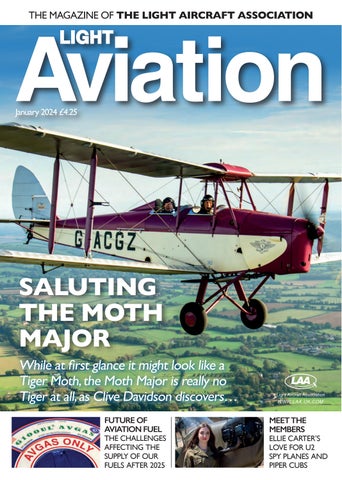
SALUTING THE MOTH MAJOR
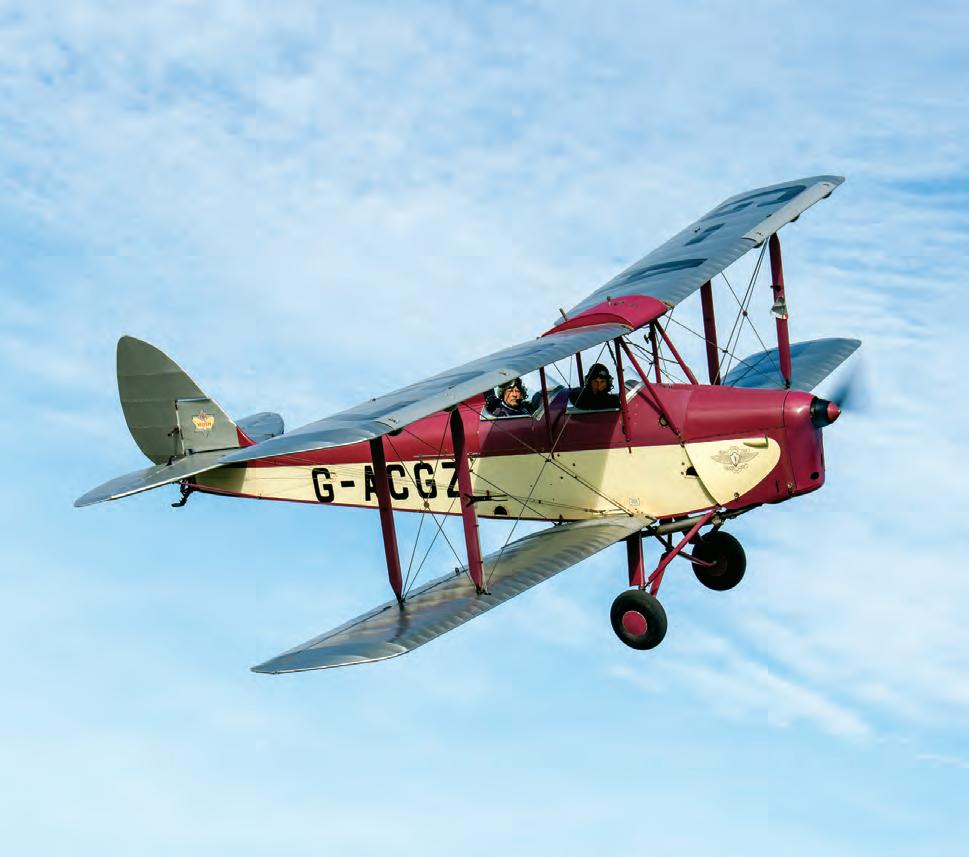
While at first glance it might look like a Tiger Moth, the Moth Major is really no Tiger at all,as Clive Davidson discovers…
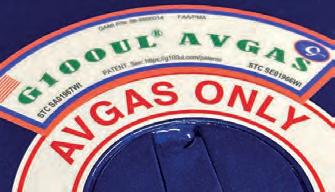
FUTURE OF AVIATION FUEL THE CHALLENGES AFFECTING THE SUPPLY OF OUR FUELS AFTER 2025

MEET THE MEMBERS ELLIE CARTER’S LOVE FOR U2 SPY
2024
January
£4.25
PIPER CUBS LIGHT Aviation THE MAGAZINE OF THE LIGHT AIRCRAFT ASSOCIATION WWW.LAA.UK.COM Light Aircraft Association
PLANES AND

Chairman
ERYL SMITH
CEO SIMON TILLING
Chief Technical Officer
JON VINER CEng MEng MRAeS
Chief Inspector LUCY WOOTTON MEng(Hons) DIS DipHE MRAeS
President ROGER HOPKINSON MBE
Vice President BRIAN DAVIES
Engineering email engineering@laa.uk.com
Email office@laa.uk.com
Office Manager Penny Sharpe Head Office Turweston Aerodrome, Nr Brackley, Northants NN13 5YD
Telephone for engineering and commercial 01280 846786
LIGHT AVIATION MAGAZINE
Editor ED HICKS
Email ed.hicks@laa.uk.com
Design and Print SEAGER PUBLISHING
Production Editor LIZI BROWN
Editor LISA DAVIES Opinions
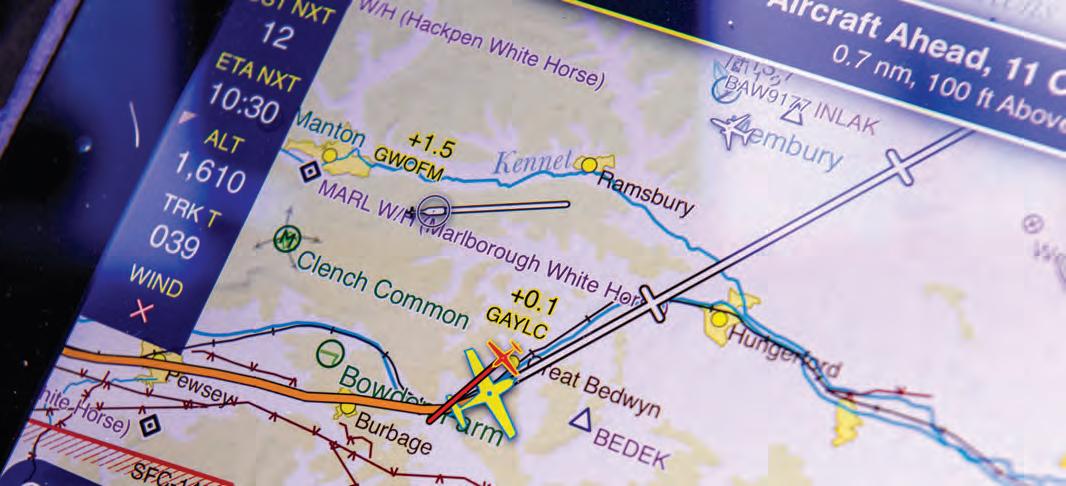
Is the wider use of EC helping making our skies safer?
EC? A lifesaver…
It’s mentioned by David Cockburn in his latest Coaching Corner, in this issue, but I also thought it worthwhile to draw your attention to a recent report published by the CAA. Investigation into the Human Factors Effects of Electronic Conspicuity Devices in UK General Aviation is a substantial piece of research that surveyed more than 2,000 pilots. In it, 40% of pilots say they believe that an Electronic Conspicuity device such as SkyEcho or PilotAware has saved them from an airprox or mid-air collision.
Accident statistics tell us that mid-air collisions are rare, but we can do our bit to reduce the risks by choosing to use some kind of Electronic Conspicuity device. In my case it’s a uAvionix SkyEcho, and an ADS-B out Mode-S transponder.
Back in November 2017 when I was Editor on FLYER magazine, I looked back at accident records up until that time, which showed that there had been 23 mid-air collisions, resulting in 18 fatalities in the UK. One had just happened, between a Cabri helicopter and a Cessna 152 in Buckinghamshire. Before that, the last two accidents to be investigated were a collision that occurred in December 2016, involving a glider and a Cessna 150 near Leicester, and before that in September 2014, when a Kitfox and a Cessna 177 collided, near Bedfordshire. Both took place in Class G airspace. The Kitfox / Cessna accident happened on a day that was described as having good visibility, while the Glider / Cessna accident was in hazy conditions with around 8k visibility.
In the Kitfox / Cessna accident, neither
aircraft had equipment on board to detect the other, so their pilots were relying on see and avoid. In the Glider / Cessna accident, while there were devices, they weren’t interoperable. The AAIB also found interoperable EC was involved in the November 2017 accident.
Perhaps things are improving with time? A search, while I was writing this column, didn’t reveal any further fatal UK mid-air collisions, which perhaps suggests that while the array of EC equipment used by pilots is still varied in terms of interoperability, the prevalence with which it’s now being used is helping make the risk of a mid-air even rarer still.
Anyway, I can recommend taking some time to read the report.
tinyurl.com/HumanfactorsandECreport

ed.hicks@laa.uk.com
Ed’s Desk
January 2024 | LIGHT AVIATION | 3
expressed
the authors and correspondents are not necessarily those of the
or the
this publication may be reproduced in any form without permission.
Art
by
Editor
LAA. No part of



FEATURES
12 SPECIAL FEATURE
Planning a visit to North Weald? Avoid infringing with some tips from the CAA.
14 PROJECT NEWS
A Taylor Monoplane starts a new life, and a Bristell takes flight.
18 FLIGHT TEST
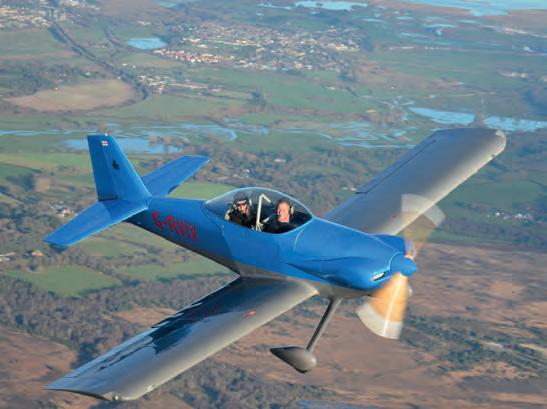
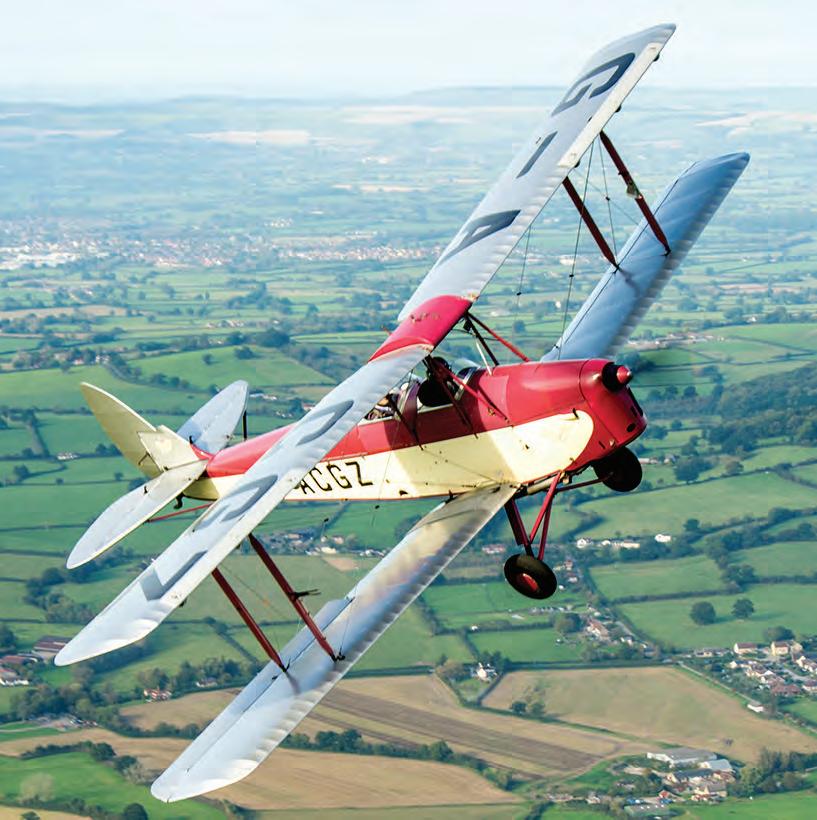
While it might, at first glance, look like a Tiger Moth, the Moth Major is crammed full of details and is really no Tiger at all, as Clive Davidson discovers…
26 SPECIAL FEATURE
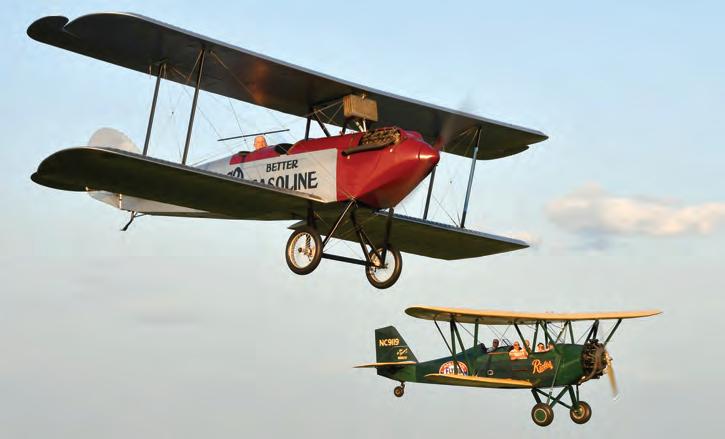
Often overlooked due to the louder ‘noise’ of EAA AirVenture Oshkosh, the vintage wonders to be seen at nearby Brodhead should not be missed, says Paul Kiddell.
34 TECHNICAL
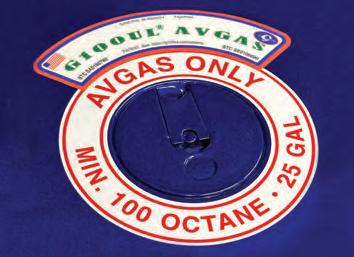
Ian Fraser and Ruth Kelly look at the challenges affecting the supply of aviation fuel, post-2025.
40 COACHING CORNER
Fire in flight is a situation we all fear as pilots, so it’s for that reason PCS Head of Training David Cockburn being ready with actions should you smell smoke.
44 ENGINEERING MATTERS
Evaluation of ageing fabric covering.
50 MEET THE MEMBERS
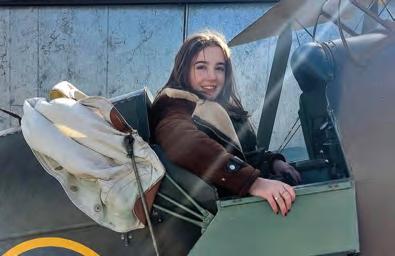
A fascination for the U2 spy plane eventually led Ellie Carter to command her own L4 Cub.
January 2024 | LIGHT AVIATION | 5
2024
Contents January
Moth Major 18 26 50 34 REGULARS 03 EDITORIAL 06 NEWS 09 LETTERS 10 STRAIGHT AND LEVEL 42 STRUTS4U 58 WHERE TO GO
Upcoming LAA courses
The following LAA courses are available for booking. All will take place at LAA HQ Turweston. Please call LAA on 01280 846786 (Ext 2) to book your place.

Prices are for LAA members, non-members are welcome but there is an additional £20 charge per course. For more information see: https:// www.lightaircraftassociation.co.uk/courses.
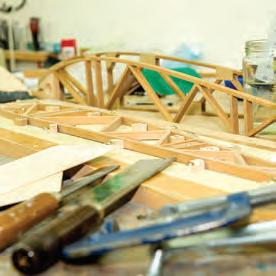
● Aircraft Carpentry Workshop: All you need to know about building and repairing wooden aircraft – Tuesday 23 January Price £200. Also available on Tuesday February 20.
● DH Gipsy Major Engines: Learn the ins and outs of this vintage aircraft engine –Saturday 3 February. Price £200
● Rotax 912iS/915iS Engines: How to install and get the best out of your fuel injected Rotax engine. Saturday 10 February. Price £200.
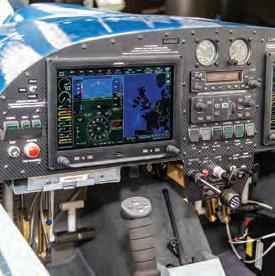
● Aircraft Electrical Wiring Introductory Course: Learn the techniques that ensure your aircraft’s electrical system is designed and built as reliable and safe as it should be – Saturday 24 February. Price £200.
Arrow Active drawings sought
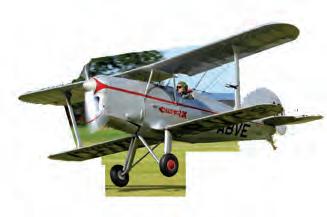
There were some original drawings of the Arrow Active in existence, but recent attempts to find them have not been successful. In a quest to assist the owner of the sole-surviving Arrow Active, if any LAA member can help with tracing these historic drawings, could they please get in contact with Stuart MacConnacher at Library@laa.uk.com.
British Women Pilots’ Association 2023 scholarship winners
The British Women Pilots’ Association (BWPA) recently announced the winners of its coveted aviation scholarships, including one sponsored by the LAA. The winners are:
● BWPA Flying Start Scholarships: Heidi Dennis, Hina Nizami, Megan Cowley, Natasha Rowson, Eve Clarke.
● BWPA SkyDemon Flying Start Scholarships: Bev Reardon, Elaine Boyd
● BWPA Gerry Cook Flying Start Scholarship: Lily Sanders-Page
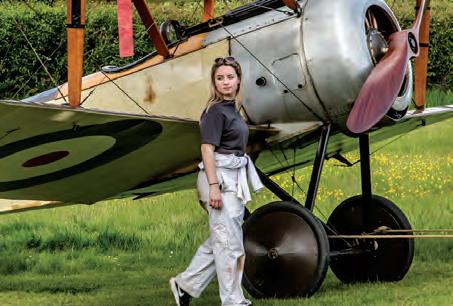
● BWPA Light Aircraft Association Flying Start Scholarship: Sophie Cooper (pictured right)
● BWPA Flying High Scholarships: Aleksandra Nitecka, Karen Whelan, Kate Lenny, Emily Read
● BWPA SkyDemon Flying High Scholarship: Anne Soltow
● BWPA Dorothy Saul-Pooley Flying High Scholarship: Amanda Harrison
● BWPA Oriana Pepper Flying High Scholarship: Ashleigh Duggan
Sharon Nicholson, BWPA Chairwoman, said: “The BWPA volunteers have all worked hard to ensure that we succeed in promoting women in aviation with help from our sponsors. The result has been to engage more new names and faces each year; their tenacity, dedication, and determination never

fails to impress.”
Simon Tilling – CEO, Light Aircraft Association, said: “Those of us who are pilots know what a fantastic thing it is to be able to fly. With this scholarship we help one more pilot experience the joy of flying. There are far too few women in aviation and this will in some small way help to change that. The LAA is delighted and proud to be partnering with the BWPA by sponsoring the BWPA Light Aircraft Association Flying Start Scholarship.”
6 | LIGHT AVIATION | January 2024 LA News News Updates available on
LAA website
the
at www.laa.uk.com – check it out every day!
Stephen Blee
LAA HQ news
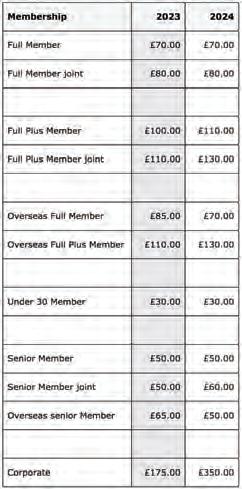
Switch from post to email To do our bit for the environment and to help save costs, from 1 January 2024 we will only be sending out email reminders for membership instead of letters. Please ensure that LAA emails are accepted by your email provider to prevent them from being blocked, or sent to your Junk email folder.
Membership and fee increases An increase in LAA fees will take effect from 1 January 2024.
LAA CEO Simon Tilling said, “I recognise that for some of our members this will be another increase to the cost of their flying, however I hope you will all understand that we have to stabilise our financial future for the good of the Association and to allow us to continue to provide engineering and airworthiness support to our fleet that comprises more than 700 different types with a total of over 4,000 aircraft.”

APPLY NOW! Last call for Armstrong-Isaacs bursaries
Thanks to the generosity of an LAA member donor based out of Barton, their company PTS Ltd is sponsoring two additional bursaries in addition to the five existing bursaries
Armstrong-Isaacs bursaries for 2024, an additional two bursaries for 2024 of £1,500 are being offered to support young pilots already in PPL training, bringing the total available to seven.
£1,500 per successful applicant will be lodged with the flying school of their choice to be used exclusively for flying training or flight examinations.
To qualify for a bursary a pilot should be under 30 years of age, have completed a minimum of five hours solo training and have gained the necessary medical and ground qualifications to continue their training.
Applicants should complete a form which can be downloaded from the LAA website at www.lightaircraftassociation.co.uk/ armstrong-isaacs-bursary-2023.
The closing date for applications has been extended to 31 January 2024.
Van’s Aircraft files for Chapter 11 bankruptcy
Van’s Aircraft has filed for Chapter 11 bankruptcy to protect the company while it reorganises and sorts out its debts.
“During this period of reorganisation, we will continue to source, produce, and provide parts, service, and support to our customers,” said a statement from Van’s. “We will also be crating and shipping kit orders.
“The purpose of the Chapter 11 filing is to allow Van’s to continue to provide ongoing support for its customers, suppliers, and employees for many years to come.
“We understand that this situation creates a hardship for

WANTED!
Advertising Sales, Marketing and Social Media Manager
The Light Aircraft Association is looking for someone to take control of our advertising sales, marketing and social media. This is a fantastic opportunity for the right person to help define, implement, then deliver a strategy to transform the way the LAA communicates with its members. The successful candidate will:
● Work with our advertising partners to ensure they get the best ROI for their advertising spend in our magazine – Light Aviation
● Work with the Editor to ensure all advertising space is filled.
● Work with the CEO and HQ team to develop and implement a multichannel communications strategy.
● Grow and manage the LAA’s social media presence.
● Liaise with airfields and suppliers to create member benefits.
In return for joining our small team that are all passionate about aviation, we’ll give you lots of opportunities to develop your skills and the chance to get flying.
This role would ideally suit someone with a degree in Business/ Business Management with an interest in Sales and Marketing. This is a full-time post, with hybrid working between LAA HQ, remote and travel to site. Salary dependent on experience. Send your CV to office@laa.uk.com, and fly high with LAA.
VAC awards taildragger scholarship
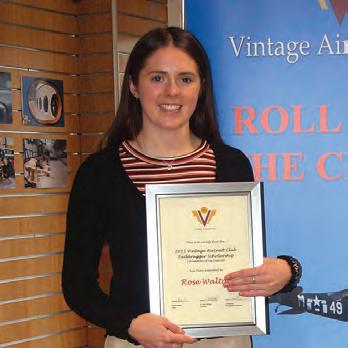
The Vintage Aircraft Club has awarded its 2023 Liz Inwood Taildragger Scholarship 2023 to Rose Walters. Rose was selected from a large number of applicants as the recipient of the £1,000 scholarship for tailwheel conversion training.
Rose says, “It is an incredible honour to receive this award and opportunity to further my aviation journey. The scholarship opens doors to potential avenues in vintage flying and my future commercial career, which is an exciting prospect. In the future, I anticipate a journey into the world of vintage aviation.”
everyone involved. However, without these changes we do not see a viable path forward that would allow Van’s Aircraft to remain in business and support its customers.”
Customers who have paid deposits on engines, propellers, and avionics will have to wait until at least mid-January to hear of progress. According to documents filed for Van’s Chapter 11 submission, the biggest creditor is Textron Lycoming which supplies engines via a deal with Van’s.
Customers with open kit orders face a 32% price increase that was announced on 9 December, and will be contacted directly and asked to confirm the revised prices or reject their existing orders. According to the filing, customers who do not accept the new prices by mid-January will have the orders cancelled and become an unsecured creditor of the bankruptcy estate.
LA News January 2024 | LIGHT AVIATION | 7

BY AIR COURTAGE ASSURANCES Contact us: Tel:+44 3306 845 108 Email: laa@air-assurances.com Discover full details on: www.air-assurances.com/laa.asp Air Courtage Assurance offers a discount to LAA Members Free landing vouchers, informative webinars, great written content and lots more will help YOU improve your flying this year.
Letters
We are always pleased to receive your letters, photos of your flying, and your feedback. Please email the editor at ed.hicks@laa.uk.com
Thorp Aircraft
Hi Ed,
In your editorial in the October 2023 magazine, you mentioned Clive Canning’s momentous visit to the PFA Rally in 1976, in his Thorp T-18. I was very lucky to be there!
This reminded me that sadly a Thorp Aircraft of another type, a T211 (G-TZII) has been sitting derelict at Cranfield for years. Surely someone at the LAA might take this on as a project, even if it is a static display?
The LAA magazine gets better and better. I enjoy the show reports, with the quality pictures. Keep it up!
Regards,
James Wright.
Electronic conspicuity…an alternative ‘alternative’ view
Dear Ed,
I have a very brief counterpoint to David Perry’s plea for the freedom to use the Mark I eyeball rather than EC in our aircraft. I agree with his view that effective use in anything other than a complete glass cockpit is challenging and very distracting.
However, EC is being pushed in the direction of GA aircraft, not least with a significant subsidy from the taxpayer, to increase safety for pilots from other machines that do not have the benefit of any mark of eyeball! This technology’s use in GA is designed to identify our aircraft to what, in five years, will be the bane of our lives… DRONES!
Andy Stocks.
More EC thoughts
Dear Ed,
I find the whole debate on EC infuriating, I keep trying to not say anything, but I feel very compelled to write this based on the letter in the December issue.
I continue to see comments that suggest that if you use EC then you aren’t looking out the window, these comments are spreading misinformation, and show a lack of understanding for the positive role EC can play. The fact is, that those of us who choose to use EC are doing the exact same lookout that pilots without are doing, but, we have a second lookout scan going driven by EC.
In simple terms, it is like having another pilot with you also scanning for traffic, or a second pair of ‘Mark I eyeballs’ that people like to reference – overall an EC is complementary to your primary scan.
Nothing about how you fly today needs to change when using EC, you keep your lookout scan going the same way you always did, but when it alerts you about an aircraft you didn’t spot with your ‘Mark I eyeball’ you might be thankful for the opportunity to avoid it, or to use that information to make a different decision.

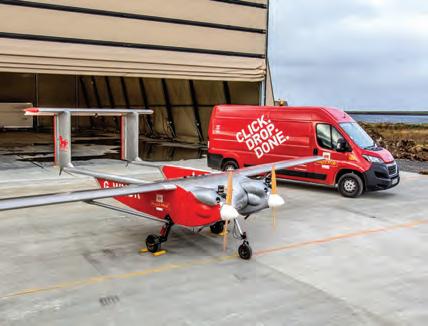
Above Chris Lodge asks, How are drones like this one supposed to avoid us?
position of other aircraft in the circuit and also the Mark 1 eyeball.
I’m sure we can all recall a time where we have flown with another pilot before EC was popular, and we’ve called out some traffic that the pilot we were flying with may not have seen, and that has helped to make informed decisions.
EC isn’t just about mid-air collisions, it can help identify aircraft in the circuit at an airfield you’re inbound to, are in your proximity, but not converging with you, operating in an area you were about to operate in, below you, out of visibility etc. Ultimately, it can provide helpful, complimentary information in addition to your primary scan.
So, let’s stop spreading misinformation about EC, and for those of you who have this view, perhaps be a little more open-minded? Try it out, or fly with someone who uses an EC and you might be surprised that it is in fact very helpful, rather than a hindrance.
Oh, and if you’re flying an aircraft that can’t power an EC, buy a cheap power bank from Amazon, or buy the SkyEcho which has an in-built battery – both are great portable options to help you.
Matt Lanham – G-CLRI.
Bloody drones!
Hello Ed,
I have read the article by Ian Fraser and will not comment further other than to say he describes the situation in excellent technical and practical terms.
Let us now look at the more human side of the issue. The real reason for the promotion of drones is simply money, which drives most ventures in this world. Drone manufacturers want to make a lot of money, the operators also – and the CAA will probably make a lot of money licensing the airways. All this is the usual push from big business.
The original excuse that ‘we need to be seen and be seen among ourselves’ has never held much water, as most collisions in general aviation occur in the circuit where it is not possible to diagnose information on a conspicuity screen.
The best safety item here is to listen to the radio giving the best chance of knowing the
I know a number of pilots just love gadgets and pack as much as they can onto the panel. I wonder what they see out of the window. In 55 years of flying I have only once encountered another aircraft in what I could possibly say was a near miss. The statement from the CAA that licensing drone operations is going to free up the airways for all of us is laughable.
There are a lot of grass strips around the country marked on the map and in addition a lot of strips that are unmarked, such as the one I operate from. So how are drones supposed to avoid us? When climbing out on full power up to at least 1,500ft at stall, plus 10mph? How are we supposed to be able to monitor a conspicuity screen, let alone take avoiding action? Perhaps the CAA has a solution to this detail, I wait with bated breath.
The problem that I, and many others, have is that a lot of older aircraft – and in particular single set ultralights – do not have any generated power. At the moment I have a radio, an old Aware and a GPS, all battery operated. To use a conspicuity device may need a battery for the receiver and one for the display, this will bring me up to five batteries that I would have to keep charged. The interesting bit now is that I have no further space on the already crowded panel where I could fit a display. I would like to fit a better GPS onto the panel other than the small one I have now, but there is no more space available. Just have a look at the panel on a Taylor Monoplane. Perhaps people like us don’t matter to the powers that be, as it is usual for the little people in this world to be pushed aside by big business. I wrote to Grant Shapps when he was business secretary at the Board of Trade and the reply I got was to say that not all aircraft will have to be fitted with a conspicuity device… whatever that means.
The fact is that we are just being conned into having to fit equipment to avoid unguided missiles just so some people can make a lot of money.
Regards, Chris Lodge.
January 2024 | LIGHT AVIATION | 9 Letters
Straight and Level Updates from LAA HQ
Looking forwards
Simon Tilling CEO

By now you will have all seen the new scale of fees for 2024. I appreciate that increases are not something that anyone wanted, but believe they are necessary to ensure a sound financial future for the Association. Thank you to all those who took the time to mail me with their views and feedback. It is important to me that I keep hearing what you have to say and I try to respond to all mails, but please bear with me as it is not always possible to do it by return. Please also note that as part of our efficiency improvements we are having a big push on reducing the amount of paper we use, so from now on, our default way of communicating to members will be email. Could you please ensure that we have your correct email address so you don’t miss anything.
I am writing this on a cold, wet December day looking forward to Christmas and the faint hope that I will be able to find a window in the weather for some winter flying on a bright, clear frosty day It also seems like a good time to review my first season with the LAA. It’s been a fantastic nine months and a very steep learning curve for me. The time seems to have flown by (see what I did there). I remain impressed by the scope and scale of the Association; 7,000+ members, more than 4,000 aircraft and 700-plus different types – over 20% of the total UK G reg fleet!
As you read this you will be looking back on your Christmas break, and looking forward to the new year ahead (I hope we got some flying in). January is typically a time for plans and resolutions and that is equally true for the Association. I will be working closely with the LAA board on our plans throughout January and will be sharing these with you in the coming months. If you have any views on the direction you would like the LAA to
take, we would like to hear them. Please reach out to any of the board members or feel free to drop me a mail.
Helping young people to experience the joys of aviation is an important part of what the LAA is about, so I am very pleased to announce that thanks to the generosity of one of our members we are able to increase the number of bursaries we offer. This brings the total to seven, details of which can be found elsewhere in the magazine. This year we have also sponsored a bursary with the British Women Pilots’ Association, and I am pleased to announce that it has been awarded to Sophie Cooper. We plan to share more about this in a future article.
Finally I want to wish you all a very happy new year and I look forward to meeting as many of you as possible at LAA events throughout 2024.
● Eryl Smith will return in the February issue.
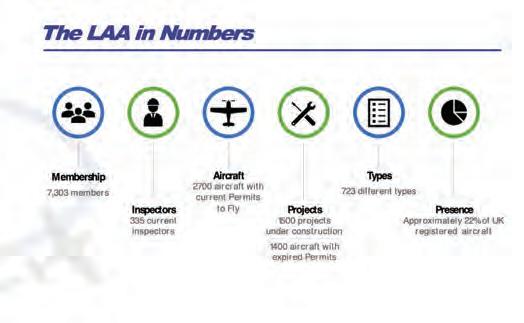
Above The LAA boasts healthy numbers in numerous categories.
“I remain impressed by the scope and scale of the Association; 7,000+ members, over 4,000 aircraft and 700-plus different types – over 20% of the total UK G reg fleet!”
10 | LIGHT AVIATION | January 2024
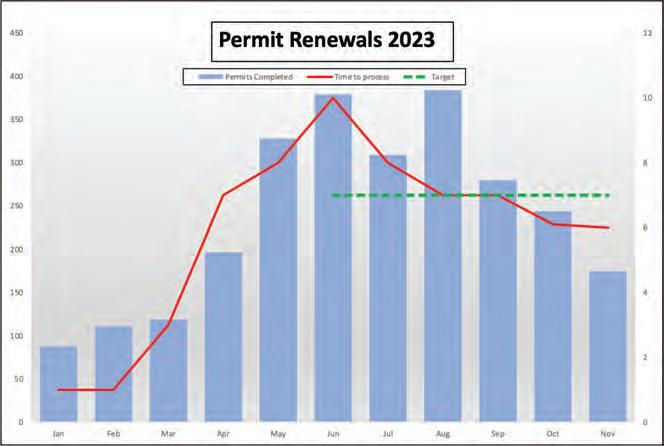
Above Permit renewal performance.

























































SIRIUS LAA Permit or BMAA Light Sport Microlight Light Sport Microlights are factory-built For details and to see the STREAM in action, go to www.stingaircraft.co.uk Contact Peter 07905 709759 (Blackpool) or Paul 07581 471146 (Midlands) TL-Sting (UK) Ltd TL-2000 STING S4 LAA Permit or BMAA Light Sport Microlight SPARKER ...we are working on it! STREAM The remarkable Stream tandem BMAA Light Sport Microlight NOWAPPROVED NOWAPPROVED ANDAIR FUEL SYSTEM COMPONENTS COMBINE MODULAR DESIGN, SUPERB QUALITY AND THE FLEXIBILITY TO SUIT ANY AIRCRAFT BUILD PROJECT. Having built a reputation for excellence in the design and manufacture of light aircraft fuel system components within the amateur-build aircraft sector, Andair has now established a significant presence in the commercial aviation market as well. www.andair.co.uk For all display advertising enquiries contact the LAA 01280 846786 office @laa.uk.com www.laa.uk.com

Planning your next day trip – North Weald
North Weald is a popular airfield to visit, but its location puts it very close to plenty of notified airspace. The teams at the CAA and North Weald have some pointers to help avoid making an inadvertent infringement.
Astone’s throw from the picturesque Epping Forest, North Weald Airfield (EGSX) is a busy and exciting aerodrome in south-west Essex. This article has been written collaboratively by the North Weald Airfield Operations Team and the CAA Airspace Infringement Team to provide you with some top tips to make your next flying visit to North Weald enjoyable and stress free.
North Weald Airfield is an aerodrome rich in both history and current-day operations. With two onsite eateries, an airfield museum and huge variety of modern and vintage aircraft operating there daily, North Weald could make a great visit for your next flying day out.
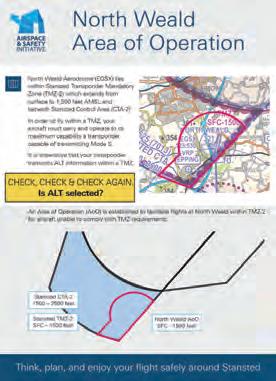
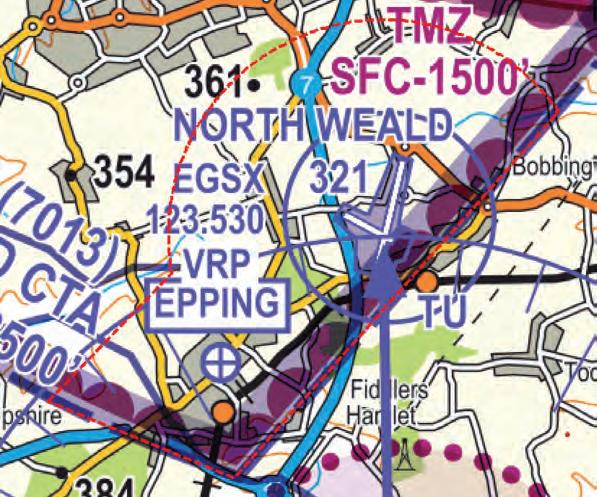
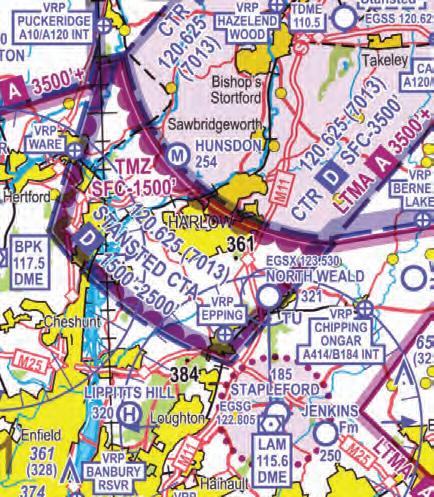
The aerodrome is situated proximate to several pieces of notified airspace: lying within a Transponder Mandatory Zone (Stansted TMZ-2), beneath a Control Area (Stansted CTA-2) with a base of 1,500ft amsl (Stansted CTA-2) and just 2nm from the Stansted Control Zone (CTR) and the Stapleford Aerodrome Traffic Zone (ATZ). Between January and October 2023, 43% of airspace infringements at Stansted involved TMZ-2, but we have some tips to help you avoid inadvertently infringing, while either transiting or visiting an airfield proximate to Stansted.
Know the requirements
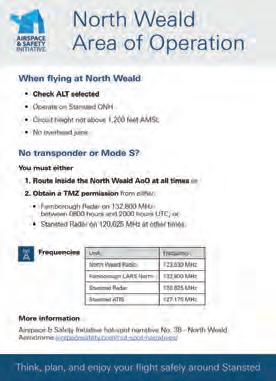
To fly within a TMZ your aircraft must be operating a Mode S equipped transponder with ALT selected, although you can still fly in and out of North Weald if your aircraft doesn’t comply with these requirements.
A ‘keyhole’-shaped Area of Operation (AOO) is established to enable non-compliant aircraft to operate at North Weald without obtaining a permission from Farnborough Radar (132.800 MHz) or Stansted Radar (120.625 MHz) to operate within the TMZ. Pilots of non-compliant aircraft must ensure they remain inside the AOO or obtain a specific ATC approval to prevent infringing TMZ-2. It is important, pre-flight, to familiarise yourself with ground features to remain inside the AOO, for example the M11 Junction 7 and Epping VRP.
If ALT is not selected, Air Traffic Controllers responsible for the radar operation for Stansted Airport are unable to confirm that your aircraft is operating below the base of CTA-2 and therefore may take action to ensure Stansted traffic is separated from you.
During your inbound pre-flight planning, identify an easily identifiable limit point (Chipping Ongar VRP, or the M25 motorway perhaps) beyond which you won’t continue until you are below CTA-2 and compliant with TMZ requirements and having made contact with the operator on North Weald Radio (123.530 MHz).
TEM Top Tips:
Threat and Error Management (TEM) is the practice of thinking ahead to identify and mitigate against any factors that may affect your flight that you can’t change (a Threat: think notified airspace or weather) and any actions or inactions as pilot–in-command that may lead to deviation from your plan, (an Error: think confirmation bias or mis-setting of the transponder etc). Even if your aircraft’s transponder is TMZ-compliant, as part of TEM, incorporate regular checks to avoid an infringement.
Obtain PPR and a brief from the Team at North Weald on 01992 564200.
Thoroughly plan your arrival and departure: determine how you’ll join the circuit at 1,200ft (Stansted QNH), prepare for a change in the runway in use, and when you can climb above 1,500ft after departing.
12 | LIGHT AVIATION | January 2024 Special Feature
Above
The handy North Weald area A5 download.
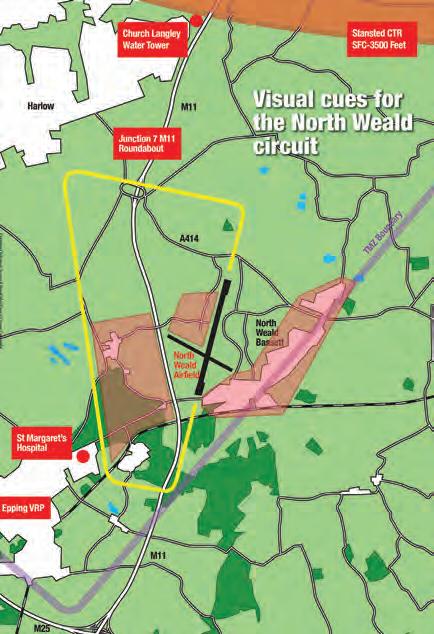
Above It's worth familiarising yourself with the visual cues for the North Weald circuit.
Incorporate
Minimise distraction in the aircraft
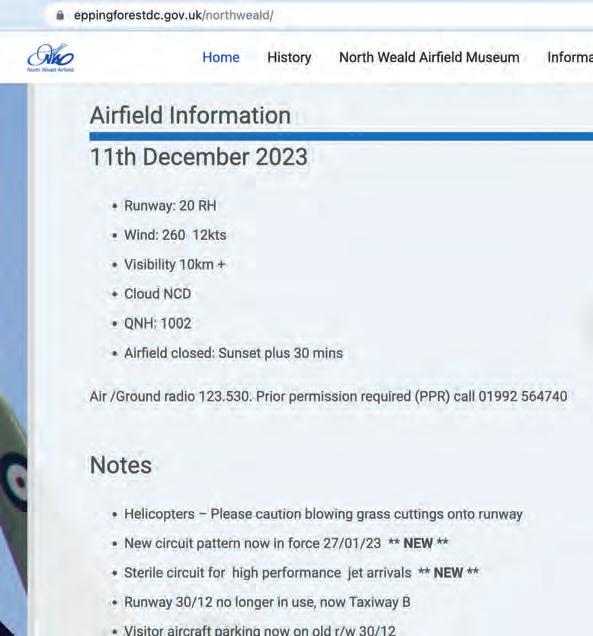
Make use of North Weald’s website (https://www.eppingforestdc.gov.uk/ northweald/) when it comes to doing your planning Airspacesafety.com (https://airspacesafety. com/hot-spot-narratives/) features more specific TEM tips for EGSX. ■
January 2024 | LIGHT AVIATION | 13 Special Feature
Above North Weald's area of operation for non-TMZ compliant aircraft.
limit points for checks: including on the ground! When you’re going to enter a TMZ, consider implementing a S. A. F. E. check:
Above The airspace around North Weald is complex.
Above North Weald's website is a useful planning resource.
S – Am I squawking with Mode C A – Am I at the correct altitude for the airspace F – Am I using the correct frequency based on my transponder (or lack of) E – If yes, yes and yes, then I am safe to enter the TMZ.
Inspiring members to take on their own aircraft build or restoration project
Compiled by Mike Slaughter
Project News
Welcome to a new year, I hope you all had a wonderful break – if you managed to have one, of course. We are entering our most challenging time of year for building and maintenance due to the cold and lack of daylight, still there is usually something that can be done indoors in the warm. Plan your new panel, create its wiring loom, maybe give serious thought to that ‘next project’. Among those tasks, why not update your fellow members with your project’s progress, new skills learned, or challenges overcome. If you have a moment, do get in touch with Project News – just saying!
Recently I received an interesting report from Barry Bridges with, what he refers to, as his ‘New’ old project. He describes himself as ‘a younger LAA member more at home with Rotax-powered aircraft’ and has never built before. So, it was very interesting then that he should become smitten with a classic Taylor Mono aircraft that’s been offline for 10 years and in need of a little care and attention before it can find its way back into the air. Taylor Mono G-BGHY, PFA project reference 1455, was built in Paignton, Devon, from around 1979 and was finished in 1986. Barry has embarked on reviving it and its trusty VW
engine with ambitions to be back in the air again when the clocks move forward.
I had a very interesting chat with Gerry Collard who recently finished and test flew his Bristell, he’s provided us with a project report below. The stand out point of Gerry’s build, apart from a very capable and good looking aircraft, was his reflection on painting your own aeroplane, or perhaps I should be more specific and say spray painting. As we read last month, there are other options for applying a finish to an airframe.
Having sprayed a whole car and many bits of cars in my youth, if I was faced with a naked metal airframe tomorrow, a DIY paint job would be something I’d be seriously considering. He pointed out that spray painting today is perhaps not the same as it might have been 40 years ago and that an airframe is significantly more challenging than a 1969 Diamond White Ford Capri. Have a read of his account, will it put you off – or encourage you?
To get in touch with Project News, and tell your story, report a milestone or just to send a picture, email projectnews@laa.uk.com Please share your story!
G-BGHY (PFA 1455) Taylor Monoplane
By Barry Bridges
Such is a sign of the times, that when I told my two young children I’d be attempting to rebuild an aircraft in the back garden, it barely registered a sideways glance from their iPads and Nintendo Switches. Fast forward a month or so and while they’re not quite joining me in the workshop just yet, the Taylor Mono is at least giving Mario Kart some competition for interest.
G-BGHY found its way to me via a rather circuitous route. I had originally undertaken first steps in the build of an SD-1 Minisport but then fell out of love for the design. Something about it seemed a bit too boxy and modern, which was the point at which the Taylor Mono came onto my radar. I just couldn’t shake the elegance of the tail feathers out of my system. I’d also discovered through experience that – as a younger LAA member and complete novice builder – I might find things more manageable if I could work on something that was part-built already and so – one post on AFORS later – I
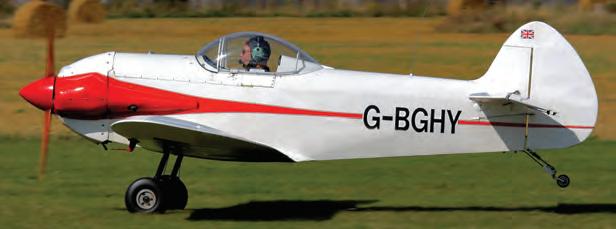
Above The Mono
set off in search of an abandoned Taylor Mono project tucked away somewhere in the ether.
As luck would have it, I didn’t have to wait long. I discovered G-BGHY from three separate people sending news of her my way, including the owner. The backstory was both fascinating and sad. Having been built in 1986, BGHY had been a ‘show project’ and regular feature at PFA rallies before suffering serious damage in a 1988 accident. Following a substantial rebuild she changed owners a few times before the current owner took her on,
Project News 14 | LIGHT AVIATION | January 2024
shortly before it was taken out of service.
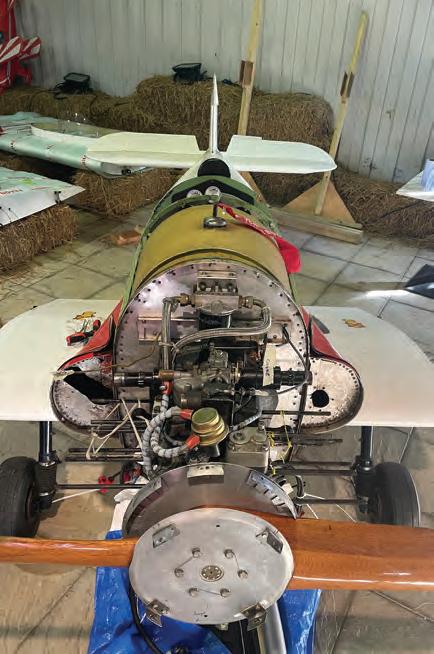
only to experience engine troubles that meant he never actually got the chance to fly her. What started off as a small project in 2014 to partly strip the engine down, turned into a larger labour of love lasting nearly 10 years, during which period personal circumstances restricted him from spending the time needed to get the aircraft back into flying condition.
Promising to look after her and do my very best, I took ownership in September and transported her down from Little Snoring to Stoke Medway, which will be her permanent home.
It was only once I had fully unloaded, unwrapped and undressed BGHY that I had a moment of realisation (accompanied by one or two words that are likely unprintable), namely, that I am actually a custodian of a real-life aircraft and have got a lot of work to do here!
Having never built an aircraft before, nor having ever been a sole owner, this was all new territory for me. And so, with the appropriate supervision and support, plus some informative conversation with other Mono owners such as Bruce Buglas at Sleap Airfield, I decided that life’s too short and it was time to jump right in.
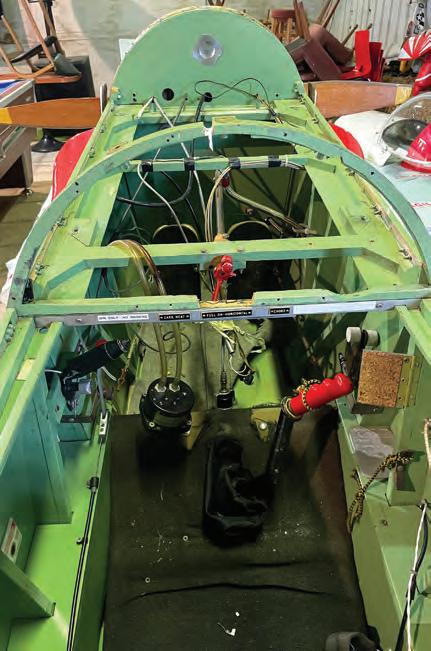
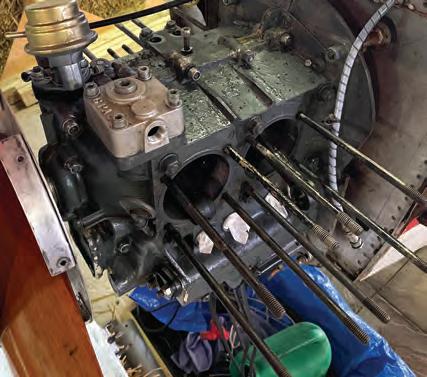
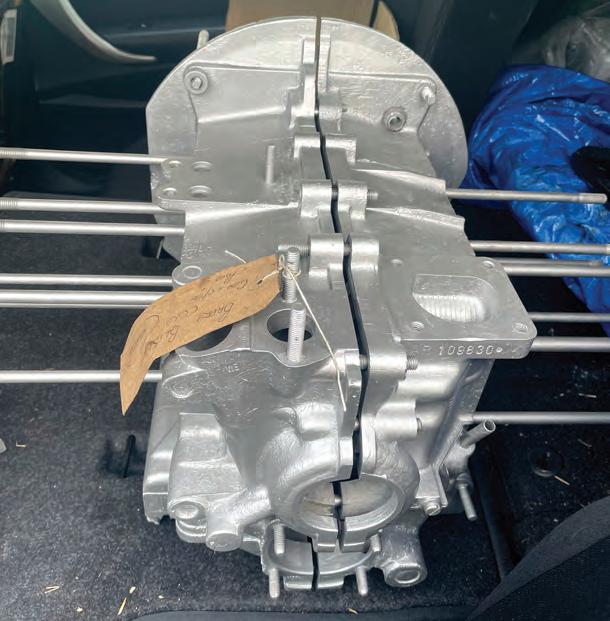
Although it’s early days, I am absolutely loving everything that I’m doing. I am fortunate enough to have Fridays off work and so I’ve made good progress by chipping away at things for 30-60 minutes each evening, before spending a full day in the hangar before the weekend. So far, the engine has come off, fuel tank removed and panel taken out, stripping her back to a pretty bare airframe. Working under the supervision of my very knowledgeable (and patient) Inspector, Phil Chapman, the engine has been completely stripped, the case split and all parts are being checked and overhauled, with the case and crank now handed over to the local VW outfit for some TLC. While that’s going on, I’m working to reposition the panel to the original designs, which should offer around 50mm additional space to make it easier for me to get my uncoordinated legs in and out. Once the crank is back, it’s time to start reassembling the engine.
My objective is to get the engine rebuilt this side of Christmas, put in a more classical (simplified) panel, give the cockpit area some TLC, and replace both the main landing gear and tailwheel, among other assorted tasks. I expect I’ll discover a few hiccups along the way, but that’s
Far left Going back to basics, teaching myself about VW engines following years of living in Rotax-land.
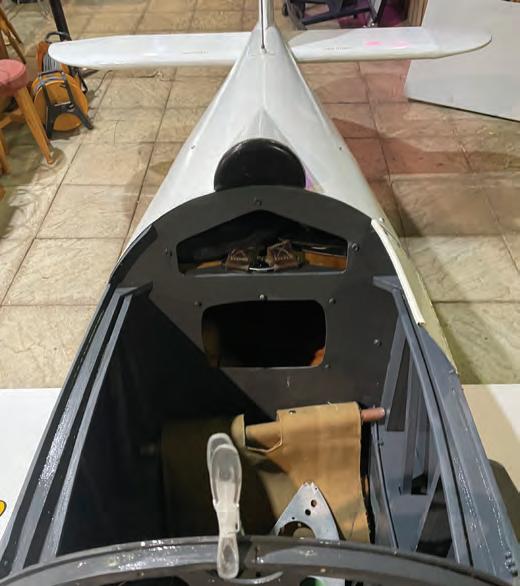
Left Looking very sorry for herself following removal of the fuel tank and panel.
Left Prior to engine removal, a very filthy looking core!
Below Back from the workshop, the same case looking shiny and new, all checked for leaks. Note the VW engine cases are precision made so the join between case halves is simply metal to metal fitting; any scratches and it's a goner.
January 2024 | LIGHT AVIATION | 15
Project News
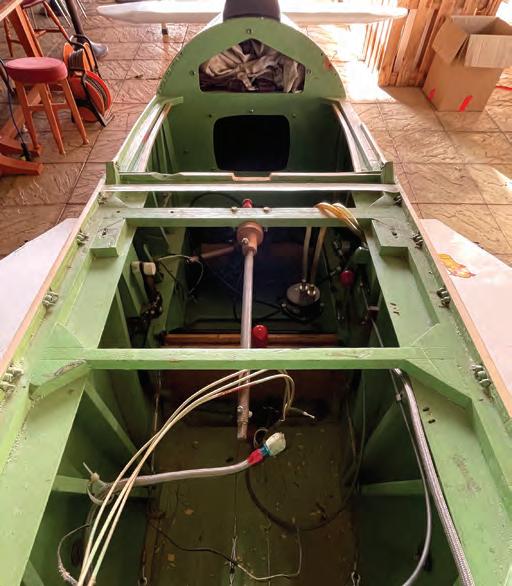
the fun of it. Although I went into this with my eyes wide open, I’ve been pleasantly surprised to find that the aircraft remains in very good condition and that the amount of work required to get her flying again is not too overwhelming. If all goes well (famous last words!), then I’m aiming to have her airborne again by next spring.
My wife and kids remain to be convinced, whereas I’m
more optimistic… In my head I’m hoping it’ll be something like the Chitty Chitty Bang Bang moment when I finally reveal the fruits of my labours to them come March. In the meantime, I’m ploughing on with excitement, looking forward to the next six months and the promise of some post-work open cockpit evenings on the other side of winter. ■
G-CMSM (LAA 385-15873) Bristell NG5 Speed Wing
By Gerry Collard
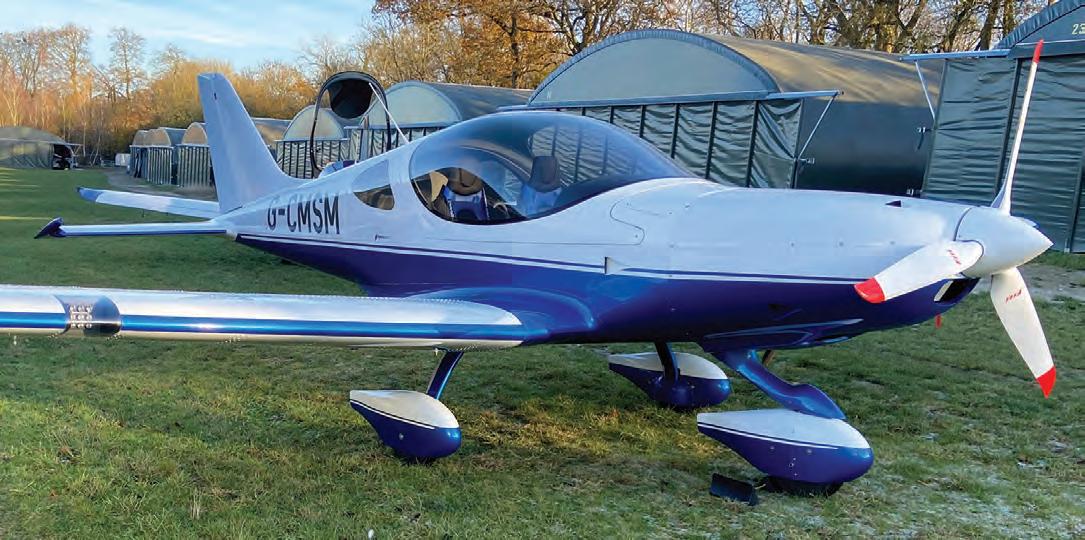
Idecided to build a Bristell partly because I enjoy the challenge of building, and partly because I had built one previously and really enjoyed the 300 hours of quality flying time it gave me.
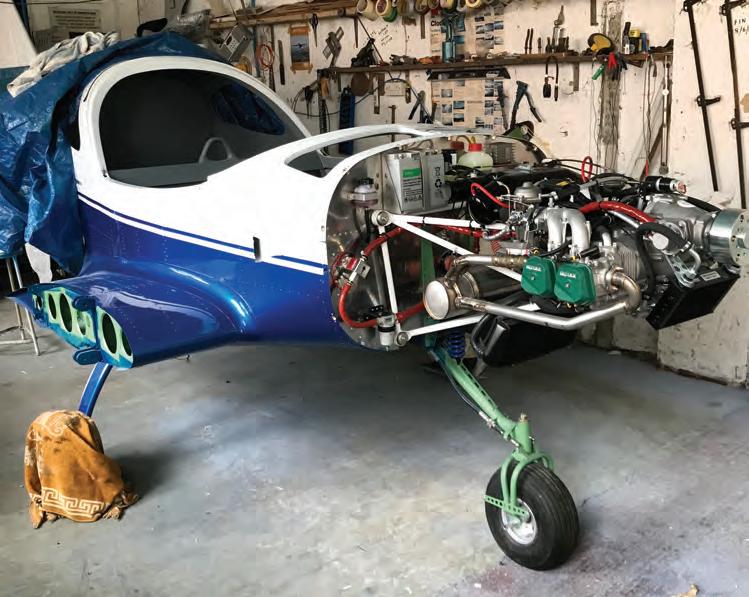
The Bristell is a quickbuild kit with exceptional comfort, performance and short field capability and with its flowing lines can easily be mistaken for a composite aircraft. With some experience of auto paintwork I decided to paint the aircraft myself, but in a relatively small workshop this was not easy, in fact I think this was the hardest part of the whole project but the end result is very satisfactory.
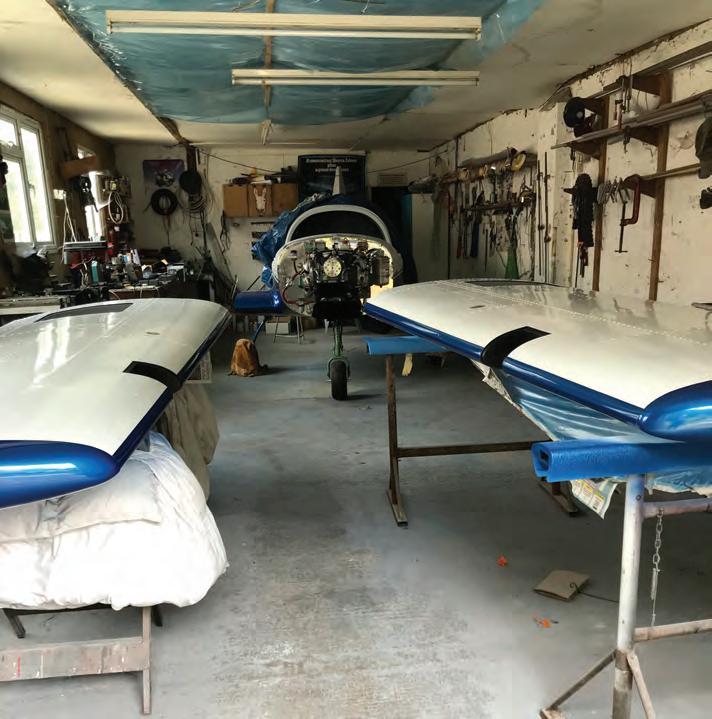
Painting an aircraft is a lot of work… and I mean a lot. Compared to an average-sized car, there is far more surface area, and something like a Bristell requires so much masking up due to its level of pre-assembly. For example, the perspex canopy comes ready cut, finished and mounted onto its tip up frame. The joint between the frame and glazing is sealed internally with a silicone sealant, paint will not adhere to silicone so some very careful masking is required. Once the inside of the canopy frame is painted and hardened, it all needs masking up carefully and then the outside painting, all off the aircraft.
16 | LIGHT AVIATION | January 2024
Above Sierra Mike looking lovely on a frosty November morning.
Above (left) Nearly fully stripped, ready for a cleanup.
Above (right) Looking a bit tidier, measuring up for the new panel.
All of the airframes metal surfaces need to be rubbed down with Scotchbrite prior to the primer coat being applied so that it will key well onto the aluminium surface. This in itself is no small task but before doing this, every pop rivet, at least on the top surfaces, needs to have the centre hole filled and then all of the heads carefully abraded, again for keying. I was able to make a special little tool for this so as not to damage the wing surfaces, which could happen if rubbed in straight lines by hand.
The cockpit is a challenge for access and working comfort. Were the fuselage not pre-assembled then painting would be undertaken in smaller sections, panels flatted on the bench prior to assembly or perhaps the structure turned on its side to make the flatting and spraying more manageable or indeed comfortable. But the fuse is supplied with the undercarriage installed, has a sizable fin and a stubby inboard wing section either side of the cockpit, turning the whole assembly upon its side to ease working access is not really an option. Accordingly, preparing and painting the cabin interior is no small task, you’ve just got to climb in there and get on with it. Painted, the cockpit needs to be thoroughly masked prior to painting the outside of the fuse.
Once primed, the outside received its white topcoat and then more masking for the metallic blue contrasting sections. Choosing a metallic requires this area to be lacquered.
Painting was undertaken both inside the workshop and outdoors, as much of the workshop as possible was screened off with plastic sheeting, but a surprising amount of the workplace is now either blue or white… I used a pair of compressors, the larger one for the forced air mask and the other to power the HVLP spray gun. Other essential painting equipment was a pair of tweezers to pick the flies and midges out of the paint, not only do they mysteriously appear at the first sign of drying top coat but they like to have a good stomp about in it as well.
The mechanical side of the build is quite straightforward but there is a lot of wiring to be done, and fortunately the Bristell UK Agent, Farry Sayyah, who not only knows every nut, bolt and washer of the kit but is also an expert with the wiring, was happy to come and help me. I also had help from fellow aviators for which I am most grateful, and the camaraderie and banter between us all was priceless. The aircraft is now finished, has completed its test flying and is awaiting its Permit to fly. ■
New Projects
If your aircraft has been featured in the New Projects list, please let Project News know of your progress at: projectnews@laa.uk.com
Cleared To Fly
If your aircraft has featured recently in the magazine and has subsequently completed its maiden flight, Project News would like to hear from you at: projectnews@laa.uk.com
■ Zenair CH 750 (LAA 381-15892) 13/11/2023
Name & Address held by LAA Engineering
■ G-APBI DH82A Tiger Moth (s/n 86097) 7/11/2023
Name & Address held by LAA Engineering
■ G-ACNS DH60G III Moth (s/n 5068) 10/11/2023
Name & Address held by LAA Engineering
■ G-SNXA Sonex (LAA 337-14984) 22/11/2023
Name & Address held by LAA Engineering
January 2024 | LIGHT AVIATION | 17
Right The aircraft in Gerry’s workshop toward the end of the painting process.
Project News
Above Engine plumbed, just finishing off the painting.
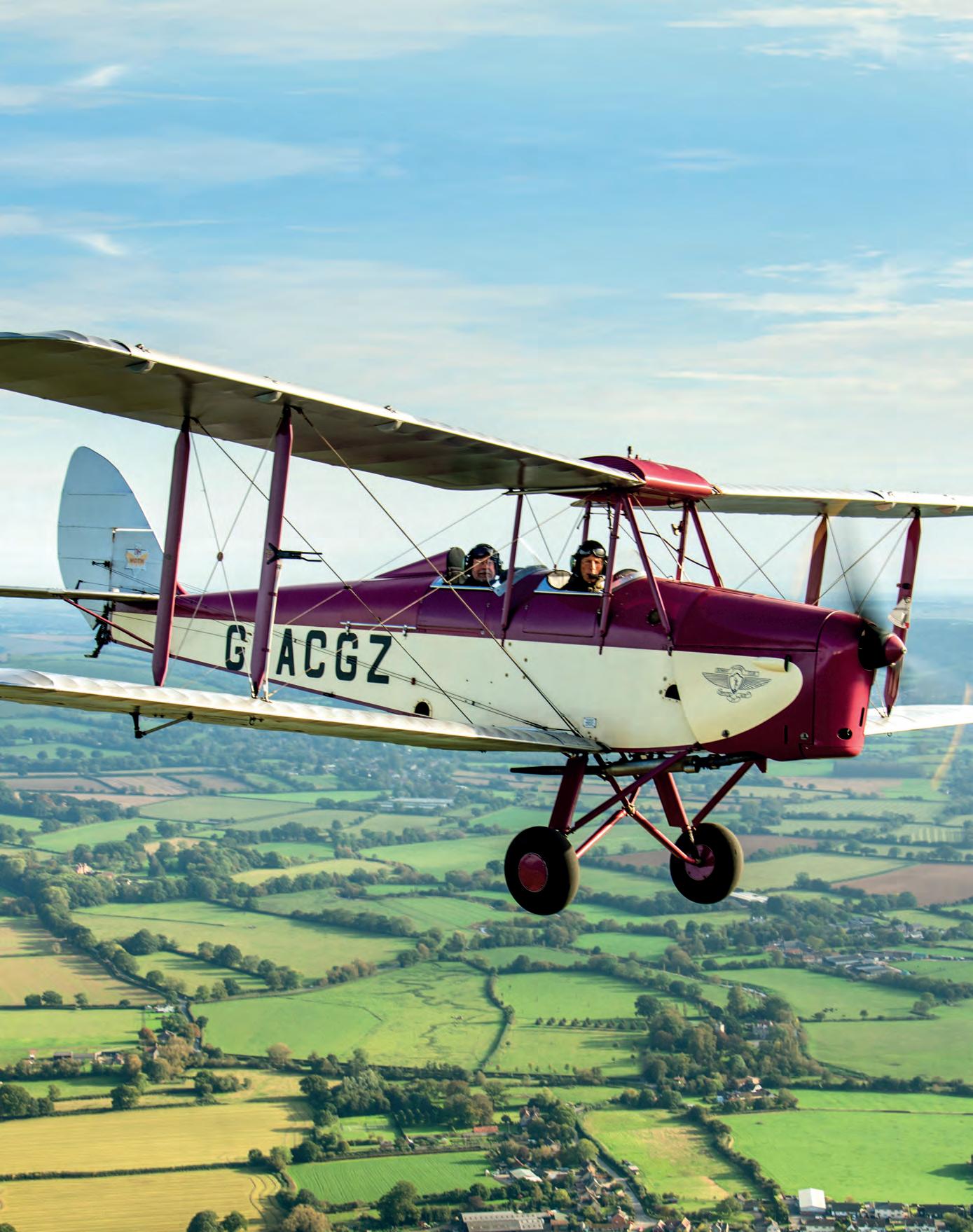
Saluting the Moth Major…
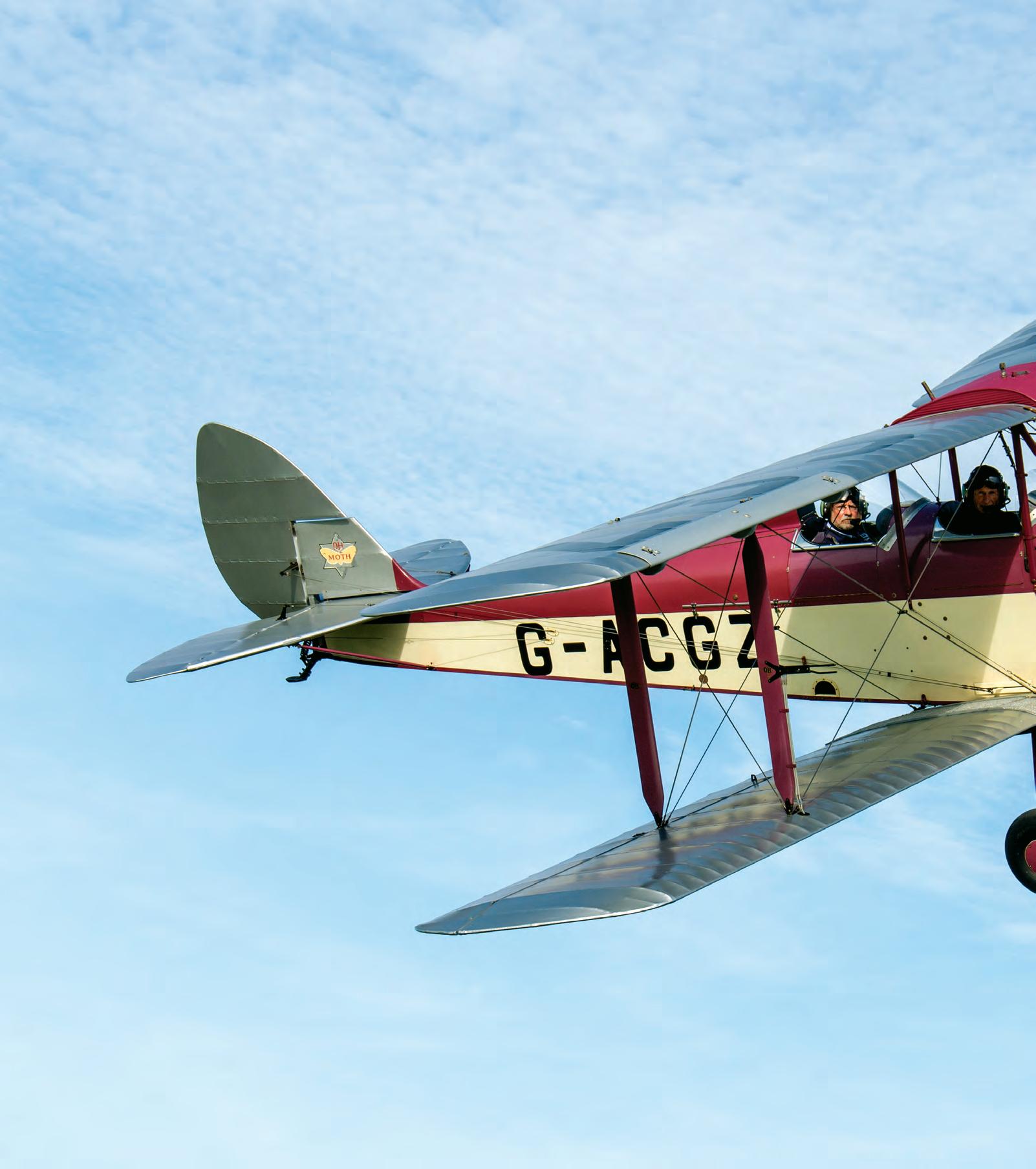
While it might, at first glance, look like a Tiger Moth, the Moth Major is crammed full of details and is really no Tiger at all, as Clive Davidson discovers…
Photos Neil Wilson
Flight Test

Flight Test
It was common parlance to call every light biplane a ‘Moth’ during the 1930s. This is completely understandable when of the 1,100 privately owned civilian aircraft, 85% were DH Moths. This colloquial term has apparently still stuck and I have been asked, “What is that ‘little’ blue Moth?” It was in fact a Bucker Jungmann. And, “What was that other ‘larger’ Moth?” Oh, that’s a Boeing Stearman. It seems that every biplane, to this day, could still be a Moth.
DH Moths were used by the late 1920 and 1930s pilots, who became celebrities by capturing the nation’s imagination by making well-publicised long-distance flights. They were lauded due to the combination of their adventurous spirit, the inducement of financial gain and most importantly of all, they had the ‘right aeroplane’ giving them the tool to accomplish all.
The development of the DH Moth from a 60hp engine in a wooden biplane with a straight cross-axle, covered in Irish linen with folding wings, grew with increased capabilities. Other manufacturer’s engines with various exhausts were employed, metal fuselages were later introduced, together with their own more reliable series of Gipsy engines.
The ‘X’-style undercarriage and inverted engines gave better obstacle clearance, and ultimately the aircraft developed into the most widely known variant during WWII as a demanding trainer, the Tiger Moth. The Moth Major was the last iteration of the wooden DH60 Gipsy Moth type, immediately prior to the Tiger, and was originally marketed in two versions: the ‘Club’ model with full dual controls for training and the ‘Tourist’ model with a long-range tank, taller faired-in cockpit doors and other ‘speed and comfort’ features. Unfortunately, an increasing preference by private owners for enclosed cockpits and the advent of war drew DeHavilland away from Gipsy Moth production, so only around 140 of this final variant were ever built.
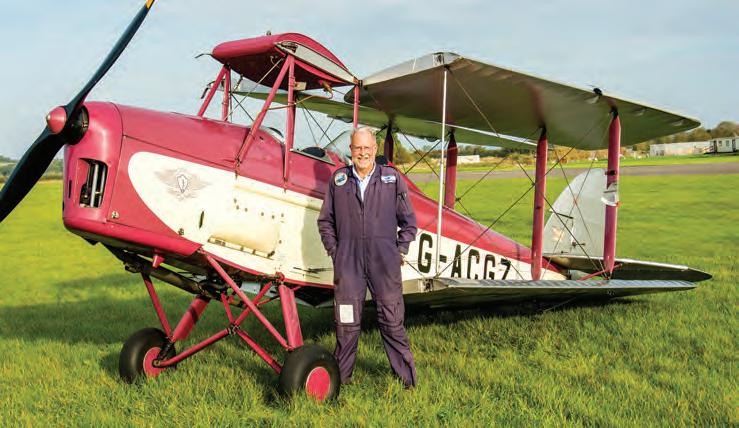
My home base of Henstridge is a bit of a mecca for Tiger Moths, so when Nigel Lemon, an old friend, appeared at Henstridge in his rare Moth Major, many spectators could be forgiven for thinking it was ‘just another Moth’…
January 2024 | LIGHT AVIATION | 19
The past
Imagine a large Georgian farmhouse with 24 house martin nests under the eaves, sitting between three villages in Hertfordshire, occupied by four fellows – three working at Hatfield for British Aerospace, and a fourth fellow, even then, scurrying around from airfield to farm strip jumping into different types.
It was a short walk up to the grass of Bennington, where Nige had his Turbulent, Kester his Tipsy Nipper, Hissing Sid (who had a bit of a lisp) his Curry Wot, Bill his Stampe, Colin his Auster and Harry, High Sheriff of Hertfordshire, his Cub. Walking further across the fields brought us to The Bell pub where Dave, our landlord and also a pilot, would lock us in (generally at the most inconvenient of times). It was, in many senses, an ideal existence and now a rather fond memory. The last few times Nige and I flew together was for his Tiger Moth check-out, then in a Pitts for some aerobatics, but that was, hard to believe, was 30 years ago. Time really flies. Literally.
I was aware that he had later sold the Turbulent and subsequently restored a Moth Major in his workshop, over
“The cockpit windscreens are single-piece curved plexiglass, plus there is a very practical and aesthetic tapering rear headrest”
what seemed like an age. This particular aircraft was originally registered 90 years ago on 30 May 1933 to Lt Col William Duncan – his address given as the ‘United Service Club in Pall Mall of London, SW1’. This was a gentlemen’s club for those above the rank of Major or Commander and known as ‘The Senior’. It closed in 1978 and is now used by the Institute of Directors. The aircraft is recorded as being based at Heston, which is now long-since built upon.
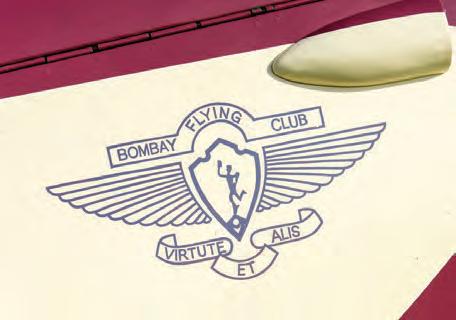
Today on its engine cowlings is the winged badge of the Bombay Flying Club and the scrolled inscription ‘Virtute et Aus’. This is in recognition of a period later in the 1930s when the aircraft was operated by the club and wore the Indian registration of VT-AFW. The club, which still thrives to this very day, operated several DH Moths and used to organise summer long-distance fly-outs to the UK to escape the heat of the Indian summer!
Nige acquired the wreck after it was brought back to the UK following its discovery in Portugal in the 1980s. After a long period in storage, he eventually turned his attention to the restoration, which he completed in 2016 and for which the aircraft was awarded the FAI Phoenix Diploma in 2017.
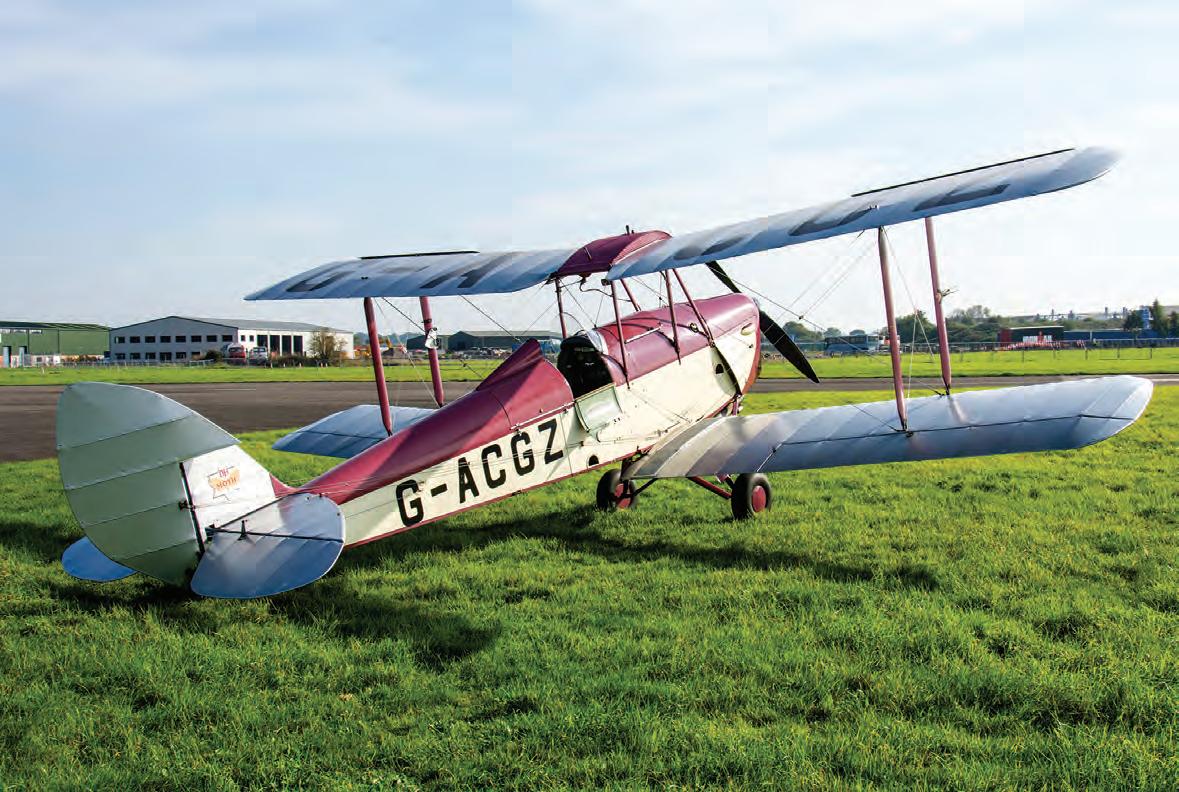
On arrival at Henstridge, I find my eyes immediately drawn to details. Being more familiar with the Tiger Moth’s wing layout, it is strange to see the Moth Major’s ‘upright’ perpendicular décalage and stance, as opposed to the Tiger’s staggered arrangement.
The nose also looks longer, perhaps due (on this occasion) to the presence of a front cockpit cover which can be exchanged when flying solo for the easily removed front windscreen to gain an extra knot or two! The cockpit
20 | LIGHT AVIATION | January 2024
Flight Test
Above The Moth Major in single-seat configuration, with cover fitted to the front cockpit.
windscreens are single-piece curved plexiglass and there is also a very practical and aesthetic tapering rear headrest which adds to the lines of the rear fuselage.
Nige is not a ‘lazy’ Sunday afternoon bimbler, but a member of the Tiger Nine display team and does plenty of foreign trips in this surprisingly capable tourer. Originally built as a ‘Club’ model – ’GZ has many of the ‘Tourist’ features, which have been installed by Nige. Even though she has amassed 350 hours in the last seven years, this is still one very well-turned out Moth.
Wings and things
Apart from the cut out spacing for ailerons – on the bottom wing only, the wings are of the same section and have parallel leading and trailing edges. Each has the same angle of incidence and dihedral, both 3.5 degrees. On the undersides of each aileron, about midway along, is an actuating rod, linked to an arm set at perhaps 30° on a circular cam the size of a large jam jar lid. This has an outer sprocket edge with a chain drive coupled to the two aileron wires linked to the stick. It’s another canny arrangement. The pair of ailerons are certainly differential but still contribute to obvious handling qualities that firmly place it in the vintage category. Study the movement of the ailerons and you'll see the upward deflection is way more than the down-going. In fact, the down-going is a minimal few degrees…and only for a blink of an eye at half stick deflection as the stick goes towards fully over. Should you be on the ground, try the stick fully over to one aileron, of course it will rise but now continue to look at the same aileron as the stick is moved to the other side. It will now pass downwards through ‘neutral’, the trailing edge
being flush with the wing edge. It will continue to dip down perhaps only an inch and as the other aileron reaches full deflection this other will have no deflection at all.
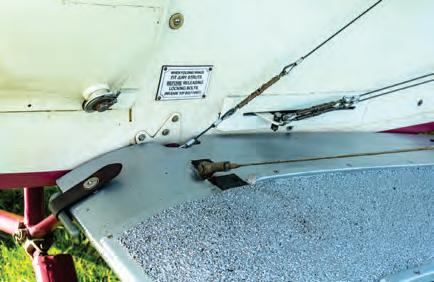
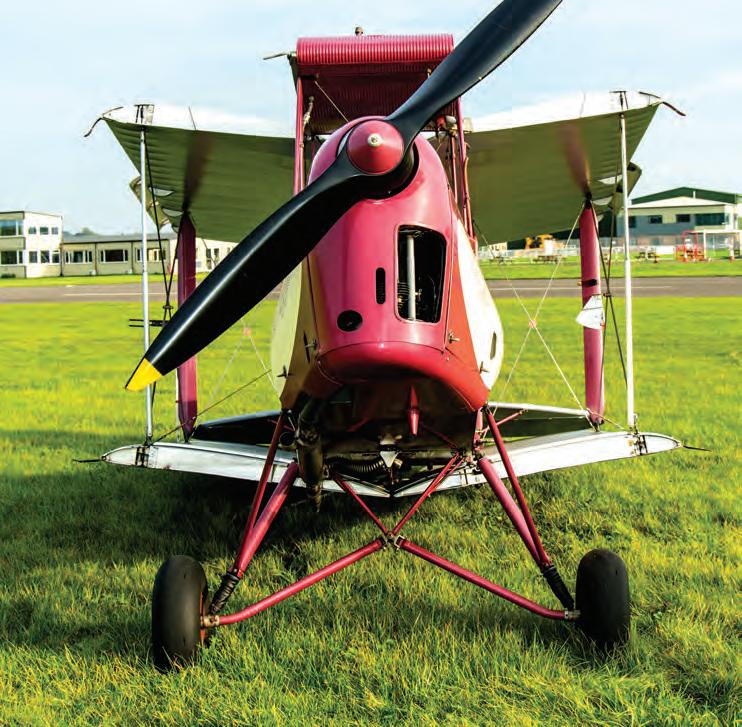
What was a common feature is seldom seen now, its wings may be unlocked at the leading edge and pivoted back to rest against the fuselage sides. Looking from the front the widest point then becomes the tailplane which is wider than the undercarriage and the exposed wing roots. The lateral dimension of a 30ft wingspan is reduced to 9ft 10in. This allowed for a reduced parking footprint in a hangar or friendly farmer’s barn. While I don’t know how practical it might have been, there are photographs of yesteryear which show folded Moths being towed along the road backwards behind the owner’s motor vehicle.
Folding process
The folding process may be accomplished solo, but you definitely need to know the sequence. To maintain the geometric and structural integrity a sprung telescopic jury strut is swung down from its forward mounting and locked in position to maintain the box rigidity. One wing at a time, with a supporter holding the lower wing end, the wings rotate on vertical bolts at the end of the rear spars. Once folded, a sprung pin on the fuselage side holds the wing in place. I had not noticed it before, but there is another supporting jury wire sprouting diagonally from the mid fuselage acting as further support as the wing is moved back. The other wing may then be released and walked back. Nige pointed out that if you use a tail trolley to move the aircraft around then you need to lift the tailskid into position first, since with the wings folded, the tail is too heavy to lift.
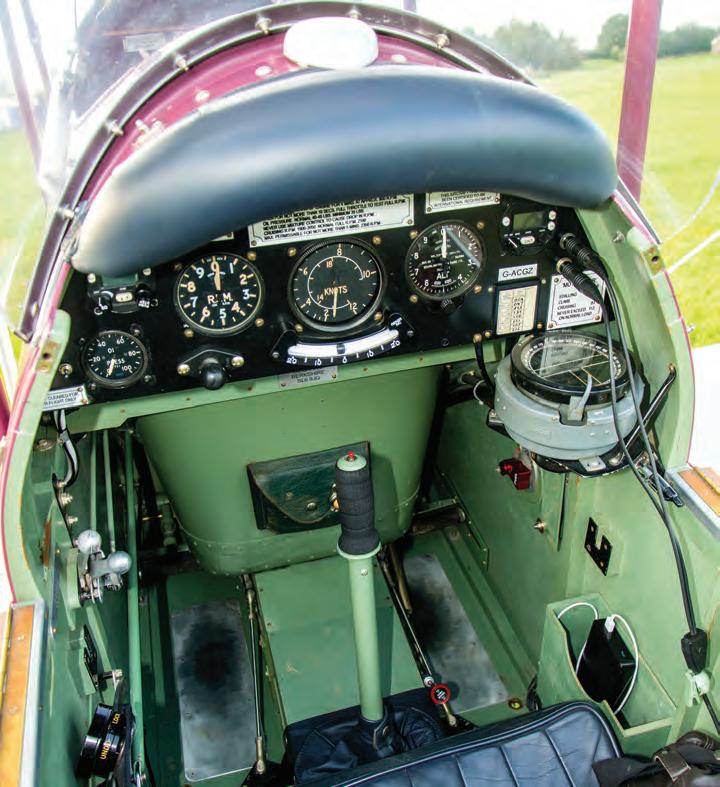
Above The compact rear cockpit with offset compass.
Flight Test
January 2024 | LIGHT AVIATION | 21
Top left The front cockpit – the lower reserve fuel tank is quite a prominent feature!
Bottom left Leather strap secures wing locking pin, while warning placard offers important Moth folding advice…
The Moth Major has plenty of well thought out details, like the long-tail exhaust, four into one, protruding from the engine bay and extending under the fuselage. This makes a significant difference to the engine’s noise output and, what is more, this one has a manifold for a cockpit heater of the type fitted to the Canadian version of the Tiger Moth! The heater is a very welcome addition, as a wintry seeping cold, simply put, lowers one’s capacity both with physical coordination and stifles mental capacity as demonstrated by many Commonwealth Training Scheme pilots trained in Canada who struggled to hand swing engines, let alone taxy in the snow to get airborne! Fortunately, aloft in a British summer, we de-selected the heater on this trip.
All available space is well utilised. Under the seat cushions, wooden boxes replace the space which would have previously been used to house parachutes.
The box in the front cockpit houses the radio and transponder units as well as primary and back-up batteries, while in the rear cockpit, the box holds tools and spares and is occasionally swapped out for a snug-fitting emergency life-raft. When the front cockpit is unoccupied, the stick can be removed, providing extra stowage space, enclosed by its ply cover. The latter has the same curvature as the rear fuselage decking so it can be neatly and snugly stowed in the roof of the aft baggage compartment when not in use itself.
The baggage compartment can take 25lb load and is somewhat larger than that of a Tiger Moth. The rear cockpit headrest, fluted into the rear decking, not only improves the head buffet and visual appeal, but it is very practical, being able to house a hidden bottle of your choice when abroad. Further storage space is afforded by
“The hinged cockpit doors have curved metal additions that add a little extra protection for the occupants from the slipstream”
a felt-lined glove compartment above each instrument panel, so all-in-all, there is plenty of space for those longer touring trips!
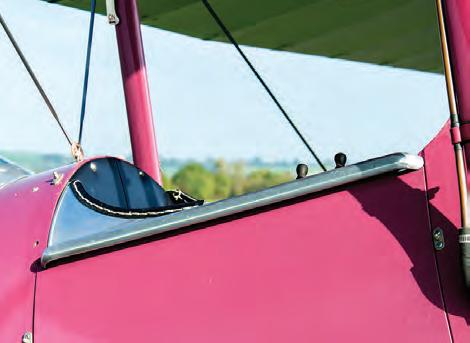
The rear headrest and large one-piece curved windscreen are very practical details to enhance the pilot’s airborne comfort by reducing the blatter and blast of an open cockpit slipstream. The rear 5mm thick rear screen is an adaptation from one of the later Norman Aircraft crop-dusting Tiger Moth mods. The hinged cockpit doors have spring loaded catches and swing outwards and down, and have curved metal additions that arc upwards to reduce any fuselage hugging airflow attempting to tug at the pilot’s shoulders and neck.
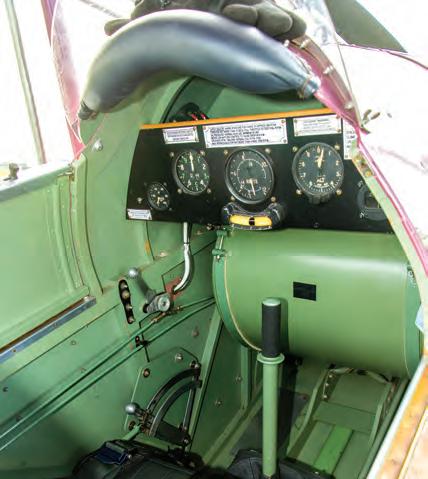
What strikes me immediately is how different the cockpit is from the standardised instrument layout of the military-specified Tiger Moth. The stick may be swung from side to side, back and forward, and around the control box without hitting the interior, but as for the rudder pedals there is little chance of movement at all. The reason being that although the tailskid is steerable the whole rear airframe weight rests on the skid.
In the cockpit
The panel from left to right has a circular oil pressure display, an inconspicuous small circular Trig radio, an rpm gauge, a central ASI in knots, which is hugged below by a large smiling slip ball, an altimeter and a paired Trig transponder. The same standard P2 compass fitted to all aircraft of the period sits on the right-hand side. The speeds placard which are in knots: Stalling 35, Climb 52, Cruising 83, Never Exceed 113 on normal load. Further placards remind that the start should be on the front switch (the impulse magneto) and to try the engine on both magnetos before taking off. Of far more use than the previous common-sense advice is the Gipsy Major 1C handling of warming up for four minutes at 800rpm, then for not more than 10 secs full throttle to test full rpm. Normal oil pressure is between 40-45psi with a minimum of 35lb. The cruise revs are 1,900 to 2,050 with normal full rpm of 2,100. The max permissible for not more than five minutes is 2,350rpm.
During the days of CAA Certificate of Airworthiness
22 | LIGHT AVIATION | January 2024
Flight Test
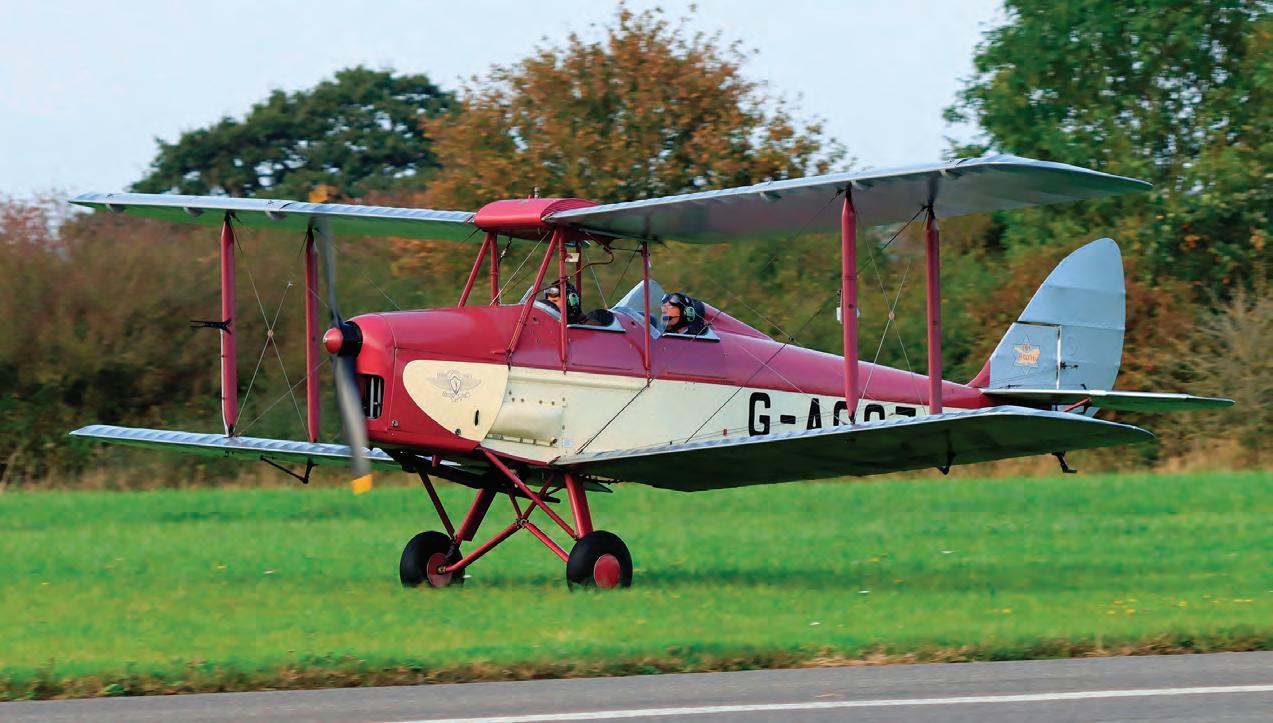
Above Accelerating in the correct take off attitude – no rotation required.
Neil Randell
annual flight tests, a five-minute climb was the norm, however, there was a dispensation to reduce revs for Gipsy engines. Interestingly enough, the Gipsy Major became the first engine to gain an acknowledged TBO (time between overhaul) of 1,500 hours. There is a tale that the DeHavillands gathered the first six engines to reach this – then – high figure, disassembled them, mixed up the parts and rebuilt them and flew a further 300 hours on each. Proof perhaps, that if you look after your Gipsy, it will look after you.
The throttle and its ‘mixture control’, actually designated as an ‘altitude control’ was not to be used under 5,000ft, the pertinent placard sits on the left fuselage wall. Their rods run forward and are directly connected to the twinned front cockpit set and on through the firewall to carburettor linkages. There is no carb heat control. Well, that is not quite an accurate statement. There is a canny system of the internal air within the cowlings, warmed by the cylinder heads air being fed to the carb intake through a filter at low revs (below approximately 1,600rpm). Above this value, as more power is required and the throttle advanced the lever moving forward opens an intake on the right cowling allowing cold, dense air to be rammed directly into the carb for a higher volumetric efficiency.
Although we have been warned not to use the ‘altitude control’ if it has been leaned and brought forward at altitude, when the throttle is retarded for descent there is a catch on the throttle side to bring the mixture backwards to the ‘rich’ position and so avoids the sinning and expensive possibility of running and damaging an over-leaned engine. Most Gipsy engine ‘altitude controls’ are either wire locked, or not even fitted or connected to avoid such inadvertent generously termed ‘misunderstanding’. The altitude and attitudes at which I fly a Tiger rarely merits such a device!
Plenty of endurance
The main fuel tank sits between the upper wings and has a capacity of 19 imperial gallons, and in Nige’s case he has a reserve tank sitting over the knees of the front cockpit occupant. Its capacity is another 10 imperial gallons: 45 litres plus 85.5, giving a combined total of 130.5 litres and would definitely exceed my longest solo ferrying legs, allowing 4hr 30min at 26 litres an hour (allowing 30 minutes reserve of course). The auxiliary tank is connected to feed the main gravity fed tank using engine-driven pumps, but just be sure that sufficient upper tank fuel has been used before opening the valve, otherwise the main tank will overflow and you will end up streaming fuel out of the vent. In days gone by it was previously pumped by hand, and just like the early Spitfire Mk I pilots pumping up their undercarriage, a sympathetic oscillation could easily be induced with the other hand mimicking the action, to porpoise the nose up and down. There should be no fuel in the aux’ tank should aerobatics be contemplated.
The oil tank holds up to 9.5 litres and it is a very good idea to be aware of the amount of sprinkling the ‘Dripsy Major’ engages in.
But for the life of me, I just couldn’t find the on-off fuel tap! I had been both feeling in the darkness and around above my left knee, for the bracket mounting on the
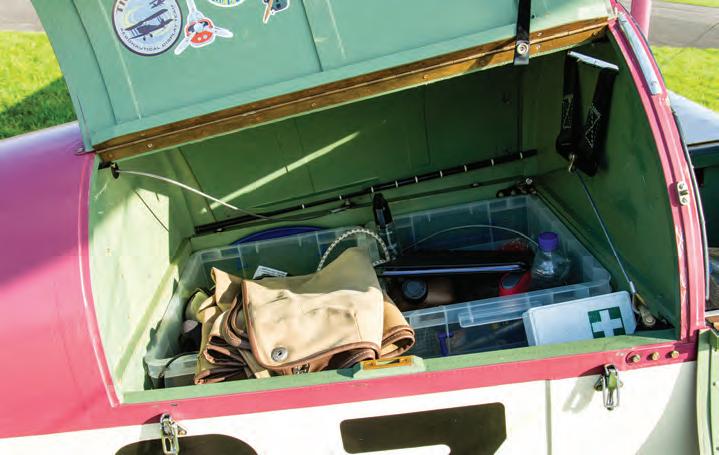
Above The rear baggage hatch complete with spares.
Left The front cockpit door’s extended rear edge helps reduce slipstream in the cockpit.
Below left A hint of some past history – the Bombay Flying Club badge on the Major’s engine cowling.
Below Surprisingly, the widest part of the aeroplane, once the wings are folded back,is the tailplane.
January 2024 | LIGHT AVIATION | 23
Flight Test
“Four minutes are allowed for warming the engine before a power check against the chocks”
fuselage wall where it can most definitely be found in a Tiger Moth. I had lost it. Thinking of the earlier Gipsy Moth, the rotary fuel tap is at the base of the rear left cabane strut, pretty close to the upper edge of the exhaust pipe. No, not there either. But upon relaxing back in the seat, not quite shaking my head, but raising my eyes, I now saw an inconspicuous lever on the inside top of the rear left cabane strut… that was it. Forward and flush with the strut for off, back for on.
Weave and lookout
The start is performed against chocks with the prop swinger being in charge, the pilot just has to do what he is told. Fuel on. What follows is the broadly, short generic hand swinging start as there are many variations, some idiosyncratic, favoured by Mothists. For the narrative we are dealing with a cold engine which, rather than a cold soaked Gipsy with darkly malevolent slow to flow oil from its remote sump, is arguably the easiest to jolly into life, equalled for ease perhaps only by a very recently stopped engine. Otherwise between these parameters, you have your work cut out…
Lift the cowl to tickle the carburettor to fill the float chamber, check the cowl is latched and confirm the external mag switches are down and off, then pull them
through four compressions. Crack open the throttle, the impulse mag is flipped up in each set, in each cockpit and with ‘Contact’ called, the prop is pulled through a compression. The Gipsy fires as the swinger continues to walk away and the rear mag is turned on, revs are settled and the oil pressure gauge is stared at until it rises within the statutory 30 seconds. Four minutes are allowed for warming the engine before a power check against the chocks of 1,600rpm and the twin ignition checked with hardly a murmur, or flick of the rpm needle dropping revs.
The throttle is brought to idle, the chocks waved away. The area in front of us is clear and initially with more power than we had warming up we move forward, pressing the rudder pedal for the first time, each in turn to check we can steer and swing the nose side to side. Close the throttle and our ‘brakes’, the skid sliding through the grass, draws us to a stop. While it might look as though we’re overcontrolling as we wend our way towards the threshold, we’re just making sure our path is clear.
As a reminder, the prop swinger stood on the left of our nose, so it is left foot and rudder we are going to have to press to keep straight as we accelerate. There is no rush either to raise the tail, as with low speed and increasing power it is best to keep the stick back and the tail skid in contact with the ground. Counting to four, slowly, while confirming both the ASI and rpm are sensible, the tail can be eased to raise and an attitude adopted that allows the aircraft to first increase its speed and then fly itself off and into ground effect where speed rises further for the climb at 60kt. It is standard practice to just reduce the revs by a smidgeon, in deference to the Gipsy Major during the
Flight Test
24 | L IGHT AVIATION | January 2024
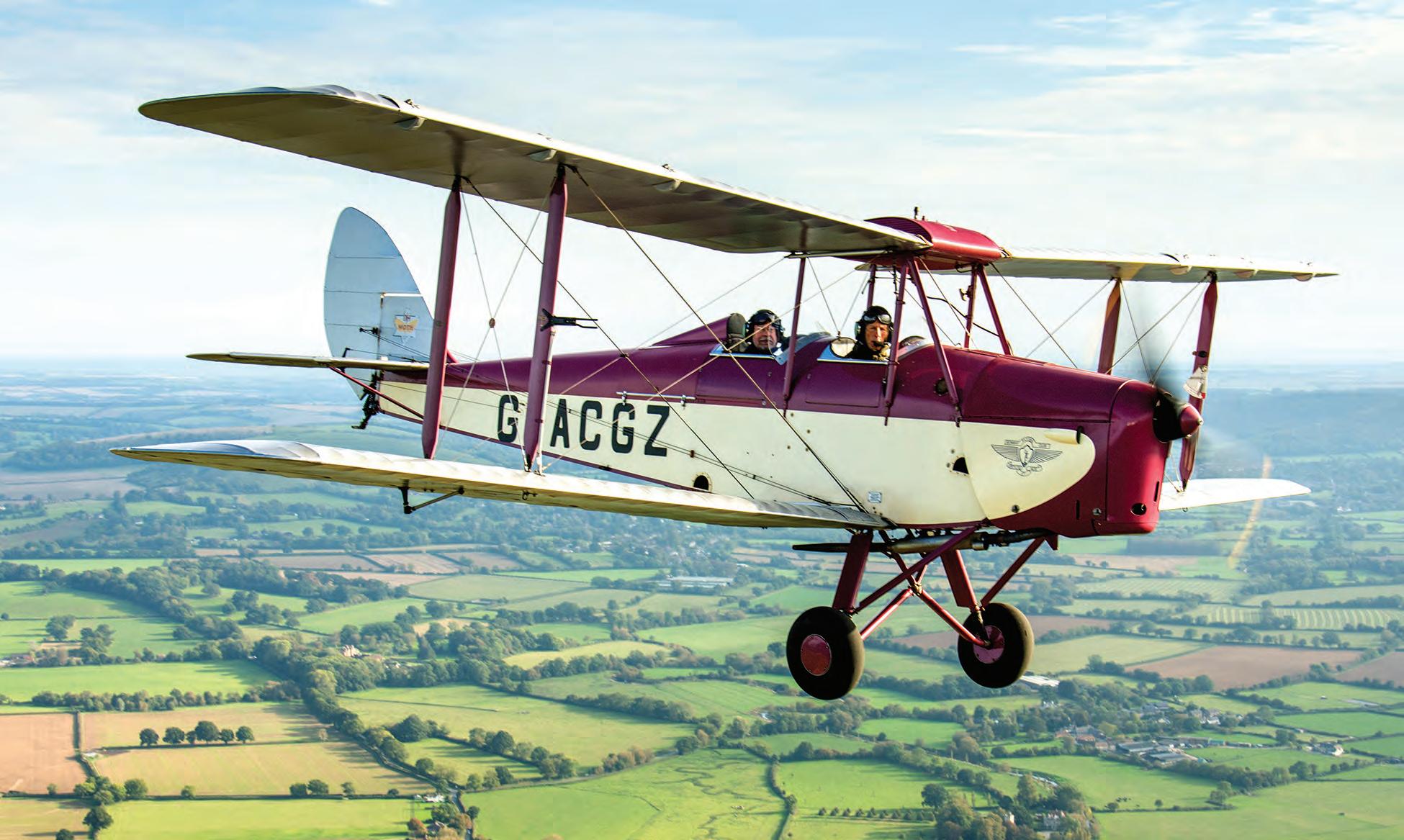
Below In the cruise, over the beautiful Dorset countryside.
At the cruise figures of 75-80kt Golf Zulu burns 27 to 30 litres an hour, and uses one US quart per four hours.
Trimmed out, she just needs a little attention to check her nose attitude occasionally. It is from here that her 1930s attributes and handling are about to show a fellow used to the innocuous trainers of the 1960s onwards a thing or two.
A first example is that while allowing the aircraft to respond without correction, by closing the throttle it causes the nose to drop and roll to the left, while an increase in power causes a nose up and roll to the right.
This is the exact opposite direction to a Lycoming, Continental (or even a Merlin’s reaction, come to think of it). She is neutrally stable, in other words, if disturbed in pitch the ups and downs of the nose will surprisingly continue if left unabated. This is clearly illustrated by easing the nose down by 10° from the trimmed cruise by a tenth of the speed and releasing the stick.
A series of ups and downs continue, probably ad nauseam. But at the standard three cycles where she was still continuing, the point had been made and we laughed through the intercom.
Light stick pressure for aileron deflection of course rolls us nicely and the expected adverse aileron drag has the nose yawing in the opposite direction: roll right and the nose yaws left, roll left and she yaws right.
But anticipating rudder to balance, confirmed by the turn and slip, has her neatly turning within a narrow radius.
After all, she does have a low-wing loading, that coupled with her 140hp and prop gives both a short take-off and gives her good manoeuvrability, if not quite a sparkling roll rate.
Directionally she is not strong either, just look at the tiny fin area. Pilot rudder pressures are not particularly high and helped by its aerodynamic balance. I say ‘not particularly high’, but they might be for a pilot who generally has little awareness, as aircraft of the last 50 years have had their handling qualities refined.
To be honest, it is just an awareness of the subtleties requiring small, timely coordinated early nudges of the controls to keep us heading in balance in our desired attitude and direction.
I have occasionally met untutored ‘pilots’ advocating to lead with rudder. The correct method can only be learned by experience and a willingness to practise, until the feeling filters through as the hands and feet adapt to the coordination required.
Then there is the aspect of landing from an approach of 60kt with a three pointer, or wheeling it on if dealing with a crosswind. In calm conditions with the correct tempo, the stick may be brought back all of the way to achieve a satisfying true three-point landing with all three points arriving together. All good character building ‘stuff’.
To fly with my convivial old friend Nige once more, renewing an airborne acquaintance in a machine he has rebuilt, refined to such a degree and delighted within, has been a true pleasure. The Moth Major is certainly not ‘just’ another Moth… ■
DE HAVILLAND MOTH MAJOR SPECIFICATIONS
General characteristics
Span 30ft 0in
Length 23ft 11in
U/C Track 5ft 3in
Height 8ft 9.5in
Folded Wings Width 9ft 10in
Wing Area total 243 sq ft (incl. Ailerons 20.6 sq ft)
Tailplane/Stabilator 13.0 sq ft
Elevators 13.4 sq ft
Fin 2.8 sq ft
Rudder 10.0 sq ft.
Performance
Vne 113kt Stall 35kt
Cruise 83kt
MTOW 794kg
Range 375nm with 30 min reserve
Engine De Havilland Gipsy Major 1C
January 2024 | LIGHT AVIATION | 25 Flight Test
Top “Right break, right break, GO!”
Above Proud restorer, owner and pilot – Nigel Lemon.
The wonders of Brodhead
Often overlooked due to the louder ‘noise’ of EAA
AirVenture
Oshkosh,
the vintage wonders to be seen at nearby
should not be missed, says Paul
Kiddell
Brodhead
Wisconsin, in America’s upper midwest, is bordered by Lake Michigan to the east and Lake Superior to the north. It’s slightly larger than England but has a population smaller than London. It’s well known for dairy cows, the resulting cheese mountain, brutal winters and Milwaukee, home to Harley’s and the Fonz. But for aviators, it’s famous for Oshkosh, the world’s greatest fly-in.
Nigel Hitchman and I first went to Oshkosh in 1984, when we had our first jobs, and a little spare cash. We rented a car in New York and drove across the States on
what was an epic aviation adventure, stopping at airfields and museums, enjoying amazing spontaneous hospitality, which also resulted in a few fun flights and friendships, many of which endure to this day. Oshkosh was a revelation and the scale of the event with its thousands of aeroplanes blew us away. Nearly 40 years on it still does.
These days, an essential part of the Oshkosh adventure, is an en route stop at the less well-known but, in some ways, equally amazing Brodhead Airport. Tucked away in southern Wisconsin, Brodhead is a grass airfield with three runways and is home to many vintage and
Special Feature 26 | LIGHT AVIATION | January 2024
Above Andrew King departing in the 1926 Waco 9.
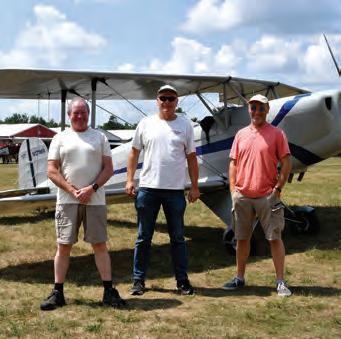
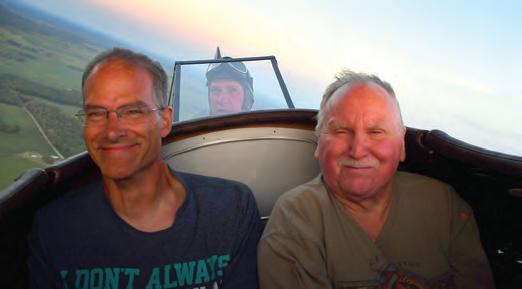
Circle inset LAA members Derek and Hamish after riding with Nigel.
antique aeroplanes among the almost 100 resident aircraft, as well as the excellent Kelch aviation museum.
Brodhead Airport was established in 1946 by returning WWII B-24 pilot Major Bill Earleywine. In 1973, EAA Chapter 431 (inevitably the ‘Cheeseland Chapter’) was formed under the enthusiastic leadership of vintage pilots and restorers, Dick Weedon and the late Bill Knight. The Chapter purchased the airport, extended the runways and built more hangars.
Vintage hotbed…
Since 1977, Brodhead has hosted the annual Pietenpol fly-in (the first fly-in in 1976 was at Cherry Grove in Minnesota, Bernie Pietenpol’s home base) and in recent years, this has been a joint event with the Hatz Biplane Association, on the weekend immediately preceding Oshkosh. This is reason enough to visit, but Brodhead is also a hotbed of vintage and antique restoration and flying – and the weekend is a great time to get together with American friends before the madness of Oshkosh.
This year Nigel and I arrived in Chicago on Wednesday and en route to Brodhead, stopped off at our good friend
Special Feature January 2024 | LIGHT AVIATION | 27
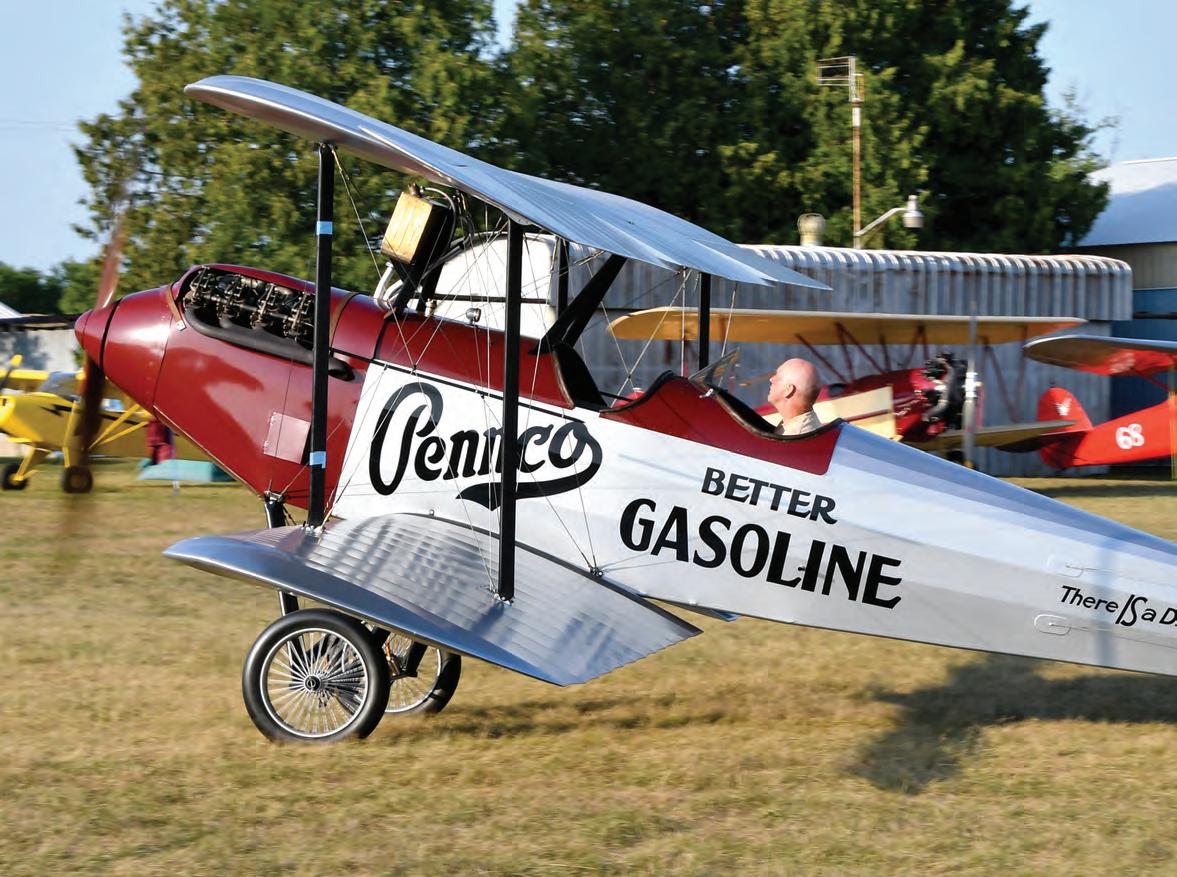
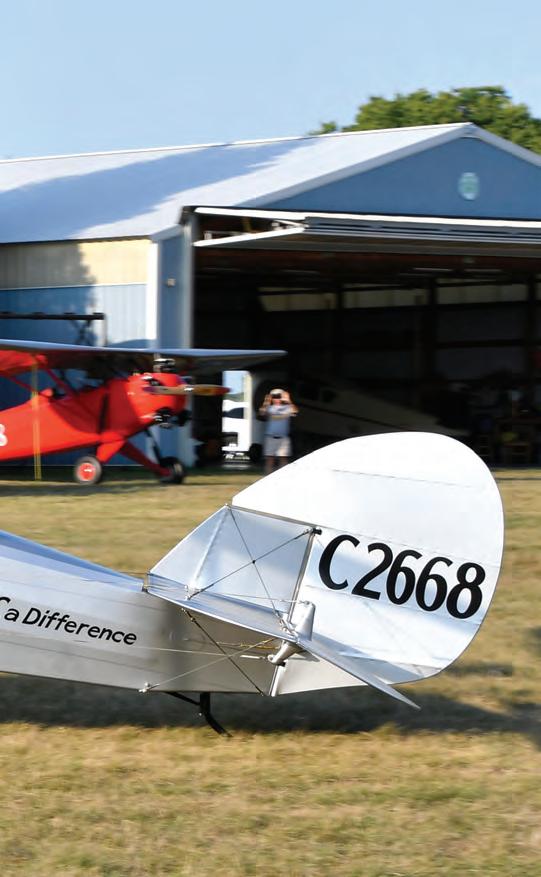
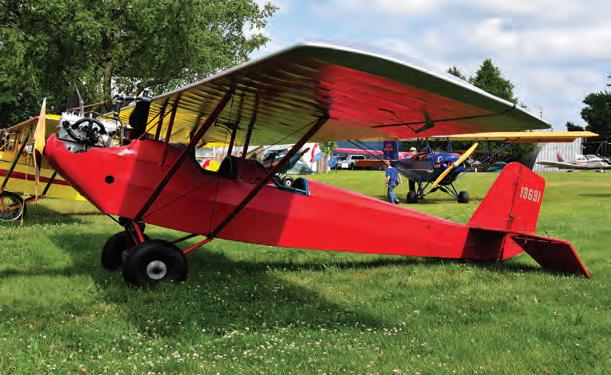
The Rudolph ‘one dollar Pietenpol’ built in 1933.
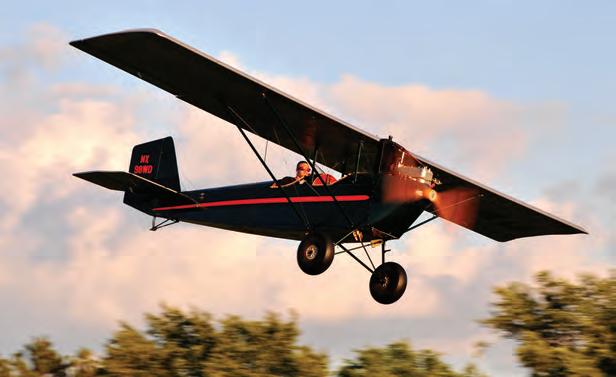
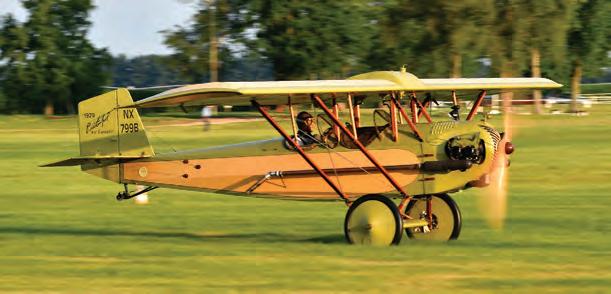
Trent Davis flying his Ford powered Pietenpol.
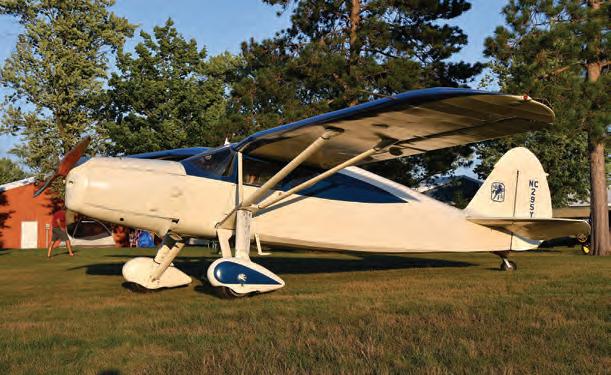
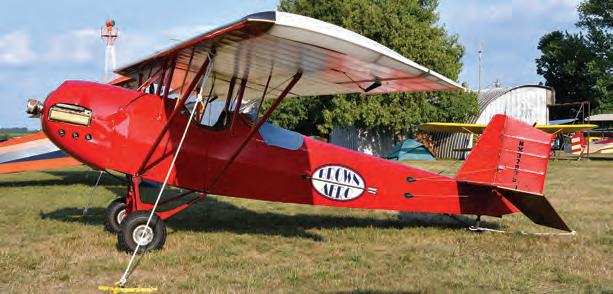
Dan Wegmueller’s 1940 Ranger Fairchild 24.
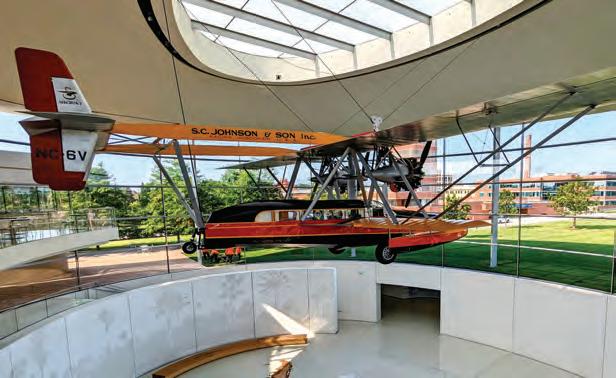
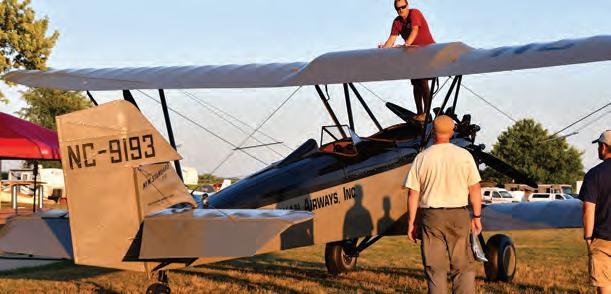
Johnson Wax S-38 on display at its World HQ.
Jeff Nelson’s shop in Racine. Jeff has a metal fabrication company and owns a Clipwing Cub, a Stearman and is restoring a straight-wing Waco, which hasn’t flown since the 1930s. Jeff is a talented craftsman and a total vintage aviation enthusiast, so has combined his skills to produce flying wires as ‘Ace Flying Wires’. Streamline wires in particular are very complex and it was fascinating to learn about the production process using traditional methods such as rolling. Jeff is already supplying types such as Wacos, Travel Airs, Pitts and exotica like the Pitcairn Mailwing and Stearman Speedmail, and it’s great to see folk like Jeff enabling the operation of rare vintage aircraft into the future.
Thursday morning Jeff arranged for us to visit the incredible SC Johnson Wax World HQ in Racine to see its original and beautifully preserved promotional 1929 Waco Taperwing and previously airworthy Sikorsky S-38 flying boat replica. Johnson Wax has long been a big and popular employer in my home town of Frimley in Surrey and so I felt a bit of affinity with the company. In 1935, Herbert Johnson had scoured Brazil in the original S-38 for carnauba wax that came from the palm of the same name and formed the basis of many of the company’s products. In 1998 Herbert’s son, Sam, reproduced the Brazil expedition in this S-38 replica, one of two produced by Buzz Kaplan in Minnesota. Kermit Weeks now owns the other in Florida. Huge thanks to Jared Harris of the SC Johnson’s bizjet department for the marvellous tour.
Old Rhinebeck Aerodrome
Nigel and I finally arrived at Brodhead on Thursday afternoon in good weather to find the airfield busy. We soon met one of our closest American friends, Andrew King, who had just arrived in his 1954 Casa-built Jungmann powered by a 180hp Lycoming. Andrew grew
28 | LIGHT AVIATION | January 2024 Special Feature
Above (top) Professional sculptor, Douwe Blumberg’s incredible Continental powered Pietenpol.
Above (middle) Tom Brown’s 1982 Pietenpol is the world’s highest time Corvair powered aircraft with more than 1,500hr.
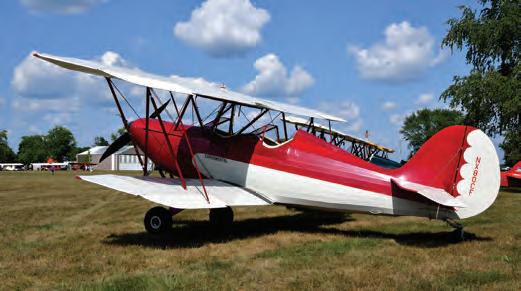
Above (bottom) Ted Davis about the refuel his latest D-25 restoration with the enlarged 90 USgal tank.
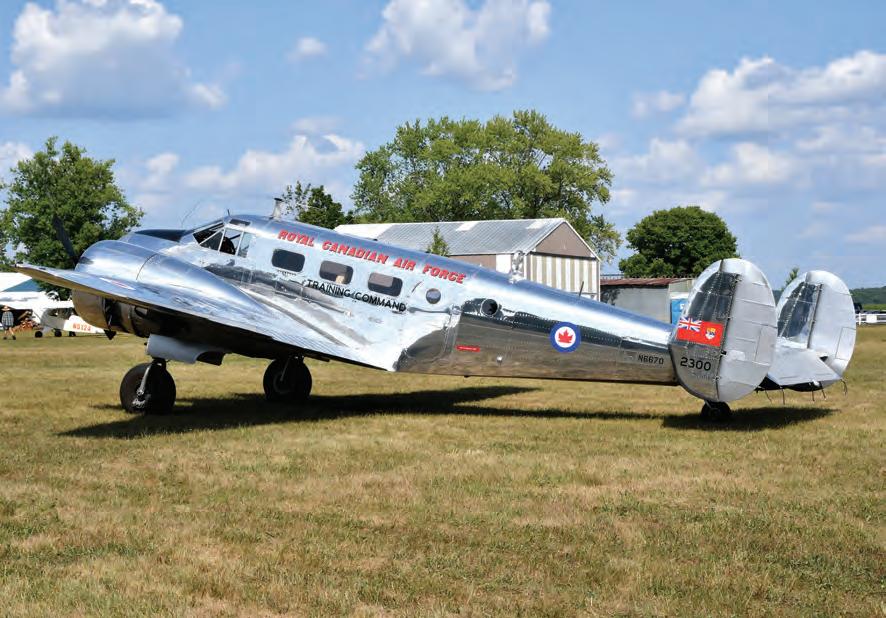
Right Rich Beinhauer’s highly polished Twin Beech, a 1952 Beech 3N
up around the famous Old Rhinebeck Aerodrome in New York State where his uncle Dick and dad Bill were long-term cornerstones of Cole Palen’s flying collection.
Many may recognise Bill’s Tiger Moth ‘G-ACDA’ (N3529) that he flew at Old Rhinebeck airshows for many years, until the original G-ACDA was restored to flight in the UK, whereupon Bill’s Tiger became ‘G-ACDB’.
Andrew’s brother David continues to fly the Tiger there during the summer weekend airshows. Btw, Andrew and I share a love of football (proper British football), Andrew having honed his skills on the primary school playing fields of Bolton as he lived there for two years when his dad did a teacher exchange in 1969-70.
Andrew is one of America’s most respected vintage pilots and many would be hard-pressed to identify a fair number of the 166 types in his logbook which include unique and rotary engine types alongside the more familiar Wacos, Travel Airs, Fleets etc. Andrew has restored many classic machines and has had a busy 2023 ferrying all sorts of rare aeroplanes around the States for their proud owners. At Brodhead he would have a very special mission, of which more anon.
Brodhead is an amazing place to informally wander around the hangars and watch the arrivals and departures amidst friendly flying folk. Only the east-west runway is open for fly-ins and many visiting aircraft were camping around the other two closed grass runways.
We soon bumped into another great pal, flying farmer Dan Wegmueller, who arrived in his 1940 Rangerpowered Fairchild 24 (only the Brits refer to them as the Argus), after a short flight from his Monroe farm. Like dairy farms across the world, it’s been challenging times, so Dan has branched out into tourism and it was good to hear he’s doing pretty well. More friends appeared and inevitably our 100m walk to the Pietenpol parking area took about two hours.
About a dozen impressively unique Pietenpols had already arrived. Bernard Pietenpol designed the wood and fabric parasol Air Camper and first flew it with a converted Ford Model A four-cylinder car engine in May 1929 – the
Above
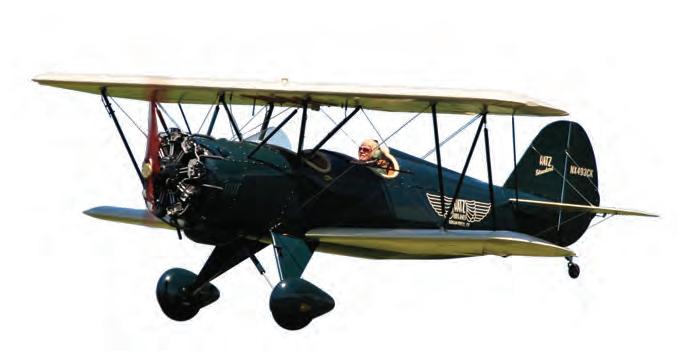
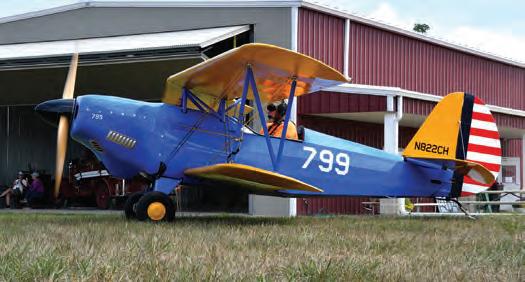
Above (top right) Mark Taylor and his Verner powered Hatz Classic.
Above (left) Australian Ray Jarvis was enjoying his newly purchased Hatz Classic before shipping it home to Australia.
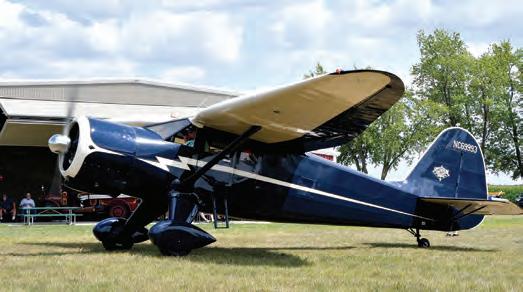
Above (right) Jody Jones’ 1943 Stinson V-77 Gullwing en route to Oshkosh.
estimated 40hp was sufficient to fly two 1920s-size people. Bernie’s big break came in 1931 when Modern Mechanics magazine published the Air Camper plans, serialised in four issues. During the 1930s he went on to sell thousands of sets of plans, and today they are still being built in significant numbers with plans remaining available from the Pietenpol family. It wasn’t until 1988 when Dave Silsbury completed the first UK example G-BMDE, powered by an O-200, and that year he won the Air Squadron Trophy for best plans-built aircraft at the PFA rally. About 30 UK Pietenpols have since flown, most powered by 65-100hp Continentals. At Brodhead it’s always great to see Ford Model A-powered Piets pottering around the circuit. In the US, more than 50 Pietenpol engine types have been documented and this was reflected in the diverse range of power plants on display. Indeed, I once flew with the late Lowell Franks at Brodhead in his Warner 145 radial powered Piet on which he also hung a Ford Model B engine, an inverted Funk engine and a Lambert at different times.
A remarkable ‘resident’…
Resident at Brodhead is the remarkable Ford-powered ‘Rudolf’ Pietenpol N13691. Built in 1933 from the Modern Mechanics magazine plans, the aircraft was owned for more than 50 years by Allen Rudolf who toured extensively from his Wisconsin base. After departing Brodhead one day in the late 1980s he returned with engine drama, whereupon the aircraft remained until Rudolf’s friend, resident pilot and restorer, Ted Davis, got together with his Ohio-based pal, Jim Hammond, to rebuild it. It again flew in 1993 and Rudolf managed to get back a couple of times to fly it before he passed away.
When Rudolf retired from flying, the aircraft was put up for sale and Ted informed Jim that Jim had bought a Piet (Ted already had one!) and needed to pay Rudolf’s brother. They couldn’t bear to see such a historic aeroplane leave Brodhead. These days the Piet is flown by a tight-knit group of vintage pilots who congregate at Brodhead at fly-ins and the aircraft is sold between them
January 2024 | LIGHT AVIATION | 29
(top left) Our fellow passengers enjoying a D-25 sunset ride with Andrew King
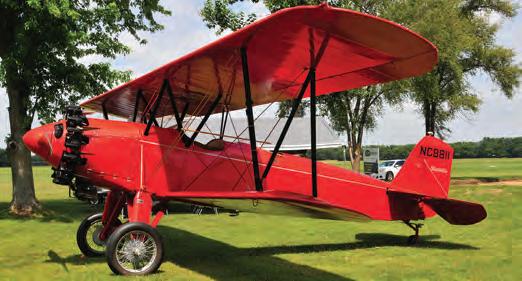
for the princely sum of one dollar. The historic aircraft has passed from Jim to Ted to Frank Pavliga and now Andrew King – I would describe it as a most gentlemanly agreement but knowing the group members, ‘gentlemanly’ is perhaps not the best description!
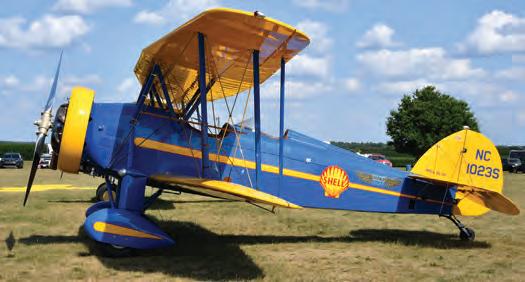
The ‘one-dollar’ Pietenpol exemplifies the fun and relaxed nature of Brodhead. This is further highlighted in the evenings when the wind drops and the skies fill with visiting and resident aircraft. Andrew borrowed Ted Davis’ latest New Standard D-25 restoration and loaded Nigel, Don Emch, me and another passer-by for a local sunset flight. The New Standard D-25 was the ultimate barnstorming joy-riding biplane with four passengers (or more if they could fit) sitting in the huge open front cockpit, with two on a bench and two seated behind, and the pilot sitting behind in his own cockpit. The 1929 NC9193 was resplendent in its original Alaska Airways colours and is Ted’s third New Standard restoration. This challenging project was based on the original fuselage, but required the huge 45ft upper wing and 32ft 6in lower wings to be built from scratch. The beast of a sesquiplane is powered by a 235hp Wright R-760-8 and upper wing features the larger 90 USgal tank, increased from the standard 62 USgal, for remote Alaskan Ops. The D-25 has had a resurgence in popularity in recent years and remarkably, there are nine currently flying – hauling four passengers on each flight certainly makes selling rides more viable. Rob Lock who operated two New Standards at Kermit Weeks Fantasy of Flight in Florida for around 20 years, flew around 100,000 passengers before recently retiring from the rides business.
“The New Standard D-25 was the ultimate barnstorming joy-riding biplane with four passengers sitting in the huge open front cockpit”
We enjoyed a wonderful sunset open-air flight. It was huge fun to be out in the elements without a headset and wasn’t at all draughty in the voluminous passenger compartment. Despite its size, the big old aeroplane has excellent short field performance and Andrew treated us to some gentle lazy-8s as we bimbled low-level above the corn fields. Assorted Pietenpols, Hatz and other varying vintage aeroplanes were airborne, and while I’ve flown in several New Standards, it was such a thrill.
Friday dawned with great weather and much anticipation. For many years Denny Trone collected, restored and flew many unique and rare American antique aeroplanes powered by original early engines, such as the Curtiss OX-5 and the famous ‘Hisso’. Denny, who operated steam paddle-boats for a living, was an amazing character, generous with his time and his aeroplanes.
Tragically, Denny was killed in a flying accident in 2008, but his legacy lives on in the passion for the old antique aeroplanes and engines through close friends such as Walt Bowe. Californian-based, all-round nice guy Walt has assembled one of the world’s greatest collections of American antique flying aeroplanes and, while based at Ala Doble in California, he maintains a presence at Brodhead among his many vintage flying friends, including his long-term flying buddy, Chris Price. Indeed, Walt grew up around Sonoma Skypark in California where Chris’ dad, Ron Price, has been resident for many years – our good pal Ron was also present and enjoying visiting Chris and his family prior to Oshkosh. Chris ended up living in Brodhead through his airline flying jobs, having initially flown DC-3s for Miami Valley Aviation.
This year Chris and Jay Berendes had been working hard on restoring Walt’s 1926 OX-5 powered Waco 9 to flight and the plan was for Andrew King to fly it to Oshkosh for the big show. Chris had already flown it but, as ever, some minor adjustments had to be made and the test hours flown-off before Andrew could embark on the epic journey. What a pleasure chatting to the assembled crew and watching the OX-5 being adjusted and ground running – it really was a wonderful window into 1920s American aviation.
Special Feature 30 | LIGHT AVIATION | January 2024
Above (top left) Chris Hiatt in his 140hp Super Baby Great Lakes.
Above (top right) Walt Bowe’s latest Waco, the wonderful CTO Taperwing.
Above (left) Kent McMakin’s rare 1929 Butler Blackhawk on loan to the Kelch Museum.
Above (right) Kelch Museum 1929 Stearman C-3B powered by a Wright J-5.
With work complete, Chris again took her aloft and the WWI vintage OX-5 liquid-cooled V8 engine sounded magnificent. With all going well, Andrew then took her up to start flying some hours off. Andrew reports that it handles and performs quite well for a 1926 aeroplane – it has good horsepower for its weight and the elephant ear ailerons are quite responsive. While it doesn’t have brakes, it tracks quite well on the ground compared with many of its contemporaries.
Amidst all the OX-5 excitement, the fly-in continued apace. Six Hatz biplanes were present and the friendly Hatz crowd were busy flying and doing rides.
The Hatz CB-1 plans-built biplane, with a steel-tube fuselage and wooden wings, was designed by John Hatz, and his prototype made its first flight in 1968. In the mid-1990s, the design was further refined by Billy Dawson as the Hatz classic, with a more attractive rounded fuselage and provision for larger engines such as the O-320.
For a while, Classic kits were available from the Makelan Corp but these days both the CB-1 and Classic are only available as plans directly from the Hatz Biplane Association. Like the Pietenpols, all Hatz are pretty unique and it was lovely to see different design details and powerplants. Mark Taylor from Ohio was busy flying his 9-cylinder Verner-powered Classic, which he says develops 158hp – what a beautiful machine. I should also mention Australian, Ray Jarvis, who had bought Hatz classic NX80CF sight-unseen, and after meeting the vendor and flying it to Brodhead, was going to disassemble it and ship it home. Four Hatz have flown in the UK, all CB-1s of which three remain active.
En route to… Oshkosh
Many flying visitors are, of course, en route to Oshkosh, and a stream of interesting aeroplanes continued to arrive. Rich Beinhauer gave us a nice flyby in his 1952 Beech 3N (D18S) before landing and dazzling us with the highly polished bare-metal finish – as a Eurostar owner, he had both my admiration and sympathy!
Jody Jones from Oklahoma arrived in his beautifully restored 1943 Stinson V-77 Gullwing – he would later go on to win the WWII era runner-up award at Oshkosh. A very active visitor en route to Oshkosh was Texan Chris Hiatt in his amazing ‘Super’ Oldfield Baby Great Lakes. His immaculate and diminutive biplane has a 140hp O-290 with a smoke system, a bit different from the more common 65hp A65 engine. Chris was tearing around the patch at 140mph, reports it can climb at 2,500ft / min and that he comes over the fence at some 100mph. Blimey!
Mid-afternoon, Walt took delivery of another rare aeroplane – a stunning Wright 760 Whirlwind powered Waco CTO Taperwing with a speed ring and Shell motif. The Taperwing was developed from the hugely successful Waco 10 in 1927 by Waco designer and test pilot, Charlie Meyers, who replaced the 10’s straight wings with a set of tapered wing panels that featured the new NACA M-6 airfoil. This transformed the hugely successful but benign three-place Waco 10 into a spirited aerobatic performer that soon became the staple of many airshow pilots and racers. Legendary Waco test-pilot Freddie Lund travelled the States performing amazing aerobatic routines in his red, white and blue Taperwing with outside loops, inverted
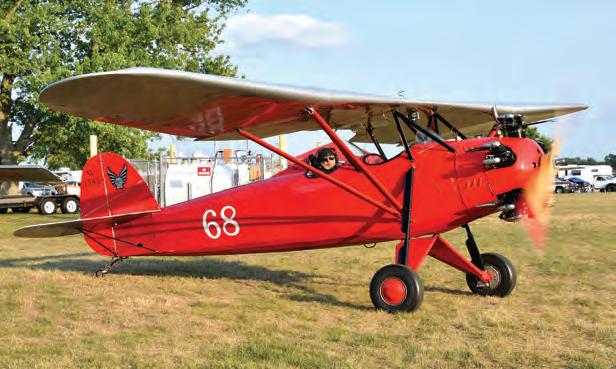
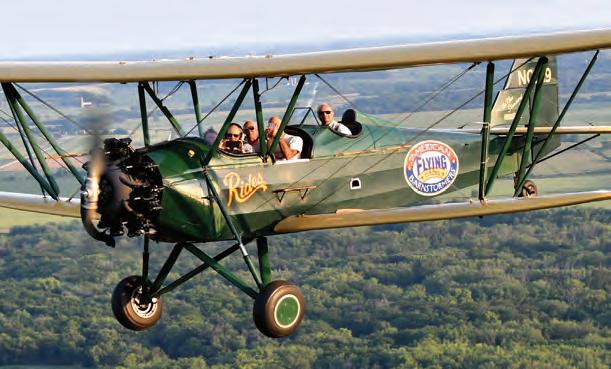
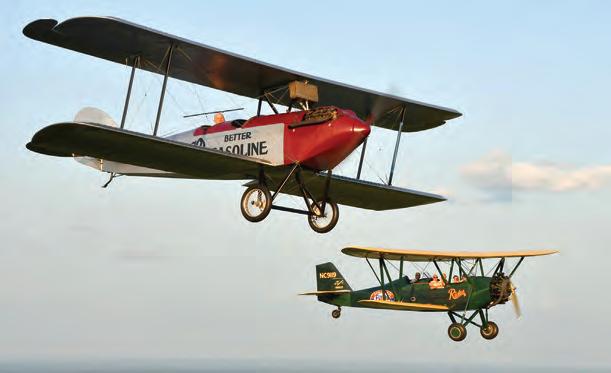
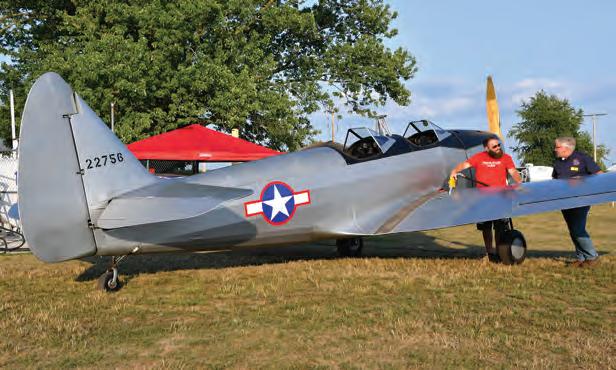
Special Feature January 2024 | LIGHT AVIATION | 31
John Machamer’s 1930 Davis D-1-K.
Dan Wegmueller refuelling his 1942 PT-19.
Andrew flying the Waco 9 and Justin the D-25 for the benefit of our cameras…
D-25 flown by Justin Niemyjski and a cockpit full of happy punters.
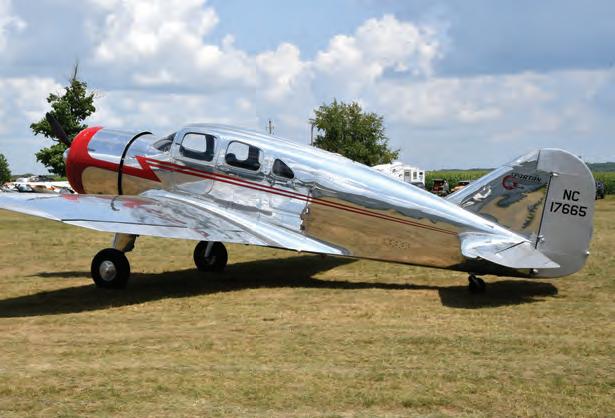
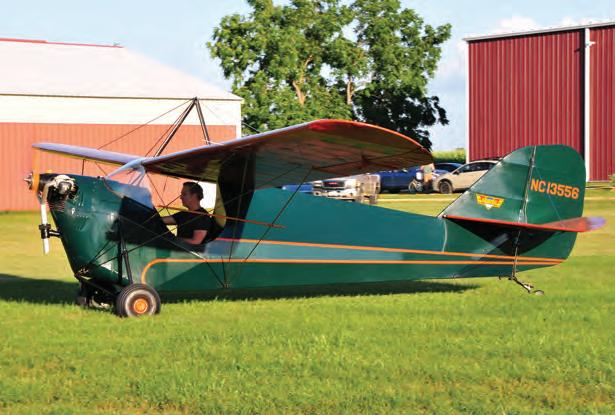
spins, tail slides and multiple flick rolls. Freddie cheated death several times, probably the most incredible, when his seat belt snapped mid-routine and he was catapulted out of the cockpit only to be saved by his shoulder snagging the top wing! Amazingly, he somehow managed to re-enter the cockpit and pull up from a steep dive at around 500ft. Sadly, Freddie was killed in mid-air at an air race in 1931. And 1920s Taperwings continued to thrill airshow crowds with famous pilots like Bob Lyjak well into the 1990s and beyond – a truly legendary aeroplane.
Another Californian pal of Walt and Chris, is our good friend Josh Brownell who operates another Wright Whirlwind Taperwing out of Brodhead doing biplane rides as Gypsy Air Tours, and it was great to see happy punters enjoying a taste of 1920s barnstorming. Like Chris, Josh moved to Wisconsin for airline work and never left. These days, he flies cargo 747s, but of course his passion is antique aeroplanes. The two Taperwings were parked together for a while and were a wonderful sight. As if that wasn’t enough, Walt had a second Taperwing at Brodhead and later that also emerged at the hands of Andrew.
Passion-packed museum
Over at the excellent Kelch Museum I met the everenthusiastic Ami Eckard-Lee, the museum’s collection manager. Alongside curator, Hannah Shickles, these women inject endless positive energy and passion into the museum. Working alongside are an experienced team of volunteer restorers and pilots including Pat Weedon who serves as Executive Director as well as airport manager. Milwaukee businessman, Alfred Kelch, a pioneer of the EAA Vintage Aircraft movement who reputedly made his
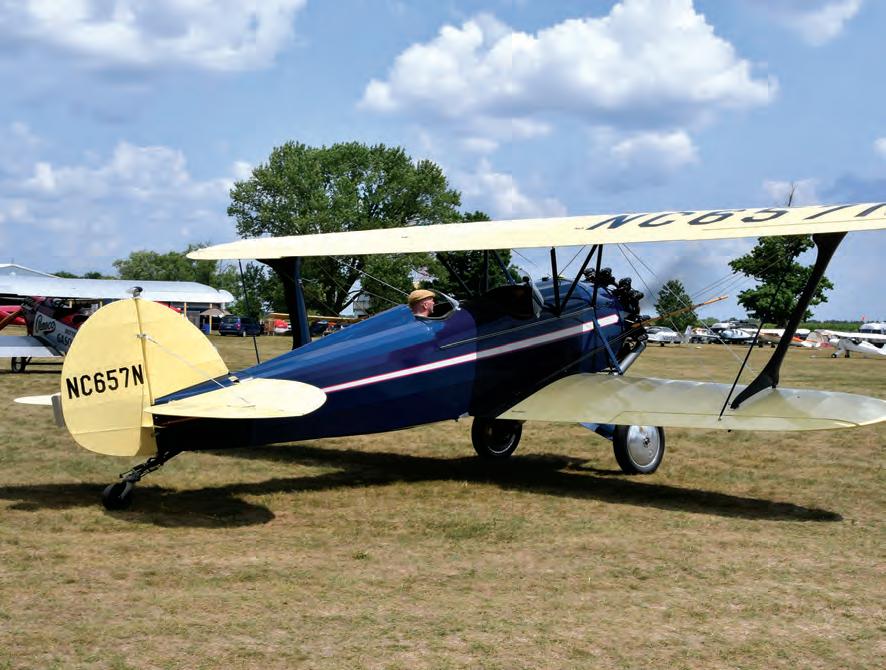
Special Feature 32 | LIGHT AVIATION | January 2024
Above (top) Walt Bowe flew to Oshkosh from Brodhead in style in his 1940 Spartan 7W Executive
Above (bottom) Classic resident Aeronca C-3 was busy flying throughout the weekend.
Right Andrew King taxying Walt Bowe’s 1929 Waco Taperwing.

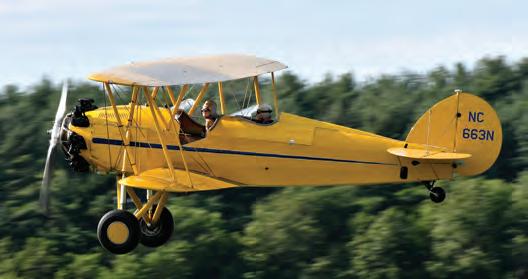
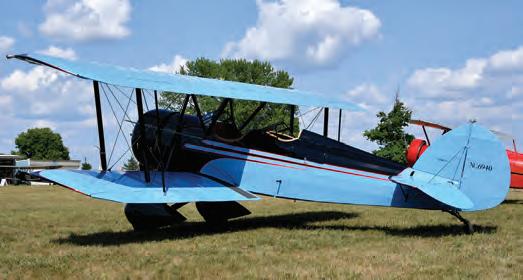
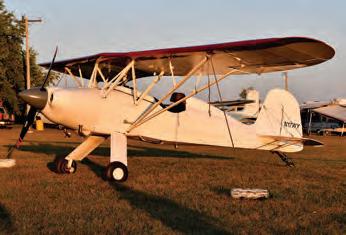
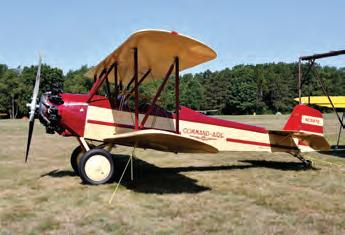
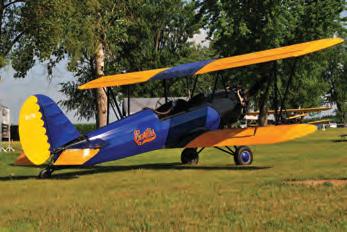
millions from manufacturing traffic cones, assembled an impressive collection of between-the-wars aeroplanes and when he and his wife Lois passed, the trust they established enabled the construction of a superb museum with two large hangars. This now houses some 22 rare aeroplanes, including my personal favourite, the 1929 Butler Blackhawk powered by a rare Wright J-5, on loan from and restored by resident Kent McMakin. Designed by Waverly Stearman, brother of Lloyd, only 10 or so Blackhawks were built before the stock market crash of the same year.
Cockpit expanse
Soon enough sunset came and the evening scramble arrived. Nigel arranged to fly with Chris Buerk from New Hampshire in his magnificent 1929 Command-Aire 5C3 to do an air-to-air photo sortie with Andrew in the Waco 9. Brodhead being Brodhead, I soon found a seat with Ted in the New Standard to also take pictures of whoever happened to be close. Ted loaded another two seats but as I had the bench seat to myself I could literally wander around the expanse of the front cockpit. We were soon airborne and quickly closed on Andrew for some wonderful photos in gorgeous evening light. All this is non-radio and hand signals are the order of the day. By now, more aeroplanes were appearing in the evening sky and as I snapped Andrew in the Waco, we had the added bonus of Justin Niemyjski taking up position the other side of Andrew in his own New Standard (another of Ted’s rebuilds). Nigel and Chris soon caught up and we got out of the way for Nigel’s photography and continued in formation with Justin. One thing that is really noticeable is that when observing a full New Standard, it looks like the cast of Ben Hur is sitting in the front cockpit – being close you could really see the joy emanating from the assembled cast.
More photos and flybys marked the end of another remarkable day and Nigel and I retired to our nearby Monroe hotel.
On Saturday, I was awoken at 0700 by a phone call from the irrepressible Ed Lachendro asking where we were. Some of our closest friends, Ed and wife Joy, were busy volunteering at Oshkosh, but Ed had a little bit of
Above
Above (left)
Above (middle) Chris Buerk’s 1929 Command-Aire 5C3.
Above (right) The Kelch Museum’s 1932 Curtiss-Wright Travel Air 12-W.
time so flew down to see us in his smart PA-11 Cub Special. As it was, by the time we got organised and got to the field, Ed just had time to literally say ‘hello’ and then launched off back to his Beaver Dam strip and onwards to Oshkosh. What a laugh… but we would spend a lot of time with him at Oshkosh so all was not lost.
We planned to leave for Oshkosh after lunch but first Nigel would reacquaint himself with Andrew’s Jungmann. In 2022, Andrew had generously let Nigel fly the Bucker alongside Andrew in his Travel Air from Andrew’s Culpepper, Virginia base to Oshkosh and back (Nigel amassing some 20 Bucker hours in the process). I had the privilege to join Nigel on the last leg from Juneau into Oshkosh – which will go down as one of my favourite ever flights, getting to fly the Oshkosh arrival in a Bucker Jungmann with my pal of 46 years… something that we simply could have never imagined back in 1984.
With Nigel again comfy in the Bucker, he took me aloft before doing a few rides. No sooner had our great Scottish pals Derek Pake and Hamish Mitchell turned up en route to Oshkosh (they operate RV-8 G-WEEV out of Prestwick and Hamish has the 172 amphibian G-DRAM), than they both enjoyed a flight around the patch with Nigel. Huge thanks to Andrew for his generosity.
With the Bucker fuelled and tied-down it was finally time to say our goodbyes and leave for Oshkosh. Well, that was the plan, until Walt told us the Lewis Flying Legends Lockheed Constellation was airborne from California and en route to Madison where it would park until ready for its grand Oshkosh arrival. So we hurriedly said our goodbyes and sped off to Madison where we were lucky to catch the mighty Connie’s arrival and even got a ramp tour of this iconic aircraft.
It had been a wonderful few days with amazing aeroplanes, photography and flying with generous and funny friends. I was socially exhausted and a full week at Oshkosh was yet to come but that’s another story…
Postscript – Andrew safely made it to Oshkosh in the Waco 9 (non-radio and without brakes of course) with special permission to land on the grass ultralight strip early in the morning. It was worth it – Walt and his wonderful team were rewarded with the Golden Age (1918-27) Grand Champion award. Bravo! ■
Special Feature January 2024 | LIGHT AVIATION | 33
Above (top left) Josh Brownell of Gypsy Air Tours flying more happy punters in his 1930 Waco Taperwing.
(top right) Wonderful 1929 Waco PSO straight wing from Poplar Grove.
Stolp SA-500 Starlet with a very modern-style cowling.
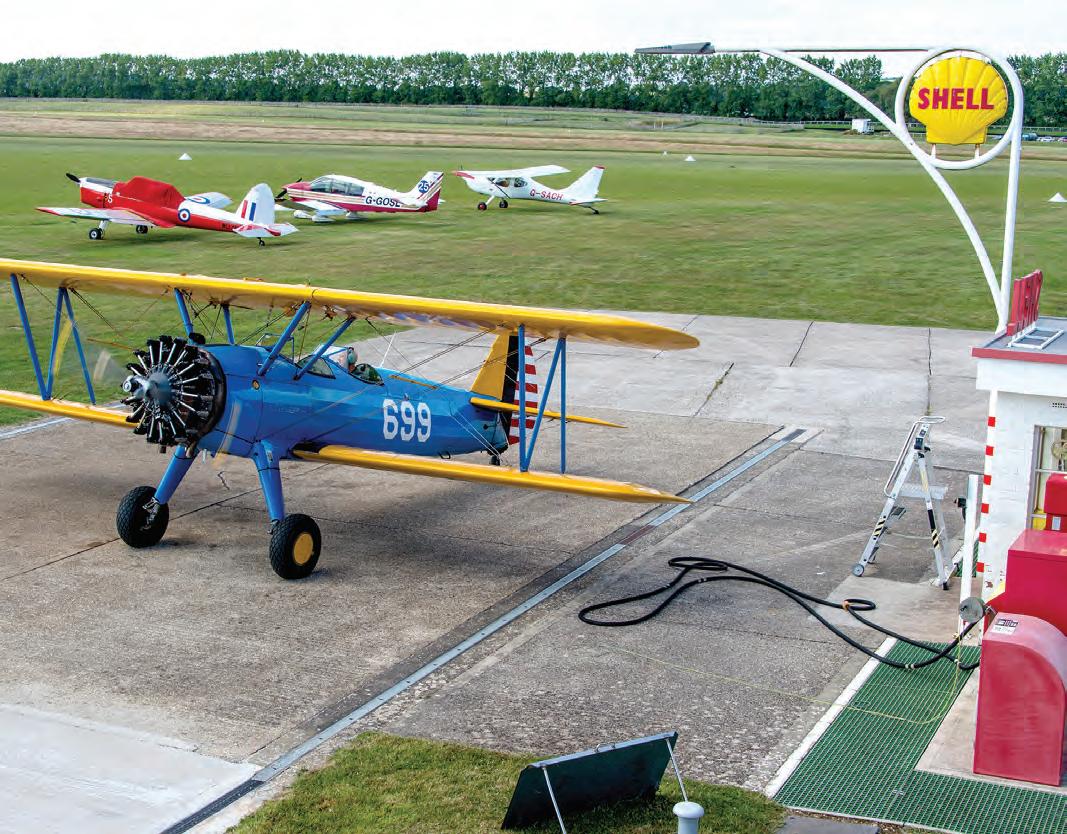
Aviation fuel – what’s the future post-2025…?
In
the first of a two-part series, Ian Fraser and Ruth Kelly look at the challenges
affecting the future supply of aviation fuel…
As the operators of two high compression Lycoming engines with differing fuel requirements, article authors Ruth and Ian have been looking into the implications of the coming upheaval in the avgas marketplace. These are their findings…
In less than a year, leaded avgas may become more difficult to find in the UK and Europe. The importance of 100LL to many of us is its 100-octane rating. While not yet suffering an outright ban, it is made in Europe, and prohibitive EU legislation is closing in. The toxicity of some of its components, associated health legislation, resultant
Right 100LL pump.
Far right Lycoming Engine plate. Although it says 91, to use unleaded avgas we need to refer to a Lycoming Service instruction which approved UL91 for this engine. Not all engines with such a plate can use unleaded.
shipping difficulties and consequential lack of commercial viability will result in some sources becoming unreliable or drying up completely. It will no longer just be a case of pulling up at the normal 100LL pump and filling up, or planning a touring fuel stop based on the statement on the airfield plate. Airfields are already beginning to experience trouble getting reliable supplies of avgas (both 100LL and UL91).
But if we can’t get it, we can just use mogas can’t we? In some engines and aircraft, maybe, if you can get it, but you really need to understand your engine, its fuel systems requirements, and associated regulations before you even consider that. If you don’t get it right, you could
34 | LIGHT AVIATION | January 2024 Technical
destroy your engine, or worse, your engine could destroy you. Of course, an approved unleaded 100 octane alternative has already been developed in the USA, but will we be able to buy and use it here and in Europe in the near future? That is far from certain. The USA FAA sponsored EAGLE programme (Eliminate Aviation Gasoline Lead Emissions) which aims to get rid of lead in avgas in the USA by 2030, is struggling to generate an open supply chain in the USA despite the enormous market compared to Europe. It will always be ‘America first’ regardless of their moral obligations.
Octane rating, what is it for?
There are two common octane standards in use for spark-ignited internal combustion engines. Research Octane Number (RON), that is the one you see on the garage forecourts in the UK and Motor Octane Number (MON), the one that is used for avgas the world over. They are not just two ways of measuring the same thing, they each have a specific purpose. RON is measuring the engine’s characteristics at low stresses and temperatures, typical of a water-cooled engine, MON at high stress and temperatures more akin to the normal use of an air-cooled aircraft engine. There are often two numbers quoted for MON, e.g. 100/130. The first number (100) refers to the lean (most detonation vulnerable) operation of a normally aspirated engine. This is the value that matters to most of us.
The second number, (130), is the ‘rich’ rating. This relates to its suitability for a supercharged or turbocharged version of the engine. Any approved aircraft engine has a minimum MON fuel octane rating specified for it. Its creators based all their design, operation procedures and safety/reliability calculations on that rating. Sometimes it is inscribed on a plate on the engine or sometimes you may have to dig into documentation to find it.
A fuel’s octane number rates its resistance to an undesirable combustion characteristic called detonation. If detonation occurs it can damage your engine, and if it gets out of control can wreck it. The higher the octane value the less likely a correctly maintained and operated engine is to incur detonation. Ian’s Lycoming O-320 has a minimum octane specification of 91/96 octane (MON) and Ruth’s IO-360, 100/130 octane (MON). If these engines are maintained, operated within their specified guidelines and fuel standards, then there’s no risk of detonation.
“An approved unleaded 100 octane alternative has already been developed in the USA, but will we be able to buy and use it?”

Shell forecourt pump offering ‘99 octane fuel’ but be careful it is not the same octane as avgas, closer to 87-89 MON. Not high enough for many of our engines, plus it now contains ethanol.
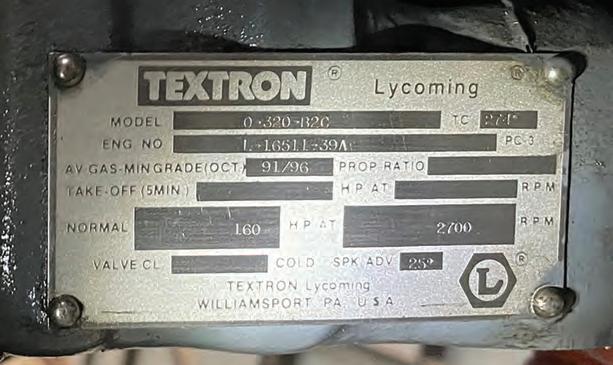
January 2024 | LIGHT AVIATION | 35 Technical
2
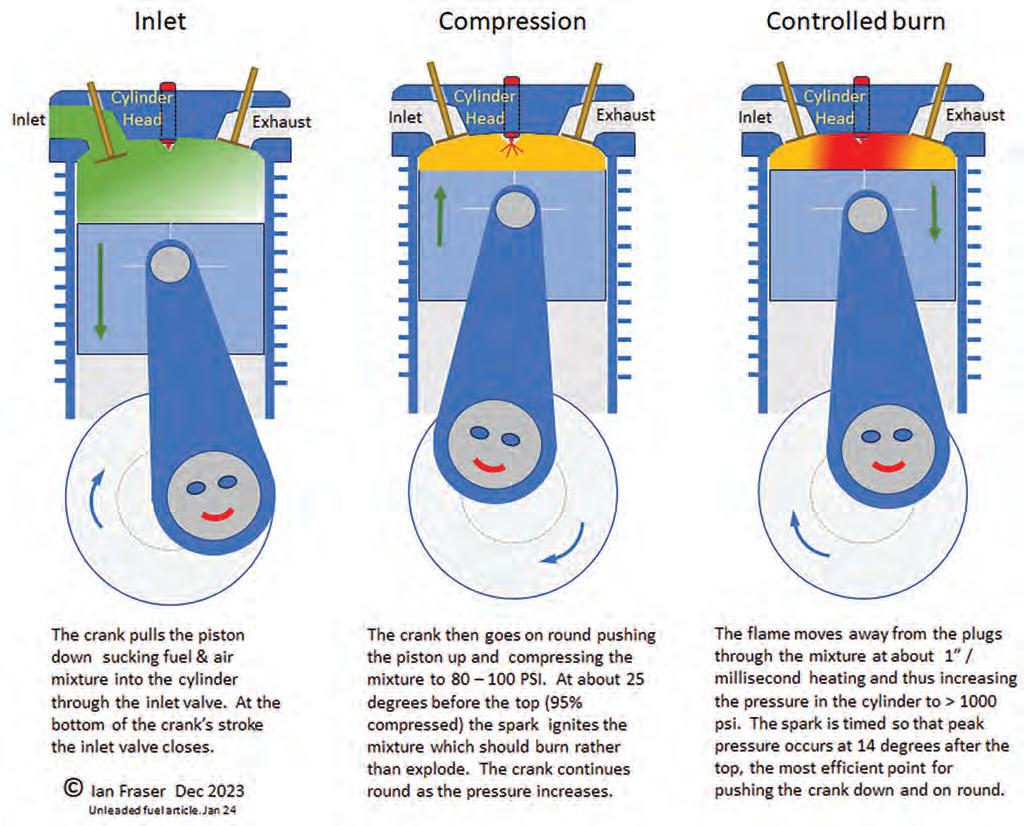
Detonation
Detonation occurs due to too high a pressure and temperature in the cylinder during the fuel burn stage. Having sucked the fuel in, (Diagram 1) a normal modern engine’s compression stroke raises the cylinder pressure to around 100 psi.
Toward the top of the compression stroke the compressed fuel is ignited by the spark, burns rapidly but doesn’t explode and thus expands in a progressive manner raising the pressure to above 1,000psi at its peak. Ideally this peak pressure occurs at 14 degrees after top dead centre and pushes the crank on round.
Engines and fuel octane rating are matched by the designers so that peak pressures and temperatures within the engine will not spontaneously ignite the fuel regardless of how the engine is used. If the fuel and engine are not matched or there is some other fault (timing, cooling etc), as it is compressed and heated by the later stages of the
Above (Diagram 1)
Normal engine operation.
Above right (Diagram 2)
Detonation and pre-ignition.
“Engines and fuel octane rating are matched so that peak pressures and temperatures within the engine will not spontaneously ignite the fuel”
fuel burn then, rather than continue with its progressive burn, unburned fuel mixture not yet reached by the flame can spontaneously explode or ‘detonate’ (Diagram 2). This ‘explosion’ produces a peak of pressure before the optimum 14 degree sweet spot, is less efficient as a result and makes less power and more heat. The explosion causes a mechanical resonance which can sometimes be heard as a knock or ping. The extra heat from the early and inefficient peak will heat the top of the engine, and the next charge will be hotter and may detonate slightly earlier, becoming still less efficient, producing more heat and less power and so on. If left to follow this cycle some engine components – typically exhaust valves and spark plugs – or residual carbon or lead deposits in the cylinder may become red hot and become a new source of ignition, which can lead to pre-ignition, where combustion starts before the spark.
Pre-ignition can ignite the fuel long before top dead centre and may even force the piston to try to rotate the crank the wrong way. Once pre-ignition takes over the engine will rapidly self-destruct, typically destroying pistons. Extreme detonation problems can cause rapid deterioration but more normally the deterioration caused by detonation is gradual and if spotted early can be mitigated before it does too much damage. The onset of detonation can be spotted by the pinging or knocking sound if your exhaust isn’t too noisy, maybe rough running or on instruments by an abnormal increase in CHT and
Technical 36 | LIGHT AVIATION | January 2024
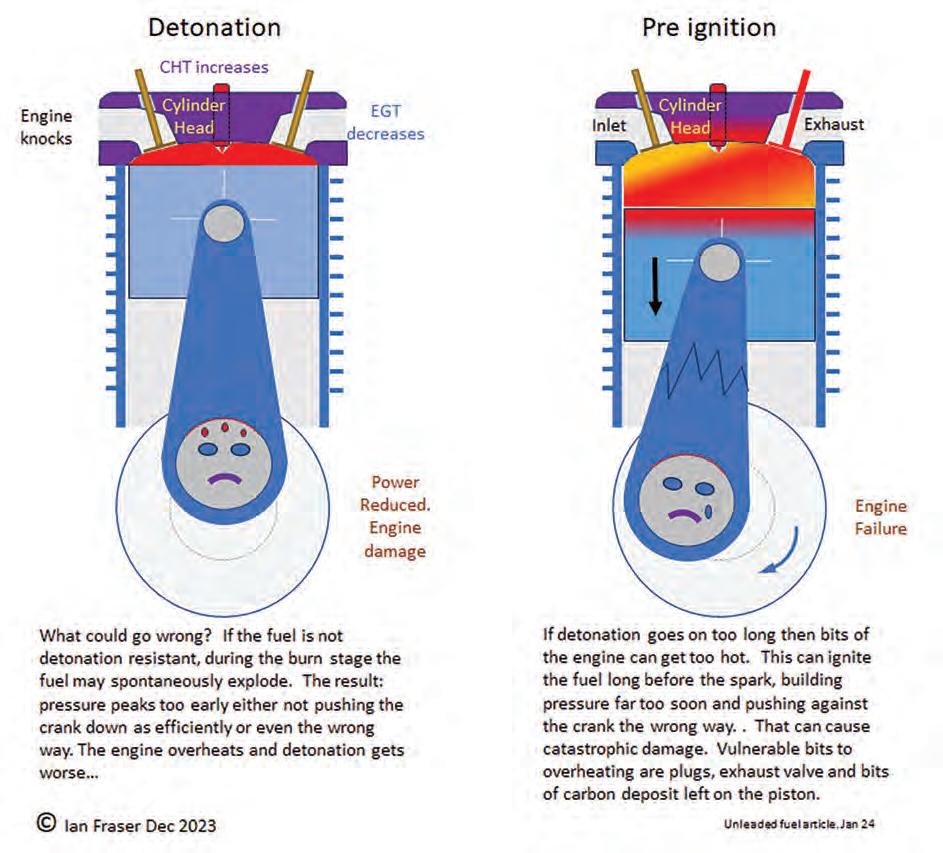
possibly a lower EGT. If this trend is spotted the problem needs to be resolved urgently. We will discuss this in more depth in Aviation Fuel: Part 2.
The use of fuels with an octane rating lower than that for which the engine is designed increase the risk of detonation.
What fuels are available to us at the moment?
Avgas 100LL
The ‘standard’ aeroplane leaded fuel approved to ASTM Standard D910. Its lean octane rating is 100 MON. Chemically it is very tightly controlled with no added ethanol or other components that aggravate vapour lock. Unlike car fuel, no seasonal additives are added that may deteriorate so it has a long life. It is compatible with most aircraft engines although the excess lead can damage some modern engines whose water-cooled cylinder heads do not run hot enough to disperse it.
● Its significant additives are TetraEthyl Lead (TEL) and ethylene di-bromide.
● TEL is an octane booster (about .5g/l in 100LL). Using it reduces vulnerability to detonation, but lead oxide is produced following combustion. It is corrosive, damaging and contaminates the oil. There is little evidence of its folklore benefit role in valve seat lubrication. TEL is a poisonous chemical that has caused many deaths and ailments. Its manufacture,
transport and use are now heavily safety legislated.
● Ethyl di-bromide is added to mitigate the lead oxide contamination of the engine. Unfortunately for our health it is also a carcinogen. With leaded fuel it is essential to stop lead oxide contamination of the plugs, exhaust valves and piston rings if we want our engines to run for more than a few hours. Adding it to leaded fuel disperses the lead oxide waste during burn, which then goes out of the exhaust into the atmosphere as a fine powder. This process only works if the engine is hot enough so it is important to keep engines running leaded fuels in their designed heat range (no pottering around a low revs). If you don’t keep it hot you will find lead all over your engine, eventually shorting out the plugs as well as other contamination (evidenced by the lumps of lead oxide often found in bottom plugs).
● The exhaust emissions from leaded fuel engines are well known as a neurotoxin, whose emission from cars in the 20th century resulted in the worldwide ban of leaded fuels in automotive applications from 2000 onward.
● EU legislation and the US Environmental Protection Agency have sealed its fate, 100LL is on the way out.
● 100LL fuel is mandated for a few high compression, supercharged or performance engines such as the angle valve Lycoming 200hp but most others can use UL91.
January 2024 | LIGHT AVIATION | 37 Technical
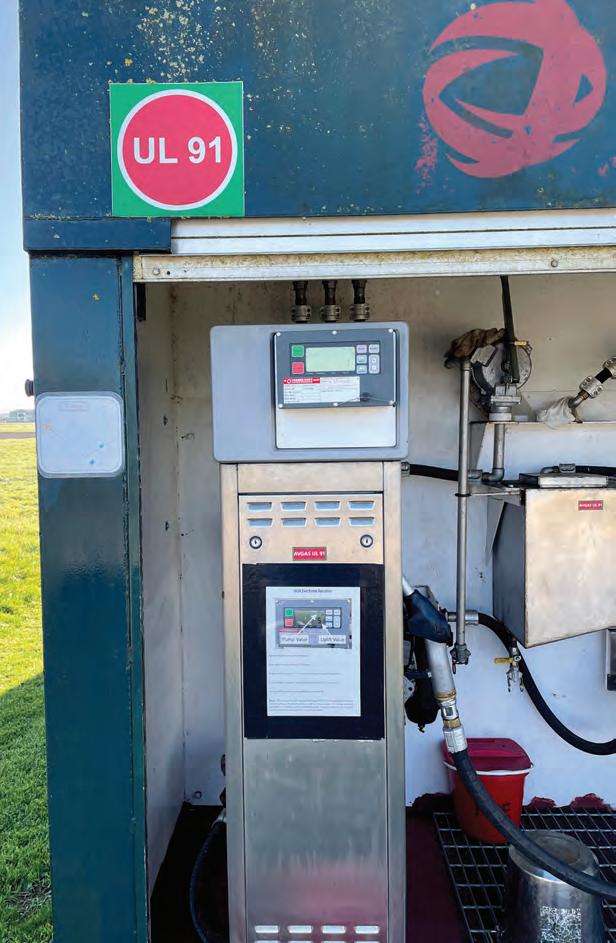
Avgas UL91 Another ASTM approved (D7547) aviation fuel. It was developed as an alternative to 100LL to mitigate the low temperature lead contamination problem on the smaller, cooler engine ultralight market. With an octane rating 91 MON, it has been evaluated by Lycoming, Continental and Rotax and approved for many of their 4-cylinder engines. It is 100LL without TEL and ethyl di-bromide, so no lead emissions.
● Specifically approved in UK via CAP-427 section GC7 & AAN LAA-999-413 for 95% of UK permit to fly aircraft engines.
● No ethanol or other seasonal / proprietary additions so no car fuel vapour lock or shelf-life issues.
Above UL91 pump. Its suppliers have had transport problems resulting in supply difficulties. They need to invest to resolve them. If it doesn’t get used to a commercially viable level such pumps too will become a rare facility.
“Mogas can still be purchased from distributors without ethanol and other additives… that is, if quantities are large enough – for example, a tanker load”
● Unfortunately, only a fraction of the aircraft that could use it do use it. Our local airfield still sells more 100LL than UL91 yet only a small minority need it. It is important that we and the LAA address this before UL91 is discontinued on commercial grounds.
● There is no intrinsic power advantage for 100LL over UL91.
● The consensus among users and engineers (worldwide) is that engines that can and do use it show no adverse effects and in fact there are benefits. Plugs do not need cleaning so often; oil lasts longer and you can plod around the sky at lower revs with impunity.
Mogas is defined by the aero engine manufacturers as the basic motor fuel blend before ethanol, seasonal and brand-specific additives are put in. Its content is not controlled to aviation standards. Its forecourt octane rating (RON) is 92 (regular) 98/9 (super). Its MON (aviation standard) octane rating is only 85 and 87 respectively. It can still be purchased from distributors without ethanol and other additives if quantities are large enough e.g. a tanker load. It is also approved by Lycoming for some of its engines via SI 1070AB, but:
● In ethanol-free or E5 form its use was allowed in aircraft under CAA general concessions (GCs 2-5) in CAP 747. However, these concessions were superseded by GC 7 which removed all previous concessions replacing mogas with UL91.
● Regardless of what the engine manufacturer’s spec says, and with the exception of microlights. the ethanol content of current UK forecourt pump fuel prohibits its use in aviation.
● Despite claims, octane boosting or lead replacement additives don’t shift the octane rating by very much (typically < 1 point MON) and are not approved for use in aircraft.
GAMI G100UL and Swift 100R are 100 octane (MON) unleaded aviation fuels recently developed in USA. They are compatible with but not approved to ASTM D910 or D7547.
● G100UL has been approved in USA for use in most aircraft engines as a drop-in replacement for 100LL through the FAA’s STC (Supplementary Type Certificate) system. 100R will probably follow in the near future.
● Curiously FAA have granted a Fleet Wide STC for G100UL which includes aircraft such as RVs which do not have a Type Certificate to supplement! In short, the FAA have turned their modification regulatory system on its head to accommodate fleet wide introduction of unleaded 100 MON aviation fuel. Our (UK) aviation administrators tend to suggest G100UL will be the solution for us but if so, they need to do the same thing or LAA Permit Aircraft will not be able to use it.
● If we do go this way, we will also need to pay the STC owners (GAMI and Swift) their fee for that STC certificate and sticker. That will be around £400 for an IO-360.
● Is it available yet? GAMI is not a manufacturing or
38 | LIGHT AVIATION | January 2024 Technical
distribution company and only has pilot plant facilities. There is no bulk manufacturing / blending capability anywhere yet and our information is that G100UL is only publicly available at a few publicity-critical Californian airports.
● Swift is a petrochemical company and existing aircraft fuel supplier but is behind GAMI’s timescale.
Phillips petroleum (JET in Europe) and LyondellBasel a US petrochemical company with motor racing fuel connections (VP) are also involved in EAGLE but further behind. They were following another US initiative known as PAFI (Piston Aviation Fuels Initiative). They are going straight for ASTM approval (D7960?) of their fuel which they suggest could achieved by 2024. ASTM approval permits a more traditional supply route (no STC required) but they still need to put blending plant, infrastructure, and distribution in place.
The USA has four irons in the fire and FAA backed promises of continuity. As for Europe…
What next?
The use of lead can harm people, so 100LL will go sooner rather than later. Current EU legislation bans the transport of TEL from 2025, and on October 23 the US Environmental Protection Agency formally declared 100LL to be ‘a hazardous substance’ triggering a US federal legal process which will remove it from use in the relatively near future. 100LL is dead. When our aviation administrators’ are questioned about what is happening to 100LL in the UK the normal answer is ‘they (whoever ‘they’ are) will not allow it to vanish’ and “There may be derogations (delays) on the ban of TEL and the warbird community and training organisations won’t let it vanish.” We are not so confident. We need to proactively make something happen in Europe as the FAA has in USA, not just hope for the best.
Mandatory aviation procedure currently forbids the use of non-approved fuels and there are no obvious alternatives in the UK on the immediate horizon for those who currently must use leaded fuel.
There are also commercial viability risks with UL91. If those who could don’t start using UL91, it too could vanish from the UK, which would be catastrophic for our whole aviation community. If we can’t get 100LL or UL91 as appropriate, legally we can’t fly! Unfortunately, we can find little evidence of any of our European aviation administrative agencies (CAA and EASA) taking much proactive interest in the problem.
The USA’s FAA’s EAGLE (Eliminate Aviation Gasoline Lead Emissions) initiative is a breath of fresh air which shows that at least its aviation community’s interests in the problem are being managed by their authorities. That initiative is overseeing the development of unleaded 100 octane supply with a target of ensuring that it is available throughout the USA by 2030. Importantly in the context of this article, the transition from leaded to unleaded operation is also within its scope. One of its tasks requires it to ensure that during the transition 100LL is available to those who need it.
Another is looking at operation of existing (leaded) aircraft engines on unleaded fuels. Within that latter task it
Below A snippet from GAMI’s model list approval for the use of G100UL.
Bottom A GAMI STC fuel filler sticker on a Van’s RV-14. In the USA you can only fill with G100UL if you have the sticker. How would it work in the UK?
is considering minor modifications and procedural changes. But, much of what EAGLE does will not resolve the UK problem. We need a similar initiative in the UK now and it needs to regularly inform us of its progress.
Enough of the negative vibes. During research for this article, it was noted (by the LAA) that during WWII Spitfires, whose normal operational fuel requirement was avgas 100/150 (heavily leaded), were delivered using 85 or 87 octane fuel (or whatever they could get) with operational limitations but no apparent engine damage.
This led us to looking into the development history of aircraft engines, why leaded fuel was developed and what impacts its use or lack of use had on the engines.
In Aviation Fuel: Part 2, we will look at the wartime history of aviation engines to see what lessons could be learned from history on managing the use of the ‘wrong’ fuel.
We think that there are valuable lessons which could be applied to the transition if we lose leaded fuels while we wait for 100UL. ■
Technical January 2024 | LIGHT AVIATION | 39
Coaching Corner…
Where there’s smoke there’s fire?
Fire in flight is a situation we all fear as pilots, so it’s for that reason PCS Head of Training David Cockburn suggests being ready with actions should you smell smoke
In the 60 years since I first handled the controls of an aeroplane, I have been extremely fortunate. Even though, for almost half that time, I was flying military aircraft, I have never experienced a really serious problem in the air. Minor ones, yes, but the only major failure I experienced, an explosive engine failure in a Canberra, happened while I was still on the runway during take-off with enough runway remaining to bring the aircraft safely to a halt. However, I did experience several minor problems, which on reflection could well have developed into something much worse. One of the more recent events (pre-covid) has suggested the topic for this article.
I had taken off with a student in a light aeroplane, and during the climb we both smelt fumes in the cockpit. I suppose the smell could have been described as ‘acrid’, but I had experienced a similar smell when the wiring of my model electric railway had overheated. Something was burning, or at least starting to. Was that smoke coming from beneath the instrument panel, or somewhere else in the aircraft?
Fire in the air, although a pretty rare occurrence, is probably a light aeroplane pilot’s biggest fear. Its potential consequences can be the stuff of nightmares if we allow ourselves to think too deeply about them, so it is important to prevent these consequences and take the correct actions without delay. However, the actions required in the event of fire in the air are not the same as those we should take in a building, with which many of us will be familiar. We cannot ‘leave the scene of the fire immediately’ and to ‘call the fire brigade’ would be rather ineffective as an initial action. We therefore have to take other actions which the fire brigade would probably frown upon in a domestic or work environment.
Fire prevention officers teach us that a fire needs three components to exist; heat, oxygen, and fuel – and a
“Dealing with an emergency has to be a balancing act between carrying out pre-considered actions, and considering if these actions are appropriate to a particular situation”
fourth, a source of ignition, to start it. Heat can be reduced by cooling, but in the air there is limited cooling available, other than the flow of air past the airframe. Unfortunately, that flow of air contains a lot of the oxygen which the fire uses to support itself. All we can really sensibly do is reduce the amount of whatever fuel is feeding the fire while removing any source of ignition. That is why, in the case of an engine fire, the most important action is to turn off the fuel supply, so it is worth practicing that on the ground. Pulling the mixture control to idle cut-off is probably one of the earliest actions recommended in the POH, and may stop a fire more quickly as that’s acting at a location at the furthest forward location in the fuel system. It is also sensible to close all other valves in the fuel system, and switch off any fuel pump, and the engine ignition – all of these reduce the risk of the fire re-starting.
Forced landing…
Of course, turning off the fuel supply will also stop the engine, and we are warned not to attempt to restart an engine after an engine fire. A stopped engine means that the aircraft is committed to a descent and forced landing, and some pilots who have experienced a fire immediately after take-off have decided to allow the fire to burn for enough time for them to reach a safe landing area. While such a decision may have been commendable in a very few particular circumstances, it is not recommended unless it has been considered beforehand and an immediate descent would probably be fatal, in which specific case the pre-take-off emergencies brief should include it.
However, I contend that most fires which start in light aircraft are not fuelled by aviation gasoline, nor do they start in the engine bay. As with my recent experience, I believe the most common cause of a fire lies in the electrical system within the cabin.
Chafed wiring can often allow a short-circuit to develop, which provides heat and forms the initial ignition source. In this case, the insulation around the wire is the initial source of fuel, and although it can be expected to burn away and exhaust itself quickly, it can provide a path to other sources of flammable material, which unlike aviation gasoline may not be easily switched off.
Removing the electrical current will not only remove the ignition source but reduce heat, and as the wiring insulation cools and stops burning, the fire will be unable to obtain sufficient fuel to sustain itself. The most efficient
Coaching Corner 40 | LIGHT AVIATION | January 2024
way to remove the electrical current is to switch off the master switch(es). All individual electrical switches should then be switched off, so that if power is required after the fire is extinguished, the master switch can be reselected safely in order to provide whatever essential individual service we need, while being ready to switch it back off again immediately if that proves to have been the source of our fire. Meanwhile, we should carry out other actions such as releasing the fire extinguisher (if there is one) from its mounting, in case the fire gets worse. Smoke in the cockpit could well be hazardous to the occupants, so once it is certain that an increased airflow in the cabin will not feed the fire nor reduce the effectiveness of the extinguisher, DV panels should be opened. One thing that’s worth looking at is your source of cabin air. Some aircraft take air from the baffles, so you wouldn’t want to use that if there was a fire.
I often fly from an aerodrome inside controlled airspace. Had the smell occurred there, it would have been important to inform ATC before switching off the master switch, so that other aircraft could be kept clear of us. A quick call ‘Pan-Pan, Pan-Pan, Pan-Pan, G-ABCD, cockpit fire, losing comms’ for example, would have been sufficient before immediately switching off. Subsequently we could explain and get navigational or other assistance to land safely. In our case, as hoped (and expected) the burning smell went away shortly after that initial action of switching off the master switches. Having switched off all individual services, re-selecting the radio allowed us to inform our base airfield that we were returning, and wished to land and have the fault investigated. No further smoke was seen or smelt, and the fault was found subsequently to have been a short-circuit in the anti-collision light switch.
Avoiding preconceptions
The two fires described require totally different actions to minimise danger, and I should hope that readers would not be confused between the two emergencies and the actions required. However, while teaching, and indeed occasionally while examining, pilots for their PPL Skill Test, I have suggested to the student a simulated situation where smoke is seen coming from below the instrument panel. It concerns me that almost without exception they have immediately taken the actions for an engine fire without considering the possibility (and indeed likelihood) of an electrical fire within the cockpit itself.
Part of the problem, of course, is that they had practiced forced landing situations and expected to be presented with one during the test. Human factors teach us to beware of preconceptions, but we are also advised to consider threat management and pre-brief possible emergencies. Dealing with an emergency, even one so time-critical as a suspected fire, has to be a balancing act between carrying out pre-considered actions, and considering whether these actions are actually appropriate in this particular situation.
A senior CAA examiner friend of mine produced a suggested training package some time ago for pilots to handle emergencies in the air, and his advice remains valid to this day. While as a training package it includes a considerable amount of detail, the basic actions are:
● Maintain Aircraft Control
● Analyse the Situation
● Take the Proper Action
● Tell Someone
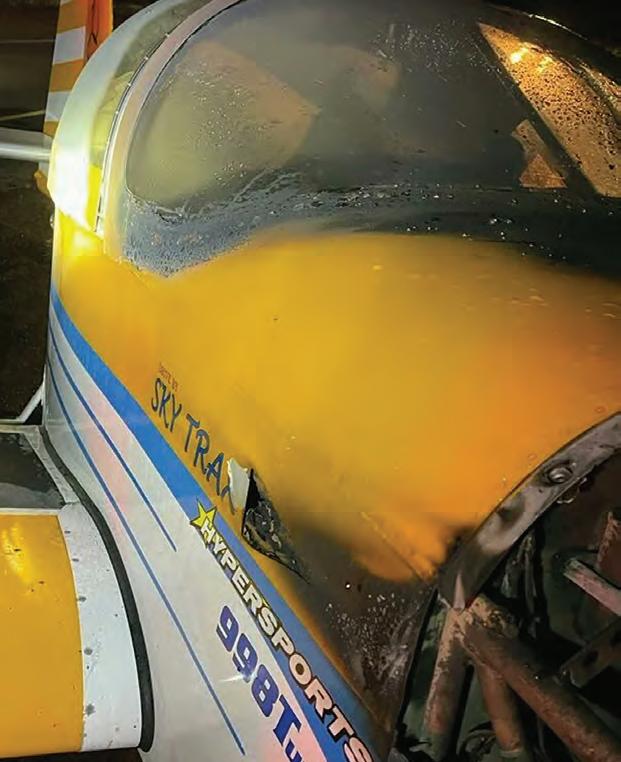
Above Are you prepared for the chance of a fire?
Interesting to note, in this incident, how the fire has torched past the cowling join and been sucked straight into the NACA duct for the cabin air vent.
We try to counter the adverse consequences of the ‘Startle Effect’ by rehearsing, for example, our actions in the event of an engine failure in the critical phases of take-off. It might be a good idea to restrict such rehearsal to the first priority action – maintaining control – and then remind ourselves to analyse the situation before making any switch selections.
Human factors and Electronic Conspicuity Devices
The CAA has published a study carried out by GASCo and Jarvis Bagshaw, on how human factors affect the use of Electronic Conspicuity (EC). The report, and particularly the video that has been produced, are both excellent and thought provoking, and I strongly recommend them to every GA pilot. tinyurl.com/HumanfactorsandEC and tinyurl.com/HumanfactorsandECreport. ■
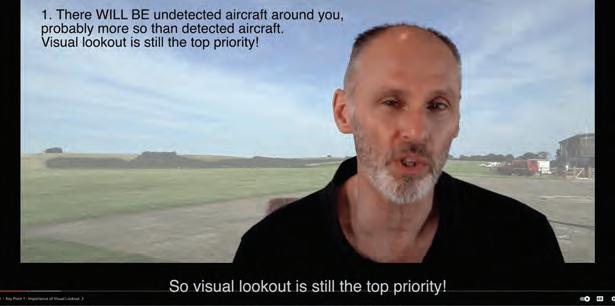
Above Watch the CAA EC video at tinyurl.com/CAAECHumanfactorsvideo
January 2024 | LIGHT AVIATION | 41 Coaching Corner
Vansairforce.com
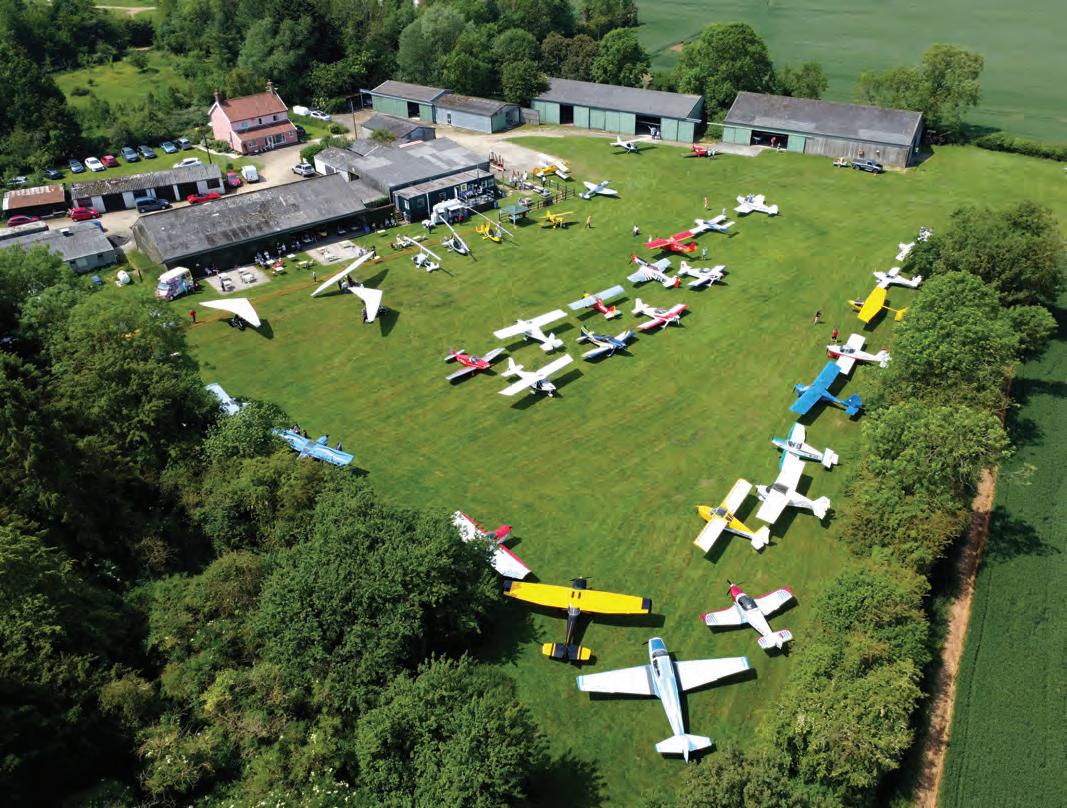
Struts 4U
Andrew Caldecott rounds up Struts news and views
Happy new year! It’s amazing how time flies.
Thank you to everyone for the calendar information which has started to filter through on a regular basis.
It’s great to see the variety and quality of guest speakers who provide the presentations every month.
The dates for events are also beginning to be set, some traditional and other’s new additions.
The YES project, ‘2024 In ’24’, is developing – encouraging youngsters to experience a flight any time during 2024.
As outlined previously, the plan is for July to be the ‘main’ month, and YES hopes that as many people as possible will get involved.
This YES initiative is looking for all Strut’s, LAA members, Clubs and Type

Groups to allow 2024 youngsters to experience a flight any time during ’24. Historically YES has always been encouraging youngsters to fly – the Young Aviators of the Future. Involving any projects from pedal planes, airfield visits, Airfix kit building days – all these might just plant the seed in the mind of a future flyer, LAA member, Strut member, aeroplane builder or future engineer.
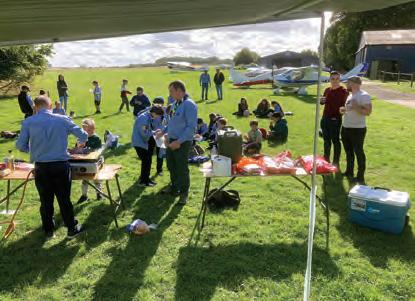
For many 2024 will be an anniversary year. Whether this is a
Top Flashback to a fabulous Priory Farm fly-in June.
Left YES has big plans to encourage youngsters to fly in 2024.
Richard E Flagg www.ukairfields.org.uk 42 | LIGHT AVIATION | January 2024 LAA Strut News

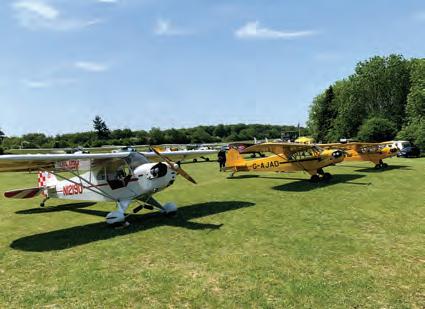
Above Vintage Pipers gather at Popham in 2023. The VPAC will celebrate its 40th anniversary in 2024!
Below Vintage Pipers will return to Sleap in May 2024.
personal milestone or aviation-related, please remember Struts4U is a great place to highlight any celebrations and events which you have planned, and to share stories and photos from events that have taken place. The Vintage Piper Club celebrates 40 years (founded 1984) and it has a full calendar of activities planned. It is a very ,welcoming group (always looking for new members – not necessarily Piper owners) and, if previous events are anything to go by, its ‘special year’ will be very memorable. VPAC committee member Charlie Monsell sent me the following update.
“2024 sees the 40th anniversary of the founding of VPAC and this will be commemorated at Sywell June 2024. Our programme for next year has these firm dates, although there could be some ‘tinkering’ with the May event. 20 Apr: Sleap, 25 May: Perth, 8 June: Sywell (VPAC 40th Anniversary), 6 July: Cromer, 10 August: Oaksey Park, 14 September: Leicester.”
Organising events and keeping the high standard of Strut activities takes time and expertise. As we all progress in our ‘senior years’, having back-up, extra hands, new chair-persons, requires people to stand up and volunteer. Are you able to assist – in any way please?
Within your own Strut, do you have any skills that you can help the committee? Could you ‘Buddy Up’ with the secretary, treasurer, event organiser to take some of the workload? Maybe being able to ‘take-over’ if circumstances demand. Please speak to your Strut leaders to see if you can help.
If you have anything you wish to include in Struts4U, please contact me at acss@gmx.com ■
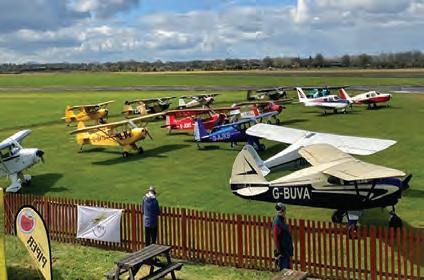
Strut Calendar
Please contact your local Strut to check the details before attending the calendar events.
Andover Strut: Jan 8 AGM & Members Evening, Feb 12 Supermarine Seaplane build project with Will Hosie. Spitfire Club, Popham Airfield, SO21 3BD. Contact Bob Howarth email: bobhowarth99@ btinternet.com Phone no. 01980 611124
Bristol Strut: Contact: chairman@ bristolstrut.uk www.bristolstrut.uk
Cornwall Strut: The Clubhouse, Bodmin Airfield. Contact Pete White pete@aeronca.co.uk 01752 406660
Devon Strut: The Exeter Court Hotel, Kennford, Exeter. 5-6 August – Fly-Out to Dunkeswell. Contact: david.millin@ sea-sea.com
East of Scotland Strut: Harrow Hotel, Dalkeith. 2000. Contact: Tim Raynor hipe@btinternet.com
East Midlands Strut: Meeting on the first Tuesday of the month on Zoom until further notice due to venue availability. 9 Jan Quiz night. Contact: tonyrazzell2@gmail.com We also have a Facebook group and upload recordings of some meetings where we have speakers.
Gloster Strut: 9 Jan Strut AGM followed by a presentation by Rich Goodwin on his Jet Pitts. Contact: Mike Waldron info@ carouselgolfing.com
Highlands & Islands: Contact: b.w.spence@btinternet.com 01381 620535.
Kent Strut: Contact: Steve Hoskins hoskinsltd@outlook.com 07768 984507.
LiNSY Trent Valley Strut: Trent Valley Gliding Club, Kirton Lindsey. pilotbarry1951@gmail.com http:// linsystrut.wixsite.com/website
North East Strut: There are no meetings at present, but if you would like to help to get the NES operational again please get in touch with the Strut Coordinator, David Millin. david.millin@ sea-sea.com

North Western Strut: The Clubhouse, Boysnope. 1400. Third Thursday each month. Contact: cliffmort@btinternet. com 07813 497427.
North Wales Strut: Caernarfon Airport, Dinas Dinlle. First Sunday of the month – HEMS Bistro Café. 1300. Contact: Gareth Roberts gtrwales@gmail.com 07876 483414.
Oxford Group: Sturdy’s Castle Country Inn, Banbury Road, Kidlington, OX5 3EP. Second Wednesday each month. Contact LAAOxford@gmail.com www.oxfordlaa.co.uk
Redhill Strut: The Castle, Millers Lane, Outwood, Redhill, Surrey, RH1 5QB. Pub contact: 01342 844491. Third
Tuesday of each month, meet at 1900-1930. Contact: david@milstead. me.uk
Shobdon Strut: Hotspur Café, Shobdon Airfield, Hereford HR6 9NR. 1930. Second Thursday of the month. Contact: Keith Taylor bushebiggles@ sky.com
Southern Strut: ‘Longshore’, Brighton Rd, Shoreham-by-Sea BN43 5LD. First Wednesday of the month 1930 for 2000. Contact palmersfarm@sky.com
Strathtay Strut: Scottish Aero Club, Perth Airport, Scone. Scone Clubhouse. Contact: keith.boardman@ peopleserve.co.uk 07785 244146.
Suffolk Coastal Strut: 17Jan: Group Captain Tom Eeles talks about the Folland Gnat.
Earl Stonham Village Hall, IP14 5HJ. www.suffolkcoastalstrut.org.uk/flyin/ Contact: Martyn Steggalls events@ suffolkcoastalstrut.org.uk 07790 925142
The Joystick Club: 7 Jan. Bicester Scramble from 0800 taking Pedal Planes and Tomahawk.
Jan 22 1930 Talk by WgCdr Rtd
Graham Perry. “Some RAF characters from the Cold War era”. Contact: Mike Clews m.clews@sky.com. 07775 847914. www.joystickclub.co.uk
Vale of York Strut: Chocks Away Café, Rufforth East Airfield. 1900.
Contact: Chris Holliday 07860 787801 valeofyorkstrutlaa@gmail.com www. valeofyorkstrutlaa.wordpress.com
Wessex Strut: Henstridge Airfield Clubhouse. August: Monthly summer BBQs and activities. See www. wessexstrut.org.uk for updates. Local fortnightly Strut walks organised by Wessex Aviators Leisure Klub. Contact: neil.wilson@laa.uk.com
West Midlands Strut: There are no meetings at present but if you would like to help to get the WMS operational again please get in touch with the Strut Coordinator, David Millin. david.millin@ sea-sea.com
West of Scotland Strut: Various locations in the Greater Glasgow area.
Contact: Graeme Park graemepark01@gmail.com
Youth & Education Support (YES)
Contact: Stewart Luck captainluck@ hotmail.com (Contact 07974188395 to volunteer.)
• A copy of the Struts Handbook, issued in pdf format to celebrate the LAA 75th birthday, can be found on the LAA website.
• Please contact your local Strut to check the details before attending the calendar events.
January 2024 | LIGHT AVIATION | 43
LAA Strut News
The latest LAA Engineering topics and investigations. Compiled by Nick Stone
Engineering Matters
This issue, our new Head of Airworthiness, Nick Stone, looks at fabric covering and how covered surfaces age
Welcome to Engineering Matters – the section of Light Aviation that is dedicated to discussing all manner of topics concerning both technical and operational aspects of the LAA fleet. We all learn by sharing information, so if you have anything to
say that you think would benefit others, or have experienced an interesting technical issue or component failure, then please contact us with a description of what you encountered and include accompanying pictures. Send your submissions to LAA Engineering at engineering@laa.uk.com
Evaluation of your ageing fabric-covered aircraft
Pitfalls & positives
The large number of fabric-covered aircraft in the LAA fleet continues to age – and not just vintage aircraft, there are many examples of modern aircraft with fabric coverings. One of the big things that can potentially get overlooked is the condition of your fabric and the type of fabric fitted, as this affects how long it is likely to last. It is important to understand what you are looking for if you intend to buy a fabric-covered aircraft, and to be sure you understand the pitfalls and the positives.
Aircraft have been covered in cloth since the early days of flight.
The materials had to be as light as possible, yet strong enough to withstand the demands of flight. The standard material used in the early days of flight was cotton or Irish linen, the majority of which was produced in linen mills throughout Northern Ireland. Early Edwardian aircraft typically had wooden wings and fuselage sections, including, in some cases, the use of bamboo. As the construction of aircraft developed through trial and error there was a shift to steel tubing used in the fuselage, and aluminium spars. On many WWII aircraft just the flight controls were fabric covered.
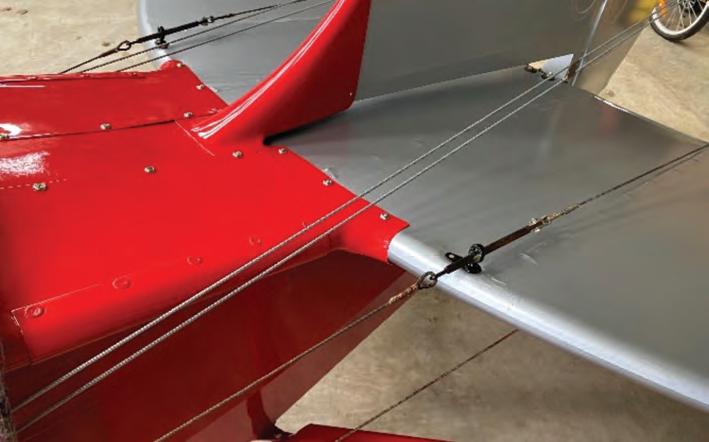
Moving forward in the modern world with new man-made fabrics, the use of cotton or linen cloth is rarely used, other than by vintage aircraft owners who demand authenticity during restoration.
One of the major drawbacks of Irish linen is its potential life span. Once fitted, it can start to decline after 10 years or earlier. Storage conditions must be taken into account, as well as maintenance, plus the quality of the original installation. Another factor to consider is that original linen covering materials are not commonly used nowadays, which makes the material more expensive due to lack of demand. If you want to retain the authenticity of Irish linen, then you should also consider the diminishing skills base of those who can apply it.
Engineering Matters 44 | LIGHT AVIATION | January 2024
Above Tiger Moth tail section after restoration.
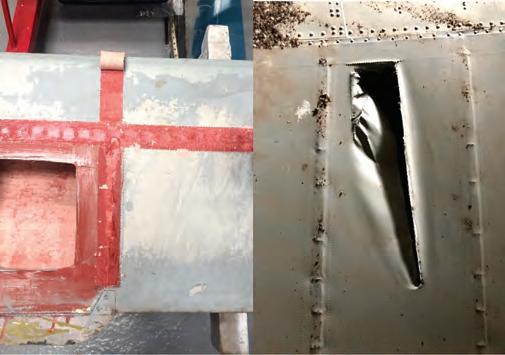
Cotton, linen and synthetics…
Thanks to the materials and processes used, synthetic fabric coverings can last for at least 25 years, and considerably longer if the aircraft is stored in a good environment and maintained on a regular basis to monitor any degradation.
Synthetic materials and associated application processes not only reduce the amount of labour required, but also provide longer life by providing resistance to rot and fungus, and can be safer in the case of fire (both during material application, and while in flight). Polyester cloth specific to aviation applications is almost exclusively used in the re-covering (or initial covering) of an aircraft today. Fibreglass cloth (Razorback) has been used as well, but is not in common use, and rare in the UK (other than on imports).
The most important difference between newer synthetic materials and the original cotton and linen cloth is the fact that cotton is more difficult to work with. In addition, cotton is subject to attacks by fungus, mildew, chemicals (such as acid rain) and is susceptible to damage from rodents and UV sunlight. While synthetic fabric is deteriorated by sunlight too, it has better resistance to the effects of ultraviolet light, provided that a UV-blocker layer is included in the finishing system. During the doping process, undercoats of silver pigmented dope are used to act as a UV-blocker. Similarly, the Poly-fiber system uses polyspray (vinyl based) UV protection as part of its process.
Synthetic fabric is also more resistant to fungal attack, and while it can be damaged by chemicals, it is more resistant to damage than cotton. When cotton fabric is used, the compatible nitrocellulose dopes used to stiffen and tighten the fabric in the re-covering process are highly flammable. Nitrate-based dope is extremely flammable even after it dries, and is seldom used today on Irish linen, but is often used as a base coat on synthetic fabric systems for adhesion, because the less flammable butyrate dope doesn’t adhere well directly to synthetic fabric.
There are several polyester fabric covering system out there:
● Ceconite (also known as the Randolph process) is a dopebased system that uses nitrate and butyrate dopes in its process, developed in the late 1950s and still popular today.
● Diatex A French company that traditionally supplied a dope-based system to the French domestic market, but is also available in the UK.
● Polyfiber being a no-dope system with specially prepared liquid system that’s vinyl based, all this work and research was carried out by Ray Stitts in the early 1960s. This system has the great benefit of being fire resistant and less toxic than dope-based systems.
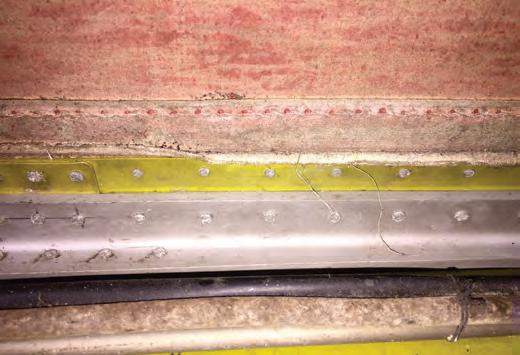
● Stewart System A relative newcomer to the field, coming from Canada, which uses a water-based finishing treatment system to seal the fabric surface, which is both fireproof and non-toxic, and is gradually gaining in popularity in the UK.
All the above have their own processes which must be followed to ensure the quality and integrity of the product being used. It is very important to note that the products must not be intermixed.
A significant factor regarding polyester cloth is that the tautness of the fabric is controlled by heating the fabric with a temperatureregulated device similar to a clothes iron but correctly calibrated. Specific Irons for aircraft are available but are expensive. Accurate temperature control is the key, following the manufacturer’s recommendations – for example :
225°F (107°C) To smooth edges of tapes and patches
250°F ( 121°C) For initial gradual tightening
350°F ( 176°C) Final tightening
Above 350°F (176°C) the fabric will degrade and be permanently loose.
The incorrect application of heat distribution on fabric panels being tightened by iron heat can also distort and potentially damage structure, in particular lightweight wooden structures, where it may be necessary to use a more modest final tautening temperature. Because the fabric is shrunk by heating, non-tautening dope is used in the synthetic process.
The process of working with cotton or linen requires special techniques and skills for a good looking and, more importantly, an airworthy re-cover job. When re-covering an aircraft, the structure has to be carefully inspected after all the fabric has been stripped off and all defects repaired.
This can then be recorded and signed for by an LAA Inspector on your worksheets. If the structure is steel tube it can be primed and protected prior to applying the fabric following an inspection for corrosion and cracks.
The fabric has to be cut and sewn to the shape of the wing or fuselage and cemented or tacked into position. After the fabric is installed and secured to the frame, it’s permanently attached to the wing ribs with a special lacing cord using a designated knot.
The spacing of the rib stitches varies according to the VNE (never exceed) speed of the aircraft and if the area is in the propeller slipstream or not. Some aircraft, like the Cessna 120 and early 140, use screws or fabric clips in place of the rib stitching.
When re-covering an aircraft it’s always a good idea to keep the old fabric that’s been stripped off until the re-cover job is complete, so that such things as the original rib stitching and the positions of control cable exits can be copied.
January 2024 | LIGHT AVIATION | 45 Continued overleaf...
Engineering Matters
Above Examples of damaged and time-expired Irish linen fabric.
Continued from overleaf...
After the rib stitching, the next procedure is the application of cloth tape to cover the stitching, to reinforce the edges of the surfaces and the installation of inspection rings, grommets and patches in various locations to protect the underlying fabric.
Whether of tautening or non-tautening type, the dope is applied to the fabric in several applications initially by brush, rubbing down between coats, and then generally by spray gun, to form an airtight and waterproof bond that also tightens and stiffens the fabric materials, blend in and thoroughly consolidate the tapes and provide a smooth surface ready to take the finishing colour coats. The proper fit of cotton or linen fabric prior to doping is important, as extremely taut fabric caused by multiple applications of dope will shrink and distort or damage the underlying structure requiring removal, repairs and reapplication of the fabric.
Multiple applications of various mixtures of dope are applied generally by spray gun. Mixtures may include dope with silver metallic compounds for resistance to UV light, dope with fungicide for resistance to fungus, and pigmented dope for the final colour applications. Alternatively, the final colour can be applied using one of the many types of aircraft paint systems available.
Proper safety precautions must be followed when applying finishing agents, especially when applying urethane in a spray form as it is
Testing fabric
The initial strength of both synthetic fabric and cotton fabric depends on the weight (thickness) of fabric used – ceconite for example is supplied in different weights to choose from, depending on the class of aircraft involved. A key issue is checking the strength of the fabric in service to determine whether it remains airworthy years after the initial fabric application process has been completed. Fabric is generally considered airworthy until the strength degrades to less than 70 per cent of the original design strength.
The testing specification has always been in reference to the original material with which the aircraft was designed and certified. Aircraft certification under the Air Registration Board (CAA) rules were approved with cotton or linen cloth depending on wing loading and maximum airspeed limitation. For example, aircraft could be certified with grade A cotton, depending on the never exceed speeds and wing
extremely toxic. Air fed mask systems should be used during this process. When spraying dope, at the very least, tight-fitting facemasks incorporating an appropriate filter system should be worn. Air extraction from the spraying area is important, bearing in mind the explosion hazards existing with dope products and their solvents, all of which are very highly inflammable.

loading, and then could be later re-covered with a synthetic fabric of a similar rating. But it is important to note that this needs to be checked prior to a re-cover of an aircraft, particularly historic types where original specifications may not be available to ensure the correct replacement coverings are used.
Testing fabric covering is an area that needs caution. Mechanical devices used to test the fabric by pressing against or piercing the finished fabric are not FAA approved as per AC43.132A (which is used by the LAA for Guidance) – see section 3 inspection and testing item 2-34. It is down to the Inspector to use his experience and judgement to assess the condition of the fabric and if it is fit for purpose during the Permit inspection process.
Many Inspectors, particularly those with years of experience in the field, do this by gently pressing the fabric with their fingers and feeling for the fabric yielding, plus a visual assessment. Alternatively, a number of mechanical testers are available There are various types of testing devices for use on fabrics, whether synthetic or natural fibre which work by either attempting to punch a hole through the fabric or dragging a needle sideways through it. Punch test accuracy is dependent on a few factors which may or may not be known, such as the individual punch device calibration and accuracy, total thickness and brittleness of the fabric finish and the types of coatings and fabric.
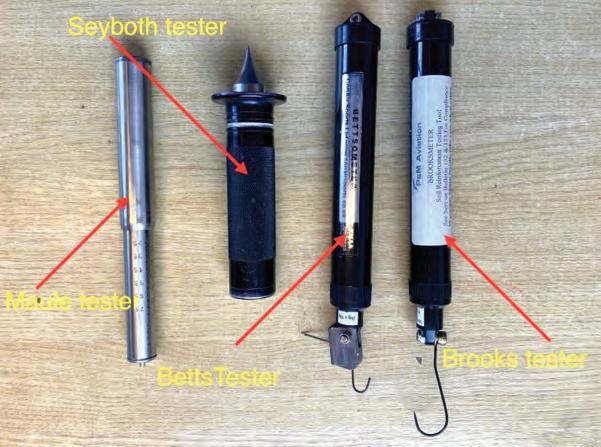
● Fabric testers come in quite a few different forms and carry out a range of different tasks all trying to achieve the same thing, which is to gauge the strength of a fabric covering on an aircraft. The Maule tester is probably the best known of the devices, and can be seen to be quite harsh when it punches a hole in the fabric being tested, so is seldom used. Maule testers are also used to test wing struts of some Piper types for internal corrosion by punching a dimple in the wall of the strut.
Continued overleaf...
46 | LIGHT AVIATION | January 2024 Engineering Matters
Above Example of rib stitching on metal ribs.
Above Selection of fabric testers.
Lucy Wootton: Chief Inspector notes
Updates from the LAA Chief Inspector.
Seven new Inspectors
In December, I ran two Inspector Assessment Days at LAA HQ and, as a result of these, I’m pleased to report we will have seven new Inspectors joining the LAA Inspectorship very soon! They are: Cameron Bunce, Umberto Izzo, Brian Davies, Ian Pattingale, Simon Boynett, Bryn Holt and Daniel Couzens.
Cameron is an engineer based in the north-east of Scotland and is building a Van’s RV-3B. Umberto is an aircraft engineer based near Gatwick and is particularly knowledgeable on Groppo Aircraft. Brian is currently an LAA director and is currently building his third aircraft, a Sling 2, having previously built a Europa and an Alpi Pioneer. Ian is an aircraft engineer and has been a British Gliding Association Inspector for many years, and one of their Regional Technical Officers. Simon Boynett was an aircraft engineer during his working life and has built a Van’s RV-7. Bryn is an aircraft engineer based in Kent and has worked on a large variety of aircraft in his day job, from a Stampe, to a CAP 10B, to a Cessna 182 and an Extra 400. Daniel Couzens is an aircraft engineer based in Lincolnshire, as well as being a qualified CAA welder. The first aircraft he built was an Xair microlight.
Inspector Training Seminars
November 27 saw the second in a series of four Inspector Training Seminars over the 2023/24 autumn/winter/spring period. Eighteen Inspectors attended Aerospace Bristol, at Filton, for a seminar covering the Roles and Responsibilities of Inspectors, Inspector Procedures and Paperwork, Health and Safety, Human Factors, Modifications and Repairs and Current Affairs, which I delivered, with assistance from Andy Draper, our Head of Flight Test and a design engineer. Inspectors have to attend an Inspector Training Seminar (or individually arranged alternative) every four years, as part of their recurrent training to continue as Inspectors.
I also had the privilege of meeting four Inspectors at the Lakeland Motor Museum in Cumbria in December – Ken Atkinson, Geoff Bailey-Woods, Oliver Smith and Roger Savage, for their recurrent training.
Fabric Covering Course
On 28 November, Aircraft Coverings, based at Henstridge Airfield, kindly put on a Fabric Covering Course, which several Inspectors attended. The course included a summary of
different fabric covering systems, followed by a more in-depth look into the Poly-Fiber system.

The morning session was mainly briefings and a tour of several aircraft in the nearby hangars to understand how they had been covered. The afternoon session was practical, including demonstrations of how to repair different types of damage to a fabric-covered component, such as a puncture or a cut, as well as the opportunity for everyone to have a go at part of the fabric-covering process.
A big thank you to Chris and Alex Allen of Aircraft Coverings for their support.
ACAMs
Under our approval from the CAA, the LAA has to conduct a set number of audits, called ACAMs (Aircraft Continuous Airworthiness Monitoring) each year. In November last year I visited Scotland, this December I have been to the Isle of Wight, so they do take me all around the UK!
Engineering Matters January 2024 | LIGHT AVIATION | 47
Above Ian Pattingale, Umberto Izzo, Brian Davies, Cameron Bunce Right Bryn Holt
Above Inspector Training Seminar at Aerospace Bristol. Above (top & bottom) Fabric Covering Course at Aircraft Coverings.
Engineering Matters
Pic 1 Maule mechanical fabric tester.
Pic 2 Seyboth mechanical fabric tester.
Pic 3 Betts tester UK manufactured for Dacron Fabric.
Pic 4 Example of time-expired Irish linen rudder fabric.
Pic 5 Brooks UK manufactured fabric tester.
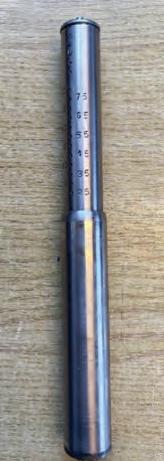
Continued from overleaf...
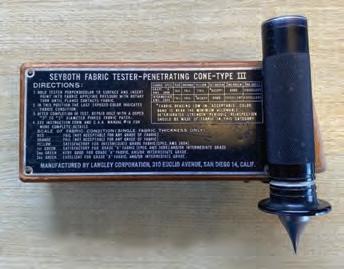
● The Seyboth tester is less well known and is also a puncture tool, so again it can do quite a lot of damage to a potentially serviceable wing fabric if used incorrectly. Pushing down on the device through the fabric, an indicator will appear through the top of the handle giving three colours which indicate pass, fail or acceptable.
● The next is a Betts tester, which is used mainly in the microlight world for testing Dacron strength. In the LAA it is used for three-axis microlights, for example, as per Rans S6 TADS 204b, where a fabric test is carried out on the Dacron fabric skins and stitching up to 1,000g. Any ripping of the skin demonstrates that it has degraded to the point of needing replacing.
● The last of the group is the Brooks tester that tests more exotic microlight fabric skins and stitching.
An aircraft covered with polyester fabric, if it is applied according to the manufacturer’s instructions, properly maintained and kept in a hangar, has the potential to have an almost indefinite life. However, when considering the purchase of any fabric-covered aircraft, it is important to seek an LAA Inspector who is familiar with this type of aircraft and knows what to look for.
As the cost of a complete re-cover job of a tube or wooden constructed aircraft is a considerable investment, and can in some cases be more than the value of the aircraft, it is important to carry out a thorough inspection to be certain of the condition, not only of the fabric, but what lies underneath. This can also be an advantage to a buyer during price negotiations. Under the guidance of a LAA Inspector an aircraft can be re-covered for the cost of the materials, bringing the cost of a re-cover down to an affordable level.
As with most aircraft purchases, it is always good to look for an aircraft that is in excellent condition and pay the asking price, rather than look for the bargain. Prior to asking an LAA Inspector or licenced engineer to do a pre-purchase inspection, there are areas which you can check yourself, just to see if the fabric-covered aircraft is in a condition that you would consider purchasing it.
Keep in mind that vintage tailwheel aircraft potentially could have had a few ground loops, with airframe and / or engine damage and potential major repairs during its lifetime.
On older vintage types, which have been imported from the USA many years ago, their damage history may not have been accurately recorded or may in fact have been lost in time with the original records. What this means for the purchaser is that if repairs are found
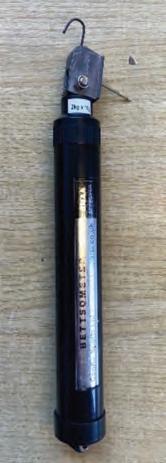
they must be assessed and, if found not to the required standard, a new repair schedule will have to be agreed and implemented to return the aircraft to airworthiness.
The first order of business is to check the aircraft records, including the logbooks and associated documentation, to get an idea of the history of the repairs done to the airframe and engine.
After checking the aircraft records, including compliance with all ADs, it would be wise to make up a written list of items to check on a pre-purchase walkaround. Make notes of anything you have a question about.
Start with the condition of the fabric, and what the finish looks like. Check for cracked and missing paint or dope that would allow sunlight to directly access the fabric. Look for ringworm in the fabric, this indicates that the paint job is failing and potentially cause the cloth to deteriorate in a short time if exposed to direct sunlight. It could also indicate a deviation from the process and a lack of materials being applied during an earlier re-cover.
Check for patches, noting any especially large patch areas – these would require a logbook entry, indicating a potential repair. If there is no logbook entry indicating a repair was made where a large patch is located, be suspicious. There could have been major damage to the airframe structure that was repaired improperly, or not at all.
Wrinkles or sags in the fabric most likely point to structural damage. For example, a dent in the metal leading edge of a wing would cause a sag or wrinkle in the fabric that would be visible from the outside.
● Blisters or rough areas under the fabric along lower longerons are an indication of rust in the steel tubing. Other areas could also have blisters or rough spots, such as the horizontal stabiliser, elevator or rudder; water is often trapped in these areas and eventually causes rust or corrosion.
A fabric-covered aircraft should have sufficient drain holes or grommets installed, not only to allow moisture to escape, but also allow air to circulate and expel any moisture created by condensation.
With the owner’s permission, pull a few inspection panels off from under the wings, especially in the area where the lift struts attach to the spar. Use a torch to take a good look at the wooden spar around the bolt holes, checking for obvious defects such as cracks or splits in the wood.
Move the strut at the upper end and see if there is any evidence of movement between the spar and the lift strut attachment fitting. Whether the spar is wood or metal, any movement is not good and
48 | LIGHT AVIATION | January 2024
1 2 3 4 5
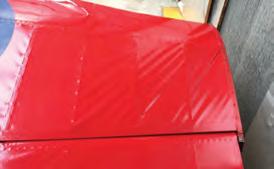
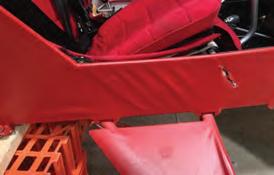
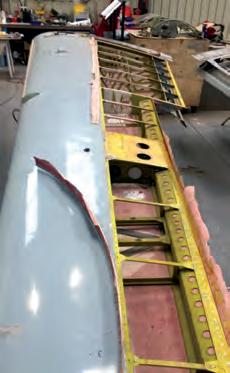
could cause the spar to crack in this location, which would mean an expensive repair or replacement.
While the inspection plates are off, take a look up through the wing. Sunlight is the number-one enemy of fabric, and any daylight showing through the upper wing surface means a reduction in the useful life of the fabric. A very dull indication of light is okay, but if you can see a shadow of a person’s hand blocking the sunlight, then there probably isn’t enough light resistant silver or pigmented dope remaining on the fabric.
While the inspection panels are off, take a look at the rib stitching to see if the lacing cord is intact. Rodents have been known to get into a wing and chew the lacing cords, requiring expensive repairs. Rodents and birds can destroy an aircraft, especially if the structure is compromised by droppings or if drain holes are plugged with debris. Another potential issue with wings and ribs is that of dissimilar metal corrosion when steel clips are used to secure fabric to the individual aluminium wing ribs, such as those used in the fabric covered Cessna 120 and 140 aircraft.
Since tailwheel-equipped aircraft are sometimes involved in ground loops, check the wingtips for damage. Look at the fabric to see that there are no scrapes or tears, and check the wingtip for cracks or damage by looking up and out toward the tip through an inspection hole near the wingtip. If you suspect an aircraft of suffering a serious groundloop, watch out for signs of damage that may have been
LAA Engineering charges
LAA Project Registration
Kit Built Aircraft
Plans Built Aircraft
Initial Permit issue
Up to 450kg
451-999kg
1,000kg and above
Permit Revalidation (can now be paid online via LAA Shop)
Up to 450kg
451-999kg
1,000kg and above
Factory-built gyroplanes* (all weights)
caused at the wing attachments due to the heavy loads that could have been imposed on this area.
Take a look at the lower rudder area and tail post for signs of damage, such as loose fabric, wrinkles or sags, and possibly bent tubing from a hard landing on the tail.
Get up on a stepladder and check the centre section and inboard wing fabric directly in the propeller slipstream. This area sees a lot of vibration and heavy airstream deflection from the propeller, which may induce wear / chafing and weakening of the fabric.
Using a suction cup on the fabric, attempt to pull up on the fabric in this area as a simple test to see if the fabric is weak or insecure, requiring repair or replacement. When evaluating a fabric-covered aircraft, you really need to take enough time to go over the paperwork and the aircraft completely. Repairs to structure or a complete re-cover job are significant tasks; they are expensive, and under the terms of the Permit to Fly system must be supervised by an LAA Inspector.
Replacement of aircraft fabric is a big job because very rarely does it turn out to be a plain re-cover job. Usually there are repairs required along with the preparation involved, such as completely disassembling the fuselage frame and sand blasting the fuselage, inspecting for damage and rust, and applying dope proof primer. Associated woodwork requires proper preparation with cleaning, sanding and application of special dope proof sealer.
● Multiple repairs to the structure, to include welding prior to the re-cover process, are more common than you may think. These repairs can become overwhelming unless the job is properly planned and executed by an experienced person with the help of an LAA Inspector. When there’s one available it is important to refer to the manufacturer’s manual, processes and products when working on any aircraft re-cover or repairs. When there’s no type-specific repair manual, the FAA book AC43.13, available online, is a well-established source of generic guidance. In either case, be aware of the LAA requirements for when repairs must be approved through LAA HQ: see TL 3.05 ‘Approval of Repairs’.
When considering the purchase of a fabric-covered aircraft, look for a well-maintained aircraft with a quality fabric cover job. A quality job should last, depending on environmental conditions and exposure to sunlight. Any bargain priced fabric covered plane will most likely not be a bargain in the long run.
Vintage tailwheel aircraft can be a joy to own and fly. Enjoy the experience, buy the best and leave the re-cover job to someone else, unless you enjoy the rebuilding challenge!
*Gyros note: if the last Renewal wasn’t administered by the LAA, an extra fee of £125 applies
Modification application
Prototype modification minimum £100
Repeat modification minimum £50
Transfer (from C of A to Permit or CAA
Permit to LAA Permit)
Up to 450kg £280
451 to 999kg £320
1,000kg and above £360
Four-seat aircraft
Manufacturer’s/agent’s type acceptance fee £2,000
Project registration royalty £50
Category change
Group A to microlight £200
Microlight to Group A £200
Change of G-Registration fee
Issue of Permit documents following G-Reg change £60
Replacement Documents
Lost, stolen etc (fee is per document) £25
PLEASE NOTE: When you’re submitting documents using an A4-sized envelope, a first-class stamp is insufficient postage.
£350
£50
£700
£800
£900
£230
£280
£310
£310
Engineering Matters January 2024 | LIGHT AVIATION | 49
Above Damaged undercarriage fabric distortion.
Above Irish linen removed to expose metal wing structure for inspection before re-cover.
Above Ripples or slack may indicate undetected damage.
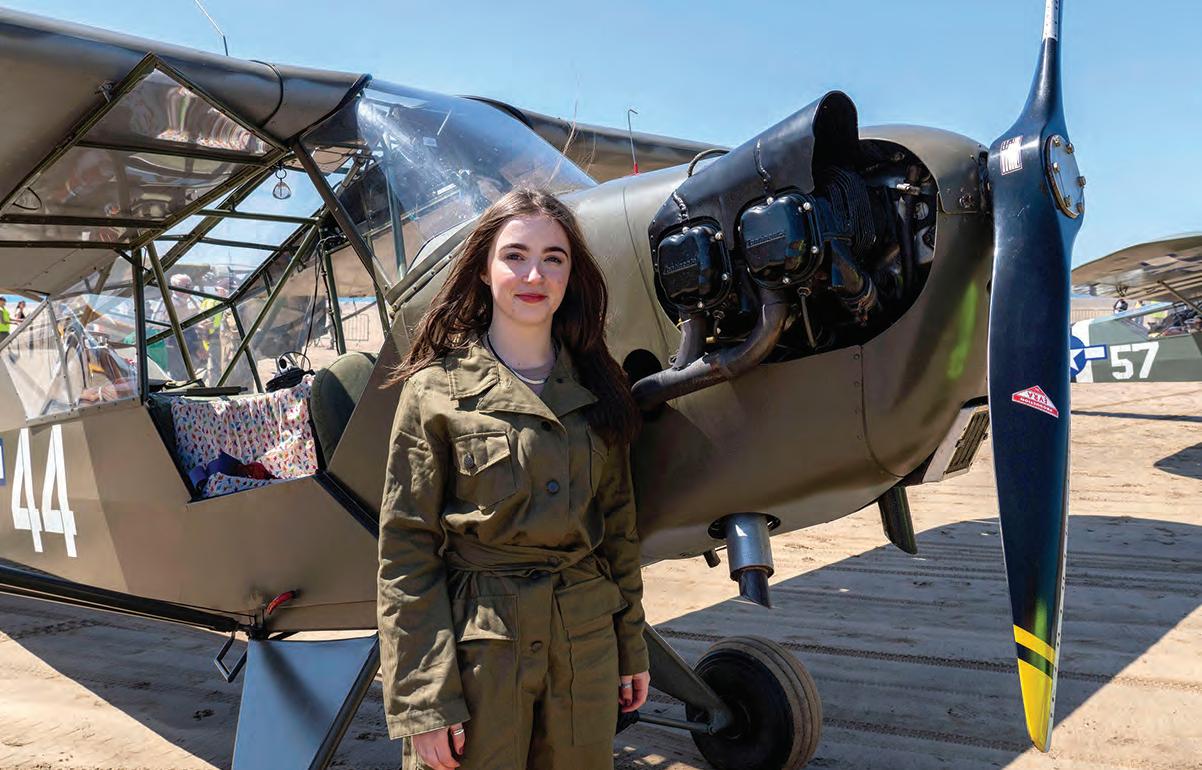
A story of Dragons and Cubs
A fascination for the U2 spy plane eventually led Ellie Carter to command her own L4 Cub. Ellie chats to Ed Hicks about her remarkable story, as well as her plans for the future…
Where did your interest in aviation start?
I’ve always been interested in flying and the science behind it, ever since I was a child in a pram pointing up at aircraft. I developed a fascination with the Lockheed U2 spy plane when I was around seven or eight, especially the physics of it flying at such extreme altitudes, so I decided to write a letter to the pilots asking them if they could bring one to the Royal International Air Tattoo held at Fairford.
This letter found its way to the U.S. Department of Defense HQ at The Pentagon, and my parents ended up getting some strange phone calls.
Eventually though, the D.O.D tracked me down with the help of BBC Radio Devon – I hadn’t put my address on the letter – and realised that I was just a nine-year-old girl who wasn’t a security threat.
While the D.O.D told me it couldn’t bring a U2 to an airshow, it went on to say that one would be making a visit to RAF Fairford and would I like to come and see it for myself. I was amazed by the kindness and, what was supposed to be an hour-long meeting with the crew, turned into an entire day looking around the aircraft and being shown what goes on, on the ground, which included chasing the aircraft down the runway in the final stages of landing in a Chevy Camaro, to offer guidance in the last few feet of the landing flare.
What was your first flight?
The U2 pilots then put me in contact with a test pilot called Martin Kellet, who took me for my first flight in a Socata Rallye from Lower Upham Farm in Wiltshire. Martin was kind enough to take me flying on a regular basis, over the local white horses, and helped me conduct various physics experiments (such as proving that gravity was an
Meet the Members
50 | LIGHT AVIATION | January 2024
Above Ellie with her L4 Cub at Saunton Sands in summer 2023.
Natasha Quarmby/Alamy

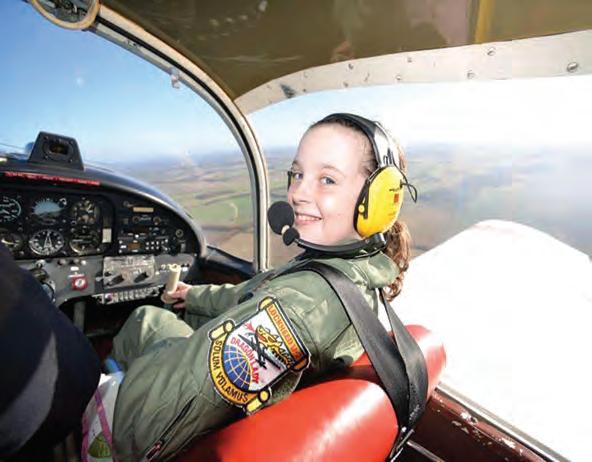
acceleration) in the process. I was then invited to the USA to stay with Major John ‘Cabi’ Cabigas (Cabi was the pilot that flew James May to the edge of space tinyurl.com/ JamesMayEdgeofSpace) and his family and to visit Beale AFB. I was lucky enough to fly the U2 simulator and chase the U2 down the runway again.
Cabi took me flying in his J3 Cub, skimming rivers with the wheels and landing at walnut farms. Then another pilot took me flying in his rather unusual Eagle 150 over the eroded volcanic lava domes of the Sutter Buttes.
Martin ended up heading overseas with a job teaching test pilots, so I didn’t have anything to fly for a while. However, we were driving past our local airfield one day and I begged my parents to go in for a look around. There was a chap called Richard Horner there with an L-4 Cub. Richard recognised my interest and got in touch with my parents and offered to take me flying. That flight – and the others that would follow – in the L4 truly sparked my passion for vintage aircraft. I can honestly say that without Richard, I would not have got to where I am now.
Tell us about your personal learning to fly journey?
I started gliding when I was 12 to fill in the gaps when I couldn’t fly the Cub. I soloed gliders on my 14th birthday, which was brilliant, because at the time I still wasn’t allowed to use a glue gun unsupervised at school. I stopped gliding when I was 15 so that I could focus on my PPL, which I started working towards at Dunkeswell a few months before my 16th birthday. I went on to solo at 16
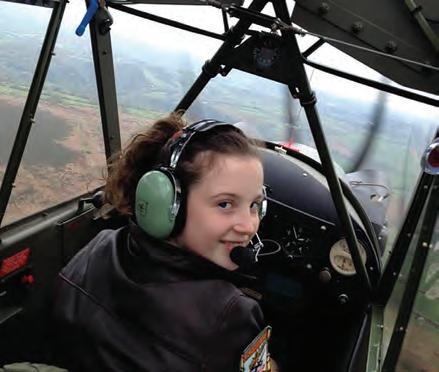
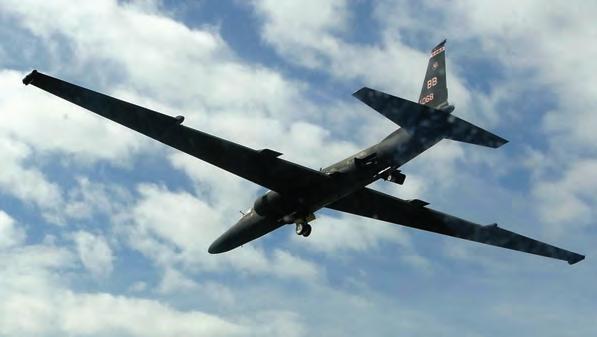
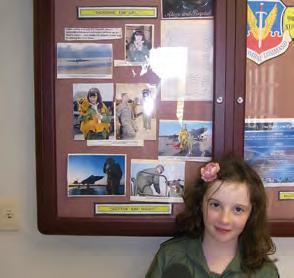
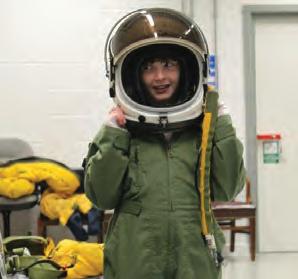
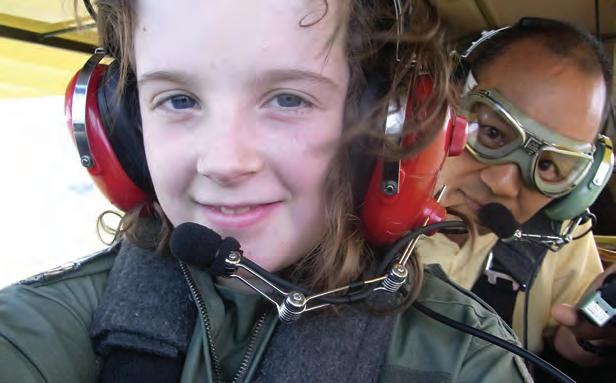
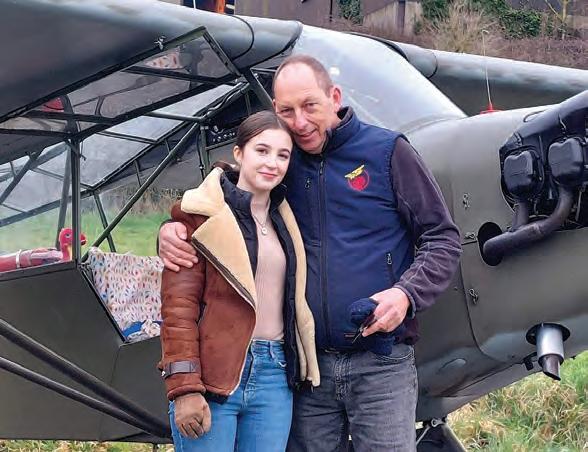

January 2024 | LIGHT AVIATION | 51
Left First flight, in a Rallye. Above Chasing a U2 during landing.
Meet the Members
Above First flight in the Cub.
Above Trying on a U2 pressure suit.
Below Flying with U2 pilot, Cabi.
Above Ellie with her letter that’s on display at Beale Airforce base.
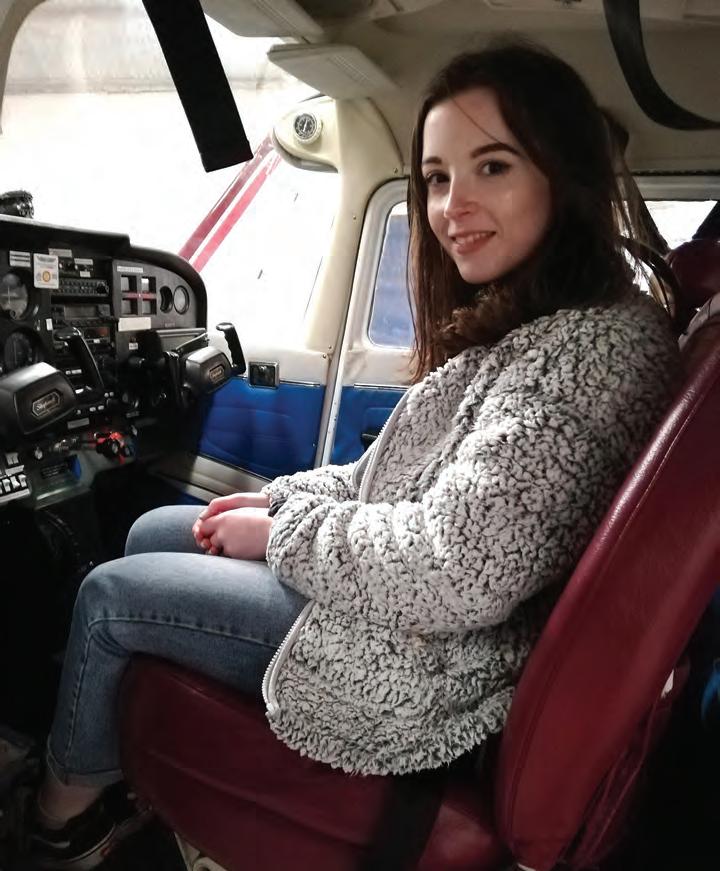
(unfortunately Storm Diane stopped me doing it on my birthday). Before becoming the youngest female pilot in the UK on my 17th birthday when I collected my PPL.
A tailwheel conversion in a Citabria followed, before I then added my aerobatic rating flying James Mays’ old Super Decathlon. I’ve recently done my IMC rating down at Bodmin, and I’m hoping to do my instructor rating and multi-engine rating in future, but I’m still in the process of saving up for that.
How long have you been an LAA member, and how does the Association help you fly?
I’ve been a member for around four years. The LAA very kindly awarded me an Armstrong-Isaac bursary when I was training for my PPL. I do not come from a flying – nor a wealthy – family so the bursary made a huge difference for me, and I probably wouldn’t have got my licence on my 17th birthday without it. For that, I will always be grateful.
Total number of types of aircraft and hours you have flown
I have around 330 logable hours (most on tailwheel aircraft) but I probably have a further 200 from before the age of 14 just flying as a passenger with people. I have probably flown between 30 and 40 types since I first started flying.
Any favourite or less liked types that you’ve flown? – If so, why?
I’ll fly pretty much anything, but I prefer vintage aircraft. The Cub has always been a favourite due to its significance in my aviation journey so far. The Tiger Moth is an interesting aircraft that I love – it is stripped back flying at its finest.
One of the most interesting aircraft that I have flown so far is a Fairchild Argus. It is the only one with a Jacobs engine in the UK and is definitely overpowered, so can be a bit of a handful on the ground. It is a beautiful aircraft to fly though.
Current and past (privately) owned aeroplane(s)
I currently have a half share in the L4 Cub I began flying when I was 12. When Richard decided to sell it in 2023 I just couldn’t imagine it not being in my life. The other half is owned by Charlie Walker, who is currently the owner of C-47 Night Fright. A D-Day veteran aircraft, it’s being restored to fly at Coventry and is nearly complete. I’ve also been lucky enough to visit the project a couple of times and can honestly say the work being done by the team, a number of whom are LAA members) is incredible. The plan is to fly the Cub to events with Night Fright in 2024, the 80th anniversary of D-Day, which will be a fabulous opportunity for me.
You’ve become involved in the Aviation Preservation Society of Scotland’s project to build and fly a Sopwith Strutter. Tell us more about that, and your plans
I heard about the APSS building a Sopwith 1½ Strutter in Scotland and got in touch with them. The documentary about the build and the idea of me becoming the first
Left Ellie in a Cessna.
Above Ellie gliding.
Above (right) Ellie collecting her PPL at CAA HQ at the age of 17.
52 | LIGHT AVIATION | January 2024
Members
Right Dipping the oil on the Decathlon ahead of some aerobatics training
Meet the
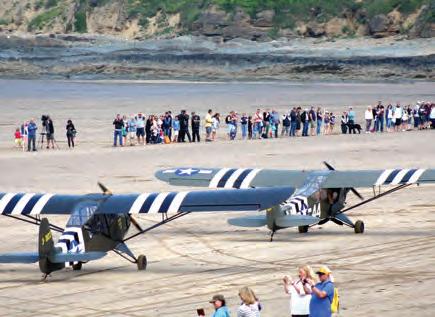
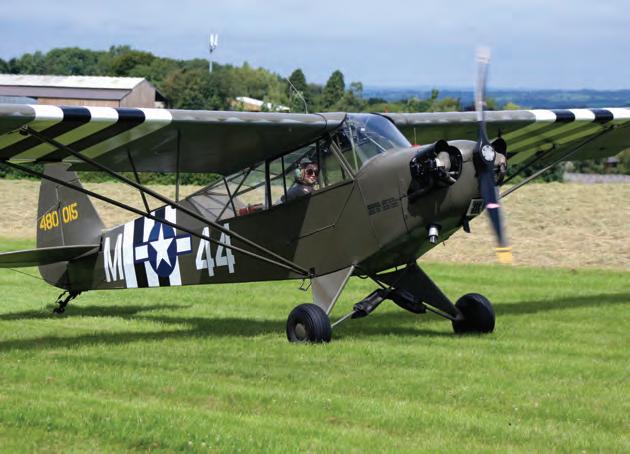
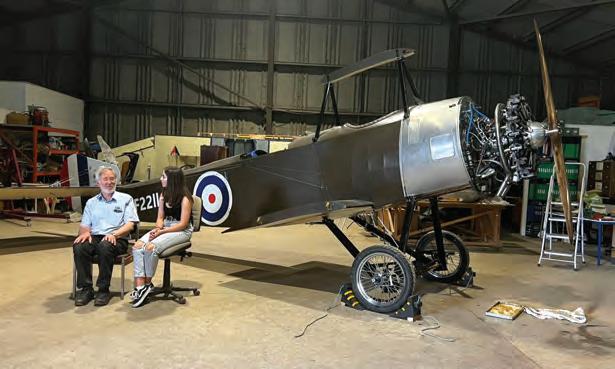
female to fly one developed from there. They invited me up to Scotland to see the Strutter during engine runs, which was wonderful to see – the craftsmanship is superb. I also got to meet the members of the APSS who were all absolutely lovely to speak to, and they had some brilliant stories. The documentary follows the process of building the Strutter and some of the challenges that were faced along the way. It will then tell a bit of my story and hopefully I will be the first woman to fly that type as part of the documentary. I really hope it will inspire more young people to get into aviation and especially vintage flying.
While we don’t yet know when all this is going to take place, the project paperwork is in with LAA, so hopefully it won’t be long before it’s signed off for test-flying. For now,
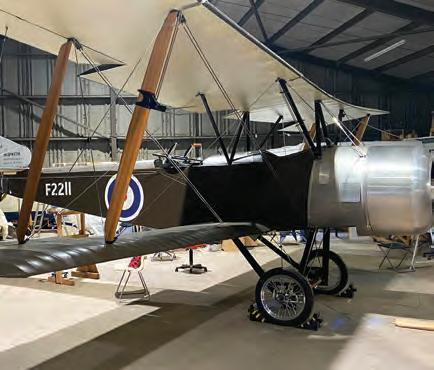
Your best aviation moment and flight – and why? Any aviation heroes – if so who, and why?
I can honestly say I’m not sure what my best aviation moment is, as I’ve been fortunate to have had so many. I’ve flown to Belgium, France for the D-Day celebrations, and landed on the beach at Saunton for D-Day too. Saunton was a training area because the dunes were similar to those in France.
I’ve always been inspired by Pancho Barnes as a

January 2024 | LIGHT AVIATION | 53
Right Ellie and Cub.
Below Landing Cubs on the beach at Saunton is a favourite memory for Ellie.
I’m doing my bit to be prepared by getting as much Tiger Moth experience as I can, fitting it around my university studies and exams.
Above (left) Filming an interview for the Sopwith Strutter documentary.
Above (right) The fabulous APSS Sopwith Strutter is now complete, and awaits test flying.
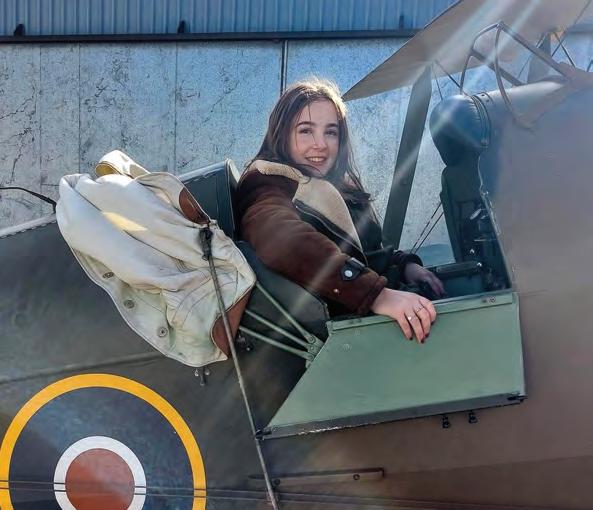
lesser known pioneer of aviation. A test pilot and stunt performer, she went on to break a speed record set by Amelia Earhart in her Travel Air Mystery Ship. The story of Katherine Stinson is also incredibly inspiring – while not from a wealthy background, she was highly motivated and went on to have an amazing career.
Any favourite aviation books?
My favourite aviation book when I was nine was 50 Years of the U2 by Chris Pocock which I read over and over. When I was doing my aerobatics rating my instructor loaned me a copy of Aerobatics by Neil Williams. It was incredibly interesting and helped me throughout my rating. I would like to learn how to rebuild aircraft engines, so my recent bedtime reading has been the Continental A65 overhaul manual. The C-90/O-200 one will be next!
Any lessons that you’ve learned from certain moments / flights?
I had an engine failure in the Super Decathlon a couple years ago at 500ft, which I managed to land without damaging the aircraft or anything else, but it was definitely an interesting experience that I learned a great deal from, having never experienced one before.
Additionally, flying to Belgium when I was younger taught me a lot when it comes to flying abroad and filing flight plans, GARs and navigating some of the airspace in Europe without a transponder.
Left Getting some Tiger Moth time in readiness for the Sopwith Strutter.
Below Happiness, is flying the Cub.
Do you have any ‘fantasy hangar’ aircraft or vehicles that you’d love to own / try?
It is probably way too ambitious… but my absolute dream aircraft to fly would be a Bristol Beaufighter. I can’t give a good reason why, other than I absolutely love the look of them, and growing up near the coast and around places where they were based, I was interested to learn about their operation.
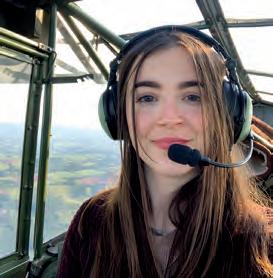

Another aircraft I dream of flying is a Fokker DR-1, mostly because it was an interesting design at the time, and both my pilot and engineer brains would love to see how it flies. It’s also an aircraft with a lot of history behind it so I’d love to fly it for that reason.
I’ve always wanted to own an open cockpit Waco because I just think there is something beautiful about them.
Do you have other non-aviation hobbies / interests?
I’ve been training in Jiu Jitsu for a few years (I started at college, but covid got in the way) and also love weight lifting in the gym as much as I can. I am also a bit of an artist and enjoy sketching, but I don’t get to do it quite as much as I’d like.
My next project is to restore an Austin 7, which will be my first vintage car project. Mechanically it is sound and has had a complete engine rebuild not that long ago. It mostly needs some bodywork done, so needs many decades worth of paint completely stripping, some small patches of rot fixing, and a few dents working out. But hopefully it will be a relatively simple project to start with… but I’m sure I’ve spoken too soon now!
Any advice for other aircraft owners and pilots?
I haven’t owned the Cub for very long, so I am still learning when it comes to aircraft ownership. As for advice for pilots, I’ve always been told to fly as much as I can and stay as current as possible (that is arguably quite difficult given how much rain we have had recently!), but it’s something I have tried to follow and I’m sure has helped me in many situations in the past. ■

Meet the Members
Above Two of Ellie’s favourite aviation books.
54 | LIGHT AVIATION | January 2024
Rotisserie – helping hands for wing builders
Over the years Dudley Pattison has perfected a wing rotisserie that has been used on a good few of his many projects, and he thought it was time to share that idea…
Experience is a most valuable commodity, and over the course of my many projects, I've developed a few fixtures that make life in the workshop just that little bit easier.
This revolving wing jig has gone through several stages of development ending up as a jig that I can handle completely on my own, apart from lifting the wing onto a pair of trestles first of all.
The main posts started life in 2000 as a wing jig for a Van’s RV-4 build, and eventually evolved into posts on a T-shaped base many years later for my KFA Safari build.
When it came to cover and spray the wings of my Sherwood Scout, I realised that the addition of casters would be beneficial, and this made it easy to allow me to roll the wing out of the garage to my spray shop (aka the great outdoors).
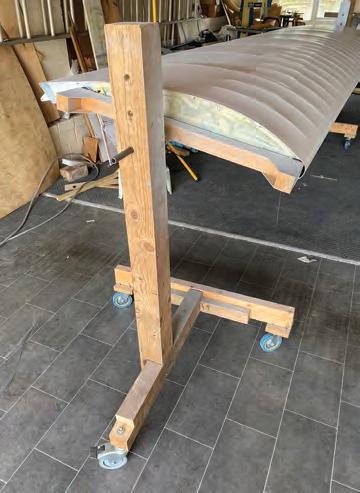
I can push and pull it confidently with anything moving as there are screws through the spar bolt holes at the root, and also through small holes drilled in the spar outboard of the tip rib. The members entering the spar ends are about 9in long and grooved to accommodate any rivets projecting on the inside of spars. The ¾in tube on which the cradles rotate, are fixed in the posts, and the 2in x 2in cradle has a split pin through the tube on each side of it. Without these it would be possible to pull the cradle wing inserts out of the wing, which would cause a few tears.
One thing I found curious was, when it came time to adapt the jig to use for the Scout wings, I was surprised to discover that the spar tubes were spaced exactly as the Safari, and used the same diameter of material.
Got a building tip you’d like to share? Send them to the editor at ed.hicks@laa.uk.com ■
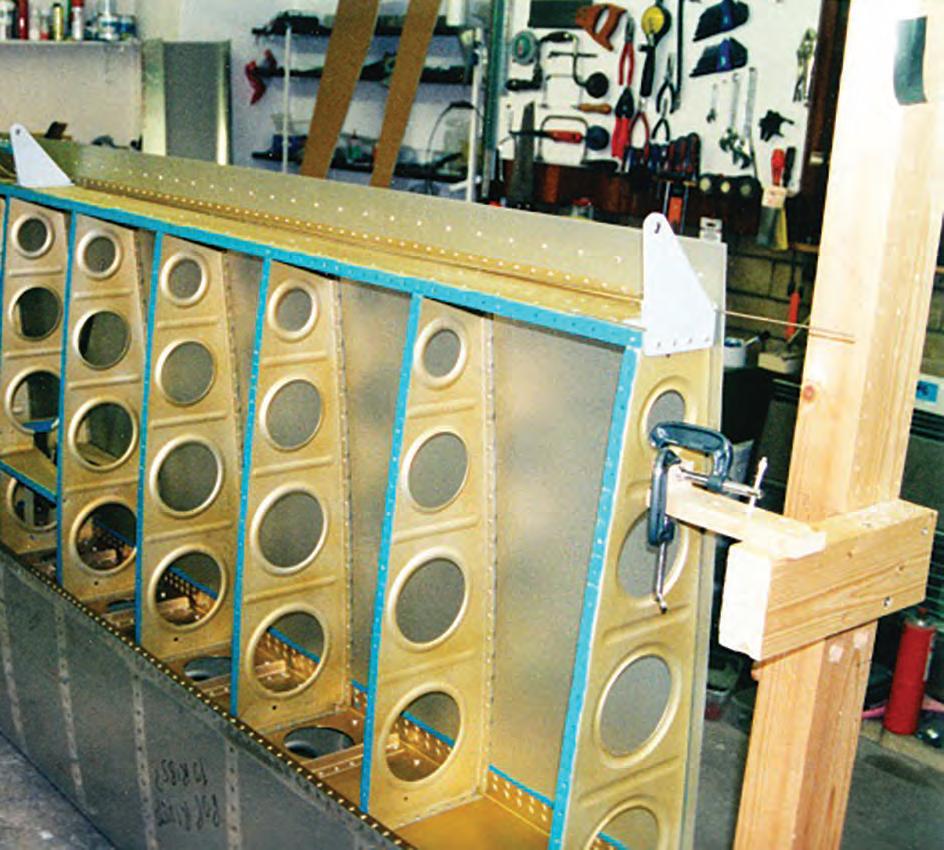
January 2024 | LIGHT AVIATION | 55
Tips
Builder
Above The outboard end of a Scout starboard wing in Duds jig while being painted.
Right The jig as it started life building an RV wing, not rotatable and indeed fixed to floor and ceiling.

For all display or commercial advertising enquiries please contact 01280 846786 office@laa.uk.com
You can email your classified advertisement direct to the LAA at the following address: office@laa.uk.com
Deadline for booking and copy: 19 January 2024
If you would like to place an aircraft for sale advert please see details below:
MEMBERS’ ADVERTISEMENTS
Up to 30 words: £6; 31-50 words: £12
Up to 50 words with a coloured photo: £45
NON-MEMBERS’ADVERTISEMENTS
Up to 30 words: £22; 31-50 words: £44
Up to 50 words with a coloured photo: £60 www.laa.uk.com
LAA Engineering advice to buyers:
AIRCRAFT APPROVED? Members and readers should note that the inclusion of all advertisements in the commercial or classified sections of this magazine does not necessarily mean that the product or service is approved by the LAA. In particular, aircraft types, or examples of types advertised, may not, for a variety of reasons, be of a type or standard that is eligible for the issue of a LAA Permit to Fly. You should not assume that an aircraft type not currently on the LAA accepted type list will eventually be accepted.
IMPORTED AIRCRAFT? Due to unfavourable experiences, the purchase and import of completed homebuilt aircraft from abroad is especially discouraged.
TIME TO BUILD? When evaluating kits/designs, it should borne in mind that technical details, performance figures and handling characteristics are often quoted for a factory-produced aircraft flying under ideal conditions. It is wise, therefore, to seek the opinion of existing builders and owners of the type. You should also take your own skill and circumstances into consideration when calculating build times. The manufacturer’s build time should be taken as a guide only.
AMATEUR BUILDING All LAA aircraft builders and potential builders are reminded that in order to qualify for a LAA Permit to Fly, homebuilt aircraft must be genuinely amateur built. For these purposes the CAA provide a definition of amateur built in their publication CAP 659, available from LAA. An extract from CAP 659 reads “The building and operation of the aircraft will be solely for the education and recreation of the amateur builder. This means that he would not be permitted to commission someone else to build his aircraft”. An aircraft built outside the CAA’s definition could result in an expensive garden ornament.
AIRCRAFT FOR SALE
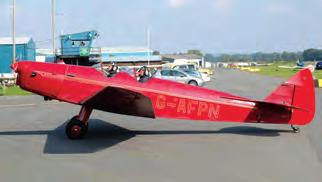
DH94 Moth Minor needs a new good home! Built 1939, as successor to the Tiger, but some dispute interferred. The only one flying in the Northern Hemisphere, now based at Shobdon. Original panel etc except 8.33 radio. Permit to end October 2024. 1138-10 TT, 669 Engine Time, 7 hrs since top O/H. Offers around £35K. Tel: 01547 529 858
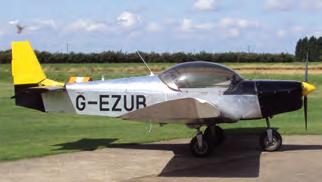
Zenair Zodiac CH601HD, Rotax 912. Hangared at Fenland. Last flown 4/11/2020 due to ill health. Last Permit 20/5/20. Total Hours 284.38. Last flight taken to 5,000ft with good rate of climb, temps & pressures good. Close offers around £17,000. Email: jerrytvideng@btinternet.com
PROJECTS FOR SALE
Piel CP 328 Super Emeraude project. Fuselage, wing, ailerons, flaps, tailplane & elevators all done and signed off in build book. No fabric yet. Complete with engine mount and 0-320D2A, 610hrs SMOH by Isenburg just rebuilt with new camshaft. Mag 500 hr inspection done. Some instruments, screen & u/carr legs. £15,000 ono. based in Norfolk 07860-667 807
PARTS FOR SALE
Lycoming IO-360-C1C6, 200HP, 959hrs –sensible offers. Dual certified (FAA & EASA 145 Approved) by Multiflight. Centrilube ‘drilled’ Camshaft and Lifters (320hrs). Refurbished Magnetos. Examined following prop strike, no damage, reassembled with new parts and corrosion inhibitor. Suit Arrows, Mooneys, Pitts, RVs etc. Contact Tim: 07771 725021, timtett68@gmail.com
SERVICES
Aircraft Weighing - Light Aircraft Weighing Service in East Yorkshire and surrounding area. For details contact Demraview Ltd. Email: Demraview@gmail.com Mob: 07984 810 761
Engine Overhaul. Zero time Major engine overhauls carried out on all types, since 1976, c/w dynamometer run-in and test. Bonner Engineering, Shoreham Airport. Contact Bill Bonner: 01 273 440250. aerobonner@aol.com

DREAM IT, FLY IT, VISIT OUR WEBSITE

56 | LI GHT AVIATION | January 2024
FOR ALL MEMBERS CLASSIFIED ADVERTISING ENQUIRIES CONTACT SHEILA WWW.LAA.UK.COM OFFICE@LAA.UK.COM
Classifieds January
Email your classified advertisement direct to the LAA: office@laa.uk.com





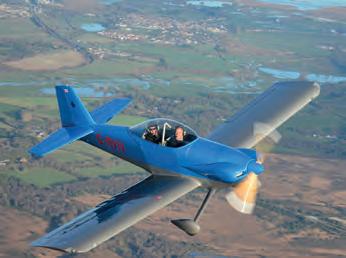

January 2024 | L IGHT AVIATION | 57 TRANSPORTATION Contact us now for a quotation Telephone: 0121 327 8000 E-mail: info@ponsonby.co.uk Web: www.ponsonby.co.uk Aircraft Transportation Specialists Specialist vehicles to move your aircraft safely FUEL SERVICES SERVICES & MORE COVERS For all display advertising enquiries contact the LAA 01280 846786 office@laa.uk.com www.laa.uk.com
Where to go
WHERE TO GO
Aselection of flying events for the months ahead, and some you definitely want to add to the calendar for later in the year – and into 2024. Don’t forget, GASCo is always running Safety Evenings up and down the country. We’ll list them here, plus it’s worth keeping an eye on its website, www.gasco. org.uk, for further updates.
January
1 Bodmin Cornwall Strut New Year fly-in
1 Sleap New Year fly-in
16 Compton Abbas GASCo Safety Evening
Planning ahead
Apr 9-14 Lakeland Florida Sun n’ Fun

As always, check the Royal Aero Club Events website for the latest information and web links for many of the events: http://events.royalaeroclub.org/events.htm
Our thanks to the RAeC and to Dave Wise for the use of their data. If you have an event you want to advertise on the list, please email the details to Dave at: dave.wise@btinternet.com
Apr 17-20 Friedrichshafen Germany AERO
Apr 27 Turweston VAC fly-in (PPR)
May 24 Easter Spring fly-in
May 12 Kenyon Hall North West Strut Spring fly-in
May 18-19 Bodmin VAC fly-in (PPR)
May 26 Henstridge Wessex Strut fly-in
Jun 7-9 Guernsey Guernsey Aero Club 50th Anniversary Air Rally
Jun 8-9 Breighton VAC 60th Anniversary
fly-in (PPR)
Jun 15 Bodmin Ladies day fly-in (PPR)
Jun 21-23 Draycot Draycot Aerodrome fly-in
Jun 22-23 Easter Summer fly-in
Jul 12-14 Sleap Sleapkosh fly-in
Jul 22-28 Oshkosh, WI USA EAA AirVenture
Jul 27 Kenyon Hall North West Strut Summer fly-in
Aug 4 Lundy Lundy Sunday (PPR)
Aug 24 Breighton G-George event
Get ready for Winter!
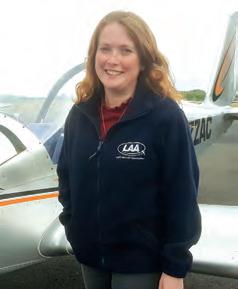





58 | LIGHT AVIATION | January 2024
LAA Soft Shell Jacket £30.00 (sizes: XS, L & XXL available) LAA Fleece £30.00 (sizes: XS,M,L,XL & XXL available) Prices exclude P+P. Log Book Binder - £15.95 Propellor Log Book - £16.00 Engine Log Book - £14.00 Aircraft Log Book - £14.00 Stick and Rudder An Explanation of the Art of Flying £24.00 LAA Hooded Sweatshirt £25.00 (sizes: M,L & XL available) Pilot’s Weather The commonsense approach to meteorology £20.00 Alternative Engines £50.00 Kitplane Construction New 3rd Edition £40.00


Learning to Fly? Under 30?
THE A RMSTRONG -I SAACS B URSARY

Have you reached your first solo? Need support?
Armstrong/Isaacs Bursaries offer additional funding to allow young pilots to complete their courses at a time when so often money starts to run out. Seven bursaries of up to £1,500 are available this year instead of 5 thanks to the generous donation and support of our members.
Closing date 31st Jan 2024
Light Aircraft Association
See
for more information www.laa.uk.com
website

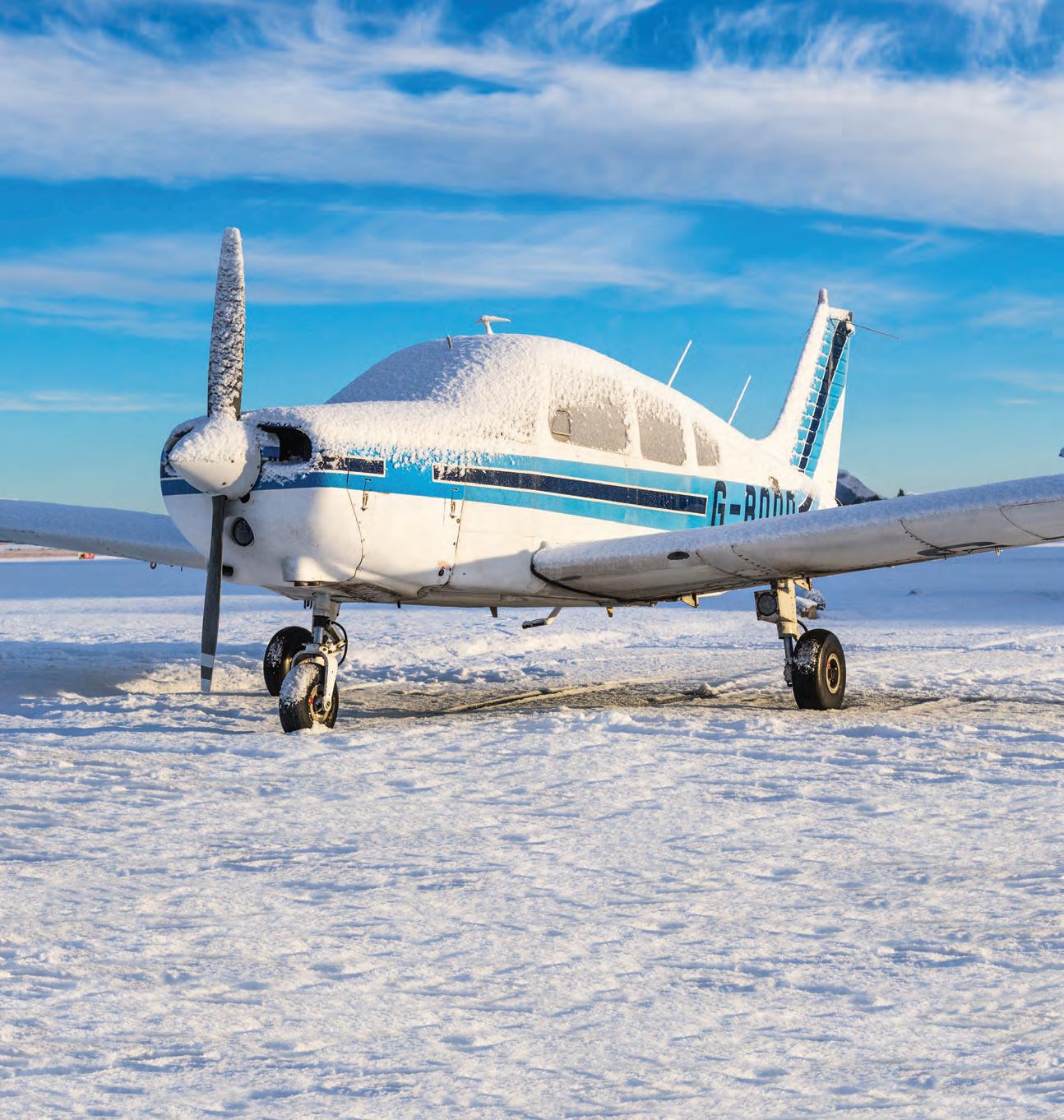

Learn how CamGuard protects aircraft engines year round at aslCamGuard.com Together to Protect Your Investment Three months that can do more harm to aircraft engines than an entire season of flying... LAS AEROSPACE LTD TEL: 01837 658081 www.lasaero.com LAS AEROSPACE LTD Concorde House, North Road Industrial Estate, Okehampton,Devon EX20 1BQ TEL: 01837 658081 www.lasaero.com Some say they do the lot... LAS REALLY DO! Contact LAS Aerospace, your number 1 parts supplier.