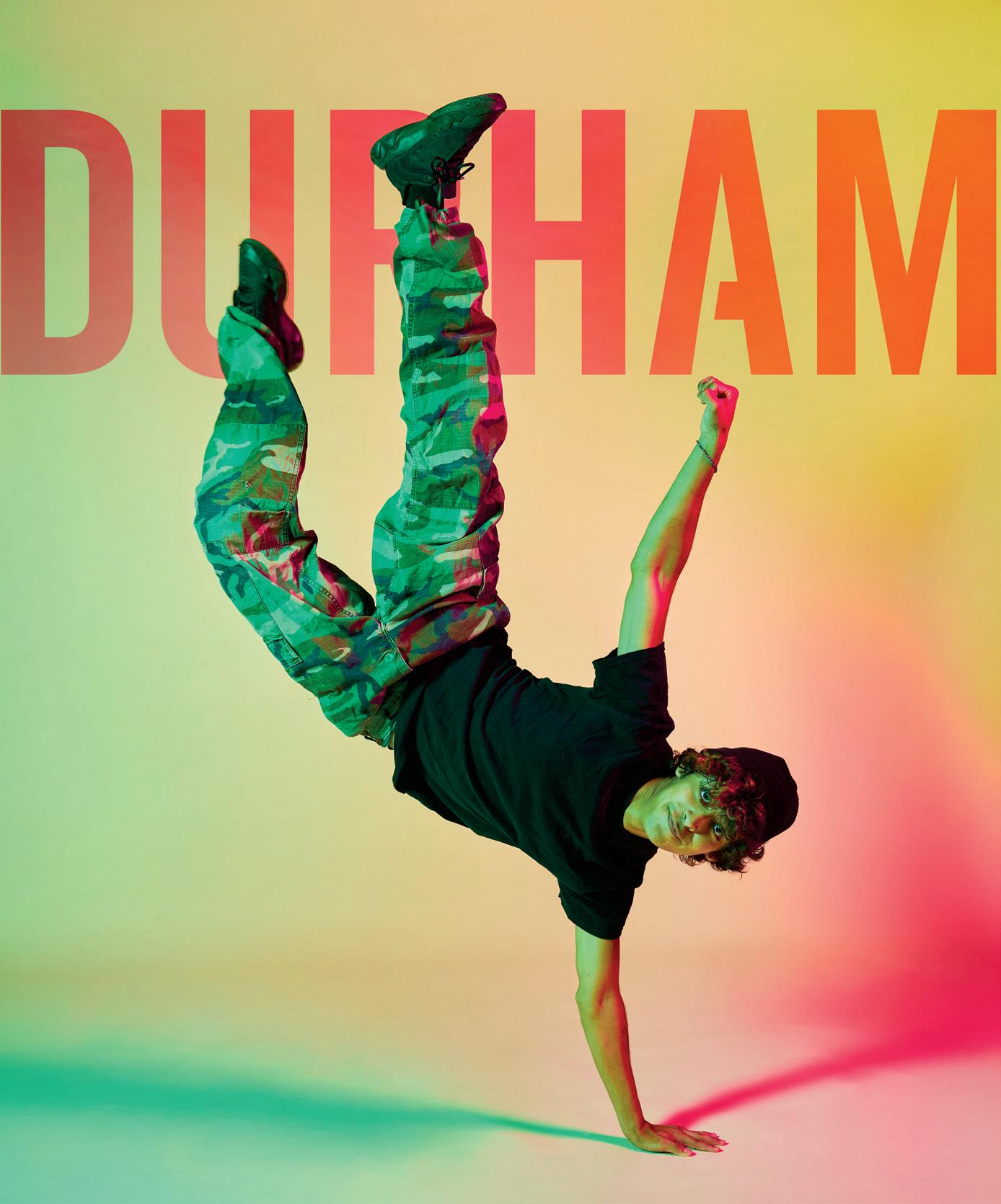
talented Jahmal Lara, 16, shows



AUGUST/SEPTEMBER 2025 VOL 18 NO 4
durhammag.com
SQUARE-FACEBOOK INSTAGRAM
EXECUTIVE MANAGING EDITOR Amanda MacLaren amanda.maclaren@durhammag.com
EDITORIAL
EDITOR, CHAPEL HILL MAGAZINE Jessica Stringer
EXECUTIVE EDITOR, CHATHAM MAGAZINE
Morgan Cartier Weston
ASSISTANT EDITOR Renee Ambroso
EDITORIAL ASSISTANT
Sharon Kinsella
CONTRIBUTORS
Courtney Hayes, Laura Jaramillo and Matthew Lardie
EDITORIAL INTERNS
Addie Bloom, Emily Gessner, Ali Grau, Kaitlyn Harmon, Kate Loeffel, Alexandra Lopez, Taylor Motley, Jamell Mumford, Shaye Phillips, Hannah Posner, Rebecca Savidge, Melissa Sawyer, Chloe Snow, Libby Wakefield, Payton Wilkins and Piper Winton
ART & Production
CREATIVE DIRECTOR Kevin Brown
PHOTOGRAPHER
John Michael Simpson
GRAPHIC DESIGNER & PRODUCTION COORDINATOR
Lindsay Scott
AD MANAGER
Khadijah Weekes-Nolan
Advertising
For advertising inquiries, email advertising@durhammag.com
Melissa Cooley melissa.cooley@trianglemediapartners.com
Melissa Crane melissa.crane@trianglemediapartners.com


Sarah Davis sarah.davis@trianglemediapartners.com
Lucinda Poole lucinda.poole@trianglemediapartners.com Clay Wrisley clay.wrisley@trianglemediapartners.com
Corporate
PRESIDENT
Rory Kelly Gillis
VICE PRESIDENT, SALES Chris Elkins, chris.elkins@trianglemediapartners.com
VICE PRESIDENT, CREATIVE OPERATIONS Ashlin Acheson ashlin.acheson@trianglemediapartners.com
VICE PRESIDENT, CLIENT SERVICES Sally Scruggs
VICE PRESIDENT, FINANCE & ADMINISTRATION Amy Bell
ACCOUNTING & ADMINISTRATION MANAGER Cassady Orsini
DIRECTOR OF MARKETING Ellen Shannon
MULTIMEDIA PUBLISHER & DIRECTOR OF CLIENT DIGITAL STRATEGY Jenna Parks
ASSOCIATE PUBLISHER, HEART OF NC WEDDINGS Meagan Culkin
MANAGING EDITOR, HEART OF NC WEDDINGS Renee Ambroso
CLIENT ONBOARDING & OPERATIONS MANAGER Brian McIndoo
DIGITAL MARKETING MANAGER Jack Fry
MULTIMEDIA CONTENT DIRECTOR Morgan Cartier Weston
MULTIMEDIA CONTENT PRODUCER Caleb LeJeune
DISTRIBUTION Matt Bair
CO-FOUNDERS
Dan Shannon & Ellen Shannon

20 Tomorrowland
Fullsteam’s Sean Lilly Wilson on finding Durham’s flavor identity
26 Let’s Dish at The Lenny
28 News Bites
Now serving: the latest Bull City restaurant news
30 Bun Intended
Local hot dogs you’ll love at first bite
38 In High Spirits
The buzz around hemp-infused beverages
42 Steeped in Tradition
Former owners of a legendary Durham eatery now offer guests an immersive cultural experience
16 Supplied & Ready
Stock up for the season with beautifully curated school and planning essentials from some of the Triangle’s top stationery spots
48 Common Threads
The African American Quilt Circle weaves history, sisterhood and selfexpression into every vibrant piece –preserving culture, one stitch at a time
52 Breaking the Mold
A former architectural designer transformed personal adversity into a mission-driven artistic practice
56 Stage Might
Walltown Children’s Theatre honors the past, uplifts the present and builds a future for Durham’s young artists
62 Code of Conduct
The Chamber Orchestra of the Triangle’s conductor strikes a new chord with modern audiences as the organization enters its 43rd season
66 Fall Arts Guide
Can’t-miss concerts, exhibits and more

76 Home, Reimagined
Design duo transforms a historic Morehead Hill property into a welcoming, modern family retreat
DEPARTMENTS & COLUMNS
6 Letter from the Editor
10 Go.See.Do.
Soak up the last of summer with these can’t-miss events!
96 Wedding Suchomel & Watson
89 Triangle Media Partners’ Women of Achievement luncheon
90 Animal Protection Society of Durham’s Walk for the Animals
91 Boys & Girls Clubs of Durham and Orange Counties’ 2025 Great Futures Breakfast
92 Durham Technical Community College Endowment Announcement
93 Durham Tech’s Spring Commencement
93 United Way of the Greater Triangle and Triangle Community Foundation’s Bull City Future Fund
94 Empower Dance Studio’s A Decade of Dance
95 Durham Library Foundation’s 25th anniversary celebration
95 Durham Literacy Center’s 18th Annual Leaders in Literacy Benefit Luncheon
SPONSORED CONTENT
70 Builders & Home Service Professionals
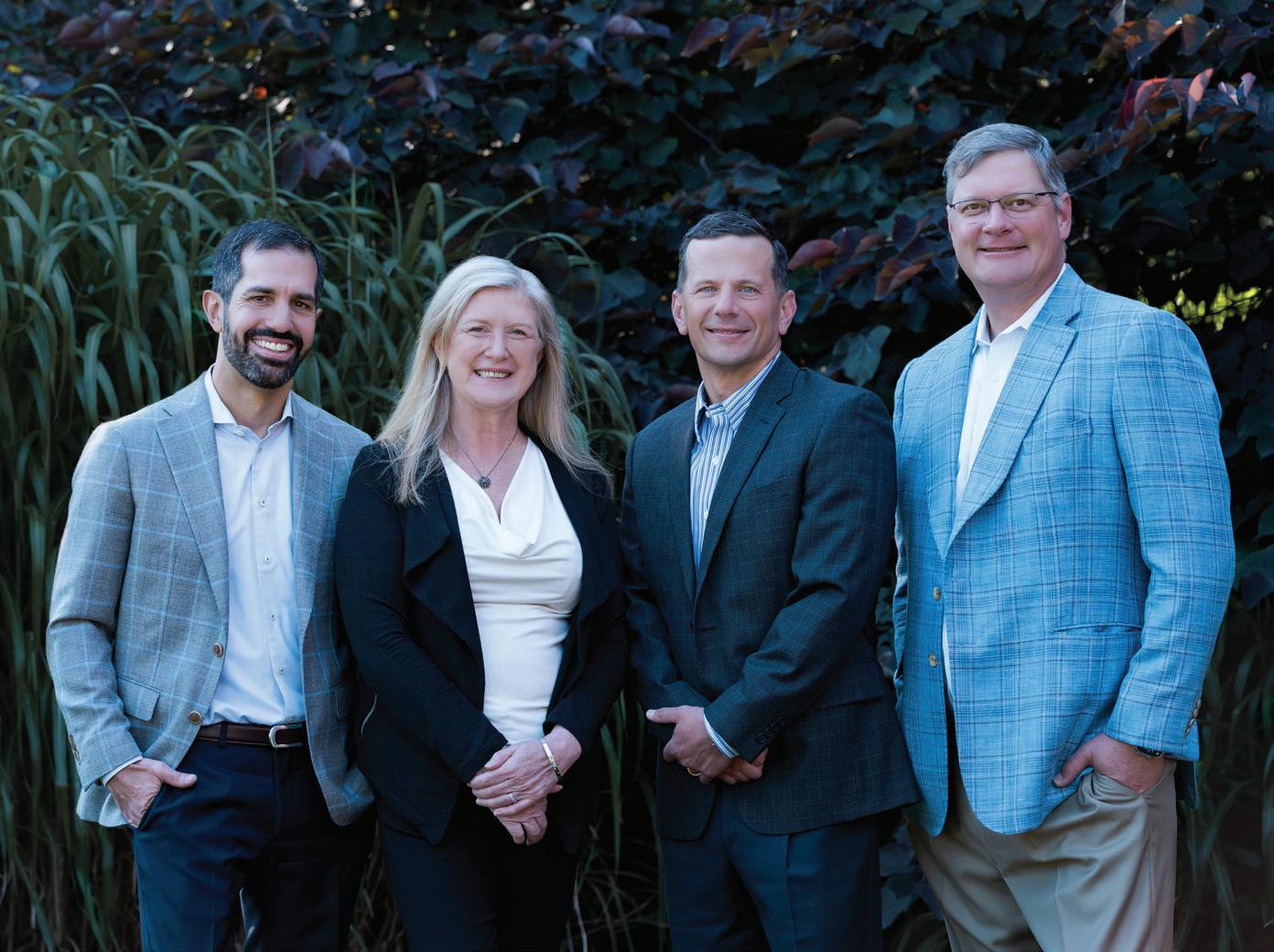
Voted best oral surgeons in Durham
Know that you’re in the best hands for your procedure with expert care from our board-certified oral and maxillofacial surgeons, Debra Sacco, DMD, MD, Brian Vandersea, DDS, Andrew T. Ruvo, DMD, MD, and Adam D. Serlo, DMD, MD.

DENTAL IMPLANT SURGERY
BONE GRAFTING
IMPLANT SUPPORTED OVERDENTURE
WISDOM TEETH EXTRACTION
CORRECTIVE JAW SURGERY
Forget hot girl summer – this is hot dog summer.
I’ve been saying it for years: the humble hot dog is wildly underrated. And now? The rest of the world seems to be catching up. No longer confined to ballparks (though Dollar Dog nights at Bulls games are must-attends) or backyard cookouts, the classic dog is getting a culinary glow-up. Artisanal twists, gourmet toppings and chef-driven creations are redefining what a hot dog can be – without losing what made them great in the first place: fun, comfort and a little bit of messy joy.
When I lived in Old West Durham, Dain’s Place was my third place. I never swayed much from my go-to orders: the grilled chicken sandwich, a basket of loaded tots or a glorious grilled cheese built on my three Ps – pepper jack, provolone and pimento – all paired with a cool draft or the most interesting can of beer from the cooler. And of course, an all-beef kosher dog nestled in a fresh-baked roll, topped with whatever wild combo suited me that day. So getting to reconnect with Dain Phelan and Jenn Phelan for this issue’s hot dog feature (page 30) truly felt like revisiting old friends. Their four imaginative creations – cooked up just for us – reminded me exactly why their food has stood the test of time (and that I was long overdue for a meal here).
These days, I’m lucky enough to live near The Dog House’s location off North Roxboro Street, and I’ve loved discovering newer takes like The Pushcart in Oxford during a pop-up at Delafia wine bar. Whether classic or cutting-edge, the hot dog renaissance has arrived – and I’m here for it.
But it’s not just dogs in this issue. We caught up with Fullsteam’s Sean Lilly Wilson about finding Durham’s flavor identity (page 20), sat down for our first bites at The Lenny (page 26), dug into the buzz around hemp-infused beverages (page 38), and explored the cultural significance behind a Japanese tea ceremony led by the former owners of a legendary local eatery (page 42).
The beginning of fall also means packed calendars – school starts, art seasons launch and the Bull City comes alive with energy and events. In this issue, you’ll find: the best art, stationery and planning tools from Durham shops (page 16); a look at the African American Quilt Circle’s community and cultural impact (page 48); an artist who turned a personal hardship into powerful work (page 52); our cover story on how Walltown Children’s Theatre shapes Durham’s youth (page 56); an interview with the conductor bringing fresh energy to The Chamber Orchestra of the Triangle (page 62); and the fall arts guide, your go-to for concerts, exhibits and more (page 66).
Thanks for diving into another edition with us – preferably with your calendar open and a perfectly topped hot dog in hand.


amanda.maclaren@durhammag.com


AND THE BEAT GOES ON Electronic music pop-up Boom Club seeks to continue its programming this fall

THE WRITE STUFF Gear up for fall with even more stylish planning supplies from local stationery stores

OUR FULL FALL ARTS GUIDE
’Tis the season for new exhibits, plays, live music and more
Photo by John Michael Simpson



























SATURDAYS THROUGH OCT. 4
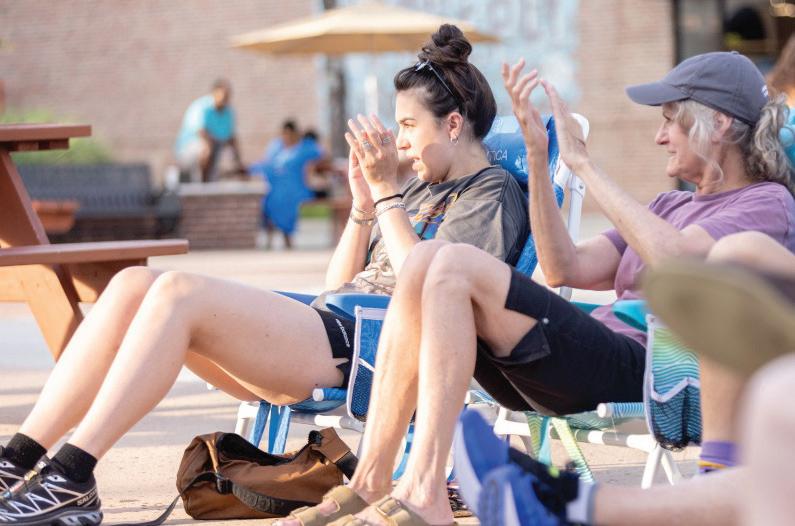
Groove all summer at The Streets at Southpoint. This free outdoor concert series at The Stage at Southpoint showcases top local talent in a relaxed, family-friendly setting. Bring a blanket or lawn chair, grab a bite or drink from nearby restaurants, and enjoy the sounds under the stars. You can even sip a cocktail while soaking up the good vibes thanks to the mall’s social district.
AUG. 10
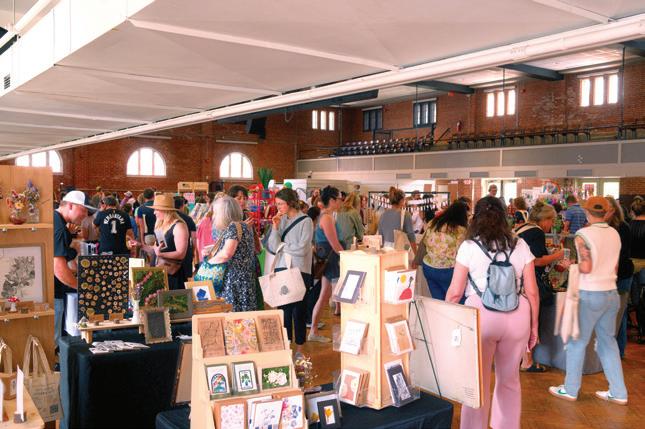
Browse work from more than 55 diverse artists and small businesses selling oneof-a-kind and handcrafted pieces along with thoughtfully collected items at the Durham Armory. Be one of the first 100 shoppers there, and snag a free tote bag!
AUG. 15
The genius of music legends Stevie Wonder, Diana Ross and Marvin Gaye is reborn through the Mallarmé String Quartet as they perform inside the intimate Missy Lane’s Assembly Room

Presented in collaboration with Bright Black, this immersive evening blends chamber music, soul food and Black storytelling, all under the glow of candlelight. Costumes are encouraged to match the mood and magic of the night. Featured performers include Leah Peroutka and Anne Leyland (violin), Suzanne Rousso (viola) and Nathan Leyland (cello).
AUG. 29
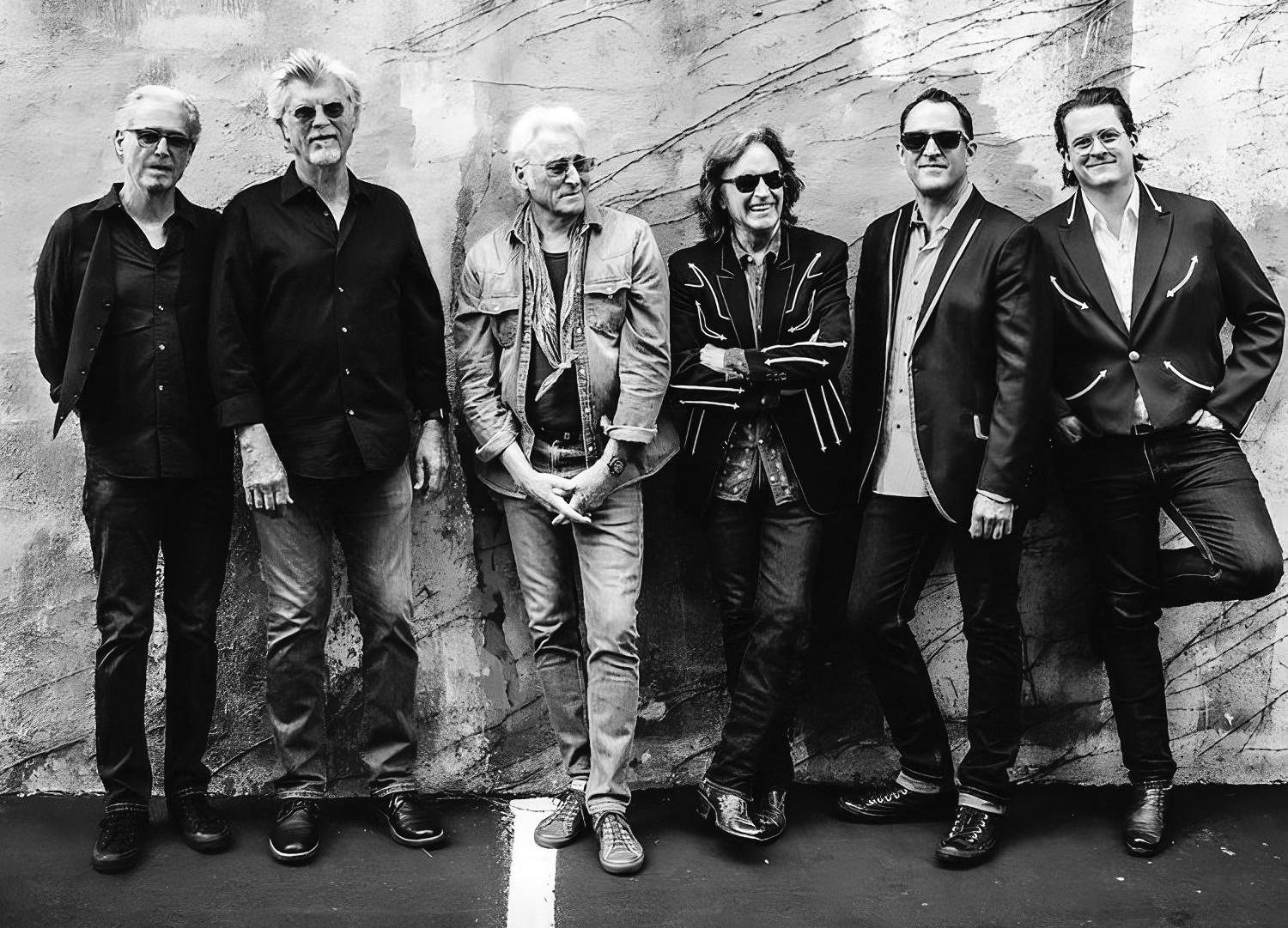
After nearly 60 years of genrecrossing hits, the three-time Grammy Award-winning band takes the stage at the Carolina Theatre as part of their “All the Good Times: The Farewell Tour.” The iconic group blends reimagined classics like “Mr. Bojangles” and “Fishin’ in the Dark” with newer works that continue to push Americana forward.
Compiled by Piper Winton
AUG. 26
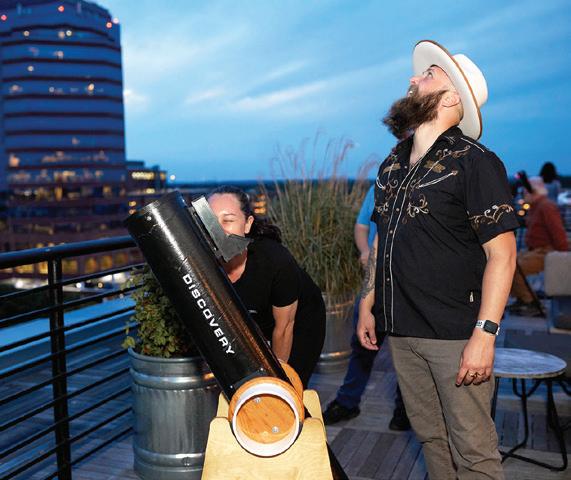
Head to the rooftop of The Durham Hotel for the return of its free evening stargazing series, presented in partnership with Morehead Planetarium and Science Center. This family-friendly session highlights the waxing crescent moon with Mars nearby, guided by Morehead’s astronomy educators. Arrive early to enjoy craft cocktails, shareable plates and panoramic sunset views. DJ Mic Check closes out the evening by spinning cosmic-inspired tunes.

SEPT. 2-14
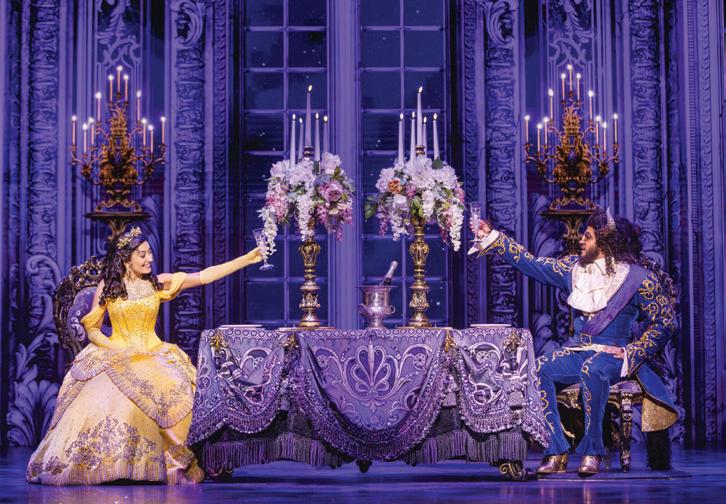
Celebrate 30 years of enchantment as the beloved Disney musical returns to the Durham Performing Arts Center. Sing along to favorites like “Be Our Guest” and get swept up in the dazzling sets, costumes and timeless story. Grab seats before the final rose petal wilts.
SEPT. 6 & 20
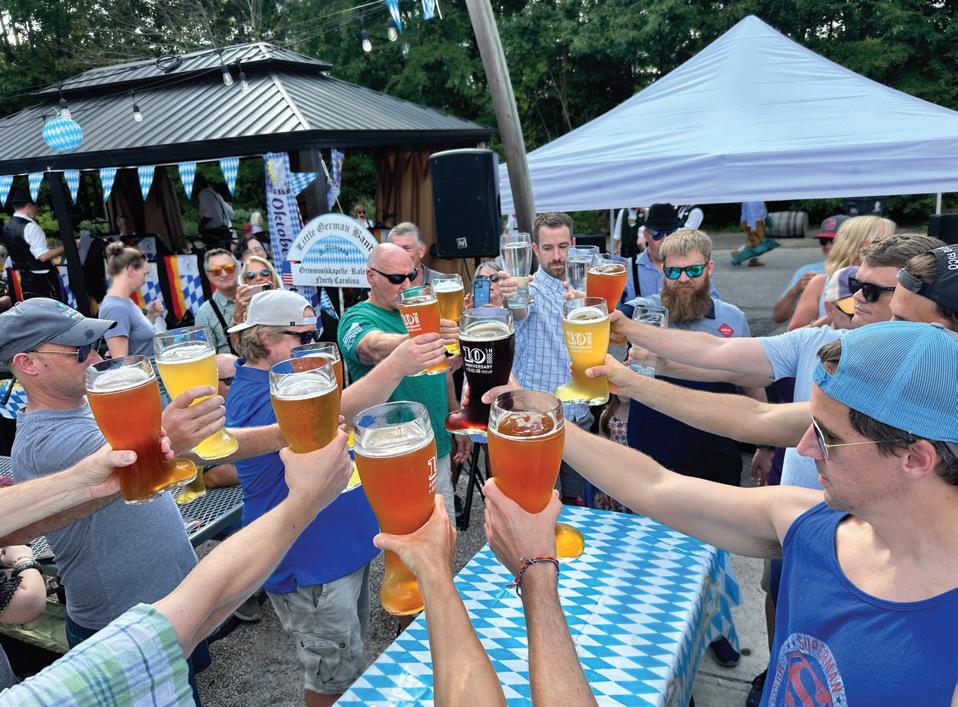
Break out your lederhosen – The Glass Jug Beer Lab serves up two chances to celebrate Oktoberfest with cold brews, festive bites and polka dances! Cheers to 11 years at its south Durham taproom Sept. 6 with a daylong party in the beer garden. DJ Gummy kicks things off, followed by traditional polka from The Little German Band. Sip fresh pours from the outdoor mobile bar, dig into brats, and don’t miss the stein-hoisting competition. The festivities continue Sept. 20 at Durham Central Park with live tunes from The Oak City Polka Kings and a vibrant art market curated by The Pufferfish Project. Raise a stein in the beer tent, explore local vendors and soak in the fall vibes at this downtown celebration of German-style beer and community spirit.

SEPT. 26-28
Join the LGBTQ Center of Durham for a full three days of festivities celebrating love, community and activism. This year’s theme, “We Are the Rainbow: Together in Support for Our Coalitions, Environments and Futures,” centers the LGBTQIA+ community as powerful agents of change. The fun kicks off with the Justice Concert & Rally at CCB Plaza, featuring performances, speeches and more from local artists. On Saturday, more than 100 groups participate in the annual Community Parade & March followed by the Health & Wellness Kickback, a resources fair chock-full of free services and activities, at Duke University’s East Campus. The weekend wraps up with the Food Truck & Vendor Market at Durham Central Park on Sunday, spotlighting LGBTQIA+ creators and small businesses.
SEPT. 25-26
In this poignant and evocative collaboration, these two artists merge movement, video and personal testimony to examine the lasting effects of war on memory, consciousness and the body. Eiko, who grew up in postwar Japan, and Wen, who came of age during China’s Cultural Revolution, draw from lived experience to explore how conflict reverberates through generations. The piece, developed in part during a 2024 residency with the Duke Dance Program and the American Dance Festival, returns to campus in this Duke Arts Presents performance at Rubenstein Arts Center’s von der Heyden Studio Theater.

SATURDAYS AND SUNDAYS IN OCTOBER
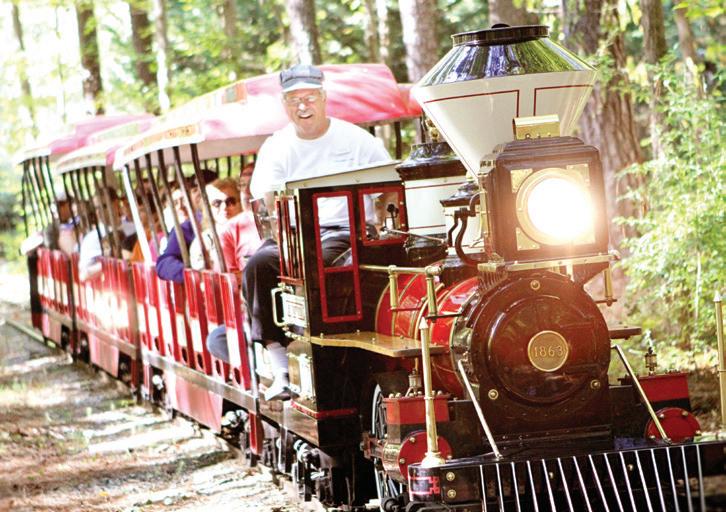
Create fall memories at the Museum of Life and Science! Hop aboard this annual festive fall train ride on the Ellerbe Creek Railway to visit its pumpkin patch. Pick out the perfect pumpkin to decorate, munch on fresh popcorn as you walk through a hay maze, and enjoy duck races and other fun games before climbing on the train for a ride back to the station.


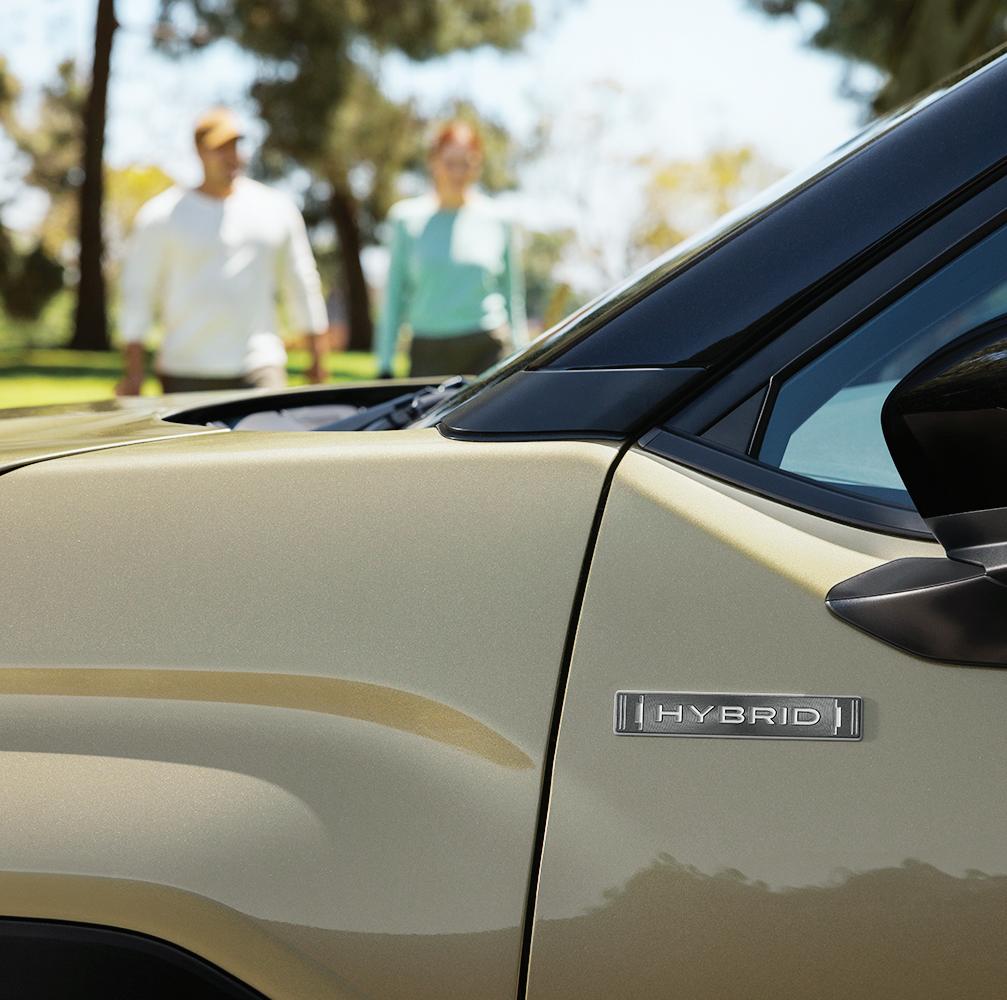
The Forester Hybrid switches between its gas engine and electric motors to maximize efficiency and power whether you’re running errands or climbing a snowy mountain road. The Forester Hybrid delivers the lowest emissions of any Forester in history and outstanding fuel efficiency, so those adventures are easier on your wallet.
The 2025 Forester Hybrid is equipped with the legendary capability of standard Symmetrical All-Wheel Drive. Optimizing traction for rain, snow, rough roads, and even off-road driving, Symmetrical All-Wheel Drive constantly evaluates acceleration, braking, and cornering in real time to continuously deliver power to all four wheels.

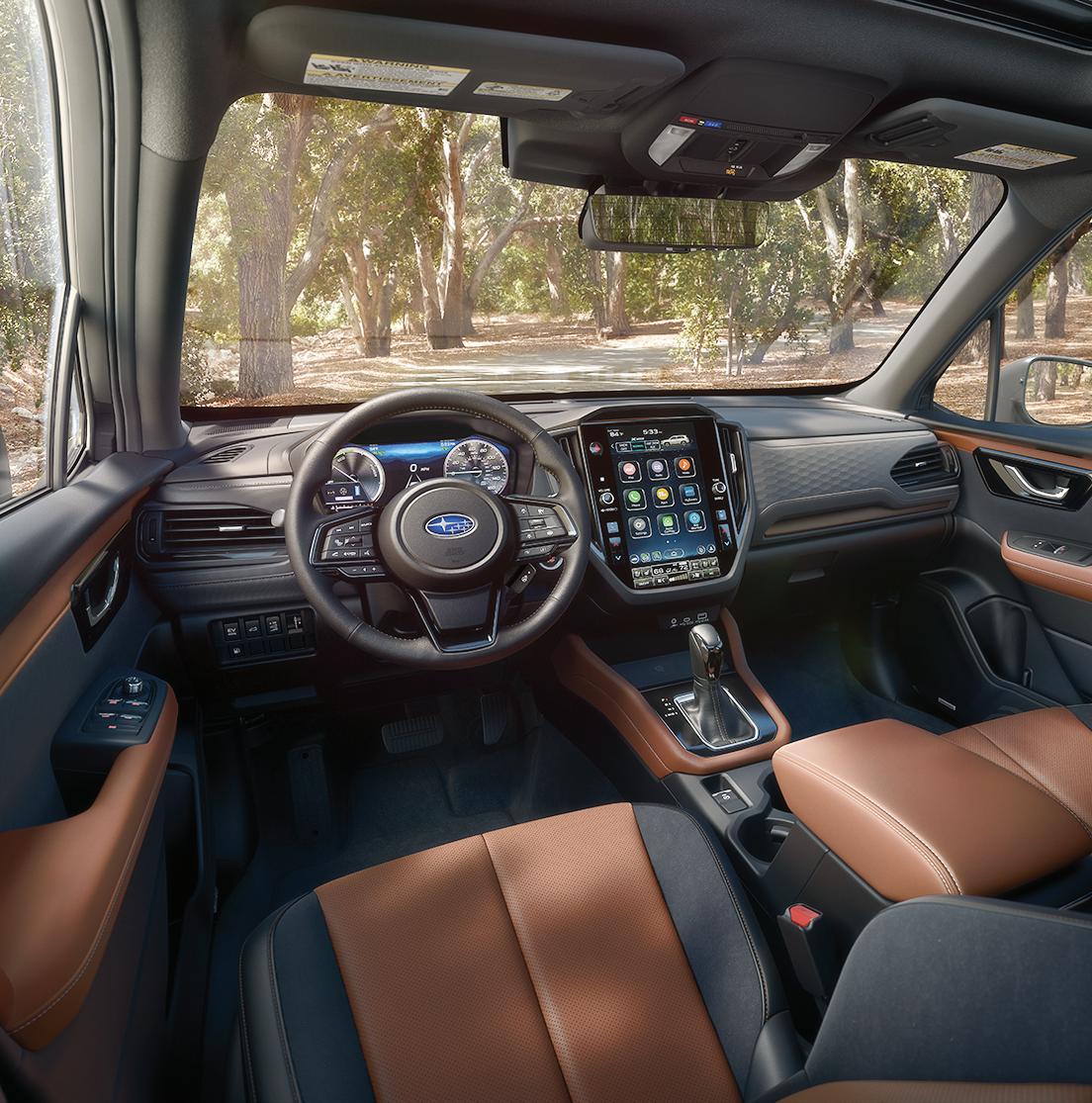

wireless Apple CarPlay® and Android Auto™ integration, and wireless device-charging.
Built on the foundation of the Subaru Global Platform, which is made from high-strength steel for crash protection with active safety systems like EyeSight Driver Assist Technology, which acts like an extra set of eyes on the road, and the available DriverFocus® Distraction Mitigation System, which can give a helpful alert if a driver becomes distracted or drowsy.







Stock up for the season with beautifully curated school and planning essentials from a few of our area’s top stationery spots
COMPILED BY REBECCA SAVIDGE
PHOTOGRAPHY BY JOHN MICHAEL
SIMPSON




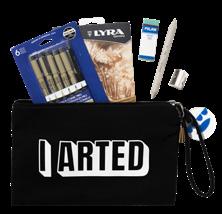
HpFang “I Arted” Bag, $20
Milan Artist 520 Eraser, $.99
M+R Metal sharpener, $5.50
Lyra Rembrandt Sketching Set Pencils, $29.99
Single Stump Blending Tool, $1.50
Unleash your creativity this school year with a drawing set that has it all! Packed in a handy and witty pencil bag, it includes pencils, a blender, a sharpener, a kneaded eraser and a pen. Pair it with a few sketchbooks, and you'll have everything you need for doodling wherever inspiration strikes.
PAPER COMPANY
Ruff House Print Shop
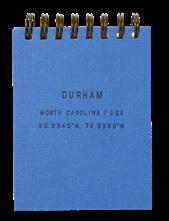
Durham Script Mini Jotter Notebook – Bluebird Cover, $8.99
Jot down quick notes, reminders or class ideas on the fly.
Talens Art Creation Black Sketchbook, 80 sheets of 90-pound 8.3-by-11.7-inch paper, $19.99
Talens Art Creation Blue Sketchbook, 80 sheets of 90-pound 5.1-by-8.3-inch paper, $11.99
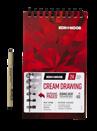
Koh-I-Noor Cream Colored Drawing Paper, 24 sheets of 90-pound 5.5-by-8.5-inch paper, $9.99
Sakura Pigma Micron Pen, Black, 08, $3
Speedball Printmaking White Paper Pad, 20 sheets of 8.5-by-11-inch paper, $18.99
Speedball Fabric Block Printing Kit, $43.99
Dive into the art of printmaking with this complete kit that includes carving tools, a brayer, ink and special printmaking paper that makes it easy to get started.
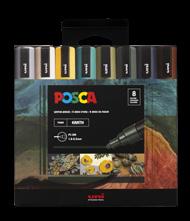
Posca Paint Marker PC-5M Earth-Tone Colors, set of 8, $34.99
Bring your ideas to life with the bold, vibrant color of Posca markers! Available in a variety of sizes and shades, they’re perfect for everything from detailed drawings to bold designs.
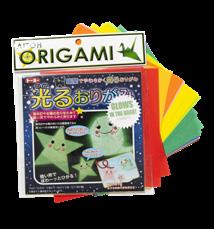
Toyo Glow-in-the-Dark Origami Paper, $8.50
Fold up some fun with eye-catching origami kits featuring cool, colorful designs! Try out a Flower Origami kit ($7.99) for delicate blooms, the Glow-in-the-Dark Origami set (pictured) for luminous creations or the Insects Origami pack ($6.99) for bugs that really pop.
TRAVEL WATERCOLOR SET
Sakura Koi Watercolor
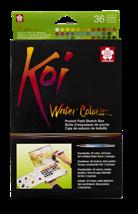
Pocket Field Sketch Box, 36 colors, $61.99
Hahnemühle Akademie Aquarell Watercolor Landscape Book, 60 pages of cold-pressed, 95-pound A5 sheets, $29.99
Take your painting on the go with this compact travel watercolor set. Perfect for capturing inspiration anywhere, it’s got all the colors you need in a handy, portable case.
Ooly Color Together Colored Pencils, set of 24, $16.99
Stay color-coded and creative while organizing projects or assignments.
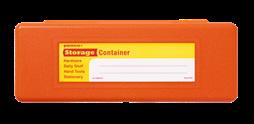
Orange Penco Pen Storage Container, $12.99
Keep your pens, pencils and tools neatly in one place.
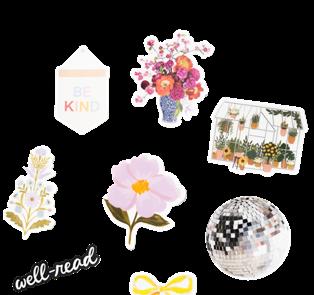

Scan to explore more creative products (like these waterproof vinyl stickers from Mill and Meadow) to help you kick off the busy fall season in style!

MILL AND MEADOW
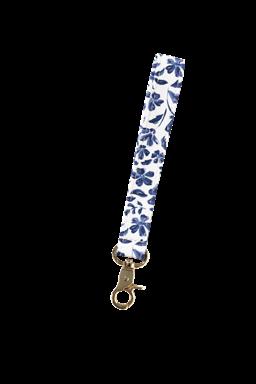
Wristlet Keychain, $12
This sustainable mushroom leather wristlet keeps your dorm key, ID or mini wallet easily accessible on your wrist – no more last-minute bag digs when you’re running late to class or grabbing coffee on the go.
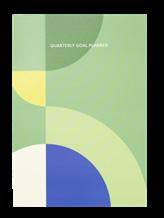
Green Poketo Quarterly Goal Planner, $28.99
Break big dreams into doable steps and track progress on your own timeline.
Occasions by Shakira “Yay” Pencil Felt Pennant, $9.99
Add a cheerful touch to your desk for motivation.
Academic Planner, $38
Students can begin and end their year organized with this 12-month planner, which runs from August 2025 to July 2026 and includes coloring pages, habit trackers and space for notes, plus weekly spreads! It’s easy to keep track of assignments and plans with built-in tabs and a thoughtful layout.
PAPER SOURCE
So. Many. Planner Stickers.: 2,600 Stickers to Decorate, Organize and Brighten Your Planner, $14.99
The staff at Paper Source loves to ensure their customers have everything they need as well as some fun extras they didn’t know they needed until they came into the store. In addition to these beautiful and functional stickers, the shop features a large selection of journals, washi tape, stamps, markers, crayons, stencils, bookmarks and many other great items to get a student, teacher or parent excited about back-to-school season.
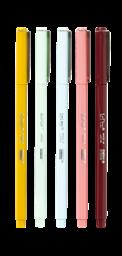
in Mustard, Pale Blue, Peppermint, Coral Pink & Burgundy, $3 each
A staff favorite for their smooth, smear-resistant (read: left hander-friendly) ink and micro-fine tip –available in 20-plus vibrant colors, sold individually or in in packs of six or 10.
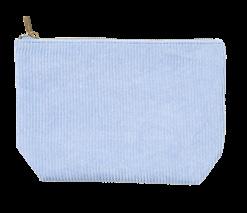
Corduroy Carry-All Pouch, $22
Keep your school essentials neatly packed – whether you’re carrying pens, calculators, laptop cords or art supplies – with this pouch that fits perfectly into backpacks and tote bags.
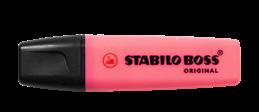
Stabilo Boss Original Highlighter in Pink 56, $2.99
Spotlight key info in notes, planners or textbooks instantly.
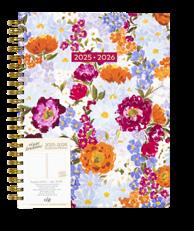
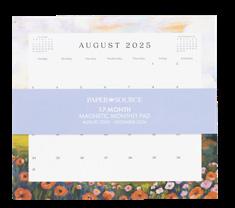
2025-2026 Paper Source Landscapes Weekly Desk Planner, $34.99
Stay on top of your schedule with a weekly desk planner featuring week-at-a-glance pages, monthly overviews and a notes section. Some styles even include fun planner stickers and sticky notes.
Magnetic Bookmarks, $15
Make flagging textbook pages or your current read easier than ever with these four small-but-strong bookmarks that clip securely without damaging pages –ideal for students juggling readings, syllabi and study guides.
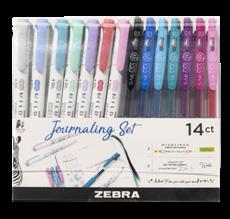
Journaling Set, $38.99
This 14-piece set pairs seven Sarasa Clip 0.5mm fine-point retractable gel pens with seven Midliner dual-ended markers (it’s a marker and highlighter, all-in-one), perfect for colorful notes, bullet journaling and creative planning.



SEPTEMBER 2 - 14
Find Tickets at



BY SEAN LILLY WILSON PHOTOGRAPHY BY JOHN MICHAEL SIMPSON
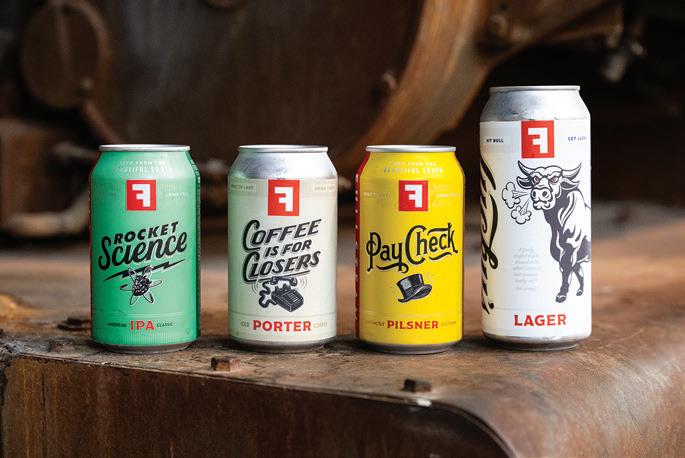
Tomorrowland is a column in which community members share their visions for Durham’s future.
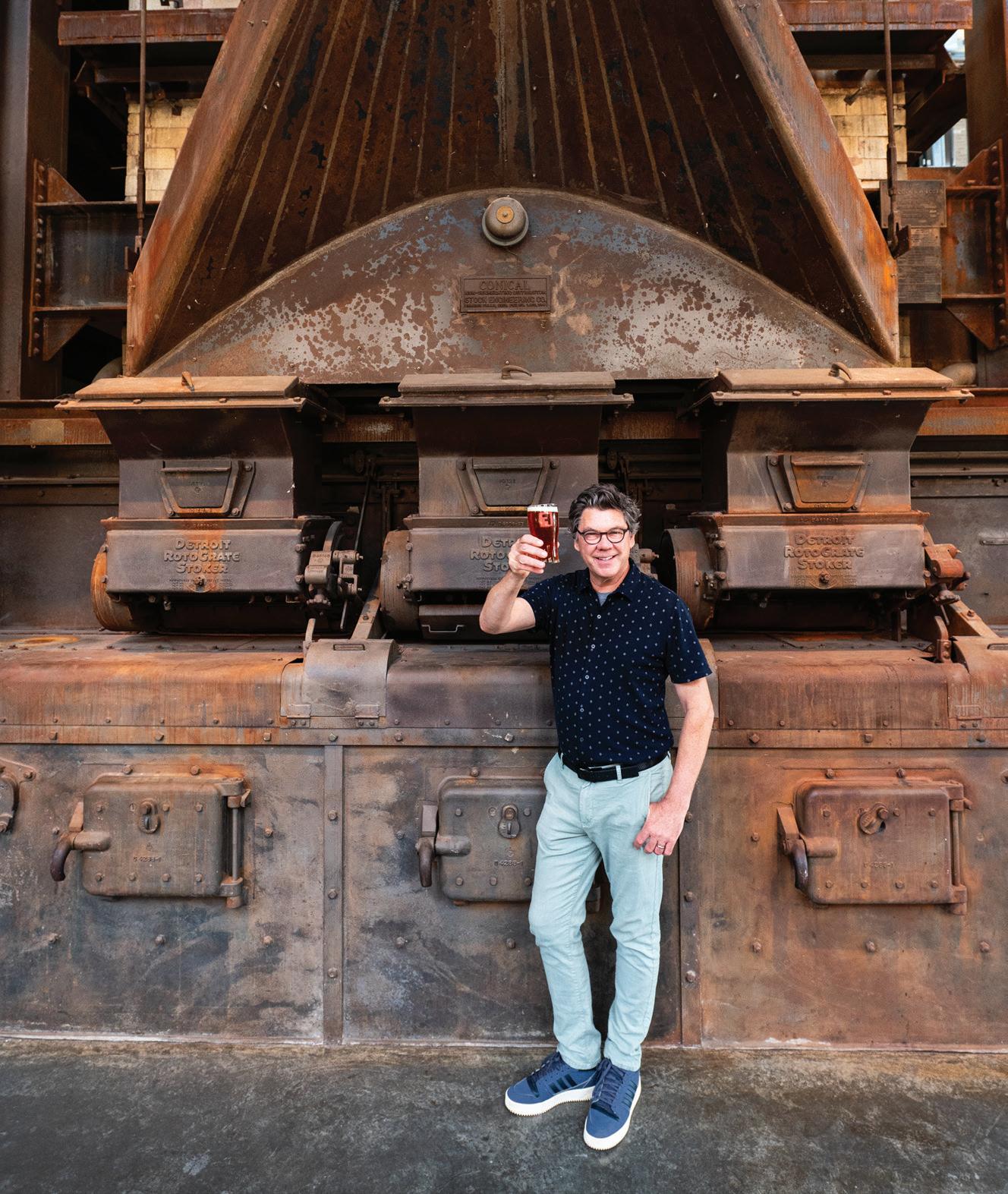
Sean Lilly Wilson is the chief executive optimist at Fullsteam He launched the brewery’s original taproom on Rigsbee Avenue in 2010, followed by an expansion to Boxyard RTP in 2021. After closing the Rigsbee location in October 2024, Sean is preparing to open Fullsteam’s new 9,000-square-foot taproom at American Tobacco Campus later this year.
Imoved to Durham in 1992 as a product of the suburbs: Philadelphia as a kid, Chicago for college and a post-grad summer in Dallas. Why Durham? In short: love. I had just started dating Carolyn – now my wife of more than 30 years –and I was eager to grow something beyond a college romance.
I took a job as a server – first at Parizade, then for three formative years at Magnolia Grill, where I voraciously learned about persimmons, hoppin’ John and fried green tomatoes. I absorbed the stories, the food, the spirit of the region. It was my job to talk about farms and farmers, seasonal ingredients and recipes rooted in a sense of place. And even though I was “just” a waiter, that experience still shapes my work at Fullsteam, where we connect people to the land and to one another through our beer and food. I sincerely doubt I would have started Fullsteam in 2010 had I not been a waiter at Magnolia in 1992.
Today, “farm-to-table” is so mainstream it’s almost passe. Durham’s culinary scene is vibrant – but sometimes I wonder if our identity is more about how well we replicate food from other places.
“I miss the bagels from back home.”
“Where can I get a real beef-on-weck?”
“There’s a new Cincinnati chili place opening up!”
I get it. We all long for the flavors that shaped us. (I flipped out the first
time I saw pork roll at the old Kroger on Hillsborough Road.) But there’s a difference between celebrating variety and defining ourselves by comparison. It feels like a kind of culinary insecurity – the idea that we’re legit because our [insert regional dish] is [as good as / nearly as good as / not quite as good as] what you’d get in [wherever].
It’s the “wherever” that worries me most. If I have a vision for Durham’s food future, it’s that we celebrate what’s already from here. That we stop trying to be Anycity, USA – and double down on being Durham.
In other words: What’s Durham’s version of beef-on-weck? I’m not sure we have one.
To me, Southern Progress means celebrating Isaac’s bagels, Goorsha’s doro wat and Cheeni’s Indian-infused cocktails. But it also means thanking (with our dollars) Saltbox for its unwavering support of North Carolina’s coastal fishing community. Grabbing lunch at the ever-steady Chicken Hut. Supporting Byrd’s and Picnic, who favor humble Carolina whole-hog barbecue over Insta-friendly Texas trays. Instead of, “That was a solid version of something I can get in New York,” I want visitors to leave Durham saying, “Wow. I’ve never had anything like that before.” I miss the oxtail at Honey’s. Who’s got it on the menu?
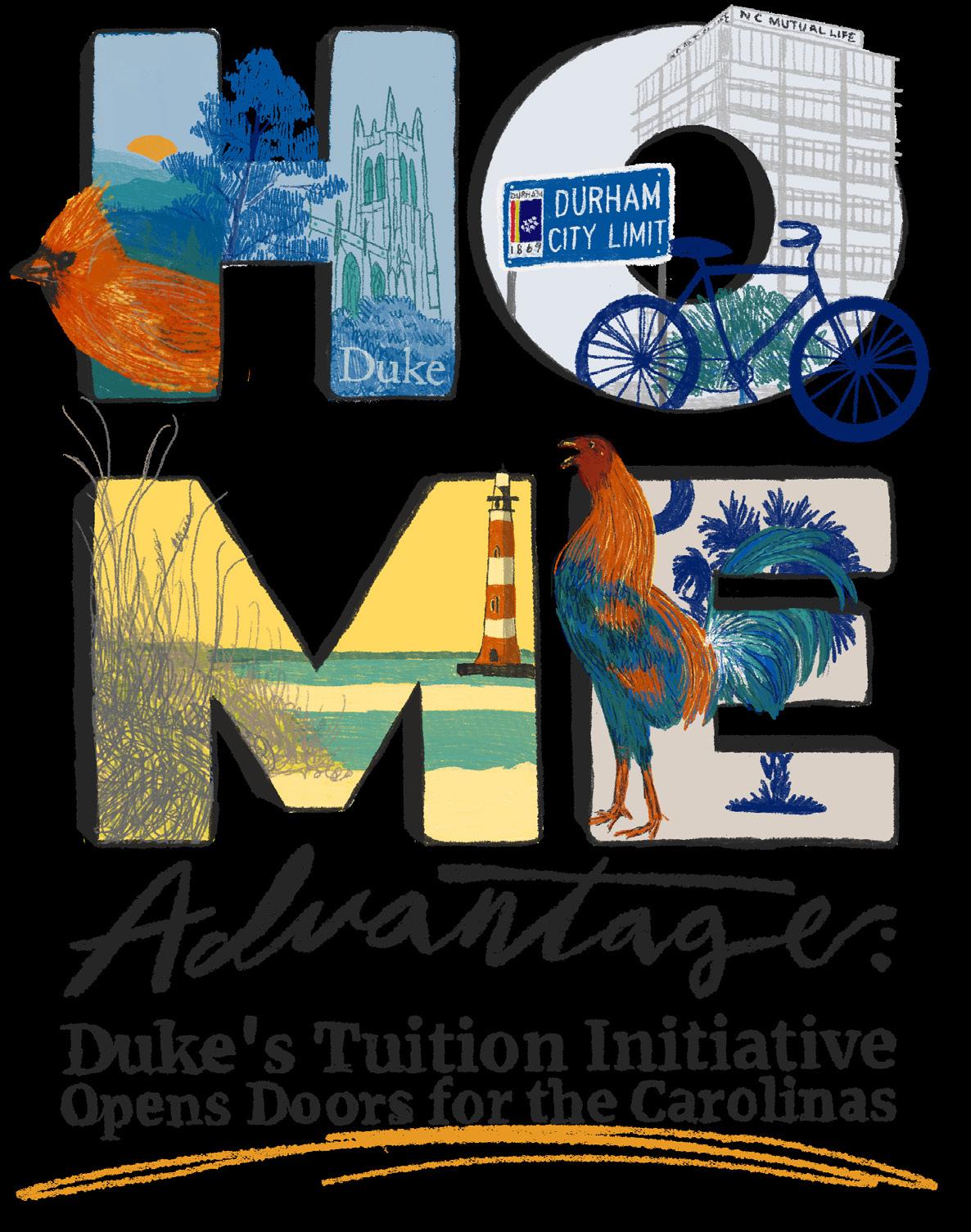
For generations, families across the Carolinas have viewed Duke with aspiration but also with financial roadblocks. Now, more students are seeing it as a real, reachable destination.
“Duke was my dream school,” said a rising sophomore psychology student from Asheville, N.C. “My family thought it would be out of reach, but the financial aid policy made a huge difference in my ability to apply.”
She’s not alone. The launch of the North Carolina/South Carolina Tuition Initiative provided Carolinas’ students from households making $150,000 or less with full tuition grants; and for those whose family incomes are under $65,000, housing, meals and other campus expenses are also covered.
Since the initiative’s launch, Duke has seen a 31% increase in applications from the Carolinas. In the 2024–2025 academic year alone, more than 390 students qualified for the tuition initiative. Three hundred thirteen received aid they otherwise wouldn’t have received. As of spring 2025, more than 1,280 undergraduates at Duke hail from North and South Carolina, making up nearly one-fifth of the student body.
Duke’s investment in educational access is deeply tied to its roots as a Durham institution. With nearly 12,000 alumni living in Durham and more undergraduate students from North Carolina than any other state, the university works closely to attract those with state and Durham ties through a number of K-12 programs.
Two incoming first-year students from Riverside High School, part of Durham Public Schools, say their journeys to Duke began through the university’s local outreach and academic enrichment opportunities.
“I chose Duke because of the cohesive engineering program I was introduced to during a Duke Engineering Bits & Bytes tour,” said one student, who also participated in Duke’s Health and Environmental Science Program (HESP). The NC/SC Tuition Initiative will allow her to graduate without significant debt. “As a first-generation student in a single-parent household, I would have been under a lot of pressure to help support my family while at the
same time paying my student loans.”
Another incoming student shared that once he decided to pursue engineering, Duke was his first thought. “Engineering at Duke is much more than a degree,” he said, noting his interest in its international learning focus through programs such as DukeEngage and the Global Development Engineering certificate. “…not to mention the countless student organizations like Duke Engineers for International Development that would surround me with like-minded individuals.”
For him, the financial aid provided through the NC/SC Tuition Initiative was the deciding factor. “Global outreach, especially through Duke, would be economically challenging for me. Excessive debt would hold me back with worry and tough decisionmaking. This financial support allows me to pass this roadblock, essentially jump-starting the journey to my goals.”
Both students plan to pursue engineering, with interests ranging from electrical and environmental systems to sustainable infrastructure and global development.
In addition to HESP, other programs have formed a broad network of support, such as the MaryAnn Black Summer Internship Program and School Days. Now in its 25th year, School Days brings middle school students to spend a day on Duke’s campus. For some, it’s their first time visiting a college campus.
“Supporting students from the Carolinas underscores Duke’s commitment to expanding educational pathways and promoting economic mobility within our region,” said Stelfanie Williams, vice president for community affairs. “Students who enroll at Duke from various parts of the Carolinas contribute valuable perspectives and experiences that enhance our local partnerships and strengthen the connection between the campus and surrounding communities.”


In the 2024–2025 academic year

“Students who enroll at Duke from various parts of the Carolinas contribute valuable perspectives and experiences that enhance our local partnerships and strengthen the connection between the campus and surrounding communities.”
-Stelfanie Williams,
Vice President for Community Affairs
While the words “free tuition” grab attention, the deeper impact comes from layered, long-term outreach, said Jenny Wood Crowley, assistant vice provost for undergraduate education and director of the Division of Intellectual Community. “We’ve built stronger relationships with high schools, counselors, communitybased organizations and education leaders, especially here in Durham,” she said. “And we’re starting to see a shift: more students and families are recognizing Duke as a place they could actually belong, not just academically, but socially, culturally and financially.”
The initiative is also strong among military families who often move around the country. “Residency can be hard to establish when you move every two years,” said Miranda McCall, associate vice provost and director of financial aid. “Part of the pledge is if you’re stationed in North Carolina or you’re a North Carolina resident stationed elsewhere, you still qualify for this initiative.”
And the response was immediate. “We started getting the calls and emails––‘I’m thinking about attending. Is this real?’” McCall said. The clarity of the initiative helped families see Duke as a real possibility for their children. While eliminating tuition removes one of the biggest barriers, Crowley said equity doesn’t begin and end with financial aid. “We’re also investing in the pre-college space: creating college-readiness materials for younger students, building tools to make the application process more accessible and collaborating with educators to co-create pathways into Duke –– not just from the top-performing schools, but from under-resourced districts and rural communities too. This is longterm work, and we’re in it for the long haul.”
That long-term vision reflects a deeper commitment to systemic change. It expands the pipeline, reimagines outreach and ensures the Carolinas aren’t just where Duke recruits but where it reinvests.
Students who benefit from the tuition initiative gain access to a campus ecosystem intentionally built to support first-generation and low-income students.
That includes Duke Low-Income, FirstGeneration Engagement (DukeLIFE), which offers mentorship, advising and leadership opportunities. Programs such as Resources for Internship Success and Empowerment (RISE) provide paid internships, while course material assistance and emergency funds eliminate financial hurdles that could otherwise derail a student’s experience.
“The initiative opens the door,” Crowley said, “but what keeps students here and helps them flourish is the comprehensive, student-centered support they find once they walk through it.”
For many students, the initiative opened a new door of opportunity.
A rising junior from Cary, N.C., majoring in biology, shared that Duke was always her dream school. “The campus is one of the most beautiful in the world. The community is strong, and it’s close to family. Duke is perfect for my educational and career goals.”
A fellow rising junior student from Spring Hope, N.C., created a custom major in speech, language and development of emerging minds. “I saw Duke as a place to meet individuals from diverse backgrounds and not have to worry about the financial aspects.”
And for a recent graduate from Rock Hill, S.C., the impact was life-changing: “I have been able to travel and graduate from Duke debt-free, which is a privilege I don’t take lightly.”
These personal stories reflect the initiative’s ripple effect, extending beyond tuition bills to include opportunities like DukeEngage, an immersive summer program where undergraduates volunteer full time with communities across the globe;
the Duke Marine Lab, a marine research center located in Beaufort, N.C.; and various leadership roles on campus.
Duke’s investment in access reflects a broader commitment to the communities it serves across the Carolinas. That commitment is especially visible in Durham, where the university has deep roots and partnerships. According to the 2024 Annual Report on Impact and Engagement from Duke State Relations, Duke is the second-largest private employer in North Carolina, with more than 44,000 employees, $4 billion in wages and over $1 billion spent with local vendors. Duke’s presence in the state is further amplified through its 400 clinics, 8,300 health professionals trained in N.C. and nearly $1.4 billion in annual research and development expenditures.
But the initiative’s true impact may lie in the long-term outcomes it’s shaping by helping students in the Carolinas become the next generation of leaders, entrepreneurs and changemakers rooted in this region. “We hope students not only graduate from Duke, but also invest back into our communities,” McCall said.
From rural counties to the heart of the Bull City, the initiative is creating ripple effects. High school counselors now point students toward Duke as a realistic option. Military families, often burdened by frequent relocations, are eligible thanks to flexible residency policies. And through community partnerships and outreach events across both states, awareness is growing.
Duke remains committed to expanding access and opportunity for students across North and South Carolina.
“This is our home, and it’s where we have our most long-standing commitment,” said Duke President Vincent Price. “We want families in the Carolinas to know that a Duke education can be affordable and that we will provide support and resources so all students who are admitted to
Duke can have an exceptional college experience.”
This initiative is not only about affordability. It is also about building a regional talent pipeline. By making Duke more accessible to students from the Carolinas, the university helps develop future leaders who are more likely to remain, contribute and thrive in the communities they call home.
Though still in its early years, the NC/ SC Tuition Initiative is showing signs of lasting success. Retention rates among participating students align with Duke’s broader student body and early data suggests increased engagement across academics, leadership and service.
Perhaps most importantly, the initiative is reframing what access looks like by offering clarity, confidence and a community of support for students who might have once thought Duke was out of reach.
One recent graduate from Greensboro, N.C., who earned a bachelor’s degree in public policy and a certificate in markets and management studies, reflected on the long journey that brought her to Duke and the lasting impact of her experience. “Duke has always been my dream school since I became a Duke basketball fan in elementary school,” she said. She was also inspired by her older sister, who attended Duke as a Trinity Scholar, a scholarship program for students from the Carolinas who excel academically and serve their communities.
When asked about her favorite part of her Duke experience, she added, “The amazing faculty and professors at Duke go above and beyond for their students.”
For students across the Carolinas, Duke’s investment in access is not just opening doors, it is changing futures.
“We hope students not only graduate from Duke but also invest back into our communities.”
-
Miranda McCall, Tuition + Housing, Meals and Fees Covered for Families Under $65,000 Tuition Covered for In-State Students From Households Earning Up to $150,000 100% 100%
Associate Vice Provost and Director of Financial Aid
BY SHARON KINSELLA | PHOTOGRAPHY BY JOHN MICHAEL SIMPSON
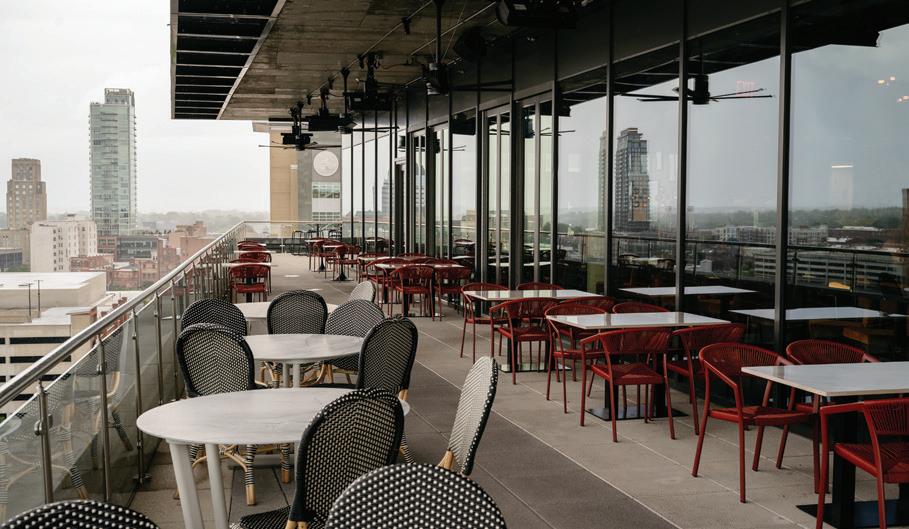
Visiting The Lenny on the 11th floor of 555 S. Mangum St. is one of the most urbane experiences the Bull City has to offer. Park in the adjacent deck and follow eye-catching signage – a preview of the rooftop eatery’s funky, modern aesthetic. Inside, concert posters and photos of music icons like Mick Jagger, John Coltrane and Billie Holiday usher you down a hallway, with sultry sconces evoking the feeling of slipping backstage at a legendary venue. Take the state-of-the-art elevator to the top and step into this stylish hidden gem.
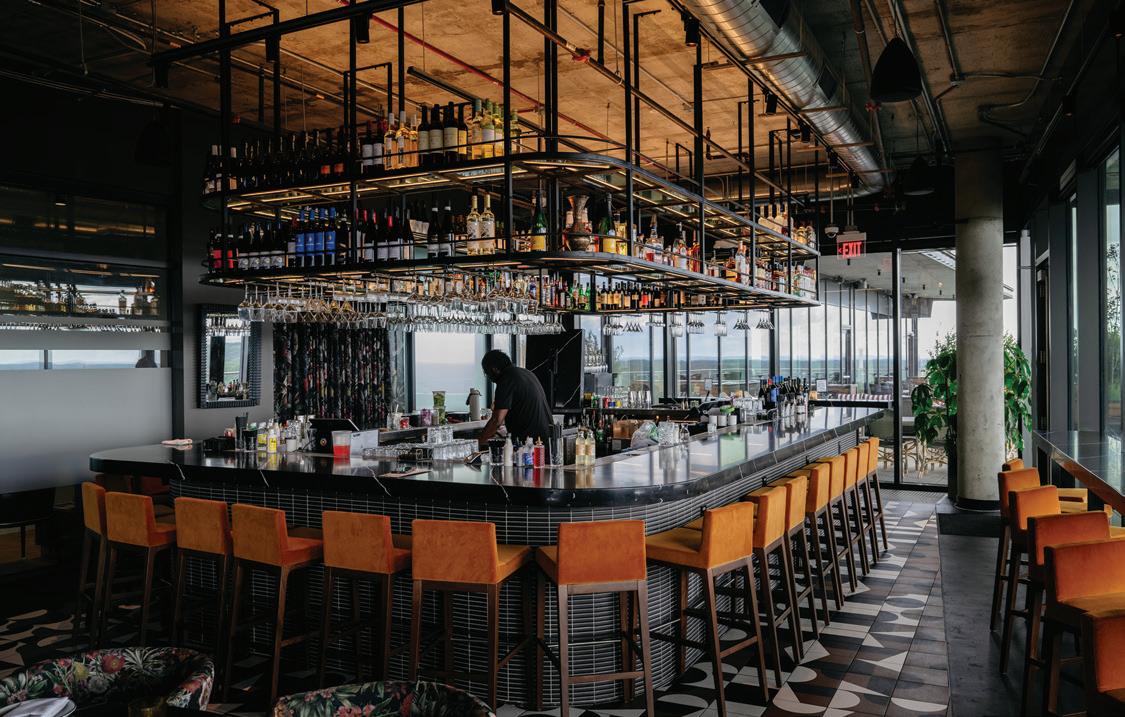
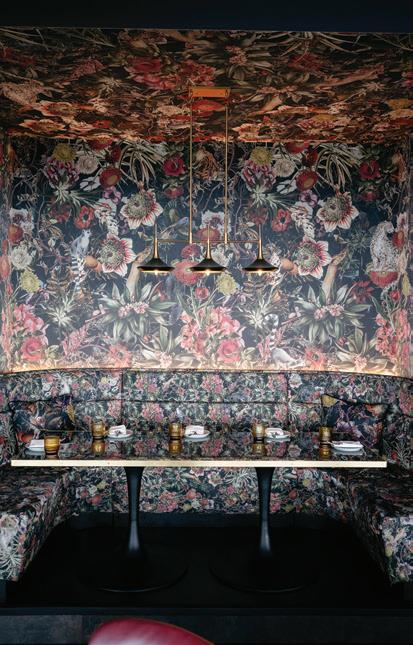
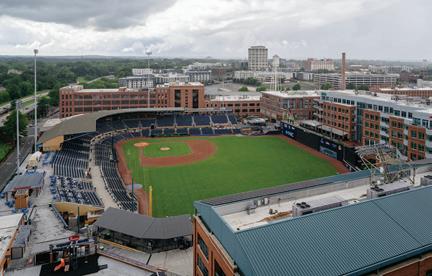
Audiophile brothers Charlie Ibarra and Joel Ibarra, the duo behind Raleigh favorites Jose and Sons and Cuya Cocina Latina, drew inspiration from Lenny Kravitz and his rock ’n’ roll and funk contemporaries when bringing their vision to life. A striking art deco floor sets the tone for a bold interior, where tastefully mismatched patterns came together with the expertise of designer Marika Caraganis. A lush tropical print pops along the walls and covers chairs and banquettes, while gold accents and vintage treasures lend the space a glamorous, layered richness – crowned by an antique Italian chandelier at the room’s center. The spacious outdoor patio offers ample table and lounge seating in addition to sweeping panoramic views of the skyline and Durham Bulls Athletic Park
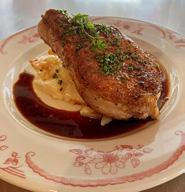
“Our menu plays off the concept of a contemporary brasserie,” Charlie says. French and Latin influences shine in a menu focused on fresh, farm-to-table ingredients, featuring Spanish tapas, chefcurated small plates and elevated French
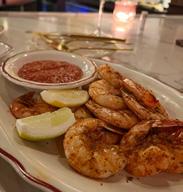
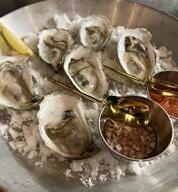
classics – dishes that feel both refined and down-to-earth. Raw oysters, locally sourced and artfully arranged in a gleaming display case, are a true showstopper. Other highlights include rotating house flatbreads – like the shaved ribeye-topped carne asada – perfect for sharing during a ballgame.
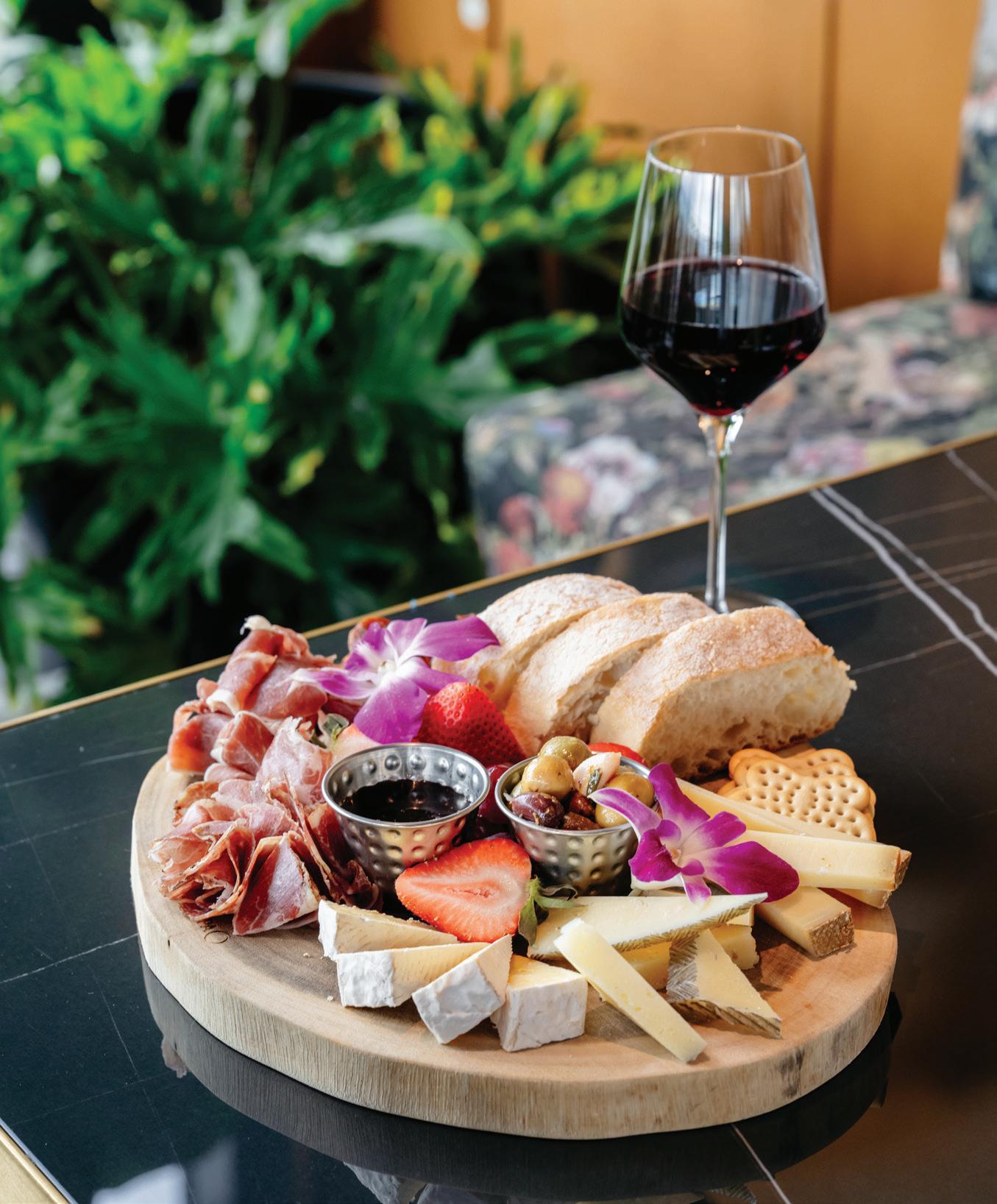
The Lenny’s bar program offers comfortable classics with a modern twist. Try the Passion 555 – made with aged reposado tequila, passion fruit and an edible hibiscus flower – for a refreshing rooftop sip. Wine lovers will appreciate a curated selection of international and domestic bottles from family-owned wineries.
COMPILED BY TAYLOR MOTLEY
A 1920s prohibition-era speakeasy is coming to downtown in December. Red Phone Booth is a luxury cocktail and cigar lounge concept with locations across the United States. Its newest spot in Durham, run by Drs. Ralph Mensah and Michael Thomas, will offer Italian-inspired small plates, more than 400 spirits and a curated selection of more than 200 cigars.
Flavortown has arrived at Raleigh-Durham International Airport’s Terminal 2. Guy’s Pizza Joint is an all-new casual concept from restaurateur and TV host Guy Fieri. Enjoy artisan pizzas inspired by Guy’s Italian heritage, including “The Guy-talian” and the “OG Hamburger Pizza,” as well as tasty sandwiches, salads and wraps.
Andia’s Ice Cream was named the No. 4 best ice cream shop in the country by USA Today. Head to its Durham location at The Can Opener to cool off with a scoop inside a colorful double-decker bus. CEO and co-founder Andia Xouris whips up a new set of rotating flavors every month, but there are numerous year-round mainstays, like the double dark chocolate or mango jalapeño margarita.
LRB Provisions is a new neighborhood sandwich shop opening later this summer at 2009 Guess Rd. in the former Dog House space. This cozy, 550-square-foot counter-service spot is helmed by Amanda Orser, former chef de cuisine at the renowned Magnolia Grill who continued on to work at Chapel Hill’s Lantern Restaurant and at downtown’s Littler. LRB – which pays homage to Ellerbee Creek – will serve up sandwiches on house-baked breads, plus seasonal soups, salads, sides and dreamy desserts.
StaylateafterFridayand toSaturdayhomegames catch Durham Bulls’ fireworks show around9:15p.m.–you’llsee fromthemexplodeateyelevel aboveyourvantagepoint the stadium.
Ashleigh Bakes Daily opened a storefront at 307 W. Main St. in June. Owner and baker Ashleigh Ratchford now offers her signature soft and thick cookies, including favorites like double chocolate chip and creative inventions like caramel-stuffed Oreo, from her downtown shop.
Coffee house and art café Vessel opened in June at 506 N. Mangum St., Ste. 102, in the former Everlou Coffee Co. space. Everlou founders Dillon Partin and Kristine Partin sold the business to multimedia artist Alivia Moe, who hopes to cultivate a space that celebrates coffee and artistry as a daily practice while maintaining the shop’s inclusive, welcoming space.
Primrose Bar and Lounge opened in April at 111 W. Main St., Ste. 100. The lounge, adorned with bright floral wallpaper as well as two flower walls perfect for snapping selfies, features art deco-inspired seating and playful cocktails like “Becky With the Good Pear,” which blends tequila, mezcal, St. George spiced pear liqueur, lemon juice and honey.
You can now shop at a boutique bodega at Horseshoe at Hub RTP Nanny Goat, the latest endeavor from James Beard Award semifinalist and Cheeni chef Preeti Waas, is a retro market at 3151 Elion Dr. that is stocked with smallbatch artisan goods, grab-and-go fare and fresh produce, dairy and meat.
Ramblers Beer and Wine changed ownership in June, with founders and longtime owners Justin Tipper and Brittany Tipper passing the torch to John Williamson and Andrea Yount Williamson Stop by this bar and spirits shop at 115 Fuller St. to enjoy the same great brews and sense of community while relishing in new decor and a revitalized atmosphere.
This spot is open nightly for dinner and brunch on the weekends, and welcomes groups of all sizes. Reservations are highly recommended, but walk-ins are happily accommodated. Evenings are an ideal time to stop by, with specials from 3-5 p.m. and the restaurant’s new Sunday Sunset series, which features local DJs spinning rooftop beats. The Lenny is your new go-to for sophisticated vibes, photo-worthy moments and one of the most impressive views in the Triangle.
Southern soul food catering company and food truck
Soul Forking Good plans to open its brick-and-mortar at 2500 Meridian Pkwy., Ste. 135 – previously home to Chef Chiks Bakery – later this summer. Led by Dominique Turner and James Turner, Soul Forking Good’s new restaurant will not only feature dine-in space, it will also give the Turners expanded kitchen space to grow their catering operations.
Buzzybakes closed its bakeshop at Boxyard RTP Founder Carrie Haub first opened the mobile bakery in 2015 and brought her treats to Boxyard in 2021. The bakery will now focus on expanding its catering business and will begin taking new orders in August.
Corpse Reviver Cocktail Bar at 715 Washington St. is now Conniption Bar & Lounge
The renaming is designed to help bargoers connect the space more directly with its owner, Durham Distillery, by touching on the name of its award-winning gin.
Rhonda Jones’ Chez Moi Bakery is celebrating two anniversaries in 2025 – 20 years since its start as a hobby and 10 years since Rhonda turned it into a full-time business in June 2015. Best known for her rum cakes, Rhonda’s desserts can be ordered online or found at various cafes and restaurants, such as Cocoa Cinnamon and Namu
Counter Culture Coffee was named the bestbranded small business in North Carolina by Piktochart in May. Headquartered at 812 Mallard Ave., the roaster offers a variety of sustainable coffee blends sourced from around the world, from fruity light roasts to rich, chocolatey profiles. Counter Culture Coffee’s products are sold and served at 5,000-plus retailers and restaurants nationwide, including local spots like the Durham Co-op Market and Dulce Cafe

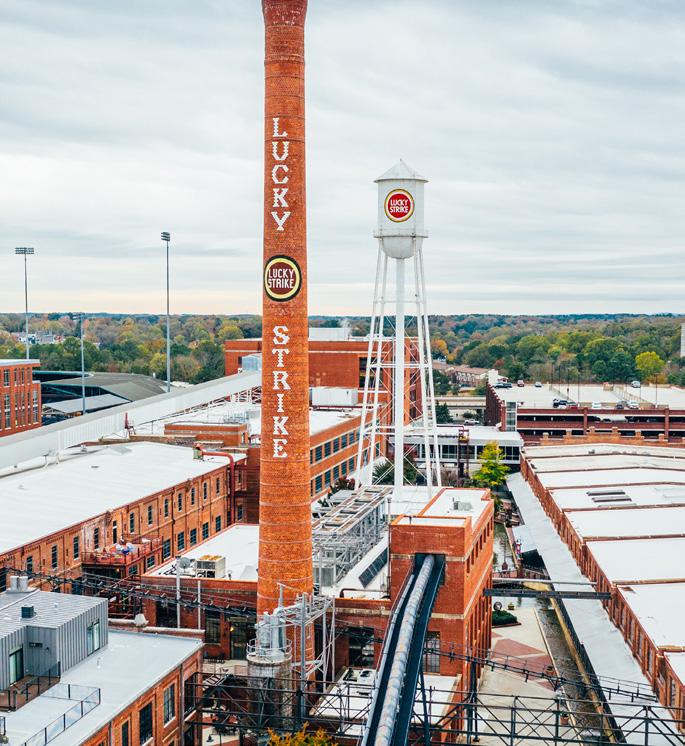
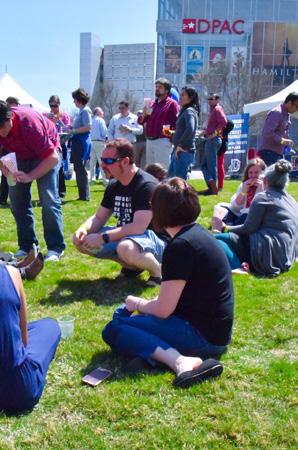
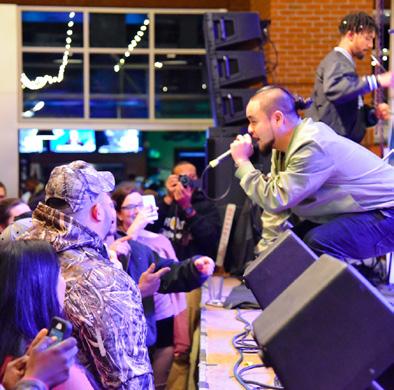

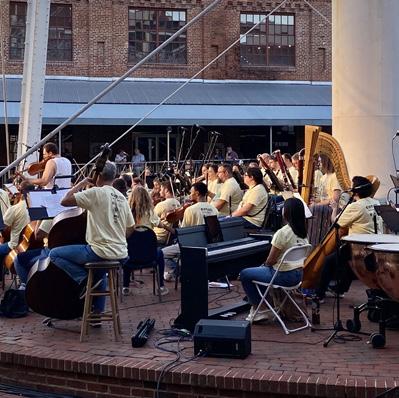
Concerts, festivals, markets, races and so much more–it’s all happening at ATC! Explore our full line-up of Fall events at AmericanTobacco.co/events.

BY MATTHEW LARDIE PHOTOGRAPHY BY JOHN MICHAEL SIMPSON
he dog days of summer are still very much with us, which means there is plenty of time to enjoy one of the season’s most iconic eats – the hot dog. The Bull City knows how to do a good dog, and we’ve got all the bases covered, literally (looking at you, Durham Bulls). From traditional Carolina dogs to more indulgent versions, here are some hot dogs that you won’t want to miss out on.
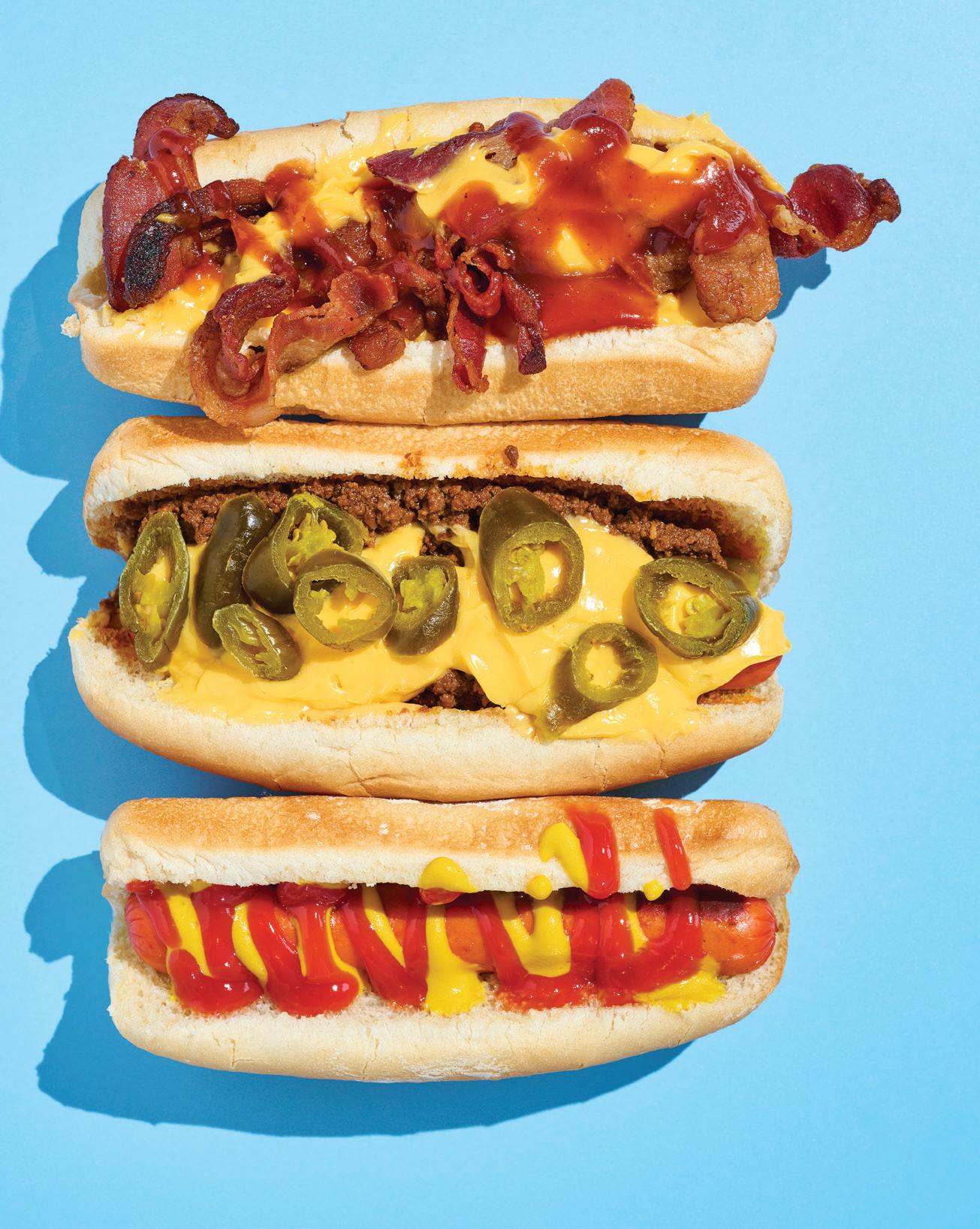
The Dog House has been a Durham family favorite for more than 50 years, perhaps known just as much for its iconic doghouseshaped buildings as for its actual hot dogs. With three locations serving up classic Southern hot dogs, it’s easy to see why The Dog House ranks toward the top of most people’s lists of the best hot dog joints in town. It’s hard to beat its combination of affordability and variety, with options like the Boxer Dog (mustard, onions, chili), The Ol’ Yallow (mustard, cheese sauce, bacon bits) and the German Shepherd (spicy mustard and sauerkraut) all coming in under $3. There’s an option to upgrade any dog to an all-beef hot dog, or round it out with a combo plate for the full Dog House experience.
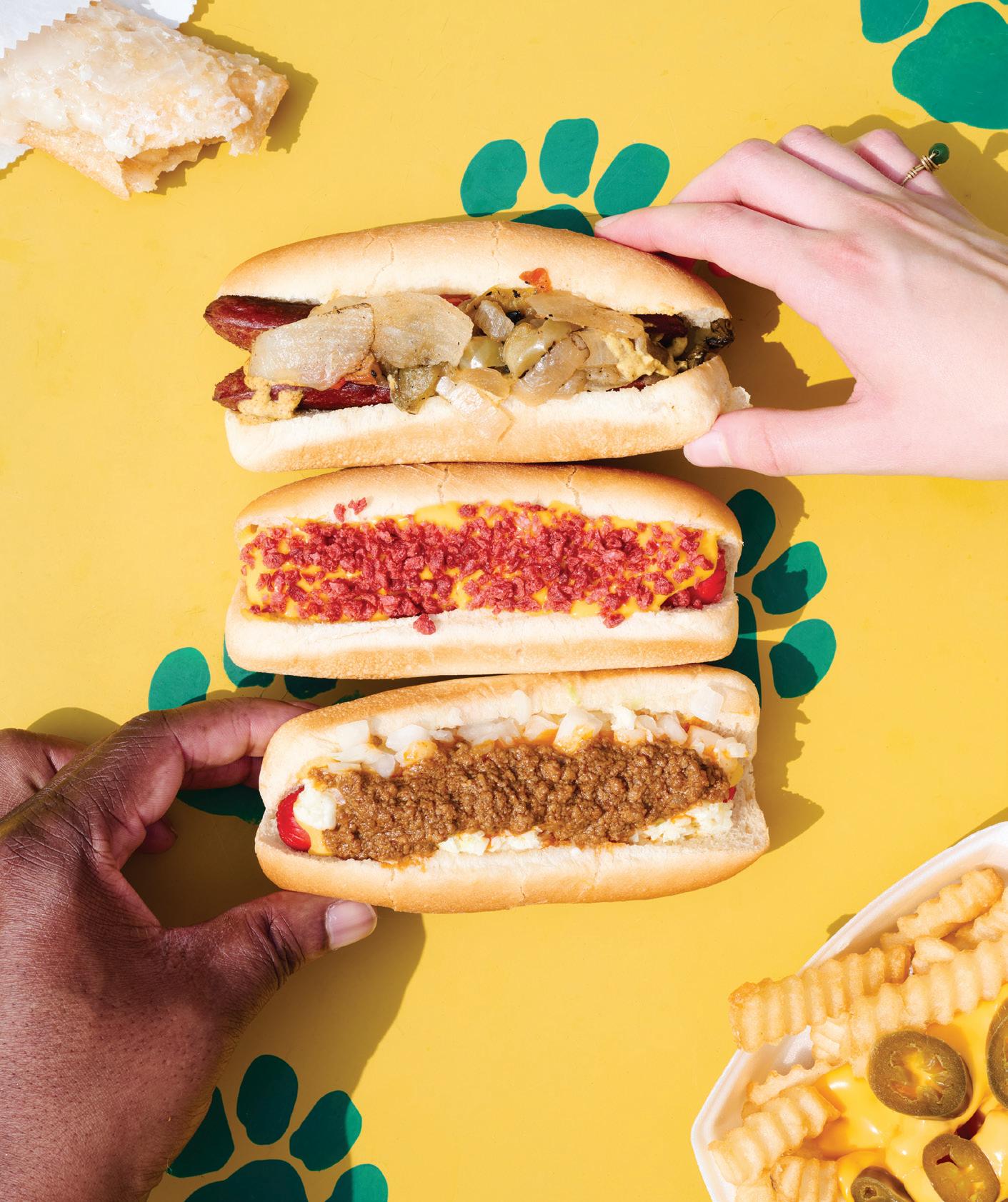
Dig into The Dog House’s signature flavors: the Carolinastyle Bull Dog (mustard, onions, chili, slaw) and the colorful Ol ‘Yallow (mustard, melted cheese, bacon bits). Or, make your own dog with toppings like peppers, onions and spicy mustard. Enjoy a hot apple turnover that’s just the right amount of crispy, and relish a big plate of cheese spuds (jalapeño cheese fries).
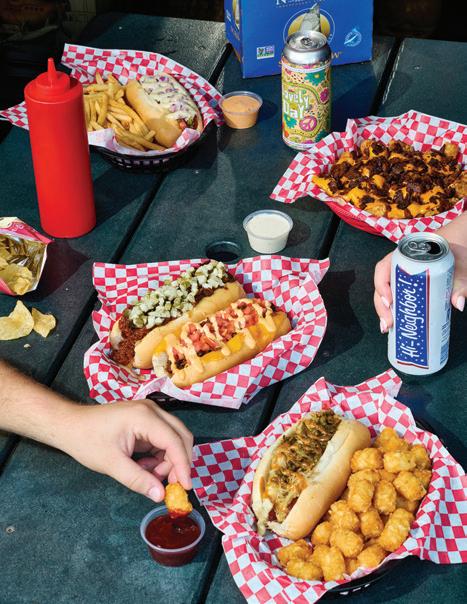
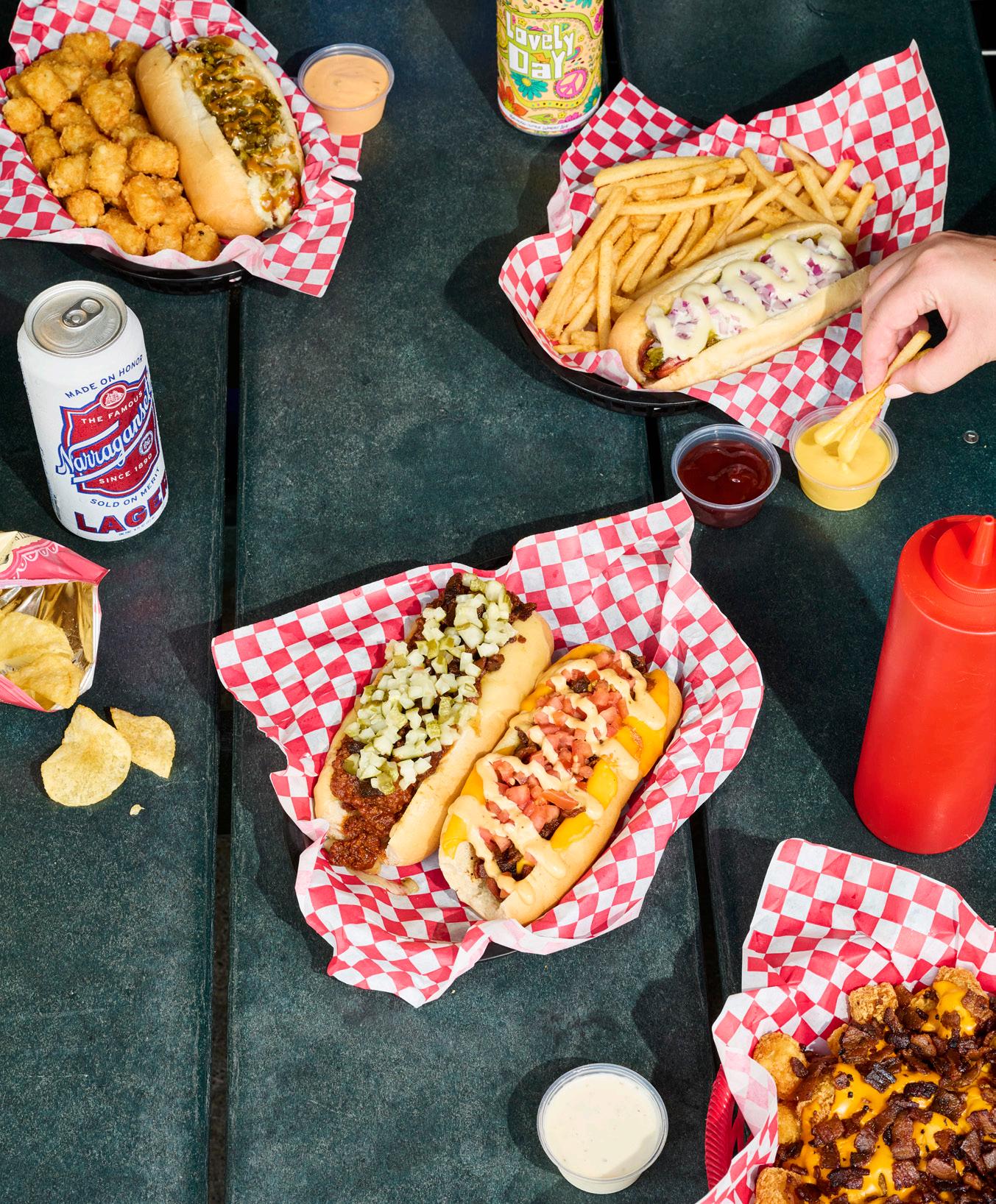
A hot dog lineup for the ages at Dain's Place: One topped with jalapeños, sauerkraut, Gorgonzola and spicy mustard; another with horseradish sauce, ranch, red onion and relish; a third with sweet beef chili, bacon, sautéed onions, pickles and pepper jack; and a fourth stacked with cheddar, bacon, tomato, barbecue sauce and chipotle mayo. Served with fries, loaded tots and chips, plus beers to wash it all down: Birdsong’s Belgian-style wheat ale, Lovely Day, and a classic Narragansett.
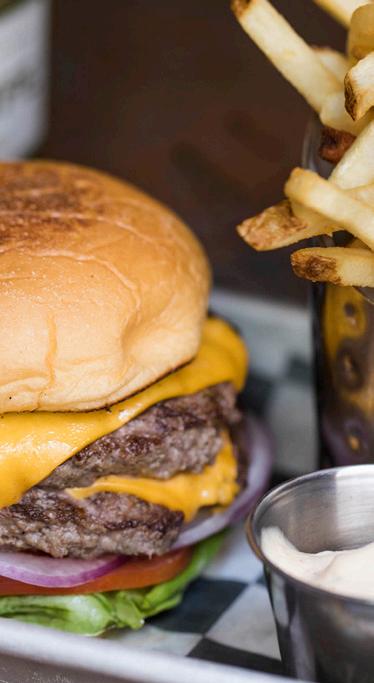
Locals have long lauded Dain’s Place for its burgers, but real ones know not to sleep on the hot dog. Owner Dain Phelan and his team dish out a hearty all-beef kosher dog on a freshly baked roll with a seemingly endless array of add-ons. The homemade sweet beef chili is a strong contender for top topping, and when combined with the restaurant’s coleslaw and pimento cheese, it could put this dog in the running for Best CarolinaStyle Dog in Durham. Those who like their dogs a little funky might want to opt for horseradish sauce and bacon, or perhaps Gorgonzola cheese and grilled onions. Add on a basket of Dain’s famous tater tots, and you’ve got yourself one of the yummiest hot dog meals in the Bull City.
There’s a little spot on Angier Avenue in East Durham that looks like it’s been there forever, because it practically has. L&D Grocery is a cash-only joint that’s served straightforward Southern diner staples – from fried bologna sandwiches and fried chicken to, you guessed it, classic hot dogs – for generations. “It’s unassuming, unpretentious deliciousness,” says lifelong Durhamite Amos Cooper Jr., who’s been dining at L&D since childhood.
“It reminds you of the kind of places your grandparents would take you as a kid. It still has that small-town charm in a growing city.”
As for what to order, Amos has a strict rule: “There is only one way! Carolina style!”
Chef Carrie Schleiffer’s menu at Alley Twenty Six has earned many accolades over the years, but the new late-night edition is designed specifically for those who might need one more bite before calling a rideshare and heading home. It’s got Alley classics like the Alley burger, coconut shrimp, and caviar and tots, but the Brasstown Beef hot dog is the go-to for many folks. Served with Alley’s house-cut fries, the dog can come plain (with ketchup and mustard), with slaw or with pimento cheese. Need more? There’s a chili cheese dog with housemade chili, shredded cheddar and bacon bits. Want the ultimate in late-night meals? Order the caviar and tots, a chili cheese dog and a perfectly chilled martini. That’s a high-and-low combo that is pretty hard to beat any time of the year.

Hot dogs and baseball go together, well, kind of like America and baseball. Durham Bulls fans and foodies alike can indulge in some of the best dogs in town during home games at the Durham Bulls Athletic Park. The all-beef hot dogs are perennial favorites, and they can be ordered three ways: There’s the prototypical Carolina Dog with chili and slaw; the Chili Cheese Dog with simple, melty, yellow American cheese sauce and chili; and the All the Way, which combines the two in the best way. There’s also an Impossible Dog for vegetarians and vegans, and you could always just get a plain hot dog – the ballpark offers Dollar Dogs on Thursdays, where regular hot dogs are only a buck. Pair that with Helmet Nachos, some sunflower seeds, and a soft pretzel or two, and you’ve got a home run of a meal.
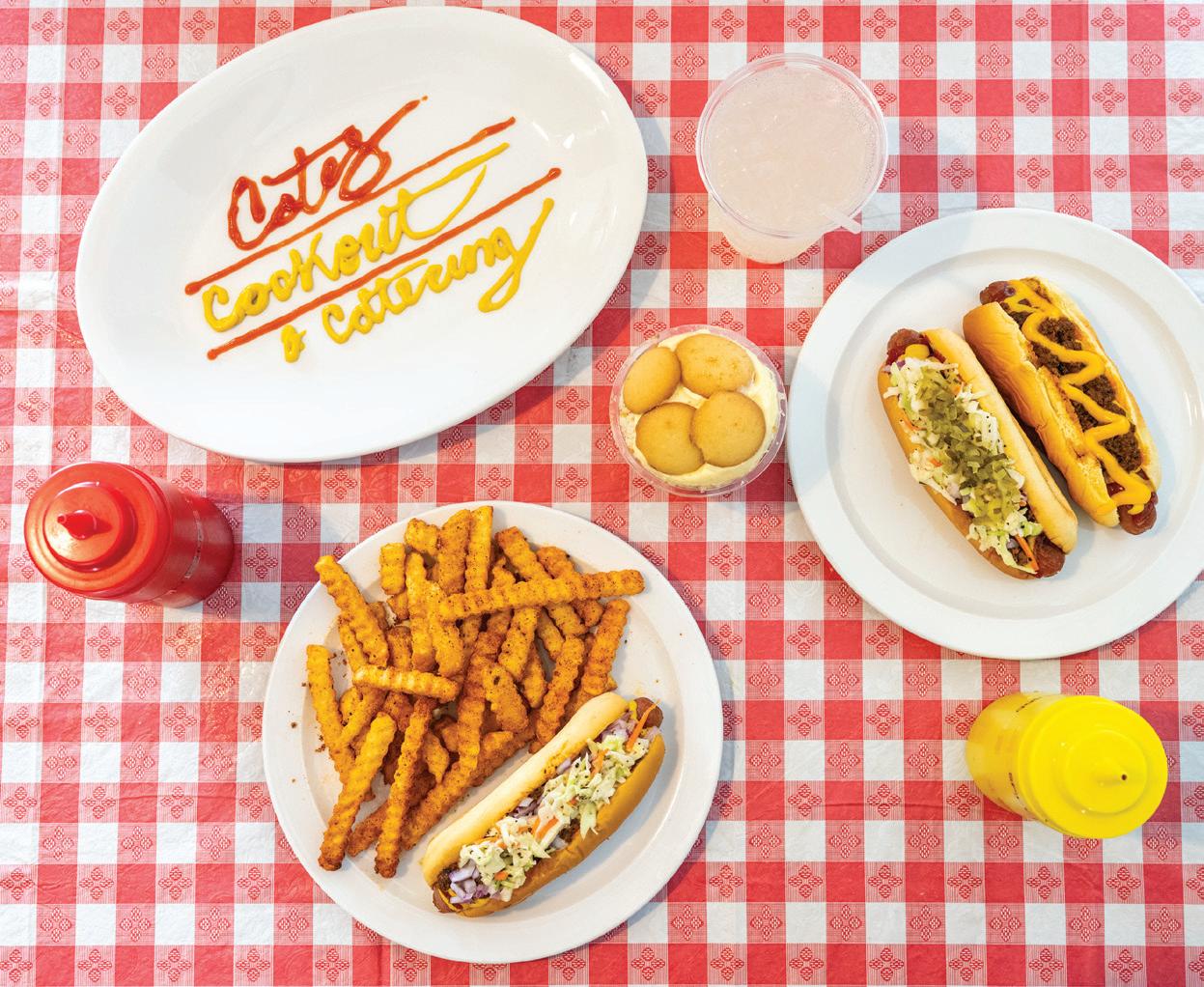
Tony Cates graduated from a mobile cart to a brick-and-mortar, moving into the former Joe’s Diner space at the intersection of Angier Avenue and Driver Street in Old East Durham. The menu at Cates Cookout reads like a greatest hits list from the best family cookout you’ve ever attended. There’s fried fish and chicken, plenty of sides and, of course, hot dogs. This author’s go-to order is the all-beef hot dog platter, dog done all the way (chili, slaw, mustard, onions) with Cates’ seasoned crinkle fries and a cold glass of homemade lemonade. The hot dogs are griddled rather than simply boiled and retain a bit of texture and bite – perfect for supporting all the generous layers of delicious toppings Cates and his crew pile on top. Dine in and enjoy the historic old diner counter, where countless Durhamites have enjoyed great hot dogs over the years.
Jimmy’s Famous Hot Dogs boasts two locations of its characteristic drivein style fast food joint, offering diners the chance to indulge in both nostalgia and a great dog (or two, or three). The No. 1 combo comes with two Nathan’s hot dogs served all the way (with Jimmy’s chili, slaw, mustard and onions), fries and a fountain drink. An upgrade to allbeef dogs is available for $1.29 more. They’ve also got a footlong with chili, and the “Jimmy’s Famous” dog, which comes with chili and cheese sauce.
Where Jimmy’s stands out, besides its old-school charm, is with its mix-andmatch toppings. In addition to those aforementioned, you can opt to add jalapeños, relish, ketchup, bacon, sweet red onion sauce, spicy brown mustard, sliced cheese, grilled onions or cheddar cheese sauce – easily taking an “all the way” dog to “the whole dang way.”
Get yourself a signature QueDog topped with barbecue or take your dog ATW with chili, red onions and slaw.
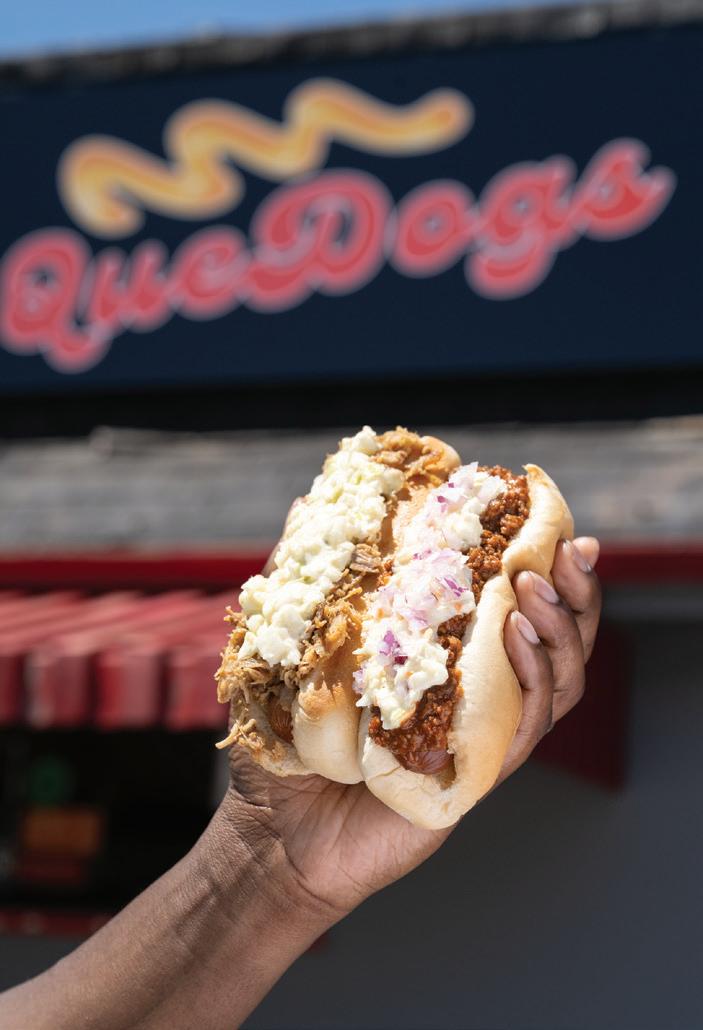
QueDogs is a family operation that takes two of the South’s most beloved foods (barbecue and hot dogs) and serves them in a delicious mashup that is their namesake, the QueDog. Brother-and-sister owners Patrick Johnson and Kathryn Johnson Thompson also graduated from a mobile cart to a brick-and-mortar location in the Lakewood Shopping Center. The signature QueDog is a beef or pork hot dog topped with their father, Harold Johnson’s, famous barbecue. Get it all the way (ATW) with their homemade chili, red onions and slaw if you’re feeling truly indulgent. “We try to make everyone who comes up to our little dog hut feel like family,” Kathryn says. “Our homemade chili and smoky barbecue, both made in house with love, keep our regular customers coming.”
For the Johnsons, QueDogs is all about amping up the quintessential hot dog experience: “For a dog to be great, it has to have the right bite, texture and flavor,” Kathryn says. “Let’s be honest, for the most part, hot dog joints have similar toppings, but how you set your toppings apart from your competitors is what matters.” At QueDogs, they’ve clearly figured out that a “best of both worlds” approach is the way to go.
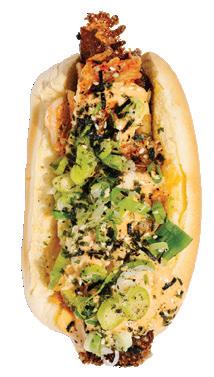
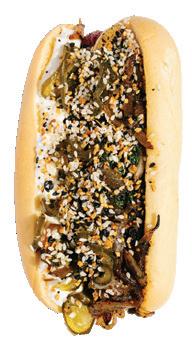
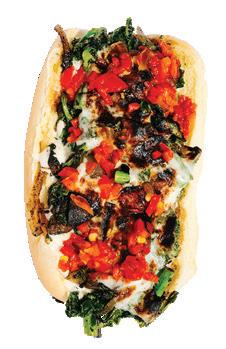
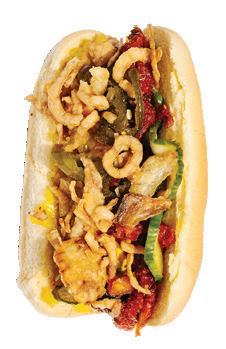
Yes, The Pushcart is technically not from Durham. It’s a hot dog cart from Oxford, North Carolina’s Ray Williams and Anna Housman, and it pops up in the Bull City so frequently that we might as well call it our own. As Ray and Anna work to transform an old church in Oxford into an all-day eatery, cafe, gallery and community space called Sanctum, they’ve given Durham folks a taste of their offthe-wall hot dog combinations at locales like wine bar Delafia and The Common Market. The pair serve beloved North Carolina Bright Leaf hot dogs, with versions like the “Smells Like Teen Spirit” (a dog with candied jalapeños, griddled onions, "Ranch" cream cheese and Everything seasoning) or the “Kimcheese” (kimchi, scallions, yum yum sauce, furikake and a crisp cheese “skirt”). A favorite of this author is the “Sonoran-ish” dog, an ode to northern Mexican cuisine that sees one of those Bright Leaf dogs topped with bacon, charro beans, a beet curtido, cilantro and Mexican mayonesa. The menu shifts with each new popup, so following The Pushcart on Instagram is the best way to figure out what and where it’ll be serving next!

The Pushcart's gourmet twist on dogs – featuring toppings from candied jalapeños to broccoli rabe: The Kimcheese, Smells Like Teen Spirit, Not a Philly Roast Pork and Chicago-ish.





BY LAURA JARAMILLO
PHOTOGRAPHY BY JOHN MICHAEL SIMPSON
Durham is a place where you can enjoy a cold one after work. No, not a beer – a THC-infused seltzer or cocktail. The cannabis beverage industry in North Carolina has boomed since the pandemic, with Durham businesses – from elixir bars and hemp retailers like Oak City Hemp Lounge to breweries like Bull City Ciderworks to dispensaries including Sherlocks Glass & Dispensary – seeing skyrocketing sales of innovative hemp-derived THC and CBD products. Chris Creech of brewery, craft beer emporium and taproom
The Glass Jug Beer Lab in south Durham – which carries almost 100 different hemp beverages – notes that THC and CBD seltzers now account for around 20% of package sales, making them the bar’s leading category behind beer.
Marijuana culture has long carried a certain stigma, but hempderived beverages have introduced THC to a wider audience seeking a way to unwind without losing functionality. During the pandemic, hemp producers began experimenting with new ways of emulsifying THC and CBD, which resulted in forms of hemp that are absorbed by the body at more predictable rates than traditional edibles. As a result, THC seltzers have become a popular alternative for many who can’t or don’t want to consume alcohol, or who are watching their sugar intake, as most varieties have the added benefit of being low in sugar and calories. “You know why I think they’ve blown up like this? Because everyone has a good experience with them,” says Sherlocks’ Alexander Pelliccia
As demand rises, North Carolina is ramping up efforts to regulate the burgeoning hemp industry. The 2018 Farm Bill legalized hemp cultivation nationwide, defining legal hemp as containing less than 0.3% Delta-9 THC on a dry weight basis. Many of these products also contain other cannabinoids, which are not regulated under the bill. The ambiguity of the current federal dry weight dosage maximum has left room for high-strength items to enter the market.
North Carolina House Bill 328 aims to fill those regulatory gaps. These new guidelines include banning hemp-derived products on school grounds, setting a 21-year age minimum on hemp sales, banning the sale of synthetic hemp products and instituting dosage caps of 10 milligrams per serving for hemp beverages. The Senate approved HB 328 with substantial amendments, making it a much broader bill, and the House was not able to agree on a version of the bill that would satisfy both parties before the legislative session ended in late June. Gov. Josh Stein formed an advisory council to steer state cannabis policy. Chris is cautiously optimistic: “I’m excited that there seems to be bipartisan support across the North Carolina General Assembly to get some regulations in place.”
While Chris is in favor of protecting children through common sense legislation, he also worries that some aspects of the new bill could quash hemp production in the state. HB 328 will require a $25,000 license to manufacture hemp products, a requirement that could cause companies to take their facilities to nearby states that don’t levy such fees. “So many families depend on this industry now in North Carolina,” says Ben Ingold, owner and brewer at Bull City Ciderworks. “Hopefully there’s a place for everybody.”
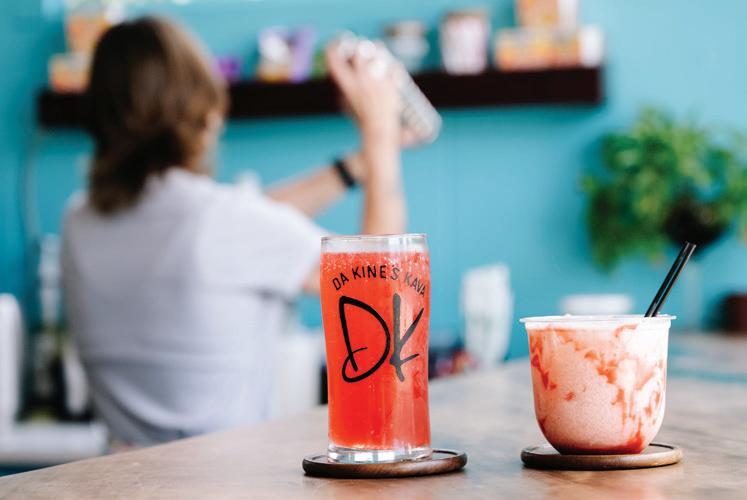
The focus at Da Kine’s Kava bar, which also sells kratom and hemp products, has always been on safe, calming substances that relax but do not impair people. Da Kine’s originally centered on kava, but introduced hemp products after significant customer requests. Da Kine’s co-owner Zoey Best insists on the importance of education around these items. “I joke that my partner, [Brent Waffle], and I were both camp counselors, so we’re really big into explaining everything and making sure everyone knows what we’re doing, is learning and is having a good time.”
Education also drives the mission at Oak City Hemp Lounge. Its North Durham outpost, which opened in 2023, offers beverages that feature hemp, medicinal herbs and functional mushrooms. Oak City’s original Pittsboro shop opened in 2020 and was among
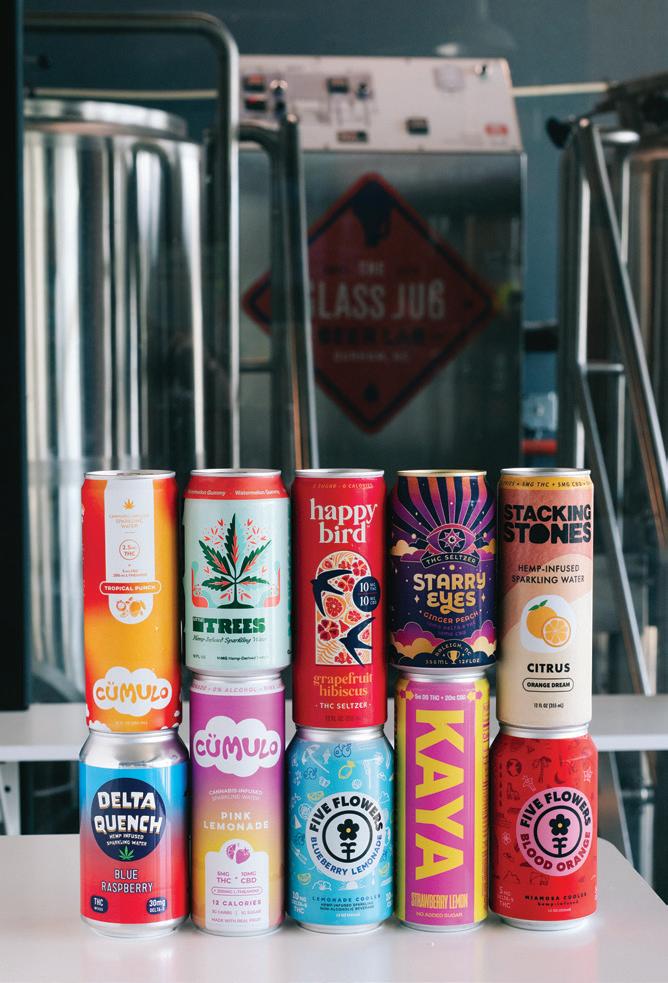
ABOVE "Beer will probably forever be our bread and butter," says Chris Creech of The Glass Jug Beer Lab, which keeps 50 to 100 THC drinks in rotation – the flavorful faves here are all made in North Carolina. "But as we're seeing these emerging trends, we want to be the place that you can come and get it, and part of that is because of our focus on inclusivity; we've always seen ourselves as a place where everyone is welcome."
some of the first retailers in the area to sell hemp seltzers. There were no regulations around hemp aside from the Farm Bill at that time, so owner Aaron Puryear set out to carefully curate and source safe and highquality products. “We’re trying to set the standard,” Aaron says. “We set the framework that is safe for everyone, and the sky isn’t falling.”
Oak City also fosters community through workshops and events like its ever-popular fourth Sunday Munchy Brunchy, which features complimentary coffee, waffles, infused and non-infused maple syrup, fruit and CBD tea. Other hemp-forward businesses in the Bull City are building similar spaces. Redhead Hemp hosts dance parties and plant swaps. Sherlocks organizes art workshops and talks with local graffiti artist Alex Figueroa at its white-walled glass gallery.
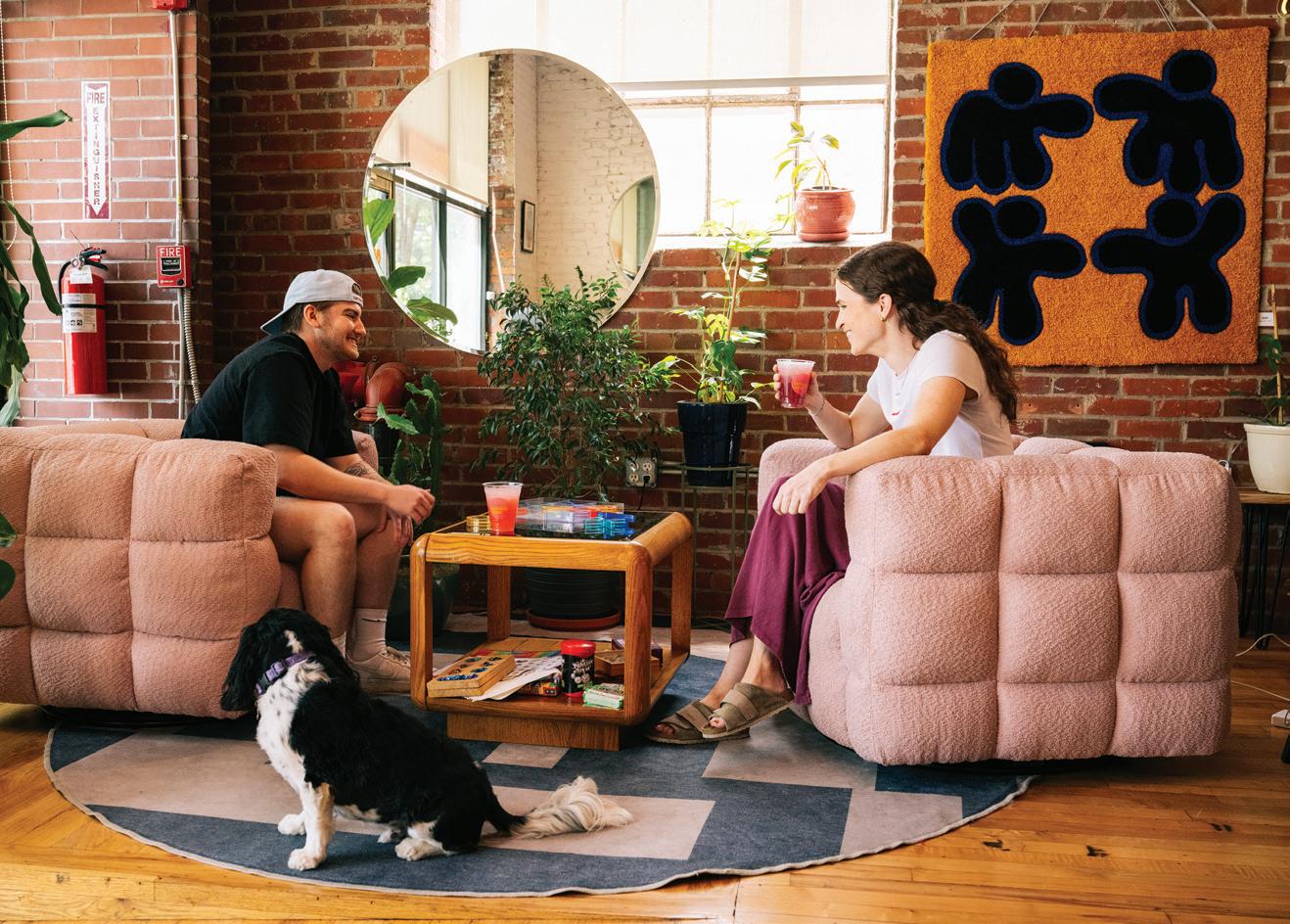
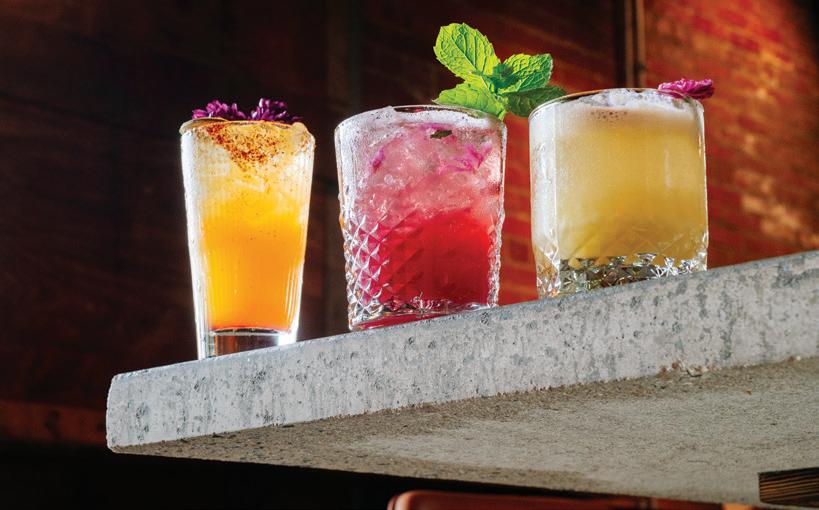
The popularity of THC beverages also gives enterprising local businesses the opportunity to craft new kinds of social spaces distinct from traditional bars. Downtown lounge and dispensary Redhead Hemp’s Canna Cafe offers a swanky rec room vibe in which to consume its menu of fruity THC/CBD cocktails, including the Champear, a delicate white tea blend with lemon, lavender and pear. “We love being the best part of people’s days,” says co-owner Emma Macadam. At east downtown bar-cum-coffee shop-cumcoworking space Baryo, serving THC/CBD drinks alongside coffee and alcohol is part of owner Nick Morgan’s desire to foster more third places in the city. “People use [the space] as they need it,” Nick says. “That’s the future.”
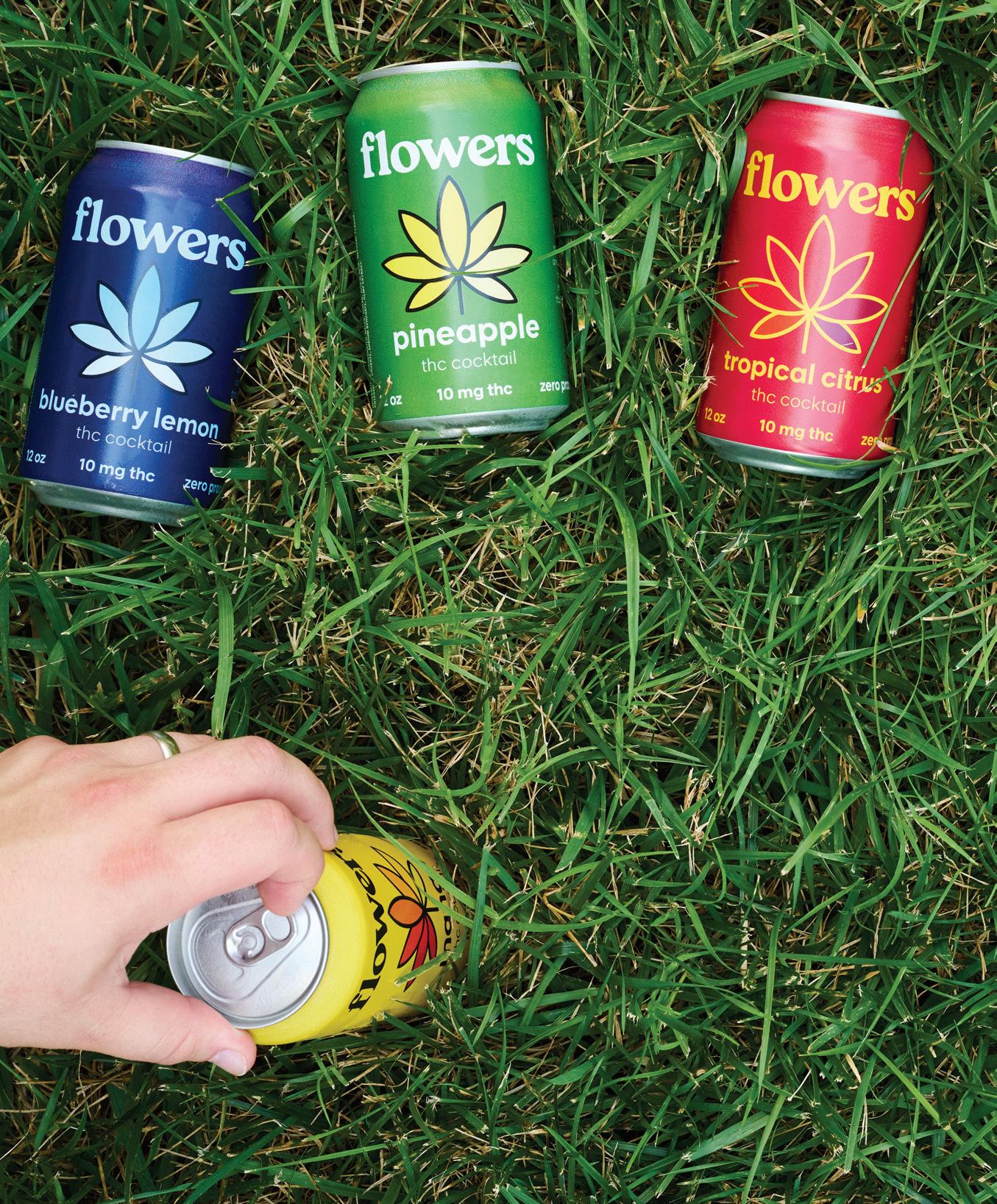
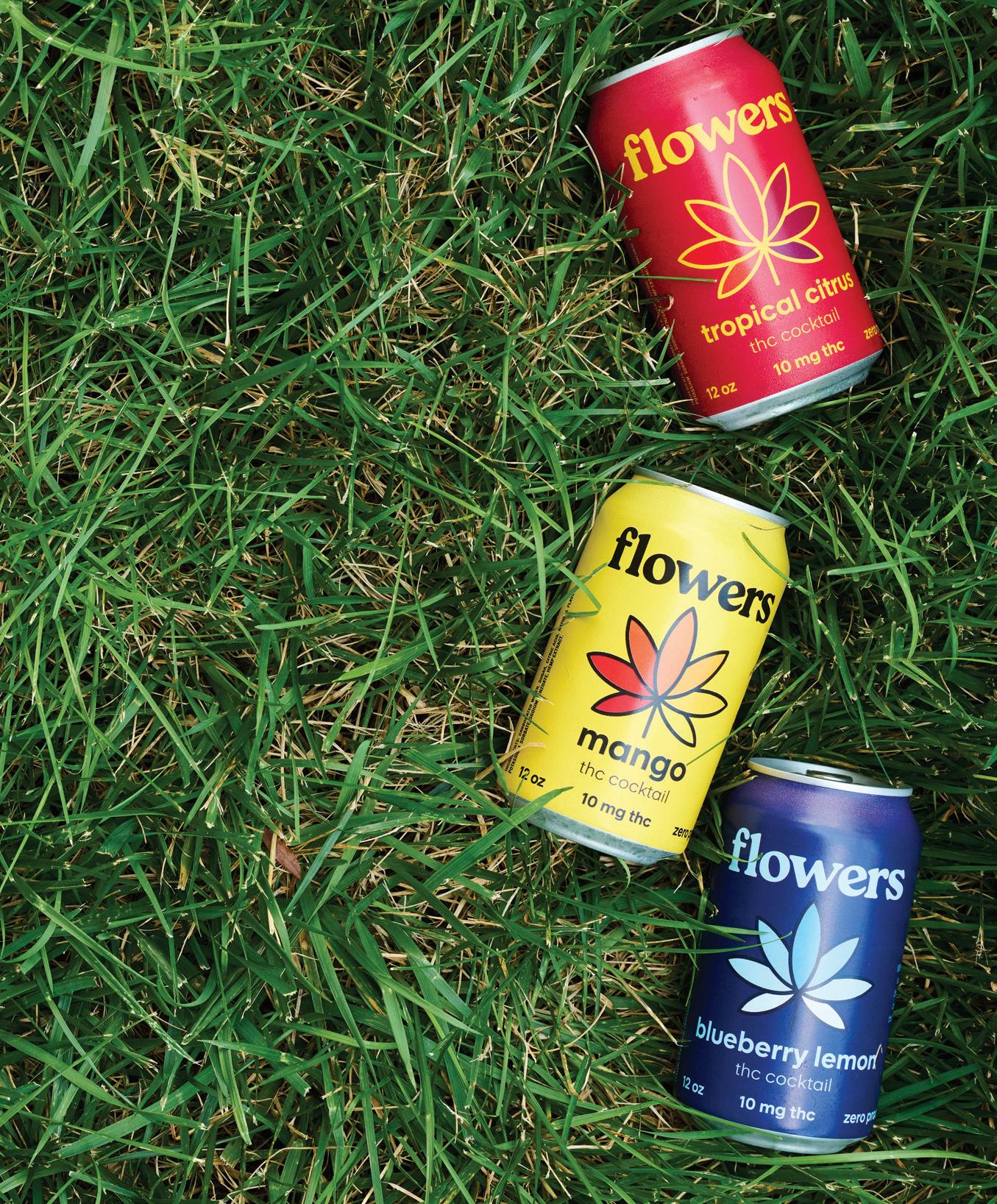
THC seltzers present new avenues for brewers to experiment with different fruit blends. At East Durham seltzer brewery Fizzwerks, blueberry sage hard seltzers share the menu with a delectable nonalcoholic cocktail made with local peaches and THC and CBD extract. Durham stalwart Bull City Ciderworks, which has long offered top-tier hard ciders, recently launched its own line of hemp seltzers under the label Flowers. “I think it fits in really well because we’ve always been blending fruits,” Ben says.
THC beverages are poised to gain ground as consumers increasingly seek to explore alternatives to alcohol. Durham’s dynamic restaurant and bar scene creates an ideal environment for different forms of community to grow around hemp cocktails and seltzers. Aaron, like many others in the industry, envisions North Carolina eventually becoming a cannabis sanctuary state. But the continued viability of hemp manufacturing in North Carolina hinges on well-informed legislation that protects in-state producers. “This isn’t your grandpa’s hemp,” Aaron says.
Former owners of a legendary Durham eatery now offer guests an immersive cultural experience
ike all good things, Yamazushi had to come to an end. The beloved sushi restaurant boasted a long tenure and esteemed reputation by the time it closed in 2023 – though the journey wasn’t easy.
Chef George Yamazawa and his wife, Mayumi Yamazawa, opened Yamazushi off Hope Valley Road in 1986, three years after settling in North Carolina. Mayumi initially found a job as a teaching assistant at Duke University while George worked as a sous chef at Raleigh’s Kanki Japanese House of Steak and Sushi before he set out to open his own restaurant. After its inception, Mayumi helped operate the business and served guests while working day jobs as a Japanese translator. Yamazushi faced an uphill battle from the start. George recalls that, at the time, many Durhamites had never heard of sushi or sashimi and weren’t as open to trying these foods. Still,

they persisted, earning loyal customers as Japanese cuisine became more familiar to American diners.
The Yamazawas made a bold shift after 25 years, reshaping the menu into a kaiseki-style offering: a fixed, multicourse meal centered on seasonal ingredients. They also slashed the number of reservations available in favor of providing fine dining for fewer people. During this transition, George endured a battle with cancer, which affected his tongue and taste buds. Once in remission, he continued to pour his efforts into the elevated version of Yamazushi, going so far as to carefully shape and fire the dishes used for service himself.
By the time the couple closed the restaurant’s doors, it would seem they’d earned the right to relax and enjoy the fruits of their decades of labor. But George and Mayumi didn’t aim for a languid retirement. Instead, they turned their attention to a new project that would facilitate more profound experiences of Japanese culture.
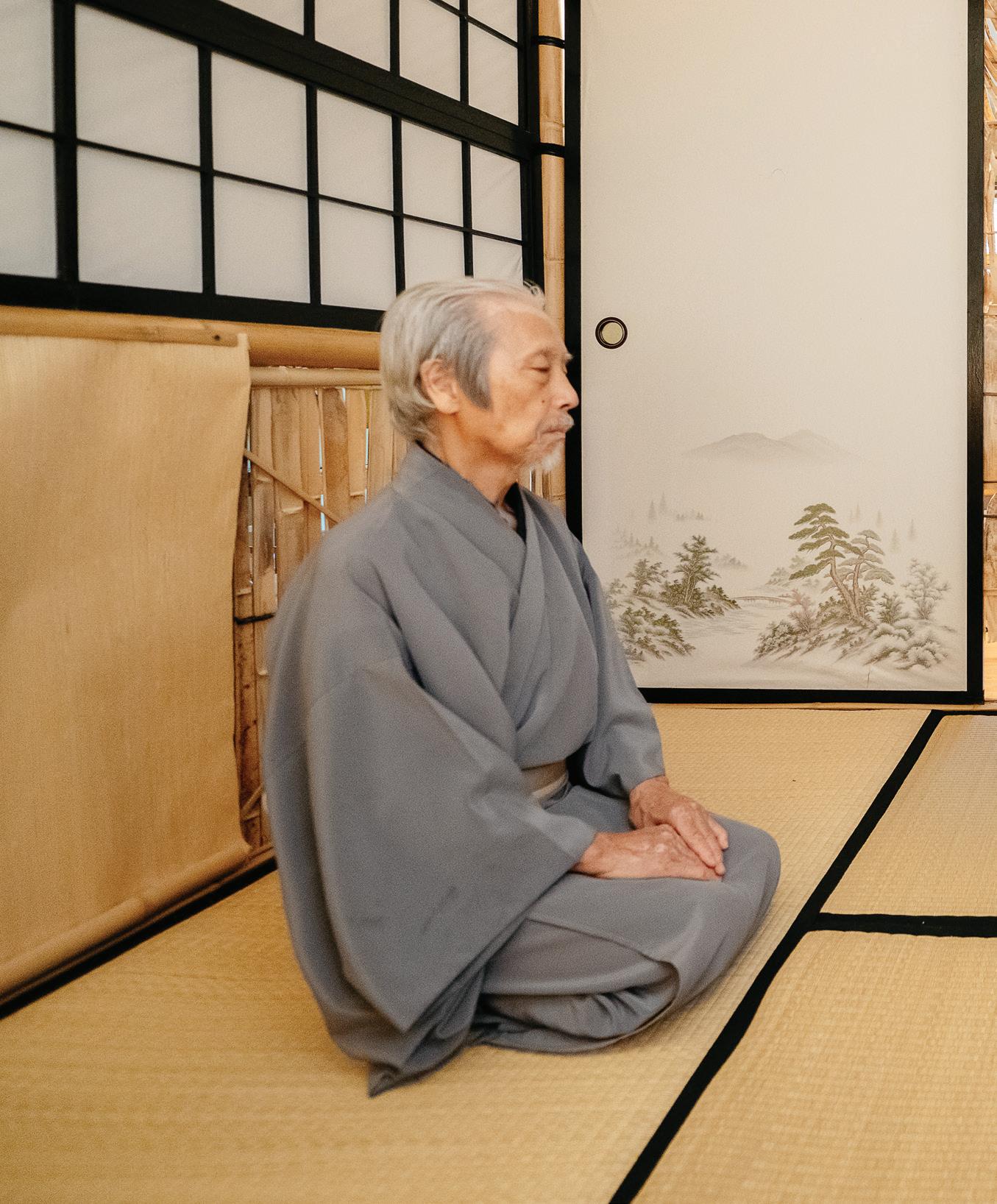
The Yamazawas now host a few intimate tea ceremonies per season for just two guests at a time in a purpose-built tea room George constructed in south Durham. “The tea ceremony itself is seasonal and a very rare activity,” Mayumi says. Each one requires detailed preparation of “not only the food, but also the high-grade matcha that we usually [travel to buy] from Kyoto, [Japan],” Mayumi says. “These days, matcha is getting scarce, and the good-quality matcha is becoming more difficult to get, so we have to really plan [carefully].”

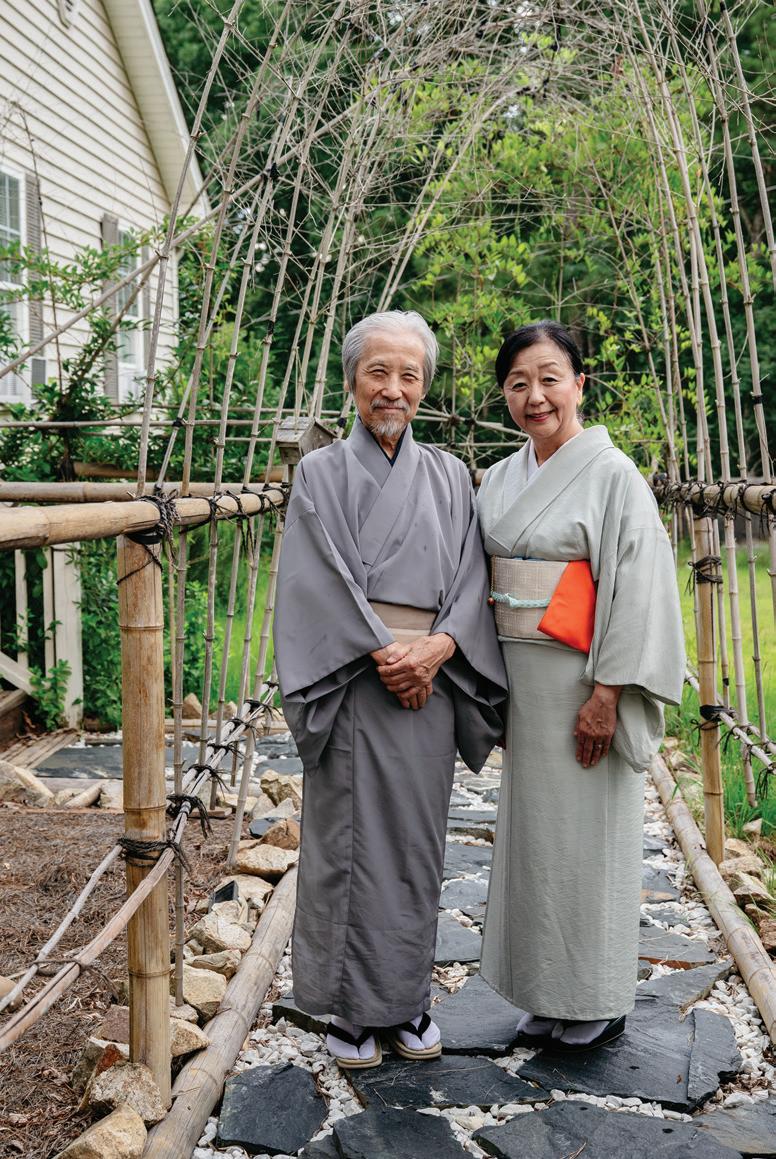
Most guests book three to four months in advance. “Once the ticket is sold, we reserve our calendar, and there’s no chance of moving the tea ceremony to another date or time,” Mayumi explains. “[From that moment], we’re thinking about how the tea room is decorated, what kind of tea we’re going to serve and what the menu will be.”
This attention to detail honors the concept of ichigo ichie, which Mayumi translates to “treasure every encounter, for it may never recur.”
Traditional ceremonies may last up to five hours, utilize charcoal rather than electricity, include as many as eight courses of food and require strict etiquette of everyone involved. Mayumi and George aim to ensure the environment is accessible and welcoming during their informal interpretation of the practice. “I don’t want to make [guests] feel obligated to learn specific manners,” Mayumi says. She and George sit on the tea room’s tatami mat in the customary way of tea practitioners, for example, but don’t ask it of others. The pair simply hope visitors “enjoy the wonderful matcha, the food, sweets and the overall significance of the tea ceremony, which is really focusing on this moment and having a
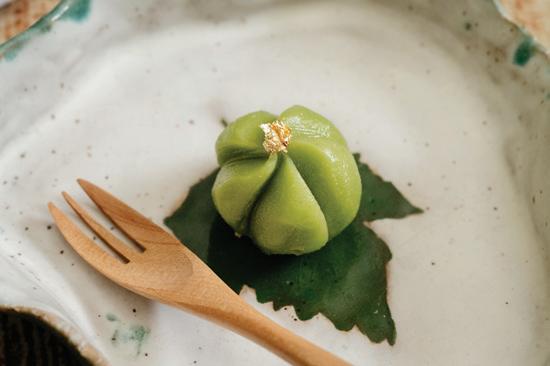
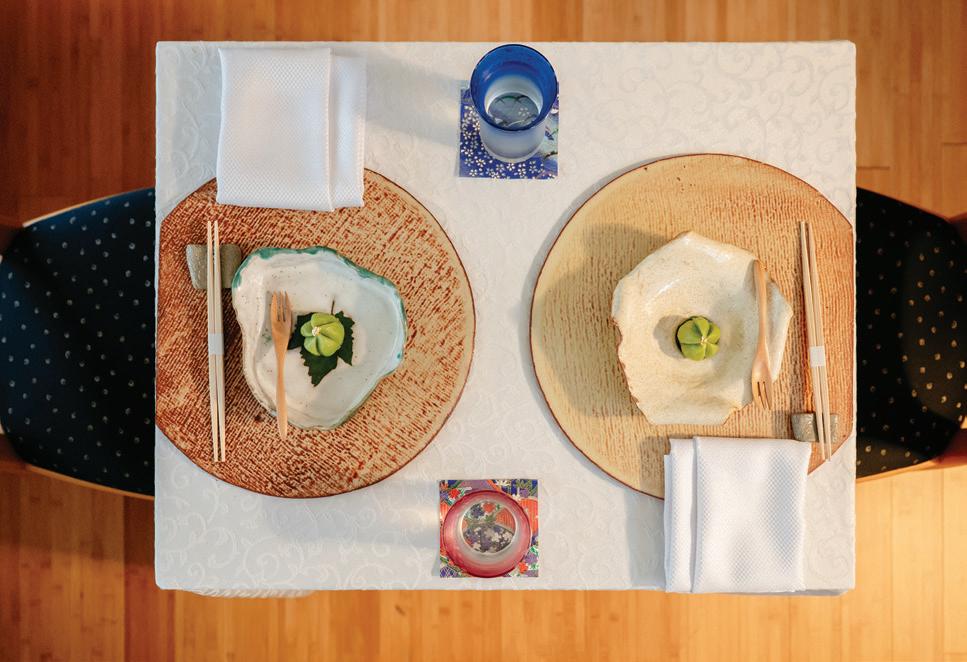
wonderful time together.” Their program is divided into three parts over the course of about two and a half hours: first, an introduction to the history and cultural significance of the event before a light three-course meal followed by the tea presentation.
Japanese dining was the focus of Yamazushi for so many years, but George stresses that this isn’t the case for the tea room. “The aim for opening up this chapter is to introduce the amazing tea and the ceremony rather than [to prioritize] serving food,” he says. Anyone interested in attending should note that dietary preferences or even allergies can’t be accommodated. “We would never ask the tea ceremony to conform to our tastes or restrictions,” Mayumi says.
Some guests have visited Japan multiple times and are familiar with the process, while others arrive with no idea of what to expect. Each encounter is treated with the same level of respect and care. “Tea practitioners [believe] that when you invite someone into the tea room, that’s the first and last opportunity for us to serve that great tea and [enjoy being together],” Mayumi says.
The pair have discussed a future transition to a larger location in order to accommodate 20 to 30 guests at a time, or possibly phasing out the meal portion altogether.

Yamazushi’s early years and the transformation from sushi spot to kaiseki house are the subject of “Becoming Yamazushi,” a 14-minute documentary directed by the Yamazawas’ son, G Yamazawa, a writer, performer and hip-hop artist. The film debuted as part of PBS’ Emmy Award-winning “American Masters” series. Watch it here!
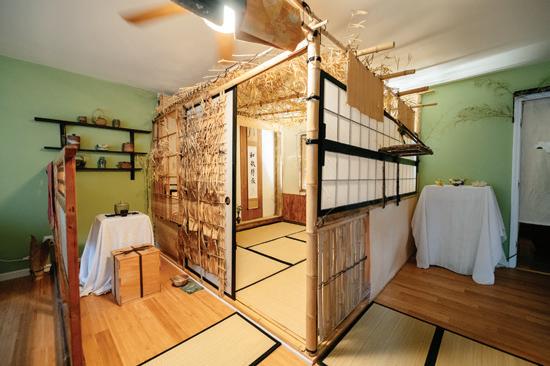
“We are getting old,” Mayumi says with a laugh. “I don’t know how many years we’ll be able to do this very intense ceremony.” Their future is uncertain, but their goal remains clear: to plant the seeds of Japanese cultural appreciation in Durham and pave the way for others to explore this specific tradition. They hope Durhamites keep an open mind “and seek more from their end,” Mayumi says. “It’s totally up to each participant how much they can [learn].”
Those who are curious are rewarded with a singular experience that tea practitioners know cannot be recreated. “This particular day, life conditions, the food we served, the ornaments we picked, the teas we chose – there will never be the same gathering,” Mayumi says. “That’s ichigo ichie. That’s the spirit of the tea ceremony.”


• Extended Teller Hours: 7am–7pm, every day
• 30,000+ surcharge-free ATMs nationwide¹
• 17 local branches plus easy-to-use digital banking with mobile check deposit2
• We offer real conversations, not scripted calls
• Get personal support from our local experts face-to-face or digitally, your choice
• Our lower fees and better rates put you back in control of your money
• We’ll help you set and achieve your goals with clear, practical tools
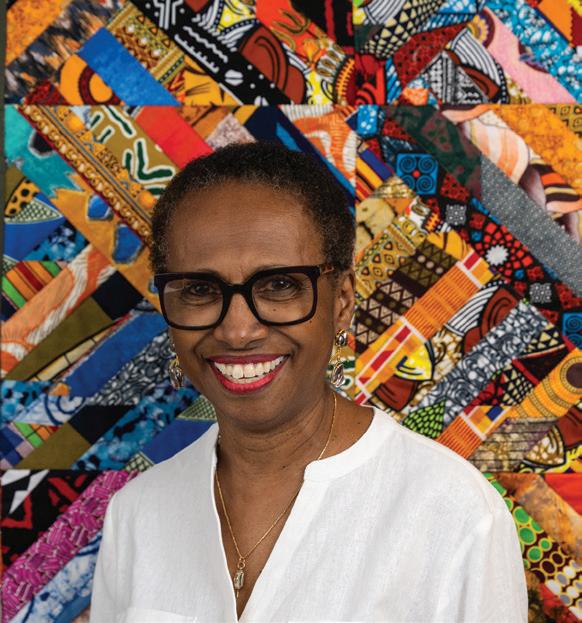
C o m m o n
The African American Quilt Circle weaves history, sisterhood and selfexpression into every vibrant piece –preserving culture, one stitch at a time
BY SHARON KINSELLA PHOTOGRAPHY BY JOHN MICHAEL SIMPSON
ee if you can find the through line,” says Andrea Carter, unfolding an expansive blanket across the conference table in the basement of the Stanford L. Warren Branch Library
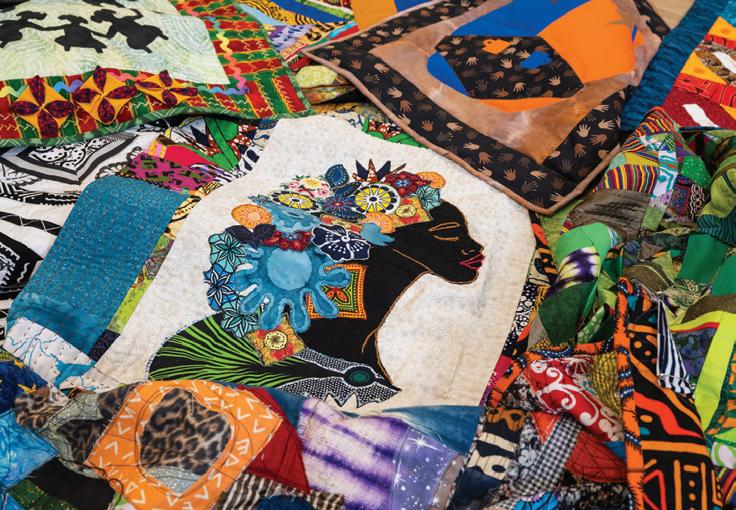
No – not just a blanket – a quilt, crafted from a dizzying array of colors, patterns and textures, each strip zigzagging in playful diagonals all the way to the fabric’s edge. She hints that one strip runs unbroken throughout, but it’s hard to find. Then, she points to the boundary of a central diamond, its outline formed by the four corners of the quilt’s inner squares. Once you see it, you can’t unsee it. Suddenly, the quilt reveals itself as a cohesive whole, its underlying logic
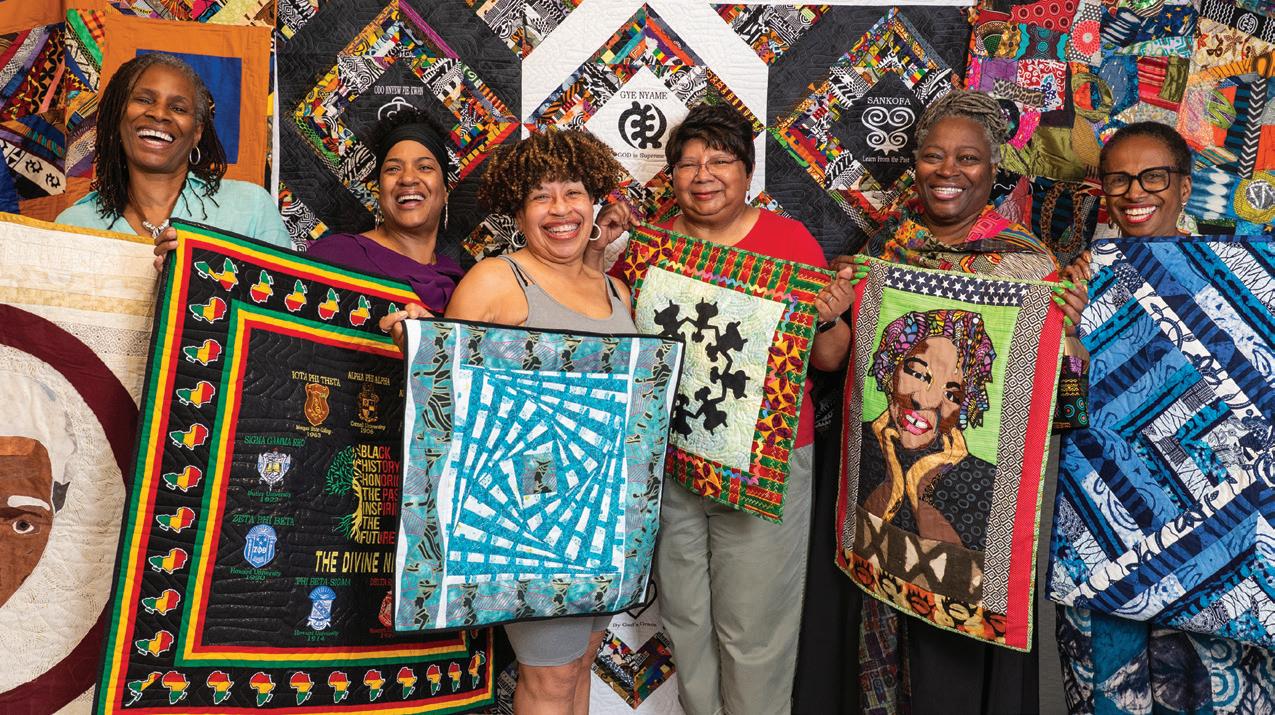
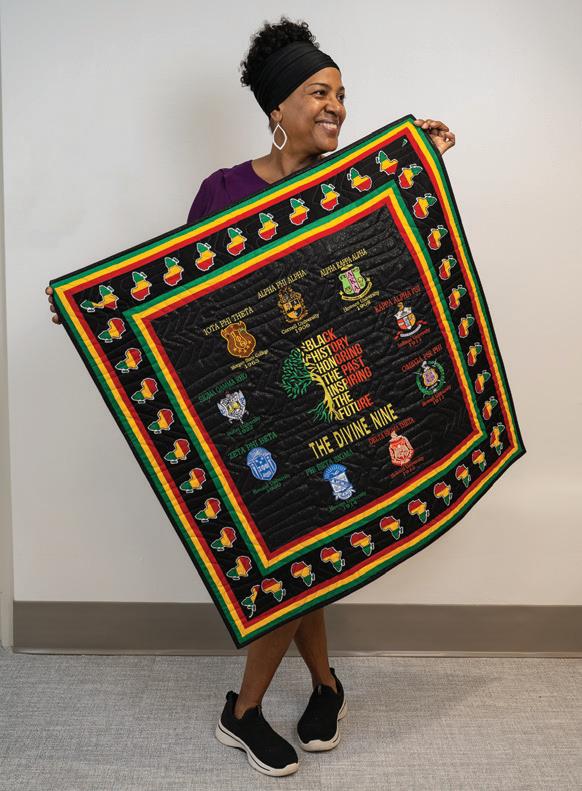
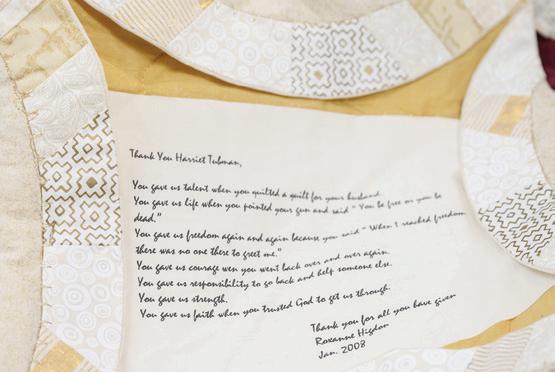
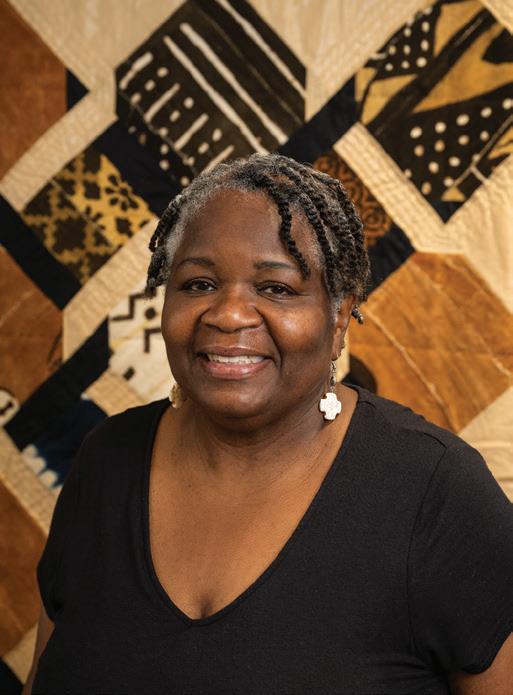
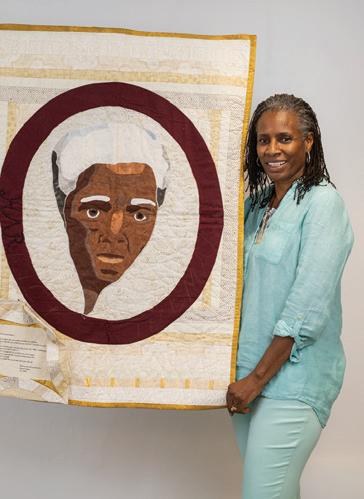
CLOCKWISE FROM LEFT Julendia Gaillard, the group’s expert embroiderer, uses needle and thread to create intricate designs and symbols. | Andrea Carter, who started quilting during the pandemic, says the circle is a learning space for her. | Quilts can blend multiple art forms, like this piece featuring an inscribed poem, "Thank You Harriet Tubman." | Roxanne Higdon, Julendia Gaillard, Linda Lewis, Shirley Bullock, Kimberely Pierce Cartwright and Andrea Carter display their quilts. | Longtime member Melanie Dantzler has been part of the quilt circle for two decades. | Modern quilting encompasses an array of techniques and styles. Art quilts often blend diverse materials, textures and methods to create expressive, one-of-a-kind designs.
snapping into focus – a sophisticated work of art disguised as spontaneity until the pattern emerges.
Andrea’s quilt is just one example of the bold, expressive work produced by the African American Quilt Circle’s jovial members. The group, formed in 1998, meets monthly at the Hayti Heritage Center to “show and tell” their latest quilts, exchanging ideas, techniques, fabric and camaraderie. “You have a circle of sisters who are there to give you any kind of help that you need – sewing, but personal, too,” says Linda Lewis, who has been a part of the AAQC for 11 years. “You know they’ll talk you through it, whatever it is. It’s a really good family of sisters.”
Co-founder Jereann King Johnson, who began quilting with her mother when she was around 8 years old, says her original hope and motivation for starting the group was just to have fun. “There was no right and wrong kind of quilt,” she says. “It was a way of expressing yourself, and that was what was important in quilt-making and being a part of this community.” She says the name of the club is no accident. The original members floated different options before eventually settling on “circle” for its democratic symbolism. “Everybody is the same distance from the center of the circle … there was no hierarchy.”
Today, the AAQC continues to embrace a spirit of fun and self-expression, but as membership grew and its goals evolved, the cohort adopted a more defined mission and structure – ultimately incorporating as a nonprofit. This transition enabled the circle to expand its impact beyond its own circumference, regularly donating quilts to local organizations and vulnerable populations. They also serve an important role as cultural stewards, preserving and celebrating quilting traditions within the African American community.
Quilting was once purely practical –scraps and remnants stitched together by hand to provide warmth out of necessity. Today, quilters draw from a vast array of styles, techniques, fabrics and even technology, turning tradition into a vibrant spectrum of creative expression. Many use their works to tell stories of family, history, spirituality and social justice, translating powerful narratives through fiber and textiles. Linda, for example, shares a sampler quilt – each block uniquely designed –depicting scenes and symbols from the
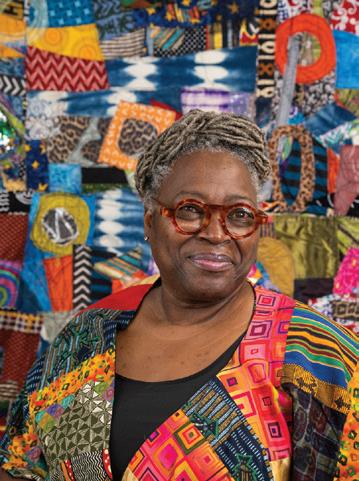
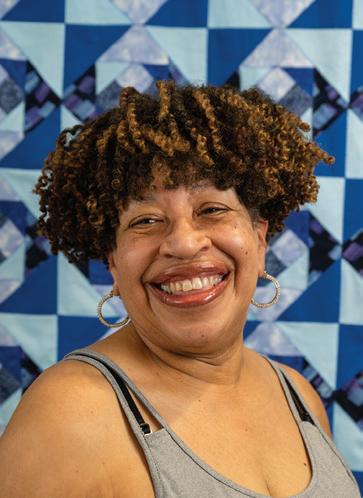
ABOVE Kindred Spirits Quilting Conference Director Kimberley Cartwright Pierce is a fan of working with African prints.
MIDDLE Roxanne Higdon presents a quilt showcasing her portrait of Harriet Tubman.
BELOW "If you’re having a dry spell, you have inspiration from all the people around you," Linda Lewis says of the quilt circle.
Underground Railroad. “That quilt meant a lot to me to make,” she says. “Creating it was a way to connect with my historical awareness. That was very moving.”
The AAQC has earned recognition through exhibitions, public art installations and media coverage – both nationally and internationally. “When people see [the quilts], there’s always a sense of awe,” Jere says. Linda adds that people in the community know her by her work. “When you go out, people recognize you,” she says. “[They say], ‘Oh, I saw your quilt here. You’re from Hayti, I’ve seen you.’ Even if they don’t recognize you personally, they recognize your work. It makes you feel very proud.” For many members, the group’s greatest draw is its welcoming community. “I used to be a closet quilter,” shares Julendia Gaillard, one of the newer attendees. “I learned to quilt from YouTube. I quilted alone, and my daughters –who are all grown and gone – were like, ‘You need to get out of the house.’”
The organization now boasts around 60 quilters from across North Carolina and beyond, with some joining from out of state and even internationally. Meetings over Zoom – launched in the wake of the pandemic – make the circle even more accessible, welcoming a wider range of voices and experiences. The AAQC artists continue to push the boundaries of what quilting can be as the collective looks to the future, recently interpreting themes of Afrofuturism at the Kindred Spirits Quilting Conference held at the Durham Convention Center in June. “I am really proud of the way the quilters have taken that little kernel of an idea and nurtured it, welcoming new members and growing it into something so impactful,” Jere says. “It’s humbling and wonderful to see how far we’ve come, and to imagine what’s still ahead.”

A former architectural designer transformed personal adversity into a mission-driven artistic practice
BY RENEE AMBROSO PHOTOGRAPHY BY JOHN MICHAEL SIMPSON
Eliza Redmann had just 10, maybe 15 minutes before nausea and the building pressure in her head overwhelmed her, forcing her to shut her laptop.
It had been two years since her car was struck head-on by another driver less than a mile from her Hillside Park home, leaving Eliza with a traumatic brain injury. The collision upended everything – especially the future she had envisioned as an architect.
“As I was recovering, I was [having difficulty] with balance, coordination, executive functioning and particularly my vision,” she says.
She’d earned her master’s in architecture from NC State University and landed a job as an architectural designer at Duda|Paine Architects
“I [had] imagined myself designing buildings with sustainability in mind,” Eliza says. But in the months following the 2018 crash, she realized she’d no longer be able to pursue that career or resume the life she’d been leading. Even casual outings downtown with friends became overwhelming because of her sensitivity to auditory and visual stimuli.
“I needed to find a new path going forward,” Eliza says. “That’s when I turned to my creativity.”
She started sketching shapes and rendering them digitally using SketchUp, a 3D modeling program she’d learned to use in school. But the minutes would add up, the nausea and pain would rise, and she’d have to abandon the screen to rest her body and mind.
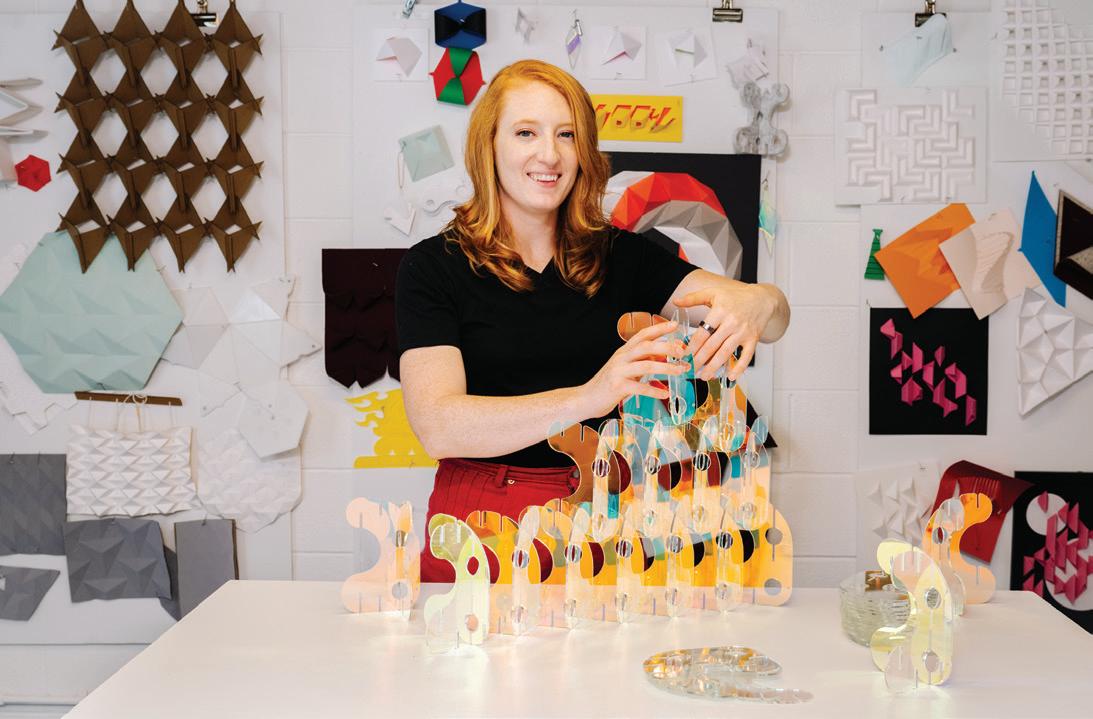
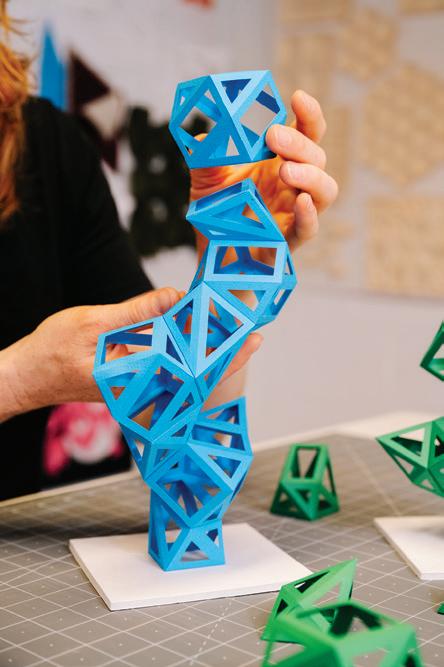
Even so, Eliza’s imagination soared. She found that, when her ability to use devices waned, it was less taxing on her nervous system to print paper shapes that she could continue to refine through trimming and folding by hand. She then compiled these segments into irregular clusters to evoke a sense of disorientation, mimicking her own experience of her surroundings.
“I was creating these modular pieces within the constraints that I had, then assembling them and moving light over them,” Eliza says. “It was creating this visual phenomenon that is confusing and mind-bending for people to behold. I [realized] that what I was actually doing through the art was trying to give people a glimpse inside my experience with traumatic brain injury and the visual disturbances caused by my injury.”
Sharing her work via Instagram garnered a litany of positive responses, first from friends and later strangers who were drawn to her ideas. Commissions followed – custom 2D and 3D installations for homes.
As she developed her artistic style, Eliza recognized another layer to her work: its acoustic potential. “I was aware that as noise hits this directionally scattered surface, it’s going to be refracted in a number of directions. Inherently, from my experience in architecture, I knew that to be an [acoustically beneficial] thing,” she says.
Simultaneously, she struggled to cope with noise levels in public spaces around town. “Durham has this wonderful brick-and-wood aesthetic that is very nice to behold with your eyes but not so much with your ears,” she says. “You’re in these spaces and you can hardly hear what someone is saying to you – I know I’m not the only one who deals with this issue.” Eliza experimented with wrapping her sculptures in sound-absorbent fabrics. The result yielded art that was both beautiful and functional.
She eventually partnered with acoustic product company Unika Vaev to develop three-dimensional pieces that can be grouped in myriad ways to address specific acoustic needs. “Both the aesthetic and the function of that product line represent my experience with traumatic brain injury,” Eliza says. “I got such an overwhelming response to this work. … I set out to solve a problem for myself, but I was actually solving a problem for a large group of people who struggle with invisible disability.” These designs are the foundation for an acoustical art installation that Eliza is slated to debut in Durham’s City Hall by next spring.
Eliza still works from the basement studio where her first Folded Poetry sketches took shape. Since moving in back in 2017, the space has grown a bit more crowded – she now shares the home with her partner, Mikie Montague, and their combined furry family of pups Weaver, Nitro and Turbo, and cat, Eleanor.
Eliza’s time is currently divided among public art projects, private commissions for residential and corporate clients, and developing limited-edition works like the iridescent acrylic holiday ornaments she releases each year, intended to offer art lovers a collectable piece

at a more affordable price point than a custom work.
“Continuing to explore brand collaborations and licensing [opportunities] is a big goal for me,” Eliza says. “I’m really interested in exploring new materials, new processes and new fabrication partners to pursue these licensing deals.”
Eliza says recovery from a lifealtering injury like hers often involves comparing a person’s current state to the lifestyle, career or physical abilities they had before the drastic event occurred – but “it’s never possible to truly go back.” After appropriately grieving the loss of that former path and those past goals, though, she believes people can form new ones. “What I create in my studio surpasses artwork,” Eliza says. “It’s a symbol of all that I’ve survived, a culmination of all that I’ve learned and the promise of a better future.”
Eliza, no stranger to using art to tell powerful stories, joined forces with Carlos Gonzáles García of NC Mosaics as co-lead artist on a largescale public artwork project, “Stitching Stories, Reimagined,” which is facilitated by the Arise Collective to preserve a crocheted quilt created by women incarcerated within the NC Correctional Institution for Women.
The quilt, which is 23.5 feet long and 5 feet tall, comprises 751 squares, each of which represents a year of incarceration. Ribbons attached to the quilt represent adverse life experiences, like contracting COVID-19 while incarcerated, enduring addiction or abuse and grieving the loss of loved ones.
“The goal of this project is to represent this quilt in a physical form that will last for decades,” Eliza says. “We’re creating the quilt in a sculptural form using high-density foam and mosaic tiles. … It’s going to be a really powerful exhibit.” But the project doesn’t stop at the sculpture. Eliza and other collaborating artists also lead workshops for formerly incarcerated women and their families, offering creative outlets for healing and expression.
Once completed – currently slated for fall 2025 – the finished artwork will travel the state in a custom-built shipping container. The mobile format allows it to reach communities across North Carolina, raising awareness about mass incarceration and the deeply personal stories behind it.

alltown
Children’s Theatre, a cornerstone of the Durham arts scene, marks its 25th anniversary this year with a legacy rooted in community. The theater, founded in 2000 by dancer and educator Cynthia PennHalal and her then-husband, Joseph Henderson, took shape in the heart of Walltown – a historically African American, working-class neighborhood just north of Duke University’s East Campus. Cynthia and Joseph moved to Durham in the mid-’90s as Walltown was undergoing revitalization efforts to recover from decades of decline caused by years of disinvestment and suburban flight, which put a strain on its long-standing spirit of close-knit relationships and mutual support. Cynthia, who taught dance at local private schools, recognized a serious gap in affordable, high-quality arts education for area children. Inspired by her own transformative experience with community-based arts programming as a child, she set out to expand access to the arts. Her dedication to equity led to the inception of Walltown Children’s Theatre – filling a vital need and helping strengthen and restore the neighborhood’s community fabric. Today,
Walltown Children’s Theatre honors the past, uplifts the present and builds a future for Durham’s young artists
BY SHARON KINSELLA PHOTOGRAPHY BY JOHN MICHAEL SIMPSON

WCT stands as a robust performing arts institution with instruction – from early exploration to advanced training – in drama, dance, music, writing, stagecraft and production.
WCT’s conservatory is home to pre-professional, auditionbased ensembles, including the Dance Company, whose preteen and teen students consistently earn high marks at regional competitions – even against large, for-profit dance studios with narrower focuses. “That speaks volumes about the quality of our instruction and the dedication of both our faculty and students,” says Executive Director Cara M. Williams.
But the impact goes far beyond trophies. One of WCT’s core commitments is to need-blind performing arts training for youth from diverse cultural and socioeconomic backgrounds. It removes barriers by offering sliding-scale tuition, scholarships and community-informed programming so every child has a place to grow, create and belong.
The organization also builds confidence and leadership by encouraging students to take on more responsibility, equipping them with lifelong skills. Cara says she’s witnessed how transformative the arts can be, especially for children who may not always see themselves reflected or celebrated. “We’re not just teaching young people to sing, dance or act,” she says. “We’re giving them tools to discover their voice, build confidence and understand their worth.”
Dance Director Grace Wallace Underwood embodies that mission, recalling her own experience as one of few Black girls in a for-profit studio. Now, she draws on that knowledge to serve children who might
otherwise lack access to quality arts education. “Being able to teach kids who might not be able to afford a for-profit studio – and to give them the training, love and background I have – feels special,” she says.
WCT not only provides excellent instruction to historically marginalized groups, it also opens pathways to professional arts careers. Its tech program, for example, gives children hands-on experience with industry-standard lighting, sound and production design. Students as young as 12 run shows in the black box theater, gaining creative, marketable skills. Some even earn income for tech work while still in high school. “It’s powerful to watch them realize they can build a future through these skills,” Cara says.
Several WCT alumni have gone on to professional arts careers, including Abigail Garcia Gomez of the Charlotte Honey Bees NBA dance team, who credits WCT for shaping her goals.
“As a first-generation college student, I had no clue about anything college related,” Abigail says. “Mrs. Grace’s stories about her time at UNC Charlotte and on the dance team inspired me to follow a similar path. WCT’s staff gave me the confidence to believe in myself and dance with both technique and heart.”
That sense of support is central to WCT’s mission of nurturing confidence and collaboration in a safe, welcoming environment. “I feel like Walltown’s always had this family sense – my home away from home,” shares alumna and current business administrator Mariana Gomez Arceo. She now helps create that same culture for the next generation. “Growing up, this was my safe space where I could express myself through dance,” Mariana says. “Seeing that it’s still a [safe space] for other kids shows that Walltown is staying true to its core purpose.”
More than 3,000 children and their families have passed through WCT’s doors over
WCT hosts homecoming weekend events
WCT Southern Soul Dance Party Friday, Oct. 17, 6:30 p.m.
A lively, adult-centered kickoff event welcomes alumni, long-time supporters and out-of-town guests back to Durham for a night of dancing, connection and celebration.
'Twenty-Five' – 25th Anniversary Showcase
Saturday, Oct. 18, 6 p.m.
The centerpiece of the weekend, this inspiring evening at the Carolina Theatre features captivating performances by alumni and current students, special guest appearances and stories that highlight WCT’s enduring impact.
Homecoming Brunch & Documentary Preview
Sunday, Oct. 19, 11 a.m.
This intimate closing event in WCT’s black box theater features a community brunch and a preview screening of its upcoming documentary chronicling 25 years of artistic excellence and community transformation.
the past 25 years. Cara says that the real legacy lies in the outcomes: timid first-timers becoming confident performers; entire families finding their place in the WCT community; and alumni returning as teachers and mentors. “Parents have told us this is the one space where their children feel truly seen and celebrated,” she says.
WCT’s reach extends well beyond its own walls – it partners with schools, community groups and local festivals to serve Durham’s diverse population, demonstrating to its students that their talents can connect and inspire. “We try to push students to see larger than themselves,” Grace says. “We’re not just teaching kids about dance or music – we’re encouraging them to be good people and citizens. It makes you feel like you’re part of something bigger and opens your eyes to the world and your place in it.”
Walltown Children’s Theatre’s work is as vital as ever as it enters its next 25 years, serving as both a reflection of historic Walltown and a cultural anchor for the neighborhood. “Like many small organizations, we’ve weathered some storms, but we’ve emerged more committed than ever,” Cara says. Looking to the future, WCT plans to expand its footprint with a new or renovated facility and innovative curriculum to reach more children while preserving the grassroots, family-oriented spirit that defines it. “The strength of our community, the loyalty of our families and the vision of our young artists continue to propel us forward,” Cara says.
This fall, the heart of downtown Durham will pulse with creativity as CenterFest—North Carolina’s longest-running outdoor arts festival—celebrates an incredible milestone: 50 years of championing artists and engaging the community through live music, local food, family-friendly fun, and, of course, exceptional visual art.
Written by Laura Montgomery
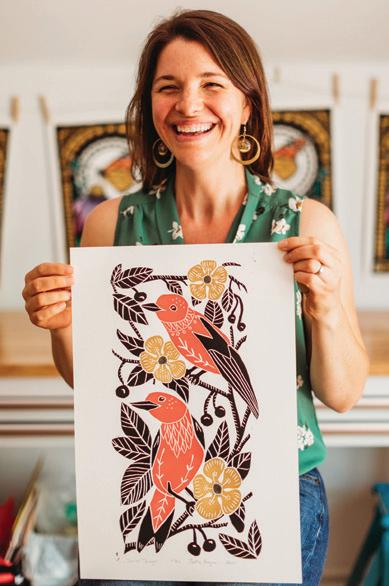
mong the 100 plus artists exhibiting at this year’s anniversary event is printmaker Katie Hayes, whose nature-inspired, hand-carved designs have earned a loyal following across the Triangle and beyond. But this year, Hayes isn’t just setting up her booth—she’s playing a role in shaping the celebration.
The Durham Arts Council, which has produced CenterFest since 1974, invited Hayes to create the official limited-edition artwork for the 50th anniversary. Her design will be featured on commemorative items and mementos meant to honor five decades of creativity, community, and cultural exchange in the Bull City.
“Designing the 50th anniversary artwork has been such a fun project,” Hayes shares. “We’re diving into CenterFest history— looking at past posters, shirts, and logos, and pulling out the most iconic visuals to honor. Then I’m weaving in inspiration from Durham itself—from architecture to green spaces—to create something that feels both nostalgic and forward-looking.”
For Katie, designing the limited-edition artwork and exhibiting at CenterFest is a full-circle moment. As a self-taught artist inspired by her childhood in western North Carolina, she feels proud to be able to show her work in the state and connect with the Durham community. “It’s hard to overstate how meaningful it is to show here,” she says. “Durham shows up for artists—whether it’s someone stopping by to say ‘hi’ or sharing how much a print has meant to their family. Those moments remind me that my work continues to live beyond the studio.”
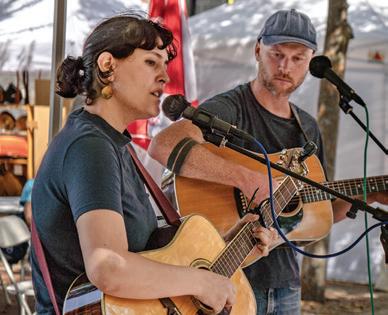
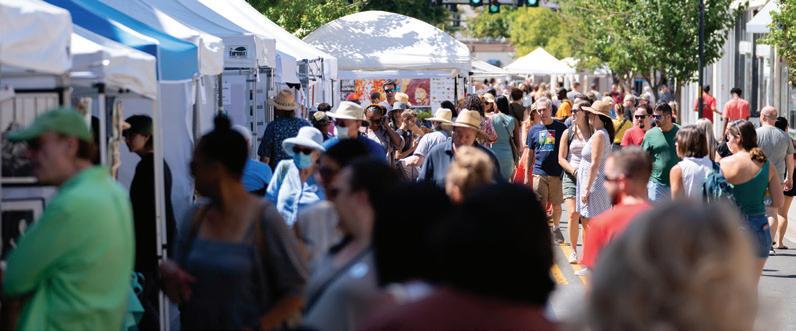
Photograph by Beth Lowery
Join over 40,000 attendees in downtown Durham on September 20–21 for CenterFest’s 50th anniversary! A suggested $5 donation at the gate helps keep the festival thriving for years to come.
Festivals like CenterFest offer more than just visibility and an opportunity to boost local economy—they offer feedback, collaboration, and conversation that shape her art in real time. “People think artists create in isolation, but these events are alive with shared meaning,” Hayes explains. “A bluebird print might represent hope to me, but for a customer whose grandfather built bluebird boxes, it’s about family and conservation. Those stories circle back into my creative process.”
Last year’s festival brought one such story full-circle. Hayes unveiled her largest piece to date: a block print of the critically endangered American Red Wolf. Feeling vulnerable about its scale and cost, she braced for the unknown. What happened next moved her to tears.
“The community rallied. Folks from the Museum of Life and Science, the Southern Environmental Law Center—people who care deeply about red wolves—came by to see it and cheer me on. And then a young woman, new to Durham, walked into my booth. She’d just landed her first professional job, and she bought the piece as her first major art investment. We both got emotional. It was a full-circle moment of courage and connection.”
That weekend, Hayes had raised more than $500 for red wolf conservation. But for her, the biggest reward was the feeling of being held by the community. “CenterFest is more than a festival— it’s a lifeline. Financially, it sustains my small business. Emotionally, it fuels my confidence. And creatively, it reminds me why I do this work in the first place.”
As Durham prepares to honor five decades of art, Hayes reminds us that CenterFest’s greatest legacy might not be the stages or the sales—but the thousands of relationships it has nurtured between artists and audience. “This kind of support doesn’t happen everywhere,” she says. “It’s the result of 50 years of showing up—for artists, for each other, and for this vibrant community.”
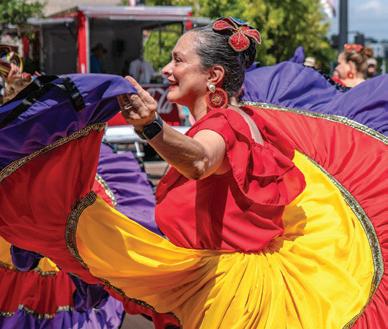

For the full lineup, behind-the-scenes stories, and exclusive merch featuring Katie Hayes’ 50th anniversary design, subscribe to DAC’s Art Vibes and visit www.durhamarts.org.
THANK YOU TO OUR CENTERFEST “BIG BULL” PRESENTING SPONSOR



Orchestra of the Triangle’s conductor strikes a new chord with modern audiences as the organization enters its 43rd season
PHOTO BY JOHN MICHAEL SIMPSON
Raised in the wings of Durham’s orchestra scene, Niccoló Muti, artistic director & CEO of The Chamber Orchestra of the Triangle, builds on a legacy of leadership, innovation and connection through music with a baton in hand and a vision in mind. His father, Lorenzo Muti, served as the conductor and artistic director of The COT from 1988 to 2024, and his mother, Jill Muti, is a flutist. Niccoló earned degrees in violin performance from Indiana University, Rice University and The University of Texas at Austin and performed professionally before pursuing conducting studies at the University of Illinois Urbana-Champaign.
Do you have early memories connected to the orchestra? So many. I grew up with this orchestra because Mom played [in it], and Dad was conducting. I’m an only child, so I was brought to all the rehearsals and concerts. I grew up in concert halls and would entertain myself under pianos and running through the aisles and exploring theaters. I started actually playing in the orchestra when I was a teenager and played in orchestras basically all throughout college.
Have any aspects of your father’s work informed your approach to your own career? I’ve witnessed firsthand and kind of live the life of a conductor from day one by being around him – not only what it means to be a conductor artistically but also what it means to be a conductor when you’re off the podium, in terms of the music and what it means to plan a season and make an interesting program. And then, of course, working with musicians. [I learned] how you have to comport yourself off the podium and in your relationships with people. You’re a people manager; you’re leading a group of people.
Describe how The COT has grown and evolved since its inception. The orchestra had a simple beginning at St. Stephen’s [Episcopal Church] in Durham, and it principally performed there. At some point, [the orchestra] distanced itself from the church, became a nonprofit and changed its name to The Chamber Orchestra of the Triangle. When I came on board [in 2017], the orchestra had been operating at about the same level for a while, in that it was performing about six concerts a year, mainly at the Carolina Theatre
Of course, The COT has always been highly respected in the Triangle for its artistic prowess. Dad developed a reputation for the orchestra of having really interesting and diverse programming that you don’t really see commonly in the industry. But the one thing that I noticed – what I think you notice with a lot of arts organizations; it’s a

national trend, maybe a global trend – is that we had an aging patron base. The orchestra had been doing the same thing for a while; it wasn’t reacting to the fact that its patron base was aging out. And at the same time, Durham and the Triangle were growing really rapidly. I realized that if we didn’t grow and start altering our approach, we would eventually trickle out.
We started implementing a series of changes. One of the core parts of our mission is to give exposure and performance opportunities to upand-coming professional musicians, both nationally and globally. We’ve leaned into that by starting our string quartet-in-residence program that brings world-class young string quartets to not only play in the orchestra and lead the string sections but also do outreach and [take part in] a chamber music series. We were lucky to bring on the Verona Quartet as our first quartet-in-residence, who have gone on to have an incredible career. That program has continued … with the Balourdet Quartet. That sparked a whole new wave of programming with community engagement [through bringing orchestra members] into schools. At first we were trying to put the quartet anywhere we could, just to bring music into public spaces. That led to us starting a new series called “Beerthoven,” where we bring our resident and guest artists into breweries. That has grown and become a fan favorite.
The most recent piece of the puzzle has been the creation of our professional Durham Fellowship Program for young string players – think of it as their first real full-time job. … They’re on a two-year contract to play in the orchestra, but they also do so much more. This program allowed us to launch our educational initiatives; this year we were in 13 elementary schools in Durham and Orange counties. [There’s been] a lot of change.
Where can Durhamites look forward to experiencing
The COT this upcoming season? Most of our performances take place at the Carolina Theatre. … All of our shows are so different, so I think that every show is worth coming to for one reason or another. But a couple really stand out. We’re doing a project [at Bay 7 at American Tobacco Campus] with a fantastic clarinetist named Alexander Fiterstein in December that’s called “The Dreams and Prayers of Isaac the Blind.” This is a piece for strings and klezmer clarinet, and it’s about a 50-minute work. It tells a story through music of this old medieval rabbi who believed that the answers to the universe were in the Hebraic letters that make up the Torah. It’s a really interesting and kind of mystifying story that we are going to be enhancing with light in the space that we’re in. And it’s a North Carolina premiere.
Then we’re doing a really cool piece in March … by George Frideric Handel, who we know as the composer of the “Water Music” or the “Messiah.” This is his first oratorio, and its name is “The Triumph of Time and Disillusion.” It’s an allegory about beauty and has four singers each who represent a different character in the allegory. We’re staging this at the Carolina Theatre.
How does The COT engage with local organizations? Two seasons ago, we launched our Da Capo education program, which basically sees our fellows going to elementary schools in Durham and Orange counties at least twice over the course of the season. At the end of the season, we bus all of those kids – primarily third graders – to the Carolina Theatre. You can imagine a theater of 800 third graders hearing the orchestra, which was a lot of fun. It’s a totally different energy than a concert and is a blast. That’s a huge part of how we engage with the community.
I’m a big believer that art and beauty are something that should be in our daily lives. It should be there and be something that we can access. So we look for opportunities at The COT to have music be at the farmers market, or when we do our Pops on the Green, or we just did a new series at American Tobacco Campus [called] Music Under the Stack. I think it’s always nice to turn the corner and see something that brightens your day.
How does the orchestra highlight the work of local visual artists who have contributed to the marketing materials for each season? That taps in, again, to the whole idea of partnerships. What’s so cool about being in the position that I’m in and the position that the orchestra has in the community is that we have the potential to connect with a lot of really talented artists and thinkers here in the Triangle, and there are a lot, many of whom [the public] don’t really know about. I feel that anybody’s first impression of an organization is a visual one. Our branding was a bit lacking in the early days. I thought, ‘We definitely need to do something there. How cool would it be to engage with the local design community by engaging a young local designer every season?’ So that’s what we’ve done every year. We select somebody new who brings a new [aesthetic], and we like to give them carte blanche in regards to the design. We tell them what our season is and some basic elements, but then we want them to put their personal touch on it.
What’s your vision for the future of The COT?
How will you continue to connect contemporary audiences with classical music? Orchestras are incredibly powerful tools, [as is] the concert space or the theater. I like to compare it to the ballpark. When you think about going to a baseball game, you don’t always go to watch the game. You go to be with friends and to experience something together. You might go because it’s a beautiful day outside to experience the weather. That’s the power of the theater, so making the orchestra a space where people can come together and enjoy something in commune, I think, is really powerful. So [I consider] how to enhance that experience, and how to take the orchestra to the next level artistically.
I think we continue to be highly respected in the area [as a professional orchestra]. But, how can we diversify the program to where we’re speaking to different portions of the population? How do we speak to the incredible history and also the future of the art form? Classical music is something that goes back hundreds of years, but it’s also a living art form – we’re tapping into that as well with new compositions. Tapping into younger patrons ties into that – I think we feel as a society that we need to be in proximity with one another, and we need to have experiences together, and that’s something that the orchestra provides. And we want to create common experiences on a whole – whether they’re purely orchestral; or with opera; or a Beerthoven, where we’re pairing [the music] with beer, food or wine – where people can [come together] and be able to talk about it and be moved. – as told to Renee Ambroso
Durham-based designers and illustrators translate sounds of The COT into a visual language
brittainpeck.com
The Artwork of Kristen Solecki kristensolecki.com
”We wanted to create something that felt interactive and tactile [for the 2025/2026 season], like the performances themselves. I use cut paper, paint and collage in my work. Concepts for a project always start in my sketchbooks, and we wanted to keep those real materials in the final pieces.”
“As with the majority of my illustrations, my work for The COT focused on narrative scenes based on the history of the music’s creation as well as the stories told within the musical pieces themselves. One illustration that exemplifies my approach throughout the work for the 2024/2025 season was the image for ‘Music in Miniature,’ which depicts a variety of objects, such as toy soldiers, fruit, fun-size candy and video game characters to symbolize the five musical pieces played in the concert, each from different time periods and stylistic traditions, while creating a collective scene that evokes this diversity of traditions as well as a spirit of levity and playfulness.”

ANNE MAUSER
annemauser.com
“My collaboration with The COT came at a challenging time for all of us – the pandemic – and we needed to adapt really quickly to a world where live music was transitioning online – quite a different experience for an audience. The work that came out of that aimed to tap into the ephemeral quality of each composition and showcase that across a series of abstracted illustrations that also had representative elements to them, the hope being that, even as we couldn’t gather, we could still appreciate the distinct quality of each piece and the talented individuals who make it all possible.”


Muntyman Designs, muntyman.com
“Th[is] artwork is all about embracing fun and creativity. The idea behind the visual identity was to make classical music feel fresh, bold, approachable and new –without taking itself too seriously. Going to a COT concert isn’t your typical classical music experience, and we wanted the visuals to capture that same vibe. My hope with this work is simple: to spread a little joy, spark some curiosity, and maybe, just maybe, make someone crack a smile.”

KASIA KONOPKA kasiakonopka.com
“I collaborated closely with The COT team to create a series of surreal digital collages inspired by the themes woven throughout the season’s music. Each piece plays with color, geometry and fragments of reality to build whimsical compositions that, hopefully, make people smile. Rooted in art history, the work is emblematic of my broader practice – finding joy and meaning through unexpected visual connections.”


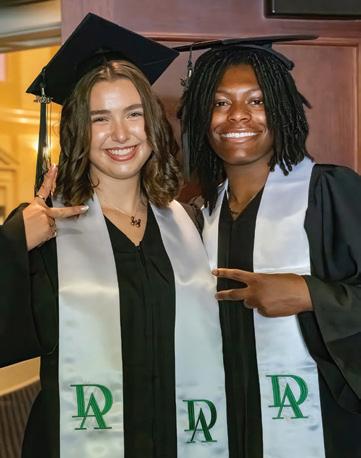
COMPILED BY KATE LOEFFEL
‘Unearthing Stories of Geer Cemetery’ Through Oct. 10 – This exhibition at the Museum of Durham History, hosted in partnership with Friends of Geer Cemetery, honors the historically African American burial grounds found in northeast Durham. Ongoing programming includes public events that explore the stories, archaeology and preservation of one of Durham’s earliest African American cemeteries. Visit from 10 a.m. to 2 p.m. Aug. 23 for a pop-up that focuses on artifacts and genealogy, and mark your calendar for an interactive tour of Geer Cemetery on Sept. 27.
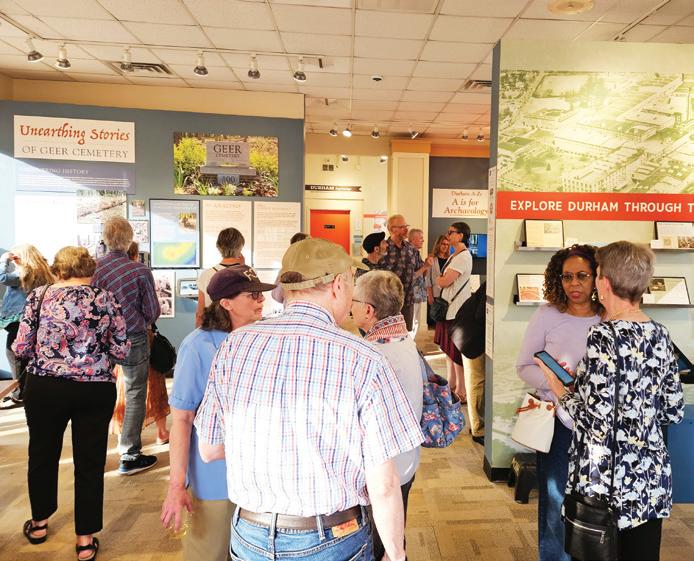
Retro Film Series Through December – The Carolina Theatre presents Friday night double features filled with retro nostalgia on the big screen every week! Highlights include “Clueless” and “Romy and Michele’s High School Reunion” Aug. 22, “The King of Comedy” and “A Fish Called Wanda” Sept. 12, and “Hocus Pocus” and “Matilda” Oct. 17. This blast-from-the-past event includes door prize giveaways and classic movie trailers before every film.
‘Coming Into Focus: A Snapshot of Photography at the Nasher’ Through Jan. 4 – Explore the evolution of photography from its dawn in the 1830s to today’s experimental edge through this sweeping new exhibition at the Nasher Museum of Art at Duke University. The images on display celebrate the growth of the museum’s photography collection – from its first acquisition in 1972 to a transformative recent gift of more than 1,500 works – and feature iconic artists like Cindy Sherman, Andy Warhol, Henri Cartier-Bresson and Edward Weston.
Summer Concert in the Park Aug. 9, 6-8 p.m. –Head to Piney Wood Park for a free evening of live music, food trucks and family fun as part of Durham Parks and Recreation’s concert series. Its final show of the season features two rising local talents: Emma Jane, whose dreamy indie-pop melodies channel nostalgia and heart, and Tre. Charles, an indie soul artist known for his powerful, introspective performances.
Hammer No More the Fingers Aug. 29, 8 p.m. –Catch a high-energy night of music with three unforgettable acts at Motorco Music Hall Durham’s own rock trio of Duncan Webster, Joe Hall and Jeff Stickley brings their signature
“hooky fun time rock” to the stage with explosive riffs and local swagger. Canine Heart Sounds, a Durham-based quartet with roots in Wisconsin and Minnesota, blends indie rock sensibilities shaped by time spent with bands like Bowerbirds and the Rosebuds. Starting the night off is Just Jess, serving up unfiltered, take-it-or-leave-it attitude and tunes.
Atsuko Okatsuka Sept. 4, 7:30 p.m. – Kick off Duke Arts opening week with a night of sharp wit and unexpected laughs. The comedian – known for her HBO special “The Intruder,” viral stand-up clips and signature bowl cut – brings her offbeat humor and fresh perspective to the stage at Page Auditorium
Cream of Soul Sept. 6, 7:30 p.m. – Get ready to groove as this legendary Durham-based band returns to the stage at The Blue Note Grill! Formed in 1984, this group features a sound rooted in blueeyed soul and decades of live experience, bringing the best of the ’70s and ’80s to life with high-energy dance, party and rock hits.
Fall Movies in the Park Sept. 6, Oct. 4 and Nov. 1 7:30-9:30 p.m. – Durham Parks and Recreation presents this free, family-friendly outdoor film series at Durham Central Park. Bring your blankets, lawn chairs and favorite people to enjoy classic movies under the stars in the heart of downtown. This year’s lineup includes “A League of Their Own” Sept. 6, “Ghostbusters” Oct. 4 and “Drumline” Nov. 1. Local food trucks will be on-site serving up tasty bites, so come early, grab dinner and settle in for a cozy evening of film, food and community.
MJ Sharp, Outside Amarillo, 2006 (printed 2012). Chromogenic print, edition 2/6, 50 x 40 inches (127 x 101.6 cm). Collection of the Nasher Museum of Art at Duke University, Durham, NC. Gift of Frank Konhaus, Ellen Cassilly and the Cassilhaus Collection, 2012.19.1. © MJ Sharp. Image courtesy of the artist.
Aug. 14-17 – The Carolina Theatre hosts the second-largest film festival in the Southeast and the largest cultural arts event serving the LGBTQ+ community in the Carolinas, with world premiere screenings and thousands of tickets sold each year.
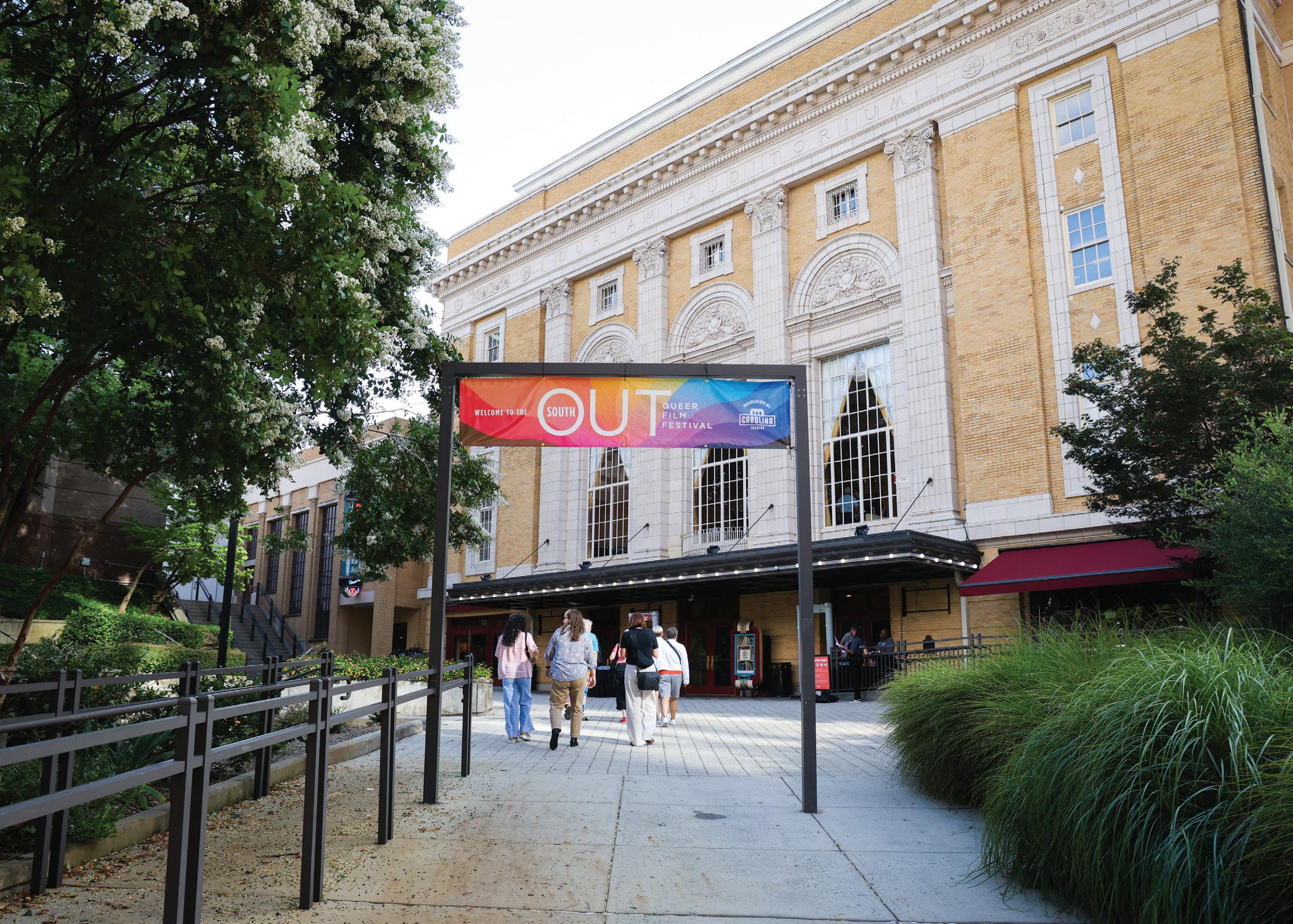
Lou Hazel Sept. 7, 7 p.m. – Catch the Durham-based singer-songwriter live at The Pinhook as he shares his signature blend of folk and indie, infused with raw storytelling rooted in his northern Appalachian upbringing – shaped by solitude, resilience and a deep DIY spirit.
‘Revolution’ Sept. 12-13, 7:30 p.m. – Celebrate friendship, connection and a little chaos with this new play by Brett Neveu, presented by RedBird Theater Company at Shadowbox Studio. Directed by Adam Traylor, the story follows Puff, who’s spending her 26th birthday in an alley with her best friend, Jame, and an unexpected guest, Georgia. With laughs, vulnerability and a splash of Miller High Life, the trio explores what it means to build community in a disconnected world.
Kream Sept. 12, 9 p.m.-2 a.m. – Experience electrifying beats at The Fruit as the Norwegian powerhouse brothers bring their signature melodic tech house to Durham. Set in an intimate warehouse turned one of the region’s premier electronic music venues, this show promises the perfect setting for Kream’s immersive soundscapes, which have been streamed more than a billion times worldwide.
An Afternoon in the Park Sept. 13, noon-4 p.m. –Spend a delightful afternoon at West Point on the
Eno enjoying historic field games, classic fishing in the scenic Eno River and a guided park tour exploring the area’s rich history. Beer and cider will be available for purchase, with proceeds supporting the Durham Parks Foundation and future improvements at West Point.
‘Boundless’ Sept. 18-Oct. 11 – 5 Points Gallery presents the captivating, ephemeral work of Durham-based artist Jenny Blazing. Her art
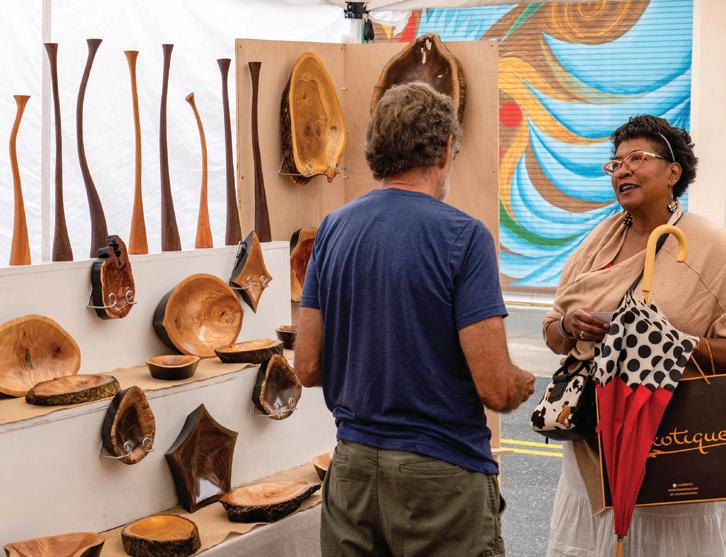
beautifully captures the natural world, inspiring a deep appreciation for Earth’s fragile beauty while seamlessly blending creativity with a powerful message of environmental conservation.
Pops on the Green Sept. 19, 6:30 p.m. – Enjoy lighthearted tunes on the American Tobacco Campus lawn during this free Chamber Orchestra of the Triangle concert.
Sheng Wang Sept. 19, 7:30 p.m. – This notable stand-up comedian broke into the entertainment scene in 2011 and has since made his mark writing for the ABC sitcom “Fresh Off the Boat” and releasing his Netflix special, “Sweet & Juicy.” Catch his sharp wit and relatable humor at the Durham Performing Arts Center during a night of laughs you won’t want to miss.
Centerfest Sept. 20-21 – Durham Art Council’s premier arts festival is back for its 50th year in the heart of downtown. Juried artists from across the Triangle and beyond exhibit their work in mediums including ceramics, paintings, photography, jewelry, fiber art, woodwork, glass and more. Watch unique street performers, musicians and dancers, visit the kids zone, grab a snack from food vendors, and learn more about Durham’s nonprofit and government services.
The Balourdet Quartet Sept. 30, 7:30 p.m. –Soothing strings and smooth sips create the perfect pairing during The Chamber Orchestra of the Triangle’s Beerthoven concert at Atomic Clock Brewing Co.
Not Dead Yet! – John Cleese and the Holy Grail at 50 Oct. 1, 7:30 p.m. – Celebrate the 50th anniversary of the cult classic “Monty Python and the Holy Grail” at the Carolina Theatre with an unforgettable evening of comedy and conversation. The legendary John Cleese takes the stage to share behind-the-scenes stories, answer audience questions and keep the laughs coming in true Python fashion.
‘Cinderella’ Oct. 2-3, 7 p.m. – Experience the magic of this classic fairy tale live on stage at the Carolina Theatre as the World Ballet Company brings the beloved story to life in a dazzling Broadwaystyle production. Featuring 40 international dancers, more than 150 hand-sewn costumes, stunning handcrafted sets and enchanting choreography, this family-friendly performance blends humor, romance and timeless ballet.
The Bridge City Sinners Oct. 4, 7 p.m. – The Fruit welcomes the raucous, genre-bending sounds of this Portland, Oregon-based band known for their gritty mix of folk-punk and dark Americana. They are joined by goth-rock outfit Dead on a Sunday and soulful storyteller Joshua Quimby.
Shall We Dance? Oct. 5, 4 p.m. – The Carolina Theatre hosts a Chamber Orchestra of the Triangle program featuring Erich Wolfgang Korngold’s “Dance in the Old Style” and Felix Mendelssohn’s Symphony No. 3.
Neko Case Oct. 5, 7:30 p.m. – Renowned for her poetic lyrics and fearless artistry, the singer-songwriter with an unmistakable voice and commanding presence takes the stage at DPAC for only night only.
North Carolina Latin American Film Festival Oct. 6-16 – Organized by the Center for Latin American and Caribbean Studies at Duke University, this festival features work by Latin filmmakers from more than 20 countries in Spanish, Portuguese and indigenous languages. Enjoy screenings of documentary films and special events that explore themes such as music and dance, migration, dramas and globalization at various Durham and Chapel Hill locations.
‘The Sound of Music’ Oct. 9-12 – Celebrate 65 years of one of the world’s most beloved musicals as this timeless Rodgers & Hammerstein classic comes to DPAC in a stunning new North American tour. The vibrant production tells the uplifting story of Maria and the von Trapp family through unforgettable songs like “Do-Re-Mi,” “Edelweiss” and “Sixteen Going on Seventeen,” inviting audiences to embark on its everlasting themes of love, courage and the power of music.
‘Quiet Resilience’ Oct. 16 – Nov. 15 – Discover the striking beauty of Japanese mineral painting in this solo exhibition by Yuko Nogami Taylor at 5 Points Gallery. Drawing from her cultural heritage and life in the American South, Yoko’s works explore themes of humility and strength through a deeply personal lens. Her meticulous technique and emotional depth offer a powerful portrayal of quiet perseverance.
Made in the Triangle: The Story of RTP Oct. 17, 6 p.m. – Celebrate the opening of this new exhibition at the Museum of Durham History that traces the rise of Research Triangle Park and Durham’s pivotal role in its creation. Enjoy an evening of music, refreshments and conversation
with museum staff and sponsors while exploring the story of how innovation and community shaped one of the most influential tech hubs in the country.
The Dose: A Psychedelic Comedy Showcase Oct. 17, 8 p.m. – Get ready for a night of mindexpanding laughs during this immersive experience that blends stand-up, music, art and festival vibes into one unforgettable evening at The Fruit. Hosted by comedian and psychedelic connoisseur Steven Gillespie, the lineup features top comics seen on HBO, Netflix, Comedy Central and more, plus a live DJ set before, during and after the show.
Barktoberfest Oct. 25, 3:30-6:30 p.m. – Sniff out the fun at Durham Central Park for a paw-some celebration for dogs and their humans. This free event features costume contests, agility courses, local pet vendors and plenty of treats for pups and people alike.
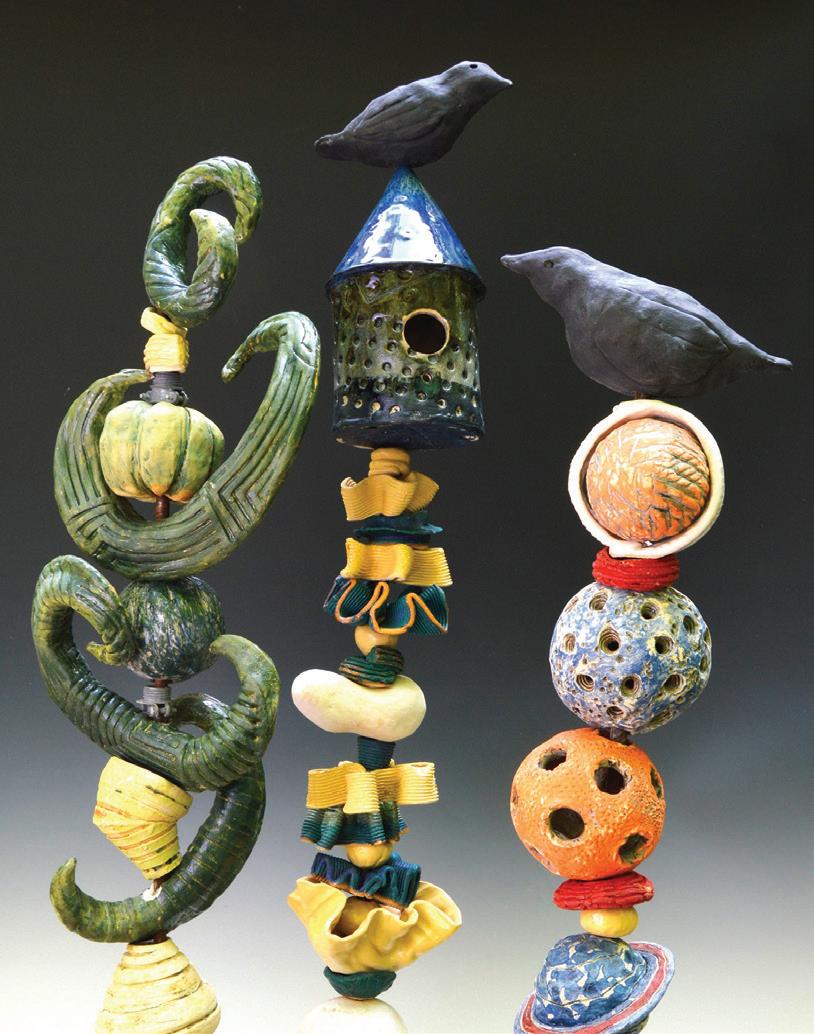
Artist Larry Downing’s totems are among the works featured in the 12th annual Durham County Pottery Tour, where visitors can explore 30 studios, meet local potters and peruse a diverse array of clay creations.
Morgan Freeman’s Symphonic Blues Experience Oct. 25, 7:30 p.m. – Join Duke Arts Presents for an unforgettable evening as the legendary Morgan Freeman lends his iconic voice to a moving blend of blues and orchestral music. This unique performance at Reynolds Industries Theater combines narrative depth with soulful sound, offering an experience as powerful as it is poetic.
Weakened Friends Oct. 30, 7 p.m. – Known for raw, honest lyrics and explosive energy, the ‘90s alt-rockinspired band delivers a dynamic set at The Pinhook that’s equal parts catharsis and celebration.
‘The Night Before Christmas Carol’ November and December, dates TBD – RedBird Theater Company invites you to join Charles Dickens as he invents the characters and storyline for his now-famous “A Christmas Carol ” This enchanting one-man show will be performed at various venues across Durham and Chapel Hill – perfect for getting into the holiday spirit.
Durham County Pottery Tour Nov. 8, 10 a.m.-5 p.m., and Nov. 9, noon-5 p.m. – This annual open studio tour, now in its 12th year, welcomes visitors to explore 30 studios across the county. Meet the artists, ask questions and see the wide range of work that can be created from clay. Pottery will be available for purchase at all tour locations.
Evren Ozel Nov. 11, 7:30 p.m. – Relax with a beverage as The Chamber Orchestra of the Triangle and the renowned pianist key in swanky classical music all evening during this Beerthoven concert at Atomic Clock Brewing Co
Is It Thursday Yet? Nov. 14-15, 7:30 p.m. – Step into the deeply personal and visually stunning world of this powerful dance-theater work from choreographer Jenn Freeman. Inspired by her latein-life autism diagnosis, she explores self-discovery through movement in this intimate, sensory-rich performance presented by Duke Arts Presents at Reynolds Industries Theater
‘Mass in a Time of War’ Nov. 16, 4 p.m. – This Chamber Orchestra of the Triangle Signature Series performance at the Carolina Theatre features Mozart’s Piano Concerto No. 25 and Joseph Haydn’s “Missa in tempore belli.”
‘Spent Energy’ Nov. 20 – Dec. 20 – Discover the vibrant spontaneity of Susan Wynne Woodson’s latest exhibit at 5 Points Gallery Known for her expressive, collage-based works, Susan draws inspiration from her travels through Africa, often incorporating avian imagery and bursts of color that reflect the wild beauty of nature.
Phil Hanley Nov. 21, 8 p.m. – Get ready to laugh out loud as the stand-up comedian brings his Spellbound Tour to the Carolina Theatre. Known for his sharp wit, offbeat charm and hilarious takes on life’s awkward moments, Phil delivers a night of comedy that’s as smart as it is side-splitting.
Durham Art Walk Nov. 22-23 – Kick-start the holiday season as the Durham Arts Council hosts this annual tour featuring local artists, live music, food and fun at a number of different sites around the city.
The Spill Canvas and Mae Nov. 30, 8 p.m. – Make your way to Motorco Music Hall to watch two alt-rock bands perform their albums “One Fell Swoop” and “The Everglow,” respectively, in their entirety.
‘The Outsiders’ Dec. 2-7 – Follow the raw and gripping journey of 1960s teens navigating friendship, identity and self-discovery in this powerful coming-of-age story brought to life on stage at the Durham Performing Arts Center
Alexander Fiterstein Dec. 9, 7:30 p.m. – The clarinetist performs at Atomic Clock Brewing Co. in this Chamber Orchestra of the Triangle Beerthoven concert.
‘A Christmas Carol’ Dec. 10–14 – Theatre in the Park brings its beloved musical comedy adaptation of the classic Charles Dickens tale to the Durham Performing Arts Center, celebrating more than 50 years as a cherished North Carolina holiday tradition. Filled with festive cheer, memorable carols and the timeless story of Scrooge’s transformation, this heartwarming performance is perfect for the whole family.
‘The Dreams and Prayers of Isaac the Blind’ Dec. 13, 7:30 p.m., and Dec. 14, 4 p.m. –Experience this moving Chamber Orchestra of the Triangle performance in Bay 7 at American Tobacco Campus




Whether you’re searching for the perfect new build, planning a kitchen transformation or simply need trusted experts to tackle your next home project, the following pages are here to inspire. The builders, renovators and home service professionals featured in this section are ready to help bring your vision to life.




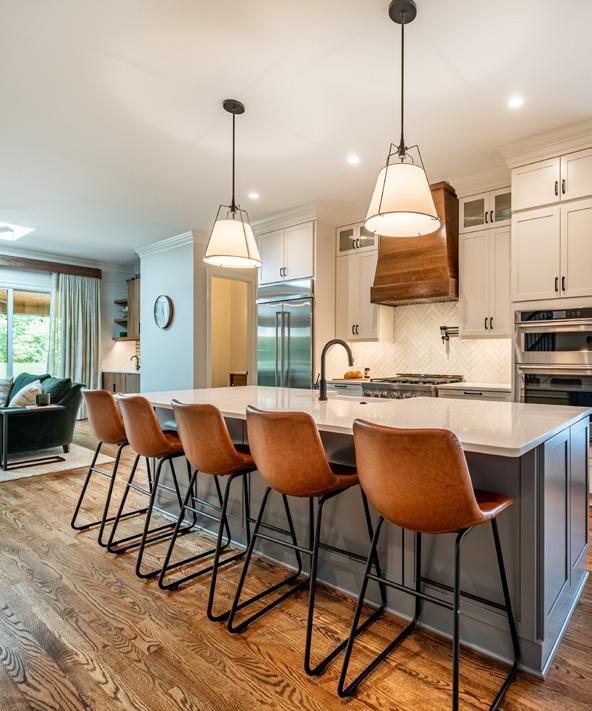

n 2017, Liz Templeton Scisco, LEED AP, founded True Design as a client-focused interior design team, guiding homeowners through the often complex renovation process. With more than 10 years of experience in the Chapel Hill-Durham area, Scisco brings together her interior architecture degree with extensive custom home building and renovation expertise. She serves as a trusted homeowner advocate throughout the design and construction process.
True Design’s mission centers on creating spaces uniquely tailored to each client’s aesthetic, budget, and functional needs. The team excels at translating client visions into buildable realities while preserving the character and integrity of existing homes. Scisco’s proven tracking system and deep construction knowledge help streamline the renovation process, reducing stress for homeowners.
True Design listens to the client first, emphasizing collaboration in their approach. The team works as clients’ dedicated team throughout projects of varying complexity, building trust through honest communication and ensuring homeowners’ best interests drive every decision.

ith its newly opened Durham location, Queen City Homestore marks the latest chapter for a family business that began as a television repair shop in Charlotte in 1952. Today, this family-owned business offers comprehensive home solutions, featuring furniture, appliances, electronics, and mattresses.
Queen City Homestore’s curated collections blend contemporary, coastal, traditional, and transitional pieces in thoughtfully designed room vignettes. The company features locally crafted North Carolina furniture, emphasizing sustainability and exceptional craftsmanship.
What distinguishes Queen City Homestore is its personalized approach that large retailers cannot match. Customers work with manufacturercertified product specialists who understand their unique needs. Their knowledgeable team brings decades of expertise to every consultation, recognizing that furnishing the perfect home involves both practical considerations and personal style.
Queen City Homestore delivers competitive pricing with price match guarantee, flexible financing, and express delivery from its 100,000-squarefoot warehouse. Specially trained delivery and installation teams provide seamless service from furniture selection to home setup.
As a proud member of the Greater Durham Chamber of Commerce, Queen City Homestore looks forward to becoming a valuable resource for Durham-area residents. With nearly 75 years of exceptional service and a modern shopping experience, it’s an ideal partner for those seeking comfort, quality, and style.
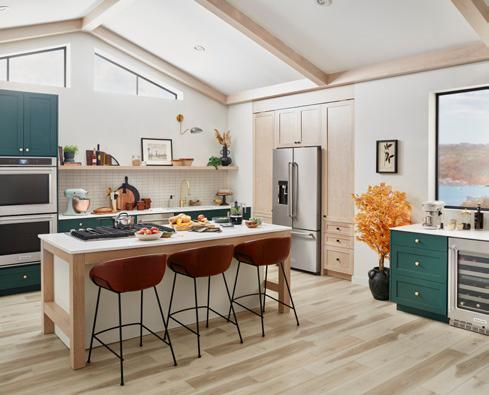

t McKee Homes, we believe that building a home is about more than bricks and mortar–it’s about creating spaces where people can thrive, grow, and build lasting memories. As a familyowned homebuilder born and bred in North Carolina, we are committed to craftsmanship, innovation, and connection. Our homes are thoughtfully designed for how people actually live, blending smart layouts, high-quality finishes, and purposeful details that make everyday life easier and more enjoyable.

We are proud to bring our signature approach to two exciting new communities in the heart of Durham: The View and Page Townes. Both offer distinct lifestyles, tailored for modern homeowners seeking comfort, style, and unbeatable location.
Welcome to the McKee Homes Design Studio
Personalizing your new home is one of the most exciting parts of the McKee Homes experience. Our expert design consultants will guide you through every step, helping you choose finishes, fixtures, and features that reflect your style. From cabinets and countertops to flooring and lighting, you’ll see, touch, and experience the full range of options in our beautifully curated studio.
Let us bring your vision to life and create a home that’s uniquely yours.
he View is situated in Northern Durham, boasting expansive homesites just a stone’s throw away from Downtown Durham, the Eno River State Park, and the Umstead Pines Golf Course. In addition to its natural beauty, The View is strategically located to keep you connected. With quick access to the Triangle’s thriving job market, you can enjoy a short commute to your workplace, allowing you to strike the perfect work-life balance. Work out of your office in Raleigh, catch a Durham Bulls game with the family, spend the night out in Chapel Hill on Franklin Street, and return to your peaceful home–all in the same day.
• 81 premium homesite
• Located minutes from downtown Durham
• Open layouts with upscale finishes and flex spaces
• 3 car garage and unfinished 3rd floor options
• Smart-home features and city views
Model Home: 1012 Prominence Dr. Durham, NC
Open: Sun 1 p.m. - 6 p.m.
Mon, Tues, Fri & Sat 10 a.m. - 6 p.m.
iscover a fresh approach to townhome living at Page Townes–where modern comfort meets everyday convenience. Say goodbye to high maintenance living and hello to convenience, comfort, and style. Page Townes is our newest community, thoughtfully designed to blend the ease of townhome living and the vibrant energy of city life. Located just minutes from Brier Creek Commons, Page Townes puts shopping, dining, entertainment and RDU Airport all at your fingertips. These 3-story townhomes feature modern finishes and touches throughout. Schedule a tour today and experience the McKee difference for yourself.
• Spacious 3-story townhomes with 3 bedrooms, 3.5 baths
• Over 2,300 square feet with a 1-car garage
• Modern interior and exterior finishes
• Community amenities include Paws Park and Page Park
Model Home: 706 Portia Way Morrisville, NC
Open: Sun 1 p.m. - 6 p.m.
Mon, Tues, Fri & Sat 10 a.m. - 6 p.m.



heila O’Rourke is the founder and creative force behind Little Mangum Studio, an award-winning interior design and renovation firm serving the Triangle since 2016. With a background that bridges the technical and the artistic, Sheila holds a Bachelor’s degree in Mechanical Engineering and a Master of Fine Arts. After two decades in software development, she pivoted to design, working on HGTV for four seasons before launching her own studio.
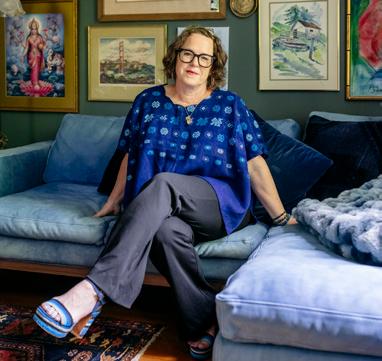
Sheila’s work is powered by a rare blend of right-brain intuition and left-brain logic. Her strengths in spatial geometry, visual sensitivity, and system design allow her to guide clients with both creative ingenuity and expert project management, skills that are equally vital in delivering transformative spaces.
At the heart of Sheila’s process is a deep commitment to uncovering each client’s unique needs. She listens closely, then designs spaces that truly reflect who her clients are. Her graduate thesis explored how physical environments shape well-being, and she believes that beautiful, functional design can nurture mental, physical, and spiritual health. Her aesthetic is shaped by years spent living abroad—in Paris, New York, Vietnam, and San Francisco—and by global travels sourcing textiles and decor. While internationally informed, her design approach is always centered on telling each client’s personal story.
Named Best of Durham two years in a row, Little Mangum Studio has earned a reputation for gently guiding clients just beyond their comfort zones to create the dream home they hadn’t yet imagined.
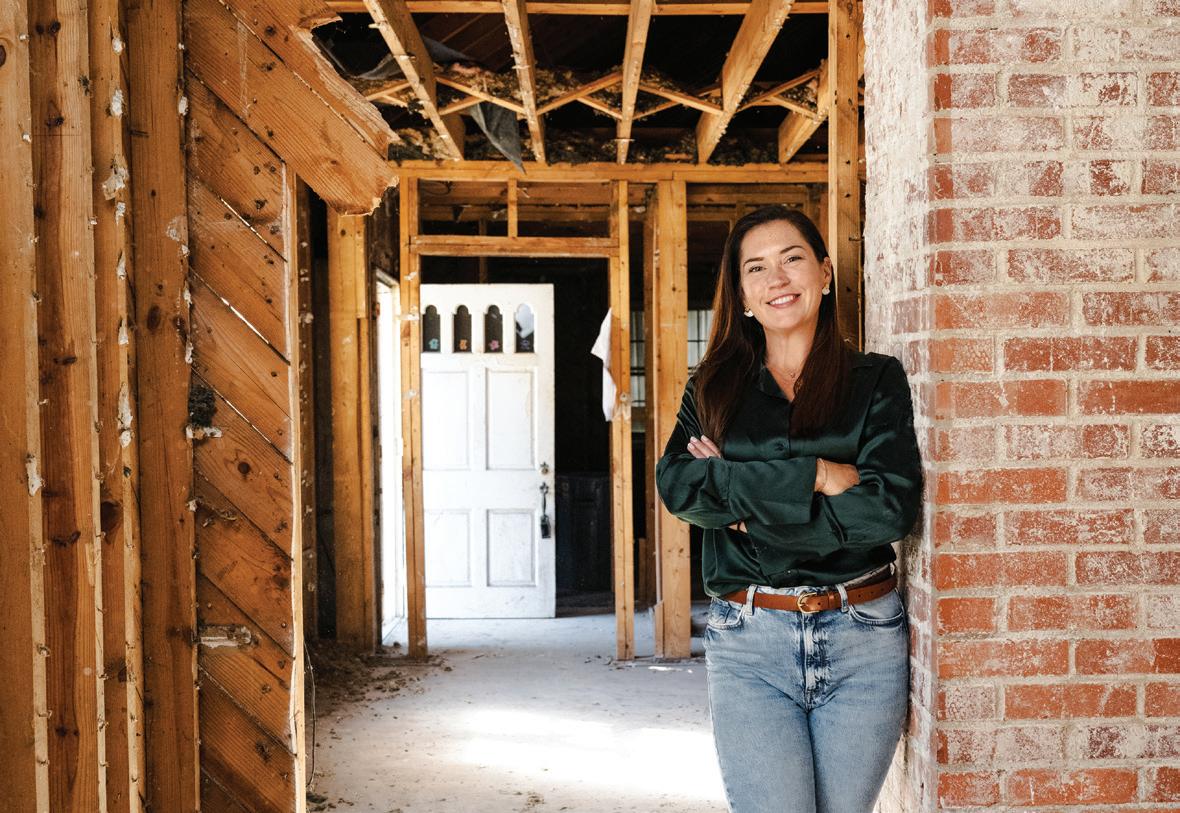
reen Hill Contracting is a woman-owned general contracting firm that proudly serves the Raleigh-Durham area with a refined approach to residential remodeling. From kitchen and bath updates to whole-home renovations, Green Hill specializes in transforming homes through superior craftsmanship, unwavering integrity, and a transparent process built on trust.
Their team approaches each project with a focus on thoughtful design and lasting value. They have extensive experience working on historic homes throughout the Triangle, where attention to detail, precision, and respect for each home’s character are paramount.
As a woman-led business, Green Hill brings a distinctive perspective that balances strategic problem-solving with a relationship-centered approach. They prioritize active listening, collaboration, and trustbuilding with every client. This commitment to meaningful connections has led to strong word-of-mouth referrals and cultivated a loyal base of repeat clients.
At its core, Green Hill Contracting is more than a renovations company–they’re a team of passionate professionals who understand that home is deeply personal. They believe that renovating your home should feel empowering, not overwhelming.


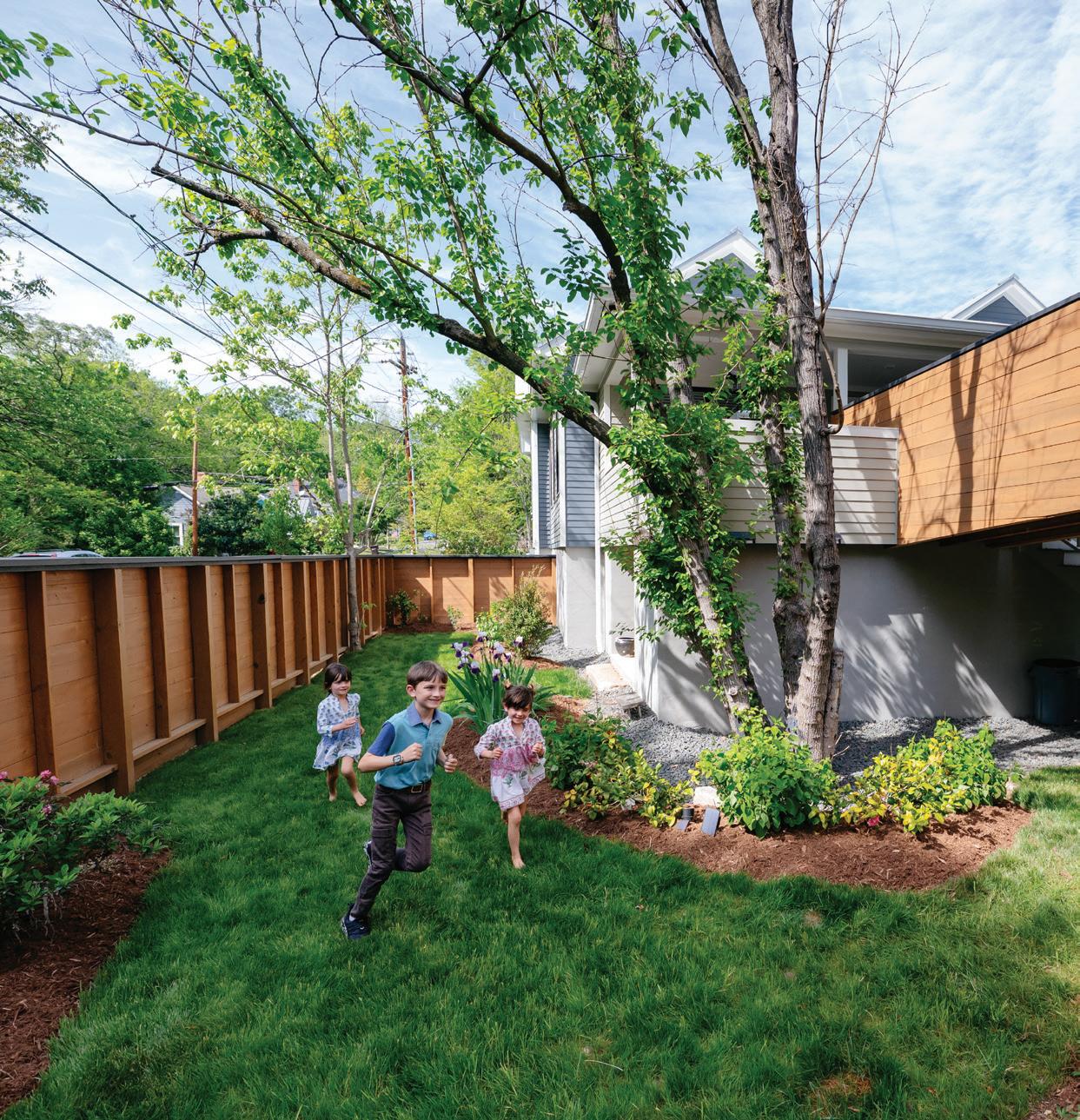
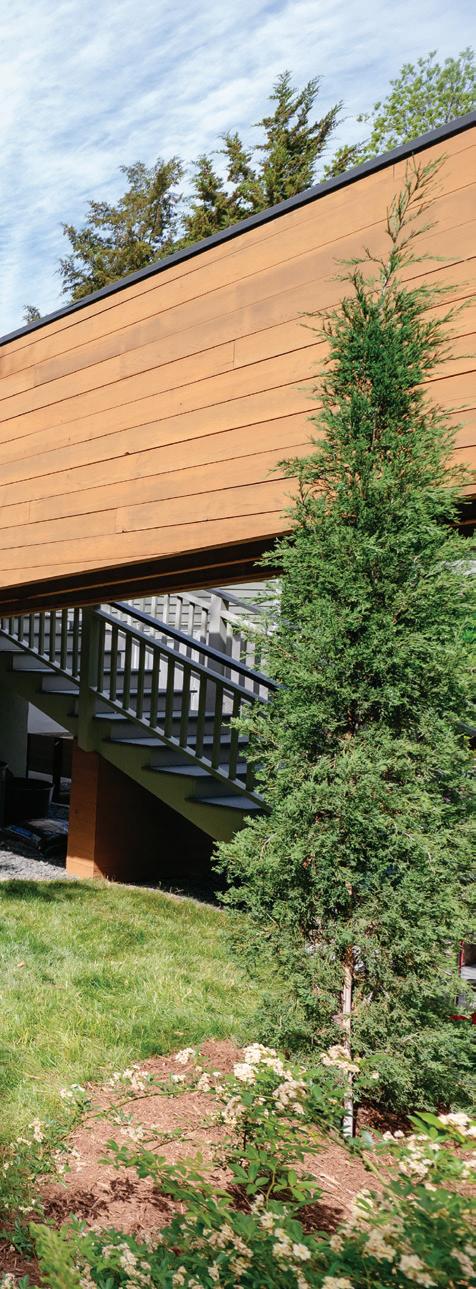
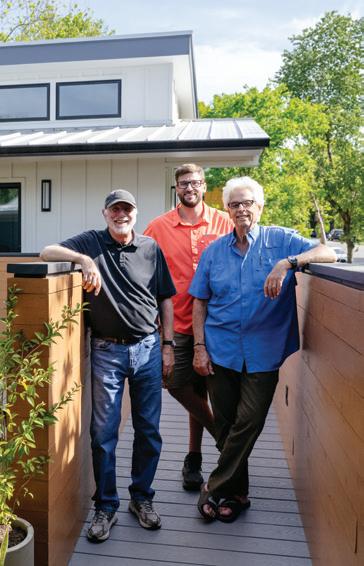
Design duo transforms a historic Morehead Hill property into a welcoming, modern family retreat
BY COURTNEY HAYES
PHOTOGRAPHY BY JOHN
MICHAEL SIMPSON
John Storyk and Beth WaltersStoryk aren’t new to creating extraordinary spaces. The couple knows good design; over the past 35 years, they’ve worked on more than 4,100 projects all over the globe, both collaboratively and individually – ranging from recording studios to performance venues – through their firm, Walters-Storyk Design Group.
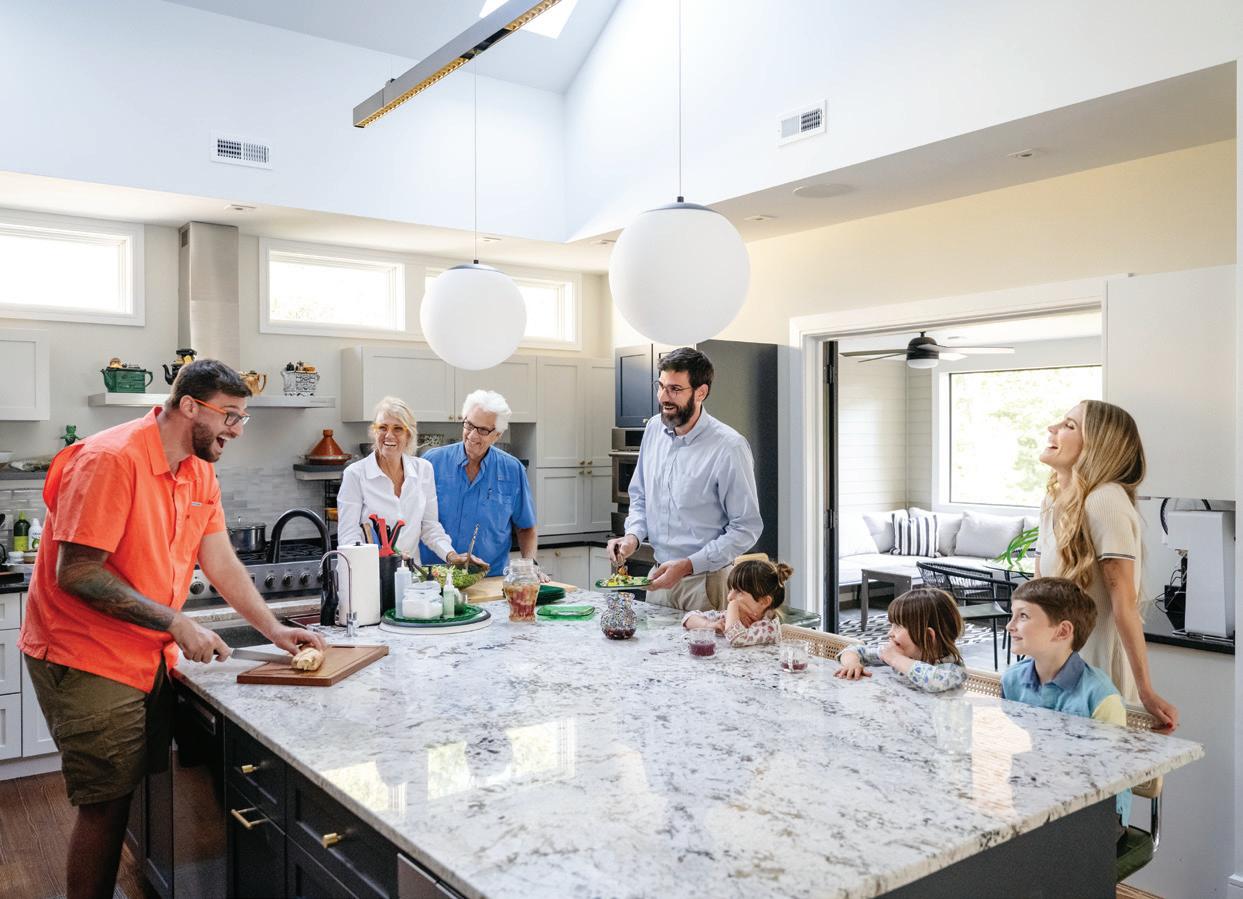
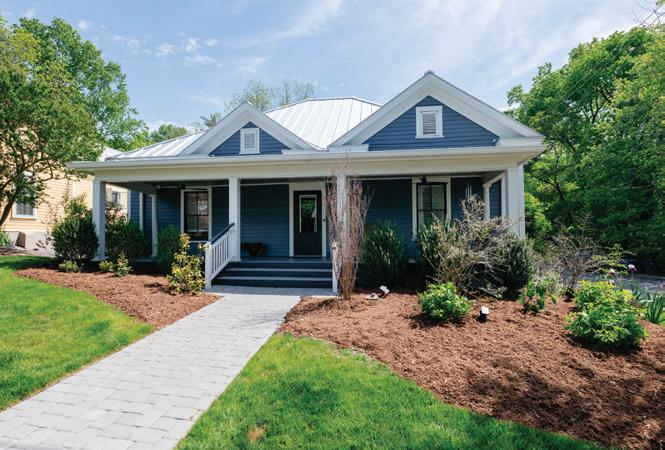
LEFT Because the home is historic, much of the original exterior materials had to be preserved – but a fresh coat of paint gave it new life.
But one of their latest projects brought their talents a little closer to home. In fact, it is home.
The pair wrapped up a full transformation of a historic one-story, pyramidal cottage-style house in the Morehead Hill neighborhood in 2024, a long-imagined aspiration brought to life in the heart of Durham. They call it Casa Akumal, named after the Mexican town where they spend part of the year.
Beth and John’s connection to the Bull City began 15 years ago when their two sons moved to the area. John and Beth bought the house adjacent to what would eventually become their current home in order to have their own place during visits. They often found
themselves daydreaming about the vacant property across the way – what it could be with a little vision (and a lot of work).
“When it finally came up for sale, the dream began,” John says. “A passion project to say the least. … The historic structure was purchased with virtually no building inspections, a condition of the sale, and thus started a construction adventure unlike most.”
The first step? Clearing out thousands of old magazines
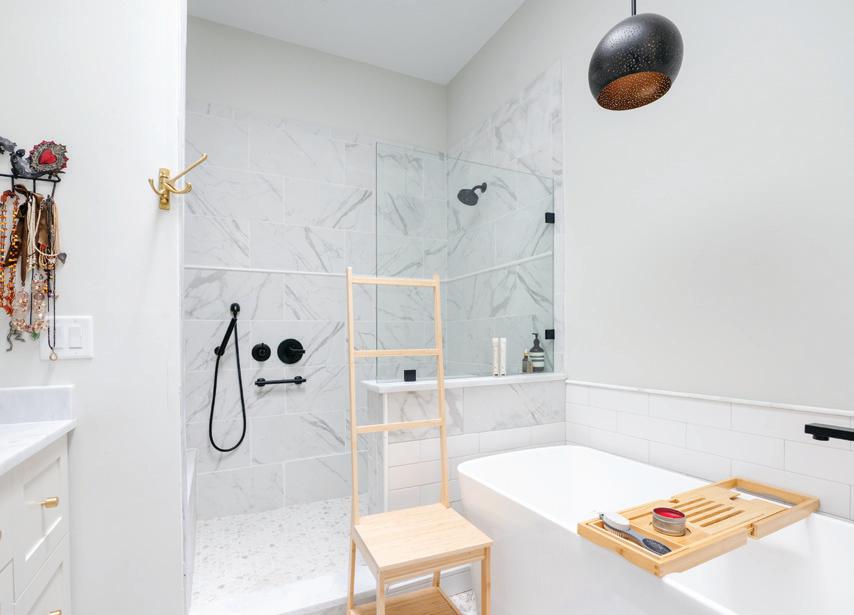

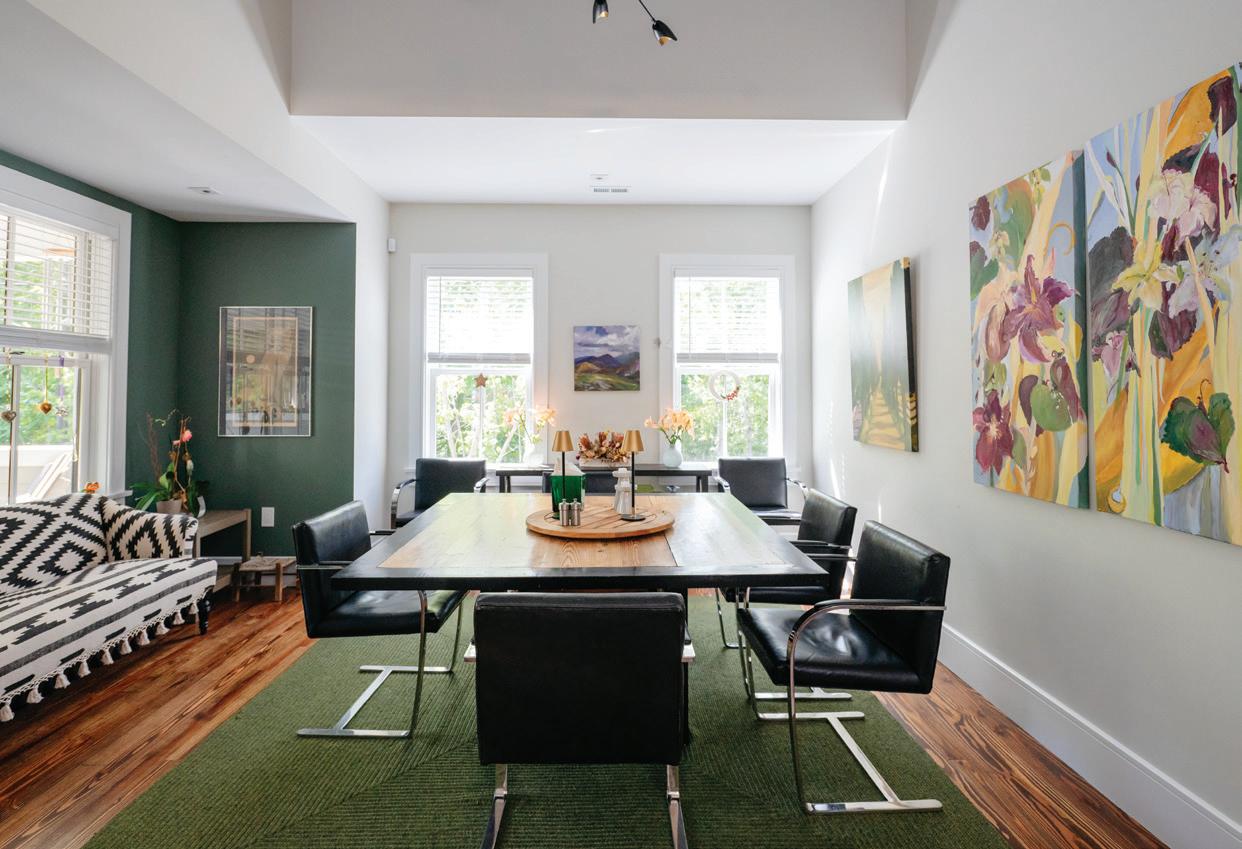
left behind by the previous owner and removing vegetation that had started to grow through the walls and windows.

What followed was a six-month conceptual design process led by Beth and John, supported by the WSDG team. “There were numerous meetings with the Durham Historic Preservation Commission to arrive at a design that respected the history of the building while allowing for a new contemporary architectural solution,” John says.
The seasoned architects met the challenge head on, bringing a bright modernity to the once-dark and derelict home. Skylights drench the space in natural light. Beth’s artwork brings color and life to the walls. Baseball games are a regular feature on the TV in John’s office – being within walking distance to the Durham Bulls Athletic Park was one of his must-haves for a permanent Durham residence. Their grandkids come over often, plopping down around the kitchen island for after-school snacks. There’s a raised garden bed in the backyard. It’s altogether warm and inviting – a home meant to be lived in.
From the street, the house blends seamlessly with the neighborhood. The original siding and two front-facing windows, preserved as required by the HPC, maintain the home’s classic charm. But as you walk along the side, the siding transitions from

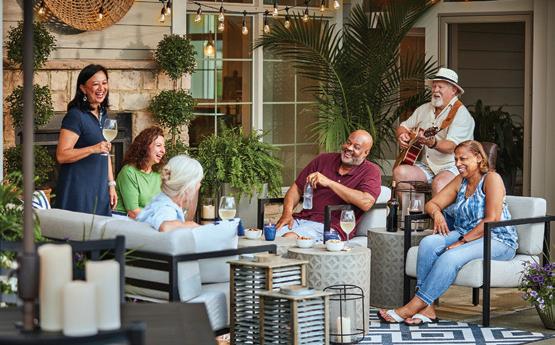
Epcon’s Durham-area communities allow you to live life on your terms.
With landscape maintenance included, you will finally experience freedom from time-consuming yard work and the flexibility to lock and leave when you please.
Whether you’re traveling across the state, the country or the world, you can rest assured that your new Epcon home is well cared for and maintained, just the way it should be. But that’s not all.
Once your travel concludes, you’ll always return to a luxury ranch home with an open floor plan, generous natural light, sophisticated features and a private, garden courtyard.


“With all the traveling we do, our Epcon home allows us to lock and leave without a care.”

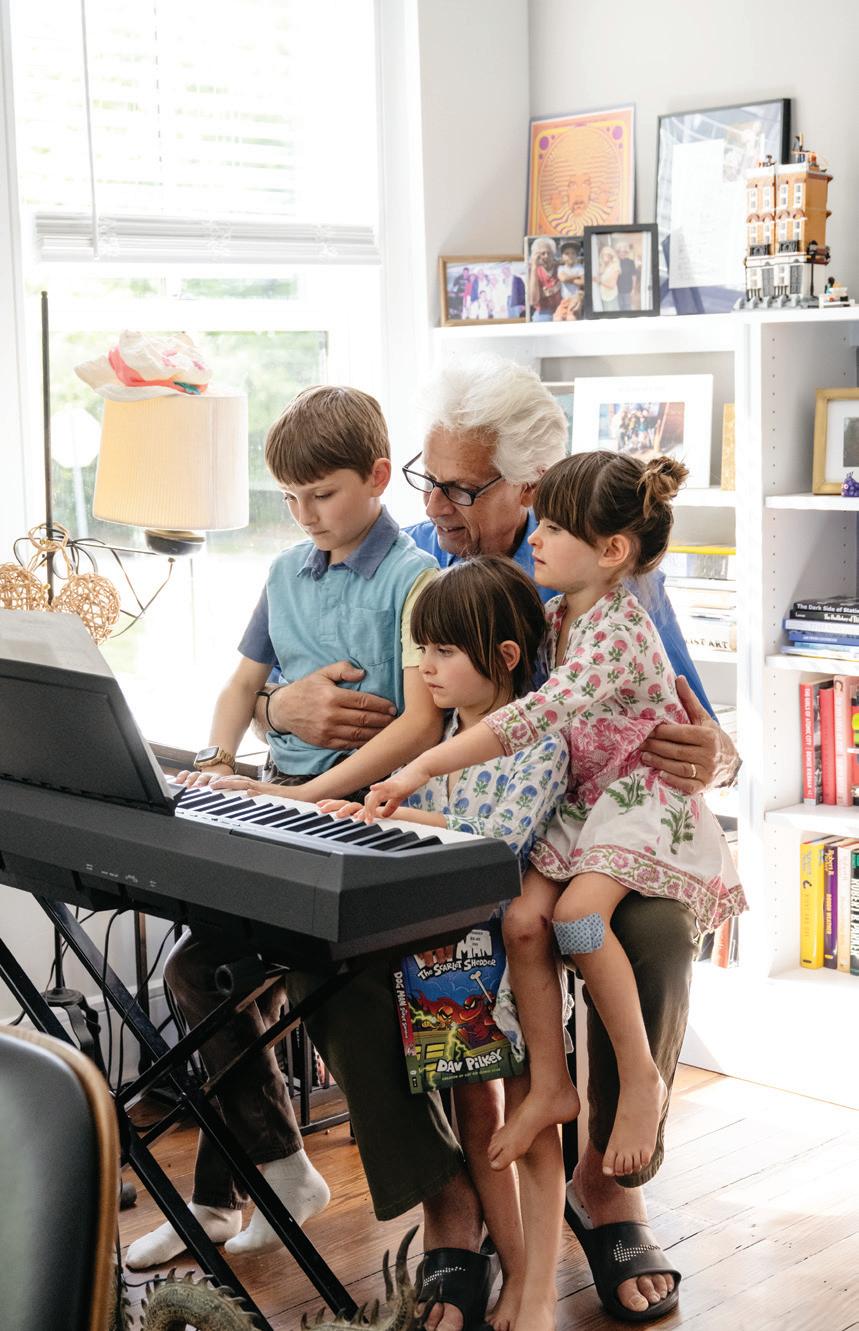
dark to light. “That was intentional,” John says, adding that he wanted the design to evolve in a more modern direction as the new structure connected to the old one.
“So we switched [colors]. ...The building literally moves from 1910 to 2024 as it goes from north to south.”
Inside, a hallway runs through the center of the home. John’s office and a guest bedroom flank either side of it at the front. Continue walking, and you’ll pass by the primary bedroom and a living space, then the kitchen that Beth designed and the dining room. Beyond that are a patio, a screened-in porch and a breezeway that leads to Beth’s art studio and the garage below.
John and Beth orchestrated the space with aging in mind, ensuring they could grow old comfortably and spend more time with family in their home. An elevator, installed
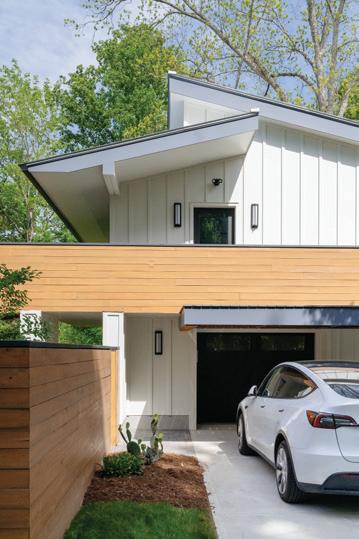

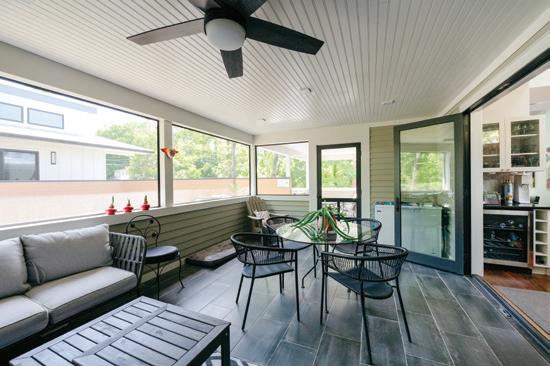
ABOVE LEFT Just off the kitchen, the sunroom offers yet another a lightabundant spot for the family to share meals or spend time together.
ABOVE RIGHT Beth’s favorite painting subjects? Her beloved grandchildren.
BELOW The spacious backyard is ideal for the couple’s dog, Kobe, and their grandkids to play. Beth’s raised garden bed sits between the original home and the new art studio-garage addition.
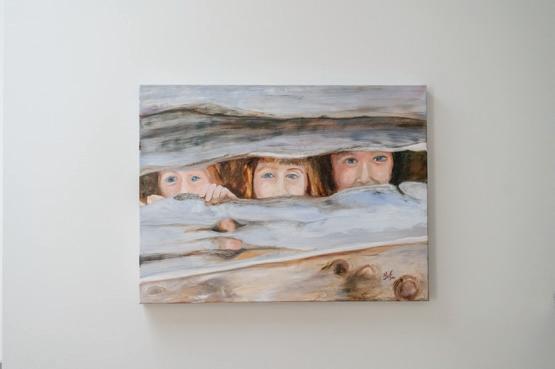
by Orthopedic Service Company, provides easy access from the garage to the main level – a feature that’s already handy for carrying groceries upstairs. John’s office includes a custom staircase crafted by Ben Sheehy of Bampro LLC, which leads up to an attic hangout that’s just for the grandchildren. “When the kids come over, this is where they go,” John says. “We never clean it up. It’s their space.” Outside,
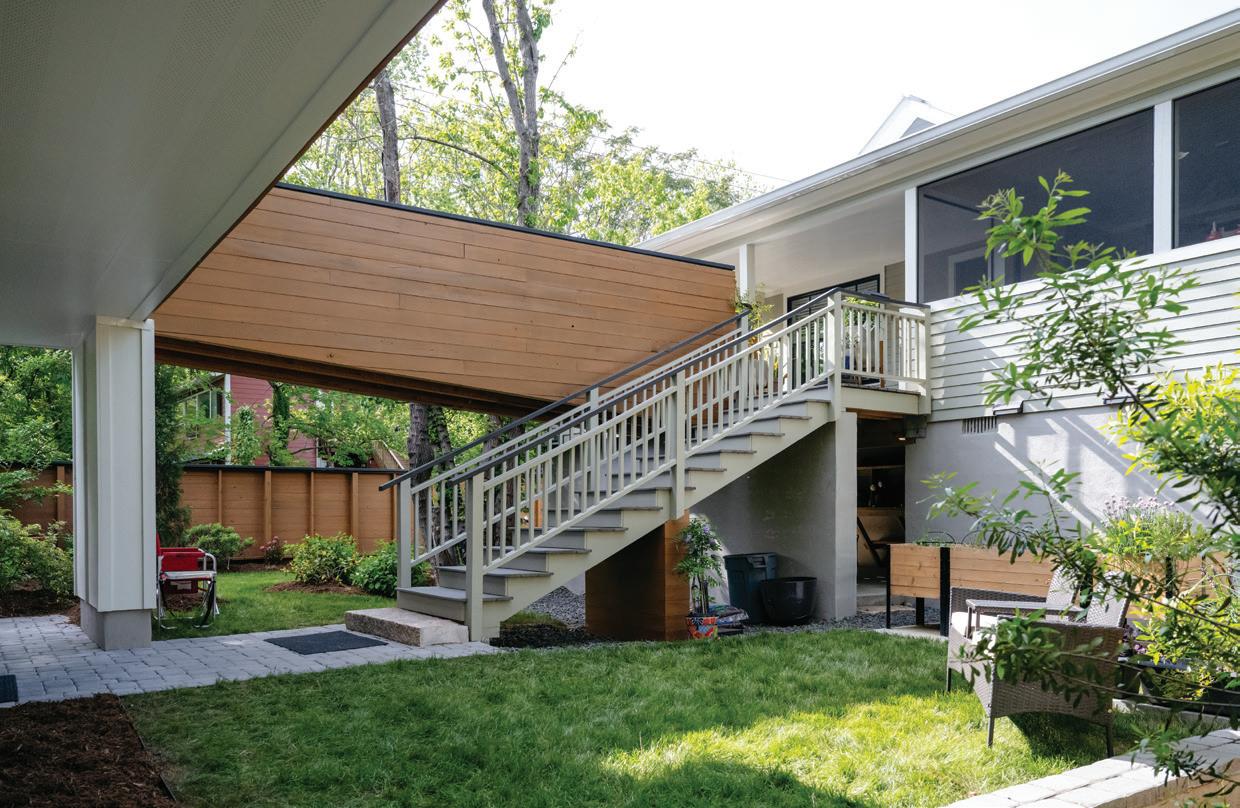
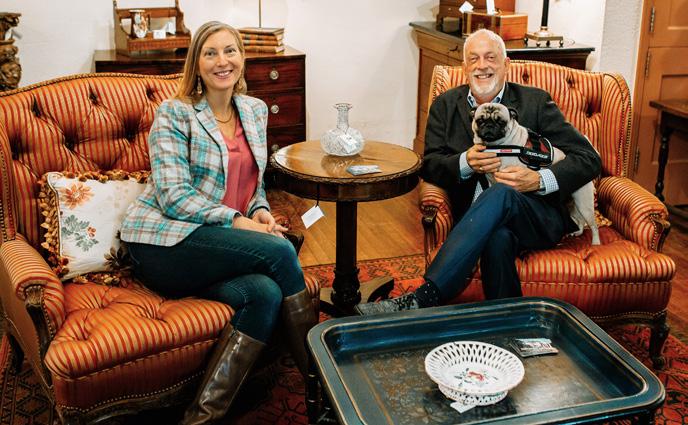


and
A Vibrant Community With roots dating to 1754, the oldest town in the Triangle blends a rich heritage with a progressive spirit that attracts creatives, entrepreneurs and innovators.
Prime Location Located on both I-40 and I-85, Hillsborough is minutes from Durham, Chapel Hill and Raleigh, giving you easy access to major markets.
Supportive Business Ecosystem Hillsborough’s welcoming, personalized nature makes it easy to launch or expand your business…and convenient, as we are also the seat of Orange County government.
Loyal Customers Residents value local businesses and actively support them. Quality of Life A scenic Riverwalk, award-winning restaurants, art galleries, breweries, community events and historic architecture create a place where people love to live and work.

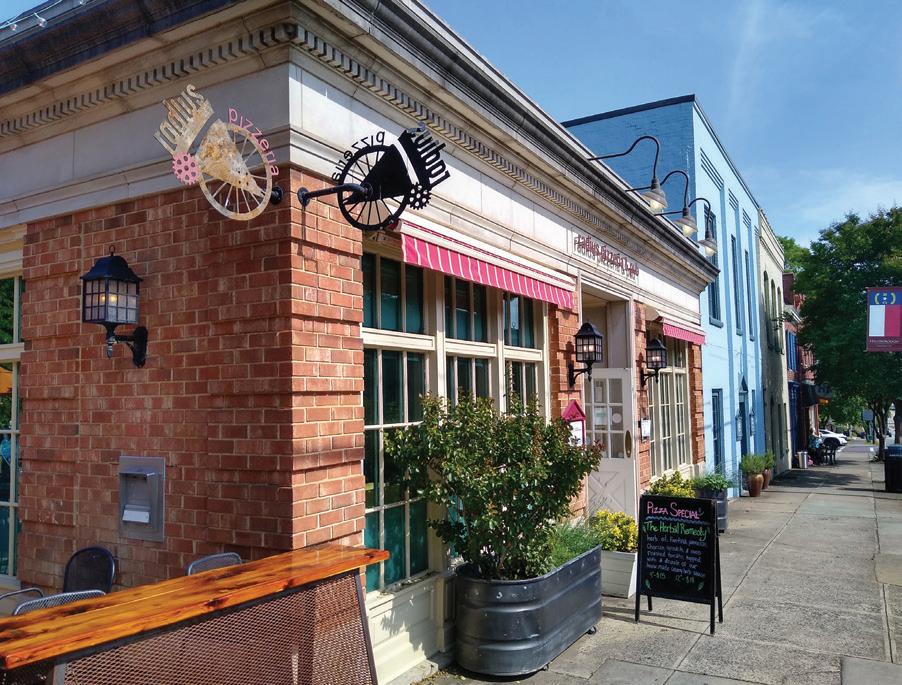

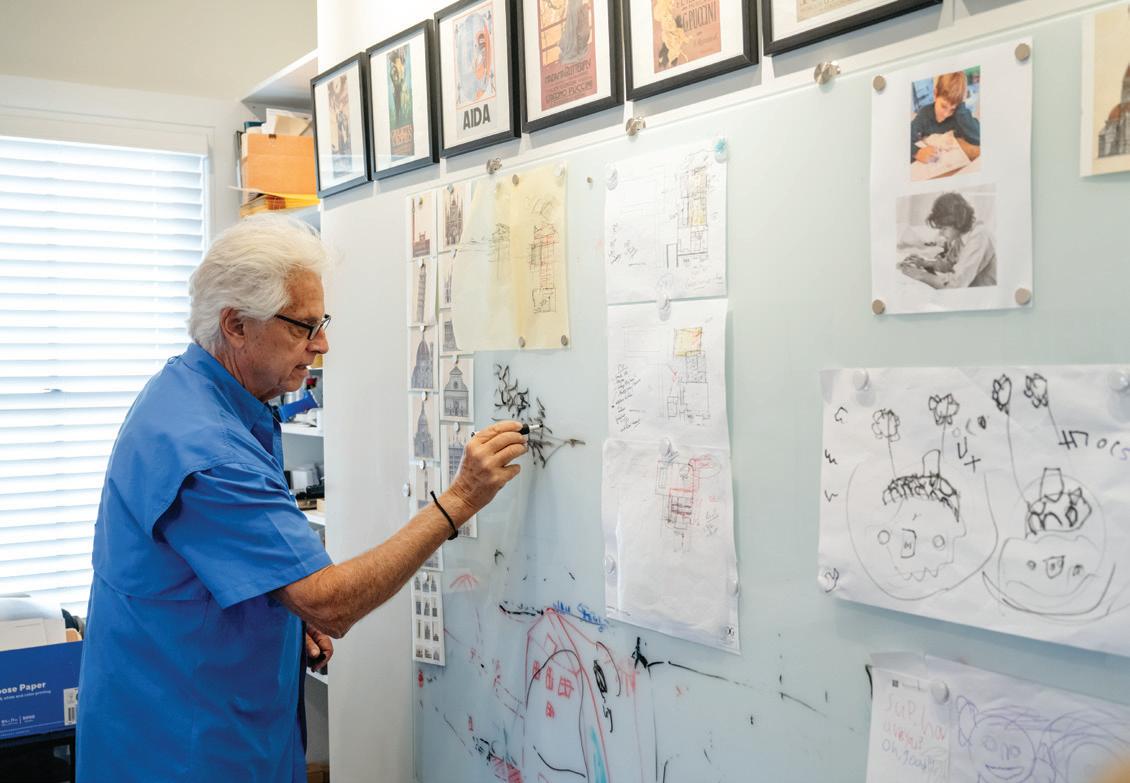
and
about
BELOW Affectionately named “Casa Akumal,” the home honors the Mexican town where the couple spends their winters. “Akumal means home of the turtles,” John says. “[There are a] lot of turtles in that part of the Caribbean Sea – I go scuba diving with them most days.”
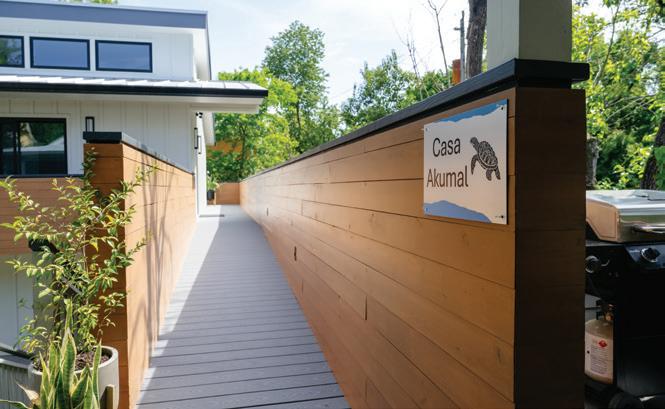
the children’s handprints pressed into the cement add a lasting family signature to the property that John is proud to point out.
And at the heart of the house is the kitchen, which Beth approached strategically with both beauty and function in mind. “Kitchens are always a challenge,” Beth says. “They’re a major puzzle.” Her previous one had limited space, so she designed this kitchen to accommodate a crowd. The massive island – nearly the size of a full slab of granite – includes an L-shaped corner sink with ample space for prep and cleanup.
Of course, no renovation project goes completely according to plan. John and Beth dealt with a number of setbacks and obstacles, like discovering a lack of insulation in the home and needing to get creative with retaining walls for the garage. Thankfully, they had a dedicated team of creative problem-solvers to help bring their vision to life: Structural engineering support came from Andy Takla of Takla Engineering; Sarah Menser of Soil Services PLLC took care of the site and stream analysis; Julian Bick of JBick Electrical Services handled the wiring; Maynor Service Company managed the mechanical aspects; Eliseo Castro Orozco of Castro Plumbing Services took care of the plumbing; and Jose Pereyra led the concrete work. Framing came together under Rodrigo Rodriguez of Rodriguez Construction, while Carlos Ramirez of ANR Construction handled siding, boxing and finishes. Cruz Lozano of Lozano Roofing oversaw roofing, and Eugene Marquez of Marquez Painting completed the drywall, painting and staining. Jorge Benitez of Benitez Hardwood

At CQC Home, we specialize in transforming homes with creativity, craftsmanship, and precision. From custom kitchens to whole home renovations, additions, and ADUs, our expert team delivers. With our turnkey design-build approach, we seamlessly manage every detail—from the first sketch to the final reveal.
Schedule Your Personalized Consultation Today at cqchome.com or call 919.971.5119.

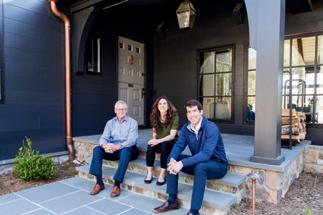





Floor LLC installed the floors, and building materials came from Talbert Building Supply and Adams Products
Coordinating all those moving parts required strong, trustworthy leadership, and John and Beth knew just who to turn to for support. Construction was managed by longtime friend Jim Lewis of Building Information Solutions – who John met in New York four decades ago and reconnected with years later – with on-site supervision from both. The Storyks’ son, Corbett Robert Storyk of CRS Contracting LLC, served as the licensed contractor on the job. “It was a labor of love to build this,” John says. Now, Casa Akumal stands as a testament to intentional design that honors the past, embraces the present and welcomes the future.

PHOTOGRAPHY BY JOHN MICHAEL SIMPSON
Durham Magazine, Chapel Hill Magazine and Chatham Magazine hosted Triangle Media Partners’ annual Women of Achievement event at The Carolina Inn on May 31. The occasion celebrates the outstanding community leaders featured in our publications. Guests enjoyed networking over cocktails and a bourbon tasting featuring Five Springs Bourbon while exploring sponsor booths from Cat French Design, Aesthetic Solutions, Hamilton Hill Jewelry, Gonzalez Painters & Contractors and Edward Jones. Highlights included a raffle from Pinnacle Financial Partners, complimentary headshots by Fancy This Photography, fun snapshots at the ZimZoom Photo Booth, on-the-spot bespoke poems from The Poetic Experience and a stylish vehicle display by Hendrick Subaru Southpoint. Triangle Media Partners’ President Rory Gillis welcomed attendees, and editors Amanda MacLaren, Jessica Stringer and Morgan Cartier Weston recognized the 2025 magazine honorees.
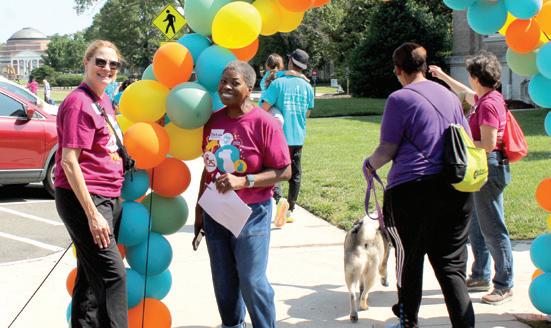
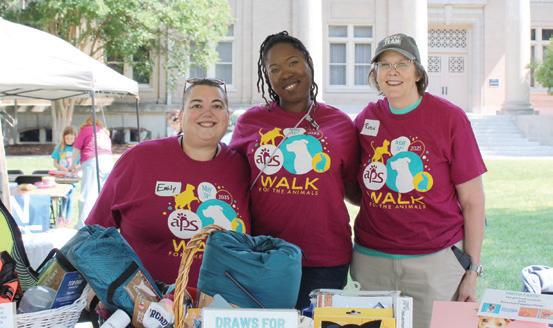
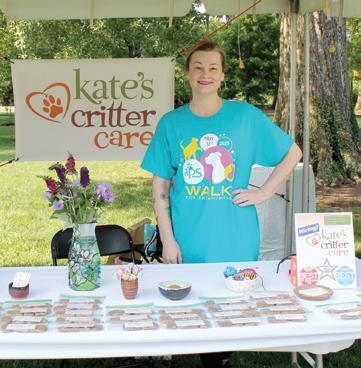

BY PIPER WINTON
The Animal Protection Society of Durham hosted its 25th annual Walk for the Animals on May 31, welcoming attendees and their furry friends to Duke University’s East Campus to meet animal-focused vendors and adoptable dogs; enjoy music, pet contests and activities like a canine agility course, a “sniffari,” cool puppy pools and ball pits; and participate in raffle drawings and a 1.5-mile charity walk. Durham Magazine was a proud sponsor of this year’s event, which raised $107,644.69 to support the thousands of animals that APS cares for each year.
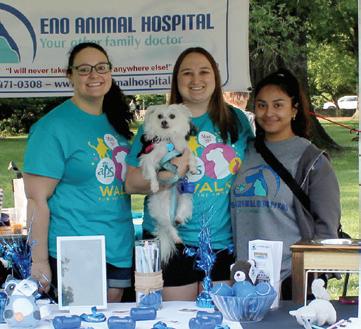
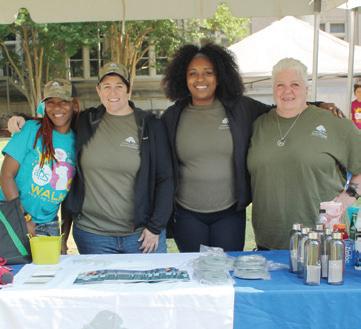

BY
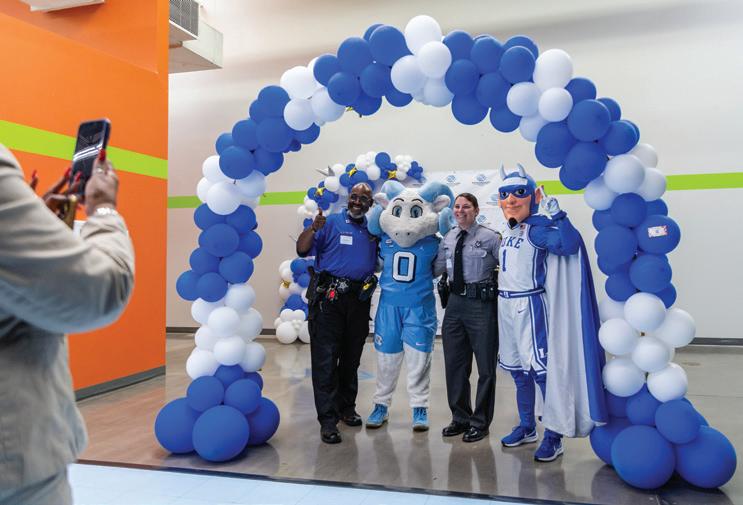
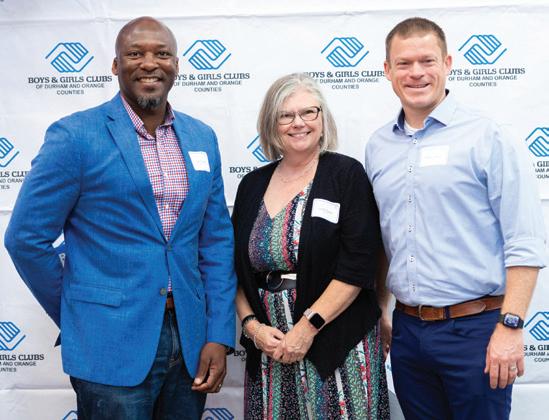
BY CHLOE SNOW | PHOTOGRAPHY BY MEG LEE
The Boys & Girls Clubs of Durham and Orange Counties hosted its 2025 Great Futures Breakfast May 1 at its Durham club. More than 150 community members and supporters gathered to enjoy breakfast and celebrate the powerful stories of club youth, volunteers and staff. ABC11 anchor Joel Brown emceed the inspiring program, which featured memorable moments such as club ambassador Farrah Dortch’s powerful rendition of “Rise Up” by Andra Day. The event raised more than $127,000, thanks to the generosity of sponsors, partners and attendees. Proceeds will support BGCDOC’s summer camps in Durham and Chapel Hill, ensuring more local kids and teens enjoy a safe, enriching summer break.

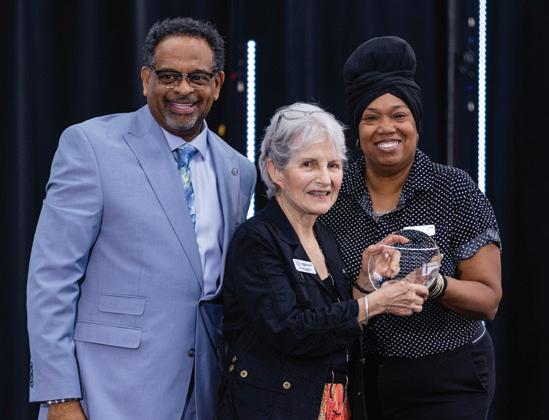

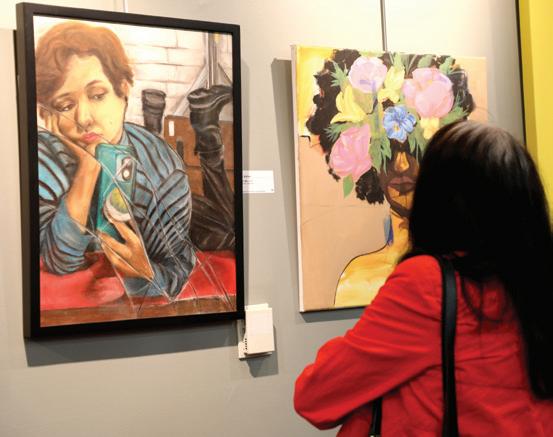
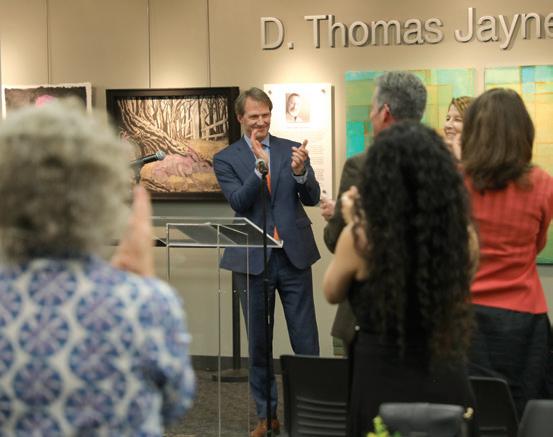

BY KAITLYN HARMON PHOTOGRAPHY COURTESY OF DURHAM TECHNICAL COMMUNITY COLLEGE
Robert and Mercedes Eichholz Foundation trustees Natalie Dunn and Dan Dunn announced a $1.5 million gift to Durham Technical Community College during the school’s annual Student Art Exhibition and Viva the Arts’ 25th anniversary celebration this past spring. The new endowment is dedicated to supporting the arts on campus and will fund expanded annual programming – including public art installations, gallery exhibitions, visiting artists and lectures – and provides long-term sustainability for arts education at the college. The Eichholz Foundation, founded in 2011, has donated more than $40 million to 200-plus institutions with the mission of expanding arts education and creative opportunities.

BY KAITLYN HARMON | PHOTOGRAPHY BY AZUL PHOTOGRAPHY
Durham Technical Community College celebrated its spring commencement May 13 at the Durham Performing Arts Center. Town of Chapel Hill Fire Chief and Durham Tech alumnus Jay Mebane delivered the keynote address, encouraging his audience of 441 graduates to “triumph through adversity with gratitude” as they enter into the next phases of their lives. The college also awarded honorary degrees to former Durham Mayor Steve Schewel and Beatrice Muhammad, the former director of the college’s adult literacy, Job Training Partnership Act, and adult high school and GED programs, who dedicated around 40 years of service to the college.

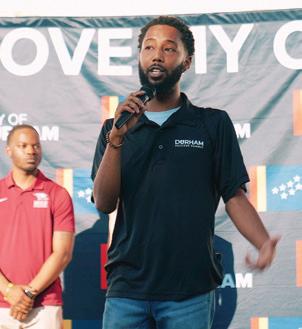
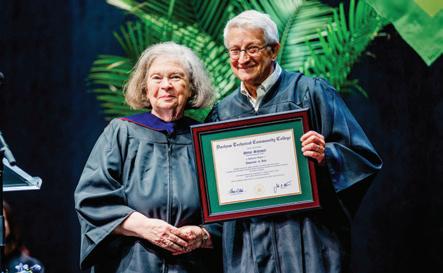
BY KAITLYN HARMON PHOTOGRAPHY BY NS MEDIA GROUP
Mayor Leonardo Williams, alongside representatives from United Way of the Greater Triangle and Triangle Community Foundation, gathered at Major the Bull in CCB Plaza to celebrate the first round of Bull City Future Fund grant recipients. The Fund, launched by Mayor Williams in partnership with UWGT and TCF, facilitates community investments by private sector stakeholders and community members to support youth-centered nonprofits in Durham through financial and organizational assistance.


“This project shows that our community can stand by [one another] and support the lifesaving work being done by so many of these amazing organizations,” Mayor Williams says. The first phase of funding awarded a combined $305,000 across 15 organizations: Durham Success El Futuro, Echo, Boys & Girls Clubs of Durham and Orange Counties, Made in Durham, Purpose Learning POOF Center, StandUp–SpeakOut of North Carolina, GRACED Inc., Youth Mentoring Collaborative, G.R.O.W.T.H.
SIDEKICKS Academy, Bump: The Triangle, Durham and Student U. “While the work is ambitious, the measurable and inspiring impact of initiatives like the Bull City Future Fund demonstrates the power of investing in community-driven solutions,” says UWGT Chief Program Jeff Howell. “Together, we’re building on what’s working to create lasting change.”
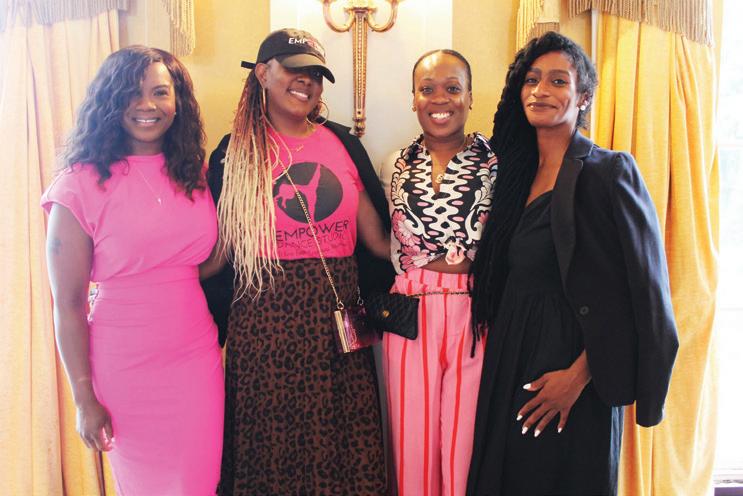
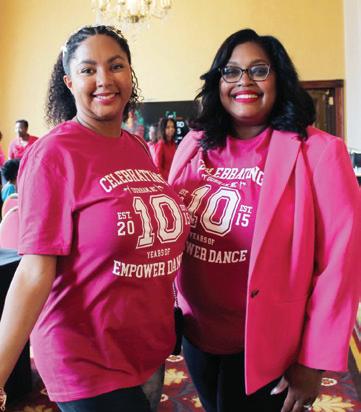
PHOTOGRAPHY BY SHAYE PHILLIPS
Empower Dance Studio marked its 10th anniversary with its annual recital to celebrate a decade of creativity, growth and community through dynamic performances by the studio’s young dancers at the Carolina Theatre on June 8. The Empower Dance Foundation, a nonprofit established in 2017 by Empower Dance Studio owner Nicole Oxendine, hosted a special reception in the Connie Moses Ballroom ahead of the show to honor the people who helped the studio reach this milestone moment. Foundation board chair Shari Hubert welcomed staff, donors, parents and guests, and expressed gratitude for their continued support of the foundation’s mission to raise funds that make dance more accessible for young children. Pamela Oxendine, executive director of the foundation, presented awards to several key supporters, including Mary Duke Biddle Foundation Executive Director Mimi O’Brien; valued donors and parents of studio dancers Peggy Robinson and Craig Robinson; and volunteer Juani Tyler. Close to 45 guests attended the pre-recital gathering, where they enjoyed refreshments and shared heartfelt reflections on a decade of impact, setting the tone for an inspiring evening of dance.
The Durham Library Foundation celebrated a milestone anniversary at The Cookery on April 10, marking 25 years of supporting the Durham County Library system by raising funds for world-class facilities and resources that sustain lifelong learning as well as building strategic partnerships to ensure Durham’s libraries are hubs of learning and literacy, technology and innovation, and creativity and culture that empower all members of our community.
The evening brought together city and county officials, dedicated donors and passionate library patrons for a night of connection and celebration. DLF board president Arthur Rogers honored the retirement of former executive director Karen Wells and announced the foundation’s largest-ever planned gift from beloved librarian Rheda Epstein – a transformative investment in professional development and continuing education for library staff. The board of directors also shared that Interim Executive Director Kara Nunnally has officially stepped into the permanent leadership role.
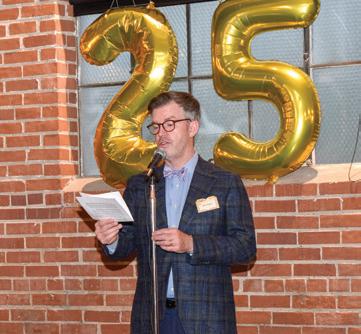
PHOTOGRAPHY
BY
ALEXANDRA LÓPEZ
Durham Literacy Center hosted its 18th annual Leaders in Literacy Benefit Luncheon May 30 at the JB Duke Hotel, welcoming more than 120 guests to celebrate education and literacy initiatives in the community. This year’s Leaders in Literacy Award went to The Forest at Duke for its strong commitment to advancing literacy in Durham. Keynote speaker Jason deBruyn, WUNC’s supervising editor for digital news who has also served as a DLC youth tutor and board member, joined Executive Director Crystal Avent and former DLC student Miriam Valle on stage to share powerful reflections on the transformative impact of literacy. All three emphasized the role organizations like the Durham Literacy Center play in helping individuals change their lives through education. The center has served more than 18,500 adults and out-of-school youth this year with free instruction and tutoring. The luncheon raised $89,000, surpassing its $80,000 goal.
BY SHAYE PHILLIPS
PHOTOGRAPHY BY SARAH SEKALY PHOTOGRAPHY, SARAHSEKALYPHOTOGRAPHY.COM
Wedding Date Oct. 19, 2024
Occupations Bryce is a senior business director for Avalon Bioventures, and Amber is an operations director for dialysis health care provider DaVita. Crossed Paths Amber grew up on the border of Chapel Hill and Durham, graduating from East Chapel Hill High School before attending Duke University. Bryce, originally from Denver, Colorado, came to North Carolina to attend Duke’s Fuqua School of Business. The couple met as students in the business school in 2019 and began dating in spring 2020.
The Proposal Bryce popped the question during one of the couple’s regular sunset walks along the beach in Encinitas, California, where they now live. Amber, unaware of Bryce’s plans, was reluctant to come with on that Saturday evening in December – she was absorbed in a book and was determined to finish. The proposal took Amber completely by surprise, but she managed to say “yes” as Bryce’s brother, Jesse Suchomel, secretly captured the heartfelt moment in photos. The Big Day Bryce’s love of camping, hiking and skiing inspired Friday’s “mountain chic” welcome reception at University Club before the couple tied the knot at The Cookery the following day, celebrating with a ceremony and reception adorned in shades of ocean blue, accented by warm pinks, peaches, purples and reds from dahlia-filled arrangements by Victoria Park Florist in Chapel Hill. Bryce, who looked sharp in a tailored suit from Bernard’s Formalwear, and Amber also incorporated Duke-themed touches throughout the wedding to honor the place where their story began – from napkins and coffee cups to a welcome sign featuring Duke Chapel American Party Rentals supplied the decor, and planner Amanda Scott of A Swanky Affair ensured every detail came together seamlessly. Guests indulged in a meal by The Catering Company followed by a sweet spread that included cake from Once in a Blue Moon Bakery and Cafe and scoops of Two Roosters ice cream. Local wedding party members included Amber’s parents, Kerry Watson and Joanne Watson, her brother, Collin Watson, sister-in-law, Esbeidy Watson, niece and flower girl Elena Watson, 2, nephew and ring bearer Luke Ibarra, 9, and Amber’s best friend, Aileen Savino. Once the festivities wound down, folks retired to the Unscripted Durham and Residence Inn Durham McPherson
Favorite Moments “The best detail was definitely during our dance reception,” Amber says. Bryce and his Fuqua classmates, who formed the band P’s Get Degrees during grad school, took the stage during a break in the music to perform a few songs together, while Amber, their biggest fan, cheered them on from the front row. “Being in one room with all our favorite people was definitely a special feeling,” Bryce says.

Do you live in Durham or are from here and want your wedding or engagement featured in our magazine? Scan this code to send us your info.