Bloom Planted Where
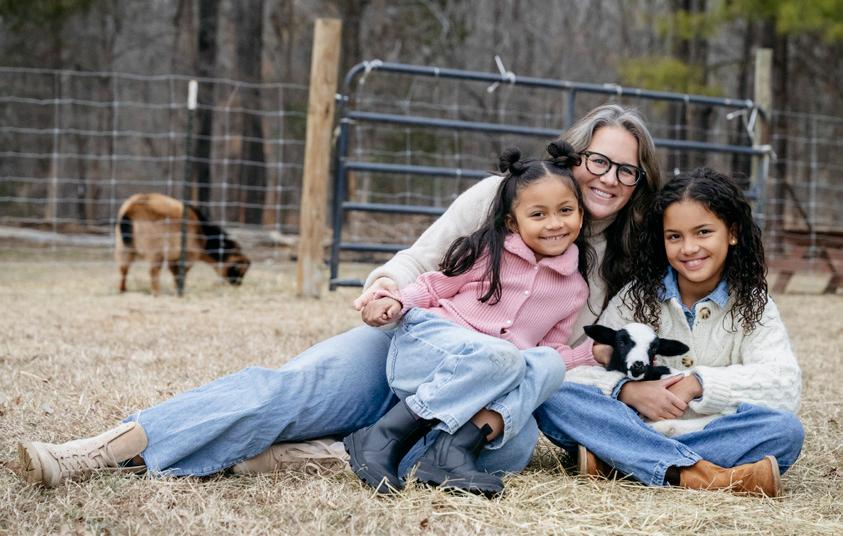
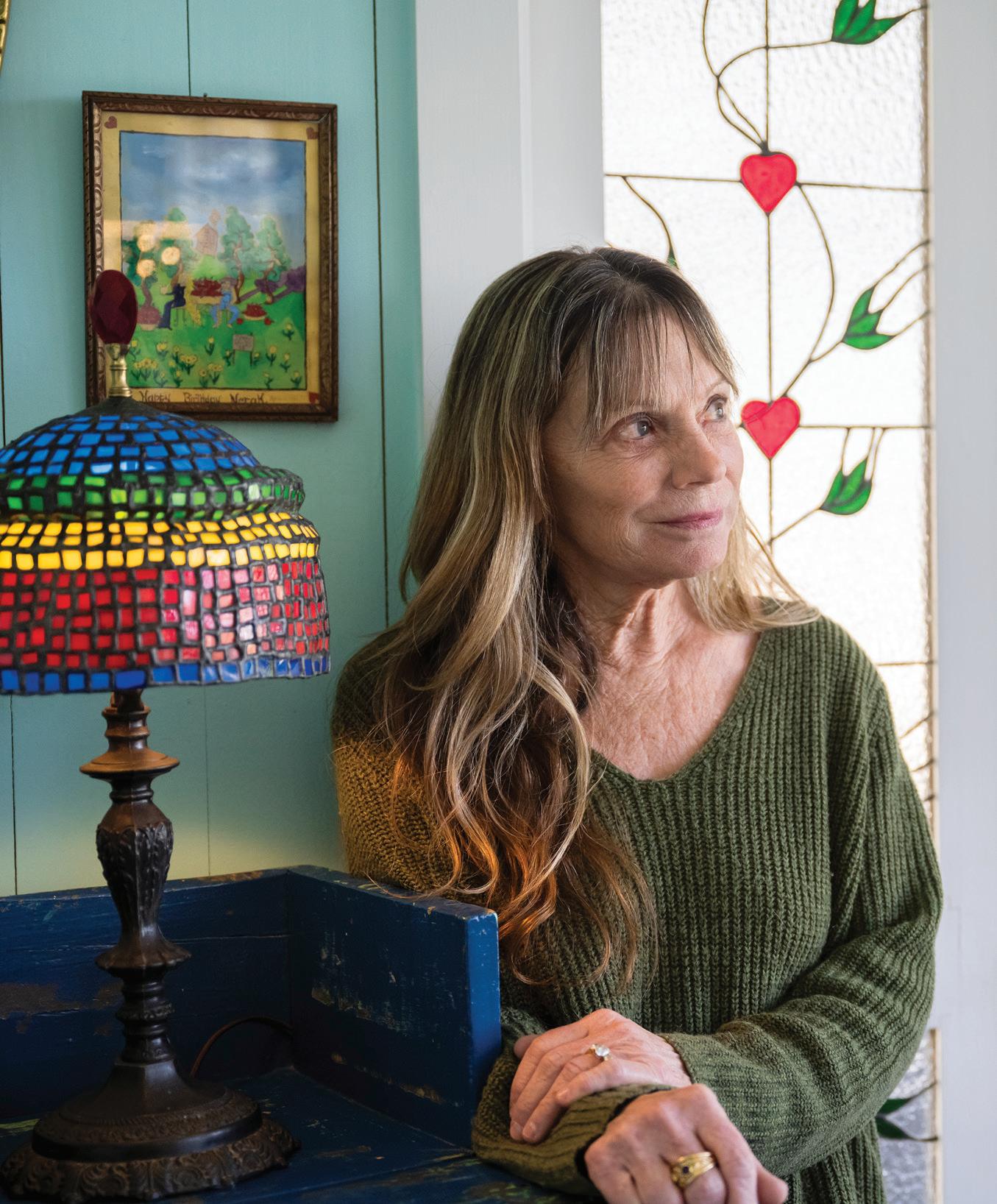
Deena Class cultivates creativity and connection on her Pittsboro farm page 90


Deena Class cultivates creativity and connection on her Pittsboro farm page 90
At the Dermatology & Laser Center of Chapel Hill, founded by Dr. Chris G. Adigun, we believe that exceptional skin care begins with compassion, expertise, and a genuine commitment to each patient’s well-being. Our team of board-certified dermatology specialists combine advanced medical knowledge with the latest in laser and skincare technology to deliver effective treatments. We take pride in offering personalized care in a welcoming, professional environment – helping our patients achieve healthier, more radiant skin through evidence-based solutions and attentive, individualized care.
Healthier, radiant skin and a level of care that only true experts can provide.
Chris G. Adigun, MD, FAAD
Amanda K. Suggs, MD, FAAD
Karlee Wagoner, ANP-BC
Diana Walker, PA-C
Amy Rodriguez, PA-C
spring 2026
EXECUTIVE MANAGING EDITOR Amanda MacLaren
EXECUTIVE EDITOR, CHATHAM MAGAZINE Morgan Cartier Weston morgan.weston@chathammagazinenc.com
EDITOR, CHAPEL HILL MAGAZINE Jessica Stringer
EDITORIAL ASSISTANT Sharon Kinsella
EDITORIAL INTERNS
Emma Arthur, Regan
CONTRIBUTORS
Andrea Akin, Cameron Rhinehardt, Lauren Rouse,
CREATIVE DIRECTOR
Kevin Brown
PHOTOGRAPHER John Michael Simpson
GRAPHIC DESIGNER & PRODUCTION COORDINATOR
Lindsay Scott
AD MANAGER Khadijah Weekes-Nolan
MAGAZINE DESIGNER Alex Crotti
ADVERTISING
For information, contact advertising@chathammagazinenc.com
Melissa Cooley melissa.cooley@trianglemediapartners.com
Melissa Crane melissa.crane@trianglemediapartners.com
Sarah Davis sarah.davis@trianglemediapartners.com
Jasmine Gaines jasmine.gaines @trianglemediapartners.com
Megan Hussey megan.hussey@trianglemediapartners.com
Lucinda Poole lucinda.poole@trianglemediapartners.com Clayton Wrisley clay.wrisley@trianglemediapartners.com
PRESIDENT Rory Kelly Gillis
VICE PRESIDENT, SALES Chris Elkins chris.elkins@trianglemediapartners.com
VICE PRESIDENT, CREATIVE OPERATIONS Ashlin Acheson ashlin.acheson@trianglemediapartners.com
VICE PRESIDENT, CLIENT SERVICES Sally Scruggs
VICE PRESIDENT, FINANCE & ADMINISTRATION Amy Bell
ACCOUNTING & ADMINISTRATION MANAGER Cassady Orsini
MULTIMEDIA PUBLISHER & DIRECTOR OF CLIENT DIGITAL STRATEGY Jenna Parks
DEPUTY EDITOR, HEART OF NC WEDDINGS Renee Ambroso
CLIENT ONBOARDING & OPERATIONS MANAGER Brian McIndoo
DIGITAL MARKETING MANAGER Jack Fry
MULTIMEDIA CONTENT PRODUCER Caleb LeJeune
DISTRIBUTION Matt Bair
CO-FOUNDERS
Dan Shannon & Ellen Shannon
Chatham Magazine is published by Triangle Media Partners, founded in 2006 by Dan and Ellen Shannon 1777 Fordham Blvd., Ste. 105, Chapel Hill, NC 27514 | 919–933–1551 Subscriptions are $24 for 2 years – subscribe at chathammagazinenc.com


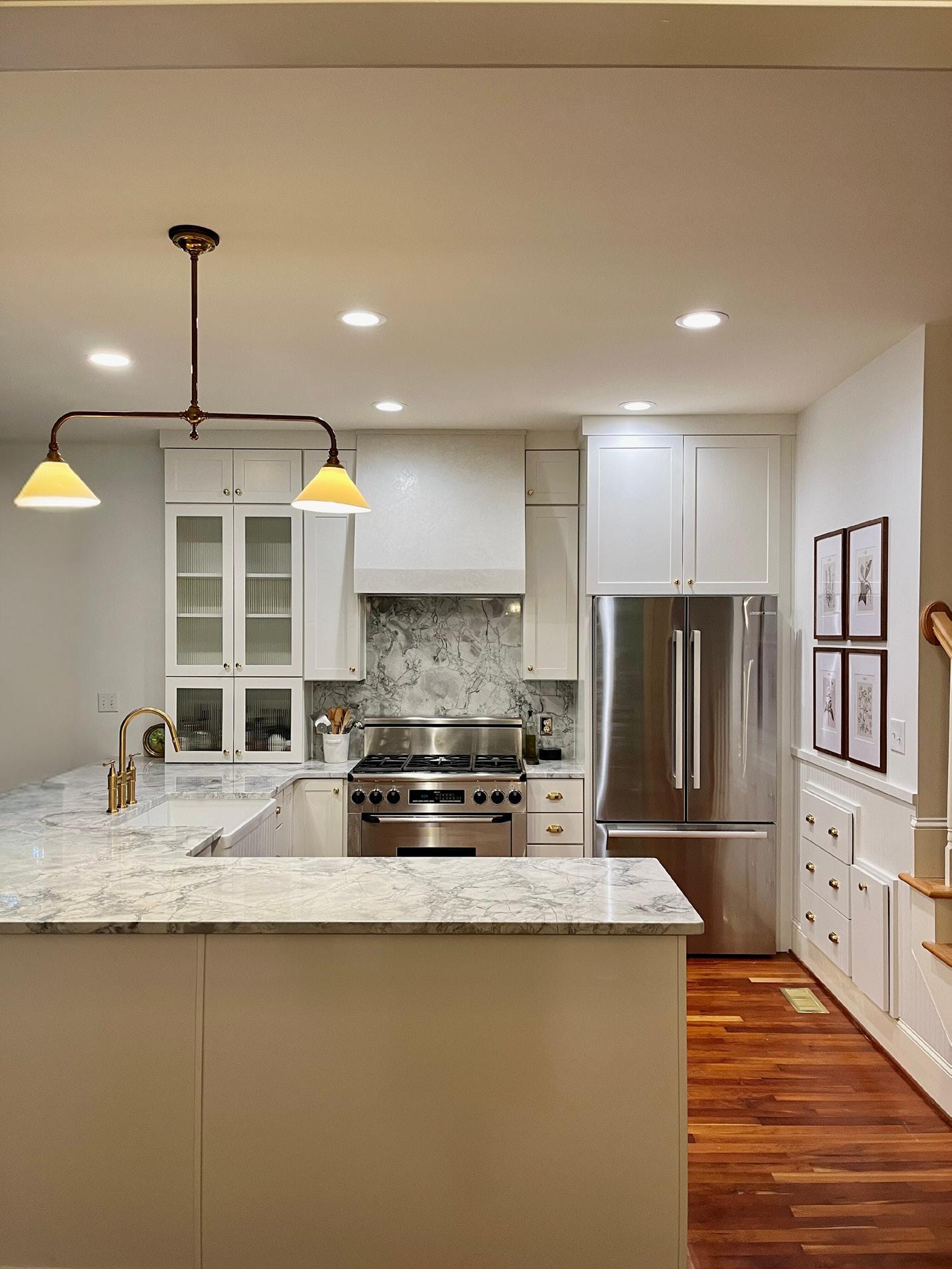
28 Cheryl Bafford Principal and CEO, Cheryl Bafford Interior Design
32 Rebecca Dickenson President and CEO, Chatham Chamber of Commerce
36 Nissa Bennett Wells Principal, Bonlee School
40 Dr. Stephanie Freese Veterinarian, Polaris Equine Mobile Veterinary Clinic
44 Karen Dalton Owner, Dalton Glass Design and Circle City Pilates
48 Selina Lopez Youth program director, El Vínculo Hispano
52 Sophia Munson Managing partner, Munson Law Firm
home & garden
72 Riverside Retreat
A family turns their dreamy cabin into a getaway for guests
90 In Full Bloom Word & Plant owner Deena Class cultivates dye plants, curiosity and more at her Pittsboro farm
100 Landscape Lessons
The 2026 Perennial Plant of the Year brings a standout look to North Carolina gardens
features
18 Vote for the Best of Chatham 2026
Our annual poll returns May 1! Learn how to vote for your favorites.
58 Field Trips
Round up the family and hit the town for these can’t-miss, all-ages activities
104 On the Rise
A closer look at the latest real estate activity, major developments and the projects poised to shape our community’s next chapter

SPRING 2026
departments
6 Letter from the Executive Editor
8 Out & About
8 events you won’t want to miss
12 Get Out of Town
Top Triangle events this season
16 In Memoriam: Clyde Jones, 1937-2025 Community remembrances of Bynum’s late folk artist
20 Who’s Who in County Government Chatham County District 1 Commissioner Karen Howard
people & places
110 Chatham Chamber of Commerce
Annual Meeting
111 Chatham County’s Employee of the Year
112 Chatham Artists Guild
exhibition opening
114 Chatham Women’s Exchange
116 79°West Breakfast Club
engagements & weddings
118 Myles & Williams
120 Owenby & Walker

I’m not sure about y’all, but for me – and for so many people I know and love – 2025 felt like … a lot. I can’t recall a time when I was more excited for the sunshine and color springtime delivers. This issue is a fitting celebration of that intangible feeling: longer days, summer on the horizon and a renewed appreciation for this place we call home.
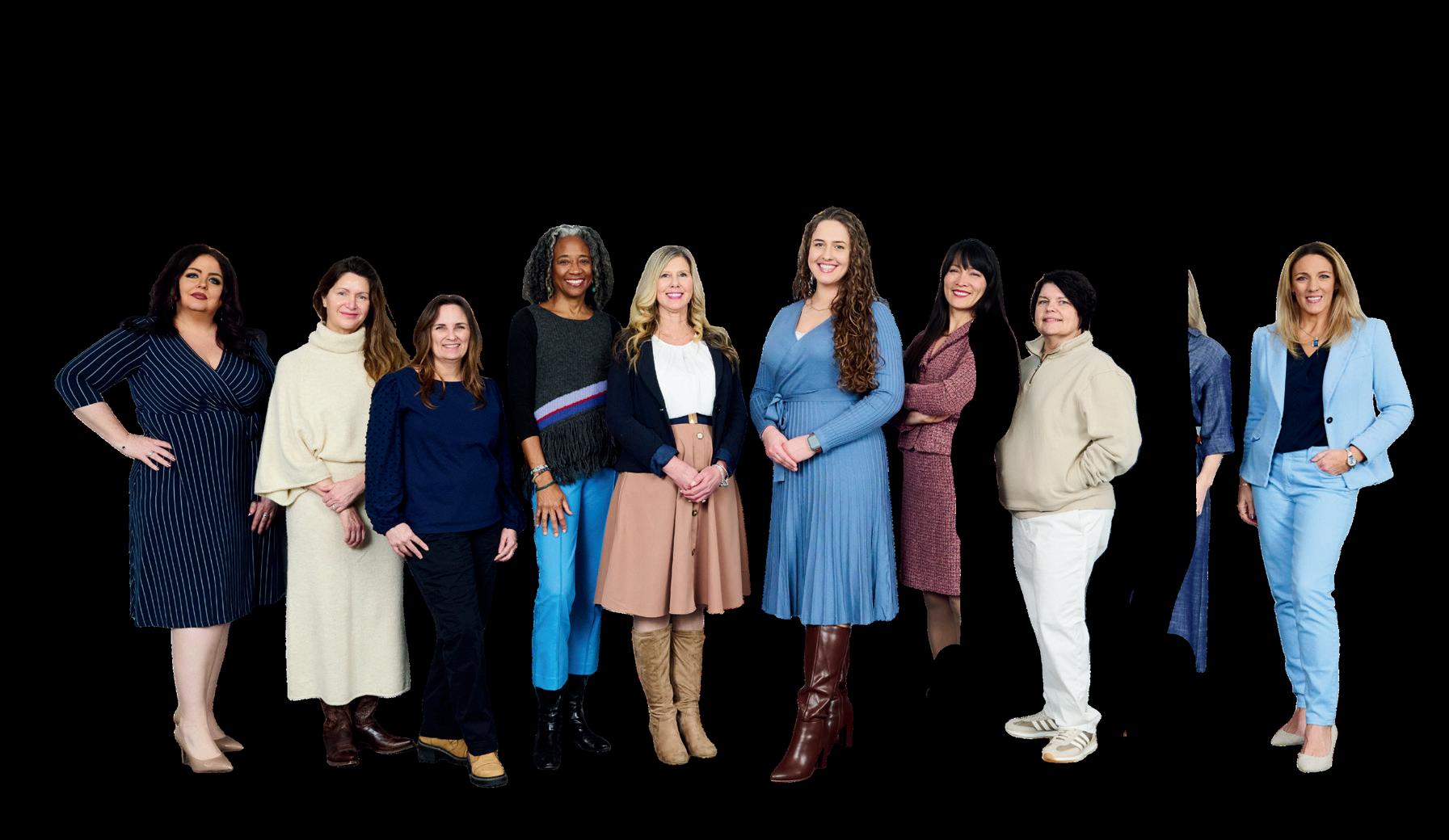
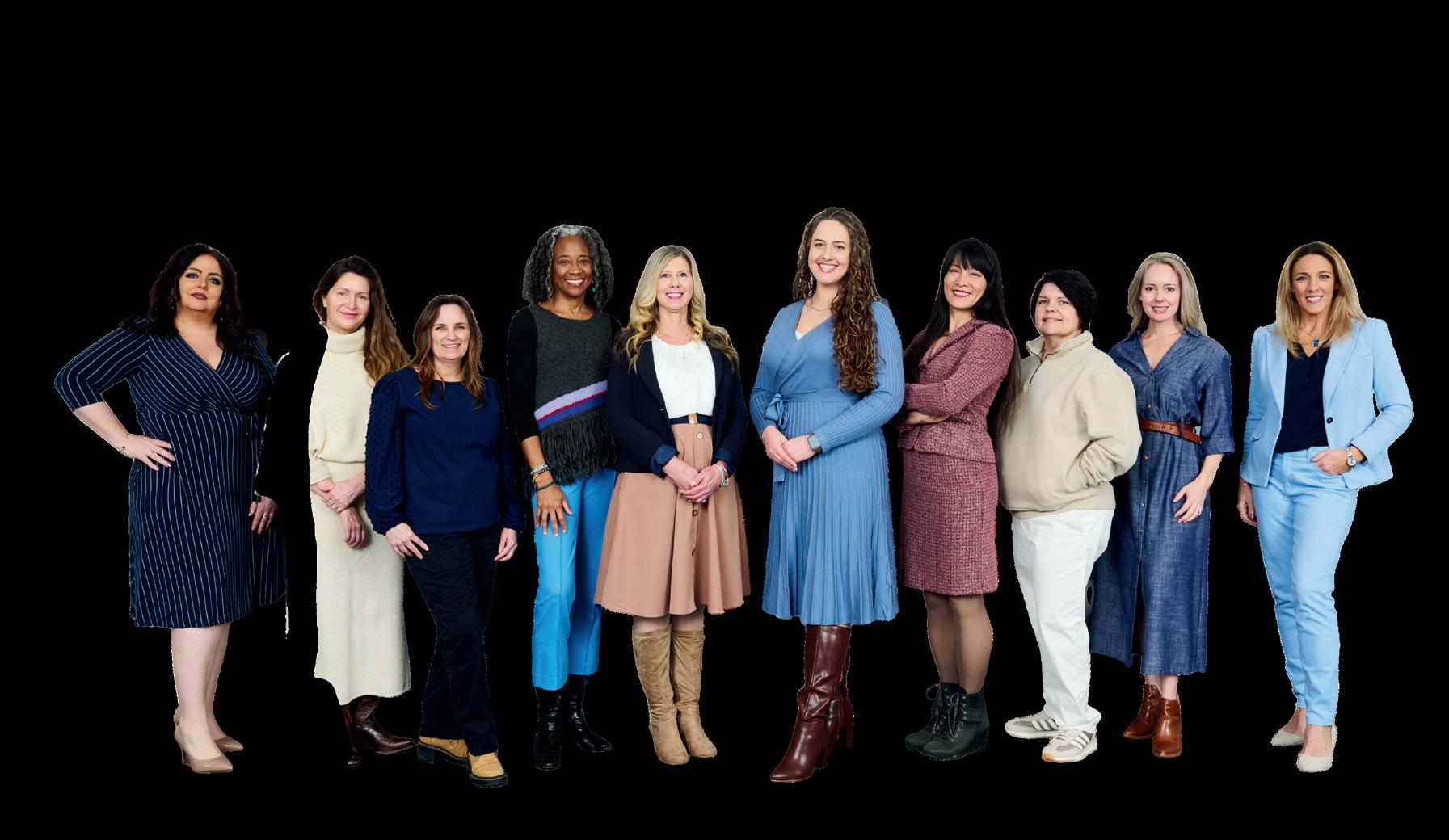
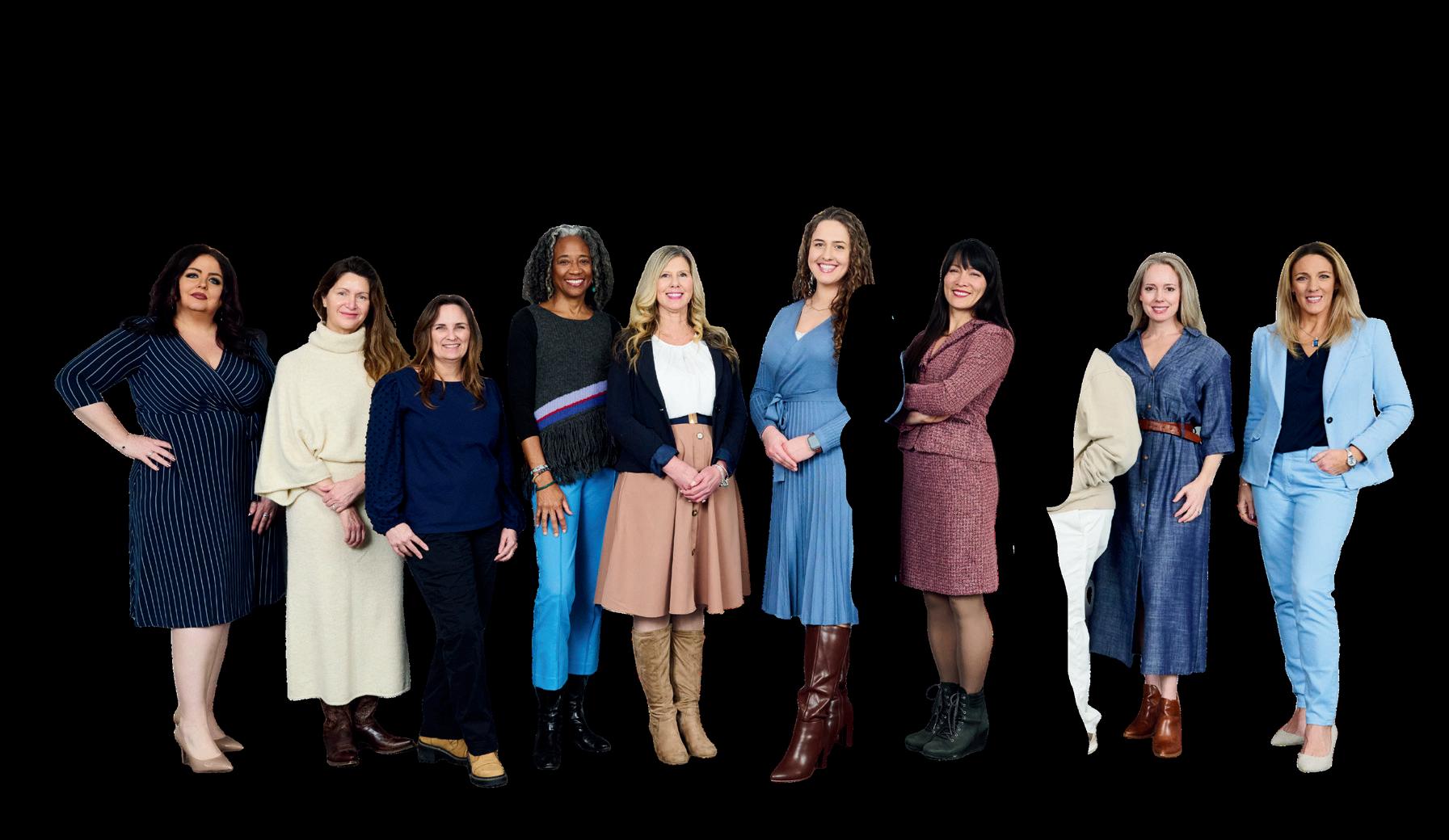
Our ninth annual Women’s Issue spotlights locals who make this community a more vibrant place to live, work and raise a family. Many moved here from elsewhere – places as far-flung as New York, Texas and Mexico – and chose to put down roots here. They’ve launched businesses, filled essential roles and strengthened the fabric of our towns. Each woman inspires in her own way; you’ll find their stories beginning on page 27.
We’re also excited to introduce a new recurring column, “Landscape Lessons,” where Amy Strunk shares practical advice for getting the most out of your garden as the seasons change. Turn to page 100 for one of her top perennial plant recommendations. And because spring invites adventure, we’ve rounded up family field trips you can enjoy close to home – whether you’d rather spend the day with animals, escape April showers indoors or tap into your creative side with a hands-on craft or two.
I encourage you to plant your own seeds of joy this season: Volunteer with a local nonprofit, add some native flora to your garden or surprise a neighbor with small act of kindness. As Aristotle once said, “The whole is greater than the sum of its parts.” cm
Take good care,


vote for your faves The Best of Chatham ballot opens May 1! Subscribe to our newsletter for reminders to support your favorite businesses.
morgan.weston@chathammagazinenc.com

Photo by JOHN MICHAEL SIMPSON

camp site
Check out our Triangle-wide online guide to camps and summer activities. recently engaged or married? Share your love story with us!






March 14, 8:30 a.m.
Lace up for a festive run that gives back. Tackle a 5K or 10K on a challenging course that starts and finishes at the Chatham Park YMCA in Pittsboro, all while supporting youth-serving programs in Chatham County. Earn age-group awards with a strong finish, or steal the spotlight in your best leprechaun costume for a chance at a prize.
spring ag fest
March 28, 10 a.m. – 3 p.m.
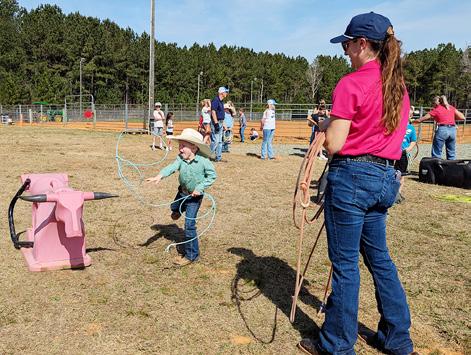
Celebrate agriculture, forestry and natural resources during this free community outing at the Chatham County Agriculture & Conference Center. Find a little something for everyone, from livestock arena events to pony rides, a magic show and food trucks. Plus, learn about local farms, sustainable agriculture, green industries, conservation and more at indoor and outdoor exhibits and vendor booths.
literacy spring luncheon
April 22, 11 a.m. – 2 p.m.
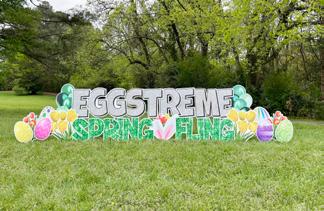
April 11, 10 a.m. – 1 p.m.
Central Carolina Community College in Pittsboro plays host to this Chatham County Parks, Recreation & Cultural Resources outdoor event, complete with an egg hunt, sack races, hands-on seasonal crafts and food trucks. Kids can sport temporary glitter tattoos, meet the spring bunny, and fill their baskets with eggs and handmade merchandise from local vendors.
8 events you won't want to miss
Compiled by DELPHINE LIU

Gather for an afternoon that pairs storytelling with purpose. Chatham Literacy hosts its 15th annual spring luncheon at Governors Club, featuring guest author Daniel Wallace (pictured), a UNC professor and novelist, who will introduce attendees to his new short story collection, “Beneath the Moon and the Long Dead Stars.” The fundraiser supports the nonprofit’s work to provide adult learners across the county with foundational literacy skills, empowering them to obtain employment, improve job performance, apply for U.S. citizenship and more.

April 25-26
Step onto working farms and see sustainable agriculture in action. The Carolina Farm Stewardship Association and Weaver Street Market welcome visitors to more than 30 farms across Alamance, Chatham, Durham, Orange, Person and Wake counties. Meet farmers, tour fields and pastures, and learn how local producers strengthen the Piedmont’s food system and economy.

fearrington village singers spring concert
May 1, 7:30 p.m. and May 3, 3 p.m.
Catch the 70-member community chorus featuring singers from Fearrington Village, Galloway Ridge and surrounding areas at their spring concerts May 1 at Chapel in the Pines Presbyterian Church and May 3 at the Hugh Chapin Auditorium at Galloway Ridge. This season’s program reflects on themes of time and nature through a dynamic mix of choral works.
spring chicken festival
May 2, 10 a.m. – 4 p.m. Flock to downtown Siler City for this annual celebration of all things chicken as three blocks of Chatham Street come alive with music, inflatables, craft vendors and a mouthwatering array of food trucks. It’s feather-ruffling fun for the whole family!


shakori hills grassroots festival of music and dance
May 7-10
Head to Shakori Hills Community Arts Center and get your groove on over four days of music, dance, art and education. Enjoy live performances, interactive workshops, local vendors and vibrant cultural experiences at the 22nd annual family-friendly event. Catch performances by special guests including Donna the Buffalo, Rising Appalachia, Chatham Rabbits and Lila Iké. cm





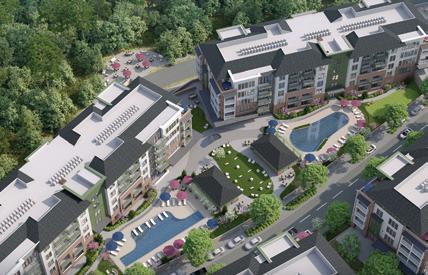

Discover a fresh way of living in the heart of Chapel Hill. Connected to everything - located just minutes from downtown, South Creek is the town’s premier master-planned community, where thoughtful design blends seamlessly with natural beauty. Enjoy everything at your doorstep — stunning condominiums, modern townhomes, and upscale rental apartments, restaurants, boutique shops and an 80 acre nature preserve all in one community.
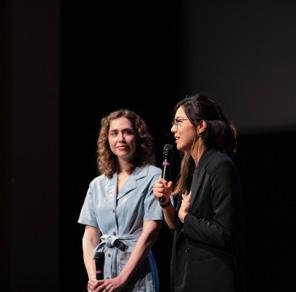

ST. PATRICK’S DAY PARADE
March 14, 10 a.m. Wear green or risk a pinch at this annual Irish procession through downtown Raleigh. The parade begins in front of the State Capitol and travels down Glenwood Avenue and Hillsborough Street. Arrive early to stake out a spot for prime views of fashionable kilts, bagpipes and spirited Irish dance.
March 14, noon-3 p.m.
Welcome spring during this joyful Hindu festival of colors at Morrisville’s Cedar Fork Community Center. Dance, sing and toss bright powder paint and water, then browse more than a dozen artisan vendors offering jewelry, henna, soaps, oils, vinyl goods and handcrafted wood pieces.
BULL CITY FOOD & BEER EXPERIENCE

March 29, 4-7 p.m. This 13th annual event features fare from 30 Triangle restaurants paired with beer from local breweries. Guests can enjoy unlimited samples throughout all three floors of the Durham Performing Arts Center, plus an on-stage experience with live music and options from specialty food purveyors. Proceeds benefit Ripe for Revival, a Rocky Mount-based nonprofit that addresses food insecurity.
April 16-19 Duke University’s Center for Documentary Studies brings this internationally renowned four-day festival to downtown Durham for the 28th year. Catch more than 60 nonfiction film screenings; attend parties, panels and exclusive sessions with filmmakers; and meet industry professionals and cinephiles from around the globe.
April 19, noon-5 p.m. Celebrate sustainability and expand your environmental awareness at Durham Central Park during this free, all-ages annual event. The 2026 international Earth Day theme, “Our Power, Our Planet,” spotlights collective action for environmental change, with music, Earth-friendly activities, educational resources and food vendors throughout the day.
March 18-22 This five‐day floral showcase returns to the North Carolina Museum of Art, pairing fresh botanical design with works from the People’s Collection. This year’s “Written in the Stars” theme comes to life through seven large‐scale and five smaller installations inspired by the signs of the zodiac, created by floral designers from across the state and beyond. The immersive event supports the NCMA and includes access to limited‐edition merchandise in the Museum Store and themed menus at the NCMA Café.
April 24, 9 a.m.-5 p.m. Head to Cary’s Bond Park to shop, explore and view art by more than 170 creatives during this sunny lakeside festival. Celebrate the community and warmer weather with live music, delicious food trucks and plenty of activities for all ages.
DURHAM BULLS OPENING DAY
March 31, 6:45 p.m. Root, root, root for the home team as the Triple-A affiliate of the Tampa Bay Rays kicks off its minor league season at the Durham Bulls Athletic Park, hosting the Lehigh Valley IronPigs in their first home series. Dig into classic hot dogs, peanuts and cotton candy, and enjoy the fireworks after the game!
NC SCI FEST
April 1-30 Explore the wonders of science across North Carolina during this monthlong celebration featuring hands‐on activities, demonstrations and interactive experiences for all ages. In the Triangle, events take place at venues including Morehead Planetarium & Science Center at UNC‐Chapel Hill, Marbles Kids Museum in Raleigh and the Museum of Life and Science in Durham.
April 25, 8:15 a.m. This 30th annual 5K at the Durham Bulls Athletic Park includes opening ceremonies, a postrace celebration and opportunities to honor survivors and those living with metastatic breast cancer. Whether you walk, run or participate virtually, this signature event brings people together to fund critical research, raise awareness and move us closer to a world without breast cancer. cm
2025 Head to our Triangle-wide event calendar for even more spring festivities
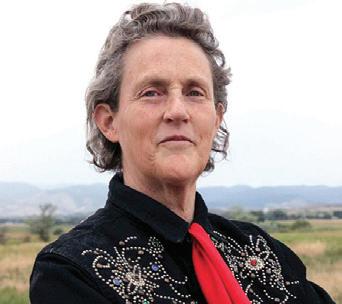
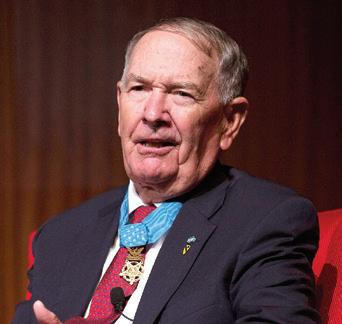
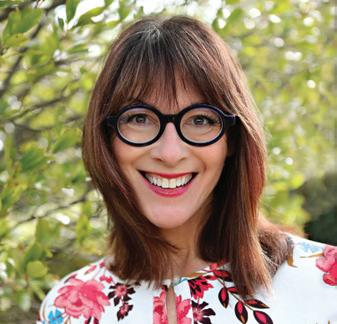


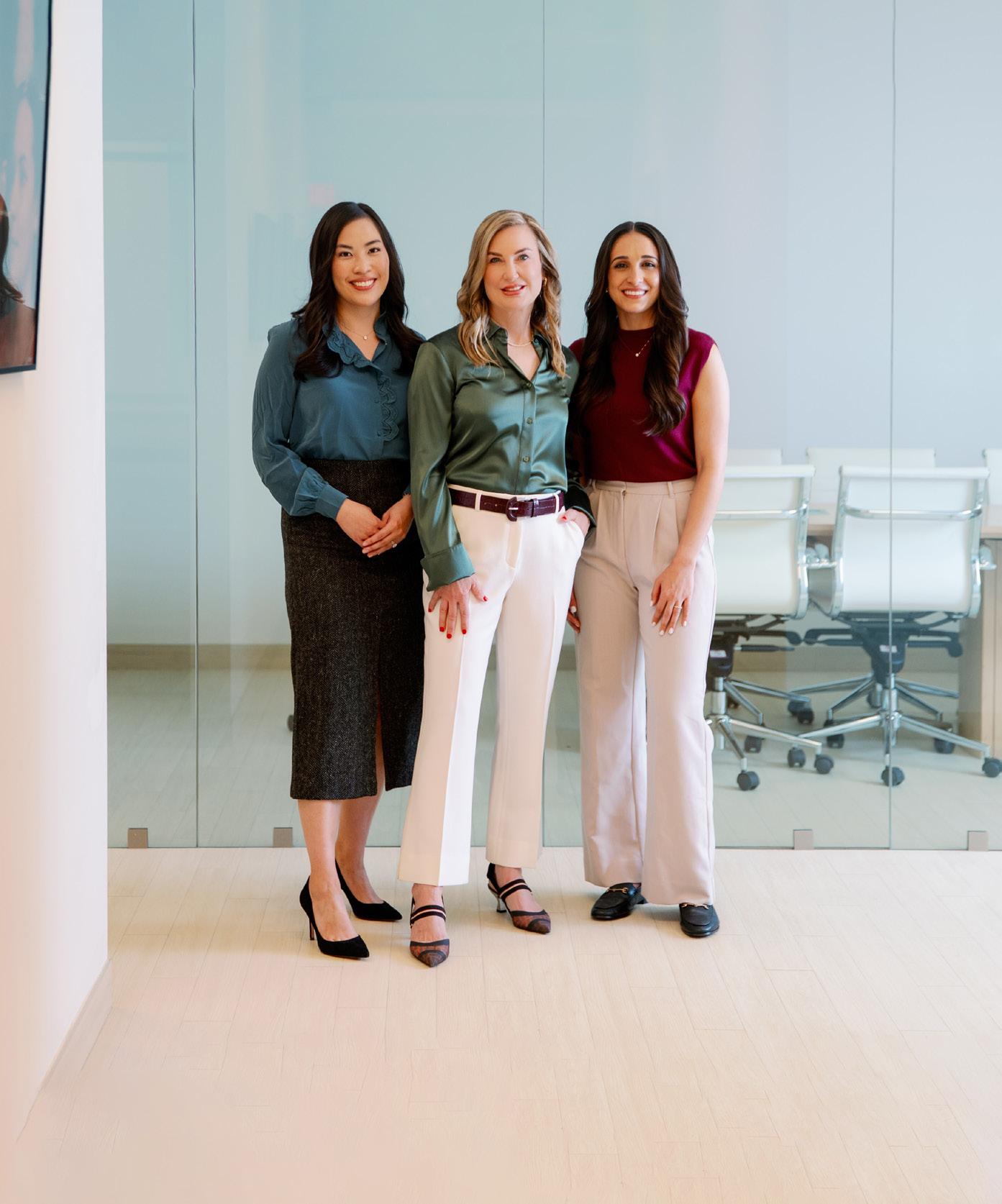
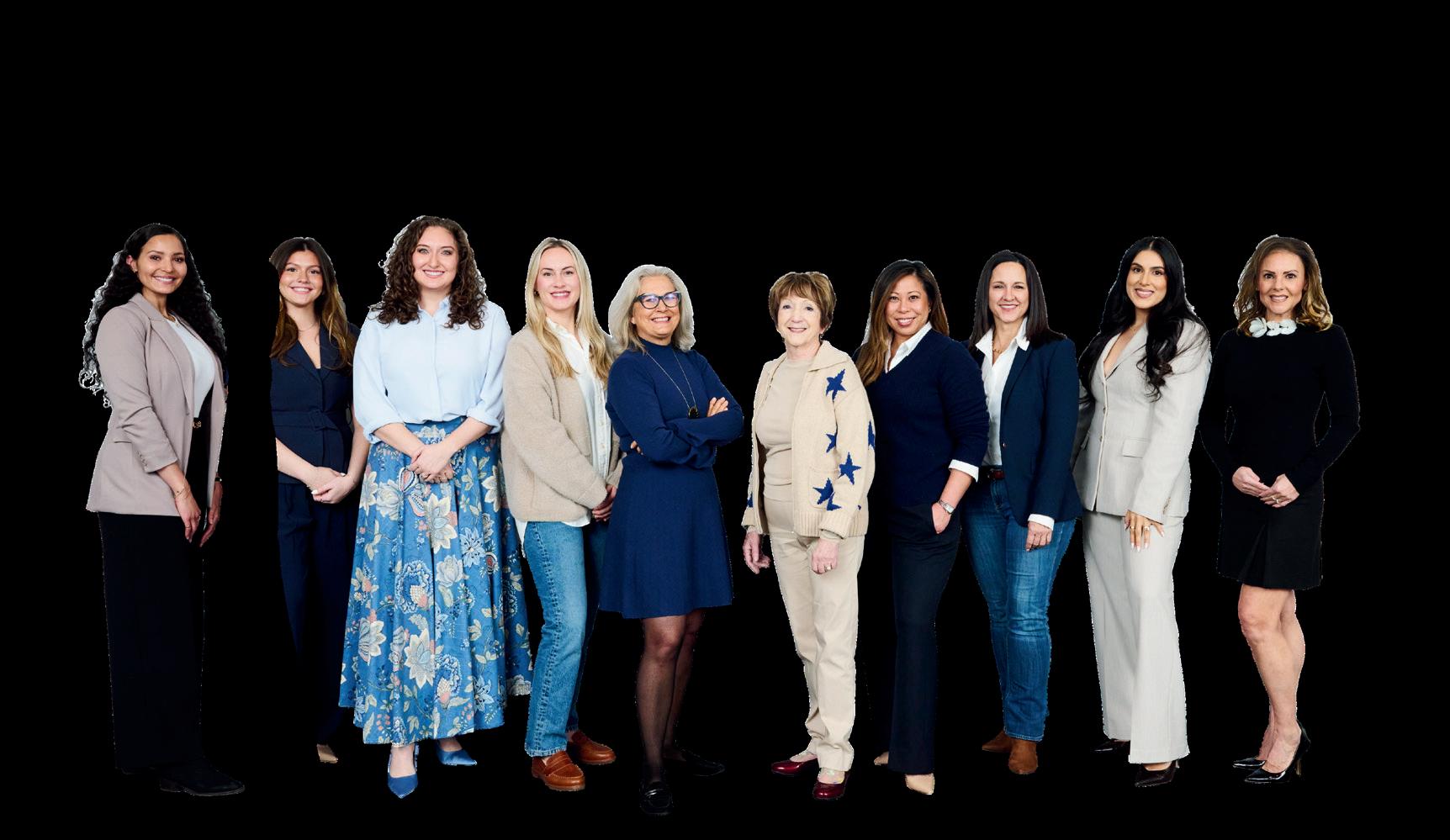
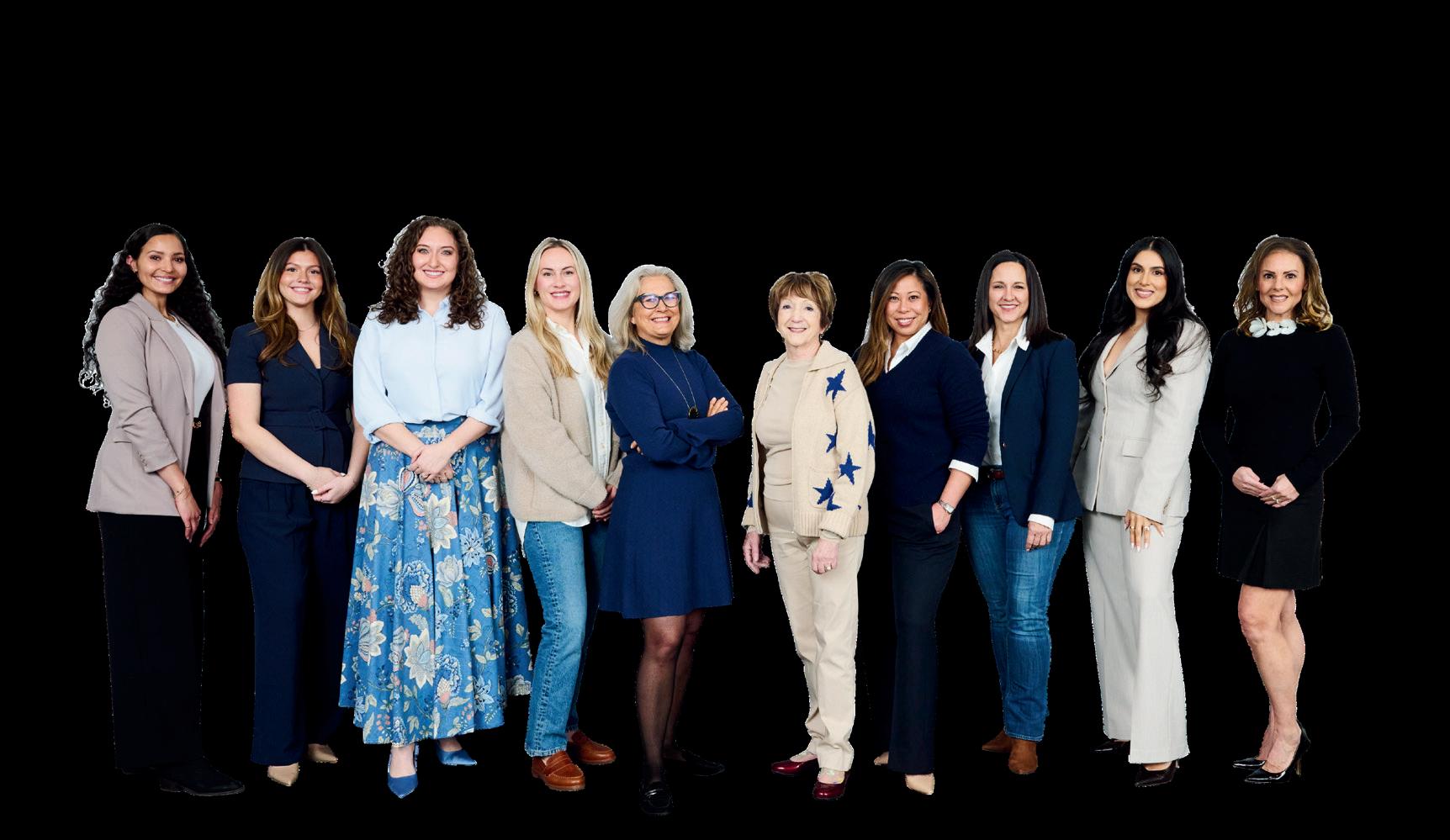
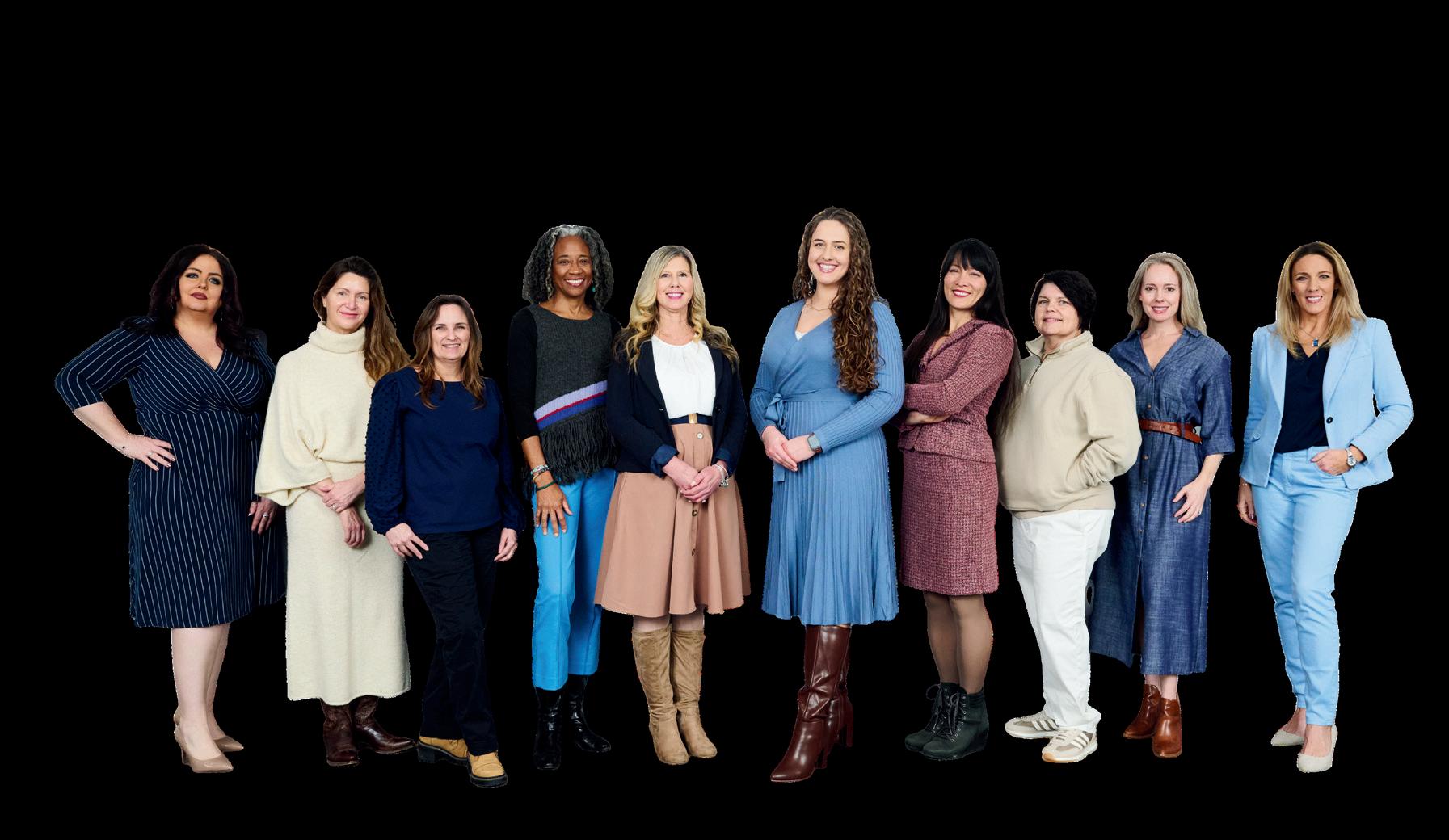
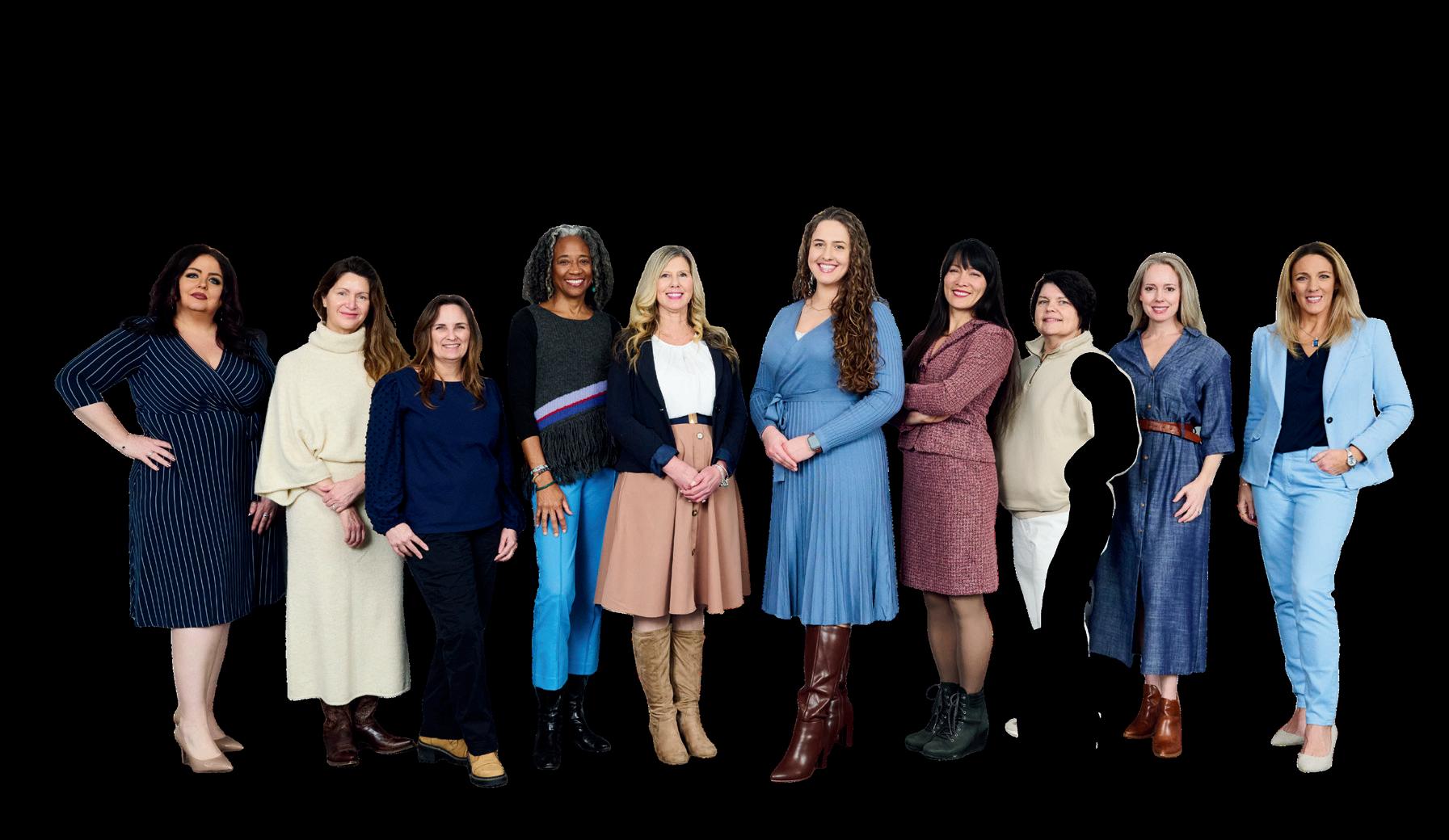
This issue celebrates the inspiring women whose leadership makes Orange and Chatham County better places to live, work, and grow.








Clyde was always there to help his friends, the community and especially children’s causes. He would readily donate many works to raise money for charities without question. He once helped his neighbor in Bynum who owned an art gallery on Franklin Street. She wasn’t able to pay her rent and Clyde gave her more than 20 artworks that she was able to sell to save her gallery.
The largest collection of Clyde’s work on public display is at [my restaurant] Captain John’s Dockside, and many art groups have come over the years to view them. He was a very humble man and would never tell of his accomplishments but I know that deep down he felt good when I spoke to others about Clyde – the man and the artist! – John Dimos
He loved fresh fruit and visits with my kiddos (Sophie, Ole and Trevor), so we’d take him little assortments of fruit. – Heather Johnson
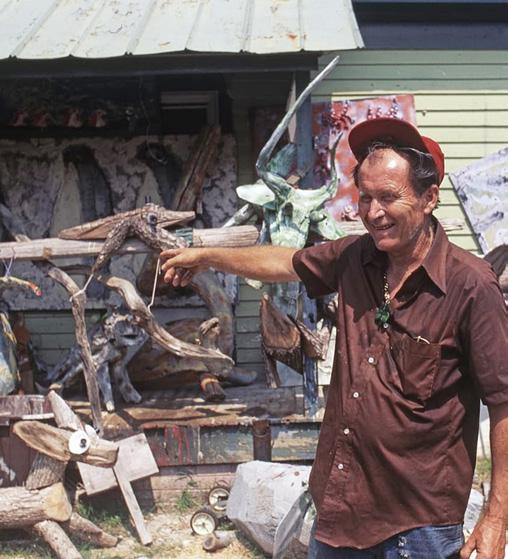

1937-2025
MI always enjoyed driving through Bynum throughout the years to see Clyde’s house and all his critters, but moreover to see how the critters spread throughout the entire village. How wonderful that Clyde lives on through his many critter creations. Rest in peace, Clyde, and may your many critter friends always protect you. – Silva Stumpf
I had the honor and pleasure of knowing Clyde Jones for more than 35 years. I worked with Clyde closely as coordinator of Chatham Arts Council’s Clydefest as well as the Fearrington Folk Art Show, and I also count myself as lucky to have known him as a close friend. Clyde was always unassuming but proud. He lived a simple and honorable life, finding his own joy in his creativity and the happiness it brought to others. His conviction that ‘It’s all about the kids’ was steadfast and he always had time for his ‘young’uns,’ who flocked to be with him.
No matter the occasion, Clyde was always fun to be around, and he brightened the day of all he saw. Young or young-at-heart, all of us who had the great fortune to know Clyde Jones will miss his sparkling character and cherish many happy memories. He was truly a unique treasure, and the world was a better place with him in it. – Gilda McDaniel
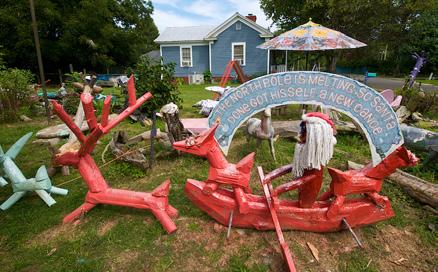
any may presume that because Clyde was a man of simple means that he was simple or unaware. Nothing could be further from the truth. Clyde was on it. Take for example our first collaboration. It was 2009. Clyde had been invited to participate in the Pittsboro Christmas Parade. And Clyde, keenly aware of the perils of climate change, was intent on making a statement.
He put Santa in a canoe with mini deer at the bow and stern behind a full team of larger reindeer. And to make sure folks got the gist, he came to me. Clyde had seen signs that I had painted for Clydefest and wanted me to make a sign for Santa. It was to read ‘The North Pole is melting so Santa done got his self a new canoe.’ This was the first of many collaborations and the beginning of a wonderful, wouldn’t-trade-it-for-nothing, almost 20-year friendship. Gonna miss him big time. – Stephan John Meyers cm

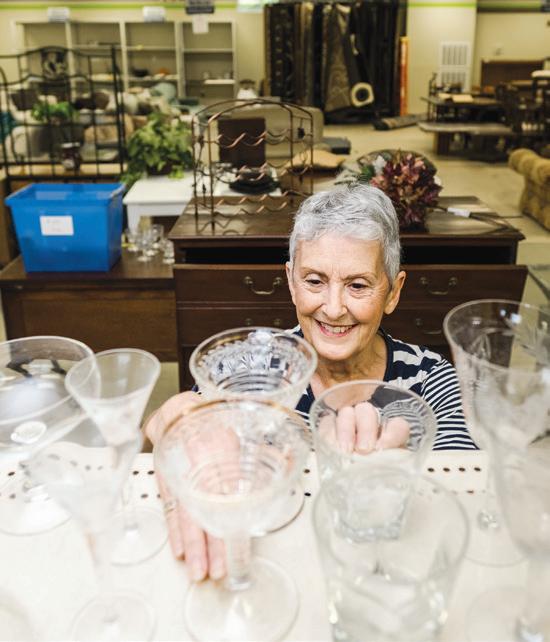
Since 1989, Chatham Habitat for Humanity has been working to achieve a vision of a Chatham County where everyone has a safe place to call home. With the help of generous donors and volunteers, Chatham Habitat builds safe, healthy homes that are then sold to Chatham County families with zeropercent interest affordable loans. Chatham Habitat has built more than 165 homes across the county.
Chatham Habitat believes that affordable housing is an essential part of a vibrant community. The chance to own an affordable home can be a turning point in a family’s life that leaves an impact for generations, and Chatham Habitat is proud to have made the dream of homeownership a reality for so many families.
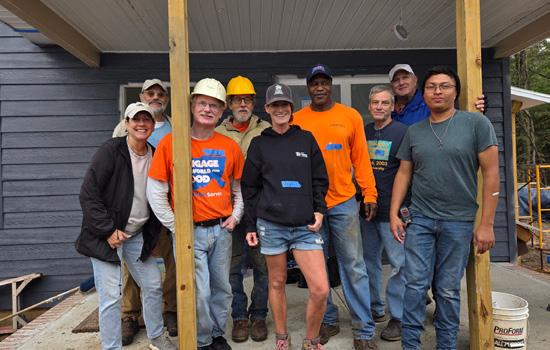
Chatham Habitat for Humanity works in partnership with God and people to create self-help opportunities for families to own affordable homes, improve their lives, and strengthen their communities.
• Ongoing Volunteer Opportunities: We need all sorts of volunteers, and not everything requires a hammer! Visit our website to learn more about volunteering on the job site or in the ReStores - we would love for you to join us.
• Home Dedications: Join Habitat for Humanity as we dedicate each of our homes! Several times a year, we host dedications to celebrate all our new homeowners. Please see our website for further information on each of these events.
• Women Build 2026: Scheduled for the week of May 4th, this event brings together women from across Chatham County to build safe, affordable homes while developing construction skills. For details, please visit chathamhabitat.org/women-build-2026.
• Donations of gently used furniture, household goods, and construction materials to the ReStores (Call 919-548-6910 for free donation pick-up)
• Financial gifts to support the construction of safe, healthy, affordable homes in Chatham County
• Donations for the construction site: Food for volunteers, tools, materials, or your time
Mailing Address: PO Box 883 Pittsboro, NC 27312
467 West St. Pittsboro, NC 27312 919-542-0788 chathamhabitat.org
The results will be announced in our Fall issue, complete with features about a few of our winners. Our annual poll returns May 1!
This ballot is meant to highlight the best of the best in Chatham County, and we can’t emphasize it enough: Winning this award means so much to local businesses, so take this contest as one more way you can ensure that your favorites – whether it’s a coffee shop, real estate agent, museum or gym –are well-known and well-loved by everyone in our community. Help us showcase the places that make our towns special.
Over the next few pages, you’ll find several businesses that are vying for your votes – if you love them, support them! Every vote counts, so be sure to participate and promote the places that make our community thrive!


Visit our website at chathammagazinenc.com/ vote or scan the QR code to cast your ballot.
• One ballot per person. The email address you submit is essentially your ID – you can come back at any point to finish the survey at your leisure. We’re only counting one ballot per email address. We want to keep ballot box stuffing to a minimum.
• All questions are optional. Though we’d love for you to vote in all the categories, you are welcome to pick and choose.
• Write in your favorites if they’re not nominated. We did the best we could to be comprehensive in the categories with nominees, but the write-in box is there for a reason – use it!
• Be specific in write-in categories. Where applicable, please use the full name of a business and/or person.

Cast your ballot May 1-22. Happy voting!
Fall 2026
The results will be announced in our Fall 2026 issue, complete with features about a few of our winners.
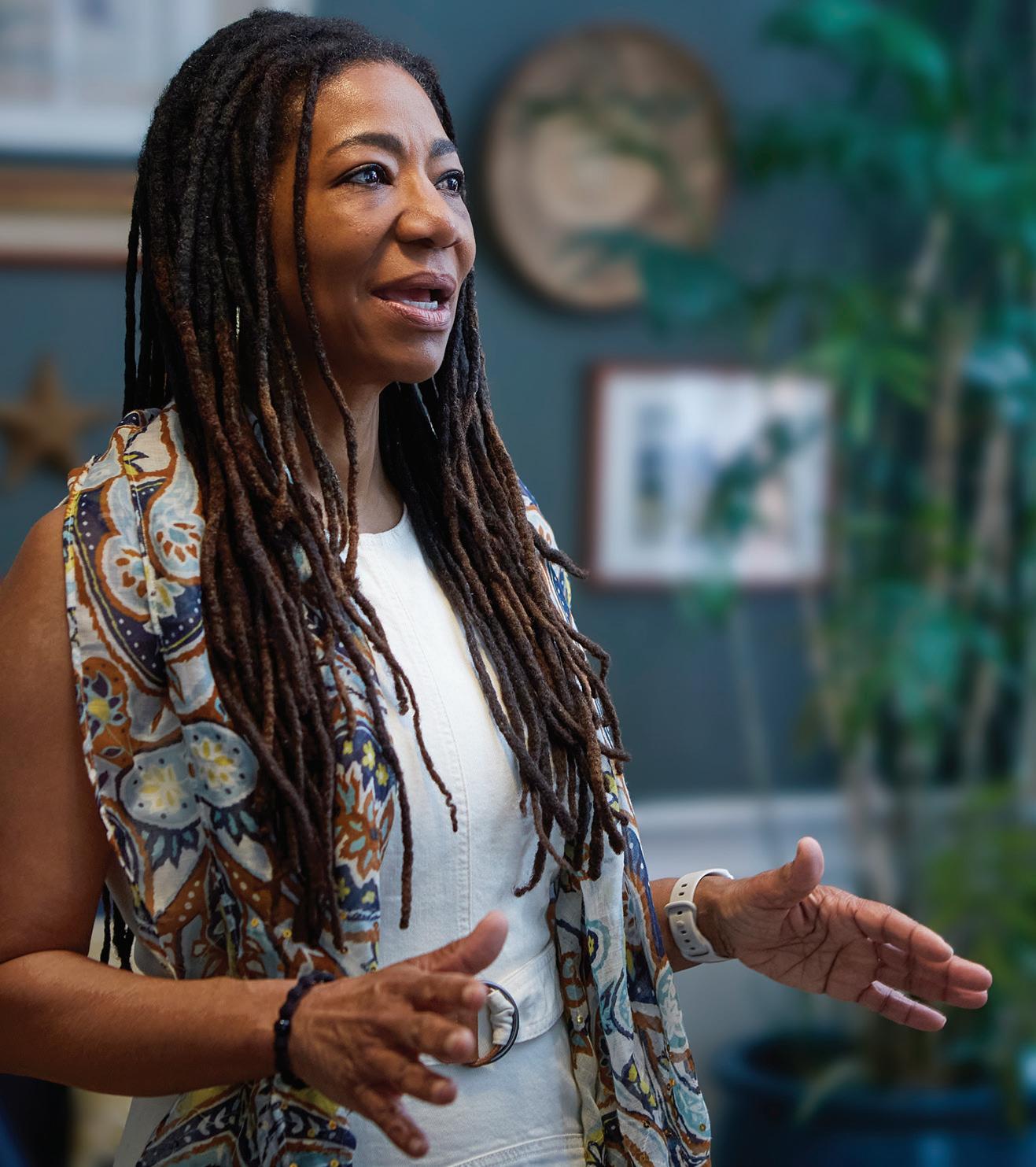

aren Howard has served as a Chatham County commissioner for 12 years, passionately working to secure a diverse, opportunity-filled future for all residents. She’s lived in many places – from her childhood in the Bahamas to school in Connecticut, undergrad at Georgetown University in Washington, D.C. and law school at University of Buckingham in England – but has proudly called Chatham home since 2007.
Karen lives on the North Chatham side of Jordan Lake with her two rescue dogs, Baxter and Nila. Her six adult children, one daughter and five sons, live scattered between North Carolina, Washington and the Bahamas. She is also a grandmother – or as her 5-year-old granddaughter, Nora Howard, puts it, “glam-ma.” She has an affinity for artistic outlets and in her spare time, paints watercolor portraits, landscapes and stills for friends and family. She also co-hosts a monthly poetry night at The Plant with Lyle Estill and hopes to continue spreading her love of the written word throughout Chatham County. “I deeply believe that if there were more poetry in politics, there’d be less of a divide,” Karen says.
What inspired you to run for Chatham County commissioner?* I first served on the Chatham County Board of Education for two years, and the seat in my district opened when [former commissioner] Sally Kost was leaving. I wanted to continue serving my [school board] term, but I was very concerned about the direction the county was going in terms of its teleology around investing in supporting public education.
As a parent with five kids in the school system, I was seeing direct impact from the way that the then-board of commissioners was thinking about investing in public education; there was this move toward line-item budgeting for the school system. Having served on the board of education, I could see very clearly that there was no way that board of commissioners could identify and define what a good and equitable public school budget looks like without experience or knowledge in that space.
At the time there was also a lot of conversation around what equitable really meant. I was able to look at my own
*responses have been edited for length and clarity
situation, for example, my own kids, and recognize that I couldn’t give the same input to my autistic son that I could give to his gifted older brothers. Equal wouldn’t give him what he needed. It had to be what was appropriate for his needs, for his circumstances.
It didn’t matter that they all lived with the same parents, had the same socioeconomic experience, the same access to food, diet, transportation, housing. He needed an additional foothold in the educational space to meet his potential. That, to me, was such a profound example of why it is important for us to listen to the experts in making these decisions. There are other things that need to be funded besides education, and they are incredibly important. Things like protection of our environment, affordable housing, transportation needs, public safety – there’s a lot. But for me, public education was so foundational to who we could become individually but certainly who we could become as a community. So that was
the sort of the springboard for me to go beyond serving on the board of education and into this larger funding role as county commissioner.
How do you define a commissioner’s role in growing a community like Chatham? It’s a constant learning environment. The landscape is constantly changing, the needs of the community, expectations of the community are constantly changing, the external pressures are changing. So, to some extent we have to be nimble, but we also have to be solid and grounded in a set of values that reflects those of the community.
One of the things that has benefited me in serving on the board of commissioners is recognizing the limit of my knowledge and experience and expertise. It is my responsibility to learn, to go out into the spaces where the knowledge is available to me. It is my responsibility to accept those invitations and learn, and then to take the information that I can assimilate from several different sources and use that for the benefit of our community.
How does your background as an attorney inform your role? I was an English major in college, and I remember people saying to my parents, “What is she going to do with that?” My dad would always say, “Anything she wants.” I think that is true of my background in law as well. It provided the foundation for me to sort of dig into spaces where I don’t have a lot of expertise and gain a working knowledge.
I’ve used it when I serve on other boards and committees to understand our role and our responsibilities, to understand the legal responsibility of different roles that I’ve served in. Also, a lot of law doesn’t ever get to litigation – a lot of it is negotiation. The goal really should be to avoid litigation, to avoid the expense of going to court, to see how close the two parties can actually get to meeting their wants or needs. And I think that is true of public service as well.
We are best when we do have diverse perspectives and opinions at the table, and we are forced to compromise. And it does not have to be a compromise of our values; our values are often shared, and those conversations are just often a compromise of the way we go about doing something. So,
I think it has helped me in conversation. It certainly has been an asset to me and helping me to articulate my perspectives and help bring people along or help them understand why I feel a particular way.
I encourage anyone thinking about an English major to go for it. The ability to read critically and communicate clearly is a powerful foundation for public service – or any career that involves helping others.
Chatham County has changed in many ways since your first year as county commissioner in 2014. What has been the most surprising change, and in what ways do you hope the community continues to advance? One of the concrete ways that it has changed is that Chatham County was [previously] unzoned. The zoning in Chatham County only applied around the towns and municipalities. There were a couple of applications that came before the planning board that illustrated that land uses inconsistent with adjacent businesses and homes could too easily be approved in the absence of zoning.
For example, there was an application for a shooting range right next to the Refuge, which is a cat rescue. If you are the owner of a cat, you can only imagine how distressing that would be – particularly for the cats who were rescued from difficult situations and were already timid or shy or sick. I thought, there’s no circumstance in which we as individuals would think it was OK to approve a shooting range here. The reality of landownership is that without parameters, and if there’s no opportunity for the public to be forewarned or provide input, you can develop and use your land in any way you want.
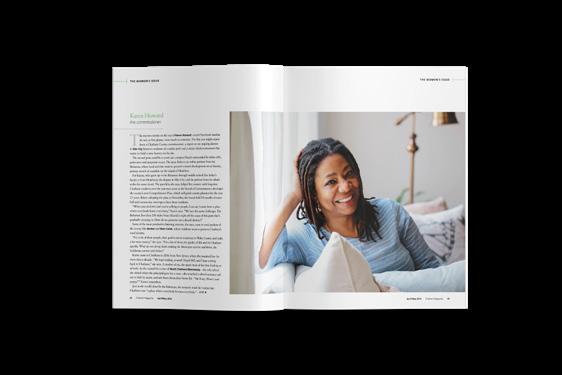
We featured Karen in our Women of Achievement issue in 2018. At the time, the board had just completed its 25-year comprehensive plan, and she was just as concerned about preserving Chatham's character while preparing for growth, asking: "What are we doing that's making the Moncures and the Goldstons survive and thrive?"
So that effort around countywide zoning, I think, was one of the most significant changes that has happened in Chatham County. And we see the benefit when an application that does not fit with the general uses in an area comes before this board of commissioners. We get significant input from adjacent landowners and from people who are going to be impacted, and incorporate that in our decision-making.
The more nuanced change that I have noticed is with the influx of new residents – and we’ve had a significant increase in population. The expectations around what happens in county government have been changing, too. We get more involved
Meet our 2026 class of Women of Achievement on page 27.
in decisions that are happening at the state level, and in Chatham County in particular, we start having conversations with regional partners. When I got here, Chatham County was sort of an outsider in regional conversations around water and transportation. Now, anyone would say that we are really an active participant in the Triangle. We have become one of the big boys now, and I think that’s a good thing for Chatham County because you don’t want to be on the sidelines when things are happening around you that will impact you.
We need to be in conversations now around what transit will look like in 2050 because you can’t wait to get into that conversation when the population is already here. You need the infrastructure and the planning to be able to meet the need and to meet the expectation of future generations of Chatham County residents.
As places evolve, people do, too. How have your policies and perspectives developed as you’ve gained more experience? Have any remained the same? The foundation of my values and perspectives has stayed the same. I very much believe that ability is far more evenly distributed than opportunity. It is my responsibility as a person in leadership to ensure that everyone has the access to opportunity and that people can advance and grow into their greatest potential.
Also, [I continue to have] a very clear understanding of my role and my place in the fact that the county is growing. I am one of those people who came to Chatham, and I’m a part of that growth. Respecting and honoring the community that I moved to means understanding that part of my responsibility is not to close the door to future residents, but to make sure that as the population grows and changes, we are respecting the things that brought us here in the first place. The quality of life that lured us in should not suffer because we are here.
I do deeply believe that people who have moved into Chatham have been an asset. We have incredible philanthropy and volunteerism and active participation on boards and committees because of those people. At the same time, we have to respect the community that we moved to in ways that demonstrate that.



How do you stay connected to residents and ensure a wide range of voices are heard in county decisions? I make sure that I am always accessible. If anyone invites me to do anything, my answer is always yes. I will figure out the how and when afterward. I think that’s the beauty of local government and a smaller community: that you can be available to people. I’m always happy to come and speak to community groups or individuals to have coffee. I’m very comfortable explaining my why, and I think most people who have reached out have been open to us, not necessarily agreeing when we walk away, but understanding each other’s perspective.
The county government as a body does a good job of ensuring that we have public comment available at our board meetings, that we’re listening. We’re often not able to engage directly with the members of the community, but if there is something that needs to be followed up on, we do, whether it’s through staff or through a board member. I hope it feels to the community as though our door is open. We try to have meetings in communities that will be affected; for example, with the Plan Moncure small area plan, we made sure that we met in Moncure.
You are currently serving as chair of the Triangle West Transportation Planning Organization. How would you describe your long-term transportation goals? So, [Durham-Chapel Hill-Carrboro Metropolitan Planning Organization] is now the Triangle West Transportation Planning Organization. We rebranded last year. [It’s] the same group, [we] just thought that the new name better defined who we are. In terms of Chatham County long-term planning goals, we have not had a comprehensive transportation plan for Chatham, and we are now going through the process developing that plan. Because, like I said, we’re not going to get the infrastructure that we need in place for the people who want access to transit, unless we are in those conversations now and preparing.
We have a robust planning department. We have transit staff who are involved in the conversations with Triangle West, and we are beginning to build out what our expectation of transit in Chatham County looks like. How does it grow from the small microtransit
we’re trying out now into something more robust and something that’s countywide? People have got to be able to get to wherever they need to go, whenever they need to go there and ideally reduce the number of cars on our streets. I think that is everyone’s goal.
You have also served two terms as the chair of Chatham County Board of Education, and on the admissions committee for UNC Kenan-Flagler’s MBA program. How did those leadership positions influence how you approach county policy and priorities? Serving on the board of education was foundational to how I see my role as a county commissioner. In our schools, outcomes for students are almost always tied to their economic and family circumstances, and these social challenges can show up in the classroom. The responsibility of public education is to meet every kid where they are, so investing in Chatham County Schools is truly a way to lift all boats. I have personally seen the benefit of meaningful investment in public education. Chatham County Schools is one of only a tiny handful of school districts where every school met growth expectations, and in public education, growth is everything. Each student, whether they are the smartest child in the classroom or the child who’s been struggling most, is making progress. For that to be happening across the district is remarkable, especially given where we were when I first started on the board of education [in 2012].
The increase in teacher pay is helping us keep good educators in the classroom. When teachers feel valued, where school communities feel as though they’re being heard, where our superintendent feels supported by the board of education and by the school staff – all of this has gone into creating an environment where young people thrive. I also want Chatham County Schools to be the kind of place where young people can say, “I can see myself in education. I can see myself going into teaching.” We can’t afford for the profession of teaching to fade.
My work on the UNC Kenan-Flagler admissions committee influenced me in a different but equally important way. Interviewing MBA candidates coming from such different spaces, from different professions, from different backgrounds showed me the power of diversity of experience.
I interviewed a candidate for the business school who was a CEO at an oil manufacturing company, and then another person who had started her own business in hair care products. It’s just such a stark and constant reminder that our differences and the uniqueness of our expertise and experiences are not a disadvantage, but our strength – not just in local government and not just in public education, but in every way.
What are current goals you have set for your work, and how do you plan to achieve them? Short term, we are in the early process of developing a county climate action plan. The development of that plan is short term, but the implementation is going to be long term and will be a valuable asset to us with the development coming into Chatham.
I do believe that we have to increase the number of households that we have. We have got to build some affordable housing muscle, which means more units, more houses, more apartments [with] higher rises – maybe three, four, five-story apartment complexes. But to do that in a way that does not detrimentally affect the environment, we must have a plan on how best to develop and implement erosion control methods and climate mitigation strategies, so that as we grow to meet the demands of a growing population, we are not creating environmental hazards.
What keeps you motivated and passionate to continue this work?
I really believe that we are a community that is invested in our individual capabilities. I believe that Chatham County wants people to do well. I have served with people who demonstrate that again and again. I am hopeful when my board and my colleagues look at our budget, we think about it as a way of supporting individuals and families and helping people meet their potential. I feel as though I wouldn’t want to do this anywhere else.
Chatham County has a sense of community that makes me feel comfortable being in politics in these really complicated times, and even the times when we disagree and there has been vitriol, I feel supported by the large majority of the community. That keeps me hopeful, that keeps me motivated. – as told to Rebekah Mann cm
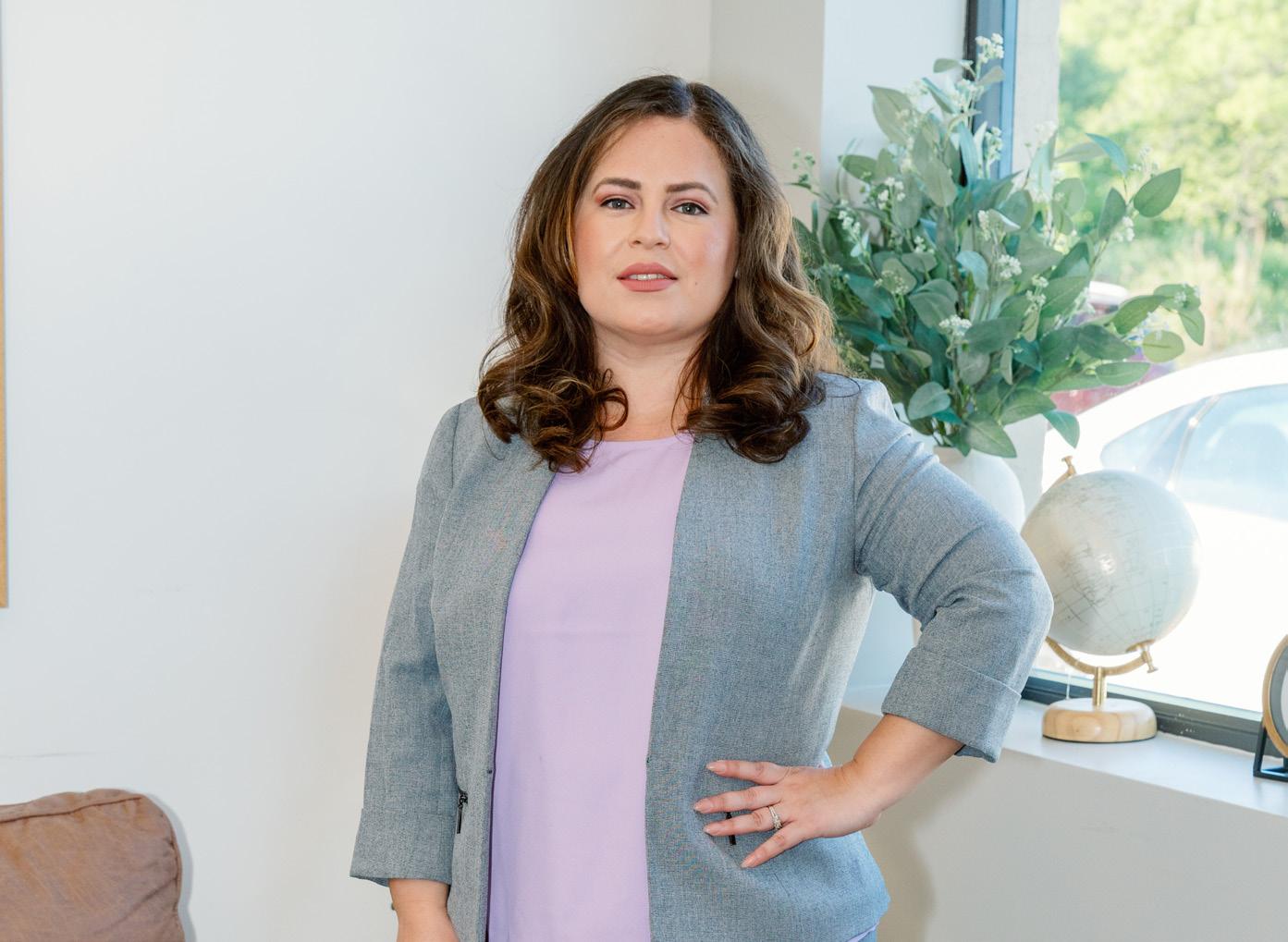

This
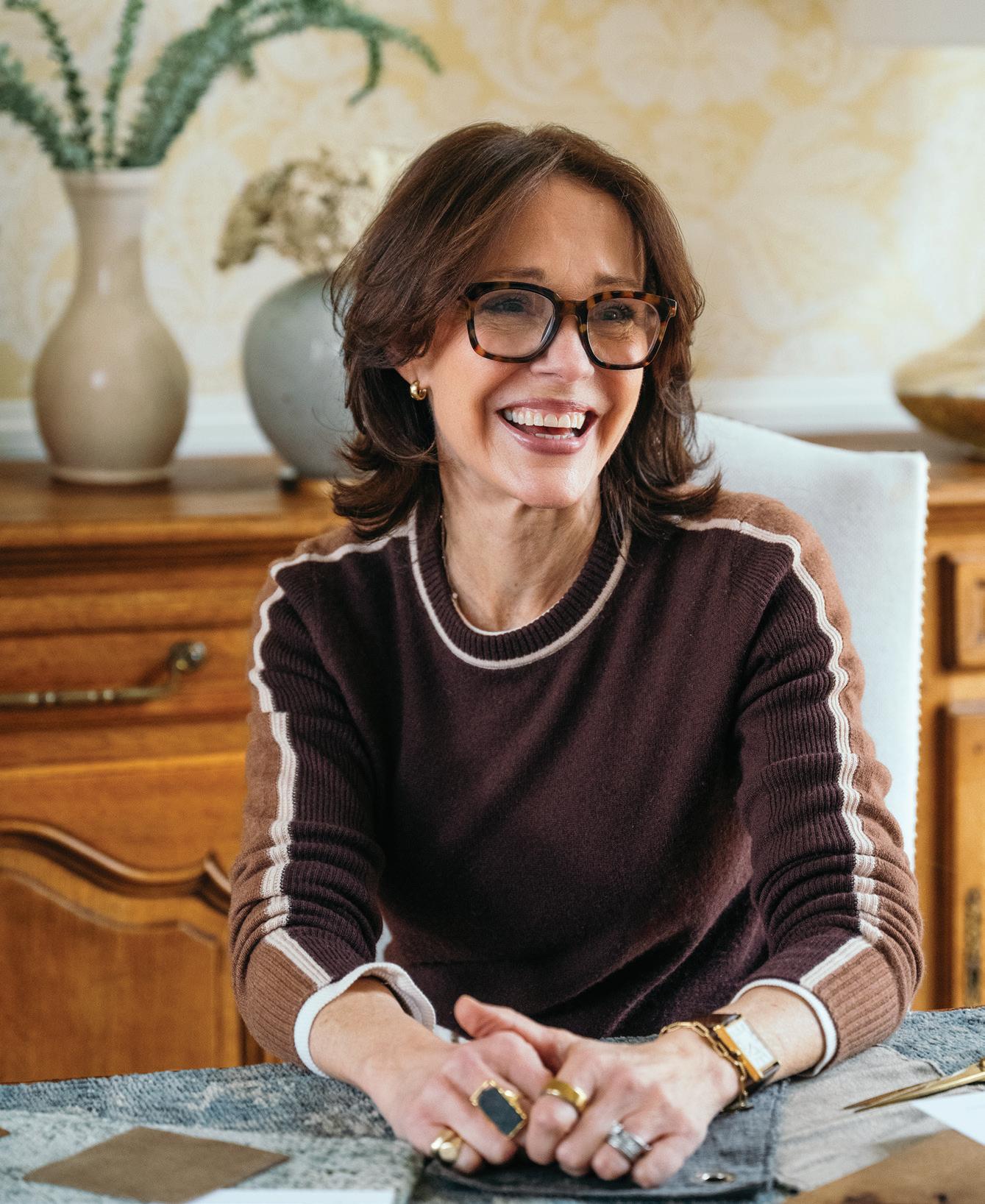
heryl Bafford had already lived several professional lives by the time she hung her first shingle in Chatham County. Today she leads Cheryl Bafford Interior Design – a thriving residential design firm known for its hands-on construction involvement, long-term client relationships and servicedriven ethos – as principal and CEO. But her path, both geographically and career-wise, was anything but linear.
Cheryl grew up in Texas, then spent years in Washington, D.C., and Baltimore building a skill set that blended creativity with strategy. She initially envisioned a future in medical illustration, having pursued a degree in art and humanities with a strong foundation in 3D design. “I loved that intersection of science and art,” she says. But inspiration soon came from another direction, fueled by admiration for New York City window arrangements and a fascination with storytelling through space.
Her early jobs included a role as regional visual manager for Pier 1 Imports, where she oversaw displays, store remodels and staff training across multiple
“I’M LEARNING EVERY SINGLE DAY.”
locations. That experience led to an unexpected call from the Discovery Channel. “They said, ‘We’re building this big flagship store near the National Mall – it’s multiple stories, 30,000 square feet, and there’s a T. rex in the atrium,’” she recalls. “I thought, ‘OK, maybe I’ll come take a look at that.’”
Her work with Discovery Channel pulled Cheryl fully into commercial and retail design. She later ran the design division for Apartment Zero, a high-end contemporary furnishings company. It was then, while working from home with a young son, Ben Bafford, that she made the shift to residential design. “It was the perfect way to dive into the world of interior design,” she says. “We ran projects from start to finish, and I learned how every piece fit together.”
Her husband, Don Bafford, received an opportunity to expand his company to the Triangle in 2006. His fond memories of Duke University, where he earned his undergraduate degree, combined with the area’s climate and family-friendly culture that reminded Cheryl of Texas, made the move an easy decision. “It just felt more like home for me,” she says.
The family moved to Chapel Hill, and Cheryl began to explore the idea of starting her own firm. She officially launched her business in 2014 out of her home in Governors Club. “Every day is different,” she says. Mondays are usually reserved for office work: planning, task management, team meetings and finances. The rest of the week may include job site visits, client presentations, operational reviews, logistics, invoicing or even photo shoots. “Designing is maybe 15 percent of my time at most,” she says. “That surprises people.”
Cheryl wears many hats at once: design director, relationship builder, operations and financial analyst. The constant evolution of her work keeps her energized. “I’m learning every single day,” she says. “I love the growth opportunities this role provides. It lets me think critically, analytically and creatively.”
One of the firm’s key differentiators is the team’s close collaboration in the construction of a project. “We are really in the weeds,” Cheryl says, “down to shoe mold, hardware and figuring out how to engineer things to make them work.” That level of detail, she says, reflects the firm’s service-driven philosophy.
Client relationships often span two to three years or longer, especially with new builds. “Sometimes [customers] come to us not just for design, but [also] for help navigating communication with a contractor or figuring out a piece of the puzzle that has nothing to do with design,” Cheryl says. “That’s what makes us special – we develop relationships that go beyond the surface.”
She adds that, rather than awards or accolades, she finds that the small moments are what matter most: “Seeing a family enjoy their new home,” she says, or “hearing a client say, ‘I never would have thought of that!’”
Cheryl’s life outside of work includes reading, exercising, cooking, puzzling and spending time with friends. She frequents the local farmers market and local coffee shops like MunchiLove and People’s Coffee and draws inspiration from exploring downtown Pittsboro. “I really love it here,” she says. “There’s so much for kids, the weather is great and the sense of community is strong.”
Family is also central. Cheryl credits Don for his steady business insight and humor. She’s a proud stepmom to two accomplished stepdaughters, who live in Baltimore, and mom to her son, Ben, a 23-year-old mechanical engineer who lives in South Carolina. “He’s truly my model for thoughtful living,” she says.
Looking back, Cheryl views her vocation as the natural result of a childhood steeped in creativity and hands-on problem-solving. Her parents remodeled multiple homes, including a Victorian, and encouraged her to experiment freely. “They let me paint on my walls,” she says. “We laid a brick floor together in the dining room.” A mother trained in fine arts and a father who worked as an engineer shaped her appreciation for both artistry and precision.
That balance continues to define her work and informs her advice to young women entering the field today. “Work with a firm or two before going out on your own,” she says. “This business looks glamorous from the outside, but it’s very challenging. The easy part is coming up with the design. Making it happen well and keeping the client happy – that’s what sets a good designer apart.”
Chatham County has given Cheryl the space to do exactly that: design with intention, lead with purpose and build something lasting – one relationship, and one home, at a time. – by Morgan Cartier Weston F


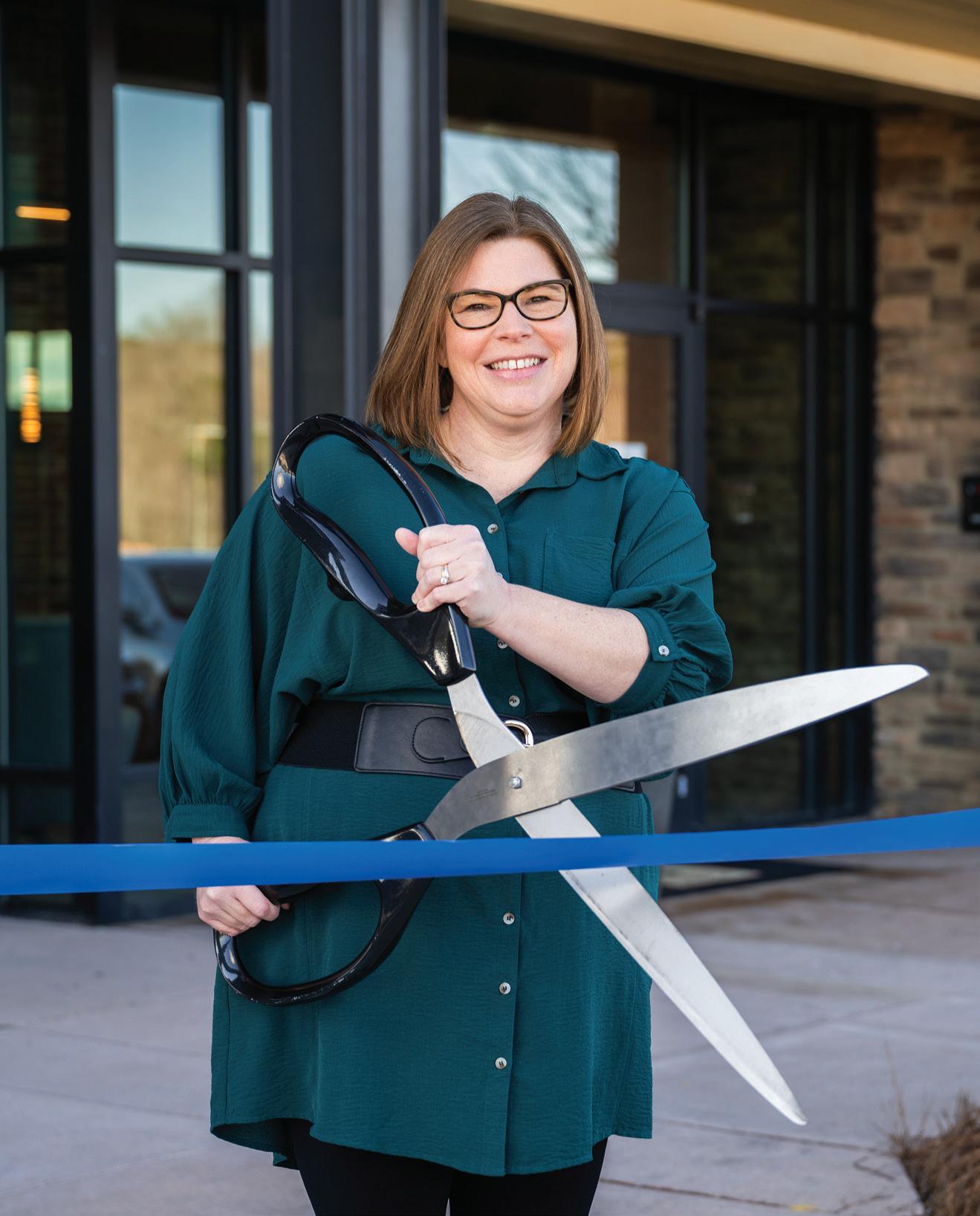
Rebecca Dickenson’s days as president and CEO of the Chatham Chamber of Commerce are defined by listening, connecting and translating information into action. Her work does not follow a set routine, but flows between conversations with small business owners, nonprofit leaders and public officials, keeping her close to the questions shaping Chatham County’s future. “The Chamber’s role is not to have all the answers, but to convene the right people and create space for progress,” Rebecca says. Her approach reflects a career rooted in communication and collaboration. She began in student media, serving as an advertising director at The Daily Tar Heel and later at The Duke Chronicle before spending seven years at The Chamber for a Greater Chapel Hill-Carrboro, where Rebecca focused on membership development and operations. “At its core, my work has always been about elevating voices, sharing useful information and building trust,” she says – a focus that has shaped each stage of her career.
Rebecca’s life outside of the office centers at home near Back Creek in Graham, North Carolina, where she lives with her husband, Calvin Dickenson, their three daughters – Kathleen Dickenson, 14, Nora Dickenson, 10, and Zoe Dickenson, 5 – plus a brindle rescue dog named Periwinkle and a small flock of laying hens.
Rebecca has led the Chamber since April 2025 and describes the past year as a pivotal time for the county.
The position appealed to her, not just because of the projected growth, but because of the responsibility it carries: helping guide how Chatham evolves while protecting the identity that already defines it. “Chatham felt like [it was in] a moment where growth, opportunity and intentional leadership were converging,” she says.
That perspective has guided Rebecca’s recent work, including the #ThisIsChatham Bus Tour on Aug. 28, 2025, which brought attendees together for a behind-the-scenes experience throughout different parts of the county. The daylong tour started at McIntyre’s Books in Fearrington Village and continued with stops at The UNC Farm at Penny Lane, the Chatham-Siler City Advanced Manufacturing Site, The Chatham Rabbit and Bynum Bridge before concluding with a reception at 79° West, where participants heard from community leaders and met with one another. “I feel especially proud when I see people who may not otherwise be in the same room sitting together, sharing ideas and
“THE
CHAMBER IS NOT A BUILDING OR A STAFF; IT IS THE PEOPLE WHO CHOOSE TO INVEST IN THEIR COMMUNITY EVERY DAY. MY ROLE IS SIMPLY TO HELP BRING THOSE PEOPLE TOGETHER AND SUPPORT THE WORK THEY ARE ALREADY DOING.”
leaving with a better understanding of one another,” Rebecca says. She sees experiences like these as the starting point for long-term impact.
But it’s not all about the large, visible programs – that impact also shows up in how Rebecca facilitates dialogue around Chatham’s challenges and opportunities. Last winter, she hosted a state legislative forum followed by a local government appreciation reception at The Skyroom, bringing residents and local leaders together for an evening of discussion and connection. Elected officials, including Rep. Robert T. Reives II, shared updates from the North Carolina General Assembly and discussed issues across the county. “People care deeply about their neighbors and community,” Rebecca says. “That shows up in how businesses operate, how nonprofits collaborate and how local elected officials lead.”
That spirit echoes in the everyday places Rebecca and her family frequent, too. Whether she’s picking up Indian food from chef Ramesh Dahal at Pittsboro Food Mart, ordering Tex-Mex from Nora Anaya at Ta Contento or spending time at Carolina Sunshine Alpaca Farm or Piedmont Farm Animal Refuge, she sees the same care and pride that shape Chatham’s broader civic life.
A small moment last fall captured that feeling. While doing some holiday shopping, Rebecca bought a scarf from Twin Birch and Teasel that she’s worn almost nonstop since. “Every time someone compliments it, I get to say, ‘Thank you, Sue Szary made this,’” Rebecca says, a simple example of how easy it is to celebrate local makers and connect people to the creativity in the community.
Rebecca will onboard a new senior policy advisor this spring with regional and national experience, a step she sees as essential to representing local businesses and engaging thoughtfully in policy conversations. Alongside that effort, Rebecca and the Chamber’s board are exploring an intercity visit in 2027. “The goal would be to learn directly from a peer community that is a few steps ahead of where we sit today,” Rebecca says. “The trip agenda will allow us to study that city’s economic development, tourism, historical preservation and chamber initiatives, and bring those lessons home.”
When asked what she would tell her younger self, Rebecca returns to the same values that guide her leadership today. “You do not have to have everything figured out to move forward,” she says. “Stay curious, stay kind and be willing to learn out loud.” – by Lauren Rouse F
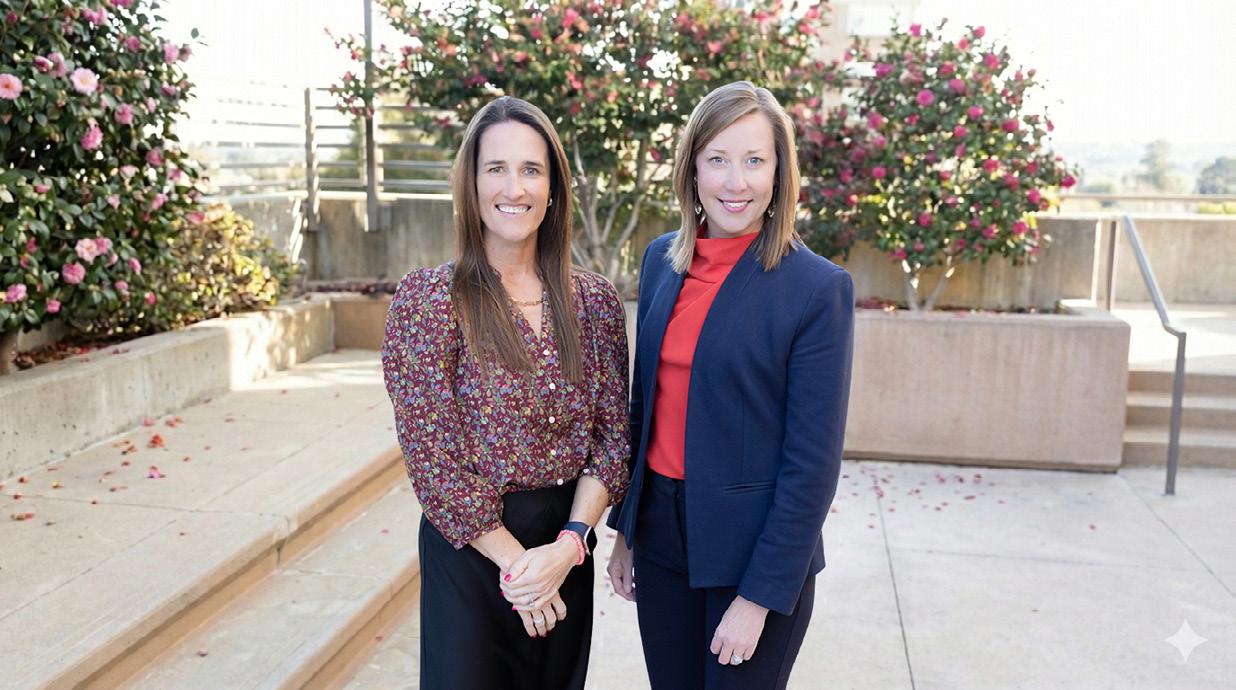


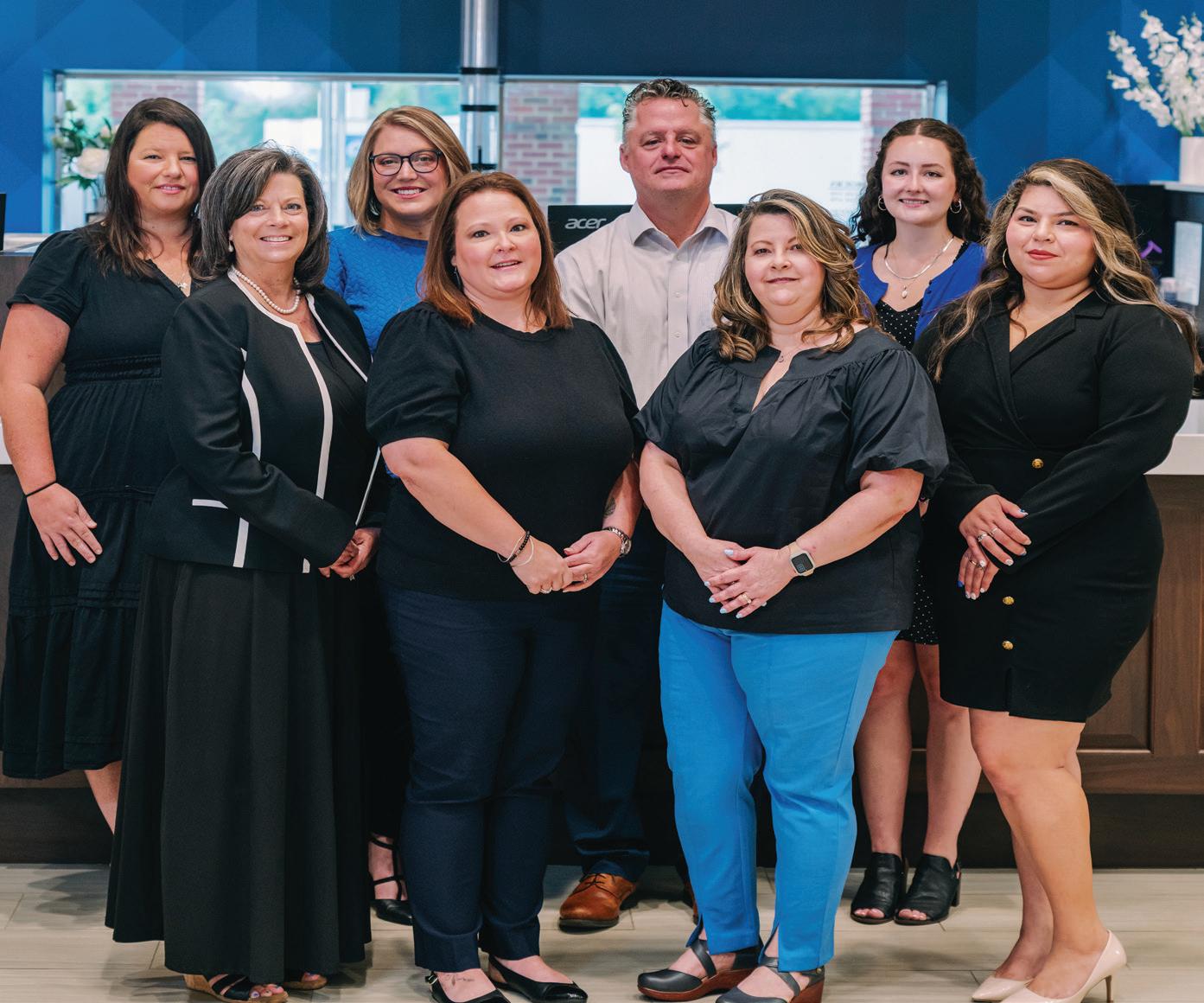
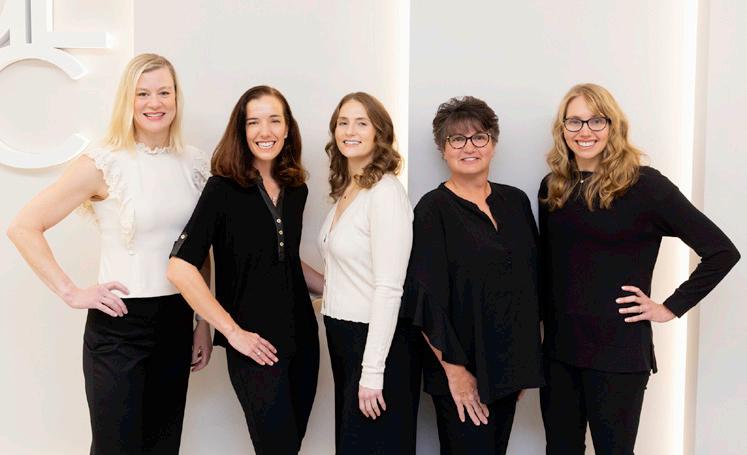
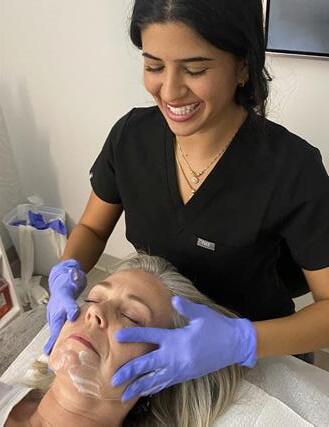
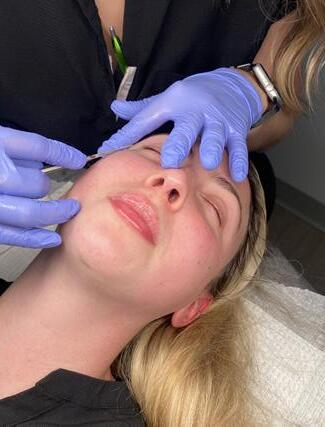
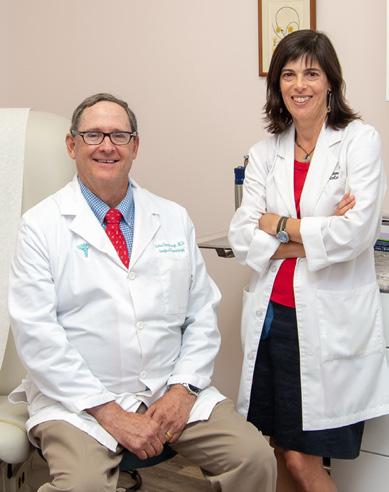
Meet Chris G. Adigun, MD, board-certified dermatologist and the owner of the Dermatology & Laser Center of Chapel Hill. Dr. Adigun and her team provide comprehensive medical and cosmetic dermatological services in a warm and welcoming environment. Using cutting-edge technology and treatment options, she and her providers help address concerns from acne to wrinkles to that extra belly fat that won’t go away.
For Dr. Adigun and the DLC team, building a trusting relationship and providing individualized care is the main focus. Treating patients respectfully, expressing genuine concern, and talking with them are hallmarks of the practice. Working together, Dr. Adigun helps patients identify and achieve their personal skincare goals because DLC believes everyone can have the skin they love.
Chris G. Adigun, MD, FAAD
Amanda K. Suggs, MD, FAAD
Karlee Wagoner, ANP-BC
Diana Walker, PA-C
Amy Rodriguez, PA-C
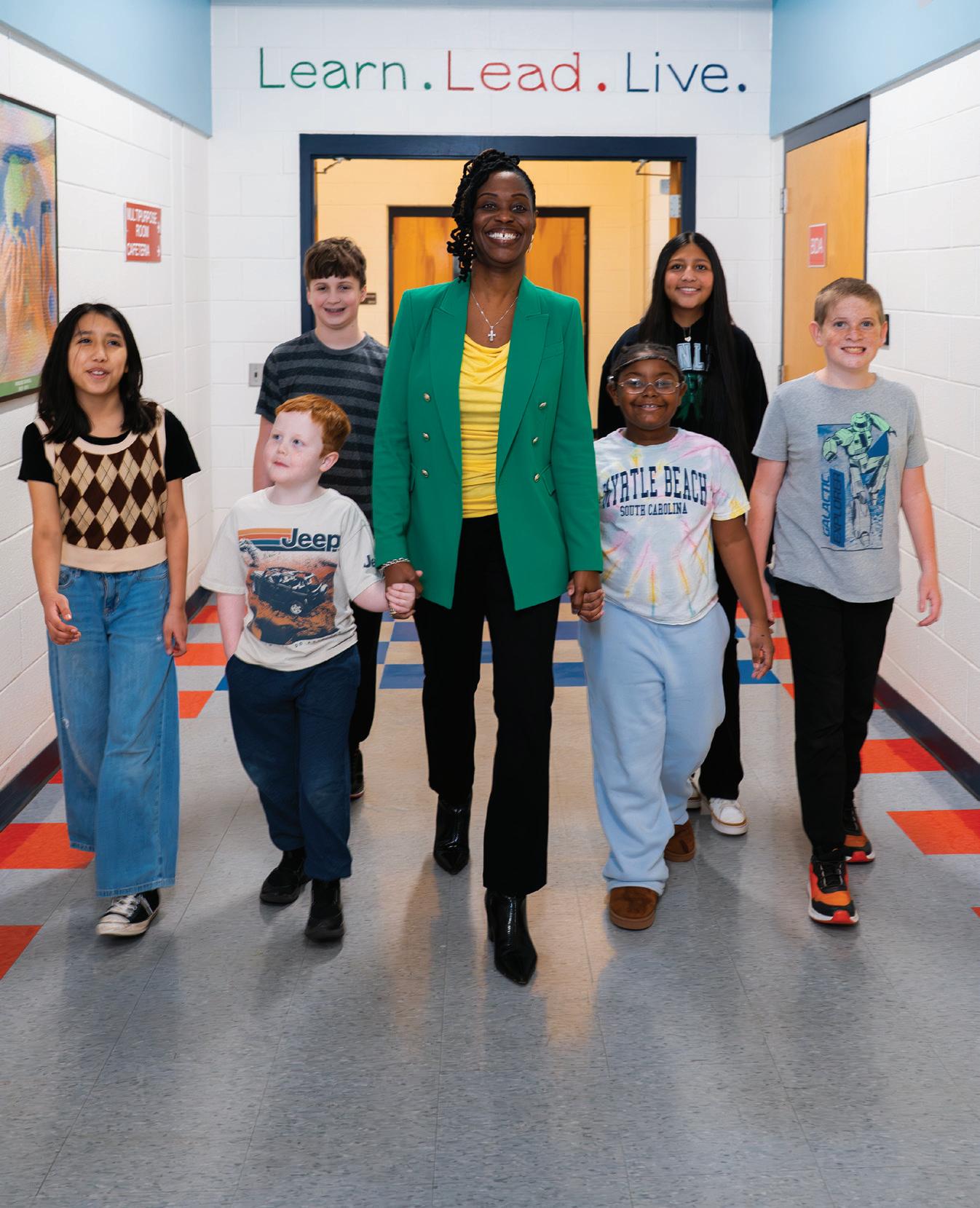
issa Bennett Wells greets every day with intention – and, if you’re one of her students, the words “Great morning!” Colleagues say that small shift in language, from “good” to “great,” succinctly captures her spirit. “Anyone who knows Nissa would say that she radiates joy,” says Nikki Murchison, principal of North Chatham Elementary School. “She is sunshine in human form.”
That energy fuels Nissa’s work as principal of Bonlee School, a K-8 campus serving western Chatham County. After three years as an assistant principal with Chatham County Schools – working at both Bonlee and Bennett School and earning Assistant Principal of the Year honors for 2024-2025 – Nissa stepped into the leadership role with a clear sense of purpose: build strong relationships, champion academic excellence and ensure every child feels seen.
Her path to the principal’s office began decades ago with a simple calling. Growing up, Nissa knew she wanted to work with children and make a lasting difference. She started as a preschool instructional assistant, then taught first grade in Queens, New York. She later served as an instructional coach and assistant principal before becoming principal. With each step over her 20 years in education, her belief has only deepened: strong teaching, meaningful relationships and high expectations can change lives.
Former colleagues quickly noticed that clarity of purpose. Carla Neal, principal of Bennett School, describes Nissa’s impact as transformative. “Working with Nissa was an absolute privilege,” Carla says. “She brought a new perspective to our community and genuinely wanted to get to know our students and their families in order to build a positive relationship as partners in the education of our young learners.”
That partnership remains foundational to Nissa’s leadership style. She believes great schools are grounded in safety, belonging and high-quality instruction. When students, teachers and families feel heard and valued, she says, the conditions for engagement and achievement naturally follow.
“Bonlee, in particular, has a rich tradition that families and staff truly value,” she says. “I’ve come to deeply appreciate the strong sense of community and the shared sense of commitment to students.”
The work is not without its challenges. Meeting ambitious academic expectations while ensuring teachers feel supported requires balance, empathy and flexibility. Supporting everyone’s needs looks different from day to day, but the goal remains constant: helping each child grow academically, socially and personally. “While the work is demanding and ongoing,” Nissa says, “it is deeply meaningful and always worth it when we see students thrive.”
Among her proudest career moments are leading instructional shifts that result in measurable gains. When data reflects progress and students feel more confident as learners, she sees proof that the collective effort is paying off. Reading has been a particular focus this year, with small student groups formed using literacy and dyslexia screening data
“ANYONE
from mCLASS. “We saw measurable reading growth across grade levels, including an increase in the percentage of students meeting benchmarks from beginning of year to middle of year,” Nissa says.
Still, she is quick to note that while data matters, so do the human stories behind it. Watching a struggling reader gain confidence, seeing a student master a challenging math concept or hearing a child proudly declare they love being a Bonlee Dragon – these are the moments that bring her the most joy, because they signal more than school spirit; they signal belonging.
“I’ve [also] been fortunate to learn from exceptional leaders throughout my career,” Nissa says. “District leaders, principals and instructional coaches shaped my understanding of data-informed instruction, equitycentered decision-making and building systems that support students, staff and families.” She points to Chatham County Schools Superintendent Anthony Jackson as a role model. “He demonstrates clarity, courage and an unwavering commitment to student-centered decision-making, even when the choices are complex.”
The best advice she has received echoes that same mindset: keep students at the center, even when the path forward is difficult. “It wasn’t one single person who gave me this advice,” Nissa says, “but rather a consistent message from leaders I deeply respect.” Leadership, she adds, sometimes requires choosing long-term impact over short-term convenience.
“During my transition this year, I have had the opportunity to work closely with Carla Murray, executive director of elementary instruction,” Nissa says. “She continues to emphasize that leadership is about continuous improvement, listening to all stakeholders and making thoughtful decisions for students at Bonlee.”
Outside of school, Nissa draws strength from her family: her husband, Oscar Wells; her mother; and her three adult sons, Lavell, Noah and Zion They ground her and remind her why the work matters. Time spent together, along with community events such as Bonlee’s athletic and arts performances, PTA-sponsored gatherings and church activities, helps her recharge so she can show up fully for her school community.
Ask her where in Chatham County she feels most at home, and her answer comes easily: Bonlee. As a new principal, she says she feels supported by the broader school system and strengthened by collaborative relationships across campuses. But it is Bonlee’s sense of pride and possibility that has captured her heart.
“Our school is more than a building,” Nissa says. “It is a community rooted in tradition, pride and possibility. We are all in this together.”
Her vision is clear: Nissa wants every student to leave Bonlee prepared for whatever future they choose as confident learners and compassionate young people ready for what comes next. And if the tone she sets each morning is any indication, it all begins with a great one. – by Morgan Cartier Weston F
required; see website for details




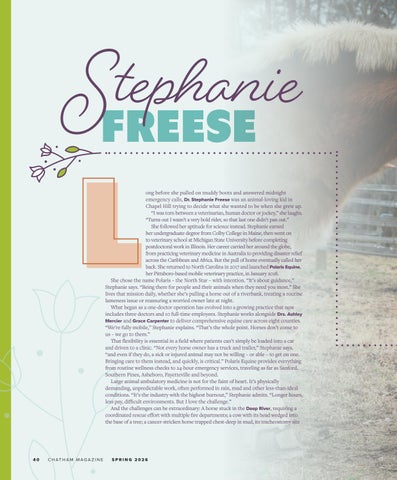
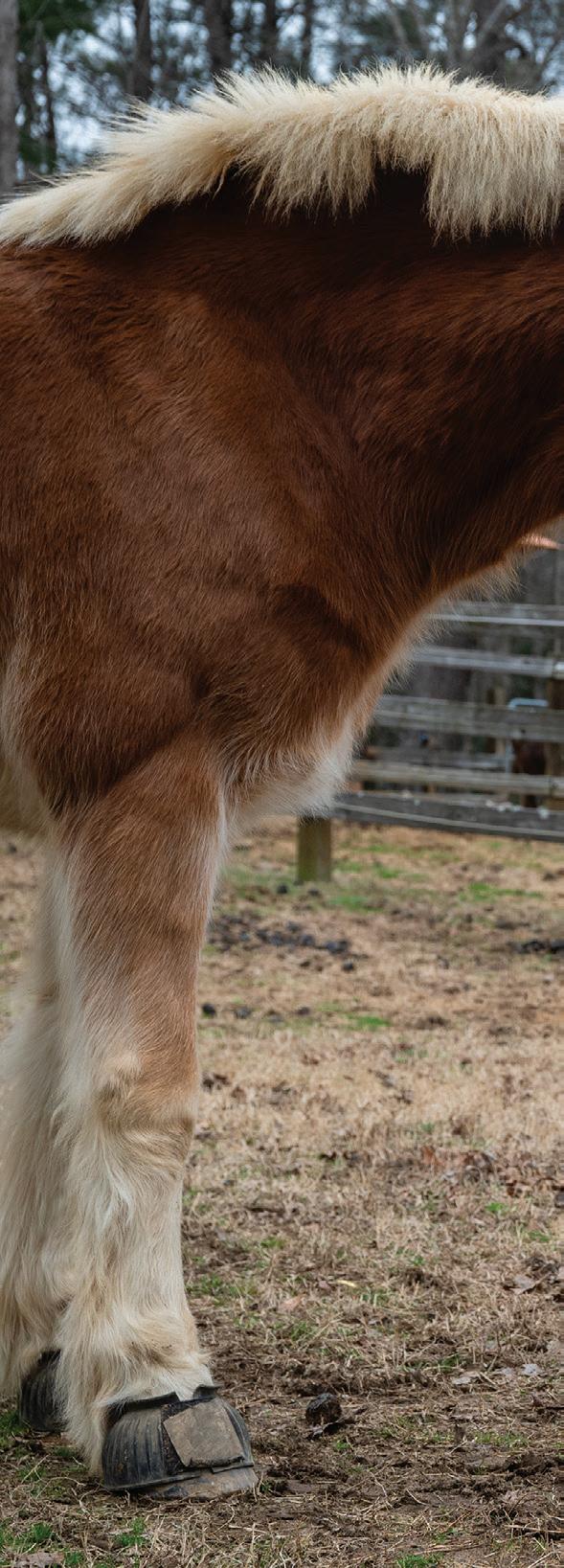
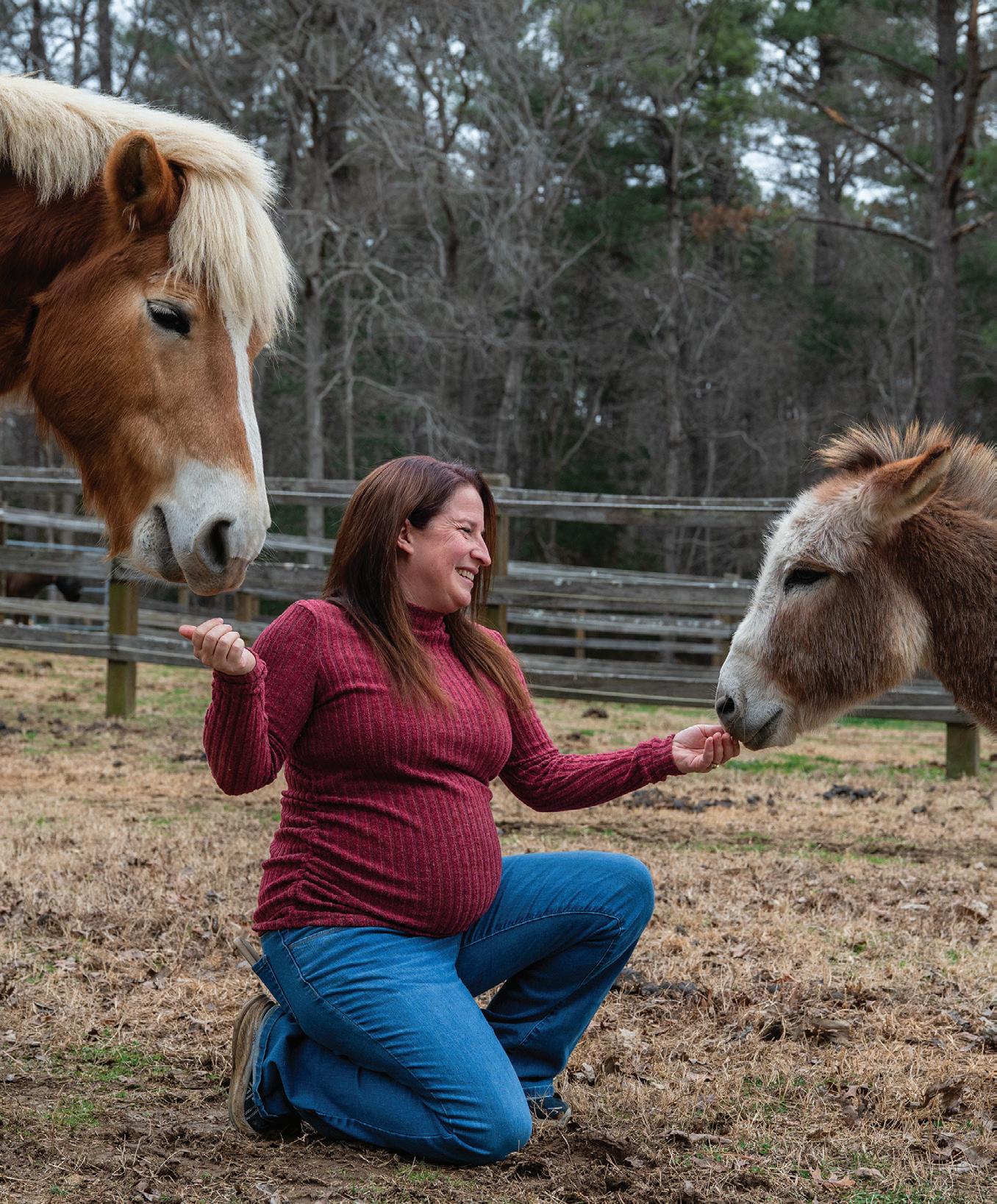
LLong before she pulled on muddy boots and answered midnight emergency calls, Dr. Stephanie Freese was an animal-loving kid in Chapel Hill trying to decide what she wanted to be when she grew up.
“I was torn between a veterinarian, human doctor or jockey,” she laughs. “Turns out I wasn’t a very bold rider, so that last one didn’t pan out.”
She followed her aptitude for science instead. Stephanie earned her undergraduate degree from Colby College in Maine, then went on to veterinary school at Michigan State University before completing postdoctoral work in Illinois. Her career carried her around the globe, from practicing veterinary medicine in Australia to providing disaster relief across the Caribbean and Africa. But the pull of home eventually called her back. She returned to North Carolina in 2017 and launched Polaris Equine, her Pittsboro-based mobile veterinary practice, in January 2018.
She chose the name Polaris – the North Star – with intention. “It’s about guidance,” Stephanie says. “Being there for people and their animals when they need you most.” She lives that mission daily, whether she’s pulling a horse out of a riverbank, treating a routine lameness issue or reassuring a worried owner late at night.
What began as a one-doctor operation has evolved into a growing practice that now includes three doctors and 10 full-time employees. Stephanie works alongside Drs. Ashley Mercier and Grace Carpenter to deliver comprehensive equine care across eight counties. “We’re fully mobile,” Stephanie explains. “That’s the whole point. Horses don’t come to us – we go to them.”
That flexibility is essential in a field where patients can’t simply be loaded into a car and driven to a clinic. “Not every horse owner has a truck and trailer,” Stephanie says, “and even if they do, a sick or injured animal may not be willing – or able – to get on one. Bringing care to them instead, and quickly, is critical.” Polaris Equine provides everything from routine wellness checks to 24-hour emergency services, traveling as far as Sanford, Southern Pines, Asheboro, Fayetteville and beyond.
Large animal ambulatory medicine is not for the faint of heart. It’s physically demanding, unpredictable work, often performed in rain, mud and other less-than-ideal conditions. “It’s the industry with the highest burnout,” Stephanie admits. “Longer hours, less pay, difficult environments. But I love the challenge.”
And the challenges can be extraordinary: A horse stuck in the Deep River, requiring a coordinated rescue effort with multiple fire departments; a cow with its head wedged into the base of a tree; a cancer-stricken horse trapped chest-deep in mud, its tracheostomy site
THE CAREGIVER
dangerously close to water as emergency crews worked to free it. “These are situations you can’t take to a hospital,” she says. “You have to go to the problem and solve it real time.”
Those dramatic cases are part of why Stephanie passionately advocates for the future of mobile equine medicine – especially as the profession faces shortages nationwide.
“More and more vets are choosing to practice on small animals,” she explains. “Primary care ambulatory vets are becoming harder to find. We’re one of the few practices still providing emergency services, even to non-clients.”
That commitment to her community is personal for Stephanie, whose roots in Chatham County run deep. Her parents, Pam Freese and Bob Freese, settled on a farm in Pittsboro after their retirement. Over the years, they became an unofficial support team for Polaris Equine.
“When I first started out and forgot something important on a farm call, I’d sneak around the corner and call my dad for help,” she says.
The practice also benefits from community partnerships with businesses like Pittsboro Feed, where clients can conveniently pick up medication refills if they’d rather stop by the store instead of opting for home delivery. “We’re incredibly lucky to have that kind of [support from] them,” Stephanie says.
When she’s not racing from farm to farm, Stephanie finds adventure elsewhere. An avid runner and endurance athlete, she competes in Spartan trifectas and practices bareback archery on horseback. Yes,

archery. On horseback. “It fits my personality,” she says. “I like things that are a little challenging.”
At home, she shares life with her husband, Tyler Chaney, whom she married in October 2024, and her stepdaughter, Eden Chaney, 14. The family is preparing to welcome a baby girl this spring.
Stephanie also serves as chair of Chatham County’s Board of Health and is a vocal champion for the community. “Chatham has everything,” she says. “You can find culture and restaurants, or escape to Jordan Lake and wide-open country. There are people here who truly care about making this a special place to live.”
Stephanie says she never set out with the intention of owning a business; she simply wanted to be the best doctor she could and practice excellent care. But this experience has taught her that connections matter as much as technical skill. “What makes me a really good doctor isn’t just medicine,” she says. “It’s the relationships. We treat our clients like family.” Polaris Equine hosts an annual client appreciation party to celebrate those bonds – a reflection of the practice’s people-first philosophy.
She offers simple advice to young women considering a career in veterinary medicine or entrepreneurship: Don’t be afraid to try. “I’ve made plenty of mistakes along the way,” she says. “But if something doesn’t go the way you planned, keep going. There’s always an opening on the other side.”
And as long as horses across Chatham County and beyond are in need, Dr. Stephanie and the Polaris Equine team will be on the road and ready to help. – by Morgan Cartier Weston F


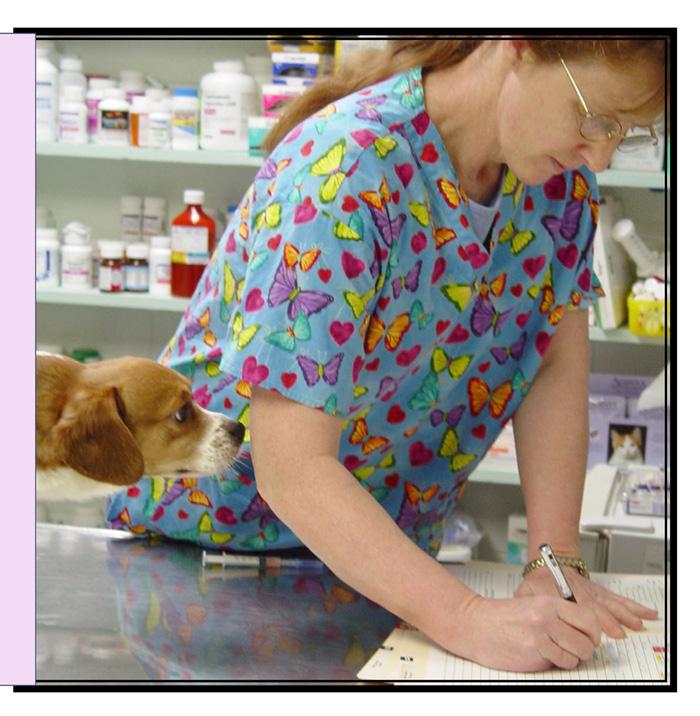
r. Tysor has long been passionate about animal care, first as a veterinary technician and later as a graduate of the NC State University Veterinary Program in 1991. She achieved her lifelong goal of owning and operating her own practice when she opened Tysor Veterinary Clinic in 2005. In 2013, the business expanded to include a retail store with boarding and grooming services.
Dr. Tysor is deeply committed to veterinary medicine, with a goal of providing every animal who comes to her practice with the best care possible. Many pets at Tysor Veterinary Clinic have been lifelong patients, from their first vaccinations to their final days. Over the years, Dr. Tysor and her staff have formed special relationships with these pets and their owners. We look forward to forming a lifelong relationship with your furry family member.
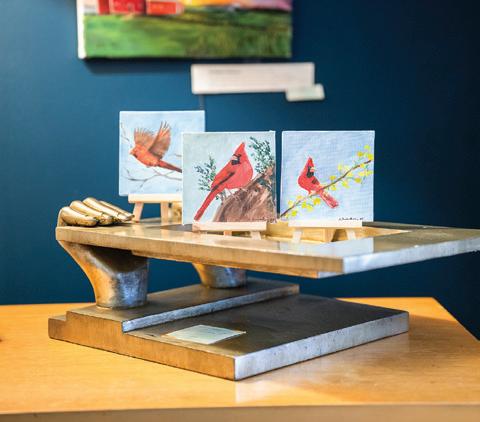
AAbundle of red poppies begins to glow under the first rays of early morning sunlight.
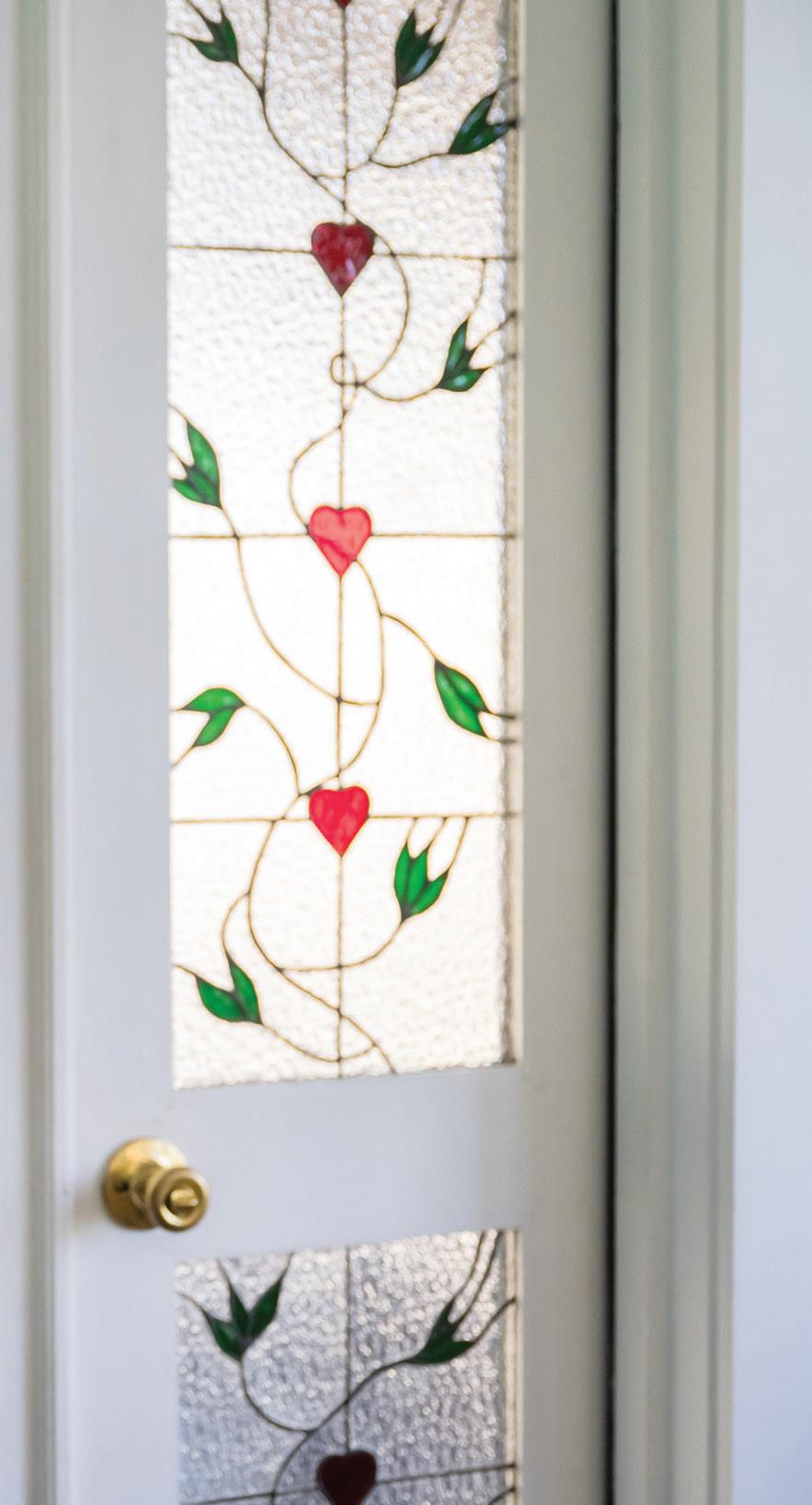
Nearby, a proud rooster with a plume of incandescent tail feathers greets the day and cheerful yellow daisies reach toward the sky. These scenes, rendered in fragments of vibrant stained glass, decorate every corner of Karen Dalton’s farmhouse near Bynum.
She’s been exploring the medium for the better part of 50 years, having picked up the methods and techniques used to make lost-wax cast jewelry and stained glass through hands-on experimentation in the early ’70s alongside two artist cousins. “We learned from the bottom up,” Karen says. “We taught each other. We just learned it by doing.”
Nature is the predominant influence in her glass designs, and she draws ideas and inspiration from the nearby woods and the Haw River. The peaceful pace of life and rural setting drew the New Jersey native to Pittsboro in 1980.
In the years since, she’s crafted many custom windows, door frame inserts, transoms and lamps through her business, Dalton Glass Design. She’s even created stained glass guitars, two of which are displayed at The City Tap
“If I don’t have a commission, I’m free to make whatever I want, which is typically a lampshade,” Karen says. She works out of her backyard studio, which she and her husband, Rufus Dalton, converted from an old canning shed more than two decades ago.
When the pandemic disrupted daily life, Karen was moved to spread a little bit of light with others. She created hundreds of stained glass night-lights in the shape of a heart encircling a peace symbol, then mailed or handed them out – to old pals she hadn’t seen in years, neighbors and even grocery store workers – in a gesture of solidarity and compassion.
“I felt the need to connect with people since we were separated,” Karen says. “I haven’t sold a single one. I’ve only given them away, and I’m still doing that.”
Karen’s also a serial entrepreneur who has spent decades offering fitness instruction. In 1984, the year she and Rufus tied the knot, she founded Body Basics, which offered step and aerobics classes at the historic Pittsboro Community House for 16 years.
A friend later introduced Karen to Pilates, and it quickly became an obsession. “I kept coming back to Pilates because I found it to be very difficult,” she says. “Pilates is a focus on the
center of the body. It’s a strengthening thing – unlike yoga, which is meditative – and I liked that. I just stuck with it.”
Karen eventually earned teaching certifications through NC Pilates in Durham and the PhysicalMind Institute in New York City. For about 15 years, she taught a variety of fitness classes at more than a dozen spaces throughout Chatham and Orange counties, including Yoga Garden, Chatham Park YMCA and Duke Center for Living
She also spent 18 years managing the storefront and operations of The Bread Shop, a bakery in Pittsboro, and taught courses on stained glass at Central Carolina Community College
Karen currently offers private Pilates sessions at Circle City Pilates in a second-floor space of The Blair Building overlooking the Pittsboro traffic circle and historic Chatham County Courthouse.
“I call it the bird’s nest,” Karen says. “What you see from up there is unbelievable – it’s a great little spot.” One room is devoted to mat Pilates (and showcases a few of her glass creations) while the other houses a reformer.
People from all walks of life have climbed the stairs to the “bird’s nest” to practice Pilates with Karen over the past decade, and working with so many different folks is one of her favorite parts of operating the studio. “I see young people, middle-aged people, old people,” Karen says. “I see people who’ve had injuries and want to get back
into running or whatever they did before they were hurt. … [Even] people who are grieving and going through something in their life. They’re [all] looking to feel better.”
Karen finds joy in supporting her clients as they recover from setbacks and regain their flexibility and strength, even if it means they only visit her for a few sessions to address specific ailments before returning to their exercise routines. “I like to see them move on to something they love,” she says.
Her lifelong dedication to her seemingly disparate passions has revealed a through line that characterizes her work in both fields. “I think Pilates and glass are quite similar, because [both are] very fussy,” Karen says. “Little tiny movements with your body, little tiny pieces of glass.” Both arts require meticulous attention to the smallest detail to achieve success.
When each day draws to a close, the colorful panes of Karen’s lampshades are illuminated from within, and she curls up with rescue pup Remo to enjoy their warm glow.
“At night, I light up all of them [inside] my house, and it’s just beautiful,” she says. “It calms me down.” At the same time, the nightlights she shaped might brighten dozens of her neighbors’ homes throughout Chatham – subtle reminders of the peace, connection and love shared by our community. – by Renee Ambroso F

“My friends keep asking me what I’ve gotten into. I feel amazing!”
R E F U S E T O A G E P A S S I V E L Y







Carolina Longevity is a physician-led performance wellness center designed to help you live the life you want Enjoy advanced iDXA, VO2 Max testing, Hormone Optimization, Body Recomposition, Custom IV Therapy, Red Light and PEMF, Precision Personal Training, and High-Performance Refreshments and Organic Coffee in our Wellness Cafe. Everything you need in one state-of-the-art space. Membership spots are limited. Book your consultation today at our NEW Chapel Hill clinic.
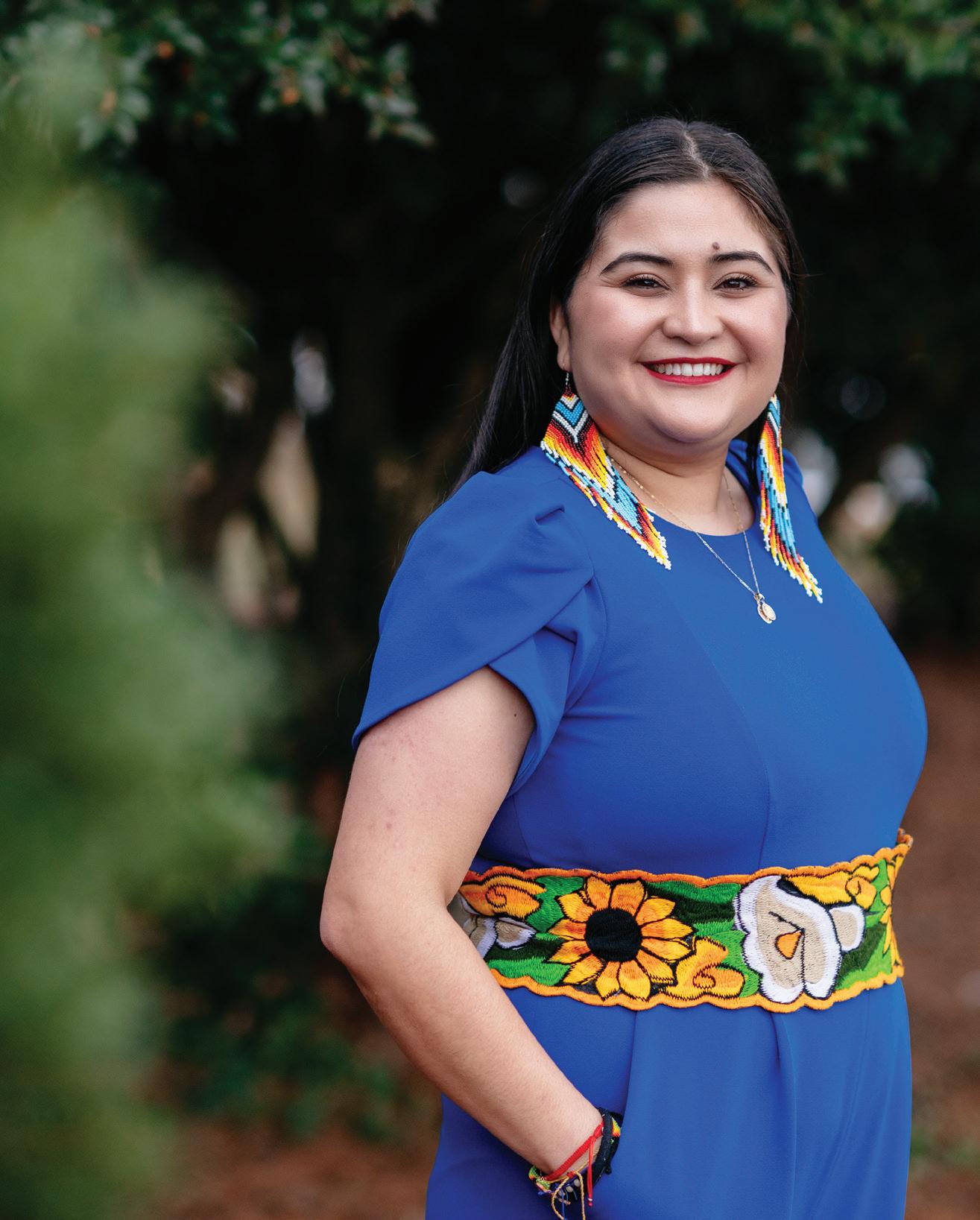

ome of Selina Lopez’s earliest memories are not anchored to dates or milestones, but to feelings. She remembers warmth; the steady presence of her grandmother, the closeness of neighbors and the comfort of being known in her birthplace of Xaltianguis, Guerrero, in southwestern Mexico. “I remember the energy – the love, the sense of community and a feeling of connectedness – even to the land as well,” she says.
Selina moved to the United States at age 5 with her mother, Tomasa. The sense of belonging she once felt was replaced by confusion in a world she didn’t yet understand. The family settled in Vaughan, North Carolina, a rural community in Warren County, where she entered school without knowing English and with few peers who shared her background. There was no ESL program available to her at first. “I was at a complete loss,” she says. For years, she navigated classrooms and expectations through guesswork, persistence and asking questions.
By elementary school, Selina had started to take on more responsibility, too. “As soon as I could read and write in English, I became the interpreter for my family,” she says. “I remember learning how to make money orders when I was still in fourth or fifth grade. … It was definitely a lot.”
The weight of that early accountability shaped both her confidence and self-doubt. “For a long time, I was a very angry kid,” she says. “I struggled so much with my identity growing up.” In a place where difference was often noticeable but rarely discussed, Selina experienced discrimination. Taking pride in who she was felt complicated, but she kept trying.
A neighbor told her about the North Carolina School of Science and Mathematics in Durham, where she applied in
10th grade. “I’m so grateful to her because I would not have gotten the chance to see what I could be, or how big the world and its opportunities really were,” she says. “It was the universe’s beautiful timing because that was the year I got my residency and was eligible to apply.”
Her family experienced another big adjustment once she was accepted. “It was a hard decision for my parents to make,” Selina explains. Her dad, Agustin, was worried about her living away from home on the NCSSM campus, but Selina enrolled – and thrived. She continued her education at UNC, where she graduated in 2017 with dual degrees in psychology and Hispanic literature and cultures, becoming the first in her family to earn a bachelor’s degree.
While in college, Selina became deeply involved in advocacy and mentorship work that reflected her own experiences. Through the NC Scholars Latino Initiative, she taught classes in Spanish for parents, educating them about the college enrollment and financial aid process. The program created space for families to ask questions and navigate higher education without relying solely on their children as translators.
She also served as co-director for SOAR (STEAM, Outreach, Achievement, Recreation) while at Carolina, working with Latinx middle school girls at Carrboro’s McDougle Middle School. There, she focused on identity, leadership and confidence-building. “I wish I had a mentor growing up,” she says. “Being able to provide that for other students meant a lot to me.”
Selina remained motivated by her parents’ sacrifices throughout her education. She watched them work long hours, navigate legal uncertainty and shield her from worries she would not understand until years later. “I wanted to repay that,” she says. She became a U.S. citizen in 2016 after a process that took more than a decade, recognizing the moment as both hard-earned and rare.
Selina’s experience at UNC laid the foundation for her professional path. She joined El Vínculo Hispano – aka
The Hispanic Liaison – in Siler City soon after graduating as a youth program manager. Nearly nine years later, she serves as youth program director, leading Orgullo Latinx Pride, a free year-round program serving Latinx students at Jordan-Matthews High School and Seaforth High School
OLP’s approach is intentionally holistic, including pillars for academic and mental health support, cultural identity education, leadership development and community service. Students have conversations about what it means to be Latine, volunteer locally, tour college campuses and museums, meet elected officials, go canvassing and receive help completing college and scholarship applications. Youth leaders also play a central role in shaping programming, giving students practice in making decisions and trusting their own voices.
On any given week, Selina moves between classrooms and afterschool meetings, field trips and one-on-one check-ins. She helps students organize homework, prepare financial aid forms and practice public speaking. She supports parents with monitoring coursework and grades, coordinates leadership teams and civic engagement projects and, perhaps most importantly, she listens.
The work couldn’t be more personal for Selina – she remembers how it felt to navigate school and identity largely on her own. “I know how hard it can be,” she says. “I know how lonely it can be. It’s important for our youth to know they’re not alone – that they have trusted adults and real support so they can accomplish their goals and dreams.”
Many students arrive at their first program meetings shy and unsure. Selina recognizes their cautious posture immediately – she once wore it herself. Over time, she watches them grow more confident, imagining themselves in spaces that once felt unreachable.
In everything, Selina centers pride. “Be proud of who you are,” she tells students. “If you don’t define yourself, people won’t hesitate to tell you who they think you are.”
Selina is currently pursuing a master’s degree in social work at UNC, motivated by a desire to deepen her understanding of policy, community systems and advocacy. For years, she learned through experience. Now, she says, she is pairing that knowledge with theory and research – not to leave her work behind, but to strengthen it. “I’ve been doing social work,” she says, “so why not get the letters behind my name?”
Looking ahead, Selina hopes to expand OLP’s reach and continue advocating for education justice and youth community organizing. She and her team rarely get a moment to reflect on what they have built, but the impact is visible on the faces of families The Hispanic Liaison’s work continues to shape.
Her goals remain rooted in the same quiet moments that first shaped her path: a student finding their voice; a family feeling seen; a young person realizing they belong. And, she knows how much that realization matters. “I really do believe us as individuals hold so much power,” she says. “When someone feels supported and confident, it changes everything.” – By Sharon Kinsella F

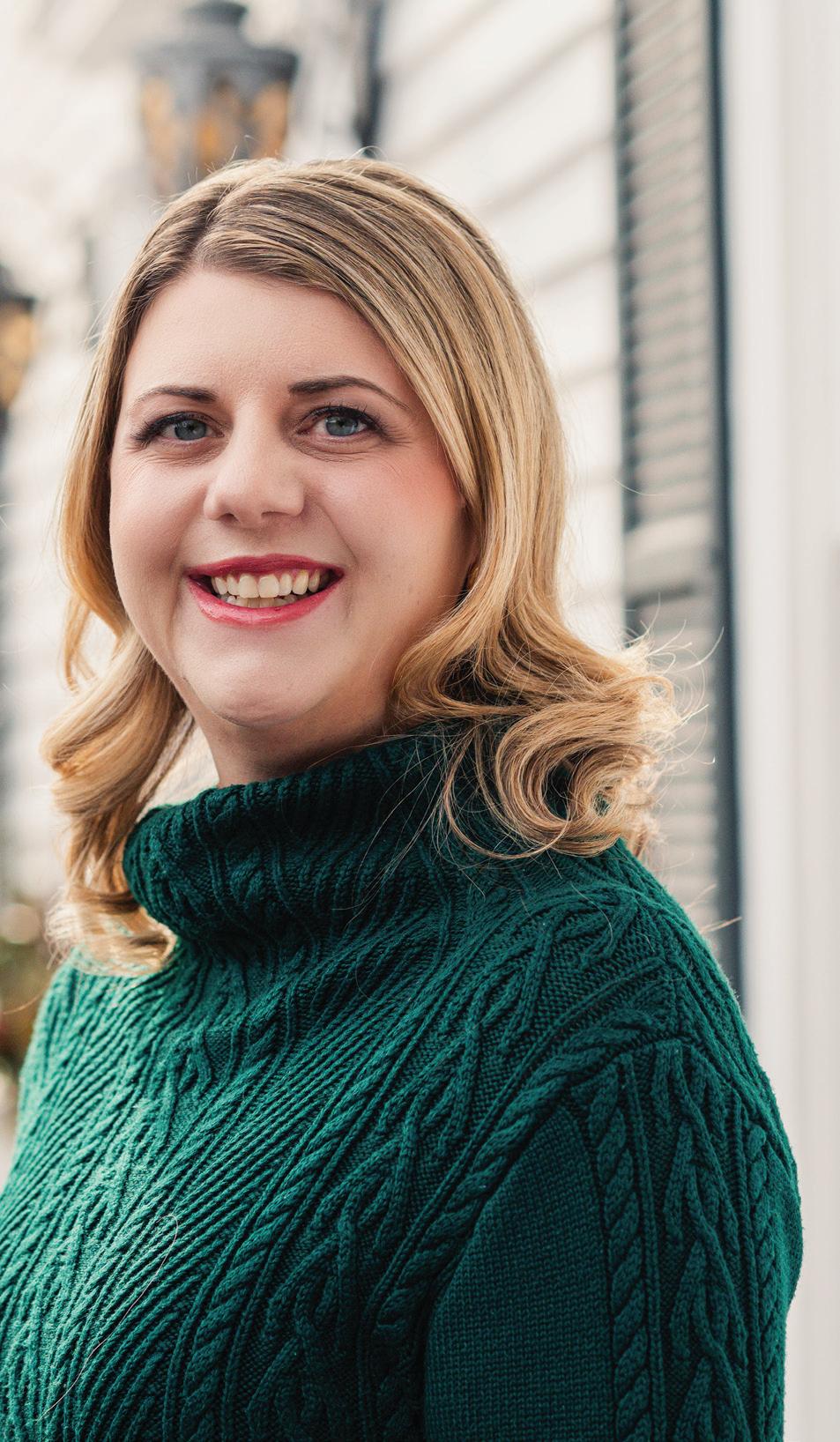
life spent moving across borders shaped the way Sophia Munson sees people, systems and accountability to one’s neighbors. As the managing partner of Munson Law Firm, she brings that perspective to families, guiding them through complex legal decisions with clarity and care.
Sophia lived in London and Brussels as a child during her father’s career in the Foreign Service, and later returned to Fairfax, Virginia, a place she’d always thought of as home. She attended the University of Virginia as a prestigious Echols scholar – one of the university’s most selective programs – before moving to New York City and securing a job as a paralegal.
Sophia eventually returned to Virginia to attend law school in Williamsburg, where she met her husband, Michael Munson. She says her experience at William & Mary Law School inspired her to become a citizen lawyer – someone who views their legal practice as not only a career, but a unique opportunity to make the world a better place.
“When I think about having the responsibility of caring for families, it’s being a citizen lawyer,” Sophia says. “How do I help not just my clients, but my community as a whole? When help is needed, we look for the helpers, and we can be the helpers. I love that.”

THE ADVISOR
The law has never just been about documents or deadlines for Sophia; it’s about people, families, their stories and the moments when someone needs a steady voice.
“One of the responsibilities of attorneys is to be one of the people speaking for those who maybe can’t, who are afraid to,”
Sophia says. “People who can’t necessarily speak up for themselves or their families.”
Sophia first considered studying law while in high school, jokingly creating potential firm names with her friend in their Advanced Placement U.S. History class.
High school is also where she began to hone her talents in history and writing.
Coupled with her passion for educating and important conversations, Sophia found the ideal career.
She and Michael spent two years in Washington, D.C. after law school, then relocated to Chapel Hill, where Michael launched Munson Law Firm in 2020. Sophia
joined him at the firm at the end of 2022, and the couple is raising their two children, Juliette Munson, 7, and Chase Munson, 9, in Briar Chapel
Sophia works closely with multigenerational families, siblings and even business partners. She finds the most affirming moments in her career are when clients return, even years later, and helping people cross tasks off their “adulting to-do list.”
She also appreciates developing stronger connections with them over time. “What an honor it is when we turn [our work] from a transaction into a relationship,” she says.
This selfless, community-oriented mindset extends to her role corunning Chapel Hill-Carrboro Women CONNECT, an informal group of women that is focused on genuine connection rather than networking.
“It’s important to me because when I first joined [the group] coming out of COVID-19, I had been very much isolated,” Sophia says. “It’s great to be part of something where every month, we don’t care if you come in your pajamas, or you work at home, or you’re never going to be a work connection. It builds the community.”
Sophia also serves on the board of Professional Women of Chatham and Orange Counties, supporting scholarships and providing pro bono nonprofit work. And, she has a deep love for animals – she and her family
have fostered 17 dogs so far, and own two: Lucy and Rosie, the latter a foster “fail” they adopted because she was an undeniable fit for the Munson family.
Sophia is currently working on two personal projects: the first is to transform the firm’s back area into a tech-free space for children. Her vision includes a maker space, blooming garden beds and Friday night gatherings with food trucks and live music.
The second project is a proactive aging initiative to support older adults without children or family in making big decisions in their finances and healthcare. Sophia hopes to launch this in the spring to help Chatham’s aging population navigate their legal needs.
When she’s not building relationships or ideas, you can find Sophia curled up with a romance novel or sharing a glass of red wine with Michael to catch up after a long day. She says her family and friends provide endless support and she feels lucky to have them.
“We can’t do this on our own, and I’m most grateful that I have built a personal community here that allows me to try and make a difference,” Sophia says. “If I didn’t have them, I wouldn’t be able to do any of the things that I do.” – by Cameron Rhinehardt F
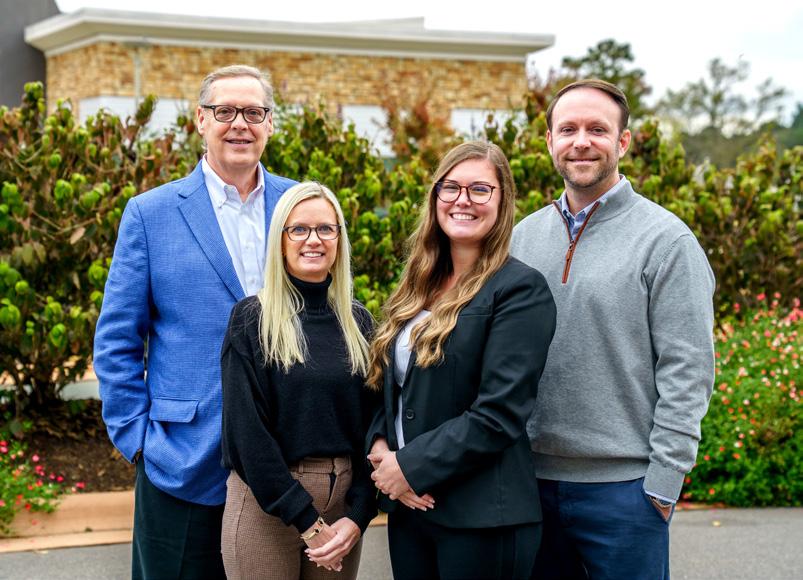

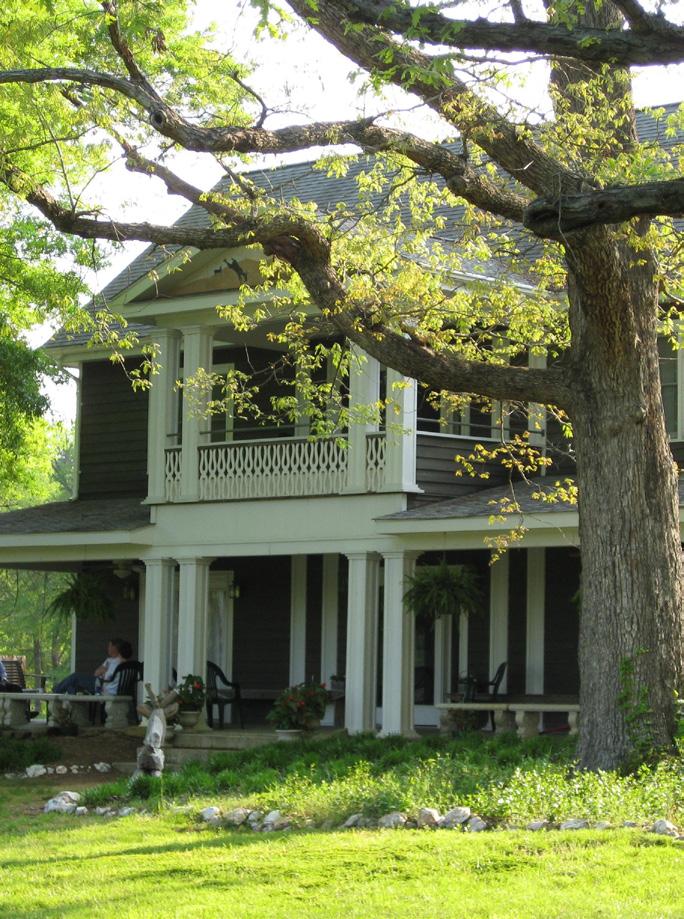

For over 30 years, The Inn at Celebrity Dairy has been a one-of-a-kind destination that offers a unique blend of hospitality, education, and countryside charm.
Owners Brit and Fleming Pfann are retiring and looking for the right person to take over and continue their legacy of the inn and the dairy.
Interested in owning this?
Please contact us for more information!
The Inn at Celebrity Dairy welcomes guests year-round in a peaceful, historic setting that includes a Greek Revival farmhouse, an 1800s log cabin, and wide porches under old oak trees. Overnight guests can enjoy comfortable rooms, farm-fresh breakfasts, and opportunities to interact with the animals, making it a unique agritourism experience combining hospitality with hands-on farm life. Recently, the inn got new renovations, and the dairy is now fully automated.
• A wonderful way to experience home-made pleasures and the beauty of Chatham
• Our historical Inn offers seven charming guest room accommodations
• Casual, relaxing and quiet country setting located on a 300-acre Dairy Farm
• Enjoy Trails and a 17-acre Pond
• The perfect spot for meetings, retreats and family celebrations, too
Skin and hair changes during menopause are common, biologically driven, and often misunderstood.
Menopause is a normal biological transition, but the changes it brings to skin and hair are often unexpected. Thinning hair, increased dryness, and a drop in skin vibrancy are common and can be frustrating. These shifts are driven by hormonal changes that affect skin structure, barrier function, and hair growth cycles. At Aesthetic Solutions, three board-certified dermatologists help patients minimize these changes and support skin and hair health throughout menopause.
Common Changes During Menopause:
ꞏ Hair thinning or increased shedding
ꞏ Skin dryness and skin sensitivity
ꞏ Loss of firmness and elasticity
ꞏ Skin thinning, skin texture & crepey skin

As the body transitions through menopause and settles into a new hormonal baseline, skin and hair often continue to evolve. At Aesthetic Solutions, the goal is to help patients navigate these changes thoughtfully, with care that adapts as their body finds its new normal. Rather than fighting every shift, the approach is to support skin and hair health through this stage with options that are responsive, evidence-based, and individualized.
Depending on individual needs, this approach may include:
ꞏ Platelet-rich plasma, prescriptionbased therapies or lasers to support hair growth and reduce shedding
ꞏ Energy-based devices and lasers designed to stimulate collagen and improve skin quality
ꞏ Radiofrequency, ultrasound, and other modalities that help lift and tighten skin as estrogen-related collagen loss accelerates
ꞏ Targeted skincare regimens that strengthen the skin barrier and calm dry or sensitive skin
ꞏ Longevity-focused products that help boost and revive cellular function
of skin collagen within the first five years after menopause



By ALISON GRAU
Photography by JOHN MICHAEL SIMPSON
chatham County is brimming with ways to make family memories all year long, from bottle-feeding goats to bouncing off rainy-day energy. Whether your crew prefers wide-open pastures, splash-pad afternoons or cozy story times at the library, there’s no shortage of adventures designed to delight toddlers, teens and grown-ups alike. Consider this your go-to guide for getting out of the house and into the fun, right in your backyard – no long road trips required.
A visit to Carolina Tiger Rescue is a rite of passage for any Chathamite and supports the organization’s mission of saving and protecting wild cats, both in captivity and in the wild. Choose from a variety of offerings, including public tours of the sanctuary or educational summer day camps, or sign up for a Tiger Tales tour, an engaging program for children including story time, an animal-themed take-home craft and an opportunity to see some of the most iconic resident animals up close.
Prefer a more immersive animal experience? Head to Old Mill Farm, an event venue, beer garden and agritourism farm, and the adjacent My Little Farmer, which focuses on early childhood farm education. This spring, My Little Farmer invites families to experience the magic of farm life through thoughtfully curated, hands-on programming designed with young children and their grownups in mind. Its signature

drop-in farm classes, offered regularly for ages 1-4, encourage curiosity, connection and a love of animals through play-based learning.
Seasonal offerings at Old Mill Farm will expand with Easter programming, featuring bunny snuggles, Easter farm visits and exclusive collaborations with select studio photographers, creating one-of-a-kind spring portraits in a farm setting. In addition, Mini Rider Academy will be in full swing this spring, offering horseback riding lessons for ages 3 and up, enchanting “unicorn” encounters and a variety of pony ride experiences designed to introduce young riders to horses in a joyful, confidence-building environment.
Escape to the simple and peaceful country setting of Celebrity Dairy, a 300-acre working dairy farm with goats, chickens and the occasional peacock or barn cat.
Break up your routine with a midweek farm-to-table lunch that includes a tour of the dairy and inn, and the chance to meet llamas and Alpine goats.
Enjoy a tranquil day at Fearrington Village with the family. Fuel up at The Belted Goat Cafe with fresh breakfast sandwiches, pop into Johanna Banana’s weekly story time at McIntyre’s Books, indulge in Prince & Princess Afternoon Tea at The Fearrington House Restaurant and don’t forget to stop by the Belted Barnyard to say hello to the adorable Belted Galloway cows.
Run, skip and play at the Knight Farm Community Park, featuring a playground, grill, pavilion and picnic tables that make for the perfect family outing. And when the weather heats up, cool down with a hop through the splash pad!
Whether you’re enjoying views of the wetlands from the trails, hiking alongside the lake or enjoying a peaceful afternoon of picnicking and bird-watching, Jordan Lake State Park is a local gem for


•
•
• Offering Farm-to-Table Seasonal Produce
•
• Catering to Special Orders Tailoring Your Meat Selections to Perfection for Any Special Occasion. Plan Ahead!
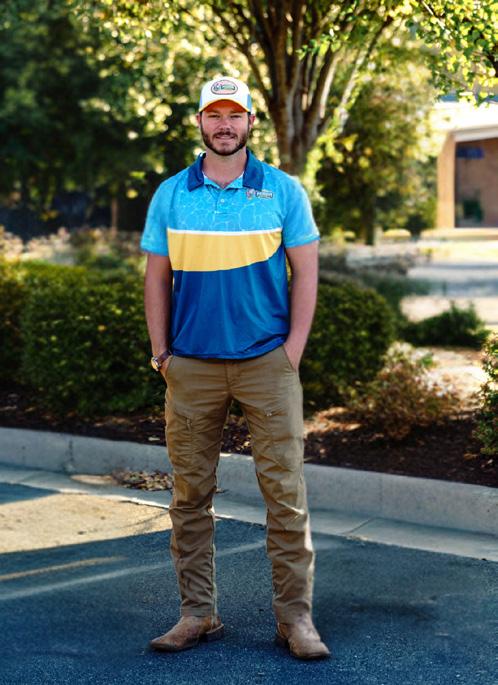






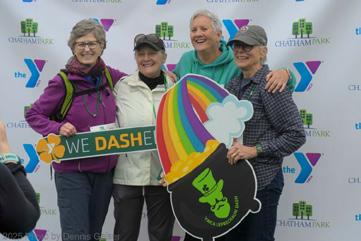
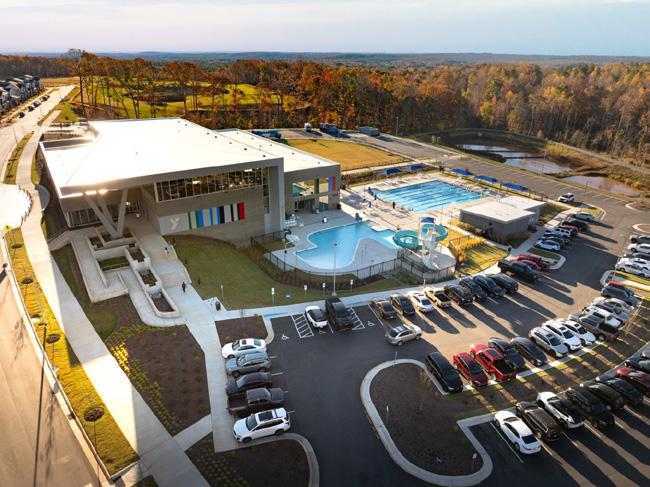

The
outdoor enthusiasts. The park houses seven access areas that provide boating, kayaking, paddle boarding and swimming opportunities as well. Make a night of it and choose from the Jordan Lake's more than 1,000 campsites to sleep under the stars and connect with nature in a whole new way!

Flip, bounce and soar at Unify Athletics in classes designed for families of all ages. From toddlers finding their balance to teens chasing their dreams and adults building strength in yoga and fitness classes, there’s something for everyone. Coaches are prepared to accommodate a wide range of




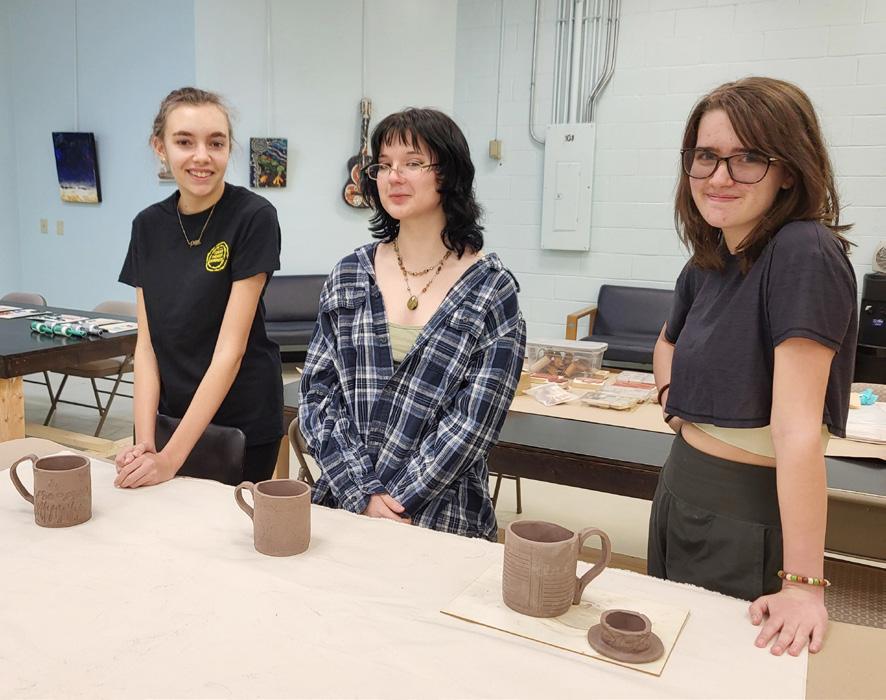











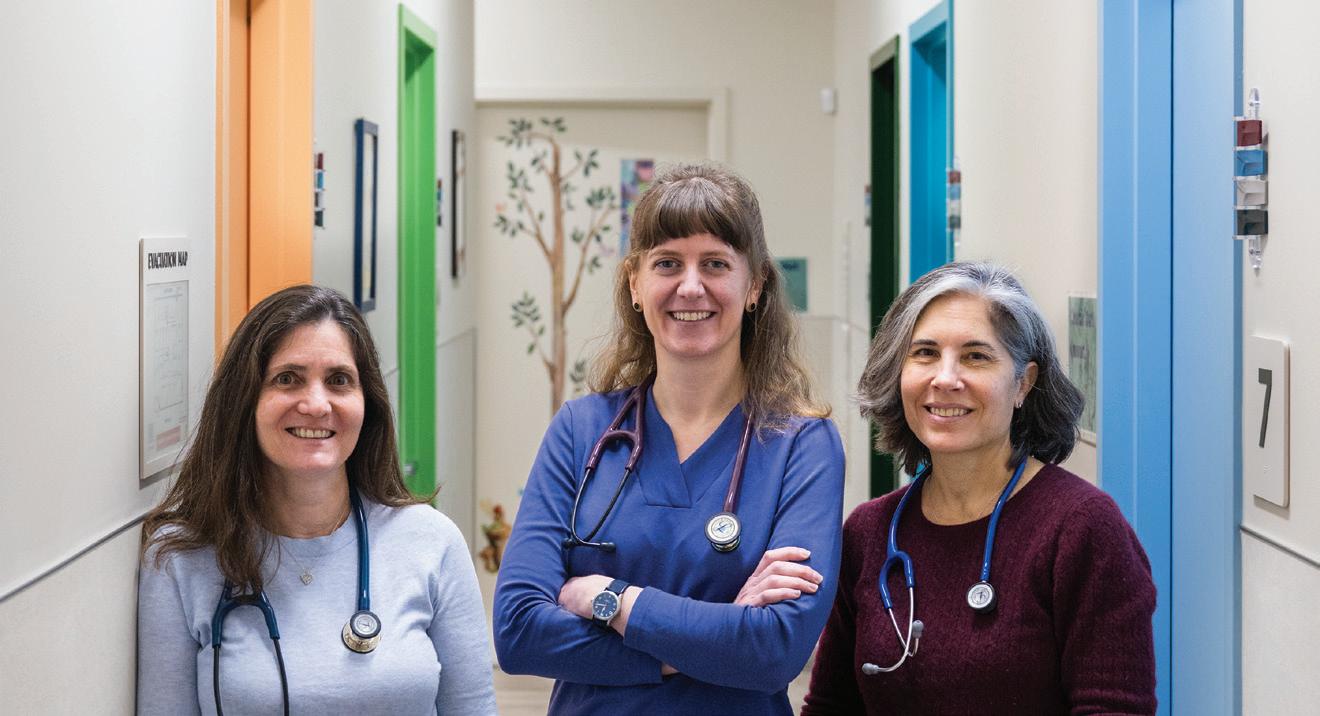
• Comprehensive primary care
• Well child care
• Now offering IBCLC lactation consultations
• Care for chronic conditions (like asthma and ADHD)
• Care management for patients with complex medical needs
• Welcoming new patients
• Dedicated to bilingual care in both English and Spanish
• Accepting all major insurance plans, including NC Medicaid
• Same day appointments available Monday through Saturday
Chatham Pediatrics is an independent practice committed to providing the highest quality care for patients from birth to young adulthood.

choose from short workshops or extended six-week class sessions. This season, keep your eyes peeled for special spring art experiences designed for children and teens.
Relax with reading time, check out seeds and materials to start a home garden or join in for special programs at Chatham County Public Libraries. The three branches include Chatham Community Library
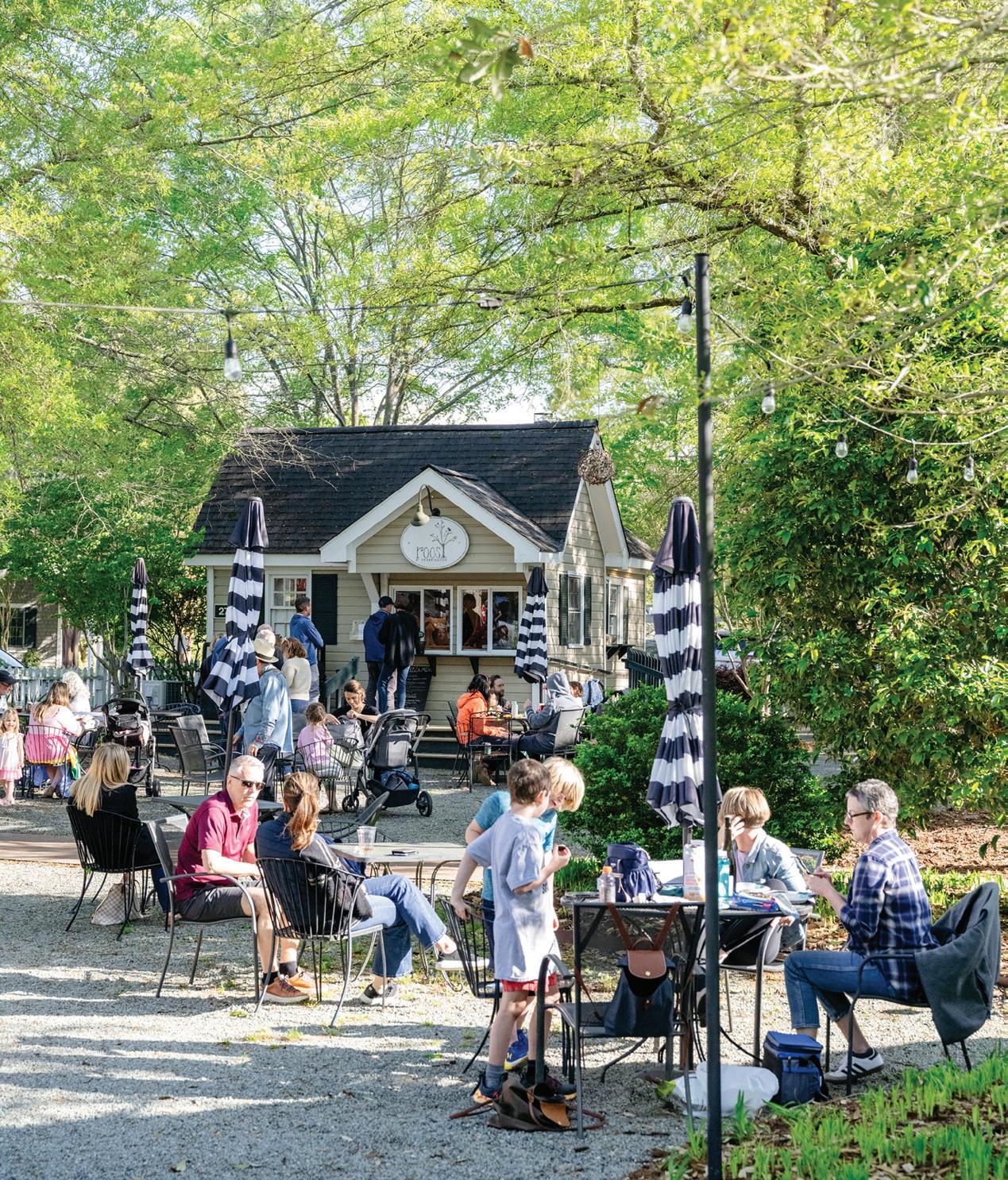
in Pittsboro, Goldston Public Library in Goldston and Wren Memorial Library in Siler City. The libraries offer weekly meetings such as Lego Club, Family Story Time and Kaleidoscope, a playgroup designed for parents and caregivers with children up to five years old who do not attend preschool. The group provides a space for caregivers to connect with one another and build community. F
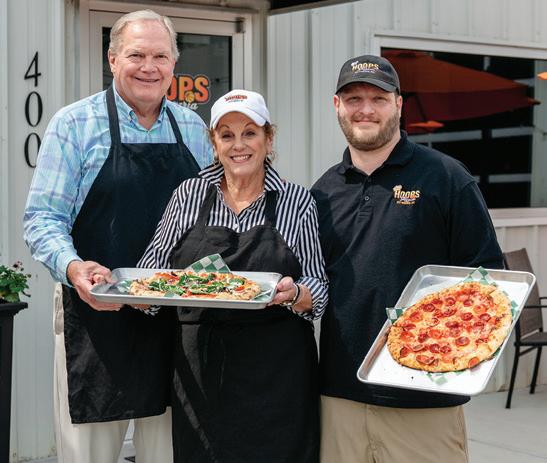

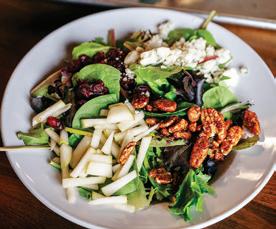

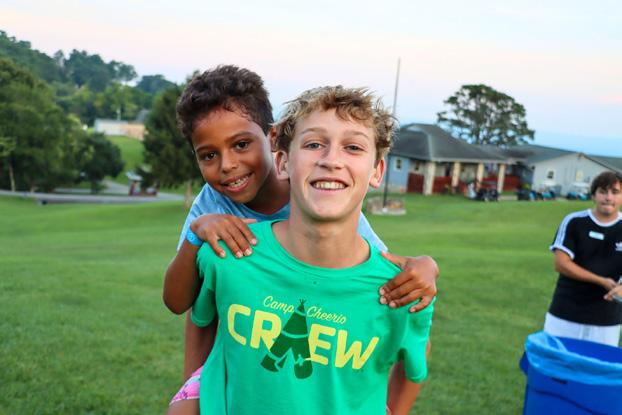





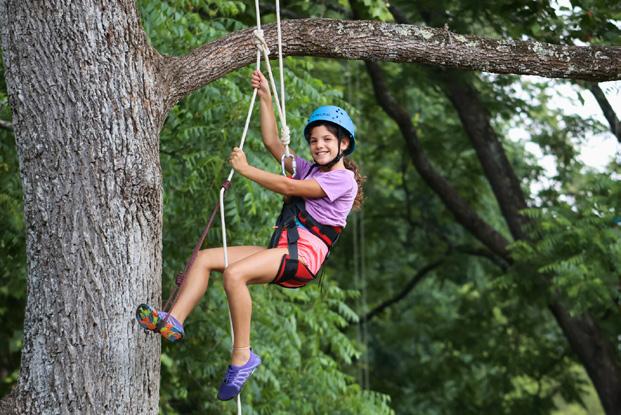


Cool off with a
Skip the hassle of cooking and cleaning and take the family out for a kid-friendly meal that will leave you feeling full and fulfilled. Fearrington’s Roost Beer Garden is a relaxing way to spend an evening in the warmer months. The outdoor venue often features live music, setting the perfect soundtrack for dance, play and making new friends.
Grab a stacked cup of layered Italian ice and soft serve at Jeremiah’s Italian Ice at Northwood Landing, then go for


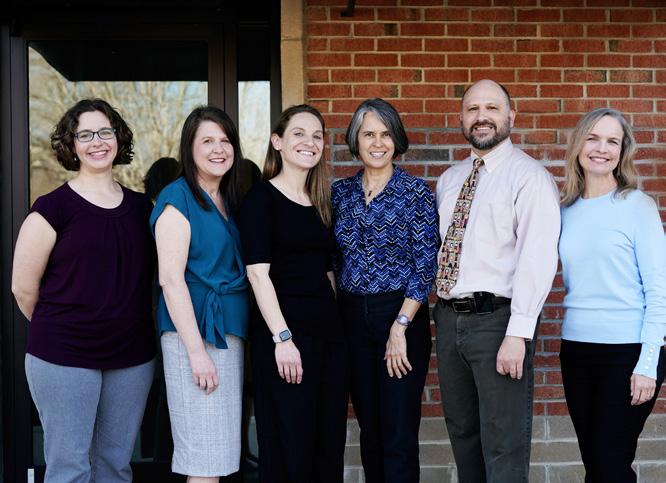

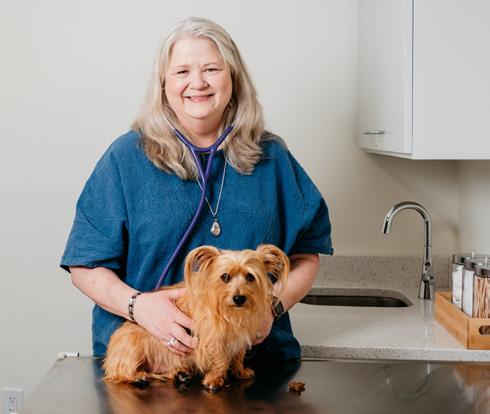
“ YOU ARE ABSOLUTELY THE MOST PROFESSIONAL AND COMPASSIONATE GROUP I HAVE EVER BEEN ASSOCIATED WITH.” - CONNIE S.
“ YOU ALWAYS HIT IT OUT OF THE PARK! SO PROFESSIONAL AND EXACTING BUT SO CARING AND SO FRIENDLY. WE FEEL LIKE YOU ARE FAMILY AS WELL. THANK YOU SO VERY MUCH.” - DAVID D.
“THANK YOU FOR TAKING TIME TO LISTEN TO CONCERNS AND EXPLAIN INFORMATION AND FOR BEING SO KIND AND PATIENT WITH MY BABY!” - ASHLEY A.
“ALWAYS AN EXTRAORDINARY EXPERIENCE. I AM SO GRATEFUL THAT YOU WORK TIRELESSLY TO MAKE SURE MY PUP GETS THE RIGHT CARE FOR THEIR NEEDS. SPECIAL NEEDS DOGS ARE HARD, AND YOU ALWAYS FIND A PATH.” - AMY P.

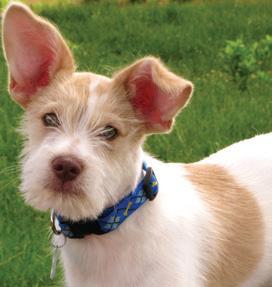

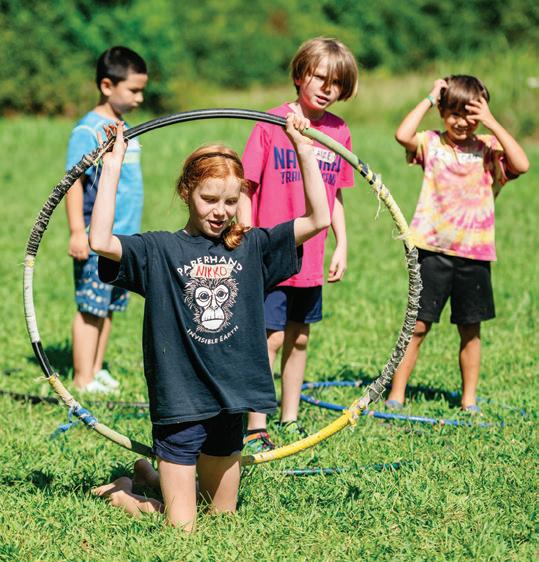



a walk nearby at Wade Barber Park, a 2.5-acre wooded trail adjacent to the shopping center.
Historic downtown Pittsboro’s S&T’s Soda Shoppe has been serving up burgers, sandwiches, hot dogs and other favorites for more than 25 years. Be sure to check out its 32 flavors of ice cream in the form of oversized sundaes, floats and its iconic banana split, all great for sharing. Also downtown, Virlie’s Grill offers diner classics, featuring daily specials, homemade soups, salads and a kids’ menu. Its sandwiches have been voted among the Best of Chatham for several years in a row!
Just west of town, West End Kitchen offers elevated comfort food in a modern farmhouse setting and serves a family night menu every Wednesday with reliable favorites such as hot dogs, smash burgers, pepperoni pizza and chicken tenders with fries.
However you envision family time –muddy boots on the farm, sandy shoes by the lake or sticky fingers from an ice cream cone – Chatham offers plenty of simple pleasures that bring everyone together. So pack the sunscreen, grab the rain jackets and set out to explore! cm




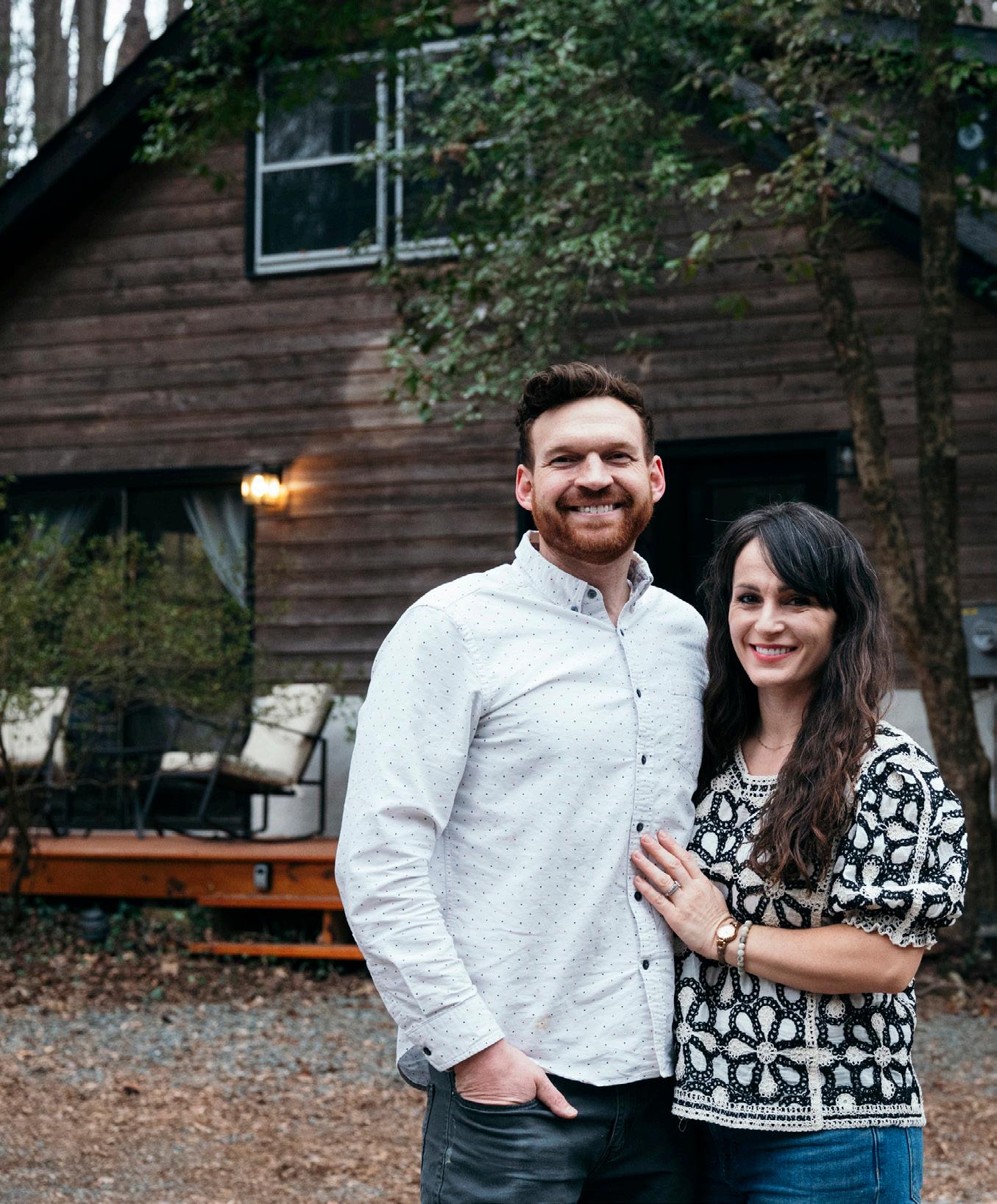
For Anna Ferrin, it was love at first sight.
She and her husband, Rhett Ferrin, live in Briar Chapel, where they are raising their four daughters, ages 11, 9, 6 and 4, and one 18-month-old son. “Every night, I was on Zillow, and then this [home] came up,” Anna says.
The listing of a twobedroom, one-bathroom home on Manns Chapel Road would be too small for their growing family.
“But I wanted to go see it,” she says. “It was just 5 minutes away. … I remember driving down the hill, seeing the pond and the trees, and being like, ‘Oh, this is it.’”
It became the Ferrins’ investment home away from home in May 2025.
The original 1,052-square-foot cabin was built in 1978 and sits on a .85-acre lot. It was once part of a group of homes used for hosting executives and business retreats for Liggett & Myers Tobacco Company, a Durham-based cigarette manufacturer. Renovations by different homeowners over the years maximized available interior space to 2,312 square feet.
Tropical Storm Chantal hit the home only five weeks after the family purchased it, knocking down trees, splitting a newly built dock and destroying a storage shed. Winds and drenching rains washed away the gravel driveway, damaged the roof and flooded low-lying areas, including the house’s entire first floor. By August, repairs and rebuilds – including a new roof and dock – were complete, and the Ferrins welcomed their first guests to The Loblolly House via Airbnb.


ole Restoration Services is a trusted familyowned business serving the Triangle area for more than 25 years. Owner Michael Cole, a master carpenter with unmatched expertise, brings passion for quality craftsmanship to every project—from framing and roofing to custom bathrooms and outdoor living spaces.
Michael and his team understand that your home is your biggest investment. Mike personally oversees every job, tool belt in hand, ensuring each project meets the company’s above-average quality standards.
Their comprehensive services include framing, painting, flooring, roofing, cabinets, countertops, decks, additions, siding, windows, doors, and much more. They proudly serve prestigious residential areas like Governors Club and Fearrington Village. Choose Cole Restoration for craftsmanship that exceeds expectations.

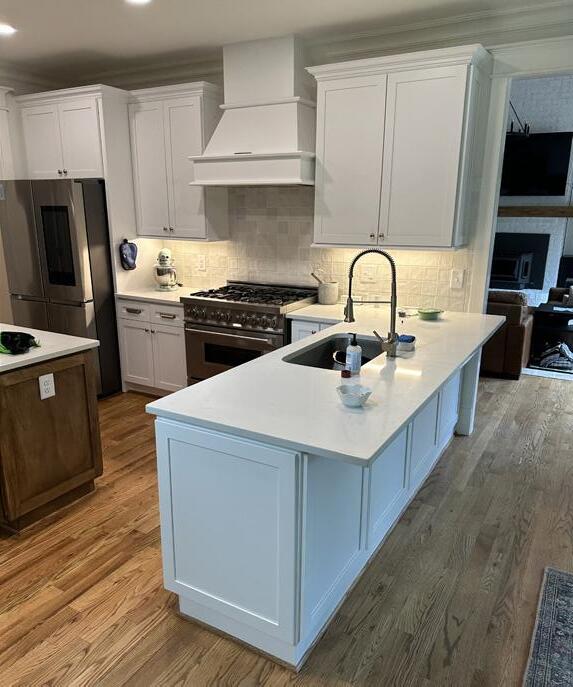

We come over here a lot, just to run in the woods and take rides out on the boat. I love being out under the trees. My kids do better here. I push them on the swing. My little boy feeds the ducks.

Anna says she and Rhett daydreamed about building a business empire of rental properties as a source of passive income, but the reality is a bit different. “This is not passive,” she says plainly. “This is not that.”
Anna arrives at the cabin after guests check out at 11 a.m. to inspect the property, clean the rooms, change the sheets, restock the kitchen and prepare for the next guest arrival at 3 p.m.
“I love coming out here in between guests,” Anna says. “For all of us in suburbia, it’s so nice to get out into the woods.”
A new gravel driveway slopes down into a wooded hollow surrounded by towering loblolly pines – the home’s namesake. A shallow stream curls into a pond stocked with fish and patrolled by a pair of





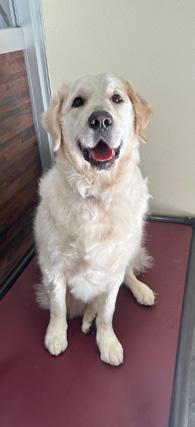
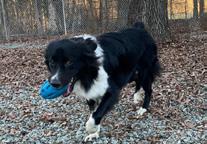





BELOW Anna’s daughters enjoy helping her curate a fairy garden on the property. “It’s an ongoing project,” she says. “The girls will find something cute and say, ‘Oh, can we add this to the fairy garden?’”
dabbling ducks. Behind the home lies a tiny A-frame shed that opens to an unencumbered view of the scenery. A vintage rowboat offers possibilities of adventure. Stained wooden steps lead up to a spacious deck that wraps around a twisted maple tree. Anna has visions of outdoor meals at the picnic table, relaxing by the tabletop fire pit, or the open-flame fire pit beneath the trees. Inside, the light-filled

Previous homeowner
Sarah Pohlig, who now resides in Bynum, wrote a poem in hopes that the cabin would pass safely to the care of a kindred spirit.
“I actually think about these words when I’m out walking in the woods,” Anna says. “I love the sentiment, the intention of looking for someone to take care of the trees from here on out. The first time I read it, I cried happy tears, because it described me – I first came just to say hi to the trees.”
Did I love it enough, the full throttle foliage?
I’m watching for the Norwegian maple to turn – it’s always the last of the fireworks here on Manns Chapel, the spent breath of our Indian summers, an exhale, the last exquisite sigh, it’ll make you look up watercolor classes. You will try to catch the uncatchable.
In October, you’ll see the maple leaves expertly tinted in front of a sky so sheer, a ripcord of blue, a silken spinnaker that my friend drew out of the bag like a handkerchief, a sky astonishing as a magic trick, a real showstopper.
You must love the trees and leaves on the pond and the Camellia japonica and the loblollies, there’s a lot to know and many more to meet.
You will need to know in the spring Andrew Marvell’s line about a green thought in a green shade, as mossy dappled as it gets here,
I must tell you about the showy azaleas, such drama!
I am looking for someone to take care of the trees from here on out.






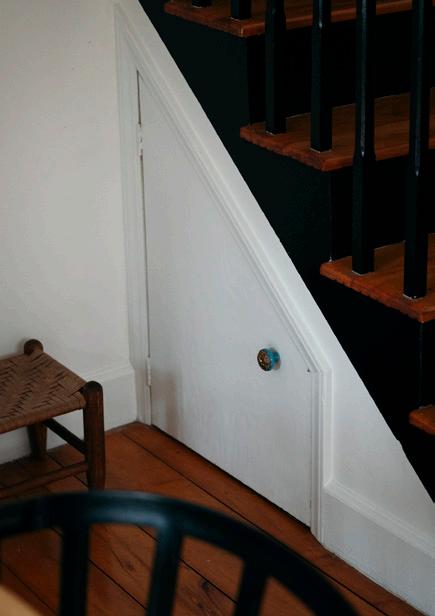
kitchen’s original hardwood floors complement the sagecolored cabinets and butcher block countertops. Guests immediately discover signs of a heartfelt welcome.
Propped atop the builtin corner bookshelves is a chalkboard greeting next to a generous basket of s’mores supplies. A freshly baked sourdough loaf, homemade by Rhett, sits in the center of the table along with a half dozen shelf-stable eggs harvested from a friend’s local farm. A mason jar of

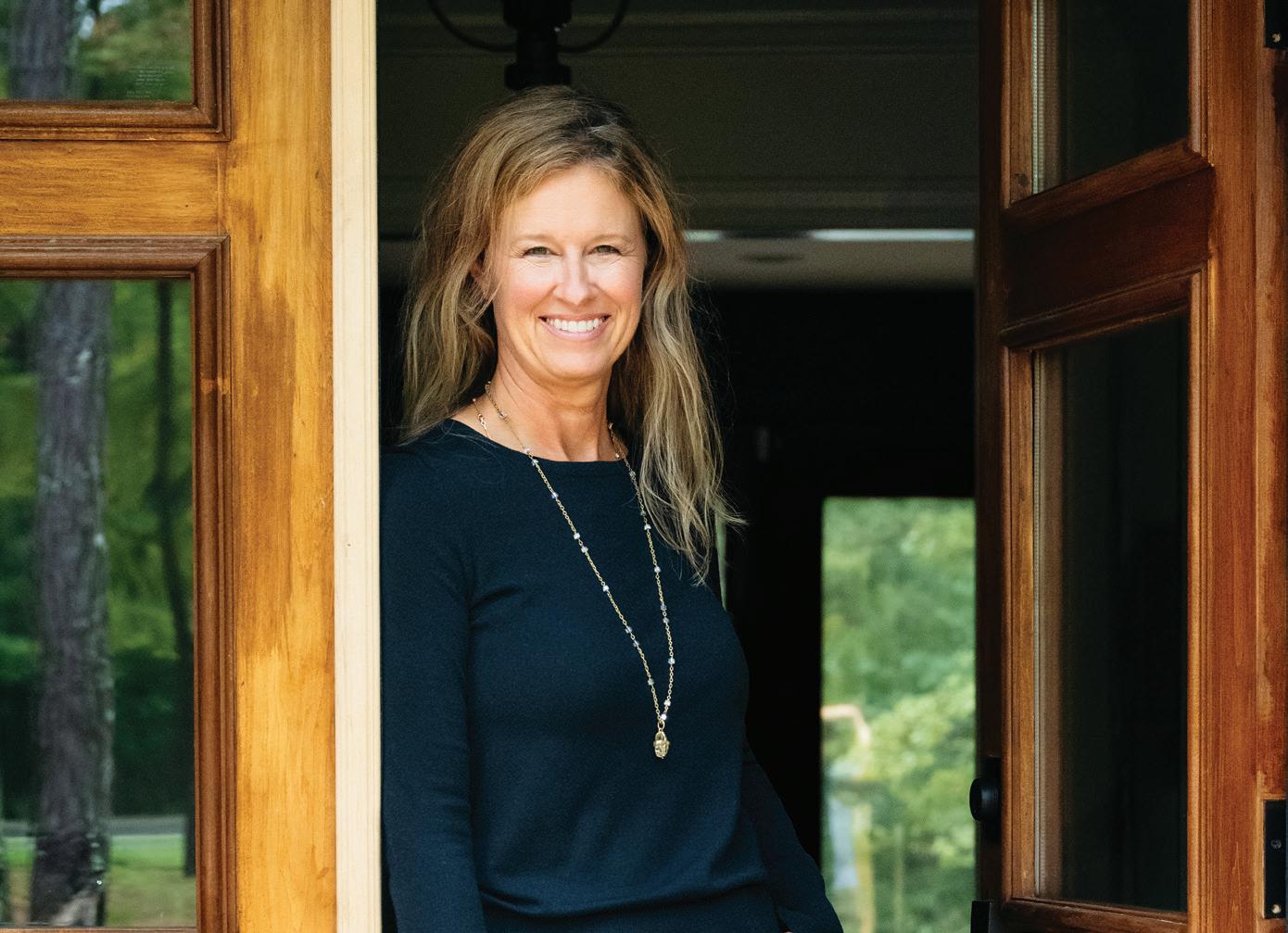

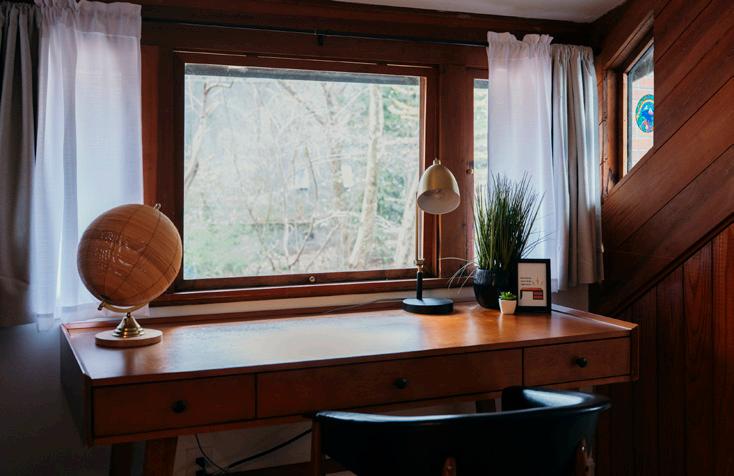
fresh flowers brightens the table scene where the wood-burning stove once stood. Anna, a ceramicist with a home-based pottery studio, creates bowls and mugs that can be found inside the glass cabinet by the refrigerator.
One short set of stairs leads up to a former attic space that now holds a spacious bedroom with two beds, an upholstered reading

ABOVE A window nook serves as a sunny workspace in the upstairs bedroom.
BELOW Anna sourced much of the decor and furniture secondhand through Facebook Marketplace and friends.
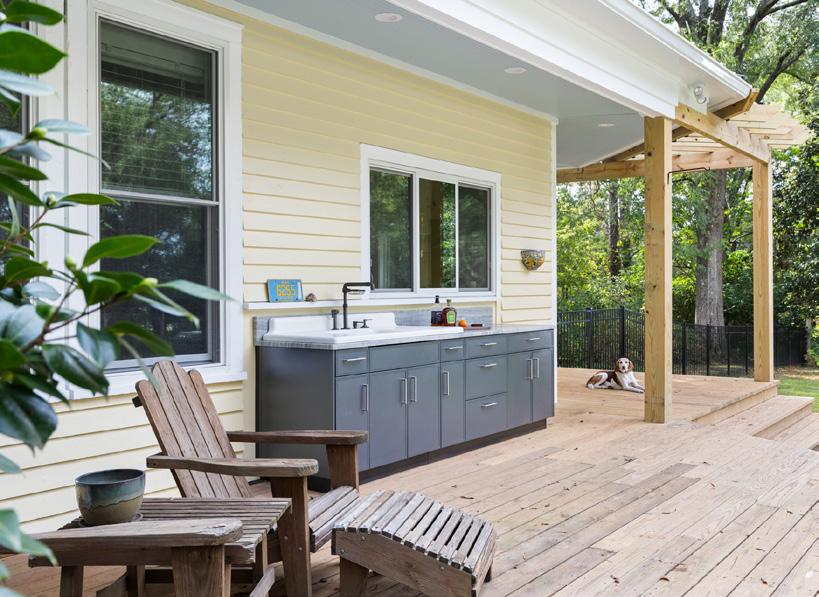

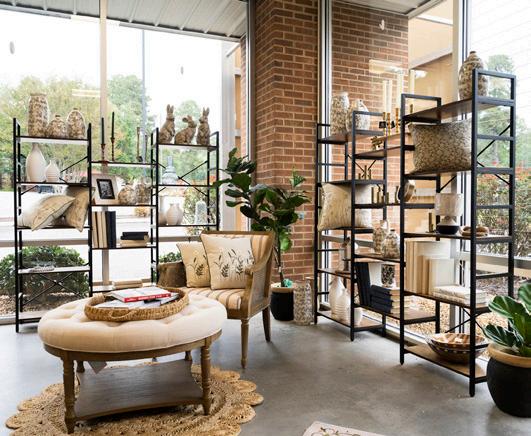
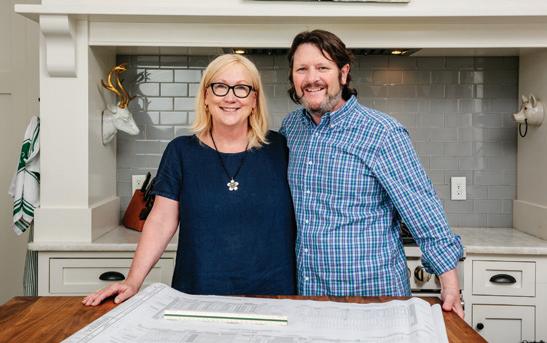



chair, and a wide writing desk that overlooks the woods and pond below. Other stairs descend to the lower level with the primary bedroom, an arched doorway into the living room, and the laundry room. The updated bathroom, which still has its original doors and forged hardware, is on the main level with the kitchen.
The Loblolly House was originally intended as a place of retreat, reflection and rest. “We try to honor that,” Anna says. “It’s still tucked away from the rest of the world. … It’s not a party house. People come here to see their kids at UNC. We’ve had people come back already two or three times to visit family in Briar Chapel.”
Guests travel from near and far to enjoy the cabin. “We have people coming from England,”


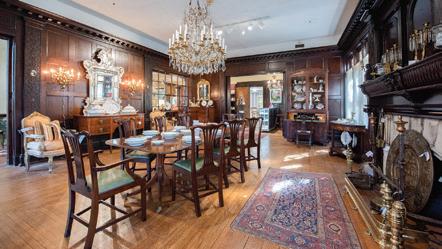
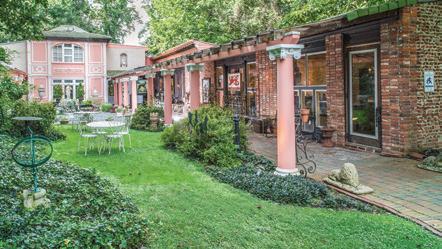
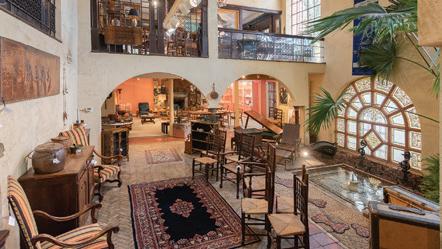
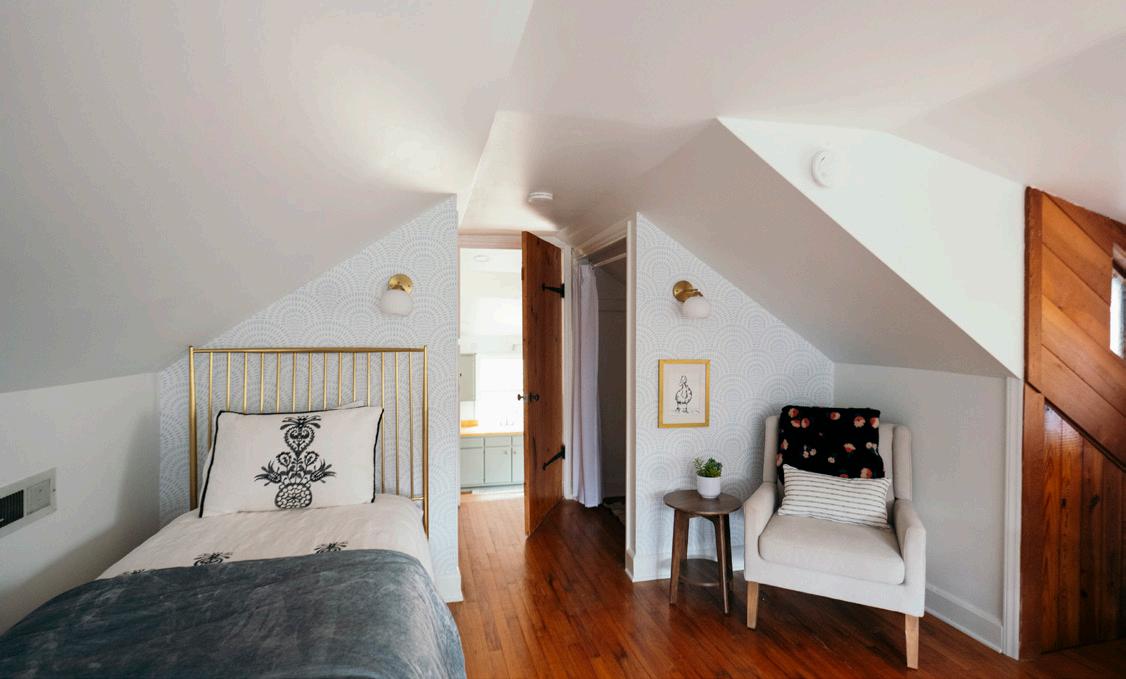



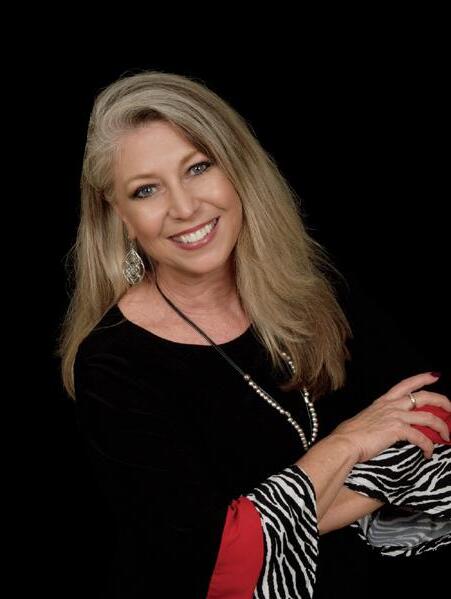


Anna adds. “I had a couple that came in from [Los Angeles] a month ago.” Anna’s parents visit every few months from Kansas City, Kansas and stay in the cabin, too. “We built the dock so Papa and the kids can go fishing. We love that. We have a place to make recurring memories with them, and my dad loves to fish.”
Anna says the process of creating a warm and inviting space and meeting new visitors has yielded some unexpected blessings – like when she receives guests with oncology appointments at UNC. “I feel like it’s a sacred honor that they want [to stay here], especially if these are their last days to get treatment,” Anna says. Her eyes begin to fill with tears. “They come with their siblings, or they come with a parent. I’ll bring cookies, and it’s just special to meet them. It’s beautiful.” cm SHARE YOUR HOME
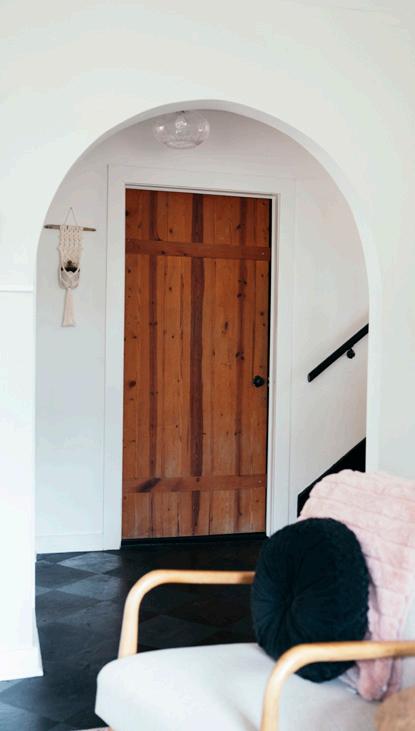
Have a unique home or recent renovation you’d like to share? Reach out to feature your Chatham residence!









Word & Plant owner Deena Class cultivates dye plants, curiosity and more at her Pittsboro farm
By SHARON KINSELLA
by JOHN MICHAEL SIMPSON
JUST FIVE MINUTES from the Pittsboro traffic circle sits a 3.5-acre plot where perennials, dye plants, medicinal herbs and edible flowers are putting down long-awaited roots. True to its name, The Garden Haven & Farm stands in an open field tucked against serene


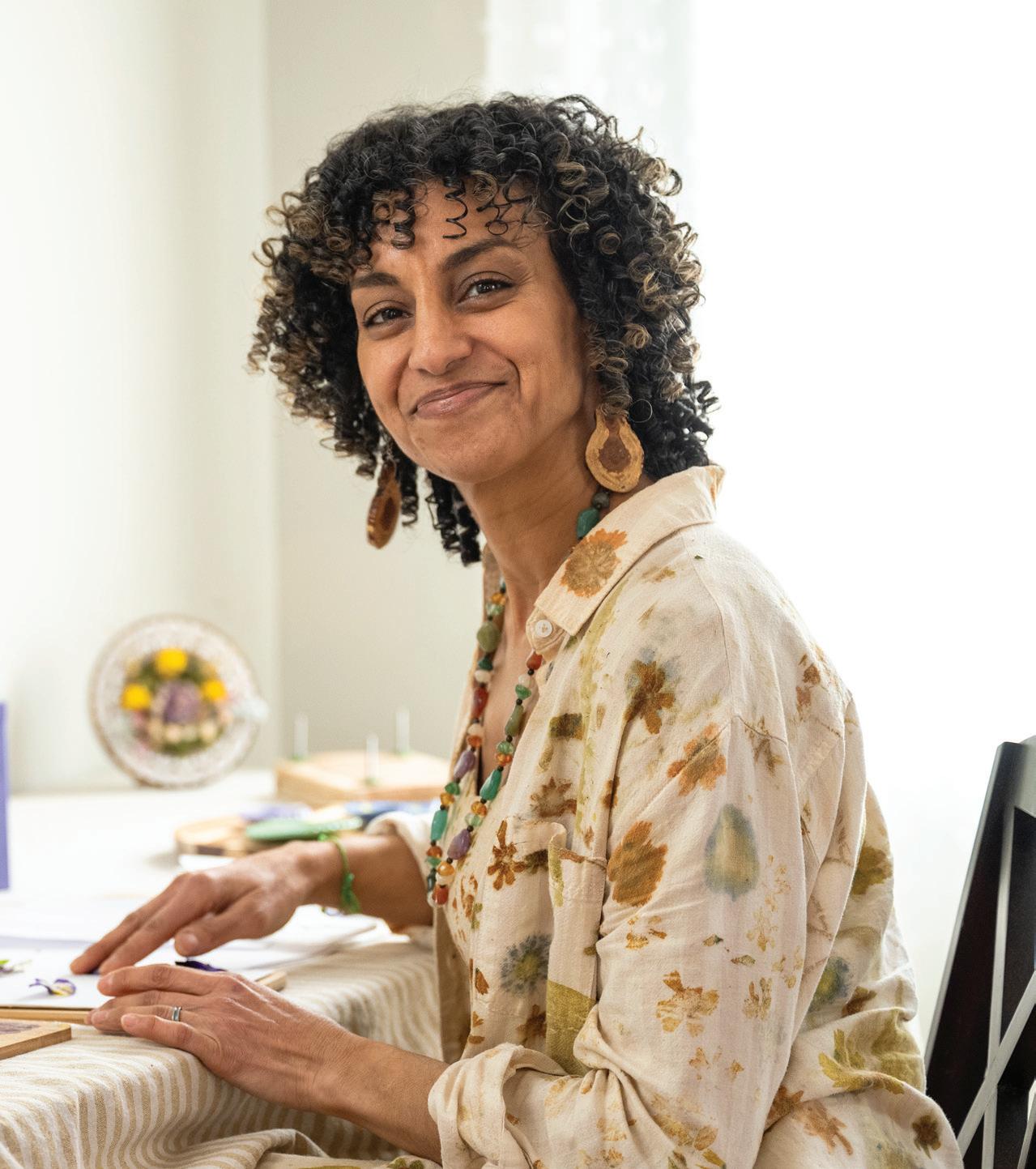

pockets of forest. It includes a 60-year-old pole barn that Deena Class is restoring as the welcoming face of the farm. After years of moving beloved greenery from place to place, having “a true home for my plants to really settle in and live their best lives is deeply meaningful to me,” she says. The farm is both sanctuary and studio – the physical heart of her business, Word & Plant
Deena – a botanical artist, plant educator and farmer – founded Word & Plant in 2020 after decades of living and working across multiple disciplines and four continents. She noticed a through line in her career: a deep curiosity about what helps people feel “included, respected and meaningfully engaged.” That insight, paired with her creativity and lifelong love of plants, shaped the path forward. “In hindsight, Word & Plant had a certain inevitability to it,” she says. “I’ve always moved comfortably between life sciences, social sciences and creative practices … and I’m deeply interested in how it’s all connected.” Her work weaves those threads – research, creativity and cultivation – into one communitycentered practice.
Deena invites beginners,
seasoned makers, kids and adults alike to explore herbal skincare, natural dyeing, sustainable gardening, dried flower art and more through workshops held at the farm and throughout the Triangle. Her teaching style balances clear process guidance with room to experiment. “I never want to be seen as ‘the expert’ in the room,” she says. Instead, she frames classes as collaborative and exploratory – offering enough depth for participants to understand the medium, while leaving space to ask, “What would happen if … ?” At the farm, that curiosity is nurtured alongside the plants themselves, with specialty varieties propagated for sale so more local gardeners can bring these often hard-tofind species into their own landscapes.
“My dream is that our place will truly become a haven for community members,” Deena says, “A place where folks know they can come to learn, get creative, relax, get some fresh air and convene with nature.”

This kid-friendly flower- and leaf-pressing craft allows you to embellish an item of your choice – preserving blooms for a touch of spring color year-round.
» Two non-pressure-treated wooden boards (like bamboo cutting boards from the dollar store, leftover wooden boards from a DIY home improvement project or wooden plaques from the craft store)
» At least two brown cardboard sheets cut to the size of your wooden boards (box flaps work great)
» Regular copy paper, cut to the size of your wooden boards
» Smooth facial cotton pads, optional
» Foraged flowers and leaves
» A heavy object that can sit on top of the boards, like a dumbbell or kettlebell
» Long rubber bands or file bands, optional
» Mod Podge or white school glue, like Elmer’s
» Something you want to attach your flowers to – it could be the flower press plates themselves, a simple clay trinket dish you’ve bought or made, a glass jar, etc.
» A soft, flat paint brush
» Water
» Paints, paint markers or other art supplies to embellish your project, optional



Trust our award-winning crews to
Call us today to schedule your

At Quilted Needle Fabrics LLC, we hold the belief that quilts, and the entire quilting experience possess a distinct essence. Our purpose is to offer sewists and quilt enthusiasts of all skill levels with outstanding fabric and tools that ignite their creativity and fuel their passion for fabric creations.
At the end of the day, we believe every quilt tells a story and we can’t wait to be part of yours.
1. Lay your first wooden board down on a flat, hard surface, then layer on a sheet of cardboard, a sheet of paper and, if your flower has a prominent center or thick petals, a cotton pad.
2. Flip your flower or leaf top side facing down and gently squish it flat. (You may need to “break” the petals away from the center of the flower a bit to get it to lay flat.) Fill your pressing area like this with as much flora as you’d like – just be careful that your foliage doesn’t touch.
3. Once you have your layer of flowers and leaves, stack materials in reverse order: cotton pads, paper, cardboard, then wood.
4. To press multiple layers, repeat the stack with cardboard between the layers of paper and plants, laying your second wooden board on top of the entire stack.
5. Wrap the stack in long file bands to hold the layers together and minimize shifting. Press down firmly on the stack with your palms using your body weight, and place your dumbbell or other heavy object on top.
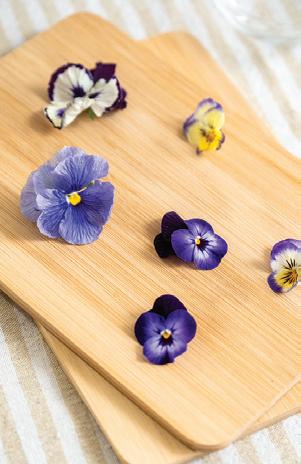
6. Once your flowers and leaves are completely dry and flat – they should feel cool to the touch and not flop when you remove them from the press – you’re ready to craft with them.
7. Water down your school glue or Mod Podge a little – just enough so that you can spread it easily with your paint brush – and brush some glue onto your glass jar, ceramic trinket dish or wherever you want to place your first flower.
8. Gently press your flower or leaf onto the glue and apply a thin layer of glue on top.
9. After the glue has dried, consider adding more glue on top. You can keep adding layers after each one dries to make your creation as smooth as you would like.
10. You can also embellish your design with paints, paint markers or other mediums that work on your base material – for example, glass paint on glass jars.
11. Keep your creation out of direct sunlight to preserve the flowers and leaves’ natural colors, or use a UV-protective clear coat.
This spring, Deena is leading a free community indigo-dyeing project through the Chatham Arts Council, exploring our shared relationship with a plant pigment that has connected cultures around the world for millennia. She invites community members to share their cultural heritage and creative interests while exploring the roles plants play in their lives. As she listens and learns, she’ll research indigo-bearing plants connected to participants’ backgrounds and weave those discoveries into community textile workshops – dates, times and locations to be determined. The initiative culminates in a free community dye day April 12 at the farm, where participants will dye two fabric squares – one to keep and one to contribute to a collective quilt – and receive an indigo seedling to grow at home. Free, drop-in sewing sessions (no experience or equipment required) will follow April 26 and May 3 at the Chatham Parks & Rec Arts Center, where attendees will stitch the dyed blocks together, symbolizing indigo as a living thread that runs through us all. The finished work will then be showcased in venues around the county in May.
Learn more at chathamartscouncil. org/stories-in-indigo
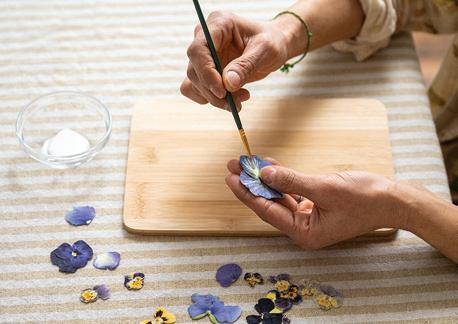






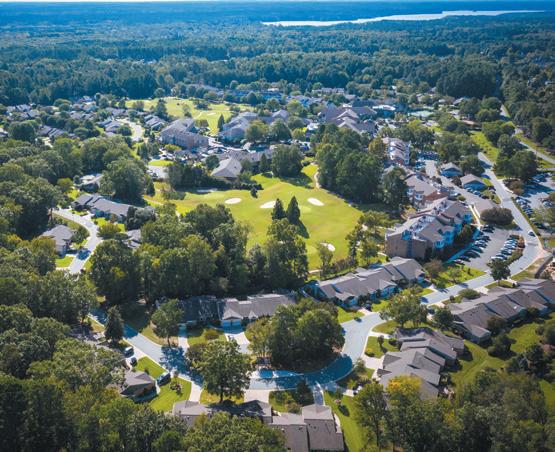

» Gather flowers after the morning dew has evaporated, but before they’re baking in the sun, for best pressing.
» Using smooth cotton facial pads – either on both sides of the flower or just the top – helps absorb moisture from flowers with thicker petals or prominent centers to prevent mold.
» If you’re pressing dye flowers for a practice like eco-printing or bundle dyeing, don’t throw away moldy or “imperfect” flowers. They may seem ruined, but they will still work perfectly!
» Store unused pressed flowers in a plastic or glass container, spread between sheets of paper with a bit of rice to absorb any excess moisture.
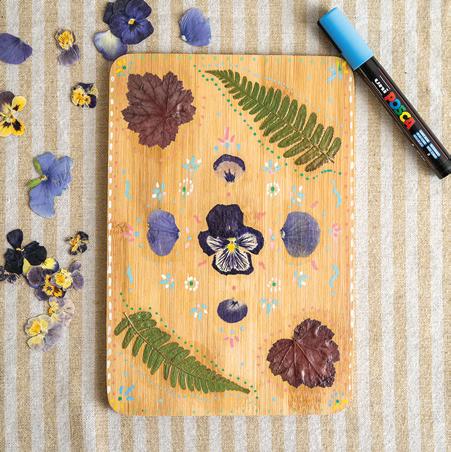



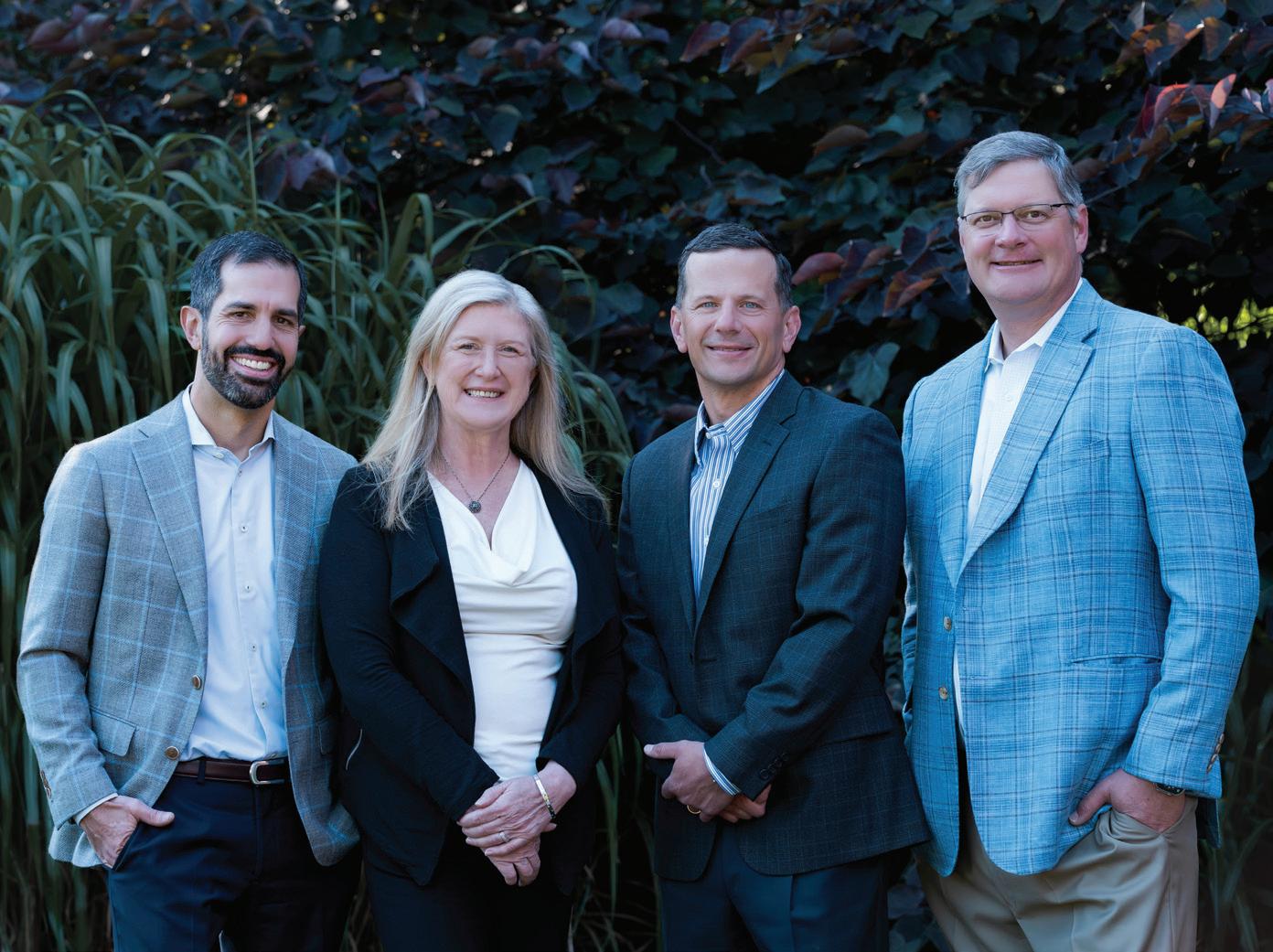
Voted best oral surgeons in Chapel Hill
Know that you’re in the best hands for your procedure with expert care from our board-certified oral and maxillofacial surgeons, Debra Sacco, DMD, MD, Brian Vandersea, DDS, Andrew T. Ruvo, DMD, MD, and Adam D. Serlo, DMD, MD.
DENTAL IMPLANT SURGERY
BONE GRAFTING
IMPLANT SUPPORTED OVERDENTURE
WISDOM TEETH EXTRACTION
CORRECTIVE JAW SURGERY

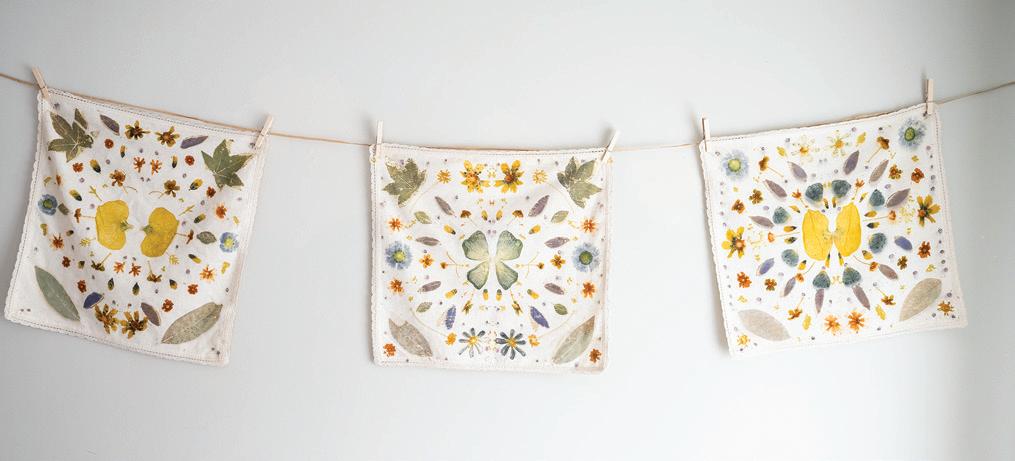
Press edible flowers like dianthus species, eastern redbud, violas, pansies, bee balm and anise hyssop to use on cakes or flatbread, like focaccia. Deena recommends checking out “Eat Your Flowers: A Cookbook” by Loria Stern from Chatham County Public Libraries for inspiration.
Eco-printing is a dyeing technique that transfers pigments directly from plants, leaves and flowers onto fabric or paper using heat and pressure. This pressing technique helps prepare botanicals for eco-printing by flattening and preserving their shape and color. These species work especially well for the process:
Flowers and leaves:
» coreopsis
» Bidens
» goldenrod
Just flowers:
» cosmos
» hibiscus
Just leaves:
» Carolina cranesbill geranium
» sulfur cosmos
» Almost all North Carolina native hardwood trees, including oak, maple, sweetgum, hickory and sumac cm
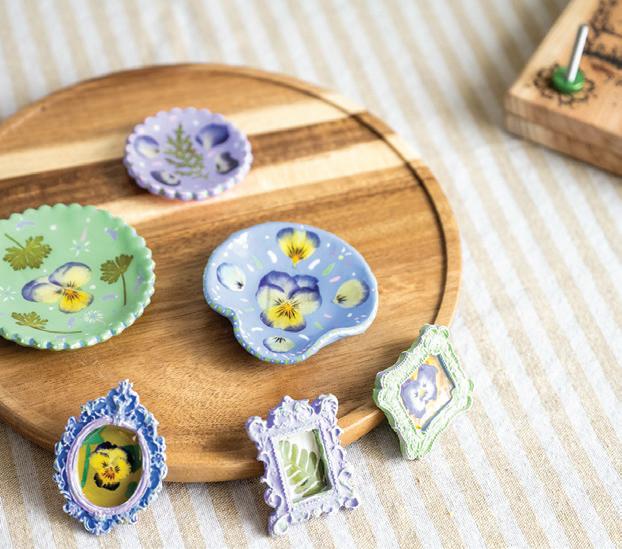
Sign up for Deena’s email newsletter at wordandplant.com to learn about upcoming events, workshops, markets and festivals. Subscribers also receive special offers and access to unique engagement opportunities –including work-trade options to help her prepare for events in exchange for a complimentary workshop or product.









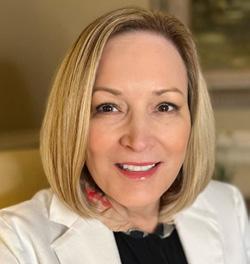
Cindy A. Doan
Sapphire Producer 2025
919-265-4559
DoanC@HPW.com
CindyDoan.hpw.com Bill Pekala
516-652-4491
PekalaB@HPW.com
BillPekala.HPW.com
Jodi Washburn
Diamond Producer 2025
919-407-1285
Diamond
WashburnJ@HPW.com Donna
Dianne Gray
Fearrington Specialist
919-904-0320
GrayD@HPW.com
DianneGray.HPW.com
Jan Butta
International Sterling Society 919-434-5975
ButtaJ@HPW.com JanButta.com
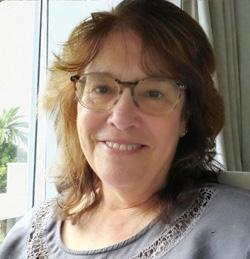
Claire Kane
919-503-1943
KaneC@HPW.com
ClaireKane.HPW.com
DonnaThomas.HPW.com Amit
ThomasD@HPW.com
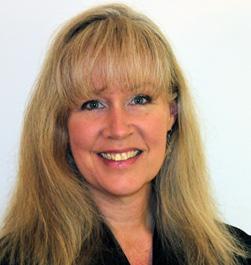
Michelle Lytle-Westrom Luxury Specialist 919-636-9024
MichelleLW@HPW.com
MichelleLytle-Westrom.HPW.com
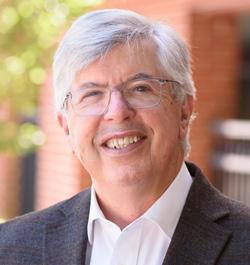
984-484-1138
Prakasha@HPW.com
1Amit.com

Jay Walden
International Sterling Society 919-444-1540
JayWalden@HPW.com
JayWalden.com
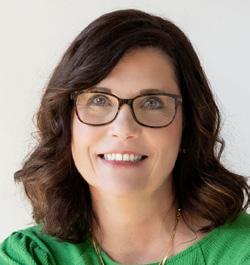


summer and fall. This bold color shift adds depth and movement to borders, meadows and naturalistic plantings.
“Blackhawks” big bluestem checks many practical boxes for North Carolina gardeners: it thrives in full sun, tolerates a wide range of soils and handles both summer heat and humidity with ease.
Once established, it is notably drought tolerant, making it a smart choice as water-wise gardening becomes increasingly important across our state. The plant typically reaches 4 to 5 feet tall, providing structure and vertical interest without flopping. Beyond aesthetics, “Blackhawks” offers meaningful ecological
benefits. A native grass, big bluestem supports pollinators, provides nesting material for birds and serves as a host plant for several butterfly species. Its deep root system also helps improve soil health and prevent erosion – an asset in both residential landscapes and larger restoration projects.
Whether used as a dramatic focal point, massed for a prairie-inspired look or blended into mixed perennial borders, “Blackhawks” big bluestem proves why it earned its Perennial Plant of the Year title. For Chatham gardeners seeking beauty, durability and ecological value, this standout grass is right at home. cm


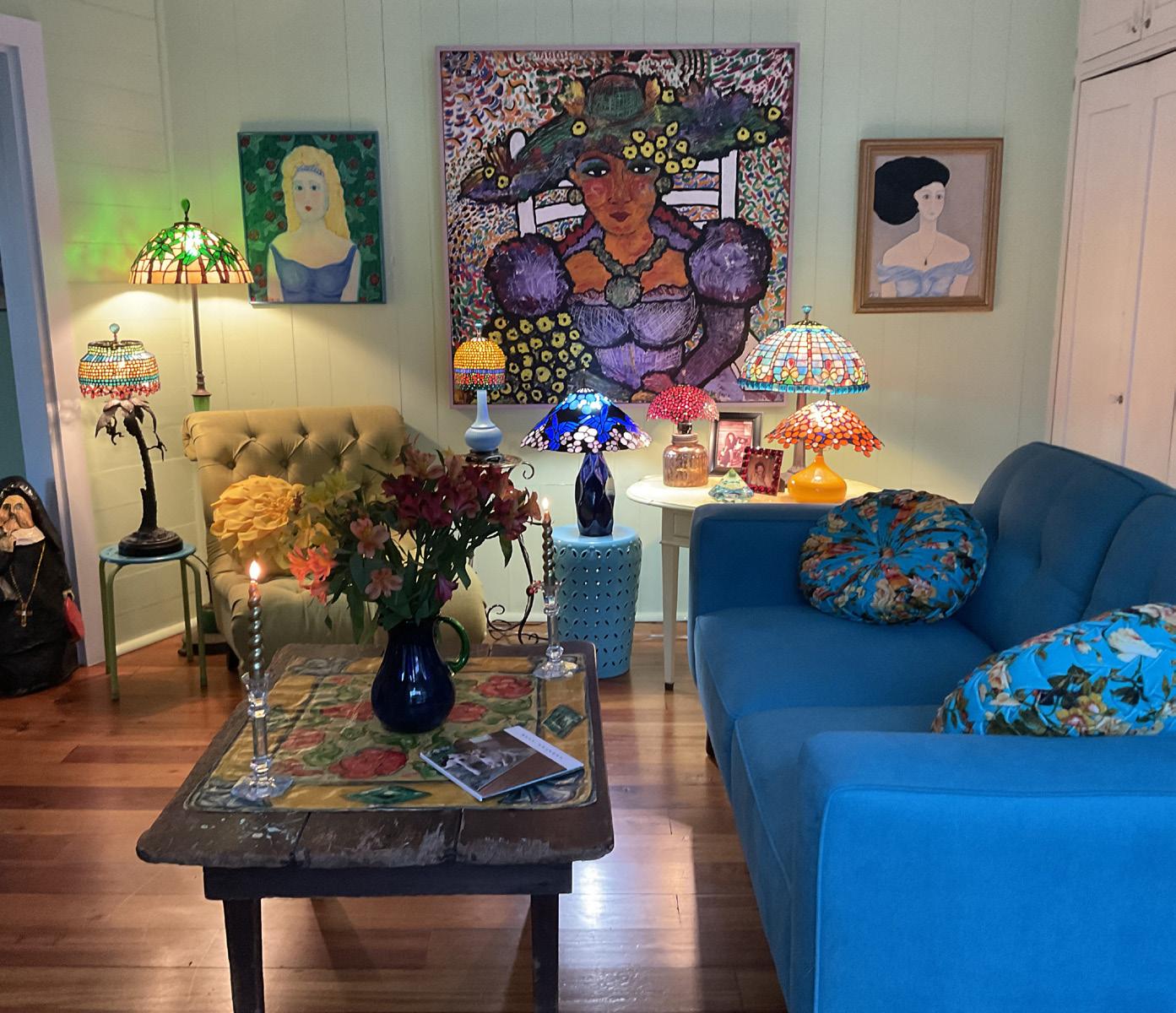

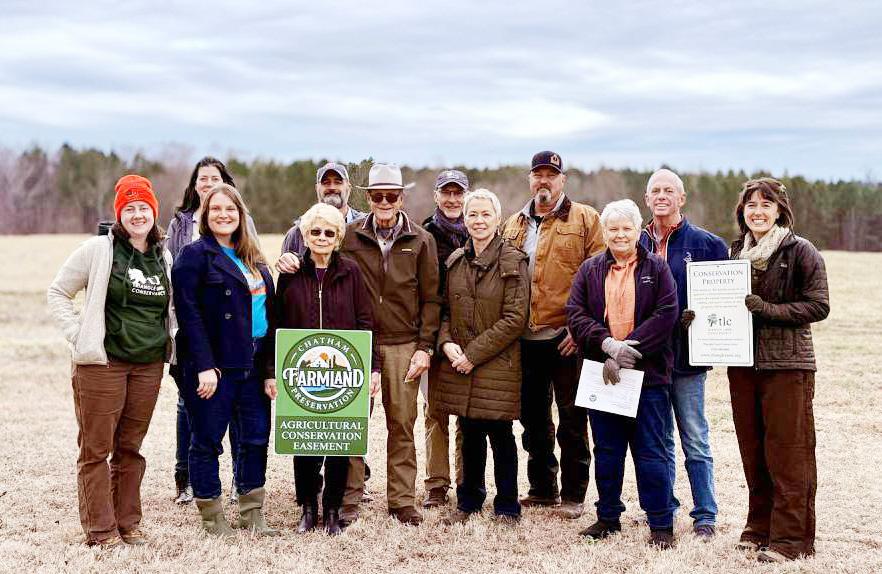
development updates
A preservation ceremony was held at Stensvad Farm in Snow Camp on Jan. 23 to celebrate the Doug and Linda Stensvad Conservation Easement. “Preserving farmland is essential to protecting our local food supply and the long-term health of Chatham County,” Amanda Robertson, Chatham County Board of Commissioners
A
closer look at the latest real estate activity, major developments and
projects poised to shape our community’s next chapter
Compiled by LIBBY WAKEFIELD
chair, said in a Chatham County press release. Doug Stensvad and Linda Stensvad donated their 58 acres of farmland to Chatham County, in conjunction with the Triangle Land Conservancy, marking the first farmland preservation effort financially backed by the Chatham County Farmland Preservation Program.
Chatham County Financial Advisors



Governors Club
Sharon Dickens, CFP®, AAMS® 50101 Governors Dr Suite 118 919-967-9968
Pittsboro
Chad Virgil, CFP®, ChFC®, CLU®, AAMS® 630 East St, Suite 2 919-545-5669
Pittsboro
Shari Becker, AAMS® 120 Lowes Dr Suite 107 919-545-0125



Chatham Downs
Eric Williams, CFP®, AAMS® 190 Chatham Downs Dr Suite 103 919-960-6119
Pittsboro
Kevin Maley, AAMS® 984 Thompson St, Suite E2 919-444-2961
Pittsboro
Blake Stewart, CFP®, ChFC®, WMCP® 114 Russet Run Suite 120 919-542-3020
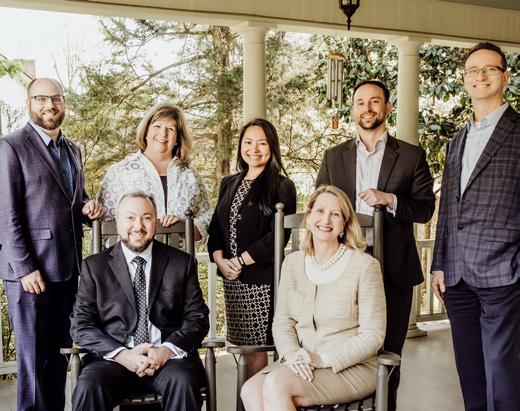

Siler City
Laura Clapp, CFP®, CEPA® 310 East Raleigh St 919-663-1051
Introducing NoVi, the newest neighborhood in Chatham Park’s vibrant North Village. Made up of multiple neighborhoods nestled between the shopping, dining and entertainment at MOSAIC and the activity at the Chatham Park YMCA, it’s the perfect environment for the on-the-go active lifestyle. NoVi’s first offerings are homes near a great lawn for events and leisure, soccer fields, and a future commercial district.

Michael Smith, president of the Chatham County Economic Development Corporation, was recognized in the Southern Economic Development Hall of Fame, published by Southern Business and Development magazine, on Nov. 4, 2026. Michael is known for his leadership efforts with Wolfspeed and VinFast in Chatham County, and his service with the North Carolina Department of Commerce and as president of the North Carolina Economic Development Association.
On Nov. 10, the South Village section of the anticipated Chatham Park development was approved in a 3-2 vote by the Pittsboro Board of Commissioners. This area will be located south of the U.S. Highway 64 Business, spanning over 5,000 acres east of downtown Pittsboro. South Village will consist of residential units, research and development areas, activity centers and parks, joining the other Chatham Park neighborhoods of NoVi, Tessera at Mosaic, Vineyards, Medley at Northwood Landing and The Guild at Mosaic
At its Nov. 10 meeting, the Pittsboro Town Board of Commissioners also unanimously approved Phase One of the Reeves Farm development, a four-phase plan that will turn nearly 500 acres of land along U.S. Highway 64 west of Pittsboro into a mixed-use community. The first phase of the development will allow for 251 single family homes and include 49.69 acres of public recreation space funded by the town.
Durham-based Bright Highway 87, LLC purchased Xtra Room Self-Storage at 8833 N.C. Highway 87, just south of Pittsboro. The area is 41 acres, including a home and rentable climatecontrolled indoor storage units on the site.
Southern Veneer Specialty Products, a plywood and veneer supplier based out of Fitzgerald, Georgia, closed its Moncure factory at 306 Corinth Road on Dec. 5 due to a lack of demand, affecting 130 jobs.
Brewery and coffee bar Havoc Brewing Co. shut its doors on Dec. 14. Navy veteran Michael Pipkin opened the taproom on West Street in 2023.
Chef Arlena Strode, founder of the Children’s Culinary Institute, opened the international organization’s newest location at 88 West Street on Dec. 17. The institute hosts craft clubs, private parties and themed classes for parents and kids. Cooking classes will also be offered at the Chatham Grove Community Center at Chatham Grove Elementary School.
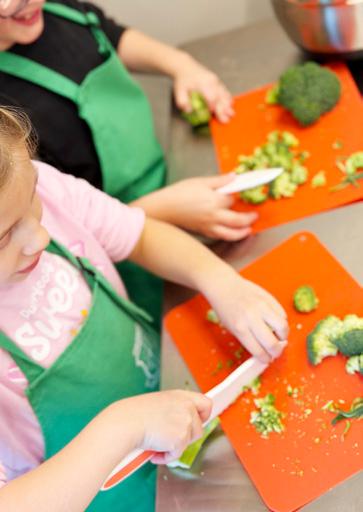
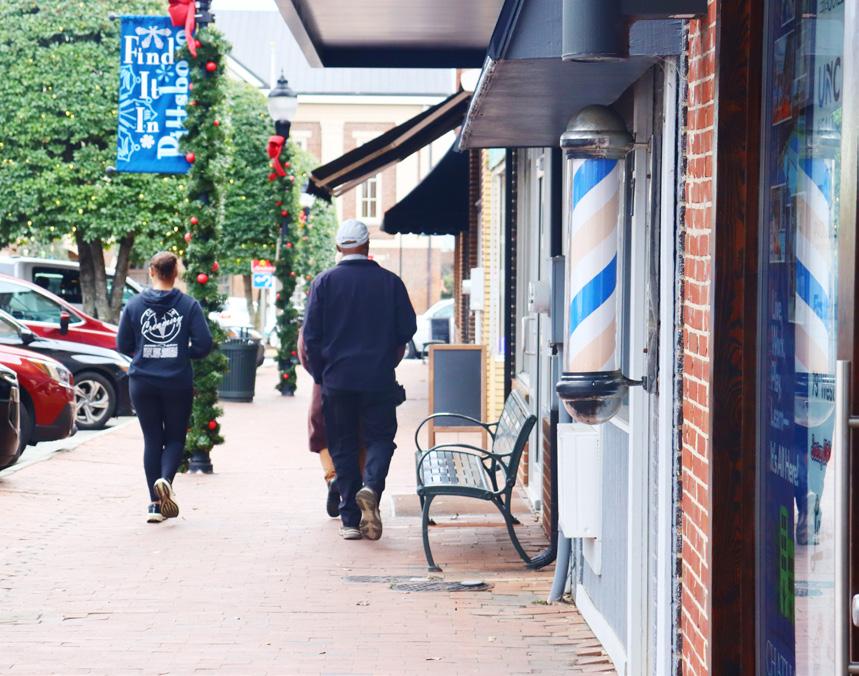
On Feb. 6, the Town of Pittsboro announced that it has officially received full funding for its portion of the Downtown Streetscape Project, part of the larger Hillsboro Street Widening Project. The $1.95 million in funding comes from the federal Community Project Funding via the U.S. House Committee on Appropriations, the North Carolina Department of Commerce’s Rural Downtown
Economic Grant and the Pittsboro Board of Commissioners. This project, a part of Pittsboro’s ongoing efforts to revitalize and strengthen its downtown core, seeks to better the walkability, accessibility, safety and economic well-being of the downtown area. Upon the estimated completion of the project in winter of 2028, Pittsboro will see improvements to sidewalks and pedestrian








safety, increased compliance with the Americans with Disabilities Act and enhanced street and utility infrastructure to better serve Pittsboro’s residents, visitors and downtown businesses.
Chatham County has begun a survey of historical resources in rural areas to account for vast growth since the 1980s. The Planning Department started the first phase of an architectural survey, sponsored by the Chatham County Board of Commissioners, in January 2026; it will continue through August 2027. The second phase will take place from January 2027 to August 2028. The survey is intended to aid in preservation planning throughout the county, in both preserving new properties and rehabilitating old ones.
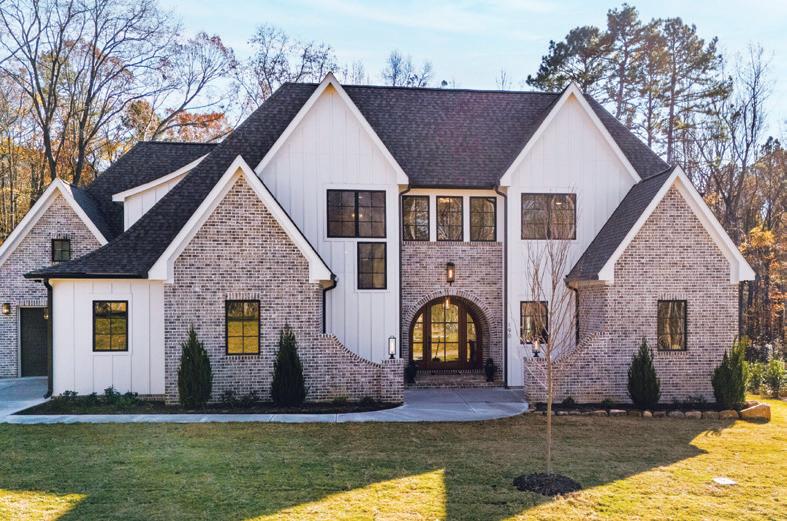
a Tavolo, an Italian restaurant serving up woodfired pizza, pasta and drinks made from locally sourced ingredients, is set to open in Ste. 130 in Mosaic at Chatham Park in summer 2026.
Rehab Hamad and Yezen Hamad of Triland Commercial, a Cary-based commercial real estate firm, shared that potential tenants the couple is seeking for its Cooper’s Ridge mixed-
use development include Target, Publix, Home Depot or Harris Teeter.
The Chatham County Board of Commissioners unanimously voted in February to halt permits for new data centers for one year. The board cited concerns for impacts to quality of life for residents as well as water and electricity needs these centers require, and said it will use the next 12 months to study impacts and develop appropriate zoning regulations.
Homes by Wolf Creek, a luxury Chapel Hill neighborhood in northwest Chatham County, is constructing 30 homes in its first phase, with the first two already complete. Each plan includes open layouts, large kitchens, outdoor space and high-speed internet. The neighborhood will offer an open-air pavilion and lawns for community members to gather, sparkling pools, walking trails through the community’s dedicated green space, a playground, pickleball court and an outdoor fireplace. cm
By Chela Tu

Chela serves as a senior associate with Bold Commercial Real Estate. She has more than 13 years of experience supporting economic and business growth across Orange and Chatham Counties, and brings deep local insight and a tailored, outcome-driven approach to every transaction. A Certified Commercial Investment Member (CCIM), Chela represents the highest standard of education and ethics in the industry, giving clients a clear advantage whether they are optimizing a real estate investment portfolio or securing their first commercial property.
1 The working-age population is growing fast
One stat that really stands out: Chatham County is projected to grow its working-age population (ages 25-64) by 17.3% from 2024 to 2034, which is more than double the state average. That matters because it’s a signal that the workforce is expanding at the same time employers are looking for places where people actually want to live and work.
2 Wolfspeed is no longer just a headline, it’s moving forward
Wolfspeed’s John Palmour facility in Siler City has hit major milestones. The site has 2.2 million square feet under roof, has received its certificate of occupancy and has begun early
production. The project also received $700 million in CHIPS Act funding. For Chatham, this is one of those developments that changes what people associate the county with, and what types of companies start paying attention.
3 The project pipeline is showing depth, not just volume
The county’s new project activity since mid-2024 shows a mix that’s worth noting: biotech and life sciences, automotive and energy are all showing up in a meaningful way. For example, biotech projects in the pipeline have a median investment of $222 million and a median of 300 jobs – it’s not one trend or one industry doing all the heavy lifting.
4 Megasites are giving Chatham a real seat at the table
The megasites are one of the most important “big picture” stories right now. With the 1,350-acre Chatham-Siler City Advanced Manufacturing Site and more than 2,500 acres across TIP East and TIP West, Chatham has sites that can actually compete for large-scale projects. When companies are choosing where to go, having land that’s ready and the right size matters more than people realize.
5 Leadership matters, and the Chatham Chamber is stepping into a new chapter
A lot of growth doesn’t happen on its own, it happens because people stay on top of it. This year brought a notable leadership transition with Rebecca Dickenson becoming president and CEO of the Chatham Chamber. The Chamber’s work, including initiatives like the county’s first women’s business conference, is part of how business owners stay connected, supported and in the loop. It’s also worth noting local leaders who are involved behind the scenes, including Lewis Hendricks of Bold Commercial Real Estate, who serves in a leadership role supporting the Chamber’s efforts.
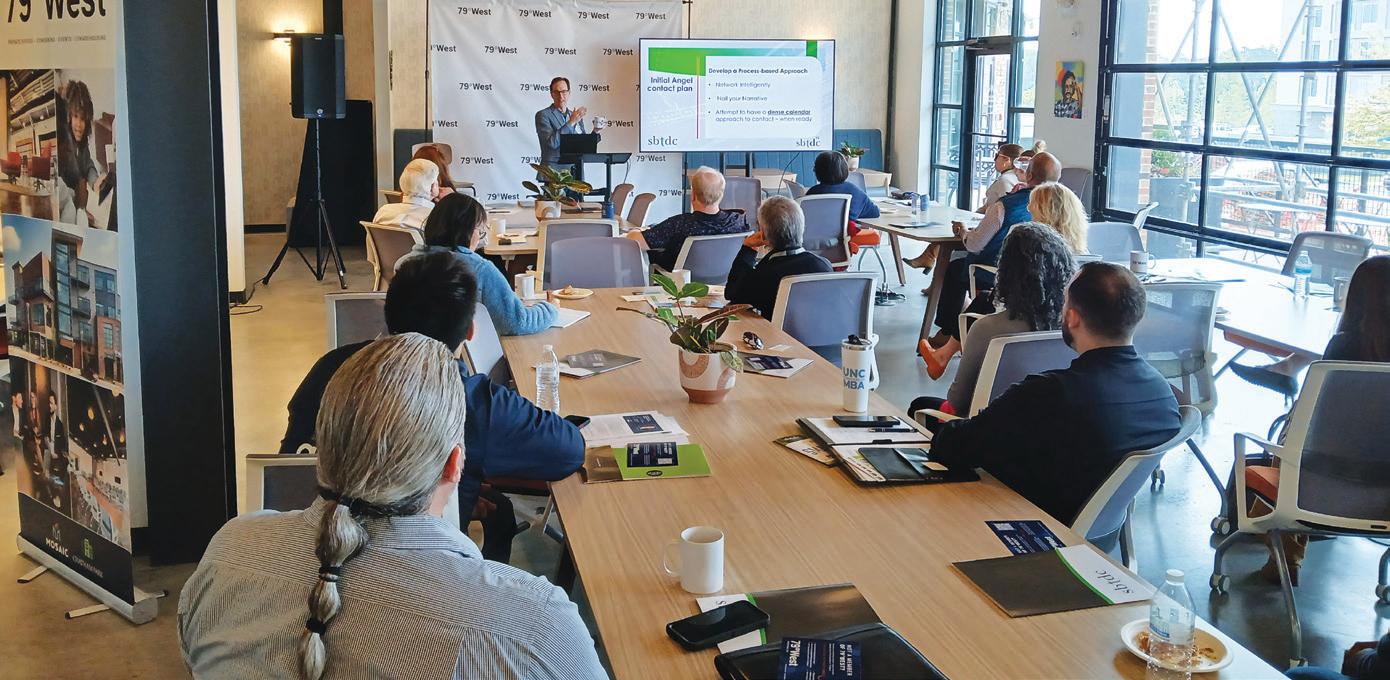
PRIVATE OFFICES • CO-WORKING • EVENTS AND MEETING ROOMS


The 79°West Innovation Hub is a 22,000 square-foot office + 8,500 square-foot storage space situated in MOSAIC, a 44-acre mixed-use gateway to Chatham Park, a rapidly growing Live-Work-Play-Learn community just north of historic downtown Pittsboro.
Featuring a strong community of tenants, including:
Shanklin Wealth Planning • Riithink Digital Marketing
Dunning Custom Homes • Chatham Economic Development Corporation
Munson Law Firm • OCHAR • e3 Diagnostics • BOLD Real Estate
The Results Company • Eller Therapy • EKI Consulting • Great Neck Realty
McDevitt Law • Millennium Planning Group • WEBB Squared
April Jones Insurance • Lee-Moore Capital Company • Triangle Design Build
Chatham Chamber of Commerce • RAFI • Crossbridge Financial
Park Properties
• Skyline Exterior Group


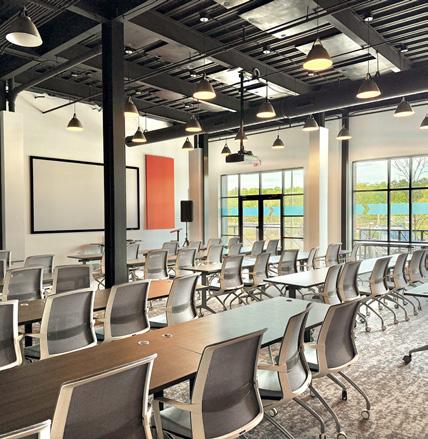
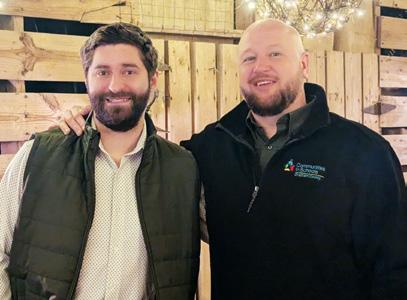

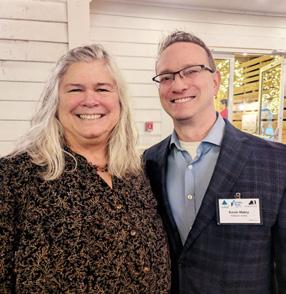
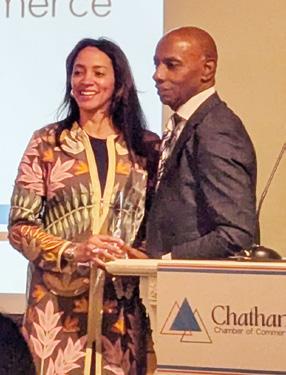


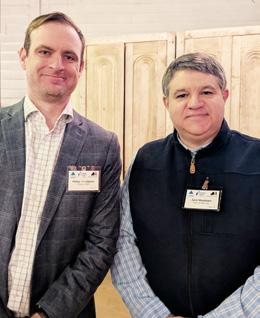
The Chatham Chamber of Commerce held its 79th annual meeting at The Fearrington Barn Feb. 11. More than 200 local leaders and small business owners came together to celebrate, network and learn. Keynote speaker Bethany Greene of the Federal Reserve Bank of Richmond spoke about the economic outlook for the region, and Duke Energy’s Sara Stephens presented Chatham County Schools Superintendent Anthony Jackson with the company’s annual Citizenship and Service Award. Chamber President and CEO Rebecca Dickenson closed the program by outlining updates and goals for the year ahead, and offered up a toast with Fireclay Cellars cider to celebrate the past year’s accomplishments. cm
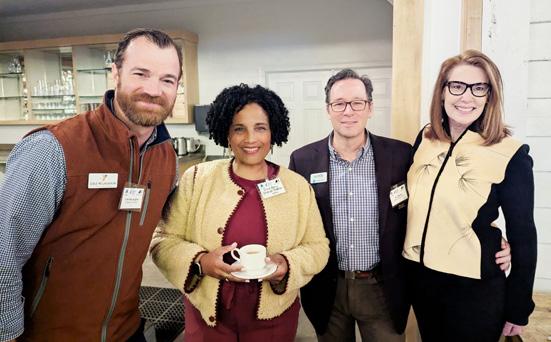
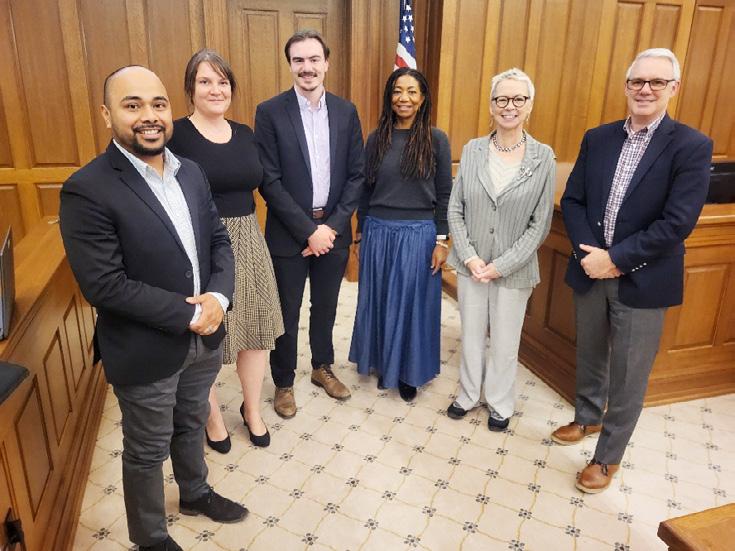
The Chatham County Board of Commissioners recognized Brenton Hart, a policy and legislative analyst in the county manager’s office, as the 2025 Employee of the Year at its Dec. 15, 2025, meeting. Brenton was nominated for his leadership, innovation and collaboration on a range of county initiatives, including the Chatham County Information Hub, the county’s Digital Inclusion Plan, revisions to the Board of Commissioners Advisory Committee Policy, data analysis for the Aging Master Plan, and the Pittsboro Redevelopment Initiative. Brenton’s nomination noted his wideranging work, from researching procedures for disinterring graves and erecting commemorative historical markers to identifying best practices for collaborative community gardens. County Manager Bryan Thompson says Brenton demonstrates “exceptional competence, humility and a genuine commitment to serving others,”







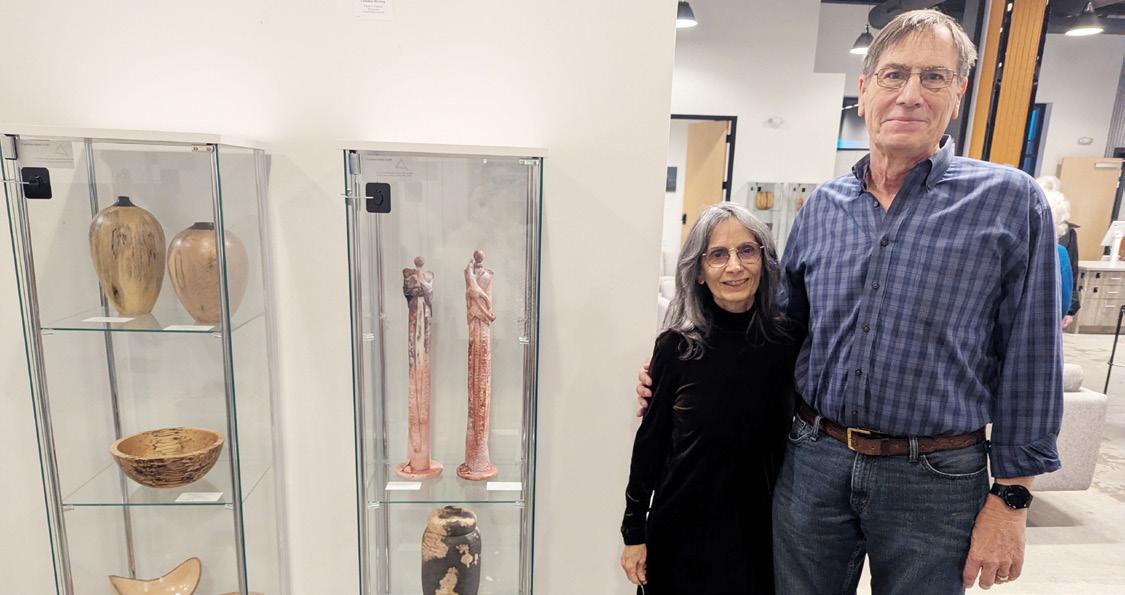

By STEPHANIE HUGHES | Photography by HUTHPHOTO
79°West Innovation Hub held an opening reception for its newest rotation of artwork by Chatham Artists Guild members on Jan. 14. This spring’s featured artists – Greg Wandless, Donna Stubbs, Minnie Gallman, Selden Lamoureux and Gretchen Kapity – showcase pieces across a range mediums, from woodwork and pottery to photography and mixed media. The exhibition highlights the Guild’s commitment to strengthening connections among artists and between their work and the wider community. Visitors can explore the diverse collection through March. cm

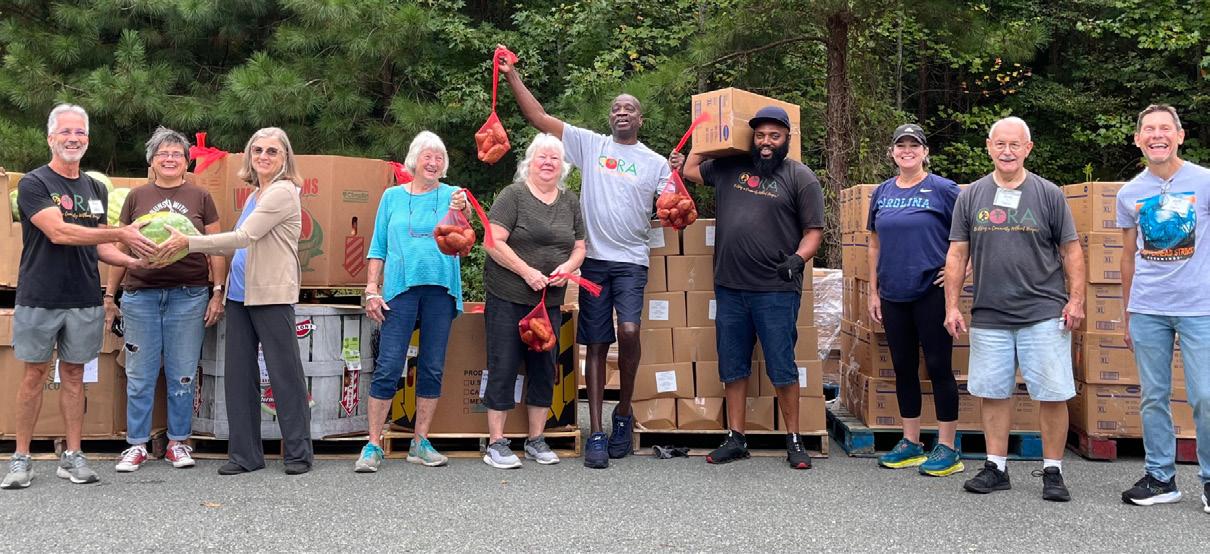


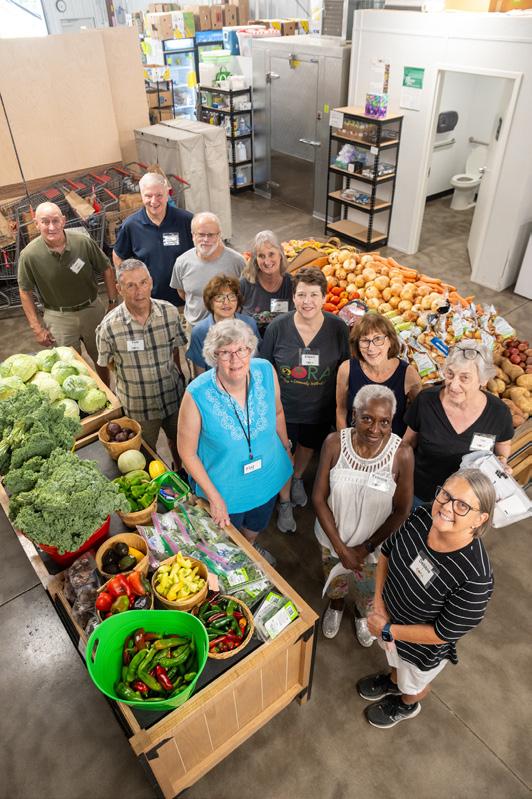
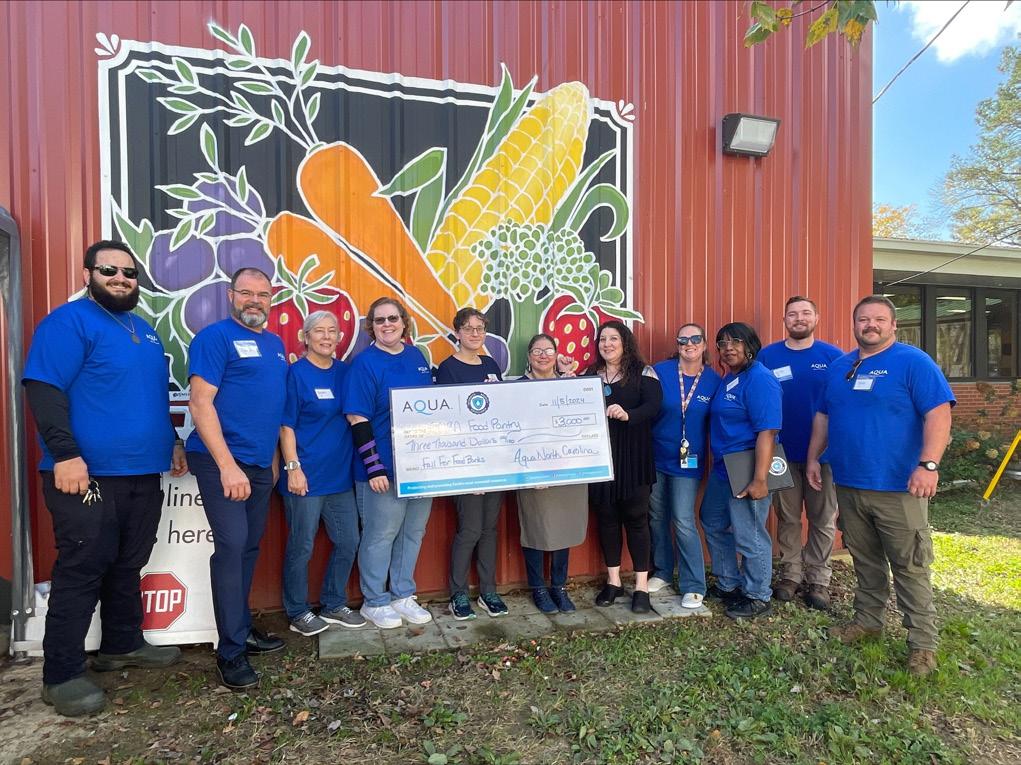

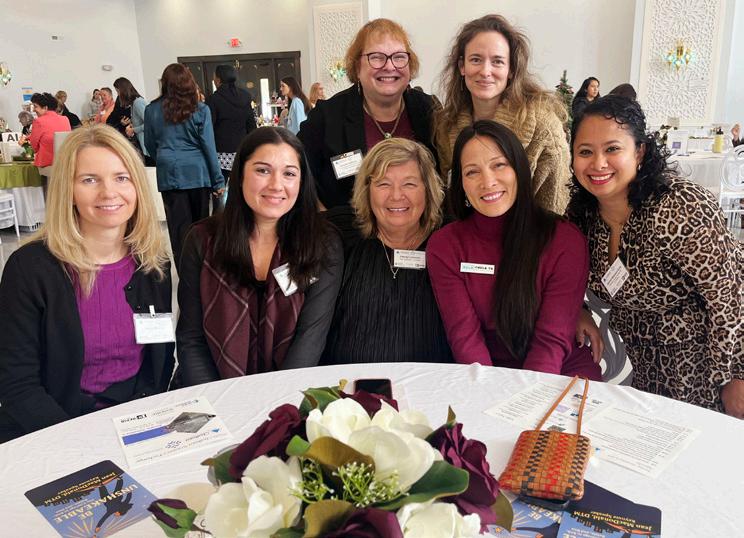
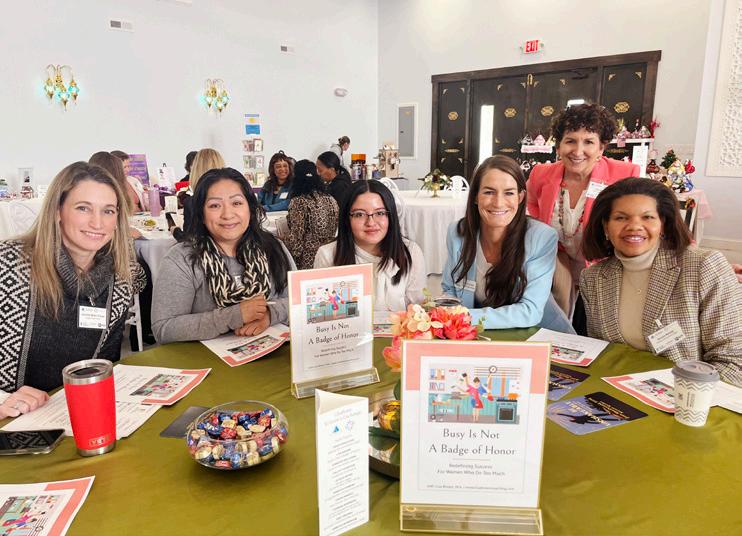
Photography by MELISSA CRANE
The Chatham Chamber of Commerce and The Professional Women of Chatham and Orange Counties teamed up to present the Chatham Women’s Exchange at Splendour Estate in Siler City on Nov. 11, 2025. The gathering welcomed women from across the region for a day of idea-sharing, relationship-building and celebrating female leadership. Guests heard words of wisdom from keynote speakers including: Jean MacDonald, founder of Business Brewing; Jes Averhart, CEO of Jes & Co.; and Sharon Hill, founder and president of Sharon Hill International. Attendees also enjoyed lunch from Ta Contento, shopped with local vendors and engaged in “table talk” discussion topics, like Erica Singleton’s “Making the Connection Stick.” cm




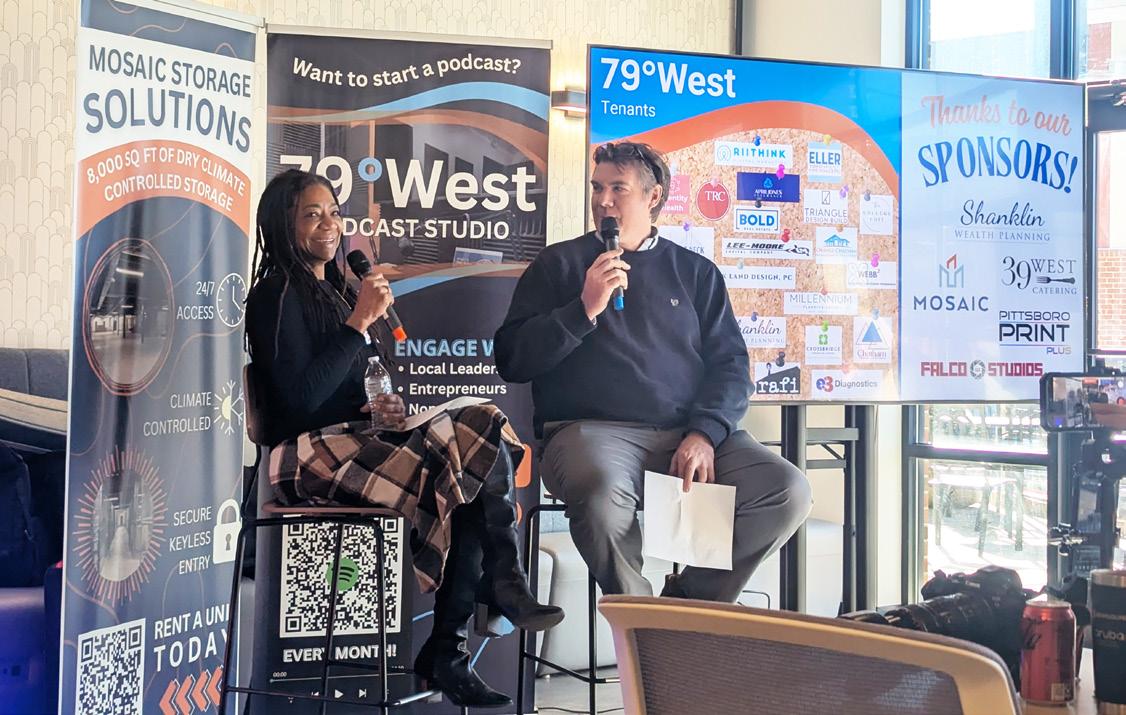
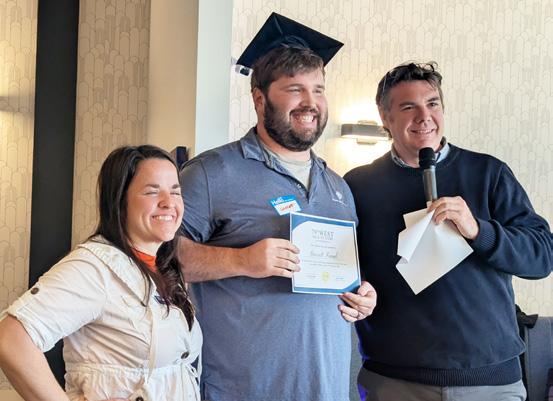
79°West Innovation Hub’s monthly breakfast club, a relaxed rendition of more traditional morning mingle events, featured Chatham County Commissioner Karen Howard at its Jan. 13 meet-up. The networking and educational panel is held on the first Tuesday of the month, and features music, updates from local business owners, complimentary breakfast and free coworking for the day. cm
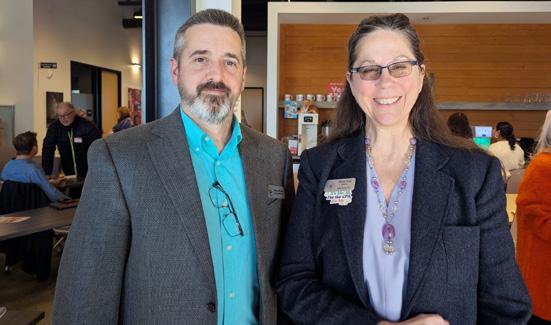
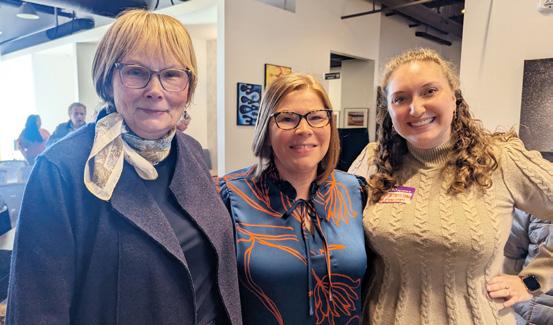



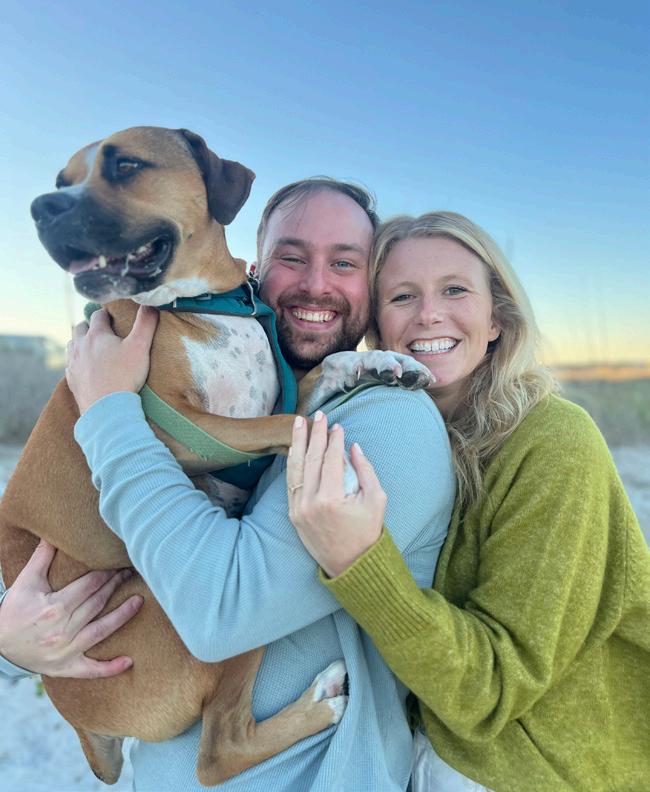
By ALISON GRAU
Photo by ALISON ZACHARIAS
Northwood High School alumnus Eric Williams and Jordan-Matthews High School alumna Ashley Myles ran in the same circle growing up, but their paths never quite crossed until one summer when they were both home from college. Although they immediately hit it off, Eric went back to UNC Greensboro and Ashley to UNC Wilmington at the end of their breaks, and life pushed them in different directions for seven years.
Eric was building his career as a financial advisor in Pittsboro, and Ashley was working in her current position at medical nonprofit Operation Smile in Virginia Beach, Virginia, when the two reconnected at a mutual friend’s beach house over Fourth of July weekend in 2019. The pair have been together ever since.
They traveled back and forth to see each other over the next year, but once the pandemic began, Ashley joined Eric in Pittsboro. They spent the year hiking, biking and tubing down the Haw River in Bynum, where they currently reside.
After six years together, Ashley knew a proposal was coming, but Eric still managed to catch her completely off guard. In November 2024, during a sunset walk on Carolina Beach with their dog, Biscuit, Eric dropped down on one knee.
Ashley accepted, and the two celebrated at one of their favorite restaurants, Indochine, that night, and with their friends and family in the following days.
The couple will tie the knot June 20, 2026, at First Colony Inn in Nags Head, Outer Banks. cm

TITLE SPONSOR

GOLD SPONSORS
SPONSORS







At DeeTox, we believe beauty and wellness begin with balance — inside and out. As a physician-owned aesthetics and wellness practice, we combine medical expertise with an artistic eye to create natural, lasting results that help you look and feel your best.
Our team has over 50 years of combined experience, and is passionate about guiding you on your journey to renewed confidence through personalized care. Every treatment plan is tailored to your goals, ensuring safety, precision, and a subtle, refreshed result that’s unmistakably you.
Injectables - From Botox® and Daxxify® to fillers and biostimulators, our precise approach enhances natural features while maintaining a beautifully authentic look.
Skincare - Renew and refine your skin with medical-grade treatments — including Hydrafacial, laser rejuvenation, microneedling, and medical-grade products tailored to your unique needs.
Wellness - Reignite your energy, balance your mood, and restore vitality through customized hormone therapy and/or medical weight loss programs designed for both men and women. Receive ongoing support focused on sustainable, healthy results.



Chapel Hill, NC | Burlington, NC
(919) 897-7287 | (336) 439-3266
Book your consultation today
www.deetoxskin.com @deetoxskin
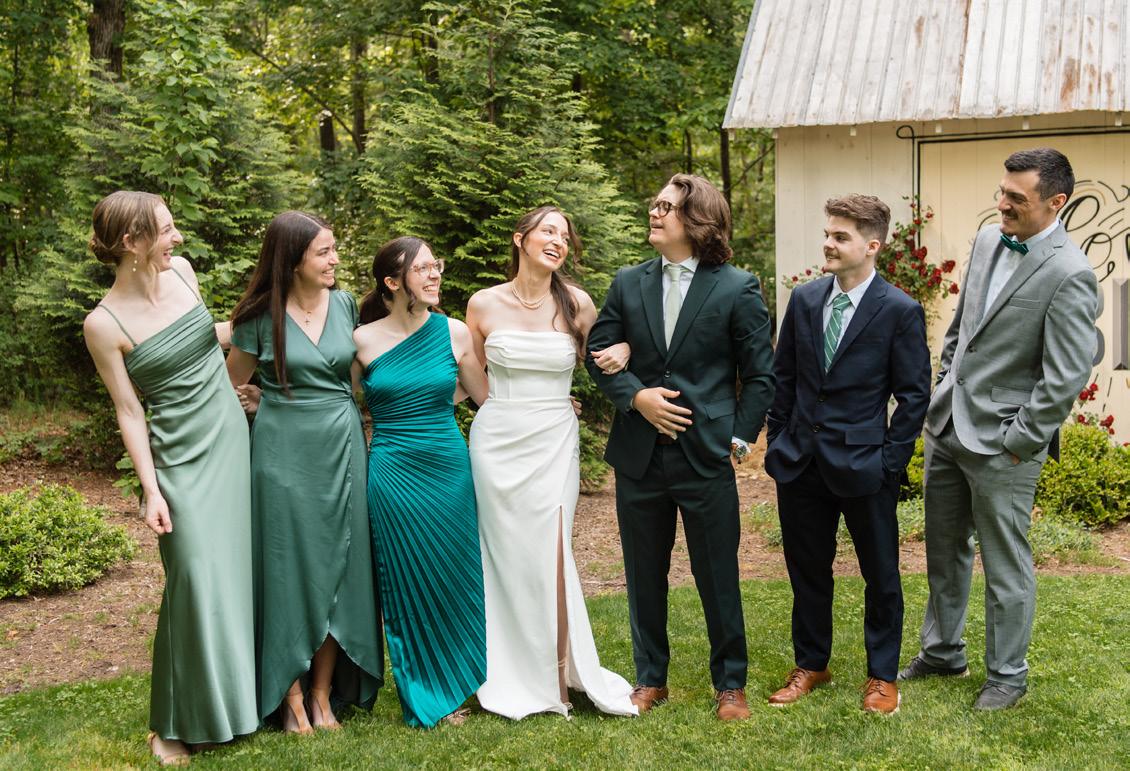
By LIBBY WAKEFIELD
Photography by STELLA & BIRDIE PHOTOGRAPHY, STELLAANDBIRDIEPHOTOGRAPHY.COM
Megan Walker, a graduate of Northwood High School, had met Boone Owenby plenty of times through her older brother, Peyton Walker. It wasn’t until Megan’s 21st birthday party that she and Boone finally saw one another in a new light.
“We laugh because my grandma called it before I was even born,” Megan says. “As soon as my parents found out I was going to be a girl, she said, ‘You know she’s going to marry one of

her brother’s friends, right?’ And that’s exactly what happened.”
Boone proposed at Wooden Robot Brewery in Charlotte, where he recreated their first date. The wedding weekend began with pastries from Guglhupf in Durham, a nod to the couple’s first honeymoon destination, Bernkastel-Kues, Germany.
The ceremony and reception were both held at The Parlour at Manns Chapel on May 2, 2025. Sage, forest green and gold accents made the event feel like an intimate backyard garden party, complemented by floral arrangements from Meg’s Flowers, and invitations, signage and personalized wedding newspapers designed by the bride.
“I grew up going to art camps in the chapel and going to the hear the carols every Christmas season,” Megan says. “I used to dream about getting married there one day, so it was so special to be surrounded by all our loved ones and celebrating our love.”
The newlyweds now reside in Belmont, North Carolina. cm