DEEP DIVES Durham natives Justin Laidlaw and Eliza Mathew sip craft cocktails in the luxe ambiance of Annexe, one of several downtown basement bars. OCTOBER/NOVEMBER 2023 DURHAMMAG.COM EXPLORE HIDDEN GEMS IN THE HEART OF THE BULL CITY PG.26 NINTH STREET’S NEW ERA 32 LATEST DEVELOPMENT UPDATES 48 OUR SCHOOLS GUIDE 84 DOWNTOWN DELIGHTS
Redefine retirement.
The
TERRACES
HURRY — PRESALES HAPPENING NOW!

New contemporary apartment homes for retirement. Learn more at forestduke.org/TheTerraces.

BECOME A CHARTER MEMBER TODAY!
KEEP GROWING SM
Vibrant living. Continuing care. In the heart of Durham. 800-278-9729 / forestduke.org/TheTerraces

magazine
OCTOBER/NOVEMBER 2023 VOL 16 NO 5
durhammag.com
EXECUTIVE MANAGING EDITOR
Amanda MacLaren amanda.maclaren@durhammag.com
EDITORIAL
EDITOR, CHAPEL HILL MAGAZINE
Jessica Stringer
MANAGING EDITOR, CHATHAM MAGAZINE
Morgan Cartier Weston
MANAGING EDITOR, HEART OF NC WEDDINGS
Renee Ambroso
EDITORIAL ASSISTANT
Leah Berry
SENIOR STAFF WRITER
Anna-Rhesa Versola
EDITORIAL INTERNS
Alana Bleimann, Sinclair Holian, Avery Householder, Mila Mascenik, Lena Miano, Haley Pineles, Izzy Quagliaroli, Lauren Rouse, Katie Scherner, Liza Smith and Catherine VanSchaick
ART
CREATIVE DIRECTOR
Kevin Brown
GRAPHIC DESIGNER/PRODUCTION COORDINATOR
Lindsay Scott
GRAPHIC DESIGNER
Khadijah Weekes-Nolan
PHOTOGRAPHER
John Michael Simpson
Advertising
For advertising inquiries, email advertising@durhammag.com
Melissa Crane melissa.crane@trianglemediapartners.com
Lauren Phillips lauren.phillips@trianglemediapartners.com
Kem Johnson kem.johnson@trianglemediapartners.com
Lucinda Poole lucinda.poole@trianglemediapartners.com
Dana Statkun dana.statkun@trianglemediapartners.com
DIRECTOR OF CREATIVE OPERATIONS
Ashlin Acheson
Corporate FOUNDER/CHAIRMAN
Dan Shannon
PRESIDENT, TRIANGLE MEDIA PARTNERS
Ellen Shannon
PRESIDENT, TRIANGLE DIGITAL PARTNERS
Rory Kelly Gillis
VICE PRESIDENT, FINANCE & ADMINISTRATION
Amy Bell
ACCOUNTING ASSISTANT AND ADMINISTRATION MANAGER
Cassady Orsini
VICE PRESIDENT/PUBLISHER, CHATHAM MAGAZINE Chris Elkins chris.elkins@trianglemediapartners.com
PUBLISHER, HEART OF NC WEDDINGS
Jenna Parks
CREATIVE DIRECTOR, TRIANGLE DIGITAL PARTNERS
Sally Scruggs
SEARCH MARKETING MANAGER
Lizzie Jones
DIGITAL OPERATIONS MANAGER
Brian McIndoo
DIGITAL GROWTH STRATEGIST
Morgan Cartier Weston
DIGITAL CONTENT SPECIALIST
Renee Ambroso
DISTRIBUTION
Matt Bair
Durham Magazine is published by Triangle Media Partners Subscriptions, $38 for two years, are available at durhammag.com. To purchase copies, call 919.933.1551.

2 | durhammag.com | october/november 2023
Customized Care for Your Mind, Body, Spirit, and Emotional Health
Duke Integrative Medicine offers customized, patient- centered health care combining conventional medicine and proven complementary treatments. We empower you to embrace the healing process as well as lifelong well-being .

Services Available:

§ Acupuncture
§ Health Coaching
§ Integrative Primary Care and Consultations

§ Massage Therapy
§ Nutrition Counseling
§ Public and Professional Programs

§ Psychotherapy
§ Yoga Therapy
Call for an appointment 919-660-6826 Duke Integrative Medicine
Erwin Rd, Durham, NC
DukeIntegrativeMedicine.org
3475
27705
Turning the Page
The only constant in life is change, right? It certainly presents itself as a consistent theme when it comes to our annual downtown issue. This year, our development map (page 48) features nearly 50 projects in various stages of completion; we check in on the state of downtown office and retail spaces as well as why companies big and small continue to set up shop in this community (page 106); and we look a bit farther west at the growth and transitions along Ninth Street (page 32). The latter story is particularly special to me, as nearly 11 years ago I wrote a similar article, “99 Reasons to Love Ninth Street,” in which I attempted to capture the essence of the historic district and what made it so remarkable. The avenue would become my second home soon after, when I moved into a duplex in Old West Durham. If I wasn’t eating a hummus pita wrap and seasoned fries (sans ketchup, of course) at International Delights or picking up a gift at Bull City Fair Trade (then One World Market), I was bellying up to my spot at the bar at Dain’s Place or getting my caffeine fix – and a gelato – at Francesca’s. Our cover stars, Justin Laidlaw and Eliza Mathew, concur: “Bahn’s Cuisine and Cosmic Cantina on Ninth Street are classic institutions of Durham. They held it down before downtown Durham got cool.”
YOUR GUIDE TO THE TRIANGLE
Looking for food, arts and entertainment in Durham and beyond? Follow “The Triangle Weekender” on Instagram.
But downtown did, indeed, get cool. Cities, like life itself, are never static. They evolve, grow, and adapt with the ebb and flow of time. As Durham continues on its unstoppable march into the future, we invite you to seek out hidden gems in various corners of downtown, waiting to be uncovered on page 26. We also showcase the artistic identity that thrives in our city by exploring the new home of an improv theater group at Golden Belt. And for those looking for budget-friendly downtown date recs, turn to page 31. There will always be challenges mixed with opportunities as our city grows and shifts. But at the heart of every transformation lies the enduring spirit of our community. The stories, memories and experiences that have shaped Durham are also the threads that bind us together – let’s use this collective tapestry as a guide toward the future.
DELIGHTFUL DIGS
Show off your home or garden in our pages, or nominate your neighbors’ fantastic abode!

MEMORIES THAT LAST A LIFETIME
amanda.maclaren@durhammag.com


Did your kid have the best summer camp experience? Tell us about it, and your response could appear in our February/ March issue!

4 | durhammag.com | october/november 2023 letter
THE COVER
Photo by John Michael Simpson
FOLLOW US
(919) 806-3638 FOLLOW US @MaxHugoInteriors MAXHUGOINTERIORS.COM New Construction Renovation & Remodeling Decorating Design Consultations Custom Window Treatments Hunter Douglas Centurion Gallery VIVIDLY INSPIRED INTERIOR DESIGN


Hurry for Best Seats November 24 - 26 December 5 - 10 December 13 - 17 January 2 - 7 February 6 - 11 February 27 - March 3
DOWNTOWN
12 The Big Picture
The allure of the Durham Farmers Market is hard to resist
26 Hidden Gems
Unearth some of the Bull City’s best-kept secrets
31 Budget-Friendly Bliss
10 free downtown date ideas
32 Ninth Street’s New Era
This bustling and vibrant thoroughfare enters its next chapter
42 Funny Business
Mettlesome improv group finds a home at Golden Belt
48 On the Rise
The latest downtown development news
HOME & GARDEN
54 Grand Designs
The Rubinsteins found a diamond in the rough with this century-old Roxboro Street residence
64 A Magic Carpet Ride
Reflections on The Persian Carpet’s journey as its owners prepare to close the showroom and pivot their business
SCHOOLS & EDUCATION
70 Guiding Lights
A roundtable discussion on the importance of mentoring youth
74 Linked In Durham Academy’s girls golf team defends its first NCISAA championship title this season
76 Book Buddies
Two young authors use the power of literature to help their peers

82 A Foundation For the Future
Northern High School is Durham’s newest in 30 years
84 Directory of Independent, Regional Boarding, Charter and Application Program Schools
DURHAM INC.
102 Hot Shot: Tim Gabel
We chat with RTI International’s newest president and CEO
106 The State of Downtown Office and Retail Space
A closer look at the current growth and movement in the City Center and how its businesses and shops continue to foster a live-workplay lifestyle for employees and customers alike

DEPARTMENTS & COLUMNS
4 Letter from the Editor
8 Go.See.Do.
Chill out with these fantastic fall events
20 Noted.
What we’ve heard around our city …
110 Engagement & Wedding
PEOPLE & PLACES
14 Durham Magazine’s Best of Durham Party
16 Duke Energy’s Day of Champions
SPONSORED CONTENT
38 Downtown Durham
Explore retail, dining, arts and more …
96 Health Care
Meet local dentists and providers
59 Adopt a Pet
Meet a cat and dog looking for their loving forever homes!
october/november 2023
contents
PHOTOGRAPHY BY JOHN MICHAEL SIMPSON

Blacktoberfest
OCT. 14
Black Brew Culture partners with Mike D’s BBQ to showcase craft beer and bountiful barbecue as part of the monthlong celebration highlighting Black-led breweries, distilleries and businesses, among other creative endeavors. Come out to Garland Court in Old East Durham for live music, interactive activities, beverages and to meet with vendors while upwards of 20 culinary crews compete in a four-part barbecue contest that includes chicken, pulled pork, ribs and brisket.

Bull City Race Fest and Food Truck Rodeo

OCT. 15
Lace up your running shoes for the 11th annual race, which begins and ends at the American Tobacco Campus and winds through downtown, Trinity Park and Duke University’s campus. Choose from a half-marathon or 5-mile run, and refuel with a snack from one of several food trucks at the postrace celebration – which also features a beer garden, kids’ zone and live entertainment – at Diamond View Park.
do see go
Trombone Shorty & Orleans Avenue
NOV. 2
The New Orleans native and renowned musician performs a mix of soul, funk and rock songs off his latest album, “Lifted,” at the Carolina Theatre. Special guest New Breed Brass Band – featuring band leader Jenard Andrews, Trombone Shorty’s nephew – joins the trombonist on stage.

CHILL OUT WITH THESE FANTASTIC FALL EVENTS
Compiled by Lena Miano
'Moonchild': Celebrating the Life & Music of Yusuf Salim

OCT. 27-28
Duke Arts presents a celebration of the late jazz pianist, composer and mentor who spent the last three decades of his life establishing a thriving, nationally visible jazz scene in Durham. North Carolina Central University jazz studies director Robert Trowers kicks off the special two-day event at the historic Hayti Heritage Center with an electrifying big band – including Grammy-nominated vocalist Nnenna Freelon, Eve Cornelious and the award-winning NCCU Jazz Band – performing new arrangements of Yusuf’s compositions. Nnenna, Eve, Frankie Alexander, Lois Deloatch and Adia Ledbetter spotlight the intimate lyrical explorations of Yusuf’s music the following day. Don’t miss the free public panel discussion and a preview of the documentary “Moonchild” by Kenny Dalsheimer
8 | durhammag.com | october/november 2023

Barktoberfest

OCT. 28
Durham Parks and Recreation partners with Beyond Fences to host a howling good time at Durham Central Park Dress up your canine companion for the costume contest, capture memories at the photo booth, enjoy local brews and eats, visit the pet market, and learn about local foster and adoption organizations while The Mighty Messengers of Soul perform all afternoon long.
Iron Pour

NOV. 4
Liberty Arts hosts this seventh annual event at Durham Central Park, where 5,000 pounds of molten iron is poured into molds in an exciting, fiery display. This fundraiser for Liberty Arts, a casting facility offering workshops and artist studios, includes drumming performances from Batalá Durham, fire breathers, kid-friendly activities, an art market, raku firing, food trucks and craft beer. Those interested in this event are encouraged to create their own tile molds during a scratch block workshop in October before the big event.
Durham Pottery Tour

NOV. 11-12
The 10th annual celebration of our local pottery scene and its craftspeople invites the public inside the spaces where these artists work. Expect to learn the various techniques and ideas behind the functional and decorative wares – from vases to sculptures to teapots and more – of potters including Cynthia Aldrich, Gaines Bailey and Larry Drowning, among others. Stop by Claymakers and the Durham Arts Council’s Clay Studio to see the work of their students.
Durham Art Walk Holiday Market
NOV. 18-19
Kick off the holiday season with the Durham Arts Council during this annual weekendlong shopping experience in the heart of the City Center. The market allows patrons to stroll through and shop from dozens of local artists and craft vendors, enjoy live music and dine at downtown restaurants.

Tails at Twilight
NOV. 18
The Animal Protection Society of Durham hosts its 52nd annual gala at the Washington Duke Inn & Golf Club. The one-of-a-kind fundraiser supports APS in its mission to provide food, shelter, medical attention and care to thousands of animals in need every year, and includes a live auction of unique items and experiences interspersed with fun and heartwarming tales. Tickets include dinner and drinks, and the silent auction is available for anyone who wishes to participate.

'Funny Girl'

NOV. 7-12
The Durham Performing Arts Center presents this iconic Broadway classic, which follows the story of Fanny Brice’s path to fame. Tony Award-winning director Michael Mayer, composers Bob Merrill and Jule Styne, and choreographers Ayodele Casel and Ellenore Scott revive Harvey Fierstein’s updated book based on the original classic by Isobel Lennart. Theater fans are sure to appreciate this bittersweet comedy that highlights determination, confidence and humor.
10 | durhammag.com | october/november 2023 Go See Do
(Clockwise from top left) Page 8: Blacktoberfest photo courtesy of Black Brew Culture; Trombone Shorty photo by Emily Butler Photography; Bull City Race Fest photo courtesy of Bull City Race Fest; Page 10: Barktoberfest photo courtesy of Durham Parks and Recreation; Durham Pottery Tour photo courtesy of Dalton Hughes; Tails at Twilight photo by Amy Prager; 'Funny Girl' photo by Evan Zimmerman

the big picture
Market Forces
Filled with smells of freshly picked flowers and baked goods, the sounds of local musicians and the clacking of the Poetry Fox’s typewriter, the allure of downtown’s Durham Farmers Market is hard to resist. So, don’t. Spend an idyllic morning gathering your goods for the week every Saturday.

12 | durhammag.com | october/november 2023
– John Michael Simpson

october/november 2023 | Durhammag.com | 13
&places
Best Party Ever
 BY LEAH BERRY | PHOTOGRAPHY BY JOHN MICHAEL SIMPSON
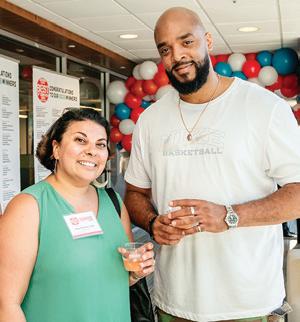
Winners of Durham Magazine’s 13th annual Best of Durham poll gathered for a celebration held in their honor on June 26 at Frontier RTP. Amid decor from American Party Rentals, Amazing Balloons and Floral Dimensions, representatives from our readers’ favorite businesses and organizations mingled with one another while relishing in this milestone achievement. Guests had the chance to check out party sponsor Hendrick Subaru Southpoint’s all-electric 2023 Solterra and groove to tunes supplied by Verve Event Productions/EastCoast Entertainment. An Imagine Circus magician performed tricks for the crowd, ZimZoom Photo Booth captured fun moments and memories, Bulkogi, The Pit Durham Event Venue and Saladelia Cafe & Catering shared some



3
4
5
7
14 | durhammag.com | october/november 2023 people
1 Sponsor Hendrick Subaru Southpoint’s Ashley Lamonds, Anna Latta, Poonam Nandani and Joseph Rossman.
2 Bulkogi’s Charlie Ji and Triangle Media Partners’ Ellen Shannon.
Mike McRoberts, Lisa McRoberts and Karen Poulsen of Growler Grlz.
Jennifer Denny and Bridget Ryan of Bridget A. Ryan, CPA, PLLC and Carl Johnson of Carl Johnson Real Estate at Coldwell Banker HPW.
Doris Cramer with Lucie’s Home Services and Michele Castle of Isagenix. 6 May Wahdan-Lloyd and Dirk Watson of Jewelsmith.
1 4 5 6 7 2 3
VerveEvent Productions/EastCoast Entertainment’s Seth Felder.

Best Party Ever


(CONTINUED)


of their best bites, Fullsteam Brewery and RTP Uncorked poured libations while Durham Coca-Cola Bottling Company shared sodas and water, and Two Roosters Ice Cream and Wonderpuff supplied their scrumptious sweets. Honorees had their fill of all the above prior to event sponsor Coastal Credit Union’s VP of Community Impact Tina Clossick’s presentation of Durham Magazine’s first-ever social impact award to Emily Krzyzewski Center CEO Adam Eigenrauch.


16 | durhammag.com | october/november 2023 People & Places nctheatre.com • 919.831.6941 TICKETS START AT JUST $35, BUY NOW! Dates, shows, artists, and venue subject to change. ELF-THEMUSICAL, RENT, ONCE ON THIS ISLAND, and Lerner and Loewe’s CAMELOT is presented through Music Theatre International (MTI). All authorized performance materials are also supplied by MTI. www.mtishows.com CURTIS BROWN PHOTOGRAPHY MARTIN MARIETTA CENTER, RALEIGH
8 10 11 9


october/november 2023 | Durhammag.com | 17 People & Places
14 15 12 13
8 Lindsay Cross and Kelli Garriott of Spiffy. 9 Juan DiGuilio and Sam DiGuilio of Succotash Southern & Creole Kitchen. 10 Coastal Credit Union’s Tina Clossick and Emily K Center’s Adam Eigenrauch. 11 Urban Axes’ Dom Reade and Anna Clemency with Emily Herndon and Craig Herndon of CT Wilson Construction Company. 12 Amanda Knight and A. Allister Cooper with Ellis Family Law. 13 Mark Williams and Katrina Williams of Fifty Two Hundred Photo. 14 Triangle Media Partners’ Kevin Brown, Khadijah Weekes Nolan, Renee Ambroso and Amanda MacLaren. 15 Nikolas Spaulding and Andrew Justad of Pure Soul with Joel Miles and Anna Bloch of Flying Bull Beer Company.
Backpacks & Big Dreams
BY IZZY QUAGLIAROLI
Duke Energy hosted its sixth annual Day of Champions at the Emily Krzyzewski Center in August, connecting students and their families with local businesses and universities to inspire and empower our city’s youth. Nearly 250 bags stuffed with school supplies were handed out thanks to the support of generous sponsors like the Durham Chamber of Commerce, Durham Technical Community College and many others. Students participated in various activities and games with athletes from Duke University and North Carolina Central University throughout the day. PDQ provided lunch, which boosted the kids’ energy levels for dancing to the lively music from WNCU 90.7 FM. Organizations like ISLA NC, Durham YMCA, Durham Children’s Initiative, El Centro Hispano, Hayti Heritage Center, Boys & Girls Clubs of Durham & Orange Counties and Student U set up booths around Emily K’s gymnasium to give guidance, and useful information to build on knowledge and studies. Meanwhile, representatives from Kompleks Creative, My Local CFO, M & F Bank and AT&T encouraged the young students to explore various career paths.
player Wyatt Thompson, Zacchaeus Lassiter, 2, Zakharia Lassiter, 11, Zaria

Lassiter, 6, and Duke University baseball players
Jackson Emus and Zac Morris. 3 Durham Public Schools Senior Executive Director of Public Affairs

Sheena Cooper, Superintendent Pascal Mubenga, Sen. Mike Woodard and Durham County Library

Development Officer Sara Stephens. 4 Durham Technical Community College alum Jesus Gomez, Durham Tech International Student Service & Study Abroad Director Patrick Liu and Britney

Nava Munoz. 5 Duke Energy’s Indira Everett and Tequila Kearney. 6 Durham Tech nursing student


Mariana Martinez and Duke Office of Durham & Community Affairs Senior Education Partnership

Coordinator David Stein. 7 ISLA NC Community
Advancement Officer Dominique Marie Ospina and Education Programs Manager Cindy Salazar. 8 Emily K Center Senior Director of Program Operations Donovan Livingston and Emily K Center Chief Advancement Officer Sandy York.
18 | durhammag.com | october/november 2023 People & Places
1 Makayla Carmichael, Kierra Russell, Sheila Davis, Lori McFadden, Jumeekah Ingram and Amy Claxton of M & F Bank. 2 Catorra Lassiter, Duke University baseball
1 4 5 6 7 8 2 3






Come to our $4,000,000 Retail Store Closing Sale Starts Friday, September 15 and lasts until inventory is gone. Every item in our inventory will be marked down for immediate sale. After the sale is completed, our retail store will be closed permanently – It’s Now or Never! Open Monday, Thursday, Friday, Saturday, Sunday, 10am to 6pm | Closed Tuesday and Wednesday 5634 Durham Chapel Hill Blvd. | Corner of I-40 and 15-501 (Exit 270) | www.persiancarpet.com The Persian Carpet is Closing! It’s the End of an Era!
noted.
WHAT’S UP, DOWNTOWN
Outer Loop Arts is now home to Tigress, a boutique, gift and art shop owned by Rachel Erdheim Rachel, whose pieces are displayed in Outer Loop’s gallery, started the business in January, selling artwork, accessories, homeware, bathware, clothing and more.

WHAT WE’VE HEARD AROUND OUR CITY …
space that was previously occupied by Bull Durham Fabrications this past summer, adding 2,600 square feet to the gallery, which features several other local creators. It also has a large meeting space that can be reserved for meetups, retreats, workshops and lessons.
The Full Frame Documentary Film Festival will return in 2024 after a yearlong pause due to a strategic planning review by Duke University’s Center for Documentary Studies. The fourday festival, which features films and panel discussions and was held virtually from 2020 to 2022 due to the COVID-19 pandemic, will take place at the Carolina Theatre and the Durham Convention Center April 4-7.
HISTORIC MOMENT
Durham native and Pur Bella
Naturals owner Lashanda DeBerry will open Self Care Sunday Market – offering a curated selection of self-care products, including her own creations – on Oct. 7 at 419 Foster St., an expansion of Cecy’s Gallery affectionately named Cecy’s 2.0. Cecy’s acquired the

Project development and construction firm Skanska completed a $10 million, 39,000-square-foot renovation at the Durham Bulls Athletic Park in August. The home of the Durham Bulls now includes larger clubhouses for visiting and home

Ella West Gallery celebrated its grand opening in August and launched its inaugural exhibition, “Return to Parrish Street: A Dream Realized.” Founded by Linda Shropshire (pictured) as a space to champion underrepresented artists, the gallery is in the heart of Durham’s historical Black Wall Street at 104 W. Parrish St. “There’s an energy and vibrancy that echoes the history of the gallery’s home ... where the printing presses of 1920s era Black newspaper ‘The Durham Reformer’ once operated,” Linda says. The exhibition, on view through Oct. 21, explores themes of identity, vulnerability, dreams and destiny connected to the historical location. “The three artists featured in the exhibition, Kennedi Carter, Clarence Heyward and Ransome, express a sense of agency and autonomy that embodies the spirit of Ella West Gallery and, more importantly, the neighborhood the gallery calls home.” Linda says.
teams, an expansion that doubled the size of the Bulls’ locker room, a new locker room for female referees and trainers, enhanced retail configurations at the Ballpark Corner Store, a new Hall of Fame hallway paying tribute to Bulls’ history and more. Fans can now watch players warm up before games in the new 3,750-squarefoot, air-conditioned indoor hitting facility with two hitting tunnels.
Cicely Mitchell is heading the creation of 240-capacity jazz venue Missy Lane’s Assembly Room Located at 310 E. Main St., it’s slated to open late this fall.
ON THE MOVE
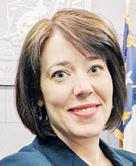
Gov. Roy Cooper appointed Kendra MontgomeryBlinn to serve as district court judge in Judicial District 14. Kendra, an assistant district attorney and the Special Victims Unit team lead in the Durham County District Attorney’s Office, fills the vacancy created by Shamieka Rhinehart’s appointment to the Superior Court.
20 | durhammag.com | october/november 2023
PHOTO BY MORGAN CRUTCHFIELD PHOTOGRAPHY
PHOTO COURTESY OF SKANSKA
➜ ➜
COMPILED BY: SINCLAIR HOLIAN
Pet hospitality, boarding and day care facility GoDog announced plans to open a second Durham location on Miami Boulevard by the end of 2023. The company, whose flagship location is at 4350 Garrett Rd., also recently announced its partnership with growth equity firm Level 5 Capital Partners to jumpstart the company’s franchise platform.

Boxyard RTP welcomed specialty game and toy store Guildhall Games as a limited-time vendor for the next three months. Owners Jake Guild and Nicole Guild offer a curated selection of games and toys for all ages, including board games, plushies, dice, enamel pins, paint-by-numbers and more.
Stadium 10 Theater at Northgate Mall closed its doors in August. The company wrote via Facebook, “With great sadness we have had to permanently close. We have enjoyed being your movie destination since 2006 and will miss you all. Goodbye, Durham.”
AR Workshop Durham, a DIY studio and gift boutique specializing in custom home decor, moved from Brightleaf Square to a new space at 2816 Erwin Rd. in late September.

“Moving to a larger facility will allow me to share my knowledge and passion for neon fabrication with a wider audience through larger and more varied classes at all expertise levels,” owner Danielle “DJ” James shared in her announcement.

NEWS BITES
• Queeny’s was named one of the South’s best new restaurants of 2023 by Southern Living, the only Triangle restaurant – and one of only two restaurants in the state – to make the list! Restaurants all over the region were evaluated by Southern Living editors based on their food quality, service, hospitality and the restaurant’s support and treatment of its staff and the wider community.
Trash-prevention nonprofit Don’t Waste Durham founding CEO Crystal Dreisbach accepted the CEO position at national organization Upstream in August. “I’ll still be working every day toward the reuse movement’s vision for 30% of the packaging of products to be durable and reusable in the U.S. and Canada by 2030,” Crystal says. Crystal will transition to senior advisor at Don’t Waste Durham, which is working to identify its next CEO.
Neon fabricator Hex Neon is moving from its space in The Fruit to a larger studio in southwest Durham.
SHARE YOUR NEWS!
Submit noteworthy items, from award and scholarship winners to new book and album releases.
Felicia Brown is the new children services manager at the Durham County Main Library Felicia graduated from North Carolina Central University’s School of Library and Information Science in 2013, and went on to work as a school librarian and teen services librarian. “My passion lies in fostering safe environments where children, tweens and teens can express themselves and evolve,” Felicia says.

• Flying Bull Beer Company will expand to a second location at 300 Morris St. in the Durham Innovation District Construction is underway, with anticipated completion in December and a grand opening soon after.

• Picnic co-founder Wyatt Dickson sold the whole-hog barbecue restaurant, which opened in 2016, to longtime customer and friend Chris Holloway at the beginning of July. “Chris and I share the same barbecue philosophy, and he will bring new

october/november 2023 | Durhammag.com | 21
Durham ranked as the No. 7 top real estate market in the country in a report by WalletHub, which evaluated 300 cities based on current market dimensions as well as affordability and economic environment.
PHOTO BY JOHN MICHAEL SIMPSON
PHOTO BY JOHN MICHAEL SIMPSON
➜ ➜ ➜
➜ ➜ ➜
PHOTO COURTESY OF JOEL MILES
PHOTO BY SABRINA ROBINSON
energy and fresh ideas to the table,” Wyatt wrote in a statement on the restaurant’s Facebook page. “And though leaving is bittersweet, I can’t think of anyone better to carry on the whole-hog tradition.”

• Co-founder and longtime owner Claudia Kemmet-Cooper sold Guglhupf Bakery, Cafe & Restaurant to Sean Scott, a North Carolina transplant who co-founded the decade-old Subculture Coffee brand in Florida. “What she has built over the [p]ast 25 years is no small feat, and for her to entrust me with that legacy is something I do not take lightly,” Sean wrote in an announcement on Guglhupf’s social media. “[Guglhupf] is not changing. The staff are all the same. The food will continue to be excellent. And we are here to add a new
noted
WHAT AN HONOR
Rep. Valerie Foushee (center) and NASA Deputy Administrator Pam Melroy (left) visited the Museum of Life and Science (pictured right is MLS President and CEO Carrie Heinonen) on Aug. 30 to highlight the important role of museums and science centers in fostering learning, innovation and collaboration in local communities.

Durham secured the No. 14 spot on WalletHub’s report of the best-run cities in the country. The assessment evaluated the effectiveness of local leadership by comparing the operating efficiency of 149 of the largest U.S. cities to reveal which are managed best.
Durham architect Bill Waddell of Distinctive Architecture placed third in the People’s Choice award for NCModernist’s George Matsumoto Prize – the state’s highest achievement for modernist residential architecture – for his work on Barbara Misuraca and Jeff Abel’s house, also known as the Forever Home.

GIVING BACK
The Durham Sports Commission’s One Team, One Durham Fund is available to Durham youth sports development nonprofits to help offset individually based costs, costs associated with clubs or teams participating in events and more. Proceeds from the Champion Durham Classic holiday high school basketball invitational held Dec. 26-28 at Hillside High School will benefit the fund; all proceeds from the DSC store support the cause, and organizations or individuals interested in supporting the fund can also sponsor or donate.
Duke Energy Foundation awarded an $11,000 grant to Durham Children’s Initiative, an organization dedicated to ensuring that students graduate high school and are prepared for college or to start their career, and its Learnto-Earn program, which supports more than 400 students with comprehensive, student-based case management designed to develop personal awareness, self-advocacy and benefit from interpersonal relationships with advocates. In late August, the Duke Energy Foundation also gave $20,000 in grants to local nonprofits, including Feed My Sheep and Food Bank of Central and Eastern Carolina, to support the immediate food insecurity needs for individuals and families in Durham who were affected by hard-hitting storms.
of 161 entries across the state, Durham Toffee’s Espresso Crunch came out on top, winning the overall Grand Champion award as well as first place in both the confections and snacks categories. Alley Twenty Six, which celebrated its 11th anniversary in September, took home second place in the beverages and beverage mixes category for its Alley Twenty Six Raspberry Syrup.
Home Builders Association of Durham, Orange & Chatham Counties CEO Holly Fraccaro was named the 2022 Executive Officer of the Year by the National Association of Home Builders during the 2023 Association Management Conference in Ohio on Aug. 22.

“This national award confirms what our association members already know – that Holly and her leadership are best-in-class across the nation,” says HBADOC President Lee Bowman.
State Farm made a $20,000 donation to benefit nonprofit Tuesday’s Children’s programs in North Carolina, South Carolina and Georgia during a ceremony at the Durham Bulls Athletic Park on Aug. 15. The donation was timed with the start of back-to-school to help provide career resources, financial literacy workshops and family engagement programs for families of fallen military service members and others who have been affected by terrorism, military conflict or mass violence.

Western Governors University North Carolina began offering a First Responders scholarship to EMTs, paramedics, police, firefighters, corrections officers, dispatchers and their spouses in the state. First responders are now eligible for up to a $4,000 scholarship that can be applied to any of WGU’s bachelor’s or master’s degree programs in health care, business, information technology and K-12 education.
Durham Technical Community College’s Mobile Health Lab – a program aimed to serve people facing health disparities due to financial barriers or insufficient

22 | durhammag.com | october/november 2023
➜ OTOHP YB J O HN MICHAELSIMPSON
PHOTO BY JOHN MICHAEL SIMPSON
➜ ➜ ➜ ➜
PHOTO COURTESY OF MUSEUM OF LIFE AND SCIENCE


october/november 2023 | Durhammag.com | 23 Celebrating 75 Years of the College of Design Leading by Design
• Fullsteam Brewery came away with two awards from the 2023 U.S. Open Beer Championship, winning gold in the coffee category for its Coffee is for Closers brew and bronze in the French and Belgian saison category for its Pierre Delecto.
• Durham Farmers

Market favorite Isaac’s Bagels opened its brickand-mortar at 1003 W. Chapel Hill St. in August. Stop by for an egg-and-

access to care in surrounding communities while also providing a hands-on clinical training site for students – has conducted more than 1,170 eye exams, provided 1,446 pairs of eyeglasses, served 1,700 children and adults, and trained 216 students in health care in the three years since its inception. The lab also recently became a Teen Mental Health First Aid site, teaching young people ages 15-18 how to identify, understand and respond to signs of mental health and substance use challenges among their friends and peers; it is the first resource of its kind in the area.
IN OUR SCHOOLS
Pearson Elementary and the School for Creative Studies moved out of low-performing status.
The Museum of Durham History launched its newest exhibit, “Stranger Times,” on Sept. 8. Inspired by the hit Netflix series “Stranger Things” and developed with input from Durham teens, the exhibit, which will be on view through spring 2024, explores the effects that the COVID-19 pandemic had on young people during their formative years.
Saturdays from 9 a.m. to 1 p.m. or Sundays from 8 a.m. to

Durham Public Schools’ test scores from the 2022-2023 school year showed student gains in every tested sub-group but two: eighth grade science and high school English II. Forty-five out of 51 participating schools met or exceeded their goals, and Hillandale Elementary, W.G.
For more than 30 years
in Chapel Hill and five additional years at Southpoint, Hendrick Subaru Southpoint has built a reputation of providing excellent customer service. Car buyers return to Hendrick Subaru Southpoint time after time – as evidenced by its customer retention rate of more than 73% – thanks to their positive buying and servicing experiences.

Hendrick Subaru has maintained its longevity not only through maintaining a high level of service to customers, but also through its commitment to the community. Through partnerships with local organizations, such as Paws4ever, Book Harvest and many others, the dealership supports and contributes to the wider community.
Now available at Hendrick Subaru, the Subaru Solterra is the first all-electric SUV with symmetrical all-wheel drive. First-time and returning customers are invited to test drive the Solterra today and experience the difference at Hendrick Subaru Southpoint.

North Carolina Central University saw a number of positive increases in several categories during its 2022-2023 school year. N.C. Central’s sponsored research funding increased to $53.1 million, up from $26.9 million the previous school year. Enrollment at the university increased by 5.5%, and more students are living on campus now than ever. The university also saw $16.4 million in scholarship donations, up from $15.1 million contributed in the 2021-2022 school year.
Lelia Lemons, a sophomore at the Southern School of Energy and Sustainability, was selected as one of 100 students from 11 countries to attend Novo Nordisk’s Future Scientists Summer Camp in Denmark this past summer. The five-day program included tours of production facilities, keynote speaker sessions, experiments at labs and time to explore the Copenhagen area.
subarusouthpoint.com


24 | durhammag.com | october/november 2023
SUBARU SOUTHPOINT
paid advertisement
noted
➜
PHOTO BY JOHN MICHAEL SIMPSON
William “Chip” Sudderth, chief of communications for Durham Public Schools’ Office of Public Affairs, retired on June 27. Former director of marketing Sheena Johnson Cooper now serves as senior executive director of public affairs, and former communications specialist Crystal Kimpson Roberts is now director of strategic communications.
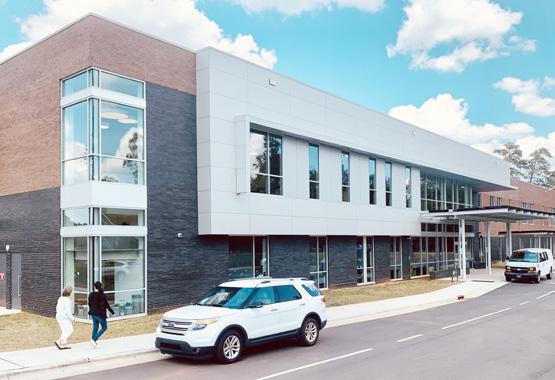
Durham Academy celebrated Dedication Day on May 19 to commemorate the opening of its new Gateway Center, a multimillion-dollar academic and administrative hub for its middle school campus on Academy Road. At 48,000 square feet, the new facility is the largest on any of Durham Academy’s campuses and features large lobbies, colorful hallways, a “grand staircase” and
several collaborative spaces.
The building marks the latest milestone in Durham Academy’s major campus redesign project, which saw its first new building in the completion of the Arts & World Languages Center in 2021.

MARK YOUR CALENDAR

Duke University, the Durham Arts Council and 21c Museum Hotel Durham host the inaugural Griot and Grey Owl Black Southern Writers Conference in November. The three-day conference is the first of its kind, dedicated to centering Black
Southern narratives in all genres of creative writing. The events – including writing workshops, book signings, poetry slams, spoken-word performances and more – start Nov. 10 at Duke and continue Nov. 11-12 at the Durham Arts Council and 21c.
The Home Builders Association of Durham, Orange and Chatham Counties and the HBA of RaleighWake County present the 2023 Triangle Parade of Homes from noon–5 p.m. Sept. 30 and Oct. 1, Oct. 6-8 and Oct. 13-15. The free, self-guided tour showcases new
home construction featuring the latest trends in technology, designs and home decor.
The Durham Art Guild, a nonprofit celebrating 75 years of supporting local arts, hosts its 69th annual Juried Exhibition from Oct. 20 to Jan. 5. Fifty to 75 jury-selected pieces of artwork will be exhibited in the Durham Art Guild’s Truist Gallery, where visitors can nominate their favorite piece of work for a people’s choice award.
IN OTHER NEWS
The music of short-lived indie band DeYarmond Edison can be explored in a new box set titled “Epoch,” featuring prominent artists Justin Vernon (Bon Iver), Brad Cook, Phil Cook and Joe Westerlund. Released by record label Jagjaguwar, the set features 5 LPs, 4 CDs and a 114-page biography by journalist Grayson Haver Currin that digs into the band’s brief-but-powerful time together.
noted october/november 2023 | Durhammag.com | 25 Investments Financial Planning Risk Management Chapel Hill, NC Fiduciary Since 1982 919.968.2977 2023
➜
PHOTO COURTESY OF CANNON ARCHITECTS
HIDDEN GEMS
Unearth a few of the Bull City’s best-kept secrets
 BY ANNA-RHESA VERSOLA PHOTOGRAPHY BY JOHN MICHAEL SIMPSON
Many visitors are familiar with the Durham Bulls Athletic Park and Durham Performing Arts Center, but exploring the rest of the American Tobacco Campus is oh, so worthwhile. Most know that it’s home to an assortment of restaurants, bars, retail shops, pop-up markets, event and flexible work spaces, and family-friendly activities. But it’s easy to discover many new points of interest on a quick stroll through the campus.
26 | durhammag.com | october/november 2023 DOWN TOWN
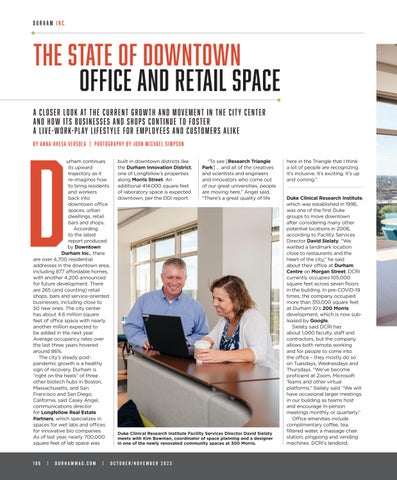
Walk along the man-made Old Bull River that bisects the Blackwell Street complex till you get to the The Cage, an outdoor facility in the center of the district where you can play a round of pick-up pickleball like Julie Witte, Roger Henderson and George Ploghoft (left) or take part in other fitness classes through the YMCA branch on campus. On the other side of the river lies the small cedar shake cabin (below) of Burt’s Bees co-founder Burt Shavitz, which was restored and relocated from Maine in 2017 to mark the entrance to the global headquarters of the natural health and beauty care products company. Head over to the office building and you’ll find an Observation Hive, home to thousands upon thousands of bees, which Burt’s Bees installed in 2014 to help educate visitors on the important role bees play in human and environmental health.
LOOK FOR ATC’S THREE MURALS THAT REFLECT THE CITY’S PAST, PRESENT AND FUTURE:


• In 2016, Burt’s Bees commissioned a beethemed mural by artist Matt Willey on the side of its offices. It serves as a reminder to focus on “the good of the hive” to make our community thrive for years to come, says Adam Klein, director at ATC and American Underground.
• Durham artist Kasia Konopka took her talents to the South Deck parking garage, painting a couple simple messages like, “Hi!” and, fittingly, “I ❤️ Durham” (above).

And next time you’re downtown, see if you can spot these other new murals!

october/november 2023 | Durhammag.com | 27
Grab a coffee at Yonderlust Cafe, then head outside to gaze upon the 60-foot “Positive Mental Octopus” mural by Darius Quarles at 109 N. Gregson St.
The Duke Park Community Mural Project celebrated the completion of “Abrazo Eterno” by Renzo Ortega – with help from artists and community partners including Camille Kerner and Zarazua Painting among others – in July at the Duke Park tennis courts.
Artist Kiara Sanders incorporated an ode to the late jazz musician Brian Horton in this mural at Atlas Durham Apartments.
• The lunch counter mural under the stairwell near The Power Plant pays homage to the life and times of the laborers who worked at the American Tobacco factory years ago.
For older adults, the Durham Center for Senior Life has free classes on subjects ranging from yoga to technology, American Sign Language to line dancing, African drumming to tai chi. The center also offers special events, educational workshops, movie screenings in their onsite theater and free daily lunches. Tours are available twice a week. Schedule a visit at dcslnc.org or call at 919-688-8247.
Back to the South Bling is the newest pop-up at Downtown Durham Inc.’s micro-retail space at 307 W. Main St. Led by founder Lynn Woods, the womanowned company makes ordinary items unique with a handcrafted bedazzling process. “It’s my way of making sure that every woman knows and understands their worth and the importance of letting their light shine and being the amazing person that they are,” Lynn says.
FRIENDS IN LOW PLACES
Bring your buddies to these happening, hot basement bars
Glori
This modern speak-easy in the basement of the historic Kress Building on West Main Street was formerly occupied by Quarter Horse Bar & Arcade.
“Having Glori in Durham means everything to us,” says owner Joi Deberry The bar is named for her husband and fellow owner John Deberry Jr.’s charismatic, life-of-the-party aunt. “[Glori] is different; it brings an elevated experience to the city, and it’s reflective of us. We feel good in this space, and the feedback we get is the same. Growing up here, we didn’t think something like this was possible – to be two kids from Durham and own a bar downtown.”
Glori is open Tuesdays through Saturdays from 5 p.m. until midnight.

Annexe
By day, Connell “Nellie”
Vail works as the chief financial officer at tech company Spreedly. At night, she gets creative as co-owner of an intimate basement bar that compliments the vibe of its upstairs sister bar and restaurant Bar Virgile, at 105 S. Mangum St.

“Downtown Durham made sense because we already knew the opportunity was there,” Nellie says. “Our philosophy has always been: The more restaurants, bars and small businesses open up, the better off we all are to be a part of a booming, vibrant [city].”
Annexe now also offers a late-night menu to accompany its mix of beats and bevies. It’s open Mondays through Thursdays from 6 p.m. to midnight and until 2 a.m. on Fridays and Saturdays.
Bad Machines is the state’s first electronic sports bar. Serving only North Carolina craft beer along with game-inspired cocktails, gamers ages 21 and older (or younger before 7:30 p.m.) are invited to come watch or participate in competitive video gaming tournaments or play games on the various consoles, from PlayStations to Nintendo Switches. For instance, up to four guests can play Mario Kart or Ultimate Smash Brothers at the bar.
Bad Machines also hosts a live jam band every two weeks featuring retro gaming music from Mario, Zelda, Final Fantasy, Street Fighter and more. Band members encourage locals to bring their instruments and play along.

The esports bar is located on the second floor of 108 E. Main St. and is open Tuesdays through Saturdays from 5 p.m. to midnight.
Corpse Reviver Bar & Lounge
Melissa Katrincic and her husband, Lee Katrincic, expanded their Conniption Gin-making business in 2020 to include a cocktail bar and lounge in Durham Distillery’s basement space, which takes its name from both the classic Corpse Reviver No. 2 cocktail as well as the coffins that were made in the building in the ’60s. Visitors can enjoy martinis, live music and more at the underground art deco–inspired bar at 715 Washington St. Spirits are poured from 4-11 p.m. Wednesdays through Saturdays and on Sundays from 2-8 p.m.
28 | durhammag.com | october/november 2023
DOWN TOWN
PHOTO COURTESY OF BACK TO THE SOUTH BLING
Cat Morris and Luke Knusden play Super Smash Bros. Melee while Miguel Cruz spectates at Bad Machines.
Arcana
In 2016, owner Erin Karcher and her former business partner, Lindsey Andrews, felt it was the right time to open a tarot-inspired bar, intending to draw “a community of artists, witches and musicians while providing a safe space for women and the queer community.”

“We carved out Arcana in a space that had never been a bar before,” Erin says about the location tucked behind its surface-level neighbors on West Main Street – Viceroy and Blossom & Bone Florals – in the historic Snow Building. The entrance is at the rear of the property, off the parking lot on Ramseur Street “I couldn’t be prouder of the space we’ve created in the community,” Erin says. “I love that folks think of us as a safe space.”
Arcana is open Tuesdays through Thursdays, 6 p.m. to midnight, and on Fridays and Saturdays from 5 p.m. to midnight.
Kingfisher
Michelle Vanderwalker is a clay artist who designed this basement bar that she owns with Sean Umstead. Their cocktails intentionally focus on locally grown ingredients to support small farms in the area. Michelle ensured the space would have room to feature work by other local artists as well.
Kingfisher is open Mondays through Thursdays from 6 p.m. until midnight, Fridays and Saturdays from 6 p.m. until 1 a.m. and Sundays from 4-10 p.m. The Jeremy “Bean” Clemons Trio performs live jazz on Tuesdays from 9-11:30 p.m.
Weldon Mills Distillery Durham
Founded in Weldon, North Carolina, in 2019 by Bruce Tyler and Michael Hinderliter, Weldon Mills Distillery opened a spirits room at 300 E. Main St., Ste. 001 in early March. Come around to the entrance off the alley on Roxboro Street for craft cocktails made with the distillery’s whiskey, vodka, gin and flavored liquors.
Bottle sales are daily until 9 p.m. Parking is available at 326 E. Main St. after 7 p.m. on weekdays and weekends. Its hours are 2-11 p.m. Mondays through Thursdays, noon to midnight on Fridays and Saturdays, and noon until 10 p.m. on Sundays.
october/november 2023 | Durhammag.com | 29
Justin Laidlaw and Eliza Mathew sip subterranean libations at Glori cocktail bar, where reservations are encouraged and walk-ins are first come, first served.
It’s a rare gathering spot where guests can eat, drink, pick out a book to read and also create a podcast. Queeny’s offers all of the above.

“As a studio artist who spends [much of my] of time working alone, I have always listened to a lot of radio, audiobooks and podcasts,” says Michelle Vanderwalker, who co-owns the restaurant and bar as well as basement cocktail bar Kingfisher and American Tobacco Campus burger joint Queenburger with Sean Umstead. “I heard the origin stories of several podcasts starting off in someone’s closet under a blanket, and I just loved the idea of creating a space that would make it really easy for people to try out a new podcast idea or record some family stories with no startup costs. We had this room that used to be a big safe with 2-foot-thick concrete walls that I couldn’t bear to waste as a storage room. I used leftover foam scraps from the upholstery I did for our banquettes, made some big, sound-absorbing panels to line the room, and consulted with Triangle Sound Service to get the audio equipment we needed.”
Performers regularly rotate through the space, including live jazz musicians, DJs and Brazilian choro band Noites Carolinas. Community-based engagements are often added to the schedule, such as The Great Durham Bake-Off, a book club and a weekly lunch/baby play date. Check its Instagram page for updates.
Queeny’s is open daily from 11:45 a.m. until 2 a.m. Guests ages 21 and older are welcome to stay after 10 p.m.
Love to host parties? Need more space to do so? Want a place to crash when your shindig comes to a close? Reach out to Silvia Gallo, owner of Killer Queen Wine Bar, about booking Pretty Vacant – a loft apartment above Killer Queen and Carolina Soul Records in the historic 1920s building on East Main Street.
The 2-bedroom, 2-bath suite comes with space enough to host a private dinner for up to 16 guests. Bring in your own catering, or ask Silvia for a list of private chefs who can work in the space. Add on a wine tasting with a sommelier to complete the lavish experience.
Get the kiddos into their Halloween costumes and make your way to The Roof at The Durham Hotel at 10:30 a.m. on Wednesday, Oct. 25, for a no-tricks-and-all-treats free storytime with the librarians from Durham County Library

Young families can also enjoy storytime with Barnaby D. Troll at Durham Central Park, depending on the season, and visit the other park sculptures, Mr. Pickles the Turtle or Rockin’ Reuben the Cardinal. Then stroll through the Garden of Eatin’ to spy what fruits and flowers might be on display, or visit the beehive on your way to the skate park.
Downtown Ethiopian restaurant
Goorsha opened its sister cafe and lounge Gojo directly behind the restaurant in October 2020. On Mondays through Saturdays from 8 a.m. to 3 p.m., the menu offers coffee drinks like the traditional jebena, as well as heat-filled, flavorful breakfast sandwiches, paninis and vegan or protein-based bowls –perfect to partake in during the cooler fall weather out on its back patio. We recommend the GoJo, a panini named after the cafe. It features chicken, roasted red pepper, provolone and awaze pesto sauce (a spicy, reddish spread).
For late nights on Fridays and Saturdays, GoJo is the go-to place for afro-pop music as its moody interior transforms into a dance floor. Evening
hours are as follows: Wednesdays, 6-11 p.m., Thursdays, 8 p.m. until 1 a.m., and Friday-Saturday, 8 p.m. until 2 a.m. Goorsha owner Fasil Tesfaye has yet another downtown venture that’s just hit the scene – he’s partnered with Raymond Lee of the former Kaffeinate coffee shop, which was devasted in the 2019 gas explosion that claimed the life of his father, Kong Lee, to open 19FiftyOne at Golden Belt. The name of this new cafe and bar honors the Ethiopian soldiers who arrived 1951 as part of the allied command to help Korean troops during the Korean War. The restaurant features Ethiopian- and Korean-inspired American fare, and is open from 8-10 p.m. Monday through Friday, sat-sun noon-10pm.
30 | durhammag.com | october/november 2023 DOWN TOWN
Alan Spruyt, Diana Echenique and their goddaughter, Antonellla Aquino, savor a lunch on the patio at Gojo by Goorsha.
PHOTO COURTESY OF THE DURHAM HOTEL
“Night School is a bar, but it’s so much more,” says owner Lindsey Andrews, who grew up in a family of school teachers, small business owners and restaurateurs. “In summer 2020, Arcana was closed,” Lindsey says, speaking to her former role at the downtown basement bar, “and I was off from teaching [at NC State]. It felt like a social and psychological necessity to study and be with other people, so I created a free class online, and 30 people showed up. It grew organically from there.”
Lindsey expects her upcoming bar, with its pay-what-you-can educational programs, to open in the historic building at 719 N. Mangum St. by the end of the year. “I love the social space of a bar, and the history and creativity that goes with making cocktails; education is actually a natural fit there,” Lindsey says. She holds a doctorate in English and a certificate in feminist studies from Duke University and a bachelor’s degree in creative writing from the University of Southern California. “Higher education is in crisis; students are burdened with debt, and teaching is underpaid and often precarious work,” she says. “Offering pay-what-you-can classes, and stabilizing living wage employment through a bar creates a new avenue for being together and learning in a more equitable way. It means everything to me.”
BUDGET-FRIENDLY BLISS

10 free downtown date ideas
Wednesday Skee-Ball Tournament at Boxcar Elevate your date night with an adrenaline-pumping skee-ball showdown at Boxcar Bar + Arcade every Wednesday at 8 p.m. Team up and go head-to-head against fellow competitors vying for a shot at glory and a chance to claim prizes. Make sure to register promptly by 7:45 p.m. and get a few practice rolls in. Anyone can participate, but you better bring your A-game.
“The last round is a skill-shot round, so it’s not your typical way of throwing a skee-ball,” says tournament host Malik Jones. “I might have [participants] sit in a chair and throw, or sit on a machine and roll backward, or put an obstacle in the lane, whatever to make it a skillful shot – it could make or break you in the end.” Come prepared for a little friendly competition with your significant other, and let the good times roll!

Third Friday Durham Take in brightly colored activist art, earnest landscape drawings, abstract portraits and stunning photographs as you gallery hop with your honey during this monthly event. In nearly every gallery (and there are nearly 20 including 5 Points Gallery, Cecy’s Gallery & Studio and the Durham Arts Council), you will encounter the artists themselves or the gallery owners who know and work with these artists on a daily basis. We recommend starting with a tour at 21c Museum Hotel, which meets in the lobby at 5 p.m. Or choose to end your evening there – it’s open 24/7.
Downtown’s cultural landscape has seen many enriching additions over the past few years, providing new spaces for artistic exploration and communal connection. Rubies on Five Points beckons with its warm ambiance and friendly bartenders, transforming from a laid-back bar where friends can unwind over drinks into an energetic music venue as the night unfolds. This venue is part of a dynamic family of businesses, including its downstairs bar Remedy Room, sidewalk breakfast taco cart Lady Gold Tacos, and Luna Rotisserie & Empanadas PS37, situated near Durham Central Park at 600 Foster St., Ste. B, stands as a vibrant DIY space that transcends conventional boundaries, hosting diverse events ranging from live music shows to dance parties, markets and exhibits. Just a stone’s throw away, the Living Arts Collective at 410 W. Geer St. serves as a flexible hub for holistic and sustainable wellness and creativity, inviting participants to engage in movement classes, workshops, retreats and community socials, dances and jams. Down the block at 220 W. Geer St., NorthStar Church of the Arts harmoniously combines spirituality and creativity, offering an inclusive and welcoming environment where diverse art forms can flourish.
Museum of Durham History Explore this living museum at 500 W. Main St. as you and your boo learn more about our city. Durham’s history and future come to life through recorded stories and curated displays and continues outside its doors with its “Faces of Durham” exhibit, which features a selection of familiar and lesser-known faces from the Bull City’s past and present, as well as its History Groves – honorary sites with plaques scattered around Durham that contain stories about the people who dedicated their lives to the betterment of our community.
Durham’s Murals by Bike Tour The first Saturday of each month, join Preservation Durham for a docent-led cycling tour of larger-than-life art. Held in a partnership with the Nasher Museum of Art at Duke University and the Museum of Durham History, the two-wheel tours meet at the Major the Bull sculpture at CCB Plaza and last about 90 minutes; pre-registration is required.
American Tobacco Campus Spend a lively evening among views you’ll only find in Durham. Hang out on the lawn chairs and watch the lights come on in front of the Lucky Strike Water Tower, or enjoy a drink while you walk around (ATC is part of Durham’s downtown social district, The Bullpen). The lawn hosts frequent events and programs, including concerts with Duke Arts, so there’s always a reason to check out this popular spot with your sweetheart.
Durham County Main Library Bring your own coffee and choose a book for each other to read, or check out the calendar to see what events are coming up soon; game nights, yoga lessons, scavenger hunts and themed classes are all regular fixtures at this modern library branch at 300 N. Roxboro St.
Durham Central Park Create a design together at the interactive Pixel Wall, catch some tricks at the skate park, explore the gardens, take a free yoga class on Saturdays or just bring a picnic blanket and relax. DCP is also home to regular free-to-attend events like food truck rodeos, markets and concerts, which are announced on the park’s website and Instagram account.
Tasting at Ten Get a taste of what goes into a sustainable signature cup of Joe at Counter Culture Coffee. Every Friday at 10 a.m., explore different beans and brewing options during a complimentary tasting at the company’s Durham headquarters at 812 Mallard Ave.
Durham Performing Arts Center Tour Who says Mondays can’t be fun? Bring your musical-loving loved one out for a behind-the-scenes look at all that goes on at DPAC – see the backstage area, take a walk across the platform where the magic happens and enjoy city views from the Skyline lounge. Tours last about 45 minutes and must be booked in advance.
Downtown Durham Dog Park Bring your fourlegged third wheel to this park at the corner of Roxboro and Elliott streets to meet new friends and get some exercise. Dogs must be preregistered with Durham Parks and Recreation to use city dog parks. – compiled by Morgan Cartier Weston and Lena Miano
october/november 2023 | Durhammag.com | 31
David Delaney Mayer and Carrie Rains compete in the Wednesday skee-ball tournament at Boxcar Bar + Arcade as pup Luna cheers on the twosome.
Once a sprawling expanse of 600 acres devoted to tobacco, corn and sweet potato fields, the area surrounding Ninth Street began a transformative journey in the 1890s. It evolved from a quiet mill village during the 103-year operation of the Erwin Cotton Mill to become the lively, humming heart of West Durham, teeming with independent businesses.
Ninth Street, much like any main street in the nation, has witnessed the ebb and flow of shops and restaurants. Some have vanished into the annals of history, while others have stood the test of time. Today, chains like Starbucks and Harris Teeter have placed themselves among our independent storefronts, but this iconic Bull City avenue retains its historical charm thanks to the dedicated patrons and business owners who breathe life into its soul.
NINTH STREET’S NEW ERA
BY LEAH BERRY PHOTOGRAPHY BY JOHN MICHAEL SIMPSON


32 | durhammag.com | october/november 2023 DOWN TOWN
This bustling and vibrant thoroughfare enters its next chapter
The All-Stars
In the pantheon of Ninth Street’s enduring establishments, Barnes Supply Co. stands as one of the oldest. Owner Gary George has never left Durham, and he never dreamed of it. He worked at the American Tobacco Company for 13 years before losing his job and taking up lawn maintenance, eventually deciding to go to school for radiology. Gary and his father had frequented the dog, cat, feed and farm supply store for years, so when an opportunity presented itself to take over the business from Elyse Barnes and Lee Barnes – the owners who started the business in 1946 – Gary couldn’t help but believe it was fate. The store’s been his since 1991, although Gary’s

sons, Jonathan George and Jason George, now manage its daily operations. Gary has nothing but positive affirmations of Ninth Street; he’s embraced the changing landscape. “The mail shops and appliance stores have turned into bars and restaurants and boutiques … but, it’s natural,” Gary says. “I like the current college feel of the street,” he adds, signaling to the Duke University students who frequent the district. Despite new stores, chains among them, opening along the street, “it’s still a more traditional shopping experience,” he says. “It’s the old-fashioned way.”
Wander Lorentz de Haas, co-owner of another Ninth Street stalwart, The Regulator Bookshop, also learned to welcome change. The independent bookstore opened in December 1976, and while Wander took over the reins six years ago, he’s been an employee for nearly 30 years. “The demographics of people who come here has changed … it used to be more family-oriented, and now there’s more young people … we’ve tried to cater the selection of books to a more youthful vibe,” Wander says. He describes the Ninth Street that
october/november 2023 | Durhammag.com | 33
ABOVE LEFT A chicken pupusa pairs perfectly with seasoned tortilla chips and a margarita at Blue Corn Cafe. ABOVE Taylor “Bee” Bennett, head of the lawn and garden department at Barnes Supply Co., restocks dry dog food at the long-time Ninth Street establishment.
The Regulator opened on as an “offbeat area with a lot of independent stores.” While that essence remains, and Wander says he feels positive about the future, he laments the growing corporate presence and urges people to support local businesses, “even if you could find the same thing online.”

“Change is inevitable,” says Carol Anderson, owner of the eclectic accessory, clothing and gift store Vaguely Reminiscent, which has been on Ninth Street since 1982. She’s seen her business flourish, and maintains a practical outlook. “I love certain things and have been frustrated by other things, but I think it’s better to roll with the punches,” she says, adding that she’s thankful to the community for giving her dreams a home, recognizing that Ninth Street is a special place. “I like that it’s a walking street … you can walk down one street and go into so many different kinds of businesses,” she says. While Carol wishes retail stores had a larger presence on Ninth Street, she says her own keeps her content.
Blue Corn Cafe, nestled on Ninth Street since June 1997, embodies consistency and community. “I’ve had people coming here for 27 years,” says co-owner Danielle Martini-Rios. “I get to see their children, and I hope that I can still provide them with quality food service and comfort.” She says the street feels “a little more refreshed” from when Blue Corn first opened, and believes the transformation mirrors Durham’s diverse harmony – and that she’s proud to be a part of it. “Durhamites are every race, color and shape,” Danielle says. “The street has been here for a very long time – I want people to remember that. … It’s not perfect, but it’s progressing as it should.”
Bepi Pinner says she never imagined herself owning a dance studio, but that changed in 1993 when Ninth Street Dance became her pride and joy. “It suits me,” she says of her upstairs studio around the corner on Perry Street. “Being in a mall? No.” She sees it as a place to feed the soul, and as far as she’s concerned, that’s what the street’s about. “It still has an interesting mix of businesses and funky shops,” and as long as she’s around, she says, Ninth Street Dance will stay where it is. “It gives me so much joy to serve the community and to see happy faces coming out of dance classes,” Bepi says.
Wavelengths Salon celebrates its 30th anniversary next year, and its owner, Sherry Clayton, has worked in the area and lived on Ninth Street for most of her career. “There’s something kind of gritty about Ninth Street,” she says. “It’s like a little New York.” Sherry says there’s parts of the past she misses – the biggest being Ninth Street Coffee Shop – but she’s still just as pleased with the street now as she was when she opened her business. The salon has weathered ups and downs, but Sherry says the sense of camaraderie keeps clients returning. Ask Judy Fenton, Sherry’s very first client who still comes to get her hair colored at Wavelengths. One stylist who originally rented a booth before the business became employee-based

34 | durhammag.com | october/november 2023 DOWN TOWN
The next time you stroll along Ninth Street, take stock of its historic architecture, peruse the charming independent boutiques, and soak in the lively energy that defines this storied avenue.
has worked at the salon for 26 years. Sherry remains vigilant about preserving Ninth Street’s authenticity while also embracing the need for developments like Harris Teeter and nearby apartment buildings to maintain the flow of customer traffic.
The New(ish) Kids on the Block
“I can only say the best of Durham – we’re only here because of our amazing customers … it’s so wonderful how much love the community has,” says Jenn Devlin, co-owner of ever-evolving furniture and home decor store Vintage Home South. In the relatively short time since she opened her store on Ninth Street in July 2015,

she’s seen a significant increase in foot traffic. “As people move [here], they’re excited about living somewhere that’s vibrant but laidback,” Jenn says. “It’s a very genuine city.” She values the convenience of being close to grocery stores and aims to be a convenient stop for folks on their way home. “The people who shop here really become like family,” Jenn says. She, like Carol, would love to see more retail nearby, but she also believes her little corner of Ninth Street is about as good as it gets.
Record store Hunky Dory owner Michael Bell also feels that they “have a good thing going.” He launched the business – which also now sells craft beer so you can sip while you shop! – in August 2010, recognizing a gap in the market that he could expertly fill. Michael
october/november 2023 | Durhammag.com | 35
Jenn Devlin designs a table setting at her furnishings and decor store Vintage Home South. She says she loves the mix of people on Ninth Street – the patrons who most commonly frequent the shop are Duke students, parents and alumni. “It’s fun being so close to campus,” Jenn says.
believes that if he hadn’t found his spot on Ninth Street, he doesn’t know where he’d be. “It’s always been a good destination,” Michael says. “We’re gonna be in this place for a while.”
Flying Bull Beer Company also adds its own craft beer to the selection on Ninth Street. Co-owner Joel Miles says one thing he’s learned since opening in August 2020 is the contingency of students. “We have to renew those people every year if we don’t make relationships with them,” he says. The brewery prioritizes events that draw in this target demographic – karaoke nights largely are a crowd favorite. “We’ve adapted to Ninth Street, and we are 100% a community-based business,” Joel says.”
Kathryn Smith, who opened Yoga Off East in April 2016, says for her, Ninth Street just made sense. “From the moment I had a vision of opening a yoga studio, I knew in my heart that I wanted the studio to be near Duke and in a neighborhood setting,” she says. As a former student-athlete at Duke, Kathryn says she “became part of a close-knit community, a lifelong network and was given countless opportunities to learn

and grow.” Kathryn believes Ninth Street’s beauty endures, even amid the changing business climate. “Storefronts change and businesses evolve, but the vibrancy and neighborhood vibe remain,” Kathryn says. As students returned to in-person yoga sessions after COVID-19, it became clear to Kathryn that the studio “was a community gathering space as much as it [was] a space to practice yoga,” she says. Kathryn adds that she dreams about a pedestrianonly stretch between Perry Street and Markham Street, envisioning bustling patios long into the future.
Ninth Street also made sense to Meghan Burr, who opened the “New Zealand-inspired gastro pub” Burger Bach in March 2015. “The converted building with diverse offerings while [also] being anchored by one of the busiest Harris Teeters in the Triangle was very attractive,” Meghan says of choosing the location of the restaurant, which also has locations near Charlottesville and Richmond, Virginia. The choice proved fruitful. “Business has remained great,” Meghan says. “The tenant mix on Ninth Street has changed, but the vibe has remained the same.”

Dain Phelan has seen his fair share of change in the nearly 17 years since he opened his bar, aptly named Dain’s Place “When I opened Dain’s [in January 2007], the apartments [across the street] were a massive grassy field,” he says. “We would play football there, and there were trees, and I miss that a lot, but you can’t stay mad at young professionals now living within walking distance to your business.” Dain admits it’s a mixed bag of feelings – “I miss what it used to be, but I like what it is now.” He says the main customers of his neighborhood “pub and grub” are locals and Duke grad students, and though “it’s now harder to cross the street … other than that, not much has changed.”
Like so many of his fellow Ninth Street denizens, “The first time I came to Ninth Street, I knew it was my place,” Dain says. “It was the perfect fit.” He also notes that, while the business owners cultivate a sort of familial culture, there’s a lack of events for the community. “I’d love to see the street come together for something,” he says, whether that’s a street festival or an outdoor market. Dain believes the potential of this special street is “endless.”
36 | durhammag.com | october/november 2023 DOWN TOWN
PHOTO BY ANNA ROUTH BARZIN
Burger Bach offers a unique selection of dishes – among them are the “Southern Gent” burger, spicy sautéed shrimp, a Mediterranean salad, oysters from White Oak Oyster Company and “The Kiwi” cocktail – to satisfy everyone at the table.
Lara Goodrich Ezor teaches a class at Yoga Off East. “Ninth Street was the natural choice for the studio given its proximity to Duke, the existing culture of small businesses and the potential I felt here,” says owner Kathryn Smith.




THE HEART OF DURHAM @WestEndDurham | 601 W Main St. Durham, NC 27701 Steak, Seafood, & More 345 Blackwell Street next to DPAC on the American Tobacco Campus (919) 282-1183 or to book a reservation online & view our menu: www.nanasteak.com 2023 Get Festive on the Roof 315 E. CHAPEL HILL ST. | DOWNTOWN | MORE INFO: THEDURHAM.COM/ROOF After Thanksgiving, head to The Roof at The Durham for: ✴ A weekly series of holiday performances from Triangle Gay Men’s Chorus, United Strings of Color, Ally J, and more ✴ A special menu of festive cocktails and treats ✴ A meet-and-greet with Black Santa open to all ✴ Private and semi-private holiday parties on our heated and enclosed rooftop
Magazine is a proud Partner in Progress with Downtown Durham Inc. Together, we support the downtown Durham community.
Durham




THE HEART OF DURHAM 1000 W. Main St. Downtown Durham (Across from Brightleaf) 919 806 3434 Mon-Sat10am-7pm Sundays 12-6pm Raleigh’s Village District 510 Daniels St. 919 803 5414 Mon-Sat10am-7pm Sundays 12-6pm Accepting seasonal consignment year-round no appointmentneeded MODE Consignment Boutique modeconsignment Open 7 days a week. Gift cards available! Consignment Boutique modeconsignment.com 2023 Voted BestThrift/ConsignmentStore and BestClothingStore! BEST LATE NIGHT BAR VI RG I LE MAIN & MANGUM BEST COCKTAILS 105 S. MANGUM STREET, DURHAM 919 973 3000 BARVIRGILE.COM @BARVIRGILEDURHAM @ANNEXEDURHAM 2023


THE HEART OF DURHAM K Qu n 117 EAST MAIN STREET DURHAM, NC 27701 KILLERQUEENDURHAM.COM | 919.381.5083 Wa a Try? Over 50 wines by the glass CAFE - RESTAURANT - BAR OPEN NOW! 800 Taylor St #9-152, Durham, NC 27701 INTRODUCING 19FIFTY-ONE: A RESTAURANT OFFERING ETHIOPIAN AND KOREAN INSPIRED AMERICAN FARE. 19fiftyone.com | INSTAGRAM//////// @1951durham | � @19Fifty-One 919.588.4660 goorshadurham.com A Taste of Ethiopia in the Heart of Durham 2023 Feed Your Appetite. Feed Your Soul. Feed One Another Goorsha Serves traditional Ethiopian fare. Whether you select a communal plate to share or prefer an individual portion, each dish is crafted using authentic spices and ingredients. Gluten Free and plenty of vegan options to choose. Pearlicious! Pearl and Diamond rings in a rainbow of natural colors. Brightleaf Square, 905 West Main Street, Durham NC HamiltonHillJewelry.com
THE HEART OF DURHAM

Main Library 300 N. Roxboro St., Durham, NC 27701 l (919) 560-0100


East Regional Library 211 Lick Creek Ln., Durham, NC 27703 l (919) 560-0862

North Regional Library 221 Milton Rd., Durham, NC 27712 l (919) 560-0236
South Regional Library 4505 S. Alston Ave., Durham, NC 27713 l (919) 560-7409


Southwest Regional Library 3605 Shannon Rd., Durham, NC 27707 l (919) 560-8593


Bragtown Branch Library 3200 Dearborn Dr., Durham, NC 27704 l (919) 560-0210
Stanford L. Warren Branch Library
Temporarily Closed Learn


more about our resources and services at: DurhamCountyLibrary.org We are downtown and all around! Visit us soon!
County Library AT THE YMCA
Fitness experts who match your determination
State-of-the art classes & training opportunities
Motivated friends to keep you accountable
Digital & virtual resources that work for your schedule
Member discounts on your Y programs
Access to all YMCAs in the Triangle FIND YOUR REASON WHY Enjoy four locations in Durham.
Durham
•
•
•
•
•
•
FUNNY BUSINESS
Mettlesome improv group finds a home at Golden Belt
BY ANNA-RHESA VERSOLA PHOTOGRAPHY BY JOHN MICHAEL SIMPSON
In a city known for its world-class research and health care, a group of performance artists opened Mettlesome theater to deliver generous doses of the best medicine – laughter.
“I feel like you can’t throw a stone here without hitting someone who gets improv,” says April Dudash, one of Mettlesome’s six stakeholders. “We are in awe of the reception we continue to get from the Durham community – how this place just keeps

42 | durhammag.com | october/november 2023 DOWN TOWN
Members of the Well Seasoned improv team –Danette Wilkins, Brooke Brown, Bam Alston, Lauren Foster-Lee and Corey Reid –use brief confessions (written anonymously and dropped in a “bucket of truth”) to inspire a laughterchurning set.

expanding and how people turn to this space for a place for their ideas.”
She says Mettlesome’s venue has been so well received that other theater companies, musical groups, even a high school sketch review have reached out to request to reserve the space for performances. “It’s like the floodgates have opened,” she says, adding that rentals this year have included plays, burlesque and creative writing groups, talent shows and stand-up comedy, among others. Mettlesome consists of about 50 performers, writers and volunteers who create classes, workshops, podcasts and live shows. The group originally formed in 2016 inside a residential, one-car garage in the Valley Run neighborhood as friends and neighbors watched from lawn chairs. The founding members, Ashley Melzer and Jack Reitz, also created pop-up performances in various urban settings like pizza and coffee shops, bars and breweries, community centers, local theaters and the former Mothership coworking space next to Motorco Music Hall. A permanent home for the black box theater was made possible through a fundraising campaign launched in October 2021 that raised more than $41,000. The troupe plans to throw a party

this fall to thank its 224 Kickstarter donors for their support in making a collective dream come true.
Setting the Scene
Mettlesome held a soft opening for its 1,600-square-foot venue, tucked nicely between Urban Tails Veterinary Hospital and Hi-Wire Brewing at Golden Belt, in November 2022. Up to 64 people can be seated on risers and chairs that line the walls on each side of a wooden sprung floor. Performers warm up in the green room before emerging through the black curtains on center stage. Its packed schedule reflects the growing demand for improv comedy in the Triangle. Classes like Intro to Sketch and Intro to Improv sell out quickly. Live shows fill up every weekend. The theater also hosts other events, like the monthly Bull City Press reading series.
“I’m amazed at how Durham continues to shift and change,” April says. “And then the pandemic hit, and we just couldn’t do shows anymore in a safe manner. It was always a dream to reopen somewhere. … Looking at this space [now] and how far it’s come, it feels like a fever dream. I can’t believe it.”
Mettlesome awaits its federal 501(c)(3) nonprofit status this year, which will enable the group to pursue grants and additional arts funding to bolster its efforts in meeting demand.

In Your Head
By day, April is a communications manager with Fidelity Charitable, the nonprofit arm of Fidelity Investments, and she’s pursuing a master’s in business administration at Elon University. At night, she performs,
44 | durhammag.com | october/november 2023 DOWN TOWN
ABOVE The audience takes their seats for the improv comedy show. The risers are easily disassembled and can be rearranged to alter the theater’s layout. BELOW Behind Lauren Foster-Lee, Asher DeMadet and Brooke Brown is a curtain that conceals the entrance to a separate space used as a green room for performers.
– April Dudash
“Never try to be funny. ... the funny will come.”
FOR MORE THAN 50 YEARS, the practice of Oral and Maxillofacial Surgery Associates has been trusted to provide specialized care in the Chapel Hill, Durham, and Sanford communities. Our four board certified oral and maxillofacial surgeons provide the highest quality of patient care with the latest diagnostic and treatment tools available to assure patient safety and comfort.
Drs. Sacco, Vandersea, Ruvo and Serlo practice a full scope of oral and maxillofacial surgery with expertise ranging from corrective jaw surgery to wisdom tooth removal.

CHAPEL HILL 501 Eastowne Drive, Suite 110 Chapel Hill 27514 919.929.2196

DURHAM 2823 North Duke Street Durham 27704 919.479.0707
SANFORD 109 Dennis Drive Sanford 27330 919.775.1615

DENTAL IMPLANTS • BONE GRAFTING • WISDOM TEETH • FACIAL TRAUMA • CORRECTIVE JAW SURGERY • PRE-PROSTHETIC SURGERY • ORAL PATHOLOGY • SLEEP APNEA OMSANC.COM
DEBRA M. SACCO DMD, MD
BRIAN VANDERSEA DDS
ANDREW T. RUVO DMD, MD
ADAM D. SERLO DMD, MD
OFFICIAL PARTNERS OF DUKE ATHLETICS
teaches and volunteers at Mettlesome. She grew up in Florida as a shy kid who wanted to improve her public speaking skills and discovered improvisation as a junior at the University of Florida, where she graduated with a degree in journalism.

“In my first class, I wanted to throw up, I was so scared,” April says. “I tell all of my improv one-on-one students this story because a lot of folks are coming in now, post pandemic, maybe not having tried something new or met new people in a long time because they’ve been isolated, and they want to push themselves in their first improv class. [Trust] is the main principle of performing improv comedy, [and being] a continuous learner. To do it well, you have to be an active listener.
“There was a moment on stage, [for example], where I just completely blanked and didn’t know how to respond to my scene partner. It’s like when everything [moves] in slow motion. This is true improv; I am making it up on the spot, saying something and hearing that laughter. Oh, my goodness, it was such a rush. A big lesson to me [was] that I should trust myself and be able to learn something new. It’s changed my life.”
Subtext
Mettlesome, which embodies its meaning of being spirited and courageous, was formed from the desire to cultivate a thriving improv comedy community in our area. “That’ll be a five-year-plus goal of being a place for groups to bring their performances to life,” April says, adding that another more immediate and physical aim is to add a full-time house manager. “We want to start offering festivals, bringing groups from all over the country here for festival weekends and events.”
“We want to be that safe space for artists in the South,” April adds. “I have a mantra: to live with enthusiastic empathy. I always want my people to feel like they’re included, valued for what they do and that their ideas can shine. That’s what Mettlesome is. It’s who we are.”

46 | durhammag.com | october/november 2023 DOWN TOWN
ABOVE Founding partner Jack Reitz greets guests and handles ticket sales at the front entrance. BELOW The Well Seasoned cast skillfully improvises a scene.


Gentle. Respectful. Simple. FOR OUR BODIES AND THE EARTH Serving Durham, Orange, and Chatham Counties, and Surrounding Areas Why Choose Aquamation? Simple & Gentle Endswell offers one simple package, including eco-friendly water cremation, a process that is gentle and respectful, for our bodies and the planet. Affordable Endswell’s aquamation package costs $2500 and includes transportation, paperwork, aquamation, and the return of remains in an ecofriendly urn. No CrossContamination Endswell ensures the purity and integrity of the final product by rinsing the aquamation machine and powering it off between cycles. Environmentally Friendly Aquamation uses a fraction of the energy as flame cremation and produces no toxic gasses or greenhouse gas emissions. Honoring Life Endswell is committed to honoring the families and individuals it serves with dignity, respect, and remembrance. endswellcremation.com 919.907.9777 407 Meadowlands Dr, Hillsborough, NC


48 | durhammag.com | october/november 2023 147 1 6 8 9 10 11 12 13 14 15 16 17 18 19 20 21 22 23 24 25 26 27 28 29 30 31 32 33 34 35 36 39 40 42 41 43 45 44 46 7 5 4 3 2
ON THEIRISE
1
YONDERLUST
109 N. Gregson St.
• Durham-based Linton Architects and Linton Holdings LLC transformed the nearly century-old building into a two-story retail and residential development
• A cafe and retail store occupy the 3,750-square-foot first floor; the cafe opened in early February 2023, and the outdoor gear shop opened in mid-April
• Four one-bedroom apartments on the 2,780-square-foot second floor
2


BRIGHTLEAF DISTRICT
Includes historic Brightleaf Square at 905 W. Main St., 910-914 W. Main St., 815 W. Morgan St., 810 W. Peabody St. and 112 S. Duke St. In total, the neighborhood aggregation is approx. 225,000 square feet of mixed-use space.
• Charlotte-based Asana Partners purchased the property in late 2019. Several tenants have opened or expanded since: One Medical, a primary care practice, and Nikos, a high-end Mediterranean restaurant by restaurateur Giorgios Bakatsias, opened in Brightleaf Square; BioLabs North Carolina expanded into more than 32,000 square feet at 810 W. Peabody St.; Oerth Bio, an early-stage agriculture biotech company, established its headquarters at 112 S. Duke St.; and Jeni’s Splendid Ice Creams opened at 910 W. Main St. Tenants slated to open in Brightleaf Square in late 2023 include Emmy Squared Pizza, Fonda Lupita, Zweli’s and Afters Dessert Bar
• Completed renovations include improvements to Brightleaf Square’s tree-lined brick courtyard as well as its aesthetics and accessibility for customers and visitors; updated landscaping and outdoor seating experience
3 THE GREGSON
204 S. Gregson St.
• Developer is Baltimore-based real estate company Wexford Science & Technology, which also developed The Chesterfield building.
• Nine levels with 218,000 square feet of state-of-the-art lab and office space
• On-site multi-level parking garage
• Currently in predevelopment, expected delivery TBD

4 FORMER DURHAM POLICE DEPARTMENT HEADQUARTERS
505 W. Chapel Hill St.
• 4-acre parcel owned by the City of Durham
• Originally built in the 1950s as offices for Home Security Life Insurance Company and most recently occupied by the DPD, the building became vacant in late 2019
• Redevelopment is moving forward in two phases to select a developer to partner with the city. The first phase produced six development team respondents as of the deadline for Request for Qualifications submissions (Aug. 1, 2023). In the second phase, which takes place this winter, the City Council will review the six RFQs and direct city staff to invite selected firms to respond to a Request for Proposal, which will illustrate conceptual designs
5 THE GROVE
512 Gordon St.
• 62 townhomes, 1,310-2,675 square feet
• Three- and four-story units, contemporary design with 16-foot ceilings, most with rooftop terraces facing downtown. Multiple options for home offices.
• Features first urban pedestrian malls in the state
• High $500,000s–$1million+
• Broke ground in early 2020
• Homes in the first phase are complete and occupied as of October 2021
• Pre-sales are underway for the remaining units in the neighborhood
6 CITY PORT – PHASE II
505 Yancey St.
• Adjacent to the first phase of City Port (600 S. Duke St.)
• Joint venture of Center Studio Architecture and White Oak Properties
• Focus on offering smaller condominiums at a lower price with parking for each unit and enjoyable outdoor space
• 55 units ranging from 347-869 square feet, $234,000-$547,000
• Six floors (first floor is secure basement parking, additional five floors of condos)
• Rooftop deck
• Construction estimated to commence early 2024
• Taking reservations now
october/november 2023 | Durhammag.com | 49
THE LATEST DOWNTOWN DEVELOPMENT NEWS
37 38 47 48 49
COMPILED BY LEAH BERRY | | MAP BY LINDSAY SCOTT
DOWN TOWN
7 J.J. HENDERSON SENIOR APARTMENTS
807 S. Duke St.
• $31.2 million project; rehabilitation of the existing apartments built in 1979
• Durham Housing Authority co-developed the property with its instrumentality, Development Ventures Inc., as well as California Commercial Investment Group and Florian Companies
• Affordable senior (62 and older) community with features including 24/7 emergency maintenance; water, sewer and trash included; stove, refrigerator plus vinyl flooring throughout unit; emergency alert system; on-site laundry facility; community room; and an off-street parking lot
• Construction began May 2021; completed fall 2022
8
THE JOYCE
487 Morehead Ave.
• $18.5 million project
• 80 units
• Durham Housing Authority co-developed the property with its instrumentality, Development Ventures Inc., as well as Laurel Street Residential
• Grand opening was held April 2023
9 THE TERRACES AT MOREHEAD HILL
783 Willard St.
• 25 townhomes featuring 3 bedrooms, 3.5 baths, 2-car garage and a private rooftop terrace, each surrounded by greenspace
• Phase 1 of seven luxury townhomes is sold out
• Phase 2 of another seven luxury townhomes – five Promenade-style floor plans on Willard Street featuring a new designated office or flex space on the third floor and two larger duplex-style townhomes called The Veranda on Manor Way – is 85% sold out
• Phase 3 of 11 luxury townhomes – six Promenadestyle floor plans on Willard Street and five newly introduced terrace floor plans on Manor Way – is anticipated to deliver at the end of January 2024
• All units feature a private rooftop terrace and two-car garage; elevator or elevator-ready (prewired and shafted for an elevator install); views of the Durham skyline and the American Tobacco Trail
• Willard Street is a newly constructed city street with brick borders, streetlights, benches and a new public footbridge at the end of the street that crosses over a creek and connects to the Miracle League of the Triangle field, Durham Bulls Athletic Park and beyond within minutes.
10 MARKET DISTRICT AT AMERICAN TOBACCO CAMPUS – PHASE I
601 Willard St.
• Former site of University Ford
• Development by Capitol Broadcasting Company and Hines in partnership with USAA Real Estate
• 700,000-square-foot mixed-use project on 8 acres bordering the west side of American Tobacco Campus
• 8 acres that includes 350,000 square feet of leasable space in two Hines T3 (Timber,Transit and Technology) creative office buildings; 350 multifamily units in a 14-story, high-rise residential building; and 100,000 square feet of experiential retail, like a theater/draft house, prepared foods grocer, shops and restaurants
• Activated central plaza and intimate pedestrian alleyways programmed with events and experiences
• No definitive construction start date at this time
11 ASHTON PLACE
310 Jackson St.
• Adjacent to the Willard Street Apartments, this 51-unit, 52,000-square-foot affordable housing project is for adults age 55 and older
• Studio, one- and two-bedroom units
• Community gathering areas, bike storage, fitness facilities, tenant storage and a business center
• The project is a partnership between DHIC and SelfHelp Ventures Fund and is being developed on cityowned land with a 9% low-income housing tax credit and a commitment of funds from the city
• Construction started in Q2 2023; will finish in Q3 2024
12 THE NOVUS
400 W. Main St.
• Close to 2 acres of land
• Austin Lawrence Partners project that will be constructed in two phases
• Existing South Bank building was demolished and construction is underway
• Phase 1 will encompass a mixed-use 27-story high-rise
• Residential portion to include 54 condominiums and 188 apartments; 450 parking spaces
• Ground-floor retail space totaling nearly 23,000 square feet
• Construction of Phase 1 slated for completion in early 2025. Preleasing apartments in summer 2024.
13 THE JAMES
320 W. Morgan St.
• 312 mixed-use apartment units, 32-story tower
• 13,000 square feet of retail space
• Craig Davis Properties project
14 YMCA REDEVELOPMENT
218 W. Morgan St.
• 295 mixed-use apartment units
• 120,000 square feet of office space
• New 50,000-square-foot YMCA
• Project delayed; no definitive start or completion date, but project is expected to move ahead in near future
15 THE VEGA
214 Hunt St.
• Lambert Development project at prior site of Vega Metals
• Seven stories consisting of 57 one-, two- and threebedroom condos ranging from approximately 900–2,300 square feet; each home has Durham Central Park or city views via a 10-foot folding glass door
• Amenities include a resident club room with a terrace overlooking DCP, fitness center, personal storage unit for each home, secure refrigerated storage for grocery or other delivery, private parking with assigned spaces and optional car charge spaces. Air filtration system provides a healthy living environment for residents via extensive collaboration with NORESCO. All common areas will substantially exceed code and conventional standards for indoor air quality, and hospital-grade filters will be utilized in the amenity and fitness rooms.
• $500,000 to $1 million+
• Commercial space on lower levels
• MHAworks leads design; Resolute Building Company leads construction, which began July 2021
• Occupancy is planned for fall 2023
16 DURHAM ID
Total area: 1.8 million square feet, 27 acres, bordered by Duke Street, Morgan Street, West Corporation Street and Roney Street
• Existing space: 595,000 square feet of office space; 325,000 square feet of lab space; 15,000 square feet of retail; 400 residential units
• Future space: 780,000 square feet for lab and office; 35,000 square feet for retail
• Tenants now include Duke University, Duke Clinical Research Institute, Google, ThermoFisher Scientific, Spreedly, Tune Therapeutics, Life Edit Therapeutics, Kimley-Horn and Associates Inc., Longfellow Real Estate Partners, 321 Coffee, Flying Bull Beer Company, The 360 Approach, Duda|Paine Architects, Beer Durham, Measurement Incorporated and Bull City Veterinary Hospital
SOUTHERN GATEWAY
• 200 Morris – Duke Clinical Research Institute leases entire building; Google is a subtenant in the building. 5,729 square feet of retail available on first floor
• 300 Morris – 12,482 square feet of Class A, stateof-the-art lab space available; LEED Gold Building; retailers include 321 Coffee and Flying Bull Beer Co.
• 518 W. Morgan St. – 189,585 square feet available as the next lab/office building to be developed in the district (no definitive construction start date at this time)
• Morris Green Park – parklet along Morris Street programmed by Elevate, Longfellow Real Estate Partners’ proprietary tenant services and hospitality offering. Includes public art featuring Raleigh artist Sarahlaine Calva’s work, fitness classes, weekly food trucks, seating and power connectivity.
• Public parking garage on Roney Street
• Courtyard between 200 & 300 Morris buildings includes seating, signature lighting, Wi-Fi, water features and lawn games. Public art includes Raleigh artist Matt McConnell’s 100-foot sculpture and Charlotte artist Sharon Dowell’s two-part series along Morris Street. Raleigh artist Anna Payne Rogers Previtte’s mural is showcased in the 300 Morris lobby.
17 BECKON
311 Liggett St.
• Six-story building with 263 apartments and around 6,000 square feet of retail space; 2,884 square feet was leased to Crank Arm Brewing, expected to open in early 2024
• Studio, one-, two- and three-bedrooms
• More than 10,000 square feet of amenity space, including a sky lounge, coworking spaces, resort-style pool, indoor/outdoor resident lounges, 2,000-squarefoot fitness center with yoga studio, hammock garden, dog spa, dog park, bike storage and resident parking garage with car-charging stations
• Smart community with keyless entry, smart thermostats and lighting controls, communitywide Wi-Fi, secured package room and cold storage area for at-home grocery delivery
• Architect is JDavis Architects, Level Five Designs is the designer, and Stewart is the civil engineer and landscape architect
• Completed May 31, 2023
18 WASHINGTON STREET MIXED-USE
501 Washington St.
• 310 mixed-use apartment units; 492 parking spaces
• 8,000 square feet of retail space in new construction; approximately 18,500 square feet in existing historic garage building, which is being upgraded
19 THE PULLMAN BUILDING
703 W. Trinity Ave.
• Four condominium units
20 DURHAM RAIL TRAIL
Abandoned Norfolk and Southern rail bed
• 1.8 mile multi-use trail that reclaims a portion of unused railroad tracks for walking and biking from north Durham to downtown.
• City staff continue to strategize on engaging historically under-represented communities in alignment with the city’s Equitable Community Engagement Blueprint
• Construction completion is estimated for 2024
21 THE GEORGE
512 W. Geer St.
• Raleigh-based Beacon Street Development, on pause for now; originally slated as a seven-story, 40-residence boutique condominium with five residential floors offering one-, two- and threebedroom penthouse residences over two levels of gate-secured parking
• “This project holds great significance to us, and we are eager to commence it soon” – Justin Hime, sales and marketing director at Beacon Street
22 WASHINGTON STREET TOWNHOMES
802 Washington St.
• Three 3,000-square-foot townhomes (three bedrooms, four baths) with private decks and a sky room
• $1.75 million
• Durham Performing Arts Center architect Phil Szostak of Szostak Design
• Breaking ground late winter 2024
50 | durhammag.com | october/november 2023
BREWING CULTURE AND INNOVATION





FLYING BULL BEER COMPANY COMING SOON TO DURHAM INNOVATION DISTRICT


DOWN TOWN
23 GEERHOUSE
620 Foster St.
• 2.2-acre site near Durham Central Park
• Phase 1 to include 220 new multifamily rental units, averaging 785 square feet with a unit mix of 20% studio units, 50% one-bedroom units and 30% twobedroom units
• Unit sizes average from 566 to 1,310 square feet
• Amenities include: Landscaped courtyard with water feature, major amenity rooms with west-facing terrace overlooking the historic Durham Athletic Park, ample garage parking and linear park through the site connecting Foster Street to Rigsbee Avenue
• Project includes an expanded Motorco Music Hall, plus 13,000 square feet of new retail space
• Delivery expected February 2024
24
THE LINCOLN ON GEER
406 W. Geer St.
• 8,605-square-foot wedding and event venue that includes catering kitchen, three private lounges and a state-of-the-art sound system
25 710 Rigsbee Ave.
• 51 apartments, 2,000-square-foot restaurant with 700-square-foot patio
• Elmwood Development project; architect is Richmond-based ArchitectureFirm; engineer is Coulter Jewell Thames; interior designer is Murphy Waldron Interiors
• Opening November 2023
26 318 W. Corporation St.
• 82 apartment units; studio, one-, two and threebedroom apartments
• 2,000 square feet of commercial space; four- and fivestory brick building
• Construction began in September 2021; opening October 2023
• Elmwood Development project with ArchitectureFirm, Coulter Jewell Thames and Murphy Waldron Interiors
27 311 W. Corporation St.
• Four-story building with 45 apartments
• Brick and metal facade
• Construction starts September 2023, opening October 2024
• Elmwood Development project with ArchitectureFirm, Coulter Jewell Thames and general contractor HITT Contracting
28 ATLAS DURHAM
614 Rigsbee Ave.
• 171 modern range of apartment units
• Studio, one- and two-bedroom floorplans to fit a variety of budgets, leasing now
• Apartments feature 10-foot ceilings, Google fiber, valet trash service, Ori Living home organization and Fetch package delivery
• 6,300 square feet of street-level retail with DSSOLVR Brewery and Taproom opening September 2023 (and more announcements to come)
• Quick walk to Dame’s Chicken & Waffles, Fullsteam Brewery, Motorco, Durham Food Hall and the Durham Farmers Market
• Private terraces and 22 amenities including open social spaces, study pods, game room, bike storage rooms, community herb garden and a bark park
• Purchased by multifamily real estate firm Collett Capital in 2022 from local joint venture of Paul Smith of Southern Urban and Scott Harmon of Center Studio Architecture
29 NORTH & BROADWAY
120 Broadway St.
• A Lock7 Development of 24
18- and 20-foot wide townhomes
• Builder is Concept 8; sales and marketing is Chappell [Powered by Compass]
• Construction started Q2 2023; first delivery is expected Q4 2023; last delivery expected Q4 2024
• More than 30% sold (eight of 24 units under contract)
• Features include roof terraces in all units; one- and two-car garages in all units; large windows (store-front glass on some units); multiple flex spaces in some units; and skyline views in some units
30 707 N. Mangum St.
• A partnership with Amos Cooper Jr. (Black Robin Ventures), John Riggs (Ma’s Diner) and Center Studio Architecture
• Building was purchased May 2023; renovations have begun on the three restaurant spaces, about 1,700 square feet each, on the ground floor; Center Studio will occupy 2,500 square feet on the second floor; second 2,500-square-foot office space is for lease
• Estimated completion in summer 2024
31 106 Broadway
• Former Leyland Post site
• Joint venture of Center Studio Architecture, White Oak Properties and Chris McGee
• 14 townhomes; sales to begin spring 2024; construction slated to begin in summer or fall 2024
32 608 MANGUM
608 N. Mangum St.
• Six townhome units
33 ARRAY DURHAM
521 N. Mangum St.
• 18 studio and one-bedroom condos in a walk-up building
• Three units still available for move-in now; remaining units start at $299,900
• 500- to 700-square-foot designs
• Joint venture of Center Studio Architecture and White Oak Properties, sold by Urban Durham Realty
34 AURA 509
509 N. Mangum St.
• Developer is Trinsic Residential Group – Carolinas
• Purchased a $3.2 million, 1.3-acre site
• 264,000-square-foot project
• 182 units averaging less than 800 square feet each
• Eight-story, podium-style construction (concrete parking deck with five levels of wood-frame construction) with approximately 200 parking spaces across three levels of parking
• Construction began September 2021
• Delivery of first units: Q1 2023
• General contractor is John Moriarty & Associates, architect Cline Design Associates and civil engineer is Coulter Jewell Thames
• Completed June 1, 2023; currently 30% leased
35 501 N. MANGUM ST.
• Developer is Trinsic Residential Group – Carolinas
• 232 unit, 18-story high-rise
• Closing Q1 2024, delivering Q1 2026
36 102 W. MORGAN ST.
• Developer is Trinsic Residential Group – Carolinas
• 219 units
• Started Q1 2025 and delivers Q2 2027
37 THE WILLOW DURHAM
601 N. Roxboro St.
• Two five-story buildings, constructed in two phases
• Ground-floor garage and services areas totaling 7,000 square feet per building
• Seven condominiums per building
• Plans include units of 1,855 square feet, 2,410 square feet and 3,320 square feet
• Two- and three-bedroom units, all include a flex room
• Amenities: two to three balconies per unit, dedicated laundry room in each condo, modern mail room with refrigerated delivery, guaranteed parking space per unit; dedicated first-story storage for each unit
• Started in the $900,000s; remaining units start at $1.1M
• Four of the seven Phase 1 condominiums are sold
• Completion of first building (Phase 1) slated for Q4 2023; second building (Phase 2) scheduled for Q2 2025
• Developed by Lorient Homes, being sold by Urban Durham Realty
38 ELLIOTT SQUARE
601 N. Queen St.
• Developer is Elliott Square Partners (James Bradford and Mark Galifianakis), builder is Concept 8, sales and marketing is Chappell [Powered by Compass]
• 16- and 18-foot wide townhomes; 37 modern townhomes; 1,600-1,900 square feet
• Construction complete; site work items and finishing touches still remain
• More than 97% sold (36 homes have closed)
• Features include roof terraces and two-car dedicated parking for all units and skyline views for some units
39 KRESS CONDOMINIUMS
162 Ramseur St.
• On the corner of West Ramseur and South Mangum streets, current site of a 0.15-acre parking lot next to the historic Kress building
• Development by Raleigh-based real estate firms White Oak Properties and CityPlat
• Six-story building with 26 residential units, including rooftop units, all with balconies
• 2,000 square feet of ground-level retail
• Plans to install CityLift Parking, which will park cars and bring them to residents using an automated lift system taking up less space than a traditional parking deck
• No definitive construction start date at this time
40 300 & 500 E.
MAIN ST. APARTMENTS
• Mixed-use buildings with total of 305 affordable residential apartments, 248 market-rate apartments, 16,500 square feet of commercial space and more than 1,600 parking spaces
300 E. Main St.
• Includes a roughly 753-space parking deck with 110 affordable housing units serving 30%-80% AMI with a mix of studio, one-, two- and three-bedroom units
• 3,900 square feet of commercial space that will target nonprofit and/or socially responsible organizations and a 10,243-square-foot child care location with two pre-K classrooms, allowing Durham County to serve children from birth to 5 years old
• Queen Street side of the building includes a structural public art installation that also serves as a screen wall for the parking deck
• Construction of the parking deck is complete and currently operational
• Anticipated affordable housing completion estimated for Q1 2025
• Estimated overall completion in Q1 2025
500 E. Main St.
• Redevelopment will include a parking garage with approximately 847 spaces along with 195 affordable housing units serving 30%-80% AMI with a mix of studio, one-, two- and three-bedroom units along Ramseur Street
• Includes Maizon Durham, 248 market-rate apartments along Main Street handled by Floridabased developer ZOM Living, which has an office in Raleigh, with a mix of studio, one-, two- and three-bedroom apartments (ranging in size from 555 to 1,450 square feet) and 13,000 square feet of streetlevel retail space that includes plans for an anchor tenant and a cafe
• A linear park between the two buildings will provide a landscaped pedestrian walkway connecting South Dillard Street and South Elizabeth Street
• Construction began August 2022
• Parking deck opening anticipated in May 2024
• Market-rate housing units slated for completion in Q3 2024
• Affordable housing units to be complete in Q3 2025
52 | durhammag.com | october/november 2023
41 VENABLE CENTER CAMPUS
464 E. Pettigrew St.
• Joint-venture of Trinity Capital, SLI Capital and Kane Realty
• Mixed-use: 202,000-square-foot, eight-floor office space in The Roxboro office building with 221 apartments in another building, in addition to the already existing Venable Center Campus
• Duda|Paine Architects completed design for The Roxboro office building, which includes ground-floor retail space, in February 2021; construction is now complete
• The multifamily portion has been delivered and is currently leasing; opened for move-ins in July 2022
42 CAMDEN DURHAM
425 S. Roxboro St.
• 420 apartment homes
• A budgeted cost of $145 million
• Construction began in early 2021, slated for completion by mid-2024
• First units are scheduled for delivery in fall 2023
• Average unit size will be around 900 square feet, and most units (about 75%) will be either studios or onebedrooms, with the remainder two-bedrooms
• 6,000 square feet of retail space
43 HERITAGE SQUARE
606 Fayetteville St.; 401 E. Lakewood Ave.
• 10-acre site located in the Hayti District
• Multistory Class A office, purpose-built laboratory space and residential units
• Joint venture among national development firms Sterling Bay, Acram Group and Harrison Street
44 THE RAMSEY
510 E. Pettigrew St.
• New York-based Park Grove Realty and DiMarco Group built a 385,158-square-foot, 241-unit apartment complex on 2.5 acres
• Studios, one-, two- and three-bedroom apartments
• Amenities: pool, fitness center, interactive fitness and yoga room, grill area, gathering spaces, private meeting rooms, individual work spaces, fire pits, dog wash station, dog park, enclosed structured parking, bike storage, bulk storage, community market, private wine tasting room and wine lockers
• Broke ground in July 2020, project completed in June 2022
• Units now available for rent, and leasing staff is available on-site for tours

45 BORDEN BRICK
704-706 Ramseur St.
• Approximately 12,000 square feet of retail and adaptive re-use, with more than 10,000 square feet of outdoor space
• Four tenants: Lonerider Spirits and Mezcalito are currently open; a bakery and coffee shop, along with a Tulum-inspired speak-easy/tapas and cocktail bar are set to open soon
• Alliance Architecture project
• Completed Q4 2022
46 BORDEN BRICK II
618 Ramseur St.
• Three tenants, which will include Peace and Saint, an upscale dessert and hookah/cocktail bar
• Working with a few other hospitality concepts for additional spaces
47 HOLLOWAY STUDIOS
218 N. Dillard St
• 19 co-living townhomes; each is about 2,000 square feet with 5 individual owner suites, each with a private bath and closet, and shared laundry and kitchen.
• Community Café offers prepared foods, coffee, tea and is open to the public.
• Currently under construction
• Available for rent early 2024
48 ELIZABETH STREET APARTMENTS
544 Liberty St.
• $23.9 million project; first phase of Liberty Street/ 519 E. Main St. redevelopment
• 72 units
• Durham Housing Authority is co-developing the property with its instrumentality, Development Ventures Inc., as well as Laurel Street Residential
• Construction began in May 2023 and is estimated to continue for 18 months
• Substantial completion estimated for Q4 2024 or Q1 2025
49 GOLDEN BELT CAMPUS
800 Taylor St., 807 E. Main St.
• Mixed-use: adaptive re-use renovation
• 320,000 square feet of rentable space
• LRC Properties and Alliance Architecture renovated Mill No. 1 and have welcomed occupants including, but not limited to: 25 artist studios, Mettlesome, Durham Art Guild, Hi-Wire Brewing, Strata Clean Energy, WillowTree, Two Roosters Ice Cream, Cugino Forno, MetaMetrics, Urban Tails Veterinary Hospital, MHAworks, 1951 and Empower Dance (coming soon).
• A trellis walkway connects Mill No. 1 to the Golden Belt side of campus, which includes 37 residential lofts, office and lab space, and retail tenants such as Moshi Moshi Salon, Dogstar Tattoo Company, The Cotton Room/Belt Line Station and Yaya Tea
• The Mill Stage features free music programming during the summer in conjunction with Third Friday Art Walk each month
october/november 2023 | Durhammag.com | 53
home

54 | durhammag.com | october/november 2023
Lauren Brinkley-Rubinstein relishes time spent with good friends Rona Spitzer, Melissa Herman and Shandra Montgomery Jones in the fully transformed kitchen of her 100-year-old home.
grand designs
The Rubinsteins found a diamond in the rough with this century-old Roxboro Street residence
BY ANNA-RHESA VERSOLA
PHOTOGRAPHY BY JOHN MICHAEL SIMPSON
In 2019, Lauren Brinkley-Rubinstein was on the prowl for another historic home project when she came across a nearly 4,000-square-foot 1923 brick foursquare on North Roxboro Street in the Duke Park neighborhood. Water was leaking through the roof, causing ceilings to warp and plaster to crumble. Exterior woodwork and window frames were rotting. Weeds flourished inside chimney tops, and vines blanketed whole sections of the house.


It was perfect.
“It felt really good to me, so no, I wasn’t daunted,” Lauren says. “I think my husband was and everyone else in my life was, but I
october/november 2023 | Durhammag.com | 55
ABOVE LEFT The primary bedroom was originally located on the first floor, but the Rubinsteins decided to convert two of the upstairs bedrooms into the owner’s suite.

ABOVE RIGHT A whole-house renovation that began in 2019 included adding a multi-level deck connecting a new enclosed back porch and the kitchen. The deck leads down to the pool.

BELOW Xavier plays the piano for his mom and the family dog, Jojo, a 7-year-old Labrador-pit bull mix.

could see it. In fact, we really didn’t change the layout too much. Its architecture is gorgeous, with a really strong foundation.”
Lauren, an associate professor in the department of population health sciences at Duke University, is a national expert in examining how the criminal legal system impacts the health of people, families and communities. She and her husband, Eric Rubinstein, an executive vice president and chief investment officer for Leyline Renewable Capital, had fully renovated a previous home in Tennessee.
56 | durhammag.com | october/november 2023 home & garden
Before joining the faculty at Duke, Lauren accepted a position at UNC in 2016, so the couple and their son, Xavier Rubinstein, who turns 16 on Oct. 11, moved from Providence, Rhode Island. “We bought a house in Watts-Hillandale, sort of sight unseen, on Club Boulevard, which we loved,” Lauren says of their first Durham home, which had some updates that Lauren added to, but she was ready for a whole-house challenge. “Eric’s used to my wild ideas. He’s been doing this with me, making big life decisions and trusting that it’s gonna work out. So, he was sort of like, ‘Sure, let’s do it.’”


INSIDE JOB
The Rubinsteins worked with Linton Architects to tweak some of the rooms and update the flow of the home. Raleighbased interior designer Roux MacNeill helped Lauren with lighting selections, hardware and fixture options as well as paint and bold wallpaper. General contractor Kennedy Building Company, based in Hillsborough, provided the skill and muscle to turn designs into reality.

“When you first walk in, you can see the stretch of the house,” Lauren says. “It appears really grand but, at the same time, pretty intimate.” The first room on the right has a wall that was shifted inward to make room for a half-bath near the central staircase. Though the room is slightly smaller today, there was still space to install a new floor-to-ceiling bookcase with an opening for Xavier’s piano. Notably, this


october/november 2023 | Durhammag.com | 57
A family business proudly celebrating OVER 90 YEARS of providing fine antiques to the Triangle!
From Rococo to Mid Century ModernWhitehall Antiques has provided the Ultimate in Green Solutions for Interior Design to the Triangle since 1930 WHITEHALL ANTIQUES
Father-Daughter Team David & Elizabeth Lindquist
1213 E. Franklin St., Chapel Hill 919.942.3179 whchnc@aol.com Mon-Sat: 11am - 6pm WHITEHALLANTIQUES.COM
A Tuscan villa filled with over 7,500 sq. ft. of fine antiques a treasure trove of unique items for your home or collection
2023
ABOVE LEFT One of the upstairs bedrooms was transformed into an ensuite bathroom. Lauren’s mom, Patty Brinkley, painted this piece on the mantle of the now-purely decorative fireplace below a crystal chandelier original to the home.
ABOVE RIGHT The moody dining room connects the kitchen, main hallway and other living rooms. Original glass French doors and cabinets were moved and refurbished.
space was also used for musical purposes by its first owners. The home was originally built by Rose and Rose Architects for Nathan Dexter “Deck” Holland and his wife, Lula Holland, who would play the piano and sing hymns in this room after church on Sundays, according to granddaughter Phyllis Phelps, 85, of Donora, Pennsylvania. Phyllis’ paternal great-grandfather was a carpenter, and her grandfather and his younger brother, Carey Holland, founded the Holland Brothers Furniture Company in 1902 in downtown Durham.
On the left side of the entryway, a colonnade marks the formal living room with an original fireplace, which was refitted for gas heat. Oak wood floors lead to a light-filled sunroom with black and white marble tiles and wraparound windows that offer a view of the 0.43-acre lot that was landscaped by Garden Environments A row of star magnolias outside overlook the yard and pool.
Inside the dining room, the ceiling is painted the same peacock blue color as the walls. “It creates a stark boundary to this room in contrast to the rest of the house,” Lauren says about the added drama. “I like that idea of a sort of moody, formal dining room.”
The dining area opens into rooms on three sides, and large windows bring in natural light. Along one side, two glass cabinet hutches flank the opening to the main hallway and central staircase. Another side connects to the spacious white kitchen with brass fixtures. “We went with brass really almost all throughout the house because of its classic look,” Lauren says. “It’s a throwback to the era of the home. You can see in the past 18 months they’ve tarnished quite a bit, and I really like that aesthetic.”
A marble-topped island stretches across hardwood floors, which replaced the original linoleum. Two small pantries and a breakfast

 BY THE NUMBERS
LEFT Lauren and her friends enjoy a drink poolside.
ABOVE Eric’s Czechoslovakian great-grandmother, Frida Glaser Morawetz, sculpted this statue, which witnessed history during World War II when Eric’s ancestors fled Europe and the Nazis transformed their summer home into a barracks. After the war, the residence served as a girls’ school and later a hotel. The Rubinsteins were among the first family members to return to the grounds and reclaim the artwork.

58 | durhammag.com | october/november 2023 home & garden
3,911 square feet 4 bedrooms 3 full bathrooms 2 half bathrooms 1923 year built 2019 year bought 2019 renovations begin 2021 renovations conclude
BELOW The cabinet design of these repainted original hutches inspired the home’s new outdoor fence.
The sunroom received an upgrade with new marble tiles replacing the original linoleum flooring. All windows throughout the house were replaced to improve efficiency and sound quality in the urban neighborhood.

area were removed to expand the kitchen. Glass French doors slide into pocket walls allowing dining guests to move freely between the kitchen and the front living space.
Across from the kitchen, the family often hangs out in the den, which has a fireplace and a “hidden” door that leads to the porte-cochère. The Rubinsteins also enjoy the new enclosed back porch that they now use as a game room. One wall of windows is actually an accordion door that folds open to the multi-level deck leading down to the 14-by-47foot concrete pool and a large, in-ground hot tub. Flames dance in a gas fire pit beneath a poolside pergola. Another accordion door downstairs in the finished basement opens to a kitchenette
AD PT A PET
TAKE HOME ONE OF THESE WONDERFUL PETS FROM THE ANIMAL PROTECTION SOCIETY OF DURHAM TODAY!


Yara is a shy, but curious and sweet cat. She needs some time to adjust to her environment, but then she’ll begin exploring and playing on her own. She enjoys sitting and sleeping next to you while getting some pets. Yara is ready to settle down and find a forever home with someone who she can trust and form a bond with!
This big, lovable girl is playful, goofy and knows how to make herself at home. Lucille would make the perfect training student and is seeking opportunities to learn new things and build her confidence. She has great skills when it comes to leash walking and is always down for a midnight snack.

Adoption fees for cats are $95 and $50 for the second cat when adopting two together. Dog adoption fees range from $125 to $175. Fees for other animals vary. The shelter, located at 2117 E. Club Blvd., is open Mon.-Tue. and Thu.-Fri., 10:30am-5pm; Wed. 10:30am-6pm; and Sat. 10am-2pm. For more information, call 919-560-0640 or visit apsofdurham.org.


october/november 2023 | Durhammag.com | 59 home & garden
(919) 471-0308 • ENOANIMALHOSPITAL.COM Happy team. Happy pets. Happy visits. Join our happy family! 2023 Wellness care • Surgery & dentistry • Lab work Laser therapy • Acupuncture Grooming • Boarding... & beyond A one-stop shop for your fur baby. Thank you for voting us Best Vet three years in a row! SPONSORED CONTENT
Yara
Lucille
area – aka the “snack shack,” as the family calls it – adjacent to the pool.
The basement is fully renovated. The boiler room is now a spacious living area with built-in storage cabinets and original hinged windows. Across the hall is a guest room with a full bath that was once a coal room. The exposed brick wall still shows the scorch marks left behind by the coal-fired furnace. Down the hall, a separate half-bath was added for guests.
The central stairs on the main floor lead up to a wide landing with pine floors. To the left, two bedrooms that face Roxboro Street are connected by a Jack-and-Jill bathroom. Xavier uses both rooms as his private suite while his parents converted a similar layout on the back of the house into an owner’s

Housing Solutions, Inc. is your award-winning Durham, Orange, and Chatham County partner for quality design and craftsmanship. Recently awarded first place for best kitchen and first place for best bath renovations by Durham, Orange and Chatham County Home Builders Association, Housing Solutions specializes in custom whole-house and kitchen and bath renovations, as well as room additions, screened-in porch and deck additions or expansions.
• Kitchen and Bath Renovation, Room Additions, Screened-in Porches and Decking

• Authorized Dealer for Wellborn, Waypoint, Diamond, Green Forest, Kountry Kraft Cabinetry plus Hardwoords and Luxury Vinyl Plank, Luxury Vinyl Tile, Carpeting and More.

• In-house Design Utilizing CAD Software
• In-house Trade Teams
• 5.0««««« Google-Rated Home Renovation and Review Rating
60 | durhammag.com | october/november 2023 home & garden
Remodeling at its Finest − Craftmanship, Value and Trust housingsolutionsinc.com • 919-296-9073 • contact@housingsolutionsinc.com
Office and Showroom: 230A ORANGE GROVE ST. HILLSBOROUGH, NC Ryan Holden, Housing Solutions
FORTY UNDER 40 INDUSTRY PROFESSIONAL
ProRemodeler
owner named: 2023 TOP
by
Magazine
Light from the sunroom spills into the living room, where one of the four original fireplaces was converted to gas heating.
suite with his-and-hers closets and a full bathroom with a soaking tub, tiled shower, now-decorative fireplace and one of the two original crystal chandeliers.

REVIVAL PERIOD


Durham resident Leslie Bruce says his parents – Thomas Kyle Bruce and Ola Jean (formerly Kirby) Bruce – purchased the house from the Hollands in 1963. “When my family bought the house, it was practically filled with all the furniture,” he says. When Leslie left for college, his younger sister, Kimberly Bruce, lived in the home until Dec. 13, 2018, when she passed away.
“People would probably think that it was a haunted house,” Leslie says about the condition of the home after his sister died.
october/november 2023 | Durhammag.com | 61 home & garden
A wide central hallway features some of Lauren’s growing art collection. On the ceiling are strip lights commonly used by art galleries to allow for the adjustment of exposure intensity.
REAL LOCAL, REAL ART, REAL FUN!


September 10, October 1, November 4, December 2
12:00 pm to 4:00 pm
Mystic Farm & Distillery
1212 N. Mineral Springs Road, Durham


The US Environmental Protection Agency is seeking



Ages 18-35 for Research Study
This is a study about air pollution, for people who are healthy and physically active. You will do breathing tests, symptom questionnaires, and breathe clean filtered air and air with carefully controlled amounts of pollutants in an exposure chamber for two 2- day study sessions. COVID-19 vaccination required for participation.

Compensation up to $1375.
Keyword: LOCONOZ
“It was just in bad disrepair, a lot of the plaster was falling off the ceiling and there were cracks in the walls. There were some rooms where the electricity didn’t work, the light switches didn’t work, and some of the light receptacles didn’t work. Even when my mom and my dad were alive, I kept telling him they needed to find an electrician to try to get those fixed, because I thought, you know, this might be a fire hazard.”
62 | durhammag.com | october/november 2023 home & garden
The newly added half bath features a second crystal chandelier original to the home. Its bold wallpaper is part of a conversation-sparking design from U.K.-based company Cole & Sons.
Bourbon Tasting • Food Trucks • Live Music • Craft Cocktails
Free
Healthy Adults
The EPA Human Studies Facility is located on the UNC-Chapel Hill campus Payment for screening, study and out of town travel. 1-888-279-9353 www.epa.gov/epastudies Calling All Bike Riders and Endurance runners! The U.S. Environmental Protection agency is seeking Healthy Adults ages 18-35 for a Research Study The purpose of the research study is to examine the health effects of low-level ozone concentration on pulmonary and inflammatory responses after exposure to ozone. This study has 5 visits hours over 8 weeks. If you complete all visits and procedures, you will be paid $1,375 Needed are nonsmoking, healthy, adults ages 18- 35, who: • Perform physical activity at a HIGH intensity during 50- minute intervals • Will provide blood samples and do breathing and heart rate tests. Contact Us for More Information! MPF/EPA Recruitment Services 104 Mason Farm Rd. Suite 1 Chapel Hill, NC 27514919-966-0604 www.epa.gov/epastudies
In May 2019, Leslie sold the house to Durham-based renovation company CQC Home. A month later, Lauren and Eric purchased the property and began a three-year transformation of the Holland House. The exterior underwent a dramatic makeover with a major landscaping overhaul. The driveway leading from the street through the porte-cochère and around the house was replaced with a new rear entrance at the alley behind the house. A concrete pad and carport were added, allowing guests to park and enter either through the porte-cochère or the pool area.


“They’ve done a beautiful job,” Phyllis says. “[Lauren] was so kind to send me pictures. They renewed it, and it’s wonderful.”
october/november 2023 | Durhammag.com | 63 home & garden Specializing in kitchen and bathroom remodeling as well as extensive renovation, we help clients all over the Triangle improve their homes with the kind of caring attention that makes us feel like family. Visit cqchome.com or call 919-971-5119 to schedule your personalized consultation today. YOUR DESIGN BUILD PARTNER 2023
LEFT When the door beside Lauren is closed, it seamlessly blends into the wall.
BELOW The downstairs full bath showcases exposed, original brickwork that still bears the stains from the coal that was once stored in this basement room.
a magic carpet ride
Reflections on The Persian Carpet’s journey as its owners close the showroom and pivot their business
The Persian Carpet nearly 50 years. This iconic landmark, with a camel in each bay window, straddles the Durham-Orange county line, standing sentinel over travelers on the corner of Hwy. 15-501
Doug Lay business renowned locally and internationally for its dedication to the art of fine rug weaving.

Doug, “a country boy” from Mississippi, and Nelda, “a Southern belle” from Baton Rouge, Louisiana, met at Louisiana State University in 1958 when he passed through a class registration line where she was working. Doug was instantly smitten and got right back in line, patiently waiting for a chance to ask her out. Nelda’s datebook was already full for every football game that semester, but she found an opening for him. On one of their first dates together, she agreed to ride through a bayou in a flat-bottomed boat, clutching a burlap sack that she was instructed to open each time Doug grabbed a bullfrog from the banks with his bare hands and thrust it in the bag – a decidedly more interesting outing than a football game.
Doug and Nelda married in 1961. They moved to Chicago, where he pursued a doctorate in anatomy at the University of Chicago. In 1962, Doug was selected by the Field Museum to participate in a mammal collecting expedition to Iran, which proved to be a pivitol moment in the trajectory of their lives.
Over the next 20 years, Doug made 18 trips to Iran to further his zoological research. In the process, he visited every region of the country, learned about rug-weaving traditions and began to collect rugs himself. Friends soon offered to pay him to bring rugs back for them. Nelda started joining him on these trips, and after the couple moved to Chapel Hill in 1973 when Doug accepted

64 | durhammag.com | october/november 2023
into an addition on the northside of the building and finally took over the entire space when Whitehall Antiques moved to Franklin Street.
The Persian Carpet was named for the primary type of rug available in 1976: the one-of-a-kind, hand-knotted rug from the region of ancient Persia. “In the early days when we started, it was mainly oneof-a-kind pieces,” Doug says. “That’s all that was available at that time. It has evolved and is dictated by the designer industry now.” As customer demand for decorative handmade carpets grew in the ’80s and ’90s, and Iranian goods were embargoed from entering the U.S., the handmade rug market changed completely: Rugs began being made in programmed designs that could be replicated and produced in various sizes for the wider market, so customers could order rugs in the right size
for their homes, an option that would have been impossible in earlier days because each rug was unique. Styles also began to vary. You could walk into The Persian Carpet and go home with a minimalist, toneon-tone contemporary-style rug. The product was still a high-quality handmade rug, but it was vastly different from the purely traditional designs to date. Business grew.
Over the years, Doug and Nelda traveled together to all the major rug-producing countries of the world – China, India, Pakistan, Nepal and Turkey. They built long-lasting relationships with experts in the looming industry; learned how and where different types of carpets were woven; discovered rug artisans who made quality products that their North Carolina clientele would appreciate; hand-selected every item

october/november 2023 | Durhammag.com | 65
Nelda Lay and Doug Lay started The Persian Carpet with 15 imported rugs and rented out a corner at the Country Squire Antiques Center on the Durham-Orange county line.
PHOTO BY GARY USHINO
for their store; and also spent nights in the desert, rode on camels and elephants and the auto rickshaws known as tuk-tuks and ate foods they had never encountered back at home in Louisiana. It was these firsthand experiences that deepened their adoration for each other and for the craft they’ve since grown to love and share with thousands.
The business influenced the setting for their family life as well. Their daughters, Christin Lay Hemmens and Cynthia Lay McLaren, grew up in the store, jumping on rug stacks and working on weekends and summer breaks. “When we used to have sales, we did mailers,” Cynthia recalls. “My friends and I would sit at the kitchen table and hand-address the envelopes, put the stamps on, and mail them out.”
The store was open seven days a week, so family life was built around store hours; vacations around buying trips and trade shows. “We were open every day for years, maybe 18 years,” Nelda says. “Oh, my God. We finally woke up and said, ‘This is crazy.’ And we started closing on Sundays, and it’s only been in the last year that we’ve closed Saturdays.” Nelda was primarily in charge of running the store for the first 17 years, until Doug retired from his professorship in human anatomy at UNC in 1993 and joined her.
Rugs touched every aspect of the family’s life. Their home was filled with colorful and beautiful weavings. They hosted friends emigrating from Iran after the revolution and learned the art of Persian cooking. They hired multitudes of Durham and Chapel Hill high school

students to turn stacks and haul carpets, forging friendships with families across the community.

As the years passed and the business evolved, Doug became certified in appraising Asian-sourced rugs and a respected expert on handwoven rugs who lectures nationwide on the subject. Nelda became an accounting whiz and the mastermind behind the financial side of the business. Christin and Cynthia moved away, came home and moved away again. Somewhere along the way, Doug found his inner artist and applied his keen eye for color and knowledge of rugs to designing his own collections of carpets. He started with a collection of antique reproductions that were based on his personal assemblage of rugs. The collection was a success in the international rug market, but not a financial success for the company because it was virtually impossible to enforce trademarks over the designs.
Informed by this experience, Doug and Nelda decided to focus on specialty, niche collections where they could be a big fish in a small pond and copyright their designs. In 1996, they released the Arts and Crafts collection, designs drawn from British Arts and Crafts, Celtic revival and American prairie-style genres. They have released more than 60 designs in this collection over the years; today, they are known as the premier producer of handmade Arts and Crafts-style rugs. “We get to do so much fun stuff with the designing and then go into India to work with our producers,” Cynthia says. “We’ve built this network of
66 | durhammag.com | october/november 2023 Home & Garden TRUE TO YOU • TRUE TO YOUR HOME 919.627.7157 • TrueDesignNC.com Renovation Design Specialist Durham | Chapel Hill | Surrounding Areas 2022 2023
“
These two unlikely people with no business background made this thing, and it’s still going.
– Cynthia Lay McLaren





october/november 2023 | Durhammag.com | 67 Trade Up to Optimal Living® Trade Up cooking for cuisine, lawn care for cozy courtyard sunsets, and home maintenance for happy hours — Trade Up to Optimal Living® at The Cambridge! Savor new flavors, experience impeccable hospitality, and begin new adventures when you come home to The Cambridge at Brier Creek. Raleigh’s newest and most vibrant senior living community awaits you. Contact us to learn more about our Fall Move-in Incentives! 984.766.2141 | RetiretoBrierCreek.com 7901 TW Alexander Dr. | Raleigh, NC 27617 ONE-BEDROOM APARTMENTS STARTING AT $3,475! Now is the time!
accounts and people we know all over the country who buy from us and know them all personally. I find that very satisfying. ”


They launched a new branch of the company in 2008 called Southwest Looms, which is the official licensee for Pendleton Woolen Mills and translates Pendleton’s iconic trade blankets into three collections of rugs that are popular in the Southwestern, luxury lodge and rustic home decor industry.

In 2016, Doug and Nelda were approached by the U.S. Agency for International Development to support economic enterprise in Afghanistan. They attended a conference in Dubai where they were introduced to rug producers from northern Afghanistan and formed a rug-weaving partnership with a producer that helps support 200 families in several villages near Mazar-i-Sharif. The new collection, called “Classic Revival,” harkens back to the couple’s original love of Persian, Turkish and Caucasian designs.
Today, Doug and Nelda’s daughter Cynthia continues to grow the company’s wholesale business with her parents’ guidance. She moved back to Chapel Hill permanently in 2002 and has overseen the design, production, importation, marketing and distribution of the specialty collections ever since. “My mom and I sat in that office until this October,” Cynthia says, gesturing across the showroom, “with the backs of our chairs touching. I don’t know how we did that. But we put a lot of stuff to rest.” Both mom and daughter laugh. According to her family, Cynthia inherited her father’s artistic, visual projection and her mother’s business acumen. Her sister, Christin, moved home in 2009 to help with the launch of Southwest Looms. She now lives and works in Texas and flies in regularly to support her family and the business. “We basically have three businesses here: our retail, our wholesale and our cleaning,” Cynthia says. “And we run all of those with a staff of eight people, with two of those being my parents ...” Doug chimes in, finishing her sentence, “... who are old and tired and worn out,” he laughs.
With that in mind, The Persian Carpet closed its doors to the public on Sept. 1. “We’ll lock the door, put a sign on the front and close up the windows, and we’ll spend the next 10 days preparing for a store closing sale,” Cynthia says. But the business isn’t closing for good, instead transforming into The Persian Carpet Curated. “We’re going to reopen our front room,” Cynthia says. “It’s going to be a tothe-trade interior designer showroom because that business is much more efficient and easier to manage, and you don’t have to carry such a massive amount of stock since you can order off of samples.” She’ll continue to spearhead the Arts and Crafts, Afghan and Southwest Looms collections. Doug will continue to design rugs, and Nelda will run the office. And they’ll still offer rug-cleaning services. Still, the retail store’s closing is a transformation the family says is bittersweet. “These two unlikely people with no business background made this thing, and it’s still going,” Cynthia says.

Between them, Doug and Nelda have traveled the entire length of the Great Silk Route, flown more than 1 million miles on rug-buying trips, and imported more than 70,000 rugs from India, China, Pakistan, Afghanistan, Turkey and Nepal, all while maintaining their sense of humor. “It’s exciting because the new part of the business where we design the rugs is really growing and really booming,” Cynthia says, “and there’s so much potential there. We’ll be able to just give our undivided attention to that.”
Doug and Nelda echo the sentiment. “We’ve had wonderful contacts all over the Middle East and Asia who have been wonderful to work with,” Doug says.
“We’ve had a good product,” Nelda adds. “We’ve enjoyed it, and we’ve not let it become stagnant. And we’ve had wonderful customers … and a good, loyal staff.” – as told to Jessica Stringer
68 | durhammag.com | october/november 2023 Home & Garden BudMatthews.com 919.929.0203 Thanks – we’re thrilled to be voted Best of Home Maintenance & Repair! As a family-owned business – for over 40 years –we know how important your home is to you. Our focus is on building lasting relationships built on mutual trust and respect. HVAC • PLUMBING • ELECTRICAL • APPLIANCE REPAIR • DESIGN/BUILD We Improve Your Home and Offer You Peace of Mind. 2023 2023 919.698.9838 carolinagardencompany.com CONTACT US TODAY ! Commercial & Residential Landscaping Hardscapes Installation Mockups Outdoor Structures Drainage Solutions And More! 2022 2023


COMMERCIAL • HOMES • CONDOS • APARTMENTS REAL ESTATE & HOME SERVICES GALLERY An Eye for Excellence, Design, Marketing & Negotiating I’m a native Chapel Hill business owner and a Durham resident. Put my experience and expertise to work for you! ELindquist@cbadvantage.com 919-656-3325 ELindquist.CBAdvantage.com Coldwell Banker Advantage 1130 Weaver Dairy Rd., Chapel Hill ALWAYS WORKING FOR YOU Elizabeth Lindquist, Realtor YOUR PARTNER IN RENOVATION Schedule a Personalized Consultation Today! cqchome.com | 919 - 971 - 5119 Award-Winning Design + Build Raleigh, Durham, Chapel Hill & Cary 2023 2023 Commercial General Contracting Services | Pre-Construction Planning | Construction Management 919-797-2527 GATEWAYBUILDCO.COM GATEWAY_BUILDING_COMPANY 618 RAMSEUR ST. | SUITE 102 DURHAM, NC 27701 HELPING CLIENTS PUT DOWN ROOTS
lights guiding �
A roundtable discussion on the importance of mentoring youth in Durham
BY ANNA-RHESA VERSOLA
PHOTOGRAPHY BY JOHN MICHAEL SIMPSON
Acomplex ecosystem of educational resources in Durham serves an estimated 50,000 students in 95 different schools, public and private. Mentoring programs inside and outside of halls of learning can help more students achieve success, especially among marginalized and disadvantaged youth. Durham Magazine invited five leaders in roles closely related to mentoring to share their insights and perspectives on nurturing the full potential of students in our community.
Why does mentoring youth in Durham matter to you and your organization?
LaVerne Mentoring is one of those things where it is really important to have people with different life experiences so students can draw on their wisdom and learn some of the skills that help them be successful.
Glynis We don’t have a direct program of mentorship at Hill Learning Center. We have students from 72 different schools this year, and the majority of them are public schools. We know, for our students particularly, that’s a real challenge for them, not just to manage two schools, but also to self-advocate in terms of who they are and what their learning strengths or learning needs are. We need programs in the area that we can depend on for [mentoring] support, especially when we’re sending them back to [their home] school. It’s good to know that they have access to other programs in the Durham area.
Atrayus I’ve been a part of mentoring for most of my life. Having a mentor when I was growing up helped me navigate some pretty significant life challenges. I understand the importance of having that person who helps you understand what it is you can do in life. In our agency, we don’t do direct service mentoring. We mentor the mentors and the mentoring organizations to help them be better at what they do; [we] build capacity.
Elena As a community-based organization that works really closely with Durham Public Schools, we’re able to provide supportive mentorship via a [mentorship] pipeline from middle school all the way through college. We want to make sure that students are both receiving support from mentors and also showing their brilliance to community members so they see the power of our youth. A [major facet] is our high school program, where students are paired with a staff member who supports them and can do some of that connecting work. The reason [mentoring] matters to us is that we believe heavily in a village [approach].
Casey We view ourselves as a systems organization. We work with myriad programs in Durham to identify gaps or barriers and help fix or address them in some way. [Mentoring] has been an essential missing piece [in enabling children] to participate and become productive citizens of Durham. Mentoring is really, really high on our list.
What mentoring resources do we have in Durham right now? What resources do you want to see added?
Atrayus Several agencies are doing work in pockets and silos. There hasn’t been a really coordinated effort to help understand what the barriers to collaboration and partnership are. There has to be a way to bring them together to share resources and best practices, so we can all be better at the work we do.
Casey The North Carolina Biotechnology Center, which represents life science companies in the Triangle, is really interested in a program to produce talent, especially diverse talent. … We just launched a professional learning community of eight community-based organizations – Durham Children’s Initiative, Durham Literacy Center,
70 | durhammag.com | october/november 2023 � schools & education
�
Responses have been edited and condensed for length and clarity*
Durham Success
, El
U
learn about the [BULLS Life Sciences Academy] program – BULLS, which is an acronym for “Build Up Local Life Sciences,” is an initiative made possible through the collaborative efforts of Made in Durham, Durham Technical Community College, NCBiotech, Durham County, Durham Chamber of Commerce and City of Durham to provide free education and career training for 18to 25-year-olds – and then recruit students and support their students who get into the [academy] through best-practices-in-success coaching. We’re trying to pilot the concept … to build the village mentality.
Glynis Because we are a private school, we are an expensive school. [When it comes to families struggling to find mentoring resources], I do hear those stories constantly because sometimes it’s all a family can do to send a child to the Hill Learning Center, and they’re pooling their resources – the voucher system, the grant system, churches sometimes – but that’s it. That’s all the capacity they have. So even when they are looking to get further assistance, sometimes it’s really difficult to point them toward the right resource [that they can afford].
LaVerne There is a need [for mentoring resources], even greater than perhaps in the past, just because of societal norms and issues today. … I meet parents and students who are continually looking for someone who is willing and devoted and dedicated to assisting in [mentoring]

development. As a learning institution, our first priority, of course, is academic matriculation to graduation. Our office is really about the entire child and their whole well-being. ... You have to have a strong, trusting confidence in the organizations that you work with. Time is the greatest resource for me, and the availability to match the [mentoring and development] need across the spectrum. … I’m hoping that all the organizations doing this work get the support they need, and that [mentoring] is prioritized in how we allocate resources on all governmental levels.
What are some systemic barriers that you see in our schools?
Casey The barriers are across every piece of [the educational system], not just mentoring. It’s not anything new. The other problem has been the lack of coordination around addressing those barriers. In Durham, we’re really good at identifying; we’re really good at piloting; we’re not as good at scaling – that results in 4,700 nonprofits [in Durham]. To Atrayus’ credit, at least creating a collaborative brings them together to work together, but it’s a lot of individual voices singing rather than a choir.
Glynis I think along those same lines. … That permeates some of the ways that people think about another organization coming along –what are they going to do differently?
To add to that – especially in listening to what you’re saying, Casey – where is the furthering access so that people have the information and the knowledge about what exists? You know, do we put it on the
october/november 2023 | Durhammag.com | 71
Glynis Hill-Chandler, Atrayus O. Goode, LaVerne Mattocks-Perry, Elena Maina and Casey Steinbacher share their perspectives on mentoring in a meeting room at Durham County Main Library.
Summit
Centro Hispano, Emily Krzyzewski Center, Life Skills Foundation, StepUp Durham, Student
and World Relief Durham. Staff from those organizations
�
school? How do we get it into the hands of the parents so that we can collaborate and build this so it works for them? Folks just seem to assume that, well, you’ve got the resources. Sometimes middle-class folks are doing all they can to keep up, and yet they may feel like a door is closed for them. Then, of course, we’ve got folks who are way above that who can find people anywhere when it comes to the coaching, executive coaching, a person to help – anytime. Sometimes I think we forget that there’s a population that doesn’t meet the needs of some of our youth in the area. But I like the idea of doing whatever we can do to get resources to help train people to work together to get the knowledge out that programs exist that can help in all types of areas.
Atrayus If you consider the barriers that Black and Brown youth have faced, there are some clear challenges that exist that have nothing to do with their behavior or some sort of pathology. The second thing that Youth Mentoring Collaborative has focused on is looking at the disparities when it comes to funding for Black and Brown agencies. A lot of mentoring programs we work with have budgets below $1 million and, across the country, the average mentoring program has a budget under $200,000. Several agencies here in Durham don’t have large budgets by any stretch of the imagination. We could talk all day about evidence-based practices, [but] you can’t implement it if you don’t have the financial resources or you don’t have the staff or you’re a volunteer trying to do this. It’s important for folks to put their money where their mouth is. At the state level, we’re trying to advocate for funding for small- and mid-sized mentoring programs. Because again, if folks have the financial resources, they’re able to move forward and implement those practices. To Casey’s point, there has to be a way that we help organizations figure out whether or not they need to merge with another agency [or start as a new one]. Oftentimes, I look up and there’s a new program doing something that someone down the street is [already] doing. That happens all the time.
Casey When you’re doing [education and career] system work, which is what [Atrayus] is talking about here, there’s so much below-the-line organizational work that needs to be done in order to achieve the abovethe-line outcomes. And you have to invest in [building infrastructure], but they don’t have the capacity to do it. … It takes time to scale … to build that program from a $250,000 program Atrayus is speaking about to that $1 million program. It’s investing in building infrastructure.
How can Durham families advocate for their children?


Elena The big one is knowing your child well and not being afraid to jump in and knowing that you don’t have to be an expert or have all the answers as a parent to advocate for your child. You don’t have to advocate for your child alone. My neighbor and I go together [to school meetings]. Overall, know what’s happening in your school community. I think children and young people are the best advocates for themselves, if they have the tools. So if a young person sees you as a parent
advocating for yourself, whether it’s at your job or trying to get out into the workforce, they will imitate it.
What effects have you seen in classrooms or in the community when kids and their families become involved in mentoring programs?
LaVerne One of the greatest gifts I think I’ve seen come out of mentoring is around trust in adults. When there is careful selection and matching of mentors with young people, they are able to build goals, to have a voice, to learn skills and [can] fully develop into the young people that they want to be. I’ve seen a ripple effect that builds confidence. One of the biggest skills a young person can have, in addition to self-advocacy, is self-efficacy – to believe that they can do something. Oftentimes, a mentor is the representation of, “Wow, I [can] do this” because there is some connection or shared life experience that says, “Maybe [our circumstances weren’t] just like that, but this little piece was, and I can do it.” It really takes such a commitment to make sure the oversight, the matching and the continued training of the mentors is one that’s going to yield that benefit.
How does mentoring in Durham compare to the rest of the state?
Casey In Durham, we have a very high “opportunity youth,” which is the number of youth in our community who are between ages 16 and 24 who are neither in school nor working. We have a high poverty rate, especially in Black and Brown populations, compared to the rest of the state.

Durham has a very robust economy, with lots of companies paying very high wages. The problem is our youth aren’t getting those jobs; instead, companies are recruiting people from outside of Durham to fill those roles. So Durham youth are not getting the opportunity or access to the high-paying jobs.
Atrayus There are two things I think are bright spots. There’s an Office on Youth here in Durham. I think they’ve done a tremendous job in figuring out how to uplift the voices of the youth community – one of the things that was really important to hit at the Durham Youth Listening Project. They actually spent time working with various community organizations and our studios and schools trying to figure out what young people want. Oftentimes, another barrier is adults. Youth being forced to enter into spaces in ways that may not align with their identities. Part of [the solution] is actively engaging young people as decision makers. The [Office on Youth] has been able to look at ways to get young people to be on boards and commissions, and they get paid for that. That’s really important.
The second piece is to form a Durham alliance … to have these conversations to figure out who is doing the mentoring and how many young people are they serving. But then again, this notion of collaboration that we have to come together to figure out collectively how we build a shared agenda as to what mentoring could be here in Durham, and I think the only other place in the state that has an alliance like that is Charlotte.
72 | durhammag.com | october/november 2023 � schools & education
Atrayus O. Goode is president and CEO of Youth Mentoring Collaborative, a capacity-building organization to dismantle the systemic barriers youth and their families face on a daily basis.
Elena Maina is chief program officer at Student U, a nonprofit founded in 2007 with a mission to develop first-generation college students from Durham Public Schools into change agents for the city.
� �
Casey Steinbacher is executive director at Made in Durham, a nonprofit that creates a pipeline of opportunities for Durham youth to begin promising careers by age 25.
Casey I want to add one thing to that. The Office on Youth is amazing. They’re doing state-of-theart work, but I also want to say Durham County created a strategic plan that was unique [compared to other agencies that received funding through the American Rescue Plan Act.] The federal government gave ARPA money to cities, counties and school districts across the country to help them recover from COVID-19. Durham County wrote a strategic plan about what recovery should look like – about how they should distribute money in the community to help with that recovery. They had very specific goals, and one of those goals was a better workforce. [Made in Durham] was able to apply for that funding, [stating that] an innovative way to [build a better workforce] is the BULLS initiative and to scale it to hundreds of kids a year – a community of young students of color who have the opportunity to go into high-growth, high-wage career pathways like life sciences. And Durham County said, “Yes, that’s awesome. Here’s [ARPA] money, go build it out.”
So I do think there are bright spots in the city and the county. The single biggest problem [in Durham] is the misalignment of the system – of community-based organizations, education organizations and employers.

How can mentorship make a difference in the systemic barriers that Durham youth and their families face?
Atrayus I think what we’re still grappling with, not only in Durham, but also across this country, is [the effects of] COVID-19. We know that COVID-19 represented what was already a mounting mental health crisis. If you look at the numbers, Black and Brown youth were suffering the most when it came to anxiety, depression, suicide ideation and things of that nature. Being able to create a space where young people have access to mental health support is going to be key. One of the things that Youth Mentoring Collaborative is launching is something called “Healings That Are Mentoring.” We’re looking at how you infuse mental health modalities into mentoring – emotion regulation, distress tolerance for mindfulness skills, interpersonal effectiveness – to essentially create a space where young people can navigate systems, but also create their own pathways. It’s addressing some of the larger barriers to access when it comes to a distrust of the system. If you think about the history of scientific and medical racism, there’s a reason why some may not trust the current apparatus we have in place. There’s research that shows that lay people can be as effective, or sometimes more effective, than clinicians, because we also know we have a human resource issue –there aren’t going to be enough therapists or social workers to do this. And so trusted adults – people who care about young people, if they are trained properly – can deliver interventions that rival that of a clinician, and the reason being is that they are a credible messenger. The child is not looking at this person as a therapist; rather, “This is someone who cares about me who wants to see me be successful.”
The second piece, again, is just making sure that young people can advocate for themselves, and adults, of course, play a part in that.
What does mentorship look like for Durham students with learning differences?
Glynis I think one of the things that we forget is that our students with learning differences come to us with a stigma patch. We have to teach them to be proud of who they are, that they have a strength, that they have something to offer, so that they don’t feel like they’ve got to hide in the back of the classroom or can’t speak up for themselves. We encourage [students and their parents] to go to [their] IEP and 504 meetings [regularly with teachers, counselors, etc. at school] and talk about their strengths and what they are bringing to the table as well as what their needs are.
An IEP is an individualized educational program that provides legal protection under the Individuals with Disabilities Education Act, which lists 13 disability categories. An IEP documents how a school will accommodate an eligible student’s needs to learn effectively.
A 504 references section 504 of the Rehabilitation Act of 1973, which is a civil rights law to prevent discrimination and to protect kids with learning differences. This plan can support students with disabilities that may not be included in the 13 categories listed under IDEA.
Along with the mental health component, we think about it in terms of social, emotional and academic goals. It’s not just approaching it from how do you be successful academically, even though to them, that’s a huge barrier – in a lot of ways, they’ve been told they’re stupid or they can’t learn, they’re not going to make it – we’ve got to get those messages out of their head because it leads to crises in terms of mental health and definitely affects our Black and Brown students a lot because they are not seen first as having a learning [difference]. They are generally seen as being a problem in the classroom. That is a huge problem that still exists. We are a first through 12th grade [school], and even though our students don’t necessarily stay for many years, the younger students can see those older students being successful – like, ‘Wow, they seem to be doing OK.’ We have programs within the school that allow students to have conversations together and feel good about it. We run this program called “Hero Day,” and the little ones in the lower school work with the upper school students. When you’re a young student in the room with upper school kids who you think are super cool, what that does to the self-esteem of those high school students, to be thought of as cool by those lower school kids, is just amazing. I think it’s important that we have those kinds of peers who walk alongside one another who make a difference. We [also] make sure students have people in front of them who they know are successful. On our walls, we have all the obvious people – celebrities and famous people – but the people who make the difference are other kids around their age, their peers, others who have walked in their shoes, to [Atrayus’] point, someone who looks the same and, somehow, they got there.


october/november 2023 | Durhammag.com | 73
Glynis Hill-Chandler is assistant head of school and a counselor at Hill Learning Center, which provides half-day programs for K-12 students with learning differences.
�
LaVerne Mattocks-Perry is the senior executive director of student support services at Durham Public Schools
Durham Academy’s girls golf team defends its first NCISAA championship title this season
BY ANNA-RHESA VERSOLA PHOTOGRAPHY BY JOHN MICHAEL SIMPSON
Jenna Kim, 14, says being part of a championship team feels good, but the key word is “team.”
“It’s a really good experience to be on a team because golf is a pretty individual sport,” she says.
This year, the Durham Academy girls golf team will do their best to repeat their championship performance at the next North Carolina Independent Schools Athletic Association tournament


�
in late October. Jenna was a seventh grader when she joined the varsity girls golf team. Last year, she was the youngest student to ever win the NCISAA girls golf championship as an individual.
Coach Kevin Wicker says he was recruited by founding coach Greg Murray, who retired in 2022 after 43 years at the school, to continue building the program, which focuses on character, integrity and self-reliance.
“Every person who goes out there, they have to play their own ball for the next 18 holes, which is about 4 ½ hours,” Kevin says. “There’s no timeout. There’s no substitutions. That’s all them.”
Kevin, who works at UNC as a fiber-optic technician, begins his days early so he can meet the players after school for practice and matches. He played golf in high school and college, then coached for 18 years at Northern High School. He says helping the players build positive mindsets and healthy interpersonal relationships is more rewarding than winning. “After matches, we go out to eat dinner,” Kevin says. “You want the team to be close. When they’re at the table and they’re talking about golf shots, or even when they’re talking about life, it’s fun to hear these young adults. It keeps me excited to come back and do it all over again the very next day.”
For Saia Rampersaud, 16, playing with a team changed her perspective on the game.
74 | durhammag.com | october/november 2023 � schools & education
LEFT Kevin Wicker coaches Durham Academy Upper School students Evelyn Guyer, Chloe French and Riley Kim at the Duke University Golf Club. BELOW Jenna Kim practices on the course.
Linked In �
“I have to make myself stay in the present and not worry about what’s happened in the past or what will happen if the shot goes badly, because I am not only playing for myself here, I’m playing for my team, and I play for the school,” Saia says. “Having something bigger than yourself to play for is also really [important].”
She says her team is maturing. “Something that’s different about golf is that you control the ball [and] you control yourself, and so I think everyone taking accountability for themselves is really going to set us apart this year,” Saia says. “Last year is when we really stepped it up. We had a few seniors who we really wanted to win for. I think the girls on the team wanting it more than we had previously was probably the main factor of why we won it.”

Saia says there is a simple quote that sticks with her while she’s on the links. “Our old coach, Mr. Murray, right before every tee, he’d say, ‘believe in yourself,’” Saia says. “It really means something to me and is inspirational, especially right before the first tee shot, because I know that he believes in me.”
TEE-V TIME
Jenna, who began taking golf lessons at age 5, was a first grader when she was invited to compete in the U.S. Kids Golf World Championship in Pinehurst, North Carolina, for golfers ages 5-12. That same year, the tournament was included in the Netflix documentary “The Short Game” – which was produced, in part, by Justin Timberlake and Jessica Biel.

october/november 2023 | Durhammag.com | 75
The current Durham Academy varsity girls golf team – Assistant Coach Tiffany Lim, Jenna Kim, 14, Evelyn Guyer, 17, Lilly Jones, 15, Coach Kevin Wicker (standing); and Saia Rampersaud, 16, Riley Kim, 17, and Chloe French, 16 –with last season’s NCISAA Division I championship trophy, the team’s first.

76 | durhammag.com | october/november 2023 � schools & education
book buddies
You Go, Girl Genius

va N. Simmons, 10, was in first grade at Spring Valley Elementary when her teacher asked students to take turns reading aloud to the class. Ava remembers struggling to make sense of the scrambled letters she saw on the page.
“I was being teased and bullied a lot, and kids used to call me names, and it really hurt my feelings,” Ava says about her reading difficulties. “Whenever I had to read words, I would try to make another situation so they would forget all about me reading out to the class, and it worked.” Ava would rip paper, ball it up, and throw it at kids who laughed at her. After repeated trips to the principal’s office, Ava’s parents knew it was time to formally investigate.
BY ANNA-RHESA VERSOLA PHOTOGRAPHY BY JOHN MICHAEL SIMPSON
“[Teachers and administrators] were saying I had behavioral issues, and I was also failing reading,” Ava says. “At first, they said I had ADHD [attention deficit hyperactivity disorder], but when I got tested again, they said I had dysgraphia and dyslexia. I see the words differently. I write them backwards and read them backwards.”
The diagnosis and assessment process took two years, concluding in 2021. Ava’s parents and the school put in place a 504 plan, which is a blueprint of how a school will remove barriers to learning for students with diagnosed learning differences. The goal of a 504 is to give the student equal access at school, by allowing certain accommodations,
october/november 2023 | Durhammag.com | 77
Two young authors use the power of literature to help their peers
A
"Never let your challenges define your success or your future, and always be the genius you are."
� � �
- Ava N. Simmons
including additional time to complete homework or using assistive technology like a text-to-speech scanner.
Ava says she felt relieved by the diagnosis because it explained what was happening with her. She decided it made her special, “because I’m not like other people,” she says, so she transformed herself into the “STEM Princess” and assembled a team of supporters known as the Team Genius Squad – “Senior Advisor,”
grandma Mary Foy; “The Safety Guy,” dad
Terrence Simmons; “Lab Assistant,” mom
Tita “Tia” Simmons; and “Assistant Director,” older sister, Chyna Jeter.
Ava’s grandmother, Mary, is a semi-retired senior clinical data manager who encouraged her granddaughter to follow her interest in science and math, just like Ava’s mom and sister did; Chyna works in global asset management at KBI Biopharma, and Tia is an analytic chemist by training and is associate vice president and head of global research and development quality at Merz Aesthetics in Raleigh. Tia supported Ava in the creation of her own YouTube channel filled with fun videos about science experiments, like how to make a battery with lemons.
Team Genius Squad registered as a 501(c)(3) nonprofit in 2021 with a mission to promote science, technology, engineering and math for all learning abilities. Ava authored a book, “Ava Discovers Her Inner Genius Using STEM,” documenting her journey, and the enterprise grew from there.
“I’ve accomplished many things on my bucket list,” Ava says. With her family’s help, she continues to create scripted YouTube presentations of her science experiments and her in-person workshops where she leads kids in conducting their own tests. She also travels with PBS North Carolina’s Rootle Roadster Tour, which takes her to schools and educational events at places like the Museum of Life Science and Marbles Kids Museum. She even formulates her own product line of slime and lip gloss, and designs jewelry and affirmation stickers. Kids and their families can order kits from her website containing these items as well as a lab coat and safety glasses, experiments, a color activity book, a workbook and much more. Her dad, Terrence, who works for the U.S. Postal Service, helps with the mailing logistics.
Though she still faces challenges with dyslexia and dysgraphia, Ava says she won’t let it hold her back. “Everybody’s a genius, but you gotta identify what your genius is within,” Ava says.
Guiding & Growing
Inspiration struck 11-year-old Ari Martinez Palmieri two years ago as he coped with pandemic malaise. “I was really bored, so I started writing my book,” he says. “I thought of things I really love forever, and my hometown is on that list.”
Ari, now a sixth grader at Triangle Day School, wrote “Bull City: A Kid’s Guide to Durham,” a 46-page paperback in which Ari describes some of his favorite points of interest, restaurants, parks and trails. In the back, Ari drew two different reference maps – one of the city proper and one of the downtown district. Among his top recommendations are watching a Durham Bulls baseball game, enjoying a meal at Alpaca Chicken and exploring the Eno River. “It was

78 | durhammag.com | october/november 2023 � schools & education
Ari Martinez Palmieri with his book, “Bull City: A Kid’s Guide to Durham,” at the Museum of Durham History, which has it on display.
� �


www.msdurham.org 2800 Pickett Rd. Durham, NC 27705 919-489-9045 Montessori School of Durham is an accredited independent Montessori school bringing authentic Montessori education to families in Durham and the surrounding areas for over 45 years. Now accepting 2024-25 school year applications online for children ages 3 months through 6th grade.
pretty fun writing,” Ari says. Ari credits his parents, Dave Palmieri and Sandra MartinezZuniga, and his brother, Kai Zuniga Palmieri, 6, with helping him traverse the city, take photos and fact-check content. Ari’s grandmother, Mary Ann de Vida Palmieri, who lives near Boston, Massachusetts, edited his text and then they met on Zoom to review changes. One of his grandmother’s friends encouraged Ari to publish the work, so the family turned to lulu.com to self-publish.


“My friends really like it,” Ari says. “I remember some compliments. I switched schools [from Central Park School for Children] this summer; I haven’t really told that many people [at my new school]. One of my friends bought it at The Regulator Bookshop.” The book is also on display at the Museum of Durham History and is available for purchase at The Regulator, Casa Bella Market and online at lulu.com
Ari, whose favorite subjects are math and geography, wants to continue following his curiosity and is considering a second book.


“I feel like this was a big project, and the funny thing was that I’m like, ‘Oh, OK, I’d love to learn more,’” Ari says about finding additional points of interest. “It just kept on going until we said, ‘OK, I don’t think the book is done.’ … I have a bunch of plans.”

“It was a good learning experience,” Dave says. “There was a lot of editing, editing and editing. It was eye-opening that it was more of a back-and-forth process rather than just sit down, take care of it, and you’re done.”

Sandra says she’s proud of Ari’s tenacity to complete the book. “He persisted, and he was enjoying it,” she says. “He’s like that in other things in life. He was in chess club last week, and when he started, he said he didn’t have much of a chance.” But by the end of the week, his tenacity improved his game. Sandra says Ari likes people who appreciate best efforts rather than focusing on perfection. “The book shows how he has this growth mindset,” she says. “And Dave and I are very intentional about [supporting our sons’ interests] – we just want them to try their best and go and have fun.”

80 | durhammag.com | october/november 2023 � schools & education � For the Smile Of a Lifetime... We welcome new patients. 919.489.1543 DurhamPDO.com 121 W. Woodcroft Pkwy Durham, NC 27713
Dr. John R. Christensen Orthodontics & Pediatric Dentistry
Dr. Robert T. Christensen Pediatric Dentistry
Make a gift today: Invest in Durham’s future BULLCITYSCHOOLS.ORG/DONATE
Dr. Jamie L. Molina Pediatric Dentistry
�
Ari Martinez Palmieri dedicated his book to "the residents of Durham for making the city an amazing place to live in."
CONGRATULATIONS AND THANK YOU
TO ‘JUMP FOR THE CHILDREN’ FOR 40 YEARS AND $3 MILLION IN SUPPORT OF DUKE CHILDREN’S.


November 8-12 & 15-19
Attend this year’s event which will take place at the Governor James B. Hunt Jr. Horse Complex at the State Fairgrounds in Raleigh. Mark your calendar and get excited to see gorgeous ponies and horses and enjoy wonderful entertainment.


For more information, please visit: giving.dukechildrens.org/events/jump-for-the-children-horse-shows
 GOVERNOR JAMES B. HUNT JR. HORSE COMPLEX | RALEIGH STATE FAIRGROUNDS
a foundation for the future

n Sept. 5, 1,300-plus students streamed through the doors of Durham’s newest high school in decades.
The modern Northern High School campus at 4622 N. Roxboro Rd. includes 82 classrooms and common areas, an 800-seat auditorium, a 1,500-seat football stadium, a gymnasium that can hold 2,100, and multiple culinary arts classrooms with industrial kitchens.
“Our new facility gives our students all the technological advances they need and deserve,” says Northern High School Principal Danny Gilfort. “They deserve to be at a school that is reflective of who they are and what their capabilities are. Now they have something that will meet those expectations, and they should thrive.”
The project, which cost more than $96 million, encapsulates a 76-acre site acquired in Oct. 2019. The new school was under construction for two years and can accommodate up to 1,850 students. Last-minute corrections and construction-related issues, including a water safety feature that was 1 inch short of required height above ground, delayed the certificate of occupancy paperwork. “But this is how detailed these processes are,” says Crystal Kimmons Roberts, director of strategic communications for Durham Public Schools.

Down the Road
Construction on the new Durham School of the Arts is expected to begin in spring 2024 at 2900 Duke Homestead Rd., a few miles north of the existing Durham Public Schools’ application program housed in the former Durham High School at 400 N. Duke St. The 54-acre tract of land was purchased from Duke University for $4.1 million in 2010. The new campus will continue to serve grades 6-12 but will increase its capacity to 2,000 students. DPS Senior Executive Director of Building Services Fred Davis says the district will likely repurpose the older campus, “but a plan for its best use will be presented to the Board of Education, which will make that determination.”
Northern High School is Durham’s newest in 30 years
BY ANNA-RHESA VERSOLA
“You can be an inch off, and they won’t sign off full occupancy. We want …people to understand this is a safe structure.”
The school’s upgrades will have a lasting impact. The former Northern High School did not have a football field, for instance –instead the team played at Durham County Memorial Stadium. “Now they have a football field of their own,” Crystal says.
Crystal says the school’s renowned culinary arts program plans to offer coffee and pastries for visitors, meetings and possibly school events. Northern’s old campus at 117 Tom Wilkinson Rd. will be repurposed for district and administrative needs.
82 | durhammag.com | october/november 2023 � schools & education
� �
PHOTO BY TONY CUNNINGHAM, COURTESY OF DURHAM PUBLIC SCHOOLS
Junior Junito Morales helps raise the flag on the first day of school at Northern’s new campus along North Roxboro Road.


Independent, Regional Boarding, Charter and application program Schools Directory of
INDEPENDENT SCHOOLS
BETHESDA CHRISTIAN ACADEMY
1914 S. Miami Blvd., Durham 919-598-0190; bcacrusaders.org
Focus Partners with Christian families to help equip students academically, socially, physically and spiritually.
Grades K-10
Total Enrollment 210
Student/Faculty Ratio 13:1
Yearly Tuition Elem., $7,604; Middle/High School, $8,386
Special Requirements Student testing and parent interview.
CAMELOT ACADEMY
809 Proctor St., Durham (main campus, with an additional farm campus in north Durham) 919-688-3040; camelotacademy.org
Focus Features individualized instruction, masterybased learning and parental involvement.
Grades Pre-K-12
Total Enrollment 150
Student/Faculty Ratio 11:1
Yearly Tuition Pre-K-kindergarten, $13,600; Grades 1-4, 16,650; Grades 5-7, $18,980; Grades 8-12, $19,950; award and merit scholarships available.
Special Requirements Reading and math assessments, writing sample (fifth grade and older) and two-day student visit; $50 application fee.
CARDINAL GIBBONS HIGH SCHOOL
1401 Edwards Mill Rd., Raleigh 919-834-1625; cghsnc.org
Focus A college preparatory school of the Roman Catholic Diocese of Raleigh that aims to form men and women of faith, service and leadership in church and community.
Grades 9-12
Total Enrollment Approximately 1,600
Student/Faculty Ratio 16:1
Yearly Tuition $12,905-$17,535
Special Requirements Previous school records, testing, application, recommendation and student visit
CAROLINA FRIENDS SCHOOL
4809 Friends School Rd., Durham 919-383-6602; cfsnc.org
Focus A learning community working to amplify students’ curiosity, courage and creative thinking. Rooted in Quaker values and informed by researchbased best practices in progressive education, its teachers empower students to question the world around them, discover their passions, think deeply and use their voices in service of the greater good.
Grades Pre-K-12
Total Enrollment 500
Student/Faculty Ratio 6:1 in Early School; 9:1 in
Lower, Middle and Upper

Yearly Tuition See website for tuition ranges by unit; adjusted tuition available.
Special Requirements Varies by student age; includes online application, in-person or virtual visit, transcripts and teacher recommendations.
CARY ACADEMY
1500 N. Harrison Ave., Cary 919-677-3873; caryacademy.org
Focus A learning community dedicated to discovery, innovation, collaboration and excellence.
Grades 6-12
Total Enrollment 785
Student/Faculty Ratio 15:1
Yearly Tuition $29,950; $2,770 new student fee Special Requirements Entrance exam, student visit/ interview, transcripts and teacher recommendations.
CHAPEL HILL COOPERATIVE PRESCHOOL
108 Mt. Carmel Church Rd., Chapel Hill 919-942-3955; chapelhillcoop.com
Focus Partners with families to respect and honor childhood, celebrate independence and support kids as they learn and grow through play. NAEYC Accredited with a Five Star licensure.
Grades Pre-K
Total Enrollment 110
Student/Faculty Ratio Infant, 3:1; Toddler, 4:1; Age 2, 6:1; Age 3-5, 9:1
Yearly Tuition Varies by age and enrollment status; three-quarter or full-day options. Part-time options also available Mon., Wed., Fri./Tues., Thurs.
CRESSET CHRISTIAN ACADEMY
3707 Garrett Rd., Durham 919-354-8000; cressetchristian.org
Focus Cultivates the heart of each student to educate, nurture and help shape their character in a Christcentered environment.
Grades Infant-Grade 12
Total Enrollment 240
Student/Faculty Ratio Preschool, 5:1; Lower School, 16:1; Upper School, 18-20:1 Yearly Tuition $9,300-$11,500 (does not include preschool tuition: $11,560-$13,860)
Special Requirements Student and parent interview, previous records, visit and application.
CRISTO REY RESEARCH TRIANGLE HIGH SCHOOL
334 Blackwell St., Ste. 100, Durham 919-897-5680; cristoreyrt.org
Focus College preparatory, career-focused, transformational Catholic high school.
Grades 9-11
Total Enrollment 210
Student/Faculty Ratio 15:1
Yearly Tuition Average $70 per month per family (for single or multiple children)
Special Requirements Not required to be Catholic to attend.
DUKE SCHOOL
3716 Erwin Rd., Durham 919-416-9420; dukeschool.org
Focus Project-based school inspiring learners to shape their future boldly and creatively since 1947.
Grades Age 3-Grade 8
Total Enrollment 501
Student/Faculty Ratio 7:1
Yearly Tuition For 2022-23: Preschool, $4,449-$22,444; K-4, $4,869-$24,345; Grades 5-8, $5,268-$26,339 Special Requirements Admissions application, student assessment and candidate profile.
DURHAM ACADEMY
Preschool & Lower School, 3501 Ridge Rd., Durham; Middle School, 3116 Academy Rd., Durham; Upper School, 3601 Ridge Rd., Durham 919-493-5787; da.org
Focus Strives to provide an education that will enable students to live moral, happy and productive lives.
Grades Pre-K-12
Total Enrollment 1,247
Student/Faculty Ratio 10:1
Yearly Tuition $18,500-$32,650 (including activity fees) Special Requirements Assessment or entrance exam, which varies by grade level. Interview required for grades 9-12.
DURHAM NATIVITY SCHOOL
1004 N. Mangum St., Durham 919-680-3790; durhamnativity.org
Focus Offers an education for boys who have the drive to succeed but not the resources for a quality independent school education. DNS forms boys’ character and intellect, preparing them to continue their education at top prep schools and to serve the community as leaders. Grades 5-8
Total Enrollment 50
Student/Faculty Ratio 10:1
Yearly Tuition Durham Nativity School supports each student with a full scholarship
Special Requirements Demonstration of financial need; family commitment.
EMERSON WALDORF SCHOOL
6211 New Jericho Rd., Chapel Hill 919-967-1858; emersonwaldorf.org
Focus Provides an education that inspires students to become independent and creative thinkers who are collaborative leaders in social and environmental justice. Grades Pre-K-12
Total Enrollment 280
Student/Faculty Ratio Early Childhood: 7:1; Grades 1-5: 20:1; Middle: 19:1; HS: 14:1
Yearly Tuition $13,300-$23,145
Special Requirements Tour (in-person or virtually), parent-teacher consultation and new student assessment.
EMPOWERED MINDS: AN ACTON ACADEMY
311 Oakwood Ave., Durham 919-439-8028; empoweredmindsacademy.org
Focus A Black-led micro school that offers an authentic Montessori experience and learner-driven community where children: cherish freedom; take responsibility for their learning; discover gifts, passions and purpose; are active in the design and execution of their education; and find joy in hard work and diving into subjects through hands-on and collaborative challenges. Each child begins a journey to learn how they can serve others and change the world. By uncovering, reclaiming and reconnecting with their truths, learners will better understand who they were, who they are and who they must be. The school aims to provide a world-class, high-quality educational experience with a focus on character development, and socio-emotional and lifelong learning.
Grades K-5
Total Enrollment 25
Student/Teacher Ratio 10:1
Yearly Tuition $9,405; $250 annual registration fee. Special Requirements School visit, trial day and interview.
84 | durhammag.com | october/november 2023 � schools & education
�
�
�
919-383-8800 triangledayschool.org
Now accepting applications for the 2024-25 school year
A progressive, K-8 charter school in downtown Durham, NC. Child-centered, equitable, and project based. Integrating the arts, outdoors, and social emotional learning. All children thrive.

•11% increase in EOG grade level proficiency in the last year

•Diverse by design
•Low student-to-teacher ratios
•Welcoming atmosphere and genuine interest in growth and support of the whole child

•Walking field trips, guest artists, and community partnerships

919.682.1200 | cpsfc.org | info@cpsfc.org

october/november 2023 | Durhammag.com | 85
An independent school in Durham serving students from Transitional Kindergarten through 8th grade
Be who you are... Discover who you can be.
� schools & education
FIRST PRESBYTERIAN DAY SCHOOL
305 E. Main St., Durham
919-688-8685; fpdayschool.org
Focus A nonprofit, nonreligious program, FPDS offers continuity of care – when infants and toddlers join its program, they stay with the same friends and teachers until they enter its pre-K class. Teachers are “brain builders” and promote a safe, nurturing place for children no matter their racial, ethnic, religious and socioeconomic backgrounds – all learn, play and grow together.
Grades Infant-Pre-K
Total Enrollment 64
Student/Faculty Ratio Infants, 4:1; Toddlers 5:1; Age 2, 8:1; Age 3, 9:1; Age 4-5, 12:1
Yearly Tuition $14,220-$18,120
Special Requirements Teacher/family orientation, tour and two transition days before beginning full time.
GORMAN CHRISTIAN ACADEMY
3311 E. Geer St., Durham 919-688-2567; gormanchristian.org
Focus Partners with parents to provide an excellent education with a biblical worldview while developing strong Christian character and values.
Grades K-8
Total Enrollment 100
Student/Faculty Ratio 12:1
Yearly Tuition $7,400
Special Requirements Administrator meets parents and child.
HAW RIVER CHRISTIAN ACADEMY
2428 Silk Hope Gum Springs Rd., Pittsboro 919-533-4139; hawriverchristian.org
Focus A nonprofit, interdenominational private school providing an excellent Christian and classical education. Grades Junior K-12
Total Enrollment 155
Student/Faculty Ratio 8:1
Yearly Tuition Junior Kindergarten three-day/fiveday, $3,960/$5,560; K half-day, $5,560; Grammar (grades 1-6), $6,780; Logic School (grades 7-9), $7,345; Rhetoric (grades 10-12), $7,345. Discounts and tuition assistance may apply.
Special Requirements Four-part admissions process includes tour.
HILL LEARNING CENTER
3200 Pickett Rd., Durham 919-489-7464; hillcenter.org
Focus Transforms students with learning differences into confident, independent learners through a half-day school, tutoring and summer programs. Grades 1-12; Summer (1-8); Tutoring (K-12)
Total Enrollment 175
Student/Faculty Ratio 4:1
Yearly Tuition $10,420-$23,690 (1-2 hour options also available for grades 9-12)
Special Requirements Application and interview.
HOLLY HOUSE PRESCHOOL
75 Cedar Run, Pittsboro; 201-638-0913 hollyhousepreschool.com; hollyhouseconsulting@gmail.com
Focus Half-day preschool program that focuses on the whole child; social, emotional and academic growth are all supported.
Ages 3.5-5
Student/Faculty Ratio Limited to 12 kids per class, no more than 6:1
Special Requirements In-person tours by appointment; visit website for a virtual tour.
HOPE CREEK ACADEMY
4723 Erwin Rd., Durham 919-932-0360; hopecreekacademy.org
Focus Provides structure without rigidity for special needs students who struggle in a traditional environment.
Grades K-12
Total Enrollment 60
Student/Faculty Ratio 3:1
Yearly Tuition $25,000; limited financial aid available, accepts school grants
Special Requirements School visit.
IMMACULATA CATHOLIC SCHOOL
721 Burch Ave., Durham 919-682-5847; immaculataschool.org
Focus For more than a century, Immaculata has educated a diverse student body with a focus on character development, faith formation and academic excellence.
Grades Pre-K-8
Total Enrollment 535
Student/Faculty Ratio 10:1
Yearly Tuition $8,315-$8,850 for parishioners, otherwise $9,280-$11,040, plus $200 annual enrollment fee
Special Requirements Entry test, copy of student’s school records and current teacher recommendations. Application fee is $100.
INTERNATIONAL MONTESSORI SCHOOL
Early Childhood Campus (toddlers & kindergarten): 3001 Academy Rd., Bldg. 300, Durham 919-401-4343 ext. 200
Elementary Campus (first-sixth grades):
5510 Barbee Chapel Rd., Chapel Hill
919-401-4343 ext. 300; imsnc.org
Focus Combines an authentic Montessori education with language immersion in Mandarin, French and Spanish tracks to provide a truly global education for children. This diverse community of teachers and families from many cultures, languages and backgrounds come together as a supportive and engaged learning community rooted in the Montessori philosophy.
Grades Age 18 months-Grade 6
Total Enrollment 160
Student/Faculty Ratio Varies by level.
Yearly Tuition See website for tuition rates; need-based financial assistance available.
Special Requirements Children entering elementary classes need to be proficient in the language of the classroom. See imsnc.org for application requirements and deadlines.
JORDAN LAKE SCHOOL OF THE ARTS
1434 Farrington Rd., Ste. 100, Apex 919-387-9440; jordanlakesa.com
Focus High school/college preparatory, inclusive special education.
Grades K-12+
Total Enrollment 40
Student/Faculty Ratio 7:1
Yearly Tuition K-8, $16,900; Grades 9-12, $18,450 Special Requirements Application, interview and two-day tryout.
LAKEWOOD AVENUE CHILDREN’S SCHOOL
1701 Lakewood Ave., Durham 919-493-5882; lakewoodavenue.com
Focus Provides a high-quality early childhood program with a stable, well-educated teaching staff ensuring consistent care and education.
Ages 1-5
Total Enrollment 33
Student/Faculty Ratio Ages 1-3, 4:1; Ages 3-5, 8:1 Tuition Toddlers, $1,895/month; Preschool, $1,795/month Special Requirements The director offers virtual tours and admissions conversations for families on weekday afternoons.
LEGACY ACADEMY
515 E. Winmore Ave., Chapel Hill 919-929-7060; lachapelhill.com
Focus Students are actively involved in multisensory activities, including art, music, language, math, science, brain power and physical activities. Classrooms, gardens, a water park and playgrounds are designed to be both fun and nurturing. An Afterschool program and summer camp for children up to 12 years old are also offered. Five Star licensure, NAEYC Accredited and NC Pre-K Program site.
Ages 6 weeks-10 years
Total Enrollment 115, reduced during COVID-19 but rebuilding as staffing permits Student/Faculty Ratio Maximums when at full capacity: Infants, 5:1; Ages 13-24 months, 6:1; Ages 25-36 months, 9:1; Ages 37-48 months, 10:1; Ages 4-5, 13:1; NC Pre-K Program, 9:1; Ages 6-12, 14:1
Yearly Tuition Varies by age, program and partner discounts. Partnerships: Duke, UNC, UNC Health. Special Requirements Registration fee of $150. Child care vouchers and scholarships accepted.
THE LERNER JEWISH COMMUNITY DAY SCHOOL
1935 W. Cornwallis Rd., Durham 919-286-5517; lernerschool.org
Focus A learning community dedicated to educating mensches … one child at a time. An integrated curriculum incorporates exceptional academics, Jewish culture, values and traditions.
Grades Age 18 months-Grade 5
Total Enrollment 150
Student/Faculty Ratio 9:1 (for elementary school)
Yearly Tuition $13,700-$22,500. See website for tuition ranges by unit, flexible tuition availability and new student fees.
Special Requirements Admissions application, parent virtual visit, student assessment and teacher recommendations.
LIBERTY CHRISTIAN SCHOOL
3864 Guess Rd., Durham 919-471-5522; lcsdurham.org
Focus Students will acquire knowledge and wisdom with a biblical worldview as demonstrated through service and leadership in worship, missions, care and growth. The core values of truth, intellectual development, potential in Christ, Christian personnel and operational integrity are woven in with worship.
Grades Pre-K-12
Total Enrollment 290
Student/Faculty Ratio 20:1
Yearly Tuition $6,000
Special Requirements Entry test and interview.
MONTESSORI COMMUNITY SCHOOL
4512 Pope Rd., Durham 919-493-8541; mcsdurham.org
Focus Students learn in a vibrant, nature-rich Montessori community where they are guided toward self-discovery and the realization of their unique contributions to the world.
Grades Age 18 months-Grade 8
Total Enrollment 230
Student/Faculty Ratio Age 18 months-3, 6:1; Ages 3-6, 12:1; Grades 1-3, 12:1; Grades 4-6, 12:1; Grades 7-8, 8:1
Yearly Tuition 18 months-age 3: half day, $17,500, full day, $19,750; Ages 3-4: half day, $15,850; Ages 3-Kindergarten, full day, $18,750; Grades 1-6, $18,750; Grades 7-8, $21,500
Special Requirements Application, family meeting and student visit.
MONTESSORI DAY SCHOOL
1702 Legion Rd., Chapel Hill 919-929-3339; mdsch.org
Focus A faculty-operated school, a well-equipped learning environment and an enriched Montessori curriculum to meet the needs of children with a wide range of abilities. On-site aftercare available.
Grades Toddler-Grade 6
Total Enrollment 70
Student/Faculty Ratio 10:1
Yearly Tuition $9,875 – $11,550
Special Requirements Interview process includes general evaluation and meeting with parents. Three-day visit for elementary.
MONTESSORI FARM SCHOOL
2400 Broad St., Durham 919-732-5026; montessorifarmschool.com
Focus Montessori education with special emphasis on nature study and activities including gardening and animal care.
Ages 3-6
Total Enrollment Up to 24
Student/Faculty Ratio 8:1
Yearly Tuition Pre-K, $9,800; K, $12,725
Special Requirements Contact the school and set up an appointment to visit.
86 | durhammag.com | october/november 2023
� �


october/november 2023 | Durhammag.com | 87 LEARN WITH PURPOSE . LIVE WITH PURPOSE . Carolina Friends School is a progressive preK-grade 12 co-ed day school inspired by Quaker values, committed to excellence in all we do. Every day, we empower our students to question the world around them, discover their passions, think deeply, and use their voices in service of the greater good. 919.383.6602 www.cfsnc.org 4809 Friends School Rd. Durham, NC 27705
� schools & education
MONTESSORI SCHOOL OF DURHAM
2800 Pickett Rd., Durham 919-489-9045; msdurham.org
Focus Curriculum based on Montessori approach to education.
Grades Age 3 months-Grade 6
Total Enrollment 175
Student/Faculty Ratio Varies by child’s level. Yearly Tuition Varies by child’s schedule and financial aid award.
Special Requirements Parent meeting.
THE MONTESSORI SCHOOL OF RALEIGH
Middle and Upper School, 408 Andrews Chapel Rd., Durham; Early Learning and Elementary, 7005 Lead Mine Rd., Raleigh 919-848-1545; msr.org
Focus Independent Montessori school offering hands-on, real-life learning experiences through a mindful academic curriculum designed to build key competencies, confidence and independence. IB Diploma Programme offered for grades 11-12. Dually accredited by the American Montessori Society and International Baccalaureate.
Grades Infant-Grade 12
Total Enrollment 420
Student/Faculty Ratio Infant, 4:1; Toddler, 6:1; pre-K-Grade 12, 12:1
Yearly Tuition $13,600-$25,600
Special Requirements Assessment or entrance exam, by grade level, and interview.
PINEWOODS MONTESSORI SCHOOL
109 Millstone Dr., Hillsborough; 919-644-2090; info@pinewoodsmontessori.com; pinewoodsmontessori.com
Focus Authentic Montessori education in which children develop a love of learning within a safe, peaceful setting. The school believes in the dignity and ability of children and in their inherent right to respect, assist and guide in fulfilling their potential. It is committed to the Montessori philosophy and a child-focused approach to education. It strives to partner with families in their efforts to raise capable, joyful, confident children in a relationship-based, affordable environment. It is dedicated to the well-being, integrity and development of the larger Montessori community and of the local communities.
Ages 18 months-12 years
Total Enrollment 150
Student/Faculty Ratio Toddler, 6:1; Preschool, 11:1; Elementary, 12:1
Yearly Tuition $8,937-$11,914, depending on program
PRIMROSE SCHOOL OF CHAPEL HILL AT BRIAR CHAPEL
81 Falling Springs Dr., Chapel Hill 919-441-0441; primrosechapelhill.com
Focus An accredited preschool delivering an exclusive learning approach that balances purposeful play with nurturing guidance from teachers to encourage curiosity, creativity, confidence and compassion.
Grades Infant-K
Total Enrollment 185
Student/Faculty Ratio Infant, 4:1; toddler, 6:1; early preschool, 8:1; preschool, 10:1; Pre-K, 12:1; private K, 12:1
Yearly Tuition Varies by age level. $1,420-$1,750 per month for full-time enrollment.
Special Requirements $150 pre-registration fee.
QUALITY EDUCATION INSTITUTE
800 Elmira Ave., Bldg. B, Durham 919-680-6544; qeidurhamnc.org
Focus A student-centered learning community with a rigorous curriculum and clearly defined standards of performance and high expectations.
Grades Pre-K-5
Total Enrollment 50
Student/Faculty Ratio 10:1
Yearly Tuition $8,500
SOUTHPOINT ACADEMY
7415 Fayetteville Rd., Durham 919-544-5652; southpointacademy.org
Focus Prepares students to become ethical, wellrounded and self-sufficient citizens by providing a worldclass education in a nurturing Christian environment.
Grades K-6
Total Enrollment About 60
Student/Faculty Ratio 10:1
Yearly Tuition $6,500
Special Requirements Application, tour, meeting with administrator and student testing.
ST. THOMAS MORE CATHOLIC SCHOOL
920 Carmichael St., Chapel Hill 919-942-6242; stmcsnc.org
Focus Provides an education for each child in a God-centered environment.
Grades PreK-3 to Grade 8
Total Enrollment 400
Student/Faculty Ratio PreK-3, 10:2; PreK-4, 15:2; Grades K-5, 25:2 (teacher and assistant);
Grades 6-8, 25:1
Yearly Tuition Pre-K, call to inquire; K-8, $9,570-$12,440
THE STUDIO SCHOOL OF DURHAM
1201 Woodcroft Pkwy., Durham 919-967-2700, ext. 2; studioschooldurham.org
Focus A research-based, project-focused independent school for children. Believes in a 21st century education, and equips children with a spirit of discovery, mastery and adventure that will empower them to fulfill their greatest potential across their school years and beyond.
Grades K-8
Total Enrollment 44
Student/Faculty Ratio 8:1 for lower elementary (ages 5-7), and 18:1 for upper elementary (ages 7-10)
Yearly Tuition $13,500
THALES ACADEMY PITTSBORO
200 Vine Pkwy., Pittsboro 919-726-2416; thalesacademy.org
Focus An excellent, affordable education through the use of direct instruction and a classical curriculum that embodies traditional American values.
Grades Pre-K-7
Total Enrollment 280
Student/Faculty Ratio Pre-K, 18:2 (full-time teacher assistant in Pre-K); K, 24:2 (full-time teacher assistant in K), Grades 1 and 2, 24:1; Grades 3-5, 26:1; Grade 6, 28:1; and Grade 7, 28:1
Yearly Tuition Pre-K: $5,000, K-5: $5,700, 6-7: $6,000 Special Requirements Admissions are made on a rolling basis, and decisions are made after a full review of the application, checklist items and a student interview.
TRIANGLE DAY SCHOOL
4911 Neal Rd., Durham 919-383-8800; triangledayschool.org
Focus A welcoming community devoted to academic excellence that ignites intellectual curiosity, fosters compassion and integrity, and nurtures creativity, inspiring confidence in students to lead a life of purpose.
Grades Transitional K-8
Total Enrollment 325
Student/Faculty Ratio 9:1
Yearly Tuition $15,495-$18,970
Special Requirements Application and interview required.
TRINITY SCHOOL OF DURHAM AND CHAPEL HILL
4011 Pickett Rd., Durham 919-402-8262; trinityschoolnc.org
Focus To educate students within the framework of Christian faith and conviction; teaching the classical tools of learning; providing a rich, yet unhurried, education; and communicating truth, goodness and beauty. Trinity staff and teachers partner with parents to educate students with bright minds and open hearts. The school was founded in 1995, and the campus is nestled on 22 acres between Durham and Chapel Hill.
Grades Transitional K-12
Total Enrollment 584
Student/Faculty Ratio Lower School, 7:1; Middle School, 8:1; Upper School, 8:1 Yearly Tuition $5,900-$27,190
Special Requirements Check website for complete details, application information and tour and information dates.
WILLOW OAK MONTESSORI CHILDREN’S HOUSE 1476 Andrews Store Rd., Pittsboro 919-240-7787; willowoakmontessori.org
Focus Multi-age classrooms with self-directed learning in a stimulating, authentic Montessori environment. Newly built school with a variety of outdoor spaces for learning and play.
Ages 3-5
Total Enrollment 45
Student/Faculty Ratio 13:1
Yearly Tuition Full day, $10,200; Half-day, $7,140 Special Requirements $75 application fee; toilet-trained. Limited financial aid available.
REGIONAL BOARDING SCHOOLS
ASHEVILLE SCHOOL
360 Asheville School Rd., Asheville 828-254-6345; admission@ashevilleschool.org; ashevilleschool.org
Focus Students live in a nurturing community and genuinely know faculty. The school offers a rigorous college preparatory program for students who represent 23 states and 25 countries.
Grades 9-12
Total Enrollment 297
Student/Faculty Ratio 5:1
Yearly Tuition $71,930 for boarding; $42,535 for day students.
Special Requirements Separate interviews for parents and child, full application, math and English recommendations from a teacher and full academic transcript required.
NORTH CAROLINA SCHOOL OF SCIENCE AND MATHEMATICS
1219 Broad St., Durham; 919-416-2600 901 Burkemont Ave., Morganton; 828-347-9100 ncssm.edu
Focus To educate academically talented students to become state, national and global leaders in science, technology, engineering and mathematics; advance public education; and inspire innovation for the betterment of humankind through challenging residential (both in Durham and Morganton), online, summer and virtual learning driven by instructional excellence and the excitement of discovery.
Grades 11-12
Total Enrollment 680 residential students in Durham; 300 in Morganton; and about 500 in NCSSM Online Student/Faculty Ratio 8.5:1
Yearly Tuition NCSSM is a public school. There are no fees associated with applying or attending. Special Requirements See ncssm.edu/apply.
88 | durhammag.com | october/november 2023
� � �


october/november 2023 | Durhammag.com | 89 Jump in on the Fun BOUNCING BULLDOGS FUN + FOCUS + FRIENDS For more information and to register, go to: bouncingbulldogs.org | 919.493.7992 Jump rope classes & camps for all ages
SAINT MARY’S SCHOOL
900 Hillsborough St., Raleigh 919-424-4000; admission@sms.edu; sms.edu
Focus An independent, college-preparatory, boarding and day school where girls are challenged academically to be bold, inspired and prepared to be extraordinary. Girls are accepted and empowered in their learning to grow spiritually and socially. They are recognized for their unique passions and interests – and those yet to be discovered through the development of critical thinking, cross-cultural intelligence and new media literacy. AP courses, innovative electives, junior internships, a unique seminar program, college counseling, rich arts program and 12 sports.
Grades 9-12
Total Enrollment 315
Student/Faculty Ratio 8:1
Yearly Tuition $62,850, boarding; $32,550 for day students. Need- and merit-based financial aid available.
Special Requirements Application, three written recommendations, a transcript from the applicant’s current school, SSAT scores and an on-campus interview.
SALEM ACADEMY
601 S. Church St., Winston-Salem 336-721-2643; salemacademy.com
Focus Fosters the intellectual, spiritual, social and physical growth of young women. Offers 10 AP courses, competition in seven sports, a comprehensive fine arts program and technology, advising and co-curricular programs. Offers dual-enrollment college courses at Salem College to supplement AP curriculum.
Grades 9-12
Total Enrollment 80
Student/Faculty Ratio 6:1
Yearly Tuition $52,000; $27,500 for day students; $43,000 five-day boarding option


Special Requirements Interview, essay and transcripts, as well as optional teacher recommendations and optional testing.
ORANGE/CHATHAM CHARTER SCHOOLS
(Admission by lottery. Check with school for key dates.)
ENO RIVER ACADEMY
1212 NC Hwy. 57 N., Hillsborough 919-644-6272; enoriveracademy.org

Focus Utilizes a STEAM curriculum to build upon a 20-year tradition of academic and artistic excellence.


Grades K-12
Total Enrollment 820
Student/Faculty Ratio 20:1
Special Requirements Initial enrollment based on lottery in February; students waitlisted once slots are filled.
THE EXPEDITION SCHOOL
437 Dimmocks Mill Rd., Ste. 33, Hillsborough 919-245-8432; theexpeditionschool.com
Focus Embraces the natural curiosity of children and empowers them to become innovative problem solvers and community builders, and to provide excellent education through an experiential, project-based, STEM-focused curriculum.

Grades K-8
Total Enrollment 360
Student/Faculty Ratio Grades K-4, 20:1; Grades 5-8, 22:1. Resource/other non-classroom staff not included in ratio.
Special Requirements Cut-off for lottery application in February.
WILLOW OAK MONTESSORI CHARTER SCHOOL
1476 Andrews Store Rd., Pittsboro 919-240-7787; willowoakmontessori.org
Focus Multi-age classrooms with self-directed learning in a stimulating Montessori environment. Newly built school with various outdoor spaces. Strives to assist children in achieving their potential as responsible global citizens by nurturing selfconfidence and independent decision making.
Grades K-8
Total Enrollment 285
Student/Faculty Ratio 15:1
Special Requirements Lottery in March
WOODS CHARTER SCHOOL
160 Woodland Grove Ln., Chapel Hill 919-960-8353; woodscharter.org
Focus Empowers students to achieve their full potential and develops young citizens equipped with a solid academic foundation, a passion for learning and exemplary character.
Grades K-12
Total Enrollment 512
Student/Faculty Ratio Elementary, 16:1; Middle and High School, 20:1
Special Requirements Applications open through Jan. 15; February lottery.
90 | durhammag.com | october/november 2023 � schools & education
Waldorf education balances academic excellence with artistic discernment, ecological thinking, and practical skills. 919-967-1858 EMERSONWALDORF.ORG/TOURS EST. 1984 HIGH SCHOOL, GRADE SCHOOL, & EARLY CHILDHOOD NOW ENROLLING!
�
DURHAM CHARTER SCHOOLS

(Admission by lottery. Check with school for key dates.)
CENTRAL PARK SCHOOL FOR CHILDREN
Elementary: 724 Foster St.; Middle: 121 Hunt St. 919-682-1200; cpscnc.org
Focus To create a community where all children thrive and students’ joy for learning is empowered through equity practices in project-based learning, arts integration and outdoor learning. Students learn to be confident, creative and courageous changemakers through the school’s high expectations in academics, social-emotional learning and social justice teaching and learning.
Grades K-8
Total Enrollment 616
Student/Faculty Ratio Elementary, 16:1; Middle, 20:1


Special Requirements Tours are strongly encouraged and are offered October-March. Lottery in March; applications accepted November-February. Waitlist is roughly 300 for kindergarten.
COMMUNITY SCHOOL OF DIGITAL & VISUAL ARTS
1955 W. Cornwallis Rd. 919-797-2340; communitydva.org
Focus Growing students academically, socially and emotionally.
Grades K-8
Total Enrollment 250
Student/Faculty Ratio 15:1
DISCOVERY CHARTER SCHOOL
501 Orange Factory Rd., Bahama 984-888-5504; discoverycharterdurham.org
Focus Science, technology, engineering, arts and math
Grades 6-10
Total Enrollment 450
Student/Faculty Ratio 20:1
Special Requirements Students must reside in N.C.
DURHAM CHARTER SCHOOL
807 W. Chapel Hill St. 919-956-5599; durhamcharter.org
Focus To prepare students for success in college or career.
Grades K-10
Total Enrollment 750+
Student/Faculty Ratio 18:1
Special Requirements Application and lottery for admission. School uniforms.


EXCELSIOR CLASSICAL ACADEMY

4100 N. Roxboro St. 919-213-8585; excelsior.cfacademy.school
Focus Excelsior means “higher” in Latin, and each student is encouraged to reach higher through the school’s rigorous curriculum in an environment that promotes responsibility, integrity, diligence and excellence as well as equity in education. Through its classical program with a college-preparatory, liberal arts focus, the school develops a foundation of knowledge, a practice of reason, a quality of eloquence and a habit of virtue to prepare each student for a lifetime of learning and citizenship. Excelsior follows the Core Knowledge Sequence in K-8, a Singapore Math curriculum in K-5 and state math standards in 6-12. Excelsior also offers AP and Honors courses in high school. Juniors and seniors have the opportunity to participate in a
dual-enrollment program with Durham Technical Community College, allowing them to earn both high school and college credits. It is possible for students to obtain an associate degree in arts or science in teacher preparation, engineering, fine arts in visual arts or nursing by the time they graduate from high school. Excelsior aims to provide an inclusive educational environment accessible to all students in the Durham area. The school actively pursues diversity among its board, staff and student population. It offers busing services, provides free lunch to eligible students and assists those who qualify with uniforms. Excelsior also offers a before- and after-school program for students.
Grades K-12
Total Enrollment 1,060
Student/Faculty Ratio 15:1
Special Requirements Open application and enrollment. If the number of applications exceeds available spots for a particular grade, the state requires a random lottery be conducted to determine admission. Open enrollment is January and February, with lottery in early March.
KESTREL
HEIGHTS CHARTER SCHOOL
Elementary and Middle: 4700 S. Alston Ave. 919-484-1300; kestrelheights.org
Focus A small, diverse and inclusive learning community that empowers its scholars to sharpen academic knowledge, demonstrate creative expression and expand leadership abilities to prepare for success in high school, college and beyond.


Grades K-8
Total Enrollment 505
Student/Faculty Ratio 19:1
Hill Learning Center uses proven instructional methods to help your child thrive both inside and outside the classroom.


october/november 2023 | Durhammag.com | 91
Schedule a consultation today and learn how Hill can help. Programs for K-12 Students We transform students with School Summer Tutoring 3200 Pickett Road, Durham, NC 27705 admissions@hillcenter org 919 489 7464 hillcenter org � �
� schools & education
KIPP DURHAM COLLEGE PREPARATORY
1107 Holloway St. 919-973-0285; kippnc.org
Focus A dynamic and beloved school community where excellence in all aspects is the standard. The school joyfully educates its students with the academic, social and character skills necessary to take their chosen place in the world and leave it better than they found it. Along with families and staff, students are part of a positive and collaborative learning and social environment that fosters preparedness, resilience, integrity, discipline and excellence.
Grades K-2 (new this year); 6-8
Total Enrollment 385
Student/Faculty Ratio Varies by grade level.
MAUREEN JOY CHARTER SCHOOL
107 S. Driver St. 919-908-1600; joycharter.org
Focus To develop the whole child through highquality instruction, school-community partnerships and the promotion of a positive self-identity.
Grades K-8
Total Enrollment 643
Student/Faculty Ratio K, 16:1; Grades 1-3, 22:1;
Grades 4-8, 24:1
Special Requirements Application released in December; lottery in March.
RESEARCH TRIANGLE CHARTER ACADEMY
2418 Ellis Rd. 919-957-7108; researchtrianglecharteracademy.org
Focus Curriculum is built around a strong emphasis on math, reading, science and social studies. Its Moral Focus program helps students learn the importance of making good decisions and doing the right thing in life.
Grades K-8
Total Enrollment 735
Student/Faculty Ratio Kindergarten, 22:1; Grades 1-8, 27:1
Special Requirements Lottery.
VOYAGER ACADEMY
Elementary: 4210 Ben Franklin Blvd.; Middle: 101 Hock Parc Ln.; High: 4302 Ben Franklin Blvd. 919-433-3301; voyageracademy.net
Focus Project-based learning.
Grades K-12
Total Enrollment 1,355
Student/Faculty Ratio 18:1
Special Requirements Applications accepted online Jan. 1–Feb. 28; lottery in March.
DURHAM PUBLIC SCHOOLS/ APPLICATION PROGRAMS
Students who wish to attend a DPS application program must apply during the application period, which opens in January each year for the following school year. Parents and students interested in learning more about the programs offered can visit magnet.dpsnc.net or attend the “Destination DPS Showcase of Schools,” which is held in November.
ELEMENTARY APPLICATION PROGRAMS
Year-Round Calendar
These schools operate on a year-round calendar with three-week breaks between each nine-week instructional period and a five-week break during summer. The year-round calendar provides consistency throughout the year and more frequent breaks for students to maintain a school/life balance, explore their own interests or receive extra academic support.
Schools Easley, Eastway Elementary, Hope Valley Elementary, Oak Grove Elementary, Pearsontown Elementary, W.G. Pearson Elementary
the power of possibilities
DPS' new student assignment plan takes effect in the 2024-25 school year for elementary students only. Starting July 2024, the school district will be divided into five regions, ensuring that students in each region have access to schools that are equitable, close to home and supported by short school bus routes.
Every child will be able to attend their boundary school or access a year-round school, an International Baccalaureate program, a Montessori school or a dual-language immersion program that is just down the road from their home. All boundary schools will also provide STEM, arts and global language learning.
You can find maps, details and updates at dpsnc.net/possibilities
Dual-Language Immersion
These programs use two languages for literacy and content instruction for all students. The schools provide the same academic content and address the same state standards as traditional educational programs where instruction is in only one language. Elementary DLI programs provide instruction in the two languages over an extended period of time, from kindergarten through fifth grade. Instruction is in the DLI program language at least 50% of the time. There is a considerable body of research that outlines the benefits of DLI programs for students, including higher academic performance, greater cognitive development and mental flexibility, increased creativity and divergent thinking, high levels of proficiency in the program language and in English, positive cross-cultural attitudes and behaviors, and enhanced career opportunities.
Schools Club Boulevard Elementary, Holt Elementary, Lyon’s Farm Elementary, Merrick-Moore Elementary, Southwest Elementary
Montessori
All classroom teachers are trained by certified Montessori instructors. Montessori education consists of multi-age, interdisciplinary, child-centered learning environments; its curriculum is constructivist in approach and designed to foster independent and self-directed learning based on student interest. Peer-reviewed research suggests the Montessori approach effectively accelerates academic and social development.
Schools Morehead Montessori, George Watts, Little River
International Baccalaureate
The goals of the International Baccalaureate Primary Years Programme are to help students develop into adults who are confident, critical and independent thinkers with a global perspective. IB seeks to be a transformational form of education focused on individual learner profiles and centers learning on problem solving and real world, global challenges. Students develop world language and intercultural communication skills. Peer-reviewed research suggests that students who attend IB programs have more developed critical thinking skills, global awareness and are more likely to successfully attend college.
Schools Burton Elementary, E.K. Powe Elementary
SECONDARY APPLICATION PROGRAMS
CITY OF MEDICINE ACADEMY
301 Crutchfield St. 919-560-2001; cma.dpsnc.net
Focus Rigorous health and life sciences courses of study prepare students for post-secondary learning in the field. Through a partnership with Durham Technical Community College, students can earn college credit and/or professional certifications in health care fields while in high school. Students have access to internships, clinical experiences, shadowing opportunities, mentoring and instruction by licensed health care professionals.
Grades 9-12
Total Enrollment 349
DURHAM SCHOOL OF THE ARTS
400 N. Duke St. 919-560-3926; dsa.dpsnc.net
Focus Academic rigor and excellence in traditional visual and performing arts disciplines. Students may concentrate in chorus, band, orchestra, piano or guitar; dance; acting or technical theater; painting, drawing, clay, sculpture or photography; writing through literature, newspaper or yearbook; and game design, digital media or film.
Grades 6-12
Total Enrollment 1,705
DURHAM SCHOOL OF TECHNOLOGY
3727 Fayetteville St. 919-560-9183; newtech.dpsnc.net
Focus Rigorous IT and computer science courses of study prepare students for post-secondary learning in the field. Through a partnership with Durham Technical Community College, students can earn college credit and/or professional certifications in IT and computer science fields while in high school. Students have access to internships, shadowing opportunities, mentoring and instruction by industry professionals.
Grades 9-12
Total Enrollment 251
HILLSIDE HIGH (IB PROGRAMME)
3727 Fayetteville St. 919-560-3925; hillside.dpsnc.net
Focus The goals of the International Baccalaureate’s Middle Years Programme (MYP) and Diploma Programme (MP) are to develop students into adults who are confident, critical and independent thinkers with a global perspective. At the high school level, students engage in classical studies, world languages, philosophical inquiry, artist experiences, extended research and community service hours as part of a rigorous academic course of study. Peer-reviewed research suggests that students who attend IB programs have more developed critical thinking skills, global awareness and are more likely to successfully attend college. IB diplomas and course credits are accepted at more than 5,000 universities in more than 100 countries. Students must enter the magnet lottery for the IB Programme.
Grades 9-12
Total Enrollment 1,526
IGNITE! ONLINE ACADEMY
511 Cleveland St. 919-886-4737; ignite.dpsnc.net
Focus Transforms the learning experience through culturally responsive, personalized online learning. The school serves K-12 students who are ready to own their learning and prepare to become leaders.
Grades K-12
Total Enrollment 467
92 | durhammag.com | october/november 2023
� � �
BRING P WER POSSIBILITIES of

the HOME .
2024-25 ELEMENTARY STUDENT ASSIGNMENT PLAN
Beginning July 2024
#GrowingTogether
Next year Durham Public Schools launches a bold new elementary student assignment plan. This means every student—no matter where they live—will have more options, better access, and equitable education across the entire district. Find out more at dpsnc.net/possibilities.
QUESTIONS? LEARN MORE DPSNC.NET/POSSIBILITIES
JAMES E. SHEPARD MAGNET MIDDLE
2401 Dakota St.
919-560-3938; shepard.dpsnc.net
Focus The goals of the International Baccalaureate’s Middle Years Programme (MYP) are to develop students into adults who are confident, critical and independent thinkers with a global perspective. IB seeks to be a transformational form of education focused on individual learner profiles and centers learning on problem solving and real world, global challenges. Students develop world language and intercultural communication skills. Peer-reviewed research suggests that students who attend IB programs have more developed critical thinking skills, global awareness and are more likely to successfully attend college.
Grades 6-8
Total Enrollment 381
J.D. CLEMENT EARLY COLLEGE HIGH
1801 Fayetteville St. 919-560-2696; echs.dpsnc.net
Focus A Cooperative Innovative high school located on the campus of North Carolina Central University In this academically rigorous program, students take both honors/AP-level high school courses and college courses. Students can earn up to two years of university credit with all course and material expenses covered. Middle College is best suited for students who can demonstrate a high degree of responsibility, independence and intrinsic motivation.
Grades 9-12
Total Enrollment 395
LAKEWOOD MONTESSORI MIDDLE
2119 Chapel Hill Rd. 919-560-2894; montessorimiddle.dpsnc.net
Focus All classroom teachers are trained by certified Montessori trainers. Montessori education consists of multi-age, interdisciplinary, child-centered learning environments. Montessori curriculum is constructivist in approach and designed to foster self-directed learning based on student interest. Large uninterrupted blocks of work time allow for independent, small-group and large-group learning. Strong emphasis on community building in the classroom. Students participate in service learning as a part of their classroom experiences. Peer-reviewed research suggests the Montessori approach effectively accelerates academic and social development.
Grades 6-8
Total Enrollment 303
LOWE’S GROVE MAGNET MIDDLE
4418 S. Alston Ave.
919-560-3946; lowesgrove.dpsnc.net
Focus The STEM (science, technology, engineering and math) curriculum focuses on the infusion of multiple technology tools and experiences. Students have two potential strands of courses to choose from: biotechnology and agriculture or business and entrepreneurship. Instruction utilizes collaborative learning and community partnerships.
Grades 6-8
Total Enrollment 700
durham public schools
511 Cleveland St., Durham 919-560-2000; dpsnc.net
FAST FACTS
• Graduation rate: 84%
• DPS class of 2023 earned nearly $70 million in scholarships
• Lakewood Montessori and Middle College at Durham Tech are two of only 24 schools in the nation deemed “Top Schools of Excellence,” receiving highest honors from Magnet Schools of America
• DPS has a One-to-One Device Initiative, ensuring that all students have a Chromebook assigned to them and access to digital tools that enhance learning
• DPS was the recipient of an $18 million grant from philanthropist MacKenzie Scott to support district academic outcomes
2021-2022 SCHOOL YEAR DATA
Total students
31,124
Average School Enrollment* MIDDLE
MIDDLE COLLEGE HIGH AT DURHAM TECH
1616 Cooper St. 919-536-7203; mchs.dpsnc.net
Focus Cooperative Innovative high school located on the campus of Durham Technical Community College. In this academically rigorous program, students take both honors/AP-level high school courses and college courses. Students can earn a year or more of university credit and have the potential to graduate with both a high school diploma and an associate degree with all course and material expenses covered. Middle College is best suited for students who can demonstrate a high degree of responsibility, independence and intrinsic motivation. Middle College is also open to students who reside in Orange County.
Grades 11-12
Total Enrollment 106
NEAL MAGNET MIDDLE
201 Baptist Rd. 919-560-3955; neal.dpsnc.net
Focus The STEM curriculum focuses on engineering and design. Students engage in coursework from the Project Lead the Way curriculum in technology, green architecture, design and modeling, automation and robotics, and medical detectives. The curriculum focuses on problem-solving strategies and design thinking utilizing community partners such as Lenovo, Cisco and Duke University
Grades 6-8
Total Enrollment 789
ROGERS-HERR MIDDLE
911 W. Cornwallis Rd. 919-560-3970; rogersherr.dpsnc.net
550 HIGH 826 ELEMENTARY
446
Focus Operates on a year-round calendar with threeweek breaks between each nine-week instructional period and a five- week break during summer. The year-round calendar provides consistency throughout the year and more frequent breaks for students to maintain a school/life balance, explore their own interests or receive extra academic support.
Grades 6-8
Total Enrollment 643
15.1
Average Class Size 3RD-8TH 18.18 K-2ND
*based on individual student grade levels
SUPERINTENDENT
Pascal Mubenga was appointed superintendent in November 2017. He was previously superintendent of Franklin County Schools. Prior to that position, Dr. Mubenga served as a district transformation coach, school transformation team leader and school transformation coach with the North Carolina Department of Public Instruction. He has also served as a principal, assistant principal and classroom teacher in other North Carolina districts, including three years as a math teacher in Durham. Dr. Mubenga was named Superintendent of the Year by the Central Carolina Regional Education Alliance in 2020-21. He earned his Ph.D. from Capella University in 2007 and also holds a master’s in secondary education from Liberty University and a bachelor of science in mathematics from Shaw University.

THE SCHOOL FOR CREATIVE STUDIES
5001 Red Mill Rd. 919-560-3535; scs.dpsnc.net
Focus The four “C’s”: creativity, communication, collaboration and community. The school uses the Habits of Mind framework to develop creative and collaborative problem-solving skills using the approach of design thinking. Students can take courses in digital music and audio production; digital media and design; computer science and coding; architecture, engineering and 3D design; theater arts; video production; and creative entrepreneurship.
Grades 6-12
Total Enrollment 540
SOUTHERN SCHOOL OF ENERGY AND SUSTAINABILITY
800 Clayton Rd. 919-560-3968; southern.dpsnc.net
Focus Consists of four small school programs: School of Biomedical Technology, School of Business Management and Sustainability, School of Technology and Engineering, and School of Architecture and Construction. These courses of study prepare students for post- secondary learning and/or immediate employment in relevant careers. Students can earn industry certifications in many fields, including occupational safety, computer-aided design, carpentry, construction, computer networking and computer software.
Grades 9-12
Total Enrollment 1,283
94 | durhammag.com | october/november 2023
&
� schools
education
� � � �


october/november 2023 | Durhammag.com | 95 Durham, Chapel Hill, & Chatham Weekenders weekly updates on local people, places and events Home & Garden monthly look at some local renovations and latest trends Eat & Drink monthly local foodie news, events and recipes Durham Inc. monthly run down of the local business pulse in Durham Weekly Wedding Planner wedding planning tips, inspiration and local events Special Offers & Promotions events, offers and deals from our local partners STAY CONNECTED Durham Magazine • Chapel Hill Magazine • Chatham Magazine • Heart of NC Weddings • Triangle Digital Partners sign up here: durhammag.com/join chapelhillmagazine.com/join chathammagazinenc.com/join Editor’s Picks: What to do this weekend! PLAN YOUR WEEKEND What We’re Eating: News from our restaurant community HOME &garden Delivered monthly by DurhamMagazine ChapelHillMagazine & ChathamMagazine Local renovations Professional advice Latest trends
For more than 45 years, Croasdaile Dental Arts has provided the highest quality dental care to the Durham community. Drs. William Turner, Jason Butler and Eric T. Cole stay educated on the newest technologies and procedures to best address patients’ unique needs. Their team prioritizes building long-lasting relationships with patients

in a comfortable and fun environment. They understand the importance of open communication during all stages of the treatment process, starting with preventative care through the maintenance optimal oral health. Drs. Turner, Butler and Cole have perfected the art of cosmetic dentistry, helping patients achieve beautiful, healthy smiles.

SPONSORED CONTENT 2900 Croasdaile Drive, Suite 5, Durham, NC 27705 919-383-7402 • croasdailedentalarts.com
3206 Chapel Hill Rd., Ste. 300, Durham, NC 27707 919-518-9963 • generaldentistdurham.com
With more than 30 years of experience, Dr. Brent Blaylock is one of Durham’s most trusted dentists, known for taking a complete care approach to dentistry. Patients receive thorough initial examinations so that Dr. Blaylock can customize treatment plans based on their needs and goals. For patients who suffer from pain in their jaw joints, teeth or gums, this personalized aspect of treatment is especially beneficial.

Dr. Blaylock pursues continuing dental education through courses at The Dawson Academy and several dental study clubs to stay at the forefront of advancements in treatment. His commitment to learning reflects his appreciation for the opportunity to care for each of his patients, who range in age from adolescence through older adulthood.

North Durham Orthodontics
4301 Ben Franklin Boulevard, Suite 201 Durham, NC 27704 919-797-2300 • DurhamBraces.com
Brier Creek Orthodontics

9650 Brier Creek Parkway, Suite 101 Raleigh, NC 27617 919-544-9700 • BrierCreekOrtho.com

Dr. Gina Lee and her teams at Brier Creek and North Durham Orthodontics provide compassionate, personalized care in a warm, family-friendly office. Dr. Lee appreciates that every patient has unique orthodontic needs, so she spends time learning about their goals and how to help them achieve the smiles that they deserve. Taking advantage of the most advanced,
cutting-edge orthodontic techniques, Dr. Lee ensures optimal results while offering a comfortable experience in the least amount of time possible. Treatment options include traditional metal braces, Damon® Clear brackets, lingual Incognito™ or Invisalign® clear aligners. Dr. Lee is delighted to offer patients the highest-quality orthodontic care, provided with a mother’s touch.
HEALTH care SPONSORED CONTENT
121 W. Woodcroft Parkway, Durham, NC 27713 919-489-1543 • durhampdo.com
Drs. John Christensen, Rob Christensen and Jamie Molina are board-certified pediatric dentists. They are uniquely trained to meet the needs of infants, children, teens and patients with special needs. Durham Pediatric Dentistry and Orthodontics provides current and comprehensive dental care in a warm, welcoming environment. Each patient is treated with kindness and respect. Each doctor works alongside families to develop a customized treatment plan to meet each child’s distinct set of needs and desires.
Dr. John, Dr. Rob, and Dr. Jamie will provide your child with an experience that is unique, warm, and genuine. We are excited to welcome you and new patients to our office.


1415 W. Hwy 54, Ste. 207, Durham, NC 27707 984-219-7727 • healingmindsnc.com
Healing Minds Therapeutic Services is a collaborative practice of experienced therapists who help clients develop insight and build the skills needed to cope with mental health challenges. Their practice offers counseling services for children, teens, adults and families. Healing Minds’ therapists are uniquely trained to listen and provide support, addressing underlying issues with the goal of alleviating emotional distress for the long run. They meet each person where they are and walk alongside them in their healing journey.
Counseling provides individuals with the opportunity to face challenges constructively and confidently. Those interested are invited to meet with one of Healing Minds’ therapists to learn more about their approach to counseling and recovery.

HEALTH care SPONSORED CONTENT
Dr. Martha Ann Keels has been in practice in Durham for more than 25 years. In 1990, she started the first pediatric dental clinic at Duke Hospital and provided dental care for children at Lenox Baker’s Children Hospital. In 2001, Dr. Keels relocated the pediatric dental clinic to 2711 N. Duke St. Her goal is to provide the best evidence-based care for her patients and help families develop successful strategies to keep their children’s teeth healthy.
While receiving her MS in pediatric dentistry at UNC –Chapel Hill, Dr. Erica Brecher completed her master’s thesis with Dr. Keels. Their research on emergency dental care was

nationally recognized by the American Academy of Pediatric Dentistry. Dr. Brecher cares deeply about the connection between oral health and overall health, and the importance of developing long-lasting relationships with her patients.
After practicing for three years in the Triangle, Dr. Gentry Byrd joined the team in July. Dr. Byrd received her Doctorate of Dental Surgery and completed her residency in pediatric dentistry under Dr. Keels. As a Master’s of Public Health, Dr. Byrd brings to Duke Street a strong scientific and research background in addition to excellent clinical skills.
The entire team looks forward to providing the best oral healthcare for your children in a fun environment.

For more than 35 years the practice of Desiree T. Palmer, DMD, PA and Associates’ mission has been to provide dental care above and beyond expectations, while bringing our patients to optimal oral health.



Drs. Audrey Kemp, Brittanie Harris, Canai Calmore and Desiree Palmer practice a full scope of cosmetic and family dentistry including: Veneers, Crowns, Bridges, Restoration of Implants, Partials, Dentures, Whitening, and Invisalign. Schedule an appointment today at our “state of the art” practices on Newsom Street or our downtown location, Bull City Dental on historic Parrish Street.

SPONSORED CONTENT HEALTH care
TOP DENTISTS
2711 N. Duke St., Durham, NC 27704 919-220-1416 • dukestreetsmiles.com
A. K. BOBBY MALLIK D.M.D. DIPLOMATE, AMERICAN BOARD OF ENDODONTICS


919-493-5332 •
Our team realizes the importance of your dental health and strives to provide all your endodontic needs in a clean, comfortable and stress-free environment. We utilize state-of-theart technology to ensure you are receiving the specialized care you deserve.

Using the most advanced knowledge and techniques available today, we can perform many different endodontic treatments with ultimate precision and comfort.
919-682-5327 •
Dr. Alex Fleming and his team are continuing a legacy of exceptional dental care in Durham. After Dr. Ellis List retired at the start of this year, Fleming Dental remains committed to providing excellent dental care in a friendly, comfortable environment.
After spending his final year of dental school serving patients in community dental clinics throughout North Carolina, Dr. Fleming developed a practice philosophy that persists today: to serve the patient first and foremost. This is a belief that is shared

by all team members, and you’ll notice the difference from the moment you walk through the door.
At Fleming Dental, all patients can expect a dental team that listens to their needs and puts together a plan for treatment together, gaining a smile that gives them confidence.

HEALTH care SPONSORED CONTENT
5324 Mcfarland Dr., Ste. 120, Durham, NC, 27707
durhamendo.com
1020 Broad St., Durham, NC 27705
durhamncdentistry.com
HEALTH care SPONSORED CONTENT
919-493-4911 • smithandheymann.com
At Smith & Heymann Orthodontics, we believe a beautiful smile has the power to change your life. During your initial visit to one of our state-of-the-art offices, our team will ensure your time is informative and comfortable, utilizing the latest technology. You’ll leave with a detailed, custom-designed treatment plan in hand, ready to choose which treatment is right for you.
Our team is proud to serve our community as Invisalign Diamond Plus providers. That means we are among the top 1% of Invisalign providers in the nation. We have the expertise to help you achieve the smile of your dreams without the use of metal braces and wires. Call us today for your complimentary consultation with Dr. Dempsey Smith, Dr. Gavin Heymann, or Dr. Katya Skillestad.

SPONSORED CONTENT 1506 E. Franklin St., Ste. 304, Chapel Hill, NC 27514 424 N. Madison Blvd., Ste. A, Roxboro, NC 27573 2919 Colony Rd., Durham, NC 27705 1107 S. 5th St., Ste. #200, Mebane, NC 27302
TO P 1% INVI SA LI GN PR OV IDER 2023 D IAMON D+
HOT SHOT: TIM GABEL
WE CHAT WITH RTI INTERNATIONAL’S NEWEST PRESIDENT AND CEO
 BY ANNA-RHESA VERSOLA PHOTO COURTESY OF RTI INTERNATIONAL
Rarely does
anyone spend the entirety of their career at a single company, but Tim Gabel is one such exceptional employee at Research Triangle Institute International, an independent, nonprofit institute that provides research and development to deliver data, analysis, methods, technologies and sustainable programs that help its clients inform public policy and improve the human condition.
This year marks Gabel’s first anniversary as president and CEO, and his 40th with the company, which also celebrates a major anniversary of 65 years this December. Gabel was born and raised in a small farming community in southeastern Wyoming and graduated from the University of Wyoming
durham inc. 102 | durhammag.com | october/november 2023
Tim Gabel visited RTI International’s regional offices in Tanzania, Kenya and Ethiopia this past summer.
YOU’VE SPENT 30 YEARS BUILDING YOUR NEST EGG. NOW COMES THE HARD PART:

MAKING IT LAST ANOTHER 30.
The challenges facing today’s retirees are unique. Higher inflation, sky-rocketing healthcare costs, longer life expectancies, and complex Social Security rules all make much of the conventional retirement wisdom of the past obsolete. In this new era, it’s crucial that you take a fresh look at the challenges ahead and create a comprehensive plan to address them.
For 30 years, we’ve been working with people like you to address the challenges of the transition from accumulating their nest egg to using it to support their retirement lifestyle. Get in touch today to schedule a complimentary consultation.
 Founder Scott Ranby, CFP Financial Advisor

3622 Lyckan Parkway, Suite 1001 Durham, NC 27707
Mark
&
CALL 919-493-3233 TO LEARN MORE
Kuhn President
2828 Pickett Road, Suite 170 Durham, NC 27705
in 1983. RTI was his first job out of college, working as a statistician and data analyst. “‘The Plan’ was to work for two to three years and then go to graduate school,” Gabel says. “That shifted along the way, and I kept working at RTI while pursuing my master’s at Duke [University]. … I was appointed to a department manager position and have been in various RTI leadership roles since then. I was sort of a jack-of-all-trades researcher, getting involved in programs focused on higher education, public health, transportation and military resilience.” He married his wife, Lisa Combs Gabel, in 1988, and the couple now has two adult daughters. We asked Gabel about RTI’s involvement in Durham’s new HEART program and how he sees his role in contributing to the global good.
Congratulations on finishing your first year as president and CEO of RTI International. What does it mean to you to be in this new role, especially given your long history with the company? I’ve had the opportunity to work under every CEO at RTI, including George Herbert, who helped create RTI as the inaugural “anchor tenant” of Research Triangle Park in 1958. I’ve seen each of my four predecessors guide our organization to be more and more impactful, and my goal is to do the same. I feel a great sense of stewardship to do all I can to support our staff in their pursuit of our mission – to improve the human condition by turning knowledge into practice.
This year marks the 65th anniversary of your company. What are your hopes or goals for its future? From its inception, RTI has been focused on harnessing the power of science to address the world’s most challenging issues. I don’t see that changing in the decades to come. Certainly, scientific methods and tools will evolve, and I’m sure the
range of things we do will expand. I envision an RTI that is thriving, with a dedicated staff worldwide using collaboration and innovation to solve vexing problems, whatever they may be in the future. Who knows –65 years from now we may have an outpost on the moon!
In June 2022, Durham Community Safety Department implemented a pilot program called HEART in response to RTI’s data supporting the need for alternative crisis responses. Can you describe RTI’s involvement in HEART? What is the measurable impact of this program on the community so far? After an RTI study revealed that many of Durham’s 911 calls were for nonviolent incidents, the city decided to create the new Durham Community Safety Department to further support community needs. In fall 2022, our filmmaking team from RTI’s Transformative Research Unit for Equity (TRUE) brought their cameras into the department. Over a six-month period, they documented the design, development and implementation of the new response program known as HEART (Holistic Empathetic Assistance Response Teams). While our team wasn’t involved in creating the program, our qualitative research culminated in a documentary film, “HEART: Serving Our Neighbors in Crisis,” which documents its journey Since launching in June 2022, the HEART team has responded to more than 8,000 mental health and quality of life calls in Durham alone. They also provide a public dashboard so folks can follow their success with detailed statistics on the program.
There are now four different crisis response units in the HEART program. How will RTI help promote this as a model for other cities? With the advent of TRUE and our Narrative Lab, we are leaning more into the power of stories and changing mindsets with new narratives.
LIGHTNING ROUND
What influenced your decision to move to North Carolina?
I knew nothing about North Carolina except basketball, largely based on UNC’s national championship in 1982 and NC State’s championship in 1983. My college advisor was on sabbatical at RTI my senior year, and his recommendation opened the door for me to interview with, and subsequently be hired by, RTI.
What is something you’ve learned that’s helped you improve your servant leadership style?
I’ve always liked a quote from Albert Einstein – “Only a life lived for others is worth living.”
Why do you follow Ryan Reynolds on LinkedIn?
He’s my wife’s favorite actor, and I’ve been impressed at the range of charitable activities he’s involved with.
I hear you’re a big volleyball fan and have played for years. What is one life lesson you’ve gained from the sport?
Life is full of judgment calls – seldom are things clear cut.
What’s your favorite restaurant in Durham?
Mateo [Bar de Tapas], unquestionably. It’s our family go-to whenever my daughters are in town. I know we’ve had everything on the menu.
The Narrative Lab has been experimenting with different storytelling formats and decided that the nuanced story of HEART couldn’t be captured in a report; it needed to be told with a more dynamic approach, leading the way for the documentary process to begin. Now that the documentary is complete, our goal is to disseminate the film more broadly across the United States so that other communities, town and city leaders, and policymakers at state and federal levels will know that these types of alternative response programs exist and that they are working in collaboration with law enforcement, EMS and the fire department. The film addresses some of the challenges and barriers that are often cited as reasons for not considering alternative responses and highlights some of the positive experiences of both the staff, law enforcement and community members.
What is another example of how RTI works to improve the quality of life in our communities? RTI has a long history of conducting community-based research aimed at improving life for citizens. One such project is the HEALing Communities Study (HCS), funded by the National Institutes of Health. HEAL stands for “Helping to End Addiction Long-term.” The HCS is targeted at four states, [Kentucky, Ohio, New York and Massachusetts] that have been hard-hit by the opioid epidemic, and it aims to reduce opioid-related deaths in selected communities by 40% over three years. This multisite implementation research study will test the impact of an integrated set of evidencebased practices across health care, behavioral health, justice and other community-based settings. The project team, working with local community partners, is investigating how tools for preventing and treating opioid misuse are most effective at the local level.
durham inc. 104 | durhammag.com | october/november 2023

2023 We're here for your commercial construction needs. We believe supporting our community is essential for sustainable growth and future generations. 919-797-2527 GATEWAYBUILDCO.COM 618 RAMSEUR ST. | SUITE 102 DURHAM, NC 27701 Commercial General Contracting Services | Pre-Construction Planning | Construction Management GATEWAY_BUILDING_COMPANY Thank you Durham for voting us Best Commercial Builder! We are honored!
THE STATE OF DOWNTOWN OFFICE AND RETAIL SPACE
A CLOSER LOOK AT THE CURRENT GROWTH AND MOVEMENT IN THE CITY CENTER AND HOW ITS BUSINESSES AND SHOPS CONTINUE TO FOSTER A LIVE-WORK-PLAY LIFESTYLE FOR EMPLOYEES AND CUSTOMERS ALIKE
BY ANNA-RHESA VERSOLA | PHOTOGRAPHY BY JOHN MICHAEL SIMPSON
urham continues its upward trajectory as it re-imagines how to bring residents and workers back into downtown office spaces, urban dwellings, retail bars and shops.

According to the latest report produced by Downtown Durham Inc., there are over 4,700 residential addresses in the downtown area, including 877 affordable homes, with another 4,200 announced for future development. There are 265 (and counting) retail shops, bars and service-oriented businesses, including close to 50 new ones. The city center has about 4.6 million square feet of office space with nearly another million expected to be added in the next year. Average occupancy rates over the last three years hovered around 86%.
The city’s steady postpandemic growth is a healthy sign of recovery. Durham is “right on the heels” of three other biotech hubs in Boston, Massachusetts, and San Francisco and San Diego, California, said Casey Angel, communications director for Longfellow Real Estate Partners, which specializes in spaces for wet labs and offices for innovative bio companies. As of last year, nearly 700,000 square feet of lab space was
built in downtown districts like the Durham Innovation District, one of Longfellow’s properties along Morris Street. An additional 414,000 square feet of laboratory space is expected downtown, per the DDI report.
“To see [Research Triangle Park] … and all of the creatives and scientists and engineers and innovators who come out of our great universities, people are moving here,” Angel said. “There’s a great quality of life
here in the Triangle that I think a lot of people are recognizing. It’s inclusive. It’s exciting. It’s up and coming.”
Duke Clinical Research Institute, which was established in 1996, was one of the first Duke groups to move downtown after considering many other potential locations in 2006, according to Facility Services Director David Sielaty. “We wanted a landmark location close to restaurants and the heart of the city,” he said about their office at Durham Centre on Morgan Street. DCRI currently occupies 105,000 square feet across seven floors in the building. In pre-COVID-19 times, the company occupied more than 310,000 square feet at Durham ID’s 200 Morris development, which is now subleased by Google
Sielaty said DCRI has about 1,000 faculty, staff and contractors, but the company allows both remote working and for people to come into the office – they mostly do so on Tuesdays, Wednesdays and Thursdays. “We’ve become proficient at Zoom, Microsoft Teams and other virtual platforms,” Sielaty said. “We will have occasional larger meetings in our building as teams host and encourage in-person meetings monthly or quarterly.” Office amenities include complimentary coffee, tea, filtered water, a massage chair station, pingpong and vending machines. DCRI’s landlord,
durham inc. 106 | durhammag.com | october/november 2023
Duke Clinical Research Institute Facility Services Director David Sielaty meets with Kim Bowman, coordinator of space planning and a designer in one of the newly renovated community spaces at 300 Morris.
Capital Associates, provides a lunch delivery option for building tenants.
“With the continued building and expansion of residential options downtown, both business tenants and new homeowners would benefit from more restaurants, grocery stores and other venues,” Sielaty said about ways to further improve occupancy rates downtown. “There is a wealth of history and culture in downtown Durham, and we look forward to developing and maintaining the unique diversity of this city.”
Clare Murray, who leads corporate development and operations at geneediting company Life Edit Therapeutics, said the ElevateBio subsidiary rapidly outgrew its space in Morrisville.
“Five of us started the company in October 2020,” Murray said. “That’s when Elevate made its investment in us. We’re close to 80 employees now.”
“Durham has been such a ride,” Murray said about the company’s move into its new space at Durham ID’s 300 Morris building in June 2022. “We were

still small, and we thought at the time a single floor of 25,000 square feet was going to be way too much. Now, we have close to 70,000 square feet. And we’re already thinking, what are we going to do [next]?
“Every floor has labs on it,” Murray said. “I think the split is about 60% lab and 40% office. I would say 90% of our staff are in the lab, so we’ve got a lot of lab space. We have about eight people spread across that space right now, and we anticipate [the company] will grow close to 100 by the end of next year.”
Inside Life Edit, an open kitchenette with an island and banquette seating sits at the base of a large stairwell connecting two floors. “Everything spins out from there,” Murray said. “We’ve used those as congregation spaces, and we’re trying to structure it so that you go up and down the stairs, and interact with your colleagues who are on the sixth floor or down on the fifth floor. We’ve got kitchens in both areas in this open space. At lunchtime, you see everybody out there. At a mid-morning break, people
durham inc. october/november 2023 | Durhammag.com | 107
Duke Clinical Research Institute renovated multiple floors at the Durham Centre building to provide new office layouts and amenities.
are grabbing snacks, grabbing coffee. It’s a great place to work, to engage in science and to get good work done, but to be a community.”
Murray said being downtown has its perks, like food trucks in Durham ID’s courtyard on the last Thursday of every month. Employees can walk to Durham Central Park or to various restaurants within minutes, including the Durham Food Hall on Foster Street, M Sushi on Holland Street or Bull McCabes on West Main Street
Philip Hansell, founder and co-owner of Hansell Painting, has been in business in Durham for 23 years. His first paint shop was on Hood Street where Ponysaurus Brewing Co. now stands. When his growing business needed more space, it relocated to UDI Industrial Park in south Durham, but Hansell said he missed the conveniences of a downtown location. Since 2022, he and his staff have been happier in their current office inside a historic brick building on Mangum Street, where they occupy 9,750 square feet of renovated space. Hansell also has four other storefronts available for rent in the building.
“Things we love about being downtown are the restaurants, the short walk to the historic post office, the old and new buildings, and getting to know people and business owners in our neighborhood,” Hansell said. “I think it’s important to have a diverse mix of businesses downtown; not everything needs to be a bar or restaurant.”
But that doesn’t necessarily mean he’s adverse to all the good eats that are just steps from his office door.
“We love walking to lunch, whether it’s just me and my brother [co-owner, Michael Hansell] or the whole management team,” Hansell said. The company has a third co-owner (Louis “Lou” Gray), two full-time office staff, two estimators, two supervisors and about 50 painters.
“We really enjoy going to Geer Street Garden, which is

about a 10-minute walk, but we also like going to Dashi, M Kokko, Pizzeria Toro and Luna Rotisserie, to name a few. Our office has an atrium with a grill so we have started having quarterly get-togethers at the shop for all of our employees, which is always a good time. It’s a lot of fun and gives everyone a chance to see each other since we are never all painting the same house.”


Philip Hansell said he’s excited about the growth in downtown, especially the development of the Durham Rail Trail, a 1.8-mile corridor of inactive railroad track that’s being reclaimed for walking and
biking. It begins near Avondale Drive and Trinity Avenue and ends two blocks from the American Tobacco Campus and Durham Bulls Athletic Park at the northern end of the American Tobacco Trail
“I think it will be a great attraction that will draw people from other areas to come and explore what downtown has to offer,” Philip said. “I would really like to see Durham incentivising investors to not demolish the historic buildings. They are part of Durham’s charm, and every time one goes down, a piece of [the city’s] history is gone.”
Angelica Kim, who founded the Durham Vintage Collective,
also wanted to set up shop downtown, but didn’t think it would be affordable. Then, one of her customers told Angelica that she owned a building on Parrish Street, Durham’s historic Black Wall Street “It was completely a surprise, a really amazing location,” Kim said of the 1,500-square-foot space formerly occupied by Empower Dance Studio
“It all happened so quickly,” Kim said. She had sold her items independently as Vintage Moon and Company for some time, and had the idea to reach out to three other women she’d spoken with at other pop-up markets – Kameko O. of My Thrift Fix, Chelsea Polson of Disco Designs Vintage and Alison Matney of Bull City Vintage. She set up a group chat, and the women came up with a plan. “It grew from there,” Kim said. The storefront opened on July 29. “We didn’t expect to find a space so soon,” Kim said. “[Now], I’m always peeking in
durham inc. 108 | durhammag.com | october/november 2023
ABOVE Life Edit Therapeutics employees Whitney Thomas, Mark Rodgers, Melissa Porter, Bronwyn Thornburg, Allie Crawley and Priya Mathur catch up with one another in a conference room. LEFT One of the two spacious gathering spaces inside Life Edit Therapeutics at Durham ID.
other windows that don’t yet have any occupancy. We’re right next to Simons Says Dip This, and there’s two [vacant] retail spaces right next door to them.”
Durham Vintage Collective is now one of close to 60 retail shops located downtown and part of the 29% of the 265 total merchants that are womanowned or woman co-owned. In an effort to attract other businesses, DDI President and CEO Nicole J. Thompson says it partners with a local entrepreneurship incubator echo to identify woman- and minority-owned retailers ready to launch small storefronts and hosts them in a 300-square-foot pop-up retail space to test the market. “We hope to see many of the businesses that start at 307 W. Main St. locate downtown permanently,” Thompson said. To keep track of what’s in the space, follow @307WMain on Instagram.


For Kim’s part, she said that she and her colleagues have enjoyed their new experience as a collective in the urban scene. “We get all kinds of people,” Kim said. “I think, personally, my favorite is after the dinner rush downtown, then we get a lot of people in the store, because we’re open till 9 p.m. on Fridays and Saturdays. We did that
purposefully because we noticed that, even when we were setting up the store [and] we’d be in here late hours, people would be peeking in the windows.”
She said the storefront is open on Mondays, too, to allow people, especially those who work in the service industry, to shop on their day off.
“We’re bringing in new stuff every single day,” Kim said. “The shop’s always changing, always something new. We’re hoping to be booming during the holiday season [with] everyone buying gifts. We’ve also talked with the owner of our building about putting on markets in the park that is right next door to us, just to liven up the street a little bit more.”
More room for lively retail spaces is on the way, as developers will add 100,000 square feet of retail space already under construction and an additional 165,000 square feet slated for future building.


october/november 2023 | Durhammag.com | 109 SCAN THE QR TO BEGIN YOUR APPLICATION OR EMAIL US FOR MORE INFORMATION JOIN THE GREATER DURHAM CHAMBER OF COMMERCE TODAY! READY TO INVEST IN YOUR BUSINESS AND YOUR COMMUNITY? CHAMBERMARKETING@DURHAMCHAMBER.ORG
durham inc.
ABOVE Sammy, the office pooch, looks on as estimator David Silva Jr. chats with his boss, Philip Hansell. BELOW Philip’s brother, Michael Hansell, and Lou Gray prepare the company’s monthly lunch at their cozy, home-like workplace on Mangum Street.
engagement Zaheda Rahman & Jake Terrell
BY ALANA BLEIMANN
PHOTO BY HANNAH CASON PHOTOGRAPHY
Wedding Date Nov. 18, 2023

Occupations Zaheda works in oncology clinical research, and Jake is a family law attorney at Wake Family Law Group.


Crossed Paths Zaheda graduated from Duke University and earned her master’s degree at NC State. Jake was attending Campbell Law School in Raleigh when the two struck up a conversation on an online dating platform. They went on their first date in early February 2020, sharing laughs at a “completely empty” wine bar in Raleigh during the Super Bowl, opting to watch the Puppy Bowl instead. Shortly after Valentine’s Day, Zaheda asked Jake to be her boyfriend, to which he responded, “Yes, duh.”
Too many seniors and other homebound individuals in Durham are going hungry and are feeling disconnected from our community. We have an immediate need for volunteers to pack and deliver meals, but you can also help by making a donation or planning to attend our annual gala on February 17!


The Proposal Jake proposed at the summit of Flattop Mountain in Alaska, amid 70 mph wind and rain. After the exhausting hike, Zaheda triumphantly touched the flagpole atop the mountain. “When I turned around, Jake was on one knee, ring box in hand, gripping it for dear life because the wind at 3,500 feet was brutal,” Zaheda says. The sun miraculously made an appearance for a moment as affirmations of love for each other were exchanged, then the ring was quickly secured in Jake’s backpack, as the unforgiving weather posed too much of a risk for Zaheda to wear it on the hike back down.
Now, “I Do” Jake and Zaheda plan to honor their multicultural identity as a couple with a fusion wedding that incorporates two additional days of Bangladeshi traditions – Henna night and Sangeet night. With planning help from Paisley and Pearl Events, the Sangeet ceremony will take place at the City of Raleigh Museum the day prior to the wedding and reception at Chatham Station.
110 | durhammag.com | october/november 2023
2522 Ross Road, Durham, NC 27703 919-667-9424 | HELP US MAKE A DIFFERENCE, ONE MEAL AT A TIME! @mowdurham Unlock your potential for good! Visit mowdurham.org to make a positive impact today!
JUST GOT EVEN BETTER

Srikant Boddapati & Ashley Stacy
 BY KATIE SCHERNER
PHOTOGRAPHY BY ROB TESAR PHOTOGRAPHY, ROBTESAR.COM
BY KATIE SCHERNER
PHOTOGRAPHY BY ROB TESAR PHOTOGRAPHY, ROBTESAR.COM
Wedding Date Oct. 14, 2022


Occupations Srikant works as a scientist at BioAgilytix and Ashley is an endpoint adjudication specialist at Syneos Health in Morrisville.
Crossed Paths Sri was born in India but raised in Cary, and Ashley was born and raised in Zebulon. They met the way many modern day couples do – by both swiping right on Hinge. The two talked for hours on their first date to Viceroy nearly four years ago and, as they say, the rest is history. The Proposal Sri popped the question at Tenaya Lake in Yosemite National Park in August 2021; it was “just us and natural beauty all around,” Ashley says. The two spent the first leg of their trip with friends at Lake Tahoe, where everyone except Ashley knew that Sri was going to propose. Sri memorialized that perfect moment by choosing a wedding band engraved with Yosemite’s landscape. The Big Day The couple wanted the day to be filled with color, joy and dancing. The ceremony was held in the outdoor spaces of The Cookery, where florist and event planner Hayley Singleton of An Event to Remember decorated their mandap – the altar for Indian weddings – with colorful dahlia garlands. It was also important for Ashley and Sri to combine the traditions of their Christian and Hindu faiths, respectively, in one ceremony; they are grateful for Rev. Dr. Nancy Petty and Pandit Sri. Somashekara Sharma’s help in achieving that vision. “And because our dog and cat, who we consider
family, could not join us, we had large cutouts of them included in our décor, and we dedicated a signature cocktail to each of them,” Ashley says. After the ceremony, guests enjoyed catered dinner from Lime & Lemon Indian Grill and Bar in the reception spaces adorned by American Party Rentals and Greenhouse Picker Sisters, and danced through the evening to the music selections of DJ Rang

Favorite Moments Sri says he was “blown away” when he saw Ashley during their first look. “She beamed at me as I turned my head,” he says. “I was ecstatic that I was getting ready to marry such an incredible woman. I will never forget how stunning she was.” Ashley, too, only had eyes for Sri. “Walking down the aisle with my parents, Sri looked incredible in his sherwani and had the biggest smile on his face,” she says. “My heart was racing in the moments before I walked out, which I did not expect. Once I saw Sri, all of the jitters melted away. I have never smiled more than I did that day.”
Do you live in Durham and want your wedding or engagement featured in our magazine? Scan this code to send us your info.
112 | durhammag.com | october/november 2023
wedding


Live a healthy, active, fulfilling life. Duke Lifestyle & Weight Management Center provides a one-stop-shop for those seeking weight loss services, and features a lifestyle-based approach that incorporates every aspect of your life. Services Available: § Medical weight loss services § Nutrition consultations § Behavioral health § Low-calorie, meal replacement program - Optifast® § Body composition measurement with Bod Pod® Call for an appointment 1-800-235-3853 Duke Lifestyle & Weight Management Center 501 Douglas St. Durham, NC 27705 DukeHealth.org/DLWMC