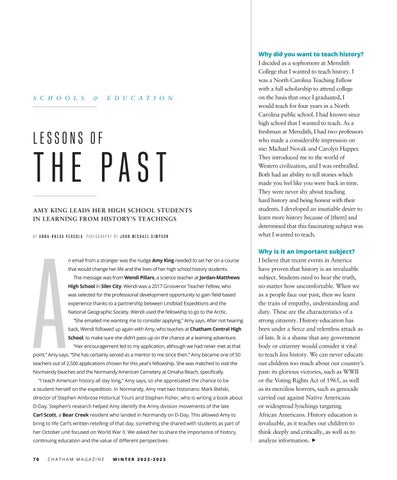

Winter 2022-2023 Vol. 6 No. 3 A DREAM CRUMB TRUE End the year on a sweet note with this recipe for almond biscotti. S EAS ON'Tis the DAZZLING DESSERT RECIPE S , HELPFUL HOLIDAY HOW-TOS AND MOR E Page 42 Plus! OUR SCHOOLS GUIDE PAGE 86 chathammagazinenc.com










2022
WINTER 2022-2023 CHATHAMMAGAZINENC.COM
PUBLISHER/VICE
Elkins chris.elkins@trianglemediapartners.com
EXECUTIVE
MacLaren editorial@chathammagazinenc.com
EDITOR, CHAPEL HILL
EDITOR, CHATHAM
Stringer
MANAGING EDITOR, CHATHAM
Anna-Rhesa Versola rhesa@chathammagazinenc.com
EDITORIAL
Renee Ambroso and Brooke Spach
DIGITAL
Ellison
Val
Delgado
EDITORIAL
and
CONTRIBUTORS
GRAPHIC
Kallam, Dolly R.
Kallam,
and James
CREATIVE
Brown
PHOTOGRAPHER
John Michael Simpson
Scott
GRAPHIC
Khadijah Weekes Nolan
ADVERTISING
For information, contact advertising@chathammagazinenc.com Melissa Crane melissa.crane@trianglemediapartners.com

Johnson kem.johnson@trianglemediapartners.com Lucinda Poole lucinda.poole@trianglemediapartners.com
Dana Statkun dana.statkun@trianglemediapartners.com
DIRECTOR
Acheson
2 CHATHAM MAGAZINE WINTER 2022-2023
PRESIDENT Chris
MANAGING EDITOR Amanda
MAGAZINE EXECUTIVE
MAGAZINE Jessica
MAGAZINE
ASSISTANTS
EDITOR Kevin
INTERNS
Beaver, Valeria Cloës, Sam Edge, Sinclair Holian, Katie MacKinnon, Isabella Reilly
Caitlyn Yaede
Stone Creager, CC
Leah Versola
Sickles
Stefiuk
DIRECTOR Kevin
DESIGNER/PRODUCTION COORDINATOR Lindsay
DESIGNER
Kem
OF CREATIVE OPERATIONS Ashlin
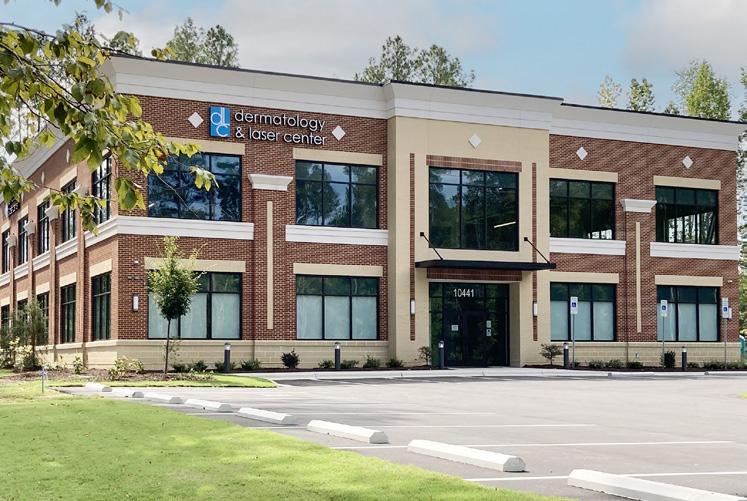
FOUNDER/CHAIRMAN Dan Shannon PRESIDENT, TRIANGLE MEDIA PARTNERS Ellen Shannon PRESIDENT, TRIANGLE DIGITAL PARTNERS Rory Kelly Gillis VICE PRESIDENT OF FINANCE & ADMINISTRATION Amy Bell PUBLISHER, HEART OF NC WEDDINGS Jenna Parks CREATIVE DIRECTOR, TRIANGLE DIGITAL PARTNERS Sally Scruggs DIGITAL OPERATIONS MANAGER Lizzie Jones DIGITAL OPERATIONS SPECIALIST Brian McIndoo DISTRIBUTION Matt Bair OFFICE ADMINISTRATION & ACCOUNTING ASSISTANT Cassady Orsini Chatham Magazine is published by Triangle Media Partners 1777 Fordham Blvd., Ste. 105, Chapel Hill, NC 27514 919–933–1551 Subscriptions are $24 for 2 years –subscribe at chathammagazinenc.com 10441 US 15-501 N, Suite 100 Chapel Hill, NC 27517 919.942.2922 dlcofchapelhill.com Chris G. Adigun, MD is a board certified dermatologist and a recognized leader in dermatology. She is known for her expertise in laser and aesthetic dermatology as well as her warm, compassionate and down-to-earth personality. Dr. Adigun’s team is comprised of top notch, dermatology-trained professionals, offering the latest technology and treatments. There is a reason DLC has been voted Best of Chapel Hill and Best of Chatham every year since we opened the doors. It’s simple, DLC treats everyone like family! Chris G. Adigun, MD, FAAD Karlee Wagoner, ANP-BC Diana Walker, PA-C Jenny Jahoo, LME Feels Like Family 20202120222 2 Voted Best Of Chatham 2019-2022 Voted Best Of Chapel Hill 2017-2022 New location less than 1 mile away!
In each issue of Chatham Magazine, we focus on one or two broad themes that inspire the stories we tell. This winter issue highlights holiday traditions and gift ideas (page 58) and also focuses on our local educators and students. But when I look through the pages, an interwoven thread emerges from among the articles. Even the cookie recipes on page 42 carry special meaning.

On page 76, Woods Charter School student Ayana Lupoli-Rojas, 14, shares how she gained a fresh outlook and sense of self by navigating the streets and culture of France’s Occitane region. Another high schooler, Chatham School of Science & Engineering sophomore Mark Crabtree, 15, achieved a new level of self-confidence during his monthslong service project for his Eagle Scout badge. Snapshots from his ceremony start on page 60.
One of Mark’s Scoutmasters, Mack Thorpe, earned his Eagle Scout rank de cades ago and strives to live up to the honor, including via his transformation from Scout to Santa. Read about how his role as the iconic Christmas figure brings him joy beyond measure on page 50.
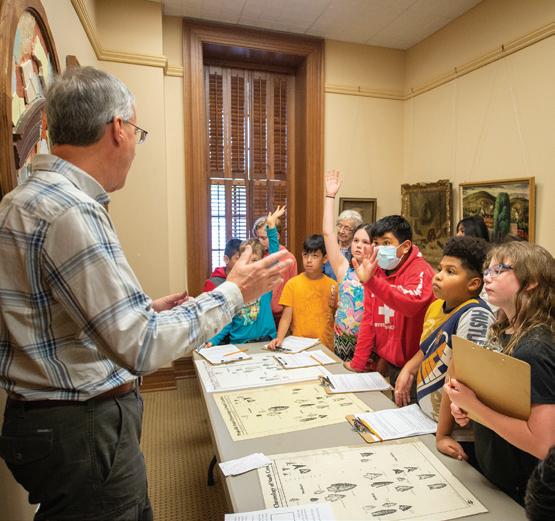
In another long-standing local ritual, nearly every fourth grade student in Chatham County Schools visits the historic courthouse in downtown Pittsboro to enact a fictional case – Goldilocks v. The Three Bears – on a field trip that’s taken place for the past eight years. Turn to page 78 for their lessons in civics and civility.





Sometimes changing your point of view means shifting your position, liter ally. About 200 fourth and fifth graders at North Chatham Elementary School did just that as they imitated the movements of professional dancers during a three-day visit to the school as part of an artists-in-residence workshop made possible by the Chatham Arts Council (page 82).
The most inspiring story to me is on page 70, where Chatham Central High School history teacher Amy King describes how another teacher she had not met before prompted her to apply for a fellowship that forever changed her life and the way she leads her lessons.
There are more stories inside that may inspire you in different ways, but they all speak to the importance of growing as a human by experiencing another’s perspective.

4 CHATHAM MAGAZINE WINTER 2022-2023
LETTER FROM THE MANAGING EDITOR THE COVER Photo by John Michael Simpson Recipe by Ronda Bowman. Growing Together Anna-Rhesa Versola rhesa@chathammagazinenc.com (919) 806-3638 FOLLOW US @MaxHugoInteriors MAXHUGOINTERIORS.COM New Construction Renovation & Remodeling Decorating Design Consultations Custom Window Treatments Hunter Douglas Centurion Gallery EFFORTLESSLY INSPIRED INTERIOR DESIGN


Vibrant living. Continuing care. In the heart of Durham. 800-278-9729 / forestduke.org/TheTerraces KEEP GROWING SM New contemporary apartment homes for retirement. Learn more at forestduke.org/TheTerraces. HURRY — PRESALES HAPPENING NOW! TERRACESThe Redefine retirement. BECOME A CHARTER MEMBER TODAY!
CONTENTSWINTER 2022-2023 THE HOLIDAY ISSUE 42 Holiday Sugar Rush Four festive recipes by home bakers to savor and share 50 Becoming Santa A Pittsboro grandfather brings joy and glad tidings 54 Let Us Entertain You Ideas for celebrating with family and friends SCHOOLS & EDUCATION 60 Badge of Honor Local Boy Scout achieves the organization’s highest rank 66 Who’s Who in Town & County Government Supporting students and teachers is music to Tony Jackson’s ears 70 Lessons of the Past Amy King leads her high school students in learning from history’s teachings 76 Learning Through Immersion A Woods Charter School sophomore reflects on her travel experience in Toulouse, France 78 History Comes Alive Fourth grade field trips engage young students in lessons of civics and civility 82 The Art of Learning Students engage with professional artists through Chatham Arts Council program 86 Directory of Independent, Regional Boarding and Charter Schools FEATURES 100 A Wonderful Life on Legacy Falls Drive This family of athletes settles into a new home in Pittsboro 116 Wedding & Reception Venue Guide An overview of where to celebrate your big day in Chatham DEPARTMENTS & COLUMNS 4 Letter from the Managing Editor 8 Five Events You won’t want to miss 28 Noted What we’ve heard around our towns … 114 Here We Grow Again Commercial development updates, plus a look at upcoming projects 120 Wedding Hudson & McNeill SPONSORED CONTENT 10 Chatham Works Celebrating the people behind Chatham businesses 35 The Big Give Our local nonprofits, how they support the community and how you can get involved 58 Holiday Gift Guide 65 The Plant Your destination for food, beverages, live music and more 97 Health Care Meet local dentists and providers PEOPLE & PLACES 16 PepperFest at The Plant 18 The Fearrington House Restaurant’s 40th Anniversary 22 Hoppin’ John Fiddlers’ Convention at Shakori Hills 24 Hispanic Heritage Fiesta in Siler City
PHOTOGRAPHY BY JOHN MICHAEL SIMPSON
78 100






Good Things Grow Here A quiet morning run. Five more minutes on the swings. A home you love. Long sunsets and lingering conversations. If you want to live in a place that supports health, wellness and the simple things, come see what’s taking root at Vineyards at Chatham Park. • Miles of Trails • Paddles Pool & Pickleball • 10-Acre Park • Close to Jordan Lake • Walkable to Downtown Pittsboro HOMES FROM THE $400S | TOWNHOMES FROM THE $300S | NEW BUILDERS NOW SELLING PLANT YOUR ROOTS CHATHAMPARK.COM Prices and amenities subject to change without notice. © 2022 Chatham Park Investors. 500 VINE PARKWAY, PITTSBORO NC 27312 | 919-278-7687
Shakori Hills Fall Craft Fair
NOV. 19, 10 a.m. to 4 p.m. More than 40 artisans and craft vendors, including Hempsmith Clothing Co., Selah Design and more, will gather at Shakori Hills Community Arts Center to share their creations and mingle with the community. The fair will also host The Jolly Ol’ Market Shoppe, which features works from neurodiverse artists. Be sure to grab a bite from the Ta Contento food truck and enjoy a live performance by Dave Smith and Tracy Lynn. shakorihills.org/shakorihills-craft-fair
Chatham Artists Guild Studio Tour
DEC. 3-4 & 10-11 Explore Chatham during the 30th annual tour, featuring 50-plus artists and 39 studios. Attendees will have the opportunity to learn about local artists’ work and browse original pieces for purchase. A preview exhibition of the tour will be on display at The ArtsCenter in Carrboro from Nov. 4 through 22. chathamartistsguild.org/studio-tour
Chatham Cares Celebration of Lights
DEC. 3, 6:15-7:15 p.m. Chatham Cares Community Pharmacy will hold its annual luminary services at St. Julia Catholic Church. All profits from the sale of luminaries will be used to purchase prescription drugs that are dispensed to patients in need by Chatham Cares. wp.chathamcares.com
Holiday in the Park
DEC. 9, 5-8 p.m. ’Tis the season to visit Northwest District Park for a photo op with Santa, holiday-themed games, crafts, carolers and warm drinks. Don’t miss the tree lighting at 5:15 p.m. visitpittsboro.com
Last year’s Reindeer Run saw more participants than any other year in the event’s history. Proceeds from the 5K benefit Chatham County organizations that promote healthy lifestyles.

Reindeer Run 5K
DEC. 10, 8 a.m. Sign up as a team or individual for the Chatham County Partnership for Children’s annual holiday 5K, which begins and ends at Central Carolina Community College Younger runners have the opportunity to participate in the ¾-mile Rudolph’s Fun Run. Race shirts are guaranteed for all runners who register before Nov. 14. chathamkids.org/ events/reindeer-run CM
Compiled by Katie MacKinnon
8 CHATHAM MAGAZINE WINTER 2022-2023
FIVE EVENTS YOU WON’T WANT TO MISS
EVENTS ARE SUBJECT TO CHANGE; CHECK WITH ORGANIZERS PRIOR TO ATTENDING.
PHOTO BY CC KALLAM




























































HILLS ASSISTED LIVING & TWIN RIVERS INDEPENDENT LIVING

in the heart of charming Pittsboro, Cambridge Hills
Living and Twin Rivers Independent Senior Living are home to more than 100 seniors. The veteran- and female-owned small businesses have proudly served Chatham County for nearly 20 years. With more than 70 percent of staff members and 60 percent of residents from Chatham County, Cambridge Hills and Twin Rivers
the community with people from the community. The very tenured staff reflects the diversity of the region and provides an atmosphere of warmth and inclusion, creating a community for seniors that feels like
Cambridge Hills is a 4-Star
the highest rating that can be achieved.
CAMBRIDGE
Nestled
Assisted
serve
family.
Rated Assisted Living Community –
CAMBRIDGE HILLS ASSISTED LIVING 140 BROOKSTONE LANE, PITTSBORO, NC 27312 919.545.9573 TWIN RIVERS INDEPENDENT LIVING 25 S. RECTORY ST., PITTSBORO, NC 27312 919.545.0149 CAMBRIDGEHILLSAL. COM SPONSORED CONTENT
FIDELITY BANK
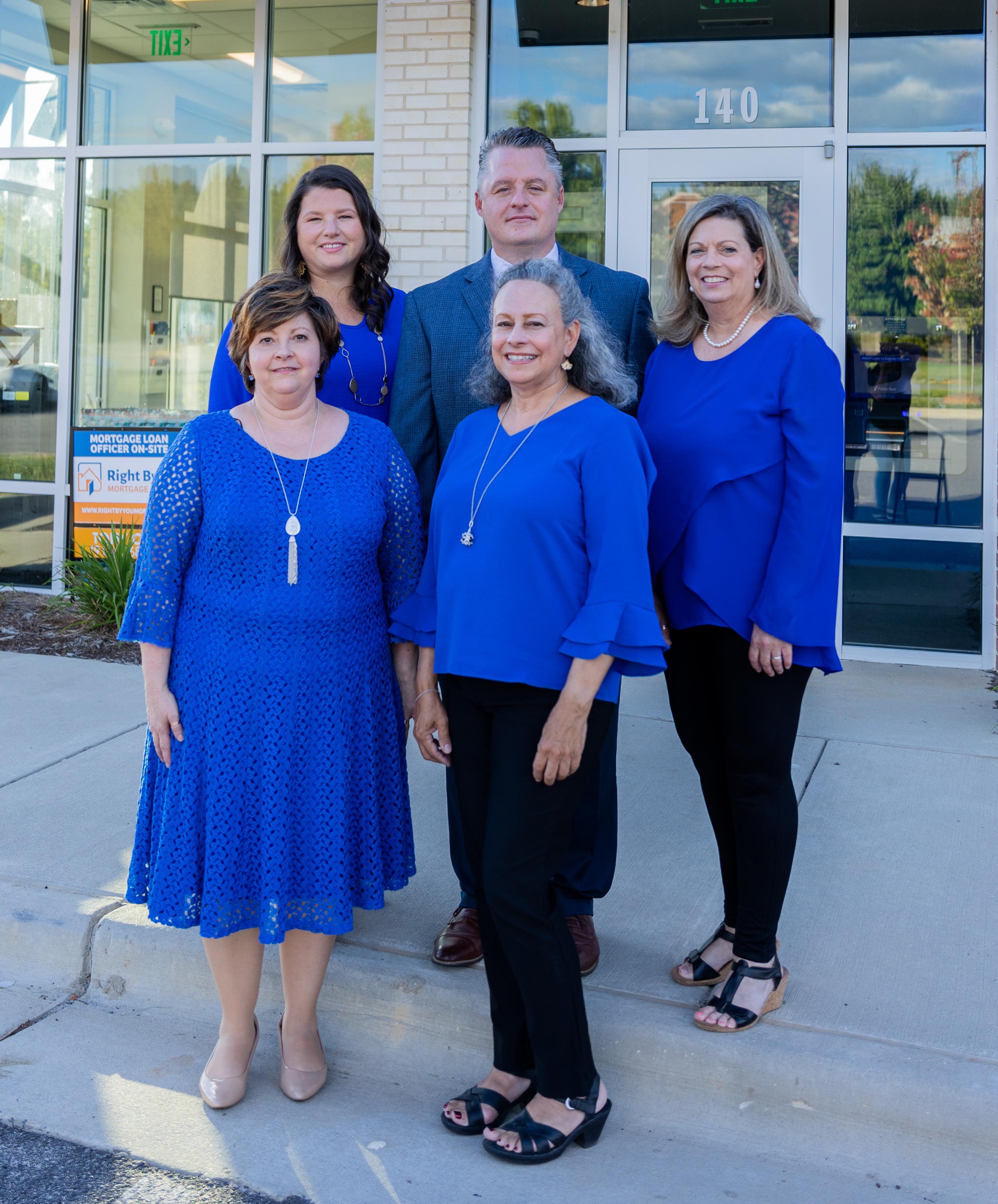
Founded in North Carolina in 1909, Fidelity Bank is a community bank focused on doing the right thing for its customers. As an independent, sound, and profitable bank, Fidelity strives to be an institution that families and businesses turn to first and bank with for life. We take pride in knowing our customers by name, providing exceptional customer service, and offering the personal and commercial banking and lending solutions you expect. Stop by our Pittsboro location to experience the Right By You difference. Member FDIC. Equal Housing Lender.
32 INDUSTRIAL PARK DR, STE 140, PITTSBORO, NC 27312 919.653.5138 FIDELITYBANKNC.COM
Pictured here: Top row: Katie
Walker, Tony Cash, Teresa Farrell
Bottom row:
Sondra Cooper, Cindy Cochie
SPONSORED CONTENT
GALLOWAY RIDGE AT FEARRINGTON
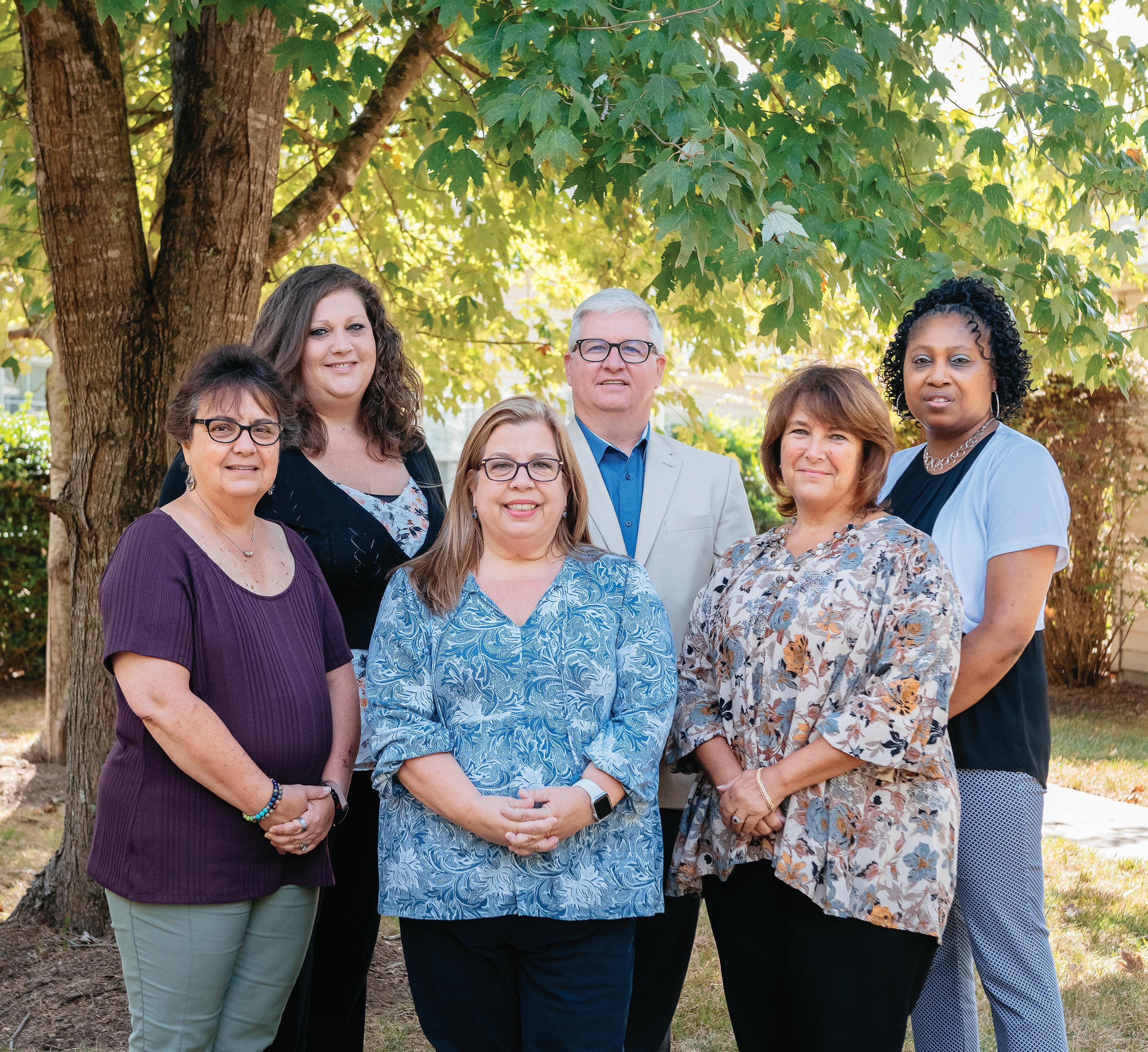
Galloway Ridge employees are artists, writers, teachers, athletes, historians, activists, innovators and doers. The employees’ unique talents and their commitment to excellent care and compassion for residents make Galloway Ridge a nationally recognized Great Place to Work™ and a top 10 Fortune Best Workplaces in Aging Services™. Galloway Ridge’s success did not come by accident – it is all thanks to the hardworking, diverse and creative team members who are cherished by the residents. Employee and resident satisfaction go hand and hand. Galloway Ridge’s employees have created a fun and supportive work environment, which in turn enriches the lives of residents and the community as a whole. Together, they are Team Galloway Ridge.
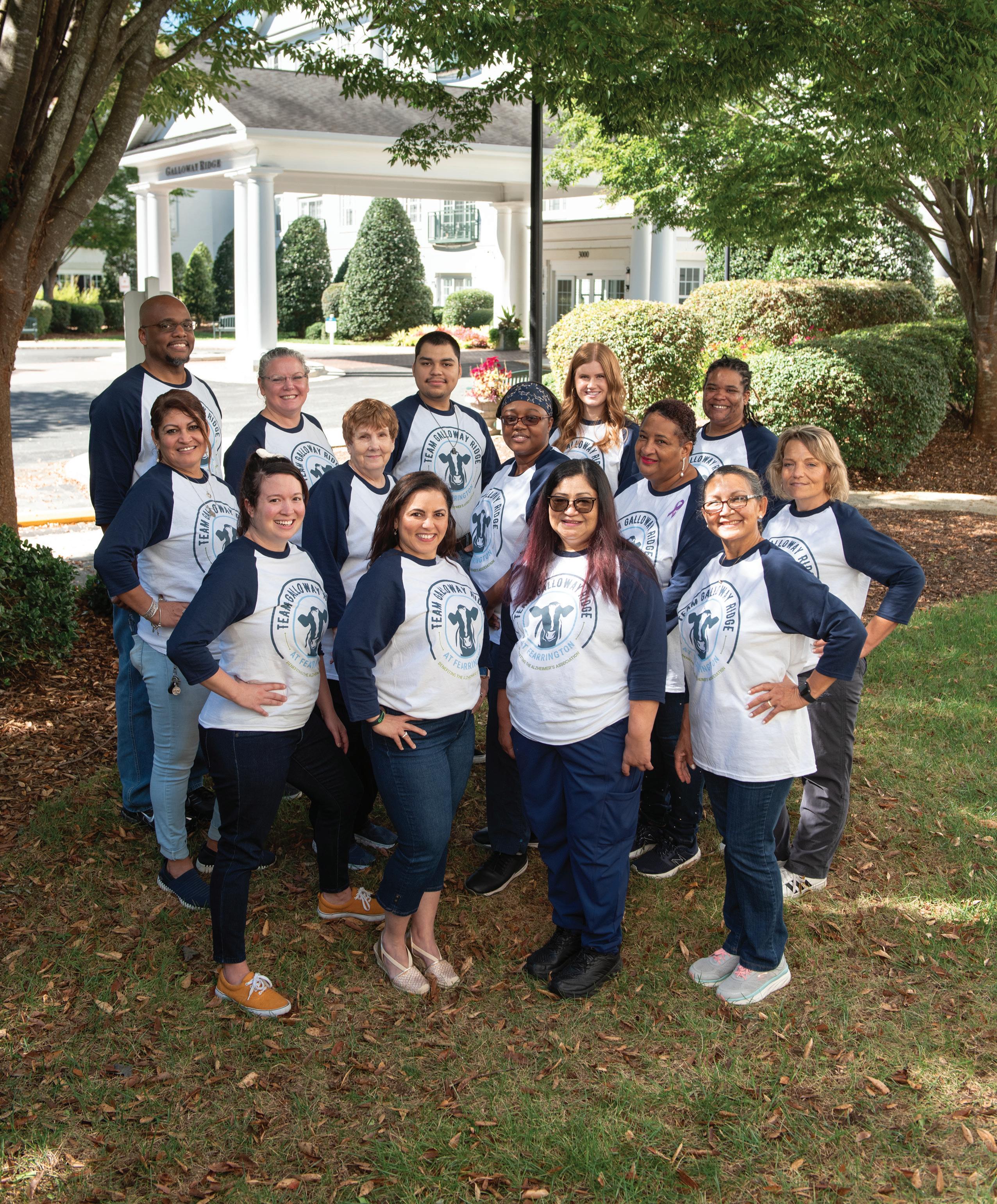
3000 GALLOWAY RIDGE, PITTSBORO, NC 27312 919.545.2647 GALLOWAYRIDGE.COM
SPONSORED CONTENT
Pictured here: Dr. Bonnie Ammerman, DVM
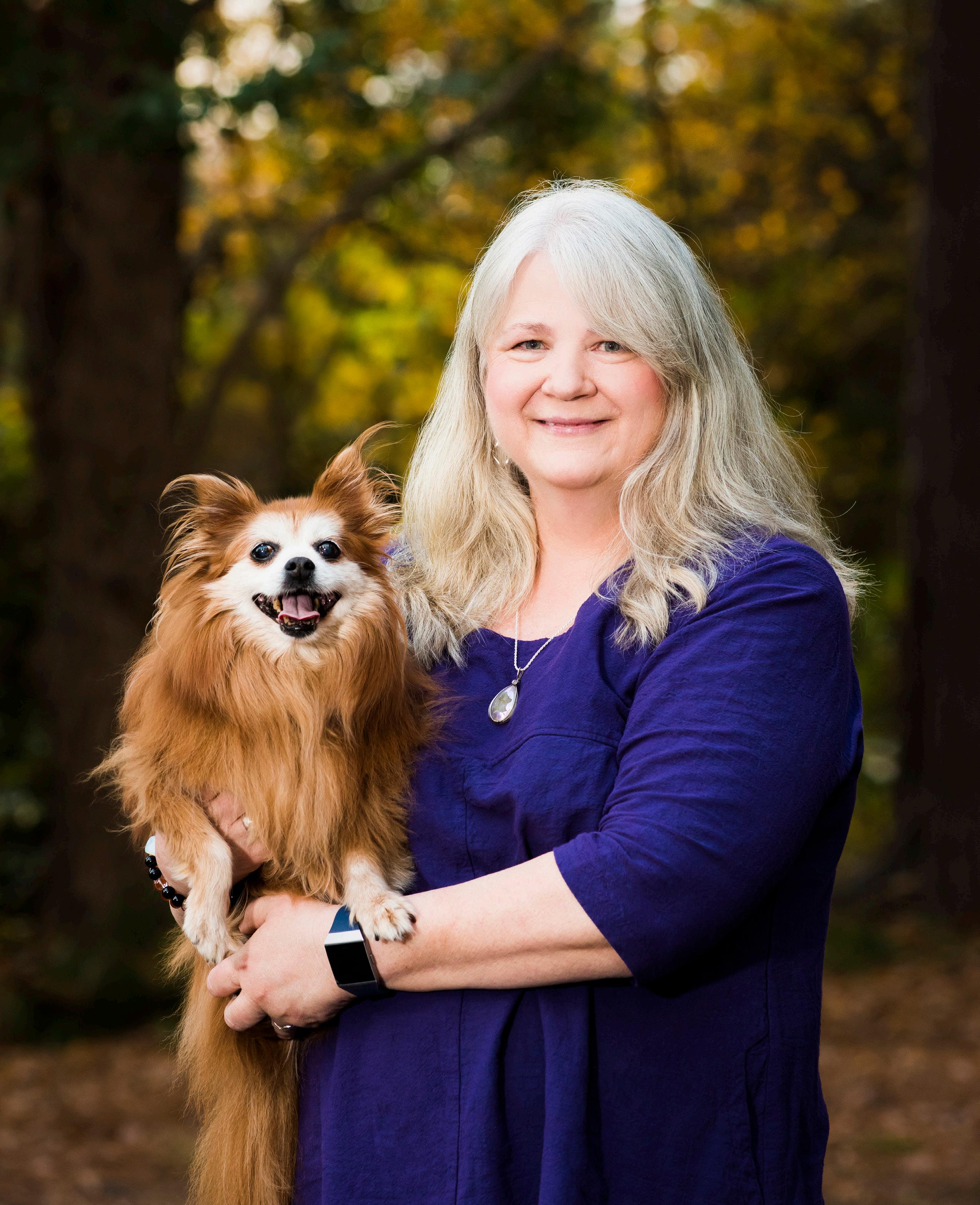
HILL CREEK VETERINARY HOSPITAL
Hill Creek Veterinary Hospital has served Chatham County and the surrounding communities for more than 20 years. Since opening in 1998, the focus of the practice has always been excellent medical care with a personal and compassionate touch. Their team is composed of three doctors (Dr. Bonnie Ammerman is pictured here), a technical and customer service team of 11, which includes three registered veterinary technicians, and a groomer. They offer both Western and Eastern modalities of care, such as acupuncture and Chinese herb therapy, as well as ancillary therapeutics, such as cold laser therapy and ultrasound. Hill Creek is thrilled to have moved into a larger space in 2021, which has allowed their team to continue providing a high level of care in a more spacious environment.
75 OLD GRAHAM ROAD, PITTSBORO, NC 27312 919.542.1141 HILLCREEKVET.COM
SPONSORED CONTENT
O’MARA LANDSCAPING & LAWN CARE
Since early 2000, O’Mara Landscaping & Lawn Care, Inc. has been serving Chapel Hill and the surrounding communities with high quality professional landscaping solutions. Their broad range of service offerings and options allow clients the flexibility to pick and choose the services they desire. O’Mara offers full landscape design and installation. In addition, they provide flexible maintenance service to fullservice ground care, allowing clients to customize a program to fit their unique needs and budget. O’Mara’s attentive customer service staff, managers and skill production teams provide thoughtful landscape construction, detailed lawn care maintenance, as well as weed & feed and shrub care programs. O’Mara is the one-source provider for all landscaping and lawn care needs.
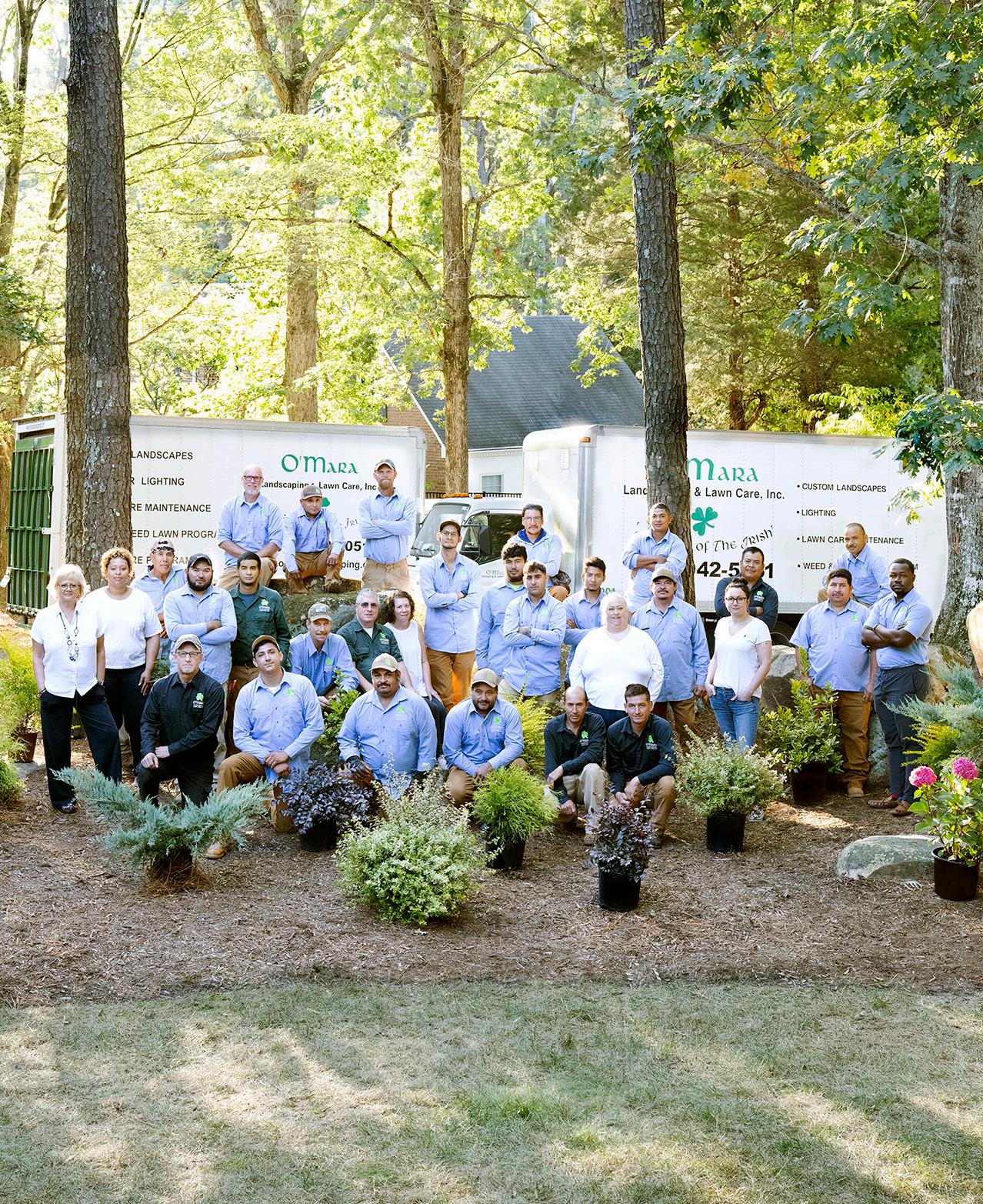
4540 MANNS CHAPEL RD., CHAPEL HILL, NC 27516 919.942.5051 OMARALANDSCAPING.COM
SPONSORED CONTENT
DONALDSON FUNERAL HOME & CREMATORY
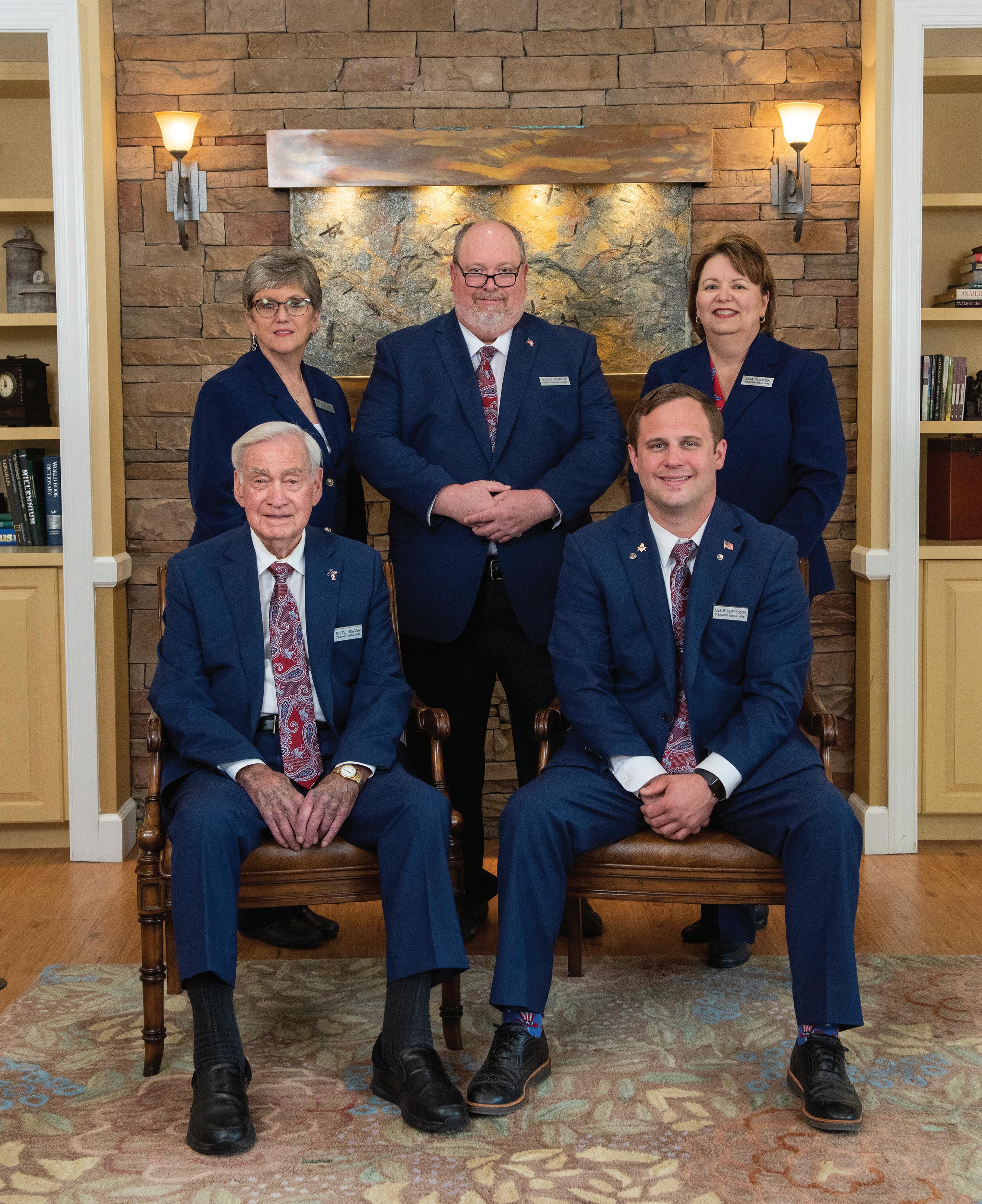
The words “Family-Owned and Operated” tell a story. It is a story of professionalism and family values that produces compassionate care in a home-like environment. We are at the forefront of modern client services. To better serve you and your family, we offer a range of personalized services to suit your family’s wishes. You can count on us to help you plan a personal, lasting tribute to your loved one. We invite you to schedule an appointment to tour our facility and crematory to learn more.
396 WEST ST., PITTSBORO, NC 27312 919.542.3057 DONALDSONFUNERALS.COM
SPONSORED CONTENT
Spice and Everything Nice
PHOTOGRAPHY BY BROOKE SPACH
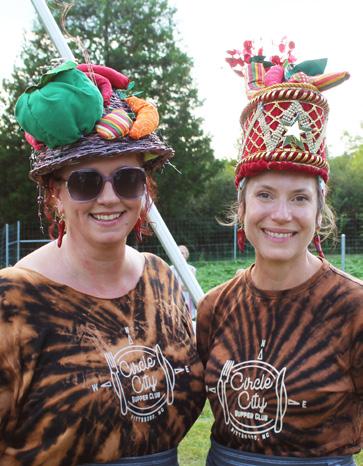
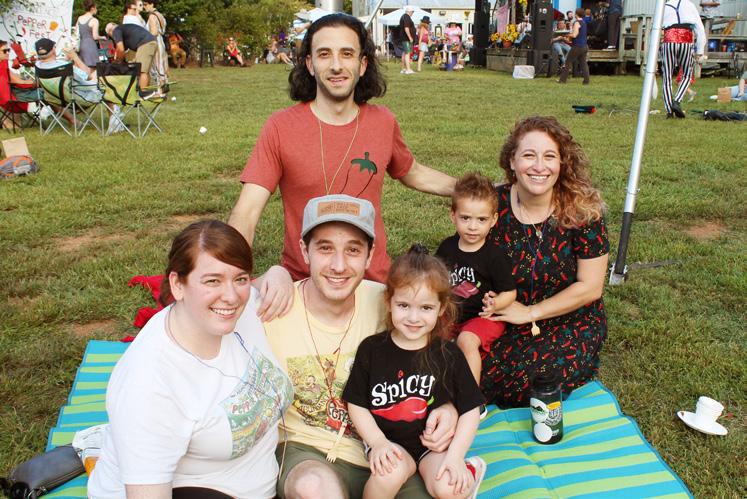
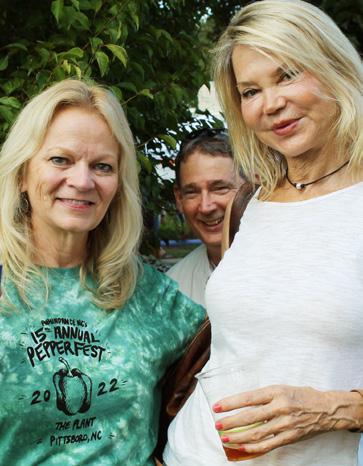
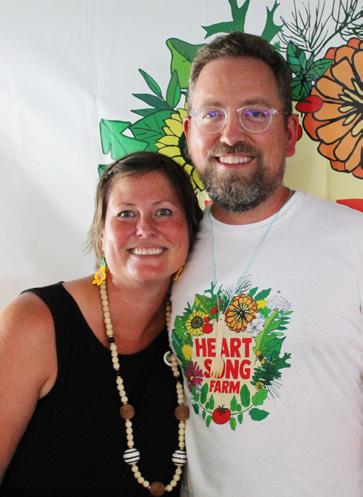
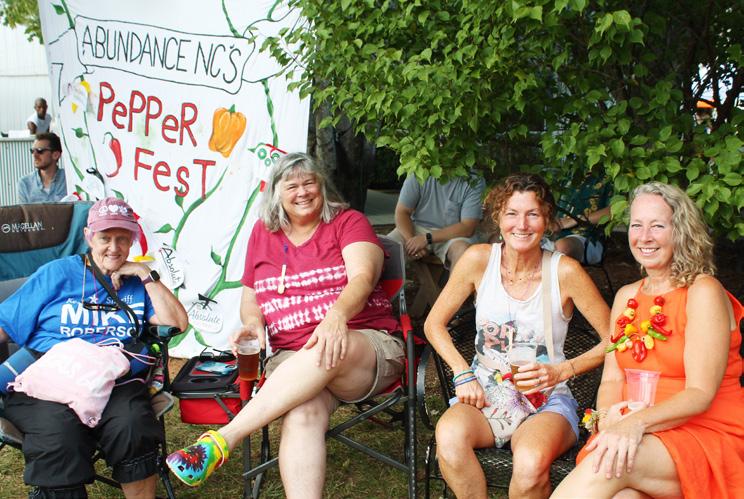
More than 1,000 visitors flocked to The Plant on Sept. 18 for the 15th annual PepperFest, organized by Abundance NC. Vendors from all over the Piedmont brought samples of unique pepper-themed dishes and beverages, including Copeland Springs Farm & Kitchen, Hillsborough-based Pleasant Burn Sauce Co., Blue Ridge Pepper Patch and more. After the tastings, attendees gathered on the lawn to enjoy live music by The RT’s and performances by Imagine Circus and ¡Tumbao!, a dynamic Latin American band. Circle City Supper Club took home the Pepper Royalty award for their cooking classes and arts and crafts stations.
16 CHATHAM MAGAZINE WINTER 2022-2023 PEOPLE & PLACES
CM 1 4 2 5 3
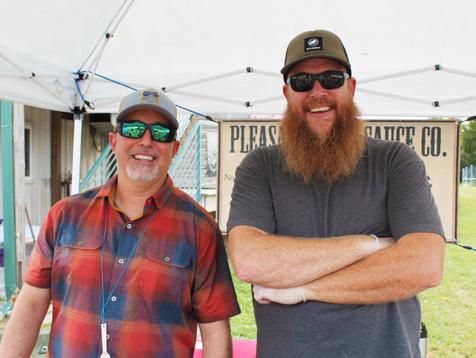
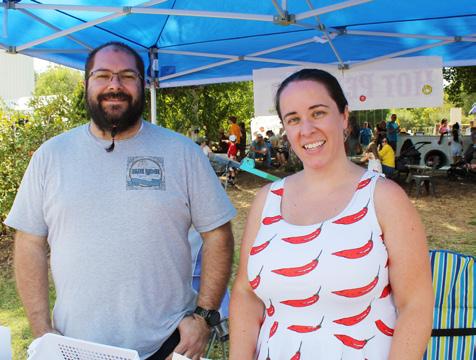

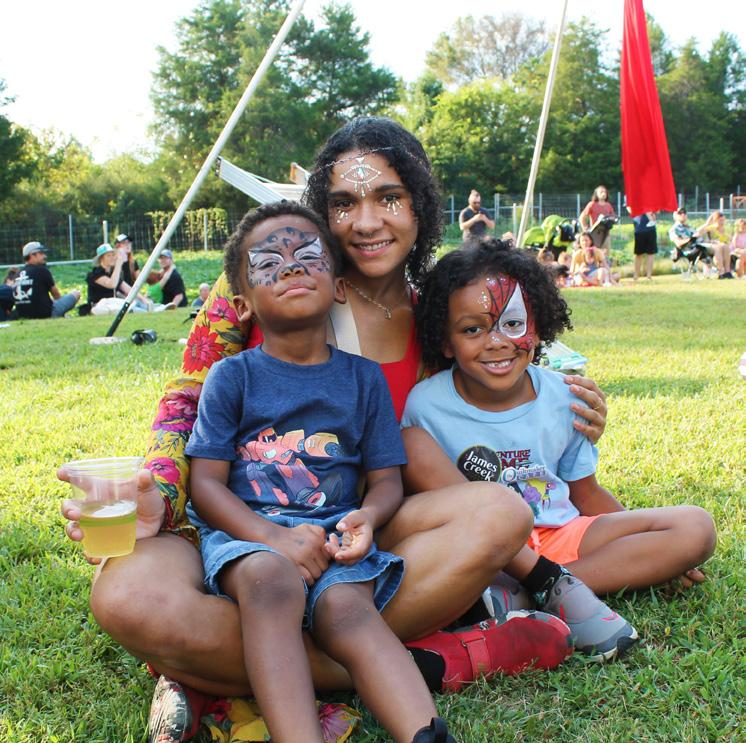
WINTER 2022-2023 CHATHAM MAGAZINE 17 PEOPLE & PLACES 1 B Demers, Vicki Newell, Julie Cummins and The Plant owner Tami Schwerin. 2 Nicole Gagnon, Sean Cacciabaudo, Brett Rosenstock, Mattea Cacciabaudo, 5, Flynn Cacciabaudo, 3, and Marelle Cacciabaudo. 3 Emily Fuller and Jeff Fuller, co-owners of Heart Song Farm. 4 Gayle Starkey, Chris Hansen and Deborah Bondurant. 5 Circle City Supper Club co-owners Clare Reding and Stephanie Hutto. 6 Kendrick Austin-Rivers, 4, Desiree Austin and Jordan Palmer, 6. 7 Co-owners Corey Eshelman and Mark Waters of Pleasant Burn Sauce Co. 8 Raymond Bowdish and Blue Ridge Pepper Patch owner Christina Trexler. 9 Imagine Circus aerial dancer Amber Land. 8 9 6 7
House Party
PHOTOGRAPHY BY ANNA-RHESA VERSOLA
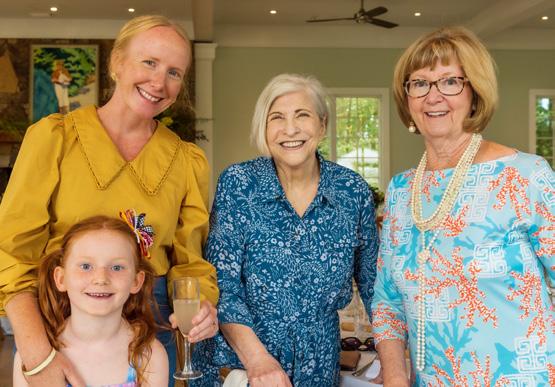
About 100 friends, family and foodie fans gathered on Sept. 25 to celebrate the 40th anniversary of The Fearrington House Restaurant. The luncheon featured favorite recipes from “The Fearrington House Cookbook,” written by the late Jenny Fitch, who co-founded the restaurant and worked with its first executive chef, Jim Harrell, to develop the menu.

Attendees helped themselves to offerings like angel biscuits, fried green tomatoes, Brussels sprouts and leeks, twice-baked cheese soufflé, beef tenderloin with Madeira cream, strawberry shortcakes and fresh fruit cups with Grand Marnier sauce.

Floral decor and centerpieces at the event were designed based on Jenny’s tastes – Fearrington Village general manager Theresa Chiettini shared that Jenny was known for pulling off roadways to clip armloads of wild plants to incorporate into arrangements. Guests enjoyed tasting the cake replica of the The Fearrington House Restaurant, and they also received an updated reprint of Fearrington’s cookbook as a parting gift.
1 Charlotte Ladner, 6, Addie Ladner, Nathalie Dupree and Deidre Schipani.
2 A coconut cake with rum and orange filling and a chocolate and white icing exterior designed to replicate The Fearrington House Inn & Restaurant.
3 Brigid Washington and Joseph Washington.
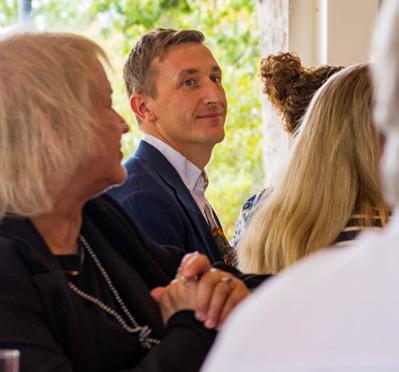
4 Maximillian Kast, the former wine director of Fearrington Village, among other luncheon attendees.
18 CHATHAM MAGAZINE WINTER 2022-2023 PEOPLE & PLACES
1 3 2 4
IS
STRONGER, TOGETHER
Since 1947, the Chatham Chamber of Commerce has assisted members in the success and promotion of their businesses. We are more than just a business organization. We are a community-based and communityfocused network for economic growth and vitality throughout our entire county, one that values integrity, fairness, inclusiveness, and visionary leadership.
The Chamber is a nonprofit, member-driven organization with a diverse membership base. Our members are our greatest assets. True to our mission, the Chamber focuses on the economic vitality of Chatham County and on advocating for the needs of the members who make up the organization. Our members represent every part of this county, from the towns of Goldston, Pittsboro, and Siler City; to the communities and townships of Bear Creek, Bennett, Bonlee, Bynum, Cumnock, Fearrington Village, Governors Village, Gulf, Harpers Crossroads, Moncure, Mosaic, New Hill, North Chatham, Silk Hope, and Wilsonville.
Like countless others across the country and around the world, the past couple of years have challenged the communities within our County. However, now more than ever, the Chamber and the County are positioned for growth, investment, partnership, development, and an economic vitality that will uplift business and industry for the entire County and those who call Chatham County home. The Chamber is uniquely positioned to leverage these opportunities as the business and professional development advocate for our members.
CHAMBER STAFF
Cindy Poindexter, President/CEO Mary Bowman, Administrative Staff
BOARD OF DIRECTORS
Sharon Dickens, Board Chair Edward Jones
Chris Elkins, Board Chair Elect Chatham Magazine, Triangle Media Partners
Debbie Andleton, Board Treasurer Chatham Park
Katie Walker, Board Secretary Fidelity Bank
Dr. Karen Barbee
Renaissance Wellness Services, LLC
Glenn Brooks Truist
Commissioner Curtis Brown Ex-Officio - Town of Siler City
Nkosi Campbell Mountaire Farms
Mayor Jonathan Hensley Ex-Officio - Town of Goldston
Jason Hoyle East Coast Firewood, LLC
Dan LaMontagne Ex-Officio - Chatham County
Phillip Pappas Small Business Center – CCCC
Travis Patterson Self-Enhancing Education
Cindy Poindexter Ex-Officio, Chatham Chamber President
Kathy Simmers
So Worth It
Michael Smith Ex-Officio - Chatham EDC
Jeffery Strickler Chatham Hospital
Stephanie Terry WEBB Squared - Wealth Through Entrepreneurship for Black Businesses
Nancy Wykle Chatham County Schools
To serve and support members across the county, we rely upon many stakeholder groups to provide resources, capabilities, and collaboration. These individuals and groups include members, elected officials, community partners, nonprofit organizations, media outlets, educational institutions, businesses within the greater Chatham County area. As we emerge from the pandemic, the Chamber will work to increase its engagement with the community, strengthen relationships with our partners, provide valuable experiences for our members, and ensure continued sustainability through sound fiscal and operational management.
Whether you are new to the area or a longtime resident, we invite you to join and/or participate with some of the activities the Chamber hosts throughout the year – beginning with our inaugural State of Chatham Breakfast on October 12, our annual golf tournament, annual meeting, business showcase, Lunch & Learn events, Young Professionals events, Leadership Chatham Program, Piedmont Business Health Services Program for Chamber members and their employees and families, and much more.
We, the members, and leadership team of the Chatham County Chamber of Commerce, believe our best days are ahead of us, and that we are stronger together. We appreciate and value the opportunity to be a resource.
It is our commitment to this community to continue to be a good steward and good neighbor and to champion the business and professional causes that are important to you.
SPONSORED CONTENT
OUR COMMUNITY
R.B. Fitch enjoys the company of friends beneath a portrait of his late wife, Jenny Fitch.

6 Michael Seifert and Shelby Forbes.
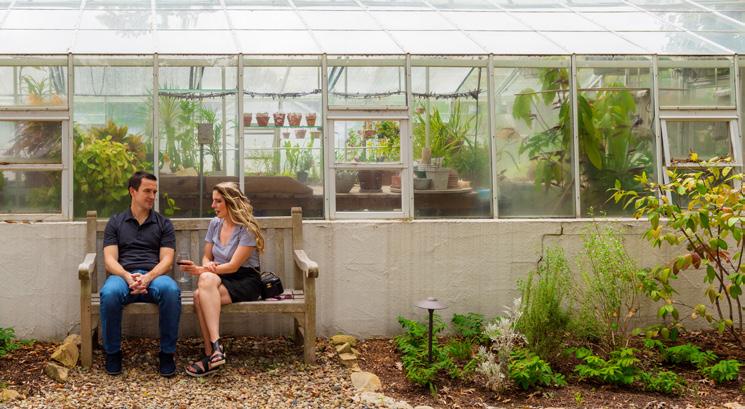



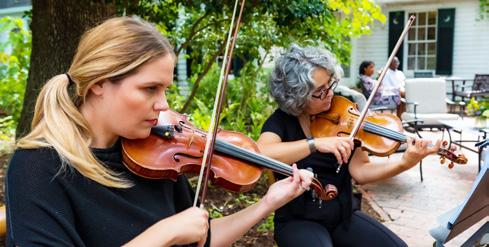
Lucy Greenleaf and Petia RadnevaManolova perform at the event. CM
20 CHATHAM MAGAZINE WINTER 2022-2023 PEOPLE & PLACES 11744-B US Hwy 15 501 N | Chapel Hill 919-942-1023 browns-automotive.com family owned & operated since 1980! TIRES • BRAKES • INSPECTIONS SERVICE We’re the auto repair shop that you’ve been looking for in the Chapel Hill area. We’re a team of fun, friendly, and experienced technicians at Brown’s Automotive. We get your repairs finished faster, and we maintain the highest full-service repair standards. Give us a call today at 919-942-1023 to schedule your service appointment. 202 2 Thank you for voting us Best Auto Service! 5
7
House Party (CONTINUED) 5 6 7
















GIVE THE GIFT OF LIVE ARTS EXPERIENCES. Looking for holiday gifts that celebrate joy and connection? Give the gift of live arts experiences close to home — and save up to $42! Carolina Performing Arts is thrilled to present two unique holiday packages to delight the arts lovers on your list: SAVE 20% ON OUR FOUR-PERFORMANCE THEATRE PACKAGE: Geoff Sobelle: HOME | Feb. 4, 2023 Tao of Glass | March 24-25, 2023 Big Dance Theater: The Road Awaits Us + Cage Shuffle | April 6, 2023 Osvaldo Golijov: Falling Out of Time | April 20, 2023 Gold, Premium and Zone A packages starting at $103. SAVE 20% ON OUR FOUR-PERFORMANCE CPA SAMPLER PACKAGE: Theo Croker || LOVE QUANTUM || | Jan. 12, 2023 Hong Kong Ballet: | Jan. 20-21, 2023 Mahler Chamber Orchestra with Mitsuko Uchida, piano and director | March 7, 2023 zoe | juniper: the other shore | April 14-16, 2023 Gold, Premium and Zone A packages starting at $136. CAROLINA PERFORMING ARTS CAROLINAPERFORMINGARTS.ORG
Fit as a Fiddle
PHOTOGRAPHY BY SINCLAIR HOLIAN
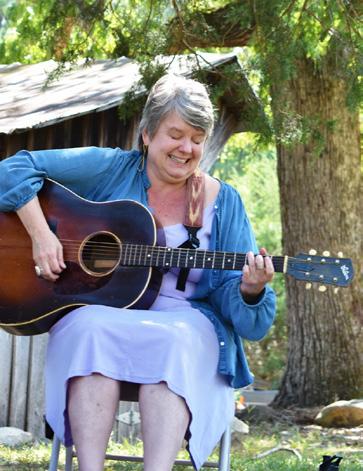
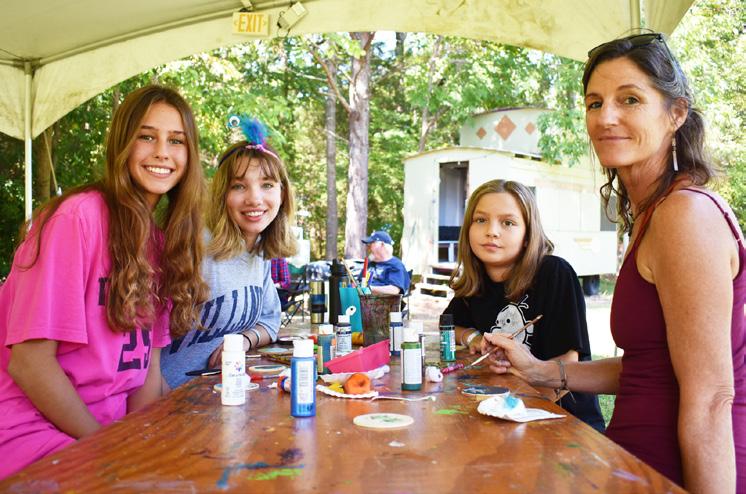
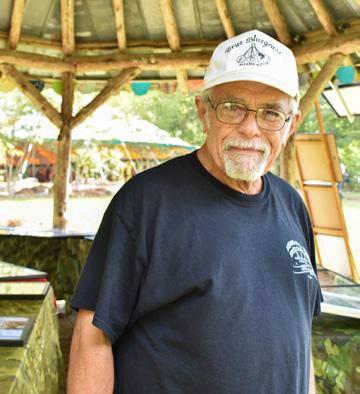
On a sunny weekend in September, Shakori Hills Community Arts Center hosted its 15th annual Hoppin’ John Fiddlers’ Convention, which celebrated Piedmont old-time and blues music, and traditional western North Carolina tunes. The outdoor festival featured performances by many North Carolina-based artists, including Appalachian singer-songwriter Cary Fridley, Music Maker Relief Foundation’s blues and gospel act Big Ron Hunter and Belinda Hunter, and Larry Bellorín & Joe Troop, the Grammy-nominated Venezuelan-Appalachian folk fusion duo. String bands, singers and musicians of all ages showed off their skills and competed for $3,500 in prizes throughout the weekend. Attendees polished their singing, dancing and musical abilities with a number of workshops and enjoyed food and crafts from local vendors. CM
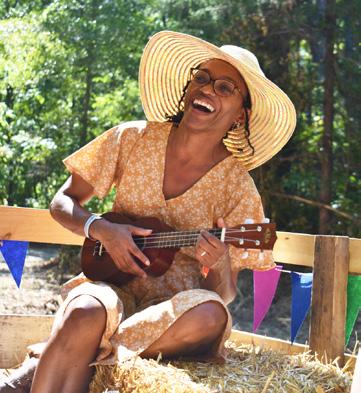
1 Abbey Carruthers, 16, Anna Maiwald, 16, Selah Gunter, 10, and Kelly Carruthers.
2 Cary Fridley.
3 Big Ron Hunter and Belinda Hunter.

4 Tampa Enoch-Reese.
5 Phyllis Lambert.
6 Michael Cooke.
22 CHATHAM MAGAZINE WINTER 2022-2023 PEOPLE & PLACES
1 6 4 2 5 3

Securities
offered through Raymond James Financial Services, Inc., member FlNRA/SIPC. Phoenix Wealth Advisors is not a registered broker/dealer and
is
independent of Raymond James Financial Services. Investment advisory services offered through Phoenix Wealth Advisors, ©2018 Raymond James Financial Services, Inc., member
FINRA/SIPC. 18-BR83A-0017 AW 11/18 100 Europa Drive, Suite 390 , Chapel Hill, North Carolina 27517 ∙ 919.929.4448 ∙ pfinx.com RAYMOND JAMES ® Over 25 years of service to the community and providing family wealth management.
Fun at the Fiesta!
BY ELLISON BEAVER | PHOTOGRAPHY BY ANNA-RHESA VERSOLA
The Hispanic Liaison welcomed more than 5,000 attendees to its ninth annual Hispanic Heritage Fiesta in Siler City in September. The family-friendly event was a celebration of Hispanic Heritage Month and featured authentic cuisines, a parade of traditional Latin American outfits, more than 70 local vendor booths and an art exhibit by featured artist Leticia Alvarez. Mariachi Mexico 2000 and Descendientes de Tierra Caliente performed live, and Takiri Folclor Latino and Ballet Folklorico Mexican Tradition of Julio Ruiz presented traditional folkloric dances.
1 Dancers of Greensboro-based Ballet Folklorico Mexican Tradition of Julio Ruiz.

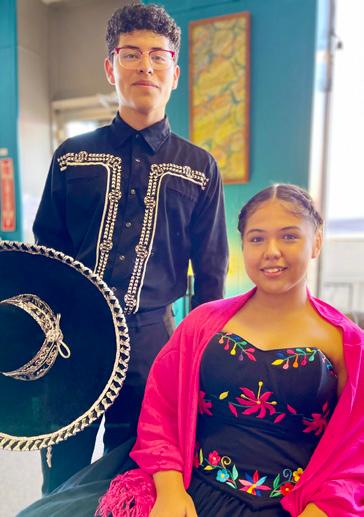
2 Christian Ayala, 16, and Fatima Herrera, 16.
3 Leah Najera, 7, Christian Najera, 10, Angel Najera, Kayla Najera, 8, Christine Najera and Angel Najera, 15.

24 CHATHAM MAGAZINE WINTER 2022-2023 PEOPLE & PLACES
1 2 3








WINTER 2022-2023 CHATHAM MAGAZINE 25 HAIRCUTS • COLOR • BALAYAGE • SMOOTHING TREATMENTS • FACIALS & SKIN CARE 919.929.2209 • EAST 54 • 3110 ENVIRON WAY CITRINESALONNC.COM BEST SALON & BEST PLACE FOR BEAUTY PRODUCTS Thank you Chapel Hill for your continuous support! VOTED BEST OF CHAPEL HILL BY READERS OF CHAPEL HILL MAGAZINE 2010-2022 TOP 100 SALONS IN U.S. 2011+2012+2013+2014






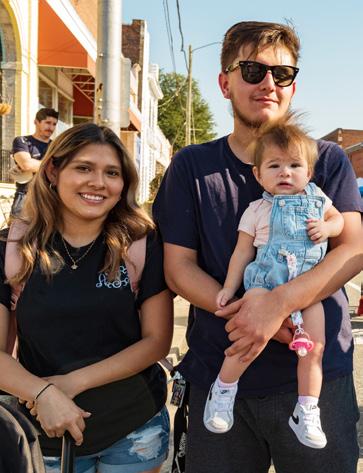

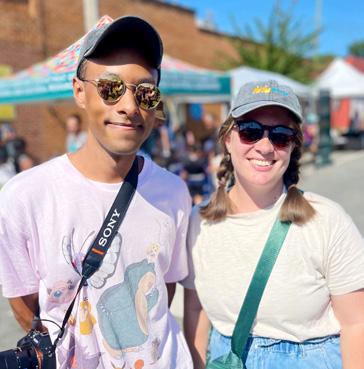
26 CHATHAM MAGAZINE WINTER 2022-2023 PEOPLE & PLACES EDWARDJONES.COM member SIPC Because every moment is for living. Chapel Hill Jessica Villagrana 180 Providence Rd. Suite 1C 984-219-6635 Pittsboro Lee Shanklin, AAMS® 120 Lowes Dr. Suite 107 919-545-0125 Pittsboro Kevin Maley, AAMS® 984 Thompson St. Suite E2 919-444-2961 Fearrington Kathy Brommage, CFP® 190 Chatham Downs Dr. Suite 103 919-960-6119 Penguin Place Eric Williams, AAMS® 114 Russet Run Suite 120 919-542-3020 Governors Club Sharon Dickens, AAMS® 50101 Governors Dr. Suite 118 919-967-9968 Siler City Laura Clapp, AAMS®, CFP® 310 East Raleigh St. 919-663-1051 Pittsboro Chad Virgil, CFP®, ChFC®, CLU® 630 East St. Suite 2 919-545-5669 Let’s partner through all of it. Chatham CountyFINANCIAL ADVISORS 4 Ingrid Castro-Salinas. 5 Brandon Goins and Emily McIntosh. 6 Aly Cruz, 7, Maria Cruz and Jannixy Cruz, 13. 7 Araceli Hernandez, Jason Hernandez and Camila Hernandez, 8 months. CM 4 Fun at the Fiesta! (CONTINUED) 5 6 7
Great





SINCERE BINGEWORTHY PICTURESQUE S B P
Small

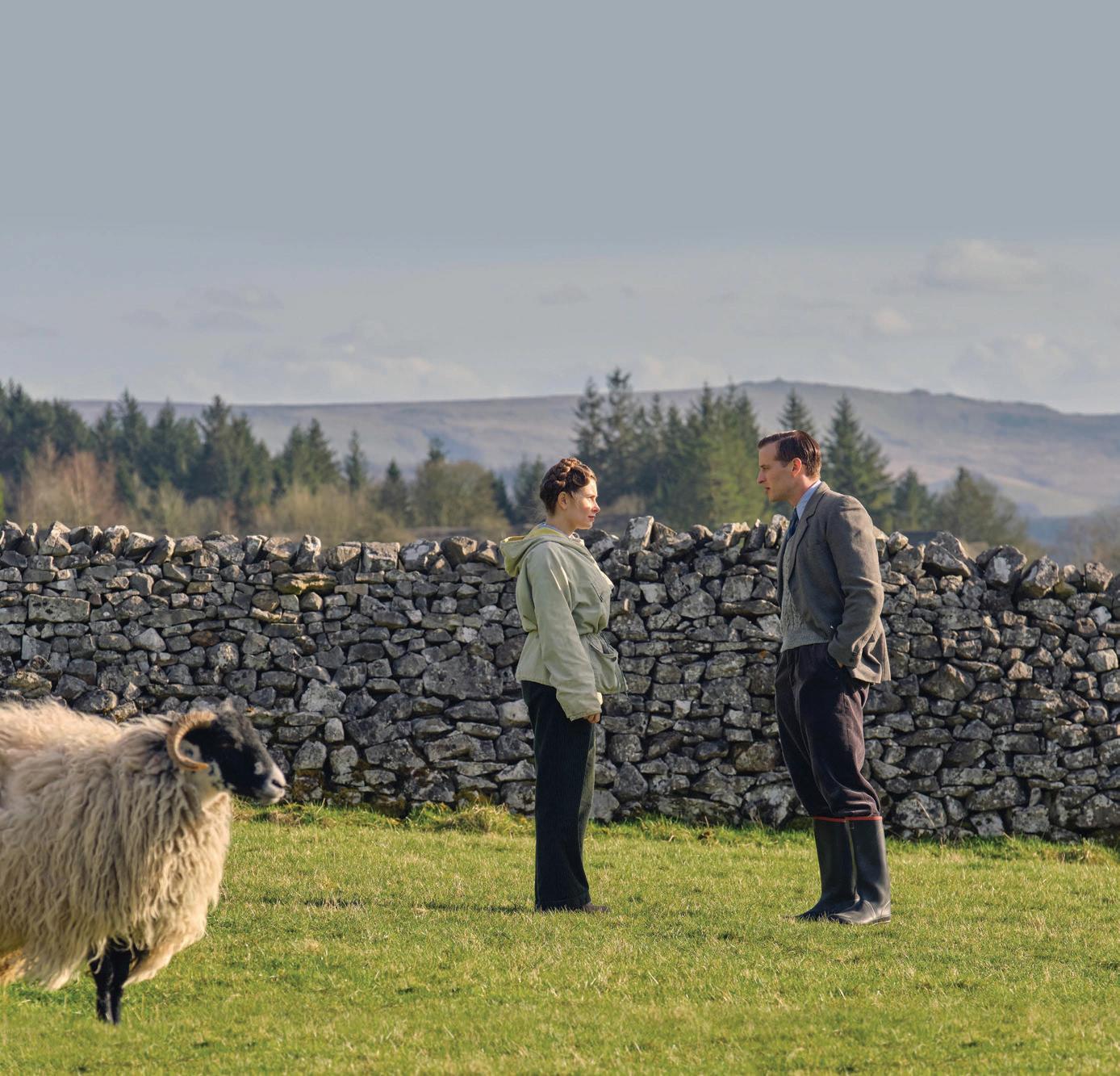
Heartwarming stories, beautiful scenery and a hint of nostalgia—PBS favorites like All Creatures Great and Small have it all. With just a click or a tap on your favorite device, escape to the rolling green hills of Yorkshire for laughter, levity and lovable characters who will bring a smile to your face. Discover what’s in store for sweethearts Helen and James when the new season begins Sunday, January 8.
your curiosity pbsnc.org

Follow
All Creatures
and
ON THE MOVE
The Pittsboro Board of Commissioners selected Hazen Blodgett as the interim town manager by unanimous vote on Aug. 31. Hazen serves through Jan. 31 as the town looks to replace Chris Kennedy, who resigned to improve his work-life balance. Hazen has decades of experience in town management, most recently in Matthews, North Carolina, where he worked for 19 years.
Gov. Roy Cooper appointed lifelong community volunteer Anne Hummel of Pittsboro as the 9th Congressional District representative to the North Carolina Museum of Art board of trustees.
After 14 years with Duke Center for Living at Fearrington, Amber Poinsett-Smith stepped down as director in September. She is succeeded by Judy Jackson, who brings 30 years of experience in the medical fitness industry.
WHAT AN HONOR
Galloway Ridge at Fearrington is the No. 10 best workplace in aging services according to business consulting service Great Place to Work and Fortune magazine, which released its list of
WHAT WE’VE HEARD AROUND OUR TOWNS ...
Compiled by Brooke Spach, Sam Edge and Isabella Reilly
rankings in September. This ranking is based on rigorous analytics and confidential employee feedback. Kimberly Hutter, senior director of human resources at Galloway Ridge, says the community is “committed to attracting and retaining employees who embrace core values of caring, commitment, empowerment and integrity.” This is Galloway Ridge’s first year on the list.
Sarah DeStefano earned second place in the condiment category of the 2022 N.C. Specialty Foods competition. She crafts her winning sauce, “That’s-A-Spicy Pizza Sauce-A!,” at Angelina’s Kitchen. Her products are sold at Gathered Home Decor and the Pittsboro Farmers Market.
GOOD DEEDS
The Chatham County PTA Thrift Shop donated more than $625,000 to 19 Chatham County Schools at its Sept. 26 board meeting. Schools will receive varying amounts between $21,000 and $61,000 based on their volunteer hours, and they may use these funds any way they wish so long as Chatham County students benefit from them.
Dennet Withington of Goldston won grand champion in the junior Guernsey show at the All American Dairy Show in Harrisburg, Pennsylvania. The show was an exhibition of about 2,000 dairy cattle in 23 shows over the course of five days in September.

Café Root Cellar chef and coowner Sera Cuni was a finalist in the 2022 N.C. Restaurant and Lodging Association’s Chef Showdown in August. She showcased her smoked barbecue rubbed porchetta, Southern Panzanella salad, cornbread croutons and more.
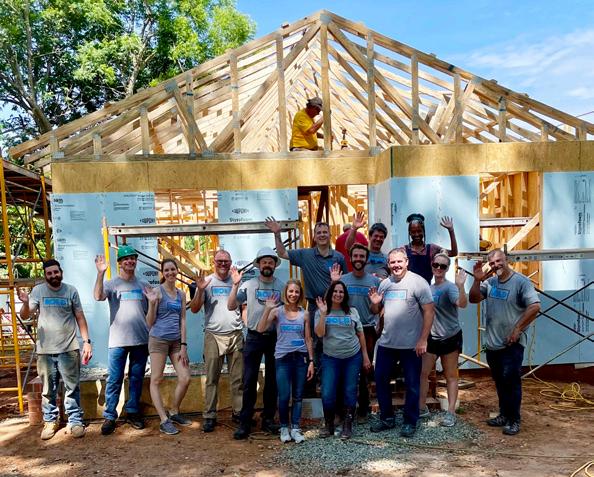
A team from Bold Construction, including construction managers, agents and employees in sales and finance, worked alongside Chatham Habitat for Humanity on June 3 to frame a new home for a family in Siler City
28 CHATHAM MAGAZINE WINTER 2022-2023
LET US KNOW WHAT YOU'VE HEARD! EMAIL NOTED@CHATHAMMAGAZINENC.COM NOTED .
919.542.8166 115 Hillsboro St. Pittsboro, NC 27312 www.deeprivermerc.com hello@deeprivermerc.com 202 2
Chatham Community Library launched a partnership with ecoExplore, a hands-on citizen science program developed by the North Carolina Arboretum, on Sept. 1. Students in grades K-8 can use their library card to check out a “Discovery Pack,” which includes kid-friendly equipment such as binoculars, bug nets, a trail camera and more. The library will also host educational programs led by ecoExplore facilitators, including an info session on Nov. 12.
BMC Brewing partnered with Chatham Animal Rescue & Education this August to produce a craft beer, Peace Love Paws Blonde Ale. The brewery will donate a portion of sales proceeds to aid CARE in its mission to provide care, food and homes to homeless pets. Peace Love Paws is available for purchase at BMC and at Breakaway Cafe in Briar Chapel.
IN OTHER NEWS
Jordan-Matthews High School won a national competition that earned it the exclusive right to the first-ever school production of Disney’s “Frozen.” Sawyer Shafer, the school’s first-year theater teacher (pictured left), sent in the contest application and is considering a joint production between Jordan-Matthews and Chatham Central High School, where Sawyer also teaches.
The Pittsboro Water Plant earned a 2022 Area Wide Optimization Award from the North Carolina Division of Environmental Quality’s Public Water Supply Section, based on the results of water quality testing throughout 2021. The annual AWOP awards are given to plants that demonstrate outstanding drinking water quality. Only 66 water treatment plants across the state earned the award.
Chatham Drug Free hosted the Chatham County Recovery Celebration on Sept. 10 to acknowledge those who have successfully recovered from substance abuse and to offer support and encouragement to those beginning their road to recovery. Representatives from local substance use treatment centers and mental health facilities were in attendance and guest speakers recounted their experiences.
Chatham County is now participating in Solarize the Triangle, an initiative from the Triangle Sustainability Partnership that allows residents and businesses to save on the cost of solar power and other clean energy technologies. The more residents and business owners who acquire solar installations through the program, the more savings accrue for all participants. Chatham is one of the region’s 11 participating communities and has the highest-level designation by the SolSmart program, which recognizes local governments that have made efforts to develop and encourage the use of solar power.
Sarah Shook of Sarah Shook & the Disarmers released an album, “Cruel Liars,” on Oct. 14. The project is part of their new venture, “Mightmare,” (pictured below). The album provides insight into Sarah’s process of recovery and healing during the pandemic lockdown.
The Duke Energy Foundation awarded the Siler City Development Organization a $25,000 Hometown Revitalization grant in September, one of only 20 grants awarded to nonprofits, according to Duke Energy North Carolina President Stephen De May.
An annual study commissioned by Visit North Carolina found that domestic and international visitors to and within Chatham County in 2021 spent $68.03 million, an increase of 41.4% from 2020, according to Pittsboro-Siler City Convention & Visitors Bureau Director Neha Shah.
Chatham County emergency responders partnered with other local agencies to support the U.S. Army Special Operations Command 95th Civil Affairs Brigade’s water jump training at Jordan Lake in May. About 100 soldiers parachuted from an aircraft in order to practice jumping into different environments, while local agencies gained water rescue experience by delivering the soldiers to shore.
Carolina Brewery launched a new core beer, Fin Chaser Pale Ale. This traditional ale has notes of pine, florals and citrus. The brewery celebrated its newest creation with a launch party at both its Pittsboro and Chapel Hill location on Sept. 22.
PHOTO BY JILLIAN CLARK
Two electric vehicle charging stations were installed in Chatham County through a grant from the State of North Carolina and Volkswagen Settlement Fund. The county worked with Duke Energy and ChargePoint to design and build the stations, aligned with the Chatham County Comprehensive Plan to reduce carbon emissions. One station is at the Chatham County Agriculture and Conference Center in Pittsboro, and the other is at Smithfield’s Chicken ‘N Bar-B-Q in Siler City.

NOTED 30 CHATHAM MAGAZINE WINTER 2022-2023
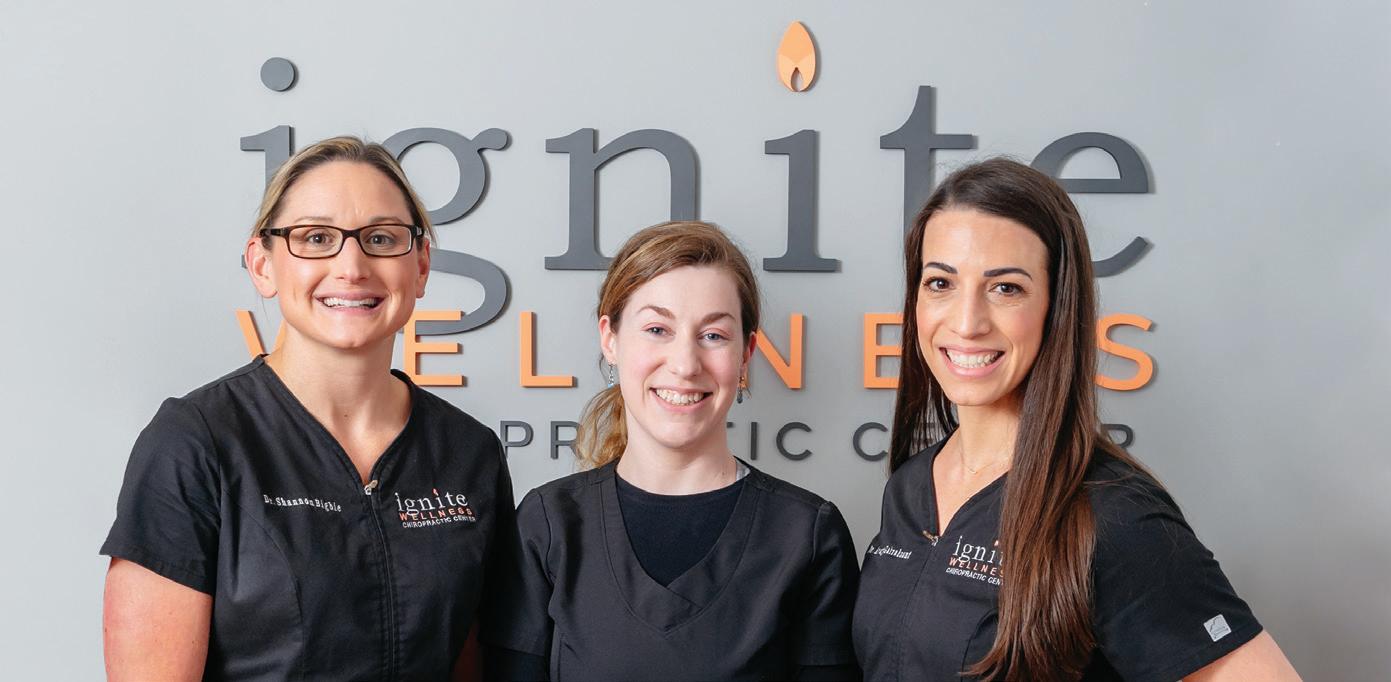



END YOUR PAIN WITHOUT DRUGS OR SURGERY TODAY 5821 Farrington Rd, Ste 202, Chapel Hill, NC 27517 919-307-6688 ignitechapelhill.com @ignitechapelhill THANK YOU CHAPEL HILL! VOTED BEST CHIROPRACTIC OFFICE! BACK AND NECK PAIN // HEADACHES // SCIATICA // NEUROPATHY // KNEE PAIN // PLANTAR FASCIITIS COLD LASER THERAPY // NON-SURGICAL SPINAL DECOMPRESSION // SHOCKWAVE THERAPY 2022 LimitedTimeOffer Any$49ConsultExam, NecessaryX-raysUsualvalue$197 Federal and Medicare restrictionsmayapply.
Chatham County was approved to receive $11.75 million in state funding for water and wastewater projects on July 14. A total of $789.4 million in water and wastewater infrastructure funding will be disbursed to communities statewide to replace old infrastructure and keep utilities viable.

CEREMONY Community Remembrance Coalition Chatham, Chatham Community NAACP and other community groups unveiled a historical marker to memorialize Jerry Finch, Harriet Finch, John Pattishall, Lee Tyson, Henry Jones and Eugene Daniel, all of whom were victims of lynching in Chatham County between 1885 and 1921. The marker is located outside of
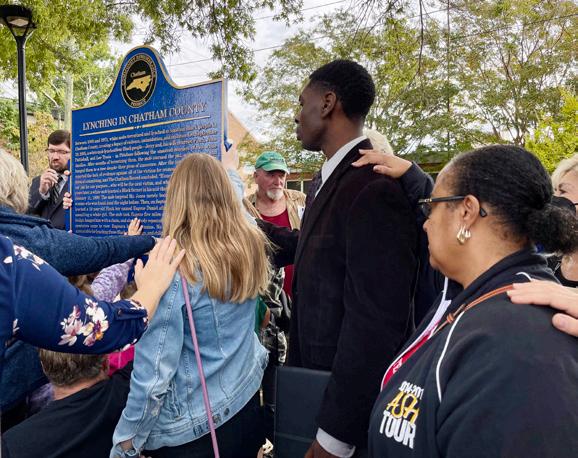
the Chatham County Government Annex in Pittsboro. Among the speakers were Mayor Cindy Perry, state congressman David Price, state senator Valerie Foushee and North Carolina Poet Laureate Jaki Shelton Green. There were performances from Woods Charter School students, Chatham Dance Connection and the Ebone Soul Strutters.
CENTRAL CAROLINA COMMUNITY COLLEGE UPDATES






Central Carolina Community College held its commencement for the class of 2022 on Aug. 9. The event honored 221 students, including 35 from Chatham County. Graduate Jordan Glover of Siler City gave a commencement address.
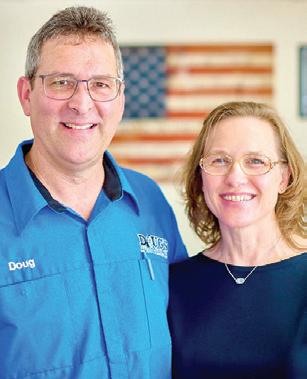
Ken Moss and Meg Moss of Sanford established the Moss Boys Scholarship at CCCC. The scholarship is personal to the family, primarily benefiting students who have been in foster care. Ken and Meg adopted three of their four sons through the foster system. “We have seen firsthand that many foster children get moved from home to home, and it can take years for them to find a permanent family,” Meg
NOTED 32 CHATHAM MAGAZINE WINTER 2022-2023 111 Knox Way, Chapel Hill • Polk’s Village behind UNC Pediatrics moonasianbistroch.com (919) 869 7894 or (919) 869 7819 Asian Fusion Restaurant Specializing in Chinese, Thai and Japanese, including Hibachi, Teriyaki Grubhub Delivery Options Available 2022 HONESTY. QUALITY. SAFETY. SATISFACTION Family-Owned Complete Car Care Center since 1994 CALL US TODAY 919-542-5996 863 SANFORD ROAD, PITTSBORO 2021 2022
COMMEMORATION


frameshopchapelhill.com Custom Framing • Giclee Art Printing • Art Restoration & Installation 50 years serving our community with the finest custom framing, 2022 Happy Holidays! You name it! We frame it! Central Location @ University Place North Location @ Timberlyne Village (Previously Framemakers) 1129 Weaver Dairy Road, Suite W Chapel Hill NC 27514 919-942-3291 frameshopnorth@gmail.com 201 S Estes Dr., Suite 400C Chapel Hill, NC 27514 919-942-7306 frameprintshop@gmail.com 15% off on ALL Holiday Framing at both locations From: Nov 1 - Dec 24 Visit us at One of Our Two Convenient Locations
said in an August press release. “We hope that this scholarship will help them in some small way to achieve their educational goals.”
CCCC received a $2,500 grant from Lee County Community Foundation to support the James French Dreamkeeper Program, which supports students facing emergency expenses that may prevent them from completing their degrees or training. The program had provided more than $127,000 to 368 students as of fall 2021.
The Chatham School of Science & Engineering class of 2022 received more than $2.3 million in scholarships. Dylan Philipps, pictured above, received a Park
Scholarship from N.C. State University. The high school’s early college program partners with CCCC to offer 120 students the opportunity to graduate with a diploma and an associate degree at no cost.

The CCCC Small Business Center awarded certificates to seven graduates of the spring 2022 SPARK entrepreneurship program in Siler City (pictured with Chatham Chamber of Commerce President/CEO Cindy Poindexter, second from left). This eightclass series was created
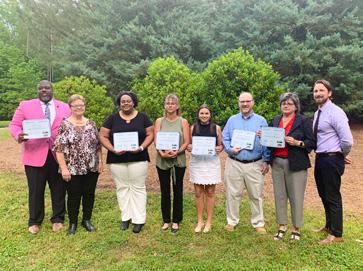
in partnership with the Chamber and Mountaire Farms. Students attend seminars, create a business plan and prepare a pitch for a review committee. Anyone interested in starting a small business in Chatham is encouraged to apply for the 2023 series.

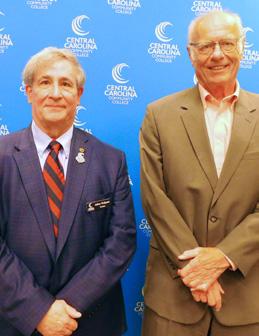
Julian Phillpott and George Lucier were appointed as chairman and vice chairman of CCCC’s Board of Trustees for 2022-23. CM
NOTED 34 CHATHAM MAGAZINE WINTER 2022-2023
Our Mission
Saving and protecting wild cats in captivity and in the wild.


Background
Carolina Tiger Rescue believes the ideal home for wildlife is in the wild. Unfortunately, thousands of wild cats across the U.S. are bred and sold into private homes, the entertainment industry, and to roadside zoos for the sole purpose of making a profit. In addition to advocating against their exploitation, Carolina Tiger Rescue gives wild cats and other animals that have survived these circumstances a second chance at life, providing safe and comfortable homes where they can live in peace.
Upcoming Events
November 29, 2022
Giving Tuesday
February 25, 2023
Black Tie & Tails Ball
Brag Lines
Carolina Tiger Rescue has been a part of the Pittsboro community for nearly 50 years and is a vital source of tourism revenue for Chatham County. Additionally, the sanctuary gives visitors the ability to learn about and make a difference in the lives of animals in need through rescue, education, and advocacy. With more than 200 volunteers and countless monthly donors, opportunities to make a difference are endless and always encouraged.

Wish List
• Cleaning supplies (Lysol spray, laundry detergent, bleach, paper towels)
• Lowe’s gift cards (to purchase building supplies for enclosures)
• Nature-themed items, gift cards to restaurants, movies, coffee shops, etc. (donations for our Black Tie & Tails Ball auction)
• Food Lion gift cards (to purchase specialty meat & fruit for omnivorous animals)
• Husqvarna 128LD 28-cc 2-Cycle 17in (weed eater for our site team)
• Medium/large disposable gloves
Get in Touch!
1940 Hanks Chapel Rd. Pittsboro, NC 27312 919-542-4684
CarolinaTigerRescue.org Email: info@carolinatigerrescue.org
Our local nonprofits, how they support the community and how you can get involved
Sponsored
Content
Pixie Serval
Shira Tiger
Chatham
Background
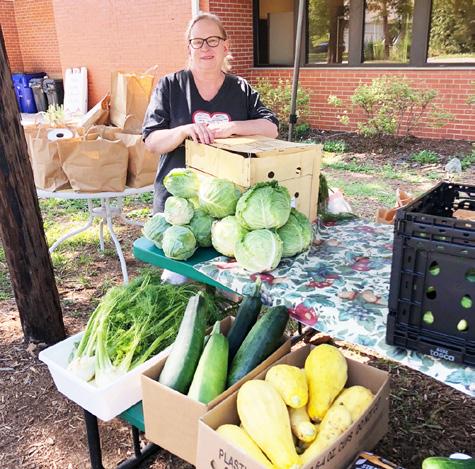
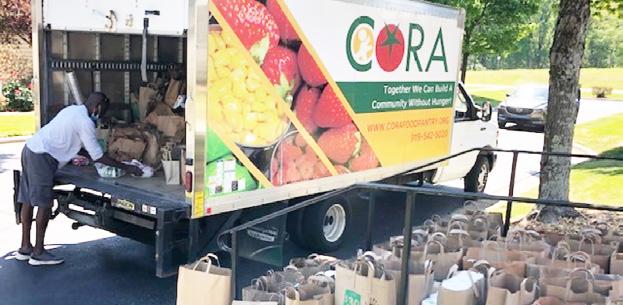
CORA is a nonprofit organization that serves local residents facing food insecurity. Their goal is to build a community without hunger by distributing nutritious food through their pantry, related programs and network of local partners. CORA envisions a healthy, strong and connected community where all people have equitable access to abundant, safe and nutritious food. Through their work, they help build a healthy Chatham County—a place where families thrive, children do well in school and seniors do not face the stress of choosing between food and other necessities.
Our Mission
CORA provides nutritious food to community members facing food insecurity.
Upcoming Events
Turkey Tuesday – November 15, 2022
Help make Thanksgiving a festive occasion for our neighbors in need. Your donation will help us reach our goal of serving 1,500 families this holiday season.
We will be collecting turkeys, as well as these holiday trimmings.
Mini Hams
Boxed Stuffing/Cornbread Mix
Instant Mashed Potatoes
Packets of Gravy Canned Fruit/Veggies (yams, green beans, peas)
You can drop off donations at CORA, Monday through Friday between 9 am – 3pm.
Empty Bowls – March 19, 2023 at Galloway Ridge
CORA is excited to bring back Empty Bowls in spring 2023. The concept is simple: guests choose a handmade bowl, enjoy delicious restaurant tastings, and go home with their bowl that serves as a reminder that someone’s bowl is always empty and we need to continue our efforts to end hunger in Chatham County.
Brag Lines
In FY2022, CORA had a tremendous impact on food insecurity in our community. Thanks to the generous support of the entire community, CORA distributed 1.1 million meals to more than 3,000 families and fulfilled 100% of requests for assistance. CORA is dedicated to building a community without hunger and committed to working together to care for the most vulnerable in our community.
Get in Touch!
919-491-5896
40 Camp Dr., PO Box 1326 Pittsboro, NC 27312 corafoodpantry.org
Our local nonprofits, how they support the community and how you can get involved Sponsored Content
Outreach Alliance Wish List • Maseca corn flour • Tuna • Canned chicken • Low-sugar canned fruit • Low-sodium canned vegetables • Cereal • Soup • Oil and spices Our local nonprofits, how they support the community and how you can get involved Sponsored Content
Habitat volunteer Tracy stocking shelves at the ReStore.
Background
Since 1989, Chatham Habitat for Humanity has been working to achieve a vision of a Chatham County where everyone has a safe place to call home. With the help of generous donors and volunteers, Chatham Habitat builds safe, healthy homes that are then sold to Chatham County families with zero-percent interest affordable loans. Chatham Habitat has built more than 140 homes across the county in the last 31 years.
Brag Lines
Chatham Habitat believes that affordable housing is an essential part of a vibrant community. The chance to own an affordable home can be a turning point in a family’s life that leaves an impact for generations, and Chatham Habitat is proud to have made the dream of homeownership a reality for so many families.
Our Mission
Chatham Habitat for Humanity works in partnership with God and people to create self-help opportunities for families to own affordable homes, improve their lives, and strengthen their communities.


Upcoming Events
• Ongoing Volunteer Opportunities: We need all sorts of volunteers, and not everything requires a hammer! Visit our website to learn more about volunteering on the job site or in the ReStores - we would love for you to join us.
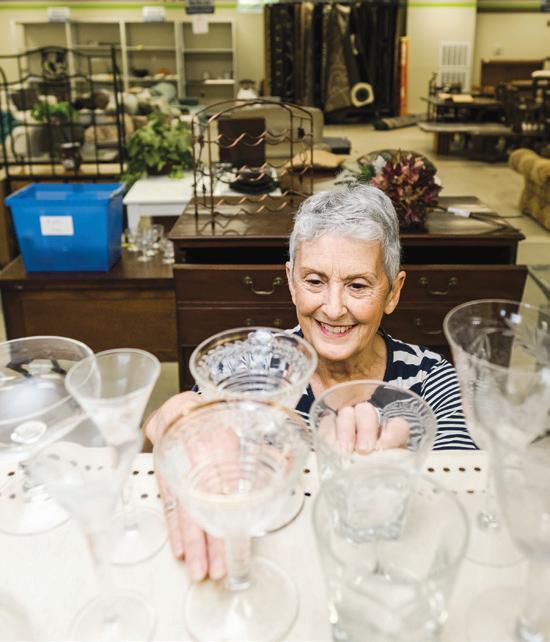
• Women Build: Every year, Chatham Habitat hosts a series of events through the spring and summer as part of Women Build. We set aside special build days and social events for women to work together to build confidence and fluency in the world of construction. Visit our website for details on this year’s events!
Wish List
• Donations of gently used furniture, household goods, and construction materials to the ReStores (call 919-548-6910 for a free donation pick-up)
• Financial donations which will be used to support the construction of safe, healthy, affordable homes in Chatham County
• Hand sanitizer to be used in the ReStores and on the construction sites
Get in Touch!
Mailing Address: PO Box 883 Pittsboro, NC 27312
467 West St. Pittsboro, NC 27312 919-542-0788 chathamhabitat.org
Our local nonprofits, how they support the community and how you can get involved
Sponsored
Content Our local nonprofits, how they support the community and how you can get involved Sponsored Content Our local nonprofits, how they support the community and how you can get involved Special Advertising Section
Habitat family Shannon and Jeffrey Ambrister in the kitchen of their new home.
CISCC (formerly Chatham County Together!) was established as a community-based mentoring program in 1989 in response to the lack of prevention services for students ages 5-18 in Chatham County. Subsequently, CISCC has expanded its offerings to all youth referred by Chatham County Schools, the Department of Social Services, the Division of Juvenile Justice, mental health providers, and parents or guardians. All services are free of charge and offered in both English and Spanish through the support of nine bilingual staff members.
Brag Lines
In 2021-2022, CISCC served 222 students across 18 Chatham County Schools with individualized integrated support offered through seven unique programs. Last year, 86 volunteers gave 3,612 service hours, serving as mentors, tutors, work site supervisors, parent advocates and Board members.
For the 222 students served, outcomes included:
• 94.4% met or made progress toward their social emotional goal
• 88.2% met or made progress toward their attendance goal
• 80.4% met or made progress toward their academic goal
• 81.2% of families demonstrated enhanced family functioning as a result of services
Our Mission
Communities In Schools of Chatham County’s (CISCC) mission is to surround students with a network of support, empowering them to stay in school and achieve in life. Our integrated school and community-based programs build resiliency in youth who display high risk factors for disparate health, social and academic outcomes. Most face challenges generated by poverty and Adverse Childhood Experiences (ACEs) that can impact their learning and development. CIS programs connect youth to caring adults in school and community settings. CISCC keeps kids in school and on the path toward graduation by leveraging evidence-based strategies, sustaining relationships and community-based resources to drive positive outcomes.
Upcoming Event
Help us reach our End of Year Fundraising Campaign goal of raising $40,000 to expand services in Chatham County! Make your donation before December 31, 2021 to have your contribution matched up to $10,000!
Wish List
Are you looking for a volunteer opportunity in which you can inspire and challenge young people to reach their full potential? CISCC is seeking caring adults across the community to serve as mentors, lunch buddies and tutors for youth. Contact us today to learn more about volunteer opportunities.


919.663.0116

N. Chatham Ave., Siler City, NC 27344 cischatham.org tcowdin@cischatham.org
Donate here:
Our local nonprofits, how they support the community and how you can get involved Sponsored Content
Get in Touch!
208
Background
Our local nonprofits, how they support the community and how you can get involved Sponsored Content
Mission Statement
The mission of Chatham Animal
Education, Inc. (CARE)

Brag Lines
CARE goals are to reduce pet over-population and the annual rate of euthanasia of dogs and cats in Chatham County. In 2021, our Adoption, Community Cat and Lillie’s Fund programs helped 797 Chatham County dogs and cats.
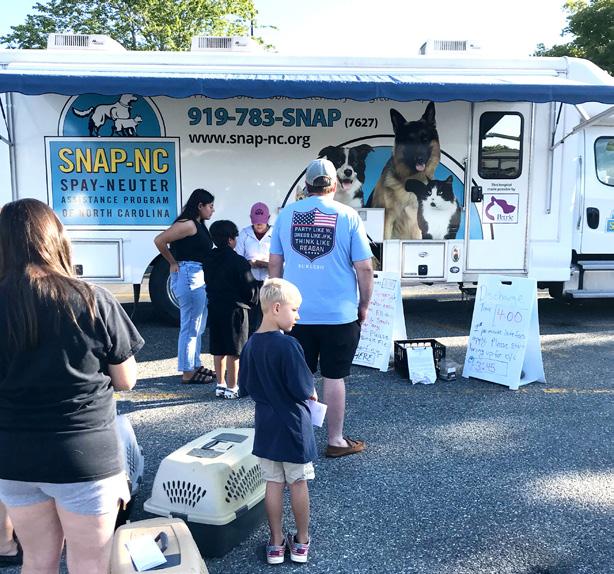

placed 189 dogs and cats in new homes; neutered 630 dogs and cats,
the birth of thousands of puppies and kittens; and microchipped 577 cats and dogs, ensuring their return
they are lost.
Upcoming
Background
Incorporated in 1975 as Chatham Humane Society, the organization changed its name to Chatham Animal Rescue and Education, Inc. (CARE) in 2000. CARE is a 501(c)(3) tax-exempt organization and holds an NC Charitable Solicitation License. CARE is an all-volunteer organization supported solely by private donations and grants. CARE houses animals in foster homes and is able to accept only as many homeless dogs and cats as we have available foster homes.
Wish List
Foster caregivers are the backbone of CARE; the more foster caregivers we have the more dogs and cats we can help. CARE provides supplies, covers medical expenses and provides mentors to foster caregivers. Our greatest need continues to be financial support to cover ever-increasing costs of medical care for our foster cats and dogs and to support Lillie’s Fund, CARE’s targeted spay/neuter program for low-income Chatham County residents.
in Touch! P.O.
Pittsboro,
27312 919-542-5757 Chathamanimalrescue.org
“Clinical Research, Quality Assurance, Records & Information Management, Quality Control, and Systems Implementation.”
Our local nonprofits, how they support the community and how you can get involved Sponsored Content Our local nonprofits, how they support the community and how you can get involved Sponsored Content
Rescue and
is to promote the health and safety of all dogs and cats in Chatham County. Get
Box 610
NC
Events Oct. 17, 2022: Dining for Dollars at The Carolina Brewery in Pittsboro Nov. 2, 2022 and Dec. 7, 2022: CARE night at The Beagle in Pittsboro Nov. 29, 2022: Giving Tuesday
We
preventing
if
mmays@jerionconsulting.com CARE partners with SNAP-NC to provide low cost spay/neuter services to qualifying citizens of Chatham.
Sponsored By:
Background
The Pittsboro Boys & Girls Club, the newest Club site of the Boys & Girls Clubs of Central Carolina, opened its doors on Oct. 18, 2021 on the campus of George Moses Horton Middle School. Thanks to the dedication of the steering committee members and their fundraising efforts, the Pittsboro Club Site is off to a great start.

Brag Lines
Among teen Club members, 99 percent expect to graduate from high school and 90 percent expect to complete some kind of postsecondary education. One in every four teen Club members volunteers in their community at least once per month and another one in four volunteers at least once per year. Additionally, 85 percent of Club members ages nine years and older report at least one hour of physical activity at least five days per week.
Get in Touch!
888-785-CLUB (2582) 79 Horton Road Pittsboro, NC 27312 centralcarolinaclubs.org
Mission Statement
Our mission is to enable all young people, especially those who need us most, to reach their full potential as productive, caring, responsible citizens.
Upcoming Events

February 23, 2023 Youth of the Year and Dinner of Champions

Wish List
• College- and wide-ruled notebook paper
• Children’s scissors
• Pencils and pens (black, red, and blue)
• Glue sticks
• Art supplies: small canvases, paint, brushes
• Small toys and prizes for member rewards
• Sharpie markers
• Crayons (classroom packs or individual packs)
• Children’s or basic calculators
• Dry erase markers and personal-sized white boards
• Amazon gift cards
• Guest speakers & mentors
Sponsored
Our local nonprofits, how they support the community and how you can get involved Sponsored Content
By: hobbsarchitects.com Our local nonprofits, how they support the community and how you can get involved Sponsored Content
Our Mission
The Chatham County Literacy Council helps adults who are living or working in Chatham County, North Carolina acquire the literacy and educational skills they need to function successfully in society.
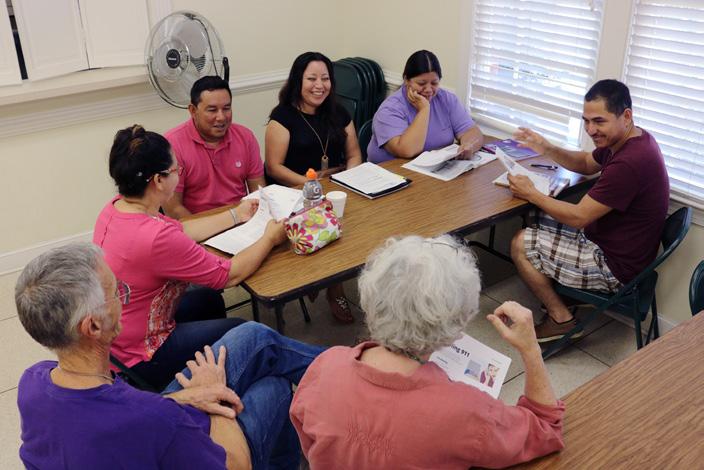
Christina started English class in 2018; prepared for the citizenship exam; received tutoring via Facetime two days per week throughout the pandemic; and became a U.S. citizen in April 2022. Congratulations to Christina and her tutors, Vivienne Jacobson and Naomi Mendelsohn
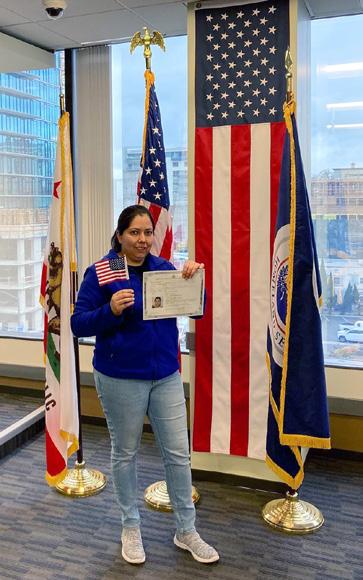
“I wanted to thank Chatham Literacy for their time [to tutor me] and support in filling out my application for citizenship. I can finally say I made it. Thank you for the support you give people to be better and achieve dreams like mine, a big hug and my gratitude.” - Christina
Background
Chatham Literacy is an established 501(c)(3) nonprofit that provides free and individualized adult literacy services within Chatham County.
We provide adults the ability to transform their lives. Our tutoring services help adults strengthen their reading, writing, and math skills; learn English; prepare for the citizenship exam; and improve their financial management skills. Chatham Literacy is building a more educated local workforce and generating more economic growth, which positively impact families and the community at large.
Brag Lines
Our students are better prepared to engage in activities of daily life, such as talking to doctors without using their children as interpreters, helping their children with homework and voting for the first time as a new U.S. citizen. Literacy leads to gainful employment, financial and family stability, improved health care and better outcomes for future generations.
Upcoming Event
2023 Spring for Literacy Luncheon on Wednesday, May 17, 2023: From 11 am – 2 pm at the Governors Club. The event features guest author Lee Smith. Seats go on sale in March 2023 and tables for the luncheon seat 10 people. Save the date and spread the word.
Wish List
• Volunteers, such as tutors, board directors & committee members: a special thanks to our volunteers who gave 7,200 hours last year, an equivalent value of $216,000!
• Referrals of potential learners and tutors
• Financial donations: 84 cents of every dollar donated goes directly toward services
Get in Touch!
Mail: P.O. Box 1696, Pittsboro, NC 27312
Office: 1002 West Third Street, Siler City Phone: 919-742-0578 www.chathamliteracy.org Together we are building better futures!
Our local nonprofits, how they support the community and how you can get involved Sponsored Content
HOLIDAY SUGAR
ALMOND-SOUR CHERRY COOKIES
By Amy Megan Rogers
Amy Megan Rogers is a personal chef and dessert-maker who posts her creations on her Instagram account, @gimmesomesugarnc. She previously worked at Pyewacket and Magnolia Grill and currently crafts desserts for Paul’s of Oak Island.
Makes about 2 ½ dozen cookies
rich, crispy and chewy almond cookies with a surprise tart cherry filling happen to be gluten free.

About 30 dried tart cherries
lb. whole blanched almonds (if not available, you can use sliced or slivered almonds)
sugar
3 large egg whites, plus additional egg white to glaze
tsp. almond extract
Tbsp. cream cheese
salt
almonds
topping cookies
In a small bowl, cover cherries with hot water. Allow to soak for 5 minutes, then drain and pat dry with a paper towel. Set aside.
Using a food processor, grind almonds and sugar to a fine powder. Add egg whites, almond extract, cream cheese and salt, and pulse until mixture comes together to form dough. Cover and chill for at least 30 minutes.
Preheat the oven to 325 F. Scoop dough into 1 oz. (about 2 Tbsp.) portions and roll into balls. Poke hole into each ball
and tuck about 3 dried cherries into the hole, then roll between hands to smooth and cover cherries.
In a small bowl, lightly beat the remaining egg white and paint on top of each cookie, then either press one whole almond into the top or roll in sliced or slivered almonds.
Bake for 15-18 minutes until lightly golden. Allow to cool completely, then store airtight at room temperature for up to three days, or freeze for longer storage.
42 CHATHAM MAGAZINE WINTER 2022-2023
1
2 cups
These
FOUR FESTIVE RECIPES BY HOME BAKERS TO SAVOR AND SHARE COMPILED BY ANNA-RHESA VERSOLA PHOTOGRAPHY BY JAMES STEFIUK
RUSH
½
3
¼ tsp.
Additional
for

WINTER 2022-2023 CHATHAM MAGAZINE 43
RIBBON COOKIES
By Kelli Hammond (Recipe is from Lu Ann Hammond, Kelli’s mother-in-law)
Kelli Hammond was trained in culinary arts and worked as a pastry sous-chef at Lantern in Chapel Hill. She now works at UNC as a research coordinator. Kelli says her husband, Scott Hammond, makes this dessert with their three daughters every year.
Makes 8-10 dozen cookies
1 cup butter
¼ cup sugar
egg
tsp. vanilla
½ cups allpurpose flour
½ tsp. baking powder
In a standing mixing bowl, cream butter, and add sugar gradually. Beat in egg and vanilla. Blend in sifted dry ingredients. Divide dough into three equal parts. Mix a few drops of red food coloring and cherries into one part. Melt the chocolate and mix into the second part. Add poppy seeds into the third part. Line a 9-by-5-by-3inch pan with wax paper. Spread cherry

tsp. salt
food coloring
cup finely diced candied cherries
square unsweetened chocolate
Tbsp. poppy seeds
mixture evenly over the bottom. Refrigerate to set slightly. Cover the cherry layer with chocolate mixture. Refrigerate to set slightly. Then, add the poppy seed layer. Cover and chill overnight.
Preheat the oven to 375 F. Remove from the pan and cut into thirds lengthwise. Cut into thin slices. Put on an ungreased sheet and bake for 12 minutes.
44 CHATHAM MAGAZINE WINTER 2022-2023 HOLIDAY
1
1
1
2
1
½
red
¼
1
1
Give your home the protection it deserves.
Your home is where you make some of your best memories, and that’s worth protecting. I’m here to help. LET’S TALK TODAY.
Sara Donaldson Ins Agcy Inc Sara Donaldson, President www.insurewithsara.com Pittsboro, NC 27312 919-542-4001; Se habla Español
 State Farm Fire and Casualty Company, State Farm General Insurance Company, Bloomington, IL.
State
Farm Florida Insurance Company, Winter Haven, FL. State Farm Lloyds, Richardson, TX.
By Ronda Bowman
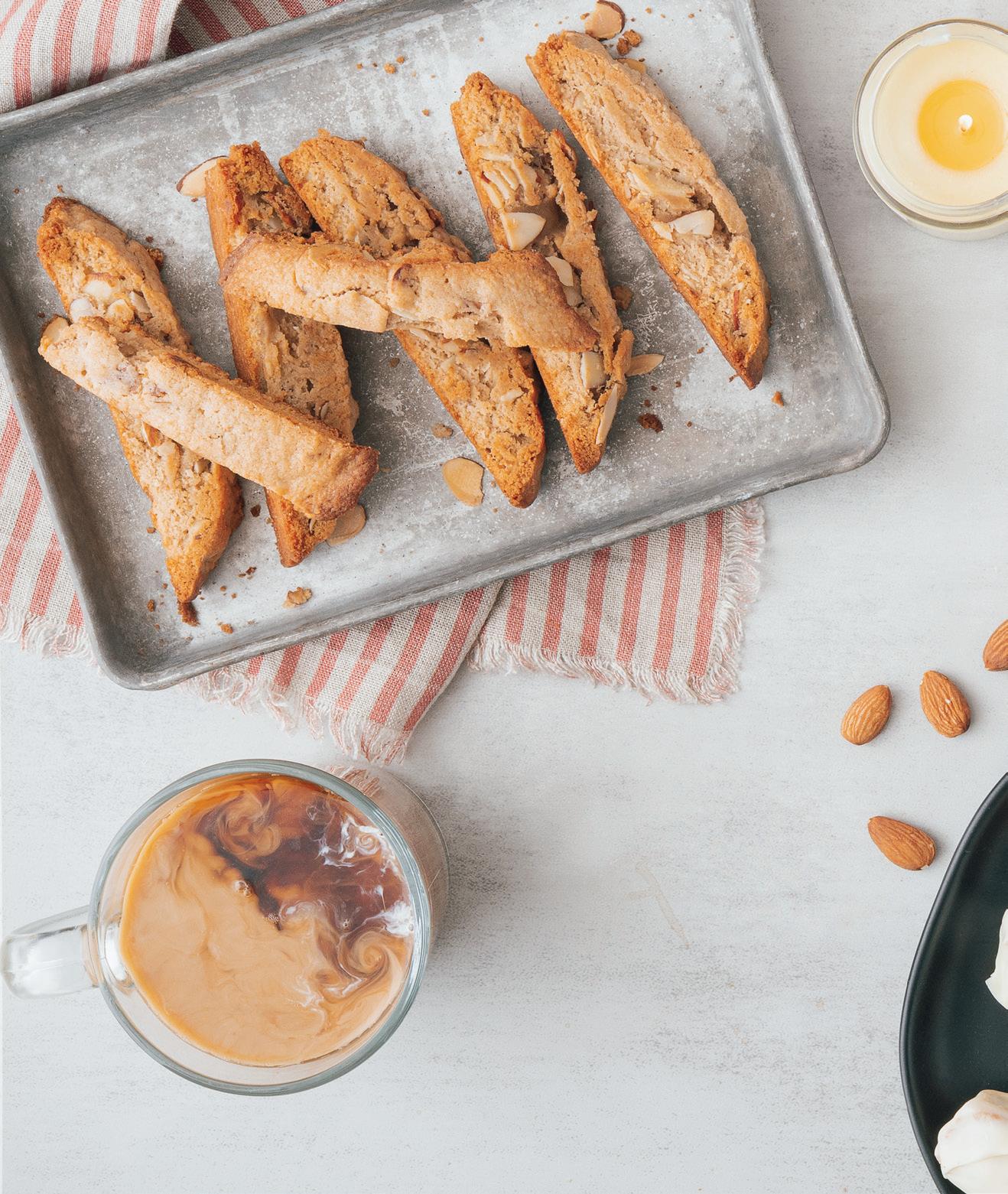
46 CHATHAM MAGAZINE WINTER 2022-2023 HOLIDAY ½ cup softened unsalted butter 1 cup sugar 2 large eggs 1 ½ Tbsp. Kahlua 2 ¼ cups all-purpose flour CHOCOLATE-ALMOND BISCOTTI
Ronda Bowman is vice president of customer and employee learning for North America tools at Stanley Black & Decker. She often includes these biscotti in gift packages for friends and neighbors. 1 ½ tsp. baking powder ¼ tsp. salt 1 ½ tsp. cocoa 1 cup almonds Optional: white chocolate chips or vanilla candy coating, melted
Preheat the oven to 350 F.
In a large bowl, combine butter and sugar and beat with an electric mixer at medium speed until light and fluffy. Add eggs and beat well. Add Kahlua and beat into mixture.

In a separate bowl, combine flour, baking powder, salt and cocoa, and then add to the butter mixture. Mix well. Fold in almonds.
Divide the dough in half and form into two 8-by-2-inch logs. Place onto a greased cookie sheet and bake for 30 minutes or until the toothpick comes out clean.
Remove logs from the pan and place onto wire racks to cool completely. Once cool, carefully cut each log, using a gentle sawing motion, into ¾-inch to 1-inch slices (cut on the diagonal for fancier biscotti).
Place cut biscotti on an ungreased cookie sheet and bake for 6-7 minutes. Flip biscotti over and bake for an additional 5-7 minutes. Transfer from pan to wire racks to cool.
Optional: Once cool, line the cookie sheet with wax or parchment paper. Follow directions on the package to melt white chocolate chips or vanilla candy coating in the microwave or on the stovetop. Dip one end of biscotti in melted chips or coating. Lay dipped cookies on the sheet and place in the refrigerator until melted coating is set.
WINTER 2022-2023 CHATHAM MAGAZINE 47 HOLIDAY
PHOTO BY JOHN MICHAEL SIMPSON
THREE-LAYER PINEAPPLE CAKE
 By Sylvia Taylor Townsend
Sylvia Taylor Townsend is one of five siblings. She bakes this classic dessert when their families gather for special occasions and holiday meals.
½ cup Crisco
2 sticks butter
3 cups sugar
3 cups flour
¼ tsp. salt
Preheat the oven to 325 F.
In a large bowl, cream together Crisco, butter and sugar with a mixer until light and fluffy. Set aside. In a separate bowl, sift flour, then add salt and baking powder to the flour. Add an egg to the creamed
½ tsp. baking powder
5 large eggs
1 cup milk
1 tsp. vanilla
1 tsp. lemon extract
butter mixture, then gradually add dry ingredients and milk. Mix well. Continue to add eggs, one at a time, alternating additions of flour and milk. Add vanilla and lemon extract and mix. Pour even amounts of batter into three separate layer pans. Bake for 1 hour.
Cream Cheese Icing
1 stick unsalted butter
8 oz. cream cheese
4 cups powdered sugar
In a large bowl, mix together butter, cream cheese, powdered sugar and vanilla. Set aside. In a pot over mediumhigh heat, add pineapple, sugar and cornstarch and bring to a low boil, stirring constantly. Let cool. To assemble the cake, remove one cooled layer from the pan and place on a large flat plate.
2 tsp. vanilla
8 oz. crushed pineapple
1 cup sugar
1 Tbsp. cornstarch
Poke holes in the cake layer with a fork, and spread pineapple mixture on top. Spread cream cheese icing over this layer. Remove the second cake layer from its pan, and stack on top of the first layer. Repeat the process of poking holes and spreading cream cheese icing for the second and third layers. CM
48 CHATHAM MAGAZINE WINTER 2022-2023 HOLIDAY



Downtown Pittsboro’s Bilingual Bakery Order Now! Scan Here! 84 Hillsboro St., Pittsboro, NC 27312 919-444-2023 Bakery@Carolina-Cravings.com Holiday Pies | Rosca de Reyes | Truffles Concha, Cookies, & More! Carolina-Cravings.com Cravin’ The Holidays! —“If you crave it, we bake it!” Felices Fiestas!
BECOMING
A PITTSBORO GRANDFATHER BRINGS JOY AND GLAD TIDINGS
BY ANNA-RHESA VERSOLA PHOTOGRAPHY BY VAL STONE CREAGER
Depending on his wardrobe, Mack Thorpe is recognized around town as a bearded entrepreneur who makes custom furniture in his Pittsboro woodshop, a scoutmaster for Troop 93 (see more about that role on page 60) or a jolly old elf driving a big red pickup truck.
For that latter character, Mack, 68, has pulled on a crimson suit complete with jingle bell boots, a buckled belt, white gloves and a white-trimmed hat for the past 14 years. Once in costume, Mack transforms into a Santa Claus performer who regularly appears at The Carolina Inn in Chapel Hill, The Rusty Bucket in Apex and at private events, including in-home visits in the area.
“The first time I did it, I was in college – a little too young at that point,” Mack laughs, explaining that his best friend’s father owned a shopping center. “He wanted me to play Santa. So, we dyed my hair and beard. I was an awfullooking Santa.”
The Wilmington native is a former high school drafting teacher who became a manufacturing engineer before joining a marketing team for Northern Telecom (which later became Nortel). In 2004, Mack and his wife, Pam Thorpe, opened the aforementioned Rusty Bucket, where they sell country furnishings, like his handmade rustic farm tables, and locally made home decor.
Over the years, Mack began to resemble Kriss Kringle so much that becoming a professional Santa was irresistible. “It kind of evolved by default, I guess, because [kids] would come into the store to see Santa, and it would be me,” Mack says. “And so, I bought a suit. … And then I had a suit custom made about five years ago to beef up the quality of the look. And I did a couple of the Santa schools online.”
He says there’s a lot to learn about how to embody the spirit of Christmas. “Well, first of all, you want to be respectful,” Mack cautions. “You always ask the child, or the parents, if it is OK for them to sit in my lap. Don’t just assume that they’re going to. Another ‘don’t’ is don’t actually tell a child you will get that toy for them. Tell them you will consider it.”
Mack says some kids are prepared with a long list of requests that can include a pet. “And I’ll kind of look at their parents, and they’ll shake their head ‘no’ or ‘yes.’ That helps. Basically, you say, ‘Well, I’ll see what I can do.’”
Mack Thorpe says he likes to imagine Santa Claus driving a cool red truck when he’s not in a sleigh.
He says kids have sharp eyes and keen hearing. “The thing you have to remember is that Santa is a performer and you want to stay in character,” he says about having side conversations with parents. “Never, never go out of character when you’re in your Santa suit. In the early days, it was difficult.” He recalls one father who brought his toddler daughter to see Santa. “The father leaned over to me and said, ‘Santa,
50 CHATHAM MAGAZINE WINTER 2022-2023 HOLIDAY
SANTA

WINTER 2022-2023 CHATHAM MAGAZINE 51
I owe you an apology.’ And I said, ‘You do? What for?’ He said, ‘Well in 1994, I peed on you.’ Oh, my God, I just died laughing. I said, ‘You’re forgiven.’”
Children have seemingly endless curiosity about how Santa manages his work. As Santa, Mack says he has many helpful tools. “On my belt, I have several keys – magic keys – because not every kid has a fireplace, and I tell them the magic keys help me get into their house,” he says, adding that his key fob turns off security alarm systems so Santa doesn’t wake anyone up when he drops off toys. And when Santa is not cruising rooftops on Christmas Eve in his sleigh, he drives a candy apple red Ford Raptor “monster” truck. Then, there are questions about reindeer, elves and Mrs. Claus. Mack chuckles at the ingenuity of a child’s imagination.

Becoming Santa has intangible benefits for this father of two grown daughters who have children of their own. (Though, while Mack and Pam have 11 grandchildren, ranging in age from 2 to 12, he does not play Santa for them, he says, because “I’m Granddaddy with a white beard.”) He marvels at how young children wholeheartedly believe in the magic of Christmas.
“They believe so completely,” Mack says, with awe in his voice. “And they are so enamored with it. It’s real to them. I became more aware [of it] than when I experienced it with my own children when they were small. It’s truly a blessing to talk to these children, and they are just so excited to see you. Of course, you have the [odd] meltdown or two, but most of them are very excited to see you. It’s like being a rock star. You come barreling into that big banquet room over there at The Carolina Inn, and some of them will just break away from their parents and run up and hug you. It’s unconditional love.”
Mack, dressed here as Saint Nicholas, prepares for his role as a giver of gifts to those who’ve been good.
Some adults are just as excited to see Santa, too. “I guess it brings back memories of their own childhood when they believed,” Mack says. “That was a big surprise.”
He says performing as Santa has been an unexpected gift. “I don’t have the words to explain how I feel from the joy that I get from these children and their parents, too,” Mack says. “The things they ask you, and they’re so sincere and they believe so completely. I don’t have the words for it. It’s the most joyful, rewarding thing that I’ve ever done.” CM
52 CHATHAM MAGAZINE WINTER 2022-2023 HOLIDAY
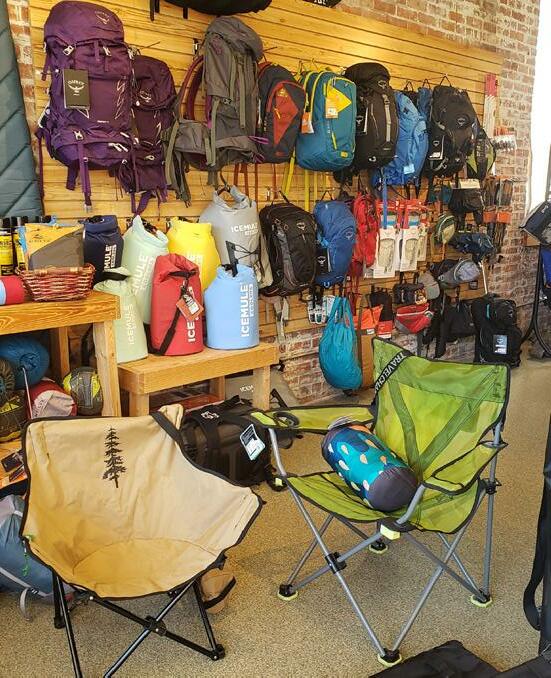


WINTER 2022-2023 CHATHAM MAGAZINE 53 (919) 542-5487 674 West Street, Pittsboro NewHorizonsTrading.com 202 2 Mon-Sat 10am-6pm • Sat 9am-6pm • Sun 11am-5pm (919) 542-7366 52 Hillsboro Street, Pittsboro NewHorizonsTrading.com Mon-Sat 10am-6pm • Sun 11-5pm All your camping needs, right in Pittsboro! Proudly carrying fair-trade, one of a kind bags by:
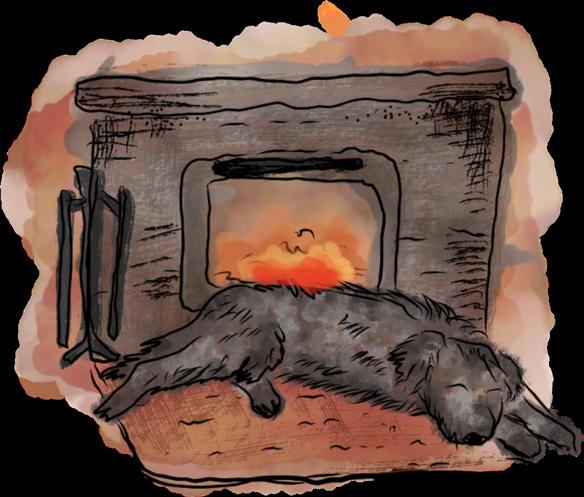
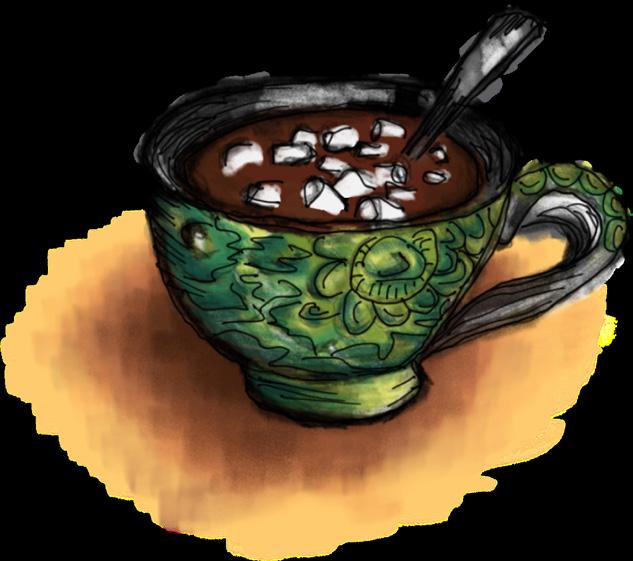
My biggest tip for the holiday season is to start or continue a tradition! My husband and I work every day from Thanksgiving until Christmas. This leaves little time to come up with new ideas every year for the holidays. On Christmas Day, it is just the two of us and the dog. This is our time to sit in front of the fire and drink hot chocolate, just relaxing after our busy season. Then, a few days later, the family all comes to our house for a traditional Christmas dinner. We keep the same menu every year: turkey, ham and all the fixings. Last year, we added a new tradition because everyone loved it so much. We all go outside, and the women pick out a geode and then the men take turns cracking it open to reveal the beautiful crystals inside. Each couple ends up with a unique specimen to take home.
– Katherine “Kitty” Mecham owner, Liquidambar Gallery and Gifts
LET US
ENTERTAIN YOU
COMPILED BY ANNA-RHESA VERSOLA ILLUSTRATIONS BY LEAH VERSOLA KALLAM

This may be the year you fill your home with guests for a rowdy Friendsgiving. Or host an intimate holiday dinner party. Maybe you opt for a potluck picnic around the backyard fire pit. Whatever your style, celebrate with people you love, and perhaps incorporate some of these tips from your neighbors.
oliday times are the busiest for Pittsboro Youth Theater. So, entertaining has to be simple. [My husband, Craig Witter, and I] don’t have a lot of family in the area. Our celebrations are quite small. We like a fire in the wood stove, our dogs snuggled up by the fire, good wine, simple foods and great conversation.
– Tammy Matthews artistic director/co-founder, Pittsboro Youth Theater


54 CHATHAM MAGAZINE WINTER 2022-2023 HOLIDAY
IDEAS FOR CELEBRATING WITH FAMILY AND FRIENDS
are some things I don’t miss about pre-pandemic life, and one of them is the stress I put on myself during the holidays. For Thanksgiving 2020, I made a chicken and rice casserole and played old Nintendo games – and it was wonderful! Last year, a tiny group of friends joined me in making a traditional spread, but it was a few days after the official holiday. We roasted a chicken instead of a turkey, and when we still didn’t get the timing right, we laughed it off and roasted the parts. Both years were so fun, and more importantly, they were relaxing. This year I will be saying “yes” to all my old traditions: mulled cider, pickle plates, unscented candles, the “Elvis Christmas Album” from 1964 – the best one! I’ll decorate the tree with “The Sound of Music” playing in the background.

might be homemade Irish cream [coffee] or chocolate babka after long hikes on overcast, windless days. But I’ll also be observing “The Sweatpants Rule:” Don’t do anything or spend time with anyone you can’t wear sweatpants for. The holidays are stressful enough. Only those dearest to us know what our coziest pants and slippers look like, and those folks will be my companions this holiday season.
Jody



WINTER 2022-2023 CHATHAM MAGAZINE 55 Home-Made Pastas | Salads | Sandwiches Artisan Wood-Fired Pizzas Local, Farm-Fresh Ingredients Veranda at Briar Chapel 79 Falling Springs Drive, Chapel Hill 919.240.4104 | CAPPSPIZZERIA.COM 202 2
There
There
Cedzidlo screenprinter/designer, Flytrap Clothing
Holidays are the best time for us to get together with extended family. Everyone brings their favorite holiday dish to share, and we indulge in a good homecooked feast. Accepting help from others to take part in the cleanup is an added bonus, but my top tip for entertaining is to break out into teams and play a game – [flag] football on the yard outside or a board game of your choosing. Either way, you won’t be disappointed in the results which are sure to bring out love, laughs and lasting memories.
– Antonio McBroom franchise developer, Ben & Jerry’s

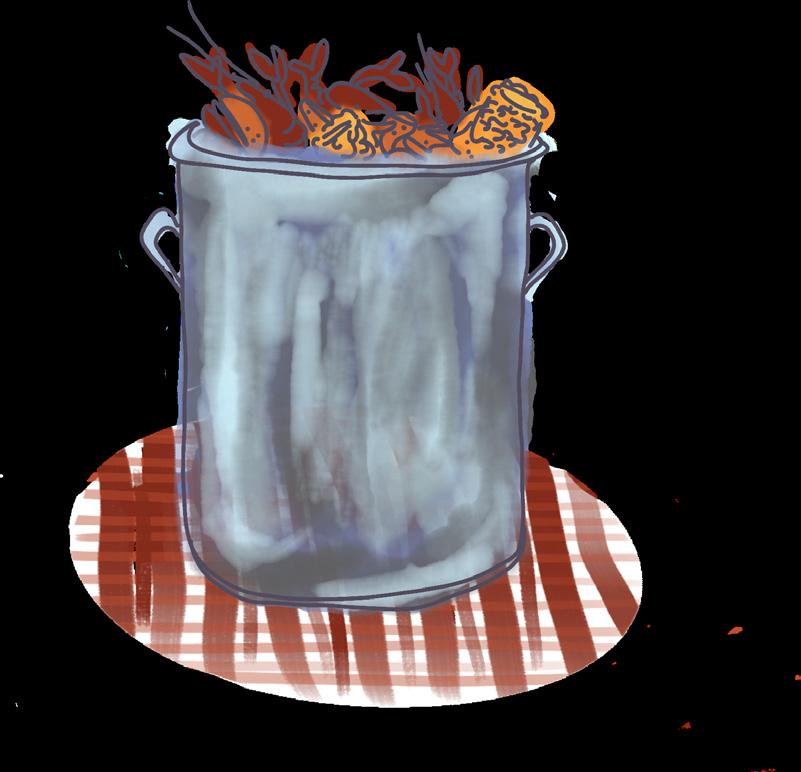
We don’t like traditional Thanksgiving food, so we try to do a different type of food every year. Last year, we did a seafood boil. This year, we might do Italian food or African food – something just to mix it up. Then for Christmas, we try to include our puppies. We give them stockings, and we wrap their gifts.
 – Ja’dah Spradley exercise physiologist/ personal trainer, Duke Center for Living at Fearrington


nvolve the kids (or family members) in the planning or decorating. I have three young kids, so I gave up on creating that perfect elegant holiday years ago. However, just because some of us are not living that Instagram life right now does not mean you can’t create a beautiful holiday experience. One year, my kids decorated small wooden ornaments for each of our guests, and not only were the guests pleased with their gifts, it also added that special touch to the tablescape. Another year, our dining centerpiece display consisted of the three gingerbread houses that my kids built. It ended up being an adorable handcrafted display and was fun for guests to guess who made each one. Outsourcing some of the work of the holidays not only takes some of the pressure off of the host, it also gives the kids ownership in the big day, but not in a “spreading tinsel across the living room” kind of way. Even if you do not have children, you can still enlist help from your guests. Another idea would be to have guests bring an old photo to display on the dining table. It sparks conversation and nostalgia of past memories of family traditions and members and makes for a fun, eclectic tablescape that brings everyone together.

56 CHATHAM MAGAZINE WINTER 2022-2023 HOLIDAY LOCAL FRESH FAMILY OWNED AND OPERATED SALADS • WOOD-FIRED PIZZA OLD SCHOOL DELI & SANDWICHES BURGERS • FULL BAR • 41 BEERS ON TAP OUTDOOR PATIO • MUSIC • EVENT SPACE THEMODERNLIFEDELI.COM 919-533-6883 JOIN US. 46 SANFORD RD PITTSBORO, NC 2022
Tracy Kalman Jordan fabric/interior designer, TraceCraft
Don’t forget to have fun! It’s easy to get caught up in making everything perfect for your guests, but joy is an essential for the holiday season. In our family, we like to play games. There are some great games out there that can keep a wide range of ages entertained. You don’t want to pick something that will have the adults bored or the kids feeling left out. You want to see smiles on everyone’s faces. Puzzling is also popular in Chatham County. Cobble Hill makes family puzzles with different piece sizes, so that kids and adults can participate. [Another idea is] the slingshots from Mischief Maker – they come with soft foam balls, so no one will get hurt. Whatever will allow your guests to bond and laugh will be what they remember 20 years from now. No one thinks about a perfect table setting decades later. Feel free to relax and enjoy yourself.

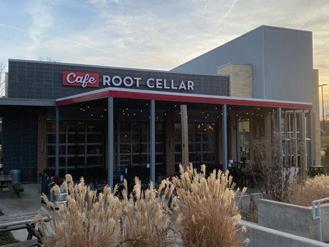


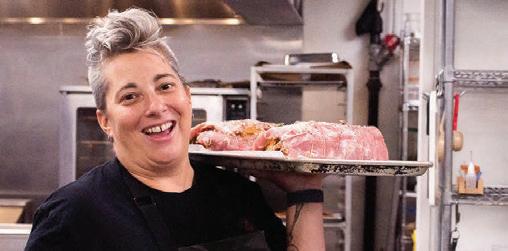



WINTER 2022-2023 CHATHAM MAGAZINE 57
– Samantha Birchard owner, Pittsboro Toys CM
202 2
lidaygiftguide








NORTH CAROLINA ZOO SOCIETY MEMBERSHIP,

Randolph County Tourism Development Authority 500 Albemarle Rd., Asheboro 336-626-0364, ext. 102 heartofnorthcarolina.com
Make
PILLOWISE PILLOWS, HOLIDAY SPECIAL OF $129
Association of Zoos
facilities, too.
as low as $59/year;
details at nczoo.org/become-zoo-member
a

h
SPONSORED CONTENT
Carolina Spine Specialists carolinaspinespecialists.com A good night’s sleep begins with finding the most well-fitting pillow for your body. Get measured at Carolina Spine Specialists for
Pillowise pillow in your size, which aligns your cervical spine and keeps you aligned throughout the night.
$59
memories with your family and friends at the North Carolina Zoo with an annual membership; discounts available on other
& Aquariums-accredited
Membership pricing
find additional
NORTH CAROLINA GLASS ORNAMENT, $25 AND APOTHEKE CHARCOAL CANDLE, $42 Deep River Mercantile 115 Hillsboro St., Pittsboro 919-542-8166 deeprivermerc.com Add a touch of North Carolina to your Christmas tree with an ornament that features prominent landmarks from across the state. Light the charcoal candle while decorating to fill your home with the warm, welcoming scents of cedarwood and sandalwood. GRIP6 WALLETS (THREE STYLES, AVAILABLE IN MANY COLORS) $59–$79 New Horizons Trading Co. Downtown 52 Hillsboro St., Pittsboro 919-542-7366 West 674 West St., Pittsboro 919-542-5487 newhorizonstrading.com These sleek, minimalist wallets make the perfect gift for the person looking to simplify their life. Made in the U.S., each one comes with a lifetime guarantee. 58 CHATHAM MAGAZINE WINTER 2022-2023
TRUFFLES AND CAKE BALLS: 6 FOR $6; SNOWBALL COOKIES: $3.50

Carolina Cravings
84 Hillsboro St., Pittsboro 919-444-2023 carolina-cravings.com
Mix and match any truffle flavors to create a sweet holiday gift box. Add a few melt-in-your-mouth buttery cookies with pecan pieces to pair with a warm winter drink. ¡Hablamos Español! Classic flavors: Peanut butter, Nutella, vanilla, chocolate, cherry bomb, and brownie and ganache Winter seasonal flavors: Pumpkin spice, red velvet and
ROSE QUARTZ BARWARE SET OF 3, $235.50
Max Hugo Interior Design 5850 Fayetteville Rd., Ste. 104 Durham 919-806-3638 maxhugointeriors.com
Ideal for a hostess gift, stocking stuffer or gift exchange item, this barware set adds a unique pop of glam. All you need is a holiday beverage!

$100 GIFT CERTIFICATE FOR FRAMING AND A COMPLIMENTARY “DOORS OF CHAPEL HILL” ART PRINT BY CATHARINE CARTER (19-BY-26 INCHES), $50 VALUE
The Frame & Print Shop University Place 201 Estes Dr., Ste. 400C Chapel Hill 919-942-7306
Timberlyne Village 1129 Weaver Dairy Rd., Ste. W Chapel Hill 919-942-3291 frameshopchapelhill.com

424 Johnny Burke Rd., Pittsboro 919-542-2371
hewittpottery.com


With a lively decoration and melted blue-glass run, this salt-glazed drinking tumbler (5.5-inches tall by 3.5-inches can also double as a lovely vase styled with your favorite flowers.

Give the gift of framing this holiday season and receive a complimentary print, the “Doors of Chapel Hill” by Chapel Hill artist Catharine Carter. (No other discounts apply.)
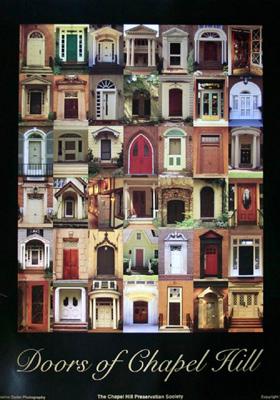
FIRESIDE GIFT SET, MERRY AND BRIGHT MATCHES: $18; PEPPERMINT FARMHOUSE SOY WAX CANDLE: $28; RED COTTON KNIT PLAID THROW (60-BY-50 INCHES): $75
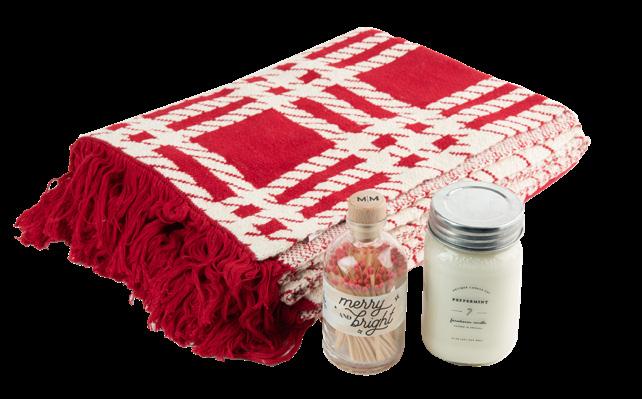
Gathered Home Décor 697 Hillsboro St., Pittsboro 919-533-6357 gatheredhomedecor.com
Spend a holiday movie night by the fireplace wrapped in this warm winter throw. Complete the cozy ambiance with this peppermint candle and matches. CM
guide
WINTER 2022-2023 CHATHAM MAGAZINE 59
PICTURE
BADGE OF HONOR
LOCAL BOY SCOUT ACHIEVES THE ORGANIZATION’S HIGHEST RANK
BY ANNA-RHESA VERSOLA PHOTOGRAPHY BY JOHN MICHAEL SIMPSON
Members of Boy Scout Troop 93 gathered inside Pittsboro United Methodist Church’s Family Life Center to honor Mark Crabtree, 15, who was awarded his Eagle Scout medal on Oct. 1. Mark is the 80th scout in the troop’s
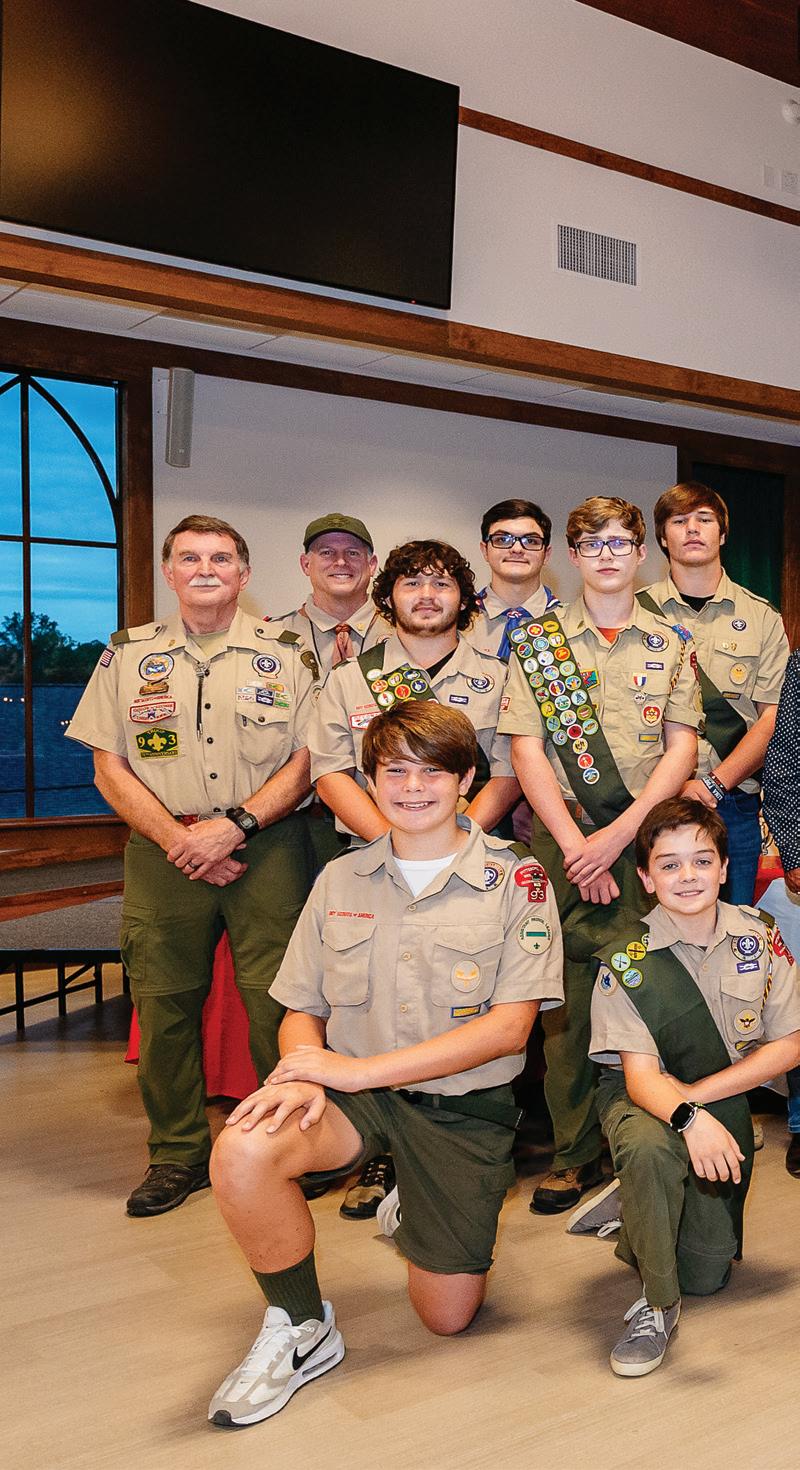
60 CHATHAM MAGAZINE WINTER 2022-2023
BIG
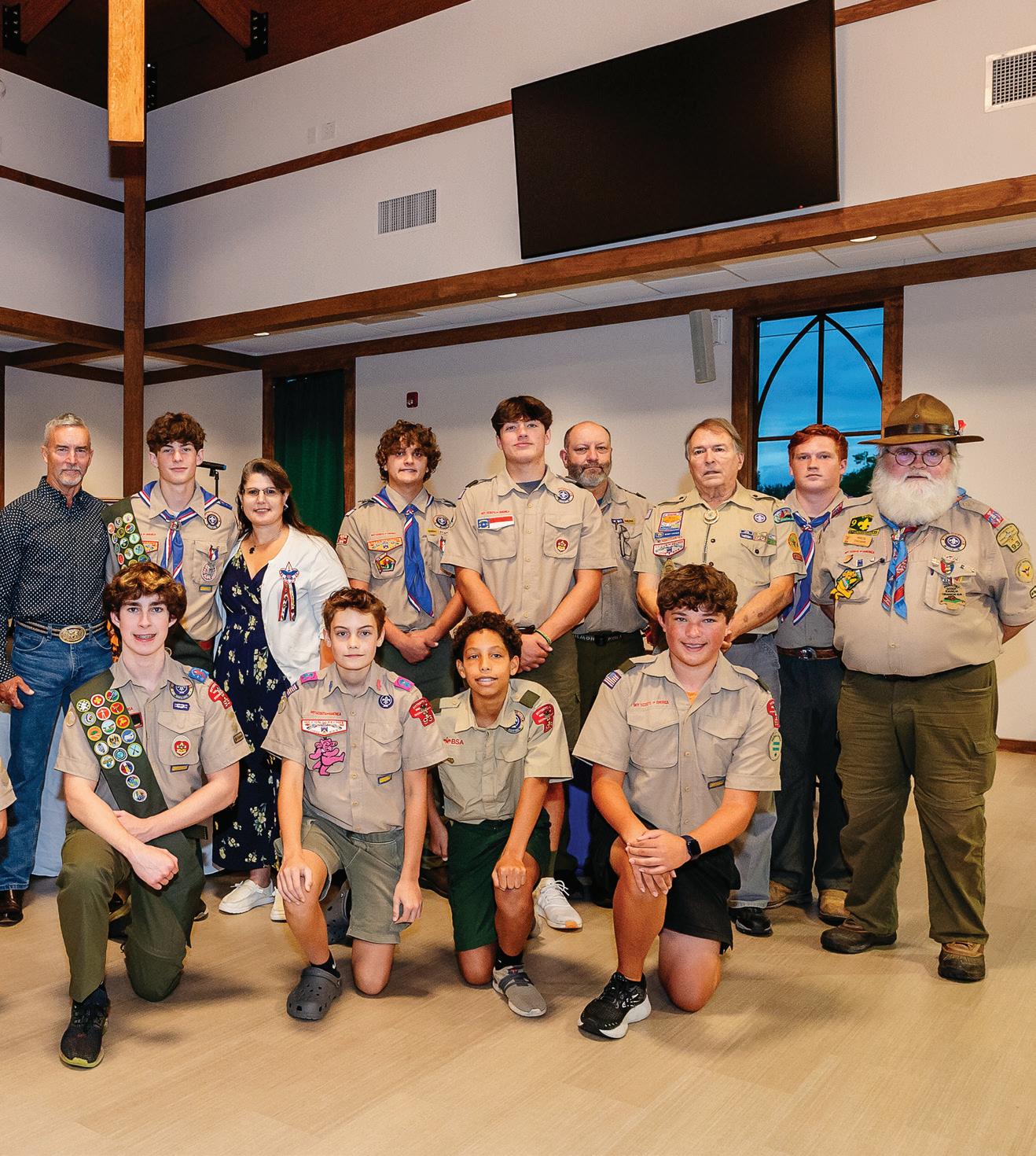
WINTER 2022-2023 CHATHAM MAGAZINE 61
The Chatham School of Science
Engineering sophomore completed



service project by transforming an





Mark with his parents, Pete Crabtree and Stacie Crabtree.
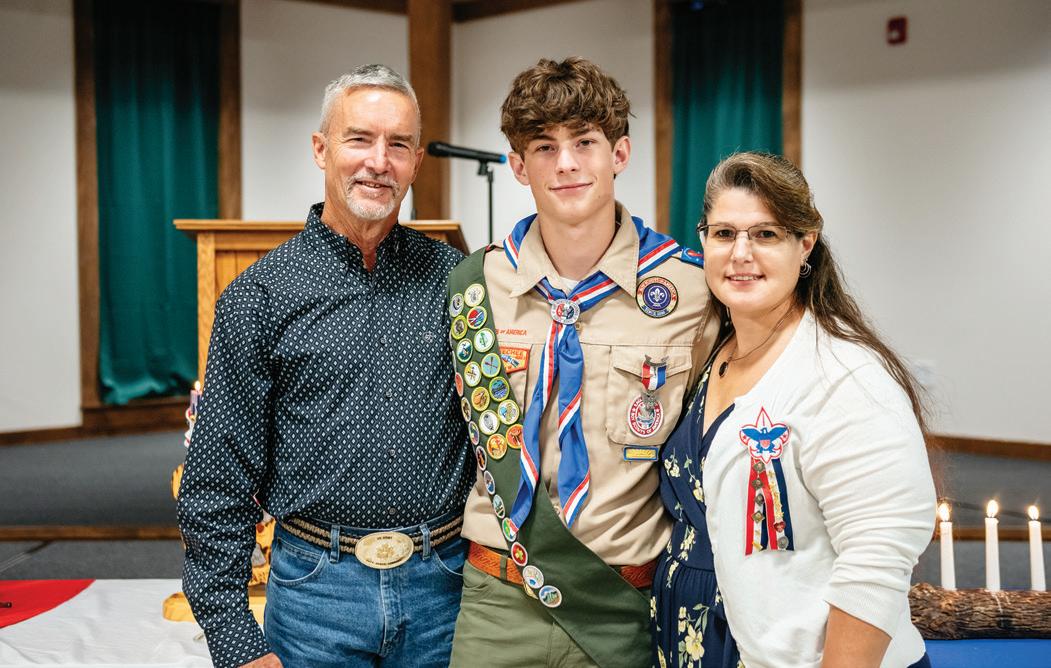
62 CHATHAM MAGAZINE WINTER 2022-2023 chatham, Chapel Hill, & durham Weekenders weekly updates on local people, places and events Home & Garden monthly look at some local renovations and latest trends Eat & Drink monthly local foodie news, events and recipes Durham Inc. monthly run down of the local business pulse in Durham Weekly Wedding Planner wedding planning tips, inspiration and local events Special Offers & Promotions events, offers and deals from our local partners GO HERE TO SIGN UP: chathammagazinenc.com/join chapelhillmagazine.com/join durhammag.com/join STAY CONNECTED Editor’s Picks: What to do this weekend! PLAN YOUR WEEKEND What We’re Eating: News from our restaurant community HOME &garden Delivered monthly by Durham Magazine Chapel Hill Magazine and Chatham Magazine Local renovations Professional advice Latest trends chatham Magazine • Chapel Hill Magazine • durham Magazine • Heart of NC Weddings • Triangle Digital Partners
75-year history to achieve the youth organization’s highest ranking, something only 4% of all Boy Scouts nationwide attain.
&
his

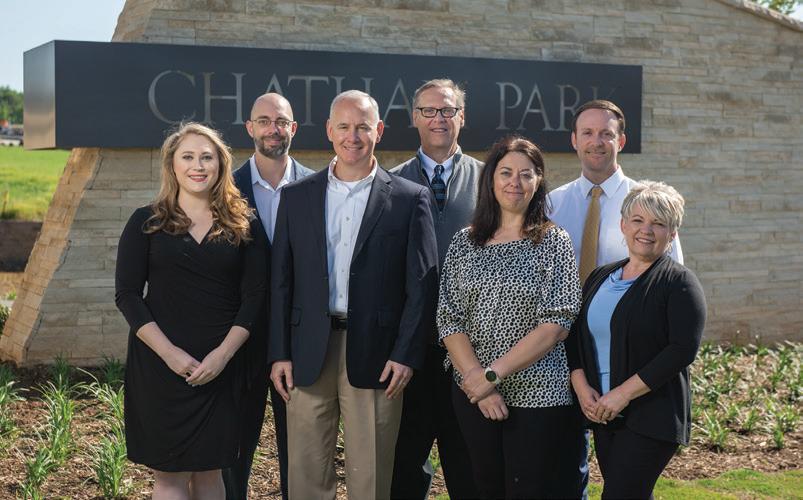

WINTER 2022-2023 CHATHAM MAGAZINE 63 202 2 INTERIOR & OUTDOOR CUSTOM KITCHENS 30 W. Salisbury Street, Pittsboro, NC 27312 919.618.4190 | freshairdesignsnc.com BETH MALLOCH COMMERCIAL ACCOUNTS WENDY PAINTER PERSONAL ACCOUNTS ASHLEY BEAL ACCOUNT EXECUTIVE CONNOLLY WALKER PERSONAL ACCOUNTS WILL HARRIS VICE PRESIDENT BUCK HARRIS PRESIDENT CHAD SPIVEY ACCOUNT EXECUTIVEfrom left to right: NORTH CAROLINA’S BEST VALUES FOR 60 Mosaic Blvd. Suite 130 Pittsboro, NC 27312 919.726.3003 | ashley@hc1935.com hc1935.com An independent agency representing AUTO, HOME, BUSINESS AND LIFE INSURANCE
ABOVE Mark meets Renny Kremer, the oldest living Eagle Scout from Pittsboro’s Troop 93.
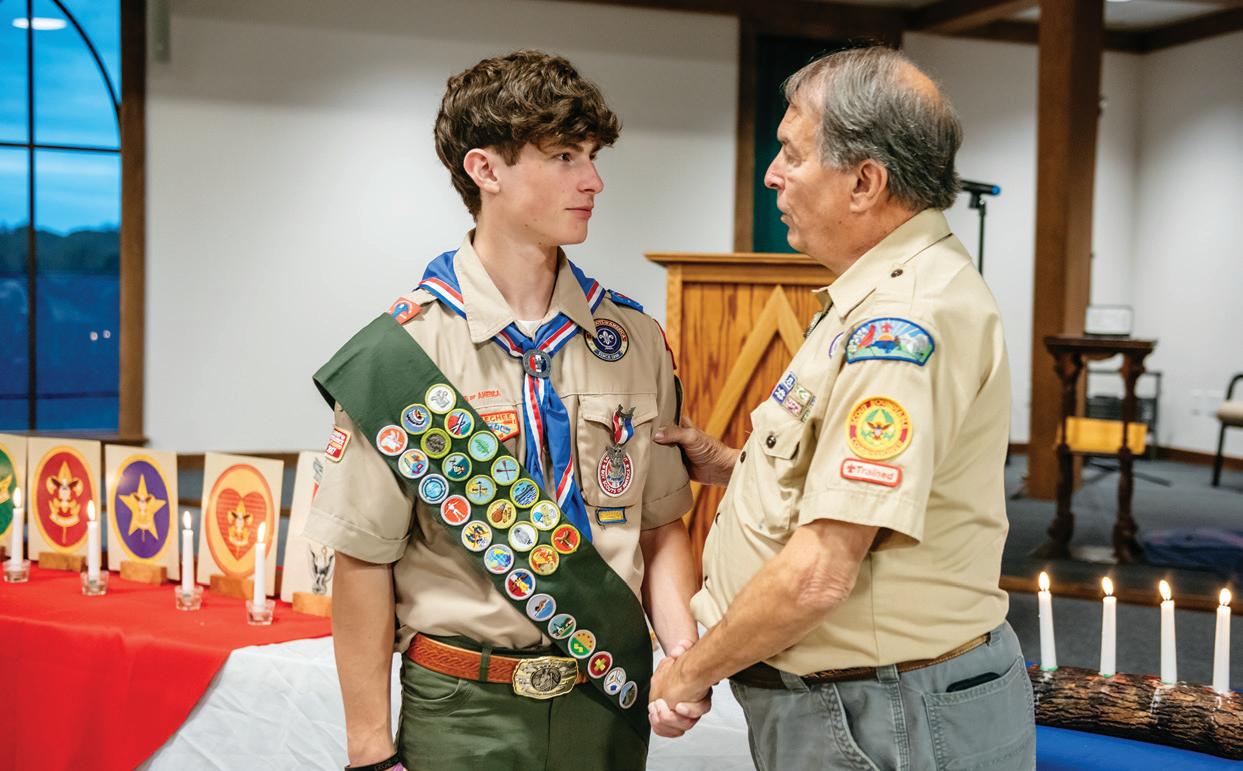
LEFT Mark’s parents present him with an engraved rifle as a special gift for his achievement.
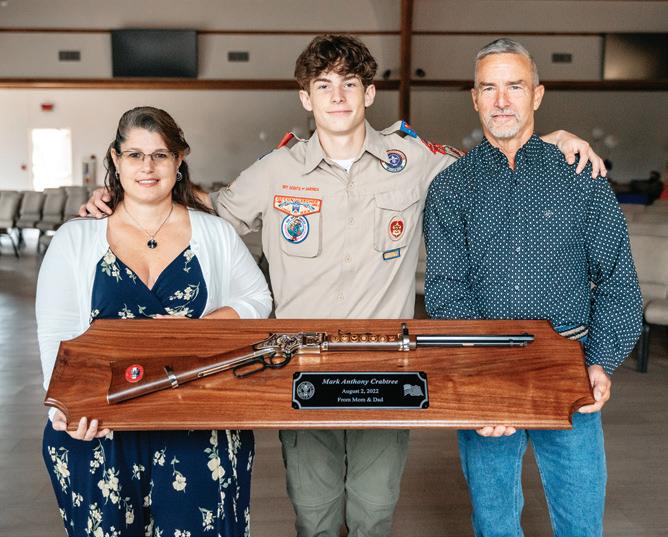
RIGHT The Eagle Scout badge, ribbon and medal along with smaller pins for Mark’s mother, father and mentor, Pete Scholle.
unused outdoor space at the school into a landscaped haven for students and teachers. The project took about eight months from start to finish and cost more than $7,000 in materials and labor. CM

64 CHATHAM MAGAZINE WINTER 2022-2023 BIG PICTURE



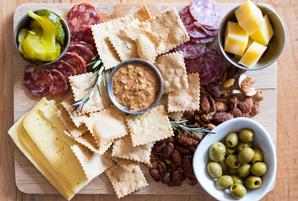
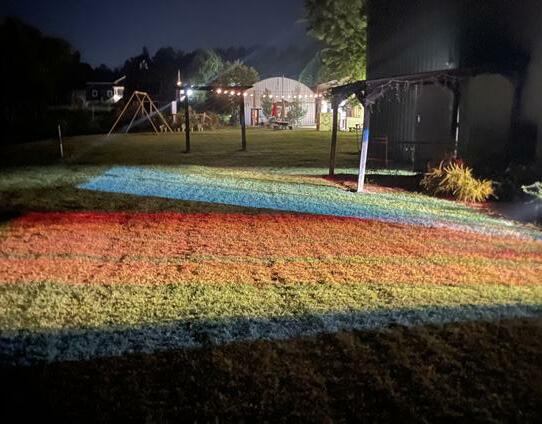







Your destination for food, beverage, live music, dance and play 919.444.9300 | THEPLANTNC.COM 192 Lorax Ln, Pittsboro NC | 919.548.6884 | fairgamebeverage.com Spirits • Wine • Craft Beers • Cider • Cocktails • Kombucha Visit us at The Beverage District/The Plant at 192 Lorax Ln located just a mile and a half East of the Courthouse, right on Industrial Drive! Check out our NC specialty food pantry! Feel free to roam our seventeen acre campus while you enjoy your libations. 202 2 ThePlantNC ThePlantInPittsboro 919.444.9300 • THEPLANTNC.COM WHIMSICALLY WEIRD & WONDERFUL Your destination for food, beverage, live music, dance and play FOLLOW US @ chathammagazine @ chapelhillmag keep up with all things happening in chatham county & chapel hill
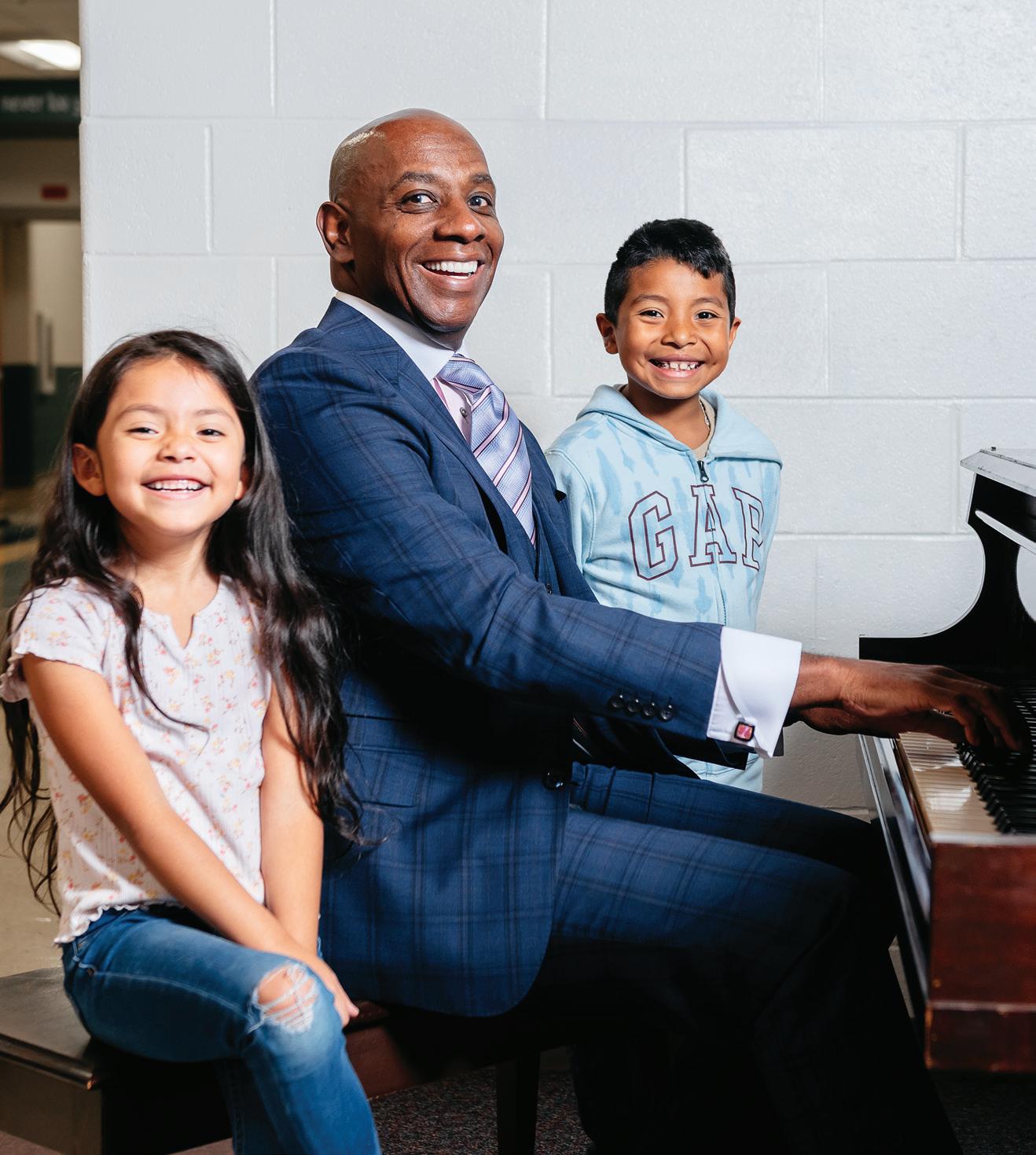
66 CHATHAM MAGAZINE WINTER 2022-2023
WHO’S WHO IN TOWN & COUNTY GOVERNMENT
SUPPORTING STUDENTS AND TEACHERS IS MUSIC TO TONY JACKSON’S EARS
BY ISABELLA REILLY PHOTOGRAPHY BY JOHN MICHAEL SIMPSON
Anthony “Tony” Jackson grew up in Washington, D.C., and became superintendent of Chatham County Schools in July 2021. He holds a bachelor’s degree in music education from East Carolina University, a master’s from North Carolina Central University and a doctorate from Walden University in Minneapolis. He resides in Chatham County with his wife, Tawannah Allen, a professor at High Point University. They have two adult children and two grandchildren.
What motivated you to become an educator and eventually a superintendent?
Music was the refuge and salvation for me as I came through school. It made things make sense and connected a lot of dots academically and socially for me. I became an educator to be a music teacher much like the music teachers I had, to hopefully have the impact on students [that] those individuals had on me. Becoming a superintendent was just a natural growth trajectory for me as a leader and a person who has worked in schools and wants to impact more individuals, from students to colleagues.
Tell me about an educator who made an impact on you growing up. Edward Jackson was my high school music teacher and probably one of the most influential people in my life. He saw something in me that at the time I did not see in myself. He pointed me toward experiences that, now that I look back, shaped what I’ve ultimately become. Any success I have in this work I owe a lot of it to the model and influence of Edward Jackson.
What was your favorite subject in school? Did you play any instruments or sports?
My favorite subject in school was clearly music, specifically choral music. [I was in the] men’s glee club, and I loved it. I found my voice there. I played the piano, clarinet and the drums, but I also played sports. I was a football player – I didn’t get on the field much, but I wore the uniform, so we’ll call me a football player.

What are Chatham’s biggest challenges, in terms of education? And what would it take to overcome them?
Our biggest challenge is ensuring that opportunities touch every end of our county. Our strategic plan, One Chatham,
WINTER 2022-2023 CHATHAM MAGAZINE 67
Evelyn MirandaRangel, 6, sits at the Virginia Cross Elementary School piano with Chatham County Schools Superintendent Anthony “Tony” Jackson and Elian Umanzo Carbajal, 6.
focused on making sure
absolute
have
of
children in classrooms. We are focused
that we are
students
opportunities for all of them so they can grow from where they are today to where they could be in the future.
What kinds of projects are you working on right now? Which ones are you most excited about in the coming year?
of
in [to Chatham
have a lot of industry
which means we are growing. We have to have
plans that make sense for our larger community. Most importantly, we are focused on long-term innovation that will make a difference for our kids. From the most challenged kid to the most advanced student, [we want to have] a menu of
I became an educator to be a music teacher much like the music teachers I had, to hopefully have the impact on students [that] those individuals had on me.
There are three main projects on the table. One is laying out a road map to manage the growth in our community. That means from building facilities to staffing and workforce to ensuring we have assessed the needs accurately so we are prepared as growth unfolds.
The second one is programmatic. We launched a study group to look at year-round schools as a model for improved student outcomes but also as an opportunity for our community to look at a different delivery model for instruction.
Drs. Tammy Severt and Laura Jacox provide orthodontic treatment in a personalized and caring enviornment.
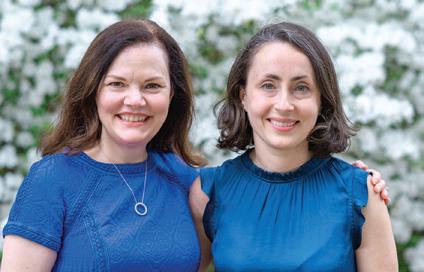


up-to-date
Braces
Invisalign
68 CHATHAM MAGAZINE WINTER 2022-2023 SCHOOLS & EDUCATION
Tammy R. Severt, DDS, MS (L) Laura Jacox, DMD, PhD (R)
• Highly trained staff and the most
technology • Offering Damon
and
• Invisalign Platinum Provider for children, teens, and adults • Virtual consults available to fit your schedule CELEBRATING 22 YEARS SERVING PITTSBORO! 202 2 919.858.2864 SEVERTSMILES.COM THANK YOU CHATHAM FOR VOTING US BEST ORTHODONTIST! Contact Us Today to Get Started on Your Journey to a Beautiful Smile! 35 Thompson Street, Suite #103, Pittsboro, NC 101 Conner Dr., Suite #401, Chapel Hill, NC TOP DENTISTS [outlines that] every single child, regardless of zip code, has access to every single opportunity and resource that we can bring to bear. What are the current educational priorities for Chatham? We are
we
the
best teachers in front
our
on ensuring our schools are safe and orderly and
attentive to the needs
our
and staff. We
coming
County],
long-range
The third one would be looking at
Not every student fits the mold, and it doesn’t mean there is anything wrong with them. It means we have to modify our system sometimes to
their needs.
We have [also] expanded our AVID program. AVID is an acronym for “achievement via individual determination” and is a national model that focuses on preparing students for rigorous academic outcomes and postsecondary education. We have had the AVID program in our district for 12 years, so it is a proven model, and we have enough data now to say this is good for all our students. We are expanding [the program] to all of our schools, [grades] six through 12. That expansion started this year, so we are excited about that particular project and where it is going.
OUTPATIENT
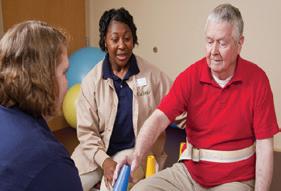
LIGHTNING ROUND
Favorite movie: “Amadeus”
Favorite portrayal of a teacher in a movie or a novel: George McKenna in “The George McKenna Story”
Last book you read: “Lessons Learned from Experience” by Larry Coble
Last restaurant you visited in Chatham: Postal Fish Company
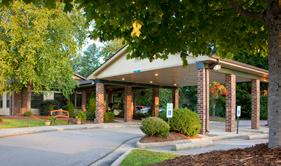
If you could pack one lunch for work everyday, what would it be: A protein bar, peanut butter crackers and water with Crystal Light.
Favorite local place to unwind: Carolina Brewery
What do you do for fun outside of work?
I’m a music lover and a fitness guy. I love running, and I am a Peloton and treadmill warrior. I typically run anywhere between 50 to 75 miles a week. I listen to jazz, sit down and play the piano. I have two grandchildren, and if I can’t be there, I am FaceTiming them. Spending time with my wife [as well].
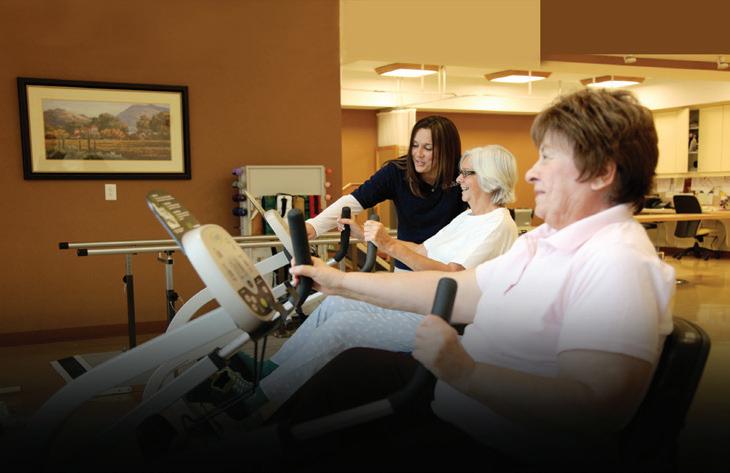
Is there anything more you’d like to add?
I love what I do. Chatham County is a great place to live, grow and learn. I am absolutely fortunate to be able to serve as the leader of this community and school system at this time. I do not take it for granted; I am very fortunate to be here. CM
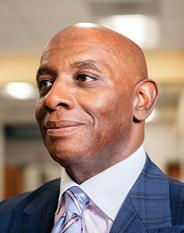
WINTER 2022-2023 CHATHAM MAGAZINE 69 SCHOOLS & EDUCATION
THERAPY AT CHATHAM The Laurels of Chatham offers short-term care and outpatient rehabilitation services that include physical, occupational and speech therapy provided in our newly renovated state-of-the-art therapy gym. Our licensed staff therapist will work with your physician to increase your overall wellness and quickly advance your recovery for a new condition or the progression of an existing disease. Our Outpatient Program is customized for each guest to improve their function, confidence and quality of life while maintaining their normal routine at home. laurelsofchatham.com « 72 Chatham Business Park Drive, Pittsboro, NC 27312 « 919 542 6677 The Laurels of Chatham employs our own in-house therapy team that provides the following services: Orthopedic Pre/Post-Surgical Programs • Return to Work/Return to Sports Programs Bone, Joint and Muscle Disorders • Neurological Conditions • Pain Management Pulmonary Program • Low Vision Program • Arthritis Management Dementia or Cognitive Deficits • Debilitation • Cognitive Testing and Intervention 7 Day a Week Therapy for Short-Term Care Inpatient Guests
our programs for nontraditional pathways through school.
support
SCHOOLS & EDUCATION
LESSONS OF THE PAST
BY ANNA-RHESA VERSOLA PHOTOGRAPHY BY JOHN MICHAEL SIMPSON
An email from a stranger was the nudge Amy King needed to set her on a course that would change her life and the lives of her high school history students.
The message was from Wendi Pillars, a science teacher at Jordan-Matthews High School in Siler City. Wendi was a 2017 Grosvenor Teacher Fellow, who was selected for the professional development opportunity to gain field-based experience thanks to a partnership between Lindblad Expeditions and the National Geographic Society. Wendi used the fellowship to go to the Arctic.
“She emailed me wanting me to consider applying,” Amy says. After not hearing back, Wendi followed up again with Amy, who teaches at Chatham Central High School, to make sure she didn’t pass up on the chance at a learning adventure.
“Her encouragement led to my application, although we had never met at that point,” Amy says. “She has certainly served as a mentor to me since then.” Amy became one of 50 teachers out of 2,500 applications chosen for this year’s fellowship. She was matched to visit the Normandy beaches and the Normandy American Cemetery at Omaha Beach, specifically.
“I teach American history all day long,” Amy says, so she appreciated the chance to be a student herself on the expedition. In Normandy, Amy met two historians: Mark Bielski, director of Stephen Ambrose Historical Tours and Stephen Fisher, who is writing a book about D-Day. Stephen’s research helped Amy identify the Army division movements of the late Carl Scott, a Bear Creek resident who landed in Normandy on D-Day. This allowed Amy to bring to life Carl’s written retelling of that day, something she shared with students as part of her October unit focused on World War II. We asked her to share the importance of history, continuing education and the value of different perspectives.
Why did you want to teach history?
I decided as a sophomore at Meredith College that I wanted to teach history. I was a North Carolina Teaching Fellow with a full scholarship to attend college on the basis that once I graduated, I would teach for four years in a North Carolina public school. I had known since high school that I wanted to teach. As a freshman at Meredith, I had two professors who made a considerable impression on me: Michael Novak and Carolyn Happer. They introduced me to the world of Western civilization, and I was enthralled. Both had an ability to tell stories which made you feel like you were back in time. They were never shy about teaching hard history and being honest with their students. I developed an insatiable desire to learn more history because of [them] and determined that this fascinating subject was what I wanted to teach.
Why is it an important subject?
I believe that recent events in America have proven that history is an invaluable subject. Students need to hear the truth, no matter how uncomfortable. When we as a people face our past, then we learn the traits of empathy, understanding and duty. These are the characteristics of a strong citizenry. History education has been under a fierce and relentless attack as of late. It is a shame that any government body or citizenry would consider it vital to teach less history. We can never educate our children too much about our country’s past: its glorious victories, such as WWII or the Voting Rights Act of 1965, as well as its merciless horrors, such as genocide carried out against Native Americans or widespread lynchings targeting African Americans. History education is invaluable, as it teaches our children to think deeply and critically, as well as to analyze information.
70 CHATHAM MAGAZINE WINTER 2022-2023
AMY KING LEADS HER HIGH SCHOOL STUDENTS IN LEARNING FROM HISTORY’S TEACHINGS
Hallie Webster, left, and Travis Crissman, right, show history teacher Amy King a photo of their greatgrandfather, Carl Scott. The honors class is studying the D-Day beach landings during World War II and Carl’s movements across Europe during the war.
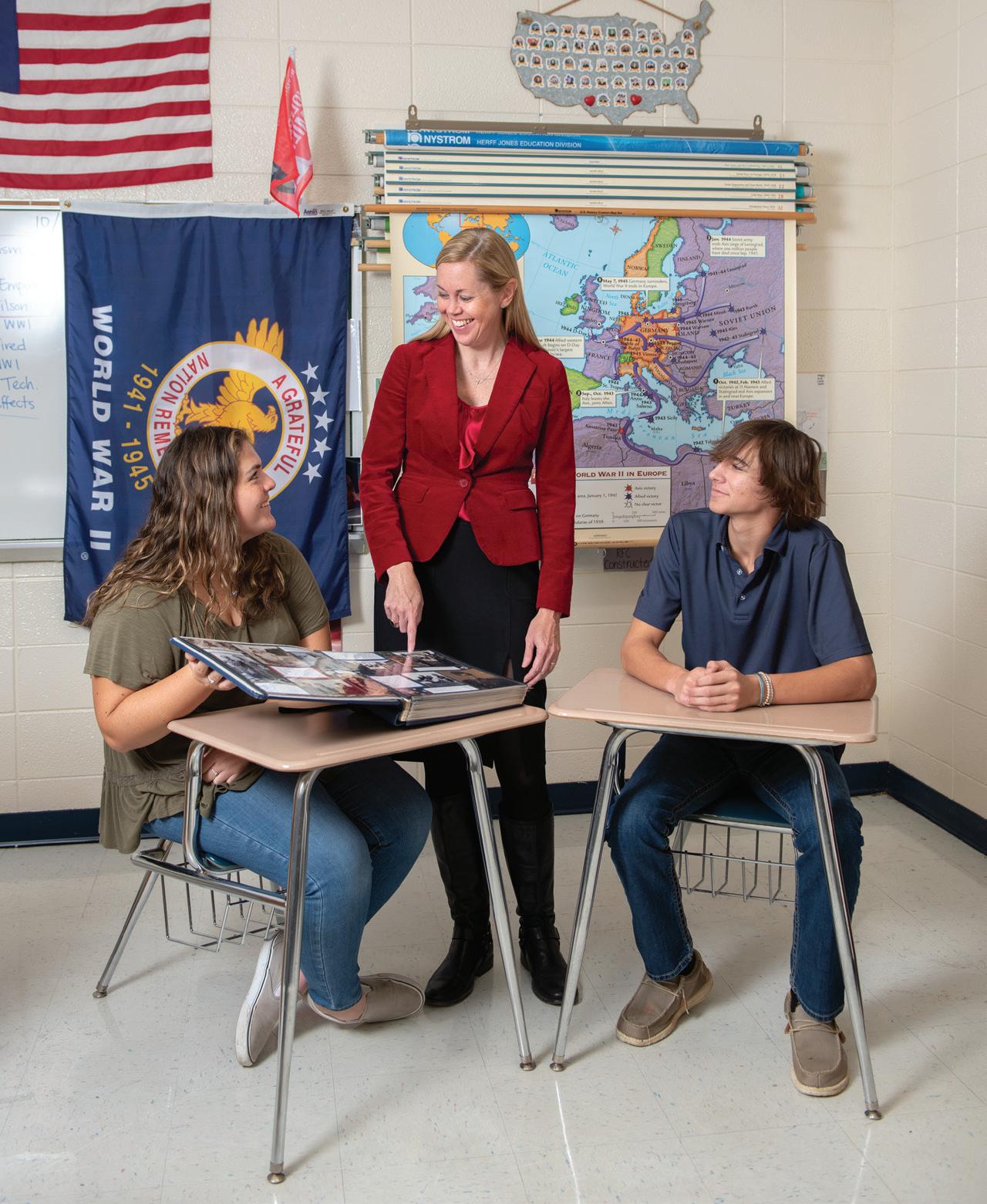
WINTER 2022-2023 CHATHAM MAGAZINE 71
Why is making a local connection, like Carl Scott, an important tool in your teaching style? How does this impact the students?
In the teaching of history, I have found that the personal is profound. If I can connect our topic of study to the students in my classroom, that is always a win. This win occurs when students are energized and engaged by being able to see themselves in what they are learning, by exploring history’s impact on them years later and seeing the reflection of the past in what they look like or who they are and where they live. I often teach through a local lens in my classroom. I am blessed that I knew Mr. Carl Scott before he passed away several years ago. He lived in our community, attended community events and was a quiet WWII hero among men. It was a wonderful opportunity for me, both as someone who knew him and as an educator, to travel as a Grosvenor Teacher Fellow to Europe. I thought about his life and the example he set as I walked where he must have walked and reflected on the sacrifices he made as a young Army [soldier], far from home, fighting against fascism. I took these ideas and decided to design a project to help my students also experience imagining D-Day through the life of Carl Scott. Many of them are nearly the age he was when he traveled so far away, fighting for a cause that was bigger than himself. It is also fortuitous that two of his great-grandchildren are in my honors American History II class this semester. Carl Scott’s story became very personal for my students, who not only got to learn about someone from our community but also got to hear directly from Hallie Webster and Travis Crissman, who knew him as “Grandad.”
I believe that recent events in America have proven that history is an invaluable subject. Students need to hear the truth, no matter how uncomfortable. When we as a people face our past, then we learn the traits of empathy, understanding and duty. These are the characteristics of a strong citizenry.
– Amy King
What surprises you each semester from the student projects? Student-led historical inquiries always amaze and surprise me. My former students have engaged in a variety of projects based on topics related to our class. They have researched Chatham Central’s only graduate to die in war, the six Chatham County lynchings that occurred from 1885-1921 and a history of Chatham Central High School. For that last project, my students curated a collection of artifacts they displayed from the school’s past while also conducting oral history interviews. In each of these projects, students have uncovered riveting stories never before told. In addition, they have developed an insatiable appetite to learn more and have often insisted on sharing their research with
Amy leads her honors history class in a lesson about World War II.

72 CHATHAM MAGAZINE WINTER 2022-2023 SCHOOLS & EDUCATION
our community. Engagement often looks like curiosity, and curiosity always gives way to deeper understanding. I have had parents message me about how much they have learned from their child’s eagerness to research more on the topic, about how many Thanksgiving meals and Easter celebrations have been filled with conversations about history.

What do you wish was different about teaching history?
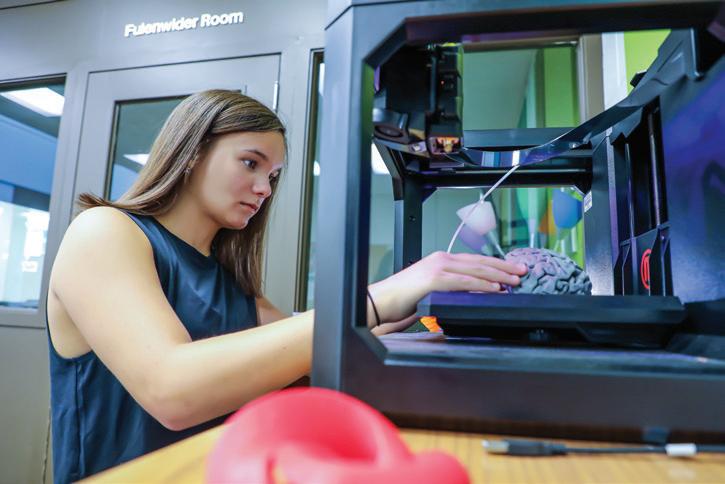

I wish our society valued truth-telling. What would a citizenry look like if they valued history teachers and trusted them as professionals to be honest about our shared past? I wish that our legislators supported the teaching of history and encouraged more required course offerings in American history for high school
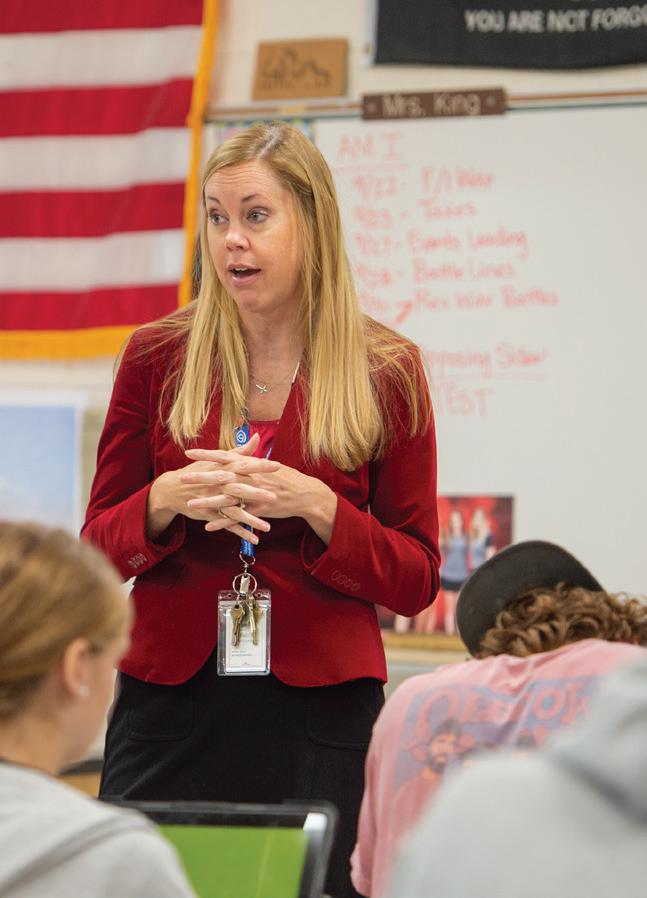
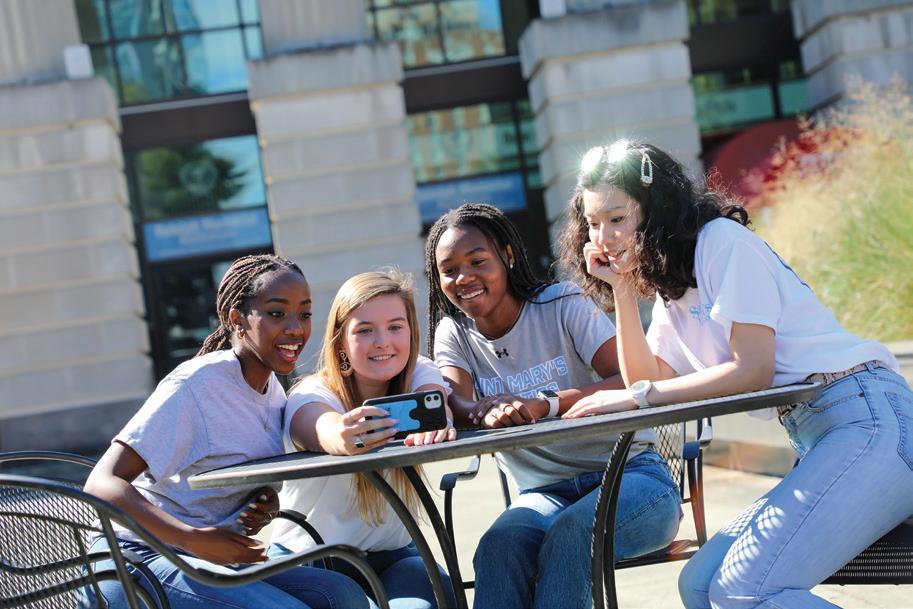
WINTER 2022-2023 CHATHAM MAGAZINE 73
not less. The American
currently,
where this project

gone
occurring,
year
be back to
much American history as
can in one semester. To devalue the


history is a disgraceful mistake

come.
become a National Geographic
Educator

this fellowship, and it has caused me to teach history holistically; my students look at historical events through the perspectives of economic, political, cultural, spatial and ecological impacts. In addition, the fellowship granted me [that] 11-day expedition with three other outstanding educators, who shared lesson ideas, pedagogical concepts and
I can honestly say that this experience has been the most amazing professional development of my career.
– Amy King
digital opportunities with me and my students. With them, I was given the opportunity to explore Europe and experience WWII history as a student. I can honestly say that this experience has been the most amazing professional development of my career. It was filled with life-changing events. I got to be with other like-minded, passionate educators traversing the globe and studying for hours on end after walking by day in the footsteps of American [soldiers]. I made videos while standing on historical sites to share with my students. I had the opportunity to interview a variety of historians and scientists while onboard the National Geographic Explorer. National Geographic and Lindblad Expeditions intended to uplift the teaching of history by selecting me, but they also uplifted my students’ education. I am forever grateful for this fellowship and what it has meant for my rural high school students. CM
74 CHATHAM MAGAZINE WINTER 2022-2023 SCHOOLS & EDUCATION We offer a full line of bookkeeping service for solopreneurs, small businesses and individuals. We have a referral program and will offer a special discount to readers who mention this ad. Relax! Bookkeeping is our passion! 919.564.9933 tothepointbookkeeping.com faith@tothepointbookkeeping.com Relax, Bookkeeping is our passion! Faith Nager Pay Bills | Reconcile Accounts | Invoice Clients PROUD MEMBER “ The membership that works for you!” 20 2 1 20 2 2 UTILITARIAN. ASTONISHING. BEAUTIFUL. MARK HEWITT POTTERY Find your perfect gift for the holidays. Come see our selection of finely crafted and distinctive pottery pieces at our pottery studio in Pittsboro or shop our online store. HEWITTPOTTERY.COM FIND DETAILS OR SHOP ONLINE 2022 HOLIDAY KILN OPENING Select dates and times Nov 25 - Dec 11 graduation and
History II course I am teaching
and
is
will be
next
and I will
teaching as
I
teaching of
that will affect generations to
How has the National Geographic experience changed you and/or your teaching? I have
Certified
through
Buy Local. Shop Small.
Did you know?



67 cents of every dollar spent at a local business stays in the community.

What can you do?


Keep it local when shopping in person, ordering online, or buying gift cards. Decide to donate to local charities. Write a positive online review of a local business. Encourage others to shop small this holiday season.





Scan the QR code to see a directory of extraordinary Chamber members ready to help you find the right gifts this season!

*Small Business Economic Impact Study, American Express Learn More at CarolinaChamber.org/BuyLocal
LEARNING THROUGH IMMERSION
BY AYANA LUPOLI-ROJAS
This past summer, I had the unique experience of visiting France. The large country is known for its cuisine, landscapes and, perhaps most of all, the Eiffel Tower in Paris. I didn’t visit the “City of Lights” during my month abroad, but I gained a deeper and richer understanding of French culture and discovered things that some of us in the U.S. may not realize about the country.
I was the recipient of a scholarship from the Council on International Educational Exchange, a national high school and college study abroad program. CIEE places students with host families in another country for a month to experience immersion programs. Language classes filled the mornings while excursions in the afternoon took us to different areas in the city. I chose the program in Toulouse – a city of about 1 million people in the south of France – instead of Paris because I wanted to experience something a little more off the beaten path. And I indeed found the experience worth it.
I undoubtedly came to France with several stereotypes, one being that French people can come off as slightly rude. This is
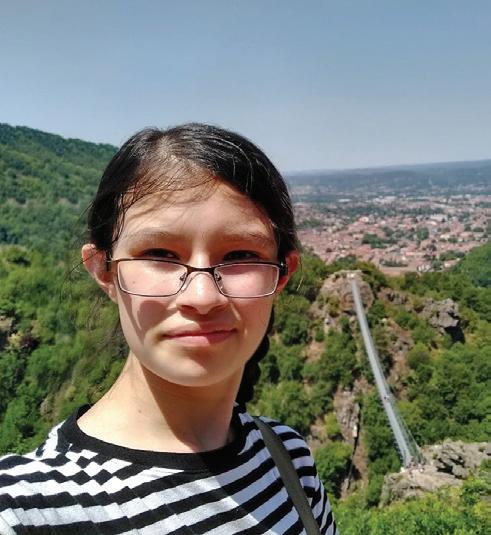

not, in fact, entirely true. During my stay, especially after living with a French host family, I learned that there is a difference between being rude and being direct. Despite this, I found many pedestrians to be friendly and helpful when asking for directions, which helped me become more comfortable exploring on my own.
Living in another country for a month, immersed in a different culture and without any comforts of home, was a way to ensure that I would learn to become independent. Since we could not drive cars to all places in and around Toulouse, especially in the city, all program members used other forms of transportation from trains and buses to trams, but primarily used the subway. At first, this all seemed very intimidating. At home, my parents are the ones who drive me anywhere, and I never had to memorize the route to a certain location.
But in Toulouse, my host family lived a good distance outside of the city (about a half-hour away by train). In order to reach Toulouse, I took a train every morning, then took the subway for several stops before walking for a few more minutes. On the first day, our host families were required to show us the way, but

76 CHATHAM MAGAZINE WINTER 2022-2023 SCHOOLS & EDUCATION
A WOODS CHARTER SCHOOL SOPHOMORE REFLECTS ON HER TRAVEL EXPERIENCE IN TOULOUSE, FRANCE
ABOVE
The neoclassical façade of La Place du Capitole in Toulouse.

MIDDLE A view of La Salle des Illustres inside La Place du Capitole.
BELOW LEFT Ayana LupoliRojas, after crossing La Passerelle de Mazamet, the footbridge in the background.
BELOW RIGHT
The rooftops of Carcasonne, a village in southwest France known for its medieval fortress.

afterward, we were on our own. We also had to take buses or the metro to reach every spot in the city that wasn’t within walking distance. Since I live in a suburban area, learning to use public transportation was certainly a challenge but an important life skill as well. For those of us who live the small-town life, adjusting to a large city can be a challenge. I am fortunate to have had a chance to learn how to find stops on a subway, the right train and a specific place when it requires various methods of transport. I also found the system to be quite easy to navigate in Toulouse. Despite being young and traveling alone much of the time, I noticed I was not the only one. Many other kids, even ones younger than me, also seemed to be shopping without any adult supervision. This surprised me – I was not used to seeing kids as young as 11 or 12 years old on their own in a large city. Another difference I witnessed was in home life. French families will often spend an hour or more at the dinner table, even after they are finished eating, having conversations about any subject that comes up. Mealtime is much more about bonding than it is about the food, as strange as that may sound because of the incredible cuisine. After the main course, my host family would bring out a selection of cheese (the supermarket had two full cheese aisles!), and we would have conversations as we ate many different types with bread. These dinners were one of the best ways I could improve my French during my stay, along with buying from local shops around the city and my language classes.
I also observed that people in Toulouse are more concerned with saving energy. In France, it is customary to be very conscious of energy usage and global warming. They waste almost no food, either eating all of it or saving some for the next day. Showers are much shorter, and less hot water is used. However, the biggest difference in energy usage in Toulouse was the use
France is a diverse country, and I experienced only a fraction of it in the beautiful city of Toulouse and the surrounding area. If I could describe my month there in one word, it would be “transformative.”
of air conditioning – hardly any is used, even in homes and stores. The few places we visited that did have AC were larger museums and groceries. This is in stark contrast to the AC blasting in nearly all indoor areas in the U.S.
Despite the many differences in culture and ways of living in France versus the U.S., I did not experience much culture shock when I arrived there. What I did experience was an eye-opening wonder, being able to see the world from a different perspective. I experienced new independence, a city with views and buildings more than 1,000 years old and cuisine as celebrated as it is artistic. I also learned about the value of language and how much it matters to learn different languages in order to be open to the incredibly diverse cultures and people on planet Earth. I met new people among the around 50 high school students in the program, being able to form friendships and take in the country with others who were in the same situation. I would encourage other young people and high schoolers to visit foreign countries, as the U.S. represents only a small part of the world. I will not say au revoir to France, but â bientôt (“see you soon”) because I know I will be visiting again. CM
WINTER 2022-2023 CHATHAM MAGAZINE 77
LEFT Khayden Foxx, 9, role plays as a judge during the field trip.

RIGHT Chatham County Historical Society volunteer Ed Bronson performs as William Pitt, the first Earl of Chatham.
SCHOOLS & EDUCATION
HISTORY COMES ALIVE
FOURTH GRADE FIELD TRIPS ENGAGE YOUNG STUDENTS IN LESSONS OF CIVICS AND CIVILITY
 BY DOLLY R. SICKLES PHOTOGRAPHY BY JOHN MICHAEL SIMPSON
Siler City Elementary School teacher Katie Black says her fourth grade students are as smart and savvy as they are fun and curious. So she knew they would enjoy their Sept. 29 field trip to the historic county courthouse in downtown Pittsboro. “I want kids to connect to what we’ve been learning in class about the branches of government and bring it to more of a local scale, to see where the magic happens,” Katie says.
The Chatham County Historical Society has worked with the school district since the 2013-14 academic year to put history into context through immersive, hands-on learning opportunities for nearly every fourth grader in the county. (Next year, third graders will get the chance to visit since the North Carolina Department of Public Instruction moved local government, civics and history to that curriculum.)
The kids split into four groups to rotate through different activities. Some filed through the artifacts and gallery rooms staffed by Chatham County Historical Society volunteers Patty Walters, Connie
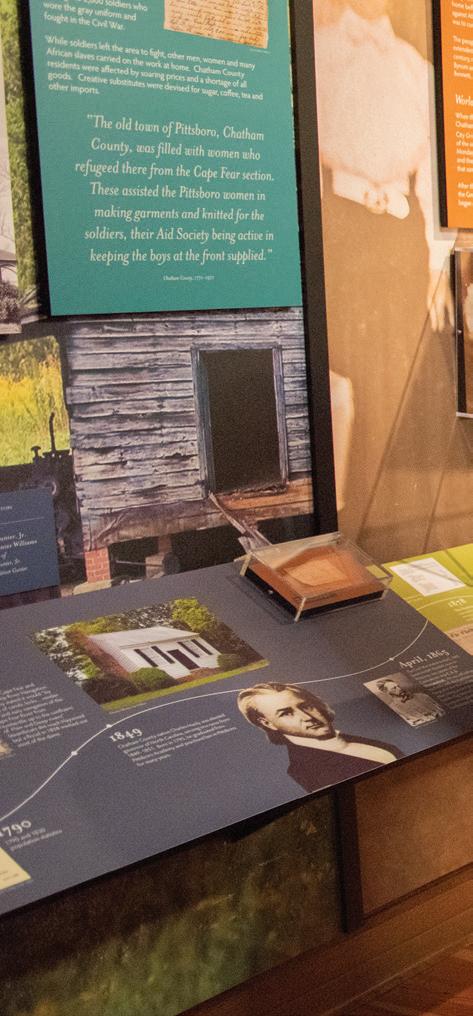
78 CHATHAM MAGAZINE WINTER 2022-2023
ABOVE Chatham County Historical Society volunteer Cindy Schmidt tells the students about early Chatham County settlers.
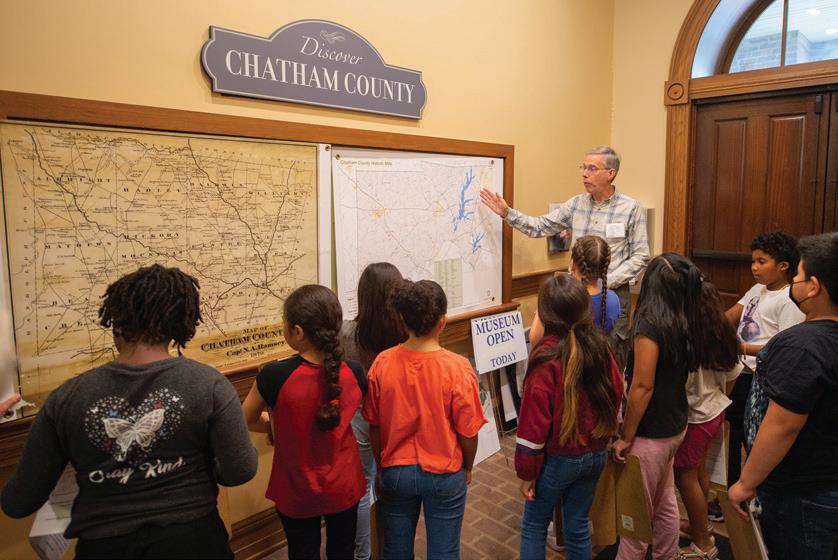
LEFT Volunteer Allen Wilson compares two county maps – one with and another without Jordan Lake.
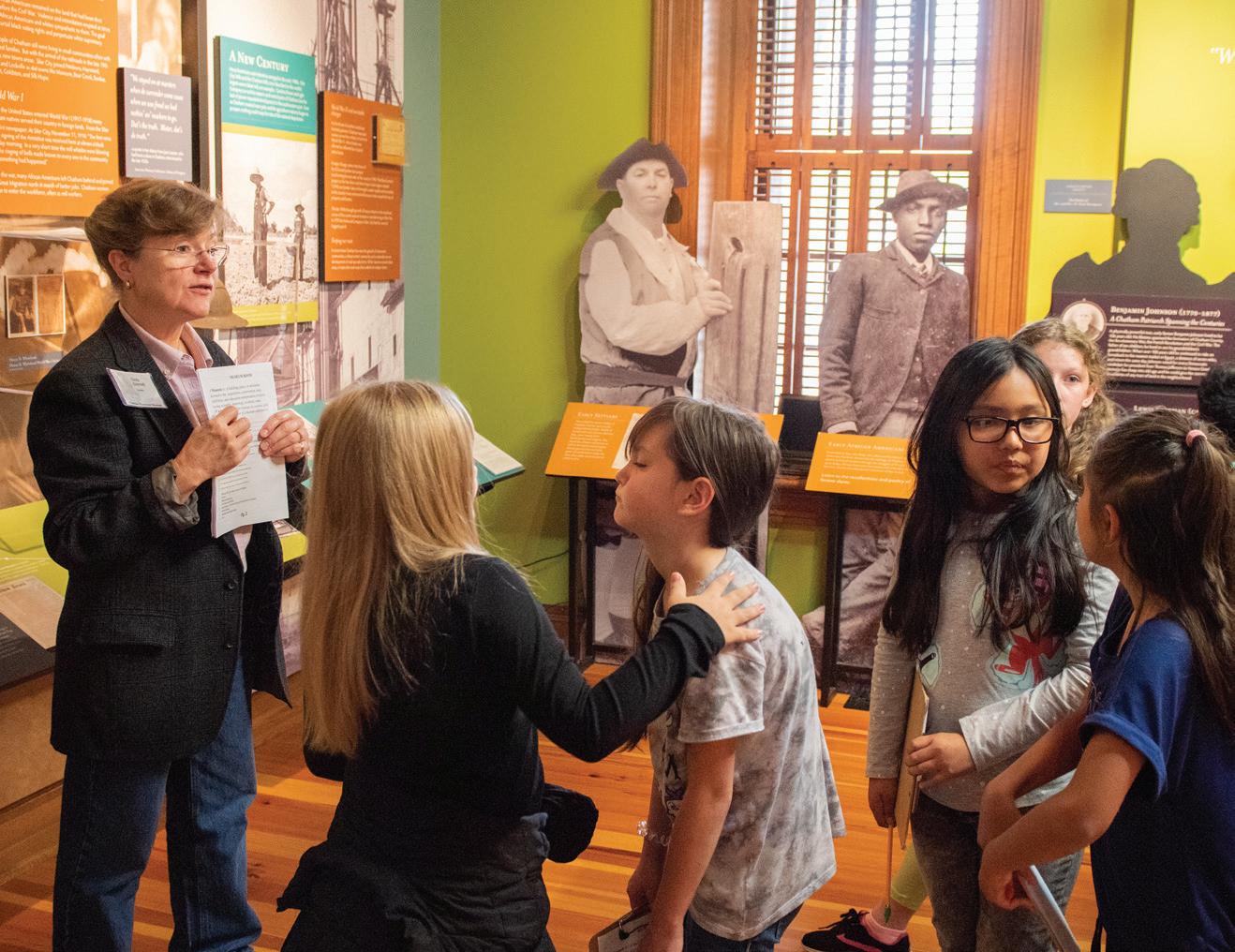
WINTER 2022-2023 CHATHAM MAGAZINE 79
Another volunteer, Ed Bronson, surprised everyone with his reenactment as William Pitt, the first Earl of Chatham.
The students became animated during a mock trial led by Pittsboro Mayor Cindy Perry, Dan Perry and Pat Stucke. Inside the courtroom, students claimed the roles of plaintiff, defendants, jury, bailiff or the judge in the live-action civics lesson as they litigated a fictional civil case of a family of bears suing an intruder who ate their porridge and climbed into their beds.
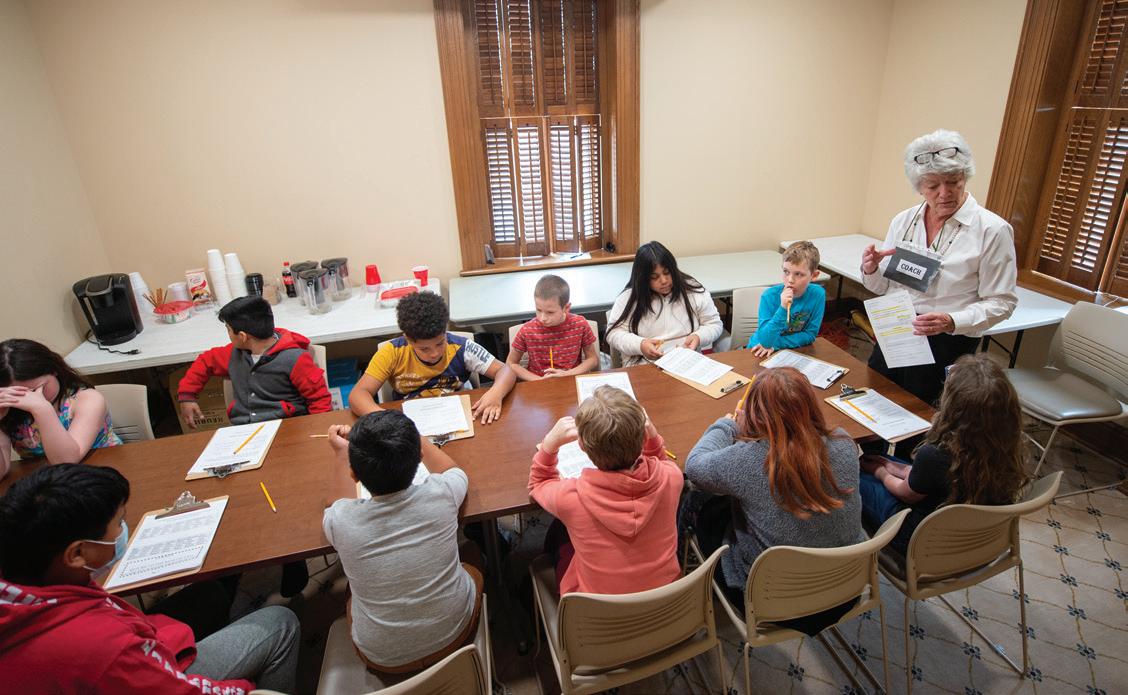
Khayden Foxx, 9, was the first judge of the day. “I got to say, ‘Order in the court’,” he says, “and I got to wham the hammer.” Khayden is an astute young thinker with an empathetic mind and kind heart. He’s a fan of Spiderman and believes in the adage, ‘With great power comes great responsibility.’ As the judge, Khayden supported the jury’s finding of
Before the mock trial begins, Pittsboro Mayor Cindy Perry preps the students, including, right to left: Nathaniel Reinhart, Marianette Alcantara Moreno, Cadain Overacre and Alijah Alexander.
Goldilocks’ guilt. “Goldilocks wasn’t using her manners,” he says. When asked if history would’ve been different if people would’ve used manners, Khayden responded in the affirmative. “Nowadays, people are being mean to each other,” he says. “It’s easy to use your manners to get along. All you’ve gotta do is say please and yes and thank you.”
Drew Hawker’s turn as the bailiff was equally contemplative. “The bailiff swears people in,” the 9-year-old says with confidence. “If you don’t swear them in, they might do it again.” He, too, supported Goldilocks’ guilty verdict, “because it’s not common sense to go into someone’s house without permission and break things. She ate all the food, almost broke the bed and broke a chair.” Drew says it’s important to study history “so if it happens to you when you’re older, you know what to do.”

80 CHATHAM MAGAZINE WINTER 2022-2023 SCHOOLS & EDUCATION
McAdams, Allen Wilson and Jane Gaines.
Alijah Alexander, 9, says the most interesting thing he learned was in the museum leg of the tour led by volunteers Cindy Schmidt and Leona Whichard. “People used to sell rabbits,” he says with incredulity. When asked if he could catch rabbits to sell, he laughs and says no. But Alijah is a student with good conversational knowledge of history who would have done some things differently. “I would’ve told the people who started slavery to quickly end it because there was another way,” he says. “I would’ve told the people in the North and South to not fight because it was going to take many lives and we’re going to lose many important people.”
As a product of Chatham County Schools, Katie remembers her own fourth grade field trips: Pilot Mountain and Beaufort. “I just wish we’d done more local field trips because it is really important for kids to know the history of where they live and the places around them – not just North Carolina in general.”
The Jordan-Matthews High School alumni knows the importance of home – she came back after graduating from Appalachian State University. “My family is here,” she says. “Plus, I like the area. There are good schools, good kids.”
Katie’s homecoming to her rural roots brought her fresh perspective and bright ideas back to Chatham. “History, in general, is pretty important,” she says. “The kids like learning about it. We talk about a lot of different things, and I try to connect it to current events to make history more interesting. Otherwise, it’s just an abstract concept and they’re not going to get it.”
Since Katie’s days as a Silk Hope Elementary School fourth grader, Chatham County Schools shifted its focus to local history. It came as no surprise to Katie that her students loved acting in the courthouse portion of the day, but their enjoyment of looking at and touching everything in the museum room, trying to figure out how the items were used, was unexpected. “I also really loved how it opened up a lot of great discussion of how drastically things have changed throughout the years and how things may even change in their lifetimes,” Katie says. “It kind of blew their minds.” CM
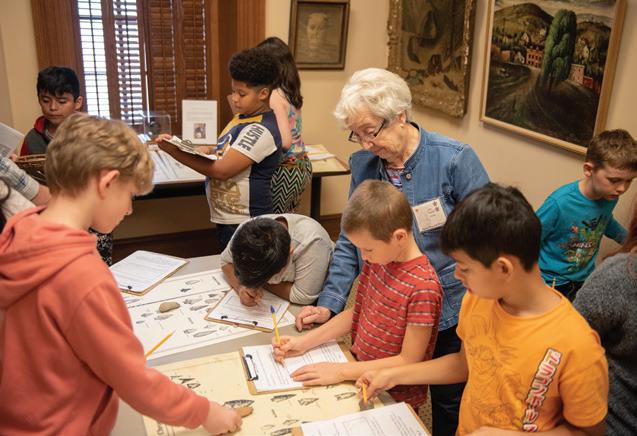
ABOVE LEFT Pat Stucke coaches Drew Hawker, 9, for his role as bailiff in the courtroom.
ABOVE RIGHT Jane Gaines helps Cadain and his peers review the script before entering the courtroom.
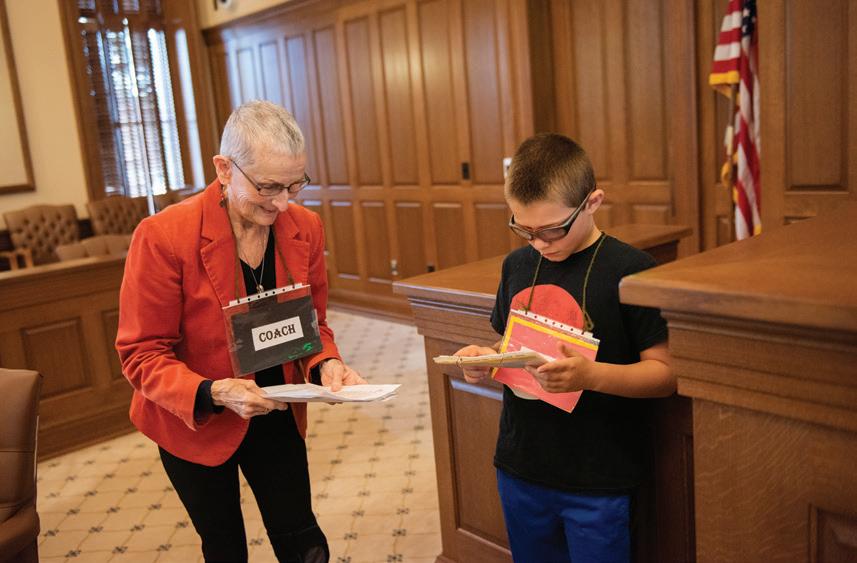
WINTER 2022-2023 CHATHAM MAGAZINE 81 SCHOOLS & EDUCATION
FAR RIGHT Students Ana Burbank and Axel Godoy Basabes strike a pose with Marsha Guirlande Pierre.
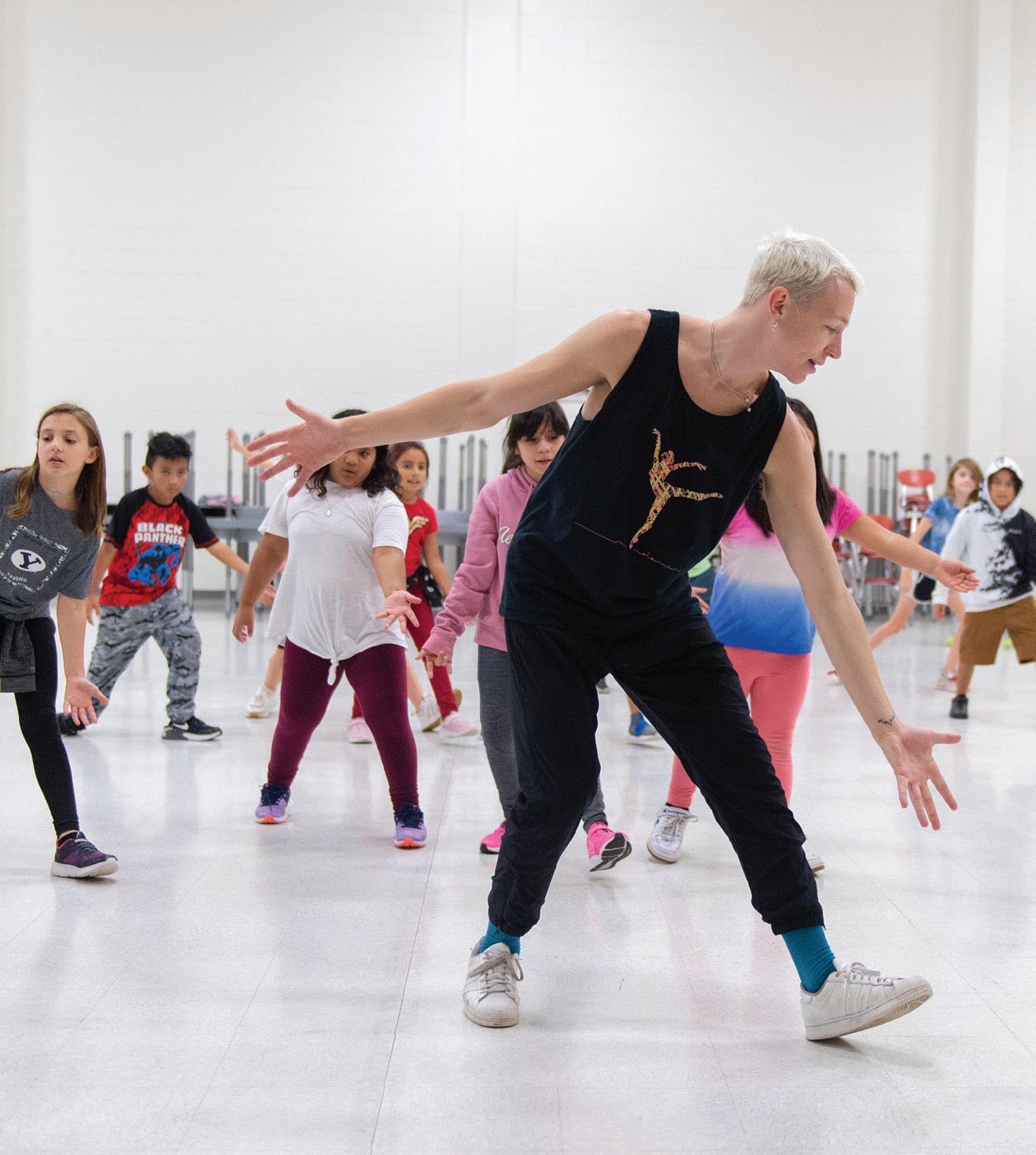
82 CHATHAM MAGAZINE WINTER 2022-2023
Gaspard & Dancers’ Evan Wilkins leads a group of North Chatham Elementary students in a movement workshop.
THE ART OF LEARNING
STUDENTS ENGAGE WITH PROFESSIONAL ARTISTS THROUGH CHATHAM ARTS COUNCIL PROGRAM
BY ANNA-RHESA VERSOLA PHOTOGRAPHY BY JOHN MICHAEL SIMPSON
Rebecca Exley presses an index finger to her lips, quieting the fourth and fifth graders fidgeting on the multipurpose room floor at North Chatham Elementary School. The students are excited to see Gaspard & Dancers perform – it’s the dance company’s first time partnering with the


WINTER 2022-2023 CHATHAM MAGAZINE 83 SCHOOLS & EDUCATION
Artists in Schools program, a countywide initiative that began eight years ago.
“I tell my students all the time that learning about music and art will help them succeed in ways they couldn’t even imagine right now,” Rebecca, a fifth grade teacher, says. “I have seen my own students who aren’t usually engaged or excited become different students when we have the arts groups out at our school. The smiles and fun they have during the programs and workshops are priceless, and it carries over to the other things they do in the classroom. I would love to have the program happen more than once a year. I think the benefits for our students would be amazing.”
The Chatham Arts Council, which celebrated its 40th anniversary in October, makes it possible for professional artists to work with students in at least 15 schools in the county. Its artistic director, Cheryl Chamblee, says the council wants to expand AIS to all public schools in Chatham, but that goal is dependent on available funding from various sources, including the business sponsors, foundation and individual donors as well as the North Carolina Arts Council, Chatham County. Since 2015, the council has raised the money to cover the estimated average of $9,000 per artist residency (there are 15 this year) to create and conduct in-school workshops and performances.
“I don’t know of another county in our state that does that,” Cheryl says. “When we were creating our program, most models included the [individual] school bringing some of the funding or the teachers writing grants for it, which we didn’t want them to do because they already have plenty on their plate.”
North Chatham Principal Janice Giles
says AIS gives students the opportunity to connect what they are learning in the classroom to a lifelong enjoyment of the arts. “We are fortunate to have the opportunity to expose our students to these talented professionals,” Janice says. “We would not be able to provide exposure to these world-class groups without the generous support of donors invested in arts education.”
“Engaging students in [art, music, theater and dance] creates new pathways in their brains and improves their academic achievement in core subjects,” Rebecca says, adding that some studies have shown that areas in the brain stimulated by music are the same ones
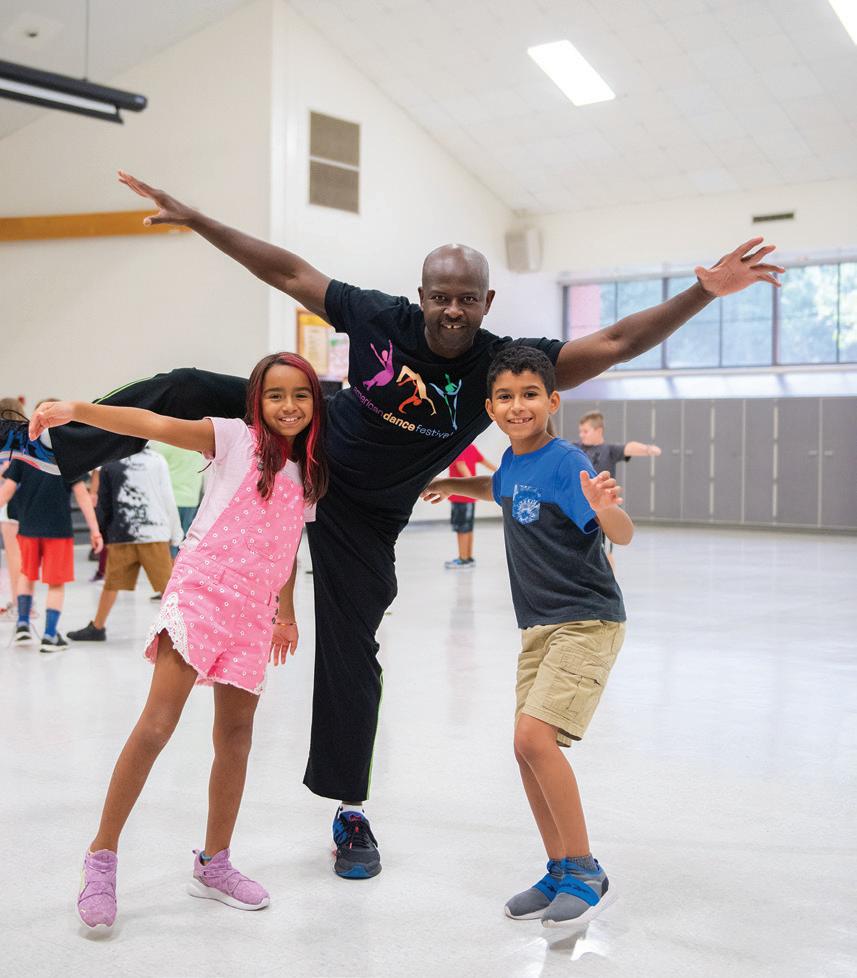
ABOVE Students Ammy Rojas Jara and Iker Hernandez Rangel with Gaspard & Dancers founder Gaspard Louis.
ABOVE RIGHT Karla Sanchez Berlanga.
BELOW RIGHT Tripp Thomas, Maria Rodriguez, Morgan Hazard and Aaron Montoya follow Marsha’s directions.
84 CHATHAM MAGAZINE WINTER 2022-2023 SCHOOLS & EDUCATION
that light up when learning languages. Students who participate in music and arts education are also more motivated when it comes to academics and have better attendance records.
LET’S DANCE
Gaspard Louis, founder and artistic director of Gaspard & Dancers, introduces different dance concepts to the aforementioned group of students during a series of workshops in September before the group showcases a final performance. Students imitate his movements and learn about spatial awareness by maneuvering around one another without touching. They practice how to make low, medium and high transitions as they move their bodies across the floor. And without realizing it, students work together through dance.
By the third day, about 200 students, ages 9 to 11, sit cross-legged in front of the professional dancers. The kids spot a favorite dancer, Garrett Parker, and begin chanting his name, “Garrett! Garrett!
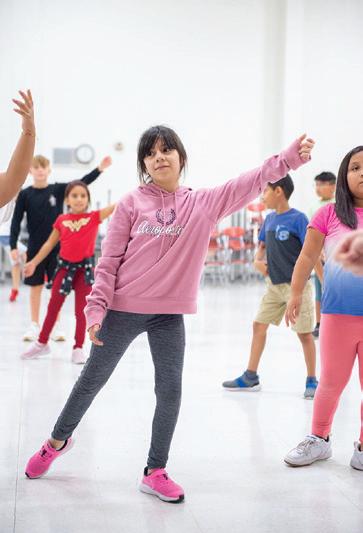
ARTISTS IN SCHOOLS RESIDENCIES
NOVEMBER Willa Brigham at Woods Charter School Nov. 16-18
Mike Wiley Productions at Chatham Grove Elementary School Nov. 28-30
Mike Wiley Productions at J.S. Waters School Nov. 28
DECEMBER
Mike Wiley Productions at J.S. Waters Dec. 1-2
Magic of African Rhythm at Silk Hope School Dec. 7-9
JANUARY
Phillip Shabazz at Pittsboro Elementary School Jan. 18-20
Black Box Dance Theatre at Perry Harrison Elementary School Jan. 18-20
Black Box Dance Theatre at Virginia Cross Elementary School Jan. 23, 25, 26, 31
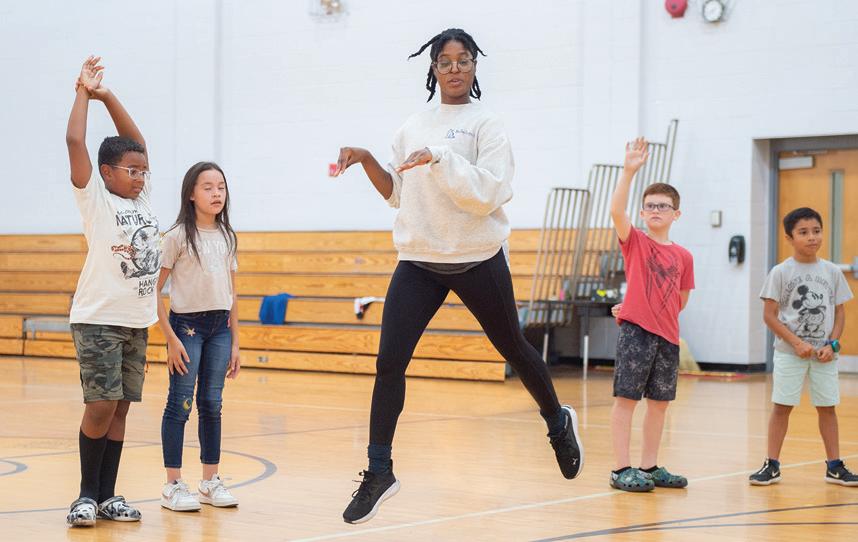
FEBRUARY Black Box Dance Theatre at Virginia Cross Feb. 2, 6-10
Flamenco Vivo Carlota Santana at Bennett Elementary School Feb. 15, 16, 20
Flamenco Vivo Carlota Santana at Siler City Elementary School Feb. 21-23
MARCH
Diali Cissokho at Bonlee School Mar. 6-10
DATES
STILL TO BE DETERMINED … Diali Cissokho at Chatham Charter School
Black Box Dance Theatre at Chatham County Schools Virtual Academy
John Brown Jazz Band at Moncure School
Garrett!” The crowd’s enthusiasm obliges him to perform a request from his young audience. He begins to break dance, and the crowd goes wild with squeals and applause. Once the children settle, they watch the troupe move through three choreographed pieces, which the company went on to perform in Wilmington, North Carolina, the Dominican Republic and Croatia.
After the hourlong show, students ask the dancers questions: How old were they when they started dancing? How do they recover from mistakes on stage? One student even asks about financial security in pursuing the dance profession. “Follow your passion,” Gaspard responds. “Follow your love. Follow your dreams, and the money will come.”
With that said, the dancers wave their goodbyes, and the students form lines to return to their classrooms. Fifth grader Kristine Leon, 11, is beaming. “I think it was amazing,” she says. “I think it expresses your feelings.” CM
WINTER 2022-2023 CHATHAM MAGAZINE 85 SCHOOLS & EDUCATION
2022-2023
DIRECTORY OF INDEPENDENT, REGIONAL BOARDING AND CHARTER SCHOOLS
INDEPENDENT SCHOOLS
BETHESDA CHRISTIAN ACADEMY
1914 S. Miami Blvd., Durham 919-598-0190; bcacrusaders.org
Focus Partners with Christian families to help equip students academically, socially, physically and spiritually.
Grades K-10
Total Enrollment 210 Student/Faculty Ratio 13:1
Yearly Tuition Elem., $7,419; Middle, $8,181
Special Requirements Student testing and parent interview.
BRIGHT HORIZONS CHILDREN’S CENTER
2352 So-Hi Dr., Durham; 4205 Capitol St., Durham; 4 UNC-TV Dr., Research Triangle Park; 2500 Highstone Rd., Cary; 800 Weston Pkwy., Cary; 800 Corporate Center Dr., Raleigh; 8516 Old Lead Mine Rd., Raleigh; 2051 Shepherd’s Vineyard Dr., Apex; brighthorizons.com
Focus Empowers children from infancy to become confident, successful learners and secure, caring people. Growing young readers, scientists, artists and explorers who are engaged and curious. Programs invite children to approach academics with skills, confidence and a drive for excellence.
Grades Infants-pre-K
Total Enrollment Varies by location. Student/Faculty Ratio Varies by location. Yearly Tuition Varies by location.
CAMELOT ACADEMY
809 Proctor St., Durham (main campus, with an additional farm campus in north Durham) 919-688-3040; camelotacademy.org
Focus Features individualized instruction, mastery-based learning and parental involvement.
Grades Pre-K-12
Total Enrollment 150
Student/Faculty Ratio 11:1
Yearly Tuition PreK-K, $11,900; Grades 1-4, $14,950; Grades 5-7, $17,350; Grades 8-12, $18,350; Award and merit scholarships available.
Special Requirements Reading and math assessments, writing sample (fifth grade and older) and two-day student visit; $50 application fee.
CARDINAL GIBBONS HIGH SCHOOL
1401 Edwards Mill Rd., Raleigh 919-834-1625; cghsnc.org
Focus A college preparatory school of the Roman Catholic Diocese of Raleigh that aims to form men and women of faith, service and leadership in church and community. Grades 9-12
Total Enrollment Approximately 1,600 Student/Faculty Ratio 14:1
Yearly Tuition $12,290 – $16,700
Special Requirements Previous school records, testing, application, recommendation, student visit and an essay.
CAROLINA FRIENDS SCHOOL
4809 Friends School Rd., Durham 919-383-6602; cfsnc.org
Focus A learning community working to amplify student’s curiosity, courage and creative thinking. Rooted in Quaker values and informed by research-based best practices in progressive education, its teachers empower students to question the world around them, discover their passions, think deeply and use their voices in service of the greater good.
Grades Pre-K-12
Total Enrollment 500 Student/Faculty Ratio 6:1 in Early School; 9:1 in Lower, Middle and Upper Yearly Tuition See website for tuition ranges by unit; adjusted tuition available.
Special Requirements Varies by student age; includes online application, in-person or virtual visit, transcripts and teacher recommendations.
CARY ACADEMY
1500 N. Harrison Ave., Cary 919-677-3873; caryacademy.org
Focus A learning community dedicated to discovery, innovation, collaboration and excellence.
Grades 6-12
Total Enrollment 785 Student/Faculty Ratio 15:1
Yearly Tuition $28,495; $2,625 new student fee
Special Requirements Entrance exam, student visit/interview, transcripts and teacher recommendations.
CHAPEL HILL COOPERATIVE PRESCHOOL 108 Mt. Carmel Church Rd., Chapel Hill 919-942-3955; chapelhillcoop.com
Focus Partners with families of children from diverse backgrounds to respect and honor childhood, celebrate independence and support kids as they learn and grow through play. NAEYC Accredited with a Five Star licensure.
Grades Pre-K
Total Enrollment 110
Student/Faculty Ratio Infant, 3:1; Toddler, 4:1; Age 2, 6:1; Age 3-5, 9:1 Yearly Tuition Varies by age and enrollment status; three-quarter or full-day options. Part-time options also available Mon., Wed., Fri./Tues., Thurs.
CRESSET CHRISTIAN ACADEMY 3707 Garrett Rd., Durham 919-354-8000; cressetchristian.org
Focus Cultivates the heart of each student to educate, nurture and help shape their character in a Christ-centered environment. Grades Infant-Grade 12
Total Enrollment 210
Student/Faculty Ratio Preschool, 5:1; Lower School, 16:1; Upper School, 18-20:1 Yearly Tuition $8,620 – $10,950 (does not include preschool tuition: $11,140 – $13,440)
Special Requirements Student and parent interview, previous records, visit and application.
CRISTO REY RESEARCH
TRIANGLE HIGH SCHOOL
334 Blackwell St., Ste. 100, Durham 919-897-5680; cristoreyrt.org
Focus College preparatory, career-focused, transformational Catholic high school.
Grades 9-10
Total Enrollment 200
Student/Faculty Ratio 10:1
Yearly Tuition Average $70 per month per family (for single or multiple children)
Special Requirements Not required to be Catholic to attend.
86 CHATHAM MAGAZINE WINTER 2022-2023
DUKE SCHOOL
3716 Erwin Rd., Durham 919-416-9420; dukeschool.org
Focus Project-based school inspiring learners to shape their future boldly and creatively since 1947.
Grades Age 3-Grade 8
Total Enrollment 503 Student/Faculty Ratio 7:1
Yearly Tuition For 2022-23: Preschool, $4,255 - $21,274; K-4, $4,615 - $23,076; Grades 5-8, $5,017 - $25,085
Special Requirements Admissions application, student assessment and candidate profile.
DURHAM ACADEMY
Preschool and Lower School, 3501 Ridge Rd., Durham; Middle School, 3116 Academy Rd., Durham; Upper School, 3601 Ridge Rd., Durham 919-493-5787; da.org
Focus Strives to provide an education that will enable students to live moral, happy and productive lives.
Grades Pre-K-12
Total Enrollment 1,240 Student/Faculty Ratio 10:1
Yearly Tuition $17,370 – $30,655 (including activity fees)
Special Requirements Assessment or entrance exam, which varies by grade level. Interview required for grades 9-12.
DURHAM NATIVITY SCHOOL
1004 N. Mangum St., Durham 919-680-3790; durhamnativity.org
Focus Provides a learning environment for young men with high financial need, supporting them in their personal, social, moral and intellectual development, and positioning them to be successful at an independent college prep high school. Grades 5-8
Total Enrollment 60 Student/Faculty Ratio 15:1
Yearly Tuition $22,000, with scholarshipdriven tuition awarded to low-income students
Special Requirements Open house attendance.
EMERSON WALDORF SCHOOL
6211 New Jericho Rd., Chapel Hill 919-967-1858; emersonwaldorf.org
Focus Encourages and promotes independent thinking, social responsibility, and academic and artistic excellence.
Grades Pre-K-12
Total Enrollment 264
Student/Faculty Ratio Early Childhood: 7:1; Grades 1-5: 20:1; Middle School: 19:1; HS: 14:1 Yearly Tuition $12,403 – $21,480
Special Requirements Tour (in-person or virtually), parent-teacher consultation and new student assessment.
EMPOWERED MINDS ACADEMY
311 Oakwood Ave., Durham 919-925-3083; empoweredmindsacademy.com
Focus An authentic Montessori experience and a learner-driven community where children: cherish freedom; take responsibility for their learning; discover gifts, passions and purpose; are active in the design and execution of their education; and find joy in hard work and diving into subjects through hands-on and collaborative challenges. Each child begins a journey to learn how they can serve others and change the world. By uncovering, reclaiming and reconnecting with their truths, students will better understand who they were, who they are and who they must be. The school aims to provide a worldclass, high-quality educational experience with a focus on character development and socio-emotional and lifelong learning.
Grades K-6
Total Enrollment 25
Student/Teacher Ratio 10:1 Yearly Tuition $9,405; $250 annual registration fee.
Special Requirements School visit, trial day and interview.
FIRST PRESBYTERIAN DAY SCHOOL
305 E. Main St., Durham 919-688-8685; fpdayschool.org
Focus A nonprofit, non-religious program, FPDS has been in the heart of downtown Durham since 1970. It offers continuity of care – when infants and toddlers join its program, they stay with the same friends and teachers until they enter its pre-K class. Teachers are “brain builders” and promote a safe, nurturing place for children no matter their racial, ethnic, religious and socioeconomic backgrounds – all learn, play and grow together.
Grades Infant-Pre-K
Total Enrollment 64
Student/Faculty Ratio Infants, 4:1; Toddlers 5:1; Age 2, 8:1; Age 3, 9:1; Age 4/5, 12:1
Yearly Tuition $12,840 – $16,260
Special Requirements Teacher/family orientation, tour and two transition days before beginning full time.
GORMAN CHRISTIAN ACADEMY
3311 E. Geer St., Durham 919-688-2567; gormanchristian.org
Focus Partners with parents to provide an excellent education with a biblical worldview while developing strong Christian character and values.
Grades K-8
Total Enrollment 95 Student/Faculty Ratio 12:1
Yearly Tuition $6,900
Special Requirements Administrator meets parents and child.
HAW RIVER CHRISTIAN ACADEMY
2428 Silk Hope Gum Springs Rd., Pittsboro 919-533-4139; hawriverchristian.org
Focus A nonprofit, interdenominational private school providing an excellent Christian and classical education.
Grades Junior K-12
Total Enrollment 165 Student/Faculty Ratio 12:1
Yearly Tuition Junior Kindergarten threeday/five-day, $3,770/$5,380; K half-day, $5,380; Grammar (grades 1-6), $6,460; Logic School (grades 7-9), $6,995; Rhetoric (grades 10-12), $6,995
Special Requirements Four-part admissions process includes tour.
HILL LEARNING CENTER 3200 Pickett Rd., Durham 919-489-7464; hillcenter.org
Focus Transforms students with learning differences into confident, independent learners through a half-day school, tutoring and summer programs.
Grades 1-12; Summer (1-8); Tutoring (K-12)
Total Enrollment 175 Student/Faculty Ratio 4:1
Yearly Tuition $21,060 (1-2 hour options also available for grades 9-12)
Special Requirements Application and interview.
HOLLY HOUSE PRESCHOOL
75 Cedar Run, Pittsboro 201-638-0915; hollyhousepreschool.com; hollyhouseconsulting@gmail.com
Focus Half-day preschool program that focuses on the whole child; social, emotional and academic growth are all supported.
Ages 3.5-5
Student/Faculty Ratio Limited to 12 students per class, no more than 6:1
Special Requirements In-person tours by appointment. Visit website for a virtual tour.
HOPE CREEK ACADEMY
4723 Erwin Rd., Durham 919-932-0360; hopecreekacademy.org
Focus Provides structure without rigidity for special needs students who struggle in a traditional environment.
Grades K-12
Total Enrollment 60
Student/Faculty Ratio 3:1
Yearly Tuition $25,800 and $500 materials fee. Limited financial aid available.
Special Requirements School visit.
WINTER 2022-2023 CHATHAM MAGAZINE 87
IMMACULATA CATHOLIC SCHOOL
721 Burch Ave., Durham 919-682-5847; immaculataschool.org
Focus For more than a century, Immaculata has educated a diverse student body with a focus on character development, faith formation and academic excellence.
Grades Pre-K-8
Total Enrollment 535
Student/Faculty Ratio 10:1
Yearly Tuition $7,770 – $8,270 for parishioners, otherwise $8,670 – $10,316, plus $200 annual enrollment fee
Special Requirements Entry test, copy of student’s school records and current teacher recommendations. Application fee is $100.
INTERNATIONAL MONTESSORI SCHOOL
3001 Academy Rd., Bldg. 300, Durham; 5510 Barbee Chapel Rd., Chapel Hill 919-401-4343 (office); imsnc.org
Focus Combines an authentic Montessori education with language immersion in Mandarin, French and Spanish to provide a truly global education for children. This diverse community of teachers and families from many cultures, languages and backgrounds come together as a supportive and engaged learning community.
Grades Age 18 months-Grade 6
Total Enrollment 150
Student/Faculty Ratio 9:1
Yearly Tuition $11,145 – $16,060; Extended day options available for an additional fee. Need-based financial aid available.
Special Requirements No Chinese, French or Spanish experience required for new students entering as toddlers through first graders. New students joining at second through fourth grade from dual-language or immersion programs are also welcome to apply.
JORDAN LAKE SCHOOL OF THE ARTS
1434 Farrington Rd., Ste. 100, Apex 919-387-9440; jordanlakesa.com
Focus High school/college preparatory, inclusive special education.
Grades K-12+
Total Enrollment 40 Student/Faculty Ratio 7:1
Yearly Tuition K-8, $16,900; Grades 9-12, $18,450
Special Requirements Application, interview and two-day tryout.
LAKEWOOD AVENUE CHILDREN’S SCHOOL
1701 Lakewood Ave., Durham 919-493-5882; lakewoodavenue.com
Focus Provides a high-quality early childhood program with a stable, welleducated teaching staff ensuring consistent care and education.
Ages 1-5
Total Enrollment 33 Student/Faculty Ratio Ages 1-3, 4:1; Ages 3-5, 8:1
Tuition Toddlers, $1,820/month; Preschool, $1,720/month
Special Requirements The director offers virtual tours and admissions conversations for families on weekday afternoons.
LEGACY ACADEMY
515 E. Winmore Ave., Chapel Hill 919-929-7060; lachapelhill.com
Focus Students are actively involved in multisensory activities, including art, music, language, math, science, brain power and physical activities. Classrooms, gardens, a water park and playgrounds are designed to be both fun and nurturing. Kindergarten, after-school program and summer camp for children up to 12 years old are also offered.
Five Star licensure, NAEYC Accredited and NC Pre-K Program site.
Ages 6 weeks-10 years
Total Enrollment 115, reduced during COVID-19 Student/Faculty Ratio Maximums when at full capacity. Infants, 5:1; Ages 13-24 months, 6:1; Ages 25-36 months, 9:1; Ages 37-48 months, 10:1; Ages 4-5, 13:1; NC Pre-K Program, 9:1; Ages 6-12, 14:1
Yearly Tuition Varies by age, program and partner discounts. Partnerships: Duke, UNC, UNCHC.
Special Requirements Registration fee of $150. Need-based scholarships available.
THE LERNER JEWISH COMMUNITY DAY SCHOOL
1935 W. Cornwallis Rd., Durham 919-286-5517; lernerschool.org
Focus A learning community dedicated to educating mensches … one child at a time. An integrated curriculum incorporates exceptional academics, Jewish culture, values and traditions.
Grades Age 2-Grade 5
Total Enrollment 150 Student/Faculty Ratio 9:1
Yearly Tuition $5,000 – $21,000. See website for tuition ranges by unit, flexible tuition availability and new student fees.
Special Requirements Admissions application, parent virtual visit, student assessment and teacher recommendations.
LIBERTY CHRISTIAN SCHOOL 3864 Guess Rd., Durham 919-471-5522; lcsdurham.org
Focus Students will acquire knowledge and wisdom with a biblical worldview as demonstrated through service and leadership in worship, missions, care and growth. The core values of truth, intellectual development, potential in Christ, Christian personnel and operational integrity are woven in with worship.
Grades Pre-K-12
Total Enrollment 290 Student/Faculty Ratio 20:1
Yearly Tuition $4,900
Special Requirements Entry test and interview.
MONTESSORI COMMUNITY SCHOOL 4512 Pope Rd., Durham 919-493-8541; mcsdurham.org
Focus Students learn in a vibrant Montessori community where they are guided toward self-discovery and the realization of their unique contributions to the world.
Grades Age 18 months-Grade 8
Total Enrollment 220 Student/Faculty Ratio 18 months-age 3, 6:1; Ages 3-6, 12:1; Grades 1-3, 12:1; Grades 4-6, 12:1; Grades 7-8, 8:1
Yearly Tuition 18 months-age 3: half day, $14,000, full day, $18,500; Ages 3-4: half day, $13,250; Ages 3-Kindergarten, full day, $17,500; Grades 1-3, $17,750; Grades 4-6, $17,750; Grades 7-8, $21,500
Special Requirements Application, family meeting and student visit.
MONTESSORI DAY SCHOOL
1702 Legion Rd., Chapel Hill 919-929-3339; mdsch.org
Focus A faculty-operated school, a wellequipped learning environment and an enriched Montessori curriculum to meet the needs of children with a wide range of abilities. On-site aftercare available.
Grades Toddler-Grade 6
Total Enrollment 70 Student/Faculty Ratio 10:1
Yearly Tuition $9,875 – $11,550
Special Requirements Interview process includes general evaluation and meeting with parents. Three-day visit for elementary.
MONTESSORI FARM SCHOOL
2400 Broad St., Durham 919-732-5026; montessorifarmschool.com
Focus Montessori education with special emphasis on nature study and activities including gardening and animal care.
Grades Pre-K-K
Total Enrollment Up to 24 Student/Faculty Ratio 8:1
Yearly Tuition Pre-K, $9,525; K, $12,350
Special Requirements Contact the school and set up an appointment to visit.
88 CHATHAM MAGAZINE WINTER 2022-2023 SCHOOLS GUIDE
MONTESSORI SCHOOL OF DURHAM 2800 Pickett Rd., Durham 919-489-9045; msdurham.org
Focus Curriculum based on Montessori approach to education.
Grades 15 months-Grade 6
Total Enrollment 155
Student/Faculty Ratio Varies by child’s level.
Yearly Tuition Toddlers, $4,430 – $23,620; Early childhood-Grade 6, $6,660 – $20,550 (Varies by child’s schedule and financial aid award.)
Special Requirements Parent meeting.
THE MONTESSORI SCHOOL OF RALEIGH Middle and Upper School, 408 Andrews Chapel Rd., Durham; Early Learning and Elementary, 7005 Lead Mine Rd., Raleigh 919-848-1545; msr.org
Focus Independent Montessori school offering hands-on, real-life learning experiences through a mindful academic curriculum designed to build key competencies, confidence and independence. IB Diploma Programme offered for grades 11-12. Dually accredited by the American Montessori Society and International Baccalaureate.
Grades Infant-Grade 12
Total Enrollment 385
Student/Faculty Ratio Infant, 4:1; Toddler, 6:1; pre-K-Grade 12, 12:1
Yearly Tuition $13,225 – $24,945

Special Requirements Assessment or entrance exam, by grade level, and interview.
PINEWOODS MONTESSORI SCHOOL 109 Millstone Dr., Hillsborough 919-644-2090; info@pinewoodsmontessori.com; pinewoodsmontessori.com
Focus Authentic Montessori education in which children develop a love of learning within a safe, peaceful setting. The school believes in the dignity and ability of children and in their inherent right to respect, assist and guide in fulfilling their potential. It is committed to the Montessori philosophy and a child-focused approach to education. It strives to partner with families in their efforts to raise capable, joyful, confident children in a relationship-based, affordable environment. It is dedicated to the wellbeing, integrity and development of the larger Montessori community and of the local communities.
Ages 18 months-12 years
Total Enrollment 150
Student/Faculty Ratio Toddler, 6:1; Preschool, 11:1; Elementary, 12:1 Yearly Tuition $7,840 – $10,360, depending on program
PREPARING ALL STUDENTS FOR BRIGHT AND PROSPEROUS FUTURES.
#OneChath
WINTER 2022-2023 CHATHAM MAGAZINE 89 SCHOOLS GUIDE
chatham.k12.nc.us
PRIMROSE SCHOOL OF CHAPEL HILL AT BRIAR CHAPEL
81 Falling Springs Dr., Chapel Hill 919-441-0441; primrosechapelhill.com
Focus An accredited private preschool delivering an exclusive learning approach that balances purposeful play with nurturing guidance from teachers to encourage curiosity, creativity, confidence and compassion.
Grades Infant-K
Total Enrollment 185
Student/Faculty Ratio Infant, 4:1; toddler, 6:1; early preschool, 8:1; preschool, 10:1; Pre-K, 12:1; private K, 12:1
Yearly Tuition Varies by age level.
$1,340 – $1,650 per month, full-time enrollment; $800 – $1,170 per month, part-time enrollment
Special Requirements $150 pre-registration fee.
QUALITY EDUCATION INSTITUTE
800 Elmira Ave., Bldg. B, Durham 919-680-6544; qeidurhamnc.org
Focus A student-centered learning community with a rigorous curriculum and clearly defined standards of performance and high expectations.
Grades Pre-K-5
Total Enrollment 40 Student/Faculty Ratio 10:1
Yearly Tuition $8,500
SOUTHPOINT ACADEMY
7415 Fayetteville Rd., Durham 919-544-5652; southpointacademy.org
Focus Prepares students to become ethical, well-rounded and self-sufficient citizens by providing a world-class education in a nurturing Christian environment.
Grades K-6
Total Enrollment About 60 Student/Faculty Ratio 10:1
Yearly Tuition $6,500
Special Requirements Tour, application, meeting with administrator and student testing.
ST. THOMAS MORE CATHOLIC SCHOOL
920 Carmichael St., Chapel Hill 919-942-6242; stmcsnc.org
Focus Provides an education for each child in a God-centered environment.
Grades PreK-3 to Grade 8
Total Enrollment 400
Student/Faculty Ratio PreK-3, 10:2; PreK-4, 15:2; Grades K-5, 25:2 (teacher and assistant); Grades 6-8, 25:1
Yearly Tuition Pre-K, call to inquire; K-8, $9,120 – $11,860
CHATHAM COUNTY SCHOOLS
369 West St., Pittsboro 919-542-3626 chatham.k12.nc.us
FAST FACTS
• Graduation rate: 88%
• Dual-language available at Siler City Elementary School, North Chatham Elementary School, Chatham Middle School, Margaret B. Pollard Middle School, Seaforth High School and Jordan-Matthews High School
• Chatham School of Science & Engineering is an early college high school (9-12) that operates in partnership with Central Carolina Community College. This school offers students the opportunity to earn an associate degree in conjunction with their high school diploma. It focuses on advanced STEM academics.
• All middle and high schools offer AVID, a college prep support program that prepares students for college eligibility and teaches them the skillsets they will need for success in a higher education environment.
THE STUDIO SCHOOL OF DURHAM
1201 Woodcroft Pkwy., Durham 919-967-2700, ext. 2; studioschooldurham.org
Focus A research-based, project-focused independent school for children. Believes in a 21st century education, and equips children with a spirit of discovery, mastery and adventure that will empower them to fulfill their greatest potential across their school years and beyond.
Grades K-8
Total Enrollment 44 Student/Faculty Ratio 8:1 for lower elementary (ages 5-7), and 18:1 for upper elementary (ages 7-10)
Yearly Tuition $12,900
THALES ACADEMY PITTSBORO 200 Vine Pkwy., Pittsboro 919-726-2416; thalesacademy.org
Focus An excellent, affordable education through the use of direct instruction and a classical curriculum that embodies traditional American values.
Grades Pre-K-6
Total Enrollment 198+ Student/Faculty Ratio Pre-K, 18:2 (full-time teacher assistant in Pre-K); K, 24:2 (full-time teacher assistant in K), Grades 1 and 2, 24:1; Grades 3-5, 26:1; and Grade 6, 28:1
Yearly Tuition Pre-K: $4,800; K-5: $5,300; 6: $5,500
Special Requirements Admissions are made on a rolling basis, and decisions are made after a full review of the application, checklist items and a student interview.
TRIANGLE DAY SCHOOL 4911 Neal Rd., Durham 919-383-8800; triangledayschool.org
Focus A welcoming community devoted to academic excellence that ignites intellectual curiosity, fosters compassion and integrity, and nurtures creativity, inspiring confidence in students to lead a life of purpose.
Grades Transitional K-8
Total Enrollment 310 Student/Faculty Ratio 9:1
Yearly Tuition $14,515 – $17,990
Special Requirements Application and interview required.
90 CHATHAM MAGAZINE WINTER 2022-2023 SCHOOLS GUIDE
TOTAL STUDENTS 8,830 AVERAGE SCHOOL ENROLLMENT Middle 720 High 581 Elementary 623
TRINITY SCHOOL OF DURHAM AND CHAPEL HILL
4011 Pickett Rd., Durham 919-402-8262; trinityschoolnc.org
Focus To educate students within the framework of Christian faith and conviction; teaching the classical tools of learning; providing a rich, yet unhurried, education; and communicating truth, goodness and beauty. Trinity staff and teachers partner with parents to educate students with bright minds and open hearts. The school was founded in 1995, and the campus is nestled on 22 acres between Durham and Chapel Hill.
Grades Transitional K-12
Total Enrollment 565
Student/Faculty Ratio Lower School, 7:1; Middle School, 8:1; Upper School, 8:1
Yearly Tuition $4,800 – $25,590





Special Requirements Check website for complete details, application information and tour and information dates.
WILLOW OAK MONTESSORI CHILDREN’S HOUSE
1476 Andrews Store Rd., Pittsboro 919-240-7787; willowoakmontessori.org
Focus Multi-age classrooms with self-directed learning in a stimulating, authentic Montessori environment. Newly built school with a variety of outdoor spaces for learning and play.
Ages 3-5
Total Enrollment 45
Student/Faculty Ratio 13:1
Yearly Tuition Full day, $10,200; Half-day, $7,140
Special Requirements $75 application fee; toilet-trained. Limited financial aid available.
REGIONAL BOARDING SCHOOLS

ASHEVILLE SCHOOL
360 Asheville School Rd., Asheville 828-254-6345; admission@ashevilleschool.org; ashevilleschool.org

Focus Students live in a nurturing community and genuinely know faculty. The school offers a rigorous college preparatory program for students who represent 25 states and 24 countries.

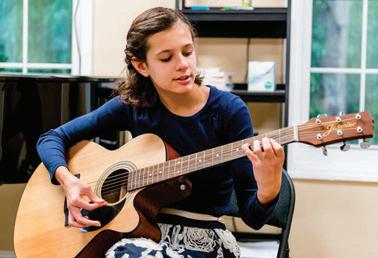
Grades 9-12
Total Enrollment 295
Student/Faculty Ratio 5:1
Yearly Tuition $66,250 for boarding; $39,150 for day students.
Special Requirements Separate interviews for parents and child, full application, math and English recommendations and transcript required.
NORTH CAROLINA SCHOOL OF SCIENCE AND MATHEMATICS 1219 Broad St., Durham; 901 Burkemont Ave., Morganton 919-416-2600; 828-347-9100; ncssm.edu

Focus To educate academically talented students to become state, national and global leaders in science, technology, engineering and mathematics; advance public education; and inspire innovation for the betterment of humankind through challenging residential (both in Durham and Morganton), online, summer and virtual learning driven by instructional excellence and the excitement of discovery. As of press time, recruitment for the 2023-24 school year is underway.
Grades 11-12
Total Enrollment 680 residential students in Durham; 300 in Morganton; and about 500 in NCSSM Online Student/Faculty Ratio 8.5:1
Yearly Tuition NCSSM is a public school. There are no fees associated with applying or attending.
Special Requirements See ncssm.edu/apply
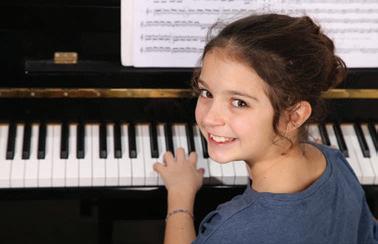
WINTER 2022-2023 CHATHAM MAGAZINE 91
Bringing Healthy Smiles to Chapel Hill CHAPELHILLORALSURGERY.COM Dr. David Lee Hill, Jr. Oral & Maxillofacial Surgeon 77 VilCom Center Drive, Suite 120 Chapel Hill, NC 27514 919-238-9961 Are you in need of oral surgery? Whether it’s to remove one or more teeth, implants, or something more involved, you probably have a lot of questions and concerns. It’s normal to be apprehensive about a surgical procedure and at Chapel Hill Implant and Oral Surgery Center, we understand. That is why Dr. Hill has created a top notch facility and a team of professionals whose singular goal is to help you understand your options and make your procedure as stress-free as possible. No matter what your kids are doing this year PRIVATE LESSONS SPECIALIZED WORKSHOPS MUSICAL THEATRE TRAINING EXCITING PERFORMING EVENTS 919-960-6898 chsma.com wouldn't adding MUSIC make it better? Schedule a consulttation online or by phone now!
SAINT MARY’S SCHOOL
900 Hillsborough St., Raleigh 919-424-4000; admission@sms.edu; sms.edu
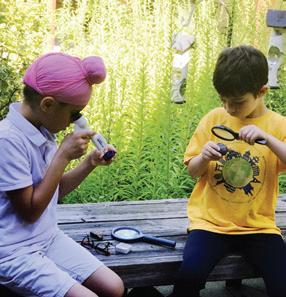
Focus An independent, college-preparatory, boarding and day school where girls are challenged academically to be bold, inspired and prepared to be extraordinary. Girls are accepted and empowered in their learning to grow spiritually and socially. They are recognized for their unique talents, passions and interests – and those yet to be discovered through the development of critical thinking, collaboration, cross-cultural intelligence and new media literacy. AP courses, innovative electives, junior internships, a unique seminar program, college counseling, rich arts program, 11 sports and a safe campus in a thriving urban location.
Grades 9-12
Total Enrollment 310
Student/Faculty Ratio 8:1
Yearly Tuition $62,850; $31,600 for day students. Need- and merit-based financial aid available.
Special Requirements Application, three written recommendations, a transcript from the applicant’s current school, SSAT scores and an on-campus interview.
CHATHAM COUNTY SCHOOLS
SUPERINTENDENT
PHOTO BY JOHN MICHAEL SIMPSON
Anthony Jackson started July 6, 2021, as the Chatham County Schools superintendent. He previously served as superintendent in three different public school districts in North Carolina and Virginia since 2007 and has more than 30 years of experience in public education in North Carolina, Virginia and the District of Columbia. Anthony holds a bachelor’s degree in music education from East Carolina University, and master’s and doctorate degrees in educational leadership from NC Central University and Walden University, respectively.
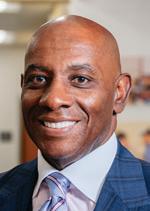
SALEM ACADEMY
601 S. Church St., Winston-Salem 336-721-2643; salemacademy.com
Focus Fosters the intellectual, spiritual, social and physical growth of young women. Offers 10 AP courses, competition in seven sports, a comprehensive fine arts program and technology, advising and co-curricular programs. Offers dual-enrollment college courses at Salem College to supplement AP curriculum.
Grades 9-12
Total Enrollment 75 Student/Faculty Ratio 6:1
Yearly Tuition $50,500; $26,500 for day students
Special Requirements Application process includes an interview, essay and transcripts, as well as optional teacher recommendations and optional testing.
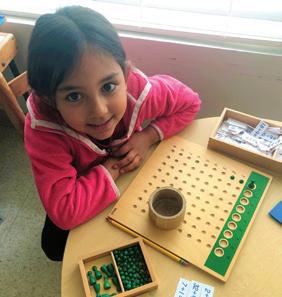
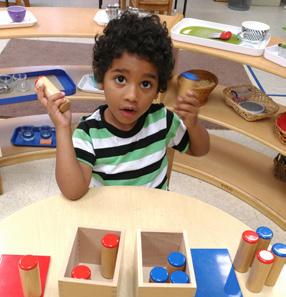
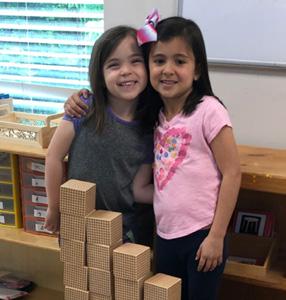
92 CHATHAM MAGAZINE WINTER 2022-2023 SCHOOLS GUIDE Serving children 18 months old to 6th grade in your choice of French, Spanish, or Mandarin Chinese immersion tracks Give your child the gift of bilingualism while building curiosity, confidence, and independence in a diverse learning community. 919.401.4343 • WWW.IMSNC.ORG • 3001 ACADEMY RD., BLDG. 300, DURHAM, NC 27707 Focused on your child’s academic, social, and developmental growth Full immersion, multi-age classrooms led by Montesorritrained native and near-native speaking teachers
ORANGE/CHATHAM
SCHOOLS
ENO RIVER ACADEMY

1212 NC Hwy. 57 N., Hillsborough 919-644-6272; enoriveracademy.org

Focus Utilizes a Science, Technology, Engineering, Arts and Math (STEAM) curriculum to build upon a 20-year tradition of academic and artistic excellence.
Grades K-12
Total Enrollment 820 Student/Faculty Ratio 20:1
Special Requirements Initial enrollment based on lottery in February; students waitlisted once slots are filled.
THE EXPEDITION SCHOOL 437 Dimmocks Mill Rd., Ste. 33, Hillsborough; 919-245-8432; theexpeditionschool.com
Focus Embraces the natural curiosity of children and empowers them to become innovative problem solvers and community builders, and to provide excellent education through an experiential, project-based, STEM-focused curriculum.
Grades K-8
Total Enrollment 360 Student/Faculty Ratio Grades K-4, 20:1; Grades 5-8, 22:1. Resource/other nonclassroom staff not included in ratio.
Special Requirements Cut-off for lottery application in February.
WILLOW OAK MONTESSORI CHARTER SCHOOL
1476 Andrews Store Rd., Pittsboro 919-240-7787; willowoakmontessori.org
Focus Multi-age classrooms with selfdirected learning in a stimulating, authentic Montessori environment. Newly built school with various outdoor spaces. Strives to assist children in achieving their unique potential as responsible global citizens by nurturing self-confidence and independent decision making.
Grades K-8
Total Enrollment 285 Student/Faculty Ratio 15:1
WOODS CHARTER SCHOOL 160 Woodland Grove Ln., Chapel Hill 919-960-8353; woodscharter.org
Focus Emphasizes academic excellence and parent and family involvement in the academic environment.

Grades K-12

Total Enrollment 512
Student/Faculty Ratio Elementary, 16:1; Middle school and high school, 20:1
Special Requirements Applications open Oct. 15–Jan. 15; February lottery.
Jump in on the
WINTER 2022-2023 CHATHAM MAGAZINE 93 SCHOOLS GUIDE
Fun BOUNCING BULLDOGS FUN + FOCUS + FRIENDS For more information and to register, go to: bouncingbulldogs.org | 919.493.7992 Jump rope classes & camps for all ages
CHARTER
(Admission by lottery.)
DURHAM CHARTER SCHOOLS
(Admission by lottery. Check with school for key dates.)
CENTRAL PARK SCHOOL FOR CHILDREN
Elementary: 724 Foster St.; Middle: 121 Hunt St. 919-682-1200; cpscnc.org
Focus To create a community where all children thrive and students’ joy for learning is empowered through equity practices in project-based learning, arts integration and outdoor learning. Students learn to be confident, creative and courageous changemakers through the school’s high expectations in academics, social-emotional learning and social justice teaching and learning.
Grades K-8
Total Enrollment 616
Student/Faculty Ratio Elementary, 16:1; Middle, 20:1
Special Requirements Tours are strongly encouraged and are offered October-March. Lottery in March; applications accepted November-February. Waitlist closes after the 20th day of the school year. Waitlist is roughly 300 for kindergarten.
COMMUNITY SCHOOL OF DIGITAL & VISUAL ARTS
1955 W. Cornwallis Rd. 919-797-2340; communitydva.org
Focus Growing students academically, socially and emotionally every day.
Grades K-8
Total Enrollment 250 Student/Faculty Ratio 15:1
DISCOVERY CHARTER SCHOOL
501 Orange Factory Rd., Bahama 984-888-5504; discoverycharterdurham.org
Focus Science, technology, engineering, arts and mathematics.
Grades 6-9
Total Enrollment 400
Student/Faculty Ratio 20:1
Special Requirements Students must reside in North Carolina.
DURHAM CHARTER SCHOOL
807 W. Chapel Hill St. 919-956-5599; healthystartacademy.org
Focus Strives to help students grow, especially in math and reading. Encourages parent involvement. Promotes a childcentered curriculum with a safe, structured environment.
Grades K-9
Total Enrollment 600+ Student/Faculty Ratio 18:1
Special Requirements Application and lottery for admission.
EXCELSIOR CLASSICAL ACADEMY
4100 N. Roxboro St. 919-213-8585; excelsior.teamcfa.school
Focus Excelsior means “higher” in Latin, and students at the school strive for continuous improvement in academics and character. With a college-preparatory, liberal arts focus, staff encourage each student to reach higher by providing a rigorous, rich curriculum in an environment that promotes responsibility, integrity, diligence and excellence as well as equity in education by developing a foundation of knowledge, a practice of reason, a quality of eloquence and a habit of virtue to prepare each student for a lifetime of learning and citizenship. An educational option accessible to all students in the Durham area, the school intentionally pursues diversity in its board, staff and student population. The school offers busing; provides free or reduced-price lunch to those who qualify; provides assistance with uniforms to those who qualify; and offers a before- and afterschool program.
Grades K-11 in 2022-23. The school will have its first graduating class in 2024.
Total Enrollment 1,030 Student/Faculty Ratio 15:1
Special Requirements Open application and enrollment. If more applications are received than the allotted number of spots for each grade, a random lottery will be held for vacant spots. Open enrollment takes place in January and February, and the lottery occurs in early March.
KESTREL HEIGHTS CHARTER SCHOOL
Elementary: 4900 Prospectus Dr.; Middle: 4700 S. Alston Ave. 919-484-1300; kestrelheights.org
Focus A blended learning school utilizing Mind Brain Education techniques to teach scholars in small groups to sharpen academics, demonstrate creative expression and expand leadership skills.
Grades K-8
Total Enrollment 505 Student/Faculty Ratio 19:1
KIPP DURHAM COLLEGE PREPARATORY 1107 Holloway St. 919-973-0285; kippnc.org
Focus A dynamic and beloved school community where excellence in all aspects is the standard. The school joyfully educates its students with the academic, social and character skills necessary to take their chosen place in the world and leave it better than they found it. Along with families and staff, students are part of a positive and collaborative learning and social environment that fosters preparedness, resilience, integrity, discipline and excellence. Students strive to seek the highest ideals for themselves and live up to them – climbing the mountain to college, career and beyond, and lifting their pride as they climb.
Grades 6-8
Total Enrollment 350 Student/Faculty Ratio Varies by grade level.
MAUREEN JOY CHARTER SCHOOL 107 S. Driver St. 919-493-6056; joycharter.org
Focus To develop the whole child through high-quality instruction, school-community partnerships and the promotion of a positive self-identity.
Grades K-8
Total Enrollment 640 Student/Faculty Ratio Kindergarten, 16:1; Grades 1-3, 22:1; Grades 4-8, 24:1 Special Requirements Application released in December; lottery in March.
RESEARCH TRIANGLE CHARTER ACADEMY 2418 Ellis Rd. 919-957-7108; researchtrianglecharteracademy.org Focus Curriculum is built around a strong emphasis on math, reading, science and social studies. Its Moral Focus program helps students learn the importance of making good decisions and doing the right thing in life.
Grades K-8
Total Enrollment 735 Student/Faculty Ratio Kindergarten, 22:1; Grades 1-8, 27:1
Special Requirements Lottery.
VOYAGER ACADEMY
Elementary: 4210 Ben Franklin Blvd.; Middle: 101 Hock Parc Ln.; High: 4302 Ben Franklin Blvd. 919-433-3301; voyageracademy.net Focus Project-based learning. Grades K-12
Total Enrollment 1,368 Student/Faculty Ratio 18:1
Special Requirements Applications accepted online Jan. 1–Feb. 28; lottery in March. CM
94 CHATHAM MAGAZINE WINTER 2022-2023 SCHOOLS GUIDE



WINTER 2022-2023 CHATHAM MAGAZINE 95
FOR MORE THAN 50 YEARS, the practice of Oral and Maxillofacial Surgery Associates has been trusted to provide specialized care in the Chapel Hill, Durham, and Sanford communities. Our four board certified oral and maxillofacial surgeons provide the highest quality of patient care with the latest diagnostic and treatment tools available to assure patient safety and comfort. Drs. Sacco, Vandersea, Ruvo and Serlo practice a full scope of oral and maxillofacial surgery with expertise ranging from corrective jaw surgery to wisdom tooth removal.
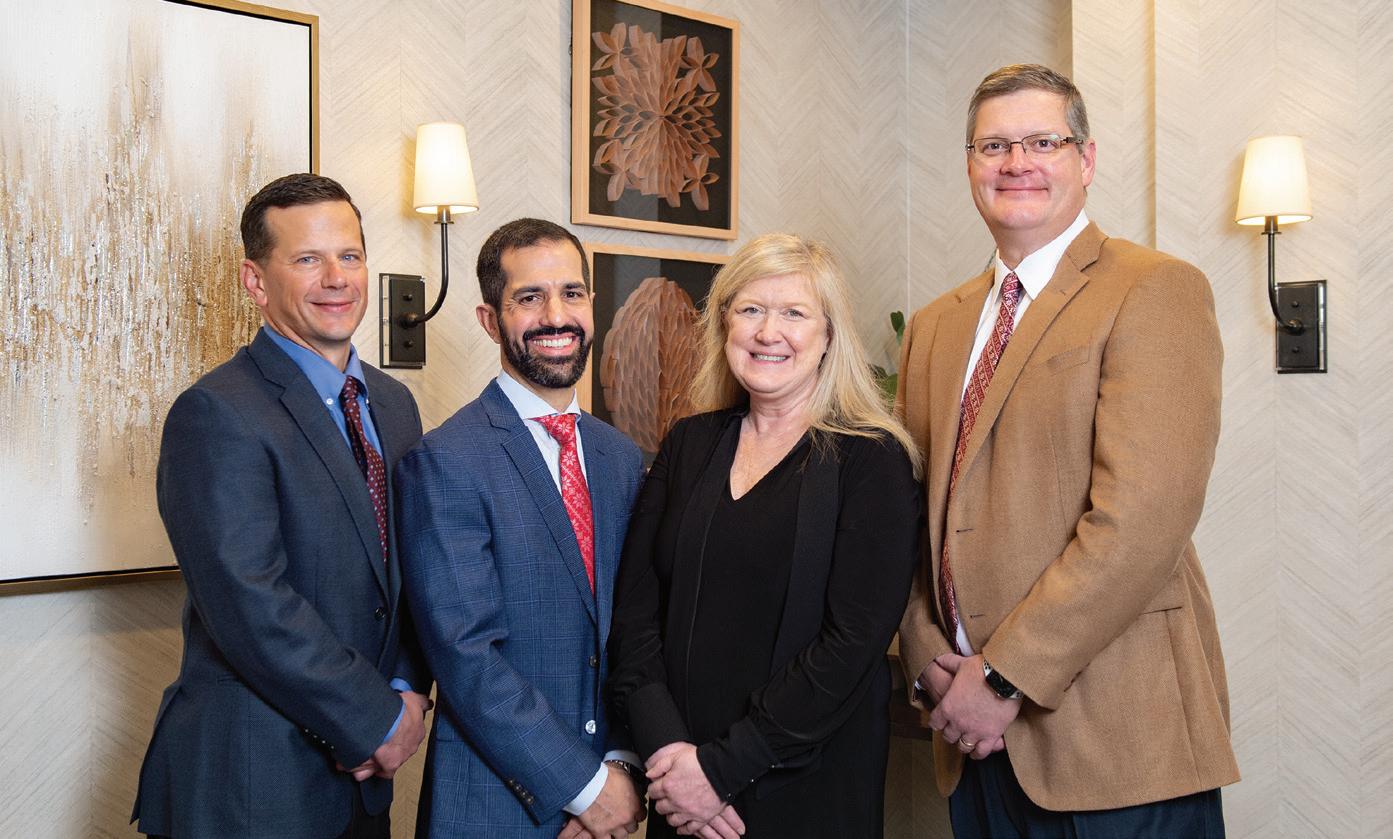
DEBRA M. SACCO DMD, MD

BRIAN VANDERSEA DDS
ANDREW T. RUVO DMD, MD ADAM D. SERLO DMD, MD
CHAPEL HILL 501 Eastowne Drive, Suite 110 Chapel Hill 27514 919.929.2196
DURHAM 2823 North Duke Street Durham 27704 919.479.0707
SANFORD 109 Dennis Drive Sanford 27330 919.775.1615
DENTAL IMPLANTS • BONE GRAFTING • WISDOM TEETH • FACIAL TRAUMA • CORRECTIVE JAW SURGERY • PRE-PROSTHETIC SURGERY • ORAL PATHOLOGY • SLEEP APNEA OMSANC.COM
35 Thompson St., Pittsboro, NC 27312
101 Conner Dr., Ste. #401, Chapel Hill, NC 27514 919-858-2864 • severtsmiles.com
Thank you for supporting our local office for over 20 years. Our practice is the original in Pittsboro, founded in 1980 by Dr. Bill Davis and carried on by Dr. Severt in 2000. We are proud of ou r tradition of excellence and strive to care for our patients just like family. We provide orthodontic treatment in a personalized, caring environment and help our patients achieve beautiful smiles and healthy bites for a lifetime of
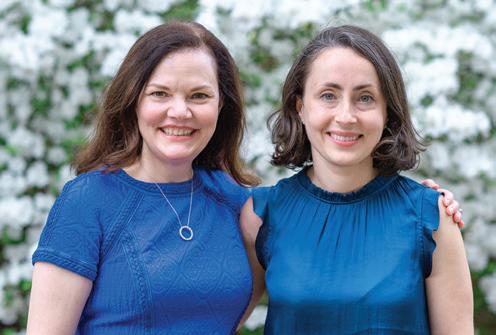

dental health. With a highly trained staff and cutting-edge technology, our practice designs a plan to suit your needs, whether it be with state-of-the-art Damon braces or clear aligners. As a Platinum Provider for Invisalign, we are highly experienced with Invisalign treatment for children, adolescents, and adults. Contact us today to get started on the journey to your new smile!
Pittsboro 288 East St., Ste. 1001-F7 Pittsboro, NC 27312 919-704-8449
Siler City 235 E. Raleigh St. Siler City, NC 27344 919-799-7446
Chapel Hill 1829 E. Franklin St., Ste. 800D Chapel Hill, NC 27514 919-704-8449
rwellnessservices.com
Dr. Karen Barbee and her team of therapists provide high quality, holistic, mental health services in a welcoming and compassionate environment with tailored approaches and individualized care to meet you and your loved one’s needs. Serving Chatham County and Chapel Hill/Orange County, Renaissance
Wellness Services offers therapeutic services to individuals, couples and families through the use of client-centered counseling theories, including individual and group therapy; couples and family therapy; child/adolescent therapy; school-based therapy; pre-marital counseling; and intensive home services.
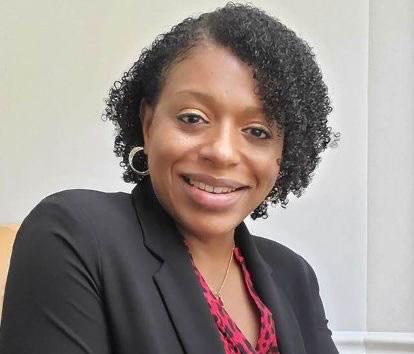
SPONSORED CONTENT HEALTH CARE PROVIDERS GET TO KNOW YOUR LOCAL HEALTH CARE PROVIDERS . SPONSORED CONTENT
Tammy R. Severt, DDS, MS (L) Laura Jacox, DMD, PhD (R)
11312 U.S. Highway 15-501 N., Ste. 106, Chapel Hill, NC 27517 919-533-4686
primusinternalmedicine.com
Primary care where you’re the primary focus.
In 2016, Dr. Todd Granger opened Primus Internal Medicine as a direct primary care practice to provide patients with longer appointment times, greater accessibility and improved personal care. With more than 25 years of experience practicing general internal medicine, both in private practice and on UNC School of Medicine’s clinical faculty, Dr. Granger is an expert at diagnosing and treating a wide range of medical issues.

To find out how you can get premium primary care without the premium price––or long waits––call Primus Internal Medicine today.
Chatham Downs
141 Chatham Downs Dr., Ste. 204, Chapel Hill, NC 27517
919-969-0931
919-726-6100
Governors Village 40100 Moring, Chapel Hill, NC 27517
919-903-9077
Pittsboro
1016 Thompson St. Unit J, Pittsboro, NC 27312
919-642-0555
carolinaspinespecialists.com
At Carolina Spine Specialists, Dr. Jenni Sherwood, DC, offers an effective non-surgical treatment to patients who suffer from chronic disc conditions to relieve pain while restoring disc health. Spinal decompression is a painless, non-invasive option for those who have chronic neck or back pain, sciatica, and bulging or
degenerative discs. Dr. Sherwood develops a treatment plan for eligible patients based on proven protocols that provide relief to almost 9 out of 10 patients. While traditional treatment options include medication, spinal injections or surgery, non-surgical spinal decompression offers patients a new life-changing option for relief from chronic pain.

98 CHATHAM MAGAZINE WINTER 2021-2022 HEALTH CARE PROVIDERS SPONSORED CONTENT
•
•
HEALTH CARE PROVIDERS SPONSORED CONTENT
At Dermatology & Laser Center of Chapel Hill (DLC), board-certified dermatologist Dr. Chris Adigun and her team provide comprehensive medical and cosmetic dermatological services, in a warm and welcoming environment. Using cutting-edge technology and treatment options, she and her providers help address concerns from acne to wrinkles to that extra belly fat that won’t go away.
In addition to being one of only a few practitioners on the East Coast with a specialty in nail disorders, Dr. Adigun has extensive knowledge of skin cancer, with a passion for teaching people about
the importance of regular screenings and using sun protection. Her team also offers solutions for cosmetic sun damage such as redness, brown spots, and premature aging, utilizing treatments such as chemical peels, lasers, skin tightening devices, and injectables.
For Dr. Adigun and the DLC team, building a trusting relationship and providing individualized care is the main focus. Treating patients with respect, expressing genuine concern, and talking with them is a hallmark of the practice. Working together, Dr. Adigun helps patients identify and achieve their personal skin care goals because DLC believes everyone can have skin they love.
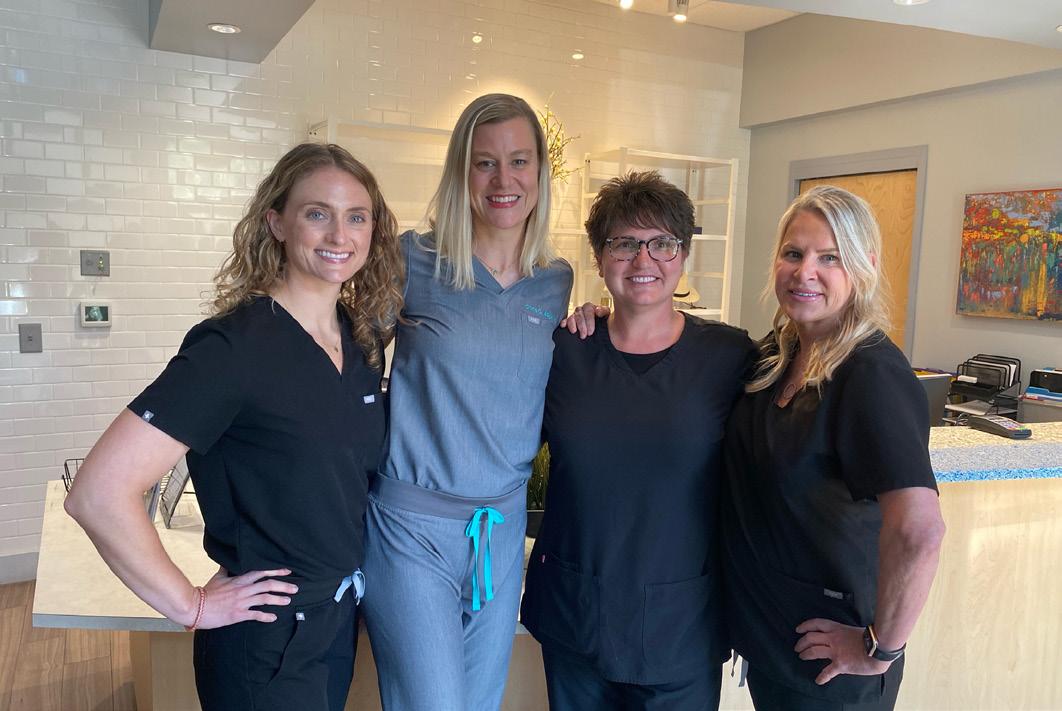
SPONSORED CONTENT 10441 US 15-501 N, Suite 100, Chapel Hill, NC 27517 919-942-2922 • Dermatologyandlasercenterofchapelhill.com
LEGACY
FALLS DRIVE
THIS FAMILY OF ATHLETES SETTLES INTO A NEW HOME IN PITTSBORO
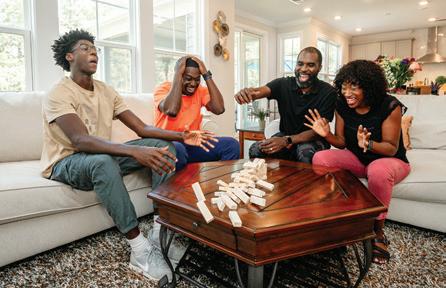
 BY ANNA-RHESA VERSOLA PHOTOGRAPHY BY JOHN MICHAEL SIMPSON
In the holiday movie classic, “It’s a Wonderful Life,” the main character discovers that true wealth is bound in relationships with family, friends and community. In real life, Dedric Powell already knows what he values most. “I’m all about family,” he says. “That’s how I measure success, and by how well my kids are doing.”
Cherice Powell grins and quickly adds, “And how happy your wife is.” Dedric laughs and says, “We’re
100 CHATHAM MAGAZINE WINTER 2022-2023 HOME & GARDEN
A WONDERFUL LIFE ON
LEFT The family plays a round of Jenga in the living room.
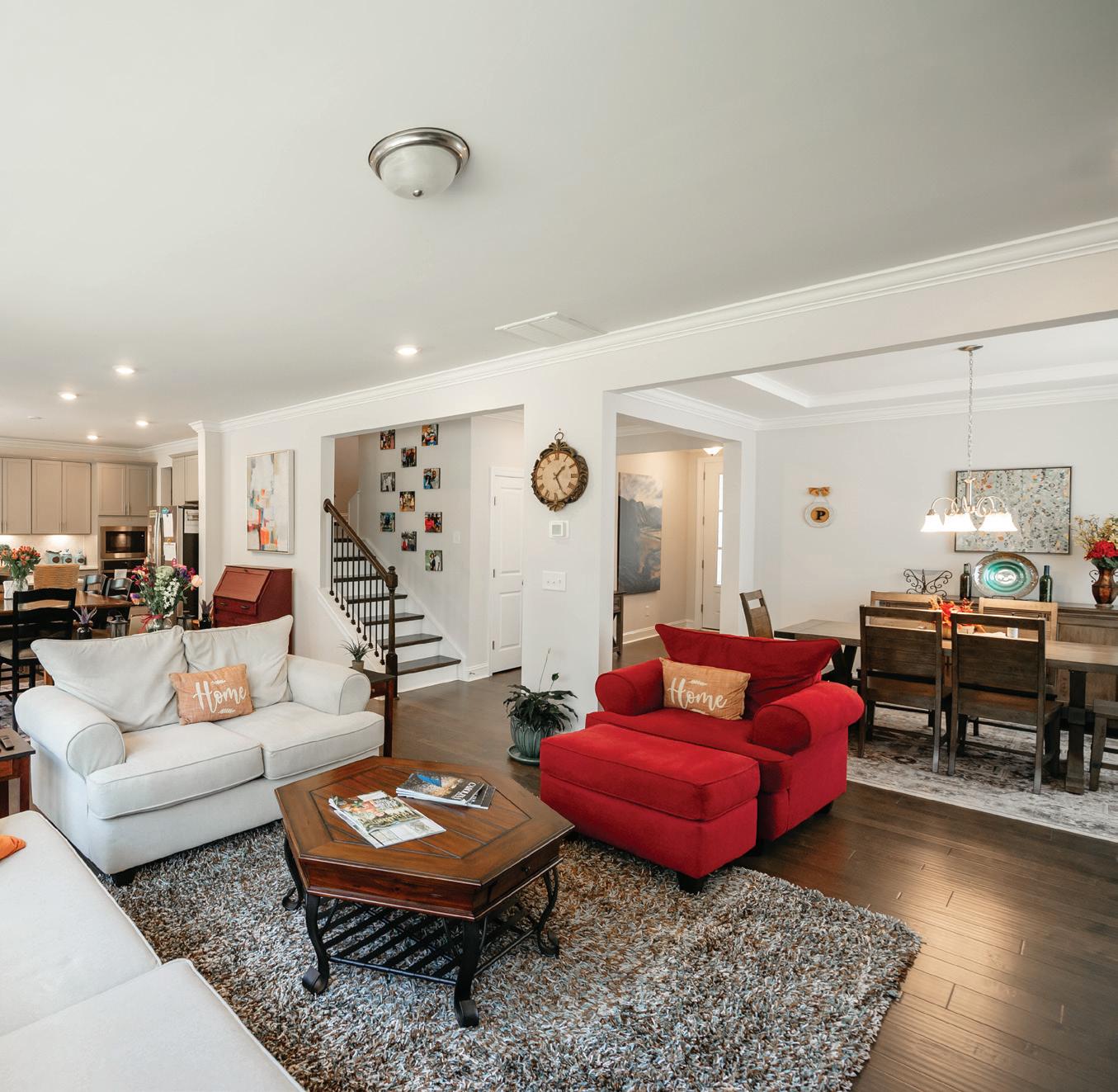
WINTER 2022-2023 CHATHAM MAGAZINE 101
An open floor plan was a must-have feature for Cherice and Dedric Powell.
ABOVE Cherice originally wanted her workout equipment in the dining room, but Dedric prevailed in keeping this space for family gatherings.
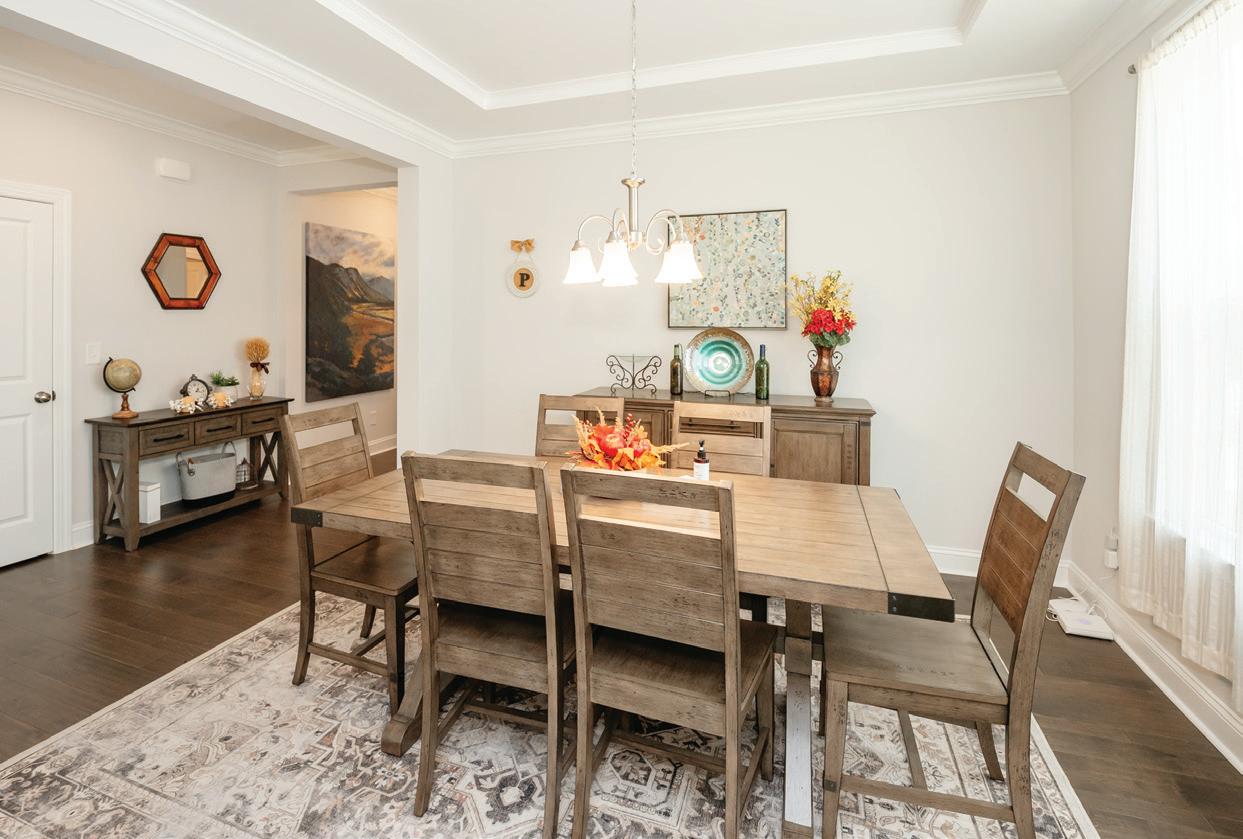
LEFT Dedric keeps his UNCcentric work station in the third-floor bonus room simple and organized.
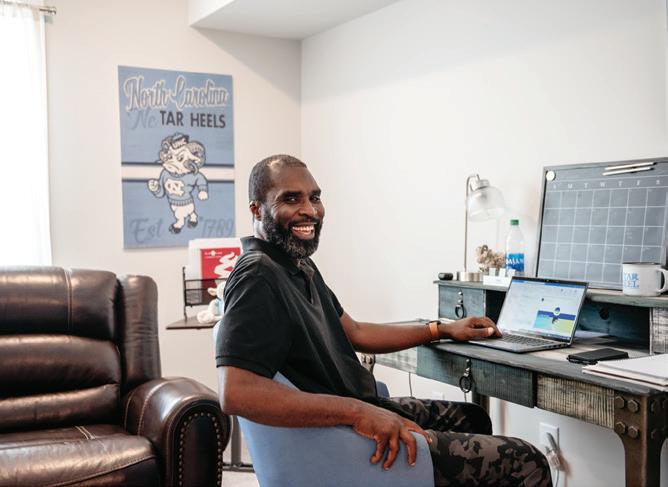
fortunate, and I’m so thankful that we have the things we have, but I don’t like to measure my success by things.”
The Powells moved into their 3,366-square-foot home, which is nearly twice the size of their previous residence near downtown Pittsboro, last year. They enjoy five bedrooms, four full bathrooms and a three-car garage inside the Legacy neighborhood off of Big Woods Road near Jordan Lake. The three-level home has 9-foot ceilings, an open floor plan and a first-floor guest bedroom with an en suite bathroom. Outside, a screened porch and spacious deck are inviting spaces to entertain company or simply hang out.
102 CHATHAM MAGAZINE WINTER 2022-2023 HOME & GARDEN



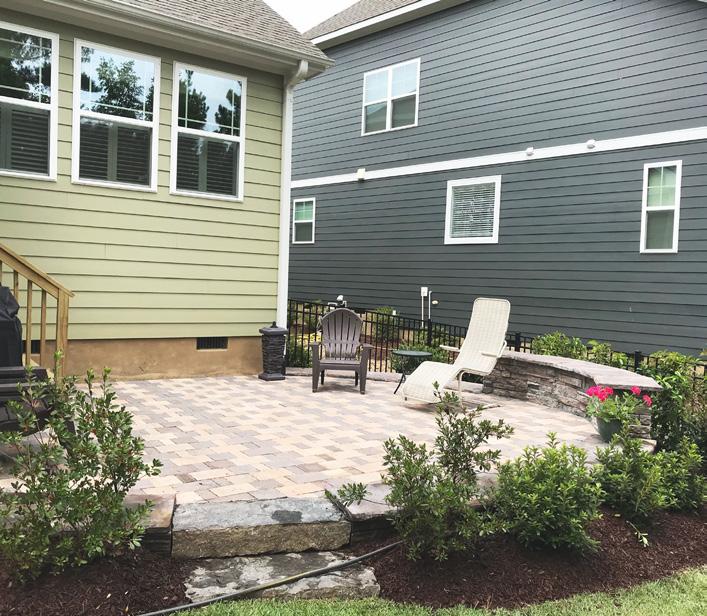
WINTER 2022-2023 CHATHAM MAGAZINE 103 MARKET KNOWLEDGE… HARD WORK… DEDICATION… EXCELLENT INTERPERSONAL SKILLS Sharon Clarke Broker/Owner/Realtor® These traits are what make Sharon Clarke stand out among other realtors in the area. A boutique real estate firm specializing in Chapel Hill, Pittsboro, including Orange and Chatham Counties. Partnering with Accord Properties and Accord Homes in new construction and renovations. Accord Homes, Inc Accord Properties, LLC Specializing in custom building and renovations Call or text me! 919.265.8522 sharon.clarkeproperties@gmail.com www.accordrealty.group SHARON CLARKE 3151 US 15-501 N, Pittsboro 919.542.5438 poultryvilla.com We specialize in landscaping and hardscaping, including organic mushroom compost and topsoil, hardwood and pine mulches, patios, retaining walls, drainage and more! We are also your local Breeo Smokeless Fire Pits dealer. CALL US TODAY TO SET YOUR NEW YEAR’S RESOLUTION OF MORE RELAXATION IN YOUR OWN BACKYARD NEW YEAR! NEW PATIO! NEW YOU! Poultry Villa Landscaping and SuppliesLandscaping and Supplies202 2
LEFT The main entryway showcases the engineered wood floors.

RIGHT Deuce Powell and his younger brother, Drake Powell, hang out on the front porch.

BELOW Dedric and Drake set the table while Deuce helps Cherice in the kitchen.
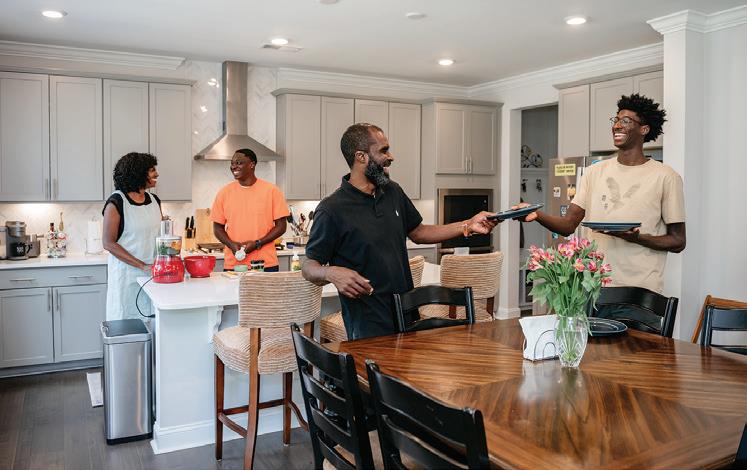
104 CHATHAM MAGAZINE WINTER 2022-2023 HOME & GARDEN
Cherice started daydreaming of a home just like this one about five years ago. Spending more time at home during the pandemic solidified that desire, as the couple realized they needed more room to work while their three kids were learning remotely.
THE KIDS ARE ALRIGHT
Their eldest is 22-year-old Cera Powell, a 6-foot scholarship athlete at Virginia Tech who plays the outside hitter position on the women’s volleyball
I’m all about family, that’s how I measure success, and by how well my kids are doing.
Dedric Powell
Can your retirement home be your dream home?

When it comes to retirement living, Carolina Meadows offers more. Here, you’ll find beautiful homes that are personally customized for you to your taste, vibrant surroundings, diverse dining options and endless opportunities for the mind, body and spirit.
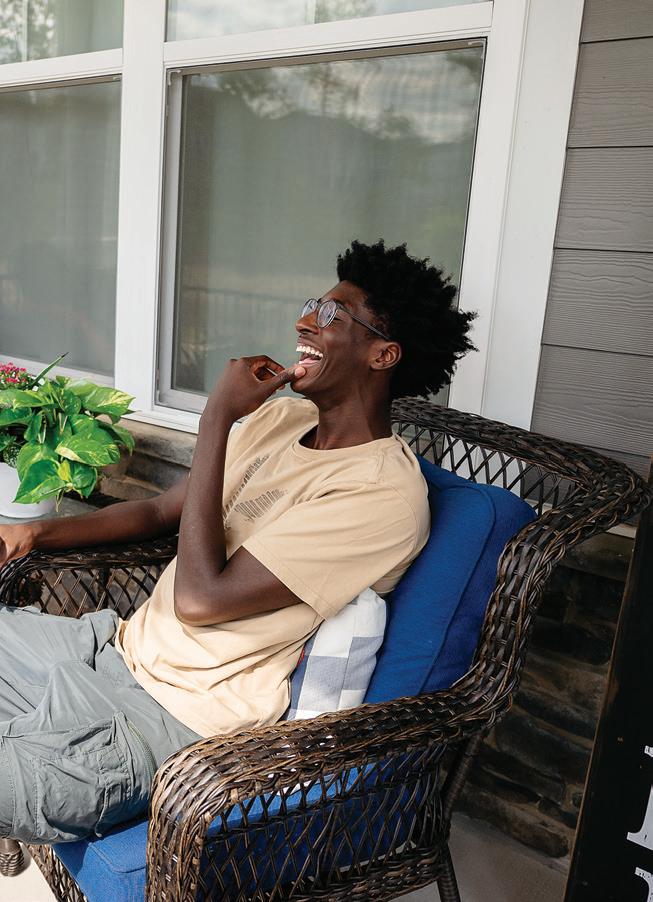

“We have enjoyed living at Carolina Meadows from the first day we moved into our spacious villa. The open, custom layout suits our relaxed lifestyle.”
1-800-458-6756
WINTER 2022-2023 CHATHAM MAGAZINE 105
www.carolinameadows.org Carolina Meadows offers the EQUITY ADVANTAGETM
TAIMI LIVE MORE A CONTINUING CARE RETIREMENT COMMUNITY
–
team. She is a senior majoring in human nutrition, foods and exercise and is considering a career in medicine.
The middle child is 6-feet-2-inch Dedric “Deuce” Powell. He played football, basketball and baseball while at Northwood High School and landed a basketball scholarship as a guard for Louisburg College, which is northeast of Raleigh. The 20-year-old is now a junior majoring in business at North Carolina A&T State University in Greensboro.
The youngest is the one they ask to retrieve items from the top shelf in the kitchen, Cherice says. Drake Powell, 17, is a 6-foot-6-inch junior at Northwood who recently committed to playing basketball for Hubert Davis at UNC. As it happens, Cherice and Hubert are cousins – their uncle, Walter Davis, is a former UNC basketball player who
ABOVE
The undercabinet lighting highlights the herringbone backsplash in the open kitchen.
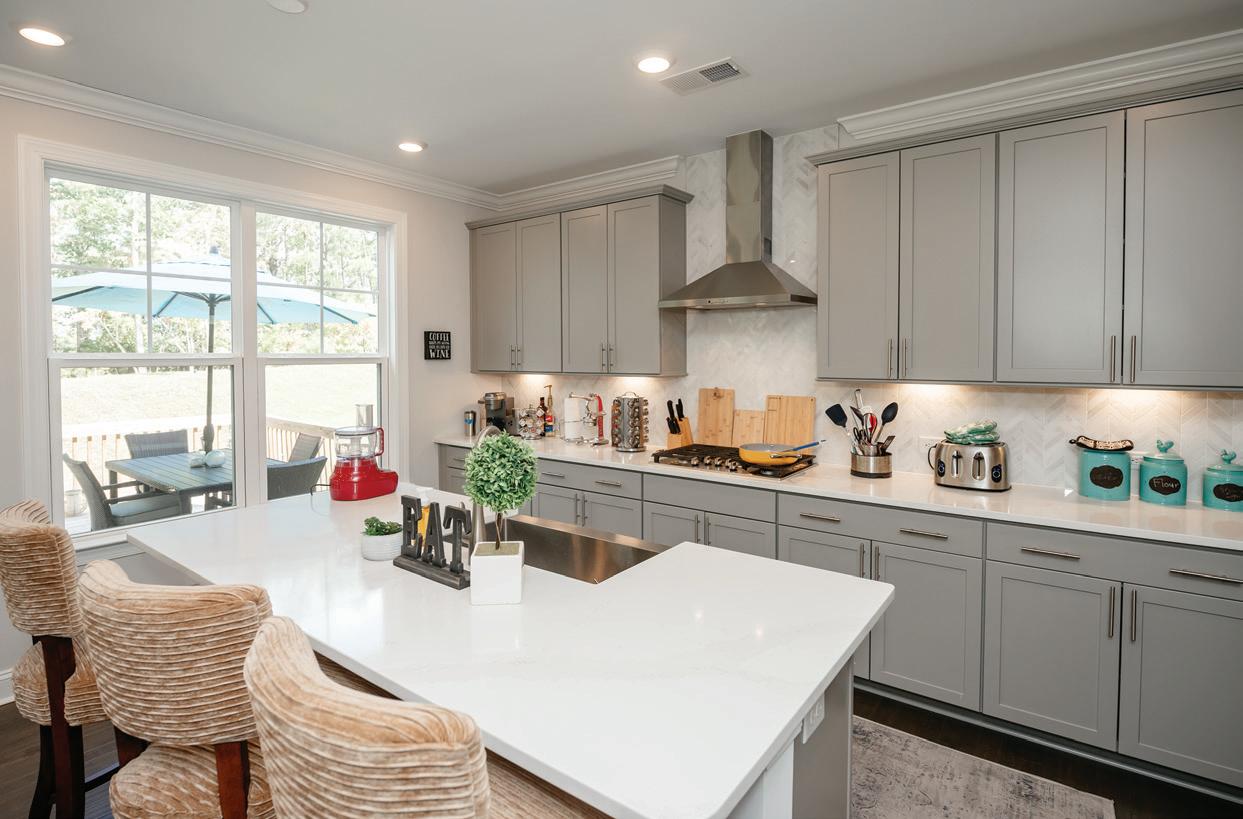
RIGHT Drake, Cherice, Dedric and Deuce outside their home in Pittsboro’s Legacy neighborhood.
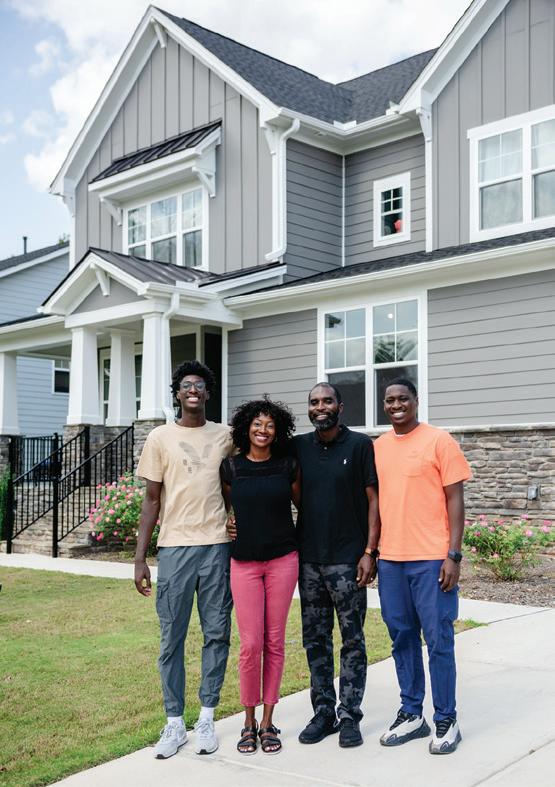
106 CHATHAM MAGAZINE WINTER 2022-2023
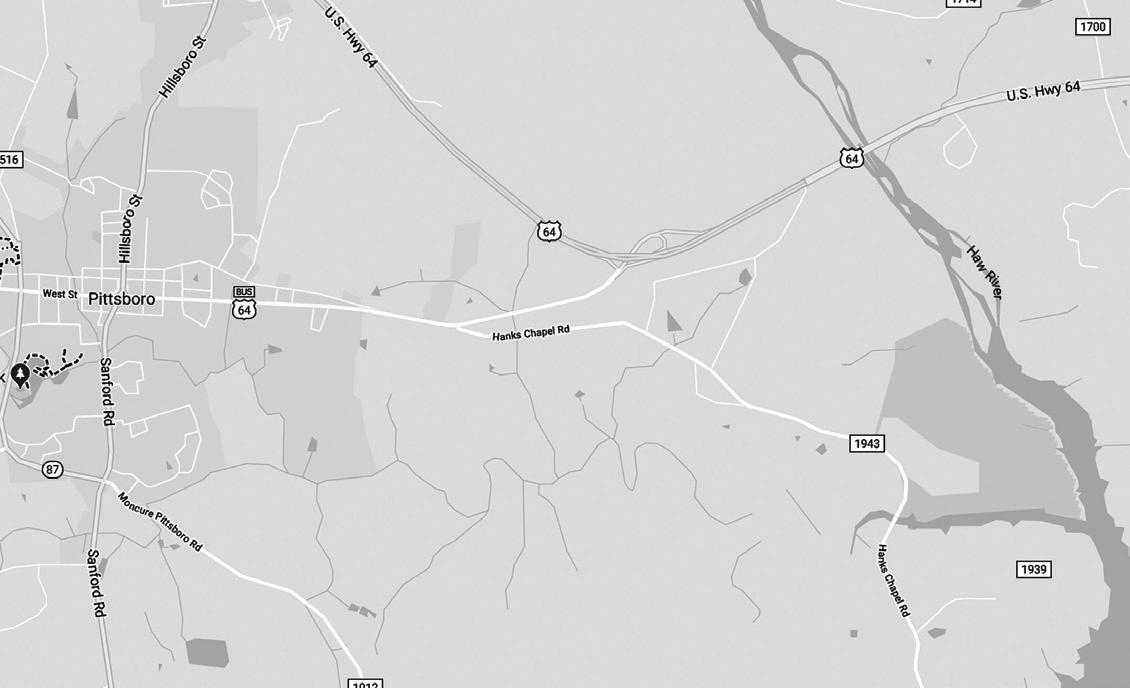






WINTER 2022-2023 CHATHAM MAGAZINE 107 IF YOU ARE LOOKING FOR A HOME, call or drop by our office for the most varied newcomer packet and an interesting introduction to the Chatham County Area. Residential Real Estate • 901 Willow Drive, Suite 3, Chapel Hill, NC 27514 919.933.8500 • 800.382.0673 • tha@tonyhallassociates.com • www.tonyhallassociates.com WE KNOW CHATHAM COUNTY! Locally, we are known as The Specialists on our community’s houses, neighborhoods, schools and cultural activities.
Wendy Thompson
Chris Culbreth
Tony Hall
Thursday - Friday 11am - 5pm Saturday 11am - 4pm — Or — Contact us to arrange a private shopping experience! Thank you for voting us Best Home Furnishings, Accessories and Decor! Casually Collected Furnishings, Accessories and Art for Your Home. FRAGMENTS 143 N. Chatham Ave. Siler City, NC 202 2
went on to play in the NBA and was on the gold medal-winning team at the 1976 Summer Olympics.
Cherice, who happens to be 5 feet, 9 inches tall, played basketball all throughout high school. She is a UNC alumna with an undergraduate degree in psychology and a master’s in rehabilitation psychology and counseling. She primarily works from home, providing expert testimony in court cases involving Social Security
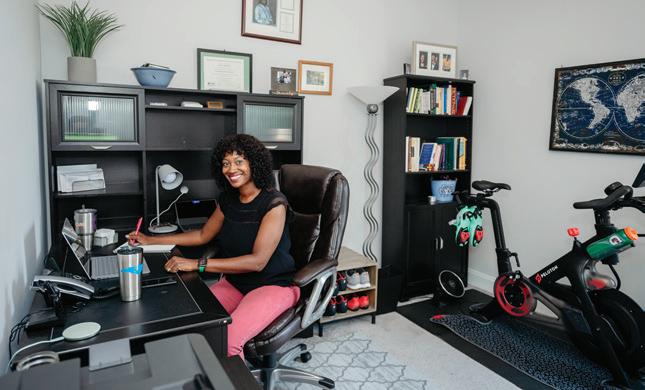

ABOVE Cherice says her mother likes keeping the house tidy when she comes to visit from Charlotte, and so the feather duster is kept on hand in a basket in the front hall.
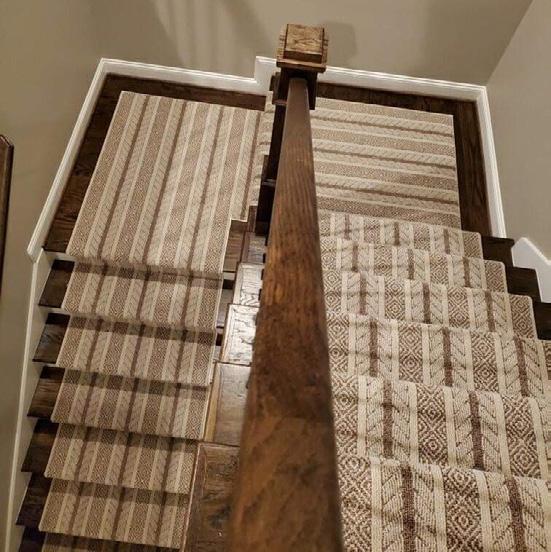


BELOW Cherice both works and works out in the same room.

108 CHATHAM MAGAZINE WINTER 2022-2023
Not sure where to start? cleanmychapelhillhouse.com 919-967-7592 HOUSE CLEANING DONE RIGHT SINCE 1991HOUSE CLEANING DONE RIGHT SINCE 1991
BRUCE’S CARPETS & FLOORING Your Brand Headquarters and Total Flooring Resource Pictured: Shaw Carpet Speak MON-FRI 8 AM–5 PM • SAT 8 AM–12 PM • CLOSED SUNDAY 11455 US HWY 15-501 N, Chapel Hill • 919.967.0208 brucescarpets.com
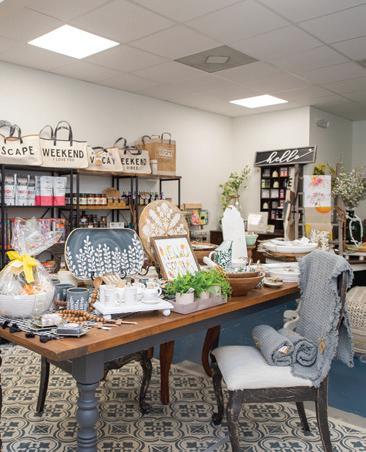








WINTER 2022-2023 CHATHAM MAGAZINE 109 FURNITURE & HOME DÉCOR TUESDAY-SATURDAY • 10AM-5PM 697 HILLSBORO ST PITTSBORO, NC 919.533.6357 THOUGHTFULLY CURATED LIVING HOME DECOR • LIFESTYLE • GIFTS OFFERING COLLISION REPAIR EXCELLENCE TO THE CHAPEL HILL COMMUNITY FOR OVER 30 YEARS 919.942.2070 4117 OLD GREENSBORO RD, CHAPEL HILL ELITEAUTOBODY.NET MON-FRI 8AM-5:30PM A FAMILY OWNED AND OPERATED BUSINESS COMMITTED TO PROVIDING QUALITY REPAIR AND EXCEPTIONAL CUSTOMER SERVICE. WE GUIDE YOU THROUGH THE REPAIR PROCESS WITH A STRESS-FREE FRIENDLY ATMOSPHERE, EDUCATIONAL APPROACH, WORK WITH ALL INSURANCE COMPANIES, OFFER A NATIONWIDE LIFETIME WARRANTY AND COMPLIMENTARY LOANER CARS UPON AVAILABILITY. CALL ELITE AUTO BODY TO SCHEDULE YOUR FREE ESTIMATE. IT WILL BE THE MOST RELAXED EXPERIENCE YOU WILL EVER HAVE GETTING YOUR CAR REPAIRED.
disability issues. Her second-floor
doubles
her

weights and a Peloton
Dedric’s office is on the third floor, where he works remotely as a regional manager for a global biotech company in Morrisville. At 6 feet, he played basketball plus baseball throughout high school and earned his UNC letterman status in baseball in 1989.
We’re fortunate, and I’m so thankful that we have the things we have, but I don’t like to measure my success by things.
– Dedric Powell
ON AND OFF THE COURT
Surprisingly, there’s no basketball goal over the garage door. Instead, before Drake got his driver’s license, Cherice or Dedric would wake him at 5:30 a.m. and drive him down Highway 64 to the Northwest Cary YMCA. “[All] so he could shoot on the courts because no one would be there, and he likes the court to himself,” Cherice says of Drake’s dedication to developing individual skills.

“Another thing about getting a house like this,” Cherice says, looking around the living room. “I want the kids to come back. [Dedric] doesn’t, but I do. And even if they [move] back themselves, that’s fine for a short term. And then they go out [and] have families, but then bring their families back, and they don’t have to stay in a hotel – we can all be in here.”
Cherice smiles at Dedric. He looks at her with a knowing smile. Their new home checks off all the boxes on their wish list – location, gated community, clubhouse amenities, separate offices and room enough for boomerang kids and guests. “The house itself has enough
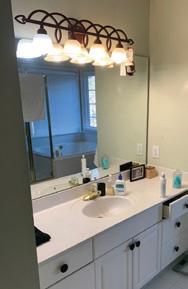
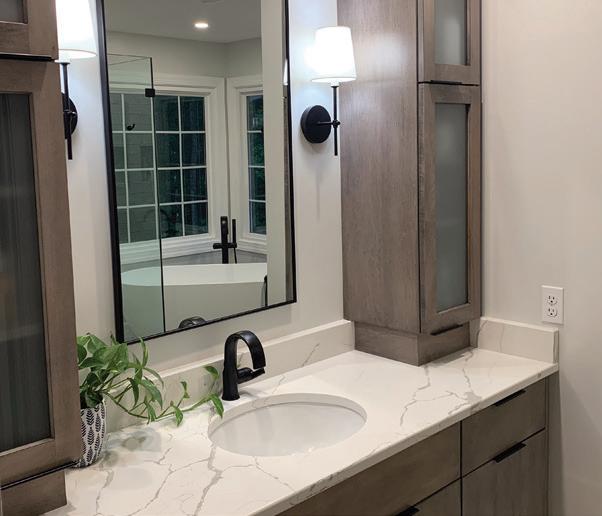

110 CHATHAM MAGAZINE WINTER 2022-2023 HOME & GARDEN
office
as
fitness room with free
bike.
2022 After e Bud Ma hews team can help in every step of your design/build process from the initial consultation to the nishing touches on your home renovation. Whether you’re remodeling a kitchen or bath, redesigning your home for aging in place, upgrading your appliances, or HVAC systems, Bud Ma hews Services can help you build a be er home. Heating & Air • Plumbing • Appliance Repair • Design/Build • Renovations Helping You Build a Be er Home BudMa hews.com 919.929.0203 DESIGN. BUILD. REMODEL. Before
space with the flexibility to be cozy and intimate, but at the same time, we have our own spaces to retreat to,” Cherice clarifies. “We did have Christmas dinner here with our extended families in 2021. We traditionally host, and it was really nice to do that in this space with the open concept.”
Spending time with family and friends is the currency of choice for both Dedric and Cherice. “I didn’t have a dad coming up,” says Dedric, who grew up in Columbus County outside of Wilmington, North Carolina. “And that motivated me to be the best dad and the best husband that I could be. Seeing them happy –that makes me feel good.”

He remembers the tag-team parenting with Cherice when the kids were younger – he worked night shifts while she worked during the day. “Working all night, I come home, go on field trips then go back to work,” Dedric says, smiling and shaking his head. “You know, I think back on that time, and even though it was hard, and I didn’t get much sleep, I really enjoyed being there for my kids.” CM

Dedric and Cherice enjoy the company of their sons, Deuce and Drake, on their screened-in back porch.



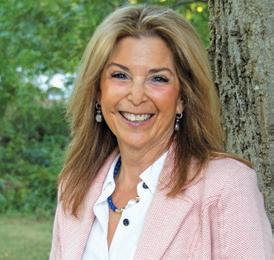

REAL ESTATE & HOME SERVICES GALLERY COMMERCIAL • HOMES • CONDOS • APARTMENTS
Jodi Bakst Broker, Owner Bill Matthes Broker, Owner, Property Mgt 919.928.5131 | info@realestatexperts.net 501 Eastowne Dr, Ste 140, Chapel Hill, NC 27514 R eal E state E xperts.net Let Us Exceed Your Expectations Where We Shine. 90+ 5-Star Google Reviews 2020 NATIONAL GREEN BUILDING PARTNER OF EXCELLENCE
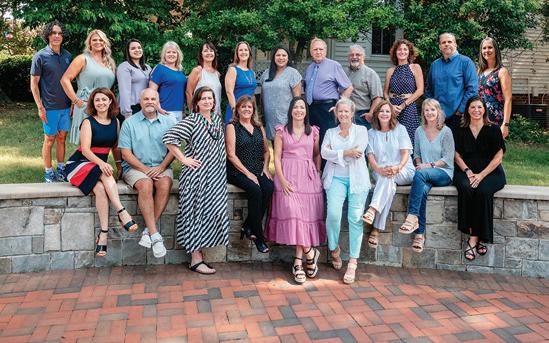











REAL ESTATE & HOME SERVICES GALLERY COMMERCIAL • HOMES • CONDOS • APARTMENTS chathamhomesrealty.com infochathamhomesrealty@gmail.com YOUR HOMETOWN CHOICE Results That Move You 2022 chathamhomesrealty.com infochathamhomesrealty@gmail.com Sharon Clarke Broker/Owner/Realtor® These traits are what make Sharon Clarke stand out among other realtors in the area. Accord Homes, Inc Accord Properties, LLC Specializing in custom building and renovations 919.265.8522 sharon.clarkeproperties@gmail.com www.accordrealty.group MARKET KNOWLEDGE… HARD WORK… DEDICATION… EXCELLENT INTERPERSONAL SKILLS 919.942.5051 | Free estimates, Call today! Voted Favorite Landscaper by Chatham Magazine Readers 2022 O’Mara Landscaping & Lawn Care, Inc. 919.942.5051|omaralandscaping.com James & Kate Voted Favorite Landscaper by Chapel Hill Magazine Readers 2020 James & Kate We don’t just improve your home. We offer peace of mind. BudMa hews.com 919.929.0203 Heating & Air • Plumbing Electric • Appliance Repair Design/Build • Renovations 2022






REAL ESTATE & HOME SERVICES GALLERYCOMMERCIAL • HOMES • CONDOS • APARTMENTS Your Local Real Estate Specialist RESIDENTIAL REAL ESTATE 901 Willow Drive, Suite 3 • Chapel Hill, NC 27514 919.933.8500 • 800.382.0673 • tonyhall@tonyhallassociates.com www.tonyhallassociates.com Tony Hall Whether you are looking for land, neighborhoods, new construction, golf communities, or building your forever home, I can help you achieve your dream. For any real estate questions or needs please reach out and I’ll be happy to assist you! Southern Lifestyles With over 17 years of real estate experience in Chatham County, I am a seasoned professional and a true lifestyle advisor who knows the ins and outs of the area. Cell: 919.337.8331 Office: 919.533.6300 lori.chapelridge@gmail.com 697 Hillsboro St, Ste. 103, Pittsboro, NC 27312 Lori Golden REALTOR® BROKER/OWNER
GROW AGAIN
COMMERCIAL DEVELOPMENT UPDATES, PLUS A LOOK AT UPCOMING PROJECTS
COMPILED BY SINCLAIR HOLIAN
Gov. Roy Cooper announced on Sept. 9 that Durhambased semiconductor manufacturer Wolfspeed will build its newest and largest state-of-the-art manufacturing facility in Siler City. The $5 billion investment is expected to create more than 1,800 jobs by the end of 2030.

to move operations out of its two current facilities in Durham and Sanford once the Chatham location is ready. The company plans to bring 180-200 employees with its move from Durham. Construction is expected to start by the first quarter of 2023, with occupancy expected in 2024.
A new Food Lion opened in late August at The District, Briar Chapel’s mixed-use site straddling Highway 15-501 between Taylor Road and Ballentrae Court. The store occupies an approximately 36,000-square-foot building on 5.5 acres and has 180 parking spaces.
Across the highway from Food Lion, two parcels were surveyed by McKim & Creed for a site plan containing a new fitness facility, which was submitted to the Chatham County Appearance Commission for its review in September.
114 CHATHAM MAGAZINE WINTER 2022-2023
The company has already begun recruiting for positions, developing training programs with Central Carolina Community College and partnering with North Carolina A&T State University to build a talent pipeline.







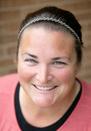



Wolfspeed, headed by President and CEO Gregg Lowe, is the global leader in silicon carbide technology. The plant will produce large silicon carbide wafers, which are used in renewable energy products like electric vehicle charging systems and converters. Gov. Cooper called Wolfspeed’s investment in the state “another step in our drive toward a clean energy economy.”
LEFT A rendering of Wolfspeed’s manufacturing facility in Siler City.
The initial phase of construction at the Chatham-Siler City Advanced Manufacturing Site is anticipated to be complete by 2024. Gregg says the Chatham-based plant will be 10 times larger than the company’s one in Marcy, New York, which is currently the largest silicon carbide semiconductor plant in the world. The Chatham plant will eventually occupy more than 1 million square feet on the 445-acre site. The new facility is the latest in a series of economic wins for the county, including automaker VinFast’s plan to bring its first North American plant to Triangle Innovation Point CM
KNOWLEDGE YOU CAN TRUST
WINTER 2022-2023 CHATHAM MAGAZINE 115
Lori Golden
Ashlie Campbell
Cooper Broome Corrie Durham
Kim Parke
Danielle Boggess Gwynneth R. Harrington
Chase GoldenRodney Durham
MEET OUR TEAM
Mandy Withers
Brigitte Condoret
Virginia Ivey Ferguson
Lorrie Marro Camille Dunn DuBois
Jessica Bryan
697 HILLSBORO ST, STE. 103, PITTSBORO, NC 27312 | 919.533.6300
RESIDENTIAL ∙ COMMERCIAL ∙ FINE HOMES & ESTATES
at Woodlake Meadows
Creek 919-545-1139
New
919-542-2467
Chatham County Agricultural & Conference Center
919-542-8201
Pittsboro 919-542-2121
Cellars Siler City 919-663-2599
Forest Hall at Chatham Mills Pittsboro 919-533-0145
mills.com
Governors Club Chapel
919-933-7500
Landhuis Pittsboro 919-244-4049
Oakland Farm Bear Creek 919-352-8247
VENUE
front
Terrace,
covered front porch,
between the vines
farmhouse
lake, terrace
the
huge pecan tree, grove arbor, waterside terrace,
919-397-1377
116 CHATHAM MAGAZINE WINTER 2022-2023 WEDDINGS GUEST ROOM ACCOMODATIONS SEATING CAPACITY COCKTAILSTYLE RECEPTION CAPACITY CHOICE OF CATERER CATERING PROVIDED OUTSIDE AREA The Barn
Bear
woodlakemeadows.com Yes 200 200 Yes Yes Gazebo The Bradford
Hill
thebradfordnc.com Yes 200 200-300 Yes, from an exclusive list No Terrace, gardens,
garden, side lawn and back field
Pittsboro
chathammeetings.com No 680 380 Yes No Lawn Fearrington Village
fearrington.com Yes 250 250 No Yes
gardens FireClay
fireclaycellars.com No 60 40 Yes No Deck,
lawn
foresthallatchatham
No 150 200 Yes Onsite catering is an option Lawn (games available), forest,
tables (padded chairs included)
Hill
governorsclubnc.com No 200 225 No Yes Golf course,
overlooking
lake Het
hetlandhuis.com Yes (two on-site guest houses sleep seven guests each) 126 (indoor); 180 (with tent); 500 (outdoors with tent) 200 Yes No Fields, west lawn with
poolside terrace
oaklandfarmvenue.com Yes 300 300 Yes No Pastures, outdoor pavilion Old Lystra Inn Chapel Hill
Yes 175 175 Yes No Lawn, tent AN OVERVIEW OF WHERE TO CELEBRATE YOUR BIG DAY IN CHATHAM COMPILED BY CAITLYN YAEDE WEDDING & RECEPTION
GUIDE
MENTAL
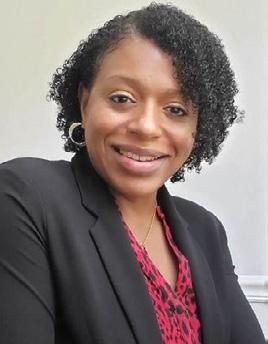



QUALITY, HOLISTIC,
HEALTH SERVICES Dr. Karen Barbee and her team of therapists provide high-quality mental health services in a welcoming environment with tailored approaches to meet you and your loved one’s needs. We provide services that extend beyond mental health, guiding an individual to holistic wellness based on the seven dimensions of wellness (social, emotional, spiritual, environmental, occupational, intellectual, and physical wellbeing). WE PROVIDE: • Individual & Group Therapy • Couples & Family Therapy • Child/Adolescent Therapy • School-Based Therapy • Pre-Marital Counseling • Intensive Home Services PITTSBORO • SILER CITY • CHAPEL HILL KAREN BARBEE, EDD, LCMHCS, LCAS, NCC 919-704-8449 • RWELLNESSSERVICES.COM
Manns
Rivers & Bridges Estate Silk Hope 919-260-2964

Shady Wagon
New Hill 919-542-7172
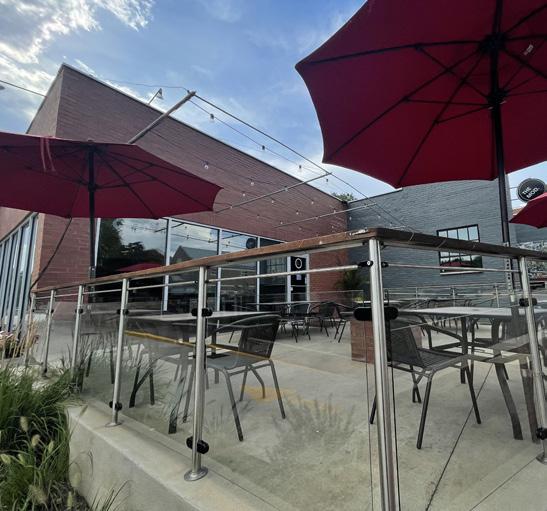
Seven Oaks at Nortam Acres Siler City 919-663-3858
Rosemary
Pittsboro rosemary-bb.com
Plant Pittsboro 919-444-9300 theplantnc.com
118 CHATHAM MAGAZINE WINTER 2022-2023 WEDDINGS 919 533 6883 . THEMODERNLIFEDELI.COM . THEMODERNLIFEPBORO . THEMODLIFE 46 SANFORD ROAD, PITTSBORO, NC SALADS . WOOD-FIRED PIZZA . BURGERS . SANDWICHES . 41 BEERS ON TAP . OUTDOOR PATIO . LIVE MUSIC THE MOD. 202 2 THE OTHER SIDE. GUEST ROOM ACCOMODATIONS SEATING CAPACITY COCKTAILSTYLE RECEPTION CAPACITY CHOICE OF CATERER CATERING PROVIDED OUTSIDE AREA The Parlour at
Chapel Chapel Hill theparlourchapel.com No 100 100 Yes No Patio courtyard, stone patio, garden area
riversandbridges.com Yes 120 120 Yes No Lawn, deck
Farm
shadywagonfarm.com Yes 200 200 Yes Yes Pond, pavillion
nortamacres.com No 50 50 Yes No Terrace, lawn, garden The
House
Yes 46 60 Yes Yes Wedding arch, giant oak tree The
No Inside 150, Outside under tent up to 309 250 On-site food vendors or approved local vendors Yes Farm, beverage district, park, brick pavers under circus lights CM

















NEW YEAR, GOALS.NEW energy,stability, and flexibility. Achieve optimal balance in your life while building 100 Clynelish Close Pittsboro, NC 27312 919.545.2133 DukeFitnessFearrington.comPlease call for our most up-to-date hours and services. Monday - Friday 6 a.m. - 7 p.m. Saturday 8 a.m. - 4 p.m. Sunday CLOSED Follow us on Facebook! Photos taken prior to Covid-19 pandemic. Additional safety measures may be in place and subject to change based on guidance from Duke Health System and Galloway Ridge. Saltwater Filtration Heated Pool / Hot Tub Pilates Reformer Training Group Exercise Classes our AMENITIES Indoor Suspended Cushioned Track Therapeutic Massage Wellness Seminars Nationally Accredited Exercise Physiologists
Hudson & McNeill
BY HAMSINI SIVAKUMAR PHOTOGRAPHY BY BRYNN GROSS PHOTOGRAPHY, BRYNNGROSSPHOTO.COM
Ashley Hudson , a Chatham Central High School graduate, met Tyler McNeill , a Harnett County native, during a chance encounter while helping out at his law enforcement training more than four years ago. She says she was smitten when Tyler found her social media and asked her out that same night, eventually leading to the pair dating.
On Jan. 3, 2021, Tyler proposed to Ashley, a big Disney fan, in front of Cinderella Castle. Ashley’s sister, Olivia Hudson , not only helped to pick out the ring but also smuggled it into the park for the surprise.
The pair married on June 4, 2022, at Oakland Farm . Ashley decorated the venue with Disney touches like 10 “hidden Mickeys” around the farm for the kids and other guests to find. Her father, Rodney Hudson , helped her create the guest list chart, and Olivia was her maid of honor. Ashley chose Blushed Bridal to do her hair and makeup, and Bee-utiful Events coordinated the day.

The wedding party also included many locals, including Stuart Hudson and Linsday Hudson , Austin Williams and Cameron Williams , Keri Ann Marsh , Josey Moody , Jacob Ziblay , ring bearer Bennett Hudson and flower girls Rhetta Maynor and Emaline Moody
To the surprise of no one, the couple spent their honeymoon at Disney World before settling down in Goldston . CM

120 CHATHAM MAGAZINE WINTER 2022-2023 WEDDINGS
W e w a n t t o a c k n o w l e d g e o u r i n c r e d i b l e c l i e n t s , p a r t n e r s , a n d s t a f f t h i s h o l i d a y s e a s o n T h a n k s t o y o u , o u r B O L D F o u n d a t i o n h a d a n o t h e r s u c c e s s f u l y e a r s p r e a d i n g h o l i d a y c h e e r t o u n d e r p r i v i l e g e d c h i l d r e n t h r o u g h o u t C h a t h a m C o u n t y . W e c o u l d n ' t h a v e d o n e i t w i t h o u t y o u .


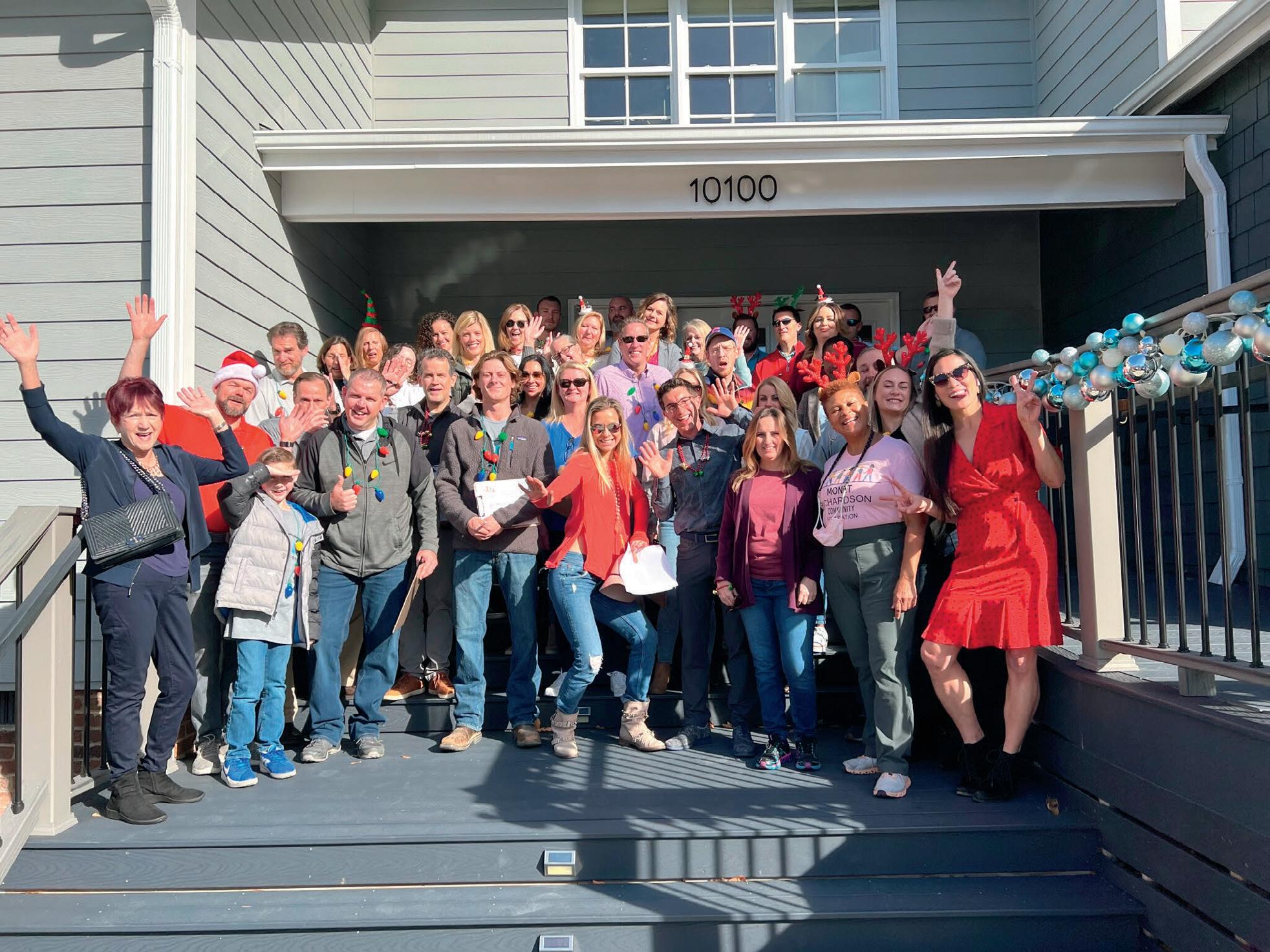
#beBOLDsupportlocal | @BOLDfoundation | beboldnc org
' T I S T H E S E A S O N To Give Back!
FOLLOW BOLD FOUNDATION TO DISCOVER HOW
YOU
CAN SPREAD HOLIDAY CHEER THIS SEASON WITH SUPPORT, VOLUNTEERISM, AND DONATIONS!
Expert Care Close to You
UNC Health Chatham and Specialty Care offers direct access to the expertise of UNC Health, right in your backyard. We are dedicated to providing personalized and compassionate care to our community with services that include women’s health and birthing, general surgery, ENT, orthopaedics, ophthalmology and 24/7 emergency care.

chathamhospital.org/expertcare