NOVEMBER/DECEMBER 2024 CHAPELHILLMAGAZINE.COM
EDITOR Jessica Stringer
EDITORIAL
EXECUTIVE MANAGING EDITOR
Amanda MacLaren
EXECUTIVE EDITOR, CHATHAM MAGAZINE
Morgan Cartier Weston
SENIOR STAFF WRITER
Anna-Rhesa Versola
MANAGING EDITOR, HEART OF NC WEDDINGS
Renee Ambroso
EDITORIAL ASSISTANT
Leah Berry
EDITORIAL INTERNS
Sophie Baglioni, Izabella Counts, Annie Ham, Emma Moon, Lola Oliverio, Lauren Rouse, Becca Savidge, Sabrina Shaw, Jordann Smith-Burgess and Emma Unger
CONTRIBUTORS
Sinclair Holian, Noah Priestaf and Katie Scherner
ART & PRODUCTION
DIRECTOR OF CREATIVE OPERATIONS Ashlin Acheson
CREATIVE DIRECTOR
Kevin Brown
GRAPHIC DESIGNER/PRODUCTION COORDINATOR
Lindsay Scott
GRAPHIC DESIGNER
Khadijah Weekes-Nolan
PHOTOGRAPHER
John Michael Simpson
ADVERTISING
For advertising inquiries, email advertising@chapelhillmagazine.com
Melissa Crane melissa.crane@trianglemediapartners.com
Sarah Davis sarah.davis@trianglemediapartners.com
Lauren Godwin lauren.phillips@trianglemediapartners.com
Lucinda Poole lucinda.poole@trianglemediapartners.com
CORPORATE FOUNDER/CHAIRMAN
Dan Shannon
PRESIDENT, TRIANGLE MEDIA PARTNERS
Ellen Shannon
PRESIDENT, TRIANGLE DIGITAL PARTNERS
Rory Kelly Gillis
VICE PRESIDENT & PUBLISHER
Chris Elkins, chris.elkins@trianglemediapartners.com
VICE PRESIDENT, FINANCE & ADMINISTRATION
Amy Bell
ACCOUNTING ASSISTANT & ADMINISTRATION MANAGER
Cassady Orsini
PUBLISHER, HEART OF NC WEDDINGS
Jenna Parks
CHIEF OPERATIONS OFFICER, TRIANGLE DIGITAL PARTNERS
Sally Scruggs
DIGITAL OPERATIONS MANAGER
Brian McIndoo
DIGITAL CAMPAIGN MANAGER
Jack Fry
DIGITAL CONTENT DIRECTOR
Morgan Cartier Weston
DIGITAL CONTENT SPECIALIST
Renee Ambroso
DISTRIBUTION
Matt Bair



It was hard to believe Carrboro Town Council member Randee Haven-O’Donnell and I had only met the night before as we hurried from the cheese counter at Zingerman’s Deli. We became fast friends during The Chamber for a Greater Chapel Hill-Carrboro’s Inter-City Visit to Ann Arbor, Michigan, bonding over our mutual adoration for The Grateful Dead (she saw them live at Woodstock!). We zigzagged our way through downtown to our next destination, the University of Michigan campus, reflecting on the personal connections and insights we’d gained thus far.
The city’s identity was not just a reflection of its past, but also a testament to the potential for growth and change. Two new hotels were going up downtown along avenues lined with shops and bustling cafes, creating a dynamic atmosphere. On Sunday evening, families walked through the blocked-off streets as part of the Main Street Alliance program, while others partook in the social district. It was made clear by city and downtown officials that when topics like affordable housing, the arts and public-private partnerships are a priority, everyone wins. I know our civic and business leaders feel the same way and came back to Chapel Hill feeling inspired. Read some of their takeaways from the trip on page 32. I personally returned with a renewed appreciation for our area and our elected officials, like Randee.
That sense of dedication to community is something I’m reminded of as we reflect on the legacy of our founder, Dan Shannon. The week this issue went to press, we lost our fearless leader. (Read more about his esteemed career in media and how he started Triangle Media Partners on page 14.) He leaves a significant void, but his influence endures. Dan’s relentless pursuit of perfection pushed us all to improve – he never met a headline or caption or layout that he couldn’t make better. He’d regularly remind us of why we were working so hard: We had a great responsibility to our neighbors whose stories we feature on our pages. His eyes sparkled when he told a joke or mentioned a very specific movie reference, especially if we understood it. I’ll always have him on my shoulder as I edit, urging me to “write shorter!” We will miss him dearly. CHM
jessica.stringer@chapelhillmagazine.com
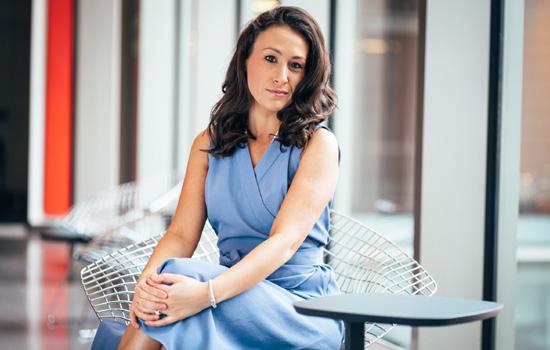
THE COVER
Photo by John Michael Simpson


Compiled by Lola Oliverio
EVENTS ARE SUBJECT TO CHANGE; CHECK WITH ORGANIZERS PRIOR TO ATTENDING

Fool’s Faire
Nov. 9, noon-7 p.m. steelstringbrewery.com
Steel String Brewery, Beer Study and Honeygirl Meadery host an all-ages Renaissance festival on the grounds of Pluck Farm. Build your own foam weapons – and fight a knight –with the Knightly Order of the Fiat Lux, plus enjoy live music, medieval food, craft brews, an artisan market and more! This grand affair will transport you back in time with the flip of a jester’s hat.
‘The Christmas Case of Hezekiah Jones’
Nov. 26-Dec. 15 playmakersrep.org
Join PlayMakers Repertory Company to embark on a journey with Dizzle Jollyworth, an aimless elf on Santa’s front lines, who gets dispatched to North Carolina and must work to reignite the spirit of Christmas for a grieving toymaker. The play – written by local playwrights Howard L. Craft and Mike Wiley – will take the audience on a Christmas adventure.
Dec. 7, 5-9 p.m.
ocrcc.org
Bid on various live auction items during Orange County Rape Crisis Center’s gala held at The Blue Zone at Kenan Stadium. This year’s reimagined event features heavy hors d’oeuvres from Rocky Top Catering, an open bar, music and short program with storytelling.
Dec. 7, 8 p.m.
carolinaperformingarts.org
Join Carolina Performing Arts at Memorial Hall for a night of music with award-winning jazz musician and singer Cécile McLorin Salvant. Taking inspiration from genres such as jazz, baroque, theater and folk, Cécile performs a curated mix of her hits, musical theater classics and new songs.
‘American Railroad’
carolinaperformingarts.org
Grammy awardwinning Silkroad Ensemble performs its newest initiative at Memorial Hall under the direction of Rhiannon Giddens, Carolina Performing Arts’ artist-in-residence. The group’s fifth CPA performance will highlight the impact of immigrant laborers who built the Transcontinental Railroad, as well as the indigenous communities displaced by the project.
NOV. 20 7:30 P.M.
‘Dürer to Matisse: 400 Years of European Prints’ Through Jan. 5 ackland.org
Don’t miss the last two months of the Ackland Art Museum’s exhibit featuring nearly 100 prints by some of the most recognized artists from the late 15th century to the mid-20th century, starting and ending with Albrecht Dürer and Henri Matisse, two titans of printmaking. There’s a series of events surrounding the exhibit such as a Nov. 20 free public talk by Andrew Raftery, a professor of printmaking at Rhode Island School of Design. CHM


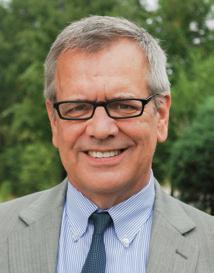
Daniel Joseph Shannon
Nov. 23, 1952 – Sept. 25, 2024
It is with a profound sense of loss that we announce the passing of our founder, Dan Shannon, retired leader of Triangle Media Partners and Triangle Digital Partners. Dan was a visionary leader whose passion for local storytelling shaped the vibrant communities of Orange, Durham and Chatham counties. Through his dedication, Chapel Hill Magazine, Durham Magazine, Chatham Magazine, The Triangle Weekender magazine and Heart of NC Weddings magazine thrived, becoming trusted sources for celebrating local businesses, events and people. He will be missed by the many people that he touched in all aspects of his life.
Dan passed away peacefully on Sept. 25, with family by his side. He leaves behind his grieving but grateful family: Ellen Shannon, his wife and partner in life and business; his children, Emma, Rebecca, Drew and their spouses (fondly referred to as the “trifecta” by Dan): Jason, Christoph and Kelty, respectively; his mother, Joan; his siblings, Cathy, Mike, Patty, Bill and their spouses; his many nieces and nephews; and his first granddaughter, Shannon, who is named in his honor. He was eagerly awaiting the imminent arrival of his second granddaughter, Sloane, who was born Oct. 1.
But mostly he entertained everyone with his quick wit, infectious humor and the ability to bring laughter to any room he entered. His only known fear in life was not being able to make you laugh.
It was love at first sight when they visited Chapel Hill in 2002, and they moved here shortly thereafter. Dan and Ellen began to build Triangle Media Partners in 2006, starting with Chapel Hill Magazine. His spark of an idea has grown into a multimedia business that includes many other print and digital properties. Dan was incredibly proud to be part of our thriving Triangle community, culture and momentum for more than two decades.
Born in South Bend, Indiana, Dan moved to New York in 1975 to make his name in publishing at The Knickerbocker News. He continued on to other esteemed publications, such as The New York Times Magazine, Money Magazine and People magazine. Creativity, keen media instincts, love of people and a talent for idea generation were the hallmarks of his work.
He eventually made it to Connecticut, and in 1984, Emma was born. Dan and Ellen settled in Westport to grow their family with Rebecca and Drew. Some of Dan’s fondest memories were of the annual Dad & Daughter dances there, and he and Ellen loved raising their kids among the warm community in town, especially the one they found at Saugatuck Congregational Church.
Laughter was one of Dan’s greatest strengths; his full-bodied guffaw rocked rooms; and his soft chuckle made your heart swell. Dan’s terrific sense of humor led him to enjoy writing freelance jokes for Jay Leno.
Dan was a fabulous friend, colleague and family member, and this was evident throughout his illness. Mail arrived for Dan almost every day from loved ones and former coworkers across the country. If Ellen had kept a guest book for him over the past few years, there would be volumes filled with entries and would include a countless number of passport stamps from Rebecca’s trips through RDU.
But Dan could never have lived as long as we would want, and he told his wonderful, miraculous and kind Duke medical team repeatedly that he wanted quality over quantity. Somehow, we were all fortunate enough to get a lot of both.
Many people share in our gratitude to have been in Dan’s orbit for some part of his 71 years on this pale blue dot. (Please look up Carl Sagan’s 1994 speech, “Pale Blue Dot;” Dan really loved that passage.) Dan’s impact extended beyond the pages of his publications – his passion, generosity and commitment to fostering connection will be deeply missed by all who knew him. His legacy lives on in the magazines he championed and the communities he helped grow.
A celebration of Dan’s life will be held at a later date. A private interment will take place at Saugatuck Congregational Church’s Evergreen Cemetery in Westport, Connecticut.
In lieu of flowers, Dan and his family ask you to please consider making a gift in his memory to either Book Harvest or The Preston Robert Tisch Brain Tumor Center at Duke.
Book Harvest works to ensure every child grows up with an abundant home library and has the opportunity to build a lifelong love of reading. You can donate at bookharvest.org/donate
The Tisch Brain Tumor Center at Duke provides hope and empowerment to brain tumor patients as well as unparalleled care, research and education. Memorial contributions may be made at tischbraintumorcenter.duke.edu/donate. CHM
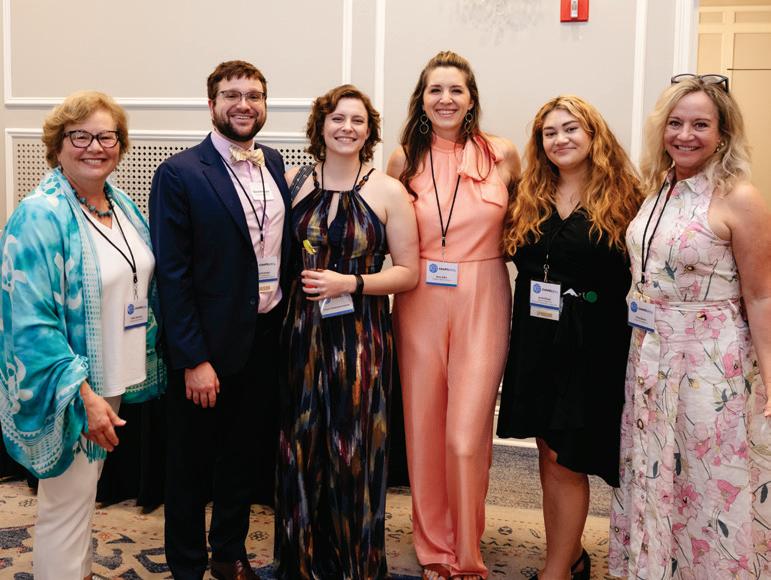
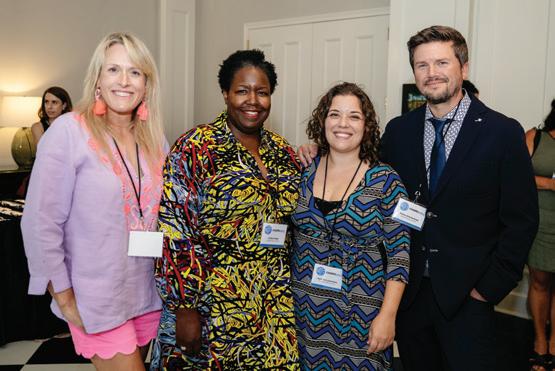
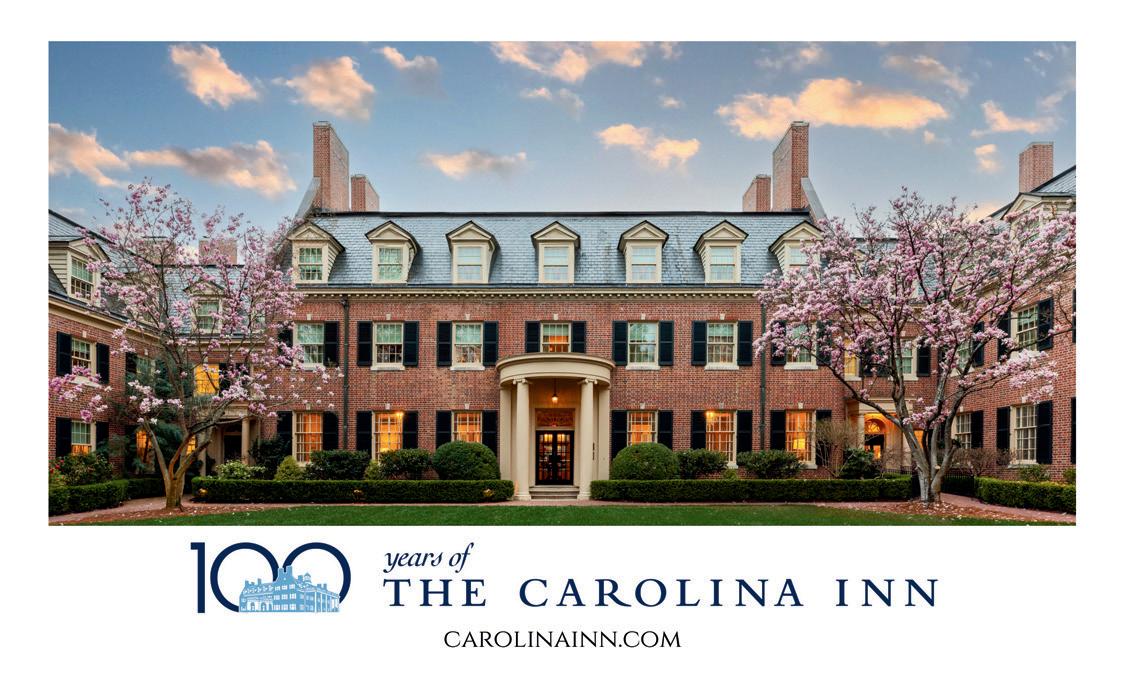
Winners of Chapel Hill Magazine’s annual Best of Chapel Hill poll gathered for a party held in their honor on July 26 in the Hill Ballroom at The Carolina Inn. Attendees enjoyed a celebration featuring drinks, food, a photo booth and carrot cake by Tonya Council of Tonya’s Cookies & Bake Shop
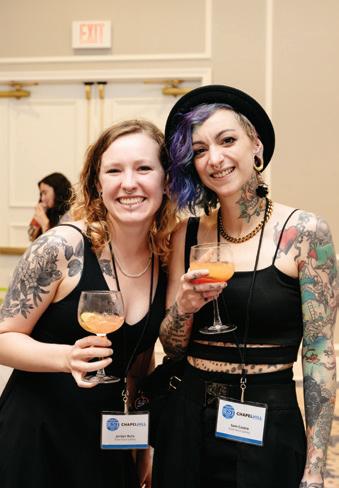
2 Jordyn Bury and Sam Castro.
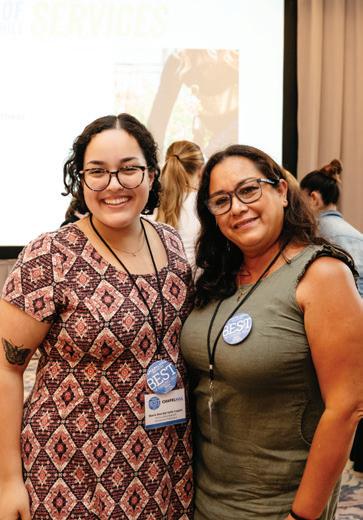
3 Marie Ann Del Valle-Coppin and Ingrid Prado.
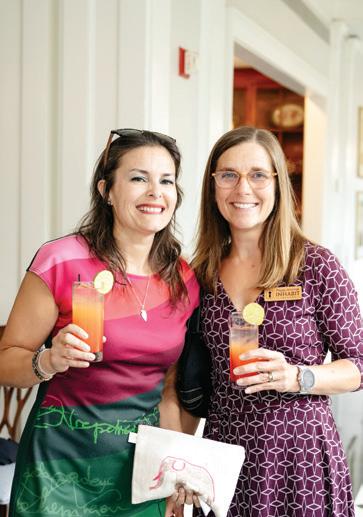
4 Shenandoah Nieuwsma and Peggy Jennings.
5 Rossarin Samritthibunkula and Authapol Wansa.
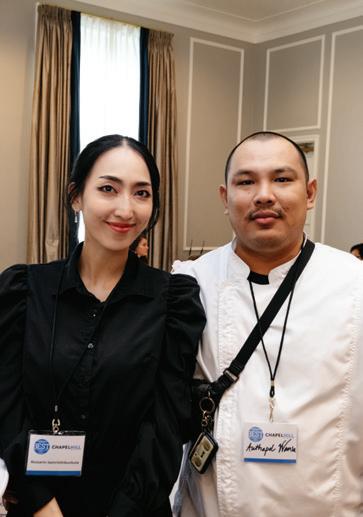
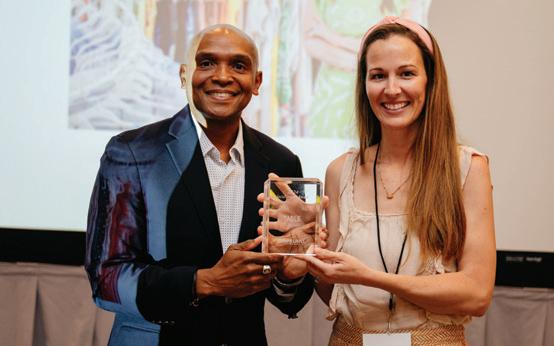
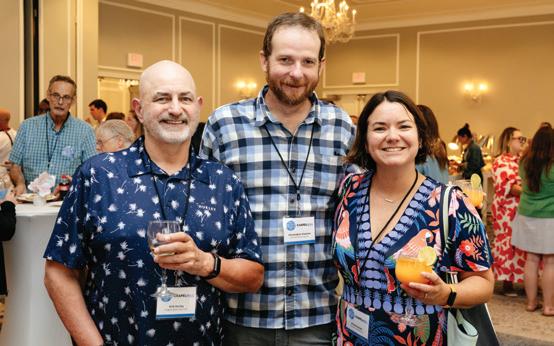
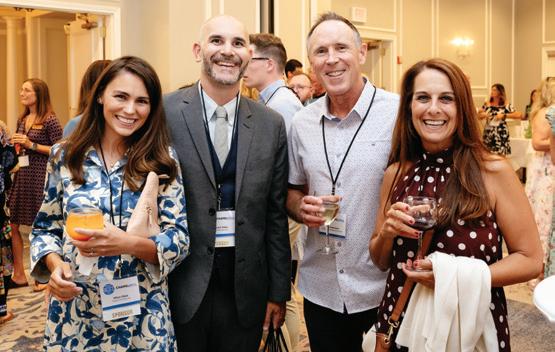
Our sponsors, The Carolina Inn, the Town of Chapel Hill Economic Development, Chapel Hill Eyecare, Coastal Credit Union and Durham Coca-Cola Bottling Company made the celebration possible through their support of local businesses. Chapel Hill Magazine’s second Social Impact Award was presented to Table Photography by John Michael Simpson CHM
8
9 Bipin Shah and Meena Agarwal.
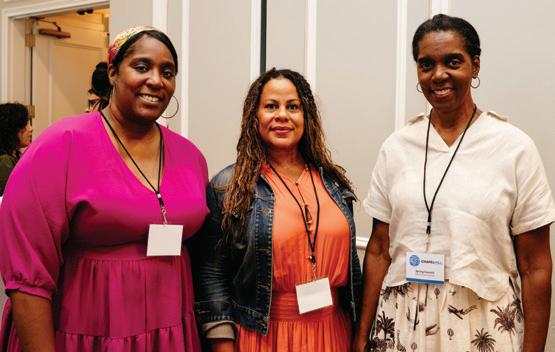
10 Tonya Council, Erika Perry and Spring Council.
11 Afton Sikes, Scott Sikes, Chris Workman and Michele Workman.

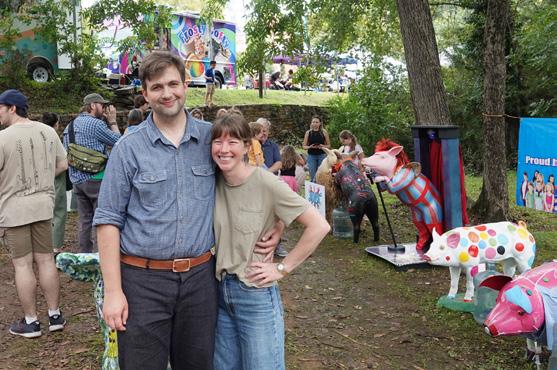
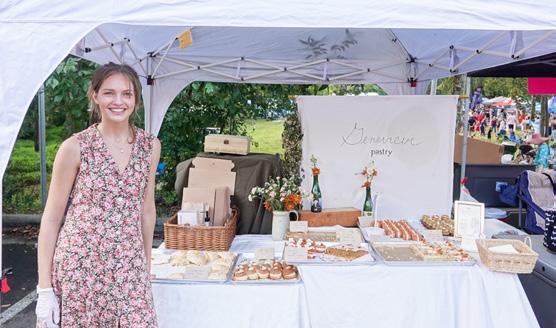
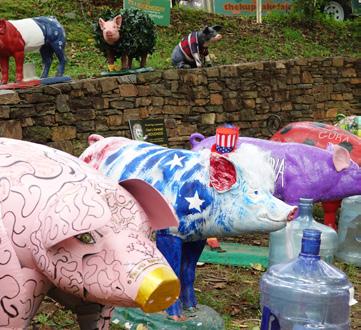
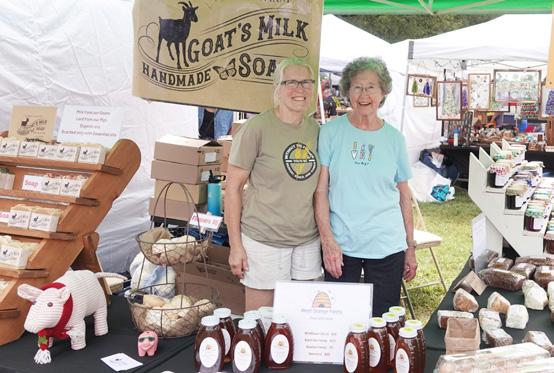
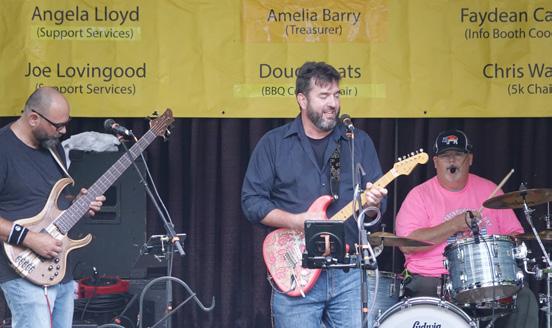
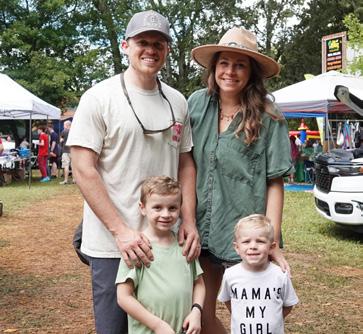
Residents and visitors alike headed to River Park for Hillsborough Hog Day on Sept. 13 and 14. The festival has been a community tradition for more than 40 years. Veteran cooking teams competed in the barbecue contest, guests shopped arts and craft vendors, kids had a blast bouncing on inflatables and more. Festivalgoers perused a number of food trucks and drink vendors and grooved to a rotating lineup of music, including Hillsborough rock ‘n’ roll and blues cover band More Cowbell. Attendees voted on their favorite decorated life-size pig statue in the “Pigs on Parade” and showed off their prized cars, trucks, motorcycles and tractors in the Hog Day Brakes & Shakes Car Show. All proceeds from the festival will go toward supporting children’s projects, schools and nonprofits in the county. Words and photography by Leah Berry CHM
1 Heath McFarland and Grace McMullen.
2 Robbie Coleman of Coleman Girls’ Farm and Shelby McKenzie of Relish the Moment.
3 Aliesha Vinar of Genevieve Pastry.
4 Rick Partridge, Ryan Foster and Doug Moats of More Cowbell perform on the Hog Day stage Saturday morning.
5 Attendees voted on their favorite decorated pig from the “Pigs on Parade” art project.
6 Tyler Miller and Corie Miller with Copeland Miller, 5, and Camden Miller, 2.
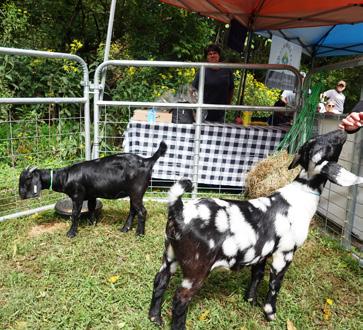
7 Goats from Old Sawmill Farm.
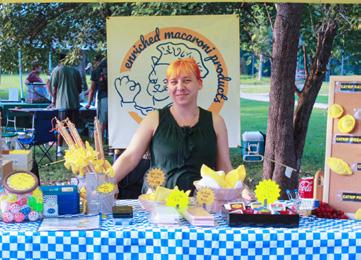
2 Amanda Woade of Enriched Macaroni Products.
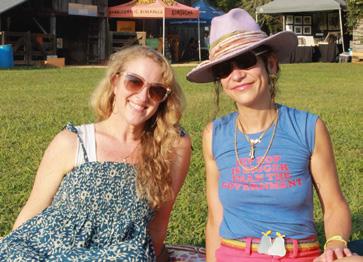
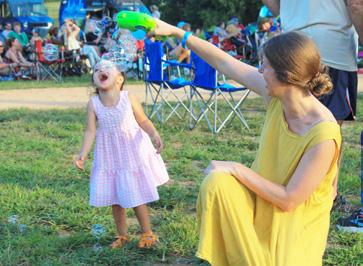
3 Ellis Ishard, 4, and Megan Patnaik.
4 Kate O’Boyle and Carlene Killing.
5 Karthik Shyam and Elena Shyam, 11.
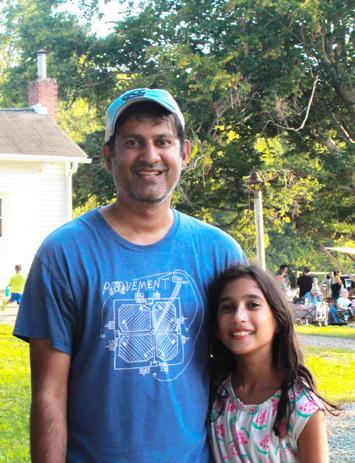
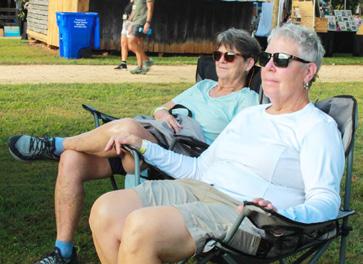
Community members gathered at Blackwood Farm Park for the inaugural Sonark Harvest Festival on Aug. 31. Attendees celebrated the transition from summer to fall with live music presented by Robust Records and Sonark Media, food trucks and art from diverse vendors. The performance lineup featured musicians like alternative singer-songwriter Lennon KC, Hillsborough country artist Max Lane, hard country music band Country Cruel, Raleighbased artist Christina Munsey and more. Words and photography by Sabrina Shaw CHM 1 Rebecca Drake-Pelli and Catlin Hettel.






INVENTORY CLEAR-OUT OFFERS & MODEL YEAR END SALE



IS TO BE THE PREMIER QUALITY VEHICLE RETAILER IN THE WORLD, PROVIDING THE BEST OPPORTUNITIES FOR OUR TEAM MEMBERS, CUSTOMERS, COMMUNITIES, AND THE MANUFACTURERS WE REPRESENT.


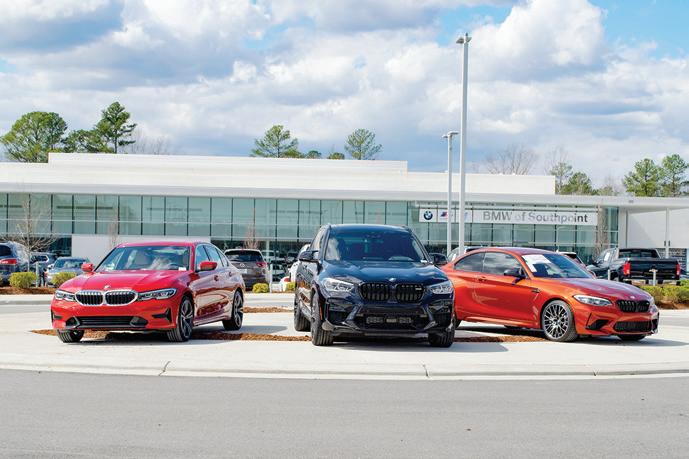
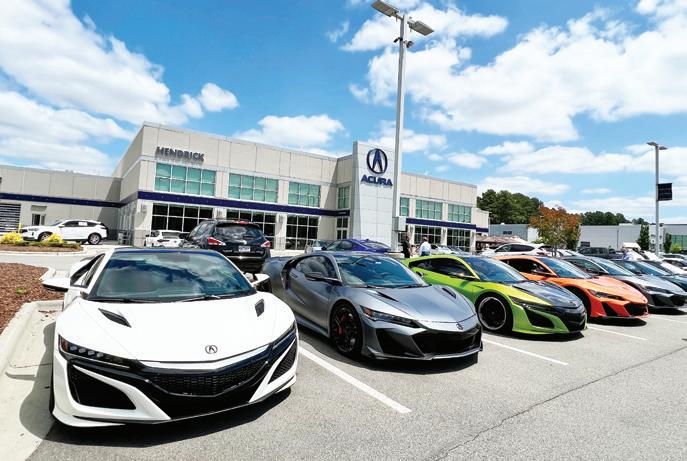
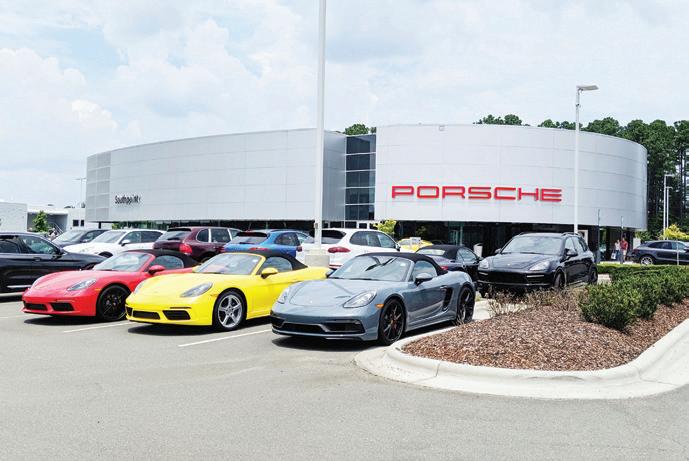
TO CHOOSE FROM ON THE LOT, FIND THE PERFECT ALL-ELECTRIC RIDE OR A GAS VEHICLE THAT SUITS YOUR STYLE AND NEEDS, ONLY AT HENDRICK SOUTHPOINT AUTO MALL. (ACURA, BMW, SUBARU & PORSCHE STORES)



CONTINUES TO LEAD THE WAY FOR ONLINE REPUTATION. FOR A FIFTH CONSECUTIVE YEAR, OUR COMPANY IS THE NO. 1 RATED (PUBLIC OR PRIVATE) DEALERSHIP FOR ONLINE REPUTATION IN THE COUNTRY.


WITH OUR DEDICATED SERVICE DEPARTMENT, COMMITTED TO ENSURING YOUR VEHICLE RECEIVES TOP-NOTCH CARE AND ATTENTION, KEEPING YOU ON THE ROAD WITH PEACE OF MIND.


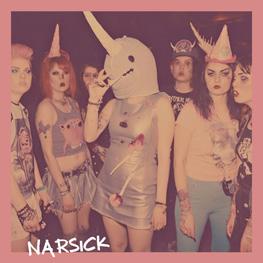
Chapel Hill indie punk band Narsick released its self-titled album on Aug. 16. Musicians
Ash Graña, Shane Peterson, Sarah Landis and Kyle Parker explore themes of letting go and airing out grievances throughout the record.
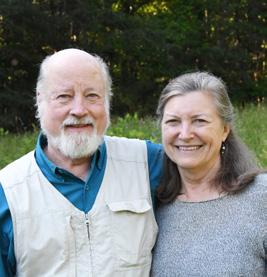
Bland Simpson released his new book, “Clover Garden: A Carolinian’s Piedmont Memoir,” on Sept. 24. Bland is a Kenan Distinguished Professor of English and Creative Writing at UNC and a celebrated writer with accolades including induction into the North Carolina Literary Hall of Fame. His book explores the Piedmont region with a naturalistic and poetic lens, encouraging readers to think deeply about
Compiled by Emma Unger
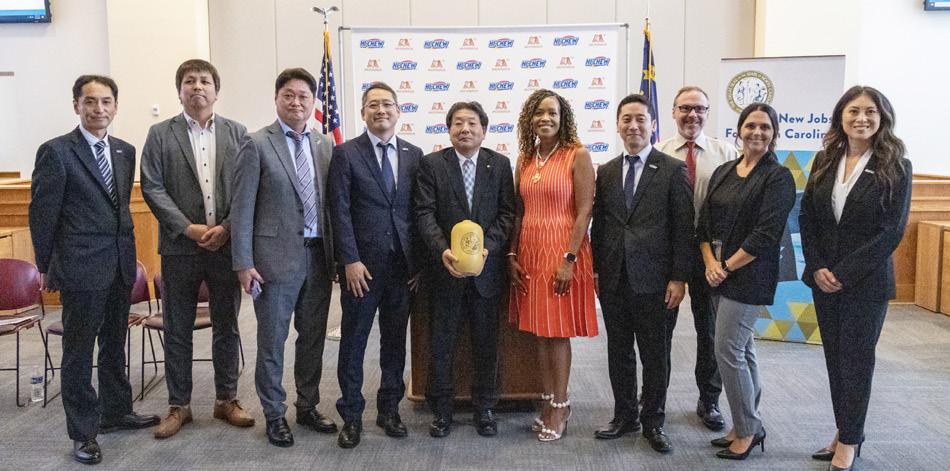
Morinaga America Inc., the producer of Hi-Chew candy, announced an expansion in Orange County that will create 204 new, full-time jobs between 2026 and 2030. The $136 million project will create an additional 100,000 square feet of production space along Wilson Road in Mebane and double the current manufacturing capacity for the candy. The announcement comes 11 years after Morinaga’s initial move to Orange County. “Orange County is excited for this additional investment by Morinaga,” says Jamezetta Bedford, chair of the Orange County Board of County Commissioners. “We value their initiative and look forward to many more decades of partnership.”
the history of the area, and is accompanied by photographs from his wife, Ann Cary Simpson. “Clover Garden” marks the fifth book that Ann and Bland have worked on together.
Bill Maier released a new edition of his puzzle book series, “Celebrity Word Scramble,” in September. “Famous Names in Carolina

Basketball,” features the names of 169 UNC players and coaches, plus more than 25 pages of basketball memories. Puzzles are crafted by Bill and designed by his brother Martin Maier.
Peter Fox, the founding executive producer of ESPN, published his first book this summer.
“The Early Days of ESPN” tells the story of
how the popular sports network came to be and the struggles and glories of its first days.
Andrew Marlin released his new album, “Phthalo Blue,” on July 19. The folk bluegrass record features a number of artists like Stephanie Coleman on the fiddle and Clint Mullican on bass, plus Andrew on the mandolin.
Ackland Art Museum became the first North Carolina art museum to offer EnChroma glasses for guests with color blindness in August. “We are

RentCafe named Chapel Hill the best North Carolina town or city for renters and No. 8 nationally, when observing cost of living and housing, local economy and quality of life. The town’s high rankings are due in part to its low occupancy rate, modern apartments in prime locations, highly educated residents and top-rated schools.

actively expanding the resources we offer to enhance the experience of our visitors, both online and in person,” says Carolyn Allmendinger, interim director and director of education and interpretation. “The Ackland Art Museum is committed to accessibility for all.” During a launch event on Aug. 21, six people tried the glasses, including Sherrill Roland (pictured above), who saw his artwork in color for the first time.
UNC Professor Emeritus of Information and Library Science Paul Jones released his third book, a collection of poems titled “Something Necessary,” in July. Paul worked
on it for three years, and his poems span topics from marriage to poverty, coupled with emotional perspectives on everyday life. He’ll host a reading and book signing Dec. 10, as part of the Weave and Spin series at Eno Arts Mill Gallery

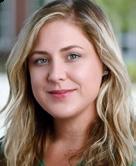
Metro Chamber of Commerce where she was responsible for managing 400-plus major investors. Torree Theodore joined the chamber in July and will serve for a year as a community impact specialist. Torree is a current master’s candidate at the UNC School of Social Work with a focus on community, policy practice and management.
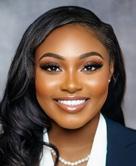
The Chamber for a Greater Chapel HillCarrboro welcomed two new staff members in July. Cassie Nelson joined as its vice president for membership and business success after eight years with the Charleston
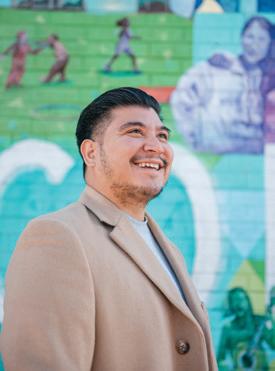
a seasoned grassroots organizer and political strategist guiding us during such a critical time for our community,” says Milan Pham, chair of the organization’s board of directors.
Carrboro Town Council Member Eliazar Posada was named the permanent executive director of Equality North Carolina, the oldest statewide organization in the country dedicated to securing rights and protections for the LGBTQ+ community, on Aug. 1. He had been serving as interim director since January. “North Carolina is fortunate to have
SHARE YOUR NEWS! Submit noteworthy items, from award and scholarship winners to new book and album releases.
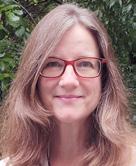
Valoree Hanson (pictured) succeeded Frances Henderson as executive director of the Dispute Settlement Center in Carrboro, effective Sept. 1. Frances retired after 33 years of leading the organization, while Valoree previously served as the DSC’s restorative practices director. The center works to provide mediation and restoration for individuals and organizations in the community. “Val’s deep understanding of restorative practices and her dedication to fostering peaceful

resolutions are invaluable assets to our organization,” says Matt Epstein, president of the center’s board of directors.
Meals on Wheels Orange County, NC welcomed Megan Mack and Michelle Morehouse to its staff this year. Megan joined the team in April as the operations associate in the Hillsborough office, after previously working for the Department of Social Services serving both Durham and Orange counties in adult Medicaid and food and nutrition services. Michelle started a new position at MOWOCNC as the client services coordinator, and she is dedicated to expanding the organization’s ability to deliver services and support to clients.
and people of color in Orange County, received a $50,000 grant from America250 NC in July. The grant money will be used to fund “Indigenous Memories: Stories from the Past,” an online exhibit that will document the culture and lives in Orange County during slavery. “We are honored to bring these important stories to a wider audience,” says Indigenous Memories co-founder and Director of Education Beverly Scarlett.
Freedom House Recovery Center celebrated five decades of serving community members in their path to recovery with a grand finale event on Oct. 3.
Mike Storey, director of training at Chapel Hill Tire, achieved the World Class Automotive Service Excellence Certification in July. The recognition indicates mastery of knowledge and skills and is one of the highest honors in the automotive service industry. At Chapel Hill Tire, Mike is in charge of onboarding new employees and holds classes for existing employees as they pursue certifications. The Chapel Hill Tire team have earned more than 85 certifications during 2024 as of July.
Indigenous Memories, a nonprofit that works to preserve the legacy of indigenous people
Aayaz Husain was selected as one of the four Bank of America Triangle Student Leaders for 2024 in July. The program connects outstanding students in the Triangle with an eight-week paid internship over the summer to increase future employment opportunities and skills development. Aayaz attends Durham Academy, where he is involved in many organizations, including the Student Ambassador Leadership Council and the speech and debate team, which he captains.
Carrboro-based branding and advertising consultancy Engine Enterprises celebrates 15 years of service this year. The agency uses a people-focused approach
Orange County had the highest increase in visitor spending in North Carolina in 2023, based on data compiled by Visit NC under the Economic Development Partnership of North Carolina. Domestic and international visitors in the county increased spending by 13% to nearly $267 million. The county is one of eight that experienced double-digit visitor spending growth last year.
and constant innovation to help brands stand out and make a lasting impression. Engine Enterprises has worked with organizations such as UNC Kenan-Flagler Business School and Grandfather Mountain. “Over the past 15 years, we have evolved into an agency where enriching people’s lives is our guiding star,” founding partner Brant Wansley says.
Chapel Hill attorney D. Melissa Averett presented a session on tort claims in family law at the Family Law Conference in Hoi An, Vietnam, Sept. 27-29. Melissa is a specialist of family law in North Carolina and the founder of Averett Family Law.
Julia Korn’s TEDx Talk, titled “Break up With ‘Should’ in Your Career,” was named as one of the 2024 Editor’s Picks, an honor given to select TED Talks each year for being especially memorable and thoughtprovoking. The talk, given in April at TEDxApex, focused on how societal
and self-imposed expectations can limit potential in your career, along with the importance of redefining success. Julia is the founder and CEO of The Authenticity Guide, which provides career confidence coaching to leaders.
PORCH Chapel Hill-Carrboro announced the addition of a new community space opening this fall. The PORCH Community Hub on South Greensboro Street will include a gathering space to provide resources such as classes and information sessions. The hub will also serve as the distribution space for the Food for Families program, which helps feed 663 families in the area, and offer a market for families to choose their own food based on their needs and preferences.
Community Farm was one of 20 recipients of the Kubota Hometown Proud Grant from Kubota Tractor Corporation.


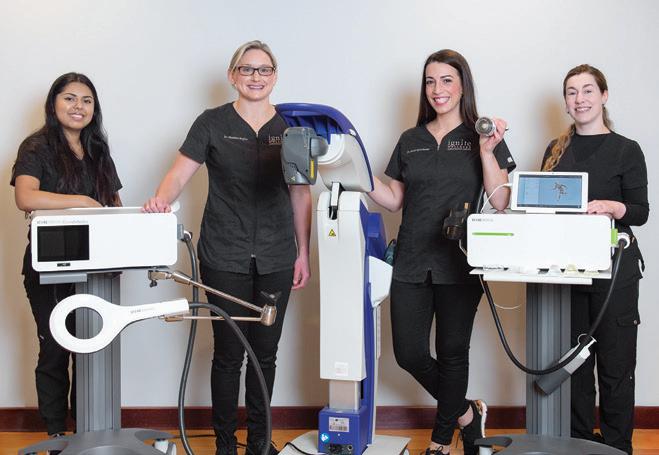
TTCF plans to use the $10,000 grant money to build a barn structure that would allow the farm to run programs year-round.
UNC graduate Kelly O’Brien McKenna opened a new office for Guilford Counseling, a Greensboro-based private practice, in Chapel Hill. Kelly provides individual therapy and group skills classes at the office, located at 1611 E. Franklin St.
Schoolkids Records announced the closure of its location at 405 W. Franklin St. Ste. C on Aug. 19. Owner Stephen Judge announced on Facebook that he will focus on refreshing the Raleigh location, which just celebrated 50 years.
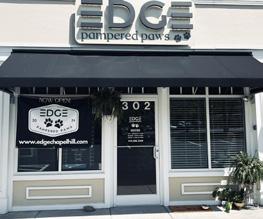
Heather Lloyd opened Edge Pampered Paws in July, offering grooming, cleaning and pampering services. The pet spa is located at 143 Chatham Downs Dr. near Heather’s other businesses, Edge Salon and Wellness and Edge Aveda Men
On Sept. 10, Beechwood Carolinas broke ground on South Creek by Beechwood, a mixed-use community across U.S. Hwy. 15-501 from Southern Village. In lieu of shovels in the ground, Chapel Hill Mayor Jess Anderson, Beechwood founder
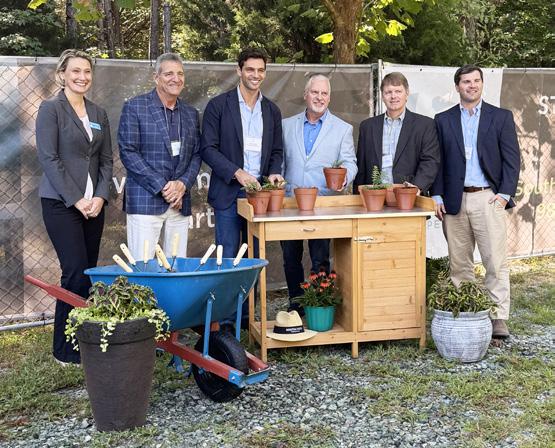
and CEO Michael Dubb, Beechwood principal and president Steven Dubb, Beechwood Carolinas regional president Bob Kardos, Legion Land & Development principal Lee Bowman and Beechwood
senior project manager Travis Thompson celebrated the moment by potting some ferns. Construction on the first phase –92 apartments and 10,000 square feet of retail space – is expected to begin in 2025. CHM

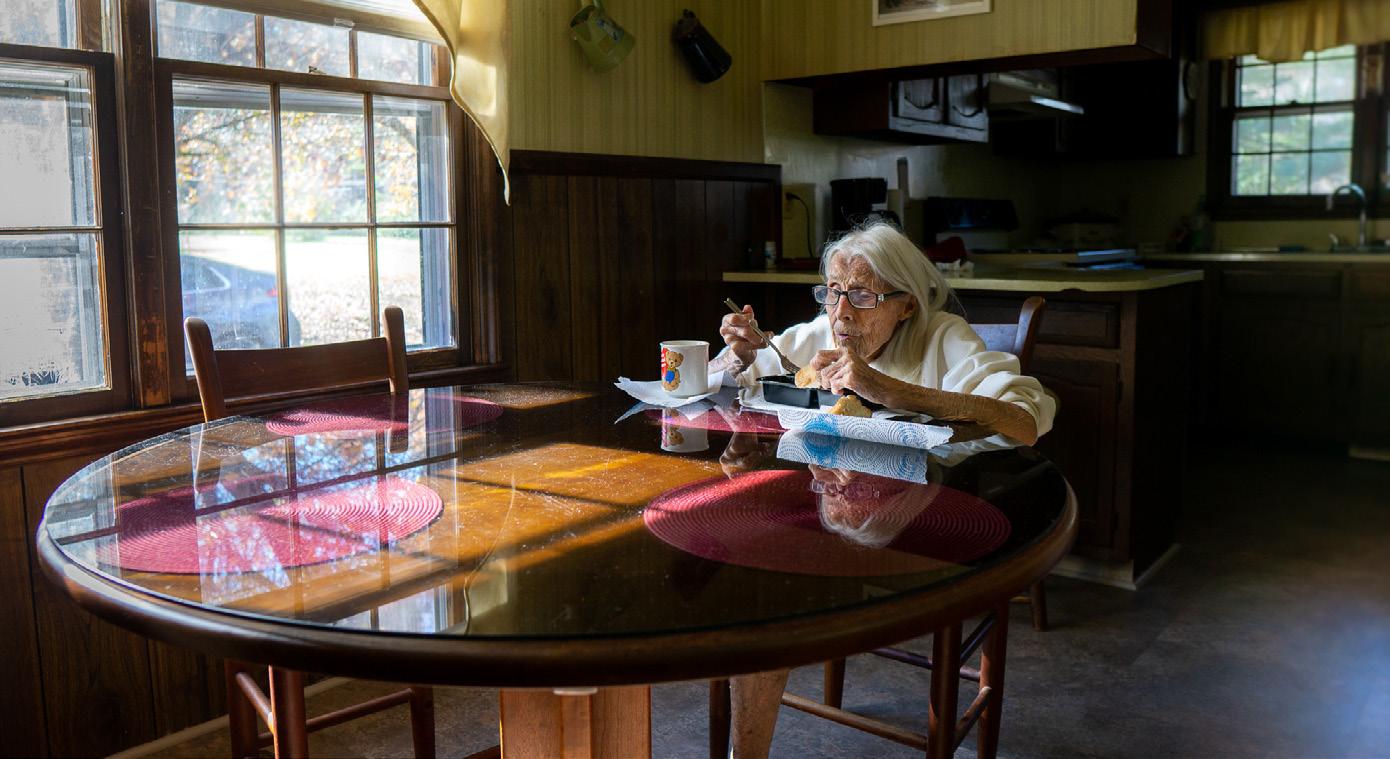
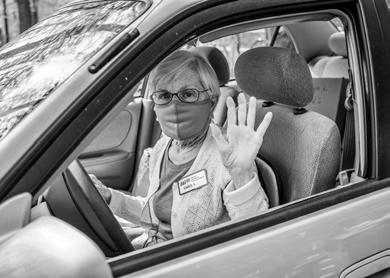
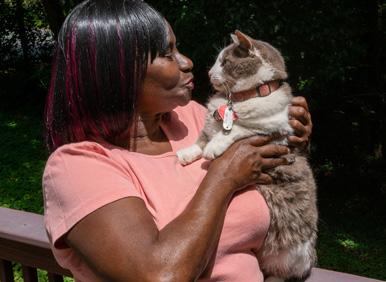
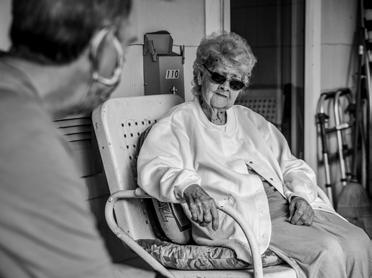
Scan to donate or visit mowocnc.org to give today! Together, we can keep serving our neighbors—one meal at a time. At Meals on Wheels Orange County, NC, your generosity directly impacts the lives of older adults in our community. With your support, we will deliver over 65,000 meals this year, bringing nourishment and connection to those who need it most. Every dollar makes a difference! MOWOCNC is locally funded through grants and individual donations. All meals delivered and services provided are subsidized and are funded by community support. Your gift ensures that our recipients, regardless of their ability to pay, will continue to receive the meals and personal connection they rely on.

from the Chamber Inter-City Visit
his fall, more than 60 members of the community traveled to Ann Arbor, Michigan, during the Inter-City Visit hosted by the Chamber for a Greater Chapel Hill-Carrboro During the three days, the group heard from Ann Arbor leaders about their challenges and triumphs. “Ann Arbor is an excellent peer community learning lab because our goals, assets and challenges are so similar,” says Ian Scott, executive director of the Partnership for a Greater Chapel Hill-Carrboro, the InterCity Visit host organization. We asked a few participants to share what they learned and what they took back to town.
As a public servant, it was rewarding to meet with city officials, university representatives and community members from Ann Arbor and Ypsilanti. Their passion for community and excitement for future development shined through as they shared with us. I had the opportunity to complete a walking tour of downtown Ann Arbor with Josh Landefeld, their park and recreation manager. As we chatted on our way to the city-managed farmers’ market, we had several laughs and aha moments. Josh and I quickly discovered that we have similar opportunities on the horizon to continue to build community through parks and recreation services. In parks and recreation, we often say we are one big family. I’m thankful to the Chamber for planning another great Inter-City Visit which provided me an opportunity to meet a member of the family. – Atuya Cornwell, director, Town of Chapel Hill Parks & Recreation Department
The opportunity to interact with and learn from our counterparts with similar town-gown relations is invaluable. Takeaways from sessions with elected officials and university leaders enhance how we look at similar issues on our campus and allow us to look at opportunities from a visitor perspective. – Rhonda Hubbard Beatty, director, UNC Visitors Center
As a business owner in Chapel Hill and a resident of Hillsborough, I was truly impressed by the dedication of our region’s government officials and employees. Their proactive efforts to benchmark our community and seek innovative solutions were commendable. This experience offered valuable insights into effective public-private partnerships and strategies for enhancing education, affordable housing and workforce development. The collaborative environment not only encouraged knowledge sharing but also facilitated meaningful connections among peers. I am excited to explore how we can implement what we learned to drive positive change in our area, especially in terms of climate action and economic development. – Elie Abou-Rjeileh, owner, Olmaz Jewelers
With sustainability and climate action being one of the top pillars for the Town of Carrboro, I was most impressed by the City of Ann Arbor’s dynamic and progressive stance on climate action goals and their fearless tenacity to expedite the implementation of these goals into action. We clearly saw that dedicated resources and strong leadership matter when prioritizing climate action initiatives across the city. There were many takeaways from the session presented by Missy Stults, their sustainability director, followed by a breakout tour to the Bryant Community Center where we saw the climate plan in action at the neighborhood scale. – Patrice Toney, town manager, Town of Carrboro
A highlight was the community engagement, where the presenters shared insights on fostering inclusivity within the community. The Ann Arbor leaders provided transparency and leadership change that was inspiring. I also enjoyed networking with all the participants and speakers. This experience deepened my understanding of effective leadership and expanded my network within the business community. – La-Tasha BestGaddy, chief strategist, Infinity Bridges
Aside from Ann Arbor prioritizing artists in their affordable housing plans, I was amazed by the dozens of arts organizations that have maintained space in their downtown for decades, completely independent of the university. We could also have a thriving off-campus arts community by combining our local arts with more planning and partnerships. – Katie Murray, director, Orange County Arts Commission
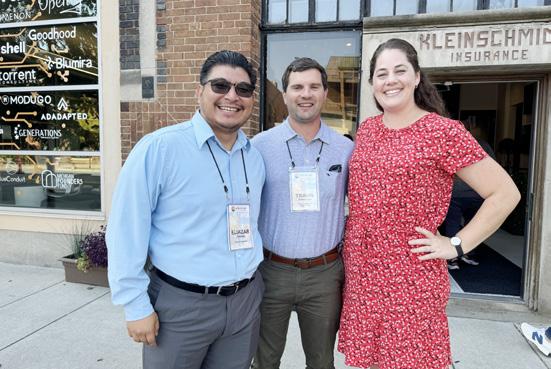
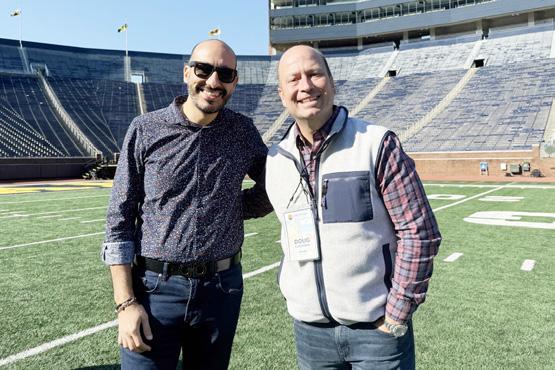
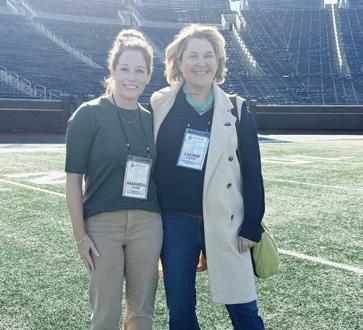
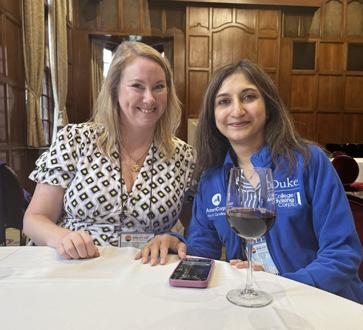
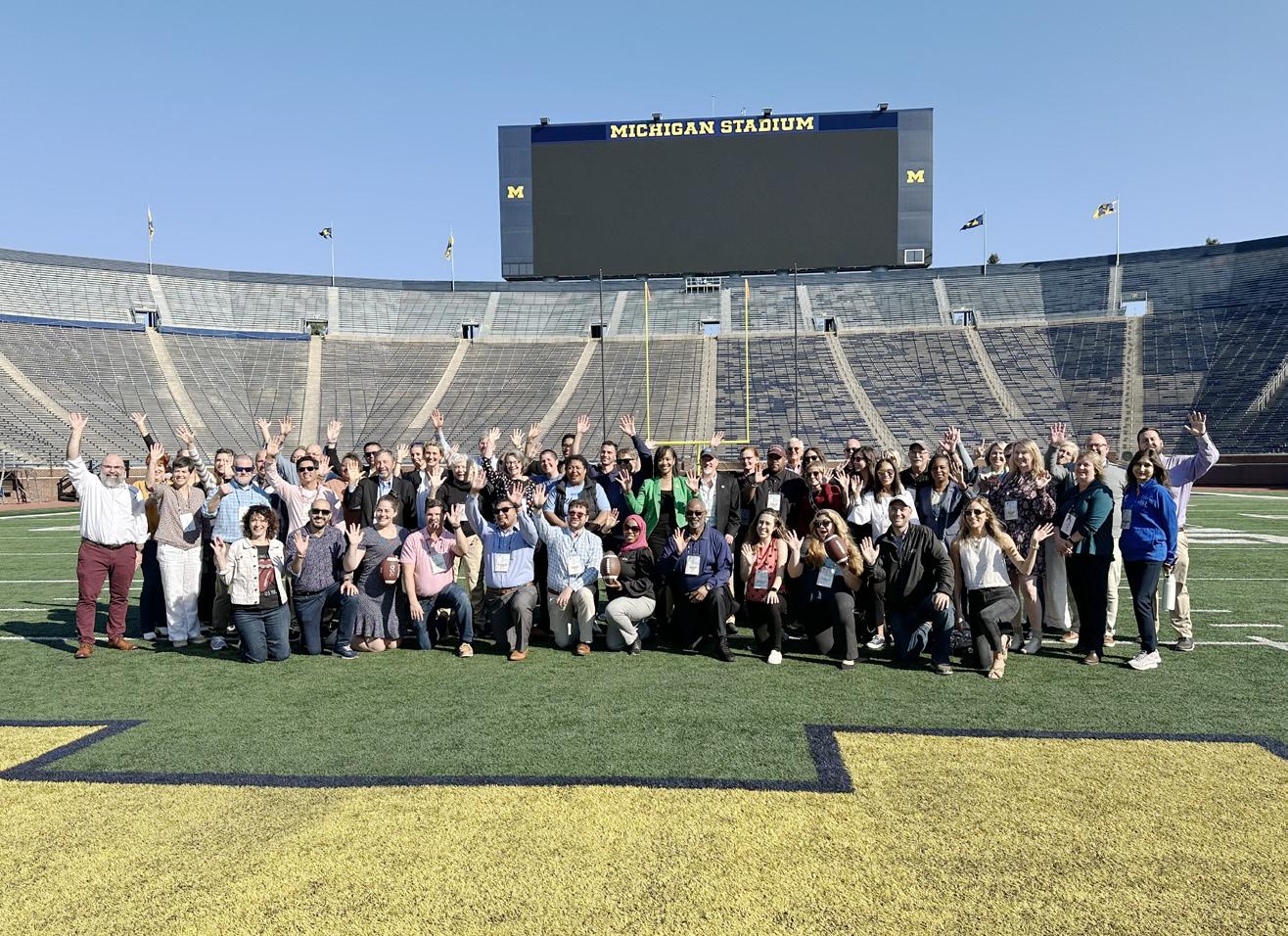
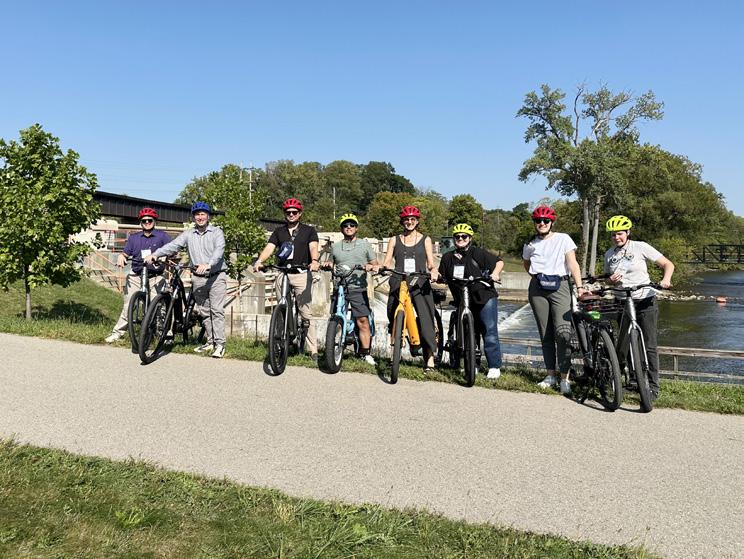
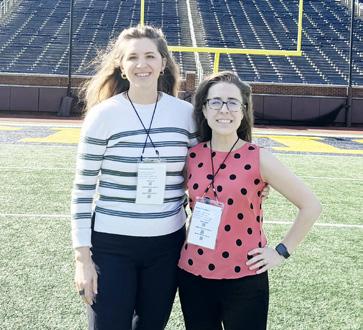
The Inter-City Visit delegation included Orange County elected officials, business owners, nonprofit directors, UNC officials and more. The trip included visits to Ann Arbor City Hall, Michigan Stadium and Mcity, the University of Michigan’s cutting-edge autonomous vehicle test facility, among other destinations. Small group deep dives included exploring the creative economy, equitable engagement, a campus walking tour and more. CHM
and Betsy Harris.
2 Elie Abou-Rjeileh and Doug Plachcinski.
3 Amanda Garner and Laurie Paolicelli.
4 Alice Jacoby and Rukmini Balu.
5 Triangle Media Partners’ Rory Gillis and Jessica Stringer.
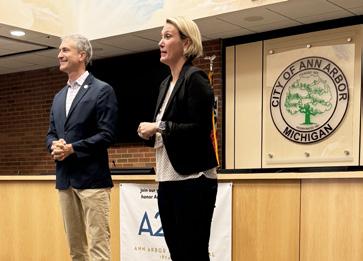
6 Ann Arbor Mayor Christopher Taylor and Chapel Hill Mayor Jess Anderson.
7 One small group session explored bike infrastructure including neighborhood connectors, buffered lanes and cycle tracks.





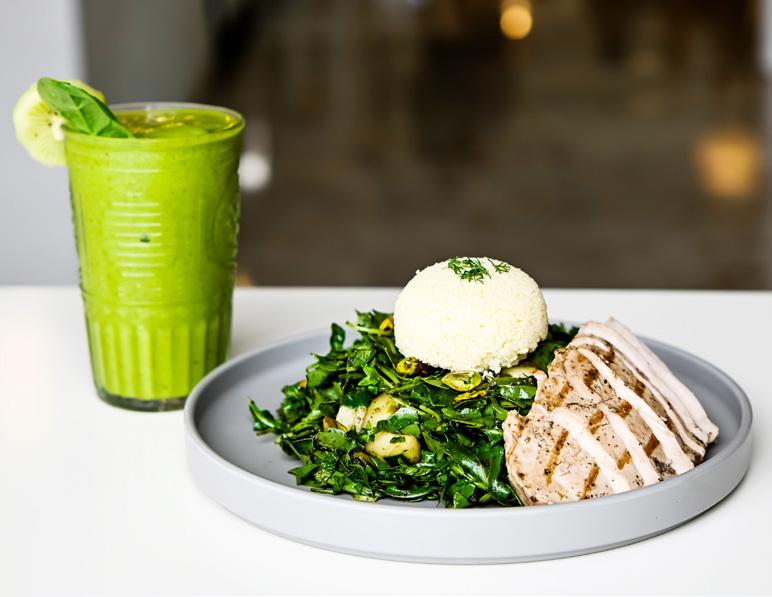
As you step inside the new The Purple Bowl, you’ll be greeted with the familiar menu board of vibrant acai bowls, rich smoothies and espresso drinks. However, the extended space – featuring large, light-filled windows, 700 extra square feet indoors and a renovated 2,000-square-foot outdoor area – invites you to explore beyond the usuals. Take a seat on the patio and dive into a new addition to the menu, such as a salad with tender arugula and crispy cucumber, tossed with dill, mint, pesto and pistachios, and crowned with a delicate layer of golden couscous. “What we decided to do when we were moving into the new space is really think about our community and who eats here,” says owner Paula Gilland. “We had many customers requesting that we bring in more lunch menu items, so it was natural to [have] salads with a protein option.” Another option, the California farm salad, can be ordered with a side of Wendell’s antibiotic-free chicken – named after Paula’s husband – to experience the taste of a marinade that’s a secret family recipe.
The Purple Bowl
505 W. Franklin St., Chapel Hill purplebowlch.com
Craft beer hub Beer Study is closing its doors and making way for Baljeet Singh and Randhir Singh of Naan Stop Indian Cuisine to open a restaurant at 504 W. Franklin St. Beer Study will move to a new location at South Green in Carrboro.
Gizmo Brew Works’ Chapel Hill location officially began the transformation into Clouds Brewing’s Clouds Storm Cellar on Aug. 17 with an expected opening date before the end of the year. The new location of the Raleigh-based brewery will continue to employ the Gizmo staff, so stop by to enjoy a pint of Precipitation Pilsner or El Hefe Hefeweizen among familiar faces.
Zayka Indian Grill & Bar opened at its new East Franklin Street location, offering customers authentic Indian cuisine and cocktails with modern twists. Try the “Meet Your Self” signature cocktail, made from gin, lime juice, green chili and a homemade pickle, and pair with a meal from chef Sanjeev Kumar.
Sejal Patel, co-owner of Nomad, competed – and won – in an episode of Food Network’s “Outchef’d,” which aired Aug. 8. Sejal flew to New York thinking he was taping an audition, only to find out he had 45 minutes to battle renowned chef Jet Tila for the favor of a panel of unsuspecting judges from the streets of New York.
Sports bar Max’s Tin Can opened Aug. 28 beneath Time-Out on East Franklin Street. The bar’s name reflects owner Michael Rosenbacher’s beloved golden retriever named Max, while “Tin Can” is the nickname given to UNC’s former Indoor Athletic Court a century ago.
East Franklin Street’s bustling Starbucks location reopened its doors in late July at 100 E. Franklin St., across the street from its former storefront and just below restaurant and brewery Top of the Hill
Former UNC basketball player Duwe Farris visited during opening week in September and has been a five-year customer. “When you think of The Purple Bowl, you know you’re going to get fresh ingredients, and you feel good eating them and you feel good after,” he says. “The salads are just like an extension of that – good quality, good taste. I think [the new location] is exciting, and it’ll be a big hit for them.” Whether you’re stopping by for a midday pick-me-up or an evening meal, you’re sure to leave feeling nourished and satisfied. – By Lauren Rouse
The Heel and Horn Craft Kitchen & Bar celebrated its opening day Sept. 25 with a $10 pizza and beer special. Fans of the restaurant’s predecessor, Piero’s Pasta & Wine, can find new favorite pasta dishes, alongside burgers, pizza, sandwiches and more at 1502 E. Franklin St – Compiled by Izabella Counts CHM




East Franklin Street
1922 Coffee cafe with grab-andgo options. 140 E. Franklin St.; carolinacoffeeshop.com
Bandido’s Mexican Cafe Burritos, salads, quesadillas, tacos. 159 ½ E. Franklin St.; 919-967-5048; bandidoscafe.com
Bonchon Korean fried chicken. 205 E. Franklin St.; 984-234-0788; bonchon.com
Carolina Coffee Shop Casual American cuisine for breakfast, lunch and dinner. 138 E. Franklin St.; 919-942-6875; carolinacoffeeshop.com
Cosmic Cantina Burritos, salads, quesadillas, tacos. Open late night. 118 E. Franklin St.; 919-960-3955; cosmiccantina.com
Epilogue Books Chocolate Brews Independent bookstore and Mexican-style chocolatería. 109 E. Franklin St., Ste. 100; 919-913-5055; epiloguebookcafe.com
Four Corners American fare, nachos, wings, pasta. 175 E. Franklin St.; 919-537-8230; fourcornersgrille.com
Hibachi & Company Hibachi- and teriyaki-style dishes. 153 E. Franklin St.; 919-903-8428; hibachicompany.com
Imbibe Bottle shop and restaurant serving pizza, salads and appetizers. 108 Henderson St.; 919-636-6469; 108henderson.com
Möge Tee Bubble tea shop offering cheese foam fruit tea, fresh milk tea, fruit parfaits and fruit yakult. 151 E. Franklin St.; 984-234-3278; mogeteechapelhill.com
Momo’s Master Made-to-order Himalayan dumplings. 110 N. Columbia St.; 919-903-9051; momosmaster.com
Pirate Captain Ramen, seafood, smoothie bowls. 163 E. Franklin St.; 919-968-2098; piratecaptainch.com
Playa Bowls Bowls, smoothies, cold brews and more. 104 E. Franklin St.; playabowls.com
Próximo Spanish-style tapas restaurant and wine bar. 173 E. Franklin St.; 919-240-5074; proximonc.com
Raising Cane’s Beloved chicken fingers. 101 E. Franklin St.; raisingcanes.com
Sup Dogs Creative hot dogs and sides like jalapeño popper tots and funnel cake sticks. 107 E. Franklin St.; 919-903-9566; supdogs.com
Sutton’s Drug Store Old-fashioned diner known for its hot dogs, burgers and sandwiches like “Roy’s Reuben.” 159 E. Franklin St.; 919-942-5161; suttonsdrugstore.com
Time-Out Southern comfort food 24 hours a day. 201 E. Franklin St.; 919-929-2425; timeout247.com
Top of the Hill A Chapel Hill brewery that also offers American food like burgers and flatbreads. 100 E. Franklin St.; 919-929-8676; thetopofthehill.com
Tru Deli & Wine Bar Build-your-own sandwiches and wine. 114 Henderson St.; 919-240-7755; trudeli.com
VooDoo Wing Company Wings, sandwiches, sliders, Southern-style sides and made-from-scratch desserts. 147 E Franklin St.; voodoowingco.com
Wheat Chinese noodles, rice dishes, desserts. 143 E. Franklin St.; 919-240-4155
Yaya Tea Japanese cafe with a variety of bubble teas and imported snacks. 157 E. Franklin St.; 919-914-6302; yayatea.com
Zayka Indian Grill & Bar Authentic Indian cuisine. 105 E. Franklin St.; zaykauncchapelhill.com
West Franklin Street
411 West Fresh pasta, seafood and pizzas inspired by the flavors of Italy and the Mediterranean, with a healthy California twist; outdoor dining. 411 W. Franklin St.; 919-967-2782; 411west.com
Al’s Burger Shack Gourmet burgers and fries. 516 W. Franklin St.; 919-904-7659; alsburgershack.com
Ay Por Dios Oaxacan food, steak, ceviche. 431 W. Franklin St.; 919-240-4154
Beer Study Bottle shop with in-store drafts and growlers to go. 504 W. Franklin St.; 919-240-5423; beerstudy.com
Blue Dogwood Public Market Food hall with individually owned food stalls including Asian fusion, a bottle shop and a nutrient-dense weekly pre-order menu. 306 W. Franklin St., Ste. G; 919-717-0404; bluedogwood.com
*DETAILS ARE SUBJECT TO CHANGE. CHECK RESTAURANT WEBSITES AND SOCIAL MEDIA CHANNELS PRIOR TO VISITING.
ADVERTISERS HIGHLIGHTED IN BOXES
Blue’s on Franklin North Carolina barbecue, burgers, hot dogs, sandwiches and salads. 110 W. Franklin St.; 919-240-5060; bluesonfranklin.com
Boro Bodega Locally made kombucha and craft sodas on tap. 422 W. Franklin St.; borobeverage.com
Brandwein’s Bagels Classic New York bagels and breakfast sandwiches. 505 W. Rosemary St.; 919-240-7071; brandweinsbagels.com
Bul Box Flavors and dishes inspired by Asia in handcrafted signature boxes with limitless customizability. 200 W. Franklin St. #130; 919-240-4159; bul-box.com
Buns Gourmet burgers, fries and shakes made from fresh ingredients. 107 N. Columbia St.; 919-240-4746; bunsofchapelhill.com
Carolina Brewery The Triangle’s oldest brewery restaurant features Carolina cuisine. 460 W. Franklin St.; 919-942-1800; carolinabrewery.com
Cat Tales Cat Cafe A two-story coffee/ beer/wine cafe home to 12 adoptable cats. 431 W. Franklin St., Ste. 210; 843-345-5289; cattalescatcafe.com
Chimney Indian Kitchen + Bar Traditional Indian dishes and unique options like pista korma and lobster pepper masala. 306 W. Franklin St., Ste. D; 984-234-3671; chimneyindiankitchen.com
CholaNad Restaurant & Bar Contemporary and traditional South Indian cuisine. Catering available. 310 W. Franklin St.; 800-246-5262; cholanad.com
Crossroads Chapel Hill at The Carolina Inn New American cuisine and seasonal specialties; all ABC permits; outdoor dining. 211 Pittsboro St.; 919-918-2777; crossroadscuisine.com
Crumbl Cookies Baked-from-scratch, home-delivered cookies featuring six different flavors each week. 133 W. Franklin St., Ste. 50; 984-261-2222; crumblcookies.com
The Dead Mule Club Sunday brunch, tacos and barbecue. 303 W. Franklin St.; 919-969-7659; deadmule.squarespace.com
Franklin Motors Beer Garden A rooftop and fully licensed ABC bar. The Roquette at Franklin Motors serves hand-cut fries and sliders. 601 W. Franklin St.; 919-869-7090; franklinmotors.net
Heavenly Buffaloes Chicken wings and vegan wings with more than 25 rubs and sauces. 407 W. Franklin St.; 919-914-6717; heavenlybuffaloes.com/chapel-hill
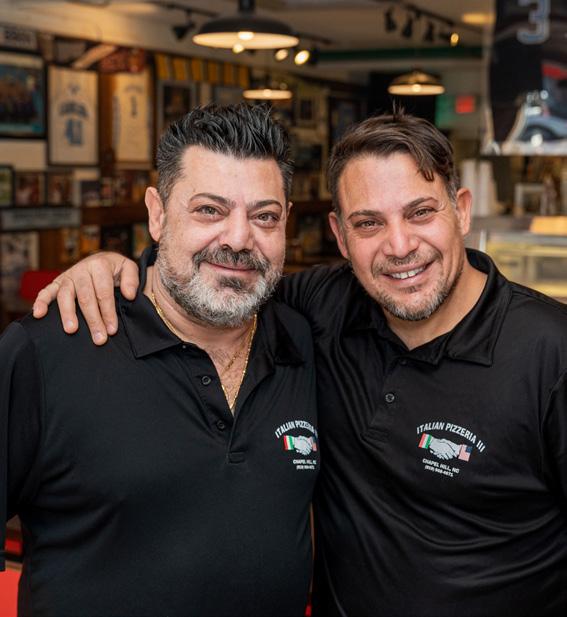
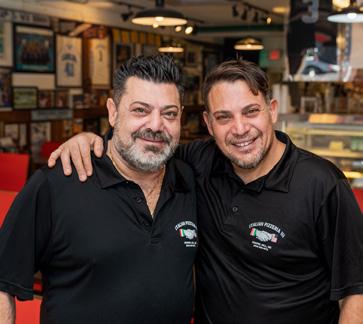
Italian Pizzeria III Pizza, Italian entrees, calzones and subs. The “place to be” in Chapel Hill for 43 years. 508 W. Franklin St.; 919-968-4671; italianpizzeria3.com
Kurama Sushi & Noodle Express Dumplings, salads, noodle dishes. 105 N. Columbia St.; 919-968-4747; kuramasushinoodle.com
Lantern Pan-Asian cuisine. 423 W. Franklin St.; 919-969-8846; lanternrestaurant.com
Lapin Bleu Bar meets art gallery. 106A N. Graham St.; 919-969-7157
La Résidence French-inspired cuisine. 202 W. Rosemary St.; 919-967-2506; laresidencedining.com
Le Macaron French pastries. 140 W. Franklin St., Ste. 120; lemacaron-us.com
Mediterranean Deli Offers healthy vegan, vegetarian and gluten-free Mediterranean options. 410 W. Franklin St.; 919-967-2666; mediterraneandeli.com
Merritt’s Grill Famous BLTs, breakfast sandwiches, burgers. 1009 S. Columbia St.; 919-942-4897; merrittsblt.com
Might As Well Bar & Grill Bar favorites. 206 W. Franklin St.; 984-234-3333; chapelhill.mightaswellbarandgrill.com
The Northside District Specialty cocktails and international small plates. 403 W. Rosemary St.; 919-391-7044; thenorthsidedistrict.com
Perennial Cafe Serving Carrboro Coffee Roasters coffee, tea and pastries. 401 W. Franklin St.; 919-914-6045; perennial.cafe
Pho Happiness Pho noodle soup, vermicelli plates and vegetarian/glutenfree options. 508-A W. Franklin St.; 919-942-8201; phohappinessnc.com
Pulp Juice and Smoothie Bar Fruit smoothies, acai bowls, wraps and salads. 100 W. Franklin St.; pulpjuiceandsmoothie.com
The Purple Bowl Acai bowls, toast, smoothies, coffee. 306-B W. Franklin St.; 919-903-8511; purplebowlch.com
Que Chula Authentic Mexican food, tacos and craft tequilas. 140 W. Franklin St., Ste. 110; 919-903-8000; quechulatacos.com
Roots Natural Kitchen Salads and grain bowls. Children 12 years old and younger eat free all day, every day. 133 W. Franklin St., Bldg. A-115; 984-322-5600; rootsnaturalkitchen.com
Saturni Sandwiches, coffee and baked goods. 431 W. Franklin St., Ste. 120; 984-234-3497; saturni-nc.com
Spicy 9 Sushi Bar & Asian Restaurant Sushi, Thai curries, bibimbap and other Asian entrees. 140 W. Franklin St., Ste. 150; 919-903-9335; spicy9chapelhill.com
Talullas Authentic Turkish cuisine; all ABC permits. 456 W. Franklin St.; 919-933-1177; talullas.com
Tea Hill Made-to-order Taiwanese teas and street food. 318 W. Franklin St.; 984-999-4580; teahillusa.com
Trophy Room A Graduate Hotels concept serving up shareable plates, salads and burgers. 311 W. Franklin St.; 919-442-9000; graduatehotels.com/chapel-hill
Vimala’s Curryblossom Café Traditional Indian tandoori and thali. 431 W. Franklin St., Ste. 415; 919-929-3833; curryblossom.com
YoPo of Chapel Hill Frozen yogurt, treats and shakes with unique flavors since 1982. 106 W. Franklin St.; 919-942-7867; yogurtpump.com
Village Plaza/East Franklin Street/Eastgate Crossing/ Rams Plaza
Alpaca Peruvian rotisserie chicken and sides like maduros and tostones. 237 S. Elliott Rd.; 919-338-2962; alpacachicken.com
Breadman’s
A variety of burgers, sandwiches, salads and grilled meat, with daily soup and specials. All-day breakfast; catering available. 261 S. Elliott Rd.; 919-967-7110; breadmens.com
Caffé Driade Carrboro Coffee Roasters coffee, bowl-size lattes, local baked goods, beer and wine. 1215-A E. Franklin St.; 919-942-2333; caffedriade.com
The Casual Pint Upscale craft beer market with beer, appetizers and ice-cream sandwiches. 201 S. Elliott Rd., Ste. 5; 919-967-2626; chapelhill.thecasualpint.com
Cava Customizable Mediterranean bowls, salads, pitas and soups. 79 S. Elliott Rd.; 919-636-5828; cava.com
Chopt Unique salads, grain and quinoa bowls. Eastgate Crossing; 919-240-7660; choptsalad.com
Clean Juice Certified organic juices, smoothies, bowls and snacks. Eastgate Crossing; 919-590-5133; cleanjuice.com
Drift Coffee & Kitchen Full-service cafe plus coffee, beer, wine and cocktails. 111 S. Elliott Rd.; driftcoffee.kitchen
Genji Sushi Bar at Whole Foods Market Fresh Pan-Asian rice bowls made to order. 81 S. Elliott Rd.; 919-968-1983; wholefoodsmarket.com
Guglhupf Bake Shop European-style breads, pastries and coffee. Eastgate Crossing; 919-914-6511; guglhupf.com/ chapel-hill-bake-shop
The Heel & Horn Craft kitchen and bar serving burgers, salads, sandwiches and more, plus, draft beers and cocktails. 1502 E Franklin St.; 984-999-4826; theheelandhorn.com
Il Palio at The Siena Hotel Italian specialties like butternut squash ravioli. 1505 E. Franklin St.; 919-918-2545; ilpalio.com
Japan Express Hibachi-style meals and sushi. 106 S. Estes Dr.; 919-903-8050
Jersey Mike’s Subs Jumbo subs filled with cold cuts and toppings. 1800 E. Franklin St., Ste. 21; 919-918-7827; jerseymikes.com
Kipos Greek Taverna Greek cuisine in a relaxed, upscale setting with outdoor dining. Eastgate Crossing; 919-425-0760; kiposchapelhill.com
La Hacienda Burritos, salads, quesadillas, tacos. 1813 Fordham Blvd.; 919-967-0207; lahaciendamex.com
The Loop Pizzas, soups, salads, sandwiches, burgers. Eastgate Crossing; 919-969-7112; thelooprestaurant.com
MinGa Authentic Korean cuisine like bibimbap, bulgogi and a variety of homemade kimchi. 1404 E. Franklin St.; 919-933-1773; min-ga.com
Monterrey Mexican Grill Tacos, quesadillas, burritos and more. Rams Plaza; 919-969-8750; letsgotomonterrey.com
Mr. Tokyo Japanese Restaurant Unlimited sushi and hibachi. Rams Plaza; 919-240-4552; mrtokyojapanese.com/chapel-hill
Osteria Georgi House-made pasta, braised meat dishes and antipasto. 201 S. Elliott Rd.; 919-375-0600; osteriageorgi.com
Rise Southern Biscuits & Righteous Chicken Biscuits, donuts, chicken and coffee. Eastgate Crossing; risebiscuitschicken.com
Shake Shack Fast-casual chain serving up 100% Angus beef blend burgers, crinklecut fries and hand-spun shakes. Eastgate Crossing; shakeshack.com
Snooze, An A.M. Eatery Breakfast, comfort food lunches and brunch cocktails. Eastgate Crossing; snoozeeatery.com
Squid’s Fresh seafood options include woodgrilled fillets, Maine lobster, fried seafood and oysters. 1201 Fordham Blvd.; 919-9428757; squidsrestaurant.com
Sunrise Biscuit Kitchen Drive-thru biscuits, sandwiches. 1305 E. Franklin St.; 919-933-1324; sunrisebiscuits.co
Sutton’s in the Atrium A cafe version of Sutton’s Drug Store with its famous hot dogs, salads and more. 100 Europa Dr.; 919-240-4471; suttonsdrugstore.com
Tandoor Indian Restaurant Traditional Indian cuisine, vegan options. 1301 E. Franklin St.; 919-967-6622; tandoorindian.com
Thaiphoon Bistro Thai cuisine, curry, stirfry, soups and salads. 1704 E. Franklin St.; 919-869-7191; thaiphoonbistro.com
Tonya’s Cookies & Bake Shop Freshbaked cookies, pies, cakes and snacks. 400 S. Elliott Rd.; 919-903-8087; tonyascookies.com
Twisted Noodles Thai noodle soups, pan-fried noodles. Eastgate Crossing; 919-933-9933; twistednoodlesch.com
University Place
Alfredo’s Pizza Villa Pizzas, calzones, salads, subs, pasta, desserts. 919-968-3424; alfredospizzavilla.com
bartaco Tacos, fresh-juice cocktails, poke and mole options. 910-807-8226; bartaco.com
Flying Biscuit Cafe All-day breakfast and Southern favorites like shrimp and grits. 919-537-8974; flyingbiscuit.com
Hawkers Inspired by Southeast Asia’s street fare, this eatery features homemade favorites, from dumplings to curries. 919-415-1799; eathawkers.com
Maple View Mobile Ice-cream outpost of the iconic Hillsborough shop. 919-244-1949; mapleviewmobile.com
Stoney River Steakhouse and Grill
Southern favorites like deviled eggs meet steakhouse mainstays like the legendary 12 oz. filet. 919-914-6688; stoneyriver.com
Silverspot Cinema Restaurant Chefinspired menu of freshly made food, craft beers, signature cocktails and wines to pair with your movie. 919-357-9887; silverspot.net
Martin Luther King Jr. Boulevard (Airport Road)
Bombolo Brunch, pasta dishes and small plates. 764 MLK Jr. Blvd.; 919-914-6374; bombolochapelhill.com
Hunam Chinese Restaurant Cantonese cuisine. 790 MLK Jr. Blvd.; 919-967-6133; hunamrestaurant.net
Lucha Tigre Latin-Asian cuisine and sake-tequila bar. 746 MLK Jr. Blvd.; 919-914-6368; luchatigre.com
The Root Cellar Cafe & Catering Sandwiches, salads, soups, desserts and more for breakfast and lunch. 750 MLK Jr. Blvd.; 919-967-3663; rootcellarchapelhill.com
Timberlyne/Chapel Hill
North Area
Beau Catering Full-service and drop-off catering, meal delivery and grab-and-go meals. 630 Weaver Dairy Rd.; 984-312-5485; beaucatering.com
Chapel Hill Wine Company Wine store with bottles from all over the globe. 2809 Homestead Rd.; 919-968-1884; chapelhillwinecompany.com
Farm House Restaurant Steaks, salads, potatoes. 6004 Millhouse Rd.; 919-929-5727; farmhousesteakhouse.com
Jersey Mike’s Subs Jumbo subs filled with cold cuts and toppings. 1802 M.L.K. Jr. Blvd.; 919-903-8946; jerseymikes.com
Joe Van Gogh Coffee, tea and pastries. Timberlyne Shopping Center; 919-967-2002; joevangogh.com
Magone Italian Grill & Pizza Italian mains. Timberlyne Shopping Center; 919-904-7393; magoneitaliangrillpizza.com
New Hope Market Breakfast and daily specials like burgers, soups and more. 6117 N.C. Hwy. 86 S.; 919-240-7851
OiShii Specialty rolls, teriyaki, stir-fry, sushi. Timberlyne Shopping Center; 919-932-7002; oishiiroll.com
The Pig Barbecue, fried tofu, collards and more. 630 Weaver Dairy Rd., Ste. 101; 919-942-1133; thepigrestaurant.com
PiggyBack Classic cocktails, beer and wine and unexpected, creative bar food. 630 Weaver Dairy Rd., Ste. 102; 919-240-4715; thepigrestaurant.com/piggyback
Pop’s Pizzeria & Ristorante Pizzas, calzones, stromboli, pasta. 1822 MLK Jr. Blvd.; 919-932-1040; pops-pizzeria.com
Rasa Indi-Chinese Authentic North Indian and Chinese cuisine, with fusion and Thai dishes. Weekly specials. 1826 MLK Jr. Blvd.; 919-929-2199; rasachapelhill.com
Sal’s Pizza & Ristorante Thin-crust and deep-dish pizzas plus an array of Italian comfort food. 2805 Homestead Rd.; 919-932-5125; salspizzaofchapelhill.com
Siam Zap Pho Thai fried rice, curry, pho. Timberlyne Shopping Center; 919-903-8280
Yopop Frozen Yogurt Frozen yogurt shop featuring 14 flavors, bubble tea and smoothies. Timberlyne Shopping Center; 919-537-8229
Amante Gourmet Pizza Create-your-own pizzas. 6209 Falconbridge Rd.; 919-493-0904; amantepizza.com
BIN 54 Steaks, seafood and other fine American food. Everything made in-house. Glen Lennox Shopping Center; 919-969-1155; bin54chapelhill.com
Brenz Pizza Co. Specialty pizzas, subs, salads. 3120 Environ Way, East 54; 919-636-4636; brenzpizzaco.com
Coco Bistro & Bar Plant-based locally sourced dishes, as well as classic comfort food, cocktails and mocktails, plus espresso bar and baked goods. The Gwendolyn, 101 Glen Lennox Dr., Ste. 180; 919-883-9003; cocochapelhill.com
elements Cuisine combining classical and modern Asian and European cooking techniques for lunch and dinner; check out the wine bar with full menu next door. 2110 Environ Way, East 54; 919-537-8780; elementsofchapelhill.com
El Tesoro Mexican Grill Homemade Mexican breakfast, lunch and dinner, plus traditional Tex-Mex. 6118 Farrington Rd., Ste. G; 919-237-2229; eltesoromex.com
First Watch French toast, pancakes and specialty omelets. 1101 Environ Way, East 54; 919-537-8488; firstwatch.com
Hawthorne & Wood Fine dining cuisine with an outdoor patio, a fully stocked bar and an extensive international wine list. 3140 Environ Way, East 54; 919-240-4337; hawthorneandwood.com
Jersey Mike’s Subs Jumbo subs filled with cold cuts and toppings. 6118 Farrington Rd.; 919-908-7641; jerseymikes.com
Jujube Eclectic, modern cuisine inspired by the flavors of China and Vietnam. Glen Lennox; 919-960-0555; jujuberestaurant.com
Nantucket Grill & Bar Clam chowder, lobster rolls and more. 5925 Farrington Rd.; 919-402-0077; nantucketgrill.com
Thai Palace Soup, curries, pad thai. Glenwood Square Shopping Center; 919-967-5805; order.thaipalacechapelhill.com
Meadowmont Village
Bluebird French bistro-style restaurant. 601 Meadowmont Village Circle; bluebirdnc.com
Brixx Wood Fired Pizza Specialty pizzas and salads. 501 Meadowmont Village Circle; 919-929-1942; brixxpizza.com
Kahlovera Mexican bar and grill. 504 Meadowmont Village Circle; 984-999-4537; kahloveratacos.com
Lime & Lemon Indian Grill & Bar Northern and southern Indian specialties including gobi manchurian, paneer tikka, chicken tikka and hariyali murg kebab. 101 Meadowmont Village Circle, Ste. 101; lnlrestaurant.com
Meet Fresh Taiwanese desserts and teas. 407 Meadowmont Village Circle; Ste. 101; 984-999-4983; meetfresh.us
Quickly Hot and cold tea drinks in addition to Asian street food. 503 Meadowmont Village Circle; 984-234-0401; quicklychapelhill.com
Al’s Burger Shack Gourmet burgers and fries. 708 Market St.; 919-914-6694; alsburgershack.com
La Vita Dolce Pastries, sorbet, gelato, coffee. 610 Market St., Ste. 101-C; 919-968-1635; lavitadolcecafe.com
Market and Moss American cuisine made with fresh local ingredients. 700 Market St.; 919-929-8226; marketandmoss.com
Rasa Malaysia Authentic Malaysian dishes. 410 Market St.; 984-234-0256; rasamalaysiach.com
Rocks + Acid Wine Shop A wine shop and tasting room from award-winning sommelier Paula de Pano. 712 Market St.; 919-428-3564; rocksandacidwineshop.com
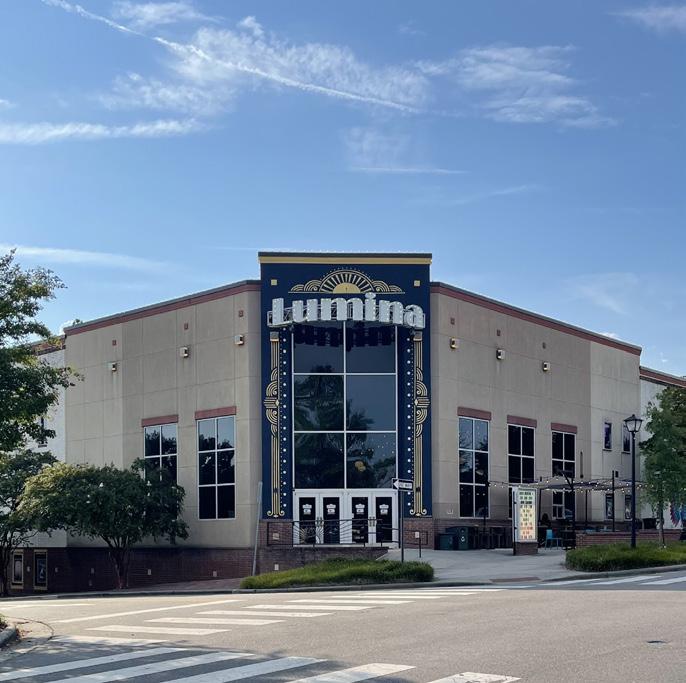
The Tap Room at The Lumina Draft beer and wine by the bottle or glass. 620 Market St.; 919-969-8049; carolinacinemas.com/lumina
Town Hall Grill Sandwiches, steak, seafood, Italian dishes. 410 Market St.; 919-960-8696; thetownhallgrill.com
Weaver Street Market Food bar items, plus grab and go. 716 Market St.; 919-929-2009; weaverstreetmarket.coop
Downtown
401 Main Upscale dive bar and sandwich shop serving shareable bar snacks, local brews and po’boys. 401 E. Main St.; 919-390-3598; 401main.com
Acme Food & Beverage Co. Entrees with a Southern touch. 110 E. Main St.; 919-929-2263; acmecarrboro.com
Akai Hana Japanese cuisine including sushi, tempura and teriyaki. 206 W. Main St.; 919-942-6848; akaihana.com
Armadillo Grill Tex-Mex burritos, enchiladas, tacos, nachos. 120 E. Main St.; 919-929-4669; armadillogrill.com
Atlas Bar Uptown drinks in downtown Carrboro. 118 E. Main St.; atlascarrboro.com
Belltree Cocktail Club Prohibition-inspired speakeasy serving creative cocktails, beer and wine. 100 Brewer Lane, A; 984-234-0572; belltreecocktailclub.com
Breakaway Carrboro A casual cafe serving breakfast, lunch, dinner and coffee. 410 N. Greensboro St.; breakawaync.co Carrburritos Burritos, tacos, nachos and margaritas. 711 W. Rosemary St.; 919-933-8226; carrburritos.com
Cham Thai Authentic Thai, Siamese and Chinese cuisine. 370 E. Main St., Ste. 190; 984-999-4646; chamthainc.com
The Cheese Shop at Glasshalfull Cut-to-order cheese shop offering a diverse selection of cheese, meat and provisions. 106 S. Greensboro St.; 919-893-9979; cheeseshopnc.com
Glasshalfull Mediterranean-inspired food and wine; outdoor dining; all ABC permits. 106 S. Greensboro St.; 919-967-9784; glasshalfull.net
Gourmet Kingdom Sichuan cuisine. 301 E. Main St.; 919-932-7222; thegourmetkingdom.com
Krave Kava Bar & Tea Lounge Offers a wide range of tea and herbal drinks, all made from kava, a type of plant root. 105 W. Main St.; 919-408-9596; kravekava.com
Lanza’s Cafe Coffeehouse serving tea and meads in addition to local pastries, small plates and daily specials. 601 W. Main St., Ste. C; 919-967-9398; lanzascafe.com
Luna Rotisserie & Empanadas
South American cuisine meets the American South. 307 E. Main St.; 919-537-8958; lunarotisserie.com
Mel’s Commissary & Catering Lunch, snacks and pop-up dinners. 109 W. Main St.; 919-240-7700; melscarrboro.com
Napoli Wood-fired pizza, espresso, artisanal gelato made from scratch, teas and local craft beer and wines. 105 E. Main St.; 919-667-8288; napolicarrboro.com
Neal’s Deli Buttermilk biscuits on Saturdays and traditional deli fare. 100 E. Main St.; 919-967-2185; nealsdeli.com
Oakleaf “Immediate” cuisine like pastas and seafood using ingredients from the chef’s own garden. 310 E. Main St.; 984-234-0054; oakleafnc.com
Open Eye Cafe Freshly roasted coffee by Carrboro Coffee Roasters, tea, beer, wine and baked goods. 101 S. Greensboro St.; 919-968-9410; openeyecafe.com
Pelican’s Snoballs Offers over 100 flavors of shaved ice. 505 W. Main St.; pelicanssnoballs.com
Pizzeria Mercato Pizza, antipasto, soups, fritti and gelato. 408 W. Weaver St.; 919-967-2277; pizzeriamercatonc.com
Speakeasy on Main Cocktail lounge with live music. 100 E. Main St.; facebook.com/ speakeasyonmainstreet
Spotted Dog Vegetarian- and vegan-friendly entrees. 111 E. Main St.; 919-933-1117; thespotteddogrestaurant.com
Tesoro 18-seat neighborhood restaurant with house-made pasta, seasonal plates and classic sweets. 100 E. Weaver St.; 919-537-8494; tesorocarrboro.com
Wings Over 27 flavors of wings. 313 E. Main St.; 919-537-8271; wingsoverchapelhill.com
East Main Square
Amante Gourmet Pizza Create-your-own pizzas, salads and pasta. 300 E. Main St.; 919-929-3330; amantepizza.com
Bru’s Public House Southern handhelds, pizzas and shareables with craft cocktails. 370 E. Main St.; bruspublichouse.com
Gray Squirrel Coffee Co. Roastery and espresso bar. 360 E. Main St., Ste. 100; graysquirrelcoffee.com
Haw River Tap & Table Craft beer and flavorful small plates. 300 E. Main St., Ste. C; 919-391-6788; hawrivercarrboro.com
Iza Whiskey & Eats Japanese fusion cuisine serving small plates, sushi, ramen, whiskey, sake and cocktails. 370 E. Main St., Ste. 140; 919-537-8645; izaeats.com
La Montaña Rotating selection of modern southeast Asian American cuisine like wild enoki, crispy rice, nuoc mam wings and more. 370 E. Main St., Ste. 170; 919-899-9854; eatatlamontana.com
Rise Southern Biscuits & Righteous Chicken Biscuits, doughnuts, chicken and coffee. 310 E. Main St.; 919-929-5115; risebiscuitschicken.com
Carr Mill Mall/ North Greensboro Street
B-Side Lounge Small plates, like fondue, and inspired cocktails. Carr Mill Mall; 919-904-7160; b-sidelounge.com
The Flying Pierogi Family-owned restaurant offering Polish and German street food. 101 Two Hills Dr.; flyingpierogi.com
Grata Diner From scratch breakfast and lunch. Carr Mill Mall; 919-240-7000; gratadiner.com
Oasis Organic coffee, tea, beer and wine. Carr Mill Mall; 919-904-7343
Pizza Factory Pizza, cheesesteaks, baked ziti. Carr Mill Mall; 919-904-7040; pizzafactorync.com
Tandem Farm-to-table, modern American cuisine with full service bar. Carr Mill Mall; 919-240-7937; tandemcarrboro.com
Thai Station Authentic, fresh Thai dishes. 201 E. Main St., Ste. C.; 984-234-3230; thaistationnc.com
Venable Rotisserie Bistro Upscale comfort food with a heavy emphasis on seasonal ingredients. Carr Mill Mall; 919-904-7160; venablebistro.com
Weaver Street Market Hot food bar items are available as grab-and-go. Carr Mill Mall; 919-929-0010; weaverstreetmarket.coop
Aidan’s Pizza Pizza, wings and salads. 602 Jones Ferry Rd., Ste. D; 919-903-8622; aidanspizza.hungerrush.com
Anna Maria’s Pizzeria Italian cuisine. Carrboro Plaza; 919-929-1877; annamariasnc.wordpress.com
Fiesta Grill Burritos, chimichangas, fajitas, tacos. 3307 N.C. Hwy. 54 W.; 919-928-9002; fiestagrill.us
Jersey Mike’s Subs Jumbo subs filled with cold cuts and toppings. 104 NC-54, Ste. GG; 919-913-9130; jerseymikes.com
Monterrey Mexican Grill Traditional Mexican cuisine. Carrboro Plaza; 919-903-9919; letsgotomonterrey.com
Wingman Wings and hot dogs. 104 N.C. Hwy. 54 W.; 919-928-9200; bestwingman.net
Antonia’s Italian cuisine. 101 N. Churton St.; 919-643-7722; antoniashillsborough.com
Big Bob’s City Grill Fresh-made burgers and chicken with country sides. 584 Cornelius St.; 919-732-2953
The Colorado Burrito Burritos, quesadillas, fajitas. 122 S. Churton St.; 336-269-8613
Cup-A-Joe Coffee and pastries. 112 W. King St.; 919-732-2008; hboro-cupajoe.com
El Restaurante Ixtapa Authentic fromscratch Mexican dishes. 162 Exchange Park Ln.; 919-644-6944; ixtapa.homestead. com/homepage.html
Hillsborough Bakeshop & Pasta Company
Baked goods, coffee, wine and all-day cafe offering pasta, sandwiches and salads. 110 S. Churton St.; 919-732-6261; hillsboroughbakeshop.com
Hillsborough BBQ Company Barbecue plates and sandwiches, sides and desserts. 236 S. Nash St.; 919-732-4647; hillsboroughbbq.com
Hillsborough Wine Company Wine store with bottles from all over the globe. 118 S. Churton Street; 919-732-4343; chapelhillwinecompany.com
The House at Gatewood Supper club and special events venue. 300 U.S. 70; 919-241-4083; houseatgatewood.com
Jay’s Chicken Shack Chicken, buffalo wings, breakfast biscuits. 646 N. Churton St.; 919-732-3591; jayschickenshack.com
Jersey Mike’s Subs Jumbo subs filled with cold cuts and toppings. 115 Oakdale Dr. Ste. 5; 919-296-9316; jerseymikes.com
Kim’s Bake Shop Homemade baked goods from brownies and doughnuts to “whookies” and pie. 111 N. Churton St.; 919-932-0134; downtownpies.com
La Muñeca Ice Cream Paletas, esquites and dorilocos. 131 Mayo St.; la-muneca-ice-cream.business.site
Los Altos Mexican dishes, such as tacos and chiles rellenos. 126 W. King St.; 919-241-4177; losaltosmexicanrestaurant.com
Lupita’s Meat Market and Taqueria Authentic Mexican food including tamales, barbacoa and carnitas. 633 Cornelius St.; 919-296-9000
Maple View Farm Country Store
Homemade ice cream. 6900 Rocky Ridge Rd.; 919-960-5535; mapleviewfarm.com
Matthew’s Chocolates Gourmet chocolates, frozen treats and baked goods. 104 N. Churton St.; 984-245-9571
Mi Pueblo Mexican Grill Family-owned restaurant serving authentic Mexican cuisine. 155 Mayo St.; 919-241-4167; mipueblomexgrill.com
Nomad International street food-inspired eatery. 122 W. King St.; 984-217-0179; thenomadnc.com
Pizza Cornicione Neapolitan pizzeria and gelateria. 230 S. Nash St.; 919-245-8566; pizzacornicione.com
Pueblo Viejo Traditional Mexican food. 370 S. Churton St.; 919-732-3480
Radius Pizzeria & Pub Wood-fired pizzas, housemade pastas, salads and desserts. Outdoor dining. 112 N. Churton St.; 919-245-0601; radiuspizzeria.net
Saratoga Grill New England-style cuisine. 108 S. Churton St.; 919-732-2214; thesaratogagrill.com
The Town Scoop Ice cream. 113 W. King St.
Steve’s Garden Market & Butchery Sandwiches, baked goods, pimento cheese. 610 N. Churton St.; 919-732-4712; stevesgardenmarket.com
The Village Diner Southern fare and takeout pizza. 600 W. King St.; 919-245-8915; villagedinernc.com
Vinny’s Italian Grill and Pizzeria Italian favorites. 133 N. Scottswood Blvd.; 919-732-9219; vinnyshillsborough.com
Weaver Street Market Food bar items are available as grab and go. 228 S. Churton St.; 919-245-5050; weaverstreetmarket.coop
West Hillsborough Pizzeria
Scratch-made pizza, wings, burgers and salads. 600 W. King St.; 919-245-8915; westhillsboroughpizzeria.com
Whit’s Frozen Custard Rotating flavors of frozen custard, treats, pints to go. 240 S. Nash St.; 919-245-8123; whitscustard.com
Wooden Nickel Pub Pub fare and rotating craft beer. 113 N. Churton St.; 919-932-0134; thewnp.com
Yonder Southern Cocktails & Brew Beer, wine, frose and more. 114 W. King St.; yonderbarnc.com
Briar Chapel
Breakaway Cafe A casual cafe serving breakfast, lunch, dinner and coffee. 58 Chapelton Ct., Ste. 100; 984-234-3010; breakawaync.co
Capp’s Pizzeria & Trattoria Traditional Italian cuisine including fresh pastas, pizzas and more. 79 Falling Springs Dr., Ste. 140; 919-240-4104; cappspizzeria.com
O’YA Cantina Latin cuisine from all over the world. 72 Chapelton Ct.; 984-999-4129; oyacantina.com
Town Hall Burger & Beer Burgers plus tacos, wings and salads. 58 Chapelton Ct.; 984-234-3504; townhallburgerandbeer.com
Governors Village
Ciao Bella Pizzeria Pizza, pastas, sandwiches. 1716 Farrington Point Rd.; 919-932-4440
Flair Restaurant & Wine Bar Frenchinfluenced food, coffee and Sunday brunch. 50100 Governors Dr.; 919-967-9990; flairfusionrestaurant.com
Gov’s Fusion Cantina Americana meets traditional Mexican cuisine. 50050 Governors Dr.; 919-240-5050; govsfusioncantina.com
Munchilove Full-service espresso bar, desserts and savory bites. 50221 Governors Dr.; munchilove.com
Sal’s NY Pizza Italian specialties seven days a week. 50010 Governors Dr.; 919-903-8091; salsnypizzachapelhill.com
Tarantini Italian Restaurant Italian cuisine. 50160 Governors Dr.; 919-942-4240; tarantinirestaurant.com
North Chatham Village/ Cole Park Plaza/Polks Landing
501 Pharmacy Maple View Farm ice cream, plus malts and shakes. 69 Knox Way, Ste. 110; 984-999-0501; 501rx.com
Captain John’s Dockside American seafood dishes. 11550 U.S. Hwy. 15-501 N.; 919-968-7955; docksidechapelhill.com
Guanajuato Mexican Restaurant Mexican dishes with vegetarian options. 11552 U.S. Hwy. 15-501 N., Ste. 205; 919-929-8012; guanajuatomexicanrestaurant.net
Jersey Mike’s Subs Jumbo subs filled with cold cuts and toppings. 11312 US Hwy. 15 501 N., Ste. 102; 984-528-8750; jerseymikes.com
Panda Garden Chinese dishes like chow mein and egg foo young. 11312 U.S. Hwy. 15-501 S., Ste. 303; 919-960-8000; chapelhillpandagarden.com
Szechuan Village Bold Chinese flavors and bubble tea. 111 Knox Way; 919-869-7894; szechuanvillagechapelhill.com
Ta Contento Mex Fresh Food Authentic Mexican food, like tacos, burritos and fajitas. 11620 US 15-501 Hwy. N. Chapel Hill; 919-9454819; ta-contento.com
Village Pizza and Pasta A neighborhood pizza place serving up subs, calzones, pastas and salads. 11312 U.S. Hwy. 15-501 S., Ste. 300; 919-960-3232; villagepizzapasta.com
Fearrington Village
The Belted Goat Lunch, dinner and wine shop, offering salads and sandwiches. 919-545-5717; fearrington.com/belted-goat
The Fearrington House Restaurant
Contemporary fine dining. Reservations are needed. 919-542-2121; fearrington.com/thefearrington-house-restaurant
Galloway’s Wine and Beer Bar Beer, wine and snacks. 919-545-5717; fearrington.com/ galloways-wine-beer-bar
Roost Beer Garden Wood-fired pizza and local brews April through October. 919-542-2121; fearrington.com/roost
U.S. 15-501
Allen & Son Bar-B-Que North Carolina barbecue. 5650 U.S. 15-501; 919-542-2294; stubbsandsonbbq.com
Aye! Toro Tacos & Tequila Mexicaninspired dishes made with fresh ingredients. 65 Old Rock Springs Cemetery Rd.; 919-533-6706; ayetoronc.com
Carolina Brewery The Triangle’s oldest brewery restaurant features Carolina cuisine. 120 Lowes Dr. #100; 919-545-2300; carolinabrewery.com
Compadres Tequila Lounge Mexican restaurant with a variety of classic dishes. 193 Lowes Dr., Ste. 107; 919-704-8374; compadresnc.com
New Japan Hibachi-style Japanese cooking. 90 Lowes Dr.; 919-542-4380
Mosaic at Chatham Park/ Northwood Landing
Cafe Root Cellar American cuisine and “go big or go home” seasonal dishes. 35 Suttles Rd.; 919-542-1062; caferootcellar.com
Greek Kouzina Hummus, gyros, kebabs and more. 367 Freedom Pkwy, Ste. 100,; 919-542-9950; greekkouzina.com
Hops & Berry Taproom Self-serve, pay-bythe-ounce taproom and full cocktail bar. 120 Mosaic Blvd. Ste. 100; 919-926-1980; pittsboro.hopsandberry.com
House of Hops Bar and bottle shop with a large craft beer selection on tap. Outdoor seating available. 112 Russet Run; 919-542-3435; houseofhopsnc.com
Mi Cancun Classic Mexican cuisine with a modern twist. 114 Russet Run; 919-542-3858; micancunmx.com
People’s Coffee Coffee from Black and White Roasters, breakfast and lunch. 60 Mosaic Blvd., Ste. 100; pplscoffee.com
BMC Brewing Beers brewed on-site and cookies made with the byproducts. 213 Lorax Lane; 919-759-1206; bmcbrewing.com
China Inn Chinese dishes. 630 East St.; 919-545-0259
Fair Game Beverage Co. Spirits, wine, beer and cider tastings plus snacks. 220 Lorax Ln.; 919-548-6884; fairgamebeverage.com
JDub’s PoBoys Authentic fried shrimp, oyster and chicken sandwiches. 193b Lorax Ln. jdubs-poboys-nc.com
Kingston 99 Kitchen Authentic Jamaican cuisine with a twist. 192B Lorax Lane; kingston99kitchen.com
Koshu Sake Bar Offering a wide range of sake, tastings and by the bottle. koshusakebar.com
Metal Brixx Cafe Vortex Roasters’ coffee and espresso plus tea, lemonade and gelato. 213 Lorax Ln.; 919-444-2202
Small Cafe B and B Offbeat, eco-friendly eatery offering farm-to-table fare for breakfast and lunch. 219 East St.; 919-228-8817; smallcafebandb.com
Starrlight Mead Tastings of honey wines and honey. 130 Lorax Ln.; 984-312-5820; starrlightmead.com
Street
Al’s Diner Traditional American classics for breakfast, lunch and dinner. 535 West St.; 919-542-5800; alsdiner.net
Havoc Brewing Company Global tap list, from the “Hey Bonnie!” English brown ale to the “Havoc Actual” Mexican lager. 39 West St.; havocbrewing.com
Ni Armor’s Hawaiian & Polynesian BBQ Drive-thru barbecue plates, sandwiches and rice bowls. 517 West St.; 907-704-8055
The Phoenix Bakery Small-batch and seasonal baked goods and specialty cakes. 664 West St.; 919-542-4452; thephoenixbakerync.com
Thirsty Skull Brewing Hazy, pale ales and experimental brews. 684 West St.; thirstyskullbrewing.com
West End Kitchen & Catering Farmto-fork comfort food. 23 Rectory St.; westendpittsboro.com
Hillsboro Street/Downtown
Aromatic Roasters Small-batch coffee shop. 697 Hillsboro St., Unit 101; 919-228-8345; aromaticroasters.com
The Beagle Classic and innovative cocktails and small plates like chilled seafood and charcuterie. 53 Hillsboro St.; 919-533-6589; beaglebarnc.com
Co-op Cafe at Chatham Marketplace Sandwiches, daily changing hot bar, sushi, salads and baked goods. 480 Hillsboro St.; 919-542-2643; chathammarketplace.coop
Carolina Cravings Co. Bakery serving traditional treats like pie bars and muffins as well as Hispanic favorites like flan, bolillos and tres leches cakes. 84 Hillsboro St.; 919-444-2023; carolina-cravings.com
The City Tap Classic bar food and regular live music. 89 Hillsboro St.; 919-545-0562; thecitytap.com
Davenport’s Café Diem Carrboro Coffee Roasters coffee and espresso offerings. 439 Hillsboro St.; 919-704-4239; davenports-cafediem.com
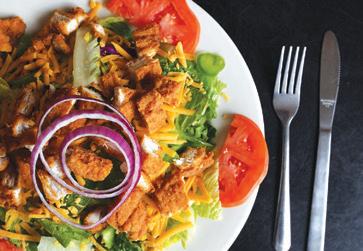
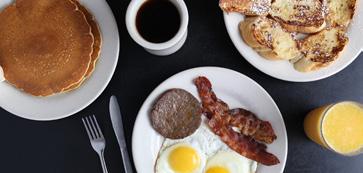

Elizabeth’s Pizza Pizza, calzones, salads and pasta. 160 Hillsboro St.; 919-545-9292; elizabethspizzapittsboro.com
Hoops Pizzeria Basketball-themed pizza spot with a focus on sustainability. 697 Hillsboro St. 919-533-6675; hoopspizzeria.com
Marcel’s Pizzeria Pizzas, pastas, subs, calzones and strombolis. 122 Sanford Rd.; 919-542-5027; marcelspizzeria.com
The Mod Wood-fired pizza, salads, small plates and a full bar. Outdoor seating available. 46 Sanford Rd.; 919-533-6883; themodernlifedeli.com
Postal Fish Company Fresh seafood from North Carolina’s coast. Serving dinner only. 75 W. Salisbury St.; 919-704-8612; postalfishcompany.com
S&T’s Soda Shoppe Soda fountain, American fare. 85 Hillsboro St.; 919-545-0007; sandtsodashoppe.com
The Sycamore at Chatham Mills Upscale steakhouse. 480 Hillsboro St., Ste. 500; 919-704-8731; thesycamoreatchathammills.com
Virlie’s Grill Soups, salads, burgers, sandwiches. 58 Hillsboro St.; 919-542-0376; virliesgrill.com
Willy’s Cinnamon Rolls Etc. Bakery selling cinnamon rolls, scones and more with ’40s and ’50s flair. 35 W. Chatham St.; 252-3059227; willysrolls.com CHM

Ideas for making the most of the season while hosting family and friends
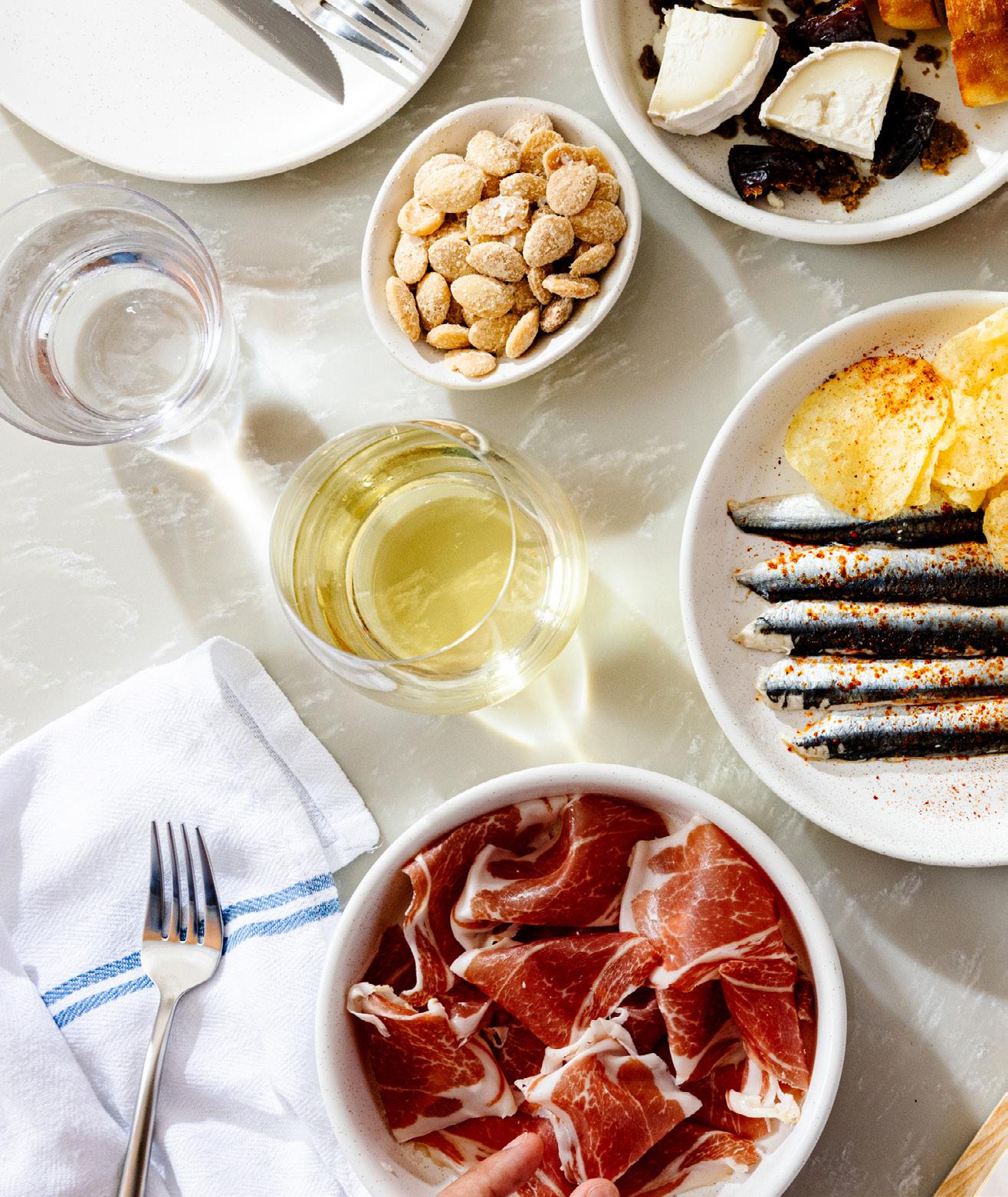
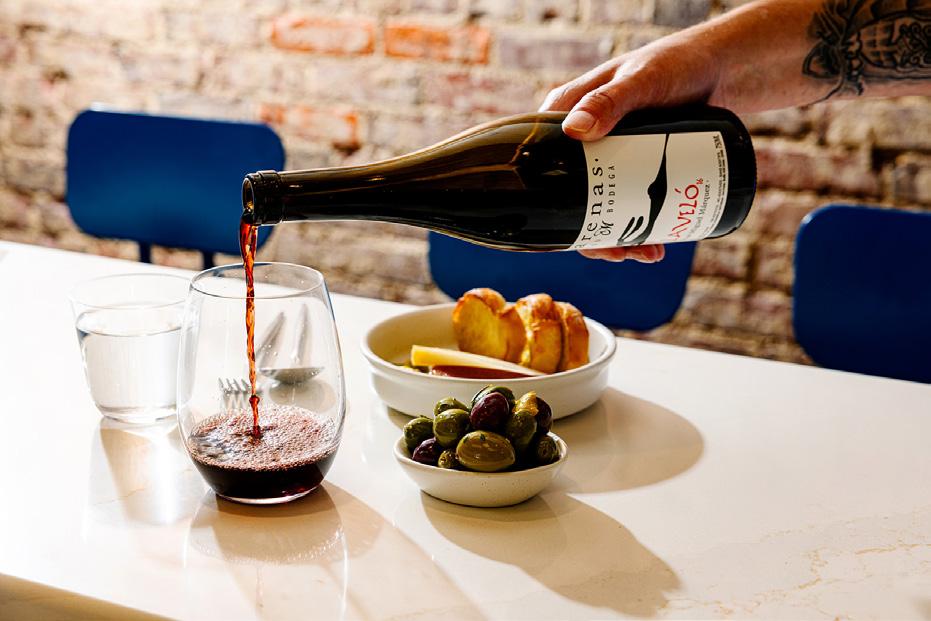
how off East Franklin Street’s newest eatery to all your loved ones visiting town this season. Make your reservation for Próximo, the sister restaurant of Bluebird and Hawthorne and Wood, for can’t-miss Spanish tapas such as tuna escabeche, sea scallops, seared chorizo and charred leeks. The drink offerings are just as delightful, running the gamut from sangria and sparkling wine to sherry. The narrow eatery opened by Glendale Hospitality’s
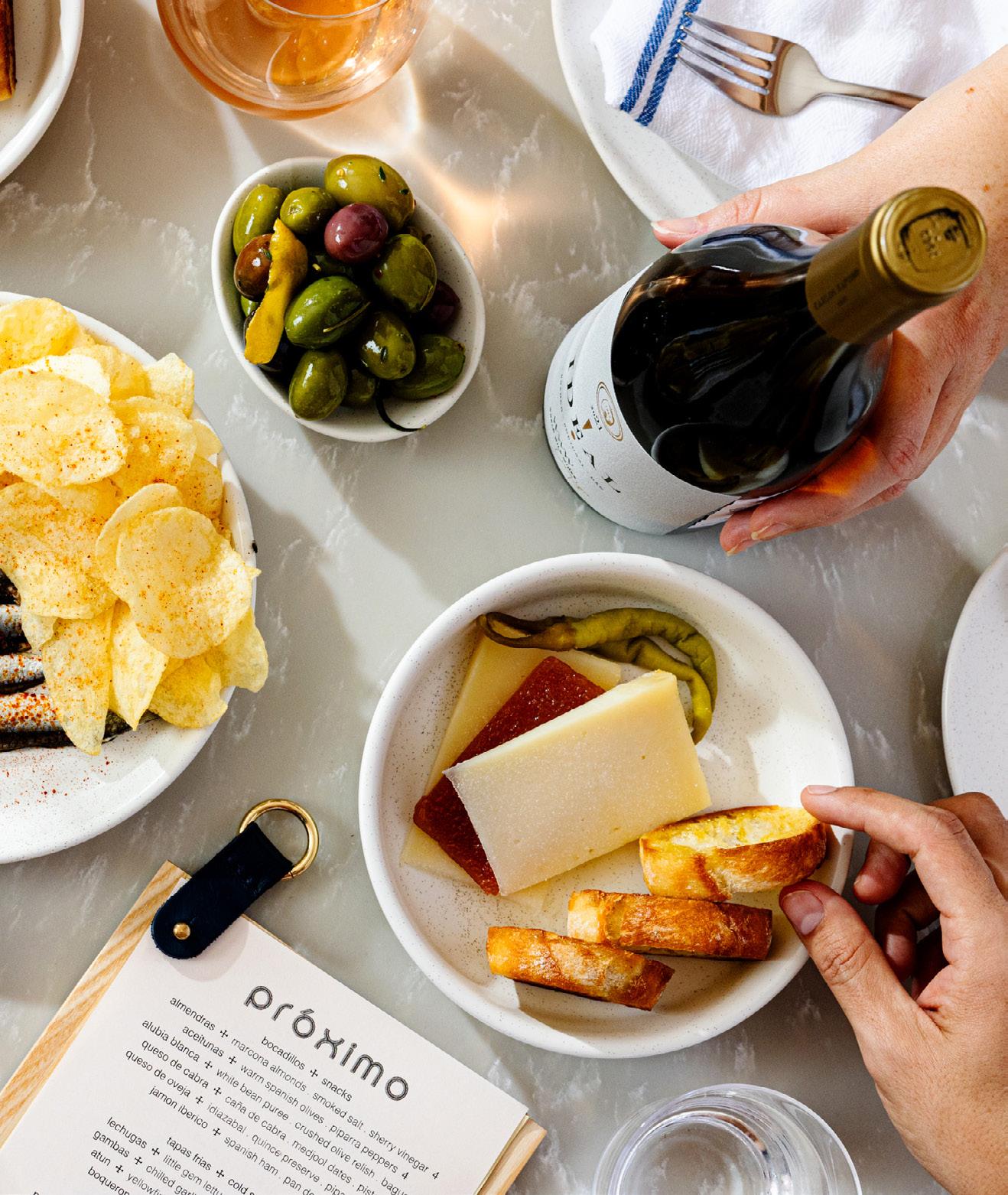
PHOTO BY ANNA ROUTH BARZIN

husband-and-wife team of chef Brandon Sharp and Elizabeth Sharp, alongside director of operations Neal Benefield, might look a little familiar to your visiting adult kids as it was last Ye Olde Waffle Shoppe.
Cheer on the UNC Football team in downtown Chapel Hill with food trucks, photo ops, music and games at 140 West Plaza. There’s two home games left so kick off the weekend on Friday evenings Nov. 15 and Nov. 29 for festivities hosted by the Chapel Hill Downtown Partnership. Come out from 3-8 p.m. for all the activities, plus a vintage market featuring Chapel Hill Vintage Market!
Whether you want your tailgate meal taken care of or just don’t want to cook for supper on Saturday, order ahead to pick up family-style dinners from Mama Dip’s Kitchen. Though the dining room is closed, you can still take your pick between fried chicken, chopped barbecue pork and chicken and dumplings, and don’t forget the yeast rolls and banana pudding. Sit on the porch and enjoy, or take your feast to go!

Get ready for a night of toe-tapping tunes and good vibes at Cat’s Cradle. On Nov. 22 and 23, the beloved folk-infused band Mipso takes the stage. Grab a local brew at the bar and take in the sweet sounds of harmonies and stringed instruments that everyone in your family will enjoy.
Get ready to kick off Thanksgiving with a bang at the Gallop & Gorge 8K. Participants will gather at 8 a.m. on Nov. 28 on Weaver Street in downtown Carrboro, ready to dash through surrounding neighborhoods. This 4.94-mile course is the perfect way to burn off a few calories before indulging in holiday feasts – all while supporting local nonprofits. Don’t miss out on celebrating the 20th year of the Le Tour de Carrboro series.
Walk, bike or drive to downtown Chapel Hill on Dec. 7 for the Chapel Hill-Carrboro Community Holiday Parade. Remember there’s a new 1,100-space parking deck on East Rosemary Street, so you’re sure to find a spot. Before the festivities kick off, grab a cup of cocoa from 1922 or Epilogue Books Chocolate Brews and find a comfy spot on the curb.
Take a break from the hosting, cooking and cleaning with some self-care. A restorative yoga class at Franklin Street Yoga should do the trick – look for a wide range of offerings from the signature vinyasa class to Body Love, a blend of stretching, relaxation and mindfulness. Once you’ve rolled up your mat, take a walk over to Brandwein’s Bagels for a No. 2: The Lox, made with Acme smoked salmon and loaded with dill and capers.
Another great way to blow off some steam this season with loved ones is catching a comedy show at the historic Varsity Theatre. Don’t miss this chance to experience comedy in a place where memories have been made for generations.
Unleash your creativity by bringing your kiddos to Koala Craft Art Studio, where they can do hands-on activities from tufting a fluffy rug to acrylic painting to making a charm-covered hairbrush to candlemaking. Best of all, the final products will make great handcrafted gifts.
Head to Carrboro to paint your own pottery at Glazed Expectations. Pick from more than 800 items including bowls, figurines and picture frames. They’ve even got take-home paint kits if you wanted to sip and snack around your kitchen table while getting crafty.






Compiled by Emma Moon
• Browse vendor booths and adopt a new furry friend at Paws4ever’s second annual Holiday Craft Fair. Proceeds earned from the bake sale, raffle and Paws4ever merch will support pets in need. Nov. 2, paws4ever.org
• Head to downtown Carrboro for The ArtsCenter’s 16th annual Elf Market, complete with live music by The Loose Lucies, arts, crafts, handmade goods by local artists, food vendors, raffles and more. Nov. 9, artscenterlive.org/elf-market-2024
• Support the artists of the Hillsborough Gallery of Arts during the annual Art of Giving showcase featuring giftable art. Nov. 12 - Dec. 31, hillsboroughgallery.com
• Get into the seasonal spirit at the Frank Gallery and find the perfect local gifts from member artists, guests and new artists who will have their art on display throughout the season. Nov. 12Dec. 29, frankisart.com
• Bundle up as artists of many mediums will showcase their high-quality art and crafts outside during the third annual Makers at the Mill Holiday Bazaar at the Eno Arts Mill. Don’t miss festive food and beverages, live music and the Paint it Orange Plein Air Paint-out exhibit in the gallery. Nov. 16, artsorange.org
• Enjoy days of festivities dedicated to celebrating small businesses with Hillsborough Arts Council’s Shop Small weekend. Kick off this unique occasion with a special Black Friday Last Friday Art Walk, then enjoy Shop Small Saturday and Artists Sunday throughout Hillsborough, marked by can’t-miss local shopping opportunities. Nov. 29 - Dec. 1, hillsboroughartscouncil.org
• Have a snowball fight, warm up with toasty s’mores, pet pony “reindeer,” grab a candy cane from the peppermint forest
and meet Santa at 1870 Farm’s eighth annual Holiday at the Farm. Nov. 30 - Dec. 24, 1870farm.com
• Be a part of a 20-year tradition and create your own festive decoration at West Queen Studio’s wreath-making workshop. Nov. 30, Dec. 1, 7, westqueenstudio.com
• Santa Claus is coming to town! Enjoy this time-honored tradition at The Carolina Inn and embrace the holiday spirit with a festive meal, magic show, face painting and a visit from St. Nick himself. Dec. 1, 7-8, 14-15, 21-23, destinationhotels. com/carolina-inn
• Embrace the season with the North Carolina Symphony, headed by conductor Carlos Miguel Prieto, as it plays selections from Bach’s “Christmas Oratorio,” including the “Hallelujah Chorus” at Memorial Hall Dec. 5, ncsymphony.org
• Gather at Carrboro Town Hall for the official lighting of the community tree. Dec. 6, townofcarrboro.org
• Catch a showing of Blue Box Theatre Company’s “The Trial of Scrooge,” an original adaptation of the classic, “A Christmas Carol,” that follows Scrooge as he wakes up to find himself on trial against time itself while his memories and legacy are presented as evidence. Dec. 6-7 & 13-15, blueboxtheatrecompany.org
• Experience the magic of the season with Center Theater Company’s timeless rendition of “A Christmas Carol,” Charles Dickens’ classic tale of redemption and holiday spirit. Dec. 6-8, 13-15 and 20-22, centertheatercompany.com

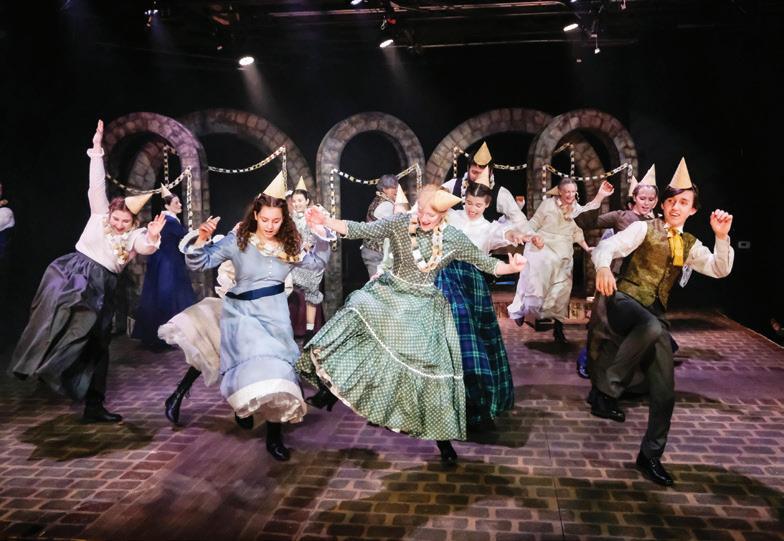
BY
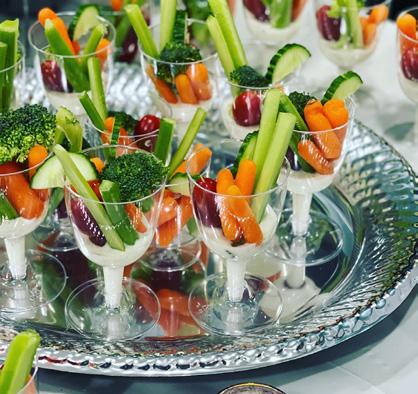
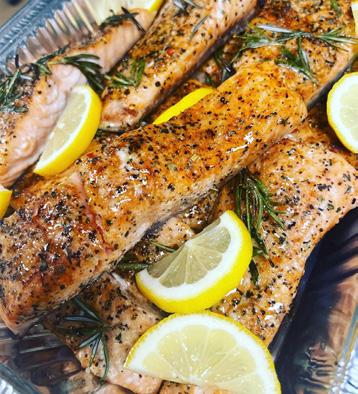
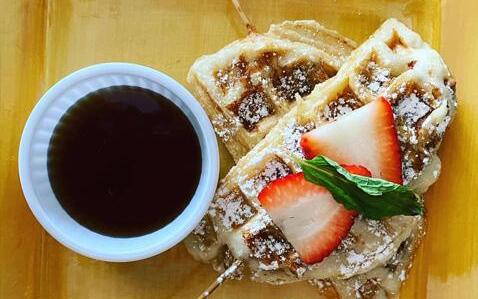

• Enjoy one-stop shopping at St. Thomas More Catholic School’s Christmas Holiday Shoppe Craft Show, featuring over 65 artisans and crafters from throughout the state, a raffle, bake sale, food trucks and more. Dec. 7, stmcsnc.org

• Watch festive displays of local groups proudly pass through the streets of downtown Chapel Hill during Chapel Hill Community Arts & Culture’s Chapel HillCarrboro Community Holiday Parade. Dec. 7, chapelhillarts.org
• Spruce up your holiday table and join Piedmont Feed & Garden Center for one of its Christmas centerpiece make-and-take workshops. The center supplies you with everything you need for the craft, including a pillar candle. Dec. 7 & 14, piedmontfeed.com
• Bring the kids for a gingerbread decorating class at The Carolina Inn. The casual afternoon begins with pictures and a story from Santa, then allows each child to decorate their very own pre-assembled house to take home, complete with their own apron and chef’s hat. Dec. 7, 21-23, destinationhotels.com/carolina-inn
• Watch the fifth annual Running of the Elves, a 1-mile race from Hillsborough’s Mitchell Street down Churton Street to eventually reach the Historical Courthouse, followed by the Light Up the Night Hillsborough Holiday Parade. Dec. 8, hillsboroughchamber.com
• Find the perfect Yuletide gifts at The Carolina Inn’s Holiday Market. With over 30 vendors from across North Carolina, the event will mix Southern flair with a European-style market to provide goods like ornaments, jewelry and chocolate. Dec. 8 and 15, destinationhotels.com/carolina-inn
• Enjoy cookies, crafts and a children’s show at the Carrboro Century Center’s familyfriendly Kids, Cookies & Candy Canes event. Dec. 12, townofcarrboro.org
• Wrap up your shopping and make a positive impact at the annual Inclusive Business Holiday Gift Market at the Blue Hill Event Center hosted by Extraordinary Ventures and Work Together NC. Shop from local businesses and vendors committed to employing an inclusive workforce and find an array of handcrafted gifts, decor, ornaments and more. Dec. 14, extraordinaryventures.org
• Experience the sounds of the season with Voices’ December choir concert, “Wint’ry Light,” held at UNC’s Moeser Auditorium in Hill Hall. The full company performance will end with five carols, including “We Wish You a Merry Christmas.” Dec. 14-15, voiceschapelhill.org
• Bring a lantern for the Solstice Lantern Walk starting at the Eno River Farmers Market Pavilion, traveling through River Park and along the Riverwalk. This year’s event will also feature a Solstice Market, which will showcase local artists, live music, hot drinks and food and more. Dec. 21, hillsboroughartscouncil.org CHM
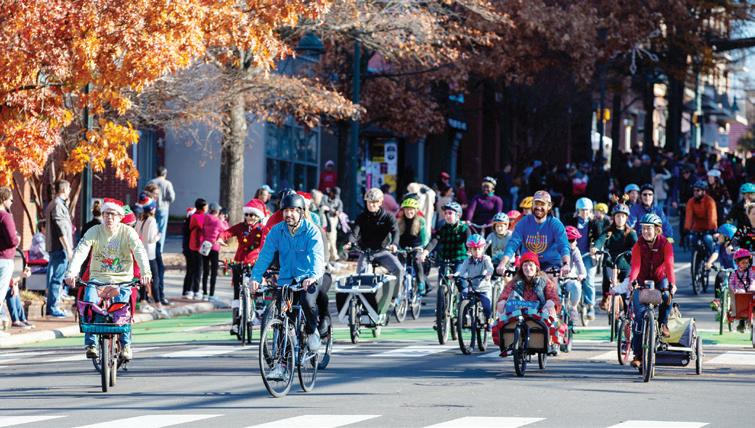

A play commissioned by PlayMakers aims to start a new Chapel Hill tradition
By Lola Oliverio
Join PlayMakers Repertory Company for some holiday whimsy this season with “The Christmas Case of Hezekiah Jones,” a comedy that follows one of Santa’s top elves, Dizzle Jollyworth, after he is sent to Chapel Hill to help bring Christmas cheer to a grieving toymaker. “PlayMakers commissioned local playwrights Mike Wiley and Howard L. Craft to write a Chapel Hill-based holiday show two years ago,” says Vivienne Benesch, PlayMakers’ producing artistic director. “Since then, we have done a fantastic workshop with The Process Series, and the playwrights have continued to revise the script. They will continue to work with us during the rehearsal process as we build this new Chapel Hill tradition.”
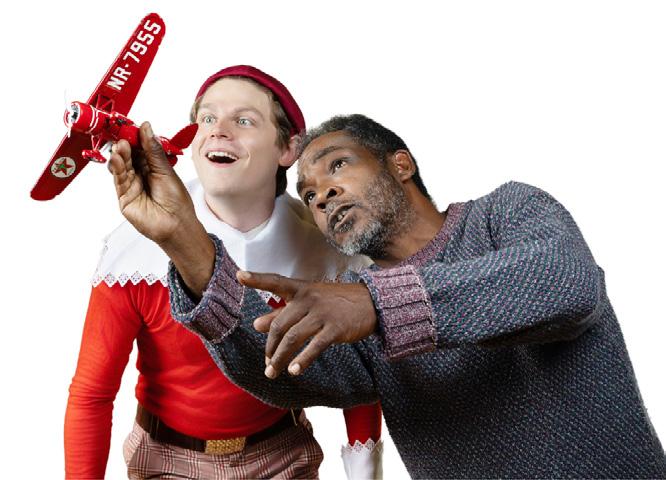
UNC’s , says she hopes audiences leave feeling inspired to spread joy in their community. “This play is about leaning on each other and what it means to care for each other, especially during the holiday season,” she says. “For many, the holidays can be a stressful time. This play highlights the power of community and moving forward with love and joy.”
Gather your friends and family and get tickets for the show running Nov. 26Dec. 15.
BY



For over 3,000 years, throughout the Middle and Far East, Hammams and Bath Houses have been part of the fabric of life.
It was a place to clean, groom, shave, and get massaged, and it was a hotspot for social activities like friendly discussions, idle gossip, matchmaking, and fascinating customs. Followed by refreshing drinks and, later on, tea. They were open doors of invitation for people to refresh, relax and rest both the mind and the body.
And now, we have an open door of luxurious relaxation here in Chapel Hill.





Éminence Organic Skin Care Bamboo
Firming Fluid, $69
CITRINE SALON
3110 Environ Way, Chapel Hill 919-929-2209 citrinesalonnc.com
This firming fluid visibly tightens your skin, smooths away signs of aging, boosts elasticity and leaves your skin feeling luxuriously soft and silky.
Pair of Mid-20th Century Japanese Cloisonné Vases, $180
WHITEHALL ANTIQUES
1213 E. Franklin St., Chapel Hill 919-942-3179 whitehallantiques.com
This exquisite mirrored Gibari pair, featuring pigeon blood red enamel with silver wire and mounts, elevates any space with artisanal craftsmanship and timeless beauty.


Simpatico Earrings, $78
2302 Chapel Hill Rd., Durham, Tigress specializes in beautiful and unique clothing, accessories and gifts from fair-trade, sustainable companies and creative makers. These woven earrings are a favorite.

Oxidized Silver and Gold Orbital Pearl Earrings, $2,895 JEWELSMITH
2200 W. Main St., Ste. A-170, Durham 919-286-2990 jewelsmith.com
Designed by Bon for Jewelsmith, these handcrafted earrings feature Chinese freshwater pearls, recycled silver, 14K white gold and 18K yellow gold teardrops, dangling from gold-dapped discs.
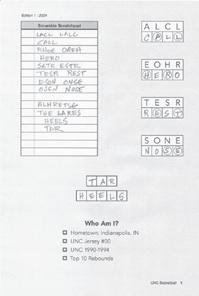

Knot Vase in Smoke Green, Large: $168; Small: $127 (also available in blue and amber)
MAX HUGO INTERIOR DESIGN
5850 Fayetteville Rd., Ste. 104, Durham 919-806-3638 maxhugointeriors.com
Crafted from handblown art glass by skilled artisans, these unique vases add a distinctive flair and create a stunning focal point in any space.
CWS Famous Names In Carolina Basketball, $9.95
CELEBRITY WORD SCRAMBLE 704-724-8530 celebritywordscramble.com
The Carolina Basketball book offers puzzles featuring 171 Tar Heel players, coaches and contributors, along with 26 pages of Carolina basketball memories, fun facts and photos.

North Carolina Zoo Annual Membership, Ranging from $69 to $300 (individual to full-family memberships)
HEART OF NORTH CAROLINA VISITORS BUREAU 500 Albemarle Rd., Asheboro 800-626-2672 heartofnorthcarolina.com
Enjoy free admission to the North Carolina Zoo, plus access to exclusive events, discounts and 150 zoos and aquariums worldwide. Learn more at nczoo.org. CHM
Photography by John Michael Simpson
By Anna-Rhesa Versola
ravis Brady discovered what she thought was a swollen lymph node under her arm while playing with her daughter, Grier Grose, who was 2 at the time.
“I was tickling her, and she accidentally kicked me under my left arm, and I was like, ‘Whoa, that hurt,’’’ Travis recalls. She made an appointment in January 2016 to see her doctor but missed it due to a business meeting in Northern California, where she and her family were

this was the book that I would write. I’m in the process of this dream coming true; then we’ll see what the new dream is.”
– Travis Brady
living. They were already preparing to relocate to the East Coast that April when she was finally able to see her physician.
“As soon as he touched it, his whole demeanor changed,” she recalls, adding that it never occurred to her that the area beneath the armpit is considered part of the breast.
Travis, a native of Salisbury, North Carolina, had her first biopsy in California. A couple of weeks later, she and her husband, David Grose, who played lacrosse at UNC, had moved across the country with their daughter to Durham. Travis had additional tests at Duke University Hospital, and at age 45, she was diagnosed with Stage 3 breast cancer.
She underwent a lumpectomy and removal of 22 lymph nodes – five were positive for cancer. Travis, who believes in second opinions, chose a different oncologist who recommended a more aggressive treatment regimen at UNC. She endured a year’s rough passage of chemotherapy infusions, radiation, needle sticks and myriad side effects.
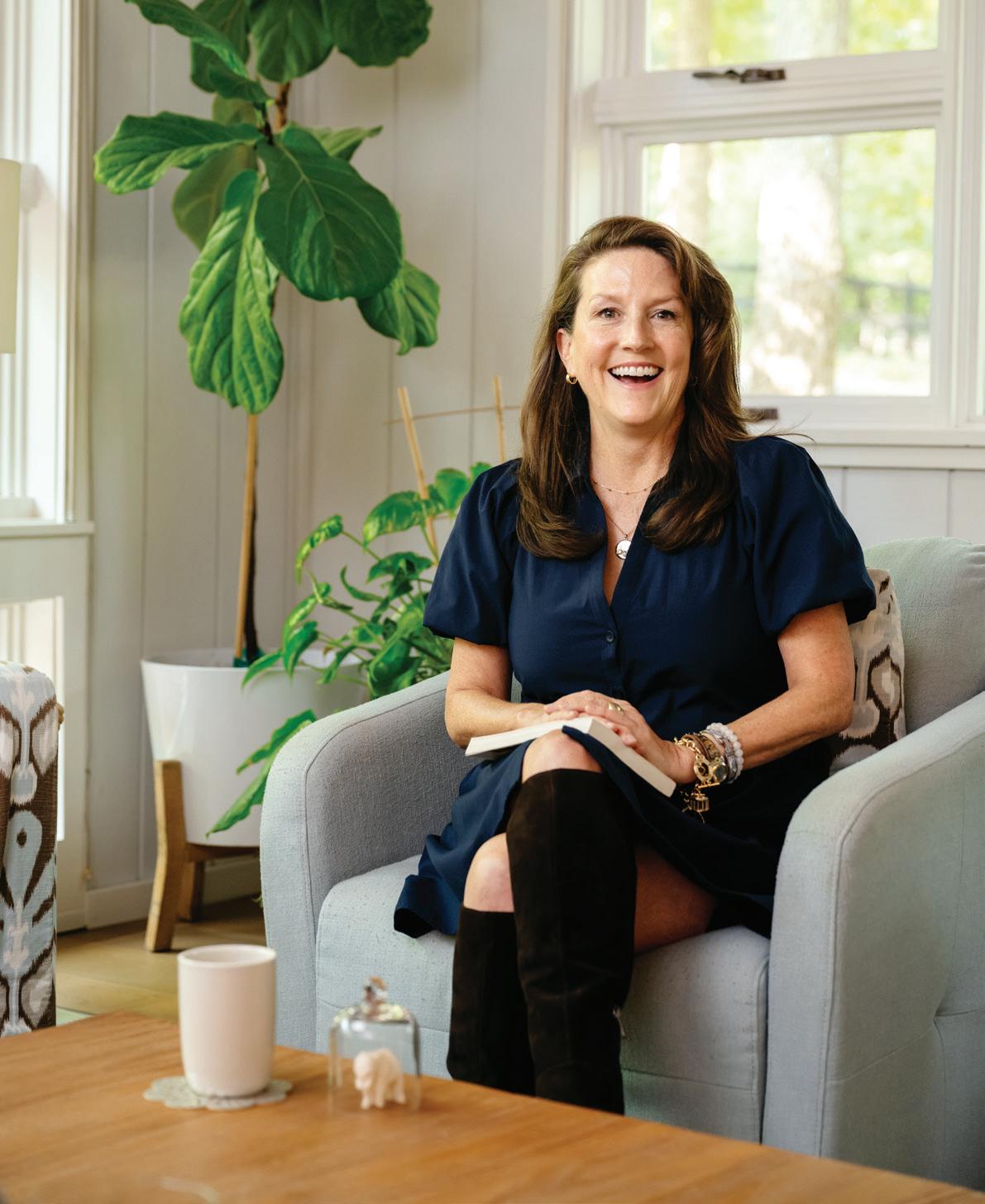

After successfully completing treatment in 2017, Travis decided to write a daily blog in October for Breast Cancer Awareness Month, sharing what helped her through the experience. Then, in 2020, as a global pandemic swept over humanity, Travis thought about an idea to help other survivors. She explored this entrepreneurial notion through startup accelerator Launch
Travis, who is vice president of human resources at Hedrick Industries, interviewed dozens of former breast cancer patients as part of the exploration process. “When I was talking to survivors, I realized there was a common thread where they wish they had had more support and understanding from survivors who’d gone before them,” she says. Though the business idea did not work out, she had a wealth of content to add to her own blog entries. She decided to write a book.

Two years ago, Travis enrolled in a four-day writing workshop with an opportunity to submit a book proposal and a chance to win a publishing deal. She won. Her book, “Make Room for Healing: 40 Tips from a Breast Cancer Survivor,” was published this fall by Hay House, a division of Penguin Random House.
The marketplace was already filled with poignant, thoughtful books by survivors and text-heavy books written by medical doctors, so Travis aimed to offer something a little different. “I wanted to create something
that was inspirational but practical,” she says, adding “small, cute and giftable” to her requirements.
The chapters are short and organized according to Travis’ pragmatic approach in life and business. The first section focuses on support, including her advocacy to seek second opinions. The next section centers on how to get ready for health checkups, treatments and other appointments. “I would prepare for [them] like a work meeting to make sure that I was clearheaded going in and I was going to get the answers I needed,” she says.
Other chapters called “Nourish” and “Heal” discuss organic and alternative ways to integrate foods and health practices to support rest and recovery. “I think, without consciously realizing it, by doing some of these things, it gave me a modicum of control, and that control was helping my health during that situation,” she says. “I was … feeling totally overwhelmed and joyless. I was trudging, and the cancer made me realize that. The purpose of life is to enjoy it, so figure out ... [what brings you joy] and how to be of service. Figure out how to do those things. [There is] a whole section about the ways I found my way back to joy.” CHM
Travis will sign copies at different tour events this fall, including a lunch-and-learn on Nov. 11 at 11:30 a.m. at The Chapel of the Cross
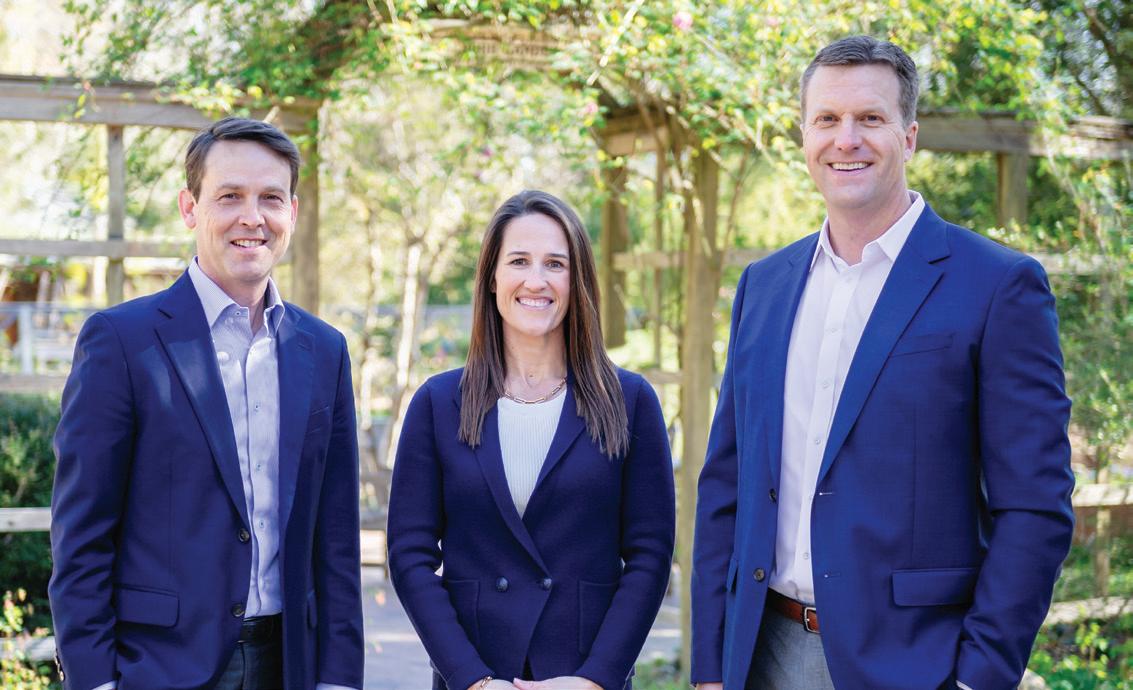


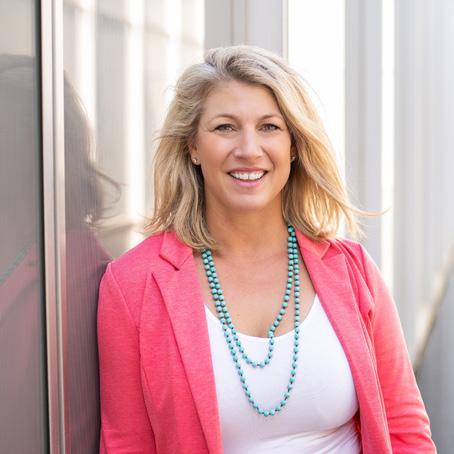

serving as her daughter’s main communicator and caregiver.

Her daughter, 16-year-old Madeleine “Maddie” Harrison, lives with cerebral palsy. She’s nonverbal and is unable to sit, stand or walk on her own. Maddie has a complex medical history with recurrent pneumonia, including a history of need for ECMO (extracorporeal membrane oxygenation).
But Maddie has another important companion – one who also cannot speak but expresses affection through physical touch, a radiant smile and a wagging tail. Thanks to Eyes Ears Nose and Paws, a Hillsborough-based nonprofit agency founded in 2008 with the mission to partner people with dogs to improve lives, 6-year-old red golden retriever Lilly has changed the lives of Maddie and her whole family.
The family has lived in Chapel Hill for 10 years, relocating from Singapore – although
now has been one-way, since Maddie is not able to use her arms to pet Lilly, cuddle her or give her treats [on her own]. But it’s also wonderful to see the unconditional love that Lilly shows Maddie and all of us, even if Maddie doesn’t give it back.”
– Margarita Escaler
Margarita is originally from the Philippines, and her husband, Stuart Harrison, was raised in Australia. “We chose to move to North Carolina because my husband’s headquarters are in [Research Triangle Park] and because of Maddie’s needs,” Margarita says. “We just thought education would be better here in the U.S. … We felt like it was time to try other locations where she could thrive.”
It wasn’t until Maddie was at home nearly full time doing virtual school during COVID-19 that the family seriously considered the benefits of having a dog. “Maddie’s only experience with a dog was in elementary school where a therapy dog would come once a week to visit her class,” Margarita says. “Based on the feedback from Maddie’s teacher and social worker, she responded very positively each time the therapy dog would come.”
It was purely by chance that Margarita came across EENP – she was volunteering with her church to clean up the organization’s recently acquired Hillsborough office in late 2019. A staff member was there with a “gorgeous red golden retriever that was training to be a service dog,” Margarita says. “And [the pup] just so happened to be the sister of Lilly. … [Emma Harrison, my 11-year-old daughter,] and I fell in love with her immediately.
“I told the staff member all about Maddie and asked her whether she would benefit from a service dog … and then I attended an open house with Maddie in February 2020. And [they said] an assistance dog would absolutely enrich the life of Maddie and all those around her.”
Maddie was matched with Lilly in September 2020. Officially, Lilly is Maddie’s “home helpmate,” rather than a full-fledged public access service dog, since Maddie will never be able to go out in public on her own and wouldn’t need a service dog to function independently.
“We believe that since having Lilly, Maddie is seen more,” Margarita says. “Having a dog alongside her when we are out and about makes Maddie more approachable and draws more people – specifically children – to talk to her, ask questions and engage with her instead of simply staring at her or avoiding her completely.
“Lilly also provides companionship and comfort when Maddie feels anxious or gets overly excited,” Margarita says. “Every night, as Maddie is about to sleep, [Lilly] lays across her body, applying deep pressure therapy [or gentle, firm pressure through physical contact, thus providing a calming effect on the nervous system, promoting relaxation and reducing anxiety].”
Plus, Lilly can alert the family when Maddie is about to have a dysautonomia episode (a sudden increase in heart rate and/or decrease in oxygen levels).
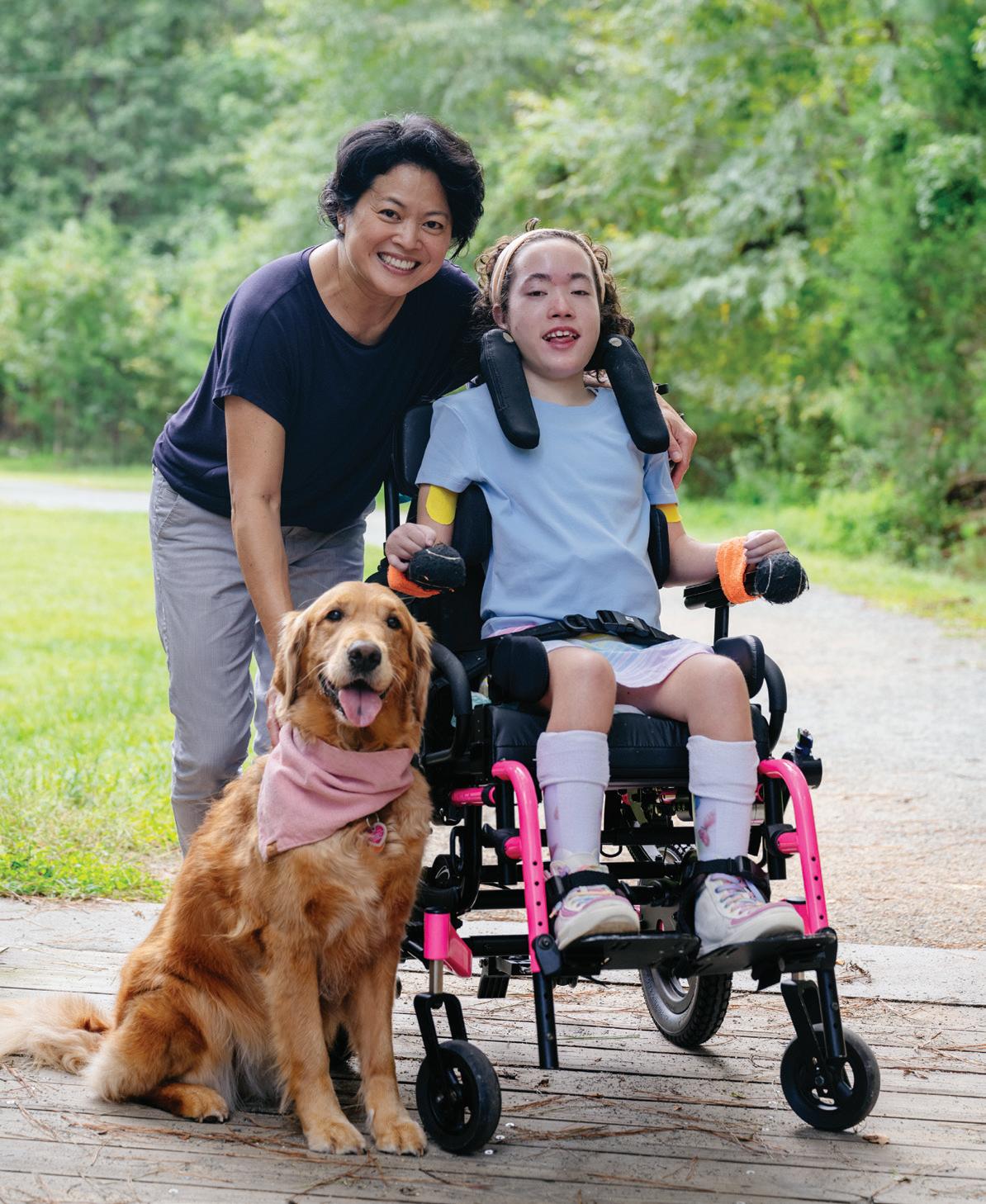
Margarita has nothing but high praise for EENP. “We never felt like we were on our own,” she says. “During the first year we had her, there were weekly and then monthly check-in calls … and then if I had any questions or challenges, they would help us train Lilly.”
EENP’s service dogs are largely trained by correctional center inmates. The ABEL (At Both Ends of the Leash) program was founded in 2014 and teaches inmates to train these assistance dogs, allowing them to develop interpersonal, leadership and job skills while preparing dogs to be paired with clients. The dogs enter the program at about 6 months old and spend 12-18 months training in prison.
“We’re talking about men who are there for life,” Margarita says. “They’ve done some pretty nasty things … but they can hold their heads up high now.
“And it’s not just dog training … there’s a lot of leadership skills that are needed, because as they move up the training ladder, they have to exhibit certain skills and characteristics before they can reach the highest level,” Margarita says. “So for them, they learn to trust each other more, to ask each other for help. It transforms many of their lives. … It makes me so emotional.
“And that’s why when I was asked by [founder and executive director Maria Ikenberry] to be on the board from a client perspective, I jumped at it right away.” As a member of the external
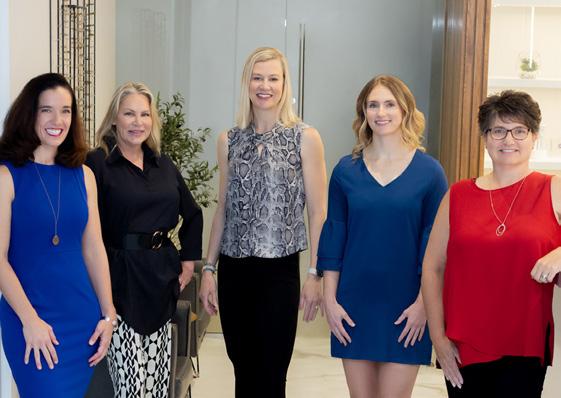
affairs committee since 2023, Margarita would love for EENP to expand their placements to reach even more clients. “I also love that in some organizations, they are free of charge because [service dogs] are quite pricey,” Margarita says. “What EENP does is assist in fundraising with the client. … They offer donations and scholarships for those in need. It would be great if the financial component was easier, but I also see the amount of work and time required to train dogs.”
At the end of the day, Margarita feels indebted to EENP for the impact that Lilly has had on her family. “Lilly not only provides comfort to Maddie but to all of us,” Margarita says. “In fact, we’ve often joked that Lilly has been everyone’s therapy dog during periods of high stress and anxiety. We basically treat her as our fourth child.”
And like the name of the program suggests, the benefits of EENP are truly seen at both ends of the leash. “I think the one thing that struck me … is that it’s all about second chances,” Margarita says. “For people like Maddie, who are often neglected or not seen by peers or the public, and these inmates who are often forgotten and no longer circulating in the community … EENP and the ABEL program have given both the inmates and the clients an opportunity to be seen again.” CHM
• Remove sagging skin without surgery with Ellacor Micro-coring technology.
• Accure Laser for Acne. Effective treatment for acne without medication.
• Bothered by Unwanted Sweat? Not anymore with the Brella 3-minute SweatControl Patch.
Chris G. Adigun, MD is a board certified dermatologist and a recognized leader in dermatology. Dr. Adigun’s team is comprised of top notch, dermatology-trained professionals, offering the latest technology and treatments for all your skincare needs.
Visit DLC today and experience the difference for yourself!
Chris G. Adigun, MD, FAAD
Karlee Wagoner, ANP-BC
Diana Walker, PA-C
Amy Rodriguez, PA-C
Jenny Jahoo, LME
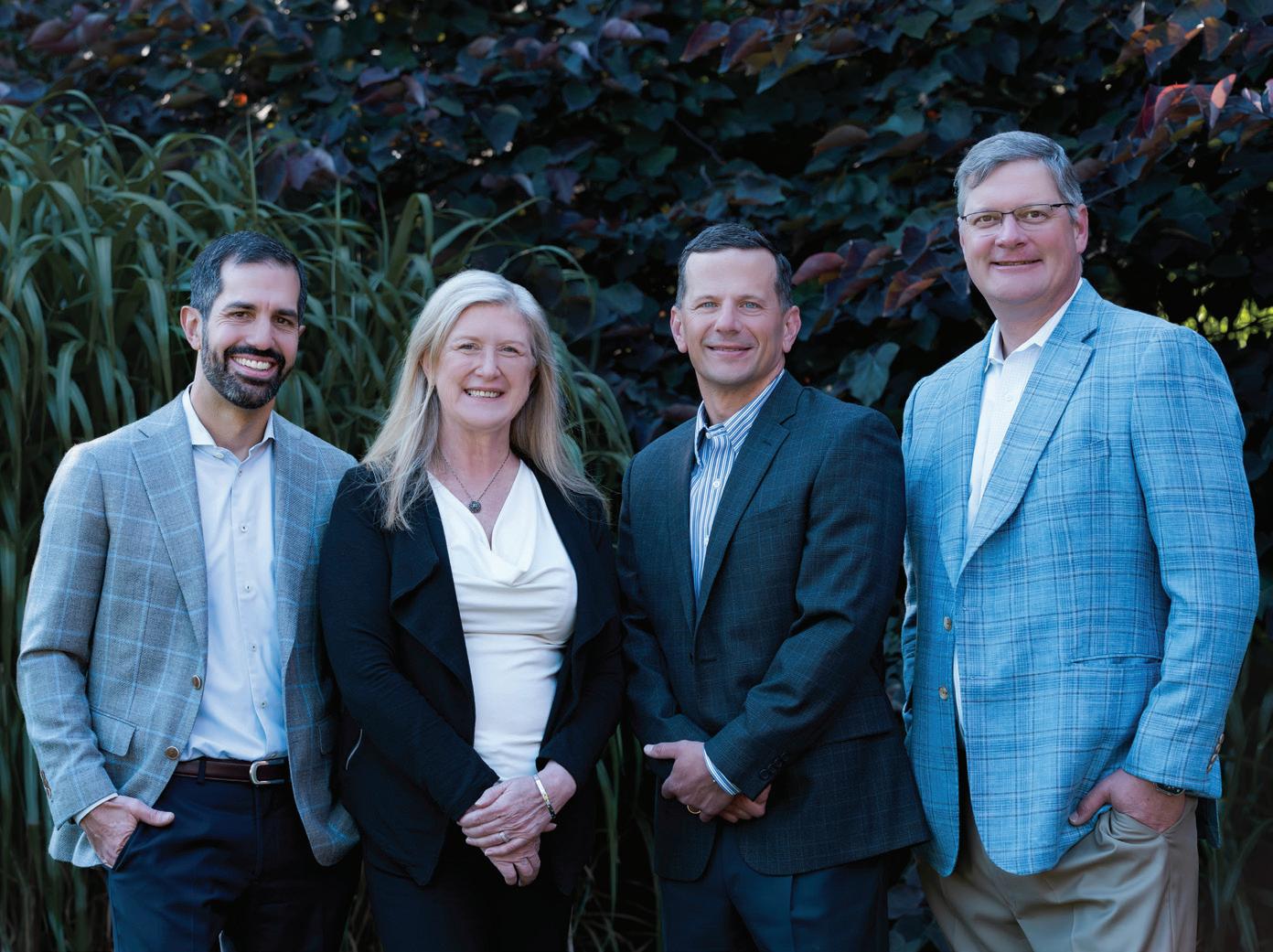
Voted best oral surgeons in Chapel Hill
Know that you’re in the best hands for your procedure with expert care from our board-certified oral and maxillofacial surgeons, Debra Sacco, DMD, MD, Brian Vandersea, DDS, Andrew T. Ruvo, DMD, MD, and Adam D. Serlo, DMD, MD.
DENTAL IMPLANT SURGERY
BONE GRAFTING
IMPLANT SUPPORTED OVERDENTURE
WISDOM TEETH EXTRACTION
CORRECTIVE JAW SURGERY

By Dena Daw
ov. 26, 2019, was meant to be a routine anatomy scan, but Hillsborough resident Anna Flack – pregnant with her and husband Brandon Colbert’s seventh child – knew something was wrong. “I could tell by the faces the technician was making during the ultrasound,” she says. “My mom was like, ‘Oh, no, you’re just looking too much into it,’ but I knew.”
A conversation with the doctor and a neonatologist confirmed her worst fears: Her daughter was given the fatal diagnosis of anencephaly.
Anna was informed that she could induce termination the following week, but she wanted to know all her options if she carried to term. The neonatologist explained to Anna that depending on the level of severity, some babies with anencephaly could live up to a couple of hours.
“And that’s when I asked about organ donation,” Anna says. “If I carried her to term, what would that look like? Could her organs be given to other babies or other adults?”
the day we lost our daughter, we were able to help somebody else’s child. [And] to know that her heart valves are beating in someone else’s baby’s heart and some mama got to hold her baby and be with her baby a little bit longer.”
– anna flack
That conversation was shortlived. The doctor told Anna that her baby didn’t have a brain and that in North Carolina, if brain death is not able to be determined, then it makes them ineligible for organ donation. Devastated, Anna left the hospital. Then she received an unexpected call.
“It was the neonatologist,” recalls Anna, tears flowing at the memory. “She was like, ‘I just want to let you know that it’s such a hard thing to think about what you’re going through, yet you’re willing to think about other people.’” The neonatologist gave Anna’s contact info to HonorBridge – a nonprofit organ donation organization.
Christena Tozel, research coordinator for HonorBridge, contacted the family the next day. She told Anna that due to organ size and the law in North Carolina, most of the organs would be ineligible for transplant but eligible for donation to research, which was still equally as important to the family. “Anna chose to carry her baby as close to full term as she
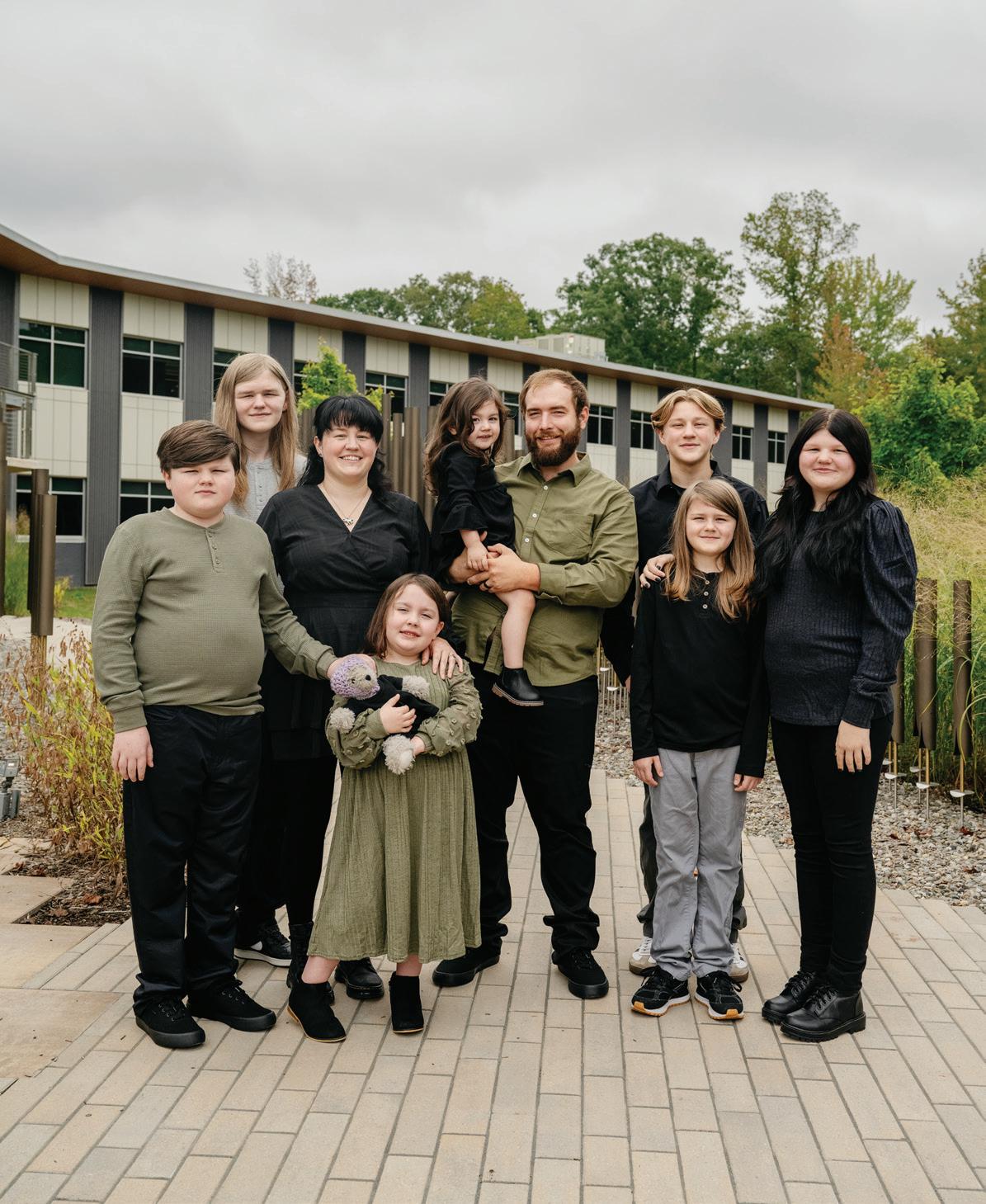
could so her little one could leave a sense of legacy behind through her gifts of donation,” Christena says.
Over the next five months of pregnancy, Christena became the family’s lifeline in an ocean of uncertainty as they prepped for delivery and potential donation. “I always strive to maintain transparency and clear communication with our neonatal donor families and our hospital partners,” she says. “I never want to promise organ placement outcomes and then that not be the case, setting them up for secondary loss and grief.”
Against all odds, Corbyn Elizabeth Reign Colbert was born on April 15, 2020, at 11:59 p.m., only 37 minutes after her last registered fetal heart tone. She weighed 6 pounds, 2 ounces – 2 ounces over the eligible donation weight, allowing them to move forward with organ recovery. Christena credits the UNC labor and delivery team, among others, for being a big part of the success.
“Heart valves are a transplantable tissue, and baby Corbyn just made the weight requirements to allow this opportunity to occur,” Christena says. “She also donated both her lungs to a local researcher out of UNC, her liver to a local researcher in the Research Triangle area and both of her kidneys to one of our national research partners.
Her gifts have the potential to impact millions of lives through these research avenues of donated tissues.”
Anna and Brandon picked out the name from another child she knew of named Corbin who had a life-limiting disorder. She was inspired by his mom who never gave up on him. Corbyn is represented in family photos to this day in the form of a stuffed bear, a present given to them by Christena. “She goes with us on all our trips; we include her on family vacations,” Anna says. “We really love that bear.”
Anna hopes to amplify the conversation about neonatal donation. She recognizes that not everyone will make the same decision, but she thinks it should still be an option for families. “Being able to take such a sad situation and to turn it into something so beautiful and amazing, with the ability to change not only your life but someone else’s, I just don’t see how you could ever go wrong with that.”
Despite the loss of their daughter, both Anna and her husband take comfort in knowing that her impact will far outlast her time on Earth.
“To know that Corbyn was the gateway to that brings me some peace,” Anna says. “Her life mattered in a different way, in such a big way, even though she technically didn’t take a breath here on Earth.” CHM
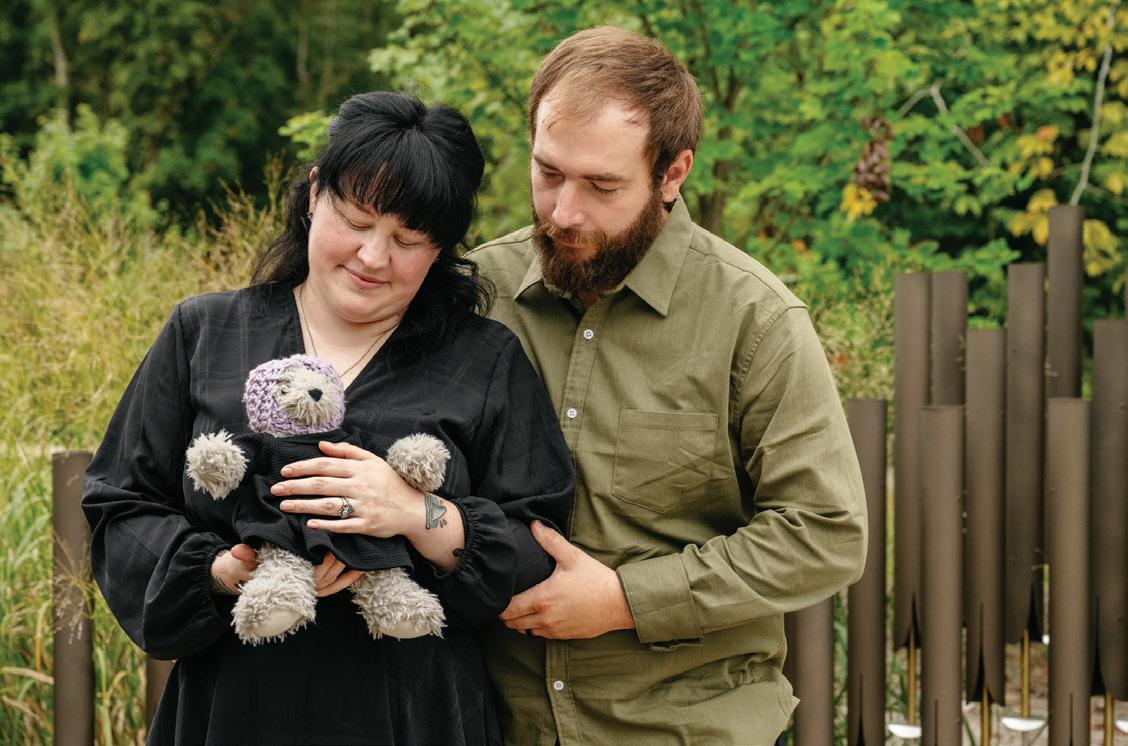


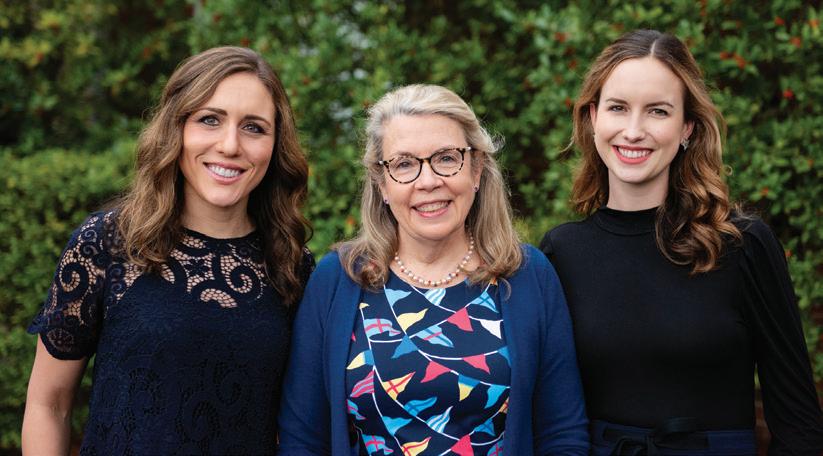




By Anna-Rhesa Versola
r. Giselle Corbie sees beyond the numbers and data collected through scholarly research about health outcomes.
She sees the deeply personal stories that can help drive systemwide improvements of quality health care access for all.
“Too many families in the U.S. experience barriers to healthy living, and it’s important that we all work together to make sure all of our communities are healthy and that no family experiences gaps in care and that everybody has the opportunity to make a healthy choice,” Giselle says. She directs the UNC Center for Health Equity Research and serves as Kenan Distinguished Professor in two departments within the UNC School of Medicine. Last year, she became senior vice provost for faculty affairs.
Inspiration for Giselle’s profession comes from her own family’s experience with health inequalities. Her Trinidadian parents, Valmond “Val” Corbie and Aileen Corbie, migrated from England to New York in the early 1960s with their first-born daughter, Roxanne Corbie. She was discovered to have a fatal congenital heart defect. Val, who worked for the New York City Transit

“I think fundamentally any of us who do this work have a foundational belief in the good of people, and that is born out of hope. You have to have hope for a brighter future to be able to do this work.”
– Dr. Giselle Corbie
Authority, and Aileen, a nurse, raised Giselle and her three younger siblings in Brooklyn.
“That story of the challenges they faced as my sister was dying was a family narrative about how systems can be put in place even when a 6-month-old child needs emergency care,” Giselle says. “I think that was what drove me to medical school. Then, within medical school and residency during my training at Yale [University], I clearly saw how people were making decisions based on the social identities of one group versus another group, and that’s really what sparked my interest in this research.”
The COVID-19 pandemic revealed health disparities embedded among those who neither have access to quality health care nor the means to avoid higher risks of exposure that include employment in essential work settings, relying on public transit and working in low-paying jobs with few or no sick days. Giselle says these social determinants of health are conditions shaped by numerous factors, like socioeconomic policies and political systems.
“As a physician, if I tell someone, ‘I want your diet to change’ or ‘I want you to get more exercise,’ there needs to be the opportunity to make those changes,” Giselle says, noting external forces that affect a person’s ability to lead a healthy lifestyle.
From a broader perspective, Giselle asks, “Who makes the decisions about the opportunities in communities to find affordable, fresh fruits and vegetables, eating a diet that is full of healthy foods, exercising in a place that’s safe? This is not about pulling [ourselves] up by our bootstraps and asking people to do more with less. [It’s about] holding [authorities] accountable for making sure those opportunities are available in our communities.”
She makes the point that systems are made of people and individuals who have the power to decide how policies and practices impact health outcomes. “We’ve seen that happen across societies and across time,” she says. “I fundamentally have hope that this work can make a change. We’ve seen the difference that one person can make, and even more [so] when you come together with communities that deeply understand and experience inequalities. That voice is incredibly powerful and can help shape the research in ways that are deeply impactful.”
Giselle does not work alone to tackle inequities in communities and within our health care system.
“I have an incredible team of people who I get to work with and colleagues across the eastern part of the state who motivate this work in ways that I never could,” she says. “Because of their lived experience, they really understand what the issues are, and I bring my expertise around scientific inquiry to the table. It’s the diversity of opinion we bring when we come together to solve these problems that allow us to come up with creative and innovative ways to tackle complex problems.” CHM
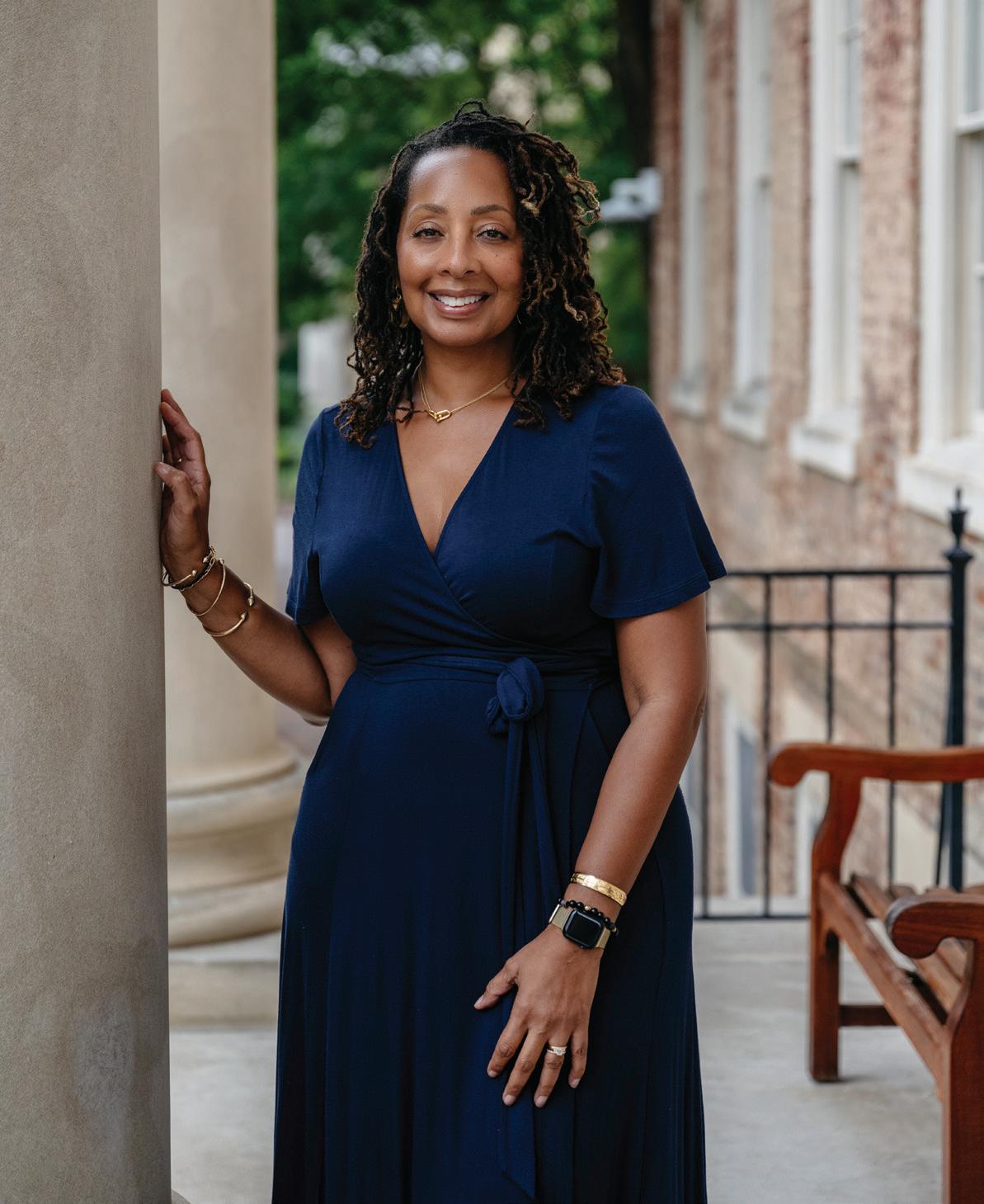
77 Vilcom Center Dr., Ste. 120, Chapel Hill, NC 27514 919-342-8402 • chapelhilloralsurgery.com
Dr. David Lee Hill Jr. is a board-certified oral and maxillofacial surgeon dedicated to delivering bestin-class surgery, safety, and service. He is a former adjunct clinical instructor at UNC-Chapel Hill and actively volunteers to provide care for underserved communities. An expert in CT-guided implant surgery and hard and soft tissue grafting procedures, Dr. Hill is currently in his 11th year as a faculty member at the Pikos Institute, a world-renowned center for 3D-based dental implant surgery education. Dr. Hill and Chapel Hill Oral Surgery utilize the latest technologies and advanced clinical methods to optimize patient outcomes.
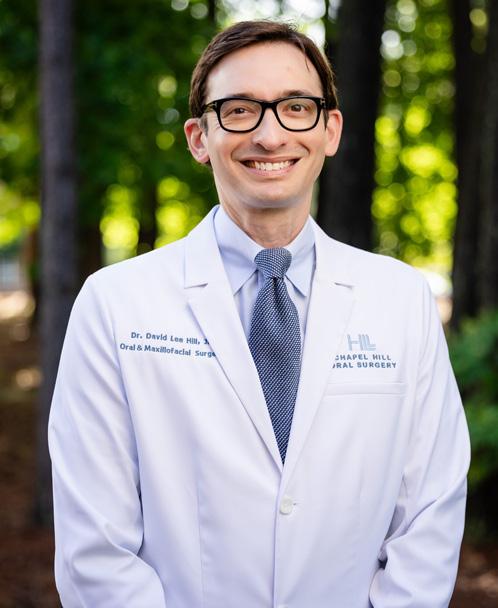
11312 U.S. Highway 15-501 N., Ste. 106, Chapel Hill, NC 27517 919-533-4686 • primusinternalmedicine.com
Primary care where you’re the primary focus.
In 2016, Dr. Todd Granger opened Primus Internal Medicine as a direct primary care practice to provide patients with longer appointment times, greater accessibility and improved personal care. With more than 25 years of experience practicing general internal medicine, both in private practice and on UNC School of Medicine’s clinical faculty, Dr. Granger is an expert at diagnosing and treating a wide range of medical issues.
To find out how you can get premium primary care without the premium price––or long waits––call Primus Internal Medicine today.
A100 Timberhill Place, Ste 110,Chapel Hill, NC 27514 919.710.8100 • trilliumclinic.com
t Trillium Clinic Dermatology and MedSpa, renowned dermatologist Stefan C. Weiss, MD, and his team, are dedicated to helping patients achieve healthy, radiant skin. Dr. Weiss, a leader in both medical and cosmetic dermatology, is an adjunct professor of dermatology at The Warren Alpert Medical School of Brown University. He is internationally recognized for his expertise in treating chronic skin conditions, including psoriasis, eczema, and acne. His passion for the artistry of aesthetics is evident in both his surgical outcomes and the transformative results he
achieves with cosmetic procedures like Botox, dermal fillers, and laser resurfacing.
The Trillium team pairs advanced technology with a patientfocused approach, delivering compassionate, personalized care. Dr. Weiss also actively contributes to the community through outreach programs that provide care to underserved populations, reflecting his commitment to improving skin health for all. Schedule a consultation at Trillium Clinic Dermatology and Med Spa today and experience dermatology done differently.
10441 US 15-501 N, Suite 100, Chapel Hill, NC 27517 919-942-2922 • dermatologyandlasercenterofchapelhill.com
At Dermatology & Laser Center of Chapel Hill (DLC), board-certified dermatologist Dr. Chris Adigun and her team provide comprehensive medical and cosmetic dermatological services in a warm, welcoming environment. Using cutting-edge technology and treatment options, she and her providers address concerns from acne to wrinkles to unwanted belly fat.
Dr. Adigun is one of only a few practitioners on the East Coast specializing in nail disorders. She is also passionate about the early detection and treatment of skin cancer and encourages regular screenings and sun protection. Her team provides solutions for
cosmetic sun damage, such as redness, brown spots and premature aging, with the most current treatments, including chemical peels, lasers, skin tightening devices and injectables.
Dr. Adigun and her team focus on building trusting relationships and providing individualized care. Treating patients respectfully, expressing genuine concern and taking time to talk to patients are hallmarks of the practice. Dr. Adigun and her team work alongside patients to identify and achieve their personal skin care goals because they believe everyone can have the skin they love.

Where art, science & technology meet
104 N. Elliott Rd., Ste. C, Chapel Hill, NC 27514 919-942-7163 • StudioGDentist.com
At Studio G Aesthetic & Family Dentistry, Mandy Ghaffarpour, DDS, Alex Yarborough Hart, DDS, FACP, and Thomas Dakermanji, DMD, provide comprehensive and restorative dentistry. By focusing on each individual and involving patients in their treatment plans, their team places patient care at the core of their practice. In addition, they take full advantage of the latest, state-of-the-art dental technology and advanced treatment options. By helping patients in Chapel Hill achieve their healthiest smiles, Studio G strives to improve their quality of life through excellent dental care both now and for years to come.


At Smith & Heymann Orthodontics, we believe a beautiful smile has the power to change your life. During your initial visit to one of our state-of-the-art offices, our team will ensure your time is informative and comfortable, utilizing the latest technology. You’ll leave with a detailed, custom-designed treatment plan in hand, ready to choose which treatment is right for you.
Our team is proud to serve our community as Invisalign Diamond Plus providers. That means we are among the top 1% of Invisalign providers in the nation. We have the expertise to help you achieve the smile of your dreams without the use of metal braces and wires. Call us today for your complimentary consultation with Dr. Dempsey Smith, Dr. Gavin Heymann, or Dr. Katya Skillestad.
77 Vilcom Center Dr., Ste. 310, Chapel Hill, NC 27514 888-506-4035 • cliftonandmauney.com
At Clifton & Mauney Orthodontics & Pediatric Dentistry, every patient is treated like family in a modern, comfortable environment using the latest technology and procedures. Their team creates a fun experience while personalizing treatment to promote positive oral hygiene habits, exceptional dental health, and confident smiles. They always go the extra “smile”!
For more than 27 years, Drs. Clifton and Mauney have provided comprehensive pediatric dentistry and orthodontics. Both are board-certified and trained at UNC-Chapel Hill. Dr. Nash is passionate about helping children take ownership of their smiles and is working toward board certification. They look forward to meeting you!
1390 Environ Way, Chapel Hill, NC 27517
919-933-9522 • finnface.com • @finnplasticsurgery
Finn Plastic Surgery is a comprehensive aesthetic practice serving patients seeking a variety of services, from minimally invasive treatments and physician-prescribed skin care to surgical procedures of the face and body. Last year, Drs. Finn and Elkins–Williams welcomed another surgeon to the team, Justin C. Sowder, MD. Dr. Sowder is double board-certified in facial plastic surgery and otolaryngology. He performs a full range of cosmetic procedures including facelift, rhinoplasty, blepharoplasty and browlift, in addition to nonsurgical procedures including injectable treatments and laser skin resurfacing. FPS offers unparalleled artistry, extensive experience, and innovative technology. Schedule your consultation with Finn Plastic Surgery, and rest assured knowing you have chosen the practice voted “Best of Chapel Hill” for 13 years in a row!
901 Willow Dr, Ste. 6, Chapel Hill, NC 984-230-4382 • wayfaringpediatrics.com
Wayfaring Pediatrics, Chapel Hill’s first full-service Direct Pediatric Care (DPC) practice, offers comprehensive care with unparalleled access to your child’s pediatrician. DPC is a membership-based model that simplifies healthcare by eliminating insurance hassles, allowing for same-day appointments, extended visits, and direct
101 Conner Dr., Ste. #401, Chapel Hill, NC 27514 35 Thompson St., Pittsboro, NC 27312 919-858-2864 • severtsmiles.com
Thank you for supporting our local office for over 20 years. Our practice is the oldest in Chapel Hill, founded in 1967 by Dr. Bill Davis and carried on by Dr. Severt in 2000. We are proud of our tradition of excellence and strive to care for our patients just like family. We provide orthodontic treatment in a personalized, caring environment and help our patients achieve beautiful smiles and healthy bites

communication via text, phone, or video chat. Dr. Joseph Vukin, a dedicated pediatrician and father of two, prioritizes spending time with each patient and family to fully understand their needs. With a lower patient volume, Dr. Vukin devotes his time to providing exceptional care. Reach out today to see if Wayfaring Pediatrics is the right fit for your family.
for a lifetime of dental health. With a highly trained staff and cutting-edge technology, our practice designs a plan to suit your needs, whether it be with state-of-the-art Damon braces or clear aligners. As a Platinum Provider for Invisalign, we are highly experienced with Invisalign treatment for children, adolescents, and adults. Contact us today to get started on the journey to your new smile!
The Blue Ribbon Mentor-Advocate program supports students in need
rowing up, 17-year-old Chelsey Onuoha always felt “different” from the other kids at her elementary school. She moved from Nigeria to Chapel Hill with her family at 2 years old and remembers being an extremely shy child. “I was really behind academically compared to the rest of my peers, and I couldn’t relate to them that much,” she remembers.
By fourth grade, Chelsey’s counselors recognized her need for extra support. That’s where the Blue Ribbon Mentor-Advocate program stepped in. First created in 1995, the program is designed to support and empower students of
color in Chapel Hill-Carrboro City Schools, especially those who are historically marginalized and underresourced.
Through the program, students in need are connected with adult mentors who offer academic and social guidance. Chelsey’s mentor is physical therapist Kristine Castellano, who joined the program when the youngest of her three children was in high school. “I figured I’ve been around this town a long time and had kids in the system, and so I understand stuff,” she says. “This would be a way to give back, since I know how to navigate things.”
The pair met for the first time at the North Carolina Botanical Garden. “I was terrified,” Chelsey recalls. As they walked along the paths, the extroverted Kristine was struck by how quiet the young girl
was. “It seemed like we were complete opposites on paper,” Chelsey remembers.
Chelsey slowly started letting Kristine in as the years went on. Every week, the pair met for an activity, ranging from arts and crafts to lengthy hikes. “It just got easier and easier for me to open up to her, because she showed me over time that she cared about me as a person,” Chelsey says.
BRMA currently supports 76 students like Chelsey, according to Lorie Clark, CHCCS’s coordinator of student leadership and engagement.
Beyond mentorship, the program offers students a wealth of extracurricular opportunities. From college tours, scholarships and international trips to professional basketball games and historical civil rights tours, BRMA shapes students’ lives beyond the classroom.
The program has an equally positive impact on its mentors.
Atuya Cornwell, Chapel Hill’s Parks and Recreation director, started mentoring Carrboro High School junior Lamonta Brandon just under two years ago. “It’s really a partnership where it’s not just about me pouring into him –he pours into me,” Atuya says.
Lamonta and Atuya instantly bonded over their shared love of basketball; Lamonta is a big Boston Celtics fan, while Atuya loves the Charlotte Hornets. On Lamonta’s birthday, Atuya took him to Charlotte to
watch their favorite teams face off.
“Unfortunately the Celtics won,” Atuya jokes, but the game remains one of his favorite memories with Lamonta. To Atuya, their connection runs deeper than mentormentee: “That’s my little bro,” he says. The pair meets up a few times a month and serves together on BRMA’s advisory board. Watching Lamonta take on a leadership role has made Atuya deeply proud. “I think he’s a phenomenal example of the program, even beyond his relationship with me,” Atuya says. “His progression of becoming a leader and having that confidence, it’s a direct effect of the Blue Ribbon program.”
Chelsey is flourishing as a senior at East Chapel Hill High School seven years after meeting Kristine. As Chelsey sets her sights on college and a future in nursing, Kristine reflects on how much that nervous little girl in the garden has grown. “She started off as very shy, unsure of herself and not confident,” Kristine says. “She’s blossomed into a more confident, self-assured young woman. And it’s so nice to see.”
CHM




The Chapel Hill High School automotive program drives hands-on learning
By Leah Berry Photography by John Michael Simpson
tudents at Chapel Hill High School are accelerating toward success in a number of ways – pun intended – and the automotive program led by instructor Robert Ballard is a prime example.
Robert has been running the program for the eight years that he’s been at CHHS, but it’s been around for much longer than he has – “I want to say it started in the ’60s,” he says. He spent nearly 10 years doing specialized diagnostic and electric work at Wallace’s Auto Electric, while simultaneously teaching tech school classes at night – namely at Wake Tech and Durham Tech (where he also graduated with an associate degree in automotive technology). “I got a phone call saying there was an opening for an automotive position at CHHS, so I dropped what I was doing at the shop and came here,” Robert says.
He teaches seven automotive courses a day – four intro classes and a few advanced ones – and also heads the racing club, a 14-person team of mostly juniors or seniors who leave school early every Friday during the season (March through September) to
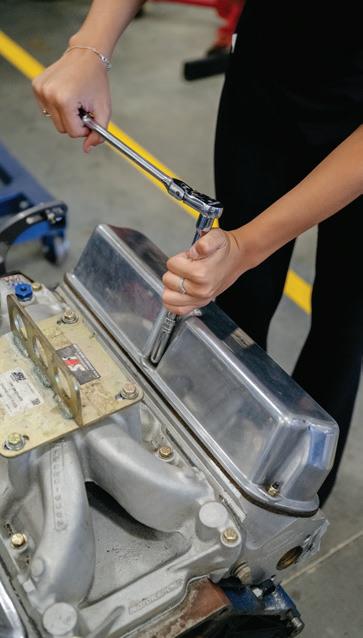
take part in races at Wake County Speedway. “We do practice, then qualifying, and then racing starts at 6 or 7 o’clock,”
Robert explains.
“We race till about 11 o’clock, then we go home.
The program works on custombuilt cars, usually sourced with the help of Chapel Hill Tire. “There’s certain things we can and cannot do in the program,” Robert explains.
“We still have to stick to our curriculum, so if there’s something that relates to the race car, we’ll work on it and do it in class.” He says chassis fabrication is not part of the course, for example, so that gets outsourced.
“We do the break lines, electrical, the power train, a lot of the suspension setup and things like that. So it’s a process of putting the car together and setting the car up at the track and then racing it,” he says. While the driver of the team’s race car is a 30-year veteran, the students are part of the pit crew.
Back in the classroom, students have around 100-200 different task sheets they
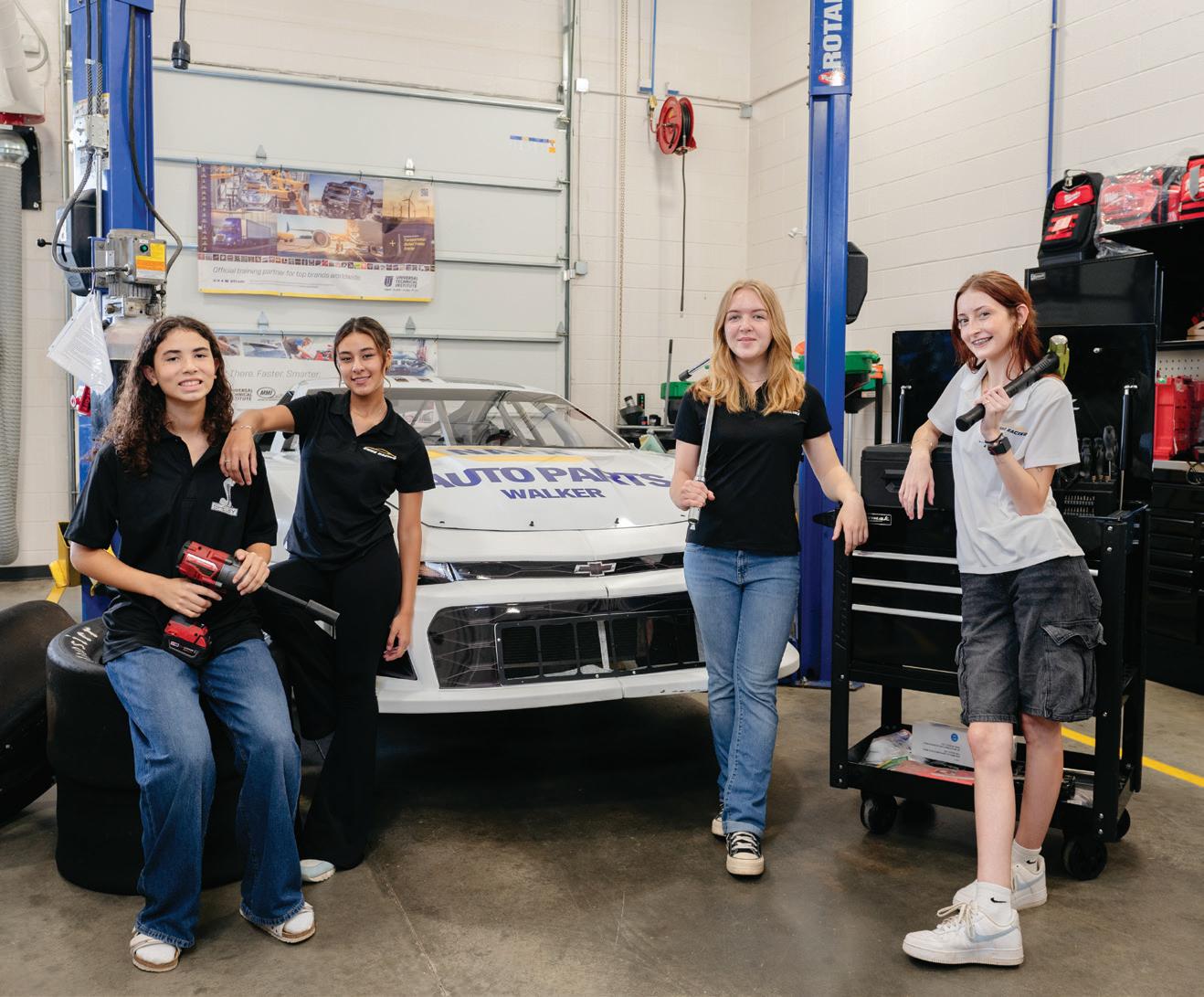
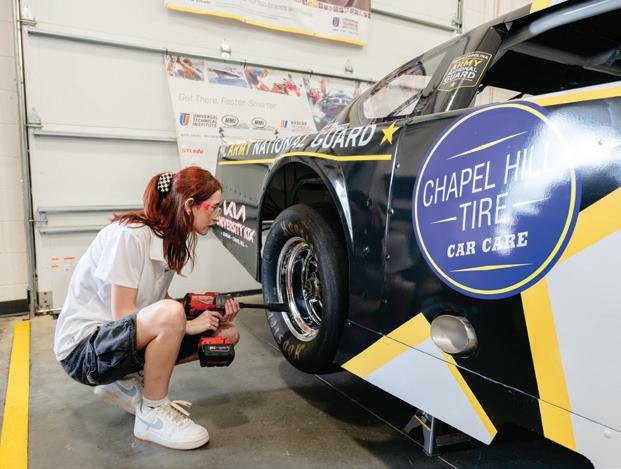
must complete on the car to move to the next level. “There’s no more end-of-course test, so they’re pushing for us to get our ASE [Automotive Service Excellence] credentials instead because they think that’s going to help the student more in the long run. … That credential stays with them.”
The CHHS program is one of only a few left in the state.
“We’ve seen a drastic decline in the number of automotive programs per district in the state and also across the country,”
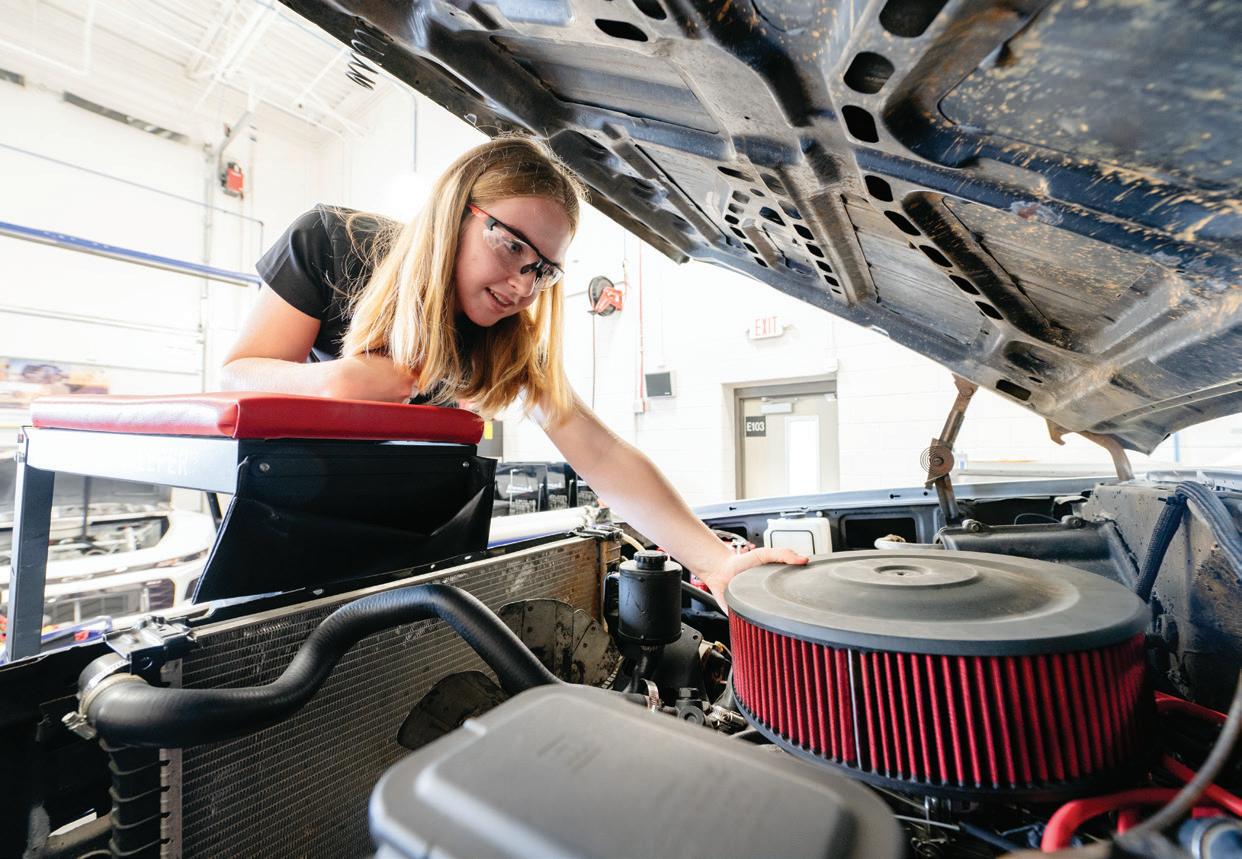
Robert says. He names a disinterest in the trade and the failure to keep up with certifications as the primary reasons why. “If the program is not ASE certified, then we don’t get federal funding,” Robert explains. “So you see a lot of school districts that don’t want to go through the process of actually getting accredited and keeping up the paperwork and all that.”
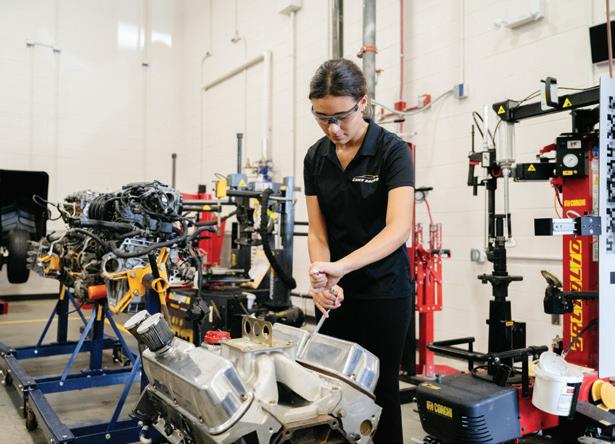
The racing club, on the other hand, relies on public funding. “We don’t get any funding from the school or CTE [Career and Technical Education] for the actual racing portion because it’s a club,” Robert explains. “So all of that is funded by industry partners, like Chapel Hill Tire, NAPA Auto Parts, University Ford and Kia. … We sell endorsement stickers like a regular NASCAR team would do to keep paying for all of our parts.”
The automotive program offers a pre-apprenticeship initiative for students to join as well, which waives their college tuition fee. “And hopefully, if they are interested in the motor sports industry, [the goal is] getting into schools like [NASCAR Technical Institute in Mooresville] … so they can continue their education, but so they can also continue working in the racing field.”
That’s the goal for Robert – to watch the students develop a passion for what they do. “Just seeing the growth in the students during the whole process and seeing them learn different aspects of the racing industry,” he says. “Seeing everyone work together … it’s pretty cool.”

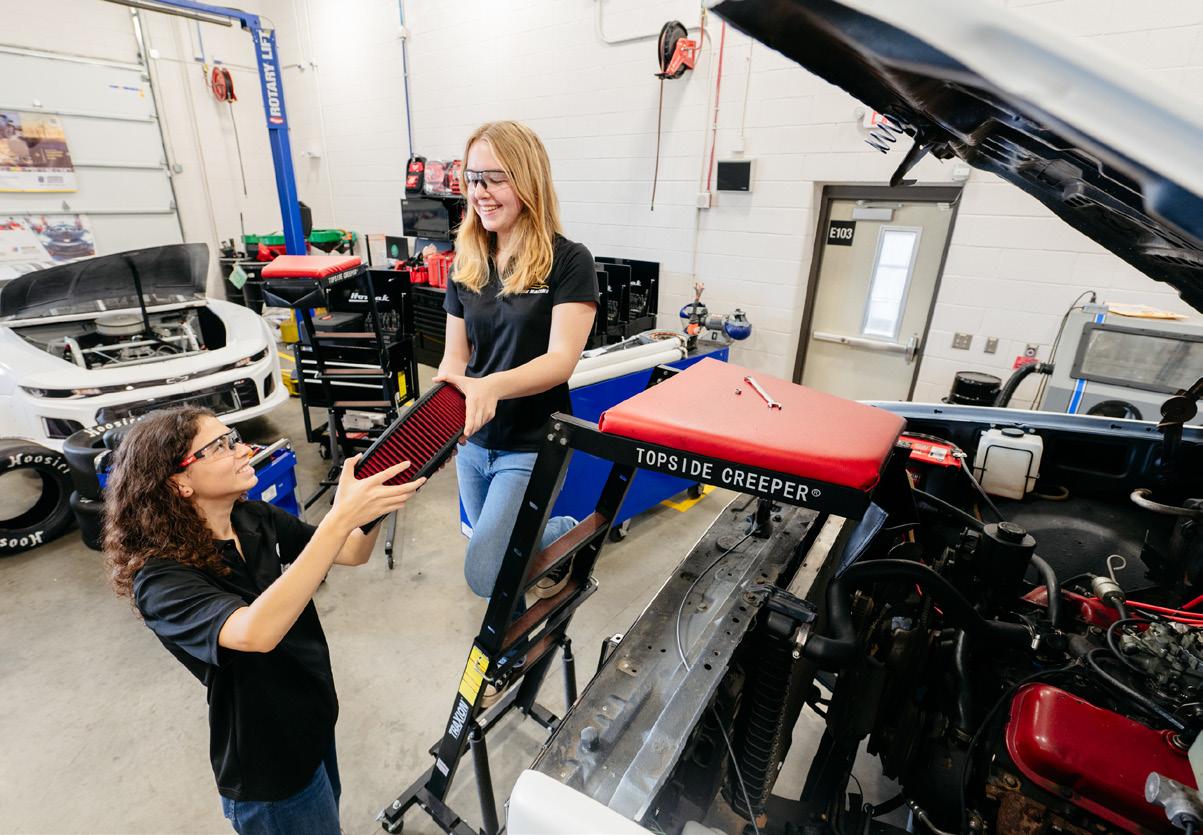
Robert says the program just keeps multiplying. “When I first got here, I think we had around 35 students,” he says. “This year, we’re pushing 140 students … and through the course of the eight years I’ve been here, it’s probably been close to 1,000 students who have gone through the program. We would be able to offer more courses if we had more instructors. But currently, I’m just running by myself.”
And as the program grows, the female students taking an interest do as well. “We started a female lunch-and-learn two years ago, so we’ve increased in the female population from about one or two a year to about 40-50 female students in the program,” Robert says.
Soren Anderson developed an interest in the program at her first lunch-and-learn, although she had no experience with cars. Samantha Orozco and Janna Scott say they grew up working on cars and wanted to continue the experience, and Miriam McBroom was introduced to the concept in middle school and knew she wanted to give it a shot.
“We usually do one day a week of textbook work, one day of online certifications and then the other three, we’re in the shop working on cars and doing hands-on stuff,” Soren says.
All four are also part of the racing team. “At the racetrack, it’s really social,” Miriam says. “You get to talk to people and walk around before the race starts, and then once it does start, there’s a bunch of cool stuff you can do like take tire pressure and stuff like that.”
And although these four students don’t necessarily have plans to go into the automotive industry after they finish school, they are grateful for the lessons learned nonetheless. “I think we’re learning basic skills that we should know about cars that will help us if we have car troubles,” Janna says. “We’ll know what to do and won’t be as lost or have to spend as much money.”
Soren agrees with the sentiment. “We do a lot of stuff in this and other [career and technical education] classes that are just general career preparation things,” she says. “Last week we were doing training on how to build a resume and how to do interviews, so we’re definitely learning skills that are applicable across a lot of job fields, as well.”
Their instructor has big plans for the future – he hopes to host races at the school track to secure more funding for the program and vouches for hiring another instructor and opening a full racing program next year, attaching it to the automotive program.
The team finished up the season in September, but the work is just beginning in preparation for next March. “The closest we’ve gotten [to winning] is third place,” Robert says. “We’re lucky if we finish races sometimes … but with the new race car, we’re hoping to be a little bit faster and better this year.”
Regardless of the team’s final standing, Robert is happy to be a part of something he loves. “And we really couldn’t run the program without the support of partnerships,” he says. “It’s a team … it’s not just me.” CHM


BETHESDA CHRISTIAN ACADEMY
1914 S. Miami Blvd., Durham 919-598-0190; bcacrusaders.org
Focus Partners with Christian families to help equip students academically, socially, physically and spiritually.
Grades K-12
Total Enrollment 210
Student/Faculty Ratio 13:1
Yearly Tuition Lower School, $7,984; Upper School, $8,805
Special Requirements Student testing and parent interview; student must be 4 by Aug. 1 to enroll in kindergarten.
BRIGHT HORIZONS CHILDREN’S CENTER
2352 So-Hi Dr., Durham; 4205 Capitol St., Durham; 2500 Highstone Rd., Cary; 800 Weston Pkwy., Cary; 800 Corporate Center Dr., Raleigh; 8516 Old Lead Mine Rd., Raleigh; 2051 Shepherd’s Vineyard Dr., Apex; brighthorizons.com
Focus Empowering children from infancy to become confident, successful learners and secure, caring people. Growing young readers, scientists, artists and explorers who are engaged and curious. Programs invite children to approach academics with skills, confidence and a drive for excellence.
Grades Infants-pre-K
Total Enrollment Varies by location.
Student/Faculty Ratio Varies by location. Yearly Tuition Varies by location.
CAMELOT ACADEMY
809 Proctor St., Durham (main campus, with an additional farm campus in north Durham) 919-688-3040; camelotacademy.org
Focus Features individualized instruction, masterybased learning and parental involvement.
Grades Pre-K-12
Total Enrollment 150
Student/Faculty Ratio 11:1
Yearly Tuition Half-day Nature Start PreK: $8,400; KinderMAPP & Nature Start (Full Day): $14,600; Junior & Senior MAPP (grades 1-4): $17,450; Middle (grades 5-7): $19,930; Upper School (grades 8-12): $20,950. Awards and merit scholarships available. Tuition rates increase slightly in January 2025. Students registered by Dec. 31, 2024, will receive current tuition rate.
Special Requirements Reading and math assessments, writing sample (fifth grade and older) and two-day student visit; $50 application fee.
CARDINAL GIBBONS HIGH SCHOOL
1401 Edwards Mill Rd., Raleigh
919-834-1625; cghsnc.org
Focus A college preparatory school of the Roman Catholic Diocese of Raleigh that aims to form men and women of faith, service and leadership in church and community.
Grades 9-12
Total Enrollment Approximately 1,600 Student/Faculty Ratio 15:1
Yearly Tuition $13,550- $18,235
Special Requirements Previous school records, testing, application, recommendation and student visit.
CAROLINA FRIENDS SCHOOL
4809 Friends School Rd., Durham 919-383-6602; cfsnc.org
Focus A learning community working to amplify students’ curiosity, courage and creative thinking. Rooted in Quaker values and informed by research-based best practices in progressive education, its teachers empower students to question the world around them, discover their passions, think deeply and use their voices in service of the greater good.
Grades Pre-K-12
Total Enrollment 500
Student/Faculty Ratio 6:1 in Early School; 9:1 in Lower, Middle and Upper
Yearly Tuition See website for tuition ranges by unit; adjusted tuition available.
Special Requirements Varies by student age; includes online application, in-person or virtual visit, transcripts and teacher recommendations.
CARY ACADEMY
1500 N. Harrison Ave., Cary 919-677-3873; caryacademy.org
Focus A learning community dedicated to discovery, innovation, collaboration and excellence.
Grades 6-12
Total Enrollment 794
Student/Faculty Ratio 16:1
Yearly Tuition $31,450; $3,000 new student fee
Special Requirements Entrance exam, student visit/ interview, transcripts and teacher recommendations.
CHAPEL HILL COOPERATIVE PRESCHOOL
108 Mt. Carmel Church Rd., Chapel Hill 919-942-3955; chapelhillcoop.com
Focus Partners with families to respect and honor childhood, celebrate independence and support kids as they learn and grow through play. NAEYC Accredited with a Five Star licensure.
Grades Pre-K
Total Enrollment 110
Student/Faculty Ratio Infant, 4:1; Toddler, 5:1; Age 2, 6:1; Age 3-5, 9:1
Yearly Tuition Varies by age and enrollment status; three-quarter or full-day options. Part-time options also available Mon., Wed., Fri./Tues., Thurs.
CRESSET CHRISTIAN ACADEMY
3707 Garrett Rd., Durham 919-354-8000; cressetchristian.org
Focus Cultivates the heart of each student to educate, nurture and help shape their character in a Christ-centered environment.
Grades Infant-Grade 12
Total Enrollment 240
Student/Faculty Ratio Preschool, 5:1; Lower School, 16:1; Upper School, 18-20:1
Yearly Tuition $9,300-$11,500 (does not include preschool tuition: $11,560-$13,860)
Special Requirements Student and parent interview, previous records, visit and application.
CRISTO REY RESEARCH TRIANGLE HIGH SCHOOL
334 Blackwell St., Ste. 100, Durham 919-897-5680; cristoreyrt.org
Focus A safe and affordable college preparatory, career-focused, private Catholic school with smaller class sizes.
Grades 9-12
Total Enrollment 255
Student/Faculty Ratio 15:1
Yearly Tuition Average $70 per month, per child
DUKE SCHOOL
3716 Erwin Rd., Durham; 919-416-9420; dukeschool.org
Focus Project-based school inspiring learners to shape their future boldly and creatively since 1947.
Grades Age 3-Grade 8
Total Enrollment 496
Student/Faculty Ratio 7:1
Yearly Tuition Preschool, $4,713-$23,566; K-4, $5,112-$25,562; Grades 5-8, $5,513$27,564
Special Requirements Admissions application, student assessment, student visit.
DURHAM ACADEMY
Preschool and Lower School, 3501 Ridge Rd., Durham; Middle School, 3116 Academy Rd., Durham; Upper School, 3601 Ridge Rd., Durham 919-493-5787; da.org
Focus Strives to provide an education that will enable students to live moral, happy and productive lives.
Grades Pre-K-12
Total Enrollment 1,253
Student/Faculty Ratio 10:1
Yearly Tuition $19,350-$34,050 (including activity fees)
Special Requirements Assessment or entrance exam (varies by grade level). Interview required for grades 9-12.

DURHAM NATIVITY SCHOOL
1004 N. Mangum St., Durham 919-680-3790; durhamnativity.org
Focus Offers an education for boys who have the drive to succeed but not the resources for a quality independent school education. DNS forms boys’ character and intellect, preparing them to continue their education at top prep schools and to serve the community as leaders.
Grades 5-8
Total Enrollment 50
Student/Faculty Ratio 10:1
Yearly Tuition Each student receives a full scholarship.
Special Requirements Demonstration of financial need; family commitment.
EMERSON WALDORF SCHOOL
6211 New Jericho Rd., Chapel Hill 919-967-1858; emersonwaldorf.org
Focus Provides an education that inspires students to become independent and creative thinkers who are collaborative leaders in social and environmental justice.
Grades Pre-K-12
Total Enrollment 300
Student/Faculty Ratio* Early Childhood: 6:1; Grades 1-5: 20:1; Middle: 20:1; High School: 15:1 (*assistant support in grades 1-12 not included)
Yearly Tuition $14,100-$24,535
Special Requirements Tour (in-person or virtually), parent-teacher consultation and new student assessment.
EMPOWERED MINDS: AN ACTON ACADEMY
311 Oakwood Ave., Durham 919-439-8028; empoweredmindsacademy.org
Focus A Black-led micro school that offers an authentic Montessori experience and learnerdriven community where children: cherish freedom; take responsibility for their learning; discover gifts, passions and purpose; are active in the design and execution of their education; and find joy in hard work and diving into subjects through hands-on and collaborative challenges. Each child begins a journey to learn how they can serve others and change the world. By uncovering, reclaiming and reconnecting with their truths, learners will better understand who they were, who they are and who they must be. The school aims to provide a world-class, high-quality educational experience with a focus on character development, and socio-emotional and lifelong learning.
Grades K-5
Total Enrollment 25
Student/Teacher Ratio 10:1
Yearly Tuition $9,405, $250 annual registration fee. Special Requirements Visit, trial day and interview.
FIRST PRESBYTERIAN DAY SCHOOL
305 E. Main St., Durham 919-688-8685; fpdayschool.org
Focus A nonprofit, nonreligious, Five Star and nationally accredited program. FPDS offers continuity of care – when infants and toddlers join its program, they stay with the same friends and teachers until they enter its pre-K class. Teachers are “brain builders” and promote a safe, nurturing place for children no matter their racial, ethnic, religious and socioeconomic backgrounds – all learn, play and grow together.
Grades Infant-Pre-K
Total Enrollment 64
Student/Faculty Ratio Infants, 4:1; Toddlers 5:1; Age 2, 8:1; Age 3, 9:1; Age 4-5, 12:1
Yearly Tuition $14,220-$18,120
Special Requirements Teacher/family orientation, tour and two transition days before beginning full time.
GORMAN CHRISTIAN ACADEMY
3311 E. Geer St., Durham 919-688-2567; gormanchristian.org
Focus Partners with parents to provide an excellent education with a biblical worldview while developing strong Christian character and values. Grades K-8
Total Enrollment 115
Student/Faculty Ratio 12:1
Yearly Tuition
$7,625
Special Requirements Administrator meets parents and child.
HAW RIVER CHRISTIAN ACADEMY
2428 Silk Hope Gum Springs Rd., Pittsboro
919-533-4139; hawriverchristian.org
Focus A nonprofit, interdenominational private school providing an excellent Christian and classical education.
Grades Junior K-12
Total Enrollment 167
Student/Faculty Ratio 12:1
Yearly Tuition Junior Kindergarten half-day, threeday/five-day: $3,560/$4,940; K full-day, $7,660; Grammar (grades 1-6), $7,660; Logic School (grades 7-9), $8,290; Rhetoric (grades 10-12), $8,290. Discounts and tuition assistance may apply. Special Requirements Four-part admissions process includes a tour.
HILL LEARNING CENTER
3200 Pickett Rd., Durham 919-489-7464; hillcenter.org
Focus Transforms students with learning differences into confident, independent learners through a half-day school, summer program and year-round tutoring offerings.
Grades 1-12; Summer (1-8); Tutoring (K-12)
Total Enrollment 175
Student/Faculty Ratio 4:1
Yearly Tuition $9,150-$24,990 (1-2 hour options also available for grades 9-12)
Special Requirements Application and interview.
HOLLY HOUSE PRESCHOOL
75 Cedar Run, Pittsboro 201-638-0913; hollyhousepreschool.com; hollyhouseconsulting@gmail.com
Focus Half-day preschool program that focuses on the whole child; social, emotional and academic growth are all supported.
Ages 3.5-5
Student/Faculty Ratio Limited to 12 students per class, no more than 6:1
Special Requirements In-person tours by appointment; visit website for a virtual tour.
HOPE CREEK ACADEMY
4723 Erwin Rd., Durham 919-932-0360; hopecreekacademy.org
Focus Provides structure without rigidity for special needs students who struggle in a traditional environment.
Grades K-12
Total Enrollment 65
Student/Faculty Ratio 3:1
Yearly Tuition $25,000; limited financial aid available, accepts school grants
Special Requirements School visit, relevant school and psycho-educational records.
IMMACULATA CATHOLIC SCHOOL
721 Burch Ave., Durham 919-682-5847; immaculataschool.org
Focus For more than a century, Immaculata has educated a diverse student body with a focus on character development, faith formation and academic excellence.
Grades Pre-K-8
Total Enrollment 510
Student/Faculty Ratio 10:1
Yearly Tuition $8,897-$11,813
Special Requirements Entry test, copy of student’s school records and current teacher recommendations. Application fee is $100.
INTERNATIONAL MONTESSORI SCHOOL
Early Childhood Campus (toddlers & kindergarten): 3001 Academy Rd., Bldg. 300, Durham; 919-4014343 ext. 200 Elementary Campus (first-sixth grades): 5510 Barbee Chapel Rd., Chapel Hill 919-401-4343 ext. 300; imsnc.org
Focus Combines the Montessori approach with language immersion in Mandarin Chinese, French and Spanish to provide a global education. Grades Age 18 months-Grade 6
Total Enrollment 180
Student/Faculty Ratio Varies by level.
Yearly Tuition See website for tuition rates; need-based financial assistance available
Special Requirements Children entering elementary classes must be proficient in the classroom language. Visit website for application requirements and deadlines.
JORDAN LAKE SCHOOL OF THE ARTS
1434 Farrington Rd., Ste. 100, Apex 919-387-9440; jordanlakesa.com
Focus High school/college preparatory, inclusive special education.
Grades K-12+
Total Enrollment 40
Student/Faculty Ratio 7:1
Yearly Tuition K-8, $16,900; Grades 9-12, $18,450
Special Requirements Application, interview and two-day tryout.
LAKEWOOD AVENUE CHILDREN’S SCHOOL 1701 Lakewood Ave., Durham 919-493-5882; lakewoodavenue.com
Focus Stable, well-educated teaching staff ensures consistent care in a high-quality early childhood program influenced by the Reggio Emilia approach.
Ages 1-5
Total Enrollment 33
Student/Faculty Ratio Ages 1-3, 4:1; Ages 3-5, 8:1 Tuition Toddlers/Middlers, $1,975/month; Preschoolers, $1,875/month
Special Requirements The director offers in-person or virtual tours and admissions conversations for families on weekday mornings or afternoons.
LEGACY ACADEMY
515 E. Winmore Ave., Chapel Hill 919-929-7060; lachapelhill.com
Focus Students are actively involved in multisensory activities, including art, music, language, math, science, brain power and physical activities. Classrooms, gardens, a water park and playgrounds are designed to be fun and nurturing. An after-school program and summer camp for children up to 12 years old are also offered. Five Star licensure, NAEYC Accredited and NC Pre-K Program site.
Ages 6 weeks-10 years
Total Enrollment 115, reduced during COVID-19 but rebuilding as staffing permits
Student/Faculty Ratio Maximums when at full capacity: Infants, 5:1; Ages 13-24 months, 6:1; Ages 25-36 months, 9:1; Ages 37-48 months, 10:1; Ages 4-5, 13:1; NC Pre-K Program, 9:1; Ages 6-12, 14:1
Yearly Tuition Varies by age, program and partner discounts. Partnerships: Duke, UNC, UNC Health. Special Requirements Registration fee of $150. Child care vouchers and scholarships accepted.
THE LERNER JEWISH COMMUNITY DAY SCHOOL AND EARLY CHILDHOOD LEARNING CENTER
1935 W. Cornwallis Rd., Durham 919-286-5517; lernerschool.org
Focus A learning community dedicated to educating mensches, one child at a time. An integrated curriculum incorporates exceptional academics, Jewish culture, values and traditions.
Grades Age 6 weeks-Grade 5
Total Enrollment 180
Student/Faculty Ratio 9:1 (for elementary school)
Yearly Tuition $15,000-$22,500. See website for ranges by unit, flexible tuition availability and new student fees.
Special Requirements Application, parent virtual visit, student assessment and teacher recommendations.
LIBERTY CHRISTIAN SCHOOL
3864 Guess Rd., Durham; 919-471-5522; lcsdurham.org
Focus Students will acquire knowledge and wisdom with a biblical worldview as demonstrated through service and leadership in worship, missions, care and growth. The core values of truth, intellectual development, potential in Christ, Christian personnel and operational integrity are woven in with worship.
Grades Pre-K-12
Total Enrollment 305
Student/Faculty Ratio 22:1
Yearly Tuition
$7,580
Special Requirements Entry test and interview.
MONTESSORI COMMUNITY SCHOOL
4512 Pope Rd., Durham; 919-493-8541; mcsdurham.org
Focus Students learn in a vibrant, nature-rich Montessori community where they are guided toward self-discovery and realizing their unique contributions to the world.
Grades Age 18 months-Grade 8
Total Enrollment 230
Student/Faculty Ratio Age 18 months-3, 6:1; Ages 3-6, 12:1; Grades 1-3, 12:1; Grades 4-6, 12:1; Grades 7-8, 8:1
Yearly Tuition 18 months-age 3: half day, $19,250, full day, $21,250; Ages 3-4: half day, $17,875; Ages 3-Kindergarten, full day, $19,875; Grades 1-6, $19,875; Grades 7-8, $23,550
Special Requirements Application, family meeting and student visit.
MONTESSORI DAY SCHOOL
1702 Legion Rd., Chapel Hill 919-929-3339; mdsch.org
Focus A faculty-operated school, a well-equipped learning environment and an enriched Montessori curriculum to meet the needs of children with a wide range of abilities. On-site aftercare available.
Grades Toddler-Grade 4
Total Enrollment 70
Student/Faculty Ratio 10:1
Yearly Tuition $9,875-$11,850
Special Requirements Interview process includes general evaluation and meeting with parents.
MONTESSORI FARM SCHOOL
2400 Broad St., Ste. 2, Durham 919-732-5026; montessorifarmschool.com
Focus Montessori education with special emphasis on nature study and activities including gardening and animal care.
Ages 3-6
Total Enrollment Up to 24 Student/Faculty Ratio 8:1
Yearly Tuition Pre-K, $10,100; K, $13,110
Special Requirements Contact the school and set up an appointment to visit.
MONTESSORI SCHOOL OF DURHAM
2800 Pickett Rd., Durham; 919-489-9045; msdurham.org
Focus Authentic Montessori education embracing the joy of learning and educating the whole child.
Grades Age 6 months-Grade 6
Total Enrollment 175
Student/Faculty Ratio Varies by child’s level. Yearly Tuition Varies by child’s schedule and financial aid award.
Special Requirements Campus tour.
THE MONTESSORI SCHOOL OF RALEIGH
Middle and Upper School (Grades 7-12), 408 Andrews Chapel Rd., Durham; Early Learning and Elementary (Infant-Grade 6), 7005 Lead Mine Rd., Raleigh; 919-848-1545; msr.org
Focus Independent Montessori school and International Baccalaureate World School offering hands-on, real-life learning experiences through a rigorous academic curriculum designed to build key competencies, confidence and independence. Accredited and authorized by the American Montessori Society, Cognia and International Baccalaureate Organization.
Grades Infant-Grade 12
Total Enrollment 420
Student/Faculty Ratio Infant, 4:1; Toddler, 6:1; Age 3-Grade 12, 12:1
Yearly Tuition $14,690-$27,235; tuition assistance opportunities
Special Requirements Assessment or entrance exam (determined by grade level) and interview.
PINEWOODS MONTESSORI SCHOOL
109 Millstone Dr., Hillsborough; 919-644-2090; pinewoodsmontessori.com
Focus Authentic Montessori education in which children develop a love of learning within a safe, peaceful setting. The school believes in the dignity and ability of children and in their inherent right to respect, assist and guide in fulfilling their potential. It is committed to the Montessori philosophy and a child-focused approach to education. It strives to partner with families in their efforts to raise capable, joyful children in a relationship-based, affordable environment. It is dedicated to the well-being and integrity of the larger Montessori community and of the local communities.
Ages 18 months-Grade 6 (12 years old)
Total Enrollment 143
Student/Faculty Ratio Toddler, 12:2
(teacher and assistant); preschool, 20:2; lower elementary, 20:2; upper elementary, 25:2
Yearly Tuition $9,652-$13,129, depending on program
Special Requirements Contact admissions@ pinewoodsmontessori.com for more information on admissions.
PRIMROSE SCHOOL OF CHAPEL HILL AT BRIAR CHAPEL
81 Falling Springs Dr., Chapel Hill 919-441-0441; primrosechapelhill.com
Focus A Cognia-accredited preschool delivering an exclusive learning approach that balances purposeful play with nurturing guidance from teachers to encourage curiosity, creativity, confidence and compassion.
Grades Infant to private K, with aftercare option
Total Enrollment 185
Student/Faculty Ratio Infant, 4:1; toddler, 6:1; early preschool, 8:1; preschool, 10:1; pre-K, 12:1; private K, 15:1
Yearly Tuition $1,480-$1,800 per month for fulltime enrollment, birth to Pre-K; $945 for private kindergarten.
Special Requirements $150 pre-registration fee for birth to Pre-K; $250 pre-registration for private kindergarten.
QUALITY EDUCATION INSTITUTE
800 Elmira Ave., Bldg. B, Durham 919-680-6544; qeidurhamnc.org
Focus A student-centered learning community with a rigorous curriculum and clearly defined standards of performance and high expectations.
Grades Pre-K-5
Total Enrollment 50
Student/Faculty Ratio 10:1
Yearly Tuition $10,000
Special Requirements Assessment for all grade levels.
SOUTHPOINT ACADEMY
7415 Fayetteville Rd., Durham 919-544-5652; southpointacademy.org
Focus Prepares students to become ethical, well-rounded and self-sufficient citizens by providing a world-class education in a nurturing Christian environment.
Grades K-6
Total Enrollment About 60 Student/Faculty Ratio 10:1
Yearly Tuition
$6,500
Special Requirements Application, tour, meeting with administrator and student testing.
ST. THOMAS MORE CATHOLIC SCHOOL
920 Carmichael St., Chapel Hill 919-942-6242; stmcsnc.org
Focus Provides an education for each child in a God-centered environment.
Grades PreK-3 to Grade 8
Total Enrollment 380 Student/Faculty Ratio PreK-3, 10:2 (teacher and assistant); PreK-4, 15:2; Grades K-5, 25:2; Grades 6-8, 25:1
Yearly Tuition Pre-K, $8,570-12,600; K-8, $10,100-$13,130
THALES ACADEMY
Locations in: Apex, Cary, Clayton, Holly Springs, Knightdale, Pittsboro, Raleigh, Rolesville and Wake Forest. Visit thalesacademy.org for school-specific info.
Focus To provide an excellent and affordable education for students through the use of direct instruction and a classical curriculum that provides a rigorous academic environment fostering ethical behavior, critical thinking, virtuous leadership, lifelong learning and truth-seeking with a firm foundation in cognitive, noncognitive and technical skills. Students are well-prepared to succeed in higher education, career and life while positively impacting the world around them.
Special Requirements Admissions are made on a rolling basis, and decisions are made after a full review of the application, checklist items and a student interview. Priority consideration for 2025-2026 given to application checklists completed by Nov. 1, 2024.
• Apex K-5
1177 Ambergate Station, Apex 919-303-3108
Grades K-5
Total Enrollment 554
Student/Faculty Ratio 14:1
Yearly Tuition $6,500
• Apex Junior High/High School 1300 N. Salem St., Apex 919-516-8731
Grades 6-12
Total Enrollment 593
Student/Faculty Ratio 14:1
Yearly Tuition $6,900
• Cary Pre-K-12 1120 Buck Jones Rd., Raleigh 919-234-1350
Grades Pre-K-11 (will offer grade 12 in 2025-26)
Total Enrollment 549
Student/Faculty Ratio 14:1
Yearly Tuition Pre-K, $5,200; K-5, $6,500; 6-12, $6,900
• Flowers Plantation Pre-K-10
65 S.E. Flowers Pkwy., Clayton 984-989-0140
Grades Pre-K-9 (will offer grade 10 in 2025-26)
Total Enrollment 626
Student/Faculty Ratio 14:1
Yearly Tuition Pre-K, $5,200; K-5, $6,500; 6-12: $6,900
• Holly Springs Pre-K-10 11244 Holly Springs New Hill Rd., Holly Springs 919-762-7297
Grades Pre-K-9 (will offer grade 10 in 2025-26)
Total Enrollment 667
Student/Faculty Ratio 14:1
Yearly Tuition Pre-K, $5,200; K-5, $6,500; 6-12: $6,900
• Knightdale Pre-K-8 525 Carolinian Ave., Knightdale 919-295-5954
Grades Pre-K-8
Total Enrollment 495
Student/Faculty Ratio 14:1
Yearly Tuition Pre-K, $5,200; K-5, $6,500; 6-8, $6,700
• Pittsboro Pre-K-8 200 Vine Pkwy., Pittsboro 919-726-2416
Grades Pre-K-8
Total Enrollment 322
Student/Faculty Ratio 14:1
Yearly Tuition Pre-K, $5,200; K-5, $6,500; 6-8, $6,700
• Raleigh K-8 8151 Town Dr., Raleigh 919-882-2320
Grades K-8
Total Enrollment 464
Student/Faculty Ratio 14:1
Yearly Tuition K-5, $6,500; 6-8, $6,700
Chapel Hill-Carrboro City Schools is one of two public school districts in Orange County, North Carolina. The district operates three high schools, four middle schools, eleven elementary schools, a school for young people being treated at UNC Hospitals and an alternative high school. chccs.org
2024-2025 SCHOOL YEAR DATA
Total CHCCS Students
11,157
Average Enrollment Per School
Dual Language Programs
• Spanish: Carrboro Elementary School, Frank Porter Graham Elementary School, McDougle Middle School, Culbreth Middle School
• Mandarin: Glenwood Elementary School and Phillips Middle School.
Career and Technical Education
CTE programs are growing and adapting to the ever-changing demands of a global workforce. CTE offers more than 90 courses in grades 6-12, with students choosing pathways based on their career interests. CHCCS students enrolled in CTE have a 99% graduation rate.
Pre-K/Head Start
CHCCS Pre-K/Head Start is a comprehensive program serving children ages 3-5 with a rich curriculum to support varied learning styles and needs. CHCCS is committed to improving and strengthening early childhood education for our youngest learners.
Newcomer Program
The CHCCS Newcomer Program serves newly arrived multilingual learners who receive targeted instruction in a centralized location to accelerate their English language acquisition, providing them with a foundation for success in traditional classrooms when they transition to their home schools.
SUPERINTENDENT

Nyah Hamlett, who holds a doctorate of education, began as superintendent for Chapel Hill-Carrboro City Schools on Jan. 1, 2021. Under her leadership, the CHCCS Strategic Plan 2027 calls for CHCCS to “Think (and act) Differently” while guided by core values of engagement, social justice action, collective efficacy, wellness and joy on a daily basis. A champion of high-quality, equitable and affirming learning experiences, she embraces relational leadership, culturally relevant and responsive pedagogy, school-based mental health, gifted identification of underrepresented student populations and more.
• Rolesville Junior High/High School 1201 Granite Falls Blvd., Rolesville 919-435-2715
Grades 6-12
Total Enrollment 581
Student/Faculty Ratio 14:1
Yearly Tuition $6,900
• Wake Forest Pre-K-5 3106 Heritage Trade Dr., Wake Forest 919-453-6415
Grades Pre-K-5
Total Enrollment 677
Student/Faculty Ratio 14:1
Yearly Tuition Pre-K-5, $5,500; 6-8, $6,500
TRIANGLE DAY SCHOOL
4911 Neal Rd., Durham 919-383-8800; triangledayschool.org
Focus A welcoming community devoted to academic excellence that ignites intellectual curiosity, fosters compassion and integrity, and nurtures creativity, inspiring confidence in students to lead a life of purpose.
Grades Transitional K-8
Total Enrollment 332
Student/Faculty Ratio 9:1
Yearly Tuition $16,300-$19,950
Special Requirements Application and interview required.
TRINITY SCHOOL OF DURHAM AND CHAPEL HILL 4011 Pickett Rd., Durham 919-402-8262; trinityschoolnc.org
Focus To educate students within the framework of Christian faith and conviction; teaching the classical tools of learning; providing a rich, yet unhurried, education; and communicating truth, goodness and beauty. Trinity staff and teachers partner with parents to educate students with bright minds and open hearts. The school was founded in 1995, and the campus is nestled on 22 acres between Durham and Chapel Hill.
Grades Transitional K-12
Total Enrollment 600
Student/Faculty Ratio Lower School, 7:1; Middle School, 8:1; Upper School, 8:1
Yearly Tuition $5,560-$29,000
Special Requirements Visit website for details including steps to apply, registration for campus tour and information sessions, and financial aid information.
WILLOW OAK MONTESSORI CHILDREN’S HOUSE 1476 Andrews Store Rd., Pittsboro 919-240-7787; willowoakmontessori.org
Focus Multi-age classrooms with self-directed learning in a stimulating, authentic Montessori environment. Newly built school with a variety of outdoor spaces for learning and play.
Ages 3-5
Total Enrollment 45
Student/Faculty Ratio 13:1
Yearly Tuition Full day, $12,000; Half-day, $9,000
Special Requirements $75 application fee, one-time joining fee, toilet-trained. Limited financial aid available.
“Imagination
does not become great until human beings, given the courage and strength, use it to create.”
-Maria Montessori
Montessori School of Durham welcomes a diverse, inclusive community and celebrates the uniqueness of all of its members as part of our hope for a peaceful world. Montessori School of Durham is an accredited independent Montessori school bringing authentic Montessori education to families in Durham and the surrounding areas for almost 50 years. Now accepting 2025-26 school year applications online for children Infant through 6th grade.
ASHEVILLE SCHOOL
360 Asheville School Rd., Asheville 828-254-6345; admission@ashevilleschool.org; ashevilleschool.org
Focus Academic excellence, a tight-knit community, strong values and a breathtaking location converge to create an unparalleled educational experience. The school’s blend of tradition and innovation prepares students not just for college, but also for a lifetime of success and fulfillment. Its diverse student body represents 19 states and 17 countries. Grades 9-12
Total Enrollment 308
Student/Faculty Ratio 6:1
Yearly Tuition $74,450, boarding; $44,660, day students.
Special Requirements Full application, student essay, parent statement, graded writing sample and recommendations from an English and math teacher.
NORTH CAROLINA SCHOOL OF SCIENCE AND MATHEMATICS
1219 Broad St., Durham; 919-416-2600; 901 Burkemont Ave., Morganton; 828-347-9100 ncssm.edu
Focus To educate academically talented students to become state, national and global leaders in science, technology, engineering and mathematics; advance public education; and inspire innovation for the betterment of humankind through challenging residential (both in Durham and Morganton), online, summer and virtual learning driven by instructional excellence and the excitement of discovery. Grades 11-12
Total Enrollment 680 residential students in Durham; 300 in Morganton; and about 500 in NCSSM Online
Student/Faculty Ratio 8.5:1
Yearly Tuition NCSSM is a public school. There are no fees associated with applying or attending. Special Requirements See ncssm.edu/apply
SAINT MARY’S SCHOOL
900 Hillsborough St., Raleigh 919-424-4000; admission@sms.edu; sms.edu
Focus An independent, college preparatory, boarding and day school dedicated to academic excellence and personal achievement. Girls are: accepted and empowered in their learning to grow spiritually and socially; recognized for their unique passions and interests, including those yet to be discovered through the development of critical thinking, cross-cultural intelligence and new media literacy. 21 AP courses, innovative electives, junior internships, unique seminar program, college counseling, arts program and 12 sports. Grades 9-12
Total Enrollment 307
Student/Faculty Ratio 9:1
Yearly Tuition $64,250, boarding; $33,000 for day students. Need- and merit-based financial aid available.
Special Requirements Application, recommendation from school administrator, student statement, a transcript from the applicant’s current school, standardized testing scores and an interview.
orangecountyfirst.com
FAST FACTS
• Graduation Rate: 79.7%
• Total number of AP students: 367
• Total number of AP exams taken: 646
2023-2024 SCHOOL YEAR DATA
Total K-12 Students
7,006
Total School Enrollment PRE-K
99
1,578 HIGH 2,343 ELEMENTARY
3,085
Danielle Jones began her tenure as superintendent of Orange County Schools on Feb. 1, 2024. Prior to coming to Orange County, she led as assistant superintendent for middle schools in Durham Public Schools, having previously served as principal, assistant principal and teacher in several districts around the area. She is a distinguished three-time graduate of NC State and served for four years in the U.S. Air Force. “Our goal is to have no low-performing schools and for every child to graduate in Orange County Schools with all options available to them for a future in education, employment or enlistment,” she says. “We will continue to put systems in place to ensure that we all contribute directly to those goals.”
(Admission by lottery. Check with school for key dates.)
ENO RIVER ACADEMY
K-8: 1212 NC Hwy. 57 N., Hillsborough; 9-12: 1100 NC Hwy. 57 N., Hillsborough 919-644-6272; enoriveracademy.org
Focus Utilizes a STEAM curriculum to build upon a 20-year tradition of academic and artistic excellence.
Grades K-12
Total Enrollment 829
Student/Faculty Ratio 20:1
Special Requirements Initial enrollment based on lottery in February; students waitlisted once slots are filled.
THE EXPEDITION SCHOOL
437 Dimmocks Mill Rd., Ste. 33, Hillsborough; 919-245-8432; theexpeditionschool.com
Focus Embraces the natural curiosity of children and empowers them to become innovative problem solvers and community builders, and to provide excellent education through an experiential, projectbased, STEM-focused curriculum.
Grades K-8
Total Enrollment 360
Student/Faculty Ratio Grades K-4, 20:1; Grades 5-8, 22:1. Resource/other non-classroom staff not included in ratio.
Special Requirements Lottery application cut off in Feb.
WILLOW OAK MONTESSORI CHARTER SCHOOL
1476 Andrews Store Rd., Pittsboro 919-240-7787; willowoakmontessori.org
Focus Multi-age classrooms with self-directed learning in a stimulating Montessori environment. Newly built school with various outdoor spaces. Assists children in achieving their potential as responsible global citizens by nurturing selfconfidence and independent decision making.
Grades K-8
Total Enrollment 285
Student/Faculty Ratio 15:1
Special Requirements Lottery in March.
SALEM ACADEMY
601 S. Church St., Winston-Salem 336-721-2643; salemacademy.com
Focus Fosters the intellectual, spiritual, social and physical growth of young women. Offers a STEAM-based curriculum, competition in five sports, a comprehensive fine arts program and technology, advising and co-curricular programs. Offers dual-enrollment college courses at Salem College in lieu of AP program. Grades 9-12
Total Enrollment 80
Student/Faculty Ratio 6:1
Yearly Tuition $53,500; $28,300 for day students; $44,750 five-day boarding option.
Special Requirements Interview, essay and transcripts, as well as optional teacher recommendations and optional testing.
WOODS CHARTER SCHOOL
160 Woodland Grove Ln., Chapel Hill 919-960-8353; woodscharter.org
Focus Empowers students to achieve their full potential and develops young citizens equipped with a solid academic foundation, a passion for learning and exemplary character.
Grades K-12
Total Enrollment 512
Student/Faculty Ratio Elementary, 16:1; middle and high school, 20:1
Special Requirements Applications open through Oct. 15; February lottery.
(Admission by lottery. Check with school for key dates.)
CENTRAL PARK SCHOOL FOR CHILDREN
Elementary school: 724 Foster St.; Middle school: 121 Hunt St. 919-682-1200; cpscnc.org
Focus To create a community where all children thrive and students’ joy for learning is empowered through equity practices in project-based learning, arts integration and outdoor learning. Students learn to be confident, creative and courageous changemakers through the school’s high expectations in academics, social-emotional learning and social justice teaching and learning.
Grades K-8
Total Enrollment 616
Student/Faculty Ratio Elementary, 16:1; middle, 20:1
Special Requirements Tours are strongly encouraged and are offered October-March. Lottery in March; applications accepted NovemberFebruary. Waitlist is roughly 300 for kindergarten.
COMMUNITY SCHOOL OF DIGITAL AND VISUAL ARTS
1955 W. Cornwallis Rd.; 919-797-2340; communitydva.org
Focus Growing students academically, socially and emotionally.
Grades K-8
Total Enrollment 200
Student/Faculty Ratio 15:1
DISCOVERY CHARTER SCHOOL
501 Orange Factory Rd., Bahama 984-888-5504; discoverycharterdurham.org
Focus Science, technology, engineering, arts and math.
Grades 6-11
Total Enrollment 475
Student/Faculty Ratio 20:1
Special Requirements Open enrollment JanuaryFebruary; attending a tour during this time is strongly encouraged.
DURHAM CHARTER SCHOOL
807 W. Chapel Hill St.; 919-956-5599; durhammcharter.org
Focus Prepare students for success in college or career.
Grades K-11
Total Enrollment 1,000
Student/Faculty Ratio 18:1
Special Requirements Application and lottery for admission. School uniforms.


EXCELSIOR CLASSICAL ACADEMY
4100 N. Roxboro St. 919-213-8585; excelsior.cfacademy.school
Focus Excelsior means “higher” in Latin, and each student is encouraged to reach higher through the school’s rigorous curriculum in an environment that promotes responsibility, integrity, diligence and excellence as well as equity in education. Through its classical curriculum with a collegepreparatory, liberal arts focus, the school develops a foundation of knowledge, a practice of reason, a quality of eloquence and a habit of virtue to prepare each student for a lifetime of learning and citizenship. The school follows the Core Knowledge Sequence in K-8, a Singapore math curriculum in K-5 and state math standards in 6-12. Middle school students receive high school credits for Math 1 and possibly Math 2, and also for Latin I and Latin II. Excelsior also offers AP and Honors courses in high school. Juniors and seniors have the opportunity to participate in a dual-enrollment program with Durham Technical Community College, allowing them to earn both high school and college credits. It is possible for students to obtain an associate degree in arts or science in teacher preparation, engineering, fine arts in visual arts or nursing by the time they graduate high school. Excelsior aims to provide an inclusive educational environment accessible to all students in Durham
and the surrounding area. The school actively pursues diversity among its board, staff and student population. It offers busing services, and provides lunch and uniform assistance to families who qualify. Also offers before- and after-school programs.
Grades K-12
Total Enrollment 1,060
Student/Faculty Ratio 15:1
Special Requirements Open application and enrollment. If the number of applications exceeds available spots for a particular grade, the state requires a random lottery be conducted to determine admission. Open enrollment begins in January and February, with lottery in early March.
KESTREL HEIGHTS CHARTER SCHOOL
Elementary and Middle: 4700 S. Alston Ave. 919-484-1300; kestrelheights.org
Focus A small, diverse and inclusive learning community that empowers its scholars to sharpen academic knowledge, demonstrate creative expression and expand leadership abilities to prepare for success in high school, college and beyond.
Grades K-8
Total Enrollment 505
Student/Faculty Ratio 19:1
KIPP DURHAM COLLEGE PREPARATORY
1107 Holloway St.; 919-973-0285; kippnc.org
Focus A dynamic and beloved school community where excellence in all aspects is the standard.
The school joyfully educates its students with the academic, social and character skills necessary to take their chosen place in the world and leave it better than they found it. Along with families and staff, students are part of a positive and collaborative learning and social environment that fosters preparedness, resilience, integrity, discipline and excellence.
Grades K-3; 6-8
Total Enrollment 391
Student/Faculty Ratio Varies by grade level.
MAUREEN JOY CHARTER SCHOOL
107 S. Driver St.; 919-908-1600; joycharter.org
Focus To develop the whole child through highquality instruction, school-community partnerships and the promotion of a positive self-identity.
Grades K-8
Total Enrollment 643
Student/Faculty Ratio K, 16:1; Grades 1-3, 22:1; Grades 4-8, 24:1
Special Requirements Application released in December; lottery in March.
RESEARCH TRIANGLE CHARTER
ACADEMY
2418 Ellis Rd. 919-957-7108;
researchtrianglecharteracademy.org
Focus Delivering a strong academic foundation while fostering character development and community involvement.
The school emphasizes a balanced approach to education, combining rigorous academics with extracurricular opportunities to support the holistic development of its students.
Grades K-8
Total Enrollment 729
Student/Faculty Ratio K, 20:1; Grades 1-8, 25:1
Special Requirements Lottery.
RESEARCH TRIANGLE HIGH SCHOOL
3106 E. NC Hwy. 54
Focus Provides globally competitive STEM education by pioneering models of teaching and learning while also having a strong arts department to support all students and their passions.
Grades 9-12
Total Enrollment 573
Student/Faculty Ratio 14:1
Special Requirements Lottery.
VOYAGER ACADEMY
Elementary: 4210 Ben Franklin Blvd.;
Middle: 101 Hock Parc Ln.;
High: 4302 Ben Franklin Blvd. 919-433-3301; voyageracademy.net
Focus Project-based learning.
Grades K-12
Total Enrollment 1,355
Student/Faculty Ratio 18:1
Special Requirements Applications accepted online Jan. 1-Feb. 28; lottery held in March. CHM
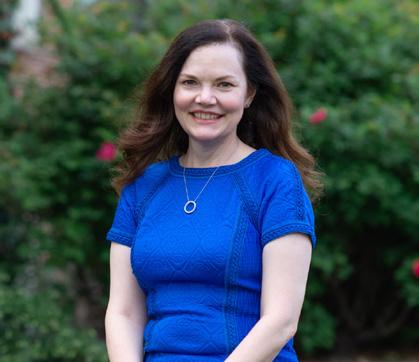


Our local nonprofits, how they support the community and how you can get involved

Public libraries rely on a combination of public and private funding to ensure excellence. Established in 1997, the Chapel Hill Public Library Foundation exists to support and enrich the capabilities, resources and services of the Library and of the surrounding community. With our support, the Chapel Hill Public Library can respond to the changing needs of our community and the evolving nature of public library services, both now and in the future.

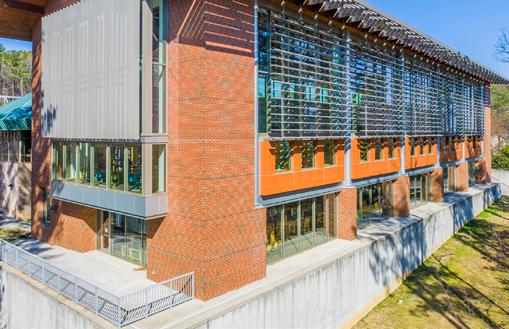
Sponsored Content
We support the Chapel Hill Public Library through the cultivation, growth, and stewardship of charitable contributions and planned gifts.
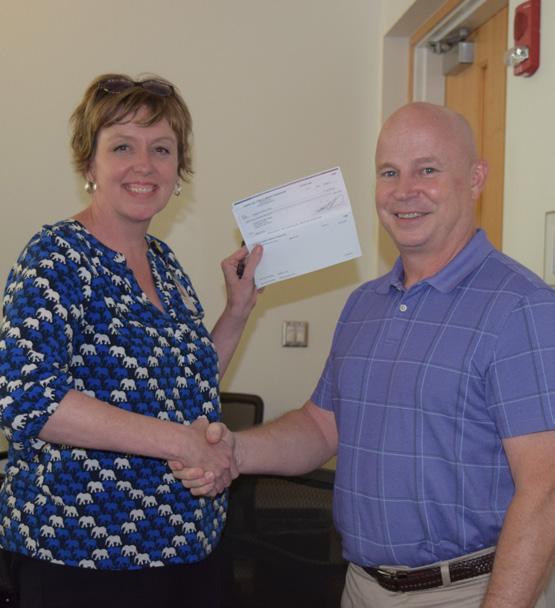
We are caretakers of both family and financial legacies, and we take that responsibility seriously. We are committed to growing those legacies through transparent, intentional and sustainable fund management that reflect donor interests and advance the library’s goals.
Over the years, donations to the foundation have helped:
• Purchase and upgrade the Bookie Monster sorting machine
• Furnish and cover the library’s West Terrace
• Furnish the lower-level reading room
• Upgrade the Media Lab
100 Library Dr. Chapel Hill, NC 27514 919-969-2043 chplfoundation.org

SECU Family House at UNC Hospitals provides a safe, nurturing, affordable home for patients and their loved ones who travel great distances to UNC Hospitals for life-saving procedures and serious illnesses.
Since opening in 2008, Family House has served more than 35,000 guest families from all 100 N.C. counties, 45 other states and multiple countries. Guests are afforded not only lodging, but are also offered meals, transportation, activities, programs and a supportive environment to help them rest, heal and gather strength when they need it most. With an expansion to meet demand for our unique accommodations, the House now offers 75 guest rooms and suites. The House’s beautiful and comfortable common areas, including great rooms with fireplaces and large, modern kitchens, set the House apart, providing guests opportunities to form friendships and networks of support with those connected by similar circumstances.
(919) 932-8000
123 Old Mason Farm Rd. Chapel Hill, NC 27517
secufamilyhouse.org
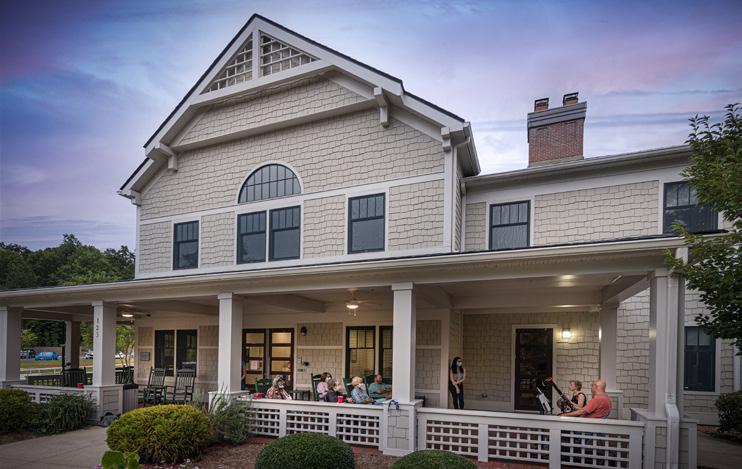
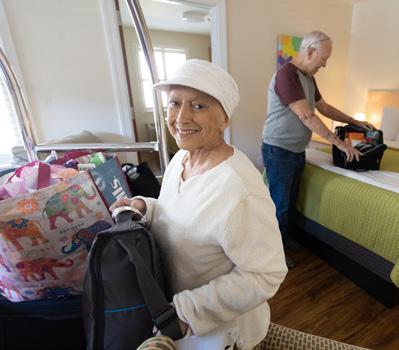
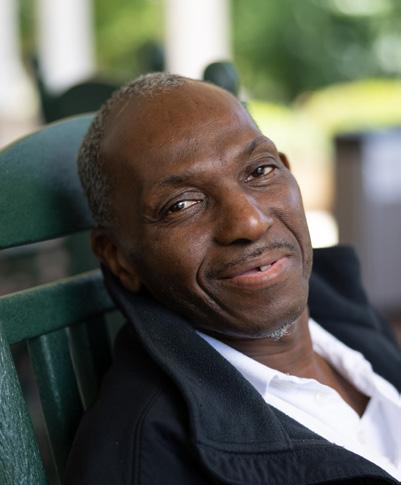
You can make a meaningful difference in the healing of those with serious health conditions. Here are some ways you can get involved:
• Contribute to the Heart of the House fund: Guests pay what they can, and your donations offset the actual cost of their stay.
• Become a volunteer: At the heart of Family House are the people within – which includes our many wonderful volunteers.
• Donate wish list items: Please help us keep our pantry stocked so families can use these items as necessary.
Hear directly from our guestsand see how YOU can make a difference!
Scan the QR code below to hear directly from guests about how Family House enables better access to life-saving procedures for traveling patients and their families—all while easing the stress and financial impact of finding a comfortable place to stay.

As a champion for local public education, the Chapel Hill-Carrboro PSF provides additional funding for innovative programs and projects that advance student achievement and teacher development.
Since its inception in 1983, the Chapel Hill-Carrboro Public School Foundation has distributed more than $17M for innovative programs and projects that otherwise would not have existed. It is our continuing mission to play the role of champion for public education by advocating for positive change in our schools. Our ultimate goal is to prepare all district students for lives as successful adults, which will benefit not only our children, but also our entire community.
• Provide students with academic support, enrichment, and scholarships.
• Empower teachers with grants for innovative projects to engage all students to achieve academic excellence.
• Support teachers with financial assistance for professional development.
• Recognize excellence in teaching through annual teaching and staff awards.
• Engage our community to create excellent and equitable schools.
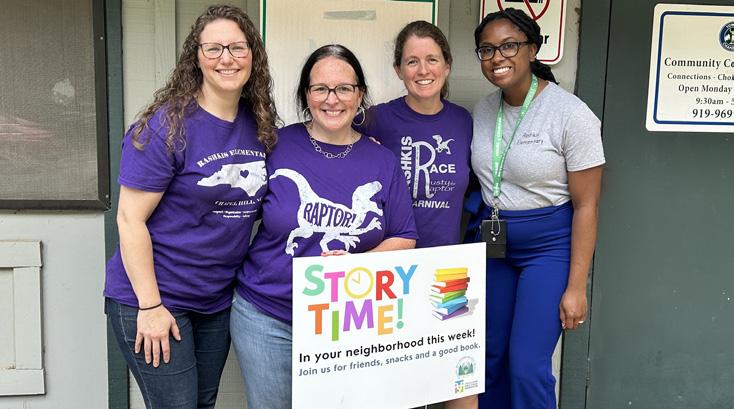
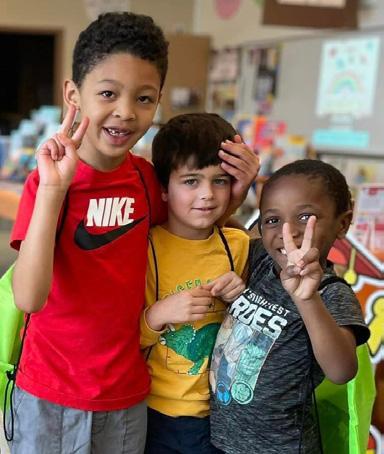

All students in Chapel Hill-Carrboro City Schools receive an excellent and equitable education from the highest quality teachers.
• Novice Tea in November: An event for first year teachers to show our support
• 5K for Education in March: A community event to celebrate public education
• Teachers First Breakfast and Roses in April: An event to honor teachers and raise funds for vital teacher programs and support
• CHCCS Staff Awards and Recognition in May: An event to recognize outstanding school staff for their excellent work
• Teacher Supply Store in August: Kicking off the school year with supplies for teachers
Email: psf@chccs.k12.nc.us PO Box 877
Carrboro, NC 27510 (919) 968-8819 @publicschoolfoundation @CHC_PSF
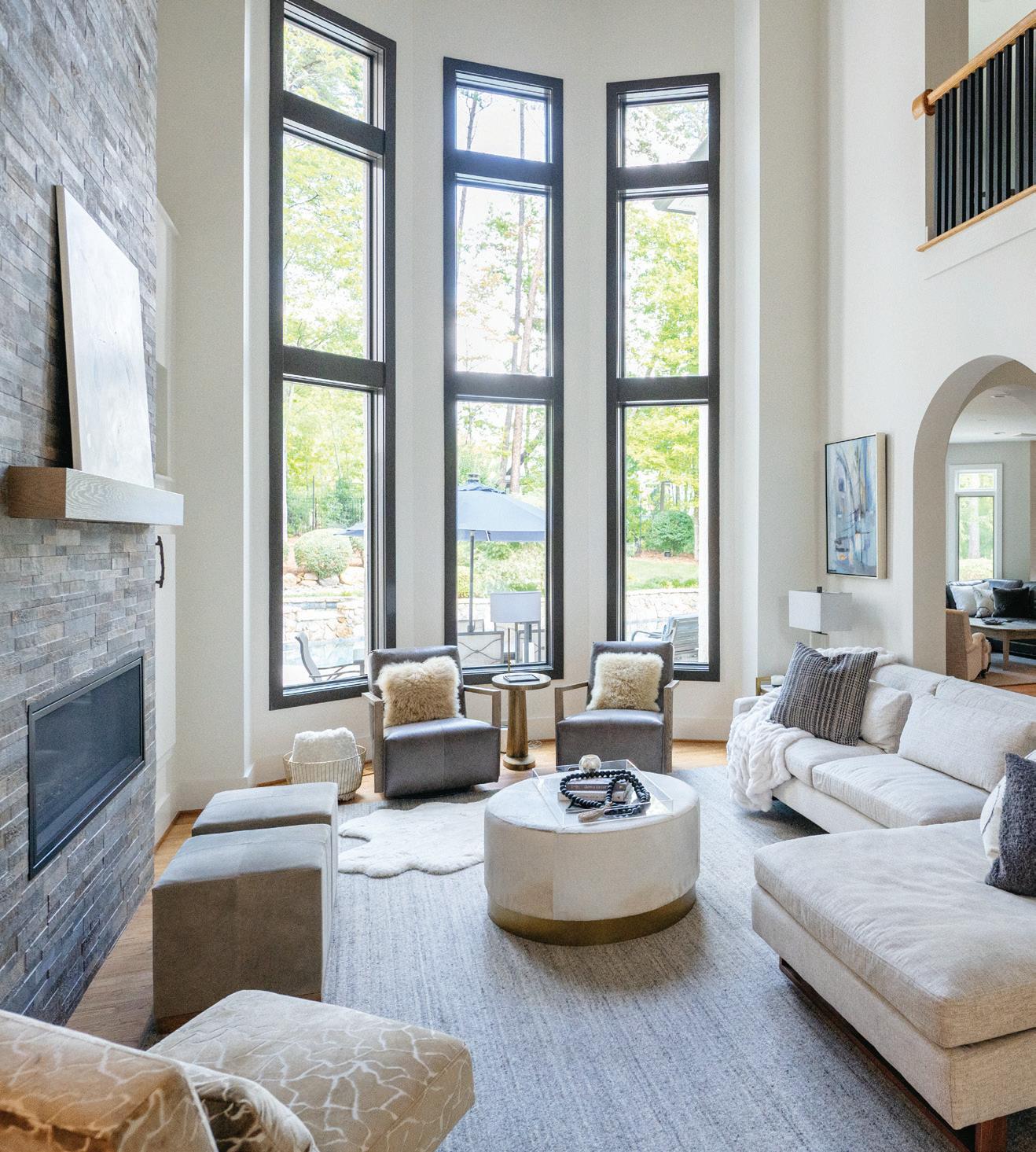
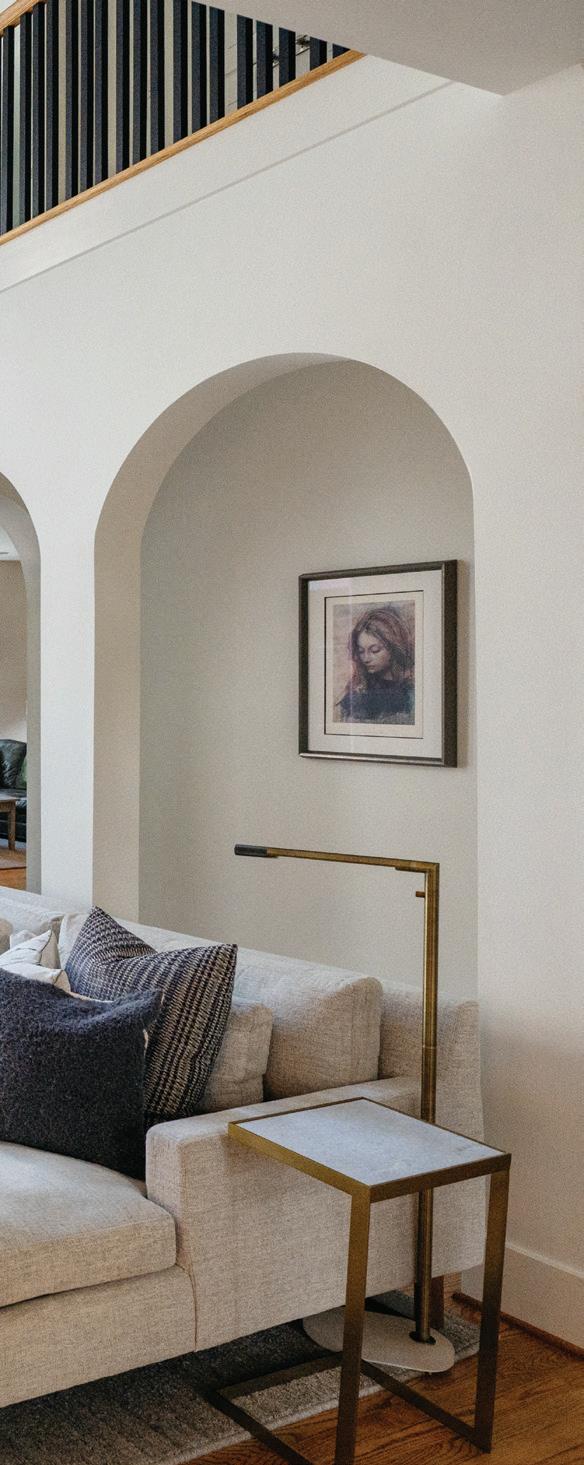
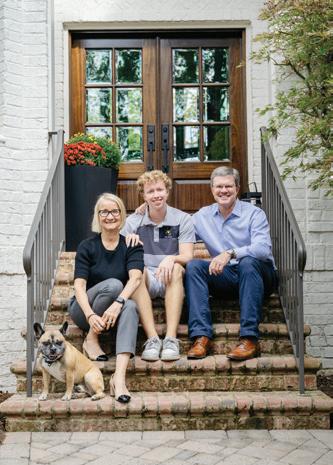
A designer creates meaningful connections and a lasting kinship with a favorite family
By Anna-Rhesa Versola
Interior designer Terry Woodfin has worked with Anna Millar and her family of six over the past 16 years to ensure their house feels like a home. They’ve grown a friendship familiar enough to finish each other’s sentences.
“And you understand my life, too,” affirms Anna, who is a director at edtech startup Project Kitty Hawk that
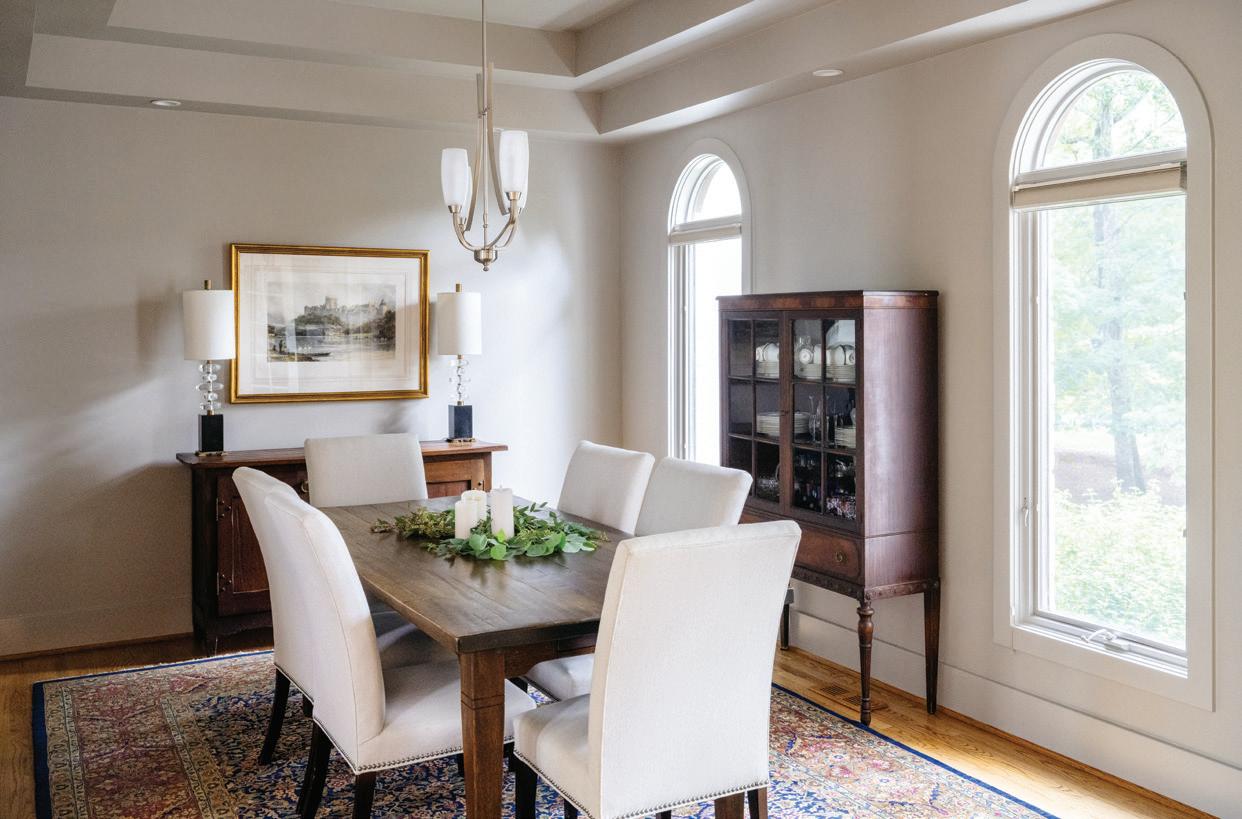
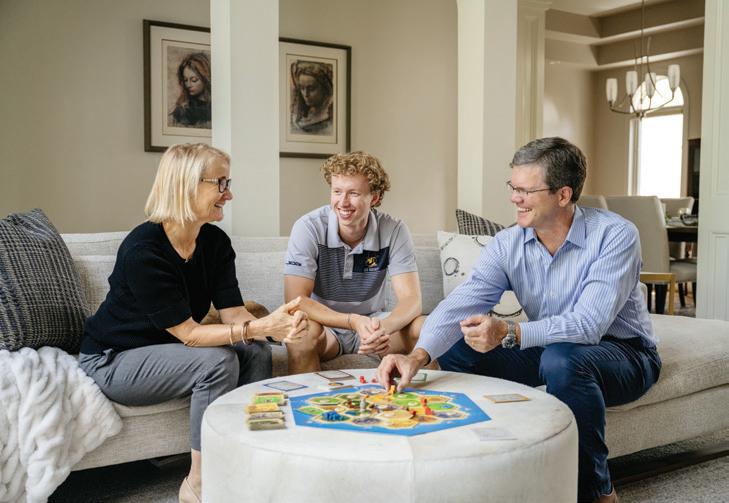
partners with UNC System universities. She and Jamey Millar, a senior vice president at OptumRx, are now empty nesters since the youngest of their four children moved to campus in August as a first-year UNC student.
Terry, owner of Interiors by Terry, remembers her first project with the Millar family after they purchased their 1.45-acre property in 2007 in the Hunt’s Reserve neighborhood in Chapel Hill. Will Millar, 19, was 3 years old at the time and jumping on the bed while workers installed window treatments in the first-floor owner’s suite. This past spring, Terry perched on Will’s

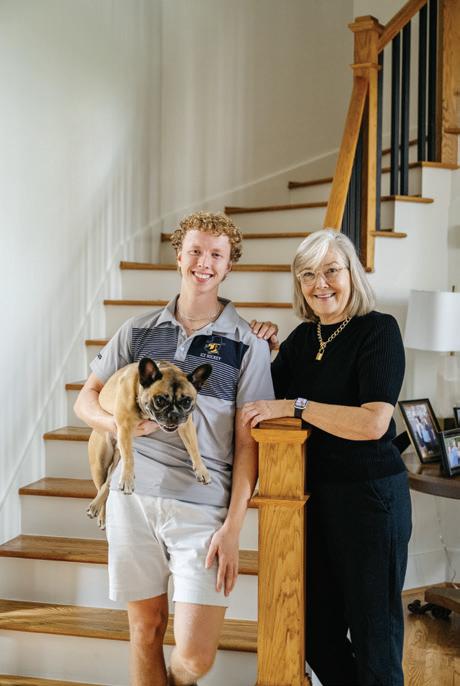
We built [our kids] roots and wings right in
bed watching contractors build wall shelves as part of the redesign of his boyhood bedroom into a space with grownup charm.
“You had a nice little moment right there, seeing it full circle,” Anna says to Terry, who wanted to complete that project for Will before he left for college. “He felt a part of it,” Terry says of the four-month makeover process.
Will’s three older siblings can enjoy redesigned bedrooms and bathrooms in the 4,787-square-foot home on their next visits. Ben Millar, 27, a UNC alum and an avid hiker, lives in Denver. His room features an understated work area fully equipped for remote work. An updated Jack and Jill bathroom connects his space to Tampa-based Chris Millar’s room, where the 24-year-old Appalachian State University graduate displays his sports memorabilia on the walls. Chris’s twin sister, Ally Millar, has a sophisticated style in her room overlooking the backyard pool. Her room doubles as a guest room when she’s not visiting from New York City. Classic
– Anna Millar
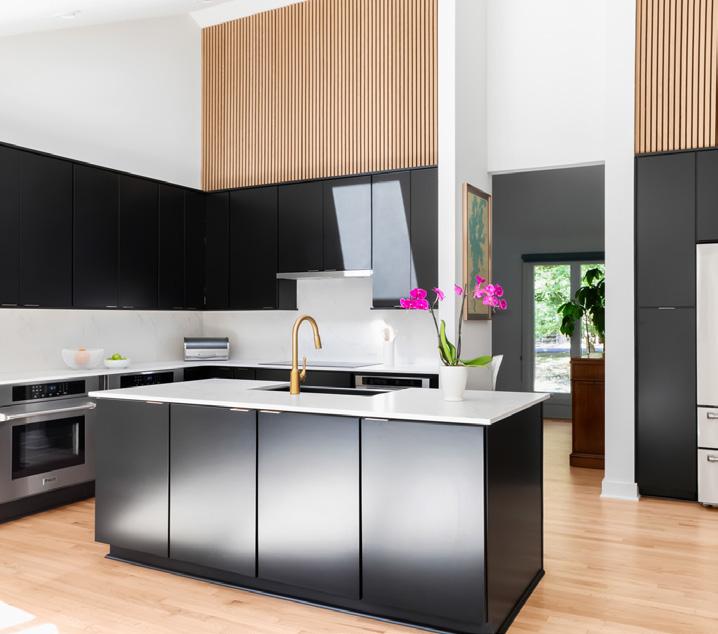
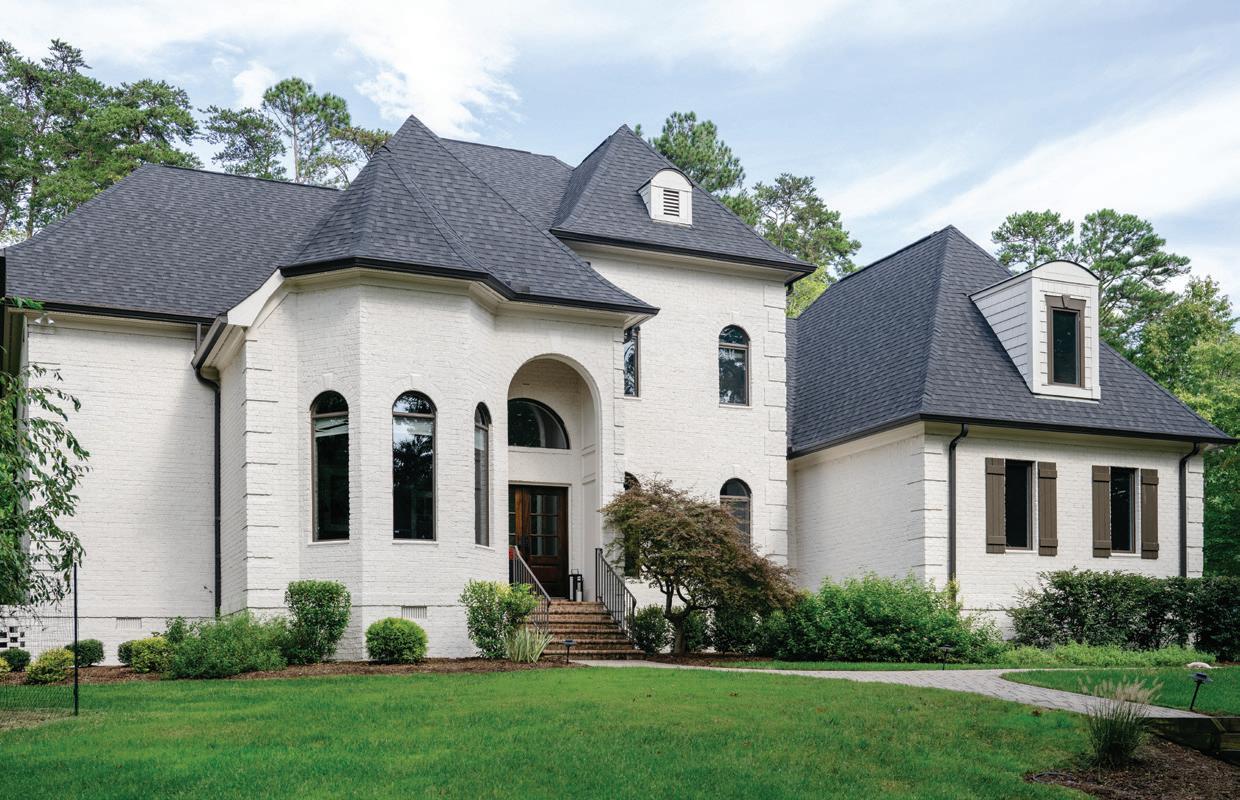
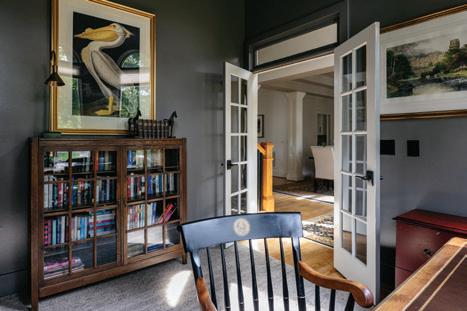
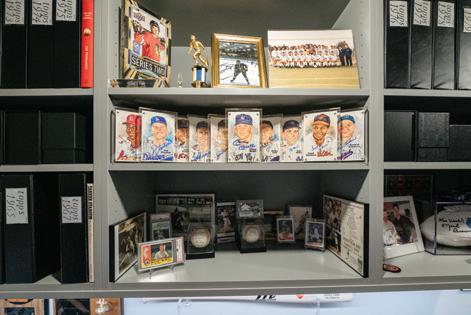
furniture and original artwork from her late grandmother’s estate, along with Ally’s diploma, decorate her room. She shares an alma mater with her parents, who both graduated from Hamilton College in Clinton, New York.
year built
year last renovated
Terry led a series of home renovations for the Millars to mold the house to the family’s needs over time. “Terry would help me figure out how to structure life,” Anna says. When the kitchen was updated in 2021, Terry reminded Anna to consider the hectic pace of life with four growing
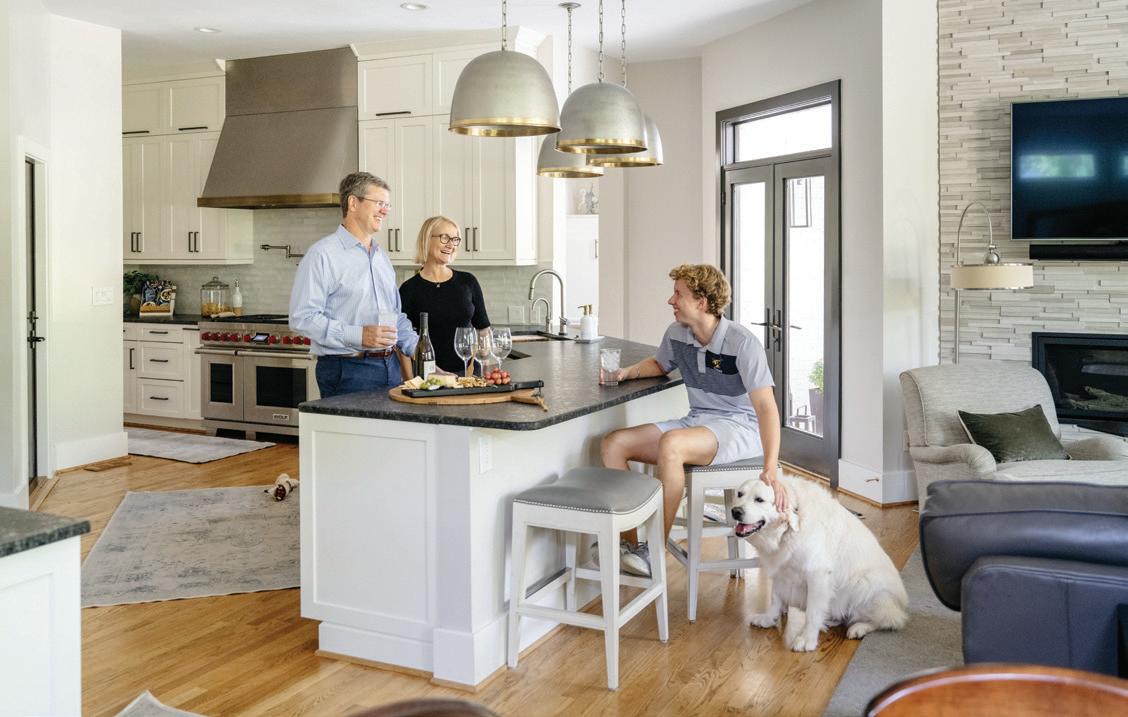

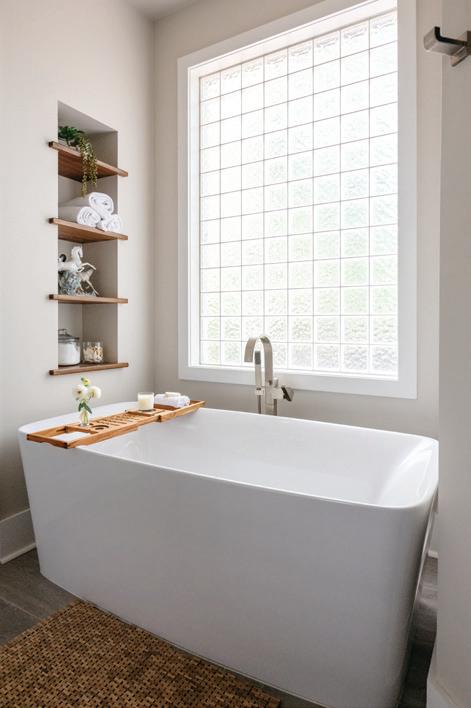
The Oval Office
“I’m gonna share this story, because Terry probably wouldn’t, but she was selected to decorate the White House for Christmas last year,” Anna says. Terry, whose interior design business includes a seasonal-decorating service, was one of 300 volunteer holiday decorators selected from 3,000 applicants nationwide.
“I left here Thanksgiving afternoon and spent all day Friday and Saturday and a half day on Sunday [at the White House],” Terry recalls. “I think we had to be out of there because the president was coming back and I was in the Oval Office and the West Wing. It was very fun. And then, Joe Biden did a video for Architectural Digest, a video [featuring] the West Wing and the Oval Office. I never thought that any of my work would be seen, but it was one of the first things released on Instagram. And I had spent a day and a half to two days on that tree, a single tree in the Oval Office.”
When Terry returned to Chapel Hill, she decorated the Millar family’s house for Christmas, too.
A Tuscan villa filled with over 7,500 sq. ft. of fine antiques a
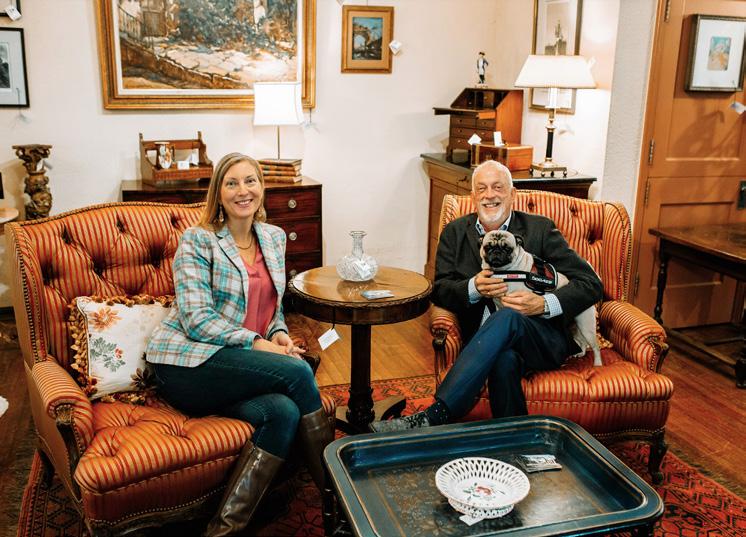
kids, two dogs, a full-time job and aging parents nearby. “She was like, ‘You want the drinks fridge here because it’s near the pool entrance, and when you unload the dishwasher, you need these things here.’ Just very practical,” Anna recalls.
“I think about how they live in this home,” Terry says.
Anna points out the way Terry would prepare the whole family for remodeling projects. “It can be emotionally and psychologically stressful and draining, and Terry would prep me for it and give me homework assignments,” Anna says about the to-do lists. “And then when I was freaking out
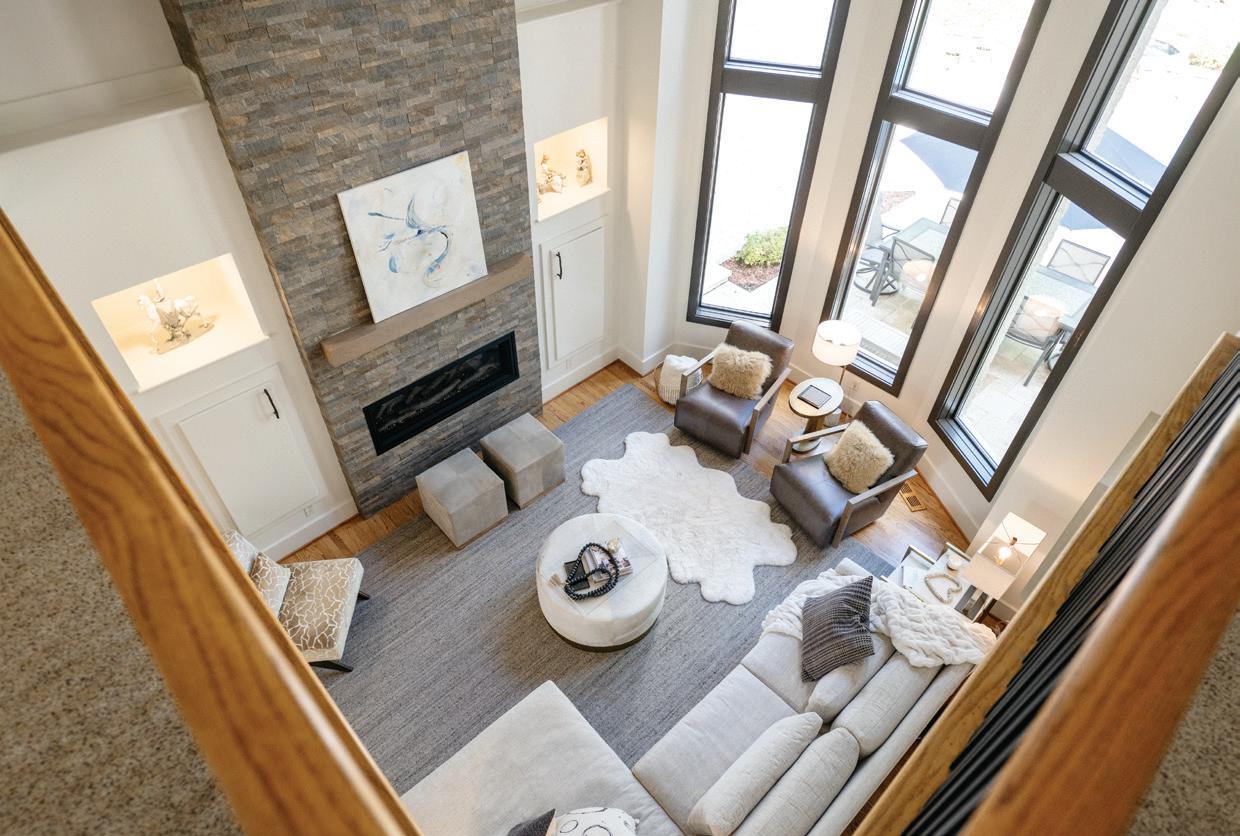
in the middle of it, getting frustrated.” Then, Terry interjects, “Just call me. Talk to me. Don’t go off on your contractor.”
Anna continues, saying, “It’s lifestyle management; it’s full service, not just decorating.” She appreciates Terry’s methodical approach to redesigning a home “one piece at a time, so it’s financially and emotionally manageable. The other thing Terry always says to me, which is so helpful, ‘Don’t wait until you’re ready to sell your house to update your home; do it now and enjoy it.’”
With that advice in mind, Terry and Anna reimagined how to modernize the house. Terry managed many projects, like the refinishing of the hardwood floors while the family was away on
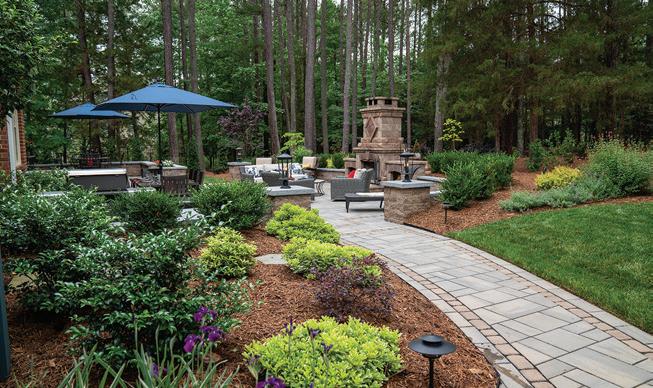
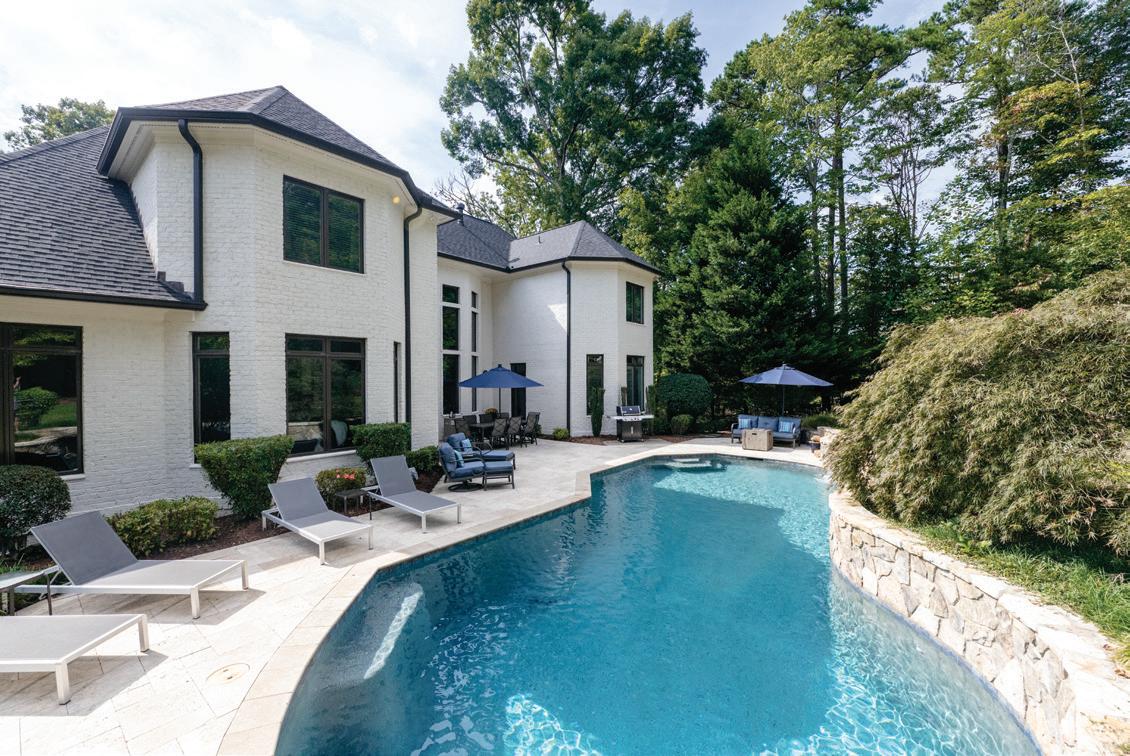
vacation. She updated the living room with comfortable furniture covered in light-colored performance fabrics. Walls and trim were repainted. She replaced outdated light fixtures and recovered upholstered chairs.
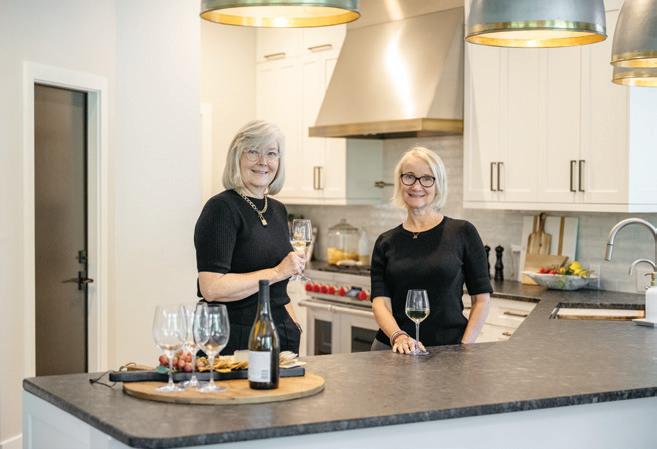
“She’s really smart at figuring out where to invest, like the Wolf stove,” Anna observes. “There are many other areas where we’ll get very reasonably priced things that Terry makes look beautiful, like some of my Christmas ornaments from Walmart that look phenomenal. You don’t always need to buy top-line and break the bank, so that’s good guidance.”
Terry helped make a wish come true for Anna, who has always dreamed of living in the style of a French countryside retreat. Their brown brick home was painted an ivory color accented by walnut trim, giving it a stately curb appeal. The original single-frame front door was replaced with a dark-stained, wooden, double-entry door custom made by Fitch Creations.
Inside, most of the furniture, headboards and other pieces were made by North Carolina craftsmen and artisans. “She really tries to source locally,” Anna says about their focus on supporting businesses from within the state. Project by project, Terry rejuvenated the home and brought a simple elegance to daily living. Terry worked with Nick Vaughn of Kitchen and Bath Galleries and contractor Jay Hughes
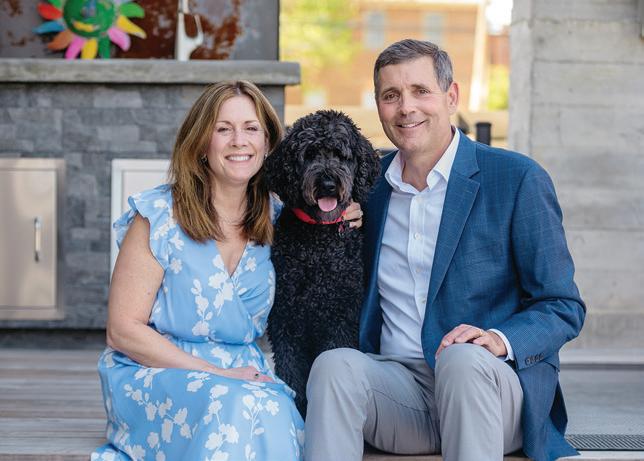
Among the top ½ of 1% of all BHHS brokers nationwide
Mark McCormick • 919.632.6542 • mark.mccormick95@gmail.com
Debbie McCormick • 919.270.2937 • debbie@themccormickteam.com
404 Meadowmont Village Circle, Chapel Hill, NC 27517 themccormickteam.com
Thank you to all of our past, present and future clients for allowing us to be a part of your important real
The past 20 years have been amazing and we could never have made it to this
and referrals!



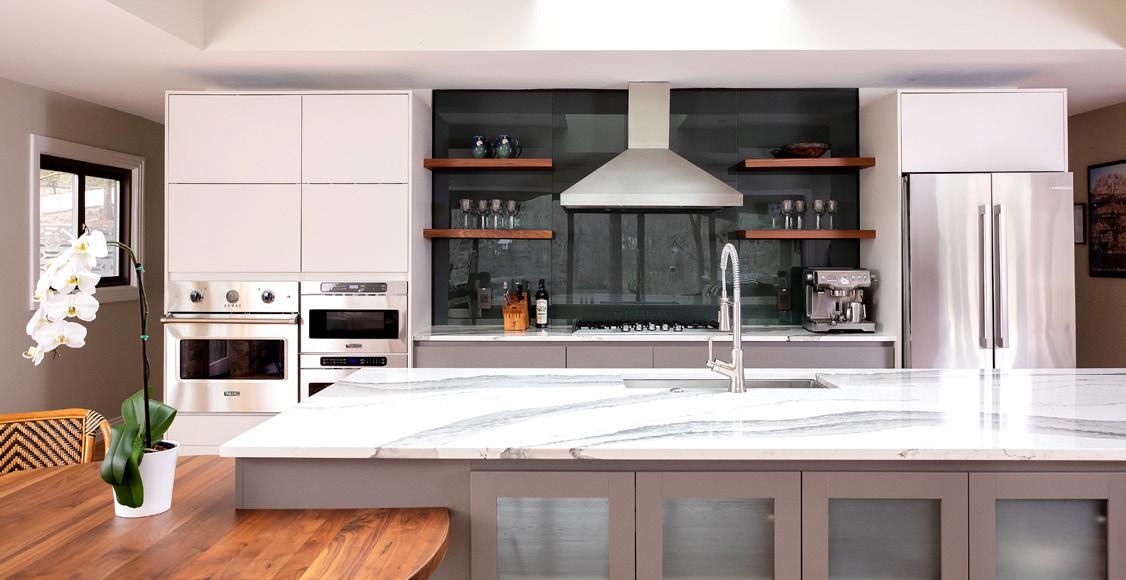
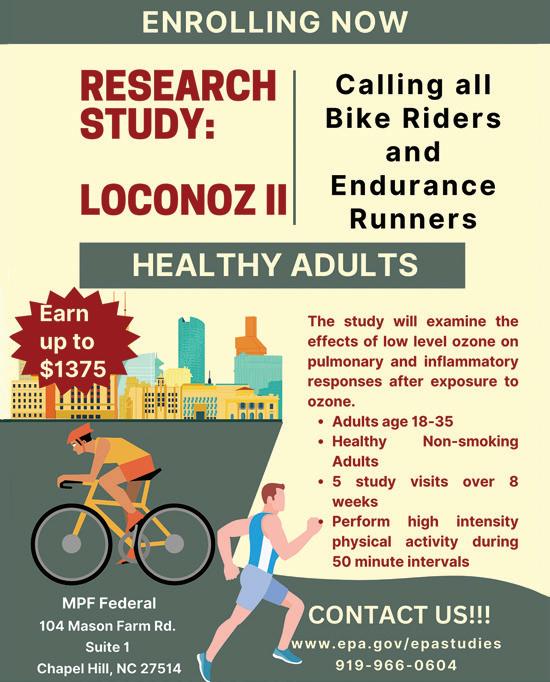
of Hughes Contracting to remove the kitchen island and half-walled peninsula. She rearranged the seating to comfortably accommodate the family and their guests. Newly raised vanities in every bathroom offered more storage space, and the removal of the pony wall and glass doors in two bathrooms created more shower space.
Even the backyard pool and hot tub, installed in 2013 by Michael Gress, a Chatham-based master pool builder, were designed with intention. “Chris and Ally were both here with their significant others this weekend,” Anna says. “The house brings them home for hot-tubbing and swimming.”
The evolution of the home has become a sort of “quest of creating a space where the adult kids want to come home,” Terry says.
Anna says her family’s favorite part of any project is what happens at its end.
“Terry comes in and works her magic,” Anna says. “She’ll kick us all out of the house. And the kids know that day they will go to school and when we get home that night it’s been ‘Terry-fied.’” The eponymous term describes a positive transformation but also means that there will be cheese boards and beverages to celebrate the big reveal. “It’s like the home flipping thing where we’re walking in, and your jaw drops,” Anna says.
Though not all interior designers and homeowners become lifelong friends, Terry
and Anna realized that they have found strength and comfort in each other through both happy and sad times.
“Terry was a huge part of me processing the death of my mom,” Anna says, “because she knew her, and I think integrating my mom and dad’s pieces into this home, no one could have done it like Terry did.”
Anna remembers Terry’s support while going through her mother’s estate. “I was ready to get rid of some more things, but Terry was like, ‘No, you’ll regret not having some of that furniture; bring that, we’ll find a place,’” she says. “She was the voice of reason through that. We’ve been there for each other through all the curveballs life throws at you.” CHM

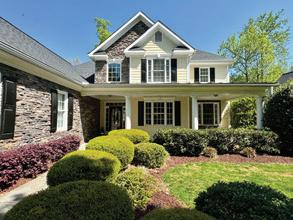
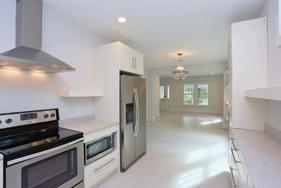
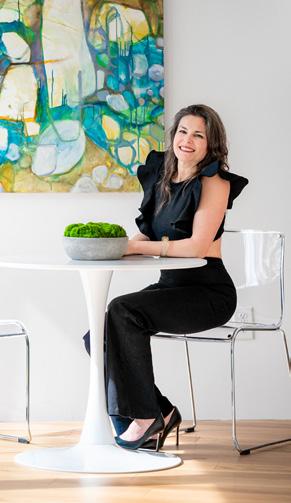

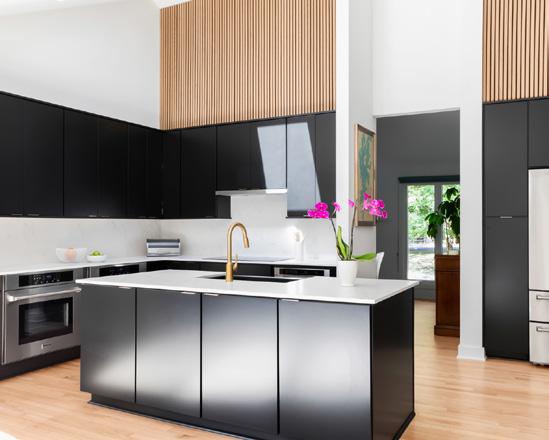

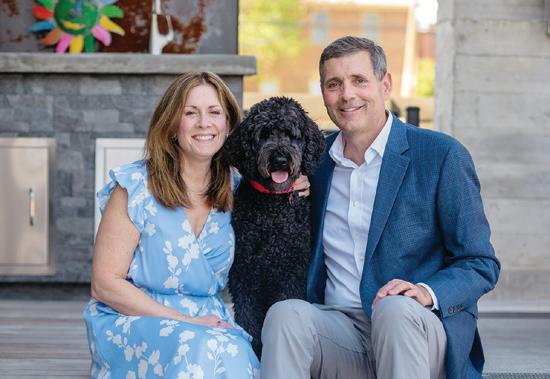




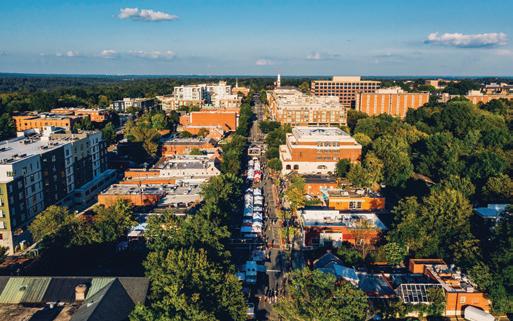
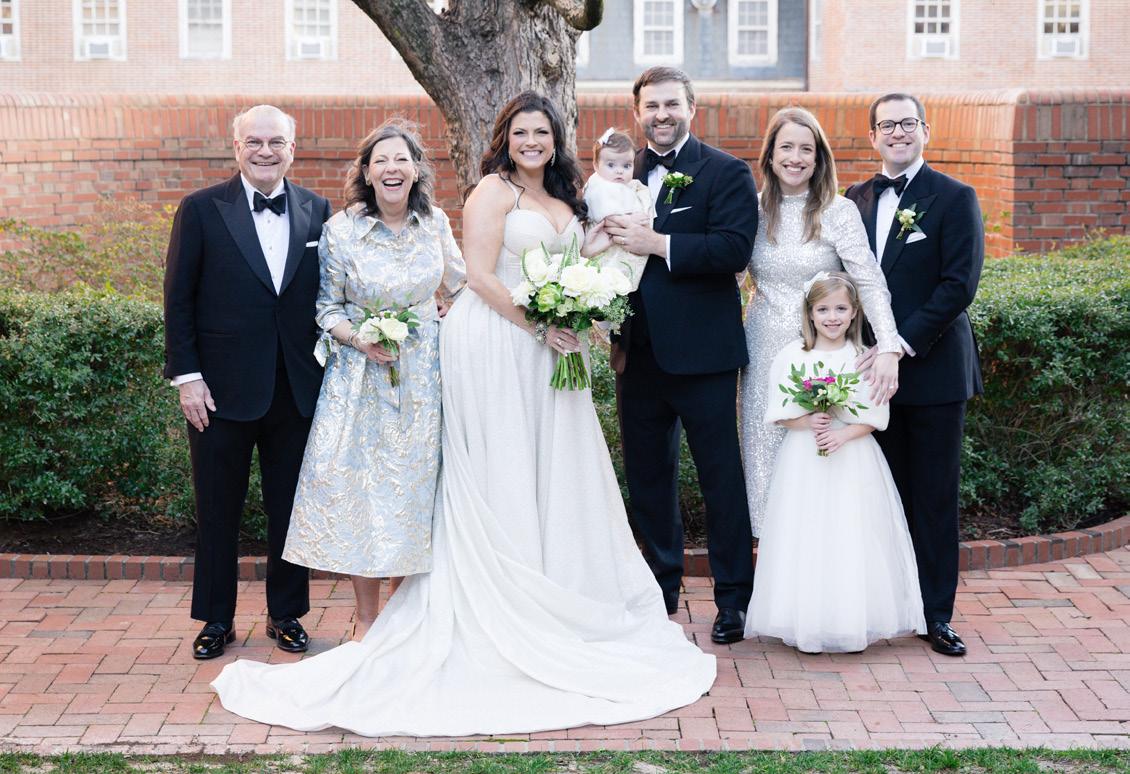
BY EMMA MOON PHOTOGRAPHY BY HEBA SALAMA, HEBASALAMA.COM
When Chapel Hill native Betsy Fox and UNC alum Bryce
Yeargan met at the wedding of Edmund Ball and Emily Ball, in 2005, they didn’t remember the encounter. They were reconnected by a persistent Edmund and Emily when Betsy moved back to town in March 2020 – to stay with her Chapel Hill-based parents Michael E. Fox and Missy Julian-Fox – and made it official that June.
A five-month pregnant Betsy was completely surprised in January 2023 when she arrived home from a trip to find candles, “Simply the Best” by Tina Turner playing and Bryce on one knee. The couple held a small wedding gathering at the Horace Williams House that April, and their daughter, Miller Yeargan, was born in June.
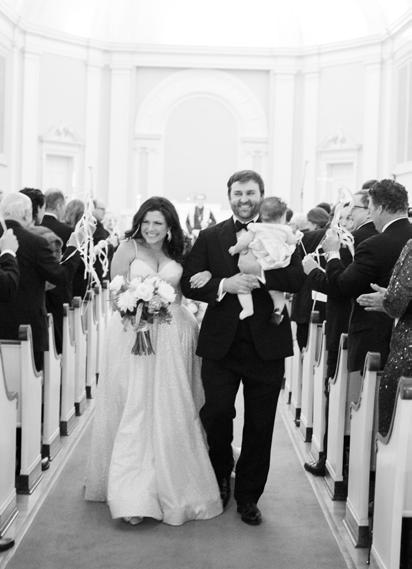
The two celebrated again on Jan. 13, 2024, at The Carolina Inn, preceded by a ceremony at University United Methodist Church and rehearsal dinner at Lantern. The pink wedding cake, tunes by Liquid Pleasure Band and surprise entertainment by the Bouncing Bulldogs made for an unforgettable night, which also boasted florals by University Florist and grub from Time-Out Restaurant
Bart Fox, Betsy’s brother and owner of Julian’s, the family business since 1942 on Franklin Street, made a tuxedo for Bryce, while Betsy danced the night away in a bedazzled dress. The couple cherished their big day in the place that holds great significance to them. “Holding Miller in my arms and seeing Betsy walk down the aisle toward us was such a surreal moment,” Bryce says. “Seeing all of our favorite faces in the rows of the church, all here for us, was really special.” CHM



BY TARA THURMAN PHOTOGRAPHY BY JULIA SHERMAN, JULIALILLIAN.COM
Chapel Hill native Emily Shermanski and Ellis Dyson of Cary first crossed paths during the summer of 2013 working for the Appalachia Service Project. Both attended UNC, where Emily often saw Ellis fronting his band, Ellis Dyson & the Shambles. After graduation, they finally had their first date in December 2017, and the rest is history. Ellis proposed during a surprise, intimate moment along the Mississippi River, reminiscent of a cherished walk they took when they first moved to New Orleans a few years earlier.
Emily and Ellis tied the knot on Oct. 7, 2023, at Old Lystra Inn, blending their love for the state with the vibrant spirit of New Orleans. Emily’s dream of a North Carolina State Fair-themed wedding came to life as the
bridesmaids carried cotton candy bouquets, and a New Orleans jazz band set the pre-ceremony tone. Chris Frank, the leader of the band the couple saw on their first date, Yeaux Katz, served as the officiant. Emily’s favorite moment was sharing their personal vows. Despite her nerves, she looked into Ellis’s eyes and promised to love him forever. After the ceremony, guests enjoyed fair games and “Dyson County Fair” prizes before finding their seats via a “fairgrounds map.” The night continued with more jazz music, a colorful candy cart and a s’more station around a fire pit. Ellis cherished their first dance as they sang “Two Sleepy People” by Fats Waller softly to each other.
The couple resides in New Orleans, where Emily works as an ICU nurse and is pursuing her doctorate in anesthesia, while Ellis is a full-time jazz musician. CHM
BY SOFIA ALFARO
PHOTOGRAPHY BY CLICK
AWAY
PHOTOGRAPHY, CLICKAWAYPHOTO.COM
Carrboro High School graduate Maisie Mraz and Evan Guest crossed paths in their first year at UNC Charlotte while playing a homecoming Greek Week trivia game. They shared several communication studies classes, and sparks flew when they reconnected a year after graduating college, making their relationship official in January 2018.
Evan popped the question under the guise of a wine tour at the Biltmore Estate while celebrating Maisie’s birthday weekend on Aug. 20, 2022. He had Maisie’s dream ring stashed under their bed for months and asked Maisie’s parents, Paul Mraz and Maggie Mraz, for permission weeks before at Linda’s Bar & Grill.
The rehearsal dinner took place at The Story with the wedding at The Carolina Inn – Maisie’s dream venue – on April 13, 2024. Maisie says she’ll always remember walking down the aisle and seeing Evan. “I don’t think I’ve ever smiled so big in my life,” she recalls. Guests sipped “The Spicy Lennyrita” cocktails in honor of the couple’s dog, Lenny, as they danced the night away with friends and family – including Maisie’s maid of honor and best friend, Maura Devetski, who she met in kindergarten at Scroggs Elementary School Evan savored their private last dance to “Tupelo Honey” by Van Morrison. “Our guests were lining up for our grand exit outside, and we had the whole Old Well Room to ourselves,” he says. “It’s a moment I’ll never forget.” They made their getaway in a classic convertible. “It was so surreal riding through town in the place that raised me with my husband by my side,” Maisie says.
The couple lives in Charlotte. CHM
BY JUMAN ALYOUSIF
PHOTOGRAPHY BY SHAMELL MASON
For Charlton Warren, it was love at first picture when he saw Kentucky native Tialer Maxwell. Tialer worked for his home city of Atlanta at the time, and after spotting her in a photo with his sister, Charlton knew they had to meet. After their first date –and the 12 consecutive dates the next nine weekends – the rest was history.
On one of the rare weekends when Charlton’s schedule as the assistant head coach of defense for UNC Football allowed for a getaway, he planned a major surprise during their trip to New York City, a place Tialer affectionately called home during her early career. Charlton got down on one knee atop the stunning Restoration Hardware restaurant’s rooftop, which he chose thoughtfully as Tialer, a luxury real estate agent, is all about the aesthetic. She was completely taken by surprise when Charlton proposed, realizing the entire weekend, which was planned around an event, was orchestrated.
The plum- and pearl-themed big day took place on March 9, 2024, in Riviera Maya, Mexico. Guests were ushered onto the garden grounds of their 25-bedroom beachfront hacienda for the sunset ceremony that Tialer’s mother, Denyce Maxwell, officiated. Tialer particularly loved the communion during the ceremony: “An intimate wedding was deliberate, who was invited was deliberate and creating not only a special moment, but a spiritual one with those we love and who love us meant everything,” she says. A family-style dinner followed, before Charlton and Tialer’s take on an untraditional wedding reception, “Club Dub,” kicked off – featuring a churro cart, tacos, sofa lounge sections and more. They reside in Durham. CHM