WomEN’S IsSUE

MEET
MAKING
CHAPEL HILL • CARRBORO • HILLSBOROUGH • ORANGE COUNTY MAY/JUNE 2023 CHAPELHILLMAGAZINE.COM
SCALE
BUILDING TO
Nora El-Khouri Spencer helps prepare women for careers in construction.
13 WOMEN
AN
OUR 1 0 th annua L
IMPACT ON OUR COMMUNITIES
page 70


Here’s to the next 25! 919.403.6200 | @aestheticsolutionsnc | aesthetic-solutions.com We are so appreciative to our patients and the Chapel Hill community for 25 years of support. We wouldn’t be celebrating this milestone without you. We turned 2022
5634DurhamChapelHillBlvd., CornerofI-40and15-501(Exit270)
Hours:M-F10-6
www.persiancarpet.com


CHAPEL HILL
MAY/JUNE 2023
CHAPELHILLMAGAZINE.COM
EDITOR
Jessica Stringer
EDITORIAL
EXECUTIVE MANAGING EDITOR
Amanda MacLaren
MANAGING EDITOR, CHATHAM MAGAZINE
Anna-Rhesa Versola
EDITORIAL ASSISTANTS
Renee Ambroso and Brooke Spach
EDITORIAL INTERNS
Sam Annetta, Ellison Beaver, Cailey Cetani, Emily Davis, Anna Wesley Dubach, Sinclair Holian, Rong Huang, Katie MacKinnon, Cooper Metts, Lena Miano and Haley Pineles
CONTRIBUTORS
Anna Beth Adcock, Kevin Callaghan, Morgan Cartier Weston, James Dupree, Elizabeth Poindexter, Megan Tillotson and Caitlyn Yaede
ART CREATIVE DIRECTOR
Kevin Brown
GRAPHIC DESIGNER/PRODUCTION COORDINATOR
Lindsay Scott
GRAPHIC DESIGNER
Khadijah Weekes-Nolan
PHOTOGRAPHER
John Michael Simpson
ADVERTISING
For advertising inquiries, email advertising@chapelhillmagazine.com
Melissa Crane melissa.crane@trianglemediapartners.com
Kem Johnson kem.johnson@trianglemediapartners.com
Lauren Phillips lauren.phillips@trianglemediapartners.com
Lucinda Poole lucinda.poole@trianglemediapartners.com
Dana Statkun dana.statkun@trianglemediapartners.com
DIRECTOR OF CREATIVE OPERATIONS
Ashlin Acheson
CORPORATE FOUNDER/CHAIRMAN
Dan Shannon
PRESIDENT, TRIANGLE MEDIA PARTNERS
Ellen Shannon
PRESIDENT, TRIANGLE DIGITAL PARTNERS
Rory Kelly Gillis
VICE PRESIDENT OF FINANCE & ADMINISTRATION
Amy Bell
VICE PRESIDENT/PUBLISHER, CHATHAM MAGAZINE
Chris Elkins chris.elkins@trianglemediapartners.com
PUBLISHER, HEART OF NC WEDDINGS
Jenna Parks
CREATIVE DIRECTOR, TRIANGLE DIGITAL PARTNERS
Sally Scruggs
DIGITAL OPERATIONS MANAGER
Lizzie Jones
DIGITAL CUSTOMER SERVICE SPECIALIST
Brian McIndoo
OFFICE ADMINISTRATION AND ACCOUNTING ASSISTANT
Cassady Orsini
DISTRIBUTION
Matt Bair
2
May/June 2023
chapelhillmagazine.com
Chapel Hill Magazine is published 6 times per year by Triangle Media Partners 1777 Fordham Blvd., Ste. 105, Chapel Hill, NC 27514 919–933–1551 Subscriptions $38 for 2 years – subscribe at chapelhillmagazine.com
UNSETTLED THINGS
Art from an African American South
April
21 – July 2,
2023
Bank of America is the national sponsor for Unsettled Things. Additional support comes from the Terra Foundation for American Art, the Wyeth Foundation for American Art, Harriet Taylor Herring, and Joan Roberts Cates.
Lonnie Holley, American, born 1950, What Was Beyond Us (The Ocean of Our Thoughts), 2019, globe and stand, model ships, rocks, earth, moss, and cast iron pot, 40 1/2 × 19 in. (102.9 × 48.3 cm). Ackland Art Museum, University of North Carolina at Chapel Hill. Promised Gift of John A. Powell ’77, L2020.10.1a-o. © 2023 Lonnie Holley / Artists Rights Society (ARS), New York.

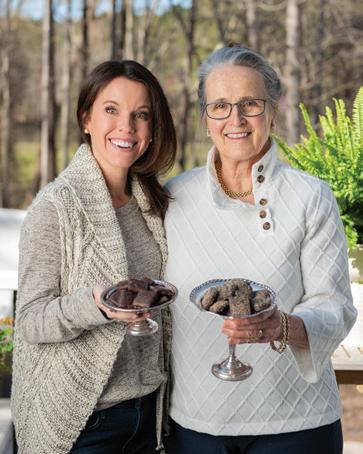
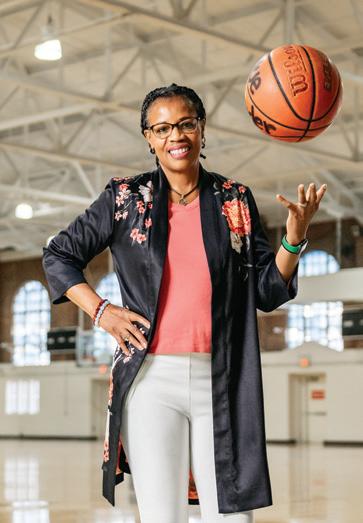
CONTENTS MAY/JUNE 2023 CHAPELHILLMAGAZINE.COM VOLUME 18 NUMBER 3 THE 10TH ANNUAL WOMEN’S ISSUE 72 Kelly Drayton Director of Emergency Management, Town of Chapel Hill 74 Deborah Stroman UNC Professor and Founder, Center of Sport Business and Analytics 76 Frances Shetley Former Town of Carrboro Alderman and community activist 78 Whitney Bulbrook President, Carolina Ventures Mortgage 80 Christy Graves & Karen Graves Vice President & Owner and Founder, Chapel Hill Toffee and Griff’s Toffee 82 Laurie Paolicelli Executive Director, Chapel Hill/ Orange County Visitors Bureau 84 Laura Kieler Chief Marketing and Content Officer, PBS North Carolina 86 Anissa McLendon Dual Language First Grade Teacher Assistant, Glenwood Elementary School Founder, Empowering Excellence thru Exploration Camp 90 Melody Eggen Artistic Director, Studio A DanceArts 92 Laura Gelblum Executive Director, Preschool at the Chapel of the Cross 96 Nora El-Khouri Spencer Founder and CEO, Hope Renovations 98 Donna Papa Head Coach, UNC Softball
Taking the Reins UNC Field Hockey’s Erin Matson scores big as new head coach 46 No Reservations Restaurants can’t see the future, but they can pivot 48 Marking a Milestone
few local nonprofits and businesses hitting a big anniversary this year reflect on local roots, biggest lesson learned and what’s next 56 Our Top Dentists 104 Shine Bright
thoughtful renovation makes a Meadowmont gem sparkle DEPARTMENTS
Letter from the Editor 10 About Town Events not to miss 24 Noted What we’ve heard around our towns … 36 What We’re Eating News from our restaurant community, plus a dish we love 38 Dining Guide 122 Weddings PEOPLE & PLACES 16 Chamber 80th Annual Meeting 19 Carolina Love Gala 20 ‘Italy on a Plate’ Luncheon 21 Big Night in for the Arts 22 ‘Art Speaks’ Opening Reception SPONSORED CONTENT 67 The Big Give Our local nonprofits, how they support the community and how you can get involved PAGE 74 PAGE 80
FEATURES 32
A
A
6
PHOTOGRAPHY BY JOHN MICHAEL SIMPSON
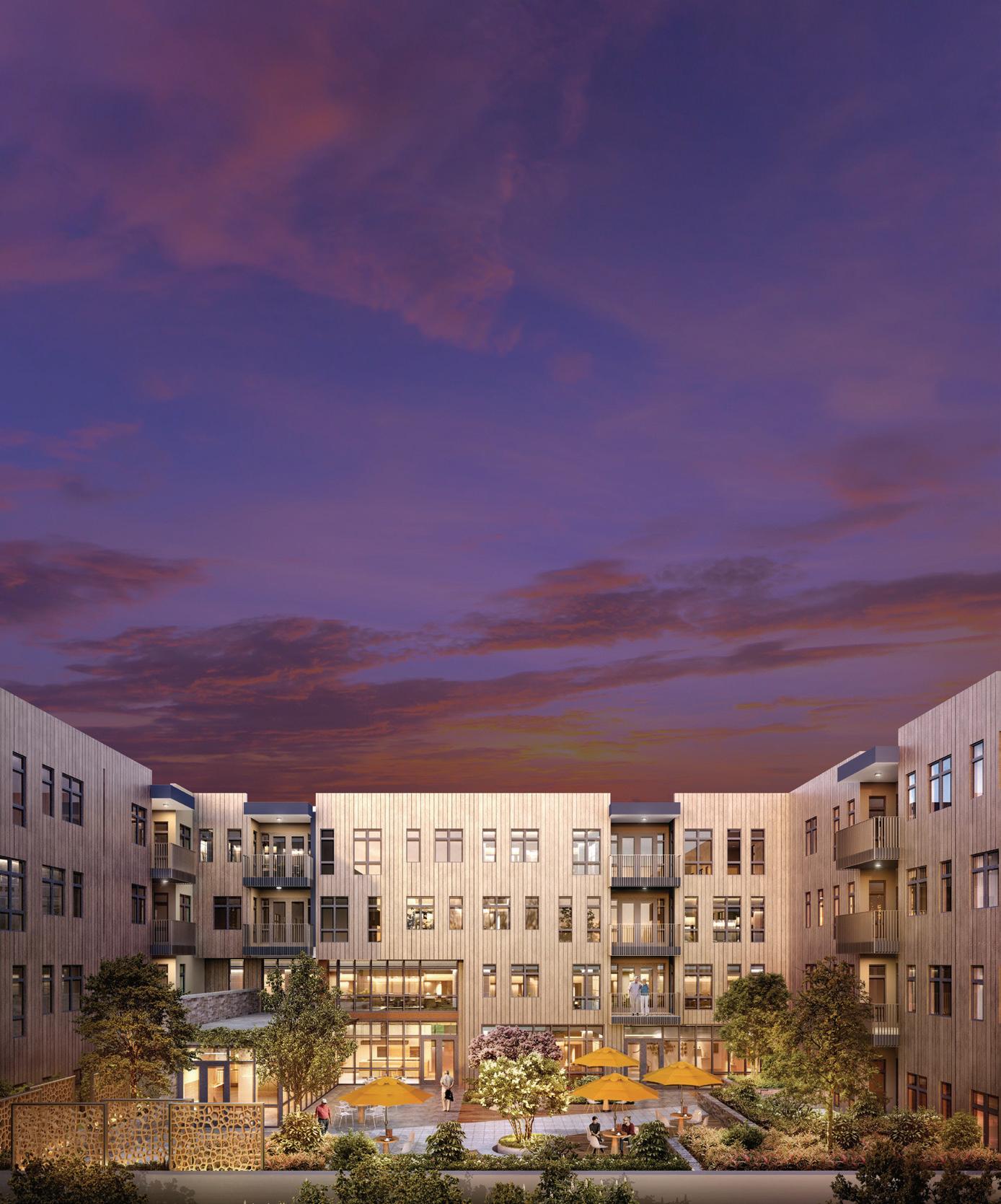
Redefine retirement.
The
TERRACES
HURRY — PRESALES HAPPENING NOW!

New contemporary apartment homes for retirement. Learn more at forestduke.org/TheTerraces.
BECOME A CHARTER MEMBER TODAY!
KEEP GROWING SM
Vibrant living. Continuing care. In the heart of Durham. 800-278-9729 / forestduke.org/TheTerraces
Forever Homes
y grandmother has lived in the same brick house in Virginia since 1965. She picked out the house plan, raised her family there and hosted countless gatherings, including her famous Christmas Eve parties, over the years. Nana’s even had the same next-door neighbor for four decades (Hi, Mrs. G!). So it’s understandable that she, at 87 years old, would want to continue to enjoy the views from her beautiful sunroom.
She’s not alone: Nearly nine in 10 Americans between 50 and 80 say it’s important to remain in their houses as they get older, a recent University of Michigan poll found. But almost half say that they’ve given little or no thought to the steps they’d need to take so they could remain there safely.

I recently stayed with my grandmother for a few days and, after I tripped over a particularly problematic rug, we replaced all her bathroom mats and put new nonslip material under other rugs. Some homes of older adults need more structural tweaks like ramps and handrails.
That’s where Nora El-Khouri Spencer and her Hope Renovations crew in Carrboro come in. The women they train to enter into construction careers also help older adults complete the repairs and renovations they need to stay in their homes.
It’s an admirable cause and one that’s caught the attention of everyone from “The Drew Barrymore Show” to CNN Heroes as well as our staff, and we’re proud to highlight the organization in our 10th annual women’s issue.
Read on to learn about the other 12 women – entrepreneurs, coaches and champions of the community – starting on page 70. And send in your nomination for future women’s issues, using the QR code to the right! CHM

EAT IT UP
Sign up for our food & drink newsletter, delivered every month on the third Friday!



’GRAM WORTHY
Follow us on Instagram for the latest Chapel Hill news, giveaways and more!
LEADING LADIES
Nominate a Woman of Achievement. We’re always accepting nominations for women who deserve to have their stories shared.
6 chapelhillmagazine.com May/June 2023 LETTER FROM THE EDITOR
ON THE COVER
Photo by John Michael Simpson
jessica.stringer@chapelhillmagazine.com FOLLOW US
(919) 806-3638 FOLLOW US @MaxHugoInteriors MAXHUGOINTERIORS.COM New Construction Renovation & Remodeling Decorating Design Consultations Custom Window Treatments Hunter Douglas Centurion Gallery VIVIDLY INSPIRED INTERIOR DESIGN




























































































































































































































ABOUT TOWN
EVENTS NOT TO MISS
Through July 2 ackland.org
Life, spirit and matter are explored through 28 Southern artists’ work at the Ackland Art Museum exhibit comprising 44 pieces. The themes are illustrated through shared materials, experiences and ideas of the once-overlooked artists including Thornton Dial, Lonnie Holley, Nellie Mae Rowe and Mose Tolliver.
Freight Train Blues
May 5, 12, 19, 26 and June 2, 9, 16, 23 musicmaker.org
Join the Music Maker Foundation at Carrboro Town Commons for its ninth annual celebration of Carrboro blues legend Elizabeth “Libba” Cotten. The series honors her contributions to the American roots genre by highlighting the cultural significance of the Carolina Piedmont style and its connections to current artists like Gail Ceasar, Lil’ Jimmy Reed, David Childers, Thomas Rhyant, The Music Maker Blues Revue, Aretta Woodruff and Charles Burroughs.
Miano
Pride Promenade
chapelhillarts.org
Don your most colorful outfit and gather at Peace and Justice Plaza for a march through town to celebrate the LGBTQ+ community, culminating with music and festivities at 140 West Franklin Street Plaza. The event is part of June’s monthlong Small Town Pride celebration in Chapel Hill and Carrboro.

JUNE 3 2-4 P.M.
Carolina Moonlight Garden Party
May 20, 6-9 p.m.
ncbg.unc.edu
Visit the North Carolina Botanical Garden for a soiree to support its “Fund the Need” program for conservation and preservation efforts. Meet in the courtyard garden dressed in your best floral attire, dance to live music by UNC student musicians and enjoy drinks from Mother Earth Brewing alongside dinner.
10 chapelhillmagazine.com May/June 2023
Compiled by Lena
EVENTS ARE SUBJECT TO CHANGE; CHECK WITH ORGANIZERS PRIOR TO ATTENDING
‘Unsettled Things: Art from an African American South’
The Pride Promenade in 2022 ended at 140 West Franklin Street Plaza where community members gathered for music and celebration.
PHOTO BY FLY SQUIRREL FILMS







You be the judge. 3 towns. 60 works of art. 1 month. Your job? Pick the winner. July 14 — Aug. 12 Downtown Chapel Hill, Carrboro, & Hillsborough uproarfestnc.com
Caterri Woodrum | Anita Mills and Andrea Selch | Elizabeth Matheson
Lavender Festival
June 4, 1-4 p.m.
lavenderoaks.farm
Cut your own lavender and enjoy flavorful refreshments like lavender ice cream at Lavender Oaks Farm. Festivalgoers can shop the boutique, take tours of the venue and enjoy live music.
Chapel Hill/Carrboro CROP Hunger Walk
June 4, 2:30 p.m.
crophungerwalk.org
Walk to fight hunger and raise funds for Church World Service and the Inter-Faith Council for Social Service, which provide emergency food supplies, health care and education to those experiencing poverty. The walk will be held in person starting at the Carrboro Town Commons and virtually for those who prefer to walk in smaller groups.
Southern Village Annual Concert
June 13, 8 p.m.
southernvillage.com
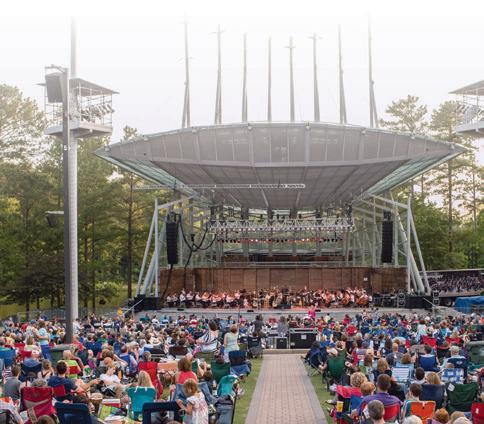
The North Carolina Symphony plays on the village green for the ninth year. The performance is free and open to the public – bring a blanket, chairs and a picnic.
Backyard Butterflies Open House
June 17, 8 a.m. to 1 p.m. backyardbutterflies.org

Tour the butterfly habitat, learn how to create pollinator-friendly spaces and leave with a plant from the Hillsborough-based nonprofit’s plant swap. See the more than 20 species of butterflies and moths raised from the garden while perusing the free plant table.
Chapel Hill-Carrboro Juneteenth Celebration

June 17, 10 a.m. to 3 p.m.
chapelhillarts.org
Mark Juneteenth and celebrate Black community and culture through food, live music, a nonprofit expo, kids activities, vendors and more at Hargraves Community Center. The third annual event is hosted by Chapel Hill Community Arts & Culture.
Fourth of July Fireworks
July 4, 7 p.m.
chapelhillarts.org
Celebrate the holiday with a fireworks show at Southern Community Park. Attendees are encouraged to bring blankets and chairs and pack a picnic. Parking is available at 7 p.m., and the display begins at 9 p.m. CHM
Weavers Grove Community Celebration
Saturday, May 20 | 11am - 2pm | 7516 Sunrise Road, Chapel Hill
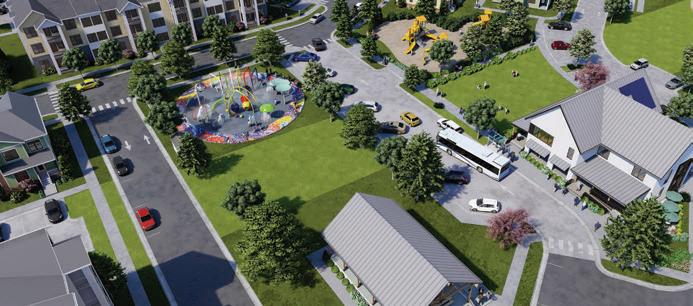
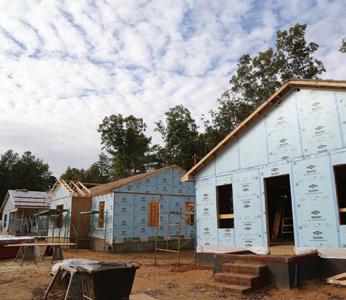
You’re invited to join us as we celebrate the start of new home construction at Weavers Grove. This free event will include tours of the site, food and special treats, engaging activities for children, and opportunities to learn more about Weavers Grove and Habitat for Humanity, and more! Learn more at www.weaversgrove.org/celebration.
12 chapelhillmagazine.com May/June 2023 ABOUT TOWN
CHM Weavers Grove Event Ad 3.0.indd 1 3/22/2023 4:53:23 PM
New location less than 1 mile away!
Feels Like Family
Chris G. Adigun, MD is a board certified dermatologist and a recognized leader in dermatology. She is known for her expertise in laser and aesthetic dermatology as well as her warm, compassionate and down-to-earth personality. Dr. Adigun’s team is comprised of top notch, dermatology-trained professionals, offering the latest technology and treatments.
There is a reason DLC has been voted Best of Chapel Hill and Best of Chatham every year since we opened the doors. It’s simple, DLC treats everyone like family!
Voted Best Of Chatham 2019-2022 Voted Best Of Chapel Hill 2017-2022
10441 US 15-501 N Chapel Hill, NC 27517
Chris G. Adigun, MD, FAAD
Karlee Wagoner, ANP-BC
Diana Walker, PA-C
Jennifer Jahoo, LME
919.942.2922 dlcofchapelhill.com
2022 2021 202 1 202 2





2023 PORSCHE MACAN PORSCHE SOUTHPOINT 2023 SUBARU ASCENT HENDRICK SUBARU SOUTHPOINT
WE’RE TURNING 5 – COME CELEBRATE!
HENDRICK SOUTHPOINT BIRTHDAY EXTRAVAGANZA

225 KENTINGTON DRIVE, DURHAM, NC 27713 919.354.7767 | HENDRICKSOUTHPOINT.COM *COLLISION CENTER ON THE CORNER OF HWY 70 & PAGE RD. SALES & FINANCING MON - FRI 9AM - 7PM SAT 9AM - 6PM SERVICE & PARTS MON - FRI 7AM - 6PM SAT 8AM - 5PM COLLISION CENTER* MON - FRI 7:30AM - 6PM SAT & SUN CLOSED GREAT OFFERS ON NEW & PRE-OWNED VEHICLES BROWSE OUR INVENTORY CONCIERGE AVAILABLE FOR SALES & SERVICE EXPERIENCE TEST DRIVE AT YOUR DOOR STEP WE WANT YOUR CAR! TOP DOLLAR FOR TRADE-INS! WE VALUE YOUR TRADE! WE SERVICE ALL MAKES AND MODELS AT HENDRICK SUBARU SOUTHPOINT
2023 ACURA MDX HENDRICK ACURA SOUTHPOINT
2023 BMW iX BMW OF SOUTHPOINT
Chamber 80th Annual Meeting
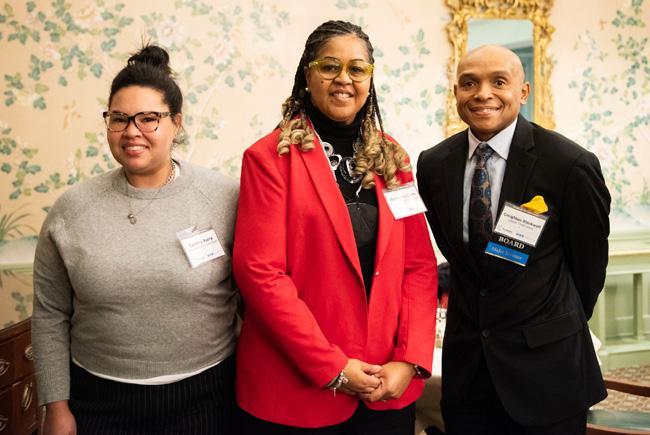
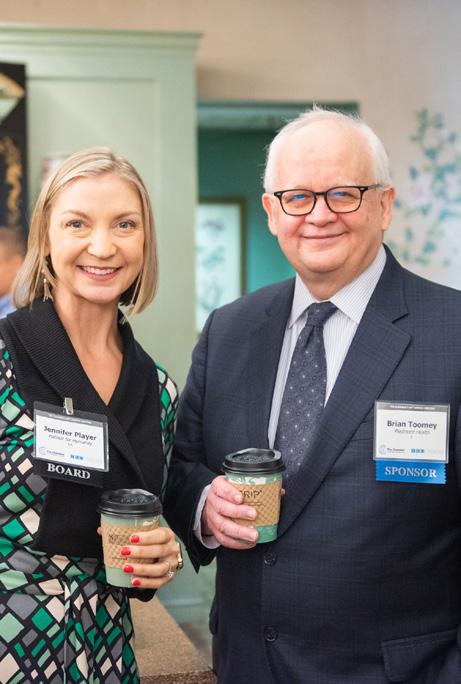
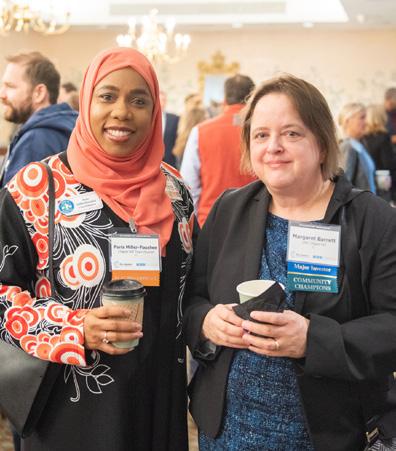
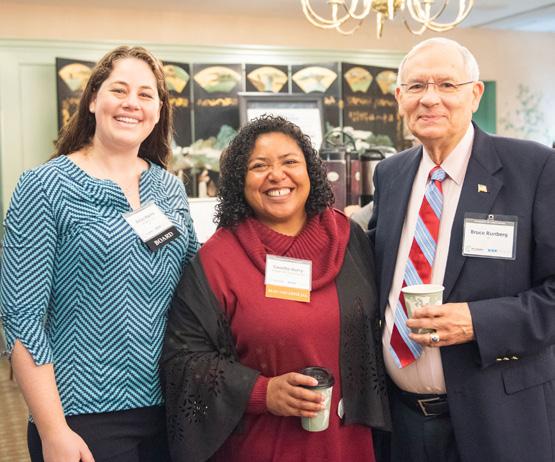
More than 300 business owners, elected officials and community members gathered for The Chamber for a Greater Chapel Hill-Carrboro’s 80th Annual Meeting at The Carolina Club in February. The morning meeting was kicked off with coffee and networking, followed by a full breakfast. Chamber President and CEO Aaron Nelson led a presentation of 2022’s business successes and gave a preview of what’s next for 2023.
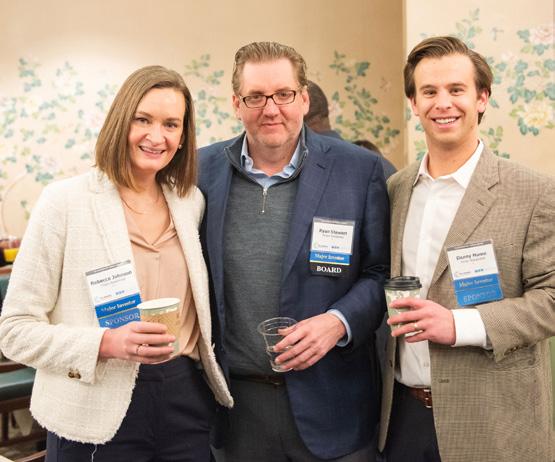
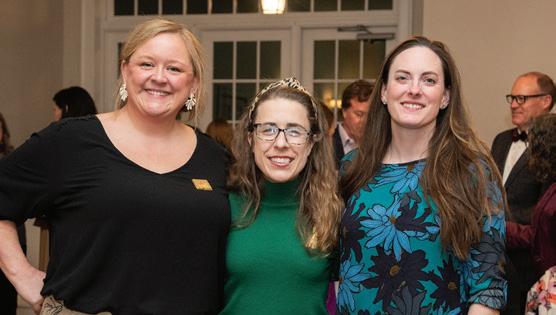
16 chapelhillmagazine.com May/June 2023 PEOPLE & PLACES
1 Rebecca Johnson, Chamber board member Ryan Stewart and Danny Hume.
2 Chamber board member Betsy Harris, Chapel Hill Town Council member Camille Berry and Bruce Runberg.
3 Candice Perry, Bernadine Cobb and Chamber board member Creighton Blackwell.
4 Chamber board member Jennifer Player and Brian Toomey.
1 2 3 4 5
5 Chapel Hill Town Council member Paris Miller-Foushee and Margaret Barrett.
NO MORE EXCRUCIATING KNEE PAIN!
“My name is Tonya. I came to Ignite Wellness because I had excruciating knee pain! I have been seeing Dr. Avery for a couple of weeks now and my pain is really lessened! My back pain has also improved. I have seen many other doctors for my knee pain, but these are the best results I have experienced. Thank you Ignite Wellness!”
FEELING BETTER AFTER ONE WEEK!
“Hi, my name is Vernon. I came to Ignite Wellness for my back, and after just one week, I’m feeling so much better. I’m so thankful for Ignite. I had come before for my knee, and they did such a great job so I returned.”
BACK TO DANCING WITHOUT PAIN!
“Hello, my name is Rosalinda. I came to Ignite Wellness with pain in my hip, back, and knee. I clean houses for a living and I like to dance for fun and I couldn’t do either because of pain. It took me longer to clean houses which was frustrating. After only one month of treatment, the pain was gone! I can now dance, exercise, clean houses, and do everything I could not do before. Thank you, Ignite Wellness!”
5821 Farrington Rd, Ste 202, Chapel Hill, NC 27517 919-307-6688 ignitechapelhill.com @ignitechapelhill THANK YOU CHAPEL HILL! VOTED BEST CHIROPRACTIC OFFICE! 2022
BACK AND NECK PAIN // HEADACHES // SCIATICA // NEUROPATHY KNEE PAIN // PLANTAR FASCIITIS // COLD LASER THERAPY NON-SURGICAL SPINAL DECOMPRESSION // SHOCKWAVE THERAPY END YOUR PAIN WITHOUT DRUGS AND SURGERY *Individual results may vary. LimitedTimeOffer Any$49ConsultExam, NecessaryX-raysUsualvalue$197 Federal and Medicare restrictionsmayapply.
—Tonya
—Rosalinda
DON’T LET PAIN STOP YOU THIS SUMMER
—Vernon
Chamber 80th Annual Meeting


Several local leaders received awards, including UNC’s Associate Vice Chancellor for Facilities Services Anna Wu, who received the Town & Gown Award; 2022 Chamber treasurer John Kiley, recipient of the 2022 Chair’s Award for Service to the Chamber; Pilar Rocha-Goldberg, president and CEO of El Centro Hispano, who received the 2022 Duke Energy Citizenship & Service Award; and Carrboro Mayor Damon Seils, who was awarded the 2022 Chair’s Award for Public Private Partnership. Photography by John
18 chapelhillmagazine.com May/June 2023 PEOPLE & PLACES Pack your picnic and bring your friends and family for memorable, musical evenings at Cary’s Booth Amphitheatre! Kids 12 and under admitted free on the lawn! UNC HEALTH PRESENTS SUMMERFEST 10 LAWN FLEX PASSES ONLY $240 SAVE 25%! BOOTH AMPHITHEATRE, CARY SPONSORED BY HOSTED BY PRESENTED BY SCAN HERE TO PURCHASE or call the box office and mention promo code SUMMER *Offer not retroactive or available at the gate. ncsymphony.org 919.733.2750
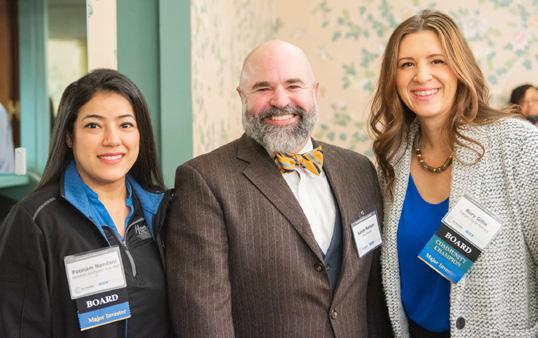
CONTINUED 6 Poonam Nandani, Aaron Nelson and Triangle Digital Partners’
Rory Gillis.
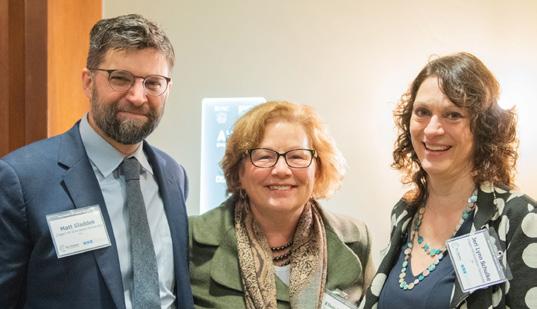
7 Matt Gladdek, Triangle Media Partners’ Ellen Shannon and Jeri Lynn Schulke.
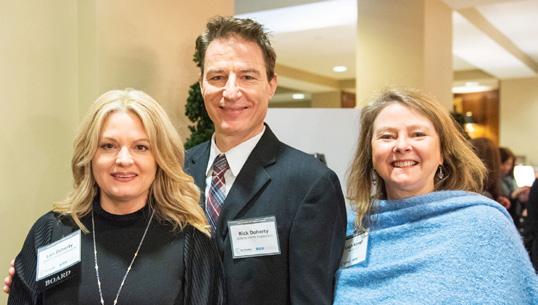
8 Chamber board chair Lori Doherty, Rick Doherty and Leigh Kempf.
6 8 7
Michael Simpson CHM
Carolina Love Gala
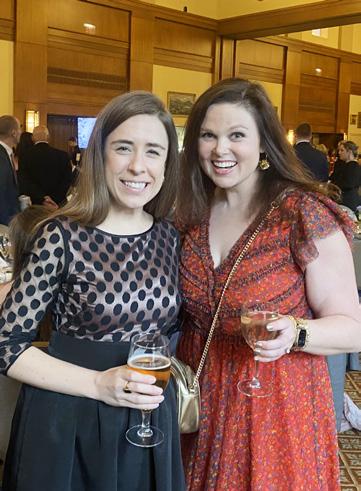
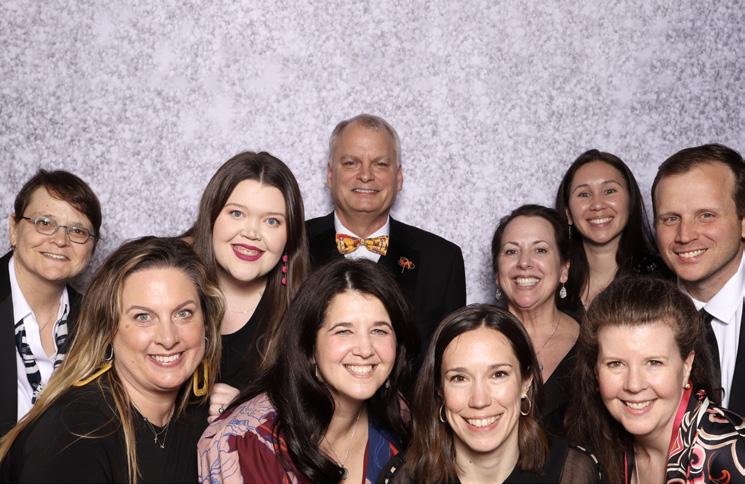
On March 18, the Ronald McDonald House of Chapel Hill hosted its annual gala at The Carolina Club featuring live and silent auctions, a three-course dinner, a raffle giveaway and dancing. The house raised over $174K, which will be used to continue providing support for families of patients at UNC Children’s Hospital One of these families, the Killeys, shared their story with the gala’s guests.
Get Support for Your Business
Orange County Business Investment Grant and Agriculture Grant Programs support the development and expansion of our established business and entrepreneurial communities.

Scan this Code to apply for grants and learn about free resources to help you grow your business.

orangecountyeconomicdevelopment.triangleclicks.com
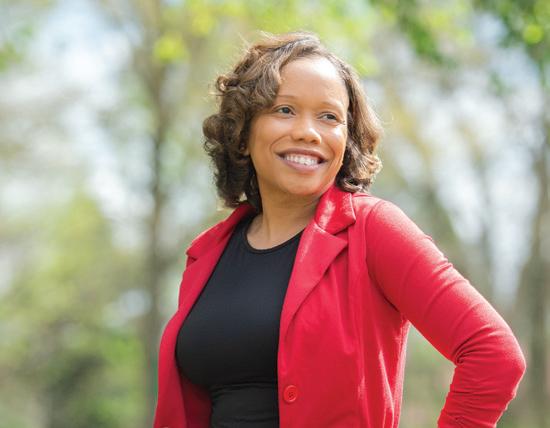
I used my grant funds to hire a business development team. Our revenue increased 5x off that one grant. Orange County chose me. The opportunity to relocate to Orange County showed up for my family and I right before the pandemic began and it has been the best decision of my life.”
–Stephanie Alston, Black Girl Group blackgirlgroup.net

May/June 2023 chapelhillmagazine.com 19 PEOPLE & PLACES
Photography by JoLynn Photography CHM
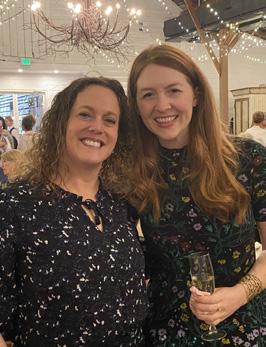
1 Back row: Nancy Maeder, Ellison Lambert, Oie Osterkamp, Mitzi Viola, Cathy Hall and Hunter Culbertson. Front row: Traci Cortez, Elizabeth Hullender, Emily Cizek and Nancy Jones.
1 2
2 Chapel Hill Magazine’s Jessica Stringer and Meghan Rosenthal.
‘Italy on a Plate’ Luncheon
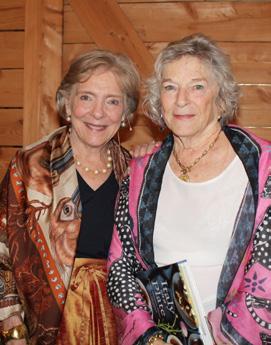
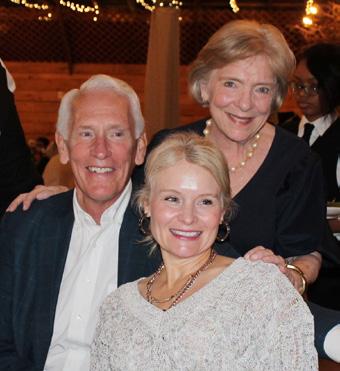
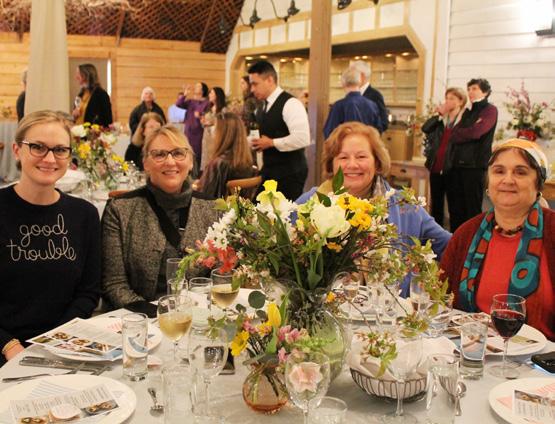
This year marks the 40th anniversary for Hillsborough-based VIETRI, the Italian ceramic dinnerware line founded by Susan Gravely. Her new book, “Italy on a Plate,” that is part memoir, part cookbook, was released on March 14, so she marked the occasion with two afternoons of hosting a three-course luncheon in the Fearrington Barn. After dessert, Susan chatted on stage with their shared love of Italy and then both answered questions from
Celebrating 62 years of exceptional classical performances!



JUNE 24 - JULY 29, 2023

EASTERNMUSICFESTIVAL.ORG
Gerard Schwarz, Music Director
20 chapelhillmagazine.com May/June 2023 PEOPLE & PLACES
1 Danielle Bliss, Cathy Elingburg, Triangle Media Partners’ Ellen Shannon and Barbara Donadio.
2 Susan Gravely and Frances Mayes.
3 Carrie Bachman and CJ Lotz.
1 2 3 4
4 Thomas Jones, Erica Jones and Susan Gravely.
Big Night in for the Arts
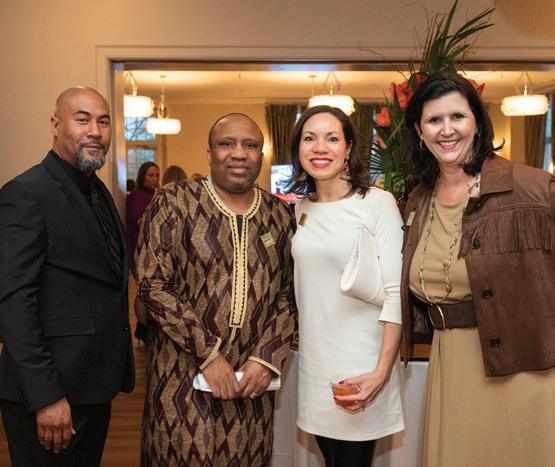
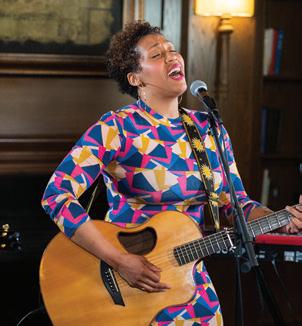
The Orange County Arts Commission, in a partnership with Durham Arts Council, Chatham Arts Council and United Arts Council, hosted a watch party on March 9 at The Mayton Inn in Cary for their regional fundraiser broadcasted on WRAL. Guests enjoyed drinks, hors d’oeuvres and a live musical performance from Grammy-nominated country music artist Rissi Palmer. This event also featured interviews with stick sculpture artist Patrick Dougherty and the Chatham Rabbits, among other performers. The evening raised over $180K, which will aid the local nonprofits and culture organizations in their post-pandemic recovery efforts.
1 Al Strong, former Carrboro Poet Laureate Fred Joiner, Heather Zucchino and Jenn McEwen of United Arts Council.
2 Orange County Arts Commission’s Katie Murray, Chapel Hill Magazine’s Jessica Stringer and Gloria Schmidt.

3 Rissi Palmer performs.
May/June 2023 chapelhillmagazine.com 21 PEOPLE & PLACES Investments Financial Planning Risk Management Chapel Hill, NC Fiduciary Since 1982 919.968.2977
Photography by John Michael Simpson CHM
1 2 3
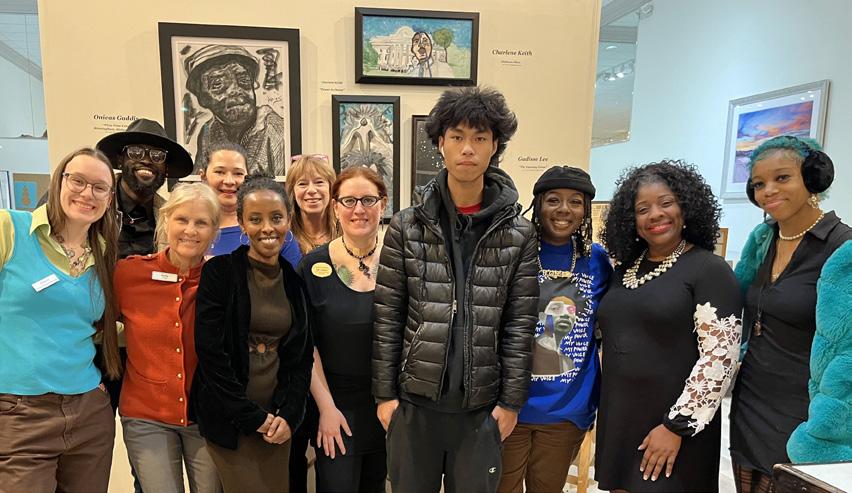
1 Allison McCoy, Ty Smalls, Becky Woodruff, Gadisse Lee, Katy Kattenbrun, Suzanne Longmire, Ash Lindner, Alex Thein, Soteria Shepperson, Charlene Keith and Taylor Dines.
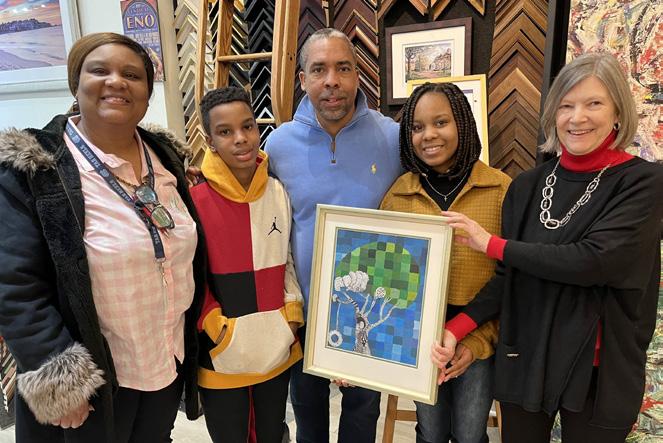
2 Cortland Gilliam, Chapel Hill’s 2023-24 poet laureate; Becky Woodruff, owner of The Frame & Print Shop; CJ Suitt, 2021-22 poet laureate; George Barrett, executive director of the Marian Cheek Jackson Center, and Jaclyn Gilstrap.
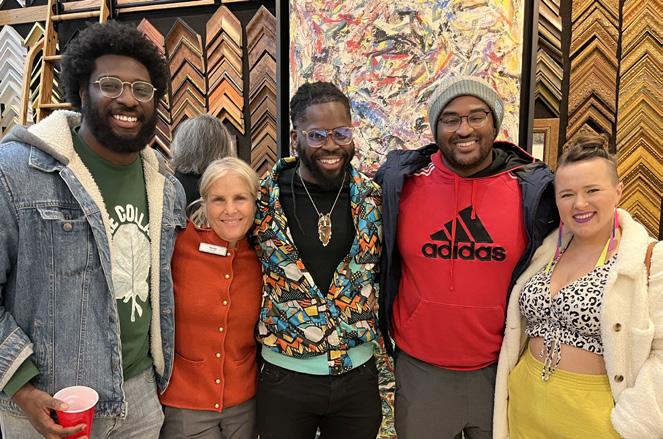
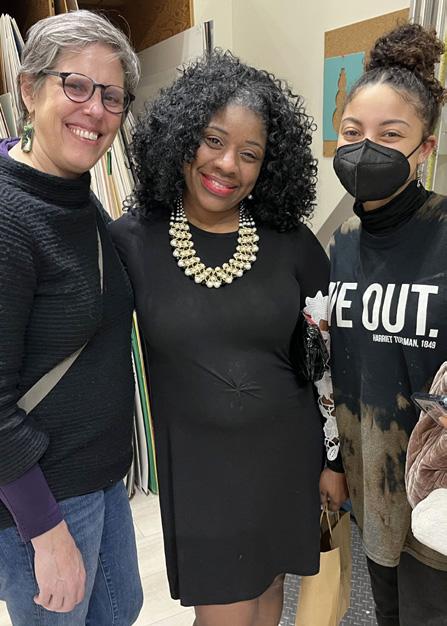
3 Lizzie Ellis-Furlong, Charlene Keith and Allani Dye.
4 Cissy Green, Landon Green, Melvin Green, Caroline Green and Christy Jones.
‘Art Speaks’ Opening Reception
The Frame & Print Shop hosted an opening reception for INKounter’s “Art Speaks” exhibit in February. INKounter, a program through Grow Your World, supports justice-impacted individuals through projects that highlight their identities and roles in society. INKounter artists Soteria Shepperson, program co-founder; Charlene Keith; Gadisse Lee; Ty Smalls and Onicas Gaddis, along with student artists Alex Thein and Taylor Dines, showcased their unique pieces in the exhibit. The works were on display through March 31. CHM
22 chapelhillmagazine.com May/June 2023 PEOPLE & PLACES
1 2 3 4
BEAUTY


through movement, music, costumes, sets, and lighting during ADF’s 90 Anniversary Season!












Tickets on sale now!
Performances kick off June 8.



 Photo by Whitney Browne
NOTED .
COMINGS AND GOINGS
Chapel Hill’s fire chief, Vencelin Harris, announced his retirement, effective July 1, after nearly 30 years of service to the department. “It is with mixed emotions that I am announcing my decision to retire from the Town of Chapel Hill,” he says. “After many conversations with my family last spring, we decided that it is time for us to start the next journey in our lives.” Vencelin took the position in February 2020 and led the fire department through the pandemic.
Jenna Schwartz was hired as the North Carolina Botanical Garden’s greenhouse and nursery assistant in February. Jenna brings a wealth of experience to her new position after working for Fieldstone Garden and Meadowsweet Gardens. She also runs her own private native gardening business and has significant experience working in small-scale agriculture.
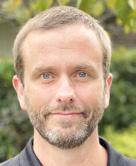
Vic Suter and Bryce Bowden joined CommunityWorx’s leadership team in February. Vic, pictured above right, brings experience working with the
WHAT WE’VE HEARD AROUND OUR TOWNS … Compiled by Cooper Metts
LGBTQ+ community and incarcerated people to their new position as program coordinator. Bryce, pictured below, is program coordinator for Project Impact, a Chapel HillCarrboro City Schools outreach program. He has seven years of experience working with the school district.
Orange County Sheriff’s Office Chief Deputy Jamison “Jamie”
Sykes is retiring in May. Jamie is a 1992 Orange High School graduate and was hired as a deputy by former Sheriff Albert “Lindy” Pendergrass in 1995.
“I thought about his role in building and shaping the team we now have and the service we provide to Orange County,” Sheriff Charles Blackwood says. “I made sure
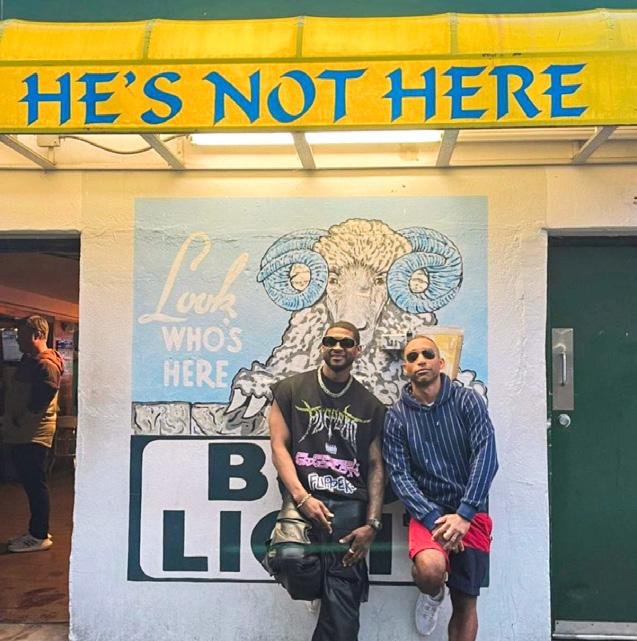
HE IS HERE
Usher paid a visit to He's Not Here on March 31. The R&B singer was in the area ahead of his headlining performance at Dreamville Music Festival in Raleigh the following night. Held at Dorothea Dix Park, Dreamville was created in 2019 by well-known North Carolina native rapper and hip-hop star J. Cole and draws thousands to the Triangle each spring.
to tell him he will always have a place at the table he built.”
In February, Phyllis PortieAscott was unanimously chosen by the Orange County Board of County Commissioners to fill the vacancy on its board left by Renée Price’s election to the North Carolina House of Representatives. Phyllis worked on Orange County Schools’ Equity Task Force and was
24 chapelhillmagazine.com May/June 2023
active in the Orange County Democratic Party and the Northern Orange NAACP before filling the board opening.
After 45 years of private practice in Chapel Hill, Durham and Hillsborough, Dr. Barbara Hershey retired from her career in orthodontics in December. Barbara moved to Chapel Hill to pursue master’s degrees in public health and orthodontics at UNC after earning her doctorate of dental surgery at the University of Minnesota. During her career, Barbara dedicated much of her time to staying up to date on the latest advances in orthodontics and integrating them into her practice. She participated in 60 hours of professional education each year and served in many professional organizations.
In February, Chris Bugge was hired as the newest construction manager for Bold Construction. Chris has a degree in wood products technology and brings 25 years of experience in the construction industry. During his career, Chris has gained a wealth of experience in many areas of the field, including renovation and commercial and residential construction.
Amy Kelley and Brandy Corbett took over ownership of Great Harvest Bread Company of Chapel Hill in February. Jeff Bailey and Cathy Bailey had
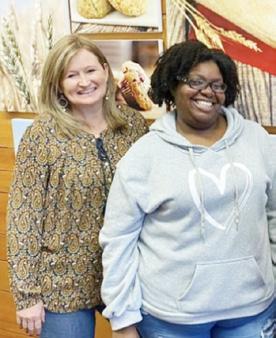
been the owners for the past 11 years. “We’re super excited about continuing the legacy of Great Harvest that they’ve had going for quite some time,” Amy says.
Chapel Hill High School
Principal Charles Blanchard announced his retirement effective April 1. Charles worked in public education for nearly 30 years, with stints as principal at Grimsley Senior High School, James B. Hunt High School and Southeast Guilford High School. Charles was the principal of Chapel Hill High School for three years before retiring.
Carrboro High School
Principal Beverly Rudolph will retire following the 2022-23 school year. Beverly has served as Carrboro High School’s principal since
2017. She’s worked in North Carolina public schools for 24 years, first teaching middle school English before entering school administration.
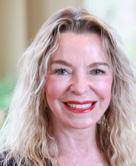
Hillsborough utility maintenance technician III Waddell Jacobs retired March 31 after nearly 18 years working for the town. Waddell’s career in the department started in July 2005 when he was hired as a maintenance worker. He ascended to technician III in 2014 after earning his certifications in drinking water operations and wastewater collections. He worked on installing and repairing the town’s water and sewer lines and performing maintenance on fire hydrants during his time with the town.
BIZ BRIEFS
FRANK Gallery has relocated to 370 E. Main St., Ste. 130 in Carrboro after more than five years at University Place
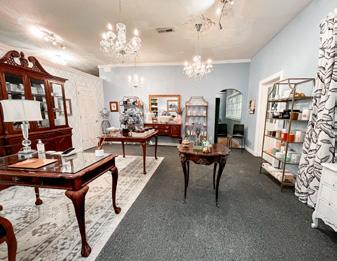
The new location opened March 28 and will allow more space for the gallery’s expanding collection.
SHARE YOUR NEWS! Submit noteworthy items, from award and scholarship winners to new book and album releases.
Hillsborough Police Department’s Lt. William Parker retired in February. In his 28 years of service, William worked as a patrol supervisor and later as sergeant before he was promoted to lieutenant in July 2022. As lieutenant, he monitored the day-today operations of two patrol squads. William wanted to be a police
Emma Grace Soap reopened on March 1 after a burst pipe in a neighboring building flooded the Hillsborough shop in December. Owner Terry Smedley expects to showcase new products in the shop for the spring season. “I’m incredibly excited to have the shop reopen,” Terry says. “We’ve worked really hard to get everything put back together and finally be able to welcome customers back into the shop.”
Orange County launched SizeUp, a new business intelligence program that will provide free data to county residents, in February. SizeUp aims to improve decision-making across industries by providing “big data for small businesses.”
The data in SizeUp is a consolidation of
May/June 2023 chapelhillmagazine.com 25 NOTED
public, private and internal sources. The U.S. Department of Commerce recognized SizeUp with first place in the Commerce Business Apps Challenge. County residents can access SizeUp for free through the county’s website.
Launch Chapel Hill will complete its relocation to 136 E. Rosemary St. and 137 W. Franklin St. this summer. Launch started in 2013 as an experiment to accelerate startup business growth in Chapel Hill and is making the move from 306 W. Franklin St., where it has been located since 2017.
In February, the Ackland Art Museum launched a new website dedicated to ultra-highresolution images of drawings from The Peck Collection. The website is the only of its kind devoted to a collection of drawings and gives viewers the ability to zoom in – close enough to examine the paper structure – as well as see the reverse side of each drawing. The site aims to be a living resource and will be updated with new entries.
officer since he was 5 years old. “I have absolutely enjoyed my time here, and I will miss everybody I have worked with in my career,” William says.
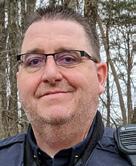
“I wish all of the officers in the agency the best of luck, and please be safe.”
BOOKIN’ IT

UNC law professor Gene Nichol released his new book, “Lessons From North Carolina: Race, Religion, Tribe, and the Future of America,” on April 25. Gene’s newest book is a passionate appeal to the next generation to learn lessons from “the nowcommon attacks on democratic institutions” in North Carolina. He communicates his hopes that future generations can “find the path to remedy” these conflicts.
Originally released in 2020 and dubbed the best baseball book of the year by Sports Collectors Digest, the book examines how the thrilling 1932 MLB season captivated the attention of baseball fans and served as an entertaining distraction during the Great Depression.
In April, Hillsborough author Lee Smith released her newest book, “Silver Alert,” which tells the story of an elderly man’s road trip with a new young friend in defiance of aging norms.

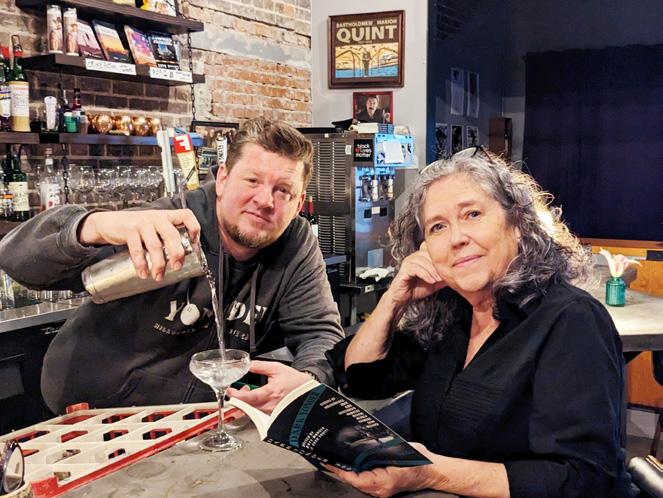
Author David Baldacci described the novel as “Lee Smith at the top of her game.” The book is available in hardback, ebook and audiobook versions.
Yonder Southern Cocktails & Brew published “Dark Yonder” in late January. Eryk Pruitt, the bar’s owner,
and former Piedmont Laureate Katy Munger selected just 10 submissions for the literary journal that aims to push the boundaries of neo-noir through dark fiction. It is available for purchase on Amazon and instore at Yonder or Purple Crow Books. At press time, Eryk and Katy planned to release a second issue with new submissions on April 13.
SAVE THE DATE
Kenan Memorial Stadium is set to host a friendly match between Chelsea FC of the Premier League and Wrexham AFC of the National League on July 19. Chelsea and Wrexham’s matchup will be the first-ever professional soccer match in Kenan Memorial Stadium and will likely draw a large crowd to Chapel Hill. Although Chelsea already has a large global fan base, Wrexham is gaining
Author Thomas Wolf’s book, “The Called Shot: Babe Ruth, the Chicago Cubs, and the Unforgettable Major League Baseball Season of 1932,” is now available in paperback.

26 chapelhillmagazine.com May/June 2023 NOTED NOTED
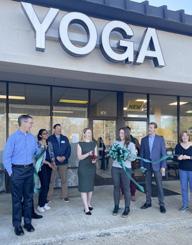
Christine Veit opened a new Hillsborough yoga studio, Earth Yoga, in March. Christine and Mayor
Lendio released a study on the Best States to Start a Small Business, and North Carolina ranks No. 5. The rankings were determined by analyzing myriad factors including tax rates, startup survival rates, cost of living, educated worker migration, loans, funding, consumer spending and incentive programs.
popularity in the U.S. thanks to its owners, actors Ryan Reynolds and Rob McElhenney, who also starred in a 2022 docu-series, “Welcome to Wrexham,” about the Welsh team.

WHAT AN HONOR

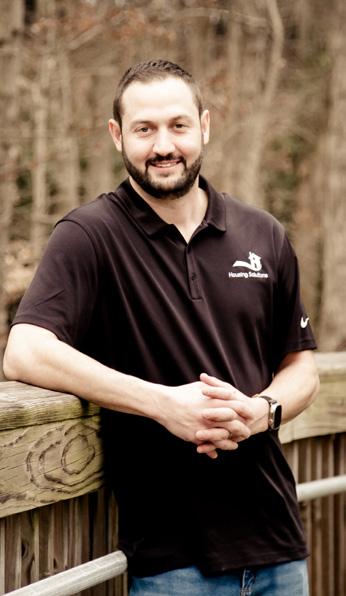
Ryan Holden, general contractor and owner of Housing Solutions, Inc., was named one of the nation’s top Forty Under 40 home remodeling professionals by Pro Remodeler Magazine. The acknowledgement is the latest in a line of awards

May/June 2023 chapelhillmagazine.com 27 NOTED PREVENTIVE, RESTORATIVE & COSMETIC DENTISTRY MANDY GHAFFARPOUR, DDS • T. J DAKERMANJI, DMD & ALEXANDRA YARBOROUGH HART, DDS, FACP Now Welcoming New Patients! COME EXPERIENCE THE GENTLE SIDE OF DENTISTRY 104 N. ELLIOTT RD, CHAPEL HILL, NC 27514 • 919.942.7163 • STUDIOGDENTIST.COM NOW OFFERING PROSTHODONTICS SERVICES Studio G is a Pankey Phylosophy Practice 2010-2023
Jenn Weaver gave speeches at the ribbon-cutting ceremony. Earth Yoga offers six different classes and hosts at least two every day. All classes sold out on opening day, March 15.
and honors for Ryan, as he recently received first place for Best Kitchen under $60,000 and Best Bathroom under $35,000 from the Home Builders Association of Durham, Orange & Chatham Counties
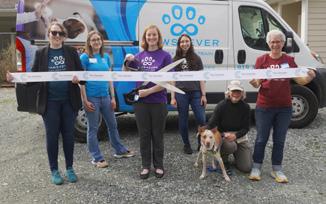
On March 3, Paws4ever celebrated the purchase of its new rescue van with a ribboncutting ceremony in partnership with The Chamber for a Greater Chapel HillCarrboro. The van, which was funded by donations to the nonprofit, will be used to transport animals to and from county shelters and vet appointments as they await adoption.
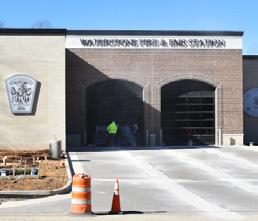
At press time, The Waterstone Fire and EMS Station in Hillsborough was slated to open in April after breaking ground in November 2021. The town provided the land and about $108,000 of funding,

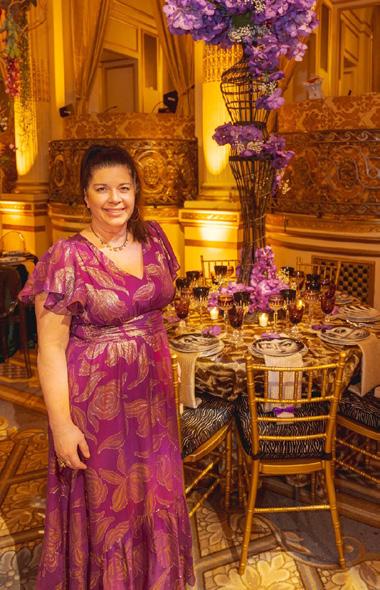
Michelle Murphy of Demi Ryan exhibited her talent for design at the New York Botanical Garden Veranda Orchid Dinner in February. She was selected from designers and creatives nationwide to create a tablescape for the event. “I feel incredibly honored to have been a part of such an amazing event and to celebrate the power and beauty of women in design,” Michelle says.
James E. Williams Jr. and Delores Simpson received the 2023 Pauli Murray Awards in early March for their dedication to human rights and equality. James served as the chief public

28 chapelhillmagazine.com May/June 2023 NOTED Public Parking is Easy in Downtown Chapel Hill PARKONTHEHILL.COM West Franklin Street public parking lots are steps away from your favorite local businesses. Visit parkonthehill.com for all public parking options.
ABOVE Katie Stember, Emily Albert, Whitney Zoghby, Savanna LaPrad, Buster, Pam Fabian and Irene Faust.










May/June 2023 chapelhillmagazine.com 29 LuckyDancewear.com 919.548.9899 603 Meadowmont Village Circle, Chapel Hill Photo by @chrismoorephotography for @StarActionShots Dancewear Dance Shoes Activewear For All Ages STAY CONNECTED Chapel Hill Magazine • Chatham Magazine Durham Magazine • Heart of NC Weddings Triangle Digital Partners Chapel Hill, Chatham, & Durham Weekenders Home & Garden Eat & Drink chapelhillmagazine.com/join chathammagazinenc.com/join durhammag.com/join Durham Inc. Weekly Wedding Planner Special Offers & Promotions What We’re Eating: News from our restaurant community Editor’s Picks: What to do this weekend! PLAN YOUR WEEKEND HOME &garden Delivered monthly by Durham Magazine Chapel Hill Magazine and Chatham Magazine Local renovations Professional advice Latest trends GO HERE TO SIGN UP:
alongside contributions from Orange County and the Orange Rural Fire Department.
Blue Box Theatre Company debuted its first show, “Milk and Honey Whiskey,” in March at the Seymour Center written by the company’s cofounder, Grace Siplon, and featuring original music and puppetry. Half of the show’s profits benefited services for older adults
at the Seymour Center. The company will present “Much Ado About Nothing” by William Shakespeare this summer.
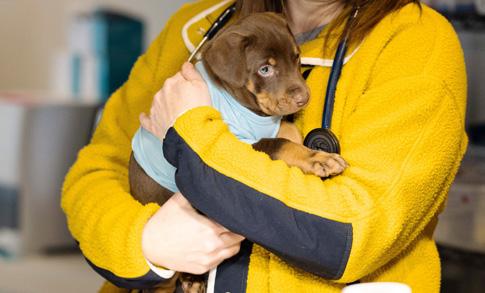
In February, Beautiful Together Animal Sanctuary opened its first-ever rescue animal wellness clinic in Carrboro. The clinic gives the nonprofit a space to perform wellness exams, vaccinations and snap testing.
defender for Orange and Chatham counties from 1990-2017. He also helped establish the Task Force on Racial and Ethnic Bias in the Criminal Justice System in 2010 while serving on the North Carolina Advocates for Justice Board of Governors. Delores was the first AfricanAmerican woman to chair the Orange County Schools Board of Education and served for two decades after retiring as a teacher.
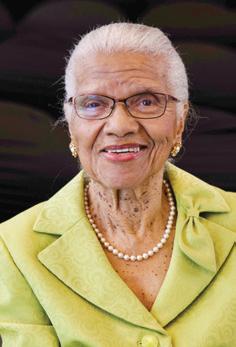
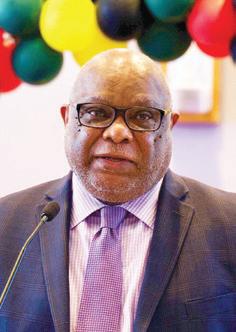
She also helped Orange County Schools hire diverse leadership and implement policies to improve race relations.
Wallethub ranked Chapel Hill No. 8 in the country on its 2023’s Best Cities for College Basketball Fans report. The report used five categories to rank each city, and Chapel Hill ranked within the top ten of three categories, including the No. 1 spot for social media engagement. CHM
30 chapelhillmagazine.com May/June 2023 NOTED NOTED
PHOTO BY ADRIAN ETHERIDGE PHOTOGRAPHY
LEARN MORE & GET INVOLVED








JULY 4
JUNE 3




JULY 20, 27 & AUGUST 10, 17
NOVEMBER 12



SEPTEMBER 16






















































































































DECEMBER 9

JUNE 17

































JULY 20 & 27
OCTOBER 14, 21, & 28
10 & 17

AUGUST
Erin Matson, UNC’s most decorated women’s field hockey player and arguably the greatest women’s player of all time, was named Carolina’s next head field hockey coach in January. She follows Karen Shelton, who announced her retirement in December.
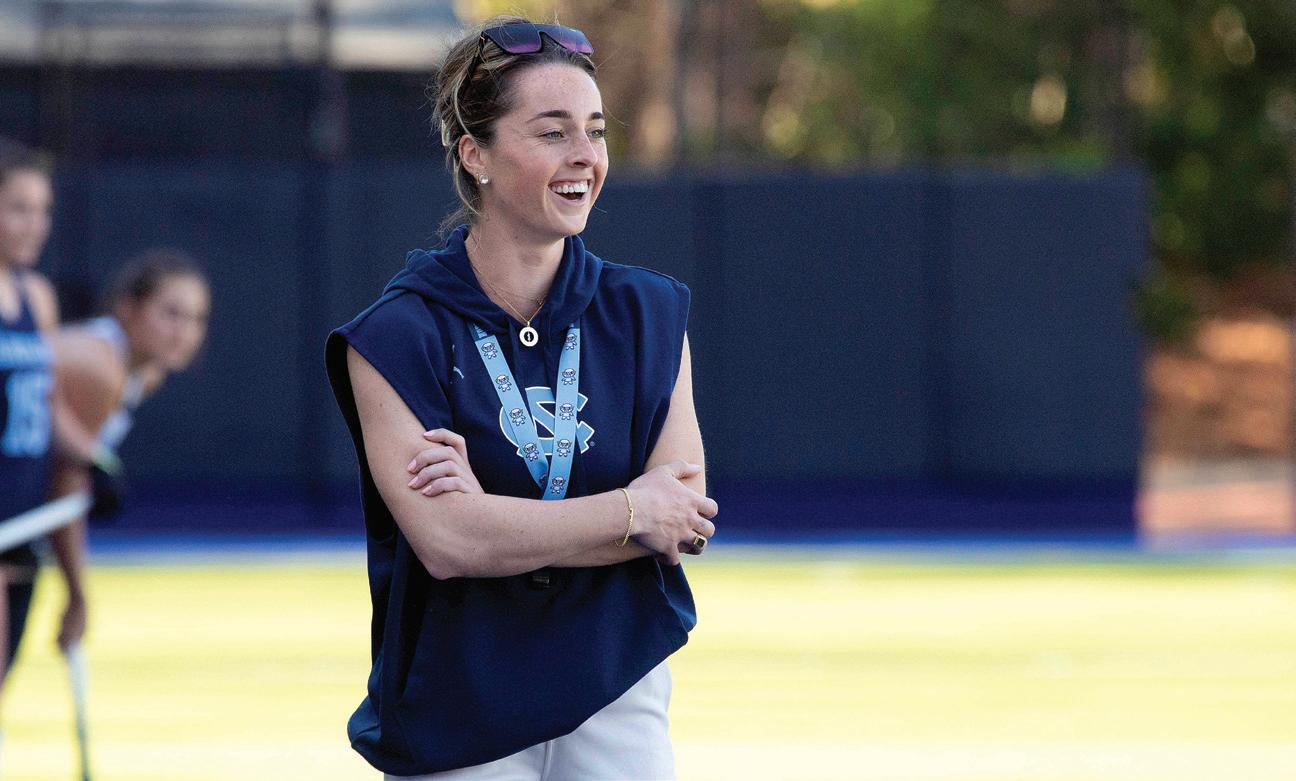
Erin said in a press conference on Feb. 2 she’s always dreamt of coaching the sport she loves, knows the ins and outs of Carolina’s program and is the best person to succeed Karen, who coached the team for 42 years.
Karen, who became the program’s head coach in 1981, retired after winning 10 national championships and 25 Atlantic Coast Conference championships and posting five undefeated seasons. Erin, who played on four of those national championship teams, was announced as Karen’s successor on Jan. 31.
taking the reins
UNC Field Hockey’s Erin Matson scores big as new head coach
By Laurie D. Willis
After graduating from UNC in December, Erin was named the head coach on Jan. 31.
Erin graduated in December with a bachelor’s degree in communications and media after collecting numerous awards and records on the field, including three Honda Sport awards for field hockey, joining Karen as the only other player to win the recognition three times; the all-time scoring leader in ACC history and NCAA tournament play; and five ACC Offensive Player of the Year awards. Erin also started on three of Carolina’s five undefeated field hockey teams.
She honed her skills in the basement of her home in Chadds Ford, Pennsylvania, where she punched holes in the wall and nicked the furniture as she practiced her shots, according to a 2020 feature in the Carolina Alumni Review
As a freshman living in Avery Residence Hall overlooking Shelton Stadium, where the lights stayed on until 10 p.m., she would frequently sneak out to the field with a bucket of balls to practice shots. Her teammates at the time said they didn’t know how much time Erin practiced on her own. “I enjoy it, and it makes me better,” Erin told the Review. “So why wouldn’t I want to do it?”
32 chapelhillmagazine.com May/June 2023 CAROLINA ON OUR MIND HAPPENINGS AT UNC
PHOTO BY UNC ATHLETIC COMMUNICATIONS


frameshopchapelhill.com Custom Framing • Giclee Art Printing • Art Restoration & Installation 50 years serving our community with the finest custom framing, 2022 What a Difference a Frame Makes! Let Us Preserve Your Art at One of Our Two Convenient Locations Central Location @ University Place North Location @ Timberlyne Village (Previously Framemakers) 1129 Weaver Dairy Road, Suite W Chapel Hill NC 27514 919-942-3291 frameshopnorth@gmail.com 201 S Estes Dr., Suite 400C Chapel Hill, NC 27514 919-942-7306 frameprintshop@gmail.com
During the Feb. 2 press conference held via Zoom, Erin acknowledged it was surreal to be named head coach of UNC’s field hockey program just one month after graduating and two months after the squad capped off another undefeated season and won the school’s record 10th national title. She said, however, she never considered working at a smaller, lesser-known school to gain experience before assuming the head coaching position at the nation’s preeminent institution for women’s field hockey.
Erin was asked whether Karen ever hinted that she wanted Erin to succeed her. “Obviously it was a little tricky because we’d just won a national championship and that was on everyone’s mind,” Erin said. “But yes, the ball got rolling as soon as possible. I had thought about this longer than August. It’s been a thing in the back of my mind, obviously compartmentalizing it. Season comes first. Graduating came first.”
Erin said she’s always loved coaching but before the past year never thought it could be something she’d do for life.
“I’ve enjoyed coaching at clubs. I’ve enjoyed coaching through social media,” she said. “Even in the team film room and sitting down with my teammates in the past and … coaching in different ways. I’ve been very fortunate to have a very strong support network of coaches around me throughout my entire career to ask questions.”
Karen said in an interview with the Review shortly after announcing her retirement she was confident she was leaving the field hockey program in good hands. “This staff is the best staff that we’ve had in the history of our coaches, and I’ve had a lot of great coaches,” she said.
Erin said she plans to keep the coaches currently on staff because of their experience and the chance to lean on them when needed. She added she is “looking forward to seeing how that relationship changes and progresses as well.”
Erin said since her hiring was announced, other UNC coaches have reached out to offer their congratulations and support. “There are so many greats to learn from. It’s not like I just have only one or two options,” she said. Former head men’s basketball coach “Roy Williams, you know, I can text him if I want right now. Like, excuse me, is this real? It’s insane to have this support.”
LIGHTNING ROUND

• Early bird or night owl? I used to be a night owl, and now I’m an early bird.
• Favorite UNC sport other than field hockey: Ooohhh ... I would say I can’t pick. I root for all our Tar Heel teams! I just like supporting everyone – Carolina family all the way.
• Favorite pro team: Yankees and Dodgers.
• A coach you admire: Karen Shelton is the obvious one, but also all of our coaches here at UNC. I’ve leaned on some of them already and plan to lean on others. The Carolina family is real, including in the coaching world –so much amazing talent.
• Favorite movie or TV show: I like anything, as long as it’s good acting.
• Last movie you saw: “Avatar”
• Favorite coffee order: My trick is black coffee with Vital Proteins chocolate collagen powder, so then it’s like a mocha but not sugary.
• Favorite Chapel Hill place to eat: I can’t pick just one –too many awesome options.
• Favorite memory from your years at UNC: Another tough one ... the National Championship here at Karen Shelton Stadium was crazy. The last National Championship in 2022 was crazy. So many amazing memories over my five years as a player, and I’m excited to make more as a coach!
Erin said she’ll draw heavily from Karen’s expertise and said they have similarities that go beyond the Honda Sport Award. For example, Karen, who grew up just 15 miles from Erin’s hometown and whom Erin met at age 9, was only 23 when she became UNC’s head coach. Erin turned 23 in March. Even so, Erin said she’ll work to put her own stamp on the field hockey program.
“It’s definitely going to be a different part in our relationship, figuring out that balance of how much presence she’ll have, how much she’ll be around the stadium, when will that be,” Erin said. “We’ve already begun to have those conversations and that will continue.”
Erin shied away from calling the field hockey program hers, saying, “It’s … my opportunity to influence and kind of run the program. Definitely not my program.” She credited Karen for building UNC’s field hockey program from the ground up and plans to keep much of what Karen built because of the success of the program, but added she will look at areas that can be tweaked and “modernize some things, … making it more relatable, especially to young recruits.” CHM
34 chapelhillmagazine.com May/June 2023 CAROLINA ON OUR MIND
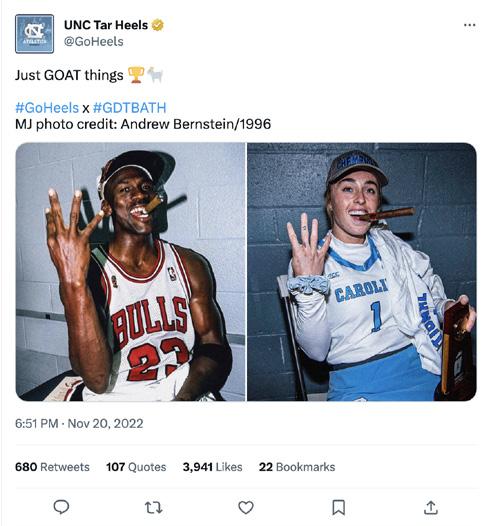
After the field hockey team won another championship last fall, Erin recreated a famous photo of another Tar Heel.
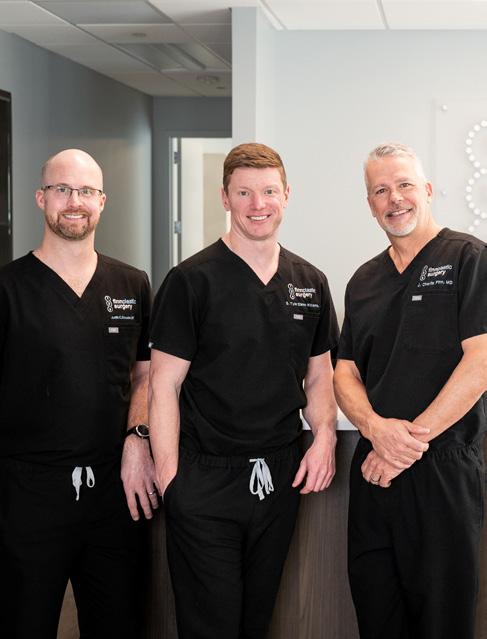
Finn Plastic Surgery is a comprehensive aesthetic practice serving patients seeking a variety of services, from minimally invasive treatments and physician-prescribed skin care to surgical procedures of the face and body. This year, Drs. Finn and Elkins-Williams welcomed another surgeon to the team, Justin C. Sowder, MD. Dr. Sowder is double board-certified in facial plastic surgery and otolaryngology. He performs a full range of cosmetic procedures including facelift, rhinoplasty, blepharoplasty and browlift, in addition to nonsurgical procedures including injectable treatments and laser skin resurfacing. FPS offers unparalleled artistry, extensive experience, and innovative technology. Schedule your consultation with Finn Plastic Surgery, and rest assured knowing you have chosen the practice voted “Best of Chapel Hill” for 11 years in a row!





May/June 2023 chapelhillmagazine.com 35 UNPARALLELED ARTISTRY EXTENSIVE EXPERIENCE INNOVATIVE TECHNOLOGY
1390 ENVIRON WAY, CHAPEL HILL, NC | 919.933.9522 | finnplasticsurgery.com Cosmetic Surgery • Lasers • Skin Care • Injectable Treatments OF CHAPEL HILL BEST 2016 WINNER WINNER 2017 2021 2022 SMOOTHING TREATMENTS • FACIALS & SKIN CARE EAST 54 • 3110 ENVIRON WAY CITRINESALONNC.COM BEST SALON & BEST PLACE FOR BEAUTY PRODUCTS Thank you Chapel Hill for your continuous support! VOTED BEST OF CHAPEL HILL BY READERS OF CHAPEL HILL MAGAZINE 2010-2022
WHAT WE ’ RE EATING
NEWS FROM OUR RESTAURANT COMMUNITY, PLUS A DISH WE LOVE

Chef/co-owner of relief at the end of the first night of service at we were able to serve 70 people tonight in over four hours, and we made everything that came out in the kitchen – we did every piece of prep, we did every piece of meat, every piece of pasta,” he says. The restaurant was a culmination of a year and a half of work after Garret and his sister, pastry chef/ co-owner Eleanor Lacy, shuttered their barbecue venture Big Belly Que in Dogwood Public Market and focused on transforming the former Kitchen space in Midtown Market.
The first few nights served primarily adventurous eaters and restaurant folks during the soft opening for friends and family, and Garret wondered if Chapel Hill palates would follow suit. “The first seven tables we saw today, all of them got anchovies, which I love,” he says. “That was something I thought: ‘Who the hell in Chapel Hill is gonna order anchovy-stuffed anchovies?’ It hasn’t been an issue. Turkey neck ragu? Hasn’t been an issue.”
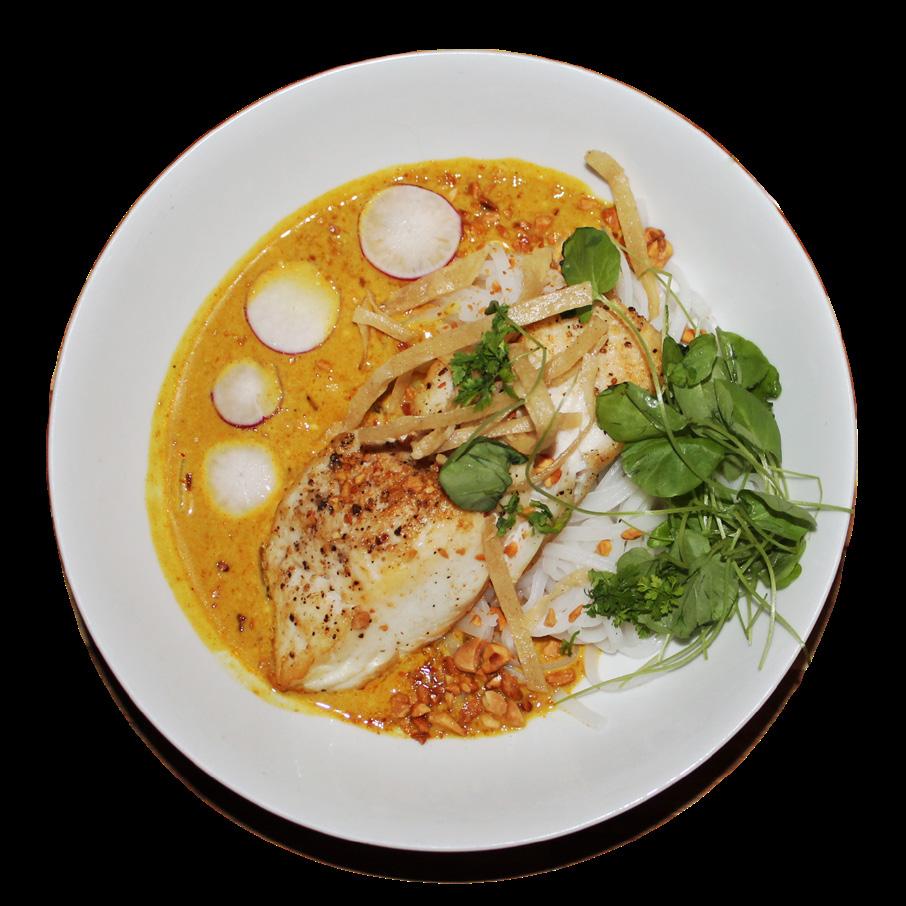
Dishes like the halibut khao soi and homemade pasta offerings are just as eye-catching as the vintage china tableware they are plated on. “It’s a small restaurant, so the tables are close, and people are excited to see what goes by,” says managing partner pitched in during service on opening night. “Any time I go to this corner, everyone’s sitting here saying, ‘OK, we’ve seen that, we’ve seen that,’” she says, pointing to the menu.
Garret, a graduate of the Culinary Institute of America in Hyde Park, New York, says that the menu is a balance of both familiar and fresh takes on dining. “Everything comes from an experience that I’ve had, where it’s opened up my mind to the possibility that maybe what I thought I knew about food was not everything there is to know about food.” He hopes to give diners that same experience, whether they are inclined to order roast chicken or grilled octopus.
919-914-6374
bombolochapelhill.com
and a cloud of orange-chocolate mousse is a must. Another standout is the tiramisu dacquoise. Garret is proud of what he and his sister have accomplished but is also keeping an open mind as Bombolo welcomes new guests. “Sometimes a bowl is too big; it’s hard to dig in,” he says. “Real, genuine feedback is incalculably valuable because all we want to do is succeed and make sure that we can continue doing what we love and make people happy.”
– by Jessica Stringer
36 chapelhillmagazine.com May/June 2023
PHOTOBYFORRESTMASON
ABOVE The chocolate bombolo.

LEFT The halibut khao soi, served with rice noodles, dried chiles and lemongrass.
NEWS BITES




• Bul Box opened its sixth location in North Carolina on March 20 at 200 W. Franklin St., Ste. 130. The Asian restaurant is known for the customizability of its unique bowls. The Chapel Hill location also premiered a new menu item, the chicken katsu sandwich.

• Artist Matt McCarthy’s surreal cat artwork was displayed at Joe Van Gogh’s Timberlyne location for the month of March. The installation featured several of his popular collage series, including giant cats inhabiting cities, landscapes and popular art.

• Garden Spot, a cozy green space that will host parties, pop-ups, music and markets and welcome small businesses that are testing food new concepts, was slated to open behind Lantern in midApril, as of press time.


• Burmese Hot Bowl, a Burmeseinspired food truck that parks in Cliff’s Meat Market’s lot at 100 W. Main St., just celebrated a year in business. Open daily for dinner, the truck’s menu is “90 percent Burmese, 10 percent fusion” and offers customizable curries, fried rice and fried noodles.
ABOVE Matt’s piece, “Vincent van Gato.”
• Capriotti’s Sandwich Shop opened a new location at 127 E. Franklin St. on April 3. The chain is known for its sub sandwiches sized by lengths from “rookie” to “notorious.”
• Deli Edison at 630 Weaver Dairy Rd permanently closed on March 1, announcing on Instagram that: “This was a labor of love, a family affair and a community love letter these past three years.” – compiled by Katie MacKinnon CHM
May/June 2023 chapelhillmagazine.com 37 Our primary focus is the preservation and growth of investment capital. We employ a highly-selective approach vetted by in-house research. Our boutique model is powerful. www hamiltonpoint com 919 636 3765
DINING GUIDE
INCLUDES RESTAURANTS, DELIS AND BISTROS IN CHAPEL HILL, CARRBORO, HILLSBOROUGH AND NORTHERN CHATHAM COUNTY
CHAPEL HILL
East Franklin Street
1922 Coffee cafe with grab-andgo options. 140 E. Franklin St.; carolinacoffeeshop.com
Bandido’s Mexican Cafe Burritos, salads, quesadillas, tacos. 159 ½ E. Franklin St.; 919-967-5048; bandidoscafe.com
Basecamp Restaurant and bar serving small plates and a variety of international dishes. Open for dinner and Sunday brunch. 105 E. Franklin St.; basecampchapelhill.com
Bonchon Korean fried chicken. 205 E. Franklin St.; 984-234-0788; bonchon.com
Capriotti’s Sandwich Shop Hot and cold subs, hand-pulled meats, 12-hour roasted turkey and quality cheeses. 127 Franklin St.; capriottis.com
Carolina Coffee Shop Casual American cuisine for breakfast, lunch and dinner. 138 E. Franklin St.; 919-942-6875; carolinacoffeeshop.com
Cosmic Cantina Burritos, salads, quesadillas, tacos. 128 E. Franklin St.; 919-960-3955; cosmiccantina.com
Dame’s Chicken & Waffles Chicken, waffles, schmears. ‘Nuff said.
174 E. Franklin St.; 919-240-4228; dameschickenwaffles.com
Down Time Craft beer, pizza, tacos, wraps, paninis and more. 201 E. Franklin St.; 919-240-7008; downtimechapelhill.com
Epilogue Books Chocolate Brews Independent bookstore and Mexican-style chocolatería. 109 E. Franklin St., Ste. 100; 919-913-5055; epiloguebookcafe.com
Four Corners American fare, nachos, wings, pasta. 175 E. Franklin St.; 919-537-8230; fourcornersgrille.com
Hibachi & Company Hibachi- and teriyaki-style dishes. 153 E. Franklin St.; 919-903-8428; hibachicompany.com
Imbibe Bottle shop and restaurant serving pizza, salads and appetizers. 108 Henderson St.; 919-636-6469; imbibenc.com
Linda’s Bar & Grill Local beer, sweet potato tots, cheese fries and burgers. 203 E. Franklin St.; 919-933-6663; lindas-bar.com
Möge Tee Bubble tea shop offering cheese foam fruit tea, fresh milk tea, fruit parfaits and fruit yakult. 151 E. Franklin St.; 984-234-3278; mogeteechapelhill.com
Momo’s Master Made-to-order Himalayan dumplings. 110 N. Columbia St.; 919-903-9051; momosmaster.com
Pirate Captain Ramen, seafood, smoothie bowls. 163 E. Franklin St.; piratecaptainch.com
Sup Dogs Creative hot dogs and sides like jalapeño popper tots and funnel cake sticks. 107 E. Franklin St.; 919-903-9566; supdogs.com
Sutton’s Drug Store
Old-fashioned diner known for its hot dogs, burgers and sandwiches like “Roy’s Reuben.” 159 E. Franklin St.; 919-942-5161; suttonsdrugstore.com
Time-Out Southern comfort food 24 hours a day. 201 E. Franklin St.; 919-929-2425; timeout247.com
Top of the Hill A Chapel Hill brewery that also offers American food like burgers and flatbreads. 100 E. Franklin St.; 919-929-8676; thetopofthehill.com
Tru Deli & Wine Bar Build-your-own sandwiches and wine. 114 Henderson St.; 919-240-7755; trudeli.com
Wheat Chinese noodles, rice dishes, desserts. 143 E. Franklin St.; 919-240-4155
Yaya Tea Japanese cafe with a variety of bubble teas and imported snacks. 157 E. Franklin St.; 919-914-6302; yayatea.com
West Franklin Street
411 West Fresh pasta, seafood and pizzas inspired by the flavors of Italy and the Mediterranean, with a healthy California twist; outdoor dining. 411 W. Franklin St.; 919-967-2782; 411west.com
Al’s Burger Shack Gourmet burgers and fries. 516 W. Franklin St.; 919-904-7659; alsburgershack.com
COMING SOON – Ay Por Dios Mexican food. 431 W. Franklin St.; 717-802-0745
*DETAILS ARE SUBJECT TO CHANGE. CHECK RESTAURANT WEBSITES AND SOCIAL MEDIA CHANNELS PRIOR TO VISITING.
ADVERTISERS HIGHLIGHTED IN BOXES
Beer Study/Boot Room Bottle shop with in-store drafts and growlers to go, plus soccer pub and sandwich shop. 504 W. Franklin St.; 919-240-5423; beerstudy.com
Blue Dogwood Public Market Food hall with individually owned food stalls including Asian fusion, a bottle shop and a nutrient-dense weekly pre-order menu. 306 W. Franklin St., Ste. G; 919-717-0404; bluedogwood.com
Blue’s on Franklin North Carolina barbecue, burgers, hot dogs, sandwiches and salads. 110 W. Franklin St.; 919-240-5060; bluesonfranklin.com
Boro Beverage Co. Locally made kombucha and craft sodas on tap. 400 W. Rosemary St., Ste. 1005; 919-537-8001; borobeverage.com
Brandwein’s Bagels Classic New York bagels and breakfast sandwiches. 505 W. Rosemary St.; 919-240-7071; brandweinsbagels.com
Bul Box Flavors and dishes inspired by Asia in handcrafted signature boxes with limitless customizability. 200 W. Franklin St.; bul-box.com
Buns Gourmet burgers, fries and shakes made from fresh ingredients. 107 N. Columbia St.; 919-240-4746; bunsofchapelhill.com
Carolina Brewery The Triangle’s oldest brewery restaurant features Carolina cuisine. 460 W. Franklin St.; 919-942-1800; carolinabrewery.com
Cat Tales Cat Cafe A two-story coffee/ beer/wine cafe home to 12 adoptable cats. 431 W. Franklin St., Ste. 210; 843-345-5289; cattalescatcafe.com
Chimney Indian Kitchen & Bar Traditional Indian dishes and unique options like pista korma and lobster pepper masala. 306 W. Franklin St., Ste. D; 984-234-3671; chimneyindiankitchen.com
CholaNad Restaurant & Bar Contemporary and traditional South Indian cuisine. Catering available. 310 W. Franklin St.; 800-246-5262; cholanad.com
38 chapelhillmagazine.com May/June 2023
Crossroads Chapel Hill at The Carolina Inn New American cuisine and seasonal specialties; all ABC permits; outdoor dining. 211 Pittsboro St.; 919-918-2777; crossroadscuisine.com

Crumbl Cookies Baked-from-scratch, home-delivered cookies featuring six different flavors each week. 133 W. Franklin St., Ste. 50; crumblcookies.com
The Dead Mule Club Sunday brunch, tacos, and barbecue. 303 W. Franklin St.; 919-969-7659; deadmule.squarespace.com
Franklin Motors Beer Garden A rooftop and fully licensed ABC bar. The Roquette at Franklin Motors serves hand-cut fries, bratwurst and sliders. 601 W. Franklin St.; 919-869-7090; franklinmotors.net
Heavenly Buffaloes Chicken wings as well as vegan wings with more than 25 rubs and sauces. 407 W. Franklin St.; 919-914-6717; heavenlybuffaloes.com/ chapel-hill
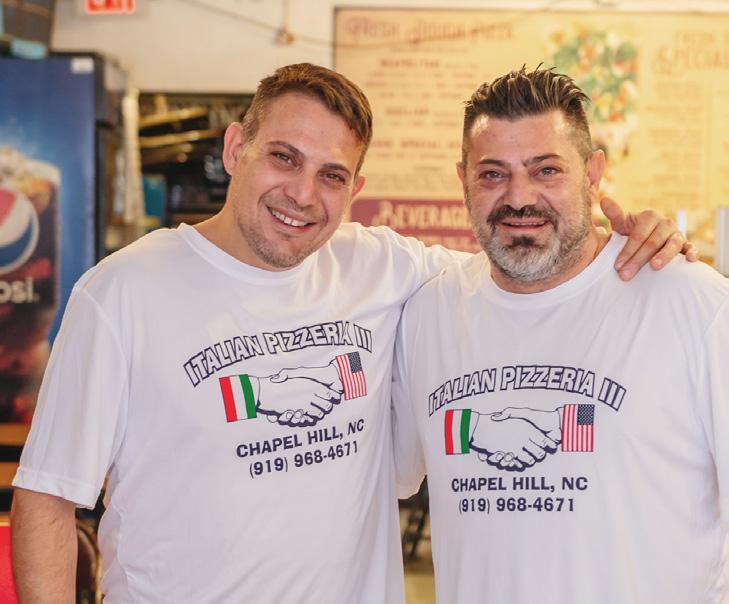
Italian Pizzeria III Pizza, Italian entrees, calzones and subs. The “place to be” in Chapel Hill for 41 years. 508 W. Franklin St.; 919-968-4671; italianpizzeria3.com
Kurama Sushi & Noodle Express Dumplings, salads, noodle dishes. 105 N. Columbia St.; 919-968-4747; kuramasushinoodle.com
Lantern Pan-Asian cuisine. 423 W. Franklin St.; 919-969-8846; lanternrestaurant.com
COMING SOON – Lapin Bleu Bar meets art gallery as Franklin Motors owner opens a new venue featuring beer, local food and art. 106 W. Franklin St.; franklinmotors.net
La Résidence French-inspired cuisine. 202 W. Rosemary St.; 919-967-2506; laresidencedining.com
Le Macaron French pastries. 140 W. Franklin St., Ste. 120; lemacaron-us.com
Mama Dip’s Kitchen Traditional Southern specialties, brunch and dinner classics like fried chicken and Brunswick stew. 408 W. Rosemary St.; 919-942-5837; mamadips.com
Mediterranean Deli Offers healthy vegan, vegetarian and gluten-free Mediterranean options. 410 W. Franklin St.; 919-967-2666; mediterraneandeli.com
Merritt’s Grill Famous BLTs, breakfast sandwiches, burgers. 1009 S. Columbia St.; 919-942-4897; merrittsblt.com
Might As Well Bar & Grill Bar favorites. 206 W. Franklin St.; 984-234-3333; chapelhill.mightaswellbarandgrill.com
The Northside District Specialty cocktails and international small plates. 403 W. Rosemary St.; 919-391-7044; thenorthsidedistrict.com
Perennial Cafe Serving Carrboro Coffee Roasters coffee, tea and pastries. 401 W. Franklin St.; 919-914-6045; perennial.cafe
Pho Happiness Pho noodle soup, vermicelli plates and vegetarian/glutenfree options. 508-A W. Franklin St.; 919-942-8201; phohappinessnc.com
The Purple Bowl Acai bowls, toast, smoothies, coffee. 306-B W. Franklin St.; 919-903-8511; purplebowlch.com
Que Chula Authentic Mexican food, tacos and craft tequilas. 140 W. Franklin St., Ste. 110; 919-903-8000; quechulatacos.com
Roots Natural Kitchen Salads and grain bowls. Children 12 years old and younger eat free all day, every day. 133 W. Franklin St., Bldg. A-115; 984-322-5600; rootsnaturalkitchen.com
May/June 2023 chapelhillmagazine.com 39 DINING GUIDE 100 years & cooking! Feeding Chapel Hill since 1923 114 N. Main St., Graham, NC GRAHAM 336.350.7293 159 E. Franklin St., Chapel Hill, NC CHAPEL HILL 919.942.5161 2022 BURGERS • HOT DOGS • SANDWICHES • WRAPS • SALADS • BREAKFAST • COFFEE • MILKSHAKES • CANDY • OLD FASHIONED SODA AND SOUVENIRS Visit Our Newest Sutton’s at the Atrium downstairs in the Europa Center! Thank you Chapel Hill for your continued support! 100 Europa Dr, Chapel Hill, NC, Mon - Thur: 8am to 2pm
Saturni Sandwiches, coffee and baked goods. 431 W. Franklin St., Ste. 120; 984-234-3497; saturni-nc.com
Spicy 9 Sushi Bar & Asian Restaurant Sushi, Thai curries, bibimbap and other Asian entrees. 140 W. Franklin St., Ste. 150; 919-903-9335; spicy9chapelhill.com
Talullas Authentic Turkish cuisine; all ABC permits. 456 W. Franklin St.; 919-933-1177; talullas.com
Tea Hill Made-to-order Taiwanese teas and street food. 318 W. Franklin St.; 984-9994580; teahillusa.com
Trolly Stop - The Beach on Franklin Specialty hot dogs and burgers. 104 W. Franklin St.; 919-240-4206; trollystophotdogs.com
Trophy Room A Graduate Hotels concept serving up shareable plates, salads and burgers. 311 W. Franklin St.; 919-442-9000; graduatehotels.com/chapel-hill/restaurant
Vimala’s Curryblossom Café Traditional Indian tandoori and thali. 431 W. Franklin St., Ste. 415; 919-929-3833; curryblossom.com
YoPo of Chapel Hill Frozen yogurt, treats and shakes with unique flavors since 1982. 106 W. Franklin St.; 919-942-7867; yogurtpump.com
Village Plaza/East Franklin Street/Eastgate Crossing/ Rams Plaza
Alpaca Peruvian rotisserie chicken and sides like maduros and tostones. 237 S. Elliott Rd.; alpacachicken.com
Breadman’s
A variety of burgers, sandwiches, salads and grilled meat, with daily soup and specials. All-day breakfast; catering available. 261 S. Elliott Rd.; 919-967-7110; breadmens.com
Caffé Driade Carrboro Coffee Roasters coffee, bowl-size lattes, local baked goods, beer and wine. 1215-A E. Franklin St.; 919-942-2333; caffedriade.com
The Casual Pint Upscale craft beer market with beer, wine and ice-cream sandwiches. 201 S. Elliott Rd., Ste. 5; 919-967-2626; chapelhill.thecasualpint.com
Cava Customizable Mediterranean bowls, salads, pitas and soups. 79 S. Elliott Rd.; 919-636-5828; cava.com
Chopt Unique salads, grain and quinoa bowls. Eastgate Crossing; 919-240-7660; choptsalad.com
Clean Juice Certified organic juices, smoothies, bowls and snacks. Eastgate Crossing; 919-590-5133; cleanjuice.com
Dunk & Slide at Whole Foods Market All-day breakfast, sushi and more. 81 S. Elliott Rd.; 919-968-1983; wholefoodsmarket.com
Guglhupf Bake Shop European-style breads, pastries and coffee. Eastgate Crossing; 919-914-6511; guglhupf.com/ chapel-hill-bake-shop
Il Palio at The Siena Hotel Italian specialties like butternut squash ravioli. 1505 E. Franklin St.; 919-918-2545; ilpalio.com
Japan Express Hibachi-style meals and sushi. 106 S. Estes Dr.; 919-928-9600
Kipos Greek Taverna Greek cuisine in a relaxed, upscale setting with outdoor dining. Eastgate Crossing; 919-425-0760; kiposchapelhill.com
La Hacienda Burritos, salads, quesadillas, tacos. 1813 Fordham Blvd.; 919-967-0207; lahaciendamex.com
The Loop Pizzas, soups, salads, sandwiches, burgers. Eastgate Crossing; 919-969-7112; thelooprestaurant.com
Min Ga Authentic Korean cuisine like bibimbap, bulgogi and a variety of homemade kimchi. 1404 E. Franklin St.; 919-933-1773; min-ga.com
Monterrey Mexican Grill Tacos, quesadillas, burritos and more. Rams Plaza; 919-969-8750; letsgotomonterrey.com
Mr. Tokyo Japanese Restaurant Unlimited sushi and hibachi. Rams Plaza; 919-240-4552; mrtokyojapanese.com/chapel-hill
Osteria Georgi House-made pasta, braised meat dishes and antipasto. 201 S. Elliott Rd., Ste. 100; 919-375-0600; osteriageorgi.com
Piero’s Pasta & Wine A variety of pasta dishes, soups and salads. 1502 E. Franklin St.; 984-999-4826; pierospasta.com
Rise Southern Biscuits & Righteous Chicken Biscuits, donuts, chicken and coffee. Eastgate Crossing; risebiscuitschicken.com
Shake Shack Fast-casual chain serving up 100% Angus beef blend burgers, crinklecut fries and hand-spun shakes. Eastgate Crossing; shakeshack.com
S quid’s Fresh seafood options include wood-grilled fillets, Maine lobster, fried seafood and oysters. 1201 Fordham Blvd.; 919-942-8757; squidsrestaurant.com
Sunrise Biscuit Kitchen Drive-thru biscuits, sandwiches. 1305 E. Franklin St.; 919-933-1324; sunrisebiscuits.com
Sutton’s in the Atrium
A cafe version of Sutton’s Drug Store with its famous hot dogs, salads and more. 100 Europa Dr.; 919-240-4471; suttonsdrugstore.com
Tandoor Indian Restaurant Traditional Indian cuisine, vegan options. 1301 E. Franklin St.; 919-967-6622; tandoorindian.com
Thaiphoon Bistro Thai cuisine, curry, stirfry, soups and salads. 1704 E. Franklin St.; thaiphoonbistro.com
Twisted Noodles Thai noodle soups, pan-fried noodles. Eastgate Crossing; 919-933-9933; twistednoodlesch.com
University Place
Alfredo’s Pizza Villa Pizzas, calzones, salads, subs, pasta, desserts. 919-968-3424; alfredospizzavilla.com
bartaco Tacos, fresh-juice cocktails, poke and mole options. 910-807-8226; bartaco.com
Flying Biscuit Cafe All-day breakfast and Southern favorites like shrimp and grits. 919-537-8974; flyingbiscuit.com
Hawkers Inspired by Southeast Asia’s street fare, this eatery features homemade favorites, from dumplings to curries. 919-415-1799; eathawkers.com
Maple View Mobile Ice-cream outpost of the iconic Hillsborough shop. 919-244-1949; mapleviewmobile.com
Stoney River Steakhouse and Grill
Southern favorites like deviled eggs meet steakhouse mainstays like the legendary 12 oz. filet. 919-914-6688; stoneyriver.com
Trilogy American cafe featuring innovative twists on classic dishes. Outdoor seating available. Silverspot Cinema; 919-357-9887; silverspot.net
Martin Luther King Jr. Boulevard
(Airport Road)
Bombolo Sandwiches, pasta dishes and small plates. 764 MLK Jr. Blvd.; 919-914-6374; bombolochapelhill.com
Hunam Chinese Restaurant Cantonese cuisine. 790 MLK Jr. Blvd.; 919-967-6133; hunamrestaurant.net
Lucha Tigre Latin-Asian cuisine and sake-tequila bar. 746 MLK Jr. Blvd.; 919-904-7326; luchatigre.com
The Root Cellar Cafe & Catering Sandwiches, salads, soups, desserts and more for breakfast and lunch. 750 MLK Jr. Blvd.; 919-967-3663; rootcellarchapelhill.com
Timberlyne/Chapel Hill North Area
Chapel Hill Wine Company Wine store with bottles from all over the globe. 2809 Homestead Rd.; 919-968-1884; chapelhillwinecompany.com
Farm House Restaurant Steaks, salads, potatoes. 6004 Millhouse Rd.; 919-929-5727; farmhousesteakhouse.com
Joe Van Gogh Coffee, tea and pastries. Timberlyne Shopping Center; 919-967-2002; joevangogh.com
DINING GUIDE 40 chapelhillmagazine.com May/June 2023
Magone Italian Grill & Pizza Italian mains. Timberlyne Shopping Center; 919-904-7393; magoneitaliangrillpizza.com
New Hope Market Breakfast and daily specials like burgers, soups and more. 6117 N.C. Hwy. 86 S.; 919-240-7851
OiShii Specialty rolls, teriyaki, stir-fry, sushi. Timberlyne Shopping Center; 919-932-7002; oishiiroll.com
The Pig Barbecue, fried tofu, collards and more. 630 Weaver Dairy Rd., Ste. 101; 919-942-1133; thepigrestaurant.com
PiggyBack Classic cocktails, beer and wine and unexpected, creative bar food. 630 Weaver Dairy Rd., Ste. 102; 919-240-4715; thepigrestaurant.com/piggyback
Pop’s Pizzeria & Ristorante Pizzas, calzones, stromboli, pasta. 1822 MLK Jr. Blvd.; 919-932-1040; pops-pizzeria.com
Queen of Pho Vietnamese offerings like banh mi and, of course, pho beef noodle soup. Timberlyne Shopping Center; 919-903-8280; queenofphochapelhill.com
Rasa Indi-Chinese Authentic North Indian and Chinese cuisine, with fusion and Thai dishes. Weekly specials. 1826 MLK Jr. Blvd.; 919-929-2199; rasachapelhill.com
Sage Vegetarian Cafe Vegetarian fare. Timberlyne Shopping Center; 919-968-9266; sagevegetariancafe.com
Sal’s Pizza & Ristorante Thin-crust and deep-dish pizzas plus an array of Italian comfort food. 2805 Homestead Rd.; 919-932-5125; salspizzaofchapelhill.com
Yopop Frozen Yogurt Frozen yogurt shop featuring 14 flavors, bubble tea and smoothies. Timberlyne Shopping Center; 919-537-8229
N.C. 54 East/Raleigh Road
Amante Gourmet Pizza Create-your-own pizzas. 6209 Falconbridge Rd.; 919-493-0904; amantepizza.com



BIN 54 Steaks, seafood and other fine American food. Everything made in-house. Glen Lennox Shopping Center; 919-969-1155; bin54chapelhill.com
Brenz Pizza Co. Specialty pizzas, subs, salads. 3120 Environ Way, East 54; 919-636-4636; brenzpizzaco.com

Coco Espresso, Bistro & Bar
Plant-based, fresh, locally sourced dishes, as well as classic comfort food, cocktails and mocktails, plus coffee, espresso bar, baked goods and pastries. The Gwendolyn, 101 Glen Lennox Dr., Ste. 180; 919-883-9003; cocochapelhill.com
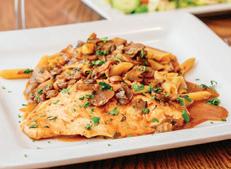
elements Cuisine combining classical and modern Asian and European cooking techniques; check out the wine bar with full menu next door. 2110 Environ Way, East 54; 919-537-8780; elementsofchapelhill.com
First Watch French toast, pancakes and specialty omelets. 1101 Environ Way, East 54; 919-537-8488; firstwatch.com
Hawthorne & Wood Fine dining cuisine with an outdoor patio, a fully stocked bar and an extensive international wine list. 3140 Environ Way, East 54; 919-240-4337; hawthorneandwood.com
Jujube Eclectic, modern cuisine inspired by the flavors of China and Vietnam. Glen Lennox; 919-960-0555; jujuberestaurant.com
Nantucket Grill & Bar Clam chowder, lobster rolls and more. 5925 Farrington Rd.; 919-402-0077; nantucketgrill.com
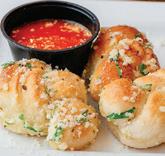
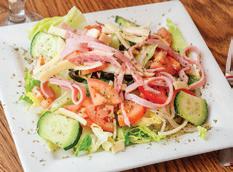
NoDa Brewing Company Tapas Small plates, NoDa beer, wine and specialty cocktails. 1118 Environ Way, East 54.; 919-903-8699; nodabrewingtapas.com
The Poplar Cafe Coffee shop offering tea, wine, mimosas, beer and specialty drinks. 1114 Environ Way, East 54; thepoplarcafe.com
Thai Palace Soup, curries, pad thai. Glenwood Square Shopping Center; 919-967-5805; order.thaipalacechapelhill.com
May/June 2023 chapelhillmagazine.com 41 DINING GUIDE The
FOR CATERING OF ANY OCCASION, PLEASE GIVE US A CALL! 508 WEST FRANKLIN STREET, CHAPEL HILL 919 968 4671 | italianpizzeria3. com 2022 Thank you, Chapel Hill, for your support this year and for voting us Best Pizza! We are grateful! CHAPEL HILL FAVORITE FOR 42 YEARS BEST PHILLY CHEESE STEAK IN THE TRIANGLE ITALIAN PIZZERIA III
Place to Be!
Meadowmont Village
Bluebird French bistro-style restaurant. 601 Meadowmont Village Circle; bluebirdnc.com
Brixx Wood Fired Pizza Specialty pizzas and salads. 501 Meadowmont Village Circle; 919-929-1942; brixxpizza.com
Kahlovera Mexican bar and grill. 504 Meadowmont Village Circle; 984-999-4537; kahloveratacos.com
Lime & Lemon Indian Grill & Bar Northern and southern Indian specialties including gobi manchurian, paneer tikka, chicken tikka and hariyali murg kebab. 101 Meadowmont Village Circle; lnlrestaurant.com
Meet Fresh Taiwanese desserts and teas. 407 Meadowmont Village Circle; Ste. 101; 984-999-4983; meetfresh.us
Quickly Hot and cold tea drinks in addition to Asian street food. 503 Meadowmont Village Circle; 984-234-0401; quicklychapelhill.com
Southern Village
Al’s Burger Shack Gourmet burgers and fries. 708 Market St.; 919-914-6694; alsburgershack.com
COMING SOON - The Critic Opinionated drinking in Southern Village. 620 Market St. (inside The Lumina Theater); thecriticbar.com
Rasa Malaysia Authentic Malaysian dishes. 410 Market St.; 984-234-0256; rasamalaysiach.com
La Vita Dolce Pastries, sorbet, gelato, coffee. 610 Market St., Ste. 101-C; 919-968-1635; lavitadolcecafe.com
Market and Moss American cuisine made with fresh local ingredients. 700 Market St.; 919-929-8226; marketandmoss.com
Rocks + Acid Wine Shop A wine shop and tasting room from award-winning sommelier Paula de Pano. 712 Market St.; 919-428-3564; rocksandacidwineshop.com
Town Hall Grill Sandwiches, steak, seafood, Italian dishes. 410 Market St.; 919-960-8696; thetownhallgrill.com
Weaver Street Market Food bar items, plus grab and go. 716 Market St.; 919-929-2009; weaverstreetmarket.coop
CARRBORO
Downtown
401 Main Upscale dive bar and sandwich shop serving shareable bar snacks, local brews and po’boys. 401 Main St.; 919-390-3598; 401main.com
Acme Food & Beverage Co. Entrees with a Southern touch. 110 E. Main St.; 919-929-2263; acmecarrboro.com
Akai Hana Japanese cuisine including sushi, tempura and teriyaki. 206 W. Main St.; 919-942-6848; akaihana.com
Armadillo Grill Tex-Mex burritos, enchiladas, tacos, nachos. 120 E. Main St.; 919-929-4669; armadillogrill.com
Atlas Bar Uptown drinks in downtown Carrboro. 118 E. Main St.; atlascarrboro.com
Belltree Cocktail Club Prohibition-inspired speakeasy serving creative cocktails, beer and wine. 100 Brewer Lane, A; 984-2340572; belltreecocktailclub.com
Breakaway Carrboro A casual cafe serving breakfast, lunch, dinner and coffee. 410 N. Greensboro St.; breakawaync.co
Carrburritos Burritos, tacos, nachos and margaritas. 711 W. Rosemary St.; 919-933-8226; carrburritos.com
Cham Thai Cuisine Authentic Thai, Siamese and Chinese cuisine. 370 E. Main St., Ste. 190; 984-999-4646; chamthainc.com
The Cheese Shop at Glasshalfull
Cut-to-order cheese shop offering a diverse selection of cheese, meat and provisions. 106 S. Greensboro St.; 919-967-9784; cheeseshopnc.com
Coronato Pizza Roman-style pizza, snacks and salads. 101 Two Hills Rd., Ste. 140; 919-240-4804; coronatopizza.com
Craftboro Brewing Depot Bottle shop and brewery with taps of craft beer. 101 Two Hills Dr., Unit 180; 919-240-4400; craftborobrewing.com
Glasshalfull Mediterranean-inspired food and wine; outdoor dining; all ABC permits. 106 S. Greensboro St.; 919-967-9784; glasshalfull.net
Gourmet Kingdom Sichuan cuisine. 301 E. Main St.; 919-932-7222; thegourmetkingdom.com
Krave Kava Bar & Tea Lounge Offers a wide range of tea and herbal drinks, all made from kava, a type of plant root. 105 W. Main St.; 919-408-9596; kravekava.com
Lanza’s Cafe Coffeehouse serving tea and meads in addition to local pastries, small plates and daily specials. 601 W. Main St.; 919-967-9398; lanzascafe.com
Luna Rotisserie & Empanadas South American cuisine meets the American South. 307 E. Main St.; 919-537-8958; lunarotisserie.com
Mel’s Commissary & Catering Pop-up dinners. 109 W. Main St.; 919-240-7700; melscarrboro.com
Napoli Wood-fired pizza, espresso, artisanal gelato made from scratch, teas and local craft beer and wines. 105 E. Main St.; 919-667-8288; napolicarrboro.com
Neal’s Deli Buttermilk biscuits on Saturdays and traditional deli fare. 100 E. Main St.; 919-967-2185; nealsdeli.com
Oakleaf “Immediate” cuisine like pastas and seafood using ingredients from the chef’s own garden. 310 E. Main St.; 984-234-0054; oakleafnc.com
Open Eye Cafe Freshly roasted coffee by Carrboro Coffee Roasters, tea, beer, wine and baked goods. 101 S. Greensboro St.; 919-968-9410; openeyecafe.com
Paco’s Tacos Steak, chicken, seafood and vegetarian tacos. 109 W. Main St.; 919-240-7700
Pizzeria Mercato Pizza, antipasto, soups, fritti and gelato. 408 W. Weaver St.; 919-967-2277; pizzeriamercatonc.com
Speakeasy on Main Cocktail lounge with live music. 100 E. Main St.; facebook.com/ speakeasyonmainstreet
Spotted Dog Vegetarian- and vegan-friendly entrees. 111 E. Main St.; 919-933-1117; thespotteddogrestaurant.com
Tesoro 18-seat neighborhood restaurant with house-made pasta, seasonal plates and classic sweets. 100 E. Weaver St.; 919-537-8494; tesorocarrboro.com
Wings Over 27 flavors of wings. 313 E. Main St.; 919-537-8271; wingsoverchapelhill.com
East Main Square
Amante Gourmet Pizza Create-your-own pizzas, salads and pasta. 300 E. Main St.; 919-929-3330; amantepizza.com
Gray Squirrel Coffee Co. Roastery and espresso bar. 360 E. Main St., Ste. 100; graysquirrelcoffee.com
Hickory Tavern Burgers, sandwiches and build-your-own salads. 370-110 E. Main St.; 919-942-7417; thehickorytavern.com
Iza Whiskey & Eats Japanese fusion cuisine serving small plates, sushi, ramen, whiskey, sake and cocktails. 370 E. Main St., Ste. 140; 919-537-8645; izaeats.com
COMING SOON – LA Tequila and Eats
Latin-Asian fusion cuisine. 307 E. Main St. Unit 170
Rise Southern Biscuits & Righteous Chicken Biscuits, doughnuts, chicken and coffee. 310 E. Main St.; 919-929-5115; risebiscuitschicken.com
Vecino Brewing Co. Craft beer and flavorful small plates. 300 E. Main St., Ste. C; 919-391-6788; vecinobrewing.com
Carr Mill Mall/ North Greensboro Street
B-Side Lounge Small plates, like fondue, and inspired cocktails. Carr Mill Mall; 919-904-7160; b-sidelounge.com
Grata Diner From scratch breakfast and lunch. Carr Mill Mall; 919-240-7000; gratacafe.com
Oasis Organic coffee, tea, beer and wine. Carr Mill Mall; 919-904-7343
Tandem Farm-to-table, modern American cuisine with full service bar. Carr Mill Mall; 919-240-7937; tandemcarrboro.com
DINING GUIDE 42 chapelhillmagazine.com May/June 2023
Thai Station Authentic, fresh Thai dishes. 201 E. Main St., Ste. C.; 984-234-3230; thaistationnc.com
Venable Rotisserie Bistro Upscale comfort food with a heavy emphasis on seasonal ingredients. Carr Mill Mall; 919-904-7160; venablebistro.com
Weaver Street Market Hot food bar items are available as grab and go. Carr Mill Mall; 919-929-0010; weaverstreetmarket.coop
N.C. 54 West/Carrboro Plaza
Aidan’s Pizza Pizza, wings and salads. 602 Jones Ferry Rd., Ste. D; 919-903-8622; aidanspizza.hungerrush.com
Anna Maria’s Pizzeria Italian cuisine. Carrboro Plaza; 919-929-1877; annamariasnc.wordpress.com
Fiesta Grill Burritos, chimichangas, fajitas, tacos. 3307 N.C. Hwy. 54 W.; 919-928-9002; fiestagrill.us

Monterrey Mexican Grill Traditional Mexican cuisine. Carrboro Plaza; 919-903-9919; letsgotomonterrey.com
Wingman Wings and hot dogs. 104 N.C. Hwy. 54 W.; 919-928-9200; bestwingman.net
HILLSBOROUGH
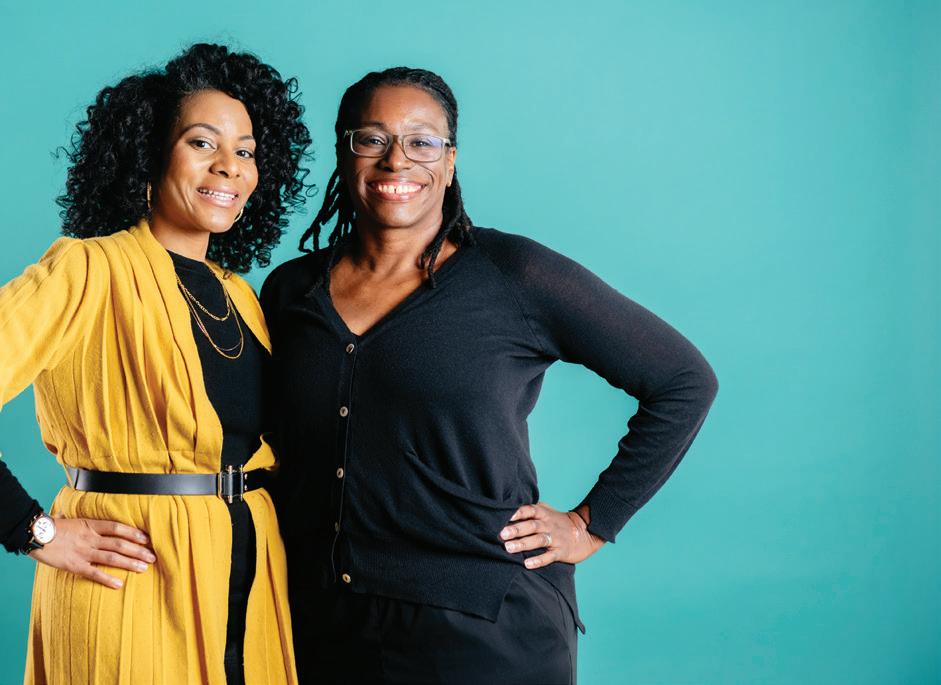
Antonia’s Italian cuisine. 101 N. Churton St.; 919-643-7722; antoniashillsborough.com
Big Bob’s City Grill Fresh-made burgers and chicken with country sides. 584 Cornelius St.; 919-732-2953
The Colorado Burrito Burritos, fajitas and quesadillas. 122 S. Churton St.; 919-245-3335
Cup-A-Joe Coffee and pastries. 112 W. King St.; 919-732-2008; hboro-cupajoe.com
El Restaurante Ixtapa Authentic fromscratch Mexican dishes. 162 Exchange Park Ln.; 919-644-6944; ixtapa.homestead. com/homepage.html
Hillsborough Bakeshop & Pasta Company Baked goods, coffee, wine and all-day cafe offering pasta, sandwiches and salads. 110 S. Churton St.; 919-732-6261; hillsboroughbakeshop.com
Hillsborough BBQ Company Barbecue plates and sandwiches, sides and desserts. 236 S. Nash St.; 919-732-4647; hillsboroughbbq.com
Hillsborough Wine Company Wine store with bottles from all over the globe. 118 S. Churton Street; 919-732-4343; chapelhillwinecompany.com
Hot Tin Roof Games and specialty cocktails. 115 W. Margaret Ln.; 919-296-9113; hottinroofbar.com
The House at Gatewood Supper club and special events venue. 300 U.S. 70; 919-241-4083; houseatgatewood.com
Jay’s Chicken Shack Chicken, buffalo wings, breakfast biscuits. 646 N. Churton St.; 919-732-3591; jayschickenshack.com
J&F Kitchen Italian, American and Balkan dishes. 155 Mayo St.; jandfkitchen.weebly.com

Kim’s Bake Shop Homemade baked goods from brownies and doughnuts to “whookies” and pie. 111 N. Churton St.; downtownpies.com
La Muñeca Ice Cream Paletas, esquites and dorilocos. 131 Mayo St.; la-muneca-ice-cream.business.site
Los Altos Mexican dishes, such as tacos and chiles rellenos. 126 W. King St.; 919-241-4177; losaltosmexicanrestaurant.com
Lupita’s Meat Market and Taqueria
Authentic Mexican food including tamales, barbacoa and carnitas. 633 Cornelius St.; 919-296-9000

May/June 2023 chapelhillmagazine.com 43 DINING GUIDE Our clinicians specialize in helping clients overcome their challenges to achieve their personal goals with a greater sense of compassion and capacity in an environment that welcomes and supports our diverse community. We would love to work with you. Give us a call! 605 West Main Street, Suite 101 Carrboro, NC 919.283.1170 congruencecounselinggroup.com CONGRUENCE Counseling Group
Maple View Farm Country Store
Homemade ice cream. 6900 Rocky Ridge Rd.; 919-960-5535; mapleviewfarm.com
Matthew’s Chocolates Gourmet chocolates, frozen treats and baked goods. 104 N. Churton St.; 984-245-9571
Nomad International street food-inspired eatery. 122 W. King St.; 984-217-0179; thenomadnc.com
Pizza Cornicione Neapolitan pizzeria and gelateria. 230 S. Nash St.; 919-245-8566; pizzacornicione.com
Pueblo Viejo Traditional Mexican food. 370 S. Churton St.; 919-732-3480
Radius Wood-fired pizzas, housemade pastas, salads and desserts. Outdoor dining. 112 N. Churton St.; 919-245-0601; radiuspizzeria.net
Saratoga Grill New England-style cuisine. 108 S. Churton St.; 919-732-2214; thesaratogagrill.com
Steve’s Garden Market & Butchery Sandwiches, baked goods, pimento cheese. 610 N. Churton St.; 919-732-4712; stevesgardenmarket.com
The Village Diner Southern fare and takeout pizza. 600 W. King St.; 919-245-8915; villagedinernc.com
Vinny’s Italian Grill and Pizzeria Italian favorites. 133 N. Scottswood Blvd.; 919-732-9219; vinnyshillsborough.com
Weaver Street Market Food bar items are available as grab and go. 228 S. Churton St.; 919-245-5050; weaverstreetmarket.coop
Whit’s Frozen Custard Rotating flavors of frozen custard, treats, pints to go. 240 S. Nash St.; 919-245-8123; whitscustard.com
Wooden Nickel Pub Pub fare and rotating craft beer. 113 N. Churton St.; 919-932-0134; thewnp.com
Yonder Southern Cocktails & Brew Beer, wine, frose and more. 114 W. King St.; yonderbarnc.com
NORTH CHATHAM
Briar Chapel

501 Pharmacy Maple View Farm ice cream, plus malts and shakes. 69 Knox Way, Ste. 110; 984-999-0501; 501rx.com
Breakaway Cafe A casual cafe serving breakfast, lunch, dinner and coffee. 58 Chapelton Ct., Ste. 100; 984-234-3010; breakawaync.co
Capp’s Pizzeria & Trattoria Traditional Italian cuisine including fresh pastas, pizzas and more. 79 Falling Springs Dr., Ste. 140; 919-240-4104; cappspizzeria.com
O’YA Cantina Latin cuisine from all over the world. 72 Chapelton Ct.; 984-999-4129; oyacantina.com
Town Hall Burger & Beer Burgers plus tacos, wings and salads. 58 Chapelton Ct.; 984-234-3504; townhallburgerandbeer.com
Governors Village
Ciao Bella Pizzeria Pizza, pastas, sandwiches. 1716 Farrington Point Rd.; 919-932-4440
Flair Restaurant & Wine Bar Frenchinfluenced food, coffee and Sunday brunch. 50100 Governors Dr.; 919-967-9990; flairfusionrestaurant.com
Gov’s Burger & Tap Burgers, hotdogs, salads, milkshakes. 50050 Governors Dr.; 919-240-5050; govsburgerandtap.com
Tarantini Italian Restaurant Italian cuisine. 50160 Governors Dr.; 919-942-4240; tarantinirestaurant.com
North Chatham Village/ Cole Park Plaza
Captain John’s Dockside Fish & Crab House American seafood dishes. 11550 U.S. Hwy. 15-501 N.; 919-968-7955; docksidechapelhill.com
Guanajuato Mexican Restaurant Mexican dishes with vegetarian options. 11552 U.S. Hwy. 15-501 N., Ste. 205; 919-929-8012; guanajuatomexicanrestaurant.net
Moon Asian Bistro An Asian fusion restaurant offering sushi, Chinese dishes like sweetand-sour chicken, Thai curry dishes, rice and noodles. 111 Knox Way, Ste. 100; 919-869-7894; moonasianbistroch.com
Panda Garden Chinese dishes like chow mein and egg foo young. Takeout is available. 11312 U.S. Hwy. 15-501 S., Ste. 303; 919-960-8000; chapelhillpandagarden.com
Ta Contento Mex Fresh Food Authentic Mexican food, like tacos, burritos, guacamole and fajitas. 11620 US 15-501 Hwy. N. Chapel Hill; 919-945-4819; ta-contento.com
Village Pizza and Pasta A neighborhood pizza place serving up subs, calzones, pastas and salads. 11312 U.S. Hwy. 15-501 S., Ste. 300; 919-960-3232; villagepizzapasta.com
PITTSBORO U.S. 15-501/Fearrington Village
Allen & Son Bar-B-Que North Carolina barbecue. 5650 U.S. 15-501; 919-542-2294; stubbsandsonbbq.com
The Belted Goat Lunch, dinner and wine shop, offering salads and sandwiches. Fearrington Village Center; 919-545-5717; fearrington.com/belted-goat
Cafe Root Cellar American cuisine and “go big or go home” seasonal dishes. 35 Suttles Rd.; 919-542-1062; caferootcellar.com
Carolina Brewery The Triangle’s oldest brewery restaurant features Carolina cuisine. 120 Lowes Dr. #100; 919-545-2300; carolinabrewery.com
Compadres Tequila Lounge Mexican restaurant with a variety of classic dishes. 193 Lowes Dr., Ste. 107; 919-704-8374; compadresnc.com
The Fearrington House Restaurant
Contemporary fine dining. Reservations are needed. Fearrington Village Center; 919-542-2121; fearrington.com/thefearrington-house-restaurant
House of Hops Bar and bottle shop with a large craft beer selection on tap. Outdoor seating available. 112 Russet Run; 919-542-3435; houseofhopsnc.com
Mi Cancun Classic Mexican cuisine with a modern twist. Outdoor seating available. 114 Russet Run; 919-542-3858; micancunmx.com
New Japan Hibachi-style Japanese cooking. 90 Lowes Dr.; 919-542-4380
Roost Beer Garden Wood-fired pizza, local brews and live music. Open April through October. Fearrington Village Center; 919-542-2121; fearrington.com/roost
East Street
bmc brewing Beers brewed on-site and cookies made with the byproducts. 213 Lorax Lane; 919-759-1206; bmcbrewing.com
China Inn Chinese dishes, dine in or carry out. 630 East St.; 919-545-0259
Fair Game Beverage Co. Spirits, wine, beer and cider tastings plus snacks and specialty local food items. 220 Lorax Ln.; 919-548-6884; fairgamebeverage.com
DINING GUIDE 44 chapelhillmagazine.com May/June 2023 Serving Breakfast ALL DAY LONG with Classic Lunch and Dinner Fare! OUTSIDE SEATING, CURBSIDE PICK-UP & DINE-IN WE CATER! Call 919.428.4470 261 s. Elliott rd., Chapel Hill 919.967.7110 breadmens.com 2022 THANK YOU! BEST BREAKFAST/BRUNCH
Greek Kouzina Made-from-scratch hummus, gyros, kebabs and more. 964 East St.; 919-542-9950; greekkouzina.com
Hwy 55 Burgers, Shakes & Fries Burgers, cheesesteaks and frozen custard. 987 East St.; 919-542-1312; facebook.com/hwy55pittsboro
Metal Brixx Cafe Vortex Roasters’ coffee and espresso plus tea, lemonade and gelato. 213 Lorax Ln.; 919-444-2202
Small Cafe B and B Offbeat, eco-friendly eatery offering farm-to-table fare for breakfast and lunch. Offering outdoor dining. 219 East St.; 919-228-8817; smallcafebandb.com
Starrlight Mead Tastings of honey wines and honey. 130 Lorax Ln.; 919-533-6314; starrlightmead.com
West Street
Al’s Diner Traditional American classics for breakfast, lunch and dinner. 535 West St.; 919-542-5800; alsdiner.net
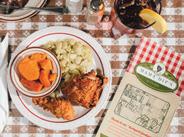
Angelina’s Kitchen Greek and Southwestern dishes including gyros. 23 Rectory St.; 919-545-5505; angelinaskitchenonline.com
The Phoenix Bakery Small-batch and seasonal baked goods and specialty cakes. 664 West St.; 919-542-4452; thephoenixbakerync.com
Hillsboro Street/Downtown
Aromatic Roasters Small-batch coffee shop specializing in Aztec mochas, chai lattes and Thai teas. 697 Hillsboro St., Unit 101; 919-228-8345; aromaticroasters.com
The Beagle Classic and innovative cocktails and small plates like chilled seafood, charcuterie and a selection of sandwiches. 53 Hillsboro St.; 919-533-6589
Buzz Cafe at Chatham Marketplace Sandwiches, daily changing hot bar, sushi, salads and baked goods. Chatham Mills; 919-542-2643; chathammarketplace.coop
Carolina Cravings Co. Bakery serving traditional treats like pie bars, muffins and nobake peanut butter-chocolate cookies as well as Hispanic favorites like flan, bolillos and tres leches cakes. 84 Hillsboro St.; 919-444-2023
The City Tap Classic bar food. 89 Hillsboro St.; 919-545-0562; thecitytap.com
Davenport’s Café Diem Carrboro Coffee Roasters coffee and espresso offerings. 439 Hillsboro St.; 919-704-4239; davenports-cafediem.com
Elizabeth’s Pizza Pizza, calzones, sandwiches, salads and pasta. 160 Hillsboro St.; 919-545-9292; elizabethspizzapittsboro.com
John’s Pizza Restaurant Pizzas, pastas, wraps, calzones and strombolis. 122 Sanford Rd.; 919-542-5027; johnspizzarestaurant.com

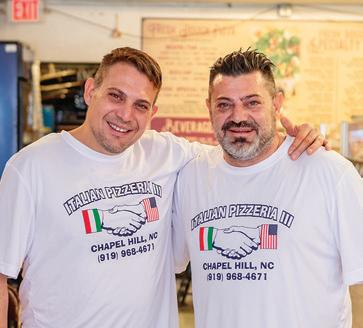
The Mod Wood-fired pizza, salads, small plates and a full bar. Outdoor seating available. 46 Sanford Rd.; 919-533-6883; themodernlifedeli.com

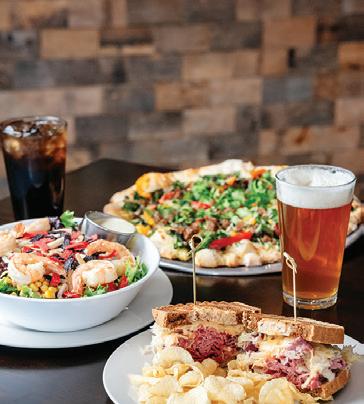
Postal Fish Company Fresh seafood from North Carolina’s coast. Serving dinner only. 75 W. Salisbury St.; 919-704-8612; postalfishcompany.com
S&T’s Soda Shoppe Soda fountain, American fare. 85 Hillsboro St.; 919-545-0007; sandtsodashoppe.com
The Sycamore at Chatham Mills
Upscale steakhouse. 480 Hillsboro St., Ste. 530; 919-704-8731; thesycamoreatchathammills.com

Tienda Hispana El Rayo Hispanic goods including Mexican pastries and packaged foods and drinks. 119 Hillsboro St. Virlie’s Grill Soups, salads, burgers, sandwiches. 58 Hillsboro St.; 919-542-0376; virliesgrill.com
Willy’s Cinnamon Rolls Etc. Bakery selling cinnamon rolls, scones, muffins, cookies and bread with ’40s and ’50s flair. 35 W. Chatham St.; 252-305-9227; willysrolls.com CHM
May/June 2023 chapelhillmagazine.com 45 DINING GUIDE FOR CATERING OF ANY OCCASION, PLEASE GIVE US A CALL! 508 WEST FRANKLIN STREET, CHAPEL HILL 919 968 4671 italianpizzeria3. com The Place to Be! CHAPEL HILL FAVORITE FOR 42 YEARS BEST PHILLY CHEESE STEAK IN THE TRIANGLE! 2022 ITALIAN PIZZERIA III Taste of the South 408 W. Rosemary St., Chapel Hill 919.942.5837 MamaDips.com Take-Out Family Meals • Dine-In Outside Dining Online Ordering Takeout Central Delivery We Ship Our Products Nationwide 2022 Lunch & Dinner Wed-Sun 11 am - 7 pm shop.mamadips.com LOCAL FRESH FAMILY OWNED AND OPERATED SALADS • WOOD-FIRED PIZZA OLD SCHOOL DELI & SANDWICHES BURGERS • FULL BAR • 41 BEERS ON TAP OUTDOOR PATIO • MUSIC • EVENT SPACE THEMODERNLIFEDELI.COM 919-533-6883 JOIN US. 46 SANFORD RD PITTSBORO, NC 2022
no reservations
Restaurants can’t see the future, but they can pivot
By Kevin Callaghan
future of restaurants is challenging: He was 40 years ahead of the curve. Today, there are very successful chains that serve healthy and delicious fare. Acai bowls and avocado toast may have seemingly appeared overnight, but they are the fruits of much time and persistence. Turning the subjective idea of healthy eating into something real –something people eagerly chose to buy and eat – was the result of a long back-and-forth conversation between the dining public and wannabe health-centric restaurants all over the country. Just imagine how many bad veggie burgers had to be eaten during that span.
KEVIN CALLAGHAN HAS BEEN THE CHEF/OWNER OF ACME FOOD & BEVERAGE CO. IN CARRBORO SINCE 1998. FOR YEARS, THE RESTAURANT HAS BEEN ONE OF THE SOUTH’S LEADING ADVOCATES OF SUSTAINABLE AND LOCAL FARMS.
Let me be clear: I’m not a medium. I’m not talking about the size shirt that I pull on in the morning. Instead, I’m referring to the clairvoyant, tea leaves-reading kind of medium who psychically predicts what lies ahead. Because, let’s be honest, no one who could truly glimpse the future would ever choose to get into the restaurant business. Most of us restaurant people are Luddites. (OK, we do have cellphones and use Slack.) But by and large, we make things. Using fire and ice and knives and large wooden spoons.
So, I don’t have a crystal ball to see where my industry is headed.
That failing of vision runs in the family. Nearly 40 years ago, my father bought stock in a fast-food chain that was meant to offer healthy alternatives for on-the-go Americans. The name, D’Lites, should have been enough to scare him away. The company went bankrupt faster than you can say McSalad.
But I do think that my father’s investment fiasco is illustrative of why predicting the
Today, there’s a lot of talk that fine dining is dead. Iconic restaurants around the world are shuttering. Some say that COVID-19 is to blame, winnowing labor and guests from people-facing businesses. And it does feel like the pandemic is the marker of a “before” and an “after.” Independent restaurants are scrambling to right the ship and return to the good old days, but that may not be possible. Let me explain.
As I mentioned, I’m not a psychic. I’m also not a pessimist. Restaurants are a people business. First, last and always. Meeting and exceeding the expectations of our guests is the job. And as the expectations shift, restaurants have to pivot. When I was a kid, tuxedoed maitre d’s abounded at fancy restaurants, and only the man at the table got a menu with prices (a sure recipe for disaster today). And then there was a shift. Restaurants became less formal, louder, with bigger flavors. It’s fairly clear looking back that the change was the result of boomers arriving full force in the ’80s, boisterously slinging cash in their guise as yuppies. No longer were restaurants primarily serving the expectations of the stuffy parents of boomers, but the expectations and demands of the much more casual boomers themselves.
46 chapelhillmagazine.com May/June 2023
And it feels like we are at a similar inflection point today. But whereas the boomers arrived in a raucous party bus, windows down and music cranked, millennials show up separately on scooters and listening to a podcast with their AirPods. And the pandemic hastened what is emerging in our industry: that profound generational realignment as millennials take center stage.
Hospitality is not generic. The thoughtful attentiveness that was the hallmark of good service for years has given way to a more laid-back, congenial approach – think coffee shops and breweries – with a more declarative sense of equality between guest and employee. The power dynamic is much less apparent. Sometimes I really enjoy that as a guest, and sometimes it drives me bonkers. But just as high-quality healthy options took years to become reality, this new hospitality will take time and practice to find its footing.
The challenge is that all of us who’ve been at this game for a long time often see this shift as something scary that needs to be “repaired,” that our business and industry is veering wildly off course. And that feeling
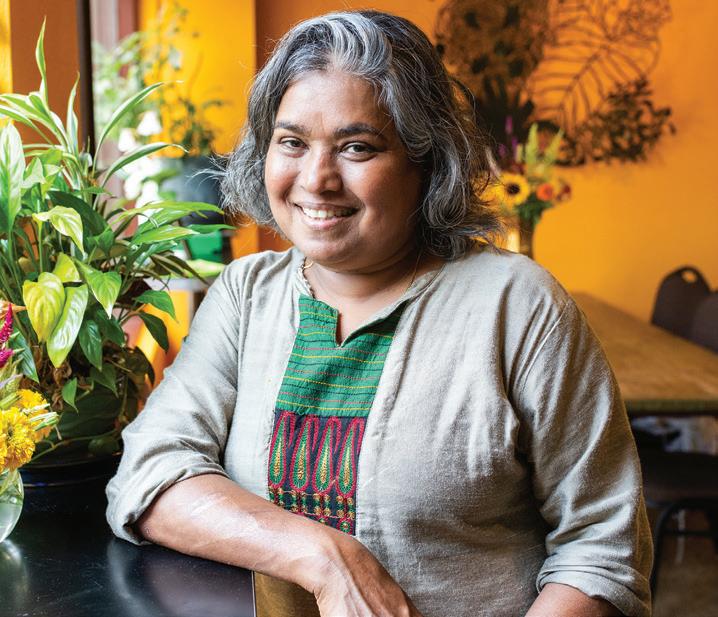 – Kevin Callaghan




can be overwhelming. I’m sure that the restaurant generation before me balked at restaurants without white tablecloths or crystal stemware or that had, God forbid, grits on their dinner menu. Had social media existed, I’m sure there would have been endless howls that fine dining was dead.

But deep down, any true change must be understood for what it is. That requires the fullness of time. I don’t think any of us know where the restaurant industry is headed, other than it certainly isn’t going away; people like to go out for dinner. Full stop. But I do know that figuring out a path forward requires listening and asking questions of our guests and our team members. It requires that most dreaded thing –patience. Because I’d say that there’s been a fairly stiff wind at the back of the hospitality industry the entire 34 years that I’ve been a part of it. There have been storms for sure. but mostly strong sailing; we knew where we were headed. This feels different. It’ll be exciting to see where this new wind takes us. CHM
May/June 2023 chapelhillmagazine.com 47 Open Mon-Wed: 11:30 a.m.- 8 p.m. Thurs-Sat: 11:30 a.m.- 9 p.m. CATERING & DELIVERY 2022 431 W Franklin Street Suite 415 Chapel Hill, NC 27516 • 919 929-3833 • curryblossom.com VOTED BEST INDIAN RESTAURANT FOR 9 YEARS! VOTED BEST CHEF FOR 4 YEARS IN A ROW
Independent restaurants are scrambling to right the ship and return to the good old days. But that might not be possible.
marking a milestone
Compiled by Katie MacKinnon and Jessica Stringer
Sutton’s Drug Store
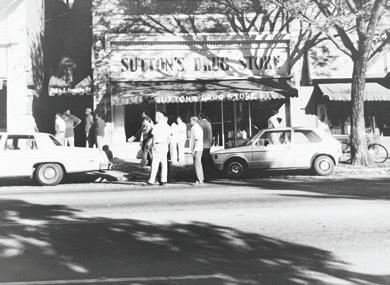
Changes over the years When it was initially founded, Sutton’s had a pharmacy in the back, drugstore in the front and a lunch counter with high-top chairs to the side. Initially it operated as mainly a pharmacy with a place to stop and catch a meal, but then business started transitioning more toward [the restaurant]. In 2014, CVS bought the pharmacy and drugstore side of the business, so instead of closing the doors, it shifted only to the restaurant. Don Pinney, our current owner, has worked at Sutton’s for over 45 years. Don took 50% ownership in 1993 (he owned the kitchen/grill) but took full ownership in 2014.
Number of staff 13 employees at the Chapel Hill location
Success story It’s always been a success; the success has just looked different throughout the decades! It started as a successful pharmacy and then when the countertop lunches took off, the restaurant became a success. But no matter what business model we were operating under, our customers have always made us feel like a success – hence the pictures on the wall! We love to highlight those who have helped to keep us in Chapel Hill after all these years. Hometown pride We would not have been able to survive during or post-pandemic without the amazing support of our “family.” In 2020, our family raised over $10,000 to keep our doors open. Without it, Sutton’s would not have survived.
Fun fact Because of our success at the Franklin Street Sutton’s, we were able to open another location just down the road (at 100 Europa Drive).
What’s next We’re still focusing on recovering from the pandemic. Thankfully, our landlord was gracious throughout the process, but financially we are not in the same place as we were before. Other than that, [at press time] we [were] getting excited for our 100th anniversary celebration on April 12 where the community can come together to celebrate.
The Chamber for a Greater Chapel Hill-Carrboro
Business-leadership, businessserving, community-impact and advocacy organization
Founded by local business leaders, celebrating 80 years
Changes over the years The chamber has grown and adapted to local business and local community needs over time. From an unstaffed association with a small budget serving Chapel Hill’s downtown businesses in the 1940s to a strong chamber of commerce with eight professional staff, 600plus business members and a million-dollar budget serving the greater Chapel Hill-Carrboro region across three counties, the chamber now delivers a customer promise to connect, advocate, drive progress and build community.
Number of staff 8 professional staff Success story We have always been a successful organization, but strong membership growth and retention, plus measurable positive impacts on our economy and our community, are hallmarks of our recent success.
Hometown pride The greater Chapel Hill-Carrboro region has all the attributes needed for success – a well-educated community, talented local workforce, strong downtowns, thriving university, unparalleled health care, highquality schools and incredible local businesses.
Lessons learned Prioritize your customers, engage in your community, invest in employees, be entrepreneurial, be flexible and smile.
Milestone moment Becoming the first chamber in North Carolina to offer a health care benefit to its members when we launched the Small Business Health Program in partnership with Piedmont Health 15 years ago.
By the numbers 80 years of service, 600-plus current members, 90,000 local member employees, 2,000plus ribbons cut, over 10,000 businesses served and supported What’s next 80 more years of meeting and exceeding member expectations and leading successful economic and community development outcomes.
48 chapelhillmagazine.com May/June 2023
A few local nonprofits and businesses hitting a big anniversary this year reflect on local roots, biggest lesson learned and what’s next
Restaurant
Founded by Lynwood Sutton and Lucy Sutton, celebrating 100 years
WomanCraft Gifts Corporation that functions as an art cooperative
Founded by a group of women who got together and established WomanCraft as an experiment to provide a creative outlet for women, as well as a source of income, celebrating 50 years
It takes a village Patti Paddock, Susan Konrad and Linda Brogan were instrumental in getting WomanCraft off the ground. Edna Green, Pat Stubblefield, Agnes Goughler, Sharon Gattis, Connor Causey, Wini McQueen and Laurie McAnulty were actively involved with the store at its inception as artists and supporters.
Number of members 26 members, 4 retired members, 33 consignors
Active artists We still have two active participants in the shop who joined the co-op in 1974. They are Paula Mattocks (textiles) and Karen Graves (joined as a potter but now owns Chapel Hill Toffee, which WomanCraft continues to sell at the shop). And we have customers who are family members of many of our past members as well as sons, daughters and grandchildren of our wonderful core customers.
Changes over the years Our physical location has changed five or six times through the years. Although we retain the name WomanCraft, we’ve had several male members and consignors over the years. And like other long-term businesses, we’ve modernized what we do with a more sophisticated inventory and sales tracking program and an active presence on social media.
Success story If you were to ask each person who has ever been a member or consignor at WomanCraft, you would probably get a different answer from each! Overall, the fact that we are still in business and we continue to be self-supporting speaks volumes to the dedication of our members and the loyalty of our customers.
Lessons learned There are many. WomanCraft’s success is based on the lovely handmade products we sell. But it also relies on its members who staff the store and run the business. All of our 26 members have a role to play, meeting with customers and carrying out sales. The members who serve on WomanCraft’s board and committees carry out all of the
University Place
Shopping mall
Founded by E.N. Richards, celebrating 50 years
Changes over the years The stores have rotated over the years, originally opening with Ivey’s, Belk and Roses stores. For a time, in 2010, the Chapel Hill Public Library had a temporary space here. Now there are many new businesses at the mall like Kidzu Children’s Museum, Silverspot Cinema and several specialty retailers and restaurants. Hometown pride Historically, University Place has been a spot that feeds Chapel Hill’s functional needs and its creative desires, bringing people and culture together. The site was and is the town’s most central and social
Time-Out
24-hour home-cooked food
Founded by Val Williams and Eddie Williams, celebrating 45 years
Changes over the years We really exploded with our delivery business and takeout. COVID-19 was a time that really saw this take off. We have all the main delivery businesses working with us.
Number of staff 12-15
business
functions of the organization (marketing, finance, orientation, product review, etc.), and none are compensated for it, other than through the commission they earn on sales.
Milestone moment
Success story [We saw a loyal following] pretty much right away. Hometown pride It is a college town with people coming in all night long. Lessons learned We have to stay true to our Southern food roots and not try to do too many menu items.
Milestone moment “Man v. Food” came twice to our store, and we really got a lot of attention from that. Fun fact We have many famous people on our walls calling “TimeOut” – Michael Jordan and Roy Williams to name two. What’s next We actually are getting set up to franchise with a company out of Miami. We are ready to work with anyone wanting to take TimeOut to another college town!
After 50 years, the store has kept close to its original concept. And every customer who comes into the store is greeted by one of the artists who sell their goods in the store. We have no paid employees. The business is totally run by the artists. Over the past few years, WomanCraft members and consignors have given back to our community by donating a portion of sales to several organizations and causes including TABLE, Voices Together and many others.
By the numbers Last year, we had 5,300 sales transactions and sold more than 14,000 items. The items made by our textile artists accounted for nearly 20 percent of our sales in 2022, followed by pottery and jewelry. Items made from glass and wood are also big sellers. What’s next Looking forward to another 50 years and finding ways to ensure that we’re able to do that.
destination to buy goods, enjoy a seasonal meal or catch up with friends.
By the numbers The new development of University Place will include over 350,000 square feet of retail space, 250 residential units, 60,000 square feet of office space and 2 acres of public green space. Over nine new buildings will be constructed and approximately 140 new trees will be planted.
What’s next University Place is being transformed into a vibrant community hub, redefined to house a diverse mix of local retail, dining, working and living. Construction of the first phase is already underway, with leasing of the new apartments on track to begin in fall 2024.
May/June 2023 chapelhillmagazine.com 49
Blackman & Sloop
Full-service public accounting firm
Founded by William C. Blackman and James H. Sloop, celebrating 50 years
Changes over the years While many things have changed over the years, the biggest change is the way we do our work. Technology, especially in the last three years, has become the cornerstone of how we work – making our processes more efficient and effective.
Number of staff 40
Success story We never questioned whether or not we were successful. There’s a simple reason for that: When our clients succeed, we have succeeded. Watching clients grow throughout the years has been very rewarding, as has the retention of our client base and the referral relationships we have created in the community.
Hometown pride Chapel Hill provides a very diverse economy and collection of people. We get to work with organizations like the university, the hospital and the numerous retirement living centers. It’s also been important to our firm to be part of the Research Triangle.
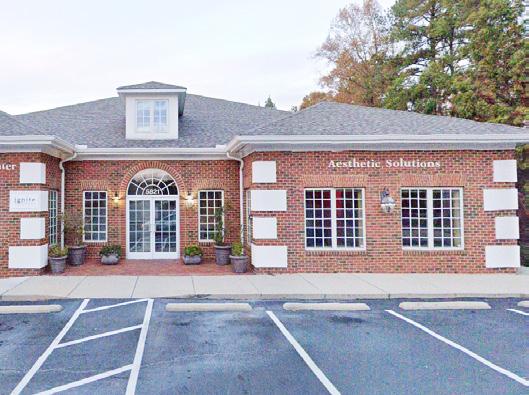
Lessons learned We have realized over the years that when we stay true to our core values, we stay on the right path. Our values have been pivotal in our success for the last half a century.
Milestone moment Our biggest accomplishment has been being in business for 50 years. Knowing that William and James were able to retire
Aesthetic Solutions
Cosmetic dermatology
Founded by Dr. Sue Ellen Cox, celebrating 25 years
Changes over the years When Dr. Cox began practicing dermatology over 25 years ago, there was no such thing as “aesthetic dermatology.” An early and passionate believer in the power of effective, minimally invasive aesthetic treatments, Dr. Cox worked hard to shape the field with her values: rigorous scientific evaluation of every treatment, an emphasis on safety and appreciation for subtle, natural-looking results. She is now an internationally recognized expert in facial rejuvenation using lasers, injectable fillers and neuromodulators.
Number of staff 20
Success story Dr. Cox says, “When I started to see patients from my early years move away, and they would fly back from out of state for an appointment with me.”
Hometown pride The Chapel Hill community has been so supportive since day one. We are very appreciative of the love and support from the community.
Acme Food & Beverage Co.
Restaurant
Founded by Kevin Callaghan, celebrating 25 years
Number of staff 40+ Success story When I got to take a vacation in year seven or eight. Hometown pride Carrboro is a small town that cares a lot about local businesses and local food.
Lessons learned The true reward is the work that I get to do every day. Milestone moment Navigating the pandemic and creating Carrboro United. And, well, surviving for 25 years.
By the numbers We passed 1 million guests and gave our millionth customer cornbread for life.
What’s next Our sister cocktail bar, Atlas, in downtown Carrboro.
with the full faith that their firm was being led into the future is something we are proud of – making our founding members happy and proud of the work we continue to do.
By the numbers Blackman & Sloop has expanded from one card table and a box of donuts to more than 12,000 square feet and a 55-pound “portable” computer to a 3-pound laptop. What’s next We look forward to inspiring another generation to become leaders of the firm and leaders of this great community over the next 50 years.
Lessons learned Never stop learning and improving. There is always something to learn!
Milestone moment Dr. Cox served as the president of the American Society for Dermatologic Surgery 2021-22, was voted to the list of Best Doctors in America by physician peers every year since 2005, lectures internationally and directs national workshops. Here at home, she teaches cosmetic dermatology clinics to residents at the UNC School of Medicine and Duke University Medical Center. She has been a contributing editor of the Journal of the American Academy of Dermatology since 2003, among many other accomplishments.
By the numbers 100-plus publications and 100-plus clinical trials
What’s next Adding new treatments, expanding the team and opening our renovated downstairs space in 2023 to add additional treatment rooms.
50 chapelhillmagazine.com May/June 2023 ANNIVERSARY





May/June 2023 chapelhillmagazine.com 51
Ronald McDonald House of Chapel Hill
Nonprofit providing a “home-away-from-home” for families battling childhood illness who must travel from across the state and beyond to Chapel Hill for specialized medical care
Celebrating 35 years
It takes a village The Carolina Pediatric-Family Center at Chapel Hill, Inc. with support from N.C. Memorial Hospital, McDonald’s, community supporters like Woody Durham, who served as the honorary fundraising chair, Margie Haber, McDonald’s owner-operators Mike Haley, Mildred Pretty and Barry Traub. Gennie Polk, who served as the original BOD president, and Eric Munson, then-executive director of N.C. Memorial Hospital, were also involved with the efforts to open the house. There were many other members of the greater community responsible for bringing the Ronald McDonald House to Chapel Hill. Changes over the years The original Ronald McDonald House was a 20-bedroom facility. In 2001, an additional 10 rooms were added. In 2011, we celebrated the grand opening of the Ronald McDonald Family Room located on the seventh floor of N.C. Children’s Hospital. In 2015, we opened a 24,000-square-foot expansion that added 24 additional rooms, suites and eight two-bedroom apartments to the campus. The expansion also features a 1-acre courtyard garden featuring our grass menagerie and was included in the 2022 Chapel Hill Garden Tour. Number of staff 20 full- and part-time staff, 90 regular volunteers, 20 board members

Success story We knew it was a success when the first family stayed with us. We’ve been building on that success for the past 35 years. Hometown pride The Chapel Hill community has truly embraced us and our guest families since we first opened. Their generous support financially, their time through volunteering and contributions of necessary items have sustained this mission for 35 years. Their ongoing support has helped us grow to where we are today. Lessons learned Helping those in need is the greatest gift we can give to one another.
By the numbers Last year, we served 1,293 families with 10,386 nights of lodging.
What’s next Coming July 1, RMH Chapel Hill and RMH Durham & Wake are joining forces to become RMHC of the Triangle. As a result, we will be the eighth largest out of 185 RMHC organizations in the U.S and the 13th largest out of 383 in the world. This will enable us to provide expanded services to even more pediatric patients and their families when it matters most.
To The Pointe Dance & Arts Academy
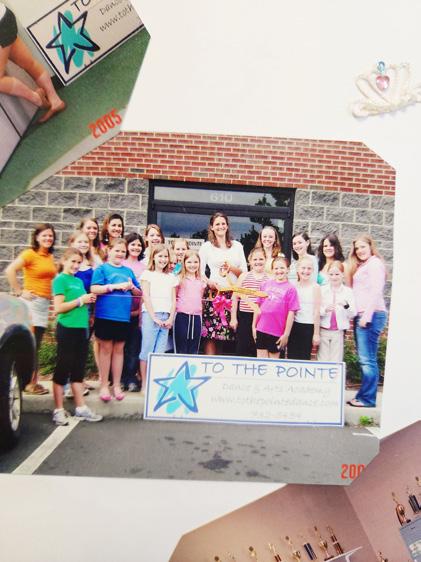
Dance studio
Founded by Lauren Yerby Bolick, celebrating 20 years
Family affair Lauren is still the sole owner although her sister-in-law Sunni Yerby also now works at the studio. Her brother, Chad Yerby, and her father, Chris Yerby, have previously worked there, so it is truly a family business! Her mom, Ellen Yerby, and her boyfriend, David Stuart, are always very involved volunteering and supporting the entire TTP family! Her daughter, Blair, 10, is very involved as a dancer, her nephew, Trox, 6, takes multiple classes a week, and her 7-year-old identical twin boys, Brax and Bear, are in the studio almost every day (although Lauren can’t get them to dance!).
Changes over the years Growth! We have grown in numbers of students, in number of offerings, in number of staff, into larger buildings, but the biggest growth is seen in the lives impacted by what we do. Lauren started the business as an inexperienced 23-year-old and has grown and learned so much from all the wonderful students and families who have been a part of the program and supported her along the way. We also have the extreme privilege of watching young people grow, some starting as dancers as young as 2 who grow and graduate high school still a part of our program.
Number of staff 8 full-time employees, but we have so many who are seasonal or still very involved with operations, events, etc. Success story When our alumni started to come back to work as staff members!
Hometown pride
Lauren taught dance at a studio in Hillsborough for three years while a student at UNC. After taking a year away from the dance studio to use her majors in economics and political science by working in the finance industry in Wilmington, she returned to Hillsborough to open To The Pointe. Additionally, many of our students live in Chapel Hill, we use Chapel Hill High School for our recitals, and our studio logo is Carolina blue!
Lessons learned How important it is to stand by our vision of helping shape our dancers into exemplary young people and leaders in their community through the lessons of hard work, discipline, personal accountability, commitment and dedication. What’s next We actually have a move on the horizon!
52 chapelhillmagazine.com May/June 2023 ANNIVERSARY
SIP. SAVOR. SOCIALIZE.
April 7 to October 27
5 to 8 p.m.
Chapel Hill Family & Cosmetic Dentistry
Comprehensive dentistry
Founded by Jim Furgurson, celebrating 10 years
Family affair I’m still here every day. My wife, Lynn Furgurson, is also involved with back-end operations. Her expertise as a CPA has been key in supporting our growth over the past 10 years.
Changes over the years This was my first time being a business owner/manager/boss. There was a steep learning curve in the first five years and a lot of valuable lessons learned. Perhaps the biggest change was in 2016 when we acquired the practice of Dr. David Hoyle (formerly the practice of Dr. David Dobson). Doubling the size of our patient base and team as well as blending two office cultures was a new challenge. In that transition, we were fortunate to bring over Dr. Nathan White, who I had known from dental school. We’ve added new services and technology over the year, too.
Number of staff 14 full-time staffers
Hometown pride Our area has an educated, discerning and health-conscious population that values the comprehensive, individualized, high-quality care we offer. Lesson learned Stay committed to your vision; surround yourself with those who share that vision. Milestone moment In 2019, I was asked to become a faculty member for the Clinical Mastery Series, a dental education continuum that I had been through years earlier. Being asked to join the clinical faculty and work alongside my own mentors has been invaluable. By the numbers We were able to acquire an adjacent office condo, and in 2022 were able to extend the hallway through a wall and go from 2,500 square feet to 4,300 square feet. Five treatment rooms to nine treatment rooms, one hygienist to four hygienists. What’s next Working with Renu Mathias Interiors on the redo of our waiting room and treatment presentation room.
Sundays at Sundown Music Series
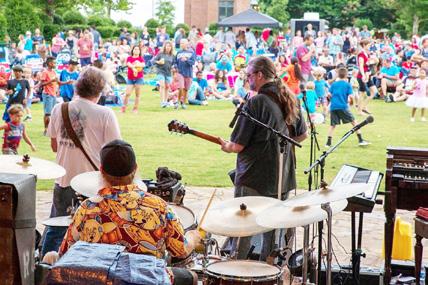
Live music at Southern Village
Founded by D.R. Bryan and Danny Gotham, celebrating 20 years
Changes over the years
It has grown tremendously in terms of size and name recognition.
Fun facts The series actually began in 2002 when we did live music on the green before The Lumina Theater’s Saturday night outdoor movies. For various reasons, it did not go well. At the end of the season, D.R. Bryan suggested that we try it again the following year on Sundays. That was the match that lit the fire. One other tidbit from about 15 years ago when Tres Chicas was performing on the green: I had recently discovered two extraordinary young musicians who were just beginning to perform and record, and I invited them to do a warmup set. They had just decided on a name for their duo: Mandolin Orange (now Watchhouse). After they finished performing, I went to the microphone and told the crowd to remember this performance because I was certain these two were going places. I think it’s safe to say that I got that one right. Milestone moment The music series in 2020. We were all staying inside because of the pandemic, and the village green was silent. After assuming that the music series would be canceled, it was decided to stream live performances online. There were some rough patches, but the show went on. What’s next We have expanded the series to add some weeknight shows during the summer months. We are also trying to broaden the stylistic breadth of our musical offerings. We are adding some Thursday night open mic/karaoke this season, and that will be a lot of fun.
The Frame & Print Shop
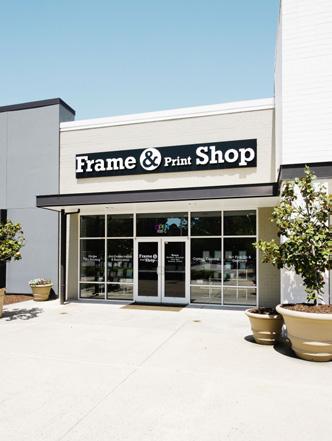
Custom framing, fine art printing and more
Founded by Jim Heavner, celebrating 50 years
Changes over the years It has changed from selling art prints in the 1980s with some custom framing to now focusing on custom framing, archival printing, conservation of art, delivery, and we sell art prints in our online website store.
Number of staff 5 full-time staff, 3 part-time staff (for two stores) Success story [We knew we were doing things right] probably when we modernized that store after purchase and began to really focus on what customers of today really need which is custom framing and archival printing, conservation of art, installation and delivery. Over the past nine years, we have acquired the most qualified, educated and professional staff to the team. Paying the staff well and offering an incentive program and benefits helps to maintain our team for the long term.
Lesson learned Never give up and never let your guard down, keep thinking outside the box on ways to make things better.
Milestone moment The Artist Frame HUB which we started in fall of 2022 as our community giveback program.
What’s next We are now in our “forever home” at University Place with our new outside location on Estes Drive. What’s next is to continue our services to our community as University Place gets its much needed renovation. We plan to offer more art exhibits that focus on and support our local artists, and we plan to expand the Artist Frame HUB. CHM
54 chapelhillmagazine.com May/June 2023 ANNIVERSARY








May/June 2023 chapelhillmagazine.com 55 11744-B US Hwy 15 501 N | Chapel Hill 919-942-1023 browns-automotive.com family owned & operated since 1980! TIRES • BRAKES • INSPECTIONS SERVICE We’re the auto repair shop that you’ve been looking for in the Chapel Hill area. We’re a team of fun, friendly, and experienced technicians at Brown’s Automotive. We get your repairs finished faster, and we maintain the highest full-service repair standards. Give us a call today at 919-942-1023 to schedule your service appointment. 202 2 Thank you for voting us Best Auto Service! Jump in on the Fun BOUNCING BULLDOGS FUN + FOCUS + FRIENDS For more information and to register, go to: bouncingbulldogs.org | 919.493.7992 Jump rope classes & camps for all ages
our top dentists
A LITTLE BACKGROUND
The Top Dentists list for Chapel Hill is the result of a rigorous evaluation process consisting of peer-to-peer surveys of area dentists and professionals. This survey was conducted and managed by the nationally recognized third-party firm topDentists LLC of Augusta, Georgia. This list is excerpted from the 2023 topDentists™ list, a database that includes listings for more than 60 dentists and specialists in the Chapel Hill area. The list is based on detailed evaluations of dentists and professionals by their peers. The complete database is available at usatopdentists.com. topDentists management has more than 60 years combined experience compiling peer-review referral guides in the dental, medical and legal fields. Working from this experience, along with the input of several prominent dentists from throughout the United States, topDentists created a selection process that has earned the respect of the country’s leading dental professionals. For more information, call 706-364-0853; write P.O. Box 970, Augusta, Georgia, 30903; email help@usatopdentists.com; or visit usatopdentists.com. The purchase of advertising has no impact on who is included in the Top Dentists list.

For the 14th straight year, Chapel Hill Magazine commissioned a peer-to-peer survey of the local dental community – from endodontists to prosthodontists. The following listing is the result. Dentists and specialists were asked the telling question: “If you had a patient in need of a dentist, which dentist would you refer them to?” and also asked to take into consideration years of experience, continuing education, manner with patients, use of new techniques and technologies and, of course, physical results. The Chapel Hill area is wellserved by the dental community.
Hundreds of dentists, specialists and support professionals have made this city home, and the overall quality of dental care in our communities is second to none. What good dentist wouldn’t want to practice here?
56 chapelhillmagazine.com May/June 2023
your dental health is our


Dr. Alessandra Ritter
Dr. Lisiane Susin


Dr. Sarah Hussain
At Ritter Endodontics, our priority is to deliver the highest quality Endodontic care (root canals) in a pleasant and compassionate environment to ensure an outstanding experience everytime.

passion
501 Eastowne Dr., Ste. 155, Chapel Hill, NC 27514 • 919-403-5000 • ritterendo.com •
DENTAL ANESTHESIOLOGY
Dillon T. Atwood
North State Anesthesiology
336-939-6277
ENDODONTICS
Alessandra L. Ritter Ritter Endodontics
501 Eastowne Dr., Ste. 155, Chapel Hill 919-403-5000, ritterendo.com
Andrew L. Rudd
Chapel Hill Endodontics
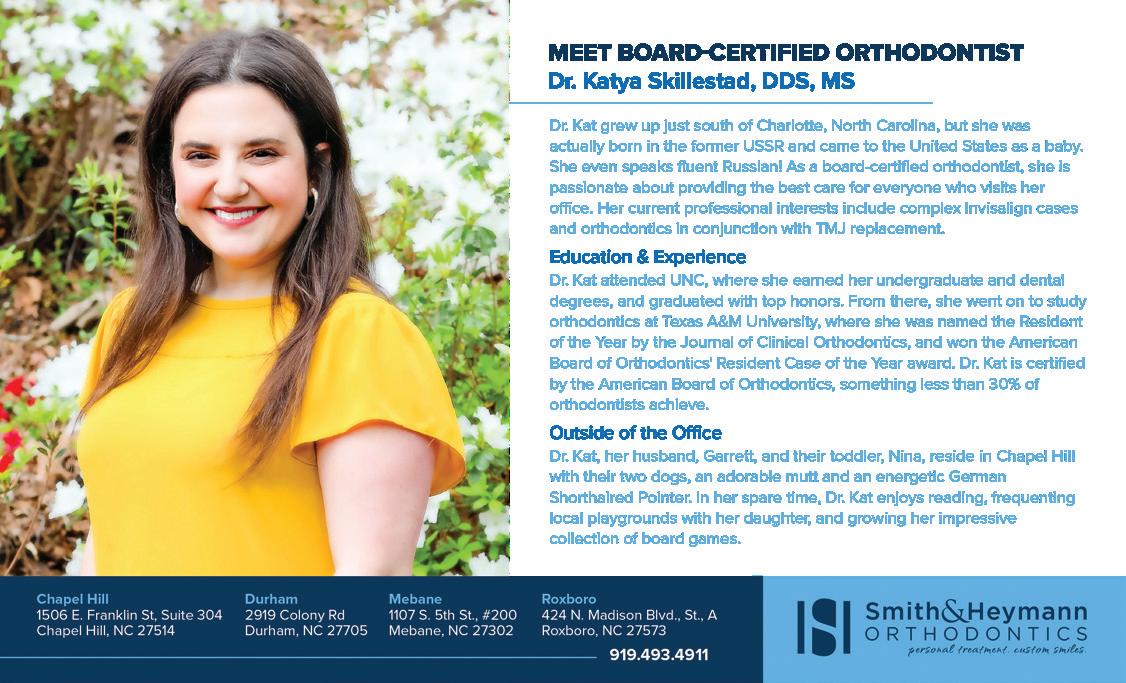
891 Willow Dr., Ste. 4, Chapel Hill 919-932-1616, chapelhillendo.com
Peter Z. Tawil
Governors Endodontics
50201 Governors Dr., Chapel hill 919-537-8461, governorsendo.com
GENERAL DENTISTRY
Jessica L. Bishop
6015 Farrington Rd., Ste. 102, Chapel Hill 919-489-2793, jessicabishopdds.com
Matthew D. Bostian
101 Conner Dr., Ste 403, Chapel Hill 919-968-4701, bostiandental.com
Laura A. Collatz
Enchanting Smiles Family Dentistry
360 West St., Ste. 100, Pittsboro 919-542-2712, enchantingsmilesdentistry.com
Thomas J. Dakermanji
Studio G Aesthetic & Family Dentistry
104 N. Elliott Rd., Ste. C, Chapel Hill 919-942-7163, studiogdentist.com
James P. Furgurson
Chapel Hill Family & Cosmetic Dentistry
501 Eastowne Dr., Ste. 150, Chapel Hill 919-251-9313, chapelhilldds.com
Mandy Ghaffarpour
Studio G Aesthetic & Family Dentistry
104 N. Elliott Rd., Ste. C, Chapel Hill 919-942-7163, studiogdentist.com
Credle A. Harris
Chapel Hill Dental Group 1721 E. Franklin St., Chapel Hill 919-967-9291, teethpeople.com
Shaina Holman Holman Family Dental Care 1836 Martin Luther King Jr. Blvd., Chapel Hill 919-932-7811, holmanfamilydentalcare.com
58 chapelhillmagazine.com May/June 2023 TOP DENTISTS


cliftonandmauney.com | 919.933.1007 | 77 Vilcom Center Dr., Chapel Hill, NC Pe di at r ic Dentistr y Or th od o ntics & Clifton & Mauney
Susanne P. Jackson
77 Vilcom Center Dr., Ste. 180, Chapel Hill 919-968-9874, susannejacksondds.com
Ben Lambeth Milltown Family Dentistry 310 E. Main St., Ste. 335, Carrboro 919-590-0945, milltownfamilydentistry.com
Frederick G. Lehmann
100 Europa Dr., Ste. 310, Chapel Hill 919-967-9999, chapelhillncdentistry.com
Andre Mol Carolina Dentistry 919-537-3142, carolinadentistry.org

Gustavo M. Oliveira
Carolina Dentistry 919-537-3242, carolinadentistry.org
Bilal Saib

Chapel Hill Advanced Dentistry
400 Market St., Ste. 220, Chapel Hill 919-933-3388, chapelhilladvanceddentistry.com
Allen D. Samuelson
Carolina Dentistry 919-537-3866, carolinadentistry.org
Tamara C. Samuelson
77 Vilcom Center Dr., Ste. 180, Chapel Hill 919-968-9874, susannejacksondds.com
Adam J. Sturdevant
Carrboro Family Dentistry
610 Jones Ferry Rd., Ste. 206, Carrboro 919-929-5160, carrborofamilydentistry.com
John R. Sturdevant Carrboro Family Dentistry
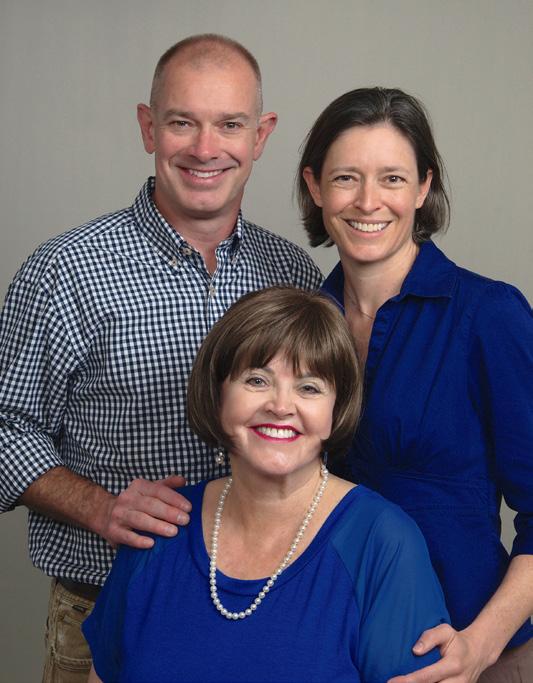
610 Jones Ferry Rd., Ste. 206, Carrboro 919-929-5160, carrborofamilydentistry.com
Laura D. Tawil Parkway Dental Center 79 Falling Springs Dr., Ste. 110, Chapel Hill 919-636-9717, briarchapeldentist.com
Andrew J. Wagoner 77 Vilcom Center Dr., Ste. 110, Chapel Hill 919-968-9697, wagonerdds.com
60 chapelhillmagazine.com May/June 2023 TOP DENTISTS Chapel Hill 1801 East Franklin St. 919.929.3996 Durham 8128 Renaissance Parkway 919.493.3355 Cary 1223 Parkside Main St. 919.701.6699 Raleigh 1009 Spring Forest Rd. 919.878.0055 Family Owned & Operated for Over 30 Years TOP DENTISTS magazine • LANAP to Regenerate Bone Loss due to Periodontal Disease • Implant Surgery & Placement • Affordable Invisalign • Healthystart to Resolve Airway Issues which May Improve Behavior and Sleep Disorders in Children • Wisdom Teeth Extractions • Root Canals Providing Quality Care with the Latest Technology Thank You for Supporting Us!
visitsunrise.com
Dirk Vice, DDS Dinah Vice, DDS Esther Vice Hanson, DDS
FOR MORE THAN 50 YEARS, the practice of Oral and Maxillofacial Surgery Associates has been trusted to provide specialized care in the Chapel Hill, Durham, and Sanford communities. Our four board certified oral and maxillofacial surgeons provide the highest quality of patient care with the latest diagnostic and treatment tools available to assure patient safety and comfort.
Drs. Sacco, Vandersea, Ruvo and Serlo practice a full scope of oral and maxillofacial surgery with expertise ranging from corrective jaw surgery to wisdom tooth removal.
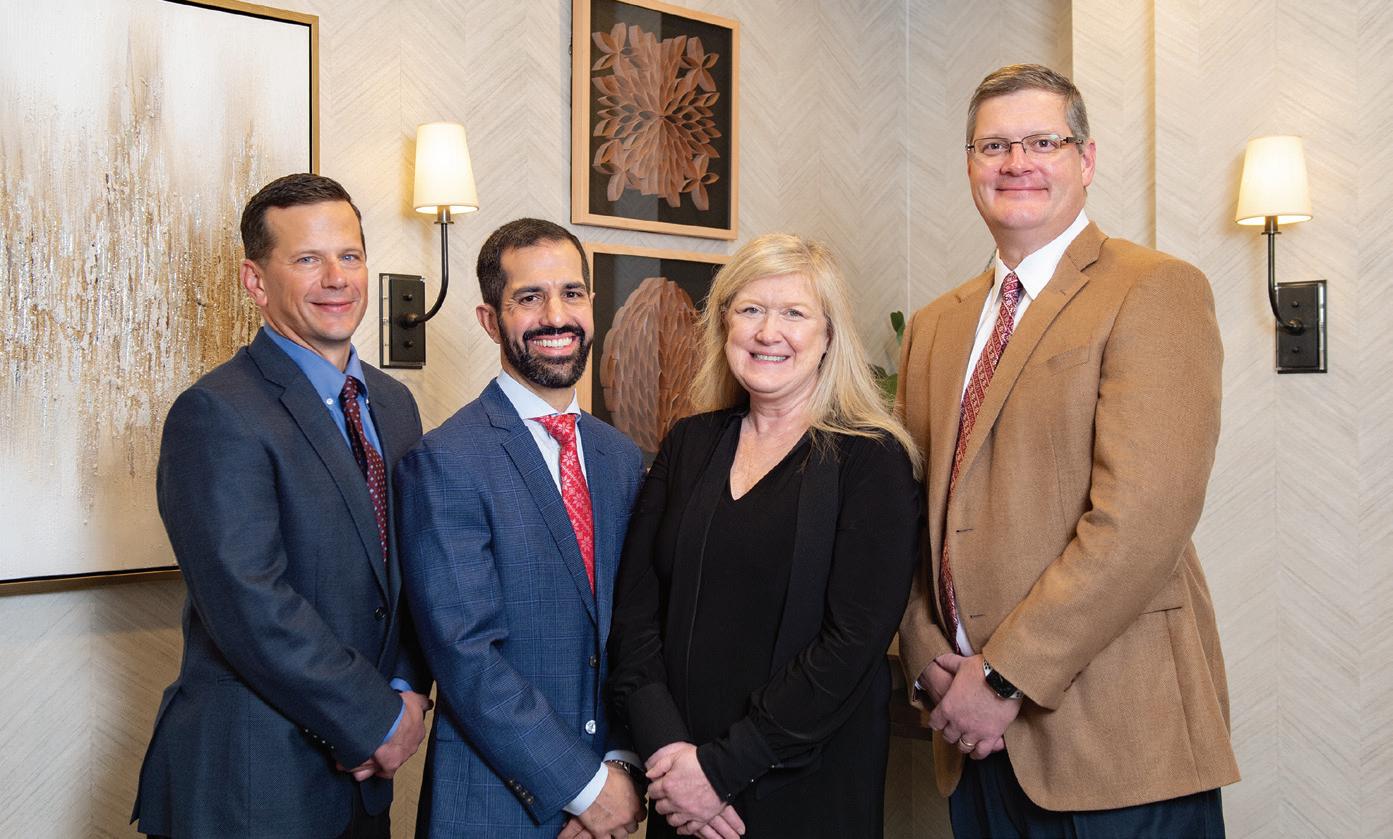
CHAPEL HILL 501 Eastowne Drive, Suite 110 Chapel Hill 27514 919.929.2196

DURHAM 2823 North Duke Street Durham 27704 919.479.0707
SANFORD 109 Dennis Drive Sanford 27330 919.775.1615
DENTAL IMPLANTS • BONE GRAFTING • WISDOM TEETH • FACIAL TRAUMA • CORRECTIVE JAW SURGERY • PRE-PROSTHETIC SURGERY • ORAL PATHOLOGY • SLEEP APNEA OMSANC.COM
DEBRA M. SACCO DMD, MD
BRIAN VANDERSEA DDS
ANDREW T. RUVO DMD, MD
ADAM D. SERLO DMD, MD
Jeffrey C. West
601 W. Rosemary St., Ste. 219, Chapel Hill 919-636-9123, drjeffreywest.com
Nathan O. White
Chapel Hill Family & Cosmetic Dentistry
501 Eastowne Dr., Ste. 150, Chapel Hill 919-251-9313, chapelhilldds.com
ORAL AND MAXILLOFACIAL
George H. Blakey III
Carolina Dentistry 919-537-3944, carolinadentistry.org
David Lee Hill Jr.
Chapel Hill Implant and Oral Surgery Center

77 Vilcom Center Circle, Ste. 120, Chapel Hill 919-238-9961, chapelhilloralsurgery.com
Andrew T. Ruvo
Oral & Maxillofacial Surgery Associates
501 Eastowne Dr., Ste. 110, Chapel Hill
919-929-2196, omsanc.com
Debra Sacco
Oral & Maxillofacial Surgery Associates
501 Eastowne Dr., Ste. 110, Chapel Hill 919-929-2196, omsanc.com
Adam D. Serlo
Oral & Maxillofacial Surgery Associates
501 Eastowne Dr., Ste. 110, Chapel Hill 919-929-2196, omsanc.com
Brian Vandersea
Oral & Maxillofacial Surgery Associates
501 Eastowne Dr., Ste. 110, Chapel Hill 919-929-2196, omsanc.com
ORAL MEDICINE
Lauren L. Patton Carolina Dentistry 919-537-3582, carolinadentistry.org
ORAL PATHOLOGY
Valerie A. Murrah Carolina Dentistry 919-537-3162, carolinadentistry.org
Ricardo J. Padilla Carolina Dentistry 919-537-3162, carolinadentistry.org
The dental practice of Dr. Frederick G. Lehmann has proudly served the community for over 25 years. With an experienced staff, our quality of care is personal in a relaxed atmosphere. The comfort of our patients is our priority.

Dr. Lehmann also fosters a collaborative relationship with many of the area’s dental specialists to further facilitate all of your dental needs.
Some of the cosmetic dentistry options available to our clients include:
• Family Dental Services

• Cosmetic Esthetic Dentistry
• Preventative Care
• Specializing
CAD-CAM based Cerec Technology, allowing many dental restorations and individual crowns to be generated in a single visit.
the
• Same Day Crowns
• Dental Implants
• Dentures NEW
TOP DENTISTS
62 chapelhillmagazine.com May/June 2023 TOP DENTISTS FREDERICK
PA 100 Europa Drive, Suite 310, Chapel Hill, NC 27517 • 919-967-9999 PLEASE VISIT OUR WEBSITE CHAPELHILLNCDENTISTRY.COM FOR SAFETY GUIDELINE UPDATES
Conveniently located in
offices,
from
at
Europa
Hill.
of
services.
G. LEHMANN, DDS,
•
the Europa Center
across
the Sheraton Hotel,
100
Drive in Chapel
• Wide array
restorative, cosmetic and family dental
in
latest
PATIENTS ALWAYS WELCOME

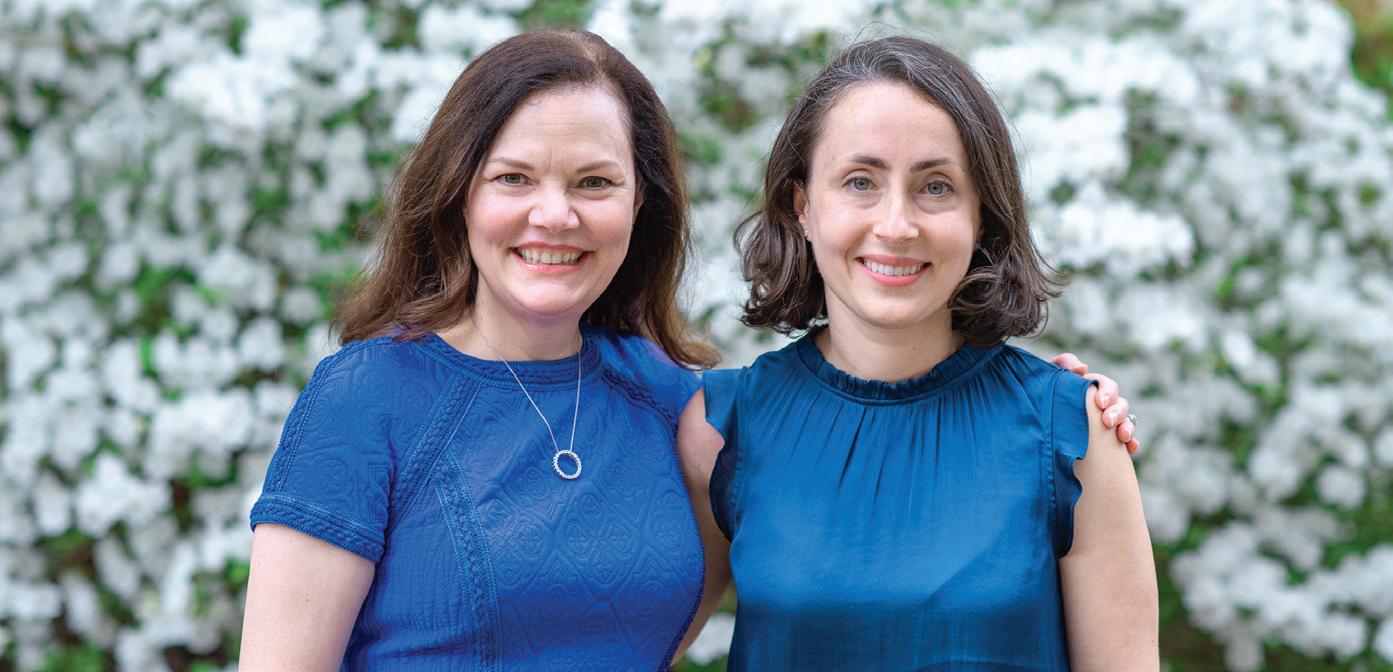


Drs. Tammy R. Severt, DDS, MS and Laura Jacox, DMD, PhD, provide orthodontic treatment in a personalized and caring environment. The Original Chapel Hill Orthodontic Practice CELEBRATING 20+ YEARS SERVING CHAPEL HILL! 202 2 919.858.2576 SEVERTSMILES.COM VOTED BEST ORTHODONTIST Contact Us Today to Get Started on Your Journey to a Beautiful Smile! Chapel Hill 101 Conner Dr., Suite #401 Pittsboro 35 Thompson Street • Highly trained staff and the most up-to-date technology • Clear braces and aligners for discreet treatment options • Platinum Invisalign Provider for children, teens, and adults
ORTHODONTICS
T. Lenise Clifton
Clifton & Mauney Orthodontics & Pediatric Dentistry

77 Vilcom Center Circle Dr., Ste. 310, Chapel Hill 919-933-1007, cliftonandmauney.com
Laura Jacox
Severt Smiles
101 Conner Dr., Ste. 401, Chapel Hill 919-858-2576, severtsmiles.com
Ashley Morgenstern Morgenstern Orthodontics
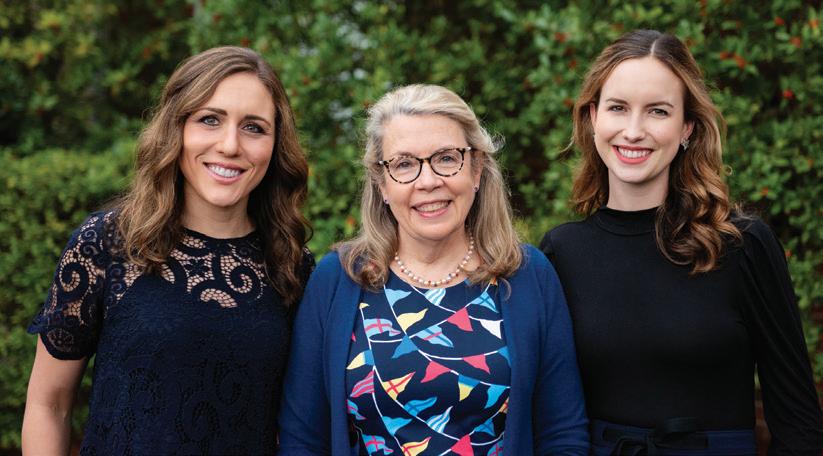
26 Knox Way, Ste. 100, Chapel Hill 919-230-9700, morgensternortho.com
Tung T. Nguyen
Carolina Dentistry 919-537-3764, carolinadentistry.org
Tammy R. Severt
Severt Smiles
101 Conner Dr., Ste. 401, Chapel Hill 919-929-2365, severtsmiles.com
Richard F. Uhlir
Southern Village Orthodontics
400 Market St., Ste. 200, Chapel Hill 919-808-1188, southernvillageorthodontics.com
PEDIATRIC DENTISTRY
Alexandra Boudreau
Chatham Pediatric Dentistry
79 Falling Springs Dr., Ste. 120, Chapel Hill 919-391-3813, chathampediatricdentistry.com
Kimon Divaris
Carolina Dentistry 919-537-3556, carolinadentistry.org
Annelise C. Hardin Franklin Street Pediatric Dentistry

1504 E. Franklin St., Ste. 101, Chapel Hill 919-636-4393, franklinstreetpediatricdentistry.com

Charles U. Mauney, Jr. Clifton & Mauney Orthodontics & Pediatric Dentistry
77 Vilcom Center Circle Dr., Ste. 310, Chapel Hill 919-933-1007, cliftonandmauney.com
Rocio B. Quinonez
Carolina Dentistry 919-537-3347, carolinadentistry.org
64 chapelhillmagazine.com May/June 2023 TOP DENTISTS 2711 North Duke Street, Durham, NC 27704 919-220-1416 www.dukestreetsmiles.com Martha Ann Keels, DDS, PhD Erica A. Brecher, DMD, MS M. Gentry Byrd, DDS, MPH We want to keep your child’s smile healthy for a lifetime! The world always looks brighter from behind a smile TOP DENTISTS magazine 2020 We are accepting new patients!
Avni C. Rampersaud
Chapel Hill Pediatric Dentistry
205 Sage Rd., Ste. 202, Chapel Hill 919-929-0489, bigsmiles4kids.com
Kevin Ricker
Chatham Pediatric Dentistry

79 Falling Springs Dr., Ste. 120, Chapel Hill 919-391-3813, chathampediatricdentistry.com
Michael W. Roberts Carolina Dentistry 919-537-3781, carolinadentistry.org
Shauna Woody Franklin Street Pediatric Dentistry 1504 E. Franklin St., Ste. 101, Chapel Hill 919-967-2773, franklinstreetpediatricdentistry.com
Are you in need of oral surgery?
Whether it’s to remove one or more teeth, implants, or something more involved, you probably have a lot of questions and concerns. It’s normal to be apprehensive about a surgical procedure and at Chapel Hill Implant and Oral Surgery Center, we understand. That is why Dr. Hill has created a top notch facility and a team of professionals whose singular goal is to help you understand your options and make your procedure as stress-free as possible.


Dr. David Lee Hill, Jr. Oral & Maxillofacial Surgeon 77 VilCom Center Drive, Suite 120 Chapel Hill, NC 27514 919-238-9961
104 N. Elliott Rd., Ste. C, Chapel Hill, NC 27514 919-942-7163 • StudioGDentist.com
At Studio G Aesthetic & Family Dentistry, Mandy Ghaffarpour, DDS, Alex Yarborough Hart, DDS, FACP, and Thomas Dakermanji, DMD, provide comprehensive and restorative dentistry. By focusing on each individual and involving patients in their treatment plans, their team places patient care at the core of their practice. In addition, they take full advantage of the latest, state-of-the-art dental technology and advanced treatment options. By helping patients in Chapel Hill achieve their healthiest smiles, Studio G strives to improve their quality of life through excellent dental care both now and for years to come.
May/June 2023 chapelhillmagazine.com 65
G is a
Phylosophy Practice
TOP DENTISTS Bringing Healthy Smiles to Chapel Hill CHAPELHILLORALSURGERY.COM
Where art, science & technology meet Studio
Pankey
2010-2023
PERIODONTICS
Craig Dorion Dorion & Associates
920 Martin Luther King Jr. Blvd., Chapel Hill 919-967-5099, doriondds.com
Liliana Gandini
Dorion & Associates
920 Martin Luther King Jr. Blvd., Chapel Hill 919-967-5099, doriondds.com
Timothy W. Godsey
Chapel Hill Periodontics & Implants 150 Providence Rd., Ste. 200, Chapel Hill 919-968-1778, chapelhillperio.com
Hana Hobbs 406 Millstone Dr., Hillsborough 919-590-0564, drhanahobbs.com
Antonio Moretti Carolina Dentistry 919-537-3727, carolinadentistry.org
Jonathan Reside Carolina Dentistry 919-537-3727, carolinadentistry.org
PROSTHODONTICS

Ibrahim S. Duqum Carolina Dentistry 919-537-3964, carolinadentistry.org
E. Leland Webb
Chapel Hill Dental Group 1721 E. Franklin St., Chapel Hill 919-967-9291, teethpeople.com
Alexandra B. Yarborough-Hart
Studio G Aesthetic & Family Dentistry 104 N. Elliott Rd., Ste. C, Chapel Hill 919-942-7163, studiogdentist.com CHM
A. K. BOBBY MALLIK D.M.D.
DIPLOMATE, AMERICAN BOARD OF ENDODONTICS

PRACTICE LIMITED TO ENDODONTICS AND ENDODONTIC SURGERY
Our team realizes the importance of your dental health and strives to provide all your endodontic needs in a clean, comfortable and stress-free environment. We utilize state-ofthe-art technology to ensure you are receiving the specialized care you deserve.
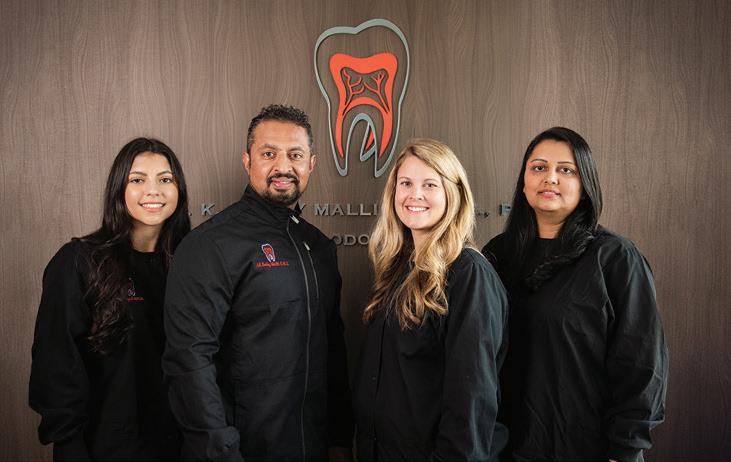
Using the most advanced knowledge and techniques available today, we can perform many different endodontic treatments with ultimate precision and comfort.
ROOT CANAL THERAPY | RETREATMENT APICAL SURGERY | TRAUMATIC INJURIES CBCT
66 chapelhillmagazine.com May/June 2023 TOP DENTISTS DURHAMENDO.COM
IMAGING PATTERSON PLACE 5324 MCFARLAND DRIVE, STE. 120, DURHAM NC 27707
Mission
TABLE delivers healthy food and nutrition education to children living in Orange County. We envision a community where all children have equitable access to nutritious food and knowledge in order to experience optimal health, well-being, and dignity.
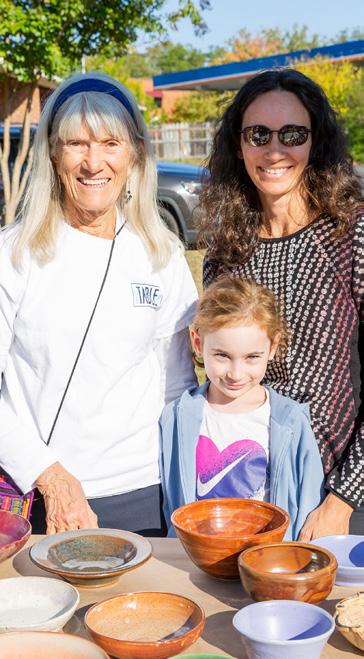
Background
TABLE was established in 2008 to provide local children with fresh, healthy food and nutrition education. We’ve grown our programming from serving 12 children to delivering healthy meals and snacks directly to the homes of more than 800 kids every week. We also introduce nutrition concepts through monthly, interactive kits that engage parents and children in trying new foods and having fun in the kitchen. By providing fresh food and nutrition education, our goal is to improve kids’ overall physical, mental and emotional health.
Signature Events
TABLE will host its 11th Annual Empty Bowls Fundraiser on October 8, 2023 at the Carrboro Town Commons. This event has become a community tradition bringing together local restaurants, potters, musicians and community members all with the same goal of fighting childhood hunger. Attendees will enjoy an afternoon on the Commons savoring delicious soup and bread, listening to live music and having the opportunity to choose a beautifully handcrafted bowl. Visit our website for more information.
Wish List
• Room to Grow Campaign
TABLE is raising money to renovate and move into our new home at 311 East Main St. in Carrboro. We have $700,000 more to raise to reach our goal of $3.25 million. Donate today at https://donate. tablenc.org/roomtogrowcampaign
• Delivery Drivers
We rely on 45 volunteers every week to deliver food to the homes of the kids and families we serve. If you are at least 18 years old and have reliable transportation, please consider volunteering.
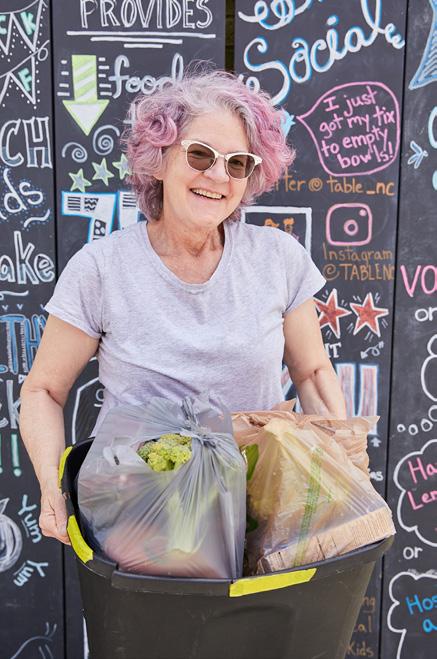
https://tablenc.org/get-involved/
• Donate Food
We provide a variety of healthy non-perishables and fresh food. Currently we are in most need of juice boxes, GoGo squeezes, and unflavored oatmeal packets. Donate in-person at TABLE’s offices or order online and have it delivered to TABLE.
https://tablenc.org/give-food/
Brag Lines
During TABLE’s 15 years of service, we’ve delivered more than 2,500,000 meals and snacks to local kids and their families. The feedback received from family surveys shows the direct impact our work is having on our community.
• 95% of parents say their child eats more fruits and vegetables because of TABLE.
• 43% of families say their children’s physical, emotional and mental health has improved.
• 57% of parents agree they experience less worry or stress about food for their family.
Get in Touch!
209 E. Main Street Carrboro, NC 27510 919-636-4860
tablenc.org
Our local nonprofits, how they support the community and how you can get involved Sponsored Content
Our Mission
SECU Family House at UNC Hospitals provides a safe, nurturing, affordable home for patients and their loved ones who travel great distances to UNC Hospitals for life-saving procedures and serious illnesses.
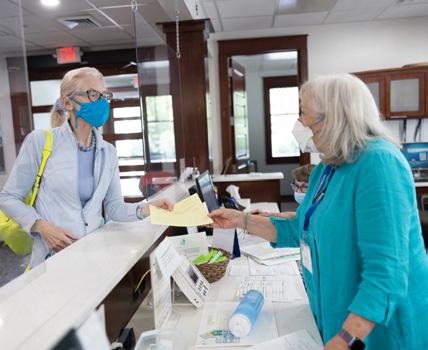
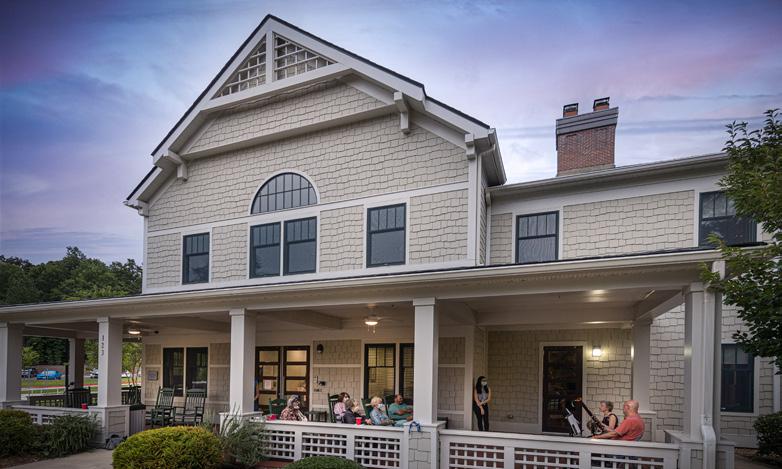
Background
Since opening in 2008, Family House has served more than 28,000 guest families from all 100 N.C. counties, 45 other states and multiple countries. Guests are afforded not only lodging, but are also offered meals, transportation, activities, programs and a supportive environment to help them rest, heal and gather strength when they need it most.
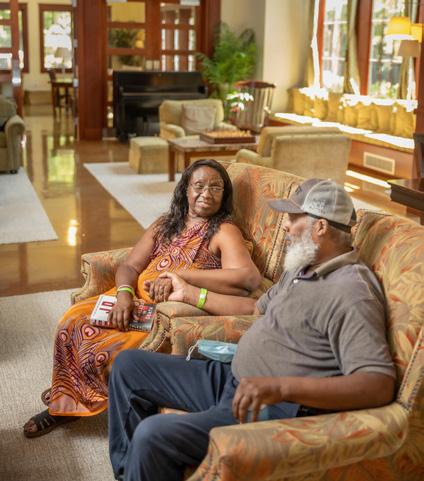
With a recent expansion to meet demand for our unique accommodations, the House now offers 75 guest rooms and suites. The House’s beautiful and comfortable common areas, including great rooms with fireplaces and large, modern kitchens, set the House apart, providing guests opportunities to form friendships and networks of support with those connected by similar circumstances.
Signature Events
Each year, SECU Family House welcomes community friends to our two wonderful events that benefit the work we do. The Gala is held every fall and the Family House Golf Classic is in the spring. For more information on volunteering, tickets and sponsorships, visit secufamilyhouse. org/events.
Ways You Can Help
You can make a meaningful difference in the healing of those with serious health conditions. Here are some ways you can get involved:
• Contribute to the Heart of the House fund: Guests pay what they can, and your donations offset the actual cost of their stay.
• Become a volunteer: At the heart of Family House are the people within – which includes our many wonderful volunteers.
• Donate wish list items: Please help us keep our pantry stocked so families can use these items as necessary.
Get in Touch!

(919) 932-8000
123 Old Mason Farm Rd. Chapel Hill, NC 27517
secufamilyhouse.org
Our local
how they support the community and how you can get involved Sponsored Content
nonprofits,
Our
Sponsored Content
local nonprofits, how they support the community and how you can get involved
Scan to help!
Upcoming Events
All events take place at SAF unless otherwise noted. Event details on snowapproach.org/events.
• Brain Café Mondays & Fridays: Connect with others, practice skills, learn how brains work, and what you can do if you are living with brain change, or care partnering with someone who is living with brain change. Weekly.
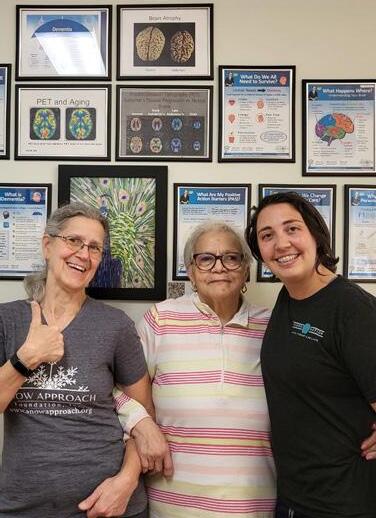
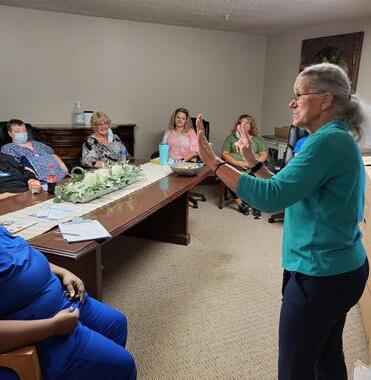
Mission Statement
Snow Approach Foundation (SAF) works to build an inclusive community for neurodiversity in Hillsborough, NC. By promoting awareness, knowledge, and skill, SAF empowers people to break the stigma of dementia and brain change, to advocate for those living with neurodiverse or neurodegenerative conditions, and to create community with compassion and appreciation.
Background
Renowned dementia care expert and Positive Approach to Care® founder Teepa Snow, MS, OTR/L, FAOTA established the Snow Approach Foundation in July 2022 to build an educated and empowered community that adapts to changing brains. SAF trainings, consultations, and engagement events will culminate in the creation of a worldclass Gathering Place in Hillsborough — an inclusive community center where people with different strengths and abilities can thrive through all stages of life.
Brag Lines
While not even a year old, the Snow Approach Foundation has already built strong community ties with Hillsborough’s finest: its Fire Department and Emergency Medical Services teams. SAF volunteers trained first responders how best to approach and engage with people living with brain change. SAF also welcomed fifty-five (!) six to twelve year olds as certified Champions who are now ready to build community with their knowledge and skill across generations.
Wish List
• Monetary and in-kind donations or gift cards
• Opportunities to share SAF content at public or private events
• Volunteer drivers to transport participants to SAF events
• Specialists to lead community classes in art, physical fitness, etc.
• Care providers to participate in Snow Approach Award & Referral Program
• Volunteers to participate in SAF programs; individuals connected to or living with neurodiverse or neurodegenerative conditions are welcome!
• Positive Approach to Care® (PAC) Courses: Free for SAF community members.
- ChampionCourses: Learn hands-on PAC skills in two hours. Weekly, Tuesdays & Fridays.
- Certification Courses: Types and times vary: May 24 – 26, June 20 – 22, July 19 – 21, Aug. 8 – 10, Sept. 12 – 14, Oct. 18 – 20, Nov. 7 – 9 and Dec. 5 – 7.
• Sip & Sing/Speak Series: Build community through live music and awareness through rich conversation; featuring refreshing non-alcoholic drinks 6:00–7:30 pm. Sip & Sing at SAF: May 23, July 18, and Oct.17. Sip & Speak at locations across Hillsborough June 13, Aug. 22, Sept. 19, Dec. 12.
• Snow Approach Foundation Gala: Nov. 17 at the Cloth Mill. The annual fundraiser for SAF programming and its mission to build Our Gathering Place.
Get in Touch!
133 E. King St. Hillsborough, NC 984-766-7669
snowapproach.org
Our local nonprofits, how they support the community and how you can get involved Sponsored Content
OUR 10TH ANNUAL WOMEN’S ISSUE
MEET 13 EXTRAORDINARY LEADERS – FROM EDUCATORS AND ENTREPRENEURS TO A LONGTIME ACTIVIST –MAKING AN IMPACT ON OUR COMMUNITY EVERY DAY
70 chapelhillmagazine.com May/June 2023
WOMEN OF ACHIEVEMENT
Photography by John Michael Simpson

KELLY DRAYTON
DIRECTOR OF EMERGENCY MANAGEMENT, TOWN OF CHAPEL HILL
For Georgia native Kelly Drayton, an accomplished career in public service has an unconventional origin: “It all started with a dare.” Then a sophomore at Elon University, Kelly recalls the fortuitous moment a companion challenged her to join the fire service as they drove past the local station. Accepting the dare, Kelly walked right in and enlisted that day.
During her two years as a volunteer, what started as a spur-ofthe-moment joke transformed into a passion. “After my first house fire, I was just absolutely in love with it,” Kelly says. After graduating from Elon in 2010, she initially planned to pursue a doctorate in applied mathematics at NC State but switched gears after a year in the program to enter the fire academy at Durham Technical Community College. Upon graduating, she was accepted to the Chapel Hill Fire Department, where she worked for three years until she was hired in 2014 by the City of Raleigh’s Office of Emergency Management to build the department’s special event permitting and regulation division.
“It was a little bit of a difficult decision to leave the fire department, because I really did love it so much,” she says, “but the opportunity to be a part of a city as prominent as Raleigh and to be able to build an office from the ground up was just so exciting to me.” Kelly was
By Sinclair Holian
later promoted to the role of emergency management coordinator, which she held until 2019, when an opportunity lured her back to Chapel Hill. She was hired as the town’s emergency management planner before being promoted to the director of emergency management in early 2020.
The position abruptly became “a baptism by fire” when the coronavirus pandemic erupted. Along with town leadership, Kelly was suddenly responsible for coordinating Chapel Hill’s COVID-19 response. In the chaos of ever-changing information, she became the go-between for policy and operations groups. “I have a very distinct memory of walking through the [Emergency Operations Center] door, and 15 people in the room all turn their heads,” she recalls. “And they’re all just looking at me like, ‘Whatever craziness you’re about to tell us, we’re ready.’
“I don’t think anyone can say that they were truly prepared for that, regardless of how much experience you had in the job,” she says. “But there was just this incredible collaboration of everyone just coming together to say: ‘This is our unity of purpose, and we’re all gonna work together to come through this pandemic.’”
Kelly’s collaborative leadership style is just one of the skills she’s taken from her time in the fire service. After years in the public safety sector, she also knows the mental toll the work can take. “I’m not sure if people are aware that there really is a crisis in mental health with first responders,” she says. It’s a challenge she’s passionate about combating. Under the North Carolina Division of Emergency Management, Kelly is the chair of the technical advisory committee providing collaboration and guidance for the new program, the North Carolina Responder Assistance Initiative. The unprecedented statewide program will “provide an integration of trained peersupport professionals, culturally competent clinical providers and access to consultative resources,” Kelly says.
“Fifteen years ago when I came through, the fact that mental health was an issue wasn’t even talked about,” she says, “so how far we’ve come in 15 years is absolutely amazing.”
72 chapelhillmagazine.com May/June 2023 WOMEN OF ACHIEVEMENT
A lot of the work is very challenging, but I really do think it is an incredible honor to serve your community, and I take that very seriously.
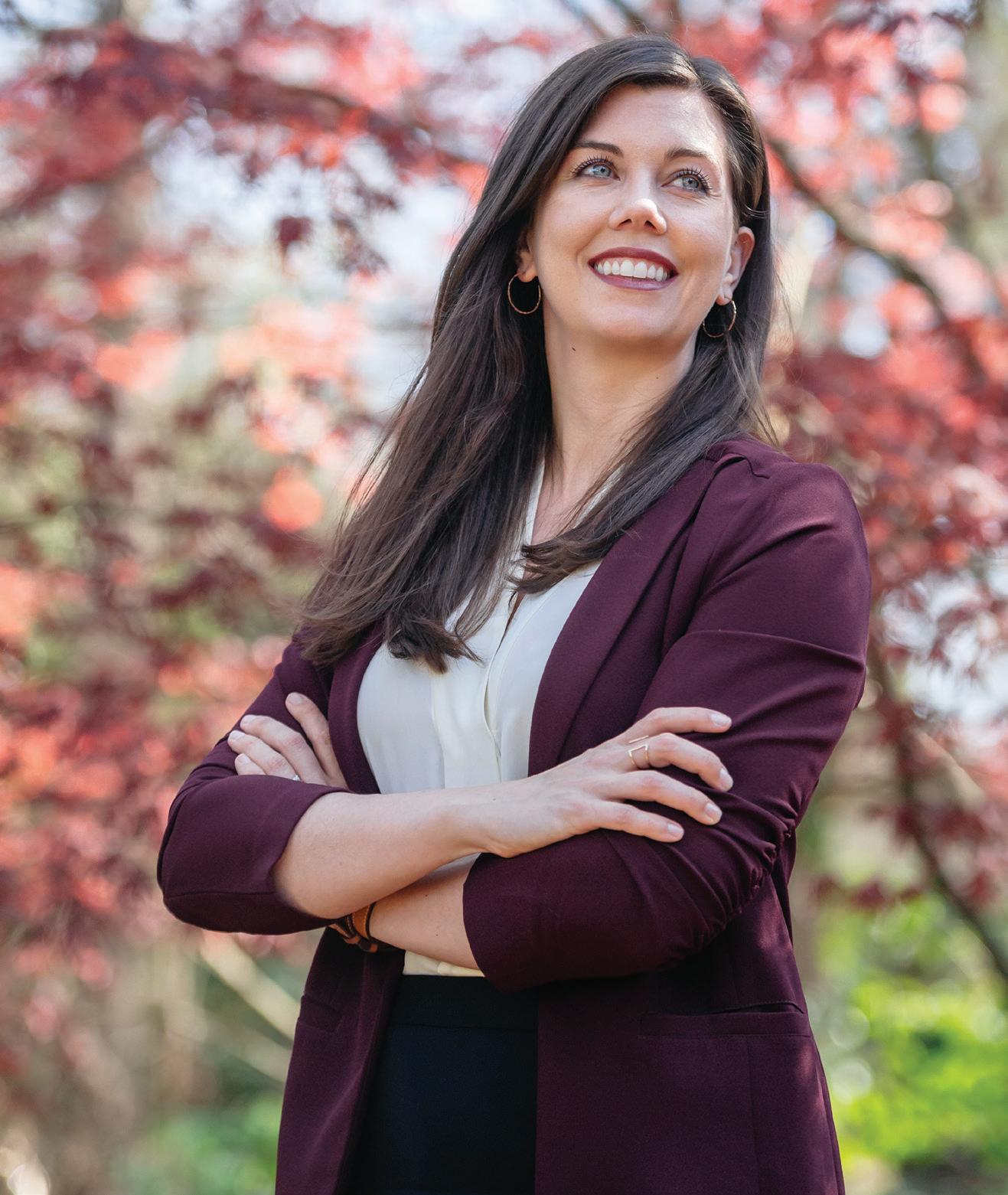
May/June 2023 chapelhillmagazine.com 73
Deborah Stroman’s mantra, “seek joy, and fight for justice,” has been a common theme throughout her life. Originally from the Philadelphia area, she mastered leadership at an early age. Throughout elementary school, she would often be given access to the teacher’s manual to help instruct fellow students and could be found running the kickball games during recess. “As someone who likes to build and create, I’ve been able to do a lot of different things,” Deborah says. “My overall umbrella is leadership. I am a racial equity educator and strategist, and then the other bucket is for business because, as you know, race and sports can oftentimes connect.”
After earning a bachelor’s degree in history and social studies education from the University of Virginia in 1982, Deborah moved to Chapel Hill in the fall of 1983 for her master’s degree in sport administration. (She’d later obtain her Ph.D. in business leadership and organizational behavior from Capella University.) Then Deborah worked in financial services for 17 years, primarily with Prudential Financial and GE Capital.
She returned to UNC to teach in 2007. “As a professor, I’m always teaching, formally and informally,” Deborah says. “The
DEBORAH STROMAN
two biggest things I do at UNC right now are providing racial education, but also the strategy.” Deborah gives insight to numerous departments across campus in her role as education director for the Office of the Vice Chancellor for Research and to the Diversity, Equity and Inclusion in Research Certificate Program.
Nine years ago, Deborah and Geni Eng co-designed the “Leading for Racial Equity” semester-long course for graduate students in the Gillings School of Global Public Health. “The idea behind the course is to give students an introductory look in terms of racial inequities and how they come about, giving students a space to talk about their experiences, create best practices and then have them actually work in the field,” Deborah says. Although she is no longer the instructor of this course, she continues to work to help others become aware of racial inequities and consider the next steps.
Basketball remains her first love, as she played at UVA all four years and held the role of captain her senior year. For two years during graduate school, Deborah was an assistant coach for the UNC women’s basketball team. “Athletics is home for me,” she says. “Any way that I can give back –I’m always counseling athletes in terms of decision-making.” She founded the Center of Sport Business and Analytics in 2019, to connect people and organizations creating equity in the sport industry.
A piece of advice Deborah offers to her students is “it’s not what you know, it’s not who you know, it’s who knows you on a favorable basis.” She seeks joy and fights for justice every day. “I wake up with joy, wondering what’s going to unfold that day,” Deborah says. As a woman involved in many things, when she does find any amount of free time, she enjoys riding her bike, reading, traveling and having deephearted conversations.
“Especially right now, we have so many things that are bringing us anguish, pain and frustration,” Deborah says. “I think now more than ever, we need good people to step up to use their voice and their platform.”
By Megan Tillotson
74 chapelhillmagazine.com May/June 2023 WOMEN OF ACHIEVEMENT
UNC PROFESSOR AND FOUNDER, CENTER OF SPORT BUSINESS AND ANALYTICS
I think now more than ever, we need good people to step up to use their voice and their platform.
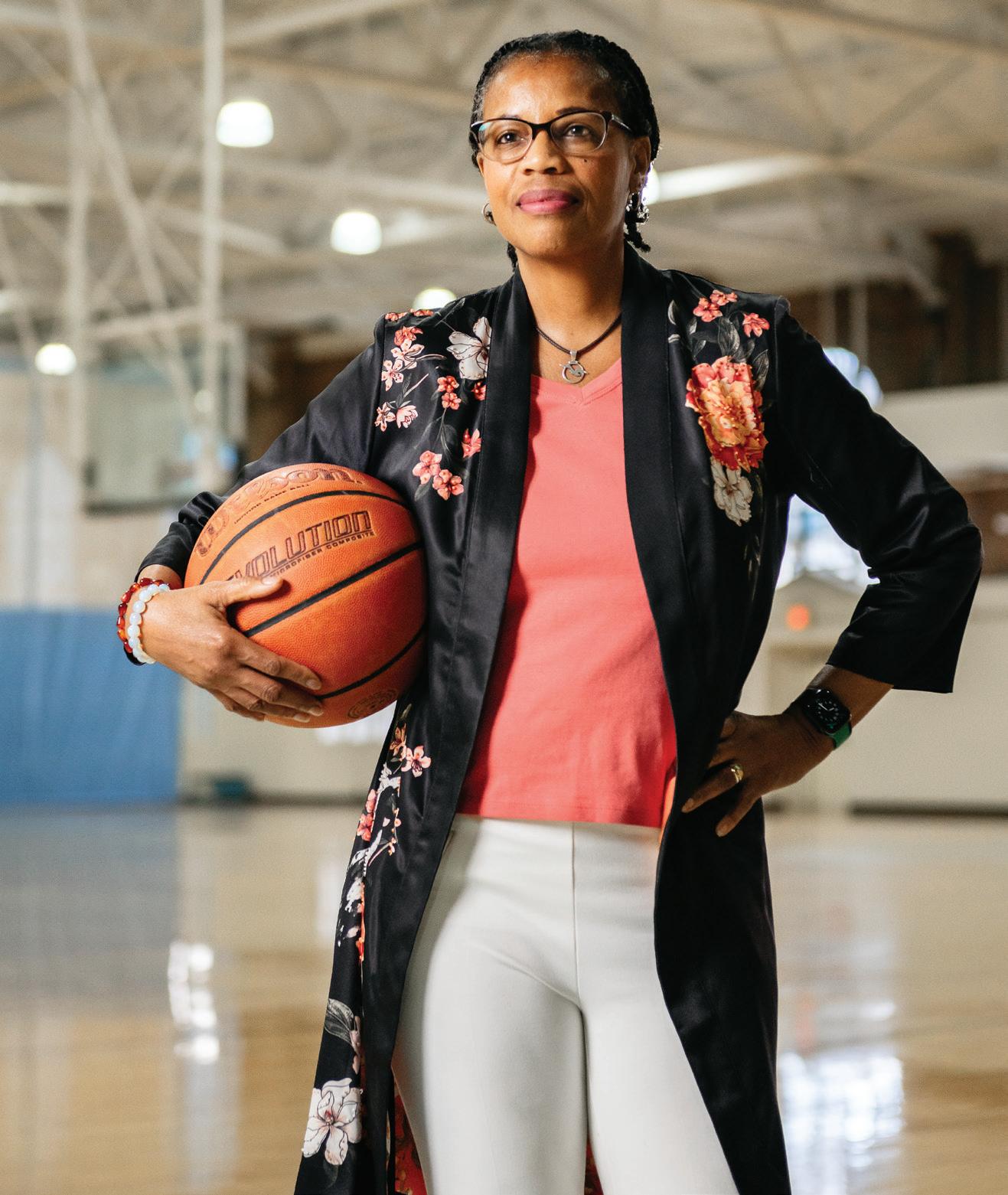
May/June 2023 chapelhillmagazine.com 75
FRANCES SHETLEY
FORMER TOWN OF CARRBORO ALDERMAN & COMMUNITY ACTIVIST
Long before Carr Mill Mall, before The ArtsCenter, before Weaver Street Market –
Frances Shetley has lived on the same plot of land in Carrboro. She grew up down the road on a farm in Calvander and made the move to just off of Hillsborough Road with her husband, Thomas Shetley, in 1955. Since then, she has enjoyed a 54-yearlong marriage, raised five children and welcomed nine grandchildren into the fold. But, perhaps her longest lasting legacy will be her impact on the town of Carrboro.
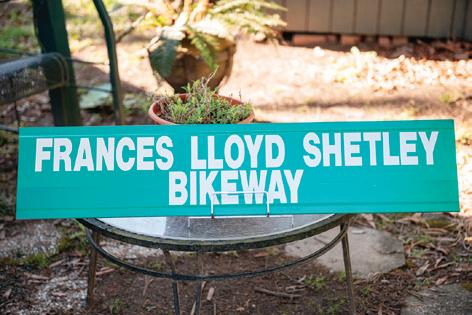
“There was always something to do,” Frances says. “There were always new things to tackle and new things to resolve.”
It was sometime during the ’60s, she recalls, that she was compelled to get involved with the local government. She had paid a visit to town hall to address an issue, now lost to time, and the way she was brushed off by the leadership at the time struck a nerve.
That encounter was the spark which led to Frances’ decadeslong career of public service to the town, punctuated by her hand in the creation of the town’s Appearance Commission and the Carrboro
By Brooke Spach
Community Garden Club, as well as local conservation efforts. In fact, Carr Mill Mall exists in large part thanks to Frances, who helped advocate against its demolition in 1975. She then successfully ran for office for the Board of Aldermen (now the Town Council) in 1987.
“I had one lady say, ‘You shouldn’t be running, you’re a woman; women don’t get in politics,’” she says. “And I didn’t pay attention to her. If I had a challenge, I’d take on a challenge.”
There’s also something to be said about Frances’ role in paving the way for Carrboro’s active cycling and pedestrian culture. She says that especially before Chapel Hill Transit was established, there were many UNC students who biked around town, but the infrastructure to keep them safe was not there. She was such a proponent of pedestrian and cyclist safety during her time as an alderman that in 1995, that on her last day in office, her colleagues surprised her with the news that the bikeway connecting Carrboro Elementary School to North Greensboro Street would be named the Frances Lloyd Shetley Bikeway. When she wasn’t out in the community, working to make Carrboro a better place, Frances was a stay-at-home mom to her children, Gay Bonds, Sam Shetley, Emily Hollowell, Catherine Dean and Johanna Lucas. She says that above all, the greatest accomplishment of her 96 years was raising a happy and successful family. All five children still live in the area and visit regularly to care for her, hear stories from her life and go for nature walks at Anderson Community Park next door or down on the old Bynum Bridge.
Frances is confident that the town she’s dedicated her life to has a bright future ahead. “It takes young people [to create a thriving community], that’s what it takes,” she says. “It’s the young people of this country who are gonna save the world. They are vibrant, they’re knowledgeable, and they’ll fight. That’s what I was like when I was growing up, I would fight most anything.”
When asked what advice she’d give to someone now who’s interested in making a difference in their community, Frances says, “Be alert, and be talking with people all the time because that’s where you learn what’s going on, what the ideas are for the future and how people feel about it.
“Way back when I was active, I had my thumb on the pulse of the area. I knew everything that was going on. So, know what’s going on, and listen to people who have new ideas because they might be good. Maybe,” she adds with a laugh.
76 chapelhillmagazine.com May/June 2023 WOMEN OF ACHIEVEMENT
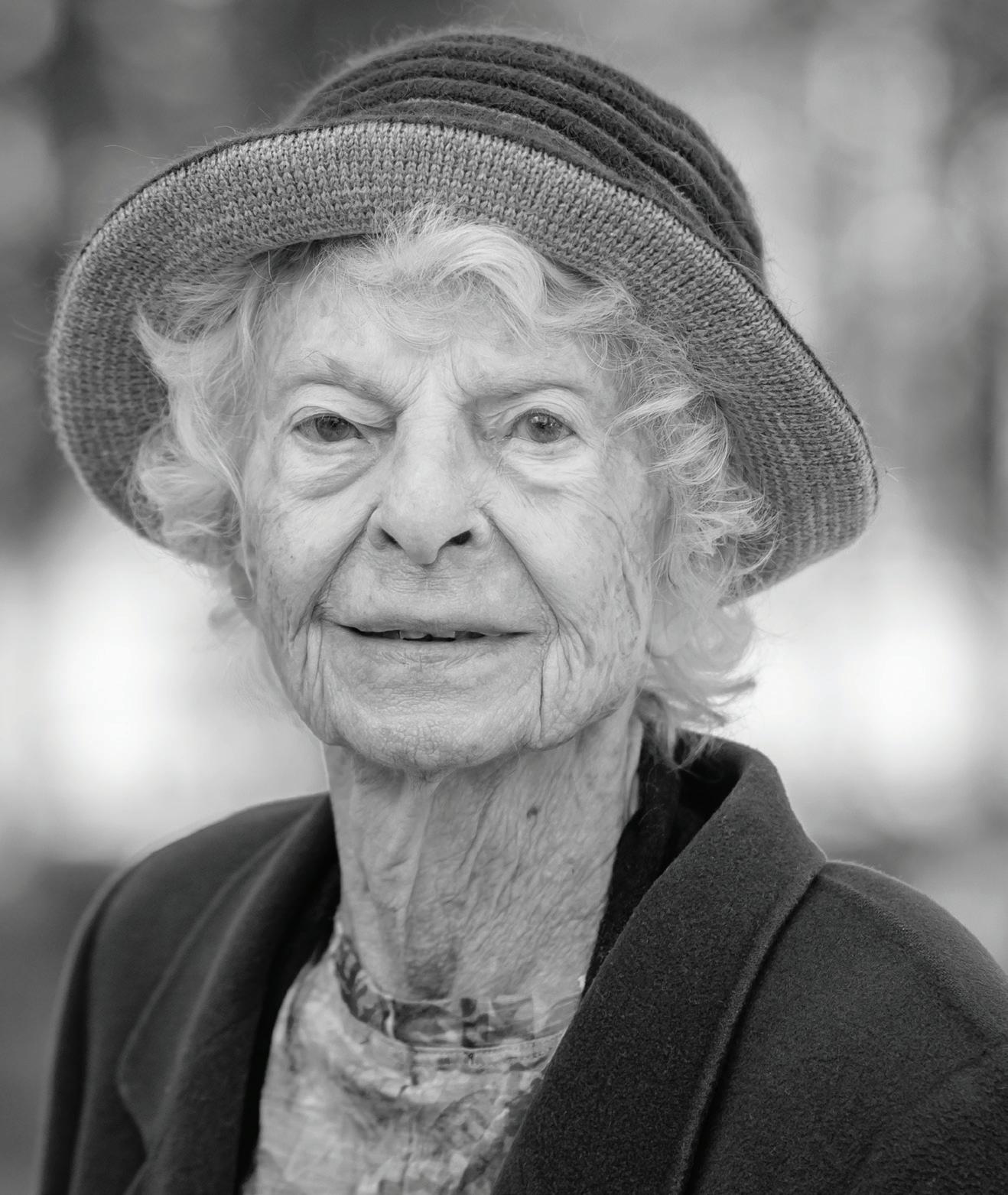
May/June 2023 chapelhillmagazine.com 77

78 chapelhillmagazine.com May/June 2023
Upon graduating from UNC in 2005 with a major in romance languages, Whitney Bulbrook was unsure about her career path. However, her aunt, Diane Davis, had an idea for her niece who had studied abroad in Seville, Spain. “[Diane] plucked me right out of college and said, ‘You’re fluent in a second language, you’re getting into the mortgage industry,’” Whitney recalls. Her uncle, Kearny Davis, hired her as a mortgage loan originator at his Chapel Hill company, Carolina Home Mortgage, where Diane, his wife, is a business manager. In this position, Whitney worked with the Latino community, originating mortgage loans for borrowers utilizing a tax ID number instead of a Social Security number. “I really enjoyed the people and the communication and the puzzle of it all, so I stuck with it,” she says.
Understanding the industry was no small feat, and Whitney spent hours studying and training with Kearny. “I dove headfirst into the mortgage business
WHITNEY BULBROOK
PRESIDENT, CAROLINA VENTURES MORTGAGE
having really no idea what a ‘mortgage’ was or what the term ‘underwriting’ could possibly mean,” she says.
After eight years with Carolina Home Mortgage, Whitney was encouraged by her husband, Jim Bulbrook, to open a firm of her own. At the time, she was pregnant with her first child but had a clear vision for her own business and took the leap of opening Carolina Ventures Mortgage in 2013. “I focused on streamlining the process, moving 100% digital and creating an incredibly easy closing path for clients with … same-day pre-approvals, 10-business-day closings coupled with low rates and fees,” Whitney says. And she’s got a solid team behind her in Lora Smith, Lindsey Gillespie and Stacy Guillemet, along with Jim, who handles IT and website maintenance.
Whitney’s first tool in her entrepreneurial toolbox, as she calls it, is setting expectations with clients. She explains that overpromising and underdelivering is a recipe for failure, so she is always candid with those she helps. The second principle is one she learned from Kearny: ’fess up when you mess up. Though making that call is hard, she says it is the right thing to do in order to move forward and find solutions.
Sticking to her principles has paid off. In 2021, she was honored to be one of a handful of brokers invited by UWM Holdings Corporation, the top mortgage lender in the nation, to ring the bell at the New York Stock Exchange. She was also named one of the top 50 mortgage brokers in the nation in the 2022 Scotsman Guide’s rankings, as well as the No. 1 mortgage broker in North Carolina for the past six years.
Brett Bushnell, managing broker and sales manager at Compass Real Estate, often refers clients to Whitney. “[Her] dedication, expertise, problem-solving skills and customer service are exemplary,” Brett says. “How she runs her mortgage company at such a high level while balancing her family life with her four young children with her husband, Jim, is amazing.”
During family time, Whitney loves to cook, kayak and dress up in creative and coordinated Halloween costumes alongside her husband and kids, Simone, 9, Heather, 7, Weston, 4, and Vanessa, 2. (Last year, the family dressed as characters from “101 Dalmatians.”)
Her passion for the mortgage industry is fueled by the community and connections she fosters through her work. Whitney says she often crosses paths with her clients, whether in the grocery store or on bike rides.
By Anna Wesley Dubach
“I love meeting people in that regard and running into people who I’ve helped with financing because … it makes me feel even more connected to Chapel Hill,” she says.
May/June 2023 chapelhillmagazine.com 79 WOMEN OF ACHIEVEMENT
I'm not always going to find the perfect time to do something, right? Had I gotten to pick it would I have started it at that moment? No, but I'm glad that I did.
– Whitney Bulbrook
CHRISTY GRAVES
VICE PRESIDENT, CHAPEL HILL TOFFEE AND GRIFF’S TOFFEE
For years, nearly five days a week, Karen Graves would start her day before 9 a.m., prepping toffee treats on the quartz countertop in her kitchen. This is the home she raised her family in – nestled in the Old Forest Creek neighborhood – and where she first created her Chapel Hill Toffee
A Chapel Hill resident since the 1970s, Karen attended UNC, met her husband, Griff Graves, and started her clay business, Clay Sculpture by Karen Graves, here. (For the latter, she’d create an array of artistic items from nativity scenes to whimsical personal pieces.) But soon she gravitated to a medium easier than clay. “Friends had mentioned that they wanted to buy my toffee whenever I made it for desserts for special occasions,” she recalls. A Village Advocate article about appreciating local products gave her the final push to take her enterprise full time.
In 2008, one of Karen’s sons, Mark Graves, joined her both in the kitchen and as a business partner to help spread the sweetness to “take the candy company big time.” Mark’s wife, Chapel Hill native and UNC grad Christy Graves, came on board in 2012 (the same year they moved to a commercial kitchen) and now acts as the head of marketing. She organizes media advertising, runs social media, promotions, collaborations, partnerships, product photography and more. Mark’s brother, Scott Graves, became a part
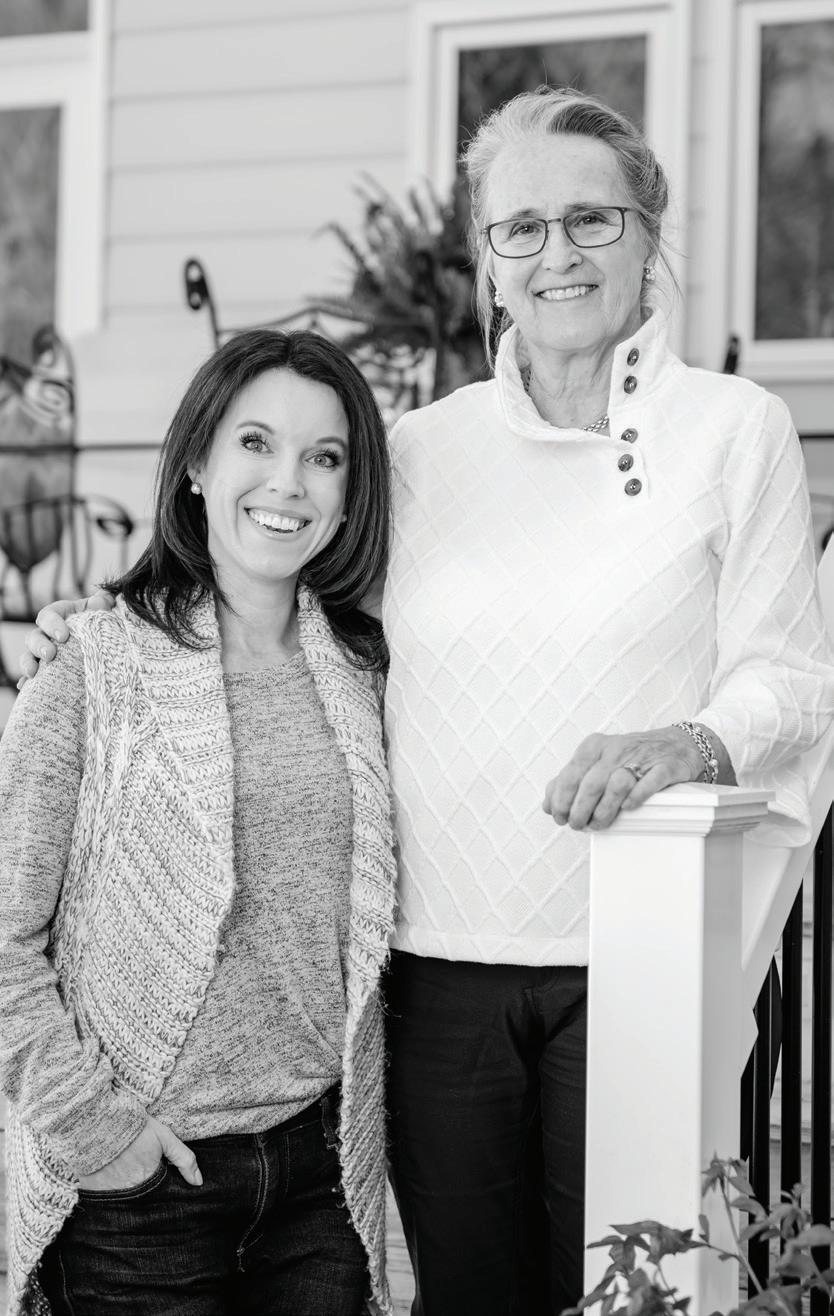 By Anna Beth Adcock
OWNER AND FOUNDER, CHAPEL HILL TOFFEE AND GRIFF’S TOFFEE
80 chapelhillmagazine.com May/June 2023
KAREN GRAVES
WOMEN OF ACHIEVEMENT
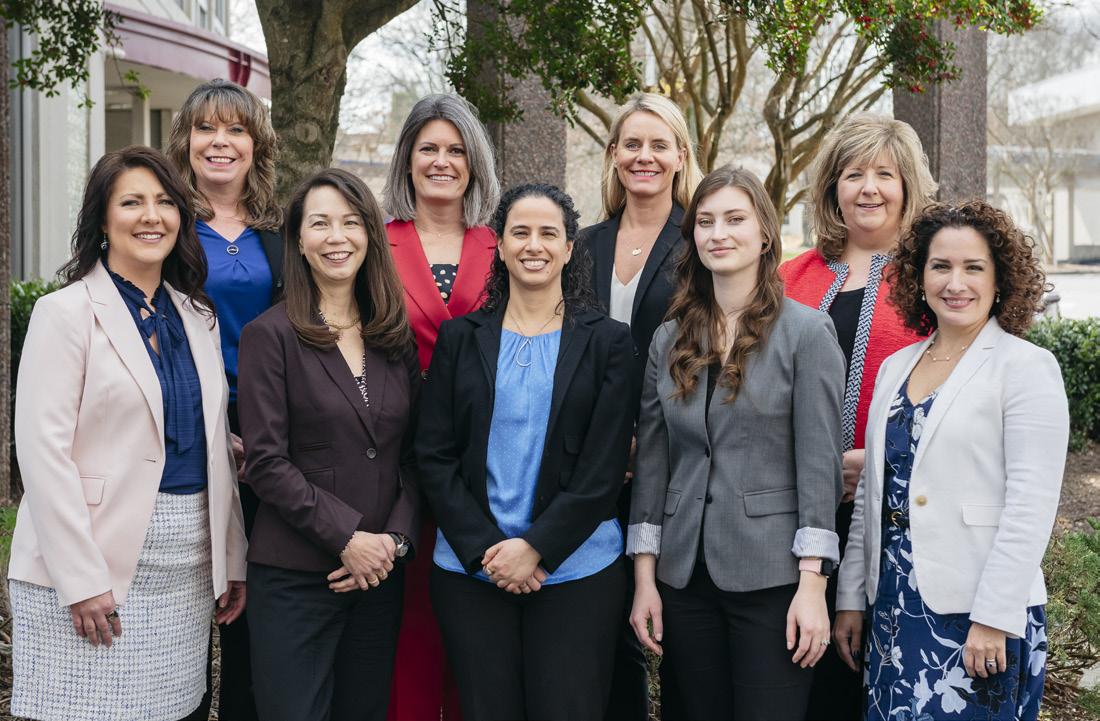


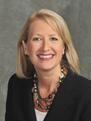
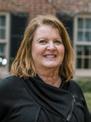

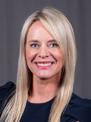


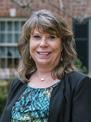
Amy L. White 1616 Evans Rd, Suite 201 Cary 919-467-3740 Kathy Brommage, CFP® 190 Chatham Downs Dr, Suite 103 Chapel Hill 919-960-6119 Cynda Beauchamp 401 Meadowlands Dr, Suite 102 Hillsborough 919-644-2296 Laura M. Clapp, CFP® 301 East Raleigh St. Siler City 919-663-1051 Mary-Charles Nassif, CFP®, ChFC® 3620 Shannon Rd, Suite 100 Durham 919-419-1761 Emily Crum 2816 Erwin Rd, Suite 109 Durham 919-382-3085 YOUR LOCAL FEMALE FINANCIAL ADVISORS OF member SIPC www.edwardjones.com
Commitment
Edward Jones, we deliver candid guidance and Personalized investment strategies to help you plan for and Realize the possibilities of your future – for you, your family and generations to follow. Sharon A. Dickens, AAMS® 50101 Governors Dr, Suite 118 Chapel Hill 919-967-9968 Julie G. Kelly, CFP®, CRPC 3100 Tower Blvd, Suite 1615 Durham 919-489-8111 Lili O. Engelhardt 180 Providence Rd, Suite 1C Chapel Hill 984-219-6635 Jessica L. Villagrana, CFP® 180 Providence Rd, Suite 1C Chapel Hill 984-219-6635 Tamra K. Ellis 1530 N Gregson St, Suite 3A Durham 919-479-8064 Chatham Orange Durham Wake
We Understand
At
of the team a few years after Christy. To boot, Mark and Christy have continued to grow the family (and the family business) via their three boys: Griff, 7, Joe, 5, and Kenan, 3.
“We worked together to grow the candy from a home-based hobby into a full-fledged business,” Christy says. Now, the company not only sells its delectable goodies in local shops such as The Carolina Inn gift shop, Victoria Park Florist, New Hope Market and Weaver Street Market, but it can be spotted in more than 800 stores throughout the country. To date, they have sold over three million boxes. But despite Chapel Hill Toffee’s success, Christy and Karen still haven’t lost sight of the care and personal touch that comes with having a small business.
“We are a true family business in every sense,” Christy says. “We do it all ourselves, from making the toffee by hand to designing the packaging. We handle every aspect of our business, from marketing, distribution, deliveries and answering every call and email.”
The secret to the mouthwatering Southern creations? Each caramelized confection is created with a layer of traditional English toffee thinly cut into snackable squares and covered on either side with a secret mix of dark chocolate and a sprinkle of pecans. In 2018, the company expanded with a coffee-flavored toffee, named after Karen’s late husband, who died in 2013.
When they aren’t cheffing up toffee to sate sweet tooths, find the Graves family out and about rooting for the Tar Heels and giving back to their community. Karen is involved with the SECU Family House while Christy is a supporter of UNC Lineberger and Dina’s Dynasty, a nonprofit she started in honor of her mother, Dina Bray, after she passed away due to ovarian cancer. And for those with a craving for community-centered craft brews, Carolina Brewery touts a stout using Chapel Hill Toffee’s flavor profile – with proceeds from the beer going directly to Dina’s Dynasty.
“The worth-it moments are many,” Karen reflects. “… I would just like to express my gratitude to the people of our community,” Christy adds. “The support that they have shown our family and their enthusiasm is the reason that we can continue to live this dream. We are continually inspired by the joy that our loyal customers share with us and from the pride we have in representing our beautiful hometown.”
LAURIE PAOLICELLI
EXECUTIVE DIRECTOR, CHAPEL HILL/ORANGE COUNTY VISITORS BUREAU
Since her childhood, Laurie Paolicelli has had a knack for storytelling. This gift has followed her across the country and, now, to Chapel Hill where she is telling the story of Orange County as executive director of the Chapel Hill/Orange County Visitors Bureau
“We were a working-class family, and I watched waitresses and hostesses make a huge difference in people’s lives. They really wanted to bring them comfort and make their day,” says the native of Duluth, Minnesota. “I was always warmed by that.” This, she says, shaped her value system and drew her toward a career in service.
Laurie received her degree in communications from the University of WisconsinSuperior before relocating to California, where she began her career at the Palm Springs/ Desert Resorts Convention and Visitors Bureau. After 10 years in marketing and management on the West Coast, she began a job at the Greater Houston Convention and Visitors Bureau, where she published resources in English, Spanish and Portuguese and learned lessons in crisis management, tourism and managing diverse audiences.
In 2005, Laurie and her then-fourth grader, Cara, settled in Chapel Hill, in a cozy home that faces the James Taylor Bridge. Around the same time, she began her career at the visitors bureau, where she’s seen the county grow tremendously since.
Laurie has been instrumental in facilitating the growth, describing a “net gain” of new restaurants, stores, clubs and more. This includes building back weekday tourism from the pandemic, as she says the industry saw a 30% decrease during the pandemic. With a staff of six, Laurie’s team has been working to maintain a sense of community in Orange County through guides, maps and Orange Slices – her newsletter that is delivered to 1,000 inboxes weekly. “We’ve grown the reputation of this area as being more than just a college town,” she says. Last March, the visitors bureau opened new digs at 308 W. Franklin St. The warehouse-like space has a 98-inch television on which it airs games and a wall of QR codes linking to local restaurant menus.
Outside of her duties at the visitors bureau, Laurie enjoys live music and local restaurants with her partner, Steven Ray Miller. The now-empty nester says she enjoys quiet time on her screened-in porch or walks along the nearby Morgan Creek Trail. She gives back through her involvement with the East Chapel Hill Rotary Club since 2018.
“I feel very fortunate to have been offered the job in 2005, to have said yes, to have raised a child here and watched her have an excellent education,” Laurie reflects. “I feel very fortunate to feel a sense of community here. It seems like no matter who you are, you can walk down the street or go to the market and know someone.”
By Caitlyn Yaede
82 chapelhillmagazine.com May/June 2023 WOMEN OF ACHIEVEMENT
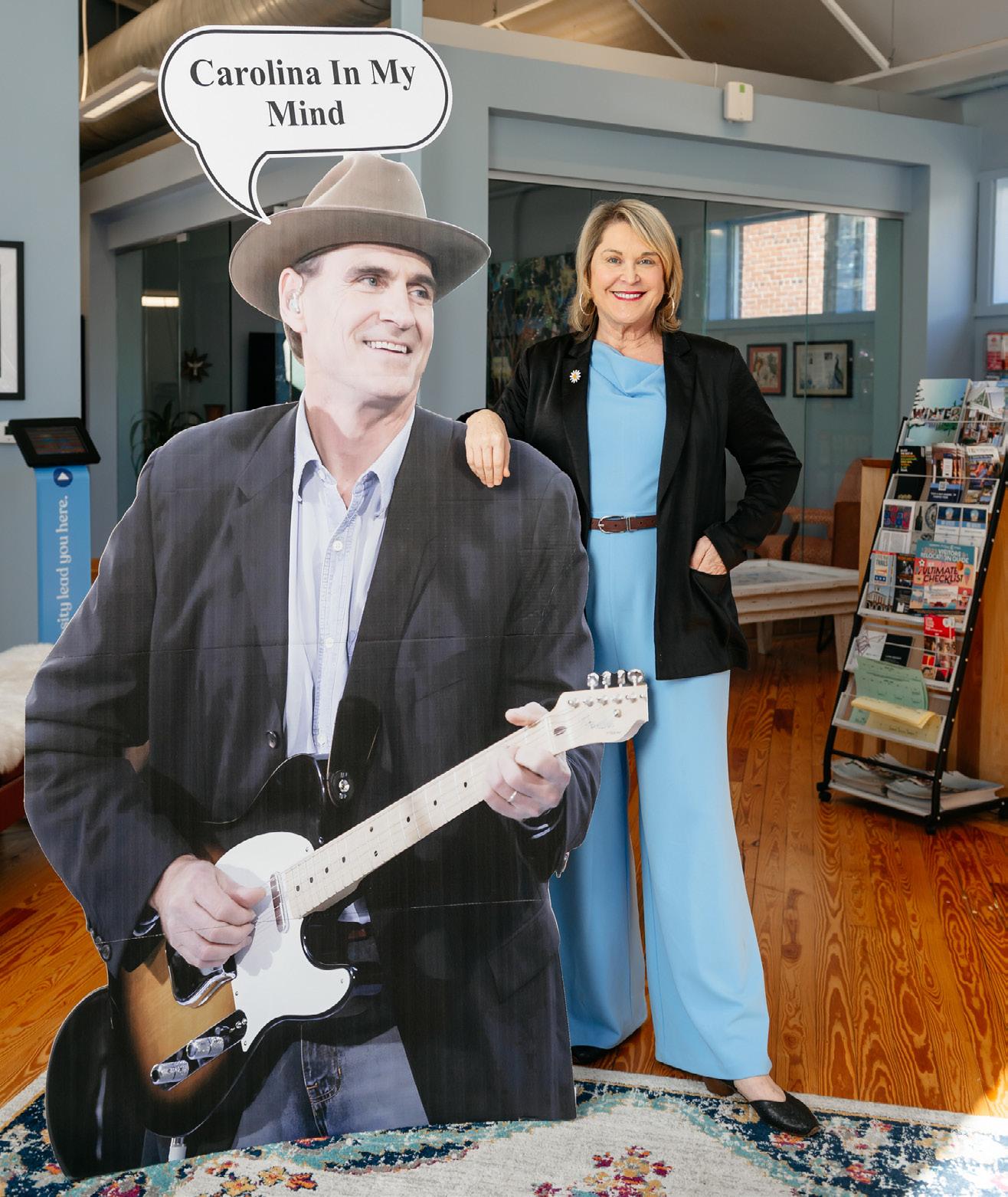
May/June 2023 chapelhillmagazine.com 83
LAURA KIELER
CHIEF MARKETING AND CONTENT OFFICER, PBS NORTH CAROLINA
Some of Laura Kieler’s earliest memories include watching “Sesame Street” and “Reading Rainbow” on PBS with her grandmother, who often cared for her as a young child. Now, as chief marketing and content officer at PBS North Carolina, Laura aims to foster learning and engagement in our state with the audience’s perspective in mind.
“I always try to start conversations with people and ask: ‘What’s your PBS North Carolina story?’” she says. “That sense of discovery, when you learn something new, is something that has stayed with me.”
A native of New Jersey, Laura spent 10 years working in marketing for cable television company HBO in New York City before meeting Curtis Kieler, who lived in North Carolina, through a mutual friend. They now reside in Hillsborough with their rescue dog, Maddie. Laura landed a role as a director of marketing for UNC Kenan-Flagler Business School before joining PBS NC in 2018.
By Elizabeth Poindexter
No matter her position, she’s taken one thing to heart: “One piece of advice was given to me by my mom – best for the moment,” she says. “For me, whenever I approach something, I am giving it my best in that moment.”
Laura applied this advice when she and her team launched a statewide rebrand initiative of PBS NC (formerly WUNCTV) in early 2021 to better share its mission. “PBS North Carolina has a single focus on telling and centering the stories of the people, places and culture of North Carolina, and we are unwavering in that commitment to centering those stories and making them available for free,” Laura says.
She says her strategy centers on authenticity and storytelling – key aspects of how a decades-old public broadcast station can stay relevant as media continues to evolve.
“Every piece of content we make has to have our brand and our mission as our compass,” she says. “I’m honored to contribute to that mission for North Carolina.”
As one of three regional digital centers of innovation for PBS – and the third-largest PBS member station in the country – PBS NC reaches more than 1 million weekly broadcast viewers through shows like “My Home, NC” and “The Key Ingredient with Sheri Castle.”
Part of Laura’s job entails overseeing content production and finding what strikes a balance between the intersection of education and entertainment, including ways to build community.
And when she’s not thinking about our state at work, Laura enjoys completing puzzles, reading and hiking in Hillsborough and nearby Eno River State Park. “Being in nature has been one of the highlights of relocating to North Carolina from New York City,” she says.
84 chapelhillmagazine.com May/June 2023 WOMEN OF ACHIEVEMENT
‘‘
I thrive when I am kind of connecting big ideas – a bold vision –with just really impeccable implementation and strategy.
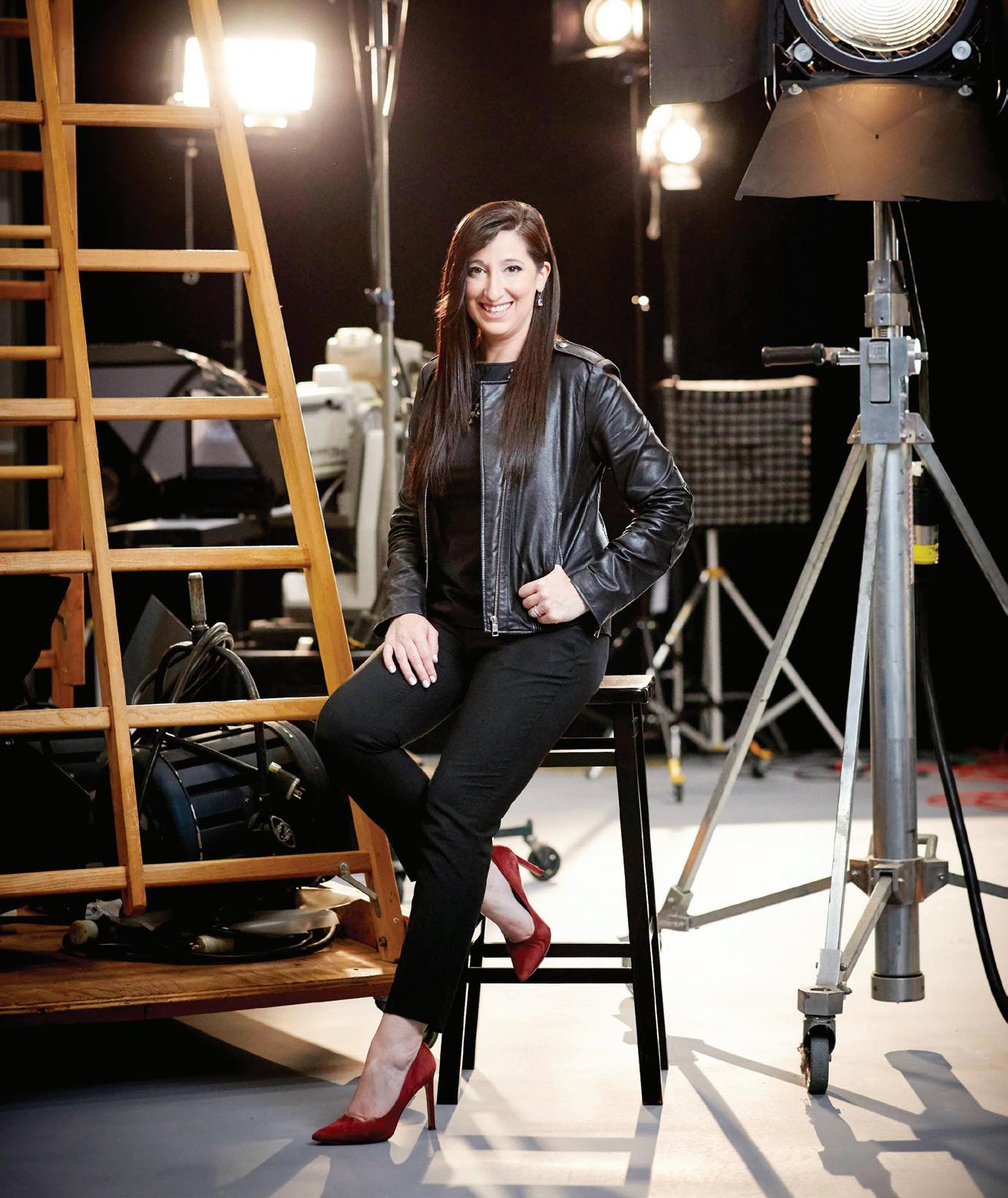
May/June 2023 chapelhillmagazine.com 85
PHOTO BY CHRIS ROGERS PHOTOGRAPHY
As a child, Anissa McLendon learned the importance of “love thy neighbor” from her grandmother, Martha McLendon. “She taught me to help people and had me doing missionary work, [taking] meals to people [who were in need],” Anissa recalls.
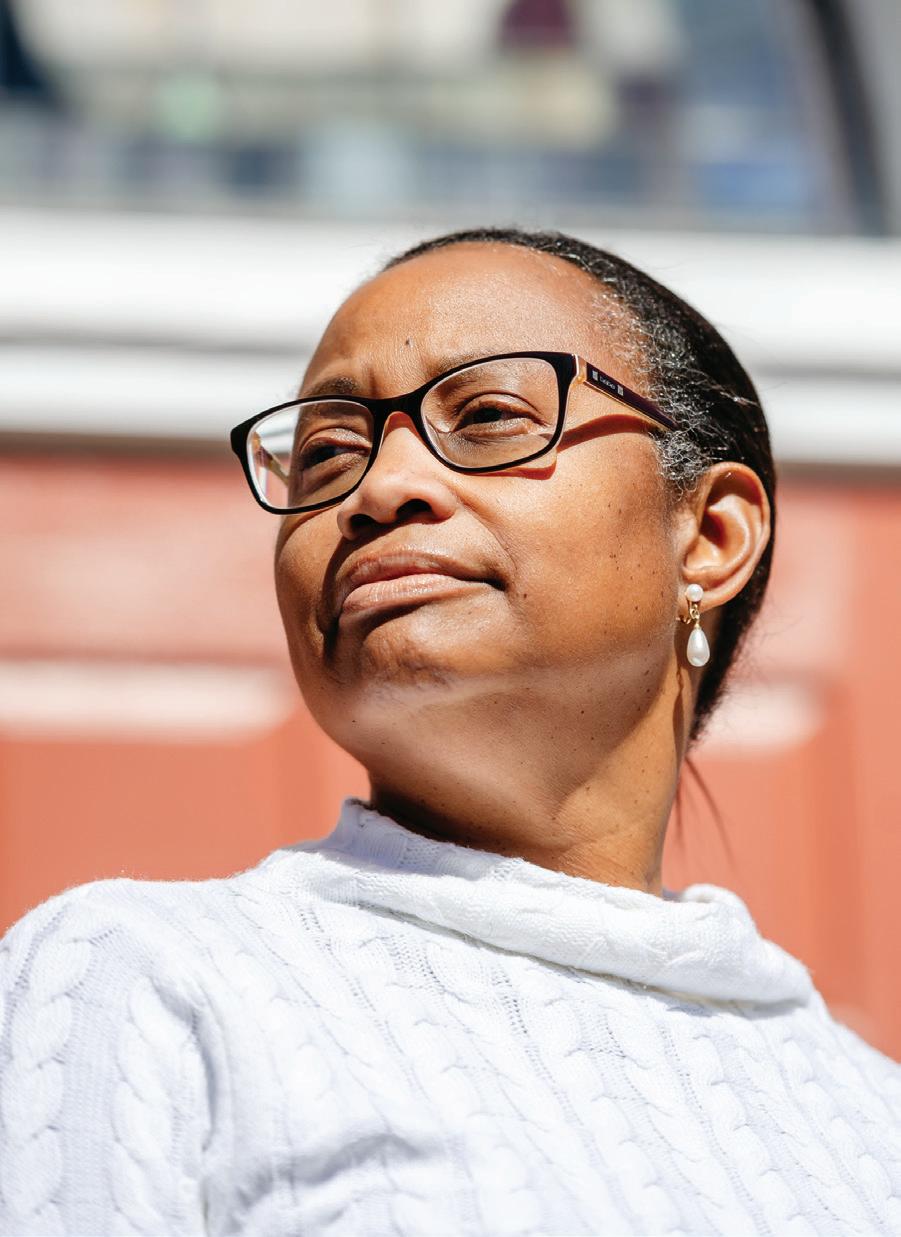
It was a lesson the Chapel Hill High School grad took to heart. Upon earning her bachelor’s degree in 1989 in physical education at UNC, Anissa spent the next decade working for Residential Services, Inc. and later for the Carrboro Recreation, Parks, & Cultural Resources department. In December 1999, with a little nudge from then-police Chief Carolyn Hutchison, and after completing an officer training program at Wake Tech, Anissa spent six years as a Carrboro
ANISSA M c LENDON
By James Dupree
DUAL LANGUAGE FIRST GRADE TEACHER ASSISTANT, GLENWOOD ELEMENTARY SCHOOL









































FOUNDER, EMPOWERING EXCELLENCE THRU EXPLORATION CAMP

86 chapelhillmagazine.com May/June 2023 WOMEN OF ACHIEVEMENT
Schedule your annual 3D mammogram at Wake Radiology











































































































































































Breast cancer impacts 1 out of every 8 women in the US. That number drops to 1 in 6 for women 40-49. Cancer diagnosis rates are similar for all women, but not mortality rates. African American women have a 40% higher death rate from breast cancer.


A screening 3D mammogram is the best tool for early breast cancer detection. Wake Radiology combines artificial intelligence with all 3D screening mammograms to obtain detailed information that helps determine a breast cancer diagnosis.
Wake Radiology has the most outpatient breast imaging offices in the Triangle and all have earned designation as a Breast Imaging Center of Excellence. Early morning & weekend appointments are available. Plus, you can request an appointment online.
































WAKE RADIOLOGY UNC REX HEALTHCARE KE Outpatient breast imaging at 12 locations across the Triangle WakeRad.com/Schedule 919-232-4700
Police Department officer. “It was wonderful because I live in Carrboro, and it was nice to patrol my own area,” she recalls. “I had great relationships with people because they knew me. It’s about working with people because sometimes they make a mistake.” Unfortunately, her career in law enforcement was cut short after a head-on collision. “If I hadn’t had that accident, I would have done 20 years with Carrboro Police,” she says.
In 2005, Anissa began working for Chapel Hill-Carrboro City Schools as a behavioral teaching assistant. “I worked with [the children] on their assignments. Or if they just needed a break, I would be there,” she says. Anissa moved within the school system for two decades, continuing to help children, eventually landing at Glenwood Elementary School as a dual language first grade teacher assistant. Anissa recognized a worrying pattern of Black students falling behind. “They were labeled exceptional children, but it was more so in a negative way,” she says. “They didn’t need to be labeled; they needed to be worked with.”
Anissa’s realization led to the creation of her nonprofit, Empowering Excellence thru Exploration Camp (E3 Camp), in 2017. The free summer program for Black middle school students exposes them to the arts and STEM fields through activities, field trips and presentations from local experts, most of them Black. “The kids may say, ‘Oh, my God, I’ve never seen a Black dentist. That’s what I want to be,’” Anissa says. In February, she took 20 E3 Camp children to the North Carolina Aquarium at Fort Fisher and Kure Beach, North Carolina. “None of them had walked on the beach before,” she says. “One of the kids saw the ocean and said they never realized that the world was so big. I was weeping on the inside because this is what it’s about.”
In fall 2021, the Chapel Hill chapter of the National Organization for Women awarded Anissa the inaugural Jan Allen Award for her work. “I thought they must have the wrong person,” Anissa laughs. “But it was empowering. I don’t do what I do for recognition. People tell me that I’m doing too much, but that’s all I know. If I see something that needs to be done, then I do it. We would all be better off if we gave 5% of our time to help others.”
If I see something that needs to be done, then I do it. We would all be better off if we gave 5% of our time to help others.
A lifelong member of St. Paul African Methodist Episcopal Church, Anissa was one of the founders of the St. Paul Village Community Walk & 5K Run, which celebrated its 11th year in March and helps fund the construction of the St. Paul Village project, a multiuse development providing amenities and resources to the Chapel Hill-Carrboro community. This year saw around 200 people participating in the 5K, with many attendees staying afterward to help. “It was one of the most moving things,” she says. “Usually, it is the committee members that stay to clean up, but we had maybe 50 people that helped out.”
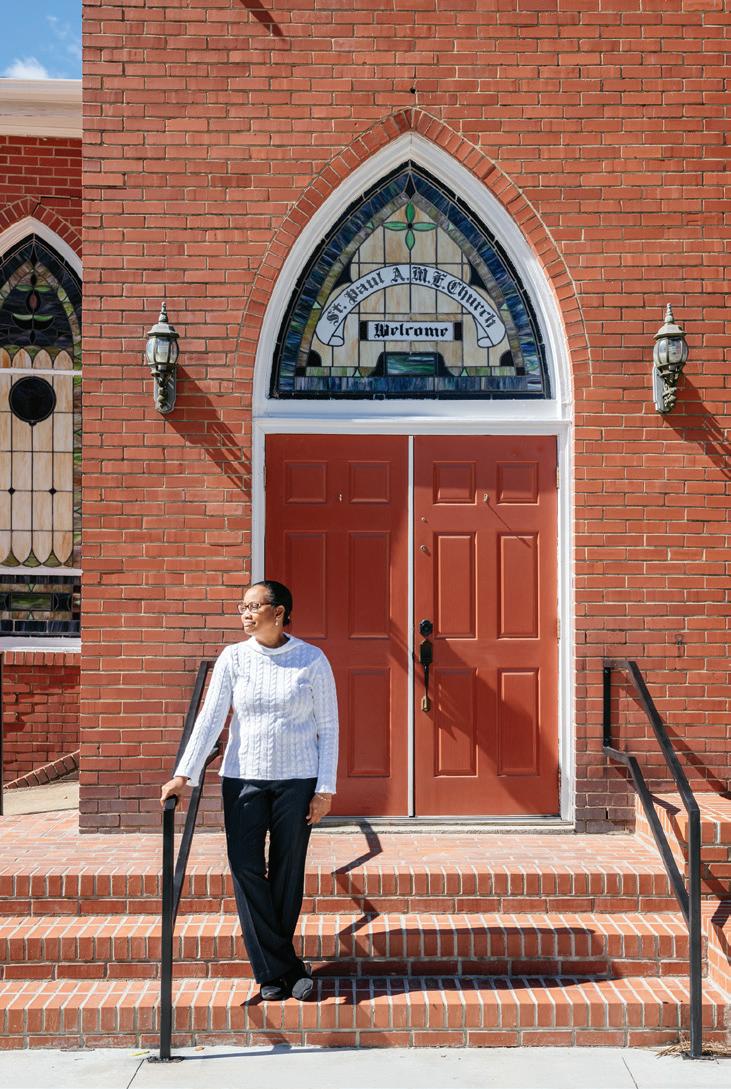
88 chapelhillmagazine.com May/June 2023 WOMEN OF ACHIEVEMENT

• Because it’s date night • You have a photoshoot • You’re getting ready for the work week • You’re going to a party • You’re getting married • Just because! 1800 E. Franklin St. Ste 6 (Eastgate Crossing), Chapel Hill, NC Look for the pink awnings on the Aldi’s side! All the reasons you should visit Blo: # b lo h earts y ou 919-903-8062 | blomedry.com | FACEBOOK instagram @blochapelhill Visit our website to book your hair and make-up appointment today!
MELODY EGGEN
ARTISTIC DIRECTOR, STUDIO A DANCEARTS
Growing up in Missouri, Melody Eggen learned to dance at the age of 12 at the insistence of her grandmother. She continued to attend ballet and jazz lessons as she got older because many sports at the time only welcomed boys. Quickly, Melody discovered that she wanted to stick to dance. “It sings to me,” she says of her lifelong love.
Interested in working with children with behavioral disorders, Melody combined this with her passion for dance and focused her undergraduate studies at the University of Missouri in Columbia on using the arts to help children with disabilities. After college, Melody attended UNC Greensboro for her graduate degree in dance because of North Carolina’s reputation for funding the arts. Then she was drawn to the unique charm of Chapel Hill.
“When I moved here, [it] was just this cool, funky old college town and had this great artsy vibe,” she says. “It just felt like home.” (These days, Melody and her husband, Steve Jenisch, and their three German shepherds, Nikita, Ripley and Reacher, call Chatham County home.)
After working at a few local studios while getting her master’s, Melody decided to open her own. She wanted a place that taught dance in a way that was good for children’s bodies and minds, that encouraged them to be creative and leave their worries at the door. Melody found this in the middle of the woods in a building with wood beam ceilings and an uneven floor, opening Dancecentre at 1714 Legion Rd. with partner Mary Norkus in 1991.
After many years of teaching ballet, hip-hop, flamenco and other genres together, Mary moved on to teaching
 By Katie MacKinnon
full time at Durham Academy, but Melody knew she wanted to stay. Attached to her magical studio in the woods, she renamed it Studio A DanceArts Focusing on creative movement, the classes for 3-year-olds to adults, are taught by Melody along with instructors Stephanie Markunas, Jessi Knight and Emlyn Soher.
Melody sums up her dance philosophy as follows: “I want all of my students to go, ‘Oh, you know, my
90 chapelhillmagazine.com May/June 2023 WOMEN OF ACHIEVEMENT
As a dance teacher, I can teach you technique, but what I really am trying to do is to help you find your voice so that you can sing your song for the world.
body’s OK, the way I move is OK,” Melody says. “It’s my voice. This is my voice.’ And yes, as a dance teacher, I can teach you technique, but what I really am trying to do is to help you find your voice so that you can sing your song for the world.”
Doubling as a costume designer, Melody allows students to help design their own attire for the yearly recitals. “If your costume makes you feel good and look good, you’re gonna dance better,’” she says.
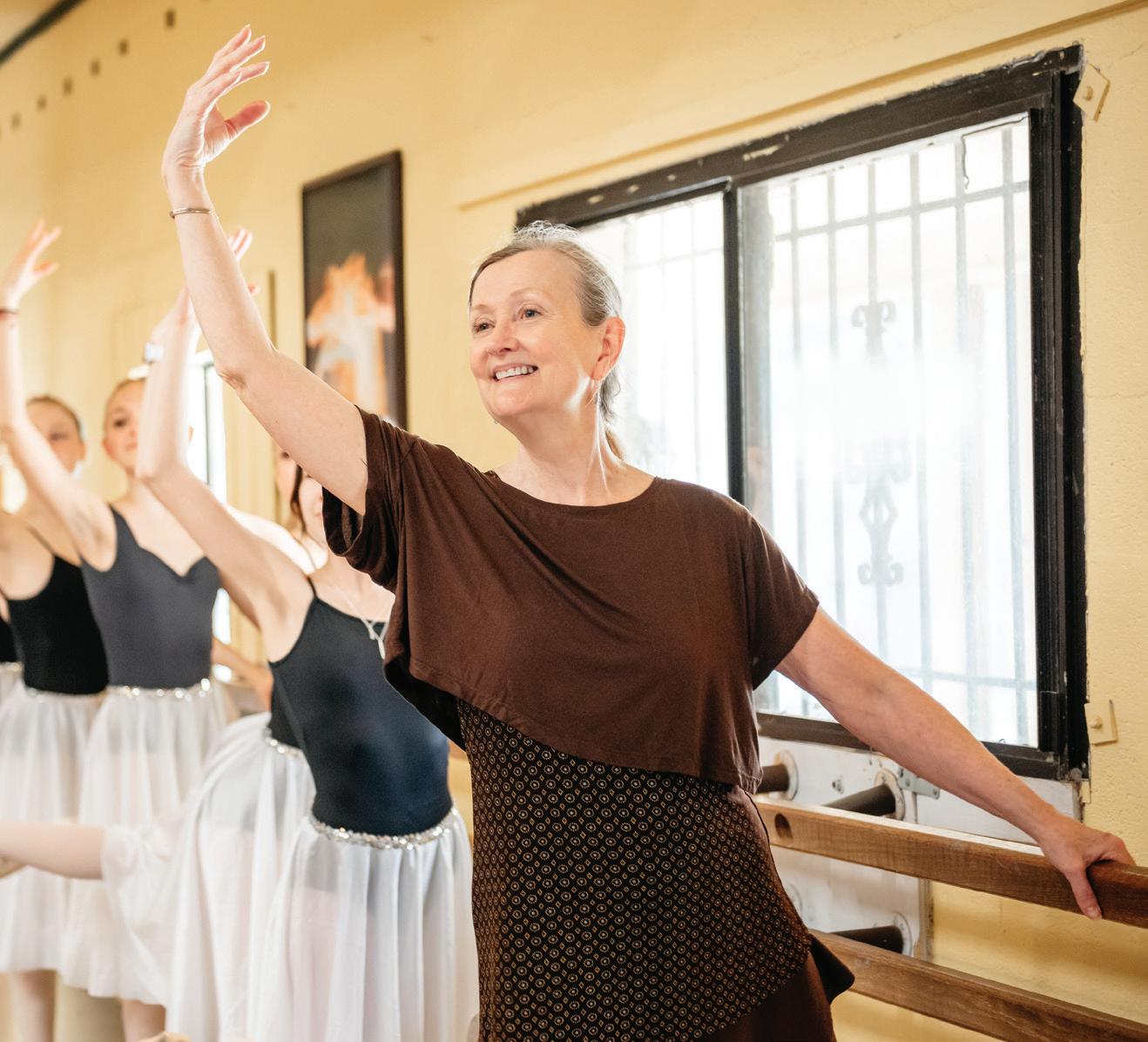
After being a part of the dance community in Chapel Hill for so long, Melody has even gotten the chance to teach some of the children of her
former students. “It means the parents felt like they got something out of it,” she says. “That it was more than just dance lessons, that it’s a good community place, and that’s what I really want.”
While Melody enjoys gardening and baking in her free time, she can’t help but continue to dance. “When you’re growing up, they always tell you if you love what you do, you’re not working,” she says. “Well, that’s not exactly true, but it is true. I dance. That’s part of my recreation, I dance for myself. And I sew, not just because it’s work, but because it’s something I love to do.”
May/June 2023 chapelhillmagazine.com 91
LAURA GELBLUM
EXECUTIVE DIRECTOR, PRESCHOOL AT THE CHAPEL OF THE CROSS
In her more than 39 years at the Preschool at the Chapel of the Cross, Laura Gelblum has touched the lives of more children – and families – than one could count.
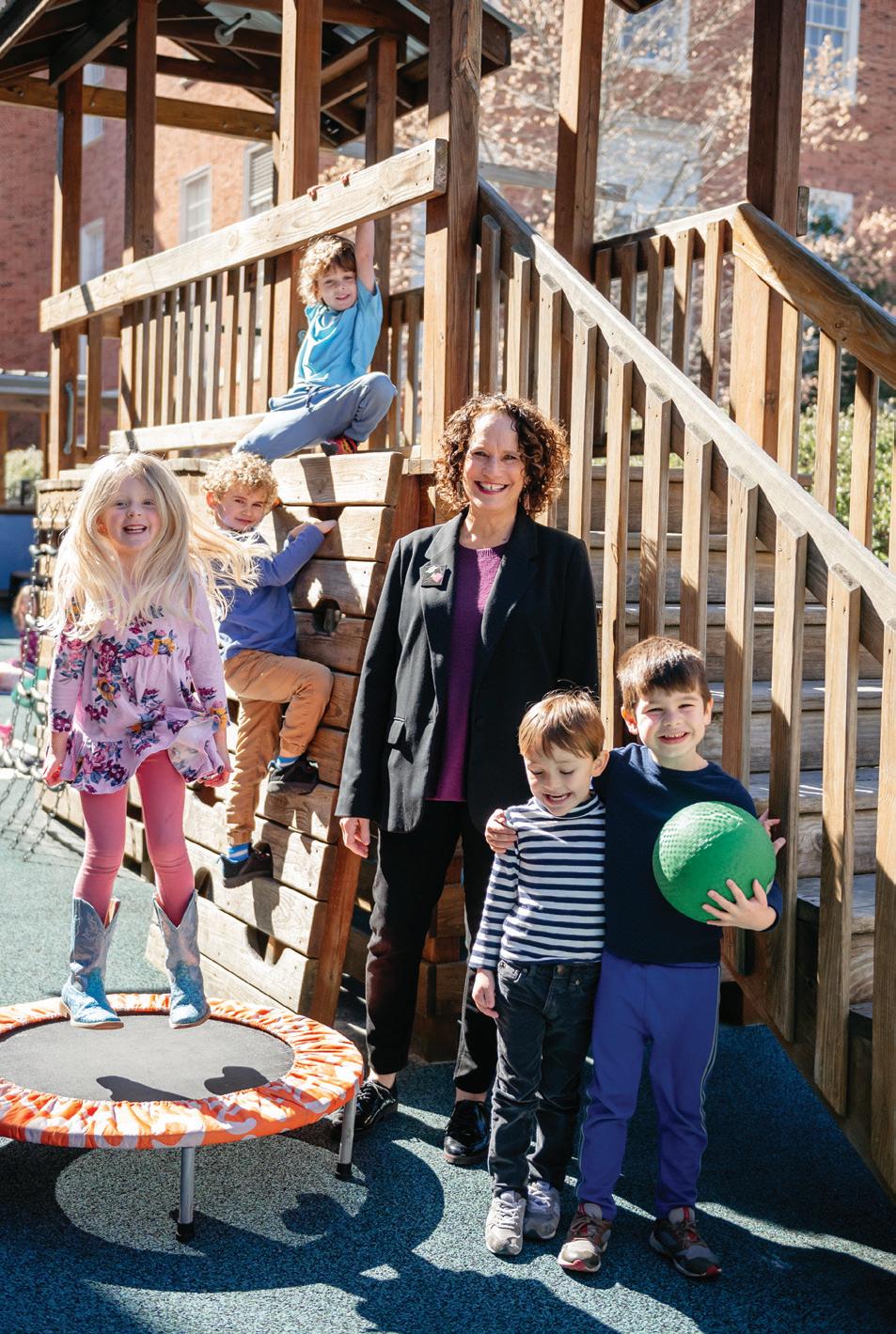
After finishing her early education degree from UNC, the Chapel Hill native began reaching out to local preschools to see if they were hiring. She started at PCC as a substitute teacher in December 1978 and joined the permanent staff within a couple of months.
“I was lucky in that I’ve really felt a calling, and I always knew I wanted to be a teacher,” Laura says. In just five years, she took on an additional role as the school’s executive director. Then in 1988,
By Brooke Spach
92 chapelhillmagazine.com May/June 2023 WOMEN OF ACHIEVEMENT
Clementine Taylor, Liam Schoor, Henry Hilkey, Laura Gelblum, Henry Colner and James Tupper enjoy time on the playground.

AWAKEN · IGNITE · TRANSFORM The Conscious Strong™ Way 919.695.7738 Consciousstrong.com CHECK OUT OUR UPCOMING WORKSHOPS & EVENTS. Are you ready to step into the best phase of your life? Start your journey to live a fulfilled life with Conscious Strong! Allow Conscious Strong to support and guide you in reclaiming your mind and body through your own breath and lens of living. Let’s start by moving together and living a pain-free life!
Laura left PCC to work in research with the university. But she eventually realized how much she missed the direct, face-to-face impact she had while working in the preschool. She returned to PCC after six years when her daughter, Sophie Pruden, could enroll in the 2-year-old class. Following that school year, Laura assumed the executive director role again and never looked back.
“One thing I really think stands out here is that the teachers and I love these children,” she says. “You can tell that the kids feel loved and cared for, and they’re happy. This is really a happy place to be. There have been many times in my life over these past 39 years that something’s going on in my private life that can be really challenging, and I walk through these doors and it just falls by the wayside.”
We want to help children learn about the world around them. We want them to learn self-help skills and to be independent and critical thinkers, to learn how to follow directions but also to question things.
Her day to day as executive director mainly consists of communicating with families and supporting PCC’s six teachers. Though her role is primarily administrative, she says interacting with the students has always been what fills her cup.
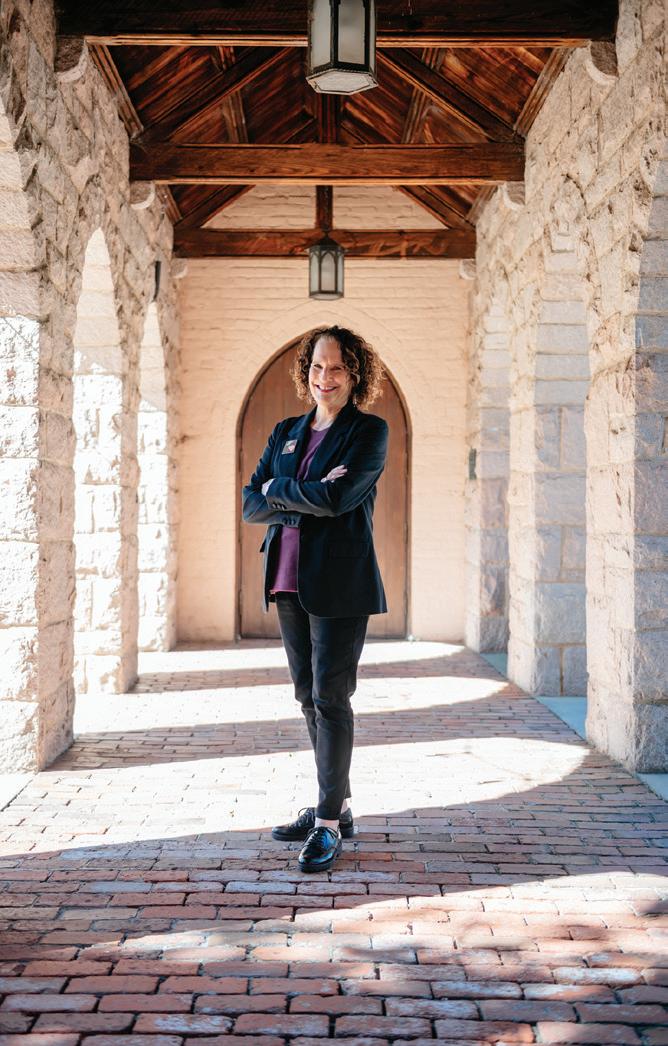
“My favorite part of my busy day is when I get the chance to visit the children in their classrooms,” she says. “I love seeing them totally engaged in whatever they’re doing, whether it be an art project, imaginary play, manipulatives or engrossed in a book in the reading center. I love watching them grow and develop as the school year progresses, especially those children who start with us as 2-year-olds and leave three years later, ready to take on kindergarten.”
At press time, Laura’s main project was working with volunteers to prepare for the school’s 50th (now 51st) anniversary celebration that’s been rescheduled three times. They plan to host current and former student families for barbecue, brews, live music and more at the April 29 event, in addition to five “decades” tables for alumni to reconnect and reminisce.
“To be in the same town, in the same preschool, for so long and watch all these families come through – we really have a tightknit community, and it’s special,” she says. “I’m retiring this year, and that’s what I’m gonna miss. I’m gonna miss these little children, and I’m going to miss these amazing relationships I’ve formed over the years.”
Laura set three goals to accomplish before she retired: get the school through the pandemic, execute the anniversary celebration and reach Medicare eligibility –unlike many other half-day preschools, PCC offers employee health insurance. After her last day in July, with all three goals in the rearview, she looks forward to spending lots of time with her newborn first grandchild and enjoying nature walks, good food, wine and, of course, cheering on UNC athletics with her three adult children, Sophie, Jack Pruden and Sam Pruden
94 chapelhillmagazine.com May/June 2023 WOMEN OF ACHIEVEMENT
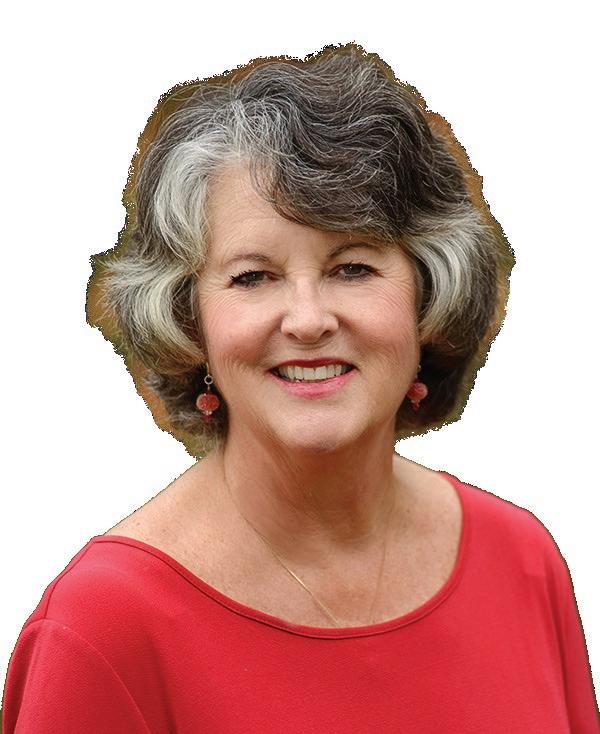
Agent 104 S Estes Dr Ste 105 Chapel Hill, NC 27514-2866 Bus: 919-240-0155 pam@pamherndon.com www.pamherndon.com Pam Herndon CLU® LUTCF® ChFC® S tate Fa r m M u tu a l Au to m ob il e I ns u r a n c e C o m pa ny, S tate Fa r m Ind e m n i t y C o m pa ny, S tate Fa r m F i r e a n d Ca s u a l t y C o m pa ny, S tate Fa r m G e n e r a l I ns u r an c e C o m pa ny, Blo o mi ng to n , I L, S tate Fa r m Co u nt y M u tu a l I ns u r a n c e C o m pa ny of Texa s , S tate Fa r m L l oyd s , R ic h a r d s o n , T X, S tate Fa r m Flor i d a I ns u r a n c e C o m pa ny, W i nte r H ave n , FL Your
agent
auto C a ll me for a qu ote
local
for home &
NORA EL-KHOURI SPENCER
FOUNDER AND CEO, HOPE RENOVATIONS
As a former recruiter for companies like Lowe’s and IBM, Nora ElKhouri Spencer has a passion for bringing women into these male-dominated spaces. She attributes her Lowe’s employee discount to helping her discover an additional passion for DIY home repair and remodeling. So when Nora left the corporate world to pursue a master’s degree at UNC’s School of Social Work – her undergraduate alma mater – she saw an opportunity to merge the two interests in a nonprofit.
Hope Renovations prepares women for careers in the construction trades with hands-on training and community-centered projects. Nora incorporated the nonprofit in 2017, the same year she finished her master’s. It officially launched in 2020.
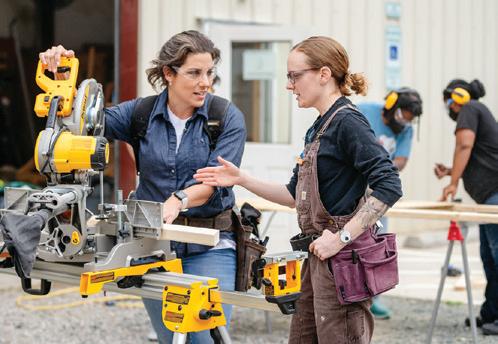
The program runs for 15 weeks, including nine weeks of handson training in the workshop and a six-week paid internship with the Hope Renovations construction crew, which is made up of women and nonbinary people. The crew works three days a week on aging-in-place projects, which provide critical repairs and renovations, such as wheelchair ramps, comfort-height toilets, lowered countertops and widened doorways, that allow older adults to stay in their homes as they age.
Nora saw the opportunity to incorporate an aging-in-place component into the model of Hope Renovations during a social entrepreneurship
By Emily Davis
course during her master’s studies. She learned how much people’s quality of life can be improved when they can age in their own home, but such jobs are a neglected niche in the construction industry.
“It really was a lightbulb moment,” Nora says. Her early idea for a nonprofit that trains women in construction took its final form during this time.
“It dawned on me that we’d need a great hands-on training opportunity for this training program,” she recalls. “[I figured] why not make it aging-in-place so that we can fill this gap and learn while they’re doing it?” Over the past two years, the crew has completed nearly 200 jobs.
The cohort participants have ranged in age from 20 to 62 and are highly diverse. “We’ve had everyone from a single mom in the rural part of the county to a Ph.D. [student] who was just looking for a new opportunity,” Nora says.
Plenty of the participants have struggled with barriers to secure employment. They may have criminal backgrounds or be in recovery. Nora says the key to their success in the program is the confidence and support that it focuses on fostering. In addition to hard skills, students receive training in networking, interviewing and intercommunication skills. So far, three-quarters of the 61 graduates have gained employment in the industry.
Since its 2020 launch, the nonprofit has received national attention and widespread support. She has received calls from all over the world, from Nevada to Ghana, seeking to replicate Hope Renovation’s model. Last year, Nora was honored as one of 10 CNN Heroes, and recently, she was awarded The National Association of Home Builders’ Woman of the Year award. Her rapid success, although gratifying, is also her biggest challenge.
“It’s all fantastic and better than I ever could have expected, but it’s really hard to manage all that as a startup,” Nora says.
When she was a recruiter, she says one of her bosses impressed upon her the importance of not only hiring for skills, but hiring for passion. This advice helped her build a lasting leadership team that has carried the nonprofit through a hectic 2 ½ years.
“I have a team of 16 incredible people who are totally passionate about what we’re doing,” she says.
With all that’s on her plate, Nora jokes that her favorite hobby is Hope Renovations. When she does find the time to relax, though, she enjoys gardening, beach vacations and exercises classes at SPENGA. As a double Tar Heel, she also loves to attend UNC sporting events with her husband, Brian Spencer.
“Chapel Hill has always had a magic for me,” Nora says. “To be able to be back here, running this dream organization and helping people, I’m a very, very lucky person.”
96 chapelhillmagazine.com May/June 2023 WOMEN OF ACHIEVEMENT
Nora chats with trainee Bri Kaplan while the crew practices woodworking. As part of their training, the cohort builds dog houses to hone their construction skills.
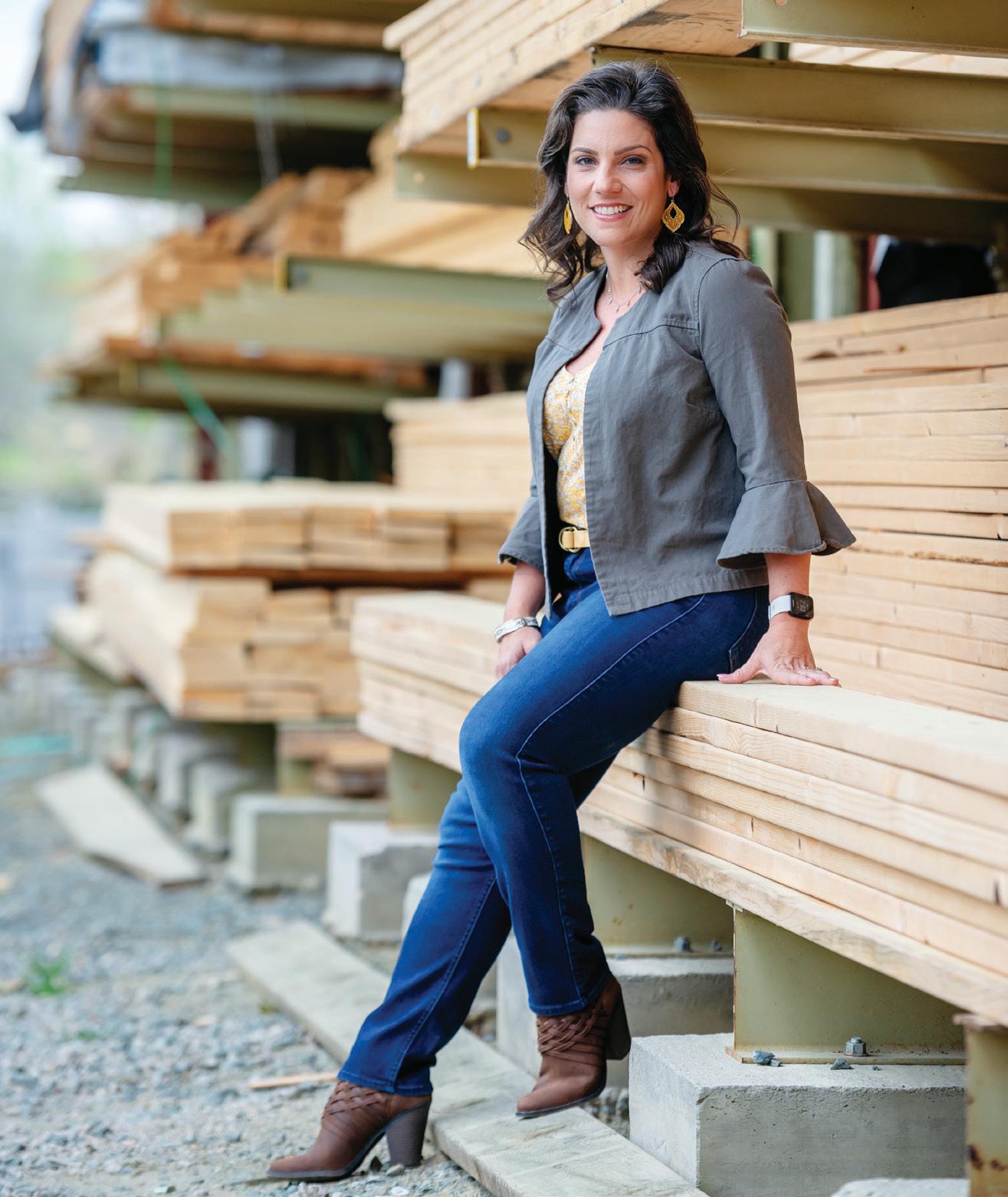
May/June 2023 chapelhillmagazine.com 97
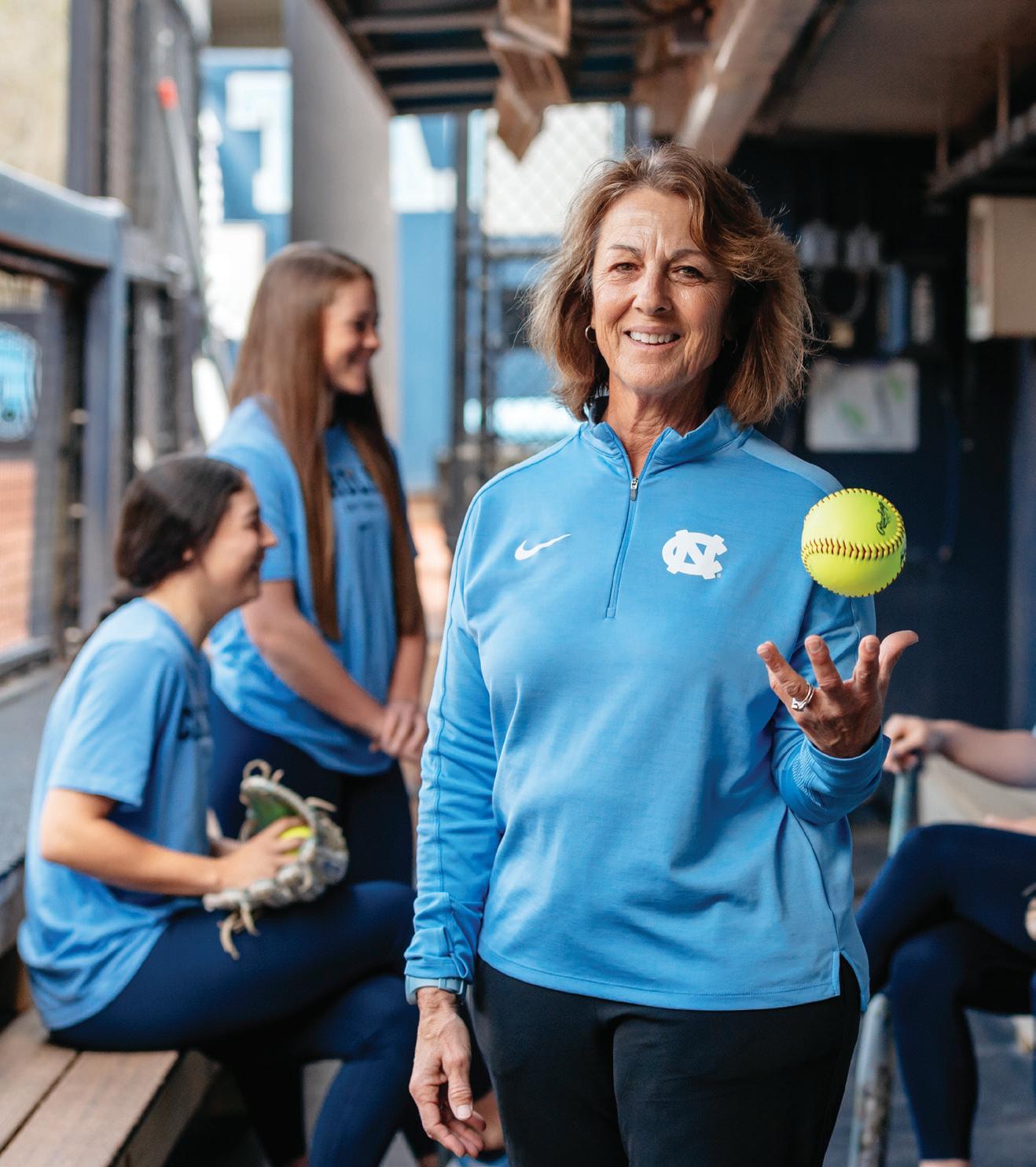
98 chapelhillmagazine.com May/June 2023
DONNA PAPA
HEAD COACH, UNC SOFTBALL
When UNC softball players walk into Anderson Softball Stadium, they must leave their phones on a rack. Players also meet individually with the coaching staff for lunch each month.
Head coach Donna Papa implements policies like these to help foster connections among the team.
“It’s building that trust,” she says. “I think the more you can build those relationships and put them on a solid foundation, the more that experience is going to help lead you to success on the field.”
Donna’s success on the field is undeniable. Over her 36-yearlong (and counting!) career at UNC, her teams have earned five ACC regular-season titles and made 14 NCAA Tournament appearances. She boasts a 1,290-749-5 record.
The self-described “passionate competitor” played the sport herself for four years at the University of Connecticut, serving as co-captain for two years. Then in graduate school at UNC Greensboro, Donna was an assistant coach for its softball team.

During a coaching stint at Susquehanna University, Donna’s former player notified her of the head coach opening at UNC. She didn’t think twice about applying. The opportunity to coach at a place that “constantly is pushing you to come out of your comfort zone and work to be excellent” was irresistible to the warm-natured Connecticut native.
And after a few decades at the helm, Donna still cares about winning, but she also defines the program’s success by the lives she can shape.
“It is about softball,” she says. “But when you look at the core of it, it’s really about the people in your program and the girls in your program and helping them with their life skills.”
South Carolina coach Beverly Smith, a former player of Donna’s and her longtime assistant, recently won her 400th
By Cooper Metts
May/June 2023 chapelhillmagazine.com 99 WOMEN OF ACHIEVEMENT
career game as a head coach in a game against the Tar Heels. Beverly knew the loss would upset Donna as a competitor, but “[Donna] certainly was able to articulate to me how proud she was,” Beverly says.
As a coach, Donna tries to take the pressure off players, who balance full course loads with practice and nearly 60 regular season games, by giving them smaller, more manageable tasks to work toward their bigger goals.
“We try to keep it really small,” she says. “As a hitter, I don’t have to do anything so big. It’s not like I have to get up there and hit a home run. My job is to get on base.”
Donna also purposefully sets time aside for the team to have fun and take a breather

from the day-to-day grind. Team trips to Dave & Buster’s and pickleball games provide a much needed physical and mental break. Beverly fondly remembers spontaneous water-balloon fights started by Donna during practice from her time as a player at UNC.
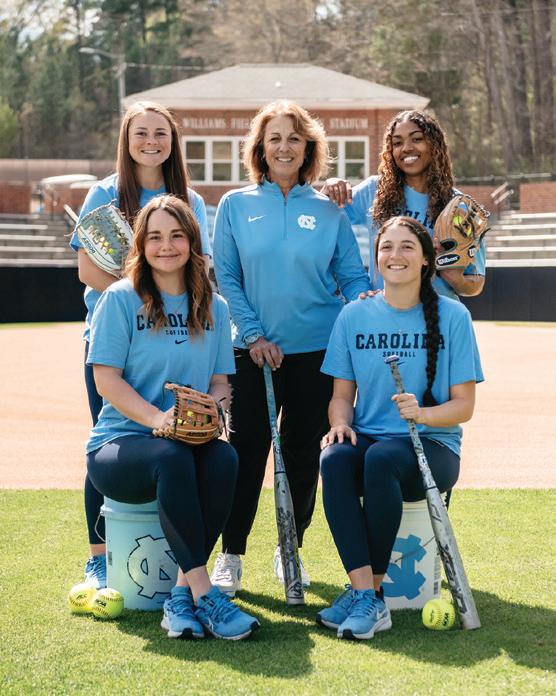
Similarly to Donna’s phone policy, the diversions are about winning games, but they’re also just as much about building relationships that prepare players for life after Chapel Hill.
“When your college career is over, you’re going to remember more of the experience with those people,” she says. “Some of their teammates wind up being their best friends, and those kinds of things go for a lifetime.” CHM
100 chapelhillmagazine.com May/June 2023 WOMEN OF ACHIEVEMENT
BACK ROW Abby Settlemyre, Donna Papa and Destiny Middleton. FRONT ROW Lexi Godwin and Bri Stubbs.


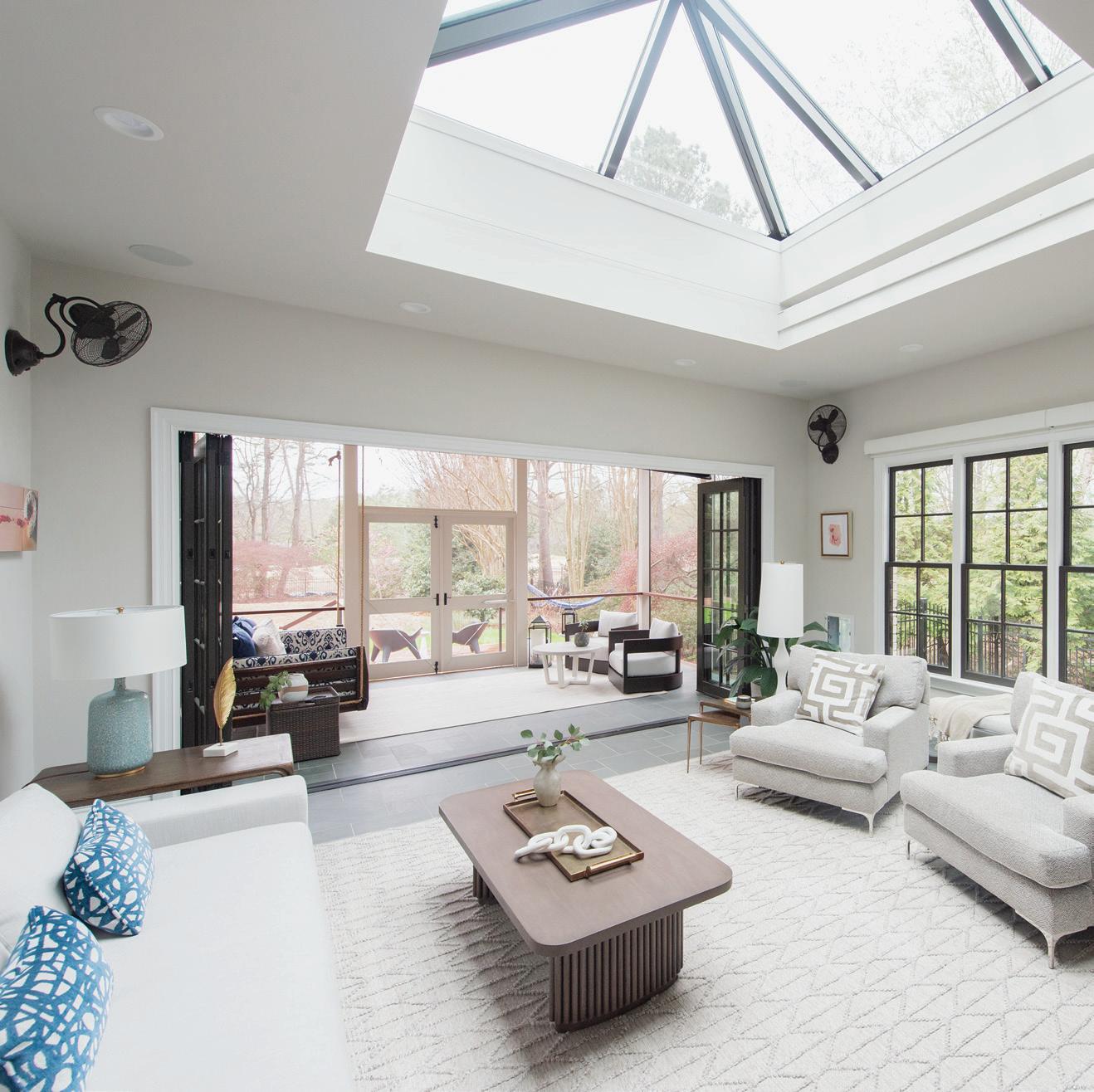
104 chapelhillmagazine.com May/June 2023
The lantern-roofed sunroom was inspired by Annie's love for British architecture. The renovation included an expansion of the home's interior – this area was previously an outdoor porch.
By Morgan Cartier Weston
Annie Klapper and Jacob Klapper moved into their Meadowmont home in October 2016 and soon began planning to create more entertaining space for their family and friends. With three sons (Ash, 16, Taite,

May/June 2023 chapelhillmagazine.com 105
Meadowmont
A thoughtful renovation makes a
gem sparkle
HOME & GARDEN
Photography by John Michael Simpson
shine bright
Liz’s expertise in design didn’t just bring our ideas to life – she made them even better than we expected.
LEFT
13, and Rory, 8), two Bernedoodles (Uncle Jerry and Cousin Cliff) and plenty of family nearby (including Annie’s mom and Jacob’s dad), the Klappers wanted to configure the space to accommodate large gatherings.
“The house had two decks in the back, and we knew we wanted to take those over and bring them inside and give the front of the house an uplift,” Annie explains. “There was a large, Palladian window facing the backyard, and while it felt very grand, it also felt like an abrupt stop to the flow of the house, so we needed a creative solution there, too.”
The pandemic slowed their plans but gave the Klappers a new appreciation for their neighbors and neighborhood. “We love living in an area with so many people from so many different places,” Annie says. “It makes meeting people and making friends so easy.” This was especially true during the quarantine months of 2020. “We fell
106 chapelhillmagazine.com May/June 2023
ABOVE The existing breakfast nook provides panoramic views of the yard and sunken sunroom thanks to a custom articulating window.
Annie relaxes in the "grown-up" lounge she and Jacob created for themselves to read and work in.
– Annie Klapper
Remodeling at its Finest − Craftmanship, Value and Trust
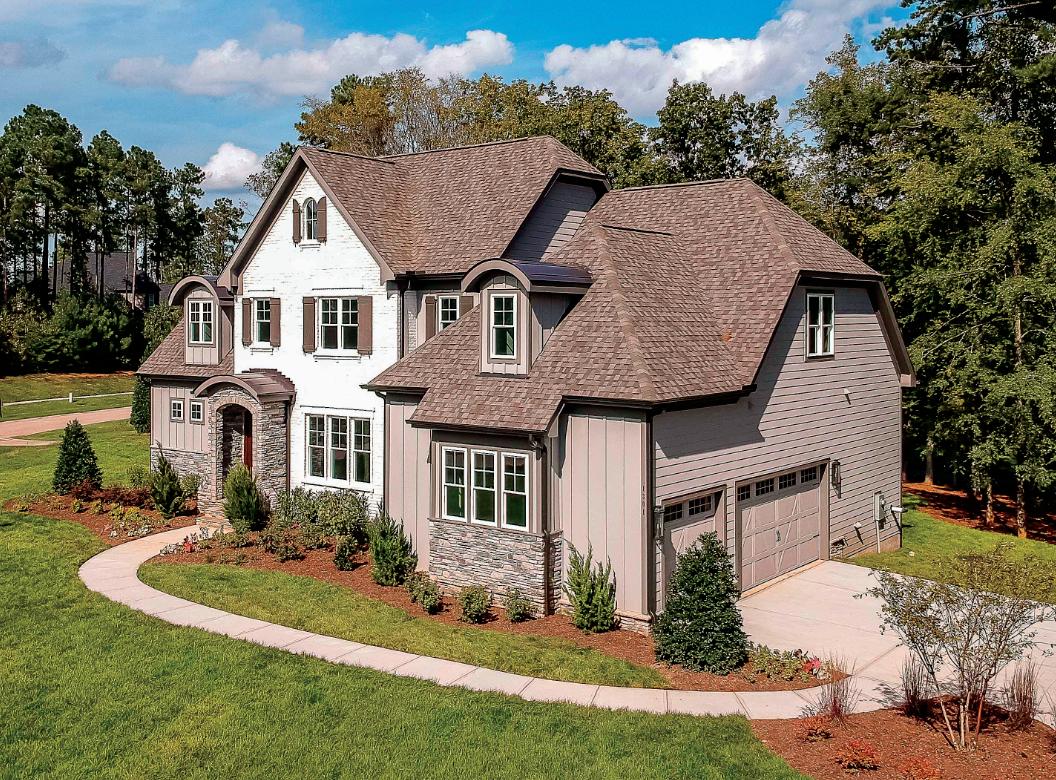
Housing Solutions, Inc. is your award-winning Durham, Orange, and Chatham County partner for quality design and craftsmanship. Recently awarded first place for best kitchen and first place for best bath renovations by Durham, Orange and Chatham County Home Builders Association, Housing Solutions specializes in custom whole-house and kitchen and bath renovations, as well as room additions, screened-in porch and deck additions or expansions.
Ryan Holden, Housing Solutions owner named: 2023 TOP FORTY UNDER 40
INDUSTRY PROFESSIONAL by ProRemodeler Magazine
• Kitchen and Bath Renovation, Room Additions, Screened-in Porches and Decking

• Authorized Dealer for Wellborn, Waypoint, Diamond, Green Forest, Kountry Kraft Cabinetry plus Hardwoords and Luxury Vinyl Plank, Luxury Vinyl Tile, Carpeting and More.

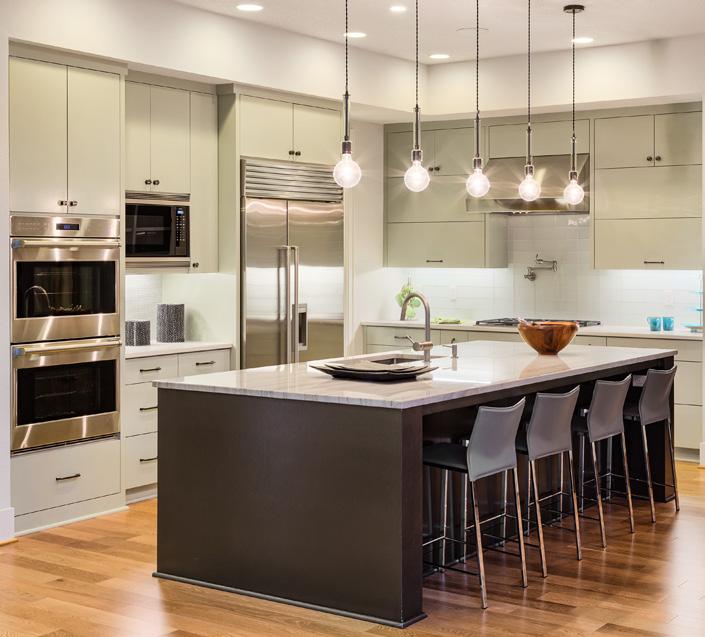
• In-house Design Utilizing CAD Software
• In-house Trade Teams
• 5.0««««« Google-Rated Home Renovation
Office and Showroom: 230A ORANGE GROVE ST. HILLSBOROUGH, NC
SANDERWAY | CARRBORO Walking distance to McDougle schools TRITON WALK | CHAPEL HILL-CHATHAM COUNTY 2-3 acre lots with stream & hardwoods ARDEN LEA AT ST. MARY'S | HILLSBOROUGH 10 acre wooded estate lots BUILD ON YOUR LOT Anywhere in the Triangle 919.374.1144 JFullerhomes.com @JFullerhomes
LEFT The home's entry mixes modern patterns with a traditional blue and white color scheme.
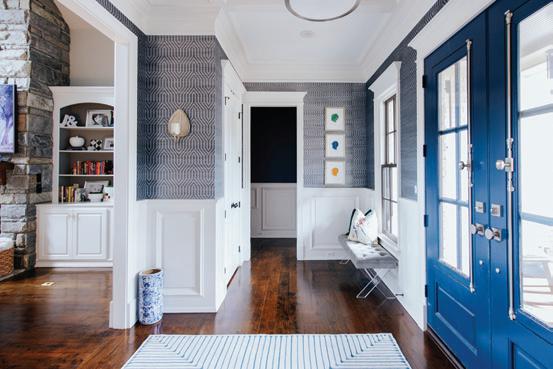
RIGHT The screened porch features heaters and fans to help the family enjoy it as seasonal temperatures fluctuate.
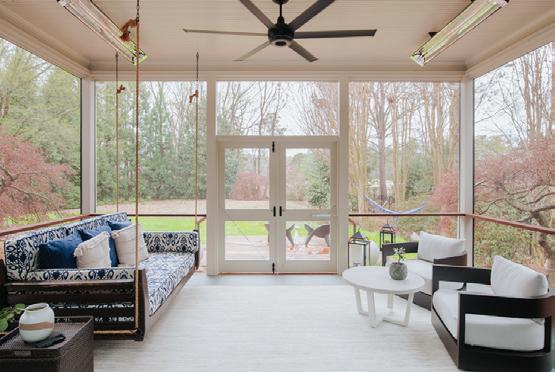
BELOW Upstairs, the boys have a dedicated playroom to relax in.
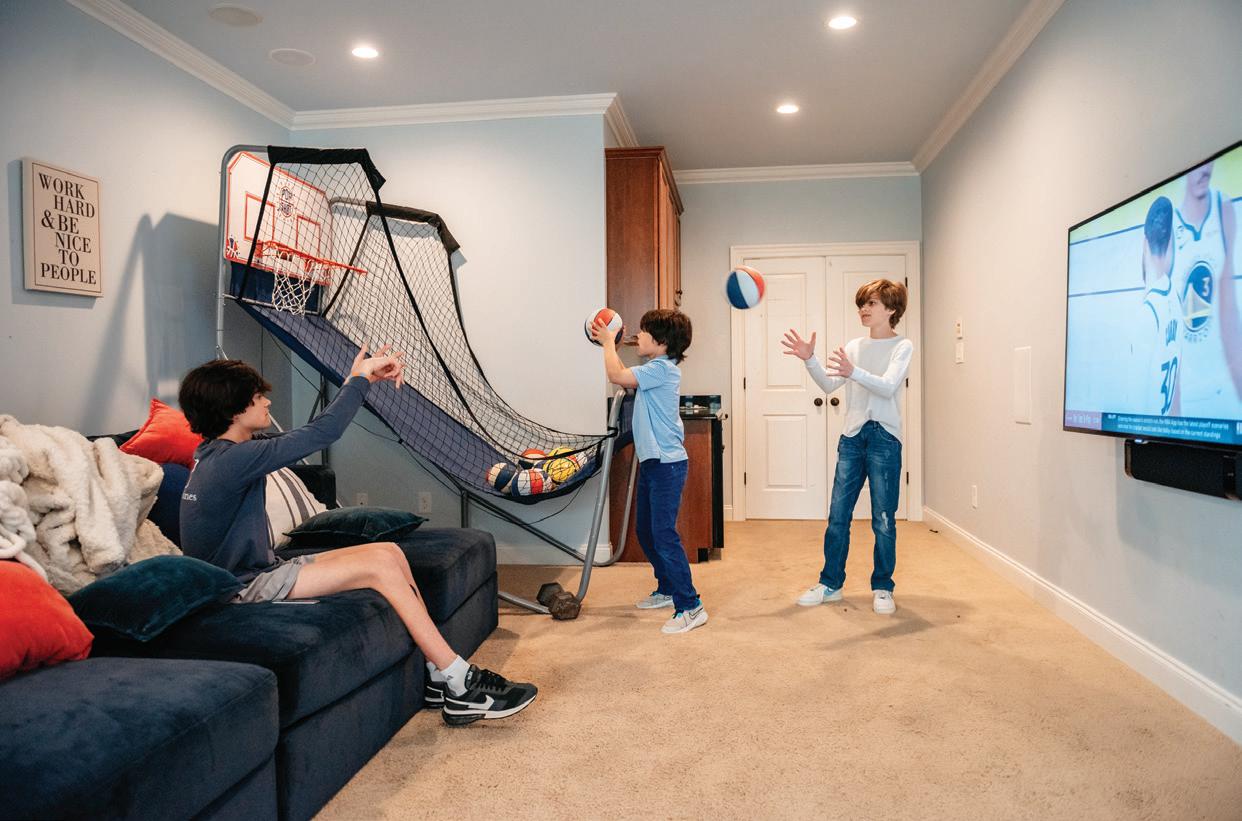
108 chapelhillmagazine.com May/June 2023 HOME & GARDEN
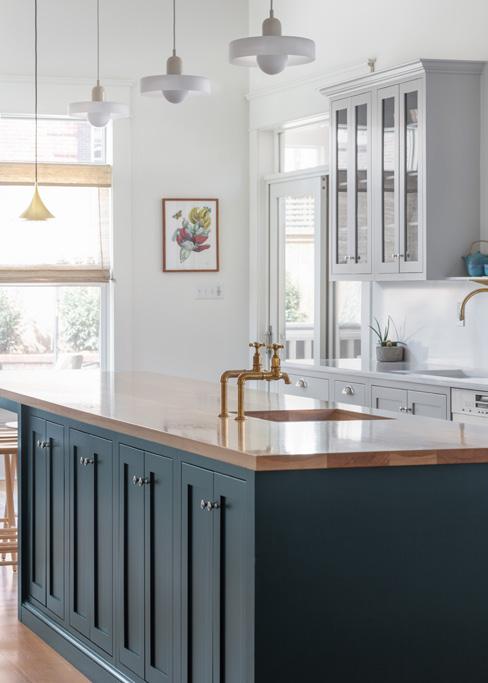

May/June 2023 chapelhillmagazine.com 109 Style. Craftsmanship. Detail. calumetcabinetry.com BRUCE’S CARPETS & FLOORING MON-FRI 8 AM–5 PM • SAT 8 AM–12 PM • CLOSED SUNDAY 11455 US HWY 15-501 N, CHAPEL HILL • 919.967.0208 brucescarpets.com Newly Renovated Floors at the Lantern
Gleaming countertops and translucent light fixtures allow natural light to bounce around the kitchen, adding to the home's bright and open feel.
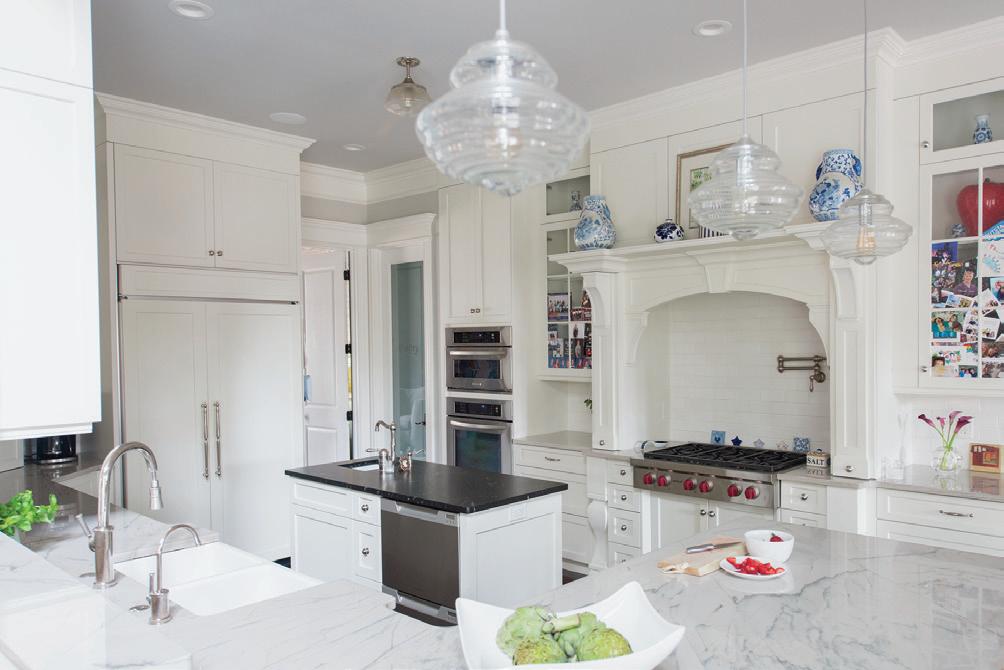
even more in love with [Meadowmont] during that time because everybody was out taking walks, sitting on their porches and driveways to gather from a distance, trying to make the best of a rough situation.”
The couple first met with designer Liz Scisco of True Design in early 2021. “We came to Liz with a lot of pictures of things we liked, and Jacob has always wanted a sunken living room, so we just sort of gave her those broad
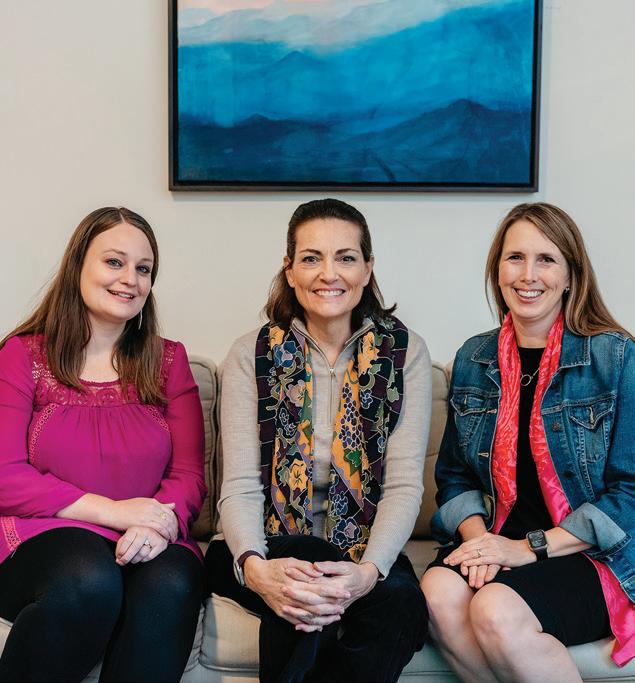
110 chapelhillmagazine.com May/June 2023 HOME & GARDEN
Live the dream, let us help you 919 201 9734 • silvestriproperties.com thewestendhillsborough.com Longevity is no accident For 25 years, we have lived in the area and love what we do.
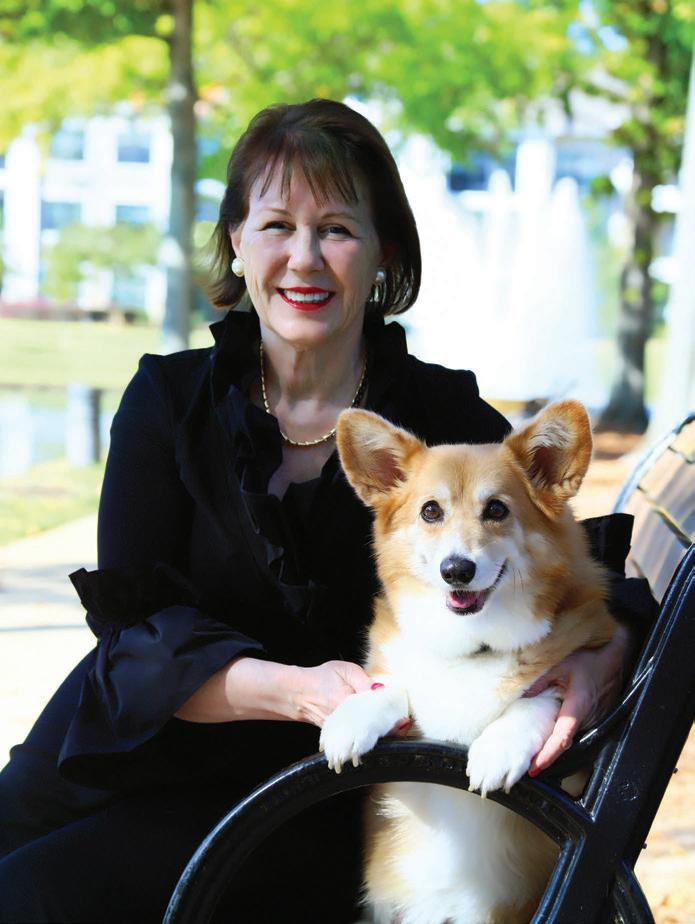

Gretchen Castorina is a licensed real estate agent affiliated with Compass, a licensed real estate broker and abides by Equal Housing Opportunity laws. All material presented herein is intended for informational purposes only. Information is compiled from sources deemed reliable but is subject to errors, omissions, changes in price, condition, sale, or withdrawal without notice. This is not intended to solicit property already listed. Photos may be virtually staged or digitally enhanced and may not reflect actual property conditions. | 101 Glen Lennox Dr, Suite 300 Chapel Hill, NC 27517 (919) 999-8482 10398 Holt | Governors Club 5 Bed | 6 Bath | 2 Half-Bath | 8,900 Sq Ft Stunning pool, privacy and open floor plan 10424 Stone | Governors Club 4 Bed | 4 Bath | 3,900 Sq Ft Light-filled home with first level owner’s suite 117 Campbell Lane | Chapel Hill 5 Bed | 6.5 Bath | 6,255 Sq Ft Sold for $2M in 8 days Exceptional Homes, Discerning Clients. GRETCHEN CASTORINA 919.951.5566 gretchen.castorina@compass.com compass.com Scan to watch my new video!
ideas,” Annie says. For example, Annie, a fan of British architecture and television shows, envisioned a sunroom with a lantern roof. “Liz’s expertise in design didn’t just bring our ideas to life – she made them even better than we expected.”
The first impacts of the renovation are perceptible from the street. The home’s facade, once a dated salmon brick, was transformed with a creamy, modern white paint and bronze-framed windows. The front porch columns were also moved to make the entry feel more open and welcoming.
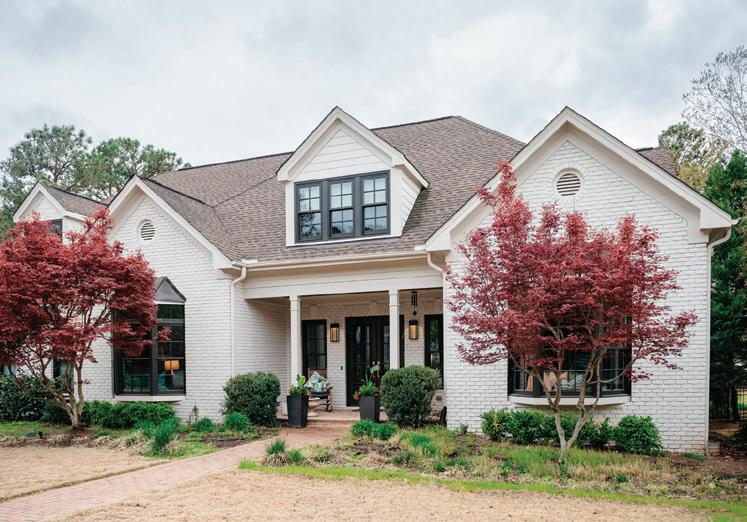
Inside, the two unused decks in back were incorporated inside – one as a sunroom, and
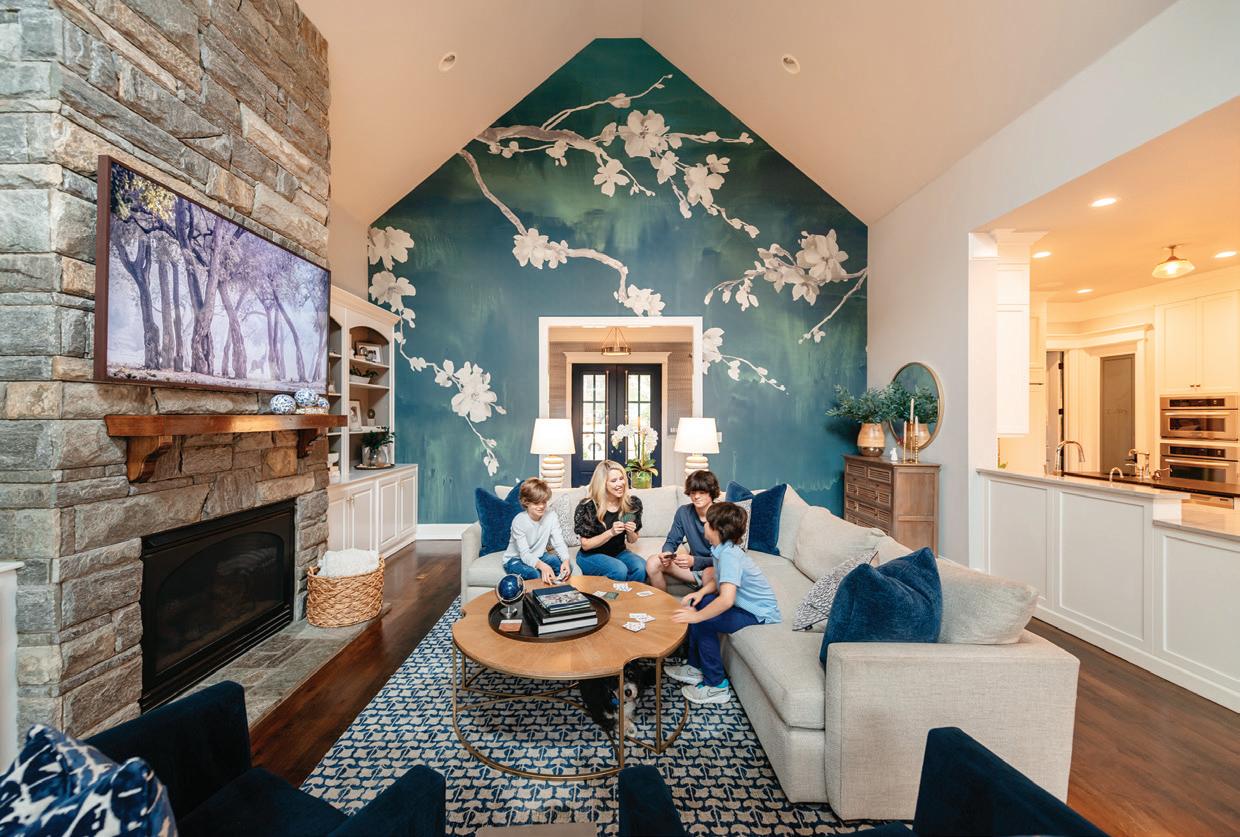
112 chapelhillmagazine.com May/June 2023 HOME & GARDEN
ABOVE Annie fell in love with this largescale wallpaper, and the two-story sitting room was the perfect backdrop.
LEFT The home's facade was refreshed with new paint, windows and front porch columns.
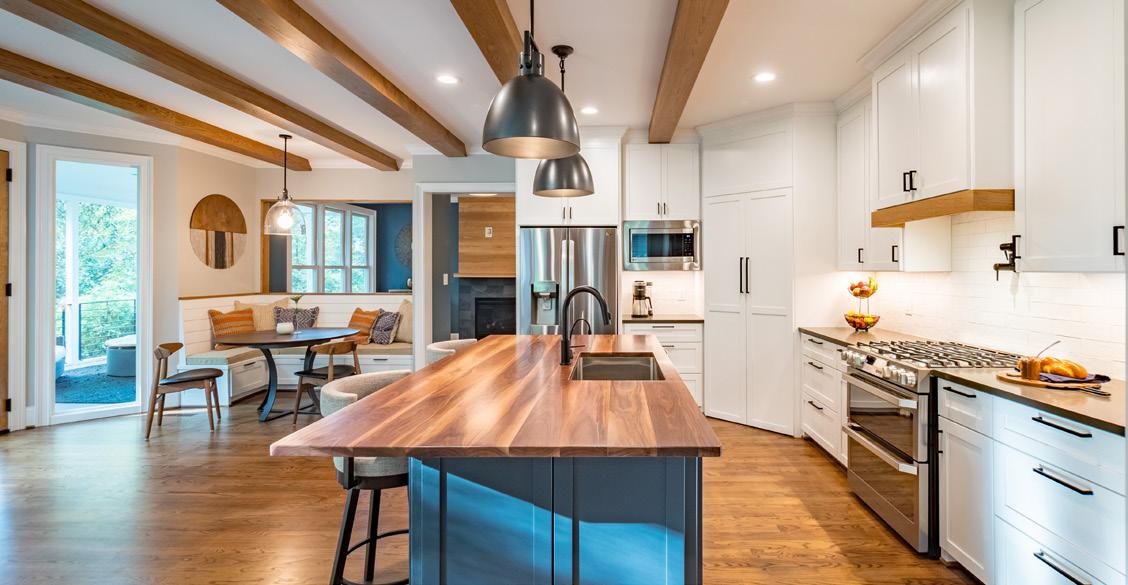

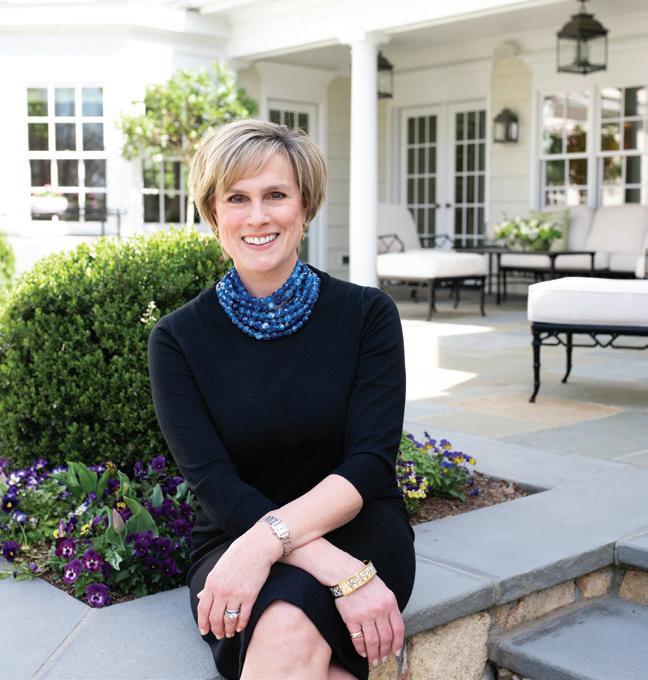
May/June 2023 chapelhillmagazine.com 113 TRUE TO YOU • TRUE TO YOUR HOME 919.627.7157 • TrueDesignNC.com Renovation Design Specialist Durham | Chapel Hill | Surrounding Areas 2022 SHANNON KENNEDY Broker 919.448.6664 shannon.kennedy@sothebysrealty.com Service as elevated as your standards.
Meet Tracey Anthony and Jennifer Salemson, two of the amazing women behind CIMG Residential Mortgage. Tracey and Jennifer were two of the founding members when CIMG was born 26 years ago and they’ve been instrumental in its growth and success ever since. As VP of Operations and President, respectively, they’ve deftly juggled the demands of career and family along the way. We met up with them at Chapel Hill’s 411 West, where they worked together almost 30 years ago while attending UNC. Cheers to Tracey, Jennifer and the dozens of other strong women at the heart of CIMG.


For more info, visit CIMGINC.COM or call 919.929.6116
the other, a screened porch. “They are each sunken from the rest of the first floor by three steps, and there is a bi-fold door between the two that we can open and create more entertaining space,” Annie says. “The new sunroom gives them the opportunity to gather in what feels like a completely outdoor space,” Liz adds.
To further maximize the effect of the lantern roof, a custom window by Leo Gaev Metalworks was added to the adjacent breakfast nook wall. The result is a subtle separation from the sunroom without sacrificing light or visibility.
“I feel like the biggest surprise, now that the project is finished, is how much light we have added to the existing spaces,” Liz says. “It really feels like a different house.”

New furnishings, decor and wall treatments in the existing rooms helped the family reimagine how they use each room, too. “We redecorated the front room, which was originally the dining room, and made it into an adult study,” Annie says. “With the pandemic and three boys, it was important to have multiple study areas, so our original office became the kids’ study spot, and Jacob and I got our own space. We love relaxing there.”
114 chapelhillmagazine.com May/June 2023 HOME & GARDEN
Natural materials throughout the home accentuate the family's love for the outdoors.


“I feel like the most exciting part of this (and every) renovation is the homeowners’ enjoyment of the new space,” Liz says. “I know that Annie loves to host, and the new layout really creates a nice open feel that can expand as needed for different sizes of gatherings.”
Liz says the key to any successful renovation is finding a team that you trust and who listens to your wants and needs. “That applies to both the design team and the contractor,” Liz says. “Having confidence and trust in your project team will make the whole experience less stressful, and the end product will be beautiful and functional.” For the Klapper home, AJ Shirely’s team at Anthony & Company served as the contractor and builder, and Rob Perry of Walltech installed the showstopping wallcoverings.
“We feel lucky to have been able to do this with our home so we can welcome more people into it,” Annie says. When they’re not hosting a party, the Klapper family enjoys playing games, biking, traveling and taking walks with their dogs in Meadowmont. CHM
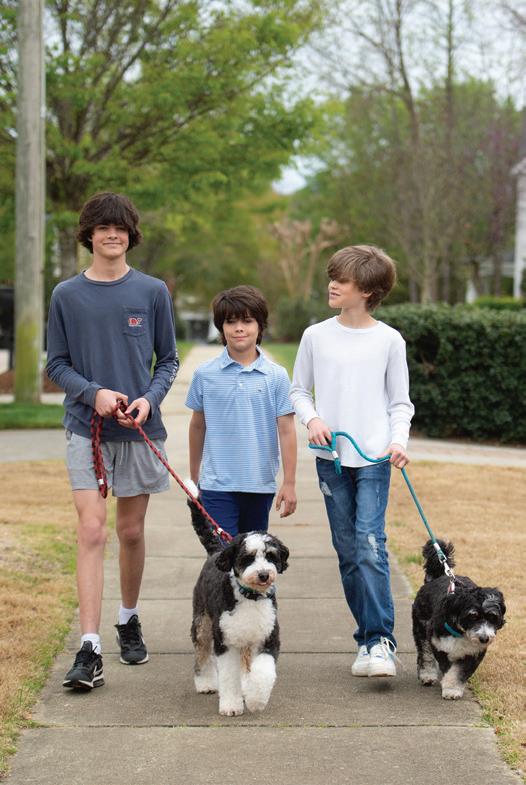
Kind Words From Clients



" It's hard to express how much I appreciate Aileen and Giselle. I've bought and sold property in the Triangle with them and can't explain enough how helpful, knowledgeable and amicable they are. From the beginning, I've felt completely confident that I'm working with experts who will ensure I have everything I need. When buying, they were very much in tune with the type of property I was looking for. When selling, they ensured I'd have the house in the condition that would get a top price and they fielded the bidders perfectly."
" I can't imagine better real estate advocates in the Triangle than these two. "


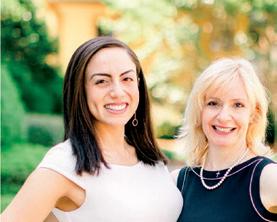
May/June 2023 chapelhillmagazine.com 117 HOME & GARDEN REAL ESTATE & HOME SERVICES GALLERY HOMES CONDOS APARTMENTS COMMERCIAL 404 Meadowmont Village Circle, Chapel Hill, NC 27517 themccormickteam.com T HE M C C ORMICK T EAM Luxury Home Specialists Debbie McCormick 919.270.2937 debbie@themccormickteam.com Mark McCormick 919.632.6542 mark.mccormick95@gmail.com Among the top 1% of all BHHS brokers nationwide
AILEEN & GISELLE Global Real Estate Advisors 919 360 6423 Aileen | 323 635 4759 Giselle aileenandgiselle@hodgekittrellsir com AileenandGiselle com ¡Se Habla Español! Follow on Facebook and Instagram @aileenandgiselle Homesnap's
Top 5% of agents in the nation
With two dogs, going for walks around the neighborhood has become a highlight of the family's routine.

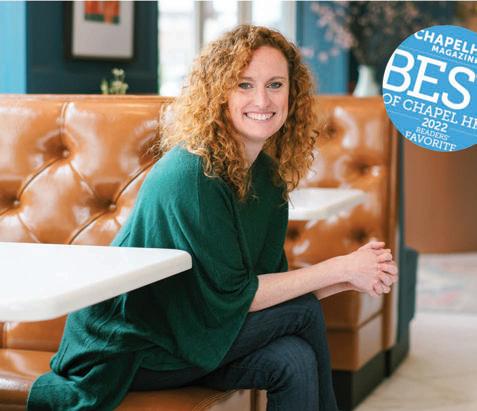


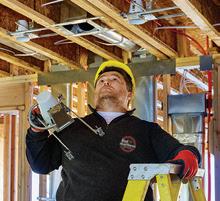


REAL ESTATE & HOME SERVICES GALLERY HOMES | CONDOS | APARTMENTS | COMMERCIAL 919.942.5051 | Free estimates, Call today! Voted Favorite Landscaper by Chapel Hill Magazine Readers 2022 O’Mara Landscaping & Lawn Care, Inc. 919.942.5051|omaralandscaping.com James & Kate Voted Favorite Landscaper by Chapel Hill Magazine Readers 2020 James & Kate NEW: ELECTRICAL SERVICES DEPT. BudMa hews.com 919.929.0203 New electrical service and repairs Electric vehicle charging stations Emergency generators Renovations HVAC • PLUMBING • ELECTRICAL • APPLIANCE REPAIR • DESIGN/BUILD Expanding Our Services to Expand Your Peace of Mind 2022


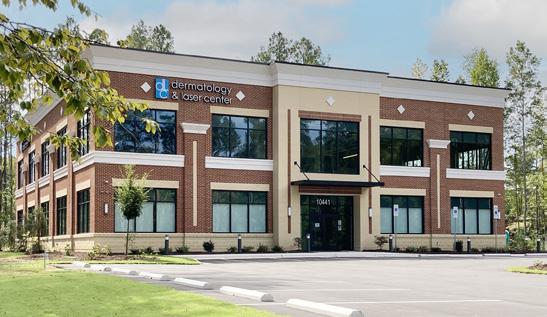
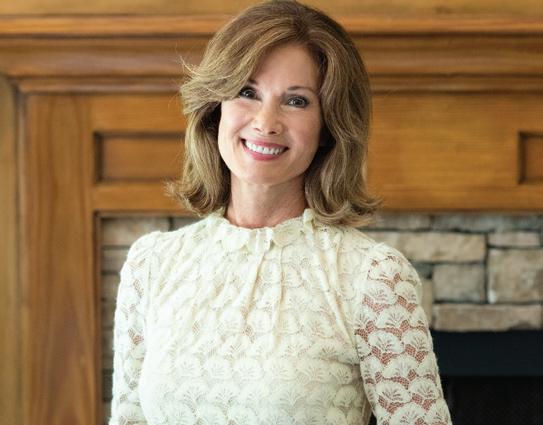


HOMES | CONDOS | APARTMENTS | COMMERCIAL REAL ESTATE & HOME SERVICES GALLERY WILL JOHNSON BUILDING COMPANY DESIGN | CUSTOM HOMES | RENOVATIONS John Morris, CCIM 919-942-1141 morriscommercial.com jmorris@ morriscommercial.com Individual MembersIndividual Member • New construction ready for tenant fit up • Dermatology & Laser Center of Chapel Hill occupies 1st floor • Total Rentable square ft approx. 9000 rsf • Delivered in warm shell condition with competitive lease and TIA rates • Space can be demised into small suites • Parking ratio is 6 per 1,000 rsf CHATHAM PROFESSIONAL PARK 10441 US 15-501 N, Chapel Hill, North Carolina please contact viki for a free buyer or seller consultation REPRESENTING BUYERS AND SELLERS in this Southern Part of Heaven viki pace-morris Broker/Realtor® 919.593.5190 | vikipacemorris.com




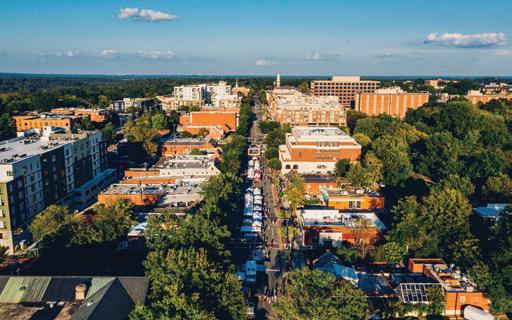

REAL ESTATE & HOME SERVICES GALLERY HOMES | CONDOS | APARTMENTS | COMMERCIAL RYAN HOLDEN,HOUSING SOLUTIONS OWNER NAMED 2023 TOP FORTY UNDER 40 INDUSTRY PROFESSIONAL by ProRemodeler Magazine Remodeling at its Finest Craftmanship, Value and Trust housingsolutionsinc.com • 919-296-9073 5.0««««« GOOGLE-RATED HOME RENOVATION & REVIEW RATING Office and Showroom: 230A ORANGE GROVE ST. HILLSBOROUGH, NC Luxury Experience. Local Expertise. Gretchen Castorina REAL ESTATE ADVISOR 919.951.5566 gretchen.castorina@compass.com Gretchen Castorina is a real estate licensee affiliated with Compass, a licensed real estate broker, and abides by Equal Housing Opportunity laws. 101 Glen Lennox Drive, Suite 300, Chapel Hill, NC 27517| (919) 999-8482 Gretchen Castorina_Quarter Page_March.indd 1 3/10/23 2:26 PM An Eye for Excellence, Design, Marketing & Negotiating I’m a native Chapel Hill business owner and a Durham resident. Put my experience and expertise to work for you! ELindquist@cbadvantage.com 919-656-3325 ELindquist.CBAdvantage.com Coldwell Banker Advantage 1130 Weaver Dairy Rd., Chapel Hill Elizabeth Lindquist, Realtor ALWAYS WORKING FOR YOU


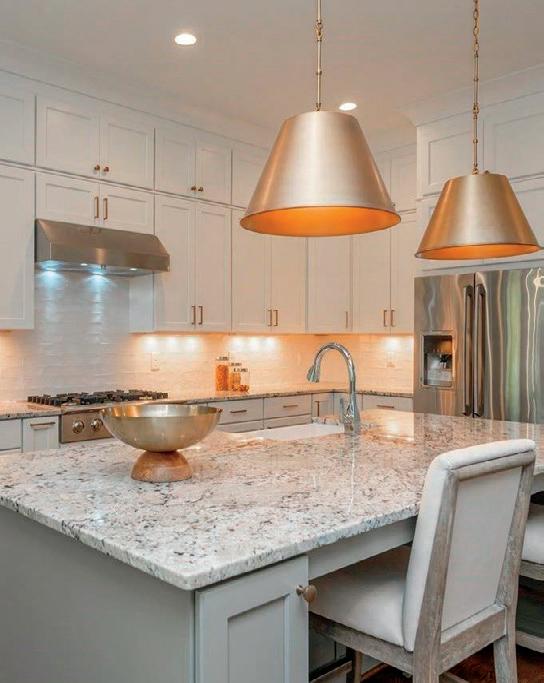





HOMES | CONDOS | APARTMENTS | COMMERCIAL REAL ESTATE & HOME SERVICES GALLERY SANDERWAY | CARRBORO Walking distance to McDougle schools TRITON WALK | CHAPEL HILL-CHATHAM COUNTY 2-3 acre lots with stream & hardwoods ARDEN LEA AT ST MARY'S | HILLSBOROUGH 10 acre wooded estate lots Or build on your own lot anywhere in the Triangle! 919 374 1144 JFullerhomes.com SERVICE AS ELEVATED AS YOUR STANDARDS. Nothing Compares. Broker 919.448.6664 shannon.kennedy@sothebysrealty.com SHANNON KENNEDY 919 201 9734 • silvestriproperties.com thewestendhillsborough.com Integrity • Intelligence • Innovation
Perry & Upchurch
BY CAILEY CETANI
PHOTO BY COLETTE VAN HOOFT, COLETTEVANHOOFT.COM
Mere acquaintances at Jordan High School, it wasn’t until spring 2015 that Bailey Perry and Scott Upchurch ended up at the same party and were reintroduced by a mutual friend, kindling their hometown romance. After a few years of long-distance dating, Bailey joined Scott in Wilmington, North Carolina, shortly upon graduating from Meredith College in 2018. “Our spark was ignited, and we have been inseparable ever since,” Bailey says.

With the help of Bailey’s mother, Steffen Perry, and her future bridesmaids, Scott was able to surprise
The Female Advisors in Durham, Orange & Chatham Counties


Bailey with the proposal under the guise of a networking cocktail party. On May 14, 2022, Scott asked if they could take a detour while en route to the “event” on Figure Eight Island. She finally realized what was happening as they approached the beach decorated in candles and rose petals. Afterward, their friends and family were excited to greet them at the real event, their engagement party. The couple will be married at the Brooklyn Arts Center in Wilmington on Sept. 2, 2023. CHM

122 chapelhillmagazine.com May/June 2023 ENGAGEMENT
THANK YOU TO OUR HOSTED BY GOLD SPONSORS SILVER SPONSORS 2023 SPONSORS
MWhere you are our priority. Therapy designed to help you make sense of your past, liberate your present, and empower your future. At Gracefully Redefined Counseling and Wellness we provide therapeutic services for individuals, children, adolescents, couples, and older adults.














May/June 2023 chapelhillmagazine.com 123 NORTH CAROLINA MATERNITY + FAMILY PHOTOGRAPHER Based Chap H l Turning Precious Moments + Beautiful Memories into Works of Art Every Milestone, Big or Small Deserves to be Documented + Cherished for a Lifetime But ready to adventure wherever your story takes us... contact@carolineaustinphoto.com www.carolineaustinphoto.com @carolineaustinphoto
ichelle R. Chasen is a Licensed Clinical Mental Health Counselor Associate (LCMHCA), a National Certified Counselor (NCC), and founder of Gracefully Redefined Counseling and Wellness PLLC, in Chapel Hill, North Carolina. 1340 Environ Way Suite 309, Chapel Hill, NC 27517 A Healthier Choice for a Healthier You. 984.484.3225 • gracefullyredefined.com
Nicole Clayton & Jason Clayton
BY SAM ANNETTA PHOTOGRAPHY BY JUSTIN CLARK PHOTOGRAPHY, JUSTINCLARKPHOTOGRAPHY.COM
While working at East Carolina University, Nicole Clayton met her now husband, Jason Clayton, an Orange High School graduate, on Match.com in 2010. After a year of dating, the two got engaged and moved to Raleigh. They were later married in Nicole’s home state of New York on Dec. 29, 2012.
Nicole had always loved an industrial setting, and she saw a need for more venues with that style in the area. In December 2015, she opened The Cloth Mill at Eno River, an industrial-chic venue in Hillsborough. She knew upon opening that she wanted to celebrate their 10-year wedding anniversary there. After assisting hundreds of brides with their big days, Nicole finally had her own moment to experience being a “Cloth Mill bride” when she and Jason held their reaffirmation celebration on the day of their anniversary in 2022.

Family and friends gathered at the venue for the event planned by Vision Events. Oak City Ceremonies provided an officiant, and Specialties Florals & Events supplied flowers. Under a sky of twinkling lights by Get Lit Event Lighting, guests enjoyed a DJ and photo booth from Cool Receptions
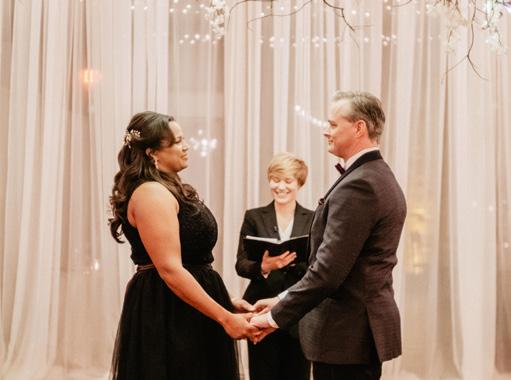
“The night was pure perfection, all thanks to our amazing vendor team, family and friends,” Nicole says. CHM
124 chapelhillmagazine.com May/June 2023 RENEWALS




Based in Carrboro, we're here for all of your supplementation requirements. We aim to provide the best products and services that help improve your overall health. Rejuvenation Station NC is your one-stop site for high-quality vitamins and IV hydration services. 919-429-8506 • rejuvenationstationnc.com Convenientlylocated at209LloydStreet,Ste130 CarrboroNC APPOINTMENTONLY! (option: Rejuvenation Station)
Beck & Shannon
BY KATIE MACKINNON
PHOTOGRAPHY BY KRISTA STEVENS, KRISTASTEVENSPHOTOGRAPHY.COM
Rebecca Shannon and Christoph Beck grew up worlds apart – Rebecca in Chapel Hill and Christoph in a small town near Cologne, Germany – but their paths crossed in London, where they’d both moved to pursue master’s degrees. After about a year of dating, the couple moved into a flat together in Notting Hill, which came complete with a key to a private garden square (just like in the movie!). One quiet Saturday morning in June 2021, Christoph proposed in a lush and enchanted-looking part of Ladbroke Square Garden.
In September 2021, the two were legally married at Chelsea Old Town Hall in London and nearly a year later, they tied the knot with family and friends in Charleston, South Carolina, on July 21, 2022. Included in attendance at the rehearsal dinner at Post House and the ceremony at The Parsonage were Rebecca’s parents and Chapel Hill Magazine’s Ellen Shannon and Dan Shannon, her brother and Christoph’s best man, Drew Shannon, and sister and maid of honor, Emma Shannon. Traveling from Germany, Eva-Maria Beck and Michael Gleich, Christoph’s parents, also attended the celebration.
126 chapelhillmagazine.com May/June 2023 WEDDINGS
Addie Thompson of Dogwood
Gatherings helped the couple plan the event in a matter of weeks, which featured tableware from Southern Vintage Table and wedding favors from Fortnum & Mason tea company.

The ceremony and reception were filled with special moments big and small, including Rebecca’s aunt Ann Vitti officiating, her dad walking her down the aisle and “unforgettable” shrimp from 167 Raw Oyster Bar. The day was such a success that the two are already talking about a big vow renewal ceremony down the road.
Christoph and Rebecca live in London, where he works as an associate at an American private equity firm, and she works as a primary school teacher. CHM
May/June 2023 chapelhillmagazine.com 127
Broedell & Ciociola
BY LENA MIANO PHOTOGRAPHY BY ROB TESAR, ROBTESAR.COM
When Chapel Hill native Courtney Broedell needed help with a college assignment in 2015, her best friend, Stephanie Martin, knew Steven Ciociola was just the person to call. After being introduced over the phone, the two instantly connected and kept in touch. Two months later, Steven drove from UNC Charlotte to UNC Wilmington to take Courtney out on their first date, and the long-distance relationship began.
While on a trip to Wilmington in October 2020, Steven took the opportunity to propose to Courtney in the city where their love story began. As they watched the sunrise on the beach, Steven said, “Since this is the place where we first fell in love, it’s only fitting that I ask you this.” He then got down on one knee as Stephanie, who had been there in disguise the whole time, unveiled herself to photograph the occasion.
Courtney and Steven shared their vows at NorthStone Country Club in Huntersville, North Carolina, on Oct. 7, 2022. Michelle Morency perfected Courtney’s hair for the special day. Courtney’s
brother, Richie Broedell, officiated the wedding, making for a more personal ceremony with friends and family, like her parents, Donna Broedell and Richard Broedell. Courtney and Steven performed a choreographed routine to “Hunger” by Ross Copperman for their first dance and then spent hours dancing the night away.
Courtney is a senior communications manager, and Steven is a project manager for a software company. The couple lives in Huntersville with their two cats, Ava and Jack. CHM
128 chapelhillmagazine.com May/June 2023 WEDDINGS


JOHNSON VOLVO CARS DURHAM 966 Southpoint Autopark Blvd. Durham, NC | 919-595-4500 JohnsonVolvoCarsDurham.com JOHNSON VOLVO CARS DURHAM