W coskaŋ MAGAZINE OF THE SHAKOPEE MDEWAKANTON SIOUX COMMUNITY
EXPER I EN CE TH E SMSC WACI PI
T HE S W EET T RADIT IO N O F MAPLE SYRUP
FLAME & FLORA O PENS ITS D OORS
F L O G D A P H C N LAU K R A D R AF TE
40 //HR
$
LAUNCHPAD GOLF THE MEADOWS IS OWNED AND OPERATED BY THE SHAKOPEE MDEWAKANTON SIOUX COMMUNITY
Issue six of Wiċoṡkaŋ highlights the many ways the Shakopee Mdewakanton Sioux Community (SMSC) continues to grow, adapt, and invest in the future while remaining grounded in the values that have guided our Dakota people for centuries. We begin with the third and final installment of Voices of SMSC Leadership, reflecting on the tribe’s journey from 2020 through today—a period marked by unprecedented challenges, resilience, and renewed growth. Through the COVID-19 pandemic and its aftermath, the SMSC remained committed to protecting and caring for one another, strengthening tribal sovereignty, and creating new opportunities through expanded enterprises, programs, and services. Throughout this issue, you will find stories that celebrate the people and traditions that continue to shape the SMSC. We honor the wisdom, contributions, and accomplishments of our tribal members and elders, explore the rich history of lacrosse, and share the cultural significance of maple sugaring and native plants.
CHAIRMAN COLE W. MILLER
You will also discover stories highlighting the tribe’s continued growth and investment in the future. From updates on the IndigeFit Kids philanthropic campaign to the opening of Flame & Flora Cannabis Dispensary to the acquisition of naming rights to Mystic Lake Amphitheater, these articles showcase the many ways the SMSC continues to strengthen both community well-being and economic opportunity. Each summer, we look ahead to one of our most cherished annual traditions—the SMSC Wacipi. This gathering provides an opportunity to honor and celebrate Native culture, reconnect with family and friends, and welcome visitors from near and far to experience the vibrancy of our Dakota culture and homelands. Whether you are a tribal member, neighbor, guest, or learning about us for the first time, we hope the stories deepen your understanding of who we are and the values that guide us. Thank you for joining us as we celebrate our history, share our culture, and continue the work of building a strong future for generations to come.
VICE-CHAIRWOMAN NATASHA K. HACKER SMSC BUSINESS COUNCIL
SECRETARY/TREASURER ASHLEY J. CORNFORTH
Features IN THIS ISSUE
WELCOME TO WIĊOṠKAŊ This quarterly magazine shares the collaborative efforts, collective achievements, and captivating stories of the Shakopee Mdewakanton Sioux Community. The Dakota word Wiċoṡkaŋ carries multiple meanings, but in the context of this publication it refers to the actions and efforts of a group of people. Each edition of this magazine highlights the contributions of those who come together in our shared purpose— to be a good neighbor, good employer, and good steward of the earth. We are grateful for the opportunity to share these stories, which reflect our enduring strength, resilience, and commitment to building a brighter future.
36 The SMSC Wacipi Experience Learn the ins and outs of what to expect from the SMSC’s biggest event of the year.
60 A Sweet Tradition Continuing the sugar bush at Wozupi Tribal Gardens.
98 Ready to Roll Celebrating the grand opening of the SMSC’s Flame & Flora Cannabis Dispensary.
Table of
Contents ISSUE 6
COMMUNITY
4
Wiċoskaŋ
08
Voices of SMSC Leadership: Part III
18
Member Spotlight
24
Elder Q&A
32
A Timeline of the SMSC
36
The SMSC Wacipi Experience
42
History of Lacrosse
50
A Look Back
Exploring the resilience, growth, and forwardthinking vision of the SMSC from 2020 until today. SMSC member Julia Peralta reflects on the challenges and triumphs of pursuing her dreams. Stories and advice from SMSC elder Sheldon Bryant. Tracing the history of the Mdewakanton Dakota people in the Minnesota River Valley. Learn the ins and outs of what to expect from the SMSC’s biggest event of the year. The centuries-old origins and evolution of the sport of lacrosse. An article from the tribe’s archives about the 2005 Highway 169 Interchange project.
VA LU E S
LIFESTYLE
54
Supporting Local Schools
92
60
A Sweet Tradition
98
68
Building a Healthier Future
104
76 82
How the SMSC partners with local school districts to shape the leaders of tomorrow. Continuing the sugar bush at Wozupi Tribal Gardens. Exploring the SMSC’s IndigeFit Kids campaign and its mission to help Native youth.
Exchanging Flags and Respect
Honoring shared purpose through meaningful flag exchange ceremonies.
The Healing Power of Plants
How Indigenous teachings and native plants are healing the land.
Native Artist Spotlight
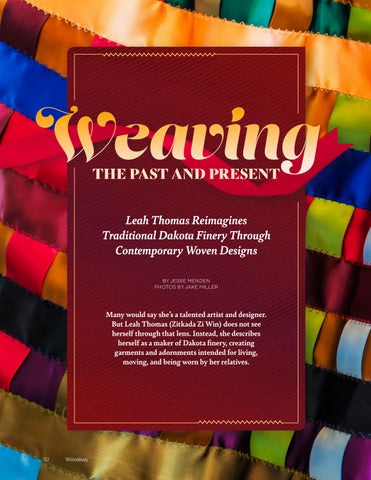
Leah Thomas reimagines traditional Dakota finery through contemporary woven designs.
Ready to Roll
Celebrating the grand opening of the SMSC’s Flame & Flora Cannabis Dispensary.
Introducing Mystic Lake Amphitheater
Shakopee venue ushers in a new era of live, fresh-air entertainment.
110
The Art of a Well-Planned Wedding
118
Big Flavor, Little Six Style
122
Picks for the Powwow Trail
128
Dwellers of the Spirit Lake
134
Eats, Events, Entertaiment
136
Recipe: Fiesta Wild Rice Bowl with Cilantro Lime Drizzle
Mystic Lake Center offers the perfect atmosphere and service for an unforgettable event.
Highlights from the menu at the fan-favorite Little Six Restaurant. Selections and recommendations for a summer of travel from the gift shop at Hoċokata Ṫi. Take a peek inside the SMSC’s public history exhibit at Hoċokata Ṫi and plan your visit today. Summer is heating up and so is the action around the SMSC.
See for yourself why Native Harvest’s ultra-popular wild rice bowls have an extensive following. ISSUE 6 //
5
ISSUE 6
BUSINESS COUNCIL
MARKETING AND C O M M U N I C AT I O N S
Cole W. Miller
Danny Olsen Amber Chesney Mike Christenson Kelsey Hagen Aleks Katane
CHAIRMAN
VICE-CHAIRWOMAN
Natasha K. Hacker SECRETARY/TREASURER
Ashley J. Cornforth
CONTRIBUTORS Ferin Davis Anderson Javi Avalos Cassy Bryant Rachel Crownhart Hope Flanagan Thad Hellman Kyle Laws Bill Rudnicki Madeleine Rush Sarah Taylor Gaming Enterprise Marketing Little Six Restaurant Team THANK YOU TO THE FOLLOWING SMSC MEMBERS FOR SHARING THEIR STORIES
Keith B. Anderson Sheldon Bryant Rebecca Crooks-Stratton Julia Peralta
6
Wiċoskaŋ
LEADERSHIP
COMMUNICATIONS
Erin E. Belanger Brian Deutsch Joni Komperda Jesse Menden Chaundra Rich Chantre Smith DESIGN
Elle Campion Karen SC Hanson Randy Palmer Allison Snider MULTIMEDIA
Steven Hoff Jake Miller Blake Ziemer
Stories from and about the Shakopee Mdewakanton Sioux Community and its people, history, culture, and lifeways—past and present.
08 18 24 32
Voices of SMSC Leadership: Part III Member Spotlight Elder Q&A A Timeline of the SMSC
36 42 50
The SMSC Wacipi Experience History of Lacrosse A Look Back ISSUE ISSUE63 // // 71
VOICES of SMSC LEADERSHIP Part III: R E S IL IE NC E , G ROW T H , and A V IS IO N for the F U T U RE This is the third and final installment in a multipart series exploring key moments that shaped the modern-day Shakopee Mdewakanton Sioux Community. BY CHANTRE SMITH
T
he Shakopee Mdewakanton Sioux Community (SMSC) has long been recognized as one of the most successful and generous tribal nations in Indian Country. Located near the Minnesota River to the southwest of present-day Twin Cities, the sovereign Dakota tribe has transformed generations of hardship into a story of self-determination, economic strength, and cultural revitalization. While the tribe’s modern success began decades earlier through gaming and enterprise development, the years from 2020-26 have demonstrated the SMSC’s resilience in the face of a global pandemic—reinforcing its values of being a good neighbor, a good employer, and a good steward of the earth.
ISSUE 6 //
9
SM S C BUSINESS COU N C IL M EM BE RS
2020-2026
KEITH B. ANDERSON ASHLEY J. CORNFORTH REBECCA CROOKS-STRATTON NATASHA K. HACKER COLE W. MILLER
A S T RO N G F O U N DATI O N Before 2020, the SMSC had already established itself as a national model for tribal economic success. Through its gaming enterprises Mystic Lake Casino Hotel and Little Six Casino, the tribe created economic independence that allowed it to invest in housing, healthcare, education, infrastructure, philanthropy, and long-term opportunities for future generations. The SMSC also built a reputation for generosity, donating hundreds of millions of dollars to Native and non-Native organizations, local governments, health systems, and fellow tribes across the country. By the early 2020s, that foundation positioned the tribe to navigate one of the most challenging periods in modern history: the COVID-19 pandemic.
10
Wiċoskaŋ
NAVI G AT I N G T H E CH ALLE N G E S OF COVI D - 19 Like governments and businesses everywhere, the SMSC faced unprecedented disruption during the COVID-19 pandemic. The hospitality and gaming industries were among the sectors most heavily impacted nationwide, and temporary closures, public health protocols, and economic the casinos reopened after being closed for over three uncertainty created major operational challenges. months, several preventive safety measures were put into place, including social distancing, temperature “COVID-19 and its effects began to occur about a scans, requiring face masks to enter the building, and month after I got elected as chairman,” recalled former eliminating smoking indoors. Despite the challenges and SMSC Business Council Member Keith B. Anderson. concerns surrounding these changes, the SMSC remained “Everything closed. We needed to figure out how to focused on protecting the health and safety of guests protect our businesses and investments, manage our and team members while continuing to adapt during services effectively, and make sure an extraordinary moment in history. our tribe continued to operate with as minimal disruption as possible.” This time also forced the SMSC to make difficult decisions around some For the SMSC, protecting tribal of their biggest events that typically members, team members, and guests attract thousands of visitors. The tribe’s became the top priority. The tribe had Fourth of July celebration, wacipi, and to balance public health concerns with Indian Horse Relay were all canceled sustaining jobs and revenue that support in 2020 as a precautionary measure. tribal government programs. This required careful leadership, operational Despite these challenges, the SMSC’s flexibility, and difficult decisions. diversified economic base and strong governance helped the tribe endure the – F ORM E R SM SC B USI NE SS “There were so many unknowns pandemic years with minimal long-term C OUNC I L M E M B E R RE B E C C A C ROOK S- ST RAT TON navigating the pandemic,” recalled negative impacts. Similar to the Great former SMSC Business Council Recession of 2007-2009, staffing for many Member Rebecca Crooks-Stratton. key positions was largely uninterrupted, “It changed the way we worked and and remote work was implemented for really strengthened our public health services and several tribal government positions. During the worst created better health initiatives. We were able to put of the pandemic, the SMSC continued to provide all several policies and procedures in place that created essential tribal government services to its members. an enduring effect on the quality of our services.” The tribe’s ability to respond decisively underscored the Mystic Lake Casino Hotel and Little Six Casino were value of sovereignty and self-governance during times among the hardest hit SMSC enterprises, and changes of crisis. “Although it was difficult at the time, we were needed to be enacted immediately. For the safety of left with a lot of good things,” said Crooks-Stratton. “The guests, staff, and tribal members, the casinos shut pivots and business decisions we had to make to protect down at the peak of COVID-19 in early 2020. Once our members, staff, and guests created a silver lining.”
“The pivots and business decisions we had to make to protect our members, staff, and guests created a silver lining.”
ISSUE 6 //
11
R E B O U N D I N G W I T H P U R P O SE As pandemic restrictions eased, the SMSC emerged focused not only on recovery, but on growth. Rather than simply returning to business as usual, the tribe continued investing in strategic priorities. CULTURAL REVITALIZATION AND PUBLIC EDUCATION
In 2021, the SMSC became the first tribal government in the Minnesota State Fair’s long history to host an exhibit, helping educate the public about Dakota history and culture. This milestone reflected the tribe’s continued leadership in improving Native representation and understanding statewide. The following year, the SMSC was awarded a 2022 Minnesota State Fair Best Award for providing exceptional customer service and an outstanding experience for fair guests. The tribe also continued advancing Understand Native Minnesota, a philanthropic initiative designed to improve public understanding of Native American history, culture, and modern tribal governments in Minnesota’s schools. After rolling out the campaign in 2019, Understand Native Minnesota launched the “Native Minnesota” podcast, hosted by then SMSC Secretary/Treasurer Crooks-Stratton. Over the years, the podcast featured conversations with 12
Wiċoskaŋ
more than 40 thought leaders and changemakers in Minnesota and across Indian Country. The SMSC also commissioned and published groundbreaking resources to support educators as part of the campaign and provided millions of dollars in grantmaking to directly support new K-12 programming, classroom resources, and professional development. Utilizing Hoċokata Ṫi, the tribe’s cultural center, as a gathering and learning hub, the SMSC hosted several first-of-their-kind public-facing events in 2023 and 2024, including the Dakota Language Bowl and Fashion Show. Created as opportunities to share and celebrate Dakota language, culture, and lifeways, these events brought together Dakota speakers, Native artists, and members of the public in meaningful and educational ways. Since their inception, both events have continued to grow in popularity, reflecting the tribe’s ongoing commitment to cultural revitalization, intergenerational learning, and educating the broader public about Dakota traditions and identity. In 2023, the SMSC once again participated in Sovereignty Day at the Minnesota State Capitol. First hosted by the Minnesota House in 2019 under the leadership of then Speaker of the House Melissa Hortman, members of the Minnesota Senate participated in Sovereignty Day for the first time in 2023 in the Senate’s history. Members from the
House and Senate heard from leaders of each of the 11 Minnesota tribes on their key issues and priorities. In addition to sparking dialogue between tribal leaders and state lawmakers, there were open breakout sessions on the Indian Child Welfare Act, Indian education, tribal gaming, public safety, and the environment. “We recognize that relationships between tribal governments and state government has improved dramatically over the last few decades,” SMSC Chairman Cole W. Miller said in his remarks to legislators. “This is, in part, because the tribes have more resources to secure a seat at the table, to tell their stories and describe their needs, and to fight for what is right for Indian Country and for tribal governments. We can continue to aspire to that day when tribal governments and Native people return to what we once experienced, to be true equals with those who began as guests on our lands and now hold so many levels of power.” Sovereignty Day has proved to be successful over the last few years and was held again in 2025 and 2026. At Sovereignty Day in 2025, SMSC Secretary/Treasurer Ashley J. Conforth shared, “The state must recognize that each of us as tribal leaders have unique duties and responsibilities to best serve our own communities and our own members. Respect for tribal sovereignty means understanding, or at least acknowledging, those differences and working with each nation individually.” ISSUE 6 //
13
SUSTAINABILITY LEADERSHIP
Environmental stewardship remained central to the SMSC value of being a good steward of the earth. Through its NativeGreen platform and sustainability efforts, the tribe continued to invest in organics recycling, renewable practices, conservation, and sustainable operations. In 2023, the SMSC broke ground on its relocated composting facility operating under the name Dakota Prairie Composting, further expanding its leadership in environmental innovation. The state-of-the-art facility, located in Louisville Township, has tripled the amount of organic material processed annually than the former SMSC Organics Recycling Facility located in Shakopee. The project to move the organics recycling operation to the Louisville Township site involved extensive collaboration with various state agencies and local city and county governments. The SMSC even funded improvements to the nearby Trunk Highway 41 intersection for improved safety and reduced traffic congestion. As the largest composting facility in the Midwest, this new facility is pivotal for Minnesota’s goal to recycle 75% of its waste by 2030. “One of the tribe’s biggest accomplishments during my term was acquiring the land for the future site of Dakota Prairie Composting,” recalled Crooks-Stratton. “This acquisition was going to make a huge impact for future generations, not just for our tribal members, but for the entire state of Minnesota in reaching our environmental goals.” 14
Wiċoskaŋ
RETURN OF THE BISON
Over the years, the SMSC has worked to restore both wetland and prairie ecosystems on tribal lands, with more than 1,000 acres of prairie restored. In order to restore important cultural connections and relationships, the SMSC reintroduced a pteoptaye (bison herd) on tribal lands in fall 2023, helping to further support prairie restoration. The bison were a gift from the Sisseton-Wahpeton Oyate in South Dakota and served as a powerful cultural and ecological milestone for the tribe. The herd now lives on 165 acres of SMSC trust land in a sustainable, safe, and ecologically beneficial way.
In August 2025, the SMSC bison herd welcomed a two-year-old bull from the Grand Portage Band of Lake Superior Chippewa. His arrival marked an important step in the continued growth and long-term sustainability of the herd. With 10 female bison, or pte, already on the land, the bull’s presence helped strengthen genetic diversity and support the overall health of the herd.
“The story of the bison mirrors the story of Dakota peoples in many ways, and both are resilient.”
That growth became tangible in May 2026, when the bison herd welcomed four calves—a milestone carrying deep cultural – F ORM E R SM SC B USI NE SS and ecological significance for “The story of the bison mirrors the C OUNC I L M E M B E R the tribe. “The arrival of these story of Dakota peoples in many ways, K E I T H B. ANDE RSON calves represents not only the and both are resilient,” said Anderson. continuation of the herd, but “Our tribe has restored and revitalized also the resilience of our shared its relationship with our plant relatives efforts to restore and care for these over the decades, and we now have relatives,” said Miller. “Moments like this reconnect the knowledge to revitalize our relationship with our us to traditions that span generations, and it is relative the bison. Reintroducing bison to our homelands especially meaningful to witness something that will allow us to bring back traditional ceremonies likely has not occurred here in over 150 years.” and food and medicine important to our people.” ISSUE 6 //
15
CONTINUED ECONOMIC INVESTMENT
In 2024, the SMSC broke ground on LaunchPad Golf The Meadows, a new golf entertainment destination near Mystic Lake Casino Hotel. The project reflects the tribe’s continued diversification strategy and commitment to regional economic development. “We’re excited to expand beyond The Meadows at Mystic Lake golf course and welcome golfers of all abilities to enjoy year-round, top-of-the-line entertainment at LaunchPad Golf The Meadows,” said Miller. “Building on our legacy of creating premier golf destinations, the opening of this unique venue is exciting not just for our tribe, but for the region.” Mystic Lake Casino Hotel also continues to add to its growing appeal as an entertainment destination with the addition of Hop House, a baccarat room, and renovated bingo space. The Gaming Enterprise has even bigger plans in the years ahead, with a new main entrance, hotel check-in area, and dining options.
“Creating and opening new enterprises wasn’t just about economic development. It’s about bringing people together.” – SM SC SE C RE TARY / T RE ASURE R ASHL E Y J. C ORNF ORT H
In April 2026, a new tribal-owned enterprise opened across the street from Mystic Lake Casino Hotel. The SMSC used existing real estate to open Flame & Flora Cannabis Dispensary. It’s the first deli-style dispensary in Minnesota and features cannabis products from several tribal nations throughout the state including Red Lake Nation, White Earth Nation, Prairie Island Indian Community, and Mille Lacs Band of Ojibwe.
16
Wiċoskaŋ
Flame & Flora’s goal is to be the premier retail cannabis dispensary in Minnesota featuring cannabis products from, not only tribal cultivators and manufacturers, but from state licensed cannabis businesses as well. As the largest employer in Scott County, the addition of new enterprises like LaunchPad Golf The Meadows and Flame & Flora have further expanded the tribe’s workforce and strengthened its ability to provide stable employment opportunities for people across the region. Undoubtedly, new tribal enterprise growth helps strengthen the programs, services, and opportunities available to tribal members. But for the SMSC, economic development has always represented something greater than financial success alone. “Creating and opening new enterprises wasn’t just about economic development,” said Cornforth. “It’s about bringing people together.”
ONGOING PHILANTHROPY
Following the conclusion of Understand Native Minnesota in 2024, the SMSC turned its focus toward a new philanthropic initiative centered on the health and wellness of future generations. In January 2025, the tribe launched IndigeFit Kids, a $6 million, three-year campaign dedicated to improving the physical fitness and mental wellness of Native youth in Minnesota.
From the outset, the initiative emphasized collaboration and long-term community impact. Early strategic partners included KABOOM!, the national nonprofit working to end playspace inequity; Johns Hopkins Center for Indigenous Health, one of the nation’s leading academic health organizations focused on the health of Native communities; and the Minnesota Vikings, a regional leader in promoting youth fitness and physical activity. Direct program support also remains a cornerstone of the campaign. Recent investments include funding for Girls on the Run Minnesota to expand participation among Native girls and provide adult coaches with culturally appropriate curriculum and training. “Through IndigeFit Kids, we are working to close health disparities among young Native Americans in Minnesota by giving them more access and resources to lead active, healthy lives,” said SMSC Vice-Chairwoman and IndigeFit Kids Co-Chair Natasha K. Hacker. “Girls on the Run inspires and empowers girls across the state, and its mission aligns perfectly with the goals of this campaign.” Over the next two years, the campaign will continue investing in projects and programs that support the physical, mental, and emotional wellness of Native youth. In addition to direct programming, IndigeFit Kids will fund new research, raise public awareness, support efforts to Indigenize athletic programs, and expand access to resources that help Native children lead active, healthy lives.
N EW EN T ER P R IS ES A N D IM P ROV EM EN T S D U R IN G T H IS T I M E IN C L U D ED : ( AS O F J UN E 2 0 2 6 )
2024: Mystic Bingo Grand Reopening 2024: Baccarat Room at Mystic Lake 2024: Native Harvest Catering 2025: Dakota Prairie Composting 2025: Hop House at Mystic Lake 2025: LaunchPad Golf The Meadows 2026: SMSC Storage Facility 2026: Flame & Flora
V I S I O N F O R TH E F U TU R E From the uncertainty and hardships of COVID-19 to the continued growth and progress that followed, the SMSC has shown what is possible when sovereignty, vision, and values guide leadership. The story of the tribe from 2020 through today is one of continued resilience—protecting and supporting people during times of crisis, reinvesting in opportunity, preserving culture and traditions, and building a stronger tribal nation. This unwavering resilience is something that has sustained the Dakota people from the most difficult periods of history to today. To be able to transition from mere survival to thriving growth and success is a hallmark feature of the Dakota people’s story. “Throughout every challenge and every success, our focus has remained on our people and on building a strong future for generations to come,” said Hacker. “It is an honor to serve the tribe and to be part of something larger than ourselves—something rooted in our values, our culture, and our shared vision for the future.” As the SMSC looks ahead into the future, it strives to remain not only a successful, self-sufficient tribal nation, but also a model of how economic strength and sovereignty can be used to uplift people, strengthen community, and honor the responsibility to care for the next seven generations. W
ISSUE 6 //
17
A Story About the Highs—and Lows—it Takes to Follow Your Dreams BY ERIN E. BELANGER PHOTOS PROVIDED BY AKICITA
18
Wiċoskaŋ
ISSUE 6 //
19
stepping onto the stage, the spotlight catches the fire from within her. The audience holds its collective breath. In this moment stands the culmination of years of struggle, sacrifice, soulful prose, and relentless dedication. Akicita, a young woman, stands at the threshold of her destiny, heart pounding in rhythm with the distant murmur of the crowd. Illuminating the path forward are those who have and continue to believe in her. Their wisdom, a compass in the vast sea of morality, helps her navigate, leading Akicita to refine her artistry in the music industry. With her eyes closed, she takes a moment for herself. Then, with a deep breath, she begins. Akicita, meaning warrior, is a fitting stage name for Shakopee Mdewakanton Sioux Community (SMSC) member Julia Peralta, who has weathered an uncertain journey, navigating through storms of self-doubt, faced down demons, and stood resilient to the wall of challenges that threatened to derail her dreams. The countless hours perfecting her craft have allowed her to find her fervent voice amid life's trials and her ancestors' trepidations that she carries along the way. Akicita explained, “Our ancestors were warriors, yours and mine. I want our youth to find their inner warrior— don’t put out that fire. Never lose that strength.” Akicita grew up on the SMSC reservation and started singing and entertaining at age three. Soon she progressed to songwriting and naturally creating original melodies. At an early age, she struggled with alcohol addiction, even attending rehab—more than once, and attending various treatment centers. At 18, Akicita was determined that it was time for
20
Wiċoskaŋ
“Our ancestors were warriors, yours and mine. I want our youth to find their inner warrior—don’t put out that fire. Never lose that strength.” - A K I C I TA
something different and headed to Los Angeles to follow her dreams of becoming a singer/songwriter. The distance between California and home has in many ways brought Akicita closer to her roots. “Getting into my culture as an adult has been so liberating,” said Akicita. “I’ve always struggled with feeling like I belong anywhere. Now, it makes me feel like I can be a part of something bigger.” Now sober, Akicita describes sobriety as being filled with determination for a healthier future. “Being sober has been one of the hardest yet most rewarding journeys of my life,” Akicita shared, her voice carrying the weight of experience. “But taking it one day at a time, surrounding myself with support I can count on, and offering myself grace… that has given me the opportunity to rebuild the foundation to trust myself again.” Her unwavering strength to stay focused and dedicated, a beacon that defied the odds, is what landed her a break—a 12-concert tour, performing in Wales, Scotland, and England as the opener for British singer/songwriter Leona Lewis. “Being on tour was amazing—it was so good!” said Akicita. “And I’m open for touring for someone else next time, or for myself—that’s my ultimate dream.”
Follow Akicita (a.k.i.c.i.t.a.) on Spotify and Instagram to hear upcoming releases including her new single “Super Nova.”
22
Wiċoskaŋ
“I am still learning as I go. I am no expert. But I have heart, and I have passion, and I have the strength to stand for us all.” - A K I C I TA
The limitless possibilities for what lies ahead for Akicita are still to be imagined. Her deliciously dark melodic style is rising in popularity on Spotify including the songs “Monster” and “You Already Know.” Her song “Liquor” was a contender for the opening credits of “Night in West Texas,” a documentary as well as a significant event in the film festival circuit about an Apache man who was unjustly sent to prison. Following the Leona Lewis tour, Akicita needed to reset. “I came back home to spend time with family and chill out from the L.A. scene—taking a break from music to settle back in. I got overwhelmed,” said Akicita. Later, Akicita spent time in Colorado at a wellness retreat. “I needed time to catch up on my mental health. I had a hard time staying sober. But that’s part of this journey—I’m not a perfect person. You are going up and up and up, and then it stops. It was so quiet after the high. I struggled with that. I questioned it—maybe I’m not good enough… but I’m going back to it because I love it.” Now 30 and living back in L.A., Akicita is looking forward to a fresh, new era which includes meeting with her producer and finishing up some songs in the studio, including preparing to release “Super Nova” which Akicita explains as a song with “a different vibe, super fun.” Then it’s time for photo shoots and a music video for the single. “Artists take steps back all the time,” said Akicita. “I’m always in a new phase. This phase will be a completely different sound than the last EP—which will be fun for me.” When Akicita explained her songwriting process, she said, “The melody comes first,
and then I figure out the lyrics… and the lyrics meet me where I am that day.” After a pause, she continued to say, “But what comes first is having a sober foundation because spiraling can’t happen to me anymore. Before I took a break, I felt pressure to be a badass. Now I give myself grace to be human, and there is something badass about that. It’s a different type of confidence; I have more confidence in me to figure it out. I’m OK with not knowing what my life is going to look like all the time.” Akicita added, “If I don’t have mental health, then I don’t have anything else. Sometimes everything needs to take a back seat.” Akicita is clear with her message, “Follow your dreams, even when there is resistance. Fight through that resistance. Society likes to put us in a box, and I don’t agree with that. It’s OK to not want to take the traditional route—no matter what your culture is. We are still individuals with different faiths and ambitions. Sometimes it takes only one trailblazer.” In L.A., Akicita has performed at Hotel Café and Hotel Ziggy and would love to return as well as perform on stage at the Hollywood Bowl when her new music comes out. And “If things do take off, you need to be ready for it, because you can’t move the moment,” she added. Akicita’s story is one of triumph over adversity, carefully woven into every lyric, every melody, and every moment of silence that speaks volumes about the resilience within her. “Our history and our culture have been silenced for generations—I want to use my gifts and passion for representing my people,” shared Akicita. “I am still learning as I go. I am no expert. But I have heart, and I have passion, and I have the strength to stand for us all.” W
Follow Akicita (a.k.i.c.i.t.a.) on Spotify and Instagram to hear upcoming releases including her new single “Super Nova.”
ISSUE 6 //
23
24
Wiċoskaŋ
In loving honor of Sheldon’s son Michael Bryant, who passed away August 1, 2026. Sheldon remembers Michael as the strongest person he’s ever known.
Sheldon Sheldon Sunshine Sunshine StoRiEs fRom EldER ShEldon BRyAnt StoRiEs fRom EldER ShEldon BRyAnt In loving honor of Sheldon’s son Michael Bryant, who passed away August 1, 2026. Sheldon remembers INTERVIEW BY TRICIA Michael as the strongest personVELURE he’s ever known. PHOTOS BY JAKE MILLER
The first-born child of Marine areas, thereby cutting ties with INTERVIEW BY TRICIA VELURE Corps parents serving in Hawaii, theirMILLER ancestral homes. Bryant PHOTOS BY JAKE Sheldon Bryant grew up in reversed the course of relocation southern California, far away policy by moving to the The first-born child of Marine areas, thereby cutting tiesSioux with from his father’s Dakota heritage Shakopee Mdewakanton Corps parents Ironically, serving in the Hawaii, Community their ancestral homes. in Minnesota. (SMSC) asBryant an adult. reversed theNice course of relocation Sheldon Bryant grew up in federal Indian Relocation Act Minnesota is real, he says. southern California, farthat away policy moving Acts ofby service are to histhe life’s work. passed the same year from hisborn father’s Dakota Shakopee Mdewakanton he was (1956), withheritage the And he’s happy about the Sioux four in Minnesota. Ironically, the Community (SMSC) as an goal of encouraging Native seasons keeping him on hisadult. toes, federal Indian Relocation Act Minnesota Nice is real, he says. Americans to assimilate into as he spreads sunshine around Actsbroader of service are his life’s work. passed the same year that the general population in urban the community. he was born (1956), with the And he’s happy about the four goal of encouraging Native seasons keeping him on his toes, Americans to assimilate into as he spreads sunshine around the general population in urban the broader community.
What was it like to be a Native When you graduated from high American in Southern California school, what plans did you have for your future? during your youth? In Orange County at the time, most Natives tried to blend in with the Mexican American community so that they didn’t stand out. The first time I started to think about my Native heritage was when my father, who taught Native American studies at California State University (Long Beach and Fullerton), started a nondenominational Native American church called The Gathering. He had a good message, and people really respected what he had to say, because he was speaking from his heart. When Dad retired and moved to Minnesota, he wanted to be involved in the community’s Tiowakan Spiritual Center, but he got sick before he was able to do that.
26
Wiċoskaŋ
My classmates probably would have voted me “most likely to work.” I thought I would always be a skilled laborer, and that I would work until I couldn’t work anymore. Back then, I didn’t think ahead about saving or growing old.
What was your first job? At age 14, my first job was delivering the Los Angeles Herald Examiner to a route with 12 people on it. By the time I handed off the route to the next paper boy, I’d built up my route to 120 subscribers. It was door-to-door, and it became more work than I’d imagined, because even back then, I couldn’t do anything halfway.
What was your longest career job? I worked in different roles for McDonnell Douglas Aircraft, which merged with Boeing, for 12 years. I started in research and development, where we built full-size aircraft out of plywood, Styrofoam, and metal to make sure everything fit where it was supposed to. Later, I worked in production, flight-line repair, and taught an 80-hour course called Total Quality Management—a “work smarter, not harder” concept. I liked being able to put in 100% at my job and then not have to bring it home. ABOVE: Sheldon Bryant and his daughter Shyenne in their powwow regalia.
What’s been your favorite job? My mom worked for an electric outdoor sign company while I was working at Boeing. I got two weeks of annual paid vacation, and I used it to take road trips, driving a truck and trailer loaded with signs for my mom’s company. I’d maybe drive 8,000 miles in 10 days. I went to Miami, New York City, St. Louis, St. Paul, and other cities around the United States. I love seeing the country, even if that means I’m behind the wheel for 18 hours a day.
You moved to this community in your mid-forties. What do you like most about living here? I moved here while my dad was still alive, and I’m glad I got to live near him as an adult. Moving into this community was like going to school all over again, and I love school. I was learning about powwows and regalia and sweat lodges and serving elders first. Ever since, I’ve been working to live out my Dakota heritage. Over the years, I’ve also come to appreciate that this is where my family lives, because it takes a village to raise children, and that’s a way of life here. I like being at a four-way stop, when “Minnesota Nice” takes over and everybody motions, “You go.” “No, you go ahead.” I especially like the four seasons here. In Southern California, there’s too little change. LEFT: Sheldon Bryant with son Michael and daughter Shyenne, two of his four children.
ISSUE 6 //
27
“
I just want to give back to the world and bring joy to kids.
”
Sheldon Bryant
Photos courtesy of Sheldon Bryant
28
Wiċoskaŋ
You claim to be retired, yet you work as hard as any full-time career person. Tell me about your work.
the store. I don’t just tell them where the item is; I walk with them to find it. At Prior Lake High School, I’ve been campus supervisor and crossing guard for 11 years.
Some people know me as Sheldon the clown, Santa Claus, or the Easter Bunny. I’ve been clowning since 2007 and attend local events in one of my clown cars. (My wife Peggy is a fellow clown, and she needs a car too!) I’ve been a Santa since 2006, and again, with help from my Mrs. Claus, we visit children all around the area and send their lists to the North Pole. More recently, I’ve added Easter Bunny to my list of personas.
I also volunteer with a nonprofit called TreeHouse, which helps teenagers build hope and healthy support systems. I’ve been a member of the Prior Lake Rotary for 21 years. My family and I clean a section of local highway twice a year and sponsor trade school scholarships for at least two Prior Lake High School seniors each year.
I’ve also worked for Hy-Vee in Savage for six years. You’ll find me organizing egg and dairy merchandise on the shelves and making sure everything is fresh. I love when I get to be Sheldon Sunshine, helping people find items in
I just want to give back to the world and bring joy to kids. I have the resources to be charitable now, and being retired gives me time to overwork. I couldn’t work this much if I had a job!
You’ll be 70 years old in 2026. How does it feel to be almost 70 years old? Statistically speaking, people who celebrate birthdays live longer! I do my workouts and my stretches and my 21,000 steps per day. If I know I have a long drive coming up, I walk extra steps to bank for the days when I’ll be sitting a lot. I need to stay at it. Life is ceaseless effort.
What are the best and most difficult parts of growing older? One of my favorite mottos is, “When you’re green, you grow. When you’re ripe, you rot.” I don’t know it all. I’m still growing and learning. But having always been an alpha person, I’m having to accept that there are new alpha people taking my place. I’m trying to give up that number-one spot and make the most of my new role as a valued asset.
If you could reverse to age 20, would you do anything differently? I’m borrowing this expression from someone else, but I would be the man I could have been. I made some poor choices as a younger person. I wonder, though, if I had made better choices, would I be the same person? I am who I am now because of everything that I’ve gone through.
You regularly work around youth. Do you give them advice? Today’s youth will never know rolling down a window, carrying a quarter to make a phone call, or using an encyclopedia to do research. But I don’t know if they’re prepared for the vast amount of information that they have instant access to. I think of kids like they’re on a boat, and the currents are moving them left and right. They need a good rudder to help steer them, and perhaps I can be a rudder. I give kids some of the cliché advice I learned in Alcoholics Anonymous– things like, “Think before you open your mouth. You can never unsay something,” or, “Striking out isn’t the end. It’s just the end of that at-bat,” or “Life is not set in stone. You can change it at any time.” But advice is a fair trade. Kids have important lessons to teach me too.
30
Wiċoskaŋ
What did you learn from Alcoholics Anonymous that others might find helpful? For me, AA is not about anonymity. I’ve been sober for nearly 16 years, and saying I’m an alcoholic is a gift to the people I’m talking with. Maybe they need to hear that someone else feels overwhelmed at times too. Every day, I get another chance to be the man I could have been. I have been a better father, a better employee, a better community member, and a better public servant because of my sobriety.
What is your advice for 70-year-old Sheldon? Pay attention. I listen to people at the start of the conversation, but sometimes I get to thinking about what they just said and find myself trailing behind. If I just listen and let it all in, everybody is offering me their life experiences and free knowledge. W
ISSUE 6 //
31
THE ROAD TO
Sovereignty 1805
U.S. Army Lt. Zebulon Pike negotiated a treaty with the Mdewakanton, ceding land at the confluence of the Mississippi and Minnesota rivers for the construction of a military fort.
1837
In the Treaty of 1837, Mdewakanton leaders sold approximately 5 million acres of land east of the Mississippi River to the U.S. government for the promise of annuity payments and other services.
1825 PRE-1640S-EARLY 1800S
Before contact with EuropeanAmericans, Dakota people lived in the Minnesota River Valley for hundreds of years, fishing from rivers and hunting game on the prairies and in the river valley woodlands.
32
Wiċoskaŋ
The U.S. government arranged the Prairie du Chien Treaty, setting boundaries of tribal land between many tribes. As a result of the boundaries, the Dakota people were forced to become more permanently settled in the Minnesota River Valley.
1886-1891 1858
The Mdewakanton and Wahpekute ceded their land on the north side of the Minnesota River in the Treaty of 1858.
1862
The U.S. government purchased land for the Mdewakanton, including parcels in the Prior Lake area.
Several Dakota warriors attempted to restore tribal unity by requesting tribes join them in an uprising against the United States, beginning the U.S.-Dakota War of 1862. Thirty-eight Dakota were hanged for their participation in the war. Almost three years later, Dakota leaders Ṡákpedaŋ and Medicine Bottle were hung at Fort Snelling for their involvement.
1851
Two treaties—Traverse des Sioux and Mendota—resulted in several Dakota bands ceding their rights to all their lands, over 30 million acres, in the Minnesota Territory and Iowa in exchange for money and a permanent reservation on the Minnesota River.
1880S
A small number of Mdewakanton were allowed to stay in Minnesota, and the U.S. Congress appropriated money throughout the 1880s to provide them with land. 1863
After the U.S.-Dakota War of 1862, almost all of the Mdewakanton were forcibly removed from Minnesota. Congress abrogated all treaties with the Dakota.
MID 1990S
1969
The Shakopee Mdewakanton Sioux Community formally became a federally recognized Indian tribe, pursuant to the Indian Reorganization Act.
The SMSC opened several new enterprises, including an RV park, fitness center, convenience store, and day care facility.
1991
A tribal-state compact was signed between the SMSC and the state of Minnesota, authorizing Class III gaming. 1996
Mystic Lake Casino Hotel opened its first hotel tower.
1992 1989
A gaming compact between the SMSC and the state of Minnesota was approved by the Secretary of the Interior.
1982
Little Six Bingo Palace opened, creating a new source of economic opportunity for the tribe.
34
Wiċoskaŋ
Mystic Lake Casino opened, marking a significant turning point on the tribe’s path toward stability and self-sufficiency. The new economic opportunity allowed for investment in essential services such as infrastructure, health care, and education.
2008
After years of operating in its original structure, Little Six Casino opened the doors of a brand-new building on the original location of Little Six Bingo. 2002
Mdewakanton Public Safety was created to provide fire/rescue and medical services for the Community.
2011
The SMSC built an organics composting facility, further supporting the Dakota tradition of caring for the earth.
2025 2019
Hoċokata Ṫi, the SMSC’s cultural center, celebrated its grand opening. The SMSC launched Understand Native Minnesota, a philanthropic campaign to improve the Native American narrative in Minnesota schools.
The SMSC launched IndigeFit Kids, a philanthropic campaign to improve the physical fitness and mental wellness of Native youth in Minnesota. The SMSC relocated its organics recycling operation and opened Dakota Prairie Composting, an expanded, state-of-the-art facility advancing sustainable waste management in the Midwest.
2018
Mystic Lake Center opened, featuring a new nine-story hotel tower and a 70,000-square-foot meeting and event center. The Native Farm Bill Coalition— co-founded by the SMSC through its Seeds of Native Health campaign—worked diligently to advance Indian Country's interests in the 2018 Farm Bill.
Learn more about the SMSC's history.
2023
The SMSC reintroduced a pteoptaye (bison herd) on tribal lands, a gift from the Sisseton Wahpeton Oyate.
EXPERIENCE THE SMSC WACIPI
BY BRIAN DEUTSCH PHOTOS BY THE SMSC MARKETING MULTIMEDIA TEAM
or three days every August, visitors from across North America gather at the Shakopee Mdewakanton Sioux Community (SMSC) for what has become the tribe’s largest event of the year—the SMSC Wacipi. A wacipi is a traditional Native American gathering where dancers and singers from across Indian Country come together to celebrate and connect with friends and family. Meaning “they dance” in the Dakota language, it is both a celebration of culture and a social event, often bringing people back year after year. The SMSC invites visitors to learn about and experience Native American culture and traditions throughout wacipi weekend. Because there are many sacred aspects to this event, knowing more about the various customs will enhance visitors’ experiences at the SMSC Wacipi.
ISSUE 6 //
37
THE ARENA The Arena is the focal point of the wacipi. This is where dancers of all ages perform a variety of styles throughout the three days. Bleachers ring the outside of the Arena, allowing visitors to comfortably watch, learn, and enjoy the event. As a sacred area, the Arena should always be treated with respect.
38
Wiċoskaŋ
GRAND ENTRY Held daily (and twice on Saturday), the Grand Entry sets the stage for each day’s contests and activities. It is led by a Native American veteran color guard, visiting dignitaries, and tribal royalty, followed by dancers of all ages representing tribes from across the United States and Canada.
REGALIA Regalia is the term used to describe traditional dance attire and often shows designs and colors that represent the wearer’s tribe, family, or status. In many cases, pieces of a dancer’s regalia are considered to be family heirlooms with each piece passed down or worked on by the dancer’s family or loved ones. It is not uncommon for dancers to spend years completing and refining their regalia for their respective dance category. Regalia should never be referred to as an “outfit” or a “costume,” and visitors should always ask permission to touch or photograph a dancer’s regalia.
ISSUE 6 //
39
DANCES The SMSC Wacipi Committee organizes the event based on various dance categories/ styles as well as by age groupings. The committee also selects judges to evaluate a dancer’s performance based on three categories: skill of the specific movements of the category; ability to keep time with the drum; and regalia.
40
Wiċoskaŋ
vendors Outside of the Arena, numerous craft and food vendors add to the overall experience. Craft vendors offer a wide variety of handmade art, beadwork, jewelry, quillwork, pottery, woodwork, and many other Native American-made items. And visitors won’t go hungry, with Native and local food vendors dishing up favorites such as fry bread, wild rice, buffalo burgers, Indian tacos, and more. As a sign of respect, please refrain from touching or photographing vendor items. Once again, it is important to ask permission before doing so. W
moccasin games Moccasin Games are a traditional Native American competition that involves skill, strategy, and teamwork. Played by various tribes across North America, the game typically consists of two teams competing against each other. In the game, one player hides a small object (such as a stone or bead) in one of several moccasins, but in such a way that the other player cannot easily see which moccasin it is in; that player then has to guess which moccasin contains the object by striking it with a stick. The team with the highest score at the end of the game emerges as the victor.
drum groups Each year, the SMSC invites multiple drum groups to the wacipi, which provide the distinct music that is often recognized as the pulse of the event. The drum groups, which are positioned around the edge of the Arena, take turns performing songs, with the type of song determined by the purpose of the dance. Because the drum holds special significance, visitors should not touch any of the drums or drumsticks and should avoid walking between the chairs and the drum.
S H A KO P E E M D E WA K A N TO N S I O UX C O M MU N I T Y
The 2026 SMSC Wacipi is scheduled for August 14-16 at the SMSC Wacipi Grounds (3212 Dakotah Pkwy., Shakopee, MN 55379). The three-day event is open to the public with free admission. Visitors are encouraged to learn more and plan their experience by visiting smscwacipi.org.
Where Takes the Field
42
Wiċoskaŋ
THE SPORT OF LACROSSE HAS CENTURIES-OLD ORIGINS BY JESSE MENDEN PHOTOS BY STEVEN HOFF ISSUE 6 //
43
It is a familiar sight at Hoċokata Ti: youth running across the open grass, passing a ball between teammates, and shooting at a goal post. While lacrosse is widely played across the Twin Cities and the country, watching Shakopee Mdewakanton Sioux Community (SMSC) tribal youth play the game carries a deeper meaning. Here, lacrosse is more than a friendly competition—it is a connection to centuries-old traditions.
Lacrosse is one of North America’s first team games, with origins prior to colonization. It has been played for centuries by many Indigenous tribes— including the Dakota people—each of whom have made the game their own. In the Dakota language, the sport is called ṫakapsicapi, a term which describes the action of running and jumping while also cradling and moving the ball with a stick. Historically, the game was played for a variety of purposes, including to peacefully settle disputes (sometimes the game was referred to as “little war”), to celebrate important milestones, as a healing ritual, and to honor those who have passed away. Today, the game is played at the SMSC during youth culture camps, where the sport helps build camaraderie while engaging participants in Dakota traditional lifeways. “They’re learning their ancestral game, using the same techniques and skills their relatives would have used centuries ago,” said Michael Kurtz, supervisor of programs and interpretation in the SMSC’s Cultural Resources Department. “They are keeping that knowledge alive.” Recently, there has been growth of the traditional forms of the game both within Native communities and beyond. It is now common to see it being played across Indian Country, as well as tournaments played nationwide. Here locally, groups like Twin Cities Native Lacrosse are helping keep the tradition alive by organizing tournaments and pickup games year-round. At Hoċokata Ṫi, the game is also used as a teaching tool for non-Native audiences. During field trips and other group tours, the staff incorporates lacrosse into educational programming, helping visitors learn about Dakota lifeways and the history of the game.
ISSUE 6 //
45
TRADITIONAL GAMEPLAY
Unlike the modern version of the sport—with its defined boundaries, standardized goals, and set lengths of play—rules of the traditional game varied, with many tribes playing their own versions. Below are some characteristics of the Dakota game.
RULES
When playing under traditional rules, the field has no set boundaries. Instead of a net, the goal was often a natural landmark chosen before the game began (wooden posts are commonly used today to simulate those traditional targets).
The modern lacrosse stick is modeled after styles traditionally used by tribes in the northeastern United States. This design features a long, vertical basket and is known today as an Iroquois-style stick.
These parameters—along with the length of the game, which could last up to several days—were agreed upon before play began.
Dakota tribes used several types of balls, including wooden ones made from knots in trees or clay covered with hide. Others were made from scraped hide, stuffed with hair, and sewn with sinew. Today, balls are often made from leather, though traditional versions are still crafted.
STICKS
The stick used by the Dakota people, and other tribes in the region, is known today as the Great Lakes style. It features a long handle with a small, round basket at the top (four to five inches in diameter) that has a few woven strips of hide to catch and hold the ball. 46
Wiċoskaŋ
BALLS
Together, these elements reflect not just how the game is played, but how it continues to be passed down—ensuring each new generation understands both the sport and the traditions it carries.
ISSUE 6 //
47
KEEPING THE TRADITION ALIVE The traditional aspects of lacrosse cannot exist without the people who carry that knowledge forward. Beyond the game itself, the sport relies on a small group who harvest the wood, shape the sticks, sew together balls, and pass down the skills required to create traditional equipment— ensuring that Native communities can remain connected to how the game was played by their ancestors. One of those handful of people is Ben Spears, a member of the Red Lake Nation and a paramedic with the SMSC’s Mdewakanton Public Safety Department. Spears began making Great Lakes-style lacrosse sticks more than a decade ago after receiving one as a gift. At the time, he had two sons who were actively playing organized lacrosse. With a talent for woodworking, Spears decided to see if he could make a traditional wooden stick himself to give to his boys. After some trial and error, he became quite proficient and now sells hundreds of sticks each year across United States and Canada. Due to the number of requests he receives from Indigenous tribes and beyond, Spears mostly uses modern tools but still finds it difficult to keep up. So why does he do it? “Because I know they’re going to use it, and I can do it,” he said. “I know it’s something they want to bring to their community and have for everyone.” Even with using modern methods, making a traditional wooden stick takes significant time and effort. It all starts with harvesting the right tree. Spears travels to northern Minnesota, sometimes trekking deep into the woods and through swamps to get his preferred species: green or black ash. He looks for small trees with straight trunks and no knots. A tree that is 10 inches in diameter produces around 25 sticks.
48
Wiċoskaŋ
For Spears, green ash “makes the strongest stick” while also being able to handle the 360-degree circular bend for the basket, or hoop—the end of the stick that is used to catch, carry, and throw the ball. Once back home in the western Twin Cities metro area, Spears begins the process by splitting the logs into staves, shaping them with saws, then steaming and bending them. After the wood sets, he glues and clamps the pieces, lets them cure overnight, and finishes by sanding and refining the shape for a smooth feel. He spends a significant amount of time sanding the wood to prevent slivers, seals it with linseed oil, and then ties the basket using strips of buckskin or cowhide. Spears also makes a variety of balls, some rooted in traditional methods. While he most often sews together leather balls stuffed with yarn and sand, he occasionally creates traditional-style versions—scraped hide stuffed with animal hair—when materials are available or upon request. Historically, some balls were made entirely of wood, though Spears quipped, “it will knock your teeth out” if it hits you. He also makes the accompanying goal posts, allowing players to transport an entire traditional lacrosse kit in the trunk of a car. In his time making lacrosse equipment, Spears has noticed the growth in popularity for playing with traditional sticks. “In the last 10 years, it’s really come back home,” he said. “I remember growing up, you’d only see pictures or hear about when [our ancestors] played lacrosse. Now you’re seeing kids walk around the reservation with sticks in their hands. So it’s really cool.” W
ISSUE 6 //
49
SUPPORTING THE
Road Ahead A Look Back at the 2005 Highway 169 Interchange Project BY CHAUNDRA RICH
T
wenty years ago, a landmark act of generosity quietly reshaped the future of local infrastructure. In 2005, the Shakopee Mdewakanton Sioux Community (SMSC) contributed $18 million to support the Belle Plaine 169 Highway Interchange Project, which would enhance safety and improve traffic flow using a bridge and ramp system to enter and exit the highway, rather than an intersection. This significant investment reflected the SMSC’s deep commitment to community partnership and long-term progress, helping to connect and strengthen these shared communities. While the interchange project was slated to receive funding through the Minnesota Department of Transportation, state funding was not expected to become available until 2010. To avoid delays and address immediate safety and access concerns, SMSC provided the funding needed to begin construction in 2005, allowing the project to move forward years ahead of schedule. Construction of the interchange was completed in 2007 and delivered significant safety upgrades by removing three at-grade access points and a traffic signal along Highway 169. The project also included the completion of a frontage road to improve access to local businesses, providing residents of Belle Plaine with a safer and more efficient connection to the interchange. Together, these enhancements strengthened regional connectivity while reducing congestion and improving daily travel for thousands of drivers. Since then, the SMSC has continued to contribute to road construction projects around the local area, including a $2 million investment into another Highway 169 lane-addition project in 2015, improving safety and aiding in
The Shakopee Sioux Community is our home, and we shall be here forever. SMSC VICE-CHAIRMAN GLYNN CROOKS 50
Wiċoskaŋ
reducing traffic congestion for drivers. Recently, the SMSC hosted the U.S. Highway 169 Corridor Coalition, which was formed in 2008 by communities along the highway between Blue Earth County and Hennepin County. During the meeting, the coalition unveiled its prioritization process for 2025 construction projects. Two decades later, the 2005 Highway 169 Interchange project remains a lasting example of the SMSC’s continued contributions to the local area. That spirit of collaboration is still seen today, as the SMSC continues to support local parks, infrastructure projects, nature preservation, and more. Through shared investments, lasting relationships, and a vision for a stronger, united future, the project was the beginning of a partnership that still shapes the SMSC, Scott County, and beyond. W
On behalf of the Shakopee Sioux Community and my fellow Business Council officers, Tribal Chairman Stanley Crooks and Secretary/Treasurer Keith Anderson, we join all of you today in celebrating the groundbreaking of this major road improvement. We view our purchasing of the $18 million in bonds as a continuation of our efforts to work with county and city governments. We have also built a long track record of making fair and meaningful contributions to local governments. The Shakopee Sioux Community is our home, and we shall be here forever. Our involvement in the Highway 169 interchange is an investment in this area— not one that pays back a lot of money, but an investment in transportation, traffic safety, and commonsense cooperation between governments. We look forward to seeing this investment pay off in many other ways. SMSC VICE-CHAIRMAN GLYNN CROOKS HIGHWAY 169 GROUNDBREAKING CEREMONY, SEPTEMBER 12, 2005
ISSUE 6 //
51
52
Wiċoskaŋ
Values
Exploring the many ways in which the Shakopee Mdewakanton Sioux Community strives to be a good neighbor, good employer, and good steward of the earth.
54 60 68
Supporting Local Schools A Sweet Tradition Building a Healthier Future
76 82
Exchanging Flags and Respect The Healing Power of Plants ISSUE ISSUE63//// 53 2
54
Wiċoskaŋ
Learning by
Doing How the SMSC Partners with Local Schools to Shape Tomorrow’s Leaders BY MUNO ABDULLAHI, JESSE MENDEN, JONI KOMPERDA, AND ELLA YEGO PHOTOS BY BLAKE ZIEMER, JAKE MILLER, AND ELLA YEGO
The Shakopee Mdewakanton Sioux Community (SMSC) has been a strong proponent of the Academies of Shakopee and the Shakopee High School’s Center for Advanced Professional Studies (CAPS) program, providing meaningful financial support over the years, including $272,000 of credited support from 2018-2022 and a renewed five-year commitment of $300,000 in 2023, valued at approximately $60,000 per year through a combination of financial and in-kind contributions. The partnership stemmed from broader conversations about youth involvement and arts education championed by SMSC tribal leadership.
ISSUE 6 //
55
CAPS asks a simple question: What happens when learning leaves the classroom? Real-world projects and professional partnerships intertwine, which allows students to explore innovative fields while gaining handson experience and skills to prepare them for life after high school. The program partners with Normandale Community College, Hennepin Technical College, and St. Cloud State University, enabling students to earn six Shakopee High School elective credits and two to nine college credits. The director of the program, Jill Wimberger, mentioned a small moment that stayed with her: A social media post from St. Francis Regional Medical Center in Shakopee—a partner of the CAPS program—showed CAPS students standing beside the da Vinci surgical robot. Under it, a parent had left a comment saying the doctor teaching those students was the same one who had removed her cancer. She wrote that her daughter was going to “move mountains.” CAPS gives students early access to careers they usually wouldn’t see until after graduation.
A COMMUNITY BUILT ON EXCHANGE The creative marketing and communication partnership between Shakopee CAPS and the SMSC is built on exchange, not transaction. The introduction to that work begins at Hoċokata Ṫi, the SMSC’s public exhibit and cultural center. CAPS students learn Dakota history and language in a Dakota space, grounding their later work in an understanding of place, who has lived here, who continues to lead here, and why their history still matters. For many students, it’s the first time they’ve realized how deeply the story of Shakopee is connected to the tribe. That understanding tends to stay with them, shaping how they approach their work long after the visit ends.
As students move through the SMSC departments and enterprises, the work stops feeling hypothetical. Communication, design, logistics, and leadership stop feeling like separate lanes. The SMSC does not give students busy work; it trusts them with projects that affect real people, timelines, and outcomes. Professionalism stops meaning perfection and starts meaning preparation and accountability. When participants join the SMSC CAPS program, they begin with an application or referral and meet oneon-one with CAPS staff to learn how the program works and discuss their needs. Staff help assess barriers that may affect the student’s education, gather required documentation, and develop a short term support plan. Students may receive assistance for basic needs and are connected to other SMSC resources that support their academic success. Over the 13-week program, students check in weekly with their staff mentors via an online collaboration tool (Basecamp) as well as in on-site and virtual meetings. Students commit to at least two hours a week to on-site work and collaboration. In the final week of the program, students present their final learnings to their program peers, mentors, and teachers. Somewhere between the first meeting and the first round of feedback, students stop thinking like classmates and start thinking like contributors. They may begin with hands-on support for real community initiatives—helping plan and promote the annual Turkey Trot 5K event hosted by Dakotah! Sport and Fitness, creating graphics and campaign materials for the SMSC Wacipi (the SMSC’s annual powwow), developing social media and web content for LaunchPad Golf The Meadows, or contributing stories and visuals connected to the Wiċoṡkaŋ magazine. These projects move beyond practice. Their work doesn’t live in a folder labeled “practice.”
Jill Wimberger Ed.S. CAPS Coordinator & CTE
Kate Heimel Academies of Shakopee Communications & Engagement Coordinator
Leah Zvanovec CAPS Creative Marketing & Communications
ISSUE 6 //
57
It moves. It gets published. It represents the community. With that comes a different kind of care and a different kind of pride.
LEADERS GROWING LEADERS Mike Christenson has been with the SMSC’s Marketing Department for over 16 years. He started as a web developer and moved through project management before leading the Integrated Media team. Christenson has helped lead and support the SMSC CAPS program since 2018. He joked about the “pressure” of not disappointing the CAPS students, but what stood out more was why he enjoys working at the SMSC. He talked about career growth and a culture where ideas are heard and acted on. A place where people are “very in tune with the people you’re working with,” and where curiosity isn’t brushed aside. That kind of environment matters, especially for the CAPS students still figuring out how their voice fits in professional spaces. 58
Wiċoskaŋ
The exchange works because neither side carries it alone. Students bring energy, creativity, and a desire to learn. The SMSC brings structure, expectations, and real accountability. Learning is not only built through deadlines, revisions, and conversations, but also by showing up again the next day. What sustains the partnership is intention. The SMSC’s continued involvement as an Academy Champion reflects a long view of community investment, one that treats youth development as essential, not optional. When asked to describe the partnership, Wimberger chose one word: synergy. It fits. Growth happens on both sides. Mentorship moves in more than one direction. And the community is shaped not by a single project, but by relationships built, tested, and maintained over time. What begins as a partnership between a school and a community becomes preparation for the kind of responsibility these students will carry long after they leave the building.
A POSITIVE TREND SHAPING CAREERS What stands out in the CAPS program data is growth and consistency. In 2015-16, the CAPS program had 34 students. Nearly 10 years later, participation has grown to about 170 students, according to Wimberger. The growth reflects sustained interest from students, families, and local partners. Students continue to choose the program, families support it, and local businesses keep opening their doors to interns. Internships have stayed at the center of the program as it has grown. In most years, over 90% of CAPS students were placed in internships. Students are not just learning about careers in theory, they are actually working in professional spaces, meeting expectations, and gaining experience most high school students do not have before graduating. The data also shows how CAPS has improved over time. New pathways
were added, enrollment shifted from year to year, and the program adapted through challenges like the pandemic. Even as the program changed, its objectives stayed consistent. CAPS gives students real experience before they leave high school. By the time they graduate, they know how to communicate, take responsibility, and show up in professional environments with confidence.
WHERE THE PROGRAM GOES FROM HERE For families and local employers, there’s a shared concern: many young people step into their first jobs without the soft skills they need to succeed. Clear communication, showing up on time, working well with others, and solving problems don’t always come naturally, and they aren’t always taught in a traditional classroom. CAPS was built to change that. “What makes Shakopee’s program unique is that we have the CAPS coursework, the client projects, and the internship model—and you’re
taking that experience at a host site, not just sitting in your high school,” Wimberger explained. Students leave the program with real experience on their resumé, not just classes listed on their transcripts. As the world evolves, so does the program. CAPS reintroduced the Creative Marketing pathway in response to workforce demand. Previously called “Creative Media,” the program ran for several years before closing due to declining enrollment. Post-pandemic discussions led to rebranding and reintroduction within Shakopee High School. That decision aligned student learning with real industry needs.
teams, and their community before anyone tells them to. By connecting education to real-life applications, the Shakopee CAPS program empowers students to graduate with confidence, clarity, and a strong foundation for the opportunities ahead. Unlike a typical high school class designed to check off a graduation requirement, CAPS provides students with early exposure to professional expectations, career paths, and the habits necessary to succeed after high school. W
Through hands-on projects, professional mentorship, and exposure to career-focused environments, CAPS helps students develop skills that extend far beyond a traditional classroom. The SMSC and CAPS partnership does more than teach skills. It supports a generation of young people who know how to show up for their work, their ISSUE 6 //
59
A Sweet Tradition CONTINUING THE SUGAR BUSH AT WOZUPI TRIBAL GARDENS BY ERIN E. BELANGER PHOTOS BY STEVEN HOFF
s stewards of the earth, the seasonal gathering of maple sap for the Dakota people has been a tradition deeply tied to the land, the climate, and cultural identity. In late winter, as the cold begins to loosen its grip, maple trees awaken, offering their sap as a first sign of spring. Long before European settlers arrived in North America, Indigenous peoples had already discovered the gift hidden within maple trees. The knowledge of how to collect sap and transform it into sugar was passed down through generations, becoming an essential part of life for many tribes.
60
Wiċoskaŋ
More than a delicacy, maple sugar was a vital food source. Lightweight, easy to store, and rich in energy, it helped sustain Native communities throughout the year—especially at the end of winter, when other food supplies were scarce.
By blending time-honored Indigenous practices with modern sustainable agriculture, the farm taps hundreds of maple trees every year, producing hundreds of gallons of syrup for the community—a reflection of heritage and innovation.
Today, the tradition continues at Wozupi Tribal Gardens, the Shakopee Mdewakanton Sioux Community (SMSC)’s organic farm. Wozupi is the place where community comes together in service of culture and fortitude, serving Grandmother Earth (Uŋci Mak̇a) and members of the SMSC. Guided by a mission centered on organic agriculture, environmental stewardship, and community food access, understanding plants as relatives is central to the Dakota way of life, and this philosophy guides the care of one of the oldest maple forests in the area.
A Sweet Tradition
Maple sugaring season begins at the end of winter, when nights remain below freezing, yet day temperatures reach into the 40s. The sun warms the branches of the tree while the roots stay frozen, causing sap to move up and down the trunk to be collected. Without metal tools or modern equipment, early maple sugaring methods were ingenious and resourceful. The bark of the maple tree was scored or notched in a way where a spile—a wooden or metal peg—could be positioned so that
when the sap flows, it would drip into a container. Most of the time this was a birch bark basket, or a hollowed wooden trough. For many Native communities, families moved from their winter lodgings to established temporary sugar camps. It was a time to emerge from hibernation—seeking warmth and community—through connection to the land and traditions. Together, they organized their daily life around the work—gathering the sap daily, boiling it down, and maintaining the fire, while rekindling bonds with family and friends. “Collecting sap from these trees is more than a seasonal task. It is a continuation of tradition,” said Michael Kurtz, SMSC supervisor of programs and interpretation. “Historically, Dakota families would ISSUE 6 //
63
move from their winter camps to maple forests in early spring when the sap begins to flow.” Once the trees were tapped, the clear, slightly sweet liquid was allowed to flow and be collected before being carefully boiled down, gradually evaporating the water and concentrating the sugars. This slow, careful process eventually produced syrup or crystallized sugar. The syrup produced provided essential nourishment, helping communities recover from the long winter months. The method required patience, skill, and a deep understanding of the natural world—qualities that continue to define maple sugaring today.
From Tree to Syrup
In 2010, Wozupi—which means “garden” or “a place we go to plant” in the Dakota language—began as a small, native orchard of edible plants. Since then, it has grown into a vibrant agricultural operation producing vegetables, fruits, herbs, apples, eggs, and traditional foods like maple syrup. The farm taps hundreds of maple trees in nearby woodlands—often referred to as the “sugar bush.” While grounded in tradition, Wozupi’s process incorporates modern tools to improve efficiency. For instance, instead of using buckets or bags to gather the sap, each tree is fitted with a tap that connects it to a high-vacuum tubing system that stretches across the sugarbush, transporting sap directly to a central collection point. This allows the small team to gather sap from more than 500 trees over the course of the season. Once collected, the sap is run through a reverse osmosis machine, where pure water is filtered out of the sap. The remaining sugars and minerals then go into the evaporator where it is further boiled into syrup. Finally, it is boiled until it reaches the proper sugar concentration. “It takes 40 gallons of sap to produce just one gallon of syrup,” explained Wozupi’s Supervisor of Agricultural Services Kyle Laws. Once gathered, it is brought to the Wozupi maple shed, where it’s carefully processed, boiled down, and eventually bottled. “At the beginning of the season, the sap usually
gallons of sap are required to produce just one gallon of maple syrup.
64
Wiċoskaŋ
comes out of the tree around 3% sugar. Then over the course of the season, you see that percentage gradually drop until it’s less than 2%. That’s how you know the season is ending—when the sap doesn’t taste as sweet,” said Laws. “For syrup to store properly, it must reach a specific sugar concentration. As it boils, the sugars caramelize, developing the rich color and flavor maple syrup is known for.”
“Several factors contributed to our success, including upgraded equipment, near-perfect weather conditions, and an experienced team,” said Laws. “With all new tubing in the sugar bush this year, sap quality was good for most of the season. We were able to produce primarily 100% Grade A Amber syrup, with only a few barrels towards the end of the darker syrup.”
A Record-Breaking Season
At peak flow, operations were pushed to their limits. During one intense weekend, nearly 5,500 gallons of sap—almost a third of the season’s total—were collected. On the first day of spring, every storage tank was full, and staff ran the evaporator around the clock to keep up.
The 2026 maple season was a standout year for Wozupi. Over a sixweek period from mid-February to late March, the small team collected approximately 18,000 gallons of sap, producing around 400 gallons of syrup. This more than doubled the farm’s average seasonal yield and surpassed the previous record set in 2019.
“We were one misstep away from having to dump all of our sap,” Laws
said, “But we kept boiling, and as the weather warmed, the sap flow slowed just enough for us to catch up.’” By late March, “The buds were starting to swell, and the spring peepers were singing in the ditches—both traditional indicators that the season is ending,” said Laws. The maple syrup tradition at Wozupi Tribal Gardens demonstrates how cultural knowledge and modern practices can coexist. By honoring the past while adapting for the future, the SMSC continues to act as true stewards of the earth—preserving a vital tradition while strengthening the connection to the land—ensuring this sweet legacy is enjoyed now and for generations to come. W
“ The buds were starting to swell, and the spring peepers were singing in the ditches—both traditional indicators that the season is ending.” –Supervisor of Agricultural Services Kyle Laws
Try Wozupi Tribal Gardens 100% pure Grade A Amber Maple Syrup today! Available for purchase at LaunchPad Golf and in the gift shop at Hoċokata Ti.
ISSUE 6 //
67
or F e r u t u F r e i h ealt Building A H
e v i t Na h t u Yo
Campaign s d i K t i F e g i Inside the Ind BY ERIN E. BELANGER AND MADELEINE RUSH
2
Wiċoskaŋ
Across Minnesota, the Shakopee Mdewakanton Sioux Community (SMSC) is leading a bold, holistic effort to help Native youth grow up healthy in today’s fast-paced, complex world.
I
n 2025, the tribe launched IndigeFit Kids—a threeyear, $6 million campaign focused on improving the physical and mental wellness of Native youth across the state. At its core is a simple but powerful belief: when you invest in young people, you invest in the future. “We all know that Native students face many challenges. It’s tough being a kid nowadays under any circumstances,” said SMSC Vice-Chairwoman Natasha K. Hacker. “But it’s often tougher being a Native kid, having to navigate cultural barriers and disparities in education. Our students’ academic success depends on lots of factors. But to have a good attitude and a focused mind—in school, in the community, and at home—it is essential that Native kids enjoy physical and mental wellness.” For the SMSC, this work is about creating the conditions for Native youth to thrive in every part of their lives. It’s not just about reducing screen time or encouraging more exercise—it’s about taking a comprehensive, communitydriven approach to well-being. Under the leadership of Vice-Chairwoman Hacker and SMSC Secretary/Treasurer Ashley J. Cornforth as co-chairs of the campaign, IndigeFit Kids represents a long-term investment in the next generation. Since launching the campaign, momentum has grown quickly— expanding research, strengthening partnerships, and supporting culturally-grounded solutions and programs on reservations and in urban communities. “There are many long-standing environmental factors that impact the overall health and wellness of Native youth,” said Secretary/Treasurer Cornforth. “But by focusing on physical activity, good nutrition, and healthy habits, we can create brighter futures for Native kids and communities.”
ISSUE ISSUE 6 //// 69 3
A new playground in the Lower Sioux Indian Community, which opened in summer 2025, reflects the intentional design of high-quality playspaces for Native youth the SMSC will build through its partnership with KABOOM!.
BUILDING KNOWLEDGE TO DRIVE CHANGE A cornerstone of the initiative is advancing research— ensuring that future investments are guided by data, community insight, and long-term impact.
The findings—shared in a first-of-its-kind report— highlight both urgent needs and clear opportunities for investment, all while respecting tribal data sovereignty.
The SMSC is funding a planning study with Johns Hopkins Center for Indigenous Health, laying the groundwork for what could become the most comprehensive research efforts on Native youth health anywhere in Indian Country.
At the same time, the SMSC is looking at how technology use is shaping youth experiences. In partnership with LiveMore ScreenLess, the tribe commissioned new research on digital media and technology use among Native youth. A 2026 report captured insights from educators and youth professionals who work with Native kids, with additional research now underway directly with young people.
Through IndigeFit Kids, the SMSC partnered with KABOOM!, a national nonprofit committed to ending playspace inequity, to assess more than 230 playspaces serving Native communities across the state.
4 70
Wiċoskaŋ
WHY PLAY STILL MATTERS One of the most visible and urgent focus areas is access to safe places to play. The KABOOM! assessment revealed a concerning pattern: too many playspaces that Native youth in Minnesota have access to are unsafe or are in need of repair, particularly in rural and tribal communities. And yet, the importance of play is undeniable. Every child deserves a safe, welcoming place to run, explore, and simply be a kid. Unfortunately for many Native youth, this hasn’t been the reality. What makes this effort different is how it’s being approached. Tribal nations will be true partners throughout the process—guiding the research, shaping solutions, and maintaining ownership of their data—because the goal isn’t just to study the problem— it’s to solve it.
“Places to play are the heart and soul of a healthy childhood,” said KABOOM! CEO Lysa Ratliff. “We are grateful to work with the SMSC to develop this groundbreaking regional assessment and build more places for kids to play in Minnesota. This collaboration is a shining example of how communities can unite with joy and purpose to support the well-being of kids and create lasting, positive change everywhere.” The SMSC has invested $1.5 million to build five new, community-designed playspaces over the next two years— projects led by Native communities in Minnesota and guided directly by the data.
We can create brighter futures for Native kids and communities. SMSC Secretary/Treasurer Ashley J. Cornforth
ISSUE //
5
EXPANDING OPPORTUNITIES FOR NATIVE GIRLS Beyond research and infrastructure, the SMSC is also investing in programs that directly engage youth— creating opportunities for connection, confidence, and lifelong healthy habits. One example is a first-of-its-kind partnership with Girls on the Run Minnesota, supported through a $330,000 grant from IndigeFit Kids. The initiative will bring programming to Native communities across the state, reaching up to 600 Native girls in grades 3-8 throughout the campaign. The program blends physical activity with socialemotional learning—helping participants build confidence, develop healthy relationships, and strengthen their sense of identity through movement and mentorship. “Girls on the Run inspires and empowers girls across the state,” said Vice-Chairwoman Hacker. What makes the partnership especially impactful is its focus on cultural relevance. The program is being adapted to reflect Indigenous values, with teams led by trained, culturally competent coaches and supported through schools and Native-serving organizations. For Girls on the Run Minnesota, the collaboration represents a meaningful step forward. “Rooted in the belief that every girl is strong, capable, and worthy, we are proud to partner with Native communities across Minnesota to uplift youth through connection and movement,” said Kathleen Cannon, executive director of Girls on the Run Minnesota. “With the support of the Shakopee Mdewakanton Sioux Community, we’re centering Indigenous values of community, tradition, and balance to help close health gaps and support the lifelong well-being of Native youth.”
6 72
Wiċoskaŋ
Rooted in the belief that every girl is strong, capable, and worthy, we are proud to partner with Native communities across Minnesota to uplift youth through connection and movement. Girls on the Run Minnesota Executive Director Kathleen Cannon
BEYOND THE SCREEN APPROACH
LISTEN FIRST, THEN ACT
Alongside physical spaces, the SMSC is addressing another major influence on youth well-being: digital technology.
An emphasis on listening is a defining feature of the approach the SMSC and its IndigeFit Kids campaign partners are taking. All too often, Native voices have been left out of conversations about youth well-being. The SMSC is working to change that by centering the perspectives of educators, communities, and increasingly, youth themselves. This is not a one-time effort. It’s a longterm strategy rooted in community leadership.
The LiveMore ScreenLess report highlights a complex reality. Technology plays a central role in young people’s lives—supporting connection, learning, and cultural sharing. However, when use becomes excessive or unbalanced, it can negatively affect mental and physical health. Nearly 90% of educators and youth professionals surveyed identified digital media use as a top concern for Native youth. “Technology and digital media are deeply integrated into young people’s lives today, and our research highlights the importance of approaching digital wellbeing with balance,” said Katherine Myers, executive director of LiveMore ScreenLess. “This work helps lay the groundwork for approaches that increase the positive effects of technology while reducing the negative ones.” Still, the SMSC isn’t taking a “technology is bad” approach. Instead, the focus is on balance. Helping young people build healthier, more intentional relationships with technology—not eliminating it altogether.
ISSUE //
7
INVESTING IN THE FUTURE Taken together, these efforts of research, partnerships, and community-driven projects represent a shift in how youth well-being is understood: Not as a single issue to fix, but as a system to strengthen. Not as a short-term challenge, but as a long-term investment. Ultimately, the SMSC’s work is about more than improving health outcomes. It’s about creating opportunities, restoring balance, and ensuring that Native youth have the support they need to thrive physically, mentally, and culturally. When young people have safe places to play, strong communities to lean on, and the tools to navigate a digital world, the impact goes far beyond childhood. It shapes the future. And in Minnesota, the future is already taking shape. Through IndigeFit Kids, investment extends beyond youth themselves to the adults who guide and support them. Coaching academies in partnership with the Notah Begay III Foundation, digital well-being workshops, and professional development for educators are helping strengthen culturally informed approaches to youth engagement.
8 74
Wiċoskaŋ
Cultural connection remains central. From educational video series on Indigenous foods and traditional practices to opportunities for youth leadership at national gatherings like the Conference on Native American Nutrition, the initiative is helping young people build healthy lives rooted in identity, knowledge, and community. “This work is about more than programs. It’s about creating lasting change,” said Secretary/Treasurer Cornforth. “Well-being is about balance—physical health, mental health, and connection to culture. When we invest in our youth and support our communities, we’re building a stronger future for the next generation.” In just over a year, IndigeFit Kids has demonstrated the power of collaboration and community-driven solutions. By combining research, infrastructure, programming, and cultural knowledge, the SMSC is not only addressing today’s challenges—it is laying the foundation for a healthier, stronger generation of Native youth for years to come. W Sign up to receive updates about IndigeFit kids and learn more about how you can help support and empower Native Youth through fitness and wellness at indigefitkids.org.
INDIGEFIT KIDS IMPACT AT A GL ANCE A $6 MILLION INVESTMENT.
ONE BOLD GOAL:
HEALTHIER FUTURES FOR MINNESOTA’S NATIVE YOUTH. RESEARCH AND COMMUNITY INVESTMENT
YOUTH PROGRAMS AND ATHLETICS
230+ playspaces assessed and 5 new playgrounds underway with KABOOM! across Native communities statewide
Providing new youth programs in running, cycling, and more with Girls on the Run Minnesota, Twin Cities In Motion, Native Women Run, and Cyclists of Gitchi Gammi Shores
Statewide research initiatives with the Johns Hopkins Center for Indigenous Health and LiveMore ScreenLess
Partnering with the Minnesota Vikings to expand girls flag football opportunities in Native communities
Sponsor of the 2026 Special Olympics USA Games to elevate awareness and inspire outreach to underserved Native youth
Supporting the Native American Athletic Foundation’s Native All-American Football Game
$500K fund supporting Native youth through the Minnesota Alliance of Boys & Girls Clubs
From research to recreation, IndigeFit Kids is building healthier, stronger communities— one generation at a time.
Expanding outreach, clinics, and equipment access through Twin Cities Native Lacrosse
CULTURE, WELLNESS, AND EDUCATION Programs supporting the Anishinaabe Canoe Migration Pilot Project, Gidakiimanaaniwigamig Youth Camp, and Indigenous nourishment research with the Fond du Lac Band of Lake Superior Chippewa and Fond du Lac Tribal College Coaching academies with the Notah Begay III Foundation and educator training with LiveMore ScreenLess Professional development sessions on Indigenous physical education with the Minnesota Indian Education Association Cultural food and wellness content created with North American Traditional Indigenous Food Systems and Wiisinig
ISSUE //
9
Where Flags Meet,
Partnerships Grow How the SMSC Honors Shared Purpose Through Meaningful Flag Exchange Ceremonies
BY JONI KOMPERDA PHOTOS BY JAKE MILLER
76
Wiċoskaŋ
W
hen you see a flag flying proudly next to another, it’s easy to think of it as simple decoration or just fabric waving in the wind. But in Indian Country, a flag exchange is a handshake, a promise, and sometimes even a healing moment. For the Shakopee Mdewakanton Sioux Community (SMSC), exchanging flags with another government is a way of celebrating sovereignty and developing genuine relationships built on respect. It’s a statement that says, “We see you. We recognize you. And we’re committed to working together.”
What Flag Exchanges Represent
In many tribal communities, exchanging flags is a time-honored gesture of friendship, recognition, and nation-to-nation respect. Flags carry history. They carry identity. They tell a story about who we are and where we come from. The SMSC flag itself holds layers of meaning. Its design centers on the Medicine Wheel— representing the four directions and the cycles of life—surrounded by symbols like the tipi, arrowhead, bison, and seven feathers representing the Oceti Ṡakowiŋ, the Seven Council Fires of the Great Sioux Nation. When the SMSC exchanges this flag with another government, it shares a piece of Dakota history and values.
So when the SMSC exchanges flags with a city, county, or the state of Minnesota, it acts as both a symbol and a real acknowledgment of a sovereign-to-sovereign relationship. Tribal sovereignty means the SMSC is a self-governing nation, with its own laws, leadership, and authority that predate the formation of the United States and the state of Minnesota. This status is recognized under the U.S. Constitution, federal law, and treaty agreements. While the SMSC works closely with surrounding governments on shared priorities—such as public safety, infrastructure, and economic development—it does so as an equal governmental partner. Flag exchanges honor this nation-to-nation relationship and affirm mutual respect, recognizing collaboration is strongest when each government’s authority, history, and role are fully acknowledged. In short, a flag exchange is an invitation to cooperate respectfully and move forward together. Where the Flags Live: Reminders of Respect
Once exchanged, these flags don’t get tucked away in storage. They go on display in council chambers, government centers, and other meaningful spaces. There, they are visible, everyday reminders of the relationships that shape the region: relationships built on cooperation instead of conflict, partnership instead of distance. Walking past one of these flags, you’re seeing an upheld promise that extends far beyond the ceremony itself. A Tradition that Builds the Future
Flag exchanges may appear strictly ceremonial, but their impact stretches well outside a single day. Each exchange marks a partnership built over time and lays the groundwork for continued collaboration. For the SMSC, these moments reflect the value of being a good neighbor, the desire to uphold a strong sovereign nation, and the willingness to be an active partner in shaping a better future for all our communities. As these relationships persevere, so will the flags that represent them—side by side, standing tall, telling a mutual story for generations to come.
ISSUE 6 //
77
Celebrating
Partnership
The SMSC has participated in many heartfelt and meaningful flag exchanges, each one marking a distinct, positive chapter in long-term relationships.
The SMSC and the City of Prior Lake: Reflecting on the Past, Looking to the Future
At a memorable exchange in May 2023, former SMSC Secretary/Treasurer Rebecca Crooks-Stratton exchanged a flag with the Prior Lake City Council and relayed the history between the two governments. She candidly recalled how the relationship once involved lawsuits over the basic right for tribal members to vote in city elections. “I think this is a wonderful way to commemorate the relationship we’ve had… It’s a relationship that hasn’t always been pretty.” Crooks-Stratton said. “Back in the 1980s, there was actually a lawsuit initiated by the SMSC to just to have the privilege to vote in Prior Lake city elections and to get services from the city on the reservation. Fast forward to today, we’ve got intergovernmental agreements, and we’ve got organizations like SCALE—the intergovernmental working group where we come together and, instead of fighting each other, we build relationships.” As Crooks-Stratton said, the relationship between the two entities has changed dramatically. They now work side-by-side through collective projects and groups like Scott County Association for Leadership and Efficiency (SCALE). Their joint water treatment facility is a perfect example of how cooperation creates progress for everyone. When Mayor Kirt Briggs accepted the SMSC flag, he promised it would be displayed “with honor and respect… for generations to come.” 78
Wiċoskaŋ
The SMSC and Scott County: A Ceremony of Unity
At the Scott County Government Center in May 2025, leaders from the SMSC, Scott County, and the state of Minnesota gathered for a ceremony filled with song, history, and common purpose. The SMSC flag was raised alongside the U.S., Minnesota, and county flags, signaling a relationship built on mutual respect. Chairman Cole W. Miller said the flags “are not just symbols today,” speaking to the deeper dedication both governments have in strengthening meaningful partnerships. A drum group offered a traditional flag song and traveling song, and representatives reflected on how each ceremony moves the relationship forward.
The SMSC at the State Capitol: A Historic First
Another proud moment came in September 2025, when the state of Minnesota raised the flags of all 11 Minnesota tribal nations together for the very first time at the new Tribal Flag Plaza on the Capitol grounds. The plaza was created through years of advocacy and collaboration between tribal leaders and state officials to ensure tribal nations are permanently and visibly recognized at the seat of state government. Designed as a place of education, reflection, and respect, the plaza upholds tribal sovereignty and the permanent presence of Native nations in Minnesota. Chairman Miller noted the significance of the moment: tribally sovereign flags now stand on Dakota land outside the Capitol so that “future generations know the importance of government-to-government relationships.” It was a historic step forward for the SMSC and for all Native nations across Minnesota. W
ISSUE 6 //
79
A Story in
Symbols
A Closer Look at the Elements of the SMSC Shield BY JONI KOMPERDA PHOTOS BY JAKE MILLER
T
he Shakopee Mdewakanton Sioux Community (SMSC) shield can be seen across the reservation grounds: on the SMSC flag, on buildings, signage, vehicles, and even the water tower, as well as all over the cities of Shakopee and Prior Lake and the state of Minnesota. Every shape, color, and symbol inside it has meaning. The SMSC shield brings together Dakota values, history, and identity in one distinct image, connecting past generations to present-day SMSC life.
Why a Shield?
Traditionally, shields symbolize protection, strength, and leadership. For the SMSC, the shield is an official insignia of sovereignty. It’s a visual representation of self-governance, responsibility, and cultural identity. The SMSC shield was officially included in the Native American Tribal Insignia Database maintained by the U.S. Patent and Trademark Office, helping protect it from unauthorized use. Today, the shield acts as a unifying symbol seen across SMSC operations and enterprises, reflecting pride, purpose, and continuity. A Living Symbol
The SMSC shield is not confined to a single point in a distant history. It continues to live on, connecting past, present, and future. Officially recognized and protected, the shield appears wherever the work of the SMSC takes place. On things like government documents, infrastructure, and enterprises, the shield links ancestors to future generations and reinforces that sovereignty is active, visible, and ongoing. W
80
Wiċoskaŋ
INSIDE THE SHIELD:
What Each Element Represents
The Medicine Wheel At the center of the shield sits the Medicine Wheel. The circular form represents life and its cycles: the seasons, natural events, and the ongoing rhythm of existence.
The Four Colors
Everything is connected.
White, red, yellow, and black correspond to the four directions. Together, they symbolize balance, harmony, and the unity of all living things.
Tataŋka (Bison) A sacred symbol of strength and survival. The buffalo
Caŋduhupa (Ceremonial Pipe) The pipe represents prayer and communication with a higher power. It signifies unity, respect, and the tradition of
skull is used in ceremony and prayer—including the Sun Dance—reflecting deep spiritual connection and gratitude for the natural world.
gathering together as a peaceful people.
Arrowhead and Ax Típi
These elements represent bravery
The tipi symbolizes home and community.
the responsibility to defend and
It reflects the nomadic way of life, as
care for the people of the SMSC.
and protection, reminders of
Dakota people moved their villages seasonally for hunting and gathering, and served as a place for being together, discussion, and shared decision-making.
Seven Feathers Each feather stands for one of the Seven Council Fires (Oceti Ṡakowiŋ), which together make up the Dakota Nation:
Mdewakanton: Dwellers of Spirit Lake or Mystic Lake Wahpekute: Shooters in the leaves Wahpeton: Dwellers in the leaves Sisseton: Dwellers by the fish campground
Yankton: End of the village dwellers Yanktonais: Little end of the village dwellers Teton: Dwellers on the prairie or plains
ISSUE 6 //
81
PLANTS are our
ELDERS How Indigenous Teachings and Native Plants Are Healing the Land BY ERIN E. BELANGER PHOTOS BY BLAKE ZIEMER
ISSUE 6 //
83
To call plants “elders” is not a metaphor, but a recognition of time and wisdom. “Plants have been here far longer than we have,” said environmental leader, storyteller, and Dream of Wild Health’s Community Outreach and Culture Teacher Hope Flanagan. “They’ve adapted, survived, and continue to teach us how to live in relationship with the land.” For generations, Indigenous knowledge has recognized plants not as passive resources, but as relatives with teachings to offer. Today, restoration science is increasingly affirming what Native communities have long understood: plants do more than sustain life. They heal damaged ecosystems, restore balance to the soil, and help communities reconnect to the land. “They repair what we have damaged,” Flanagan said. “They heal. They guide. We just have to pay attention.” That understanding continues to shape the relationship between the Shakopee Mdewakanton Sioux Community (SMSC) and Dream of Wild Health, a Native-led nonprofit dedicated to restoring Indigenous
84
Wiċoskaŋ
foods, medicines, seeds, and lifeways. In the early years of Wozupi Tribal Gardens—the tribe’s community garden—the SMSC received seeds from Dream of Wild Health. More than a decade later, the support and shared commitment to food sovereignty, restoration, and Indigenous stewardship continues. Today, Wozupi—which means “garden” in the Dakota language—is dedicated to cultivating food in a manner that nourishes the earth, supports the community, and enhances the well-being of individuals. Since its opening in 2010, Wozupi is where the SMSC tribal members have come together in service of culture and fortitude, serving Uŋcí Mak̇a (Grandmother Earth). Sharing a similar mission, Dream of Wild Health operates a 30-acre farm in Hugo, Minnesota, providing culturally relevant foods and educational opportunities for Native youth and families throughout the Twin Cities area. Flanagan plays a vital role in helping preserve
86
Wiċoskaŋ
Indigenous seeds while strengthening relationships between Native families, young people, and the land. For Flanagan, the woods became more than a place to gather food or medicine. They offered comfort, consistency, and belonging. “Life was not easy back then. I found my comfort was in the woods. The plants are the same, and they were comfortable to be around,” Flanagan recalled. “My mom made sure my sister and I were in the woods as much as possible—to remind us of who we are. And that you can trust the plants and the insects… our fellow living beings.” For many, spending time among trees, wetlands, and prairie plants shape our understanding of the natural world—not as scenery, but as a network of living relatives. “I go out to the woods and see what is going on. The plants will talk to you in their language.” That same attentiveness is now guiding new forms of restoration and bioremediation work.
While the scientific terminology may be relatively new to some, the idea itself feels ancient: plants helping restore what has been damaged. “We’ve changed so much in our ecosystems,” said SMSC Natural Resources Manager Ferin Davis Anderson. “There are unintended consequences—heavy metals, salt, pollution. But plants are offering solutions. They’re giving gifts, and we’re still learning how to receive them.” Instead of relying solely on expensive or invasive remediation methods, restoration practitioners are increasingly turning to native plants to rebuild soil health, reduce contamination, and restore ecological balance. The SMSC focuses on some species that are especially effective.
Common sunflower (Helianthus annuus) is known for its ability to draw contaminants such as lead, cadmium, arsenic, zinc, and road salt from the soil into its tissues. Its rapid growth and extensive root system make it especially useful for short-term Across Minnesota and beyond, plants are increasingly remediation projects, including roadside restoration being used to heal contaminated landscapes through a process known as phytoremediation—the use of plants to efforts throughout Minnesota. Sunflowers are often stabilize, absorb, or remove pollutants from soil and water. included in prairie seed mixes used on SMSC restoration lands, particularly near existing prairie Bioremediation is another term that refers to correcting ecosystems. Once mature, their above-ground or healing environmental problems with the use of biomass can be harvested and removed, taking living organisms, such as plants, to remove or neutralize accumulated contaminants with them. environmental pollutants in soil, water, and air. ISSUE 6 //
87
The SMSC along with other tribal communities and restoration practitioners are also beginning to study how plants, fungi, and soils respond to newer contaminants, including microplastics and chemical runoff. Increasingly, researchers are recognizing that healthy ecosystems function through relationships—not isolated parts. “If we pay attention to the plants, we will find out things,” Flanagan said. The SMSC’s Horticulture Department plants blue lobelia, swamp milkweed, irises, and sunflowers in 13 rain gardens around the area to help hold onto heavy metals. Roots absorb heavy metals such as lead, cadmium, zinc, and arsenic from the soil and translocate them to shoots and leaves. When these plants immobilize heavy metals in their roots or rhizosphere, they are able to reduce metals from leaching into groundwater. Switchgrass (Panicum virgatum) and big bluestem (Andropogon gerardii) also play important roles in restoration. Their deep root systems stabilize soil, reduce erosion, and support microbial communities that help break down pollutants over time. Both grasses thrive in difficult growing conditions and are commonly used in prairie restoration seed mixes throughout the region. In wetland environments, broadleaf cattail (Typha latifolia) offers another form of ecological healing. Found in marshes, ditches, and pond edges—including areas within the SMSC—cattails absorb excess nitrogen and phosphorus while helping reduce heavy metal and salt contamination in water systems.
Additionally, the SMSC’s Natural Resources Department has begun harvesting the seeds of some native plants to create their own seed mixes in order to help with varying prairie restoration projects. This time-intensive process includes pulling a seed collector, or a mini-combine, behind a four-wheeler to collect the seeds from established prairies on SMSC land. Once the seeds have been collected, they spend the winter drying until they can go into a hammer mill to pulverize and break down the materials in order for the seeds to be planted into the areas that need a surge of new life the most.
There had to be plants here before there were animals. They have always known how to live here. And they are still trying to show us.
The work is practical and deeply relational. “These plants aren’t just tools,” Anderson said. “They are our relatives, and they continue to teach us about our responsibilities and what is needed.”
For generations, cattails have This perspective shifts restoration also served as an important food from an act of control to one of source. Young shoots, pollen, reciprocity. Instead of asking what roots, and flower spikes were Hope Flanagan can be extracted from the land, traditionally harvested and eaten. Dream of Wild Health’s Community Outreach communities are asking what the But restoration practitioners and Culture Teacher land is already offering—and emphasize that cattails growing how people can participate in in contaminated remediation its healing. sites should never be consumed because toxins may accumulate within the plant tissues. After all, as Flanagan reminds us, “there had to be plants here before there were animals. They have always known These species are doing more than simply surviving. how to live here. And they are still trying to show us.” W They are actively rebuilding ecosystems. “Nature is telling us that certain plants are better at certain toxicities,” Flanagan said. “They’re mediators. They’re trying to heal the land.” 88
Wiċoskaŋ
Conquer THE COURSE
BOOK NOW: GOLFTHEMEADOWS.COM
90
Wiċoskaŋ
952.233.5533 PRIOR LAKE, MN
Owned and Operated by the Shakopee MDEWAKANTON Sioux Community
Lifestyle All the events, products, dining, and entertainment options from in and around our community to refresh, enlighten, and inspire.
92 98 104 110
Native Artist Spotlight Ready to Roll Introducing Mystic Lake Amphitheater The Art of a Well-Planned Wedding
118 122 128 134 136
Big Flavor, Little Six Style Picks for the Powwow Trail Dwellers of the Spirit Lake Eats, Events, Entertaiment ISSUE ISSUE63 //// 91 3 Recipe: Fiesta Wild Rice Bowl
Weaving THE PAST AND PRESENT Leah Thomas Reimagines Traditional Dakota Finery Through Contemporary Woven Designs BY JESSE MENDEN PHOTOS BY JAKE MILLER
Many would say she’s a talented artist and designer. But Leah Thomas (Zitkada Zi Win) does not see herself through that lens. Instead, she describes herself as a maker of Dakota finery, creating garments and adornments intended for living, moving, and being worn by her relatives.
2 92
Wiċoskaŋ
T
homas is a member of the Dakota Nation, representing the Bdewakantunwan Os’paye by way of Tinta Wita Dakota Oyanke. Inspired by the bluffs of Imnija Ska (Saint Paul, Minnesota) and the waters that surround Tinta Wita (Prairie Island, Minnesota), her work is deeply rooted in place and family, an extension of the lands and people who shaped her. “I don’t look at myself as an artist nor do I view my creations as art because of the love and care I put into everything I create,” Thomas said. “The adornments that I create are not meant for decor but rather to be worn and showcased amongst the strong Dakota people we all come from.”
Thomas practices the Dakota tradition of adorning her relatives, creating handmade items with purpose and intent. Her work is rooted in caring for her family and community—with a majority of her pieces designed to be worn at powwows, ceremonies, and gatherings. Learning for Thomas did not come from a single teacher or moment. She views knowledge as something shared collectively, passed down through generations. Still, she names her father, S’ung Ska Natan (Arthur Owen), as one of her first and most influential teachers. Through him, she learned not only skills, but pride in being Dakota—knowledge that is being naturally passed down to her own children.
ISSUE ISSUE6 4//// 93 3
Each piece she creates begins with careful consideration of who will wear it, when it will be used, and the responsibility that comes with its creation. In this way, her work is not only about making garments, but about continuing a cultural practice— ensuring her relatives are adorned in ways that reflect Dakota identity, pride, and tradition. Her work spans a wide range of clothing, regalia, and accessories, including traditional skirts, ribbon shirts, dresses, and more. Among the many forms she creates, her contemporary woven ribbon skirts have become her most recognizable work. Thomas created her first woven ribbon skirt in 2020, originating an iconic design that features a handwoven ribbon construction, with vertical and horizontal bands of multicolored ribbon interlaced into a grid pattern that creates a striking, textured surface. As the wearer moves, the alternating ribbons catch the light, producing a dynamic sense of rhythm and flow. This work builds on the traditional ribbon skirt, which emerged during the fur trade era when tribes of the Northern Plains traded with the French for silk fabrics. The skirts are often worn at powwows, ceremonies, and special events as expressions of womanhood, modesty, strength, and pride.
4 94
Wiċoskaŋ
The ribbon skirt continues to be a living, breathing form, as reflected in Thomas’ interpretation of it. The idea of weaving ribbon patterns came from Thomas’ husband, Redwing, who drew inspiration from the many watani woven baskets that fill their home. From that inspiration, woven skirts quickly became one of Thomas’ signature pieces. Ribbon weaving is now a recurring element throughout much of her work, woven into the garments and adornments she creates.
Oyate in South Dakota. On a warm summer day and in a setting where children often struggle to stay focused, Cloud noted that every student was fully engaged, eyes fixed on the dough in front of them. “She was magic,” Cloud said.
With Thomas’ calm, but strong personality and teaching skills in mind, Cloud invited her to Hoċokata Ṫi in April 2025 to teach a hands-on workshop for her signature woven ribbon skirt. It was one of the most While she occasionally sells her pieces popular workshops of the year among online, her primary focus remains on SMSC tribal members. “What I love making items for her relatives to wear. about her is she’s out there teaching her (woven ribbon) design when Thomas also shares her knowledge some others might be protective of it,” and skills through a variety of Cloud said. workshops hosted by Dakota tribes throughout the Upper Midwest, In 2025, Thomas accepted an offering what she humbly calls “the invitation to be one of six featured little bit that I know” to others who artists for the SMSC’s second annual are eager to learn. fashion show, an event which aims to provide a platform for Native Raine Cloud, cultural programming designers who are both experienced specialist at the Shakopee and new to the fashion world. The Mdewakanton Sioux Community (SMSC), recalled witnessing Thomas show was the biggest spotlight on her teaching children how to make bread work to date. during a class at Sisseton-Wahpeton
“
What I love about her is she’s out there teaching her ( woven ribbon ) design when some others might be protective of it. SMSC Programs Specialist Raine Cloud
”
ISSUE 4 //
5
Her collection for the event featured six ensembles adorned with her distinctive woven elements, including a sleek men’s peacoat with woven shoulder detailing; two coordinated woman-and-child ensembles featuring woven ribbon dresses paired with complementary woven accents in the children’s outfits; a black men’s shirt adorned with Isanti applique ribbon panels; and a bold, green woven ribbon skirt with black and blue floral top. “As I reflect on it, I am overflowed by beautiful memories and goodhearted feelings,” she said. “It was a special moment for my family and I to share amongst our Ṡákpe Mdewakaŋtuŋwaŋ relatives.” Since the show, Thomas has returned to one of the constants in her life: making regalia for her family. The Thomas family is a fixture on the summer powwow trail in the Midwest, and as she proudly states, attending these celebrations “is our life.” Rooted in family and tradition, Thomas’ work continues where it belongs—on the powwow trail, worn by relatives with purpose and pride. W
Follow Leah Thomas on Instagram
@zintkada
6
Wiċoskaŋ
Display dress on
W
ind, movement, and connection took center stage at the SMSC’s second annual fashion show in November 2025. Leah Thomas was one of six Native artists featured in the show, each of whom created handmade pieces inspired by the show’s theme, Ṫate: The Wind Guides Us. One of Thomas’ featured items for the show was a striking blue woven ribbon dress. The inspiration came from the sloping landscape surrounding Thomas’ home in the northeast corner of Nebraska. “The wind rolls along the tops of the tall grasses in these hills,” she said. “How could one not be inspired by that?” The thoughtfully created piece reflected the show’s theme through its color palette—with varying blue colors representing the sky—and embodied the spirituality of the Dakota belief system. Woven ribbons in the main part of the dress represent the wind and its interaction with all living beings, a guiding and connecting force within the natural world.
In line with Thomas’ practice of creating with intention, the piece was specifically made for the person who would wear it on the runway, SMSC tribal member Megan Thomas. Leah wanted the dress to reflect Megan’s personality—and, as she put it, “her beautiful red hair.”
In total, the piece took about 20 hours to make. And the result? Megan was so inspired by the piece that she purchased it. “I had never seen anything like it,” Megan said. “I thought it was really interesting how she handwove all the little details on the shirt and dress. I thought it was a print at first because it looked so perfect.”
In the weeks after the show, Megan partnered with the SMSC’s Cultural Resources Department to donate the dress to the tribe’s Collections. It is now on display at Hoċokata Ṫi within the cultural center’s public exhibit, Mdewakanton: Dwellers of the Spirit Lake. It is part of a rotating display that features regalia and contemporary clothing handmade by members of the Oceti Ṡakowiŋ (the Lakota, Dakota, and Nakota people of the Northern Plains). “My intention was to keep it, but I really thought that it deserved to be appreciated and held onto for future generations,” Megan said. “I really feel it speaks to our culture as a whole and what creativity means within our Dakota values and culture.”
While the dress was not made for purposes of being on display, Leah was delighted about the news. “I am deeply touched and moved that my creations have been thought of in such a manner to put on display. I was sincerely humbled and honored by this pleasant surprise.” When the dress is rotated out of the exhibit, it will be preserved in the SMSC Collections, enabling future generations to learn about Dakota traditions and experience Leah’s craftsmanship firsthand.
Visit hocokatati.org for exhibit tickets and other information. ISSUE ISSUE6 4//// 97 7
F L A M E & F LO R A C A N N A B I S D I S P E N S A RY O F F E R S A D E L I - ST Y L E , E D U C AT I O N A L E X P E R I E N C E
BY CHAUNDRA RICH PHOTOS BY JAKE MILLER
ISSUE 6 //
99
The Shakopee Mdewakanton Sioux Community (SMSC) recently opened the doors of their newest enterprise, Flame & Flora Cannabis Dispensary, marking a new milestone for the tribe as they enter the state of Minnesota’s growing cannabis industry. The dispensary, located just minutes away from Mystic Lake Casino Hotel, officially opened to the public on April 11, 2026, with a packed grand opening. This anticipated event brought in thousands of visitors from all over the state, interested in learning more about the products, experiencing the unique delistyle format, and seeing the stunning state-of-the-art retail space.
Casino Hotel. When it came time to plan layout and visuals of the space, they leaned toward creating an inviting, supportive environment, displaying educational resources and informational materials that went beyond the typical “buzz,” but also on wellness and inclusion. With retail counters spanning the length of the room, glass cases displaying flower strains and accessories, and plenty of room to walk around, Flame & Flora appeals to any user, but specifically those looking for an immersive experience. The deli-style counter quickly became a big hit, allowing consumers to view and interact with the product, guided by helpful and informed staff, called budtenders.
The SMSC first began exploring the concept of opening a cannabis dispensary following the initial legalization of recreational cannabis in Minnesota. They envisioned an inclusive, educational, welcoming retail experience that would appeal to a broad range of users, including those seeking cannabis to help alleviate chronic pain, improve sleep, and reduce stress, in addition to those consuming recreationally.
The vision was clear: create a dispensary that provided a high-end customer experience from start to finish. “Our primary focus was on creating a great space where guests could engage with the budtenders,” said SMSC Economic Development Administrator Thad Hellman. “It was really important to have well-trained, knowledgeable staff who could help. You don’t have to be a long-term cannabis user to buy from Flame & Flora. We’ll help you sort through the collection of products to find what’s perfect for you.”
“It was important to the community to launch this dispensary with a thoughtful and deliberate approach,” said SMSC Chairman Cole W. Miller. “We had a clear vision for how Flame & Flora should operate, and our dedicated staff, tribal members, and consultants worked tirelessly to get every detail right. We’re proud of the result and grateful for the collective effort that made it possible.” With the SMSC already having sights on opening a dispensary, a retail space became available with the closure of Mazopiya Natural Food Market in 2023. Located directly behind Shakopee Dakota Convenience Store, the building provided the opportunity for the tribe to dive into the growing cannabis market alongside Minnesota’s legalization of recreational cannabis that same year. The SMSC brought in Shea Design, known for their work on several SMSC projects, such as LaunchPad Golf The Meadows and Hop House at Mystic Lake
Wiċoskaŋ
B1
The focus of Flame & Flora is the customer: their knowledge, needs, and dedication. The dispensary aimed to deliver an experience where the average user felt invited and supported, a place where they could feel confident in the products, staff guidance, and environment enough to return on their next stock-up. Flame & Flora aims to promote responsible cannabis use by a guided customer service model, allowing guests to explore products as a wellness resource, in addition to recreationally. This includes a strong knowledge of product lines, uses, effects, and consumption methods. The dedicated staff at Flame & Flora aims their focus on
“We’re proud of the result and grateful for the collective effort that made it possible.” -SMSC CHAIRMAN COLE W. MILLER
100
A1
C1
A2
A3
B2
A4
B3
C2
B4
C3
C4
FLAMEANDFL
CLEAR STICKE
R
ISSUE 6 //
101
providing quality, Native-sourced products, interacting with friendly staff, and feeling a sense of comfort within the facility. The most important step to opening the dispensary for the SMSC was sourcing products from local and Nativeowned businesses. Intertribal relations have always been a key factor for the SMSC, and Flame & Flora provided the perfect opportunity within the growing landscape to promote other tribal nations, like Prairie Island Indian Community, White Earth Nation, and Red Lake Nation— each having already opened dispensaries of their own and growing or manufacturing premium product.
“We have a lot of great tribal cultivators and product manufacturers in the state. We Wanted to make sure they Were front and center.” -SMSC ECONOMIC DEVELOPMENT ADMINISTRATOR THAD HELLMAN
“We have a lot of great tribal cultivators and product manufacturers in the state,” said Hellman. “We wanted to make sure they were front and center—getting the attention they deserved. We have a great tribal presence in our product lineup, and that was important for the SMSC.”
For those looking for a streamlined approach to buying, the Flame & Flora website launched the same day, offering the opportunity to browse and select products online and pickup in store. Additionally, kiosks are available inside the facility to allow customers to bypass the line.
Prairie Island Indian Community’s dispensary, Island Peži, provided a great start to this endeavor, already finding a successful foothold in the cannabis community. Additionally, Flame & Flora was able to source cannabis products from the White Earth Nation, Red Lake, and Mille Lacs Band of Ojibwe tribal communities, including their edible and cartridge companies Waabigwan Mashkiki, NativeCare, and Lake Leaf.
Flame & Flora was brought to fruition thanks to a dedicated team of tribal members, staff, and the integral work of the SMSC Cannabis Commission as they established and implemented licensing and regulations. The dispensary displays the hard work and detail put into the space, products, and thoughtful approach to customer care.
After years of planning, Flame & Flora opened its doors to the public, with a grand opening celebration of magnitude. The dispensary offered giveaways, loyalty sign-on perks, and stocked shelves of flower, edibles, cartridges, branded apparel, and more. 102
Wiċoskaŋ
Flame & Flora stands as a momentous symbol of how far the SMSC has come and where it will go, bringing together tribal nations and focusing on the people who support each enterprise within the SMSC. Make sure to add Flame & Flora to your itinerary list the next time you visit. W
What you’ll find when you visit: EDIBLES
C A RT R I D G ES
Showing Some Love
F LO W E R
TO O U R N E I G H B O R S
Make sure to visit these Minnesota dispensaries or look for these tribally owned brands:
Island Peži
PRE-ROLLS
EXTRACTS
PRAIRIE ISLAND INDIAN COMMUNITY
Waabigwan Mashkiki W H I T E E A R T H N AT I O N
TO P I C A L S
NativeCare R E D L A K E N AT I O N
Lake Leaf Dispensary
DRINKS
M I L L E L AC S B A N D O F OJ I B W E
TINCTURES
B R A N D E D A P PA R E L , ACCESSORIES,
2571 CREDIT UNION DRIVE • PRIOR LAKE, MN 55372 F L A M E A N D F L O R A M N .C O M
AND MORE!
f o a r E w e N A
ENTERTA As the excitement of the summer heats up, so will the anticipation for concertgoers with the opening of Mystic Lake Amphitheater—the first largescale outdoor amphitheater in the Twin Cities. BY BRIAN DEUTSCH
104
Wiċoskaŋ
Located just five miles north of the Shakopee Mdewakanton Sioux Community (SMSC) and naming rights partner Mystic Lake Casino Hotel, the 19,000-capacity venue immediately brings a full season of live entertainment to the region. Live Nation, in partnership with Swervo Development Corp, will oversee operations, including booking touring talent—such as headliners like Chris Stapleton, Bob Dylan, and Lil Wayne—and delivering exceptional hospitality. “Minnesota has always had a rich live music culture with incredible artists and passionate fans. Now, for the first time, it has a large-scale amphitheater built specifically for live music,” said Minnesota Market President at Live Nation Josh Lacey. “For a venue this size, Mystic Lake Amphitheater feels remarkably intimate, and the views of the Minnesota River Valley are a special setting to take in a show. We hope Minnesotans walk through the gates and feel a sense of pride.”
Mystic Lake Amphitheater Takes Center Stage
AINMENT Designed to put both fans and artists at the center of every detail, Mystic Lake Amphitheater provides superior acoustics, clear sightlines, and the intimacy of a covered lower bowl, while a spacious outdoor plaza offers room to gather against the sweeping views of the Minnesota River Valley. The venue also features luxury suites and VIP boxes to create unforgettable moments for those seeking premium experiences and exclusive perks. In addition to a full summer season of national headliners, international touring acts, and standout regional talent, Mystic Lake Amphitheater will also host community and private events throughout the season.
ISSUE 6 //
105
PHOTOS PROVIDED BY ARTISTS
“A project of this scale only happens when you work with great partners. The City of Shakopee has gone above and beyond to make this a reality. As has our neighbor Canterbury Park and our naming rights holder Mystic Lake Casino Hotel,” said President and CEO of Swervo Development Corp Ned Abdul. “Together, we have taken this from a concept to a place that will change the way people spend their summer nights.” Additionally, the new venue will further bolster the area’s reputation as a prominent entertainment destination in the Midwest. Mystic Lake Casino Hotel, along with the SMSC’s various enterprises, already contribute significantly to the local community and the region’s economy, with plans to further enhance the fan experience at Mystic Lake Amphitheater with amenities including complimentary shuttle service between the casino and amphitheater and pre-and post-show parties at Mystic Lake Casino Hotel. All told, Mystic Lake Amphitheater is projected to generate $73 million in annual fan spending at local restaurants, hotels, and shops, as well as $11 million in tax revenue and a total economic impact of $138 million annually in the region, while also creating more than 700 new jobs. “This venue and our collaboration marks an exciting time in the SMSC and Mystic Lake’s long-standing commitment to the broader community and to the entertainment and hospitality experiences that we deliver for our guests,” said Angela Heikes, president and CEO of the SMSC Gaming Enterprise. “Mystic Lake Amphitheater will stand as an entertainment landmark for Minnesota, celebrating talent, creating lasting memories, and delivering both remarkable experiences and meaningful impact across our region.” W 106
Wiċoskaŋ
MYSTIC LAKE AMPHITHEATER
2026 LINEUP AT–
AND JUST LIKE TH
!
it’s showtime A SHOW FOR ALL TASTES, ALL SUMMER LONG As the schedule of performances continues to be unveiled, Mystic Lake Amphitheater’s inaugural lineup already has something for everyone with 39 acts over 40 dates. Take a look at who will be taking the stage this summer in Shakopee. Lineup reflects announced shows at the time of publishing. Visit mysticlakeamp.com for the most up-to-date schedule of performances.
JUNE 20
SETTING THE STAGE: AN EVENING OF MINNESOTA MUSIC, COMEDY & COMMUNITY
JUNE 22
MGK: LOST AMERICANA TOUR
JUNE 25
THE GUESS WHO: TAKIN’ IT BACK TOUR 2026
JULY 6
BOB DYLAN
JULY 11
DIRTY HEADS AND 311: SO GLAD YOU MADE IT TOUR
JULY 12
JACK JOHNSON: SURFILMUSIC TOUR 2026
JULY 14
JOHN MELLENCAMP: DANCING WORDS TOUR THE GREATEST HITS
JULY 16
93X HALF ASSED MORNING SHOW SUMMER BASH FEATURING CREED
JULY 22
5 SECONDS OF SUMMER: EVERYONE’S A STAR! WORLD TOUR
JULY 25
HILARY DUFF: THE LUCKY ME TOUR
JULY 27
AVENGED SEVENFOLD AND GOOD CHARLOTTE: NORTH AMERICAN TOUR 2026
JULY 28
SOUTHERN HOSPITALITY TOUR: THE BLACK CROWES AND WHISKEY MYERS
JULY 29-30
CHRIS STAPLETON’S ALL-AMERICAN ROAD SHOW
JULY 31
MUMFORD & SONS: PRIZEFIGHTER TOUR
AUG 3
KESHA: THE FREEDOM TOUR
AUG 4
GOO GOO DOLLS: SUMMER 2026
AUG 5
NE-YO AND AKON: NIGHTS LIKE THIS TOUR 2026
AUG 8
GUNS N’ ROSES: WORLD TOUR 2026
AUG 9
TRAIN – DROPS OF JUPITER: 25 YEARS IN THE ATMOSPHERE
AUG 14
EMPIRE OF THE SUN – ASK THAT GOD: AFTERLIFE NORTH AMERICAN TOUR
AUG 16
LYNYRD SKYNYRD X FOREIGNER: DOUBLE TROUBLE DOUBLE VISION TOUR
AUG 18
FIVE FINGER DEATH PUNCH
AUG 19
OUTLAW FESTIVAL: WILLIE NELSON, AVETT BROTHERS, LUKAS NELSON & MORE!
AUG 21
THE RETURN OF THE CARNIVAL OF SINS: MÖTLEY CRÜE
AUG 25
RÜFÜS DU SOL NORTH AMERICA 2026
AUG 26
TOTO + CHRISTOPHER CROSS + THE ROMANTICS
AUG 27
SANTANA & THE DOOBIE BROTHERS: ONENESS TOUR 2026 PHOTO BY EVAN JOSEPH
AUG 29
$UICIDEBOY$ PRESENT GREY DAY TOUR 2026 WITH DESTROY LONELY & MORE
AUG 31
DAVE MATTHEWS BAND
SEPT 1
WU-TANG FOREVER: THE FINAL CHAMBER
SEPT 4
SLAYER: REIGN IN BLOOD 40TH ANNIVERSARY 2026
SEPT 13
DAN + SHAY: THE YOUNG TOUR
SEPT 15
LIL WAYNE: 20 YEARS OF CARTER CLASSICS WITH 2 CHAINZ
SEPT 18
LOGIC & G-EAZY: THE ENDLESS SUMMER TOUR PART II
SEPT 19
IRON MAIDEN: RUN FOR YOUR LIVES WORLD TOUR 2026
SEPT 20
THE B-52S * DEVO: COSMIC DE-EVOLUTION TOUR
SEPT 22
BREAKING BENJAMIN
SEPT 24
STAIND: BREAK THE CYCLE 25TH ANNIVERSARY TOUR
SEPT 26
PITBULL – I’M BACK WITH SPECIAL GUEST LIL JON
SEPT 30
BRYSON TILLER PRESENTS: THE NEO TRAPSOUL TOUR
Plan your visit to Mystic Lake Amphitheater and check out ticket options—including season tickets—by visiting mysticlakeamp.com.
ISSUE 6 //
109
THE ART OF A
Well-Planned
Wedding
2
Wiċoskaŋ
Mystic Lake Center features beautifully appointed spaces, chef-driven menus, and immersive enhancements to create a wedding experience defined by detail and thoughtful execution.
The most memorable weddings are the ones that feel effortless. At Mystic Lake Center, refined spaces, curated menus, and immersive details come together to create a celebration shaped with intention. It’s an experience guests feel from first arrival to final dance. From the moment guests arrive, the experience begins to unfold. The grand pre-function space features stone slab artwork from Minnesota quarries and sweeping views of The Meadows at Mystic Lake golf course. Built-in desks transform into welcome stations or bars, with convenient charging stations throughout so guests can capture every picture-perfect moment.
ISSUE ISSUE64 //// 111 3
4
Wiċoskaŋ
The Ballrooms At Mystic Lake Center, scale isn’t just impressive, it’s intentional. With three versatile ballrooms and more than 70,000 square feet of event space, each celebration has the freedom to unfold exactly as envisioned. Whether planning something grand or more intimate, our space adapts effortlessly. A 13,000-square-foot junior ballroom makes it easy to gather hundreds of guests, while flexible layouts allow each moment to flow seamlessly. For larger celebrations, the Minnetonka Ballroom sets the stage in a big way. Spanning more than 17,000 square feet, it’s one of the largest ballrooms in the Twin Cities, designed to host everything from receptions to full-scale productions. The Waconia Ballroom offers a different kind of versatility, with six easily divided sections that create a natural rhythm. It’s ideal for weddings that move and evolve throughout the evening, keeping guests connected to the experience. For more intimate gatherings, the Isanti Ballroom brings a softer, nature-inspired feel, with warm design elements and natural light to create an inviting, relaxed atmosphere. No matter the size or style, each space is designed to transform.
ISSUE ISSUE6 4//// 113 5
The Decor Each ballroom is designed for flexibility. Ceiling draping can be added to any ballroom, which is both beautiful and easy to install, saving valuable setup time. Soft, flowing fabric can be layered overhead to create a romantic, elevated atmosphere, transforming the space and allowing each couple to customize the room to reflect their unique vision. Beyond its scale, what truly defines Mystic Lake Center is how the space feels. Inspired by Minnesota’s natural beauty, each room blends modern design with organic elements, from soft textures and warm wood details to sweeping natural light that shifts throughout the day. Thoughtful design touches echo the landscape itself, with chandeliers inspired by drops of water on a lake and curved wood elements that reflect cattails bending in the wind. Built-in lighting and state-of-the-art AV capabilities allow every moment to be shaped with precision, from a softly lit ceremony to a high-energy reception that fills the room. It’s a space designed not just to host a wedding, but to transform with it, evolving with every detail, transition, and unforgettable moment.
6
Wiċoskaŋ
ISSUE ISSUE6 4//// 115 7
The Catering That same sense of transformation carries through to the dining experience. Chef-driven menus, interactive stations, and customizable options turn each course into something personal. These are the moments guests can’t stop talking about, like the donut luge—where warm donut holes glide down a custom slide, tumble into cinnamon sugar, and are finished with dips like chocolate, caramel, sprinkles, and candy. It’s playful, unexpected, and creates a celebration that tastes as good as it is to experience! Of course, no celebration is complete without a sweet finish. Custom wedding cakes and desserts are thoughtfully crafted in-house by our executive pastry chefs, and reflect each couple’s style, adding a classic, elegant touch to the experience. Included as part of the wedding package, it’s one more detail designed to feel effortless, beautiful, and entirely personal.
8 116
Wiċoskaŋ
The Finishing Touches Just when it feels like the celebration couldn’t get more memorable, the room itself begins to transform. Custom lighting and immersive AV bring a sense of whimsy to every moment, with personalized designs that can glow across walls and drift overhead on the ceiling. It’s a finishing touch that allows each couple to create the wedding they’ve always imagined, down to the very last detail.
When it all comes together, the result is more than a wedding. It’s a feeling that lingers long after the last dance. At Mystic Lake Center, every detail, every space, and every moment is designed to reflect something deeply personal. The outcome is a celebration that doesn’t just mark the day, it creates a memory couples and their guests will carry with them for years to come. W For more information on a Mystic Lake Center wedding, scan the QR code or visit mysticlakecenter.com.
ISSUE ISSUE64//// 117 9
118
Wiċoskaŋ
Big Flavor, Little Six Style From signature dishes to classic comforts, Little Six Restaurant delivers a menu full of variety, warmth, and moments worth coming back for. PHOTOS BY BLAKE ZIEMER
Some places just feel right the moment you walk in. At Little Six Restaurant, comforting flavors, familiar favorites, and welcoming service come together to create a go-to spot for any time of day. It’s the kind of place you return to again and again. From the moment you arrive at Little Six Restaurant, the atmosphere feels warm and inviting. Friendly faces, attentive service, and a relaxed setting make every visit feel easy, whether you’re stopping for a quick bite or staying awhile and ordering a three-course meal. That same welcoming feeling carries straight through to the menu, where comfort and variety take center stage. Whether you’re starting your day or settling in for a satisfying meal, there’s something here for every craving.
ISSUE 6 //
119
Breakfast Combo
Mornings begin with the classics done right. A hearty breakfast combo, complete with eggs, pancakes, or French toast, and your choice of bacon, sausage, or corned beef hash. It pairs well with oatmeal topped with blueberries, pecans, and brown sugar to offer a warm, comforting start to the day that feels right.
Appetizers
As the day unfolds, the menu opens up with shareable favorites and bold, familiar flavors. Fry bread with wojapi berry sauce brings a meaningful, can’t-miss bite to the table, while roasted garlic bruschetta layers sweet, savory, and fresh in every bite.
Little Six Pizza
Pizza lovers will find plenty to come back for, from the fully loaded ALL IN to five-meat, veggie, barbecue chicken, and more. With buildyour-own options and multiple sizes, it’s easy to make it exactly how you like it.
Salads and Sandwiches
Lighter options like the Asian chopped salad offer a fresh balance of crunch and flavor, while classics like the Clubhouse deliver exactly what you want—a stacked high sandwich with ham, turkey, bacon, lettuce, and tomato.
Entrées
For a dish that’s more elevated, entrées bring a mix of comfort and surprise. A rich, aromatic pho with tender filet mignonettes and Asian meatballs offers something a little unexpected, while a 12-ounce Black Angus ribeye with garlic herb butter delivers a timeless favorite. Seafood options like shrimp your way (scampi, beer-battered, or grilled) add even more flexibility to the menu.
Not So Little Six Burger
And then there’s the Not So Little Six Burger—a name guests love for obvious reasons! It’s bold, stacked, and full of flavor with pecan-smoked bacon, cheddar, smoked Gouda, and Carolina barbecue sauce. It’s the kind of bite that lives up to its name. Every burger lover should try it!
Carrot Cake
To finish, a slice of carrot cake offers a classic, satisfying ending, because every great meal deserves something sweet.
120
Wiċoskaŋ
Learn more about what Little Six Restaurant has to offer!
What truly sets Little Six Restaurant apart is how effortlessly it fits into any moment. Whether it’s a relaxed Sunday brunch, a quick bite between games, or a sit-down dinner to unwind at the end of the night, the experience always feels easy, welcoming, and just right. From comforting classics to bold dishes, the Little Six Restaurant menu options invite guests to enjoy the food and the moment, no matter the occasion. That balance of flavor, familiarity, and genuine hospitality is what keeps guests coming back. It’s not just about enjoying a meal at Little Six Restaurant, but the feeling that comes with it! W
P R E P A R E
T O
Take the Trail Each summer, many Native Americans go on the “powwow trail,” traveling near and far to attend intertribal gatherings where people come together to dance, sing, and reconnect. Known as a wacipi (which translates to “they dance” in the Dakota language) among Dakota tribes, these celebrations provide an opportunity to renew friendships within a close-knit community rooted in shared traditions. The trail is more than a journey. It’s a blend of celebration, cultural preservation, and social connection. Whether you’re planning to attend a powwow, follow the trail this summer, or deepen your understanding of powwow traditions, check out these essentials from the gift shop at Hoċokata Ti. Available items may change based on inventory and season.
122
Wiċoskaŋ
Buffalo-Design Umbrella $36 DESIGNS BY TRACI RABBIT (CHEROKEE NATION)
Quilled Hat Band $275 BY AVERY RED CLOUD (OGLALA LAKOTA)
Painted Parfleche Belt $225 BY GEORGINA DRAPEAU (LOWER SIOUX INDIAN COMMUNITY)
Star Quilt Notebook $19 BY BETHANY YELLOWTAIL (NORTHERN CHEYENNE NATION)
Dakota Language Deck of Cards $30 NASHKE NATIVE GAMES 124
Wiċoskaŋ
Boy’s Shirt $165 BY SARAH DOG EAGLE (STANDING ROCK SIOUX TRIBE)
Girl's Ribbon Skirt $70 BY GRACE HIGH EAGLE (CANUPAWAKPA DAKOTA NATION)
Books at Hocokata Ti!
On Powwow Day
Josie Dances
$8.99 BY TRACI SORELL (CHEROKEE NATION)
$17.95 BY DENISE LAJIMODIERE (TURTLE MOUNTAIN BAND OF PEMBINA CHIPPEWA)
Bowwow Powwow Jingle Dancer $9.99 BY CYNTHIA LEITICH SMITH (MUSCOGEE NATION)
$17.95 BY BRENDA J. CHILD (RED LAKE NATION)
Powwow Day $17.99 BY TRACI SORELL (CHEROKEE NATION)
Waci! Dance! $23.95 BY SAGE SPEIDEL (OGLALA LAKOTA, SWAMPY CREE)
Why We Dance A Story of Hope and Healing $19.01 BY DEIDRE HAVRELOCK (SADDLE LAKE CREE NATION)
126
Wiċoskaŋ
At the
CENTER of the CAMP Inside the Mdewakanton: Dwellers of the Spirit Lake Exhibit BY JONI KOMPERDA PHOTOS BY JAKE MILLER
B
efore a single label is read or an object closely examined, the space begins the conversation. At Hoċokata Ṫi, the public exhibit Mdewakanton: Dwellers of the Spirit Lake unfolds deliberately. Light stays low. Sound carries. Information arrives in pieces through objects, voices, movement, and moments of quiet. The design encourages visitors to slow their pace and stay present with what they are encountering. This is where the Mdewakanton Dakota story is shared as a continuous narrative shaped by place, memory, and responsibility.
128
Wiċoskaŋ
Where This Story Began Located in Shakopee, Minnesota, Hoċokata Ṫi serves primarily as a space for the members of the Shakopee Mdewakanton Sioux Community (SMSC), while also opening its doors to the public through a permanent exhibit that shares the history and lifeways of the Mdewakanton Dakota people. That exhibit, Mdewakanton: Dwellers of the Spirit Lake, occupies a 3,805-squarefoot gallery on the building’s upper level, forming the public heart of the cultural center. Prior to becoming a destination for visitors, Hoċokata Ṫi was envisioned as something fundamental to the SMSC and its tribal members. Opened as the tribe’s cultural center and gathering space, Hoċokata Ṫi carries a Dakota name that means “the lodge at the center of the camp.” The meaning is intentional. This is a place built for meeting, for teaching, and for holding what matters across generations. At the time of its opening in 2019, former SMSC Chairman Charles R. Vig said, “This new center is the heart of our community. Preserving our Dakota heritage is important to our people, and this exhibit gives our tribe an opportunity to share our culture and history with others. We invite guests to come learn the story of the Mdewakanton Dakota.” Designed as both an introduction and an ongoing teaching tool, Mdewakanton: Dwellers of the Spirit Lake was created to address a long-standing gap in accessible Dakota history in the region. The exhibit shares Dakota history through Dakota perspectives, offering stories and knowledge that were not previously represented or readily available to the public. Visitors encounter the story of the Mdewakanton people from their origins on the land to the present day, learning through objects, audio and visual storytelling, and immersive environments that encourage reflection. Arrowheads, tools, a dugout canoe, and other artifacts appear alongside interactive elements, with select items on loan from the Smithsonian’s National Museum of the American Indian. For those seeking a deeper experience, cultural interpreters regularly offer guided tours and group visits that provide additional context, stories, and opportunities for dialogue, sourced directly from Dakota knowledge and lived experience. For the SMSC, Hoċokata Ṫi exists to care for cultural knowledge, safeguard history, and ensure those
130
Wiċoskaŋ
teachings remain accessible to future generations. Opening the exhibit to the public allows that knowledge to be shared with care, context, and intention. Its reach has been impressive: since August 2019, the exhibit has been able to host more than 47,000 visitors, with notable visitors including U.S. Senator Tina Smith of Minnesota, Minnesota Lieutenant Governor Peggy Flanagan, model and activist Quannah Chasinghorse, “Reservation Dogs” actor D’Pharaoh Woon-A-Tai, author Diane Wilson, and artists Dyani White Hawk and Marlena Myles. SMSC member and Cultural Center Operations Manager Cassy Bryant shared her take, “What makes Mdewakanton: Dwellers of the Spirit Lake stand out for me is that it feels alive and personal, not distant. We purposefully use present tense throughout the exhibit because this history isn’t over, it’s ongoing. What feels different from a lot of history exhibits I’ve experienced is that this one centers Dakota voices and perspective. It’s not speaking about the Mdewakanton people; it’s inviting visitors to listen and reflect. The pacing and storytelling give you space to really sit with what you’re learning, emotionally as well as intellectually. That intentional choice helps create a deeper sense of understanding, respect, and connection, rather than treating the story as something locked in the past.”
The exhibit reflects this cycle visually and emotionally as villages shift and activities change. At one point, visitors are invited inside a tipi and sit within the space itself, offering a moment of stillness and presence that mirrors seasonal rest and communal life. A recurring leaf motif carries this idea forward, linking human life to the natural world through growth, transformation, rest, and return.
Objects That Speak Through Use Each object in the exhibit has a role. A dugout canoe reflects travel, fishing, and ricing practices. Lacrosse sticks reference skill, ceremony, and diplomacy. Bison garments hold stories of survival, spirituality, loss, and recovery. Trade-era objects show how Dakota knowledge shaped exchanges that permanently altered life in the region. These objects were selected because they help share lived experience. They encourage questions, guide discussion, and hold memory. Behind the scenes, collections staff invest significant time cleaning, stabilizing, and mounting each item so it can safely remain part of the exhibit. Much of that work goes unseen, but its presence is felt.
Learning Happens in Many Forms Understanding the exhibit begins with understanding its home. Hoċokata Ṫi was built to be a place where stories are held close, then offered outward, one visitor at a time.
Stories Shaped by Place The exhibit opens with Dakota creation stories, grounding visitors in the homelands of the Mdewakanton people and their long-standing relationship with land and water. Rather than following a strict timeline, the exhibit organizes history through connection, bringing together language, worldview, family relationships, and lived experience. Creation stories are presented alongside kinship and community, while historical events are placed in conversation with contemporary Dakota life. Together, these elements help visitors understand how Dakota history and identity remain continuous and present across time.
Life Guided by the Seasons As visitors progress through the gallery, the seasons direct the flow. Dakota life followed patterns refined over generations. Spring focused on renewal and maple sugaring. Summer centered on planting, bark lodges, and community gathering. Fall brought harvesting, ricing, and preparation. Winter emphasized shared resources, care for one another, and patience.
The exhibit allows people to absorb information in different ways. Throughout the gallery, audiovisual elements, interactive features, and spatial storytelling create layered entry points into Dakota history and culture. Visitors can linger or move on, read carefully or listen, and engage hands-on or observe. A discreet window into the collections storage area provides a glimpse into where the artifacts of the SMSC are stored when not on display. This reminds visitors that this work is ongoing and is never truly finished.
Something That Stays With You Mdewakanton: Dwellers of the Spirit Lake leaves an impression that lingers. For some visitors, it is an image. For others, a word, a realization, or a connection formed for the first time. The exhibit provides space for teaching, remembering, and reconnecting. As the experience comes to a close, visitors are brought into the present, encountering the work, priorities, and lived reality of the SMSC today: an intentional reminder that Mdewakanton history is not limited to the past. It is ongoing and actively being created in the present day. The public exhibit supports Hoċokata Ṫi’s mission to preserve Dakota culture, language, and knowledge through care, education, and community-centered storytelling. As former Chairman Vig put it, “It’s time to tell our story.” And so, the story continues, carried forward by its people. W
ISSUE 6 //
131
VALUES PRACTICED
Within the Space
Woven throughout Mdewakanton: Dwellers of the Spirit Lake are seven Dakota values that guide both the exhibit experience and daily life within the SMSC: respect, caring, humility, wisdom, honesty, generosity, and prayer. These principles are present on pillars throughout the gallery—quiet markers rather than rules posted on the wall. Together, they shape how visitors move, listen, and interact with the space and with one another. Learning and reflection happen side by side. Each value reflects a way of living that emphasizes responsibility, relationship, and care.
132
Wiċoskaŋ
Wóohodaŋ Respect
Respect is foundational. Within the exhibit, it begins with how visitors treat the space and the stories it holds. Objects are handled carefully so those who come after can experience them in the same condition. Elders are given time and space. Voices naturally soften. Respect extends outward as well, reminding visitors to consider how they treat family, coworkers, and community members beyond the gallery. The exhibit implies that respect is not situational but continuous.
Wóuŋsidaŋ Caring and Compassion Caring and compassion guide how people relate to one another and to the objects on display. Some materials can be touched, others cannot. This distinction encourages visitors to be attentive and gentle, understanding that care ensures longevity. Within the SMSC, compassion means watching out for one another, noticing who may need assistance, and responding with empathy rather than urgency or judgment.
Wóhbadaŋ
Wówicake
Wócekiya
Humility appears in subtle ways. Visitors are encouraged to allow others to learn without interruption, to step back so children can see, and to share space without centering themselves. Within Dakota culture, humility recognizes that knowledge is shared rather than owned. The exhibit reflects that learning happens best when people remain open, patient, and willing to listen.
Honesty and truth are at the core of the stories shared within the exhibit. The history presented does not shy away from difficult moments, loss, or change. It speaks clearly about the past while remaining rooted in lived experience. For the SMSC, truth strengthens identity and supports healing. The exhibit invites visitors to reflect on their own dedication to honesty in their lives and relationships.
Prayer acknowledges the spiritual aspects of life and learning. Certain areas and objects within the exhibit may prompt reflection or quiet consideration. Visitors are encouraged to be mindful of those moments and allow space for them. Recognizing prayer as a value reminds visitors that some objects carry spiritual purpose and deserve reverence.
Wóksape
Wóokiya
Wisdom is gathered, not assumed. Throughout the exhibit, visitors encounter opportunities to learn through video, storytelling, objects, and conversation. Elders, knowledge keepers, and even fellow visitors may carry insight worth hearing. The exhibit reinforces that wisdom grows over time through observation, experience, and respect for those who came before.
Generosity is practiced through action. In the exhibit, it can be as simple as helping someone find their way, offering assistance to someone who needs support, or sharing understanding with a younger visitor. Within Dakota culture, generosity reinforces balance and community care. Helping without expectation strengthens relationships and builds trust.
Together, these seven values guide how the exhibit is experienced. They encourage visitors to learn, not only about Dakota culture, but to practice Dakota ways of being while they are present. The exhibit becomes a shared space shaped by respect, intention, and care, reflecting the values that continue to guide the SMSC today.
Humility
Wisdom
Honesty and Truth
Generosity and Helping
Prayer
Plan Your Visit Mdewakanton: Dwellers of the Spirit Lake is open to the public Wednesday through Saturday from 9am to 4:30pm, with last admission at 3:30pm. The exhibit is located at 2300 Tiwahe Circle, Shakopee, MN 55372. Find more information about the exhibit at hocokatati.org. For questions, call 952.233.9151. Public guided exhibit tours are offered Wednesdays at 1pm. Tours are approximately one hour long and limited to 15 attendees. Groups of 10 or more are encouraged to visit hocokatati.org/group-field-trips to request additional information and scheduling options. Gift vouchers for exhibit admission are also available for purchase, making it easy to share the experience with others.
ISSUE 6 //
133
YOUR MOMENT THIS SUMMER
Don’t Miss a Minute of the Excitement SUMMER IS HEATING UP AND SO IS THE ACTION AT THE SHAKOPEE MDEWAKANTON SIOUX COMMUNITY (SMSC).
Long known for being one of the region’s top gaming destinations with Mystic Lake Casino Hotel and Little Six Casino, the SMSC continues to raise the bar year after year with new enterprises and entertainment venues. There’s truly something new to experience for everyone, whether this is your first visit to the area or your 50th. From new and exciting venues to the can’t miss classics, take a look at some of the top recommendations to check out this summer during your visit to the SMSC.
2 134
Wiċoskaŋ
MYSTIC STEAKHOUSE mysticlake.com 2400 Mystic Lake Blvd., Prior Lake, MN
Add an unforgettable dining experience to your visit this summer with a reservation at Mystic Steakhouse. With ingredients fresh from the farm and straight from the sea, the dining fare at Mystic Steakhouse is a cut above and the perfect accompaniment to any entertainment outing around the SMSC. Enhance your experience with an extensive, ever-changing list of thoughtfully curated boutique wines.
HOP HOUSE mysticlake.com 2400 Mystic Lake Blvd., Prior Lake, MN
Mystic Lake Casino Hotel’s newest restaurant takes entertainment to the next level by blending bold flavors with big energy. The dynamic venue offers top-tier sports viewing and a live performance stage along with signature food and drink offerings. Don’t miss a second of the action with Hop House’s pair of 42-foot-wide LED screens that makes every seat the best in the house!
SMSC WACIPI smscwacipi.org 3212 Dakotah Pkwy., Shakopee, MN
Thousands of visitors gather every August for the SMSC Wacipi. Meaning “they dance” in the Dakota language, the wacipi is a time for people to gather together to dance, sing, and celebrate. Grand Entry (held on each day of the wacipi and twice on Saturday) is among the must-see experiences during the event, as are the entertaining and educational moccasin games tournament and numerous food and craft vendors. The SMSC Wacipi is open to the public with no admission fee.
MYSTIC LAKE SUMMER EVENTS mysticlake.com 2400 Mystic Lake Blvd., Prior Lake, MN
There’s never a bad time of year to visit the SMSC, but summer definitely seems to earn special attention with Mystic Lake Casino Hotel’s exceptional event lineup. Don’t miss the Great Midwest Rib Fest, where the ribs are hot, the drinks are cold, and the music is free! Come see award-winning pitmasters competing for thousands in prizes and enjoy three days of outdoor concerts at the summer's ultimate pig-nic! And celebrate the Fourth of July with Rock and Rockets—a free outdoor festival with fun for the whole family, including live music, local food trucks, and a spectacular fireworks show.
MYSTIC LAKE AMPHITHEATER mysticlakeamp.com
LAUNCHPAD GOLF THE MEADOWS launchpadgolf.com
712 Canterbury Rd., Shakopee, MN
2340 Park Place NW, Prior Lake, MN
Opened in summer 2026 as the first large-scale outdoor amphitheater in the Twin Cities and the largest such venue in Minnesota, Mystic Lake Amphitheater delivers superior acoustics, clear sightlines from every seat, and an intimate feel despite its 19,000-guest capacity. The venue opened its doors with a full summer season spanning rock, country, pop, hip-hop, and more.
One of Minnesota’s newest golf entertainment havens opened its doors in fall 2025 and provides year-round fun and excitement for all ages and abilities. With a vibrant social atmosphere, exceptional dining, and an innovative golf entertainment experience, LaunchPad Golf The Meadows is the perfect spot to gather with friends or enjoy a night out this summer. Celebrate the best of both worlds by enjoying a round at The Meadows at Mystic Lake during the day and keep the fun going into the night with a visit to LaunchPad Golf The Meadows!
THE MEADOWS AT MYSTIC LAKE golfthemeadows.com 2400 Mystic Lake Blvd., Prior Lake, MN
The SMSC’s award-winning public golf course celebrated its 20th anniversary in 2025 and continues to be listed among the region’s top golf destinations. The picturesque course features a 7,243-yard championship layout with rolling bentgrass fairways, serene landscapes, and water features, as well as 12-minute tee time intervals. The amenities don’t stop there. Enjoy premium practice facilities and stateof-the-art, GPS-equipped carts with every round. And don’t forget to bookend your visit with stops at The Meadows Golf Shop and The Meadows Bar and Grille.
MYSTIC SHOWROOM mysticlake.com 2400 Mystic Lake Blvd., Prior Lake, MN
From superstar music performers, comedy headliners, Broadway musical hits, and more, Mystic Showroom has a show for everyone. With state-ofthe-art acoustics, incredible sight lines, and extra-wide seats with plenty of legroom, Mystic Showroom is the perfect venue to sit back and enjoy the show this summer!
ISSUE 4 //
3
PitoOurn 2 136
Wiċoskaŋ
The signature items on Native Harvest Catering’s menu are, without a doubt, the legendary wild rice bowls. Each one starts with a bed of local wild rice layered with protein and fresh vegetables, rooted in flavors from the Upper Midwest. But what really brings these bowls to life are the drizzles, which are guaranteed to keep you wanting more. This cilantro lime drizzle is featured on Native Harvest’s Fiesta Bowl—bright, zesty, and incredibly versatile, it also pairs well with fish tacos, grilled meats such as steak, chicken, and salmon, grilled sweet corn, or as a dip for chips or veggies. Or just put it on everything— you’ll be glad you did. W PHOTO BY JAKE MILLER
Fiesta Wild Rice Bowl
Cilantro Lime Drizzle
MAKES 4 SERVINGS
MAKES APPROXIMATELY 2 CUPS
INGREDIENTS
INGREDIENTS
Your choice of protein: braised bison, grilled chicken breast, braised black beans, or roasted tofu
¼ cup white wine vinegar
4 cups cooked wild rice 2 cups sweet corn 2 cups diced tomatoes ½ cup diced red onion ½ cup chopped cilantro
2 tablespoons Cholula Hot Sauce ⅓ cup cilantro 2 tablespoons lime juice 1¼ tablespoons maple syrup 1 teaspoon salt ½ teaspoon cumin 1¼ tablespoons minced garlic 1 cup sunflower oil ½ cup vegan mayo
Directions 1. In a blender, combine vinegar, hot sauce, cilantro, lime juice, maple syrup, salt, cumin, and garlic. Slowly add sunflower oil. Blend until smooth. 2. Pour mix into bowl then combine with mayo. 3. Drizzle over prepared wild rice bowl. View the full menu of wild rice bowls and much more at nativeharvestcatering.com.
NATIVE HARVEST CATERING IS OWNED AND OPERATED BY THE SHAKOPEE MDEWAKANTON SIOUX COMMUNITY.
ISSUE 4 //
3
Discover. Grow. Belong.
Begin Your Next Journey with a Career at the SMSC Roles available—in recreation, hospitality, maintenance, early childhood education, and more.
shakopeedakota.org/careers
138
Wiċoskaŋ
PUBLIC WELCOME | LIVESTREAMING | FIREWORKS
S H A KO P E E M D E WA K A N TO N S I O UX C O M MU N I T Y
AUGUST
14–16
FREE ADMISSION
SMSCWACIPI.ORG
GRaND ENTRY F RIDAY 7PM SATURDAY 1PM | 7PM SUNDAY 1PM
// 139 3212 DA KOTA H ISSUE PA RK6WAY SH A KO P E E , M N 55379
Wiċoskaŋ
ISSUE 6
Wiċoskaŋ
140