THE RESOURCE FOR EVERYTHING GROUP TRAVEL.


THE RESOURCE FOR EVERYTHING GROUP TRAVEL.
GAZE INTO THE PAST: HISTORIC PENNSYLVANIA
HANDLING GROUP DYNAMICS AND ENSURING COHESION
ATTRACTING AND BUILDING ITINERARIES FOR MILLENNIAL AND GEN Z TRAVELERS

MARCH/APRIL 2025
Volume 23, Issue 2

GROUPS TODAY IS PUBLISHED BY: Serendipity Media, LLC 866-252-7108 www.serendipity-media.com
PRESIDENT & PUBLISHER
Kasie Smith
ART DIRECTOR
Courtney Van Hagen
MANAGING EDITOR
Sarah Suydam
GRAPHIC DESIGNER
Claire Chapin
ACCOUNTING & OPERATIONS SPECIALIST
Megan Marshall
MARKETING COORDINATOR
Hannah Hohman
COMMUNICATIONS & EVENT COORDINATOR
Maggie Mutch
MEDIA CONSULTANT
Haleigh Gerwig
haleigh@serendipity-media.com
MEMBERS OF:
Student & Youth Travel Association
American Bus Association National Tour Association Circle Michigan Ontario Motor Coach Association
Groups Today is published bimonthly by Serendipity Media, LLC; 535 Cascade West Parkway SE; Grand Rapids, MI 49546. Periodical postage is paid at Grand Rapids, MI, and additional mailing offices.
Subscription information may be obtained through the above address, by calling 866252-7108, or by visiting www.serendipitymedia.com or www.groupstoday.com.
POSTMASTER: Send address changes to Groups Today c/o Serendipity Media, LLC; 535 Cascade West Parkway SE; Grand Rapids, MI 49546. All rights reserved. Groups Today content may not be photocopied or reproduced or redistributed without the consent of the publisher.
© 2025 Serendipity Media LLC
Sheri Fazleabas: Curating a Blend of Luxury and Discovery
the Cover: Tybee Beach. Photo © Visit Savannah
page 4
5 MINUTES WITH...
Sherry L. Rupert, CEO, American Indian Alaska Native Tourism Association page 28

page 10

22


Attracting and Building Itineraries for Millennial and Gen Z Travelers page 26
The sun is shining, the birds are chirping, and new growth is slowly starting to emerge from the earth as spring returns to us once more—a welcomed change after months of winter’s beautiful yet harsh conditions.
Speaking of Mother Nature … in this new issue of Groups Today, we welcome the idea of open-air adventures for your groups with a feature on outdoor destinations and experiences (page 10). From island hopping in Shores & Islands, Ohio, to hiking the Presidential Trail at Mount Rushmore National Memorial in South Dakota’s Black Hills and Badlands region, to waterfall peeping in the Catskills, it’s easy to have something outdoorsy to look forward to after reading this theme feature.
We also travel into the past with a feature on all things historic in Pennsylvania (page 22). History-loving groups will be thrilled to step foot on the grounds of some notable happenings in the Keystone State, whether it’s touring the famous Gettysburg Battlefield, venturing inside Philadelphia’s Independence Hall, wandering the many museums of Lehigh Valley or otherwise.
Flip to page 28 to read what Sherry L. Rupert of the American Indian Alaska Native Tourism Association has to say about the future of Indigenous Tourism, and page 4 to get a glimpse inside Sheri Fazleabas’ career and journey in creating A&S Signature Journeys over 20 years ago.
Don’t forget to also read about timely topics in this issue such as ensuring group dynamics and cohesion, along with building attractive itineraries for Millennials and Gen Z travelers.
Wherever your spring travels take you, we hope they’re safe and memorable, and that this issue gives you something to ponder along the way!


SARAH SUYDAM Managing Editor sarah@serendipity-media.com
Send your stories, suggestions and thoughts to:
535 Cascade West Parkway SE Grand Rapids, MI 49546
sarah@serendipity-media.com


SSheri Fazleabas began her 40 years of travel industry experience with renowned travel agency Thomas Cook in 1978. Twenty-two years later, she went on to found her own company, A&S Signature Journeys (ansjourneys.com).
Today, as President of A&S, Fazleabas and her team of tour operators specialize in customizing tours for travel to Asia, Africa, South and Central America, the Pacific and the Middle East, and over the past four years have booked over 1,000 trips.
“Historically, A&S has served travel agents and only recently began working directly with clients,” shared Fazleabas, who relocated from Chicago to Grand Rapids, Michigan 16 years ago. She and her team have visited well over 100 countries and are intentionally located in every time zone around the world to ensure accessibility once clients are on their journey.
Their aim is to make exotic destinations more accessible and less intimidating for groups, along with providing a unique, authentic experience where travelers are fully immersed and learn about the culture and country they’re visiting in a very comfortable, guided experience.


“We have been able to offer our clients experiences like a traditional Japanese tea service, dinner overlooking an African watering hole in the evening, observing Indian wedding traditions and cruising down the Amazon on a jaguar expedition,” Fazleabas said.
Some of her favorite authentic experiences A&S has offered also include interacting with a renowned cheetah conservationist when on safari; arranging privileged entrance to the King’s private chambers when visiting the Palace of Versailles; visiting a tea factory that once belonged to Fazleabas’ family and learning the art of tea making in Sri Lanka; and more.
“ Since COVID, we have travelers
asking for more personalized, smaller group trips,” Fazleabas said, noting how travelers are choosing to fly more often and are venturing further afield than prior to COVID when they made more car trips. “They are asking to experience the culture and are looking for curated, unique experiences to be part of their travels. We see a lot of family travel where we curate trips for families to bond at different age groups with activities to keep their interest.”
Fazleabas also recognizes the importance of going the extra mile for clients, as she ensures A&S offers concierge service to secure reservations to specialty restaurants and provides skilled and professional private guides.
“This ensures our guest’s experience is one that is fully vetted and unforgettable,” she explained, sharing some accomplishments she’s particularly proud of over the span of her career so far. “I was very proud when A&S was featured in National Geographic Traveler magazine and when we were awarded multiple TRAVVY awards, which are very special because they are a ‘people’s choice’ award for the travel industry worldwide. Most recently, we were recognized with Global Excellence Awards in 2023 and 2024 from LUXLife Magazine .”
Her advice for industry newcomers?
“Don’t be afraid to go out of your comfort zone!”


OOutside of seeing the sights and checking items off bucket lists, group travel inherently brings people together. It exposes travelers to not only new experiences, but also new conversations, connections and friends. And much like coordinating a big social gathering, group travel professionals are often focused on the logistics and “meat” of an itinerary—along with the hope that their group enjoys each other’s company and gets along.
Let’s examine some of the ways to foster a positive group dynamic and make group cohesion a reality.
First, ensure your group members have things in common and itinerary stops are transparently outlined so there are no misunderstandings about energy level or activity preferences. Have clear communication ahead of the trip about the expected code of conduct and what consequences there will be if those standards aren’t upheld. While many traveling groups are made up of adults who don’t need to be (and shouldn’t be) treated like children, there needs to be an expectation that travelers maintain reasonable and respectful behavior towards their fellow travelers, group leaders, hospitality workers, etc.
If your group as a whole already know each other or have an existing connection of some kind, you’ve already got the advantage of skipping the pleasantries of introductions and awkward small talk. But if your group is a mix of folks meeting for the first time, create an opportunity for folks to get to know each other without leaning on tired corporate ice breaker exercises. Instead, consider playing a game or two during your first motorcoach ride or dinner together: “Two Truths and a Lie” (travel edition), a travel-themed “Would You Rather,” a travel essentials version of “Show and Tell” and more. You could even create a collaborative group playlist ahead of time which can then be played during transport times.
Even the most extroverted people require some “me” time. Ensure your itinerary has a good blend of group activities and those which allow for down time or an “explore on your own” window. That way, group members have the power to choose what they feel is needed at that moment in time. If they feel like continuing to stick with the greater group, that’s OK, too!
Be sure to pay attention to your group members’ demeanor throughout the trip. If someone in the group is simply going through it, they should know they can come to you to talk and figure out what’s
going on and on what steps may need to happen next to resolve the issue. Everyone’s got things going on in their lives; having (and displaying) empathy in those types of situations is vital.
Gauge interest in starting an online group for those on the trip to remain in touch beyond this single adventure. This could be a great place for people to share pictures, recall memories as the years pass, ask questions about where it was, exactly, that they had that incredible bottle of cabernet and more. Better yet, consider starting the group before the trip so the conversations and connections can blossom before the trip even happens.


The Heart of Massachusetts offers a tapestry of history, arts, culture, family fun and culinary delights. Spanning three regions in central Massachusetts, each with their own visitors bureau eager to help plan your group travel, the area provides easy access from New England’s airports, plus affordable lodging and lovely hidden gems.
History buffs love the Framingham History Center’s custom group tours of amazing artifacts, from slavery documents to John Hancock’s signature. Explore the Wayside Inn, America’s oldest inn, with antique grist mill and beautiful grounds. Visit the American Heritage Museum’s immersive exhibits of historic aircraft, tanks and classic cars. Discover Old Sturbridge Village, a recreated 1830s town, and chat with costumed historians.
Arts attractions abound with the Danforth, Worcester and Fitchburg Art Museums, and incredible performances await at Groton Hill Music Center, Hopkinton Center for the Arts and Hanover Theatre. Four Cultural Districts feature theatres, museums, boutiques,
festivals and vibrant public art. Tour craft breweries, cideries, wineries and distilleries— many with award-winning restaurants.
Nature enthusiasts enjoy rich botanical tours at the New England Wild Flower Society’s Garden in the Woods, New England Botanic Garden at Tower Hill and Massachusetts Horticultural Society’s Garden at Elm Bank. With 22 state parks offering hiking, biking, skiing, swimming and boating—plus lakes, rivers, rail trails and forests—there’s no shortage of outdoor fun, from summer’s heat to glorious fall foliage, to blankets of winter snow to spring’s first flowers.
Activities abound, including paintball, goat yoga, splash pads, escape rooms, aerial classes, trampoline parks or art and STEM workshops. Explore unique shopping, from locally-made products to vintage shops and boutiques.
Group lodging includes an indoor waterpark resort, a lakeside resort, charming historic inns, boutique hotels, and of course, well-known national brands—most with free onsite bus parking.
Visit TheHeartofMA.com for an overview or contact each visitors bureau for help planning your next tour.
MetroWest Boston Visitors Bureau
Stacey David, Executive Director sdavid@metrowestvisitors.org

Discover Central MA
Charisse Martinez, Director of Sales cmartinez@discovercentralma.org
Visit North Central MA
Roy Nascimento, President rNascimento@northcentralmass.com


By Allison Kay Bannister
For centuries, great minds from an array of disciplines have touted the value of spending time in nature, from Socrates to Monet to Thoreau to Dillard. English naturalist, John Lubbock, may have summed it up best:
“Earth and sky, woods and fields, lakes and rivers, the mountain and the sea, are excellent schoolmasters, and teach of us more than we can ever learn from books.”
The great outdoors has much to offer, and it’s no wonder there’s been increased interest in exploratory travel in the last decade, as noted in the Kampgrounds of America (KOA) 2024 annual Camping and Outdoor Hospitality Report . Ready to embrace the trend and provide your groups with the experiences they’re craving? Check out these destinations across the U.S.!
South Dakota’s Black Hills and Badlands region is brimming with opportunities to soak up some fresh air. Hiking the Presidential Trail at Mount Rushmore National Memorial is one of many on-foot options. For cyclists of a variety of skill levels, there’s the 109-mile George S. Mickelson Trail, which winds through a number of bridges and tunnels within the Black Hills. And, for more thrilling escapades, go ziplining, suit up at the Aerial Adventure Park, ride the Alpine Slide, or descend from the Jump Tower at Rushmore Tramway Adventures in Keystone.

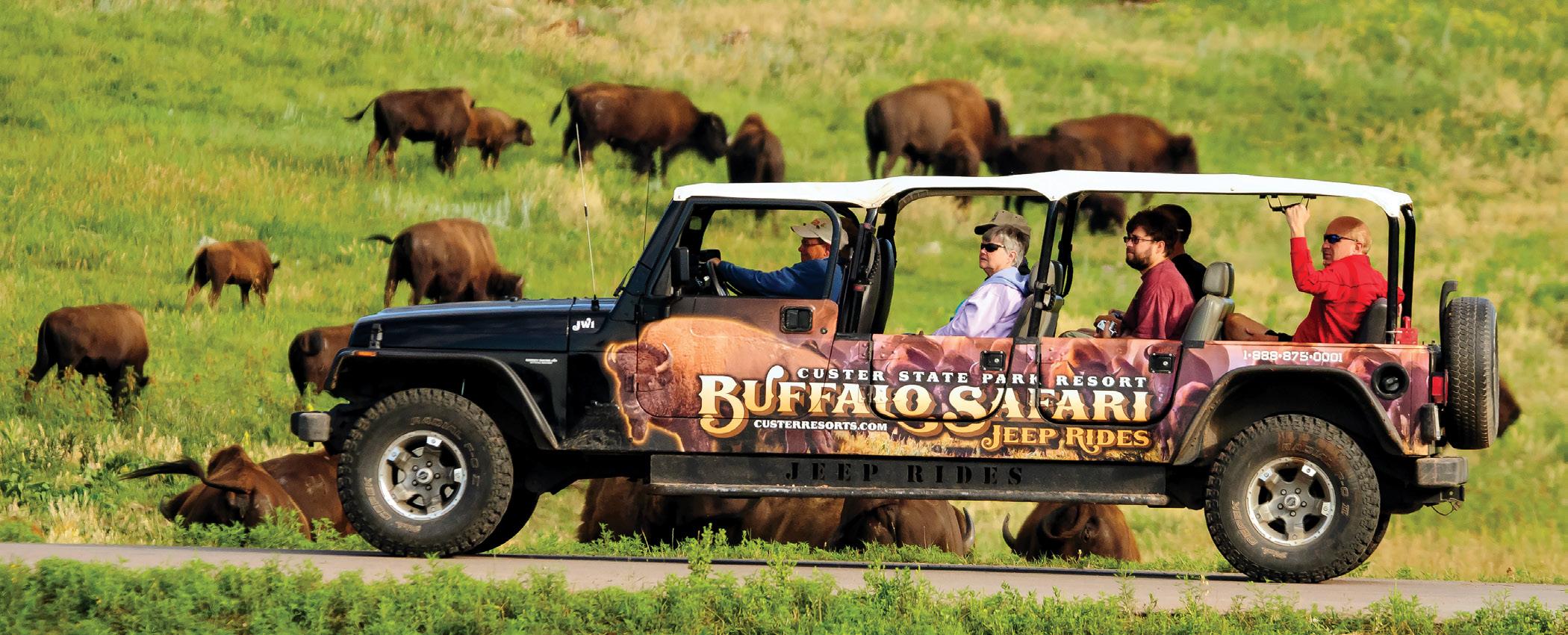
Also to consider is a Buffalo Jeep Safari in Custer State Park. Amid its 71,000 acres, groups can see bison, elk, pronghorn antelope and more. It’s a popular spot for birdwatching and nature photography, as well. For more animal encounters, consider Bear Country USA or Reptile Gardens. Note that many of these places are open seasonally, so be sure to check their calendars!
Savannah, Georgia is not only rich in history, it’s also lush with green spaces, waterways, scenic trails and beachy retreats. Enjoy dining, entertainment, and skyline views on an excursion with Savannah Riverboat Cruises. Or, explore the forests and marshes of Skidaway Island State Park, then later have a leisurely walk and picnic at Forsyth Park. There are also numerous tours for foodies, ghost hunters, art and architecture buffs, along with those who want to learn more about the city’s storied past.
While in the area, don’t pass up a trip to Tybee Island, which is only about a 30-minute drive from Savannah. Among the favorite activities is Captain Derek’s Dolphin Adventure, which offers daytime and sunset cruises—and a good chance of spotting these playful marine creatures in their natural habitat. There are reduced rates for groups of 10 or more.
Whether it’s skiing, fly fishing, camping, waterfall peeping or just a good ol’ hike, The Catskills in Upstate New York is another outdoor enthusiast’s dream. To get the most of your visit, start with the Catskills Visitor Center in Catskill Park, which features 80 acres of fields, wetlands and forests, as well as the 80-foot Upper Esopus Fire Tower providing an overlook of the picturesque landscape.


Platte Clove Preserve is another popular spot, with 208 acres of forest trails and access to the spectacular Plattekill Falls—considered to be a good alternative to Kaaterskill Falls, which tends to get more traffic. After a day of taking in the rugged natural beauty, relax in the mountain town of Woodstock, where there’s an abundance of shopping, dining and Main Street charm. Though nicknamed “Rocket City” for its role in putting men on the moon, there’s plenty to do on the ground in Huntsville, Alabama , whether it’s a guided hike with the Land Trust in Monte Sano State Park or 18 holes at one of the city’s many golf courses. Groups can also play disc golf at Chapman Mountain, or take a trek to the waterfall at Bethel Spring Nature Preserve.
Other trails and parks of interest are Harvest Square, Blevins Gap, Wade Mountain, and Rainbow Mountain Nature Preserve—plus the 500-acre Green Mountain Nature Preserve, with streams, waterfalls, Alum Cave and a prehistoric Native American camp.
If watersports are more your speed, try canoeing or kayaking on the Flint River or Tennessee River. And, a unique addition to your itinerary is a cave tour at Cathedral Caverns State Park—just a short drive from Huntsville.
Shores & Islands, Ohio , set on Lake Erie, is home to outdoor recreation galore. Of course, there’s the quintessential “must-do” that is Cedar Point! Or, if spectating is your preference, take an “Island Hopping” cruise aboard Goodtime I , with the amusement park rides and coasters as your backdrop. There’s more on-the-water fun with Portage River Paddle and Lake Erie Adventure Company, both of which rent kayaks, SUPs and other craft. Portage River Paddle’s Port Clinton location is known for its wildlife sightings, including turtles, heron, geese, swans, muskrats and even maybe a bald eagle. Axe throwing, a gem mine and bicycle rentals are also on site.


Another recommendation in the realm of recreation is Common Ground Zipline Canopy Tours, located in the Vermilion River Valley. Take a two-and-ahalf-hour treetop adventure with ziplines, spiral staircases, aerial bridges and a final rappel at the end. Looking for more ideas? Go charter boat fishing or visit Marblehead Lighthouse!
A close neighbor of New Orleans, and settled between Lake Pontchartrain and the Gulf of Mexico, Jefferson Parish, Louisiana blends urban modernity with the more rustic natural world. Never far from the excitement of The Big Easy, your group can spend your days in nature and your nights enjoying worldclass entertainment and cuisine.
The Barataria Preserve is one of the top draws for those who enjoy hiking and exploring. It has 26,000 acres of bayous, marshes, swamps and forests! Bayou Segnette State Park is another favorite, with everything

from boating, fishing, canoeing, and swimming in a wave pool to an array of flora and fauna. There are even floating cabins for overnight accommodations.
Don’t leave without a trip to Grand Isle, a barrier island at the southern edge of Louisiana, where you can relax on sandy beaches, swim in Gulf waters, take a salt-water fishing charter or wander pristine natural areas.
And, finally, there’s Highway 395 in California, which runs roughly from Lake Tahoe to Death Valley, through the eastern Sierra Nevada mountains. There are too many sights, stops, and side routes to list them all, but highlights include Lake Tahoe itself, plus Yosemite National Park, Mammoth Lakes, Sequoia National Park and Mount Whitney. Along the way, there are alpine lakes for swimming, hot springs, hiking trails, historic sites and more. It’s a must for any serious adventurer!


The Black Hills and Badlands region of South Dakota is a natural wonderland that beckons outdoor enthusiasts with its breathtaking landscapes, diverse wildlife and myriad activities. Whether you’re looking to hike iconic trails, bike through scenic byways or immerse yourself in adventure, the area caters to a wide variety of interests. Here are some highlights for groups seeking unforgettable outdoor experiences.
The Black Hills are home to an array of hiking trails that cater to all skill levels. For a truly unique hiking experience, consider the Crazy Horse Memorial® Volksmarch, held biannually in June and September. This organized hike allows participants to walk up to the arm of the sculpture, the world’s largest mountain carving in progress. The views from the top are nothing short of spectacular. Another popular trail for groups is the Presidential Trail at Mount Rushmore National Memorial. This 0.6-mile loop brings visitors up close to the monumental carvings of four U.S. presidents, offering unique vantage points and interpretive signs that share the story of this national treasure.
Cycling enthusiasts will find their paradise on the George S. Mickelson Trail, a 109-mile rail-to-trail conversion that winds through the heart of the Black Hills. This wellmaintained gravel trail offers a mix of gentle slopes and steeper climbs, crossing over 100 converted railroad bridges and passing through four tunnels. With trailheads scattered along the route, groups can tailor their biking adventures to suit their schedule and skill level.
Nature lovers won’t want to miss the Buffalo Jeep Safari in Custer State Park. Guided tours take visitors deep into the park’s 71,000 acres, where they can see herds of bison, pronghorn antelope, elk and more in their natural habitat. The park’s diverse ecosystem makes it a prime destination for wildlife photography and birdwatching. In addition to the safari, visitors can explore wildlife loops by car or on foot, keeping an eye out for the famous begging burros and other local residents. To get an up-close encounter with South Dakota’s diverse wildlife, visit attractions like Bear Country USA or the Reptile Gardens.
For those craving adrenaline, the Black Hills deliver in spades. Rent an off-road vehicle or join a guided tour to explore the region’s rugged terrain. Zipping through forested trails and over rocky outcrops offers a thrilling way to connect with the landscape. More adventurous souls can soar through the treetops on zip lines or race down an alpine slide in Keystone. Underground explorers will find their match in the region’s numerous caves, such as Wind Cave National Park and Jewel Cave National Monument, or one of the many private caves offering guided tours that reveal stunning subterranean worlds.
Step back in time with a ride on the 1880 Train, a vintage steam train that travels between Keystone and Hill City. This historic journey offers breathtaking views of the Black Hills and provides a glimpse into the area’s rich mining and railroad heritage.
Another way to connect with the region’s gold rush history is by panning for gold at attractions like Big Thunder Gold Mine and Broken Boot Gold Mine. These hands-on experiences allow visitors to try their luck at striking it rich while learning about the techniques and history of gold mining in the Black Hills.
For a perfect blend of relaxation and fun, groups can savor the charm of a chuckwagon cookout. These outings often include scenic rides through the picturesque
backwoods of Custer State Park, culminating in hearty Western-style meals served under the stars, accompanied by live music or engaging storytelling around a campfire. For those seeking a cookout experience without the hayride, Fort Hays Chuckwagon or High Plains Western Heritage Center offer excellent alternatives.
For a truly unforgettable perspective of the Black Hills, take to the skies with Black Hills Balloons or one of the region’s helicopter tour operators. A hot air balloon ride offers a serene journey above the pine-covered hills, while helicopter tours provide a thrilling bird’s-eye view of iconic landmarks like Mount Rushmore and Crazy Horse Memorial®. Both options showcase the stunning beauty of the area from an entirely new angle.
The Black Hills & Badlands region is a treasure trove of outdoor activities that combine adventure, culture and natural beauty. With so many options, planning a trip tailored to your group’s interests is easy. From hiking and biking to wildlife safaris and adrenaline-pumping thrills, the opportunities are endless. Let the Black Hills & Badlands be your group’s next great outdoor destination—where adventure meets awe-inspiring landscapes and memories are waiting to be made.

Downtown Frederick’s storied past meets modern-day hospitality at the new Visitation Hotel, the first hotel to open in the historic district in over 50 years.
Housed within the restored walls of an 1846 Catholic girls’ school, the Visitation Academy, this Tribute Portfolio Marriott property honors its heritage at every turn. From the preserved historic details—colorful stained glass, original woodwork and reverent architecture—to the fresh, contemporary amenities, Visitation Hotel seamlessly bridges Frederick’s rich past with its vibrant present.
Boasting 65 beautifully appointed rooms, this boutique destination is proud to be a member of the National Trust for Historic Preservation, recognized as part of the Historic Hotels of America program. Guests can expect the unique character and
sense of place that only a building with more than a century of history can provide, while still enjoying modern luxuries and state-of-the-art comforts. The décor thoughtfully integrates nods to the hotel’s origins, creating an atmosphere that feels both inviting and imbued with local history.
One of the property’s crowning jewels is the Wye Oak Tavern, the onsite restaurant helmed by celebrity chefs Bryan and Michael Voltaggio— Frederick County natives who’ve gained national acclaim for their inventive, flavor-forward cuisine.
At Wye Oak, diners can savor dishes inspired by the region’s farmfresh bounty, all within a warm and intimate setting that pays homage to the building’s storied background. It’s a perfect spot for a night out or a special occasion; the Wye Oak Tavern promises a memorable
culinary adventure for hotel guests and visitors alike.
Tucked in the heart of Downtown Frederick’s historic district, the Visitation Hotel places you within an easy stroll of the city’s acclaimed 50-block core dating back to the 18th century—home to more than 200 locally owned boutiques, shops and restaurants.
Stroll along charming brick-lined streets to discover art galleries, specialty stores and Frederick’s spirited cultural scene. With a location perfect for exploring, an atmosphere steeped in heritage, and hospitality that feels timeless with a splash of the modern, Visitation Hotel offers an unforgettable way to experience one of Maryland’s most beloved destinations.
Book your stay to become part of this new chapter in Frederick’s emerging history.


By Sarah Suydam
HHistory buffs know: Pennsylvania is ripe with opportunity to be truly immersed in the places where countless notable events took place. Whether it’s the world’s first generalpurpose electronic computer, America’s first zoo, one of the most important battles of the Civil War, or the creation of the U.S. itself, the Keystone State has seen it all.
As 2026 welcomes the celebration of America’s 250th birthday, join us on this exploration of just some of the historic wonders waiting to be found by groups in Pennsylvania.
Millions are drawn each year to Gettysburg , and for good reason. You can’t tell the story of America without it! From the Battle of Gettysburg (the bloodiest battle ever waged on American soil) to President Abraham Lincoln’s Gettysburg Address, it’s an undeniably storied place. Groups could partake in a number of activities here: Battlefield bus tours through Gettysburg National Military Park led by licensed guides; a visit to Gettysburg National Military Park Museum & Visitor Center; learn about Gettysburg history before, during and after the battle at the Beyond the Battle Museum, get up close to tanks, Jeeps and other military transport vehicles at the World War II American Experience; and more. A notoriously haunted destination, a Gettysburg paranormal tour should also be on your group’s radar.
Don’t forget to visit Gettysburg’s charming downtown, where groups could shop for antiques in Civil war-era buildings, dine by candlelight in a tavern as old as the U.S. and more. Want some planning help? Destination Gettysburg is available to give groups the tools they need to plan a monumental trip.
Voted the most walkable city in the U.S., the historic significance of Philadelphia , Pennsylvania’s capital

city, knows no bounds. As the site of the first and second Continental Congresses in 1774 and 1775, the City of Brotherly Love is home to the nation’s “most historic square mile,” featuring significant sites in America’s founding. Groups will want to visit Philadelphia’s Old City neighborhood which includes Independence National Historical Park—home to Independence Hall (where the Declaration of Independence was signed), the iconic Liberty Bell, Congress Hall, Elfreth’s Alley (one of the oldest continuously inhabited residential streets in the nation) and more.
Groups can also visit the Museum of the American Revolution and the National Constitution Center; peruse over one million archaeological and anthropological artifacts at The Penn Museum; and step inside the first institution built by a major municipality to preserve, interpret, and exhibit the heritage of African Americans at the African American Museum. Don’t forget to also stop by the Philadelphia Zoo—the country’s first. And remember: The PHLCVB is your go-to planning source for all things Philly.
For a look inside America’s first penitentiary, a visit to Eastern State Penitentiary Historic Site is a must on your historic Pennsylvania itinerary. The site, which previously housed bank robber “Slick Willie” Sutton and “Scarface” Al Capone, today aims to preserve the historic and expansive site while also advancing public understanding of the criminal justice system and its impact on the lives of those affected by it in order to inspire a more just future. There’s no better place to examine why America has the one of the highest rates of incarceration in the world and reflect upon how that fact has disproportionately impacted poor and disenfranchised communities.
Groups who visit Eastern State Penitentiary Historic Site can take advantage of both audio and guide-led private tours, critically-acclaimed art installations and award-winning exhibits. The site even has special seasonal offerings groups will love, such as Summer Nights and Halloween Nights, along with visits to Al Capone’s former cell.
Convenient, easy to access and affordable, groups will want to make note of the historic offerings of Lehigh Valley in eastern Pennsylvania. Among the area’s popular historic attractions is Moravian Church Settlements–Bethlehem, a UNESCO World Heritage Site where groups could partake in guided tours led by


(Top to Bottom) African American Museum. Photo © Philadelphia Convention & Visitors Bureau | Lehigh Valley. Photo © Discover Lehigh Valley, Paul S. Bartholomew | Eastern State Penitentiary Historic Site. Photo © Philadelphia Convention & Visitors Bureau | Liberty Bell. Photo © Philadelphia Convention & Visitors Bureau | National Museum of Industrial History. Photo © Discover Lehigh Valley
docents in period 1700s-era Moravian dress and learn about this population’s culturally significant influence on modern life. Groups who want to explore the history of the former Bethlehem Steel will enjoy a walk along the Hoover Mason Trestle, an elevated 1/3-mile walkway built along the railway that once hauled iron ore to Bethlehem Steel’s blast furnaces. Additional can’t-miss historic stops in the area include the Martin Guitar Museum, the Crayola Experience, the National Museum of Industrial History, the National Canal Museum, the Mack Trucks Historical Museum and more.
Nestled right in the center of the state is the Happy Valley region, home to a number of notable cities like Bellefonte, Penns Valley, Bald Eagle Valley and Philipsburg. It’s also where groups will find the bustling university town of State College and Penn State!

Among the area’s historic offerings are tours of Centre Furnace Mansion (furnished to reflect the 1800s time period when the Moses Thompson family resided there); Local Historia’s self-guided Underground Railroad and Black history tours in Bellefonte; Boalsburg’s Pennsylvania Military Museum (originally a machine gun training ground during World War I and later the 28th Infantry Division National Shrine); and the Pasto Agricultural Museum, which preserves the history of farming through displays of tools and technology of rural life before the advent of electricity and engines.
» Frank Lloyd Wright’s Fallingwater (Mill Run)
» Freedom Corner (Pittsburgh’s Hill District Neighborhood)
» Hersheypark (Hershey)
» The Pagoda (Reading)
By Sarah

AAs misconceptions of costs and outdated stereotypes fall to the wayside, more and more travelers— specifically in the Millennial and Gen Z demographic—are recognizing the benefits of working with tour operators and travel advisors for planning their adventures.
But how do you capture the attention of these travelers? Part of the solution is building itineraries that satisfy their travel goals, offer opportunities for authentic experiences, provide immersive activities—while still
allowing time for rest, rejuvenation and self-exploration.
Come along as we explore some ways to attract and build itineraries for Millennials and Gen Z travelers.
According to research from TravelPerk, 88% of Gen Z consumers are following at least one travel influencer on TikTok, with 45% of them sharing that they trust travel recommendations made by these influencers. This means it’s wise to
put yourself out there socially on popular platforms! Whether that means creating content yourself or partnering with relevant travel influencers to help spread your praises, this avenue is an easy way to get your name in front of the audiences you seek.
While a “go, go, go!” itinerary might be just the thing for some folks, it might not be Millennial and Gen Z’s cup of tea. TravelPerk
also shares that 71% of Gen Z and Millennial consumers want to book travel to private beaches to focus on relaxation, and 61% prioritize travel plans focused on personal wellness and well-being experiences. So, while building out itineraries, ensure there are not only experiences built in that prioritize self-care and relaxation, but creativity and perhaps opportunities to channel their inner child.
Think: forest bathing, yoga classes, spa services, farm-totable cooking classes, digital detox retreats, pottery classes, journaling time, reiki, etc.
Ensure your marketing prioritizes user-generated imagery from actual travelers visiting the actual destinations you’re trying to sell, avoiding stock imagery as much as possible. Millennials and Gen Zs are proficient at knowing when they’re being marketed to, and can end up feeling deceived if something reads as even slightly disingenuous. If the trip’s accommodations are near local hidden gems, make that info known! Millennials and Gen Z travelers are much more likely to want to experience a destination as a local would, from where they get their coffee in the morning, to the food they eat, to the people they converse with and more. Anyone can grab a coffee from a big chain at home; choose the local option to give travelers an all-around, unique-toyour-destination adventure.
Destinations and their local communities often boast incredibly
rich histories and traditions that Millennial and Gen Z travelers are eager to learn from. Seek out suppliers that respectfully offer these kinds of experiences, whether it’s tea ceremonies in Japan, grape harvesting and winemaking in France, exploring the heritage of the Gullah Geechee people in South Carolina and Georgia, admiring Navajo history, art, and spirituality in the American Southwest and more.
It’s vital to note, however, that Millennials and Gen Z travelers will of course be looking to ensure any cultural experience is done in a sensitive and non-exploitative manner. Ensure you’re consulting the correct parties to avoid accidentally participating in closed or problematic practices. Remember: Sometimes, just because you can doesn’t mean you should.
The cost of a trip must absolutely match the perceived value for Millennial and Gen Z travelers. Because while many prioritize spending funds on leisure travel over material items, this demographic is contending with factors like paying back student loans, trying to keep up with a rising cost of living alongside often stagnant wages and more. Little details can go a long way, so don’t neglect them! Having trouble finding a balance between offering a good value and making a profit? Look into common traveler pain points—either by asking past clients or Millennial/ Gen Z family members—as a way to figure out what changes would make the biggest positive change for yourself and your clients.
Edited by Sarah Suydam
Groups Today recently caught up with Sherry L. Rupert (Paiute and Washoe Tribes of Nevada), CEO of the American Indian Alaska Native Tourism Association (AIANTA). With two decades of executive-level experience managing and promoting Indigenous tourism, Rupert has dedicated her career to advancing cultural heritage storytelling for Native Nations and communities across the U.S.
As we prepare for the future of travel in our Native Nations and communities across the U.S., presenting our culture, arts and foods in a respectful and authentic manner is critical. Regenerative and sustainable tourism will also play a key role. There’s critical work to be done as we bridge the gap between DMOs, tribes and Native Nations across the U.S. AIANTA knows Native Nations and communities best. As AIANTA evolves into the DMO for U.S. Indigenous communities, the more opportunities Native Nations and businesses will have to share their unique, authentic stories and destinations.
I hope when people plan vacations in the U.S., they consider exploring an Indigenous experience before heading to a big city or an amusement park. As the first peoples of what is now the U.S., we can use our collective voice to become the first choice—not an afterthought.
SUPPORT AND ENGAGE IN INDIGENOUS
By partnering with Indigenous-owned businesses, ensuring experiences are led by Indigenous guides, and seeking permission before visiting culturally significant sites. Tour groups should be educated beforehand about local customs, traditions and protocols, emphasizing the importance of respectful behavior. Prioritize authentic, community-endorsed activities that benefit Indigenous communities economically and culturally.

I’m proud to say that for more than 26 years, AIANTA has served as the only national organization dedicated to advancing cultural heritage tourism in Native Nations and communities across the U.S. Our successful legislative work led to the industry-changing Native American Tourism and Improving Visitor Experience Act (NATIVE Act) funding in 2018, as Indigenous Tourism was recognized through federal appropriations via NATIVE Act implementation. Arguably the most important aspect of the future of travel in U.S. Indigenous communities is the need for resources, advocacy and bringing equity to tribes and Native Nations within the greater tourism industry. It’s imperative that systems change to include Native experiences and destinations, and AIANTA is committed to making that happen. Tourism brings economic benefits to our Indigenous communities and much more than that, it gives American Indian, Alaska Native and Native Hawaiian people the platform to perpetuate our culture.
People want to experience something authentic. We are the first people of this nation, and our domestic neighbors should (and want) to know more about us. A lot of our Indigenous communities are open to that, and more people should take advantage of the opportunity. American Indian, Alaska Native and Native Hawaiian-owned hospitality businesses contribute $15.7 billion in annual sales to the tourism and hospitality sector in the U.S.—so yes, travelers certainly have a desire to experience something authentic.
There’s a bridge between societies that non-Native visitors continue to help build, which acknowledges the dark past while looking toward a brighter future together. Curiosity is the key to a respectful visit.

