

4 SIRE DESIGNATIONS 5 TOP TEN ANGUS 6 ANGUS SIRES 29 44 FARMS - GREATER THINGS ARE HERE 39 THE METHOD GENETICS INDEX 44 ORDERING A.I. CERTIFICATES 46 ALL ANGUS SIRES AVAILABLE 50 USING SEXED SEMEN AS AN A.I. STRATEGY 52 SEXED SEMEN OPTIONS 53 SYNCHRONIZATION OPTIONS 54 SIMMENTAL SIRES 63 ALL SIMMENTAL SIRES AVAILABLE 64 GENENET 65 DELIVERING MORE OPTIONS 66 RED ANGUS SIRES 73 ALL RED ANGUS SIRES AVAILABLE TABLE OF CONTENTS 76 HEREFORD SIRES 81 ALL HEREFORD SIRES AVAILABLE 81 ALL CHAROLAIS SIRES AVAILABLE 82 CHAROLAIS SIRES 85 BRAHMAN SIRES 85 CLUB CALF SIRES 86 WAGYU SIRES 88 SUPPLEMENTAL INFORMATION 88 ACROSS-BREED EPD COMPARISON 89 EPD TERMINOLOGY 90 HEIFER A.I. PROTOCOLS 91 COW A.I. PROTOCOLS 92 A.I. TECHNIQUE IN CATTLE 94 INDEX AND PERFORMANCE DATA 96 BEEF SPECIALISTS IBC COOPERATIVE CONTACTS
MEET THE BEEFteam
At Select Sires we have had a long-term commitment to providing industry leading CONCEPTION rates on sires that offer CALVING EASE and CARCASS while keeping your COW herd in mind. However, we are most proud of our unmatched CUSTOMER SERVICE! We have a team of extremely talented experts across the country who work hard every day to make you, our farmer-owners, more profitable using time tested strategies and innovative technologies.
Relationships matter. We genuinely believe that relationship building is the foundation upon which significant results can be achieved and together we can achieve more than any one entity can alone. As a cooperative, our priorities will always be to invest in and strengthen our relationships with our farmerowners, seedstock partners, employees, and supply chain team members. We’ve found supply chains that create and capture value are strengthened by relationships built on integrity and trust, and we believe these strong relationships are vital to achieving our bold vision of cooperation, shared success and sustainability.
While a large portion of our country has been affected by mother nature in some way or another, we are all confident better days are to come. Worldwide demand for U.S. beef continues to grow, especially for high quality beef. Now is the time to invest in our nation’s cow herd and continue to move the industry forward to feed the world.
From the entire team at Select Sires, THANK YOU! Thank you for trusting in our team to deliver the evergrowing needs of your herd. We value every customer and relationship!
Gratefully, The Select Sires Beef Team
Vice President Beef Program and Product Manager (614) 733-3420 ssbeef@selectsires.com
Jennie Harbin

Beef Marketing Coordinator (402) 317-1198 jharbin@selectsires.com

Beef Development Advisor (970) 481-2570 willie@rmi.net


Lorna
lmarshall@selectsires.com
Associate

of Beef Product Development and Marketing (785) 221-3284 rbodenhausen@selectsires.com
Beef Multimedia Specialist (605) 680-3649 dkrick@selectsires.com
Beef Acquisition and Product Specialist (614) 733-3426 rhamilton@selectsires.com
Sandra Utter




GeneNet Beef Manager (307) 287-6647 sutter@selectsires.com
Large-Herd Beef Specialist (541) 609-0167 clints@allwest.coop
Beef Reproductive and Research Specialist (573) 289-2058 dbusch@selectsires.com
1
®Your Success Our Passion. is a registered trademark of Select Sires
Inc.
Joe Myers
Beef Sire Analyst jmyers@selectsires.com
Jon Herrick Beef Sire Analyst (308) 627-6431 jherrick@selectsires.com
Doug Harris Beef Program Consultant (804) 332-1456 dharris@selectsires.com
Marshall Vice President of Beef Genetics (719) 342-8984
Darcy Krick
Brian House
Ryan Bodenhausen
Vice President
Reneé Hamilton
Clint Sexson
Dan Busch
Willie Altenburg


SELECT SIRES DESIGNATIONS
Throughout this directory, you will find icons designating traits and/ or industry sectors where a sire offers significant improvement. Listed below are the descriptions for these new icons. Use these icons to help find and utilize the sires that best fit your needs and goals.
COWMAKER
The Cowmaker logo designates sires expected to make the next generation of daughters to retain in your herd. This designation is a combination of maternal EPDs and reports from the field.
FERTILITY VERIFIED
Using conception data along with quality control evaluations, beef sires designated as Fertility Verified have been field tested and achieved Select Sires’ industry-leading quality standards.
PROOF POSITIVE
Sires that are .85 or higher accuracy for Birth Weight EPD.
CALVING EASE
These sires are your go-to for your heifers.
The Calving Ease logo identifies sires that rank high for Calving Ease Direct and/or have been successfully used in the field on virgin heifers.
CARCASS
The Carcass logo designates sires that will add carcass value and quality. These sires rank high for marbling, ribeye area and $B.

CAB TARGETING THE BRAND
Identifies sires that will help you target CAB standards.
Limitations and Conditions of Sale: gender SELECTED semen shall be used only for the single insemination of one female bovine during natural ovulation with the intent to produce a single offspring unless specifically approved on an individual customer basis by Sexing Technologies in writing. As a condition of purchasing gender SELECTED semen, the purchaser agrees that gender SELECTED semen will not be reverse sorted or re-sorted unless specifically permitted, in advance, on a case-bycase basis by Select Sires in writing. Select Sires intends to monitor the use of the gender SELECTED semen and vigorously enforce these restrictions on use. Please see http://www.selectsires.com/designations/genderselected.html for additional details.
SHOWCASE
Sires earn the Showcase™ designation through outstanding show results or from a show-winning pedigree. Turn to this designation to produce your next show winner or to improve the overall phenotype of your herd.
PERFORMANCE LEADERS
Expect Performance Leaders sires to deliver cattle that are leaders for adding growth. These sires will rank among the best in their respective breeds for WW, YW, and ADG.
PAP
These sires are designed to perform at high altitudes and rank high for PAP EPD or by having great individual PAP data.
This icon identifies sires with sex-sorted female semen available. All gender SELECTED semen is processed using Ultraplus technology.
Look for the gender SELECTED 4M icon to identify sires with sex-sorted female semen available in 4 million sperm doses. All gender SELECTED semen is processed using Ultraplus technology.
This icon identifies sires with sex-sorted male semen available. All gender SELECTED semen is processed using Ultraplus technology.
44 BUY BACK PROGRAM
This represents a sire with progeny qualifying for the 44 Farms Prime Pursuits and Angus Strong buy back programs. Using these sires will make your calf crop eligible to participate in 44 supply chain opportunities.
4
™Showcase, gender SELECTED, gender SELECTED 4M and Proof Positive are trademarks of Select Sires Inc., Ultraplus is a trademark of STGen LLC. and ®Certified Angus Beef and CAB are registered trademarks of Certified Angus Beef LLC.
TOP TEN ANGUS
Calving Ease Direct EPD
7AN525 COMPOUND 18
7AN718 NORTHBOUND 17
7AN701 DIFFERENCE 16
7AN617 ENDEAVOR 16
7AN683 SAFE & SOUND 16
14AN686 PATENT 15
7AN669 NORTH STAR 15
14AN534 RUSSELL 15
14AN553 COWBOY LOGIC 15
7AN749 FIREPROOF 15
Breed Average 6
Docility
EPD
7AN758 APEX 37
14AN497 NEW ADDITION 36
7AN544 MAIN STREET 33
7AN736 BRUNSWICK 32
7AN531 ENTICE 31
7AN697 COUNTY ROAD 31
2AN604 TOP CUT 29
7AN623 GUARANTEE 29
Birth Weight EPD
7AN525 COMPOUND -3.0
7AN718 NORTHBOUND -2.8
14AN534 RUSSELL -2.5
7AN684 GUARD RAIL -2.4
7AN600 WOLVERINE -2.3
7AN617 ENDEAVOR -2.2
7AN432 BANKROLL -2.1
7AN683 SAFE & SOUND -1.8
7AN758 APEX -1.7
14AN686 PATENT -1.6
Breed Average 1.2
Claw EPD
7AN753 GRAND CANYON .23
7AN688 JUSTICE .24
7AN735 GIBSON .24 7AN466 RAINFALL .34 7AN550 KNOW HOW .34 7AN531 ENTICE .36
7AN600 WOLVERINE .37
Weaning Weight EPD
7AN699 YELLOWSTONE 103
7AN579 TEAMWORK 98
7AN510 PEYTON 95
7AN738 RIVAL 94
7AN607 STAGECOACH 93
7AN528 GROWTH FUND 91
7AN594 REGIMENT 90
7AN695 NETWORK 90
7AN625 COUNTY LINE 89
7AN737 STATESMAN 89
Breed Average 59
Angle EPD
7AN669 NORTH STAR .25
7AN691 STEP UP .26
7AN550 KNOW HOW .29
7AN688 JUSTICE .34 7AN737 STATESMAN .34
7AN757 SALUDA .36
7AN698 IRON HORSE .35
Yearling
Weight
EPD
7AN699 YELLOWSTONE 186
7AN579 TEAMWORK 172
7AN594 REGIMENT 170
7AN528 GROWTH FUND 169
7AN510 PEYTON 168
7AN737 STATESMAN 168
7AN695 NETWORK 167
7AN738 RIVAL 163
7AN625 COUNTY LINE 158
7AN723 GOOD NEWS 157 Breed Average 105
Heifer Pregnancy EPD
7AN684 GUARD RAIL 20.6
14AN686 PATENT 19.5
7AN743 CRAFTSMAN 19.4
7AN757 SALUDA 19.2
2AN604 TOP CUT 18.1
14AN497 NEW ADDITION 17.4
7AN737 STATESMAN 17.0
7AN701 DIFFERENCE 29 14AN534 RUSSELL 28 Breed Average 17
7AN718 NORTHBOUND .37 7AN738 RIVAL .37 7AN757 SALUDA .37 Breed Average .50
7AN735 GIBSON .35 7AN699 YELLOWSTONE .35 7AN723 GOOD NEWS .35 Breed Average .49
7AN701 DIFFERENCE 16.5
7AN723 GOOD NEWS 16.5 14AN534 RUSSELL 16.4 Breed Average 11.4 Calving
Marbling EPD
7AN759 FIREPROOF 2.29 7AN629 TRANSCENDENT 2.23 7AN700 HERO 1.74 7AN580 HOME TOWN 1.71 7AN642 VERACIOUS 1.70 2AN604 TOP CUT 1.69
7AN689 INCENTIVE 1.64
7AN542 COMBUSTION 1.61 7AN703 BELIEVER 1.59 7AN392 MOMENTUM 1.56
Breed Average .53
Ribeye EPD
7AN642 VERACIOUS 1.42
7AN758 APEX 1.40
7AN560 QUANTUM 1.31
7AN610 FINAL DECISION 1.28
7AN624 DUAL THREAT 1.24
7AN695 NETWORK 1.22
7AN735 GIBSON 1.21
7AN594 REGIMENT 1.19
7AN689 INCENTIVE 1.17
7AN698 IRON HORSE 1.16 Breed Average .56
$Maternal EPD
7AN743 CRAFTSMAN 112
7AN697 COUNTY ROAD 110
2AN604 TOP CUT 107
7AN684
5
Ease Maternal
EPD 7AN463 PLAYBOOK 17 7AN669 NORTH STAR 15 7AN699 YELLOWSTONE 15 7AN723 GOOD NEWS 15 7AN725 CAMERON 15 14AN553 COWBOY LOGIC 15 7AN683 SAFE & SOUND 15 7NA644 OPTIMUM 15 14AN686 PATENT 14 7AN697 COUNTY ROAD 14 Breed Average 8
$Energy EPD 7AN600 WOLVERINE 10 7AN463 PLAYBOOK 3 7AN466 RAINFALL 2 14AN497 NEW ADDITION 0 7AN697 COUNTY ROAD -4 7AN538 BRAGGING RIGHTS -7 2AN604 TOP CUT -8 7AN718 NORTHBOUND -9 7AN389 SURE FIRE -9 7AN735 GIBSON -9 Breed Average -16
Top Ten list features the top sires from the Select Sires and Accelerated Genetics lineups in each of these 16 traits THE SELECT SIRES AND ACCELERATED GENETICS LINEUPS CONTAIN SIRES THAT EXCEL IN EVERY TRAIT!
The
GUARD RAIL 104
PLAYBOOK 102
GIBSON 102
NEW ADDITION 98
NORTH STAR 97
DIFFERENCE 97
WOLVERINE 96 Breed Average 58 $Weaning EPD
TAHOE 96 7AN699 YELLOWSTONE 96 7AN738 RIVAL 95 7AN528 GROWTH FUND 94 7AN697 COUNTY ROAD 94 7AN743 CRAFTSMAN 94 7AN607 STAGECOACH 92 7AN579 TEAMWORK 91 7AN642 VERACIOUS 91 7AN695 NETWORK 90 Breed Average 55 $Beef EPD 7AN759 FIREPROOF 266 7AN695 NETWORK 245 7AN642 VERACIOUS 235 7AN610 FINAL DECISION 227 7AN629 TRANSCENDENT 227 7AN689 INCENTIVE 223 7AN579 TEAMWORK 220 7AN510 PEYTON 219 7AN580 HOME TOWN 217 7AN594 REGIMENT 211 Breed Average 132 $Combined EPD
FIREPROOF 409 7AN642 VERACIOUS 386 7AN695 NETWORK 375 2AN604 TOP CUT 363 7AN610 FINAL DECISION 362 7AN758 APEX 361 7AN689 INCENTIVE 356 7AN629 TRANSCENDENT 353 7AN737 STATESMAN 349 7AN580 HOME TOWN 344 Breed Average 229 7 code numbers= Select Sires 14 code numbers= Accelerated Genetics EPDs as of 11/01/22
7AN463
7AN735
14AN497
7AN669
7AN701
7AN600
14AN502
7AN759


6 Individual sire performance data is listed on pages 94-95. ◊ HOME
◊ ‘Head
HOME
◊
◊ HOME
◊ If you
HOME
customers
From Gardiner Angus Ranch and GRCQ LLC, KS and Robert Stumpff, VA Daughter, EZ Angus Ranch, CA Daughter, 4 Sons Farm, KY Daughter, Hilton Farms, OK GAR EARLY BIRD GAR ASHLAND CHAIR ROCK AMBUSH 1018 SIRE: GAR SURE FIRE CHAIR ROCK SURE FIRE 6095 CHAIR ROCK PROGRESS 3005 DAM: Open camera. Scan code. Click to learn more. 7AN580 G A R HOME TOWN $30 AAA: 19266718 DOB: 09/06/18 TAT: 7488 EPDs as of 11/01/22 Production Maternal Carcass C U $Value CED BW WW YW RADG DMI YH SC DOC Claw Angle PAP HS HP CEM Milk Hd/Dt MW MH $EN CW Marb RE Fat Grp/Pg Grp/Pg $M $W $F $G $B $C EPD 14 -.5 61 116 .27 1.14 .2 .84 20 .60 .47 -2.55 .22 12.0 13 27 - 56 .2 -17 53 1.71 1.09 -.043 8 679 63 59 103 114 217 344 Acc .88 .96 .94 .89 .68 .68 .93 .91 .85 .79 .78 .40 .72 .39 .32 .31 - .44 .43 .68 .64 .61 .65 28 2011 % Rank 4 20 50 35 30 65 80 50 40 90 40 1 4 45 10 40 55 60 55 30 1 3 3 40 45 20 1 1 1 METHOD GENETICS MPI / % 134 / 52 QPI / % 178 / 1 ROI / % 276 / 8
TOWN is the No. 1 sire for Angus registrations – WOW!
for the mountains’ with
TOWN. He’s our best for PAP EPD by a solid margin.
His Marbling EPD is the real deal and his 107 ratio for IMF indicates his ability to ‘ring the bell’ for quality premiums.
TOWN progeny are easy to like. His young females are moderate-sized sweethearts with plenty of middle, above-average muscle shape and a classy look from nose to tail.
follow Angus sale reports, like many do, you’ve watched a large number of
TOWNs showing up as high sellers. His acceptance by a wide variety of
has been phenomenal.
No. 2 in the Angus breed for registrations, GROWTH FUND is leaving his mark as a legendary sire adding performance, profit and customer satisfaction across all segments of the beef industry.
GROWTH FUND offers consistent quality that breeders demand in terms of phenotype and genetic merit from most any pedigree combination.
Study the details of his proven EPD profile. He hits the marks with progeny proof to back it up.


GROWTH FUND’s daughters are making tremendous young cows with beautiful level udders and small teats with excellent placement.
GROWTH FUND is easy to use, easy to like and easy to sell. Increase your assets, invest in GROWTH FUND.

7 Fall 2022 Angus Breed Average EPDs Production: CED: 6 BW: 1.2 WW: 59 YW: 105 RADG: .24 DMI: .91 YH: .5 SC: .80 DOC: 17 CLAW: .50 ANGLE: .49 PAP: 1.22 HS: .56 Maternal: HP: 11.4 CEM: 8 MILK: 26 MW: 56 MH: .3 $EN: -16 Carcass: CW: 42 MARB: .53 RE: .56 FAT: .012 $M: 58 $W: 55 $F: 85 $G: 46 $B: 132 $C: 229 ◊
◊
◊
Austin Family
and Lawson
and Tom
VA
Daughter, Laflin Ranch, KS BASIN PAYWEIGHT 006S BASIN PAYWEIGHT 1682 21AR O LASS 7017 SIRE: PLATTEMERE WEIGH UP K360 DEER VALLEY RITA 36113 DEER VALLEY RITA 9457 DAM: Open camera. Scan code. Click to learn more. 7AN528 DEER VALLEY GROWTH FUND $40 AAA: 18827828 DOB: 01/22/17 TAT: 71122 EPDs as of 11/01/22 Production Maternal Carcass C U $Value CED BW WW YW RADG DMI YH SC DOC Claw Angle PAP HS HP CEM Milk Hd/Dt MW MH $EN CW Marb RE Fat Grp/Pg Grp/Pg $M $W $F $G $B $C EPD 9 1.2 91 169 .35 2.07 .6 .83 22 .46 .47 2.94 .92 10.4 14 32 132 104 .6 -42 82 .31 .67 .055 7 783 68 94 126 34 160 276 Acc .87 .97 .96 .93 .57 .57 .93 .92 .89 .83 .82 .47 .73 .61 .79 .71 341 .66 .63 .66 .62 .59 .62 20 1788 % Rank 30 50 1 1 1 95 40 50 30 35 40 90 95 65 5 15 10 25 95 1 75 35 95 30 1 2 75 20 15
◊
◊
From Deer Valley Farm, TN; Edisto Pines, SC; Britt Angus, GA; Trowbridge Angus, NY;
Angus, CA
Farms
Baker,
Daughter, Cardinal Cattle Company, IL Daughter, Chestnut Angus, MN
One of the great things about CRAFTSMAN is the mating flexibility he provides. His impressive phenotype, robust EPD profile, and “here-I-am” presence offer exciting opportunities to cross on many different females.
Gabe Connealy, Connealy Angus

CRAFTSMAN is the single most talked about sire to sell in 2022! He was highly sought after by the most astute cattlemen commanding a record setting $500,000.

An early Resilient son offering elite predictions for both $M and $C while excelling for traits like WW, YW, DOC, CLAW, ANGLE, HP, MARB and REA.
CRAFTSMAN offers stunning presence with added length of spine, correctness of lines, extra mass and volume with excellent structural integrity.
His individual performance records are unmatched with ratios of 120 for WW, 119 for YW, 154 for IMF and 107 for REA.

8
Individual sire performance data is listed on pages 94-95. ◊
SITZ
SITZ
SITZ
SIRE: CONNEALY
5451 BLACK
8521 BLACK
DAM: Open
Scan code. Click to learn more. 7AN743 CONNEALY CRAFTSMAN $50 AAA:
DOB:
TAT:
EPDs as of 11/01/22 Production Maternal Carcass C U $Value CED BW WW YW RADG DMI YH SC DOC Claw Angle PAP HS HP CEM Milk Hd/Dt MW MH $EN CW Marb RE Fat Grp/Pg Grp/Pg $M $W $F $G $B $C EPD 8 1.6 83 145 .29 1.43 .8 .68 25 .38 .40 -.24 .40 19.4 5 41 - 44 .5 -19 67 1.03 .93 .012 - - 112 94 102 75 177 342 Acc .36 .56 .48 .44 .32 .32 .47 .42 .45 .36 .36 .29 .31 .28 .28 .31 - .38 .40 .43 .39 .39 .37 -% Rank 35 60 5 5 20 80 25 65 20 10 15 20 25 2 85 1 75 40 60 10 15 10 50 1 1 15 10 10 1
◊
◊
◊
◊ CRAFTSMAN is a must-use sire for balanced breeding! From Connealy Angus, NE and STgenetics, TX
STELLAR 726D
RESILIENT 10208
MISS BURGESS 1856
NIOBRARA
CATHY OF CONANGA
CARLA OF CONANGA 450
camera.
20132505
11/13/20
070R
RIVAL was a standout from day one here at Benoit Angus with not only an exceptional look but was equally impressive in every facet of his data collection. He was born black as the ace of spades, and was slick-haired at grass time in May. His dam, Lady Plus 8180, is one of our best and is one of six full sisters we have in our herd. They are all beautiful cows and performing above average. We flushed 8180 this past spring, so she became the sixth consecutive donor in her cow family for us. We used RIVAL heavily in our herd in the 2022 breeding season and are excited to see his first calves.


9 ◊
◊
◊
◊
From Benoit Angus, KS Dam of RIVAL BASIN PAYWEIGHT 1682 DEER VALLEY GROWTH FUND DEER VALLEY RITA 36113 SIRE: CONNEALY CONFIDENCE PLUS E&B LADY PLUS 8180 E&B LADY PRIMESTAR 086 DAM: Open camera. Scan code. Click to learn more. 7AN738 E&B RIVAL 175 $40 AAA: 20128929 DOB: 01/28/21 TAT: 175 EPDs as of 11/01/22 Production Maternal Carcass C U $Value CED BW WW YW RADG DMI YH SC DOC Claw Angle PAP HS HP CEM Milk Hd/Dt MW MH $EN CW Marb RE Fat Grp/Pg Grp/Pg $M $W $F $G $B $C EPD 6 2.2 94 163 .29 2.00 1.0 .54 18 .37 .43 .49 .44 12.5 6 37 - 96 .6 -41 75 .90 1.12 .037 - - 78 95 109 69 179 310 Acc .36 .55 .48 .44 .34 .34 .52 .49 .36 .30 .30 .28 .32 .27 .33 .34 - .41 .42 .43 .39 .39 .37 -% Rank 55 75 1 1 20 95 10 75 55 10 25 35 30 45 75 3 15 30 95 4 20 2 85 15 1 10 15 10 3 Fall 2022 Angus Breed Average EPDs Production: CED: 6 BW: 1.2 WW: 59 YW: 105 RADG: .24 DMI: .91 YH: .5 SC: .80 DOC: 17 CLAW: .50 ANGLE: .49 PAP: 1.22 HS: .56 Maternal: HP: 11.4 CEM: 8 MILK: 26 MW: 56 MH: .3 $EN: -16 Carcass: CW: 42 MARB: .53 RE: .56 FAT: .012 $M: 58 $W: 55 $F: 85 $G: 46 $B: 132 $C: 229 METHOD GENETICS MPI / % 192 / 1 QPI / % 177 / 1 ROI / % 334 / 1
RIVAL is possibly the most exciting sire to enter our lineup in some time!
He is the rare combination of phenotype, proven maternal line, actual data, EPD’s and now Method Genetics. He is a triple threat sire, ranking in the top 1% for all three Method indexes!
RIVAL’s actual scan ratios, 232 for IMF and 125 for REA, back up his great carcass predictions.
His dam already has a WW ratio of 2 for 111, YW ratio of 2 for 110 and is well on her way to Pathfinder. His grandam and great grandam are already Pathfinders!
Doug Benoit, Benoit Angus
Photo Reversed
STATESMAN is one of the most talked about new sires in the Angus breed.

He has a fresh pedigree for Select Sires with exceptional mating flexibility. He will complement 7AN528 GROWTH FUND and 7AN580 HOME TOWN females from both a phenotype and EPD perspective.
STATESMAN is the sire of choice if you like elite index values, big spread and high phenotype.
He checks all the boxes by offering breed leading HP, Marbling and excellent foot scores.
STATESMAN is one of the most unique sires we’ve come across in years. For us, and many breeders out there, he is a fresh outcross pedigree that has several generations of proven predictability in his bloodlines. Calving ease, breedleading growth, phenomenal foot EPDs, negative PAP, tremendous carcass traits and maternal tilt that you rarely find with these kind of traits. Couple that with the unreal structure and cool look he gives you and you have an individual that fits every breeder in the industry. He’s the sire we have searched for to use on the PLAYBOOK, BLUEPRINT, GROWTH FUND and WALL STREET daughters in our program.

10
◊
◊
◊
◊
◊
From Deer Valley Farm, TN and Knoll Crest Farms Inc., VA SS NIAGARA Z29 TEHAMA PATRIARCH F028 TEHAMA ELITE BLACKBIRD D826 SIRE: ELLINGSON HOMESTEAD 6030 VPI 310A RITA 9G6 ET AED RITA 310A DAM: 7AN737 VIRGINIA TECH STATESMAN $40 AAA: 20085208 DOB: 01/16/21 TAT: 1J3 EPDs as of 11/01/22 Production Maternal Carcass C U $Value CED BW WW YW RADG DMI YH SC DOC Claw Angle PAP HS HP CEM Milk Hd/Dt MW MH $EN CW Marb RE Fat Grp/Pg Grp/Pg $M $W $F $G $B $C EPD 8 0.1 89 168 .33 2.36 1.0 .87 21 .47 .34 -1.74 .52 17.0 13 28 - 104 .9 -40 78 1.22 .86 .063 - - 84 83 125 79 204 349 Acc .36 .51 .44 .37 .30 .30 .43 .39 .34 .28 .28 .26 .27 .23 .29 .30 - .35 .38 .39 .35 .35 .31 -% Rank 35 25 2 1 4 95 10 50 40 40 3 3 45 10 10 35 10 10 95 2 5 20 95 10 2 2 5 1 1
Individual sire performance data is listed on pages 94-95.
STATESMAN is a sire that should work in high elevation programs with a PAP EPD in the top 3% of the breed.
Jonathan Perry, Deer Valley Farm
BRIGADE is a great choice to add muscle and performance in an attractive package. He ranks in the top 5% for $C and top 10% or better for BW, YW, RADG, CEM, MILK, CW, $W and $B.
Anchored by the maternal strength of his pedigree, BRIGADE combines Isabel Y69 and GAR EXT 614 in the same pedigree.



For customers wanting the “right kind” of cattle, look no further!

11 Fall 2022 Angus Breed Average EPDs Production: CED: 6 BW: 1.2 WW: 59 YW: 105 RADG: .24 DMI: .91 YH: .5 SC: .80 DOC: 17 CLAW: .50 ANGLE: .49 PAP: 1.22 HS: .56 Maternal: HP: 11.4 CEM: 8 MILK: 26 MW: 56 MH: .3 $EN: -16 Carcass: CW: 42 MARB: .53 RE: .56 FAT: .012 $M: 58 $W: 55 $F: 85 $G: 46 $B: 132 $C: 229 ◊ BRIGADE
◊
◊
◊
◊
From
OK Son, Deer Valley Farms, TN Daughter, Deer Valley Farms, TN Son, Deer Valley Farms, TN BALDRIDGE XPAND X743 BALDRIDGE COLONEL C251 BALDRIDGE ISABEL Y69 SIRE: PLATTEMERE WEIGH UP K360 DEER VALLEY RITA 36142 DEER VALLEY RITA 9457 DAM: Open camera. Scan code. Click to learn more. 14AN590 DEER VALLEY BRIGADE 81247 $25 AAA: 19469706 DOB: 01/05/18 TAT: 81247 EPDs as of 11/01/22 Production Maternal Carcass C U $Value CED BW WW YW RADG DMI YH SC DOC Claw Angle PAP HS HP CEM Milk Hd/Dt MW MH $EN CW Marb RE Fat Grp/Pg Grp/Pg $M $W $F $G $B $C EPD 9 -1.2 75 144 .31 1.84 .6 .99 13 .45 .51 .40 .66 11.8 13 34 - 53 .3 -19 71 .70 .92 .041 1 9 77 81 117 57 174 303 Acc .48 .82 .77 .60 .40 .40 .66 .52 .52 .43 .43 .27 .31 .27 .33 .35 - .44 .45 .53 .46 .44 .42 5 16 % Rank 30 10 15 10 10 95 40 40 70 30 60 30 75 50 10 10 60 50 60 5 30 10 85 15 3 5 30 10 5
was our best kept secret, but not anymore!
Study these three progeny pictures to the right. We could have published 15 more that look just the same.
Deer Valley Farm, TN; McMillan Angus, MS; Britt Angus Farm, GA, Norm Schenk, KY and Hartley Creek Ranch,
WOLVERINE has skyrocketed up the sales charts to No. 5 in 2022 only to be topped by the four top Angus Registration sires, 7AN580 HOME TOWN, 7AN528 GROWTH FUND, 14AN502 TAHOE and 7AN466 RAINFALL!
is everything commercial cattlemen ask for in a calving ease sire. His calves come easy, grow, are attractive and offer exceptional foot quality.
WOLVERINE is backed by a beautiful Prosecutor daughter that is admired by all who visit Talkington Angus which backs up his top 1% ranking for $M.
is a go-to heifer sire ranking among the best for CLAW, ANGLE, PAP and HS. From Talkington Angus, ND




STAGECOACH is a truly unique sire with a super combination of phenotype, performance and maternal strength.
He has elite maternal value, ranking near the top of the breed for Hair Shedding (HS), $M, $W and does this with modest Calving Ease and breed-leading growth.
Excellent for phenotype, STAGECOACH, is a moderate-framed sire with lots of muscle and extra rib shape.
His progeny are very attractive and ratioing well for BW and YW.
His pedigree combines two of our best in 14AN502 TAHOE and 7AN351 CAPITALIST 028.


From Hoffman Ranch, NE

12
◊
◊
◊
◊
7AN600 SAT WOLVERINE 916 $25 TEHAMA UPWARD Y238 TEHAMA TAHOE B767 TEHAMA MARY BLACKBIRD Y684 SIRE: BROOKING PROSECUTOR 222 SAT PRAIRIE 788 SAT PRAIRIE 324 DAM: Open camera. Scan code. Click to learn more. AAA: 19544206 DOB: 02/21/19 TAT: 916 Dam of WOLVERINE EPDs as of 11/01/22 Production Maternal Carcass C U $Value CED BW WW YW RADG DMI YH SC DOC Claw Angle PAP HS HP CEM Milk Hd/Dt MW MH $EN CW Marb RE Fat Grp/Pg Grp/Pg $M $W $F $G $B $C EPD 14 -2.3 69 107 .16 1.07 .0 .01 19 .37 .38 -.11 .41 9.7 3 27 - -3 -.5 10 30 .43 .79 .015 - - 96 84 61 45 105 232 Acc .50 .70 .57 .43 .33 .33 .47 .39 .36 .29 .29 .25 .29 .27 .31 .33 - .38 .41 .41 .36 .36 .32 -% Rank 4 3 25 50 95 60 90 95 40 10 10 20 25 70 90 40 95 95 10 80 60 20 55 1 2 90 50 85 50 ◊
Individual sire performance data is listed on pages 94-95.
He
He
◊
◊
◊
◊
7AN607 HOFFMAN STAGECOACH 1908 $25 TEHAMA UPWARD Y238 TEHAMA TAHOE B767 TEHAMA MARY BLACKBIRD Y684 SIRE: CONNEALY CAPITALIST 028 BSG COUNTESS 1705 OF 028 BSG COUNTESS 1501 OF 547W DAM: Open camera. Scan code. Click to learn more. AAA: 19479475 DOB: 02/09/19 TAT: 1908 Dam of STAGECOACH Daughter, Stewart Select Angus, IN EPDs as of 11/01/22 Production Maternal Carcass C U $Value CED BW WW YW RADG DMI YH SC DOC Claw Angle PAP HS HP CEM Milk Hd/Dt MW MH $EN CW Marb RE Fat Grp/Pg Grp/Pg $M $W $F $G $B $C EPD 12 0.3 93 149 .28 1.56 .3 1.06 15 .43 .44 1.74 .10 14.3 11 23 - 63 .1 -18 64 .55 .75 -.019 - 5 96 92 98 53 150 291 Acc .45 .72 .64 .49 .38 .38 .51 .53 .40 .27 .27 .24 .29 .24 .30 .32 - .40 .41 .45 .38 .39 .35 - 13 % Rank 15 30 1 4 20 90 70 35 60 25 25 65 1 20 25 70 45 70 55 10 45 25 15 1 1 25 35 30 10 Son, Laflin Ranch, KS
◊ TAHOE is one of the most complete sires in the Angus breed. He is a proven, multi-purpose sire that will take you in the right direction for a wide variety of traits. ◊ Few sires can match TAHOE’s combination of Calving Ease, Performance, Maternal Traits and Carcass Merit while improving phenotype and longevity. ◊

TAHOE has been utilized both in seedstock and commercial programs yielding great results by producing consistent progeny for the pasture and the sale ring, including several sale toppers across the country. ◊ He ranks near the top of the breed for Maternal value. TAHOE makes beautiful daughters that are easyfleshing, deep-ribbed and have excellent udder quality and teat length.
Ranking very high for Hair Shedding and Docility, TAHOE covers the bases for many regions and climates.

TAHOE is a high accuracy sire exceeding all expectations, bred by a program that has been focused on maternal output coupled with end-product value. From Tehama Angus Ranch, CA; VanDerVeen Farms and Cory VanDerVeen, KS and Jake Swisher, NE


13
◊
◊
Daughter, Tamme Valley Farm, KY
TEHAMA
SAV
TEHAMA
Y684 TEHAMA MARY BLACKBIRD T073 DAM: Open camera. Scan code. Click to learn more. 14AN502 TEHAMA TAHOE B767 $25 AAA: 17817177 DOB: 09/06/13 TAT: B767 EPDs as of 11/01/22 Production Maternal Carcass C U $Value CED BW WW YW RADG DMI YH SC DOC Claw Angle PAP HS HP CEM Milk Hd/Dt MW MH $EN CW Marb RE Fat Grp/Pg Grp/Pg $M $W $F $G $B $C EPD 10 0 78 134 .26 1.44 .2 1.20 23 .48 .47 1.84 -.08 11.3 7 32 129 45 -.2 -15 47 .88 .80 -.002 14 504 84 96 81 67 148 276 Acc .91 .97 .95 .93 .58 .58 .94 .92 .90 .83 .83 .46 .71 .76 .81 .79 459 .77 .81 .72 .70 .66 .70 47 1653 % Rank 25 25 10 15 35 85 80 25 25 45 40 70 1 55 65 15 65 90 50 40 20 20 35 5 1 60 15 35 15 Fall 2022 Angus Breed Average EPDs Production: CED: 6 BW: 1.2 WW: 59 YW: 105 RADG: .24 DMI: .91 YH: .5 SC: .80 DOC: 17 CLAW: .50 ANGLE: .49 PAP: 1.22 HS: .56 Maternal: HP: 11.4 CEM: 8 MILK: 26 MW: 56 MH: .3 $EN: -16 Carcass: CW: 42 MARB: .53 RE: .56 FAT: .012 $M: 58 $W: 55 $F: 85 $G: 46 $B: 132 $C: 229
Daughter, Myers Angus, KY
Son,
Tehama Angus Ranch, CA
SITZ UPWARD 307R
UPWARD Y238 TEHAMA ELITE BLACKBIRD T735 SIRE:
FINAL ANSWER 0035
MARY BLACKBIRD


14 Individual sire performance data is listed on pages 94-95. ◊ MOVIN ON has become one of our most popular sires in 2022, especially for his reliable calving ease use in heifer projects. ◊ His dam, B061 is becoming one of the most consistent and popular daughters of Y69. ◊ MOVIN ON has a perfect blend of calving ease, growth, end product merit, phenotype and pedigree. ◊ His calves are vigorous at birth with early growth and offer added muscle shape. From to Baldridge Performance Angus, NE; Boyd Beef Cattle and Blake Boyd, KY and Trowbridge Angus, NY Daughter,
Beef Cattle,
Daughter,
Dam of MOVIN ON POSS EASY IMPACT 0119 BALDRIDGE ALTERNATIVE E125 BALDRIDGE BLACKBIRD A030 SIRE: GAR PROPHET BALDRIDGE ISABEL B061 BALDRIDGE ISABEL Y69 DAM: Open camera. Scan code. Click to learn more. 7AN595 BALDRIDGE MOVIN ON G780 $25 AAA: 19573709 DOB: 02/11/19 TAT: G780 EPDs as of 11/01/22 Production Maternal Carcass C U $Value CED BW WW YW RADG DMI YH SC DOC Claw Angle PAP HS HP CEM Milk Hd/Dt MW MH $EN CW Marb RE Fat Grp/Pg Grp/Pg $M $W $F $G $B $C EPD 9 0.3 70 120 .20 1.50 .3 .82 27 .44 .41 -.88 .37 13.3 12 21 - 70 .5 -20 56 1.05 .74 .031 - 6 75 64 95 72 166 290 Acc .64 .84 .77 .52 .38 .38 .64 .56 .51 .36 .36 .26 .26 .25 .33 .33 - .39 .40 .45 .37 .39 .36 - 8 % Rank 30 30 25 30 80 85 70 50 10 25 15 10 20 30 15 80 40 35 60 25 10 25 75 15 30 30 10 15 10
Boyd
KY
Boyd Beef Cattle, KY
Plain and simple…..this guy is a stud! He looks good from every angle.
A direct son of Y69’s best daughter, B061, GIBSON offers a pedigree that is predictable and familiar. He is a Confidence Plus son making a lot of semen and is in the top 40% for Scrotal.


GIBSON is a genetic gem! He is in the top 1% for $M and top 2% for $C. However, it’s the sum of the parts that might be the most impressive as he ranks among the best for CLAW, ANGLE, YW, HS, MARB and REA.

15
From
CONNEALY CONFIDENCE 0100 CONNEALY CONFIDENCE PLUS ELBANNA OF CONANGA 1209 SIRE: GAR PROPHET BALDRIDGE ISABEL B061 BALDRIDGE ISABEL Y69 DAM: Open camera. Scan code. Click to learn more. 7AN735 BALDRIDGE GIBSON G859 $30 AAA: 19581696 DOB: 02/12/19 TAT: G859 EPDs as of 11/01/22 Production Maternal Carcass C U $Value CED BW WW YW RADG DMI YH SC DOC Claw Angle PAP HS HP CEM Milk Hd/Dt MW MH $EN CW Marb RE Fat Grp/Pg Grp/Pg $M $W $F $G $B $C EPD 9 0.1 76 137 .27 1.91 .3 .97 19 .24 .35 3.89 .21 12.2 7 37 - 27 .0 -9 62 .96 1.21 .029 - 27 102 86 97 74 171 324 Acc .60 .81 .73 .70 .42 .42 .72 .63 .50 .36 .35 .31 .34 .30 .37 .37 - .46 .47 .51 .45 .46 .45 - 56 % Rank 30 25 15 10 30 95 70 40 40 1 3 95 3 45 65 3 85 75 35 15 15 1 75 1 1 30 10 10 2 Fall 2022 Angus Breed Average EPDs Production: CED: 6 BW: 1.2 WW: 59 YW: 105 RADG: .24 DMI: .91 YH: .5 SC: .80 DOC: 17 CLAW: .50 ANGLE: .49 PAP: 1.22 HS: .56 Maternal: HP: 11.4 CEM: 8 MILK: 26 MW: 56 MH: .3 $EN: -16 Carcass: CW: 42 MARB: .53 RE: .56 FAT: .012 $M: 58 $W: 55 $F: 85 $G: 46 $B: 132 $C: 229 Daughter, Flying U Angus, OR
◊
◊
◊
◊ Physically, you won’t find many sires more impressive. GIBSON is thick, stout, deep, attractive and excellent on his feet and legs.
Riverbend Ranch, ID and to Baldridge Performance Angus, NE Daughter, Riverbend Ranch, ID Daughter, Riverbend Ranch, ID
is easily one of the most sought-after sires in the Angus breed for his elite data set.

FIREPROOF’s genetic predictions are off the charts! He is top 1% for MARB, $B and $C and not just top 1% but he is in the top 1% of 1%!
receiving FIREPROOF’s data and genetic predictions, my first reaction was “Oh my, let’s go!” The ability to use sires that fit most environments, with the most profit potential we have ever seen is genuinely exciting!
Mark Gardiner, Gardiner Angus Ranch

16
◊
◊
◊
◊
◊
◊ Check
From
KS G A R SURE FIRE 6404 GB FIREBALL 672 GB ANTICIPATION 432 SIRE: G A R SURE FIRE CHAIR ROCK SURE FIRE 6095 CHAIR ROCK PROGRESS 3005 DAM: 7AN759 G A R FIREPROOF L1061 $50 AAA: 20370357 DOB:
TAT:
NEW EPDs as of 11/01/22 Production Maternal Carcass C U $Value CED BW WW YW RADG DMI YH SC DOC Claw Angle PAP HS HP CEM Milk Hd/Dt MW MH $EN CW Marb RE Fat Grp/Pg Grp/Pg $M $W $F $G $B $C EPD 15 0.2 72 146 .38 1.38 .6 1.24 26 .55 .43 -1.73 .13 10.2 14 39 - 77 .4 -33 77 2.29 .96 .025 - - 65 76 132 133 265 409 Acc .31 .43 .38 .34 .31 .31 .47 .45 .34 .26 .26 .24 .23 .22 .26 .23 - .29 .31 .38 .35 .36 .33 -% Rank 2 30 20 5 1 75 45 30 15 75 25 3 2 75 4 2 35 50 90 3 1 10 70 45 10 1 1 1 1 METHOD GENETICS MPI / % 162 / 6 QPI / % 192 / 1 ROI / % 316 / 1
Individual sire performance data is listed on pages 94-95.
FIREPROOF is the highly anticipated lot 1 sire for Gardiner’s April sale!
He
Very smooth, up headed, attractive and deep ribbed, FIREPROOF offers the extra eye appeal some have come to expect from carcass leaders such as 7AN580 HOME TOWN.
FIREPROOF is a calving ease sire also offering extra growth as well as offers an elite ranking for PAP and HS.
on availability for Spring 2023
Gardiner Angus Ranch,
09/05/21
L1061
After
We can’t contain how thrilled we are to use FIREPROOF on our TRANSCENDENT daughters, out of HOME TOWN daughters and share another generation of genetic excellence.
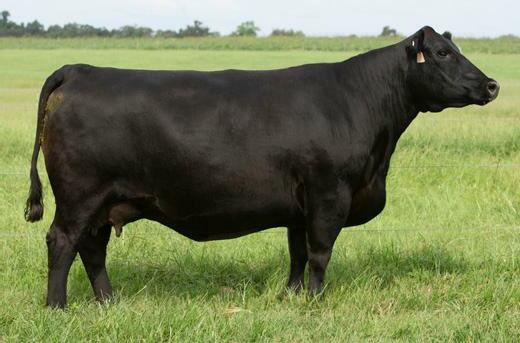
WOW, what a package! APEX sells as lot 1 in Gardiner’s sale in January.
APEX offers elite carcass predictions we expect from Gardiner Angus Ranch, ranking in the top 1% for both REA and MARB and is over +200 for $B.
Not just a carcass sire, APEX also offers superb predictions for DOC, HP, PAP and HS — what a bonus!
A 7AN624 DUAL THEAT son, APEX, offers extra frame and length without sacrificing body depth.
A lot of predictability in his pedigree, including GAR greats such as 7AN389 SURE FIRE, Ashland and 7AN320 PROPHET.


Check on availability for Spring 2023
From Gardiner Angus Ranch, KS NEW
17 Fall 2022 Angus Breed Average EPDs Production: CED: 6 BW: 1.2 WW: 59 YW: 105 RADG: .24 DMI: .91 YH: .5 SC: .80 DOC: 17 CLAW: .50 ANGLE: .49 PAP: 1.22 HS: .56 Maternal: HP: 11.4 CEM: 8 MILK: 26 MW: 56 MH: .3 $EN: -16 Carcass: CW: 42 MARB: .53 RE: .56 FAT: .012 $M: 58 $W: 55 $F: 85 $G: 46 $B: 132 $C: 229 ◊
◊
◊
◊
◊
◊
7AN758 G A R APEX $35 G A R SURE FIRE G A R DUAL THREAT G A R DAYBREAK A3010 SIRE: G A R ASHLAND G A R ASHLAND N779 G A R PROPHET N1135 DAM: AAA: 20255076 DOB: 08/20/21 TAT: 6271 EPDs as of 11/01/22 Production Maternal Carcass C U $Value CED BW WW YW RADG DMI YH SC DOC Claw Angle PAP HS HP CEM Milk Hd/Dt MW MH $EN CW Marb RE Fat Grp/Pg Grp/Pg $M $W $F $G $B $C EPD 13 -1.8 71 127 .26 1.46 .3 1.39 37 .57 .57 -1.81 .02 15.7 11 40 - 42 .0 -18 64 1.45 1.40 .027 - - 92 87 107 100 207 360 Acc .32 .47 .40 .35 .29 .29 .51 .48 .44 .25 .25 .22 .27 .19 .25 .26 - .33 .36 .41 .37 .37 .35 -% Rank 10 5 25 20 40 80 80 20 1 80 90 3 1 15 25 1 80 85 55 15 1 1 70 2 1 10 1 1 1 ◊ Our search for a Stellar son led us to SALUDA! ◊ From the same dam that brought us 7AN604 TOP CUT, SALUDA is her Stellar son offering more performance and marbling than his sire while still offering elite predictions for HS, CLAW, ANGLE, PAP and $M. ◊ Attractive and sound, SALUDA offers that herd sire look and presence with excellent breed character. ◊ Study this young sire close. He brings it all together in one package, Performance, cows, and carcass, with all the convenience traits to boot! ◊ Check on availability for Spring 2023 From Yon Family Farms, SC NEW 7AN757 YON SALUDA $30 MOHNEN SUBSTANTIAL 272 SITZ STELLAR 726D SITZ PRIDE 200B SIRE: V A R DISCOVERY 2240 YON SARAH D668 YON SARAH A615 DAM: AAA: 20336998 DOB: 09/09/21 TAT: K104 EPDs as of 11/01/22 Production Maternal Carcass C U $Value CED BW WW YW RADG DMI YH SC DOC Claw Angle PAP HS HP CEM Milk Hd/Dt MW MH $EN CW Marb RE Fat Grp/Pg Grp/Pg $M $W $F $G $B $C EPD 9 0.9 84 147 .30 1.49 .5 1.87 15 .37 .36 -.91 -.07 19.7 13 29 - 81 .6 -30 62 1.15 .83 .025 - - 96 83 106 78 184 335 Acc .36 .56 .49 .45 .34 .34 .53 .51 .38 .39 .34 .30 .34 .31 .34 .35 - .40 .42 .42 .39 .38 .36 -% Rank 30 45 4 5 15 80 55 5 65 10 5 10 1 2 10 30 30 30 85 20 10 20 70 1 2 15 5 5 1 METHOD GENETICS MPI / % 169 / 3 QPI / % 162 / 4 ROI / % 299 / 2 Dam of SALUDA
is the No. 1 $Maternal sire in the breed.


ranks among the best female sires in the breed today, some would say he is the best!


offers a ‘beyond EPDs’ skillset of near-perfect udders, added depth of flank and fleshing ability, solid feet, under-control cow size and really good-looking females.

name on either side of a pedigree is like money in the bank, just ask those who’ve used him!


18
◊ A
◊ His
◊ COUNTY
is
structural integrity. ◊ Expect his
to come easy, grow rapidly, be
to
and move his
to the replacement
◊ Take
Photo Reversed 7AN697 YON COUNTY ROAD H1389 $25 CONNEALY COMRADE 1385 YON CHATTOOGA E46 YON SALLY C200 SIRE: TEX PLAYBOOK 5437 YON HAZEL F1045 YON SARAH A507 DAM: Open camera. Scan code. Click to learn more. AAA: 19824135 DOB: 01/22/20 TAT: H1389 EPDs as of 11/01/22 Production Maternal Carcass C U $Value CED BW WW YW RADG DMI YH SC DOC Claw Angle PAP HS HP CEM Milk Hd/Dt MW MH $EN CW Marb RE Fat Grp/Pg Grp/Pg $M $W $F $G $B $C EPD 14 -1.0 76 129 .24 1.37 .5 .90 31 .54 .46 -1.67 .54 14.6 14 38 - 15 .1 -4 54 .70 .64 .063 - - 110 94 89 51 140 292 Acc .37 .53 .46 .41 .30 .30 .50 .47 .34 .34 .34 .23 .30 .26 .30 .31 - .39 .39 .40 .36 .36 .34 -% Rank 4 10 15 20 55 75 55 50 4 70 35 3 50 25 4 2 95 80 20 35 40 45 95 1 1 40 45 45 10 ◊
◊
◊
◊
From Teixeira Cattle Co., CA; Deer Valley Farms and Crazy K Ranch, TN; Rishel Angus, NE; Black Gold Genetics, IL; Valley Oak Angus, MO and Spruce Mountain Ranch, CO 7AN463 TEX PLAYBOOK 5437 $30 BASIN PAYWEIGHT 006S BASIN PAYWEIGHT 1682 21AR O LASS 7017 SIRE: SUMMITCREST COMPLETE 1P55 RITA 1C43 OF 9M26 COMPLETE RITA 9M26 OF RITA 5F56 PRED DAM: Open camera. Scan code. Click to learn more. AAA: 18414912 DOB: 08/03/15 TAT: 5437 Daughter, Boyd Beef Cattle, KY Daughter, 4 Sons Farm, KY Son, Bruning Farms, NE EPDs as of 11/01/22 Production Maternal Carcass C U $Value CED BW WW YW RADG DMI YH SC DOC Claw Angle PAP HS HP CEM Milk Hd/Dt MW MH $EN CW Marb RE Fat Grp/Pg Grp/Pg $M $W $F $G $B $C EPD 12 -.2 61 104 .20 .97 .0 .99 26 .51 .43 -.10 .97 14.5 17 35 351 3 -.3 3 44 .50 .29 .045 7 874 102 86 87 39 126 265 Acc .89 .97 .95 .93 .48 .48 .93 .93 .86 .78 .77 .37 .62 .72 .88 .87 1319 .76 .72 .62 .57 .55 .58 11 2162 % Rank 15 20 50 55 80 55 90 40 15 55 20 20 95 20 1 10 95 90 15 50 55 85 90 1 1 50 65 60 25 COUNTY
will sire numerous calves
YFF.
performance standouts
YFF
calving-ease
Individual sire performance data is listed on pages 94-95.
rising star in our lineup, COUNTY ROAD is a Calving Ease and Cowmaker deluxe from one of the most respected maternal herds in the country.
pedigree is laced with maternal strength and is validated with a high $M index. As an added bonus he excels for Docility and PAP.
ROAD
deep sided, easy fleshing and has impeccable
calves
easy
handle
daughters
pasture.
a COUNTY ROAD tour, you will end up in the right place. From Yon Family Farms, SC
PLAYBOOK
He
PLAYBOOK
His
ROAD
in our 202223 calving season at
Chattooga sons continue to be
at
and County Road is a phenotypic dream. He will see plenty of use in our A.I. program as a
sire expected to pass on maternal power and excellent dispositions.
Kevin Yon, Yon Family Farms
GUARD RAIL can improve nearly every trait and keep our customers “out of the ditches” and moving in the right direction.
He is a Calving Ease Cowmaker that will let you sleep all night and leave you with a fertile, productive, hasslefree cow herd.


GUARD RAIL is a phenotypic standout, moderate framed with a lot of shape, base width, body depth and fleshing ability.
GUARD RAIL is true-blue calving ease. His calves have a big hip and stylish look. However, we are most excited about the maternal value he offers. We are anxiously awaiting his daughters!
19 ◊
◊
◊
◊
◊
From Connealy Angus, NE and Benoit Angus, KS TEHAMA UPWARD Y238 TEHAMA TAHOE B767 TEHAMA MARY BLACKBIRD Y684 SIRE: CONNEALY LEGENDARY 644L QUEEN BABES OF CONANGA 870J QUEEN BARB OF CONANGA 60C DAM: Open camera. Scan code. Click to learn more. 7AN684 CONNEALY GUARD RAIL 923E $30 AAA: 19829215 DOB: 11/06/19 TAT: 923E EPDs as of 11/01/22 Production Maternal Carcass C U $Value CED BW WW YW RADG DMI YH SC DOC Claw Angle PAP HS HP CEM Milk Hd/Dt MW MH $EN CW Marb RE Fat Grp/Pg Grp/Pg $M $W $F $G $B $C EPD 13 -2.4 73 122 .24 1.10 .2 1.03 17 .44 .45 2.77 .13 20.6 10 35 - 40 -.2 -14 44 .82 .72 .004 - - 104 88 82 63 144 291 Acc .42 .71 .48 .44 .34 .34 .46 .49 .45 .35 .35 .28 .31 .28 .33 .34 - .41 .42 .43 .39 .39 .37 -% Rank 10 3 20 30 50 65 80 35 50 25 30 90 1 1 35 10 70 90 45 50 20 30 40 1 1 60 20 35 10 Fall 2022 Angus Breed Average EPDs Production: CED: 6 BW: 1.2 WW: 59 YW: 105 RADG: .24 DMI: .91 YH: .5 SC: .80 DOC: 17 CLAW: .50 ANGLE: .49 PAP: 1.22 HS: .56 Maternal: HP: 11.4 CEM: 8 MILK: 26 MW: 56 MH: .3 $EN: -16 Carcass: CW: 42 MARB: .53 RE: .56 FAT: .012 $M: 58 $W: 55 $F: 85 $G: 46 $B: 132 $C: 229
Fertility and feet – two of the most talked about traits in the Angus breed and he is a leader for both, ranking in the top 1% of the breed for $Maternal!
He’s the ideal sire for large heifer projects as we rebuild the nation’s cowherd.
Jerry Connealy, Connealy Angus
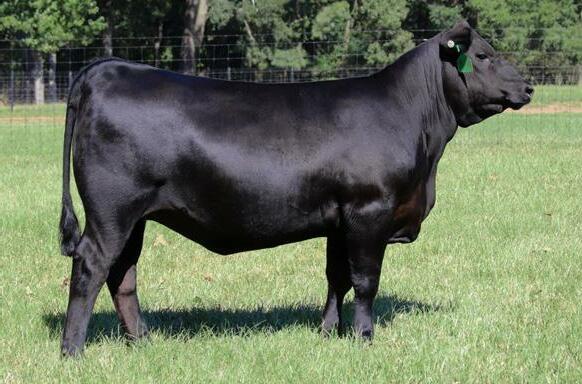
IRON HORSE is a bigger framed calving ease sire that has moved up the sales chart in 2022 due to his outcross pedigree, balanced data and phenotype.


He is a big spread sire offering proven Calving Ease with breed leading growth, great carcass merit and excellent foot quality.

IRON HORSE’s progeny reports are validating both his Calving Ease and ability to transmit performance and style into one complete package.
20 Individual
◊
◊
◊
◊
◊
◊
From Wall Street Cattle
Daughter, Cox Ranch, TX Daughter, High
Angus, TX Daughter, Linz Heritage Angus, IN EXAR STUD 4658B EXAR STALLION 7986 EXAR BLACKCAP 3385 SIRE: SANDPOINT BUTKUS X797 EXAR HENRIETTA PRIDE 5702 SITZ HENRIETTA PRIDE 643T DAM: Open camera. Scan code. Click to learn more. 7AN698 BIGK/WSC IRON HORSE 025F $30 AAA: 19415015 DOB: 08/30/18 TAT: 025F EPDs as of 11/01/22 Production Maternal Carcass C U $Value CED BW WW YW RADG DMI YH SC DOC Claw Angle PAP HS HP CEM Milk Hd/Dt MW MH $EN CW Marb RE Fat Grp/Pg Grp/Pg $M $W $F $G $B $C EPD 12 0.6 83 153 .37 1.33 .7 .93 27 .46 .35 .10 .25 9.8 13 27 - 105 .6 -40 64 .81 1.16 -.069 1 46 65 75 114 74 188 309 Acc .70 .85 .77 .63 .37 .37 .72 .65 .38 .30 .31 .23 .26 .21 .31 .32 - .41 .42 .50 .44 .44 .43 2 80 % Rank 15 35 5 3 1 80 30 45 10 35 3 25 5 70 10 40 10 25 95 10 25 2 1 35 10 10 10 4 4
sire performance data is listed on pages 94-95.
He is a super long bodied, deep ribbed and thick ended individual with excellent foot quality.
He ranks high for the Hair Shedding EPD at +.25 and can be used in regions where tight hair coat is a must.
IRON HORSE offers a lot of mating flexibility being an outcross for most.
Co., MO
Roller


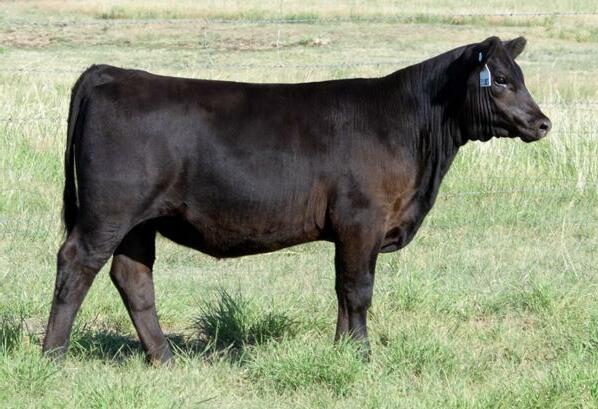
21 ◊ Not many sires can do all the things TOP CUT can do. He is rapidly becoming one of the most popular sires in our lineup. ◊ TOP CUT is a card-carrying member of the +100/+300 club of high $M and high $C. ◊ The Sarah cow family from Yon’s is strong and TOP CUT’s pedigree offers a logical outcross choice for breeders looking to improve their cows herds. From Yon Family Farms, SC Daughter, Yon Family Farms, SC Daughter, Yon Family Farms, SC Son, Yon Family Farms, SC KM BROKEN BOW 002 SPRING COVE RENO 4021 SPRING COVE LIZA 021 SIRE: VAR DISCOVERY 2240 YON SARAH D668 YON SARAH A615 DAM: Open camera. Scan code. Click to learn more. 7AN604 YON TOP CUT G730 $30 AAA: 19476453 DOB: 11/09/18 TAT: G730 EPDs as of 11/01/22 Production Maternal Carcass C U $Value CED BW WW YW RADG DMI YH SC DOC Claw Angle PAP HS HP CEM Milk Hd/Dt MW MH $EN CW Marb RE Fat Grp/Pg Grp/Pg $M $W $F $G $B $C EPD 11 0.9 75 129 .27 1.30 .3 1.58 29 .42 .48 4.32 .36 18.1 11 27 - 36 .2 -8 49 1.69 .95 -.046 - 19 107 77 86 111 197 363 Acc .63 .85 .79 .57 .38 .38 .69 .63 .48 .48 .44 .26 .33 .29 .34 .35 - .44 .43 .47 .40 .41 .40 - 32 % Rank 15 45 15 20 30 75 70 10 10 20 45 95 15 3 25 40 75 60 30 40 1 10 2 1 10 50 1 2 1 Fall 2022 Angus Breed Average EPDs Production: CED: 6 BW: 1.2 WW: 59 YW: 105 RADG: .24 DMI: .91 YH: .5 SC: .80 DOC: 17 CLAW: .50 ANGLE: .49 PAP: 1.22 HS: .56 Maternal: HP: 11.4 CEM: 8 MILK: 26 MW: 56 MH: .3 $EN: -16 Carcass: CW: 42 MARB: .53 RE: .56 FAT: .012 $M: 58 $W: 55 $F: 85 $G: 46 $B: 132 $C: 229




22 Individual sire performance data is listed on pages
◊ TRANSCENDENT
◊ His
◊
◊
From Gardiner Angus Ranch, KS and Cable Corral Genetics, TX GAR PROGRESS GAR MOMENTUM GAR BIG EYE 1770 SIRE: GAR PROPHET GAR PROPHET 2685 GAR DAYBREAK 2842 DAM: Open camera. Scan code. Click to learn more. 7AN629 G A R TRANSCENDENT $30 AAA: 19570738 DOB: 08/09/19 TAT: 5139
94-95.
is still one of the highest Marbling sires in the Angus breed and now he’s got over 900 genomic progeny records.
progeny are admired for their body mass, muscle shape and moderate mature size.
One of the greatest value added opportunities in the beef industry is the Prime premium. There’s no better sire to accomplish this than TRANSCENDENT. Remember, bred to a breed average Marbling female, the resulting calf hits the ground in the top 1% of the breed.
He’s the epitome of pounds in the right package!
EPDs as of 11/01/22 Production Maternal Carcass C U $Value CED BW WW YW RADG DMI YH SC DOC Claw Angle PAP HS HP CEM Milk Hd/Dt MW MH $EN CW Marb RE Fat Grp/Pg Grp/Pg $M $W $F $G $B $C EPD 13 0.8 70 125 .26 1.40 .4 .06 24 .57 .43 1.59 .46 10.5 9 25 - 79 .4 -27 49 2.23 .89 -.004 - 15 59 66 95 132 227 353 Acc .56 .84 .73 .38 .35 .35 .72 .59 .45 .28 .27 .22 .28 .26 .30 .31 - .40 .44 .50 .45 .46 .44 - 110 % Rank 10 40 25 25 35 80 60 90 20 80 20 65 30 65 45 55 25 40 80 40 1 15 30 50 25 30 1 1 1 METHOD GENETICS MPI / % 141 / 37 QPI / % 194 / 1 ROI / % 296 / 2 Daughter, Goode Angus, TX Daughter, Goode Angus, TX Daughter, Butz-Hill, IA
Photo Reversed
STEP UP is a true beef sire! He enters our lineup as a semi-proven sire that has already made his mark in many Angus production sales across the country. His first crop of heifer calves were top sellers from coast to coast in the fall of 2022. Expect to see many top selling sons from STEP UP in 2023.


He has a rare combination of traits breeders are desperately searching for. He exhibits excellent foot quality with extra heel depth while still ranking in the top 2% of the breed for Marbling.
STEP UP is a good structured, wide based, deep bodied sire with extra width of top and muscle expression. He stands on a big solid foot and has that masculine herd sire look breeders admire.
STEP UP consistently sires stout made, high performance, eye appealing cattle while adding foot quality and end-product merit. Take a “Step Up” in your breeding program.

23
◊
◊
◊
KY
KY GAR SURE FIRE GAR BIG STEP K715 CHAIR ROCK PROPHET 3131 SIRE: EXAR DENVER 2002B BASIN LUCY 4261 BASIN LUCY 1022 DAM: 7AN691 EZAR STEP UP 9178 $35 AAA: 19430597 DOB: 01/29/19 TAT: 9178 NEW EPDs as of 11/01/22 Production Maternal Carcass C U $Value CED BW WW YW RADG DMI YH SC DOC Claw Angle PAP HS HP CEM Milk Hd/Dt MW MH $EN CW Marb RE Fat Grp/Pg Grp/Pg $M $W $F $G $B $C EPD 8 2 76 134 .29 1.37 .6 1.57 27 .38 .26 .44 .52 10.7 14 27 - 83 .7 -30 68 1.34 .93 .031 - 13 76 70 110 88 198 333 Acc .60 .85 .79 .48 .36 .36 .60 .56 .46 .35 .35 .26 .36 .24 .31 .32 - .40 .43 .49 .42 .42 .40 - 22 % Rank 40 70 15 15 15 80 40 10 10 10 1 35 45 60 5 40 25 20 85 10 2 10 75 15 15 10 2 2 1 Fall 2022 Angus Breed Average EPDs Production: CED: 6 BW: 1.2 WW: 59 YW: 105 RADG: .24 DMI: .91 YH: .5 SC: .80 DOC: 17 CLAW: .50 ANGLE: .49 PAP: 1.22 HS: .56 Maternal: HP: 11.4 CEM: 8 MILK: 26 MW: 56 MH: .3 $EN: -16 Carcass: CW: 42 MARB: .53 RE: .56 FAT: .012 $M: 58 $W: 55 $F: 85 $G: 46 $B: 132 $C: 229 Daughter, EZ Angus Ranch, CA
◊
From EZ Angus Ranch, CA and Edisto Pines, SC Daughter, Myers Angus,
Daughter, Boyd Beef Cattle,
◊ Following in the footsteps of impactful GAR power sires like 7AN222 PREDESTINED and 7AN213 GRID MAKER who are among our all time high selling bulls and breeder favorites, HERO offers elite genetic merit combined with a powerful phenotype.


◊ Sired by the No. 1 registration sire in the breed, 7AN580 HOME TOWN, and a standout among his contemporaries, HERO offers more stoutness, width of base, muscle shape and overall dimension with the same eye-appeal as his sire.
◊ HERO can improve carcass merit and foot quality at the same time. He ranks in the top 1% for MARB, $C and $B while also ranking in the top 30% for CLAW and ANGLE.


◊ HERO is a no miss for every environment with an ideal Milk EPD, moderate mature size and PAP and Hair Shedding EPDs in the top 25% of the breed!
From Gardiner Angus Ranch, KS and David Dockter, ND
THREAT was named for his superior Marbling/Ribeye offering – but he could just as easily been named ‘Do More’ – because he does!
customers enjoy this sire’s
24
Individual sire performance data is listed on pages 94-95.
7AN700 G A R HOMETOWN HERO $30 GAR ASHLAND GAR HOME TOWN CHAIR ROCK SURE FIRE 6095 SIRE: GAR MOMENTUM GAR MOMENTUM 2977 CHAIR ROCK PROPHET 3054 DAM: Open camera. Scan code. Click to learn more. AAA: 19862896 DOB: 09/12/20 TAT: 6890 EPDs as of 11/01/22 Production Maternal Carcass C U $Value CED BW WW YW RADG DMI YH SC DOC Claw Angle PAP HS HP CEM Milk Hd/Dt MW MH $EN CW Marb RE Fat Grp/Pg Grp/Pg $M $W $F $G $B $C EPD 5 2.6 74 137 .26 1.99 .7 .74 21 .43 .44 -.10 .40 9.2 9 25 - 69 .5 -22 69 1.74 .94 .035 - - 66 65 104 107 211 340 Acc .34 .48 .41 .37 .33 .33 .51 .49 .45 .29 .29 .26 .30 .23 .26 .27 - .34 .37 .42 .39 .39 .36 -% Rank 65 80 15 10 40 95 35 60 40 25 30 20 25 80 45 60 45 40 65 10 1 10 80 45 30 15 1 1 1 ◊ DUAL
◊ Our
consistent delivery of modern performance and easy-to-handle offspring that feed good and excel on the rail. ◊ DUAL THREAT is a solid option for heifers – he sires the kind that will keep you in business. From Gardiner Angus Ranch, and JLB Ranch, KS; Ogeechee Angus Farm and Travis Bunch, GA 7AN624 G A R DUAL THREAT $25 CONNEALY IN SURE 8524 GAR SURE FIRE CHAIR ROCK 5050 GAR 8086 SIRE: MCC DAYBREAK GAR DAYBREAK A3010 GAR 5050 NEW DESIGN A91 DAM: Open camera. Scan code. Click to learn more. AAA: 19123898 DOB: 09/03/17 TAT: 507G Daughter, Edisto Pines, SC Daughter, Edisto Pines, SC EPDs as of 11/01/22 Production Maternal Carcass C U $Value CED BW WW YW RADG DMI YH SC DOC Claw Angle PAP HS HP CEM Milk Hd/Dt MW MH $EN CW Marb RE Fat Grp/Pg Grp/Pg $M $W $F $G $B $C EPD 12 -.2 69 128 .27 1.31 .7 1.31 26 .49 .39 .39 .11 13.0 5 36 - 61 .3 -24 64 1.22 1.24 .016 4 110 74 75 118 88 205 340 Acc .73 .89 .84 .66 .42 .42 .80 .73 .59 .45 .42 .29 .46 .27 .35 .34 - .44 .45 .64 .60 .58 .60 19 294 % Rank 15 20 25 20 30 75 30 20 15 45 10 30 1 35 80 5 50 50 70 10 4 1 60 20 10 4 2 1 1 METHOD GENETICS MPI / % 168 / 3 QPI / % 186 / 1 ROI / % 317 / 1 METHOD GENETICS MPI / % 152 / 17 QPI / % 141 / 18 ROI / % 265 / 15


25 ◊ A genomic
standouts,
◊ No
calves
the Angus
CW, MARB, and REA. ◊ His super
SUNRISE dam
VERACIOUS
$Maternal.
◊ He
excelling
Hair
From Hinkle’s Prime Cut Angus and Soaring Eagle Farms, MO; FB Genetics, TX; Terhune Farms and Don Terhune, KS; D&W Angus, GA and 2 Ten Cattle Co., MN Daughter,
VA Full sister
KOUPALS B&B IDENTITY MILL BRAE IDENTIFIED 4031 MILL BRAE PRO BLACKCAP 1092 SIRE: GAR SUNRISE HPCA SUNRISE A246 HPCA PROPHET A3 DAM: Open camera. Scan code. Click to learn more. 7AN642 HPCA VERACIOUS $30 AAA: 19699322 DOB: 02/03/20 TAT: S500 EPDs as of 11/01/22 Production Maternal Carcass C U $Value CED BW WW YW RADG DMI YH SC DOC Claw Angle PAP HS HP CEM Milk Hd/Dt MW MH $EN CW Marb RE Fat Grp/Pg Grp/Pg $M $W $F $G $B $C EPD 7 0.9 87 154 .31 1.77 .8 .00 22 .43 .46 2.15 .33 12.1 8 35 - 76 .7 -31 82 1.70 1.42 .013 - - 81 91 122 113 235 386 Acc .50 .78 .56 .45 .34 .34 .54 .50 .44 .31 .35 .25 .31 .24 .32 .33 - .39 .41 .44 .38 .38 .34 -% Rank 45 45 3 3 10 95 20 95 30 25 35 75 15 45 55 10 30 20 85 1 1 1 55 10 1 3 1 1 1 Fall 2022 Angus Breed Average EPDs Production: CED: 6 BW: 1.2 WW: 59 YW: 105 RADG: .24 DMI: .91 YH: .5 SC: .80 DOC: 17 CLAW: .50 ANGLE: .49 PAP: 1.22 HS: .56 Maternal: HP: 11.4 CEM: 8 MILK: 26 MW: 56 MH: .3 $EN: -16 Carcass: CW: 42 MARB: .53 RE: .56 FAT: .012 $M: 58 $W: 55 $F: 85 $G: 46 $B: 132 $C: 229 METHOD GENETICS MPI / % 157 / 11 QPI / % 165 / 3 ROI / % 289 / 3 Dam of VERACIOUS
rockstar siring phenotypic
VERACIOUS is a must-use sire.
other sire with
reported in
database can match his combination of
cow 7AN361
has already written her own story, so it’s no surprise
excels for
His sisters are leaving their mark at HPCA.
is a foot improver
for
Shedding.
Audley Farm,
to VERACIOUS
◊ NETWORK is one of our most elite $Combination sires. ◊ He is the culmination of several generations of Select Sires genetics that have stood the test of time. This powerful young sire is unique on paper and in the flesh. He is very stout made with extra bone and foot size, extra depth of body and a powerful hip structure. ◊ A standout among his contemporaries, NETWORK posted a WW ratio of 109 and a YW ratio of 105.


NETWORK’s growth and carcass merit are off the charts with top 1% rankings for YW, RADG, CW, RE, $W, $F, $B and $C.
From Edgewood Angus LLC, VA; David Dockter, ND; Van Beek Angus, SD; Kaiser Angus, KS and Oakdale Farms, GA
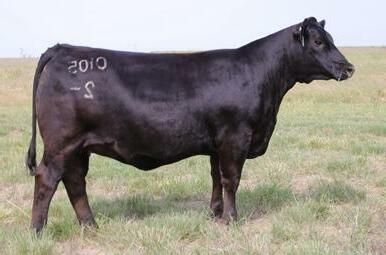


has had more high-selling females in the past year than most and with good reason, people like them and they perform!
Well-proven at this point in his career, PEYTON was selected with high genomic predictions and his progeny have maintained those early estimates. He’s still a genomic rock star!
Individual sire performance data is listed on pages 94-95.
26
◊
7AN695 E W A NETWORK 025 $30 EWA PEYTON 642 EWA TEAMWORK 821 EWA 543 OF 117 WEIGH UP SIRE: SS NIAGARA Z29 EWA 8124 OF 6131 NIAGARA EWA 6131 OF 2052 FORTRESS DAM: Open camera. Scan code. Click to learn more. AAA: 19866645 DOB: 08/12/20 TAT: 025 EPDs as of 11/01/22 Production Maternal Carcass C U $Value CED BW WW YW RADG DMI YH SC DOC Claw Angle PAP HS HP CEM Milk Hd/Dt MW MH $EN CW Marb RE Fat Grp/Pg Grp/Pg $M $W $F $G $B $C EPD 12 0.5 90 167 .40 1.27 .7 .61 22 .54 .49 4.41 .21 9.9 12 38 - 117 .8 -51 94 1.21 1.22 .014 - - 57 90 158 87 245 375 Acc .36 .53 .46 .41 .31 .31 .46 .47 .33 .32 .33 .22 .40 .18 .26 .27 - .35 .37 .39 .35 .36 .33 -% Rank 10 35 2 1 1 65 35 70 35 70 55 95 4 75 15 2 5 15 95 1 5 1 55 70 1 1 2 1 1 ◊
◊
From Edgewood Angus LLC, VA
Dave Dockter, ND 7AN510 E W A PEYTON 642 $25 EXAR DENVER 2002B QUAKER HILL MANNING 4EX9 QUAKER HILL BLACKCAP 0A32 SIRE: GAR PROGRESS EWA 444 OF 968 PROGRESS EDGEWOOD LADY 968 DAM: Open camera. Scan code. Click to learn more. AAA: 18675107 DOB: 09/07/16 TAT: 642 Daughter, Dixie Farms, LA Daughter, 2 Bar Angus, TX Daughter, 2 Bar Angus, TX EPDs as of 11/01/22 Production Maternal Carcass C U $Value CED BW WW YW RADG DMI YH SC DOC Claw Angle PAP HS HP CEM Milk Hd/Dt MW MH $EN CW Marb RE Fat Grp/Pg Grp/Pg $M $W $F $G $B $C EPD 11 2.1 95 168 .33 1.67 1.2 .44 16 .54 .50 1.63 .37 13.7 6 32 58 125 1.1 -52 88 1.20 .82 .030 2 219 59 86 139 80 219 343 Acc .77 .93 .90 .84 .46 .46 .88 .83 .76 .70 .69 .26 .61 .41 .68 .58 123 .52 .55 .56 .51 .51 .51 2 428 % Rank 15 70 1 1 3 90 3 75 55 70 55 65 20 25 75 15 2 3 95 1 4 20 75 50 1 1 4 1 1 METHOD GENETICS MPI / % 164 / 5 QPI / % 170 / 2 ROI / % 300 / 2 METHOD GENETICS MPI / % 178 / 1 QPI / % 158 / 5 ROI / % 304 / 1
PEYTON
and


27 ◊ TEAMWORK is one of the biggest spread, high accuracy sires in the breed excelling for endproduct merit. ◊ His high performance progeny have been appreciated by many astute cattlemen for their bold rib, muscle shape, added bone and overall balance. ◊ TEAMWORK is a calving ease sire ranking in the top 1% of the breed for $W, $F, $B and $C! From Edgewood Angus LLC, VA; David Dockter and 6 Mile Angus, ND Daughter,
VA
Son, Edgewood Angus, VA QUAKER HILL MANNING 4EX9 EWA PEYTON 642 EWA 444 OF 968 PROGRESS SIRE: PLATTEMERE WEIGH UP K360 EWA 543 OF 117 WEIGH UP EDGEWOOD LADY 117 DAM: Open camera. Scan code. Click to learn more. 7AN579 E W A TEAMWORK 821 $25 AAA: 19306646 DOB: 08/15/18 TAT: 821 EPDs as of 11/01/22 Production Maternal Carcass C U $Value CED BW WW YW RADG DMI YH SC DOC Claw Angle PAP HS HP CEM Milk Hd/Dt MW MH $EN CW Marb RE Fat Grp/Pg Grp/Pg $M $W $F $G $B $C EPD 12 0.3 98 172 .37 1.55 .7 .34 24 .59 .45 .66 .54 9.5 12 30 - 128 1.0 -52 91 .95 1.14 .025 - 36 58 91 147 73 220 343 Acc .56 .80 .70 .60 .40 .40 .75 .68 .47 .43 .43 .25 .59 .23 .33 .33 - .42 .43 .49 .43 .44 .42 - 84 % Rank 15 30 1 1 1 90 30 80 20 85 30 40 50 75 15 25 2 5 95 1 15 2 70 55 1 1 10 1 1 Fall 2022 Angus Breed Average EPDs Production: CED: 6 BW: 1.2 WW: 59 YW: 105 RADG: .24 DMI: .91 YH: .5 SC: .80 DOC: 17 CLAW: .50 ANGLE: .49 PAP: 1.22 HS: .56 Maternal: HP: 11.4 CEM: 8 MILK: 26 MW: 56 MH: .3 $EN: -16 Carcass: CW: 42 MARB: .53 RE: .56 FAT: .012 $M: 58 $W: 55 $F: 85 $G: 46 $B: 132 $C: 229 METHOD GENETICS MPI / % 202 / 1 QPI / % 157 / 6 ROI / % 328 / 1
Edgewood Angus,
Daughter, Edgewood Angus, VA
GOOD NEWS writes one of the most complete EPD profiles in the breed and is one of our best for $Combined.


is an ideal mating on 14AN502 TAHOE, 7AN580 HOME TOWN, 7AN528 GROWTH FUND and Enhance influenced females – a lot of mating options!
Admired at the 44 Farms sale as one of the most complete sires phenotypically, he combines powerful performance, base width, muscle shape, softness and balance with excellent feet.
With his elite HP, CEM and foot EPDs, GOOD NEWS will sire outstanding replacement females in addition to sale topping feeder cattle qualifying for 44 Farms Prime Pursuits programs. From JLB Ranch, KS and 44 Farms LLC, TX


28
◊
◊
◊
◊
◊
7AN723 44 GOOD NEWS 1130 $25 CASINO BOMBER N33 44 BRIGADE 44 RITA 6821 SIRE: 44 MASS TRANSIT 6907 44 PRIMROSE 202G 44 PRIMROSE A255 DAM: Open camera. Scan code. Click to learn more. AAA: 19971596 DOB: 02/03/21 TAT: 1130 EPDs as of 11/01/22 Production Maternal Carcass C U $Value CED BW WW YW RADG DMI YH SC DOC Claw Angle PAP HS HP CEM Milk Hd/Dt MW MH $EN CW Marb RE Fat Grp/Pg Grp/Pg $M $W $F $G $B $C EPD 13 0.5 83 157 .33 2.30 1.1 1.21 19 .43 .35 3.50 .29 16.5 15 30 - 133 .9 -54 80 1.06 1.14 .008 - - 64 75 129 80 208 334 Acc .33 .52 .44 .35 .28 .28 .44 .38 .30 .22 .22 .23 .24 .18 .24 .27 - .33 .36 .38 .33 .33 .29 -% Rank 10 35 5 2 4 95 10 30 50 25 4 90 10 10 2 25 2 10 95 2 10 2 45 50 10 1 4 1 1 ◊ CAMERON is a balanced calving ease 7AN528 GROWTH FUND son offering plenty of extras. ◊ CAMERON excels for WW and YW without being out of bounds for YH and MH. ◊ His predictions for HP, CEM, MILK and $M make him a logical choice to use on heifers to keep replacements. ◊ CAMERON’s offspring qualify for the 44 Farms Prime Pursuit program. From 44 Farms LLC, TX 7AN725 44 CAMERON 05048 $25 BASIN PAYWEIGHT 1682 DEER VALLEY GROWTH FUND DEER VALLEY RITA 36113 SIRE: VAR GENERATION 2100 DLA BLACKCAP 5048 SBP BLACKCAP 7507 DAM: Open camera. Scan code. Click to learn more. AAA: 20152901 DOB: 11/30/20 TAT: 05048 EPDs as of 11/01/22 Production Maternal Carcass C U $Value CED BW WW YW RADG DMI YH SC DOC Claw Angle PAP HS HP CEM Milk Hd/Dt MW MH $EN CW Marb RE Fat Grp/Pg Grp/Pg $M $W $F $G $B $C EPD 11 0.1 82 147 .28 1.92 .8 1.13 12 .45 .48 2.87 .66 14.2 15 32 - 88 .7 -35 75 .41 .61 .019 - - 73 83 114 41 155 274 Acc .35 .53 .42 .37 .32 .32 .43 .40 .35 .29 .29 .27 .31 .25 .31 .32 - .37 .39 .40 .37 .37 .34 -% Rank 15 25 5 5 25 95 25 35 80 30 50 85 75 30 2 15 25 25 90 4 75 50 60 25 2 5 70 25 20 7AN538 BRAGGING RIGHTS 7AN544 MAIN STREET 7AN610 FINAL DECISION OTHER PRIME PURSUITS SIRES AVAILABLE
Individual sire performance data is listed on pages 94-95.
We’ve got GOOD NEWS! He has genetics covering all the bases and offering value-added marketing options!
He
GREATER THINGS are here
Prime Pursuits ™ is a paradigm-changing partnership backed by generations of genetics that offers semen buyers an opportunity to participate in a large-scale, buyback program.
When you purchase semen from a 44 Farms bull through Select Sires, you’re not just improving your calf crop. You’re investing in an opportunity to become part of the Prime Pursuits program.
We invite you to join more than 1,000 ranchers across the U.S. who are adding value to their calves through Prime Pursuits.
For more information, please contact Warren White at 806.414.5858 or Tracy Woods at 405.880.3866

29
PRIMEPURSUITS.COM


30 Individual
◊
◊
◊
◊
From Prairie View Farms and Ashton Dillow, IL; Boyd Beef Cattle and Hammerhead Cattle Co., KY Daughter,
IL Daughter,
Daughter, Prairie View Farms, IL PVF INSIGHT 0129 PVF BLACKLIST 7077 PVF BLACKBIRD 3070 SIRE: C&C MCKINLEY 3000 EXAR PVF MISSIE 5245 PVF MISSIE 0084 DAM: Open camera. Scan code. Click to learn more. 7AN618 PVF MARVEL 9185 $30 AAA: 19566408 DOB: 04/27/19 TAT: 9185 EPDs as of 11/01/22 Production Maternal Carcass C U $Value CED BW WW YW RADG DMI YH SC DOC Claw Angle PAP HS HP CEM Milk Hd/Dt MW MH $EN CW Marb RE Fat Grp/Pg Grp/Pg $M $W $F $G $B $C EPD 3 2.7 62 111 .30 .09 .5 .08 3 .59 .57 -.31 .92 12.3 4 25 - 86 .5 -30 55 .50 1.04 -.028 - 2 35 51 117 55 172 258 Acc .36 .68 .56 .37 .28 .28 .43 .33 .30 .20 .20 .18 .22 .16 .23 .25 - .32 .35 .38 .32 .33 .28 - 6 % Rank 75 85 45 45 10 10 50 90 95 85 90 20 95 40 85 55 20 35 85 25 55 4 10 95 65 5 30 10 30
sire performance data is listed on pages 94-95.
MARVEL stacks the most elite show heifer genetics ever produced at PVF.
MARVEL is flawless in design, he has tremendous rib shape, extra depth of body, a long, powerful hip and is as sound and free moving as you can make one.
He has sired many high priced sale toppers and has proven to generate value in a phenotypic market.
He combines a pedigree providing all the ingredients to make him an impact sire for those searching for high phenotype cattle to compete at any level.
Prairie View Farms,
Prairie View Farms, IL
GRAND CANYON is a phenotypic powerhouse with worlds of shape, substance, style and true herd bull authority. He presents authentic Angus type with remarkable resemblance to his legendary sire RAINFALL, with added power from Net Worth and the maternally-proven SAV Madame Pride cow family. His progeny are consistently the type and kind we strive to produce.

GRAND CANYON will be a high customer satisfaction sire.

Kelly Schaff, Schaff Angus Valley

Son, Carlson Angus, ND

31 ◊ GRAND
◊
◊ GRAND
◊ Look for
to improve foot quality, add depth, muscle and breed character to your next calf crop. From Schaff Angus Valley, Rust Mountain View Ranch and Carlson Angus, ND COLEMAN CHARLO 0256 SAV RAINFALL 6846 SAV BLACKCAP MAY 4136 SIRE: SAV NET WORTH 4200 SAV MADAME PRIDE 9477 SAV MADAME PRIDE 0075 DAM: Open camera. Scan code. Click to learn more. 7AN753 S A V GRAND CANYON 0969 $35 AAA: 19860277 DOB: 01/02/20 TAT: 0969 NEW EPDs as of 11/01/22 Production Maternal Carcass C U $Value CED BW WW YW RADG DMI YH SC DOC Claw Angle PAP HS HP CEM Milk Hd/Dt MW MH $EN CW Marb RE Fat Grp/Pg Grp/Pg $M $W $F $G $B $C EPD 9 0 60 108 .23 1.06 .1 1.30 17 .23 .40 -1.00 .44 10.0 6 32 - 53 -.1 -18 42 .58 .28 .089 - - 68 66 80 39 119 222 Acc .36 .59 .49 .37 .32 .32 .43 .48 .45 .32 .32 .25 .27 .24 .31 .33 - .35 .37 .40 .37 .37 .34 -% Rank 30 25 50 50 60 60 85 20 50 1 15 10 30 70 75 15 60 85 55 55 45 85 95 30 25 65 65 70 60 Fall 2022 Angus Breed Average EPDs Production: CED: 6 BW: 1.2 WW: 59 YW: 105 RADG: .24 DMI: .91 YH: .5 SC: .80 DOC: 17 CLAW: .50 ANGLE: .49 PAP: 1.22 HS: .56 Maternal: HP: 11.4 CEM: 8 MILK: 26 MW: 56 MH: .3 $EN: -16 Carcass: CW: 42 MARB: .53 RE: .56 FAT: .012 $M: 58 $W: 55 $F: 85 $G: 46 $B: 132 $C: 229
CANYON is new to Select Sires for 2023!
While touring this summer, GRAND CANYON jumped onto our radar. Sired by the popular Select Sires great, 7AN466 RAINFALL, he offers the stunning phenotype and power we have come to expect from Schaff Angus Valley.
CANYON offspring will impress in his first sale season. His calves are easy to pick out for their added dimension, power and presence.
GRAND CANYON
SILVERADO is a mid 5 frame sire that is sound structured and thick made with superior foot quality and excellent phenotype.
is built from a cow family laced with dependable genetics and maternal strength. SILVERADO maintains a balanced data set insuring profitable cattle in the pasture or on the rail. He is high ranking for both $M and $C.
is a safe choice for those looking for trouble free, dependable genetics with longevity in mind. From Myers Angus Farm, KY
BRUNSWICK was the lot 1 and high selling sire at the 2022 T-Bone Angus Sale in Nebraska.

He is moderate framed with a lot of rib shape and muscle.
BRUNSWICK is a modest Calving Ease sire with elite Maternal Value, Docility and Marbling.


Sired by the popular Sterling Pacific, BRUNSWICK has excellent phenotype, high $M and $C Indexes and provides outcross mating flexibility.
From Brookhouser T-Bone Angus, NE
Individual sire performance data is listed on pages 94-95.


32
◊
◊
◊
◊
7AN589 MYERS SILVERADO M109 $25 TEHAMA UPWARD Y238 TEHAMA TAHOE B767 TEHAMA MARY BLACKBIRD Y684 SIRE: SS NIAGARA Z29 MYERS KEM M87 MYERS KEM M85 DAM: Open camera. Scan code. Click to learn more. AAA: 19418336 DOB: 01/28/19 TAT: M109 Dam of SILVERADO Maternal sister to SILVERADO EPDs as of 11/01/22 Production Maternal Carcass C U $Value CED BW WW YW RADG DMI YH SC DOC Claw Angle PAP HS HP CEM Milk Hd/Dt MW MH $EN CW Marb RE Fat Grp/Pg Grp/Pg $M $W $F $G $B $C EPD 8 1 73 135 .26 1.79 .2 .27 17 .40 .36 3.72 -.10 15.2 9 30 - 39 -.3 -11 52 .92 .54 .038 - 7 95 76 88 62 150 290 Acc .45 .77 .70 .58 .39 .39 .50 .60 .36 .44 .45 .28 .50 .27 .33 .34 - .43 .45 .47 .41 .41 .40 - 20 % Rank 40 45 20 15 35 95 80 85 50 15 4 95 1 15 45 25 75 90 40 30 15 55 85 1 10 45 20 30 10 ◊
He
His progeny are nicely balanced with eye-catching phenotype, excellent foot quality and are slick haired.
SILVERADO
◊
◊
◊
NEW Photo Reversed 7AN736 TBA BRUNSWICK 1425 $25 HOOVER NO DOUBT STERLING PACIFIC 904 BALDRIDGE ISABEL B082 SIRE: CONNEALY DRIVER 390 MBA KIKI 7423 MBA KIKI 4163 DAM: Open camera. Scan code. Click to learn more. AAA: 20102244 DOB: 02/24/21 TAT: 1425 EPDs as of 11/01/22 Production Maternal Carcass C U $Value CED BW WW YW RADG DMI YH SC DOC Claw Angle PAP HS HP CEM Milk Hd/Dt MW MH $EN CW Marb RE Fat Grp/Pg Grp/Pg $M $W $F $G $B $C EPD 10 0.7 86 141 .24 1.71 .3 1.38 32 .39 .46 4.11 .33 13.3 12 26 - 65 .2 -21 53 1.02 .61 .027 - - 95 86 84 69 153 293 Acc .33 .54 .47 .42 .31 .31 .43 .48 .44 .33 .34 .23 .25 .21 .26 .29 - .35 .37 .39 .35 .36 .33 -% Rank 20 40 3 10 55 90 80 20 3 15 35 95 15 40 15 50 50 70 65 35 15 50 70 1 1 50 15 30 10


33 ◊ We get requests regularly
Well, here
is! ◊
◊
◊
From Woodhill Farms, WI and Deer Valley Farm, TN
for sires that make the “right kind”.
he
BLUEPRINT’s offspring have been turning heads with several sons landing at major programs and A.I. studs.
He sires the type admired by true cattlemen and is a perfect cross for larger framed and flatter made females needing more shape and width.
BLUEPRINT is as balanced as you can get from a data standpoint and covers a lot of bases without striking out or being extreme. He adds muscle and improves foot quality, while maintaining moderate CE and solid growth.
Daughter, Deer Valley Farm, TN
Daughter,
CONNEALY CONFIDENCE 0100 CONNEALY CONFIDENCE PLUS ELBANNA OF CONANGA 1209 SIRE: TEHAMA SIERRA CUT Z118 WOODHILL EVERGREEN Z291-B233 WOODHILL EVERGREEN U6-Z291 DAM: Open camera. Scan code. Click to learn more. 7AN521 WOODHILL BLUEPRINT $25 AAA: 18876777 DOB: 02/10/17 TAT: E60 EPDs as of 11/01/22 Production Maternal Carcass C U $Value CED BW WW YW RADG DMI YH SC DOC Claw Angle PAP HS HP CEM Milk Hd/Dt MW MH $EN CW Marb RE Fat Grp/Pg Grp/Pg $M $W $F $G $B $C EPD 8 0.6 70 127 .29 1.17 .0 .53 19 .48 .49 2.71 .72 8.8 5 35 59 68 .2 -27 53 .74 1.11 .010 1 271 57 80 103 64 167 274 Acc .82 .94 .93 .89 .44 .44 .88 .87 .84 .74 .73 .34 .47 .63 .73 .67 203 .65 .68 .56 .50 .50 .51 4 684 % Rank 40 35 25 20 15 70 90 70 40 45 50 85 85 80 80 10 40 60 80 30 30 3 50 55 4 20 20 15 20 Fall 2022 Angus Breed Average EPDs Production: CED: 6 BW: 1.2 WW: 59 YW: 105 RADG: .24 DMI: .91 YH: .5 SC: .80 DOC: 17 CLAW: .50 ANGLE: .49 PAP: 1.22 HS: .56 Maternal: HP: 11.4 CEM: 8 MILK: 26 MW: 56 MH: .3 $EN: -16 Carcass: CW: 42 MARB: .53 RE: .56 FAT: .012 $M: 58 $W: 55 $F: 85 $G: 46 $B: 132 $C: 229
Daughter, Montana Ranch, MT
Riverbend Ranch, ID
OPTIMUM is a calving ease son of 7AN528 GROWTH FUND with an extra shot of marbling and superior growth.

The first calves by OPTIMUM are phenotypic standouts wherever he was used. They possess an amazing presence with added length and depth of body with a level design and overall eye appeal.
His dam is a breed legend for her consistent ability to add marbling and calving ease to her progeny.
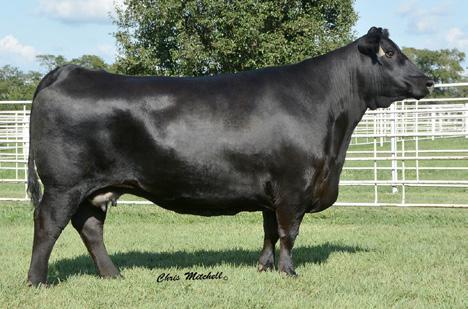


OPTIMUM is a go-to heifer sire offering phenotype, growth and carcass merit!
Don’t overlook this young sire. His best days are yet to come. From Deer Valley Farm, Lane View Farms and Kenneth Carey, TN; Express Ranches and Long Ranch, OK; Stevenson Angus Ranch and Darrell Stevenson, MT; Tehama Angus Ranch, CA; Katie Colin Farm, GA and Norm Schenk, KY
Balance and Marketing Flexibility are keys to producer profitability.
ENDEAVOR is the epitome of balance ranking in the top 25% of the breed for every index.

ENDEAVOR is a go-to heifer sire offering growth, maternal and endproduct merit.
This calving ease specialist is a big spread sire ranking near the top of the breed for CED, BW, WW, YW and CEM.
Very few sires can match his Calving Ease and Growth combination, as he provides a balanced EPD profile with 12 traits ranking in the top 25% of the breed.
From Raymond and Sons Ranch, OR
Individual sire performance data is listed on pages 94-95.


34
◊
◊
◊
◊
7AN617 RR ENDEAVOR 9005 $25 CONNEALY CAPITALIST 028 LD CAPITALIST 316 LD DIXIE ERICA 2053 SIRE: RAVEN POWERBALL 53 ROLLIN ROCK BLACKBIRD 7059 ROLLIN ROCK BLACKBIRD 9080 DAM: Open camera. Scan code. Click to learn more. AAA: 19551197 DOB: 01/14/19 TAT: 9005 EPDs as of 11/01/22 Production Maternal Carcass C U $Value CED BW WW YW RADG DMI YH SC DOC Claw Angle PAP HS HP CEM Milk Hd/Dt MW MH $EN CW Marb RE Fat Grp/Pg Grp/Pg $M $W $F $G $B $C EPD 16 -2.2 82 153 .29 1.99 .4 1.25 18 .42 .52 1.51 .61 11.6 12 28 - 85 .6 -31 68 .92 .53 .054 - - 70 81 115 61 176 298 Acc .50 .71 .59 .50 .35 .35 .47 .38 .34 .28 .28 .28 .28 .25 .31 .32 - .40 .41 .44 .36 .36 .32 -% Rank 2 4 5 3 15 95 60 25 45 20 70 60 65 50 15 35 20 25 85 10 15 55 95 25 3 10 20 10 10 ◊
◊
◊
◊
7AN644 DEER VALLEY OPTIMUM 9246 $30 BASIN PAYWEIGHT 1682 DEER VALLEY GROWTH FUND DEER VALLEY RITA 36113 SIRE: GAR PROGRESS GAR PROGRESS 830 GAR 1I1 RITO 3346 DAM: Open camera. Scan code. Click to learn more. AAA: 19466633 DOB: 02/13/19 TAT: 9246 Dam of OPTIMUM Full sister to OPTIMUM EPDs as of 11/01/22 Production Maternal Carcass C U $Value CED BW WW YW RADG DMI YH SC DOC Claw Angle PAP HS HP CEM Milk Hd/Dt MW MH $EN CW Marb RE Fat Grp/Pg Grp/Pg $M $W $F $G $B $C EPD 11 0.2 78 148 .30 1.81 .5 .54 20 .57 .49 -.77 .76 11.5 15 31 - 70 .5 -26 66 .94 .65 .082 - 7 71 77 119 61 180 304 Acc .56 .84 .80 .64 .41 .41 .60 .66 .68 .37 .38 .29 .32 .30 .36 .36 - .45 .46 .51 .44 .44 .44 - 33 % Rank 15 30 10 4 10 95 50 70 40 80 50 10 90 50 3 20 40 35 75 10 15 40 95 25 10 4 20 10 5
◊
Sired by the now deceased Justified, JUSTICE is the logical choice to replace his popular sire.
ranks in the top 2% for $M, top 1% for CLAW and top 2% for Angle making him a great choice to sire the next generation of strong females.
For a calving ease sire, JUSTICE offers extra muscle shape, hip/pin width and power in a moderate maternal package.


JUSTICE is the perfect balance of phenotype and data. He ranks in the top 30% or better for 17 different traits.
From Rock Lake Angus, WY and Stevenson Angus, MT

The first progeny by JUSTICE were certainly calving ease. Like him, they show added shape, dimension and fleshing ability. I am very impressed with his feet, general structure, scrotal size and pleasant disposition. I believe him to be an impact sire, a bull with a flexible use pedigree that can improve a lot of fundamental traits while proving to be a maternal trait leader.
SAFE & SOUND is a must-use young sire destined to be a Calving Ease and Cowmaker bull that will add growth and end-product value.
He is phenotypically complete - moderate framed, big middled, with added muscle shape.
SAFE & SOUND has an ideal maternal combination coupling top $M and $W indexes with high Heifer Pregnancy.
His first calf reports are very favorable for Birth Weight with excellent calf vigor.


SAFE & SOUND is an excellent choice for commercial heifer projects where uniform Calving Ease with added performance is preferred.
From Hilton Farms, OK and Connealy Angus, NE
35 ◊
◊
◊
◊
◊
Do your herd justice and add JUSTICE to your program!
JUSTICE
7AN688 RL JUSTICE $25 CONNEALY JUDGMENT KG JUSTIFIED 3023 KG MISS MAGIC 1443 SIRE: BARSTOW CASH RL CASH LADY 8988 RL MANDATE LADY 2981 DAM: Open camera. Scan code. Click to learn more. AAA: 19836564 DOB: 02/18/20 TAT: 2096 EPDs as of 11/01/22 Production Maternal Carcass C U $Value CED BW WW YW RADG DMI YH SC DOC Claw Angle PAP HS HP CEM Milk Hd/Dt MW MH $EN CW Marb RE Fat Grp/Pg Grp/Pg $M $W $F $G $B $C EPD 11 -.3 67 129 .28 1.49 .2 1.70 25 .24 .34 2.16 .48 15.0 9 35 - 50 -.2 -19 50 .76 .70 .065 - - 93 75 93 55 148 285 Acc .40 .64 .54 .42 .32 .32 .47 .48 .36 .29 .29 .29 .29 .26 .33 .34 - .40 .42 .43 .38 .38 .36 -% Rank 15 20 30 20 20 85 80 10 20 1 2 75 35 15 45 10 60 90 60 35 25 30 95 2 10 35 30 35 10 ◊
◊
◊
◊
◊
7AN683 HF SAFE & SOUND 019 $25 KOUPALS B&B IDENTITY MILL BRAE IDENTIFIED 4031 MILL BRAE PRO BLACKCAP 1092 SIRE: TEX PLAYBOOK 5437 HF EMPRESS 804 HF EMPRESS 6007 DAM: Open camera. Scan code. Click to learn more. AAA: 19705988 DOB: 03/04/20 TAT: 019 Dam of SAFE & SOUND EPDs as of 11/01/22 Production Maternal Carcass C U $Value CED BW WW YW RADG DMI YH SC DOC Claw Angle PAP HS HP CEM Milk Hd/Dt MW MH $EN CW Marb RE Fat Grp/Pg Grp/Pg $M $W $F $G $B $C EPD 16 -1.8 74 130 .25 1.67 .3 .85 11 .41 .48 2.03 .62 14.6 15 32 - 41 -.1 -13 54 .93 .86 .043 - - 90 85 84 67 151 286 Acc .51 .70 .52 .40 .33 .33 .47 .42 .37 .29 .30 .25 .29 .26 .33 .34 - .39 .41 .43 .38 .38 .34 -% Rank 2 5 15 20 40 90 70 50 75 15 45 75 65 20 3 15 70 85 45 25 15 15 90 2 2 55 15 30 10 Fall 2022 Angus Breed Average EPDs Production: CED: 6 BW: 1.2 WW: 59 YW: 105 RADG: .24 DMI: .91 YH: .5 SC: .80 DOC: 17 CLAW: .50 ANGLE: .49 PAP: 1.22 HS: .56 Maternal: HP: 11.4 CEM: 8 MILK: 26 MW: 56 MH: .3 $EN: -16 Carcass: CW: 42 MARB: .53 RE: .56 FAT: .012 $M: 58 $W: 55 $F: 85 $G: 46 $B: 132 $C: 229
Darrell Stevenson, Stevenson Angus
is a proven calving ease sire making beautiful, moderate framed daughters with exceptional udder quality who wean big calves.

was selected for all the convenience traits he offers. He ranks among the best for PAP, HS and CLAW. He is one of the easiest sires to handle due to his calm demeanor.


His young dam already has an IMF ratio of 1@104 and a Ribeye ratio of 1@108, while his grandam has posted a 362-day calving interval with a WW ratio of 6@104 and YW ratio of 6@105. NORTHBOUND’s cow family is strong!

From Moke Angus, SD


36
◊
◊
◊
◊
offers
quality
Benoit Angus and Smoky Valley Angus,
14AN497 E&B NEW ADDITION 608 $25 CONNEALY CONFIDENCE 0100 CONNEALY CONFIDENCE PLUS ELBANNA OF CONANGA 1209 SIRE: SITZ DASH 10277 E&B LADY DASH 4152 E&B LADY RIGHT ANSWER 296 DAM: Open camera. Scan code. Click to learn more. AAA: 18548853 DOB: 01/15/16 TAT: 608 Dam of NEW ADDITION Son, Benoit Angus, KS EPDs as of 11/01/22 Production Maternal Carcass C U $Value CED BW WW YW RADG DMI YH SC DOC Claw Angle PAP HS HP CEM Milk Hd/Dt MW MH $EN CW Marb RE Fat Grp/Pg Grp/Pg $M $W $F $G $B $C EPD 14 -1.6 52 94 .25 .24 -.3 .59 36 .48 .52 2.56 .51 17.4 14 33 8 12 -.4 0 34 .86 .76 .050 4 29 98 64 82 62 143 283 Acc .71 .87 .83 .74 .41 .41 .77 .75 .56 .38 .41 .27 .30 .31 .52 .48 39 .52 .56 .63 .59 .56 .57 21 108 % Rank 4 10 75 70 40 15 95 65 1 45 70 85 40 4 5 15 90 95 20 70 20 25 95 1 30 60 20 40 15 ◊ Looking for
to
your
to? NORTHBOUND
that sire! ◊
◊
◊
Individual sire performance data is listed on pages 94-95.
NEW ADDITION is a perennial sales leader at Select Sires and rightfully so. He has a lot to offer!
He
Not just a calving ease sire, NEW ADDITION also ranks in the top 1% for $M and docility and top 4% for HP.
In addition to his calving ease and maternal excellence, NEW ADDITION also
carcass
rankings in the top 25% or better for both MARB and REA. From
KS
something
breed
heifers
is
NORTHBOUND is a True North son that is elite for his CE and BW while also offering great predictions for HP, DOC, MARB, REA and $M.
NORTHBOUND
7AN718 MOKE G NORTHBOUND $25 SAV RAINFALL 6846 SQUARE B TRUE NORTH 8052 ELBANNA OF CONANGA 1209 SIRE: KOUPAL KOZI 418 MOKE G ERICA 958 GM ERICA 341 DAM: Open camera. Scan code. Click to learn more. AAA: 20106934 DOB: 01/03/21 TAT: 128 EPDs as of 11/01/22 Production Maternal Carcass C U $Value CED BW WW YW RADG DMI YH SC DOC Claw Angle PAP HS HP CEM Milk Hd/Dt MW MH $EN CW Marb RE Fat Grp/Pg Grp/Pg $M $W $F $G $B $C EPD 17 -2.8 58 105 .25 .94 -.1 .81 23 .37 .49 -1.31 .19 14.2 10 41 - 22 -.4 -9 34 .75 .90 .031 - - 88 78 71 60 130 257 Acc .35 .54 .47 .42 .32 .32 .45 .39 .34 .27 .27 .25 .28 .23 .26 .29 - .36 .38 .40 .36 .36 .33 -% Rank 1 2 60 55 50 45 95 55 30 10 55 5 3 30 30 1 95 95 30 85 35 15 75 4 5 80 25 60 35
PATENT was chosen in the 2021 Connealy Angus sale as a Calving Ease sire with elite Maternal value.


In Addition to his elite CE and big $M value, he shines for Heifer Pregnancy, CEM and Docility.
His dam is an easy fleshing, nice uddered Premium Product daughter and his grandam is an elite Pathfinder cow.
PATENT is a 7AN464 UNIQUE son with added muscle and body depth in a 6 frame package.
He is one of our best for PAP with a -1.56 EPD.


PATENT is an excellent choice for commercial heifer projects, as he offers Calving Ease without sacrificing growth and phenotype.
From Connealy Angus, NE
37 ◊
◊
◊
◊
◊
◊
14AN686 CONNEALY PATENT 959A $25 PLATTEMERE WEIGH UP K360 DEER VALLEY UNIQUE 5635 SITZ HENRIETTA PRIDE 643T SIRE: CONNEALY PREMIUM PRODUCT BUNTY OF CONANGA 146 BUNDEE OF CONANGA 9905 DAM: Open camera. Scan code. Click to learn more. AAA: 19847979 DOB: 08/02/19 TAT: 959A EPDs as of 11/01/22 Production Maternal Carcass C U $Value CED BW WW YW RADG DMI YH SC DOC Claw Angle PAP HS HP CEM Milk Hd/Dt MW MH $EN CW Marb RE Fat Grp/Pg Grp/Pg $M $W $F $G $B $C EPD 15 -1.6 70 121 .24 1.27 .4 1.22 24 .54 .57 -1.56 .51 19.5 14 22 - 50 .4 -11 39 .66 .76 -.005 - - 91 70 77 57 134 265 Acc .36 .55 .48 .43 .34 .34 .46 .49 .45 .34 .34 .25 .30 .24 .32 .34 - .39 .40 .43 .39 .38 .36 -% Rank 2 5 25 30 55 65 70 30 25 70 90 4 45 2 4 80 70 50 35 70 45 30 30 2 15 65 30 55 25 ◊ COMPOUND
◊ We
He’s
◊ COMPOUND
◊ Sort the
the efficiency traits of RADG and DMI, he’s the only one! From Spring Cove Ranch, ID 7AN525 SPRING COVE COMPOUND 12E $20 KM BROKEN BOW 002 SPRING COVE CROSSBOW SPRING COVE PRETTY 205 SIRE: BASIN PAYWEIGHT 1682 SPRING COVE LIZA 507 SPRING COVE LIZA 309 DAM: Open camera. Scan code. Click to learn more. AAA: 18875915 DOB: 01/21/17 TAT: 12E Son, ZumBrunnen Angus, WY Daughter, Pine View Angus, IA EPDs as of 11/01/22 Production Maternal Carcass C U $Value CED BW WW YW RADG DMI YH SC DOC Claw Angle PAP HS HP CEM Milk Hd/Dt MW MH $EN CW Marb RE Fat Grp/Pg Grp/Pg $M $W $F $G $B $C EPD 18 -3.0 62 115 .28 .67 .1 .51 23 .63 .54 1.00 .80 13.7 13 31 7 63 .1 -22 44 .92 .60 .033 - 15 63 68 90 64 153 261 Acc .63 .81 .75 .63 .37 .37 .61 .62 .49 .27 .27 .30 .28 .24 .43 .40 17 .44 .43 .48 .41 .42 .40 - 32 % Rank 1 2 45 40 20 35 85 70 25 95 75 45 90 25 10 20 45 70 65 50 15 45 80 40 20 40 20 25 25 Fall 2022 Angus Breed Average EPDs Production: CED: 6 BW: 1.2 WW: 59 YW: 105 RADG: .24 DMI: .91 YH: .5 SC: .80 DOC: 17 CLAW: .50 ANGLE: .49 PAP: 1.22 HS: .56 Maternal: HP: 11.4 CEM: 8 MILK: 26 MW: 56 MH: .3 $EN: -16 Carcass: CW: 42 MARB: .53 RE: .56 FAT: .012 $M: 58 $W: 55 $F: 85 $G: 46 $B: 132 $C: 229
is a great choice to reduce calving risk in your heifers.
don’t offer many sires with as much total ‘middle’ as COMPOUND
nearly as deep as he is long.
keeps frame in check and sports a pedigree that’s an outcross to most.
AAA Main Report for CED and
INCENTIVE
an outcross option for those interested in attaining significant carcass quality premiums.


He offers a ‘value incentive’ like few can and his offspring will excel in grid-based marketing scenarios.
Balanced for Calving Ease and growth, INCENTIVE simplifies the quest for ‘new and different’ carcass genetics. From Gardiner Angus Ranch, Messer Cattle LLC and Nick Messer, KS; Howard Messer and Lowell Messer, MO

Here is a SURE FIRE choice for calving ease, nice females and significant carcass improvement.

Used heavily in commercial heifer programs, SURE FIRE’s ability to boost value as a service sire has improved profit for ranchers throughout the country.
With more than 1,900 daughter records and 300 actual carcass records, no other proven calving ease and high marbling sire even comes close to SURE FIRE.
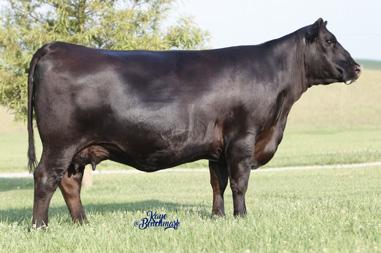

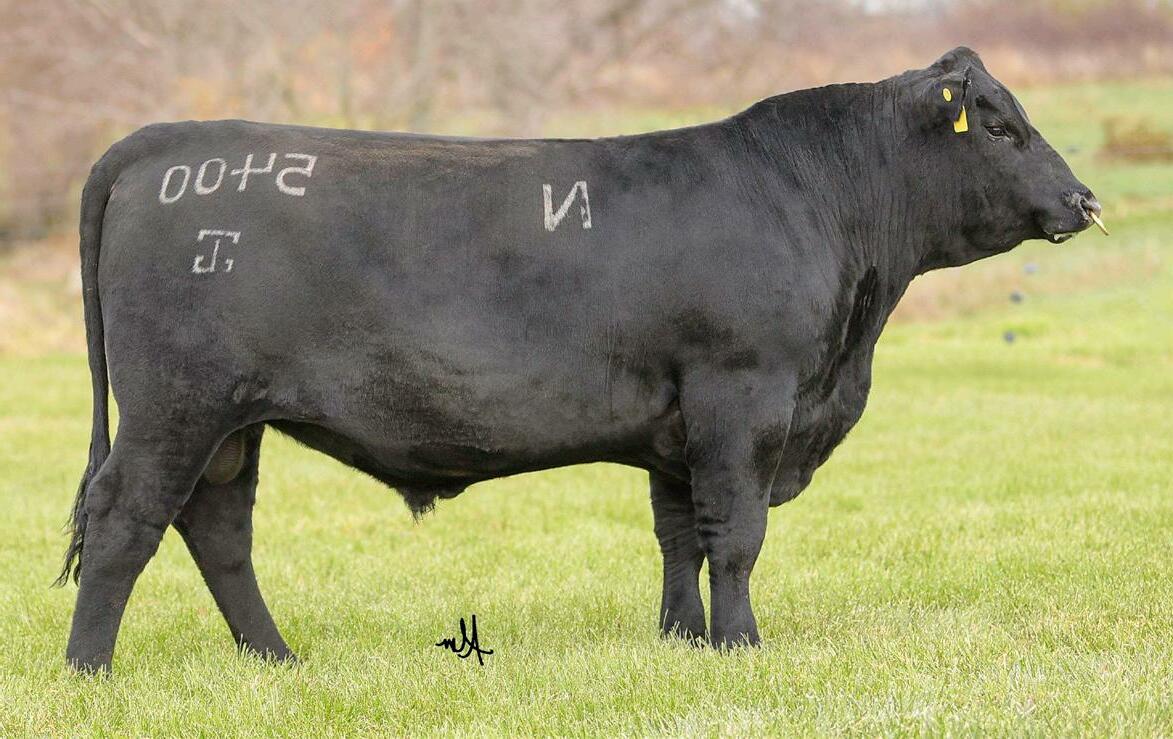
Appropriately named, SURE FIRE is a no miss sire for added value.
From Gardiner Angus Ranch and Chair Rock Ranch, KS and Mayer Legacy, LLC, OK
Individual sire performance data is listed on pages 94-95.
38
◊
7AN689 G A R INCENTIVE $25 KOUPALS B&B IDENTITY MILL BRAE IDENTIFIED 4031 MILL BRAE PRO BLACKCAP 1092 SIRE: GARDENS CACHE GAR CACHE 358S GAR PROPHET 374 DAM: Open camera. Scan code. Click to learn more. AAA: 20051660 DOB: 04/29/20 TAT: N5400 EPDs as of 11/01/22 Production Maternal Carcass C U $Value CED BW WW YW RADG DMI YH SC DOC Claw Angle PAP HS HP CEM Milk Hd/Dt MW MH $EN CW Marb RE Fat Grp/Pg Grp/Pg $M $W $F $G $B $C EPD 9 0 73 142 .33 1.70 .6 .56 18 .57 .52 1.08 .30 11.7 8 29 - 61 .5 -20 67 1.64 1.17 .027 - - 67 73 117 106 223 356 Acc .34 .49 .41 .37 .31 .31 .51 .49 .45 .26 .26 .23 .26 .23 .31 .32 - .36 .39 .41 .38 .38 .35 -% Rank 30 25 20 10 4 90 45 70 55 80 70 50 10 55 55 30 55 40 60 10 1 2 70 40 15 4 1 1 1 ◊
◊
offers
◊
◊
Photo Reversed
◊
◊
7AN389 G A R SURE FIRE $25 MYTTY IN FOCUS CONNEALY IN SURE 8524 ENTREENA OF CONANGA 657 SIRE: GAR NEW DESIGN 5050 CHAIR ROCK 5050 GAR 8086 CHAIR ROCK GRID MAKER 2107 DAM: Open camera. Scan code. Click to learn more. AAA: 17328461 DOB: 02/05/12 TAT: K62 Daughter, EZ Angus Ranch, CA Daughter, Myers Angus, KY Daughter, Goode Angus, TX EPDs as of 11/01/22 Production Maternal Carcass C U $Value CED BW WW YW RADG DMI YH SC DOC Claw Angle PAP HS HP CEM Milk Hd/Dt MW MH $EN CW Marb RE Fat Grp/Pg Grp/Pg $M $W $F $G $B $C EPD 12 0.1 56 107 .27 .81 .4 2.26 26 .58 .45 -.80 .13 9.2 7 29 398 37 .0 -9 47 1.29 .69 .026 95 1683 63 67 97 83 180 296 Acc .93 .97 .96 .95 .82 .82 .96 .95 .93 .86 .86 .66 .79 .84 .90 .90 1920 .87 .88 .87 .86 .84 .86 299 4695 % Rank 15 25 60 50 30 45 60 1 15 85 30 10 1 75 65 30 75 75 35 40 3 35 70 40 25 30 3 10 10 METHOD GENETICS MPI / % 150 / 20 QPI / % 145 / 14 ROI / % 266 / 15 METHOD GENETICS MPI / % 166 / 4 QPI / % 178 / 1 ROI / % 308 / 1
QUANTUM to not only take advantage of exceptional carcass merit, but also to create big bodied, high performing, eye-appealing calves.
sons and daughters have topped sales across the country because of their combination of powerful phenotype and exceptional EPDs.


The Method Matters
The Method Genetics index values are derived from Method Genetics EPDs combined with industry-focused economic weightings. The Method EPDs are generated from a multi-trait, ‘single-step’ genetic evaluation that uses per-
MATERNAL PRODUCTION INDEX (MPI):
The Maternal Production Index is reported in dollars per calf produced from the breeding herd with Angus-based genetics. It encompasses direct and maternal calving ease, heifer pregnancy, weaning growth, maternal milk, and mature size differences in a scenario where replacement females are retained and calves are marketed at weaning.
QUALITY POUNDS INDEX (QPI):
The Quality Pounds Index is reported in dollars per calf for herds with Angus-based genetics. It focuses on the terminal side of the herd’s business for feedlot gain and carcass merit genetic differences. There are no provisions for calving ease or maternal traits, with the assumption that all calves are under a retained ownership scenario fed out and marketed on a premium quality-based grid.
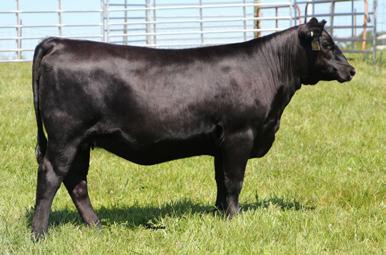
formance measures, ancestral pedigree, and available DNA genotypes. This single-step approach incorporates the genotypes directly into the genetic evaluation process and was implemented at Method in the summer of 2014.
Method Genetics™ Selection Index Key Used in the catalog


METHOD GENETICS INDEX PERCENTILE RANKS (%):
A numeric ranking of the animal’s Index values on a 1% to 100% scale. A lower numeric value is considered more favorable. For example, a 25% presented with an index indicates that animal is in the upper 25 percent of the animals in the Method Genetics genetic evaluation for calves born in the last five years.
RETAINED OWNERSHIP INCOME (ROI):
P.O. Box 8802 / Saint Joseph, MO 64508 / www.MethodGenetics.com

Sally Northcutt, Ph.D. • Email: snorthcutt@methodgenetics.com Bill Bowman • Email: bbowman@methodgenetics.com
Cattle producers interested in a complete production system approach from conception through carcass end-point can use the Retained Ownership Income index. ROI ties together reproduction, calving ease, maternal genetic merit, growth throughout the calf’s lifetime, and quality based carcass merit in an Angus-based herd. The ROI is reported in dollars per calf produced in the herd, and consolidates the sub-indexes of MPI and QPI.
◊
◊
◊
◊
7AN560 G A R QUANTUM $25 GAR PROGRESS GAR MOMENTUM GAR BIG EYE 1770 SIRE: CONNEALY IN SURE 8524 GAR IN SURE 1524 GAR COMPLETE 3011 DAM: Open camera. Scan code. Click to learn more. AAA: 18636059 DOB: 08/18/16 TAT: 5526 Daughter, 4 Sons Farm, KY Daughter, Edisto Pines, SC Daughter, Daltons on the Sycamore, VA EPDs as of 11/01/22 Production Maternal Carcass C U $Value CED BW WW YW RADG DMI YH SC DOC Claw Angle PAP HS HP CEM Milk Hd/Dt MW MH $EN CW Marb RE Fat Grp/Pg Grp/Pg $M $W $F $G $B $C EPD 12 1.3 73 134 .29 1.55 .8 1.54 27 .48 .51 -.96 .68 9.1 6 33 33 75 .8 -29 58 .97 1.31 -.019 9 480 61 73 100 80 180 294 Acc .82 .94 .91 .87 .48 .48 .92 .90 .85 .70 .70 .33 .54 .48 .63 .50 68 .55 .60 .65 .61 .58 .61 19 1289 % Rank 15 55 20 15 15 90 20 15 10 45 60 10 75 75 75 15 30 15 85 20 15 1 15 45 10 25 4 10 10
Use
His
He is a breed leader for both DOC and PAP.
QUANTUM is a proven calving ease sire creating high value sons and daughters with above average feet. From Gardiner Angus Ranch, KS; Daltons on the Sycamore, VA and Big Timber Cattle Co., FL
MPI / % 167 / 1 QPI / % 166 / 1 ROI / % 300 / 1 Method Genetics Index / Percentile
METHOD GENETICS MPI / % 149 / 21 QPI / % 150 / 10 ROI / %
/ 13
269


40 Individual
is
◊
◊
◊ WALL
with excellent
cow
From Deer Valley Farm and Allison Farms, TN; Schiefelbein Farms, MN; Bar 7 Genetics, AL; Lawson Farms, VA and Cheer-Up Farm, CT
Daughter,
BASIN PAYWEIGHT 006S BASIN PAYWEIGHT 1682 21AR O LASS 7017 SIRE: PLATTEMERE WEIGH UP K360 DEER VALLEY RITA 36113 DEER VALLEY RITA 9457 DAM: Open camera. Scan code. Click to learn more. 14AN545 DEER VALLEY WALL STREET $30 AAA: 18827829 DOB: 01/23/17 TAT: 71128 EPDs as of 11/01/22 Production Maternal Carcass C U $Value CED BW WW YW RADG DMI YH SC DOC Claw Angle PAP HS HP CEM Milk Hd/Dt MW MH $EN CW Marb RE Fat Grp/Pg Grp/Pg $M $W $F $G $B $C EPD 7 0.6 77 146 .29 1.97 .0 .80 14 .49 .44 1.20 .91 15.3 7 27 16 66 .3 -22 66 .94 .56 .074 1 101 79 73 116 61 177 309 Acc .66 .91 .88 .79 .48 .48 .80 .77 .70 .68 .67 .32 .46 .46 .55 .48 44 .59 .63 .54 .49 .49 .49 1 214 % Rank 45 35 10 5 15 95 90 55 65 45 25 55 95 15 65 40 40 50 65 10 15 50 95 10 10 10 20 10 4
sire performance data
listed on pages 94-95.
WALL STREET is a true beef sire with tremendous depth of body and thickness throughout. He is easily one of the most physically impressive sires in our lineup.
WALL STREET posts a very strong EPD package backed with progeny proof. He blends all the components to drive his $M and $C ranking to the top of the breed.
STREET daughters are proving to be productive, highly maternal females
brood
type.
Son,
Yon Family Farms, SC
Daughter,
Long Angus, OK
Deer
Valley
Farms, TN
REGIMENT continues to be a customer satisfaction sire for his consistent phenotype, elite EPDs and marketability of his offspring.
With numerous recorded offspring, REGIMENT ranks in the top 1% for seven different traits or indexes.
REGIMENT is the only sire with his accuracy and level of CE, WW and YW! Few sires can claim they start elite and remain there!
His offspring continue to top sales and generate value. REGIMENT sires long, extended and attractive cattle with added frame.
From Wilks Ranches, TX; 4 Sons Farm, KY; Linz Heritage Angus, IN and Wall Street Cattle Co., MO


is a powered up son of 7AN580 HOME TOWN offering exceptional growth and phenotype while still maintaining an elite rank for $B and $C.
offers fresh and outcross genetics on the bottom side of his pedigree. His dam has produced four pen carload bulls for Frey Angus and his grandam has produced nine.


you appreciate eye catching

41 Fall 2022 Angus Breed Average EPDs Production: CED: 6 BW: 1.2 WW: 59 YW: 105 RADG: .24 DMI: .91 YH: .5 SC: .80 DOC: 17 CLAW: .50 ANGLE: .49 PAP: 1.22 HS: .56 Maternal: HP: 11.4 CEM: 8 MILK: 26 MW: 56 MH: .3 $EN: -16 Carcass: CW: 42 MARB: .53 RE: .56 FAT: .012 $M: 58 $W: 55 $F: 85 $G: 46 $B: 132 $C: 229 ◊
◊
◊
◊
7AN594 WILKS REGIMENT 9035 $30 CONNEALY CAVALRY 1149 WAR CAVALRY B063 Z044 WAR CC&7 Z044 X029 SIRE: VAR EMPIRE 3037 VINTAGE CHLOE 6137 VAR CHLOE 2227 DAM: Open camera. Scan code. Click to learn more. AAA: 19401188 DOB: 01/08/19 TAT: 9035 Full Sister, EZ Angus, CA Daughter, 4 Sons Farm, KY Daughter, JAC’s Cattle Ranch, AR EPDs as of 11/01/22 Production Maternal Carcass C U $Value CED BW WW YW RADG DMI YH SC DOC Claw Angle PAP HS HP CEM Milk Hd/Dt MW MH $EN CW Marb RE Fat Grp/Pg Grp/Pg $M $W $F $G $B $C EPD 10 0.7 90 170 .36 2.11 1.0 1.36 16 .57 .56 1.28 .65 14.1 12 30 - 119 1.2 -48 89 .82 1.19 -.023 2 53 59 80 139 71 211 333 Acc .72 .91 .86 .66 .37 .37 .76 .71 .56 .44 .41 .22 .25 .18 .30 .30 - .41 .41 .50 .44 .44 .43 2 84 % Rank 25 40 2 1 1 95 10 20 55 80 85 55 70 25 15 25 3 2 95 1 20 1 15 50 4 1 10 1 1 ◊ BELIEVER
◊ He
◊ If
phenotype and want to add end-product merit into your herd, this sire will make you a “BELIEVER”. From Frey Angus Ranch, ND 7AN703 FREYS HOME TOWN BELIEVER $25 GAR ASHLAND GAR HOME TOWN CHAIR ROCK SURE FIRE 6095 SIRE: YOUNG DALE BELIEVE 46B FAR PRINCESS 7702 FAR PRINCESS 250A DAM: Open camera. Scan code. Click to learn more. AAA: 20113887 DOB: 01/17/21 TAT: 1013 Grandam of BELIEVER EPDs as of 11/01/22 Production Maternal Carcass C U $Value CED BW WW YW RADG DMI YH SC DOC Claw Angle PAP HS HP CEM Milk Hd/Dt MW MH $EN CW Marb RE Fat Grp/Pg Grp/Pg $M $W $F $G $B $C EPD 4 2.4 86 152 .29 1.76 .8 .37 16 .50 .49 -.93 .53 10.0 3 21 - 80 .3 -25 66 1.59 1.06 .006 - - 63 73 104 104 208 333 Acc .35 .55 .48 .43 .34 .34 .46 .48 .36 .29 .29 .27 .31 .23 .28 .30 - .36 .39 .42 .39 .38 .36 -% Rank 70 80 3 3 20 95 25 80 60 50 55 10 50 75 95 85 30 60 75 15 1 4 40 50 15 15 1 1 1 METHOD GENETICS MPI / % 150 / 20 QPI / % 161 / 4 ROI / % 279 / 7
Individual sire performance data is listed on pages 94-95.


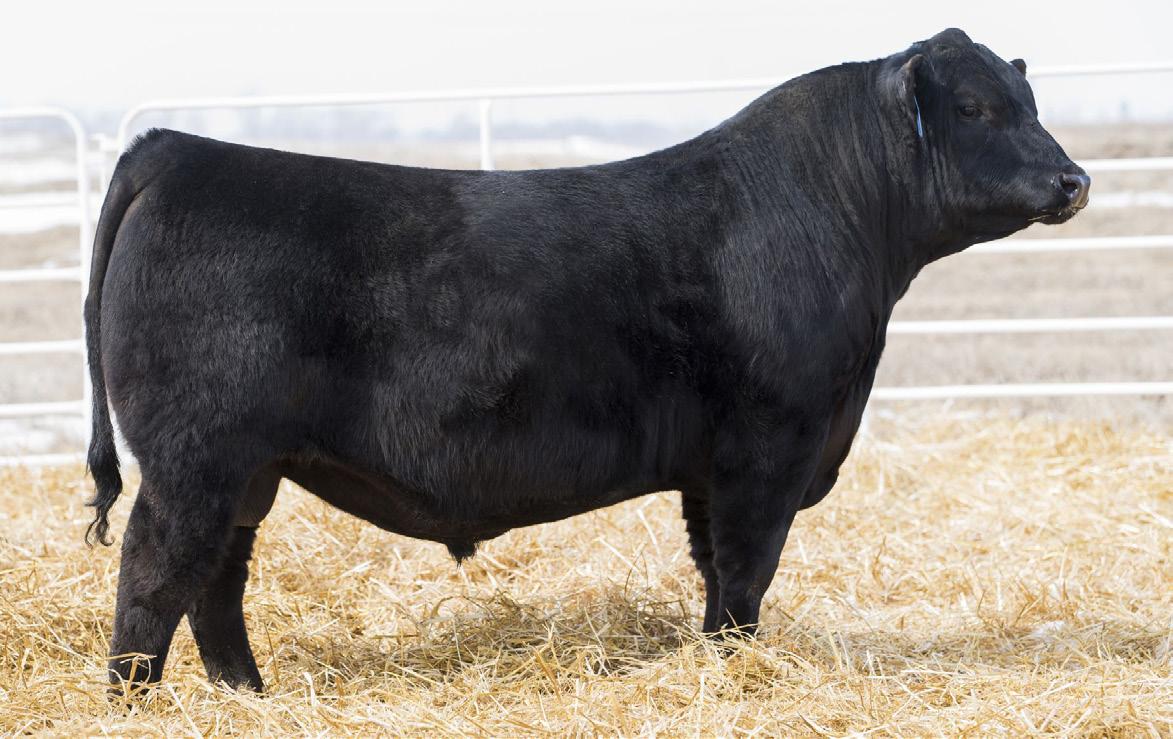
42
◊
has
◊ He
◊ You
quality
breed
Sons,
Hoover Angus,
7AN531 MOGCK ENTICE $25 SYDGEN EXCEED 3223 SYDGEN ENHANCE SYDGEN RITA 2618 SIRE: MOGCK SURE SHOT 253 MOGCK ERICA 2255 MOGCK ERICA 2162 DAM: Open camera. Scan code. Click to learn more. AAA: 18952921 DOB: 01/31/17 TAT: 2577 Son, Bledsoe Farms, OK Daughter, Predestined Catte Co., GA Daughter, Hoover Angus Farm, IA EPDs as of 11/01/22 Production Maternal Carcass C U $Value CED BW WW YW RADG DMI YH SC DOC Claw Angle PAP HS HP CEM Milk Hd/Dt MW MH $EN CW Marb RE Fat Grp/Pg Grp/Pg $M $W $F $G $B $C EPD 2 2.2 77 142 .33 1.59 .8 2.14 31 .36 .49 5.88 .11 12.0 -8 32 48 80 .5 -31 59 .90 .76 -.036 10 356 62 80 102 70 172 285 Acc .82 .95 .94 .91 .51 .51 .90 .90 .86 .81 .80 .36 .73 .60 .72 .64 174 .64 .70 .64 .60 .58 .60 18 1050 % Rank 85 75 10 10 3 90 20 2 3 10 50 95 1 45 95 15 25 35 85 20 15 25 5 45 4 20 10 10 10 ◊ Power
◊ He
◊
7AN699 DEER VALLEY YELLOWSTONE 0106 $30 BASIN PAYWEIGHT 1682 DEER VALLEY GROWTH FUND DEER VALLEY RITA 36113 SIRE: GAR PROPHET DEER VALLEY BLACKBIRD 4765 VAR BLACKBIRD 1218 DAM: Open camera. Scan code. Click to learn more. AAA: 19659010 DOB: 01/01/20 TAT: 0106 EPDs as of 11/01/22 Production Maternal Carcass C U $Value CED BW WW YW RADG DMI YH SC DOC Claw Angle PAP HS HP CEM Milk Hd/Dt MW MH $EN CW Marb RE Fat Grp/Pg Grp/Pg $M $W $F $G $B $C EPD 3 2.9 103 186 .34 2.50 1.6 .57 18 .51 .35 .84 .89 11.8 15 33 - 97 1.1 -39 100 .60 .83 .017 - - 84 96 141 53 194 336 Acc .35 .51 .44 .39 .33 .33 .45 .47 .36 .32 .32 .29 .32 .26 .33 .33 - .38 .41 .41 .38 .37 .34 -% Rank 80 85 1 1 2 95 1 70 55 55 4 40 95 55 2 10 15 4 95 1 50 20 60 10 1 1 40 2 1
ENTICE
exceptional phenotypic presence in a growth oriented, mid 6 frame package and is one of our best for $B and $C.
consistently sires increased performance with stout calves who are good structured with added power, depth of body and thickness.
should be ENTICEd to use him because of his elite growth, endproduct, foot
and
leading docility. From Mogck &
SD;
IA and TK Angus, NE
sire here! YELLOWSTONE provides off the charts growth and performance creating more dollars on sale day. Most cattle sell by the pound and YELLOWSTONE will add pounds!
is a big outlined, larger framed sire with exceptional body length and stands on a big solid foot with extra depth of heel.
With elite rankings for $W, $F, $B and $C, YELLOWSTONE provides pounds from weaning to the rail. From Deer Valley Farm, Maderias Farms and 4L Cattle, TN and Armando Romero, KS


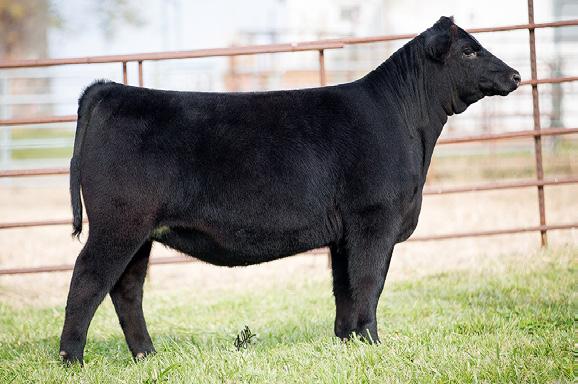


43 ◊ With over 800 recorded birthweights, GUARANTEE has improved for both CE and BW, while still offering elite growth. ◊ GUARANTEE offers all the traits cattlemen demand, cattle that are unassisted at birth, grow fast and are easy to handle. He is a go-to sire for docility. ◊ GUARANTEE does a lot of things right. Study the support photos close and see the tremendous phenotype, added length, volume and shape he offers. From Schooley Cattle Co., IA
Daughter,
IL BASIN PAYWEIGHT 1682 CONNEALY PAYRAISE PRIDE FAIR OF CONANGA 351 SIRE: CONNEALY ARMORY CRAWFORD MS ARMORY D40 GAR NEW DAY N2290 DAM: Open camera. Scan code. Click to learn more. 7AN623 CRAWFORD GUARANTEE 9137 $30 AAA: 19526770 DOB: 02/19/19 TAT: 9137
Daughter, Cardinal Cattle Company, IL Son, Cardinal Cattle Company, IL
Bob Jon Farm,
EPDs as of 11/01/22 Production Maternal Carcass C U $Value CED BW WW YW RADG DMI YH SC DOC Claw Angle PAP HS HP CEM Milk Hd/Dt MW MH $EN CW Marb RE Fat Grp/Pg Grp/Pg $M $W $F $G $B $C EPD 13 0.2 77 149 .33 1.92 .3 1.13 29 .60 .52 2.42 .60 12.3 8 34 - 57 -.2 -21 60 .62 .55 .012 - 5 78 80 109 51 159 284 Acc .71 .90 .85 .62 .39 .39 .63 .59 .55 .39 .39 .24 .28 .25 .30 .32 - .42 .42 .48 .39 .40 .38 - 9 % Rank 10 30 10 4 3 95 70 30 10 90 70 80 60 40 55 10 55 90 65 15 40 55 50 10 4 15 40 20 15 Fall 2022 Angus Breed Average EPDs Production: CED: 6 BW: 1.2 WW: 59 YW: 105 RADG: .24 DMI: .91 YH: .5 SC: .80 DOC: 17 CLAW: .50 ANGLE: .49 PAP: 1.22 HS: .56 Maternal: HP: 11.4 CEM: 8 MILK: 26 MW: 56 MH: .3 $EN: -16 Carcass: CW: 42 MARB: .53 RE: .56 FAT: .012 $M: 58 $W: 55 $F: 85 $G: 46 $B: 132 $C: 229
Photo Reversed
DIFFERENCE is exactly that...a bit different. He is a top 1% $Maternal bull with top 10% REA and top-third Marbling. He should moderate mature frame, improve daughter fertility, docility and
shape, all while maintaining carcass merit. He stems from a long line of highly fertile, sounduddered, long-lasting cows from our popular Enamel cow family. For folks serious about improving foundation traits without sacrificing end-product merit, this bull could make a difference.


44 Individual sire performance data is listed on pages 94-95. ◊ DIFFERENCE has super projections for CED, $M and $C, with the additional extras of moderation, efficiency and Docility. ◊ This ‘cool’ youngster combines a lot of the traits designed to improve your cow herd. ◊ Experience the DIFFERENCE with real-world, practical and profitable genetics .
Dalebanks Angus, KS NEW 7AN701 DALEBANKS DIFFERENCE 0825 $25 CONNEALY HEAT 0243 CONNEALY COOL 39L JMC JEENA ALLIE 8345 5399 SIRE: KM BROKEN BOW 002 ENAMEL 8426 OF DALEBANKS ENAMEL 4417 OF DALEBANKS DAM: AAA: 20027031 DOB: 08/31/20 TAT: 0825 EPDs as of 11/01/22 Production Maternal Carcass C U $Value CED BW WW YW RADG DMI YH SC DOC Claw Angle PAP HS HP CEM Milk Hd/Dt MW MH $EN CW Marb RE Fat Grp/Pg Grp/Pg $M $W $F $G $B $C EPD 16 -1.7 55 99 .25 .42 .3 .65 29 .38 .48 -.08 .40 16.5 13 34 - 17 .0 -3 48 .74 .99 -.001 - - 97 69 100 63 163 308 Acc .37 .54 .46 .42 .30 .30 .51 .48 .45 .36 .36 .23 .31 .26 .31 .33 - .40 .43 .42 .38 .38 .35 -% Rank 1 5 70 70 50 15 80 65 10 10 50 20 25 10 10 10 95 85 20 50 35 10 35 1 20 20 20 20 4
From
claw
Matt Perrier, Dalebanks Angus
Photo Reversed
OF4V16 4355
MORGANS DIRECTION 111 9901 JAZZED OF CONANGA 4660 JAZE OF CONANGA 234
High customer satisfaction is making him LEGENDARY
LEGENDARY is a carcass merit rock star ranking near the top of the breed for Marbling, REA, $B and $C. He has over 800 progeny with ultrasound records that are ratioing 110 for IMF and 102 for REA.
He is an excellent choice for heifer projects, as he is consistently one of our high fertility sires in timed A.I. projects.
From Connealy Angus Ranch, NE and Square B Ranch and Cattle Co., MO
SITZ DASH 10277
BARSTOW CASH BARSTOW QUEEN W16 SIRE: CAR EFFICIENT 534
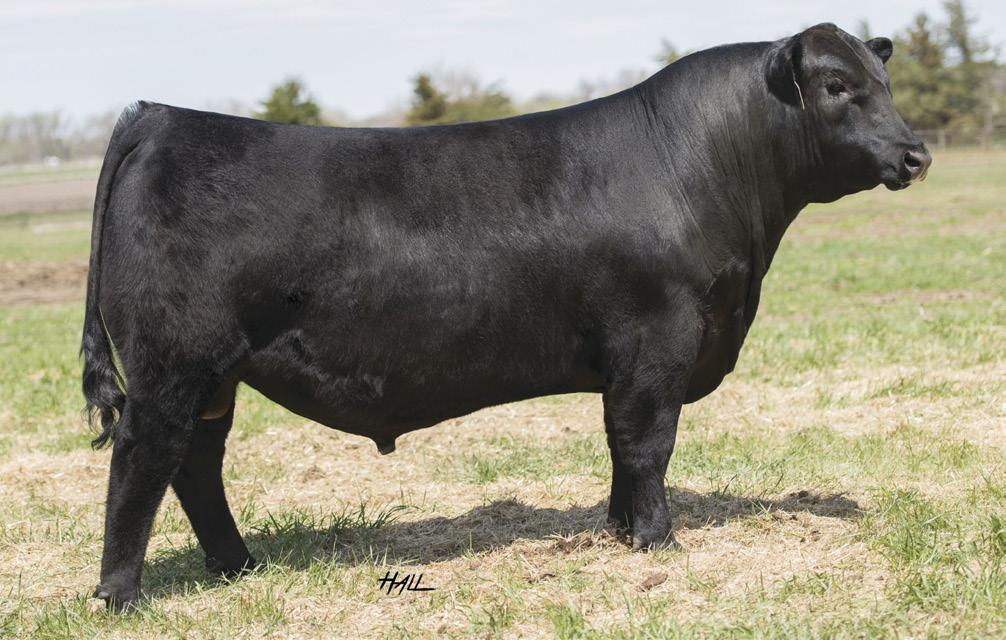
DAM:
BARSTOW MISS DIANNA Z25 BARSTOW MISS DIANNA X128
Open camera. Scan code. Click to learn more.


BANKROLL is a high customer satisfaction sire and sales leader that has stood the test of time.


He is unbeatable in siring calves that come unassisted, have excellent vigor, grow fast and stand out phenotypically.
He offers proven Calving Ease without sacrificing muscle and performance.
His daughters are right sized with a lot of rib shape, fleshing ability, beautiful udders, quiet attitudes and good feet.
From Barstow Angus, NE; Dave Dockter, ND and Hart Farms, SD
45 7AN473 CONNEALY LEGENDARY 644L AAA: 18534952
$22
EPDs as of 11/01/22 Production Maternal Carcass C U $Value CED BW WW YW RADG DMI YH SC DOC Claw Angle PAP HS HP CEM Milk Hd/Dt MW MH $EN CW Marb RE Fat Grp/Pg Grp/Pg $M $W $F $G $B $C EPD 8 -.9 72 117 .23 .98 .4 .77 11 .50 .56 1.65 .86 12.6 7 27 105 69 .0 -23 52 1.21 1.02 -.021 5 340 62 80 92 87 179 294 Acc .86 .95 .93 .90 .61 .61 .90 .89 .84 .72 .72 .35 .48 .61 .77 .73 335 .70 .57 .68 .65 .61 .65 27 945 % Rank 40 15 20 35 60 55 60 55 75 50 85 65 95 40 65 40 40 75 70 30 4 5 15 45 4 35 2 10 10 ◊
DOB: 01/23/16 TAT: 644L
Open camera. Scan code. Click to learn more. MCC DAYBREAK QUAKER HILL RAMPAGE 0A36 QHF BLACKCAP 6E2
SIRE:
DAM:
◊
◊
◊
◊
◊
◊
7AN432 BARSTOW BANKROLL B73
$25
AAA: 18036327 DOB: 02/14/14 TAT: B73
EPDs as of 11/01/22 Production Maternal Carcass C U $Value CED BW WW YW RADG DMI YH SC DOC Claw Angle PAP HS HP CEM Milk Hd/Dt MW MH $EN CW Marb RE Fat Grp/Pg Grp/Pg $M $W $F $G $B $C EPD 13 -2.1 57 117 .30 1.35 -.2 1.16 25 .54 .49 1.14 .61 14.9 9 25 154 82 -.1 -28 52 .48 .66 .008 12 249 55 55 104 46 150 250 Acc .86 .95 .93 .89 .65 .65 .88 .86 .76 .53 .52 .42 .42 .40 .79 .80 436 .65 .66 .68 .65 .61 .64 28 626 % Rank 10 4 60 35 10 80 95 30 20 70 50 50 65 20 45 55 25 85 80 30 55 35 45 65 55 20 50 30 35 ◊ NORTH STAR is a sure fire calving ease sire with big time growth and elite $M. ◊ He is a foot and docility improver, ideal for making replacement females as we rebuild the cowherd. ◊ NORTH STAR is unique because he offers tremendous growth in a very moderate mature height. ◊ His pedigree combines female making greats like 7AN320 PROPHET and Final Answer. From Schiefelbein Angus Farm, MN 7AN669 SCHIEFELBEIN NORTH STAR 6770 AAA: 19892632 DOB: 03/20/20 TAT: 6770 $20 Open camera. Scan code. Click to learn more. GAR PROPHET BALDRIDGE BEAST MODE B074 BALDRIDGE ISABEL Y69 SIRE: SAV FINAL ANSWER 0035 FROSTY ELBA 1543 FROSTY RETAIL P 1379 DAM: EPDs as of 11/01/22 Production Maternal Carcass C U $Value CED BW WW YW RADG DMI YH SC DOC Claw Angle PAP HS HP CEM Milk Hd/Dt MW MH $EN CW Marb RE Fat Grp/Pg Grp/Pg $M $W $F $G $B $C EPD 15 -1.1 84 149 .26 2.20 .3 .86 27 .39 .25 3.46 .58 14.5 15 18 - 69 .2 -18 64 .68 .75 .044 - - 97 77 102 53 155 298 Acc .35 .54 .47 .40 .32 .32 .46 .41 .38 .32 .32 .26 .27 .23 .32 .33 - .39 .42 .41 .37 .37 .35 -% Rank 2 10 4 4 40 95 80 50 15 15 1 90 60 25 2 95 45 70 55 15 40 30 90 1 10 15 40 25 10 Fall 2022 Angus Breed Average EPDs Production: CED: 6 BW: 1.2 WW: 59 YW: 105 RADG: .24 DMI: .91 YH: .5 SC: .80 DOC: 17 CLAW: .50 ANGLE: .49 PAP: 1.22 HS: .56 Maternal: HP: 11.4 CEM: 8 MILK: 26 MW: 56 MH: .3 $EN: -16 Carcass: CW: 42 MARB: .53 RE: .56 FAT: .012 $M: 58 $W: 55 $F: 85 $G: 46 $B: 132 $C: 229
7AN697 19824135 COUNTY ROAD 18 25 NO 14 .37 -1.0 .53 76 .46 129 .41 .24 .30 1.37 .30 .5 .50 .90 .47 31 .34 .54 .34 .46 .34
14AN553 19256275 COWBOY LOGIC - 20 YES 15 .68 -0.7 .85 63 .83 115 .76 .29 .42 .65 .42 .3 .78 .58 .74 2 .73 .44 .63 .37 .63
7AN743 20132505 CRAFTSMAN 8 50 YES 8 .36 1.6 .56 83 .48 145 .44 .29 .32 1.43 .32 .8 .47 .68 .42 25 .45 .38 .36 .40 .36 7AN701 20027031 DIFFERENCE 44 25 YES 16 .37 -1.7 .54 55 .46 99 .42 .25 .30 .42 .30 .3 .51 .65 .48 29 .45 .38 .36 .48 .36
46 Individual sire performance data is listed on pages 94-95. AAA EPDs as of 11/01/22 RED TEXT = semen available, but sire is not listed in directory = top 35 percent of the breed = Canadian availability ALL ANGUS SIRES AVAILABLE ANGUS - Sorted by Name CE BW WW YW RADG DMI YH SC DOC CLAW ANGLE Code No. Reg No. Code Name EPD Acc EPD Acc EPD Acc EPD Acc EPD Acc EPD Acc EPD Acc EPD Acc EPD Acc EPD Acc EPD Acc 7AN591 19388669 ABUNDANCE - 18 YES 10 .50 0.7 .76 84 .70 132 .53 .20 .40 1.61 .40 .5 .62 .13 .49 24 .49 .53 .41 .49 .43 14AN461 17972810 ACCLAIM - 22 YES 5 .90 1.2 .97 71 .96 141 .94 .36 .71 1.34 .71 1.0 .94 -.02 .93 13 .90 .48 .83 .49 .83 7AN758 20255076 APEX 17 35 NO 13 .32 -1.8 .47 71 .40 127 .35 .26 .29 1.46 .29 .3 .51 1.39 .48 37 .44 .57 .25 .57 .25 14AN515 18693041 BALANCE - 25 NO 8 .46 2.5 .83 83 .76 146 .67 .26
.41 2.22 .41 .6 .63 .54 .66 8 .48 .42 .40 .41 .39
33 25
70
BRAGGING RIGHTS - 20 YES 12 .74 -.9 .90 70 .87 128 .81 .26 .44 1.65
.2
1.03 .83 28 .73 .53 .47 .47 .46
BRIGADE 11 25 NO 9 .48 -1.2 .82 75 .77 144 .60 .31 .40 1.84
.6
13
.45
.43
BRUNSWICK 32 25 NO 10 .33 0.7 .54 86 .47 141 .42 .24 .31 1.71 .31 .3 .43 1.38 .48 32 .44 .39 .33 .46 .34
CAMERON 28 25 NO 11 .35 0.1 .53 82 .42 147 .37 .28 .32 1.92 .32 .8 .43 1.13 .40 12 .35 .45 .29 .48 .29
COMBUSTION - 25 YES 8 .70 1.7 .89 76 .85 139 .79 .32 .47
.6
19
37 20 YES 18 .63 -3.0 .81 62 .75 115 .63 .28 .37
25 YES 17 .92 -3.5 .97 46 .96 90 .94 .25 .67 .37 .67 -.4
36
7AN432 18036327 BANKROLL 45 25 YES 13 .86 -2.1 .95 57 .93 117 .89 .30 .65 1.35 .65 -.2 .88 1.16 .86 25 .76 .54 .53 .49 .52 7AN703 20113887 BELIEVER 41 25 YES 4 .35 2.4 .55 86 .48 152 .43 .29 .34 1.76 .34 .8 .46 .37 .48 16 .36 .50 .29 .49 .29 7AN521 18876777 BLUEPRINT
YES 8 .82 0.6 .94
.93 127 .89 .29 .44 1.17 .44 .0 .88 .53 .87 19 .84 .48 .74 .49 .73 7AN480 18624785 BONANZA - 20 YES 7 .74 1.7 .91 74 .88 124 .82 .25 .53 .86 .53 .0 .84 .09 .79 11 .79 .40 .62 .46 .60 7AN538 17894794
.44
.86
14AN590 19469706
.40
.66 .99 .52
.52
.43 .51
7AN736 20102244
7AN725 20152901
7AN542 18943322
1.28 .47
.86 1.08 .82
.70 .63 .46 .49 .43 7AN525 18875915 COMPOUND
.67 .37 .1 .61 .51 .62 23 .49 .63 .27 .54 .27 7AN368 17031465 COMRADE -
.94 .16 .94
.91 .59 .82 .51 .81
7AN517 17879330 COUNSELOR - 22 YES 10 .69 -0.6 .89 62 .85 117 .78 .27 .41 1.25 .41 .3 .70 1.64 .73 26 .66 .50 .51 .80 .49
7AN625 19600071 COUNTY LINE - 20 NO 4 .38 1.7 .55 89 .48 158 .43 .34 .35 1.58 .35 .6 .52 1.36 .49 22 .46 .54 .30 .45 .30
ENTICE 42 25 YES 2 .82 2.2 .95 77 .94 142
FINAL DECISION - 25 NO 5 .37 2.6 .63 82 .50 156
FIREPROOF 16 50 NO 15 .31 0.2 .43 72 .38 146 .34 .38 .31 1.38 .31 .6 .47 1.24 .45 26 .34 .55 .26 .43 .26 7AN735 19581696 GIBSON 15 30 YES 9 .60 0.1 .81 76 .73 137 .70 .27 .42 1.91 .42 .3 .72 .97 .63 19 .50 .24 .36 .35 .35 7AN723 19971596 GOOD NEWS 28 25 YES 13 .33 0.5 .52 83 .44 157 .35 .33 .28 2.30 .28 1.1 .44 1.21 .38 19 .30 .43 .22 .35 .22 7AN753 19860277 GRAND CANYON 31 35 YES 9 .36 0.0 .59 60 .49 108 .37 .23 .32 1.06 .32 .1 .43 1.30 .48 17 .45 .23 .32 .40 .32 7AN528 18827828 GROWTH FUND 7 40 YES 9 .87 1.2 .97 91 .96 169 .93 .35 .57 2.07 .57 .6 .93 .83 .92 22 .89 .46 .83 .47 .82 7AN623 19526770 GUARANTEE 43 30 YES 13 .71 0.2 .90 77 .85 149 .62 .33 .39 1.92 .39 .3 .63 1.13 .59 29 .55 .60 .39 .52 .39 7AN684 19829215 GUARD RAIL 19 30 YES 13 .42 -2.4 .71 73 .48 122 .44 .24 .34 1.10 .34 .2 .46 1.03 .49 17 .45 .44 .35 .45 .35 7AN700 19862896 HERO 24 30 NO 5 .34 2.6 .48 74 .41 137 .37 .26 .33 1.99 .33 .7 .51 .74 .49 21 .45 .43 .29 .44 .29 7AN580 19266718 HOME TOWN 6 30 YES 14 .88 -0.5 .96 61 .94 116 .89 .27 .68 1.14 .68 .2 .93 .84 .91 20 .85 .60 .79 .47 .78 7AN689 20051660 INCENTIVE 38 25 YES 9 .34 0.0 .49 73 .41 142 .37 .33 .31 1.70 .31 .6 .51 .56 .49 18 .45 .57 .26 .52 .26 7AN698 19415015 IRON HORSE 20 30 NO 12 .70 0.6 .85 83 .77 153 .63 .37 .37 1.33 .37 .7 .72 .93 .65 27 .38 .46 .30 .35 .31 7AN688 19836564 JUSTICE 35 25 YES 11 .40 -0.3 .64 67 .54 129 .42 .28 .32 1.49 .32 .2 .47 1.70 .48 25 .36 .24 .29 .34 .29 7AN550 18543644 KNOW HOW - 25 YES 0 .60 3.0 .92 61 .89 130 .84 .35 .39 1.32 .39 .7 .84 1.89 .83 13 .74 .34 .66 .29 .63 7AN473 18534952 LEGENDARY 45 22 NO 8 .86 -0.9 .95 72 .93 117 .90 .23 .61 .98 .61 .4 .90 .77 .89 11 .84 .50 .72 .56 .72 7AN544 18770757 MAIN STREET - 20 YES 9 .47 1.1 .74 76 .66 134 .54 .24 .42 1.88 .42 .3 .64 1.26 .50 33 .37 .64 .25 .53 .25 7AN618 19566408 MARVEL 30 30 YES 3 .36 2.7 .68 62 .56 111 .37 .30 .28 .09 .28 .5 .43 .08 .33 3 .30 .59 .20 .57 .20 7AN392 17354145 MOMENTUM - 25 YES 14 .86 0.1 .94 55 .93 100 .90 .23 .63 .94 .63 .2 .94 -.03 .92 27 .91 .45 .72 .45 .72 PRICE PAGE
7AN624 19123898 DUAL THREAT 24 25 YES 12 .73 -0.2 .89 69 .84 128 .66 .27 .42 1.31 .42 .7 .80 1.31 .73 26 .59 .49 .45 .39 .42 7AN617 19551197 ENDEAVOR 34 25 YES 16 .50 -2.2 .71 82 .59 153 .50 .29 .35 1.99 .35 .4 .47 1.25 .38 18 .34 .42 .28 .52 .28 14AN503 18402687 ENGAGE - 20 NO 13 .55 0.2 .82 64 .77 108 .64 .18 .39 1.06 .39 -.2 .51 1.01 .59 26 .61 .46 .28 .46 .28 7AN531 18952921
.91 .33 .51 1.59 .51 .8 .90 2.14 .90 31 .86 .36 .81 .49 .80 7AN610 19379914
.43 .36 .33 1.64 .33 1.1 .56 .84 .49 28 .36 .54 .27 .50 .27 7AN579 20370357
47 AAA EPDs as of 11/01/22 RED TEXT = semen available, but sire is not listed in directory = top 35 percent of the breed = Canadian availability PAP HS HP CEM MILK MW MH $EN CW MARB REA FAT $M $W $F $G $B $C $AxH $AxJ EPD Acc EPD Acc EPD Acc EPD Acc EPD Acc EPD Acc EPD Acc EPD EPD Acc EPD Acc EPD Acc EPD Acc EPD EPD EPD EPD EPD EPD EPD EPD 2.19 .28 .53 .32 9.8 .33 10 .35 30 .35 48 .43 .4 .46 -15 52 .50 1.58 .46 1.16 .45 .014 .42 85 91 73 104 177 315 196 181 -.44 .57 .77 .66 10.5 .67 9 .89 29 .87 140 .77 .9 .75 -57 82 .72 .73 .69 .64 .65 -.012 .69 26 60 145 59 203 289 122 115 -1.81 .22 .02 .27 15.7 .19 11 .25 40 .26 42 .33 .0 .36 -18 64 .41 1.45 .37 1.40 .37 .027 .35 92 87 107 100 207 360 233 212 2.99 .32 .82 .37 14.8 .31 10 .46 24 .45 69 .47 .2 .50 -21 63 .50 .32 .43 .78 .44 .006 .42 83 73 97 40 137 261 128 139 1.14 .42 .61 .42 14.9 .40 9 .79 25 .80 82 .65 -.1 .66 -28 52 .68 .48 .65 .66 .61 .008 .64 55 55 104 46 150 250 147 111 -.93 .27 .53 .31 10.0 .23 3 .28 21 .30 80 .36 .3 .39 -25 66 .42 1.59 .39 1.06 .38 .006 .36 63 73 104 104 208 333 214 208 2.71 .34 .72 .47 8.8 .63 5 .73 35 .67 68 .65 .2 .68 -27 53 .56 .74 .50 1.11 .50 .010 .51 57 80 103 64 167 274 185 166 1.04 .27 .29 .54 9.1 .51 8 .54 30 .50 71 .60 -.1 .60 -26 55 .66 .57 .62 .85 .59 -.011 .61 61 79 94 54 149 254 155 123 4.22 .30 .36 .34 9.7 .37 6 .65 6 .65 59 .52 .0 .51 -7 52 .74 1.04 .72 .99 .68 .000 .71 51 47 91 77 169 270 185 168 .40 .27 .66 .31 11.8 .27 13 .33 34 .35 53 .44 .3 .45 -19 71 .53 .70 .46 .92 .44 .041 .42 77 81 117 57 174 303 174 179 4.11 .23 .33 .25 13.3 .21 12 .26 26 .29 65 .35 .2 .37 -21 53 .39 1.02 .35 .61 .36 .027 .33 95 86 84 69 153 293 166 145 2.87 .27 .66 .31 14.2 .25 15 .31 32 .32 88 .37 .7 .39 -35 75 .40 .41 .37 .61 .37 .019 .34 73 83 114 41 155 274 82 70 1.81 .31 .21 .36 9.5 .33 8 .50 26 .39 83 .48 .8 .50 -29 65 .71 1.61 .69 .87 .65 .016 .67 54 68 108 101 209 325 222 200 1.00 .30 .80 .28 13.7 .24 13 .43 31 .40 63 .44 .1 .43 -22 44 .48 .92 .41 .60 .42 .033 .40 63 68 90 64 153 261 167 140 .28 .58 .26 .67 5.6 .77 8 .89 29 .91 -9 .84 -.5 .85 9 19 .76 .57 .73 .63 .70 .004 .74 68 68 70 50 120 224 121 84 1.64 .23 .22 .41 16.1 .39 4 .56 35 .55 58 .51 .2 .47 -22 57 .52 .66 .46 .89 .46 -.004 .45 64 68 109 58 167 281 157 128 3.43 .28 .12 .32 13.2 .27 5 .33 30 .35 96 .40 .6 .43 -37 68 .44 1.13 .38 .79 .38 -.032 .34 70 85 107 81 188 314 169 133 -1.67 .23 .54 .30 14.6 .26 14 .30 38 .31 15 .39 .1 .39 -4 54 .40 .70 .36 .64 .36 .063 .34 110 94 89 51 140 292 129 107 3.43 .27 .78 .56 6.8 .36 15 .37 22 .38 60 .47 .4 .48 -16 36 .51 .08 .45 .41 .46 -.018 .44 52 58 76 26 102 184 29 -1 -.24 .29 .40 .31 19.4 .28 5 .28 41 .31 44 .38 .5 .40 -19 67 .43 1.03 .39 .93 .39 .012 .37 112 94 102 75 177 342 178 181 -.08 .23 .40 .31 16.5 .26 13 .31 34 .33 17 .40 .0 .43 -3 48 .42 .74 .38 .99 .38 -.001 .35 97 69 100 63 163 308 168 159 .39 .29 .11 .46 13.0 .27 5 .35 36 .34 61 .44 .3 .45 -24 64 .64 1.22 .60 1.24 .58 .016 .60 74 75 118 88 205 340 211 211 1.51 .28 .61 .28 11.6 .25 12 .31 28 .32 85 .40 .6 .41 -31 68 .44 .92 .36 .53 .36 .054 .32 70 81 115 61 176 298 164 129 .39 .29 .03 .29 9.9 .28 9 .49 28 .50 8 .45 -.6 .45 5 38 .48 .21 .41 .66 .42 .057 .39 90 72 75 29 104 225 101 87 5.88 .36 .11 .73 12.0 .60 -8 .72 32 .64 80 .64 .5 .70 -31 59 .64 .90 .60 .76 .58 -.036 .60 62 80 102 70 172 285 144 129 .44 .23 .47 .25 12.3 .18 11 .31 25 .31 92 .36 .7 .38 -33 75 .41 1.20 .37 1.28 .37 -.064 .34 68 68 133 94 227 362 222 243 -1.73 .24 .13 .23 10.2 .22 14 .26 39 .23 77 .29 .4 .31 -33 77 .38 2.29 .35 .96 .36 .025 .33 65 76 132 133 265 409 294 254 3.89 .31 .21 .34 12.2 .30 7 .37 37 .37 27 .46 .0 .47 -9 62 .51 .96 .45 1.21 .46 .029 .45 102 86 97 74 171 324 184 173 3.50 .23 .29 .24 16.5 .18 15 .24 30 .27 133 .33 .9 .36 -54 80 .38 1.06 .33 1.14 .33 .008 .29 64 75 129 80 208 334 200 227 -1.00 .25 .44 .27 10.0 .24 6 .31 32 .33 53 .35 -.1 .37 -18 42 .40 .58 .37 .28 .37 .089 .34 68 66 80 39 119 222 50 8 2.94 .47 .92 .73 10.4 .61 14 .79 32 .71 104 .66 .6 .63 -42 82 .66 .31 .62 .67 .59 .055 .62 68 94 126 34 160 276 152 143 2.42 .24 .60 .28 12.3 .25 8 .30 34 .32 57 .42 -.2 .42 -21 60 .48 .62 .39 .55 .40 .012 .38 78 80 109 51 159 284 156 129 2.77 .28 .13 .31 20.6 .28 10 .33 35 .34 40 .41 -.2 .42 -14 44 .43 .82 .39 .72 .39 .004 .37 104 88 82 63 144 291 158 141 -.10 .26 .40 .30 9.2 .23 9 .26 25 .27 69 .34 .5 .37 -22 69 .42 1.74 .39 .94 .39 .035 .36 66 65 104 107 211 340 211 204 -2.55 .40 .22 .72 12.0 .39 13 .32 27 .31 56 .44 .2 .43 -17 53 .68 1.71 .64 1.09 .61 -.043 .65 63 59 103 114 217 344 244 217 1.08 .23 .30 .26 11.7 .23 8 .31 29 .32 61 .36 .5 .39 -20 67 .41 1.64 .38 1.17 .38 .027 .35 67 73 117 106 223 356 240 227 .10 .23 .25 .26 9.8 .21 13 .31 27 .32 105 .41 .6 .42 -40 64 .50 .81 .44 1.16 .44 -.069 .43 65 75 114 74 188 309 207 209 2.16 .29 .48 .29 15.0 .26 9 .33 35 .34 50 .40 -.2 .42 -19 50 .43 .76 .38 .70 .38 .065 .36 93 75 93 55 148 285 132 94 1.96 .30 .71 .58 15.7 .48 11 .55 22 .43 83 .54 .6 .59 -27 62 .52 1.11 .47 .95 .47 .015 .46 64 41 125 79 204 329 183 176 1.65 .35 .86 .48 12.6 .61 7 .77 27 .73 69 .70 .0 .57 -23 52 .68 1.21 .65 1.02 .61 -.021 .65 62 80 92 87 179 294 191 174 .75 .24 .67 .27 13.9 .21 11 .31 24 .32 61 .40 .1 .41 -18 51 .45 .95 .40 .51 .40 .039 .38 80 72 92 63 156 282 150 123 -.31 .18 .92 .22 12.3 .16 4 .23 25 .25 86 .32 .5 .35 -30 55 .38 .50 .32 1.04 .33 -.028 .28 35 51 117 55 172 258 155 135 1.63 .31 .45 .60 6.4 .78 7 .83 30 .82 53 .75 .2 .80 -17 42 .85 1.56 .84 .98 .80 .005 .83 52 61 87 101 188 296 201 176


48 Individual sire performance data is listed on pages 94-95. AAA EPDs as of 11/15/21 RED TEXT = semen available, but sire is not listed in directory = top 35 percent of the breed = Canadian availability 7AN696 POWER ON ALL ANGUS SIRES AVAILABLE ANGUS - Sorted by Name CE BW WW YW RADG DMI YH SC DOC CLAW ANGLE Code No. Reg No. Code Name EPD Acc EPD Acc EPD Acc EPD Acc EPD Acc EPD Acc EPD Acc EPD Acc EPD Acc EPD Acc EPD Acc 7AN595 19573709 MOVIN ON 14 25 YES 9 .64 0.3 .84 70 .77 120 .52 .20 .38 1.50 .38 .3 .64 .82 .56 27 .51 .44 .36 .41 .36 7AN695 19866645 NETWORK 26 30 NO 12 .36 0.5 .53 90 .46 167 .41 .40 .31 1.27 .31 .7 .46 .61 .47 22 .33 .54 .32 .49 .33 14AN497 18548853 NEW ADDITION 36 25 YES 14 .71 -1.6 .87 52 .83 94 .74 .25 .41 .24 .41 -.3 .77 .59 .75 36 .56 .48 .38 .52 .41
19892632 NORTH STAR 45 20 YES 15 .35 -1.1 .54 84 .47 149 .40 .26
7AN669
.32 2.20 .32 .3 .46 .86 .41 27 .38 .39 .32 .25 .32
7AN718 20106934 NORTHBOUND 36 25 YES 17 .35 -2.8 .54 58 .47 105 .42 .25 .32 .94 .32 -.1 .45 .81 .39 23 .34 .37 .27 .49 .27
PATENT 37 25 YES 15 .36 -1.6
70 .48 121
PEYTON 26 25 YES 11 .77 2.1
95
168
PLAYBOOK 18 30 YES 12 .89 -0.2 .97 61 .95 104 .93 .20 .48 .97 .48 .0 .93 .99 .93 26 .86 .51 .78 .43 .77
POWER ON - 25 YES 10 .35 0.3 .56 75 .49 133 .44 .30 .34 1.17 .34 .1 .53 .84 .51 27 .37 .46
.38
QUANTUM 39 25 YES 12 .82 1.3 .94 73 .91 134 .87 .29 .48 1.55 .48 .8 .92 1.54 .90 27 .85 .48 .70
.70
RAINFALL - 30 YES 8 .91 0.3 .97 56 .96 106 .93 .27 .55 .77 .55 -.4 .91 .92 .92 13
.79
REGIMENT 41 30 YES 10 .72 0.7 .91 90 .86 170 .66 .36 .37 2.11 .37 1.0 .76 1.36 .71 16 .56 .57 .44 .56 .41
RIVAL 9 40 YES 6 .36 2.2 .55 94 .48 163 .44 .29 .34 2.00 .34 1.0 .52 .54 .49 18
.43 .30
- 20 YES 15 .42 -2.5 .63 61 .55 120 .49 .29 .36 1.44 .36 .5 .59 1.51 .53 28 .47 .41 .28 .39
7NA644 19466633 OPTIMUM 34 30 NO 11 .56 0.2 .84 78 .80 148 .64 .30 .41 1.81 .41 .5 .60 .54 .66 20 .68 .57 .37 .49 .38 14AN686 19847979
.55
.43 .24 .34 1.27 .34 .4 .46 1.22 .49 24 .45 .54 .34 .57 .34 7AN510 18675107
.93
.90
.84 .33 .46 1.67 .46 1.2 .88 .44 .83 16 .76 .54 .70 .50 .69 7AN463 18414912
7AN696 19668501
.37 .47
7AN560 18636059
.51
7AN466 18578963
.88 .34 .80 .40
7AN594 19401188
7AN738 20128929
.36 .37 .30
14AN534 18917471 RUSSELL
.28
35 25 YES 16
-1.8
74
130
17 30 NO 9
0.9
84
147
32
7AN683 19705988 SAFE & SOUND
.51
.70
.52
.40 .25 .33 1.67 .33 .3 .47 .85 .42 11 .37 .41 .29 .48 .30 7AN757 20336998 SALUDA
.36
.56
.49
.45 .30 .34 1.49 .34 .5 .53 1.87 .51 15 .38 .37 .39 .36 .34 7AN589 19418336 SILVERADO
25 NO 8 .45 1.0 .77 73 .70 135 .58 .26 .39 1.79 .39 .2 .50 .27 .60 17 .36 .40 .44 .36 .45 7AN511 17841616 SPUR - 18 YES 13 .65 0.4 .84 77 .80 132 .73 .27 .38 1.05 .38 .7 .68 1.06 .57 23 .47 .57 .42 .48 .43
27
TOP
YES
129 .57 .27 .38 1.30 .38 .3 .69 1.58 .63 29 .48 .42 .48 .48 .44 7AN629 19570738 TRASCENDENT 22 30 YES 13 .56 0.8 .84 70 .73 125 .38 .26 .35 1.40 .35 .4 .72 .06 .59 24 .45 .57 .28 .43 .27 7AN464 18429666 UNIQUE - 22 NO 7 .77 0.6 .93 72 .91 133 .87 .29 .52 1.40 .52 .4 .87 .46 .84 18 .83 .48 .70 .41 .69 7AN642 19699322 VERACIOUS 25 30 NO 7 .50 0.9 .78 87 .56 154 .45 .31 .34 1.77 .34 .8 .54 .00 .50 22 .44 .43 .31 .46 .35 14AN545 18827829 WALL STREET 40 30 YES 7 .66 0.6 .91 77 .88 146 .79 .29 .48 1.97 .48 .0 .80 .80 .77 14 .70 .49 .68 .44 .67 7AN600 19544206 WOLVERINE 12 25 YES 14 .50 -2.3 .70 69 .57 107 .43 .16 .33 1.07 .33 .0 .47 .01 .39 19 .36 .37 .29 .38 .29 7AN518 18082928 XCEPTIONAL - 20 YES 8 .70 0.9 .85 76 .81 144 .70 .36 .46 1.09 .46 .5 .77 .85 .72 27 .48 .65 .34 .47 .35 7AN699 19659010 YELLOWSTONE 42 30 NO 3 .35 2.9 .51 103 .44 186 .39 .34 .33 2.50 .33 1.6 .45 .57 .47 18 .36 .51 .32 .35 .32 PRICE PAGE 14AN553 COWBOY LOGIC
7AN607 19479475 STAGECOACH 12 25 NO 12 .45 0.3 .72 93 .64 149 .49 .28 .38 1.56 .38 .3 .51 1.06 .53 15 .40 .43 .27 .44 .27 7AN737 20085208 STATESMAN 10 40 YES 8 .36 0.1 .51 89 .44 168 .37 .33 .30 2.36 .30 1.0 .43 .87 .39 21 .34 .47 .28 .34 .28 7AN691 19430597 STEP UP 23 35 NO 8 .60 2.0 .85 76 .79 134 .48 .29 .36 1.37 .36 .6 .60 1.57 .56 27 .46 .38 .35 .26 .35 7AN361 16933958 SUNRISE - 25 YES 7 .87 2.0 .96 67 .94 116 .92 .24 .67 1.18 .67 .5 .95 -.36 .94 23 .92 .41 .77 .51 .76 7AN389 17328461 SURE FIRE 38 25 YES 12 .93 0.1 .97 56 .96 107 .95 .27 .82 .81 .82 .4 .96 2.26 .95 26 .93 .58 .86 .45 .86 14AN502 17817177 TAHOE 13 25 NO 10 .91 0.0 .97 78 .95 134 .93 .26 .58 1.44 .58 .2 .94 1.20 .92 23 .90 .48 .83 .47 .83 7AN579 19306646 TEAMWORK
25 YES 12 .56 0.3 .80 98 .70 172 .60 .37 .40 1.55 .40 .7 .75 .34 .68 24 .47 .59 .43 .45 .43 2AN604 19476453
CUT 21 30
11 .63 0.9 .85 75 .79


49 AAA EPDs as of 11/15/21 RED TEXT = semen available, but sire is not listed in directory = top 35 percent of the breed = Canadian availability PAP HS HP CEM MILK MW MH $EN CW MARB REA FAT $M $W $F $G $B $C $AxH $AxJ EPD Acc EPD Acc EPD Acc EPD Acc EPD Acc EPD Acc EPD Acc EPD EPD Acc EPD Acc EPD Acc EPD Acc EPD EPD EPD EPD EPD EPD EPD EPD -.88 .26 .37 .26 13.3 .25 12 .33 21 .33 70 .39 .5 .40 -20 56 .45 1.05 .37 .74 .39 .031 .36 75 64 95 72 166 290 167 147 4.41 .22 .21 .40 9.9 .18 12 .26 38 .27 117 .35 .8 .37 -51 94 .39 1.21 .35 1.22 .36 .014 .33 57 90 158 87 245 375 280 280 2.56 .27 .51 .30 17.4 .31 14 .52 33 .48 12 .52 -.4 .56 0 34 .63 .86 .59 .76 .56 .050 .57 98 64 82 62 143 283 154 126 3.46 .26 .58 .27 14.5 .23 15 .32 18 .33 69 .39 .2 .42 -18 64 .41 .68 .37 .75 .37 .044 .35 97 77 102 53 155 298 167 154 -1.31 .25 .19 .28 14.2 .23 10 .26 41 .29 22 .36 -.4 .38 -9 34 .40 .75 .36 .90 .36 .031 .33 88 78 71 60 130 257 142 122 -.77 .29 .76 .32 11.5 .30 15 .36 31 .36 70 .45 .5 .46 -26 66 .51 .94 .44 .65 .44 .082 .44 71 77 119 61 180 304 184 174 -1.56 .25 .51 .30 19.5 .24 14 .32 22 .34 50 .39 .4 .40 -11 39 .43 .66 .39 .76 .38 -.005 .36 91 70 77 57 134 265 133 116 1.63 .26 .37 .61 13.7 .41 6 .68 32 .58 125 .52 1.1 .55 -52 88 .56 1.20 .51 .82 .51 .030 .51 59 86 139 80 219 343 178 175 -.10 .37 .97 .62 14.5 .72 17 .88 35 .87 3 .76 -.3 .72 3 44 .62 .50 .57 .29 .55 .045 .58 102 86 87 39 126 265 118 97 2.98 .27 .74 .30 13.0 .23 13 .34 24 .34 96 .38 .2 .41 -34 54 .43 1.12 .37 .72 .37 .003 .34 66 68 98 77 175 293 174 124 -.96 .33 .68 .54 9.1 .48 6 .63 33 .50 75 .55 .8 .60 -29 58 .65 .97 .61 1.31 .58 -.019 .61 61 73 100 80 180 294 179 186 .91 .48 .35 .55 14.0 .68 6 .78 27 .71 16 .58 -.5 .58 2 16 .66 .59 .62 .55 .59 .006 .62 86 59 59 50 109 227 92 42 1.28 .22 .65 .25 14.1 .18 12 .30 30 .30 119 .41 1.2 .41 -48 89 .50 .82 .44 1.19 .44 -.023 .43 59 80 139 71 211 333 206 210 .49 .28 .44 .32 12.5 .27 6 .33 37 .34 96 .41 .6 .42 -41 75 .43 .90 .39 1.12 .39 .037 .37 78 95 109 69 179 310 172 194 -1.56 .27 .55 .29 16.4 .28 14 .34 25 .36 77 .45 .7 .49 -26 37 .44 .39 .36 .67 .37 -.001 .33 75 58 78 42 121 232 99 82 2.03 .25 .62 .29 14.6 .26 15 .33 32 .34 41 .39 -.1 .41 -13 54 .43 .93 .38 .86 .38 .043 .34 90 85 84 67 151 286 164 151 -.91 .30 -.07 .34 19.7 .31 13 .34 29 .35 81 .40 .6 .42 -30 62 .42 1.15 .39 .83 .38 .025 .36 96 83 106 78 184 335 119 185 3.72 .28 -.10 .50 15.2 .27 9 .33 30 .34 39 .43 -.3 .45 -11 52 .47 .92 .41 .54 .41 .038 .40 95 76 88 62 150 290 141 105 2.96 .31 .67 .39 12.6 .24 14 .45 36 .45 61 .42 .3 .42 -24 55 .48 .86 .42 .36 .43 .018 .41 79 83 106 59 164 292 -5 26 1.74 .24 .10 .29 14.3 .24 11 .30 23 .32 63 .40 .1 .41 -18 64 .45 .55 .38 .75 .39 -.019 .35 96 92 98 53 150 291 162 135 -1.74 .26 .52 .27 17.0 .23 13 .29 28 .30 104 .35 .9 .38 -40 78 .39 1.22 .35 .86 .35 .063 .31 84 83 125 79 204 349 197 204 .44 .26 .52 .36 10.7 .24 14 .31 27 .32 83 .40 .7 .43 -30 68 .49 1.34 .42 .93 .42 .031 .40 76 70 110 88 198 333 206 197 -.18 .56 .40 .71 7.0 .81 8 .88 26 .88 63 .81 .4 .83 -20 43 .87 1.16 .86 .77 .84 -.040 .86 58 69 80 83 163 269 111 67 -.80 .66 .13 .79 9.2 .84 7 .90 29 .90 37 .87 .0 .88 -9 47 .87 1.29 .86 .69 .84 .026 .86 63 67 97 83 180 296 176 146 1.84 .46 -.08 .71 11.3 .76 7 .81 32 .79 45 .77 -.2 .81 -15 47 .72 .88 .70 .80 .66 -.002 .70 84 96 81 67 148 276 162 138 .66 .25 .54 .59 9.5 .23 12 .33 30 .33 128 .42 1.0 .43 -52 91 .49 .95 .43 1.14 .44 .025 .42 58 91 147 73 220 343 252 256 4.32 .26 .36 .33 18.1 .29 11 .34 27 .35 36 .44 .2 .43 -8 49 .47 1.69 .40 .95 .41 -.046 .40 107 77 86 111 197 363 225 192 1.59 .22 .46 .28 10.5 .26 9 .30 25 .31 79 .40 .4 .44 -27 49 .50 2.23 .45 .89 .46 -.004 .44 59 66 95 132 227 353 256 226 2.39 .31 .81 .60 14.0 .49 8 .67 25 .63 81 .62 .6 .57 -27 47 .64 .84 .61 .96 .58 -.024 .60 67 71 89 69 159 273 160 137 2.15 .25 .33 .31 12.1 .24 8 .32 35 .33 76 .39 .7 .41 -31 82 .44 1.70 .38 1.42 .38 .013 .34 81 91 122 113 235 386 255 252 1.20 .32 .91 .46 15.3 .46 7 .55 27 .48 66 .59 .3 .63 -22 66 .54 .94 .49 .56 .49 .074 .49 79 73 116 61 177 309 187 158 -.11 .25 .41 .29 9.7 .27 3 .31 27 .33 -3 .38 -.5 .41 10 30 .41 .43 .36 .79 .36 .015 .32 96 84 61 45 105 232 110 98 .15 .33 .48 .35 10.4 .30 12 .54 32 .42 47 .45 .1 .46 -15 67 .68 1.03 .65 .79 .61 .014 .62 78 77 122 73 195 331 211 207 .84 .29 .89 .32 11.8 .26 15 .33 33 .33 97 .38 1.1 .41 -39 100 .41 .60 .38 .83 .37 .017 .34 84 96 141 53 194 336 131 178 7AN464 UNIQUE 7AN466 RAINFALL
by K. G. Odde, Professor and Department Head Emeritus, Department of Animal Sciences and Industry, Kansas State University Introduction
Sexed or gender sorted semen has now been commercially available for beef and dairy cattle in the US for several years. Most of the sexed semen sold in the U.S. is “heifer” semen used for the purpose of producing genetically superior females. USDA reported that all heifers over 500 lbs. on January 1, 2022 totaled 19.8 million head. Beef replacement heifer numbers as of January 1, 2021 totaled 5.61 million head. Since steers are more feedlot efficient and have heavier carcass weights, industry efficiency could certainly be improved by skewing the number of “commercial” heifers produced in the direction of producing more steers.
The industry has been trending in the direction of higher value for steers compared to commercial heifers for several years. Two sources of data support this statement. The trend for increasing value of steer calves compared to commercial heifers has been happening for several years (Superior Livestock Database--Table 1). Note that the price advantage for steers compared to commercial heifers was $6.83/cwt in 1995, was $10.68/cwt in 2010, and was $18.47/cwt in 2021. Another data source for this question is the Focus on Feedlots program at Kansas State University. For this program, data is collected monthly from commercial feedlots in western Kansas. In Table 2, feedlot performance information is shown for the closeouts on August 2022 and August 2017. Note that for August of 2022, the average cost of gain was $12.77/cwt

higher for heifers than for steers, while the August of 2017 closeouts showed that the average cost of gain was $5.66 higher for heifers than for steers. This is largely due to the higher price of corn ($8.69/ bushel for August 2022 and $3.91/bushel for August 2017). Another factor is increasing final weight. Steers can be fed to heavier final weights, have higher average daily gain, better feed efficiency and lower death loss. The increasing value of steer calves relative to heifers provides a potential opportunity to add value to the calf crop by increasing the percentage of steer calves produced.
Table 1. Value of Heifer Calves Relative to Steer Calves, Superior Livestock Data, 1995-2021
Year Mean Base Weight (lbs.) Mean Price Per 100 lbs. ($)
Price Spread Between Steer and Heifer Lots ($/100lbs.)
1995 527 67.55 6.83 2000 540 100.06 8.00 2005 575 121.43 9.04 2010 567 118.77 10.68 2015 578 248.39 20.94 2020 580 154.22 15.81 2021 572 172.50 18.47
50
Date No. of Head In Weight (lbs.) Final Weight (lbs.) Average Days on Feed Average Daily Gain
Feed to Gain (dry basis) Death Loss
Closeout
(lbs./day)
(%) Average Cost of Gain/CWT August 2022 (steers) 38,069 766 1,439 180 3.61 6.02 2.06 129.41 August 2022 (heifers) 25,912 736 1,296 169 3.14 6.52 2.72 142.18 August 2017 (steers) 34,951 793 1,379 169 3.62 6.05 1.27 73.88 August 2017 (heifers) 22,764 711 1,231 165 3.11 6.61 1.69 79.54 Table 2. Gender Performance Differences in Feeder Cattle, Focus on Feedlots, Kansas State University August 2022 corn price=$8.69/bushel and August 2017 corn price=$3.91/bushel
The Odde Experience
Our ranch is located in north central South Dakota. The operation has about 500 Angus-Simmental cows. The focus on the female side is to maximize maternal heterosis and focus selection on longevity and fertility.
Tables 3 (heifers) and 4 (cows) show the A.I. pregnancy results for the years 2019, 2021 and 2022.
There were 391 yearling heifers used in this field trial. The 391 yearling heifers were estrus synchronized using MGA-PGF2α
Heifers were fed Melengestrol Acetate for 14 days at 0.5 mg/hd/ day. Nineteen days after the last day of MGA feeding, heifers were injected with 25 mg of PGF2α. ESTROTECT™ patches were applied at the time of injection and heifers were observed for signs of estrus every four hours for the next five days. Heifers were inseminated at 15-28 hours after the onset of estrus.
The A.I. pregnancy rate (percentage pregnant of those in the group) ranged from a high of 63.4% to a low of 52.0%. The average A.I. pregnancy rate for the yearling heifers was 56.8%.
Table 3. AI Pregnancy Rates for Gender Sorted Semen in Yearling Heifers--2019, 2021 and 2022
Year Semen Gender Breed of Sire No. of Heifers
2019 Female Angus 101
Estrus Synchronization Protocol Breeding Protocol No. Pregnant A.I. A.I. Pregnancy Rate (%)
MGA-PGF2α Breed by Estrus 64 63.4
2021 Female Simmental 69 MGA-PGF2α Breed by Estrus 40 58.0
2021 Female Angus 73 MGA-PGF2α Breed by Estrus 41 56.2
2022 Male Angus 148 MGA-PGF2α Breed by Estrus 77 52.0
Cows were estrus synchronized using Co-Synch plus a CIDR®. Cows were injected with GnRH and a CIDR was inserted. Seven days later, the CIDR was removed and an injection of 25 mg of PGF2α was administered. Cows were inseminated at approximately 70 hours post CIDR removal for the FTAI groups. For the STAI group, cows with activated ESTROTECT patches were inseminated at approximately 70 hours post PGF2α injection. Cows that did not have activated
ESTROTECT patches at 70 hours were inseminated at 90 hours and were also injected with GnRH at that time (STAI). In 2021, 102 of the cows were synchronized with 7&7 Synch.
The A.I. pregnancy rate in cows ranged from a low of 44.9% to a high of 52.2%. The average A.I. pregnancy rate for cows was 45.9%.
All cows and heifers were ultrasounded for pregnancy at approximately 60 days after artificial insemination.
Table 4. A.I. Pregnancy Rates for Gender Sorted Semen in Cows—2019, 2021 and 2022, Summer of 2021
Year Semen Gender Breed of Sire No. of Cows
Estrus Synchronization Protocol Breeding Protocol No. Pregnant A.I. A.I. Pregnancy Rate (%)

2019 Male Charolais 88 CO-Synch-CDIR FTAI 36 40.9
2019 Male Charolais 80 CO-Synch-CDIR STAI 36 45.0
2019 Female Angus 51 CO-Synch-CDIR STAI 24 47.0
2021 Male Charolais 204 CO-Synch-CDIR or 7&7 Synch FTAI 96 47.0
2022 Male Charolais 46 CO-Synch-CDIR FTAI 24 52.2
2022 Male Charolais 78 CO-Synch-CDIR FTAI 35 44.9
Summary
Male sexed semen has the potential of skewing the calf gender in the direction of more bull calves. Both the Superior Livestock data and the Focus on Feedlots data document the increasing value of steer calves compared to heifer calves. This could potentially increase the value of the calf crop. This value difference growth is driven by high feed costs, especially corn and increasing carcass weights.
Sexed semen results have historically been about 10-15% lower than with conventional semen. Our average A.I. pregnancy rate for heifers was 56.8% and our average A.I. pregnancy rate for cows was 45.9%.
This opportunity, while present, would certainly grow with improved fertility and continued trends for increasing feed costs and carcass weights.
51
®CIDR is a registered trademark of DEC International, NZ, Ltd.

509 = 4M 507, 514 and 614 = 2M ™gender SELECTED is a trademark of Select Sires Inc. Ultraplus is a trademark of STGen LLC. All gender SELECTED semen is processed using Ultraplus technology. Limitations and Conditions of Sale: gender SELECTED semen shall be used only for the single insemination of one female bovine during natural ovulation with the intent to produce a single offspring unless specifically approved on an individual customer basis by Sexing Technologies in writing. As a condition of purchasing gender SELECTED semen, the purchaser agrees that gender SELECTED semen will not be reverse sorted or re-sorted unless specifically permitted, in advance, on a case-by-case basis by Select Sires in writing. Select Sires intends to monitor the use of the gender SELECTED semen and vigorously enforce these restrictions on use. Please see http://www.selectsires.com/designations/genderselected.html for additional details. CODE NAME FEMALE MALE 507AN363 HORIZON p p 509AN363 HORIZON p 614AN502 TAHOE p p 507AN580 HOME TOWN p p 507AN594 REGIMENT p 507AN618 MARVEL p p 509AN618 MARVEL p 507AN624 DUAL THREAT p 507AN642 VERACIOUS p p 507AN644 OPTIMUM p 507AN695 NETWORK p 507AN738 RIVAL p p 509AN743 CRAFTSMAN p p CODE NAME FEMALE MALE 507SM65 UNO MAS p 507SM81 REVOLUTION p 507SM115 PROMOTER p 509SM122 STANDOUT p 507SM137 DOC p 507HP120 CUDA p 507HP125 GOLD RUSH p 507AR87 FRANCHISE p 514AR94 BLUE CHIP p
HEAT DETECTION
Sexed semen can be used on any female observed in estrus (heat) and following synchronization with any protocol on the Cow or Heifer Protocol Sheet. For best results with sexed semen perform AI 16 to 22 hr after detecting female in estrus. Use of estrus detection aids (EDA) is highly recommended.


53
7-day CO-Synch+CIDR® Perform TAI with
EDA GnRH PG COWS HEIFERS 7-day CO-Synch+CIDR® Perform TAI with GnRH at 72 ± 2 hr after PG. PG-7 7-day CO-Synch+CIDR® Perform TAI with GnRH 72 ± 2 hr after second PG. Heifers in estrus receive sexed semen, heifers not in estrus receive conventional semen. All heifers can also be inseminated with either sexed or conventional semen. HEIFERS ONLY Perform first TAI 66 ± 2 hr after PG in estrous females. GnRH administered at second TAI only in non-estrous females. Females detected in estrus by first or second TAI receive sexed semen. Females not in estrus receive conventional semen at second TAI. SPLIT-TIME AI (STAI) HEIFERS ONLY 14-day CIDR®-PG & STAI COWS & HEIFERS 7-day CO-Synch+CIDR® & STAI 7 0 10 .. 66 ± 2 hr day CIDR® 11 .. 22 ± 2 hr GnRH GnRH non-estrous females PG EDA . 22 ± 2 hr 7 0 10 .. 72 ± 2 hr day CIDR® GnRH PG GnRH AI EDA 7 0 10 .. 60 - 66 hr day CIDR® GnRH PG GnRH AI EDA 14 7 0 17 .. 72 ± 2 hr day CIDR® GnRH PG GnRH AI PG EDA day CIDR ® 0 14 30 34 .. 66 ± 2 hr … 16 days … PG GnRH non-estrous heifers AI estrous heifers AI remaining heifers 33 EDA For additional synchronization protocols visit BeefRepro.org Use of sexed semen can result in conception rates that are decreased compared to conventional semen used in the same situation AI estrous females AI remaining females These protocol sheets were assembled by the Beef Reproduction Task Force. Programs are intended to promote sustainable food production systems by the beef industry through sound reproductive management practices for replacement heifers and postpartum cows. The Beef Reproduction Task Force recommends working with a licensed veterinarian for proper use and application of all reproductive hormones. Approved 11-17-2022. www.beefrepro.org SCAN 2023
SEXED SEMEN PROTOCOLS Cystorelin®, Factrel®, Fertagyl®, OvaCyst®, GONABreed® estroPLAN®, Estrumate®, Lutalyse®, Lutalyse® HighCon, ProstaMate®, SYNCHSURE™ Aervoe™, AIPAint™, Detect-her™, Estrotect™, Kamar™, Mark-her™, Paintstik™, Quick Shot™, Tell Tail™, Twist-Stik™ Time for Fixed-time AI (TAI) should be considered as the approximate average time of insemination based on the number of females to inseminate, labor, and facilities. To optimize pregnancy success, it is recommended to use sexed semen on females that have exhibited estrus before TAI and conventional semen on females that have not exhibited estrus.
GnRH at 60 to 66 hr after PG. FIXED-TIME AI
Lot 1 and feature sire of the 2022 Triangle J sale, GOLD STRIKE was our selection to be the next step forward from his popular sire, TJ Gold.
GOLD STRIKE offers extra base width, depth of body and overall stoutness while maintaining his flexibility and fluid movement.
Balanced – GOLD STRIKE offers nine traits in the top 15% or better.
His dam is outstanding and also the dam of TJ Chief. Her outcross pedigree and GOLD STRIKE’s flexibility as a ¾ Simmental, make mating options almost endless!


He is seeing heavy use in purebred programs including Trauernicht Simmentals and Triangle J Ranch. From Trauernicht Simmentals and Triangle J Ranch, NE
FLAT IRON is a calving ease sire with a balanced set of EPDs. He ranks high for both indexes, top 5% API and top 3% TI.


The FLAT IRON progeny are structurally sound, correct and have an extra look and presence. They are easy to pick out.
FLAT IRON is already the number nine sire for registrations in the Simmental breed and for good reason. His calves are flat good!
He is a SimAngus sire offering both terminal and maternal value. From Cow Camp Ranch, KS; Triangle J Ranch, NE; JC Simmental, MI and All Beef, IL
Individual sire performance data is listed on pages 94-95.


54
◊
◊
◊
◊
Dam of GOLD STRIKE Maternal brother to GOLD STRIKE Photo Reversed 7SM133 TJ GOLD STRIKE 506J $35 HOOK`S EAGLE 6E TJ GOLD 274G TJ 12C SIRE: TJ NEW TIME LINE 113X TJ 52A T J MISS DAY R1 DAM: Open camera. Scan code. Click to learn more. ASA: 3909662 DOB: 01/24/21 TAT: 506J EPDs as of 11/01/22 CE BW WW YW MCE MILK MWW STAY DOC CW YG MARB BF REA API TI EPD 16.4 0.1 94.0 151.1 8.4 28.2 75.1 17.5 11.4 51.1 -.18 .45 -.010 1.02 157.1 94.1 Acc .43 .47 .49 .50 .23 .18 .27 .29 .41 .42 .32 .37 .33 .38 % Rank 10 45 5 4 25 15 4 30 60 10 70 30 95 10 15 10 3/4 SM 1/4 AN, CDN 1/2 HOMO. BLACK HOMO. POLLED ◊
◊
◊
◊
◊
Daughter, Triangle J Ranch, NE Daughter, Triangle J Ranch, NE Daughter, Triangle J Ranch, NE 7SM128 TJ FLAT IRON 259G $30 CONNEALY BLACK GRANITE WERNER FLAT TOP 4136 WERNER LADY 0304 SIRE: RCR STETSON T17 TJ 33Y MS MISS 306R DAM: Open camera. Scan code. Click to learn more. ASA: 3582543 DOB: 01/04/19 TAT: 259G EPDs as of 11/01/22 CE BW WW YW MCE MILK MWW STAY DOC CW YG MARB BF REA API TI EPD 13.9 -1.8 86.6 127.6 6.6 39.7 82.9 18.2 -2.2 39.2 -.01 .73 .012 .50 167.3 97.8 Acc .78 .89 .86 .84 .43 .33 .45 .39 .70 .69 .51 .62 .56 .63 % Rank 30 20 15 30 55 1 1 20 99 25 99 5 99 80 5 3 1/2 SM 1/2 AN, CDN
1/2 HOMO. BLACK HOMO. POLLED
HIGHLIFE is the Simmental semen sales leader at Select Sires and for good reason!


His new photo exemplifies his maturity and phenotype. He is powerfully muscled and very correct with excellent foot structure.
His popular blaze face, coupled with his outcross pedigree make him a logical mating sire to use on cows within the Simmental breed and cross-breeding programs wanting added performance and the baldy face.
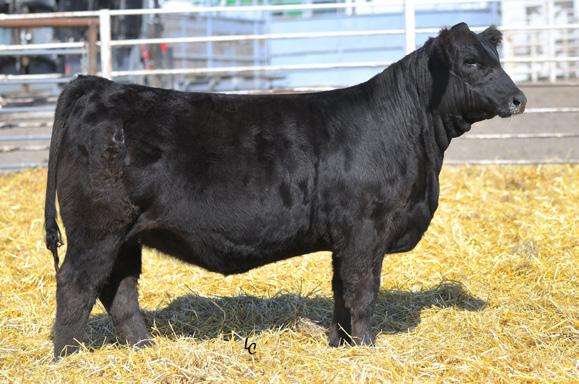
HIGHLIFE is in the top 2% for WW, top 5% for YW EPD, top 5% for REA, top 15% for API and top 10% for TI index. HIGHLIFE has growth and power! ◊ He is backed by an outstanding wedge shaped, high maternal Big Casino daughter who is making her mark with her progeny.

55 Fall 2022 Hybrid Simmental Breed Average EPDs Production: CE: 12.2 BW: 0.4 WW: 75.6 YW: 116.4 MCE: 6.6 MILK: 22.6 MWW: 60.4 STAY: 15.3 DOC: 12 Carcass: CW: 31.2 YG: -.23 MARB: .30 BF: -.04 REA: .66 API: 130.48 TI: 78.10 EPDs as of 11/01/22 CE BW WW YW MCE MILK MWW STAY DOC CW YG MARB BF REA API TI EPD 15.7 1.2 101.4 148.6 7.2 25.1 75.8 20.6 7.2 38.0 -.62 .12 -.142 1.20 155.6 94.2 Acc .65 .85 .81 .79 .38 .19 .33 .35 .67 .60 .46 .54 .47 .58 % Rank 5 45 2 5 25 40 10 10 95 20 1 55 1 5 15 10 ◊
◊
HOOK`S BEACON 56B KBHR HIGH ROAD E283 WS MISS SUGAR C4 SIRE: JBS BIG CASINO 336Y MISS SR D1609 MISS SR Y1102 DAM: Open
Scan
7SM113 MR SR HIGHLIFE G1609 $30 ASA:
DOB:
TAT:
PB SM, CDN 7/8 HOMO. BLACK HOMO. POLLED Daughter, Triangle J Ranch, NE Daughter, Triangle J Ranch, NE Daughter, Triangle J Ranch, NE
◊
◊
From Schnabel Ranch, SD; Triangle J Ranch, NE and Gibbs Farms, AL
camera.
code. Click to learn more.
3568376
03/16/19
G1609
No stranger to the Simmental business, FULLY LOADED has been a go-to sire for high phenotype cattle that are born easy and are easy to like.

Being a heterozygous black baldy only adds to his appeal. FULLY LOADED can be used to meet the demand of making great red baldy females.
Study his support photos closely, he makes the right kind!
FULLY LOADED has become a staple for creating cattle that are sound, attractive, easy to market and collect banners along the way. From High Prairie Genetics, KS


sires have left as big of a footprint on the Simmental
PB SM, CDN 7/8 HETERO. BLACK HOMO. POLLED

Individual sire performance data is listed on pages 94-95.

56
Daughter, Winter Farm, KS Daughter, High Prarie Genetics, KS Daughter, High Prarie Genetics, KS 14SM3101 DMCC/WOOD FULLY LOADED 39D $30 REMINGTON ON TARGET 2S REMINGTON LOCK N LOAD54U BAR15 MISS KNIGHT78E-51G SIRE: 3C MACHO M450 BZ AUBREYS BLACK BLAZE III BLAZE IV 1P DAM: Open camera. Scan code. Click to learn more. ASA: 3131823 DOB: 03/11/16 TAT: DMCC 39D EPDs as of 11/01/22 CE BW WW YW MCE MILK MWW STAY DOC CW YG MARB BF REA API TI EPD 12.1 0.6 81.9 121.7 6.7 19.6 60.5 13.8 11.0 47.4 -.50 .11 -.125 1.08 129.7 81.2 Acc .65 .83 .74 .70 .39 .21 .34 .40 .60 .60 .43 .53 .38 .56 % Rank 35 30 35 40 35 85 60 85 60 5 15 55 2 15 55 40 PB SM HETERO. BLACK HOMO. POLLED ◊ At
◊ Few
UNO
He
◊ gender
Daughter, Kyle Lemmon, MD Daughter, Mid-Am Genetics, KS Daughter, Stephens Beef Cattle, KY 7SM65 WLE UNO MAS X549 $25 NICHOLS LEGACY G151 CNS DREAM ON L186 CNS SHEEZA DREAM K107W SIRE: SS GOLDMINE L42 SHAWNEE MISS 770P NLC LG770 DAM: Open camera. Scan code. Click to learn more. ASA: 2532016 DOB: 02/24/10 TAT: X549 EPDs as of 11/01/22 CE BW WW YW MCE MILK MWW STAY DOC CW YG MARB BF REA API TI EPD 13.7 -1.3 65.6 85.2 3.9 18.7 51.4 14.1 12.3 -6.0 -.50 .44 -.119 .43 145.0 81.2 Acc .85 .94 .91 .89 .77 .82 .85 .68 .84 .82 .61 .78 .76 .78 % Rank 15 10 95 99 85 90 99 80 40 99 15 10 5 99 25 40
◊
◊
◊
◊
13-years-old, UNO MAS is still making semen and is as popular as ever!
breed as
MAS.
is predictable for his calving ease, eye appeal and female making ability.
SELECTED semen is available for UNO MAS which is ideal as he is well known for making females who are productive and offer exceptional udder quality. From Wesner Livestock Enterprises and Purdue University, IN
DOC is new to Select Sires and was selected in partnership with Hanels Black Simmentals at the 2022 Cattleman’s Congress for his royal pedigree, balanced EPDs and exceptional phenotype.


DOC hails from none other than the great WHF Summer 365C cow who was successfully campaigned by the Steenhoek family. DOC is a full brother to CCS/WHF Ol’ Son 48F.
Look for DOC to maintain structural integrity, overall correctness and eye appeal with a splash of white!


From Hanel’s Black Simmentals, KS and JS Simmentals, IA
is more than a pretty picture. His offspring can flat grow!
He is a ¾ Simmental offering a lot of mating flexibility to maintain sensible CE and BW with added growth and carcass.
Study his support pictures close, his progeny are turning heads and commanding top prices.


57
◊
◊
◊
Dam of DOC 7SM137 CCS/JS DOC 48H $35 TJ MAIN EVENT 503B CDI INNOVATOR 325D CDI MS SHEAR FORCE 49U SIRE: CCR WIDE RANGE 9005A WHF SUMMER 365C WHF ANDIE 365A DAM: Open camera. Scan code. Click to learn more. ASA: 3946541 DOB: 04/05/20 TAT: 48H EPDs as of 11/01/22 CE BW WW YW MCE MILK MWW STAY DOC CW YG MARB BF REA API TI EPD 11.1 0.6 87.5 126.2 6.2 22.5 66.2 16.4 6.4 31.1 -.34 .15 -.073 .79 136.4 84.8 Acc .44 .47 .47 .46 .29 .22 .30 .35 .44 .42 .34 .40 .35 .42 % Rank 50 30 20 30 45 60 30 55 95 40 85 45 75 75 40 25 PB SM, CDN 3/4 HOMO. BLACK HOMO. POLLED ◊
◊
◊
◊
From K-LER
MN
Sloup
NE Daughter, Faxon Creek Cattle, MN Daughter, Faxon Creek Cattle, MN Daughter, Handsaker Cattle Co, IA 7SM115 KLER PROMOTER G15 $25 WBF SIGNIFICANT B132 RUBYS TURNPIKE 771E RUBYS MISS CLEO 240Z SIRE: GW PREDESTINED 701T GW MISS GPRD 028X GW MISS PREM BEEF 545U DAM: Open camera. Scan code. Click to learn more. ASA: 3613881 DOB: 04/09/19 TAT: G15 EPDs as of 11/01/22 CE BW WW YW MCE MILK MWW STAY DOC CW YG MARB BF REA API TI EPD 12.9 1.0 100.2 166.3 5.9 29.7 79.8 13.5 16.7 49.1 -.46 .23 -.083 1.29 135.8 92.6 Acc .55 .71 .63 .59 .31 .21 .32 .32 .53 .49 .37 .44 .35 .45 % Rank 45 65 2 1 65 10 1 70 10 10 3 70 10 1 45 10 3/4 SM 1/4 AN, CDN 1/2 HOMO. BLACK HOMO. POLLED Fall 2022 Purebred Simmental Breed Average EPDs Production: CE: 10.8 BW: 1.6 WW: 77.5 YW: 115.3 MCE: 5.7 MILK: 23.2 MWW: 61.8 STAY: 16.7 DOC: 11.4 Carcass: CW: 28.3 YG: -.41 MARB: .12 BF: -.09 REA: .87 API: 130.61 TI: 77.84 Dam of DOC 2017 Louisville Champion Full brother to DOC
PROMOTER
PROMOTER is an ideal option to add pounds and use on both purebred and commercial cows.
Cattle Co.,
and
Simmentals,
PROGRESSIVE has been a strong addition to an already powerful calving ease line up of Simmental bulls at Select Sires.


PROGRESSIVE’s dam, WS Sugar C4, is perhaps the most exciting donor cow in the breed today.
He has 11 of 18 traits and indexes in the top 15% or better, highlighted by a a top 2% ranking for both API and TI.
PROGRESSIVE is truly a calving ease, high maternal sire! He is a sire that can be a choice for not only Simmental influenced heifers but for English heifers as well.
PROGRESSIVE’s progeny are small at birth and follow his EPD growth pattern, taking time to perform and “catch up” at weaning and excel to yearling. To top it off they are very docile. From Lazy C Diamond Ranch, ND; Eichacker Simmentals, SD; Trauernicht Simmentals, NE and River Creek Farms, KS
A new addition to Select Sires, this Eagle son, was the high selling Simmental bull at the 2022 RA Brown sale.
EMBLEM ranks in the top 1% for API and the top 5% or better for CE, BW, STAY, MARB and TI.
is both a G+ and ACE sire on the Right Mate system. Use him on heifers with confidence.
Furthermore, he is backed by a proven and productive dam with ratios as follows, BW 8@95, WW 8@104, YW 4@102, IMF 3@117 and REA 3@101.
is attractive, correct in his build and offers a solid, square foot.

58
◊
◊
◊
◊
◊
Daughter, Trauernicht Simmentals, NE Daughter, Trauernicht Simmentals, NE Daughter, Lazy C Diamond, ND 7SM116 LCDR PROGRESSIVE 106G $25 TJ MAIN EVENT 503B CDI INNOVATOR 325D CDI MS SHEAR FORCE 49U SIRE: CLRS GRADE-A 875 A WS MISS SUGAR C4 WS ANISE A71 DAM: Open camera. Scan code. Click to learn more. ASA: 3646242 DOB: 02/21/19 TAT: 106G EPDs as of 11/01/22 CE BW WW YW MCE MILK MWW STAY DOC CW YG MARB BF REA API TI EPD 19.9 -4.4 94.6 140.4 10.9 33.1 80.3 14.8 13.3 49.5 -.33 .51 -.077 .94 176.8 106.3 Acc .69 .83 .78 .74 .40 .28 .39 .39 .61 .56 .41 .53 .42 .49 % Rank 1 1 10 10 1 3 2 75 30 4 90 4 75 35 2 1 PB SM, CDN 3/4 HOMO. BLACK HOMO. POLLED ◊
◊
◊
◊
◊
From
R
NEW 7SM139 BROWN RRR EMBLEM J3541 $30 HOOK`S BLACK HAWK 50B HOOK`S EAGLE 6E HOOK`S CRYSTAL 1C SIRE: MCM TOP GRADE 018X HRM MS TOP GRADE A310 WCS MS FORCE 807U DAM: ASA: 3886910 DOB: 02/10/21 TAT: J3541 EPDs as of 11/01/22 CE BW WW YW MCE MILK MWW STAY DOC CW YG MARB BF REA API TI EPD 16.8 -2.3 87.4 136.0 8.7 27.5 71.2 22.2 12.6 31.7 -.36 .61 -.060 .94 187.7 101.7 Acc .47 .51 .49 .49 .29 .25 .33 .35 .45 .43 .35 .42 .38 .41 % Rank 3 4 20 15 10 25 15 3 35 40 80 2 95 35 1 2 PB SM, CDN 7/8 HOMO. BLACK HOMO. POLLED
Individual sire performance data is listed on pages 94-95.
EMBLEM
EMBLEM
R.A. Brown Ranch, TX ; Reflected
Ranch, CO and All Beef LLC, IL
STANDOUT continues to establish himself as the calving ease sire that adds “flash” to his calves.
His impressive data predictions are backed by a proven and popular cow family, CLRS Beauty Queen.


STANDOUT possesses the two most important traits cattlemen request, calving ease and docility. His calves are calm.
A sales leader in 2022 at Select Sires, STANDOUT’s popularity continues to grow due to his balance. He truly offers a complete package of calving ease, cow family, EPDs and phenotype.

STANDOUT produces moderate-framed, attractive cattle in a calving ease package that can be used with confidence.
STANDOUT has become the popular go-to calving ease sire for heifers. Open just about any bred female sale catalog this fall, and you will notice numerous services to STANDOUT.
59 EPDs as of 11/01/22 CE BW WW YW MCE MILK MWW STAY DOC CW YG MARB BF REA API TI EPD 20.9 -3.8 78.9 113.9 11.9 24.5 63.9 17.6 19.1 36.8 -.20 .53 -.048 .62 176.2 95.1 Acc .62 .75 .68 .64 .35 .22 .33 .32 .52 .50 .37 .47 .38 .44 % Rank 1 1 45 55 1 40 40 45 1 25 99 4 99 99 2 5 ◊
◊
◊
◊
◊
◊
◊
From
WS ALL-AROUND Z35 OMF EPIC E27 OMF TIME LESS B100 SIRE: CCR COWBOY CUT 5048Z CLRS BEAUTY QUEEN 420 B TSN MISS 1407 P146 DAM: Open camera. Scan code. Click to learn more. 7SM122 SCHOOLEY STANDOUT 27G $30 ASA: 3585120 DOB: 02/07/19 TAT: 27G PB SM, CDN 3/4 HOMO. BLACK HOMO. POLLED Son, Wildberry Farm, IL Dam of STANDOUT Fall 2022 Purebred Simmental Breed Average EPDs Production: CE: 10.8 BW: 1.6 WW: 77.5 YW: 115.3 MCE: 5.7 MILK: 23.2 MWW: 61.8 STAY: 16.7 DOC: 11.4 Carcass: CW: 28.3 YG: -.41 MARB: .12 BF: -.09 REA: .87 API: 130.61 TI: 77.84
Available in gender SELECTED 4M female semen.
Lazy C Diamond Ranch, ND and Schooley Cattle Co., IA
This ¾ blood Simmental sire offers a red outcross pedigree without sacrificing exceptional data. Early calves have come easy and offer extra growth at weaning.
Genomically, HILGER ONE is a 5 G+ sire, promising balanced trait improvement with maximum maternal progress.

HILGER ONE boasts a chart-topping spread from CE and Stay to YW and REA. Study him close, he has a lot to offer!
is an ideal calving ease option for your 7SM97 IMPERIAL, 7SM92 RED MOON and 7SM121 COPPERHEAD daughters. From All Beef LLC, IL and Klein Ranch Simmentals, KS
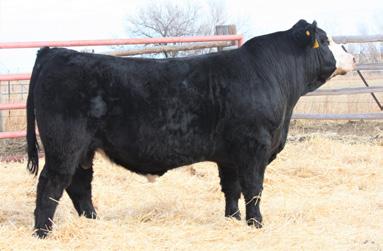

BROAD RANGE is a highly proven, calving ease mainstay of the Select Sires lineup! He is an outcross to many Simmental pedigrees within the breed, especially among top registration sires.


one of the top registration sires at No. 25, BROAD RANGE is just getting started.
Individual sire performance data is listed on pages 94-95.


60
◊
◊
◊
◊
7SM134 GW HILGER ONE 454H $30 GW PREMIUM BEEF 021TS GW MOVIN ON 183C GW MISS PREDESTINED 117Y SIRE: GW YUKON JACK 612B GW MISS YUKON JACK 913E GW MISS REDESTINED 333A DAM: Open camera. Scan code. Click to learn more. ASA: 3701575 DOB: 02/29/20 TAT: 454H EPDs as of 11/01/22 CE BW WW YW MCE MILK MWW STAY DOC CW YG MARB BF REA API TI EPD 15.4 -2.2 91.7 138.4 7.4 26.8 72.6 22.1 14.7 39.9 -.27 .43 -.044 .88 165.4 94.3 Acc .50 .61 .55 .54 .28 .21 .32 .32 .14 .45 .35 .38 .35 .41 % Rank 15 15 10 15 40 20 10 2 20 25 40 30 50 20 10 5 3/4 SM 3/16 AN 1/16 AR CDN 1/2 RED HOMO. POLLED ◊
◊ BROAD
◊
◊
TNT
Son, Altenburg Super Baldy Ranch, LLC, CO Son, Circle Ranches, CA Dam of BROAD RANGE 7SM104 GIBBS 7382E BROAD RANGE $25 S D S GRADUATE 006X CCR WIDE RANGE 9005A CCR MS APPLE 9332W SIRE: SSF BLK MIDLAND T525 SSF BLK LOUISE Y534 SSF BLK LOUISE S824 DAM: Open camera. Scan code. Click to learn more. ASA: 3404807 DOB: 09/21/17 TAT: 7382E EPDs as of 11/01/22 CE BW WW YW MCE MILK MWW STAY DOC CW YG MARB BF REA API TI EPD 15.2 -2.1 92.4 152.4 10.3 17.6 63.8 16.2 15.9 49.6 -.23 .21 .003 1.28 154.4 93.3 Acc .76 .89 .85 .84 .49 .35 .46 .43 .72 .67 .51 .64 .57 .64 % Rank 10 4 10 3 2 95 45 60 10 4 99 35 99 2 15 10 PB SM, CDN 1/2 HOMO.
He
RANGE offers a rare EPD profile ranking in the top 10% for CE, top 4% for BW, top 10% for WW and top 3% for YW!
Already
His dam is a prolific and phenomenal donor at Gibbs Farms in Alabama. From Gibbs Farms, AL; K Diamond Cattle and
Simmentals, ND; River Creek Ranch, KS and Trauernicht Simmentals, NE
BLACK HOMO. POLLED
COPPERHEAD, named for his small, white stripe in the center of his head, can sire blazed-face calves out of solid-faced cows which is in high demand in today’s market!
COPPERHEAD offers an outstanding phenotype, outcross pedigree with growth and power for use on cows.
His calf reports are outstanding! The bull calves are stout, with added muscle, a bit more frame, early growth and will add pounds at weaning. His heifers have growth and Simmental features, with some power and broodiness to make cows.
COPPERHEAD is a customer satisfaction sire that is a must-use for red Simmental programs or red commercial programs wanting added performance and to retain females.


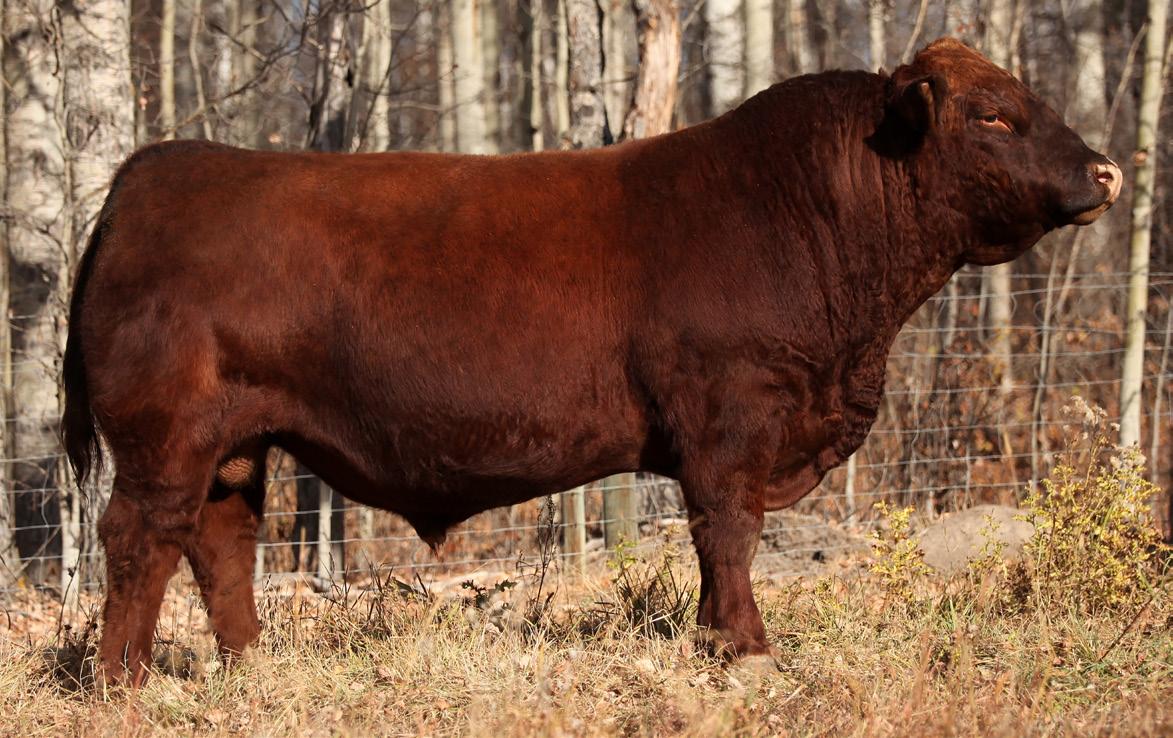
From High Country Cattle Services, Canada

HONOR GUARD is an exciting new red addition to Select Sires for 2023 entering as a semi-proven sire!
out his data set, it is hard to find a hole! He has a great balance of calving ease, growth, maternal and carcass, highlighted by a top 1% ranking for STAY and top 2% ranking for API.
Look at his support photos! HONOR GUARD’s first calf crop is very attractive and correct, offering confidence in the type and kind he will create.
GUARD is very sound and athletic with extremely good foot quality and is a must-use sire for red
61 ◊
◊
◊
◊
Daughter, High Country Cattle Service, AB Son, Erixon Simmentals, SK Daughter, Reiny Way Acres, WI 7SM121 SAS COPPERHEAD G354 $30 NCB COBRA 47Y ERIXON BITTEN 203A BMD MISS BLK ICE DANCER SIRE: R PLUS RELOAD 2006Z SAS MISS ARAPHAOE B354 SAS STARLIGHT Z354 DAM: Open camera. Scan code. Click to learn more. ASA: 3620331 DOB: 02/10/19 TAT: G354 PB SM, CDN PB RED HOMO. POLLED EPDs as of 11/01/22 CE BW WW YW MCE MILK MWW STAY DOC CW YG MARB BF REA API TI EPD 3.3 4.5 105.7 152.4 1.5 25.0 77.8 15.1 14.0 16.8 -.51 .13 -.078 1.08 123.3 90.0 Acc .60 .77 .69 .64 .34 .23 .36 .35 .52 .55 .39 .46 .37 .48 % Rank 99 99 1 3 99 40 4 70 20 90 15 50 75 15 70 15 ◊
◊
◊
◊
From
Daughter Neidig Farms, NE Daughter Neidig Farms, NE Daughter Neidig Farms, NE NEW 7SM138 CDI/NF HONOR GUARD 267H $30 CDI MAVERICK 335B CDI RADICAL 267F CDI MS YESTERDAY 29B SIRE: CDI VERDICT 220Y CDI MISS VERDICT 141C CDI MISS RED COAT 28A DAM: ASA: 3801515 DOB: 03/11/20 TAT: 267H PB SM, CDN 3/4 RED HOMO. POLLED EPDs as of 11/01/22 CE BW WW YW MCE MILK MWW STAY DOC CW YG MARB BF REA API TI EPD 18.6 -1.3 88.6 128.2 9.8 22.8 67 28.4 12.3 32.2 -.46 .47 -.079 1.12 192.3 97.3 Acc .44 .56 .51 .50 .24 .20 .29 .29 .43 .41 .32 .39 .33 .38 % Rank 1 10 15 25 3 55 30 1 40 40 30 10 75 10 1 3 Fall 2022 Purebred Simmental Breed Average EPDs Production: CE: 10.8 BW: 1.6 WW: 77.5 YW: 115.3 MCE: 5.7 MILK: 23.2 MWW: 61.8 STAY: 16.7 DOC: 11.4 Carcass: CW: 28.3 YG: -.41 MARB: .12 BF: -.09 REA: .87 API: 130.61 TI: 77.84
Check
HONOR
enthusiasts!
Neidig Farms, NE and C Diamond Ranch, ND
CDI MAINLINE 265D LCDR IMPACT 134F WS MISS SUGAR C4 SIRE:
CDI RIMROCK 325Z
Open camera. Scan code. Click to learn more.
CDI MISS RIMROCK 55E CDI MISS APOLLO 111C DAM: PB SM, CDN 1/2 HOMO. BLACK HOMO. POLLED


MAJOR IMPACT is a high growth, performance and product-focused sire intended to be utilized on cows.
His first calf crop has provided muscular, attractive fronted and structurally correct cattle.
MAJOR IMPACT is an excellent option for cows needing a bit more punch and performance.
From Hart Simmentals, SD
HOOK`S BOZEMAN 8B MR SR 71 RIGHT NOW E1538 MISS SR C1538
SIRE: W/C EXECUTIVE ORDER 8543B W/C MISS WERNING 752E W/C MISS WERNING 5343C
Open camera. Scan code. Click to learn more.


REST EASY continues to get better as he adds offspring and data!
He ranks in the top 4% for CE and top 2% for BW, use REST EASY on heifers with confidence.
More than just a calving ease sire, REST EASY also offers above average growth with elite ranks for maternal traits such as MCE, MILK and MWW.
REST EASY will sire calves that come easy and offer additional phenotype and correctness.
From Werning Cattle, SD and Western Cattle Source, NE
DAM: PB SM, CDN 1/2 HOMO. BLACK HOMO. POLLED
ENHANCEMENT offers an incredible number profile all the way across the page. He is truly a “no holes”
62 Fall 2022 Purebred Simmental Breed Average EPDs Production: CE:
BW:
WW:
EPDs as of 11/01/22 CE BW WW YW MCE MILK MWW STAY DOC CW YG MARB BF REA API TI EPD 4.4 4.7 98.9 151.3 3.2 29.5 78.9 14.0 13.1 50.2 -.38 .16 -.062 1.22
Acc .47 .58 .54 .53 .24 .17 .28 .29 .50 .43 .33 .39 .34 .39 % Rank 99 99 3 4 90 15 3 85 30 4 70 45 85 4 70 20 ◊
10.8
1.6
77.5 YW: 115.3 MCE: 5.7 MILK: 23.2 MWW: 61.8 STAY: 16.7 DOC: 11.4 Carcass: CW: 28.3 YG: -.41 MARB: .12 BF: -.09 REA: .87 API: 130.61 TI: 77.84
122.5 87.2
◊
◊
7SM125 CDI MAJOR IMPACT 280H ASA:
$25
3801544 DOB: 03/15/20 TAT: 280H
EPDs as of 11/01/22 CE BW WW YW MCE MILK MWW STAY DOC CW YG MARB BF REA API TI EPD 16.6 -2.9 81.7 127.5 8.7 30.6 71.4 15.5 13.1 31.4 -.45
Acc .54 .68 .61 .59 .26 .15 .28 .27 .41 .39
% Rank 3 2 35 25 10 10 15 65 30
◊
.18 -.081 1.06 149.8 89.0
.32 .43 .32 .41
40 35 40 55 20 20 15
◊
◊
◊
7SM112 W/C REST EASY 752G ASA: 3644912
$25
DOB: 02/27/19 TAT: 752G
EPDs as of 11/01/22 CE BW WW YW MCE MILK MWW STAY DOC CW YG MARB BF REA API TI EPD 15.8 -3.6 84.5 130.3 10.4 37.0 79.2 20.7 15.8 48.0 -.33 .86 -.057 1.08 198.0 108.3 Acc .49 .52 .50 .51 .32 .26 .34 .37 .45 .46 .37 .44 .41 .44 % Rank 5 1 25 25 2 1 3 10 10 5 90
◊
script. ◊ His first calves have come unassisted, are attractive and easy to look at. ◊ ENHANCEMENT ranks high for both API and TI along with all carcass and maternal traits. You really can have it all! ◊ ENHANCEMENT is now deceased with limited semen availability, don’t miss this unique genetic package. From Wilkinson Simmentals, ND and Gibbs Farms Cattle, LLC, AL 7SM124 WS ENHANCEMENT 25H ASA: 3764886 DOB: 01/31/20 TAT: 25H $25 Open camera. Scan code. Click to learn more. CCR COWBOY CUT 5048Z WS PROCLAMATION E202 WS MISS SUGAR C4 SIRE: HOOK`S BEACON 56B WS SWEET SIXTEEN F16 WS LIGHTS COME ON D217 DAM: PB SM,
1 95 15 1 1
CDN PB HOMO. BLACK HOMO. POLLED
63 ALL SIMMENTAL SIRES AVAILABLE SIMMENTAL - Sorted by name CE BW WW YW MCE MILK MWW STAY DOC CW YG MARB FAT REA API TI Code No. Reg No. Code Name EPD Acc EPD Acc EPD Acc EPD Acc EPD Acc EPD Acc EPD Acc EPD Acc EPD Acc EPD Acc EPD Acc EPD Acc EPD Acc EPD Acc EPD EPD 7SM93 3133113 BIG TIMBER YES 15.8 .86 -4.1 .94 76.0 .92 112.6 .91 8.4 .75 25.3 .77 63.3 .81 20.4 .50 11.5 .84 30.5 .80 -.17 .59 .34 .76 -.033 .67 .54 .76 164.5 88.5 7SM104 3404807 BROAD RANGE YES 15.2 .76 -2.1 .89 92.4 .85 152.4 .84 10.3 .49 17.6 .35 63.8 .46 16.2 .43 15.9 .72 49.6 .67 -.23 .51 .21 .64 .003 .57 1.28 .64 154.4 93.3 7SM82 2854437 BROADWAY YES 3.5 .78 3.8 .93 82.3 .90 128.7 .89 2.9 .75 25.8 .80 66.9 .84 18.0 .65 10.7 .84 27.6 .76 -.41 .58 .33 .76 -.089 .69 .80 .73 134.1 82.2 7SM121 3620331 COPPERHEAD YES 3.3 .60 4.5 .77 105.7 .69 152.4 .64 1.5 .34 25.0 .23 77.8 .36 15.1 .35 14.0 .52 16.8 .55 -.51 .39 .13 .46 -.078 .37 1.08 .48 123.3 90.0 7SM95 3184099 DECLARATION YES 10.7 .68 0.5 .82 95.7 .73 148.2 .70 5.1 .47 17.5 .34 65.3 .45 10.3 .38 11.0 .59 32.9 .48 -.41 .39 .45 .50 -.078 .41 .96 .47 145.9 97.8 7SM96 3097854 DIVIDEND YES 11.8 .78 0.6 .91 83.0 .89 130.7 .87 5.0 .65 14.1 .69 55.5 .74 15.3 .52 13.4 .80 27.0 .73 -.22 .54 .12 .71 -.055 .59 .50 .68 133.2 80.8 7SM137 3946541 DOC YES 11.1 .44 0.6 .47 87.5 .47 126.2 .46 6.2 .29 22.5 .22 66.2 .30 16.4 .35 6.4 .44 31.1 .42 -.34 .34 .15 .40 -.073 .35 .79 .42 136.4 84.8 7SM139 3886910 EMBLEM YES 16.8 .47 -2.3 .51 87.4 .49 136.0 .49 8.7 .29 27.5 .25 71.2 .33 22.2 .35 12.6 .45 31.7 .43 -.36 .35 .61 .42 -.060 .38 .94 .41 187.7 101.7 7SM86 2976529 ENGINEER YES 16.9 .72 -3.5 .85 73.7 .81 121.9 .80 12.8 .52 32.7 .52 69.5 .60 16.3 .38 9.0 .71 41.7 .65 -.41 .50 .17 .64 -.081 .55 1.05 .62 150.6 85.2 7SM124 3764886 ENHANCEMENT YES 15.8 .49 -3.6 .52 84.5 .50 130.3 .51 10.4 .32 37.0 .26 79.2 .34 20.7 .37 15.8 .45 48.0 .46 -.33 .37 .86 .44 -.057 .41 1.08 .44 198.0 108.3 14SM3101 3131823 FULLY LOADED NO 12.1 .65 0.6 .83 81.9 .74 121.7 .70 6.7 .39 19.6 .21 60.5 .34 13.8 .40 11.0 .60 47.4 .60 -.50 .43 .11 .53 -.125 .38 1.08 .56 129.7 81.2 7SM113 3568376 HIGHLIFE YES 15.7 .65 1.2 .85 101.4 .81 148.6 .79 7.2 .38 25.1 .19 75.8 .33 20.6 .35 7.2 .67 38.0 .60 -.62 .46 .12 .54 -.142 .47 1.20 .58 155.6 94.2 7SM87 2732032 HOMETOWN YES 4.6 .63 4.3 .84 104.8 .81 162.3 .81 .7 .56 27.2 .58 79.6 .65 16.5 .45 11.2 .73 59.4 .58 -.60 .44 .40 .56 -.120 .46 1.59 .53 146.2 98.5 7SM138 3801515 HONOR GUARD YES 14.0 .44 0.7 .49 84.5 .46 124.3 .47 7.3 .23 23.9 .18 66.1 .27 27.5 .29 12.4 .42 27.1 .39 -.46 .31 .48 .39 -.079 .33 1.05 .38 180.2 92.4 7SM97 3210738 IMPERIAL YES 18.3 .80 -3.5 .91 60.0 .89 95.1 .89 9.9 .64 13.4 .60 43.3 .68 21.0 .44 17.2 .76 15.0 .70 -.46 .51 .98 .65 -.068 .56 .99 .64 200.1 95.3 7SM125 3801544 MAJOR IMPACT YES 4.4 .47 4.7 .58 98.9 .54 151.3 .53 3.2 .24 29.5 .17 78.9 .28 14.0 .29 13.1 .50 50.2 .43 -.38 .33 .16 .39 -.062 .34 1.22 .39 122.5 87.2 7SM116 3646242 PROGRESSIVE YES 19.9 .69 -4.4 .83 94.6 .78 140.4 .74 10.9 .40 33.1 .28 80.3 .39 14.8 .39 13.3 .61 49.5 .56 -.33 .41 .51 .53 -.077 .42 .94 .49 176.8 106.3 7SM92 3115609 RED MOON YES 17.5 .74 -2.9 .88 71.7 .84 104.8 .83 9.0 .57 32.6 .59 68.4 .67 18.1 .41 13.0 .69 15.7 .67 -.35 .50 .31 .63 -.071 .54 .64 .64 157.6 85.6 7SM112 3644912 REST EASY YES 16.6 .54 -2.9 .68 81.7 .61 127.5 .59 8.7 .26 30.6 .15 71.4 .28 15.5 .27 13.1 .41 31.4 .39 -.45 .32 .18 .43 -.081 .32 1.06 .41 149.8 89.0 7SM81 2754651 REVOLUTION YES 4.6 .65 5.1 .79 100.2 .70 135.9 .71 -1.6 .51 16.0 .45 66.1 .54 17.4 .44 15.4 .58 20.1 .63 -.52 .47 .47 .55 -.114 .50 .88 .58 143.6 93.4 7SM122 3585120 STANDOUT YES 20.9 .62 -3.8 .75 78.9 .68 113.9 .64 11.9 .35 24.5 .22 63.9 .33 17.6 .32 19.1 .52 36.8 .50 -.20 .37 .53 .47 -.048 .38 .62 .44 176.2 95.1 7SM105 3402630 SUCCESS YES 11.6 .56 1.3 .74 83.0 .71 126.6 .68 .3 .29 35.3 .24 76.8 .35 14.8 .29 12.1 .47 29.3 .46 -.40 .36 .42 .47 -.083 .35 .85 .45 147.6 90.2 7SM65 2532016 UNO MAS YES 13.7 .85 -1.3 .94 65.6 .91 85.2 .89 3.9 .77 18.7 .82 51.4 .85 14.1 .68 12.3 .84 -6.0 .82 -.50 .61 .44 .78 -.119 .76 .43 .78 145.0 81.2 SIMANGUSTM - Sorted by name CE BW WW YW MCE MILK MWW STAY DOC CW YG MARB FAT REA API TI Code No. Reg No. Code Name EPD Acc EPD Acc EPD Acc EPD Acc EPD Acc EPD Acc EPD Acc EPD Acc EPD Acc EPD Acc EPD Acc EPD Acc EPD Acc EPD Acc EPD EPD 714SM132 3839825 BLUEMONT NO 13.6 .42 0.9 .46 101.2 .49 161.2 .49 9.5 .26 17.3 .21 67.9 .29 16.9 .31 19.3 .45 60.5 .43 -.16 .34 1.07 .42 -.010 .36 1.09 .41 187.3 111.2 14SM3085 2891389 COWBOY UP YES 10.2 .70 2.3 .89 96.6 .86 143.1 .84 8.4 .62 20.7 .67 69.0 .73 22.4 .50 15.9 .75 42.8 .65 -.14 .48 .47 .58 -.036 .51 .61 .60 154.2 90.7 7SM128 3582543 FLAT IRON NO 13.9 .78 -1.8 .89 86.6 .86 127.6 .84 6.6 .43 39.7 .33 82.9 .45 18.2 .39 -2.2 .70 39.2 .69 -.01 .51 .73 .62 .012 .56 .50 .63 167.3 97.8 2SM130 3839805 FLINT HILLS NO 13.9 .43 1.8 .47 88.6 .49 145.7 .50 8.3 .26 16.9 .21 61.1 .30 22.1 .31 14.2 .45 42.0 .43 -.30 .34 1.14 .41 -.034 .36 1.09 .41 196.9 105.3 7SM133 3909662 GOLD STRIKE YES 16.4 .43 0.1 .47 94.0 .49 151.1 .50 8.4 .23 28.2 .18 75.1 .27 17.5 .29 11.4 .41 51.1 .42 -.18 .32 .45 .37 -.010 .33 1.02 .38 157.1 94.1 7SM134 3701575 HILGER ONE NO 15.4 .50 -2.2 .61 91.7 .55 138.4 .54 7.4 .28 26.8 .21 72.6 .32 22.1 .32 14.7 .14 39.9 .45 -.27 .35 .43 .38 -.044 .35 .88 .41 165.4 94.3 7SM71 2593861 IN FORCE YES 15.0 .79 -4.0 .90 56.6 .87 79.9 .87 9.9 .70 29.4 .76 57.6 .81 14.6 .63 14.9 .80 -4.1 .77 -.37 .58 .60 .75 -.068 .70 .46 .73 148.1 79.9 7SM84 2934717 MADISON YES 14.3 .62 -0.2 .75 73.2 .71 121.9 .69 8.9 .40 25.6 .32 62.1 .43 16.7 .36 17.2 .55 36.5 .60 -.31 .45 .76 .51 -.035 .46 1.05 .55 162.6 89.6 14SM3100 3459266 NITRO YES 17.1 .61 0.0 .71 79.0 .65 123.4 .66 8.7 .32 30.9 .23 70.4 .34 14.0 .32 16.5 .60 34.5 .49 .00 .37 .64 .47 .012 .36 .42 .46 153.2 88.8 7SM94 3111910 PAYWEIGHT YES 12.9 .71 0.6 .86 87.0 .83 116.1 .82 7.8 .56 10.0 .54 53.5 .62 15.3 .45 14.9 .74 57.0 .73 .17 .54 .23 .69 .015 .60 .21 .66 124.9 77.7 714SM114 3619117 PREDICTABLE YES 18.7 .58 -1.7 .64 74.6 .54 116.1 .54 8.8 .33 27.5 .26 64.7 .34 18.0 .33 15.1 .47 36.1 .48 -.18 .38 .71 .43 -.024 .40 .72 .45 169.6 90.6 7SM115 3613881 PROMOTER YES 12.9 .55 1.0 .71 100.2 .63 166.3 .59 5.9 .31 29.7 .21 79.8 .32 13.5 .32 16.7 .53 49.1 .49 -.46 .37 .23 .44 -.083 .35 1.29 .45 135.8 92.6 7SM89 3041151 RAPID FIRE YES 11.6 .68 0.3 .87 71.1 .84 118.3 .83 1.0 .55 19.9 .53 55.4 .61 10.5 .40 15.3 .73 56.6 .69 -.04 .52 .42 .65 -.005 .56 .70 .67 125.1 77.1 714SM131 3839824 RILEY NO 15.6 .43 0.1 .46 86.8 .49 135.3 .49 11.0 .26 17.3 .21 60.7 .29 19.4 .31 16.2 .45 42.1 .43 -.32 .35 .94 .42 -.037 .37 1.14 .41 183.4 101.0 7SM75 2694778 ROBUST YES 8.2 .80 2.0 .93 92.4 .91 138.7 .91 .1 .78 25.9 .83 72.0 .87 10.6 .72 17.6 .85 60.2 .79 -.36 .59 .47 .79 -.060 .72 1.31 .73 128.9 90.1 7SM72 2605922 SUBSTANCE YES 9.1 .79 1.9 .94 85.1 .92 131.6 .92 4.9 .79 17.8 .85 60.3 .88 12.5 .75 17.2 .86 31.2 .79 -.34 .60 .51 .78 -.078 .72 .72 .78 133.6 86.1 7SM83 2902090 UNIFIED YES 16.7 .77 -2.0 .89 76.8 .85 112.0 .85 7.5 .66 17.7 .70 56.1 .76 14.6 .52 8.0 .74 27.0 .69 -.10 .52 .21 .65 -.013 .59 .45 .64 131.8 77.6 237SM1023 2614725 UNITED NO 11.0 .83 1.2 .95 99.0 .94 162.8 .93 7.5 .84 19.6 .88 69.0 .91 11.0 .79 6.1 .89 53.0 .80 -.06 .61 .18 .78 -.008 .75 .70 .80 122.1 87.0 2SM129 3839821 WABASH NO 15.0 .42 -0.3 .46 89.2 .46 144.0 .46 10.8 .26 17.3 .20 61.9 .28 18.1 .30 16.0 .45 39.4 .42 -.25 .34 1.10 .40 -.032 .37 .92 .40 191.1 106.8 7SM80 2725666 WIDE RANGE NO 12.9 .86 -0.3 .94 83.9 .92 133.4 .92 8.1 .81 4.5 .84 46.4 .87 19.6 .72 11.1 .87 26.3 .82 -.48 .61 -.02 .79 -.046 .75 1.36 .80 139.7 79.7 ASA EPDs as of 11/01/22 RED TEXT = semen available, but sire is not listed in directory = top 35 percent of the breed = Canadian availability Individual sire performance data is listed on pages 94-95.

™GeneNet is a trademark of Select Sires Inc.


VALUE ADDED PROGRAMS
44
®ProfitSOURCE is a registered trademark of Select Sires Inc. U.S. Premium Beef is a registered trademark of U.S. Premium Beef. ™Prime Pursuits is a trademark of
Farms.


66 Individual sire performance data is listed on pages 94-95. ◊ FRANCHISE is a true sire of difference making females. His daughters excel in udder quality and maternal broody appearance. ◊ His daughters are recognized as matrons of outstanding herd sires. ◊ FRANCHISE is No. 5 in the breed for registrations and still remains a household name for calving ease and phenotype. ◊ Use FRANCHISE to make the next great wave of females. Available in gender SELECTED female semen From 9 Mile Ranch, WA and Pieper Red Angus, NE Son, Bieber Red Angus, SD Daughter,
Son, Bieber Red Angus, SD SPUR FRANCHISE 7070 SPUR FRANCHISE OF GARTON H & H IRENE LASS 0135 SIRE: TR COLT 45 UT806 C-BAR ABIGRACE Y11 C-BAR & BROWN ABIGRACE T712 DAM: Open camera. Scan code. Click to learn more. EPDs as of 11/01/22 ProS HB GM CED BW WW YW ADG DMI MM ME HPG CEM STAY MARB YG CW REA BF EPD 104 36 68 16 -5.2 57 106 .31 2.11 38 4 10 12 10 .50 .04 42 .64 .04 Acc .82 .93 .91 .91 .91 .36 .74 .48 .63 .70 .54 .54 .40 .62 .52 .34 % Rank 32 79 10 16 7 66 37 13 92 1 53 72 2 91 33 35 9 4 87 7AR87 9 MILE FRANCHISE 6305 $30 RAAA: 3555188 DOB: 03/02/16 TAT: 6305
9 Mile Ranch, WA
is an absolute physical specimen that is extremely athletic with tremendous design. He is wide, square hipped and offers great foot shape and heel depth.
No matter the breed, there are few sires who offer the balance of phenotype and data that JUMPSTART does.

He ranks in the top 1% for six different traits! He can improve phenotype and data in one swoop.
JUMPSTART is seeing heavy use in progressive herds and is a must-use sire for 2023!

JUMPSTART is a sire that puts together a suite of data second to none. He pushes growth to the top of the breed and offers a collection of fertility traits that are outstanding. An EPD combination like that doesn’t show up in such a stylish package every day and his outstanding carcass traits will make it hard to find another sire that does it as well as him.

67 Fall 2022 Red Angus Breed Average EPDs Production: ProS: 91 HB: 54 GM: 37 CED: 13 BW: -1.8 WW: 62 YW: 100 ADG: .23 DMI: 1.46 Maternal: Milk: 25 ME: 3 HPG: 11 CEM: 7 STAY: 15 Carcass: MARB: .42 YG: .06 CW: 24 REA: .14 FAT: .02 ◊
◊
◊
◊
◊
From Bieber
NE;
KS
BIEBER CL ATOMIC C218 BIEBER CL ENERGIZE F121 BIEBER CL ADELLE 575D SIRE: GMRA TRINITY 5222 BIEBER GALLEE 390G BIEBER GALLEE 550D DAM: Open camera. Scan code. Click to learn more. EPDs as of 11/01/22 ProS HB GM CED BW WW YW ADG DMI MM ME HPG CEM STAY MARB YG CW REA BF EPD 122 54 69 16 -3.2 87 152 .41 2.54 29 33 17 10 16 .54 .06 48 .61 .04 Acc .46 .49 .47 .48 .48 .17 .13 .12 .21 .23 .29 .36 .31 .40 .38 .31 % Rank 12 56 5 10 25 1 1 1 99 17 99 1 5 44 23 51 1 1 89 7AR100 BIEBER JUMPSTART J137 $50 RAAA: 4463653 DOB: 01/20/21 TAT: J137 NEW
JUMPSTART was the single most sought-after sire of the 2022 sale season, commanding a record setting $185,000.
He
Red Angus Ranch, SD; Schuler-Olsen Ranches,
Wedel Beef Genetics and Anderson Land and Cattle,
and Twedt Red Angus, ND
Craig
Bieber, Bieber Red Angus Ranch
EXCELLENCE is a sleep all night heifer sire offering so much more.
Elite for his calving ease, EXCELLENCE also excels for both HB and ProS predictions.
Just like a fine wine, EXCELLENCE gets better with age and gains in popularity.
He is long and extended with extra hip/pin width and great rib shape. In addition to making great red angus progeny, he also proved to be a tremendous mating option on continental cattle.


EXCELLENCE is a great heifer project sire. Use him with confidence. From Kniebel Farms, KS and All Beef LLC, IL
END ZONE is an exciting calving ease sire out the RAB program with elite carcass merit and added maternal value.
He delivers a balanced combination of calving ease, growth and carcass value in a package that will also produce functional replacement females.
He is a big spread sire ranking near the top of the breed for a multitude of traits including CE, BW, HPG, Marb, REA, GridMaster and ProS.
END ZONE displays the look and physique of a true beef sire. He is medium framed, long bodied and heavy muscled, with excellent foot quality.
He is a great choice for both seedstock and commercial producers where type, performance and end-product value are a must.
He is a maternal brother to Oracle and Fantastic. END ZONE’s dam is a donor cow in the R.A. Brown Ranch herd.


From R.A. Brown Ranch, TX and Jennings Ventures Cattle Company, TX


68 Individual sire performance data is listed on pages
EPDs as of 11/01/22 ProS HB GM CED BW WW YW ADG DMI MM ME HPG CEM STAY MARB YG CW REA BF EPD 121 75 46 19 -7.0 50 86 .23 1.33 29 -3 10 11 17 .41 -.15 14 .32 -.03 Acc .73 .86 .83 .82 .82 .32 .36 .35 .26 .42 .40 .55 .45 .57 .56 .48 % Rank 16 18 33 3 1 86 74 53 37 21 19 73 6 30 50 4 77 20 3 ◊
◊
◊
◊
◊
7AR85 KCC EXCELLENCE 139-774 $20 LJC MERLIN T179 LJC MERLIN 937Z TR CARRIE WT937 SIRE: SCHULER ENVY 7342T 139 1KCC KCC MISS BV 2105-528 DAM: Open camera. Scan code. Click to learn more. RAAA: 3774413 DOB: 03/07/17 TAT: 774 Son, Kniebel Cattle Company, KS Son, Kniebel Cattle Company, KS EPDs as of 11/01/22 ProS HB GM CED BW WW YW ADG DMI MM ME HPG CEM STAY MARB YG CW REA BF EPD 156 81 76 17 -5.1 64 106 .26 1.78 28 8 16 10 17 .81 .05 38 .50 .04 Acc .46 .49 .48 .48 .48 .23 .28 .16 .33 .32 .37 .42 .34 .45 .40 .35 % Rank 1 10 3 6 6 35 31 28 81 26 77 3 6 28 3 45 8 3 88 ◊
94-95.
◊
◊
◊
◊
◊
7AR98 BROWN JRAR END ZONE H6629 $25 BIEBER ROLLIN DEEP Y118 BIEBER DEEP END B597 BIEBER LAURA 158W SIRE: BECKTON NEBULA P P707 BROWN MS P707 Y6648 BROWN MS JULIAN W6579 DAM: Open camera. Scan code. Click to learn more. RAAA: 4232984 DOB: 12/31/19 TAT: H6629 Dam of END ZONE
BLUE CHIP ranks near the top of the breed for all three Calving Ease traits, CED, BW and CEM.
In addition to his elite Calving Ease, he excels for Marbling, REA and both ProS and HB indexes.
BLUE CHIP is a 6.0 frame with added muscle shape, depth of rib and excellent feet.

He had individual ratios of 86 for BW, 103 for WW, 103 for YW, and 137 for IMF.

This 7AR86 STOCKMARKET son is an excellent choice for commercial Red Angus heifer projects. From Bieber Red Angus Ranch, SD


69 EPDs as of 11/01/22 ProS HB GM CED BW WW YW ADG DMI MM ME HPG CEM STAY MARB YG CW REA BF EPD 145 91 54 18 -5.0 73 117 .28 2.01 28 6 10 11 20 .94 .05 15 .37 .06 Acc .44 .45 .43 .44 .44 .17 .19 .17 .31 .24 .29 .36 .31 .39 .37 .31 % Rank 5 5 22 7 8 17 19 24 88 29 63 72 6 5 2 39 72 15 95 ◊
◊
◊
◊
7AR94 BIEBER BLUE CHIP H302 $25 PIE STOCKMAN 4051 BIEBER CL STOCKMARKET E119 BIEBER CL ADELLE 475C SIRE: BIEBER IRON ORE A104 BIEBER ROSE 162C BIEBER ROSE 475A DAM: Open camera. Scan code. Click to learn more. RAAA: 4303789 DOB: 02/27/20 TAT: H302 EPDs as of 11/01/22 ProS HB GM CED BW WW YW ADG DMI MM ME HPG CEM STAY MARB YG CW REA BF EPD 145 116 28 16 -4.3 60 99 .25 1.98 26 4 15 9 24 .31 .15 33 .10 .03 Acc .67 .81 .77 .77 .77 .33 .39 .29 .40 .41 .30 .51 .40 .52 .50 .41 % Rank 5 1 62 13 14 56 50 43 87 41 53 12 21 1 70 82 23 52 75 ◊ BLAZIN
◊ BLAZIN
◊ If you
MT Photo Reversed 7AR88 5L BLAZIN STEEL 6120-81C $20 BUF CRK THE RIGHT KIND U199 5L RED STEEL 3521-10A 5L LAKOTA 1715-3521 SIRE: 5L DOUBLE BLAZE 1134-8576 5L SUNBURST 2705-6120 5L SUNBURST 792-2705 DAM: Open camera. Scan code. Click to learn more. RAAA: 3493671 DOB: 02/06/15 TAT: 81C Dam of BLAZIN STEEL Fall 2022 Red Angus Breed Average EPDs Production: ProS: 91 HB: 54 GM: 37 CED: 13 BW: -1.8 WW: 62 YW: 100 ADG: .23 DMI: 1.46 Maternal: Milk: 25 ME: 3 HPG: 11 CEM: 7 STAY: 15 Carcass: MARB: .42 YG: .06 CW: 24 REA: .14 FAT: .02
◊
STEEL is one of the phenotype standouts at the 5L program. He has the cow-maker phenotype.
STEEL has breed-leading CE, HPG, STAY, ProS and HB.
are rebuilding, he is a must-use heifer sire to leave behind an outstanding pen of replacements. From 5L Ranch,


70 Individual sire performance data is listed on pages 94-95. ◊ GRINDSTONE combines phenotype, performance and carcass merit
one complete package. ◊ He is a power
loaded with muscle, depth of rib and length
◊ GRINDSTONE is loaded with growth and carcass merit, as
ranks
breed for REA, Marbling, Carcass Weight and GridMaster. ◊ He posted individual growth ratios of 115 for WW, 115 for YW and 115 for ADG. ◊ His early calf reports look very good. The calves exhibit added muscle and
From Hueftle Cattle Company, NE Son, Hueftle Cattle Company, NE LEACHMAN PLEDGE A282Z HXC ALLEGIANCE 5502C HXC 100Y SIRE: SPUR FRANCHISE OF GARTON HXC 605D HXC 905W DAM: Open camera. Scan code. Click to learn more. EPDs as of 11/01/22 ProS HB GM CED BW WW YW ADG DMI MM ME HPG CEM STAY MARB YG CW REA BF EPD 122 39 83 8 0.6 76 127 .32 2.10 26 10 13 4 14 .69 .08 56 .58 .03 Acc .57 .74 .68 .63 .63 .24 .20 .19 .25 .29 .30 .41 .33 .50 .42 .27 % Rank 15 75 3 91 86 12 9 9 91 44 81 34 91 63 11 54 2 6 68 7AR89 HXC GRINDSTONE 9908G $30 RAAA: 4187454 DOB: 02/04/19 TAT: 9908G Son, Hueftle Cattle Company, NE Son, Hueftle Cattle Company, NE
in
sire
of body in a 6.2 frame score.
he
near the top of
base width.
NIGHT FOCUS is an excellent outcross calving ease sire offering double digit CED with breed-leading growth.
In addition to calving ease, he provides excellent maternal value excelling for HPG, STAY and HerdBuilder.
NIGHT FOCUS daughters are moderate framed and easy fleshing, with added depth of rib.
NIGHT FOCUS provides strong maternal value. He ranks in the top 5% of breed for Marbling, CW and ProS.


He provides mating flexibility with no P707 in his pedigree.

NIGHT FOCUS is an excellent choice for commercial heifer A.I. projects. From


71 EPDs as of 11/01/22 ProS HB GM CED BW WW YW ADG DMI MM ME HPG CEM STAY MARB YG CW REA BF EPD 117 54 62 19 -6.6 54 90 .22 1.08 20 -6 21 8 10 .64 -.14 14 .25 -.04 Acc .77 .89 .87 .87 .87 .46 .72 .48 .72 .65 .57 .70 .53 .71 .66 .60 % Rank 19 52 13 3 2 76 68 58 19 85 12 1 28 93 15 4 76 28 3 ◊ TOP GUN is one of the most well-proven calving sires in the lineup that brings the valuable end-product merit. ◊ His daughters are low maintenance and fertile. ◊ TOP GUN remains a valuable sire in the 5L, Croissant and Solid Rock programs. From 5L Ranch, MT; Croissant Red Angus and Solid Rock Red Angus, CO 14AR2094 5L TOPGUN 560-65B $20 BUF CRK THE RIGHT KIND U199 5L ADVANTAGE 3267-221Y 5L ADINA 195-3267 SIRE: TC STOCKMAN 365 5L BLACK ADINA 525-560 5L ADINA 293-525 DAM: Open camera. Scan code. Click to learn more. RAAA: 1701524 DOB: 02/09/14 TAT: 65B Son, Croissant Red Angus, CO EPDs as of 11/01/22 ProS HB GM CED BW WW YW ADG DMI MM ME HPG CEM STAY MARB YG CW REA BF EPD 182 109 72 15 -3.1 76 114 .24 1.66 30 -7 18 8 18 .89 .23 48 .27 .06 Acc .69 .83 .78 .77 .77 .47 .51 .34 .40 .47 .38 .53 .40 .55 .46 .43 % Rank 1 1 7 21 28 12 23 49 66 14 10 2 30 19 2 97 5 25 98 ◊
◊
◊
◊
◊
◊
Partners,
JYJ
14AR2091 LSF RHO NIGHT FOCUS 76B $18 MESSMER PACKER S008 LSF NIGHT CALVER 9921W LSF DELLA P4078 U8051 SIRE: MYTTY IN FOCUS RHODES BN MINERVA Z532 BIEBER MINVERA207X DAM: Open camera. Scan code. Click to learn more. RAAA: 1725295 DOB: 09/06/14 TAT: 76B Fall 2022 Red Angus Breed Average EPDs Production: ProS: 91 HB: 54 GM: 37 CED: 13 BW: -1.8 WW: 62 YW: 100 ADG: .23 DMI: 1.46 Maternal: Milk: 25 ME: 3 HPG: 11 CEM: 7 STAY: 15 Carcass: MARB: .42 YG: .06 CW: 24 REA: .14 FAT: .02
Rhodes Red Angus LLC, KS; Orion Beef Group International, MT; C&C Family
LTD, 3B Bar Ranch, Rocking MR Ranch and 3K Land & Cattle Co., TX and
Red Angus, AL
SUPREMACY is the next generation in proven calving ease sires from Schuler Red Angus..


He delivers an exceptional balance of fertility, longevity and maternal calving ease making him a great choice to build profitable cow herds.
SUPREMACY offers attractive phenotype in which he is smooth shouldered with extra length of body and depth of rib.
In addition to calving ease, his calves have exceeded our expectations for thickness and performance.
SUPREMACY ranks near the top of the breed for maternal traits of Heifer Pregnancy, Stayability and HerdBuilder index.
He is another ideal Red Angus sire for commercial heifer projects where calving ease and maternal value are highly regarded.
From Schuler-Olsen Ranches, Inc., NE


72 EPDs as of 11/01/22 ProS HB GM CED BW WW YW ADG DMI MM ME HPG CEM STAY MARB YG CW REA BF EPD 124 79 45 15 -3.1 59 103 .28 1.56 21 8 14 9 19 .43 -.03 18 .24 .00 Acc .71 .85 .82 .83 .83 .30 .42 .37 .55 .47 .37 .62 .50 .64 .61 .55 % Rank 14 14 34 23 28 61 43 25 57 80 74 23 19 15 46 14 66 29 24 ◊
◊
◊
◊
◊
◊
14AR2093 SCHULER SUPREMACY 7177E $20 5L BOURNE 117-48A 5L BOURNE 670-111C 5L ADINA 2174-670 SIRE: SCHULER ENDURANCE 2101Z SOR KARVE ENDRANCE 4205B SOR KARVE PCKR 2625Z DAM: Open camera. Scan code. Click to learn more. RAAA: 3778501 DOB: 03/28/17 TAT: 7177 EPDs as of 11/01/22 ProS HB GM CED BW WW YW ADG DMI MM ME HPG CEM STAY MARB YG CW REA BF EPD 91 76 16 19 -5.3 63 100 .23 1.81 39 -1 12 10 17 .44 .25 16 -.40 .03 Acc .80 .91 .89 .89 .89 .53 .78 .55 .81 .69 .61 .78 .60 .79 .77 .73 % Rank 49 18 81 3 6 46 49 51 77 1 26 53 9 34 44 97 70 99 77 ◊ REBEL remains the easy answer for sleep all night calving with excellent calf vigor. ◊ He offers the convenient suite of CE, Milk, ME, CEM and HB, ranking in the top
of the breed. ◊ We consider him one of the best large heifer project sires in the industry. From Schuler-Olsen Ranches, Inc. and Simpson Ranch, NE 14AR2075 SCHULER REBEL 0029X $20 BECKTON NEBULA M045 BECKTON NEBULA P P707 BECKTON LANA M809 EP SIRE: BIEBER ROMERO 9136 SOR RUTH RMR 5055R SOR RUTH NE 0095K DAM: Open camera. Scan code. Click to learn more. RAAA: 1382355 DOB: 03/09/10 TAT: 0029X 99% Category 1B Son, Schuler-Olsen Ranches, Inc., NE Fall 2022 Red Angus Breed Average EPDs Production: ProS: 91 HB: 54 GM: 37 CED: 13 BW: -1.8 WW: 62 YW: 100 ADG: .23 DMI: 1.46 Maternal: Milk: 25 ME: 3 HPG: 11 CEM: 7 STAY: 15 Carcass: MARB: .42 YG: .06 CW: 24 REA: .14 FAT: .02
third

73 ALL RED ANGUS SIRES AVAILABLE RED ANGUS - Sorted by name ProS HB GM CE BW WW YW DMI MM ME HPG CEM STAY MARB YG CW REA FAT Code No. Reg No. Code Name EPD EPD EPD EPD Acc EPD Acc EPD Acc EPD Acc EPD Acc EPD Acc EPD Acc EPD Acc EPD Acc EPD Acc EPD Acc EPD Acc EPD Acc EPD Acc EPD Acc 7AR88 3493671 BLAZIN STEEL YES 145 116 28 16 .67 -4.3 .81 60 .77 99 .77 1.98 .33 26 .39 4 .29 15 .40 9 .41 24 .30 .31 .51 .15 .40 33 .52 .10 .50 .03 .41 7AR94 4303789 BLUE CHIP YES 145 91 54 18 .44 -5.0 .45 73 .43 117 .44 2.01 .17 28 .19 6 .17 10 .31 11 .24 20 .29 .94 .36 .05 .31 15 .39 .37 .37 .06 .31 7AR73 1725110 CINCH YES 34 47 -13 13 .80 -2.9 .91 70 .89 112 .88 1.49 .42 27 .75 2 .43 9 .54 6 .70 15 .55 -.02 .59 .19 .48 19 .66 -.17 .65 .04 .44 7AR84 3877205 DECISION YES 119 70 49 16 .43 -5.0 .46 55 .46 85 .46 1.66 .21 26 .25 14 .13 19 .27 9 .28 17 .36 .91 .38 .09 .33 12 .42 -.10 .39 .02 .34 7AR77 3497039 EFFICIENT YES 82 42 40 15 .68 -3.2 .79 62 .75 105 .75 1.69 .47 28 .50 10 .34 9 .47 8 .48 15 .43 .36 .58 .11 .43 30 .58 -.08 .53 .00 .44 7AR98 4232984 END ZONE NO 156 81 76 17 .46 -5.1 .49 64 .48 106 .48 1.78 .23 28 .28 8 .16 16 .33 10 .32 17 .37 .81 .42 .05 .34 38 .45 .50 .40 .04 .35 7AR85 3774413 EXCELLENCE YES 121 75 46 19 .73 -7.0 .86 50 .83 86 .82 1.33 .32 29 .36 -3 .35 10 .26 11 .42 17 .40 .41 .55 -.15 .45 14 .57 .32 .56 -.03 .48 7AR66 1551325 EXCLUSIVE YES 99 40 59 12 .69 -1.9 .83 64 .79 96 .79 1.22 .38 25 .65 5 .56 12 .55 5 .56 15 .45 1.23 .63 .42 .50 18 .67 -.45 .59 .10 .57 7AR87 3555188 FRANCHISE YES 104 36 68 16 .82 -5.2 .93 57 .91 106 .91 2.11 .36 38 .74 4 .48 10 .63 12 .70 10 .54 .50 .54 .04 .40 42 .62 .64 .52 .04 .34 7AR89 4187454 GRINDSTONE YES 122 39 83 8 .57 0.6 .74 76 .68 127 .63 2.10 .24 26 .20 10 .19 13 .25 4 .29 14 .30 .69 .41 .08 .33 56 .50 .58 .42 .03 .27 7AR100 4463653 JUMPSTART YES 122 54 69 16 .46 -3.2 .49 87 .47 152 .48 2.54 .17 29 .13 33 .12 17 .21 10 .23 16 .29 .54 .36 .06 .31 48 .40 .61 .38 .04 .31 7AR79 3539663 LIBERTY YES 73 12 61 15 .70 -3.8 .83 56 .80 98 .79 1.42 .36 26 .51 5 .31 12 .40 4 .51 11 .33 .72 .53 .09 .43 17 .58 -.18 .56 .00 .42 14AR2091 1725295 NIGHT FOCUS YES 182 109 72 15 .69 -3.1 .83 76 .78 114 .77 1.66 .47 30 .51 -7 .34 18 .40 8 .47 18 .38 .89 .53 .23 .40 48 .55 .27 .46 .06 .43 7AR83 3593074 PERSEVERANCE YES 74 22 52 13 .62 -2.5 .73 61 .68 106 .66 1.36 .45 30 .38 9 .26 16 .39 4 .41 11 .37 .54 .48 .12 .38 20 .50 -.03 .46 .02 .38 7AR74 1694577 PRESTIGIOUS YES 97 39 58 13 .76 -1.8 .88 65 .85 102 .85 .71 .57 18 .74 3 .44 15 .48 1 .67 16 .56 .53 .59 .05 .46 25 .63 .33 .55 .04 .50 7AR70 1607257 PURSUIT YES 72 11 62 9 .67 -2.2 .80 70 .76 106 .74 1.24 .51 30 .56 5 .36 14 .47 4 .51 8 .44 .78 .54 .18 .42 31 .56 .01 .51 .04 .42 14AR2075 1382355 REBEL YES 91 76 16 19 .80 -5.3 .91 63 .89 100 .89 1.81 .53 39 .78 -1 .55 12 .81 10 .69 17 .61 .44 .78 .25 .60 16 .79 -.40 .77 .03 .73 7AR60 1363427 SAMURAI YES 38 -10 48 14 .76 -3.7 .89 69 .86 110 .86 1.75 .39 25 .75 9 .54 7 .71 9 .70 6 .64 .75 .58 .32 .49 27 .65 -.38 .63 .05 .51 14AR2073
SPARTACUS YES 61 18 43 15 .81 -3.7 .93 76 .91 119 .91 2.05 .34 28 .81 3 .59 8 .79 9 .75 9 .65 .73 .66 .22 .52 28 .72 -.01 .65 .06 .58 14AR2093 3778501 SUPREMACY YES 124 79 45 15 .71 -3.1 .85 59 .82 103 .83 1.56 .30 21 .42 8 .37 14 .55 9 .47 19 .37 .43 .62 -.03 .50 18 .64 .24 .61 .00 .55 14AR2094 1701524 TOPGUN YES 117 54 62 19 .77 -6.6 .89 54 .87 90 .87 1.08 .46 20 .72 -6 .48 21 .72 8 .65 10 .57 .64 .70 -.14 .53 14 .71 .25 .66 -.04 .60 7AR81 3539014 X-PORTER YES 62 -19 81 16 .74 -3.5 .87 68 .83 109 .84 .59 .70 31 .63 5 .38 14 .45 12 .61 -1 .44 .62 .59 .16 .43 43 .59 .56 .54 .08 .42 RAAA EPDs as of 11/01/22 RED TEXT = semen available, but sire is not listed in directory = top 35 percent of the breed = Canadian availability Individual sire performance data is listed on pages 94-95. BOVINE ACCELLYTE II CONTACT YOUR LOCAL REPRESENTATIVE TO LEARN MORE! ®Your Success Our Passion. is a registered trademark of Select Sires Inc. Buyer assumes all responsibility for use, storage and handling of this product. All claims, representations, and warranties, expressed or implied, are made only by the company responsible for manufacturing and not by Select Sires Inc., its member cooperatives, its agents or employees. Bovine Accellyte II is manufactured for Select Sires Inc., 11740 US 42N, Plain City, OH 43064. Phone: (614) 873-4683 www.selectsires.com Maintaining health is vital to being profitable. BOVINE ACCELLYTE II is a specialized electrolyte for periods of stress, rehydration and pre-hydration during events such as: BOVINE ACCELLYTE II contains electrolytes to replace those lost during periods of stress, energy to provide an added boost and minerals and vitamins to compensate for deficiencies from reduced intakes.
events,
ideal option to hydrate show stock. • Extreme temperatures • Calving • Vaccinations • Illness • Feed Changes • Shipping and Receiving
1617230
In addition to on-farm
it’s an


74 CALF-CARE PRODUCTS ™ Protect Your Genetic Investment CONVERT™
Administer 5 to 15 cc of gel at birth. Multi-dose tubes packaged in 60cc tubes, six tubes per case. Now available in single-dose tubes. 15cc tubes, 18 tubes per case. Phone (614) 873-4683 | www.selectsires.com www.agrariansolutions.com SINGLE-DOSE TUBES (15CC) BUY 16 • GET 2 FREE January 1 to February 28, 2023 MULTI-DOSE TUBES (60CC) BUY 5 • GET 1 FREE January 1 to February 28, 2023 Convert™ is a trademark of Select Sires Inc. and is manufactured by Agrarian Solutions® All claims, representation and warranties, expressed or implied, are made only by Agrarian Solutions and not by Select Sires Inc.
Day-One Gel
BREEDING DECISIONS MADE BETTER
The ESTROTECT™ Breeding Indicator with Breeding Bullseye™ is more than a heat detector; it shows estrus intensity. University research indicates higher estrus intensity correlates to increased fertility. When more of the ESTROTECT™ patch ink rubs off, the better informed breeding decisions you can make.
Choose a smart way to breed cattle. Choose ESTROTECT™.


Bovine respiratory disease (BRD) is one of the most challenging obstacles young cattle encounter and is often the result of transporting, regrouping or environmental conditions. AccelAIRate is a nutraceutical product formulated to help support the respiratory system of young cattle. This palatable combination of natural essential oils, herb extracts, bioactive compounds and antioxidants is a complete, effective and economical solution to:
• Assist in preserving respiratory health
• Help alleviate symptoms of respiratory disease

• Aid the recovery process from respiratory distress

• Support overall health status

75
50%
50% or more
Research Proven. Producer Trusted. Less than
Low fertility
High fertility
Open camera. Scan code. Click to learn more. ©2022. ESTROTECT AND AS GOOD AS A BULL ARE TRADEMARKS OF ROCKWAY, INC.
ESTROTECT.com Phone: (614) 873-4683
www.selectsires.com Actively Improve Respiration with ACCELAIRATE
Help young cattle breathe easier, contact your representative today! ®Your Success Our Passion. is a registered trademark of Select Sires Inc. Buyer assumes all responsibility for use, storage and handling of this product. All claims, representations, and warranties, expressed or implied, are made only by the company responsible for manufacturing and not by Select Sires Inc., its member cooperatives, its agents or employees. AccelAIRate is manufactured for Select Sires Inc., 11740 US 42N, Plain City, OH 43064.


76 Individual
performance data is
◊ When opportunity knocks – open the door! ◊ You can sort Hereford data in lots of directions and REDBIRD will sort to the top every time! ◊ His dam is one of the elite cows of the breed. She has a proven track record of making good calves. Use REDBIRD to make consistent replacement females. ◊ REDBIRD has tons of pigment, is athletic in his design and bred to change cattle for the better, just use him! From
OK 7HP128 BIRDWELL REDBIRD 7098 0558ET $30 R LEADER 6964 CHURCHILL RED BARON 8300F ET CHURCHILL LADY 500C ET SIRE: EFBEEF BR VALIDATED B413 BR VALIDATED B413 6035 7098 BR BENNETT 4R Y428 2101 6035 DAM: Open camera. Scan code. Click to learn more. AHA: 44254851 DOB: 11/04/20 TAT: 0558 EPDs as of 11/10/22 CED BW WW YW DMI SC SCF MM M&G MCE MCW UDDER TEAT CW FAT REA MARB BMI$ BII$ CHB$ EPD 13.2 0.0 72 111 .8 1.6 22.1 30 66 8.8 78 1.3 1.5 86 .077 .86 .51 469 586 165 Acc .39 .44 .40 .40 .13 .32 .26 .24 .21 .29 .38 .39 .23 .27 .22 .24 % Rank 2 6 2 5 99 4 4 25 7 2 27 19 3 4 98 1 2 2 1 2 HOMO. POLLED A.I. PERMITTED ◊ This dark red Endure son is making a name for himself in prominent programs from coast to coast. ◊ GOLD RUSH offers advantages for calving ease, growth and carcass improvement and he’s got a great dam behind him. ◊ We love the way this bull is made, sound footed, strong topped and big hipped. GOLD RUSH is impressive! From Candy Meadows Farm, TN 7HP125 CMF 1720 GOLD RUSH 569G ET $25 KCF BENNETT ENCORE Z311 ET NJW 79Z Z311 ENDURE 173D ET BW 91H 100W RITA 79Z ET SIRE: EFBEEF RESOLUTE CEO L III TFL C609 VICTORIA 1720 L III X651 RITA A045 DAM: Open camera. Scan code. Click to learn more. AHA: 44108010 DOB: 11/27/19 TAT: CMF569G EPDs as of 11/10/22 CED BW WW YW DMI SC SCF MM M&G MCE MCW UDDER TEAT CW FAT REA MARB BMI$ BII$ CHB$ EPD 8.0 2.6 71 110 .9 1.2 20.6 27 63 2.4 93 1.3 1.4 82 .057 .64 .61 445 567 168 Acc .42 .51 .49 .50 .16 .39 .28 .32 .29 .36 .46 .46 .24 .28 .23 .26 % Rank 12 43 3 5 99 22 7 40 13 43 62 19 9 8 92 9 1 4 1 2 HOMO. POLLED A.I. PERMITTED Sire of GOLD RUSH Dam of REDBIRD 7HP128 REDBIRD
sire
listed on pages 94-95.
Birdwell Ranch,
CUDA is recognized as one of the best in the Hereford breed for his total package of phenotype and genetic excellence.


He is a proven breed leader combining calving ease, growth, maternal value and carcass merit into one complete package.

CUDA has multi-trait excellence. He ranks near the top of the breed for 12 different traits.
He sets the standard for carcass merit within the Hereford breed, ranking near the top among proven sires for Marbling, REA, CW and CHB$.
CUDA’s daughters in production exhibit excellent udder quality and maternal strength.
With over 1,700 records on file his progeny ratio 98 for BW, 101 for WW, 101 for REA and 103 for IMF.
77 Fall 2022 Hereford Breed Average EPDs Production: CED: 2.6 BW: 2.9 WW: 54 YW: 87 DMI: .2 SC: 1.0 SCF: 15.6 MM: 26 M&G: 53 MCE:
MCW: 88 UDDER: 1.2 TEAT: 1.2 Carcass: CW: 68 FAT: .017 REA: .40 MARB: .09 BMI$: 338 BII$: 407 CHB$: 112
◊
From Larry and Logan Behm, ND and Knoll Crest Farm, VA KCF BENNETT 3008 M326 NJW 73S M326 TRUST 100W ET NJW P606 72N DAYDREAM 73S SIRE: KCF BENNETT 9126J R294 BEHM R294 JASMAN102Y CPH MS WRANGLER 1W DAM: Open camera. Scan code. Click to learn more. 7HP120 BEHM 100W CUDA 504C $25 AHA: 43636764 DOB: 03/04/15 TAT: BEHM504C
1.8
◊
◊
◊
◊
◊
EPDs as of 11/10/22 CED BW WW YW DMI SC SCF MM M&G MCE MCW UDDER TEAT CW FAT REA MARB BMI$ BII$ CHB$ EPD 11.0 -0.3 70 114 .4 1.3 17.1 45 80 2.9 81 1.3 1.2 90 -.013 .73 .53 421 533 193 Acc .71 .92 .86 .85 .47 .74 .42 .62 .64 .60 .79 .80 .55 .54 .53 .53 % Rank 4 5 3 3 76 15 31 1 1 37 33 19 50 2 8 4 2 7 4 1 HOMO. POLLED A.I. PERMITTED Daughter, Sunny
OH Daughter,
ID Son, Hoffman Ranch, NE
Photo Reversed
Side Farm,
Colyer Herefords,
◊ SLEEP ON is a calving ease, phenotype standout. He offers strong maternal and end-product value in one complete package. ◊ Look for SLEEP ON to sire attractive, well-balanced cattle that are conservatively marked, with good capacity and muscle for the calving ease he offers. ◊ SLEEP ON is made right with ample muscle, depth of rib, great color pattern/eye pigment and a great disposition. ◊ He posted individual ratios of 92 for BW, 100 for REA and 104 for IMF. ◊ SLEEP ON was sought after by several at the 2021 Topp Hereford sale. He traces back to 7HP110 TESTED X651, the Marbling King of the Hereford breed.


From Topp Herefords, ND and Five J’s Cattle Co., NC Photo Reversed
is the Manifest son Ned and Jan chose to keep and use at NJW and with good reason!


We wish you could see this sire. He’s one of the most complete sires we have in any breed.
ENDORSEMENT has solid data across the board with a distinct focus to make the best Hereford cows possible.

ENDORSEMENT is built and designed to be the calving ease female maker we have come to expect from the NJW program. He follows in the footsteps of other Select Sires greats including 7HP105 DURANGO and 7HP122 HISTORIC
Individual sire performance data is listed on pages 94-95.
78
7HP126 TH 523F 738C SLEEP ON 163H $25 HYALITE ON TARGET 936 BAR JZ SLEEP ON 738C BAR JZ VIRGINIA 500Y SIRE: TH 403A 475Z PIONEER 358C ET TH 4021 358C JEWELL 523F ET INNISFAIL 723 U208 4021 ET DAM: Open camera. Scan code. Click to learn more. AHA: 44140749 DOB: 01/16/20 TAT: 163H EPDs as of 11/10/22 CED BW WW YW DMI SC SCF MM M&G MCE MCW UDDER TEAT CW FAT REA MARB BMI$ BII$ CHB$ EPD 9.8 -0.7 62 91 .6 .9 18.5 36 66 -1.0 69 1.4 1.4 69 .067 .30 .39 383 482 128 Acc .41 .51 .45 .45 .15 .42 .26 .27 .23 .33 .41 .42 .21 .27 .22 .24 % Rank 6 4 20 39 90 53 18 6 6 81 15 6 9 44 96 73 4 20 13 21 HOMO.
◊
◊
◊
◊
From NJW
NEW 7HP130 NJW 119E 87G ENDORSEMENT 216J $25 /S MANDATE 66589 ET NJW 133A 6589 MANIFEST 87G ET BW NJW 76S 8Y HOMESPUN 133A SIRE: NJW 76S 88X CIRCLEBOSS 164C ET NJW 8B 164C LEXY 119E NJW 149Z 10W LEXY 8B DAM: Open camera. Scan code. Click to learn more. AHA: 44272851 DOB: 03/07/21 TAT: 119E216J EPDs as of 11/10/22 CED BW WW YW DMI SC SCF MM M&G MCE MCW UDDER TEAT CW FAT REA MARB BMI$ BII$ CHB$ EPD 10.5 -0.5 59 92 .6 1.4 19.6 29 59 2.9 91 1.5 1.5 79 .057 .49 .25 407 495 131 Acc .38 .50 .43 .44 .14 .39 .26 .24 .22 .32 .39 .39 .20 .26 .20 .22 % Rank 5 4 28 36 89 10 11 29 26 37 56 2 3 13 92 30 13 11 9 16 HOMO. POLLED A.I. PERMITTED Sire of ENDORSEMENT
POLLED NON-CERTIFICATE A.I. SIRE
ENDORSEMENT
Polled Herefords, WY
At eight years-of-age, SMALL TOWN KID continues to be a customer-satisfaction sire for doing the little things right.
SMALL TOWN KID offers a balanced approach of phenotype and data. His offspring are attractive and he ranks in the top 10% for 10 different traits.


SMALL TOWN KID is a heavily used sire in commercial heifer projects because of his predictable calving ease, rapid early growth and overall physical appearance.




He is a great selection for use on heifers to keep replacements! He can improve udder quality, ranking in the top 1% for both Teat and Udder.
SMALL TOWN KID has been identified as a carrier of Mandibulofacial Dysostosis (MD).
From Thomas Herefords, MT
79 Fall 2022 Hereford Breed Average EPDs Production: CED: 2.6 BW: 2.9 WW: 54 YW: 87 DMI: .2 SC: 1.0 SCF: 15.6 MM: 26 M&G: 53 MCE: 1.8 MCW: 88 UDDER: 1.2 TEAT: 1.2 Carcass: CW: 68 FAT: .017 REA: .40 MARB: .09 BMI$: 338 BII$: 407 CHB$: 112 ◊ Use POWER SURGE to power up your cow herd! ◊ Sired by the popular Blueprint 6153, POWER SURGE offers more growth and punch than his sire. ◊ POWER SURGE will add muscle, hip and power and leave cows that are admired for years to come. ◊ His progeny make customers happy. He is a physical game changer! From The Power Surge Group 7HP124 BOYD POWER SURGE 9024 $25 R LEADER 6964 BOYD 31Z BLUEPRINT 6153 NJW 91H 100W RITA 31Z ET SIRE: TH 403A 475Z PIONEER 358C ET TH 329 358C LANA 76E FTF 7227 MS LOGIC 329A DAM: Open camera. Scan code. Click to learn more. AHA: 44004782 DOB: 01/06/19 TAT: 9024 EPDs as of 11/10/22 CED BW WW YW DMI SC SCF MM M&G MCE MCW UDDER TEAT CW FAT REA MARB BMI$ BII$ CHB$ EPD 8.9 3.2 77 122 .8 1.7 15.1 28 66 4.2 88 1.3 1.4 80 .027 .66 -.18 324 396 98 Acc .44 .80 .64 .62 .19 .48 .29 .32 .31 .35 .49 .48 .26 .30 .26 .27 % Rank 9 58 1 1 97 3 56 38 7 23 50 19 9 11 63 8 100 61 57 85 HETERO. POLLED A.I. PERMITTED ◊
◊
◊
◊
◊
14HP1037 KT SMALL TOWN KID 5051 $20 SHF WONDER M326 W18 ET NJW 73S W18 HOMETOWN 10Y ET NJW P606 72N DAYDREAM 73S SIRE: RST TIMES A WASTIN 0124 KT MS 0124 TIMES A WASTIN 2086 KT MS K085 PROSPECTOR 4016 DAM: Open camera. Scan code. Click to learn more. AHA: 43621413 DOB: 02/18/15 TAT: 5051 EPDs as of 11/10/22 CED BW WW YW DMI SC SCF MM M&G MCE MCW UDDER TEAT CW FAT REA MARB BMI$ BII$ CHB$ EPD 11.3 -0.4 64 102 .3 1.0 25.6 31 63 3.4 93 1.6 1.7 97 .037 .72 .20 527 619 164 Acc .66 .90 .85 .84 .14 .73 .40 .62 .59 .49 .79 .79 .36 .41 .34 .39 % Rank 4 5 13 14 65 41 1 18 12 31 61 1 1 1 76 5 20 1 1 2 HETERO. POLLED A.I. PERMITTED Daughter, Cottage Hill Farm, WV Daughter, Matheny Herefords, KY Daughter, Boyd Beef Cattle, KY Son, Thomas Herefords, MT Son, Goff and Piscone, WV Son, Thomas Herefords, MT
EFBEEF X651 TESTED A250
EFBEEF 4R THYRA Y865 SIRE:


DAM:
EFBEEF A250 TESTED F294
BEHM 100W CUDA 504C
GG AA BARRACUDA 816F
GG MISS REVOLUTION 204Z
Open camera. Scan code. Click to learn more.


CERTIFIED combines the lineage of 7HP110 TESTED X651, the Marbling King of the breed with the all-around performance of 7HP120 CUDA.
He has matured into a balanced, heifer-acceptable sire with strong indexes.
Dark red, pigmented and well-below average MCW, CERTIFIED can help keep size in check.
From Greives Herefords, IN
HOMO. POLLED NON-CERTIFICATE A.I. SIRE
DAM:
73S
Use this proven sire to add performance and end-product merit while creating value -added females that excel for phenotype and maternal function.
EXCEDE excels for the maternal traits of fertility, Udder Suspension, Teat Size and BMI$.
His daughters are valued for their feminine look, excellent udder design and ability to raise heavy calves.
HOMO. POLLED A.I. PERMITTED
80 Fall 2022 Hereford Breed Average EPDs Production: CED:
BW:
WW: 54 YW:
SC:
MCW: 88 UDDER:
TEAT:
Carcass:
REA:
EPDs as of 11/10/22 CED BW WW YW DMI SC SCF MM M&G MCE MCW UDDER TEAT CW FAT REA MARB BMI$ BII$ CHB$ EPD 8.6 -0.6 62 92 .5 1.4 17.2 34 65 3.6 63 1.4 1.5 81 .087 .71 .48 390 493 154 Acc .40 .49 .42 .44 .14 .39 .27 .24 .22 .30 .39 .39 .28 .30 .27 .28 % Rank 10 4 19 37 85 10 30 8 8 29 8 6 3 10 99 5 2 17 10 4
◊
◊
◊
2.6
2.9
87 DMI: .2
1.0 SCF: 15.6 MM: 26 M&G: 53 MCE: 1.8
1.2
1.2
CW: 68 FAT: .017
.40 MARB: .09 BMI$: 338 BII$: 407 CHB$: 112
7HP127 GG AA CERTIFIED 017H AHA: 44135081
$20
DOB: 03/13/20 TAT: 017H
EPDs as of 11/10/22 CED BW WW YW DMI SC SCF MM M&G MCE MCW UDDER TEAT CW FAT REA MARB BMI$ BII$ CHB$ EPD 6.4 0.0 59 103 .1 1.3 20.5 35 65 -3.4 89 1.5 1.5 74 .027 .39 .09 422 499 128 Acc .71 .92 .86 .85 .43 .73 .47 .70 .69 .68 .82 .83 .53 .54 .52 .54 % Rank 20 6 29 13 41 15 7 6 9 94 52 2 3 26 63 53 49 7 8 20
◊
◊
◊
7HP116 MOHICAN THM EXCEDE Z426 AHA: 43292949
$20
Scan
Click
From Mead Cattle, GA
DOB: 04/24/12 TAT: Z426
Open camera.
code.
to learn more. TH 122 71I VICTOR 719T TH 133U 719T UPGRADE 69X TH 14S 103R MEGAN 133U SIRE: KCF BENNETT 3008 M326 NJW M326 UNFORGETTABLE 76W ET NJW P606 72N DAYDREAM
EPDs as of 11/10/22 CED BW WW YW DMI SC SCF MM M&G MCE MCW UDDER TEAT CW FAT REA MARB BMI$ BII$ CHB$ EPD 7.5 -0.2 55 83 .3 1.0 28.7 38 65 -5.9 56 1.5 1.6 76 .057 .94 .19 547 630 128 Acc .70 .91 .85 .83 .21 .69 .43 .51 .59 .59 .74 .74 .44
.43 .45 % Rank 14 5 46 62 67 41 1 3 8 99 5 2 1 20 92 1 22 1 1 20 HETERO.
A.I.
◊
◊ His
◊ He
◊
7HP122 NJW 160B 028X HISTORIC 81E ET AHA: 43829334 DOB: 02/09/17 TAT: 160B81E $25
.48
POLLED
PERMITTED
HISTORIC is proven to be a calving ease sire making the right kind of females!
daughters excel for udder quality, rib shape and fleshing ability. HISTORIC makes daughters that will last.
is not just a cow maker. Study his data closely. HISTORIC has a lot to offer!
HISTORIC is recently deceased, don’t miss your opportunity to add these cow maker genetics! From NJW Polled Herefords, WY
Open camera. Scan code. Click to learn more. UPS DOMINO 3027 CHURCHILL SENSATION 028X CHURCHILL LADY 7202T ET SIRE: NJW 76S P20 BEEF 38W ET NJW 73S 38W DAYDREAM 160B NJW P606 72N DAYDREAM 73S DAM:


81 Individual sire performance data is listed on pages 94-95 ALL HEREFORD SIRES AVAILABLE HEREFORD - Sorted by name CE BW WW YW DMI SC SCF MM M&G MCE MCW UDDER TEAT CW FAT REA MARB BMI$ BII$ CHB$ Code No. Reg No. Code Name EPD Acc EPD Acc EPD Acc EPD Acc EPD Acc EPD Acc EPD Acc EPD Acc EPD EPD Acc EPD Acc EPD Acc EPD Acc EPD Acc EPD Acc EPD Acc EPD Acc EPD EPD EPD 14HP1030 43231454 BUILT TUFF YES 7.3 .70 0.3 .90 57 .85 78 .84 .0 .18 1.5 .72 14.4 .53 20 .71 48 3.4 .67 33 .62 1.6 .82 1.7 .83 52 .33 -.013 .41 -.15 .31 .24 .35 299 383 104 7HP127 4135081 CERTIFIED NO 8.6 .40 -0.6 .49 62 .42 92 .44 .5 .14 1.4 .39 17.2 .27 34 .24 65 3.6 .22 63 .30 1.4 .39 1.5 .39 81 .28 .087 .30 .71 .27 .48 .28 390 493 154 7HP120 43636764 CUDA YES 11.0 .71 -0.3 .92 70 .86 114 .85 .4 .47 1.3 .74 17.1 .42 45 .62 80 2.9 .64 81 .60 1.3 .79 1.2 .80 90 .55 -.013 .54 .73 .53 .53 .53 421 533 193 7HP115 43596963 DUE NORTH YES -1.0 .49 2.6 .87 62 .80 96 .78 .3 .21 .2 .68 15.2 .33 15 .53 46 -2.5 .46 142 .62 1.5 .62 1.5 .65 76 .28 .037 .39 .56 .27 -.22 .30 328 384 89 14HP1044 43793579 ECLIPSE YES 13.5 .53 -0.1 .78 57 .66 90 .67 -.1 .46 1.3 .57 18.0 .31 29 .34 57 4.7 .36 78 .42 1.5 .51 1.4 .52 60 .55 .027 .53 .42 .53 .30 .55 387 475 132 7HP130 44272851 ENDORSMENT YES 10.5 .38 -0.5 .50 59 .43 92 .44 .6 .14 1.4 .39 19.6 .26 29 .24 59 2.9 .22 91 .32 1.5 .39 1.5 .39 79 .20 .057 .26 .49 .20 .25 .22 407 495 131 7HP119 43793570 EVERSTONE NO -2.5 .47 3.9 .80 81 .71 133 .72 .5 .40 2.4 .63 19.2 .34 34 .40 75 -3.1 .43 128 .52 1.5 .59 1.5 .59 94 .52 -.013 .51 .69 .49 .11 .51 434 531 155 7HP116 43292949 EXCEDE YES 6.4 .71 0.0 .92 59 .86 103 .85 .1 .43 1.3 .73 20.5 .47 35 .70 65 -3.4 .69 89 .68 1.5 .82 1.5 .83 74 .53 .027 .54 .39 .52 .09 .54 422 499 128 7HP125 44108010 GOLD RUSH YES 8.0 .42 2.6 .51 71 .49 110 .50 .9 .16 1.2 .39 20.6 .28 27 .32 63 2.4 .29 93 .36 1.3 .46 1.4 .46 82 .24 .057 .28 .64 .23 .61 .26 445 567 168 7HP122 43829334 HISTORIC YES 7.5 .70 -0.2 .91 55 .85 83 .83 .3 .21 1.0 .69 28.7 .43 38 .51 65 -5.9 .59 56 .59 1.5 .74 1.6 .74 76 .44 .057 .48 .94 .43 .19 .45 547 630 128 7HH59 43481878 MASTERPIECE YES 17.3 .40 -2.2 .75 54 .66 85 .66 .3 .19 .7 .53 14.2 .31 32 .40 59 14.4 .39 110 .37 1.2 .48 1.1 .49 77 .16 .057 .19 .56 .15 .16 .16 333 406 128 7HP124 44004782 POWER SURGE YES 8.9 .44 3.2 .80 77 .64 122 .62 .8 .19 1.7 .48 15.1 .29 28 .32 66 4.2 .31 88 .35 1.3 .49 1.4 .48 80 .26 .027 .30 .66 .26 -.18 .27 324 396 98 7HP128 44254851 RED BIRD YES 13.2 .39 0.0 .44 72 .40 111 .40 .8 .13 1.6 .32 22.1 .26 30 .24 66 8.8 .21 78 .29 1.3 .38 1.5 .39 86 .23 .077 .27 .86 .22 .51 .24 469 586 165 7HP126 44140749 SLEEP ON YES 9.8 .41 -0.7 .51 62 .45 91 .45 .6 .15 .9 .42 18.5 .26 36 .27 66 -1.0 .23 69 .33 1.4 .41 1.4 .42 69 .21 .067 .27 .30 .22 .39 .24 383 482 128 14HP1037 43621413 SMALL TOWN KID NO 11.3 .66 -0.4 .90 64 .85 102 .84 .3 .14 1.0 .73 25.6 .40 31 .62 63 3.4 .59 93 .49 1.6 .79 1.7 .79 97 .36 .037 .41 .72 .34 .20 .39 527 619 164 7HP115 DUE NORTH 14HP1030 BUILT TUFF 9CH107 HONCHO 7CH99 FREE RIDE ALL CHAROLAIS SIRES AVAILABLE CHAROLAIS - Sorted by name CE BW WW YW MILK MCE MTL SC UDDER TEAT CW REA FAT MARB TSI Code No. Reg No. Code Name EPD Acc EPD Acc EPD Acc EPD Acc EPD Acc EPD Acc EPD Acc EPD Acc EPD Acc EPD Acc EPD Acc EPD Acc EPD Acc EPD Acc EPD 7CH96 M880381 AFFINITY YES 11.4 .89 -4.9 .94 50 .91 102 .89 29 .67 1.7 .71 54 .75 0.8 .82 1.29 .69 1.28 .68 12 .40 .50 .42 .031 .38 .28 .38 254.67 9CH106 M920346 FOREMAN YES 10.9 .29 -1.5 .40 56 .31 109 .30 18 .17 5.5 .16 46 .22 0.8 .26 1.39 .14 1.33 .14 20 .18 .66 .18 .021 .17 .32 .14 258.53 9CH99 M917926 FREE RIDE YES 9.6 .28 -3.5 .41 61 .32 119 .19 19 .21 .4 .19 49 .25 0.8 .14 1.27 .10 1.28 .10 15 .12 .76 .12 .000 .09 .21 .08 269.26 9CH107 M920348 HONCHO YES 11 .29 -3.1 .40 58 .31 117 .30 10 .17 5.5 .16 39 .22 1.1 .26 1.07 .14 .97 .13 24 .17 .58 .18 .035 .16 .20 .14 264.49 9CH103 M910612 LEAD TIME YES 6.5 .46 -3.3 .63 48 .37 106 .31 30 .15 2.8 .14 54 .22 1.9 .28 .99 .15 .94 .15 23 .19 .69 .19 .031 .17 .35 .14 262.05 9CH104 M924068 NEW MAN YES 12.6 .29 -2.2 .41 62 .32 108 .33 25 .25 12.3 .22 56 .27 1.5 .23 1.17 .27 1.09 .27 27 .21 .81 .21 .063 .19 .33 .20 252.94 9CH105 EM932228 SILVERSMITH YES 7.9 .30 -0.5 .47 78 .32 127 .30 22 .20 9.2 .19 61 .24 2.2 .22 1.06 .23 1.05 .23 41 .17 1.11 .17 -.012 .15 .36 .13 272.25 EPDs as of 11/01/22 RED TEXT = semen available, but sire is not listed in directory = top 35 percent of the breed = Canadian availability 7HH59 MASTERPIECE
LT BLUEGRASS 4017
LT BRENDA 6120 SIRE:
DAM:
LT LEDGER 0332
VPI FREE LUNCH 708T RCR WHATS FOR LUNCH 6145 RCR MISS ANNA LEE 7761
Open camera. Scan code. Click to learn more.
NEW MAN is royally bred with Ledger and 7CH91 FREE LUNCH, two of the most dominant sires of the past decade.
His EPD slate reveals 14 traits out of 15 ranking in the top half of the breed –now that’s genetic improvement!
NEW MAN hits beef x dairy targets head on with positives for carcass traits, easy calving and feedlot performance. From Ricketts Charolais Ranch, MO


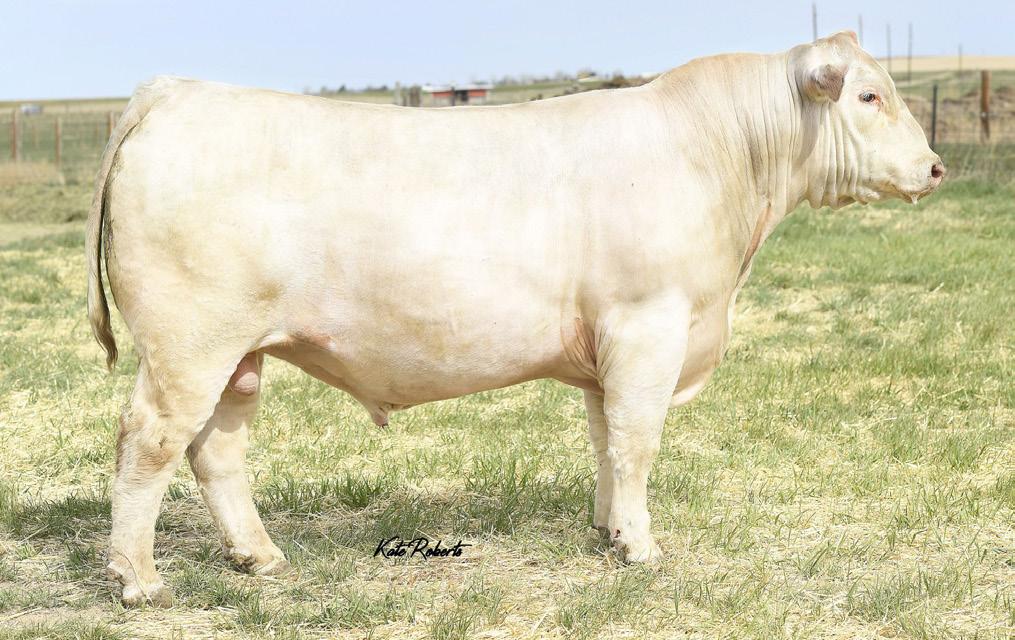
AICA: EM932228 DOB: 02/22/19 TAT: 903G HOMO. POLLED
IQCR SILVER GUN Y31P WCF MR SILVER GUN 467 WCF MISS FASTTRACK 012 SIRE: M6 NEW STANDARD 842 P ET M6 MS NEW GERMAINE 351 P M6 COOL GERMAINE 1144 P ET
DAM:
Open camera. Scan code. Click to learn more.



SILVERSMITH pushes performance to a higher level with big-time figures for carcass merit and well-above-average growth.
Expect good-gaining, easy-feeding offspring from SILVERSMITH that ring the bell for grid premiums.
SILVERSMITH has consistently been one of our highest conception sires in beef x dairy scenarios.
From Rennert Ranch, NE
Individual sire performance data is listed on pages 94-95.
82
EPDs as of 11/01/22 CE BW WW YW MILK MCE MTL SC UDDER TEAT HCW REA FAT MARB TSI EPD 12.6 -2.2 62 108 25 12.3 56 1.5 1.17 1.09 27
Acc .29 .41 .32 .33 .25 .22 .27 .23 .27 .27
% Rank 8 20 35 45 40 4 35 10 30 40
◊
.81 .063 .33 252.94
.21 .21 .19 .20
15 20 100 4 40
◊
◊
9CH104 RCR NEW MAN IN TOWN 8213 AICA:
$20
M924068 DOB: 09/05/18 TAT: 8213 HOMO. POLLED
EPDs as of 11/01/22 CE BW WW YW MILK MCE MTL SC UDDER TEAT HCW REA FAT MARB TSI EPD 7.9 -0.5 78 127 22 9.2 61 2.2 1.06 1.05 41
Acc .30 .47 .32 .30 .20 .19 .24 .22 .23 .23 .17
% Rank 35 45 4 15 55 20 15 1 55 50
◊
1.11 -.012 .36 272.25
.17 .15 .13
2 2 25 2 9
◊
◊
9CH105 RENN
903G
SILVERSMITH
$20
EPDs as of 11/01/22 CE BW WW YW MILK MCE MTL SC UDDER TEAT HCW REA FAT MARB TSI EPD 10.9 -1.5 56 109 18 5.5 46 0.8 1.39 1.33 20 .66 .021 .32 258.53 Acc .29 .40 .31 .30 .17 .16 .22 .26 .14 .14 .18 .18 .17 .14 % Rank 15 30 60 45 80 55 75 60 3 4 35 45 85 4 30 ◊ Selected from a program strong on carcass improvement, FOREMAN excels for Marbling EPD. ◊ He is moderate for frame with solid performance. Expect FOREMAN’s calves to hit target weights in a timely fashion. ◊ High conception rates have made FOREMAN a favorite in a lot of large dairies.
Bradley 3 Ranch Ltd., TX 9CH106 B3R FOREMAN D008
$20
From
AICA: M920346 DOB: 10/12/18 TAT: F003 HOMO. POLLED
231 ET
Z231 W010
Open camera. Scan code. Click to learn more. WR WRANGLER W601 WR FOREMAN D602 WR DUCHESS B612 SIRE: M6 BLANCO STANDARD
B3R D008 CCR
B3R W010 COOLEY SMPLOT 8046S6 DAM:


83 Fall 2022 Charolais Breed Average EPDs Production: CE: 5.8 BW: -0.4 WW: 57.4 YW: 104.5 MILK: 23.1 MCE: 5.5 MTL: 51.8 SC: .9 UDDER: 1.12 TEAT: 1.08 Carcass: CW: 21.5 REA: .71 FAT: .010 MARB: .11 TSI: 247.88 ◊ AFFINITY sons excel at improving carcass quality with an
Marbling EPD. ◊ His
body depth and disposition are
convenience traits. ◊ AFFINITY
show
and are
producers.
J & J
SD
7CH96 LT AFFINITY 6221 HOMO. POLLED $25 LT RIO BRAVO 3181 P LT RUSHMORE 8060 PLD LT BRENDA’S EASE 3055PLD SIRE: WINN MANS LANZA 610S LT ATHENA 1247 LT SILVER ATHENA 7123 P DAM: Open camera. Scan code. Click to learn more. AICA: M880381 DOB: 03/10/16 TAT: 6221 EPDs as of 11/01/22 CE BW WW YW MILK MCE MTL SC UDDER TEAT HCW REA FAT MARB TSI EPD 11.4 -4.9 50 102 29 1.7 54 0.8 1.29 1.28 12 .50 .031 .28 254.67 Acc .89 .94 .91 .89 .67 .71 .75 .82 .69 .68 .40 .42 .38 .38 % Rank 15 4 80 60 20 85 45 60 9 6 65 75 95 7 35 ◊ LEAD
◊ LEAD
◊
PLD, LEAD
and
◊
9CH103 JMAR LEAD TIME 1L16 HETERO. POLLED $20 FF ABOUT TIME Y07 OW LEAD TIME 6294 PLD OW MISS SANDCREEK 3031 PLD SIRE: VPI FREE LUNCH 708T VPI NANCY 311A VPI NANCY 041X DAM: Open camera. Scan code. Click to learn more. AICA: M910612 DOB: 08/29/18 TAT: 1L16 EPDs as of 11/01/22 CE BW WW YW MILK MCE MTL SC UDDER TEAT HCW REA FAT MARB TSI EPD 6.5 -3.3 48 106 30 2.8 54 1.9 .99 .94 23 .69 .031 .35 262.05 Acc .46 .63 .37 .31 .15 .14 .22 .28 .15 .15 .19 .19 .17 .14 % Rank 50 10 85 50 15 80 45 2 75 85 25 40 95 2 25 Son, Lindskov-Thiel Charolais, SD Son, Lindskov-Thiel Charolais, SD Dam of AFFINITY JMAR LEAD TIME is one of the most balanced trait bulls we’ve ever produced and is uniquely one of the most balanced trait bulls in the Charolais breed. He bends the antagonistic traits of Muscle and Marbling without sacrificing those important convenience traits like scrotal, feet, disposition and fleshing ability. His dam is a tremendous daughter of the legendary Select Sires bull, 7CH91 FREE LUNCH Jim Johnson, J-MAR Genetics
elite-ranking
Calving Ease, added
great
daughters
excellent promise with beautiful udders
proving to be excellent
From
Trust and Lindskov-Thiel Charolais,
and Domek Charolais, MT
TIME is a calving ease and carcass improver.
TIME’s outcross paternal pedigree is a bonus in mating decisions.
Sired by the popular OW Lead Time 6294
TIME offers extra width and muscle shape in a moderate package. He is an ideal choice to push the envelope for performance and maintain moderate cow size
weight.
Having 7CH91 FREE LUNCH on the bottom side of LEAD TIME’s pedigree is a big bonus! From J-MAR Genetics, VA
FIRST DAY FORMULA
Simple. Safe. Scientifically Proven.
The latest research suggests that producers need to raise the bar on successful transfer of passive immunity.
• Made with 100% dried bovine colostrum to optimize immune development and health
• Provides consistency with the research-based amount of IgGs for every calf


• Assures biosecurity from transmittable diseases
• Offers convenience whenever timing is a factor
TRI-START JR+
Performance
Proven + Latest Research + Easy Application
Getting a calf off to a strong start is critical. To help support the pre-weaned calf, look to Tri-Start Jr+ (paste form). Developed using the latest calf research and technology, the unique formula of Tri-Start Jr+ is designed to help protect calves against pathogens, while also enhancing gut health and boosting digestive and immune system development. Tri-Start Jr+ is perfect for jumpstarting a newborn calf or anytime a pre-weaned calf experiences health, environmental or management challenges. Available in single-dose and multi-dose applicators.
873-4683
84
®
CONTACT YOUR LOCAL REPRESENTATIVE TO LEARN MORE! ®First Day Formula and Your Success Our Passion. are registered trademarks of Select Sires Inc. Buyer assumes all responsibility for use, storage and handling of this product. All claims, representations, and warranties, expressed or implied, are made only by the company responsible for manufacturing and not by Select Sires Inc., its member cooperatives, its agents or employees. First Day Formula is manufactured for Select Sires Inc., 11740 US 42N, Plain City, OH 43064. Phone: (614)
www.selectsires.com
873-4683
CONTACT YOUR LOCAL REPRESENTATIVE TO LEARN MORE! ®Your Success Our Passion. is a registered trademark of Select Sires Inc. Buyer assumes all responsibility for use, storage and handling of this product. All claims, representations, and warranties, expressed or implied, are made only by the company responsible for manufacturing and not by Select Sires Inc., its member cooperatives, its agents or employees. Tri-Start Jr+ is manufactured for Select Sires Inc., 11740 US 42N, Plain City, OH 43064.
Phone: (614)
www.selectsires.com


85 Individual sire performance data is listed on pages 92-93. ◊ Generations of excellence have been bred into this sire. He combines multiple generations of genetics from
the V8 and
Brahman programs. ◊ 347/8 is a high performance growth sire with added carcass weight and REA. ◊ He ranks in the top 1% of the breed for
From Lee’s Cattle Company, MS 9BR532 MR. V8 347/8 HORNED GREY $20 ABBA: 988506 DOB: 01/28/18 TAT: 347/8 ◊ LUCKY is a popular son of Man Among Boys. ◊ He offers show stopping eye appeal with added bone and hair quality. ◊ Use LUCKY on British and Continental cattle to create a stunning show ring presence. ◊ THC, PHAF From Fair Cattle Co., CA Daughter, Fair Cattle Co., CA Dam of LUCKY Maternal brother to LUCKY 7CA11 FAIR LUCKY 1A $25 MONOPOLY MAN AMONG BOYS 59T SIRE: DOCTOR WHO FAIR WICKED HARRIET 902W PUTZ MISS ROCKSTAR 517R DAM: Open camera. Scan code. Click to learn more. ACA: 369512 DOB: 02/21/13 TAT: 1A EPDs as of 11/01/22 CED BW WW YW MK TM CEM ST DOC YG CW REA MB FT EPD 5 2.7 39 48 13 33 -1 4 11.2 -.34 14 .58 .12 -.07 Acc .51 .62 .54 .51 .19 .29 .24 .41 .32 .44 .39 .35 .29 % Rank 80 60 90 >95 65 85 95 35 30 25 75 30 80 20 EPDs as of 11/08/22 CED BW WW YW MK TM CEM SC DOC FS TEND YG CW REA MB FT $B $Q EPD 0.03 4.9 27 58 2 15 1.37 .0 9.76 .21 -.11 .03 43 .43 -8.84 .01 103.91 74.62 Acc .27 .39 .35 .28 .14 .14 .09 .18 .14 .04 .08 .17 .16 .14 .15 % Rank >95 >95 25 10 95 55 50 35 1 20 4 25 10 25 >95 50 4 5 JDH MR ELMO MANSO MR. V8 458/7 MISS V8 100/7 SIRE: GW PREMIUM BEEF 021TS JDH CHARLEY’S JAZZ 946/1 MISS V8 402/5 DAM:
both
J.D. Hudgins
Docility.
SYNFQ533
SHIGESHIGENAMI 10632
SIRE: WORLD K’S MICHIFUKU
DAM: ◊
ITOSHIGENAMI FUKUYUKI
SYN SYNERGY MICH SUZI 158D STONYRUN ID 151 SUZITO 3

SUZUTANI is an elite pedigreed son of Itoshigenami TF148 and from the Suzutani maternal line. ◊ He is an amazing combination of low birth weight, positive growth and carcass weight, large ribeye area and high marble score. ◊
SUZUTANI has multiple GEBVs traits and indexes in the top 1-10% of the breed! Including Marbling Score, Marble Fineness, Self-Replacing Index and F1 Index.
From Booth Creek Wagyu, KS and Stonyrun Farm, PA
AWA:
MONJIRO 11550
SIRE: ITOSHIGENAMI
WORLD K’S MICHIFUKU MICHIKO 655635
SYN SYNERGY 148 SUZU 50E ET SYNERGY SHIG SUZITO
DAM: ◊ MICH is a high marbling and carcass trait son of World Ks Michifuku from the Suzutani maternal line. He is one of only 2 Michifuku sons over +2.2 MS, +6.5 EMA and +3 CW.
MICH is an amazing combination of low birth weight, positive growth and carcass weight with a large ribeye area and high marble score. ◊
Multiple GEBVs traits and indexes in the top 1-10% of the breed, including Marbling Score, Marble Fineness, Ribeye Area, Self-Replacing Index and F1 Index.


From Booth Creek Wagyu, KS and Stonyrun Farm, PA
Individual sire performance data is listed on pages 94-95.
86
714KB15 SYNERGY TF148 SUZUTANI 533G ET
TAT:
$40
AWA: FB51546 Australian:
DOB: 10/09/19
533G
◊
714KB16 SYNERGY MICH SUZUTANI 87G ET
FB54818 Australian: SYNFQQ87 DOB: 11/10/19 TAT: 87G $40 ◊ Genomics has identified MACHO MOUSE as a “10” for tenderness. ◊ MACHO MOUSE is proven to be a high fertility sire with over 6,000 breeding observations. ◊ He is AA for SCD (Stearoly CA desaturase enzyme), a genotype that produces a superior fat composition. From
Corners Dairy, NY 9KB4 OCD MACHO MOUSE 404H ET AWA: FB51442 DOB: 01/21/20 TAT: 404H $30 Open camera. Scan code. Click to learn more. MFC ITOMORITAKA 0-41 BAY ITO MACHO 177 BAY FUJI MIKI 62 SIRE: BAR R JIRO 22T JWW MACJIRO 317F AI WEBBCO 67J MAC 165D DAM: EPDs as of 11/08/22 Gestation Length BW 200 Day WT 400 Day WT 600 Day WT MCW MILK SC CW REA RUMP FAT RBY MARB Score MARB Fineness EBV 0.0 -0.6 6 9 1 0 -5 -1.2 8 4.2 .4 .2 1.8 .35 ACC% 62 68 70 69 69 64 64 61 67 63 64 59 64 60 EPDs as of 11/08/22 Gestation Length BW 200 Day WT 400 Day WT 600 Day WT MCW MILK SC CW REA RUMP FAT RBY MARB Score MARB Fineness EBV 0.8 -0.8 0 6 3 14 -6 -1.4 3 6.5 1.8 .1 2.2 .38 ACC% 61 68 69 68 69 63 64 60 67 62 63 58 64 60 q 714KB15 and 714KB16 qualify for premium buyback programs offered by Booth Creek and Synergy Wagyu b If you reside East of the Mississippi River, contact Loren Ruth at Synergy Wagyu - www.Synergywagyu.com b If you reside west of the Mississippi, contact Andrew Coates at Booth Creek Wagyu - andrew@boothcreekwagyu.com – 707-689-6598
Oakfield
WORLD K’S KITAGUNI JR. LMR KITAGUNI 1441Y BR MS YASUFUKU 0645 SIRE: ITOMORITAKA J2703
SC ITOMOUTSU 77 UTSUKUSHII
heifers.
is an excellent bull for F1 Wagyu production. He is currently in F1 production nationwide and expected to produce 10,000+ calves annually. From Signature Land and Cattle, IA


AWA: FB72699 DOB: 01/15/21 TAT: 227J
MAYURA ITOSHIGENAMI JNR
MAYURA L0010 ET MAYURA H0159 SIRE:
DAM:
HIRASHIGETAYASU J2351 YAR 267D BR MS KITDOI/0632 6621
227J is sired by one of the top Wagyu sires in the world. ◊ He has excellent marbling and growth characteristics. ◊ 227J ideal for F1 wagyu production or genetic replacement production. He is currently in F1 production nation wide and expected to produce 10,000+ calves annually. ◊ 227J’s sire, L10, is some of the most sought after and expensive genetics in the breed.


From Signature Land and Cattle, IA

87 Code Reg # Name Short Name Sire MGS Price 714KB7 FB59356 JDH L0010 Mr Marble 605H ET MR MARBLE Mayura L0010 ET TF Itomichi 1/2 $40 714KB8 FB59357 JDH L0010 Mr Marbler 606H ET MARBLER Mayura L0010 ET Hirashigetayasu J2351 $40 714KB10 FB59189 JDH 1441Y ETJ 002 463H ET LMR Kitaguni 1441Y Itomoritaka J2703 $100 714KB11 FB59209 JDH Mayura Sanji 397H ET SANJI Mayura L0010 ET World K's Sanjirou $40 714KB13 FB72698 JDH L10 Hirashige 226J ET HIRASHIGE Mayura L0010 ET CHR Sanjirou 391 $40 714KB14 FB72699 JDH L10 0632 227J ET 0632 Mayura L0010 ET Hirashigetayasu J2351 $40 714KB21 FB69400 JDH Hikokura 18J HIKOKURA Stud Hikokura 33E ET ESF Beijiro-121-241 $25 714KB22 FB69402 JDH Hiko Ichiro 20J ICHIRO Stud Hikokura 33E ET FC Mr Ichiro 01 $25 714KB23 FB69428 JDH Sanji 5 1441Y 48J 48J RAB Wagyu Beef Company Sanjiro 5 ET LMR Kitaguni 1441Y $25 714KB24 FB69434 JDH Kousyun 002 54J KOUSYUN BARV Kousyun 808F ET LMR RMW
$25 714KB25 PB69657 JDH 753 89K 103J 103J BARV Tazsuru 753E ET 2+K Kyoryokuna 14/89K $25 ◊ ETJ
◊ He
◊
714KB10 JDH 1441Y ETJ 002 463H AWA: FB59189
$100
Itomoritaka
has phenomenal marbling characteristics in both marbling score and marbling fineness.
is low birth weight and good option for
ETJ
DOB: 08/21/20 TAT: 463H
DAM: Superior Waygu sires qualifying for participation in Superior supply chains. For more information and additional requirements, visit superiorwagyu.com. ◊
714KB14 JDH L10 0632 227J ET
$40
To order Select Sires or Accelerated Genetics beef semen: 1. Contact your local Select Sires representative. To find a representative in your area, see the inside back cover of this directory. 2. Order online at www.selectsiresbeef.com or www.agbeef.com.
To order A.I. certificates: Visit www.selectsiresbeef.com, www.accelgen.com or call our customer service line at 1-800-251-3049 to order A.I. Certificates.
Photo Requests:
To request a sire photo to be e-mailed to you or to submit progeny photos, contact Jennie Harbin at jharbin@selectsires.com or (402) 317-1198.
Beef Breed Association contacts:
American Angus Association (816) 383-5100 www.angus.org
Red Angus Association of America (940) 387-3502 www.redangus.org
American Simmental Association (406) 587-4531 www.simmental.org
American Hereford Association (816) 842-3757 www.hereford.org
American International Charolais Association (816) 464-5977 www.charolaisusa.com
American Shorthorn Association (816) 599-7777 www.shorthorn.org
American Chianina Association (816) 431-2808 www.chicattle.org
American Maine-Anjou Association (816) 431-9950 www.maine-anjou.org
Follow us on:


88
SUPPLEMENTAL INFORMATION Select Sires Beef SelectSiresBeef @SelectSiresBeef @SelectSiresBeef Breed BW WW YW Milk MARB REA Fat CW Angus 0 0 0 0 0 0 0 0 Hereford 1.0 -14.4 -41.8 -11.3 -.34 .04 -.076 -70.8 Red Angus 2.3 -19.2 -28.5 1.4 -.09 .27
-10 Shorthorn 3.6 -22.3 -37.8 -3.9 -.13 .29 -.042 -7.3 South Devon 6.4 -33.9 -66.7 7.5 -.06 .45
-12.2 Beefmaster 3.7 25.8 7.1 3.6 - - -Brahman 9.0 60.2 24.0 12.4 -.68 .13 -.153 -34.7 Brangus
Santa Gertrudis 4.8
Braunvieh
Charolais
Chiangus
Gelbvieh
Limousin
Maine
Salers
Simmental
Tarentaise
ACROSS-BREED EPD
Disclaimer: DISCLAIMER: SELECT SIRES, INC. its member cooperatives, its agents or employees cannot and do not guarantee the conception rate, gender, quality or productivity to be obtained in connection with the use of its products or recommended techniques. IT MAKES NO WARRANTIES OF ANY KIND WHATSOEVER, EXPRESSED OR IMPLIED, WHICH EXTEND BEYOND THE DESCRIPTION OF ITS PRODUCTS AND HEREBY DISCLAIMS ALL WARRANTIES OF MERCHANTABILITY AND FITNESS FOR A PARTICULAR PURPOSE. In the unlikely event that any of our products shall be proven to be defective, damages resulting from their use shall exclude consequential damages and be limited to the purchase price of the product.
-.038
-.066
2.6 17.4 12.5 15.1 - - - -
42.7 39.6 16.8 -.47 .20 -.075 -4.6
3.9 -17.6 -35.9 21.8 -.13 .99 -.034 -16.3
6.4 5.5 -23.9 -1.8 -.32 .79 -.197 4.1
2.4 -22.2 -41.7 3.5 -.43 .52 -.117 -25.8
3.3 -8.5 -18.0 5.1 -.55 .82 -.119 -14.8
1.7 -8.1 -31.4 -4.7 -.28 .67 -.071 -10
Anjou 1.9 -25.9 -53.4 -9.4 -.51 1.02 -.170 -31.9
2.1 -15.4 -28.0 8.1 -.18 .55 -.086 -18.5
1.9 -13.0 -25.7 -2.3 -.15 .50 -.066 -5.3
2.2 29.2 -6.5 9.9 - - - -
COMPARISON
EXPECTED PROGENY DIFFERENCES TERMINOLOGY
Expected Progeny Difference (EPD) - The expected difference in performance of a sire’s progeny compared to the performance of another sire’s progeny.
Accuracy (Acc.) - a measure of reliability of an EPD expressed between 0 and 1.0. Accuracies closer to 1.0 means the EPD is a more reliable estimate of a sire’s true genetic value for the trait.
% Rank - Based on percentages, this indicates where a sire’s EPD ranks him in the entire population of his respective breed.
Stayability (STAY - Red Angus & Simmental)The stayability EPD predicts the probability of a sire’s daughters staying in production to at least six years of age compared to daughters of another sire. Reported as a percentage, a higher value is desirable.
ANGUS:
Claw Set EPD (Claw) - is expressed in units of claw-set score, with a lower EPD being more favorable indicating a sire will produce progeny with more ideal claw set. The ideal claw set is toes that are symmetrical, even and appropriately spaced.
Foot Angle EPD (Angle) - is expressed in units of foot-angle score, with a lower EPD being more favorable indicating a sire will produce progeny with more ideal foot angle. The ideal is a 45-degree angle at the pastern joint with appropriate toe length and heel depth.
Pulmonary arterial pressure EPD (PAP) - is expressed in millimeters of Mercury (mmHg), with a lower EPD being more favorable indicating a sire should produce progeny with a lower PAP score. PAP score is an indicator of susceptibility to high altitude disease commonly experienced at elevations greater than 5,500 feet. Selection for this trait aims to improve the genetic potential for a sire’s progeny to have lower PAP scores thus a lower chance of contracting high altitude disease increasing the environmental adaptability of cattle living in mountain areas.
Hair Shed EPD (HS) - is expressed in units of hair shed score, with a lower EPD being more favorable indicating a sire should produce progeny who shed their winter coat earlier in the spring. Selection for this trait should improve the genetic potential for a sire’s progeny to shed off earlier increasing the environmental adaptability of cattle living in heat stressed areas and producers grazing endophyte-infected (hot) fescue.
Heifer Pregnancy EPD (HP) - is a selection tool to increase the probability or chance of a sire’s daughters becoming pregnant as first-calf heifers during a normal breeding season. A higher EPD is the more favorable direction and the EPD is reported in percentage units.
Cow Energy Value ($EN) - expressed in dollars saved per cow per year, the EPD assesses differences in cow energy requirements for daughters of sires. A larger value is more favorable when comparing two animals (more dollars saved on feed energy expenses). $EN savings differences account for lactation energy requirements and mature size of cows.
Maternal Weaned Calf Value ($M) - an index, expressed in dollars per head, predicts profitability differences from conception to weaning. The model assumes commercial producers will replace 25 percent of their breeding females in the first generation and 20 percent of their breeding females in each subsequent generation. Traits included are as follows: Calving Ease Direct, Calving Ease Maternal, Weaning Weight, Milk, Heifer Pregnancy, Docility, Mature Cow Weight, Claw Set and Foot Angle.
Weaned Calf Value ($W) - an index value expressed in dollars per head, is the expected average difference in future progeny performance for preweaning merit. $W includes both revenue and cost adjustments associated with differences in Birth Weight, Weaning Direct Growth, Maternal Milk and Mature Cow Size.
Feedlot Value ($F) - an index value expressed in dollars per head, is the expected average difference in future progeny performance for postweaning merit compared to progeny of other sires.
Grid Value ($G) - an index value expressed in dollars per head, is the expected average difference in future progeny performance for carcass grid merit compared to progeny of other sires.
Beef Value ($B) - an index value expressed in dollars per head, is the expected average difference in future progeny performance for postweaning and carcass value compared to progeny of other sires.
Combined Value ($C) - an index value expressed in dollars per head, that blends both maternal and terminal indexes using information and relationships from 14 different traits.
SIMMENTAL:
All-Purpose Index (API) - expressed in net dollars returned per cow exposed, evaluates Simmental sires being used on the entire cowherd (bred to both Angus first-calf heifers and mature cows) with a portion of the daughters retained for breeding and the steers and remaining heifers fed and sold on a carcass grade and yield basis. With the exception of shear force (tenderness), all EPDs are considered in this index.
Terminal Index (TI) - expressed in net dollars returned per cow exposed, evaluates the merit of sires when bred to mature Angus cows and all progeny are fed and sold on a carcass grade and yield basis. Consequently, maternal traits such as milk, stayability and MCE are not considered in this index.
SimAngus - SimAngusTM is a trademark of the American Simmental Association.
RED ANGUS:
Profitability and Sustainability Index (ProS) - is an all-purpose index that covers economically relevant traits across all aspects of the beef supply chain from conception to carcass. This updated index will work as a combination of the already-existing HerdBuilder and GridMaster indexes, which include traits from conception to weaning, and postweaning through harvest, respectively. The ProS index is expressed in
dollars per head born.
HerdBuilder Index (HB) - As the name indicates, implementation of the HerdBuilder index will assist producers in building profitable herds. The HerdBuilder index is built using the following production scenario: Red Angus sires mated to cows and heifers (resulting progeny ¾ Red Angus, ¼ Simmental), replacement heifers retained from within the herd, and all remaining progeny sold on a quality based carcass grid.
GridMaster Index (GM) - While Red Angus has traditionally been known as a superior maternal breed, those who have retained ownership in Red Angus calves know of their potential to excel in the feedyard and ultimately hang a premium carcass. The GridMaster index is built using the following production scenario: Red Angus sires mated to cows (resulting progeny ¾ Red Angus, ¼ Simmental) and all progeny sold on a qualitybased carcass grid.
HEREFORD:
Baldy Maternal Index (BMI$) - This is an index to maximize profit for commercial cow-calf producers who use Hereford sires in rotational crossbreeding programs on Angus-based cows. Retained ownership of calves through the feedlot phase of production is maintained and the cattle are to be marketed on a Certified Hereford Beef pricing grid.
Brahman Influence Index (BII$) - The Brahman Influence Index is a maternally focused index that is based on a production system that uses Brahman x Hereford cross cows. Progeny of these cows are directed towards a commodity beef market since Certified Hereford Beef does not accept Brahman influenced cattle. This index has significant weight on Sustained Cow Fertility, which predicts fertility and longevity of females. There is a slightly positive weight on Weaning Weight, Mature Cow Weight and Milk which accounts for enough growth but ensures females do not increase inputs. There is some negative emphasis on Dry Matter Intake, but a positive weighting on Carcass Weight which is anticipated to provide profitability in finishing non-replacement females and castrated males. Marbling and Rib-eye Area are also positively weighted to keep harvested progeny successful for a variety of commodity based programs. This index targets producers that use Hereford bulls on Brahman influenced cows.
Certified Hereford Beef Index (CHB$) - This is a terminal sire index, where Hereford sires are used on British-cross cows and all offspring are sold as fed cattle on a CHB pricing grid. There is no emphasis on milk or fertility since all cattle will be terminal. This index promotes growth and carcass.
CHAROLAIS:
Terminal Sire Index (TSI) - The AICA Terminal Sire Index (TSI) is a formal method of combing Expected Progeny Differences (EPD) – BW, WW, YW, REA, CW, MARB and FAT – into one single value on which to base selection decisions. The TSI uses estimates of the genetic relationships between traits with an economic default value based on three year rolling USDA data.
89
HEAT DETECTION & TAI

Synch+CIDR® & TAI
Heat detect & AI days 7 to 10 and TAI with GnRH all non-responders 72 - 84 hr after PG. Perform first TAI 54 ± 2hr after PG in estrous heifers. Second TAI with GnRH only in non-estrous heifers.
CO-Synch+CIDR®
7-day CO-Synch+CIDR® Perform TAI with GnRH at 54 ± 2 hr after PG. 7 0 10 CIDR® .. 72 - 84 hr day Heat detect & AI EDA GnRH PG GnRH AI 7 0 10 .. 54 ± 2 hr day CIDR® 11 .. 22 ± 2 hr GnRH GnRH non-estrous heifers PG EDA 7 0 10 .. 54 ± 2 hr day CIDR® GnRH PG GnRH AI 7&7 Synch Perform TAI with GnRH at 54 ± 2 hr after CIDR removal. 14 7 0 17 .. 54 ± 2 hr day CIDR® GnRH PG GnRH AI PG 5-day CO-Synch+CIDR® Perform TAI at with GnRH 60 ± 4 hr after CIDR removal. Two injections of PG 8 ± 2 hr apart are required for this protocol. 5 0 8 .. 60 ± 4 hr day CIDR® GnRH PG GnRH AI PG 8 ± 2 hr
Heat detect & AI days 33 to 36 and TAI with GnRH all non-responders 72 - 84 hr after PG. MGA® 0 14 33 36 .. 72 - 84 hr … 19 days … PG GnRH AI Heat detect & AI EDA day 14-day
Heat detect & AI days 30 to 33 and TAI with GnRH all non-responders 72 ± 2 hr after PG. day CIDR® 0 14 30 33 .. 72 ± 2 hr … 16 days … PG GnRH AI EDA Heat detect & AI
TAI Perform TAI with GnRH at 72 ±
Select
7-day
& Split-TAI
MGA®-PG & TAI
CIDR®-PG & TAI
MGA®-PG &
2 hr after PG. MGA® 0 14 33 36 .. 72 ± 2 hr … 19 days … PG GnRH AI day 14-day CIDR®-PG & TAI day 0 14 30 33 .. 66 ± 2 hr … 16 days … PG GnRH AI Perform TAI with GnRH at 66 ± 2 hr after PG. CIDR® For best results perform AI 12 ± 2 hr after detection of estrus. Use of estrus detection aids (EDA) is highly recommended.
average time of insemination based on the number of females to inseminate, labor, and facilities. FIXED-TIME AI BEEF HEIFER PROTOCOLS For additional synchronization protocols visit BeefRepro.org AI estrous heifers AI remaining heifers 2023 Cystorelin®, Factrel®, Fertagyl®, OvaCyst®, GONABreed® estroPLAN®, Estrumate®, Lutalyse®,
HighCon
Detect-her™, Estrotect™,
Quick
SCAN 90
Time for Fixed-time AI (TAI) should be considered as the approximate
Lutalyse®
, ProstaMate®, SYNCHSURE™ Aervoe™, AIPAint™,
Kamar™, Mark-her™, Paintstik™,
Shot™, Tell Tail™, Twist-Stik™ EDA GnRH PG These protocol sheets were assembled by the Beef Reproduction Task Force. Programs are intended to promote sustainable food production systems by the beef industry through sound reproductive management practices for replacement heifers and postpartum cows. The Beef Reproduction Task Force recommends working with a licensed veterinarian for proper use and application of all reproductive hormones. Approved 11-17-2022. www.beefrepro.org
HEAT DETECTION & TAI
Select Synch & TAI
Select Synch+CIDR® & TAI
PG 6-day CIDR® & TAI

For best results perform AI 12 ± 2 hr after detection of estrus. Use of estrus detection aids (EDA) is highly recommended.
BEEF COW PROTOCOLS
for Fixed-time AI (TAI) should be considered as the approximate
insemination
number of
labor,
Time
average time of
based on the
females to inseminate,
and facilities.
detect & AI days 6 to 10
Heat
and TAI with GnRH all non-responders 72 - 84 hr after PG.
detect & AI days 0 to 3. Insert CIDR to non-responders, heat
days
12.
Heat
detect & AI
9 to
TAI with GnRH non-responders 72 - 84 hr after CIDR removal. Protocol may be used in heifers.
Heat detect & AI days 7 to 10 and TAI with GnRH
72
hr
PG. Perform first TAI 66 ± 2hr after PG in estrous cows.
CO-Synch+CIDR®
7-day CO-Synch+CIDR® Perform TAI with GnRH at 60 to 66 hr after PG. 7 0 10 .. 60 - 66 hr day CIDR® GnRH 0 6 7 PG 10 AI day EDA Heat detect & AI .. 72 - 84 hr GnRH 7 0 10 CIDR® .. 72 - 84 hr day Heat detect & AI EDA GnRH PG GnRH AI 7 0 10 .. 66 ± 2 hr day CIDR® 11 .. 22 ± 2 hr GnRH GnRH non-estrous cows PG EDA FIXED-TIME AI GnRH PG GnRH AI 7&7 Synch Perform TAI with GnRH at 66 ± 2 hr after CIDR removal. 7 0 17 .. 66 ± 2 hr day CIDR® GnRH PG GnRH AI 14 PG 5-day CO-Synch+CIDR® Perform TAI with GnRH at 72 ± 2 hr after CIDR removal. Two injections of PG 8 ± 2 hr apart are required for this protocol. 5 0 8 .. 72 ± 2 hr day CIDR® GnRH PG GnRH AI PG 8 ± 2 hr Bos indicus PG 5-day+CIDR® Perform TAI with GnRH at 66 ± 2 hr after CIDR removal. 5 0 8 .. 66 ± 2 hr day CIDR® PG GnRH AI PG For additional synchronization protocols visit BeefRepro.org AI estrous cows AI remaining cows 2023 Cystorelin®, Factrel®, Fertagyl®, OvaCyst®, GONABreed® estroPLAN®, Estrumate®, Lutalyse®, Lutalyse® HighCon, ProstaMate®, SYNCHSURE™ Aervoe™, AIPAint™, Detect-her™, Estrotect™, Kamar™, Mark-her™, Paintstik™, Quick Shot™, Tell Tail™, Twist-Stik™ EDA GnRH PG These protocol sheets were assembled by the Beef Reproduction Task Force. Programs are intended to promote sustainable food production systems by the beef industry through sound reproductive management practices for replacement heifers and postpartum cows. The Beef Reproduction Task Force recommends working with a licensed veterinarian for proper use and application of all reproductive hormones. Approved 11-17-2022. www.beefrepro.org SCAN AI 9 Heat detect & AI 12 .. 72 - 84 hr 3 0 Heat detect & AI day CIDR® GnRH PG PG GnRH EDA EDA EDA 91
all non-responders
- 84
after
Second TAI with GnRH only in non-estrous cows. 7-day
& Split-TAI
A.I. Technique in Cattle
Mel DeJarnette, Vice President Semen Processing and Research and Dr. Ray Nebel, Vice President of Technical Service Programs, Select Sires Inc.
The recto-vaginal technique is the most commonly used method to artificially inseminate cattle. The basic skills required to perform this technique can be obtained with about three days practice under professional instruction and supervision. Additional proficiency and confidence will be achieved with further work on your own.
Regardless of whether you are left or right handed, it is recommended that you use your left hand in the rectum to manipulate the reproductive tract and the right hand to manipulate the insemination gun. This is because the rumen or stomach of the cow lies on the left side of the abdominal cavity, displacing the reproductive tract slightly to the right. Thus, you will find it much easier to locate and manipulate the tract with your left as opposed to right hand.

Raise the tail with your right hand and gently massage the rectum with the lubricated glove on your left hand. Place the tail on the left side of your left forearm so it will not interfere with the insemination process. With your fingers together in a pointed fashion, insert your hand in the rectum, up to your wrist.
Gently wipe the vulva with a paper towel to remove excess manure and debris. Be careful not to apply excessive pressure, which may smear or push manure into the vulva and vagina. With your left hand make a fist and press down directly on top of the vulva. This will spread the vulva lips allowing clear access to insert the gun tip several inches into the vagina before contacting the vaginal walls. Insert the gun at a 30° upward angle to avoid entering the urethral opening and bladder located on the floor of the vagina. With the gun about six to eight inches inside the vagina, raise the rear of the gun to a somewhat level position and slide it forward until it contacts the external portion of the cervix. You will note a distinct gristly sensation on the gun when it contacts the end of the cervix.
The cervix, consists of dense connective tissue and muscle and is your primary landmark for inseminating cattle. It has often been described as having the size and consistency of a turkey neck. The size will vary, with post partum interval and age of the animal. The cervix usually has three or four annular rings or folds. The opening into the cervix protrudes back into the vagina. This forms a 360° blind-ended pocket completely around the cervical opening. This pocket is referred to as the fornix. In most cows, the cervix will be located on the floor of the pelvic cavity near the anterior end of the pelvic bone. In older cows with large reproductive tracts, the cervix may rest slightly over the pelvic bone and down into the abdominal cavity.
To become a successful inseminator it is very important that you always know where the tip of the insemination gun is located. The walls of the vagina consist of thin-layered muscle and loose connective tissue. The insemination gun can be easily felt with your palpating hand. As you insert the breeding gun into the vagina, keep your gloved hand even with the gun tip.
Manure in the rectum can often interfere with your ability to palpate the cervix and gun tip. However, it is seldom necessary to remove all the manure from the bowel. Instead, keep your open hand flat against the floor of the rectum, allowing the manure to pass over the top of your hand and arm.
While handling the cervix you may notice rectal constriction rings attempting to force your arm from the cow. To relax these rings, place two fingers through the center of a ring and massage back and forth. The constriction ring will eventually relax, pass over your hand and arm, and you can continue the palpation process.
Because the reproductive tract is freely movable, cows that have strong rectal and abdominal contractions in response to being palpated may actually push their reproductive tract back into the pelvic cavity. This will cause many folds to form in the vagina. In such cases, the insemination gun will often get caught in these folds and little or no progress will be made until they are removed. If you can locate the cervix, grasp it and push it forward. This will straighten the vagina and the gun should pass freely up to the cervix. If you cannot locate the cervix, encircle the gun tip with your thumb and forefingers. With a straightening motion of your wrist, gently “milk” the folds out of the vagina a little at a time. Slide the gun forward and repeat the process until the cervix is reached.
At this point it is important for you to understand that inseminating a cow is a two-step process. The first step is to get the gun tip to the cervix. To accomplish this you must work the vagina and cervix forward, away from you to straighten the vaginal folds. If you do not feel the gristly sensation of the cervix on the gun, you are still in step one of the process.
Once the gun is in contact with the external surface of the cervix you are ready to begin step 2. In step 2, you place the cervix on or over the insemination gun. That’s right, the cervix is placed on the gun, the gun is not passed through the cervix. Excessive movement or probing with the insemination gun during the second step is very often counterproductive. Ground gained is often lost and we find ourselves back in a vaginal fold. The key to mastering step 2 of the insemination process is to know how to hold and manipulate the cervix and concentrating on doing the work with the hand inside the cow, not the one holding the gun.
When the gun first contacts the cervix, you will usually find that the tip is in the fornix directly over top of the opening. Grasp the external opening to the cervix with the thumb on top and forefingers underneath. This closes the fornix at top and bottom. As in step 1 we must still know the location of the gun tip. This is accomplished with the palm and third and fourth fingers of your palpating hand. Use your palm and these two fingers to guide the gun tip to the cervical opening located between your thumb and forefingers.
With gentle probing the opening should be located. You will feel the gun slide forward until it contacts the second cervical ring. Maintain gentle but steady forward pressure on the gun and slide your thumb and forefingers just in front of the gun tip and re-grasp the cervix. Because the cervix is composed of dense connective tissue and muscle, it is difficult to clearly distinguish the gun tip when it is located within this structure. However, you can determine the approximate location by bending the cervix. Using the flexibility of your wrist, twist and bend the cervix until you feel the second ring slide over the gun tip. Repeat the process until all the rings have been passed over the gun tip. In some cases, it may be necessary to bend the cervix at a 90° angle to clear the cervical folds. Remember, you are placing the cervix over the gun, not the gun through the cervix.
A slight jiggle or “give-and-go” of the gun may sometimes be necessary to help pass by a fold, but for the most part gentle forward pressure is all that is necessary and gun movement should be minimal. When all rings of the cervix have been cleared, the gun should slide forward freely with little resistance. Since the uterine wall is very thin, you will once again be able to clearly feel the insemination gun. You are now ready to check your placement and deposit the semen. Rotate your gloved hand until it lies on top of the cervix. With your index finger, locate the far end of the cervix. Pull back on the gun until you feel the tip directly underneath your finger near the internal opening of the cervix. Raise your finger and slowly deposit the semen. Push the plunger slowly so that drops of semen fall directly into the uterine body.
With proper A.I. technique and gun placement, semen will be deposited in the uterine body. Uterine contractions will then transport spermatozoa forward to the horns and oviducts with a good distribution of both sides. When the insemination gun is more than 1 inch through the cervix, all the semen will be deposited in only one horn. This creates a situation of uneven semen distribution. Should the animal ovulate from the opposite horn, conception rates may be compromised.
Be sure to raise your finger after checking gun placement. Not doing so may obstruct one horn, again creating a situation of uneven semen distribution. When checking gun tip placement, be careful not to apply excessive pressure. The delicate uterine lining is easily damaged, predisposing the cow to uterine infections and reduced fertility.

Make sure you push in with the plunger and do not pull back on the gun. Pulling back may result in much of the semen dose being deposited in the cervix and vagina instead of the uterine body.
Although the recommended site of semen deposition is in the uterine body, research suggests that when exact gun tip placement is in doubt, depositing semen slightly into one uterine horn is less likely to compromise fertility than cervical deposition.
After properly depositing semen, slowly pull the gun from the reproductive tract. Remove the gloved hand from the rectum and shake off the excess manure. Check the gun tip for signs of blood, infection or semen leakage inside the sheath. Make notes for your veterinarian or future reference where appropriate. Remove the sheath from the gun and hold it in the gloved hand. For the final time, check to confirm which bull you have used. Remove the glove starting at the top of your arm by turning it inside out as you remove it. Wipe the gun clean and dry and return it to the proper storage location. Some of the most important aspects to remember when inseminating a cow to attain maximum breeding efficiency are:
• Be gentle. Don’t use too much force.
• Insemination is a two-step process. Get the gun to the cervix, and then place the cervix over the gun.
• Deposit the semen just through the cervix into the uterine body.
Correct insemination procedures will result in better breeding efficiencies. More selection pressure can then be placed on economic traits enabling you and your family to realize a higher return on your semen investment dollars. For more information about A.I. training classes, contact your Select Sires representative.
Some of the most important aspects to remember when inseminating a cow to attain maximum breeding efficiency are:
• Be gentle. Don’t use too much force.
• Insemination is a two-step process. Get the gun to the cervix, and then place the cervix over the gun.
• Deposit the semen just through the cervix into the uterine body.
Code No. Code Name
Page Price A.I. Cert Brand BW lbs. BW Ratio WW lbs. WW Ratio YW lbs. YW Ratio Frame SC
7AN758 APEX*+ 17 35 40 SS 76 ET 769 ET 1305 ET 6.8 38 cm
7AN432 BANKROLL 45 25 40 SS 72 96 717 103 1435 111 - -
7AN703 BELIEVER 41 25 40 SS 85 99 1114 120 1623 111 - 41 cm
7AN521 BLUEPRINT 33 25 40 SS 83 100 684 102 1327 106 5.7 38 cm
14AN590 BRIGADE 11 25 40 AG 69 ET 848 ET 1213 ET - 37 cm
7AN736 BRUNSWICK* 32 25 40 SS 93 99 694 109 1273 100 - 40 cm
7AN725 CAMERON 28 25 40 SS 65 87 - - 1186 105 5.7 39 cm
7AN525 COMPOUND 37 20 40 SS 56 75 784 112 1200 109 - 36 cm
7AN697 COUNTY ROAD 18 25 40 SS 63 88 657 103 1129 99 5.1 37 cm
7AN743 CRAFTSMAN 8 50 40 SS 78 105 712 120 1250 119 - -
7AN701 DIFFERENCE*+ 44 25 40 SS 67 97 453 91 938 100 4.4 33 cm
7AN624 DUAL THREAT 24 25 40 SS 60 ET 625 ET 1145 ET 6.1 36 cm
7AN617 ENDEAVOR 34 25 40 SS 62 81 698 102 1175 101 - -
7AN531 ENTICE 42 25 40 SS 77 97 886 116 1544 114 - -
7AN759 FIREPROOF*+ 16 50 40 SS 68 ET 608 ET 1216 ET 6.1 37 cm
7AN735 GIBSON 15 30 40 SS 84 ET 724 ET 1321 ET 5.1 38 cm
7AN723 GOOD NEWS 28 25 40 SS 67 101 734 107 1369 100 6.1 38 cm
7AN753 GRAND CANYON* 31 35 40 SS 78 ET 952 ET 1578 ET - 39 cm
7AN528 GROWTH FUND 7 40 40 SS 70 100 946 126 1360 116 - -
7AN623 GUARANTEE 43 30 40 SS 81 90 736 105 1402 115 6.5 38 cm
7AN684 GUARD RAIL 19 30 40 SS 60 88 632 117 1187 119 - 38 cm
7AN700 HERO 24 30 40 SS 88 ET 906 ET 1501 ET 7.2 35 cm
7AN580 HOME TOWN 6 30 40 SS 72 92 698 102 1269 104 6.1 37 cm
7AN689 INCENTIVE 38 25 40 SS 82 ET 585 ET 1027 ET 5.2 33 cm
7AN698 IRON HORSE 20 30 40 SS 78 ET - - - - - -
7AN688 JUSTICE 35 25 40 SS 81 109 668 116 1340 123 - 41 cm
7AN473 LEGENDARY 45 22 40 SS 83 101 848 109 1406 109 - 38 cm
7AN618 MARVEL 30 30 40 SS - - - - - - - -
7AN595 MOVIN ON 14 25 40 SS 80 ET 662 ET 1251 ET 5.8 38 cm
7AN695 NETWORK 26 30 40 SS 76 105 667 109 1121 105 5.1 36 cm 14AN497 NEW ADDITION 36 25 40 AG 64 92 684 102 1217 99 5.2 36 cm
7AN669 NORTH STAR 45 20 40 SS 74 86 691 100 - - -7AN718 NORTHBOUND 36 25 40 SS 67 87 793 102 1284 95 - -
7NA644 OPTIMUM 34 30 40 SS 74 101 990 117 1291 106 - 37 cm 14AN686 PATENT 37 25 40 AG 63 80 553 101 1137 110 - 38 cm
7AN510 PEYTON 26 25 40 SS 78 121 832 121 1445 124 6.1 37 cm 7AN463 PLAYBOOK 18 30 40 SS 75 101 840 121 1456 118 - 42 cm 7AN560 QUANTUM 39 25 40 SS 74 ET 654 ET 1187 ET 6.3 36 cm 7AN594 REGIMENT 41 30 40 SS 70 ET 784 ET - - -7AN738 RIVAL 9 40 40 SS 87 108 796 114 1447 116 6 35 cm 7AN683 SAFE & SOUND 35 25 40 SS 68 88 813 103 1192 100 - 37 cm 7AN757 SALUDA*+ 17 30 40 SS 91 115 648 104 1133 104 5.6 38 cm 7AN589 SILVERADO 32 25 40 SS 77 102 830 101 1348 100 -7AN607 STAGECOACH 12 25 40 SS 72 99 786 122 1394 115 - 38 cm 7AN737 STATESMAN 10 40 40 SS 78 98 760 112 - - -7AN691 STEP UP* 23 35 40 SS 95 ET 786 ET 1244 ET -7AN389 SURE FIRE 38 25 40 SS 84 ET 716 ET 1210 ET 6.6 40 cm 14AN502 TAHOE 13 25 40 AG 88 104 720 111 1334
2 ANGUS
109 5.8 40 cm 7AN579 TEAMWORK 27 25 40 SS 70 92 743 118 1287 111 5.1 33 cm 2AN604 TOP CUT 21 30 40 SS 68 88 649 105 1062 104 4.8 38 cm 7AN629 TRANSCENDENT 22 30 40 SS 76 ET 554 ET 1250 ET 6 34 cm 7AN642 VERACIOUS 25 30 40 SS 62 90 840 114 1278 107 5.3 37 cm 14AN545 WALL STREET 40 30 40 AG 75 ET 905 ET 1243 ET -7AN600 WOLVERINE 12 25 40 SS 81 100 760 115 1246 111 -7AN699 YELLOWSTONE 42 30 40 SS - - 850 100 1399 100 - 37 cm * New for 2023 | + Available Spring 2023 | PAP and Angus genomic scores are available at www.selectsiresbeef.com under the resources tab. INDEX BY NAME / PERFORMANCE DATA
Code No. Code Name
Page Price A.I. Cert Brand BW lbs. BW Ratio WW lbs. WW Ratio YW lbs. YW Ratio Frame SC
7SM104 BROAD RANGE 60 25 - SS 67 113 840 117 1215 113 6 37 cm
7SM121 COPPERHEAD 61 30 - SS 89 102 791 102 1282 104 5.8 41 cm
7SM137 DOC 57 35 - SS 75 - - - - - - -
7SM139 EMBLEM*+ 58 30 - SS 82 96 655 105 1004 104 - -
7SM124 ENHANCEMENT 62 25 - SS 73 87 597 97 1274 106 5.4 35 cm
7SM128 FLAT IRON 54 30 - SS - - 778 ET 1363 ET - -
14SM3101 FULLY LOADED 56 30 - AG 72 - - - - - - 37 cm
7SM133 GOLD STRIKE 54 35 - SS 89 - 811 - 1495 - - -
7SM113 HIGHLIFE 55 30 - SS 87 92 729 108 1321 110 6 40 cm
7SM134 HILGER ONE 60 30 - SS 79 99 759 109 1268 109 - -
7SM138 HONOR GUARD*+ 61 30 - SS 93 110 647 95 1250 98 - -
7SM125 MAJOR IMPACT 62 25 - SS - 93 700 103 1286 100 5.1 -
7SM116 PROGRESSIVE 58 25 - SS 56 ET 679 ET 1171 ET - 39 cm
7SM115 PROMOTER 57 25 - SS 81 ET 877 ET - - 6 -
7SM112 REST EASY 62 25 - SS 71 83 729 99 1296 99 - 34 cm
7SM122 STANDOUT 59 30 - SS 94 ET 684 ET 1275 ET 6 -
7SM65 UNO MAS 56 25 - SS 70 ET 934 ET - - - -
RED ANGUS
7AR88 BLAZIN STEEL 69 20 - SS 62 - 612 - 1098 - - -
7AR94 BLUE CHIP 69 25 - SS 77 86 607 103 1110 103 - -
7AR98 END ZONE 68 25 - SS - - - - - - -7AR85 EXCELLENCE 68 20 - SS 68 85 776 113 1339 117 -7AR87 FRANCHISE 66 30 - SS 72 - 760 - 1234 - -7AR89 GRINDSTONE 70 30 - SS 76 100 655 115 1341 115 -7AR100 JUMPSTART* 67 50 - SS 84 102 676 111 1326 - -14AR2091 NIGHT FOCUS 71 18 - AG 78 94 696 103 1114 101 -14AR2075 REBEL 72 20 - AG 78 86 631 108 1178 111 -14AR2093 SUPREMACY 72 20 - AG 72 83 579 93 1156 105 6.1 38 cm 14AR2094 TOPGUN 71 20 - AG 70 - 607 - 1161 - - -
HEREFORD
7HP127 CERTIFIED 80 20 - SS 54 78 737 105 1184 104 5.3 36 cm
7HP120 CUDA 77 25 50 SS 84 94 759 119 1383 118 - 37 cm
7HP130 ENDORSEMENT 78 25 60 SS 74 85 717 100 1254 102 - 38 cm
7HP116 EXCEDE 80 20 40 SS 73 - 667 - - - - -
7HP125 GOLD RUSH 76 25 50 SS - - 736 - - - - -
7HP122 HISTORIC 80 25 60 SS 78 - 774 - 1219 - - 36 cm
7HP124 POWER SURGE 79 25 40 SS 78 107 762 112 1318 114 - 38 cm
7HP128 REDBIRD 76 30 50 SS 75 - 694 - 1239 - - 38 cm
7HP126 SLEEP ON 78 25 - SS 73 92 742 109 1231 102 - 37 cm 14HP1037 SMALL TOWN KID 79 20 40 AG 80 96 797 118 1277 100 - 40 cm
CHAROLAIS
7CH96 AFFINITY 83 25 35 SS 88 99 816 101 1310 108 - 41 cm
9CH106 FOREMAN 82 20 - - 81 98 566 97 1110 103 4.2 39 cm 9CH103 LEAD TIME 83 20 - - 75 91 725 102 1226 108 3.5 43 cm 9CH104 NEW MAN 82 20 - - 67 104 817 118 1165 112 6.4 -
9CH105 SILVERSMITH 82 20 - - 98 97 735 105 1175 105 6.3 36 cm
WAGYU
714KB14 0632 87 40 - - - - - - - - -714KB10 ET 87 100 - - - - - - - - - -
9KB4 MACHO MOUSE 86 30 - - - - - - - - - -
714KB16 MICH 86 40 - - - - - - - - - -
714KB15 SUZUTANI 86 40 - - - - - - - - - -
BRAHMAN
9BR532 MR. V8 347/8 85 20 - - 90 88 601 101 958 101 -CLUB CALF
7CA11 LUCKY 85 25 - SS - - - - - - - -
95
SIMMENTAL
INDEX BY NAME / PERFORMANCE DATA




96 At Select Sires, YOUR SUCCESS IS OUR PASSION We’re proud of our people and their expertise in delivering the best service in the A.I. industry to you, our customers. 1. Clint Sexson Stanfield, OR (541) 609-0167 clints@allwest.coop 2. Morgan Johnsrud Jordan Valley, OR (701) 570-9663 morganj@allwest.coop 3. Marlin Beck Missoula, MT (406) 544-4835 mbeck43@yahoo.com 4. Jerald Raymond Menan, ID (208) 317-8777 jraymond@ssmidamerica.com 5. Jay Nansel Billings, MT (406) 698-6711 jnansel@ssmidamerica.com 6. Doug McLean Miles City, MT (307) 462-1683 dmclean@ssmidamerica.com 7. Tim Olson St. Onge, SD (605) 641-5966 tolson@ssmidamerica.com 8. Duane Broek Watertown, SD (605) 881-1989 dbroek@ssmidamerica.com 9. Stuart Rasmussen Rushville, NE (308) 360-1362 srasmussen@ssmidamerica.com 10. Jon Herrick Amherst, NE (308) 627-6431 jherrick@selectsires.com 11. Jay Hill Sterling, CO (970) 520-1555 jhill@ssmidamerica.com 12. Andrew Swanson Ivanhoe, MN (507) 829-4133 aswanson@mnss.coop 13. Brad Unrau Pryor, OK (918) 798-9184 brad@cobaselect.com 14. Dan Curtin Elida, NM (928) 368-3634 dcurtin@cobaselect.com 15. Bruce Smith Plain City, OH (614) 205-7182 bruce@cobaselect.com 16. Kevin Hinds Newcomerstown, OH (614) 205-7173 kevin@cobaselect.com 17. StanLee Grobosky Alexis, IL (309) 749-7788 sgrobsky@ssmidamerica.com 18. Kyle Musfeldt Coon Rapids, IA (712) 210-6222 kmusfeldt@ssmidamerica.com 19. Trevor Yager Mineral Point, WI (608) 574-6142 trevor.yager@mycentralstar.com 20. Greg Beavers Bloomington, IN (812) 345-2299 greg.beavers@mycentralstar.com 21. Dan Busch Columbia, MO (573) 289-2058 dbusch@ssmidamerica.com 22. Matt Drake Freeman, MO (816) 738-1825 mdrake@ssmidamerica.com 23. Kenley Conner Hodgenville, KY (502) 905-7825 kconner@ssmidamerica.com 24. Matt Caldwell Parker, KS (913) 755-1105 mcaldwell@premierselect.com 25. Jim Yance Dothan, AL (334) 726-7342 jyance@premierselect.com 26. Jerry Emerich Mooers, NY (518) 593-0212 jemerich@premierselect.com 27. Scott Ellevold Emerald, WI (715) 781-5635 scott.ellevold@mycentralstar.com 28. Sandra Utter Denver, CO (307) 287-6647 sutter@selectsires.com 29. Patrick Schumacher Herried, SD (701) 321-3275 patricks@ssmidamerica.com BEEF SPECIALISTS 30. Mark Wilburn Asheboro, NC (336) 465-2417 mwilburn@premierselect.com Locate your Beef Specialist using the map on the inside back cover.
SELECT SIRES INC.
A FEDERATION OF SIX FARMER OWNED AND CONTROLLED COOPERATIVES
MEMBER CO-OPS
ALL WEST/SELECT SIRES
Washington Office
P.O. Box 507
Burlington, WA 98233
Phone: (360) 757-6093 / (800) 426-2697 Fax: (360) 757-7808 www.allwestselectsires.com Email: contact@allwestselectsires.com Rory White, general manager
Southern Division Office
P.O. Box 1803 Turlock, CA 95381
Phone: (209) 667-8378 / (800) 278-8254 Fax: (209) 667-8379
CENTRALSTAR COOPERATIVE
Wisconsin Office P.O. Box 191 Waupun, WI 53963
Michigan Office P.O. Box 23157 Lansing, MI 48909
Phone: (800) 631-3510 E-mail: info@mycentralstar.com www.mycentralstar.com
Serving Wisconsin, Michigan, Indiana (north of U.S. 50)
Phillip Dieter, chief executive officer
COBA/SELECT SIRES INC.
1224 Alton-Darby Creek Road Columbus, OH 43228-9792
Phone: (614) 878-5333 Fax: (614) 870-2622 Email: coba@cobaselect.com www.cobaselect.com
Chris Sigurdson, general manager
Chris Lahmers, marketing director- North Rodney Wegener, marketing directorSouthwest
Serving: Ohio, Texas, New Mexico, Arizona, Western Pennsylvania, Oklahoma, Western West Virginia
MINNESOTA SELECT SIRES CO-OP, INC.
6601 Gregory Park Road St. Cloud, MN 56301
Phone: (320) 259-6680 / (800) 795-1233 Fax: (320) 259-5039
Email: mnselect@mnss.coop
Chris Sigurdson, manager
Neal Grotsun, genetic programs manager
Serving: Minnesota, North Dakota
PREMIER SELECT SIRES, INC.
Tunkhannock, PA Office
1 Stony Mountain Road Tunkhannock, PA 18657
Phone: (800) 227-6417 / (570) 836-3168 Fax: (570) 836-1490
Mark Carpenter, chief executive officer Email: office@premierselect.com
Spring Hill, TN Office
3789 Old Port Royal Rd. N. Spring Hill, TN 37174-2813
Phone: (931) 489-2020 Fax: (931) 489-2026
Serving Alabama, Arkansas, Connecticut, Delaware, Eastern Pennsylvania, Eastern West Virginia, Florida, Georgia, Kansas, Louisiana, Maine, Maryland, Massachusetts, Mississippi, New Hampshire, New Jersey, New York, North Carolina, Rhode Island, South Carolina, Tennessee, Vermont, Virginia

SELECT SIRES MIDAMERICA, INC.
Illinois Office
41W 394 US Highway 20 Hampshire, IL 60140
Phone: (847) 464-5281 Fax: (847) 464-4088
Devin Albrecht, general manager Scott Courtney, regional sales manager
Utah Office
833 West 400 North Logan, UT 84321
Phone: (435) 752-2022 / (800) 421-9245 Fax: (435) 752-2097 Email: ssmidamerica@ssmidamerica.com
Brad Meek, regional sales manager
Dan Johnson, regional sales manager
Serving: Kentucky, Southern Indiana, Missouri, Illinois, Iowa, Nebraska, South Dakota, Colorado, Wyoming, Eastern Montana, Southern Idaho, Utah and Nevada
SELECT SIRES CANADA
Howard Hamilton, general manager
RR 3 P.O. Box 489 / 2 Industrial Road Kemptville, Ontario K0G 1J0
Phone: (613) 258-3800 Fax: (613) 258-7257 www.selectsiresgenervations.com
INTERNATIONAL EUROPE, ASIA, AFRICA AND OCEANIA WORLD WIDE SIRES LTD.
5545 Avenida de los Robles
Visalia, CA 93291
Phone: (559) 622-2222 Fax: (559) 741-2828 Email: info@wwsires.com www.wwsires.com
CENTRAL AND SOUTH AMERICA SELECT
SIRES/LATIN AMERICA
Juan Pablo Muriel
E-mail: JMuriel@selectsires.com
Juan Pablo Barreto
E-mail: JPBarreto@selectsires.com
MEXICO COBA/SELECT SIRES INC.
Dr. Fernando Alvarez
Av. Contituyentes Ote. #40, int. B-301 Queretaro, Qro Mexico 76040
Cell Phone: 52 1 442 219 2025 Fax: 52 1 442 277 5336 Email: Fernando@cobaselect.com
SPECIALISTS
MISSION STATEMENT
To enhance the productivity and profitability of dairy and beef producers, Select Sires is committed to be the premier provider of highly fertile, superior genetics accompanied by effective reproductive- and herd-management products and services.
Adopted Dec. 6, 2001
SELECT SIRES’ CORE VALUES
Responsiveness to customer needs
Highly trained, professional personnel
High quality at a fair price
Industry leadership
Product and service innovation
Commitment to research
Good stewardship of assets
Continuous improvement
Integrity in everything we do
To Order Beef Semen: Contact your local Select Sires representative or beef specialist or visit www.selectsiresbeef.com.
To Order A.I. Certificates: Visit www.selectsiresbeef.com, www.accelgen.com or call (800) 251-3049. Product of the USA
3 4 5 6 7 8 10 11 12 13 14 16 19 17 20 21 23 25 24 26 18 15 BEEF
1 2 9 22 27 28 29 30
Locate your beef specialist using the map below.
Select Sires, Inc.
11740 U.S. 42 North P.O. Box 143, Plain City, OH 43064-0143

PRESORTED STANDARD U.S. POSTAGE PAID
Permit No. 2
Minster, Ohio 45865
