
AUTUMN 2022No.THE180 ART, LITERATURE, ADVENTURE, LORE & LEARNING OF THE SEA $4.95 La
Franklin’sArtistNioularguePeterEgeliPrivateers
NATIONAL MARITIME HISTORICAL SOCIETY




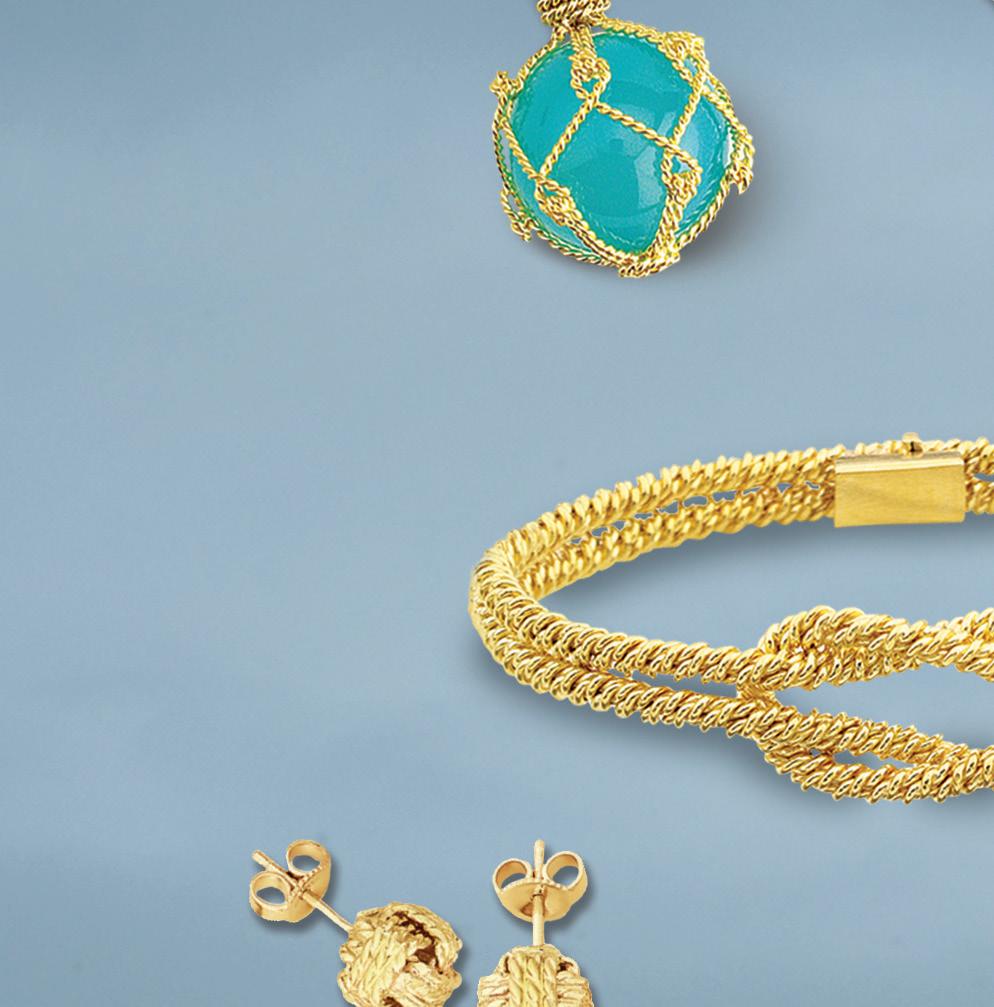
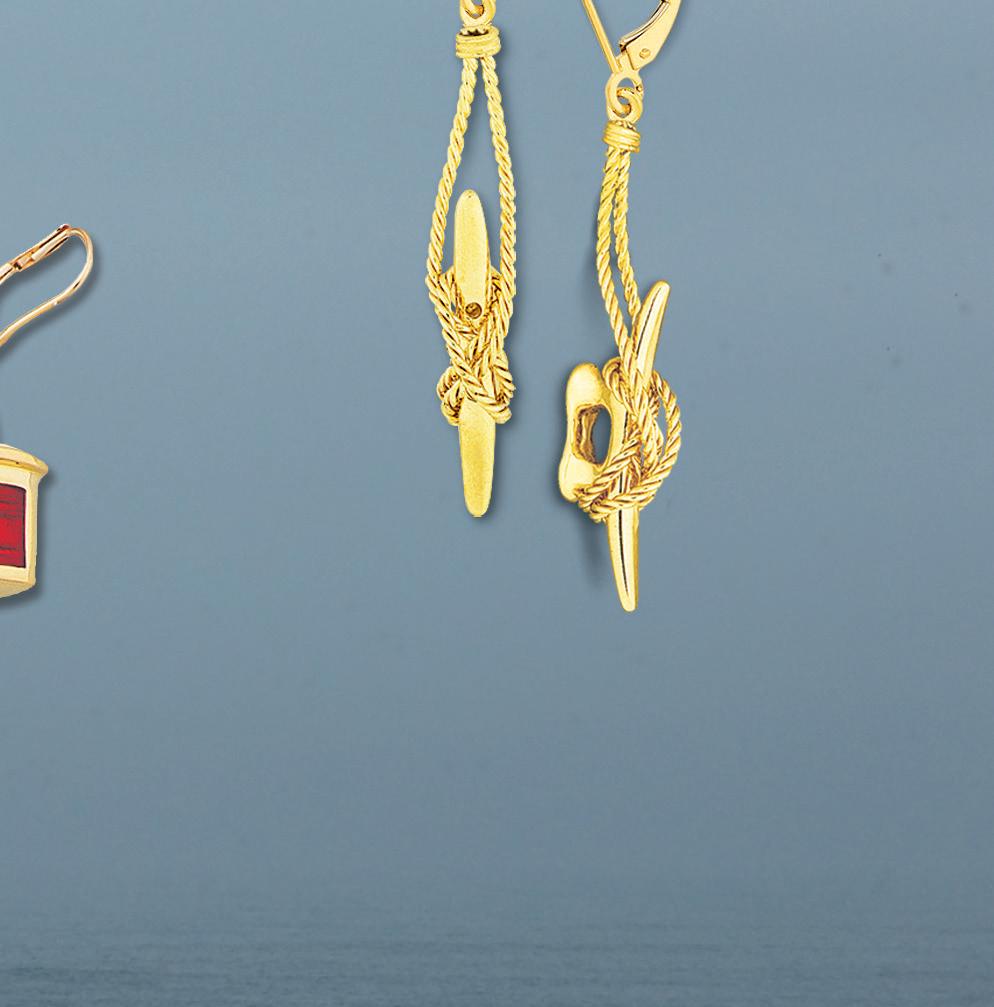
14k 18k A - Fish Float Sphere with Aqua Chalcedony Pendant (U.S. Patent D678,110) n/a ------------- $2100. B - Flemish Coil Pendant (matching earrings available) ---------------------------------------------- $1650. ------------ $2100. C - Compass Rose with working compass Pendant ----------------------------------------------- $2100. ------------ $2900. D - Correa/Chart Metalworks 3/4" Sailboat Pendant $1850. ------------ $2500. E - Reef Knot Bracelet -------------------------------------------------------------------------------------------------- $5250. ------------ $6900. F - Monkey's Fist Stud Earrings (matching pendants available) --------------------------------- $1400. ------------ $1900. G - Deck Prism Anchor Chain Dangle Earrings (matching pendant available) -------------n/a ------------- $2300. H- Cleat Hitch Dangle Earrings (hand-tied and matching pendant available) ----------- $1900. ------------ $2750. I - Port & Starboard Hand Enameled Dangle Earrings -------------------------------------------------n/a ------------- $2250. J - Anchor with Rope Earrings (matching pendants available) ---------------------------------- $1400. ------------ $1850. K- Two Strand Turk's-head Ring with sleeve (additional designs available) -------------- $2300. ------------ $2900. • 18" Rope Pendant Chain $750. C A G PO Box 1 • 11 River Wind Lane, Edgecomb, Maine 04556 USA • M-F 9-5 ET customer.service@agacorrea.com • Please request our 52 page book of designs • 800.341.0788 • agacorrea.com B D J E H FK Over 1000 more nautical jewelry designs at agacorrea.com ® A.G.A. CORREA & SON JEWELRY DESIGN I ©All designs copyright A.G.A. Correa & Son 1969-2022 and handmade in the USA Jewelry shown actual size | Free shipping and insurance






LOUISIANA MISSISSIPPI TENNESSEE AlleyOakBaton Rouge St. HelenaNatchezFrancisvilleVicksburgGreenvilleTunica Memphis New Orleans M i s s i s s ipp i River ARKANSAS HoumasHouse Delight your senses on this amazing journey along the Lower Mississippi River. From the French Quarter in New Orleans to Beale Street in Memphis, be treated to the finest local flavors, including barbeque, bourbon, and the blues. Delight in the simple pleasures and unique treasures found in the small southern towns along the way. Small Ship Cruising Done Perfectly ® Explore the Lower Mississippi River with the Leader in U.S. Cruising Call today 866-229-3807 to request a free Cruise Guide Your Lower Mississippi River Cruise Includes: 8-Days/7-Nights aboard the ship An exploration of 6 ports of call with guided excursion options at each All onboard meals, breakfast room service, and our signature evening cocktail hour Full enrichment package with guest speakers and nightly entertainment All tips and gratuities









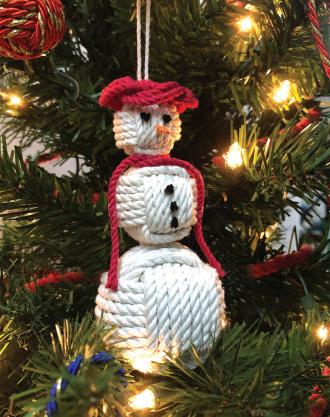
NMHS Calendar Ad Mystic Knotwork A New England Tradition For 60 Years Open 7 days a week - 860.889.3793 25 Cottrell St. • 2 Holmes St. MadeTraditionalMysticKnotwork.comKnotworkinDowntownMysticOrnamentsNauticalCT J.P.URANKERWOODCARVER WWW.JPUWOODCARVER.COM THETRADITION OFHANDCARVED EAGLES CONTINUES TODAY (508) 939 1447 ★ ★ ★★ The NMHS 2023 calendar commemorates the Society’s 60th anniversary and features stunning artwork and photographs from some of our most popular Sea History covers, including masterpieces by world-renowned marine painters Oswald Brett, Donald Demers, Russ Kramer, John Mecray, William G. Muller, Mark Myers, Patrick O’Brien, Robert Semler, John Stobart, and Len Tantillo, and photographs by Bill Higgins, John Spinnato, and Tamara Thomsen. Full color 12-month calendar is wall hanging, saddle-stitched, and printed on quality heavyweight paper. 18” H x 12” W (open) Special Price $13.60 plus $5.50 media mail s/h within the USA. NYS residents add additional sales tax. Please call for shipping charge for multiple or international orders. TO ORDER, CALL 914-737-7878 ext. 0, or online at www.seahistory.org/calendar2023. 2023 Calendar — Special 60th Anniversary Edition


In this excerpt from Eric Jay Dolin’s latest book, Rebels at Sea, we learn how Ben Franklin nagled the authorization of privateers in European waters during the American Revolution.
Recent changes to the way the Maritime Heritage Grants will be administered limit access to this source of federal funding.
We learn about the life and works of Peter Egeli, as told by his daughter, artist Lisa Egeli. 44 e Launch of Maine’s First Ship by Charley Seavey e citizens of Bath, Maine, gathered in June to welcome the replica ship Virginia, inspired by the rst English ocean-going vessel built in the Americas in 1608.
POSTMASTER: Send address changes to Sea History, 1000 North Division St., #4, Peekskill NY 10566.
MEMBERSHIP is invited. Afterguard $10,000; Benefactor $5,000; Plankowner $2,500; Sponsor $1,000; Donor $500; Patron $250; Friend $100; Regular $45. All members out side the USA please add $20 for postage. Sea History is sent to all members. Individual copies cost $4.95.
Cover: Classic boats of all eras and sizes underway during the 2019 Les Voiles de Saint-Tropez. Photo by Gilles Martin-Raget, www.martin-raget.com. See article on pp. 22–26. 28 navyusnhhc, 30 navyusnhhc, 18 congressoflibrary 36 peteregeli
DEPARTMENTS SEA HISTORYNo. 180 AUTUMN 2022 4 Deck L og & L etters 8 NMHS: A C ause in Motion 46 Sea History for K ids 50 Ship Notes, Seaport & Museum News 58 R eviews 64 Patrons NATIONAL MARITIME HISTORICAL SOCIETY
22 La Nioulargue, a k a Les Voiles de Saint Tropez by Will Sofrin e premier yachting event of the Mediterranean kicks o on 24 September. Will Sofrin takes a look back at the regatta’s beginnings and how it evolved to become the go-to event of the season.
28 Enemy Action O Florida’s East Coast : Hutchinson Islands—1942 by Charles Dana Gibson (1928–2019)
36 Artist Peter Egeli: A Course Made Good by Lisa Egeli
30 etis Teddy Roosevelt’s Guardian of Endangered Seabirds by William H. iesen e Coast Guard’s role protecting our natural resources started in 1822, and one of its earliest missions was policing the poachers killing Paci c seabirds in the Hawaiian Islands.
34 Curator’s Corner—Historic Photos from the Archives by Pete Lesher e Chesapeake Bay Maritime Museum’s chief curator, Pete Lesher, shares an intriguing photo from the museum’s collections and explains its signi cance.
Early in 1942, U-boats targeted tanker ships headed to Europe. When one stricken vessel didn’t sink after a torpedo attack, its captain led a mission to recover the tanker and its cargo.
o COPYRIGHTces. © 2022 by the National Maritime His torical Society. Tel: 914 737-7878.
16 Advocating for Maritime Heritage Funding —An Update by Shelley Reid and Timothy J. Runyan
10 2022 National Maritime Historical Society Annual Awards Dinner NMHS returns to the New York Yacht Club to honor four outstanding individuals and recognize their noteworthy contributions to the maritime heritage community.
SEA HISTORY (issn 0146-9312) is published quarterly by the National Maritime Historical Society, 1000 North Division St., #4, Peekskill NY 10566 USA. Periodicals postage paid at Peekskill NY 10566 and add’l mailing
18 Franklin’s Privateers by Eric Jay Dolin
Sea History and the National Maritime Historical
CONTENTSSociety
Sea History e-mail: seahistory@gmail.com; NMHS e-mail: nmhs@seahistory.org; Website: www.seahistory.org. Ph: 914 737-7878; 800 221-NMHS
14 FIDDLER’S GREEN: Captain Brian A McAllister (1931–2022)
McAllister Towing chair and former president and NMHS trustee Brian McAllister was a pillar of the merchant shipping community and a fervent supporter of our maritime heritage.


PRESIDENTS EMERITI: Burchenal Green, Peter Stanford OVERSEERS:(1927–2016) Chairman, RADM David C. Brown, USMS (Ret.); RADM Joseph F. Cal lo, USN (Ret.); Christopher J. Culver; Richard du Moulin; Alan D. Hutchison; Gary Jobson; Sir Robin Knox-Johnston; John Lehman; Capt. James J. McNamara; Philip J. Shapiro; H. C. Bowen Smith; John Stobart; Philip J. Webster; Roberta Weisbrod
OFFICERS & TRUSTEES: Chairman, James A. Noone; Vice Chairman, Richardo R. Lopes; Vice Presidents: Jessica MacFarlane; Deirdre O’Regan, Wendy Paggiotta; Treasurer, Wil liam H. White; Secretary, Capt. Je rey McAl lister; Trustees: Charles B. Anderson; Walter R. Brown; CAPT Patrick Burns, USN (Ret.); CAPT Sally McElwreath Callo, USN (Ret.); William S. Dudley; David Fowler; Karen Helmerson; VADM Al Konetzni, USN (Ret.); K. Denise Rucker Krepp; Guy E. C. Mait land; Salvatore Mercogliano; Michael Mor row; Richard Patrick O’Leary; Ronald L. Oswald; Timothy J. Runyan; Richard Scar ano; Capt. Cesare Sorio; Jean Wort
NMHS STAFF: Executive Director, Jessica MacFarlane; Director of Special Projects, Nicholas Raposo; Head Bookkeeper, Andrea Ryan; Executive Assistant, Heather Purvis; Senior Sta Writer, Shelley Reid; Membership Coordinator, Marianne Pagliaro
Sea History is printed by e Lane Press, South Burlington, Vermont, USA.
FOUNDER: Karl Kortum (1917–1996)
NATIONAL HISTORICALMARITIMESOCIETY
SEA HISTORY: Editor, Deirdre E. O’Regan; Advertising Director, Wendy Paggiotta
On behalf of the NMHS Board of Trustees, I am pleased to announce the ap pointment of Jessica MacFarlane as the organization’s new executive director, e ective 1 September 2022. Jessica joined the sta of the Society eight years ago, most recently serving as director of development and as co-vice president, work ing under President Emeritus Burchenal Green, who stepped down on 31 August. Jessica recognizes the critical importance of the Society’s work as the national voice for our maritime heritage. During her tenure, she has advanced our mission by increasing philanthropic support, expanding marketing, promoting advocacy, and growing our presence online. Under her leadership, NMHS launched its new website in 2018, digitized and indexed Sea History magazine, and secured funding for the Society’s new Ronald L. Oswald Maritime Library and the upcoming Ernes tina-Morrissey documentary series. Prior to joining NMHS, Jessica worked for fourteen years in the real estate development industry with jobs in nance, communications, op erations, and human resources. She holds a bachelor’s degree in political science with a concentration in ethics and public policy, and a master’s degree in communications, both from Clark University. As executive director, Jessica will col laborate closely with trustees to lead strategic planning for the organization, advancing its goals of expanding a diverse membership, increasing philanthropic support, and ac celerating the Society’s digital and social media presence. I am encouraged with the leadership Jessica is bringing to her new role and con dent that her expertise in fundraising, operations, communications, and strategic planning makes her ideally situated to lead the Society.
Jessica is looking forward to the challenge: “I am honored and privileged to lead the organization and build on Burchie’s remarkable work on behalf of the maritime heritage community. Her leadership has had a tremendous impact on the growth and evolution of the Society. As we embark on our 60th year, I am excited to further the broad panorama of our global maritime heritage as the new executive director of NMHS.”
CHAIRMEN EMERITI: Walter R. Brown, Alan G. Choate, Guy E. C. Maitland, Ronald L. Oswald; Howard Slotnick (1930–2020)
SEA HISTORY EDITORIAL ADVISORY BOARD: Chairman, Timothy Runyan; Nor man Brouwer, Robert Browning, William Dudley, Lisa Egeli, Daniel Finamore, Kevin Foster, Cathy Green, John O. Jensen, Fred erick Leiner, Joseph Meany, Salvatore Mer cogliano, Carla Rahn Phillips, Walter Rybka, Quentin Snediker, William H. White
DECK LOG
—James A. Noone, NMHS Chair
PUBLISHER’S CIRCLE: Peter Aron, Guy E. C. Maitland, Ronald L. Oswald
NMHS ADVISORS: John Ewald, Steven A. Hyman, J. Russell Jinishian, Gunnar Lunde berg, Conrad Milster, William G. Muller, Nancy H. Richardson
4 SEA HISTORY 180, AUTUMN 2022
NMHS has thrived under the leadership of Burchie Green, who will con tinue to work with the Society on special maritime outreach programs. Her main foci in the near term will be Sail250 New York—an epic celebration of America’s 250th birthday on 4 July 2026 in New York Harbor, the 12th Maritime Heritage Conference, and the Center for American Marine Art, a national project to document and digitize marine art for virtual and traveling exhibitions. Burchie o ers us these words: “I have had the distinct honor of leading the Society for more than a quarter of a century, and I’m grateful to be able to help lay the groundwork for NMHS’s next leader. I’m con dent that Jessica will thrive in her new role, and that you will join me in welcoming her.”
e Society Names Jessica MacFarlane its New Executive Director NMHS Executive Director Jessica MacFarlane photobyjosephrudinec


sacccommonswikimedia,by40
We Welcome Your Feedback!
Roles Played by the Staten Island Ferry
Jack A. Somer (former editor of Yachting) Stamford, Connecticut
A Viable Return to the Age of Sail
Join Us for a Voyage into History
Yes, I want to join the Society and receive Sea History quarterly. My contribution is enclosed. ($22.50 is for Sea History; any amount above that is tax deductible.) Sign me up as: $45 Regular Member $100 Friend $250 Patron $500 Donor 180
Please email correspondence to seahistory@gmail.com
As a huge fan of Saturday Night Live, I have closely followed the haywire adven tures of Colin Jost and Pete Davidson in their unlikely purchase of the Staten Island ferry, John F. Kennedy. But it was only your story in the Spring 2022 issue’s “Ship Notes,” that inspires me to share a chuck le with you all. You see, way back in 2000 CE, your great leader Peter Stanford invited me to accompany NMHS members during New York’s Operation Sail to celebrate the mil lennium in the best way possible—with tall ships everywhere. I had been introduced to Peter some years earlier by my colleague at Yachting magazine, the brilliant senior editor Dick Rath, when Peter was initiating his program to revitalize South Street Sea port. We found much of common interest in the sea and its mostly oating occupants. We became good friends, and I joined NMHS. But there was a bonus to Peter’s invitation. Because of my authorship of a number of marine books and articles, he wanted me to narrate the event—to name and describe each magni cent vessel over a PA system, as the parade of sail made its way northward from under the VerrazzanoNarrows Bridge into Upper New York Bay, where we were positioned. Of course, the station from which I did the narration, and aboard which numerous NMHS members enjoyed a perfect day at sea, was that very same ferry now turned into a bar and res taurant by two totally nutty but admirable comedians!
Wouldn’t it be ironic if, the further we get with respect to technology and design in the 21st century, we end up reverting back to simpler times that didn’t suck up so much of our precious resources? Sailing ships to carry cargo? What a concept! I want to give a shout out to the folks who are attempting to do just that with sailing freighters. I am referring to the people running the schoo ner Apollonia on the Hudson River (as mentioned in the article in the Summer 2022 issue about “How Sail Fueled the Industrial Revolution”). In addition to the e retired Staten Island Ferry John F. Kennedy was purchased last winter by Saturday Night Live comedians Colin Jost and Pete Davidson, who both grew up on Staten Island. eir stated goal is to convert the vessel into a dockside entertainment venue. In an interview last winter, Jost noted that he rode the Staten Island Ferry every day to commute to high school in Manhattan. He also noted with deadpan sarcasm from his “news” desk on set at SNL, that: “It’s very exciting. We thought the whole thing through.”
Mr./Ms. Return_________________________________________________________ZIP___________________________________________________________________________________to:NationalMaritimeHistoricalSociety,1000NorthDivisionSt.,#4,Peekskill,NY10566
Our seafaring heritage comes alive in the pages of Sea History, from the ancient mariners of Greece to Portuguese navigators opening up the ocean world to the heroic efforts of sailors in modern-day conficts. Each issue brings new insights and discoveries. If you love the sea, rivers, lakes, and bays—if you appreciate the legacy of those who sail in deep water and their workaday craft, then you belong with us. Join Today ! Mail in the form below, phone 1 800 221-NMHS (6647), or visit us at: www.seahistory.org (e-mail: nmhs@seahistory.org)
Apollonia, another group—Sail Cargo, Inc.—is building a three-masted topsail schooner in Costa Rica, speci cally de signed to carry cargo. Sail Cargo purchased an old Swedish sailing ship (SV Vega Gam leby) last spring to carry co ee beans and dry goods between the US and Colombia. I know there is at least one company in inccargosail SV Vega Gamleby
SEA HISTORY 180, AUTUMN 2022 5
LETTERS


E d M itchell Towson, Maryland Shackleton Story Endures
100 Red Cox Drive, St. Augustine, FL 32080
A TROPHY OF DISCOVERED!WAR
I enjoyed reading your recent article about the discovery of the Endurance, a topic with which I am very familiar. In 1970, I was on an icebreaker, USCGC Glacier, trapped in the Weddell Sea a mere 70 miles from where Shackleton was beset. It was late in the summer season, and we were 100 miles from open waters, surrounded by pressure ridges of ice 15 to 20 feet high. After burn ing up 100,000 gallons of fuel and barely moving, it seemed inevitable that we would be spending the winter locked in the ice. Our captain drew up a list of 40 essential people needed to maintain the ship during the winter. Tentative plans were made to evacuate the other 160 crewmembers. As the ship’s doctor, I was on that list. Freakish good luck enabled us to even tually escape our Shackleton-like dilemma, but it was one of the adventures that in spired me to write Wind, Fire, and Ice: e Perils of a Coast Guard Icebreaker in Ant arctica. My account of the ve months I spent in Antarctica was published last fall and is a relevant book for your readers and especially for Shackleton fans. It covers a good deal of his story, as well as those of other early Weddell Sea explorers.
Other benefits include discounts on annual conferences, ship modeling seminars, NRG products and juried model competitions which are offered exclusively to Guild members. We hope you will consider joining our ongoing celebration of model ships and maritime history. For more informaton contact us at: www.thenrg.org or call 585 968 8111 France and another in e Netherlands doing the same thing. I am sure there must be others. I have no idea if this business model is feasible or someone’s good-inten tioned pipe dream, but I wish them the best of luck and enjoy thinking about how a return to sail could bene t the planet and those considering a career before the mast.
USCGC Glacier (WAGB 4). e icebreaker was painted red in 1973 to improve its visibil ity in the polar regions in which it served. uscg
Discover the maritime heritage of St. Augustine, including our latest discovery – a pewter button from a 1782 British shipwreck with the letters “U.S.A.” distinctly revealed on its front side. Learn how it may have been a trophy of war. 15% OSavenline UseSH15code: Or present this code for 10% off on general admission •
6 SEA HISTORY 180, AUTUMN 2022
THE NAUTICAL RESEARCH GUILD
Climb the tower at the St. Augustine Lighthouse & Maritime Museum for panoramic views and explore history through underwater archaeology, a shipwreck exhibit, conservation lab, traditional boatbuilding, children’s activities, and more! staugustinelighthouse.org904-829-0745
"ADVANCING SHIP MODELING THROUGH RESEARCH"
Robert M. Bunes MD Malibu, California
Annual membership includes our world-renowned quarterly magazine, Nautical Research Journal, which features photographs and articles on ship model building, naval architecture, merchant and naval ship construc tion, maritime trade, nautical and maritime history, nautical archaeology and maritime art.




SEA HISTORY 180, AUTUMN 2022 7 Anne T. Converse Photography Neith, 1996, Cover photograph Wood, Wind and Water A Story of the Opera House Cup Race of Nantucket Photographs by Anne T. Converse Text by Carolyn M. Ford Live vicariously through the pictures and tales of classic wooden yacht owners who lovingly restore and race these gems of the sea. “An outstanding presentation deserves ongoing recommendation for both art and nautical collections.” 10”x12” Hardbound book; 132 pages, 85 full page color photographs; Price $45.00 For more information contact: Anne T. Converse Phone: anne@annetconverse.com508-728-6210www.annetconverse.com SS Andrea Doria lifering, c 1952; collection of John Moyer h b h h 1 e Promenade at Lighthouse Point, Staten Island, NY 10301 718-390-0040 • www.lighthousemuseum.org To preserve and educate on the maritime heritage of lighthouses, lightships and the stories of their keepers for generations to come... EVENTS INCLUDE: Lighthouse Boat Tours Museum PresentationsTours& Special Programs Lighthouse Recognition Weekend including the Annual Light Keeper’s Gala Lighthouse Point Fest featuring the Keeper’s Soup Contest K-12 Maritime Education Programs Home of the Great SI Lighthouse Hunt Contact the Museum to learn more about the Campaign for Illuminating Future Generations.


courtesyburchenalgreen ere is so much we have been able to accomplish in this time that it is impossible to include it all. Still, here are a few examples.
8 SEA HISTORY 180, AUTUMN 2022
Burchie Green outside the former NMHS headquarters along the Hudson River in Peekskill, New York.
Burchie with NMHS VPs Wendy Paggiotta and Deirdre O’Regan, aboard the schooner Adirondack II in Newport, Rhode Island, as part of the 2016 NMHS Annual Meeting.
NMHS: A CAUSE IN MOTION magazinerozyckiphotobybob,courtesywag
In 2022, NMHS is in the best shape ever, thanks to our members and leadership, and I am excited that one of our own vice presidents, Jessica MacFarlane, has been selected by our trustees to take the helm of the Society. Having worked with her for the past eight years, I am con dent she will bring fresh perspective and energy to the job, as NMHS approaches its sixth decade of operations. Oh, the places we’ve seen and the projects we’ve done. My most noteworthy success, perhaps, is the people I’ve hired at NMHS. We run a big operation with a small sta , and each person who has worked for the Society over the years has made valuable contribu tions to how the organization is run, events are planned and carried out, and in the production of our agship publication, Sea History. Check out Sea History’ s masthead, and you will see the names of our trustees, sta , and advisors. It begins with the incom parable Peter Aron, and then lists those of many talents. I am deeply indebted to them all. rough my role with NMHS, I have been privileged to work on a wide variety of projects and collaborations to promote our mission and our maritime heritage. Under the direction of our late chairman emeritus, Howard Slotnick, we brought the only parade of tall ships up the Hudson River in the 20th century. I have served on the National Advisory Board for the Commemoration of the Bicentennial of the War of 1812 and the Star Spangled Banner, on the steering committee for the National Maritime Alliance’s Maritime Heritage Conferences, on the advisory committee of the American Caribbean Maritime Foundation, and most recently I joined the board of the Center for American Marine Art and Sail250 New York, celebrating America’s 250th birthday in New York Harbor on July 4th, 2026.
• We work with some 26 states across the country to award cash prizes to students of National History Day whose projects focus on maritime history, encouraging the next generation of scholars.
It seems like yesterday that Norma Stanford hired me as the Society’s public relations and marketing director to oversee the grand opening of the China Pier Park, a waterfront park that had been a dump just months earlier, and to organize a celebration that would bring historic ships to visit Peekskill, New York, home to NMHS head quarters. It was in reality July 1995. What a challenge; in those rst weeks we had lines of people at my desk and dozens more inquiring by phone as we organized the event, got the park and dock in shape, put out publicity, directed the historic ships, and secured vendors. It was at times overwhelm ing but always gratifying. For me, it was not a one-o , but instead the rst of hundreds of events I would be involved in through NMHS to engage the public in recognizing the importance of our maritime heritage. I had previously left a good job as managing editor of Creative Comput ing magazine, bringing its readership from 2,000 to 200,000 in a few years, but took some time o to raise my children. At the time Norma interviewed me, I was the vice president of the NYS American Association of Univer sity Women, and I think she hired me because she liked the feature I wrote for our publication, “Membership Begins with Me.” Now I like to say “Membership begins with me and ends with a ship.” I have been on this voyage with you for 27 years. I love this job. I love the people I work with, the challenges we undertake, and the importance of the mission. Representing NMHS has sent me across the country and on voyages and to meetings around the world. I have had the oppor tunity to hear hundreds of lectures, read hundreds of maritime-themed books, and meet and work with the brightest, most interest ing, talented, kindest, and funniest people in the world. Our mission a orded me varied and exciting opportunities as we put the mission of the Society forward, always looking for ways to promote and preserve America’s maritime heritage.
• With funding from a National Maritime Heritage Grant, we redesigned our website, which included digitizing and posting online all fty years of Sea History magazine. e resources you will nd at www.seahistory.org are excellent, and in recent years the website gets more than 120,000 online visitors annually.
President’s Farewell
• In an era where many print magazines struggle to compete with so many other types of media, Sea History is ourishing.
anks A Million—And that Doesn’t Begin to Cover it


• It has been rewarding to work with the National Maritime Alliance to or ganize the national Maritime Heritage Conferences in Baltimore, Norfolk, and New Orleans, to bring the broad spectrum of maritime heritage organiza tions together.
• We are proud to partner with other maritime organizations and, through these relationships, develop greater strength and re sources for the maritime heritage community to preserve ships, share scholarship, and promote the work of maritime museums and traditional shipbuilders and riggers.
• We are a partner with Sail250 New York in the long tradition of providing an educational component to tall ship events. e Society helped organize Operation Sail ’76 in New York City, and has worked for each major ship event since.
• Sea History Today, a bi-monthly digital feature pro duced by NMHS Senior Sta Writer Shelley Reid, is a treasure of eclectic information.
NMHS leadership hamming it up at the 2018 Annual Awards Dinner: (l–r) NMHS trustee Timothy J. Runyan, Burchenal Green, NMHS Chairman Emeritus Howard Slotnick, and Sea History editor Deirdre O’Regan.
— Burchenal Green, NMHS President Emeritus
• Our awards events, held each autumn and spring, recognize signi cant achievements and contributions to the maritime heritage eld and inspire others to pursue the mission. In addition to the important role these gala events serve, I have to admit that we have such fun gathering together to present the awards.
Deputy Grand Parade Marshal Burchie Green boarding the US Coast Guard Barque Eagle, the lead vessel in the 1998 parade of ships up the Hudson River.
• In 2023, Sails Over Ice and Seas, the major documentary about the 1894 schooner Ernestina-Morrissey that we are producing with NMHS Vice Chair man and lm producer Rick Lopes, with funding from the H. F. Lenfest Fund at Vanguard Charitable, should be ready for distribution.
A Note from NMHS Trustees and Sta
• You cannot do the work that needs to be done without funds—with the help of special philanthropists, supporters, and friends, the Society is now stronger nancially than it has ever been before. It has not always been easy, but we do not live in easy times. I have written too many obituaries, and had too many nights when I lock the o ce door in the wee hours of the morning or stressful moments when we did not know where the support would come from that we need to keep going. But there have been more times when I have climbed aboard a schooner, ferryboat, paddle-wheeler, ocean liner, brig, Navy or Coast Guard vessel, the hawsers are cast o , and we pull away from the dock as a seagoing adventure gets underway. As I look around me, I am surrounded by those whom I have learned to call my shipmates, and isn’t it good.
SEA HISTORY 180, AUTUMN 2022 9
While Burchenal Green has made great e orts to recognize and bring attention to the achievements of many individuals and organizations in the maritime heritage community, her work has not gone unnoticed. In 2018, she was honored with the National Maritime Heritage Conference Award of Distinction for the Society’s work in bringing together organi zations from across the country that work to preserve and promote our maritime heritage. In 2020, she was presented with the American Society of Marine Artists Lifetime Achievement Award, and the Independence Seaport Museum Award for Maritime Preservation. Fair Winds Burchie!
photobyallisonlucas courtesyburchenalgreen
• We received a grant to catalog our 8,000-volume library so that now, partnering with the Westchester Library System and Hendrick Hudson Free Library, we are deep into the project. It is an honor to have named the library for our chairman emeritus Ronald L. Oswald, whose leadership and friendship have long been invaluable to me and to the Society.


Walk through the doors of the New York Yacht Club— steeped in maritime history—and you nd yourself in the perfect location to honor those individuals who have made outstanding contributions in the maritime eld through their e orts, creativity, and talents. e stage is set. e rooms are crowded with leaders and enthusiasts in the maritime and heritage community, with shipbuilders, authors, artists, and service mem bers. is fall, the decades-old NMHS tradition of recognizing excellence in the maritime eld is back— in person—and you can join us and add to the excite ment and prestige of the gala. It is 27 October 2022, and the National Maritime Historical Society is honored to recognize four es teemed maritime leaders at this year’s Annual Awards Dinner gala: omas A. Whidden, Steven P. Kalil, RADM Joseph Callo, USN (Ret.), and CAPT Sally McElwreath Callo, USN (Ret.). Waiting to greet you are NMHS chair CAPT Jim Noone, USN (Ret.) and dinner co-chairs Pam Rorke Levy and Matt Brooks, the 2019 NMHS Distinguished Service Award re cipients.
Maritime
10 SEA HISTORY 180, AUTUMN 2022
Master of Ceremonies Richard du Moulin ere, attired in his elegant bow tie and cummerbund, is our incomparable Master of Ceremonies, Richard du Moulin, who will run the program with wit and grace. ere were years when a major snowstorm kept our award recipient on the tarmac at the airport, when the police blocked o 44th Street on the day of the event, and when none of the American laptops could run the slideshow of the British recipient—du Moulin was never fazed.
Welcome to the 2022 National Maritime Historical Society Annual Awards Dinner!
Rich du Moulin’s love of yacht racing and his career in the shipping industry are demonstrative of his passion for all things maritime. He served in the US Navy and competed in four America’s Cup campaigns, two Transatlantic Races, and 17 Newport-Bermuda races. After his time in the Navy, he joined the crew of the ocean-racing sloop Charisma, which he navigated through a hurricane to a rst-in-class and secondin- eet nish in the 1972 Newport-Bermuda Race. He then skippered her in the Transatlantic Race to Spain and went on to win the Sardinia Cup.
e NMHS Annual Awards Dinner takes place in the famous Model Room of the New York Yacht Club in New York City. As always, the voices of the talented US Coast Guard Academy Cadet Chorale, this year directed by Dr. Daniel McDavitt, are a highlight of the evening and are eagerly anticipated.
National Historical Society Awards
2022 Annual
A long-time NMHS overseer, Rich has been at the helm of seven companies and presently serves as chair of Pangaea Logistics Solutions Ltd. and president at Intrepid Shipping LLC. He is on the boards of ve other companies and has served as chair of Seamen’s Church Institute, which works for the spiritual and professional well-being of merchant mariners all over the world. In 2021, he was honored with SCI’s Silver Bell Award, honoring those who support the Institute’s ongoing work in mariner advocacy, education, and pastoral care.
Dinner 27 October • New York Yacht Club • New York City photobyallisonlucas photobyallisonlucas
In 2003, du Moulin’s passion for sailing and adventure at sea took him on a 72-day voyage from Hong Kong to New York and provided school kids across the country an opportunity to come along for the ride, thanks to sitesALIVE, an innovative educa tional program. Along with Rich Wilson, he set out to break the speed record of the tea clipper Sea Witch, a 192-foot square rigger that held the record for the fastest run on that same leg for 154 years. Onboard Great American II, a 53-foot trimaran, du Moulin and Wilson sailed 15,000 miles non-stop, arriving in New York Harbor after 72 days, besting Sea Witch’ s time by two days. e National Maritime Historical Society recognized their courageous accomplishment and educational program with the 2004 NMHS Distinguished Service Award.


omas A. Whidden
On the water, Whidden served as tactician and trial skipper for Dennis Conner and has competed in eight America’s Cup campaigns, winning three. For his 1987 America’s Cup win aboard Stars & Stripes, New York Mayor Ed Koch gave him, along with Conner, the key to the city for bringing the America’s Cup back to the United States from Australia.
In 2020, Mystic Seaport Museum honored him with its America and the Sea Award. Whidden has served as an ambassador for the sport and is a role model and mentor: “I have spent a lot of time with young people, community sailing and women’s sailing programs. It means so much to me now that more and more people have that access to sailing.”
Whidden has twice been honored by Colby College, his alma mater, receiving the University Club Man of the Year award in 1987 and the Carl Nelson Award for Athletic Achievement in 1989. In 2006, Whidden received the prestigious A Life for Sailing Award at the Trofeo Ermenegildo Zegna Regatta in Porto no, Italy, given biennially to a person who has devoted their life and career to sailing. He is the publisher and co-author of two best-selling books: e Art & Science of Sails and Cham pionship Tactics. 2022 NMHS Honorees
omas
Internationally acclaimed sailor omas Whidden will receive the NMHS Distinguished Service Award for his outstanding contributions to yachting and his leadership in the design and manufacturing of technologically advanced sails and sailcloth. Known the world over for his resolute pursuit of excellence on and o the water, Whidden is a member of both the America’s Cup Hall of Fame and the National Sailing Hall of Fame. He is president and CEO of North Technology Group, the umbrella corporation for North Sails, Southern Spars, and Future Fibres. He has worked to make the Sailing Museum and the National Sailing Hall of Fame in Newport a reality, honoring achievement in yachting and encouraging younger generations to pursue the sport. “America’s Ambassador of Sailing” and NMHS overseer Gary Jobson, who serves with Whidden on the board of the Sailing Museum and National Sailing Hall of Fame, will make the presentation.Whiddenbegan sailing on Long Island Sound at ten years old. “When I was 16, my dream was to become a sailmaker and race in the America’s Cup.” Ultimately, he realized both those dreams and succeeded in building a career combining his professional work with his passion. In his role leading North Technology Group, he brought sailmaking to a new level—from paneled cloth sails cut and sewn in a network of sail lofts to the current setup, where sails are manufactured in a centrally managed, technologically driven system. anks to his extraordinary vi sion, North Sails has become an unparalleled industry leader, out tting every America’s Cup champion and every Volvo Ocean Race winner with North Sails since 1992 and 1993, respectively.
Dennis Conner with Tom Whidden, aft, as his tactician, as they win the 1986–87 America’s Cup in Perth, Australia. e Ameri ca’s Cup Hall of Fame notes: “Very few sailors have been involved with as many campaigns (8) and won as many (3) as Whidden.” A. Whidden
A highlight of the NMHS awards events are the mini-documentaries on each awardee produced by NMHS Vice Chair Rick Lopes. An award-winning documentarian and executive producer of Voyage Digital Media, Rick and his son, videographer and lm editor Alessandro Lopes, bring the stories of the award recipients and their work, their vision, and talents to life, taking us from the Model Room of the New York Yacht Club out to their respective home waters.
“I liked the fact that, as young people, we could go out on the water and make decisions for ourselves. ere wasn’t anybody else on the boat other than two people trying to understand the forces that make a boat go faster and decide how to make it happen. I loved that from the beginning.”
Executive Producer and Documentarian Richardo R. Lopes
SEA HISTORY 180, AUTUMN 2022 11
e
forsterphotobydaniel thomascourtesywhidden photobyallisonlucas


12 SEA HISTORY 180, AUTUMN 2022
CAPT Sally McElwreath Callo, USN (Ret.) and RADM Joseph Callo, USN (Ret.) e Callos will be the rst couple to receive the NMHS David A. O’Neil Sheet Anchor Award. Extraordinary ambassadors for the Society, they have expanded its outreach internationally. eir support has been invaluable, inviting NMHS to represent the United States, along with the American Friends of the National Museum of the Royal Navy, to events in Portsmouth, England. ere, the Society was introduced to Her Royal Highness the Princess Royal, Princess Anne, whom NMHS subsequently honored with the Distinguished Service Award in 2015. Additionally, they have engaged the Society’s support with the annual Pickle Night dinners, an event which honors Lord Nelson’s victory at Trafalgar, and arranged for NMHS representation at countless maritime events, including Navy League Dinners and Fleet Week receptions.
CAPT Sally McElwreath Callo, formerly a corporate executive, served in the Navy Reserve for 27 years, and more recently was director of the USS New York (LPD-21) Commissioning Committee. She has been a communications strategist, specializing in crisis, strategic, and marketing communications in the oil, airline, publishing, and energy industries. She retired in 2005 as a senior vice president for Aquila Energy, a Fortune 100 company. In addition to her long-time service as a trustee of the National Maritime Historical Society, CAPT McElwreath Callo serves on the board of the US Naval Service Personnel Supplemental Educational Steve Kalil is a great friend to the maritime industry. (right) During an NMHS tour of the shipyard, he ex plained to a captivated audience how a large ship is hauled out of the water so that its hull can be repaired.
photobyburchenalgreen
In June the Society held its annual meeting on Staten Island, hosted by the John Noble Col lection at Sailor’s Snug Harbor. e next day, we awakened to a halcyon Sunday morning and headed to Caddell Dry Dock & Repair Co. for an exclusive tour by its president, Steve Kalil. Some of our members had traveled from out of state just for this experience, and it did not disappoint. Captain Huntley Gill navigated the historic reboat John J. Harvey across the harbor to give us a water salute; right afterwards a massive containership passed us. Of course, we tried to claim that, too, was by design. We listened in awe as Steve Kalil explained how dry docking works and discussed the kinds of equipment and challenges in shipbuilding and repair that have evolved over the past century. Kalil rst joined Caddell Dry Dock as a young carpenter’s assistant in 1975 and rose through the ranks, becoming president of the company in 1989. Since then, he has gained the appreciation of the community he serves so well. Under his leadership, Caddell has continued the maritime traditions of an exceptional shipyard business that began in 1903. Its maintenance projects include service to the Staten Island ferry eet, tugs, tankers, lighters, and barges from all the major maritime transport companies along the East Coast. As a full-service shipyard with its own machine shops, pipe shops, and all the trades necessary to repair vessels, Caddell has operated under the same family for three generations, constructing and servicing thousands of vessels, and repairing or restoring some of our most famous and signi cant historic ships, including the US Coast Guard barque Eagle, barquentine Gazela Primeiro of Philadelphia, the square riggers Wavertree and Peking, lightship Ambrose, and the ex-USN destroyer USS Slater, among others.As Kalil explains, “When somebody throws a Wavertree or an old wooden tugboat at [us], I get more involved because it’s inter esting. It’s a challenge to nd talent to work on old craft; we bring people from all over to do the work. On the Wavertree, I met a whole new group of people from the West Coast who knew how to do that kind of rigging. I love this job. I have been here 46 years. It’s a good reason to get up every morning.” Kalil has served as board chair of the Noble Maritime Collection and as past president of the Maritime Association of the Port of NY/NJ. Under his direction, the shipyard has delivered extraordinary service to the maritime heritage community and the larger shipping industry, managing the oldest, largest, and one of the most technologically advanced shipyards in the New York metro politanStevearea.Kalil is recognized with the 2022 NMHS Distinguished Service Award for his expertise, commitment, and vision that have helped steer Caddell Dry Dock to great success, as it is respected by the larger shipping community. We are honored to have Captain Jonathan Boulware, President & CEO of South Street Seaport Museum, present the award.
“When I rst walked into the shipyard and saw all the big ships out of the water with all the big equipment, I loved it. I love my job.”
Steven Kalil
photobyallisonlucas


SEA HISTORY 180, AUTUMN 2022 13
photobyallisonlucas
Reception begins at 6:00 PM, with Dinner at 7:00 PM Black Tie Optional • Military: Dinner Dress Blue
CAPT Sally McElwreath Callo, USN (Ret.) and RADM Joseph Callo, USN (Ret.)
You are invited to join us for the 2022 NMHS Annual Awards Dinner on ursday, 27 October 2022. New York Yacht Club, 37 W 44th Street, New York City
For more information about the dinner, auction or sponsorship, and to buy tickets: please visit our website at www.SeaHistory.org/AAD2022 or contact Wendy Paggiotta, NMHS Vice President: vicepresident@seahistory.org • 914 737-7878, ext. 557 A. G. A. Correa & Son has generously donated a beautiful hand-woven 7-inch sterling silver 4-strand Turk’s Head bracelet valued at $1,950 for our ra e at the Awards Dinner. You need not be present to win. Ra e tickets are $20 each, 3 for $50, 8 for $100, 22 for $250, or 50 for $500. Call 914 737-7878 before October 18th to order ticket(s). Assistance Fund and is a founding member, along with her husband, RADM Joseph Callo, of the American Friends of the National Museum of the Royal Navy. She is on the advisory committee of the New York Council of the Navy League and is a co-founder of the US Naval Personnel Educational Assistance Program, which provided laptop computers to children of USS New York crew members during the COVID-19 pandemic to allow them to attend school remotely.AsCAPT McElwreath Callo has emphasized, “All history is maritime history, and yet the emphasis on teaching history in today’s education system is dwindling—robbing the next generation of the precious commodity of hindsight. What NMHS is doing is keeping history alive.”
Admiral Joseph Callo, a 35-year Navy veteran, is an award-winning author and screenwriter on maritime and naval subjects. His books about prominent naval leaders include Nelson in the Caribbean: e Hero Emerges, 1784–1787; Nelson Speaks: Admiral Lord Nelson in His Own Words; Legacy of Leadership— Lessons from Admiral Lord Nelson; and John Paul Jones: America’s First Sea Warrior, which focuses on America’s rst and best-known naval hero. Before embarking on writing books as a full-time pursuit, Admiral Callo was a senior executive with major advertising agencies and a producer for NBC-TV and PBS. He has written for a variety of magazines and news papers and was a frequent public speaker on radio and television. In addition, he taught communication arts at St. John’s University in New York. His nu merous awards include the George Foster Peabody Broadcasting Award, a Telly Award, and the Samuel Eliot Morison Award for Naval Literature. In addition to serving as the US Navy’s rst Director of the Navy Reserve Public A airs Program, Admiral Callo is a member of the Society for Nautical Research, the Naval Club (London, England), and the Yale Club of New York, and is the founding president of the Greater New York Chapter of the Surface Navy Association. He serves as an overseer for the National Maritime Historical Society, having previously served as a trustee. e Callos have been invalu able to the National Maritime Historical Society, and together they have long been a formidable force in the maritime heritage community at large. Erik K. Olstein, former chair of the American Friends of the Royal Navy and former NMHS trustee, will pres ent the Callos with the David A. O’Neil Sheet Anchor Award. It is important, perhaps today more than ever, to take time to relish the bonhomie of celebrating those whose great work enriches us all. Join us!

Captain McAllister is survived by his wife, Rosemary, sons Buckley and Eric, and four grandchildren. He was the epitome of joie de vivre and a legend in his community. At his memorial mass at St. Patrick’s Cathedral and at the Water Club reception thereafter, with McAllister tugs standing by, the testimonials about him were many and heartfelt—his kindness as a boss, his toughness as a businessman, his generosity as an art and museum patron, his enthusiasm for boats, basketball, and golf, his loyalty as a friend, his many funny exploits over the years, and his passion for his family. Fair winds, Brian.
During the 1970s and 1980s, he established operations in ports all along the Eastern Seaboard and internationally in Saudi Arabia, the United Arab Emirates, Bonaire, Panama, and Peru. is growth was driven by a mixture of navigational know-how, technological innovation, a cadre of excellent mariners, and a passion for investing in the transportation industry. Under Brian McAllister’s leadership, the company designed and constructed numerous tugboats and ferries equipped with many new tech nologies. A sharp downturn in the price of oil during this era dramatically changed the competitive landscape throughout the industry. Capt. McAllister kept the company running by person ally commanding vessels and piloting ship operations in New York, Philadelphia, and Norfolk. In the 1990s he was involved in hostile litigation over control of the company, and in 1998 he became the rst sole owner of McAllister Towing since its found ing in a transaction that spun o its foreign subsidiaries.
Brian McAllister was dedicated to preserving historic ships and maritime history, and was a generous and knowledgeable trustee of NMHS for decades. In addition to running the towing company, he supported many projects, including the production and publication of the books Tugboats of New York (2005) by George Matteson and McAllister Towing, 150 Years of Family Business (2015). NMHS has been honored to have a McAllister on its board since 1983, with James P. McAllister, then Brian, and now Captain Je rey McAllister. McAllister served on several boards, in addition to the Na tional Maritime Historical Society, including South Street Seaport Museum, the Maritime Association of New York/New Jersey, the American Bureau of Shipping, and the American Steamship Owners Mutual Protection and Indemnity Association. He was the recipient of numerous awards and honors, including the 2012 NMHS Distinguished Service Award and the 2013 Seamen’s Church Institute Lifetime Achievement Award, and was named Massachusetts Maritime Academy’s Maritime Person of the Year in 2015. A member of the International Maritime Hall of Fame, in 2017 he was bestowed with an honorary doctorate of science from SUNY Maritime College.
—Burchenal Green, NMHS President Emeritus Capt. Brian McAllister aboard his namesake tug.
14 SEA HISTORY 180, AUTUMN 2022
towingmcallistercourtesy
Captain Brian McAllister, chairman and former president of McAllister Towing & Transportation Co., died on 29 June, at age 89. Representing the fourth generation of McAllisters to lead the company, he had ful lled his stated life’s mission to grow and expand the business, and, most importantly, to keep the tugboat company in the family. In 1864 his great-grandfather, Captain James McAllister, immigrated to the United States from Ireland and founded the family business with a single sail lighter transferring cargo on and o ships. e company expanded and prospered over the years until the Great Depression, when its eet was reduced to a single tug. e family worked hard to rebuild the business, and once again it became a signi cant presence in theMcAllisterindustry. graduated from the State University of New York (SUNY) Maritime College in 1956 with a chief engineer’s license before changing career tracks to work as a deck o cer. He then served in the US Navy during the Korean War as Lieutenant Junior Grade, and was executive o cer aboard USS Lake County (LST 80). Following his naval service, he sailed across the world’s oceans as a 3rd assistant engineer with American Export-Isbrandtsen Lines. McAllister joined the family company in 1959 and worked aboard its tugboats and ferries, obtaining his master’s license with unlimited pilotage for many of the ports served by McAllister. In 1964 he came ashore and assumed the role of port captain. Ten years later, he and other fourth-generation McAl listers purchased the company from the previous generation.
FIDDLER’S GREEN Captain Brian A. McAllister (1931–2022)

— Senator Barbara Mikulski, 2015 NMHS Distinguished Service Award recipient
SEA HISTORY 180, AUTUMN 2022 15
Help NMHS keep history alive!
NMHS Legacy Society
Since our founding in 1963, the National Maritime Historical Society has striven to tell the stories, great and small, near and far, that make up the broad panorama of our maritime history. Over the last six decades, hundreds of thousands of readers have discovered in the pages of Sea History magazine a treasure-trove of stories that captivate, connect, and enlighten us all about the vital role of our seas, rivers, lakes, and bays, and those who have upon them.
It is more important than ever to bring these lessons to young people—tomorrow’s maritime leaders. Now you can create a legacy for the next generation of sea service men and women, marine biologists, and ocean conservationists, maritime librarians and museum curators, shipwrights and preservationists, marine artists and musicians, ocean racers and tugboat captains, history teachers and writers to ensure our maritime history is not lost.
Making a legacy gift to the Society is a deeply personal and transformative way to support our lifelong work, helping us to prepare for the future while bolstering the work we do now for our maritime heritage. Including the National Maritime Historical Society in your will or living trust is one of the most effective ways to provide for the Society’s future while retaining assets during your lifetime. No matter the size of your gift, you’ll be playing an important role in preserving our shared maritime heritage and inspiring future generations. We are happy to assist as you consider a planned gift to NMHS. Please visit us at www.seahistory.org/ plannedgiving, email plannedgiving@seahistory.org, or call us (914) 737-7878 Ext. 0 for more information. Have you already made a legacy gift? We hope you will notify us when you have included us in your future planning so that we may thank you and welcome you as a new member of our NMHS Legacy Society.
The lessons that our maritime heritage can teach—courage, ingenuity, self-reliance, and grit—are timeless.
Each one of us can make a difference. Together, we make change.
Thunder Bay National Marine Sanctuary in Lake Huron. Photo by Bryan Dort, courtesy NOAA Office of National Marine Sanctuaries.

constitutioncourtesyussmuseum soundwaterscourtesy
Advocating for Maritime Heritage Funding —An Update
In a best-case scenario, all 59 SHPOs would apply for both Educa tion and Preservation grant funds, and grants would be awarded to 10 of those entities, leaving 49 states/territories automatically ineligible for Maritime Heritage Grant monies for this scal year. Some SHPOs probably won’t even apply, however, because they don’t have the sta ng to eld the competitive bidding process and administer the grant through to completion. Programs in those states will have been excluded from the grant money entirely; some programs have already approached their SHPOs, only to learn that their state will not be applying to the program, and they are frustrated to learn that the pathway to such a valuable funding resource has been cut o . A representative from one such maritime heritage organization, when told that their state would likely pass on the application process, said that “… it will leave those of us who worked so hard to get the money reinstated without a chance to compete. It’s a scandal.” One SHPO expressed concern that “small organizations, particularly those in states that do not have an extensive history tied to maritime contexts, seem to have new obstacles to overcome in both convincing overburdened SHPO sta s to apply to NPS (if the SHPO is not inclined to do so), and
(left) An educator at the USS Constitution Museum guides school children through an exhibit. e museum developed the interactive online program, “A Sailor’s Life for Me,” through funding from a Maritime Heritage Grant. (www.asailorslifeforme.org)
When we learned about signi cant changes to the administration of the National Maritime Heritage Grants Program this summer, NMHS Senior Sta Writer Shelley Reid wrote about it in the 14 July installment of our biweekly online feature Sea History Today. Here is that piece, updated; NMHS Trustee and National Maritime Alliance Chair Timothy Runyan has expanded on the ways in which the program ought to be improved, and how interested persons can lend their voices to the call for change.
What will be the practical result of this change?
16 SEA HISTORY 180, AUTUMN 2022
New changes to the Maritime Heritage Grants Program might limit access to funding. A bureaucratic change in the way the federal grant program is administered this coming scal year will have a serious impact on organizations that had been planning on applying for these funds.Instead of accepting applications for individual grants from museums, historic ships, lighthouses, or similar maritime nonpro ts, the National Park Service will only accept applications from State Historic Preservation O cers (SHPOs) and Tribal Historic Preservation O cers (THPOs). ere are 59 State His toric Preservation O ces; one in each of the 50 states, the ve territories, the District of Columbia, and the three Freely Associ ated States of Micronesia. A separate application will have to be submitted under the umbrellas of Education and of Preservation. e NPS expects to award ve grants with a ceiling of $750,000 for Education and ve for Preservation—a maximum of ten, and perhaps fewer. e recipient SHPOs/THPOs, called prime grant ees, are then responsible for awarding that funding to applicant programs in their states and administering those subgrants through completion. e SHPOs/THPOs may also fund eligible in-house projects. is was not permitted in the previous ve rounds of grants.Organizations planning on applying for Maritime Heritage Grant funds are advised to familiarize themselves with the new process and consult with their SHPO or THPO immediately about procedures and possible necessary pre-application measures. e deadline for State Historic Preservation O cers to submit proposals to NPS is 20 September 2022.
National Maritime Heritage grants provide funding not just for vital historic ship preservation, but also for educational programs that connect people with their maritime heritage as well as their contemporary coastal culture. (right) e organization SoundWaters received a grant in 2016 to support maritime history-themed day sails aboard their schooner on Long Island Sound. ese excursions seek to deepen understanding of the role of Long Island Sound in the area’s history, the signi cance of oyster sheries, and the role of the sharpie schooner on the Sound. (www.soundwaters.org)


into dollars for the program. Rep. Higgins secured $490,000 for emergency repair and conservation of e Sullivans.
Clearly, the grant process must be returned to the former system of direct grant proposals. Eligible applicants include state, tribal, local, and non-pro t organizations, and they should not be reliant on their respective states’ SHPO to be able to apply. In addition, SHPOs cannot be allowed to use the grant award to fund their own in-house projects, as is permitted in the 2023 grant cycle. We must force a return to the process that was work ing well in the previous ve grant cycles. Please support our e orts to secure the $10 million for the grant program from Congress. Visit www.seahistory.org/nationalmaritime-alliance for guidance on identifying your representatives in Washington, and to view sample letters. Let them know that this funding is vital to preserving historical assets and our maritime heritage programs in your state and every state.
In order for the application process to be truly open to all maritime programs, we believe that the funding ought to be increased, and the application system ought to be restored to allow individual organizations to apply for grants directly. e National Maritime Alliance has led the e ort to secure an appropriation from Con gress. Supported by Rep. Brian Higgins of Bu alo, New York, our request for $10 million for the grant program was included in the National Defense Authorization Act for FY 2023, passed by the House in July. But then it was not included in the House Appropriations request. e $10 million could be included in the Senate bills. Sen. Chuck Schumer (NY) supports our request. He promptly responded to the sudden sinking of USS e Sullivans at her mooring in downtown Bu alo last April and subsequently pledged to secure funding for maritime heritage resources, speci cally the Maritime Heritage Grants program. Let’s hope that com mitment (listed on his web page and cited in the press) translates
— Shelley Reid, Sea History Today What are the solutions?
(above) Project Liberty Ship was awarded a Maritime Heritage Grant in 2015 to re nish the steel superstructure of the Liberty Ship John W. Brown in order to stabilize and preserve the ship from ongoing rust. In the 2015 grant cycle, 34 grants were awarded to organizations in 19 states, totaling $2,580,197.37. in the SHPO then providing a compelling enough project to be selected for funding over SHPOs that will apply with multiple and/or high-pro le projects in mind.” Some SHPOs have also noted that if the grant fund only amounts to $1.1 million, it is not worth the e ort to apply, since the likelihood of receiving a grant is low, and the dollar amount of the awards will be small. e Maritime Heritage Grant Program was created in 1994 with the passage of the National Maritime Heritage Act; NPS administers it in partnership with the Maritime Administration (MARAD) to provide matching grant funding for “education and preservation projects designed to preserve historic maritime resources and to increase public awareness and appreciation for the maritime heritage of the United States.” Program funding comes from a portion of the proceeds from the sale or scrapping of obsolete National Defense Reserve Fleet vessels. Longtime readers of Sea History will be well familiar with the ongoing struggle to ensure that this money is made available to the many worthy maritime programs in the US. On our website, you can follow new developments in this story at www.seahistory.org/ national-maritime-alliance.
Recommendations from Tim Runyan
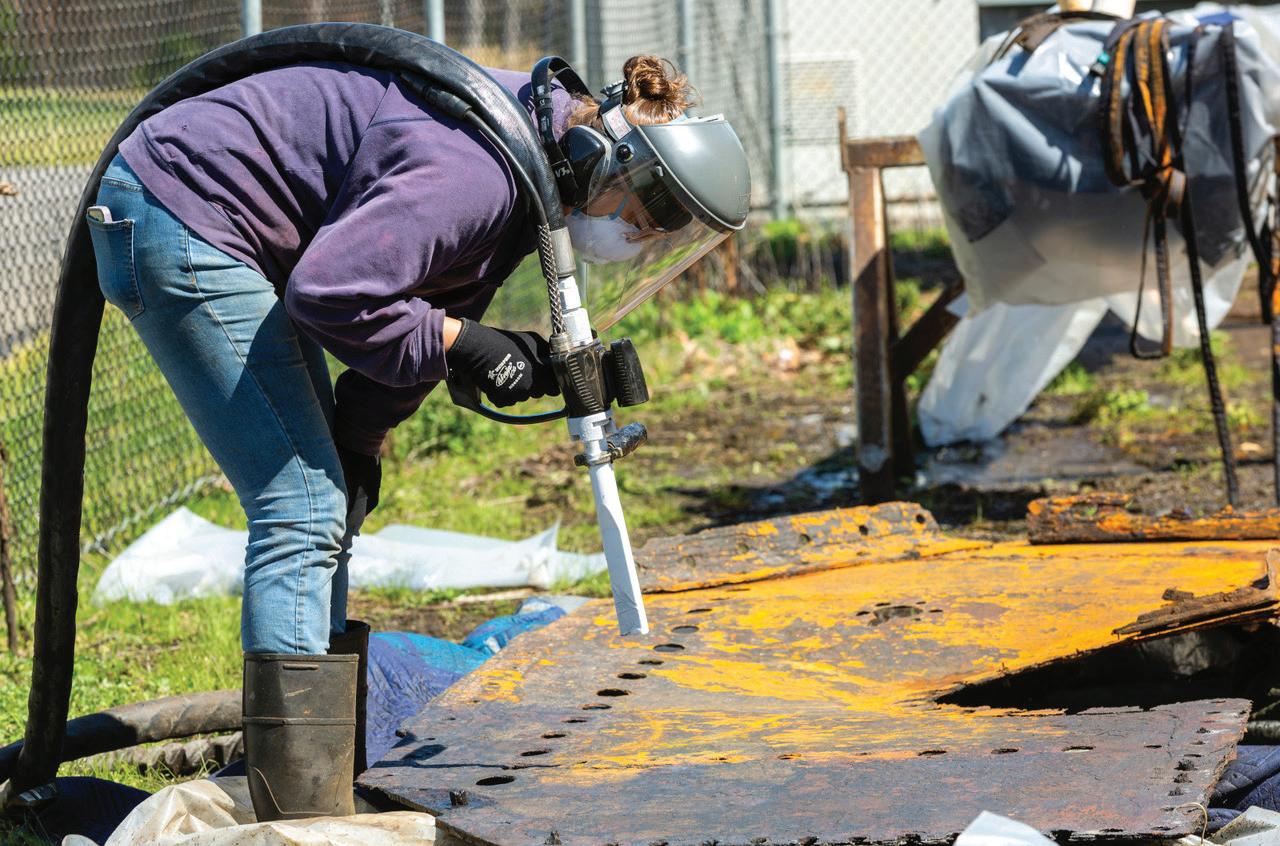
SEA HISTORY 180, AUTUMN 2022 17 e 2014 grant cycle included $99,000 in funding for e Mariners’ Museum to acquire a state-of-the-art dry ice abrasion system for mechanically cleaning wrought iron artifacts for the Civil War ironclad USS Monitor e grant also provided additional funding to hire another conservation expert to help operate the equipment. e 2014 grant cycle awarded 35 grants, totaling $2,607,025, to organizations in 21 (below)states.Using the Cold Jet SDI Select 60 with a 312S1 nozzle, con servators used four pounds of shaved dry ice particles per minute to clean corrosion o of a 4 x 8 foot structural bulkhead plate in a little more than an hour. is would have taken two to three weeks of intensive cleaning if done by hand. ’themarinersmuseum photobyjoefloodviaflickr


Captain Luke Ryan, c. 1782
Franklin’s Privateers by Eric Jay Dolin e heroic exploits of the American navy during the Revolutionary War have been researched, analyzed, and told and retold before, yet most histories of the American War for Independence fail to acknowledge the pivotal role of privateering vessels, from 20-foot whaleboats to 40-gun men-of-war, that truly revealed the new nation’s character, and, above all, its ambition and entrepreneurial ethos. In Eric Jay Dolin’s latest book, Rebels at Sea, he corrects that signi cant omission, and contends that privateers, though often seen as pro teers at best and pirates at worst, were in fact critical to the war’s outcome. Armed with cannons, swivel guns, muskets, and pikes—as well as government documents granting them the right to seize enemy ships—thousands of privateers tormented the British on the broad Atlantic and in bays and harbors on both sides of the ocean. Abounding with tales of daring maneuvers and deadly encounters, Rebels at Sea presents the American Revolution as we have rarely seen it before.
uke Ryan, a pale, slight, twentynine-year-old Irishman, was in trouble. A successful smuggler of goods in the mid-1770s, operating between Dunkirk and his hometown, Rush, about fteen miles north of Dublin, he had decided to change course and become a British privateersman, tasked with attack ing American, French, and Spanish ship ping. In late February 1779, Captain Ryan headed out on his rst privateering cruise, on the cutter Friendship, with a crew of sixty and fourteen cannons. But he couldn’t shake his old ways. He returned to Rush in April with no prize but plenty of con traband—French brandy and Dutch tea. Customs inspectors seized the Friendship, brought it to Dublin, and threw much of the crew into the Black Dog prison. Ryan was not among them—he had already gone ashore. Ryan had no intention of giving himself up or letting his men face justice.
In this excerpt, Dolin sheds light on the role that Benjamin Franklin played in harassing British shipping in the wa ters surrounding Great Britain by issuing letters of marque from his post in France. In theory, he was only permitted to engage with American ships, but through some sleight of hand on Franklin’s part, the sly and scheming American diplomat managed to issue letters of marque to foreign-owned vessels with foreign-manned crews.
Inventor, printer, philosopher, publisher, dip lomat, patriot: Benjamin Franklin was the only Founding Father to sign all four docu ments critical to the creation of the United States: e Declaration of Independence (1776), the Treaty of Alliance with France (1778), the Treaty of Paris (1783) and the US Constitution (1787). In his diplomatic role while in France, he authorized privateers to prey upon British shipping.
Lartmetropolitanmuseumof,pd
18 SEA HISTORY 180, AUTUMN 2022
Benjamin Franklin, 1778 by Joseph Duplessis
He concocted a plan and executed it in the early morning hours of April 12. Assisted by armed men he had sent, his crew broke
1782magazinehibernian,april,pd


is is where privateers entered his think ing. In granting commissions such as the one given to Marchant, he hoped that the privateers would come back not only with prizes but also loaded with prisoners he could use as bargaining chips.
Model of Luke Ryan’s Black Prince (ex-Friendship) modelerscentralcourtesywwwcom out of the Black Dog. Commandeering a few boats, they rowed out to the Friendship, overpowered the nine customs guards on board, cut the anchor cable, raised the sails, and sailed out of the harbor. Farther up the coast, Ryan’s men rowed the guards ashore and gave them each a guinea to cover the cost of their journey back to Dublin. e next stop was Rush, where Ryan was Oncewaiting.aboard the Friendship, Ryan began implementing the second phase of his plot. Smuggling was bad enough on its own, but now that his men had escaped from prison, made o with the Friendship, and wounded a few customs guards, there was no staying in Ireland. ey were want ed men, and if captured would certainly be tried for piracy and probably hanged. e alternative Ryan had chosen, and which his men had agreed to, was to sail to Dunkirk to become “American” privateers men.Ryan had many connections in Dunkirk, a famous smuggling depot. Soon after arriving on the Friendship, now re named the Black Prince, he contacted Jean and Charles Torris, Flemish businessmen who had supplied him with contraband in the past. Ryan proposed that the brothers purchase a 50 percent stake in the Black Prince and that they turn it into a privateer. A deal was struck. e Flemish brothers thought it would be easiest to secure a privateering commission from the French. Ryan demurred, fearing that if the Black Prince was stopped or captured, a crew comprised almost entirely of Irishmen could never pass for French. He had an other idea. He had heard that Benjamin Franklin was interested in commissioning American privateers to sail from France— so why not ask him? Ryan and his men could certainly pretend to be American if they had to. e Torris brothers tapped connections who knew Franklin. ey learned that the famous American was not allowed to grant privateering commissions to vessels captained by foreigners, much less Irish smugglers. e captain, at least, had to be American. Luckily for Ryan and his partners, Stephen Marchant, a Con necticut shipmaster, was in Dunkirk at that very moment and looking for a com mand.
Franklin expected there would be addi tional cartels, but for that to happen he would need more British prisoners to trade.
Across the spring and summer of 1779, the Black Prince sailed on four cruises, cap turing thirty-four prizes. e privateer also returned with more than fty prisoners.
Wherever the Black Prince struck along the coasts of England, Wales, Scotland,
Franklin had wanted more, but many po tential prisoners had been allowed to depart with ransomed1 prizes, because Ryan did not want to be bothered with manning the prize ships and sending them to Dunkirk.
A meeting was arranged, and Ryan concluded that Marchant was a weak-willed and easily manipulated man with an out sized ego whom they could use for their purposes. He would be presented to Frank lin as captain, and another Connecticut man, Jonathan Arnold, would be o ered as rst mate, but in reality Ryan would be in charge. (Marchant and Arnold would not be privy to this fact.) Franklin met Marchant and granted the privateering commission—less because of his con dence in Marchant than because he wanted to help repatriate privateersmen and sailors from the Continental navy wasting away in British prisons. Ever since arriving in France, Franklin had been disturbed by the idea of his coun trymen languishing in British jails and had worked tirelessly to secure their release. His only real hope was to arrange for cartels, whereby British prisoners held in France were exchanged for Americans held in Brit ain. But there were two problems. First, British authorities were reluctant to release any prisoners, regardless of the circum stances. When Franklin had rst ap proached Lord Stormont with the idea of conducting a prisoner swap, he had received a biting and dismissive reply from the British ambassador to France: “ e King’s ambassadors receive no applications from rebels, unless they come to implore his Majesty’s mercy.” Second, the number of American prisoners in Britain was far greater than the number of British ones in France.Not long before Luke Ryan’s arrival in Dunkirk, Franklin had nally persuad ed the British to agree to a cartel, and a single ship had delivered nearly one hun dred Americans to freedom in France.
SEA HISTORY 180, AUTUMN 2022 19

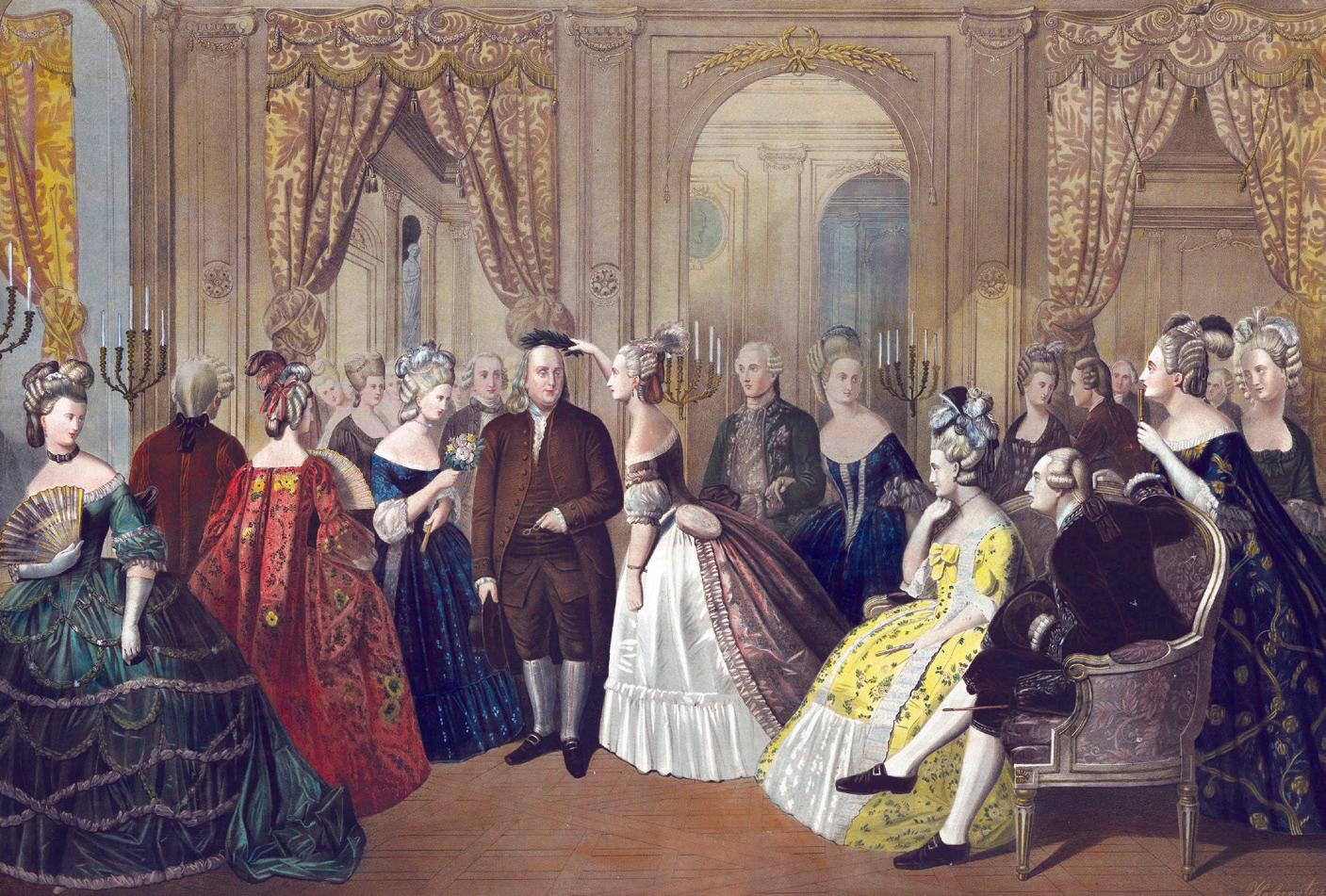
Franklin’s Reception at Court of France, 1778 by Anton Hohenstein, c. 1860 Franklin was arguably the most famous American of the day, and certainly the most revered, not only for his scienti c accomplishments and inventions but for his political and philo sophical genius. It was his diplomatic skill, however, that proved the most important to the cause, playing a critical role in bringing the French into the war on the American side. congressoflibrary
20 SEA HISTORY 180, AUTUMN 2022 and Ireland, it left a terrorized local popu lace. A resident of Newquay, England, wrote to a friend after one of Ryan’s raids on local shipping, during which thirteen vessels had been taken within sight of the town’s harbor: “We are all in vast alarm here, for two nights the soldiers have been under arms.” Local o cials pleaded with the Admiralty to send ships to protect them, complaining that the coast was “totally defenseless, there not being one King’s ship stationed between Bristol and Land’s End.” During the rst three cruises, it be came clear to everyone, except, somewhat shockingly, Marchant, that Ryan was the true captain and the American, a gure head. Ryan gave orders that his Irish crew heeded, and more than a few paroled pris oners told authorities that they were certain Ryan, not Marchant, was actually in charge. By the fourth cruise, in September, Ryan could act no more. He despised the incom petent Marchant and told him the truth of his situation, that his position was a mirage. Marchant was despondent over the loss of the captaincy, but he stayed on board, quietly sulking, until the Black Prince returned to Dunkirk at the end of the month, after which he returned to America. When Franklin was nally told about the trickery, and that all along the Irish smuggler Ryan had been the real captain, he was amused and accepting. He even congratulated Ryan and sent him a gift. In the letter accompanying the package, Franklin wrote, “Being much pleased with your activity and bravery, in distressing the enemy’s trade, and beating their vessels of superior force by which you have done honor to the American ag, I beg you to accept my thankful acknowledgement to gether with the present of a night glass [binoculars] as a small mark of the esteem with which I have the honor to be, Sir, yours etc.” At the same time, Franklin wrote to John Jay, the president of Congress, boasting about his star privateer’s recent success. “We continue to insult the coasts of these lords of the ocean with our little cruisers. A small cutter, which was tted out as a privateer at Dunkirk, called the Black Prince, has taken, ransomed, burnt, and destroyed above thirty sail of their vessels within these three months.” So happy was Franklin with the Black Prince that he commissioned a second pri vateer, the Black Princess, to be captained by Edward Macatter, Ryan’s right-hand man and a fellow Irishman 2 . e two privateers went on a joint cruise from Decem ber 1779 to March 1780 without Ryan, who had taken ill and was replaced by his rst lieutenant, Patrick Dowlin. It was an other success. Twenty prizes were captured and sixty-eight prisoners brought in. Ac cording to a letter in the London Courant, “Complaints are very loud in the north part of this kingdom against the Admiralty” for not protecting the coast from the depreda tions of “the two American corsairs.” No sooner had the joint cruise ended than Franklin commissioned a third pri vateer, the Fearnot, commanded by Ryan, who had by then recuperated from his ill ness. e cutter had eighteen six-pounders, twenty swivel guns, and a crew of ninetysix. From March through the end of Au gust, Franklin’s “Irish” privateers conduct ed a total of six more cruises, capturing sixty prizes. Re ecting on the Fearnot’ s actions o the coast of Inverness, Scotland, one local resident wrote to the London Chronicle that “on the west coast the Fear not American privateer, Luke Ryan com mander, reigns uncontrolled. It is not many days since he took all the shipping belong ing to the town of Stornoway.…Scarce a day passes without his making a descent on some part of the coast.” e cruises were not a complete success, however. In April the Black Prince was chased by a frigate ying British colors. inking that the frigate might be French, Dowlin hoisted a French ag to signal that he was a friend, but still the frigate came on, forcing the Black Prince into very shal low water just a few hundred yards from land. Before the two vessels could engage, the Black Prince plowed into the rocks near Berck, France. All the men on the Black Prince made it to shore, but the cutter was a wreck. As for the frigate, moments after the crash, it sheared o , and its captain lowered the British ag and raised the eurde-lis, revealing its true identity: it was a French privateer, and its captain later claimed that he believed the Black Prince was a British ship that had raised the French ag as a ruse. By September 1780, Franklin was done with privateering. French authorities had become annoyed with his cavalier manner in awarding commissions and adjudicating prizes; various controversies had arisen, among them a dispute over a neutral Dutch vessel improperly declared a prize. Further more, they were frustrated that so many Frenchmen had signed on to American
SEA HISTORY 180, AUTUMN 2022 21
In March 1783, with the nal peace nego tiations nearing, he was given a royal par don as a gesture of goodwill toward the French and the Americans. Ryan died in 1789 in debtors’ prison. His obituary in London’s Gentlemen’s Magazine mentioned his poverty but also his string of successes as a privateersman, claiming that the Black Prince under his
NOTES 1 Ransoming, in the privateering context, meant allowing a prize to depart after rst obtaining a written promise from the cap tain of the vessel that the owner would pay a certain fee for the safe return of his vessel. In many instances the captain would be held captive to ensure that the ransom was paid. American privateers were not sup posed to ransom prizes, per the privateering regulations they operated under, but they often did, which spared them the neces sity of placing a prize crew on the vessel that would sail it into port.
Eric Jay Dolin is the author of 15 books, including Leviathan, Brilliant Beacons, and Black Flags, Blue Waters. He lives with his family in Marblehead, Massachusetts. Excerpted from Rebels at Sea: Privateering in the American Revolution © 2022 by Eric Jay Dolin. Printed with permission of the publisher, Liveright Publishing Corpora tion, a division of W. W. Norton & Com pany, Inc. All rights reserved. Praise for Reb els at Sea: Edwin Grosvenor, editor of American Heritage called Dolin “One of today’s nest writers about ships and the sea.... Rebels At Sea is a “fascinating look at the role played by privateers in winning indepen dence.” Gerard Helferich, in the Wall Street Journal, writes that Rebels is “[T]horough ly researched [and] engagingly written,” while Timothy Symington, in the Journal of the American Revolution said that it “ranks as one of the best books the Journal of the American Revolution has reviewed.” Admi ral James Stavridis, 16th Supreme Allied Commander at NATO, states that Rebels at Sea is “Yet another maritime masterpiece by one of the top historians of the oceans!” For more on the book, please visit the author’s website at www.ericjaydolin.com.
2 Franklin had, apparently, decided to dis regard the stipulation that a privateer cap tain had to be American, and instead al lowed Irishmen to ll that position. privateers instead of serving in the French navy. Vergennes, the foreign minister, told Franklin that while he couldn’t force him to recall the privateering commissions given to the Black Princess and the Fearnot, he recommended that he do so for the sake of Franco-American relations. Franklin, who had long wanted to devote more time to diplomacy, gladly complied. ere was yet another reason Franklin was eager to turn away from privateering. He had not been as successful as he had hoped in achieving his overriding goal of transforming captured British sailors into free Americans. While his three privateers had brought back 161 prisoners in total, that was a disappointingly low number, given how many prizes they had taken. Furthermore, a signi cant number of those prisoners had elected to sign on as crew members on one of the privateers. But even if the privateers had delivered more men, Franklin might not have been able to use them. e British continued to balk at cartels, and only two other small exchang es had taken place while Franklin’s privateers were active. Still, Franklin had cause to be proud of what the Black Prince, the Black Princess, and the Fearnot had accomplished. As historian William Bell Clark concluded in his seminal book on Franklin’s privateers, “Despite all Franklin’s regrets, the accom plishments of his privateers he realized had been phenomenal.” Combined, 114 “Brit ish vessels of all descriptions [had been] sent in, burned, scuttled, or ransomed… Better than that, however, had been the consternation of British shipowners, the soaring of marine insurance rates, the havoc to the coastal trade in the English, Irish, and Scotch seas, and the discom ture of the British admiralty.” With their American commissions clawed back, the owners of the Black Prin cess and the Fearnot obtained French pri vateering commissions and continued to send forth their vessels, under new names, to attack British shipping. Luke Ryan’s luck ran out in April 1781, as captain of the French privateer Calonne. On the evening of the fourteenth, the Calonne captured the Scottish brig Nancy, just south of the Firth of Forth in Scotland. A few hours later, one of Ryan’s men spotted the lights of two vessels in the distance. e captain of the Nancy, who was on board the Calonne, told Ryan that earlier that day he had seen two British whaleships heading north. inking that the two in the distance might be those vessels, Ryan set o after them. As he got closer, he saw that the two ships were quite large and surmised that they were not whaleships, but merchantmen loaded with valuable goods. His con dence that he could take them easily was under standable. e Calonne was a 400-ton frig ate with 34 cannons and nearly 250 men. Ryan ordered a broadside and yelled across the water for the larger ship to surrender. So con dent was he that his demand would be met that he had a boarding party crowd into one of the Calonne ’s boats to prepare to claim the prize. e “merchantman” suddenly sprang to life, as hundreds of marines were called to their battle stations. Ryan had chosen the wrong mark. is was no merchantman but rather the 74-gun third-rate ship of the line Berwick. Realizing the enormity of his mistake, Ryan ed so precipitously that he cut loose the boarding party, leaving them at the mercy of the British. Before the Calo nne had gone too far, the Berwick’ s escort, the thirty-six-gun Belle Poule, caught up, and for forty- ve minutes the two ships traded cannon shots, giving the Berwick enough time to enter the fray and force Ryan to Accordingsurrender.to the Edinburgh Adver tiser, after being brought into Edinburgh, Ryan boasted that he would have beaten the Belle Poule had not the Berwick come to its aid. He added that he had not allowed his colors “to be struck till he was knocked down by one of his own men, and then he attempted to get hold of a match to blow up the powder-room and his ship.” Ryan was put on trial for piracy. He was found guilty and sentenced to death. But many notable gures, including rep resentatives of the French government, pleaded with British o cials on his behalf.
captaincy “captured more vessels belonging to Great Britain than any other single ship during the war,” and that during his pri vateering career he “did more injury to the trade of these kingdoms than any other single commander ever did.”
Onawa was the only American- agged 12-Meter o ered a berth in the crowded Vieux Port (“old port”), putting us in the center of the historic waterfront. ere were more yachts than water in the harbor, and one could simply walk around the harbor just by stepping from boat to boat. e streets were loud and lled with a mix of racers, spectators, and tourists speaking a dozen di erent languages. e inner harbor was lined by a series of single-story restau rants set beneath the side-to-side wall of ve-story pastel-colored buildings adorned
22 SEA HISTORY 180, AUTUMN 2022 . She was 70 feet of shining elegance, not to mention a thoroughbred racing machine. Her long water line, anked by an equally long combination of bow and stern overhangs, was capped by a teak deck with varnished mahogany covering boards and ve low-pro le deck houses. e polished bronze winches and binnacle sparkled like a crown on a queen’s head. Above the deck rose her towering ninety-foot varnished Sitka Spruce mast. Every element of Ona wa was pristine; I knew this because of the thousand-plus hours I’d spent as one of the shipwrights working to restore the 1928 yacht, America’s oldest in the Internation al 12-Meter class at the time. It was 2001 and I was a twenty-oneyear-old deckhand onboard, the lowestranking member of Onawa’ s three paid regular crew. My responsibilities included polishing the bronze, cleaning the head, keeping the winches in perfect working order, and rigging the boat so she would be ready to host our sixteen-member daily race crew. We were in Saint Tropez for Les Voiles de Saint Tropez, the nal stop of a decadent European racing tour that had begun in England with the America’s Cup Jubilee in Cowes before continuing to Puerto Cervo, Monaco, and Cannes. e week began with Onawa arriving from Cannes in a mixed-class feeder race. A twelve-knot headwind was blowing from the southwest, o ering us a rare opportu nity to cross tacks with the ga -rigged boats normally sailing on separate racecourses.
We took in the beautiful French coastline as we approached the once-small shing village named for the Roman Christian martyr Caius Silvius Torpetius. e Cita del of Saint Tropez, positioned prominent ly on the hillside protecting the Gulf of Saint Tropez, grew as we neared our des tination. I soon sighted the iconic Italian baroque-style church bell tower of Eglise Notre Dame de l’Assomption, built in 1784. e ochre- and sienna-colored tower stood tall like a beacon over our nal destination’s tightly packed clay-tiled roofs.
12-Meter Yacht
)(,santosphotobysallyannec2019,windlasscreativecom
La Nioulargue, a.k.a. Les Voiles de Saint Tropez by Will Sofrin
Onawa Ga -rigged cutters on the race course are a sight to behold. e Saint Tropez waterfront is packed with boats during the regatta.
tropeztropezsaintcourtesyragetmartinphotobygilles,lesvoilesdephotobygillesmartinraget,courtesylesvoilesdesaint


In 1984, class categories such as “sea-ex plorers,” “tropéziens-travail,” and “tro péziens-marconi” were established to in clude boats of all kinds. Galas, parades, and shoreside festivities were added to the fun- lled end-of-summer regatta. e list and pedigree of participants grew as the event attracted famed yachts and sailors from around the world. e regatta was o cially canceled in 1988 due to a Mistral, a seasonal northwesterly wind that blows from southern France into the Gulf of Lion in the northern Mediterra nean. Eager to sail despite the strong winds, John Parkwright IV, the owner of France II, challenged other boats, resulting in the establishment of the “Florida Cup,” now called “Dé s Jean Lorrain.” e list of dis tinguished participants grew to include classic schooners such as Altair, Aquarius, Créole, Fleurt Je, Mariette, Raphaelo, and Shenandoah; J-Class Yachts Endeavor and Velsheda; Maxi yachts Coriolan IV, Gitana, Helisara , Matador, and Mephisto; classic yachts Pen Duick, Tuiga , and Kentra, to name a few. La Nioulargue ran for fteen years until 1995, when the Herresho schooner Mariette collided with the 6-Me ter Taos Brett IV, resulting in the death of
tropezsaintcourtesyragetmartinphotobygilles,lesvoilesde
Maxi series, race day 5 at Les Voiles de Saint-Tropez 2021. e popularity of black sails has grown with the adoption of carbon ber in high performance sails.
A second race was held the following year, with more entrants, concluding with an award ceremony that included a medal awarded by the mayor and a humble pump kin for a prize. Motivated to solidify the event as a proper regatta, de Colmont wooed the famed Maxi yachts, eventually succeeding by having the Nioulargue add ed to the 1983 Maxi yacht race calendar.
SEA HISTORY 180, AUTUMN 2022 23 by shutters and wrought iron lined balco nies overlooking the harbor. We moored stern-to on Quai Jean Jaurés, the eastern waterfront street that transitions to Quai Su ren at the heart of the port. ere, standing tall and keeping watch over the activities along the waterfront, was a bronze statue of French admiral Pierre André de Su ren. Most notable of his many accom plishments were his contributions that helped the Americans win the Revolution ary War and the unique tactical strategies he employed when ghting the British in the Indian Ocean. e reception was grand. I felt like I had just arrived at a great family reunion, as I recognized the many faces of the oth er sailors who had been touring with us for the past two months. e following morn ing, reunited with our full racing crew, we joined the grand procession of yachts that slowly poured out of the harbor for a prac tice day before the o cial start of Les Voiles de Saint Tropez. e newly named regatta was re-established in 1999 after a three-year hiatus to take the place of the famed La Nioulargue, a regatta that had run from 1981 to 1995. Named for a shoal near Pam pelonne Beach, La Nioulargue was conceived, like many regattas are, in a challenge between skippers of two boats. In 1981 Dick Jayson, the owner of a Swan 44 named Pride, was in port at the end of the summer racing season when the 12-Meter Ikra ar rived, skippered by Jean Laurin. A friend ly challenge ensued, and the race would get underway the next day. e two skippers agreed on a simple course with the starting “line” just outside the harbor in front of Tour du Portalet, a medieval fort built in the fteenth century. From there, the two boats sailed out to the buoy marking the Nioulargo shoal before nishing in front of Le Club 55 on Pam pelonne Beach. e crews of both yachts then enjoyed lunch together at the famous restaurant where Ikra, the winner, was awarded a silver compote that would be come the “Club 55 Cup” from Patrick de Colmont, owner of Le Club 55.

24 SEA HISTORY 180, AUTUMN 2022 one of Taos Brett’ s crew. e regatta was suspended while the accident was investi gated, but with the event now well-en sconced in the Mediterranean yacht-racing scene, skippers and owners were chomping at the bit to bring it back. e city of Saint Tropez had also become accustomed to the regatta bringing in critical tourist dollars, and welcomed the opportunity to revive the series. With the investigation and judg ment completed, in 1999 the Société Nau tique de Saint-Tropez, with full support of the city and the participating yachts, brought back the race under the new name, Les Voiles de Saint Tropez. I can say with con dence that the week of racing lived up to the hype. Each morn ing I was awakened by a man playing Scot tish bagpipes from a dinghy roaming the harbor, o ering complimentary breakfast sandwiches to anyone interested. Soon, sail covers were o and boats were rigged as crews lined the decks eager to get out to the racecourse. Onawa had a mixed per formance in the series. e wind was a strong 15–20 knots easterly on our rst day of racing, and we did not fare too well, having tucked a reef in our mainsail before the start. Despite our tactics, we slipped back in the eet due to some lulls and n ished last. On another day of racing, we were fouled by rival 12-Meter Gleam, caus ing us to miss a gate on the course and disqualifying us from the race. We did nd success on our nal day of racing with Mike McCa ery, husband of Elizabeth Meyer, at the helm driving us to a rst place nish in the last race of the classic 12-Meter class division.tropeztropezsaintcourtesyragetmartinphotobygilles,lesvoilesdephotobygillesmartinraget,courtesylesvoilesdesaint
From classic yachts to modern high-tech racing boats, spectators can see it all from shore.
Designed by William Fife III and launched in 1912, e Lady Anne is one of the must-see classic yachts racing at Les Voiles de Saint-Tropez.
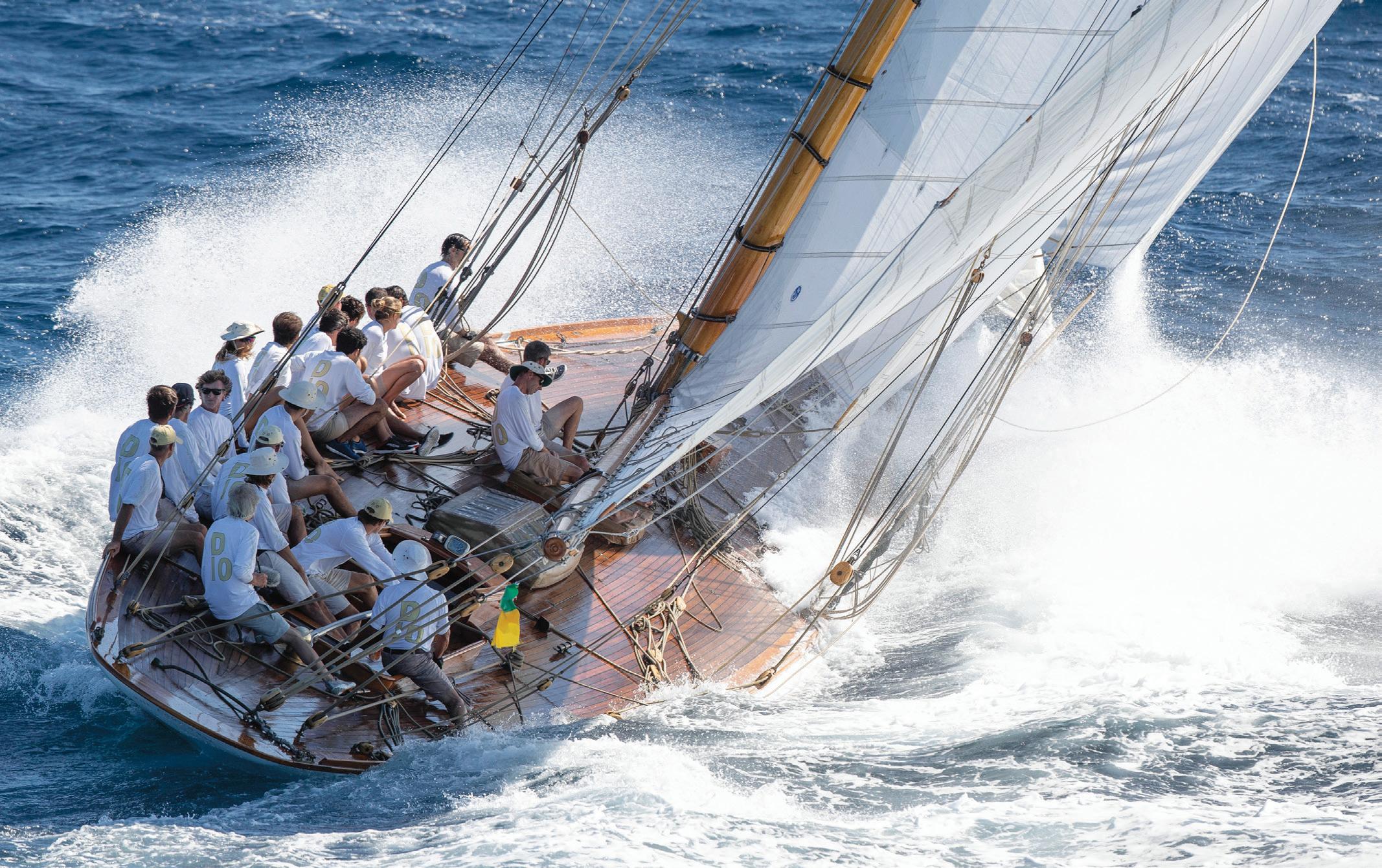

SEA HISTORY 180, AUTUMN 2022 25 e morning following our last race was sad and quiet as the harbor mourned the end of the season. I struggled to begin my morning routine of polishing the bronze winches as I was profoundly hungover, having gotten only a few hours of sleep the night before. I had nished the night at Les Caves du Roy, which left me feeling like a useless sack of bricks reeking of expensive champagne and dance oor sweat. My ex pectations for the day were low, other than breaking the boat down and chipping away at a long, tedious work list. e good thing about low expectations is that the best days often show up with no warning. With barely any notice or plan ning, we loaded the boat up with our en semble crew and set out to sail the original racecourse used in 1981 for Le Club 55, or, as we came to know it, HEAVEN ON EARTH! e weather felt like a warm and humid late August day on Nantucket. e impromptu 10:00 am departure meant we had plenty of alcohol but almost no food onboard, since we usually provisioned ev ery morning but hadn’t that day because we weren’t racing. Our treasure trove of cold beer, wine, and champagne owed heavily amongst our relaxing companions/ passengers as we got underway. e wind was on our beam, making me feel sure the sea gods approved of our debaucherous plans, thus granting us a swift and easy passage around the penin sula to Pampelonne Beach. e sky was a beautiful celeste color and was clear, except for a few small clusters of cirrus clouds dotting the distant horizon. We arrived around noon with the majority of our crew quite intoxicated and ravenously hungry. Our arrival appeared to amuse the gor geous, tanned onlookers scattered across the edge of the long, so-beautiful-it-looksfake sandy beach; many of them watching and pointing ngers at us as we sailed in and dropped anchor. Shortly afterwards, a large in atable dinghy came up to us from the beach and began shuttling our crew to shore. Casey (our fearless captain), Todd (the dreadful mate), and I (the lowly deckhand) stayed on board to tidy up the boat, and then took the third and nal ride to shore. Stepping into that dinghy meant I could relax a bit and immerse myself in some of the fun being had by the rest of our raucous crew. I looked around, taking in the spellbinding scene as we headed towards the sandy shore. We hopped out just before the dinghy’s bow touched the white sand beach, grabbed the bowline, and helped run it up out of the water onto a dry patch of sand well beyond the reach of the small lapping waves.We made our way, barefooted, up towards the restaurant, and I realized I had never been to any sort of place like this in my life. Le Club 55 is an open-air watering hole situated in the middle of Pampelonne Beach and was described by Gentleman’s Journal as “the world’s most exclusive res taurant.” e story goes that in 1955 the restaurant was founded when the unassum ing de Colmont family, owners of three modest beach cottages built on the sand with no running water or electricity, had been called upon to feed Brigitte Bardot and the rest of the And God Created Wom an lm crew. e family founded a restau rant in the wake of that project and, com bined with Bardot’s fondness for the place and the lm’s success, a legend was born. is restaurant became a playground of the rich, over owing with obscene amounts of beauty and wealth. It was the kind of place where you could expect to nd A-listers like Leonardo DiCaprio, Bono, or Beyon cé sitting at the table next to you. e restaurant was situated in an en clave of mature Tamarisk trees lining the edge of the iconic beach. Despite its exclu sive pedigree, the restaurant maintained a breezy, unpretentious charm. ere was no oor, only sand. Above were simple wood en structures overhung with thatched roof ing, occasional white linen awnings, and strings of small French and American ags softly uttering in the warm sea breeze. Each table was set with a light blue gingham tablecloth and delicate china plates with oral patterns. ere were no bad seats; from any of them, you have a view of the
Le Club 55 in its early days and (below) during the 2001 regatta.
courtesycolmontpatricecourtesyde,leclub55willsofrin


26 SEA HISTORY 180, AUTUMN 2022 ocean or the gleeful people mingling throughout. e place was packed, and the white-linen-dressed wait sta hustled at an Olympic relay team’s pace to meet the en ergetic patrons’ demands. Spread among the dining tables were occasional sofas and lounge chairs to help encourage pleasant commingling.WhenIsat down, I found before me an abundant o ering of bread and cold wine in silver buckets. A cold glass of crisp rosé was thrust into my hand. I don’t know when or how it got there, but I eagerly drank it down and re lled it. A toast was made by all of our loud and rowdy com panions celebrating our arrival. Service began with crudités, a colorful array of raw vegetables so fresh and full of avor and served on what looked like a large section of bark pulled from a tree. Toasts of praise continued to be shouted from nearly all present throughout our meal. is constant toasting became more frequent as time went on, so additional wine buckets were set up, ensuring we all had a bottle within arm’s reach. I was careful not to drink too much—technically, I was working. Eventually, the center of the table began lling up with lavish platters featuring salads, loaves of bread, pâtés, cheeses, roasted vegetables, sh, and steak. It only took minutes for the platters to be emptied, prompting a call for a second and even a third round of food for the table. e wait sta doubled up when the second round of food arrived, all rushing to replenish the empty platters and bottles with new full ones. I had never seen so much food con sumed so quickly in such a re ned setting. My taste buds exploded from the rich and intoxicating French cuisine I had become accustomed to during our tour. e whole meal was breathtaking, but the Tarte aux fraises, a buttery pastry lined with fresh, ripe strawberries, stole my heart — I have not since tasted strawberries so sublimely perfect.We sat at our table for over three hours, enjoying France’s best. I can’t imagine how many bottles of wine and champagne were demolished by our never-ending thirst. e stories recalling the racing and evening parties continued to digress into outrageous confessions of romantic encounters as the sun moved across the afternoon sky. Even tually, we had to make our way to the boat to sail back to St. Tropez before darkness set in.Casey, Todd, and I were on the rst launch back to Onawa. We quickly rigged up the sails and were ready to weigh anchor when the last load of the crew was delivered by the shore boat. It took some coordination to get everyone to hoist the sails. Setting an eighty-foot tall mainsail after an after noon like that was no easy task, but we got it up much faster than I thought we would have. e party continued with the same vibrant energy; we even picked up a couple of stray crew members for the return sail to the harbor at Saint Tropez. e wind and weather were just as ideal as our morn ing sail to the beach. e soft, warm wind had clocked around and was now coming from the west, pushing us back towards the inner harbor on a single tack. ere were no swells, thus helping to extend the ever-deepening platinum and gold sparkles re ecting o the surface of the lightly rippled water. e music was turned up, and the champagne owed once more. We made it back to the harbor just before dusk. All hands pitched in, and we quickly got Onawa cleaned up and put to bed for the evening. Even after a day like that, washing the boat down, coiling lines, and stretching on the sail covers is an ab solute must on a classic yacht. e story should probably have stopped there, but the timing of our return to St. Tropez marked the beginning of a new evening of festivities that were just kicking o all around town. I had been working since 8:00 am, and with my chores nally completed, I quickly jumped out of my polo and shorts and into a pair of khaki pants, a white linen shirt, and ip- ops. By local standards, I was dressed up and ready to take on the town. It has been more than twenty years since my unforgettable European sailing tour aboard Onawa. Since then, the event has continued to evolve. e Nautical So ciety of Saint-Tropez carries the tradition of the regatta on under the leadership of President Pierre Roinson. I hope to nd my way back to Les Voiles de Saint Tropez soon. Will Sofrin is an author, artist, designer, builder, and, of course, a sailor. After complet ing an apprenticeship at the International Yacht Restoration School of Technology & Trades (IYRS) in Newport, Rhode Island, he worked as a professional sailor on classic yachts and traditional sailing ships throughout Eu rope, New England, the Caribbean, Central America, and California. In 2002, Will sailed in “HMS” Rose (now “HMS” Sur prise) on its voyage from Newport to the West Coast to deliver the ship to 20th Century Fox for its lming of Master & Commander: Far Side of the World. It was not a simple delivery; Rose got caught in a violent storm en route and was dismasted on another leg— the tale is now being told in Sofrin’s new book, All Hands on Deck: A Modern-Day High Seas Adventure to the Far Side of the World, published by Abrams Press with a scheduled release in April 2023.e author, with Onawa behind him, during Les Voiles de Saint-Tropez in 2001.
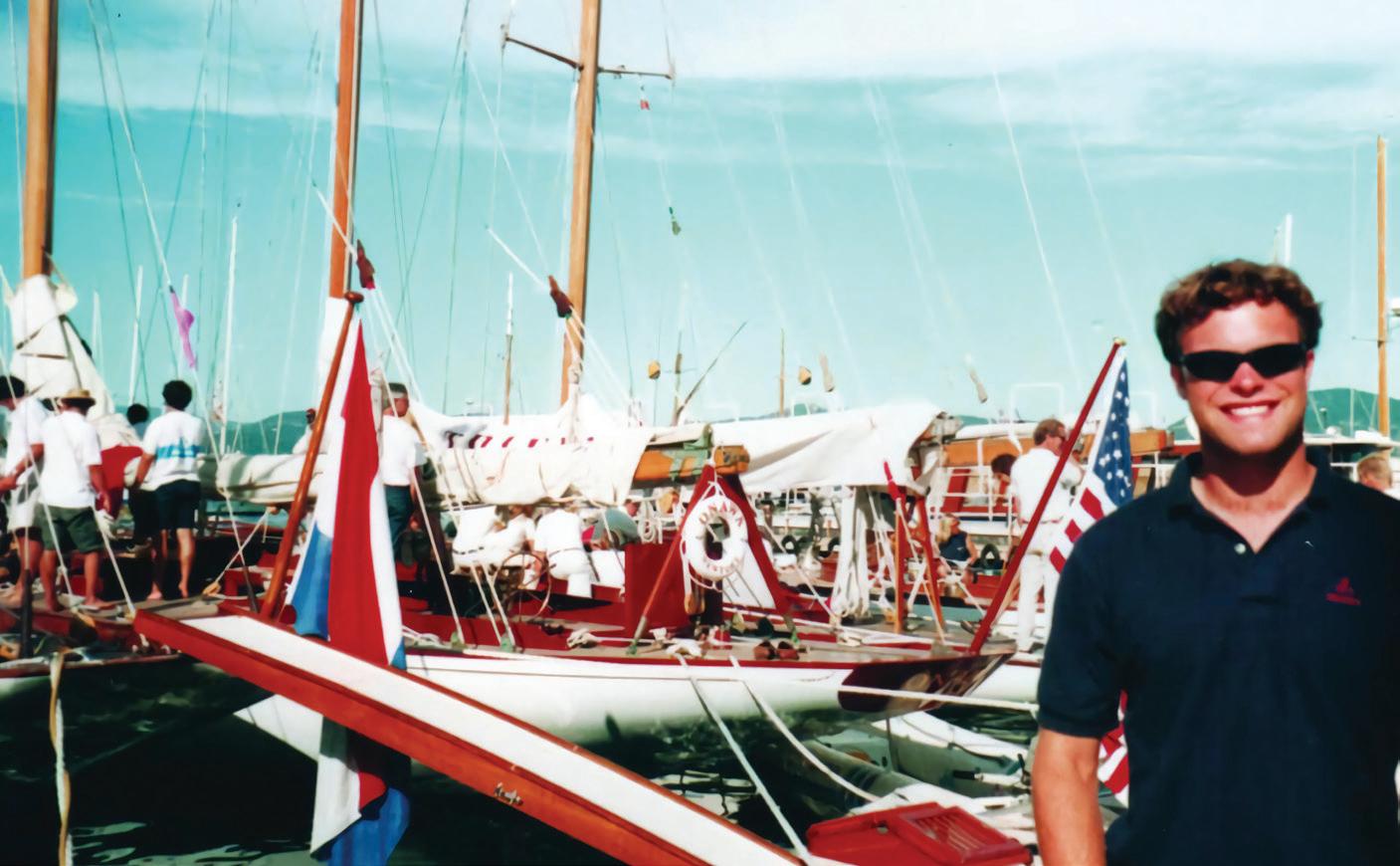
Russ Kramer, one of America’s leading marine artists and a past president of the American Society of Marine Artists, specializes in historic yachting scenes. is special limited edition is available to you on archival paper or on canvas using pigmented inks.
Yankee, the Boston syndicate boat under owner Chandler Hovey and helmed by Charles Frances Adams, had the upper hand throughout the summer. But, after Mike Vanderbilt ordered Rainbow to be re-ballasted, she soon drew even in matches. All tied up going into the nal race, Rainbow would win it by a single second. When chosen over Yankee to defend, it was a crushing blow to the team from Marblehead.
To order, call 1-800-221-NMHS (6647), ext. 0, e-mail nmhs@seahistory.org or visit our website at www.seahistory.org.
A Desperate Battle: Yankee Vies to Defend the Cup, 1934 e America’s Cup trials of 1934 were closer than any before—or since!
NYS add applicable sales tax.
Your Purchase of this Russ Kramer Print Will Directly Support the NATION AL M ARITI M E H ISTORICAL SOCIETY !
SEA HISTORY 180, AUTUMN 2022 27
Image size 30” x 20” • paper size 36” x 27” Signed and numbered limited edition of 500: $450 + $25 shipping (within the US) Canvas/image size 44” x 28” Signed and numbered limited edition of 175: $1,500 + $75 shipping (within the US)

Enemy Action O Florida’s East Coast Hutchinson Islands—1942
Tadministrationnationalarchivesandrecordshe
It is to the valiant men of the merchant marine who manned the tankships in the face of tre mendous odds, especially in the early months of the submarine warfare, that the thanks of the nation and of our Armed Forces and those of our Allies are due, for keeping the petroleum prod ucts owing to strategic points where they could most e ectively and promptly be used to crush the enemy. Men of the tanker eet, the nation salutes you. During a short timeframe of four months (February to May 1942) and just within the area between Hobe Sound and o Vero Beach, Florida, seven merchant ships were torpedoed— ve of them lost and two badly damaged. All but one of the seven ew the American ag, and when attacked, all were in near sight of the beach. One of those victims was the Socony Vacuum oil tanker SS Java Arrow, which was attacked east of Vero Beach On 6 May 1942, just an hour before midnight, Java Arrow was steering a southerly course and sailing in ballast, en route to take on cargo at the re nery at Curacao in the Dutch West Indies. Waiting at periscope depth was the German submarine U-333. With Java Arrow brought into the cross hairs of his periscope, Kapit ä nleutnant Peter-Erich Cremer launched two torpedoes. e rst struck the tanker amidships; the second hit aft, completely destroying Java Arrow’ s engine spaces and killing two engineers. e ship soon lost headway, a factor which allowed her #1 and #2 lifeboats to be launched, a task which was done without mishap. Once clear of the ship, the tanker’s master, Sigvard Hennechin, reaching the conclusion that the submarine had prob ably departed the area, ordered those in both lifeboats to lay on their oars. From all appearances it seemed that Java Arrow, although well down in the water, was not going to sink. Calling for his second o cer, who was commanding #2 lifeboat, to come alongside, Hennechin transferred some wounded men to his care and instructed him to start for the shore. Sometime after sun-up, lifeboat #2 was sighted by a shing boat, which towed it to Fort Pierce, where the wounded were taken to the hospital. With #2 lifeboat having departed, Hennechin ordered #1 lifeboat rowed to the stricken tanker where he, with four volunteers, re-boarded the ship and made their way up to the bow where they released a brake on the anchor windlass, dropping the starboard anchor. Hennechin and the men with him then re-boarded their lifeboat and made for the beach under oars.
In his patrol report, U-333’ s com mander claimed that he had observed the Java Arrow “going to the bottom.” is was an obvious falsehood aimed at enhancing his patrol’s success. Later that same day, Cremer sank the Free Dutch freighter Amazone and the American tanker Halsey, both a few miles south of where Java Arrow had been Whenattacked.lifeboat #1 reached the shore at Vero Beach, Captain Hennechin and four teen of his crew were taken by automobile to the Fort Pierce Coast Guard Station. From there he called his company’s o ce at New York and requested that arrangements be
28 SEA HISTORY 180, AUTUMN 2022 In 1942, the American merchant eet took heavy losses along the East Coast from U-boat attacks. Here, the American tanker Byron D. Benson burns after being torpedoed by U-552 o North Carolina in April 1942.
opening months of World War II witnessed a series of catastrophes that collectively nearly brought the United States to its knees. e rst of such disasters came with Japan’s December 1941 attack against Pearl Harbor; the second was the loss of the Philippines to the Japanese in April 1942. A third started in early 1942, when Germany’s submarine campaign against US merchant shipping in icted major losses on the American tanker eets, which were working to supply American forces overseas and that of our European allies. e petroleum products produced in Texas and Louisiana were at that time shipped to the East Coast, in part by rail but mostly by tank ships. With the American entry into the war and the heavy attacks against merchant shipping along the coast, an emergency program of pipeline construc tion was instituted; however, it was not completed until 1943. e initial attacks were concentrated along the US East Coast from the Straits of Florida northward to New England. ey began in February and continued well into the summer. ose months were witness to the sinking of over one hundred ships while their German attackers went virtuallyFollowingunscathed.the end of the war, US Coast Guard Admiral J. P. Farley put into context the critical importance of the tanker eet toward the nal victory:
by Charles Dana Gibson (1928–2019), posthumously submitted by E. Kay Gibson
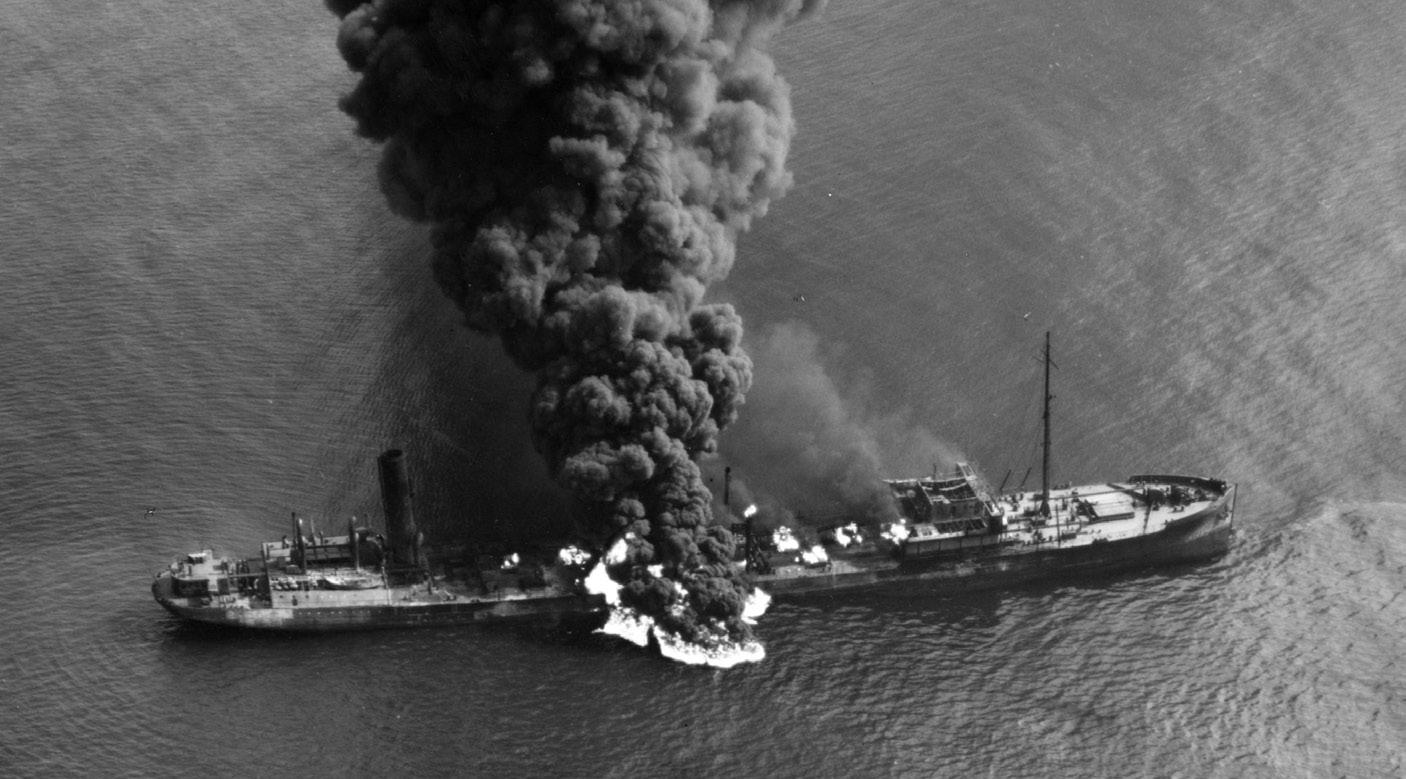
Kapitänleutnant Peter-Erich Cremer netuboat
Captain Charles Dana Gibson (1928–2019) was a licensed Tugmaster, Oceans, and Master of Inspected Steam and Motor Vessels, 500 tons, Oceans, Issue 8. He played a prom inent historian’s role in the 1988 court deci sion that granted veterans’ status to members of the American oceangoing merchant marine who actively sailed between 7 December 1941 and 15 August 1945. Captain Gibson was the author/co-author of eight books on aspects of maritime history and the recipient of numerous awards including the Distin guished Service Award given by the US Merchant Marine Academy, the Captain K. C. Torrens Award from the Council of A merican Master Mariners, and the K. Jack Bauer Award given by the North American Society for Oceanic History.
SEA HISTORY 180, AUTUMN 2022 29 SS Java Arrow, two weeks before she was attacked o the coast of Florida by U-333.
made for tugs to rendezvous at the position where Java Arrow had been anchored. e o ce personnel informed him that two tugs would immediately be dispatched out of Port Everglades. Hennechin next requested that the Coast Guard take him and some of his men back out to the ship. Underway aboard a Coast Guard picket boat, all onboard wondered whether the tanker would still be a oat when they got there or whether, since her abandonment, she had been given a coup de grâce by another U-boat or, worse yet, whether she might again be attacked once they were backNervesonboard.must have been on edge for all, including one resident of Fort Pierce, whom Hennechin had talked into accompanying the salvage group. He was a welder who was there to cut the anchor chain using an acetylene cutting torch. e survivors’ report made no mention of the name of the welder, so he remains an unsung hero of the Java Arrow story. Undoubtedly to the relief of all, the tanker was found a oat and at the same level in the water as when they had left her. Once aboard, Hennechin, his men, and the welder awaited the arrival of the tugs. When they made the scene, a towing hawser was passed up to the ship and secured at the bow, and the welder burned through the anchor chain. Under escort of the Coast Guard picket boat, a slow and hazardous tow then got underway toward Port Everglades. Arriv ing there safely, Java Arrow was eventually repaired and put back into service with a new name, Kerry Patch. At the position where Cremer’s other 6 May 1942 victim, the Amazone, sank, the depth of the water was such that the pro le of the wreck created a hazard to navigation, requiring the placement of a sea buoy (12-A) near it. A few years later the upper portion of the Amazone wreck that lay dangerously close to the surface was demolished by explosives, and the 12-A sea buoy was removed. e remains of that wreck, as well as that of the Halsey south and west of the Amazone, became attractions for a great variety of game sh and for the sport shermen who seek them. Although long ago removed, the old 12-A buoy number became the inspiration for the name of a Fort Pierce seafood restaurant. Java Arrow’ s survivors, as well as those of Cremer’s other victims from Halsey and Amazone, were lucky that night that they had not met the fate as the crew of another American tanker, W. D. Anderson, which had been torpedoed the previous February o South Hutchinson Island, northeast of Hobe Sound. W. D. Anderson was loaded with petroleum cargo that, ignited by a torpedo hit, burst into ames. With the exception of one man, her crew of 36 of cers and men died with their ship. at sole survivor had dived into the water upon the torpedo’s impact; by nothing short of a miracle, he was later sighted and picked up by a patrol boat. Despite the loss of more than 6,000 seamen who sailed in harm’s way during the war, it would not be until 1988 that members of the World War II oceangoing US merchant marine were administra tively awarded veteran status under Public Law 95-202, the GI Improvement Bill of 1977.
heritagehistorynavalandcommandusn


—Henry W. Henshaw, Chief, US Bureau of Biological Survey, 1911
30 SEA HISTORY 180, AUTUMN 2022
Henry Henshaw was not only chief of the federal bureau overseeing threat ened species over 100 years ago, he was also the nation’s leading ornithologist. In the quote above, he reported on the poaching and slaughter of wild seabirds on the remote and uninhabited Northwestern HawaiianDuringIslands.the1800s, the expansion of the United States led to the exploitation of wild lands westward across the continent and across the Paci c. America and its trad ing partners had a voracious appetite for wild animals for food, adornment, cloth ing, and sport, which threatened the very existence of many species inhabiting the land and waters of the United States. By the end of that century, however, the United States had also become a world leader in protecting species from poaching and un regulated catches.
collectionphotographdetroitpublishingcompany,libraryofcongress
At the time of the visit of the party, in the summer of 1911, heaps of the bodies of the slain still lay on the ground, mute witnesses of the sad fate that had overtaken these beautiful birds.
Thetis Teddy Roosevelt’s Guardian of Endangered Seabirds by William H. iesen, Historian, Coast Guard Atlantic Area
During that period, the US Revenue Cutter Service’s role protecting ora and fauna both onshore and in the water grew in geographic scope and variety of species. e service began protecting natural resources in 1822, when it was tasked with guarding federally owned forests in Florida for naval timber. When the United States acquired Alaska in 1867, it assumed the mission of protecting wildlife populations, such as the northern fur seal inhabiting the Bering Sea. In 1899, an Act of Congress trans ferred the one-time Arctic whaler-turnednaval vessel, USS etis, to the US Revenue Cutter Service. etis had been a naval vessel since 1884, when it was sent to rescue the ill-fated Greely Expedition at Ellesmere Island, located above the Arctic Circle. On 16 March, the Treasury Department noti ed the Revenue Cutter Service that the Navy would transfer to it the etis, along with all of its boats, equipment, and gear. In April, the service ordered etis to its new homeport of Seattle. Ironically, the ship originally designed for hunting marine life spent rest of its service career enforcing regulations to protect it. In March 1904, etis’s annual Bering Sea patrol was interrupted when command ing o cer Captain Oscar Hamlet received orders to proceed to Hawaii. ese orders initiated etis’s mission to protect yet an other animal from illegal poaching—wild seabirds. at year not only marked an expansion of the service’s mission to protect wildlife, it also marked the beginning of a long relationship between Hawaii and the United States Coast Guard. When the ship arrived in Honolulu in May, Captain Hamlet took on supplies and sailed for the remote Northwestern Hawaiian Islands chain, located hundreds USS etis (c. 1884–1899) before the ship was transferred to the US Revenue Cutter Service.

SEA HISTORY 180, AUTUMN 2022 31
Captain Oscar Hamlet with o cers of USRC etis photocoastusguard of miles from the main Hawaiian Islands. After delivering supplies to a bird moni toring station at Midway Island in midJune, etis arrived o Lisianski Island and discovered 77 Japanese plumage hunters slaughtering terns and gooney birds, also known as albatrosses. e crew of etis arrested the poachers and took them back to Hawaii for Implicatedadjudication.inthispoaching was Ger man immigrant Maximillian Schlemmer. Moving with his family in 1894 to unin habited Laysan Island to oversee mining of lucrative bird guano deposits, Schlemmer became known as the “King of Laysan.” Later, he moved his family back to Hono lulu and was identi ed as the employer of the poachers sent to Lisianski and Laysan islands. It is unknown whether he faced charges for his role in the plume hunting trade. In early July 1904, etis set sail for Alaska, where it returned to its normal Bering Sea Patrol duties. From late 1905 to early 1906, the cutter went out of com mission and, from 1906 to 1909, it cruised only in the waters of Alaska and Washing ton State.Oneof the nation’s greatest movements to preserve wild lands and wildlife took place under President eodore Roosevelt’s administration. Beginning in 1901, Roos evelt established 150 national forests, four national game preserves, ve national parks, 18 national monuments and 51 federal bird reservations. In all, Roosevelt set aside a staggering 230 million acres of public land, far exceeding the record of any president serving before or after his term in o ce. Late in his presidency, Teddy Roosevelt signed Executive Order 1019 protecting bird-nesting islands northwest of Hawaii, including French Frigate Shoals, Kure Atoll, Laysan Island, Lisianski Island, Midway Island, and several other uninhabited is lands. ese islands comprised Roosevelt’s Hawaiian Islands Reservation where, at certain seasons of the year, millions of sea birds nested and reared their young. ese birds included albatrosses, terns, petrels, frigate birds, curlews, shearwaters, boobies, the man-o’-war bird, and numerous other species. Roosevelt’s order made it: Unlawful for any person to hunt, trap, capture, willfully disturb, or kill any bird of any kind what ever, or take the eggs of such birds within the limits of [the] reserva tion except under such rules and regulations as may be prescribed from time to time by the Secre tary of Agriculture. Warning is expressly given to all persons not to commit any of the acts herein enumerated and which are pro hibited by law. Nevertheless, in May 1909, Japanese plume hunters returned to the remote atolls e Iwa, or “Great Frigate Bird,” roosts on o shore islands in the Northwestern Ha waiian Islands, as well as on tropical islands in the Atlantic and Indian Oceans. Related to boobies and tropicbirds, the frigate bird soars at great heights and often gets food by harassing other seabirds until they drop or regurgitate their prey.


In April 1911, etis returned to Laysan Island and put a party ashore, which found a devastating scene. In the report on the expedition, the team described how “the poachers had stripped the place of bird life....Here on every side are bones bleaching in the sun, showing where the poachers have piled the bodies of birds as they stripped them of wings and feathers. In the old open guano shed [pictured above] were seen the remains of hundreds and possibly thousands of wings, which were placed there but never cured for shipping, as the marauders were interrupted in their work.” 1
32 SEA HISTORY 180, AUTUMN 2022 to the northwest of the main Hawaiian Islands. is time, they landed on Laysan and straightaway began the work of slaugh ter. With no law enforcement on site to apprehend the poachers, bird populations were decimated. By the fall, the feather hunters had killed hundreds of thousands of birds. While albatrosses were their chief target, the poachers killed dozens of other species as well. Later that year, the cutter etis re ceived orders to Hawaii for permanent duty. On Christmas Day 1909, the revenue cut ter arrived in Hawaii and established the Honolulu Station. Under the command of Captain William Jacobs, it initiated an annual deployment to the Territory of Hawaii. Revenue cutters had visited the sovereign Kingdom of Hawaii as early as 1849; however, etis was the rst revenue cutter stationed there. In January 1910, etis arrived at Lay san Island and put a stop to the killing. e cutter also visited Lisianski Island and arrested more Japanese poachers—in all, the cutter apprehended 23 poachers and conveyed them to Honolulu for trial. e bales of wings cut o from a quarter million birds were con scated. In all, the poachers had killed nearly a million birds for their feathers to send to Japan for processing before shipping the plumage to European milliners. On the open market, the feathers they baled would have fetched $112,500 (worth $3.2 million in 2022 dollars). In August, etis returned to Laysan to ensure the poaching had stopped, but the slaughter that took place earlier in the year was evident everywhere. A storehouse used by the poachers was still standing and lled with thousands of pairs of albatross wings. ough weather-beaten and useless, the amputated wings showed how they were sliced o the birds whose half-bleached skeletons lay in countless heaps around the island. Had the poachers not been stopped, no doubt they would have killed every bird nesting on Laysan, Lisianski, and other bird-nesting islands. etis was dispatched frequently to the islands over the next few years, often carrying scientists and government agents sent by the Department of Agriculture, to inspect the bird reservations and ascertain the condition of the ocks. On an extended cruise to Bird, Laysan, Lisianski, Ocean, and Midway islands, the cuttermen found that raiders had been ashore at Laysan and slaughtered birds in great numbers, their carcasses strewn all over the island. From various indications, it was evident that the raid was made about the middle of Janu ary 1915. etis returned to Honolulu in President Roosevelt and naturalist John Muir at Yosemite. Muir is credited with in uenc ing Roosevelt’s views on nature conservancy.
agriculturedepartmentphotonationalparkserviceusof
Captain William Jacobs, in an o cial service photograph in dress uniform.
1Homer R. Dill and Wm. Alanson Bryan, Report of an Expedition to Laysan Island in 1911, Biological Survey —Bulletin No. 42, (Washington, Government Printing O ce, 1912), 11–12.
photocoastusguard


heritagehistorynavalandcommand,usn
usfwsnoaa
SEA HISTORY 180, AUTUMN 2022 33 early April before sailing north for another Alaskan deployment. In January of 1916 etis departed Honolulu on its last patrol of the Hawai ian Islands Bird Reservation. e weather was stormy and, as usual, landings on some of the islands were made with considerable di culty. is time, no evidence of poaching was found. After complet ing its mission to Midway and other bird islands, etis stopped in Honolulu and then set sail for the West Coast; the cutter arrived in San Francisco and was placed out
A rare photo of etis under sail, c. 1884. e Northwestern Hawaiian Islands are now part of the Papahānaumoku ākea Marine National Monument and many of the atolls are designated bird sanctuaries. Laysan albatross are very much under threat in the 21st century, not by poachers, but by plastics oating in the Paci c Ocean that the birds ingest. of commission. In June, a Canadian rm bought the cutter for its original purpose of hunting whales in the Arctic. etis’s 79-year lifespan ended in 1960 aground on a beach near St. John’s, Newfoundland. etis had served for nearly 20 years in the Paci c. During its career in Hawaiian waters, etis recorded a number of ac complishments. It established the service’s Honolulu Station, which has evolved into today’s Coast Guard District Fourteen. While on station, etis performed all of the usual service missions in Hawaiian waters. Most importantly, etis patrolled Teddy Roosevelt’s Hawaiian Bird Reservation, ensuring the survival of numerous species of wildToday,seabirds.more than 100 years after etis was tasked with interdicting illegal poaching of seabirds, the Coast Guard still interdicts illegal catches and overharvesting of wild species in the Paci c. In addition, the Federal Government established the Papah ā naumoku ā kea Marine National Monument in 2006, to ensure the protec tion of the Northwestern Hawaiian Islands and the seabirds that occupy them. Never theless, these wild birds now face the man made threat of pollution, with thousands of birds dying from ingesting or tangling in waterborne plastics. William H. iesen, PhD, is the Atlantic Area Historian for the US Coast Guard. A regular contributor to Sea History, Dr. iesen was awarded the 2017 Rodney N. Houghton Award for the best feature article in Sea History. His articles appear weekly in the online history series “ e Long Blue Line,” featured on the My Coast Guard website. For more information on USCG history, visit www.uscg.mil/history.


Enjoy!photobyfrankamoorsheadjrcollectionofthechesapeakebaymaritimemuseum,08860003
During the Council of American Maritime Museums (CAMM) tour of the Chesapeake Bay Maritime Museum last spring, Chief Curator Pete Lesher (and CAMM board VP) showed us some compelling historic photos in the museum’s collections storage area. While available to researchers upon request, these photos don’t often see the light of day, so we decided to create a series in Sea History in which curators pick a particularly interesting, revealing, or representative photo from their archives and tell us about it.
—Pete Lesher, Chesapeake Bay Maritime Museum
Oxford, Maryland, in Transition—Town Creek, 1939
C URATOR’S
Beyond the sail loft are the three marine railways belonging to Oxford Ship Yards, operated by J. Ramsey Speer, who sold the yard in 1940. e renamed Oxford Boatyard subsequently expanded to ful ll World War II military boatbuilding contracts. On the left, a bugeye—the quintessential Chesapeake oyster dredging vessel—is hauled out on the large marine railway with its main mast removed. e age of commercial sail on the Chesapeake was extended almost to the end of the 20th century by a Maryland law that permitted oyster dredging only by sailing vessels. On the T-head pier is the 1901 round-stern bugeye Margaret A. Travers, built for sail but, like many of its contemporaries, converted to power with a wheelhouse on the after deck and a shortened mast supporting a steadying sail forward. On the same pier is a mast derrick removed from the deck of a cargo steamer and repurposed for yard work, where it remained in use until the summer of 2022.
Just to the left of the derrick, two or three Hoopers Island draketail workboats are tied up to the A. B. Harris Ice Company, which packed oysters in the winter and crabmeat in the summer. e painted lettering of “A. B. Harris, Oysters” is barely visible on the white roof of one of its buildings. On the eve of World War II, Harris was one of about half a dozen seafood packing houses in Oxford. Today, none survive.
34 SEA HISTORY 180, AUTUMN 2022
In 1939, 21-year-old Frank A. Moorshead Jr. climbed Oxford’s water tower to capture this view of Oxford Ship Yards, now Safe Harbor Oxford. Moorshead’s conversion of his 1888 pungy yacht, Kessie C. Price, from a commercial sailing vessel to a rec reational boat, was symbolic of the changes taking place at this historic shipyard as businesses shifted their orientation from shing, crabbing, and oystering to servicing leisure vessels.
C ORNER : H ISTORIC P HOTOS FROM T H E A RCHIVES
Chesapeake Bay Maritime Museum o ers exhibitions and programs for youth and adults on its 18-acre waterfront campus in St. Michaels, Maryland. Its shipyard maintains 10 historic vessels a oat, and recently completed construction of the new pinnace, Maryland Dove. CBMM’s more than 61,000 catalogued photographs can be searched online at collections.cbmm.org.
In the foreground is a shed with a second-story sail loft once operated by English-born sailmaker David Pritchard. Pritchard, who died two years before this photo was snapped, had learned his trade in square riggers but came ashore around 1884 to work in Oxford. Perhaps Pritchard’s greatest legacy was his apprentice, Oxford native Downes Curtis, an African-American who took over Pritchard’s loft and built sails there for the Chesapeake sail ing community until his death in 1996.
To the right of the oyster packing house is the wreck of the 1873 keel schooner C. W. Willey, built in nearby St. Michaels and abandoned in Town Creek. Its trailboards survive as part of the collection at the Chesapeake Bay Maritime Museum. At the top is the residential neighborhood of Stewart’s Island, now largely occupied by a marina and connected to the rest of Oxford by a narrow causeway. e scene today is no less busy, but dominated by recreational boating.

SEA HISTORY 180, AUTUMN 2022 35 CHESAPEAKE BAY MARITIME MUSEUM Your Chesapeake adventure begins here! 213 N. Talbot St., St. Michaels, MD | 410-745-2916 | cbmm.org Celebrate our maritime heritage this holiday season with NMHS greeting cards. Greeting reads: “ May Your Days Be Merry and Bright—Warm Wishes this Holiday Season and Smooth Sailing in the New Year!” This scene by acclaimed artist John Stobart depicts a winter scene in DownEast Maine, ca. 1870. Somesville: A View of Mount Desert from Somes Cove ca.1870 by John Stobart TO ORDER, CALL 1-800-221-NMHS (6647), ext. 0, or online at www.seahistory.org/cards. Order nOw fOr OctOber delivery. Set of ten 5” x 7 ” cards: $14.95. Add $5.50 s/h for one set, and $2.50 for each addi tional set. NYS residents add sales tax. Please indicate your choice of holiday or blank notecards. Call for shipping charges for priority ship ping or international orders. Visit us online at www.seahistory.org/cards to view other selections.


collectionprivate
36 SEA HISTORY 180, AUTUMN 2022
A Course Made Good artistthecollectionof
Sea Smoke, oil, 24 x 42 inches. e skipjack Susan May working on Chesapeake Bay. Lazy Days on Galatea , oil, 24 x 36 inches Peter built Galatea , a William Atkin-designed cutter, and he and his family sailed her for many years around Chesapeake Bay and beyond.
Artist Peter Egeli:
In conversation with my father, marine and portrait painter Peter Egeli, you’ll notice he doesn’t answer questions hastily or super cially, and so it was when I asked him to talk about his career as a successful marine artist and portrait painter. “We live by grace” he said, before reciting the above stanzas of Ella Wheeler Wilcox’s poem, explaining that it represents his approach to work and life. e family farm was on a creek o the Potomac River on the Chesapeake Bay, and my father grew up crabbing and shing, One ship sails East, And another West, By the self-same winds that blow, ‘Tis the set of the sails And not the gales, at tells the way we go. Like the winds of the sea Are the waves of time, As we journey along through life, ‘Tis the set of the soul, at determines the goal, And not the calm or the strife. — “ e Winds of Fate” by Ella Wheeler Wilcox by Lisa Egeli drawing and reading. It was an environ ment rich in intellectual curiosity and ca pable craftmanship, between his mother’s teachings and his father’s boat building and both of their skills as accomplished artists.


SEA HISTORY 180, AUTUMN 2022 37
ebbittcourtesybothimagesoldgrill
Oyster Tongers , oil on panel, 63 x 23 inches (right) Soft Crabber, oil on panel, 63 x 18 inches ese were commissioned for the Old Ebbitt Grill in Washington, DC, where they are still installed behind the oyster bar. Both show the old ways of Chesapeake water men, in the same spot in di erent seasons: summer (crabs) and winter (oysters). My brother, Stuart, posed for the crabber, seen standing on the bow of his ski , poling along the shallows of a shoreline looking for freshly molted “soft” crabs. e oyster tonger uses a traditional method with long-handled tongs, feeling along the bottom for oysters and lifting them into the boat where they’re sorted. ough both my dad and I spent our respective childhoods crabbing along shorelines at sunrise, these ways of working have long since been replaced by large shedding bins for soft crabs and power dredging for oysters.


Another of view of the skipjack Susan May. is is from Peter’s early career as a professional artist. He honors the grace and strength of Chesapeake Bay’s skipjacks in many of his paintings.
38 SEA HISTORY 180, AUTUMN 2022 His father, Bjorn Egeli, had left his native Norway as a young man and worked on sailing ships in the waning days of the Golden Age of Sail. Bjorn brought home with him a seaman’s air for storytelling and the skills and courage to build his own boats, as well as the ambition to start what would become a very successful career as a portrait and marine painter. My father and his siblings were huge ly in uenced by my grandparents’ work as artists (my grandmother Lois was also an artist). It’s not surprising that he and his four siblings all pursued art careers, grow ing up amid such creative nourishment. My father’s interests in maritime history, ships, sailing, and art are all traceable to his youth, and that passion has carried down to my generation. Peter studied art at several notable institutions, including the Corcoran School of Art (studying with Eugene Weisz and Edmund Archer), Maryland Institute Col lege of Art (studying with Jacques Maroger and winning the Senior Concours) and the Art Students League in New York City (studying with Robert Brackman). He re turned to his roots in southern Maryland, where he met Elizabeth Stuart “Stu” Wilkinson, who would become his wife and would always be the driving force be hind his art career. Together they bought and renovated a waterfront farmhouse, e Susan May, oil, 24 x 30 inches
collectionprivate

Gen. Peter Pace, 16th Chairman of the Joint Chiefs of Sta , with artist Peter Egeli during an unveiling of Pace’s portrait, 13 January 2009. e painting is displayed in a corridor of the Pentagon, along with portraits of other former chairmen. photoarmyus
heritagehistorynavalandcommand,usn
SEA HISTORY 180, AUTUMN 2022 39 Adm. James D. Watkins, Chief of Naval Operations, 1982–86 oil, 24 x 30 inches
ernment
Like his father before him, Peter Egeli excels in portraiture and has been sought out for numerous commissions by corporate and gov o ces.


40 SEA HISTORY 180, AUTUMN 2022 Sloop Shadow, oil, 28 x 40 inches
From Peter: “After I built Galatea and we had sailed on her for a few years, I became fascinated with N. G. Herresho ’s Shadow and considered building her. Naval architect William A. Baker, who had become a good friend, sent me a set of lines, which inspired me to do the painting.” Rebecca T. Ruark , pastel, 24 x 38 inches In the 1970s Peter frequently photographed and sketched skipjacks and other work ing craft on Chesapeake Bay. is painting grew out of a visit to boats near the mouth of the Choptank River, where Capt. Emerson Todd of the Rebecca T. Ruark, a skipjack-rigged sloop, welcomed Peter aboard for a tour (while his own boat was towed behind). e vessel was beautifully kept in spite of being over a hundred years old then (built in 1886) and in spite of the hard life of a workboat. raised me and my brother, Stuart, and built a life around art and on the water. From the beginning, like his father, he painted both formal portraits and marine works. Portraits for both individual and institutional clients were—and are— on commission. His marine art pays tribute to the modest and the grand: watermen hand tonging for oysters, skipjacks and schooners and other working sail of Ches apeake Bay, historical maritime launchings, landings and battles, and even quiet mo ments along Paintings—bothshorelines.marine art and for mal portraits—by Peter Egeli hang in institutions, corporations, government o ces and private homes throughout the country. He is a past president and a Fel low Emeritus of the American Society of Marine Artists and remains involved with the organization today. e recent loss of my mother, Stu, was devastating after their 58 years of love and partnership, but she remains my dad’s muse, even if only in spirit. His long days of working in the studio from rst thing until last light have diminished in his 89 th year, but there’s still always something on the easel. An artist’s work is never done, and Peter Egeli still has stories to tell.
collectionprivate


artistthecollectionof
SEA HISTORY 180, AUTUMN 2022 41
Launching USS Virginia , oil, 25 x 40 inches. Inspired by a photo taken of the launch by a family member, this work was the rst of a series of paintings, still in progress, of this famous battleship from the Great White Fleet. is has been selected to be in an American Society of Marine Artists’ exhibit at the Pentagon in 2023.
collectionprivate


investmentsteuartthestatethetoloanonofmarylandfromcompany
Morning in Baltimore Harbor, 1830s, oil, 24 x 44 inches is carefully researched painting imagines a Baltimore morning after a rainstorm in the 1830s, looking from the lumber yards at the base of Federal Hill north across Baltimore Harbor.
42 SEA HISTORY 180, AUTUMN 2022 Lisa Egeli is an accomplished artist in her own right, as well as a boatbuilder and lifelong mariner. We featured an article on Lisa in the Summer 2020 issue, #170. Both Lisa and her father are past presidents of the American Society of Marine Artists (ASMA). You can learn more about them on the ASMA website at www.americansocietyofmarineartists.com and on their respective websites: www.peteregeli.com and www.lisaegeli.com.
artistthecollectionof
Landing of the Ark and the Dove, oil, 36 by 72 inches
In this large painting from 1975, Peter immersed himself in research about the ships and landing of settlers from Cowes, England, on St. Clements Island, Maryland, in 1634. e composition came to him in a dream, in which he imagined himself there, with the sounds of the waves and the voices and the thump of the longboat against the hull of the Ark . e city of Cowes is including this painting in an upcoming museum exhibition commemorating the voyage.


THE AMERICAN SOCIETYOF MARINEARTISTS Celebrating over 40 years of America's fnest contemporary marine art. Join today and you'll get our full color, quarterly magazine, the Society's News & Journal for a whole year (4 quarterly issues). Painting:BrechinMorgan,MemoriesofMelville,acrylic,40x30(detail) AmericanSocietyofMarineArtists.com
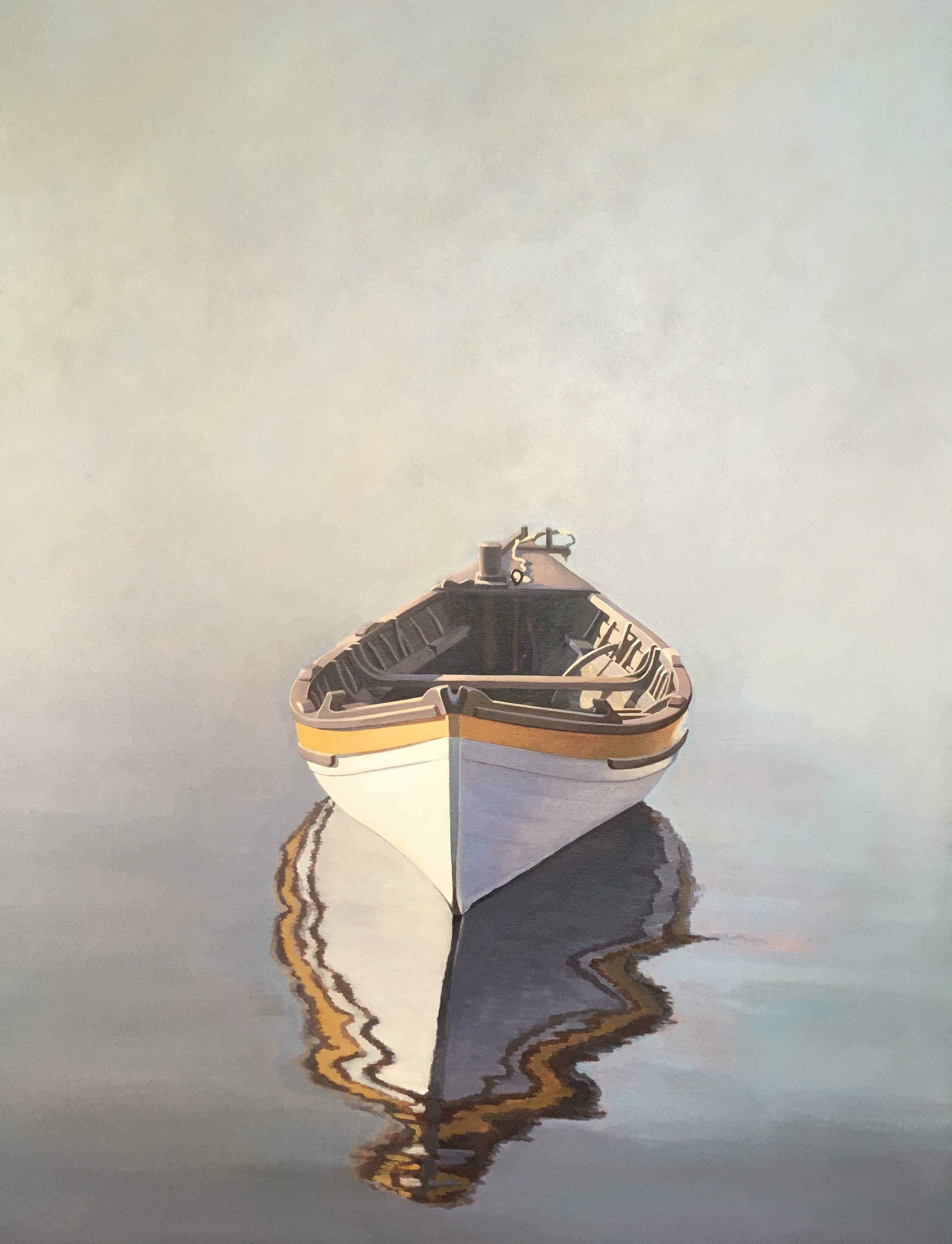
44 SEA HISTORY 180, AUTUMN 2022
Twenty-
ve years after the idea was rst posed by a group of Mainers, the 30-ton pinnace Virginia, a.k.a. Maine’s First Ship, was launched into the Kennebec River on 4 June 2022. Why is Maine’s rst ship named Virginia? e original was built in 1607–08, at the Popham Colony in what is now Phippsburg, Maine, about 25 miles northeast of Port land (as the crow ies). e colony was an o shoot of the Plymouth Company in what was then considered by the English as North Virginia. e colony lasted just four teen months, and its only real accomplish ment was building the boat that would ultimately take them back to England. e vessel was not built for this pur pose, but rather to navigate the coast and local waters. When they decided to aban don the colony, the settlers boarded the two vessels they had at their disposal, a 400-ton vessel that had brought them there and the 56-foot pinnace they had built on site—Virginia— and sailed o to England.
In 1997 an all-volunteer group in Maine started working on the idea of build ing a replica of Virginia. All they had to work with was a textual reference to “a pretty pinnace of 30-tonnes” and a one-inch drawing of a small pinnace. By 2007 plans had been drawn up, based largely on ev erybody’s best guess as to what the original would have looked like, given the lack of extant plans, and on 3 July 2011 the keel was laid in a “temporary” shed outside the Bath Freight Shed in Bath, Maine. e site is somewhat upriver from where the origi nal Virginia was built, closer to the mouth of the Kennebec River. Anecdotally, the expectation at the time was that they’d have her on the water in 55 days. It took eleven years. e usual problems for small volunteer groups like this ensued. A funding drive to raise $2.2 million had been scuttled in 2008, but in 2012 the leadership of the project was reorganized with fresh faces and work proceeded. By 2016 the ship was framed and about half planked with an “army of volunteers swarming over the netmainememory is detail from a plan view of Fort St. Georges, Phippsburg, Maine, 1607, includes a tiny sketch of a pinnace, thought to be the Virginia . Fort plan drawn by John Hunt.
e vessel is lifted from its cradle by two cranes and gently placed in the river.
e Launch of Maine’s First Ship
photosallbycharleyseavey by Charley Seavey


SEA HISTORY 180, AUTUMN 2022 45 She oats! Virginia is towed to her new berth on the Kennebec River in Bath.
Charley Seavey, son of a Maine boatbuilder, has a lifelong interest in ships and the sea. Now retired after a long career in higher education, he serves as a research associate for the Essex Shipbuilding Museum, in Essex, Massachusetts. You can learn more about Maine’s First Ship at www.mfship.org.
Author and rigger Jim Nelson serves on the board of Maine’s First Ship and was instru mental in many aspects of getting the ship built, launched, rigged, and its story told. thing, going at it.” Former sailing ship mariner and author James L. Nelson joined the board and was eventually designated as the project’s chief rigger. Funding and progress on the vessel were still steady in 2018, and then COVID-19 hit in early 2020, further slowing things down. e planned launch date of 7 June 2020 was cancelled, and work was cut back to two days a week because of pandemic restric tions. Nevertheless, work continued on, including building the engine bed and hanging 18,000 pounds of lead in the keel. e team also began the search for a place to keep the vessel once launched and rais ing the funds to build a new wharf. By spring 2022 the organization con rmed a launch date of 4 June at high tide. Expectations for attendance at the launching were around “a couple of hun dred folks.” e crowd was probably clos er to a thousand people, and that doesn’t include the people watching from boats in the river. e o cial program began at noon, with musical performances ranging from sea chanties to the Arrowsic String Band, the Nor’easter Barbershop Chorus, and later in the day the Bath Municipal Band. Reenactors in 17th-century costume told visitors about the original Virginia and what life was like for the colonists during that period. Among the re-enactors was Jay Templin acting as Master Digby, the ship wright who built the original Virginia, plus two groups—the Piscataqua Company and New Plimmoth Gard, armed with swords and muskets—who demonstrated the clothing and gear of the original Popham Colonyecolonists.launchwas not a traditional slide down the ways, or one of those exciting sideways launches that produces a great splash. Virginia was lifted by two huge cranes, which swung out in tandem over the river just before high tide. e two crane operators clearly knew what they were doing, even as the vessel started oscillating a bit during the initial lift. ere was a collective holding of breath, and then she went into the water, at which point cannons red and cheers erupted from the crowd (along with a fair amount of barking from the canine contingent, slightly startled by the cannon re). e 1956 historic tug Kennebec moved Virginia to the newly built wharf behind the Jane Stevens Visitor Cen ter at 27 Commercial Street in Bath, which will serve as the vessel’s permanent home berth. (In 2017 the Visitor Center and the Bath Freight Shed Alliance merged with Maine’s First Ship.) Work continues as the rigging team churns out the vessel’s running and stand ing rigging. Once Virginia is ready for sea, the crew will get some practice sailing in this summer, and then, with Coast Guard certi cation, the plan is to start taking passengers out in 2023. It’s been a long time coming, but Maine’s First Ship is now in the water.


PHOTO BY WAYNE DAVIS
PHOTO BY GREG SKOMAL
Shark Biologist Greg Skomal
Great white sharks have a bad reputation, when in reality they play a valuable role in the marine ecosystem.
SEA HISTORY
L ots of people go fishing in the summer in the waters surrounding Cape Cod, usu ally for striped bass, bluefish, black sea bass, and the occasional tuna. Greg Skomal does his own sort of catch-and-release fishing, but he’s looking for great white sharks. Greg is a fisheries biologist for the state of Massachusetts, and his job is to conduct research that will inform decisions on how best to manage the marine resources in Massachusetts waters. He specializes in white sharks, studying their movement ecology, natural history, and physiology in an e ort to protect and conserve the species. In recent years, vacationers along the outer stretches of Cape Cod have become accustomed to beach closures due to great white shark sightings near shore, and some might be surprised to learn that the state is working to protect the species. But sharks play a crucial role in the ocean ecosystem. An apex predator, sharks help keep the population of other species in the food chain in properGregbalance.toldus that he first fell in love with sharks when he was a kid watching television shows like the Undersea World of Jacques Cousteau and even scary movies like Jaws. While the movies have presented great whites as something to be afraid of, Greg has spent most of his life studying them and knows that they should be re spected more than feared.
In college, Greg majored in biology, and in graduate school he studied shark biology. After ten years working in the field, he went back to school because he was going to need a PhD if he wanted to advance to the top of the field, teach at the college level, run his own research lab, and—importantly—qualify for research grants to fund his work.
46 SEA HISTORY 180, AUTUMN 2022
Perched over the water from a boat’s bow pulpit, Greg Skomal tags a white shark with a transmitter. (2019)
In the summer months, Greg gets a lot of press in the local news; the growing great white shark population in Cape Cod waters gener ates a lot of interest. Search for his name on YouTube and you’ll see dozens of clips showing him perched out on the bow pulpit of a boat with a long pole tagging sharks with transmitting devices; sharks are migratory, preferring the New England coast in the summer and warmer waters in the winter. During the summer field season, Greg is out on the water 2 or 3 days per week. “A typical day involves locating, identifying (by videotaping), and tagging white sharks o the eastern shoreline of Cape Cod.” The other days he works in his o ce doing administrative work (budget ing, planning, and communicating with other scientists, and catching up on emails), preparing equipment, conducting outreach, and advising graduate students. During the winter he analyzes the data he and his team have collected, writes papers, applies for grants, makes public presentations, and takes care of general administrative tasks.
Exciting? To be sure! Does it turn into a regular old job? At times. Are there jobs for future shark biologists? Indeed! Marine scientists are critical for understanding the health of the oceans, which, in turn, af fects the environmental health of our planet. Within that specialty are marine biologists and, like Greg, fisheries and shark biologists. Most coastal states and the federal government employ marine biologists, as well as hundreds of private firms that study and work in the marine environment. It is a popular and growing field, but Greg warns that it is also highly competitive—a graduate degree is often helpful, if not required. Those pursuing this line of work also need to be good writers and communicators to compete for funding. He advises those interested in marine science to explore volunteer opportunities as a way to get your foot in the door. “I volunteered for one of my professors in his lab and, even though he did not study sharks specifically, I gained both valuable experience and a solid recommendation letter when I left.” He also volunteered at a lab that studied sharks and that ended up leading to a full-time paid position. You can learn more about shark biology online through the Massachusetts Division of Marine Fisheries website at www. mass.gov, the US Fish & Wildlife Service at www.fws.gov, NOAA Fisheries at www.fisheries.noaa.gov, and through dozens of private organizations. Greg works a lot with the Atlantic White Shark Conservancy (www.atlanticwhiteshark.org). You can also find posts by or about Greg Skomal on most social media outlets. for kids Maritime Careers
PHOTO BY CHRISTINE SANDERS


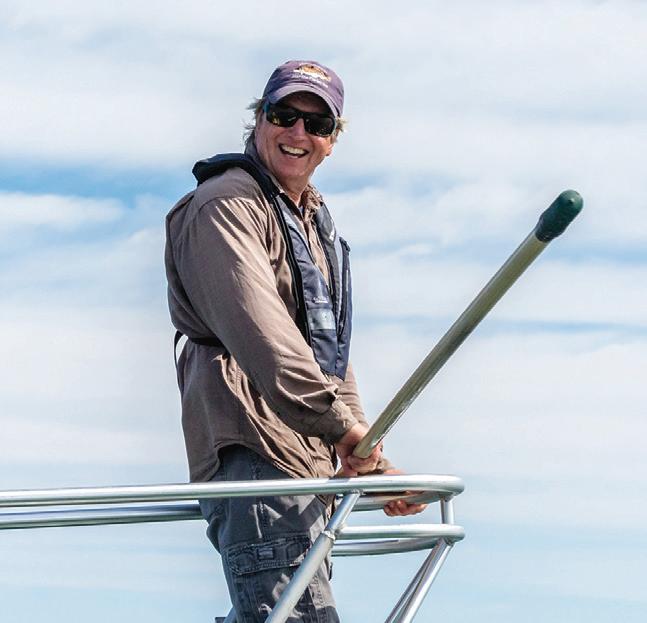
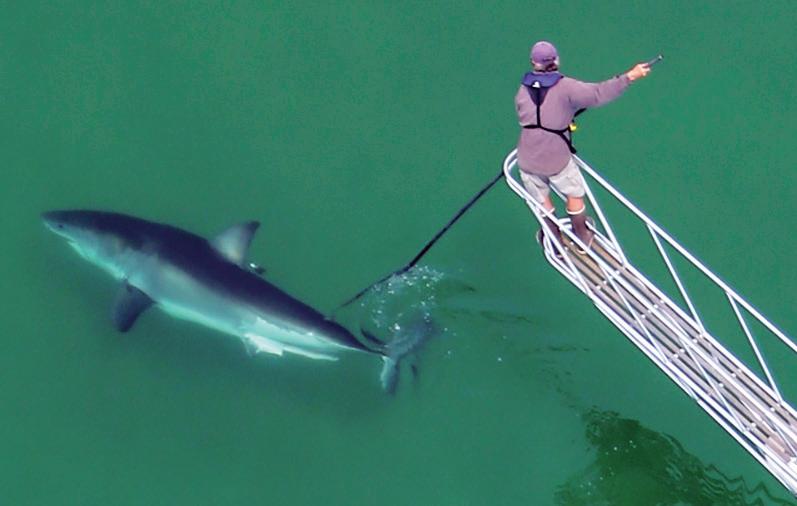
the west, North Atlantic Current to the north, the Canary Current to the east, and the North Equatorial Current along its southern edge. Why Sargasso? Sargassum is a type of floating algae, which get pushed into the middle of this mid-ocean sea by the surrounding currents. Sailors can tell when they have entered the Sargasso Sea because they can see giant mats of seaweed float ing at the surface. Whether you are a seven-seas poet or a fifty-seas geographer, whether your sea is salty or fresh, the power and beauty of our oceans and seas is something mere words struggle to describe, and could never contain.
Arctic Ocean AtlanticOcean Pacifc Ocean Pacifc Ocean IndianOcean Southern Ocean
Even the number of oceans is often debated. For generations, people said there were four oceans on earth: At lantic, Pacific, Indian, and Arctic, but today most people also include the Southern Ocean around Antarctica to be a distinct body of water. Some people prefer to discuss the earth’s Global Ocean as a single body of wa ter, considering that all oceans are Thereconnected.are,of course, exceptions: the Caspian Sea is landlocked, and some debate that it should be designated as a lake.
Graphic showing sargassum and the marine life that depends on it for habitat, food, and protection. Sargas sum is a type of brown algae that forms a highly productive floating ecosystem on the surface of the water. In the Sargasso Sea, ocean currents on all sides concentrate sargassum in giant mats in the open ocean. (at right) Sargasso mats can stretch for miles and are easily noticed by mariners in the area.
noaaofficeofresponseandrestoration
Most people use the terms sea and ocean interchangeably. Someone going on an o shore voyage might say they are “going to sea” or sailing on the “high seas,” but in terms of geography, seas are smaller bodies of water either located where land and ocean meet, or partially enclosed by land (the Mediterranean Sea and the Black Sea, for example).
SEA HISTORY 180, AUTUMN 2022 47
To
noaa
And the Great Lakes in the United States are often referred to together as an “inland sea,” but unlike the Caspian Sea, the Great Lakes are freshwater not salty. Another exception is the Sargasso Sea, a patch of the Atlantic Ocean bounded only by ocean currents: the Gulf Stream to
The term Seven Seas has been around since at least ancient times. It shows up in a Sumerian hymn written around 2300 BC, and the term was often used by ancient Greeks. What people refer to as a sea has changed over time and place, and generally referred to what was known to them at the time. For example, to inhabitants of Asia and the Middle East, the seven seas comprised the Bay of Bengal, the Arabian Sea, the Gulf of Thailand, the Singapore Strait, the Strait of Malacca, the South China Sea, and the Persian Gulf. The Greeks defined the seven seas as the Caspian, Mediterranean, Black, Red, Adriatic, Aegean Seas, and the Persian Gulf. Once Europeans traveled across the rest of the globe, their list of known seas grew; geographers today recognize that the earth has fifty seas. Sail the Seven Seas


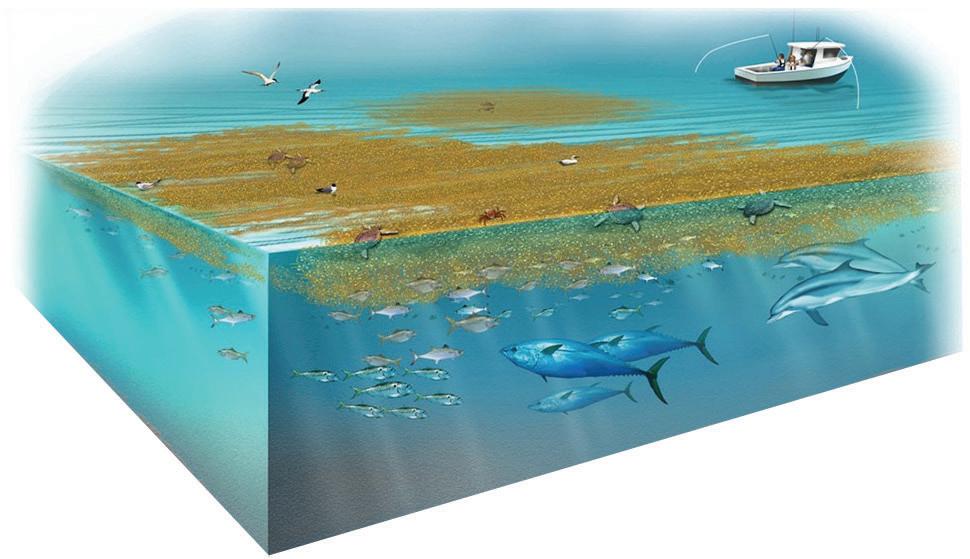

sea turtle was once caught by a fisherman, caught his own lucky break, but then had the miserable misfortune to be captured a second time by the same guy. The only silver lining to this unfortunate tale is that this incident helped build the case for sea turtle conservation around the world.
48
This green turtle was caught, but thankfully just on camera. for kids by Richard J. KingAnimals in Sea History centersciencefisheriesislandspacificnoaa
SEA HISTORY
Now, this was an exceptionally large green turtle, maybe over four hundred pounds. His life must have begun as did that of all other sea turtles for tens of millions of years before him. His mother dug a hole with her rear flippers on a remote sandy beach of the western Caribbean. She deposited about a hun dred eggs, covered the hole with sand, wished them all buena suerte, and went back to sea. After about two months, the tiny baby turtle hatched and, somehow, through intuition and genetics, he and the others knew that they needed to climb out and make it to the water—and fast. Several of his siblings would have been too slow or just unlucky, eaten that night on the beach by, say, a heron or a coyote. Once the rest made it into the water, several more baby turtles were likely eaten by underwater predators such as jackfish or rays, while this little turtle and the other survivors managed to swim to relative safety.
In the wild at sea, green turtles might live to be more than sixty years old. It’s not known exactly how old this particular twice-caught giant was, but at some point in his life he survived an attack by sharks or a school of tuna or dolphinfish, leaving all four of his flippers scalloped by a series of bites, scarred for life like a reptilian Harry Potter. The first capture was in 1924. Captain Charles Bush, a veteran skipper-owner of a turtle schooner out of the Cayman Islands, had sailed all the way down to Mosquito Cay, off the Nicaraguan coast. As was the custom, Captain Bush branded his initials into the green turtle’s shell. By the 1920s, Caymanian captains had been sail ing down to the Central American coast for over a century, ever since their own waters had been fished out of turtles by early European mariners and colo nists. Indigenous people, here and throughout the Caribbean, however, had been hunting green turtles for millennia. The Miskitu people of Central America, for example, became famous for their skills catching sea turtles by boat and with spears. When the first Spanish and English explorers arrived in the 1500s, these mariners wrote of the abundance of turtles and the Miskitu’s skill at catching them. Pirates even kid napped Miskitu turtle hunters to help sup ply food for their ship’s crew. Sailors used to love to eat turtle because the nutritious animals could survive on board for weeks at a time, greatly advancing the ability of


For more on green turtles and the people of the Ca ribbean, see Sharika Crawford’s The Last Turtlemen of the Caribbean. For more “Animals in Sea History,” see www. seahistory.org or educators.mysticseaport.org.
So Carr talked to the Caymanian fishermen and heard, among several other stories, this one about Captain Bush and the twice-caught turtle. Carr designed tagging studies to trace green turtle movements as he began to teach an international audience about sea turtles’ extraordinary passages and power of navigation, thus working to help protect the nesting beaches of sea turtles in the Caribbean and around the world.
A fisherman pours buckets of sea water over green turtles caught near Mosquito Cay, April 1949.comfloridamemoryfloridaofarchivesstate,www
“Sea History for Kids” is sponsored by the Henry L. & Grace Doherty Charitable Foundation
colonial mariners, for better or worse, to sail to all corners of the Caribbean. Green turtles were es pecially prized because, as mostly vegetarians, the flavor of their meat was apparently quite good.
49
As historian Sharika Crawford ex plains, “The expansion of explora tion and peopling of the region was dependent on sea turtles.” After Captain Bush caught the scarred green turtle in a net and branded the shell, he sailed his car go of turtles to Key West, Florida, where he sold them to local mer chants. The animals were placed in a fenced area in shallow water, known as a kraal, to keep them alive before being shipped elsewhere or killed for turtle soup or canned meat. But then an October hurricane blew through the region and wrecked the kraal. All the turtles escaped. This is where the story gets truly exceptional. Five months after he’d caught that big turtle the first time, Captain Bush was again fishing off Mosquito Cay. He saw again this turtle’s size and the scalloped flippers. He caught this turtle in his nets again, found his brand, sailed the animal back up to Key West with some others, and sold the giant a second time. The merchants were none the wiser, unaware that one turtle in the kraal was worth two for Captain Bush. (See what I did there?) Years later, along came a marine biologist named Archie Carr. “The most serious handicaps in any effort to save the green turtle is our ignorance of its migratory movements,” Carr wrote in 1954. “Fishermen ev erywhere believe the green turtle migrates. Such a belief can also be found in the writings of the naturalists. But nowhere in the canons of zoology is there a shred of what could be called scientific evidence to prove it.”
Scientists today theorize that sea turtles find their way by using a combination of magnetism, wave direction, and sensitivity to solar and lunar light—and maybe also sound and smell. Swimming along their millennia-old migratory highways, green turtles are now only at about one percent of their historical population. As they fly underwater through the Caribbean Sea, their paths from feeding grounds to nesting beaches remain mostly a mystery to scientists—even with the use of DNA identification, satellite tagging, and other advanced research methods.


John W. B ro W n
Last day to order tickets is 14 days before the cruise; conditions and penalties apply to cancellations.
50 SEA HISTORY 180, AUTUMN 2022 crmm Sail Aboard the Liberty Ship
Reservations: 410-558-0164, or www.ssjohnwbrown.org
Project Liberty Ship is a Baltimore-based, all volunteer, nonproft organization. SS JOHN W. BROWN is maintained in her WWII confguration. Visitors must be able to climb steps to board.
On a cruise you can tour museum spaces, bridge, crew quarters, & much more. Visit the engine room to view the 140-ton triple-expansion steam engine as it powers the ship though the water.
e shing vessel Western Flyer returned to the water on 29 July following a sevenyear “complete, top-to-bottom restoration” at Port Townsend Shipwrights Co-Op in Port Townsend, WA . She was towed the following day to Seattle for the installation of her mechanical systems. Once that has been completed, the vessel will travel to her new home in Monterey, California, where she will serve as a oating classroom and research vessel. Martin Pet rich Sr., owner of Western Boat Building Company, built Western Flyer in 1937 in Tacoma, Washington, as a purse seiner to sh for sardines. e boat was nominated to the National Register of Historic Places as an outstanding example of the West Coast wooden-hull purse seiner and a vet eran closely associated with the short-lived California sardine shery, whose peak years only lasted from the mid-1930s to the mid1940s. Western Flyer is also noted as a ves sel of national signi cance for her associa tion with author John Steinbeck and marine biologist and ecologist Ed Ricketts; the pair hired Western Flyer and her captain and crew for a six-week trip in 1940 to collect marine specimens between Monterey and the Gulf of California. Western Flyer gured prominently in the book e Sea of Cortez: A Leisurely Journal of Travel and Research, a book by the two men chronicling their voyage. In his review for a Wall Street Jour nal piece on favorite books read in 2020, conductor Herbert Blomstedt called e Sea of Cortez a “fascinating combination of science, friendship and rallying cry for ecology.” After the collapse of the Califor nia sardine shery, Western Flyer was en gaged in shing for perch, Petrale sole, black cod, and Paci c cod, before being converted to crab shing under the name Gemini. She changed hands several times, and sank twice (in 2012 and 2013). She was then purchased by marine geologist John Gregg, who engaged shipwright Chris Chase to oversee her restoration and found ed the Western Flyer Foundation; the North West Maritime Center assisted with initial public fundraising to get the restora tion started. Western Flyer was added to the National Register of Historic Places in 2017. (10928 Clam Way, Moss Landing, CA; www.western yer.org) … e Lightship Columbia (WLV-604) was welcomed back to the Columbia River Maritime Museum on 1 June. Diversi ed Marine, Inc., of Portland, Oregon, has been busy since last October carrying out a signi cant to-do list, including “to inspect, clean, sandblast, repair, and repaint the hull, decks, superstructure, masts, ttings and rigging.” e 2,200-lb. propeller was re moved and blasted, to be added to the museum’s outdoor display collection. Fuel, ballast, and water tanks were drained, cleaned, and painted. Light xtures were replaced with LED lighting and installed in the bilge spaces so visitors can examine that part of the ship. Some areas below deck that have been o -limits to the public since 1979, such as the engine room, were re stored and modi ed into new exhibit spaces. e Large Navigation Buoy (LNB), which was also in need of a spruce-up to deal with rust and metal degradation, was restored by Astoria’s Marine Construction and returned to its previous location at the museum prior to the lightship’s arrival, so that Columbia could be moved into position behind it. As of press time, visitors to the museum will be able to tour the top deck of the lightship; exhibit spaces below deck will be opened to the public at a later date.
2022 Cruise on the Chesapeake Bay
e lightship WAL-604 [ W (designation for US Coast Guard) A nchored L ight] was westernflyer.org
September 24


includesUSLSSHAMembershipquarterlyissues of Wreck & Rescue Journal plus an invitation to our annual meeting and conference, held in a different, historical area of the U.S. each year. ww w.uslife-savingservice.or g uslssha @ gmail.com
Dr. Timothy D. Walker and runs to 30 November 2022. You can read Dr. Walker’s article on the NMHS website at www.seahistory.org/magazine (scroll to Sea History 175). South Carolina’s Governor Henry McMaster signed Executive Order 2022-20 in July, commis sioning an updated cost study for the removal of toxic pollutants from the World War II Essex -class aircraft carrier Yorktown. When the ship was donated to Patriots Point Naval & Maritime Museum in Charleston Harbor in 1975, the Navy did not remove the approximately 160,000 gallons of petroleum and 1.6 million gallons of polluted waters and polychlorinated bi phenyl compounds (PCBs) in the ship’s 428 vessel tanks/compartments. A 2013 USS Yorktown at Patriots Point yorktownussfdn
U.S. LIFE-SAVING SERVICE HERITAGE ASSOCIATION
Preservingarchitectureartifacts,history,andof the Life-Saving Service and the U.S. Coast Guard
SEA HISTORY 180, AUTUMN 2022 51 launched 18 April 1950 at Rice Brothers’ shipyard in East Boothbay Harbor, Maine, and was installed at the Columbia River Bar station in 1951. e approach to the Columbia River Bar was the rst lightship station on the US West Coast; WAL-604 was the fth lightship to serve in that loca tion. She was the last lightship station on the coast, and when she was retired she was replaced with the automated LNB. In turn, that LNB was decommissioned in 1993, and it was acquired by the museum. e lightship, which had been assigned the new designation WLV-604 [ W (US Coast Guard) L ighted Vessel] when the Coast Guard shifted nomenclature in 1965, was sold to the state of Oregon in 1980 and then acquired by the Columbia River Maritime Museum. (1792 Marine Dr., Astoria OR 97103; www.crmm.org) … In June, Professor Timothy D. Walker was awarded the 2022 Rodney Houghton Award for the Best Feature Article in Sea History for his article “Sailing to Free dom: Maritime Dimensions of the Underground Railroad,” based on his book of the same name, published by the University of Massachusetts – Amherst. Since its publication just over a year ago, the Sailing to Freedom volume has garnered broad attention and gained solid traction. e book has been the subject of numerous lectures, panel discussions, and podcasts, most of which were recorded and can be accessed online. Further, at the New Bed ford Whaling Museum, Walker is the ad visor and co-curator (with the museum’s curator, Michael Dyer) for a groundbreak ing new exhibition chronicling the experi ences of enslaved persons who made their way to freedom using coastal water routes along the Atlantic seaboard. e exhibition opened in May in the Centre Street Gallery
timcourtesywalker





Published by Arcadia Publishing and Galveston Historical Foundation $21.99. 128 pages, 200 photographs Autographed copies available at (409) 763-1877, or online at: study commissioned by Patriots Point con cluded that removal and cleanup would cost around $4.4 million. e new cost study would be the rst step in removing the materials from the carrier; the governor recommended that the state’s General As sembly further pay for the remediation using a portion of funds made available to the state through the American Rescue Plan Act of 2021 (ARPA). “As the outer hull of USS Yorktown continues to corrode, the chance of an environmental disaster only increases with each passing year,” said McMaster. “ is executive order protects Charleston Harbor and the entire Low country from these hazardous materials leaking out of USS Yorktown and into the harbor.” South Carolina O ce of Resil ience chief Ben Duncan added, “USS Yor ktown is very important to South Carolina’s history and tourism. Our team stands ready to begin the process of collaborating with state leaders, state agencies, and Patriots Point for the complete remediation of the contents in the ship.” CV-10, the second aircraft carrier of the Essex class, was laid down at the Newport News Shipbuilding and Drydock Company on 1 December 1941; work on the vessel was accelerated in response to the outbreak of World War II. e carrier was initially supposed to be named Bonhomme Richard, but after USS Yorktown (CV-5) was sunk in the Battle of Midway, it was decided to confer that name to the new carrier. She served in World War II and the Vietnam War; she was also the vessel that retrieved the Apollo 8 crew and spacecraft in 1968. e Navy donated Yor ktown to the State of South Carolina in 1975 for use as a museum ship. (Patriots Point Naval & Maritime Museum; 40 Pa triots Point Road; Mt. Pleasant, SC; www. patriotspoint.org) … In June the University of East Anglia (UEA) announced the discovery of the wreck of the Gloucester, which the university calls one of the most famous ships of the 17th century. Built in Limehouse and launched in 1654, Gloucester was a third-rate warship, serving in maritime campaigns in the Anglo-Span ish War and the Second and ird AngloDutch Wars. e ship, carrying James Stuart, Duke of York and the future King of England and King of Ireland, ran aground on 6 May 1682. While Stuart survived, having abandoned the ship, some 130 to 250 passengers and crew died (the exact number is unknown), including the Earl of Roxburghe, Lord Ibrackan, Sir John Hope and the Duke’s brother-in-law James Hyde. Prior to the sinking, the Duke had fought with the ship’s pilot about the route the ship would take and delayed abandon ing ship until the last minute, endangering the lives of those who couldn’t abandon ship before royalty. His behavior in the incident was to haunt him politically. After searching for four years, the wreck was discovered in 2007 by brothers Julian and Lincoln Barnwell, along with their late father, and friend James Little. e Receiver of Wreck and Ministry of Defence used the ship’s bell to positively identify the vessel as the Gloucester. In addition to the bell, other items retrieved from the wreck site include clothing and shoes, navigational and other naval equipment, personal possessions, and some unopened wine bottles. ere are currently no plans to raise any part of the ship’s remains. An exhibition, e Last Voyage of the Glouces ter: Norfolk’s Royal Shipwreck, jointly cu rated by the UEA and Norfolk Museums Service, will be held at Norwich Castle Museum 25 February–25 July 2023, to display the most important nds from the wreck that have been conserved. e UEA has created the Gloucester Project (www. gloucestershipwreck.co.uk), a research ef fort to increase understanding of 17th century naval and political history through study of the ship and the wreck site. (Uni versity of East Anglia, Norwich Research Park, Norwich, Norfolk, www.uea.ac.uk)
… e Sultana Disaster Museum, commemorating the sinking of the steamboat Sultana on 27 April 1865, received a e Wreck of the Gloucester o Yarmouth, 6 May 1682 , by Johan Dankerts (1615–86) greenwichmuseumsroyal,p.d.
All proceeds from this pictorial history benefit the ELISSA preservation fund. ww w .t sm e li ssa . o r g
52 SEA HISTORY 180, AUTUMN 2022 by Kurt D. Voss


SEA HISTORY 180, AUTUMN 2022 53 ... • •• 1/8 page AD THE HISTORIC NAVAL SHIPS ASSOCIATION THE FLEET IS IN. www.HNSA.org Sit in the wardroom of a mighty battleship, touch a powerful torpedo on a submarine, or walk the deck of an aircraft carrier and stand where naval aviators have flown off into history. It’s all waiting for you when you visit one of the 175 ships of the Historic Naval Ships Association fleet. For information on all our ships and museums, see the HNSA website or visit us on Facebook. CMYCYMYCMYMCK 2.25x4.5_HNSA_FleetCOL#1085.pdf 6/5/12 10:47:40 AM


e Sultana explosion was the greatest mar itime disaster prior to the sinking of the Titanic and the attack on Pearl Harbor. wabashedu
PIRATE PLAYING CARDS & PRINTS by Signature ASMA Artist, Don Maitz, National Geographic contributor and origi nator of the Captain Morgan Spiced Rum character. Full-color playing cards have di erent watercolor images on each face. Prints present sea-rover adventurers. Order from: www.paravia.com/studioshop.
THE LOST HERO OF CAPE COD by Vincent Miles. e story of an elite mariner, Captain Asa Eldridge, and the nineteenth-century battle for commercial supremacy on the Atlantic. Reviews, avail ability, at www.vjmiles.com/lost-hero and Amazon.com. BOMBSHELL by T. F. McGraw. e true tale of a unique Union Army ghting ship, born of Gen. Burnside’s 1862 “Operation Anaconda.” Modi ed at ‘New Berne’ in 1863 as a gunboat for use on the Caro lina coastal rivers, Bombshell landed Army raiders, provided artillery cover, evacuated freedmen, and supported other missions. e plucky little steamer was sunk at the Battle of Plymouth and promptly raised by the Confederate Navy, only to be re captured in battle by the Union Navy, as she served as consort to the ironclad CSS Albemarle. $20.00, including postage & taxes, directly from Indian Creek, PO Box 14663, New Bern, NC 28561.
FINE ART PRINTS OF SEA ROVERS & BUCCANEERS by award-winning ASMA Signature artist Don Maitz. Visit: www.paravia.com.
KEEPING THE TRADITION ALIVE by Capt. Ray Williamson. e remarkable story of Maine Windjammer Cruises,TM founder of the windjammer industry. 172 page, 11 x 14 hardcover book with over 100 full-page images from the days of cargo to the present. Price–$48. Call 800 736-7981; email sail@mainewindjammer cruises.com.
CLASSIFIED ADS
Sea History magazine classi eds ads: $1.60 per word Contact Wendy at advertising@seahistory.org
MARTIFACTS, INC. P O BOX 350190 JACKSONVILLE, FL 32235-0190 PHONE/ FAX: (904) 645-0150 www.martifacts.com email: martifacts@aol
OUT OF PRINT NAUTICAL BOOKS. SEA FEVER BOOKS ousands of ti tles. E-mail: seafeverbooks@aol.com; Ph. 860-663-1888 (EST); www.seafeverbook store.com.
grant of $1 million in American Rescue Plan funds for the development of an expanded museum facility. e grant must be matched with $250,000 from the bene ciary organization; the entire project is estimated to carry a price tag of $7.5 million. e Sultana Historical Preserva tion Society recently identi ed the his toric 1938 Marion High School gymna sium as the location for the new expanded museum and has acquired an 1840-era engine from the steamboat LeRoy for its collection, as well as a memorial plaque presented to Capt. William Shields Friesner commemorating his survival of the inci dent. e wooden sidewheeler Sultana was launched on 3 January at the John Litherbury Boat Yard in Cincinnati, Ohio. e steamer was 260 feet long with a beam of 42 feet and tted with 34-foot-diameter Moore and Richardson waterwheels and four side-by-side tubular boilers. Designed to carry 376 passengers, she was carrying 100 passengers plus an estimated 2000–2400 (accounts vary) prisoners of war being returned to the Union side. Around 2 am on the 27th, three of the steamer’s four boil ers exploded and the ship erupted into ames. Sultana only carried 76 life preserv ers onboard and two small lifeboats; while we will never know the exact number of casualites, it is estimated that 1,200 people perished in the incident. SDM, 104 Wash ington Street, Marion, AR; www.sultanadi sastermuseum.com)
THE AUTHORITY TO SAIL by Com modore Robert Stanley Bates. e fully illustrated authoritative history of US Merchant Marine licenses and documents issued since 1852. Co ee-table size book, 12” x 14.” Order direct: e Parcel Cen tre, Ph. 860 739-2492; www.theauthority tosail.com.
PRESIDENTS PLAYING CARDS. All 46 US presidents are represented on these playing cards with interesting facts and quotes. www.presidentsplayingcards.com.
CUSTOM SHIP MODELS , HALF HULLS. Free Catalog. Spencer White, 4223 Chestnut Dr., Center Valley, PA 18034.
54 SEA HISTORY 180, AUTUMN 2022
2.25”x 2” South Shore Boatworks #SH149 Revised SOUTH SHORE BOATWORKS HANSON, MA • 781-248-6446
NATIONAL PARKS PLAYING CARDS. Many of America’s National Parks are rep resented on these cards with interesting facts and images. www.ArcturusLLC.net.
Tired of nautical reproductions?
com
… In June three shipwreck sites were added to the UK’s National Heritage List, including the oldest known protected wreck in English waters with visible hull remains. Ship wreck enthusiast Trevor Small discovered that site in Dorset’s Poole Bay in 2020; tree ( continued on page 56 )
TRADITIONAL WOODEN SHIP'S WHEELS SOUTH SHORE BOATWORKS HALIFAX, MA • 781-248-6446 www.southshoreboatworks.com Handmade in the U.S.A. by Third BobMasterGenerationCraftsmanFuller.
WWW.SOUTHSHOREBOATWORKS.COM Martifacts has only authentic marine collectibles rescued from scrapped ships: navigation lamps, sextants, clocks, bells, barometers, charts, flags, binnacles, telegraphs, portholes, US Navy dinnerware and flatware, and more.


SEA HISTORY 180, AUTUMN 2022 55
Searchable Sea Literature is an open-source website run by Williams-Mystic: e Coastal and Ocean Studies Program of Williams College and Mystic Seaport Museum. Edited and designed by undergraduates and alumni of Williams-Mystic, Searchable Sea Literature provides an important online gathering space for resources, information, and suggested routes of approach to the ever-expanding eld of the study of sea literature! Re sources include peer-reviewed biographies of North American anglophone maritime authors, links to electronic texts of mari time prose, and a Google bookshelf of American maritime lit erature. First launched in 2009 as digitized entries of e Ency clopedia of American Literature of the Sea and Great Lakes, edited by Jill Gidmark, the website has since expanded to o er addi tional biographies, audio clips, videos, open access online texts, and tags so that searchers might easily nd speci c periods, genres, regions, or speci c subject matter. Work on the database is being completed with funding by a subvention grant from the Association for the Study of Literature and Environment. is work aims to expand the peer-reviewed reference material on female North American authors whose writing centers on or explores oceanic themes. is generous grant allowed Searchable Sea Literature to fund ve female scholars, including graduate students, non-tenured, tenured, and independent scholars, to write reference biographies for such female authors. Some of these new entries are for Toni Morrison, Marilyn Nelson, Sylvia Earle, and Jamaica Kincaid. e site, led by co-editor Ned Schaumberg, assistant profes sor of Literature of the Sea at Williams-Mystic, and Alison Maas, a PhD candidate at the University of California–Davis, has recently added two important features: a scholarly “Bibli ography to the Study of Sea Literature” and a “Blue Humanities” Zotero1 group library. ese two resources serve as a jumping o point for anyone newly interested in the eld looking for a place to start or to design a course. e scholarly bibliography is organized by topic, including: Oceanic Studies & Blue Humanities ( eld-de ning texts); Special Issues & Edited Col lections; Maritime Literary Studies (primarily North Atlantic); Black Atlantic & Black Studies (including Caribbean); Indigenous Studies; Feminist eory & Queer eory; Science, Technol ogy, & Media Studies; Maritime and Environmental Histories; Capitalism & Labor at Sea; and Anthologies. e “Blue Hu manities” Zotero group page extends this list to encompass a wider collection of sources and is open to anyone who would like to join and add their own sources. e Searchable Sea Lit erature editors welcome any and all questions about this project. eir emails can be found on the Searchable Sea Literature website. ey encourage anyone interested in contributing a biography, acting as a peer reviewer, or participating in any way to reach out! Searchable Sea Literature also regularly hosts undergraduate and graduate student research experiences and internships.(www.sites.williams.edu/searchablesealit)1Zoteroisanopensourceresearchsharingandcommunications tool.
Online Resource: Searchable Sea Literature

56 SEA HISTORY 180, AUTUMN 2022 USS KIDD Open daily on the Mississippi River in Downtown Baton Rouge www.usskidd.com • 225 342 1942 • info@usskidd.com ( continued from page 54 ) ring dating identi ed the ship’s timbers as Irish oak trees felled during the reign of King Henry III. Items recovered from the site include two Purbeck gravestone slabs from Dorset and two cauldrons. Also found on the site were multiple Purbeck stone mortars, used to grind grain, and earning the site the identi cation “the Mortar Wreck.” e two other wrecks, identi ed as NW96 and NW68, were located on the Shingles Bank in the Needles Channel. e NW96 wreck contained lead ingots cast from a “bole”—a type of furnace no longer used after around 1580, suggesting that the wreck occurred in either the 16th century or the very late 15th century. e NW68 wreck possessed one cannon cast in Amsterdam between 1621 and 1661, suggesting that that vessel was likely a 17th century armed Dutch vessel. Inclusion of the three sites on the National Heritage List means that divers will need a license administered by Historic England to dive the wrecks, and the sites will be carefully monitored. ere are 57 such protected wreck sites in English waters. (www.his toricengland.org.uk) … e Bayshore Center in Bivalve, New Jersey, welcomed home its historic schooner A. J. Meer wald on 6 August. Since September of last year, the Meerwald had been in Belfast, Maine, in the capable hands of Clark & Eisele Traditional Boatbuilding. at haulout was the nal phase of an extended renovation project, which has included a replacement of the engine and generator, as well as the jib and foresail, rudder, e “Mortar Wreck” artifacts include deco rated Purbeck gravestones. Purbeck stone is a form of limestone made from densely packed shells of freshwater snails and is quarried from the Isle of Purbeck. universitybournemouth

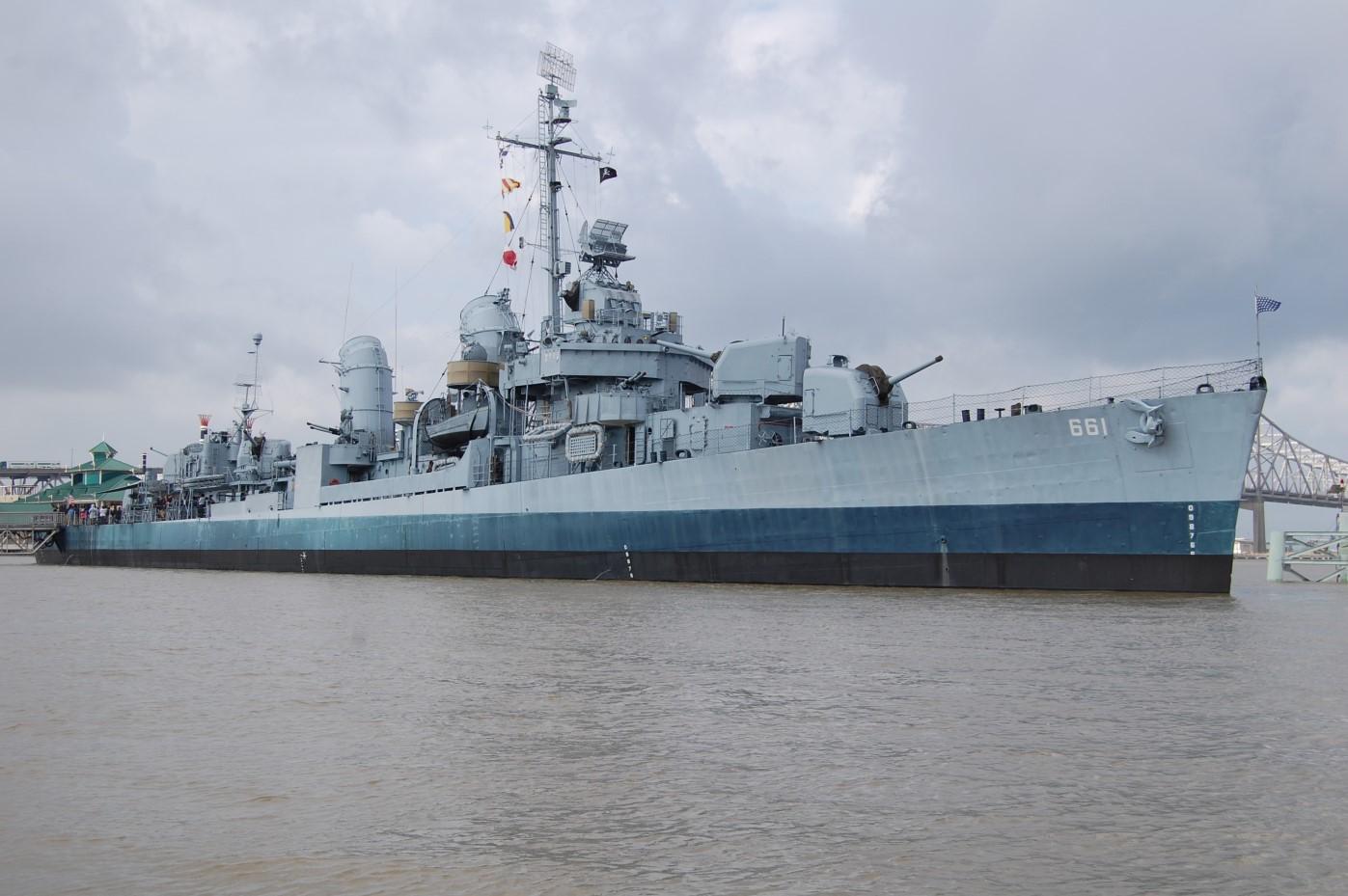


Launched on 7 September 1928 at Charles H. Stowman and Sons in Dorchester, New Jersey, the wooden centerboard schooner (equipped with an auxiliary diesel engine) was designed for oyster dredging. By law, the harvesting of seed oysters was only permitted under sail, so the propeller and pilothouse were removed seasonally for that operation. For the rest of the year, sail, ga s, and booms were removed and the propeller and pilot house were reinstalled. Meerwald dredged for oysters until 1942, when in June of that year she was commandeered under the War Powers Act and used by the US Coast Guard as a reboat. Most of her sailing rig was removed and pump systems were installed; she served four years in this capacity on the Delaware River. In 1947, she was returned to her previous owners, the Meerwald family, and then sold to Clyde A. Phillips, who had the re ghting rig removed, the engine replaced, and new oyster-dredging equipment in stalled to serve as a full-time powered oys ter dredger under a new name— Clyde A. Phillips. In 1995 she was restored to her original name as well as her rig, and brought into service at the Bayshore Center. (Bay shore Center at Bivalve, 2800 High Street, Port Norris, NJ; www.bayshorecenter.org)
Morehead City, NC USA
CANNONS Finely Crafted Marine Grade Working Replicas
www.shipmodel.com | wall@shipmodel.com | 978-281-1166
Experiencedwww.modelshipsbyrayguinta.com201-461-572907605e-mail:raymondguinta@aol.comshipmodelmakerwhohas been commissioned by the National Maritime Historical Society and the USS Intrepid Museum in NYC. The quarterly magazine devoted to traditional sailing vessels, sailors, and sail training!
propeller, and galley during the work accomplished before this most recent pe riod in drydock. Everything on the ship from the waterline up has been replaced. e last major restoration of the ship was carried out in 1995; nearly 100,000 pas sengers have sailed in New Jersey’s o cial tall ship since that time. She will be re turned to service as a sailing classroom and excursion vessel for the Bayshore Center.
SHIP MODELS Since 1975Model Ships by Ray Guinta P.O. Box 74 Leonia, NJ
Schooner A. J. Meerwald
Appraisals
One year $29 * Two years $48 To subscribe, visit our website, call (978) 594-6510, or send a check to MARLINSPIKE 98 Washington Square #1, Salem MA 01970
R. Michael Wall Ship Broker for sales and acquisitions = Collection Management and
CANNONS Finely Crafted Marine Grade Working Replicas
Beaufortwww.bircherinc.com252-726-5470NavalArmorers
Model
57 centercourtesybayshore
Beaufort Naval Armorers
Morehead City, NC USA www.bircherinc.com252-726-5470







Yale
“When he is at his best, as he o en is in these pages, Kennedy can be dazzling.”
A lavishly illustrated history of the rise of American naval power during World War II UNIVERSITY PRESS
e authors spend some time on di plomacy, and discuss how the Lincoln ad ministration had to tread carefully, both to set up the blockade, and then to maintain it. e Union’s blockading e orts had to satisfy the criteria that most of the Euro pean nations agreed upon, according to international law. ey provide an overview of blockade practices and the legal developments that occurred forty years before the Civil War, pointing out that the British, in par ticular, held the United States to high standards, which also happened to uphold British naval inter ests. Rulings from Ameri can prize courts actually broadened the theory of blockade practice. Bonner and McCord also survey the early diplo matic developments that set the relationship between the British, the Confederacy, and the United States. Part of this connection revolves around “King Cotton Diplomacy,” and its failure. ey consider the probable consequences had the Southern states not implemented this measure. e authors’ greatest contribution is their statistical analysis of the economics of the blockade and its e ectiveness. ey point out that blockade running created a “short-lived boom economy,” with a wide assortment of international characters look ing to get rich, which attracted the needed capital. ey likewise assert that the block ade was a psychological weapon, in icting abnormal economic conditions upon the South. Bonner and McCord maintain that the mere existence of the blockade “demor alized” the Confederacy because it was a constant reminder to those on the home front that there was a war ongoing, yet they submit that the e ect is impossible to quan tify. e authors further look at the deter rent e ect of the blockade and claim that shortages impacted all industries, particu larly railroads, and they also examine how it caused in ation. eir ndings relate that the Union navy’s ability to stop steame Union Blockade in the American Civil War: A Reassessment by Michael Brem Bonner and Peter McCord (Univer sity of Tennessee Press, Knoxville, 2021, 217pp, appen, notes, biblio, index, isbn 978-1-62190-670-4; $45hc)
Every year, publishers produce scores of new books on Civil War history, yet few examine the purely naval aspects of the con ict. It has been decades since a wideranging study appeared on the blockade that scruti nizes the Union’s e orts to curtail Southern trade and to determine its overall va lidity and e ectiveness. e authors of e Union Block ade in the American Civil War: A Reassessment have recti ed this shortcoming. ere are several themes within the book. e authors examine how the blockade in uenced the mindset of the war’s participants, and how it met the legal requirements and evolved into a diplomatic experiment. ey also assess the Confederates’ reliance on European imports to sustain the war e ort, and, importantly, they statistically analyze the blockade’s e ectiveness. Much of the book’s narrative brings readers up to speed on the blockade and the previous scholarship on the subject. e authors discuss the nuances of the e ort and look at the historiography of the topic. ey relate that the purpose of their work was not to “establish a new paradigm” or revise historical analysis, but to spark ad ditional questions. ey deliberate on the blockade as a critical component of Union strategy and not just as a sideshow, asking probing questions and adding their analysis. e authors, Michael Brem Bonner, an assistant professor of history at the Uni versity of South Carolina at Lancaster, and Peter McCord, who teaches history at the State University of New York in Fredonia, discuss the US Navy’s establishment of the blockade. ey consider the contributions of Gideon Welles, as well as pointing out the geographical complications, arguing that the Union’s blockade was a huge un dertaking that no country had ever at tempted on this scale before. ey also look
Reviews
—Ian W. Toll, New York Times yalebooks.com
Jordan, Wall Street Journal
58 SEA HISTORY 180, AUTUMN 2022 at advances in maritime technology and how they made maintaining the blockade more di cult.
A riveting exploration of the brilliant, combative, and controversial “Father of the Nuclear Navy” “Wortman opens a window into the life of an intellectual titan disdainful of nearly everything except scientific honesty, his adopted nation, and the power of the —Jonathanatom.”W.


James A. Noone Fairfax, Virginia
Prefer right hand page, bottom right. self mathematics, history, and literature during his o -watch hours. In the late 1930s shipping jobs dried up and Gill and his older brother, Steve, heard about a federal homesteading project in Alaska that had a need for workers to support new communities. inking it would be a great opportunity, they planned a 5,000-mile journey to Alaska via the West Coast. But they hardly had any money. eir only solution was to ride the rails as hobos, dashing onto boxcars, hiding from the rail yard police, and sharing mulligan stew with fellow hobos while heading west. Unfortunately, things didn’t work out. ey heard from other rail travelers that good jobs weren’t available in Alaska after all. e rails carried Gill to San Francisco, where he secured a berth aboard a merchant ship carrying cargo to East and West Coast ports via the Panama Canal. At sea, he worked hard to master seamanship and navigation. With war soon approaching, Gill was accepted at the US Maritime Ser vice O cer Training School. In December 1941—three days after the attack on Pearl Harbor–he graduated as an ensign. Later that month, the Coast Guard issued his approval as a third mate. In early 1942, at age 21, Gill accepted a third mate position on the Liberty ship SS Nathanael Greene, departing from New York on a mission to deliver weapons and ammunition to Amer ican ally Russia. e US/UK convoy to Archangel, Rus sia—by way of the Arctic Ocean—was a treacherous voyage, during which they encountered enemy attacks and severe weather. e Nathanael Greene and other ships of the convoy were continuously at tacked by German U-boats and torpedo bombers. According to the British Admi ralty, it was the biggest convoy battle of World War II. Gill repeatedly red from his machine gun station as German tor pedo bombers ew close to the water, di rectly at their targets. After running the gauntlet of German attacks, the battered Nathanael Greene nally arrived at its des tination in Russia, its mission accom plished.Ina subsequent Atlantic crossing to the Mediterranean, the Nathanael Greene was torpedoed by a U-boat. Gill was jolted by the explosion and blacked out, but powered blockade runners actually de creased during the war. e two do assert, however, that it did prevent large cargo ships from participating in the trade, and that the maintenance of the blockade greatly a ected the events of the war, em phatically claiming that the blockade was successful and important to Union victory. e greatest contribution of this book is the fresh look at the blockade’s e ectiveness. Importantly, they look at the cost-bene t ine ectiveness argument as well as the ma terial and e ectiveness argument. e tables provided by the authors to support their claims are valuable. ere are a few tri ing errors. e most vexing is their continual reference to Rear Admiral Samuel Phillips Lee as “Stephen.” Nevertheless, this work shines new and important light on the topic and everyone investigating the block ade should start with this book.
SEA HISTORY 180, AUTUMN 2022 59 G THE GLENCANNONPRESS
MaritimePBooks NEW! Black Knight
The complete life story of the frst black man to have and sail on an American master’s license and the frst to command a Liberty Ship throughout World War II.
The Life and Times of Capt. Hugh Mulzac
More than 300 pages, 14 in full color. FREE Catalog Tel. 1-510-455-9027
The Glencannon Press 4 col. inches (2.25 x 4.5 inches)
somehow woke up and managed to crawl out of his cabin through the debris. Five crewmembers were killed; many others were injured. e ship was towed and beached in Algeria. Gill nally got home and married his ancée. At this stage in his life, his high-sea adventures were mostly over, but not quite. He taught for a while at the Maritime O cers Training School but, getting restless, accepted a Navy Re serve commission. He was assigned as a stevedore o cer in the 37th Naval Mobile Construction Battalion (Seabees) at Pearl Harbor. When the war was nally over, he was discharged from the Navy in 1946. Although he lacked a high school diploma, he used the GI Bill and attended college, graduating in three years. Amazingly, he then applied for admission to, and was accepted at, Harvard Business School, graduating with an MBA! Gill’s book is full of adventure and determination, a terri c read. Many auto biographies aren’t page-turners, but this one is.
Robert Browning Roxboro, North Carolina
Armageddon in the Arctic Ocean: Up the Hawse Pipe from Galley Boy to ird Mate on a Legendary Liberty Ship in the Biggest Convoy Battle of World War II by Paul G. Gill, edited by Paul G. Gill Jr. (Hellgate Press, Ashland, Oregon, 2022, 402pp, illus, notes, index, isbn 978-195416-338-6; $19.95pb)
Paul Gill’s memoir—a 20th-century tale of grit, seafaring, bravery, and patrio tism—is skillfully woven together by his son, Paul Gill Jr., from his father’s dusty notes and manuscripts compiled over the years.Paul Gill Sr. tells his story of persever ance starting as a youngster in South Bos ton in an Irish-American family of six kids, scavenging for driftwood for his mother’s kitchen stove during the frigid winters of the Great Depression. With jobs scarce, at age fteen he joined the Civilian Conserva tion Corps in Vermont. A year later—after doctoring his birth certi cate to say he was 18—he secured Seaman’s Papers and shipped out as a galley boy in an oil tank er, the beginning of his many adventures at sea. With a stroke of good fortune in the merchant marine, Gill then put to sea as a crewmember in an ocean liner, and subse quently made eight trips across the Atlan tic. A high school dropout, he taught him

—Joseph A. Williams, author of Fathoms Deep and Sunken
Seventeen
Gold
Commanding Petty Despots: e American Navy in the New Republic by om as Sheppard (Naval Institute Press, An napolis, 2022, 240pp, illus, notes, biblio, index, isbn 9781682477557; $44.95hc) e theme of Commanding Petty Des pots: e American Navy in the New Repub lic is the tension between US naval o cers’ deep-rooted sense of honor and craving for fame, and the institutional need for profes sionalism and civilian supremacy, a tension that omas Sheppard sees as a hallmark of the navy in the early Republic. Over time, and not without exceptions, profes sionalism and civilian control won out over personal honor and glory. In this slender, deftly written volume, Sheppard, a profes sor at the Marine Corps University Com mand and Sta College, has contributed to our understanding of the dynamic of civilian control over the Navy. Commanding Petty Despots covers the half-century from the American Revolution to 1824, when Commodore David Porter resigned from the Navy after a court-martial suspended him from the service for landing an assault force at Fajardo, Puerto Rico (a Spanish colony)—not the last gasp of o cers acting for what they deemed the honor of the Navy, but a tting coda to the book. Commanding Petty Despots takes its name from a comment by the very same Porter, who compared the power of a cap tain aboard ship to the absolute control the sultan of the Ottoman Empire exercised over his Sheppard’ssubjects.chapters are brief sorties into naval administration in each decade from the 1770s to the 1820s. During the Revolution, naval a airs were chaotic, of cers acted as they wished, and they showed outright contempt for their civilian leaders. Sheppard portrays a muddled chain of com mand, the ranking of captains based on geography, not ability, and problems with discipline and a lack of direction. After peace in 1783, there was no American navy for a decade. With the rati cation of the Constitution, civilian control over the armed services was ensured, and only the federal government could provide and maintain a navy. President is triple-expansion epic is set in 1913 Shanghai, where four cultures are about to collide: China, Korea, Japan, and the US. e point of collision is three tons of Japanese gold ingots meant to undermine an already collapsing China.
“ e Abalone Ukulele is a masterclass in historical ction. With painstaking research and a gift for story spinning, Crossland brings to brilliant life a sprawling epic of greed, gold, and redemption.
” INDIVIDUAL ORDERS : www.dreadnaughts-bluejackets.com FOR BULK ORDERS: orders@newacademiapublishing.com
e
60 SEA HISTORY 180, AUTUMN 2022 Washington appointed the rst naval of cers based on merit and their “reputation [from] the last war.” Recognizing that the Navy was small and unproven and forced to delegate authority because contingencies were many and communications were slow, the rst secretary of the navy, Benjamin Stoddert, sought energetic and zealous of cers. Weeding out cautious and “indi er ent” characters, he got the rebrands he wanted. e US Navy won victories in the Quasi War and the Tripolitan War with these men in command, but their touchy personal honor (a subject that has garnered much attention, starting with the 1969 book e Commodores by Leonard Gut tridge and Jay D. Smith) created internecine battles about relative rank, with omas Truxtun, Richard Dale, and Silas Talbot all resigning their commissions over per ceived slights. Among junior o cers, there was squabbling over promotions and duels, which killed o promising men. But the ethos of o cers’ subordination to civilian authority was strengthened when Navy Secretary Robert Smith accepted the cap tains’ resignations, although it is simply not true, as Sheppard states, that “every remaining captain was perfectly competent to command a squadron.” Sheppard takes a refreshingly revision ist view of the Naval Peace Establishment Act of 1801, which reduced the US Navy to nine captains and 36 lieutenants and is often seen as the bane of the Navy’s exis tence. For Sheppard, it promoted profes sionalism by culling insubordinate and alcoholic o cers. e War of 1812 tested that professionalism. e disastrous loss in single-ship combat of the frigate Chesapeake on 1 June 1813 due to Captain James Law rence’s craving for distinction led the Navy to campaign against “excessive ardour” in its captains. Tellingly, Sheppard compares the earlier injunction from Navy Secretary Paul Hamilton, that his o cers “vindicate the injured honor” of the Navy “at every hazard,” to Secretary William Jones’s later admonition to them to avoid “feats of chiv alry.” Perhaps more than anyone else, Jones changed the Navy’s culture, de-emphasiz ing prize-taking (which incentivized o cers individually, through nancial rewards) for national objectives, assigning o cers based on the country’s interest and not their

“...An absolutely splendid read.”
“…Real, relevant, and deeply meaningful to anyone who has set sail and headed into harm’s way.”
Eric C. Rust, Professor of History, Baylor University Available on Amazon.com and at www.hellgatepress.com
SEA HISTORY 180, AUTUMN 2022 61 own, asserting a coherent naval strategy, and expanding the still-tiny naval bureau cracy.After the war, civilian supremacy was assured. e o cers’ premium on honor gave way to restraint because, Sheppard points out, the navy no longer had to prove itself to adversaries or justify its existence at home. e Navy, whose very existence seemed in doubt when Je erson was pres ident, became a xture, but it had grown too big and too complex for any secretary to administer alone. In response, Congress created the Board of Naval Commissioners, and successive secretaries understood they needed the commissioners’ professional advice on operational matters, even while they delegated to them control over techni cal matters, which further reduced indi vidual o cers’ autonomy. Sheppard provides an important gloss on the early republic’s navy. He builds a strong case that over time, “ideas of per sonal honor gave way to a more modern sensibility that expected men of honor to put the national or institutional good ahead of their own quest for status.” Along the way, Commanding Petty Despots provides vignettes that demonstrate the role of honor, as well as the ways that secretaries of the navy tried to assert control over their zealous o cers. Well conceived, well re searched, and well written, Commanding Petty Despots is a ne addition to the his tory of the sailing navy.Frederick C. L einer Baltimore, Maryland Nelson’s Navy in 100 Objects by Gareth Glover (Frontline Books, Barnsley, South Yorkshire, UK, 2021, 301pp, index, 9781-52-673132-6; $49.95hc)
Craig L. Symonds, Professor Emeritus of History, U.S. Naval Academy “What a story, and how well told!”
First, though, he rmly de nes the topic, stating that the book is not about Admiral Horatio Nelson himself, but his navy. Glover curates his selections from the top, with objects that stand for the great governmental agencies that made the navy so enormously successful in the late 18th and early 19th centuries. e point is made, too, that it was a Herculean task; it took an army to properly manage a navy of a thousand ships scattered across the globe in an age of paper and ink. And so, the breadth of the canon of “objects” becomes even clearer.ebook is profusely and colorfully illustrated, with as many as four or ve images per chapter (if that is what each of the 100 sections should be called). Reading the book is like wandering through a col lected museum of Nelson-era artifacts and memorabilia, and no topic is too obscure.
— James Stavridis, Ph.D., Admiral, US Navy (Retired)
One hundred might seem like a large number at rst glance, but once the scope of the topic comes into full view, one tends to think how di cult it will be to limit the book to one hundred objects. And, in fact, the author goes well beyond that mark.
e author shifts seamlessly from nautical charts to carronades and cutlasses to sur geons’ tools with ease, while keeping a positive, logical ow from page to page. Each object is contextualized, dropped into its proper place in Royal Navy history. From time to time, Nelson does ap pear, or at least the objects most closely tied to him do, including his personal pocket sundial, the jacket he was wearing when he was fatally shot at Trafalgar, and the water barrel used to transport his body home. When you emerge from the depths of this book, you will realize we have been


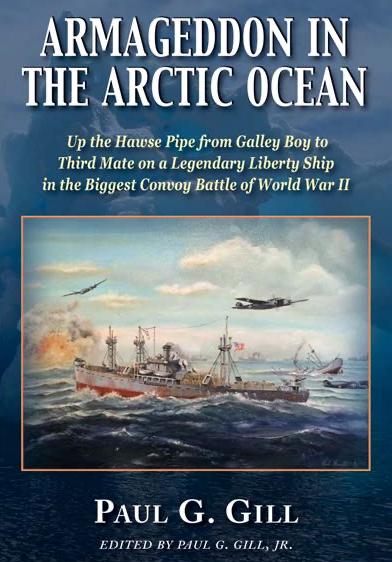

Nimitz at War: Command Leadership from Pearl Harbor to Tokyo Bay by Craig L. Symonds (Oxford University Press, New York, 2022, 474pp, illus, notes, biblio, in dex, isbn 978-0-190-06236-1; $29.95hc)
Tugboats and Shipyards: The Russells of New York Harbor, 1844–1962 Hilary Russell, Jr. by Hilary Russell Jr.
“… a rare and intimate glimpse into a bygone New York maritime history ” —Greg Rossel, WoodenBoat Paperback: $27 Order your copy through AbeBooks, PayPal, or mail your check to: Berkshire Boat Building School, POB 578, Sheffeld, MA, 01257 Questions? call 413 229-2549 or email at hemlockgrange@earthlink.net
SEA HISTORY
Tugboats and Shipyards: The Russells of New York Harbor, 1844–1962
Now Shipwreck Index and Chronological list. deeply educated about the daily operations of the Royal Navy when England ruled the seas, with Nelson at the helm.John G alluzzo Hanover, Massachusetts
62 180, AUTUMN 2022 Database with nearly 150,000 vessels Online @ internationalmaritimelibrary.org information for many of the vessels already listed. This list is primarily compiled from the “List of Merchant Vessels of the United States.” Other annuals (American Lloyds, Lloyds, Record and others), Custom House records and newspapers used for additional information. Not only American vessels, but foreign ones too, whether commercial, pleasure, sail, power, warships, unrigged and some undocumented.
Almost any list of United States mili tary o cers credited for Allied victory in World War II begins with Generals Dwight D. Eisenhower, George C. Marshall, Omar N. Bradley, and George S. Patton for the European or army theater of operations and Admirals Chester W. Nimitz, Ernest J. King, Raymond A. Spruance, and Wil liam F. Halsey Jr. for the Paci c Ocean or naval theater of operations. Nimitz’s role in the Paci c was the equivalent of what Eisenhower’s was in Europe; likewise, King was to Nimitz what Marshall was to Eisen hower. Marshall and King called the shots, and Eisenhower and Nimitz did the shoot ing. ese men have been studied in detail and will continue to be a subject studied by historians inde nitely. Naval historian Craig L. Symonds, whose books get better with each new en deavor, has undertaken a study of Nimitz that may be his best work. Symonds’s book on Nimitz is not a biography, but a study of the admiral’s leadership during the war years—not an analysis of what ought to have been, but of what and how it was done. Symonds takes his readers on a tour of the American war in the Pa ci c by walking (Symonds tells us that long-distance walking was one of the ways Nimitz dealt with stress) with Admiral Nimitz as he progressed from the new guy taking over after the Pearl Harbor disaster to the victor in a long- and hard-fought navalNimitzwar. was more often called on for diplomacy than for strategy. While Eisen hower had the supportive Marshall to please and irascible Winston Churchill to appease, Nimitz faced a prickly Admiral King and even more prickly General MacArthur. Eisenhower and Nimitz had to make stra tegic decisions directed at winning the war with the fewest casualties, while at once placating diverse pressures from powerful personalities. e heart of Nimitz at War is an examination of how Nim itz navigated that challenge. His “greatness lay less in his ability to do great things than in his facility to convince oth ers that they could do great things.”Readers familiar with the history of World War II in the Paci c and versed in the his tory of the Pearl Harbor attack, the Doolittle Raid, Battle of the Coral Sea, invasion and conquest of Guadalcanal, etc., will nd Symonds’s view of these events over the shoulder of Admi ral Nimitz an interesting addition to their understanding of the Paci c war. ose hearing of the details of the United States v. Japan in the Paci c 1941–45 for the rst time will nd in Nimitz at War an e ective primer on a complex topic. e book is recommended for all readers, newcomers to the Paci c War and veteran students alike. David Whitten Sullivan’s Island, South Carolina Small Boats and Daring Men: Maritime Raiding, Irregular Warfare, and the Early American Navy by Benjamin Arm strong (University of Oklahoma Press, Nor man, 2019, 264pp, illus, maps, notes, index, isbn 978-0-8061-6282-9; $34.95hc) e US Navy in the Age of Sail remains a perennial favorite of naval historians. is time period o ers a veritable bu et of epic events, from frigate duels to squadron en gagements on the Great Lakes. While these oft-retold yarns continue to dominate nar ratives of the period and capture readers’ interest, more recent work by naval histo rians has expanded our understanding of less-romantic but critical facets of the US Navy during its early years, including ad ministration, policy-making, strategy, ship construction, the social history of the navy, and logistics. On the surface, the period appears all but tapped out, with little po tential for current or future historians. In

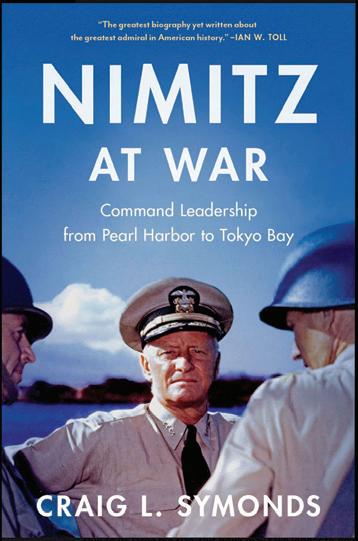
SEA HISTORY 180, AUTUMN 2022 63 this book, Commander Benjamin Arm strong of the US Naval Academy bril liantly explodes this notion. Armstrong’s book is ambitious from the outset, with the author seeking to do nothing less than establish a third major school of naval strategy, which he calls guerre de razzia , or war by raiding. Tradi tional naval strategy is divided into two di erent (and often competing) schools of thought: guerre de course, or commerce raiding operations against enemy supply lines and shipping, and guerre d’escadre, or warship and eet battles. Armstrong argues that this bifurcated view of naval strategy o ers an unbalanced and incom plete picture. He contends that guerre de razzia represents a third way of naval war fare that includes many important and often-overlooked naval operations, and that it helps provide a more comprehensive picture of naval strategy. To establish the bona des of guerre de razzia , Armstrong uses eight case studies of maritime raiding and irregular warfare from the early US Navy. e case studies include events that may be familiar to readers, such as Stephen Decatur’s raid to destroy USS Philadelphia and John Paul Jones’s raid on Whitehaven, as well as more obscure topics like antipiracy operations in the West Indies during the 1820s and naval raiding on the Great Lakes during the War of 1812. e case studies are well written, o ering a fastpaced and exciting narrative history along with concise and detail-oriented analysis. While there are no tactical maps illustrat ing the movements in each case study, Armstrong’s writing is concise and clear enough to overcome this minor aw. It is evident that the author carefully selected these case studies to represent guerre de razzia in all its forms, including cutting-out expeditions using small boats and coastal amphibious raiding during conventional and undeclared wars, as well as maritime security operations against pirates that in cluded the landing of shore parties and diplomacy. is tactic helps establish both the breadth of the naval operations encompassing guerre de razzia as well its prevalence throughout the US Navy during the Age of Sail. Indeed, Armstrong dem onstrates that guerre de razzia provides a viable framework and continuity for a deeper contextual understanding of Amer ican naval operations throughout the Age of Sail, an era too often reduced to a series of unconnected incidents and exploits. Small Boats and Daring Men does not overreach by arguing that the US Navy of the period developed an o cial doctrine for raiding and irregular warfare that of cers and enlisted men were trained in. Rather, Armstrong admits that the develop ment of naval raiding and irregular warfare in the early US Navy was often haphazard and highly dependent on the perceived needs of speci c operational situations or the personalities and outlook of the naval o cers involved. He does make a convinc ing case that the US Navy’s guerre de razzia tactical skill sets developed in an organic, grass-roots fashion, however, with on-theground realities and mission requirements, mentoring of junior o cers by senior naval o cers, and early career experience in ir regular warfare as key components of pass ing on and honing naval irregular warfare leadership and tactical skills. is novel approach stands in sharp contrast to the braid-encrusted, theoretical, and top-down approach to developing naval doctrine portrayed by many naval historians. Arm strong’s analysis of the eight case studies provides further insights for would-be practitioners of and theorists of guerre de razzia , and he identi es a number of key elements to the success of naval irregular warfare: supportive senior and aggressive junior leadership, an openness to new tech nologies, the importance of a balanced eet with a variety of vessels suited to irregular missions, and establishing partnerships with other US naval services, foreign navies, and local elements to ensure successful intelligence collection and diplomatic ini tiatives. In short, Armstrong’s book o ers a host of best practices and lessons learned for naval o cers in the eld. Small Boats and Daring Men is not, however, a mere manual. Armstrong estab lishes guerre de razzia as a viable and le gitimate third form of naval strategy along side guerre de course and guerre d’escadre, and it demands the attention of naval theorists and historians. Along with a small yet criminally overlooked body of work by James C. Bradford and Vice Admiral P. H. Colomb, Small Boats and Daring Men pro vides a foundation for future research into guerre de razzia, and Armstrong can lay claim to the mantle of naval theorist and strategist alongside his already formidable reputation as a naval historian. is book is simultaneously a well-written, actionpacked, and highly entertaining work of naval history, an important scholarly con tribution to the understanding of US naval operations during the Age of Sail, and a pioneering work of naval theory and strat egy, one with insights to o er the theorist, historian, naval leader, and interested lay man alike.
Luke C arpenter Rice, Minnesota

64 SEA HISTORY 180, AUTUMN 2022 HISTORICAL SOCIETY
NATIONAL MARITIME
AFTERGUARD J. Aron Charitable Foundation, Inc. e Artina Group Matt Brooks & Pam Rorke Levy CACI International, Inc. Caddell Dry Dock & Repair Co. George W. Carmany III In Memory of James J. Coleman Jr. Christopher J. Culver Brian D’Isernia Eckert Trust Henry L. & Grace Doherty Charitable Foundation In Memory of Ignatius Galgan ADM & Mrs. Jay L. Johnson, USN (Ret.) In Memory of Charles R. Kilbourne Arthur M. Kimberly Trust VADM Al Konetzni Jr., USN (Ret.) In Memory of H. F. Lenfest Richardo R. Lopes Guy E. C. Maitland McAllister Towing & Transportation Co. Ronald L. Oswald ADM Robert J. Papp Jr., USCG (Ret.) Estate of Walter J. Pettit Sr. e Pollin Group, LLC In Memory of Capt. Joseph Ramsey, USMM In Memory of Charles A. Robertson Dr. Timothy J. & Laurie Runyan e Schoonmaker Foundation In Memory of Howard Slotnick Capt. Cesare Sorio John & Anne Stobart David & Beverly Verdier Betsy & omas A. Whidden William H. White Jean Wort BENEFACTORS
ARS Investment Partners Bank of America Byers Foundation VADM Dirk Debbink, USN (Ret.) Richard T. du Moulin David S. Fowler J. D. Power Family Hon. John Lehman Dr. Jennifer London Lori, James II, & Jim Mathieu CAPT James A. Noone, USN (Ret.) John & Anne Rich Scarano Boat Building, Inc. H. C. Bowen Smith Norma Stanford In Memory of Peter Stanford Philip & Irmy Webster
SPONSORS Paul M. Aldrich American Maritime Congress Charles B. Anderson Deborah Antoine John Appleton John Armitage James R. Barker CAPT Donald Bates, USN (Ret.) Lawrence Behr Richard J. Bodor John B. Caddell II Dr. John & Rachel Cahill Dr. Allan C. Campbell Je rey & Dr. Sharon Cannon J. Barclay Collins Gerald F. B. Cooper William J. Coxey Jr. C. W. Craycroft Dr. William S. & Donna Dudley VADM Robert F. Dunn, USCG (Ret.) Dr. John Finerty Mrs. D. L. Fleischmann Craig L. Fuller In Memory of D. Harry W. Garschagen Elizabeth Gibson Burchenal Green ADM Jonathan Greenert, USN (Ret.) Lee Ferguson Gruzen Robert S. Hagge Jr. Independence Seaport Museum RADM Eric C. Jones, USCG Dr. Reginald H. Jones Benjamin Katzenstein L3 Harris Technologies Cyrus C. Lauriat Amy T. Lent Paul Jay Lewis Com. Chip Loomis III Ann Peters Marvin Eugene Mattioni Capt. Je rey McAllister David J. & Carolyn D. McBride McCarter & English, LLC Peter McCracken Dr. Joseph F. Meany Jr. Charles H. Miller Michael C. Morris Robert E. Morris Jr. Mystic Seaport Museum Janis Nagy New York Yacht Club Wynn & Patricia Odom Erik & Kathy Olstein e Betty Sue and Art Peabody Fund Brian R. Phillips Charles Raskob Robinson David & Susan Rockefeller Safran Helicopter Engines USA Lee H. Sandwen Conrad Sche er George Schluderberg Seip Family Foundation Philip & Janet Shapiro Family Foundation Douglas H. Sharp CDR William H. Skidmore, USN (Ret.) Skuld North America, Inc. C. Hamilton Sloan Foundation Sharon Slotnick Philip E. Stolp Daniel R. Sukis Capt. Raymond ombs Memorial Fund of the New Hampshire Charitable Foundation Elsa ompson RADM Frank orp IV, USN (Ret.) Alix orne Richard Tilghman Roy Vander Putten Otokar Von Bradsky omas Wayne Dr. Paul Zabetakis
DONORS Benjamin Ackerly Edwin L. Adler Peter Anderson Carter S. Bacon Jr. Dr. William Baker Hal Barstow Ernest T. Bartol Charles R. Beaudrot Jr. W. Frank Bohlen Eleanor F. Bookwalter James H. Brandi RADM David C. Brown, USMS (Ret.) Dennis Brugger Ronald L. Buchman CAPT Patrick Burns, USN (Ret.) Leonard Caiger RADM Nevin P. Carr Jr., USN (Ret.) Capt. Ned Chalker James W. Cheevers Benjamin Clark Mark Class CAPT Richard W. Cost, USNR (Ret.) CAPT Roger L. Crossland, USN (Ret.) Robert Ian Danic Michael Davenport James P. Delgado omas Diedrich Richard H. Dumas Gary Eddey MD CAPT Mitchell Edson, USN (Ret.) Jacqueline Eldridge William Elliott William V. Engel Ben P. Fisher Jr. Robert P. Fisher Jr. Webb Gilmore Sonia Hallenbeck Dr. David Hayes Charles Hennighausen William L. Henry Joseph C. Hoopes Steven A. Hyman Timothy A. Ingraham J. Russell Jinishian Gallery Gary Jobson Henry Kaminski Robert F. & Sue Kamm Robert C. Kennedy Jr. CDR Robert E. Kenyon III, USNR (Ret.) Mary Burrichter & Bob Kierlin Dr. Brett M. Klyver Paula Knickerbocker Kobrand Corp. & Marco Sorio David Koltho K. Denise R. Krepp CDR C. R. Lampman, USN (Ret.) James P. Latham Frederick C. Leiner Robert Lindmark Babcock MacLean CAPT James McDonald, USCG (Ret.) Walter C. Meibaum III Je erson D. Meighan Dr. Arthur M. Mellor Richard S. Merrell Christopher W. Metcalf Richard Michaux CAPT R. G. Moore, USCG (Ret.) omas A. Moran CAPT Vance H. Morrison, USN (Ret.) Michael Morrow John & Elizabeth Murphy Capt. Eric Nielsen Alan O’Grady Joanne O’Neil Richard G. Pelley Eleanor J. Perkins Nathaniel Philbrick Carla R. Phillips Carl A. Pirolli Mr. & Mrs. Norman H. Plummer Jennifer N. Pritzker CAPT Wes Pulver, USCG (Ret.) Andrew A. Radel Phineas Reeves Roland Rexha Albert Reynolds In Memory of Bert Rogers William M. Rosen Richard M. Rosenberg Capt. Carlos A. Rosende Robert Sappio Greg Schlosberg Dorothea Schlosser Bill Skarich Edmund Sommer III Robert W. Spell Patricia Steele David Stulb Diane & Van Swearingin omas Howard Townsend Steven J. Traut Russell R. Tripp Vicki Voge Lee P. Washburn Gerald Weinstein Daniel Whalen George C. White Barbara B. Wing Richard C. Wolfe PATRONS CAPT John E. Allen, USN (Ret.) Philip & Sherida Allor Matt & Rita Andis Silas Anthony Jr. Laurence V. Baldwin Anthony J. Balut Robert Baly John D. Barnard VADM omas J. Barrett, USCG (Ret.) Steve B. Batterman Allan H. Beck Mr. & Mrs. Vincent Bella ore Dudley Bierau Joseph Bihlmier Margaret Brandon eodore Bull Henry S. Burgess Robert P. Burke Jose O. Busto In Memory of Joseph Anthony Cahill Charles J. Cannon Elliot Carlson Judith L. Carmany Mark G. Cerel David D. Chomeau James M. Clark Jr. Dr. Gerard J. Cli ord Jr. Stephen Clineburg Sharon E. Cohen Leo Convery John C. Couch Jack Creighton BMCM Joseph Cross, USCG (Ret.) Samuel D. Crum Jr. Morgan Daly Ms. Joan M. Davenport William A. Davidson Jeannie Davis Mr. & Mrs. Philip C. DiGiovanni George Dow Francis DuCoin Reynolds duPont Jr. Peter E. Egeli Ken Ewell Rev. Robert Fain Charles C. Fichtner James J. Foley Jr. HMC Philip E. Galluccio, USN (Ret.) Je rey Garrison Peter C. & Kathy R. Gentry Capt. Dwight Gertz Susan Gibbs omas A. Giegerich James R. Gi ord Celeste Anne Goethe Herbert E. Greenbacker Richard J. Greene Marc Grisham Ruth Noble Groom Ray Guinta T. Morris Hackney Robert M. Hall CAPT Roger P. Hartgen, USCG (Ret.) Capt. Peter Hartsock Nathan L. & Helen Hazen Samuel Heed J. Callender Heminway CAPT J. W. Hetherington, USNR (Ret.) Michael Howell Judge Lynn N. Hughes Marius Ilario MD Andrew MacAoidh Jergens Niels M. Johnsen Paula J. Johnson Robert P. Johnson Horace Jordan Richard Julian James & Barbara Kerr James L. Kerr Mr. & Mrs. Chester W. Kitchings Jr. R. Joyce Kodis Donald R. Kritsch Miles A. Kulukundis Peter R. La Dow David R. Lamb John L. Langill Alexander R. Lerner Peter & Carolyn Lind Louis & Linda Liotti John L. Lockwood George C. Lodge Jr. James L. Long Stephen Lyman Douglas & Diane Maass Lawrence Manson Marchant Maritime Maritime Heritage Prints omas L. Mason Diana Q. Mautz Ben McCaul Leander McCormick-Goodhart William McCready Kevin C. & JoAnn McDermott Alan R. McKie Vincent Miles Mineral Springs Farm Michael G. Moore Walter N. Morosky Jr. John Mulvihill Chris O’Brien James T. O’Donnell Patrick Onions Je ery Opper Christopher Otorowski Roger Ottenbach Wes Paisley William L. Palmer Jr. Michael Palmieri COL Bruce E. Patterson, USA James S. Perry John C. Perry Andrew Pesek Alan D. Peterson Hon. S. Jay Plager Peter B. Poulsen Dennis & Leslie Power Stuart Pratt David Prohaska Mr. & Mrs. John Randall CAPT Michael J. Rauworth, USCG (Ret.) Mr. & Mrs. William P. Rice CAPT W. E. Richardson, USN (Ret.) Reed Robertson Mr. & Mrs. Peter Roehsler Dr. Albert Roper R. Gregory Sachs Sherwood A. Schartner Timothy Schoolmaster Larry C. Schramm Howard Schutter CDR John E. Scott, USN (Ret.) Robert W. Scott Lee Shafer Dr. James Seay Dean Mr. & Mrs. John R. Sherwood III Richard B. Silbert Lada Simek Jerry Smith Matthew Smith Richard Snowdon David T. Spell Jr. Jerry Stewart Marty Sutter Swimmer Family Trust CAPT Craig S. Swirbliss, USCG (Ret.) RADM Cindy ebaud, USN (Ret.) Craig ompson Charles Tobin Capt. John Torjusen Peter N. Trielo Joseph Truglia Sandra Ulbrich Capt. Harold Vanderploeg Frederick A. Van Mourik Robert Vincent Capt. Sam Volpentest Richard S. Wake eld William R. Walsh Terry Walton Roberta E. Weisbrod Capt. Lee Frederick Werth William U. Wester eld Blunt White Nathaniel S. Wilson William L. Womack Richard Woods In Memory of Woodson K. Woods Carole M. Yeager Chet Zegler Davi Zehler James Zimmer CAPT Channing M. Zucker, USN (Ret.)
PLANKOWNERS RADM Joseph F. Callo, USN (Ret.) CAPT Sally McElwreath Callo, USN (Ret.) Dayton Carr Chesapeake Bay Maritime Museum Coast Guard Aviation Association In Memory of William J. Green Capt. Howard R. Hill Jr. Royal Holly Ruth R. Hoyt/Anne H. Jolley Foundation, Inc. Neil E. Jones H. Kirke Lathrop Norman Liss Carolyn & Leonard Mizerek William G. Muller Navy League of the United States Pritzker Military Foundation Sidney Stern Memorial Trust Jeremy Weirich Dr. David & Mary K. Winkler
SELECT YOUR A DVENTURE ! Choose from 4 TradiTional sailing Vessels SWIFT Luxury Windjammer Sailing M ay – October Weekend ~ 7-Day C $755ruisesandup Free 16-page Brochure 1-800-736-7981 NEW! OSWEGO — “oldest US freshwater port” Open daily 1–5 pm Offering dockside tours of vessels May thru October West 1st Street Pier, Oswego, NY www.hlwmm.org 315-342-0480 MARITIME MUSEUM AT OSWEGO H. LEE WHITE Explore the decks of the last Destroyer Escort afloat in America. 518-431-1943 ussslater.org
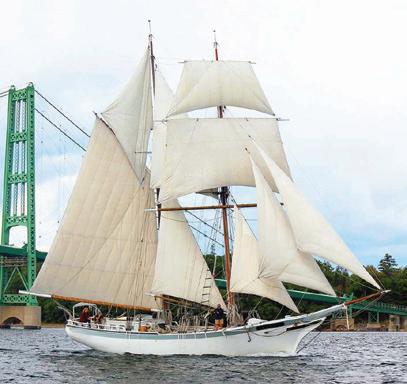


CENTER FOR AMERICAN MARINEART Allhandsondecktosave AmericanMarineArt! Weareinaraceto documentandpreserve importantmarine artworksbeforetheyare losttoposterity. Joinusinourmissionat AmericanMarineArt.com JohnSingletonCopley, WatsonandtheShark(det.), 1778,oiloncanvas,Ferdinand LammotBelinFundattheNationalGalleryofArt,Washington,DC WWW . AMERICANMARINEART . COM
