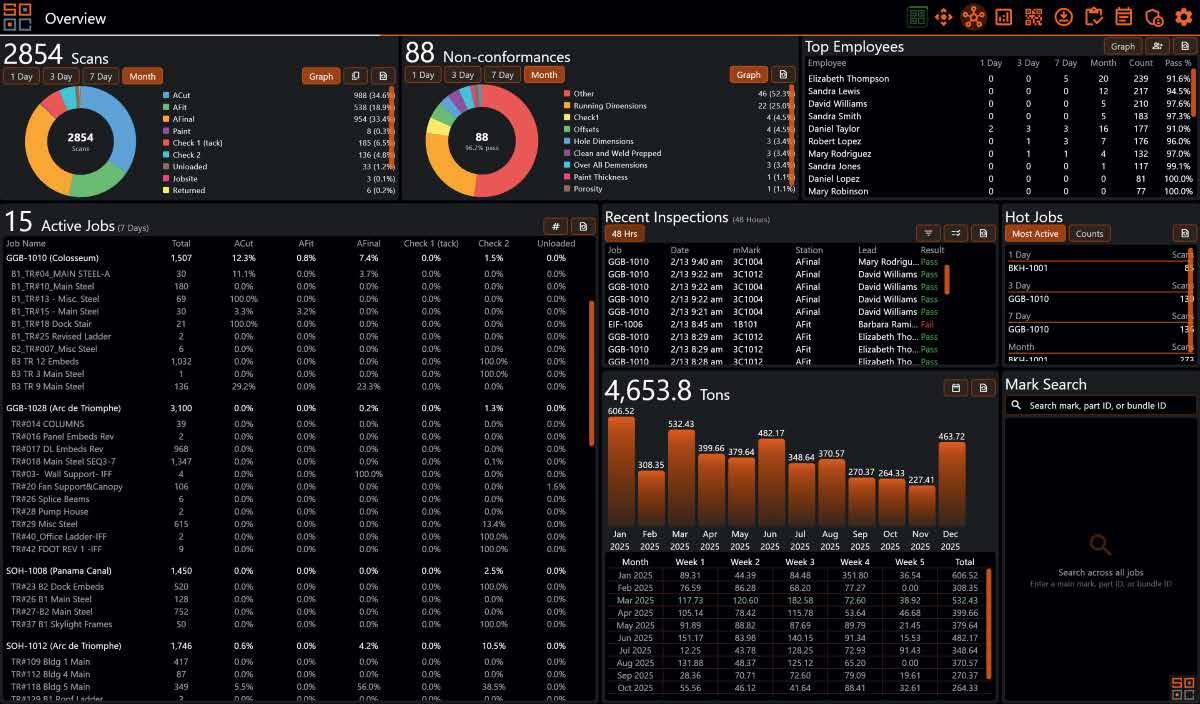
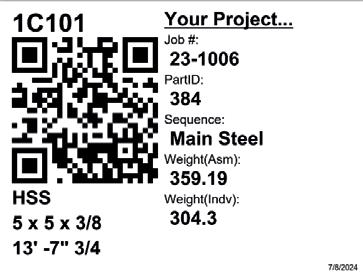
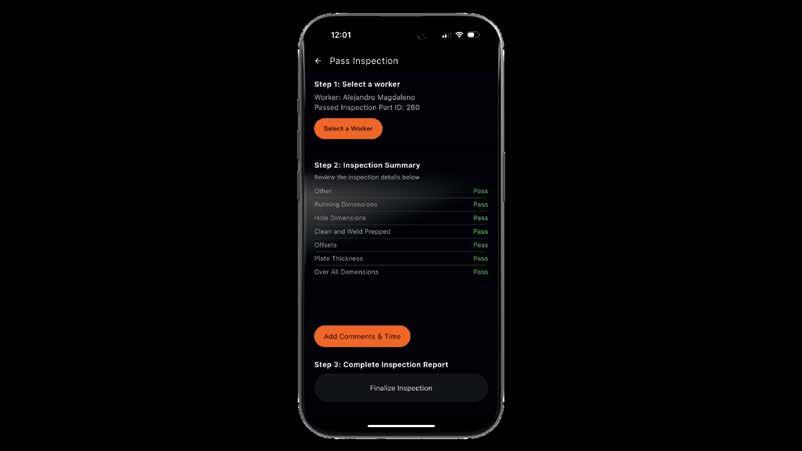
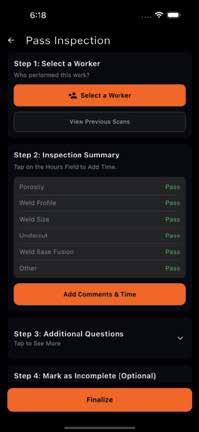
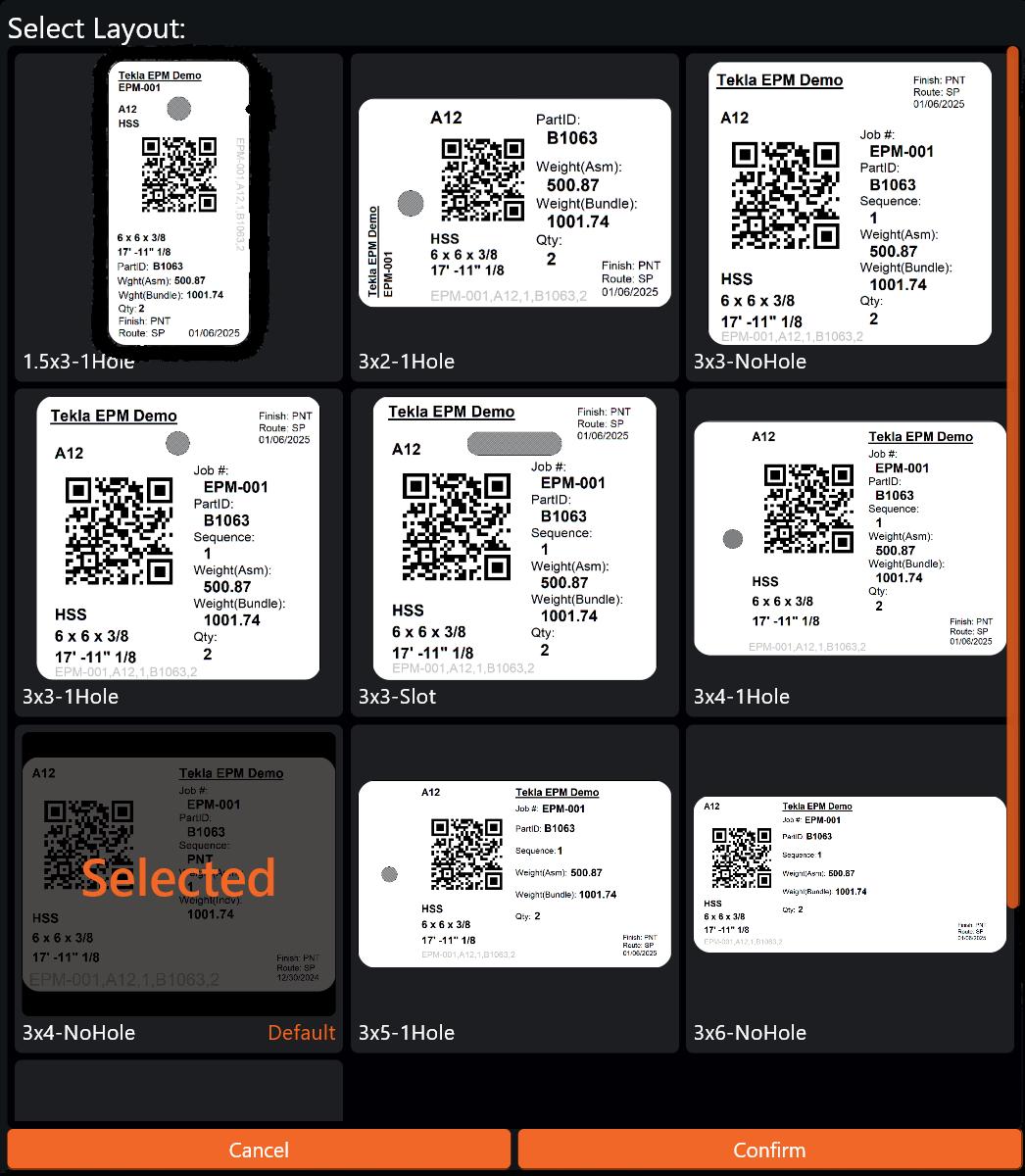
Align Stations and Workflows with Configurable Alerts and Rules for Smooth Enforcement.
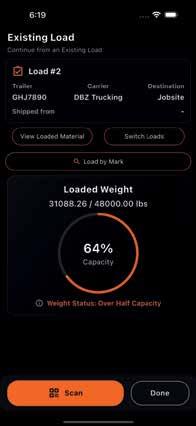
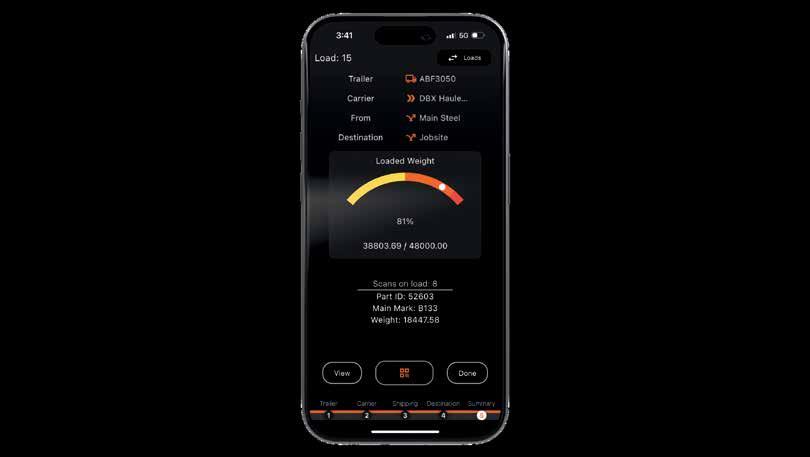
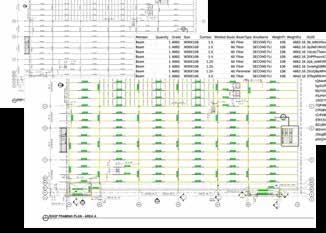
Sync Production, Loading, and Delivery Data in Real Time with full Tekla Integration.
Customize Controls to meet your Quality Control Program and Maintain AISC Standards.
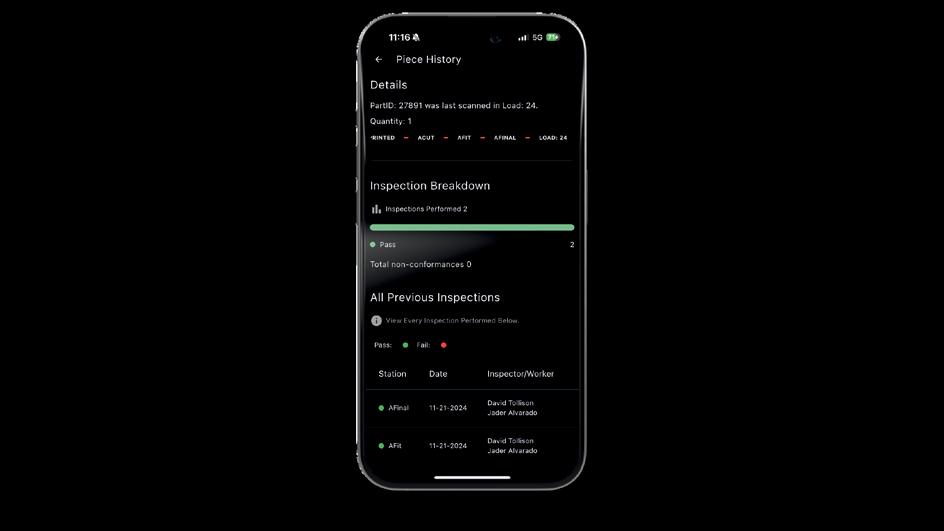
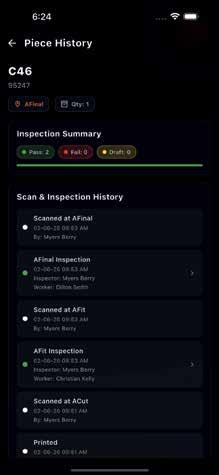
Monitor Job Progress and Quality Metrics in Real Time to Spot Issues Early and Take Action.
Trusted Tools with Tangible Results
“We transitioned from an outdated steel tracking system that lacked realtime product visibility and had a complicated user interface to a modern, user-friendly application that gives us insights into our production process.”
- Cobb Industrial, Inc.
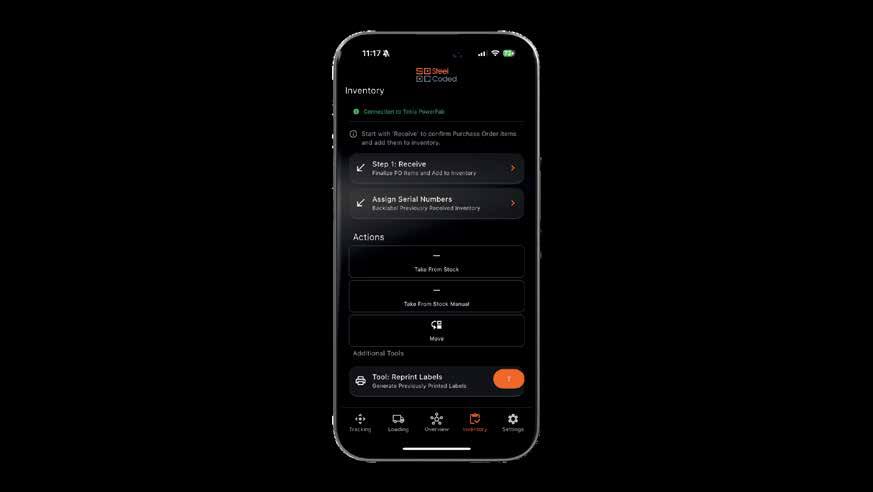
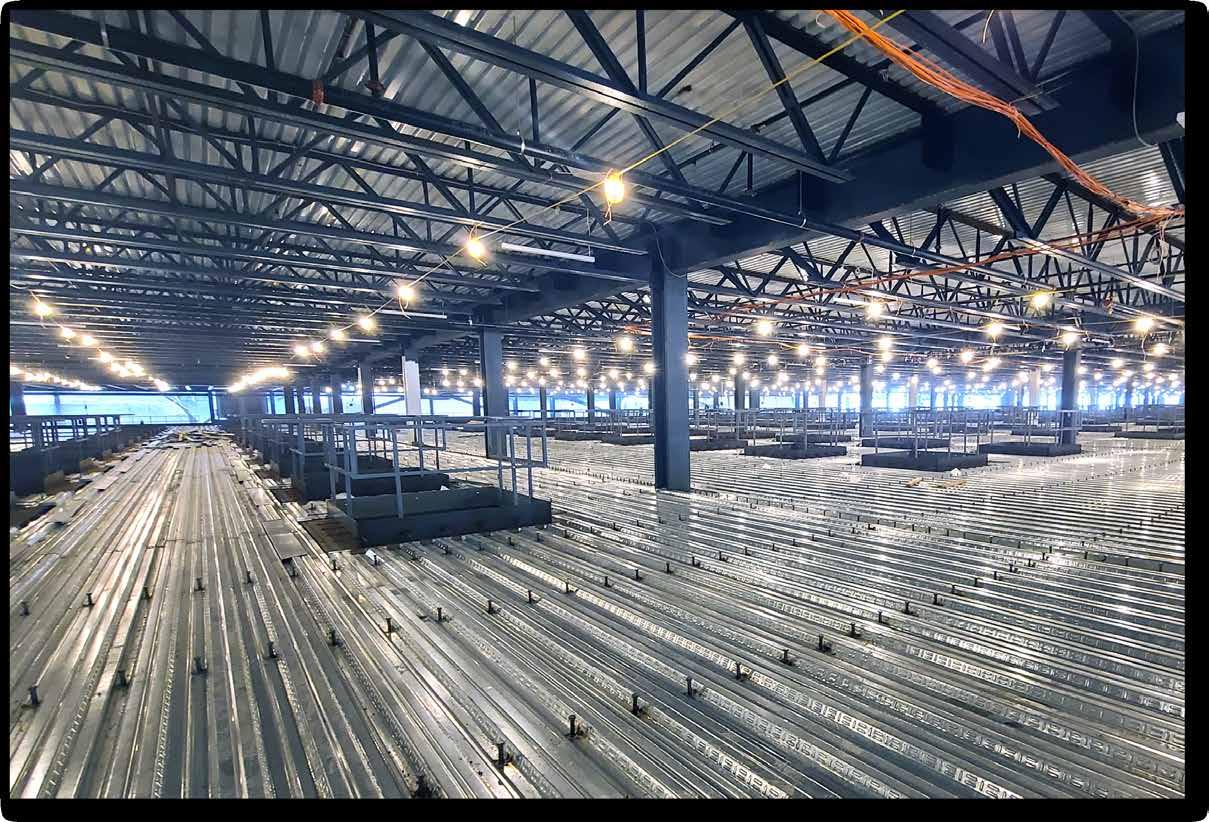
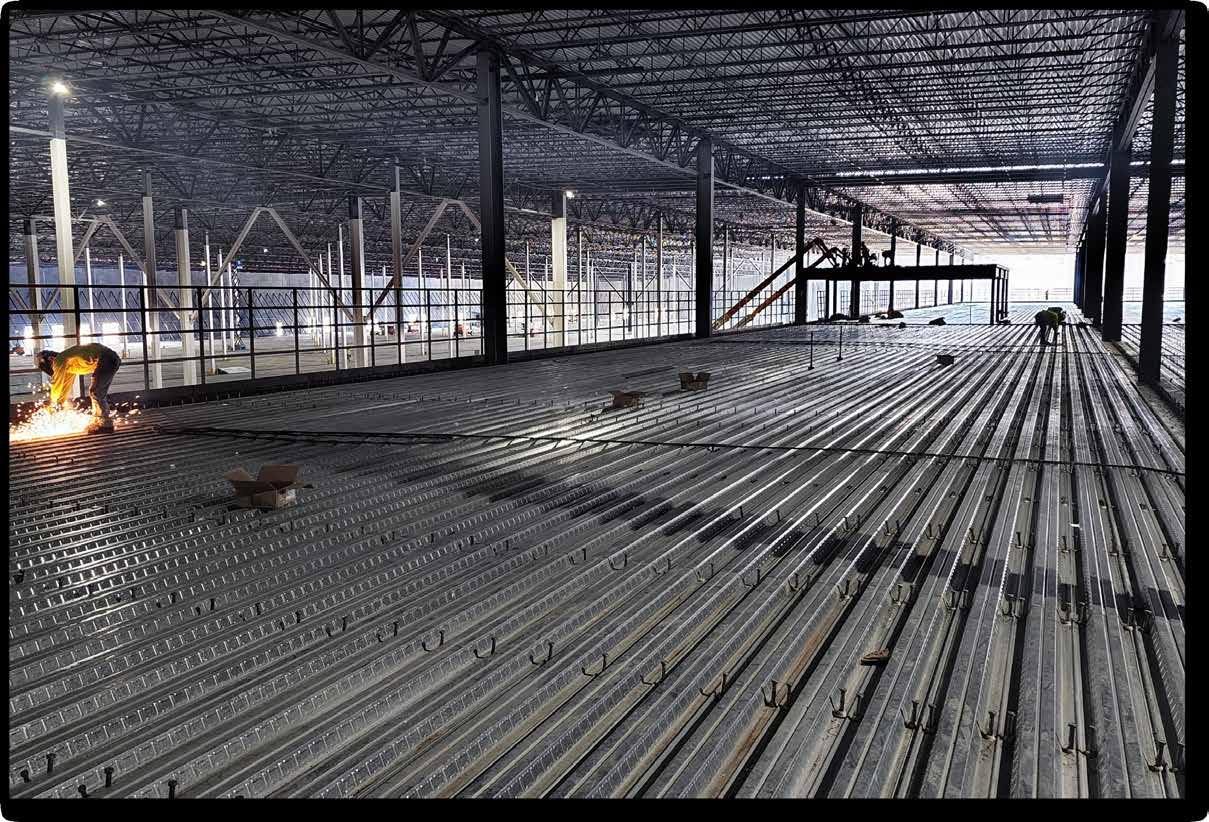
Maintain Inventory Accuracy with Streamlined Receiving, Movement, and Inventory Audits. Production Planner
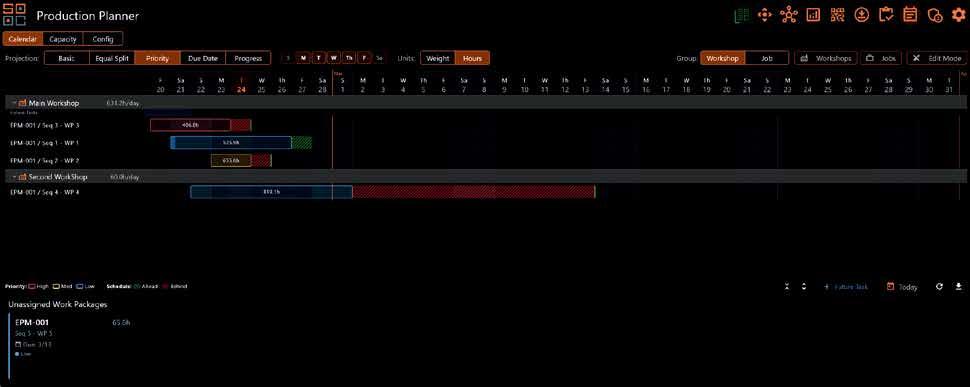
Plan Smarter with Work Packages and know Exactly Where your Production Stands.
Inventory Management
M & P S p e c i a l t y I n s u r a n c e p r o v i d e s
i n s u r a n c e a n d r i s k m a n a g e m e n t
s e r v i c e s f o r h e a v y l i f t i
i n d u s t r i e s .
L i c e n s e d n a t i o n w i d e , M & P S p e c i a l t y I n s u r
I N D U S T R Y
I N D U S T RY
S P E C A LT I E S : E E L E C T O R S
H E AV Y H A U L E R S
R A N E R E N TA L
R I I N G
F A B R I C AT O R S
S P E C I A L T I E S : THE
S T R U C T U R A L M OV E R S
e n i
s u r a n c e p r o d u c t s , c o n t r a c t u a l d e t a i l , a n d r i s k m a n a g e m e n t p r a c t i c e s .
COVER STORY NO ROOM FOR ERROR
Contractors Demonstrate How Prep and Innovation Drive Results
By Mike Larson
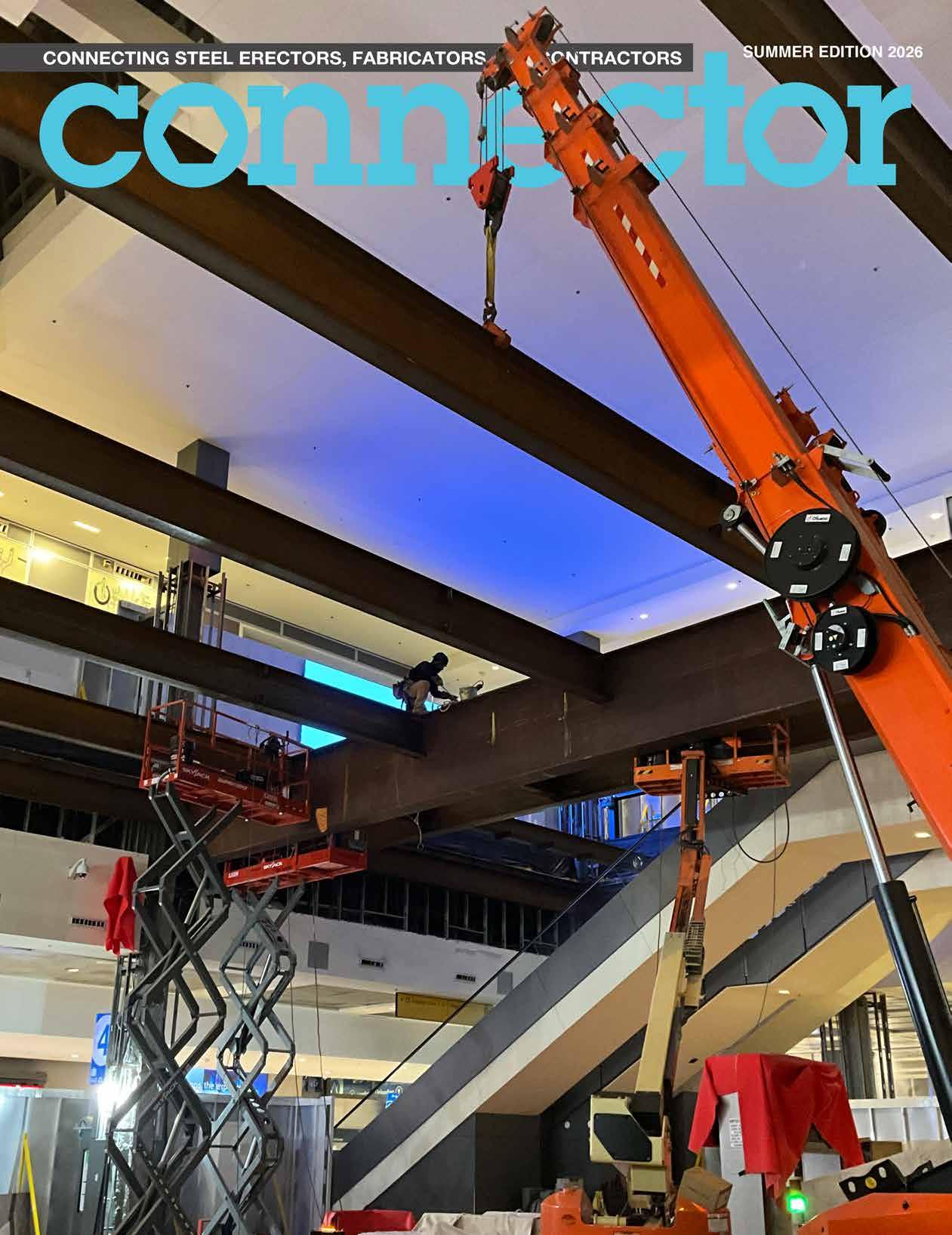
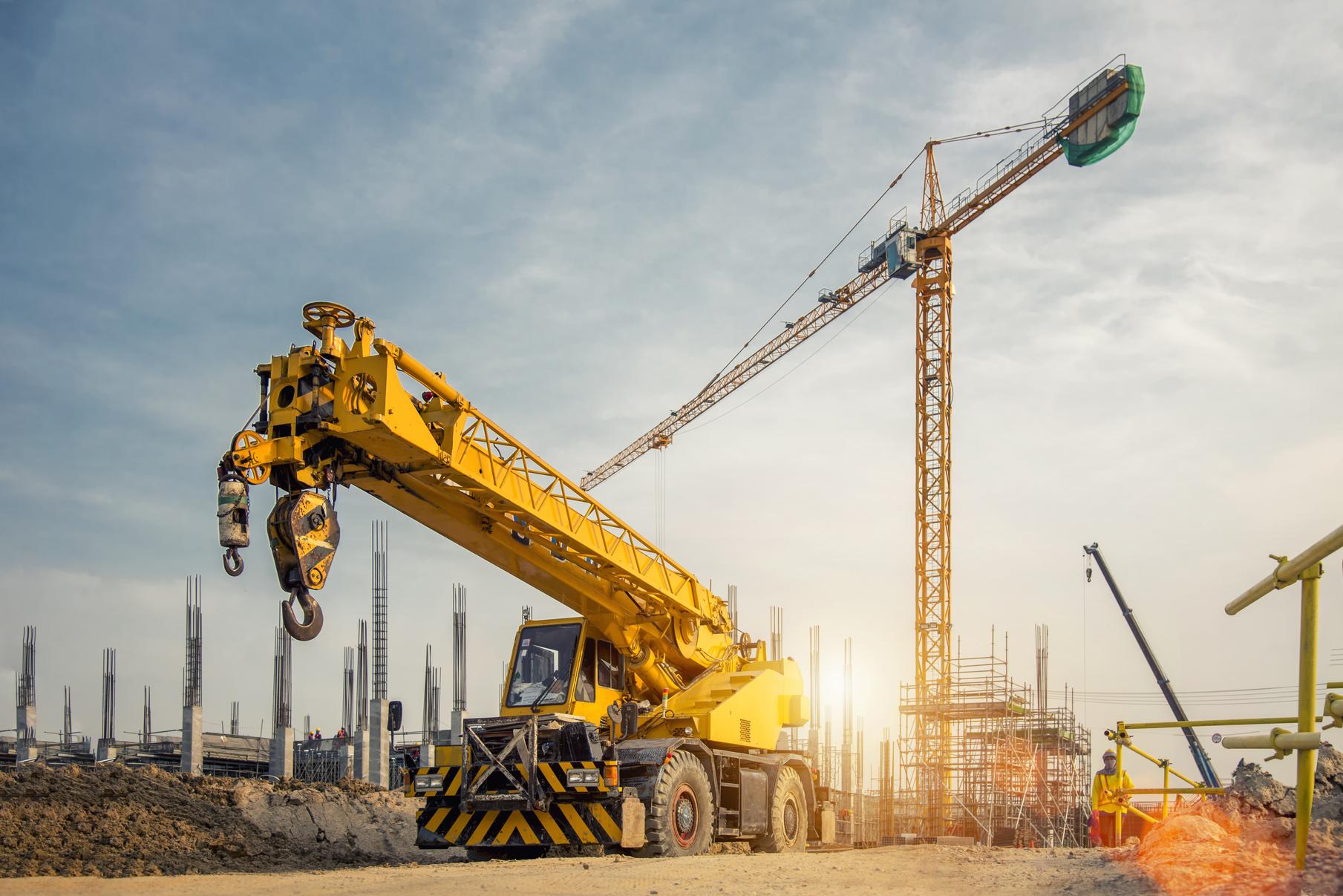
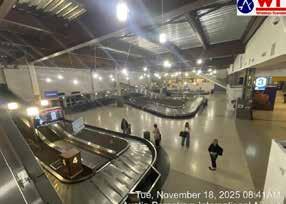
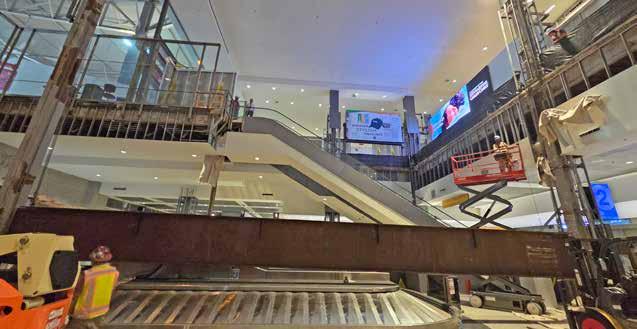
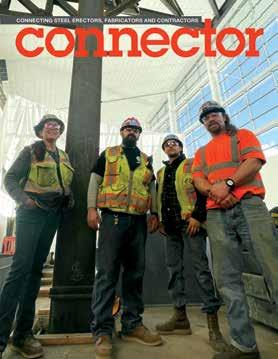
On the Cover: All equipment used inside the Austin-Bergstrom International Airport had to fit through the standard entry doors and be powered by electricity or propane. Those requirements limited the sizes, lifting capacities, and kinds of equipment Perry & Perry Builders, Inc., could use to infill above the baggage claim area.
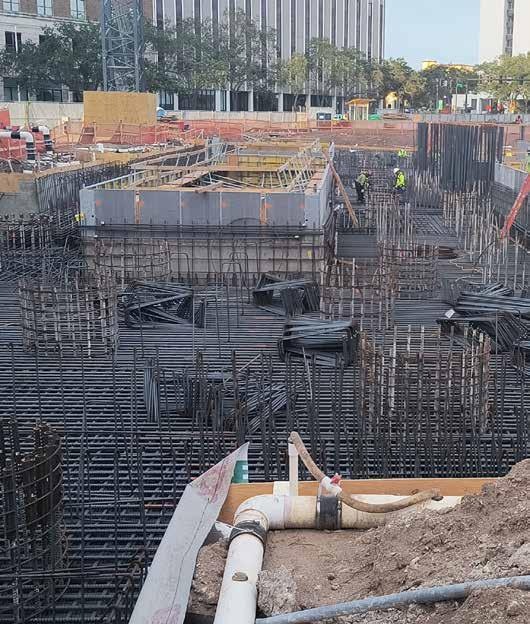
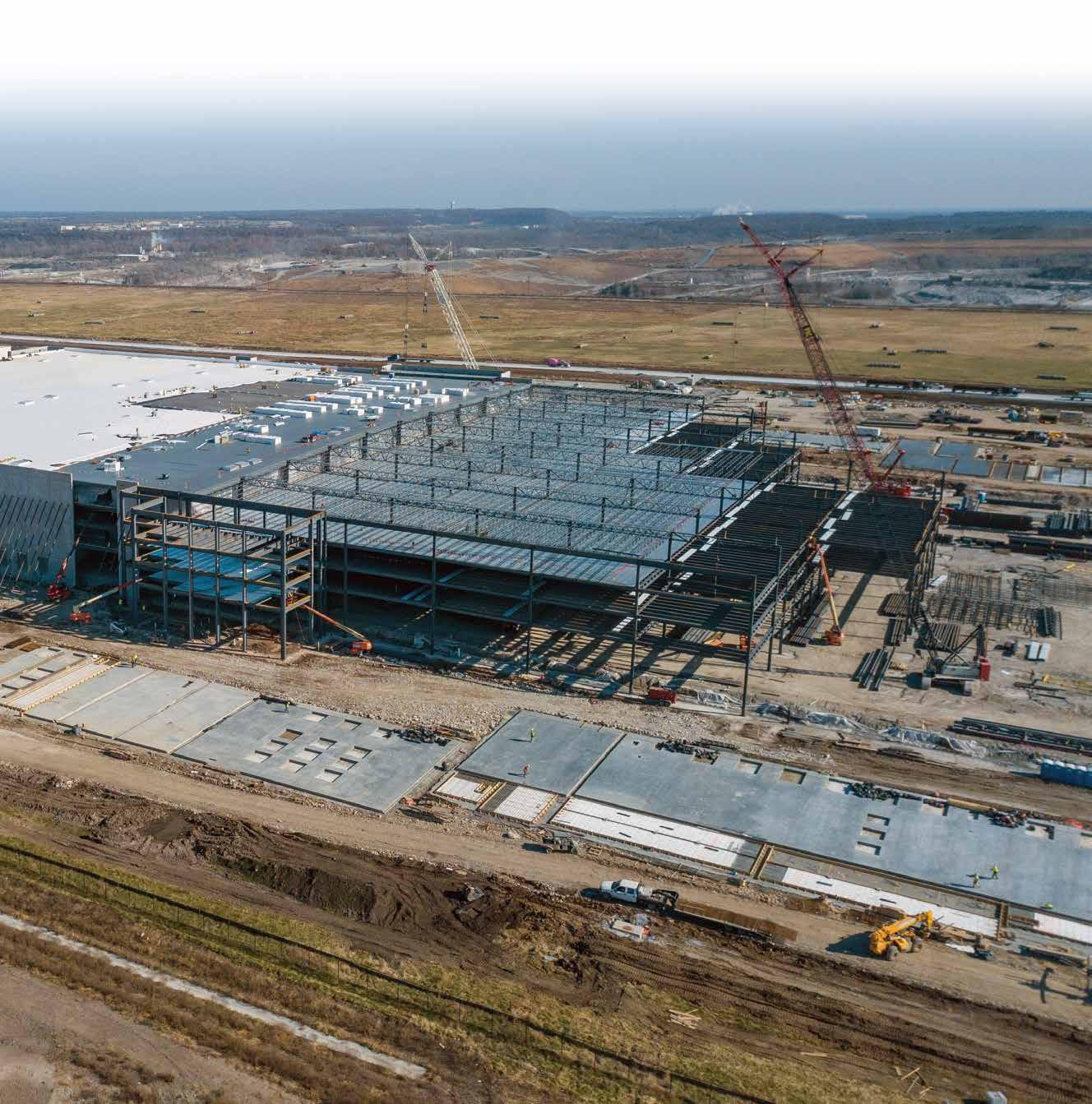
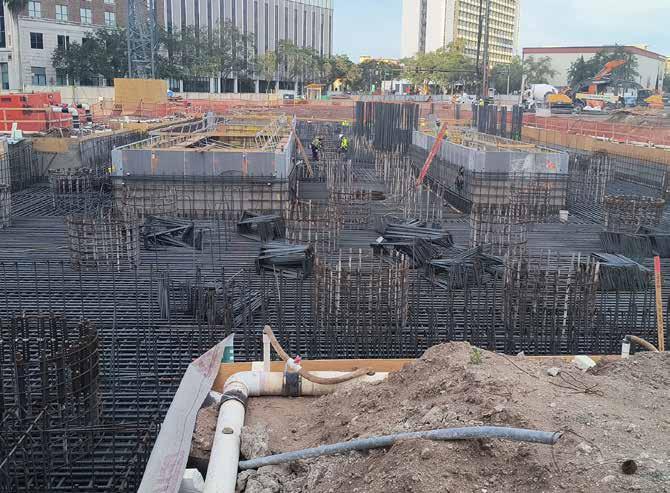
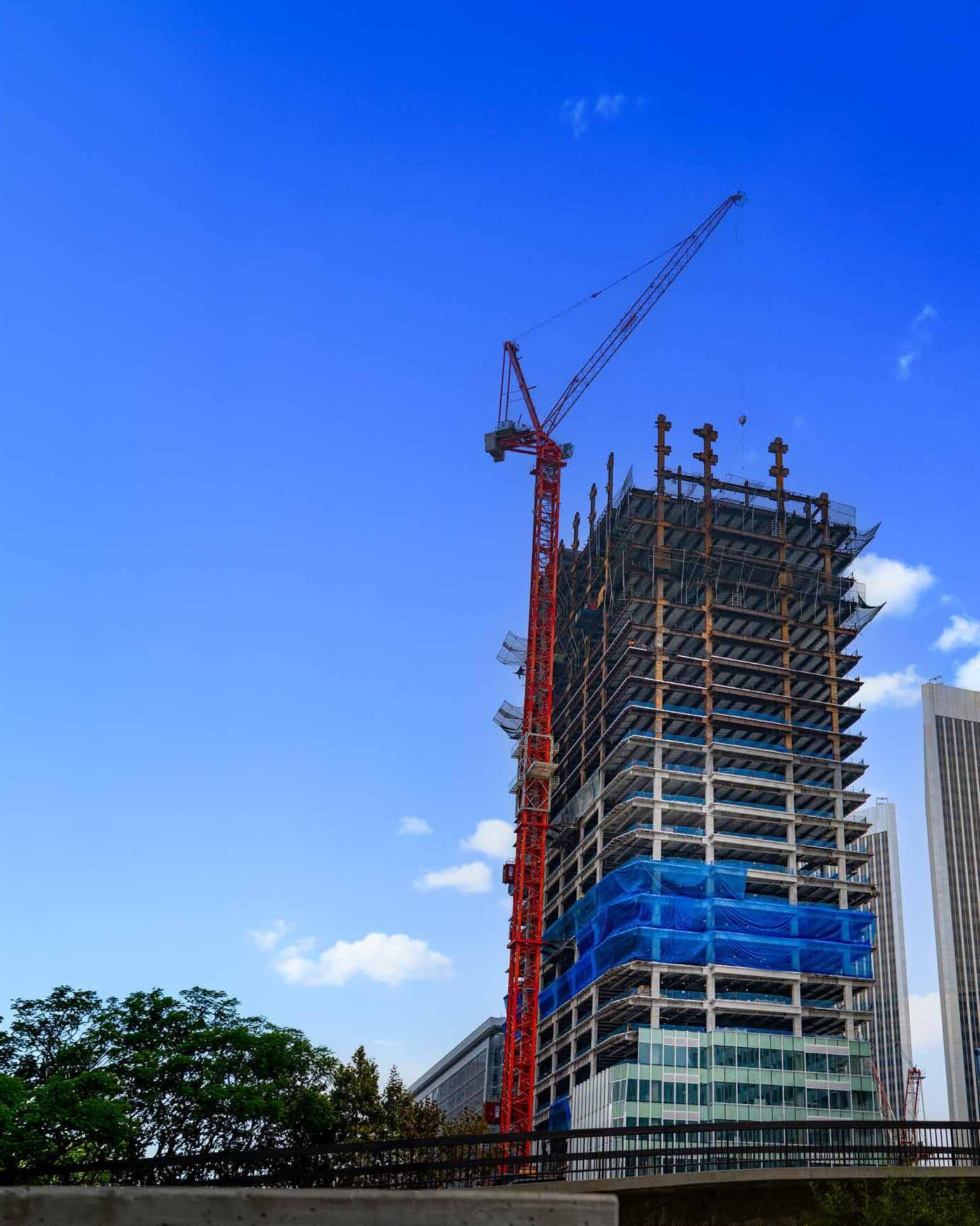
Above: Gulf Coast Rebar, Inc., placed 5.4 million pounds of rebar in just 31 days for a 7,200-cubic-yard concrete pour for construction of the base mat for a 515-foot-tall high-rise in St. Petersburg, Florida.
MEET THE WOMEN BUILDING STEEL’S FUTURE
From the jobsite to the boardroom, the 2026 Steel Strong Women in Construction nominees are leading, building, and strengthening the steel construction industry every day. Check out our playlist on SEAA’s YouTube channel for spotlights on the tradeswomen, managers, executives, and owners making an impact across the country.
18 MANAGEMENT
Can you Measure Integrity?
By Fletcher Wimbush
How structured assessments improve hiring decisions
22 IN THE FIELD
Arresting the Fall is Just the Beginning By
Austin Reiner
What happens in the minutes that follow are critical to survival
THE OFFICIAL MAGAZINE OF THE STEEL ERECTORS
ASSOCIATION OF AMERICA
SEAA is the only national trade association representing the interests of steel erectors, fabricators, and related service providers. Connector reaches both small and large contractors working in union and open labor markets.
Steel Erectors Association of America
353 Jonestown Rd, Suite 207 Winston-Salem, NC 27104
336-294-8880 www.seaa.net
OFFICERS & EXECUTIVE STAFF
Chris Legnon, President
Carrie Gulajan, President-Elect
Glen Pisani, Industry Member Vice President
Bryan McClure, Associate Member Vice President Marc Cox, Secretary Jason McElrath, Treasurer
PUBLISHING PARTNER
Chris Harrison, Publisher chris.harrison@seaa.net Phone 660-287-7660
Macie Murie, Assistant Editor macie@mightymomedia.com Jud Kite, Art Director jud5483@gmail.com
ADVISORY COMMITTEE
Nick Caratelli, Chairman, Nelson Stud Welding
Geoff Kress, Vice Chairman, Gardner-Watson Decking Tammy Dean, Gardner-Watson Deckng Tyler Jones, Cumberland Steel Co. Jerry Morganelli, MAS Building & Bridge
Jackson Nix, Shelby Erectors Kate Ouellette, GWY Jim Simonson, Steel Service Katy Williams, Williams Industries
Connector™ is published quarterly by the Steel Erectors Association of America 4948 Martin View Ln, Suite 207 Winston-Salem, NC 27104
Copyright 2026 by the Steel Erectors Association of America. No material may be reprinted without permission from the Executive Director. While the information and recommendations contained in this publication have been compiled from sources believed to be reliable, the Steel Erectors Association of America, its affiliates, employees, contributors, writers, editors, designers, photographers, and media advisory committee, makes no guarantee as to, and assumes no responsibility for, the correctness, sufficiency or completeness of such information or recommendations and cannot be held responsible for the outcome of any action or decision based on the information contained in this publication or claims made by advertisers. No part of this publication may be reproduced in any form without prior written permission of the Publisher. Permission is only deemed valid if approval is in writing.
KEEP THE MOMENTUM
It’s an honor to write my first column as your incoming president. When Jack Nix handed me the ceremonial Spud Wrench at the President’s Dinner in Kansas City, I felt the significance of that moment and the responsibility that comes with it. Jack led well and helped build real momentum for this association, and my goal is to keep moving that work forward.
If you were in Kansas City this spring, you could feel the energy. Nearly 400 erectors, fabricators, and suppliers showed up, and what stood out most was the level of engagement. The sessions covered workforce development, leadership, safety, cybersecurity, AI, and emerging areas like mass timber, and the conversations carried well beyond the meeting rooms. The trade show floor stayed busy, 58 companies strong, and it was great to see so many first-time attendees get connected early. It was a good reminder that Convention is more than an event on the calendar—it is where this industry comes together to learn, build relationships, and move forward.
T he President’s Dinner brought the week to a strong close by recognizing the work our members are doing at a high level. Safety performance does not happen by accident. It comes from planning, training, accountability, and the decisions people make every day in the shop and in the field. That was reflected in every award presented—from the Erector Safety Excellence Awards, to the inaugural Fabricator Safety Excellence Awards, to the Craft Training Excellence Awards recognizing long-term investment in workforce development. This year’s Project of the Year winners are featured elsewhere in this issue, and they are well worth your time.
O ne of the most meaningful parts of the evening was recognizing the nominees for the SteelStrong Women in Construction initiative. It was a reminder of the leadership, skill, and value women bring to this
Chris Legnon is President of SEAA and Vice President of Technology for Cooper Steel.
industry every day. We also recognized our Trailblazers for bringing in new members, The Eddie Award for the Persons of the Year, and the recipient of the William Davis Service Award—one of the highest honors this association gives. Congratulations to every company and individual recognized that night.
I kept my remarks brief that night, but I meant what I said. I’m honored to serve, and I’m grateful to the board and staff for putting together a great event. After 23 years at Cooper Steel, I’ve had the opportunity to learn from a lot of people across this industry, and many of them were in that room. My priorities as president are straightforward: keep the momentum going, continue growing this association, and keep finding practical ways to deliver real value to our members. Our industry is always changing, and SEAA needs to keep evolving with it.
As Vice President of Technology at Cooper Steel, I spend a lot of time thinking about how technology actually works in the real world—from the office to the shop floor to the field. Few topics deserve more attention right now than AI. The tools are moving fast, and our industry is right to be both interested and careful. AI has real potential in estimating, scheduling, document management, and safety analysis. But potential alone is not enough. If we adopt these tools without clear governance, we create risk we do not need. This industry understands risk because managing it is part of how we protect people and deliver quality work every day. That is why we’ve included a feature on AI governance and risk management in this issue, and it is a topic I believe will require continued leadership from SEAA in the year ahead.
SEAA is in a strong position, with real momentum and a membership that is invested in the future of this industry. I’m grateful for the trust you’ve placed in me, and I’m looking forward to the work ahead. I’ll see you in Concord, North Carolina, in 2027. •
EVENTS & ACTIVITIES
Steel Connections
Michigan
July 16, 2026
Board Meeting, Peer Group, Meet & Greet
Boatwerks Waterfront Restaurant
Holland, Michigan
Steel Connections
North Carolina Board
Meeting, Peer Group, Meet & Greet
October 15, 2026
Embassy Suites
Raleigh-Crabtree
Raleigh, North Carolina
Dave Schulz Memorial Golf Tournament
October 16, 2026
Lonnie Poole Golf Course at NC State University
Raleigh, North Carolina
ASSOCIATION NEWS
Association Honors Carrie Gulajan with William Davis Service Award
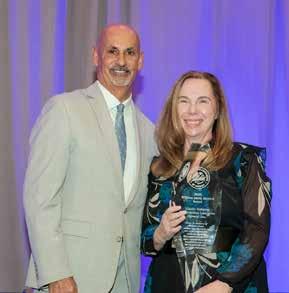
SEAA honored Carrie Gulajan, President of Construction Insurance Agency, with the William Davis Service Award during the 2026 Convention & Trade Show in Kansas City. One of SEAA’s highest honors, the award recognizes individuals who have demonstrated a lifelong commitment to advancing the industry through service, leadership, and dedication.
“For decades, Carrie has invested her time, expertise, and energy into making this association stronger. She is deeply knowledgeable about the steel construction industry and risk management, but what truly sets her apart is her personal approach. Carrie believes in relationships. She takes the time to have real conversations and share practical guidance that makes companies safer and more successful. She is caring, resourceful, and always willing to step up when something needs to be done,” said Stephen Burkholder, former SEAA President and current Board member.
SEAA Recognizes 2026 Trailblazers
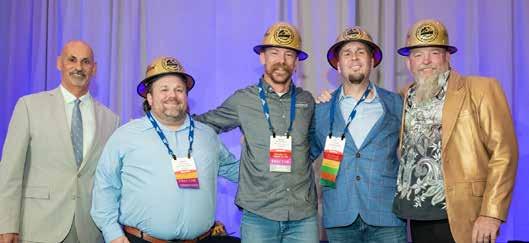
SEAA recognized four members as Trailblazers during the 2026 Convention & Trade Show for their efforts to grow the association through member recruitment. The Trailblazer designation honors individuals who recruited three or more new SEAA members during the past year.
This year's Trailblazers were Mike Mulsow of FM Steel, Glen Pisani and Steve Hebert of MAS Building & Bridge, Geoff Kress of Gardner-Watson Decking, and Jack Nix of Shelby Erectors.Their efforts helped introduce new companies to the association’s training resources, safety initiatives, networking opportunities, and industry connections while strengthening SEAA’s voice across the steel construction industry.
Nix was also recognized as Trailblazer of the Year for the third consecutive year after recruiting the highest number of new members. The award highlights the important role member referrals play in strengthening the association and expanding opportunities for companies across the industry.
Drew Heron and Jason McElrath are Co-Recipients of The
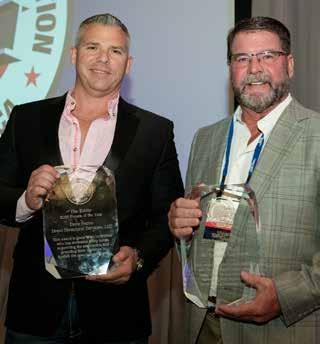
Drew Heron, Vice President of Operations for Deem Structural Services, Longview, Texas, and Jason McElrath, President of M&P Specialty Insurance, West Columbia, South Carolina, have been named as co-recipients of the 2026 Eddie Award. They received the award during the President’s Dinner at the 2026 Convention & Trade Show.
McElrath has been a member of SEAA since 1995 and has served on the Board of Directors since 2022. As Treasurer and Chair of the Finance Committee, McElrath provides financial oversight that helps ensure the long-term strength and stability of the association.
Heron joined the SEAA Board of Directors in 2020 and serves on the Executive and Events Committees while chairing the Awards Committee. He is widely recognized for leading the Project of the Year program and serving as master
of ceremonies at SEAA's Convention & Trade Show.
Eddie Award
“This year’s honorees embody what service should look like. They contribute not because of what they can gain for their companies, but because they genuinely want to make the steel construction industry better… Their selfless commitment to SEAA and our members makes them both deserving recipients of the Eddie Award,” said Stephen Burkholder, former SEAA President and current Board member.
(Left to Right) Drew Heron, Jason McElrath
(Left to Right) Pete Gum, Carrie Gulajan
(Left to Right) Pete Gum, Steve Hebert, Michael Mulsow, Glen Pisani, Jack Nix
STRONGER BENEFITS FOR SEAA MEMBERS
Medical, Dental, Vision
Disability & Life Insurance
HSA / FSA & EAP
Voluntary Accident & Critical Illness
Ancillary Options
Better Pricing
Competitive rates through a larger risk pool
Trusted Carriers
Access to national providers like Aetna, Kaiser & Blue Cross Blue Shield
Simplified
Administration
Payroll integration, enrollment, and ongoing support
Cost Control Over Time
Data-driven strategies to help stabilize premiums OUR SUPPORT MODEL
From selecting the right plan to year-round support, BBSI makes benefits easier - keeping you compliant, empowering your team, and driving smarter cost decisions.
DON’T
LOOKING BACK AT THE CONVENTION
KANSAS CITY, MO, MAY 5-8, 2026
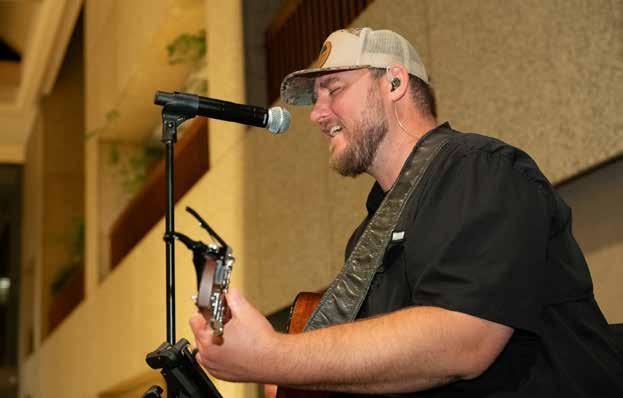
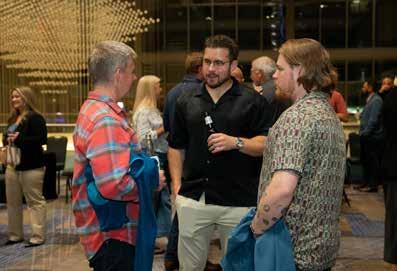
1. Entertainer Clay Booker provided live music during one of several networking events held throughout the week.
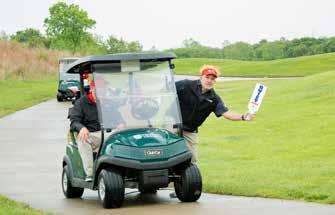
2. Despite a rainy start, attendees took to the course for the annual George R. Pocock Memorial Golf Tournament.
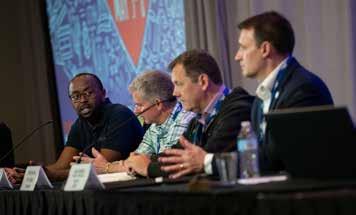
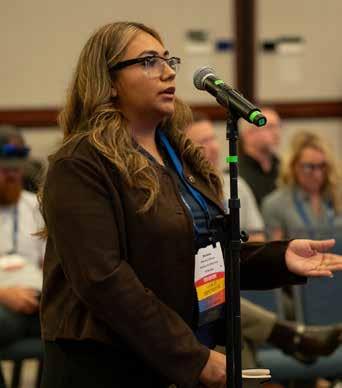
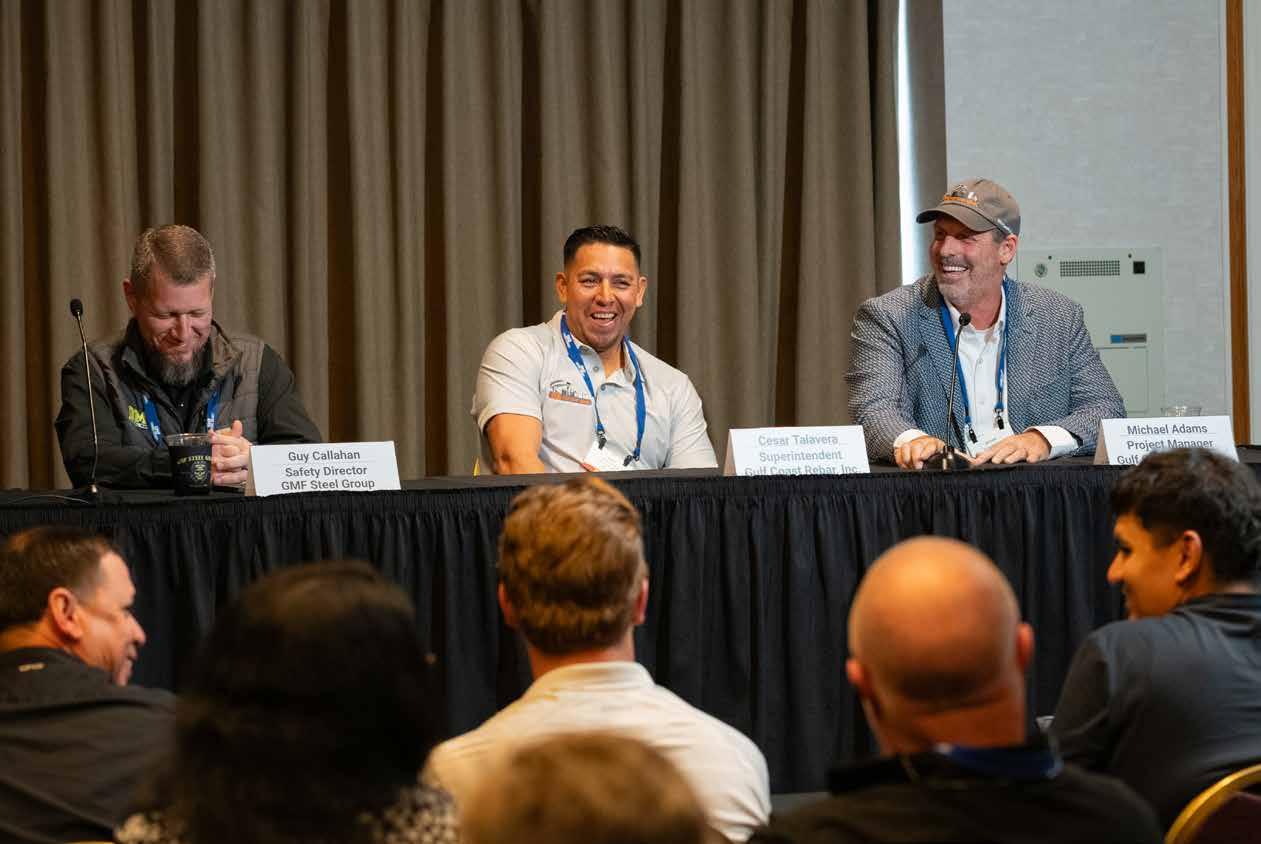
3. Industry leaders explored emerging technologies and trends during panel discussions
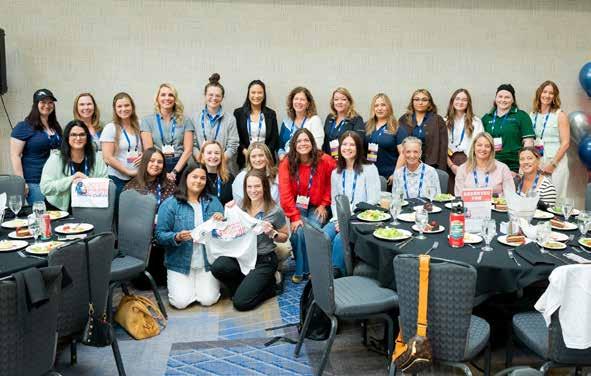
4. The inaugural SteelStrong Women in Construction Luncheon brought together women from across the industry to celebrate their contributions to the steel industry.
Acme Erectors, Fenton, Missouri, specializes in structural steel erection for commercial, industrial, institutional, and specialty construction projects throughout the Midwest.
Alpha Labor Co., Stuart, Florida, delivers skilled labor and workforce solutions for commercial construction, industrial projects, and specialty trades throughout the United States.
Applied Bolting Technology, Bellows Falls, Vermont, manufactures bolting solutions and offers training and inspection technologies designed to improve accuracy, safety, and quality in structural steel connections.
Referred by: Kate Ouellette, GWY, Inc.
BrandSafway, Oskaloosa, Iowa, delivers access and scaffolding systems, forming and shoring solutions, and specialized services that support commercial construction, industrial, and infrastructure projects.
C Steel Erectors Corp., Houston, Texas, specializes in structural and miscellaneous steel erection for commercial, industrial, and infrastructure construction projects.
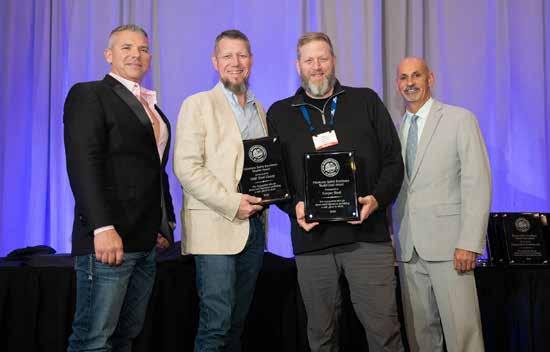
5. Members accepted the inaugural Fabricator Safety Excellence Award, recognizing companies that go above and beyond to create safer workplaces.
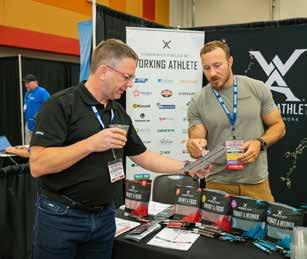
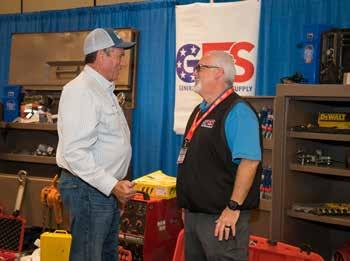
6. The trade show featured 58 exhibiting companies showcasing products, services, and technology supporting the steel construction industry.
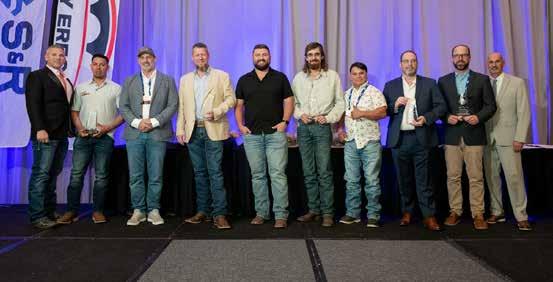
7. Project of the Year recipients were recognized during the President’s Dinner for excellence in steel construction and their commitment to advancing the industry.
8. Convention attendees participated in educational sessions and peer discussions throughout the week, sharing insights and perspectives on the issues shaping the future of steel construction.
9. Nearly 400 industry professionals gathered in Kansas City for the 2026 SEAA Convention & Trade Show.
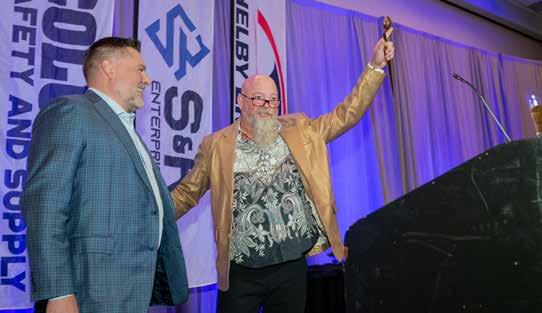
10. SEAA President Jack Nix of Shelby Erectors passed the ceremonial Spud Wrench to Chris Legnon, incoming President, of Cooper Steel during the President's Dinner.
MEET NEW MEMBERS
Danis Building Construction Company, Miamisburg, Ohio, offers construction management, design-build, general contracting, and self-perform services for commercial, industrial, healthcare, and institutional markets.
Dave Steel Company, Asheville, North Carolina, fabricates structural steel for commercial, industrial, educational, healthcare, and public infrastructure projects.
Referred by: Tanner Myers, Cumberland Steel
G2 Structural Steel Specialists, Fleming Island, Florida, focuses on structural steel erection for commercial, industrial, and specialty steel construction projects.
Referred by: Brad Kramer, Weldwire/Duramax
Ironwear, Riviera Beach, Florida, supplies personal protective equipment, safety gear, workwear, and industrial products for construction, manufacturing, and other industries.
Referred by: Miguel Reyes, Group Steel Erectors
KC Fab LLC, Grandview, Missouri, fabricates structural steel and related components for commercial and industrial construction projects.
LPR Construction Co., Loveland, Colorado, is a steel erection contractor serving industrial, commercial, and energy markets throughout the United States.
MEC Aerial Work Platforms, Kerman, California, manufactures scissor lifts, boom lifts, and other access equipment for construction, industrial, and maintenance applications.
Quality Supply and Tool, Jeffersonville, Indiana, distributes tools, equipment, safety products, fasteners, and construction materials to contractors and industrial customers.
Referred by: Chris Bunch, Cumberland Steel
R&S Steel Erectors, LLC, Rome, New York, specializes in structural steel erection and miscellaneous metals installation for commercial and industrial construction projects.
Summit Welding, Rutland, Massachusetts, offers structural steel erection, welding, fabrication, and related construction services for commercial and industrial projects.
Referred by: Glen Pisani, MAS Building & Bridge
PRODUCT FOCUS
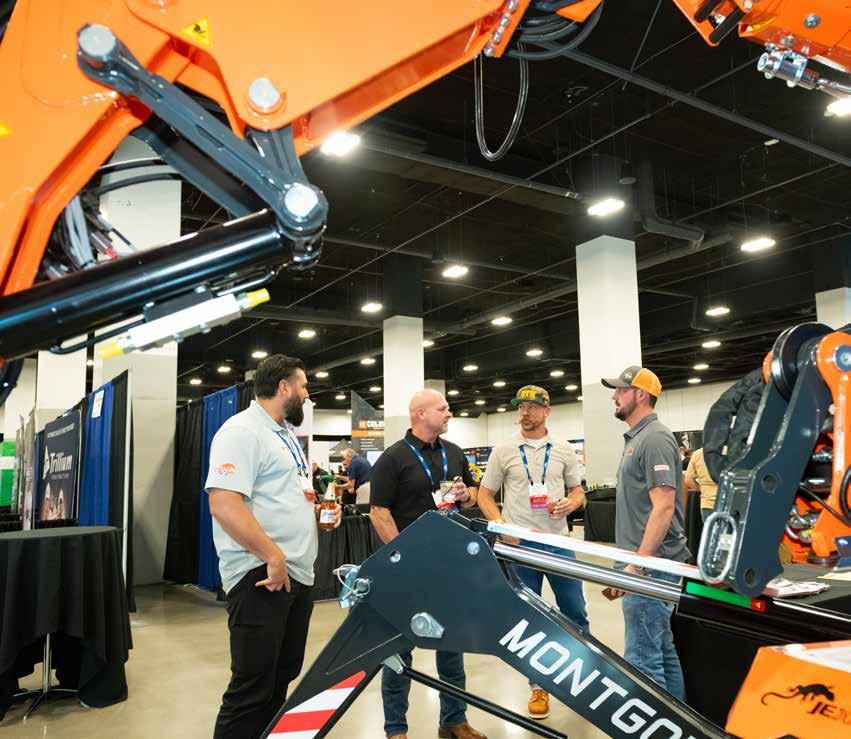
■ Exhibitors Showcase New Products and Solutions
The Trade Show at SEAA's 2026 Convention & Trade Show in Kansas City featured 56 exhibitors showcasing equipment, technology, training resources, and services for steel erectors, fabricators, and reinforcing contractors. The following companies introduced these new products and solutions designed to improve safety, productivity, quality, and project execution. See a complete list of exhibitors on this page.
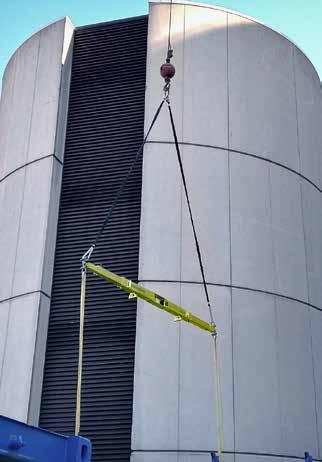
■ Aluex STR9+ Telescopic Spreader Beam from LGH
The Aluex STR9+ Telescopic Spreader Beam combines lightweight construction with adjustable lifting capabilities for a variety of rigging applications. Constructed from aluminum, the beam weighs 159 pounds while providing a lifting capacity of up to 9 tons at 60 degrees.
Its dual-extension design allows crews to adjust beam length from 8.2 ft. to 17.2 ft., providing flexibility for varying pick points without changing equipment. The integrated Dyneema bridle helps streamline setup while maintaining lifting performance. The beam is designed for structural steel, industrial, and other lifting applications where reduced weight and efficient rigging are priorities.
2026 TRADE SHOW EXHIBITORS
AISC
Atema Inc.
BBSI
Bishop Lifting Products, Inc.
Canam
Columbia Safety and Supply
Discovered Hiring Solutions
DSS Group
Eastern Pneumatics & Hydraulics, Inc.
Elephant Lifting Products
Engine
EquipmentShare
FASCAN International
Fieldforce Workforce Solutions
Fieldwire by Hilti
Florida Precision Tool
Gardner-Watson Safety & Supplies
General Equipment & Supply
GWY, Inc.
Hanes Supply, Inc.
Hilti, Inc.
Holloway Houston, Inc.
Huyett
Infra-Metals
JLG Industries, Inc.
Kito Crosby
LeJeune Bolt Company
LGH
Lincoln Electric
Maeda America, Inc.
Magni Telescopic Handlers
MAX USA Corp.
Mazzella Companies
Megasteel Building Solutions USA
MP Specialty Insurance
NCCER
Nelson Stud Welding
OTH Pioneer Rigging
Pneutek, Inc.
Red-D-Arc Welderentals
Simpson Strong-Tie
Skyjack
SmartScale AI
St. Louis Screw & Bolt
Steel Deck Institute
Steel Erectors Association of America
Steel Joist Institute
SteelCoded LLC
Structural Steel Technologies
Sunbelt Rentals
United Rentals
Versatile
WoodWorks
World Kinect
Wrought Washer Mfg. Inc.
Wyndham Hotels & Resorts
■ Atema Master Gages
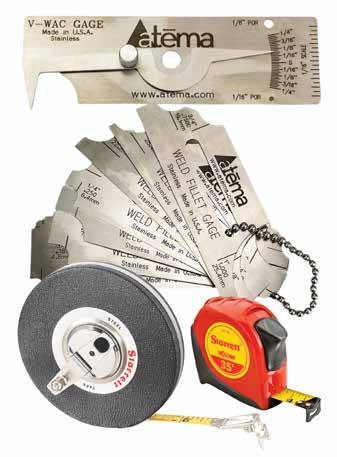
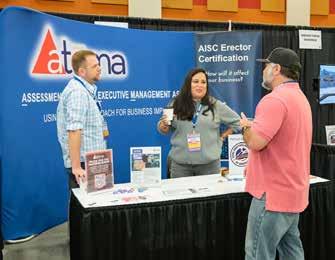
Atema's master gages are designed to help steel erectors, fabricators, and reinforcing contractors strengthen inspection and calibration programs while maintaining compliance with industry quality standards.
Used as reference standards rather than daily measurement tools, master gages help verify the accuracy of working inspection gages and support calibration traceability requirements. By confirming that measurement tools remain within acceptable tolerances, contractors can reduce the risk of measurement-related errors, improve documentation, and support more consistent quality control processes.
■ Maeda MK3053 Mini Crane
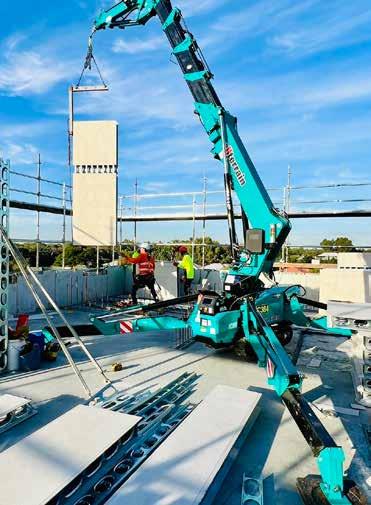
The Maeda MK3053 is a knuckle-boom mini crane designed for lifting applications in restricted-access and confined jobsite environments. Its compact footprint allows the crane to be positioned close to loads, helping reduce setup time and improve lifting efficiency.
The crane combines lifting capacity and reach in a machine that can be transported easily and operated by remote control. Automatic self-leveling and flexible outrigger positioning allow the crane to work on uneven surfaces and in locations where traditional cranes may have limited access. The MK3053 is well suited for indoor construction, structural steel work, and projects with limited ground-bearing capacity.
■ MAX USA RB613T Rebar Tying Tool
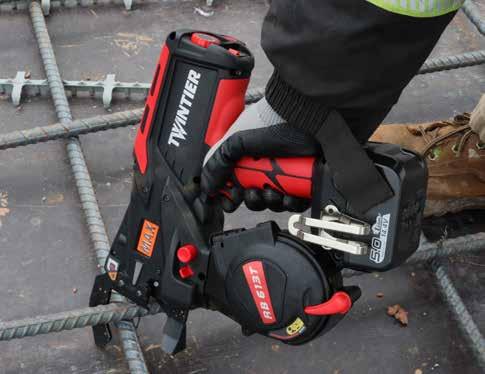
MAX USA's RB613T rebar tying tool is designed to improve productivity on reinforcing jobs by delivering faster tying speeds and increased tying power. The battery-powered tool can tie rebar combinations up to #9 x #10 and features a larger jaw capacity than previous models, providing greater flexibility in the field. New enhancements include an automated wire loading system, reduced trigger effort for improved ergonomics, and a wire pull-back mechanism that helps minimize wire consumption. The RB613T is engineered to help contractors complete tying applications more efficiently while reducing operator fatigue and material waste.
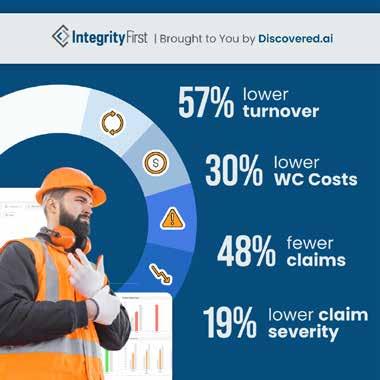
■ IntegrityFirst by Discovered Hiring Solutions
Discovered Hiring Solutions is introducing IntegrityFirst, a pre-employment screening tool designed to help contractors identify potential hiring risks before employees arrive on the jobsite.
The mobile-based assessment evaluates factors associated with workplace behaviors such as substance abuse, theft, and hostility, helping employers make more informed hiring decisions. By identifying risks early in the hiring process, contractors can improve workforce reliability, reduce turnover, and support safer jobsite environments. The assessment can be completed in approximately eight minutes and is designed for use across a variety of construction positions.
■ NCCER Accredited Operator Certifications
■ Skyjack Telescopic Booms
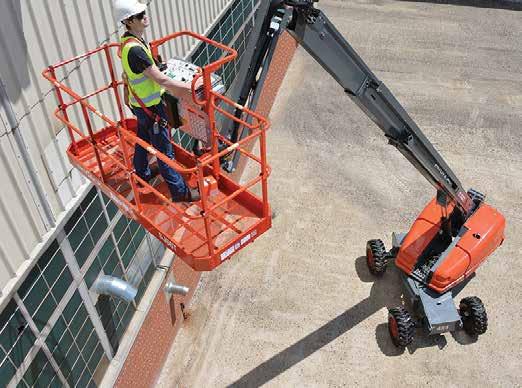
Skyjack's line of telescopic boom lifts is designed to provide steel erectors with reach, platform capacity, and performance in demanding jobsite conditions. Models offer platform capacities of up to 1,000 pounds and can accommodate up to three occupants while maintaining load-sensing functionality. The machines feature axle-based drive systems, gradeability up to 50 percent, and terrain capabilities suited for rough jobsite conditions. Additional features include intuitive controls, simplified diagnostics, and accessible service points designed to support maintenance and maximize machine utilization. Skyjack's telescopic booms are commonly used for steel erection, welding, and elevated access applications.
NCCER has received ANAB accreditation for its Articulating Boom and Service Truck Crane Operator certifications. The third-party accreditation confirms the programs meet ISO/IEC 17024 international standards for personnel certification. Designed for construction professionals who operate lifting equipment, the certifications meet or exceed OSHA 29 CFR Part 1926 Subpart CC and ASME B30 requirements. NCCER's flexible testing model allows employers to certify operators using their own equipment and facilities, minimizing downtime while helping ensure compliance. The certifications are valid for five years and recognized nationwide.
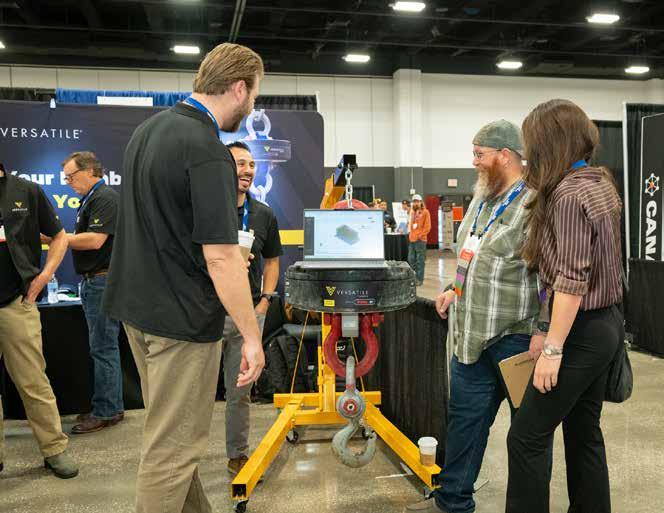
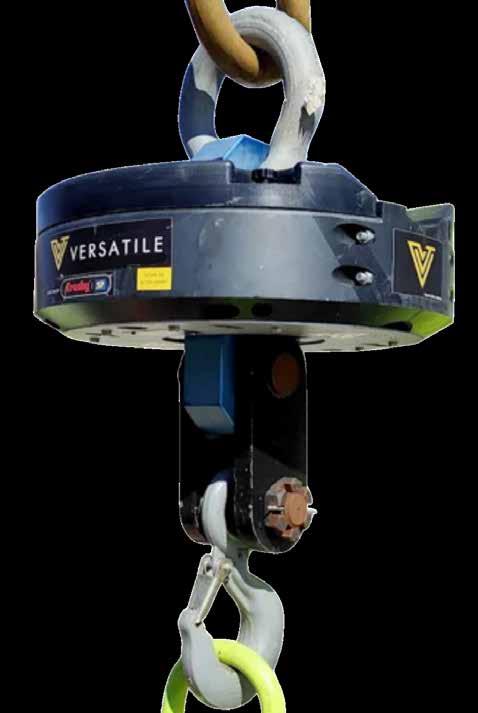
Versatile 4D Viewer
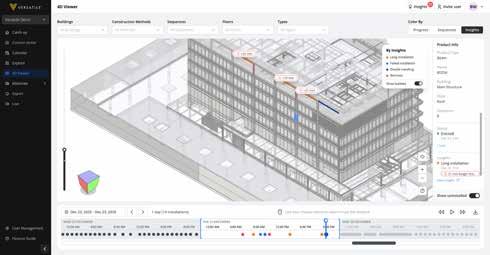
Versatile's 4D Viewer connects project progress data with a navigable 3D model, allowing teams to visualize construction activity as it occurs over time. The platform helps project managers and field personnel track installed work, identify schedule impacts, and improve project coordination. Recent enhancements include a full-project timeline, consistent progress visualization, and the ability to view erection sequences directly within the model. Each component is linked to project data, helping users verify completed work and communicate progress more effectively. The platform also provides a visual record that can support project documentation and billing activities.
■ Vector Intelligence
The Infra Group's Vector Intelligence platform is designed to help steel fabricators streamline estimating and bidding workflows through automated material quantification. The software reduces manual takeoff work while improving consistency and accuracy during the bidding process. In addition to generating quantified material data, the platform can produce annotated PDFs, customized data outputs, and 3D models compatible with fabrication software including Tekla and SDS2. By providing earlier project visibility and standardized workflows, Vector Intelligence helps fabricators evaluate opportunities, identify risks, and improve efficiency from estimating through project delivery. •
■ JLG 600AJ+ Articulating Boom Lift
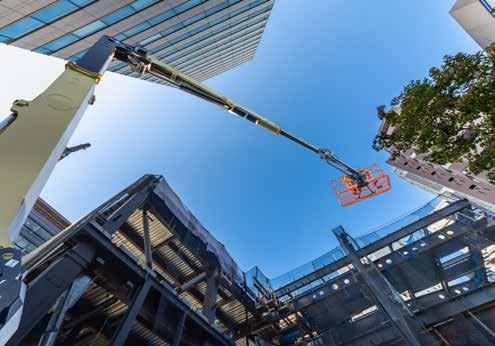
JLG's new 600AJ+ articulating boom lift builds on the company's 60-ft class boom lineup with improvements focused on productivity, stability, and serviceability. The machine offers a 60-ft platform height, 38-ft horizontal outreach, and more than 27 ft. of up-andover reach.
A redesigned boom architecture improves stability while reducing sway and improving speed to height. New boom control modes help operators position the platform more efficiently when working around structures and obstacles. The machine also incorporates JLG's ClearSky Smart Fleet technology for enhanced fleet connectivity and includes several service-focused updates designed to simplify maintenance and maximize uptime.
CAN YOU MEASURE INTEGRITY?
Why More Contractors are Using Structured Assessments to Improve Hiring Decisions
Steel erectors do not have much room for hiring mistakes. A bad hire in an office job can create extra work. A bad hire on a steel crew can create real safety risk, missed schedules, turnover, workers’ compensation costs, and damage to a company’s name. That is why many Steel Erectors Association of America members are looking beyond the old hiring playbook of “post the job, interview fast, check a few boxes, and hope it works out.”
This is where integrity testing deserves a fair look. Not as a magic filter. Not as a way to replace judgment.
Fletcher Wimbush is CEO of Discovered.ai. He has dedicated his career to tackling the challenges employers face with hiring and is the creator of Big 5 personality and disc style assessment tools. An ethical AI proponent, he is also pioneering AI-powered initiatives for talent selection.or driving digital transformation in the AEC industry.
And not as a shortcut around training, supervision, and safety culture.
An integrity test is a hiring assessment that helps employers evaluate a candidate's honesty, reliability, and likelihood of demonstrating ethical workplace behavior. Integrity testing matters because steel erection depends on people who follow rules when no one is standing over them, speak up when something is unsafe, show up ready to work, and can be trusted around crews, equipment, customers, and job sites.
As contractors continue to navigate labor shortages, rising insurance costs, and increasing safety expectations, many are looking for ways to strengthen hiring decisions. Integrity testing has become one tool that some employers use alongside interviews, reference checks, training programs, and other workforce development efforts.
Why Integrity Matters
Steel erection is high-risk work. Crews work at height, around cranes, lifts, tools, trucks, sharp edges, heavy loads, changing site conditions, and tight project timelines. In that setting, “integrity” is not only about theft. It includes honesty, rule-following, care for others, substance-abuse risk, and the ability to work safely when the pressure is on.
Overt integrity tests ask direct questions about past behavior and attitudes tied to counterproductive workplace behavior. That can include theft, dishonesty, aggression, substance abuse, and willingness to break rules. The point is not to label a person as “good” or “bad.” The point is to add structured, job-related data to a hiring process that is often too informal.
The real issue is not whether someone can interview well. The issue is whether that person is likely to act safely and dependably after the first week, when the job gets hard and no one is trying to impress the hiring manager anymore.
What the Research Says
A 2020 peer-reviewed study in the Journal of Business and Psychology looked at overt integrity testing, workplace injuries, malingering, and workers’ compensation claims. The authors found that integrity testing was connected to
Studies show that the ROI on integrity testing is more than 700%!
Source: Cooper, D. A., Slaughter, J. E., & Gilliland, S. W. (2020). Reducing Injuries, Malingering, and Workers’ Compensation Costs by Implementing Overt Integrity Testing. Journal of Business and Psychology.
lower workers’ compensation claim rates and lower claim costs in multiple samples. In one sample, the return on investment was 734%. In another, it was 866%.
The same research found a practical reason this may happen. Substance-abuse risk was tied to lower safety motivation and lower safety compliance. Theft-related scores were tied to malingering and lower safety compliance. Said plainly: some of the same traits that show up in integrity testing may also show up later as unsafe work habits, rule-breaking, or questionable injury claims.
That should matter to any steel erection company. Workers’ compensation is not just an insurance line item. Claims affect experience modification rates, crew morale, job-site trust, productivity, and whether a company can stay competitive on future bids.
The research also gives a warning: integrity testing should not be oversold. It is a helpful tool, not a perfect tool. It should be used with a sound hiring process, clear job criteria, legal review, and consistent rules.
SEAA MEMBER HIRING RESOURCES
SEAA's focus on training, apprenticeship, safety, and workforce development extends beyond the jobsite. Through its partnership with Discovered.ai, members have access to hiring and applicant management tools designed to support recruiting, screening, and candidate evaluation.
Available resources include:
• Job posting and applicant tracking
• Candidate messaging and scheduling
• One-way video interviews
• AI-assisted screening
• Interview guides and scorecards
• Branded career pages
• Team collaboration tools
• IntegrityFirst integrity testing
While many hiring tools focus on speed or applicant volume, integrity testing is designed to provide additional information that may help employers evaluate candidate fit, identify potential risks, and apply hiring standards more consistently across crews, branches, and hiring managers.
A structured hiring process should include:
• Clearly defining job requirements and expectations
• Using consistent screening methods
• Evaluating qualifications, certifications, and work history
• Conducting structured interviews
• Comparing candidates against established criteria
• Tracking hiring outcomes over time
The goal is not simply to fill positions faster. It is to create a repeatable hiring process that helps companies make consistent decisions and build stronger teams over the long term.
ADDITIONAL RESOURCES
Download Integrity Testing: Why and How to Implement Integrity Testing as an Important Part of Your Talent Management Cycle and other resources in the Resource Center at IntegrityFirst.
WATCH VIDEO OF How Integrity Tests Reveal Real Workplace Risk
Common Mistakes to Avoid
Avoid treating integrity testing as a passfail hammer with no thought behind it. That is where companies get sloppy. A better approach is to ask a few practical questions:
• Does the test measure job-related risk?
• Is it backed by research?
• Is it easy for applicants to understand?
• Are results used consistently?
• Who sees the results?
• How are records protected?
• Has the process been reviewed for fairness and legal risk?
The Integrity Testing guide, Why and How to Implement Integrity Testing as an Important Part of Your Talent Management Cycle, makes this point directly. It says employers should look at what the test measures, why it matters, how validity is tracked, whether adverse impact is reviewed, whether the test is simple, how reports are used, and whether the provider offers training and support.
The goal is not to “catch” people. The goal is to build a better hiring process.
Why Hiring Systems Matter
Integrity testing is often most effective when incorporated into a broader hiring process. Without a consistent system, assessment results can become just another administrative task rather than a meaningful decision-making tool.
That matters because the hiring problem in steel erection is usually not one problem. It is several problems at once:
• Not enough qualified applicants.
• Slow response times.
• Candidates who stop replying.
• Different managers asking different interview questions.
• No clear record of why one person was picked over another.
• Poor fit showing up after the hire.
• No repeatable process across roles or locations.
A structured hiring process can help contractors create greater consistency across locations, improve candidate evaluation, and make hiring decisions based on defined criteria rather than urgency or intuition alone.
Why This Matters Now
Labor is still tight in skilled trades. Project demands are not slowing down. Insurance costs and safety rules are not getting easier. At the same time, many contractors still run hiring from email inboxes, spreadsheets, text messages, and manager memory.
That is a weak system for a high-risk business.
Most contractors already invest in training, apprenticeship, credentials, and safety programs.
Integrity testing should be viewed in the same way: as one more tool to protect the company, the crew, and the customer. It helps answer a hard question before the hire, instead of after the claim, the no-show, the fight, the failed drug test, or the jobsite problem.
The takeaway is simple: do not use integrity testing as a sales gimmick or a stand-alone fix. Use it as part of a serious hiring system. For steel erectors, that is where it can make a real difference. •
IN THE FIELD
By Austin Reiner, CHST
ARRESTING THE FALL IS JUST THE BEGINNING
What Happens in the Minutes that Follow Are Critical
For years, the construction industry’s fall protection message centered on one goal: stop the fall. Harnesses, lanyards, anchor points, and training all focused on preventing a worker from striking a lower level. But across the steel erection industry, safety professionals are increasingly recognizing that arresting a fall is only the beginning of the emergency response.
What happens in the minutes after a fall may determine whether a worker survives.
As a result, fall rescue preparedness is rapidly becoming one of the most important—and scrutinized—areas of safety planning for steel erectors and ironworkers. Owners, insurers, and general contractors are raising expectations around rescue capability, while industry standards increasingly emphasize site-specific planning, hands-on drills, and documented competency.
The shift reflects a broader understanding of the realities of steel erection work. Leading-edge operations, controlled decking zones, changing access points, and incomplete structures create rescue challenges that are far different from many other construction environments. A rescue plan that works on paper may fail completely if crews are not prepared to execute it under pressure.
Rescue Preparedness Is Becoming a Leadership and Liability Issue
One of the biggest changes in recent years is how rescue preparedness is being evaluated after an incident occurs. Investigators, insurers, and attorneys increasingly look beyond whether a worker was wearing fall protection equipment. They want to know whether the employer had a practical rescue strategy in place. Questions often include:
• Was there a documented rescue plan?
• Was the plan site-specific?
• Had crews practiced the procedure?
• Could the employer demonstrate worker competency?
Austin Reiner is the Safety Manager for Derr & Gruenewald Construction Company.
The answers can significantly affect both liability exposure and insurance outcomes.
Many companies still rely on generic rescue procedures copied from templates or equipment manuals. However, steel erection projects present constantly changing conditions that require ongoing evaluation. Rescue routes, anchor points, and access methods may shift daily as the structure evolves. This growing focus is also being driven by industry standards. While OSHA’s core requirements regarding prompt rescue have remained relatively stable, the ANSI Z359 Fall Protection Code has become increasingly influential in shaping industry expectations. The standards are now frequently referenced during contractor prequalification reviews, insurance audits, owner safety evaluations, and litigation.
Recent ANSI guidance places greater emphasis on:
• rescue planning,
• rescue equipment selection,
• competency verification,
• and post-fall response procedures.
Several standards are particularly relevant to steel erection operations, including ANSI Z359.2 for managed fall protection programs, ANSI Z359.4 for assisted rescue and self-rescue procedures, and ANSI Z359.14 related to self-retracting lifelines and rescue capabilities.
As a result, many owners and general contractors now require more than written policies. They increasingly expect documented rescue procedures, evidence of training, and proof that rescue drills have been conducted in realistic jobsite conditions.
Realistic Rescue Drills
Another major shift in the industry is how rescue training itself is being conducted. Traditional classroom instruction and tabletop discussions are no longer viewed as sufficient preparation for high-risk work environments. Companies are moving toward live rescue scenarios that test crews in realworld conditions.
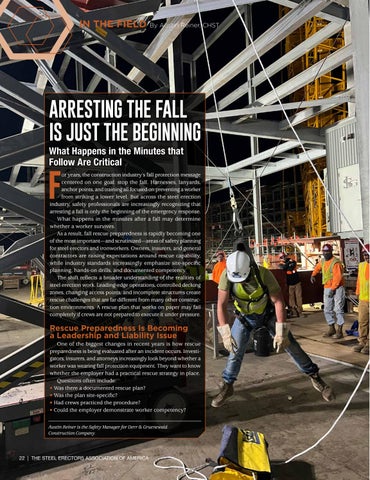
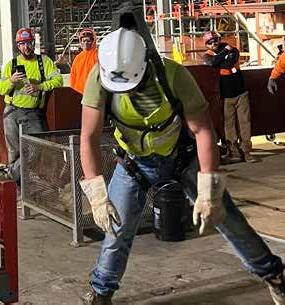
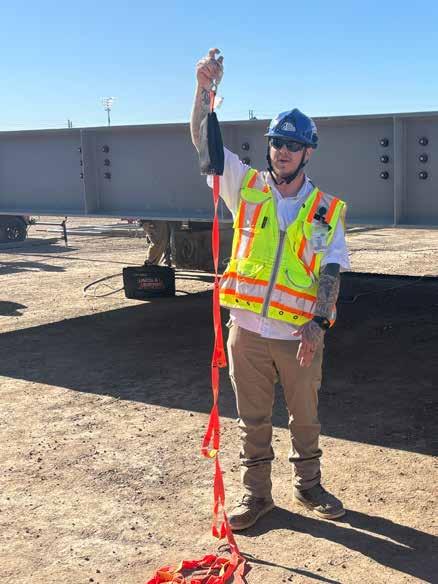
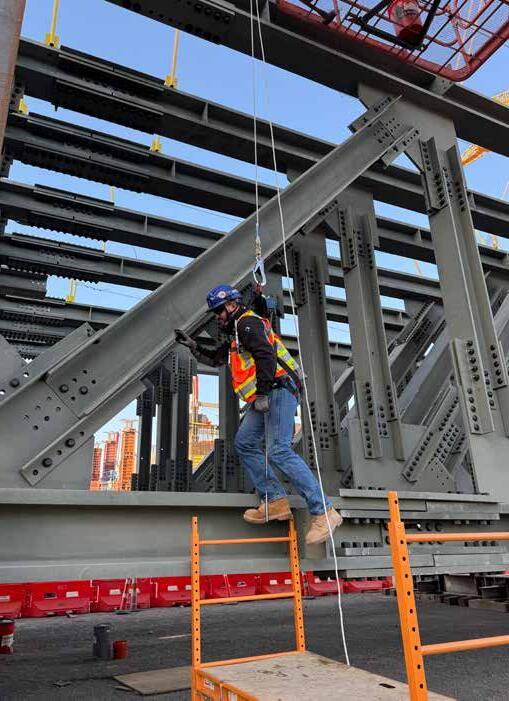
Left: Drop-down rescue ladders are lightweight, mobile, and easy to stage near work areas, making them a practical option for quick self-rescue or assisted rescue.
These drills often include:
• timed rescue exercises,
• suspended-worker simulations,
• site-specific rescue planning,
• and evaluations of communication and coordination under stress.
The reason is simple: rescue plans are only effective if crews can execute them quickly and confidently.
Steel erection environments create unique rescue challenges. Work often occurs at leading edges, on incomplete floors, or within controlled decking zones where access is limited and conditions are constantly changing. Rescue equipment may need to be deployed from aerial lifts, structural steel, or temporary anchor systems. Environmental factors such as wind, weather, noise, and crane activity can further complicate emergency response.
Realistic drills help crews identify problems before an actual emergency occurs. They may reveal equipment access issues, communication breakdowns, or delays in decision-making that would not appear during classroom reviews.
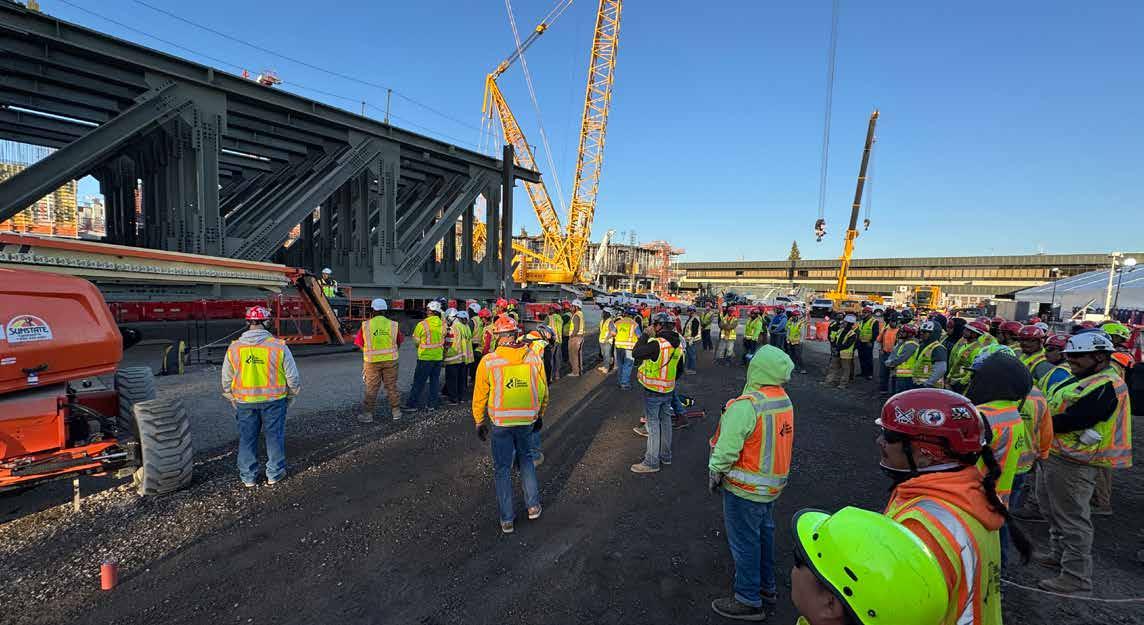
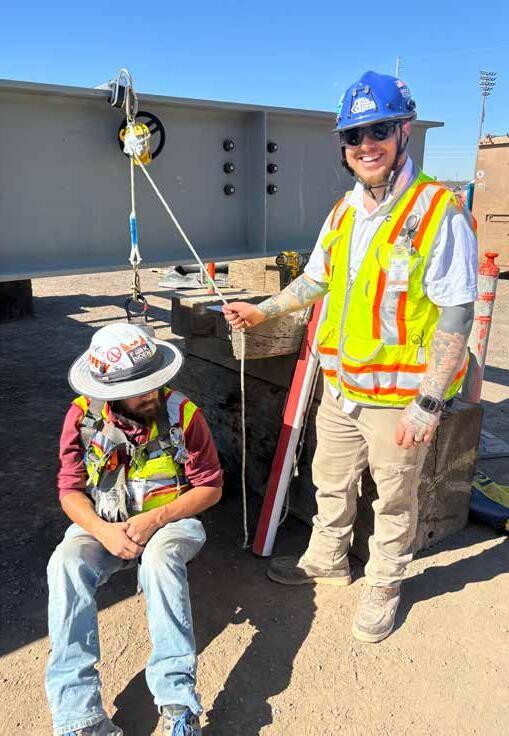
Above: Fall rescue must be planned before the fall occurs. Hands-on training helps crews understand anchor points, rescue equipment, communication, and the sequence of rescue steps.
Previous page: In a suspended fall event, time is critical. Crews should have a communicated rescue plan and be prepared to begin hands-on rescue efforts within 6 minutes max.
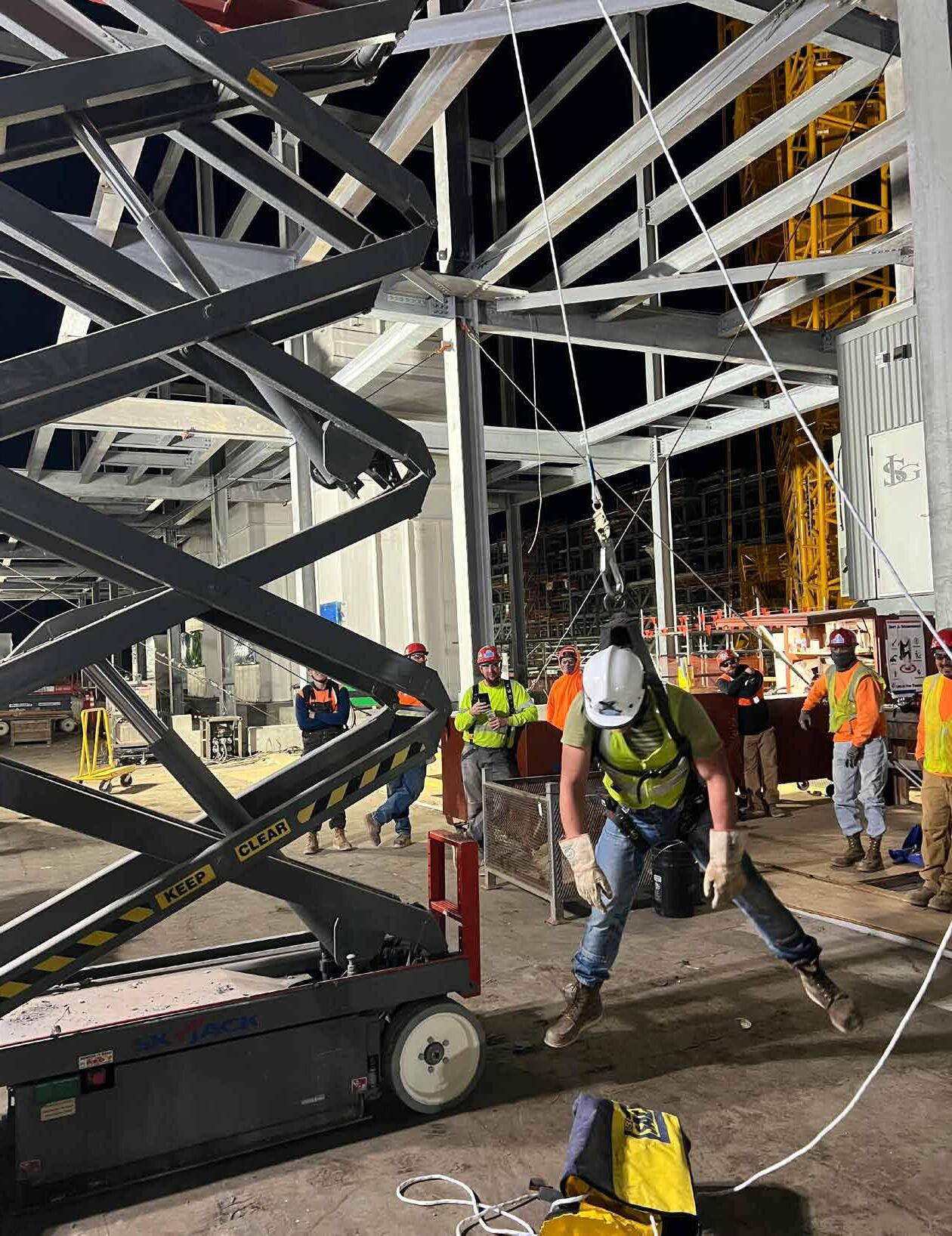
Specialty rescue systems like the ROLLGLISS are an excellent option when equipment such as a boom lift cannot access the area. They take more time to set up than simpler rescue options, but they provide crews with another reliable method for controlled rescue.
Owners and insurers are also placing greater emphasis on documentation. Companies are increasingly expected to maintain records showing:
• rescue drill frequency,
• participating personnel,
• equipment used,
• lessons learned,
• and corrective actions taken afterward.
This represents a broader shift in safety culture. Rescue preparedness is no longer treated as a compliance checkbox. It is increasingly viewed as a measurable operational capability.
Human Performance Under Pressure
One of the most important emerging trends in rescue preparedness is the recognition that technical knowledge alone is not enough.
Even the best rescue plan can fail if workers panic, communication breaks down, or nobody takes command during an emergency.
As a result, many companies are expanding rescue training to address the human side of emergency response. Increasing attention is being given to:
• panic response,
• communication under stress,
• crew coordination,
• and emergency leadership.
Safety professionals recognize that workers involved in a fall event may experience confusion, fear, or hesitation. Nearby crew members may also struggle to react quickly if they have not trained under realistic conditions.
This is especially important in steel erection, where crews often work in small teams and rely heavily on communication and coordination. In many situations, foremen and connectors may need to make rapid decisions before outside emergency responders can access the structure.
Some contractors are now incorporating leadership development into rescue training by identifying who will take command during an emergency and clarifying individual crew responsibilities in advance. Others are using scenario-based drills to help workers build confidence in high-pressure situations.
The goal is to create a rescue-ready culture where crews understand not only how to use the equipment, but how to work together effectively during a crisis.
The Industry Is Raising the Bar
The steel erection industry has made enormous progress in fall prevention over the last several decades. Improved equipment, stronger standards, and increased awareness have all contributed to safer jobsites.
But the conversation is evolving. Today, more companies recognize that stopping the fall is only part of the responsibility. The next phase of safety leadership focuses on what happens after the fall occurs—how quickly crews can respond, how effectively they communicate, and whether they are truly prepared to rescue a suspended worker.
That shift is changing expectations across the industry.
Owners and contractors are demanding more realistic training. Insurers are paying closer attention to rescue capability. Standards organizations are placing greater emphasis on planning and competency. And safety leaders are increasingly recognizing that rescue preparedness is not just a technical issue, but a leadership and culture issue as well.
For steel erectors and ironworkers working at height every day, those changes could make all the difference when seconds matter most. •
Real-life rescue scenarios help crews work through actual jobsite conditions, including beam access, equipment placement, suspension hazards, and controlled retrieval.
COVER STORY By Mike Larson
NO ROOM FOR
CONTRACTORS DEMONSTRATE HOW PREP AND INNOVATION DRIVE RESULTS
IN THIS ISSUE
Austin-Bergstrom International Airport Infill, Austin, Texas
Structural Steel Class II ($500,000 to $1 Million)
Erector: Perry & Perry Builders, Inc.
Fabricator: Alamo Structural Steel
Architect: CORGAN/AEC-Way Engineering
Construction Owner/GC: Whiting-Turner
Project Owner: Austin-Bergstrom International Airport
Contract Value: $636,400
Tons of Steel: 98
400 Central Ave., St. Petersburg, Fla.
Reinforcing Steel Class II ($500,000 and up)
Erector: Gulf Coast Rebar, Inc.
Fabricator: CMC
Architect: Arquitectonica
Construction Mgr./GC: Suffolk Construction
Project Owner: Red Apple
Contract Value: $:5,478,360
Tons of Steel: 9,116 tons of rebar
Tropicana Field Cupola Renovation, St. Petersburg, Fla.
Structural Steel Class I (Up to $500,000)
Erector: GMF Steel Group
Fabricator: GMF Industries
Architect: Geiger Engineers
Construction Mgr./GC: Tampa Bay Rays
Project Owner: City of St. Petersburg
Contract Value: $196,946
Tons of Steel: 2
SEAA’s 2026 winning Projects of the Year highlight the versatility and problem-solving capabilities of steel erectors working in vastly different environments, from urban high rises and active airports to remote national park infrastructure.
Three of the winning companies and their projects are featured in this article. The two remaining winners will be featured in the Fall edition of Connector.
Each of the winning contractors in this article landed their project with a creative approach, not the lowest bid. All three projects took place at high-visibility venues, had short deadlines, and were completed on time, within budget, and without any injuries. In addition, two of the three were done in occupied buildings where operations couldn’t be interrupted.
The Project of the Year award competition is open to SEAA members and recognizes creative problem solving and commitment to executing on time and on budget. Categories are available for Structural Steel, Miscellaneous Metals, and new this year, Reinforcing Steel.
Winners receive trophies, the opportunity to participate in peer panel discussions, and feature article coverage in Connector magazine.
To learn how to enter the SEAA 2027 Project of the Year competition, visit seaa.net/project-of-the-year.
Mike Larson is a journalist with more than 45 years of experience writing about equipment, engineering, and construction. He is editor emeritus of Crane Hot Line magazine.
BUILDING ABOVE BAGGAGE CLAIM
When Perry & Perry Builders, Inc., landed the contract to set the steel for an infill floor at Austin-Bergstrom International Airport, it knew the project was a high-profile job that carried some significant challenges.
Austin-Bergstrom airport in Austin, Texas, is one of the country’s busier mid-sized airports, averaging about 58,000 passengers per day or about 21.7 million per year.
Perry & Perry’s infill project was part of a major expansion that will boost the airport’s capacity from 21.7 million passengers per year to 37 million while also improving traffic flow through security, gates, and baggage areas.
Perry & Perry’s job was installing about 98 tons of steel to create an 80-foot by 200-foot floor in what had been an open atrium on the terminal’s second level.
The infill project turned empty air space into additional check-in facilities.
The Night Shift
One of the job’s major challenges was that the new second-floor space would sit directly above the existing baggage claim area on the ground floor. Perry & Perry had to install the new floor’s girders, beams, and decking without disrupting airport operations. To avoid disrupting baggage claim operations, Perry & Perry’s crew worked only during overnight hours, from 11:30 p.m. until early morning, when passenger traffic was at its lowest.
Asking workers who normally worked first shift to transition to overnight work for four separate two-week periods created staffing challenges. Nevertheless, the 10-person crew adapted and delivered despite the disruption to their normal schedules.
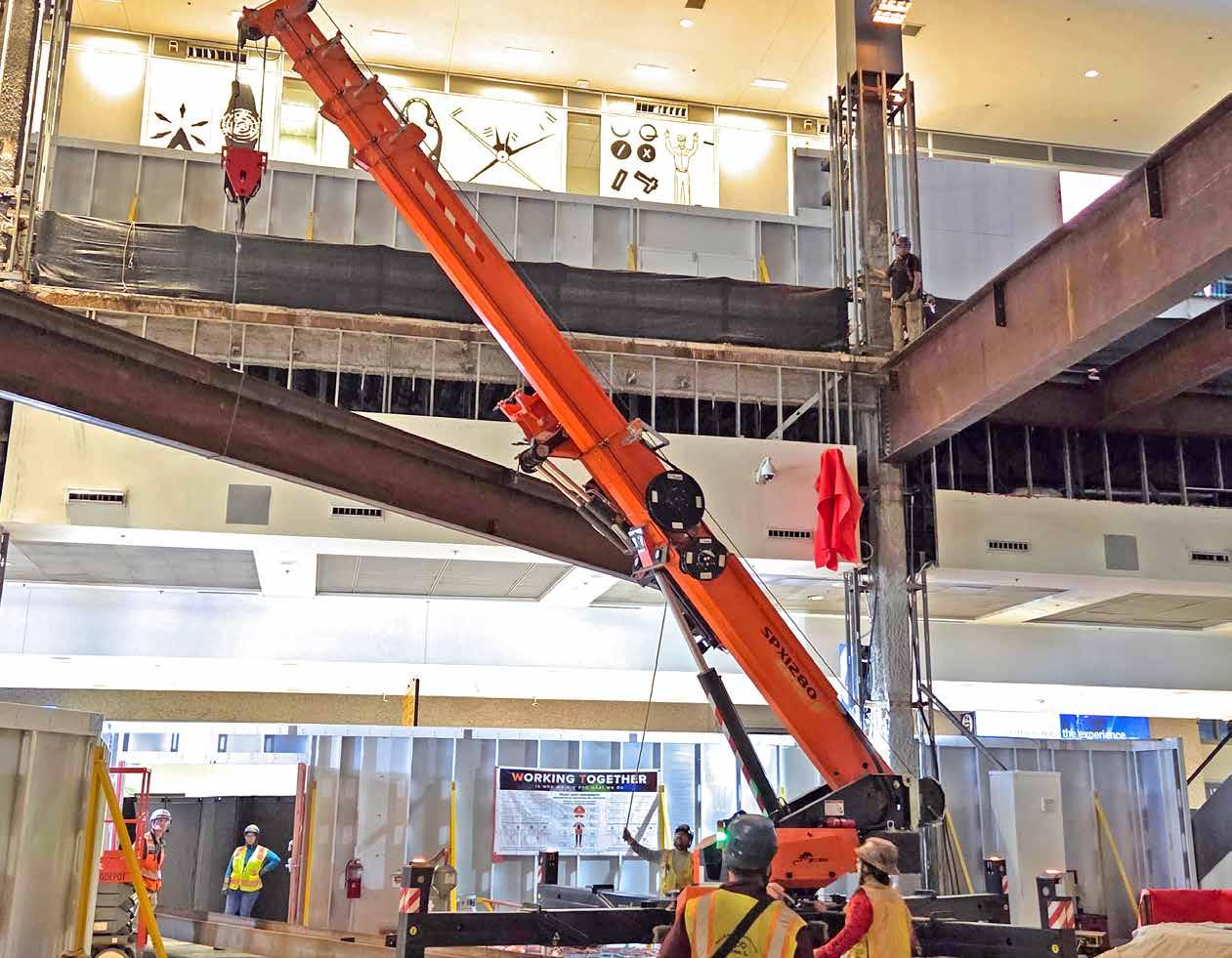
Perry & Perry uses a Jekko SPX1280 mini crane to set a 40-foot-long, 2,700-pound steel beam for the new 80-foot by 200-foot second floor infill project
Overnight working hours also presented logistical challenges. Materials were not allowed to arrive on site until 2:00 a.m., and no on-site laydown area was available, so every piece of steel had to be erected the same night it was delivered. That required Perry & Perry to execute careful planning to ensure that the right pieces of steel arrived each night.
To solve the problem, suppliers delivered materials to Perry & Perry’s headquarters in Rockdale, Texas. Perry & Perry's employees loaded trucks with the right materials per the schedule and made the one-hour drive to deliver the materials no earlier than 2 a.m. A number of different drivers made that run, including the company president.
“Thanks to careful planning and focused execution, all of the steel we needed arrived in the right sequence to keep us on schedule,” said Jackson Perry, project manager.
Equipment Limitations
All equipment used inside the airport had to fit through the standard entry doors and be powered by electricity or propane. Those requirements limited the sizes, lifting capacities, and kinds of cranes, forklifts, and personnel lifts Perry & Perry could use. In addition, the building had little space for storing equipment, so it took extra coordination to make sure the right equipment was available each night.
For the infill project, Perry & Perry relied on a Caterpillar vertical-mast forklift, a Doosan vertical-mast forklift, two 26-foot Skyjack scissor lifts, a 45-foot JLG articulating boom lift, a Jekko SPX1280 mini crane, and two 5-ton capacity hand-operated chain falls.
One of the most technically demanding aspects of the project was bringing in and setting four 56-foot-long, 6-foothigh, 14,000-pound plate girders at a base height of 17 feet. The first challenge was getting them through the entrance doors and into the building.
“Their weight was a challenge, of course,” said Jackson Perry. “But so was their length.”
There was not enough clear space in the baggage claim area to pick up one end of a girder with a forklift, so they had to be rolled in and maneuvered by old-fashioned muscle, with a start-up assist from a small electric winch.
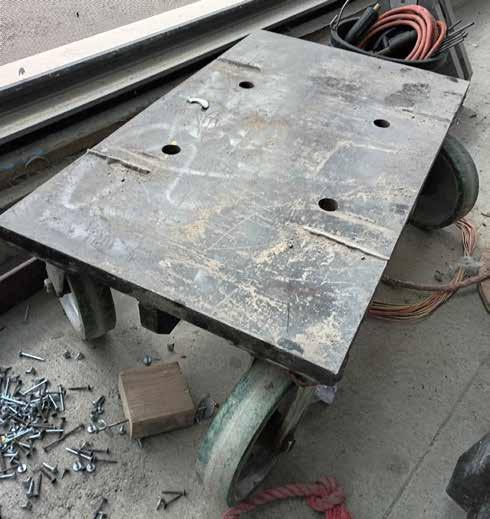
To make that possible, Perry & Perry fabricated heavy-duty four-wheeled dollies that bolted to a girder’s flanges. Perry explained that the dollies had to be bolted to the girder to make sure it didn’t slip off during the push.
Perry & Perry used four dollies when rolling in a plate girder, and the dollies stuck out about a foot on each side of the girder’s bottom flange for stability.
“With the dollies and a little get-started tug from an electric winch, four workers muscled a girder in the door, then through a sharp left turn, and to the erection site,” said Perry. “We did that four times during the project.”
Since no crane that had the reach and capacity to set the big girders could work in the building, Perry & Perry engineered a custom solution. They welded lifting eyes to the tops of two columns and to the top flange at each end of
No crane that could lift the project’s 14,000-pound plate girders would fit through the airport doors, so Perry &
placed them using two 5-ton capacity chain falls.
the girder and connected each pair of eyes with a chain fall. After two forklifts had raised the girder about five feet to clear a baggage carousel, the chain falls lifted the girder to a top height of 23 feet, where Perry and Perry connected it to the columns.
“This lift required careful coordination and constant communication to be done safely,” said Perry.
In addition to setting the four girders, Perry & Perry set 52 connecting beams, each 40 feet long and 2,700 pounds. All were placed by the Jekko SPX1280 mini crane.
“We were awarded this job because of our detailed planning and strong focus on safety,” said Perry. “From the start, we took the time to fully review the drawings, site limits, and work hours so we could build a clear plan before work began. As a result of thorough planning and careful execution, all work was completed safely, on schedule, and without disruption to airport operations.”
Perry
One of the carts Perry & Perry built for rolling the 56-foot-long, 14,000-pound plate girders into the building by hand. For each girder move, four of these carts were bolted securely to the flanges.
Installing 5.4 million pounds of rebar in just 31 days to stay on schedule for a 7,200cubic-yard concrete pour required Gulf Coast Rebar to mobilize nearly 90 workers, run longer shifts, work some Saturdays, and use some innovative techniques.
THIRTY-ONE DAYS TO
GDELIVER
ulf Coast Rebar, Inc., earned its award in the Reinforcing Steel, Building Structure category for its key contributions to the construction of 400 Central Avenue, a 46-story, full-service luxury condominium tower in St. Petersburg, Fla.
On that project, Gulf Coast placed 9,116 tons of rebar for the 515-foot-tall high-rise, which was completed in July 2025.
In addition to the reinforcing steel, Gulf Coast Rebar installed 750 tons of post-tensioning cable, 60 structural link beams, more than 29,000 mechanical couplers, and 15,000 stud rails that form the building’s backbone.
Gulf Coast was selected for its ability to maintain strict quality control of complex reinforcing systems while proposing ideas to accelerate the construction schedule.
Keeping the Pour on Track
The project presented several significant challenges, many related to high-density reinforcing steel layouts and vertical construction sequencing. One of the first came amid an aggressive foundation schedule, when Gulf Coast Rebar needed to install 5.4 million pounds of rebar in 31 working days, four fewer than planned due to delays from another trade.
There was no chance of delaying the upcoming 7,200-cubicyard concrete pour, so Gulf Coast Rebar had to complete its part of that project in the remaining time.
To meet the deadline, its crew worked extended hours, including weekends, and kept precise coordination to maintain progress. The foundation pour was completed on schedule, setting the tone for the remainder of construction.
The team also stayed on schedule through two rainy seasons, the permanent loss of one of three tower cranes following Hurricane Milton, and material delivery and hoisting challenges on a dense urban jobsite.
Efficiency Without Compromise
Working closely with the project’s concrete contractor, Baker Concrete Construction, Gulf Coast Rebar suggested modifications
that saved time while maximizing quality. All of the changes were approved by the engineer of record.
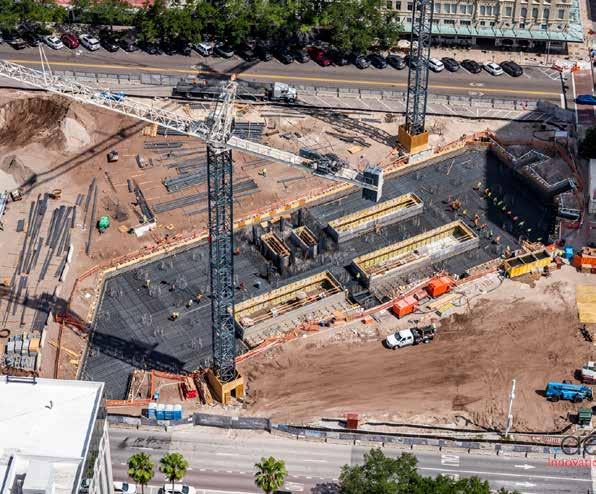
One of those ideas cut the time to place rebar for a base mat from 90 days to just 30. “The original schedule called for three months to do that work,” said Mike Adams, operations manager at Gulf Coast Rebar. “One way we saved that time was by bringing in more people than most other rebar companies could have. For that part of the project, we had about 85 rod busters working daily.”
But Gulf Coast Rebar’s time-saving changes throughout the project also came from improved efficiency. “Where it was applicable, we used one 60-foot rebar instead of lapping and tying three 20 footers,” said Adams. “It takes more people to handle a 60-footer, but you come out ahead because it’s faster to install, so you save man-hours overall.”
Another Gulf Coast idea that saved time without sacrificing quality was having the rebar fabricator put terminators on the rod ends instead of bending them into shear hooks. “The terminator costs more but makes it easier to feed the rod through the mat and also eliminates having to hook the end of the rod to the layer below,” said Adams. “Again, it saves time and works just as well as the more-common alternative.”
Safety was just as strong a focus as speed and productivity. The company experienced zero injuries throughout the 150,000 work hours without even one injury. “We build safety into our culture,” said Adams, which includes ongoing field and supervisor training. And daily meetings reinforce the company's brother-and-sister system, in which workers look out for one another and remain alert to hazards created by surrounding trades. “We not only make sure we are working safely; we keep each other safe by watching out for things contractors around us are doing that might affect us," added Adams.
Through innovation, coordination, and disciplined execution, Gulf Coast Rebar delivered exceptional results in a high-risk, schedule-critical operation.
An aerial view shows the massive size of the foundation slab, which took 5.4 million pounds of rebar and 7,200 cubic yards of concrete to build.
THE FAST WAY TO THE TOP
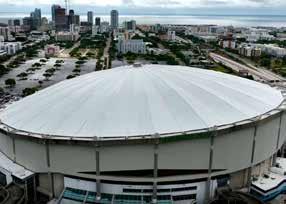
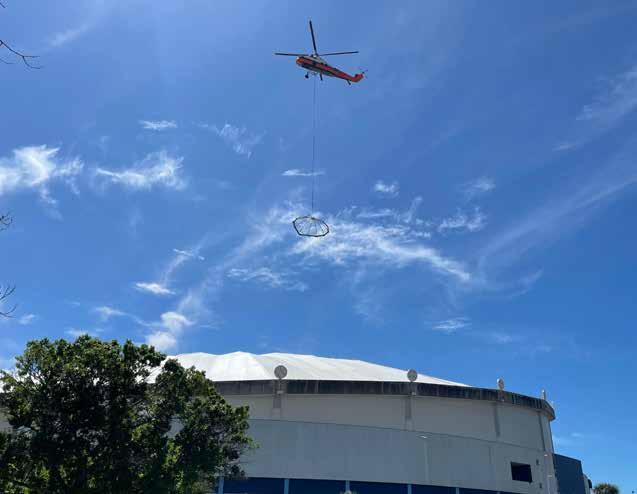
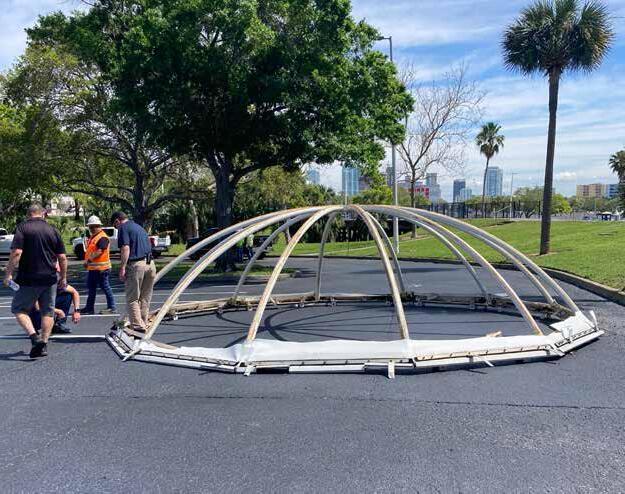
Te most dramatic part of GMF Steel Group's replacement of the cupola on Tropicana Field was its use of a helicopter for lifting, but that was just one of the creative solutions that helped the Lakeland, Fla., contractor meet the challenges of the high-profile job.
Replacing the deteriorated cupola atop Tropicana Field in St. Petersburg, Fla., home of Major League Baseball’s Tampa Bay Rays, was a high-profile job. The cupola sits about 16 stories above grade atop one of baseball’s most recognizable domed stadiums.
Mounted to the center ring of the roof structure, the cupola is tied to the geometry and weatherproofing of the dome’s central zone, protects mechanical equipment, and provides ventilation for the stadium.
After 34 years of life, the original cupola had deteriorated so much that it needed to be replaced, and quickly.
GMF was chosen to lead the project because of its proven ability to execute complex steel erection in high-risk environments and for proposing an innovative helicopter-based installation strategy.
The cupola was located about 160 feet above grade in the middle of a 486-foot by 685-foot oval roof with a six-acre footprint. This position, along with limited ground space and a tight deadline, made using a crane impractical, so GMF turned to a helicopter to make lifts instead.
Opting for a helicopter minimized disruption to stadium operations and helped GMF complete the whole job from plan to placement in just one week, as the stadium owner required.
As prime contractor, GMF was responsible for engineering coordination, removing the existing cupola, field fabrication, installation of new structural steel and decking, and installation of the new cupola.
To meet the tight deadline, GMF simultaneously coordinated helicopter operations, engineered a replacement cupola, and planned installation while minimizing disruption of events.
When Cranes Aren't an Option
GMF engineered a helicopter lift plan that accounted for rotor wash, load swing and rotation, static electricity, remote release
requirements, and strict aircraft capacity limits. GMF worked with Midwest Helicopter to finalize the lift weight, flight path, rigging configuration, exclusion zones, weather window, emergency plan, and communication protocol.
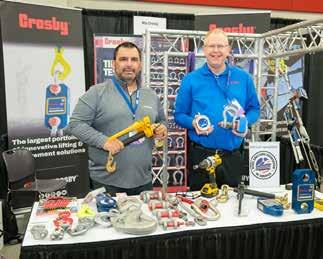
The cupola was rigged from engineered lift points and included helicopter-specific components such as a belly hook, long line, Crosby swivel hook, remote hook, electric swivel, and wire slings. With rigging, the existing cupola was calculated to weigh 4,412 pounds.
Engineering a Replacement
To build a new cupola, GMF captured the geometry of the deteriorated existing one, translated that information into a fabricable replacement, and then adapted components, such as connections, so the new frame would mate correctly to the roof’s existing structural steel.
The engineering and fabrication were precise enough that the replacement steel frame was field-fit at 160 feet above grade with no need for modification after installation.
The helicopter delivered the new cupola to the roof, but GMF’s ironworkers and their tools got there the old-fashioned way: They climbed up permanent ladders and maintenance catwalks inside the stadium to get to the rooftop, where they installed and fit-up the new cupola.
So how did GMF account for possible bad weather?
“We worked with the FAA, Airport Authority, consulted local weather applications, and planned around the weather to perform the lifts,” said Guy Callahan, GMF’s Director of Field Operations. “But removing the old cupola and installing its replacement went very quickly. The rooftop opening was exposed for less than a day.”
The successful completion of this work restored the structural integrity of the cupola, preserved the stadium’s architectural identity, and delivered the owner’s vision on time and without incident.
“This project demonstrated how innovation, planning, and field adaptability can transform a highly constrained, high-risk operation into a precise and successful operation,” said Callahan. •
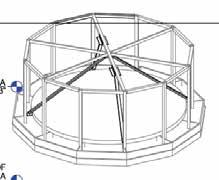
GMF designed the new cupola’s steel framework (left), so it fit the same footprint as the old one (above) and so its bolt holes aligned precisely with the existing holes in the roof structure.
The helicopter removes the deteriorated existing cupola, which weighed 4,412 pounds with rigging.
A PRACTICAL GUIDE TO AI GOVERNANCE FOR SMALL COMPANIES
Artificial intelligence is no longer just a talking point for Silicon Valley boardrooms. It is actively shaping operations for contractors of all sizes across the country. For small companies and microbusinesses often operating with fewer than 20 employees, the pressure to adopt AI tools like ChatGPT or AI agents is high. However, the resources to manage the accompanying risks are often low.
Management responsibility frequently falls on fractional HR managers or versatile office managers acting as HR specialists. If you are handling HR, operations, and compliance—especially if yours is a microbusiness—you do not need a dense, 50-page corporate compliance manual. You need a practical, living AI governance document. This document serves as a guideline for the business owner to maintain a secure cybersecurity posture while empowering the team.
Here is a practical, step-by-step approach to building an AI governance framework tailored specifically for rural microbusinesses.
The Core of Governance
The first step in writing an AI governance document for a small business is to define roles and operational realities. Avoid copying enterprise templates. Enterprise frameworks assume every employee sits behind a corporate-issued laptop with a dedicated IT department monitoring their network traffic. In rural microbusinesses, the operational reality is entirely different.
Consider a practical example from the field: a local manufacturing company or fab shop where 15 out of 20 employees do not even have a computer or a
Laura Baker (ARM, MBA, CISM, CEPA®) is Executive Director of CyberWyoming and President Emerita of CyberWyoming Alliance. She created this article with the support of AI, based on her own original concepts and perspectives. BUSINESS
company email address. They work on the shop floor, drive delivery trucks, or manage physical inventory. For these businesses, digital security starts with physical security.
Your governance document must explicitly map out employee roles to match reality. If an employee's primary job involves physical labor, their access to the company’s digital environment must be restricted accordingly. If they do not need a computer to perform their job, they should not have active login credentials that could be compromised.
Physical security—such as locking terminal desks, securing tablets used for inventory, and ensuring password sticky notes are not pasted to monitors—remains the foundation for cybersecurity. The owner can use this baseline to verify that physical entry points to data remain locked down.
Public AI and the Rise of AI Agents
Many business owners believe they do not have an AI problem because they have not purchased any corporate AI software. This is a dangerous oversight. Employees are already using public AI tools. They copy client emails into public Large Language Models (LLMs) to draft responses, paste messy financial data to create spreadsheets, or upload proprietary product descriptions to generate marketing copy.
This risk accelerates significantly with the emergence of public AI agents. Unlike standard chatbots that respond to a single prompt, autonomous AI agents can execute multi-step workflows. An employee might grant a public agent access to a local folder or a web browser to automate data entry or schedule follow-ups.
If your staff uses public AI tools, your business data feeds back into a public model to train future
iterations. Your governance document must address this with clear, practical boundaries:
• Implement a strict "No Proprietary Data" rule. Employees must never input client names, financial records, trade secrets, or physical addresses into public tools.
• Require explicit approval for browser extensions and third-party plug-ins. Many free productivity tools now secretly bundle AI agents that scrape on-screen data.
From a legal perspective, ignorance is a liability. If your business chooses an AI tool that suffers a data breach, exposing sensitive customer or employee information, the business owner can be held liable. In legal disputes, courts look closely at due diligence. If you cannot explain the basic security standards or data retention policies of the tools you use, your business faces significant exposure.
• Provide a list of pre-approved public tools alongside a clear list of banned platforms.
• Ensure that the employees know that AI hallucinates and it is their responsibility to independently verify sources, statistics, facts and figures received through AI research.
Mitigating Legal Risks
From a legal perspective, ignorance is a liability. If your business chooses an AI tool that suffers a data breach, exposing sensitive customer or employee information, the business owner can be held liable. In legal disputes, courts look closely at due diligence. If you cannot explain the basic security standards or data retention policies of the tools you use, your business faces significant exposure.
This is a critical area where fractional HR managers and office managers add immense value. You must introduce a basic vetting process before any AI tool is integrated into the workflow. Your governance document should mandate a simple registry for any software used by the company.
Before adopting a tool, ask three fundamental questions:
1. Where is the data stored, is it fenced so your company data stays your own, and who owns the inputs? (Ensure the vendor does not claim ownership of your uploaded files or prompt information).
2. Who is the data shared with and what data are shared? Is the data redacted at all?
3. Can you opt out of sharing your data with the learning model and if the account is terminated, is your data removed?
Documenting this quick review proves that the business took reasonable steps to protect data, creating an essential layer of protection in legal discovery situations.
STEEL CONNECTIONS
Peer Group and Meet & Greet
October 15, 2026
Embassy Suites, Raleigh, North Carolina
Registration and Sponsorship Info
October 16, 2026
LONNIE POOLE GOLF CLUB AT NC STATE UNIVERSITY
Hiring in the Age of AI Deception
AI is also radically changing the hiring landscape, introducing sophisticated fraud risks that target small companies. There are rising reports of bad actors, including nation-state threat groups like North Korean cybercrimi-
As the HR specialist, your governance document should update your hiring procedures to counter AI deception: Conduct mandatory live video interviews. Do not rely solely on text communications or audio calls. Watch for visual glitches, unnatural lip movements,
From a legal perspective, ignorance is a liability. If your business chooses an AI tool that suffers a data breach, exposing sensitive customer or employee information, the business owner can be held liable. In legal disputes, courts look closely at due diligence. If you cannot explain the basic security standards or data retention policies of the tools you use, your business faces significant exposure.
nals, using AI-generated identities, deepfake audio, and polished portfolios to secure remote positions at Western companies. Their goal is simple: gain internal access to plant malware or exploit system vulnerabilities.
Many companies rely on remote or fractional talent for web development, bookkeeping, or IT support. This makes rigorous identity verification essential.
or audio delays that indicate real-time deepfakes.
Implement cross-platform background checks. Verify candidates across multiple professional platforms like LinkedIn. Look for consistent histories, active networks, and legitimate mutual connections rather than relying entirely on a submitted PDF resume.
SEAA Members Only.
A System Built for Steel Erectors.
Now FREE for two months on your jobsite.
Why wait to see how AI-powered insights can change your projects? With this Member to Member offer, you’ll get:
✔ A Versatile device shipped to your jobsite
✔ Unlimited user access
✔ Daily jobsite data + full team support
Track progress. Catch delays early. Defend backcharges. All with zero extra work from your crew.
Utilize skills assessments during live sessions. Ask technical or administrative candidates to complete a brief task live on a shared screen to verify their actual skills match their AI-polished profiles.
Call references, don’t just rely on email.
Practical Next Steps for the HR Leader
Building an AI governance posture does not require an IT degree. It requires consistency and clear communication.
Start by auditing your current team. Identify who handles digital data and who works strictly in the physical space. Next, draft a simple, two-page guideline for the business owner that outlines physical terminal security, approved public AI usage rules, and the mandatory live-verification steps for new hires.
By taking these practical steps, fractional HR managers and office managers can protect their companies against modern digital threats while keeping operational rules clear, realistic, and achievable. •
73% of female construction workers have experienced bias on the job.
This bias spans from entry level to senior management roles and across generations of women working in the industry. Female respondents have experienced the following bias while at work.
GENDER BIAS BLOCKS ADVANCEMENT
The 2026 State of Women in Construction Report, produced by STACK Construction Technologies, is based on data from over 500 American construction workers. This chart shows how gender bias impacts women differently at various stages of their careers.
For younger generations:
Colleagues assuming one is physically weaker
| 38%
Having a task one is qualified for “mansplained”
Z | 45%
Seen in senior management: 73%
Coworkers being more averse to suggestions versus male counterparts
Colleagues suggesting assistance when performing physical
Z | 23%
Being forced to wear equipment that doesn’t properly fit
Z | 32%
| 27% Millennial | 28% Millennial | 28%
Being perceived as “bossy” or “aggressive” by coworkers based on female gender
Management | 30%
Colleagues assumed one was a “diversity hire” due to race
“This stat is alarming and tells us culture change has to start at the top. Leadership perception shapes opportunity in this industry.”
“We’re facing persistent labor shortages and increasingly complex projects. Robotics and automation can help alleviate these challenges, not by replacing workers but through assisting them… technology strengthens and accelerates our ability to deliver measurable value in the field.”
Lindsay Powers SVP of Marketing at STACK
“It is disheartening to see that women in this industry are experiencing this bias today. We have an obligation to do better and take action to ensure the future of this field not only feel safe at work but have ample opportunity to advance.”
— Shashank Bhatia
Industries’ Chief Technology Officer and Global Vice President of Engineering
59% of civil infrastructure contractors say field management positions— superintendents and field leaders—are the hardest roles to fill.
Source: FMI Corporation, Civil Infrastructure Construction Index (CICI), Q2 2026
POWERFUL RESULTS START HERE.
Complex designs. Tight timelines. Increasing performance demands. Today’s construction projects require more than standard solutions.
Nucor Vulcraft-Verco delivers custom-engineered steel joists, deck, and bar grating that provide strength, efficiency, and design flexibility for demanding projects. In addition, we offer intuitive online tools and expert design guidance to ensure the right solution every time.
As part of the Nucor family, we combine high-quality, low-embodied carbon steel with responsive service and on-time delivery to keep projects moving.