M & P S p e c i a l t y I n s u r a n c e p r o v i d e s
i n s u r a n c e a n d r i s k m a n a g e m e n t
s e r v i c e s f o r h e a v y l i f t i
i n d u s t r i e s .
L i c e n s e d n a t i o n w i d e , M & P S p e c i a l t y I n s u r
I N D U S T R Y
I N D U S T RY
S P E C A LT I E S : E E L E C T O R S
H E AV Y H A U L E R S
R A N E R E N TA L
R I I N G
F A B R I C AT O R S
S P E C I A L T I E S : THE
S T R U C T U R A L M OV E R S
e n i
s u r a n c e p r o d u c t s , c o n t r a c t u a l d e t a i l , a n d r i s k m a n a g e m e n t p r a c t i c e s .
Steel Erection Solutions
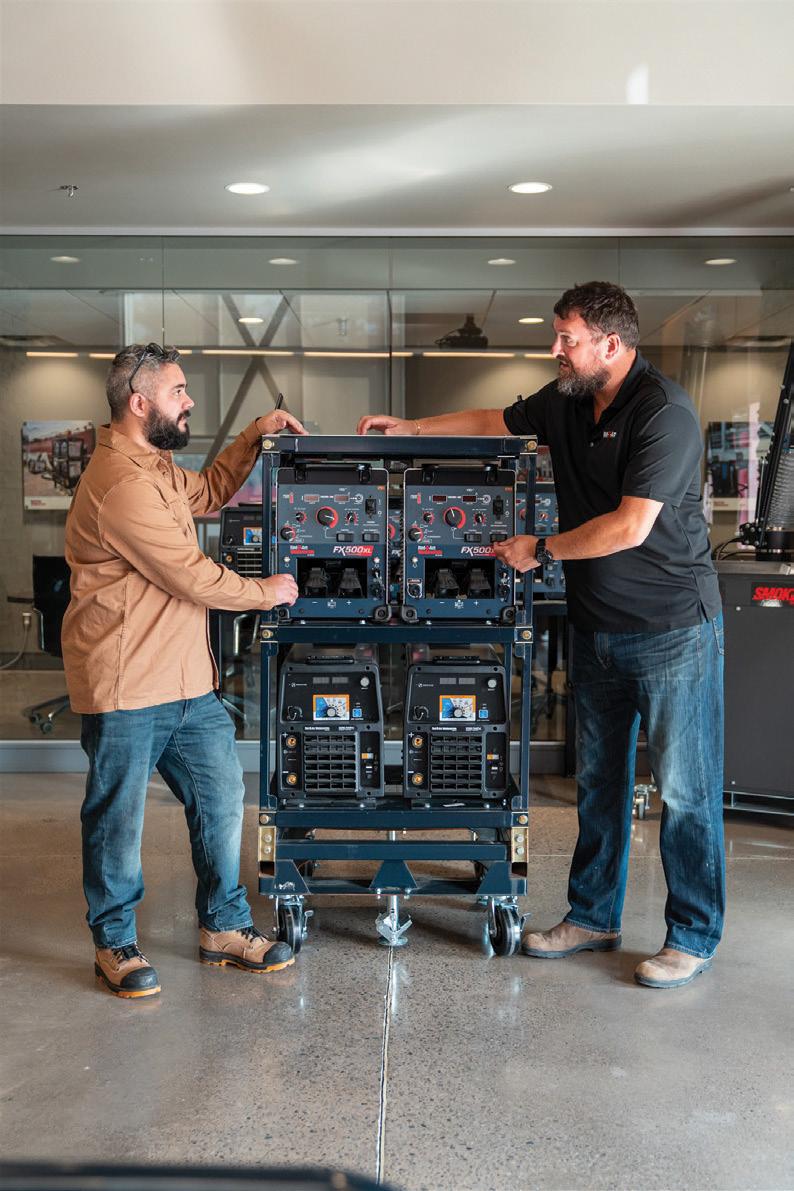
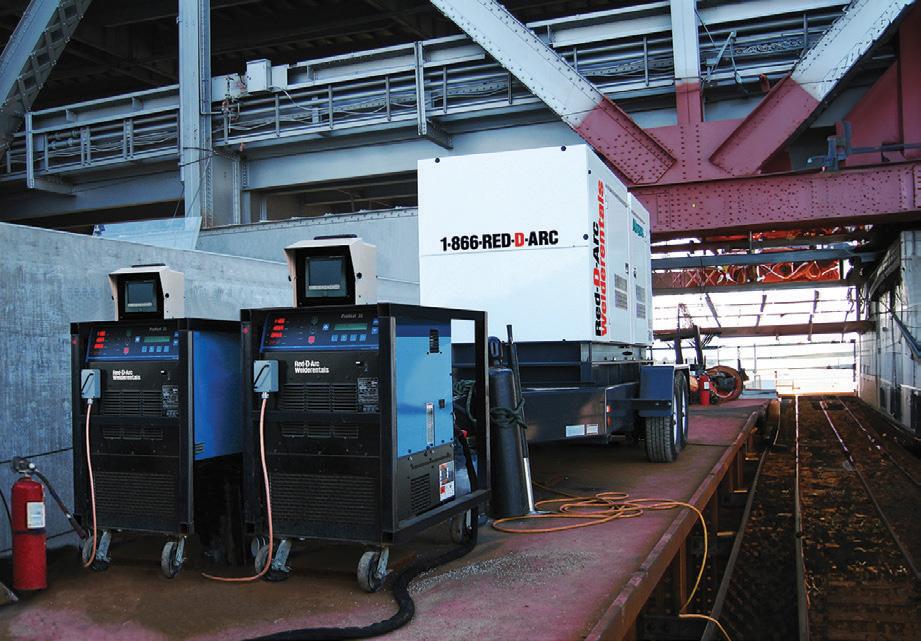
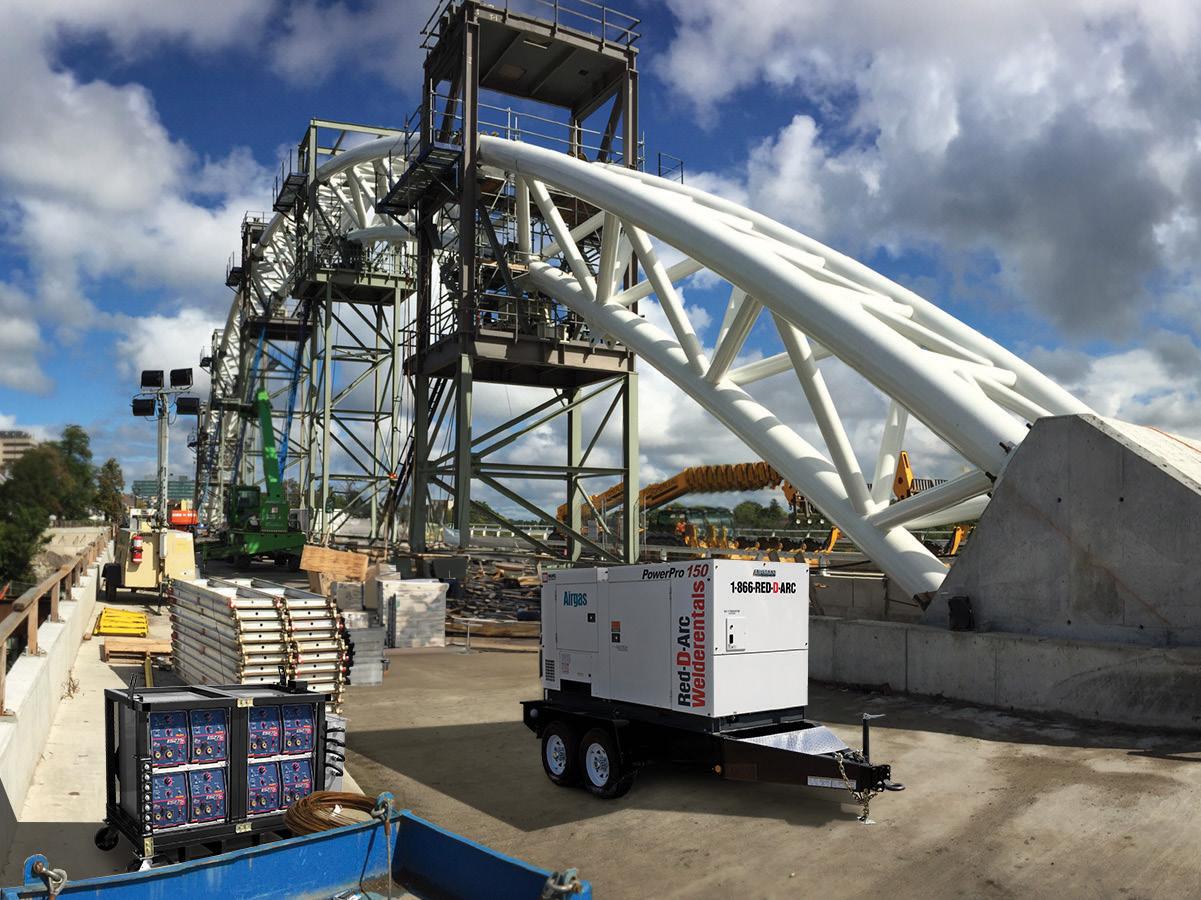
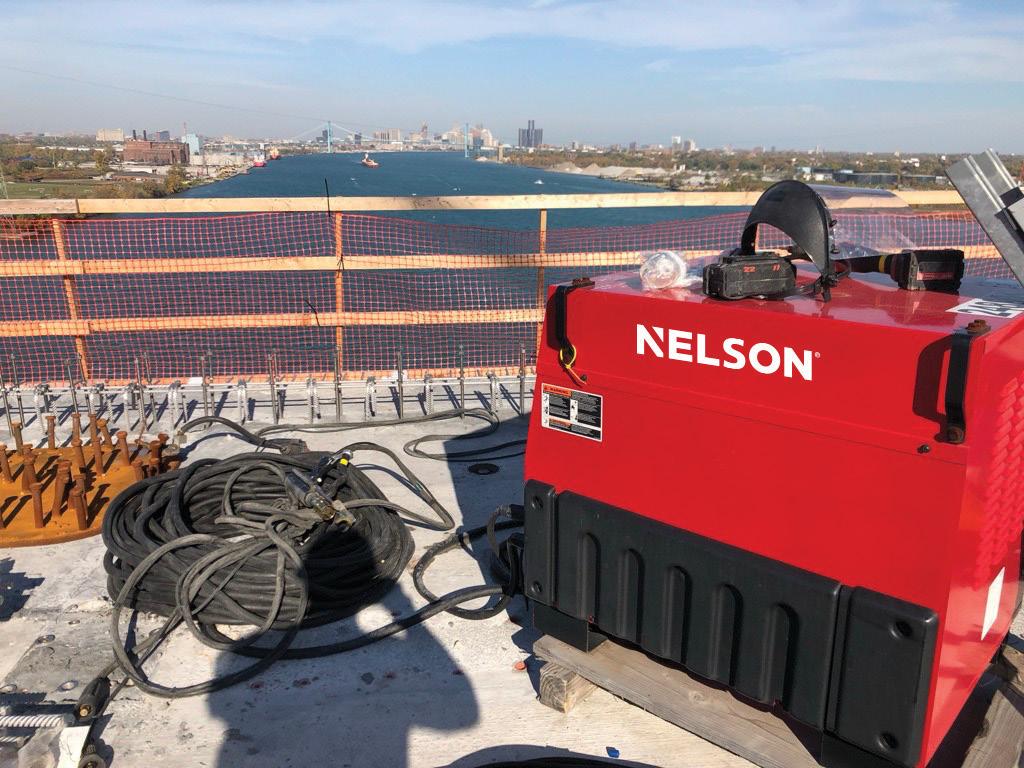
Experience dependable, uninterrupted power supply with generators and portable power distribution panels. Accompanied by our portfolio of creative power solutions. and lease options o ered by Red-D-Arc enable steel erectors to access specialized welding equipment without the need for large upfront investments, streamlining operations and increasing productivity.
HEATING
Pre & post-weld e cient heat treating equipment for any application including steel erection, bridge building and other unique infrastructure
POWER GENERATORS
$2,400 per year
Job Board and Applicant Tracking System
$10,000 per member
Ironworker Craft Training & Assessments Program
$10,000 per member
SteelPros Training Portal
>$2,000 per year
Workers Comp Insurance Program provides Immediate 10% discount on Premium
$1,000+ per year Workers Comp Program provides opportunity to earn 5% return based on injury performance
$2,500 in first year & $1,250 each subsequent year
BBSI reimburses companies for achieving and maintaining AISC certification
$1,000 per member
SEAA Erector Members receive 50% discount on AISC Membership
THE OFFICIAL MAGAZINE OF THE STEEL ERECTORS ASSOCIATION OF AMERICA
SEAA is the only national trade association representing the interests of steel erectors, fabricators, and related service providers. Connector reaches both small and large contractors working in union and open labor markets.
Steel Erectors Association of America
353 Jonestown Rd, Suite 207 Winston-Salem, NC 27104
336-294-8880 www.seaa.net
OFFICERS & EXECUTIVE STAFF
Jack Nix, President
Chris Legnon, President Elect
Glen Pisani, Industry Member Vice President
Carrie Gulajan, Associate Member Vice President
Bryan McClure, Secretary
Jason McElrath, Treasurer
R. Pete Gum, Executive Directorr
PUBLISHING PARTNER
Chris Harrison, Publisher connectorsales@seaa.net Phone 660-287-7660
Roger Ridpath, Art Director roger@ridpathcreative.com 816-792-9669
ADVISORY COMMITTEE
Chris Legnon, Chairman, Cooper Steel Nick Caratelli, Vice Chairman, Nelson Stud Welding Nathan Block, SDS2
Tammy Dean, Gardner-Watson Decking
John Hughes, Industrial Training International Jackson Nix, Shelby Erectors
Katy Williams, Williams industries
Connector™ is published quarterly by the Steel Erectors Association of America 353 Jonestown Rd, Suite 207 Winston-Salem, NC 27104
Copyright 2025 by the Steel Erectors Association of America. No material may be reprinted without permission from the Executive Director. While the information and recommendations contained in this publication have been compiled from sources believed to be reliable, the Steel Erectors Association of America, its affiliates, employees, contributors, writers, editors, designers, photographers, and media advisory committee, makes no
By Jack Nix
Preserving Your Team Culture as You Grow
When you're starting out in business, building a strong team culture often comes naturally. You know everyone’s name. You celebrate the wins together, fix the mistakes together, and the connection between leadership and the field feels personal and authentic. It’s easier to align your team when it’s small because communication is direct, expectations are clear, and relationships are built on daily interactions.
But as your company grows, keeping that same sense of team unity becomes a real challenge. You can’t personally oversee every crew. You can’t make every decision yourself. You can’t guarantee that every employee knows your intentions firsthand. Growth forces you to evolve — and that evolution must be intentional if you want to protect the culture that made your company successful in the first place.
The foundation for scaling culture is Core Values. If you're serious about maintaining a true team culture, Core Values can't just be a poster on the wall or a slide in an onboarding meeting. They have to be lived out daily — by leadership, by management, and by every person who wears your company's logo.
Here are a few best practices I’ve learned along the way.
1. Define Your Core Values Clearly and Authentically Your Core Values should reflect who you truly are as a company — not who you wish you were, and not what sounds trendy. Keep them simple, actionable, and relatable. At Shelby Erectors, our Core Values are:
• Hard Working — We take pride in putting in the effort every day.
• Responsibility to Each Other — We look out for our team and hold ourselves accountable.
• Better Because We Can — We’re never satisfied with “good enough.” We improve because we believe we can.
• Give A Damn! — We care deeply about the work we do and the people we work with.
When Core Values are authentic, they attract the right people and set the tone for everything from hiring to promotions to how you handle mistakes.
2. Hire, Promote, and Lead Based on Values
Skills can be taught. Character cannot. As you grow, prioritize hiring people who naturally align with your Core Values. Reward those who live them out every day — not just the highest performers but the best teammates.
When promotions are based on values as well as performance, you create a leadership team that reinforces the culture instead of undermining it.
3. Create Systems that Scale the Personal Touch
The truth is, as companies grow, you must implement rules, structures, and formal policies to ensure everyone is treated fairly and consistently. That doesn’t mean culture has to feel cold or corporate.
It means using systems — like regular team checkins, leadership development programs, Core Value recognition awards, and open-door feedback policies — to extend your personal touch through your management team.
You can’t have lunch with every employee anymore. But you can make sure that every employee feels seen, heard, and valued through the systems you build.
4 Lead by Example — Every Day
In small companies, culture is often built by personality. In larger companies, culture is built by leadership behavior.
People pay attention to what leaders do even more than by what they say. If you want your Core Values to matter, you have to live them — in how you make decisions, how you handle challenges, and how you treat people.
When leadership is consistent with Core Values, it creates trust. And trust is the bedrock of any real team culture.
5. Be Honest About the Challenges
Finally, don’t pretend that maintaining culture during growth is easy. Be open with your team about the fact that change is hard. Remind them that growing pains are part of the journey, but the Core Values, which are the soul of the company, will remain constant.
Invite their feedback. Listen more than you talk. I'll be the first to admit, this is something I personally struggle with and continue working on every day to get it right. Real listening builds trust, shows respect, and gives you the insights you need to make better decisions for your people and your company.
Stay committed to the hard work of building something that lasts.
The best companies in our industry aren’t just defined by the quality of their work — they’re defined by their people. If you can keep your Core Values alive as you grow, you'll build a company that you're proud of and you'll build a team that others will want to be a part of.
And in this industry, that’s the kind of legacy worth fighting for. •
Jack Nix is President of SEAA and Chief Operations Officer for Shelby Erectors.
EVENTS & ACTIVITIES
Steel Connections
Rhode Island
July 24, 2025
Omni Providence Hotel
Providence, Rhode Island
– Board Meeting
– Peer Group
– Meet & Greet
Steel Connections
North Carolina
October 16, 2025
Embassy Suites
Raleigh, North Carolina
– Board Meeting
– Peer Group
– Meet & Greet
Dave Schulz
Memorial Golf
Tournament
October 17, 2025
Lonnie Poole Golf Club at NC State University
Raleigh, North Carolina
ASSOCIATION NEWS
■ Glen Pisani’s Strategic Leadership Earns Him 2025 Eddie Award
Glen Pisani, Steel Division Manager at MAS Building & Bridge in Norfolk, Massachusetts, was named the 2025 recipient of The Eddie Award during SEAA’s Convention & Trade Show in Pittsburgh this past May. Formerly known as the Person of the Year Award, the recognition was renamed to commemorate founding member Edward “Eddie” Williams. It is presented annually to an individual who exemplifies outstanding leadership, dedicated service, and a deep commitment to SEAA’s mission and values.
A SEAA member for more than 15 years, Pisani has held several leadership roles on the Board of Directors and currently serves as Chairman of the Strategic Planning Committee. Respected for his strategic thinking, mentorship, and passion for the industry, he has played a key role in guiding the association through a period of growth and transformation. His efforts have helped expand SEAA’s reach, strengthen peer group involvement, and support programs that benefit contractors of all sizes.
“I had the pleasure of appointing Glen as Chairman of SEAA’s Strategic Planning Committee, fully confident that he would take the ball and run with it, and he absolutely delivered,” said David Deem, past SEAA President and President of Deem Structural Services.
“That’s who Glen is. Time and again, whether it’s a board initiative or a new program, he steps up and exceeds expectations. His contributions have had a lasting impact on SEAA’s direction.”
Peers say Pisani brings energy and focus to every project. His leadership is defined not only by vision, but by a dedication to helping others succeed.
“I’ve known Glen for more than 40 years, and in the 25 years we’ve worked together, his passion for helping others achieve success has never wavered,” said Jerry Morganelli, Steel Operations Manager at MAS Building & Bridge. “He truly loves the industry, and his commitment to SEAA’s future makes him more than deserving of this recognition.”
Pisani was a member of Connector magazine’s advisory committee from 2017 to 2023, offering insight to guide its editorial direction. “He’s still someone I turn to when I need a clear perspective on an industry or technical issue. His enthusiasm for sharing knowledge pushes me to avoid growing complacent,” said Tracy Bennett, Editor of Connector and President of Mighty Mo Media Partners.
Pisani’s contributions reflect the spirit of The Eddie: a leader who not only serves the industry but works to strengthen its future. Through his strategic leadership and genuine care for others, Pisani has helped shape a stronger, more connected SEAA.
■ SEAA Honors Trailblazers for Driving Membership Growth
Jack Nix, Chief Operations Officer of Shelby Erectors and current SEAA President, was named the 2024 Top Trailblazer for his outstanding new member recruitment efforts. The award was presented at the 2025 Convention & Trade Show in Pittsburgh, Pennsylvania.
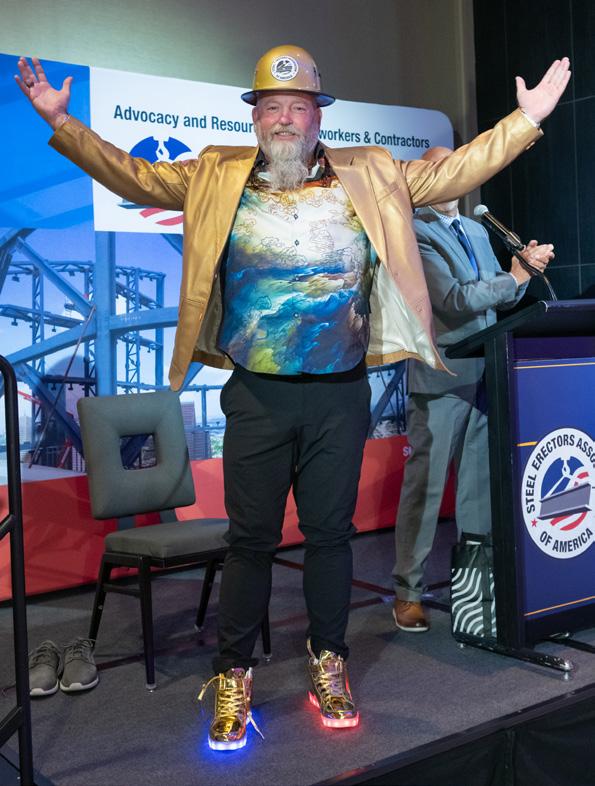
The Trailblazer Award is for members who recruit at least three new companies in a calendar year. The Top Trailblazer goes to the individual with the most new recruits, who receive a gold jacket. Nix was Top Trailblazer two years in a row. This year he was presented with gold light-up shoes.
A long-time board member, Nix has been a strong advocate for member engagement and industry collaboration, which has made a significant impact on membership growth.
Also recognized as Trailblazers were Glen Pisani of MAS Building & Bridge and Nick Caratelli of Nelson Stud Welding, each of whom recruited three or more members in 2024. “The Trailblazer program is about more than numbers,” said Gum. “It’s about building a stronger, more connected community of steel professionals.” •
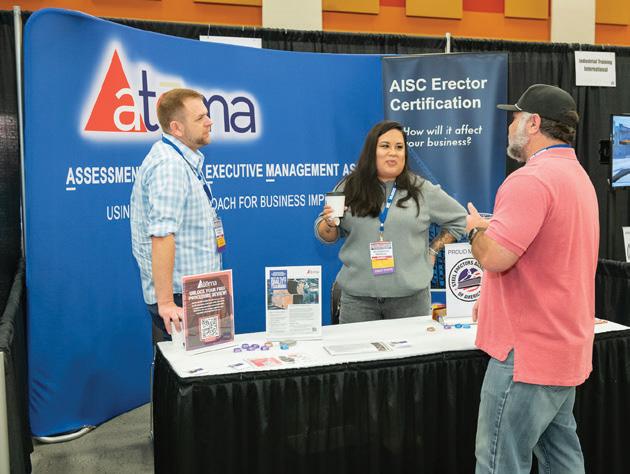
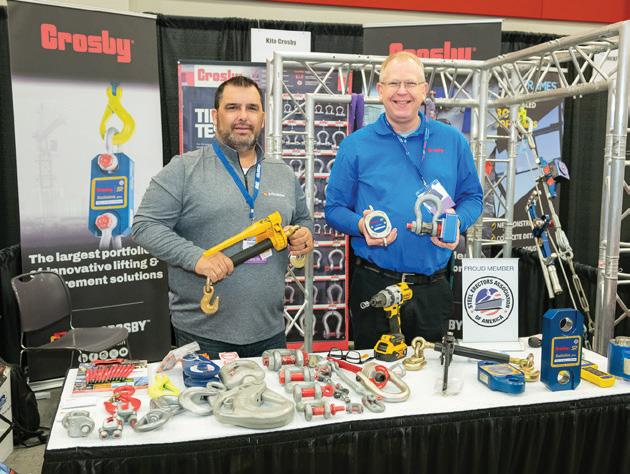
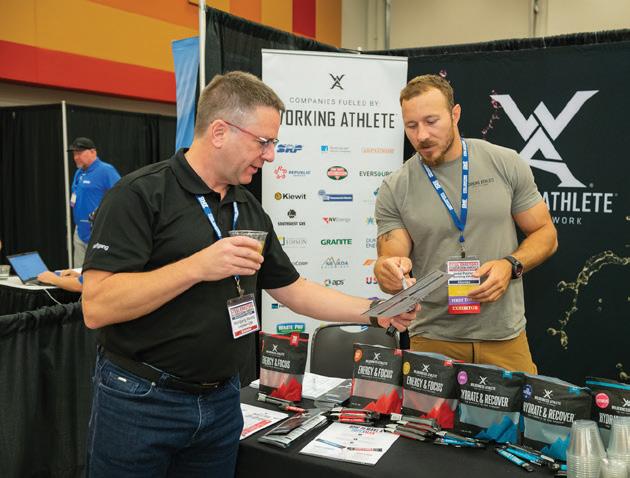
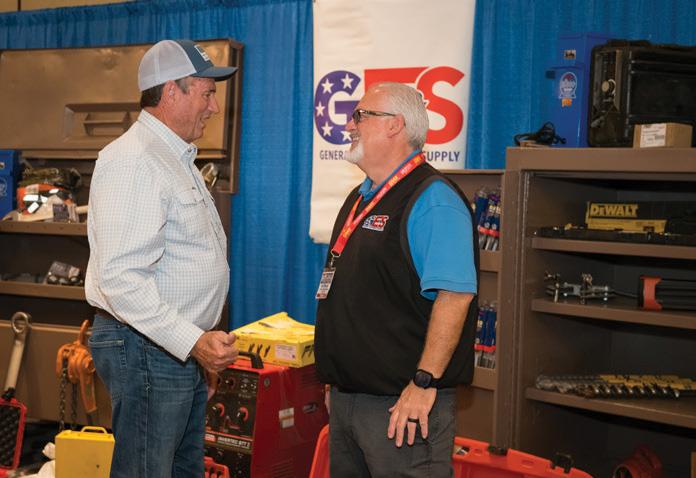
The energy on the Trade Show floor at SEAA’s 2025 Convention & Trade Show in Pittsburgh was nothing short of electric. Attendees explored the latest tools, technology, and services from 60 exhibitors. From equipment demos and product launches to hands-on training solutions, the Trade Show offered something for everyone. The following exhibitors showcased these new products. See a list of all exhibitors on page 14.
■ Holemaker Technology Modular Drilling
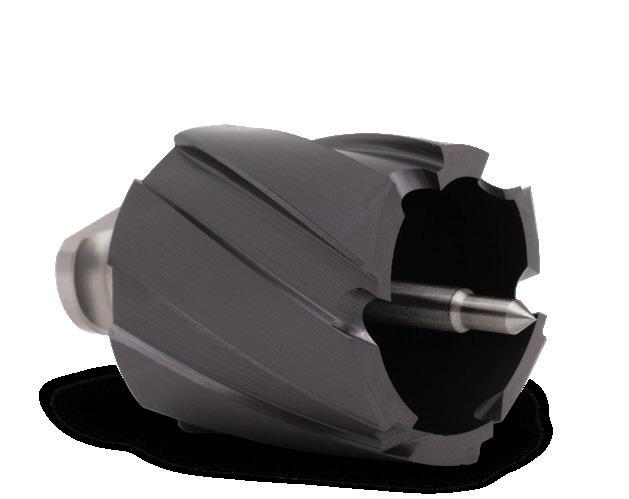
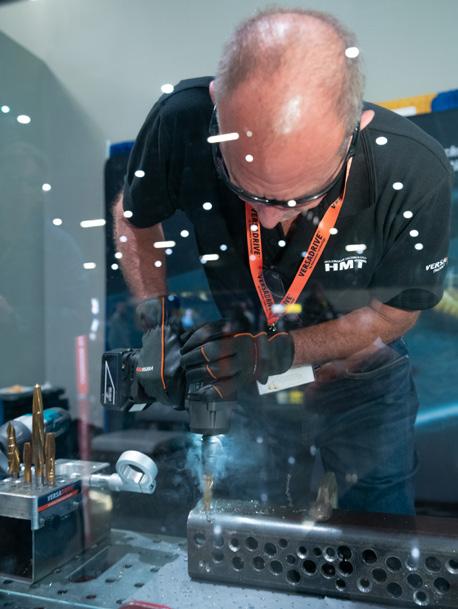
Holemaker Technology (HMT) is revolutionizing the metalworking industry by delivering faster, safer, and more efficient cutting and drilling solutions. Inspired by the lack of innovation in portable drilling, HMT was founded to address real-world job site challenges. The company’s success stems from listening to field workers and designing tools that directly solve their problems.
Notable innovations include the patented VersaDrive® MAX Reamers, the world’s first modular drilling solution for
■ Raken Incident Data Apps
impact wrenches. The heavy-duty 13/16” shank and specially designed cutting geometry allows for superior performance and portability on site. Ideal for steel erection and bridge work, it can be used in thicker materials with higher torque applications. VersaDrive® MAX Reamers are safer and more effective than standard hex nut reamers as they are directly attached to the impact, eliminating the risk of tool drop and improving control of the tool.
With Raken’s incident capture tools, contractors can accurately record incidents from the field or office, then use the easy submit button to electronically report yearly work-related injury and illness data directly to OSHA.
Web and mobile apps help customers document details of incidents and add supporting documents, like photos and witness statements. They can also automatically notify stakeholders for real-time visibility.
Because Raken integrates directly with OSHA’s Injury Tracking Application (ITA) via
API, there’s no need to duplicate data. Instead of downloading separate forms or working across multiple systems, users simply connect their ITA accounts with Raken to meet obligations to OSHA.
All incident data is automatically organized in the correct format. Simply verify and submit to stay compliant with zero hassle. Users can download comprehensive incident reports to identify recurring issues and make proactive improvements to their safety plans.
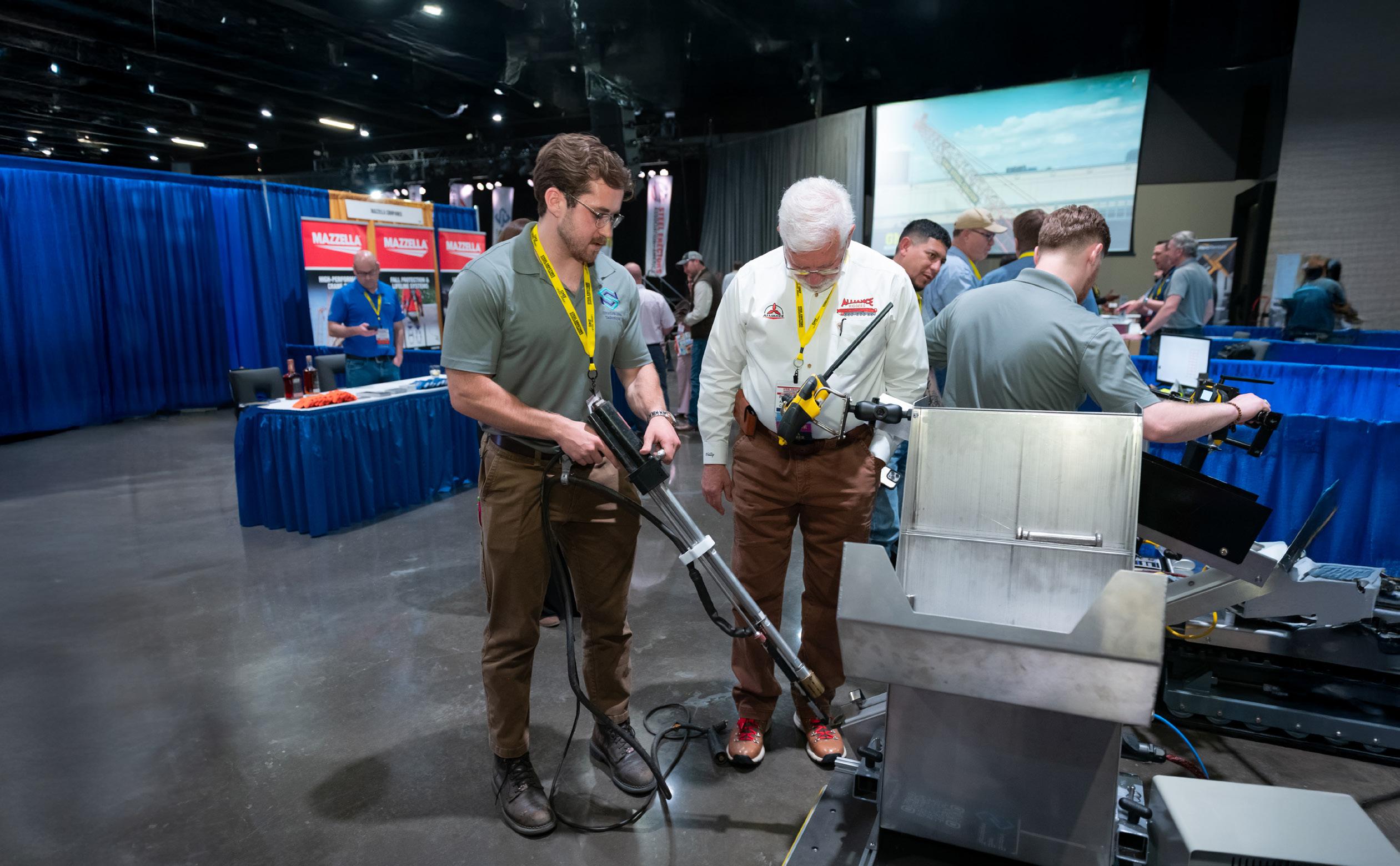
Structural Steel Technologies gives a demo during the Trade Show.
■ Torque with GWY
Revolutionize your approach to torque with Enerpac’s BTW1000B battery torque wrench. With a torque capacity of up to 1000 ft-lb. and pinpoint accuracy, this wrench is designed for professionals who demand performance. Its advanced brushless motor runs cooler and maximizes efficiency, keeping you productive throughout the day.
The intuitive LED display allows for quick torque setting adjustments in a matter of seconds. Supplied with two quick-charging batteries, there's always one ready for action, minimizing downtime
significantly. Lightweight and portable design facilitates solo operation with ease, allowing you to navigate around the jobsite without tangles or tripping hazards from cords or hoses.
Plus, the robust 1” square drive ensures durability against wear and tear from high levels of torque while fitting standard impact sockets. From bridge constructions to intricate commercial projects needing finesse in hard-to-reach areas, the BTW1000B stands as your reliable companion offering unmatched mobility and performance on every project. Whether you prefer to purchase or rent, reach out to GWY for a complimentary quote.
■ TurnaSure from Wrought Washer Manufacturing
Wrought Washer Manufacturing Inc., the largest washer manufacturer in North America, has added TurnaSure and its innovative ViewTite Direct Tension Indicating (DTI) Washer line. Direct Tension Indicators (DTIs) arrived during the shift from hot-riveted steel structures with the introduction of High Strength Bolts to ASTM A325 and A490. Direct Tension Indicators ensured precise and consistent clamping forces. In 1985, DTIs were standardized to ASTM F959.
TurnaSure refined the designs of DTIs ensuring unparalleled accuracy and developed ViewTite to meet ASTM F959, with a visible durable green elastomer placed in formed tubes on the washer’s top surface with a two-step compression process. This eliminates inconsistencies when putting elastomers in pockets under DTIs where
variations in steel surface conditions, coatings, and larger clearance holes affect accuracy and reliability.
ViewTite eliminates additional washers underneath when used on oversized or expanded clearance holes and thus longer bolts. The elastomer glows under a black
light for safe inspection in low-light environments. ViewTite has proven itself in major infrastructure projects, including the Verrazano and George Washington Bridges in New York. Recognized for its breakthrough innovation, ViewTite received the Fastener Innovation Award in 2022.
A1A Software LLC
AISC
ALP Industries
Arthur J. Gallagher Insurance
Atema Inc.
BBSI
Beekeeper
Canam
Choice Hotels International
Columbia Safety and Supply
CompScience
Deltek ComputerEase
DeWalt
DuraFuse Frames
Eastern Pneumatics & Hydraulics, Inc.
EquipmentShare
Essential Perimeter Safety Systems, Inc.
FallTech
FASCAN International
Fieldforce Workforce Solutions
Gardner-Watson Safety & Supplies
General Equipment & Supply
GWY, LLC
Hanes Supply, Inc.
Herc Rentals, Inc.
Hilti, Inc.
Holemaker Technology, LLC
Huyett
Infra-Metals
JLG Industries, Inc.
Kito Crosby
LeJeune Bolt Company
LGH
Lincoln Electric
Lodging Source
Magni Telescopic Handlers
MAX USA CORP.
Mazzella Companies
MP Specialty Insurance
Nelson Stud Welding
New Millennium
NISD - National Institute of Steel Detailing
OTH Pioneer Rigging
Pneutek, Inc.
R/A Hoerr Incorporated
Raken
Red-D-Arc Welderentals
Safety Plus
SEAA/Connector
Shuriken by Atlas Tube
Simpson Strong-Tie
Siteline
Skyjack
St. Louis Screw & Bolt
Structural Steel Technologies
Sunbelt Rentals
Tampa Construction LLC
United Rentals
Versatile.ai
Wrought Washer Mfg., Inc.
■ Magni Rotating Telehandler
For steel erectors who need precision, power, and flexibility on complex jobs, the Magni RTH 6.31 rotating telehandler delivers unmatched performance. With a maximum lifting height of 101 feet, an 88-foot reach, and a lift capacity of 13,200 lbs., it’s built to handle structural steel with confidence, even at height.
The RTH 6.31 excels in steel erection environments where safety and accuracy are non-negotiable. Its Load Moment Indicator (LMI) system, combined with RFID-tagged attachments, automatically adjusts load charts to keep crews working within safe limits. Magni’s Load-Limiting Technology prevents overloading and ensures stable lifts, even on challenging terrain.
Outfitted with Magni’s patented outrigger system and automatic leveling via digital display, the RTH 6.31 sets up fast and stays secure—critical when positioning beams, trusses, or columns in tight or uneven spaces. Plus, its 3-in-1 design functions as a telehandler, rough terrain crane, and aerial work platform, minimizing the need for multiple machines on site. Inside the cab, operators benefit from HVAC, air filtration, and an intuitive touchscreen for total control. For safer, more productive steel erection, the RTH 6.31 is the lift your crew can rely on.
■ Jekko Hydraulic Manipulator
Need to install steel in a complex space but didn’t have the right tool to do so? Jekko not only innovated a new operating system but has taken the market by storm with the new JIB00GR. This powerful hydraulic manipulator with interchangeable heads can seamlessly handle steel beams and large pipes. Users now have the ability to manipulate 360 degrees continuous rotation and 183 degrees of vertical articulation.
With the Jekko Plug & Play system, simply connect the crane’s electrical and hydraulic system and it will fully integrate and operate via the crane’s remote control. Designed for safety, precision, and complete control, you can access places that once felt impossible. With this accessory, productivity is drastically increased. A single operator can unload, move, and install a beam or pipe weighing up to 1100 lbs. Jekko is available from FASCAN International.
■ FallTech SRL with On-site Repair
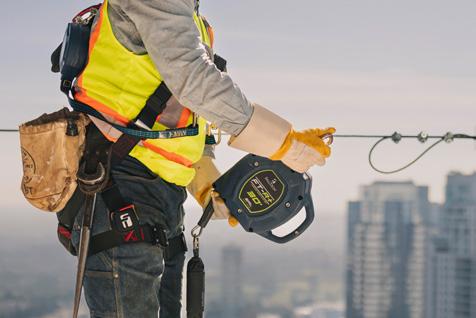
FallTech introduces the FT-R+, the industry’s first Class 2 leading-edge self-retracting lifeline (SRL) with on-site repair capability. Featuring the innovative SpeedLine™ system, the FT-R+ allows damaged lifelines to be safely replaced in minutes—eliminating costly off-site repairs and reducing downtime.
At the heart of SpeedLine is LineLoc™, a simple locking mechanism that disengages a damaged cable and secures a replacement quickly. This field-ready solution brings unmatched convenience and enhanced safety to job sites, addressing a critical challenge in fall protection: SRL maintenance delays. Built on the proven FT-R™ platform, the FT-R+ supports workers up to 420 pounds and offers versatile anchorage options—above, at, or up to 5 feet below the D-ring. Its compact design, advanced energy absorption, and smooth cable movement make it ideal for demanding leading-edge applications.
■ A1A Product Suite Apps
A1A Software LLC has released the latest version of its A1A Product Suite, enabling seamless integration between individual apps and 3D Lift Plan—without the need to import Sketch Pad or Jobsite Designer plans. The suite reflects A1A’s move to app-based tools that unlock new features and insulate users
■ Sales Synergy Group Hearing Protection
Over the past five years, noise-induced hearing loss claims have surged by 300%, putting companies at risk financially and operationally. In construction, one of the top five physical injuries is hazardous noise levels. Yet, many employees resist wearing hearing protection because it often eliminates Auditory Situational Awareness (ASA), a critical component of staying safe on the job. In fact, three of the top five construction injuries are directly tied to loss of ASA.
To address this, the Clear 360 Pro offers a breakthrough solution. Its next-generation hearing protection keeps workers aware and safe. Clear 360 Pro allows your team to maintain 100% ASA, combining elite hearing protection with unmatched environmental awareness—so workers never have to choose between safety and performance.
Key features include five listening modes, full-directional sound detection, hyper-realistic awareness, certified 24dB NRR protection, all-day comfort and endurance, IP64-rated durability, and tax-deductible qualification.
Whether handling machinery, working at height, or navigating noisy environments, Clear 360 Pro ensures your crew hears what matters, when it matters most. Hearing protection should be as standard as steel-toed boots and harnesses. Choose Clear 360 Prowhere protection meets performance.
from browser-related disruptions.
3D Lift Plan remains the foundation of the suite, known for its use in bids, critical lift planning, rigging documentation, and simulations. Now enhanced by stand-alone apps, SketchPad, Rigging Designer, Jobsite Designer, and 3D Lift Vision, users can access the level of planning appropriate for their roles. For example, SketchPad lets users sketch
jobsites on a scaled Google Map image, while Rigging Designer enables dragand-drop creation of complex rigging plans. Jobsite Designer allows intuitive editing of site objects, and 3D Lift Vision immerses users in virtual simulations based on actual lift plans.
The full suite is available for download from Microsoft, Google Play, and Apple App Store platforms.
■ Safety Plus Safety Management Software
■ JLG Electric Boom Lift
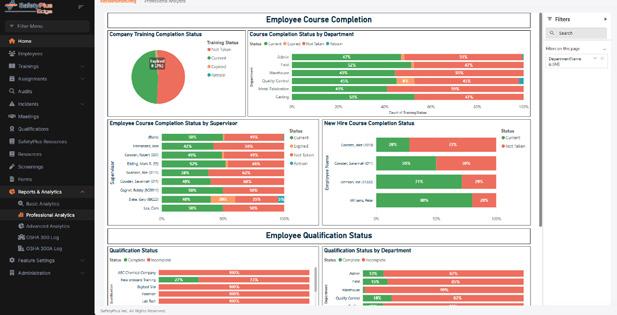
Safety Plus announces the general availability of its new flagship software for safety management, Safety Plus Edge. This software program is designed to help steel erectors, commercial construction companies, and other businesses operating in high-risk industries streamline safety processes, ensure regulatory compliance, and protect their workforce.
Safety Plus designed Edge to be both innovative and intuitive to use, helping customers simplify daily tasks and safety program tracking. Critical features include a learning management system, automated requirements tracking, audits and inspections, incident management, safety meeting administration, and reporting and analytics.
Recognizing that not all companies have full-time safety managers (or need expert support to develop and scale their safety programs as their companies grow), Safety Plus also offers Edge to customers through a program management process known as Safety Plus Edge Pro. In this program, customers will benefit from customized program development by its team of safety managers, who assess, implement, and support customer safety programs while using Edge as the critical tool for administering and measuring success of the program.
With Edge and Edge Pro together, Safety Plus can help customers keep their workers safe, wherever they are on their program journey.
Finally.
You’re not just lifting steel.
You’re managing schedules, budgets, and backcharges—without the visibility you need.
✔ Track progress - zero extra work from the crew
✔ Catch delays early - daily, automated updates
JLG Industries, Inc., announces the EC600AJ, a new 60 ft. electric articulating boom lift for North America. Designed for performance and sustainability, the EC600AJ offers 550 lbs. unre stricted and 750 lbs. restricted platform capacities, with a 60 ft. platform height and 36-ft horizontal outreach.
Its articulating design enables 27 ft. 1 in. up-and-over reach, a 130-degree jib articulation, and 400-degree swing for precise positioning around obstacles, making it ideal for construction, facility maintenance, and renovation. Powered by dual 10.7kWh lithium-ion batteries and equipped with 4WD AC drive motors, the EC600AJ handles rough terrain with 40 percent gradeability and optional 4WS for tight turns.
Additional features include foam-filled rough terrain tires, a compact design for efficient transport (two units per trailer), and a rugged hybrid hood with internal power track for easier servicing. •
As the construction industry rapidly embraces digital transformation, it also faces a mounting threat: cybercrime. A recent cybersecurity panel brought together experts Satyam Verma, Construction Practice Leader at Egnyte, and Keith Tagliaferri, Director of Cyber Claims Practices at The Hartford, to explore how businesses in architecture, engineering, and construction (AEC) can defend themselves against today’s digital risks.
Explosive Data Growth—and Risk
Construction firms now manage an overwhelming amount of data. “The average AEC firm used to handle around three terabytes of data. Today, that
number has grown to 24 terabytes,” said Verma. “With this exponential growth in data, we are leaving ourselves greatly exposed without the right internal policies, external partnerships, and security measures in place.”
Verma explained that this explosion of cloud tools, often 15 to 600 apps in a single tech stack, has introduced countless vulnerabilities. “There are 600 potential locations where intellectual property and private data may be sitting in open-access repositories, even from projects that ended a decade ago.”
The Cyberattack Landscape
Keith Tagliaferri, whose team at The Hartford processes cyber insurance claims at the organization, categorized the most common and devastating types of cyberattacks:
1. Business Email Compromise (BEC) These scams trick employees into wiring money to fraudulent accounts. “They’re the most frequent,” said Tagliaferri, “but not the most severe, typically costing $30,000 to $200,000 per incident.”
2. Ransomware Attackers encrypt entire systems and demand ransoms, often in the millions. “The industry sees million-dollar ransomware attacks every day,” Tagliaferri noted. “The first question claims and incident response experts ask is: do you have backups? If the answer is no, we all know which route we’re headed down, and it’s typically not good.”
3. Data Breaches These continue to be prevalent and highly damaging, with costs varying depending on the type of data accessed and compliance obligations involved.
Tracy Bennett is Editor of Connector and President of Mighty Mo Media Partners
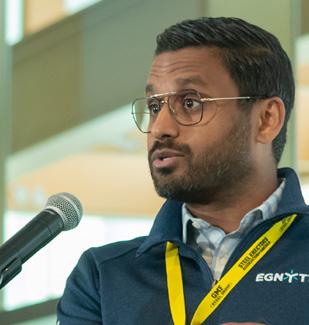
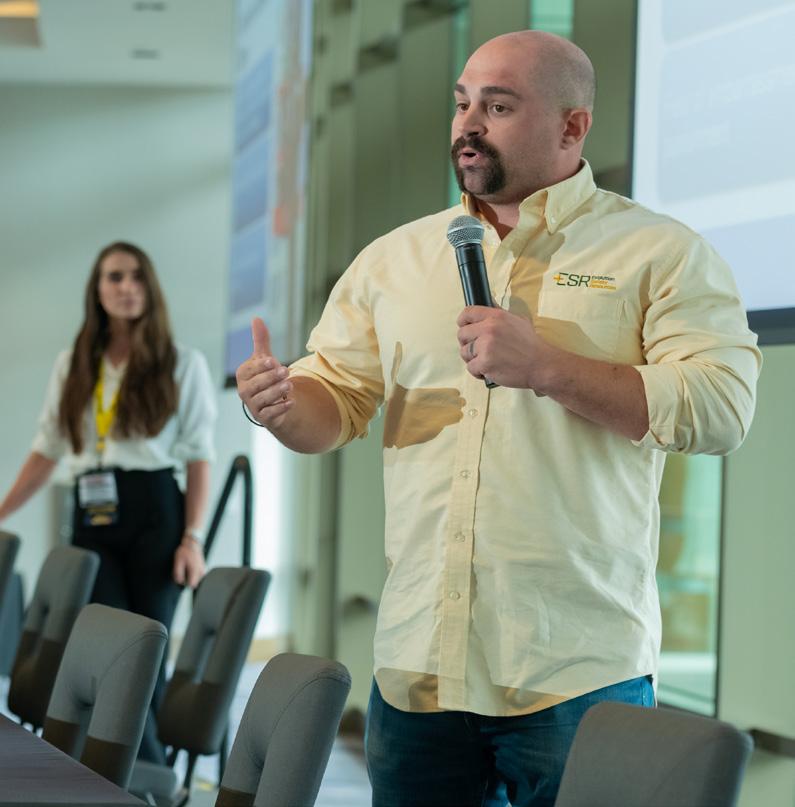
One of the liveliest sessions at SEAA’s 2025 Convention featured experts on cyber risk. Satyam Verma of Egnyte is pictured.
AEC: A Prime Target
Contrary to the common assumption that hackers only target financial or healthcare sectors, construction and manufacturing industries are now among the top targets. “We see construction ranking among the top industries for ransomware, business email compromise, and intrusions,” said Tagliaferri, referencing a recent report from cybersecurity vendor Arctic Wolf.
Prevention: What Actually Works
While the threat landscape may seem overwhelming, both panelists emphasized that most incidents are preventable with fundamental security hygiene.
Top cybersecurity measures that significantly reduce risk include:
• Multi-Factor Authentication (MFA) “That prompt on your phone that asks, ‘Is this really you?’ it works,” said Tagliaferri.
• Patching systems Keeping software updated to close known vulnerabilities.
• Segmented, tested data backups Not just having backups, but verifying they work.
“Sometimes companies think they’re backed up, but they’ve never tested it,” said Verma. “Do a failover test and pretend all your systems are gone and ask your IT provider to get you back up within 24 hours.”
• Employee training “We’ve seen that employee awareness and security training has the most impact outside of the basic software protections,” Verma added.
• Incident response plans Clear protocols help organizations react quickly and effectively when attacks occur.
Tagliaferri summarized the impact of these defenses simply: “Most of the incidents I’ve seen in recent years could’ve been prevented with just three things- MFA, backups, and patching.”
Cyber Insurance is More Than a Safety Net
Cyber insurance is more than just a policy, it’s a playbook. Policies typically include not only coverage for first-party losses like downtime and recovery but also access to breach response teams, forensics firms, and legal counsel.
When asked about past news coverage of some cyber claims not being paid, Tagliaferri said, “Most people only hear about the one cyber claim that doesn’t get paid, which often receives a lot of press. What you typically don’t hear about are the countless
Construction Ranks Among Top 5 of All Industries for Three Types of Cyberattacks
Best Practice: Proper Backup
cyber and data privacy claims that are paid by the industry each year,” Tagliaferri noted. “Having a good broker who helps you get the right coverage is key.”
Verma added, “Whether it’s the premium cost, ransom payments, or compliance fines—cybersecurity directly impacts your bottom line.”
Choose Both Cloud and On-Premise Backups
The panel also addressed a common question: should businesses rely on cloud services or maintain on-premise systems?
“The best answer is: both,” said Tagliaferri. “If you're hit in the cloud, you have your on-prem backups. If your building floods and your in-house servers go down, the cloud saves you. It's about redundancy.”
Verma agreed. “We’ve seen natural disasters be one of the biggest drivers for moving to the cloud. Hurricanes, fires—once you’re hit, that’s it.”
The Role of AI
AI is rapidly influencing the cyber landscape- for better and worse. “Cybercriminals are using AI for deepfakes and more sophisticated phishing attacks,” said Tagliaferri. “But defenders are also using AI-powered tools to detect threats in realtime. It’s an arms race.”
Verma emphasized the importance of AI governance. “Instead of letting employees use AI tools freely, organizations should define what’s allowed. For example, uploading sensitive documents to AI tools should be restricted.”
In a world where data is doubling and cyber threats are intensifying; proactive defense is no longer optional. As Tagliaferri warned, “For most companies, their first cyberattack is the worst day of their professional lives.” But with the right tools, training, and strategy, that day doesn’t have to come. •
IN THE FIELD
By Glen Pisani
Boosting Efficiency and Safety
The case for shop-attached bent plate in steel erection
One example of how fabricator-erector relationships directly impact work in the field manifests itself in the issue of shop-attached (or not) bent plate. On job sites across the country, risk increases, productivity is reduced, and costs go up for erectors when bent plate arrives loose. Shop-attached bent plate improves efficiency and speed by reducing the amount of material handling ironworkers must do in the field, making the steel erection process faster. In contrast, setting plate—which generally extends well past the centerline of the steel supporting it—requires temporary outriggers to support the bent plate
Glen Pisani has more than 30 years of experience in structural steel construction—20 as an owner and 14 as Steel Division Manager for MAS Building & Bridge, Inc., Norfolk, Massachusetts. He is an officer on SEAA's board of directors, where he has served since 2017.
while adjusting it. This creates unnecessary extra steps, reducing productivity, and increasing costs.
Shop-attached plate improves quality because shop welding and bolting are done in a controlled environment. Often there is better fit-up and alignment with structural pieces.
The safety benefits are huge. Reducing field welding and bolting means less work is done at heights. Handling a 200-pound (or more) piece of steel while walking iron and setting it while hanging over the building’s perimeter isn’t safe or fun. Having bent plate shop-attached enables it to be more safely and efficiently lifted into place by a crane, reducing the opportunities for dropping plate to lower levels. It also reduces exposure to pinching and crushing injuries and musculoskeletal injuries.
This all adds up to cost savings and more efficient construction timelines.
Propose Solutions
The practice of providing shop-attached bent plate is not universal. It is often up to the fabricator to decide whether to provide materials this way. Key reasons may be that attached bent plate makes it more difficult to stack steel on a trailer for transport to the jobsite. But I would argue that the use of extra dunnage could easily resolve that issue.
Another reason might be related to the plumb tolerances on the project. Welded bent plate is always preferred but if tolerances are stringent and bent plates need to be able to be adjusted in the field, a simple bolted slotted connection is a good compromise.
Erectors should be qualifying this on their estimates and communicating with the fabricators that this is how they are estimating the project.
SEAA’s relationships with other industry
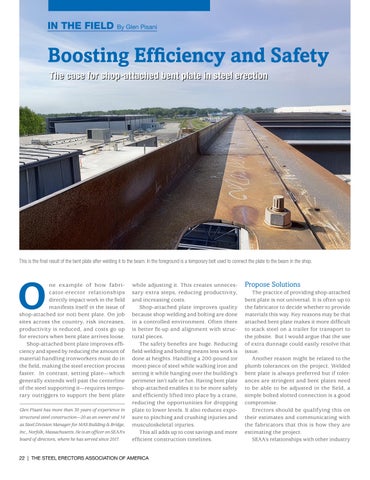
This is the final result of the bent plate after welding it to the beam. In the foreground is a temporary bolt used to connect the plate to the beam in the shop.
associations are critical to serving our members. Currently, no quality or process standards exist requiring fabricators to provide attached bent plate. In June, AISC’s Steel Construction Manual Committee agreed to discuss this issue and come back to SEAA with recommendations.
By embracing shop-attached bent plate, fabricators and erectors unlock substantial gains in productivity, quality, and safety on every job site. While logistical challenges like trailer stacking and field tolerances can deter its universal adoption, simple strategies—such as extra dunnage and slotted bolted connections—make shop attachment both practical and cost effective. As the AISC Steel Construction Manual Committee and SEAA work toward formal recommendations, erectors shouldn’t wait on standards to evolve. Advocating for shop-attached bent plate during pre construction planning is the quickest path to reducing risks, lowering costs, and accelerating project schedules. •
STEEL CONNECTIONS
Peer Group and Meet & Greet
October 16, 2025
Embassy Suites, Raleigh, North Carolina
Registration and Sponsorship Info
October
17, 2025
This is a non-typical example showing bent plate attached on Tube Steel (TS) spacers. This fabrication method is beneficial for safe and productive steel erection. Notice also the access hole for the ironworker to connect the bent plate.
This example shows adjusted bent plate after the bolt has been removed. Slotted holes on the bent plate allow for safe adjustment.
MEMBERS AND NON-MEMBERS
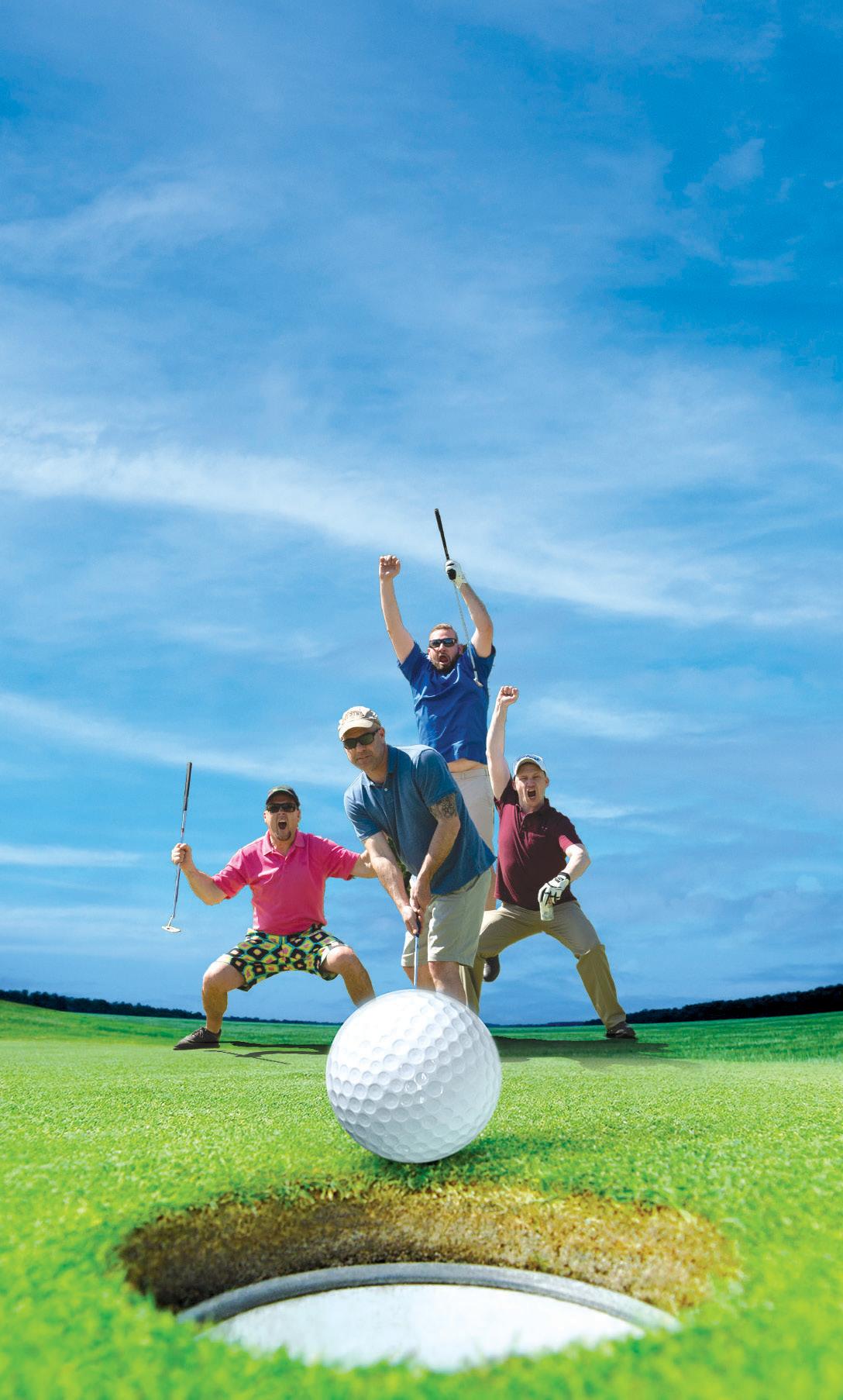
CAPTAIN’S CHOICE TOURNAMENT AWARDS AND PRIZES
LONNIE POOLE GOLF CLUB AT NC STATE UNIVERSITY
COVER STORY By Mike Larson
Erectors Plan and Flex Winning Projects Showcase Scheduling
Agility and Design Collaboration
A contractor's capacity to adapt to a client's schedules and address unforeseen complications is essential for the successful completion of a project. This year's Project of the Year award recipients demonstrated these abilities effectively, enabling them to deliver results on time and within budget.
Multiple mobilizations and demobilizations were required in the following three projects to adjust schedules to the customers’ needs. And two of them saw the contractor work with the project’s engineer to make changes to the as-designed plan and still finish on schedule.
“These projects are excellent examples of how steel erectors bring a variety of services to construction projects,” said Pete Gum, Executive Director of SEAA. One of the winners featured here served as both fabricator and erector. Another is a specialty services provider—an industrial contractor that performs structural installations of material handling systems.
This article features three of the five winning projects. (Look for the article about the remaining two in Connector, Fall edition.) The Project of the Year award competition is open to SEAA members. To learn how to enter the SEAA 2026 Project of the Year competition, visit seaa.net/ project-of-the-year.
Mike Larson is a journalist with more than 45 years of experience writing about equipment, engineering, and construction. He is editor emeritus of Crane Hot Line magazine.
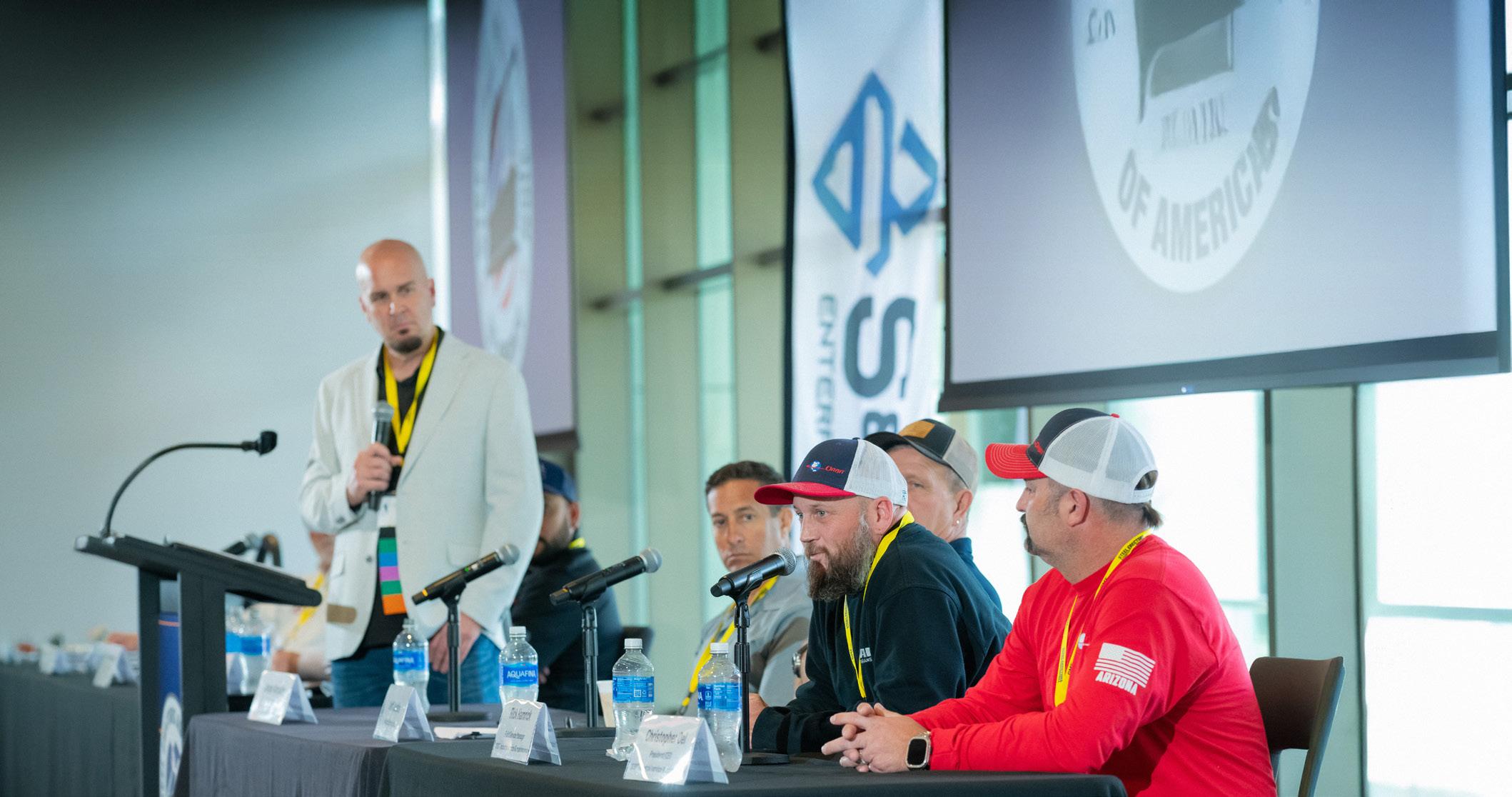
convention, a moderated panel discussion with company representatives addressed challenges and lessons learned during winning Projects of the Year.
IN THIS ISSUE
Kaseya Center Arena, Miami, Fla.
Structural Class I (up to $500,000)
Erector: Hodges Erectors, Inc.
Fabricator: Suncor Inc., National Metals
Detailer: DGS Technical Services
Structural Engineer: Thornton Tomasetti
Architect: Perkins & Will
Construction Mgr./GC: Hedrick Brothers Construction
Contract Value: $495,000 | Tons of Steel: 180
Bond Building, Phoenix, Ariz.
Structural Class II ($500,000 to $1 Million)
Erector: All Things Metal, LLC
Fabricator: All Things Metal, LLC
Detailer: Structures Online, LLC
Structural Engineer: Kimley-Horn and Associates, Inc.
Architect: George Oliver Design
Construction Mgr./GC: RSG Builders
Contract Value: $892,000 | Tons of Steel: 72
Lucid Motors, Casa Grande, Ariz.
Miscellaneous Metals Class II (over $500,000)
Erector: ORBIT Industrial Service & Maintenance, LLC
Fabricator: Bang Kransysteme, Schuff Steel, ORBIT
Industrial Service & Maintenance
Detailer: Bang Kransysteme, Schuff Steel
Structural Engineer: Bang Kransysteme, Schuff Steel
Architect: Bang Kransysteme, Schuff Steel
Construction Mgr./GC: Barton Malow Co.
Contract Value: $2.7 Million | Tons of Steel: 225
At the 2025 SEAA
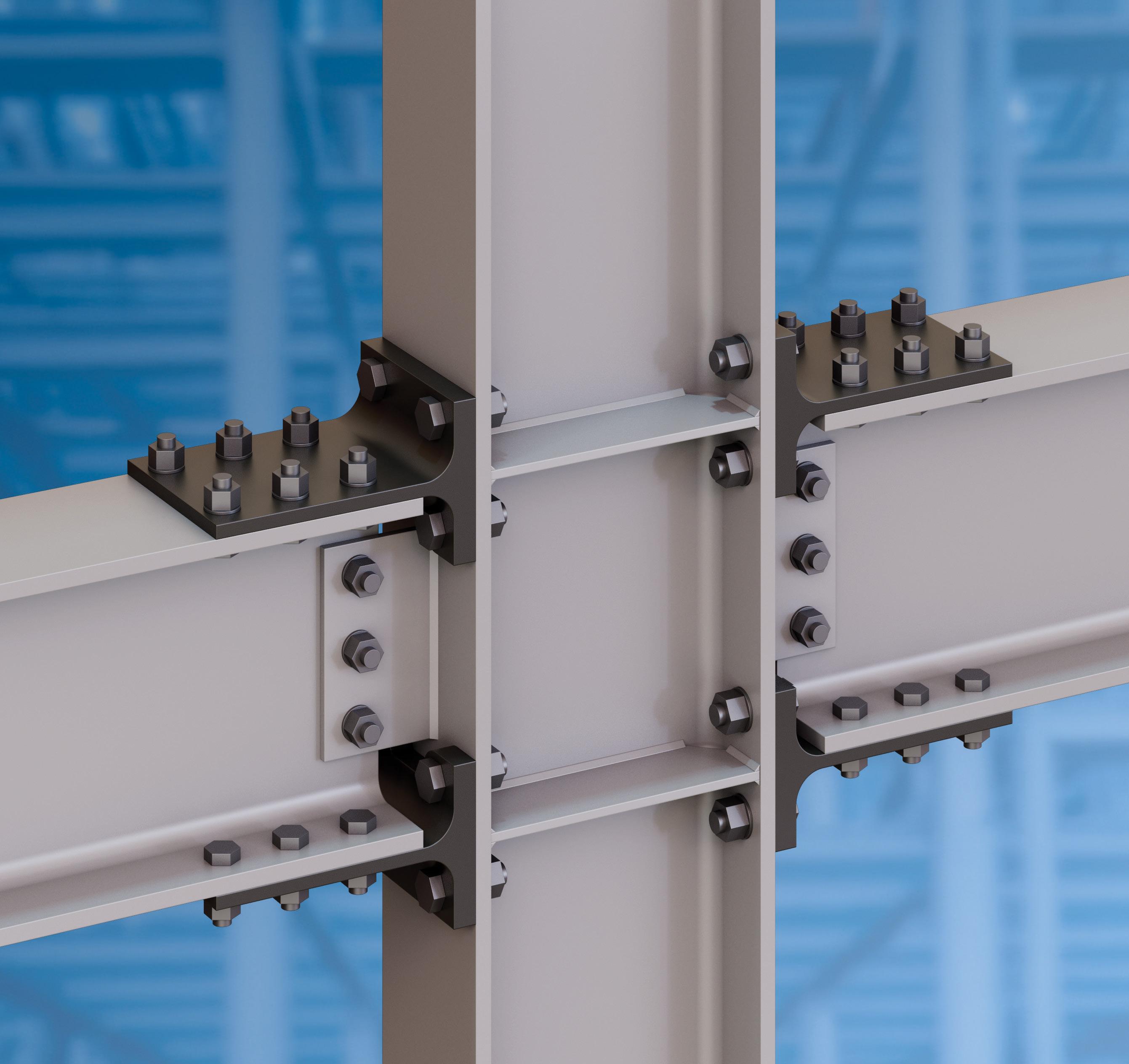
All of the strength. None of the welding.
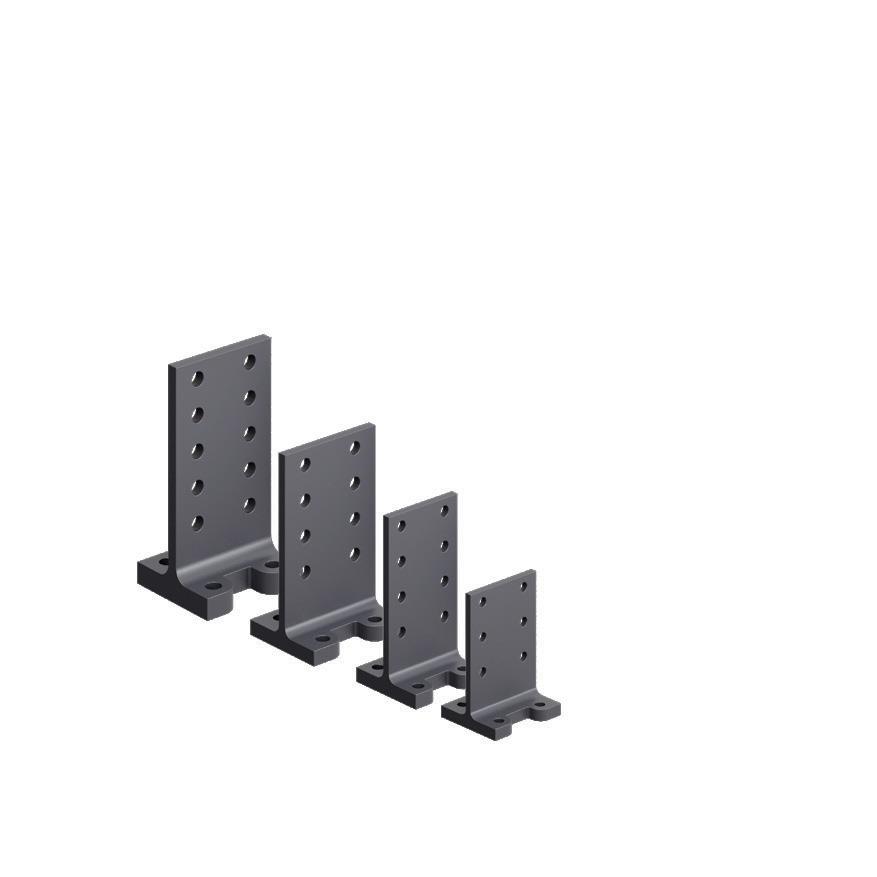
Introducing the Strong-Link™ moment connection (SLMC) from Simpson Strong-Tie. Engineered for wind-governed, low-seismic designs, SLMC is a fully restrained, bolted connection that is tested and proven for strength and durability. This pre-manufactured solution is ready to use off the shelf. With no shop or field welding required, it speeds up installation and streamlines inspection. The SLMC comes in eight models to fit various beam sizes, and is field-adjustable to ensure proper alignment with the beam and column. Widely available and backed by our expert service and jobsite support, the SLMC is the latest addition to our expanding line of innovative solutions for structural steel. Learn more at go.strongtie.com/slmc or call (800) 999-5099.
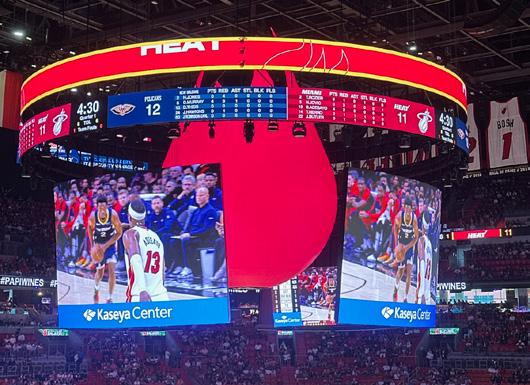
When Hodges Erectors landed the contract to be part of the team renovating the Kaseya Center Arena in Miami, Florida, the company felt a sense of team pride. The arena is home to the NBA’s Miami Heat. “The Heat are our home team,” said Jorge Amador, President of Hodges Erectors.
The contract called for the company to remove four corner scoreboards and supporting steel, install four new scoreboards and supporting steel, remove and dismantle the existing center scoreboard, install extra structural steel and larger winches to support a larger center scoreboard, and install a catwalk with railings and access stairs for that new scoreboard.
The work had to be completed in about nine months over a span of two NBA seasons so the arena would be available for the start of the 2024 NBA season.
Challenges Solved
To complete the work on schedule, Hodges overcame three major challenges.
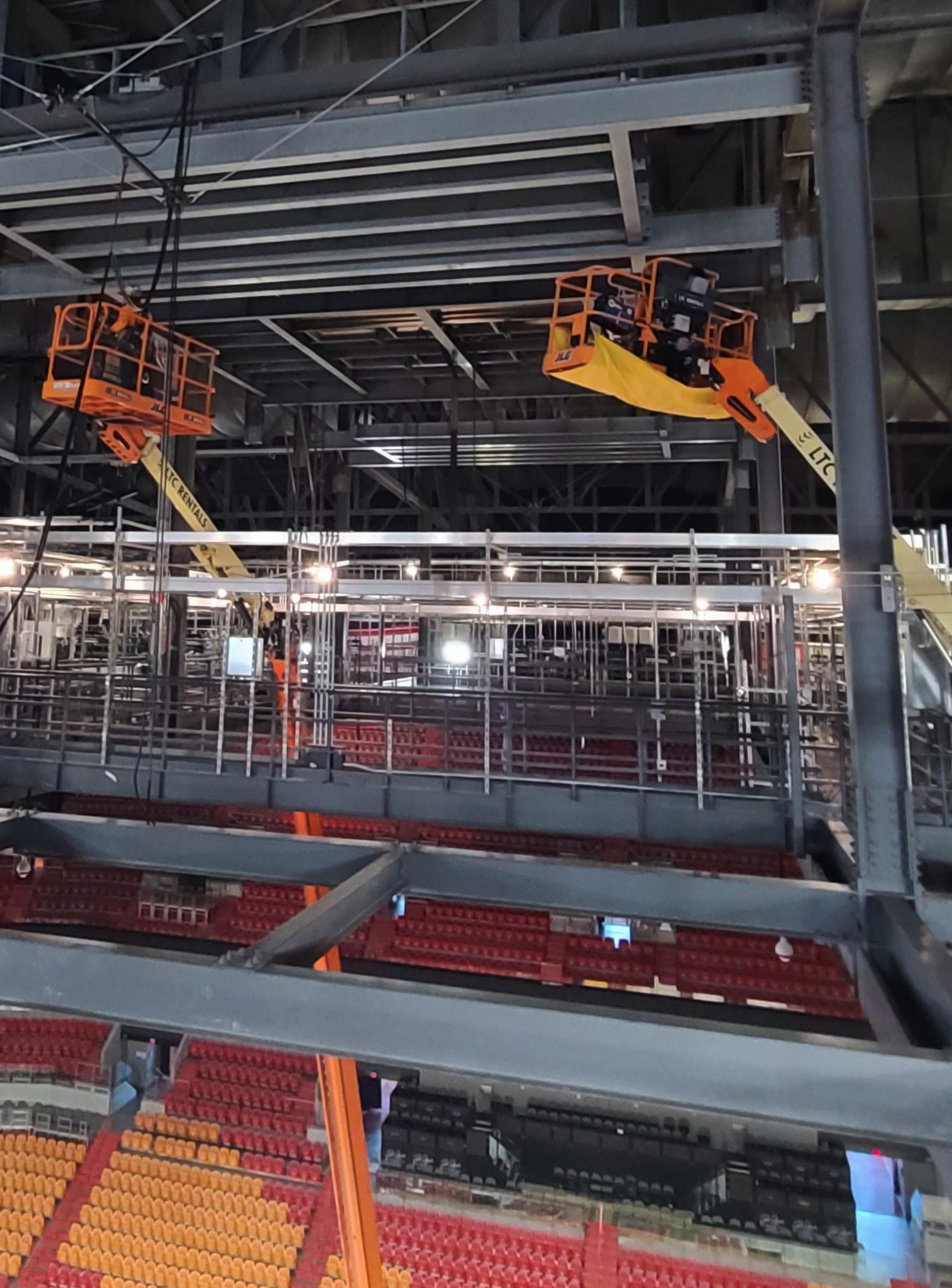
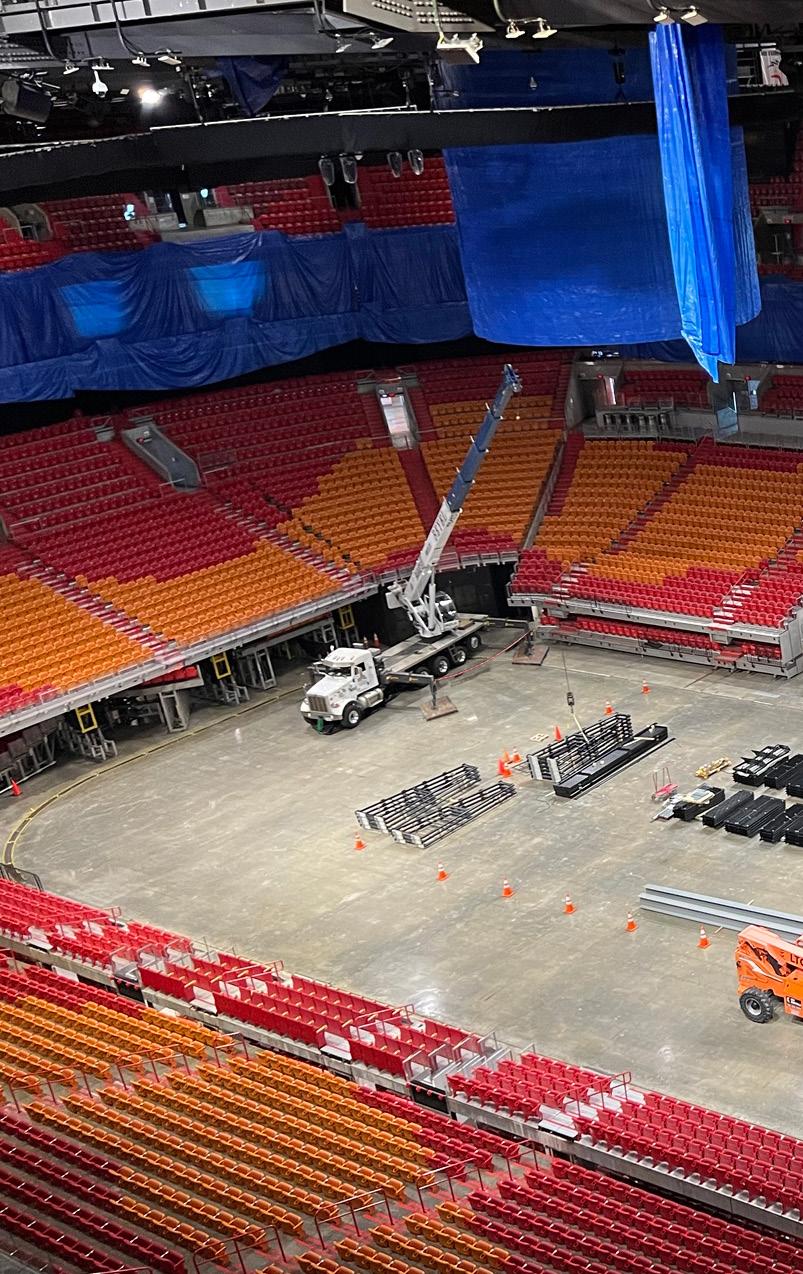
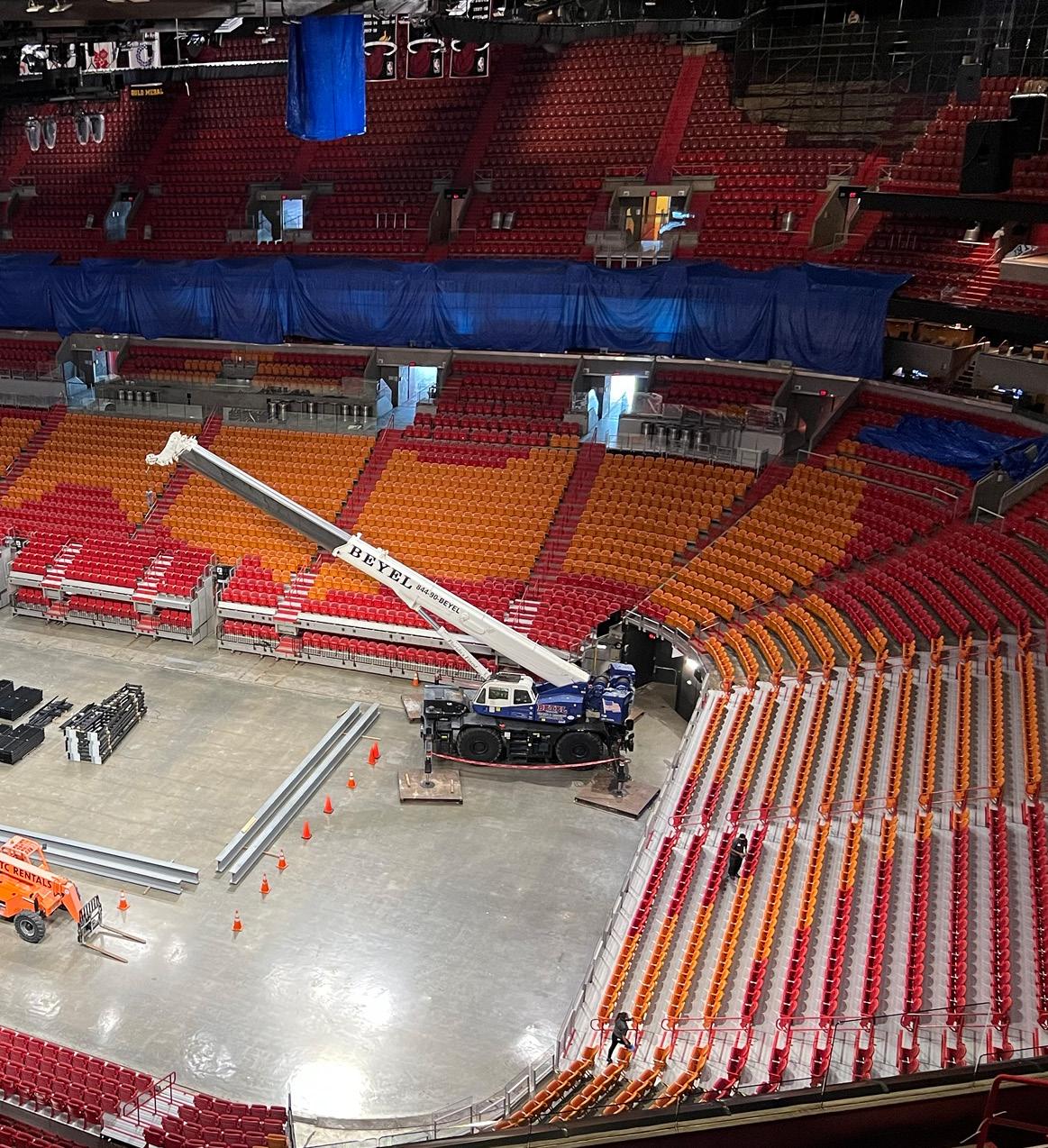
First, since the arena stayed in use during the renovation, the work schedule revolved around concerts and other events. That meant that for any event, Hodges had to move out a Manitex 50155SHL boom truck, a Tadano GR-1000XL-4 rough-terrain, two telehandlers, several high-reaching boom lifts, and any staged materials into the parking lot, and then back in afterward.
“We moved everything out and in more than 20 times in about nine months,” said Amador. “Sometimes it was only for a day, but other times performers wanted nearly a week to set up and prepare.”
The second challenge — floor-load
limits — affected both Hodges’ timing and its work methods. The venue sits over a parking garage, so the arena floor had to be reinforced with shoring to support the equipment and material sitting on it.
Waiting for the shoring to be designed and installed prevented Hodges from starting to use the crane and boom truck as early as it had planned to.
Even with the shoring installed, floorload limits restricted the rough-terrain crane to four spots in the corners and the boom truck to those four spots plus two near the floor’s center. Floor-load restrictions also limited how much material could be staged in the arena.
Corner Scoreboards
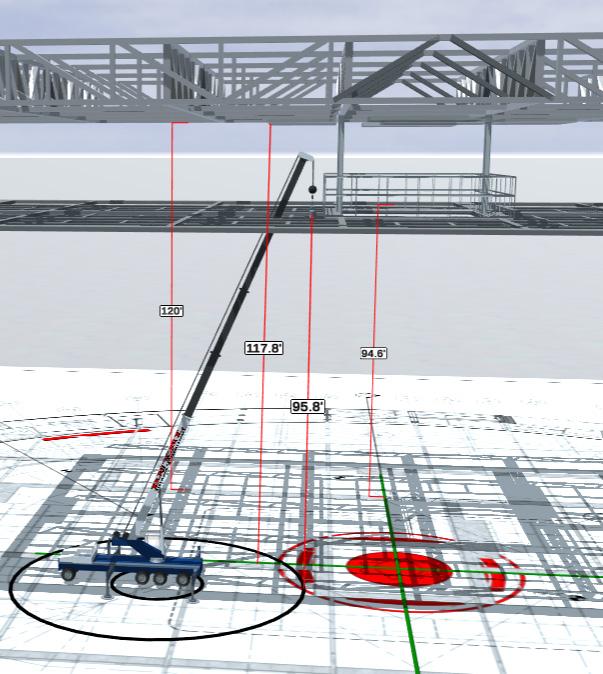
The third challenge came from the four corner scoreboards’ elevation and distance away from the arena floor. Each of them sat at a height of about 150 feet, but the crane could reach up only 120 feet at the radius needed.
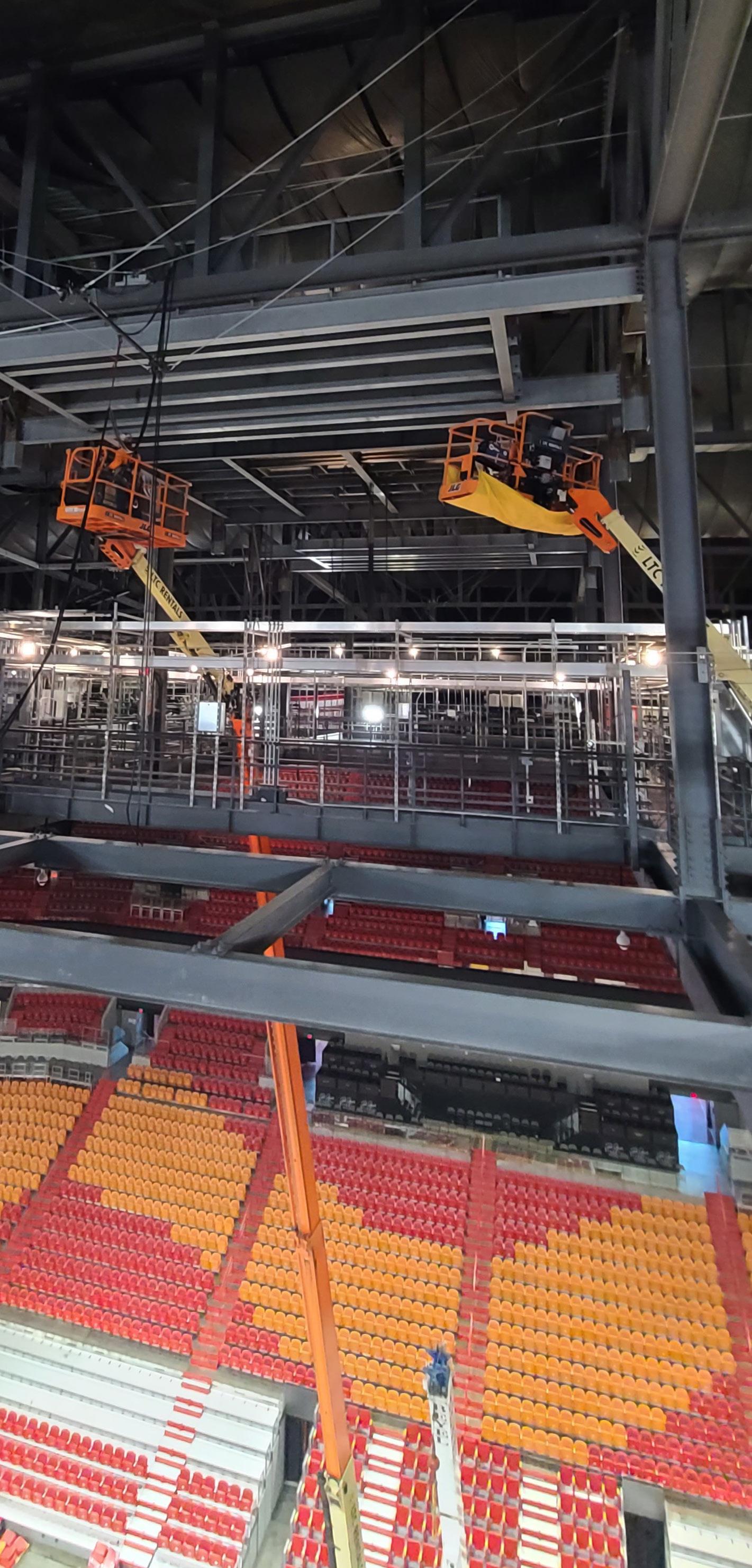
Hodges solved the problem by building a platform on scaffolding at the 120-foot height, then dismantling the scoreboards’ structural supports and lowering the pieces to the 120-foot level using hand-operated chain falls. From there, the crane lowered the pieces to the arena floor to be hauled away.
Much of the steel was removed by unbolting, but some was cut by torch. Hodges protected the seats below the work areas by covering them with fire blankets and by having its crew use tool tethers.
The laborious process was reversed to install the new supports and corner scoreboards.
Floor-load limits dictated just a few lifting locations for cranes and specific staging weight limits for materials.
Floor-load limits dictated just a few lifting locations for cranes and specific staging weight limits for materials.
To erect the structural steel needed to support the new larger center scoreboard and Miami Heat logo, Hodges had to maneuver the crane's boom and loads through the arena's grid of existing steel while also working with minimal room above the boom tip.
Center Scoreboard
The second part of Hodges’ work was removing the existing center scoreboard, the winches that raised and lowered it, some structural steel, and its catwalk, then installing new structural steel, new winches, a larger catwalk, and an access stairway for the new and much larger center scoreboard and Miami Heat logo.
To complete its work on schedule, Hodges installed the center scoreboard’s new steel framing and grating catwalk above while other trades assembled the new scoreboard on the arena floor below. Because of that, Hodges’ crew emphasized safety even more than usual, and all their tools were always tethered.
In all, Hodges handled about 240 pieces of steel totaling 180 tons on the project.
The largest pieces for the corner scoreboards were 4,200 lb W18x86 beams at 48 feet long. The biggest pieces of the center
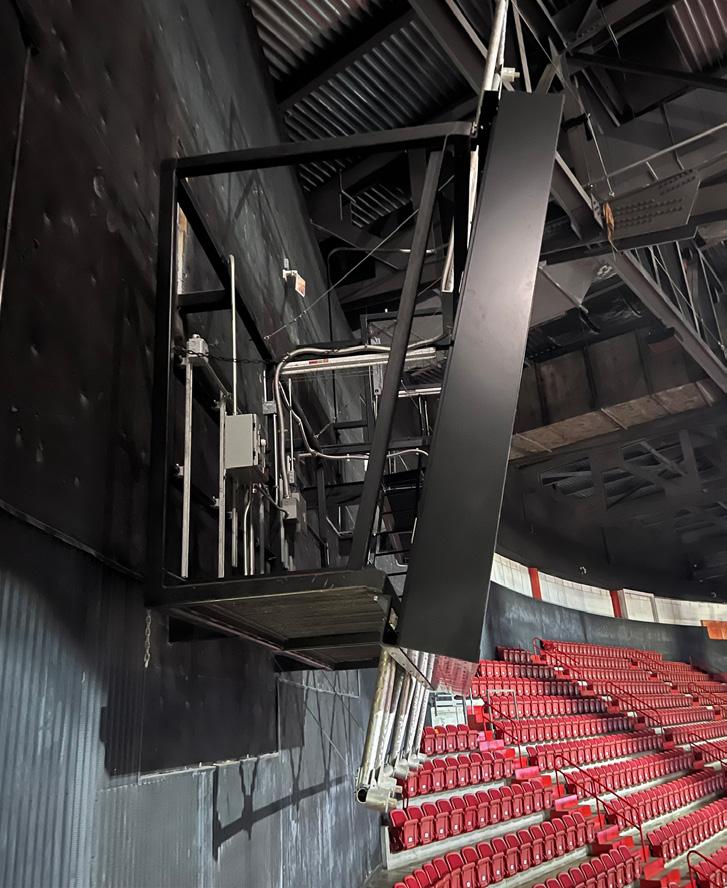
Supporting structural steel for one of the Kaseya Center Arena’s four corner scoreboards.
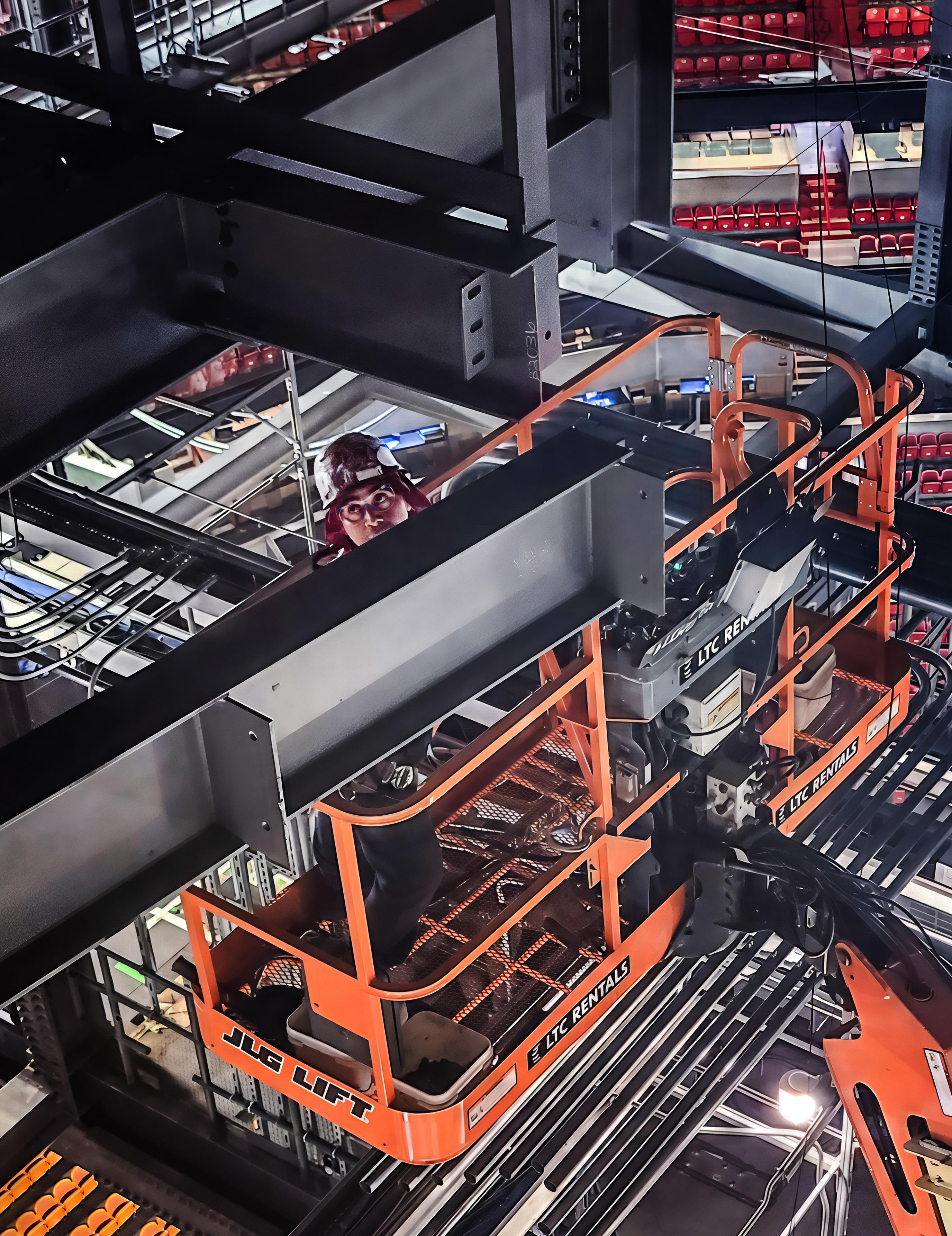
Removing and installing steel took place high in the arena’s structural framework.
scoreboard support were 5,800 lb W24x146 beams at 40 feet long.
Lesson: Don’t Hesitate to Ask
What lessons did Hodges learn from this project? “When you know you need something, don’t hesitate to ask for it,” said Jeff Justice, Director of Operations. He explained that to work more efficiently in some areas high in the overhead steel, Hodges needed to remove some of the existing grid temporarily. Initial
pushback from onsite personnel was overruled after Hodges took the issue up with the site owner’s engineer. Ultimately, they were allowed to remove specific pieces of the existing structural steel while working if they would install them back into place at the end of each day with properly torqued new bolts.
“We are very proud of our work on this project and are excited to be part of such an iconic and important building in the City of Miami,” said Amador.
Tenant Improvements while Minimizing Disruption
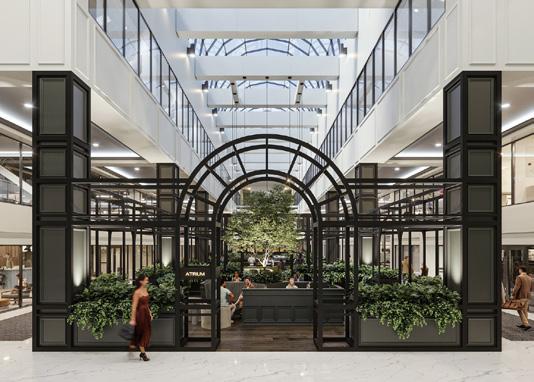
All Things Metal, LLC, (ATM) was both fabricator and erector for a high-end tenant improvement project at an office building in Phoenix, Arizona. The new amenities include a main-level café, a basement speakeasy, a fitness center, a training center, and an atrium with an open-concept mezzanine. Outside, the new landscaping even includes a dog park.
To fabricate and erect the 72 tons of steel—all internal to the existing structure—the project’s general contractor, RSG Builders, trusted All Things Metal. “RSG is a leading specialist in this kind of project, and we have done several with them,” said Jeff Rock, All Things Metal's Vice President of Construction. But this one was a bit unique in that the building’s owner and architect, George Oliver Companies, has its offices there.
“It could be considered a challenge working right in front of the client (although George Oliver Companies is excellent to work with), it was actually a benefit because we were able to get answers and collaborate effectively to resolve issues,” said Rock.
One example of a quick on-site resolution involved a specification that called for steel to be installed half a foot higher than it should have been. When the question came up, ATM’s steel foreman and project superintendent immediately went upstairs to the architect in his office and resolved the issue on the spot. Another challenge was that the seismic connection at the building’s expansion joint could not be built exactly as designed, so ATM consulted with the project’s engineer to modify the connection and welding procedure to meet the code.
Minimizing noise and disruptions during business hours in the occupied building required ATM to start early and occasionally work graveyard shifts.
Small Crane, Big Impact
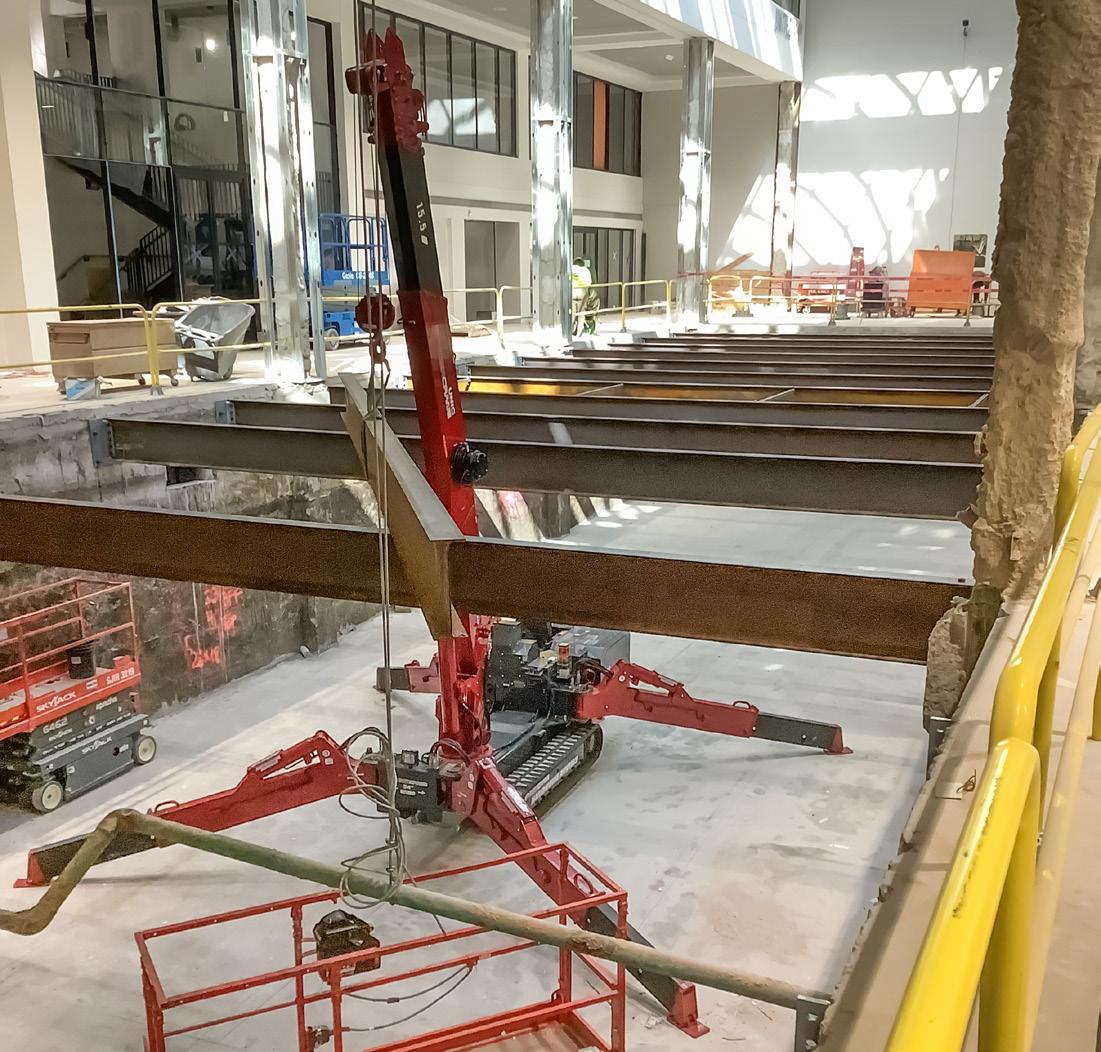
The project started with digging a new basement in the center of the building to house a speakeasy. ATM installed the columns, 28 horizontal beams and decking that formed the ceiling of the speakeasy and the floor of the corresponding section of the first floor in the atrium. Above that, they built a mezzanine open to the atrium. At the south end of the building, ATM expanded steel framing to add an area for the new training center; and in the fitness area, ATM added beams, deck and decorative stairs.
In total, ATM set 5,883 pieces of steel for the project, the largest being an assembly that measured 21 inches by 44 inches by 31 feet long and weighed 2,300 pounds. Nearly all the project’s steel was set by one mini crane that had an 8,920-pound maximum capacity and a 60-foot telescopic boom.
ATM first used it in the basement, and when the speakeasy’s ceiling beams and deck were complete, it was able to be walked around the outside of the building in through a door on the first floor for the rest of the job. According to Rock, the mini crane is ideal for this kind of project because it is easy to move and set up, has plenty of capacity and reach, and didn’t require any special under-floor support.
The Fab-Erect Advantage
One advantage of being both fabricator and erector was that the erection crew could call the fab shop directly to find out what pieces were coming when, and if anything was mis-fabricated, how to resolve the issue. "When you put the time in to plan properly and verify everything in the field, the fab shop is better able to build to the specs that we actually measured and verified,” said Matt Mina, Project Manager.
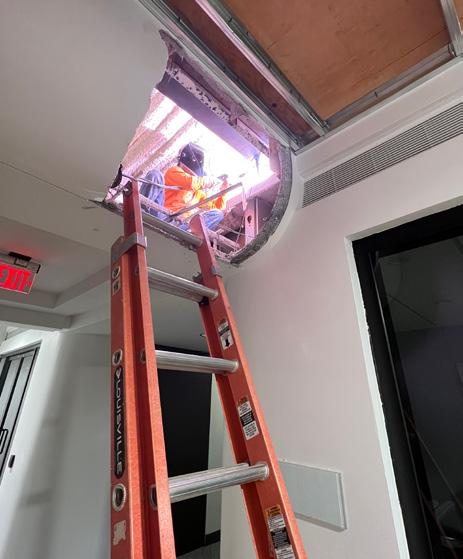
Connecting new steel to existing structure often required welders to work in tight spaces.
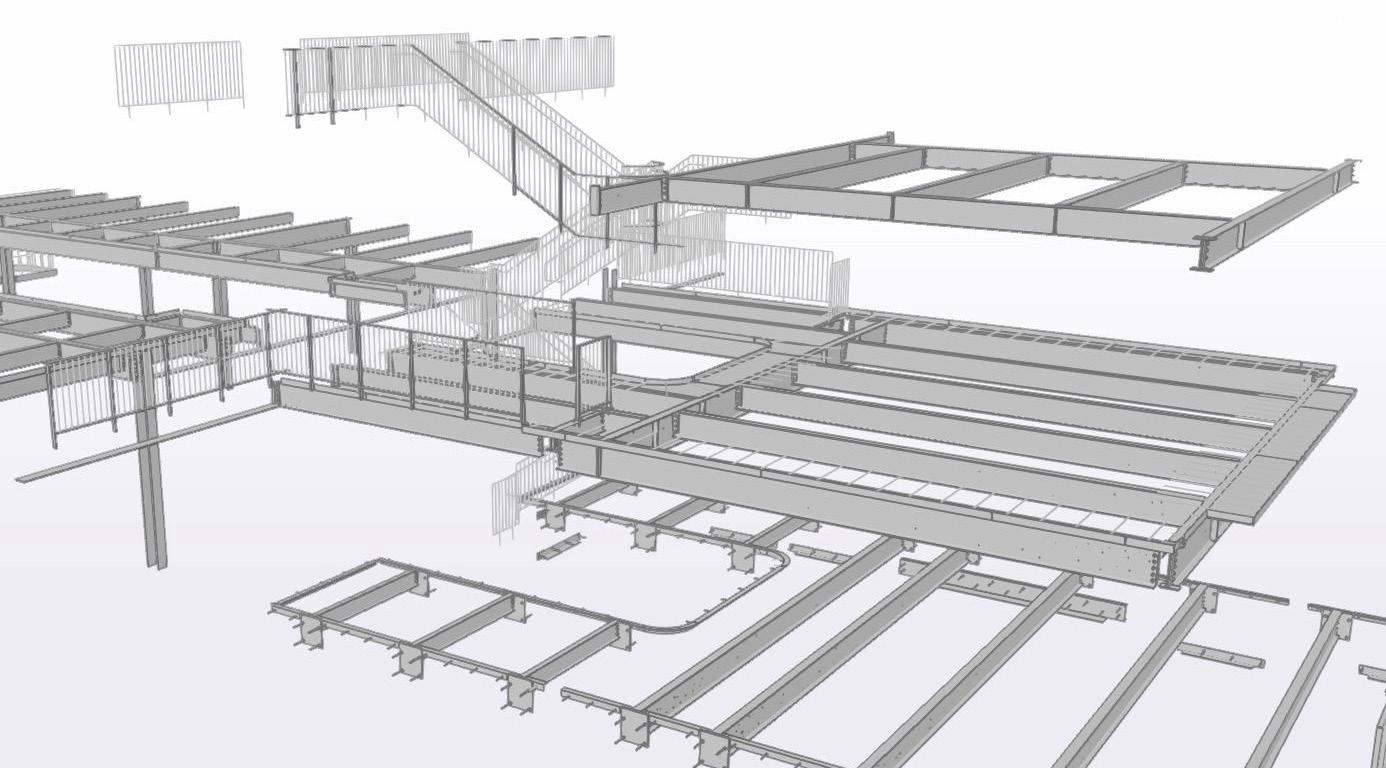
A layout drawing shows the levels of steel erected, from the new ceiling over the basement speakeasy, to the main level, and the mezzanine above.
All Things Metal used a Spyder mini crane as the key piece of equipment to erect 72 tons of interior steel to create high-end tenant improvements at the Bond Building in Phoenix.
Precision Install of Automated Cranes
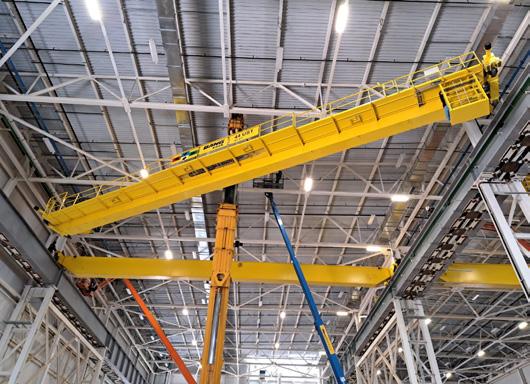
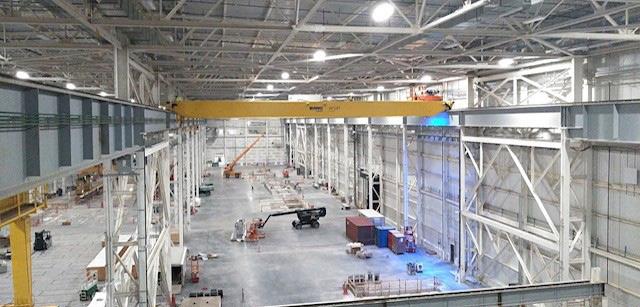
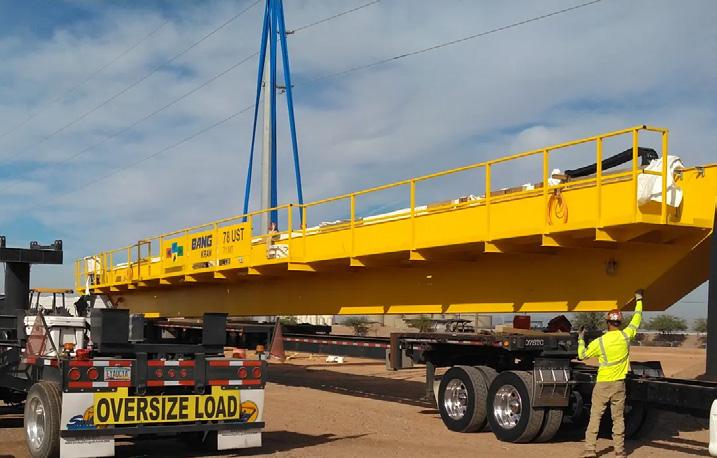
From April of 2023 to April 2024, Lucid Motors invested $50 million to expand its Casa Grande, Arizona, factory by 3 million square feet to increase its capacity to manufacture electric vehicles. As part of the expansion, general contractor Barton Malow hired ORBIT Industrial Service & Maintenance, LLC, of Phoenix, Arizona, to install three automated process cranes that can be programmed to locate, lift, transport, and set components based on GPS data delivered by wi-fi and cellular signals. Engineered and manufactured in Germany by Bang Kransysteme, those advanced cranes are the first Bang-made cranes of their type installed in the U.S. The ORBIT team has more than 25 years of experience installing and servicing factory cranes. This expertise led to the company being selected to install the crane rails atop the runway girders, install the power bars, assemble the three cranes and set them onto the rails, handle the complete crane startup, and make 125-percent proof load tests for all three cranes.
In addition, ORBIT was responsible for managing the logistics of storing and moving the crane and rail components, as well as mobilizing the cranes, forklifts, and boom lifts needed to install and test them.
Tight Tolerances for Precision Lifting
To run properly, the automated overhead cranes need supporting runways and rails that are positioned and leveled very precisely. Their manufacturer-specified maximum tolerance is just 3 millimeters, or about 1/8 inch. That’s about twice as
tight as for traditional factory cranes. Meeting those tolerances would be a challenge under any conditions, but ORBIT faced an additional hurdle because it had to correct both the lateral positioning and leveling of about 3,400 feet of runway girders that had been installed by another contractor.
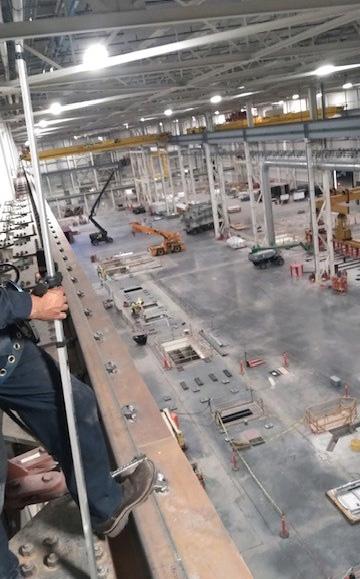
When laser measuring equipment didn’t seem to be working well for the corrections, ORBIT went old-school and hung about 200 plumb bobs from carefully selected points on the ceiling to get accurate measurements.
Once the runway girders were positioned properly and their bolts torqued tightly enough, ORBIT positioned the crane rail sections end to end on top of them, secured the rails to the girders, and then welded the rail ends together. ORBIT President, Christopher Oehl, said, “Normally, crane rail ends can be bolted together, but for these automated cranes, each rail-end joint had to be welded. That was a bit of a challenge, considering that nearly all the rail work took place about 70 feet above the floor.”
Logistics Challenges
Weather issues and material delays, including sea-freight damage that one crane suffered on the voyage from Germany to the U.S., handed ORBIT a few logistics and mobilizations challenges. Other issues came from on-site staging that required trailers and cranes each time materials were brought into the building.
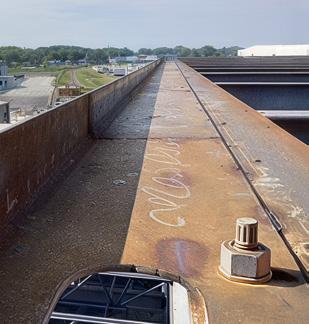
A look along the top of a girder runway shows the clips that will lock the crane rails in precise alignment.
Each time the cranes were moved from the warehouse to the factory and back, it required mobilizing multiple cranes and tractor-trailer trucks.
Because of sensitive electronics, the automated cranes had to be stored indoors, and the nearest suitable warehouse was about a mile from the jobsite.
Hiccups in the overall schedule caused the cranes to be moved between the warehouse and plant four times before they were installed. The moves required mobilizing five semis and seven mobile cranes, no small feat in the booming Arizona construction industry.
“We are used to this kind of issue, but the large material sizes and heavy weights on this project made moving things harder,” said Oehl.
To handle the rails and smaller steel, ORBIT arranged for telescopic-boom cranes with maximum capacities of about 75 tons. To pick and set components of the three automated cranes, ORBIT rented one all-terrain crane with 300-ton capacity and one with 110-ton lifting capability.
The larger all-terrain crane handled many of the lifts by itself, but some picks, for example an assembled trolley and hoist, required tandem lifts.
In all, ORBIT set some 225 tons of steel, including the crane components, at an average height of 70 feet, and completed its work in time for Lucid to start up the expanded plant on schedule.
What lessons did ORBIT learn on this job?
“Trust your team, have their back, and be ready to pivot,” said Oehl. “Also, as in the repositioning of the runway girders, if something doesn’t seem just right, stop and check it, and sometimes the old basic methods work best.” •
A view of one long bay gives an idea of the length of the runway that needed to be precisely aligned for the automated cranes to work properly.
By John Meibers and Claire Wilson
Rewriting Workflows with Digital and AI Tools
Contractors are increasingly operating on digital platforms and using artificial intelligence for operations. These tools are reshaping everything from estimating and project management to workforce training and safety monitoring. Embracing technology can lead to greater efficiency, better decision-making, and a more competitive edge, especially for small and mid-sized firms looking to scale smartly.
However, success depends on more than just adoption; it also requires a thoughtful approach to integration, data management, and security. Together, these articles offer perspectives on the positive aspects of these modern tools. (See Management article, page 18, on how this explosion of data must be managed correctly to improve cybersecurity.)
John Meibers is the Vice President & General Manager of Deltek ComputerEase, the leading provider of accounting, project management and field-to-office software for the construction industry. Prior to joining ComputerEase over 25 years ago, John spent a decade working for a large mechanical contractor.
The Digital Jobsite
The construction industry has long relied on paper for blueprints, contracts, invoices, and compliance documents, but the digital revolution is changing that. Going paperless is no longer a luxury for forward-thinking contractors; it's fast becoming a necessity for staying competitive and efficient.
While many large contractors have already embraced digital tools, smaller contractors and subcontractors often lag behind.
Yet, the benefits of going paperless are too significant to ignore:
• Improved Efficiency and Accuracy: Digital workflows reduce manual errors and eliminate the time spent managing, sorting, and retrieving paper documents.
• Cost Savings: Less paper means fewer printing, storage, and administrative expenses.
• Enhanced Collaboration: Cloud-based document sharing gives project teams access to real-time updates, helping prevent miscommunication and delays.
Continued page 32 The Digital Jobsite
Claire Wilson is the co-founder and COO of Siteline, the only pay app management software for subcontractors. Previously, Claire was a project manager on large projects at Tishman Construction in New York City. Her experience gives her perspective into construction billing and why contractors need software specific to their workflows.
AI and the Human Touch
The steel erection industry stands at a crossroads. While artificial intelligence (AI) promises to revolutionize how contractors approach complex projects, the specialized skills that define the trade remain irreplaceable. The question isn’t whether AI will impact erectors and ironworkers—it’s how contractors will harness its power while preserving the human expertise that built this industry.
Steel erectors are already witnessing AI’s practical applications across the design and construction phases. In the design realm, several platforms are making an impact:
• SkyCiv Structural 3D uses AI algorithms for automated load calculations and structural optimization.
• Pathw.ai specializes in smart steel structure detailing.
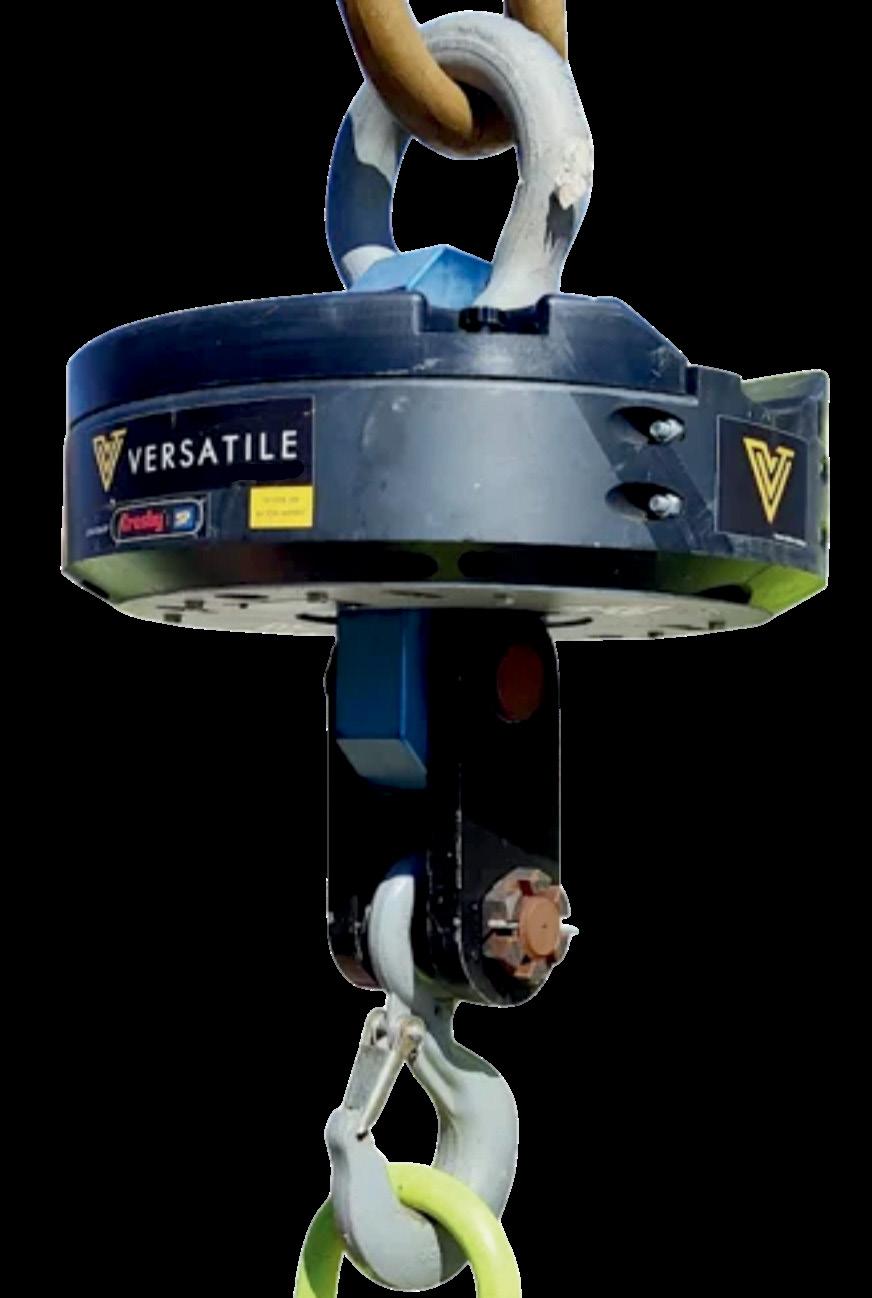
• SketchDeck.AI’s LIFT automates data extraction from drawings to create bills of materials. On the construction side, Versatile's CraneView™ system uses an IoT sensor device mounted to crane
Continued page 32 AI and the Human Touch
The Digital Jobsite
• Better Compliance and Record-Keeping: Digital documentation simplifies regulatory compliance and audit readiness.
• Sustainability: Reducing paper use supports environmentally friendly practices and can enhance your company’s image.
As Jack Nix, COO of Shelby Erectors, explains: “About five years ago, we decided to go paperless, and if it weren't for ComputerEase and the type of technology it offers—the field management tools, the ability to collect payroll and expenses from the field through the different apps and FieldEase—we wouldn't have been able to accomplish that goal.”
How Contractors Can Transition to Paperless Workflows
Making the shift to a paperless construction business doesn’t happen overnight, but with the right approach, it’s achievable. Here are some tips to help contractors digitize stubborn processes:
• Start with Small Wins: Identify one or two processes that can be easily digitized, such as switching to digital timesheets, digital expense receipts or invoicing.
• Invest in User-Friendly Software: Choose software that integrates seamlessly with existing workflows and is easy for employees to adopt.
• Provide Training and Support: Help employees and subcontractors become comfortable with new digital tools by offering training sessions and ongoing support.
• Leverage Mobile Apps: Construction software with mobile accessibility allows field teams to submit change orders, timesheets, daily field logs and compliance documents digitally in real-time.
• Use Cloud-Based Document Management: Cloud storage solutions ensure that contracts, permits and compliance documents are accessible anytime, anywhere. Cloud-based construction accounting software like Deltek ComputerEase streamlines financial management, allowing contractors to track expenses, process payroll and manage job costing seamlessly in a digital environment.
• Encourage Suppliers and Clients to Go Digital: Collaborate with material suppliers and clients to transition to digital invoices and receipts where possible.
The transition to paperless workflows does more than just eliminate clutter. It positions contractors to adapt, scale, and thrive in a digital-first industry. Companies that embrace digital tools often discover added benefits, such as simplified tax filing, improved insurance compliance, and greater appeal to tech-savvy younger workers.
For More than Saving Trees
Digital records also protect against data loss due to fire or flooding and enable remote work or geographic expansion. For contractors ready to future-proof their operations, adopting a paperless approach isn’t just a smart move, it’s a strategic one. The long-term payoff far outweighs the initial investment in time and technology. •
AI and the Human Touch
hooks that leverages AI to learn and classify each item picked, capture weights, and record cycle times. This provides teams with comprehensive crane utilization data through live feeds and automated reporting.
Quality control and risk management also have evolved significantly.
• AI solutions like OpenSpace Capture can analyze photos from hardhat cameras and drones to visualize job progress, reduce potential hazards, and solve problems on the fly.
• Predictive maintenance systems can track the performance of various construction equipment, identifying needs before failures occur.
• Contract review tools, like First Rule and Document Crunch, help identify risks and optimize terms before projects start.
Achieving the Right Balance
Steel erection will always require the irreplaceable human touch. No algorithm can replicate an ironworker’s ability to read wind conditions, assess structural behavior during lifting operations, or make split-second safety decisions. The intuition developed through years of experience—knowing when something "feels wrong"—cannot be programmed.
AI excels at processing data and identifying patterns, but humans provide the critical thinking and contextual understanding that ensure safe, successful projects.
The future of construction lies in "responsible automation"—strategically integrating AI to enhance productivity while maintaining human oversight and decision-making authority.
This requires:
Strategic Implementation: Identify specific inefficiencies where AI can add value without compromising safety or quality. A good place to start? Historically error-prone or manual processes, like scheduling optimization, material tracking, and payment application management.
Comprehensive Training: Invest in programs that help crews understand and work effectively with AI tools. Most software vendors provide training resources that ensure smooth adoption.
Clear Goal Setting: Define measurable objectives for AI implementation, whether reducing project duration, improving safety metrics, or optimizing resource allocation.
Continuous Evaluation: Regularly assessing AI performance against preset goals and adjusting strategies accordingly. Technology should evolve with company needs, not dictate them.
Respect the Art & Science
The steel erection industry has thrived for generations through technical expertise and adaptability. As contractors embrace AI's capabilities, the key is remembering that technology works best when it amplifies human expertise rather than replacing it. Ultimately, the balance between AI and human expertise isn't just about technology—it's about respecting what makes steel erection both an art and a science. •
SPECIAL FOCUS
By Macie Murie
Connected by Craft, Powered by Purpose
Highlights from SEAA's Convention & Trade Show
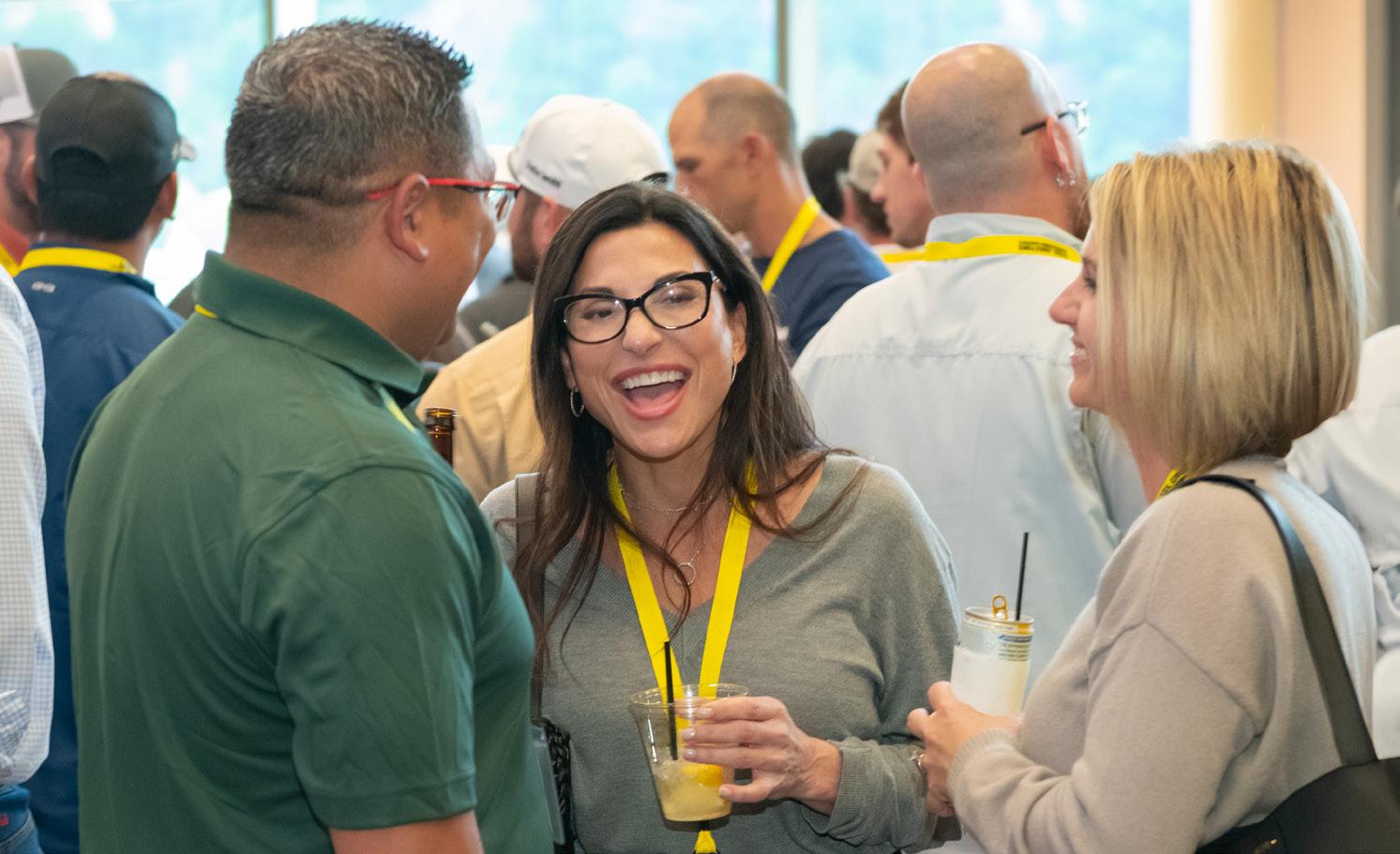
Held in the heart of Steel City, SEAA’s 2025 Convention & Trade Show in Pittsburgh was a celebration of growth, grit, and the ever-expanding future of the industry. With record-breaking attendance and a sold-out trade show, the event brought together hundreds of professionals for four days of learning, celebration, and community.
Golf Swings and Pickleball Zings
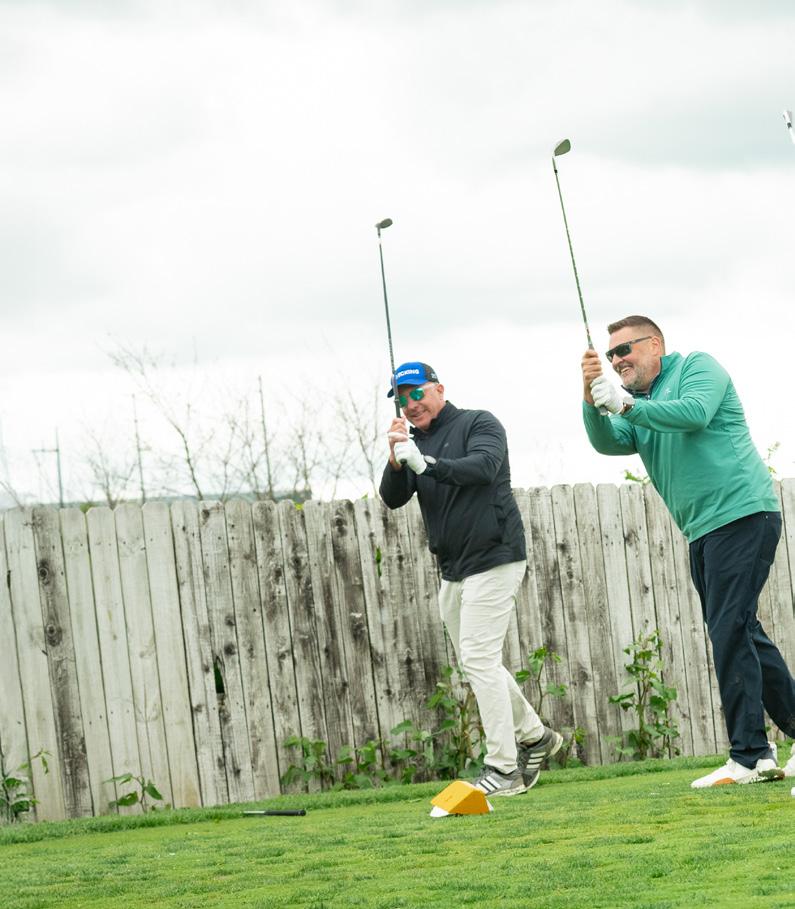
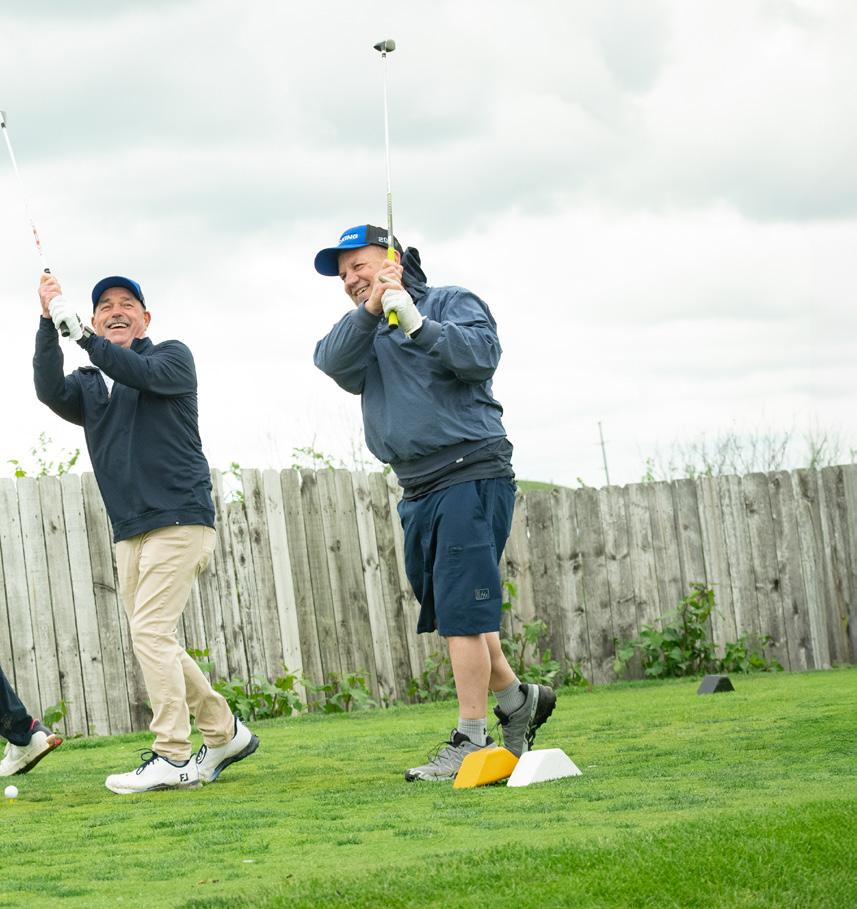
The week teed off with the George R. Pocock Memorial Golf Tournament at Quicksilver Golf Club. Golfers brought their A-game, and the leaderboard showed it.
First place went to Daniel Fortin, Frank Gauthier, Matthew McKenzie, and Quinn Angel, with a score of 62. Second place: Paul Kollman, Keagan McGinnis, Jon Gardenhour, and Cody Giles-Tucker (64). Third and fourth place teams, respectively, were Steve Shannon, Jeromy Sipes, Stephen Stopyra, and Mack McGuire (65); and Matt Roskie, Nick Newbury, Joe Leinwol, and Michael Belilacqua (66).
Standouts in individual contests included Art Golmbiewski, Dave Nelson, and Jon Quesada (Longest Drives), and Quinn Angel, Jody Burl Henson, Christian Read, and Bobby Hathaway (Closest to the Pin).
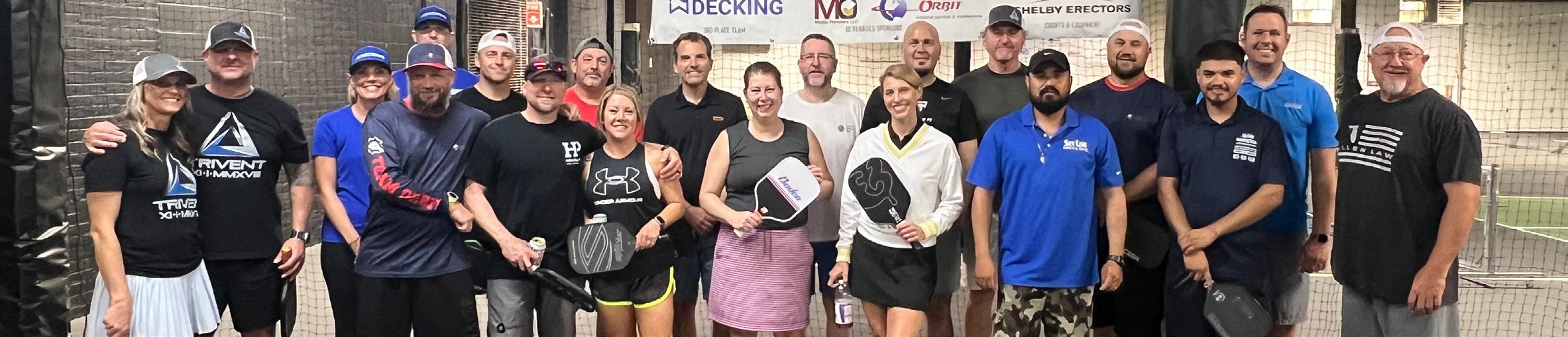
Across town, the Pickleball Tournament brought energy and laughs to The Pickleball Warehouse. Designed for all skill levels, the Round Robin format received high praise for its inclusive, networking-friendly style. After some
Macie Murie is the Associate Editor of Connector magazine.
competitive volleys, Matt Bricker, BBSI and Jeff Wetter, Columbia Safety took first place. Runners-up: Tucker Smith, BBSI and Tracy Bennett, Mighty Mo Media Partners; Third place Glen Pisani, MAS Building & Bridge and Mark Upton, Thornton Tomasetti
Real Conversations, Real Impact
Tuesday evening’s riverboat cruise, sponsored by Gold Level Sponsors, offered sweeping skyline views and sparked meaningful conversations about the future of steel erection.
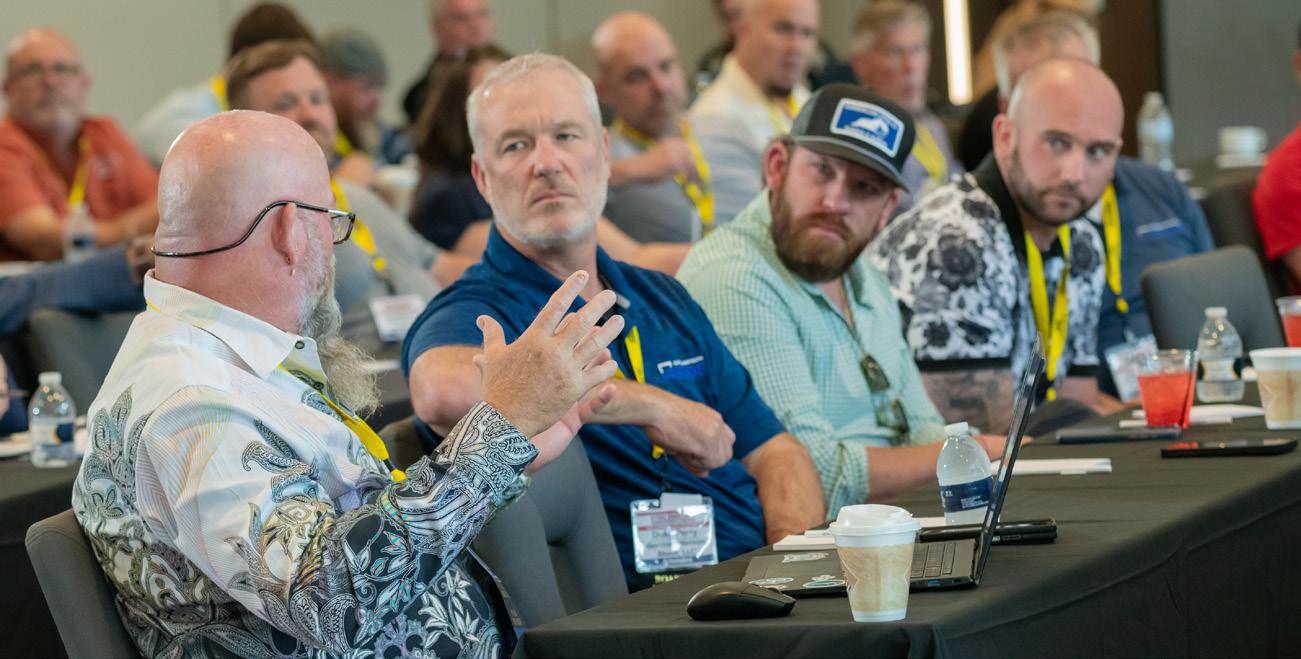
Education over three days tackled OSHA’s proposed heat stress standard, cyber security, safe use plans for MEWPs and more. But it was the candid discussion about mental health and suicide prevention that left a lasting impression. Industry leaders shared personal stories, underscoring that safety isn’t just physical—it’s personal.
Keynote speaker First Sergeant (Ret.) Matt Eversmann, whose story inspired Black Hawk Down, brought a powerful message of resilience, sacrifice, and leadership. His perspective resonated deeply with an industry where teamwork and trust are the cornerstones of success.
A Night of Recognition
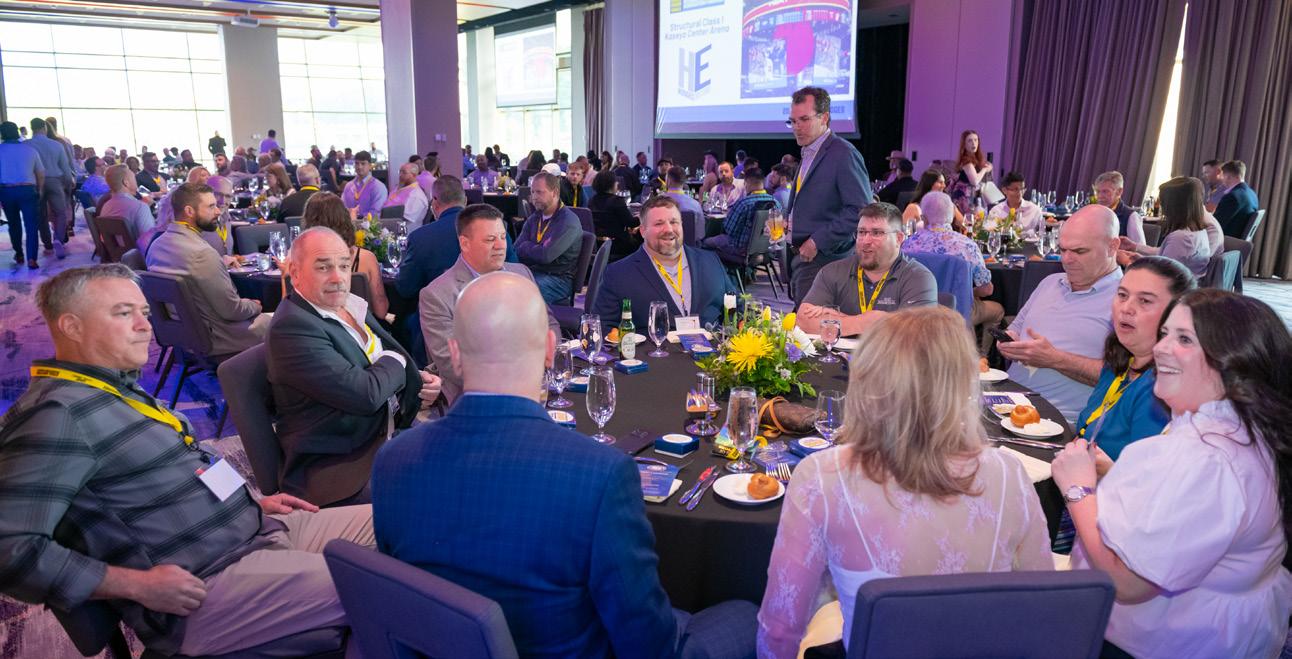
At the President’s Dinner, sponsored by GMF Steel Group, SEAA honored the exceptional people and projects shaping the industry.
Glen Pisani of MAS Building & Bridge, Inc. was named Person of the Year, receiving “The Eddie”—a newly renamed award in honor of SEAA founding member Eddie Williams. A longtime leader and advocate, Williams played a
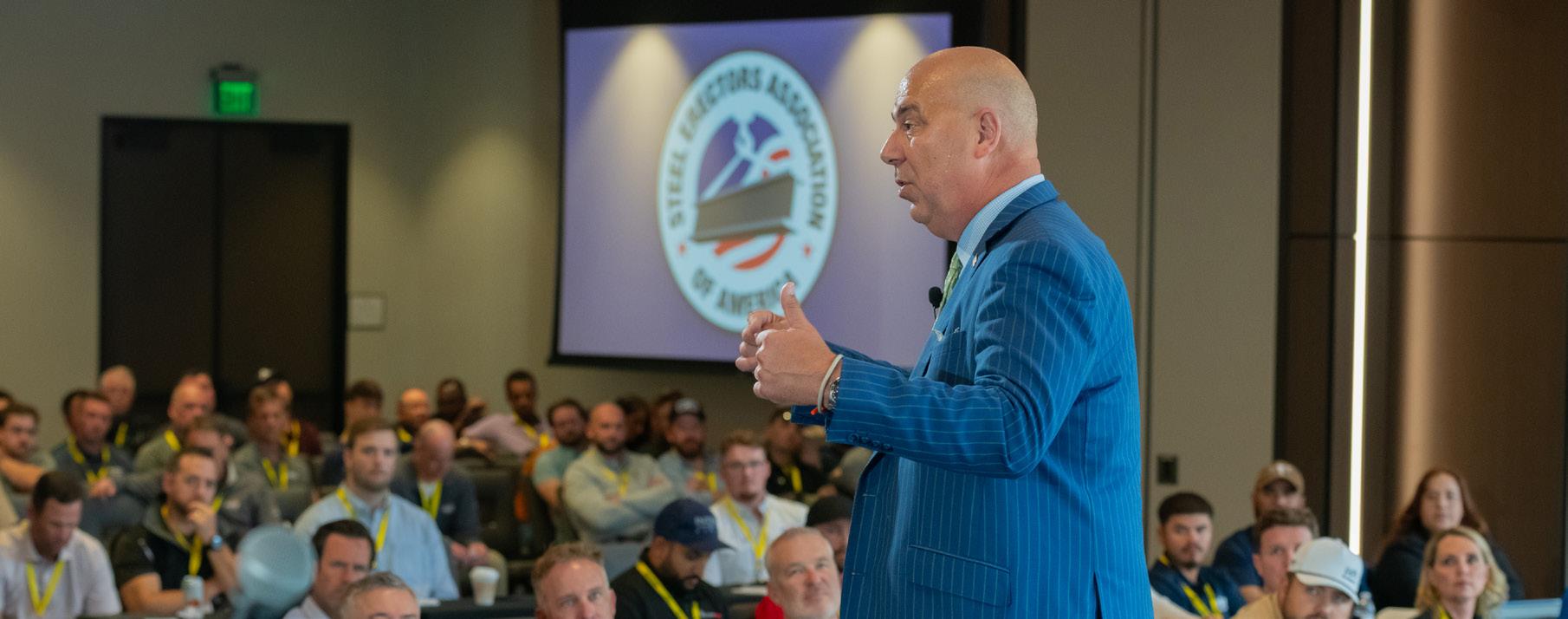
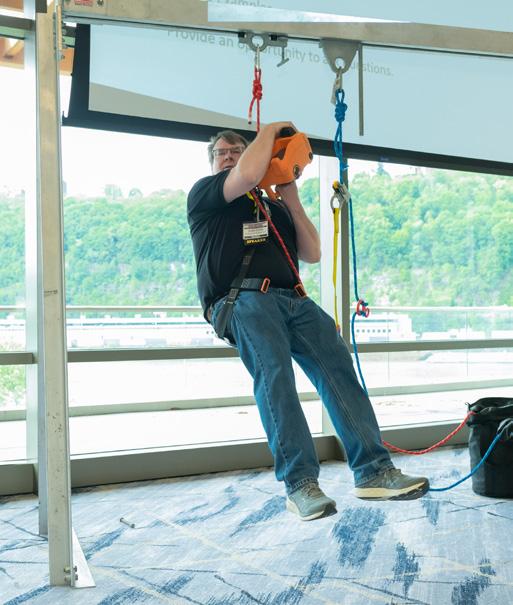
❶ Nearly 100 golfers turned out for the tournament. ❷ Attendees rank networking as primary reason for coming to SEAA meetings. ❸ Brave stories of mental health struggles captures the heart of a serious issue facing construction workers. ❹ Matt Eversmann shares his inspiring story of leadership.
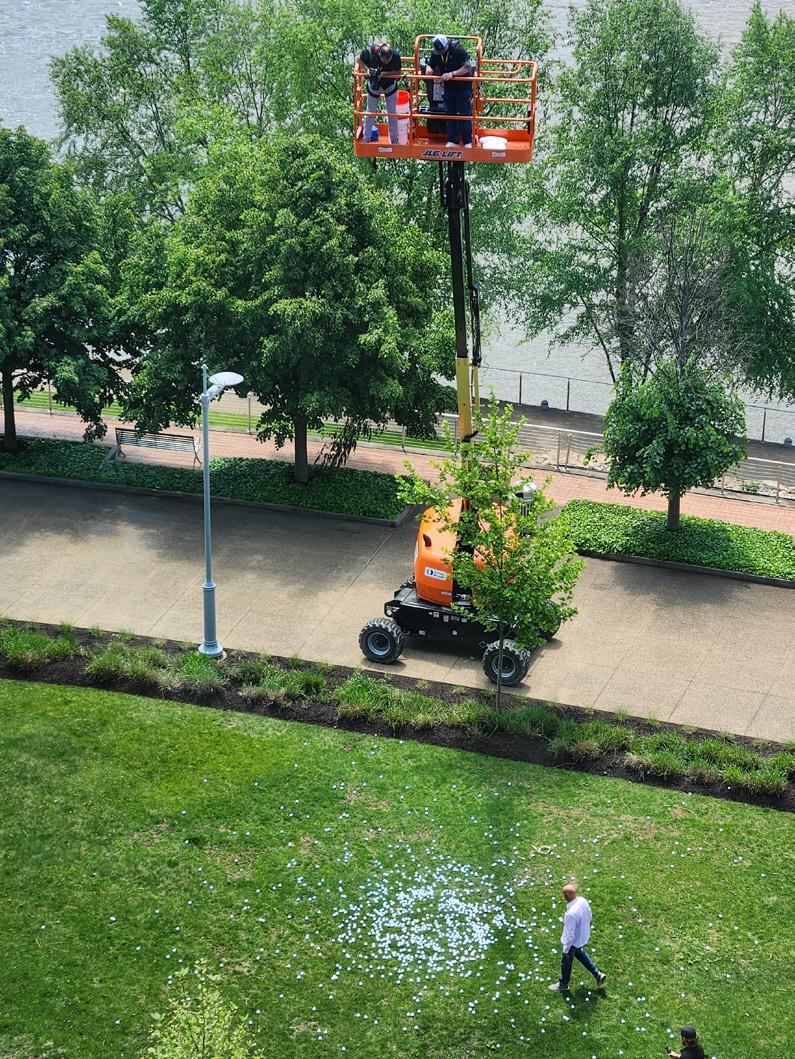
❺ Pittsburgh’s riverfront is backdrop to the popular Boom Lift Ball Drop.
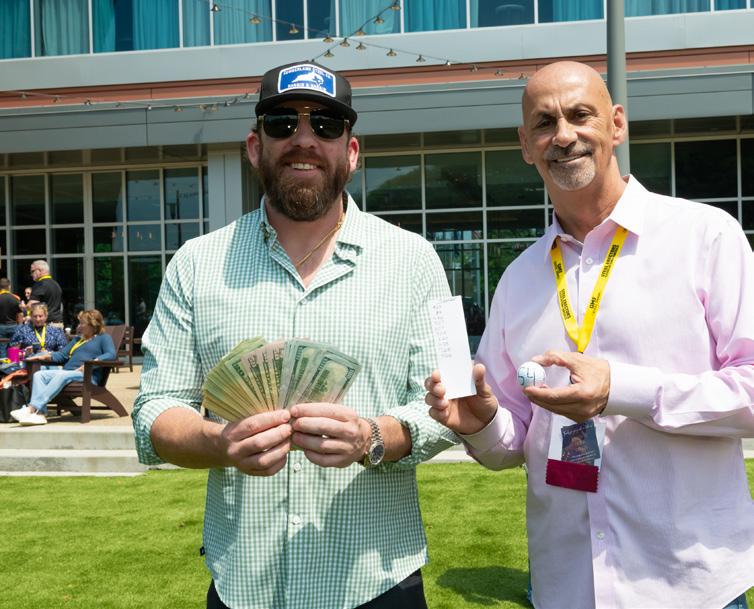
❻ Tanner Meyers of Cumberland Steel wins the ball drop pot. ❼ Vendors demo tools during Trade Show. ❽ Interactive demo shows tools for suspended maintenance. ❾ Pickleball delivers fun for players of all skill levels.
pivotalrole in shaping SEAA's mission and values. (See Page 10.)
Pisani was also honored as a 2025 Trailblazer alongside Jack Nix of Shelby Erectors and Nick Caratelli of Nelson Stud Welding. Nix received the Top Trailblazer for exceptional new member recruitment.
SEAA also recognized companies with Project of the Year, Safety Excellence and Craft Training Excellence Awards, shining a light on the teams behind the successful work.
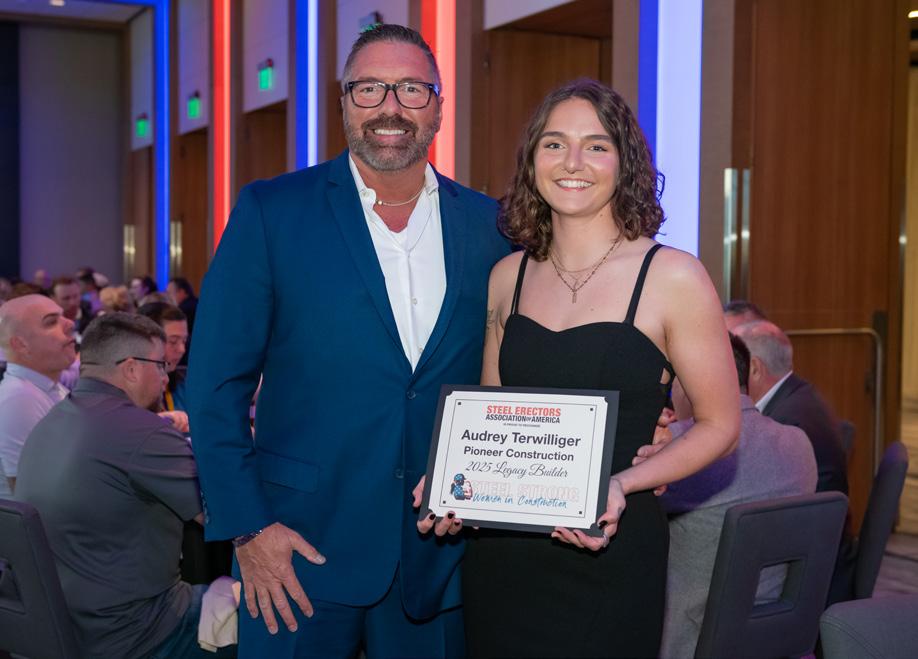
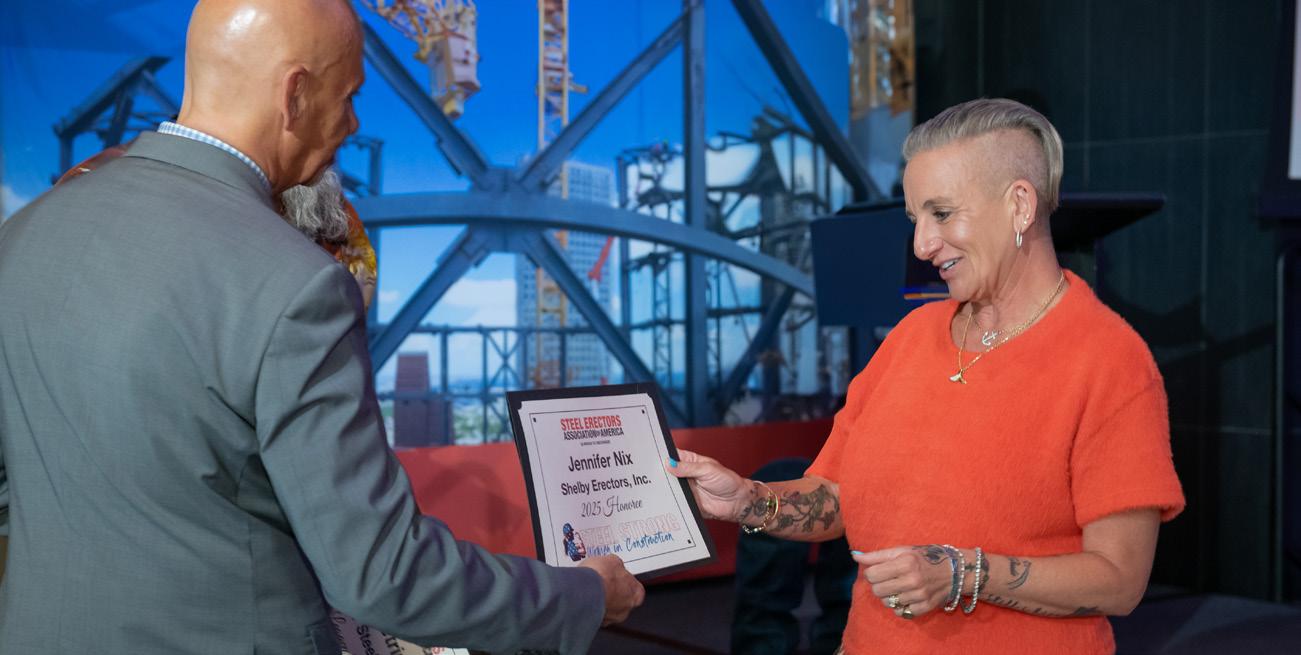
A special moment of the evening was the recognition of 17 Steel Strong Women in Construction nominees. These leaders
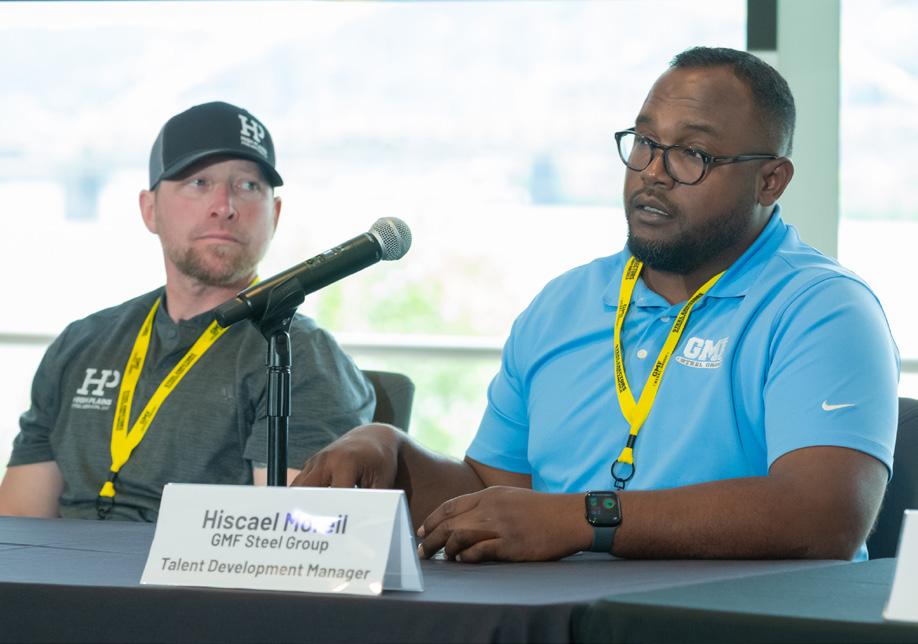
High Plains Steel and GMF Steel Group participate in Safety & Training panel. ⓮ Members are recognized for company and individual achievements during President's Dinner.
from across trades, management, executive leadership, and ownership were honored for their mentorship and resilience.
Raising Cash for Safety and Training
The Boom Lift Ball Drop, sponsored by United Rentals, combines friendly fun with meaningful impact. This year’s fundraiser raised an impressive $12,000. Half of the proceeds went to winner Tanner Meyers of Cumberland Steel Company, and the rest supports SEAA’s ongoing training and safety initiatives. It’s a fun tradition that continues to impact the industry.
Looking Ahead with Purpose
SEAA’s mission to support safe, skilled, and sustainable careers in steel construction is more vital than ever. New partnerships, member-driven innovation, and expanded outreach to the next generation are shaping what’s next.
“The engagement we saw this year is a reflection of where our industry is headed,” said R. Pete Gum, SEAA’s Executive Director. “Our members are energized. They’re investing in their people, leaning into innovation, and collaborating in ways that push us all forward.” •
❿ Audrey Terwilliger credits her dad Troy for her career as an ironworker. ⓫ Jennifer Nix, President of Shelby Erectors, receives her Steel Strong Women in Construction certificate. ⓬ Education sessions engage the audience in discussion. ⓭ Representatives from
DISCOVER HEARTLAND VALUE
MARK YOUR CALENDARS FOR KANSAS CITY – MAY 5-8, 2026
KCMO May 5-8
Convention & Trade Show
May 5-8, 2026 Kansas City, Missouri
DIAMOND PLATINUM GOLD SILVER BRONZE
$12,500 $7,500 $5,000 $2,000 $1,000
♥ Hold your sponsorship at 2025 Prices.
♥ Benefits include a menu of options to ensure your brand is visible before, during, and after convention.
♥ Additional sponsorships available for Golf Tournament and Pickleball Tournament.
Sponsors! Don’t miss your Right of First Refusal deadline.
2025 Sponsors must commit by October 1 to retain Package Level in 2026.
Commitment Date: October 1, 2015
Payment Due: January 16, 2026
TOPPING OUT
“Decisions made high up in the chain always affect the people on the ground. And they are the ones who will be expected to deliver the results of those decisions.”
– Matt Eversman, Retired U.S. Army Ranger and subject of the epic film Black Hawk Down, during his keynote at SEAA’s Convention in Pittsburgh, Pennsylvania in May.
Meet New Members
Check out the Member Directory at SEAA.net
7S Erectors LLC, Lubbock, Texas, is a structural steel contractor specializing in commercial construction projects.
Referred by: David Deem, Deem Structural Steel
Alpha Omega Mobile Welding Services Inc, Dover, Florida, is a mobile welding company that offers a wide range of welding techniques, including FCAW, SMAW, GMAW, TIG, CAG, and OFW, and is AWS Certified.
Referred by: Connor Schmidt, GMF Steel Group
ARK Steel Erectors, Snellville, Georgia, specializes in structural steel erection, welding, and fabrication services for metal high-rise buildings, crafting custom staircases and balconies, and creating unique metalwork for movie sets.
Referred by: Joel Hall, Porter Steel
Common Challenges with Bolt Installation
• Improper tightening
• Not snugging properly
• Incorrect bolt or fastener selection
• Temperature variations
• Inadequate power
• Incorrect power source
• Improper gauge and cord length
• Improper bolt storage
• Human error
Source: GWY White Paper A Guide to PIV Methods, Tools and Best Practice
Beekeeper, San Francisco, California, an all-inone communications and productivity app for your frontline workforce.
Referred by Jack Nix, Shelby Erectors and Ryan Englin, Core Matters
Choice Hotels International, North Bethesda, Maryland, one of the largest hotel chains in the world, franchising more than 7,000 hotels ranging from limited service to full-service hotels in the upscale, midscale, extended-stay and economy segments.
Lawton Welding Company Inc., Topsfield, Massachusetts, fabricates and installs structural and miscellaneous metals for major U.S. projects in life sciences, education, and commercial construction.
Referred by Glen Pisani, MAS Building and Bridge
Specialized Steel Solutions, LLC, Beaver Falls, Pennsylvania, is an innovative steel fabrication and installation company that takes pride in quality work in a timely manner.
Sundt Construction, Phoenix, Arizona, an employee-owned general contractor specializing in transportation, industrial, building, and concrete projects across the U.S., with a focus on innovation and self-perform capabilities.
Referred by: Tim Eldridge, Education Services Unlimited
Sure Steel, Inc., South Weber, Utah, a supplier and erector of Structural Steel, Metal Building Systems, Insulated Metal Panels, and Mass Timber.
VAST Steel, LLC, Palmyra, Pennsylvania, a woman-owned steel erection company set to redefine industry standards with expertise, innovation, and care, where every individual's future is VAST.
Versatile, Boca Raton, Florida, uses AI and crane-mounted sensors to deliver real-time jobsite data that improves productivity, safety, and decision-making in construction.
Referred by Chris Legnon, Cooper Steel
Project of the Year Winners Mental Health Helmets
Fall Edition: October 2025
Ad Deadline: September 19 Chris.Harrison@seaa.net 660-287-7660
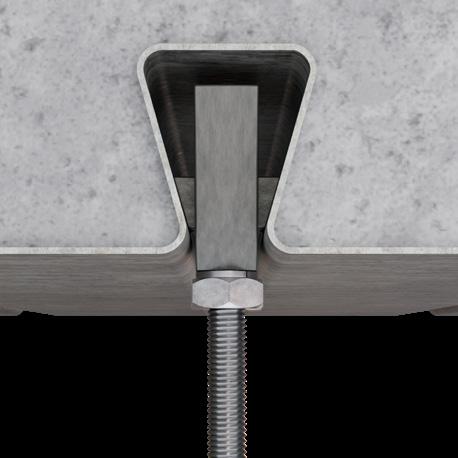
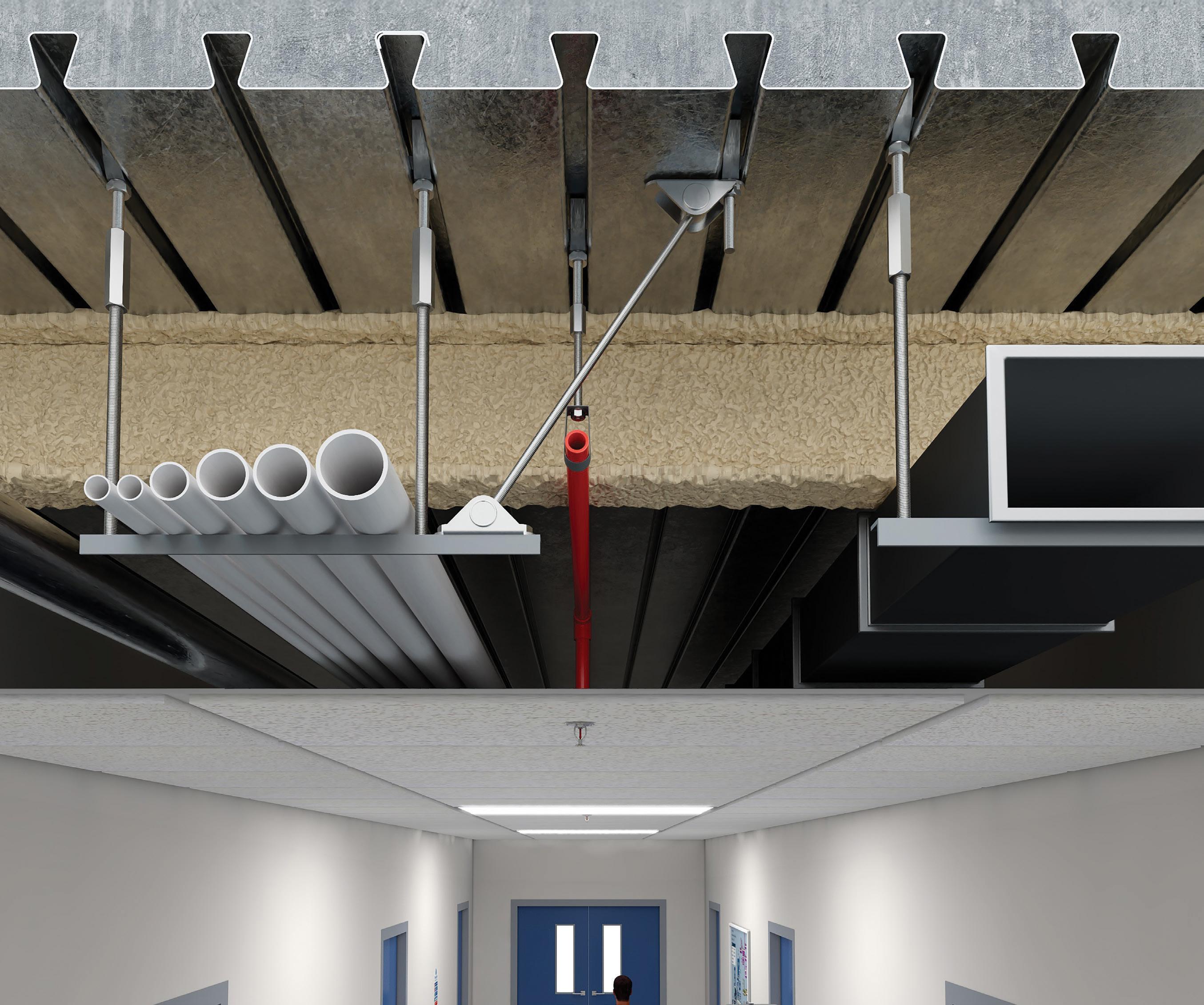
New construction architecture requires special consideration for the inevitability of future upgrades.
That’s why modern construction projects need hanging solutions that are built for speed, versatility, and adaptability to ensure quick and seamless renovations.
That’s why modern construction projects need hanging solutions that are built for speed, versatility, and adaptability to ensure quick and seamless renovations.
To help meet that challenge, Vulcraft-Verco has developed the PinTail™ Anchor, an innovative hanging solution that works exclusively with our Next Generation Dovetail Floor Deck, and are specifically designed to futureproof today’s construction projects for tomorrow’s renovations.
To help meet that challenge, Vulcraft-Verco has developed the PinTail™ Anchor, an innovative hanging solution that works exclusively with our Next Generation Dovetail Floor Deck, and are specifically designed to futureproof today’s construction projects for tomorrow’s renovations.