16
20
44

Not just for qualifying workers
Not just for qualifying workers
SPRING EDITION 2024
The Power of Onboarding
Lift Directors-When a Plan Comes Together
Protecting Your MVP THE OFFICIAL MAGAZINE OF THE STEEL ERECTORS ASSOCIATION OF AMERICA
OFFICIAL MAGAZINE OF THE STEEL ERECTORS ASSOCIATION OF AMERICA
THE
TRAINING
TRAINING
FORMAL
FORMAL


OUR SERVICES ERECTING DETAILING ESTIMATING FABRICATING DESIGN BUILD PROJECT MANAGEMENT BUILD HELPING YOU A FUTURE STRONGER WWW.COOPERSTEEL.COM NASHVILLE, TN SHELBYVILLE, TN FLORENCE, KY (9 3 1) 6 8 4 - 796 2
M
IF YOU LIFT, ERECT, HAUL, OR RIG IT: WE INSURE IT.
M & P S p e c i a l t y I n s u r a n c e p r o v i d e s i n s u r a n c e a n d r i s k m a n a g e m e n t s e r v i c e s f o r h e a v y l i f t i n g a n d m o v i n g i n d u s t r i e s .


I N D U S T RY S P E C A LT I E S :
I N D U S T R Y S P E C I A L T I E S :
S T E E L E R E C T O R S
E E L E C T O R S
H E AV Y H A U L E R S
H E A V Y H A U L E R S
C R A N E R E N T A L
R A N E R E N TA L
R I G G I N G
R I I N G
F A B R I C A T O R S
F A B R I C AT O R S
S T R U C T U A L M O V E R S
S T R U C T U R A L M OV E R S
THE M&P DIFFERENCE
L i c e n s e d n a t i o n w i d e , M & P S p e c i a l t y I n s u r a n c e o f f e r s
e
e
s i v e c o v e r a g e , e x c e l l e n t c u s t o m e r s e r v i c e
L i c e n s e d n a t i o n w i d e ,
P
p e c i a l t y I n s u r a
b
A
L i c e n s e d n a t i o n w i d e , M & P S p e c i a l t y I n s u r a n c e o f f e r s c o m p r e h e n s i v e c o v e r a g e , e x c e l l e n t c u s t o m e r s e r v i c e , a n d c o m p e t i t i v e p r e m i u m s . U n d e r w r i t t e n b y A + r a t e d c a r r i e r s , o u r t e a m e m p h a s i z e s t h e i m p o r t a n c e o f a l i g n m e n t b e t w e e n i n s u r a n c e p r o d u c t s , c o n t r a c t u a l d e t a i l , a n d r i s k m a n a g e m e n t p r a c t i c e s .
c e o f f e r s c o m p r e h e n s i v e c o v e r a g e , e x c e l l e n t c u s t o m e r s e r v i c e , a n d c o m p e t i t i v e p r e m i u m s . U n d e r w r i t t e n b y A + r a t e d c a r r i e r s , o u r t e a m e m p h a s i z e s t h e i m p o r t a n c e o f a l i g n m e n t b e t w e e n i n s u r a n c e p r o d u c t s , c o n t r a c t u a l d e t a i l , a n d r i s k m a n a g e m e n t p r a c t i c e s
r a t e d c a r r i e r s , o u r t e a m e m p h a s i z e s t h e i m p o
t a n c e o f a l i g n m e n t b e t w e e n i n s u r a n c e p r o d u c t s , c o n t r a c t u a l d e t a i l , a n d r i s k m a n a g e m e n t p r a c t i c e s
IF YOU LIFT, ERECT, HAUL, OR RIG IT: M P S P E C I A L T Y . C O M C O N T A C T J A S O N M C E L R A T H T O D A Y 1 1 7 9 S u n s e t B l v d W e s t C o l u m b i a , S C 2 9 1 6 9 | 8 0 3 - 9 3 6 - 1 6 0 1 | J a s o n @ M P S p e c i a l t y c o m
THE M&P DIFFERENCE
M &
S
n
M P S P E C I A L T Y . C O M C O N T A C T J A S O N M C E L R A T H T O D A Y 1 1 7 9 S u n s e t B l v d W e s t C o l u m b i a , S C 2 9 1 6 9 | 8 0 3 - 9 3 6 - 1 6 0 1 | J a s o n @ M P S p e c i a l t y c o m
THE M&P DIFFERENCE IF YOU LIFT, ERECT, HAUL, OR RIG IT: WE INSURE IT.
c o m
, a n d c o m p e t i t i v e p r e m i u m s . U n
e
n
p r
h
n
d
r w r i t t e
y
+
r
S P E C I A L T Y . C O M
P
C O N T A C T J A S O N M C E L R A T H T O D A Y 1 1 7 9 S u n s e t B l v d W e s t C o l u m b i a S C 2 9 1 6 9 | 8 0 3 - 9 3 6 - 1 6 0 1 | J a s o n @ M P S p e c i a l t y c o m
 Tracy Bennett


The Steel Erectors Association of America (SEAA) is dedicated to advancing the common interests and needs of all engaged in building with steel. The Association’s objectives in achieving this goal include the promotion of safety, education and training programs for steel erector trades, development and promotion of standards and cooperation with others in activities which impact the commercial construction business. 4 | THE STEEL ERECTORS ASSOCIATION OF AMERICA ONLINE HIGHLIGHTS Q Latest Webinar: SteelPros Learning Management System Q The Evolution to Modern Hard Hats Q Successful Lifts Start with Safe Rigging Check out our latest social media feeds. seaa.net DEPARTMENTS 8 Perspective 10 Association News 12 Product Focus 44 Business Operations 48 Topping Out c•ntents FEATURES Management The Power of Onboarding How to get workers engaged and profitable. By Ryan Englin In the Field Listen, Evaluate, Execute Lift Directors love it when a plan comes together. By Tracy Bennett Membership Directory By the Numbers Get SEAA stats, meet your association leaders, and find members in 12 different categories. 30 20 On the Cover: L&L Construction views its apprenticeship program as a way to teach less experienced workers while also supporting and strengthening their workforce as a whole. Spring Edition March 2024 Cover Story 16 Formal Training SEAA members use an NCCER Accredited Ironworker Program for more than just qualifying workers. Find out what to consider when starting the process. By
24





Using JLG equipment is not just about lift — it’s about trust. Trust in equipment that remains steadfast and unflinching in tough conditions. Trust in a partner that puts your safety and success above all. Every day, JLG takes pride in delivering on that trust, allowing you to remain confident that the mark you leave today will build a stronger tomorrow. LEAVEYOURMARKWITHJLG.COM AT 70 FEET, FACE-TO-FACE WITH 5,000 POUNDS OF STEEL, YOU NEED A PARTNER WHO HAS YOUR BACK.
$10,000
$10,000



THE OFFICIAL MAGAZINE OF THE STEEL ERECTORS ASSOCIATION OF AMERICA
SEAA is the only national trade association representing the interests of steel erectors, fabricators, and related service providers. Connector reaches both small and large contractors working in union and open labor markets.
Steel Erectors Association of America
353 Jonestown Rd, Suite 207 Winston-Salem, NC 27104
336-294-8880
www.seaa.net
OFFICERS & EXECUTIVE STAFF
David Deem, President
Jack Nix, President Elect
Chris Legnon, Industry Member Vice President
Carrie Gulajan, Associate Member Vice President
Bryan McClure, Secretary
Greg Phillips, Treasurer
R. Pete Gum, Executive Director
PUBLISHING PARTNER
Chris Harrison, Publisher connectorsales@seaa.net
Phone 660-287-7660
Tracy Bennett, Managing Editor editor@seaa.net
Phone 816-536-7903
Macie Murie, Assistant Editor macie@mightymomedia.com
Roger Ridpath, Art Director roger@ridpathcreative.com
816-792-9669
ADVISORY COMMITTEE
Chris Legnon, Chairman, Cooper Steel Nathan Bloch, SDS2
Nick Caratelli, Nelson Stud Welding
Oliver Gleize, OTH Rigging
John Hughes, Industrial Training International
Kris McLean, High Plains Steel Services
Jackson Nix, Shelby Erectors
Michael Waltman, Group Steel Erector
Allie Sylvester, U-Vest Financial
John Hegarty, Bowman Steel
Todd Macintosh, JPW Erectors
Connector™ is published quarterly by the Steel Erectors Association of America
353 Jonestown Rd, Suite 207 Winston-Salem, NC 27104
6 | THE STEEL ERECTORS ASSOCIATION OF AMERICA
Copyright 2024 by the Steel Erectors Association of America. No material may be reprinted without permission from the Executive Director. While the information and recommendations contained in this publication have been compiled from sources believed to be reliable, the Steel Erectors Association of America, its affiliates, employees, contributors, writers, editors, designers, photographers, and media advisory committee, makes no guarantee as to, and assumes no responsibility for, the correctness, sufficiency or completeness of such information or recommendations and cannot be held responsible for the outcome of any action or decision based on the information contained in this publication or claims made by advertisers. No part of this publication may be reproduced in any form without prior written permission of the Publisher. Permission is only deemed valid if approval is in writing. $2,400 per year Job Board and Applicant Tracking System
per member Ironworker Craft Training & Assessments Program
per year Workers Comp Insurance Program provides Immediate 10% discount on Premium $1,000+ per year Workers Comp Program provides opportunity to earn 5% return based on injury performance
in first year & $1,250 each subsequent year BBSI reimburses companies for achieving and maintaining AISC certification
per member SEAA Erector Members receive 50% discount on AISC Membership
>$2,000
$2,500
$1,000
per member SteelPros Training Portal SOLUTIONS TO WORKFORCE CHALLENGES Valued at $24,000 DISCOUNTS TO STRETCH YOUR INVESTMENT Savings of $6,500 WE ARE STEEL STRONG! JOIN TODAY AT SEAA.NET Resources For Your Business Worth 18 X More Than Average Membership Fee Average Member Fee $1,640 | Value of Services greater than $30,000 annually SEAA-2/3 page ad for Connector AD 06-02-23-A.indd 1 6/2/23 5:31 PM


State of the Association: Strong and Growing
SEAA’s membership has been on a growth trajectory since 2020, due in large part to the vision of our board of directors to make a strategic re-alignment of the association’s priorities. This has included hiring additional staff, investing in new benefits for members, and actively engaging volunteers in outreach efforts.
I was hired as Executive Director in July 2021. Since then, membership is up by more than 40%. This comes after nearly a decade of stagnant growth. Since 2022, the average annual growth rate is 12%, with a 20% increase in 2023 alone. Paired with strong retention of existing members (more than 90% in 2022 and 2023—where the average for construction trade associations is closer to 85%), SEAA is positioned to continue increasing membership by 20% annually over the next three to five years.
These numbers are important primarily because with growth comes the ability to invest in more member benefits and the infrastructure to support those member services. In September, we added a full time Director of Membership & Business Development to our staff. This newly created position enables us to more fully engage with prospective members and assist our current members with getting the most out of their membership. We also hired a full time Events and Digital Content Manager, realigning staff responsibilities to better serve our members.
For the first time in SEAA’s 52-year history, our staff members now have health care and retirement programs available to them. This helps SEAA retain and attract the most qualified individuals to serve the membership at the most professional level.
Looking ahead, we are researching the development of a more robust and flexible database system that will help us more efficiently manage this growth. And hope to create a more user-friendly website, events registration programs, and other public facing tools.
Meanwhile, SEAA’s financial reserves rose 45% in 2023. This ensures the association is financially strong, can withstand any economic hardships, and has the
resources to continue investing in benefits for our members and the industry as a whole.
Here are just a few of the noteworthy projects our growth and financial stability have enabled us to achieve.
Ironworker Training Videos
Subject matter experts from within our membership assisted in developing content for ironworker training videos that align with NCCER credentials. To date, 85 of 87 videos have been produced and are accessible to members only through the SteelPros Training Portal. Planning and production for the final two videos is in process. SEAA invested more than $150,000 to produce the videos and absorbs annual licensing and maintenance fees for the learning management system in order to provide this custom training content to our members.
Peer Group Networking
Since September 2022, SEAA has hosted six regional peer group meetings in Arizona, Colorado, Florida, North Carolina, Tennessee, and Texas. Branded Steel Connections, these meetings enable both members and prospective members to gather with a facilitator to discuss the common challenges faces by erectors, decking and rebar contractors, and fabricators.
The target size is 12 to 24 participants from at least six different companies. The feedback from those that have joined the small-group discussions is that this is a phenomenal opportunity to talk about what keeps them up at night. Participants gain different perspectives, learn from others, and build business relationships.
We are looking for members who would like to help coordinate a peer group in your city. We will provide training on how to facilitate a discussion and provide marketing support to help you promote the event. In some cases, funds may be available to offset costs associated with hosting the meeting.
If you want to know more about the tools and resources SEAA offers its members, I encourage you to contact Keri Goldstien, Director of Membership & Business Development, at 336-294-8880, Ext. 3 or keri@seaa.net. • Pete Gum is Executive Director of SEAA..
8 | THE STEEL ERECTORS ASSOCIATION OF AMERICA PERSPECTIVE By R. Pete Gum

EVENTS & ACTIVITIES
Spring Board of Directors Meeting
April 1, 2024
Glendale, Arizona
George R. Pocock Golf Tournament
April 2, 2024
Glendale, Arizona
Convention & Trade Show
April 2-5, 2024
Glendale, Arizona
Summer Board of Directors Meeting (Hosted by Nelson Stud Welding) and Meet & Greet
July 25, 2024 Elyria, Ohio
Dave Schulz
Memorial Golf Tournament
September 13, 2024
Broomfield, Colorado

ASSOCIATION NEWS

■ 2024 Award Winners
SEAA announces its 2024 Project of the Year winners and Excellence in Safety & Training recipients. Companies will be recognized at the 2024 Convention & Trade Show in Glendale, Arizona.
For Project of the Year, entries could be submitted in four classes for Structural Steel and two classes for Miscellaneous Metals. Submissions are reviewed by an independent panel of judges. These companies will get the chance to participate in a peer panel discussion at AISC’s Steel Conference and SEAA’s Convention, and will also be featured in Connector throughout the year.
The Safety Excellence Award goes to 14 member companies in three categories. Recipients were selected based on evaluations of their EMR ratings, OSHA 300A statistics, and safety program processes over the last three years. Scoring was based on points assigned to a multi-criteria analysis, conducted in blind review by members of SEAA’s Safety & Education Committee.
Three companies were recognized for Craft Training Excellence. Applicants were evaluated on the portability of credentials, availability of apprenticeship programs, training, and recruitment efforts. Evaluations are made in comparison to other companies of similar size, based on the number of ironworkers employed from Jan. 1 to Dec. 31, 2023.
Project of the Year
Miscellaneous Metals, Class I: Porter Steel
Miscellaneous Metals, Class II: All Things Metal
Structural, Class I: FM Steel Construction
Structural Class II: Cumberland Steel Company
Structural, Class III: D.S. Duggins
Structural, Class IV: S & R Enterprises
Note: Contract Values
Class I: up to $500,000
Class II: $500K to $1 million
Class III: $1 Mil to $2.5 Mil
Class IV: $2.5 Mil and above
Craft Training Excellence
World Class
Category 3: MAS Building and Bridge, Inc.
Category 2: Shelby Erectors
Category 1: Derr & Gruenewald
Note: Company Size Categories
Category 3 = 1-60 employees
Category 2= 61-120 employees
Category 1=121+ employees
Safety Excellence
World Class
MAS Building & Bridge, Inc.
GMF Steel Group
Gardner Watson Decking
Premier
Cooper Steel
Derr & Gruenewald
Flawless Steel Welding, LLC
High Plains Steel Services, LLC
Peterson Beckner Industries
S&R Enterprises, LLC
Shelby Erectors
Gold
Black Cat, LLC
L.R. Willson & Sons
FM Steel Construction
Ropac, Inc.
■ Kathy Epperson to Lead Events, Digital Content
SEAA has named Kathy Epperson as its Events and Digital Content Manger. She oversees SEAA's events including annual convention, fundraisers, and quarterly meetings. Kathy will be a familiar face to many as she previously served on the SEAA staff from 2010-2019. Contact her at kathy@seaa.net for general questions related to SEAA events and sponsorships.

10 | THE STEEL ERECTORS ASSOCIATION OF AMERICA
Agate Steel Builders
American Institute of Steel Construction (AISC)
Arthur J. Gallagher Insurance
Atema Inc.
BBSI
Bigfoot Construction Equipment
Birmingham Fastener
Certified Slings and Supply, A Bishop Lifting Company
Columbia Safety and Supply
Connect-Ez
Deltek
Eastern Pneumatics & Hydraulics, Inc.
Elephant Lifting Products
FallTech
Fieldforce Workforce Solutions
General Equipment & Supply
Gsource Technologies
GWY
Hanes Supply, Inc.
Hilti
Holloway
HYTORC
Industrial Training International
JLG Industries
LeJeune Bolt Company
LGH
Liebherr USA
Lincoln Electric
M & P Specialty Insurance
Magni Telescopic Handlers
MAX USA
Miller Electric Ma Nelson Stud Welding
New Millennium Building Systems
NISD
Nucor
OTH Pioneer Rigging
pewag USA
Pneutek, Inc.
QuickFrames
Raken
Red-D-Arc Welderentals
Riggingwarehouse.com
Shuriken by Atlas Tube
Simpson Strong-Tie
Siteline
Skyjack
St. Louis Screw & Bolt
Tallo United
Wurth Construction Services


Connector | SPRING EDITION March 2024 | 11
Rentals
■ Get to Know the 2024 Trade Show Exhibitors (As of 2/29/24) 800-426-7818 SERVICE • INTEGRITY • RELIABILITY HOUGEN.COM HOLE PUNCHER CORDLESS Model 76004PR Punch round & oblong holes through 3/8" thick steel Hou-760-SEAA-third.indd 1 2/6/24 9:43 AM Syracuse, NY

■ Students Learn About Stud Welding
SEAA Member GMF Steel Group hosted a Career Fair where approximately 300 local students had the chance to learn about the steel construction industry and try their hand at the equipment and technology used in the field every day.
At the Nelson Stud Welding demo, students were trained on the semi-automated process of stud welding. “The students were amazed that after welding two studs and bending them 30 degrees they could become a certified stud welder!” said Nick Caratelli of Nelson Stud Welding.
■ JLG University Updates Learning Platform
JLG Industries has updated its JLG University learning platform to enhance how it delivers world-class training programs through a more modern, industry-leading experience. JLG University offers ANSI-required safety training courses for machine operators, service technicians , and supervisors. It also has a robust Train-the-Trainer program, which qualifies instructors nationwide to train operators.
Training opportunities available through JLG University help develop safety and confidence in jobsite crews while making sure on-site supervisors and equipment users are compliant with the most up-to-date industry standards and regulations.

12 | THE STEEL ERECTORS ASSOCIATION OF AMERICA
PRODUCT FOCUS
■ United Rentals App Streamlines Equipment Management
United Rentals has introduced the United Rentals Mobile App that features equipment access management capabilities and the ability to browse and reserve the company's equipment catalog. New capabilities within the app allow users to manage equipment access, browse equipment and specifications, view pricing and reserve equipment, and monitor real-time equipment data.
■ Genie’s TraX System Delivers Reduced Maintenance Costs
Genie’s new TraX system has been redesigned to simplify maintenance while delivering the same performance customers have experienced from the market-leading four-point track system. Genie TraX is available as a factory-installed option on five popular boom lifts — two with standard lifting capacity (Z-62/40 and S-80 J) and three with Xtra Capacity lifting capacity (S-40 XC, S-45 XC, and S-65 XC). This new system is the only tracks system in the industry that can be fitted to high-capacity machines.

■ CM Labs Launches Intellia Instructor Training Management
CM Labs Simulations has released new software, Intellia Instructor, that can help address key industry issues such as operator safety, sustainability, productivity, and workforce management. CM Labs designed Intellia Instructor to help training organizations develop and expand operator training programs while streamlining administrative functions. Used with CM Labs’ Training Packs, Intellia Instructor includes flexible training management options so instructors can support multiple trainees at once while keeping a close eye on how individual trainees are performing, in real-time.


Connector | SPRING EDITION March 2024 | 13
■ Magni Launches RTH 8.35 and 8.46 Rotating Telehandlers
Magni Telescopic Handlers has extended its RTH range with the new 8.35 and 8.46 models allowing contractors to lift heavier, higher, and safer. by just changing the attachments, the 8.35 and the 8.46 can be used as telescopic handlers with the forks, as an off-road crane by fitting the winch, and as an aerial platform thanks to the basket. Via the RFID system, the machine recognizes the attachment and automatically sets the relevant safety devices and load chart.


■ The Open Capacity Marketplace from SteelSUB
SteelSUB, an online platform that connects Steel Fabricators and Steel Erectors for the purpose of subcontracting projects, has announced a new feature, The Open Capacity Marketplace. This dynamic platform within the software allows users to list and discover available production capacities for fabrication and erection. Users can Instantly share gaps in production schedule where you can accommodate additional projects, take on work that fits perfectly into your open time slots, and connect you with other industry players, opening doors to new partnerships and revenue streams.
■ Electro-hydraulic Portable Hole Puncher from Hougen
Hougen Manufacturing has introduced a new battery-powered Hougen-Ogura Punch-Pro Electro-hydraulic portable hole puncher. The new 40V battery-powered unit, 76004PR model, can be easily operated on-site where electric power may not be available or in the platform of an aerial work platform where power is not readily accessible. A 40-volt battery generates 17 tons of punching force and can punch round or oblong holes up to 25/32-inch diameter in 3/8-inch mild steel in as little as four seconds. The unit’s throat depth is 1-9/16 inches and it can punch flat bar, angle iron, H-steel & channel. •

14 | THE STEEL ERECTORS ASSOCIATION OF AMERICA
The Magni RTH 8.35


 By Ryan Englin
2 Weeks
Help them get to know your culture.
4 Weeks
Assess skills and acknowledge gaps.
12 Weeks
Continue to transfer knowledge. Set goals. Help them align with your vision.
The Power of Onboarding
How to get workers engaged and profitable
There's nothing worse than having to turn down a contract because you don’t have the team to handle the job. Even worse, construction companies with high turnover suffer from decreased productivity, low employee satisfaction, and high burnout. All of these problems impact your company’s profitability and growth.
Even the best hiring strategy doesn’t matter if people quit after a few months. To avoid piling stress on your top people, you have to get onboarding right. A good onboarding process dramatically improves employee retention and productivity.
Onboarding for the long-term
Onboarding sets the tone for the rest of your new hire’s career. Too often,
Ryan Englin is the founder and CEO of Core Matters, host of the Titans of the Trades podcast, and #1 bestselling author of Hire Better People Faster. If you’d like to learn more about onboarding, check out chapter 6 in his new book.
people look at onboarding as a series of events that need to be checked off: orientation, employee ID, systems access, compliance documents, and then they’re done. In reality, if you want to develop your new hire into someone who’s committed to the company and knows they’re valued, you have to put in the time to connect them to your company during their first 90 days.
The most important thing to remember is that onboarding isn’t about you, the employer, it’s about your employee. It’s about their needs. When you look at onboarding through the lens of an employee, you'll have greater retention, higher engagement, and greater productivity. Why? Because from the first day of work, your new hire knows you care about them and their future.
After years of working with construction companies, Core Matters developed the 2:4:12 Launch. This process focuses on the things that don’t come in your standard HR-generated new hire packet.
2 Week Goal: Help them fit in
After a grueling round of interviews, it’s tempting to throw your new hire into the jobsite and hope for the best. After all, they said they could do the work, right?
Wrong. To build employee engagement, you must slow down during those first few days. Getting your new hire on the jobsite faster won’t make them a better employee. It leads to confusion, overwhelm, and burn out. To put it plainly, if you rush this, they’re going to quit.
The job hunt is one of life’s most stressful events – right up there with the death of a loved one and divorce. In fact, most people would rather have a root canal than sit through an interview.
When you find someone who’s a great fit, it’s your job to make the transition into your company as painless as possible. Introduce them to the team, spend time with them in the job trailer, use their name in conversations, and really get to know them.
16 | THE STEEL ERECTORS ASSOCIATION OF AMERICA
MANAGEMENT

W ith a fleet of 650,000 pieces of equipment - 80% of which are equipped with telematics capabilities - United Rentals is the largest equipment-rental provider. We maintain the highest safety standards, offering quality general equipment solutions, including scissor lifts and boom lifts, and we also provide solutions that require a more specialized skill set, including Trench Safety, Power & HVAC, Fluid Management and more. Visit UnitedRentals.com or call 800.UR.RENTS to lear n more. Your projects need exper tise and equipment . © 2021 United Rentals, Inc.
Ryan Englin will lead a peer group discussion on “Retaining and Engaging Field Employees” at the 2024 SEAA Convention, April 2-5.
Don’t miss it Register now.
When a great ironworker shows up, you have to remember the best people left a job to come work for you. They showed up on your worksite because they’re excited to be there. Find out why they took the job and what they’re hoping to accomplish while they’re working with you.
Once your new hire is acclimated to the environment, it’s time to build their awareness about how you do business. Make sure they know who to communicate with when they need something. Talk about the processes around their workflow. This is way more than HR policies and procedures. Your new hire needs to know where to go to refill their water and how often they’re allowed to take breaks. They need to know what to do if a crew member isn’t following safety protocols and who to talk to if they have a personal crisis that impacts their worksite performance.
We all know people don’t leave jobs, they leave bosses. Make sure you spend time during the first days of onboarding to educate your new hire on your leadership style, the ways you communicate, and how the team functions. If you use a behavioral assessment, make time to discuss their strengths as well as the challenges that will arise so you can get ahead of any issues.
During the first two weeks, remember to check in with your new hire daily to see how they’re acclimating to the new norms. Ask how their day went, what went well, and what you could do better.
You’re probably thinking: who has time for this?!
Well, how many people do you have to hire to keep one good one longer than 90 days? To put it simply, you don’t have time to skip these critical first two weeks. You put in the time to make a good hire, now take the time to keep them. Make sure your new hire knows they’re valued as someone who’s contributing to the greater good of your company.
To be clear, we’re not saying your new hire should sit around for two weeks getting paid to do nothing. You have to be intentional to make sure they know how things get done. In taking the time to do this, your new hire will feel like an engaged part of the team much faster.
The goal at the end of the first two weeks is for your new hire to go home and tell their family and friends: Taking this new job was the best decision I ever made.
4 Week Goal: Help them do the job
When was the last time you hired someone and they told you they were a connector or a welder, but when you got them on the jobsite you realized their definition of skills is very different from yours?
While this is frustrating, you can train people on hard skills. Every construction company does things a little differently. It’s your job to show them how you get the job done. During the first four weeks, your new hire will learn how to do their job. Start with orientation, safety training, and systems operations. These are the things they’ll need immediately to be effective in their role.
During this time, it’s critical to understand your new hire’s behaviors and acknowledge their skills. Everyone comes in saying they know how to do the job. But do they know how to do it your way? Have they actually used your equipment? Do they have the tools required to do the job properly?
It’s critical to help every new hire do the job right, from lineman to leadership.
When you’re hiring a foreman it’s not just about if they can wear their toolbelt and get their work done. Their success depends on being able to lead a team toward your company’s vision.
Acknowledge any skill gaps and start filling them with training, mentoring, and coaching. During this time, you need to make sure your new hire fully understands their role, the ins and outs of their workday, and what’s flexible versus what’s rigid. Start transferring knowledge so they can be more independent and effective on the team.
During the last week, validate your new hire’s comprehension. This typically happens right around the four-week mark. Have a conversation to learn what they’re understanding and where they’re lacking. By the end of your discussion, you should know how you can better support them. Put a plan together to make sure that happens immediately.
12 Week Goal: Set them up to succeed
By the end of 12 weeks, you want to make sure your new hire is ready to own their role, own their results, and be completely autonomous. You want them to be able to make the decisions that they’re allowed to make and work effectively with their team.
By this point, your new team member needs to understand safety inside and out. The crew working beside them needs to trust their abilities and decision making. Take time to check in with the existing team

18 | THE STEEL ERECTORS ASSOCIATION OF AMERICA
to see how everyone is feeling about the new team member. Address concerns and make adjustments as needed. You don’t want to scare off your best ironworker because you rushed an inexperienced new hire to the crew.
During the next few weeks of onboarding, build your new team member’s job knowledge. They should be settling into their new normal and feeling like a contributing crew member. Continue transferring knowledge about the technical aspects of their job. At this point, they should know who to go to if they have questions or need help. They should understand what questions are for a foreman and what’s better to ask a crew member.
By the 12-week mark, your new team member should be fully up and running. During this time, they’ll learn about the impact their role has on the team, company, clients, and themself. The job isn’t a punch in, punch out situation. You need them to be there for more than just a paycheck. You want to build an engaged, focused team that’s aligned with your company’s values and vision.
Finally, it’s important to look at performance knowledge for the entire team. People can’t win if they don’t know how you’re keeping score. Use measurable goals to monitor progress. Think about what mastery and autonomy looks like for each role. Make sure every team member knows what it takes to win in their role - and in your eyes. It's important to communicate clearly so everyone understands their impact on the company.
You’ll know your new hire is fully up and running when they’re engaged, focused, and aligned with your company’s values and vision.
Employee-led onboarding
The 2:4:12 Launch is an employee-led onboarding process. Some people get through the stages faster than others and that’s okay. You need to modify onboarding for each employee. On the other hand, if you have someone new and it’s week four and they’re still walking around like they don’t know who to ask for help or where to put their lunch, well, you may have made the wrong hire. Sometimes people slip through even
the best interview process. Address these issues as soon as possible and move forward.
Hint: if you lose someone in the first 12 weeks, you made a hiring mistake. Reflect and review your interview process so this doesn’t happen in the future.
Once you’ve made it through the 12-week launch, onboarding isn’t done. To be successful, it has to be an ongoing process. Continue to set expectations, hold your team accountable, and measure success. Celebrate your team and their accomplishments. Make sure you continue to train and coach them.
Onboarding for Success
After twelve weeks of an effective onboarding program, your new employee will own their role and their results. Your team will be engaged and profitable. You’ll watch as your crews help you achieve your vision for the company.
The aim of onboarding is simple: Pass ownership of the role from you to your employee.
Only then can you grow and scale your business like you’ve always imagined. •

Connector | SPRING EDITION March 2024 | 19
Tracy Bennett
Listen,
Evaluate, Execute Lift Directors love it when a plan comes together
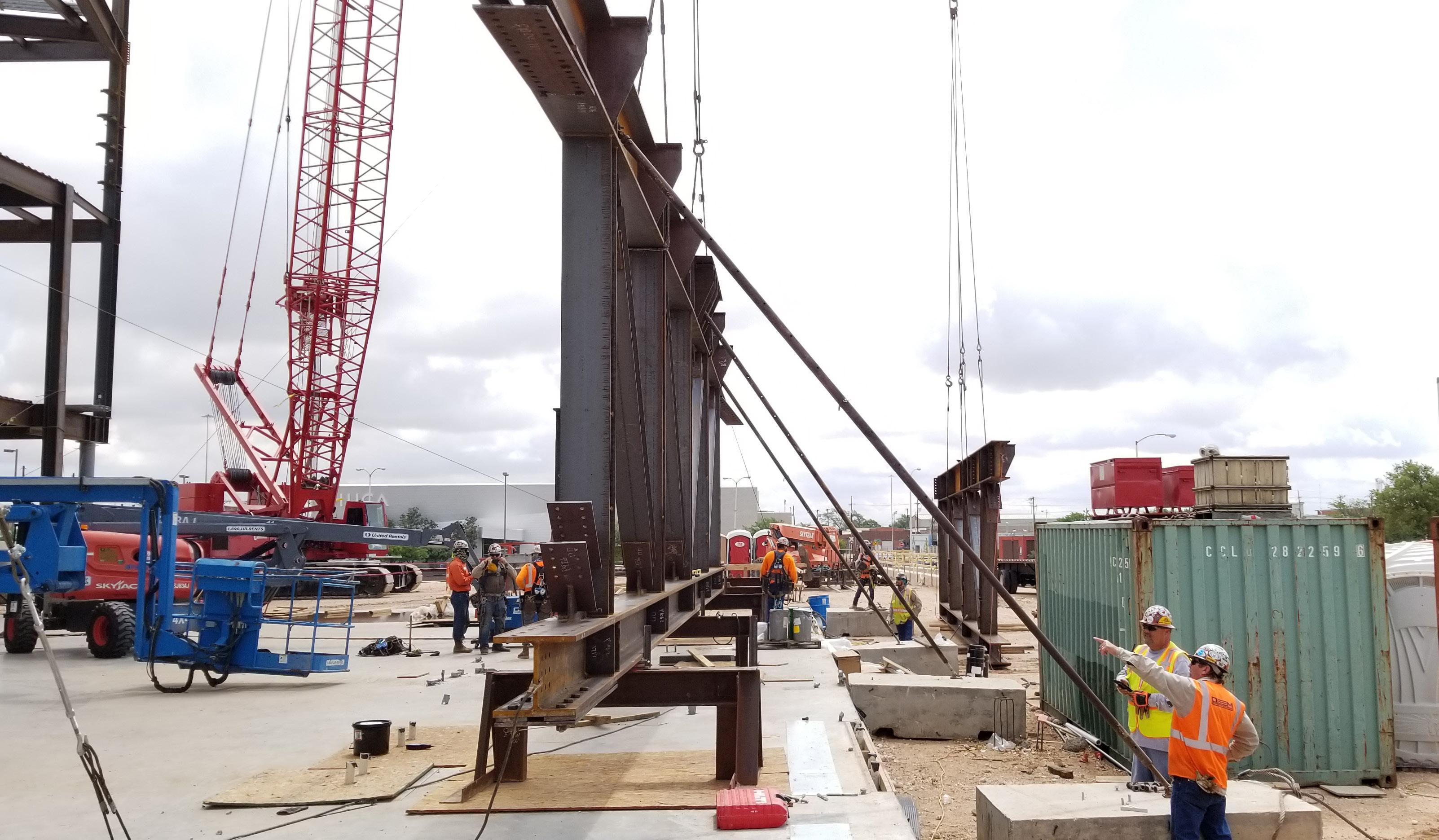
Like the leader of the A-Team, the lift director brings all the key players together, sets the plan and puts it into motion with full authority on the day of the lift.
“Lift directors must know a little about every aspect of the crane operation, but more importantly, they know how to listen. While lift directors do not have to be a master rigger or certified crane operator, they need to be able ask the right questions and work in concert with a lot of different people on the job site,” said Mike Parnell, co-founder and senior consultant at Industrial Training International.
Who is the lift director?
ASME has established requirements for lift directors in all industries to be “qualified.” Despite the fact that these requirements were first published in 2007 (and updated in 2018) many organizations using cranes are unfamiliar with the responsibilities.
Tracy Bennett is Managing Editor of Connector and President of Mighty Mo Media Partners.
According to an article published by the National Commission for the Certification of Crane Operators, “OSHA has cited companies for failure to ‘designate a competent lift director.’ Enforcement actions often begin with asking the rigger and signal person to identify the Lift Director. If there is confusion related to who is performing the role of Lift Director, the Site Supervisor is usually cited.
Today, more organizations are identifying the Lift Director by means of a uniquely colored vest or hardhat as well as requiring pre-lift meeting logs that identify the person responsible.”
Lift directors report directly to the site supervisor, working as a team leader with crane operators, riggers, and the crane owner. There could be more than one lift director on a job site. And, according to CCO, the crane operator cannot also serve in the role of the lift director.
Lift Directors do not have to be experts on the crane at the site, however, they take all of the factors into account before letting the lift proceed.
Asking questions, listening to answers
“The best lift directors listen to the team, evaluating the information they have, often asking the questions that have not yet been asked. Or they may ask the same questions again, but in light of new or changing information, may make adjustments to the plan before an issue comes up in mid-lift or in mid-move,” said Parnell.
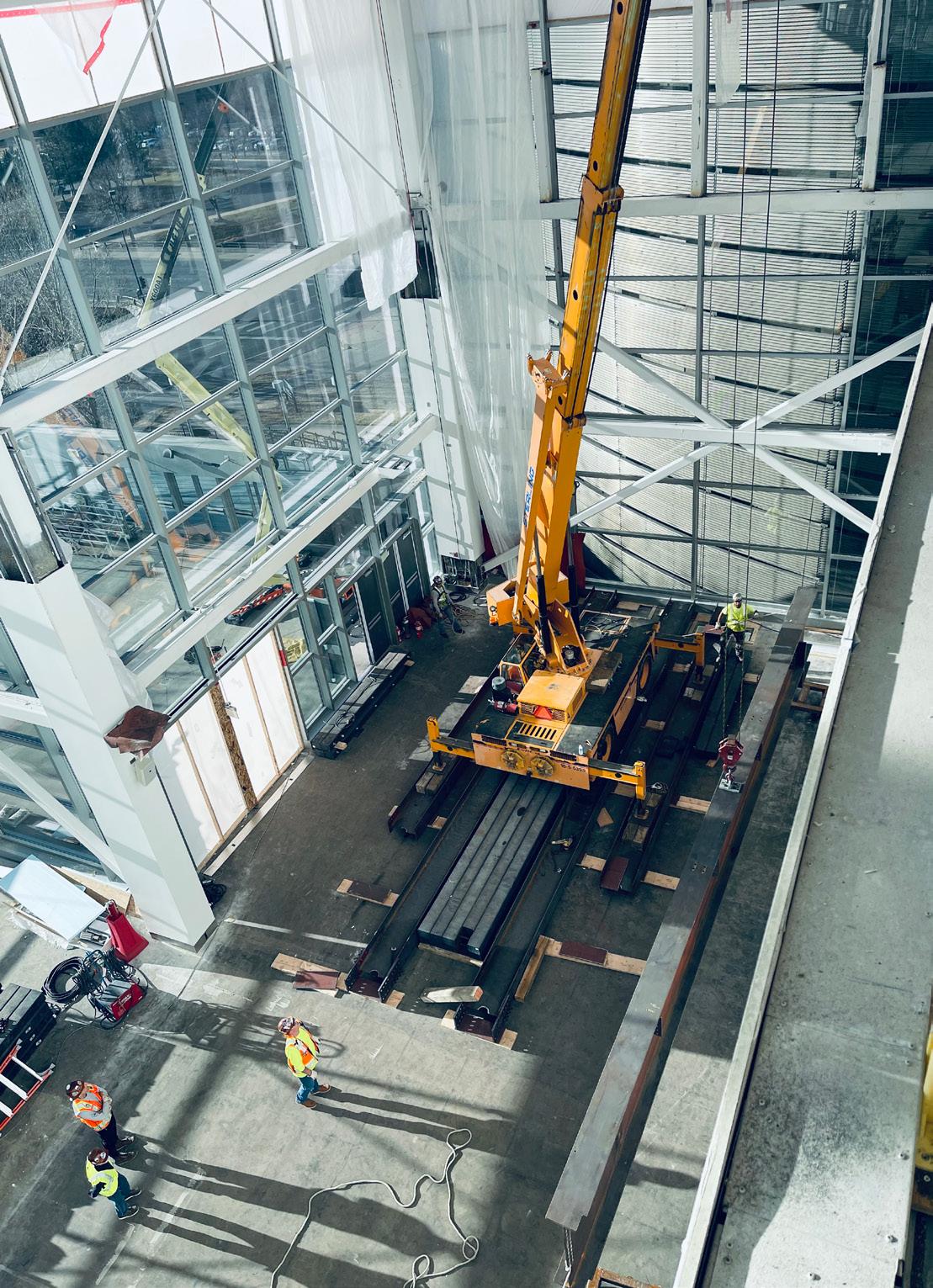
Armed with knowledge of crane load charts, crane capabilities, capacities, and limitations, the lift director makes sure the crane is setup in a stable condition. He or she will make sure the operator is using the correct load chart, and the crane is configured with the right counterweight, boom length, and correct blocking and reeving.
The lift direct or also oversees the riggers, looking at diagrams of the rigging method and the procedures for how the load is supposed to be moved. He or she will also review the signaling method, whether using radios or hand signals, and make sure the method has been verified between the operator and signal person.
20 | THE STEEL ERECTORS ASSOCIATION OF AMERICA
IN THE FIELD
By


Connector | SPRING EDITION March 2024 | 21
EMPLOYEE OWNED
The Lift Director will also ensure that safety personnel are on site the day of the lift, and that traffic controls are in place to barricade the lift area.
“Before any lift takes place, it is the duty of the lift director to conduct thorough pre-lift meetings with all involved parties. This includes crane operators, riggers, signal persons, spotters, and anyone else who will be working near or around the crane during the operation,” said Bryan McClure, founding partner of Trivent Safety Consulting. During these meetings, potential risks are identified, safety protocols are reviewed, communication procedures are established, and emergency plans are discussed. He explains additional responsibilities of a Lift Director.
• Reviewing and implementing the lift plan
• Ensuring compliance when working near power lines or lifting personnel
• Ensuring the load rigging is performed by a qualified rigger
• Confirming that the proper traffic controls are implemented
• Stopping crane operations if warned of unsafe conditions
• Confirming the loads weight prior to lifting
• Ensuring the load is balanced and rigged properly
• Holding pre-lift meetings
• Confirming all set-up preparations are according to the lift plans
• Conducting a post-lift review
“During the actual lift process itself, it is crucial for the lift director to maintain constant communication with all personnel involved. They must also monitor weather conditions closely as strong winds can significantly affect crane stability,” said McClure.
Making a lift plan
“While the Lift Director does not have to watch every single lift, this individual should play a more visible role on any critical lift,” reports CCO. Parnell adds that for critical lifts, the lift director, may also be involved in writing the lift plan. This includes identifying the weight and center of gravity of the load, establishing the rigging technique and selecting the rigging gear, identifying obstructions that may affect the crane’s ability to pick and place the load.
“The lift director will work with the site supervisor to identify safety issues that may affect the overall operation. The lift plan establishes protocols related to the job site environment, such as utility lines, gas lines, chlorine lines, underground voids, and sets traffic control of people or equipment,” said Parnell.
The lift director may request for a dry run to be performed so that the crane operator, rigging team, and signalers all have an understanding of the hoist, boom, swing, and set sequence. During a dry run they will be looking for obstructions or contact points between the load or the crane and boom and buildings.
“After each successful lift is completed, it is still important for the lift director to remain vigilant until everything has been safely secured back into place. Once everything has been properly stored and secured, the lift director may then review the operation to identify any areas for improvement in future lifts,” said McClure.
It takes a lot of training to be a lift director, and the very best ones listen—occasionally impose their authority to make sure all parties are working as a team—and then execute the plan. •
Read more about Lift Directors
Responsibilities of Lift Directors
From the CCO archives, this article is third in a series of related articles reviewing the roles for Lift Director, Crane Operator, Signal Person, and Assembly/Disassembly Director.
What is a Lift Director?

Mike Parnell is co-founder of Industrial Training International and currently serves in a senior consultant role. He has served numerous times on ASME standards committees, worked in volunteer positions with industry associations, including the Association of Crane & Rigging Professionals, and is a respected a respected crane and rigging trainer with nearly 40 years of experience.

Understanding the Crucial Role of Lift Directors for Crane Lifts on Construction Sites
Bryan McClure is a founding partner of Trivent Safety Consulting. He is a former ironworker, who has worn many hats during his construction career. As a credentialed safety instructor, he has won several craft training awards. He currently serves on the SEAA Board of Directors.

22 | THE STEEL ERECTORS ASSOCIATION OF AMERICA
300 Scarlet Blvd.
Oldsmar, FL 34677
Phone: 813.891.9849
Fax: 813.891.4105
Estimating:
Geoff Kress: 727.463.3074
SAFE. PRECISE. ON TIME .

Jason Kulvinskas: 727.463.3078
FL CGC1514810

FORMAL TRAINING NOT JUST FOR QUALIFYING WORKERS
SEAA’s NCCER Accredited Program walks members through the process
Of more than 200 erectors that are members of SEAA, half of them fall into the small erector ($0-3 million revenue) category. These are perhaps the companies that stand to benefit the most from utilizing the Ironworker Craft Training and Apprenticeship program that SEAA offers through NCCER. Yet, as demonstrated by the makeup of the SEAA/NCCER training units, the program brings value to all kinds of companies working in steel construction.
SEAA recently surveyed the 20 companies that are currently registered in the program to get a better understanding of why they implemented the program, what it took to get started, and to discover some of their best practices to share with others.
Participating companies include four that are $0-3 million Erectors, four that are $10+ million, a couple mid-size
erectors, a fabricator, training providers and educational institutes, and specialty service providers.
SEAA initially contributed more than $100,000 and subject matter experts to NCCER in the 2000s to create the original ironworker curriculum. It was updated and re-launched as a benefit program for SEAA members in 2012. Member companies are accredited as Training Units and Assessment sites under SEAA’s NCCER Accreditation. SEAA provides on-site training and personnel certifications, implementation support, and a dedicated liaison for companies as the program develops and grows. This service is an estimated savings of more than $12,000 for member companies.
“Besides being able to provide your employees with nationally-recognized ironworker credentials, SEAA also provides a framework for companies to register formal training programs that meet State and Federal government requirements for local apprenticeships,”
said Pete Gum, SEAA Executive Director.
“In addition, many members may not realize that participation in the SEAA/ NCCER training program includes access to more than Ironworker Level 1, 2, and 3 Curriculum. It also provides members with the ability to provide assessments and practical exams for Mobile Crane Operator, Rigger, and Signalperson Certifications,” he added.
Two other training programs SEAA offers are Reinforcement Ironworker Levels 1 and 2 with NCCER credentials, and a custom Fabricator curriculum that was developed with Cooper Steel.
Why do it
SEAA members primarily seek out the program for training existing employees and to increase retention, or for recruiting and hiring. A few use it to self-administer certification exams for crane operators, riggers, and signal persons, and offer this service to others outside their company as a revenue source.
Gen Z employees want their work to have meaning, they are looking for opportunities for career growth, and are willing to put in the work to improve themselves.
24 | THE STEEL ERECTORS ASSOCIATION OF AMERICA COVER STORY By Tracy Bennett
Photo credit: GMF Steel Group, Lakeland, Florida.
Tracy Bennett is Managing Editor of Connector and President of Mighty Mo Media Partners.

Setting up Formal Training:
• How do you plan to use the training?
• What goals does it help you accomplish?
• How many ironworkers do you plan to train per year?
• How many people and how much time can you dedicate per week to implementation?
• Who do you have who can serve in the role of administrator, proctor, and instructor?
• Who will oversee the program long-term? How many support people do you have in place?
Trivent Safety Consulting, Denver, Colorado, is a professional training company. As an authorized Training Unit and Assessment Site through SEAA’s sponsorship, the company makes use of the NCCER Crane Operator Certification program.
"Many members don't realize Crane Operator Certification is available through SEAA's NCCER accreditation," said Eldridge.
“We like the NCCER Crane Operator Certification program because it is a better user experience for crane operators than other certifications. After proctoring their written exams, we are able to give operators
their results immediately. In addition, the results come with training recommendations if there are areas that the operator needs to work on, which refers back to the appropriate sections of the NCCER curriculum,” said Bryan McClure, Trivent Safety Consulting Partner.
Practical exams are also a better experience for operators because they are allowed to take their practical exam in the crane they are used to operating as long as the setup area meets prescribed requirements.
Benefits of formal apprenticeship
Those that pursue registering their ironworker training program as a State or US-DOL approved apprenticeship, do so in order to qualify for specific types of

projects. “In some parts of the country, where Responsible Contractor Ordinances exist, you have to have a certified apprenticeship program in order to qualify to bid on publicly funded jobs,” said Gum.
“The companies that have implemented craft training have overcome their fear that money spent on training will walk out the door to their competition,” said Gum. Studies show that Gen Z employees want their work to have meaning, they are looking for opportunities for career growth, and are willing to put in the work to improve themselves. Many also say they are willing to stay at a company that offers these opportunities for 10 or more years.
"I've seen this to be true with other crafts when I worked with ABC of Western

Connector | SPRING EDITION March 2024 | 25
Recruiting was the primary reason L&L Construction in Quakertown, Pennsylvania wanted to implement an ironworker apprenticeship. 80+ Ironworker Training Videos Third Party Content on Rigging and Load Handling Paid On-Demand and Instructor-Led Content from ITO Set up your free account TODAY. Exclusively for SEAA Members Visit Member Tools at SEAA.net to learn more.
consider
What to
Pennsylvania. Hundreds of apprentices and pre-apprentices expressed pride in accomplishment and felt commitment to the employers who sponsored them," said Gum.
Becoming a recognized apprenticeship delivers the best long-term results, but also takes the longest to establish.
Recruiting was the primary reason L&L Construction in Quakertown, Pennsylvania wanted to implement an ironworker apprenticeship. “In our region, it is critical to have formal training and apprenticeship programs in order to compete for potential candidates,” said Kimberly Trusty, Project Manager. The process took more than a year to complete. Currently the company has two apprentices, but has the capacity to handle up to five.
“The pandemic and economic changes have posed a challenge to find employees that want to work. Yet, there is currently a strong need for ironworkers,” said Trusty. “It is our hope that the apprenticeship will generate interest locally in the industry.”
While their ironworker apprenticeship program helps less experienced workforce gain more knowledge, L&L Construction views it as a way to support and strengthen their workforce as a whole. “Ultimately, productivity will increase by providing better qualified apprentices to work with our
experienced crews,” she said.
“While SEAA offers a template that meets US-DOL standards, every state is different. I can make introductions, but the employer must take the lead on filing according to the requirements for that state,” said Tim Eldridge, President of Educational Services Unlimited and SEAA’s Craft Training and Assessment Director.
“Getting registered in the State of Pennsylvania was our biggest hurdle, but it was also the primary reason we pursued doing formal training,” said Shane Hess, Operations Manager for L&L Construction. “It was a business decision to enable us to bid on public works projects in surrounding states,” he said.
Support of company leaders
In nearly all cases, SEAA Craft Training Units have leadership buy-in, which is essential to success. But until ownership or executives truly make it a priority it is easy for the task to go to the bottom of the list.
Shelby Erectors, Reddick, Florida, is a good example. The company was not actively utilizing the curriculum for the first couple of years after it became an accredited training unit. “Once ownership decided that all new hires had to be assessed and had to demonstrate their knowledge through

performance evaluation, it really became integral to their culture,” said Eldridge. Now if a new hire doesn’t meet minimum knowledge requirements, they go through the training to become certified.
Today they have implemented a Personal-Professional Improvement program that has a direct effect on profit sharing in Shelby Erectors. “It carries a 30% weight against your total score of 100%. We want everyone in Shelby to not only grow professionally but also personally,” said Jason Zyla, Safety Manager. “New and existing employees are required to complete the SEAA/NCCER apprenticeship program. On a personal level we leave it up to the individual to make the choice of bettering themselves, such as learning a different language, computer skills, or how to manage your finances,” he said.
The company also believes that providing formal training contributes to the bottom line. “Our training program contributes to maintaining quality control, promotes efficient processes, prevents errors, and fosters a culture of continuous improvement,” said Zyla.
Timeline to launch
“Contractors have good intentions, but the key problem they face is almost always that the task of implementation is assigned to someone who already has other job duties,” said Eldridge. In larger companies, that may be Training Managers, Safety Officers or dedicated Administrators. In smaller companies, it is often Project Managers, Operations Managers, or even the President of the company.
“Larger companies may be better positioned to provide a dedicated administrator, but even then, a safety manager for example, now has training added to ensuring compliance, conducting risk assessments, and enforcing accident prevention plans,” he said.
Most of those responding to our survey said that their primary pain points in getting their program up and running included the time commitment and the availability of appropriate staff or subject matter experts. Perhaps related to this was not being fully aware of what was required of them. And one said that the financial commitment was a barrier.
“Identifying individuals to be instructors is perhaps the most challenging part,” said
26 | THE STEEL ERECTORS ASSOCIATION OF AMERICA
Shelby Erectors has a Personal-Professional Improvement program that directly impacts profit sharing in the company. Its requirement for new and existing employees to complete the SEAA/NCCER apprenticeship is part of that.


300 Scarlet Blvd. Oldsmar, FL 34677 Phone: 813.891.9849 Fax: www.gwstuds.com 813.891.4105 Duke Perry, VP of Sales/Operations 404-808-0504 Duke.p@gwstuds.com SAFE. PRECISE. ON TIME.
Interlocken Golf Club
Broomfield, CO
Friday, September 13, 2024
Omni Hotels & Resorts
Thursday, September 12, 2024
Board Meeting, Peer Group and Meet & Greet

Gum. In the same way that the industry faces craft labor shortages, we also need more people with the right background who are willing to teach the craft. “Retirees or ironworkers who are no long physically able to work in the field can be good options for filling this role,” said Gum. SEAA provides everything needed for teaching but the instructors must be willing to put in the time to learn NCCER’s system and to prepare the training plan.
For most companies, nine to 12 months is a realistic timetable. SEAA has members that were up and running in six months or less, but to do so requires more people and more dedicated time.
With 1-3 people working on the project and giving 10% or less time per week to it, regardless of company size, expect it to take a year to fully implement. “We have had some members fully implement the training program in as little as three months, but they had 4 to 10 people working on the project and dedicated 30% of their time per week,” said Eldridge.
Once the program is in place, expect to need two to four staff people with responsibility for maintaining the program.
Many erectors and fabricators have relied on informal, on-thejob training for so long that embracing a formal process is difficult, which comes with learning the software, navigating the system, and filing paperwork. “This isn’t something that comes naturally to ironworkers who have moved into management, but it is necessary to compete into today’s construction industry,” said Hess of L&L Construction.
“SEAA’s purpose is to invest in the education of steel workers and one way we can do that is by providing member companies a way to deliver consistent training and assessments of worker qualifications,” said Gum. •

28 | THE STEEL ERECTORS ASSOCIATION OF AMERICA
While their ironworker apprenticeship program helps less experienced workforce gain more knowledge, L&L Construction views it as a way to support and strengthen their workforce as a whole.
RECRUIT THE BEST
SEAA + CareerPlug Helps Members with Hiring +

Program benefits for SEAA members only.
Experienced program managers can help you get started.
CareerPlug is an applicant tracking system that makes hiring easy, cost effective, and efficient for companies of all sizes.
If you have not set up your SEAA-exclusive account yet, you are missing out!
Q Every SEAA member receives a FREE CareerPlug account
Q Create a job post in minutes with pre-built templates
Q Automatically promote job openings across multiple platforms – LinkedIn, Indeed, ZipRecruiter & More!
Q CareerPlug files applications for you and keeps them in one place
Q Schedule interviews using text messages
Q Hire the right candidate for the job
Q Upgrade to a PRO account for only $595/year

“As a business owner, the hiring process can be dreadful, but CareerPlug does the legwork for me. I only have to create one job post, and the platform pushes it out to all of the job boards.
It filters through the best applicants for the job, making it easy and efficient. When I did the hiring myself, I would get 2-4 applications. With CareerPlug, I have 402 applications.”
– Victor Garcia, President, Flawless Steel Welding

info@seaa.net Q 336-294-8880

ABBREVIATION & ICON KEY
AISC CERTIFICATION PROGRAMS FOR FABRICATORS & ERECTORS:
BU: Certified Building Fabricator (previously noted as acronym "STD")
SBR: Certified Bridge Fabricator - Simple
IBR: Certified Bridge Fabricator - Intermediate (Major)
ABR: Certified Bridge Fabricator - Advanced (Major)
CBR: Major Steel Bridges
CPT: Certified Metal Component Manufacturer
HYD: Certified Metal Hydraulic Fabricator
CSEA: Certified Erector (Advanced)
AISC CERTIFICATION ENDORSEMENTS:
SPE-P1: Sophisticated Paint Endorsement - Enclosed
SPE-P2: Sophisticated Paint Endorsement - Covered
SPE-P3: Sophisticated Paint Endorsement - Exposed
FCE: Fracture Critical Endorsement
BEE: Bridge Erection Endorsement
SEE: Seismic Erection Endorsement
MEE: Metal Deck Erection Endorsement
SEAA/NCCER
30 | THE STEEL ERECTORS ASSOCIATION OF AMERICA SEAA MEMBERSHIP DIRECTORY SEAA MEMBERSHIP DIRECTORY TABLE OF CONTENTS Board of Directors 32 Erectors $10-up Million 34 Erectors $5-10 Million 35 Erectors $3-5 Million 36 Erectors $0-3 Million 36 Fabricators 39 General Contractors 40 Services 40 Specialty Services 41 Suppliers & Manufacturers 41 Continuing Education 43 Associations 43 Erectors who provide Fabrication 43 Fabricators who provide Erection 43 Committees 43 SEAA STATS Membership by the Numbers Founded 1972 Union+Merit Shop Contractors 5,000 Readers 10 Countries 93% Member Retention Rate 85 Ironworker Training Videos 40% Member Growth since July 2021 6 Events Per Year More Than 300 Members in 43 States & 2 Provinces 2 Accredited Training Units Coast to Coast $30,000 Member Benefits and Discounts 2⁄3 of members ERECTORS
Accredited Training Unit and/or Authorized Assessment Site UPDATE YOUR LISTING ONLINE: SEAA Members can update directory listings online at any time during the year. Visit the Member Portal at SEAA.net and sign in with your login credentials.


TRAIN & RETAIN THE BEST CraftTraining@seaa.net 980-722-9373 Provide NCCER Credentials to Ironworkers Use DOL-approved Standards to Register for Apprenticeship Program Benefits for SEAA Members Only SEAA provides on-site training and personnel certifications, implementation support, and a dedicated liaison. This service is an estimated savings of more than $12,000 per company. NCCER Accredited Nationally Recognized Credentials Become accredited as Training Unit and Assessment Sites using SEAA’s Sponsorship Get Admin and Implementation Support Training Curriculum Options NCCER Ironworker Levels 1-2-3 NCCER Reinforcement Ironworker Levels 1-2 Rigger, Signalperson Craft Assessment Certification Written & Performance Assessments NCCER Certifications Help You Meet OSHA Requirements Mobile Crane Operator Rigger Signal Person
SEAA BOARD OF DIRECTORS EXECUTIVE COMMITTEE
David Deem, President
Deem Structural Services Longview, Texas ddeem@deemstructural.com
Nominating, Strategic Planning

David Deem served on the Board of Directors from 1998 to 2004, and again since 2016. He has been active in SEAA since 1995. He is president of Deem Structural Services LLC, an AISC Advanced Certified Steel Erector, founded in 2013. He has more than 30 years of experience, and advocates for the advancement of industry quality and safety standards via education of personnel, and the promotion of organizations such as SEAA, AISC, and NISD. Among the technical publications he has assisted in writing are Detailing Steel for Value and Safety and Detailing Guide for the Enhancement of Erection Safety
Jack Nix, President-Elect
Shelby Erectors, Inc. Reddick, Florida jacknix@shelbyerectors.com
Finance, Membership (Chair)

Jack Nix has been a member of SEAA since 2008 and has served on the Board since 2011. He is currently Chairman of the Membership Committee and President Elect for the term that begins in 2024. In 2018, Jack was the recipient of the SEAA Person of the Year award. He is the COO for Shelby Erectors, Inc., a highway and transportation focused subcontractor performing bridge rebar and SIP metal deck installation throughout Florida and the southeast. He started his career in 1985 as an ironworker. In 2022, Jack Nix and Shelby Erectors were featured on an episode of Dirty Jobs with Mike Rowe highlighting rodbusters, one of many highlights of his career.
Chris Legnon, Vice President, Industry Cooper Steel Fabricators, Inc. Shelbyville, Tennessee clegnon@coopersteel.com
Marketing (Chair)
Chris Legnon joined the Board in 2015. Since then, he has served as Marketing Committee Chair and as a member of the Executive Committee. He recently celebrated his 20th year of employment with Cooper Steel where he is Vice President of Technology. Cooper Steel is an AISC Certified Fabricator and Erector providing nationwide services from its locations in Tennessee, Kentucky, Virginia and Alabama.
Carrie Gulajan, Vice President, Associate Member Construction Insurance Agency, Inc. Manassas, Virginia carrieg@const-ins.com
Events (Chair), Finance, Strategic Planning
Greg Phillips, Treasurer
Titan Steel Erectors, LLC
Memphis, Tennessee gphillips@titansteelerectors.com
Finance (Chair)

Greg Phillips has served as Treasurer of SEAA’s Board since 2018, and he also serves on the Membership Committee. He is a third-generation steel erector who started his career working in the field at his father’s company. He started Titan Steel Erectors in 2013, a steel and pre-cast erector serving the Mid-South.

Bryan McClure, Secretary
Trivent Safety Consulting Westminster, Colorado bryanm@triventsc.com
Safety & Education (Vice Chair)


Bryan McClure is a second-generation Ironworker who was introduced to a strong work ethic and the trades by his father. During a 30+ year career, he has worn many hats: Foreman, Crane Operator, Superintendent, Craft Instructor and Training Manager. In 2018, he started Trivent Safety Consulting with two partners. Trivent has offices in Florida, Texas, Wyoming, and Colorado. In 2022, Trivent opened its first training center with an indoor structural steel training tower.
Geoffrey Kress, Past President Gardner-Watson Decking, Inc., Oldsmar, Florida geoff.k@gwdeck.com
Finance, Nominating, Strategic Planning

Carrie Gulajan joined the Board in 2011 and has served as Events Committee Chair, overseeing and volunteering at Convention and Golf Tournaments for many years. She is also on the Finance Committee. In 2015, she became the first woman to receive SEAA’s Person of the Year award. Construction Insurance Agency provides property and casualty insurance for specialty and artisan contractors, builders risk, bonds, and risk management consulting.

Geoff Kress has served on the Board since 2007, and was treasurer for many of those years. In 2011, he was named Person of the Year, and in 2023 joined the prestigious list of William Davis Service Award honorees. Other service includes work on the SDI-QA/QC standard for installation of steel deck. He is President of Gardner-Watson Decking, Inc. and Gardner-Watson Studs. The companies provide turnkey service for decking and studs throughout the United States. He enjoys snow skiing, playing hockey, and boating in his free time.
32 | THE STEEL ERECTORS ASSOCIATION OF AMERICA

Drew Heron, Director
Deem Structural Services Houston, Texas
dheron@deemstructural.com
Awards (Chair), Events

Drew Heron joined the Board in 2020. He serves on Executive and Events Committees, and is Chairman of the Awards Committee. His career spans 19 years, beginning as an ironworker and welder. He has worked as Field Superintendent, QC Manager, and Project Manager, and is currently VP Field Operations for Deem Structural Services. His hobbies include fishing, competitive softball, and rodeo.
DIRECTORS


Richard Bostick 2021-2024
Piedmont Structural Company Salisbury, North Carolina rbostick@piedmontstructural. com
Events
Dave Brown
2023-2026
United Rentals Charlotte, North Carolina Dbrown2@ur.com
Events, Strategic Planning, Nominating
Stephen Burkholder
Stephen Burkholder 2023-2024
S&R Enterprises, LLC Harrisburg, Pennsylvania sburkholder@srenterprises.com
Strategic Planning


Glen Pisani, Director MAS Building & Bridge, Inc. Norfolk, Massachusetts gpisani@masbuildingandbridge.com
Strategic Planning (Chair)
Glen has been an active in SEAA for more than 20 years, serving on the Board since 2017. He is currently Chairman of the Strategic Planning Committee and previously served as Vice Chair of the Marketing Committee. Glen has more than 30 years of experience in the industry—20 as an owner and the past 12 years as the steel division manager at MAS Building and Bridge. Glen advocates for the steel erection business in New England.
Jason McElrath 2022-2025
M & P Specialty Insurance West Columbia, South Carolina jason@mpspecialty.com
Membership (Vice Chair)

Marc Cox 2021-2024
Gardner-Watson Decking Inc. Oldsmar, Florida marc.c@gwdeck.com

Victor Garcia 2023-2026
Flawless Steel Welding Denver, Colorado victor@fsw-denver.com
Membership


John (Jack) Metcalfe
2023-2026
National Institute of Steel Detailing Livermore, California Metcalfe51@aol.com
Safety & Education, Strategic Planning
Duke Perry 2021-2024
Gardner-Watson Studs, LLC Oldsmar, Florida Duke.p@gwdeck.com
Events, Finance, Nominating
Lee Shaw
2023-2026
Building Zone Industries Kanarraville, Utah leeshaw@bzisteel.com
Strategic Planning
Committees are open to any employee of member companies. Meetings take place via video conferencing once per month or less often, depending on the committee. For more info, email keri@seaa.net.
Connector | SPRING EDITION March 2024 | 33
WANT TO GET INVOLVED?
ERECTORS $10-UP MILLION
AF Steel Fab
Chris Payne 6549 W Rock Solid Way Chandler, AZ 85226
P: 602-290-5336
cpayne@afsteelfab.com afsteelfab.com
Alliance Riggers & Constructors, Ltd.
Phillip Cordova
1200 Kastrin Street El Paso, TX 79907
P: 915-591-4513
phil@allianceriggers.com
allianceriggers.com
AISC Certifications: CSE
American Ironworks & Erectors Inc.
Jim Andrews
7620 E Spear Ave
Spokane Valley, WA 99212
P: 509-467-7733
jandrews@americaniw.com
Americaniw.com
AISC Certifications: CSE, MEE
ASPE / ASPE South
Dennis Barker
590 Hancock Rd
Peterborough, NH 03458
P: 603-547-6311
dennisb@aspesouth.com
aspe-nh.com
AISC Certifications: CSE, BEE, MEE, SEE
Bowman Steel LLC
John Bowman 6900 US 27 S Sebring, FL 33876
P: 239-303-9739
jbowman@bowmansteel.com
Bowmansteel.com
AISC Certifications: CSE
Bracken Construction Company, Inc.
John Ross McCartney PO Box 9460 Columbus, MS 39705
P: 662-498-1160
john.mccartney@brackenconstruction.com
brackenconstruction.com
AISC Certifications: CSE, MEE, SEE
Bret Steel Corp
Mike Rouleau
P.O. Box 1457
Dover, NH 03821
P: 603-743-4386
mrouleau@bretsteel.com
bretsteel.com
AISC Certifications: CSE
Clausen Structures
Christina Clausen 1515 Canal St
Lockport, Illinois 60441
P: 708-228-9757
Christina@clausenstructures.com
Clausenstructures.com
AISC Certifications: BEE
Coastal Steel Group Inc
Dylan Holmes P.O. Box 691627
Orlando, FL 32869
P: 407-827-4309
dylanholmes@coastalsteel.com
coastalsteel.com
AISC Certifications: CSE, MEE

Cooper Steel
Chris Legnon
P.O. Box 149
Shelbyville, TN 37162
P: 931-684-7962
clegnon@coopersteel.com
coopersteel.com
Also provides Fabrication
AISC Certifications: CSE, BU
CSE, Inc
Tim Austin PO Box 1030
Madison Heights, VA 24572
P: 434-845-7536
tim.austin@cseonline.net
cseonline.net
AISC Certifications: CSE, MEE
Danny's Construction Company, LLC
Mark Lannon
P.O. Box 11
Shakopee, MN 55379
P: 952-445-4143
mlannon@dannysconstruction.com
dannysconstruction.com
AISC Certifications: BEE
Deem Structural Services, LLC
David Deem
109 Benny Street Longview, TX 75604
P: 903-236-7800
ddeem@deemstructural.com
deemstructural.com
AISC Certifications: CSE, MEE
Derr & Gruenewald Construction LLC
Austin Reiner
11100 E 108th Ave
Brighton, CO 80601
P: 406-314-5761
areiner@dgcsteel.com
dgccsteel.com
AISC Certifications: CSE
Empire Steel Erectors, L.P.
Tony Rosales P.O. Box 3653
Humble, TX 77347
P: 281-548-7377
tony.rosales@empiresteeltx.com
empiresteeltx.com
AISC Certifications: CSE, MEE
Eugenio Company
Michael Eugenio
19807 Mack GPW, MI. 48236
P: 313-886-7650 mike@eugeniopainting.com
Eugeniopainting.com
AISC Certifications: MEE
Ezarc Building Solutions
Amy Holmen
4980 South Alma School Road Chandler, AZ 85248
P: 970-231-4314 aholmen@ezarcsolutions.com ezarcsolutions.com
AISC Certifications: BU
Gardner-Watson Decking, Inc.
Geoff Kress
300 Scarlet Boulevard Oldsmar, FL 34677
P: 813-891-9849 geoff.k@gwdeck.com gwdeck.com
A GMF Steel Group
Sarah Vespa
4600 Drane Field Road Lakeland, FL 33811
P: 863-577-0210
sarah.vespa@gmfsteel.com gmfsteel.com
AISC Certifications: CSE, MEE
SEAA Training and/or Assessment Site
GS Steel
Austin Smith
P.O Box 596 Goodlettsville, Tn. 37070
P: 615-487-1410
Austin@gs-steel.com gs-steel.com
JPW Erectors, Inc.
Jody Wozniczka 6376 Thompson Road Syracuse, NY 13206
P: 315-432-1111
jodywoz@jpwcompanies.com jpwcompanies.com
AISC Certifications: CSE, MEE
Kinsley Steel, Inc.
Bobby Chenault 3900 East Market Street York, PA 17402
P: (717-757-8761
bchenault@kinsleyconstruction.com kinsleyconstruction.com
AISC Certifications: CSE, MEE, SEE
L.R. Willson & Sons, Inc.
Sherrie Wilkinson
P.O. Box 227
Gambrills, MD 21054
P: 410-987-5414
swilkinson@lrwillsonandsons.com lrwillsonandsons.com
AISC Certifications: CSE, MEE, SEE
Legacy Steel
Wade Walcott
1535 Steele Ave, Ste C NW Grand Rapids, MI 49507
P: 616-649-3233
w.walcott@legacysteelmi.com
Legacysteelmi.com
Lexicon, Inc.
Viji Kuruvilla
8900 Fourche Dam Pike Little Rock, AR 72206
P: 501-490-2300
vijik@lexicon-inc.com
lexicon-inc.com
Also provides Fabrication
AISC Certifications: ABR, BU, CCE-1, CSE, FCE, IBR, MEE, SBR, SEE
MAS Building & Bridge, Inc.
Glen Pisani 18 Sharon Avenue
Norfolk, MA 02056
P: 508-520-2277
gpisani@masbuildingandbridge.com
masbuildingandbridge.com
AISC Certifications: CSE, BEE, MEE, SEE
Mid Cities Erectors, LLC
Scott Brooks P.O. Box 162984
Fort Worth, TX 76161
P: 817-306-0962
scott@midcitieserectors.com
midcitieserectors.com
Peterson Beckner Industries, Inc.
James Byrum
10700 North Freeway, Suite 950 Houston, TX 77037
P: 281-872-7722
jbyrum@pbisteel.com
petersonbeckner.com
AISC Certifications: CSE, MEE
Phoenix Steel Erectors, Inc.
Paul Kollman
13280 University Blvd Gainesville, VA 20155
P: 571-248-6890
pkollman@phoenixsteel.com
phoenixsteel.com
AISC Certifications: CSE
Piedmont Steel Company LLC
Nicki Cole 3480 Friendship Ledford Rd Winston Salem, NC 27107
P: 336-926-5299
nicki.c@piedmontsteelco.com
piedmontsteelco.com
AISC Certifications: CSE, SEE
Premier Steel, Inc.
Kelly Ketring
117 N Pendleton Avenue Pendleton, IN 46064
P: 317-545-0100
kellyk@premiersteelinc.com
premiersteelinc.com
34 | THE STEEL ERECTORS ASSOCIATION OF AMERICA
SEAA MEMBERSHIP DIRECTORY
A Rackley Company, Inc.
Scott Rackley
3772 County Road 99W Orland, CA 95963
P: 530-865-9619
scott@rackleyco.com
rackleyco.com
AISC Certifications: CSE
SEAA Training and/or Assessment Site
RMG Erectors & Constructors, LLC
Robert Mesmer
725 SW Higgins Ave St C Missoula, MT 59803
P: 856-777-7641
katie@rmgerectors.com

S & R Enterprises, LLC
Dominic Bonura
4785 Linglestown Rd, Ste 200 Harrisburg, PA 17112
P: 717-652-3080
dbonura@srenterprises.com srenterprises.com
Also provides Fabrication
AISC Certifications: CSE, BEE, SEE, MEE
A SCW Contracting
Kirt Bjoin
2525 N. Old Highway # 395 Fallbrook, CA 92028
P: 760-728-1308
kbjoin@scwcompanies.com
scwcompanies.com
SEAA Training and/or Assessment Site

A Shelby Erectors, Inc.
Jennifer Nix
3975 W Highway 316 Reddick, FL 32686
P: 954-275-3123
jennifernix@shelbyerectors.com shelbyerectors.com
SEAA Training and/or Assessment Site
TGR Erectors, LLC
Desarae Bush 250 County Road 4925 Leonard, TX 75452
P: 903-449-2496
info@tgrerectors.com tgrerectors.com
Titan Steel Erectors, LLC
Greg Phillips
P.O. Box 999 Munford, TN 38058
P: 901-274-4992
gphillips@titansteelerectors.com
titansteelerectors.com
AISC Certifications: CSE
Top Flight Steel, Inc.
Jonathan Watson
101 County Road 4717 Rhome, TX 76078
P: 817-475-5269
jwatson@topflightsteelinc.com
topflightsteelinc.com
AISC Certifications: MEE
United Steel Inc.
Glen Corneau
164 School Street East Hartford, CT 06108
P: 860-289-2323
gcorneau@unitedsteel.com
unitedsteel.com
Also Provides Fabrication
AISC Certifications: BU, CSE, MEE, SEE, SBR
Williams Erection Company
Frank Williams III
P.O. Box 756
Smyrna, GA 30081
P: 770-436-1596
FWilliams3@wmsi.com
williamserection.com
AISC Certifications: CSE, BEE, MEE, SEE
Williams Steel Erection Co., Inc.
Art Williams
P.O. Box 1770 Manassas, VA 20108
P: 703-335-7800
awilliams@wmsi.com wmsi.com
AISC Certifications: CSE, BEE, MEE, SEE
ERECTORS $5-10 MILLION
Apex Steel Corp.
Dustin Holder
301 Petfinder Lane Raleigh, NC 27603
P: 919-362-6611
dholder@apexsteelcorp.com
apexsteelcorp.com
Also provides Fabrication
AISC Certifications: CSE, BU
Ben Gravett Enterprises/ BG Crane Services
Matt Gravett 11921 Elk Run Road Catlett, VA 20119
P: 540-788-4894
bgent2@netscape.net
gravett.wix.com/bgcrane
AISC Certifications: CSE
Building Zone Industries
Jesus Cadena
HC 65 Box 340
Kanarraville, UT 84742
P: 888-509-2280
jesuscadena@bzisteel.com buildingzone.com
C.S.E., Inc.
Matthew Labounty 199 Omega Drive Williston, VT 05495
P: 802-864-1812
cseinvt@gmail.com
csevt.com
AISC Certifications: CSE, MEE
D & E Steel Services, Inc.
Travis Miller
11084 Leroy Drive Northglenn, CO 80233
P: 303-427-4804
tmiller@desteel.com
desteel.com
AISC Certifications: CSE
D & T Steel Fabricators, Inc.
Donna Crumpton
225 Northcutt Road Pelion, SC 29123
P: 803-894-6005
donna@dtsteelinc.com dtsteelinc.com
D.S. Duggins Welding, Inc.
Zach Burick
195 Altay Drive Winston-Salem, NC 27106
P: 336-924-5484 zach@dugginswelding.com dugginswelding.com
AISC Certifications: CSE, MEE
Daniel Iron
Ryan Benson
6045 Southern Industrial Drive Birmingham, AL 35235
P: 205-868-3070
rbenson@danieliron.com danieliron.com
DSE Erectors, Inc.
Cody Ellis
315 Lake Street Jackson, TN 38301
P: 731-423-4900
cellis@dsesteel.com
AISC Certifications: CSE, MEE, SEE
Gardner-Watson Studs, LLC
Duke Perry
300 Scarlet Blvd Oldsmar, FL 34677
P: 813-891-9849 duke.p@gwstuds.com gwstuds.com
Garrison Steel Erectors, Inc.
Jason Garrison
P.O. Box 626 Pell City, AL 35125
P: 205-884-4766 jasongarrison@garrisonsteel.com garrisonsteel.com
AISC Certifications: CSE, MEE, SEE
Group Steel Erectors, Inc.
Angie Dobbins
P.O. Box 61
Dickson, TN 37056
P: 615-441-4934
angie@groupsteel.net groupsteel.net
AISC Certifications: CSE, MEE, SEE
Harris Steel Erectors, Inc.
David Harris
615 Old Smithfield Road Goldsboro, NC 27530
P: 919-734-3620
dharris@harrissteelerectors.com harrissteelerectors.com
AISC Certifications: CSE, MEE, SEE
Meco Kentucky, LLC
Jonathan Montgomery
P.O. Box 43665
Louisville, KY 40223
P: 502-290-9906
jonathan@meco-ky.com
meco-ky.com
AISC Certifications: MEE
Piedmont Structural Company
Charity Green
1432 North Lee Street Salisbury, NC 28144
P: 704-738-0060
cgreen@piedmontstructural.com
piedmontstructural.com
AISC Certifications: CSE, MEE, SEE
A Pro Steel Erectors II Inc.
Scott Sappington
6714 W. Frier Dr. Ste. 104 Glendale, AZ 85303
P: 623-825-3078
ssappington@prosteelerectors.net prosteelerectors.net
SEAA Training and/or Assessment Site
R&J Steel Erectors, LLC
James (Rusty) Rader 155 Prospect Drive, Suite 101 Huntingtown, MD 20639 P: 410-257-2174
rusty@radersteel.com
radersteel.com
AISC Certifications: CSE, MEE
River City Erectors, LLC
Victor Gomez P.O. Box 13141 Memphis, TN 38113 P: 901-861-6174
victorgomez@rivercityerectors.com rivercityerectors.com
AISC Certifications: CSE, SEE, MEE
Rochester Rigging, Inc. Robert Kurek
7819 State Route 5 and 20 Bloomfield, NY 14469 P: 585-657-7665
rkurek@rochesterrigging.com
rochesterrigging.com
AISC Certifications: BU
A S.L. Chasse Steel
Stephen L. Chasse 8 Christine Drive Hudson, NH 03051 P: 603-886-3436
s.chasse@slchassesteelfab.com slchassesteelfab.com
AISC Certifications: BU
SEAA Training and/or Assessment Site
Saugus Construction Corp.
Kerry Fears 1 Farm Lane Georgetown, MA 01833 P: 508-962-6002
kerryf@saugusconstruction.com
AISC Certifications: CSE, BEE
Connector | SPRING EDITION March 2024 | 35
SEAA MEMBERSHIP DIRECTORY
Steel Masters, L.P.
Rudy Limon
2214 Blalock Road
Houston, TX 77080
P: 713-464-8652
RLimon@steelmastersinc.com
steelmasterslp.com
AISC Certifications: CSE, MEE
V & M Erectors, Inc.
Vern Nix
135 Weston Road, Suite 273 Weston, FL 33326
P: 954-437-9998
vern.nix@vmerectors.com
vmerectors.com
ERECTORS $3-5 MILLION
Allen Steel Erection, Inc.
James Alllen
660 Kings Way Merritt land, FL 32953
P: 321-377-4264
mike@allensteelerection.com allensteelerection.com
American Erection, LLC
Celeste Wilhelm
230 Kittanning Pike Pittsburgh, PA 15215
P: 412-965-4689
cwilhelm@a-ellc.com
americanerectionllc.com
AISC Certifications: MEE
Blakeman Steel, Inc.
Billy Blakeman
4200 Broadway Avenue
Fort Worth, TX 76117
P: 817-831-2601
bblakeman@blakemansteel.com blakemansteel.com
Canal City Industrial, LLC
Nathanael Gurnish
4032 Tallmadge Rd Rootstown, OH 44272
P: 330-958-1863
office@canalcityindustrial.com
canalcityindustrial.com
AISC Certifications: CSE
Conewago MFG, LLC
John Hagarman
P.O. Box 461 Hanover, PA 17331
P: 717-632-7722
jhagarman@conewagomfg.com
conewagomfg.com
AISC Certifications: CSE
Cubas Welding Construction, Inc.
Wilson Cubas
5312 Elcar Drive Charlotte, NC 28214
P: 704-668-4987
wilson.cwcinc@gmail.com
Dean Steel Erectors
Tom Morris
P.O. Box 1164
Harrisonburg, VA 22803
P: 540-434-7465
tom@deansteel-dse.com
deansteel-dse.com
AISC Certifications: CSE, MEE, SEE
Flex-Erect
Steve Thomas 6417 Toledo St Houston, TX 77008
P: 713-999-8040
sthomas@flex-erect.com flex-erect.com
Gridiron Steel, Inc.
Angela Clemens 135 Stoney Run Rd Dillsburg, PA 17019
P: 717-668-7038
aclemens@gridironsteelinc.com
gridironsteelinc.com
AISC Certifications: CSE
Harris County Ironworks, LLC
Derrick Jones
5625 GA Highway 85 Ellerslie, GA 31807
P: 762-240-9032
derrickjones@harriscountyironworks.com harriscountyironworks.com

Hodges Erectors Inc
Jorge Amador 11403 NW 122nd Street, Unit 21 Medley, FL 33178
P: 305-234-3467
jorge.amador@hodgeserectors.com
hodgeserectors.com
AISC Certifications: CSE, BEE, MEE
Jonquil Steel & Construction
PJ Aikens
140 Veterans Memorial Highway SE Mableton, GA 30126
P: 770-948-9876
pjaikens@jonquilsteel.com jonquilsteel.com
AISC Certifications: CSE, SEE, MEE
A L & L Construction, Inc.
Brian Schreier
1040 California Road Quakertown, PA 18951
P: 215-536-9361
bschreier1@comcast.net landlconstructioninc.net
AISC Certifications: CSE, MEE
SEAA Training and/or Assessment Site
Leiser Construction, LLC
Lloyd Leiser
927 365th Street Madison, KS 66860
P: 620-437-2747
lloyd@leiserconstruction.com
Also provides Fabrication
AISC Certifications: CSE
LLS Steel Erectors
Luis Sanchez
25 N Market Sreet Jacksonville, FL 32202
P: 336-554-5516
luissanchez@llssteelerectors.com llssteel.com
March-Westin Company, Inc.
Cody Rodeheaver
360 Frontier Street Morgantown, WV 26505
P: 304-599-4880
crodeheaver@marchwestin.com marchwestin.com
AISC Certifications: CSE, MEE
MKE Iron Erectors, Inc.
Barbara Sheedy
1725 Dolphin Drive, Suite E Waukesha, WI 53186
P: 262-352-8406 barbs@mke-iron.com mke-iron.com
MPS Products Corp.
Michael Pimental 453 Newburyport Turnpike Rowley, MA 01969
P: 978-817-2144
pimentalsteel@gmail.com mpsproductscorp.com
Porter Steel
Joel Hall 114 Arcado SW Lilburn, GA 30047
P: 770-564-0837 Jhall@portersteel.com portersteel.com
Postel Erection Group, LLC
Oscar Martinez 21966 Adams Street Porter, TX 77365
P: 281-850-3127
omartinez@postelerectiongroup.com
AISC Certifications: CSE
Quality Steel Services, Inc.
Jim Edwards
740 Cleveland Avenue Loveland, CO 80537
P: 970-593-1976 info@qsssteel.com
qsssteel.com
AISC Certifications: CSE, MEE
Ramar Steel Erectors, Inc.
William Raetz
432 Portland Avenue Rochester, NY 14605
P: 585-232-7777
bill@ramarsteel.com ramarsteel.com
AISC Certifications: BU
Ranger Steel Erectors, Inc.
Chris Wygal 602 Grantham Avenue West Monroe, LA 71292
P: 318-387-9882
chris@ranger-steel.com
ranger-steel.com
AISC Certifications: CSE, MEE
Sentry Steel Service
Chris Hopper
167 Center Point Road South Hendersonville, TN 37075
P: 615-826-9552
chopper@sentrysteel.com sentrysteel.com
SSW Engineering & Construction, LLC
Carlos A. Aguayo P.O. Box 602828 Bayamon, PR 00959
P: 787-787-5405 ca@sswincpr.com
sswincpr.org
AISC Certifications: CSE, MEE
Steel Fabricators, LLC
James Moonen 721 NE 44th Street Ft. Lauderdale, FL 33334
P: 954-772-0440
jmoonen@sfab.com
sfab.com
AISC Certifications: BEE, CSE, MEE, SEE
Trinity Steel Erection, Inc.
Beth Belcher P.O. Box 774 Powhatan, VA 23139
P: 804-598-8811
beth@trinitysteelerection.com
trinitysteelerection.com
AISC Certifications: CSE, MEE
ERECTORS $0-3 MILLION
A.B. Holling Steel Erectors
Archie Holling P.O. Box 66 Ravenel, SC 29470
P: 843-514-4446
bucky.holling@gmail.com
abhollingconstructioninc.com
A All Forms Fabrication, LLC
William Richardson P.O. Box 772116
Steamboat Springs, CO 80477
P: 970-631-0087
allformsfab@gmail.com
SEAA Training and/or Assessment Site
36 | THE STEEL ERECTORS ASSOCIATION OF AMERICA
All Things Metal
Timothy Rock
23724 N Central Avenue, Bldg B Phoenix, AZ 85024
P: 623-582-3900
timothyr@atmphx.com allthingsmetalllc.com
Alpha Steel Erectors
Antonio Rodriguez 3764 Burdan Cv Memphis, TN 38118
P: 901-746-9612
Arodriguez@alphasteelerectors.com alphasteelerectors.com
ALW Welding, Inc.
Marina Wood
P.O. Box 365 Chocowinity, NC 27817
P: 252-495-2240 alwwelding@gmail.com
American Aerial Services, Inc.
James Read
33 Allen Avenue Extension Falmouth, ME 04105
P: 207-797-8987
jread@americanaerialservices.com americanaerialservices.com
AISC Certifications: CSE, MEE
Ascending Iron
Stephen Workman
P.O. Box 477 Whitsett, NC 27377
P: 919-607-0587
stephen@ascendingiron.com
Atlas Welding & Fabrication, Inc.
Kurt Schmid
728 Grantham Lane
New Castle, DE 19720
P: 302-326-1900
atlasfab@gmail.com
atlasfab.net
AISC Certifications: CSE, BU
Black Cat, LLC
Ryan Lewis 1720 Pacific Avenue Cheyenne, WY 82007
P: 307-637-5266
ryanl@blackcatwyo.com
blackcatwyo.com
AISC Certifications: CSE
Bouchard Steel Erectors, LLC
Roger Bouchard
P.O. Box 760
North Bennington, VT 05257
P: 802-753-7250
roger@bouchardsteel.net
AISC Certifications: CSE, SEE, MEE
Bull Building Erectors, LLC
Gumaro Limon 6107 Wortham Way Houston, TX 77033
P: 832-441-7426
bullbuildingerectorsllc@gmail.com
bullbuildingerectorsllc.com
Caddo Mills Construction
Arturo Rivera Caddo Mills, TX 75135
P: 903-461-6195
Caddomillsconstruction@gmail.com
Caprock Building Systems, LLC
Mark Gilbreath
P.O. Box 33162 Amarillo, TX 79106
P: 806-468-8471
markg@caprockbuildings.com caprockbuildings.com
Carolina Structural Welding & Steel Erection, Inc.
Aurelia Chacon 1006 Highway 218 W Indian Trail, NC 28079-7734
P: 980-307-1706
Achacon@carolinasw-inc.com
AISC Certifications: CSE
Carrara Steel Erectors, Inc.
Patrick Carrara 1717 Gaskell Avenue Erie, PA 16503
P: 814-452-4600
pcarrara@amthorsteel.com
AISC Certifications: CSE, MEE
CAS Steel Erectors, Inc.
Christopher Smith
237 Duncan Hill Road Hendersonville, NC 28792
P: 828-697-8877
chris@cassteel.com
cassteel.com
AISC Certifications: CSE
Central Texas Steel Erectors
RJ Wood
13675 Hero Way W. Leander, TX 78641
P: 512-663-5356
Rj@centexsteel.com centexsteel.com
Citadel Steel Erectors, Inc.
Mitchell Stevens
3405 Apex Peakway Apex, NC 27502
P: 919-362-5122
mstevens@citadelcontractors.com citadelcontractors.com
AISC Certifications: CSE
Cory Enterprises, Inc.
Cory Baxter
13415 Forge Branch Drive Greensboro, MD 21639
P: 410-708-9953 coryenterprises87@yahoo.com
Cumberland Steel Company, LLC
Tanner Myers
456 Horsepower Hill Rd
Corbin, KY 40701
P: 606-215-0884
tanner@cumberlandsteel.com cumberlandsteel.com
Eastern Constructors, Inc.
Brad Kincaid
P.O. Box 518
Geismar, LA 70734
P: 225-450-3226 ap@easternci.com
Eastern Metal Works, Inc.
Mike Brickley
20 Higgins Drive Milford, CT 06460
P: 203-878-6995
Mbrickley@easternmetalworks.com
easternmetalworks.com
Also provides Fabrication
AISC Certifications: CSE, BU
Eastern Steel Erectors, LLC
Ryan Pepin
56 N Harwinton Avenue Terryville, CT 06786
P: 860-585-9016 ryan@easternsteelerectors.com
AISC Certifications: CSE, MEE
Ed Emmons Steel Erectors, Inc.
David Emmons
5801 West Nine Mile Road Pensacola, FL 32526
P: 850-944-2017 david@emmons-steel.com
FM Steel Construction, LLC
Michael Mulsow
2670 E Medowview Dr Gilbert, AZ 85298
P: 623-882-6183 M.Mulsow@FMSteel.net
Fresno Fab-Tech, Inc.
Travis Nishi
1035 K. Street
Sanger, CA 93657
P: 559-875-9800
tnishi@ffti.us
fresnofabtech.com
AISC Certifications: CSE, BU
Glenridge Fabricators, Inc.
Kampta Persaud
79-45-77 Avenue
Glendale, NY 11385
P: 718-456-2297
Seiko@gfisteel.com
AISC Certifications: BU
GOP Ironworks
Karen Porro
637 Wyckoff Ave, Ste 340 Wyckoff, NJ 07481
P: 201-643-6641 info@gopironworks.comgopironworks.com
High Plains Steel Services, LLC
Kris McLean
2055 Howard Smith Avenue East Windsor, CO 80550
P: 970-685-3941 krism@highplainscompanies.com highplainscompanies.com
Also provides Fabrication
AISC Certifications: BU, P1
Independence Steel & Rigging, LLC
Nick DeRusha
P.O. Box 738
Pima, Arizona 85543
P: 928-651-1694
nickd@independencesteelfab.com
Intermountain Erectors, Inc.
Mark Shell
1546 North 25th East Idaho Falls, ID 83401
P: 208-528-7544
mark.shell@ieisteel.com
ieisteel.com
Also provides Fabrication
AISC Certifications: CSE, SEE, MEE
J & H Erectors Inc
Wayne Jacobson
601 Soo Lane Ste 101 Buffalo, MN 55313
P: 763-684-1962
jandherectors@yahoo.com
AISC Certifications: CSE
Jack Foster Co. Erectors, Inc.
Karen Litzner
1119 South Santa Fe Street Wichita, KS 67211
P: 316-263-2901
karen_jackfosterco@sbcglobal.net
Keith's Welding Service, Inc.
Bryan Shirley P.O. Box 3868 Greenville, SC 29608
P: 864-895-8191
bryanshirleykws@bellsouth.net
keithsweldingservice.com
AISC Certifications: CSE
Key West Metal Industries Incorporated
Tina Garcia 13831 S. Kostner Ave. Crestwood, IL 60418
P: 708-371-1470
ap@keywestmetal.com
keywestmetal.com
Lesley Erectors, Inc.
Glenn Williams P.O. Box 51128 Piedmont, SC 29673
P: 864-400-6320
gwilliams.lei@gmail.com
AISC Certifications: CSE, MEE
Linton's Mechanical, LLC
Patsy Mack
104 Sawgrass Avenue Goose Creek, SC 29445
P: 843-572-0955
pmack@rentallstatecrane.com
lintonmechanical.com
LJ Metal Works
Logan Jankowsky 1200 Castle Hayne Rd Wilmington, NC 28401 P: 919-624-6196
ljankowsky@ljmetalworks.net
ljmetalworks.net
Connector | SPRING EDITION March 2024 | 37
SEAA MEMBERSHIP DIRECTORY
LRS Construction Services LP
Melissa Chumley
5437 County road 312 Cleburne, TX 76031
P: 817-659-2659
Melissa@LRSconstructionServices.com
LRSconstructionServices.com
Mabe Steel, Inc.
Bryan Mabe 1490 Brookford Road Kernersville, NC 27284
P: 336-671-1001
bryanmabe@mabesteel.com mabesteel.com
Maryland Iron, Inc.
Michael Lagoey
145 8th Ave N.W. Glen Burnie, MD 21061 mlagoey@me.com
marylandiron.com
AISC Certifications: CSE, BU
Master Steel, LLC
Donald Stephens 9769 Speedway Boulevard Hardeeville, SC 29927
P: 843-784-7173
d.stephens@master-steel.net master-steel.net
AISC Certifications: CSE
Merit Erectors, Inc.
Chris Koenig 1046 Delta Avenue #5 Cincinnati, OH 45208
P: 513-533-3761
mei@fuse.net
meriterectors.com
AISC Certifications: CSE, MEE
Metrolina Steel Erectors, Inc.
Barry Mitchell 160 Ebenezer Road Statesville, NC 28325
P: 704-315-3386
bmitchell@metrolina-inc.com
metrolinasteelerectors.com
AISC Certifications: CSE, MEE
Mid Atlantic Steel Erectors, Inc.
Roy Fridley
832 Westwood Pine Court Moseley, VA 23120
P: 804-598-9351
midatlanticsteel@yahoo.com
midatlanticsteelerectors.com
AISC Certifications: CSE, MEE
Mitchell Welding & Iron Works, Inc.
Kevin Mitchell
7 Enterprise Drive
Cape May Court House, NJ 08210
P: 609-465-7510
kevin@Mitchellironworks. commitchellironworks.com
Monolith Steel Company, Inc.
Eric Fuentes
6122 Oasis Ave Bakersfield, CA 93307
P: 661-809-3800
eric@monolithsteel.us
monolithsteel.us
National Erectors Group
Regina Sergiyenko 3468 Westminster Ave Norfolk, VA 23504
P: 816-510-1317
rsergiyenko@chesbaysteel.com nationalerectorsgroup.com
North American Rebar
luis Quintana
1415 Emory Drive Lakeland, FL 33810
P: 863-267-5028
lquintana@northamericanrebarllc.com
Oasis Welding, LLC
Jorge Alonso
116 Nightshade Lane Garner, NC 27529
P: 919-243-5301
oasisweldingllc@gmail.com
Also provides Fabrication
Ogeechee Steel, Inc.
Brandi Perossa
P.O. Drawer 1469 Swainsboro, GA 30401
P: 478-237-2770
bperossa@ogeecheesteel.com
ogeecheesteel.com
AISC Certifications: CSE, MEE, BU
Parsons Steel
Joe Parsons 4580 N. Highway Drive Tucson, AZ 85705
P: 520-887-6207
joe@steelaz.com
steelaz.com
AISC Certifications: CSE, MEE, BU
Peak Steel
David Woodruff 1610 N. Salem Street Apex, NC 27523
P: 919-362-5955
david@peaksteel.com
peaksteel.com
Perry & Perry Builders, Inc.
Lin Perry P.O. Box 1048 Rockdale, TX 76567
P: 512-446-2752
lin@ppbrockdale.comppbrockdale.com
AISC Certifications: CSE, MEE
Pinnacle Precast & Steel Erectors, Inc.
Jeffrey Harnish
84 North Street Milford, NH 03055
P: 603-400-7044
jharnish@ppse-nh.com ppse-nh.com
Pinnacle Steel NE, Inc.
Troy Noe
P.O. Box 952
Nolensville, TN 37135
P: 615-776-7240
Troy@pinnaclesteelerectors.com pinnaclesteelerectors.com
Pioneer Erectors, Inc.
Warren Potter
550 Kirtland Street, SW Grand Rapids, MI 49507
P: 616-247-6966
warren@pioneerinc.com
pioneerinc.com
AISC Certifications: CSE, MEE
Powers Built Structures, Inc.
Wendy Powers
P.O. Box 479
Hudson, CO 80642
P: 303-536-9335
wendy@powersbuilt.com
AISC Certifications: CSE, MEE
Pro Steel, Inc.
Harvey Freeman
38805 Myers Road Yoder, CO 80864
P: 719-478-3150
freeman@coloradoprosteel.com
coloradoprosteel.com
Also Provides Fabrication
Quinlan Enterprises
John Quinlan
P.O. Box 32 Claxton, GA 30417
P: 912-739-1555
johnhquinlan@yahoo.com
AISC Certifications: CSE, MEE
R.C. Fabricators, Inc.
Bill Sheehan
824 Locust Street Wilmington, DE 19801
P: 302-573-8989 bsheehan@rcfabricators.com rcfabricators.com
Also provides Fabrication
AISC Certifications: CSE, MEE, BU, SBR, CPT
Ram Steel, LLC
jose Ramirez
P.O. Box 70024 Bakersfield, CA 93307
P: 661-342-5208
jose@ramsteelllc.com Ramsteelllc.com
Raulli & Sons, Inc.
Charles (Chip) Tourot 213 Teall Avenue
Syracuse, NY 13210
P: 315-479-6693
ctourot@raulliandsons.com raulliandsons.com
AISC Certifications: CSE, BU, CPT
Ray Steel Services, LLC
Kelly Ray
9299 W Olive Ave Ste 312 Peoria, AZ 85345
P: 602-888-9077
Kelly@raysteel.net raysteel.net
RedIron Construction
Ranea White
7515 Jefferson Highway #304 Baton Rouge, LA 70806
P: 225-228-1359
ranea@redironconstruction.com redironconstruction.com
RMS Iron Works, LLC
Ryan Surette
8 Continental Drive, Unit D Exeter, NH 03833
P: 603-327-6368
rsurette@rmsironworksllc.com rmsironworksllc.com
RND Contractors, Inc.
Nancy Sauter 14796 Jurupa Ave A Fontana, CA 92337
P: 909-429-8500
nsauter@rndcontractorsinc.com rndcontractorsinc.com
AISC Certifications: CSE, BU, IBR, FCE, P2
Ropac, Inc.
Patti Davis
3690 Lightwood Road Deatsville, AL 36022
P: 334-569-2893
pdavis@ropacinc.com
ropacinc.com
AISC Certifications: CSE, MEE
Rose Steel, Inc.
Mike Guillemette 250 Ocean Road Greenland, NH 03840 P: 603-436-7950
mguillemette@rosesteelinc.com rosesteelinc.com
AISC Certifications: CSE
A Schulz Iron Works, Inc.
Robert Johnson 1615 Hawkins Avenue Sanford, NC 27330 P: 919-981-6121
robert@schulzironworks.com
Also provides Fabrication SEAA Training and/or Assessment Site
Searcy Construction Services, Inc.
Tommy Searcy 1638 FM 993 Pittsburg, TX 75686 P: 903-452-2322
twsconser@sbcglobal.net
Shaw Welding Company, Inc.
Richard Shaw P.O. Box 435 Billerica, MA 01821 P: 978-667-0197
rick@shawwelding.comshawwelding.com
Skyhook Erecting
Tommy Zitting 18500 E 800th RD Humansville, MO 65674 P: 417-955-4947
tommy@bountifulenterprises.com
AISC Certifications: BU
38 | THE STEEL ERECTORS ASSOCIATION OF AMERICA
Skyline Decking Corp.
Javier osorio
13688 E U.S. Highway 92 Dover, FL 33527
P: 813-898-9480
javier.o@skylinedecking.org
skylinedeckingcorp.com
AISC Certifications: MEE
Southern Rigging & Erection, Inc.
John Harris
P. O. Box 125 Louisburg, NC 27540
P: 919-496-4401
john@southernrigging.net
AISC Certifications: CSE, MEE
Southwest Steel Erectors
Rick Brown
7282 55th Avenue East, Unit 142 Bradenton, FL 34203
P: 941-650-3995
rbrown4644@aol.com
SSE Enterprise, LLC
Bill Grill
401 West High Street Pottstown, PA 19464
P: 845-551-3155
billgrillsse@gmail.com
SSW Erectors, LLC
Ben Wein 4808 Randolph Road Morrisville, VT 05661
P: 802-888-2422
ben@sswerectors.com
sswofvt.com
AISC Certifications: CSE, MEE
Stacker Construction
Matt Meisenbach 2501 Peregrine Creek Dr Milliken, CO 80543
P: 970-632-0477
mattm@stackerconstruction.com
Steelco Erectors, LLC
Brian Landfried 3818 Fre Mar Road NE Lancaster, OH 43130
P: 614-905-0309
blsteelco@gmail.com
Stokes Welding & Structural Steel Inc
Vickie Stokes 757 Eatmon Road Zebulon, NC 27597
P: 919-625-1322
mvstokes@bellsouth.net
AISC Certifications: CSE
Suncoast Industries of Florida
Jonathan L. Dean 6133 Idlewild Street Fort Myers, FL 33966
P: 239-936-7887
jond@suncoastindustries.net
suncoastindustries.net
AISC Certifications: BU
Superior Steel Erectors, Inc.
Justin Geddings
1712 Baltimore Annapolis Boulevard Annapolis, MD 21409
P: 410-349-1280
superiorsteelerectors@hotmail.com
superiorsteelerectorsinc.com
T&M Decking, Inc.
Michele Mangan
4590 Denny's Store Road Oxford, NC 27565
P: 336-599-6164
m.mangan@tmdecking.com
AISC Certifications: CSE, MEE
Tampa Construction, LLC
Carlos Rodriguez 4050 Calaway oaks ln Katy, TX 77494
P: 346-457-7095
tc.carlosdecking@gmail.com tcgeneraldecking.com
AISC Certifications: MEE
Trinity Steel Services, LLC
Floyd Stalker
225 N US HWY 31 New Whiteland, IN 46183
P: 844-424-2499
floyds@trinitysteelservices.com
trinitysteelservices.com
Triple Tech Welding
James Blakey
1513 Old Marion Rd
New Braunfels, TX 78130
P: 830-358-8540
ablakey@tripletechwelding.com
Tripletechwelding.com
Tri-Steel Fabricators, Inc.
James Werosta
P.O. Box 5756 Trenton, NJ 08638
P: 609-392-8660 jrwerosta@tristeelfab.com
AISC Certifications: CSE, MEE
Tuscarora Rigging, Inc.
Barry Slusser
11375 Standing Stone Road Huntingdon, PA 16652
P: 814-506-8166
bslusser@tuscarorarigging.com tuscarorarigging.com
Also provides Fabrication
AISC Certifications: CSE, MEE, BU
Validus Steel Erectors, Inc.
Jose Contreras 6623 Dwightware Blvd. Charlotte, NC 28227
P: 205-493-0176
jcontreras@vse-inc.org
W.O. Grubb Steel Erection, Inc.
Charles D. Cooke 5120 Jefferson Davis Highway Richmond, VA 23234
P: 804-271-9471
chuckcooke@wogrubb.com
wogrubb.com
AISC Certifications: CSE, SEE, MEE
A Wennersten Construction, Inc.
Chase Wennersten 3057 N. Norfolk Mesa, AZ 85215
P: 480-272-9461
chasew@wennerstenconst.com wennerstenconst.com
AISC Certifications: CSE, MEE
SEAA Training and/or Assessment Site
Wescorp, Inc.
Weslie White
8421 Donnaha Rd Tobaccoville, NC 27050
P: 336-416-6377
wescorpsteel@yahoo.com
FABRICATORS
Agate Steel, Inc
Laura Nichols
2377 N Country Club Drive Scottsdale, AZ 85256
P: 602-615-1588
Laura.nichols@agatesteel.com agatesteel.com
Banker Steel
Chet McPhatter
P.O. Box 10875
Lynchburg, VA 24506
P: 434-847-4575
cmcphatter@bankersteel.com bankersteel.com
AISC Certifications: BU, ABR, CBR, CPT, FCE, P1
Basden Steel Corporation
Nat Killpatrick
P.O. Box 1061 Burleson, TX 76097
P: 817-710-2859
nat@basdensteel.com
basdensteel.com
AISC Certifications: BU, P2
Building Envelope Systems
Fermin Goitia
20 High Street Plainville, MA 02762
P: 508-381-0429 fermin@teambes.com teambes.com

Canam Group
Elio Perrazzino
270 Ch. du Tremblay, Boucherville, QC J4B 5X9
P: 450-641-4000 elio.perrazzino@canamgroupinc.com canam-construction.com
Also provides Erection
Capone Iron Corporation
Stephen Capone
20 Turcotte Memorial Drive Rowley, MA 01969
P: 978-948-8000
s.capone@caponeiron.com caponeiron.com
Also provides Erection
AISC Certifications: IBR
D&D Welding & Fabrication, LLC
Martine Vaughn 222 SW 21st Terrace
Fort Lauderdale FL 33312
P: 954-791-3385
MARTINEV@DDWELDING.COM
ddwelding.com
Dave Steel Company, Inc.
Tim Heffner, P.E. 40 Meadow Road Asheville, NC 28803
P: 828-252-2771
theffner@davesteel.com
davesteel.com
AISC Certifications: BU, CCE-1, SBR
Diligent Welding and Fabrication
Hu Montague 2730 NW 1st Avenue Boca Raton, FL 33431 P: 800-345-4436 hu@mydiligent.com mydiligent.com
Division 5 Steel, Inc.
Ken Frisbee P.O. Box 6058 Starke, FL 32091
P: 904-964-4513
ken@division5steel.com
division5steel.com
E&H Steel Corporation
Robert W. Thomas P.O. Box 1170 Midland City, AL 36350 P: 334-983-5636
rwthomas@ehsteel.com
ehsteel.com
AISC Certifications: BU, P2
Elite Iron and Electric, Inc.
Lacei-Luv Clausen 303 W. Radio Rd. Palm Springs, CA 92262 P: 760-325-0025
office@eliteironps.com
EliteIronPS.com
Flawless Steel Welding, LLC
Victor Garcia 5353 Joliet Street Denver, CO 80239
P: 720-638-7289
Victor@fsw-denver.com
fsw-denver.com
Also provides Erection AISC Certifications: BU, CSE, MEE
Integrated Structures Corp.
Nicole Mignone 4 Pinehurst Drive Bellport, NY 11713 P: 516-937-9200
nmignone@integratedstructure.com integratedstructure.com
Also provides Erection AISC Certifications: BU, SBR
Connector | SPRING EDITION March 2024 | 39
SEAA MEMBERSHIP DIRECTORY
King Steel, Inc.
Marvin Brown
353 Swanson Drive
Lawrenceville, GA 30043
P: 770-963-3888
mbrown@kingsteelinc.net
kingsteelinc.net
AISC Certifications: BU
L&D Steel USA, Inc.
Patrick Dunn
13240 Belcher Road
Largo, FL 33773
P: 727-538-9917
pat.dunn@ldsteelusa.com
LDSteelUSA.com
AISC Certifications: BU
Lyndon Steel
Casey Kemper
1947 Union Cross Road
Winston-Salem, NC 27107
P: 336-785-0848
CKemper@lyndonsteel.com
lyndonsteel.com
AISC Certifications: BU
MSD Building Corp.
Joshua Hanson 8600 Pineland Road Houston, TX 77044
P: 713-477-8335
josh@msdbuildingcorp.com
msdbuildingcorp.com
Also provides Erection
AISC Certifications: BU
Nucor
Tim Geary
1915 Rexford Rd Charlotte, NC 28211
P: 402-644-8510
tgeary@vulcraft-ne.com
nucor.com
AISC Certifications: BU

O'Kane Structural Steel Inc.
Diarmuid Cregg
1310 Armstrong Avenue
San Francisco, CA 94124
P: 415-756-6780
dcregg@okanesteel.com
okanesteel.com
Owen Steel Company
Jeff Pate 727 Manuey Drive Columbia, SC 29201
P: 803-251-7624
jeff.pate@owensteel.com
owensteel.com
AISC Certifications: ABR, BU, CBR, FCE, P1
Padgett, Inc.
RJ Padgett
P.O. Box 1375
New Albany, IN 47150
P: 812-945-1299
rjpadgett@padgett-inc.com
padgett-inc.com
AISC Certifications: BU, SBR, CPT, P1
Rens Welding & Fabricating, Inc.
Rens Hayes
988 Crane Avenue South Taunton, MA 02780
P: 508-828-1702
rens@renswelding.com
renswelding.com
AISC Certifications: BU, CSE, MEE, SBR
SC Steel, LLC
Gene Miles 114 East Warehouse Court Taylors, SC 29687
P: 864-244-2860
gmiles@scsteel.com
scsteel.com
AISC Certifications: BU
Smith Ironworks, Inc.
Blake Weaver P.O. Box 388 Lyerly, GA 30730
P: 706-895-3311
bweaver@smith-ironworks.com
smith-ironworks.com
AISC Certifications: BU
A Steel Fab Enterprises, LLC
Kurt Fisher
623 Baumgardner Road Lancaster, PA 17603
P: 717-464-0330
kurt@steelfabenterprises.com
steelfabenterprises.com
Also provides Erection
AISC Certifications: CSE, BU, MEE
SEAA Training and/or Assessment Site
Steel Service Corporation
Jim Simonson P.O. Box 321425
Jackson, MS 39232
P: 601-939-9222
simonson@steelservice.com
steelservice.com
AISC Certifications: BU, SBR, P1
SteelFab
Rob Burlington 5105 Bur Oak Circle, Suite 100
Raleigh, NC 27612
P: 919-828-9545
rburlington@steelfab-inc.com
steelfab-inc.com
AISC Certifications: BU, P1
GENERAL CONTRACTORS
Crossland Construction Company
Anthony Brown
833 S East Ave
Columbus, KS 66725
P: 620-429-1414
abrown@crossland.com
crossland.com
AISC Certifications: CSE, MEE
Halme Builders, Inc.
Dan Halme
P.O. Box 1167 Davenport, WA 99122
P: 509-725-1200 dan@halmebuilders.com halmebuilders.com
JGM Fabricators & Constructors, LLC
Joe Messner 1201 Valley Road Coatesville, PA 19320
P: 484-698-6201 dbonura@jgmusa.com jgmusa.com
SERVICES
Alliant Insurance Services, Inc.
David Slatinsky 1125 Sanctuary Parkway Ste 300 Alpharetta, GA 30009
P: 912-660-8103
david.slatinsky@alliant.com alliant.com
Arthur J. Gallagher Insurance
Trent Maner
270 Staffordshire Road Winston-Salem, NC 27104
P: 336-529-0062 trent_maner@ajg.com
linkedin.com/company/gallagher-global/
Atema Inc.
Anna Petroski
728 West Jackson Boulevard, Suite 1001 Chicago, IL 60661
P: 312-861-3000 anna@atema.com atema.com
BBSI
Tucker Smith
8100 NE Parkway Drive, Suite 200 Vancouver, WA 98662
P: 818-699-2773
tucker.smith@bbsi.com mybbsi.com
Construction Insurance Agency, Inc. Carrie Gulajan
7896 Donegan Drive Manassas, VA 20109
P: 703-257-7540
CarrieG@Const-ins.com const-ins.com
Corfix
Shawn Watts
340 Legget suite 140 Kanata, Ontario K2k 1Y6
P: 833-267-3491
shawn@corfix.com corfix.com
Crane Risk Logic, Inc.
Kevin Cunningham
800 Bonaventure Way, suite 149 Sugar Land, TX 77479
P: 404-218-3371
Kcunningham@cranerisklogic.com
cranerisklogic.com
Crane Safety Research Laboratory (CSRL)
Stephen Mulva
3337 TAMU; Francis Hall 321 School of Architecture, Texas A&M University College Station, TX 77843
P: 979-845-1017
jvanegas@tamu.edu
CSD Structural Engineers
Thomas Getschman
8989 N. Port Washington Road Milwaukee, WI 53217
P: 414-351-5588
tgetschman@csd-eng.com
csd-eng.com
Deltek ComputerEase
Carley Corona
2291 Wood Oak Drive Herndon, VA 20171
P: 800-456-2009
carleycorona@deltek.com
deltek.com
Evolution Safety Resources
Julia Kunlo
3725 National Drive, Suite 101 Raleigh, NC 27612
P: 919-801-1830
j.kunlo@evolutionsafetyresources.com
evolutionsafetyresources.com
SEAA Training and/or Assessment Site
Exceed Safety, LLC
Cathy Schemenauer 7610 Falls of Neuse Road, Suite 200 Raleigh, NC 27615
P: 919-728-7233
cathy@exceedsafety.com
exceedsafety.com
Fieldforce Workforce Solutions
Terasa Bailey 373 Technology Drive Andrews, SC 29510
P: 843-344-3268
tbailey@fieldforcesolutions.com fieldforcesolutions.com
Fisher & Phillips, LLP.
Brandice Johnson 220 West Main Street Louisville, KY 40202
P: 502-561-3995
bnjohnson@fisherphillips.com
fisherphillips.com
Gsource Technologies, LLC
McKinsey Duquette 450 N Park Rd, Ste 300A Hollywood, FL 33021
P: 888-322-9925
mckinsey@gsourcedata.com
gsourcedata.com
40 | THE STEEL ERECTORS ASSOCIATION OF AMERICA
Kollman & Saucier, PA
Frank L. Kollman
1823 York Road, Business Law Building Timonium, MD 21093
P: 410-727-4300
fkollman@kollmanlaw.com kollmanlaw.com
M & P Specialty Insurance
Jason McElrath
P. O. Box 4119
West Columbia, SC 29171
P: 803-936-1601
jason@mpspecialty.com mpspecialty.com
Mighty Mo Media Partners, LLC
Tracy Bennett 7804 NW Rosewood Circle Parkville, MO 64152
P: 816-536-7903
tbennett@mightymomedia.com mightymomedia.com
Paradise Crane Consultants, LLC
Scott Orr
15 Abajo Court Edgewood, NM 87015
P: 505-286-1883
scotto@paradisecrane.com paradisecrane.com
Raken
Jordyn Corrington
703 Palomar Airport Rd Carlsbad, CA 92011
P: 909-200-0676
jordyn.corrington@rakenapp.com rakenapp.com
Safran Law Offices
Stephen Safran
P.O. Box 587 Raleigh, NC 27602
P: 919-828-1396
stephen@safranlaw.com safranlaw.com
Siteline
Charlotte Bohnett
2443 Fillmore St, #380-562 San Francisco, CA 94115
P: 419-215-6096
charlotte@siteline.com
siteline.com
Stubbs Engineering, Inc.
Lindsey Hoffman 277 E. Amador Ave, Ste 200 Las Cruces, NM 88001
P: 575-993-5228
lhoffman@stubbseng.com stubbseng.com
A Trivent Safety Consulting
Bryan McClure
1499 W 120th Ave #110 Westminster, CO 80234
P: 800-819-6092
bryanm@triventsc.com
triventsc.com
SEAA Training and/or Assessment Site
USI New England
Sean Hood
3 Executive Park Drive, Suite 300 Bedford, NH 03110
P: 603-665-6188
sean.hood@usi.biz usi.biz
U-Vest Financial
Allie Sylvester
9500 Koger Blvd N, Ste 207 St. Petersburg, FL 33702
P: 727-343-4200
allie@u-vestfinancial.com u-vestfinancial.com
Wallace Welch & Willingham
Clay Crum
300 First Ave South, Fifth Floor St Petersburg, FL 33701
P: 727-522-7777
ccrum@w3ins.com w3ins.com
SPECIALTY SERVICES
Advanced Construction Robotics
Danielle Proctor
3812 William Flinn Highway Allison Park, PA 15101
P: 412-756-3360
dproctor@constructionrobots.com constructionrobots.com
Buckner Heavylift Cranes, LLC
Doug Williams
4732 NC Hwy 54 East Graham, NC 27253
P: 336-376-8888
dougw@bucknercompanies.com bucknercompanies.com
Core Matters
Ryan Englin
3401 Mallory Lane #100 Franklin, TN 37067
P: 480-237-3750
ryan@corematters.com corematters.com

Full Sail Logistics
Craig Christopherson
2436 Mill Trace Ln Dayton, OH 45458
P: 440-462-2519
Cchristopherson@ShipFSL.com ShipFSL.com
Gulf Coast Rebar INC
Michele Adams 3609 East 10th Ave Tampa, FL 33605
P: 813-247-1200
mike@gulfcoastrebar.com
gulfcoastrebar.com
A Guy M. Turner, Inc.
David Johnson
P.O. Box 7776 Greensboro, NC 27417
P: 336-294-4660
djohnson@guymturner.com guymturner.com
SEAA Training and/or Assessment Site
A Hamilton Tree Service Inc.
Grant Hamilton
4949 Pacheco Blvd Martinez, CA 94553
P: 925-228-1010
office@hamiltontree.com hamiltontree.com
SEAA Training and/or Assessment Site
Industrial Training International
Jonah Hobson
9428 Old Pacific Hwy Woodland, WA 98674
P: 360-225-1100 jonah@iti.com iti.com
Mountain Crane Service, LLC
Cailey Riley
393 S. 2650 W. Salt Lake City, UT 84104
P: 801-520-0587
cailey@mountaincrane.com mountaincrane.com
Orbit
Christopher Oehl
5316 W. Missouri Glendale, AZ 85301
P: 480-704-4849
coehl@orbit-industrial.com orbit-industrial.com
Pilot Risk Management Consulting
Miles Gurley
3608 W Friendly Greensboro, NC 27410
P: 336-687-9199
Miles@pilotrmc.com pilotrmc.com
Preston Rentals
Joanne Estrada 5168 W. Eldorado Lane Las Vegas, NV 89139
P: 888-399-3325 joannee@prestonrentals.com prestonrentals.com
RiggSafe Solutions, Inc.
James Biondo
4086 Highway 360 Tellico Plains, TN 37385 P: 423-261-4603 jp@riggsafe.com riggsafe.com
Superior Cranes, Inc.
Joe Everett
P.O. Box 2371 Rockingham, NC 28380
P: 919-997-7700
joeeverett@superiorcranes.com superiorcranes.com
United Crane & Rigging
Gary Hileman
2002 Graves Court Baltimore, MD 21222
P: 410-285-6363
GHileman@UnitedCraneandRigging.com unitedcraneandrigging.com
SUPPLIERS & MANUFACTURERS
Ashley Sling, Inc.
Jeff Ashley P.O. Box 44413 Atlanta, GA 30336
P: 404-691-2604
jeff@ashleysling.com ashleysling.com

Atlantic & Southern Equipment LLC
Charlotte Branson 14211 Slatebrooks Dr Midland, NC 28107
P: 704-255-5825
charlotte_branson@atlanticandsouthern.com atlanticandsouthern.com
Birmingham Fastener
Baron Yarborough 931 Avenue W Birmingham, AL 35214 P: 817-896-3315
baron.yarborough@bhamfast.com bhamfast.com
Bishop Lifting Products, Inc.
David Moseley 2301 Commerce St., Suite 110 Houston, TX 77002
P: 713-512-1700
david.moseley@lifting.com lifting.com
Bluearc Stud Welding
Greg Slape 1515 Desoto Avenue Clarksdale, MS 38614 P: 866-944-0335
gregslape@imageindustries.com bluearcstudwelding.com
BlueScope Conventional Steel Services
Tim McNeely P.O. Box 419917 Kansas City, MO 64141 P: 816-245-6500
tmcneely@vp.com
bluescopecss.com
Certified Slings, Inc.
Monica Correal P.O. Box 180127
Casselberry, FL 32707 P: 407-331-6677
monica.correal@lifting.com certifiedslings.com
Connector | SPRING EDITION March 2024 | 41
SEAA MEMBERSHIP DIRECTORY
Columbia Safety and Supply
Nathan Sizemore
4720 Robinson Drive SW Atlanta, GA 30336
P: 404-458-7000 nathan@colsafety.com colsafety.com
Connect-Ez, LLC
Terry Tincher
2506 US Route 42 Spring Valley, OH 45370
P: 937-604-3376 terrytincher50@gmail.com theconnect-ez.com
CraneTrader.com
Samantha Wegner
120 West Harvest Drive Lincoln, NE 68521
P: 844-822-7143
samantha-wegner@sandhills.com machinerytrader.com
Crosby
Michael Campbell 2801 Dawson Rd Tulsa, OK 74110
P: 918-832-5217 michael.campbell@thecrosbygroup.com thecrosbygroup.com
Elephant Lifting Products
Lisa Frank
38381 N. Robert Wilson Road, Suite A Gonzales, LA 70737
P: 225-644-6113 lfrank@elephantlifting.com elephantlifting .com
EquipmentShare
Feven Bowers
5710 Bull Run Dr. Columbia, MO 65201
P: 573-299-5222
feven.bowers@equipmentshare.com equipmentshare.com

FallTech
Alexis Arce 1306 S. Alameda St. Compton, CA 90221
P: 800-719-4619
aarce@falltech.com falltech.com
Fascan International
Mike Faloney
4517 North Point Road Baltimore, MD 21219
P: 410-388-9144
mfaloney@fascan.com fascan.com
Fire Facilities
Kristen Lauback 314 Wilburn Road Sun Prairie, WI 53590
P: 608-327-4138
klauback@trachte.com firefacilities.com
General Equipment & Supply
Andrea Merritt
P.O. Box 80489 Simpsonville, SC 29680
P: 800-800-6011 AMerritt@gequip.com gequip.com
Genie - a Terex Brand
Saoirse Palu-Benson 20021 120th Ave NE Bothell, WA 98011
P: 206-376-2547 saoirse.palubenson@terex.com genielift.com
GWY LLC
Donald Laro
P.O. Box 293 Greenfield, NH 03047
P: 603-547-3800 dlaro@gwyinc.com gwyinc.com
Hanes Supply, Inc.
Mike Salanger
55 James E. Casey Drive Buffalo, NY 14206
P: 888-426-3755 msalanger@hanessupply.com hanessupply.com
Haydon Bolts, Inc.
Rich Giusti, Jr. 1181 Unity Street Philadelphia, PA 19124
P: 215-537-8700
RichJr@HaydonBolts.com haydonbolts.com
Hilti, Inc.
Eric Shea
7250 Dallas Parkway, Legacy Tower, Suite 1000 Plano, TX 75024
P: 800-879-8000 eric.shea@hilti.com hilti.com
ITW Commercial Construction
North America
Julie Dubrovskaya
155 Harlem Avenue Glenview, IL 60025
P: 718-496-5868 jdubrovskaya@itwccna.com ramset.com
JLG Industries, Inc.
Kristen Wittemann
13621 Crayton Blvd Hagerstown, MD 21742
P: 240-866-7035 kwittemann@jlg.com jlg.com
Jack O. Blair Corporation
Jack Blair 330 Rayford Road, #260 Spring, TX 77386
P: 832-928-9655 jack@theblaircompanies.com
JT Thorpe
Jason Ray
205 S 29th St Phoenix, AZ 85034
P: 602-881-5415 jason.ray@jtthorpe.com jtthorpe.com
LeJeune Bolt Company
Rich Kiefer
3500 West Highway 13 Burnsville, MN 55337
P: 952-890-7700 rkiefer@lejeunebolt.com lejeunebolt.com
LGH
Stacy Cullotta
9925 Industrial Drive Bridgeview, IL 60455
P: 602-826-4210 stacy.cullotta@rentlgh.com rentlgh.com
Lincoln Electric
Theo Facaros
22801 Saint Clair Avenue Cleveland, OH 44117
P: 216-481-8100 theo_facaros@lincolnelectric.com lincolnelectric.com
Magni Telescopic Handlers
Gary Weisman
616 West 1st Avenue Roselle, NJ 07203
P: 908-280-8899 gary@magniamerica.com magnith.com
MAX USA Corp.
John Dominice
205 Express St. Plainview, NY 11803
P: 800-223-4293 jdominice@maxusacorp.com maxusacorp.com
Mazzella Companies
Adam Franz 21000 Aerospace Parkway Cleveland, OH 44142
P: 800-362-4601 AFranz@mazzellacompanies.com mazzellacompanies.com
Miller Electric Mfg LLC
Sara Peters
P.O. Box 1079 Appleton, WI 54912
P: 920-735-4162 sara.peters@millerwelds.com millerwelds.com
Nelson Stud Welding
Nick Caratelli
7900 West Ridge Road Elyria, OH 44035
P: 804-564-6365
Nick.caratelli@nelsonstud.com nelsonstudwelding.com
New Millennium Building Systems
Emily Watkins
P.O. Box 3400 Salem, VA 24153
P: 540-389-0211
emily.watkins@newmill.com newmill.com
Oates Metal Deck & Building Products, Inc.
David Reed 450 Preston Rd Pasadena, TX 77503
P: 713-475-0427
davidreed@oatesmetaldeck.com oatesmetaldeck.com
OTH Rigging
Jeremy Poste 6750 St Laurent Blvd Montreal, QC H2S 3C7
P: 438-506-2250
jeremy@othrigging.com othrigging.com
Pewag Chain
Doug McElravy 600 W Crossroads Parkway Bolingbrook, IL 60440
P: 502-819-1241 dougm@pewagchain.com pewag.com
Pneutek, Inc.
David Nelson 17 Friars Drive Hudson, NH 03051 P: 800-431-8665
dnelson@pneutek.com pneutek.com
QuickFrames
Veronica Ventimiglia 710 W. Broadway, Suite 503 Mesa, AZ 85210 P: 480-464-1500
veronica@quickframes.com quickframes.com
Red-D-Arc Welderentals
Bill King 5324 North Graham St Charlotte, NC 28269 P: 704-596-9430
Bill.king@airgas.com red-d-arc.com
RiggingWarehouse.com
Kevin Pitcock 1 Tomsons Rd #100 Saugerties, NY 12477
P: 845-338-1325
kpitcock@peaktrading.com riggingwarehouse.com
SDS2 by ALLPLAN
Nathan Bloch
8333 Glynoaks Drive, Suite 200 Lincoln, NE 68516
P: 402-326-8300
nbloch@allplan.com sds2.com
42 | THE STEEL ERECTORS ASSOCIATION OF AMERICA
Simpson Strong-Tie
Galen Longley
5956 W. Las Positas Blvd Pleasanton, CA 94588
P: 888-487-7845
glongley@strongtie.com strongtie.com
Skyjack
Malcom Early 55 Campbell Rd
Guelph, ON N1H 1B9
P: 519-837-0888
Malcolm.Early@skyjack.com skyjack.com
St. Louis Screw & Bolt
Joe Howard
P.O. Box 260 Madison, IL 62060
P: 800-237-7059
slhoward@stlouisscrewbolt.com stlouisscrewbolt.com
Trimble Solutions USA, Inc./Tekla, Inc.
Don Grigg
1075 Big Shanty Rd NW, Suite 175 Kennesaw, GA 30144
P: 770-426-5105
don.grigg@trimble.com tekla.com
Trojan Steel
Jason Ormsby
7600 S. Renwick Dr Houston, TX 77081
P: 281-954-4422
jason@trojansteel.com trojansteel.com
United Rentals
Dave Brown
10524 Old Nations Ford Road Charlotte, NC 28273
P: 800-704-2829
dbrown2@ur.com unitedrentals.com
Van Beest North America
Chris Keffer
5615 W. Fuqua Street, Building B #101 Houston, TX 77085
P: 713-674-5753
c.keffer@vanbeest.com greenpin.com
Weld Wire Company, Inc. (Duramax)
Stephen Saul 103 Queens Drive King of Prussia, PA 19406
P: 830-358-8540
stephen@weldwire.net weldwire.net
Working Athlete
Jesse Paulsen
16851 East Parkview Avenue, Suite 101 Fountain Hills, AZ 85268
P: 602-763-6949
jesse@workingathlete.com
Wurth Construction Services
Yamille Soto
144 Industrial Drive Birmingham, AL 35211
P: 561-275-3126
yamille.soto@wurthconstruction.com wurthindustry.com
CONTINUING EDUCATION (ASSOCIATE MEMBER)
A Adaptive Construction Solutions, Inc.
Carlos Pulido
6509 W Little York Road Houston, TX 77040
P: 832-619-1175
carlos.pulido@acstexas.com goapprenticeship.com
SEAA Training and/or Assessment Site
A Wake Technical Community College
Michael Moore
3200 Bush Street Raleigh, NC 27609
P: 919-980-1371
memoore1@waketech.edu waketech.edu
SEAA Training and/or Assessment Site
TRADE ASSOCIATION (ASSOCIATE MEMBER)
AISC
Charles Carter
One East Wacker Drive, Suite 700 Chicago, IL 60601
P: 312-670-2400
carter@aisc.org aisc.org
NISD - National Institute of Steel Detailing
Kerri Olsen
2600 Kitty Hawk Rd., Suite 117 Livermore, CA 94551
P: 925-294-9626
kerriolsen@steeladvice.com nisd.org
Steel Joist Institute
Ken Charles
140 West Evans Street, Suite 203 Florence, SC 29501
P: 843-407-4091
kcharles@steeljoist.org steeljoist.org
ERECTORS WHO PROVIDE FABRICATION
These companies are primarily listed as an erection company with SEAA, however they also have a fabrication division and may be able to bid on such projects. Find their full listing under their primary category.
Cooper Steel
Primary category: Erector $10 Million & Up
Lexicon, Inc.
Primary category: Erector $10 Million & Up
S & R Enterprises, LLC
Primary category: Erector $10 Million & Up
United Steel Inc.
Primary category: Erector $10 Million & Up
Apex Steel Corp
Primary category: Erector $5-10 Million
Leiser Construction, LLC
Primary category: Erector $3-5 Million
Eastern Metal Works Inc
Primary category: Erector $0-3 Million
High Plains Steel Services, LLC
Primary category: Erector $0-3 Million
Intermountain Erectors, Inc.
Primary category: Erector $0-3 Million
Oasis Welding LLC
Primary category: Erector $0-3 Million
Pro Steel, Inc.
Primary category: Erector $0-3 Million
R.C. Fabricators, Inc.
Primary category: Erector $0-3 Million
Schulz Iron Works, Inc.
Primary category: Erector $0-3 Million
Tuscarora Rigging, Inc.
Primary category: Erector $0-3 Million
FABRICATORS WHO PROVIDE ERECTION
These companies are primarily listed as a fabricator company with SEAA, however they also have an erection division and may be able to bid on such projects. Find their full listing under their primary category.
Canam Group
Primary category: Fabricator
Capone Iron Corporation
Primary category: Fabricator
Flawless Steel Welding, LLC
Primary category: Fabricator
Integrated Structures Corp.
Primary category: Fabricator
MSD Building Corp.
Primary category: Fabricator
Steel Fab Enterprises, LLC
Primary category: Fabricator
COMMITTEES
AWARDS
Drew Heron, Deem Structural Services, Chair
Uriel Marquez, Stubbs Engineering
Jerry Morganelli, MAS Building & Bridge
Damon Smith, Cooper Steel
Stephanie Trainor, Construction Insurance Agency
EVENTS
Carrie Gulajan, Construction Insurance Agency, Chair
Todd Alwood, AISC
Stephanie Trainor, Construction Insurance Agency
Drew Heron, Deem Structural Services
Aly Hardy, Gardner-Watson Decking
Brian Hart, Lincoln Electric
Joe Leinwol, Magni Telescopic Handlers
Steve Hebert, MAS Building & Bridge
Joel Hall, Porter Steel
Bill King, Red-D-Arc Welderentals
Dave Brown, United Rentals
FINANCE
Greg Phillips, Titan Steel Erectors, Chair
Geoff Kress, Gardner-Watson Decking , Vice Chair
Carrie Gulajan, Construction Insurance Agency
Duke Perry, Gardner-Watson Studs
Jack Nix, Shelby Erectors
MARKETING
Chris Legnon, Cooper Steel, Chair
Nick Caratelli, Nelson Stud Welding, Vice Chair
John Hegarty, Bowman Steel
Michael Waltman, Group Steel Erectors
John Hughes, Industrial Training International
Todd Macintosh, JPW Erectors
Kris McLean, High Plains Steel Services
Oliver Gleize, OTH Rigging
Nathan Bloch, SDS2 by ALLPLAN
Jackson Nix, Shelby Erectors
Allie Sylvester, U-Vest Financial
MEMBERSHIP
Jack Nix, Shelby Erectors, Chair
Jason McElrath, M&P Specialty Insurance, Vice Chair
Tucker Smith, BBSI
Donnie Conz, Columbia Safety and Supply
Lisa Frank, Elephant Lifting Products
Victor Garcia, Flawless Steel Welding
Mike Mulsow, FM Steel Construction
Pat Dunn, L&D Steel USA
Nick Newbury, Magni Telescopic Handlers
Dan Durant, MAX USA Corp.
Oliver Gleize, OTH Rigging
SAFETY & EDUCATION
Jason Farris, Cooper Steel, Chair
Bryan McClure, Trivent Safety Consulting, Vice Chair
Tucker Smith, BBSI
Jesus Cadena, Building Zone Industries
Armando Romero, Flawless Steel Welding
Jeremy McAllister, Gardner-Watson Decking
Kris McLean, High Plains Steel Services
Steve Onken, L.R. Willson & Sons
Jon Mosebach, L.R. Willson & Sons
Jason Zyla, Shelby Erectors
STRATEGIC PLANNING
Glen Pisani, MAS Building & Bridge, Chair
Lee Shaw, Building Zone Industries
Carrie Gulajan, Construction Insurance Agency
Stephanie Trainor, Construction Insurance Agency
Kevin Cunningham, Crane Risk Logic
Jason Kulvinskas, Gardner-Watson Decking
Geoff Kress, Gardner-Watson Decking
Jack Metcalfe, NISD
Stephen Burkholder, S&R Enterprises
Dave Brown, United Rentals
Connector | SPRING EDITION March 2024 | 43
Allie Sylvester

How Key Man Insurance Protects a Company’s Most Valuable Assets
In the world of business, some individuals are irreplaceable. These are the people who drive innovation, make critical decisions, and forge valuable relationships with clients and partners. Often referred to as “key men” or “key persons,” these individuals play a pivotal role in the success and stability of a company. When such a key person is unexpectedly incapacitated or passes away, it can have severe financial and operational consequences for the business. This is where Key Man Insurance comes into play.
To understand why it is essential, consider these two hypothetical case studies. Note: These examples are for illustrative purposes. Business owners should seek personalized advice from qualified professionals regarding all personal finance issues.
Allie Sylvester is a Client Relationship Manager at U-Vest Financial. She has worked in the financial services industry since 2018, and got her start at Waddell & Reed, until it was acquired by LPL Financial in 2021. She has a Bachelor’s Degree in Business Management.
Case Study 1: Sarah’s Software Solutions
To Sarah is the founder and CEO of a successful software development company. She is the driving force behind the company's innovative products and has built strong relationships with key clients. Realizing the risks associated with her role, Sarah purchases Key Man Insurance with a coverage amount that matches the potential financial impact of her absence.
Tragically, Sarah is involved in a serious car accident that leaves her unable to work for an extended period. During her absence, the company faces a decline in revenue, struggles to retain clients, and needs to hire additional personnel to fill her role temporarily.
Case Study 2: Mark’s Marketing Agency
Mark is a key partner in a marketing agency known for its creative campaigns and strong client relationships. His expertise and leadership are instrumental in winning new clients and managing existing accounts. Recognizing Mark’s value to the business, the agency purchases Key Man Insurance on his life.
44 | THE STEEL ERECTORS ASSOCIATION OF AMERICA
BUSINESS OPERATIONS By
Ironworkers.
The sky is the limit.

In the U.S. and Canada:
4,000 Contractors
157 Training Centers
7,374 Certifications in 2023
20,000 Apprentices and Trainees
21,198 Certified Ironworker Welders $90 million invested annually in training
130,000 lronworkers and billions in contracts for the most recognizable projects
Ironworkers
SAFETY. QUALITY. PRODUCTIVITY. WWW.IRONWORKERS.ORG | WWW.IMPACT-NET.ORG


Put your trust in safe and professional ironworkers. Don’t bet your multimillion dollar projects on mediocre training.
Connector | SPRING EDITION March 2024 | 45
Mark unexpectedly passes away due to a heart attack. His death sends shockwaves through the agency, as many clients had a personal connection with him. The agency faces the risk of losing several key accounts, and the team is demoralized.
Resources for stability in times of crisis
Key Man Insurance, also known as Key Person Insurance or Key Employee Insurance, is a type of life and disability insurance designed to protect a business from the financial impact of losing a critical employee, partner, or owner. The policy provides a payout to the business in the event of the insured person’s death, disability, or critical illness. This payout can help the business manage its finances during the difficult transition period following the loss of a key person.
Key Man Insurance is not typically purchased to protect the individual’s family or beneficiaries. Instead, it is a safeguard for the business itself, helping it survive and recover from the potential disruption caused by the absence of a key person.
In the case of Sarah’s Software Solutions, the Key Man Insurance policy provides a lump-sum payout to the company, helping it cover Sarah’s medical expenses, hire temporary replacements, and stabilize its operations. This financial support ensured that Sarah's Software Solutions can continue to function and recover during her absence.
For Mark’s Marketing Agency, the policy pays out a substantial sum to the agency. With these funds, the agency can hire a crisis management team to retain its clients, provide grief counseling to its employees, and invest in a long-term strategy to transition key client relationships to other team members. This financial support helps the agency weather the storm and gradually rebuild its client base.
Key benefits of Key Man Insurance
This type of insurance provides risk mitigation and business continuity in times of crisis. Losing a key person can disrupt the day-to-day operations of a business. Key Man Insurance provides financial support to ensure that the business can continue to function smoothly during the transition period, minimizing disruptions to clients, employees, and suppliers.
In addition, lenders and investors often consider a company’s stability and risk factors before providing financing. Having Key Man Insurance in place demonstrates a commitment to risk management and business continuity. It can instill confidence in stakeholders, making it easier to secure loans or attract investors.
According to a survey of small businesses by the National Association of Insurance Commissioners, 71 percent of the firms surveyed said they were very dependent on one or two key people for their success. However, only 22 percent of respondents had key person life insurance in place.
A less obvious benefit is for retaining top talent. Knowing that their contributions are recognized and protected can boost the morale and loyalty of key employees. It can also attract top talent who are confident in the stability of the organization.
Getting started
The first step in obtaining Key Man Insurance is to identify the individuals within your organization who are crucial to its success. These may include founders, top executives, key salespeople, or anyone whose absence would significantly impact the company.
Once the key persons are identified, you’ll need to determine the amount of coverage needed. This typically involves assessing the financial impact of losing the individual, including the costs of recruiting and training a replacement, loss of revenue, and potential business debts.
Next you’ll need to choose the policy. There are different types of Key Man Insurance policies available, including term life insurance, whole life insurance, and disability insurance. The choice of policy depends on your specific needs and budget.
Like any insurance policy, Key Man Insurance requires regular premium payments. The premiums are based on factors such as the insured person's age, health, and the amount of coverage required. In some cases, premiums paid for Key Man Insurance may be tax-deductible as a business expense, providing potential tax benefits to the company.
In most cases, the business owns the Key Man Insurance policy and pays the premiums. However, the insured person’s consent is usually required, and they may also be the beneficiary in the case of disability. If the insured person passes away, becomes disabled, or experiences a critical illness as defined in the policy, the business can file a claim with the insurance company. Once the claim is approved, the business receives the policy’s payout.
Ultimately, Key Man Insurance offers peace of mind to business owners and stakeholders, knowing that the company is financially prepared to handle unforeseen challenges. By identifying key persons, assessing coverage needs, and choosing the right policy, businesses can safeguard their future and ensure they have the resources to navigate the challenges that arise when a key individual is no longer able to contribute. In a world where uncertainty is a constant, Key Man Insurance is a strategic investment that can make all the difference in preserving and advancing your company’s legacy. •
71% Companies that depend on
22% Companies that HAVE
78% Companies
46 | THE STEEL ERECTORS ASSOCIATION OF AMERICA
Key
live insurance
Person
1-2 key people
DO NOT have Key Person life insurance

“In the last two and half years, SEAA has seen tremendous growth. Membership is up by more than 40%. Paired with strong retention, SEAA is positioned to continue increasing membership by 20% annually for the next three to five years.”
Pete Gum, SEAA Executive Director
Meet New Members
Check
AF Steel Fabricators, Chandler, Arizona, provides steel fabrication and erection services in the State of Arizona.
Arthur J. Gallagher Insurance, Winston-Salem, North Carolina, is an insurance brokerage, risk management, and HR & benefits consulting company.
Atema Inc., Chicago, Illinois, designs and executes Quality Initiatives that correspond to your industry, while being the gold standard in AISC Quality Certification Assistance.
Atlantic & Southern Equipment LLC, Charlotte, North Carolina, is a link-Belt Crane, Magni Telehandler, Manitex Crane and AGCO dealer serving Georgia, Alabama, Tennessee, the Florida Panhandle and North Carolina.
Birmingham Fastener, Birmingham, Alabama, a leading manufacturer and distributor of fasteners for structural steel fabrication, metal building manufacturers, and more.
Bluearc Stud Welding, Clarksdale, Mississippi, supplies headed concrete anchors, shear connectors, deformed bar anchors, and welding accessories designed specifically for the construction industry.
Referred By: Duke Perry, Gardner-Watson Studs
Bull Building Erectors LLC, Houston, Texas, provides pre-engineered Metal Building Erectors providing high quality erection services across the country.
Clausen Structures, Lockport, Illinois, specializes in concrete reinforcement, steel erection, and precast erection.
Cory Enterprises Inc, Davidsonville, Maryland.

SEAA Director Thomas R. Schlickbernd Retires
Tom Schlickbernd, National Accounts Program Manager for the Vulcraft/Verco Group, a division of Nucor Corporation, has retired after a life-long career in the industry. He began his career as a sales engineer with Nucor in 1987 and had been in his current role since January 2020.
Tom joined SEAA’s Board of Directors in 2019 and has since played an integral role within the association. “When special projects popped up, Tom never hesitated to volunteer. He helped to draft formal committee structures in 2020 and assisted with the revision of SEAA’s By Laws in 2022. He is thoughtful and organized and always sees a project through to the end,” said Tracy Bennett, Editor of SEAA’s Connector magazine.
“Tom played a key role in the Events Committee and he joined every call with a smile on his face,” said Carrie Gulajan, Chairperson of the Events Committee. “He was a hands-on helper at Convention each year, unpacking boxes, setting up signs. Whatever the task was, Tom made himself available,” she said.
“While I will miss the relationships I have built during my time in the industry, I’m looking forward to spending time with my family and traveling,” said Schlickbernd.

Daniel Iron, Birmingham, Alabama, is an AISC Certified Fabricator and Erector that provides turnkey solutions in structural steel, miscellaneous metals, and ornamental metals for all market sectors.
Referred By: David Deem, Deem Structural Services
Elite Iron and Electric, INC., Palm Springs, California, specializes in custom welding and fabrication.
Referred By: Tucker Smith, BBSI
Fieldforce Workforce Solutions, Andrews, South Carolina, is a skilled trades staffing Agency.
GS Steel, Goodlettsville, Tennessee, is dedicated to the steel fabrication of multistory structures, large warehouses, and commercial steel erection projects throughout middle Tennessee and Kentucky. Referred By: Chris Legnon, Cooper Steel & Greg Phillips, Titan Steel Erectors

Gsource Technologies, LLC, Hollywood, Florida, is a full-service engineering and design firm that uses new technologies to deliver the designs and data quickly, efficiently, reliably, and economically.
Harris County Ironworks, LLC, Ellerslie, Georgia, Independence Steel & Rigging, Pima, Arizona, is a family owned and operated steel fabrication business, building on over 63 years of industry experience collectively.
JT Thorpe, Phoenix, Arizona, specializes in providing top-notch softcraft solutions including Fireproofing, Refractory, Scaffolding, Insulation and Coatings.
King Steel Inc, Lawrenceville, Georgia, is an AISC Certified Fabricator that provides fabricated structural steel services for all market sectors. Referred By: Stephen Burkholder, S&R Enterprises

48 | THE STEEL ERECTORS ASSOCIATION OF AMERICA TOPPING OUT
out the Member Directory at SEAA.net
Flush frame
Vibration performance equal to wide-flange beams at up to a 35% weight savings
New Millennium flush-frame connections feature a more efficient design that eliminates girder torsion concerns and added bracing. Our published set of standard flush-frame connections simplify design and specification. Construction is accelerated by eliminating blocking between joist seats. Add joist camber without additional time or cost. Together, let’s build it better.

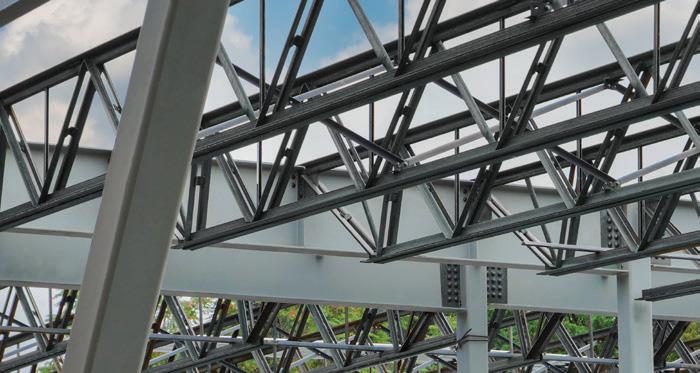

MORE
LEARN
Standardized connections reduce design time Joist reaction point occurs at beam centerline
Flush-frame connection designed for efficiency
newmill.com
Meet New Members
Check out the Member Directory at SEAA.net
LJ Metal Works, Wilmington, North Carolina, specializes in Steel erection, Pipe welding, and Miscellaneous metal services.
LLS Steel Erectors, Jacksonville, Florida, is family-owned and has been in the steel erection business for several generations.
Mountain Crane Service, LLC, Salt Lake City, Utah, provides a variety of services including steel erection, pre-cast tilt ups, wind farm construction and maintenance, and bridge girders, just to name a few.
Referred By: Stephen Burkholder, S&R Enterprises
Orbit, Glendale, Arizona. Referred By: Lisa Frank, Elephant Lifting Solutions, and Oliver Gleize, OTH Pioneer Rigging
Paradise Crane Consultants, Albuquerque, New Mexico, provides fall protection, steel erection, crane, CIC, NCCCO, (CCO) and NCCER National Crane Operator Training Courses and rigging safety in construction, and industrial work environments.
Preston Rentals, Las Vegas, Nevada, provides specialized construction equipment rental, including construction cages, mini crawler cranes, and crane loading platforms.
Raken, Carlsbad, California, has easy-to-use construction management software for daily reports, time tracking, safety, and field insights.
RMS Iron Works LLC, Exeter, New Hampshire, is a quality-based erector of structural iron and miscellaneous metals in the New England area.
Referred By: Steve Hebert, MAS Building & Bridge
Siteline, San Francisco, California, is the first pay app and lien waiver management software specifically built for subcontractors.
Smith Ironworks, Inc., Lyerly, Georgia, is a steel fabricator and erector with offices in Atlanta, Fort Walton Beach, and East Kingston. Referred By: Kalvan Peeler, Nelson Stud Welding
Stacker Construction, Milliken, Colorado, offers services ranging from rigging, structural steel, miscellaneous metals, stairs, and railings.
Tampa Construction, Katy, Texas, specializes in the construction of top-quality warehouses and decking solutions.

UP NEXT
Construction Tech Adoption Trends
The International Risk Management Institute (IRMI) has released the data from its 2023 Tech Adoption Maturity Index Trends Analysis (TAMI). The TAMI looks at four categories of technology and one focused on corporate commitment to get a picture of what tech has been adopted and how well it’s implemented. IRMI also looked at what the most adopted, least adopted, and emerging tech categories have been. In 2023, the types of tech with the biggest increases in adoption are highlighted in this infographic.
Read the full report.


Triple Tech Welding, New Braunfels, Texas, specializes in mobile welding.
Trojan Steel, Houston, Texas, provides high-quality roof and floor steel deck and accessories with connections to hundreds of suppliers across the nation.
Referred By: Steel Joist Institute
Validus Steel Erectors Inc, Charlotte, North Carolina, Referred By: Carolina Structural Welding Inc.
Weld Wire Company, Inc. (Durmax), King of Prussia, Pennsylvania, provides bulk Duramax brand welding rods, wire & abrasives direct to end users.
Referred By: Marc Cox, Gardner-Watson Decking
Summer Edition: June 2024
Ad Deadline: June 3
Chris.Harrison@seaa.net
660-287-7660
50 | THE STEEL ERECTORS ASSOCIATION OF AMERICA
Projects of the Year Accounting Tech Implementation Work Comp

MULTISTORY SOLUTIONS


Contact us to find out how our team can identify a variety of solutions that can benefit both your project and your client.
DE S -
ENGINEERINGMANAGER

