FUTURE SYSTEMS
How new technology is improving visualization and increasing reliability in the construction industry

Real estate
Three major themes are driving changes in the location of industrial hubs
Safety
Recommendations to help plan construction work zones and ensure safety
Collaboration
The right software can facilitate effective communication
Vol 20, Iss 1 - 2023

CEO Andrew Schofield
Group COO Joe Woolsgrove
Creative Consultant Tom Vince
Data & Insights Director Jaione Soga
Editor Libbie Hammond
Assistant Editor Mary Floate
Content Editors Alex Caesari, Danielle Champ, Annabelle Crook, Steven Dobinson
Editorial Administrator Amy Gilks, Afiya Lucombe-Davis
Creative Lead Lee Protheroe
Managing Art Editor Fleur Daniels
Art Editors Paul Gillings, David Howard, Charlie Protheroe
Artwork Administrator
Rochelle Broderick-White
Sales Director Alasdair Gamble
Project Directors
Philip Monument, Joy Francesconi
Head of Content Management
Adam Blanch
Project Managers Lewis Bush, Natalie Griffiths, Jo-Ann Jeffery, Ben Richell
Content Managers Johanna Bailey, Mark Cowles, Jeff Goldenberg, Wendy Russell, Richard Saunders, Kieran Shukri
Media Sales Executives Mike Berger, Jessica Eglington, Will Gwyther, Reid Lingle, Sam Surrell
General Manager Florida Division Ryan Finn
Social Media Co-ordinator Rosie Clegg
IT Support Iain Kidd
Administration Natalie Fletcher, Rory Gallacher, Ibby Mundhir
Hello and welcome to the January issue of Construction Today. In this issue’s features, our authors take a look at collaboration, technology, safety and industrial real estate. In the latter, author Mark Russo, Head of Industrial Research at Savills, reports on the trends across the US that are influencing demands for industrial property. He highlights three themes that are being reflected in the changes in market inventory rankings and states that ‘in a changing world, the most important industrial hubs of yesterday will not necessarily be the top markets of tomorrow.’ Take a look at page 12 and find out where tenants and investors might be looking to locate.
© 2023 Finelight Media Group
Corporate Head Office
Cringleford Business Centre, 10 Intwood Road. Cringleford, Norwich NR4 6AU U.K.
T: (312) 854-0123 T: +44 (0) 1603 274130
www.construction-today.com
US Office 2240 West Woolbright Road, Suite 402 Boynton Beach. FI 33426
T: (561) 778-2396
LH@finelightmediagroup.com
In January’s cover story, Architect Saurabh Goenka takes a look at technology. Find out how various solutions have brought improved visualization and increased reliability to construction projects. Turn to page 8 to learn more.

Recommendations to help plan construction work zones and ensure safety Three major themes are driving changes in the location of industrial hubs The right software communication How new technology is improving visualization and increasing reliability in the construction industry FUTURE SYSTEMS Please note: The opinions expressed by contributors and advertisers within this publication do not necessarily coincide with those of the editor and publisher. Every reasonable effort is made to ensure that the information published is accurate, and correct at time of writing, but no legal responsibility for loss occasioned by the use of such information can be accepted by the publisher. All rights reserved. The contents of the magazine are strictly copyright, the property of Finelight Media Group, and may not be copied, stored in a retrieval system, or reproduced without the prior written permission of the publisher.
Libbie Hammond, Editor
Follow construction today at @ConstructToday construction-today-magazine Welcome construction-today.com 1



Trends 24 28 Case study Inside this issue 8 Collaboration 20 16 Industrial Real Estate Technology Cover Story Contents 2
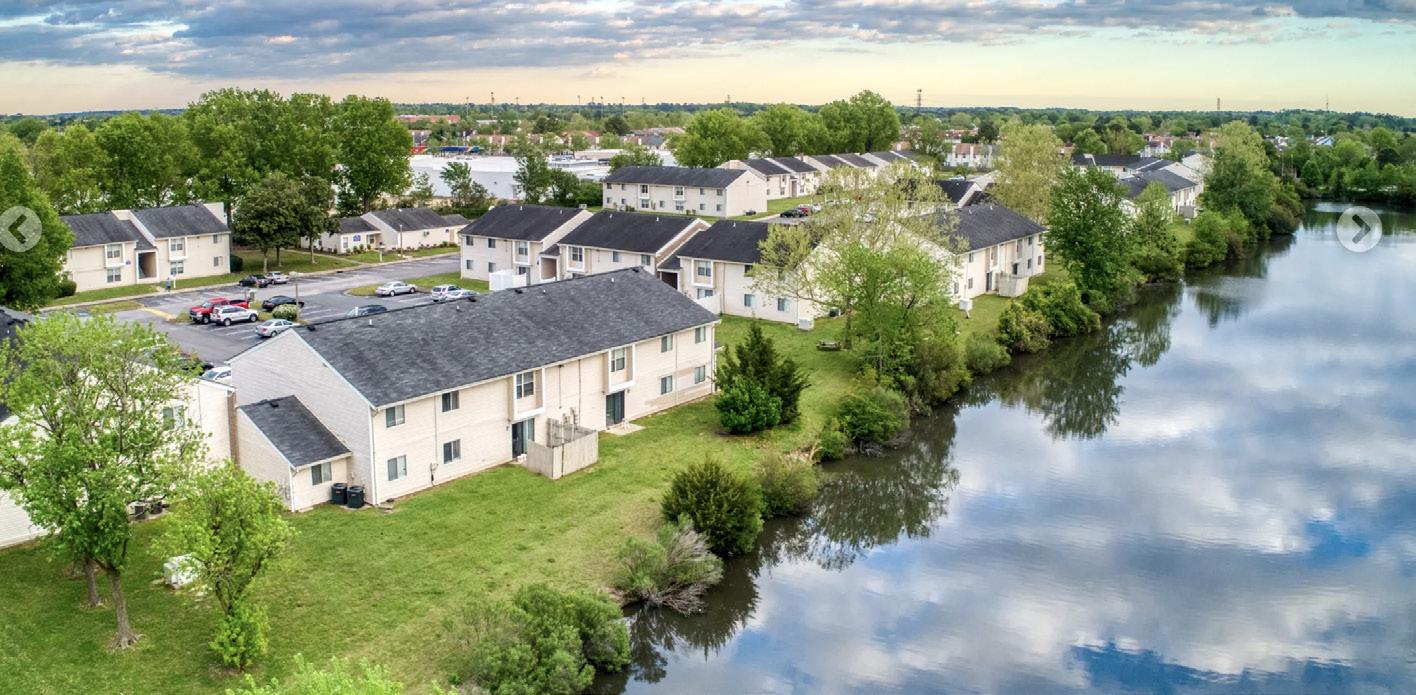
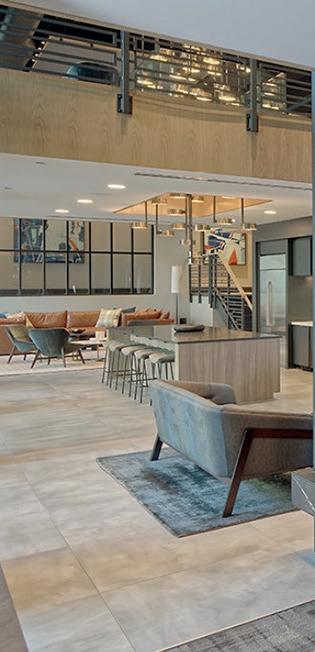

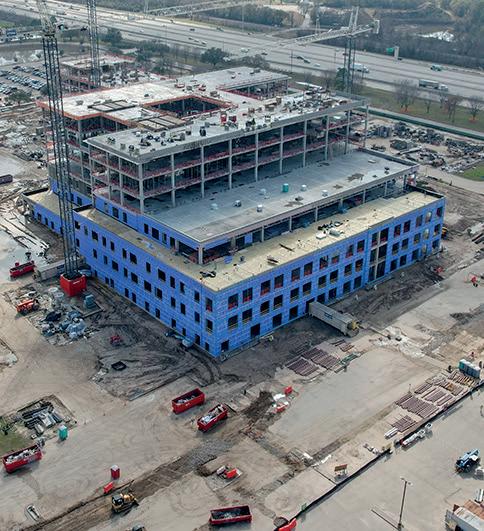
Security 32 News 40 Case study 36 CSI Construction 54 ROSS Companies 44 Harold K. Jordan 50 construction today construction-today.com 3
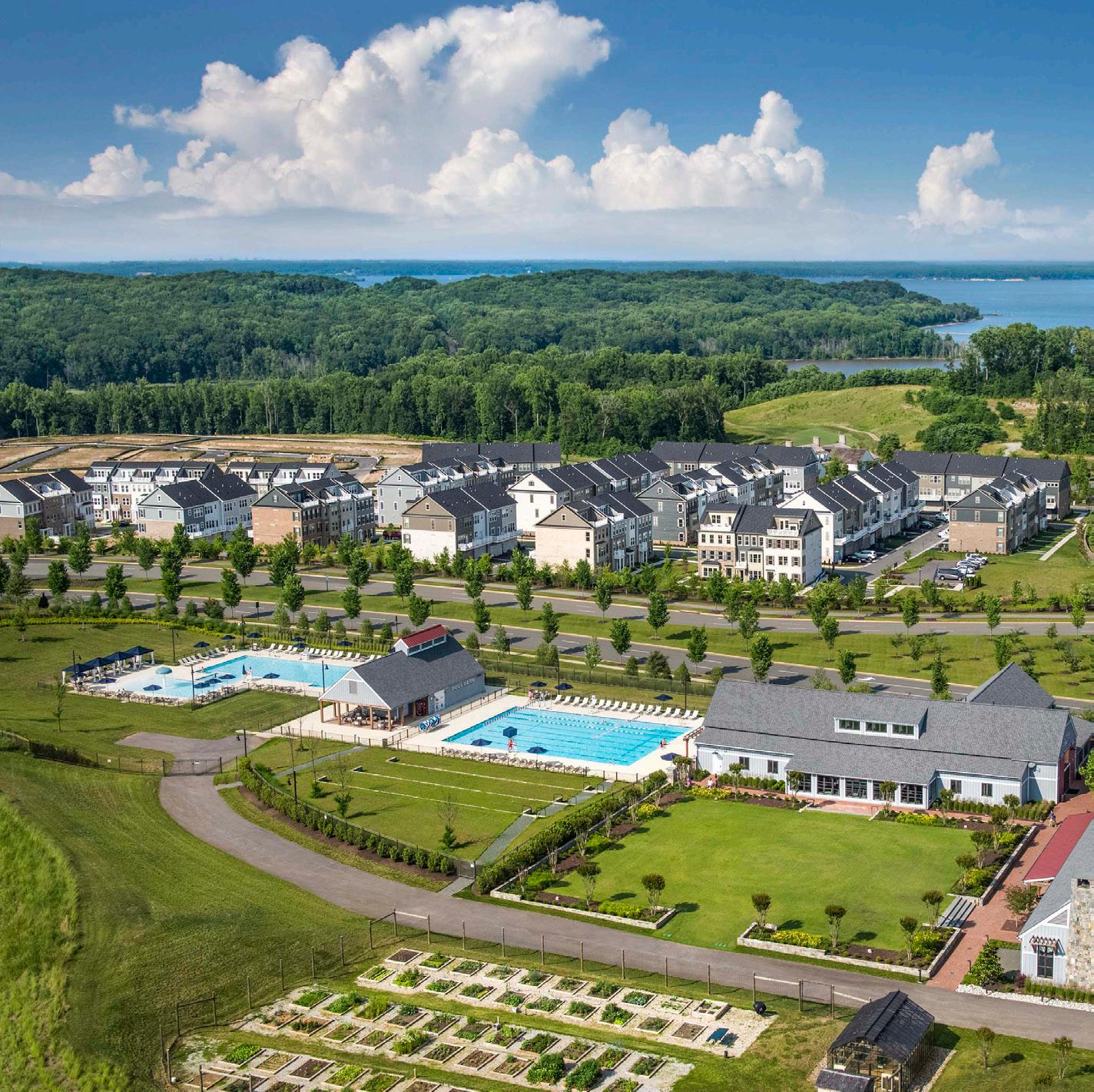
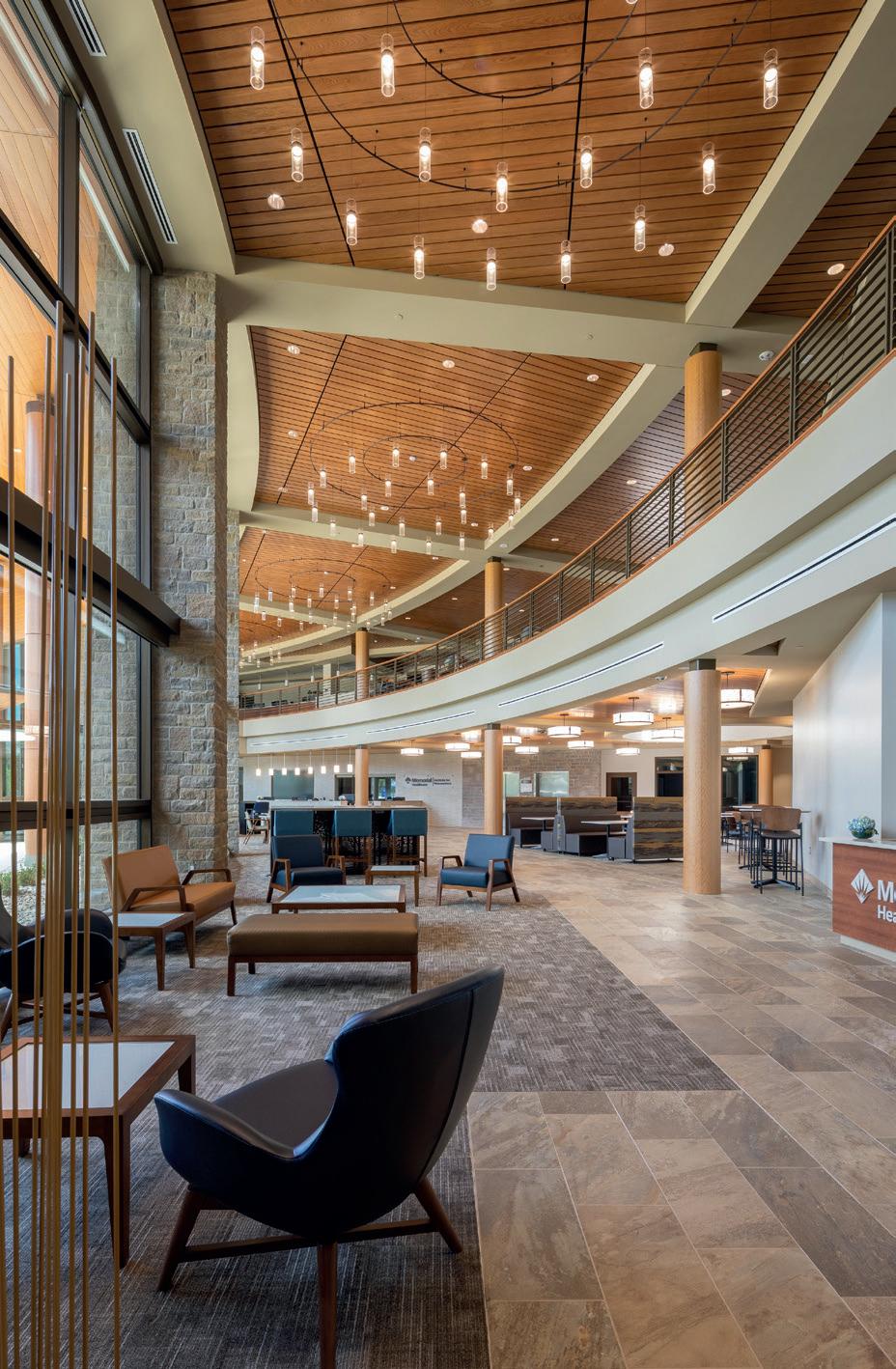
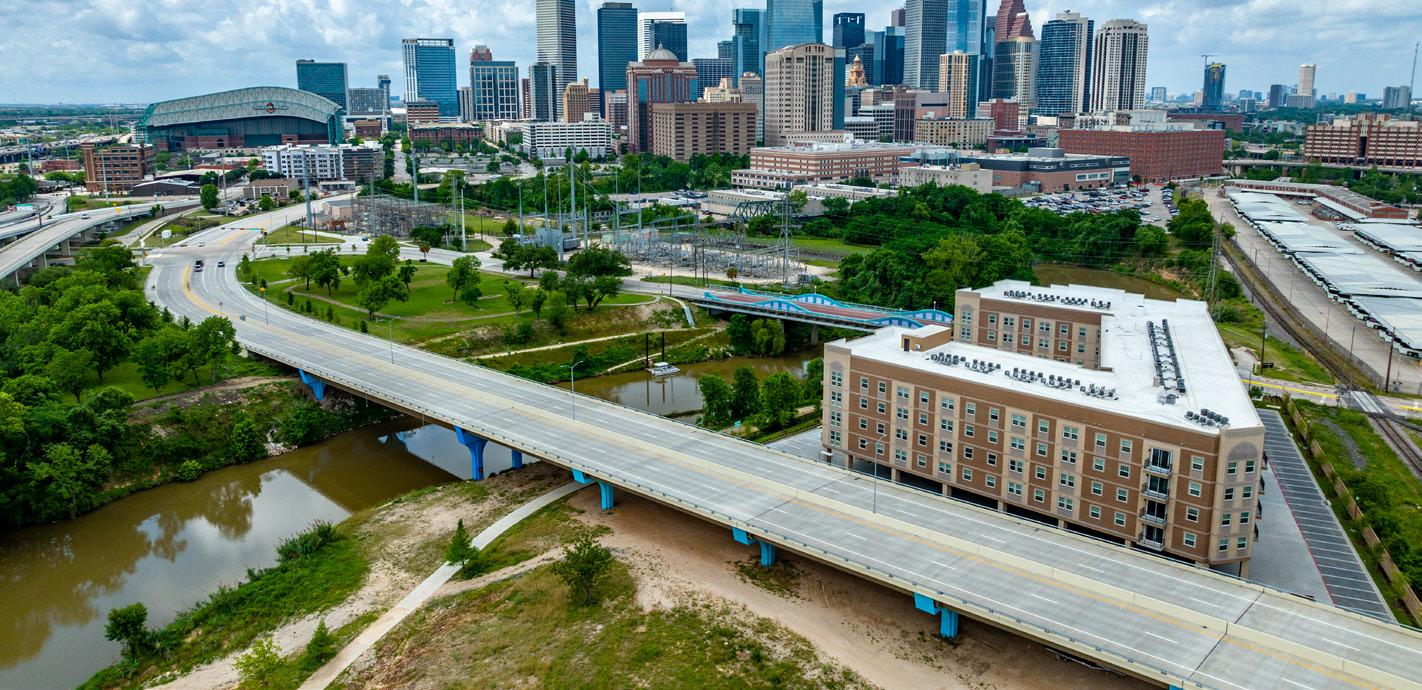 60 Stanley Martin Homes
72 Gulf Coast Housing Partnership
78 Cornerstone General Contractors
60 Stanley Martin Homes
72 Gulf Coast Housing Partnership
78 Cornerstone General Contractors
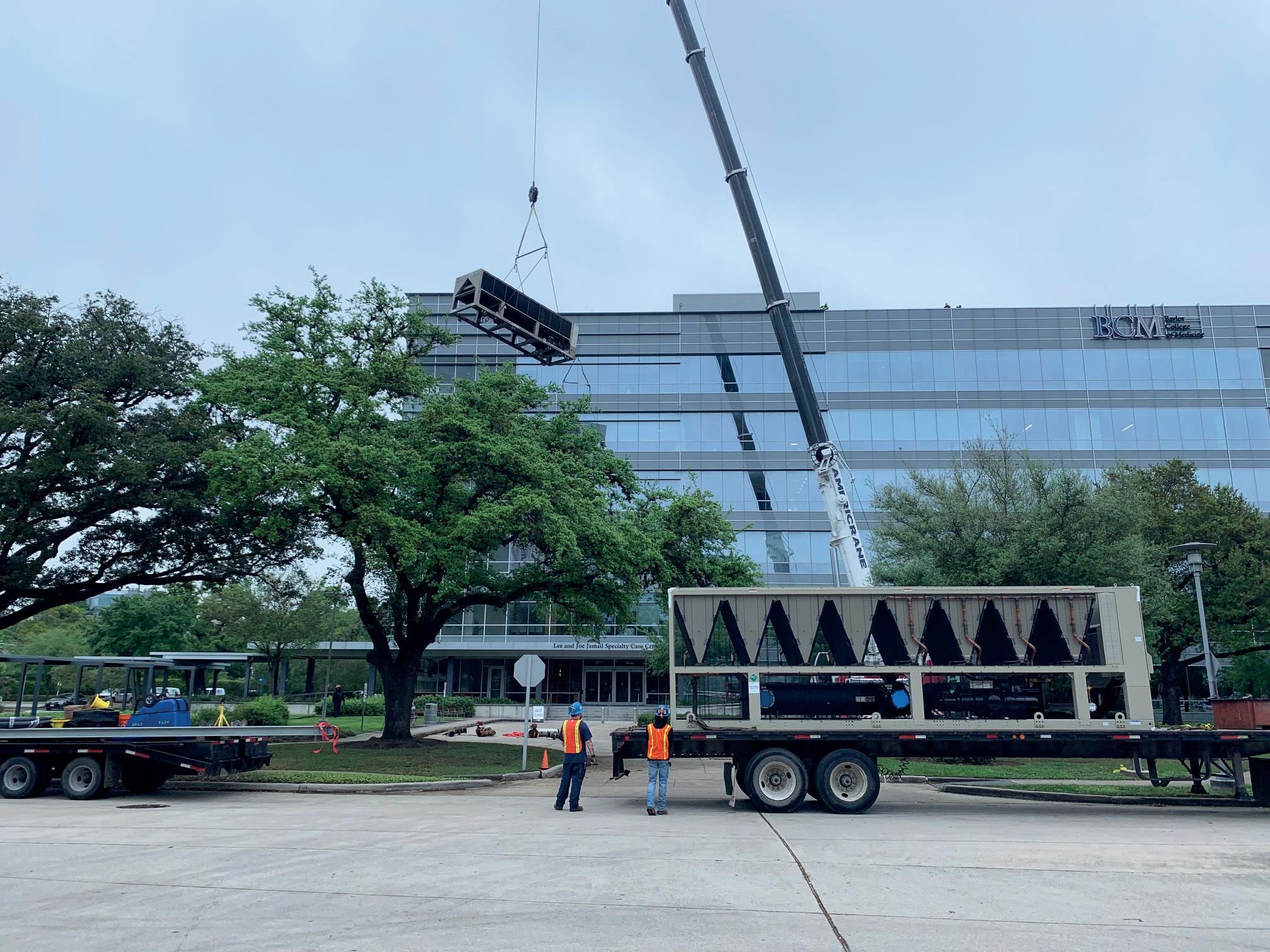
84 Dargan Construction Contents 4
Spence Brothers Construction


88 104
116
Genesis AEC
94 HTS
Heart of America Group
Escobedo Group
110 construction today 5
Chase Lumber



 Horch Roofing
148 Kaufman Lynn
Horch Roofing
148 Kaufman Lynn
138 T&G
156 ONEC Construction 152 Holland Construction 122 Contents 6
National Cement Company of Alabama
Constructors
BUILDING
BUILDING MATERIALS | DOOR & MILL SHOP | KITCHEN + DESIGN | MASONRY PRODUCTS We feature high-quality Andersen® products. “Andersen” and all other marks where denoted are trademarks of Andersen Corporation. ©2022 Andersen Corporation. All rights reserved.
ARNOLD LUMBER COMPANY
TRUST SINCE 1911
FUTURE SYSTEMS
The importance of technology in empowering the construction industry
 By Saurabh Goenka
From raising large blocks of stone using pulleys to having powerful cranes lifting massive steel girders onto skyscrapers, construction technology has indeed come a long way. In particular, the rapid advancement of immersive and assistive construction technologies within the last decade has been a watershed moment. It has made the construction process more efficient, interactive, and ingrained with real world data, as never imagined before. Artificial intelligence, virtual reality, and advanced data analytics can help build smarter cities driven by real-time data, functioning almost like a living organism. Buildings can then communicate with each other, with the user, as well as its surroundings, to improve livability, increase safety, and protect the natural environment. I will next, consider in detail how some of these technologies have enabled the industry to build with improved visualization and increased reliability.
The power of real-time collaboration
Increased complexity of buildings has led to progressively more specialized systems. Collaboration, more than ever before, has become a key component for success of any construction project. Virtual Reality (VR) and Augmented Reality (AR) have enabled us to design and build in an immersive digital environment with instant visualization. VR is a powerful tool that offers a life-like experience by delving into virtual models using headsets. Design and construction teams can access the same computergenerated model simultaneously and conduct group charrettes. The VR experience today has been simplified to an extent that models can be viewed on smartphones while on the go. Its use as a collaboration tool can improve communication and accelerate the decision-making process.
8
Technology 9 construction-today.com
Like VR, AR has revolutionized collaboration processes by allowing an overlay of 3D models or 2D plans onto construction sites. The software can identify missing components as well as inaccurate dimensions, which enables construction teams to detect errors earlier in the process and avoid future ramifications. Building Information Modelling (BIM) can provide a single source of coordinated and computable information in a model-based framework. Sharing realtime data with the project team allows for real time clash-detection and reduces scope for miscoordination. Contractors can use these computer-generated models for fabrication and installation as well.
Digital twins and Internet of Things
Digital twin, a digital replica of the physical building, gathers data through smart sensors to better analyze a physical structure. There has been a swift progress in our ability to use this technology during pre-construction

for constructability assessments, inventory management and trial-and-error evaluations among others; all of which greatly benefit the outcome. Internet of Things (IoT) can control real world objects digitally and make our living environment more responsive. Use of drones can provide real-time imagery and supercharge the construction process by allowing for faster surveying, inspection, and surveillance of construction sites.
Time is money
It is known that reduction in construction time can reduce the overall project cost. Use of pre-fabrication has been particularly impactful in amplifying our ability to reduce construction time by digitally manufacturing portions of buildings. While it may have been commonplace to 3D-print, laser-cut or CNC-mill hardware or interior millwork, technology today is precise enough to digitally compute and manufacture portions of facades, building cores and structural systems off-site, in a fraction of time as compared
10
to on-site construction. Taking this a notch further, modularization and standardization of components can allow for reduced installation time, material usage and waste. Complex projects are not so daunting anymore.
Site safety
Accidents at construction sites are an interminable problem that the construction industry must deal with, especially now as we build towers and skyscrapers one after another. Here too, technology can help.
Wearables are transforming the ways we can maintain site safety, through use of connected hard hats (with cameras, microphones, and GPS), smart jackets and boots that alert workers of hazardous conditions. These devices allow workers to request help with just a tap and can be automatically triggered by impact.
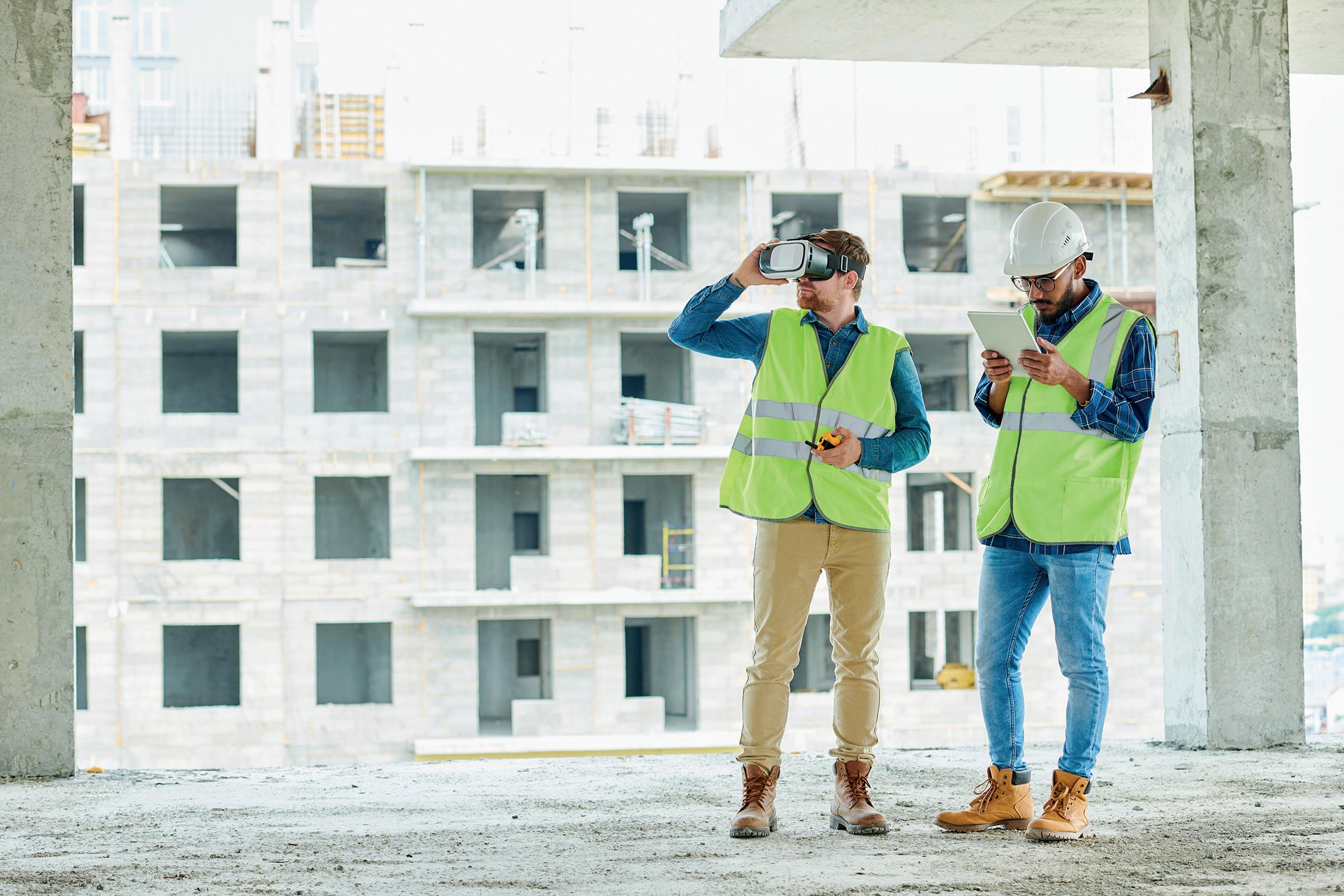
Self-driving heavy equipment with perimeter sensor detection can reduce chances of mishaps due to overturning equipment. Drones can automate buildings’ exterior inspections, thus eliminating human trips and falls from unsecured perimeters. Chemical hazards such as discharged toxins, pipe leaks and presence of asbestos are other site-safety concerns. Frequently, workers are unable to see these and are forced to inhale them unknowingly. Just as smart sensors with built-in alarms can protect occupied buildings, they must be commissioned during the construction process as well to augment various site safety procedures.
Sustainability
Any planned alteration of the built environment requires well defined goals and keen foresight. The way we manage the process throughout the project’s lifecycle is critical to ensure success in the long term. In that regard, large advancements in tech-enabled solutions have empowered this process to be more efficient. BIM for instance, is useful not only in project
design and construction, but also in management and operations. AI based management platforms can determine energy usage patterns to conserve energy and improve thermal comfort, while also monitoring leaks or malfunctions. These systems may come at a higher initial cost, but that must be evaluated against the long-term advantages of better quality, increased reliability, and reduced risks. ■
Saurabh Goenka https://s9architecture.com/
Saurabh Goenka is an AIA
Licensed Architect and a LEED Accredited Professional. Currently practicing in New York as a Senior Associate at S9 Architecture, Saurabh has over a decade of experience leading prominent projects in complex urban environments. He is equally adept at using advanced digital technologies and has often leveraged their power not only to create beautiful buildings but also to ensure efficient construction and operations.
S9 Architecture (S9) is a New York-based architecture firm dedicated to designing spaces, buildings, and neighborhoods with a unique design approach rooted in ‘modern contextualism’ and inspired by urban narratives.
Technology 11 construction-today.com
12
Hub evolution
Top industrial markets restack, reflecting a changing nation
By Mark Russo
Three massive hubs long dominated the US industrial landscape: Los Angeles, Chicago and Northern New Jersey. These markets, which service the country’s largest metropolitan regions, historically held the highest positions in terms of sheer square footage, trade volume flowing through ports and railyards and capital invested. However, since the turn of the 21st century, the industrial real estate landscape has been shifting, reflecting transformational changes in demographics and technology, which the pandemic further accelerated.
Savills Research examined changes in size rankings of 16 top markets beginning in 2000, when online sales represented a mere one percent of overall retail and 14 years before Florida surpassed New York as the third most populous state.
The notable changes in market inventory rankings since 2000 reflect the following major themes:
Population migration to Sun Belt
Demand for industrial property is closely tied to consumption, which is about people, a fact that has become even more pronounced as the ecommerce penetration rate has grown to 14.5 percent of retail sales. Occupiers, and the developers trying to attract them, are following the rooftops, and those households have been migrating southward, drawn by warmer climates and lower living costs. One top destination has been Texas, which has seen its resident population grow by nearly 40 percent in two decades. Mirroring this change, the Dallas-Fort Worth industrial market added 348 million square feet (msf) of building inventory, causing it
Industrial real estate 13 construction-today.com
Savills Top Markets Ranked by Inventory (MSF)
Stable
to rise from number five to the second-largest market in the US, now exceeding Los Angeles. Similar stories unfolded in other Sun Belt cities, including Atlanta and Phoenix, where warehouse inventory grew by 53 percent and 78 percent, respectively, since 2000. Despite the construction boom, vacancy ranges from 3.9 percent to 6.2 percent in these markets.
Land scarcity in core markets
Despite being in high demand, a limited amount of land in the densely developed coastal markets has been pushing developers and tenants seeking space into adjacent markets. The Inland Empire and Pennsylvania’s I-81/78 corridor started as lower-cost alternatives to the expensive and famously tight Los Angeles and Northern New Jersey markets but have been coming into their own. The Inland Empire more than doubled in size since 2000, growing
2000 1 2 3 4 5 6 7 8 9 10 11 12 13 14 15 16 Chicago (1,297 4) Dallas-FW (884.1) Los Angeles (877.1) Atlanta (782.2) Northern NJ (709
from 272 msf to 666 msf, and is now the 6th-largest market. However, they too are running out of space, with the Inland Empire now seeing a 1.2 percent vacancy rate, the lowest of any major market.
8)
Redevelopment of obsolete product
wrecking 2000 2022 1 2 3 4 5 6 7 8 9 10 11 12 13 14 15 16 1 2 3 4 5 6 7 8 9 10 11 12 13 14 15 16 (1,054.5) Chicago (817.2) Los Angeles (645 2) Northern NJ (572 4) Detroit (536.4) Dallas-FW (510.7) Atlanta (431.2) Philadelphia (397 1) Houston (386 8) PA I-81/78 Corr (286.8) South Florida (272.5) Inland Empire (235.7) Seattle/Puget S. (221 7) Columbus (204.8) Denver (194.6) Phoenix (174.8) Baltimore
(1,054 5) Chicago (817.2) Los Angeles (645.2) Northern NJ (572.4) Detroit (536 4) Dallas-FW (510.7) Atlanta (431.2) Philadelphia (397.1) Houston (386 8) PA I-81/78 Corr (286 8) South Florida (272.5) Inland Empire (235.7) Seattle/Puget S. (221.7) Columbus (204 8) Denver (194 6) Phoenix (174.8) Baltimore
The biggest slide in size ranking occurred in the Rust Belt capital of Detroit. While the market did grow slightly since the turn of the century, it went from the nation’s 4th largest to 9th place. This is unsurprising given the sluggish population growth in the region. Also at play is the demolition of older manufacturing buildings, which reduces the overall inventory. Roughly 54 percent of the buildings in Detroit are more than 40 years old and do not offer what most tenants are looking for in terms of ceiling height and layout, conditions that are not easily remedied and result in their seeing the
Rising
Inland Empire
Houston
PA
Detroit
Phoenix
Seattle
Denver
Baltimore (216.0) Rising Stable Falling y (MSF) 2022 1 2 3 4 5 6 7 8 9 10 11 12 13 14 15 16 14
Savills Top Markets Ranked by Inventory (MSF)
(666 7)
(640.4)
I-81/78 Corr. (601.0)
(600.0) Philadelphia (477 5) South Florida (380.5)
(345.7) Columbus (306.4)
/Puget S (298 9)
(269 8)
Chicago (1,297 4)
Dallas-FW
Los
(884.1)
Angeles (877.1)
Atlanta (782.2)
Northern NJ
(709 8)
Inland Empire (666.7)
Houston
PA I
(640.4)
-81/78 Corr. (601.0)
Detroit (600 0)
Philadelphia (477 5)
South Florida (380.5)
Phoenix (345.7)
Columbus (306.4)
Seattle
Denver
/Puget
(269 8)
S
(298 9)
Baltimore (216.0)
ball. Looking ahead, onshoring and the growth of new industries like EV manufacturing are reasons why Detroit and other Midwest markets may start expanding again in the future, but with new inventory up to modern specs.
Beyond the 16 top markets analyzed in this study, other future top industrial hubs have emerged. For example, Savannah, Georgia, which was barely a dot on the map in terms of warehousing, has grown to become a nearly 100 msf market and is forecast to double in size by 2027. Other up-and-coming industrial clusters, such as Las Vegas, Salt Lake City and Greenville, South Carolina, are increasingly on the lists of tenants and investors as the industrial real estate landscape continues to evolve in response to a changing nation.
Looking ahead in 2023, construction activity is expected to slow as new projects become tougher to finance as well as lease due to the impact of higher interest rates on the capital and leasing markets. This will translate into a pause in the aforementioned trends around expansion of market inventories and relative rankings. However, when the cycle begins again, similar patterns are likely to resume but with some new twists. The reaction to the Covid-era supply chain crisis will likely be one of them as occupiers diversify locations including ports of entry to build resilience. One thing is clear: in a changing world, the most important industrial hubs of yesterday will not necessarily be the top markets of tomorrow. ■
Sources: U.S. Census, U.S. Department of Commerce, Savills Research Note: For this analysis, market inventory has been standardized to include all industrial property over 10,000 square feet and may differ from figures reported in other Savills Research reports .
Mark Russo www.savills.com
Mark Russo is Senior Director, Head of Industrial Research at Savills. Savills helps organizations find the right solutions that ensure employee success. Sharply skilled and fiercely dedicated, the firm’s integrated teams of consultants and brokers are experts in better real estate. With services in tenant representation, workforce and incentives strategy, workplace strategy and occupant experience, project management, and capital markets, Savills has elevated the potential of workplaces around the corner, and around the world, for 160 years and counting.
Stable Falling 2022 1 2 3 4 5 6 7 8 9 10 11 12 13 14 15 16 Industrial real estate 15 construction-today.com

16
The right protection
Proper work zone setup and training increase site safety says Mark Ludewig
Construction can be a serious risk when work zones are near or on roadways and motorists do not respect the work zone. Guiding the public through these sites in a safe and efficient manner depends on proper setup and training. Motorists may be required to navigate through complex work zones with an array of signs, barrels and lane changes. When drivers are not paying attention, it can lead to a dangerous outcome. Likewise, an ineffective work zone setup and/or lack of preparation only invites greater risks. The following recommendations can help you plan proper construction work zones and improve safety. While each zone is different and deserves careful consideration, these guidelines generally apply to all job sites.
The cardinal rules of work zone safety
There are basic rules that should be applied to setting up and protecting any work zone. In combination these measures create a stronger defense against the unpredictable by keeping eyes - and minds - on risks at all times. Critical considerations include:
l A detailed hazard assessment delivered as part of a pre-job safety briefing
l The use of visual/audible traffic control PPE designated for the project
l The use of proper safety equipment such as arrow and message boards
l An on-site Qualified Traffic Observer (a protector/flagger) to alert people to danger
Safety briefing
The pre-job safety briefing is a meeting with members of the work crew to discuss the type and phasing of the work being performed, hazards in and around the work area, configuration of the work zone, set-up of the work zone, temporary traffic controls and other protections utilized, emergency signals and procedures, and all STOP WORK procedures. A briefing should ALWAYS be completed at the beginning of EVERY job before setting up the work zone for that day. A new safety briefing should also be completed with each shift change or if the work assignment changes, if environmental conditions change, when new personnel come aboard, or as additional work site hazards are identified.
PPE
Every work site demands the selection, use and care of appropriate PPE for each affected worker who is responsible for having these items at all times, maintaining issued items and using them when applicable. This includes:
Safety 17 construction-today.com
▲ Did you know? Daylight hours are the most dangerous time to travel through a work zone. Urban interstates are the only type of roadway that report higher accident rates at night. In all cases, proper setup is critical to protecting people inside and outside the work zone
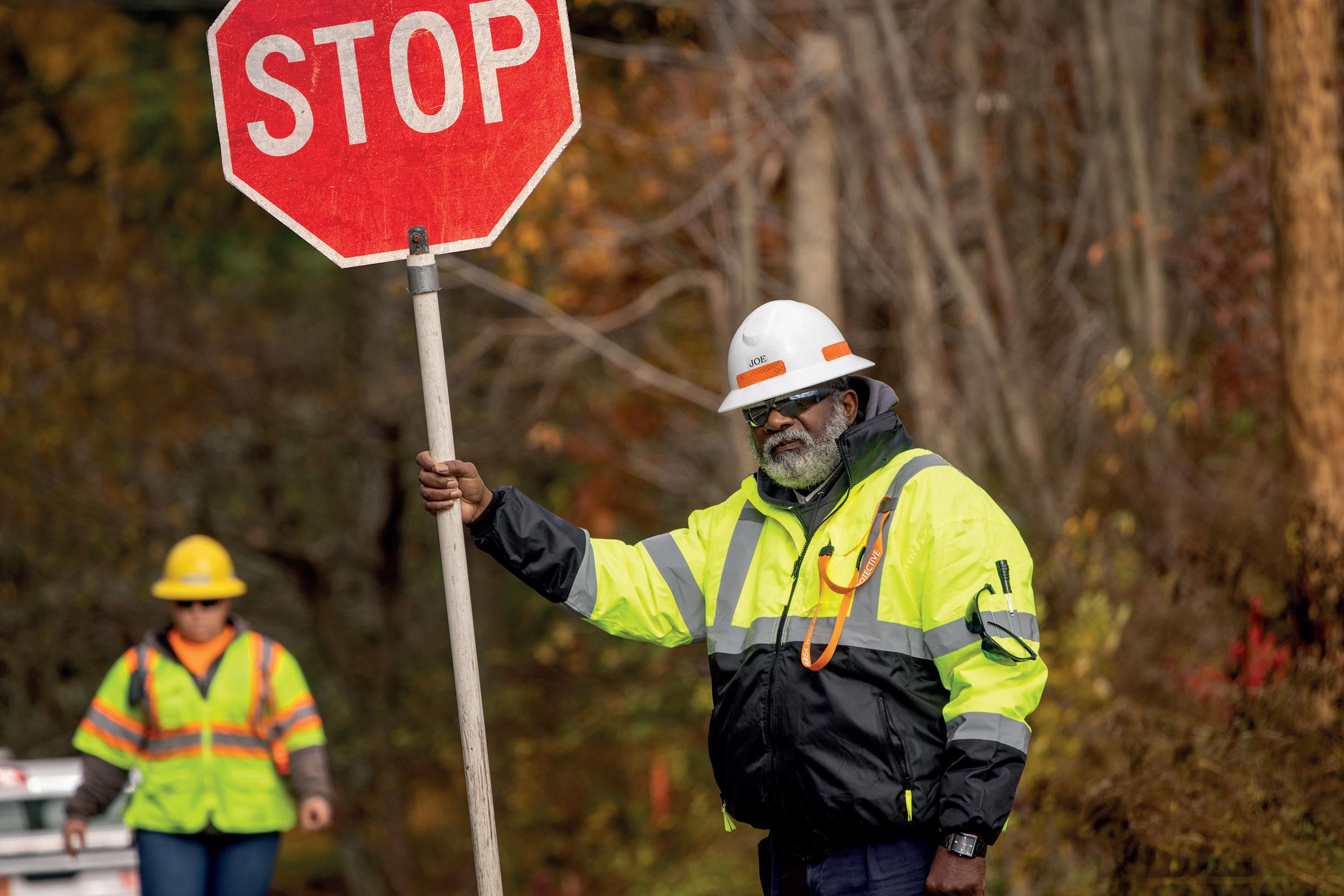
l High-Visibility class three apparel such as reflective safety vests and related apparel that are widely available for a variety of project needs and environmental conditions
l A hard hat, safety glasses, gloves and safety toe boots that should be standard wear for those assigned to protect work sites
l A storm whistle that is worn and accessible at all times, that is also attached to a breakaway lanyard so as not to pose a choking hazard. Whistles should only be used to alert workers to imminent danger and never to get the attention of a driver
Safety equipment
A broad range of traffic control equipment is required to meet various project needs. Commonly this includes channelizing devices
such as barricades, cones and barrels as well as Truck-Mounted Attenuators (TMA), arrow boards and signs/message boards. From shoulder work to parking lane closures to lane shifts, each temporary traffic control scenario must be set up according to the specific requirements of the site. No two scenarios are exactly alike as street design, traffic volume, motorist line-of-site and a host of environmental factors - that can change rapidly - all play a part in determining the need. A traffic management services provider will follow approved procedures for safe work zone setup that also align to state and local regulations. The Manual on Uniform Traffic Control Devices for Streets and Highways, or MUTCD, defines the standards used by road managers nationwide to install and maintain traffic control devices on all public streets, highways, bikeways and private roads. The
18
MUTCD is published by the Federal Highway Administration (FHWA) under 23 Code of Federal Regulations (CFR), Part 655, Subpart F. Note these are standard guidelines only - all work zone setups should have the full consideration and approval of a qualified traffic control specialist prior to deployment.
Traffic observer
Construction projects can occur in close proximity to road traffic, creating a potentially dangerous environment for workers, drivers, and pedestrians. In many cases a temporary traffic control zone is needed to protect workers, as well as to allow for the safe and efficient movement of pedestrians and traffic through or around the zone. In addition to their duties as a protector/ flagger, a qualified traffic observer will continually monitor traffic conditions and warn co-workers who are installing temporary channelizing devices like cones and barrels, or who are removing debris from the roadway. This person must:
l Remain vigilant and alert at all times to recognize dangerous traffic situations
l NEVER turn their back on traffic.
l Already know their method(s) of escape if a vehicle enters the zone
l Protect themselves first—then use their storm whistle to alert others
A total approach to training
Comprehensive training and support including coursework and real-life scenario modeling are what ultimately sets field teams apart in their readiness and commitment to work zone safety. At minimum, every field team member assigned to the site should complete certified flagger training, first-aid and CPR courses, and state-specific Department of Transportation training. At Area Wide Protective (AWP), protectors who will operate vehicles in work zones also
complete the Smith Driving System, which promotes safer driving habits.
Properly planned and staffed work zones help to eradicate fatalities and life altering injuries by eliminating at-risk behaviors that could result in a vehicle accessing the work zone. Protecting those inside and outside the zone is a serious responsibility that requires the constant vigilance of a certified traffic management services professional. ■

Mark Ludewig
www.awptrafficsafety.com
Mark Ludewig is the Vice President of Safety for Area Wide Protective (AWP). He has over 30 years of experience in environmental, health and safety management, and leads AWP’s ongoing enterprise initiatives to deliver the safest work zones by leveraging industry data, aligning enterprise with all-encompassing traffic control solutions, and ensuring compliance at all levels.
As North America’s leader in professional traffic management, AWP protects the public and the people who make infrastructure possible. The company’s capabilities include work zone flagging, design and engineering for transportation management plans, equipment sales, rental and 24/7 support. AWP employs 6800 team members across 28 US states and four Canadian provinces.
Safety 19 construction-today.com
times Changing

20
How tangled supply chains upend relationships and shift profits throughout industry
By Andrew Zukoski
Our snarled supply chains are upending not just the working lives of project teams engaged in design, planning and preconstruction but the business relationships that define our industry.
A few weeks ago, I had conversations with two very different stakeholders who shared a common theme. One was a senior leader at a major university. The other was an executive with a national building product distributor. Despite their different perspectives, the conversations were similar.
The university leader relayed that their facilities department - responsible for billions of dollars’ worth of capital projects over the next few years - had a new building going in. The facilities leader, who was facing the same supply chain issues as the rest of the industry, was advocating something unusual: that the owner purchase steel before identifying a general contractor. This is an experienced owner, but purchasing materials before having overall cost certainty and a construction partner is a big step.
Collaboration 21 construction-today.com
The second conversation was with a VDC leader at a building product distributor. Not a BIM manager at a design or engineering firm, not a VDC leader at a general contractor or MEP specialty contractor, but a distributor. This team represents a new initiative for the distributor, and a chance for the company to better support customers and project teams by offloading detailed BIM work and making critical systems decisions earlier.
For a company that traditionally has focused on trade contractor relationships, this new exposure to general contractors, owners and engineers has been an exciting new service for them to provide. It’s also led to new requests from owners and general contractors who now want to purchase directly from the supplier.
A simplistic view of the construction industry is that an owner works with architects and engineers to design and specify a project, and then hires a general contractor to build
it. In turn, the general contractor hires trade contractors, who purchase materials from distributors and manufacturers. As these two conversations illustrate, there are wild deviations in the real world, with the purchaser for various materials shifting upstream. This complicates matters for teams, upends traditional commercial relationships, and shifts potential profit between different stakeholders.
The teams that are being tasked to execute in this environment must move at lightning speed to keep up. They also often find themselves collaborating with a much wider set of stakeholders than they used to and must integrate a wider range of perspectives.
For example, estimating departments, and the software and technologies that support them, grew out of a world where teams added numbers to complete sets of construction documents once, during a bid phase. In our present world, these teams are being asked to perform ‘continuous estimating’ -
22
keeping up with design ideas, sketches and documents that are changing dayby-day and sometimes, it seems, minuteby-minute. Preconstruction roles now layer communication and collaboration duties on top of the traditional estimating and planning skill sets. As these jobs have become more complicated, however, the potential to provide an excellent client experience and predictable project delivery has grown. Teams are demanding new tools and systems to support these efforts.
McKinsey predicts that hundreds of billions of dollars in profits will shift in coming years. The ongoing challenges of a snarled supply chain are only accelerating this trend. Decisions and procurement that deviate from the simplistic model above depend on specific context, and occur project by project. For example, engaging a multi-trade offsite prefabrication strategy depends on everything from matching design and system
constraints to finding sufficient lie-down space near the site. Identifying opportunities for expanded profit, protecting existing business, and most of all finding areas of mutual gain requires that stakeholders throughout projects engage on a collaborative footing early. While stakeholder incentives do not always align, building trust shortens the route to GMP and successful project execution.
Nearly every construction technology company has trotted out another McKinsey study from a few years ago that purportedly proves construction is a stagnant industry defined by low productivity and innovation. This is clearly wrong: construction is dynamic, with teams coming together every day to design, plan and execute difficult work. Supply chain chaos is accelerating changing relationships amongst key stakeholders on every project, and these teams are adopting new digital technologies to keep up.
Powerful collaboration software enables teams to streamline processes and facilitates effective communication among stakeholders at every stage of a project. Beyond that, the right digital collaboration platforms help establish trust across a project, which will continue to be a critical component as relationships and expectations evolve throughout the industry. ■
For a list of the sources used in this article, please contact the editor.
Andrew Zukoski www.join.build
Andrew Zukoski is Co-Founder and CEO of Join, the decision-making platform for the built environment. Join is a collaboration software that addresses the multidisciplinary nature of AEC decision-making. Join allows all stakeholders to gain real-time visibility into each decision and its impact. Industry leaders use Join to make timely and smart decisions that drive projects forward.
Collaboration 23 construction-today.com
sands

 All images courtesy of Del Amo Construction
24
Del Amo Construction has renovated a century-old building on Venice Beach boardwalk
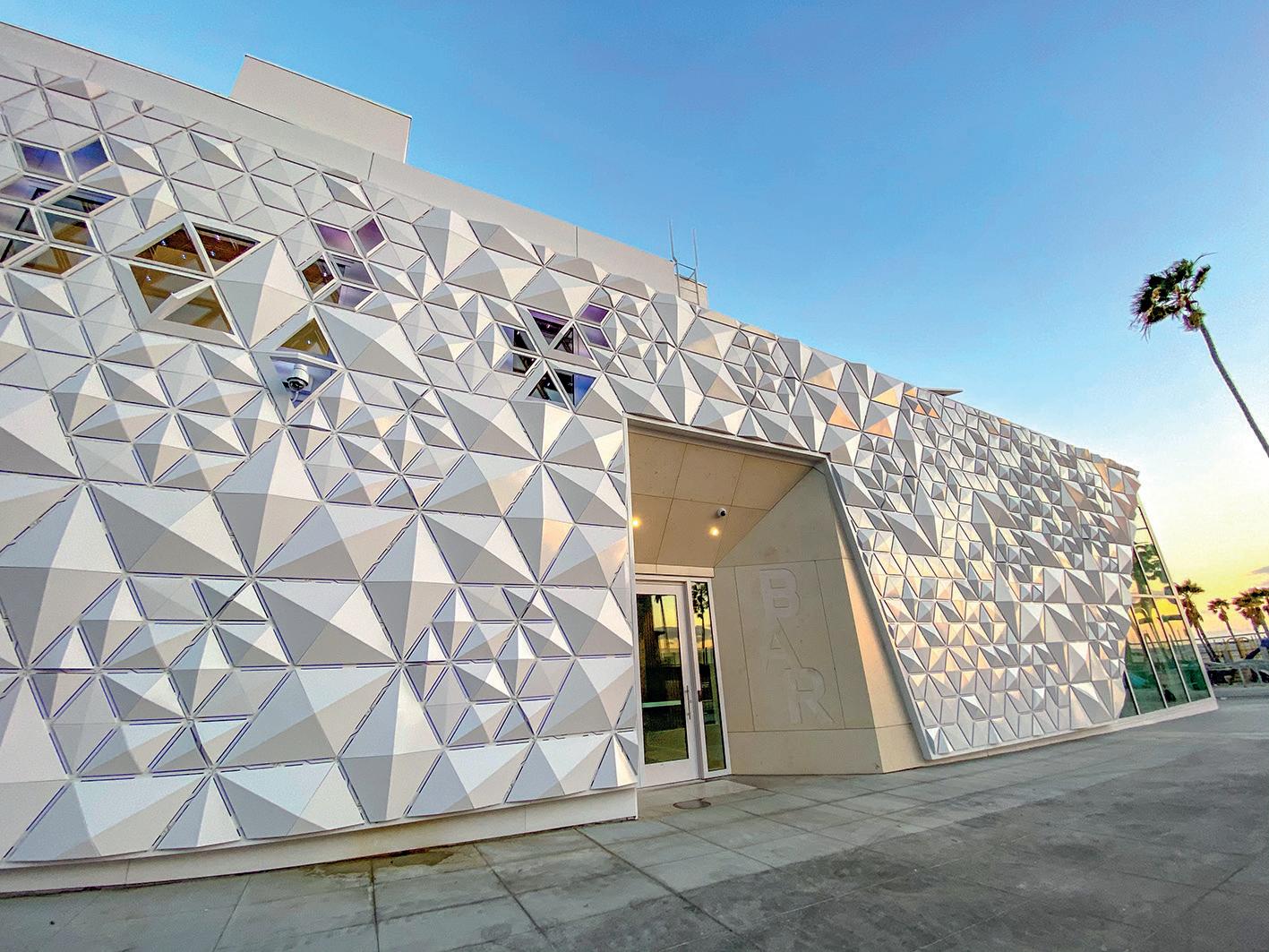
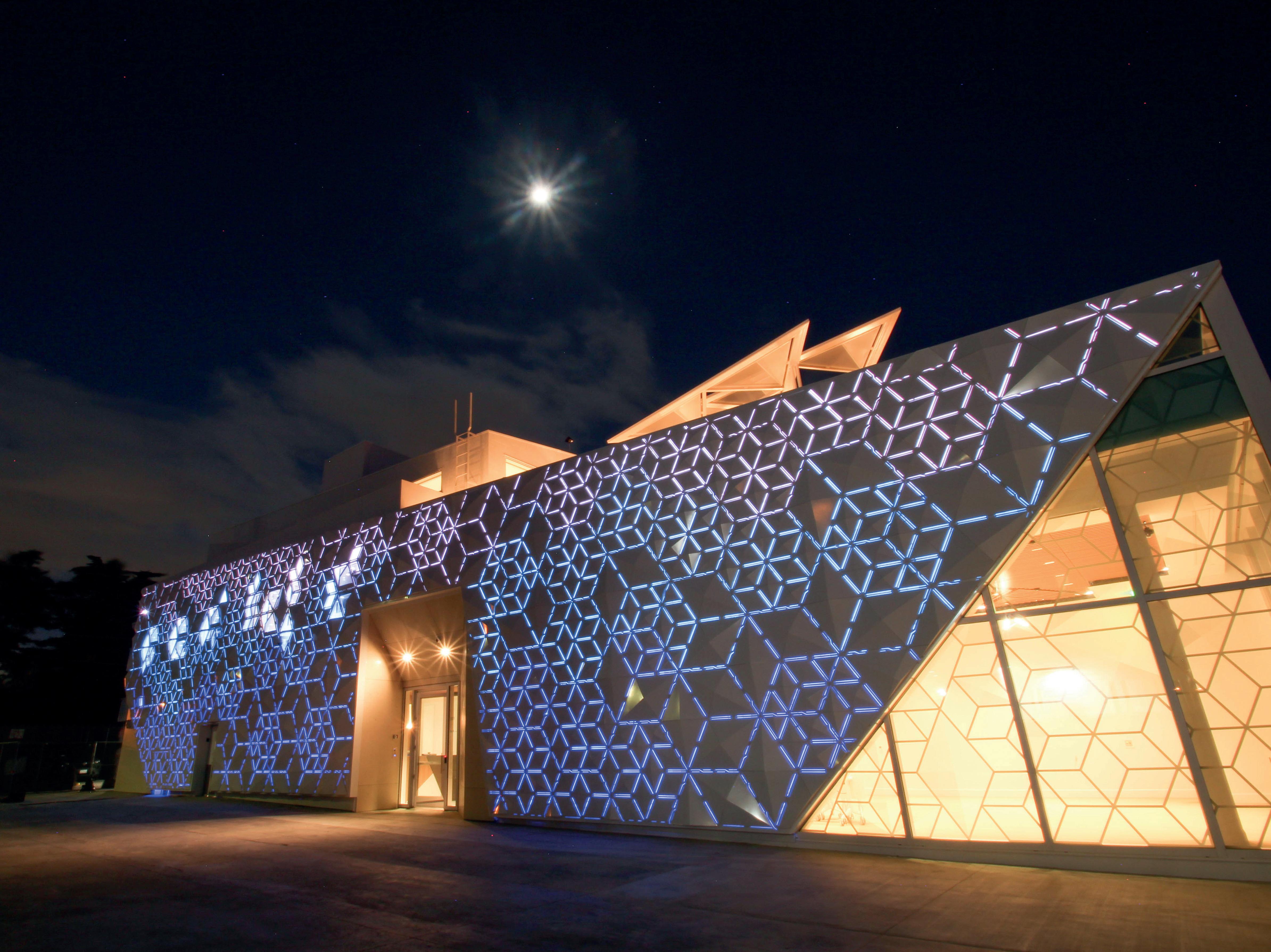
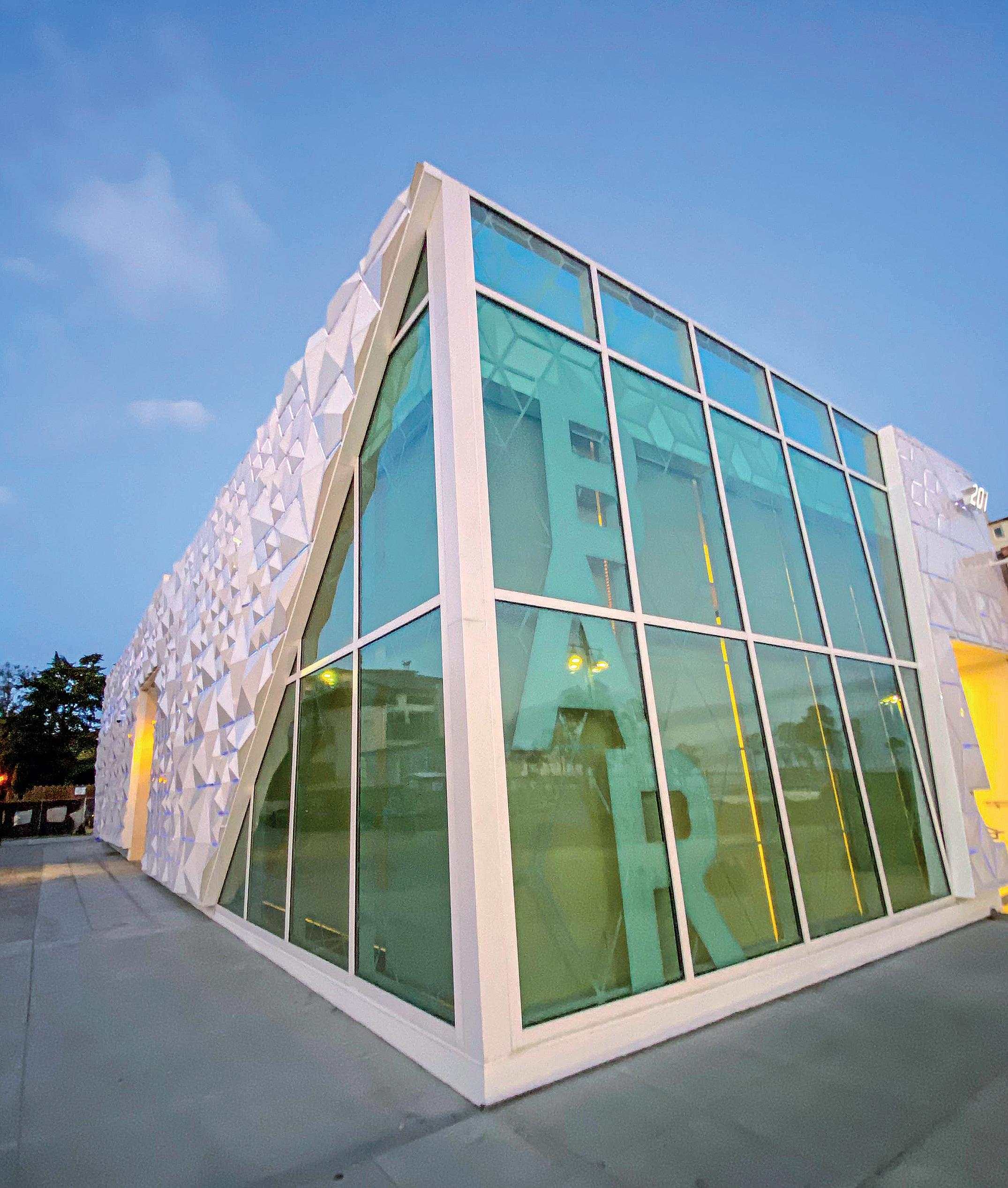
On the sands of the iconic Venice Beach boardwalk stands a new community hub for The Jewish Federation of Greater Los Angeles - BAR Center at the Beach. Built by Southern California-based Del Amo Construction, the nearly 100-year-old building is now open and equipped with exciting new spaces to gather, connect and live.
The Del Amo Construction team was tasked with implementing a total renovation of the former Israel Levin Senior Center, which was built in 1927 and originally served as a dance hall with multiple additions and remodels over the years, including the removal of its second floor following severe damage incurred by the 1994 Northridge earthquake. As a result, the building had become somewhat of a ‘Frankenstein’, which gave rise to multiple challenges throughout the construction process.
Some of the most significant constructability challenges that Del Amo Construction faced during the project involved navigating the unique site conditions, modernizing the historic building while maintaining its structural integrity and executing intricate architectural and design features.
Site on the sand
BAR Center at the Beach serves its community from a prime location on the Venice boardwalk. However, this meant the Del Amo Construction team was working directly on the beach and within an exceptionally confined area throughout the entirety of the project. Furthermore, the building’s original foundation was built on the sand itself, requiring the team to shore the existing walls in place while the new footings and slabs were being constructed via a relocated and cantilevered shoring system.
Case study 25 construction-today.com
The team gave constant attention to shoring, navigating new underground utilities in and around the temporary shoring and bracing to ensure the existing brick walls that were to remain withstood all new construction activities.
Historic roots
With consideration to the century-old structure, Del Amo Construction also needed to find ways to incorporate the original brick walls into the new center while strengthening its structural integrity. The team chose to apply Fabric-Reinforced Cementitious Matrix
(FRCM) to encapsulate the existing brick walls and provide increased structural strength that now supports new floors above. New materials and constructability approaches like the FRCM allowed the construction team to provide the Jewish Federation of Greater Los Angeles with a new building that is structurally sound for generations to come.
Design complexity
Designed by Belzberg Architects, BAR Center at the Beach displays an architecturally stunning, three-dimensional façade that functions as a sculptural art piece to help
26
the building standout in its oceanfront community. In order to bring this technically challenging architectural feature to fruition, Del Amo Construction orchestrated meticulous pre-planning with the design team, manufacturer and installers to ensure proper constructability of this unique element, including guaranteeing that every dimension would seamlessly integrate with the building, the lighting systems and storefront.
In particular, the lighting integration into the façade required a one-of-a-kind system that was installed by a process of trial and error to ensure that cabling to each of the individual three-dimensional panels would be fed without being seen from onlookers on the boardwalk. Furthermore, each section needed to be programmed to provide specific color schemes so that the wall façade would achieve the design team and owner’s vision. Del Amo Construction’s nimble construction processes and ability to make real-time adjustments helped the team to successfully implement this design element.
The result of this complex restoration project is three floors and 7,000 square
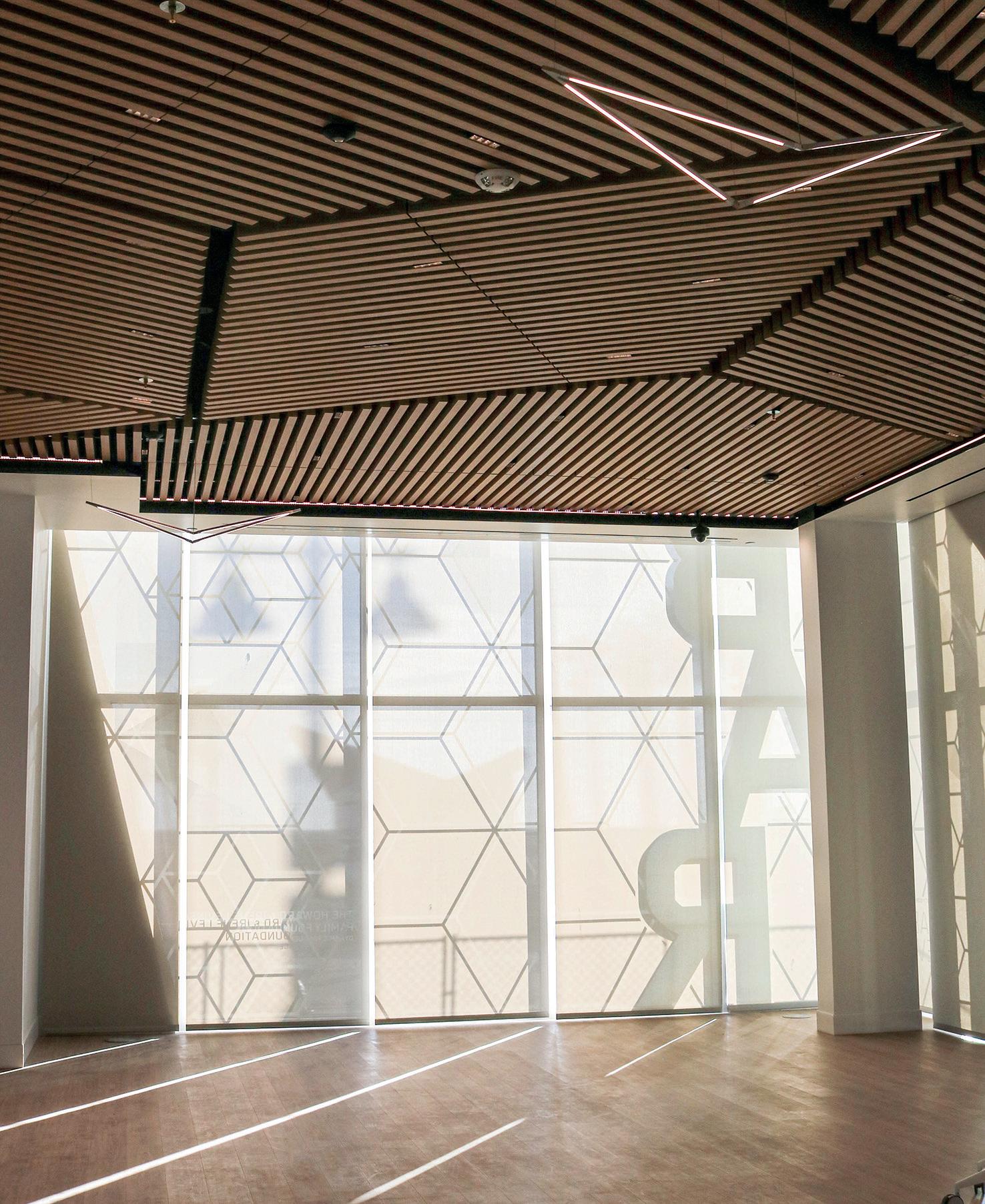
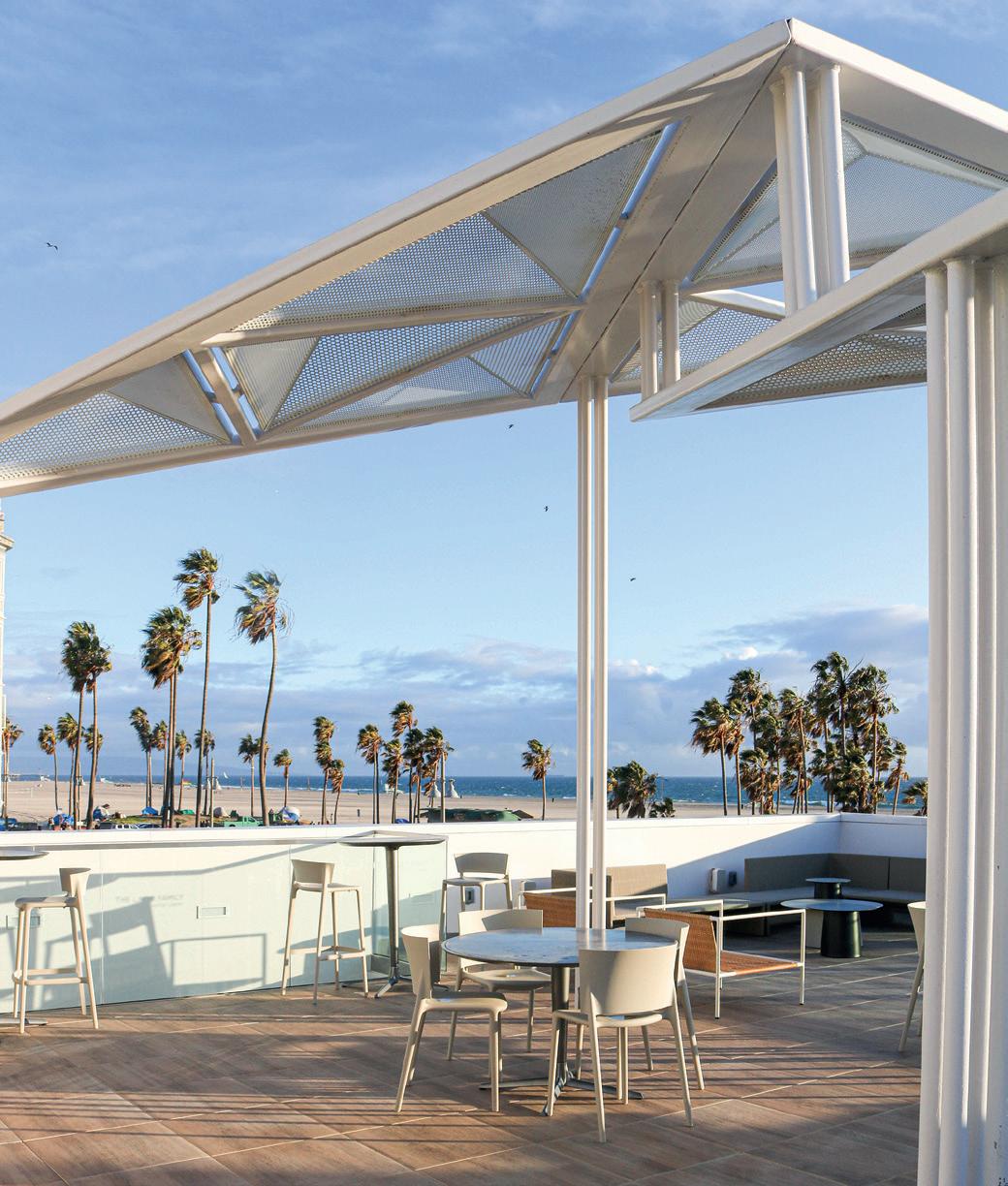
feet of new community space including a reception area, spacious community room, commercial kitchen, meeting rooms, classrooms, flex spaces, library and a new rooftop deck shaded by an angular, chuppah-reminiscent trellis. A threebedroom apartment sits atop the building to offer housing for recent college grads in exchange for them leading on-site activities between diverse sections of the community. This living component addition is a first amongother community centers within the federation.
The new BAR Center at the Beach not only accommodates the diverse needs of the populations it serves, but also enhances the building’s presence on the iconic Venice Beach boardwalk and brings new life and vibrance to the area. With its increased capacity and usability, its reach is projected to extend past Venice to greater LA’s Jewish community at large. Furthermore, in keeping with the neighborhood’s rich history, the center offers programming for all to experience and enjoy, regardless of religion. ■
www.delamoconstruction.com
Case study 27 construction-today.com
SHAPING tomorrow
Gregg Healy highlights how recent legislation aims to rebuild America

28
Too often Americans tend to view the relationship between government and industry as one in which the role of government is perceived as inhibiting business growth through legislation. This year though, through the passage of three major bills, Congress has significantly moved the needle to promote reshoring of manufacturing in America as well as secure investment in industries of the future.
The Infrastructure Investment and Jobs Act, the Chips Act and the Inflation Reduction Act are three major legislative bills that will help to reshape the America of tomorrow. Each offer its own benefits, but together they are truly driving longterm investment and transformation.

Of the three major bills, the Infrastructure Investment and Jobs Act was signed a year ago in November. It includes provisions to invest over $110 billion dollars in America’s roads and bridges, $66 billion in rail infrastructure, $17 billion in ports and waterways and $25 billion in airports among other major investments. All are significant investments and the American populous, as well as industry will reap the benefits. Not only will there be an increase in construction jobs to build these improvements, but data shows that private investment also closely
follows infrastructure investments creating a multiplier effect of both public and private investment in local communities. Better infrastructure also means that the cost of transporting good within the country, as well as for both importing and exporting of products will be reduced while the speed of travel increases. It is no wonder why countries like China have invested a significantly larger percentage of their GDP in infrastructure and now have the largest airports, over 22,000 miles of high-speed rail, the best ports and an advanced network of highways. They understand that as the manufacturing center of the world, they can keep the flow of commerce moving quickly and cheaply by maintaining efficient infrastructure. Additionally, the World Bank notes that the most effective way to increase GDP is to invest in infrastructure. This is the first step.
With all the disruption over the past several years from a shortage of microchips, many of which are made overseas, the passage of the Chips and Science Act in August of 2022 is significant as it incentivizes industries to produce microchips in the Unites States as well as promotes the further research and development of chip related technologies. Currently, Taiwan is the largest producer of semiconductors in the world. With China claiming
Trends 29 construction-today.com
dominance over Taiwan and overall global instability, there is now an impetus to manufacture more of these products – which so many of our consumer goods rely on such as automobiles, planes, appliances and computers - in the United States and rely less on imports. Nearly $53 billion has been set aside in incentives for manufacturing and research in this vertical, with an objective to solidify America’s dominance in semiconductor research while enhancing its ability to produce locally. This reinvestment in American manufacturing will only reap benefits for Americans as we increase our national security and independence,
we will also be able to create hundreds of thousands of jobs in STEM related fields that pay well above median wages in the communities where they are located. Already we have seen Taiwan Semiconductor Manufacturing Corporation (TSMC) announce a $12 billion investment in Phoenix to build a new manufacturing location, followed by Intel announcing another $30 billion investment in nearby Chandler as well as a staggering $20 billion investment in a new production facility in Ohio. These are just a few of the major recent announcements which highlight the communities that will benefit from these manufacturing and research facilities.

30
The third, and most recent legislation to pass in Congress is the Inflation Reduction Act, having passed right behind the Chips Act, also in August of 2022. There are many provisions in this bill addressing various aspects of healthcare, deficit reduction and energy production. However, the area that is particularly interesting to those looking to reinvest in America are the provisions around the accelerated interest in developing technologies to fight climate change and incentivizing investment around transforming our energy policy to promote sustainability goals. Clean energy, including solar panels and the adoption of electric vehicles, is not just an American objective. Globally we are
seeing many nations pivoting towards green initiatives and the incentives to produce products in the United States will strengthen our leadership in this space, create more jobs in this sector at home and help establish the US as an exporter of this technology. Already we are seeing the results of this bill as Savills tracking of electric vehicle investment shows that it exceeds $80 billion dollars and has created more than 83,000 net new jobs.
Individually, these three legislative actions are directionally positive towards promoting investments in the technologies of tomorrow, and moreover returning robust manufacturing jobs to the United States. Together, these three bills are a major catalyst in the momentum to reinvest in America and represent what is right when politicians lean into the industries of the future and target direct incentives to stimulate the macroeconomy. ■
Gregg Healy www.savills.us/industries/ industrial.aspx
Gregg Healy is Executive Vice President, Head of Savills Industrial Services Group in North America. Savills helps organizations find the right solutions that ensure employee success. Sharply skilled and fiercely dedicated, the firm’s integrated teams of consultants and brokers are experts in better real estate. With services in tenant representation, workforce and incentives strategy, workplace strategy and occupant experience, project management, and capital markets, Savills has elevated the potential of workplaces around the corner, and around the world, for 160 years and counting.
Trends 31 construction-today.com
Plan ahead
Cyberattacks pose a serious risk to the construction industry. Here’s how to mitigate the risk.
 By Carl Cadregari
32
Ransomware poses a risk to every industry, nationwide, however the construction industry faces heightened and unique challenges that make mitigating the risk of a security breach even more critical.
Demonstrating this, Nordlocker recently analyzed 1,200 companies in 35 industries globally that were the victims of cyber extortion between 2020 and 2021, and the results showed that the construction industry faced the most instances of targeted attacks. In an industry that relies heavily on confidential documents like drawings, contracts, budgets, and engineering notes, cyberattacks can pose risks that range from the external sharing of protected information to the inability of developers to access the documents they need for the successful completion of a project.
With cyber criminals becoming more and more sophisticated over the years, the potential damage and costs related to a successful attack are more worrisome and disruptive than ever before. In fact, a US Government interagency report estimated that, in the next year, cybercrimes will cost American companies over $6 trillion in damages.

Thankfully, the more common these attacks become, the more intel industry experts have been able to gather to
prevent future attacks and/or recover quickly if your construction business falls victim to a breach.
Stay up-to-date on data privacy and cybersecurity laws
Data laws and privacy regulations are ever-changing. To ensure compliance, construction developers and leaders should perform annual reviews of their data as it relates to the most up-to-date guidance to ensure that they are taking the proper safety measures. Establishing a process for this analysis will make certain that the review is done efficiently and effectively. For those that are busy with ongoing projects or don’t feel comfortable assessing data themselves, working with a thirdparty cybersecurity vendor can ensure that the reviews and updates are done by experts in a timely and accurate manner. However, if you are going to engage a vendor for a task of such importance, it is important that they understand your expectations around security and are meeting your mitigation standards.
Conduct regular internal risk assessments
Do you have user authentication systems in place? What about password protection? When’s the last time you changed your password? These are just a few and some of the
Security 33 construction-today.com
simplest questions that construction leaders should be asking themselves often to ensure they don’t fall victim to easily avoided breaches. One of the biggest mistakes that leaders make is to have all important documentation stored on one device, with no external backup. The breadth of damage caused by a ransomware attack can be minimized by making sure that critical contracts, sketches, plans and more are all saved in multiple locations, especially on an external hard drive. For heightened protection, utilize what’s known as the ‘3-2-1’ rule for optimized security, including creating up to at least three copies of important data, establishing two different storage formats, and keeping a copy of important documents offsite. Lastly, pay attention to security breach alerts and consider implementing an Endpoint Detection & Response (EDR) solution and Mobile Device Management (MDM) application for proactive threat identification.
Block unauthorized user access
The more important the data, the harder it should be to access. Whether it’s limiting credentials to select leaders as information gatekeepers or setting up multifactor authentication, it should not be a simple task to find and review confidential materials and communications. Additionally, be sure to have a swift and effective system in place with your human resources or administrative team to remove credentials for employees immediately following their termination or willful departure from your company. While you hope
that a former employee would respect the privacy of data, it’s best not to leave it up to chance.
Train your employees & hold them accountable
In today’s age, every onboarding schedule should have a cybersecurity element included. From there, annual trainings should be held to ensure that security measures are top of mind for employees. Once they have learned the basics and warning signs of an attack, challenge their understanding through methods like phishing email tests. Also, whenever baseline controls are updated, ensure that employees

34
are notified right away so they can do their part in protecting sensitive data. While human error is inevitable, leaders can add layers of protection through programs like multi-attempt password locks or encrypting critical files as added safeguards.
Lean on your peers
The global construction industry is a massive community, and it’s likely that others in the trade have the same concerns and experiences when it comes to cybersecurity as you do. Participating in information-sharing forums, sitting in on speaker sessions, or even having a conversation with

an old business partner can help construction leaders stay up to date on the most recent threats, draw insights from the mistakes of others, and learn about effective mitigation tactics with proven results. Another resource to consider is guidance made available by the US Computer Emergency Readiness Team (US-CERT).
Even with the strongest controls and prevention programs in place, a cyberattack is always a possibility, especially in a high stakes industry like construction. However, having the proper mitigation plans, training, and tools in place to protect your data can minimize damages and avoid costly disruptions. ■
Disclaimer: The summary information presented in this article should not be considered legal advice or counsel and does not create an attorney-client relationship between the author and the reader. If the reader of this has legal questions, it is recommended they consult with their attorney.
Carl Cadregari www.foxpointesolutions.com
Carl Cadregari is an Executive Vice President in the FoxPointe Solutions Information Risk Management Division of The Bonadio Group. He has more than 28 years of experience providing actionable technology, cybersecurity and data governance architecture, controls auditing and general cybersecurity planning. His experience includes over 18 years in regulatory auditing and standards compliance assessments, developing and executing programs predicated upon ensuring that client computer controls are functioning.
Security 35 construction-today.com
A success clear

36
Silver Spring Township, Pennsylvania is currently the fastest growing community in the greater Harrisburg, PA area. The township’s wastewater treatment plant serves a population of approximately 18,000 residents with an average treatment of .8 MGD and design capacity of 1.2 MGD. Knowing the number of customers to be served will continue to rise, it was looking for solutions to give its annual budget some breathing room while increasing the plant’s overall efficiency and capacity to stay ahead of the increased demand. Lowering operating costs for aeration, sludge removal and structure maintenance were also goals.
Solution
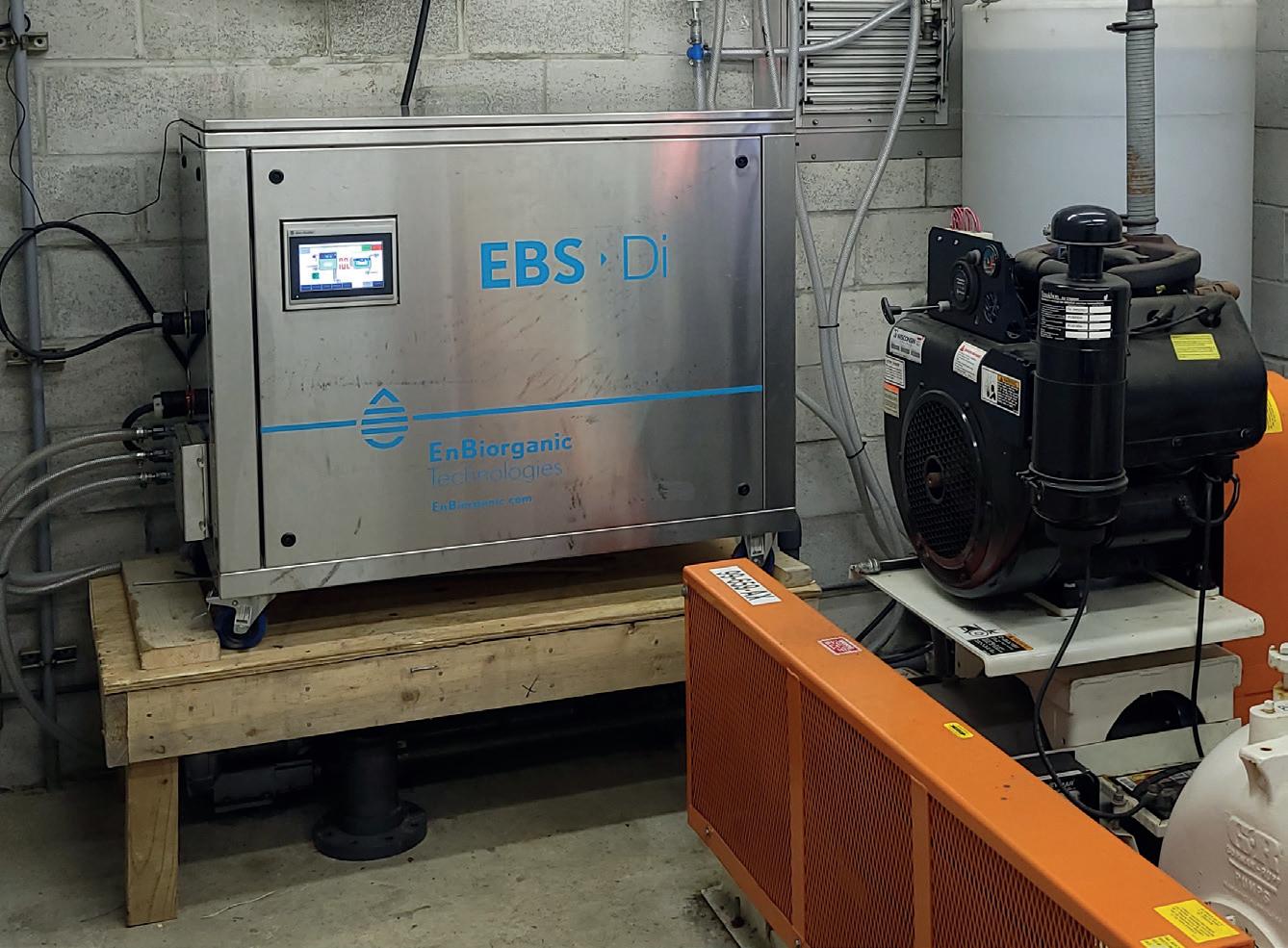
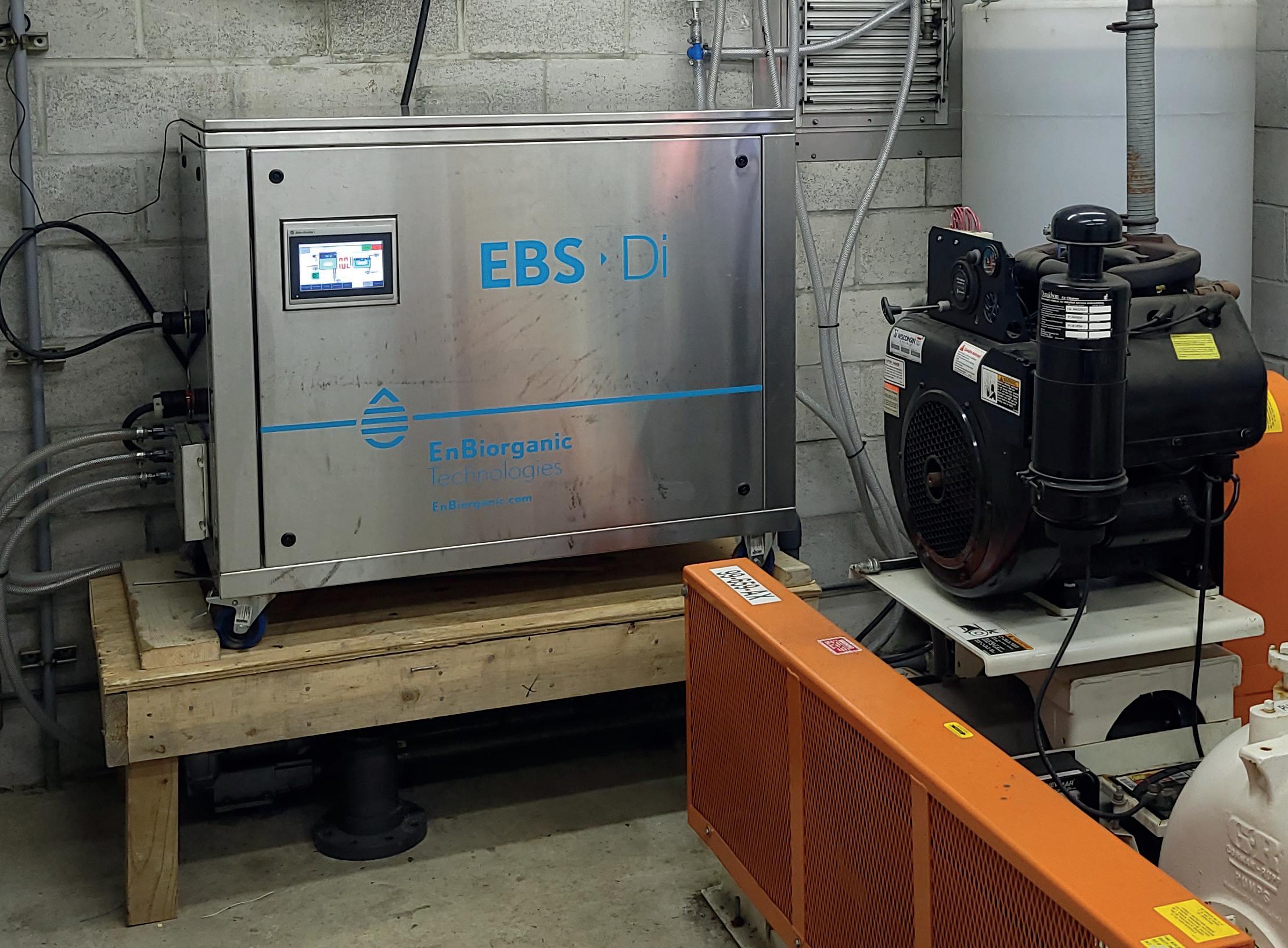
Silver Spring accepted an opportunity to have a riskfree performance trial of a new autonomous bio-augmentation technology from Enbiorganic Technologies. The performance trial would last for 60 days and at the conclusion, the city would have the option to keep the technology on a TaaS (Treatment as a Service) basis. A single EBS-Di unit from EnBiorganic Technologies (EBT) was set up by ABEL RECON, a licensed installer of EBT in one of Silver Spring’s lift stations approximately four miles from the treatment plant’s headworks.
Case study 37 construction-today.com
cleaner and easier to maintain once treatment commenced. Algae growth which typically required pressure washing and physical scraping to remove, can now be eliminated by a normal water hose. Over time the microbes will continue to progress upstream and positively impact other portions of the system.
Sludge Handling Costs
EBS-Di System Projections Current Operations
Demonstrated in Figure A, is the significant reduction in KWh used to operate the plant. Compared to the five months prior to installation, the EBS-Di system is providing 37 percent KWh reduction at an estimated savings of about $1600/ month. Even compared to averages of the same months the year before
5-months
38
KWh
prior April-July 2021 2021 average
or an aggregate of all KWh usage in 2021, this demonstrates a 28 percent reduction in energy consumption. The second major impact is the reduction in water consumption utilized for sludge handling. Sludge processing has now become more efficient, and less water is being sent to the landfill. It is estimated that $18/ton reduction for sludge handling will be realized. The total sludge load has also been affected. Jim Stevens, operator at the plant noted that the plant may be down to as low as seven loads from the usual nine. With this data trend, it is anticipated that a 62 percent reduction in monthly sludge handling costs will also be gained. As shown in Figure B, this will equate to approximately $4,284 per month in savings. Prior to the start of the performance trial an Economic Impact Report (EIR) was created to determine if the technology could provide benefit and to what degree. At only 90 days into operation, 46 percent of the total estimated savings anticipated by the EIR have already been reached and this will rise over time.
Due to the results, at the conclusion of the performance trial, Silver Springs decided to sign a long-term contract with ABEL RECON for the EBS-Di technology and service, realizing that the cost savings in sludge hauling, treatment energy needs and maintenance labor derived from having the unit would more than cover the expense for the service contract and put it on an excellent footing for meeting its growing community’s needs. ■
EnBiorganic Technologies, founded in 2019, bridges science and technology to contribute to a living planet. It believes in synergy – various parts working together to produce an enhanced result, and is driven to build innovative solutions based on a foundation of solid science. Its team is focused on solving big issues that will have a significant impact in its backyard and beyond. Its current breakthroughs in wastewater solutions, HAB mediation and animal agriculture create value for clients, while protecting the planet’s most valuable resources.
Case study 39 construction-today.com
News in Brief Profitable partnership
Associated Builders and Contractors (ABC) and leading global construction management software provider, Procore, have expanded their existing relationship through a strategic partnership that will provide ABC members with trusted, innovative technologies to help better develop people, win more work, create safer jobsites and increase profitability.
“Procore’s solutions will strengthen the value proposition of any contractor within the community,” says Michael Bellaman, ABC president and CEO. “We are thrilled that Procore is joining our group of handselected, trusted resources for ABC’s more than 22,000 member companies.”
Connected construction
Trackunit, the global leader in telematics solutions for OEMs, rental, and contractors is attending CONEXPO-CON/AGG 2023 in Las Vegas from March 14th to 18th. It will be demonstrating its latest range of construction equipment and tools apps to increase site, personnel, and equipment safety, productivity, and sustainability.
Based on data insights, Trackunit’s technology solutions reduce loss and theft across the project site and rental yard. “CONEXPO is a key opportunity to interact with the whole industry,” says David Swan, Senior VP Products. “Construction now understands that technology, and connected machines and systems are a major contributor in maximizing fleet utilization and improving employee safety.”
Trackunit will announce new collaborations and partnerships that demonstrate its continued ecosystem expansion.
major milestone McCarthy Building Companies, Inc. has celebrated the topping out of Houston Methodist’s new Cypress Hospital campus located in the greater Houston area. Sitting on 105 acres and consisting of a seven-story hospital, two medical office buildings, and a central utility plant, the campus boasts a mixture of built-out space as well as a shell for future growth. McCarthy broke ground in February 2022, and construction is scheduled to achieve substantial completion by the end of 2024.
A
To acknowledge the construction milestone, speakers reflected on the work accomplished safely and look ahead to the work needed to complete the campus.
Luxury living
Cushman & Wakefield has advised Optima in the acquisition of a 22-acre development site in northern Scottsdale, Arizona.
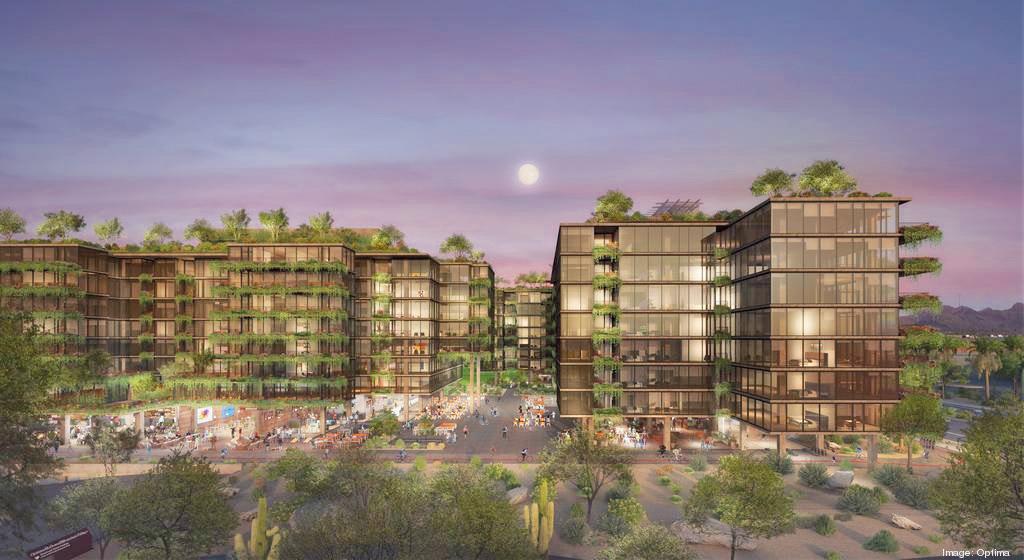
Chicago-based Optima is constructing a new luxury mixed-use residential project named Optima McDowell Mountain Village™. The project will consist of six eight-story buildings totalling approximately 1330 residential units plus 36,000 square feet of commercial space and amenities.
Optima acquired the land for $44.75 million. “This will be a world-class residential project, providing much-needed upscale housing in the growing Scottsdale area. It is strategically located along the freeway, making it very convenient for residents to access any destination,” says Don Arones, Managing Director with Cushman & Wakefield in Phoenix.
40
Strong solution
CINTEC North America, a world leader in the field of structural masonry retrofit strengthening, repair, and preservation, has revealed that its CINTEC Reinforcement System was used to repair the John Sopinka Courthouse in Hamilton, Ontario, Canada.
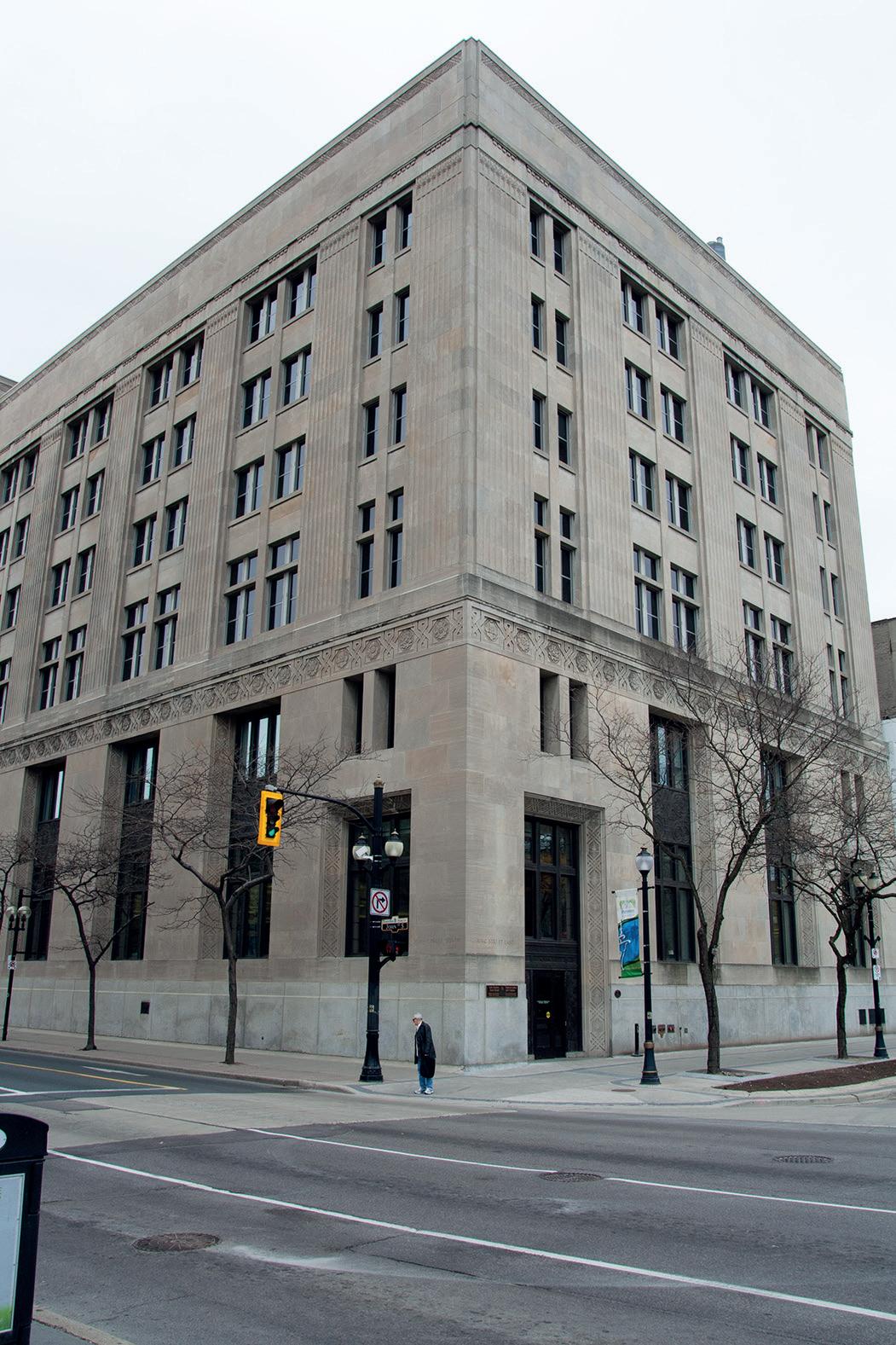
a+LiNK Architecture was retained and provided specialized knowledge to preserve the cultural heritage of the building by Infrastructure Ontario. The practice provided an investigation, analysis and a proposed solution for the stone façade restoration of this historic courthouse. The restoration included repairs
and re-attachment to five storeys of stone on the building envelope, original masonry components and the metal canopy. With this analysis it was determined that the original ties were loose, deteriorated and failing.
The CINTEC Reinforcement System was used to re-attach the stone to the diverse brick back-up wall. The fact that the CINTEC anchors attached both adhesively and mechanically, which provided progressive failure as opposed to brittle fracture, as well as inherent fireproof capability were a strong consideration.
 ▲ John Sopinka Courthouse
Industry News construction-today.com 41

ROSS
can
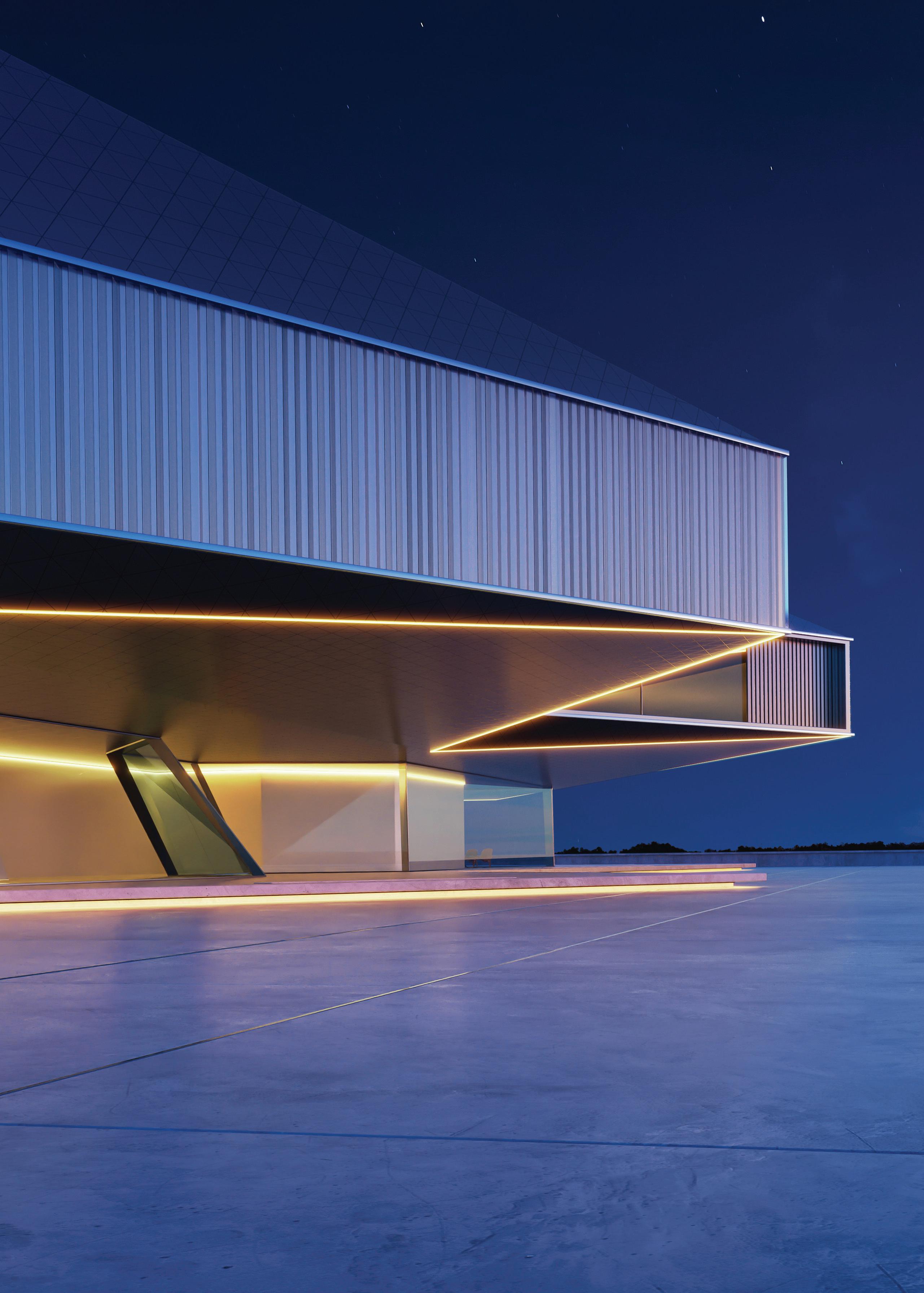
Founded in 1983 by Beth and Scott Ross and today led by CEO Dave Miskovich, ROSS Companies (ROSS) has operated – at least historically – in the metropolitan area of Washington, DC with a distinct, family-owned business mentality. Such an ethos has inspired dedication, commitment, and personal accountability across the team – or, in short, all the things that makes ROSS stand out in an increasingly competitive US construction market.
“When I joined the company in 2003, my goal was to embrace the family-owned atmosphere, while, at the same time, leading the company
into the future through technologybased innovation and attracting the best multi-family professionals to key positions within the organization,” says Dave Miskovich, CEO at ROSS. “Since then, we have gone on to become a full-service, vertically integrated organization. We acquire through ROSS Development & Investment, manage, and lease through ROSS Management Services, and renovate through ROSS Renovation and Construction. On every project, we work from a deal and managerial point of view, ensuring we incorporate property management into our underwriting and construction budgets.”
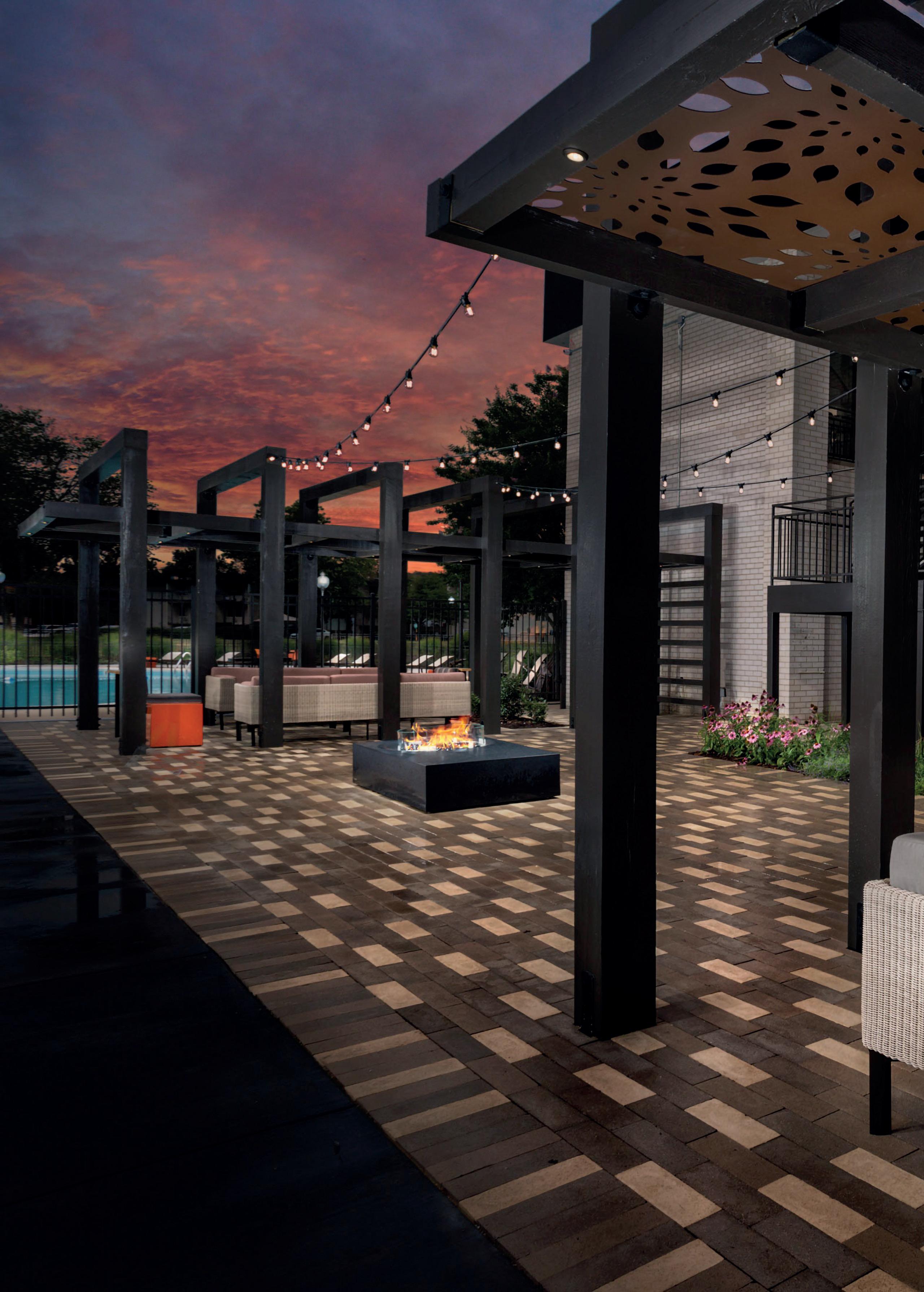
As it turns up the heat with acquisitional and organic growth, complex projects are becoming small fry for ROSS Companies
44
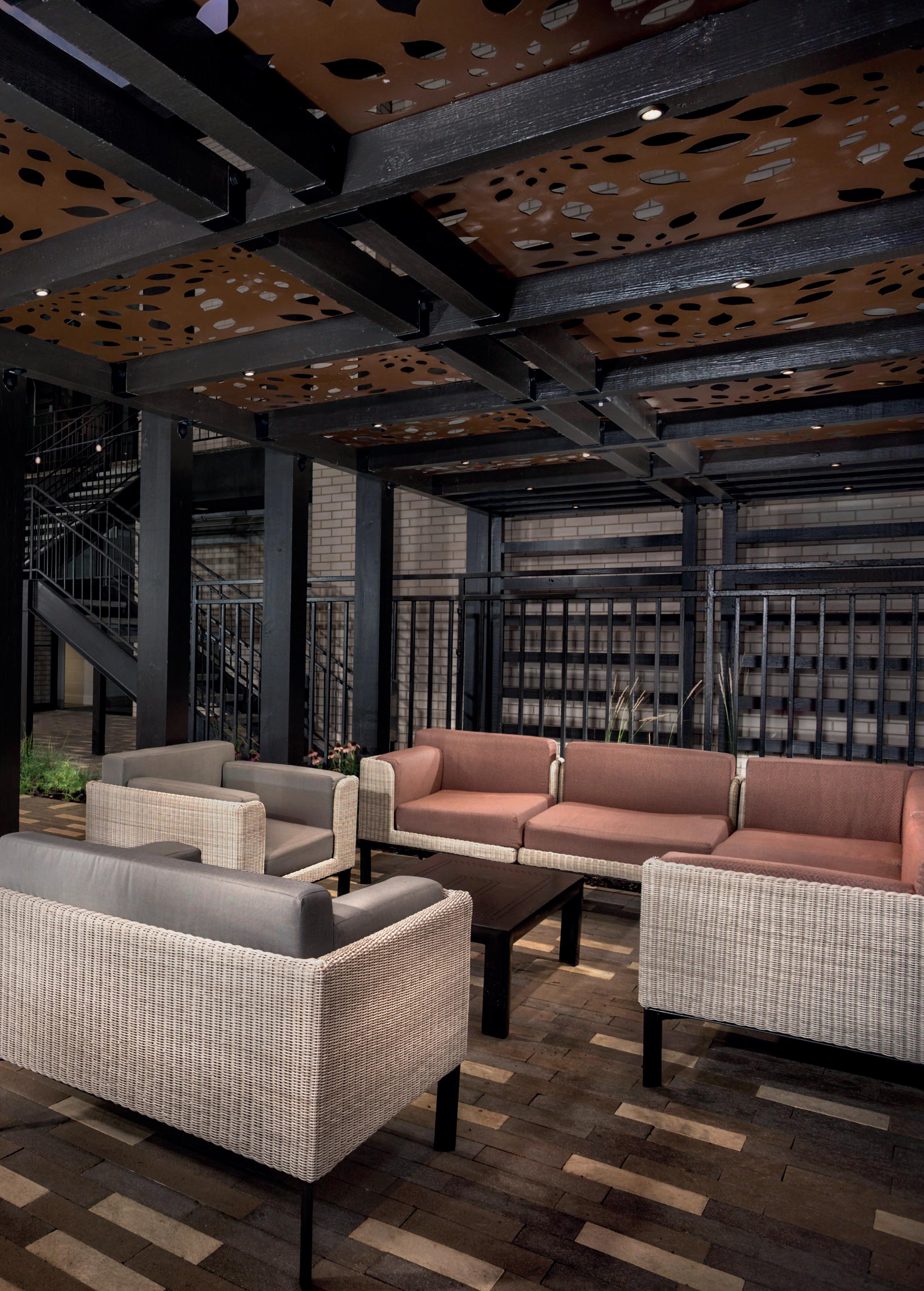
construction-today.com 45 ROSS Companies
Strategic planning begets commercial growth. This much has been made evident by ROSS. In 2017, for instance, the company made the bold decision to expand south, opening a satellite office in Richmond, Virginia. The move has paid dividends. Now the company proudly provides efficient, hands-on services to Richmond, Hampton Roads, and the Carolinas.
Today, ROSS is widely respected in all aspects of multi-family property management, ownership, renovation, and construction. “It is important to understand the critical components which lead to longterm success before starting a renovation or construction project,” asserts Dave. “Our approach to asset preservation and managerial efficiencies provides a unique operational perspective and forms the backbone of our relationships with clients and vendors, which we have built up over the past 40 years.
United as one
“Historically, the multi-family industry has been slow to adopt innovation,” he goes on. “However, one of the biggest lessons over the past three years has been the importance of embracing it, which will not only make our business more efficient but also help clients to understand the importance of technology. We are constantly evaluating tools to improve efficiency, working with our technology partners to understand industry trends and, more recently, looking outside the industry to find cutting-edge products and services that will enable us to stay up to date with latest market trends.”
This is just one of many lessons learned since the pandemic began. The last few years have served as a litmus test, clearly discerning the kind of stuff a company is made from. Fortunately, ROSS passed with flying colors. The pandemic forced every company to reevaluate and rethink. With ROSS, it was no different. “Not only did Covid-19 cause
us to pause and reflect on who we are, but it also redirected our focus back to how we do business on a fundamental level,” says Dave. “The companies that survived were the ones that had strong foundations and a robust leadership team. Our ability to adapt to unforeseen working conditions was solely due to the strength of our people; we tackle every challenge as a family. Over the past two years, we united to overcome even the most trying of obstacles, and came out a stronger, more determined company.
“As a network, we quickly pivoted our strategy to adapt to the pandemic and the various regulations that were put in place,” he continues. “We relied on the strength of our employees, and trusted that together we would persevere. We knew we had a great team before the pandemic, but I believe we surprised ourselves in how quickly individuals stepped up to support each other. Their ability to shift to a remote working environment, implement safety protocols, and ensure high morale in extremely uncertain times stands as a testament to their pride and commitment to our organization.”
It is clear that people are central to ROSS – the name itself is the name of its founders, and like the family that established it, that sense of belonging and commitment keeps the company afloat when the going gets tough. “We have always operated with a family-owned mentality and the understanding that our most valuable asset is – without any doubt – our employees,” notes Dave. “The core values that our company was founded on are integrated into every aspect of our culture, which inspires collaboration and teamwork across departments.
“Since employees are trusted by management, they feel empowered and they understand that they are an integral part of the overall success of the company,” he goes on. “Consequently,
ROSS Companies 46
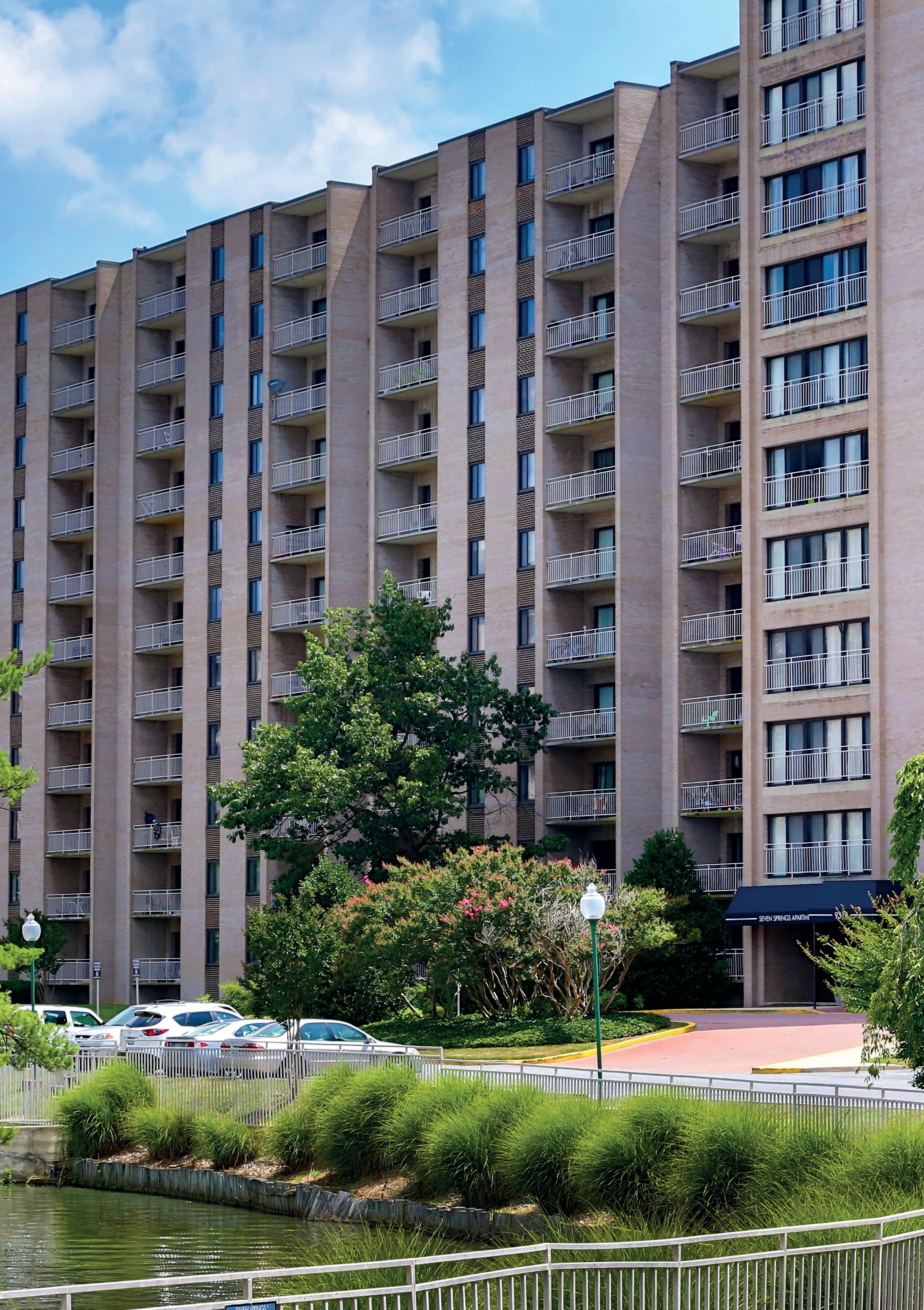
construction-today.com 47
we have built a sense of loyalty across our employee network. As is evident, I possess a great deal of pride for our team and the individuals who make a difference in our organization each and every day.”
The conversation then moves onto projects that the close-knit, family-oriented team has been working on. “On our most recent project, the Opportunity Zone deal, we worked closely with our client to secure approvals from all housing authorities,” Dave reveals. “Whenever we are taking on a renovation project with a client, we take a full-service approach by providing a scope, budget, and timeline. Complex projects such as this require tremendous coordination, communication, and support to reach the finish line. To accomplish this in the midst of a pandemic was extremely satisfying for us and our partners.
“It has been a good year,” he recalls. “One of the top highlights of 2022 was the closing and start-up of a substantial Opportunity Zone project in Newport News, Virginia, where we will be completing a string of $65,000-to-$70,000-unit renovations. This project was extraordinary in that it was not only our first Ozone project, but also included the placement of tax credits. The deal has
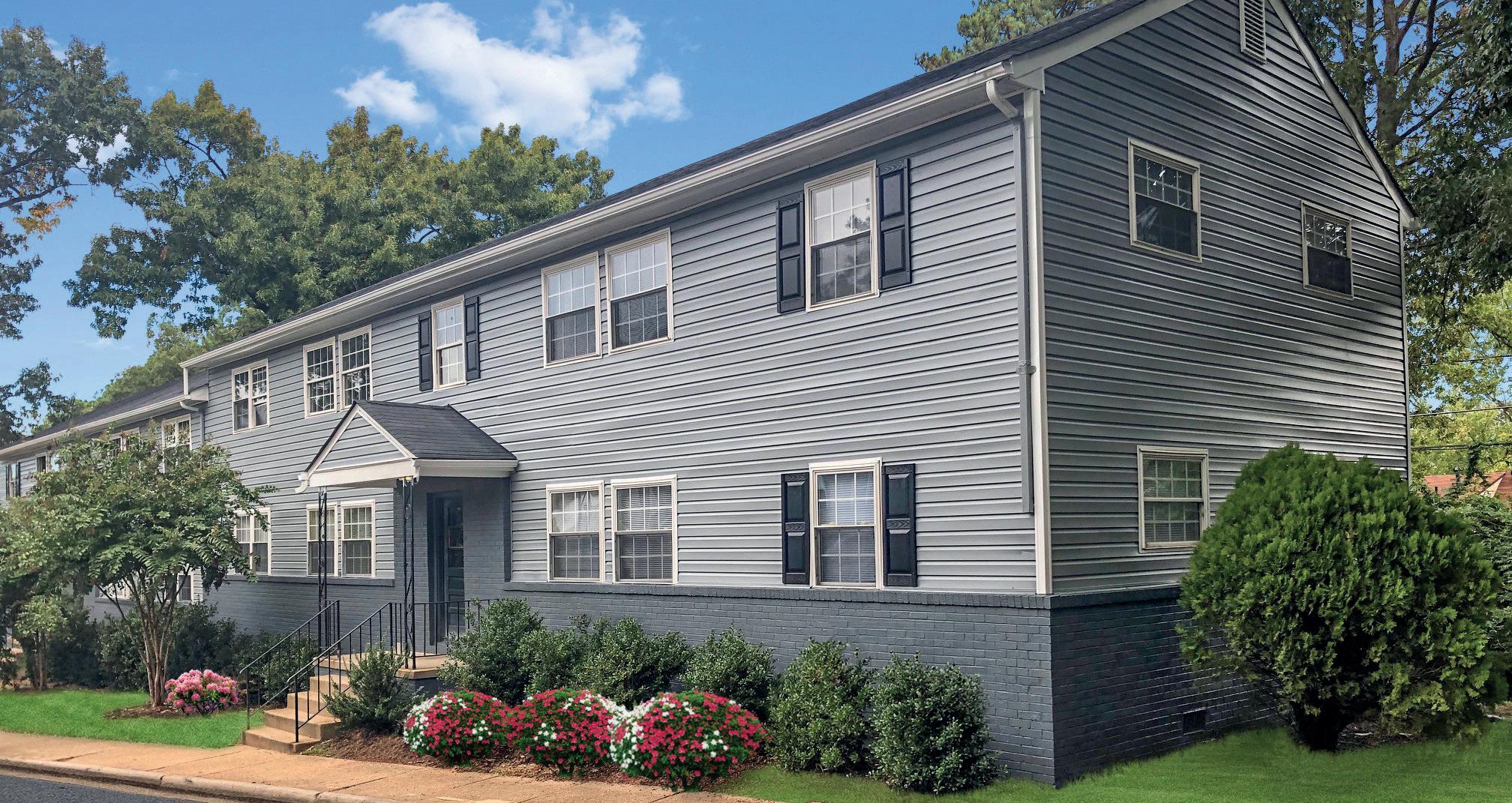
proved complex and has taken over two years to come to fruition, involving various lender and jurisdictional partners to complete.”
As we move into the new year, Dave reveals that ROSS’ biggest focus will be on acquisition and management of company growth. “Returning to a period of normalcy, we want to build on the strength of our team,” he concludes. “I would like to see ROSS further expand into the southern region, doubling our renovation and construction volume. We strongly feel our investment and commitment to growth has put us in a strong position for continued expansion and success in this market.” ■
www.ross-companies.com
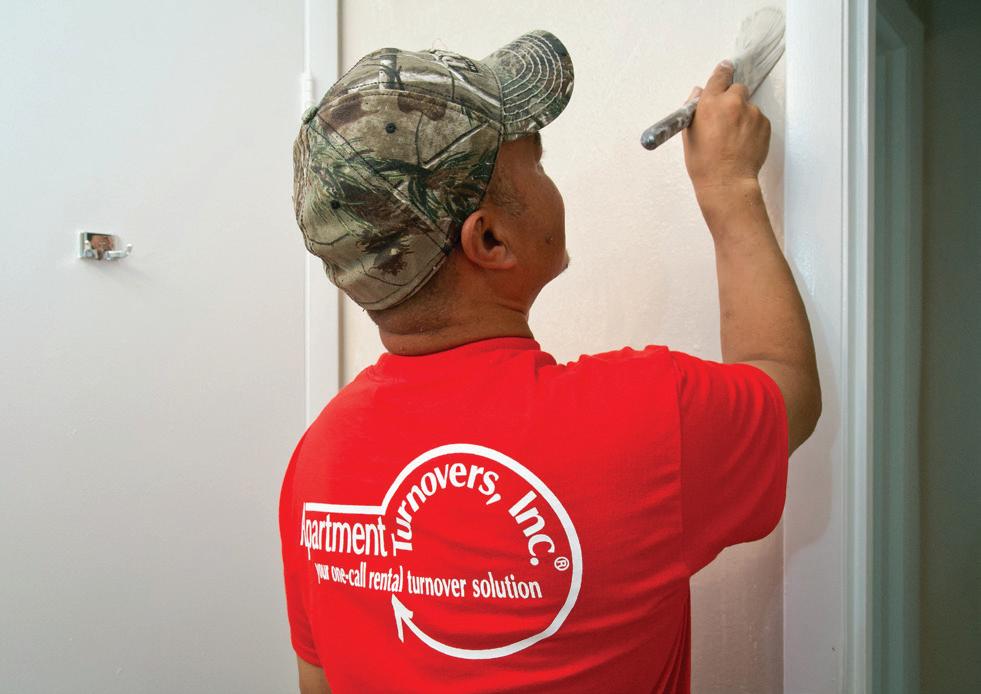
Apartment Turnovers and Apartment Restorers
Apartment Turnovers and Apartment Restorers is proud to be part of the ROSS Companies vendor family. We are a good team because our dedication to excellence mirrors the hard work, integrity, and dedication that ROSS embodies. The residents, tenants, and property management industry as a whole is better because of the associates who represent the ROSS Companies. We applaud the company’s major milestone of 40 Years. Well done!

48 ROSS Companies
VISION
OF SUCCESS
How Harold K. Jordan pivots to keep pace with the changing face of construction
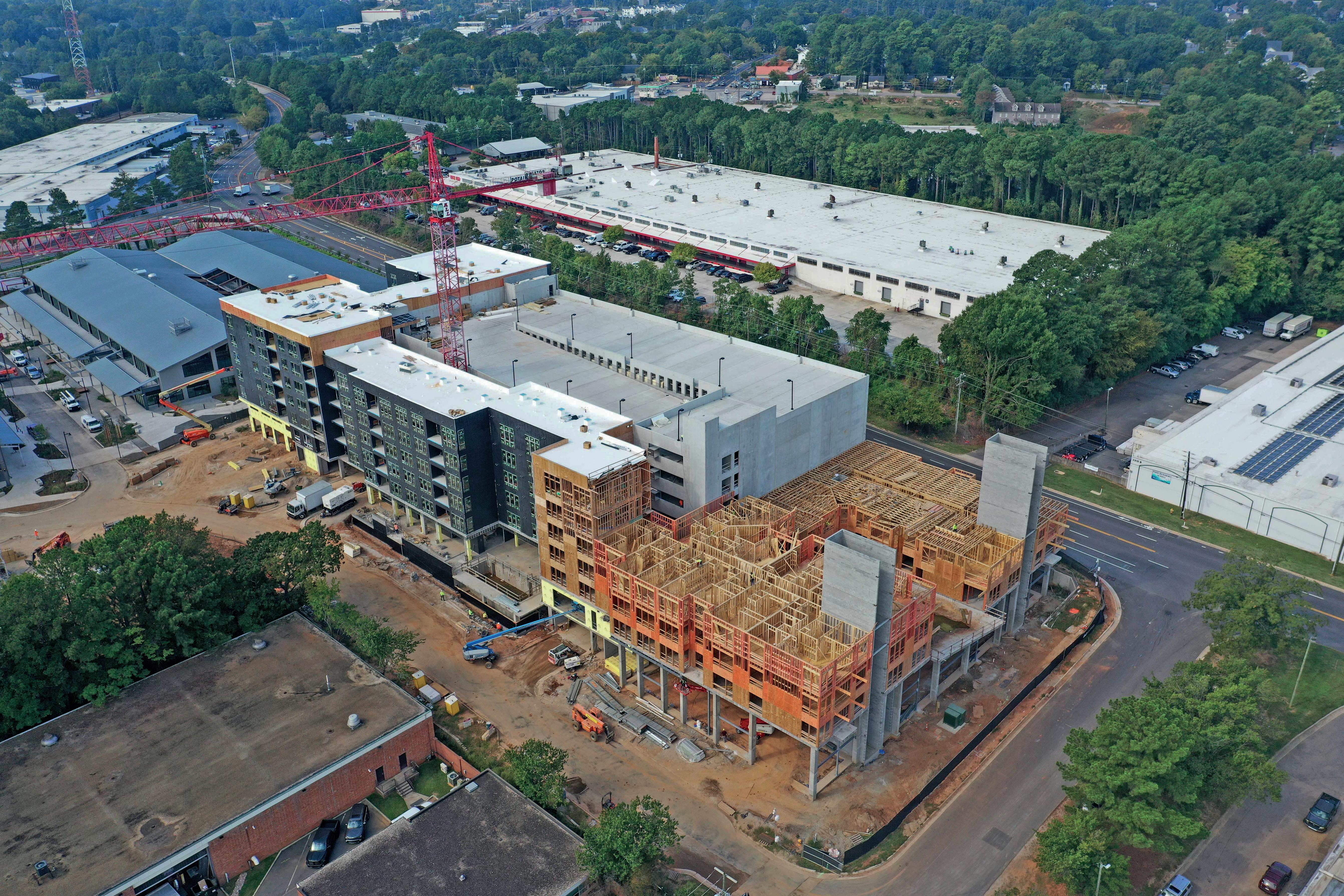
Harold K. Jordan & Company (HKJ) is a general contractor that specializes in both public and private, multifamily residential communities and commercial housing. Founded by Harold K. Jordan in Apex, North Carolina, in 1989, the company has grown to include offices in Wilmington, North Carolina, and Myrtle Beach, South Carolina.
Despite decades in the industry, the last couple of years have seen the business thrive exponentially to grow to almost double in size from $150 million to $300 million. As Director of Business Development, Scott Niebauer, explains: “We have been fortunate to sustain a large growth pattern while we experience growing pains from it. Finding new qualified staff has been a challenge, and right now,
50
it’s all hands on-deck. Most of our clients are repeat customers, and we have managed to maintain those relationships and our reputation throughout the growth process. Of course, there have been challenges, particularly surrounding schedules, pricing and the supply chain. As a third-party contractor, we are at the mercy of our clients’ and partners’ schedules. From architects and engineers to local municipality inspection departments, everyone, like us, is busy. Our goals require tighter management of schedules and trying to complete our projects as quickly as possible. We’re always innovating to resolve issues for our clients.”
Scott is proud of the service HKJ provides. From simplifying the construction process to completion and handover, the business strives
Harold K. Jordan
to ensure seamless project delivery. “We always make sure we meet and exceed the expectations of every single client. What sets us apart from the competition is, we are able to finish the job. Most contractors can achieve 95 percent completion, but always seem to struggle with the last five percent. We don’t have those struggles. We achieve 100 percent,” he enthuses. “Our goals are to turn over units during construction, so our clients obtain income to pay down the interest from their loan. This process requires extensive planning and execution.”
One recent project is The Artreaux complex in North Carolina. Located in the Industry Hill neighborhood, in Winston-Salem’s downtown arts and entertainment district, the 242-unit complex boasts five stories with a parking deck. Scott elaborates: “Right now, we are in the finishing stages of that project. We are framed up, the roof is on, exterior façade almost completed and the subcontractors are currently finishing in the interior units. We are very close to substantial completion leading to a final CO.”
An equally exciting project is The Residences at Glenwood Place. This 275-unit, high-end project promises a superior aspect and finish, as reflected in the top-end market rates. The Residences at Glenwood Place has contemporary architecture, unrivaled amenities, local retail, and a beautiful landscape design. It is located inside the beltline and connected to the Greenway in the heart of Raleigh. This multifaceted lifestyle destination with airy, thoughtfully finished apartments places residents in the middle of The Triangle’s finest culture, cuisine, and entertainment. This is truly one of the best projects HKJ has built.
Accomplishing the impressive scale of these projects involves collaboration. As Scott explains: “We work closely with our clients and their design teams to accomplish their vision. There are always initial expectations of their vision, and while we work to achieve those expectations, we always must factor in additional changes or considerations due to the increasing cost of materials. For the project to be successful,
construction-today.com 51
we need to ensure the design aligns with the proposed budget.”
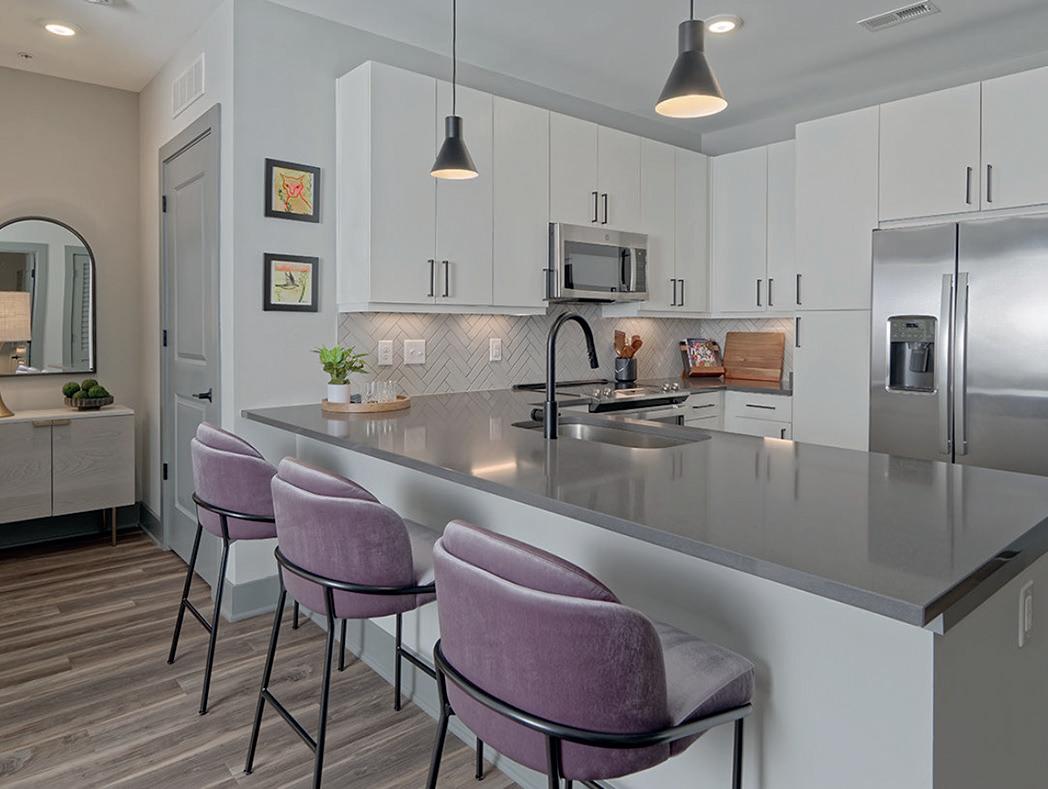
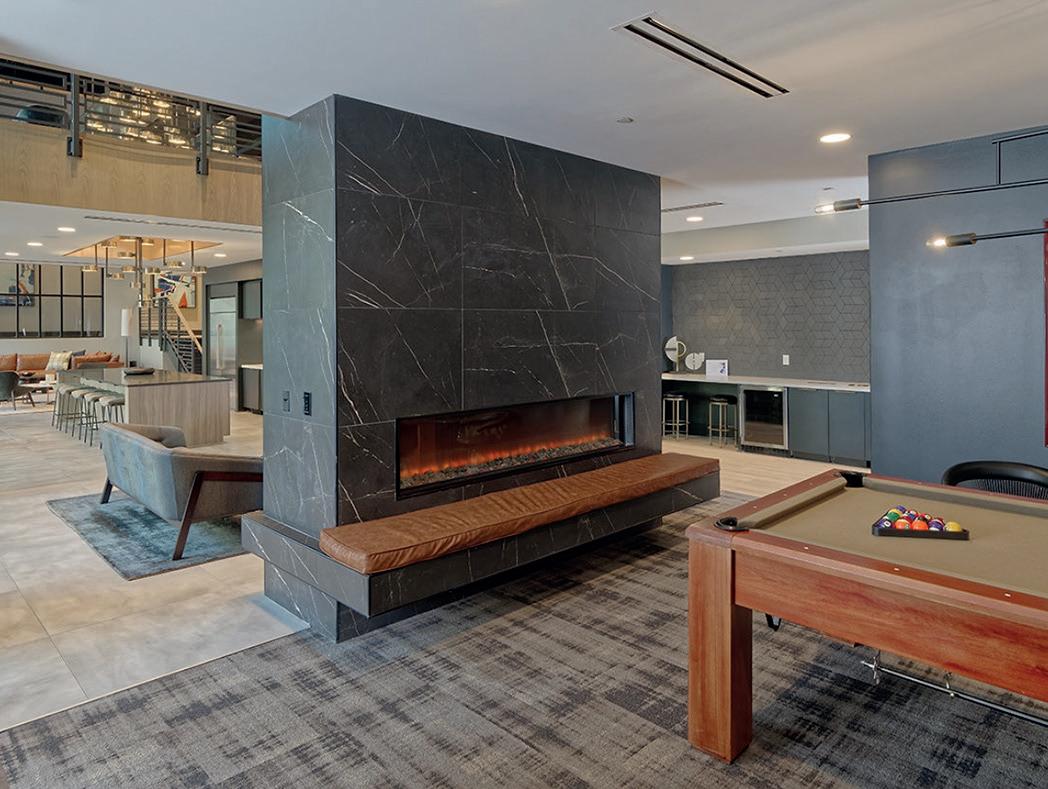
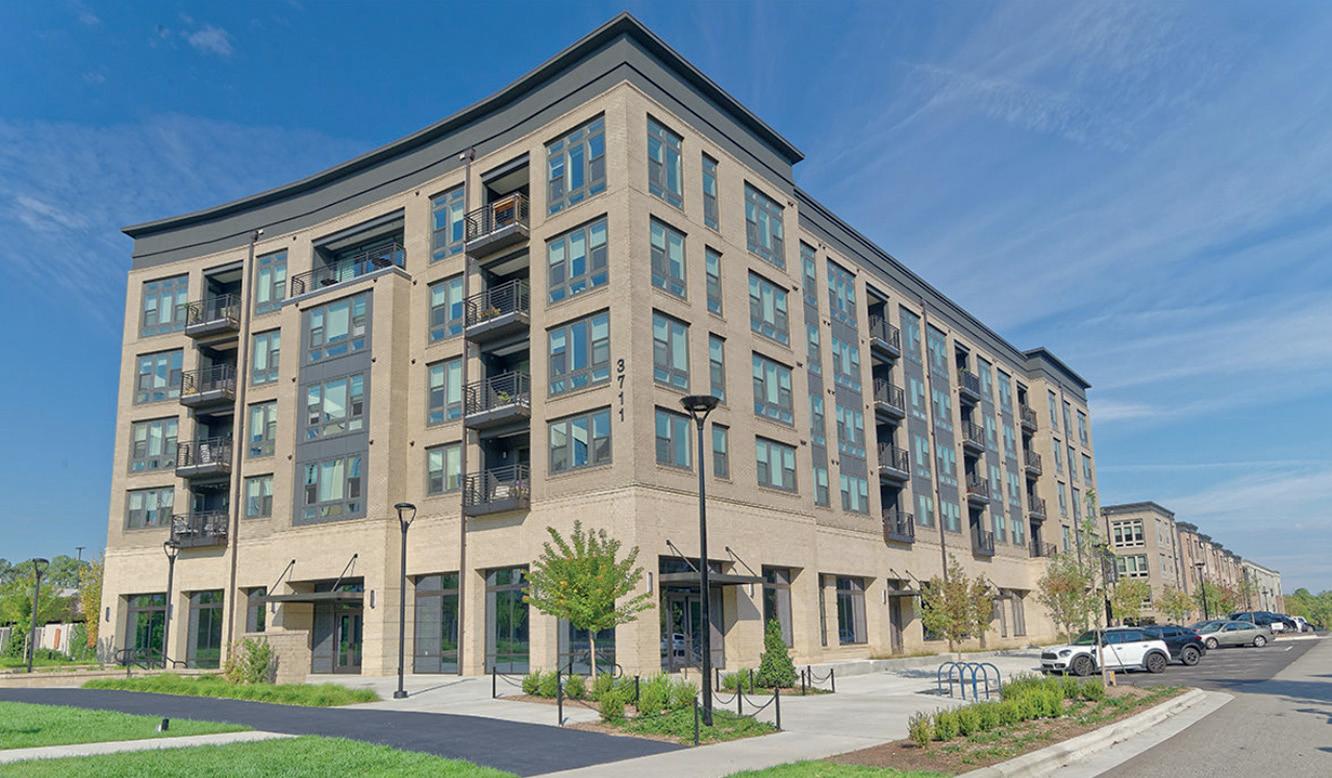
This unique way of working filters down to all members of staff and is cemented within the company culture. “We don’t micro manage our employees,” Scott highlights. “We have an expectation that they will represent HKJ, at its finest, and we allow our people the freedom to work on a project. Our employees are empowered to take ownership and make decisions to accomplish our tasks. Challenges are presented on every project. We focus on resolving those challenges early and proceed
with meeting our goals. While our culture is generally laid back, we are focused on getting the job done.”
This culture of ownership and empowerment is reinforced and rewarded with staff benefits. Scott continues: “Our employees have great benefits. We offer competitive pay, insurance, 401ks, and great potential to advance within our company. We make sure our people feel valued and reduce turnover within the company. Our staff are truly a talented group that enjoy their careers with HKJ. HKJ is committed to creating the best work environment – a place
52
where everyone’s voice is heard, and where communication, feedback, and employees are free to talk with any manager at any time about any topic.
“We also hold an annual event that includes announcing awards based on health and safety achievements. We are a safety-driven company and are always looking out for the best interests of our people. We believe it is important to recognize achievements of our talented employees.”
The pandemic is a pertinent example of a pressing health and safety situation, and HKJ responded with the safety of its workforce in mind. As Scott explains: “From face coverings to testing, we paid close attention to what was required of us, and that attention extended to our sub-contractors. It was a challenging time. Communication became key to the successful management and control of the infection. While we’re getting back to normal now, we’re still feeling the effects of that time.”
Future predictions
The supply chain was hit hard. Materials and delivery delays and availability forced the business to reassess its procurement and planning processes. “The pandemic caused attention to potential scheduling and procurement issues. We took the necessary steps to ensure materials were secured for our projects. This included subcontractors and labor in our process. As mentioned before, it’s been all hands on-deck, with existing staff working across multiple functions, hiring more people, and opening our vendor relationships to reach out to other subcontractors. The rising price of materials and labor has been a challenge. In some cases, we’ve had to renegotiate contracts to account for those increases, and this can only happen with open communication across the board.”
With three new projects in the pipeline, and currently, at full capacity, business doesn’t look set to slow down any time soon. Looking to the future, Scott believes that multi-family housing will continue on its trajectory. “Primarily
because interest rates are increasing, it’s making it tougher for individuals to move into single family homes. However, as things stand, at some point, the market will drop. What’s going to happen when it does, is something I can’t predict. Five years from now however, I would like to think that HKJ will have the same clientele. While we strive to secure new clients, our current customers are ecstatic with the work we do, and our ongoing projects with them leave little capacity for widening the gene pool. One challenge, which is out of our control, will the banks continue to lend to commercial construction? I think contracts will still get signed but the loan structure will be different. In the next five years, we will continue to grow, but perhaps, there will be a greater concentration of affordable housing, as well as alternatives for new market rate product.” ■
www.HKJconstruction.com
construction-today.com 53
Harold K. Jordan

54
CONSTRUCTING
Gabe Godwin of CSI Construction discusses the company’s working relationships, its latest ventures in Colorado Springs, and entering its 45th year in business

We currently have eight large multi-family (apartment buildings) projects for multiple clients in Colorado Springs. There are a couple of local developers reinventing downtown, and it’s very exciting to be part of that,” begins Gabe Godwin, President of CSI Construction since 2013.
“Colorado Springs was a hidden gem,’” Gabe continues. “The multifamily sector has been fairly dormant until five to seven years ago, but the market has recently blown
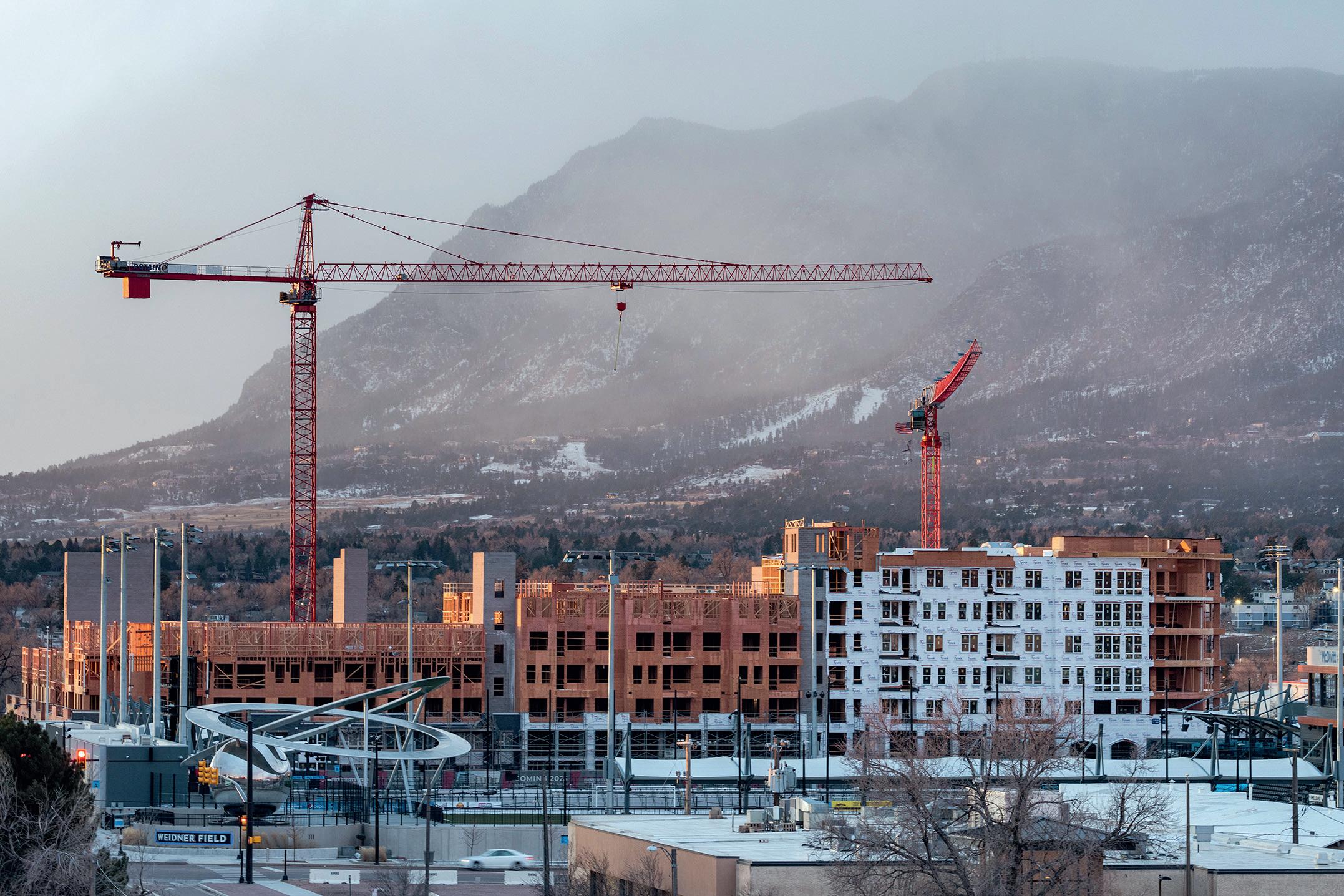
up! Colorado Springs is a beautiful city and an hour away from Denver, so it’s finally getting known and people are moving in.” With Colorado Springs now often ranked as one of the best places to live in the US, it is not surprising that multi-family projects are in high demand. Gabe explains “One of our largest projects is an eight-story apartment building and parking structure in downtown Colorado Springs. It’s 408 units, 721,536 square feet, and located right next to the new Weidner Field Soccer Stadium.
CSI Construction construction-today.com 55
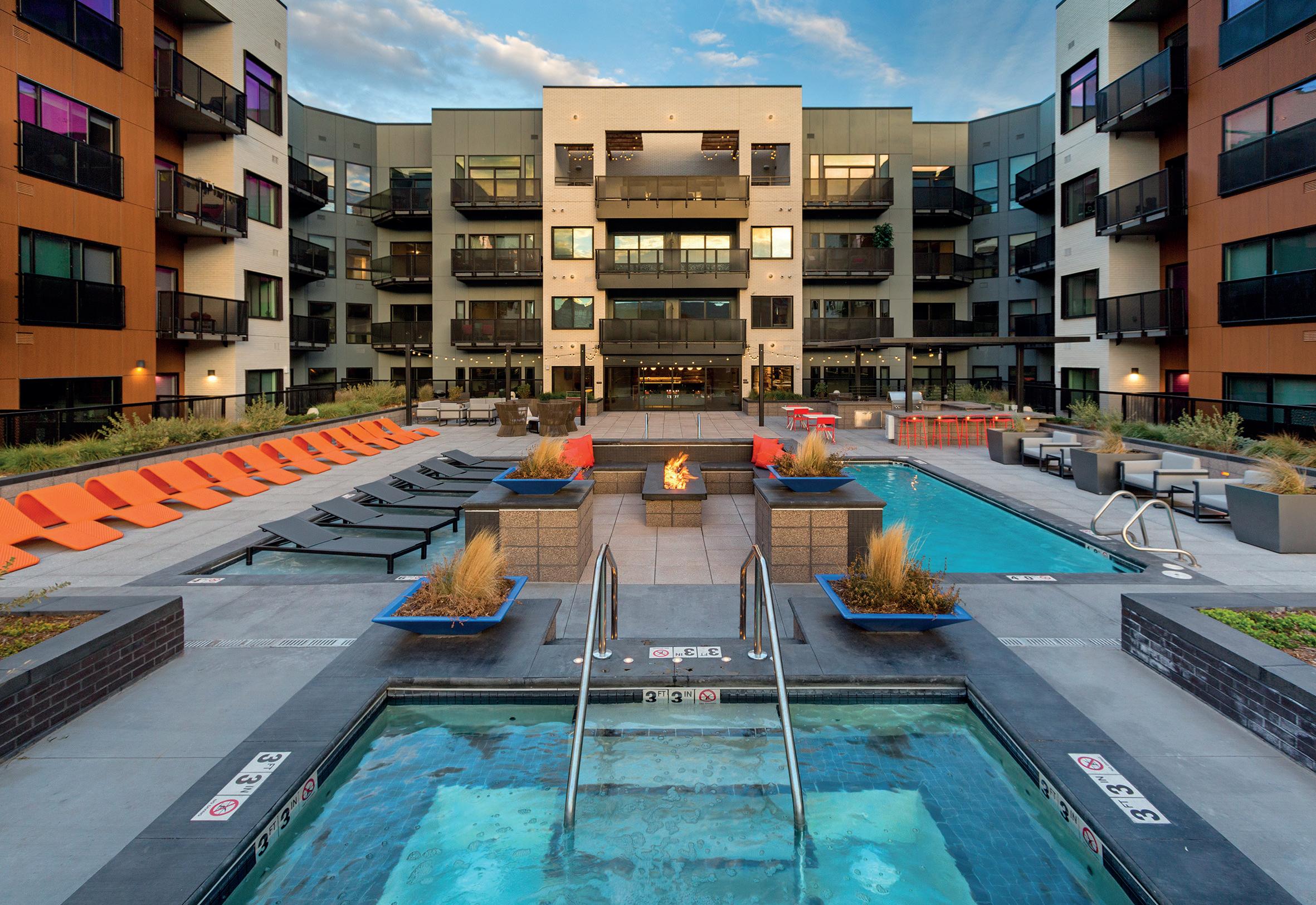
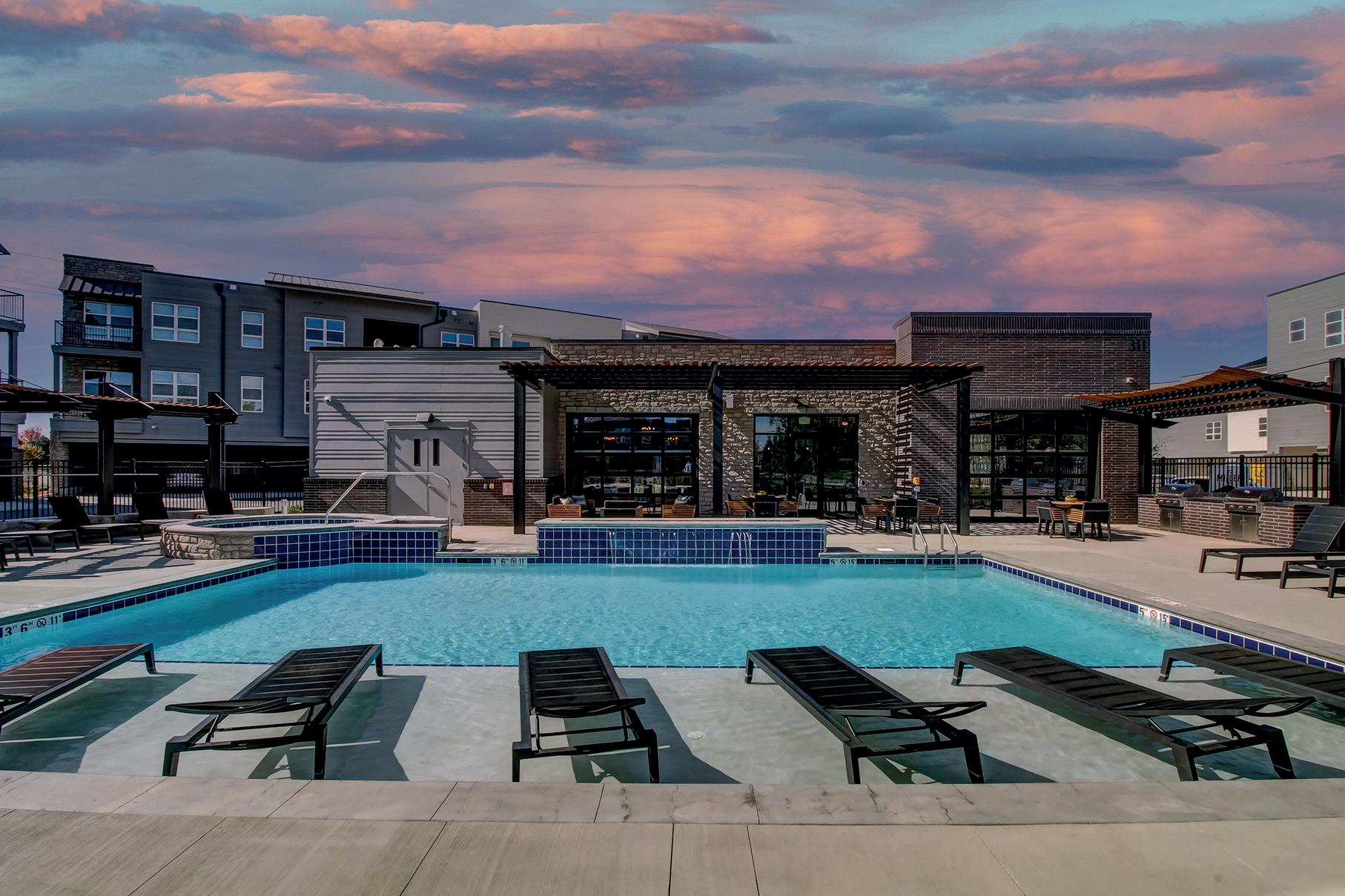 ▲ ECO Apartments in downtown Colorado Springs, amenity area on podium
56
▲ The Mira Apartments in Lafayette, Colorado, amenity area
Colorado Structures Inc (CSI Construction) was founded in 1978 and is currently licensed in 19 western states. Current Owner, Tim Phelan, has owned the Company since 1986. Gabe started with the company in its Portland office in 1994, eventually running the office for 13 years before becoming President in 2013 and moving to its headquarters in Colorado Springs. Its revenue has grown year-on-year, with a turnover of $430 million making 2022 its biggest success to date. Gabe states that “we had to reinvent ourselves with the downfall in the market in 2008 to 2009. One of our big goals was to diversify into one third multifamily and senior living, one third retail and commercial, and the final third as other – whether that’s site development, medical, or hospitality. However, the big picture right now means multifamily occupies most of our time and accounts for approximately half our total revenue.”

Company growth
Despite these obvious successes, CSI Construction did not escape the difficulties of the Covid-19 pandemic. “A lot of things changed overnight so it was a big challenge for us, especially having four offices in multiple states,” Gabe reflects. “We were working in San Francisco and the rules were a lot different than they were in say, Colorado Springs, where our head office is located. That was the biggest challenge – keeping up with the different rules and regulations for every state, county, and city, and making sure we stayed within the correct guidelines. We were considered an essential business for most of our projects so for the most part we kept working through Covid. We did have some projects shut down but we tried not to lay anyone off and did the best we could to accommodate the issues that everyone was dealing with.” Since we last spoke to CSI Construction in 2018, it has expanded to a fifth office in
Arizona. “I would say opening the Arizona office last year is the biggest change and addition we have had, and it’s still happening right now. Todd Asburry, who has been with the company for 20 years, has moved from our Portland office to run the new one in Arizona,” Gabe tells us. “Although we have worked in Arizona for a number of years on mostly small commercial projects for repeat clients, we haven’t had an office presence there. As such, we plan to grow our local reputation and we have just commenced our first large project there.”
Family culture
Despite its tremendous growth over the last decade, CSI Construction has maintained the familial company atmosphere and culture that it always embraced. “Our employees are what makes
CSI Construction construction-today.com 57
▲
Apartments,
our company. We have a lot of company and team functions that bring everyone together. Our culture is to work smart and productive, and at the same time, we want employees to have a great worklife balance, to be able to get away from work and enjoy downtime at home with family or friends,” Gabe adds. “I feel that keeps everyone in a good place mentally and helps them enjoy work, which in turn increases our productivity.” This is evident in the high personnel retention within the company. Gabe continues: “We preach teamwork and strive for family culture. Our employees are very loyal and employee retention has always been a huge deal for us. I know that we wouldn’t be as successful as we are without that loyalty.”
Sustainable future
This culture extends to its client base and valued trade relationships. “Similar to our clients, around 90 percent of our work is repeat business. We have relationships with our trade partners in each of the regions we work that go back 30-plus years. It can be very difficult for them at the moment with supply chain issues, so we work together to understand what is going to be the next delay or the next issue on their job,” Gabe explains. “We try to create a team atmosphere with our clients and our subcontractors. That includes open communication in order to find solutions to potential issues, and we do a really great job at mitigating those issues and pleasing our owners and clients on completion.”
City Gate
downtown Colorado Springs, 8 story, 408 unit apartment building
58
As it enters its 45th year of business, Gabe reflects on the achievements, goals, and future of CSI Construction. “Three years ago, our goal was to be around $500 million in five years. We’re currently at $430 million, so we should hit this target in the next two years. We are positioned to be a half-a-billion dollar company, but it is another step up if we want to become a billiondollar company. Such expansion incurs growing pains and heightened risk, so we will factor this into our discussions surrounding where we want to be by our 50th birthday. The executive committee will discuss all options over the next couple of years, as it’s all of us, not just me, that make that decision.” ■
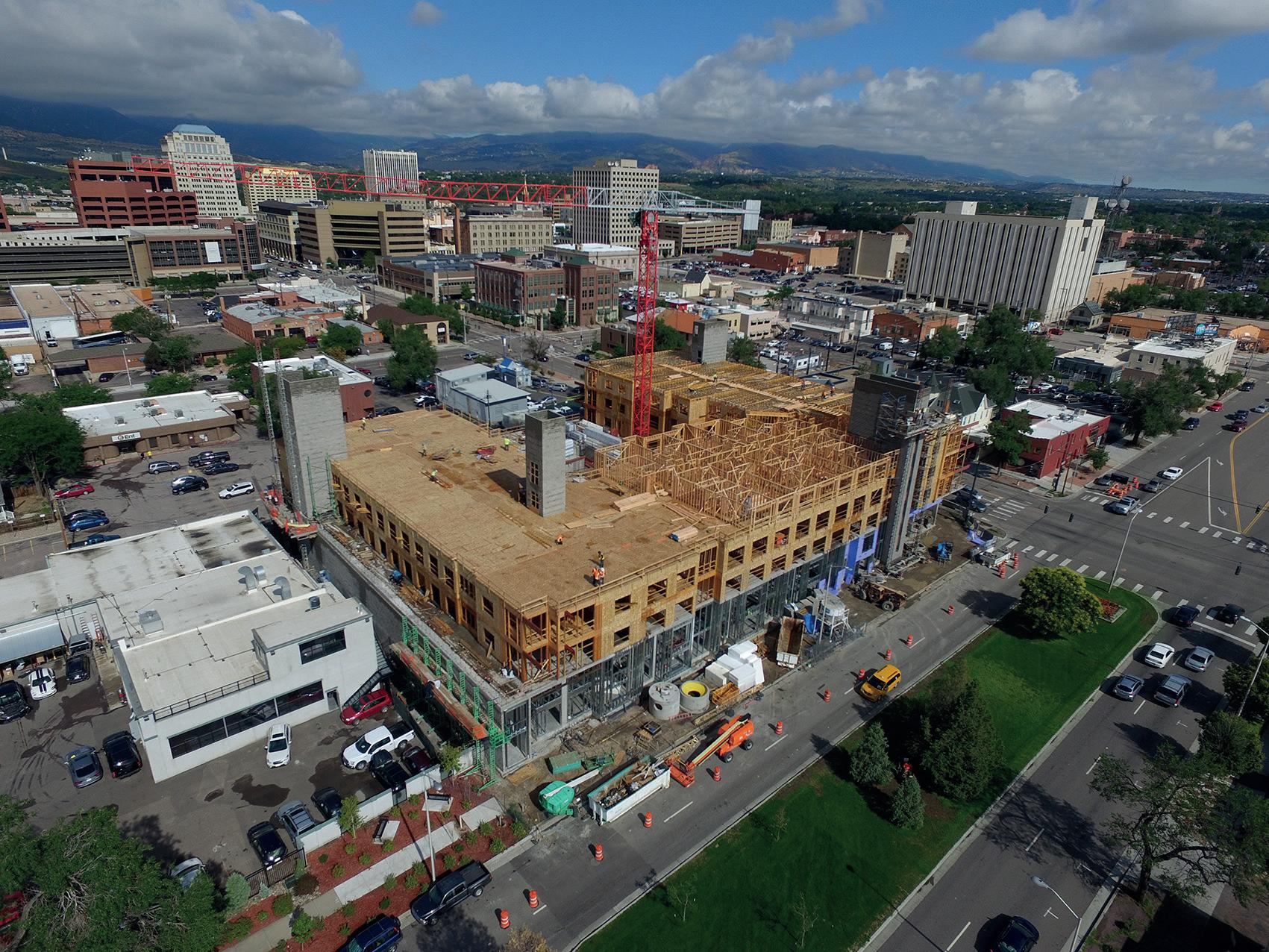
www.csigc.com
 ▲ ECO Apartments in downtown Colorado Springs, 172 units, 4 over 2 podium project, completed in 2018
CSI Construction construction-today.com 59
It’s SIMPLE
Having completed a spectacular project, Spence Brothers Construction owes its success to this approach
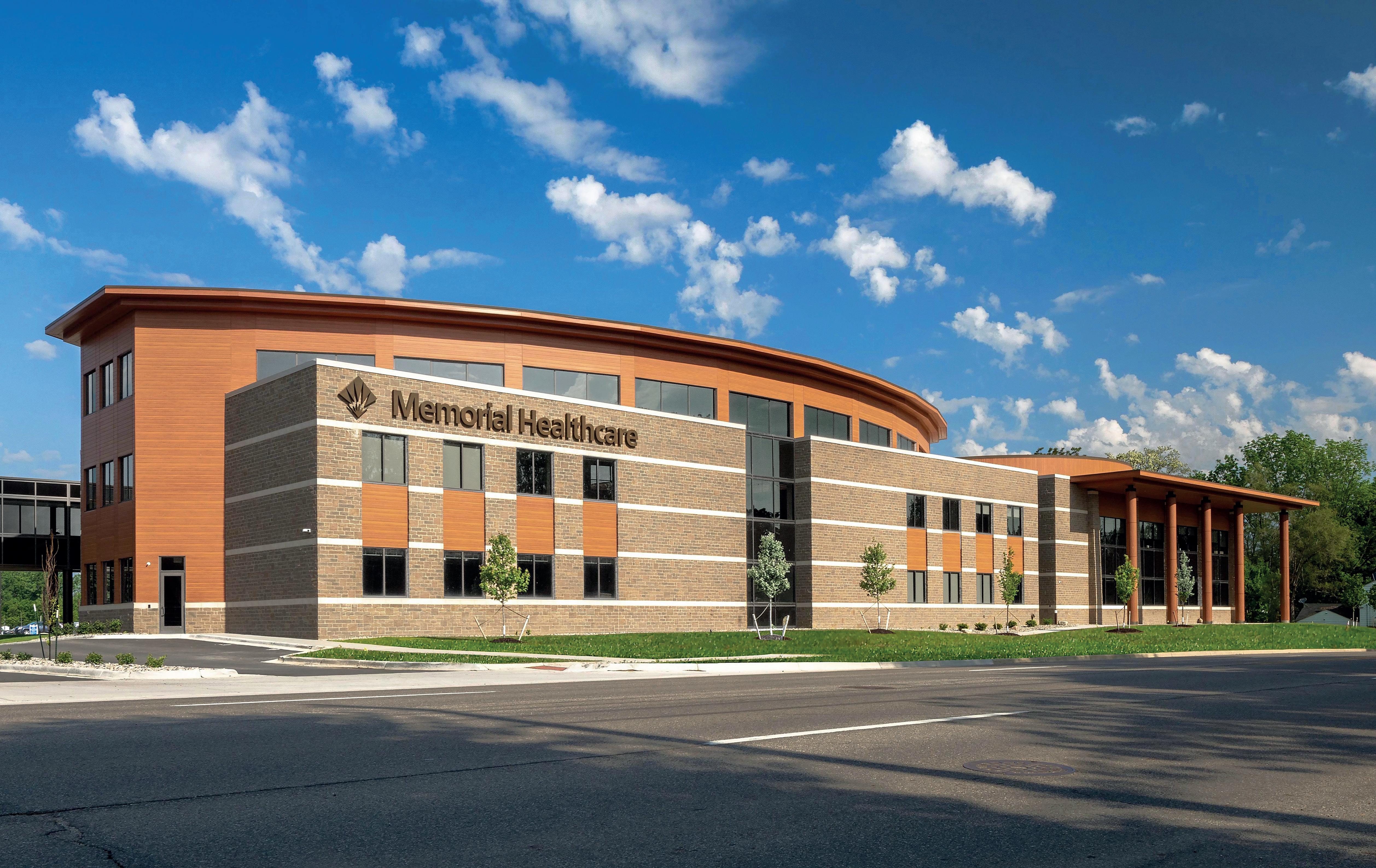
60
In the late 1800s, a fire ravaged through Saginaw, Michigan. In response, brothers Matt and Hugh Spence launched a startup construction company, named Hugh Spence & Brother, to help reconstruct the homes that were destroyed by the disaster. Fast forward to today, and the company now has offices across the state with locations in Traverse City, Saginaw, and Ann Arbor. “Our niche markets include higher education, healthcare, housing, and office facilities. We also do quite a bit of water and wastewater treatment plant work, including self-perform concrete and carpentry services,” shares Brian Keeler, the Vice President of Preconstruction. Brian, who is joined by Shane Willis, Vice President and Project Director, and Jake Golden, Senior Project Manager, discuss what has made Spence Brothers (Spence) a leader of construction in Michigan for 130 years.
“We value family deeply here, and although we expect hard work, we realize that family comes first. That is part of the culture we have at Spence,” says Brian. It is one of the many reasons why the company stands out from its competitors. At Spence, each project is managed with a very people-centric approach, and with locations across Michigan, its teams are able to take greater care of project-owners with shorter distances to travel to project sites.
construction-today.com 61
Spence Brothers Construction
We want to make sure that owners trust us to manage their funding and understand their vision to get the job done, and done well
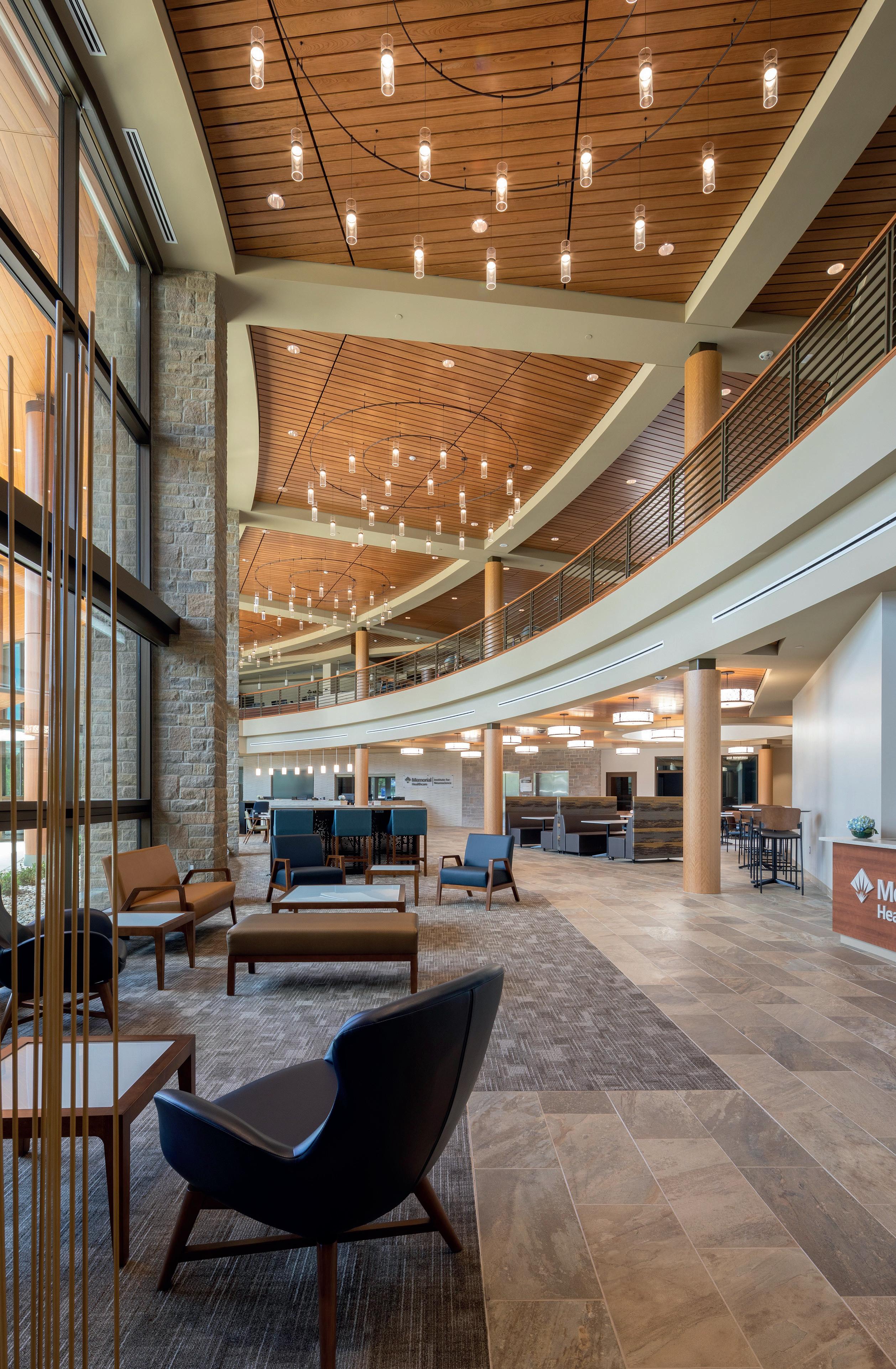
62
“ “ “ “
Those family-values combined with a very personalized customer-approach are what enable the business to complete projects of an impressive size successfully. Of recent note is the Memorial Healthcare NOW Center completed in 2019, in Owosso, Michigan, a particularly unique contract of which the three leaders are immensely proud.
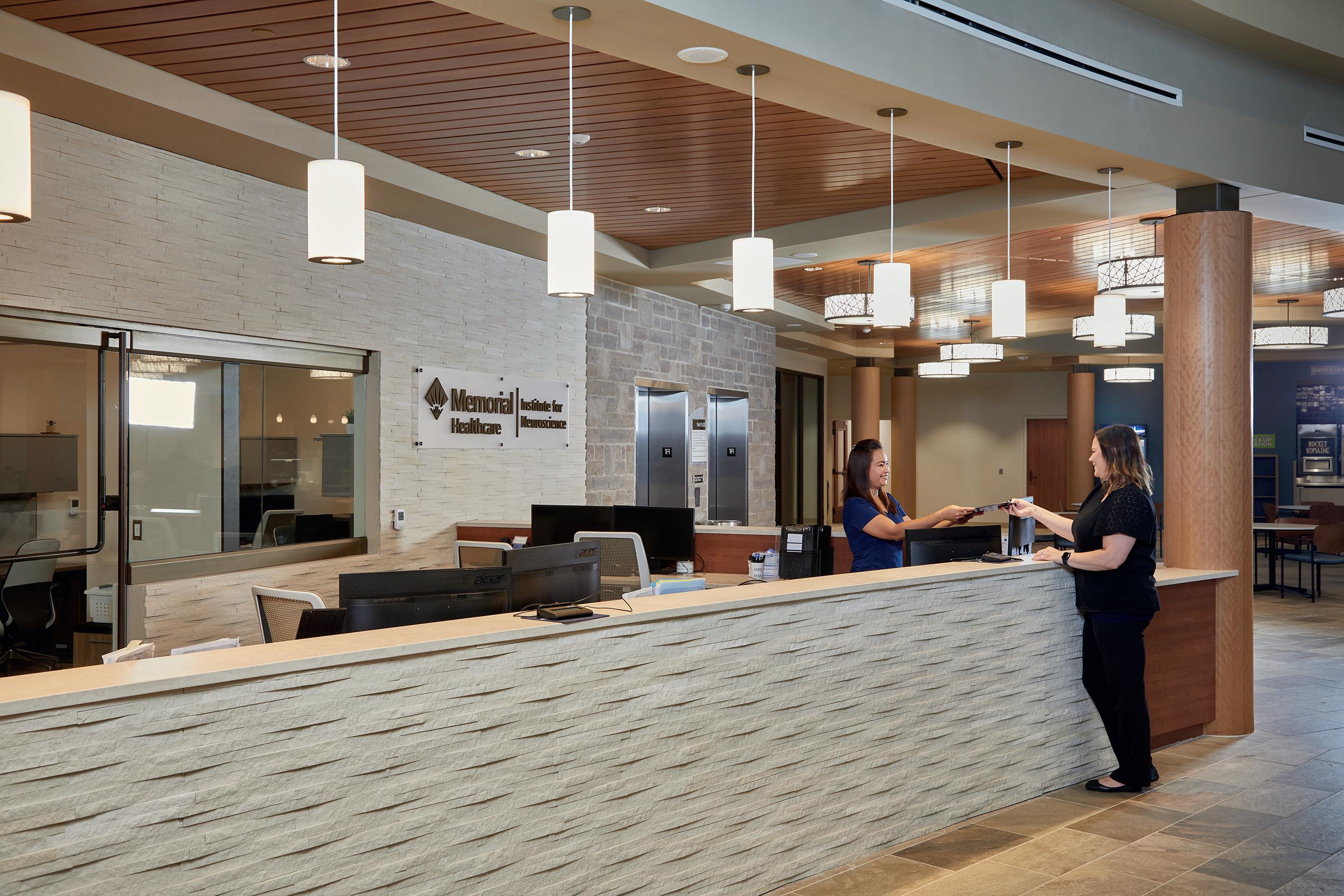
Project Director, Shane, shares more details regarding its award. “The President/CEO of Memorial Healthcare selected us to manage this once-in-a-lifetime project for the Hospital. We were the construction manager on the project who also had the benefit of selfperforming some of the trade work, such as the concrete footings and foundations inside the building and also the general trades, which included doors, cabinets, and hardware.”
With this project, the three gentlemen understood the importance of establishing a relationship built on trust with the architect, Edmund London & Associates and the Owner, all coming together to stand behind the project’s enormous value to the community. “We brought a 38-milliondollar healthcare facility to life in a small, rural area. Previously, its surrounding community would have had to travel about an hour out of town to get to similar facilities.”
The building was designed to provide a well-rounded suite of healthcare services. Coined the Memorial Healthcare NOW Center, the facility houses Neurology and Orthopedic departments, as well as a Wellness Center. “It allows patients to be seen and treated with a more holistic approach in one
Spence Brothers Construction construction-today.com 63
facility versus many. For example, there is a state-of-the-art MRI in the basement that is one of only three in the state, so patients don’t need to travel away from the Center or schedule separate appointments
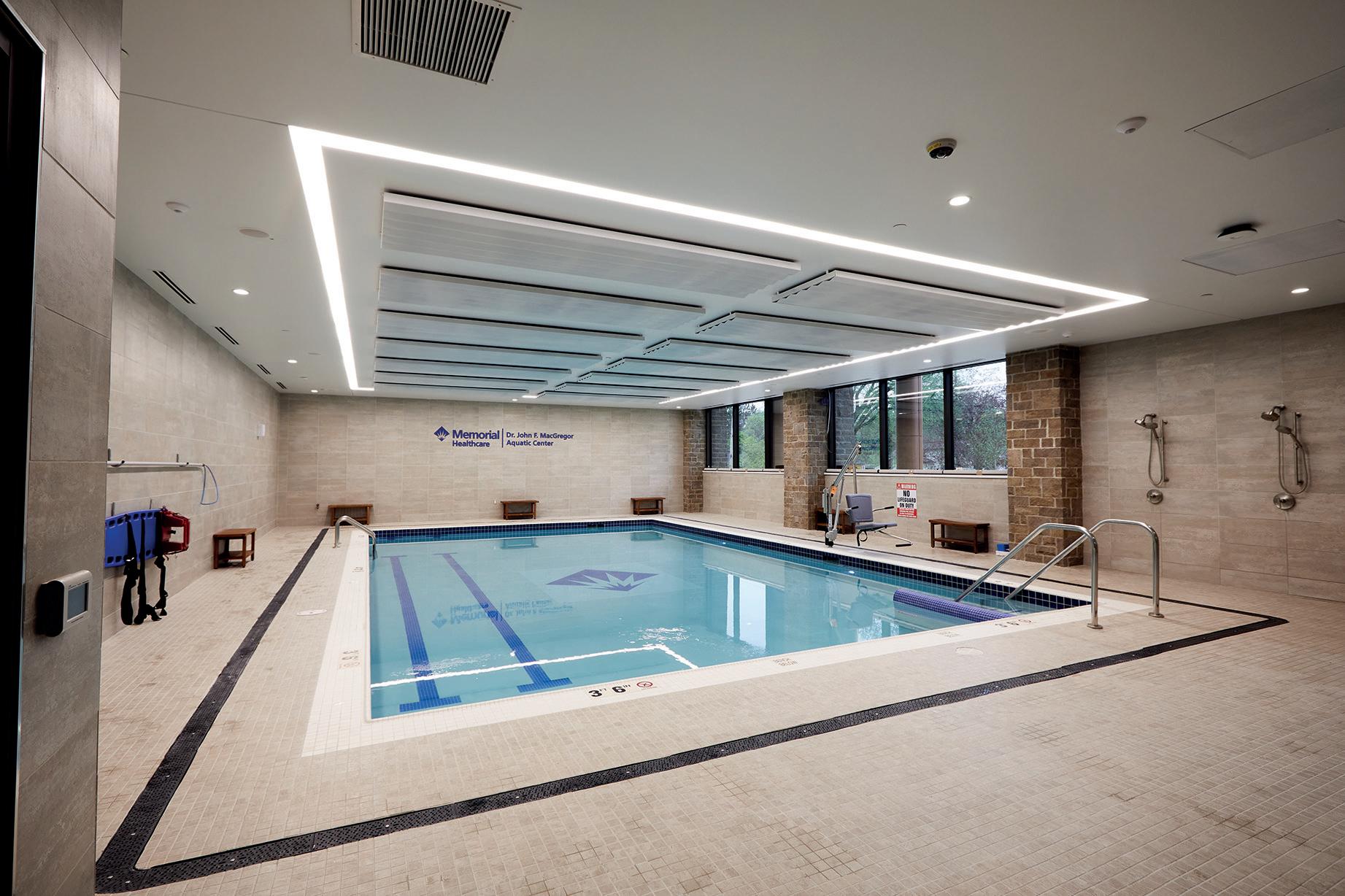
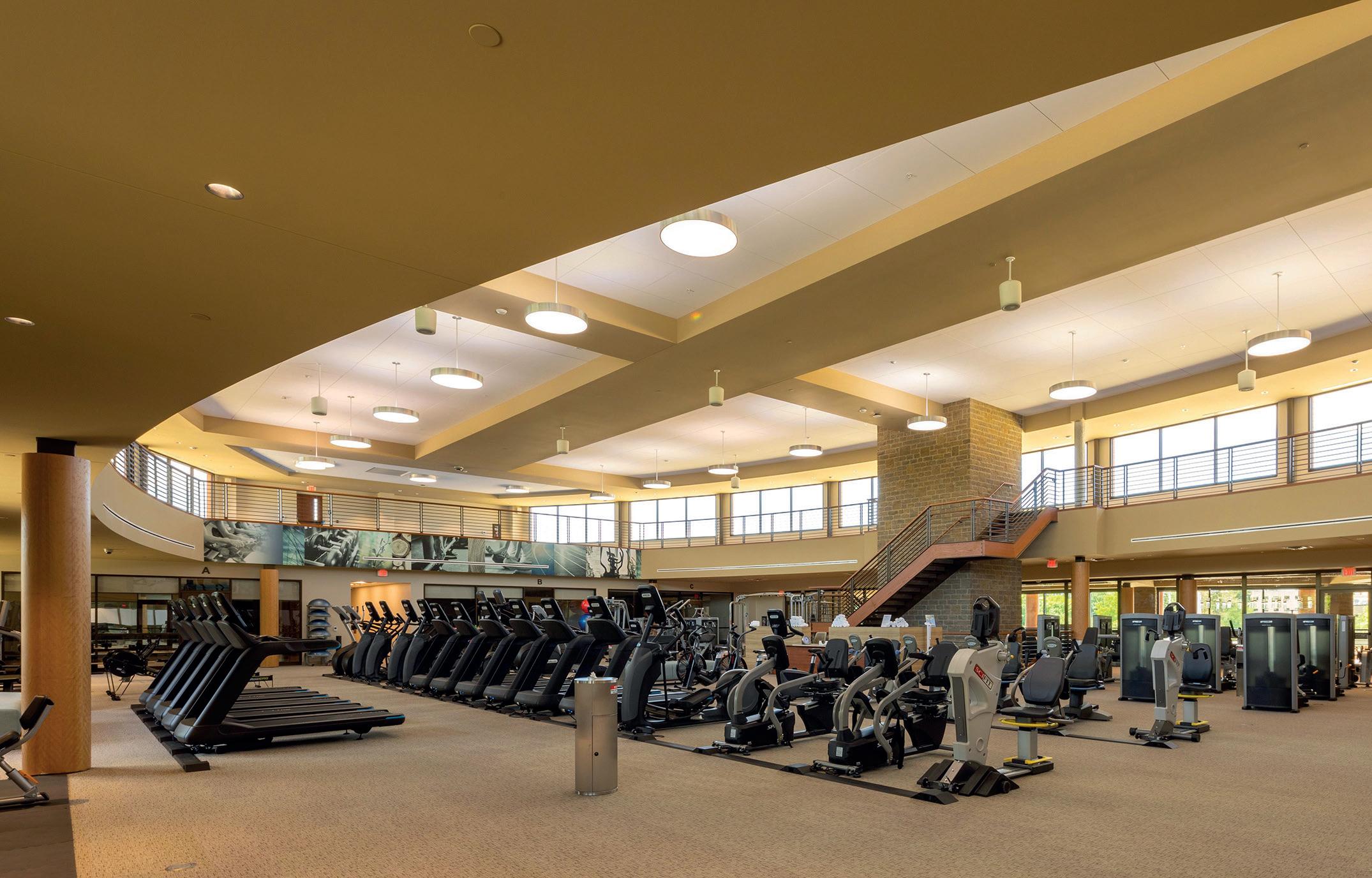
if they need an MRI. To have a building of that caliber in this community is pretty spectacular in my opinion,” Jake highlights.
Leaving a legacy
“The project was well-received by the surrounding community. Before we had even completed the project, people would arrive, ready to use the facilities. Once they realized it hadn’t yet been completed, we were confronted with questions about when they could expect it to be done. It was great to experience that excitement. I’ve heard nothing but good things about the facility from end-users; everyone has raved about the design of the building and how it turned out,” Jake expresses.
He also gives recognition to the team that brought the project together. “Everyone pushed to give the owner what they wanted. We had an amazing team of subs to work with. I think everyone will agree when I say that the entirety of this project is one of which we can be very proud.” Brian adds that
64
Spence looks forward to more opportunities to enhance the communities in which they work, “We do have some work in the pipeline, but this is really a one-of-a-kind build that we are grateful to have been part of.”
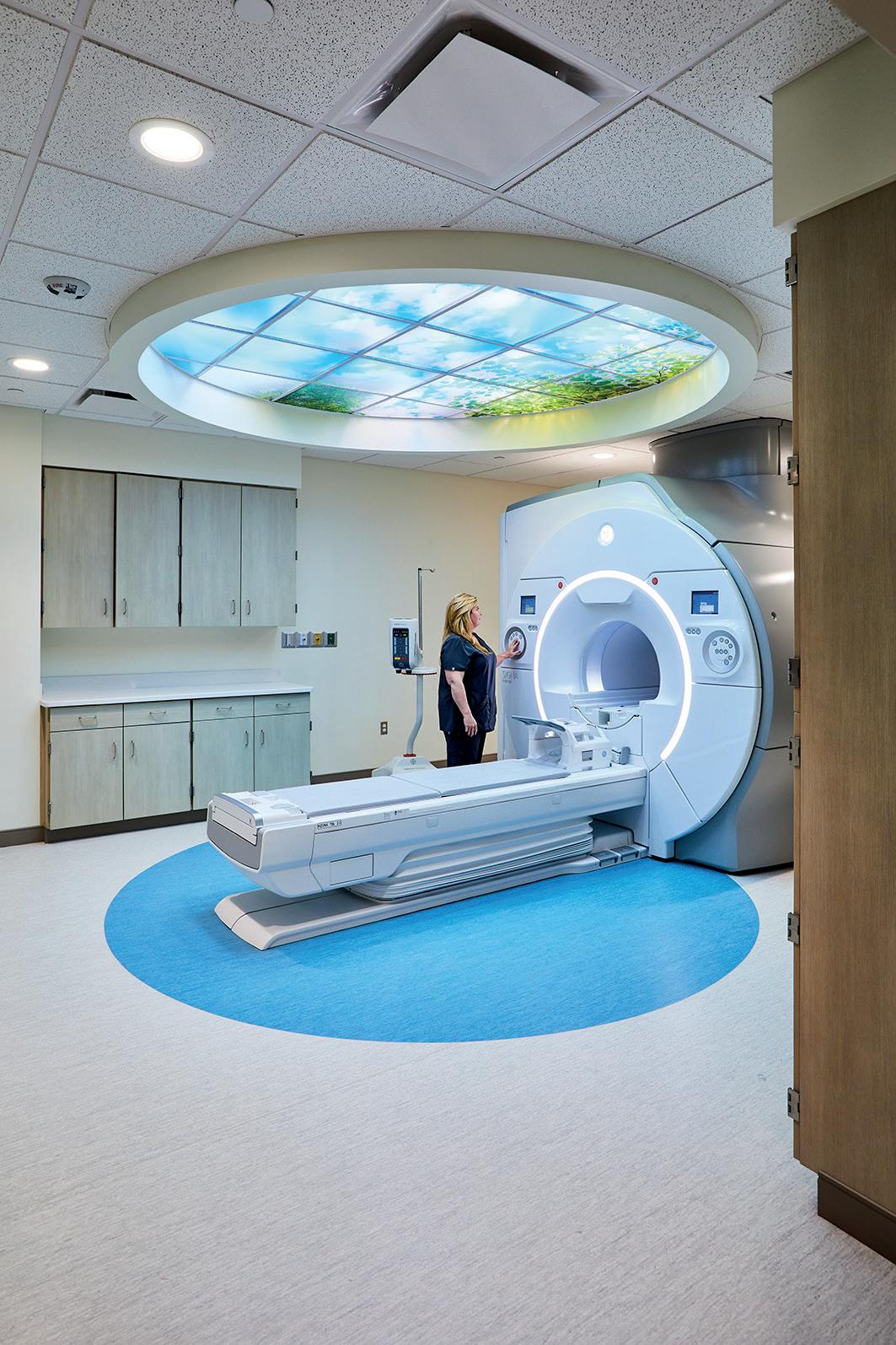
Looking towards the future, these leaders would like to see Spence continue its prosperity and secure a legacy that surpasses the 200-year milestone. “Although we continue to grow, we are not looking to double in size as we are happy where we are. I think we can all agree that we are willing to take on more work, but we want to ensure that we maintain our family-values and people-centric approach,” says Brian.
Shane agrees, “I would like to see us continue to grow without giving up what got us here, from both a relationship and construction excellence point of view. Maintaining and growing our base of repeat clientele is key, as our customers learn what it means to work with us and know that they can trust us.”
Brian emphasizes this by sharing that
when it comes to projects, the business works to nurture relationships built on trust. “We want to make sure that owners trust us to manage their funding and understand their vision to get the job done, and done well.”
From what we have learned, the success of Spence is visible in the company’s value system, which according to the leaders, is SIMPLE. The acronym stands for Safety, Integrity, Mentoring, People, and Excellence. The three gentlemen conclude that going forward, they are determined to uphold these values and continue to keep the company’s name synonymous with respect and trust. “For us,” Brian says, “it is crucial that we form a strong relationship with the owner of every project, because when we work together as partners, that’s when we achieve the best results for them and the community. ■
www.spencebrothers.com

Spence Brothers Construction construction-today.com 65
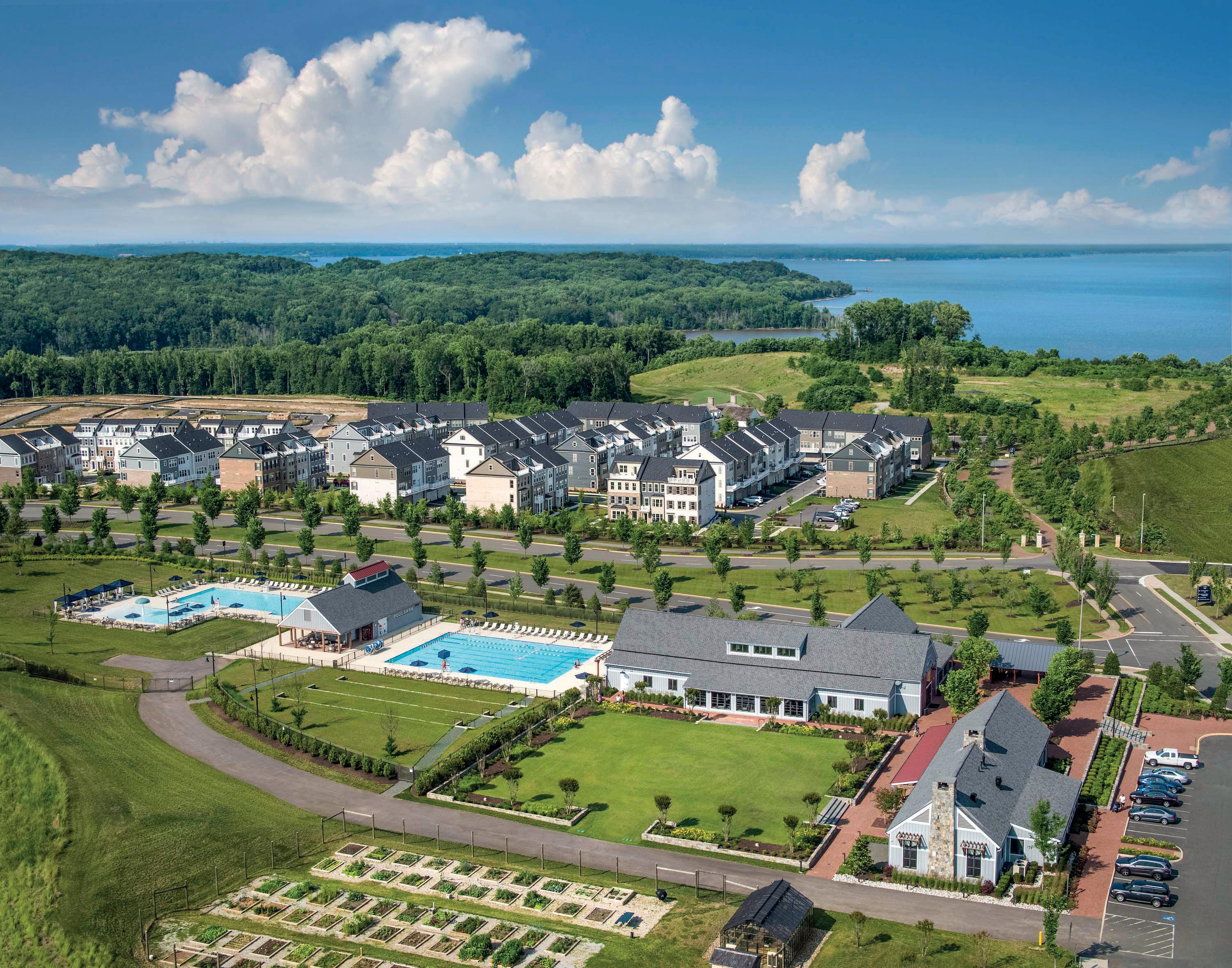
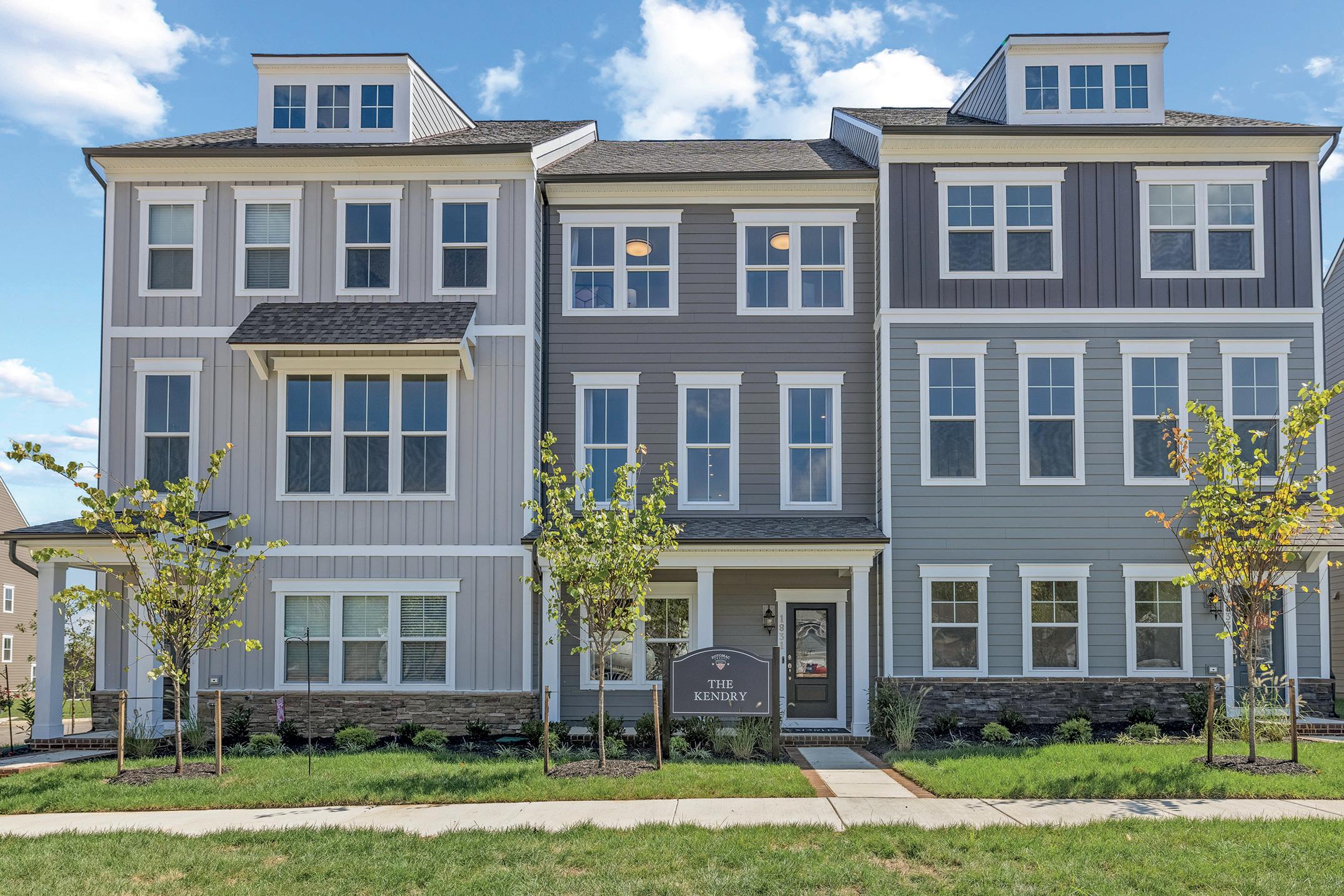 ▼ The Kendry showing the exterior and right, a family room
66
▼ Single-family homes and townhomes at Potomac Shores, a picturesque riverfront community
Stanley Martin Homes

Shaping the
FUTURE
Get to know Stanley Martin Homes, one of the largest homebuilders in the US, and its work constructing a community in Virginia
Founded in 1966 by Martin Alloy and Stanley Halle, Stanley Martin Homes (Stanley Martin) has navigated recessions and housing booms, growing to a top-25 home builder in the US, with 12 divisions across seven states. After the Covid-19 pandemic delayed construction of multiple projects, Stanley Martin is heading into 2023 with a vision to complete over 3600 homes with the help of its 800-strong team.
Its latest project, Potomac Shores, located in Dumfries, Virginia, will form part of a picturesque riverfront community, consisting of single-family and town homes with access to resort-style amenities. Stanley Martin’s Neighborhood Construction Manager, Matthew Blake, joins us to talk about all things Potomac Shores, as well as company culture, values, and green strategies.
“2022 was a unique year for the construction industry,” begins Matthew.
construction-today.com 67
“We were still able to meet our sales and construction goals though, which indicates how successful our team were in overcoming supply chain issues and uncertainty surrounding mortgage rates. We continued to out-perform competitors in terms of customer satisfaction, which is exemplified through an excess of positive reviews and ratings from consumer researchers, such as Avid Ratings.”
Luxury living
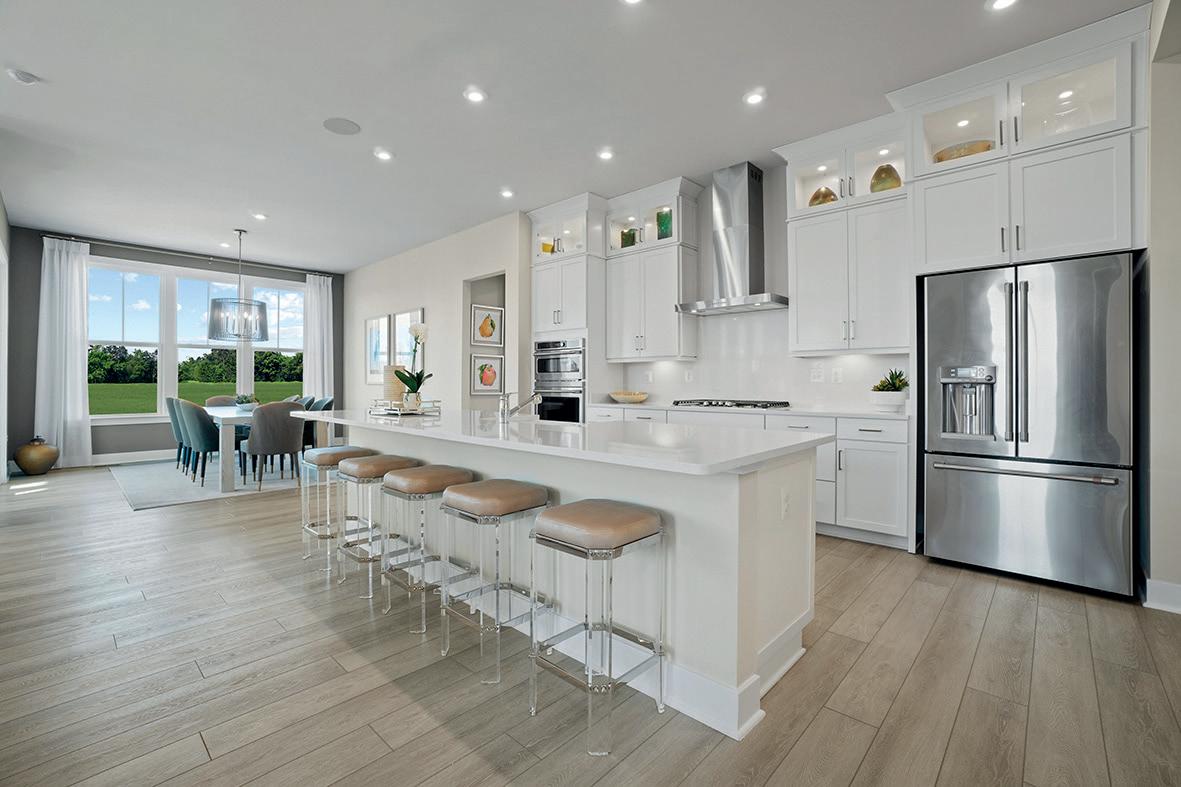
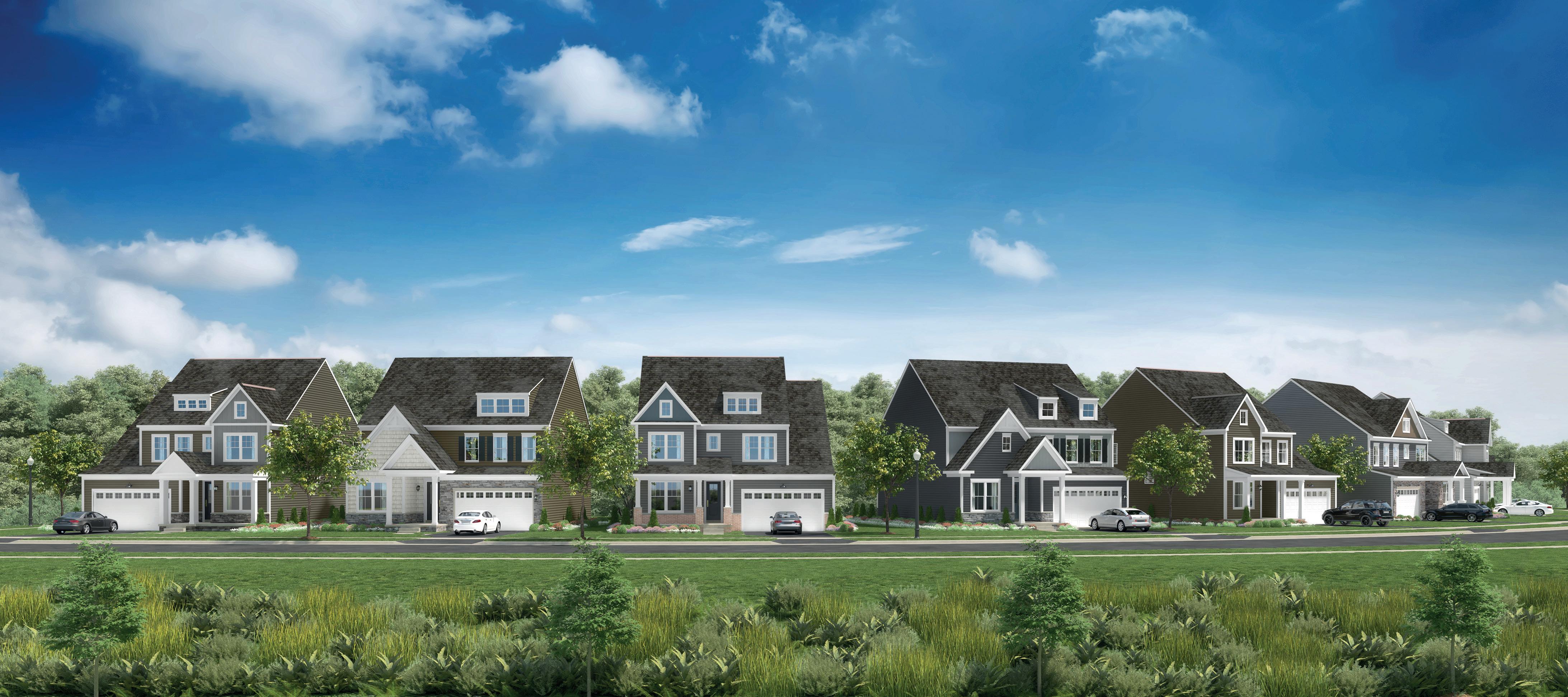
Relationships with trade partners are “at the heart of Stanley Martin, as they allow us to continue operating at a high standard and provide customers with excellent quality products,” Matthew states. These relationships were crucial in overcoming supply chain issues associated with the Covid-19 pandemic.
“Communication has been paramount in finding solutions to problems in our supply chain,” he continues. “Our purchasing team were fantastic in working with trade partners to discover shortages and backorder products ahead of time. This provided us with sufficient time to thoroughly understand the issue at hand and consider our options. We managed to order materials early or source appropriate alternatives to stay on track with many projects.
▼ Single-family dwellings
68
▼ A chef inspired kitchen
“Stanley Martin also began to reduce the number of different products offered in our homes,” Matthew adds. “Through communication with our suppliers, we simplified our product offering by promoting readily available options and eliminating harder-to-source items. This enabled us to maintain efficiency in the construction process while reducing stress on our suppliers.”
Stanley Martin is currently constructing 151 single family homes and 352 town homes within the Potomac Shores development. Matthew explains: “The Covid-19 outbreak delayed the start of the project, but we began building at a rapid pace in April 2021 and expect completion after threeto-four more years of construction.”
Set in 850 acres of open space, Potomac Shores features many amenities, including an 18-hole, Jack Nicklaus Signature Design golf course, complete with an 8000-squarefoot clubhouse, a Canoe Club with a 100foot pier, and a charming shopping and entertainment district. A new Virginia
Railway Express (VRE) train station is set to open later this year, which will shorten the commute to major employment areas and provide a direct service to Washington DC.
“The Potomac Shores community is highly sought after due to its myriad facilities and unique location on the Potomac River,” says Matthew. “The location is a great benefit for occupants of the community. Some homes offer views overlooking the water, where resident bald eagles can be seen flying overhead on a dayto-day basis, which is an amazing sight.” A planned marina on the site will offer further views, as well as boating access to Potomac River’s 405 miles of waterways.
Cohesive culture
Furthermore, Stanley Martin’s major commitment to energy efficiency in its homes is evident in the construction of Potomac Shores. “Incorporating duct blaster and blower door tests, for example, means we are building homes that have better energy efficiency,”
construction-today.com 69
Stanley Martin Homes
highlights Matthew. “We are conducting Home Energy Rating System (HERS) testing in all our properties and adopting construction techniques that enhance efficiency.”
Despite many changes to the housing industry since its foundation, Stanley Martin Homes has retained its core values. It is proudly homebuyer-focused and continuously strives for excellent customer service. Its knowledgeable and driven team works effectively together towards a common objective and acts with integrity in everything it does.
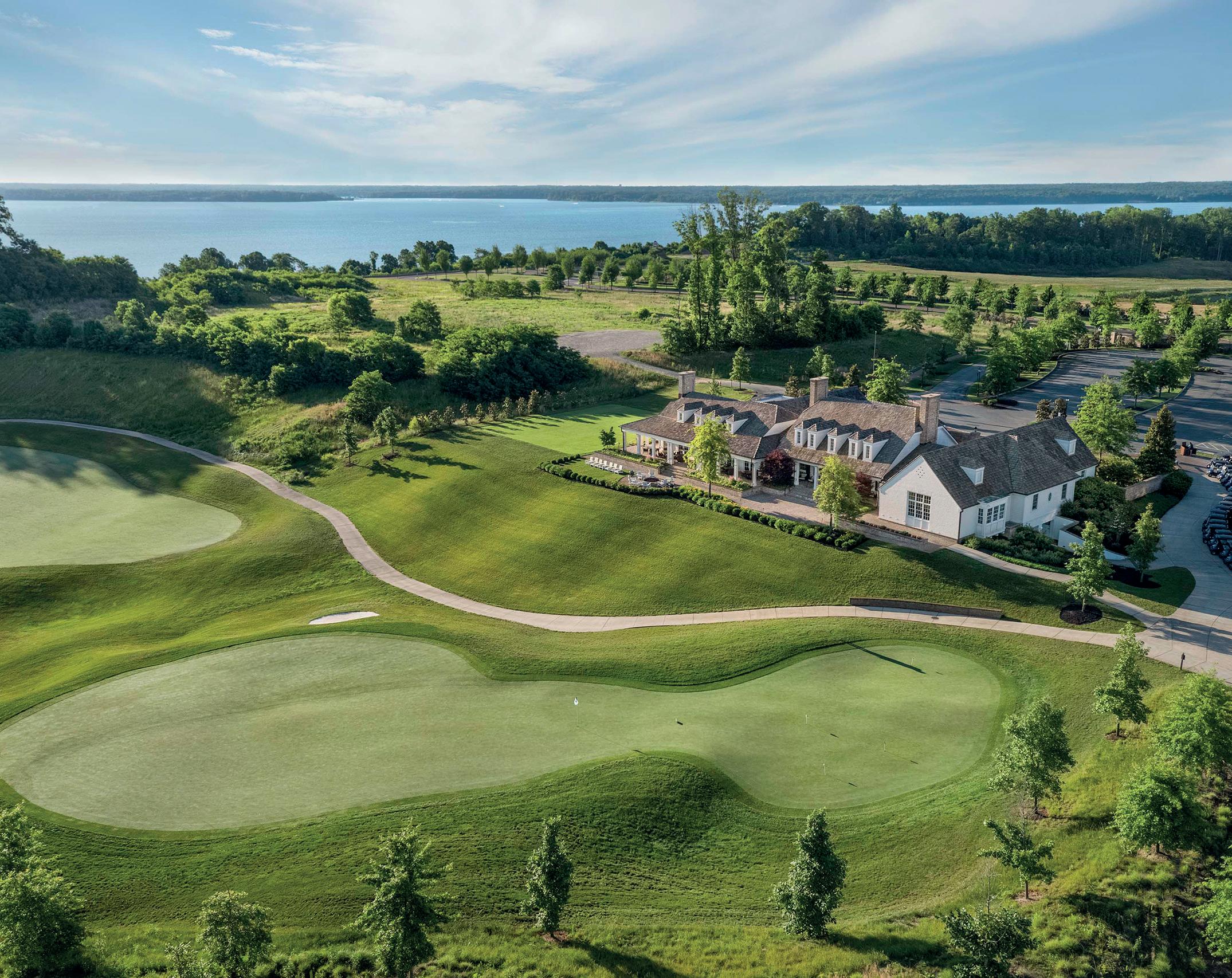
“We are not one person, but a cohesive group,” Matthew comments. “Our culture relies heavily on a team mentality –working together towards our goal of happy, satisfied customers, on a product that we are all proud of. This philosophy is preached across the company and applies to each trade partner we work with.
“Communication is a significant factor in our team’s culture and motivation,” he continues. “Each team member shares their
expertise and experience with the group, and we collectively take proactive steps towards solutions. Our work is celebrated on a regular basis, which helps everyone feel appreciated and supported, which enhances our motivation as individuals and as part of a team.”
In addition to Potomac Shores, Stanley Martin has an array of projects underway. Matthew details: “In 2023, new neighborhoods will be opening across Virginia, such as Woodlawn Estates in Bristow and Bradley Square Towns in Manassas, as well as several new condominium and town home sites throughout Fairfax County.”
With many projects in progress, 2023 promises to be an exciting and prosperous year for Stanley Martin. As Matthew concludes: “Stanley Martin will continue to strive for excellent customer satisfaction, high quality products, and green living standards in 2023 and beyond.” ■
www.stanleymartin.com
▼ Jack Nicklaus Signature Design golf course 70
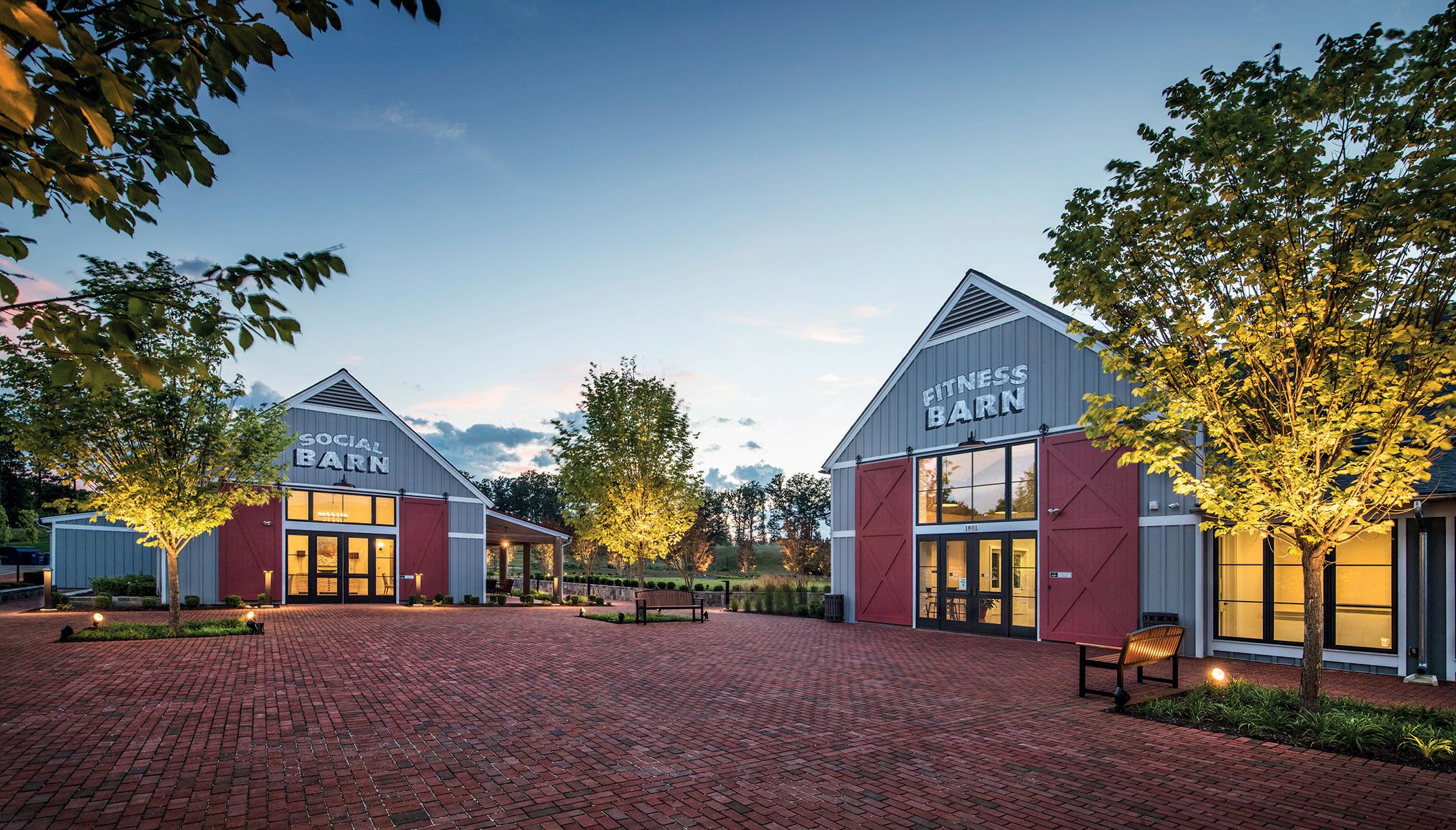

▼ The Shores Club - an impressive social and recreation center
construction-today.com 71
Stanley Martin Homes

72
Transforming
Through impressive growth, Gulf Coast Housing Partnership has been uniting residents with its unique people-centric approach
Gulf Coast Housing Partnership (GCHP) developed as a consequence of a conversation in the fall of 2005. The discussion was held among members of the Housing Partnership Network, which is a business alliance of the US’s most accomplished affordable housing developers, service providers and lenders. This group sought to assist with rebuilding efforts along the Gulf Coast after Hurricanes Katrina and Rita left many communities torn apart. After securing start-up grant funds from Freddie Mac and the John D and Catherine T MacArthur Foundation, the Housing Partnership Network successfully recruited New Orleans developer and community lending expert, Kathy Laborde, to launch and lead this new 501(c)(3) real estate development company. Kathy assembled a board of directors, which comprised respected national and local real estate development, finance and community leaders. This team, together
with capital from the Housing Partnership Network and Enterprise Community Partners, led to the creation of GCHP, which officially opened its doors on Oretha Castle Haley Boulevard in January 2006.
Today, GCHP is a mission-based regional real estate development company, headquartered in New Orleans, and focusing on producing mixed-income communities, and complementary commercial and community space.
The business has worked with 51 partners in 13 communities to develop and preserve more than 3800 affordable homes and over 447,000 square feet of commercial facilities in Alabama, Louisiana, Mississippi, and Texas. “We are a developer and property manager,” shares Kathy, who serves as the President and CEO of GCHP. “We assist partners with everything, from feasibility studies and financing procurement to project completion, stabilization, and property and asset management.”
communities ◀ Mckee City living, Houston Texas Gulf Coast Housing Partnership construction-today.com 73
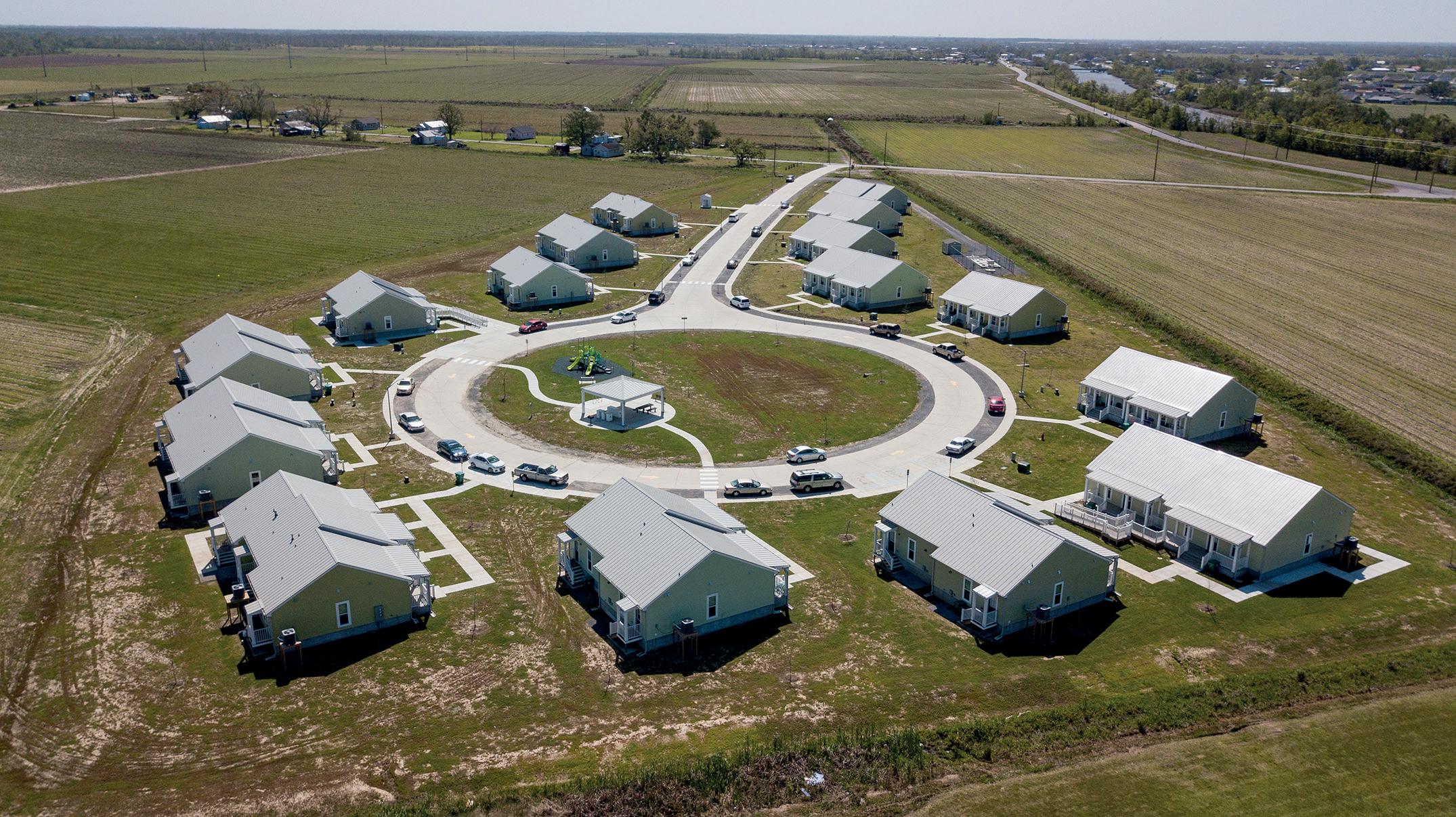
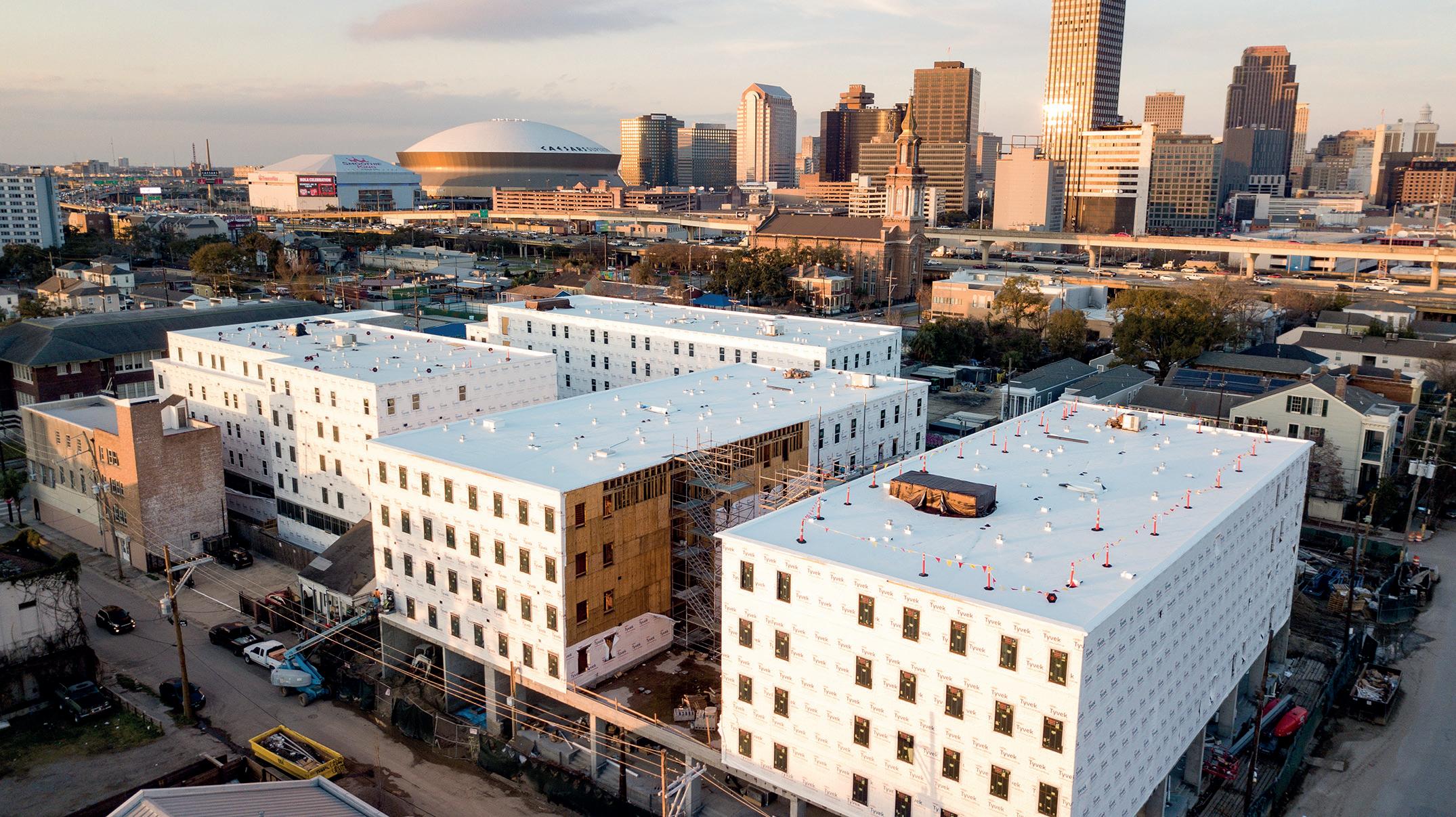
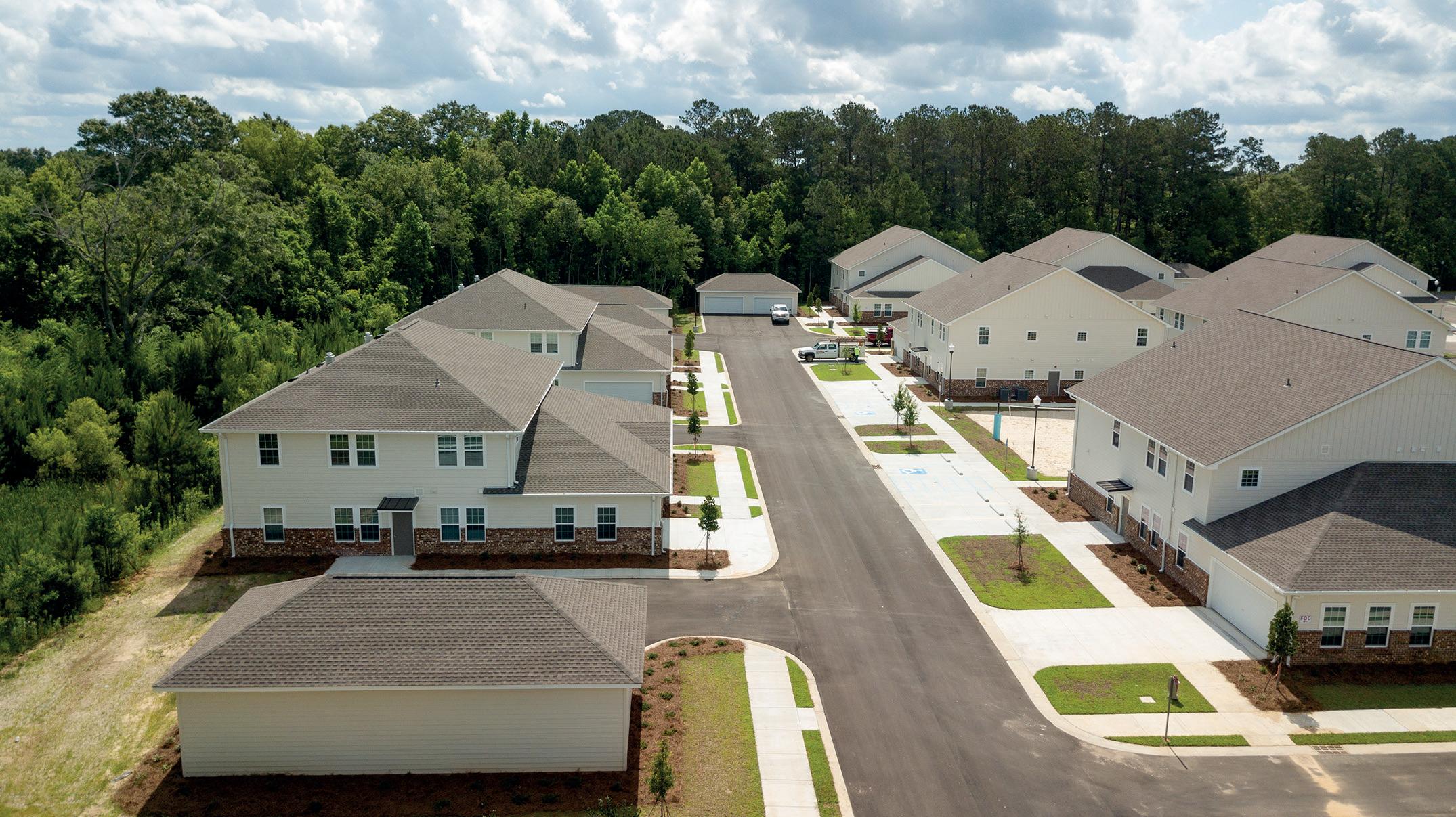
▲
H3C Central City, New Orleans under construction
▲ Village at The Beverly II, Hattiesburg, MS
74
▲ Les Maisons de Bayou Lafourche, Lockport, Louisiana
As the name suggests, the company works in the Gulf Coast region, which faces significant housing, health, and quality-of-life inequities. According to Kathy, the mission is to work in partnership with others to support the housing needs of low-income and vulnerable groups.

An example of this work can be seen in New Orleans where GCHP has been revitalizing its central-city, (specifically the Oretha Castle Haley) neighborhood, since 2007. In the early 20th century, the area was a bustling commercial corridor of culturally diverse businesses. In the late 1960s, 70s, and 80s, the area went the way of many inner-city commercial neighborhoods that fall victim to neglect, and as businesses moved out, poverty moved in. “Through a mix of affordable housing and commercial space, GCHP has invested more than $192 million into the boulevard, including H3C, a 192-unit affordable housing community with an on-site community healthcare center that is currently under construction. In a similar neighborhood, midcity Baton Rouge, Louisiana, GCHP has invested $118 million,” she expresses.
Health and housing
Currently, in Mississippi and Alabama, GCHP has two developments taking place under its inhouse initiative known as Health + Housing. “This initiative uses preferential debt provided by healthcare payors, like Medicaid Managed Care Organizations, to develop affordable housing with accessible healthcare provided by culturally competent healthcare workers.”
Kathy goes on to explain that GCHP became interested in embedding healthcare facilities within the affordable housing developments through partnerships with community health and mental health providers. “Through our developments with them, we saw first-hand how social determinants of health, particularly housing and access to quality healthcare, can impact someone’s life expectancy.
“With the support of two large MCOs in Louisiana and Mississippi, we broke ground in 2022 on two Health + Housing pilot projects. In New Orleans, with one of our partners Aetna/CVS Health, we started work in January 2022 on H3C. This location has 192 units, where 100 units are reserved for workforce housing, and 92 units are reserved for seniors. In Jackson, Mississippi, we broke ground on the Pearl in May 2022. The Pearl is a 76-unit senior affordable housing property, where we teamed up with partner UnitedHealth Care. Both properties will have on-site community health centers that serve residents and the surrounding community. We are using these as demonstration projects to quantify the health outcomes when vulnerable populations have access to healthcare.”
Providing this level of health care construction would not be possible without sound values that anchor the business to its purpose. Kathy shares that GCHP believes that everyone should have a safe place to live regardless of race, age, or economic status. “We don’t just mean four walls and a roof, but also a community where people feel safe, and have access to supportive services. Our work is complex, and our developments can take years of planning and conversations before
▲ Les Maisons de Bayou Lafourche resident, Betty Falgoust
Gulf Coast Housing Partnership construction-today.com 75
breaking ground. We stay energized and focused by celebrating the success of our team members and reminding each other that the work we are doing matters and is providing homes and making a lasting impact on families and communities where we live and work.”
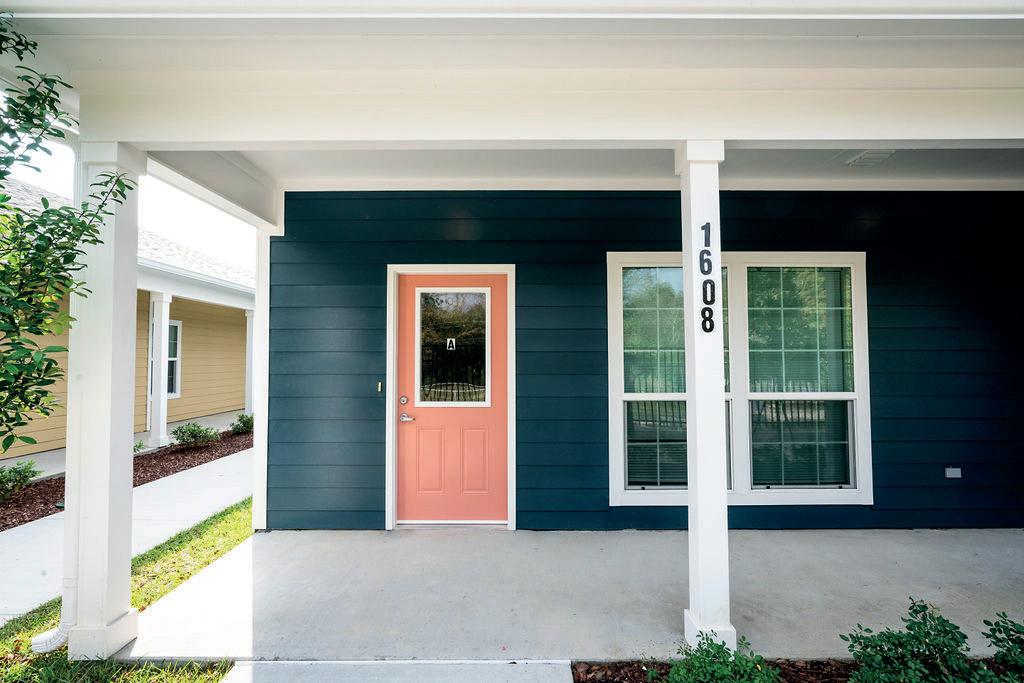
For GCHP, ESG is embedded in its ethos and is something the company has been committed to since its inception. In addition to that, diversity is just as important. “That goes for our staff, our leadership, the contractors we hire and the populations we serve. We are advised by a 15-member board of directors that is also diverse, and represents various sectors,
including non-profit, healthcare and the government. We’ve talked a lot about how we value our partnerships with the organizations we work with, and we show that by giving them a portion of our development fee so that we can help further their mission,” Kathy explains.
There is another aspect that GCHP is proud to support when it comes to its community building: a healthy and safe lifestyle. “We promote physical activity at our developments, which is why we establish amenities like walking trails, playgrounds, and exercise rooms. Currently, we are implementing Fitwell certifications into our two Health
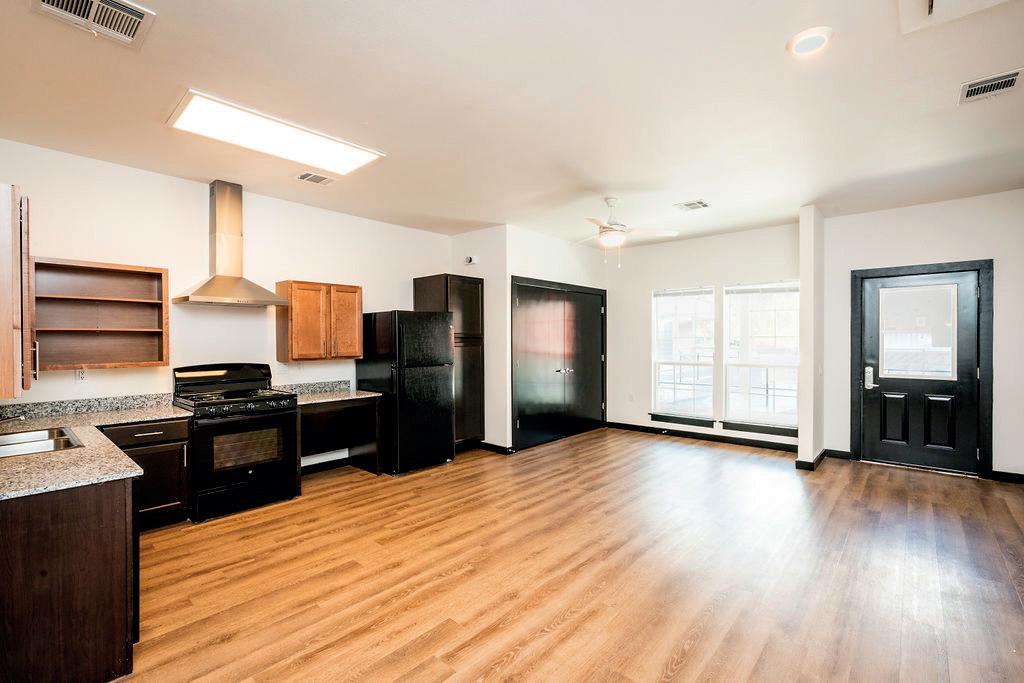
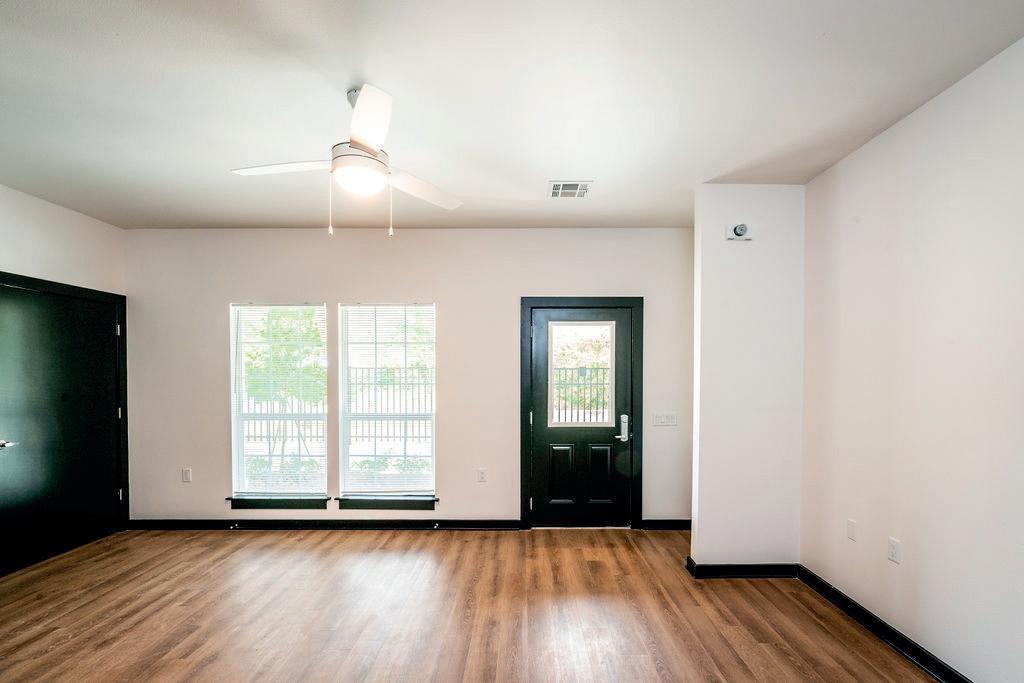
▼ Lotus
Village, senior living community development, Baton Rouge, Louisiana
76
+ Housing pilot developments. These will be the first Fitwell designated projects in Louisiana and Mississippi. The Fitwell initiative focuses on design techniques that promote the well-being of building occupants and tenants and encourages movement. These features include prominent and inviting stairwells and outdoor greenspace to promote activity and spending time outdoors.”
Secure, sustainable construction

One final aspect that GCHP ensures is covered, is the security and the sustainability of its construction. According to Kathy, the way the business builds its developments is focused on the physical and living environment, which is why it works to ensure that its buildings are sturdy in the wake of natural disasters. “Because our developments are located on the Gulf Coast, and at risk of damage from tropical storms and
hurricanes, we use FORTIFIED construction methods, including impact protection for windows and locked down roof edges.”
In five years’, time, Kathy believes GCHP will be expanding its areas of impact, while increasing the number of community partners with which it works. “We will continue to invest in our staff and our systems to support the continued growth of our organization and our long-term success. We also think the data from our Health + Housing innovation will show the desired outcomes, and that combining affordable housing, with accessible, culturally competent healthcare, with the funding support of healthcare payors will become a routine transaction that will ensure better health outcomes in our region,” she concludes. ■
www.gchp.net
Gulf Coast Housing Partnership construction-today.com 77
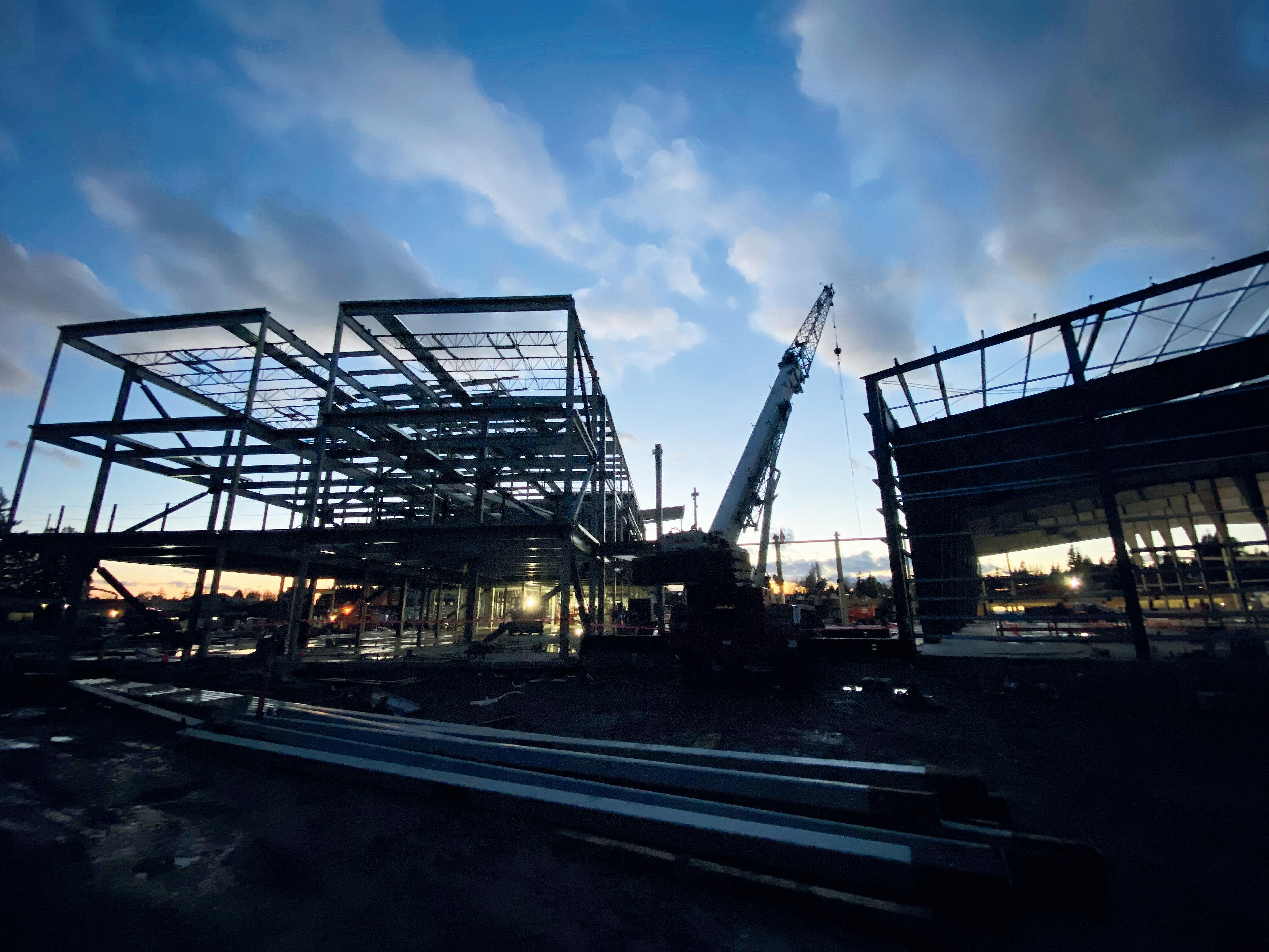
78
Foundational relationships
Although Cornerstone General Contractors is at the top of its game, this project is its best one yet
In Washington State, 2003, opportunities in the public works sector boomed in the Seattle and Greater Eastside areathis surge is what brought Cornerstone General Contractors (Cornerstone) to life. At the time, a great deal of lump sum bid projects emerged in the school sector, many of which Cornerstone was fortunate to win. “Since the beginning,” shares Marcus Comer, Project Manager, “our bread and butter has always been in public works school construction. We have continued to expand into public safety facilities, like fire and police stations, while maintaining our focus on schools.”
construction-today.com 79
Cornerstone General Contractors
The management team is a closely-knit group of gentlemen. Marcus learnt his skills through the business in the trades and through the various roles in construction management, alongside his two brothers and their father. Kurt Belanger serves as the Superintendent and has been with Cornerstone for seven years. He started as a sub-contractor for the business, and joined full-time in 2015, when the group was in search of civil engineering expertise. Lastly, but certainly not least, there’s Patrick Kaerstner, who has only ever known Cornerstone. For the past five years, he has contributed as the Project Engineer.
These three gentlemen sit with Construction Today to discuss their latest pride and joy: the Ferndale High School project. “We got involved when
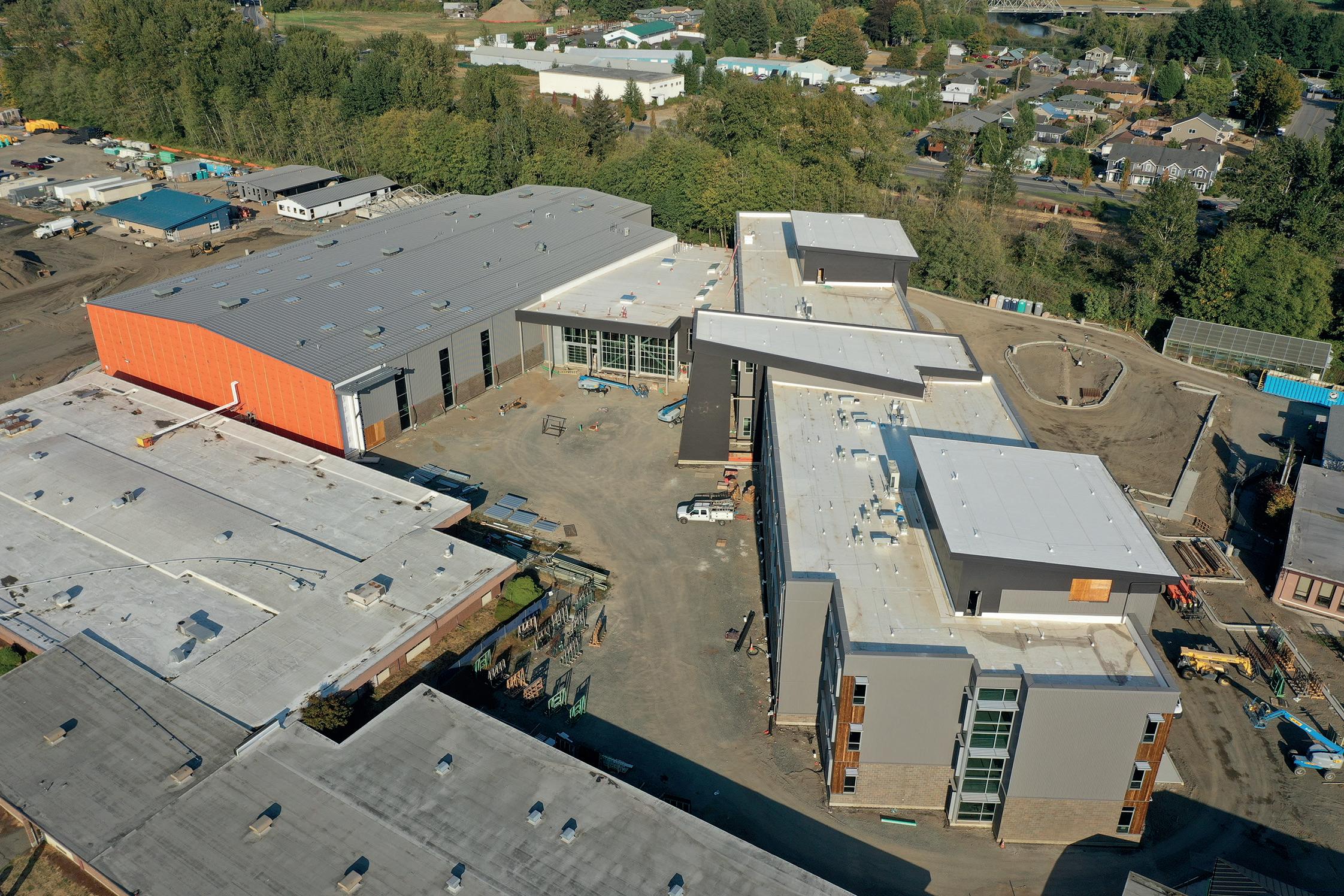
80
When we build schools, we don’t work for the district alone, we work for the community. As such, we don’t only think about the school, we think about the longterm impact that these schools have on future generations
“
“ “ “
the development was ready to break ground. Our entire team is pivotal in steering the direction of the project from start to finish,” shares Marcus.
“We took on an existing high school site, involving construction right next to the current building. The new footprint was essentially on their old football stadium. The gym wing is a pre-engineered metal building, as is the next phase we are starting, which is their future CTE technology building. The academic wing utilized a standard steel structure. We broke ground on those two components in the summer of 2021. In August of 2022, the gym wing was turned over for use to make way for the existing gym demolition and new bus loop.

“This past December, we handed over the academic square footage. So, in just over 18 months, we turned over 150,000 square feet of space. Now, we are starting
abatement and demolition of the existing structure to make way for the final portion of the footprint, storm improvements and parking area. Throughout our time there, we have also been developing a new football stadium that has a massive storm detention system beneath two-thirds of the field that we will turn over next fall and will wrap up construction in January 2024,” says Marcus.
Overcoming challenges
For the three gentlemen, the uniqueness of this project was the myriad challenges the team needed to overcome. For instance, the water table is four feet below the existing grade which required a combination of fill and geopiers under the foundations and slab. “We had to be creative with the utilities as well, because we couldn’t do our typical trenching as the water would not allow for this,” shares Kurt. “Another challenge to
Cornerstone General Contractors construction-today.com 81
the contract has been the chaotic weather patterns. We had some flooding up here last winter, and extreme winds. One thing about schools is the delivery date can’t be extended, so we had to push through the difficult conditions, or figure out how to navigate those conditions. We were constantly adapting to meet our scheduled deadline. The biggest challenge we faced was a week of awful weather that forced us to shut down because the crane couldn’t operate in almost gale force winds,” explains Kurt.
Marcus shares that this project stands out because of the impact it had on the community. “Everyone is always excited about getting a new school, but Ferndale was a long time coming, and the community was very involved. We had a major handover where we got to see students, staff, and teachers
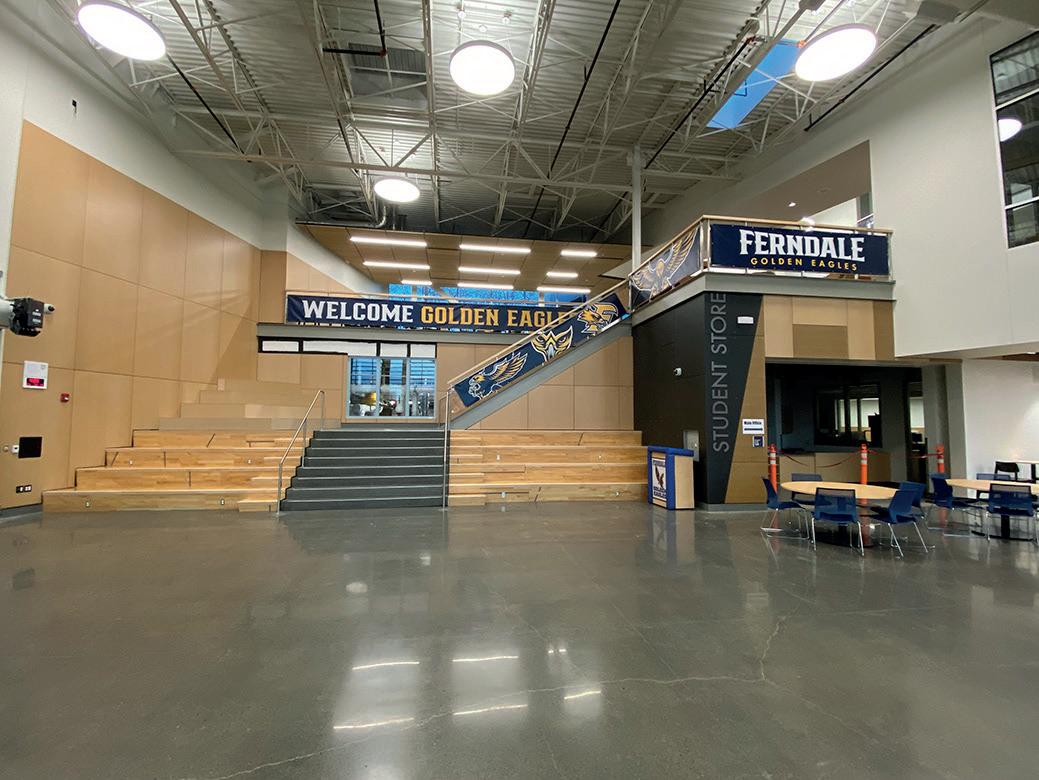
use the building. It’s great to see the positive impact our work has in bringing these designs to fruition and functionality to the end users.”
Exceptional relationships
Whether it’s market or site conditions, or phasing complexities, the Cornerstone team draws from previous experiences to tackle project challenges. However, what makes the company the best fit for any project is not only its expertise, but also its company culture. “I would call our team exceptional,” says Marcus. “We’ve been involved in this type of work for a long time, so we’ve gained a huge amount of experience, and know how best to pull it off. We have a diverse group of individuals who have come up through the field as carpenters, and sub-contractors, and bring a vast amount of talent to our work.”
82
The four pillars that form the culture at Cornerstone are ‘grit, owning it, quiet excellence and caring like family’, according to Marcus. In bringing the conversation to a close, he highlights that the leadership team has seen great improvements in its capabilities when the business returns to these core values. While growth for Cornerstone is important to the company, they all agree that relationships will continue to buttress the company’s foundations and push the business forward. “When we build schools, we don’t work for the district alone, we work for the community. As such, we don’t only think about the school, we think about the long-term impact that these schools have on future generations. Additionally, we nurture our relationships with our clients, so that the next time prospective work crops for the next work, they already have us in mind for the job.
“Some of the challenges over the last two years have had some severe impact on even basic materials availability, and I think delivery mechanisms are still catching up in construction. Furthermore, many projects had been postponed or slowed, so we were fortunate that the strategy to start Ferndale sooner than originally planned, helped in procuring a lot of what we needed without too much impact. Of course, we needed to seek some alternatives such as sourcing a different switchgear for electrical. This ability to be agile is tied in with the relationships we have formed with our reliable vendors and sub-contractors. I believe our ability to maintain and build on those relationships is what allows us to be exceptional,” Marcus concludes. ■
www.cornerstonegci.com
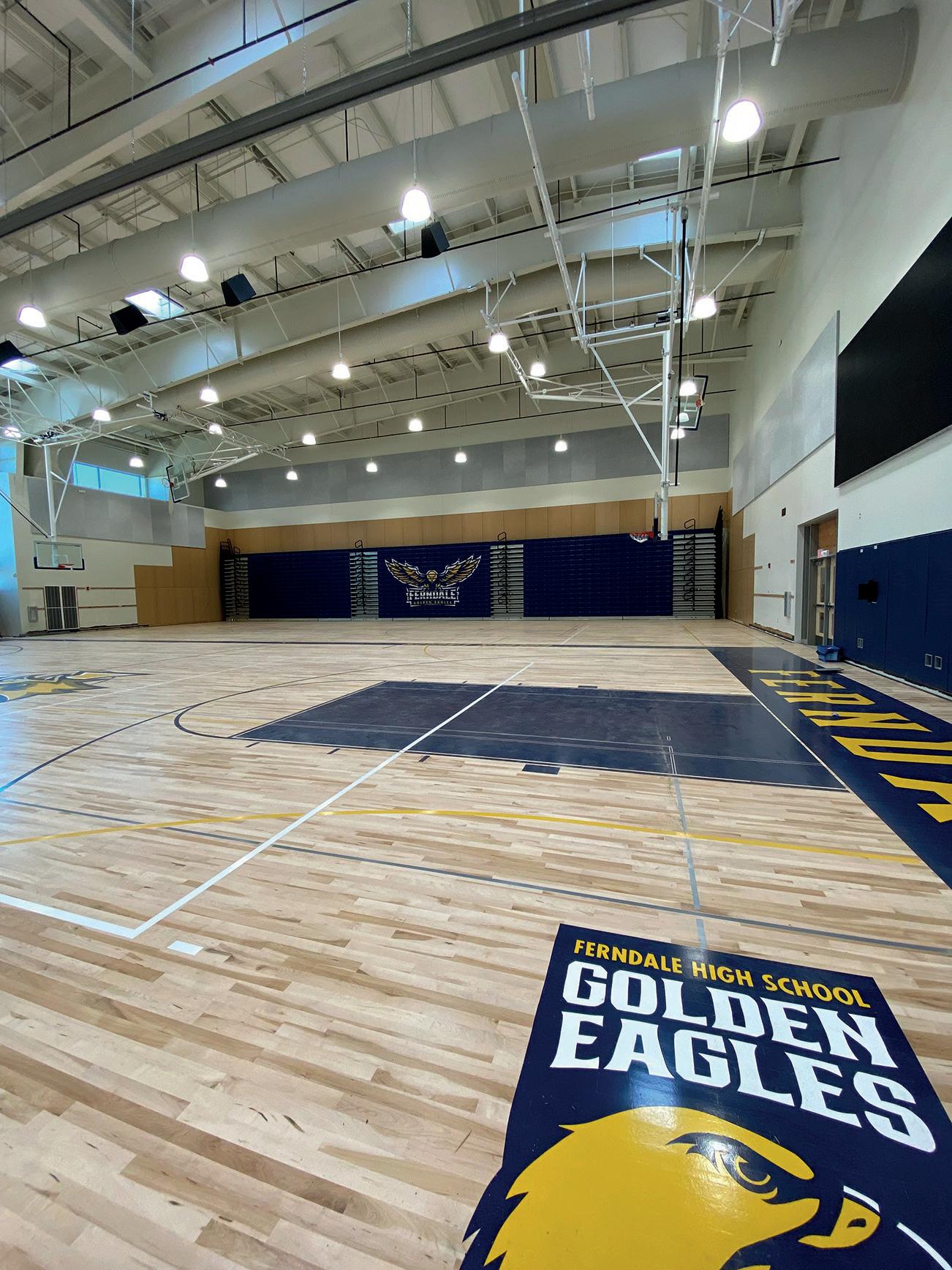
Cornerstone General Contractors construction-today.com 83
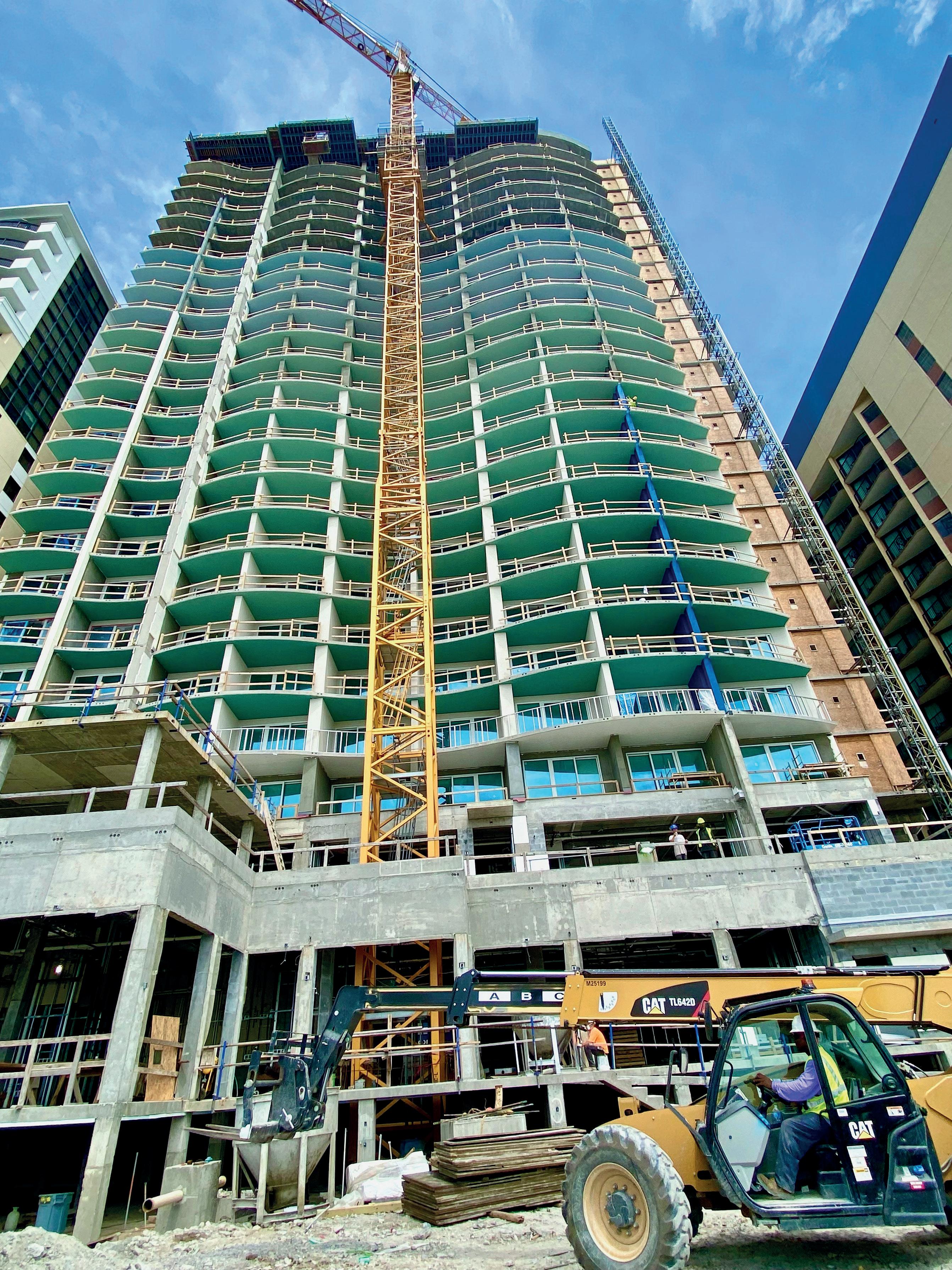
84
Architect: LS3P
Firm
This year we will be celebrating our 70th anniversary,” opens Harold G. Cushman III, President of Dargan Construction (Dargan).
“My father joined the company in 1955, shortly after it was founded by Mr. Archie Dargan Jr. The first decade’s operations were primarily focused around residential work, but the business’ direction quickly changed towards commercial projects. Dargan soon became well-known for its prevalence in the construction of hotels along South Carolina’s Grand Strand, in the Myrtle Beach area. We also built universities, hospitals and office buildings, however, our specialty seems to truly lie within the hospitality industry, specifically surrounding resort and brand-hotel-type work.”
In the early 2000s, the business capitalized on the trend of condominiumstyle structures, with its revenues during the era reaching around $150 million annually. Its more recently completed projects align closer to the LS3P designed dual-branded Marriott Springhill Suites and Courtyard Hotel in Myrtle Beach. Project Superintendent, Dan Kunkle, and Project Manager, Grayson Stoneman, describe this
oceanfront property as 230 rooms evenly divided between Courtyard by Marriott and Springhill Suites across 25 levels, with two floors committed to amenities, a lobby, and a large pool complex. The finished structure stands at 274 feet tall and consists of 1250 tons of reinforcing steel, 14,400 cubic yards of concrete, and employed around 500 workers during its construction. The two smaller buildings that were demolished for the dual-branded Marriott’s creation were actually built by Dargan back in the 1970s.
As Dargan enters its seventh decade of operations, both President and Executive VP talk past, present and future
foundations
Dargan Construction construction-today.com 85
Architect: LS3P
“We are based in Myrtle Beach and have been in the same location since Mr. Dargan founded the company,” explains Brice Harry, Executive Vice-President and Chief Operations Officer. “The company is still family-owned, and our core management team is made up of approximately 25 people. Our total workforce fluctuates in accordance with our volume of projects, but between 60 and 100 is our operational norm. We’re small in size but big in our skillset, meaning we’re capable of tackling large volume projects up to $150 million.
“Regardless of COVID, we have remained strong,” he continues. “A lot of businesses
were able to retreat and work from the safety of home, but in construction we had to be creative to keep our projects on schedule, while being mindful of budget constraints. We broke ground on a $48 million, 25-floor oceanfront structure at the height of the pandemic, an endeavor that we considered to be a flagship project in the Myrtle Beach market. Through good management and strong working partnerships with our subcontractors and suppliers, as well as an understanding client who appreciated everything we were working through, we were able to deliver the final product under the contractual obligations.
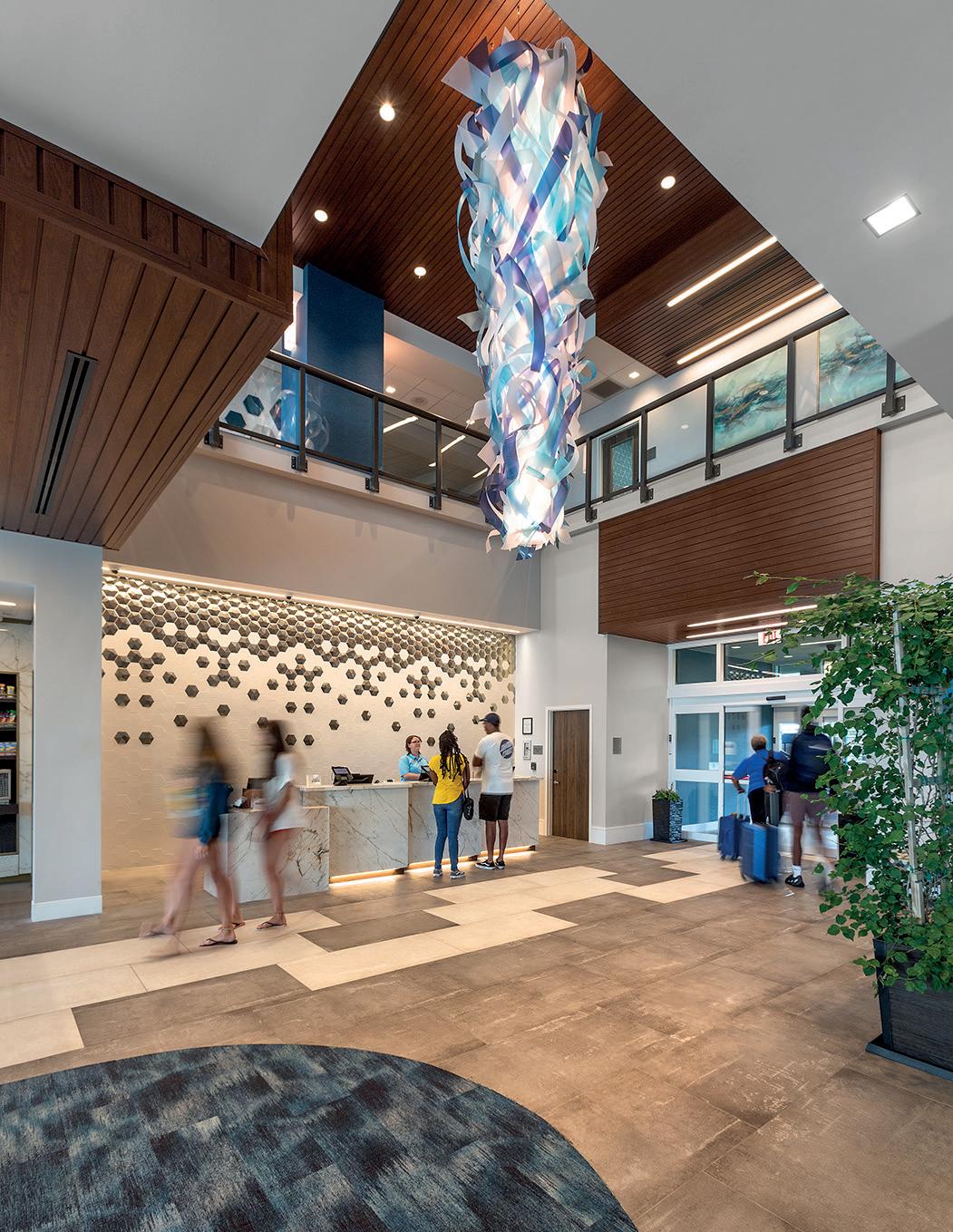
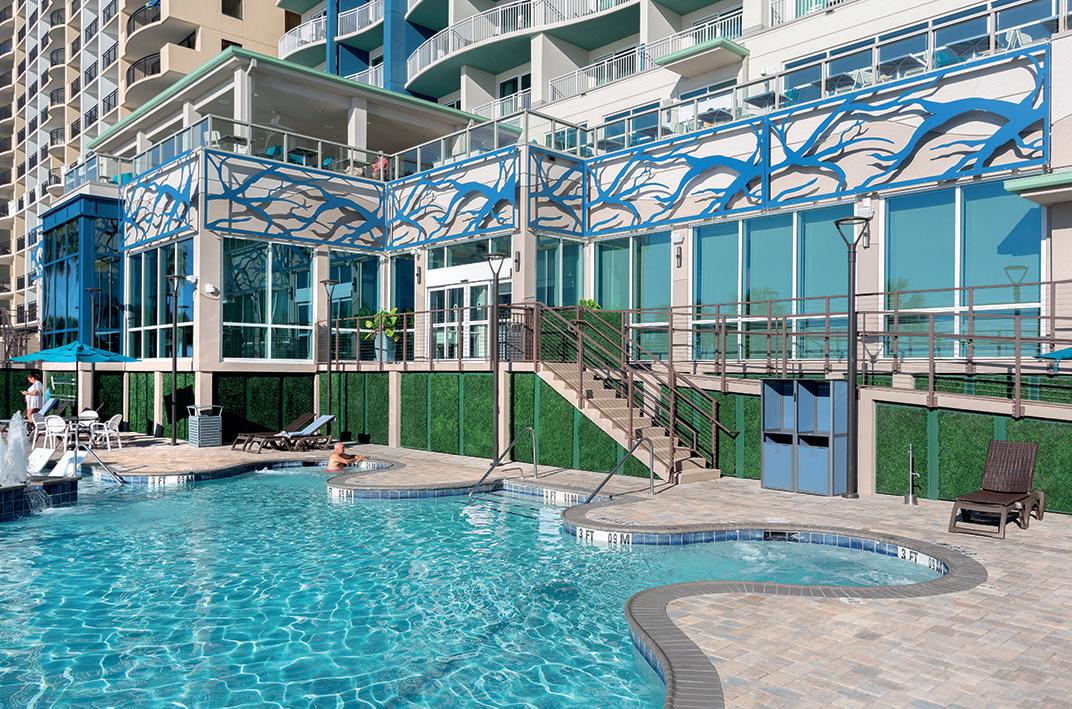
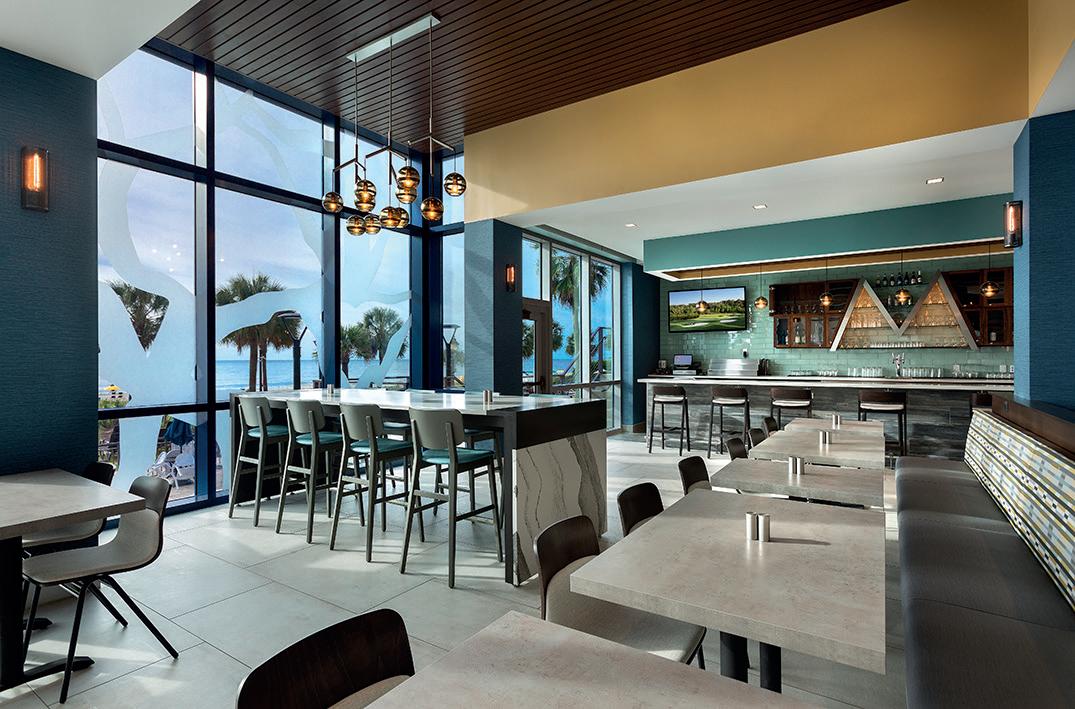
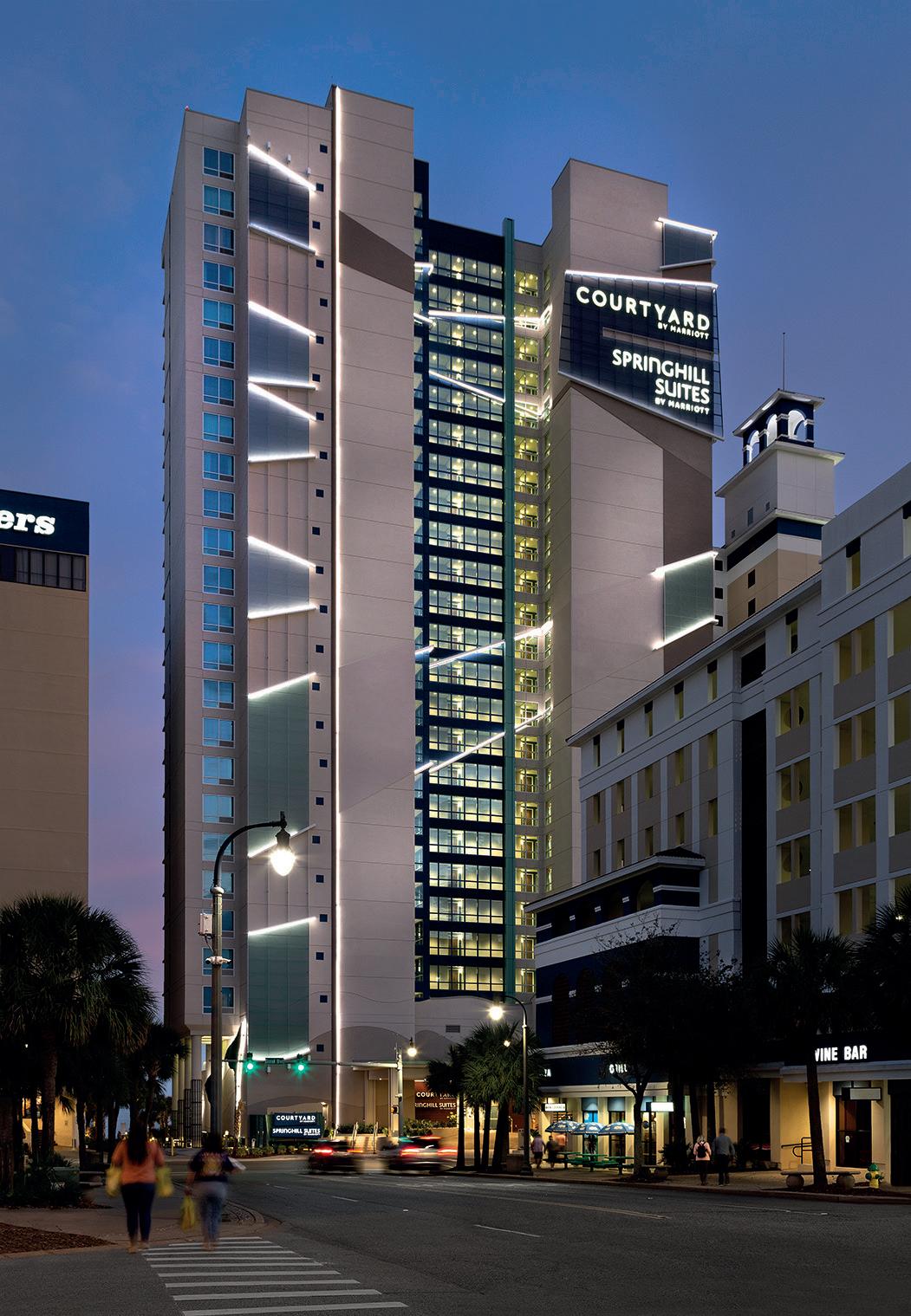
▼ All images by Matt Silk Photography
86
“Supply chain relationships are important at the best of times, but even more so during crises. We pride ourselves on always bringing the right team to the table, and benefit from the long-standing relationships we have built with quality subcontractors and suppliers. As a general contractor we do self-perform some elements of the work, but by and large, we rely heavily on our highly skilled supporting teams. They are critical to our continued success, and we are proud to say we have long relationships with all of our major subcontractors.”
Constructing communities
From its establishment in the 1950s, Dargan has always prioritized partnering with local and regional organizations to give back to its surrounding communities. In 2001, the Dargan Foundation was founded to further these efforts. The Foundation’s initial purpose of disbursing a portion of the company’s earnings to charities and non-profits is still going strong today. Local charities and even national organizations such as the Salvation Army, United Way and the Boy Scouts of America, have benefitted thus far, along with a range of healthcare foundations and children’s homes.
With so many crucial boxes ticked, the future of Dargan looks promising. Harold expands: “There are several brand-hotel projects that we’re looking at along the Grand Stand. The area as a whole is looking pretty good. Planning for the future is probably both our biggest challenge and greatest opportunity. We’ve got a solid geographical reach that we’re very comfortable operating in, which includes the eastern portions of North and South Carolina. “The future right now feels good,” agrees Brice. “We have some quality work underway and going forwards, I’d say that continuity of the company as a whole is our main focus. We’re not trying to change the culture or our approach to work, we just want to carry it into the future by recruiting a younger side to the team to hold the torch for the upcoming journey.” ■
Architect: LS3P
www.darganconstruction.com
This essence of community and family resides inside the walls of Dargan. In fact, other than its implementation of state-of-the-art technology, Brice cites the company’s working culture to be the key factor that sets it apart from the competition. “Our management structure here, which starts with preconstruction and contract award, and carries through to the finished structure, is what I feel sets us apart. Our staff turnover is extremely low, our people generally have a long tenure working for the company and our field supervision is incredibly experienced and well-seasoned. This is what gives us an edge on our peers and helps us to keep our contract delivery commitments.”

Dargan Construction construction-today.com 87
success Conditions for

88
Heat Transfer Solutions Inc., (HTS) is an independent market leader of made-to-order commercial and industrial Heating, Ventilation, and Air Conditioning (HVAC) distribution in North America. It is committed to the individual success of all those involved in a project’s HVAC system selection, design, purchase, installation, and maintenance.

HTS Engineering Ltd., is operated by 11 global operating partners (28 in total, including the large subsidiary US distribution businesses and manufacturing) that form parent company, HTS Engineering Ltd.
Founded in 1992, HTS Engineering Ltd., has since experienced tremendous growth, having expanded into 22 locations across Canada and the United States, including Texas in 2001. HTS Engineering Ltd., along
HTS shares why company culture and sustainability are at the heart of its operations
HTS construction-today.com 89
▼ Mike Donovan, President of HTS Texas
with the regional subsidiary, large distribution businesses, and manufacturing companies, has 28 total operating partners. Mike Donovan, President of HTS Texas, spoke to Construction Today about the growth of the business, company culture, and social responsibility.
“The core of what we do is distribute, service, and maintain large mechanical equipment that is used for primarily environmental purposes. For example, air conditioning, heat, dehumidification, humidification, ventilation, building automation, chilled water and hot water generation, and commercial and industrial applications and processes,” Mike begins. “Our industry experience spans industrial, institutional, and commercial projects of all sizes across various industries, such as healthcare, hospitality, commercial office,
laboratory, industrial manufacturing, residential, leisure, and education facilities.
“My primary role is Operator of our Texas footprint, which is all of the major metropolitan markets in Texas; Dallas, Fort Worth, San Antonio, Houston, Austin and the wider surrounding areas,” he explains. “Dayto-day, I ensure that the Texas branch runs smoothly, as well as overseeing accounting, marketing, service, aftermarket parts, building controls and large equipment sales.”
Mike continues: “HTS gets involved with the design of HVAC systems in almost any building over 25,000 square feet in the regions in which we operate. Everything is intentionally designed with the manufacturers we work with to suit the clients’ individual needs and specifications. In the northeast corridor of the US and Canada omega-heatpump.
90
com, we have, for example, developed a manufacturer that services the high-rise apartment and condominium market with very tiny footprint air conditioning equipment.”

In addition to its core business, HTS “started and built an off-site manufacturing company, Epsilon Industries epsilonfab. com, that creates effective pre-packaged hot water and chilled water generation solutions for hospitals, hotels, automotive manufacturing facilities, large higher education projects, district cooling projects, and state, county, and federal government projects,” describes Mike. “These products offer an efficient, cost-effective solution, as they arrive pre-assembled, meaning very little construction is required directly on the job site, which also enhances quality and safety.”
Turning to the people side of the business, Mike is passionate about establishing a successful, positive company culture. “We
built our company on the foundation of transparency and envision our role as leaders as equipping others with resources to self-actualize and to succeed,” he states. “We have a flat organization; all the management staff and business partners are active in the business. Our employees are encouraged to make use of our opendoor policy, so they can take suggestions or criticism to the top without judgement.”
People first
With 12 plus years of recognition, HTS Engineering LTD., continues another year of platinum membership of Canada’s Best Managed Companies, evidencing its commitment to establishing a successful company culture. The company takes pride in its social values: honesty, integrity, urgency, and inclusivity, with a desire to bring the most diverse opinions to any
HTS construction-today.com 91
given project or initiative. Mike says: “We do not know what everyone’s individual happiness looks or feels like, so we seek to provide all our employees with a pathway to joy and fulfillment in their occupation. We have a broad range of opportunities for giving back to the community, personal progression, and education.”
He elaborates: “I like to allow individuals to take ownership within the company. For example, I encourage employees to approach me with a proposition for personal growth and community service and for company support with something they’re passionate about or involved with. Supporting people on their personal missions, as well as professional ones, is engrained in the fabric of our culture and something I personally love about the business.
“We’re a relatively young management team, so we are trying to bridge our
understanding, or even elevation of, the next generation,” Mike explains. “We are constantly assessing what it is that they are listening to, paying attention to, and what is important to them, to shape the future of the company. We have identified that the most common objective in our current climate is sustainability, future financial health of the organization and social, but specifically related to community, responsibility.”
HTS is passionate about and renowned for its efficient systems. “We sell and engineer equipment that requires energy, so it is important that we work to provide the absolute most efficient systems that consume the least amount of energy,” he states. “Energy efficiency is in our DNA; the lower we can make energy consumption while still providing safe and effective systems, the better it is for both the customer and the environment.”
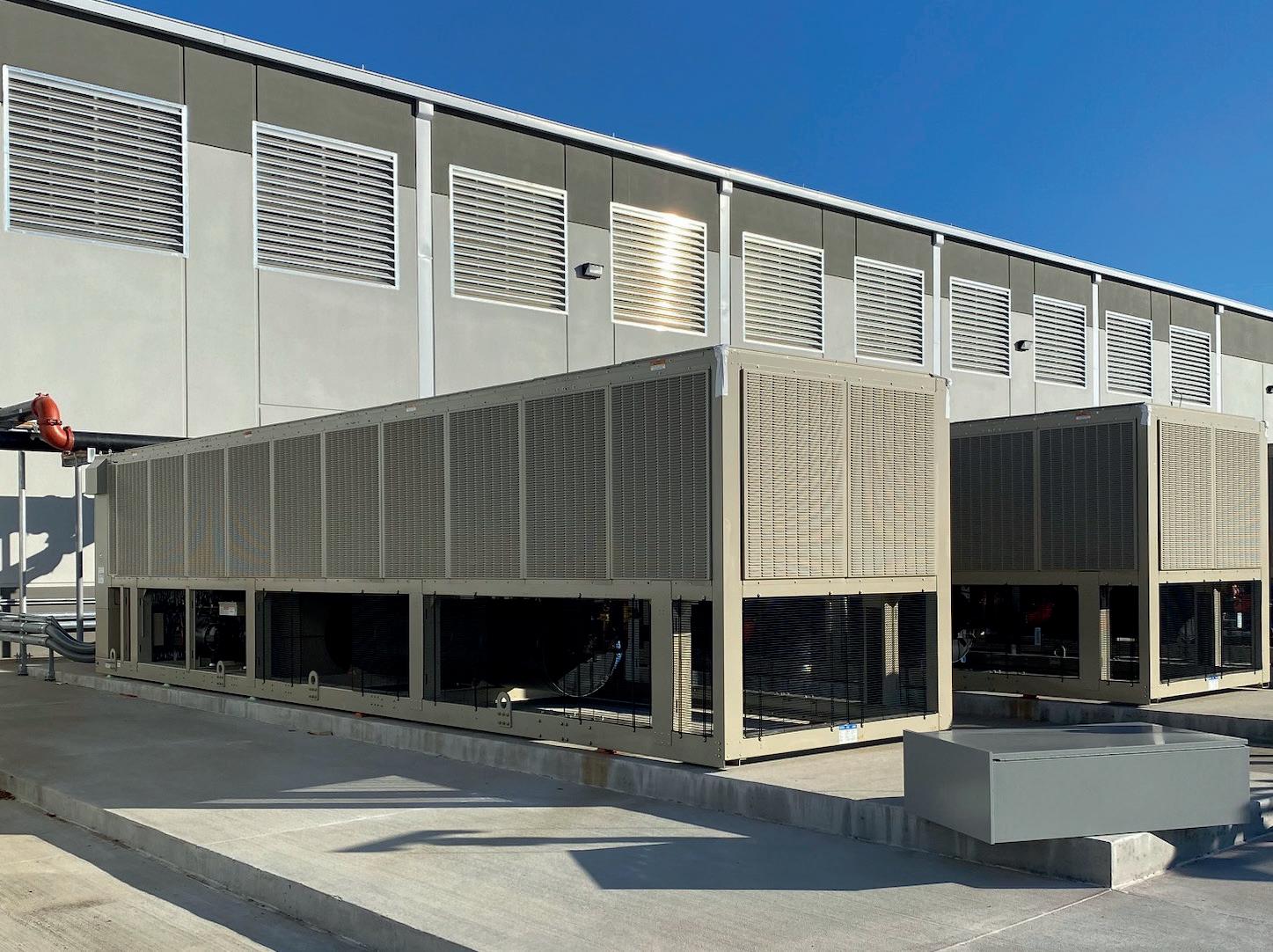
92
Furthermore, HTS is developing modern HVAC solutions, which, unlike the traditional system, do not require excess water for heat rejection. “Continuing to purposefully innovate methods and systems that don’t consume additional water for heat rejection is one of our priorities,” highlights Mike. “We believe that water is the most precious resource on the planet. It is our mission to preserve water to the largest possible extent, while meeting the needs of today’s building efficiency requirements.”
Sustainable growth
Thinking ahead to the future of the business, Mike proposes: “The electrification and heat pump movement is central to our next decade of existence. As we continue to lower energy consumption across our projects, we must create and
implement HVAC solutions that utilize heat pumps, energy recovery from water or air, and systems that are simple to maintain and provide predictable outcomes for the enduser that owns these systems.
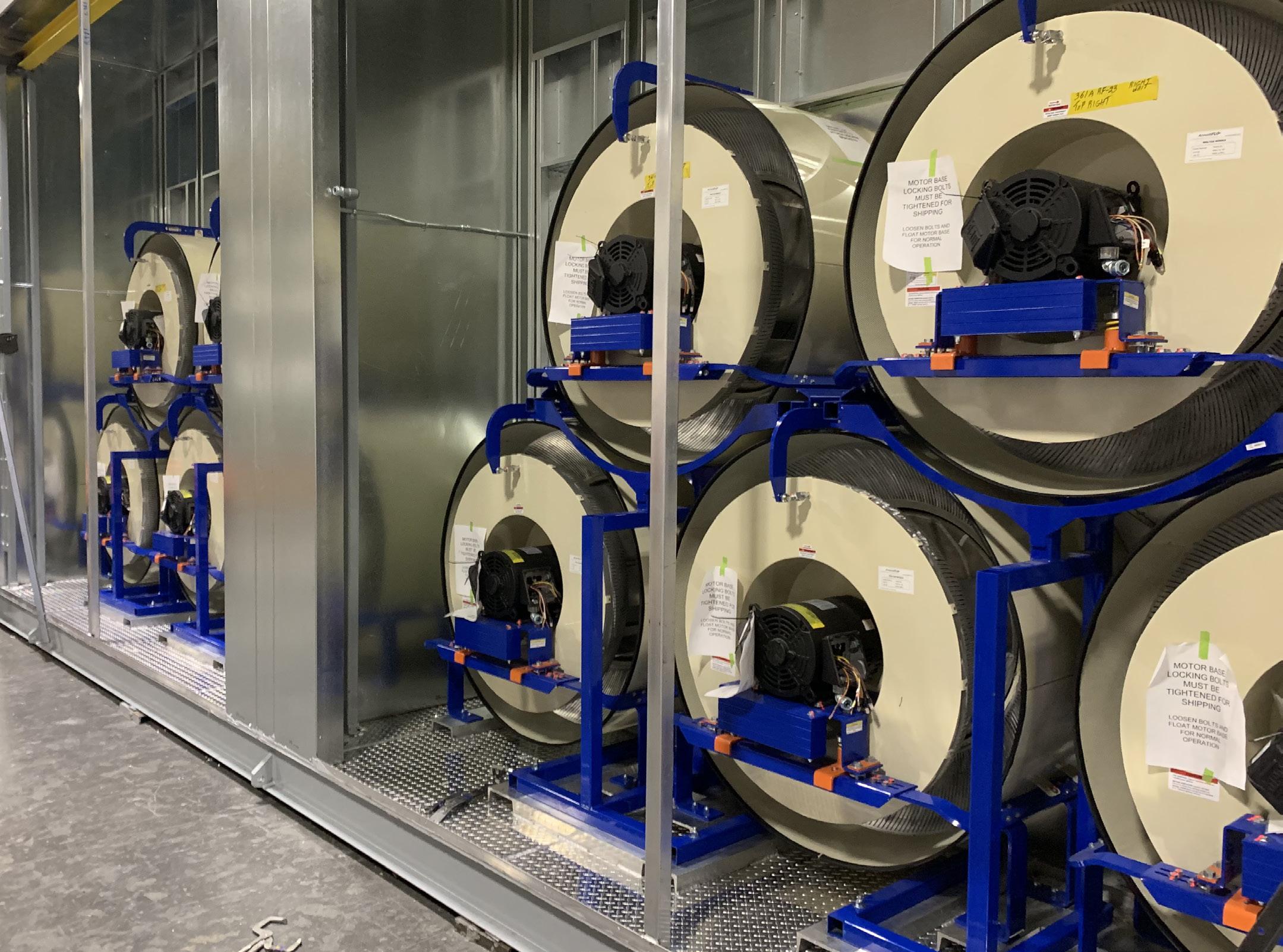
“We are still young, so we have a huge appetite for growth and acquisition,” he concludes. “In terms of acquisition, we are more concerned about the cultural, first and foremost, and secondly the financial elements of the business, rather than geographical expansion. Moving forward, HTS continues to acquire businesses that support our growth across North America and complement our mission to provide the utmost care for employees, clients, and suppliers.” ■
www.hts.com
HTS construction-today.com 93
The future is panelized
How Escobedo Group’s DARIO Panelized System is changing traditional construction
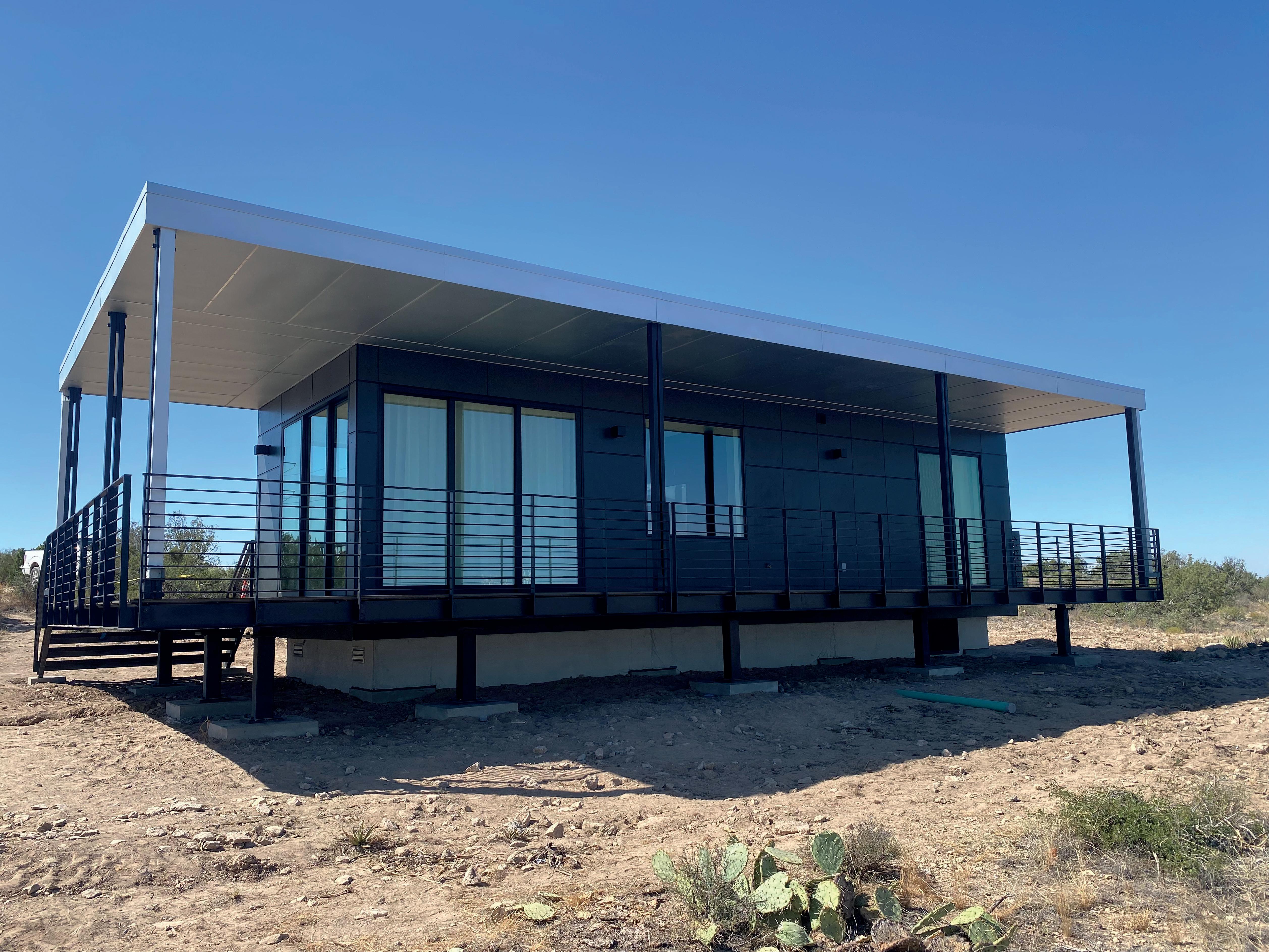
94
It has been a year since we were introduced to the Escobedo Group and its renowned DARIO Panelized System. Panelized construction is an innovative building system, which minimizes waste, environmental impact on site, and production delays due to the weather. One of the ways that the Escobedo Group is revolutionizing this industry is by working with engineers, architects, fabricators, and
builders under one roof. The close integration of these disciplines and the shared commitment to quality and continuing innovation defy what can be achieved with conventional or even ‘pre-fab’ building. “As we continue to grow and innovate it’s the passion and the dedication passed down to me from my father that continues to inform our decisions,” David Escobedo, the founder and co-owner, says.
construction-today.com 95
Escobedo Group / DARIO Panelized System
The Escobedo Group goes one step further in realizing its commitment to quality by transporting and installing its builds with in-house equipment and certified employees. “When we last spoke, we were working solely on strengthening DARIO and the overall process. Since then we’ve created DARIO Villas available in one, two or three bedroom floor plans with customizable
interiors that are perfect for family retreats or vacation rentals especially in hard to reach locations. The Villas range from 900 to 1300 sq. ft. and can be erected, once on site, in a single day.” The Dario system is not limited to these designs however; the Escobedo Group has worked with clients and their architects to realize luxury homes even in the remotest of locations. “We believe it is the future of construction. The Dario system allows us to bring these large-scale projects to life in a more efficient, sustainable, and faster way than conventional construction.”
The panels are built with high precision and quality; two characteristics for which Escobedo has always been known. “There is nothing we leave to chance here. This system has enabled us to improve how we manage materials and energy. For example, we have extremely high insulating values making
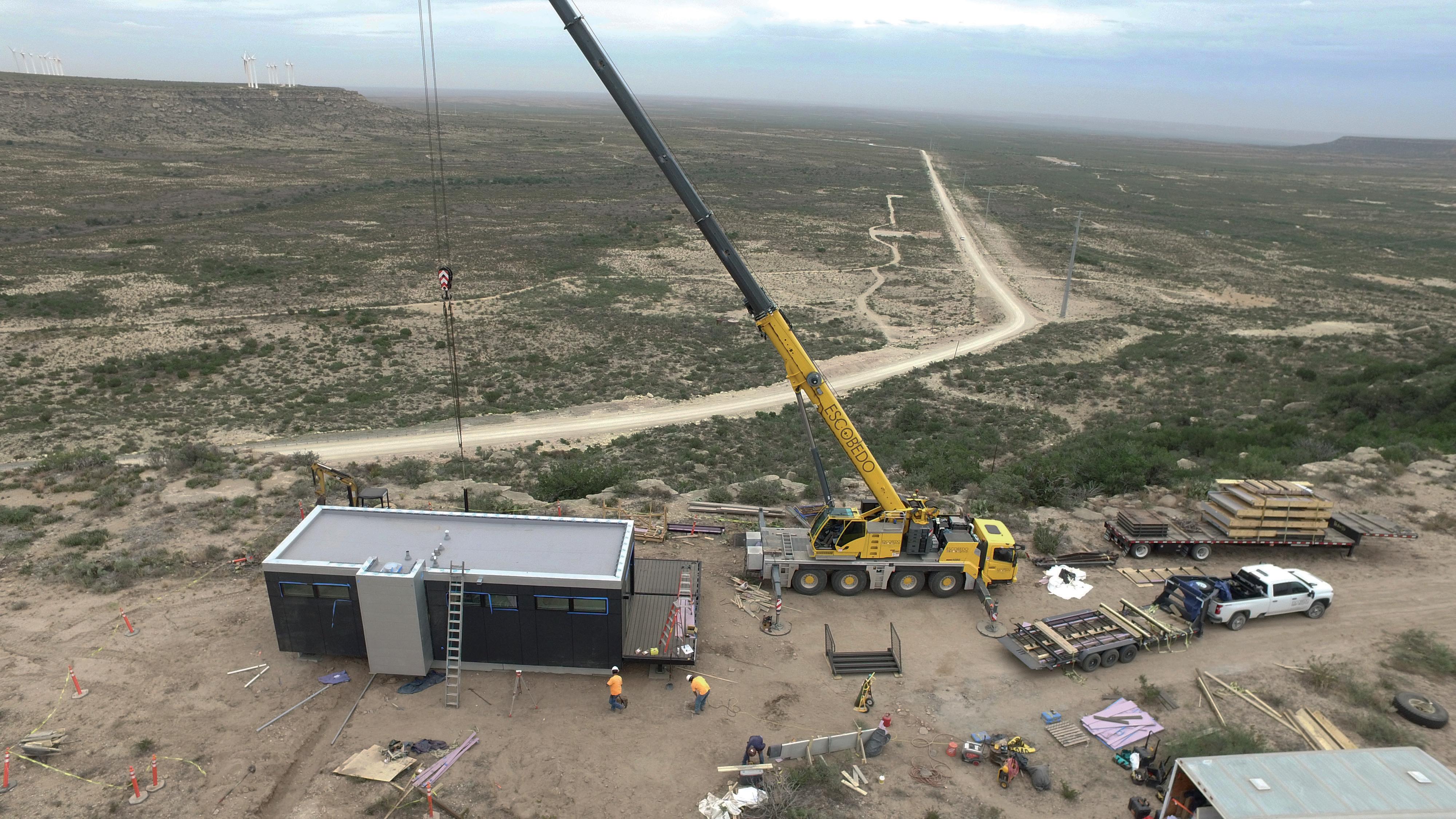
“ “
“ “
There are absolutely no limitations as to what can be done with DARIO, and that is a huge difference between a prefab and our panelized system
Escobedo Group / DARIO Panelized System 96


98
the finished product much more energy efficient and improving on indoor air quality. We also extrude our own metal studs exactly to the size needed using a high content of recycled steel. This means that clients who purchase the product are supporting innovative designs, energy efficiency, and a construction process that is more sustainable,” Matt Escobedo, company President, shares. Another aspect that has formed part of Escobedo’s journey since we last spoke is the impact of the pandemic on the expansion of its catalog. “Something we saw happen during Covid-19 was the development of multigenerational living. Many of our clients have large properties, and they wanted to be able to create guest suites, offices, and spaces for their family to stay with them. This is how we came up with the DARIO Villas. For us, they are an excellent way to deliver the same quality of build in a faster, more efficient way,” says Matt.

construction-today.com 99
Escobedo Group / DARIO Panelized System
One of these Villa projects can be found in rural west Texas, where the biggest challenge was the location. “Rural areas, where a lot of our clients have properties, can be difficult to access. We are able to save on labor costs and limit project delays constructing the panels in our facility. From concept to move-in the West Texas Villa had a turnaround time of six months.”
Customized solutions
Matt explains that while the floor plan is predetermined on a DARIO Villa, the Escobedo group can work with the client or the client’s designer to customize the interior or offer in-house design consultation and state-of-the-art finishes. The Villas also have the option of a partial or wrap around deck.
Another strength of the Dario panelized system is its flexibility as demonstrated in a rural Colorado project whose owner was also the building’s

100
designer. The Escobedo Group was able to realize its client’s vision and despite the difficulties of the location, it was able to complete the entire ranch house including integrated mechanical systems, a shop and cistern in less than a year. It took a mere fivedays from prepped foundation to dry-in.
Our conversation then turns towards how the company is able to separate itself from other builders in Texas and the surrounding region. One of the key benefits to the company’s operation is that it is vertically integrated within its supply network. “Our 60,000 sq. ft. facility houses separate millwork, stone cutting, and metalworking shops. In addition to our designers, our team consists of unsurpassed craftsmen in their fields. Some of the team members have worked with me for over 20 years,” says David. With over 100 people on staff the Escobedo Group completes 90 percent of its projects without subcontractors.

The few parts of a project that are contracted out, are contracted to trusted vendors. While Escobedo’s operation is a smoothrunning machine, for Matt, the system is continually being improved, and this will remain a focus as the business grows. “There are absolutely no limitations as to what can be done with DARIO, and that is a huge difference between a prefab and our panelized system. Pre-fabrication does have its restrictions, and we want to offer a solution for customers who want luxury home building that remains focused on quality while shortening the turnaround time.”
The future is in innovation
The company’s vision for the next few years then sparks a discussion surrounding the strategy for achieving it. David and Matt are confident in their team’s creativity and dedication, and they are proud of every member who has brought the business to
construction-today.com 101
Escobedo Group / DARIO Panelized System
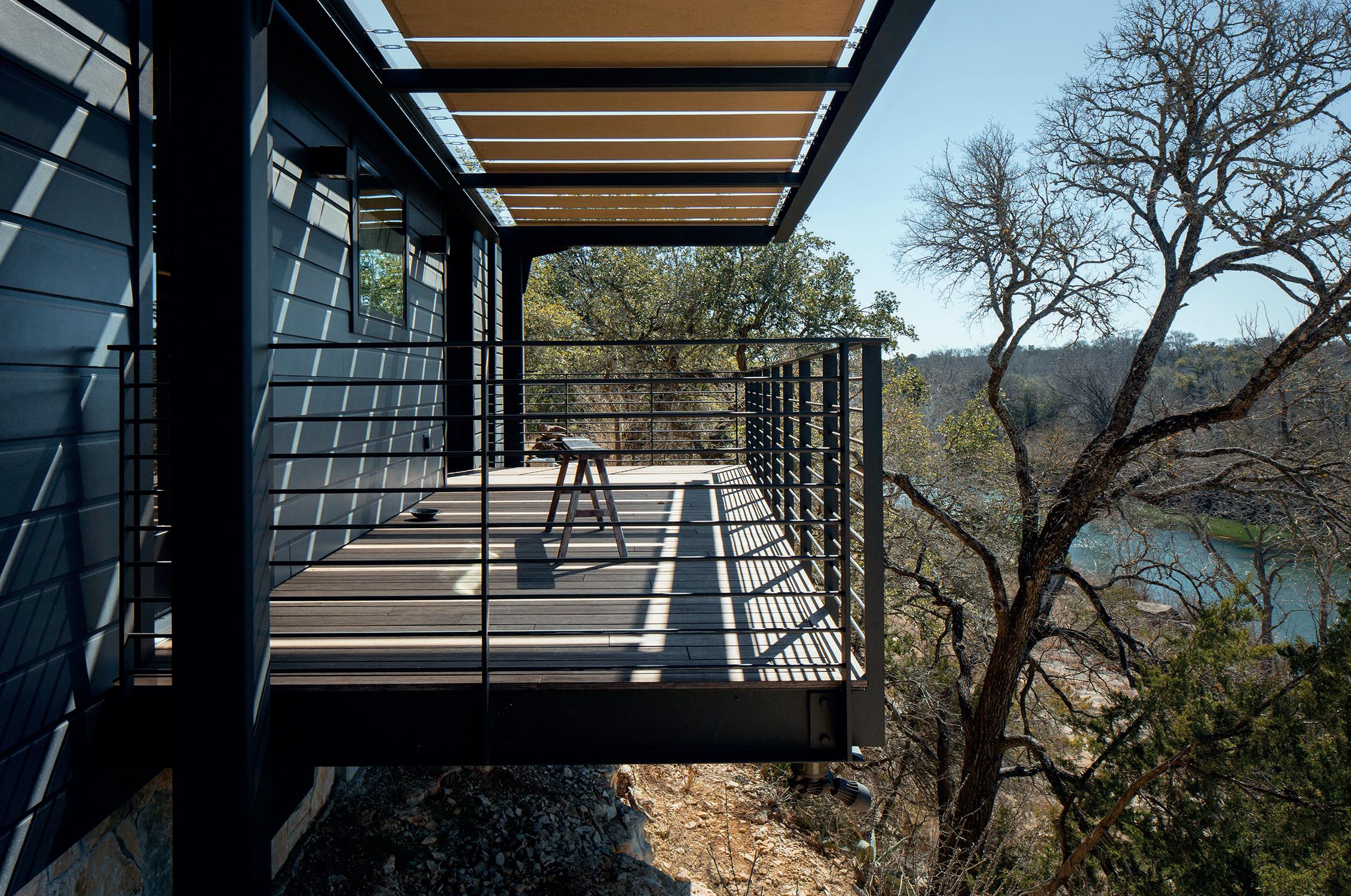
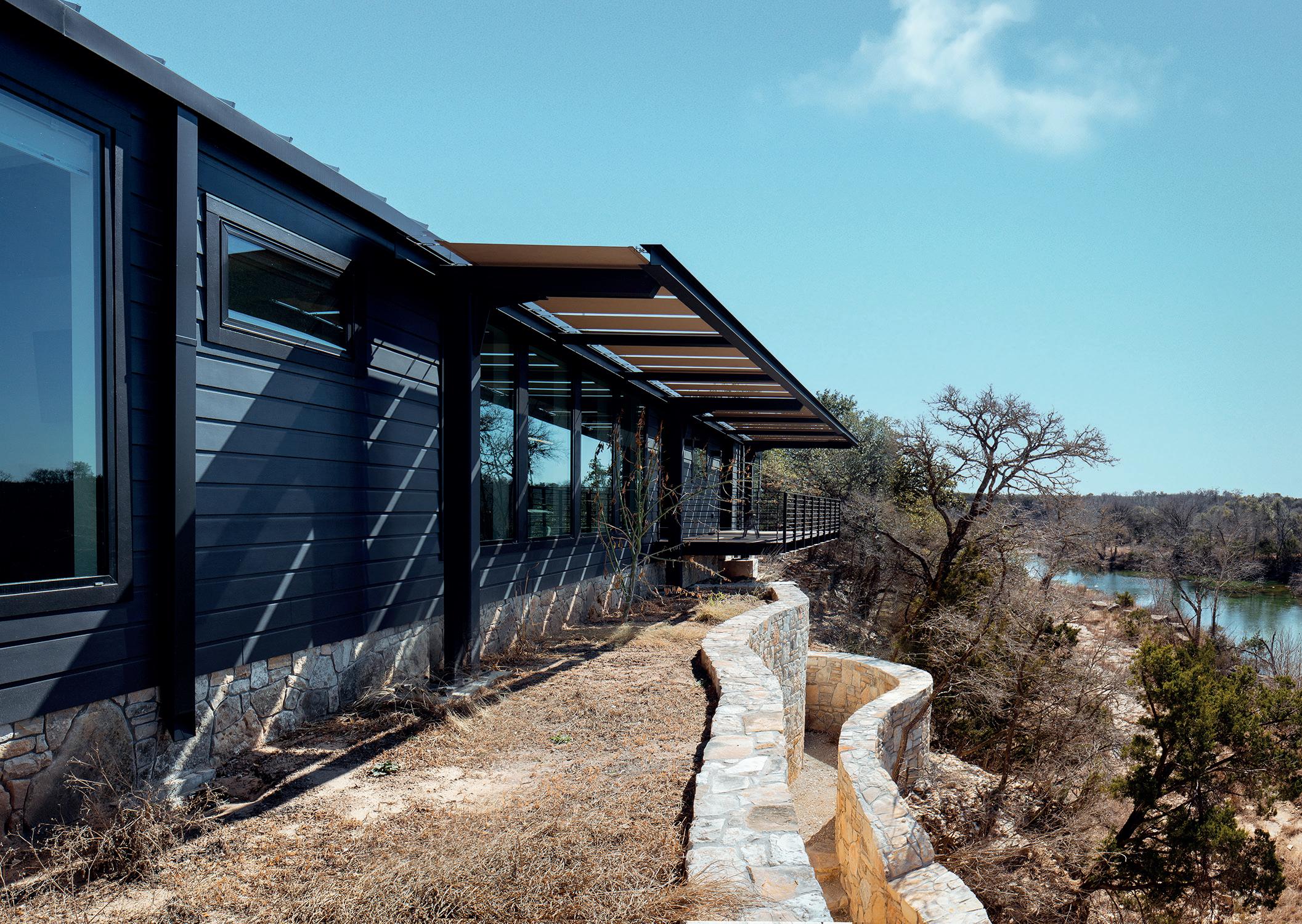
102
where it is today. “The future for Escobedo is in innovation. Our team will continue to develop and release new designs working with the latest technologies, as well as giving a place to skilled craftsmen. We are seeing interest all over the country for our product. Currently we are working on a handful of projects including a family retreat utilizing the Villas and a 20,000 sq. ft. luxury home.”


Matt shares that plans for the company’s growth are exciting. It was recently able to acquire an 11-acre property adjacent to its current site, which it will quickly grow into. “The Villas product is a fairly recent development and as interest in that product grows so will the company. We continue to work closely with clients to see the ways in which we can improve and how we can best support them.”
In bringing our conversation to a close, Matt wishes to share the full potential of the DARIO Panelized System, and encourage others out there to inquire about its possibilities. “When
architects hear ‘panelized systems’, they don’t quite understand what it is. For some, they assume that it is going to limit their design capability, but it’s quite the opposite. We’ve been able to demonstrate the system’s flexibility as well as our own. We are very collaborative here; we love to cooperate with interior designers and architects. Escobedo Group believes anything is possible and we are in a unique position to put that to the test. For those interested in the DARIO system, it’s important to keep in mind that it doesn’t restrict creativity or design capabilities in any way. On the contrary, it might just help elevate them,” Matt concludes. We look forward to seeing how the business remains innovative in its construction abilities, and how the DARIO Panelized System continues to take the industry by storm. ■
www.dariopanelized.com
construction-today.com 103 Escobedo Group / DARIO Panelized System
Rooted in
Val Stiener of Chase Lumber discusses why people, place and products are the driving force behind the business
We are a building materials supplier, and have held firm to our roots. We don’t try to be something to everybody, we do what we do and try to do it to the best of our ability. I think that has been the secret to our success for this long,” begins Val Stiener, President at Chase Lumber (Chase), which is currently enjoying its fifth generation of family management. “There is a lot of competition in Dane County, Wisconsin,” she continues. “The market is extremely penetrated, so we are all fighting for the same piece of the pie. The saving grace is that it’s a fast-growing community, and there’s still a lot of development going on here. While the competitive market makes for challenging times, and as a result, many building materials suppliers have tried to get involved in everything from manufacturing to installation, we have stayed true to our specialty. We are a lumber yard, providing materials to builders. We are not a hardware store or a onestop shop. We focus on the contractor and provide the best materials and service that we can, and have done so for 125 years,” Val enthuses.

104
relationships
Chase Lumber construction-today.com 105
Rising prices
The past two years have been difficult for everyone, and the building sector is no exception. As an essential business, Chase didn’t slow down. The industry kept on going, and Chase had to pivot to keep pace. As Val explains: “We had to learn how to enable some of our people to work remotely: those that could, like estimators, could be at home. However, from loading trucks to delivering materials, many of our operations are impossible to carry out remotely. That said, we utilized a skeleton staff and persevered, pushing through the pandemic. It was taxing, but we learned to do things differently, just as every other business had to. Some of those changes are still in play, and while we do see many builders more accustomed to emailing rather than visiting us on-site, several customers do still like to see us in person. I think that’s just the nature of our industry.”

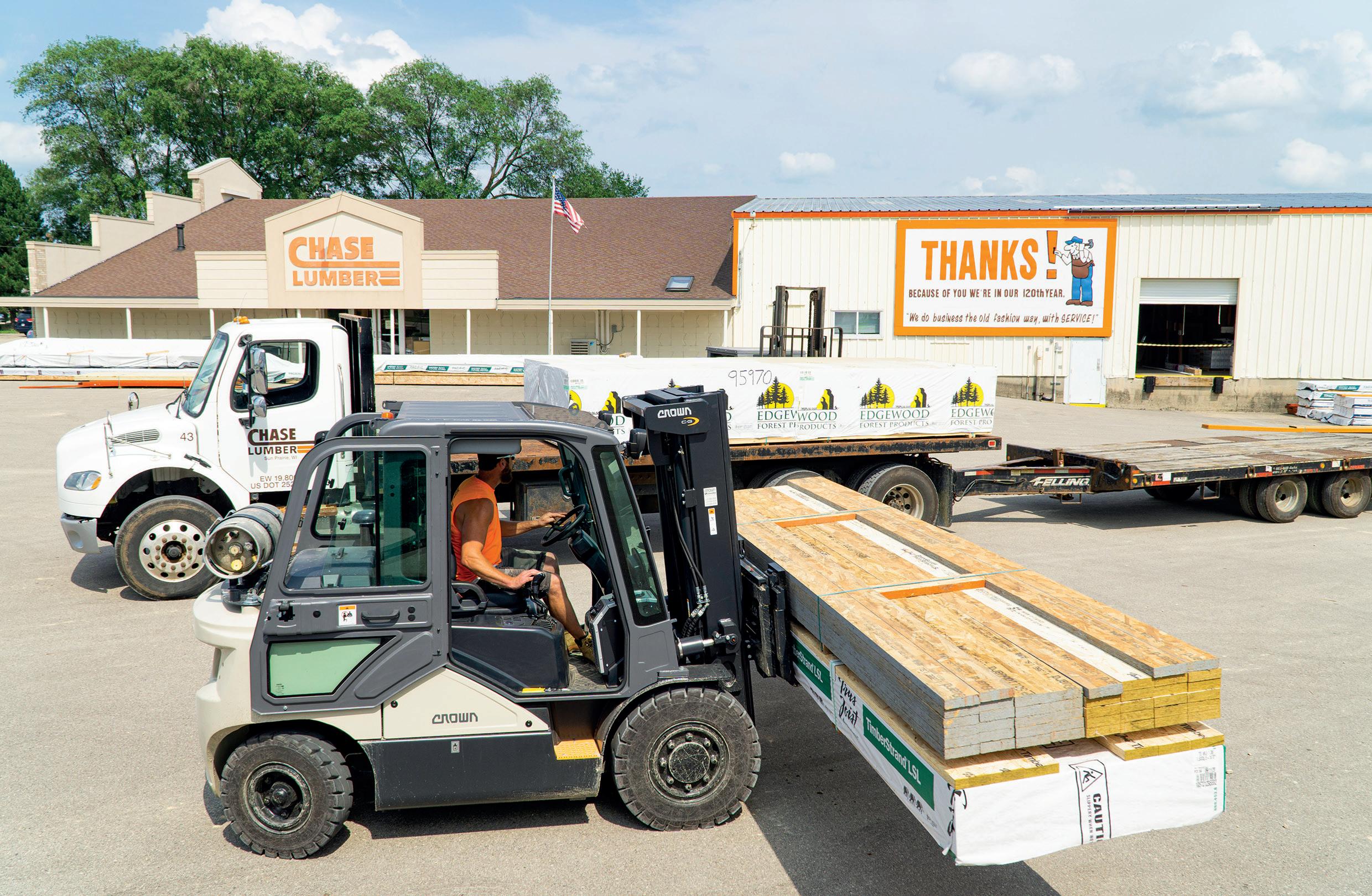

Chase Lumber 106
Chase is part of a lumber buying group that consists of dealers from all over the country. This certainly helps independent lumber yards, like ours, because we all pull together
“ “
“
construction-today.com 107
“
The business was able to retain its team members, and Val is delighted to note that Chase is fully staffed. In fact, in her tenure, she has never known anyone to be laid off. Additionally, this year is set to top last year’s record sales, which Val believes is attributable to a couple of factors. “First of all, our industry kept working during the pandemic. We are also fortunate to experience ongoing development locally. However, in my opinion, the price of building materials is a factor. Prices have escalated, but builders keep building, and as such, they have to push through the cost of materials. From our perspective, if costs escalate, so do sale prices too. While some materials have reduced in price, many are not back to where they were
in 2019, others haven’t come down at all.
“However, you have to look at both sides of the balance sheet. The cost of labor has gone up, as have materials purchase prices, alongside insurance and utilities. Fortunately for us, the materials and the amount of business we are pushing out the door have helped offset some of that, but as a result, we have to sell twice as much to manage our margins.
Leading by example
“Chase is part of a lumber buying group that consists of dealers from all over the country. This certainly helps independent lumber yards, like ours, because we all pull together. We are not competitors in that way,
▲ Val Stiener, President at Chase Lumber
108
but rather, we’re trying to stay independent and that is a contributing factor to why independent yards still exist today.
“It’s certainly been an unprecedented two years, but I work with a phenomenal group of people. We are a family-owned business, and we bend over backwards to try and help our employees, which, I would say, is repaid with their loyalty and commitment.”
Val has been with the company for 25 years. When she joined, both her brother and father were working at Chase, and her father very much led by example to create the culture that’s still in existence today. “My dad never missed a day of work, unless he was really ill. At the age of 83, he was still coming in to work every day, so that sets a good example. The commitment he had to his employees rubbed off. While different today, and particularly in terms of the greater flexibility and enhanced work-life balance we offer, our employees still have that same commitment to us.”
The culture of commitment extends to wider business relationships too. Prior to the pandemic, supplier relationships were very strong, as the business was dealing with the same people, which provided consistency and reliability. Val goes on to explain how those relationships have evolved post-pandemic and the challenges that presents. “Since Covid, staff retention in many sectors has taken a huge hit. As a result, many vendors and suppliers are struggling to meet demand. Quality of product can also be an issue, as can vendor support. While many suppliers do their utmost, unfortunately, we often experience difficulties resolving issues, which can be frustrating. Our priority is to ensure our customers receive top-quality products.”
While personnel may not be an issue for Chase, Val believes it’s going to take time for many manufacturers to get back to firing on all cylinders. “Manufacturers are innovating with smarter processes, turning to automation because they don’t have the people to do the work. In terms of the wider industry
itself, there is a shortage of contractors and laborers. It’s going to take time but things will change. The entire building industry needs to change. It’s a driving force in this economy. If we stop building then the economy stops,” she suggests.
Looking to the future, Val is anticipating a downturn in the economy over the next couple of years. “How much that will affect us is yet to be seen,” she elaborates. “I’m sure we’ll feel it, but we are relatively cushioned by the robust health of construction in this area. My job is to keep people working and figure out ways to do that. We have a good group of builders that we work with. Right now, we’re just full steam ahead. We’ll keep doing what we do, control what we can, and see what happens.” ■
www.chaselumber.com

Chase Lumber construction-today.com 109
Building a better tomorrow
From beginnings in a basement to being on top; Genesis AEC’s construction journey within life sciences
110
In 1996, Bernie Friel founded the earliest form of Genesis AEC (Genesis) in the basement of his home. The following year he expanded the mechanical engineering and design company to include electrical and plumbing services by merging with another firm. This early move set the tone for the following twenty years of business, during which it grew to encompass a multitude of different skills and departments. Today, the company employs a team of more than 375 people, spanning a broad range of services, including architecture, engineering, construction management, commissioning, qualification, validation, and asset management. In speaking to Construction Today, Mark Gagnon, Vice President of Construction, expands further.
Genesis AEC construction-today.com 111
“ “ “ “
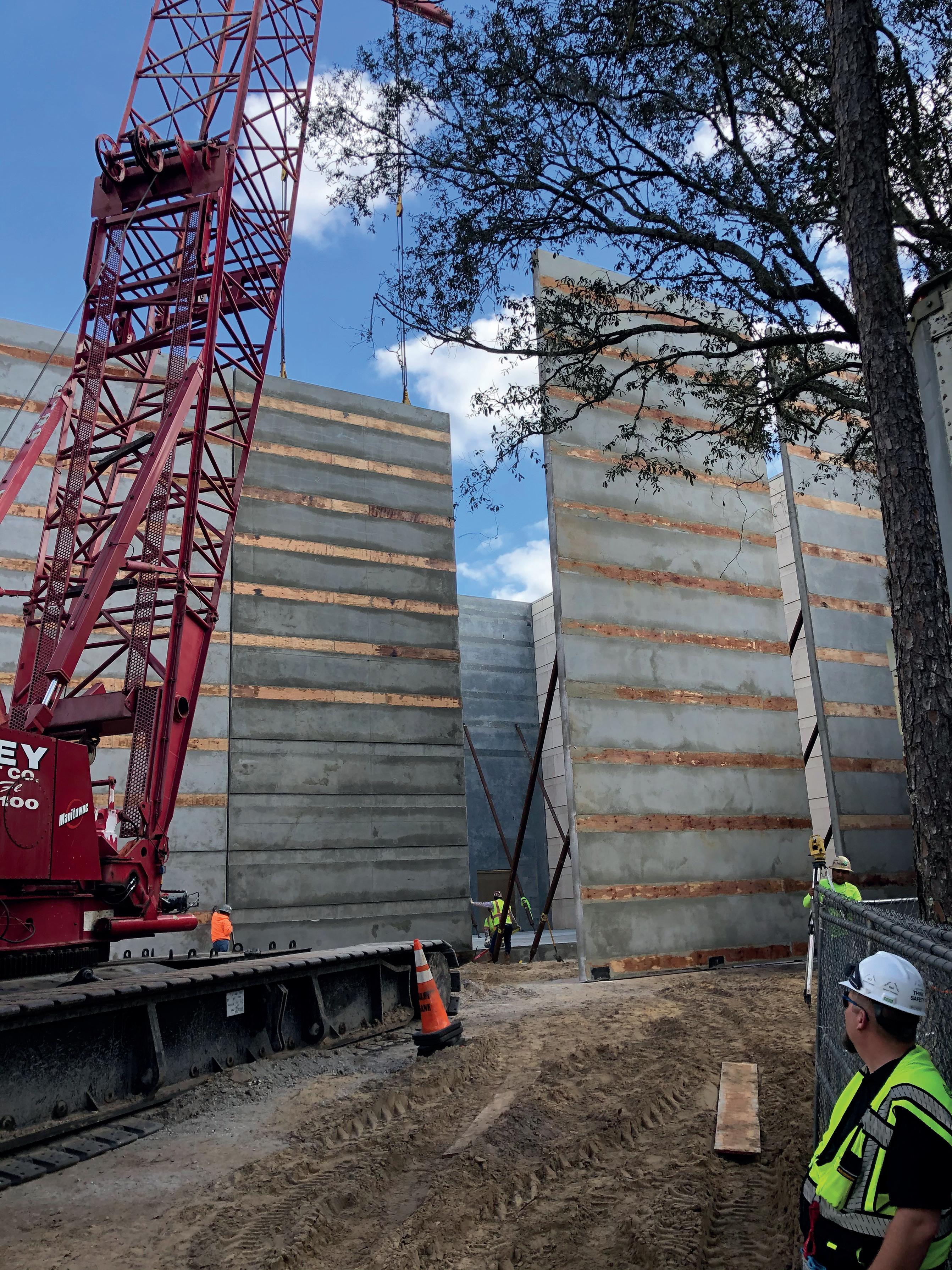
We already implement 3D scanning technologies, when surveying existing facilities, to ensure the absolute accuracy of our surveys 112
“We are a Total Project Delivery firm. We handle everything from beginning to end, from the earliest feasibility studies, programming and planning, all the way through to the finished product. It’s this total vision, or should I say long-term solution, that really differentiates us from our competition. It’s not just a case of one project in and one project out for us; most of our clients are repeat customers, some of whom have been with us for 20 years, across hundreds of projects in multiple locations. We wouldn’t get that kind of repeat business if we weren’t doing something right. People appreciate the ownership with which we manage any project that we undertake. And they appreciate our adaptability, too– everything we do is tailored to the specific and unique needs of our clients.”

Deeper understanding
Genesis is one of the nation’s leading Engineering, Procurement, and Construction Management (EPCM) firms dedicated to the life sciences industry, and has served leading innovators such as Bristol-Myers Squibb, Bayer Healthcare, Glaxosmithkline, Merck, Celgene, Novartis, Johnson and Johnson, and Pfizer, to name a few. It offers a unique one-stop design and build approach, and houses teams of award-winning professionals across a myriad of disciplines, which really sets the company apart. As Tom Hughes, Associate Vice President of Construction details: “Where we shine best and what we attribute to our success today, is the crossdiscipline expertise we possess. The Genesis team is made up of subject matter experts in everything from process and procurement to compliance regulations, design, and engineering; all of which culminates to make us the best construction managers we can be. Through our extensive technical and scientific knowledge base, we have a deeper understanding of our clients’ needs, which helps us to deliver projects from a strong
quality standpoint every single time. I think that’s what really sets us apart, we’ve got everything under one roof, and we carry that approach through with collaboration across all of our geographical locations.
Whatever it takes
“In terms of our technological means, we are always on the lookout for the next software innovation to boost our efficiencies on the management side of things,” he continues. “We also use software to help with staff planning, but more excitingly, we’re currently looking at a new form of 4D scheduling software. With this, we will be able to create a step-by-step, interactive timelinemodel for any project, which features video game-like graphics and allows our clients to walk around the future stages of their development, at any point during the process. It also helps us in working alongside our
Genesis AEC construction-today.com 113
clients’ maintenance and operations teams early on as we can spot issues and figure out logistics way ahead of time. We already implement 3D scanning technologies, when surveying existing facilities, to ensure the absolute accuracy of our surveys. We can apply this information to 3D models within virtual reality to give our clients an idea of what the finished design can look like before we’ve even started construction.”
Genesis’ clients’ individual needs regarding their specific plants or research facilities vary, depending on the product or development they are working towards. This is what truly drives Genesis in its culture of
innovation, providing the requisite custom solutions to whichever challenges develop. Given the highly regulated fields that the company serves, much of its work has to be FDA approved and EU compliant, therefore the design and construction are focused largely on shrinking the critical paths to project completion. If the paths cannot be shrunk, then Genesis will endeavor to find another route, as Tom goes on to highlight in relation to a current project.
“We’re currently working on a large-scale consolidation project to update a client’s aging facilities. Of the two main buildings, one is around 100,000 square feet, to which
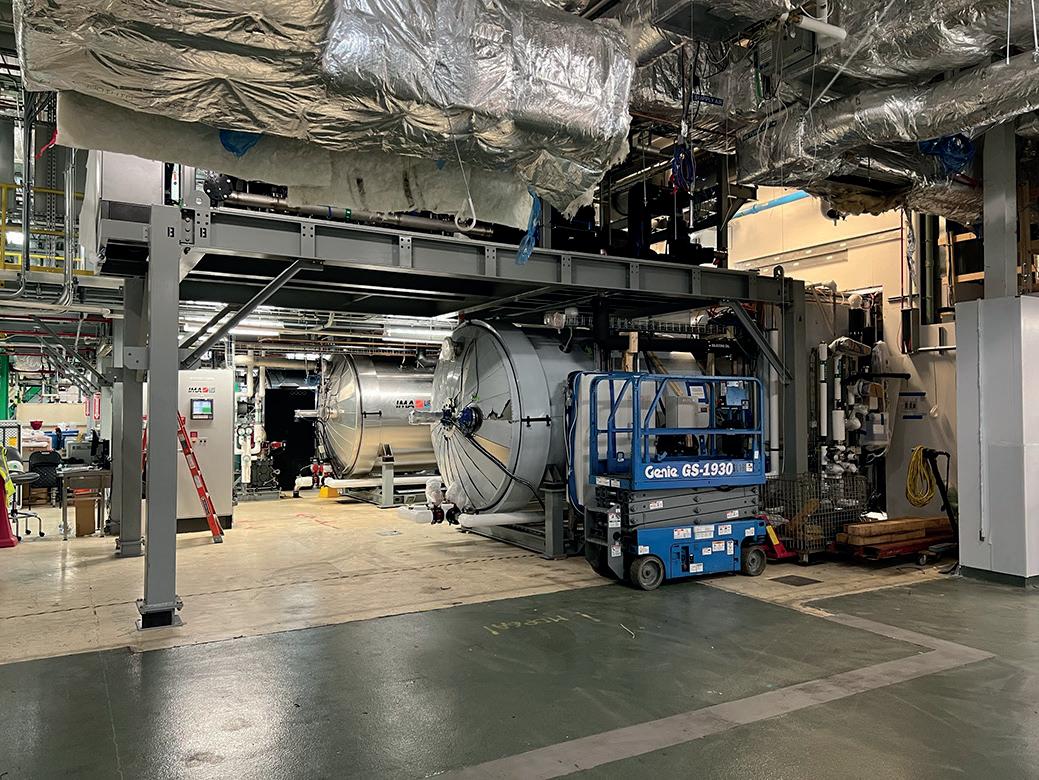
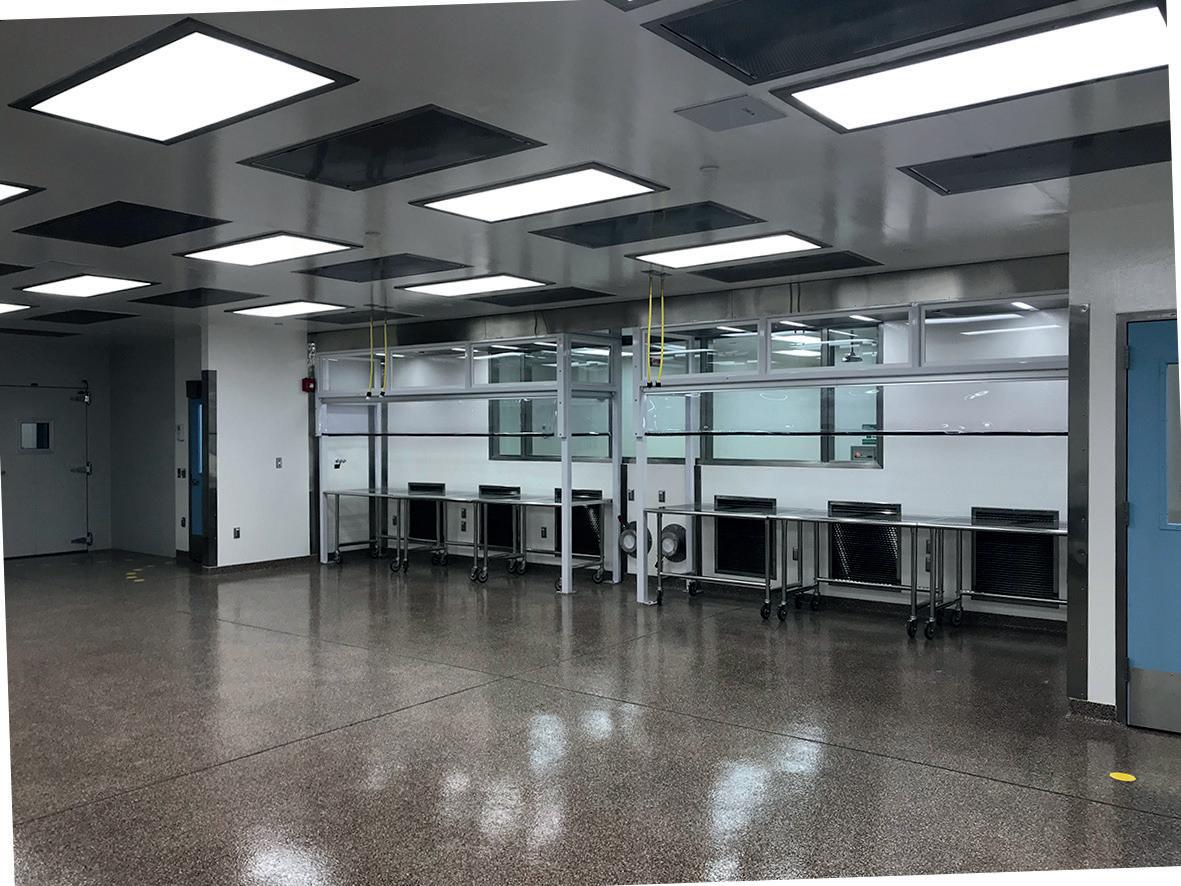
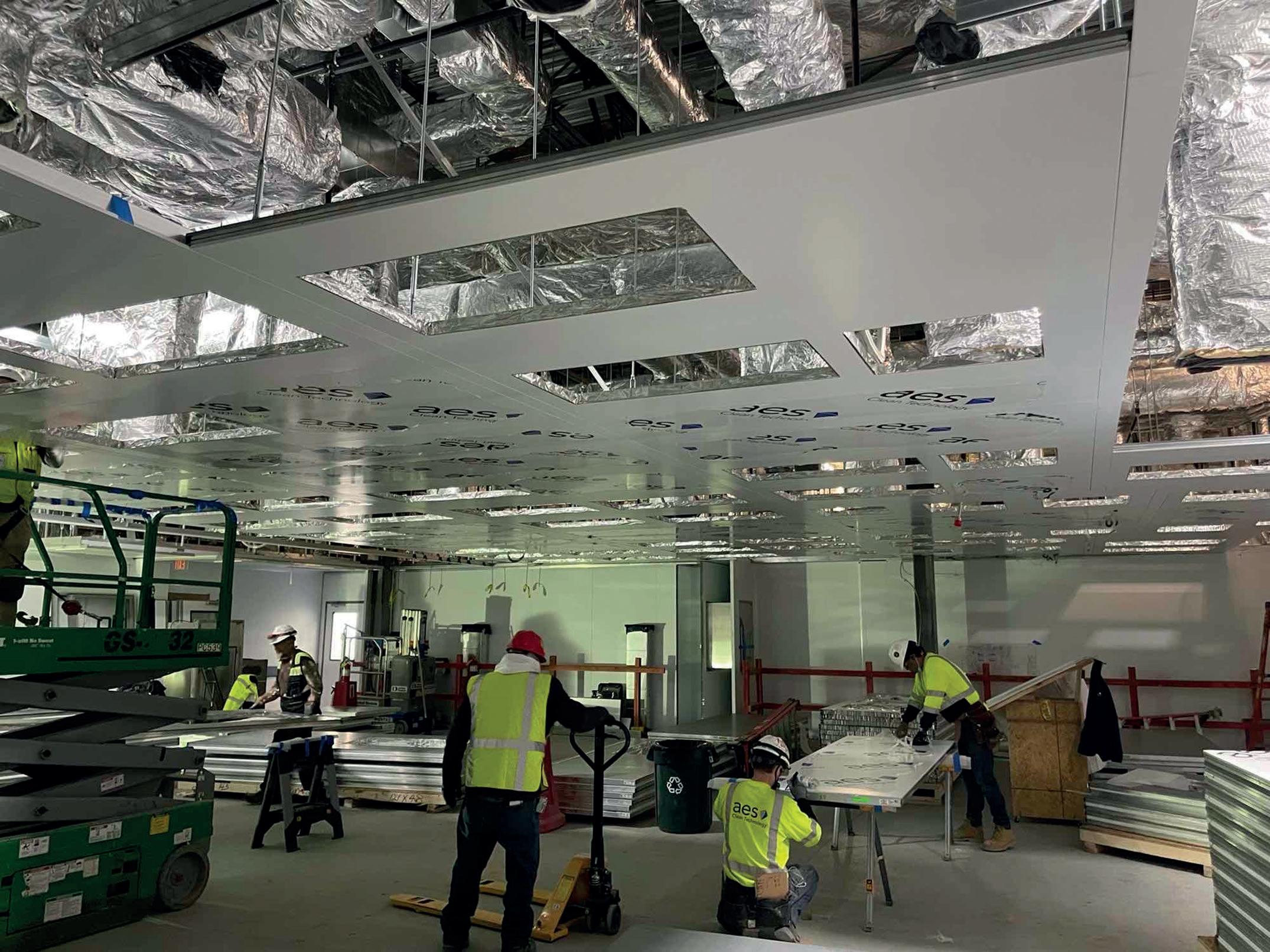
114
we are adding a further 40,000 square feet. Given that the ongoing work is taking place in a facility where active science and campaigns are still being practiced, we had to take huge precautions in measuring the existing structure’s strength and durability for coping with the noise and vibrations that we’d be creating. We employed a 900-ton crane, which had to be built by an assist crane, to put a tower crane on the top of the building, requiring an additional assist crane. The kind of coordination this sort of effort requires, just for one portion of a project, is exactly the manner of kinship that we exhibit for our customers time and time again. There were so many safety reviews and second and third checks in place to ensure no damage or disruption came to the millions of dollars’ worth of science taking place below.”
As a company that doesn’t self-perform any of the field work, and relies entirely on
subcontractors, relationships with people, both internally and within its supply chain, are at the top of Genesis’ agenda. No subcontractors are employed until they have passed its indepth vetting process, but once on board, they are welcomed into a long-lasting relationship of fair treatment and respect. The company opts for the term ‘trade partners,’ as both sides of the agreement equally need one another. As Mark concludes: “Everyone is focused on life science: the extension and enhancement of human life. We have a small firm’s feel and culture, despite our exponential growth over the last few years. Everyone is very approachable, and we love to work collaboratively. No matter what department, we all share the same bottom line of working towards the company’s success.” ■
www.genesisaec.com
Genesis AEC construction-today.com 115

116
Success in the Midwest
Heart of America Group defines the difference between spreading yourself too thinly and expanding successfully
Heart of America Group construction-today.com 117
This year, Heart of America Group (HOA) is celebrating 45 years of operational success and exponential growth. The company humbly began with a 100-seat restaurant on the outskirts of Davenport, Iowa, but today plays host to a powerful portfolio of owned and operated, award-winning hotels, restaurants and commercial properties across the Midwest. In perusing its extensive offerings, it’s fair to say that Mike Whalen, President and CEO, has successfully executed his vision: to build cool.
As a result, HOA’s building segment has organically evolved into an award-winning design, construction and management business, as one of the region’s premium hospitality and real estate development companies. Through its broad internal team, the organization is able to lead all aspects and phases of construction. In terms of design, this includes site planning, evaluation and selection, feasibility studies, conceptual and schematic design, environmental graphics, franchise design verification and much more. When it comes

118
to the actual construction, HOA builds on the knowledge and passion of its inhouse engineering and architectural teams, by drawing on its wealth of knowledge and four decades of experience.
From planning through to construction, the company strictly adheres to its green strategy. All of its developments employ hybrid HVAC systems, with efficiency components such as geothermal, solar thermal, heat pumps, heat sharing, energy recovery ventilation systems, electrochromic smart glass, green roofs and real-time equipment monitoring. The majority of its properties also feature electric vehicle charging stations.
The Machine Shed, in Davenport, was the first restaurant that HOA opened in 1978. It conceptualizes a farm-to-table notion that celebrates American farmers. In embracing this theme, the franchise relies on local
“
Heart of America Group construction-today.com 119
In a world of mass-produced lodging choices, HOA focuses on pushing the envelope in design and hospitality by delivering award-winning accommodations for guests, and the communities that we call home
“ “ “
supply chains to find the highest quality produce from nearby providers, which is butchered daily inhouse to retain the utmost freshness. The main dinner menu is generally meat focused and includes a range of smoked-on-site dishes, but offers a collection of comforting homemade favorites and a number of salads too. In paying homage to this success story, the company also opened the Burger Shed in Iowa.
The other franchises within HOA’s portfolio are Thunder Bay Grille, which specializes in steaks, seafood and Cajun style dishes, Gramma’s Kitchen for comfort food, Johnny’s Italian Steakhouse, and The Checkered Flag Bar and Grille. There are three bars in its portfolio too; Fifth Avenue Syndicate is a 1920s-themed cocktail bar
located in The Axis Hotel in Moline, Illinois, and The Republic on Grand is a 6th floor hotel lounge in downtown Des Moines that offers cocktails, craft beer and global plates. Finally there is J bar, in Davenport, which offers an upmarket selection of modern American cuisine, wines, cocktails and beer.
A shared theme for all of HOA’s food and drink offerings is that, as a customer, you are always treated as a friend. The group is famed for excellent staff retention, which allows for the kind of consistency that keeps clients returning again and again. This isn’t overlooked by the employees, as the culture is synonymous with excellent customer service. It’s commonplace for visitors to be remembered and known by name. Going forwards, the business is planning

120
on expanding into further restaurant franchising to grow these successful groups.
The final piece of the HOA puzzle, is the slice of the hotel market that it has successfully served itself. As Scott Math, Brand Leader at IHG Properties has said: “HOA’s hotels are designed to inspire, connect and delight our guests. Our boutique style hotels, regardless of global branding, are built on a foundation of service and excellence. In a world of mass-produced lodging choices, HOA focuses on pushing the envelope in design and hospitality by delivering awardwinning accommodations for guests, and the communities that we call home.”
There is a variety of brands among the hotels, to suit clients travelling for both business and pleasure. In a bid to exceed its competitors, the company strives to offer its customers more in terms of design and amenities, and prides itself on having
spacious and relaxing bedrooms. Within the upper end of its offerings, there is a small range of boutique brands. The Rewind Hotel in Moline, Illinois, adopts a touch of the 1960s and 70s, whereas the theme of The Axis Hotel plays on the ornate details of its walls that have survived since the 1920s. Across in Des Moines, HOA operates the area’s only four star hotel, Hotel Renovo. Additionally, Hotel Revel celebrates the heritage and fun of the heartland that is Iowa.
One thing that’s certain, is that as the HOA team grows the business and expands its footprint across the region, it leaves a trail of good times, excellent service and home-from-home comforts. It truly is the giant of the Midwest’s hospitality industry. ■

www.heartofamericagroup.com
Heart of America Group construction-today.com 121
Improving
life quality
Holland Partner Group is working collectively to steadily improve its residents’ quality of life

Headquartered in Vancouver, Washington, Holland Partner Group (HPG) was founded in 2001. It consists of five operating companies: Holland Investment, Development, Residential, Redevelopment and Construction, which collectively employ over 750 people. In serving the most highgrowth Western US markets, such as Seattle, Portland, Los Angeles, Denver, San Diego and the San Francisco Bay Area, HPG generates an annual business volume in the low billions and is recognized as the most consistent and reliable operation in the real estate industry.
In the development of modern and distinctive residential buildings and living spaces, as well as the transformation of existing sites, HPG strives to create properties that have a lasting impact on their tenants. The result is the creation of living spaces that bring neighbors closer together, amplifying the sense of community felt by all. To accomplish this, the business draws upon the talents of its world-class teams of designers, architects, interior designers, sustainability consultants, landscape artists and technologists.
Responsibility, values, great people and work, exceptional service, sustainable approaches and fun, are among the factors
122
driving the business and facilitating its core principles. These ultimately enable the realization of its vision to create the homes of choice of its employees, residents and partners, and pave the way to creating communities that inspire people to reach their full potential. The principles themselves are focused on residents, team members, communities and partners.
Residents are intrinsic to the company’s mission. Meeting a tenant’s needs by addressing any issues promptly and acting with kindness supports them in reaching their full potential. The importance of team members speaks to the necessity of inclusivity within the working environment,
and the celebration of both the diversity and achievements of the company’s people. Through fulfilment and purpose, it aims to provide a manageable work-life balance, which encourages collaboration in a culture that highlights safety and innovation. Clarity, in training and support, is as important as the leadership qualities of capability, fairness and honesty.
The communities principle relates to providing value to society and helping to solve the nation’s housing crisis. Whether it’s in the support of policies that make properties more affordable to renters or strategically developing lots close to job centers or public transport
Holland Construction construction-today.com 123
routes, HPG strives to deliver the highest quality and most sustainable buildings possible, where they are needed the most. Finally, the concept of partners is interwoven with all of the above. The company understands that in acting on its other principles in practice, it must earn a responsible return and add value to the investment opportunities it provides for its partners. This ensures a lucrative future for all, minimizes risk and allows for further R&D to maintain its position as an industry leader.
Indeed, the first of HPG’s operating companies, Holland Investments, secures and executes multi-family investment opportunities in each of the primary, Western US markets, and utilizes bottom-up analysis to ensure risk-adjusted returns. These opportunities are selected based on the criteria of offering longterm, predictable cash flow, or because they are undervalued or inefficiently managed or financed. The other Holland divisions,
Development, Residential, Redevelopment
and Construction, all come into play when tailoring each asset to its unique objectives.
Return on investment
Holland Development (HD) has cornered its specialty by homing in on locations that are within walking distance of areas boasting rapidly expanding employment. Popular among the rising creative class, the business focuses on urban infill residences and mixeduse trophy communities to provide more housing options where they are required. HD is able to repeatedly return on the investments provided by its partners and financial participants, by specifically catering new projects to the needs of modern residents through its expertise in entitlement, finance, design, operations and management.
On the operational side, Holland Residential (HR) has a geographical footprint that spans 20
124
cities, across five states, with a total of 13,800 units under its management. Its overriding mission is to create and manage superior living environments that exceed expectations and enhance its residents’ quality of life. HR is currently presiding over more than 55 communities and has bases and retail space in Washington, Oregon, California, Arizona and Colorado. Each of these locations is led by a Vice President, who is supported by a regional team of property managers that report directly into Holland’s corporate office. This fully integrated operations platform maximizes asset value, drives qualified demand, attracts high rent payers and increases tenant retention.
HPG’s redevelopment team is crucial to Holland Investment’s acquisition operations. In the initial stages of the process, it performs a cursory review of the asset in question, to provide feedback and capital needs for use in underwriting. Once a contract is in place,
the team proceeds with an extensive exterior review of the physical site and a full interior evaluation, which includes, but is not limited to, destructive testing to identify structural issues or the potential for hidden damage. Thusfar, it has supported the acquisition of over 50 assets comprised of over 12,000 units and successfully implemented over $150 million worth of capital improvements, such as roof replacements, exterior repaints and enhancements and general renovations.
Regional developments
The last of HPG’s operating companies is Holland Construction (HC). In its position at the helm of all of the group’s building activities, it works alongside the other four divisions as a project manager for any new construction projects from conception to completion. This inhouse, collaborative approach ensures a smooth journey from
Holland Construction construction-today.com 125
acquisition and design to construction and renovation, then finishing with the transition into property management. HC has successfully completed the development of more than 70 assets spanning over 21,000 units.
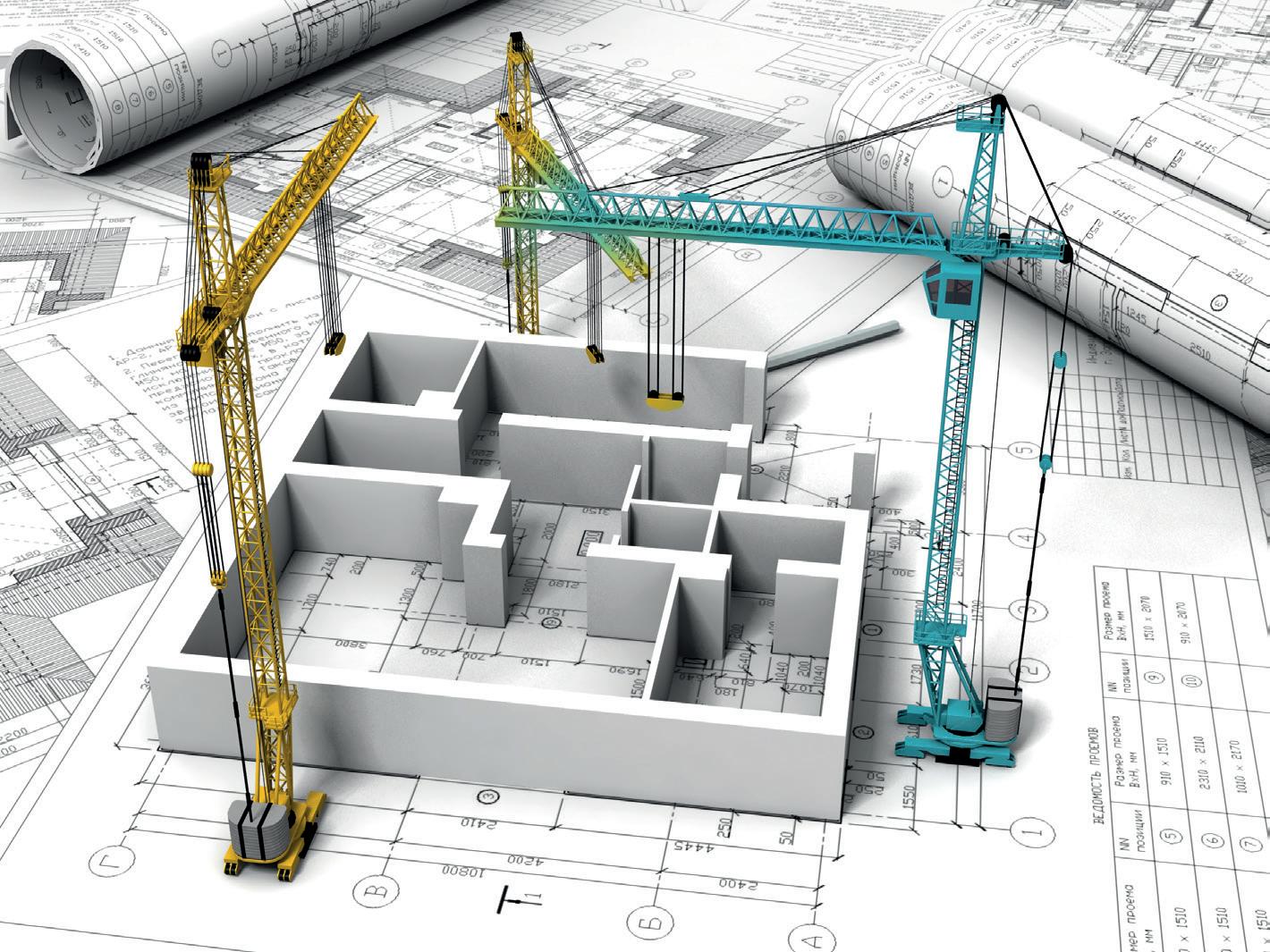
In February 2022, HC broke ground on a $400 million project in downtown San Diego with Lowe and North America Sekisui House, as part of a surge of developments scheduled to enhance the area over the next two years. The site, formerly known as Courthouse Commons, on account of it being situated on what was once San Diego’s superior courthouse, has been renamed West. Across 37 stories, and at 445 feet tall, it will comprise offices, apartments and commercial space, a rare but soon to be replicated combination within the local vicinity. The conditions of HC’s acquisition of the West site, dictated by San Diego County, included the construction of an $80 million tunnel connecting San Diego County Central Jail to the new courthouse.
The majority of the construction is expected to be completed by early 2024 and leasing is currently under way. The living space will be made up of 431 apartments, of which 41 will be reserved for low-income renters. The offices will span a total of 270,000 square feet, with some floor plans as large as 39,000. The commercial space, on the ground floor of the tower, above the underground parking, will cover 19,000 square feet. As a means to seamlessly blend this mix of retail, offices and housing, the interior design will likely more closely resemble a hotel than any of the others to date. We look forward to seeing the finished development. ■
Ocean Park Mechanical
We, at Ocean Park Mechanical, are a proud partner of Holland Construction, and look forward to being an integral part of its team for many years, as it continues to build successful and attractive projects. It is our privilege to provide the highest quality solution-based services to Holland Construction, as well as all our highly valued clients from San Diego to Vancouver. We take pride in providing plumbing and HVAC construction services that are second to none, including design build with Revit and full BIM capabilities.
Holland Construction 126
without carbon
How the National Cement Company of Alabama is steering towards a green future
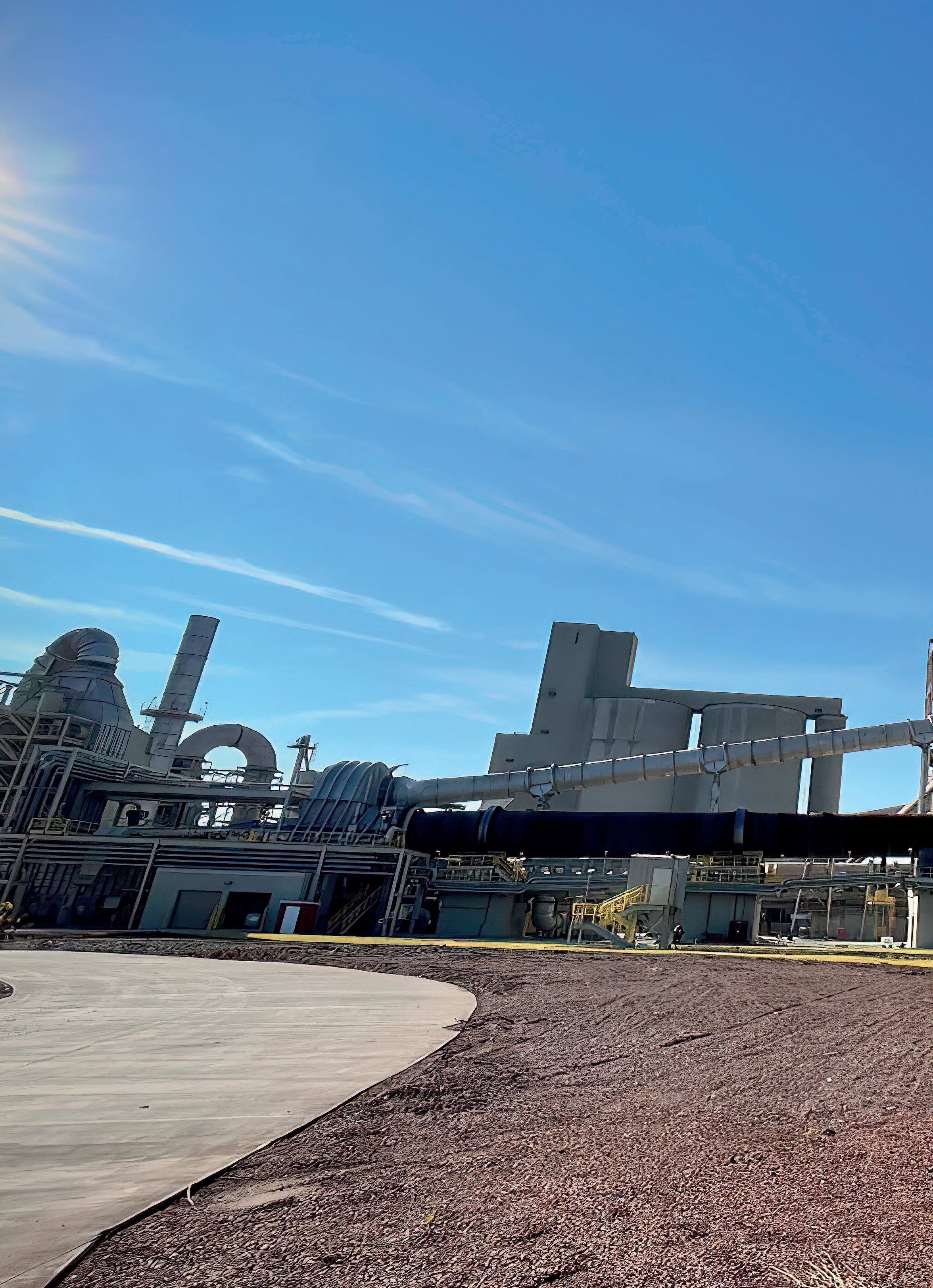
The National Cement Company of Alabama (NCCA) first began producing cement at its current site in Ragland, Alabama in 1908, then operating under the name of the Atlantic & Gulf Portland Cement Company. The company changed its name to National Cement Company in 1920, enjoying various owners up until 1974, when it was purchased by the Vicat Group, a French company with origins stretching back as far as the early 1800s, when Louis Vicat first invested in artificial porous
cement production. Following the acquisition, Vicat Group set upon a program of modernization and plant improvements that have brought NCCA to its present-day status.
Today, the company produces Portland Cement Type I, II and III and masonry cements, which it ships via truck and rail from four terminal distribution locations around Atlanta, Georgia, and one in Greenville, South Carolina. NCCA also operates readymix concrete subsidiaries, in the shape of Kirkpatrick Concrete and Hodgson Concrete in Alabama, and Walker Concrete in Georgia.
128
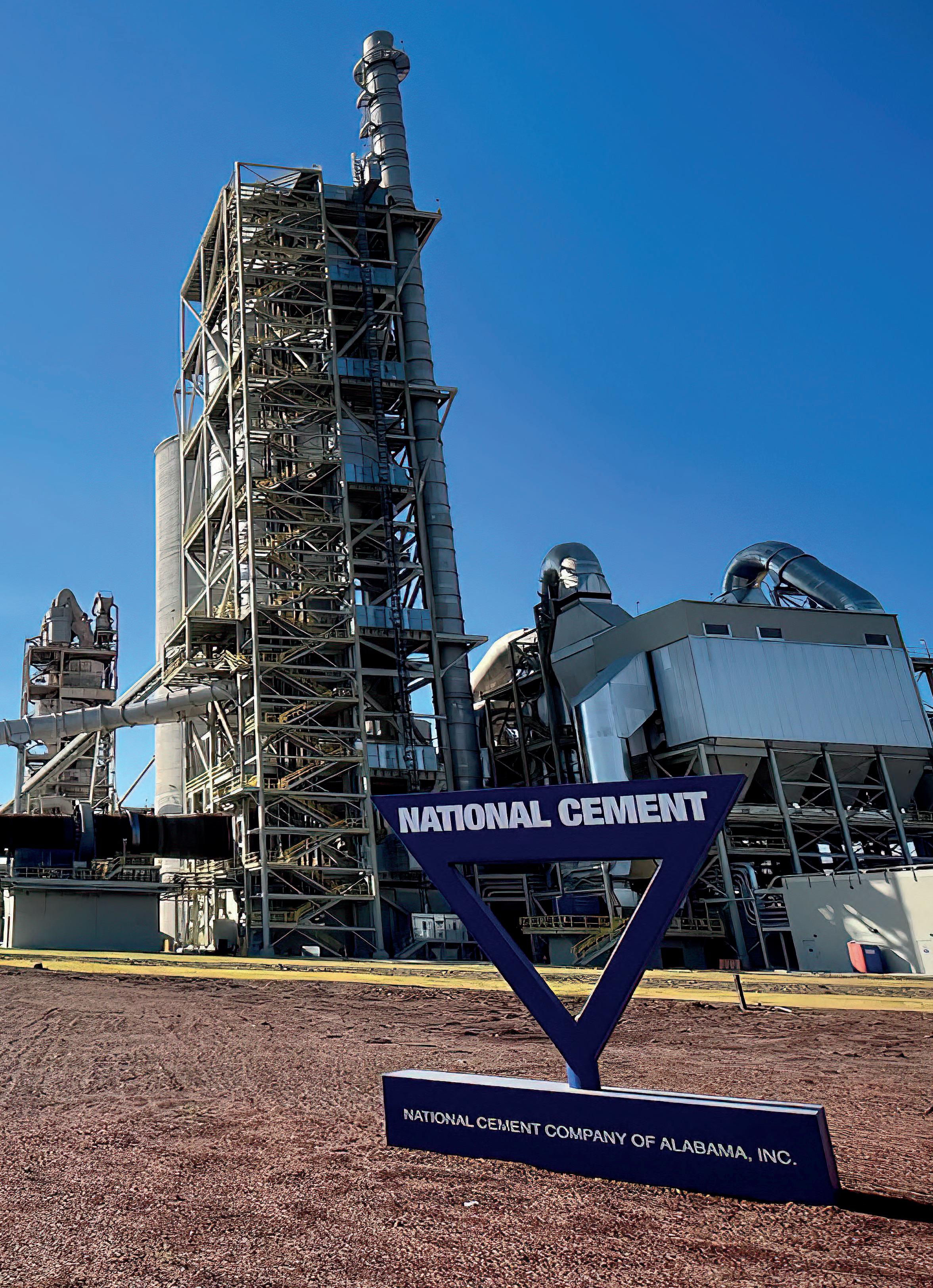
National Cement Company of Alabama construction-today.com 129
Among the biggest challenges currently facing cement producers like NCCA is a growing emphasis on decarbonization, with pressure mounting both within the industry and beyond, from the consumer to the governmental level. NCCA’s own decarbonization plan sets out the company’s ambition to achieve carbon neutrality by 2050 through the value chain, and the company took a significant step towards this earlier this year, as it commenced a two-year, $300-million project to install new cement production equipment throughout its Ragland plant. As Spencer Weitman, President of the NCCA, explains, the equipment will take advantage of the “very latest carbon reduction practices and modern energy technologies,” chiefly substituting fossil fuels with alternative fuels.
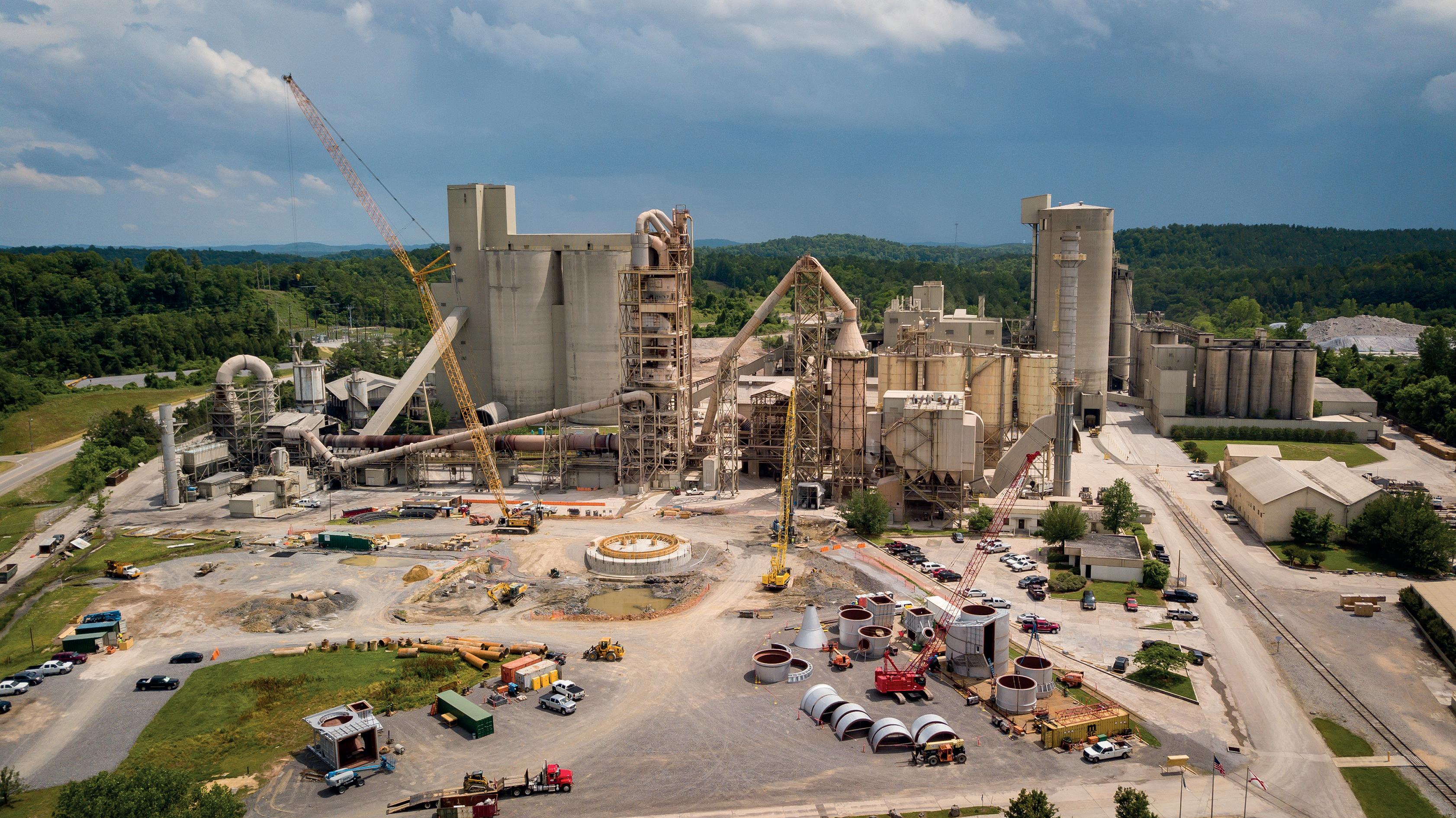
130
Long term, we will embrace carbon capture and sequestration, capitalizing on technology that is maturing every day
“ “ “ “
“The primary goal of the improvement project is to meet the global climate challenge head-on, and to be ready for the southeast’s impending demand for building materials with a lower carbon footprint,” Spencer comments. The company has already added a new vertical raw mill, a preheater tower with an advanced kiln line and cooler, an automated clay storage system, an alternative fuel storage facility, and a fully automatic integrated laboratory and control center. Meanwhile, the ongoing installation of electrical motors is expected to reduce energy consumption by as much as ten percent.
“We’ve also eliminated coal as a fuel source, replacing it with biomass,” Spencer continues. “This alone has delivered a 30 percent carbon footprint reduction. The next step for us will be the production of Portland Limestone Cement (PLC) or Type IL, an innovative blended cement that contains up to 15 percent limestone.
Tractor and Equipment Co
We are a local full-service marketing company that has been working with Tractor and Equipment Co for over ten years. We offer visual content development with multiple RED Digital Cinema cameras, graphic development, web, photo, and print, as well as a host of other marketing and branding services. Through the years, we have worked with international brands such as BMW, Shell Oil, Komatsu, and Amerex, and are happy to help you with anything you may need for Tractor and Equipment Co in the future.

Company of Alabama construction-today.com 131
National Cement
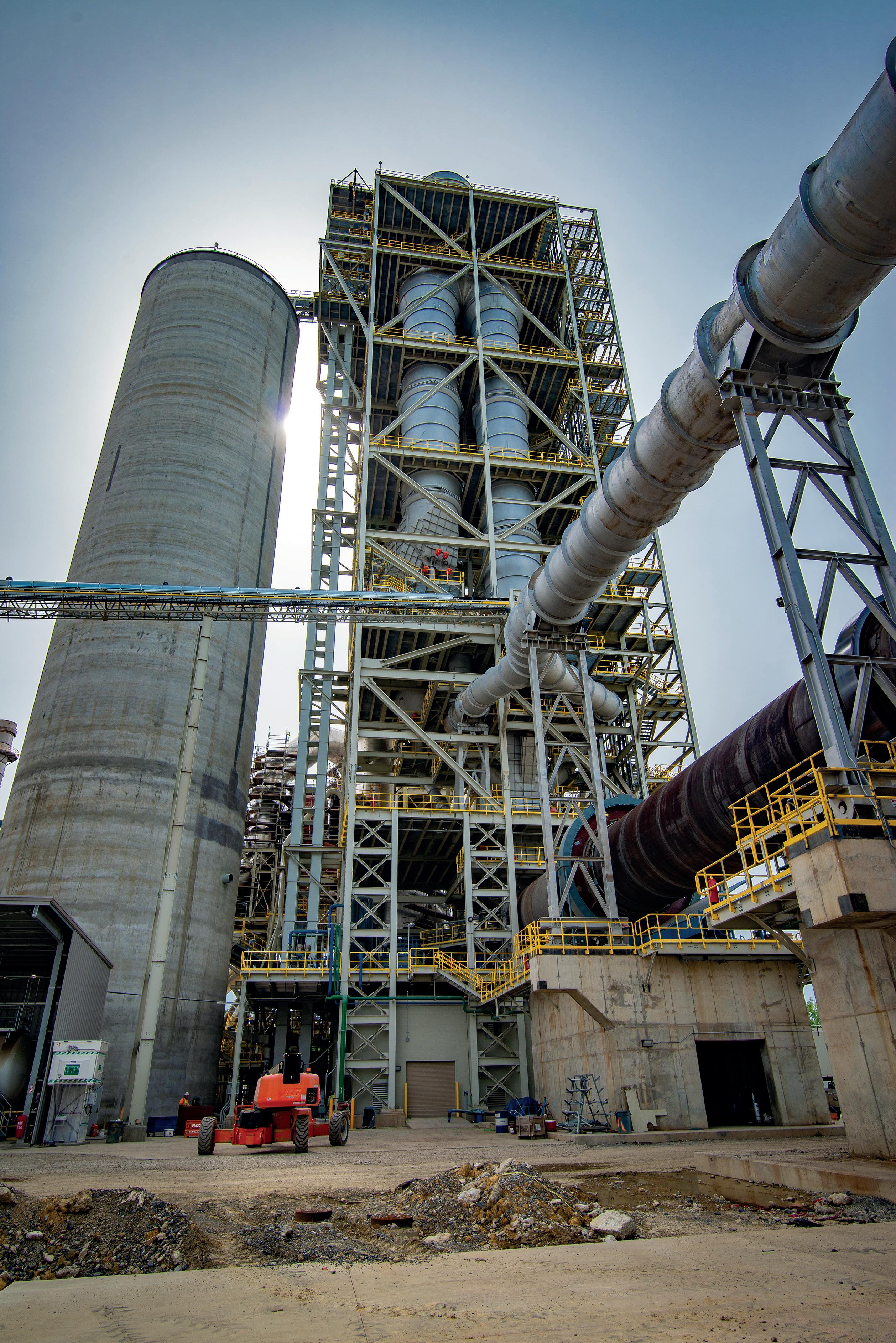
132
This will drop our carbon footprint by another ten percent. We’re currently in the process of conducting testing and making various initial production runs.”
By 2023, it’s expected that all Type I general-purpose Portland cement (OPC) produced in Ragland will be switched to Type IL PLC. But these aren’t the only efficiency measures underway at NCCA. The company is also revolutionizing its shipping operations, prioritizing energy-efficient modes of transportation.
“On a ton-mile basis, shipping by rail is more fuel efficient than shipping by trucks, lowering greenhouse gas emissions by up to 75 percent on average,” Spencer tells us. “Therefore, our carbon neutrality goal impels us to look at moving a larger volume of freight by rail.”
National Cement also owns approximately 4000 acres of land, of which around 800 acres are used for the plant site, storage, and
National Cement Company of Alabama
J & M Tank Lines
J & M Tank Lines has been a familyowned company since 1948. While headquartered in Birmingham, Alabama, we have operations strategically located across the southeast to offer the best coverage and service to our customers. As an industry leader in dry-bulk transport, J & M is backed by an elite force of professional drivers and industry experts dedicated to service and safety.
Built on a foundation of integrity and respect, we strive to provide quality service to all. Our purpose is to create an empowering environment for our stakeholders, encourage a team mindset and to exceed industry service and safety standards.
construction-today.com 133
quarrying, with the remaining 3200 acres consisting of timber or grasslands.
“We’re currently studying the best management of our land to gain the best carbon offsets for the future,” Spencer reveals.
“Long term, we will embrace carbon capture and sequestration, capitalizing on technology that is maturing every day.
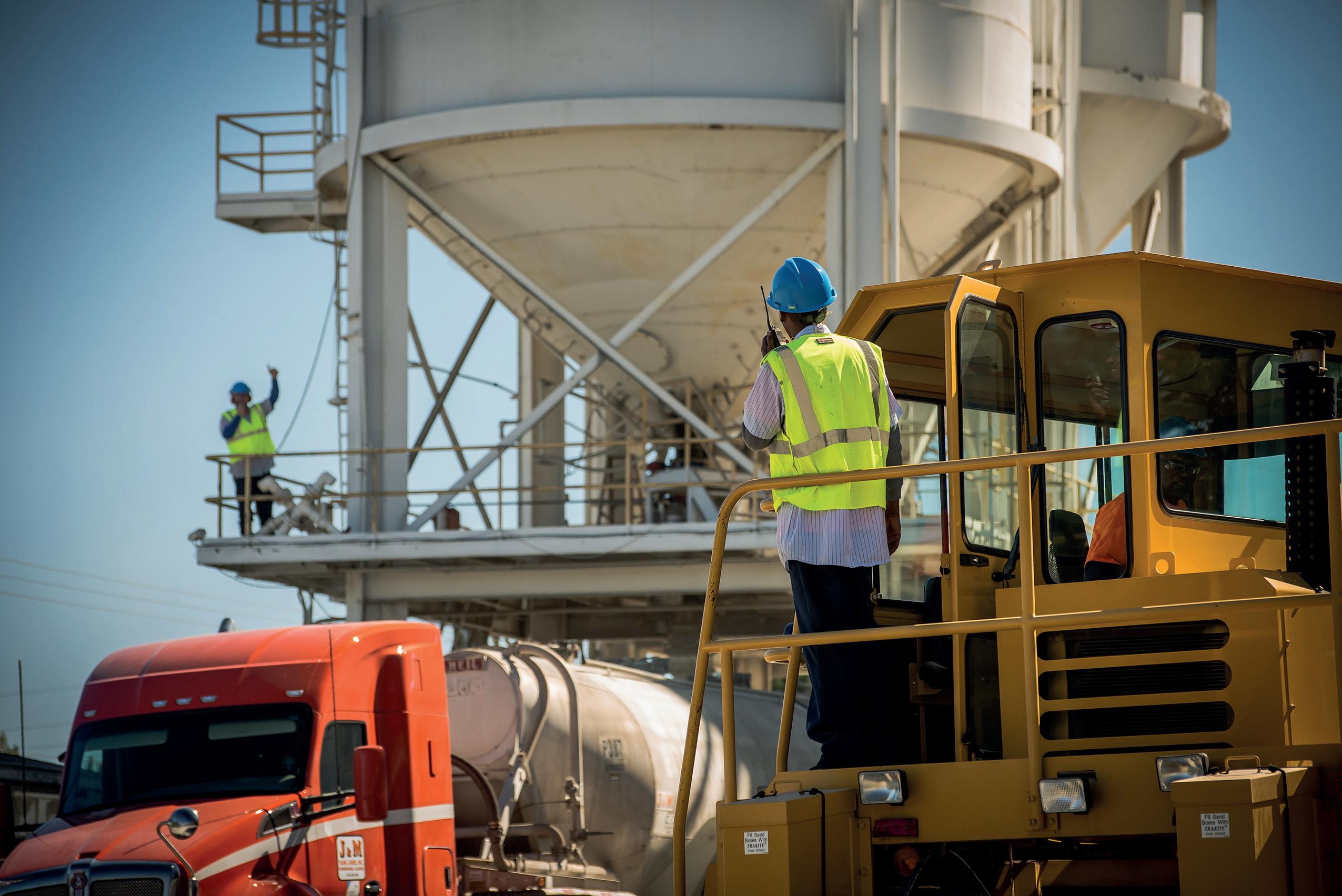
“The Vicat Group is also researching and building new ways to reduce the carbon footprint of all their plants worldwide,” he adds. “We’ll
adopt their designs and technology in order to further reduce our carbon footprint, in addition to what we’ve already accomplished.”
Also speaking to Construction Today, Hervé Lapillonne, Project Manager at NCCA, echoes Spencer’s comments. “In several countries, Vicat Group is very active on the topics of carbon neutrality, with hydrogen, ethanol, solar energy, calcined clay and algae tests underway in some of its plants,” he says. “At NCCA, we have the advantage of being smaller and more agile than Vicat Group as a whole. Although we’re a creator of CO currently, we’re therefore wellpositioned to develop innovative solutions in the future.”
134
“
We’re ready to face the future with great confidence
“ “ “
“All in all, we expect our investments to make our cementitious product one of the lowest carbon cements in this market,” Spencer reiterates. “It’s a big step in the entire industry’s efforts to achieve carbon neutrality throughout the concrete value chain.”
NCCA’s aim for 2050, like the majority of carbon goals, requires change on the grandest of scales. To reach it, however, is the product of a series of small changes, driven largely by the work of hundreds of dedicated individuals. To this end, Spencer is effusive about what he describes as the company’s “unique family culture,” which he believes creates the foundation for much of NCCA’s success.
“Here, everyone knows everyone,” he confirms. “We’re a lean, largely flat organization. Our management is approachable, and they take it upon themselves to interact with our employees as
The Euclid Chemical Company
In response to the technical and environmental challenges faced by cement manufacturers, Euclid Chemical offers EUCEMTM ICARE, a patentpending strength enhancement technology that offers unequaled performance and reduced CO2 emissions potential.
EUCEM ICARE products improve cement strengths while overcoming process constraints. With the EUCEM ICARE CP range, manufacturers can achieve full cement activation potential via improved cement fineness and particle size distribution. With EUCEM ICARE VRM, customers can expect improved cement quality and reactivity through optimization of the vertical mill process.
EUCEM ICARE maximizes cement activation potential and improves transport properties, while decreasing energy and production costs, clinker factor, and CO2 emissions.
National Cement Company of Alabama construction-today.com 135
best they can. We’re also hands on in our role, which gives us the ability to react to events and make crucial decisions at speed.”
It’s a quality that came into particular use during the Covid-19 pandemic. “We were able to organize ourselves rapidly, implementing strong health and safety measures to test, isolate, and protect our people,” Spencer recalls. “Fortunately, our industry was deemed essential, as was the construction industry that we serve. Therefore, we continued to operate effectively, with projects running as best they could, and the ongoing production and shipment of cement.

“Resilience is the word,” he then insists, reflecting on some of the logistical challenges of the period. “Although we source the maximum volume of product possible from within the US, we still rely on supplies from Turkey, Egypt, Germany, and elsewhere. Regardless, we kept going, working closely with many of our supplier and vendor partners to navigate the tough times. They stepped
136
up to ensure they had inventory in stock, or would help us by expediting parts or materials that we needed for our plant operations. It’s a testament to the long-term relationships we’ve built up and maintained over the years.”


Alongside the expansion of NCCA’s Ragland plant, the company has also increased the capacity of its terminals in Greenville, South Carolina and Jefferson, Georgia. Now, the company is building three new terminals: one in Stockbridge, Georgia, servicing the company’s Atlanta customers, along with two in its Nashville market: one in Dickson, and another in Lebanon.
“These terminals will help us reduce truck deliveries from our Ragland plant,” Spencer confirms. “We’ll be adding to our fleet of rail cars to handle these new terminals, and increasing the loading capacity at the Ragland plant to load more rail cars. We’re continually upgrading our fleets and plants.”
For now, the NCCA remains in transition. “We have one of the most beautiful plants in the country now with the technology available,” Hervé states. “The balance, the emission control, and the tools and devices we now have at our disposal is amazing. We’re ready to face the future with great confidence.”
“With the launch of our new production facility, new raw materials, new fuels, an increasing rail fleet, and the addition of more distribution terminals, we have a lot of moving pieces in play,” Spencer concludes. “In the near future, our focus is to increase efficiency across our operations, so that five years from now we’ll have a highly efficient and productive plant. We’ll continue to execute our carbon reduction plan, servicing our customers with quality, consistent products, that allow us both to grow in tandem.” ■
www.nationalcement.com/nccal
National Cement Company of Alabama construction-today.com 137
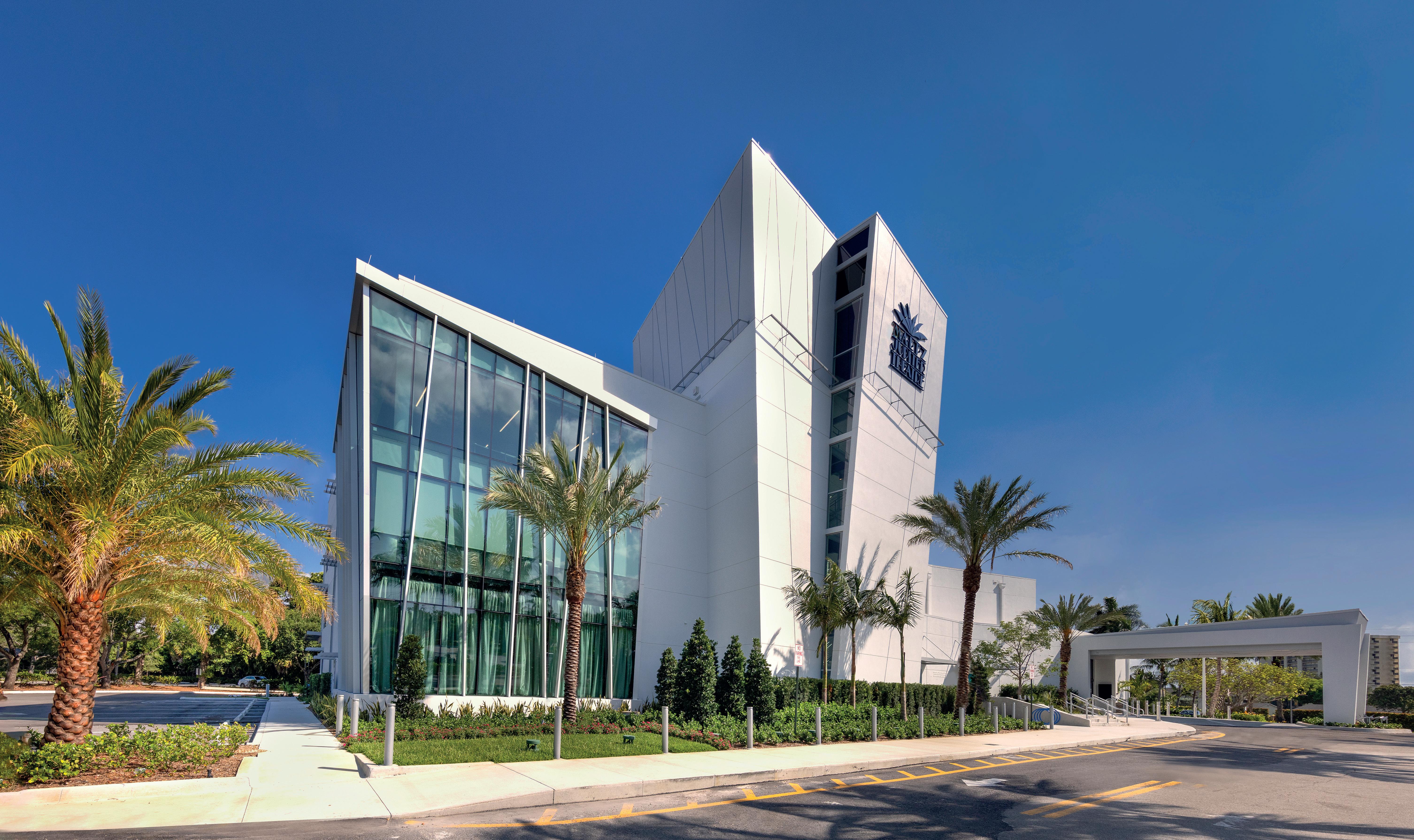
138
We’re very fortunate to have the luxury of being able to make objective decisions about the type of project we take on, and which clients we choose to collaborate with
“ “ “ “
Bringing EXPERTISE to the table
What’s the secret to Kaufman Lynn’s success?
Maltz Jupiter Theatre
Photograph:
Miami In Focus
Kaufman Lynn construction-today.com 139
Not too much has changed at Kaufman Lynn Construction (Kaufman Lynn) since its founding in 1989. “We’ve grown organically to become a large construction company within the region, and beyond,” reflects Mike Kaufman, Founder and CEO of the company. “We achieved gross revenues of $400,000 in our first ever year; in 2022, that same figure is over $500 million. To have achieved that in just over 33 years is quite unique.”
Operating in Florida and North Carolina, today, Kaufman Lynn is a full-service commercial construction company. The company’s work encompasses multi-family housing, senior living, hospitality, government and public safety construction, education, healthcare, self-storage and parking garages.
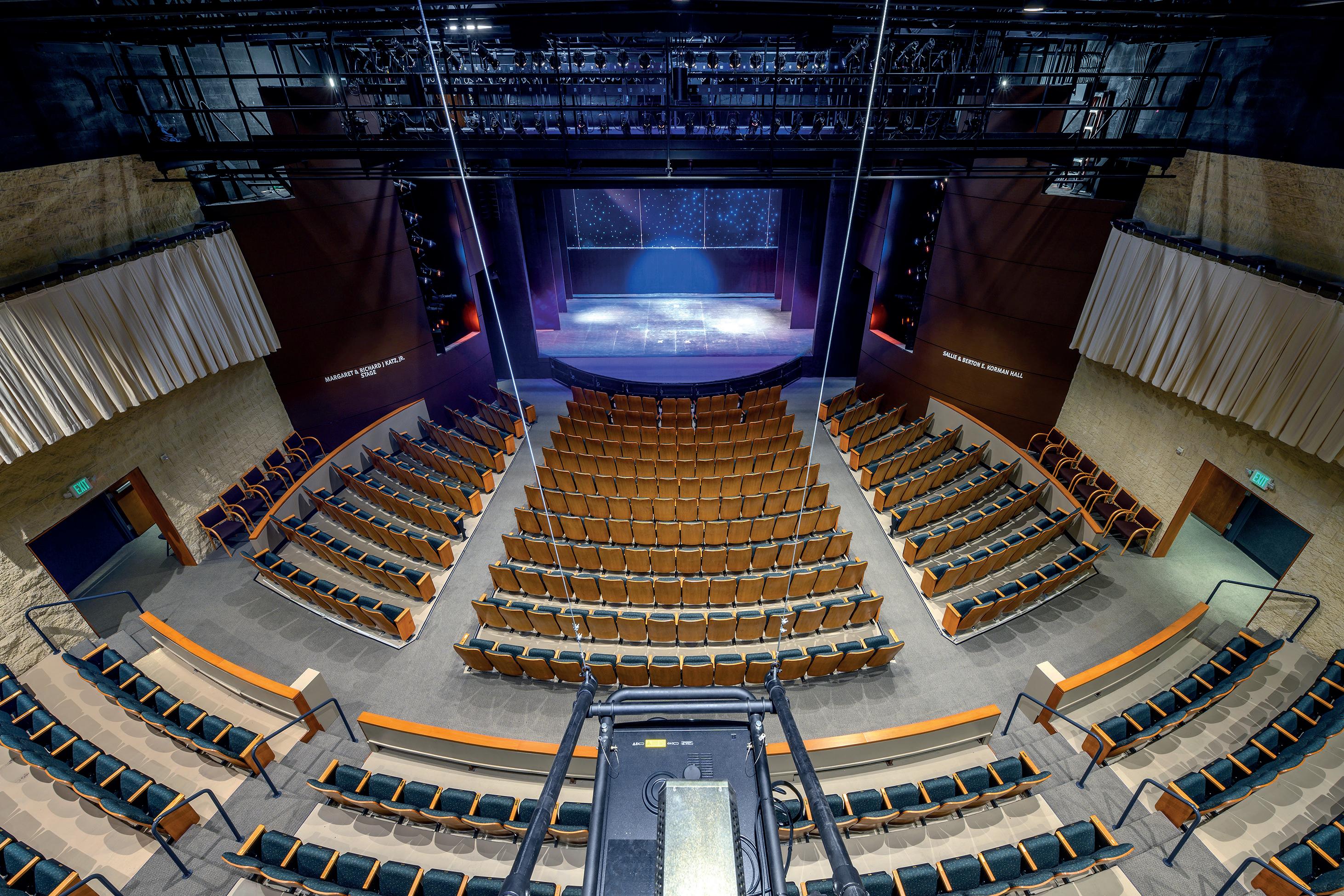
“We typically divide our work between the public and private sectors,” explains Chris Long, President at Kaufman Lynn. “The latter is a pretty broad gambit, consisting of condominiums, for-rent apartments, workforce housing apartments, retail, hospitality, and hotels. Our public work projects range from five-million-dollar fire stations, parks, and EOC buildings for a number of municipalities, up to 140-milliondollar major projects. In all, we have around 35 active project cycles at any given time.”
The last few years haven’t been without their challenges, however. The arrival of the Covid-19 pandemic in early 2020 caused significant disruption to industries worldwide, with many operations brought to a standstill. Kaufman Lynn was by no means exempt
140
Maltz Jupiter Theatre - Photograph: Chuck Wilkins
from these difficulties, but the period did have its benefits.“We’ve always prided ourselves on being very nimble to react to different conditions in the market,” Chris reflects. “The pandemic was a task beyond any other that we had faced. Two-thirds of our people are bootson-the-ground, working out of job site trailers, and because we were deemed an essential business, they kept working throughout the period. Thankfully, we were able to come up with a strategy to prevent all the associates from mixing, limiting the risk in the event that one associate tested positive. We split up our project teams, conducted meetings outside, and did everything we could to protect our people. Fortunately, we didn’t lose anyone to the virus.”
Interestingly, Kaufman Lynn boasts the largest pre-construction department in Florida. According to Chris, this fact gives his clients “the best of both worlds,” by allowing the company to hit the ground running
Recreational Design & Construction, INC
Recreational Design & Construction,INC (RDC Design Build) - established in 1993 - is a contractorled Design-Build firm consisting of dozens of team members who are second and third generation builders. RDC has been the premiere Design-Build firm in South Florida for parks, aquatic complexes, and sports venues for 29 years. As our reputation for superior design, solid construction, and efficient operations grew, it made us the perfect Team Member for Kaufman Lynn as they pursue the some of the largest parks and recreation projects in the region. We combined our expertise for projects like the Doral Central Park - a 100-acre park, and Lake Lytal - a major aquatic complex for Palm Beach County. Over the years, we have also performed as a commercial pool contractor for Kaufman Lynn on notable projects like 1200 & 5th, Bluesten Park, JM Family, Tower 155 and Plantation Walk. They not only demonstrated our experience, but further grew our personal and professional relationships.
We are grateful to be working with Mike, Chris, and the rest of the team at Kaufman Lynn once again. As always, we look forward to working closely together and serving the community as one of ENR’s Top Specialty Contractors.
construction-today.com 141
Kaufman Lynn
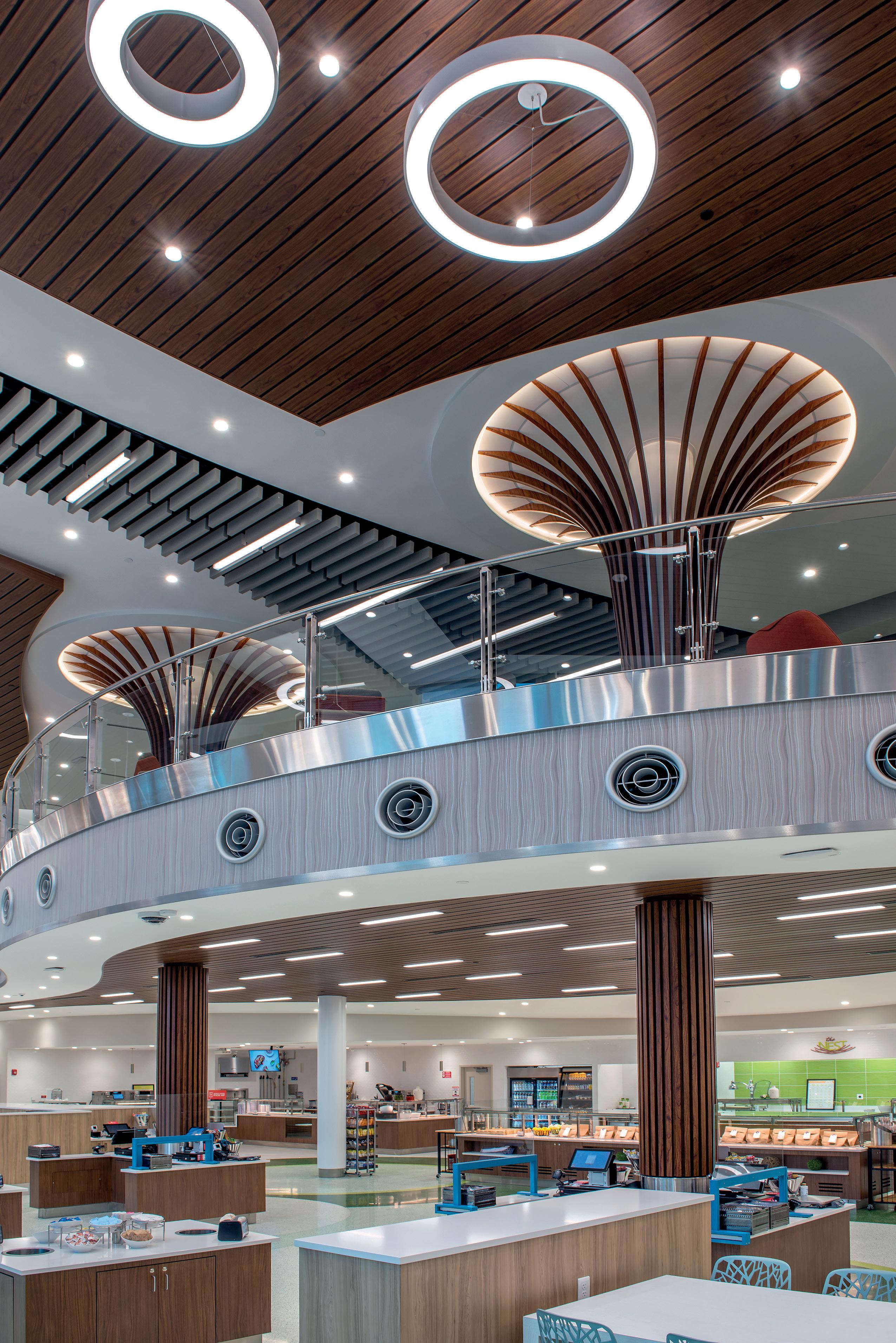
142
JM Family Campus
Photograph: Chuck Wilkins
when it comes to project construction. But it’s not the only differentiator for the company. On that subject, Chris points to nothing other than the company’s culture.
“Simply put, we work harder at perfecting our clients’ projects than any other contractor,” he confirms. “We take pains to understand what’s important to the client. It’s in our DNA, that’s how we’re wired.” It’s a view that Mike echoes: “Our Vice President of Pre-Construction, Chris Christy, is a true south Florida professional,” he states. “There’s none better at managing a project through from pre-construction to the beginning of the job itself. It’s thanks to him that we’re a leader in that department.”
This client-first approach is one that’s led to tremendous success for Kaufman Lynn, for which repeat business constitutes upwards of 80 percent of its total workload. “Our greatest successes come when we build for clients who appreciate the extra effort and commitment that we offer,” Mike notes. “We’re very fortunate to have the luxury of being able to make objective decisions about the type of project we take on, and which clients we choose to collaborate with.”
Serious expertise
Among such projects is the company’s recent $20 million historic renovation of the Miami Dade College Freedom Tower and, more recently, its work on the Maltz Jupiter Theatre. Finished in July 2022, the latter project was highly complex in nature, and its success represents an immense source of pride for the company.
“It’s hard for me to express just how intricate a project the Maltz Jupiter Theatre was to execute,” Chris admits. “We were charged with demolishing the stage of the existing theater, which was supporting the entirety of the remaining theater house. To accomplish this, we had to first plan and engineer the temporary support for the structure, then demolish the existing stage
and back of house and rebuild it within an inch of the existing foundations. We did this ten feet below the existing grade, while pumping out incoming water, and without allowing the existing structure to settle. That’s just one aspect of the complexity we were faced with, but it’s a challenge to which the team as a whole rose very well.”
“When you are building cultural arts venues, you have to bring serious expertise to the table,” Mike adds. “Not only are you taking on structures that are typically unique in their design, and that require really strong construction, but then you
We don’t take for granted the position we have within our markets
“ “ “ “
construction-today.com 143
Kaufman Lynn
are tasked with making them look and sound good. You have to have that in-house, and we do.”
A further significant project for Kaufman Lynn is the recent completion of the JM Family campus. JM Family is one of the largest private companies in South Florida, and Kaufman Lynn completed a major overhaul
of the corporate headquarters in Deerfield Beach, Florida. The $160 million project integrated innovative technology and sustainability features to reimagine and modernize the facility. “We are enormously proud of the work we did for JM Family,” says Chris. “This showed the extraordinary results you can achieve when you
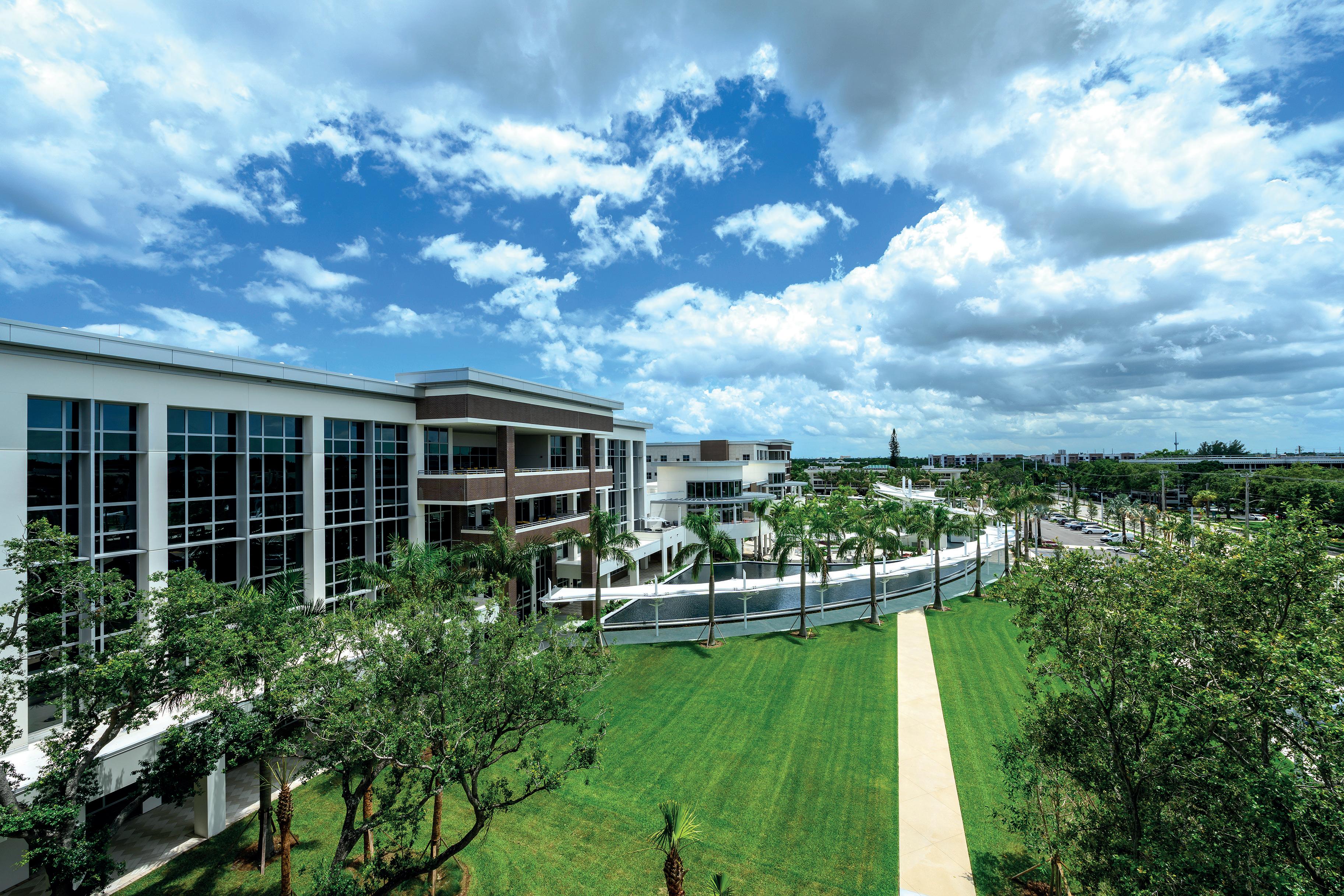
144
partner with a client to understand and address their needs, even as those needs change during the life of the project.”

Ownership mentality
This year represents another significant milestone for Kaufman Lynn: the year in which it transitioned to an Employee Stock Ownership Plan (ESOP). As Mike explains, it’s a decision that aligns with the company’s
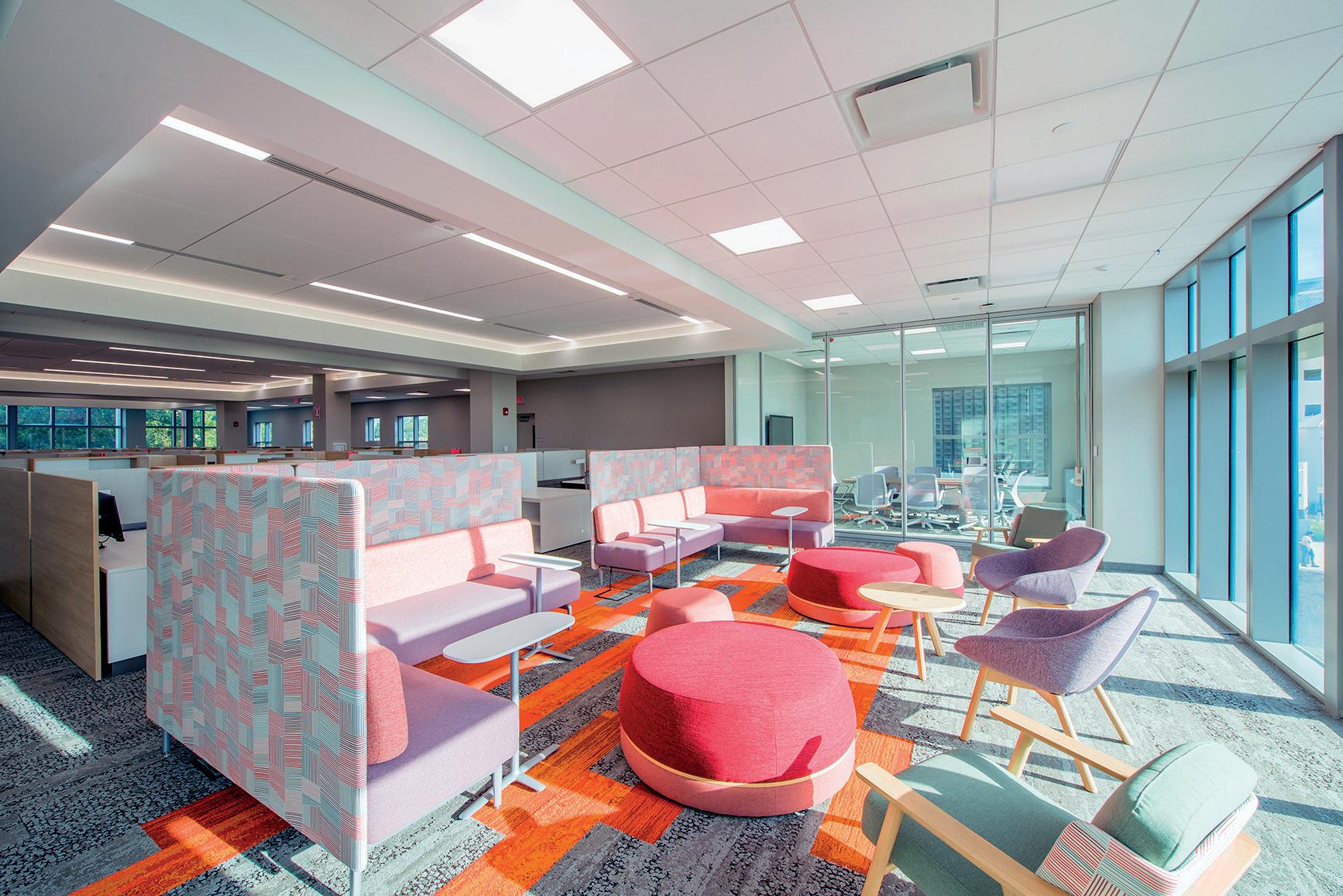
construction-today.com 145
Kaufman Lynn
Left & below: JM Family Campus - Photograph: Chuck Wilkins
longstanding values. “We knew we had a great culture here, we wanted to protect that, and we believed that an ESOP was a reliable way to do so,” he comments. “At the same time, it was also a way of giving back to those who have put their heart and soul into the company over the years, offering an added benefit that will appreciate in value as the company develops, and provide a substantial benefit whenever our employees reach retirement.”
“The ESOP also engages our associates in an ownership mentality,” Chris points out. “Having a stake in the company changes how individuals approach their work. Because they feel a part of the company, it brings out a new level of commitment and determination to succeed.”
The future’s bright for Kaufman Lynn. As 2022 draws to a close, the company is expecting to confirm its best ever year,
surpassing $500 million in revenue for the first time. “Projections for the next two years remain strong,” Chris notes. “Beyond that, it will have much to do with the economy. From our perspective, the plan is to keep strengthening our market in North Carolina, especially the volume of our public sector work. We’re also exploring the possibility of expanding our operations on Florida’s west coast, taking advantage of the growth we’re seeing north into Tampa.”
“We feel very fortunate,” Mike concludes. “We don’t take for granted the position we have within our markets. Sticking to our core values through thick and thin has served us well in the past, and we intend for that to continue.” ■
www.kaufmanlynn.com
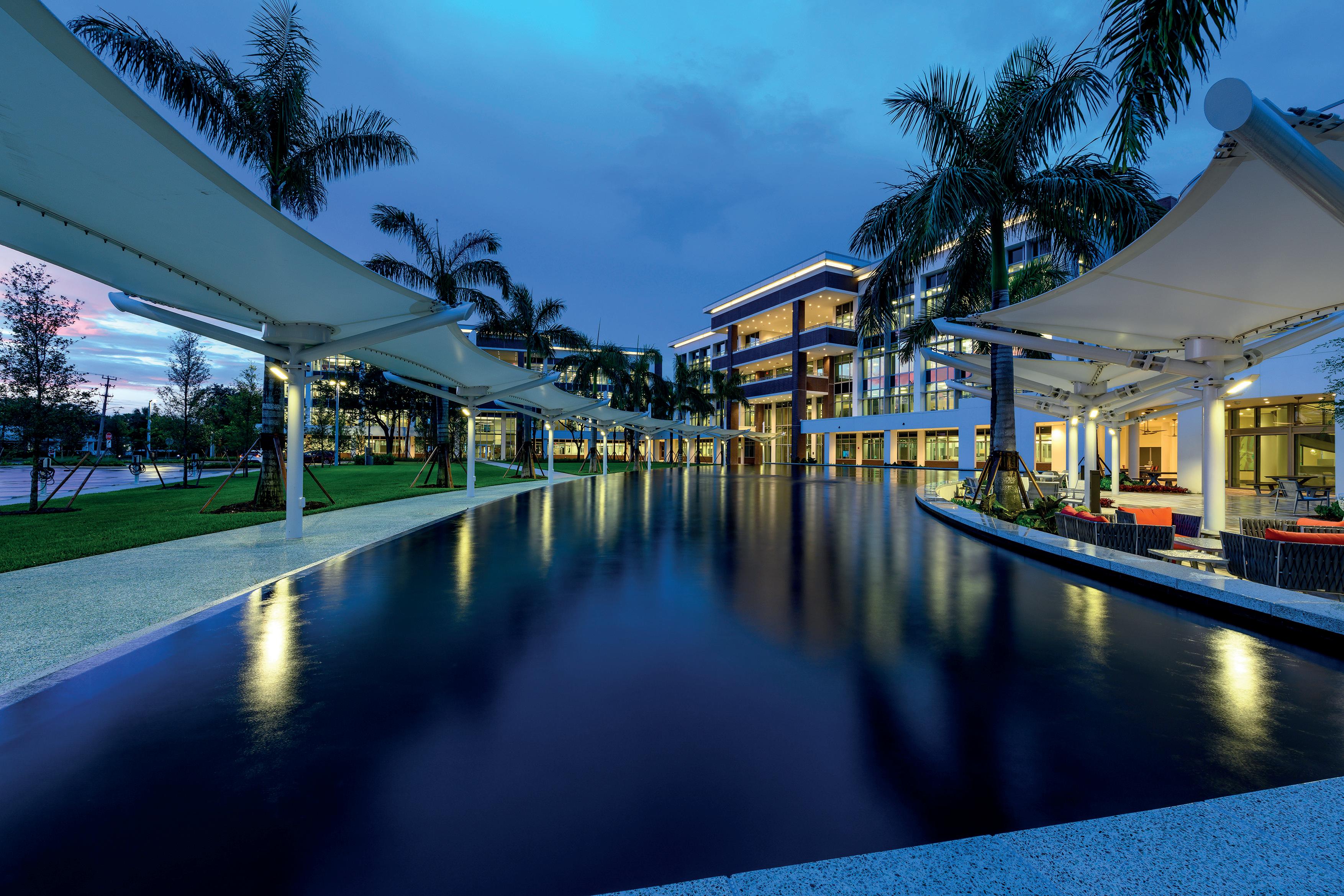
Kaufman Lynn 146
JM Family Campus - Photograph: Chuck Wilkins


148
Over the past 20 years, Horch Roofing has experienced tremendous success, with recent expansion to a new office in Portland just one example of its continuous development. Specializing in steep slope residential roofing projects, the company offers asphalt, metal, and EPDM rubber roofing installation, as well as roof replacements, maintenance, and seamless gutter installation.
Horch Roofing was founded in 2003 by Peter Horch, a hardworking, native Mainer with a business mind and a strong focus on the local community. As the current President and CEO of Horch Roofing, Peter is responsible for the growth and development of the business, as well as overseeing marketing, budgeting, and HR operations. Peter learned the roofing trade through his previous role as a roofer, before launching his own company two years later. He was elected as a board member of the National Roofing Contractors Association in 2016, amongst various other commitments across the sector and the community.
With a strong community ethos, Horch Roofing has been providing roofing and gutter services to the residents of coastal Maine since 2003
construction-today.com 149
Horch Roofing
Communication & organization
Working with leading builders, homeowners, property managers, and vendors, Horch Roofing operates in coastal Maine, with offices in Warren and Portland. It has established a reputation as a reliable company providing premium quality products and outstanding customer service, resulting in a constant stream of referrals and positive reviews. This success is not only due to the quality of products and services, but also the company’s responsiveness, commitment to its core values, and respect for its clients. The company mission is built around the core principles of safety, respect, quality, communication, organization, and availability.
These principles are evident at every stage of the installation process. Creating a safe working environment for employees and customers is essential. Before installation
commences, the property is protected by removing debris that would otherwise cause damage, and by ensuring it is watertight throughout installation. Respect for customers and their property is of paramount importance to Horch Roofing, hence the company’s crews are polite, courteous, professional, and experienced. Horch Roofing strives to keep customers informed throughout a project, and believes that communication and organization are key to efficiency and productivity.
The company recognizes that roofing is an investment and provides a wealth of information regarding roofing options so the customer can make a well-informed decision. Horch Roofing installs asphalt roofing in various shapes and sizes, alongside roof replacement and repair services. It also installs metal roofing, which is increasingly popular across Maine due to its durability, fire resistance, low maintenance, and energy efficiency. It also uses EDPM (Ethylene Propylene Diene Monomer) roofing to provide long-lasting, durable, and energy efficient solutions for flat or low sloped roof applications.
Green practices
In addition to reroofing and new roof installations, Horch Roofing has a full time Service Division that provides roof maintenance services. Its experienced team completes an assessment of the roof’s overall performance and carries out essential services, such as leak repair, gutter cleaning, roof washing, snow and ice removal, and heat tape installation. The company also installs seamless gutters formed from aluminum, steel, or copper to divert water from the roof and away from the property. This reduces the maintenance required on the gutter system, and prevents leaks, mold, and debris.
The company has grown to a team of over 50 certified installers working across residential and commercial projects. It strives for sustainable growth by employing dedicated tradespeople who take pride in
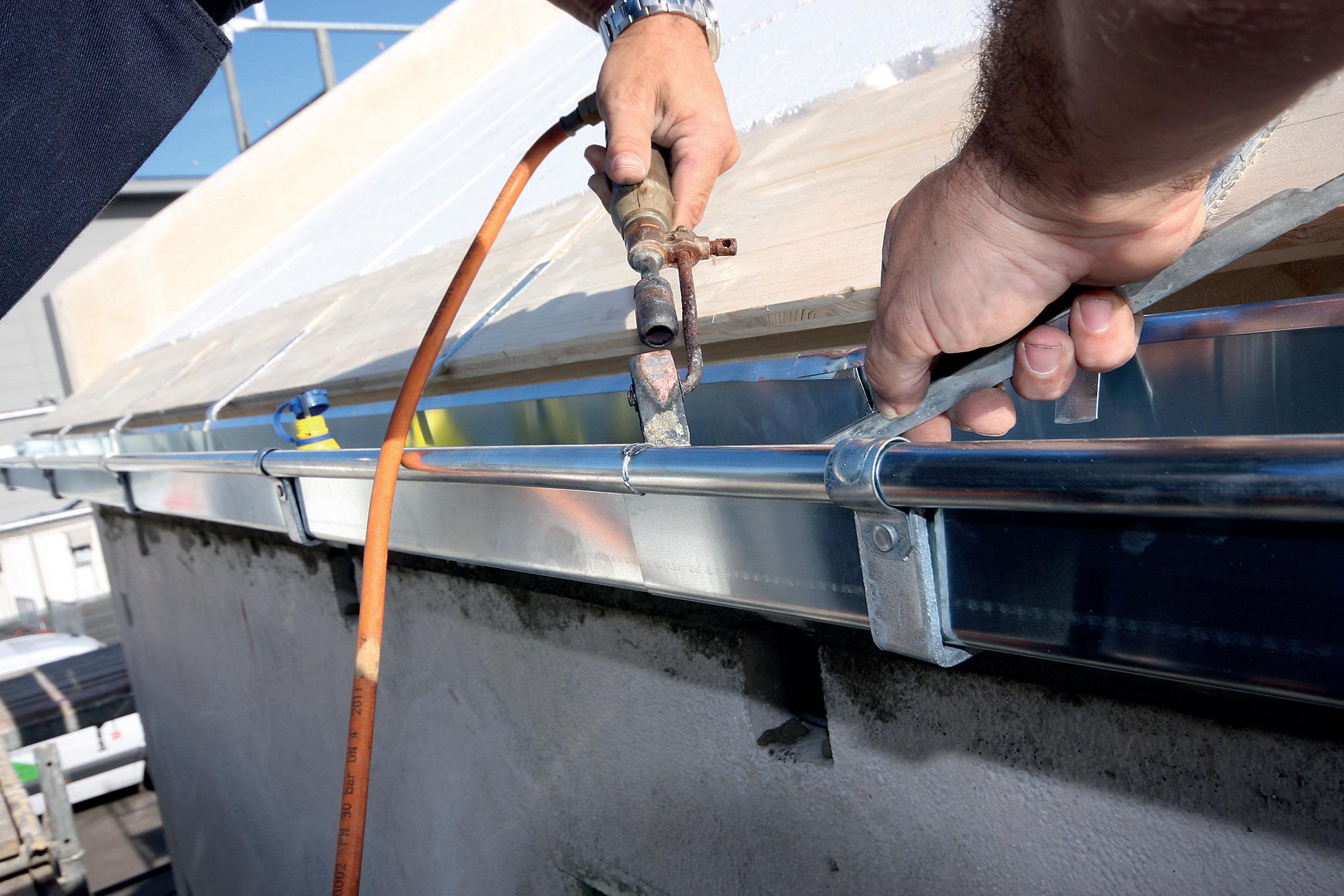
150
their workmanship and truly care about the quality of the customer’s experience. Horch Roofing provides free estimates and detailed proposals that outline the project schedule and proposed costs. Post-installation, it provides a five-year workmanship warranty alongside any manufacturer or material warranty.
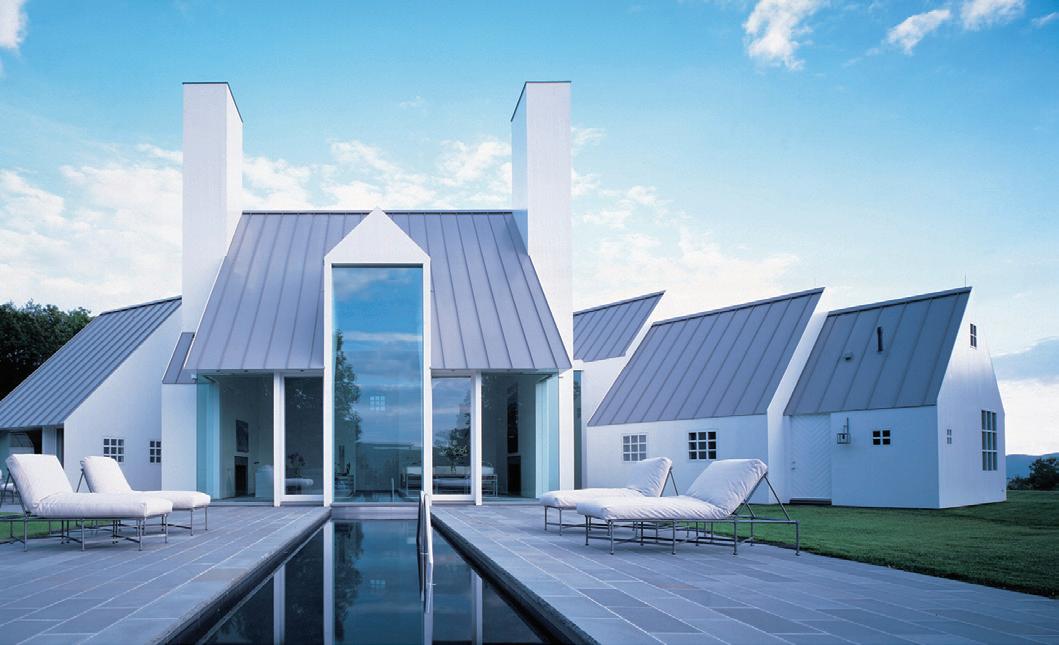
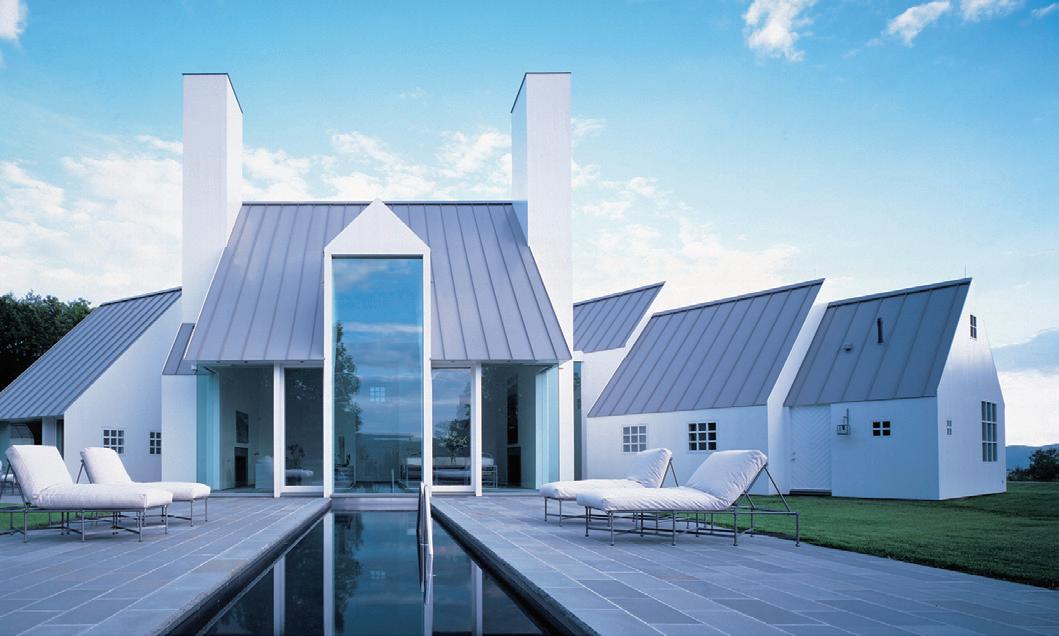
Horch Roofing differentiates itself from competitors through its commitment to green practices. Struck by the vast amount of waste generated from the roofing industry, Peter decided to take action on his share of the waste through the Reroof and Recycle program, which started in 2010 and sees the company recycle 100 percent of roofing debris. An example of the Reroof and Recycle program in action is the Roofs to Roads initiative, where asphalt shingles are transformed into recycled aggregate that is used on roads as an alternative to crushed gravel. Recycling has become engrained in the structure of the company, with it recently hitting the milestone of ten million pounds recycled since the beginning of the program.
The company also has an active presence in the local community, supporting food banks and various organizations that help neighborhoods throughout Maine. Specifically, Horch Roofing has donated two roofs annually to non-profit organization, Habitat for Humanity, for the last 13 years. The company also funds the Horch Roofing Scholarship, offering two individual scholarships for college or trade school students in Maine,
which encourages younger generations to study and gain meaningful employment.
The recent opening of its Portland office is just one sign that Horch Roofing is set to continue its period of growth within Maine’s roofing industry. As well as premium quality services, its commitment to core values and green practices demonstrates the company’s reliability and corporate responsibility. ■
Roofing construction-today.com 151
www.horchroofing.com Horch
Being number
ONE(C)
Meet one of Canada’s best managed companies:
ONEC Construction
Providing best-in-class Engineering, Procurement, and Construction (EPC) and maintenance services for more than two decades, ONEC Construction (ONEC) has become a familiar name for those requiring project support and first-rate industry knowledge in Canada and the US. ONEC is headquartered in Edmonton, Alberta and employs around 300 personnel, which enables it to effectively offer clients the complete delivery of mid-size industrial, commercial, capital, and maintenance projects to a variety of active markets.
These sectors include renewables, agriculture, and chemicals; power and utilities; oil, gas, and petrochemicals; commercial, industrial, mining, and metals; and many more. From initial concept to final commissioning, ONEC’s multidisciplinary expertise in these myriad fields means it can offer a varied index of services – all from under one roof. Though it is a moniker passed around sometimes too often, ONEC can truly be thought of as a one-stop shop. This key differentiator firmly sets ONEC apart from the competition, being the only

152
firm of its size in the industry to offer a onestop solution for services such as project and construction management, engineering and design, procurement and logistics, scaffolding and insulation, mechanical and electrical installation, geomatics and surveys, and fabrication and construction.
Timely, safe, efficient, and on-budget, the construction giant has carved out a reputation for excellence, and the balance sheet agrees. Indeed, since company CEO Denis Wiart took the reins with his own unique blend of commercial and industrial
insights, annual revenue has grown from around $8 million to $60 million. The proof, as the idiom goes, is in the pudding. Just ask one of ONEC’s clients.
By continually improving the facilities of its industrial business partners, the company ensures effective project delivery, maintenance, and innovation. Recently, it has brought its services to new territories: British Columbia, Alberta, Saskatchewan, North West Territories, and across the western US states. The one-stop shop has expanded to a one-stop industrial complex.
ONEC Construction construction-today.com 153
Foundational to that growing network is a list of trusted partners. As a business, ONEC is fundamentally about building relationships. That way, the firm is set up for success from the outset with every project. Indeed, by aligning with others, ONEC has demonstrated that it can maximize its potential to offer its clients the best possible services and project outcomes. Such partnerships are managed by a subsidiary division, ONEC Nations Ltd., the goal of which
is to support operational excellence and indigenous inclusion practices in the execution of design-build project work in the power, utilities, renewables, housing, agriculture, chemicals, oil and gas, and metals and mining sectors.
Inclusive industry
Each partnership has a goal rooted in the professional encouragement and commercial involvement of indigenous and local businesses. The company has put forth a clear message: to succeed alongside the communities in which it works by offering indigenous people the opportunity to, first, envisage, and second, secure, a career path within industry – and, more specifically, one at ONEC. Inclusion is important in business. It is important in the world. ONEC
The ONEC team is proud to be a Gold Standard award recipient of Canada’s Best Managed Companies program 154
“ “ “ “
knows this – and it is happy to put that ethos into practice. All of its business units, partnerships, and disciplines, for instance, both understand and harness the strength of the various treaties that bind the indigenous and non-indigenous communities together.
One part of that binding agent is technical knowledge and industry skills, which ONEC is keen to use and champion across its workforce. It is a winning combination, while also serving to enhance collaboration and integration.
But ONEC does not promote such without backing it up. For example, it is formally certified to ISO 9001:2015, recognizing the company’s quality management system as one that meets the international standards associated with the award.
First-class leadership
Quality, in short, is paramount. This is particularly important when you consider the extensive range of services offered by ONEC – from turnkey project management to scanning and surveys. These all require advanced technology and state-of-the-art equipment.
With Trimble’s Sitevision, for instance, ONEC can move beyond typical design and construction methods and instead actively embrace an augmented reality communication system through the platform. More specifically, ONEC can create a 3D model for clients based on the documentation available, which allows those involved to visualize the final product in true-to-life scale and on-site – before it has even begun!
Everything, in this vein, is about reducing the complex to the simple. But there are many more benefits, including reducing potential change orders, upping buy-ins by growing stakeholder engagement, and potentially eliminating costly rework.
And this is just one example of the technology being harnessed by ONEC. There are many more, and in part, that is the reason for the firm being named one of Canada’s best managed companies earlier

this year. The award recognizes organizations that demonstrate strong overall business performance and sustained growth, while remaining Canadian-owned and -managed, and highlights those that, in all aspects, show first-class leadership, strategy, capability, innovation, commitment, and sustainable growth. Also considered is the company’s approach to internal culture, which is an often overlooked, but imperative, metric of success.
“The ONEC team is proud to be a Gold Standard award recipient of Canada’s Best Managed Companies program,” said Group CEO, Denis Wiart, in a recent press release. “It has brought several benefits to our firm as it is a constant reminder to review our strategy, results, and plans, in a fast-changing economy.” ■
www.onecgroup.com
ONEC Construction construction-today.com 155

156
Start-to -finish
services
With a strong focus on customer satisfaction, T&G Constructors has been building longlasting client relationships since 1987
For the past 35 years, T&G Constructors has been expanding its client portfolio and expertise in the commercial and residential building industry. Specializing in ground-up and largescale renovations, the company has been serving clients across a range of sectors, operating throughout Florida with offices in Miami, Tampa, Orlando and Delray Beach.
T&G Constructors was founded in 1987 by Rick Gonzalez and Dave Grabosky. As Co-Founder and current President of T&G Constructors, Rick holds a bachelor’s degree in Civil Engineering and Architectural Engineering from the University of Miami and oversees several strategic areas within the company including construction operations, project delivery and safety strategy. In his role as Vice President, Dave oversees marketing, client relations, business development and preconstruction, and has established numerous long-term client relationships based on the concept of relationship-oriented marketing. Testament to their combined expertise and industry knowledge, T&G Constructors is a multi-year recipient of
the Associated Builders and Contractors’ Platinum STEP National Safety Award and the AIA Contractor of the Year Award.
The company mission is built upon the principles of integrity, quality workmanship, minimizing risk and protecting investments, with a focus on building client trust and fostering long-lasting relationships and repeat business. To achieve this, T&G Constructors works hard to provide ‘total project delivery’ to clients, offering planning, pre-construction, management and post-construction services.
T&G Constructors differentiates itself from competitors by providing the asset planning services required to ensure that effective and cost-saving decisions are made from the start of the project. The company’s expertise in construction build-out and acquisition costs, planning and zoning as well as site research and demographic analysis means it is able to develop strategies which minimize risk and protect the profitability of its clients’ businesses. Before building commences, the company is able to assist clients with site inspections, constructability analysis and cost remediation plans.
T&G Constructors construction-today.com 157
The company’s appreciation for the correlation between effective pre-construction planning and the overall success of the project means that each project begins with establishing a clear and concise set of objectives which reflects the budget and end goal of its clients. Within this, T&G Constructors offers services including conceptual design, scheduling, budget formulation and contract document development. The company has developed long-lasting relationships with key partners who must meet the T&G subcontractor pre-qualification requirements before
starting work on a project. This forms part of the pre-construction offering provided by the company so as to ensure the best possible results for its clients.
When it comes to project management, T&G Constructors feels a strong sense of ownership for the projects it is entrusted to oversee and is committed to providing high quality workmanship in delivering the client’s end goal. The use of pioneering construction management software has been embraced by the company, so as to assist with providing cost monitoring and progress scheduling services in real-time. Furthermore, T&G

158
Constructors’ commitment to financial and scheduling transparency and accountability, allows clients to track the progress of every stage of the project.
Even post-construction, T&G Constructors continues to support its clients by providing services including life cycle cost reviews, owner training orientation and building maintenance. This is an important part of developing client trust and securing repeat business, a core element of the company’s growth strategy. A member from the T&G Constructors team is always available to
answer questions post-construction and the utilization of the company’s construction management software simplifies the complex process of document retrieval. The provision of an effective after-care service demonstrates the company’s commitment to ensuring client satisfaction.
By proving its capacity to deliver high-quality, start-to-finish services, T&G Constructors has secured an exciting portfolio of projects, working with clients in a wide range of sectors including entertainment, hospitality, financial and banking and retail. This includes a $2.3 million project completed on the Solar Vortex waterslide at Adventure Island in Tampa, a $5.7 million project renovating multiple aspects of the Miami Seaquarium and a $2.7 million contract to complete a high-end corporate office building with two warehouses attached for Hanover.
T&G Constructors construction-today.com 159
Furthermore, the company played an integral role in the Miami Bull Statue project which was unveiled earlier this year at the Wolfson Campus of Miami-Dade College. This unique artwork project was commissioned by TradeStation Group, Inc, as a reimagining of the Wall Street Charging Bull. The statue symbolizes the role Miami has played in the development of cryptocurrencies and blockchain, staking the claim that “The Future of Finance is Here”. T&G Constructors was commissioned to coordinate logistics and prepare the site for the arrival of the Miami Bull, carrying out work such as laying concrete, arranging
lights and installing the monument upon which the statue would be displayed.
T&G Constructors’ extensive and varied portfolio demonstrates its wide-ranging knowledge and expertise in residential and commercial construction as well as the effectiveness of the ‘total project delivery’ strategy in establishing and maintaining long-lasting client relationships. This leaves the company in a strong position to continue its growth within Florida’s thriving construction industry. ■
www.t-and-g.com

T&G Constructors 160