
SCAN MAGAZINE SCANDINAVIABRANDPROMOTING 2022SEPTEMBER146ISSUE TOP DESIGNERS AT CPH FASHION WEEK THE BEST SPAS IN SWEDEN 2022 ART & CULTURE: FROM MUGSHOTS TO MATISSE GUIDE: CREATE YOUR DREAM EVENT

A leading sculptur park in the world according to NY Times.
Busk,LindePeter Solaris 2022.KonstWanås, WANÅS KONST
Immerse yourself in the latest art from around the world. Hang out in a beautiful Scanian beech forest next to the medieval Wanås castle. Have an organic lunch & coffee in the café. Experience more – shop local and sustainable design, crafts and delicacies in the store.

Lena EditorHunter, SCAN MAGAZINE 20 September 2022 | Issue 146 | 3 Scan Magazine | Editor’s Note
September is a great month to visit the Nordics, with long, warm evenings and the onset of the school year ushering in a more re laxed pace at holiday hotspots. This issue, take inspiration from our Best Spas in Sweden 2022 theme, in which we present the country’s top destination spas to unwind at. There’s plenty more, from our curation of new Scandi tunes to the best restaurants, hotels, breweries and cafés to discover on your next trip.
There’s a palpable energy of change in these pages, from our guide to au tumnal style, to musings on self-de velopment and mindfulness. While Gothenburg is about to stake claim to the Nordics’ highest skyscraper, Co penhagen Fashion Week SS23 shook it up with a slew of new Scandinavian talents on the runway. The region is awash with seminal new exhibitions, including Matisse, new Surrealism and a retrospective of police photography in Stockholm. So, if you’re feeling the end-of-thesummer blues, let our Grand Tour of the North aid your transition into a new season of cultural experiences.
Editor’s Note


In this issue
COVER FEATURE 20 Editors Pick: Top designers at Copenhagen Fashion Week SS23 In August, the biggest names in Nordic fashion gathered in the sun-splashed Danish capital for the Spring/Summer 23 showcase at Copenhagen Fashion Week. The schedule featured the usual major players like Saks Potts, Henrik Vibskov and Ganni, as well as platforming a slew of exciting emerging talents. Here, we present our pick of the top ten Scandinavian designers to walk the runway this season.
20 4 | Issue 146 | September 2022 Scan Magazine | Contents
DESIGN, CULTURE & CULINARY 8 Design bible: autumn style, coffee hacks and Copenhagen culture Layer up for autumn with our run-down of seasonal Scandinavian looks, in this month’s Fashion Diary. Then, skip the café and learn the secret of a barista-standard brew, with our selection of designer home-coffee accessories. Plus, we’re profiling a green-fingered culinary hub in the centre of Copenhagen, and all the new happenings at one of the city’s most iconic – and unusual – art museums.
LIFESTYLE SECTION 15 On Oktoberfest, inflation and self-care What makes a Märzen a Märzen? With the 187th edition of Oktoberfest just around the corner, our resident beer expert is reporting for duty with an explainer of the official festival brews. In Thoughts on Necessity, our sustainability columnist reflects on the climate of inflation, and we hear from the founders of a new Norwegian stress-management app bringing mindfulness into the workplace.

26
CULTURE 88 On Gothenburg’s rising skyline, and the world’s largest collection of southern Danish art The Nordic region’s tallest skyscraper is taking shape. In 2024, Gothenburg’s Karlatornet will reach 246 metres, landing it amongst the 30 highest buildings in Europe. What does this mean for Sweden’s second city? We speak to the founder and public relations manager of the project to find out. Plus, we interview two independent Danish galleries on opposite sides of the country on the place of contemporary, modern and classic art in Denmark.
34 September 2022 | Issue 146 | 5 Scan Magazine | Contents
Throwing a party in Norway? In interviews with event-space owners and DJ, sound-system and balloon hire agencies, we present a one-stop guide to organising your dream event. For dessert, meet the competing Instagram bakers who became Oslo’s hottest cupcake duo.
61 Create your dream event
REGULARS & COLUMNS 8 Fashion Diary 10 We Love This 67 Restaurants of the Month 74 Hotel of the Month 76 Experiences of the Month 78 Brewery of the Month 80 Cafe of the Month 82 Museum of the Month 84 Conference of the Month 86 Education Profile of the Month SPECIAL THEMES
The best spas in Sweden 2022 With an introduction by Sweden’s industry-leading independent spa association, we discover nine of the country’s top spas in 2022 – from historic renovated farms to Japanese-inspired bathhouses. Then, acquaint yourself with seven of the most ground-breaking health and beauty brands on the Nordic market.
95 Scene Report: New Scandi tunes and unmissable events From mugshots to Matisse, we’ve rounded up the region’s must-see exhibitions and festivals in September’s Culture Calendar. Plus, resident selector Karl Batterbee digs through the hottest new music in the Nordics, and illustrator Maria Smedsted lets us in on her ‘secret weapon’.

Safe charging at home. GAROs wallbox makes your family life that bit easier. A smart, safe, and simple solution for your electric car charging at home. The WiFi connection provides several smart functions and full control over both charging and consumption. Besides, GARO wallbox can be equipped with load balancing, which ensures that the charging is adjusted to match current power elsewhere in the house without overloading the main fuse. garo.se

The future is simplicity.
Tassel Loafer by Morjas
The Wool Overshirt, €165 The T-shirt, €35 The Washed Denim Jeans, €125 www.asket.com
Jacket, t-shirt and jeans by Asket
For Swedish Asket, garments that transition between seasons is their forté. The Wool Overshirt is tai lored from a midweight, felted twill of recycled wool that will keep you warm and dry in style. It’s the ideal top-layer for transitional weather. Wear it with wardrobe essentials such as washed denim jeans and a classic crew-neck tee.
Messenger Bag by Rains
Press photos
By Åsa H. Aaberge |
The Messenger Bag from Danish Rains is a classic city staple for all kinds of weather. It is functional and waterproof, with ample space for laptops and documents, with a compact and commuter-ready Messengersilhouette. Bag, €80 www.rains.com
Scan Magazine | Design | Fashion Diary
September is a great month for fashion in many regards: it marks the start of a new season, and the temperature allows for subtle layering whilst bare legs are still comfortable. Get ready to go back to work and ease into autumn in tweed and earthy, timeless hues.
Fashion Diary…
The suede Tassel Loafer from Swedish Morjas comes with an extra-durable rubber sole for pro tection and grip. A suede chocolate-brown tint is perfect for the season’s palette, and the timeless fit delivers confidence whether you’re pairing it with businessdress or casual wear. The Tassel Loafer, €249 www.morjas.com
Adventure Vest by Fjällräven Light, packable, with a reinforced, wind-resistant upper torso, bring the adventure vest from Fjäll raven to and from work or for long autumn hikes. Adventure Vest, € www.fjallraven.com140


Ben Shirt, €135 Mendoza Dress, € www.nuenotes.com255
The Nomad Coat from Swedish Rodebjer is a woolovershirt-meets-leather-jacket – a great fusion be tween chic and chill that pairs well with everything from jeans and a t-shirt, to flowy skirts and cash mere Nomadsweaters.WoolJacket, €760 www.rodebjer.com
This cute shirt from Danish Nue Notes comes in delicious cotton voile with an adorable flower print, placket clo sure and long sleeves. Layered with the Mendoza Dress, it gives preppy back-to-school vibes. The style embodies the inspiration many high-end fashion designers have taken from upper-crust leisure activities, this season.
Ellie Leather Black Boots, €199 www.flattered.com Jacket by Rodebjer
Scan Magazine | Design | Fashion Diary
Scarf by Skall studio Keep warm on crisp September mornings and chilly evenings with a soft wool scarf around your shoul ders. This delicate beige shawl from Danish Skall Studio goes with any autumnal look and makes for a nice little blanket on the go, too. Scarf, € www.skallstudio.com125
Boots by Flattered
Shirt and dress by Nue Notes
September 2022 | Issue 146 | 9
Think horses, tweeds and English countryside.
A comfy little pair of everyday heels are a wardrobe essential. The Ellie Boots from Swedish label Flat tered give the feeling of elevation whilst also pro viding comfort, with a dense 50-millimetre heel and soft leather material.


We Love This: Coffee Accessories
To Go Cup by Eva Solo Danish Eva Solo’s double-walled vacuum thermal To Go Cup keeps liquids hot for six hours. It’s small and slim enough to fit in any bag, comes in a large range of colours, and features a silicone carry-strap and functional lid for one-handed opening. Despite its sleek design, it’s uncompromising on practicality and is frequently listed amongst the most effective compact thermo-flasks on the Scandinavian market. www.evasolo.com €34
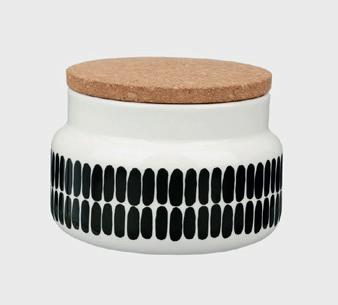
Oiva Alku Jar by Marimekko Keep your beans fresh in this airtight stoneware jar from Finnish design house Marimekko. The Alku (meaning ‘beginning’) pattern of bean-like shapes “represents seeds which grow into magnificent, vigorous flowers”. The motif is designed by Helsin ki-based freelance illustrator and designer Maija Louekari, who’s style combines narrative line draw ing with powerful colour, inspired by small observa tions from everyday www.marimekko.comlife.
| Press
By Lena Hunter photos
€42
“I just want a hot cup of coffee, black, and I don’t want to hear about your troubles.” You said it, Bukowski. Whether you’re rousing yourself for work or enjoying a carefree pick-me-up on a lazy day off, we all have our morning rituals. Upgrade yours with our pick of the best coffee accessories for your home.
10 | Issue 146 | September 2022 Scan Magazine | Design | We Love This
€405
Uniform Coffee Grinder by Wilfa Danish label Wilfa’s Uniform Coffee Grinder is a hefty piece of award-winning tech, developed in collabora tion with Norwegian world coffee champion Tim Wen delboe. It features 58-millimetre wide and flat grinding heads in stainless steel that ensure an even particle size for a fuller and sweeter mouthfeel, and 41 tuning settings to adjust the grind for espresso, Aeropress, pour over, filter coffee, press pot and other brewing methods. It stops grinding automatically after the last bean, which will be a relief to all whose grinders con tinue screeching until turned off, and it comes with an app that features a grind guide by Wendleboe himself. www.wilfa.dk


€35 September 2022 | Issue 146 | 11 Scan Magazine | Design | We Love This
The Clip Clip With Spoon by Copenhagen interiors la bel HAY is an ingeniously simple model, functioning as both a coffee scoop and bag sealer. Made from stain less steel with a brass finish, the little device is a small kitchen luxury for the design-conscious coffee drinker.
€19
Clip Clip With Spoon by HAY
Our morning coffee signifies a gear-change from wak ing up to ‘let’s go’. Usually, making coffee is somewhat passive: the filter machine brews it for us, we fill the French press and wait, or we order takeaway from a local café. Making a carafe of coffee in BODUM’s Pour Over is a more meditative way to start the day: four minutes of careful hand-pouring and observation, and the reward is fuller-bodied, more flavourful coffee. This Danish-design pour over is made from premi um-quality borosilicate glass, and features a perma nent filter in stainless steel, which eliminates the need for essential oil and aroma-stripping paper filters. www.bodum.com
Pour Over by BODUM
Flow Mug by Ferm Living
www.hay.dk €10
The silhouette of the Flow Mug from Danish Ferm Living is charmingly imperfect. Crafted with traditional porcelain techniques, it’s defined by its elongated handle, which recalls the form of mid-century Scandinavian water pitchers, its irregular surface and a semi-matte glaze. Available in yellow or off-white speckle and black, this generously-sized cup is perfect for the first coffee of the day. www.fermliving.com


A green oasis in the city
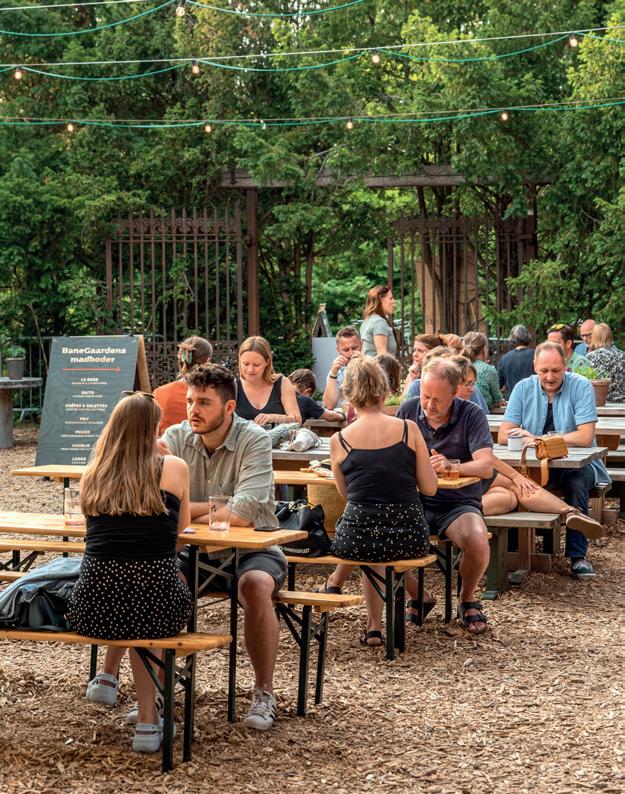
“The natural landscape will make you feel like you have travelled far away from the city when you visit – but actual ly, it isn’t far at all,” says spokesperson Anne Mette Boysen. “Our natural set tings make BaneGaarden a place worth visiting at all times. Of course, it’s nice in the summer when the sun is shining and the plants are blooming, but it also gets very cosy in the winter when the fairy lights are on.”
By Karen Gilmour Kristensen | Photos: BaneGaarden depending on the season. However, cur rent opening hours are frequently up dated on BaneGaarden’s website.
Wild nature and a buzzing city life normally feel like two opposites. Nevertheless, the two can co-exist, as proven at the heart of Copenhagen, Denmark. Right in the middle of the city lies BaneGaarden (‘The Railway Station’), a green area that offers culinary experiences ranging from baked goods to gourmet – all 100 per cent organic, of course.
Seeking sustainable solutions Originally built in 1909 as storage for goods trains, the nine barns of BaneGaarden had been deserted for many years, until they were rediscovered a few years ago. A couple of skilful entre preneurs saw their potential and began BaneGaarden consists of nine barns, that house everything from food stands and bars to a sourdough bakery, a gourmet restaurant and event rooms and meeting facilities. Everything is organic, from the espresso in the coffee bar to the menu in the evening restaurant. In September, BaneGaarden will launch a new South American-style restaurant, adding yet another exciting eatery for foodies. Whether you’re looking for a fine cu linary experience or grabbing a cof fee with a business partner or friend, BaneGaarden is the place to be. Addi tionally, it’s open year-round, making it a nice vantage point to watch the sea sons come and go. The restaurants and food stands have varying opening hours
12 | Issue 146 | September 2022


September 2022 | Issue 146 | 13 Scan Magazine | Culinary Feature | BaneGaarden
More than a culinary experience As BaneGaarden continue their sustain able journey, it has become increasingly important to them to share their accumu lated knowledge about sustainability. Ac cording to Boysen, BaneGaarden should be both a fun and informative place, for both children and adults, which is why they host events to teach children about a sustainable way of living. For instance, children can learn about compost, how it’s made and what it’s used for.
www.banegaarden.com Facebook: BaneGaarden Instagram: @banegaarden
This also means that no trees or bushes at BaneGaarden are cut. If a pathway is needed, it will have to be created around a shrubbery and not through it. “It’s im portant that we don’t interfere with na ture too much, as it’s vital for the insects and animal life around us,” Boysen ex plains. “And it’s a good way of teaching children about sustainability. After all, they’re the ones who will help take care of nature in the future – and hopefully make sure there can be a piece of wild nature in the middle of Copenhagen for a very long time,” she says. “Sustaina bility is important for us, because why not – and what is the alternative?”
a comprehensive renovation of the barns – a renovation that’s still going on, today.
“We have decided to include sustaina bility in everything we do,” Boysen ex plains. “Renovating these barns takes a long time because we try to keep old crafts alive by doing as much as we can by hand.” BaneGaarden employs up to 15 full-time builders at a time, each with their own specialist skills and distinctive approach to sustainability. The materi als used must be sustainable, as well. For instance, the paint contains butter milk to avoid the usual plastics in paint.
“When we renovate, we don’t tear an ything down,” Boysen says. “We make use of the materials we have rather than ordering completely new materials – even though it would have been faster, easier and cheaper. But we wish to take good care of this small piece of wild na ture that we have been given, so we’re not compromising on our sustainable agenda.”
“We want every one of our visitors to leave BaneGaarden with more than just a culinary experience or a couple of pho tos of some pretty buildings,” she says. “But we’ve only just started. Each time you visit, there’ll be something new to Whenexplore.”asked why sustainability is so im portant to the team behind BaneGaarden, Boysen’s message is clear. “It should be important to all of us,” she states. “There are some things we have to consider if we wish to preserve the earth we live on. Our small oasis in Copenhagen is a piece of nature which is part of a larger ecosys tem, and we think it’s worth protecting.”


Just as Thorvaldsen’s neo-classical mar ble figures take inspiration from the art of antiquity – Greek, Egyptian, Pompeiian – so too does the architecture of Thorvaldsen’s Museum itself. Opened in 1848, it features decorative ceilings, huge trapezoidal doors and Egyptian motifs of date trees, mosaic floors and exotic birds painted on the ceil ings – the richly visual interiors providing a striking contrast to Thorvaldsen’s pristine sculptures.Ondisplay, too, is the artist’s personal collection of paintings, antiquities and prints, while the outside of the building is adorned with a frieze depicting Thorvaldsen’s home coming to Copenhagen from Rome in 1838. “It’s a stunning space with a very unique at mosphere,” says head of PR and communi cation, Maria Horn Rasmussen. What’s on? Unusually, for the art world, Thorvaldsen was internationally renowned during his lifetime. He spent long periods working abroad: “That’s why we’ve chosen to honour his legacy by inviting international contem porary artists to exhibit work in dialogue with that of Thorvaldsen, here in the mu seum,” says Horn Rasmussen. 2 Septem ber will see the launch of an exhibition of large-scale, site-specific sculptures in the first ever Danish solo-show by Irish-Amer ican artist Sean Scully.
SEAN SCULLY MA TERIAL WORLD will showcase works that interact with the architecture, colours and surroundings of Thorvaldsen’s Museum.
Instagram: @thorvaldsensmuseum
Contemporary meets neo-classical at Denmark’s oldest art museum
“We also have a comprehensive events calendar, with concerts, talks, workshops, masterclasses, guided tours, and more In the courtyard of the eponymous Thorvaldsen’s Museum, cocooned in ancient Greek and Roman architecture and surrounded by his life’s work, is the final resting place of Danish-Icelandic sculptor Bertel Thorvaldsen. available online,” says Horn Rasmussen. “Thorvaldsen’s legacy is the beauty that lives on in this museum, and it continues to in spire visitors from all over the world.“ www.thorvaldsensmuseum.dk
Scan Magazine | Culture Feature | Thorvaldsens Museum Subscribe in Print only £39 / Year (UK Subscribeonly) online only £20 / Year
Facebook: ThorvaldsensMuseum
Photos: Sarah Coghill
By Lena Hunter |


Malin Norman is a certified beer sommelier, beer judge and member of the British Guild of Beer Writers. She writes about beer for Scan Magazine and international beer magazines.
By Alejandra Cerda Ojensa
Scan Magazine | Lifestyle | Columns
Did you know that the festival beer, Oktoberfestbier, can only be served by breweries located within the city of Munich? This means that only six brew eries can sell their beer at Oktoberfest; Augustiner, Hacker-Pschorr, Hofbräu, Löwenbräu, Paulaner and Spaten. Many breweries around the world make Oktoberfest-style beer though, so you will not miss out! To meet consumer preferences, the typical beer served at Oktoberfest has changed over the years. Märzen, an am ber-coloured, rich malty lager, was the standard festival beer style until 1990. Traditionally brewed in spring (‘Märzen’ means ‘March’), the beer was lagered in cold caves during the summer months to be consumed in autumn. Since 1990, the majority of the beer served at Oktoberfest is of the more modern style called Festbier, a golden version of Märzen with a lighter, toasted character and less intensity overall. It’s a smoother, more drinkable beer to be en joyed by the litre in the packed beer tents.
Scandinavian Lifestyle
By Malin SummerNormanisslowly coming to an end, which means that Oktoberfest is just around the corner. The 187th edition of the world’s largest folk festival takes place in Munich from 17 September to 3 October. Originally a celebration of the wedding between Crown Prince Ludwig I of Bavaria and Princess Therese of Sax ony-Hildburghausen in 1810, Oktoberfest now attracts millions of visitors every year who come to enjoy the fair, the pa rade and, of course, the giant beer tents.
In honour of Oktoberfest, lots of fes tivals take place around the world – like
September 2022 | Issue 146 | 15
Alejandra Cerda Ojensa is a Swedish sustainability blogger based in Copenhagen. She loves sustainable fashion, plant-based food, natural wines and music, and writes a column for Scan Magazine about sustainable lifestyle. Instagram: alejandracerda.co
In honour of Oktoberfest, have a Märzen or Festbier
Thoughts on necessity
Food prices have gone up due to unstable war times, and many have changed their consumption habits. When a Swedish ra dio station asked shoppers in a grocery store about changed habits, they replied that they only shop for what they really need, and look at offers more now than previously.I’vemade the same changes in my household. I shop less and often choose the cheapest alternative. As a sustainable columnist and content creator, I’ve tried to be mindful of my consumption for many years, and I’ve guilt-tripped myself into feeling that I should be making more from scratch, because that’s what sustainable influencers do, right? We bake fresh bread, brew kombucha and eat homegrown to matoes, beautifully positioned on our sandwiches for that ‘Instagram moment’.
Last week, as I was roasting granola in the oven, I started thinking of other things I could do from scratch: make oat milk, rye bread, or healthy snack bars. I started de bating with myself: what’s the most sustain able thing to do? On one hand, I could choose to support the local bakery by buying their bread despite the increased prices, or I could do it all myself. Then the following question came up: how much is a city-person like my self willing to change their habits? I sure love making my own bread or, should I say, I sure love eating homebaked bread. That said, I honestly hate to clean up the mess after my creative ytimetotemptthetainable-sessionstrying-to-be-wholesome-and-susinthekitchen–includingjarsIjusthadtoclean,afterafailedattomakekombucha.Imightjusthavedealwithitifthepricesdon’tgodownansoon.Goodforcontent,Iguess.
Scandinavia’s biggest Oktoberfest event in Oslo, Norway. Why not join in the celebra tions with a delicious Märzen or Festbier?

garmentSustainablecareMADEINSWEDEN


Photo: Verdensdagen For Psykisk Helse
By Verdensdagen For Psykisk Helse
Two years of social distancing, unrest and uncertainty has taken its toll on our mental health. The challenges ahead are still unknown, but what we know for sure is that we will need each other to get through it.
Photo:Verdensdagen For Psykisk Helse Porsgrunn videregående skole.
Ambulansetjenesten Vestre Viken.
Scan Magazine | Mini Theme | Coaching, Mindfulness & NLP
The cost of exclusion History shows that large national or global crises can strengthen our sense of community and help us connect with each other. We also know that crises can contribute to greater division and unrest. Fear of the unknown can make us more narrow-minded than we usu ally are, which can fuel prejudices and discrimination. As a result, more people than ever fall through the cracks.
Inclusive social arenas 86,000 people in Norway experience serious bullying at work at least once a month, and anxiety and depression are among the leading causes of sick leave.
Common goals create community We hope that this year’s campaign con tributes to building new social arenas, but also that it can help make our key social arenas better: more inclusive, accessible and meaningful for a greater variety of people.
September 2022 | Issue 146 | 17
The Norwegian public health campaign for World Mental Health Day 10 October is run by Mental Helse, on behalf of the Norwegian Directorate of Health. Last year more than 3,100 companies, schools, municipalities and organisations across the country contributed to the campaign by creating events and initiatives to promote mental health awareness.
In this year’s campaign, we want to mo tivate initiatives that bridge gaps. We all have a fundamental need to belong and be part of a community. But it isn’t easy to feel a sense of belonging in a commu nity that doesn’t recognise, understand or accept true diversity.
Meeting points will always be the pulse of a society. But they can also be divi sive and reinforce the feeling of being an outsider. After two years of social distancing, it is time to look up from our cohorts. People need people, and we need more opportunities to meet in a meaningful way. We can’t predict what the future brings. But we do know that we will need each other on the way. To quote our volunteer, Remi André Ols en, from Mental Helse Øksnes, “after all, it’s quite difficult, and sometimes even dangerous, to be a human all by yourself”.
The workplace is also one of our most important arenas for promoting mental Thishealth.year, we encourage initiatives that connect diverse groups of people with each other in a meaningful way. We need more opportunities to meet across gen erations, cultures, personalities, opin ions and experiences. It not only helps to expand our views on each other, but it is an important contribution to prevent stigma, loneliness and social exclusion.
Loneliness and social exclusion are key public health challenges in Norway. 11 per cent of the Norwegian population suffers from loneliness, according to 2020 fig ures from Statistics Norway. Every fourth young person says they have no one to talk to about their problems. For vulner able and marginalised groups, the num bers are far worse. This is why this year’s theme for the Norwegian World Mental Health is ‘We need each other. Look up!’
Photo: Maria Terzan
Anura Sankholkar.
We need each other. Look up!


“Through modern methods of communi cation like social media, we’re constantly comparing ourselves to others and to a virtual reality. We constantly see beau tiful holidays and nice meals – which makes many people feel like they’re not achieving what other people achieve,
By Synne Johnsson | Photos: Mestre In our busy everyday routines, filled with things we ‘should do’ and ‘should be’, with perfect pictures of friends’, families’ and celebrities’ achievements just a click away, it’s little wonder that life can seem overwhelming at times.
Even though Stubhaug believes people are leading better lives than ever before, he also witnesses more restlessness than “We’repreviously.alwayson the go and always do ing something – we’re always mentally active, which brings a lot of disturbance and background noise,” he explains.
18 | Issue 146 | September 2022
That’s why former journalist and com munications adviser Hanne Suorza, and doctor and psychiatrist Bjarte Stubhaug, decided to make an accessible, informa tive and interactive tool to manage stress and stress disorders. And so, the Mestre app came to life.
Manage stress mindfully with the Mestre app
Comparing ourselves to a virtual reality
“I have worked with stress-management therapy for nearly 30 years and wanted to make knowledge about stress and stress disorders easily accessible. We decid ed that an app would be the best way to reach as many people as possible,” says Stubhaug. Now, 20,000 downloads later, Stubhaug and Suorza are taking the app to the next level and launching a workplace section called ‘Mestre Arbeid’, which includes specific content for work-related stress and coping.
Co-founder of the app, Bjarte Stubhaug has worked with stress management therapy for nearly 30 years. The app has already been downloaded more than 20,000 times.


Below: The app includes more than 30 unique exercises to cope with stress. Focusing on knowledge and information, users of the app can access informative lectures on a broad range of stress-related topics. Mindfulness is an important part of the app. Right, top: As part of the app, Stubhaug and Suorza have a podcast, teaching listeners about stress and stress management. Right, bottom: Co-founder Hanne Suorza.
The Mestre app describes this reality in a way people can relate to, encouraging them to recognise their own feelings, and then helps to shift attention away from these negative feelings. Stress can lead to numerous physical and psycho logical complaints and can significantly worsen quality of life. Mestre aims to prevent and reduce stress-related disor ders and uneasiness by giving its users access to informative podcast lectures, articles and over 30 unique exercises.
September 2022 | Issue 146 | 19 Scan Magazine | Mini Theme | Coaching, Mindfulness & NLP leading to stress and negative emotions.”
The app format means it’s easily inte grated into an otherwise busy schedule –for example, by listening to the pod cast during a daily commute, or by fit ting one of the ten-minute exercises into a lunch break.
Stubhaug says: “For children, focusing on what is happening here and now is very natural, but as we get older, we start thinking about what’s next: what’s the agenda, what’s the next step, what do others think of me? These exercises will strengthen your ability to be more mindful of the present moment. It’s about focusing on the moment, stopping for a while, doing less and being more: being here and now.”
Coping with stress at work Mestre’s new workplace section is de signed for companies with up to 10,000 employees. The content is focused on work-related stress and stress dis orders, with exercises related to un certainty in the workplace, teamwork, communication, work interactions and more. It will provide concrete advice on how to cope with various situations, and how to communicate efficiently with co-workers and employers.
“We see that mental health is becoming an important topic for businesses at the moment. Both in terms of preventing and reducing stress related illnesses, and hereby also lowering the number of sick days and increasing wellbeing and productivity,” says Suorza. The workplace section has already caught the attention of companies in Norway. At Sparebankens Møre’s entrepreneur contest for new business ideas earlier this year, Mestre came second out of 65 competitors.
Suorza says: “People wear headsets quite a lot, so you can easily swap ten minutes of music for ten minutes of mindfulness. What’s so good about the app format is that you can close your eyes, lean back and just listen to our content, while also learning a new topic or habit. Most people like to learn some thing new.”
www.stressmestre.no Instagram: @mestre_app Facebook: stressmestre.no Podcast: ‘Mestre Podkast’ on Spotify
According to Suorza and Stubhaug, the app can be equally as efficient as therapy when it comes to milder forms of stress and stress disorders. “The Mestre app teaches you to break away from negative emotions. No one can live without ever becoming upset or stressed, you can’t avoid it. We have to accept those negative feelings and learn to regulate them, without getting too caught up in it,” explains Stubhaug. With a range of guided mindfulness ex ercises to help users focus on the mo ment, the app aids in moving away from the stress of obsessing unhealthily over everything that must or should be done.


Ganni.
Photo: Bryndis Thorsteinsdottir

Copenhagen Fashion Week SS23
September 2022 | Issue 146 | 21
By Lena Hunter (di)vision “Create from what already is,” is the founding ethic behind Copenhagen-based fashion and design label (di)vision, direct ed by siblings Nanna and Simon Wick. Their unisex collections are based on up cycled materials, and meld classic silhou ettes with a conceptual DIY-inspired aes thetic. (di)vision’s SS23 collection saw a proliferation of patchwork, intricate prints and ragged knits meet in a utility-inspired take on slouch-fashion.
Ganni Cult Danish ready-to-wear favourite Ganni was founded in 2000 by gallerist Frans Truelsen and is today helmed by husband-and-wife duo Nicolaj and Ditte Reffstrup. The label has become a global phenomenon with its signature vivid palettes and sophisticated, downto-earth staples. “It’s all about the contrast; wearing something feminine and pairing it with a pair of sneakers or denim,” explains Ditte. Ganni’s SS23 runway was awash with high-saturation popsicle hues: cobalt mini-dresses, crimson cowboy boots, bubblegum-pink denim and bright orange eyeliner. Saks Potts Copenhageners Cathrine Saks and Bar bara Potts launched Saks Potts in 2014, taking inspiration from their upbringing in the Danish capital. The pair point to the late Carolyne Bessette-Kennedy as the ultimate muse for the Saks Potts woman. Her aesthetic of chic 1990s minimalism and modernism was a (di)vision.
Photo: James Cochrane
Sacks Potts.
Editors Pick: Top designers at
In August, the biggest names in Nordic fashion gathered in the sun-splashed Danish capital for the Spring/Summer 23 showcase at Copenhagen Fashion Week. The schedule featured the usual major players like Saks Potts, Henrik Vibskov and Ganni, as well as platforming a slew of exciting emerging talents. Here, we present our pick of the top ten Scandinavian designers to walk the runway this season.
Photo: Tonya Matyu
Scan Magazine | Cover Feature | Top Designers at CPHFW SS23


Henrik Vibskov Henrik Vibskov’s shows are as much exhibitions as they are runways. In fact, the multitude of tantalising art, perfor mance and design universes created in relation to each fashion collection have earned Henrik Vibskov a reputation as a design-maverick in his home city of Copenhagen. His SS23 collection was a parade of Vibskov classics: stark stripes, abstract repeating prints, reimagined collars and cuffs, playful oversizing and signature headscarves, packed into al presenting a rich exploration of pastel patterns, fun silk-pouf accessories and statement feminine cuts.
Photo: James StineCochrane Goya. Photo: Tonya Matyu
touchstone for their SS23 collection, in which structured shirts worn loose met low-slung waistlines, tassel detailing, metallics and sunny throwback prints.
Baum und Pferdgarten Founders Rikke Baumgarten and Helle Hestehave describe Baum und Pferd garten’s design identity as “timeless, ex clusive and unexpected.” The label mix es bold prints with nuanced colour, and became a mould-breaking fashion staple in the Nordics for its eclectic and poetic designs. Baum und Pferdgarten’s SS23 runway mused on the female silhouette, with forays into colour-clashing mini-en sembles, as well nods to power-dress Baum und Pferdgarten.
22 | Issue 146 | September 2022 Scan Magazine | Cover Feature | Top Designers at CPHFW SS23
ing, with sharp lapels, billowing trench coats and slicked-back hair.
Stine Goya Stine Goya’s design ethos is “centred around strong, impassioned ideas and the power of colour and print,” says the epon ymous founder and designer and, since 2006, the label has consistently protested the Scandinavian convention of minimalist design and muted palettes. Goya’s playful silhouettes, quality fabrics and bespoke hand-drawn prints have attracted legions of followers, and SS23 was no exception;


September 2022 | Issue 146 | 23 Scan Magazine | Cover Feature | Top Designers at CPHFW SS23 Holzweiler. Photo: Colette der Kinderen Henrik Vibskov. Photo: Bryndis Thorsteinsdottir


Scan Magazine | Cover Feature | Top Designers at CPHFW SS23 24 | Issue 146 | September 2022 ternately billowing and sinched-in silhouettes. Holtzweiler
A. ROEGE HOVE. Photo: James Cochrane
Photo: Bryndis Thorseinsdottir
Drawing inspiration from art, architec ture, nature and contemporary youth culture, Norwegian fashion house Hol zweiler channels “timeless sartorial ideals, design curiosity and craftsman ship.” The label began turning heads for its silk, lambswool and cashmere scarf collections, before expanding into ready-to-wear in 2014. This season, the Hotlzweiler runway saw knotted rope accessories, ruching and delicate, sheer fabrics meet buckles, leather and met al hoop fastenings in a clash of fragility and robustness.
Accordingly, his new collection worked muted tones of khaki, sand and navy with brighter expressions of green, in sync with outdoor-inspired gear: puffer vests, tech nical trousers, zips, camo, buckles and wide-brimmed hats.
Jade Cropper Inspired by the life-philosophy of her grandmother, Jade Cropper explores the unconventional interplay between the energy of the streets and the aesthetic of couture fashion, using a sustainable design practice based on waste fabrics, deadstock, recycled and circular materi al. Cropper is a fresh face on the scene, having graduated and launched her brand just two years ago, but her inventive and contemporary garments are already mak ing waves. This season, Jade Cropper showed a dusty-toned collection of cutouts, string and clasp-bound body-wraps, buttery black-leather and fraying denim.
A. ROEGE HOVE Conceptual knitwear brand A. ROEGE HOVE’s artistic approach to original craftsmanship sees its garments blur the boundary between effortless and ex travagant. “Like sculptures, they show case different stories for every style. With thin and shadowlike materials, the pieces frame the body, and their real shape is brought to life by its own er,” says Danish founder and designer Amalie Røge Hove. On the SS23 run way, Røge Hove’s looks were clinging and ephemeral – so light, they almost seemed to be holograms – in a palette of monochrome and green, laced together with fine strings. ISO. POETISM by Tobias Birk Nielsen Copenhagen label ISO. POETISM by Tobi as Birk Nielsen strikes a delicate balance between visual, sculptural and poetic expression, with garments whose unex pected forms are often the result of ex perimental fabrics. Birk Nielsen calls ISO. POETISM ‘a tribute to collectivism’ with environmental sustainability at its core. ISO. POETISM by Tobias Birk Nielsen


Jade Cropper. Photo: Tonya Matyu

By Sara Hellgren What was once considered to be luxurious relaxation for the lucky few has now become a popular health investment. I’m talking about spa visits.
sage, for example, has magical effects that include the release of the well-be ing hormone oxytocin. Oxytocin relieves pain, speeds up the healing of wounds and injuries, lowers blood pressure and strengthens the immune system. In ad dition, it also helps to improve our mental health by reducing feelings of fear, stress and anxiety and improving our sleep. Stufvenäs Gästgifveri.
Did you know that a simple spa visit is not only a relaxing experience – it also generates fantastic health benefits. Mas In other words, a simple massage is a smart investment in your health. All 44 members of Svenska Spahotell offer mas sage treatments. If you visit a spa hotel that doesn’t offer massage treatments, it is not a ‘real’ spa. That’s because spa is based on a philosophy that consists of four cornerstones – and tactile touch in the form of body treatments is one of them. In this special theme The Best Spas in Sweden 2022, discover nine of the top spas in the country to unwind at. Then, acquaint yourself with seven of the most
Page 32
Special Theme:
THEBESTSPASINSWEDEN2022
26 | Issue 146 | September 2022
A smart investment in your health
Given the pandemic in recent years, most of us have come to realise the importance of strengthening the immune system and keeping ourselves in the best possible condition to maintain good health.
Spa visits:
market, today. www.svenskaspahotell.se Sara Hellgren. OM-SE. Page 54 Kosta Borda Art Hotel. Page 42
Svenska
spa
September 2022 | Issue 146 | 27
brands on
ground-breaking health
via
Sara Hellgren is head of marketing and communications at Svenska Spahotell, an independent association for high-quality spa operations in Sweden. Spahotell works to establish and develop industry standards training, education and marketing services for its members. and beauty the



By Emma Rodin Photos: Dalecarlia
Every now and then, our energy reserves need a top-up. So, the next time you are running low, head to Dalecarlia Hotel in the picturesque village of Tällberg in central Sweden. Here, a serene experience for both body and soul is on offer – with every part of your wellbeing taken care of. Whether the gloomy winter months are getting you down or the strain of everyday life is taking its toll, a visit to Dalecarlia is just what the doctor ordered. The exclu sive destination is one of Sweden’s first ever spas, opened in 1995, and has the grand Lake Siljan as its backdrop. Peace ful and tranquil, this is the ultimate place to rewind and reboot. Today, Dalecarlia offers a range of pack ages to suit every need, including dining, wellbeing and event experiences, and is also a popular venue for conferences and weddings. The venue celebrates local his tory and tradition, and seamlessly mixes these references with modern style and luxury – a concept that has established the hotel and spa as a leader in its field.
Relax at one of Sweden’s oldest destination spa hotels
28 | Issue 146 | September 2022
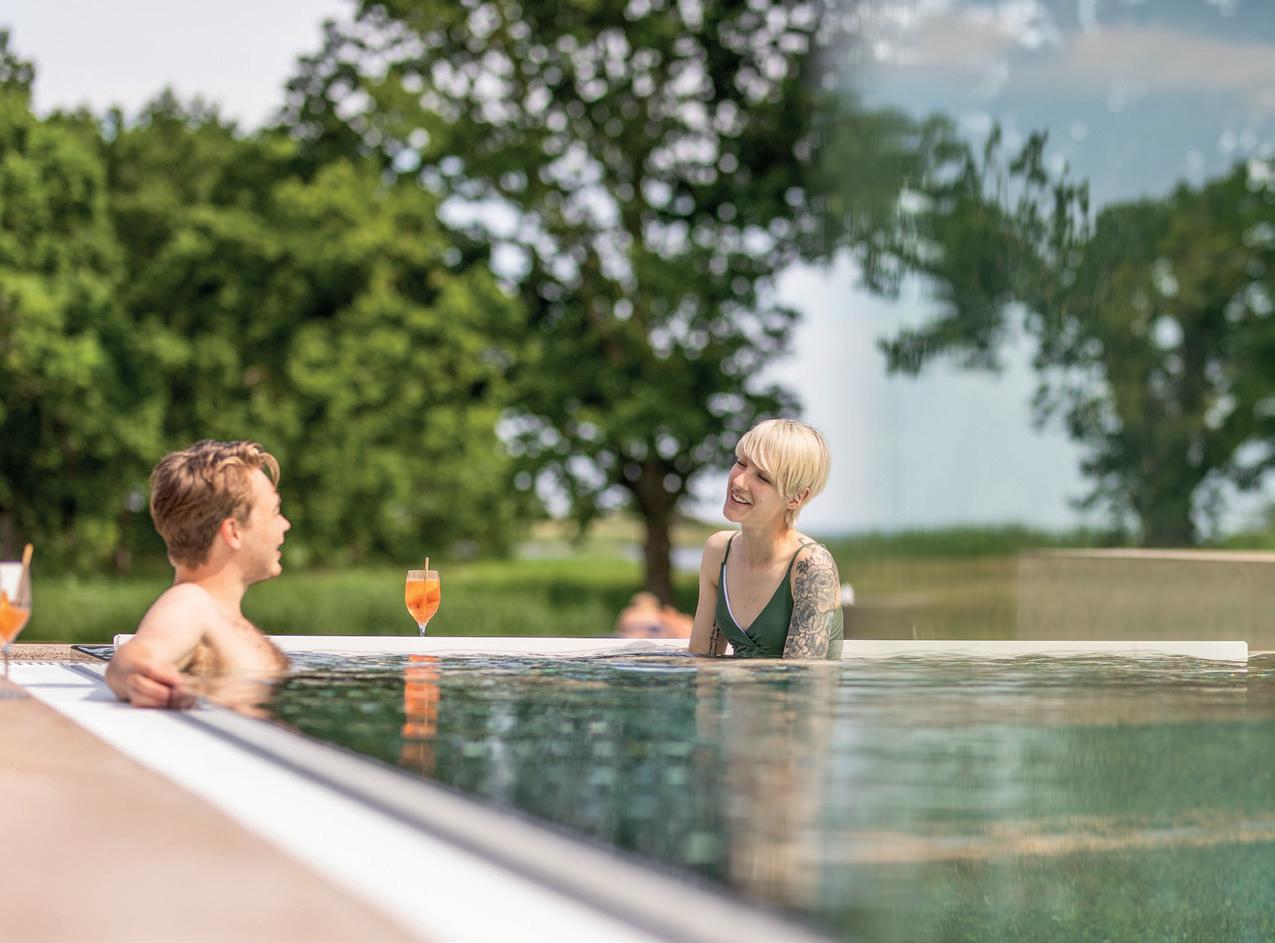
Time to spa The spa at Dalecarlia attracts visitors from all over the place, throughout the year. It was renovated to a great extent back in 2021, to match the needs of the modern spa-goer, and now offers some thing for everyone. This includes profes sional treatments, a fitness centre, pool, whirlpool, shared sauna with views of Lake Siljan, and an outdoor hot spring. Just imagine stepping out onto the ter race on a cold winter’s morning, to ease yourself into a warm body of water, all while soaking up the stunning surround ings. It is true bliss. The spa itself is beautifully housed in a separate building encompassing wood
|


www.dalecarlia.se Instagram: @dalecarlia_hotel_spa
Scan Magazine | Special Theme | The Best Spas in Sweden 2022 September 2022 | Issue 146 | 29
Indeed, there is also Bar Leffler, for those who fancy a drink or two in a relaxed setting. “Our salon is a natural meeting place where you can sit down in an armchair by the fire and enjoy great music from jazz to pop,” says Gustafsson.
“It is wonderful to be able to serve guests this space, allowing them plenty of room to relax and rewind,” says hotel manager Ann-Louise Gustafsson. “We sometimes describe it as a temple of health, because that is essentially what it is,” she adds. The only problem visitors will encounter is deciding which part of the spa to enjoy next.
A taste (and sip) of Dalarna
Every morning, a grand breakfast buffet is served in the hotel’s dining room, offering everything you might need to start the day in the best possible way.
According to Gustafsson, the best way to round off a day of treatments and selfcare is to pop by Dalecarlia’s in-house restaurant and bar (not necessarily in that order). The restaurant serves healthy and nourishing food, made with local produce, while carefully blended with innovation and tradition. Cooking with the season is at the heart of the restaurant’s offering and everything on the menu can be enjoyed alongside ex pertly matched drinks recommended by Dalecarlia’s sommelier.
“For us, it is important that guests know that we run Dalecarlia with the environment as a top priority, and that we treat this as an ongoing task,” explains Gustafsson. Efforts include reducing water and energy consumption, choosing renewable sources, recycling where possible and using eco-labelled products throughout the establishment.
So, why not pay Dalecarlia a visit this autumn or winter, and discover it all for yourself?
en details and panoramic windows that make the most of the unique views of Lake Siljan. There is also a bar offering light snacks and drinks, as well as a shop with exclusive spa products.
Green Key certified Dalecarlia is proud to have been award ed the prestigious Green Key eco-label –a leading standard of excellence in the field of environmental responsibility and sustainable operations in the tourism Aindustry.Green
Key represents an establishment’s promise to its guests, that by opting to stay with them, they help to make a difference by supporting its green agenda. The high environmental and sustainability standards expected of these businesses are maintained through rigorous documentation and frequent audits.


Active relaxation, all year round
30 | Issue 146 | September 2022
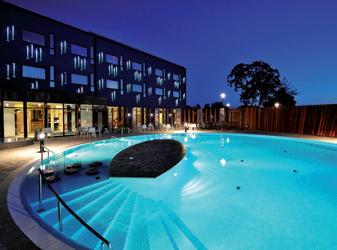
TanumStrand is one of Bohuslän’s big gest spa and conference hotels, located on the cliffs of the archipelago between Grebbestad and Fjällbacka. Open all year round, it can accommodate up to 1,000 guests in 160 elegant hotel rooms and 99 cosy cabins, with great options for dining and activities for all ages – and even its own marina with 250 berths. This is where land and sea meet to stim ulate the senses in spring and summer, and where the fresh air and rugged cliffs give energy to body and mind in autumn and winter. As more people look for hol idays closer to home, for sustainability or other reasons, many are taking the oppor tunity to visit.
Active relaxation in the beautiful archipelago
With its own marina, a fabulous spa and adventure pool, conference facilities and several accommodation options, TanumStrand is a popular destination all year round, the perfect spot for a staycation – and a paradise for seafood-lovers.
On the Bohuslän coast, every season has its own charm with lots to discover and, even though TanumStrand is a popular summer hotspot, the hotel sees high de mand during autumn, winter and spring.
“Many people say that Bohuslän has the world’s most beautiful archipelago,” says hotel director Marit Björnland. “We wel come our guests with open arms to come and experience the authentic atmosphere in this part of the archipelago.
Tanum Strand is a lovely staycation destination in a stunning setting right by the sea.”
“It’s a genuine archipelago environment, with the opportunity for active relaxa tion regardless of the season,” explains Björnland. “It’s a superb place for all ages and occasions. We offer training and yoga, spa treatments, lots of good food, and even an adventure pool for kids.”
By Malin Norman | Photos: TanumStrand


Scan Magazine | Special Theme | The Best Spas in Sweden 2022 September 2022 | Issue 146 | 31
A paradise for seafood lovers
During the summer months, Beach Club serves street food and, in Café Vita Hu set, parents can chill out with a ‘fika’ whilst the children play. But, the real star of the show is the sea food – in particular, oysters that thrive in the clean, clear seawater. Fresh hand picked oysters from Grebbestad’s oyster bed are a treat, as well as lobster, clams, crayfish and shrimp. The Friday-night
Crayfish on the dock – an old tradition: Experience delicious crayfish on the dock every Saturday and prebooked special afternoons. Chefs give tips on cooking and seasoning, and serve the freshly-caught and cooked crayfish with a glass of bubbles. Oyster school – the world’s best oysters: The Oyster Academy has its headquar ters here and guests can meet experts and learn about the exquisite west-coast delicacy in the ‘oyster school’ a luxuri ous sensory experience, in conjunction with the seafood buffet on Fridays.
TanumStrand is located on the Swedish west coast, midway between Oslo and Göteborg. The closest town is the picturesque fishing village Grebbestad, with plenty of boutiques, cafés and restaurants for a day out. seafood buffet is a popular hit and, on Saturdays, the boat house Udden on the jetty serves freshly caught oysters and crayfish. “Seafood is best in the au tumn,” assures Björnland. “You can go for a relaxed stroll on the cliffs, followed by a glass of Champagne and a couple of freshly cooked crayfish by the boathouse. It’s heaven!”
Lobster fishing – black gold of the sea: Autumn is lobster season and, on special weekends, TanumStrand’s guests can take part in a lobster safari. You will fish for lobster and learn about the history of the islands in the beautiful archipelago in Bohuslän.
TanumStrand is perfect for a romantic getaway, a fun-filled family holiday, a trip with friends, or conference and work events – perhaps with a few rounds of golf on one of the nearby courses, or a visit to the spa. For guests looking for an active outdoor holiday, there is plenty to do. How about a guided archipelago tour with a kayak, or a refreshing winter dip in the sea fol lowed by warming up in the old-style sau na? “Our guests love the old sauna on the jetty,” says the hotel director with a smile. “It’s the real deal, quite exotic for some.”
Many guests come for the culinary expe riences alone. TanumStrand is home to several restaurants with different con cepts, from the charming boat house Ud den out on the jetty, to buffets or threecourse menus in restaurant Latitud 58°.
www.tanumstrand.se Facebook: tanumstrandhotell Instagram: @tanumstrand
With different accommodation options and activities both indoors and outdoors,


A genuine wellness experience for all your senses
The renowned wine cellar is re-born
The modern hotel has 52 elegant rooms, a well-attended conference facility and congress rooms, a renowned restau rant and an award-winning wine cellar. Recently, the inn has renovated its spa, added a lounge bar, opened a summer café and extended the programme of Theactivities.guests are greeted with a personal welcome, showing both warmth and care in a harmonious and inspiring environ ment. ”Our vision is to become Sweden’s best inn,” says Anna Emrin, vice presi dent and marketing director. “Together, we will bring Stufvenäs Gästgifveri into the future, with heaps of courage, joy, love and commitment.”
32 | Issue 146 | September 2022
At Stufvenäs Gästgifveri, you can enjoy the beautiful surroundings of Kalmarsund, relax in the renovated spa, and enjoy fantastic food and wine. This timeless inn is a treat for all your senses. Stufvenäs Gästgifveri is a classic inn, dating back to an old settlement in the late 18th century. Here, right next to Kalmarsund, history meets the future.
The much-praised wine cellar was built by the hotel’s founder in 1990 and con sisted of nearly 6,000 bottles including treasures such as Chateau Lafite-Roth schild from 1900, Chateau Pétrus from 1949 and Chateau Margaux from 1878. Unfortunately, during a burglary in 2007, the entire cache of valuable wines was stolen. The wine cellar was forgotten for many years, but has been brought back to life and today consists of about 3,500 bottles and 600 unique labels. The wine cellar has received several awards over the years, such as Wine Spectator’s Best of Award of Excellence 11 times between the years 1995-2006. In 2022, it received Wine Spectator’s
By Malin Norman | Photos: Stufvenäs Gästgifveri


Autumn is peak season, a time to go for a stroll along the sea or in the woods, breathe in the fresh air, and afterwards to snuggle up by the open fire, try a re
www.stufvenas.se Facebook: Stufvenas Instagram: @stufvenasgastgifveri
Scan Magazine | Special Theme | The Best Spas in Sweden 2022 September 2022 | Issue 146 | 33
Best of Award of Excellence again and, in 2020, it won the highest form of rec ognition from Munskänkarna, which is proof of a step in the right direction. Im pressively, in 2022 the wine cellar was also listed in Star Wine List.
laxing spa treatment and enjoy good food and wine. “Autumn is a great time of year to pay a visit, with fantastic col ours outside and tasty local produce such as root vegetables and game in the restaurant. And there’s lots to do both indoors and outdoors – to enjoy those important contrasts.”
The restaurant is a treat, too. Everything is cooked from scratch with local pro duce from farms in the area, explains Emrin. “We work with sustainability in mind and offer combinations for the conscious guest who is looking for re laxation but also a first-class gourmet experience. For instance, honey from our bees is used in cooking and baking, as well as in the spa.”
A spa with interesting contrasts Stufvenäs spa is a place of contrasts, a place of relaxation in the middle of the hustle and bustle of busy everyday du ties, a modern centre nestled in tran quil nature. “We experience the world through contrasts and contradictions,” means Emrin. “Without darkness there’s no light, without noise there’s no harmo ny. In our spa, you can experience the contrast between outdoors and indoors, warm and cold, near and far.”
The spa has a range of head-to-toe treat ments by trained experts. It has a fabu lous view of the sea and Kalmarsund, whilst enveloped by luscious countryside nature, yet lies in easy reach of town.
Wine tastings: In the cosy wine cellar, you can enjoy a glass of wine before dinner or take part in a wine tasting with one of the hotel’s talented sommeliers.
Cocktails from Småland: In this unique experience in the outdoor bar at Kalmarsund, friends, colleagues or families can mix cocktails and taste different local drinks in a fun and different pre-dinner activity.
“Our guests often say that they start to relax as soon as they arrive,” concludes Emrin. “That’s what we want to provide: relaxation so that people can continue to perform and enjoy their everyday life.”
The Edible Country: In this collaboration with Visit Sweden, guests are invited to mix drinks or cook a meal with raw produce that they can forage for themselves in nature.


By Emma Rodin |
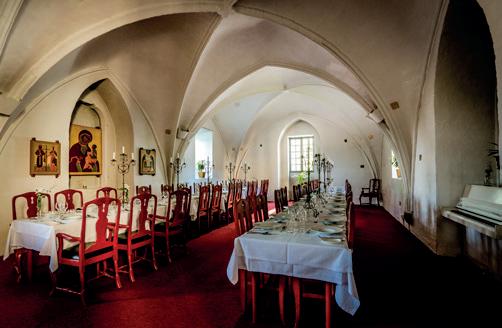
Photos: Vadstena Klosterhotel Take a break from the tiresome duties of everyday life and visit Vadstena Klosterhotel in Sweden’s south. With a harmonious dose of culture, health and culinary experiences, this monastery-turned-spa-hotel is the ideal spot to rest and recharge – and perhaps to go on an inner-journey, too. With a wide offering ranging from week end packages to conferences and wed ding arrangements, Vadstena Kloster hotel is a medieval gem that unites old and new. The thick walls, stone floors and high vaults that welcome guests hint at what life was once like here. “We owe it to history to preserve what has been,” says Sofia Lindholm, hotel and spa manager. “Our rich heritage can be sensed throughout the premises, com bined with a high level of comfort and quality, too.”
Indeed, the town of Vadstena has a fasci nating history. During the first half of the 14th century, Vadstena Castle housed royal parties so glamorous, they were the envy of Europe’s entire aristocracy. It was then, in 1350, when the patron saint of Europe, Saint Bridget, transformed the palace into a monastery – a stronghold for quiet, Spartan living. Thanks to Saint Bridget, Vadstena became an important pilgrimage site and you can, in fact, take a historical pilgrimage all the way from here to Rome. The spa concept at Vadstena Klosterhotel is based on this pilgrimage legacy and follows several key values, such as simplicity and restraint. Relaxation at the ready Lindholm emphasises Vadstena’s past and the importance of harmony. “The spa world is filled to the brim with trends and ideas on how we should look and feel. Instead, we want our spa to reflect our history as a monastery, and we offer ac tivities that fit with our past. This is not a fashionable activity centre; it’s a place for contemplation and an inner journey.”
The spa strives to maintain a stress-free environment for all its guests. “We don’t want visitors to be overloaded with so cietal pressure due to current trends. It
A tranquil experience wrapped in history
34 | Issue 146 | September 2022

Vadstena Castle previously housed one of the largest breweries of the Middle Ages. Now, the old tradition has resur faced with the help of historians and in collaboration with Fors Bryggeri, and guests can try some of the historic brews. The range of beers includes Kung Valdemar IPA, Munkens Lager (unfil tered), Pax Vobiscum (historic lager), and Dotir, a raspberry beer named after the monastery’s own brewing lady dur ing the Middle Ages. So, are you ready to wine, dine and unwind? The doors of Vadstena Klosterhotel are open.
Taking the experience up a notch, there’s also the well-stocked wine cellar of 4,000 bottles, not to mention a selection of home-brewed beer.
Scan Magazine | Special Theme | The Best Spas in Sweden 2022 September 2022 | Issue 146 | 35 should be about human values and tranquillity, and we make sure to embrace our peaceful setting, working with nature and appreciating our wish as humans to find our way home.”
www.klosterhotel.se Instagram: @klosterhotellet
Treatment time
The popular spa hotel has won several awards, including Best Luxury Getaway Spa Hotel Europe and Most Romantic History Hotel of Europe. The acclaimed spa is open for guests at the hotel and to anyone wanting to spend some time in the day spa, perhaps in combination with lunch or dinner. They can all enjoy the salt-water pool, warm spring, jacuzzi, herb sauna, steam room with aromatherapy, treatment room and resting room, as well as the on-site café and bar. One of the most popular spa rituals is a head-to-toe treatment with elements from aromatherapy, including a luxuri ous, handmade, sugar body-scrub and the spa’s own sauna honey. The idea of being steeped in the monastery herit age is a crucial aspect of the ritual. This year, the spa has enhanced its concept further, with a new forest bath-themed room. Here, guests can soak up cleans ing forest air and pop their feet into a mineral-filled bath after a long day’s pil Speakinggrimage. of themed spaces, there’s more to come this autumn. For one, a dedicated washing space themed ‘Eau de Vie’, as well as a room bathed in sunlight –ideal on those dark winter days when energy is running low. Wine and dine After a day enjoying the spa, guests can wrap things up with a gastronomic experience in Vadstena Klosterhotel’s own restaurant, Munkklostret. “It’s important to have rest and relaxation of course, but also to enjoy the good things in life,” says Lindholm. “Our guests appreciate the peaceful setting and the opportunities for pleasure.” In the restaurant, the talented team of chefs cook with seasonal produce and classic Swedish flavours – inspired by his tory, of course. Have a look at the menu and you might spot crayfish sourced from neighbouring lake Vättern, or wild mush rooms foraged in the surrounding forests.


Revive
By Nina Bressler | Photos: Yasuragi How do you reconnect with your inner self when distractions increase and spin faster than ever? When screen-time, to-dos, work and all life’s other matters take over, it’s important to take a break and relax to regain inner balance. Yasuragi has the answer: the Japanese-inspired bath and hotel is designed to rekindle your spirit with a myriad of baths and activities in beautiful nature that join forces to bring back your inner power. your spirit
through the magic of water and nature 36 | Issue 146 | September 2022

www.yasuragi.se Instagram: @yasuragisweden
Scan Magazine | Special Theme | The Best Spas in Sweden 2022 September 2022 | Issue 146 | 37
when you reconnect to yourself, to the nature around you and by building sustainable relationships with the people in your life – a belief backed by many scientific studies. We provide a space to regain that headspace, a place for your soul to relax and breathe, a calm haven dedicated to pure wellbeing,” says Olophsdotter.
Yasuragibegins. effect, as it’s called, is about creating a calm atmosphere with healthy employees making sound decisions.
The Yasuragi effect The hotel consists of 191 rooms with 422 beds, all with a glorious waterfront view, and the adjoining restaurant serves a balanced fusion of Japanese food with a Swedish twist, to stay in sync with the Swedish seasons and to keep produce as local as possible. The facilities also comprise 23 meeting rooms, making it a popular destination for businesses. Here, new ideas can be born, and meeting days will start with a tranquil bath ritual to replenish the mind before the working day
Phones off, and breathe Yasuragi is that long, relaxed exhalation after sinking down into a hot bath. It’s a means of letting go and allowing your soul to breathe – a notion that permeates every aspect of the Yasuragi business. To allow complete disconnection from distractions, there is a strict ban on phones and digital devices. Every guest receives a Yukata, a Japanese robe, and upon entering the Japanese bathhouse there’s an introduction to the Japanese bathing culture with instructions on how to wash the Japanese way.
Yasuragi is conveniently located just 20 minutes from central Stockholm, but the contrast from the busy city centre is striking: the bath and hotel is nestled into the forest with a stunning view over the Baltic Sea outlet, delicately built to perfectly blend into its tranquil sur Withroundings.abuilding that was designed by Japanese architect Yoji Kasajima, the link to the Japanese culture has been solidly infused into the very foundation ever since its construction in the 1970s. The bath was established in 1997 and has gradually turned into a hub for vis itors looking to reenergise, and compa nies in need of the perfect retreat for their employees.
A meticulously designed selection of pools, surrounded by the sparse aesthetics that dominate Japanese architecture, offers the best of the Japanese bathing culture where the link between water and wellbeing is vital. “Nature, our bodies and our minds are connected in ways that we all too often forget. It’s a cycle: the more we move in rhythm with nature, the better we feel in our bodies and in our minds. Honouring the human bond with the natural seasons by integrating this into the surroundings is common practice in Japan, and that’s what Yasuragi is about too,” says head of brand Kersti Olophsdotter.
A myriad of pools and bathing areas awaits: in the Japanese ablution room, you sit on a small wooden stool and wash yourself. In Daiyokujo, the large bath, you sink down into a 35-degree pool and let the water gently embrace your body. Outdoor hot springs, foot baths, cold springs, carbonated baths and the Dokutsoburo, the cavern bath, create a magical experience where the uninterrupted focus is on relaxation and recuperation.
The baths are in addition to several different kinds of saunas, from the Shiomushiburo, steam salt sauna, to the rest sauna – where a temperature of 40 degrees makes it the perfect spot to contemplate and repose. Combined with the dry sauna and outdoor sauna, they provide the perfect balance between hot and cold, dry and wet. Meanwhile, activities such as Zen meditation, yoga, breath classes and sound classes help to achieve an even deeper state of relaxation.
“Recuperation is vital for our wellbeing. How do we become complete? How do we reach that state of inner satisfaction without the external gratification? We believe it starts from within, and it starts
“We must change how we live to lead better lives for ourselves and the planet. There’s a longing amongst people to make a change, an awareness that we can’t continue our untenable path. Yasuragi has created a space that’s part of that change. Our mission is to remain a haven for recuperation, relaxation and spiritual and bodily revival,” says Olophsdotter. Phones off, Yukata on, let the water embrace you, and… relax.


38 | Issue 146 | September 2022
With its 15th-century heritage, Åkerblads is the oldest farmhouse in the small village of Tällberg in the heart of Dalarna –a region renowned for its beautiful surroundings and old craftsmanship traditions. The land has been in the family for 22 generations and family members are still present at the hotel every day, making sure that guests feel welcome and at Thehome.Åkerblad family maintains a homely atmosphere with the sound of crackling open fires, displays of old family treasures and coffee served out of a traditional copper pot. “Åkerblads is a family-owned hotel with a rich history,” says marketing manager Fredrik Svedberg. “It’s genuine and has soul, something you can’t put your finger on, but that guests will notice as soon as they arrive.”
By Malin Norman | Photos: Åkerblads Hotel & Spa At Åkerblads Hotel & Spa, guests are welcomed by the family owners into a warm and cosy environment with crackling fires, individually designed rooms, worldclass cuisine and a fabulous spa – an ideal spot to unwind and relax in.
Culinary experiences at the core In the four-star hotel, the 73 guest rooms are individually designed, so guests en joy a different experience every time they stay. Svedberg describes that staff are handpicked and have the foresight to pre dict what guests might need. “To keep the familiar feeling, we work as a close-knit team. Here, you get a bit more than what you expect; you get what you really need.” Cherished for its warm atmosphere and traditions, Åkerblads has also garnered praised for its high-quality cuisine. The culinary experience is at the core, with Hit pause and relax at a cosy family-owned hotel


Spa development phase two underway Famous architect Per Öberg designed the spa, which opened during Christmas 2011 and was named Newcomer of the Year 2014 at the Spa Awards. Like the rest of the hotel, the spa décor carefully marries tradition with a contemporary feel, includ ing a pool, jacuzzi, sauna, gym and even a private suite. Guests can also treat them selves to a massage, facial, manicure and pedicure, all with quality products from Babor and Maria Åkerberg.
Åkerblads is currently undergoing phase two of the spa development, with the help of architect Per Öberg, once again. It includes a new spa lounge with a pool bar, cosy spaces with warm fires, and a large hot spring outside, all to be com pleted this winter. ”During phase one, we found that Öberg has the same values as Åkerblads: he doesn’t take shortcuts or compromise on quality. For a hotel with such long history, it’s important to create a balance between the genuine and the modern in a tasteful way.” A third phase will also commence soon with further in vestments in spa experiences. The hotel and its timeless spa certainly invite relaxation. “In these busy times, luxury and quality of life are about getting some time for yourself,” says Svedberg. “Guests can enjoy beautiful surround ings, culinary delights and cosy rooms, but also the stillness and harmony in our spa. When you enter, it’s almost as if time stops for a while.”
“We like using products from small local producers, such as cheese makers with a true passion for what they do,” says Svedberg. “The ambition is that our guests can experience something they can’t find anywhere else, which is true for the hotel and spa as well.”
Tips: Weekday spa package Extend the weekend feeling or treat yourself to a break from the everyday chores. This package allows you to enjoy the tranquility of Åkerblads’ spa any day from Sunday to Friday. The package includes accommodation for one night, a three-course dinner, spa treatment, spa kit from skincare brand Maria Åkerberg, and hotel breakfast and lunch, before heading back to the work week.
Photo: Rickard Ericsson
Scan Magazine | Special Theme | The Best Spas in Sweden 2022 September 2022 | Issue 146 | 39
www.akerblads.se Facebook: akerblads Instagram: @akerbladshotell
local produce from Dalarna mixed with in fluences from around the world. The hotel has been listed in the prestigious White Guide and the carefully-selected wine cellar has been recognised with an award from wine-tasting organisation Mun skänkarna.


A healthier society begins with the individual, and with being mindful of how you treat your body and mind. We believe that spas have a big role to play in this and
| Photos:
Curman’s vision and heritage remains at the very core of the business to this day and is instilled in everything they do –from treatments to architecture, food, facilities and beyond. “We believe that everything is connected. If you feel happy and content as a human being, you will work harder to create a better life for yourself as well as the world around you.
Wellbeing and relaxation from inside and out
Sturebadet is a renowned spa in the heart of Stockholm with some deep roots. Built during the latter part of the 19th century by doctor Carl Curman, the spa boasts a rich history with a mission that remains firm: to make Stockholm, its local inhabitants and many visitors, healthier and happier, all the while providing a calm oasis within a big city. Sturebadet is located in the midst of the hustle and bustle of Östermalm, the distinguished neighbourhood in central Stockholm, and has provided a sanctuary for wellbeing ever since its opening in 1885. The illustrious spa, which also includes a gym, restaurant and doctor’s reception, has been part of the Stockholm structure for generations. It was founded by Carl Curman, a Swedish physician who, early on, realised the healing properties of water. During a time when run-
By Nina Bressler Sturebadet
ning water was considered a luxury, he set out on a mission to make it accessible to the public. He believed in a holistic connection between physical and mental health, meaning that if we treat our bodies well, a healthy mind will follow.
40 | Issue 146 | September 2022


Scan Magazine | Special Theme | The Best Spas in Sweden 2022 September 2022 | Issue 146 | 41
we want everyone leaving our premises to feel revitalised and replenished,” says Sturebadet’s CEO Sunniva Fallan Röd. Holistic treatments and activities Sturebadet offers a myriad of treatments and activities in which the connection between mental and physical wellbeing are constantly in focus. One of their most special – allegedly life-changing – treat ments is the Nordic Zen ritual. Inspired by the wild landscape of the Swedish north, you will spend 80 minutes in a wooden structure with the starry sky gleaming above, while being scrubbed and massaged with hot lava stones – the ultimate recipe for a rested, soothed and peaceful mind. Luxurious and invigorat ing products are used in all treatments –skincare brand Kerstin Florian, for ex ample; famous for its carefully-selected ingredients that provide sheer nutrition for body and soul. Sturebadet also has its own gym with experienced trainers who offer personal training sessions, in addition to a wide range of group activities that are expertly designed to improve physical strength and mental agility – as in the meditation and breathwork classes. In honour of its roots, Sturebadet has its own doctor’s reception where medical experts can offer a great er variety of remedies, thanks to the ac cess to the spa. Instead of a prescription of tablets, perhaps a workout or a hydro massage bath would be more beneficial? Listed surroundings that connect the past with the future
The spa and its surrounding facilities have been meticulously preserved and look the same as when they were built during the 19th century. After a dev astating fire in 1985, the building was reconstructed, and the exquisite archi tectural details that so perfectly encap sulated the grand era of its construc tion, Todayreplicated.it’salisted building and natural materials have been used to forge a calm and serene environment. Enjoy the magnificent pool, surrounded by perfectly recreated Art Nouveau decor, or spend time in the Turkish Bath, where every detail looks exactly the same as when it was built two centuries ago. The restaurant is another highlight, serving classic Swedish dishes with an international twist, prepared with the finest ingredients for a nutritious as well as sumptuous meal to complement your spa day. The Penthouse – a private floor designed by prestigious interior-design brand Svenskt Tenn – is available for pri vate dinners with a personal chef. Reg ular visitors are offered greater access via various membership options, and the number of loyal returning visitors is a testament to the spa’s importance as a haven for recharging and revitalising in ReflectingStockholm.onthe future, Fallan Röd says “I believe that we are moving towards a more holistic view on health – we want to find ways to feel good without artificial additives, and we are looking for mindful ways to do that. Sturebadet provides a unique and historic environment where the focus is on a sustainable approach to health – from the inside and out.” www.sturebadet.se Instagram: @sturebadet


Get pampered at Sweden’s glass art hotel
“This is an exceptional environment and we are incredibly proud to carry on the tradition of the glassworks.”
42 | Issue 146 | September 2022
By Malin Norman | Photos: Kosta Boda Art Hotel
Kosta Boda Art Hotel is not only an excellent hotel and award-winning spa, it also serves as a showroom for fantastic art by the designers at Kosta Boda glassworks. An explosion of colour and form awaits the guests, to stimulate both the mind and the body. Located in Kosta with its almost 300-yearold history of glass blowing, it comes as no surprise that the town’s hotel also has something to do with glass. The glass works was founded back in 1742 by An ders Koskull and Georg Bogislaus Staël von Holstein, two officers in Karl XII’s army. Today, Orrefors Kosta Boda glass works is one of Sweden’s most interna tionally known brands and the area is of ten referred to as the Kingdom of Crystal.
Kosta Boda Art Hotel opened in 2009 and is now an acclaimed showroom for glass, a successful and highly-praised concept. “Glass is the common theme at the hotel, with rooms individually deco rated with glass art from our fantastic designers at Orrefors Kosta Boda,” ex plains hotel manager Marléne Bergzén.
Unique glass art Sweden’s most famous designers from Orrefors Kosta Boda glassworks, which is located just across the street, have contributed glass art and textiles for the hotel’s 102 guest rooms, corridors and meeting facilities. They can also be found throughout the hotel, including in the Glass Bar and the Art Lobby Bar, in the Linnea Art Restaurant, and even displayed at the bottom of the swimming pool. Clearly, the hotel is very proud of its col laboration with the artists, who have all added their own characteristic expres


Kosta is a true hub for the art of glass and design, with plenty of opportunities to get pampered from head to toe.
Award-winning spa A must-do at Kosta Boda Art Hotel is a visit to the award-winning spa, which also showcases the fantastic glass art in its pools and facilities. Guests can get pampered from head to toe with a range of popular treatments, such as Grand Cru Art Glass Escape or Art Glass Feeling and Hot Glass Massage, with warm glass used. “Our signature treatments with warm glass are incredibly popular,” says Bergzén. “And at the end of the treatment, you get an exclusive glass gift to take home as a memory.”
“Our guests appreciate the individuality of the hotel and how we present the art. We have managed to put together a great mix of spa treatments, art and history from the area, in addition to excellent cuisine.”
All in all, the hotel showcases art for around 50 million Swedish Krona (around 4.2 million GBP). “It’s easy for our guests to see how the glass and artwork can fit into their homes. And as they buy pieces, or perhaps because the designers want to include their artwork in exhibitions elsewhere, we replace them with new ones. This is a living showroom, constantly changing,” says Bergzén.
Scan Magazine | Special Theme | The Best Spas in Sweden 2022 September 2022 | Issue 146 | 43 sion and created a unique environment for the guests. The list of prominent designers includes Ulrica Hydman-Vallien, Bertil Vallien, Kjell Engman, Anna Ehrner, Göran Wärff, Åsa Jungnelius, Erika Lagerbielke, Lena Bergström, Ellen Ek Åkesson, Marcus Åkesson, Johan Stenberg and Ludvig Löfgren.
Kosta –ShopDelicatesseandRestaurant
www.kostabodaarthotel.se Instagram: @kostaboda_arthotel Facebook: KostaBodaArtHotel
Kosta Boda Art Hotel has received numer ous awards for its design and service; for example, TripAdvisor’s Travellers Choice 2022. Amongst other prominent honours are Sweden’s Best Sustainable Hotel 2022 by Lifestyle Magazine, and Hotels. com Loved by Guests 2021. “We have had a fantastic journey so far,” says Bergzén.
“Last year, our most recent business Ko sta Delicatesse opened its doors. The del icatesse shop offers a wide assortment from shellfish, fresh fish, meat, charcute rie and artisan cheeses to sauces and condiments to spruce up your feast. The shop is crammed with wonderful things from top to bottom,” says Bergzén. En joy a good meal in the restaurant or sip a cocktail in one of Sweden’s largest gin bars, which boasts over 300 varieties of gin. Situated in the same building you will find Kosta Brewery and Kosta Distillery, producing a range of local craft beers and gin spirits inspired by the deep forests. The entrepreneurial spirit of Kosta Boda is evident in the hotel’s design, spa and in novative cuisine, but also in how the town has established itself as a destination. In addition to the famous glassworks, vis itors can also explore the nearby Kosta Outlet with 20,000 square metres of fan tastic shopping opportunities. Or visit Ko sta Safaripark, with the chance to see ani mals such as moose, European bison, red deer, mufflon sheep and wild boar roam freely in their natural environment.


44 | Issue 146 | September 2022
By Malin Norman | Photos: Hannes Söderlund Smådalarö Gård is an exclusive destination for active relaxation, with culinary sensations, music, entertainment and personal service. The historic inn with modern comforts is the perfect place for carefree escapism from everyday stresses.
In fact, Smådalarö Gård is one of Swe den’s biggest spa hotels with a new ly-opened 2,000 square-metre spa, indoor and outdoor pools, sauna experiences, expert treatments, and much more. Here, you can lose track of time when relaxing in the light, sprawling spa lounge, by the fireplace, in the tranquil and plant-lined oasis with hanging day beds, or in the in finity pool with a view of the hotel’s golf course. The space gives a feeling of true relaxation, embraced by nature. Relaxed luxury and true escapism
Whilst indoors, subtle lighting and soft chillout music makes for a cosy atmos phere. “It’s an idyllic location, the per fect place for some carefree escapism, with carefully selected activities and a warm, personal touch,” says Christian Madsen, hotel director.
The term spa includes four important cornerstones; it should elate the senses through physical activity, spa treatments, good food and rest. “At our spa, we fulfil these four important cornerstones,” says An exclusive retreat in the heart of the archipelago
Smådalarö Gård Hotel & Spa is located in Hemviken on Dalarö, in the heart of the Stockholm archipelago. In the past, this grand white villa, originally built in 1810 by the Swedish sailor Captain Carl Peter Blom, held a status as an exclusive spot for swimming in the sea and was a popu lar destination for artists. Today, the inn is just as attractive, with modern comforts, 110 tastefully decorated rooms, indoor and outdoor activities, and a fabulous spa. Right outside the door, guests can ex perience the beautiful nature of the archipelago – great for kayaking, cold baths, or just strolling along the cliffs.


Scan Magazine | Special Theme | The Best Spas in Sweden 2022 September 2022 | Issue 146 | 45
www.smadalarogard.se Facebook: smadalarogard Instagram: @smadalarogard
Smådalarö Gård Hotel & Spa is an all-year destination in the heart of the archipelago, only 50 minutes from Stockholm.
spa manager Sabine Itze. “We believe that the future lies in forming relation ships, living healthily, spending quality time in nature and breathing more.” The spa treatments are created in part nership with Kerstin Florian, a leading expert who embraces the philosophy of outer beauty and inner health, and pro motes a sense of well-being through nat urally-sourced spa products, suitable for the Nordic climate. “The spa treatments are created to nurture mindfulness but also to strengthen wellbeing and peace of mind,” explains Itze. The Spa Rituals by Kerstin Florian are the perfect choice when you want the spa experience but at your own pace, and to indulge in a little extra enjoyment. Choose between the Sauna Ritual that takes place in the spa, and the Ritual To Go to enjoy in your room or when you get home. There are certainly plenty of opportunities to unwind, including six treatment rooms, of which one is for two people, as well as Sweden’s only group-treatment room where up to eight people get insights into the philosophy of spa, as well as individual mini-treatments. “Our spa is both a social place and somewhere to breathe,” says Itze. “Following positive feedback from when the pandemic procedures were put in place, we still only allow a maximum of 50 guests in the spa at any time, which means a relaxing experience for all re gardless of season or time of day.” Live music and culinary sensations
The carefully thought-out culinary expe riences are a big part of the visit too, and the history of the inn is reflected on the plate and in the glass. Smådalarö Gård has a varied offer for guests, with the restaurant, bar and café all using local produce interpreted with inspiration from the travels of the original founder, Cap tain Blom. “Food and drink is a part of the overall experience, and we want to create memorable moments where guests can take a deep breath, lean back and relax, but also find inspiration and get new ide as,” says BrasserieMadsen.&Bränneri promises extraor dinary gastronomic sensations morning to night, whilst Bloms Bar in the heart of the hotel has a fabulous selection of cocktails and casual meals. At the café on the jetty, you can enjoy a nice cup of cof fee, while Petite Sabis by the tennis and paddle courts tempts with deli favourites and snacks, and the wine bar organises wine tastings. There are countless possi bilities to satisfy your tastebuds. The hotel is under constant development, and right now the focus is on exciting au tumn and winter activities. For instance, this summer’s successful concept Live Music at Smådalarö Gård is slated to continue, an experience that blends unique music with a three-course dinner and one-night accommodation.


The first brand in the world to do so, MARIA ÅKERBERG has taken natural skincare to a whole new level with live plant-based stem cells. The unique Pure Cell Treatment is a deeply nourishing re constructive salon facial treatment that accelerates the skin’s repair system with rose root, for long-term positive effects. Rose root is known as ‘the root of the Arctic’ and grows naturally in the Swed ish archipelago and eastern Siberia. It
48 | Issue 146 | September 2022
“We wanted to make a difference with skincare that brings out our natural beauty and nourishes deep within the skin for lasting results,” says Maria Åker berg, founder and CEO. “It’s an idea that still guides us in everything we do. We want to make the world a more beautiful place, one natural product at a time.”
Natural skincare, on a whole new level
Leading Swedish skincare brand MARIA ÅKERBERG was set up by Maria and Mikael Åkerberg in 1995 and is still family-owned today. At the factory in the coastal town of Frillesås, the brand manu factures nourishing organic skincare, hair and beauty products based on all-natural minerals and organic ingredients.
By Malin Norman | Photos: MARIA ÅKERBERG
Award-winning Swedish brand MARIA ÅKERBERG has taken skincare to the next level with innovations such as salon treatments with live plant-based stem cells and lactic acid fermentation, yet always with nature and people in focus.
TOPHEALTHANDBEAUTYBRANDSINSWEDEN2022 Special Theme:
The business is constantly growing and developing, with a newly extended factory and an annual turnover of some 100 mil lion Swedish Krona. As one of the leading players in the Swedish market, MARIA ÅKERBERG was named Sweden’s Entre preneur of the Year 2017, and Founder of the Year 2021 by Founders Alliance, with special recognition given to the brand’s re search and innovation, and to its motiva tion towards caring for people and nature. Treatment with live plant-based stem cells


“The live cells are extracted from rose root and then massaged, freshly squeezed, into the skin,” explains Åkerberg. “The treatment harnesses nature’s most pow erful antioxidants and vitamins that are embedded in the plant’s cell membrane. The effect is immediate and long lasting.”
New releases this autumn include a reiteration of Liquid Foundation, with a new formula for even easier use and more even results. MARIA ÅKERBERG is also introducing a new Cleansing Milk that penetrates the skin and dissolves dirt and impurities, with a mild exfoliating effect thanks to natural lactic acid fermentation. mariaakerberg.com Facebook: facemariaakerberg.se Instagram: @mariaakerbergofficial Products from MARIA ÅKERBERG are sold and used by trained, professional therapists and masseurs. To make sure that they have the expertise that end consumers expect, the brand provides expert training to all resellers.
Founders Maria and Mikael Åkerberg.
September 2022 | Issue 146 | 49 has a long history as a medicinal plant within traditional medicine, thanks to anti-inflammatory properties and its high antioxidant content, and is known as ‘the’ anti-aging supplement of the 21st century. What makes MARIA ÅKERBERG’s version of the treatment unique is the use of live cells.
Deepskin Organics anchors brand promise The brand’s philosophy is to provide organic and natural skincare that nourishes deep within the skin for lasting results. Åkerberg calls this promise Deepskin Organics, and it guides the direction of all of the products – from skincare to hair treatments and makeup. Following users’ needs and the latest research, the team is constantly improving on existing and new products. Several have won awards: Serum C, for instance, was named Product of the Year 2021 in the Organic Beauty Awards. The makeup products have turned out to be a big hit. “Whilst organic skincare has been popular for a long time, until recent ly, organic makeup has had a bad repu tation within the market,” says Åkerberg.
“Thanks to big clients such as The Royal Dramatic Theatre in Stockholm, we have proved that our makeup works and lasts, and it looks good. What we like is that you don’t need to transform into someone else, you can just become a more beauti ful version of yourself.”
Scan Magazine | Special Theme | Top Health and Beauty Brands in Sweden 2022

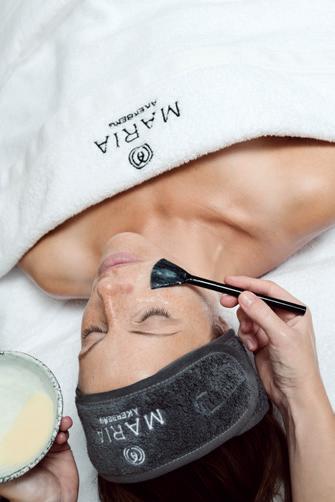


Award-winning natural skincare without the fakery Hard soaps made by hand. Lather up.
50 | Issue 146 | September 2022 By Nina Bressler | Photos: Grevinnans Rum
Grevinnans Rum is the skincare brand that harbours a profound – some may argue nerdy – obsession with organic formulas that are good for the earth as well as the body. The company combines ancient wisdom and methods with the latest research and the abundance of nature, to create magical skincare products that make a real difference to your body, mind and wellbeing.
“We care about everything that goes into our products. It’s not enough to source something that simply claims to be or ganic: we need to know about every step of the production cycle from the begin ning to the end. Where does it come
Grevinnans Rum is working passionately to be different. The brand was founded by Karin Egertz, who discovered her interest in the skincare industry early. “I was sell ing cosmetic products from the age of 13 and, during a chemistry lesson in school, I fell in love with all of the science that’s bubbling beneath the surface of what we put on our bodies. I’ve been working with skincare and beauty in different ca pacities ever since and have loved every step. While I was running my own beau ty shop in Gränna, I concocted my first hand-soap, which sold out in 20 minutes. That’s when I realised it was time to do this full time,” says Egertz. The beginning of something unique And thus, the adventure began. Karin was joined in her venture by her hus band as well as two sons and a close friend, who all shared the same pas sion for quality, natural products and the intricate chemistry that makes up truly great skincare. The name Grevin nans Rum was chosen as an homage to the place where it started, Gränna – the only remaining countship in Sweden.
Founded in Gränna, a picturesque town on the eastern shores of Vättern, the sec ond largest lake in Sweden, Grevinnans Rum is a skincare brand that’s different to the rest. While many companies claim their products are natural and organic, it only takes a quick scan of the ingredients list to see that this isn’t always the case.


Award winning Firming Body Oil. Soaps made with passion. Soaps made with passion.
All products contain highly-concentrated ingredients, which is one of the reasons why their products work to such high de gree. “There are a lot of empty promises on the skincare market and we want to be the antidote to that. We take pride in our ingredients, our production cycle, our products and the results that they give. We believe that nature provides the best remedies and we are always aiming to utilise that to the utmost level – an ap proach that has proven to be the right one, over and over again. There’s a con nection between what we put into our bodies as well as onto it, and the higher the quality of the substance, the higher quality of the effects,” says Egertz. “Cos metics, skincare and wellbeing products have been a part of my life since I was a child and my business is my version of living my wildest dreams. Providing natural, certified, healing and beautiful products is what I do best. No fuss, made with love.”
We’re passionate about choosing prod ucts that are good for nature and peo ple, because that’s what’s good for our bodies, too,” says Egertz. Palm oil – strictly prohibited in all their products – is replaced with ingredients such as olive oil, shea butter, argan oil from Morocco, sea salt from the Dead Sea, white clay, sea buckthorn, jojo ba, apricot and more. Combined, these high-quality, organically-sourced sub stances result in products that not only have a powerful nurturing impact on body and skin, but look and smell fantastic.
www.grevinnansrum.se Instagram: @grevinnansrum Karin Egertz. Scented Candle Deluxe.
September 2022 | Issue 146 | 51 Scan Magazine | Special Theme | Top Health and Beauty Brands in Sweden 2022 from, where did the olives grow, who picked the avocados, under what work ing conditions was the salt extracted?
Crafting products with proven quality Grevinnans Rum’s range is a vast spec trum encompassing face care, hair care, soaps, shaving products, candles and natural detergent. New products are continuously added – often inspired by what’s missing on the market. The award-winning anti-cellulite Firming Body Oil has become one of the most popular products, thanks to its truly star tling effects on the skin. The liquid soap is another gem, unique in the market for being completely free of sulphates and allergens. For the hard-soap fanat ics, there’s a refreshing salt soap for next-level hand care. The Face Cure Kit is another bestseller, loved for its strength ening, rejuvenating, replenishing and brilliance-enhancing results.


Rönnberg founded the innovative beauty company in Stockholm in 2007, rooting it in high-impact results and organic ingre dients. Estelle & Thild is now a certified brand, using cutting-edge scientific re search and pure bioactive ingredients in their products. “Today, the ‘Scandi look’ and ‘no makeup look’ are very popular, and a good skincare routine is crucial. Es telle & Thild’s formulas are all based on natural and organic ingredients and certi fied organic by Ecocert,” she says.
Sweden’s Estelle & Thild, the Scandinavian beauty brand using cutting-edge science to produce skincare that’s not only vegan, but also ecological and organic, is now adding makeup with skincare benefits to its range of products.
Rönnberg recommends the Healthy Glow Sun Powder – a 100 per cent nat ural-origin powder with superfine pig ments that blend seamlessly into the skin, to enhance the radiance of the complexion. It is made with natural min erals, organic rice powder, avocado oil, shea butter and vitamin E.
By Marie Westerman Roberts | Photos: Estelle & Thild Pernilla Rönnberg is the founder and CEO of Estelle & Thild. She explains that the current beauty market trend is to wards using fewer products in our skin care routines – so those few need to be more effective. Science-backed makeup products that combine beauty on the sur face with deep skincare benefits are the products of choice.
Your makeup is the new skincare makeup primer that locks in moisture and keeps the skin looking fresh all day. It contains Lactobacillus, which is a sooth ing, natural defence against pollution and protects from harmful blue light. Com bine the primer with the self-tan drops for a flawless look that protects your skin at the same time. It’s a winning formula.
www.estellethild.com Instagram: @estellethild Pernilla Rönnberg.
52 | Issue 146 | September 2022 Scan Magazine | Special Theme | Top Health and Beauty Brands in Sweden 2022
Then there’s the Biomineral Perfecting Se rum Primer Blue Light Protection: “that’s definitely one of my personal favourites,” says Rönnberg. It’s a skincare-infused
Estelle & Thild’s award-winning SelfTan Drops is another clever product. Enriched with moisture-boosting hya luronic acid and soothing organic aloe vera, these liquid drops ensure optimal moisture levels. Just mix them with your daily moisturiser and it will give you a natural, sun-kissed glow.


— Erik Blomberg, Eleiko CEO
Eleiko, headquartered in Halmstad, Sweden, designs and manufactures precision crafted strength products for the world’s leading competition, training facilities and home gyms.
BARTHERAISE
The ‘Eleiko Feeling’ is something frequently associated with our bars, but to us it is bigger than that - it’s what we strive for in all our products and best achieved by keeping the user experience at the heart of everything we do.

54 | Issue 146 | September 2022
|
Changing the face of luxury skincare
By Lotta Lassesson Photos: OM-SE OM-SE is a relative newcomer on the luxury skincare scene, but the Swedish label is already turning heads. Employing a Scandi-minimalist approach, OM-SE (‘to care for’ in Swedish) is disrupting the conventions of high-end beauty routines by condensing 13 facial treatments into just three potent, multi-use products. As the adage goes, necessity is the mother of invention. Husband-andwife duo Jenny and Jacob Huurinainen founded OM-SE in 2020, after Jenny’s personal journey to clear her postpregnancy complexion. By applying only her own additive-free skincare products, based on fewer – but potent – naturallyactive ingredients, Jenny rediscovered radiant skin. Jacob soon adopted the same minimalist practice. Today, OM-SE has become a word-ofmouth sensation. Its high-performing plant-based and unisex ‘Clean, Hydrate, Treat’ routine provides skin with the everyday essential nutrition and hydration it needs for a healthy glow – in just three steps. “Our three-step routine does the work of 13 products. It smartly replaces eye-makeup remover, pre-cleanse, face wash, toner, essence, serum, lash/ brow serum, beard oil, moisturiser, day cream, night cream, eye cream and setting spray,” Jenny explains. Three steps to radiant skin
Less is more:
First, the all-in-one Face Cleansing Oil naturally dissolves make-up and pollut ants and harmonises sebum production, while protecting the skin’s microbiome. Seven cold-pressed skin-protecting oils, including apricot, jojoba and oat, nurture and purify, without the need for preserv atives.


Made in Sweden Worldwide shipping Flexible subscription service
September 2022 | Issue 146 | 55
Range by Swedish Beauty Editors, while publications such as Vogue Scandinavia, Elle, Madame, SL.MAN, Costume and Damernas have pegged the brand as one of the hottest new labels to watch.
OM-SE’s Scandi-minimalist skincare revolution is just getting started, and the message is this: radiant skin without the lengthy beauty routine is possible and, in this case, less is more. High-performing anti-AGE regime in three simple steps
Retailers in Europe, USA and Australia www.om-se.com Instagram: @om_se.me
Everyday essential skin nutrition and hydration
Pure and multifunctional formulas
100 per cent organic, plant-based and naturally active ingredients
“We stand for simplifying your skincare routine, while reducing waste for the world – so much so that we also offer a flexible and non-binding subscription service to guarantee your skincare essentials are always on your shelf,” says Jacob. And who wouldn’t want them there? OM-SE’s range is not only highly effective, but elegantly presented in unique biophotonic ultraviolet glass bottles, chosen for their ability to preserve and enhance the quality of the formulas.
Meanwhile, the philosophy of ‘quality over quantity’ has a direct positive impact on OM-SE’s sustainable business model. The label is produced in Sweden, in collabora tion with organic EU-suppliers, and made in small, fresh batches, to maximise po tency. Though they ship worldwide, the goal is never to overproduce. In practice, that means keeping the inventory low and scaling production only as demand in creases. Resultingly, OM-SE’s products are guaranteed sustainable, low-waste and ethically crafted.
“It’s important that our products are stylish – that they crown the bathroom
counter like any perfume container,” says Jacob, who’s background in fashion as an art director ideally placed him to design the aesthetics of the little black bottles himself. The full OM-SE range is gracefully concise, comprising two three-step routines (Balancing and Re newing), a Complete Full-Size Set, the travel-sized Discovery Set, and petite sand-coloured face cloths for wiping off the cleansing oil, to optimise usage.
Second, the probiotic Hydrating Face Mist based on aloe-vera juice penetrates the dermal layers, soothing and plumping fine lines, while stimulating skin-cell re newal for an anti-inflammatory, brighten ing effect. “It’s fine dining for your skin,” says Jenny. “It caters to all skin-types by using only organic, naturally-active ingre dients with a multi-purpose range.”
Scan Magazine | Special Theme | Top Health and Beauty Brands in Sweden 2022
Finally, one of two face oils smooths and restores the skin’s overall appearance with a combination of potent antioxidants, vitamins and full-spectrum fatty acids. The Balancing Face Oil is a fast-absorbing blend of 14 botanical oils with a balancing and correcting effect for oily or normal skin. Meanwhile, the Renewing Face Oil treats dry and ageing skin with a complex blend of 17 botanicals to promote collagen production and soothe UV-damaged skin. “Each ingredient is carefully selected and dosed based on performance. We even handpick the most potent version of each plant species,” explains Jacob. A minimal routine with maximum results “Choosing quality before quantity, every day, helps our clients go about their busy lives,” says Jenny, and the time-saving formula has already won accolades in the beauty industry. In 2021, OM-SE was awarded Best Organic Skincare


|
56 | Issue 146 | September 2022
By John Sempill
What if we told you your skin is less human than you think? Would you believe us? Take a look through a microscope and you’ll most likely agree.
Skinome
Dermatological studies in England would follow, where a huge discovery was made. “I worked together with dermatology pro fessor, Karin Schallreuter,” Gillbro says. “She switched research fields from mel anoma to vitiligo, and found a treatment with a specific cream that achieved its full effect in conjunction with bathing in the Dead Sea for 15 minutes, twice a day for three weeks.” Gillbro was able to treat her own skin and recovered almost all of the lost pigment in her face using this method. When she came back to Sweden, she found that several skincare companies took interest in her accumulated knowledge. This led to work in the skincare industry, where she quickly made a profound observa tion. “A lot of the products on the shelf are packed with preservatives and other additives that help give the product a long shelf life,” she explains. “However, the bacterial flora on our skin is disturbed by this, something we recently discovered is key to the wellbeing of our skin. I realised I would never purchase these products. I always made my own fresh creams at the lab. To avoid using preservatives, I have always kept my skincare in the fridge, No preservatives or additives needed
Skincare goes beyond the surface. You might be interested in the bestselling book, Hudbibeln, or The Scandinavian Skincare Bible, in English, written by founder Johanna Gillbro. No preservatives or additives. Keep your Skinome products fresh in your fridge.
Skinome founder Johanna Gillbro’s jour ney into the world of skincare started with a vitiligo diagnosis as a child. “When I was young, I loved these white spots,” says Gillbro. “My parents were lovely and made me feel safe with my condi tion. I felt like a spotty puppy. But that all changed when I became a teenager –during those years, you would rather just be like everyone else.” This led to a variety of treatments and medical experiments in her late teens. She would even become one of the first patients to undergo skin transplants. “But nothing worked”, she says. “The vit iligo actually got worse.”
Photos:


However, Gillbro insists she isn’t an entrepreneur. Starting a business wasn’t on the cards. “But I couldn’t escape it,” she explains. “Then I bumped into someone who was an entrepreneur, who really believed in the idea. We founded the company together in 2018, but the formulas and the research had taken over ten years. Today, we have a big team in Stockholm with our own laboratory, which enables us to continue our research and development. We’ve recruited specialists from all over the world. Most of our skincare chemists originate from France. This is an expertise we lack in Sweden.” Gillbro stresses another point: if you dip your finger in a tub of crème fraîche, mould will begin to grow. This will how ever not happen after dipping your fin ger in a tub of your everyday skincare cream, even in a warm and humid bath room. Why? As mentioned above, the skincare cream is loaded with preserv atives. We don’t pack our food with pre servatives – not to the same extent, at least – so why pack our skincare prod ucts with preservatives?
www.skinome.com Facebook: skinome.official Instagram: @skinome.official
A tree is planted after every purchased Skinome product. A full forest is already in the making. Sustainability is essential for Skinome. All bottles are made of ocean waste plastic.
WE HAVE LIFTOFF Skinome was launched, with a core focus on skincare products that are genuinely good for our skin, without the use of preservatives and additives, with production solely in Sweden. This is sustainable and allows for smaller production batches, perfect for a product with a naturally reduced shelf life. This also helps keep waste to a minimum. And the water used in Skinome’s products comes from Dalarna – a picturesque landscape in the middle of Sweden, known for having the purest water in the country. Even the label on each product tells a story. “The wavy design represents our skin, and the sun logo, as we call it, shows where the product is active on the skin.” Gillbro adds that the products are unisex. “Skin health is not about gender, it’s about taking care of our individual skin Lookingneeds.”ahead, an interesting product launch is on the horizon: a skincare product they call Probiotic Concentrate. “This is living bacteria, and is the first Swedish product of its kind. There is only a small number of companies in the world with products using living bacteria.” She also tells us that an interesting side effect was discovered during the clinical trials.
September 2022 | Issue 146 | 57 Scan Magazine | Special Theme | Top Health and Beauty Brands in Sweden 2022 and this is also something we ask our customers to do today.”
“We discovered that, apart from having great effects on sensitive skin, it also gave visible results on lines and wrinkles after only three weeks. This wasn’t expected after such a short period and was considered a very nice additional effect.”
In case you’re still wondering what the name Skinome means: the ‘ome’ after ‘skin’ comes from the word microbiome, which is the bacterial flora on our bodies. “We happen to have more bacterial DNA on and inside our bodies than human DNA,” Gillbro reveals. “So, we are actually more bacterial than human. We need to take care of these stowaways –they make us who we are!”


power
The of perfumes
Sniph launched a perfume subscription service that sends out a new perfume to clients every month. The perfumes come in small containers of eight millilitre for you to test them on your skin, explore how they make you feel throughout the day, and learn whether it’s a scent you enjoy, before you buy the big bottle. The thinking behind it is to reduce waste and make sure that you only own the scents that you love.
Your dad’s sweater, summer rain, or olive oil and garlic frying in the pan – they’re all scents we associate with particular memories of a certain time or a certain place, and they most likely come with a specific feeling. The award-winning Swedish company Sniph knows the power of scents better than anyone and has built a service for people to explore perfumes.
Tara Derakshan, one of two co-founders, has been interested in perfume since she was a kid. When she met Lisa Kjellqvist, they quickly realised they shared this passion and decided to start a business “Wtogether.efounded Sniph because we know that smells affect how we feel on a certain day or situation. When we smell nice, we feel good about ourselves, and we want everyone to be able to have that feeling. Scents are such an important part of our lives and we believe we can help people emphasise their lives through perfumes,” says Tara Derakshan. When they started in 2017, there were no good options for people to try new perfumes in a creative way. Most people either bought a mainstream perfume at the TaxFree shop when travelling, or bought a very expensive one that might sit forgotten about on a bathroom shelf; so, they decided to do something about it. Starting in Sweden, the company has now expanded to the UK, and they deliv er to 16 different countries, in line with their mission to democratise perfumes.
|
58 | Issue 146 | September 2022
By Alejandra Cerda Ojensa
Photos: Sniph

With today’s endless opportunities it can be overwhelming to find the perfume that suits you. If you’re new to perfume, Sniph’s scent experts are there to help you navigate the field with a personal ised recommendation.
The perfumes range from well-known brands to less er-known indie brands, offering a broad range for any gender, and making it easier to explore. The subscription ser vice has been highly successful and has made Sniph the biggest company within their niche in Scandinavia.
In September, Sniph is launching three room scents with different moods, developed in collaboration with the Swedish brain-researcher Katarina Gospic. The scents are curated to evoke a certain mindset: sensual, relaxed or energised. They recently released the perfume ‘Malo’ with the co-founder of Spotify Martin Lorentzon, which will take you on a journey from darkness to light through six different scents. Our noses help us navigate through life, remember situations and people, and feel certain ways – something many of us became wary of during the pandemic, when a side-effect some people experienced was the loss of smell. Both co-founders Tara Derakshan and Lisa Kjellqvist lost their sense of smell from the virus – incredibly troubling for the perfume entrepreneurs. They both have got their sense back, but it made them want to explore the sense of smell even more, so they wrote the book Doft: Din Guide till ett Rikare Liv (Scent: Your guide to a Richer Life), where they explore the power of sense of smell in keeping us grounded and present. The book was released in 2021 and can be bought in Swedish bookstores and online. Whether your heart beats faster when you sense the smell of wood, or your shoulders relax from the scent of salty winds – Sniph is there to take you on a journey that will indulge all of the feelings that perfume arouses.
Scan Magazine | Special Theme | Top Health and Beauty Brands in Sweden 2022
September 2022 | Issue 146 | 59
“We have a lot of different kinds of customers, looking for different moods, and it’s our goal to make every single one of them feel a little better through a scent,” Derakshan explains.
On their website, Sniph offers an online test. Find out what scents you like, whether you’re into earthy, woody tones, citrusy, floral, avant-garde or experimental – Sniph will give you a suggestion for which profile to subscribe to – or you can choose to be surprised.
www.sniph.com Instagram:@sniph Facebook: sniphperfumes


www.worldoffajers.com
Instagram: @worldoffajers Facebook: worldoffajers
Looking for well-balanced harmony between work and leisure? This is what Fajers is all about. The Swedish company is designing stylish lifestyle products, with an eye on innovation and sustainability. she had inside of her as well as the fire we all have inside of us.”
The words ‘practicality’ and ‘style’ best sum up Fajers’ lifestyle products, which include yoga mats, headbands and gym clutches. The whole collection is both functional and fashionable, designed for cosmopolitan women on the go, divided between work, spare time and private life.
Photos: World of Fajers AB
With a Scandinavian design – as the CEO and founder of the company Nina Sjögren Höe says – Fajers’ creations are not only multifunctional, but also sustainable, in tending to “create a holistic lifestyle in a hectic world”. For example, the yoga mats and the gym clutches are made of natu ral rubber, and the latter is infused with a beautiful, unique fragrance – a mix of ethe real oils named Dharma. All said, Fajers is attentive to its use of innovative and sustainable materials. And how can you resist the engaging names of the ‘Move With Me Yoga Mat’ or the ‘Be Boundless Gym Clutch’? Needless to say, the name of the company itself has a deep er meaning – it’s Nina’s grandma’s maiden name. To her, “Fajers represents the fire
Fajers’ lifestyle products: blending innovation and sustainability
Twist It Headband, Be Boundless Gym Clutch, and Move With Me Yoga Mat. Palo Santo and Limited Edition Soul Cleansing Ritual Bundle.
Scan Magazine | Special Theme | Top Health and Beauty Brands in Sweden 2022 By Silvia Colombo


“We don’t compromise on food safety, fair pay or business ethics. We hope to be a role model for the food industry in Norway,” says Gaarde. Soulcake’s bakes are as full of soul as they are of sticky caramel filling. Foodies in Oslo, listen up: these cupcakes take the biscuit.
“Soon enough, the demand for our cup cakes was so high, that we managed to hire a team of amazing bakers and open our first shop right in the middle of Oslo. Our dream was becoming reality! We wanted to create a space where we share joy, happiness and deliciousness through our products,” says Thorisdottir. Flavour with soul What makes the Soulcake cupcakes spe cial? “Well, our biggest strength is that we love to come up with amazing fla vour combinations – think chocolate and freshly made salted caramel, passion fruit and white chocolate, chocolate and Nutella – and we never skimp on the fill ing!” says Gaarde. Today, there are 25 flavours in rotation. The bestseller is the Soulcake Signa ture, a super-soft chocolate cupcake, filled with freshly made salted caramel, and topped with a smooth cream cheese frosting. “The secret is in our salted cara mel, which we make in very small batch es. People can´t get enough of it!”
When two Oslo home-bakers, Ragnhild Gaarde and Sunniva Thorisdottir, both became unexpected Instagram sensations, the pair decided to join forces. They launched Soulcake – a modern bakery that focuses on delicious, creative cakes and cupcakes.
Although the initial Soulcake journey be gan with tall, designer cakes, everything changed when the lockdown started, and all the parties were cancelled. Back then, they were just getting started – but it was about to blow up. “In the lockdown, we started baking as many cupcakes as we could and selling them individually,” ex plains ThroughGaarde.personal
“We make our cupcakes soft and flavour ful with a lot of filling, all based on the best ingredients,” explains Thorisdottir.
www.soulcake.no Instagram: @soulcake.oslo Facebook: soulcake.oslo
DREAMCREATEYOUREVENT Special Theme:
Ragnhild Gaarde and Sunniva Thorisdottir.
By Lina Klausen | Photos: Soulcake
How competing Instagram bakers became Oslo’s hottest cupcake duo
September 2022 | Issue 146 | 61
Instagram promotion and mouth-watering photos, the two bakers created a trend within the city. Soon enough, everyone wanted a bite of their cupcakes! Queues of people were gathering around the block before the opening hours, just to get a taste of these delicious, great looking, cupcakes.
“Norwegian milk-chocolate, salted car amel, carrot, lemon... We make all the classics, but often our most playful com binations are the most popular.” Beyond the cakes, Thorisdottir and Gaarde strive for quality in every aspect.



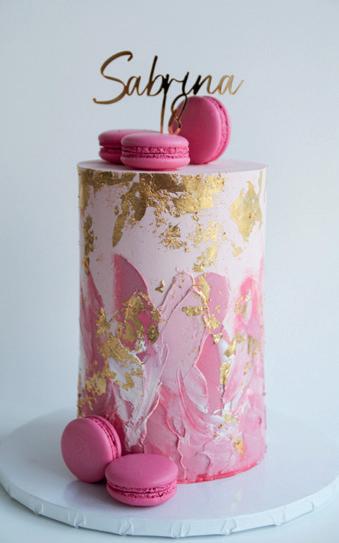
62 | Issue 146 | September 2022
A historic family farm Årsvold’s grandparents bought the farm in 1958 for agriculture and milk production. His dad inherited the farm 30 years ago and continued to run it as his parents had
A venue for any occasion With large windows and such close prox imity to the peaceful nature around the farm, guests at Solastranden can enjoy beautiful views at any time of the year –be it the refreshing sea and green fields on sunny days or the majestic, raging ocean on stormy days.
Solastranden is a famous beach in Nor way and has even been ranked as the world’s sixth-best beach by the British newspaper The Sunday Times, surpass ing the shores of Spain and Thailand.
Solastranden Gård has two venues, which can either house separate events or larger
By Synne Johnsson |
Årsvold says: “In 2010, we decided to renovate the old barn, initially just to have a venue for the family to get to gether. My dad has eight siblings, so we needed a lot of space for the kids and grandkids. Then someone asked if they could arrange a Christmas party there and we thought: why not? We didn’t in tend to start an events business at first, but it turned out very well.”
Photos: Solastranden Situated right on the sandy beach in Sola, near Stavanger, surrounded by green fields and charming farms, the family-owned Solastranden Gård houses all types of events, from dream weddings to unique work seminars.
Dreamy events in idyllic Norwegian surroundings ther away from the noise of the busy city. Solastranden Gård’s CEO Vegard Årsvold says: “I’m born and raised on the farm and it is a truly unique place for me. We practically have the beach in our garden, as well as a charming farm atmosphere, all so close to Stavanger.”
With a personal approach, the fam ily-owned Solastranden Gård offers friendly service, picturesque surround ings and local, traditional food. The old farm is located just ten kilometres from Stavanger, but feels as if it’s much fur until 2000, when they decided to lease the land to the golf course operators.


www.solastrandengaard.no/ Instagram: @solastrandengaard Facebook: solastrandengaard LinkedIn: solastranden-gaard/
Solastranden beach was named among the world’s nicest beaches by The Sunday Times.
Scan Magazine | Special Theme | Create Your Dream Event September 2022 | Issue 146 | 63 events combined. One of the buildings is a renovated barn, decorated in a romantic, traditional farm style, while the other is a larger engine house in a modern style. Across both buildings, Solastranden Gård can host up to 600 guests. For smaller parties, the old barn can house 100 guests, while the engine house can host around 400. The versatile engine house is largely used for business events, and features all the amenities needed for a success ful seminar or conference. Companies can organise a full-day event with work seminars and lunch during the day, and team building, dinner and drinks in the evening. Alternatively, they can organise evening-only events such as summer or Christmas parties.
Årsvold says: “We encourage all our con ference guests to add to the programme a stroll outside, to breathe in the refresh ing sea air and to feast their eyes on the green fields around us.” In addition to the beach and these green fields, there is also an 18-hole golf course on the premises, which makes for the perfect teambuilding activity for a company event. The farm is not only close to Stavanger, but just a three-min ute drive from Sola airport, making it a perfect destination for those visiting from further afield. There are also several ho
tels nearby, one of which is only a short walk on the beach away. Traditional Norwegian food with an international twist Solastranden Gård has its own chef and kitchen staff, serving traditional Norwe gian food with an international twist. They take inspiration from food trends around the world, but pride themselves on their expressions of local food and traditions.
Årsvold says: “My father travels around to the local farms every Monday to pick up eggs, vegetables, meat and so on, himself. Our menu is seasonal, made with high-quality ingredients from neigh bouring farms.”
Ideal for weddings, Solastranden Gård provides a personal coordinator to help organise everything from start to finish, including the menu, decorations, amen ities and more. “Even though we have weddings every weekend of the year, we think they are all equally important. That day is the couple’s most important day and we want to make sure everything is just as they had in mind, so no details can be overlooked,” says Årsvold. “We want to give the couple a perfect day. It’s a joy ful thing to be a part of.”


Scan Magazine | Special Theme | Create Your Dream Event 64 | Issue 146 | September 2022
Established in 2006 by Flemming Allstad, the company has over 15 years’ experience. It provides everything that any type of event needs, from DJs and bands, to sound systems and lighting.
DJ Booking Norge AS wants it to be easy to book a great DJ and the equipment needed. Thanks to years of experience, they know exactly what every client needs, and offer packages suited any occasion and event size – while making it as con venient as possible. They provide speak ers, lighting and other special effects for all kinds of events – commercial, corpo rate or private. Good music can make or break a party, so if the DJ cancels a few days before the event, panic can easily ensue. But with DJ Booking Norge AS, there is no need to worry about the DJ falling ill – they will find a replacement at no extra cost.
The secret to a great party
You can be certain you will only get top DJs for your event. All equipment needed is provided. When you do not need a DJ, you can get a band.
DJ Booking Norge AS caters to a large market. “Our customers range from big clients such as hotels and restaurants, including some of the Thon hotels, Ekerbergrestauranten, Villa Malla and Frognerseteren,” says Flemming. “We also have corporate customers who use us for everything from company parties to seminars and other events. Then there are our private customers, for whom we help with weddings, funerals and birthdays.”
Flemming himself is a DJ and makes sure all DJs working with DJ Booking Norge AS are the best of the best. “In the past, if you were a DJ, you were a genuine DJ because you had a passion for it,” Flem ming explains. But with today’s technolo gy, anyone can claim to be a DJ. “In the ‘90s, one out of 100 DJs perhaps wasn’t good enough. But now, often only one in 100 is good enough.” This is why it is so important to Fleming to ensure the quality of their DJs. “We interview the DJs before training them, but only around that one in 100 figure get to the training stage.”
For DJ/artist hire: www.djb.no Sound and lighting hire: www.123lyd.no
By Hanna Margrethe Enger | Photos: DJ Booking Norge AS Everyone loves a good party. But what’s a good party without good music? Well, good music can become great music with the right DJ and the right equipment –which in turn makes a good party a great party! Planning any party can be stressful, but it doesn’t need to be with the help of DJ Booking Norge AS – a one-stop shop for party music and entertainment needs.
The right lighting sets the mood for the evening.


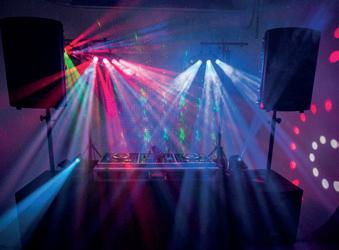

Scan Magazine | Special Theme | Create Your Dream Event
That very joy has now become something of a popular trend. Fuelled by viral videos on platforms like Facebook and Instagram, the Norwegian balloon business is booming. What used to be a small, niche product has grown so much, that people have taken to celebrating landmark festivities, like the baby-shower and the gender reveal, via confetti-filled balloons.
Decorator and wholesaler “We’re akin to the flower industry. Balloons are a great way of filling large spaces and go well with any sort of festivity,” explains Monika Kleina, owner of Ballonggrossist Fargerike Drømmer AS. Fargerike Drømmer operates as both a wholesale business – selling balloons B2B across Norway – and a decoration business. As a wholesaler, Fargerike Drømmer is the sole importer of Italian Gemar balloons to Norway. Kleina herself is a certified balloon-decorator – a qualification that requires insights into aesthetics, technical and practical aspects related to balloons.
A Norwegian balloon-boom
For those that remember balloons only as a colourful toy for children, Kleina has news. “Balloons are incredibly adaptable and can be personalised in many ways,” she says. “You can put flowers inside or combine balloons with other components.”
By Eva-Kristin U. Pedersen Photo Fargerike drømmer
www.fargerikedrommer.no Instagram: @fargerikedrommer Facebook: FargerikeDrommer
Environmentally friendly And to anyone that might be concerned about the environmental aspects of using balloons, Kleina says: “Plastic and foil balloons need to be treated as regular garbage and we explain to clients that they should pop them and dispose of them properly after use. Latex, on the other hand, is a natural product that breaks down at the same speed as an oak leaf.”
|
Do you remember the childhood joy of holding a shiny, colourful balloon? And the awe of watching the little bright dot disappear in the sky as it flew away? So, do you have a party coming up? Why not elevate it even higher with a balloon decoration?


A modular recycling unit designed by Annica Doms. Awarded the Red Dot Design Award for its innovative form. Designed for modularity in different configurations. Kite can be placed against the wall or as a free-standing accent in the room. The many possible combinations challenges the imagination and inspires creativity. Lids with eight different designs with varying shapes and screen printed symbols for different types of waste. Kite is available in 11 RAL colours and Kite Raw. Design | Annica Doms Kite
Designed concepts for future storage and recycling Showroom in Stockholm, Gothenburg, Oslo and Norrköping | trece.se


September 2022 | Issue 146 | 67
All of this is to come. Elsewhere, the origi nal KNUT Restaurant continues to charm. Here, guests can discover a sense of Nor rland closer than they might imagine: in every sip and bite. www.resturangknut.se
Restaurant of the Month, Sweden
KNUT Restaurant in the heart of Stockholm is a tribute to owner Martin Sjölander’s birthplace – an eastern city on the shore of the gulf waters that stretch from Sweden to Finland, as well as to a very important man in his life – his late grandfather, Knut.
By Lotta Lassesson | Photos: Andreas von Gegerfelt AB
At just ten years old, Martin already knew he wanted to open his own res taurant. Since then, his journey to make his childhood dream a reality has been quite the story. He was born and raised in Timrå, a small city with a population of around 10,000, on the east coast of AtVästernorrland.theageof14he started working in res taurants: first as a dishwasher and in the cold section, before – through hard work and dedication to the craft – becoming a chef. Aged 19, he travelled the world for four years, visiting 30 countries, working in a variety of restaurant kitchens along the way – and as a private chef for the rich and famous. He returned to Sweden, only to see his dream of opening his own restaurant pushed back, due to an accident. While he recovered, he earned a business degree and, in 2013, he finally opened the doors of KNUT Restaurant. Martin designed the interior himself. The space has a rustic, cosy touch – a welcom ing blend of ski lodge and city aesthetics. The dining menu combines specific pro duce of Norrland with inspiration from Martin’s travels. Nowadays, he doesn’t do much of the cooking himself, but his vision of quality, affordable cuisine is brought alive by a team of talented chefs. Meanwhile, KNUT also offers catering and private chef hire for home dinner parties. In 2016, a second KNUT location opened in the city, and there are more exciting plans around the corner for this ambitious res taurateur. Over the next five years, Martin will launch a new, unfussy street food con cept called STIGEN (meaning ‘THE PATH’)
Scan Magazine | Restaurant of the Month | Sweden
The wilderness of the north meets urban civilisation in ten Swedish cities, alongside branded online wellness merchandise.


Photo: Lorry Restaurant
So, if you’re in Oslo and somebody pro poses to go to Lorry, tag along. You’ll be in for a unique experience. A cultural institution “Lorry is not a restaurant, it’s a cultur al institution. The main part of the in terior architecture and decoration has been the same since the restaurant first opened. While there have been chang es, including the expansion of the main hall and the opening of a second floor, they’ve always been made in the same Thisstyle”.is according to Nicolai Bauer, third generation co-owner of Lorry. Together with his brother, Karl-Axel Bauer, he bought Lorry from their parents some seven years ago, continuing a family tra dition that had started in 1950, and that
68 | Issue 146 | September 2022
Lorry: a life of its own Restaurant of the Month, Norway Lorry’s terrace is in true Lorry style.
By Eva-Kristin U. Pedersen
Discover Lorry: an institution, a cabinet of curiosities, a restaurant and the greatest beer selection in town. Everybody in Oslo knows Lorry. An evening at Lorry is not like any other evening out on the town. Tucked away in the heart of Oslo, it’s a place with a very special feel, nurtured both by the variety of people that go there and not least by the eclectic art work adorning the walls of the 130-yearold (some say 150-year-old) restaurant.

September 2022 | Issue 146 | 69 has cemented Lorry’s position as an in alienable part of Oslo’s identity.
“That’s really the charm and the soul of the place,” Bauer explains, and adds that Lorry has been labelled everything from “the worst nightmare of an interior archi tect” to “the temple of maximalism”. Creative chaos and a source of inspiration In an essay dedicated to the restaurant, art historian Tommy Sørbø described
Scan Magazine | Restaurant of the Month | Norway
A cabinet of curiosities and a restaurant. The atmosphere at Lorry is unique. Photo: Lorry Restaurant Lorry is a bit of an oasis right in the centre of Oslo. Photo: Guro Sommmer. You’ll always find sometihng intriguing to look at at Lorry. Photo: Lorry Restaurant
A cabinet of curiosities Since they took over, the Bauer family has continuously added new art to the restaurant, though without necessarily taking out or exchanging other pieces. The result is much like an old-fashioned cabinet of curiosities: a peculiar mix of art with no structure to it, composed of individual pieces that variously inspire laughter, wonder, thoughtfulness or sad ness – or all four at once.


Photo: Guro Sommmer
70 | Issue 146 | September 2022
Lorry as “creative chaos”. According to Sørbø, it is precisely the lack of pedagogy behind the eclectic art collection at Lorry that intrigues the fantasy, and compels the visitor to assign significance to each single object, rather than an overarching general theme or idea. In that way, Lorry offers something di verse and unique to each guest, and the accumulation of these personal experi ences and stories creates that very spe cial atmosphere that few, if any, other restaurants in Oslo can equal. It’s one that attracts everyone from besuited finance-managers to politicians, bohe mian artists, royals and young creative professionals. A place where men talk “They say Lorry is a place where men talk to each other,” Bauer says with a smile, hinting at the common assump tion that while women easily sit down to talk, men tend to do something togeth er. At Lorry, however, they talk. Be that over a beer – with more than 120 to pick from, Lorry has one of Oslo’s most ex tensive offerings – or over a meal from the à la “Reducingcarte-menu.Lorrytoa restaurant, though it technically is, is diminishing the full value of the Lorry experience. Neverthe less, we have a rich menu that includes traditional Norwegian food as well as French-inspired main courses. Some of the Norwegian dishes vary according to the season. We’ll typically serve panfried mackerel in the summer, ‘fårikål’ (the Norwegian national dish of lamb cooked with cabbage and spices, served with potatoes) in the autumn, ‘skrei’ (a large species of cod) in the winter, and of course, typical Christmas food in De cember. We also have a large variety of sandwiches,” says Bauer.
Administrators more than owners While Bauer and his brother own Lor ry, Bauer explains that they think of themselves as administrators more than owners because “Lorry cannot re ally be owned.” Lorry lives its own life,
Photo: Guro Sommmer
A Lorry waiter.


When they created the outdoor-seating terrace, they moved some of the artwork outside to recreate the same character istic atmosphere outside as inside. The result is “very Lorry”, Bauer assures. The owners are also helped by Oslo’s artistic community; many artists ask to hang their artwork there. Bauer and his brother also occasionally dedicate tables to returning customers with a public profile, or as a way of honouring people of cultural importance.
“These are contemporary stamps on a historical institution, small changes that contribute to the continuous develop ment and peculiar dynamics of Lorry,” Bauer says proudly. History in the making So, if you’re in Oslo and someone pro poses a visit to Lorry, why not go along?
Photo: Guro Sommmer
Facebook: lorryrestaurant
A place where men talk. Lorry’s has largely remained the same since the opening.
You’ll find more than a meal or a beer, more than a peek at the history of a coun try and a city. Here, you can be a part of it. Lorry is one of few places in the world that doesn’t put history on a pedestal to be contemplated, but invites you to take part in the making of history itself.
www.lorry.no Instagram: @lorryrestaurant
Lorry’s summer garden.
Photo: Lorry Restaurant
September 2022 | Issue 146 | 71 Scan Magazine | Restaurant of the Month | Norway detached from the trends and fashions that surround it. What Bauer and his brother really do is to keep a steady “Tocourse.us, administering Lorry means tak ing the best of what is there now, into the future. We don’t want the place to stand still, but wish to continue with the subtle changes that evolve Lorry the way it’s always done – much like we did when we created the summer garden.”


“We didn’t have anything like this in Finland, says Björkell. Smitten by the roughness, lively atmosphere, savoury smells and flavourful dishes, he couldn’t help
SHINOBI: rooting the rough side of Tokyo in the Helsinki food scene
Restaurant of the Month, Finland
Photos: Best in HEL White table cloths and formal dining are a thing of Helsinki’s past, according to Jesper Björkell, chef and owner of SHINOBI. By paying attention to flavour and authenticity, Björkell has created a place frequented by Japanese officials and hospitality professionals alike. In the words of Kurt Cobain, it’s “come as you are”.
By Miriam Gradel |
SHINOBI Shokudo & Izakaya is a Japanese-influenced restaurant where guests can enjoy rich flavours in food and drinks from all over Japan. Interior items like paper lanterns, neon lights and yellow beer cases, set against a Scandinavian backdrop, create a vibrant yet zen-like at mosphere. The space is further enriched by the sizzling sound and savoury aroma of chicken skewers cooking over charcoal –known as ‘yakitori’ in Japanese – ebbing out from the open kitchen. With respect to Japanese culinary style and finesse, SHINOBI is a sophisticated yet informal breath of fresh air in a growing Finnish food scene. The main ninja behind the restaurant is local chef and Ocean Ambassador for the Marine Stewardship Council (MSC), Jesper Björkell, 37. Björkell found his way to Japan via sushi, becoming the first ever Finn in the Tokyo Sushi Acad emy in 2014, “eating sushi for days on end,” as he recalls. On a night out in Tokyo, Björkell stumbled upon Omoide Yokocho (otherwise known as ‘Piss Alley’), a maze of narrow alley ways close to Shinjuku station. Decorated with paper lanterns and neon signs, and filled to the brim with decades-old ram shackle yakitori and ramen shops, it is a popular place for tourists looking to expe rience the nostalgia of post-war Japan.
72 | Issue 146 | September 2022


Japanese tradition, however, states that drinks should always be enjoyed with a bite to eat. For the full izakaya experience, order a Suntory highball –whisky and club soda – with a side of miso-seared eggplant. With respect to flavour and tradition, the tapas-style menu also offers vegan-friendly options and is perfect for single diners to enjoy, or for sharing with friends. Safe to say, with SHINOBI, Björkell has successfully recreated an old Japanese flame in the heart of Helsinki. Greener horizons for Finnish dining Throughout the years, Björkell has expanded his own understanding of sustainability in restaurants and, in particular, the impact of our dining culture on the oceans. In 2016, nearly ten years after he first started rolling seaweed, Björkell began asking what could be done to minimise seafood wastage. “When we asked the fisheries what they would do, the answers were always different,” he recalls, understanding for the first time that something in the system had to change. Today, as an MCS Ocean Ambassador, he works to promote awareness amongst customers and colleagues, choosing organic ingredients and trying to implement the Nordic manifesto of sourcing locally whenever possible. But sometimes it’s a question of definition rather than choice. “What is domestic?” asks Björkell. “In Japan, seafood caught 1,000 kiloetresm offshore is domestic. The same distance for us is salmon in Norway, so can we call it ‘local’?”
Today, SHINOBI offers diners a ten-course tasting menu in the reservation-on ly shokudō area, or the option to simply show up and grab a chair by the bar or in the izakaya. Anyone who’s been to Japan and enjoyed a cold draft beer will appreci ate seeing Kirin Ichiban on tap, accompa nied by a wide selection of Japan’s finest in whisky, sake and shochu.
Scan Magazine | Restaurant of the Month | Finland
Photo: Alban Kabashi
“The good thing overall is that there are now better products and people are more aware of how their food is made and where it comes from,” he says. Whilst striking a balance between sustainability and quality remains difficult in the current climate, Björkell remains hopeful that, in a few years, he’ll be able to get high-quality sustainably-grown scallops from continental Europe. Until then, diners at SHINOBI can enjoy a Shiso Gin Sour at the bar with a side of the sustainably grown Nova Scotia scallops seared in miso butter. www.shinobi.fi Instagram: @shinobirestaurant Facebook: shinobizakaya
September 2022 | Issue 146 | 73 but fall in love. “I went to Japan to become the best sushi chef in Finland,” he recalls. But in yakitori, Björkell discovered the unpolished excellence of Japanese cuisine. But how do you sustainably recreate something you love, 4,800 miles from its origins? After returning to Finland, Björkell continued mentoring sushi chefs around the country, helping to open and run several seafood restau rants, including a ramen shop. “I’ve helped open more than 30 restaurants in my life, but SHINOBI was different,” says Björkell. With the exception of electrics and plumbing, the entire ven ue, which used to house Helsinki’s first ever pizzeria, was remodelled with sec ondhand items sourced by Björkell and his internationally experienced team.
“Everything was from the ‘80s, so we re moved those roots from the venue and started building our own restaurant. It gave us the freedom to make everything the way we wanted it,” he recalls.


The place is an institution – one of the oldest family-owned hotels in Denmark –and has always attracted a bohemian crowd, much like Paris Bar in Berlin, or Les Deux Magots in Paris. “H. C. Anderson came here regularly, so did actor Dirch Passer. Historically, it has been a meeting spot for artists, writers, actors, musicians, royals and ambassadors,” says owner Bent Jørgensen.
Photos: Hotel Dania
The Paris Bar of Silkeborg Hotel of the Month, Denmark
|
Guests come for the atmosphere of time less elegance and four-star modern com fort, and to soak up the energy of Silke borg – one of Denmark’s most beautiful towns. In the past three years, the hotel’s 47 rooms have been renovated in keeping with its heritage aesthetic of unfussy so phistication: simple lines, crisp neutral tones and classic Danish-design furni ture. “There’s so much history here – if the walls could talk, they’d have a lot to say! So it was important to preserve and accentuate Dania’s character when we modernised the space,” explains Bent. French-Danish cuisine under the olive trees Hotel guests and passing visitors alike can dine at Brasserie and Restaurant Un derhuset – where old-school French fare and traditional Danish lunch dishes are the forté. “The two venues are an exten sion of one another. I was a chef in France and Copenhagen, so food has always been a passion here. We serve classic French dishes like foie gras and oysters, as well as Danish favourites like herring, summer cod and lobster soup. And we do a mean fish and chips,” says Bent. Having been in the family for 60 years, Underhuset has the easy atmosphere of a place filled with regulars. “Birthe, Henrik and I grew up around this venue. The res
They might not share the same physical space, but 60 years of joint family history unites Hotel Dania, Brasserie and Restaurant Underhuset and Hotel Himmelbjerget. Since 1960, the three venues have belonged to the Jørgensens, and have collectively fed, watered, housed and harboured a veritable who’s who of Denmark’s cultural and historical elite. Today, they’re run by the second generation of siblings, Bent, Henrik and Birthe Jørgensen, and are a must-visit for those looking to tap into the unique heritage and atmosphere of Silkeborg. Since 1848, the stately Hotel Dania has been a signature of Silkeborg’s main highstreet – a daffodil-yellow, timber-framed edifice, with beaming white casement windows and a bright red Danish flag fly ing dead-centre above the roof.
By Lena Hunter
74 | Issue 146 | September 2022


Where Dania and Underhuset are favour ite city-centre haunts, the spacious Him melbjerget can serve as the location for larger parties of conference goers, busi ness groups and party gatherings, cater ing to as many as 450 guests in the res taurant and on the terrace, in one seating.
“The summer is high season here, and the atmosphere is fantastic. At Himmelb jerget, we continue the style and philoso phy of Hotel Dania. Only here, it’s with the rejuvenating energy of the rolling terrain and diverse scenery,” says Henrik. Given the reputation of Dania, Under huset and Himmelbjerget, it would be easy for the Jørgensens to rest on their laurels – but Bent, Henrik and Birthe are unlikely to do so. “Hotel Dania is a part of Silkeborg’s story,” explains Bent. “The three venues have an inter connected history – in our family and in the region. We’ll continue to evolve them as significant social meeting places in Denmark.”
www.hotel-himmelbjerget.dkwww.underhuset.dkwww.hoteldania.dk Instagram: @hotelhimmelbjerget@brasserieunderhuset8600@hoteldaniasilkeborg
September 2022 | Issue 146 | 75
Denmark’s highest hotel But those looking to enjoy a real outdoor experience, according to Bent, should head to Hotel Dania’s sister venue, some 20 kilometres away. Hotel Himmelbjerget is Denmark’s highest-elevation hotel, with 18 stunning double rooms overlooking the unspoiled landscape of the Lake Highland region: serene lakes and forests that have given Silkeborg the international reputa tion as ‘Denmark’s outdoor capital’. With a height of 147 metres, the eponymous Himmelbjerget peak is one of the highest natural points in the Danish landscape. The area has been a destination for hiking and festivities for over 200 years.
Scan Magazine | Hotel of the Month | Denmark
taurant has its own history and personali ty. It’s a meeting place, a place for friends and conversation,” says Bent affection ately. Underhuset is a time-honoured favourite in Silkeborg for big gatherings: weddings, business lunches, Christmas and birthday celebrations. Outside in the summer, the sprawling terrace can seat 100 guests under the canopy of the Ital ian olive trees. “They’re coming into fruit now,” says Bent. “We joke that we could make our own olive oil.”
“Between five and six hundred thousand people come by bike, boat and car to stay here each year,” says Henrik Jørgensen. “This area has the highest geographical density of lakes in the country. Many of our guests come to run and cycle in the hills during their stay.”


For Aallot, curator Eeva Holkeri had the unique opportunity to pick items from the world’s largest private collection of Aalto artefacts. The collector, Pertti Männistö, started collecting Aalto items in the early 1990s and owns over 1,000 Aalto objects. Holkeri and her team had the difficult job of whittling down this enormous cache to some 400 Aalto items, to fit the 550 square-metre exhibition space at Kun sthalle Helsinki. Inside the purpose-built gallery, extra care is taken to utilise the building’s big windows for their natural light to accentuate display works.
Aalto in a new light Holkeri is most excited about a rattan sun lounger made by Aino Marsio-Aalto: “I love the chair since it comes out of left field in the context of how people expect an Aalto item to look.”
Alvar Aalto’s Paimio Armchair (1931–32) from Pertti Männistö’s Aalto design collection.
Private collection on show in seminal Aalto exhibition Experience of the Month, Finland
76 | Issue 146 | September 2022 Scan Magazine | Experience of the Month | Finland
This September, Kunsthalle Helsinki will launch Aallot – an exhibition of works by Aino and Alvar Aalto, as seen through the eyes of a collector. The unique selection will feature never-seen-before proto types and other true collector’s items.
Holkeri felt the need to have objects spe cifically from Aino, as Alvar is so often the one remembered and credited. “When it comes to the couple’s architecture, Alvar is often named as the creator. Luckily, when it comes to their artefacts, it is quite easy to tell who made it, since they had their own styles. We have taken extra care to make sure we have a good selection of Aino’s works on display,” she reveals. The exhibition opens on 10 September and will run until 23 October. During this time, visitors can see how the pair’s de sign developed through the years, from experimenting with bending wood for the famous Stool 60, to the evolution of the Onearmchair.ofthe chairs on display is the Pai mio Armchair that Alvar Aalto invented in 1931, while he was designing the Paimio Sanatorium with Aino. Some of the chairs can still be seen in their original places at the Sanatorium, whilst some will now be exhibited at Kunsthalle Helsinki. www.taidehalli.fi Facebook: taidehalli Instagram: @taidehalli_helsinki
By Ester Laiho | Photos: Anssi Vaarola 100 stools, sun loungers and iconic glassware: the Aino and Alvar Aalto exhibition at Kunsthalle Helsinki promises to display a rare mix of the couple’s works.
Pertti collectionMännistö’sofStool 60s. Aino Marsio-Aalto’s & Alvar Aalto’s Aalto Flower (1939) from Pertti Männistö’s Aalto design collection. Photo: Elina Männistö


Located in pictur esque Kerteminde Harbour on the Dan ish island of Fyn, the centre is uniquely placed to observe harbour porpoises, harbour seals, and many species of fish in their natural habitat.
September 2022 | Issue 146 | 77
“The centre is open to the public so people can come down, see what we do and learn about our work,” he continues.
www.fjordbaelt.dk Instagram: @fjordogbaelt Facebook: fjordogbaelt
Experience of the Month, Denmark
By Lena Hunter | Photos: Ard Jongsma
“ThisDirckinck-Holmfeld.yearisour25-year anniversary. One of our porpoises, Freja, is 27 years old –older than Fjord & Bælt! She is the longest living captive porpoise in the world. In the wild, their lifespan is between five and seven years.” Harbour porpoises are highly-intelligent, often mythologised creatures – and Fjord & Bælt offers a rare chance to observe them up close: here, visitors can meet Freja by walking through a stunning under-sea tunnel. “You can see how the animals swim around down there. We also have feedings and trainings three times a day for the public, and guests can come and meet the researchers and the trainers,” says Dirckinck-Holmfeld. “Our mission is to motivate nature conservation through experience, entertainment, inspiration and understanding.”
Have you ever seen a whale? At Fjord & Bælt, visitors have a rare chance to get up close to one of the world’s smallest species of whale. The centre – a combined tourism attraction and marine research institution – is lifting the curtain on its world-leading research into whale behaviour.
“It may sound unlikely, but Denmark’s waters have the highest concentration of whales in the world – around 100,000 –because of the large population of harbour porpoises,” explains Fjord & Bælt’s communications director Mads Dirckinck-Holmfeld.
“How do offshore projects, shipping and ferry transport, sonar systems from ships and military and wind-turbines af fect marine mammals? Whales navigate and hunt via sonar and sound travels 4.5 times faster underwater, so these activ ities have a huge impact. We work close ly with the University of Southern Den mark and the Marine Biology Research Centre in Kerteminde on research that is used to inform infrastructure projects and environmental law, to improve the conditions of marine mammals in Den mark and elsewhere in the world,” ex plains Dirckinck-Holmfeld.
Up close: Denmark’s native whales in their natural habitat
Fjord & Bælt runs exhibitions, school services and educational activities for visitors keen to get up close to marine life – but its main attractions are the three harbour porpoises, kept in a closed part of Kerteminde Harbour. “It’s not an aquarium – they’re living in their natural habitat, allowing for natural water and air temperatures, and they can hunt for live fish as they would in the wild,” says
Meet the world’s oldest porpoise
Scan Magazine | Experience of the Month | Denmark


78 | Issue 146 | September 2022
By Lena Hunter |
Photos: Bryghuset Braunstein When Michael and Claus Braunstein started brewing craft beer in an ex-warehouse in Køge Harbour, they were some of the first modern craft-brewers to hit the scene in Denmark. The location was auspicious: Køge’s merchant farms were once brewing hotspots – but those productions had been quiet for over a century. “We opened in 2005, and Braunstein was one of the first ten micro-breweries in the country. Now there are over 200,” says Michael. But Braunstein wasn’t just a pioneer on the beer scene: “We started micro-distilling craft whisky in 2006. Nobody in Denmark was doing that back then. When we released it in 2010, it was on the news as the first Danish micro-distilled whisky,” he says. Since then, Braunstein Brewery and Distillery has scooped a windfall of awards in blind-tastings at international spirit fes tivals. All told, today Braunstein produc es some 25 different types of craft beer, and a rich range of micro-distilled whis ky, gin, snaps, rum and vodka – putting Køge back on the global brewing map. The brews might be internationally re nowned, but Braunstein’s production is hyper-local. “We source our raw materi als in line with the terroir concept you find in winemaking – everything as close to the production site as possible. Our beer and spirits are 100 per cent organic, and all our grain is from the local area.”
A first-wave craft brewery, still pioneering 17 years later Brewery of the Month, Denmark
Bestsellers and niche favourites Most of the beers are made from bar ley (though their wheat beer is not to be shirked, having won gold at Stock holm Beer and Whiskey trade fair), and everything is brewed onsite. “It’s mainly barley because, in Denmark, we’re a coun try of lager drinkers thanks to Carlsberg. That’s the heritage of our beer tradition. So we have a core range of high-drinkabil ity lagers,” says Michael. The range includes the BB Pilsner – “a real, well-hopped lager for the discern ing palate”, brewed Czech-style, and the


September 2022 | Issue 146 | 79
A micro-distilled whisky with worldwide appeal While all the beer that Braunstein pro duces is sold in Denmark, some 95 per cent of their spirits are bought outside the country. Their whisky, especially, has made waves – winning multiple gold or silver medals at the prestigious Interna tional Wine & Spirit Competition, every year since 2013.
(‘The Warehouse’) – a spacious drinking and dining hall, filled with long wooden tables and warmly lit by a constellation of industrial-chic ceiling lamps. The build ing itself is worth a visit, having won the Construction of the Year Award in 2021 in recognition of its societal and architectur al significance. “It’s right on the water’s edge, our neighbours are the fishermen,” says Michael. Here, there is a dizzying se lection of draft beers, a glittering back bar so tall that you’ll have to lean back to look at it, and thin-crust stone-baked pizzas. So, what’s your poison? Visit Braunstein and find out. www.braunstein.dk Instagram: @@pakhuset_braunsteinbraunsteinofficial
Scan Magazine | Brewery of the Month | Denmark
“We are privileged to be able to handpick a number of completely unique casks to mature our spirits in. Thanks to our mod est production, we can also follow and re cord their development closely. This gives us the opportunity to bottle a completely unique series of whiskies, which we have chosen to call the Library Collection. These releases deliberately have a differ ent individual expression, and are natu rally published in a very limited number,” explains Michael.
“Right now, it’s festival season – the high season for us. We’re filling thousands of kegs of Pilsner and Classic for the festi vals in Denmark right now. But the punch ier IPAs, sessions and doubles, hazy beers with strong hop character – these are very popular, too,” says Michael. In fact, the ‘high-season’ for Braunstein seems to be unassailably evergreen, with special brews for Easter (a ‘bock’, or beer orig inally brewed by Bavarian monks) and Christmas (“Belgian-style, darker, sweet er,” says Michael), as well as beer-enthu siast favourites like porters, brown ales and red lagers.
A taste tour of Braunstein In a satisfying full-circle narrative, some of Brunstein’s new beers are stamped with the ghost-flavour of their whisky. The barley-wine style beers are conditioned in Braunstein’s own ex-whisky casks. “Of course they are,” says Michael, laughing. “That’s the storytelling! We have around 15 to 20,000 people visiting our brewery every year, and you can get right up close to the whisky barrels.” Guests can even taste the brew straight out of the cask. “It’s a wonderful experience – people say it’s very memorable,” he adds. All in a day’s work for him though, presumably.
Beside Braunstein Brewery and Distillery is a new visitor centre called Pakhuset
BB Classic, which pours dark amber with a fine flavour balance between caramel sweetness and structured bitterness.
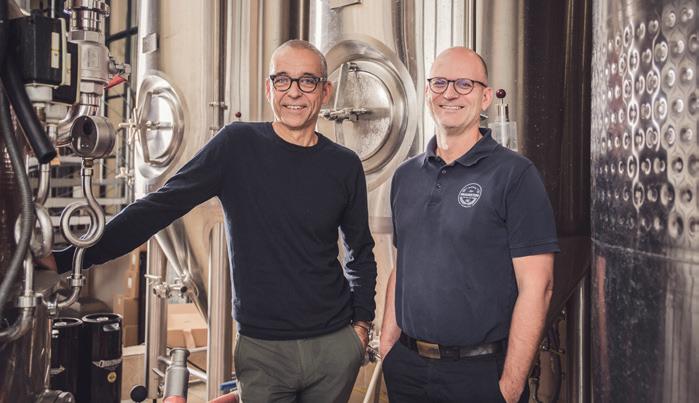


80 | Issue 146 | September 2022 Scan Magazine | Café of the Month | Finland
A European café with a Lappish twist
Old friends Jo Ormós and Eija Pakkanen had always lamented the lack of a cosy place to meet friends, spend time with family and enjoy great food in their home village of Äkäslompolo in the famous Ylläs ski resort. So, they decided to solve the problem by joining forces and creating such a place. The result was Jolie Lounge & Café, a European-style establishment, which has become a must-visit destination for tourists in the area. The Jolie Lounge & Café is known for its stylish décor, combining soft pastel colours with details and textures from the surrounding Lapland. It is open all year round and, in the summertime, visitors can sit on the comfortable sofas on the outdoor terrace, enjoying the spectacular view of the Kuer fell. While Lapland has left a strong – and wonderful – imprint on the place, bringing in European style and table-service has elevated the venue to a new level. The restaurant offers familiar dishes with a Lappish twist. In addition to the deli cious artisan sandwiches, pastries and homemade cakes, Jolie’s menu features fresh salads and pastas, all prepared in their kitchen from scratch. “We love to bring nature to the plate, and our focus is on seasonal ingredients sourced locally,” Ormós says, adding “Both of us love wild foods which you can find right on our door step.” Jolie’s menu changes eight times per year and it is 100 per cent gluten-free, with many vegan options. They also serve wine and have an interesting drinks menu to fulfil every visitor’s wishes.
By Mari Koskinen | Photos: Jolie Lounge & Café
Entertainment and theme nights Jolie also hosts a range of events, includ ing ‘Friday Night Dinners’, where they serve a full dinner menu. “We also have theme nights, like ‘Drinks and Drama’, where authors present their latest books, and ‘Music Lounge’, where selected DJs keep the clients entertained throughout the evening,” Ormós explains. They also celebrate traditional seasonal events like Halloween and Christmas – but instead of repeating the same year after year, they like to bring something new each time. With all this on offer, it’s no wonder that Jolie’s Lounge & Café has become the favourite spot for both locals and tourists alike, to relax and enjoy excellent food in a cosy atmosphere.
www.jolieloungecafe.fi Facebook: jolieloungecafe Instagram: @jolieloungecafe
Café of the Month, Finland Owners Eija Pakkanen and Jo Ormós.


unidrain.se UNIDRAIN HIGHLINE CUSTOM Corner drain

Visitors can explore the past and present of the Danish railway network, and learn about its significance, in this seminal historical collection on the island of Funen
“This is an exhibition that focuses on the dreams that people have when they set out on an adventure on the train,” ex plains Larsen. “People start their jour neys with certain expectations of what they might experience, who they will
By Tina Nielsen Photos: Ard Jongsma
The Danish Railway Museum lies perfect ly located – adjacent to the train station in Odense, where it occupies the 21 tracks of the trainyard, in addition to a very large area to display and organise activities.
“We have a fantastic space in the centre of the city,” says Anna Back Larsen, head of interpretation and exhibitions. The main exhibition of the museum is a com prehensive run-through of the history of the Danish railways, dating back to 1847 and providing an overview of the innova tions and evolution of the railways to the present day. The exhibition includes the oldest pre served steam locomotive, dating back to 1868. Other parts of the exhibition areas focus on Danish Railway ferries, Royal travel and the Age of Steam. “One of the things that helps us attract a very wide group of visitors is that our displays are immersive, so guests can interact with many of the exhibts,” says Larsen.
|
The Danish Railway Museum has come a long way since its opening in Copen hagen, in 1915. In 1975, the museum moved to Odense on the island of Fu nen to expand its collection. It’s still housed here today, in a large, historical engine-shed and ex-depot for the stateowned Danish railways.
A recently-opened exhibition called The Compartment of Dreams documents how people travel by train in pursuing adventures, and features many objects donated to the museum by people who have taken long-distance trips such as interrail journeys.
Train adventures
An interactive journey through Denmark’s railway history Museum of the Month, Denmark
82 | Issue 146 | September 2022


September 2022 | Issue 146 | 83 meet and what they will see.” People from all over the country have donated to the exhibition, which includes everything from scrapbooks of tickets, restaurant menus and photos, to backpacks and sleeping Jernbanemuseetbags.
Family fun Around one third of visitors are tourists from abroad and, if anything, the museum has grown in popularity since the challenges of the COVID-19 pandemic. This year, says Larsen, has been the best summer for The Danish Railway Museum in the past ten years.
In addition to the permanent displays and activities for children, the museum organises special programmes around all school holidays and continuously introduces new ways to engage and excite visitors. September will see the unveiling of a new exhibition called Koblingerne –meaning The Couplers. It is an extensive programme that turns the well-known locomotives into an animated universe, bringing to life the trains that visitors see in the engine shed.
is the official railway museum of Denmark, and the railway has had an important impact on the evolu tion of the Scandinavian country over the years. “The Danish railways have connect ed Denmark’s cities for the past 175 years and they played a crucial role in the indus trialisation of the country,” says Larsen. “It was a very closely connected network, giving rise to towns and cities around new stations. If you looked at a Denmark from above, it was like a spider web.”
Scan Magazine | Museum of the Month | Denmark
A large percentage of the visitors to the museum are families with children and for many children, says Larsen, it is their first experience of visiting a museum. “We are very child-friendly and have many activities geared towards children and families,” she explains. These include model train tracks and a large play area, as well as cartoons. The most popular attraction with children is a mini train that they can travel on over a distance of one kilometre.
These days, the role of the train is bigger than ever thanks to the drive to curb emissions and slow climate change –and it’s not lost on the Danish railway museum. “The themes around climate and sustainability will feature in a more extensive way in the future,” says Larsen. “It is obvious that the mood in the media and in the population is shifting.” www.jernbanemuseet.dk


Rightwalk-and-talks.”outsidethe centre is the ideal set ting for walk-and-talks in the form of a two-kilometre trail system. Along the trails, there are 21 QR codes. You can link your own content such as discussion points and videos to the codes, enabling course participants to view that content on their phones as they walk around.
By Karen Gilmour Kristensen
|
When Danish conference centre Metalskolen Jørlunde (The Metal School) underwent a renovation five years ago, they joined the United Nations Global Compact to take steps to support UN goals – meaning that sustainability influences everything they do. Today, their modern facilities and ideal location make the centre a popular place for conferences and teambuilding. When Metalskolen Jørlunde was built in 1968, it was intended for educational purposes within the union Dansk Metal (‘Danish Metal’), whose members in clude mechanics, IT supporters and in dustrial technicians. However, for the past ten years, Metalskolen Jørlunde has been a conference centre open to public institutions as well as private companies. Surrounded by a park of some 57 acres, a protected forest and the bathing lake of Buresø, Metalskolen Jørlunde offers a stunning natural setting. “We have a lot of guests who come here for teambuild ing,” says manager Morten Madsen. “We have some great outdoor facilities that are popular among guests.” Indoor and outdoor learning Due to its location amidst beautiful na ture, Metalskolen Jørlunde has facilities for various outdoor activities, such as mountain biking in the woods and ca noeing on the lake. “We have become aware of the fact that learning increases when you collaborate on something out doors,” Morten Madsen explains. “For instance, during summer, many discus sions that would normally happen inside now take place outside in the form of
A place to test your team’s mettle Conference of the Month, Denmark
Photos: Metalskolen Jørlunde
84 | Issue 146 | September 2022


Sustainability on the menu
But the most visible sign of Metalskolen Jørlunde’s sustainable agenda is the restaurant, with its focus on using local produce and reducing food waste. That’s why Morten Madsen and his team have made a deal with a local organic farm just around the corner, where they source seasonal greens.
135 single and double rooms VIP meeting rooms and lounge Auditorium for 200 people and worldclass AV equipment
www.metalskolen.dk
September 2022 | Issue 146 | 85
As Metalskolen Jørlunde is meant for education and learning, the learning en vironments – both indoors and outdoors –are incredibly important to the staff of the conference centre. Everything must be “transparent and flexible,” says Morten Madsen. “That’s why many rooms are separated by glass,” he ex plains. “Furthermore, screens, tables, chairs and so on have wheels so they can be moved about easily. This allows for quick changes from plenum to group work in smaller groups.” Metalskolen Jørlunde also has a VIP section with exclusive rooms and meeting rooms, in tended for companies who wish to host private conferences and events.
Scan Magazine | Conference of the Month | Denmark
Ten conference rooms for two to 110 people Amazing indoors and outdoors facilities for teambuilding Free parking and ten charging stations for electric cars bon footprint; instead of buying tulips and roses from other countries, we grow them ourselves.”
Facebook: Metalskolen Jørlunde Kursus & konferencecenter
Info:
“It’s not just about offering our guests sustainable and vegetarian options, we also want to tell our guests about the impact of the different foods,” Morten Madsen says. “We offer our guests an environmentally-conscious dinner with the carbon footprint of the differ ent dishes written on the menu. We’ve seen that many of our guests are keen to learn more about the sustainable al Theternatives.”foodisn’t the only thing in the restaurant that has a reduced carbon footprint. The latest step in Metalskolen Jørlunde’s sustainable agenda is creating a flowerbed with wildflowers that are used for table decorations in the restaurant –freshly plucked during summer or dried during winter. “The flowerbed is a collaboration between our gardeners and our kitchen staff,” Morten Madsen explains.
One of the core values of Metalskolen Jør lunde is sustainability, and as part of their efforts to reduce their carbon footprint, they have joined Green Key, an eco-label awarded in the tourism industry. “This means we have a responsibility to live up to certain conditions regarding our use of energy, choice of cleaning products and foods,” Morten Madsen explains.
“It’s a simple way of reducing our car-


By Karen Gilmour Kristensen Photos: Grennessminde i Taastrup
Education Profile of the Month, Denmark
“It’s important they make things that are truly useful for other people,” Rasmus sen says. “And we believe that all of our young people are capable of contributing, even if they can only do shifts of a few hours.” Whenever a young person is sent to Grennessminde, their stay is primarily financed by the local council. While the stay is proposed by the council, the young person has the final say in whether they wish to go there or not.
Tailor-made learning
|
In a beautiful green space, close to Taastrup and just 20 minutes away from Copenhagen, lies Grennessminde. Here, an educational programme is offered for those who don’t fit in with the general education system or labour market. Open to the public, the area also has a lot to offer for anyone into nature, plants and animals.
“We also have a field for picking your own fruit,” Rasmussen says. “In the field you can pick fruits and veggies such as squash, strawberries, garlic and even wildflowers. Similarly, you can pick to
The educational programme is called Særligt Tilrettelagt Ungdomsuddan nelse (Specially Organised Upper-Sec ondary Education) and it’s implemented all over Denmark. Its focus is on ad justing the programme to the individ ual – not the other way around. STU at Grennessminde is very practical and hands-on. The young people can choose between gardening, working at the smithing workshop, tending to the ani mals, working in the bakery or kitchen, or selling coffee and cakes in the café.
Picking plants Grennessminde is open to the public and they welcome a lot of guests, especially at weekends. As a guest, you can walk around the area, visit one of Grenness minde’s greenhouses and purchase var ious plants, or buy bread from the skil ful bakers in the bakery. The café, which also sells bread and pastries from the bakery, is open from Tuesday to Sunday, and during weekdays the young people take shifts there.
Grennessminde in Taastrup is a residen tial, work and education centre for vul nerable young people up to 30 years of age with developmental delay, learning disabilities or other mental illnesses.
“We try to keep the young people occu pied,” says spokesperson Andreas Hjorth Rasmussen. “This can prevent them from falling ill, which might happen if they just sit at home all day.”
86 | Issue 146 | September 2022

Atmeaningful.”thesame time, there is also an eco nomic aspect. The cost to the state of disability benefits and care homes is high. “But the alternative could be much more expensive; for example, if some of these people were to fall ill or end up on the street,” Rasmussen says. He hopes Grennessminde can play a part in making society more inclusive. “Our society can be managed different ly,” he says. “We don’t have to be normal. Is anyone even normal? We all have our idiosyncrasies. We must include these people in our society to make them less marginalised. If they’re around everyone else, being different will seem less prob lematic.” www.gminde.dk Instagram: @grennessminde Facebook: Grennessminde
Scan Magazine | Education Profile of the Month | Denmark
Theregreenhouses.”isalsoan Instagram-friendly dome which can be rented for meetings during weekdays and private parties at week ends. Behind the glass facade is a room with space for 35 sitting guests and the entire dome can house up to 149 people.
Through charts and other forms of visual representation, all staff at Grenness minde attempt to find the things the young people are good at and allow them to do those things. The pedagogical ap proach is relatively simple and practical, since most of the staff are not educat ed in the field of pedagogy; instead, the young people are taught by carpenters, gardeners and chefs. Why is this work so important? Accord ing to Rasmussen, there are two main reasons. The first is a personal one: “It’s very rewarding for the other employees and myself to work with this group,” he explains. “At Grennessminde, it’s easy to see how the job you do helps to make the world a better place. The young people are happy and for us, this makes our jobs
If you like animals, Grennessminde has even more attractions. Here, you’ll find donkeys, sheep, mini pigs, turtles, geckos, rabbits and fish. The newest ad dition are some Scottish Highland cattle and there are also horses, used for riding therapy with the young people. The area is open at all times for visitors to come and look at the animals. What is normal? When working with vulnerable youth at Grennessminde, validation is key. “We try to validate the abilities of the young peo ple and help them build their confidence,” Rasmussen explains. “Rather than focus ing on the things they can’t do, we strive to figure out how to use their resources in a meaningful way. We want them to take pride in their accomplishments.”
September 2022 | Issue 146 | 87 matoes and cucumbers in some of our

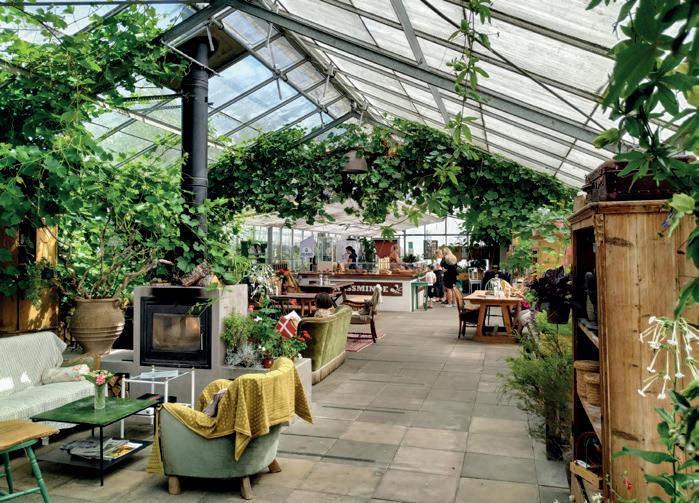

By Rune Nyland In the Lindholmen area of Hisingen in Gothenburg, the construction of Karlatornet is in full swing. The upcoming skyscraper will be a towering part of the new area Karlastaden and not least the whole of Gothenburg. When Karlatornet, which will have 73 floors, is completed in 2024, it will become the Nordic region’s tallest building, at 246 metres. However, prospective residents will be able to move in already at the end of 2023.
Currently, Turning Torso (completed in 2005) in Västra Hamnen in Malmö is the tallest building in the Nordic countries, at 190.4 metres. Next September, Karlator net is scheduled to surpass Malmö’s sky scraper. Already in May 2022, it became the tallest building in Gothenburg. The founder behind the project, Ola Serneke from Serneke Invest, recently told the local newspaper Hela Hisingen: “I have worked with the project since 2004, and there have been an enormous number of issues that have been ad dressed during this time. I have lived with the project for almost 20 years, so for me it is a wonderful feeling to see the tow er quickly rise towards the clouds – and reach its halfway point.”
88 | Issue 146 | September 2022 Scan Magazine | Culture | Karlatornet
In addition to the 611 apartments, Kar latornet will be connected to a Clarion Hotel with approximately 300 rooms and 8,000-square-metres for conference fa cilities and shops. There will also be a lookout point – a usual addition to build ings of this stature. Currently, the most expensive apartment for sale (six rooms on the 71st floor) costs just under 64 mil lion SEK. The motivation behind the project
The Nordic region’s tallest skyscraper is taking shape
Lindholmen today is a living cluster for tech and vehicle development, as well as education. “When we now add housing
Johan Live, public relations manager at Serneke Group AB, explains the motiva tion and background for the project. “The main motive for the project is to create an entire district (Karlastaden) in an area that has previously been an industrial shipyard area, but which for a long time has been quite dilapidated and unused. Given the location, which is very central, it is an opportunity to add something new to the city: a unique 24/7 district, as well as 2,000 much-needed apartments.”
Scan Magazine | Culture | Karlatornet Karlatornet under construction June 2022. Photo: Rune Nyland

The Gothenburg skyline is about to become even more dramatic.
Photo: Per Pixel Petersson, imagebank.sweden.se
The project as an attraction Karlatornet is expected to be a vital city attraction and a foundation for business development.
“We definitely believe that Karlastaden and Karlatornet create ex tra attractiveness for an already dynam ic part of the city. Attractive homes in a vibrant district, which will be unique in Gothenburg, will certainly strengthen the conditions for attracting both people and investment,” continues Live. Meanwhile, he is confident that the sky scraper will be able to facilitate largescale events like international conferenc es, in conjunction with its surrounding venues. “There is a hotel building adja cent to and partly in Karlatornet, where the opportunity for conferences will be found. This is in addition to other and
90 | Issue 146 | September 2022 and a vibrant city life, this part of Goth enburg will become even more dynamic. To create a vibrant neighbourhood, it is necessary to have a foundation for shops, restaurants, cafes and services within the smallest possible area,” says Live. He believes that one way to ensure this is to build in height: “Therefore, Karlatornet and a number of other houses will be the tallest in the city.”
Prestige or practicality? Karlatornet will be the tallest skyscraper in the Nordic countries, but how high is it on a European scale? “There are about 25 buildings in Europe that are taller than Karlatornet’s 246 metres, including in Russia, Turkey and the United Kingdom. It may not reach the highest level in Eu rope, but it is definitely the highest in the Nordic countries,” says Live. “We believe that Karlatornet will mean a lot to Goth enburg. It will be a building that puts the city on the map even more, becomes a destination in the city and hopefully cre ates pride. There is no prestige in this. Sooner or later, someone constructs an even taller building somewhere. The height is optimised for economic, techni cal and architectural reasons.”

Turning Torso is a main landmark in Malmo.
“So far, people from many parts of the world have bought an apartment in Kar latornet,” he adds. It’s one of many ex
September 2022 | Issue 146 | 91 Scan Magazine | Culture | Karlatornet
larger conference opportunities in wider parts of the city.” Gothenburg’s role in Sweden and the Nordic countries The city is strategically located, with the largest port in the Nordic region. Karla tornet therefore has the potential make Gothenburg even more of an industrial, entrepreneurial and cultural hub. “Ur ban development, at all levels – both through housing and infrastructure – is a prerequisite for growth in the business community. During the entire planning of the district, we have had a strong col laboration with the city, and of course we see the Karlatornet’s role in a larger perspective as one that strengthens the city’s strategic opportunities in the Nor dic region,” says Live.
citing projects underway in Gothenburg, which is currently undergoing rapid re newal. It’s fair to say that anyone who has driven a car through the city in recent years will have noticed the extensive traf fic diversions and road work. Gothenburg is a rising city. Watch this space.


Atelier Tina Hee Lyngby Hovedgade 1 2800 Lyngby Danmark
92 | Issue 146 | September 2022 Scan Magazine | Culture | Atelier Tina Hee
The creation of the bronze statue of a man with a top hat on a bike was inspired by Hans Christian Andersen’s The Travel ling Companion. When she told the story to a man she met, he responded: “that sounds just like my grandad, his name was Johannes”. So, the statue was named Johannes. It became Tina’s logo and trav elling companion, just as she is the travel ling companion to those she helps. Like the fairytales written by H.C. Ander sen, a man she identifies with, Tina’s life has reached a happy destination and she hopes to help others achieve the same.
www.tinahee.com
Tina Hee: The DNA of a DanishVisitartistTina’satelier
LinkedIn: tinahee
Tina’s travelling companion
“Challenges make me stronger,” she says, describing the hardship she went through during her early 40s. Therapy and painting were the tools she used to find peace inside. An intuitive journey Tina describes her art as an intuitive journey. “I use symbols of life’s expe riences: the crooked stairs reflect the hard times, the eye mirrors the soul, and the bird gives a panoramic view and a sense of freedom.”
By Karin Blak | Photos: Suezanna Zenani
The work of an artist is often born out of the struggles in their life – experiences that can bring a quality of authenticity to the creation of art. Certainly, this is the case for Tina Hee. As a child, Tina wanted to be a nurse. She had a strict upbringing, however, and her father instead arranged for her to take an apprenticeship in marketing. Although this provided Tina with a successful ca reer, she didn’t feel right in these roles. The pivotal moment Inspired by her son’s teacher, she at tended an art class and, with newly awakened energy, she enrolled in a fourmonth art course. This was the pivotal moment when she discovered the sense of belonging she had been missing.
Instagram: @tinahee_art
Tina Hee when inspiration settles. What a Day. Johannes the travelling companion.
Working like a CoBrA-artist, her art is of ten humorous. While very personal, the paintings have a special energy and hap piness that lifts the viewer, is said to be typically ‘Hee-esque’, and is appreciated by both private and business clients.
Facebook: ateliertinahee
Tina now teaches groups at the mental health charity Sind, and says “there is no right or wrong in painting, there is just a safe space for creativity to happen.”
Tina’s DNA Like a string of DNA, her need to help others runs through her life. When she encountered her first student with men tal health issues, the feedback she re ceived was that painting with Tina was medicine for the student’s buzzing brain.


INTERACTIVE EXHIBITION GUIDED TOURS & ACTIVITIES ADVENTURE RIDE

By Lena Hunter | Photos: Friedrich Hartung When Galleri Nexus opened in 2007, it was about as off-piste as a Danish gallery could get. “Having a gallery on the outskirts is different to having a gallery on Bredgade in Copenhagen, or in the centre of Aarhus. A few years ago I was the only full-time pro fessional gallery in the area and, even now, there aren’t many,” explains the gallery’s founder Kent Lauritsen. An art dealer and auction-house con sultant by trade, Lauritsen has amassed the world’s largest collection of South ern-Jutland art at Galleri Nexus. Today, the gallery is fully online, its portfolio representing a meeting point for the lo cal and the global, blending Danish with international and contemporary with classic “Nobodyworks.else specialises in the art of southern Jutland,” he says. “The collec us to the local public. We juxtapose the contemporary with the classic, so our collection is less speculative, closer to the audience.”
Contemporaryexpressions.meets classic at Southern Jutland’s largest art gallery tion at Galleri Nexus encompasses less er-known local talents as well as big names like Franciska Clausen – one of Denmark’s leading Avant-Gardist paint ers from Aabenraa, ten kilometres from here.”
He points to works by Wicklow-based Irish artist Conor Walton, recent additions to Galleri Nexus. “Walton’s work is almost the opposite of Avant Garde. It’s reflective, intuitive and with integral technical qual ity,” he says. “The bottom line is that we seek to present quality.”
94 | Issue 146 | September 2022 Scan Magazine | Culture | Galleri Nexus
In conversation with its collection of Danish art, Galleri Nexus exhibits an oeuvre of international artists from South Korea, Ireland, England, Germany and beyond. The name borrows from the Latin word ‘Nexus’, meaning ‘connec tion’ or ‘link’. “It refers not only to the gallery’s location near ancient crossroads, but to its ambition of being a place where people and quality art meet and connect,” explains Lauritsen.
A meeting place for people and art
“We could show only international Avant Garde but that wouldn’t have connected Astronaut 1 drawing, felt pen and watercolour by Eskild Beck. Prelude plaster sculpture by Saskia Sutherland. Kent Lauritsen (left) and Conor Walton in Conor’s studio in Wicklow, Ireland. Pumpkin painting by Conor Walton.
Other contemporary work on display in cludes that of Dan Thuesen – semi-ab stract pastoral landscapes in misty pastel tones, and Danish-American artist Saskia Sutherland’s explorative sculpture works. Meanwhile, classic Danish works from the 19th and 20th century present rustic street scenes, still life and evocative land and “Goodseascapes.artshould talk to you,” says Lau ritsen. “And that’s what you’ll find at Galleri Nexus.” www.nexuswebshop.dk
As one of the largest art galleries in the Danish region of South Jutland, Galleri Nexus facilitates the intersection of hyper-local and international art, bridging classic, modern and contemporary


Ahead of the release of their fifth album Palomino (out in November), Swedish duo First Aid Kit are out with a new single – Out Of My Head. They’ve ramped up the tempo considerably for this one. Their retro, blues-y charm remains intact, but this time it’s been paired with thundering pop drums that give the song a dramatic (camp, even!) sense of urgency. Danish pop superstar MØ is back with a dazzling new tune – Spaceman. The song is an interpretation of the global smash hit single of the same name. The Babylon Zoo song from 1996, that is – not the UK Eu rovision song from 2022. She’s taken the iconic chorus and done with it what the original version famously couldn’t – paired it with a verse that you would actively choose to listen to! www.scandipop.co.uk
It felt lovely to speak to him in my native tongue – to be myself in my own accent, not one that I’ve borrowed. Now, for the first time since we met, I’m desperate for my husband to learn Swedish. But in the meantime, I’m grateful for his shouting “BONNY-NOT!” at Portuguese hoteliers and looking after us both, while I remain bi-lingual and comfortably silent.
September 2022 | Issue 146 | 95 Scan Magazine | Culture | Columns
My husband is my secret weapon when we travel. In me will always dwell a shy, foreign teenager: one that is desperate to fit in, and petrified of making a grammatical error that would make me stand out. Not so with my husband. “YAMMOS!” he’ll shout at Greek shop owners, followed by a stream of random words in any language – German, French, Spanish – whatever he has to hand. Often, he’ll deliver his lines with such ir resistible conviction that he makes peo ple doubt their own language. On recent travels, we found ourselves in a restaurant filled, almost exclusively, with British tour ists. The owner looked a bit sick of it, so I decided it would be nice to mix things up by not being one.
I talked at my husband in Swedish for the rest of the evening... And something nice happened. My husband, who is usually (and understandably) bored by my monologues (I mostly talk about dogs or show pictures of dogs), listened intently. He guessed at words –“you want me to pass the ladders?” – and made every effort to respond in Swedish –“yes, I like small bread.”
For Tirsa are a brand-new band consisting of eight members (six Swedes and two Icelanders). All of the band are songwriters in their own right, having previously written for other artists in the Nordics and in Asia, and now they’ve come together to release their debut single – Open Your Eyes. It’s a rousing, uplifting bop that’s rooted in Nordic folk music, but with its head way up in the pop clouds we all love to frequent. They say they wanted to pair Swedish melody with Icelandic angst, and I would say they’ve done a mighty fine job. The song gets even more enjoyable with every listen, and I’m already looking forward to hearing more from this intriguing new collective.
Monthly Illustration
By Karl Batterbee Röyksopp have reunited with Susanne Sundfør for a big highlight from their brand new album Profound Mysteries II. On Oh, Lover, we’re treated to a luxurious disco soundscape that’s been given an industrial-electro makeover by the Norwegian pioneers of synth. Susanne, meanwhile, delivers a wistful vocal about the should I/ shouldn’t I scenario of getting in touch with a former flame who, once upon a time, gave her all the feels. We’ve all been there.
By Maria Smedstad
My secret weapon
September’s best new Scandi music
Maria Smedstad moved to the UK from Sweden in 1994. She received a degree in Illustration in 2001, before settling in the capital as a freelance cartoonist, creating the SwedeulationsthewritescartoonautobiographicalEm.Mariaacolumnontrialsandtrib-oflifeasaintheUK.


Stockholm’s
here!
Helsinki
Calendar
Scandinavian Culture
by:Larm (15-17 September)
SMK,
Venues
By Hanna Heiskanen
The Baltic Herring Market is a sure sign of autumn Helsinki. Eetu Ahanen / Partners Police Museum hosts engaging Magnusson
–Where to go, what to see? It’s all happening
Photo:
in
96 | Issue 146 | September 2022
Photo: SMK
This Norwegian festival is for those who want to spot fresh talent on the verge of success. Acts range from ‘riot grrrl lo-fi-cute-punk’ to Australian doom metal, and from futuristic soul from the UK to Danish jazz. The 25th edition of by:Larm is bound to be a special one. around www.bylarm.noOslo the Danish National Gallery.
exhibitions. Photo: Kerstin


September 2022 | Issue 146 | 97 Scan Magazine | Culture | Calendar Ultima (15-24 September)
Solvgade 48-50, Copenhagen www.smk.dk Henri Matisse: The Red Studio (1911). Oil on canvas, 181 x 219.1 cm. Mrs. Simon Guggenheim Fund, The Museum of Modern Art, New York.
The Trigger: 150 years of police photography (until 31 December)
Helsinki Baltic Herring Market (2-8 October)
Are you a contemporary music fan, or ready to try something new? Then head to Ultima, the Oslo-based festival offer ing over 60 events, ranging from talks to art and children’s culture. This year’s theme is freedom in all its forms. This year’s Nordheim Prize for composing will also be presented to winner Jan Martin Smørdal, during a concert on 16 VenuesSeptember.around Oslo www.ultima.no
Another Surrealism (until 22 October) Surrealism and Den Frie Centre of Contemporary Art have a long-shared history: the world’s first exhibition of surrealist art with Dalí, Klee and others, took place here in 1935. Contemporary art, too, has elements of the surreal, which are explored in Den Frie’s new show, Another Surrealism, in which old and new works are exhibited side by side. This is a great opportunity to see lesser-known representatives of the movement.
Oslo Plads 1, www.denfrie.dkCopenhagen
Stockholm’s Police Museum is a fascinating place, with a number of regularly updated exhibitions. The Trigger showcases more than 600 police photos, from mugshots to crime scene snaps and tools of crime. The photos tell a story of over a century’s worth of criminal activity –but also challenge us to look into the eyes of the changing face of crime.
Museivägen 7, www.polismuseet.seStockholm
Matisse: The Red Studio (13 October 2022 - 26 February 2023) This might just be the region’s most exciting exhibition, this autumn! Henri Matisse (1869-1954) is landing in Co penhagen’s National Gallery (SMK) and promises to attract art fans from near and far. One of the highlights will be his work The Red Studio (1911), and, fasci natingly, three of the works depicted in it belong to SMK, and are thus reunit ed with the painting. The exhibition is a collaboration with New York’s MoMa.
The Helsinki Baltic Herring Market is one of Finland’s oldest events, dating back to 1743. Fishers from all along Finland’s coastline make their way to the capital in their boats to sell fish, traditional, dark ar chipelago bread, and sea buckthorn prod ucts – known to keep away colds during the long winter. There is also a competi tion for the best pickled fish. Market Square, www.silakkamarkkinat.fiHelsinki
Photo: Succession H. Matisse/VISDA 2022


Scan Magazine Issue September146 2022 Published 09.2022 ISSN 1757-9589 Published by Scan Client Publishing Print H2 Print Executive Editor Thomas Winther Creative Director Mads E. Petersen Editor Lena Hunter Copy-editor Karl Batterbee Graphic Designer Mercedes Moulia Cover Photo Bryndis Thorseinsdottir Contributors Alejandra Cerda Ojensa Åsa Hedvig Aaberge Emma Rodin Ester Eva-KristinLihao Urestad Pedersen Hanna Heiskanen Hanna Margrethe Enger John MarieMariaMariMalinLottaKarlKarinKarenSempillKristensenBlakBatterbeeLassessonNormanKoskinenSmedstadWesterman Roberts Miriam Gradel Nina TinaSynneSilviaSaraRuneBresslerNylandHellgrenColomboJohnssonNielsen Sales & Key Account Managers Emma Fabritius Nørregaard Johan VeronicaEnelyckeRafteseth Advertising marketing@scanmagazine.co.uk To Subscribe scanmagazine.co.uk/subscribe Scan Magazine Ltd 3rd floor, News Building, 3 London Bridge Street, London SE1 9SG, United ScanScanpart,notcontained©www.scanmagazine.co.ukinfo@scanmagazine.co.ukwww.scanclientpublishing.comKingdomAllrightsreserved.Materialinthispublicationmaybereproduced,inwholeorinwithoutpriorpermissionofMagazineLtd.Magazine®isaregisteredtrademarkofScanMagazineLtd.Thismagazinecontainsadvertorials/promotionalarticles 98 | Issue 146 | September 2022 Scan Magazine | Culture | Calendar Ultima in Oslo. Photo: Signe Fuglesteg Luksengard / Ultima

WWW.HAPPYFLUFFYCLOUD.SE

We are revolutionising the construction industry by delivering a climate-neutral, healthy, and constructioneffectivesystem.

