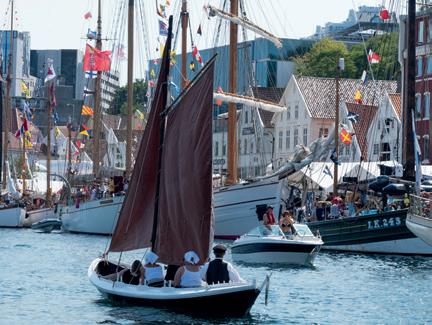
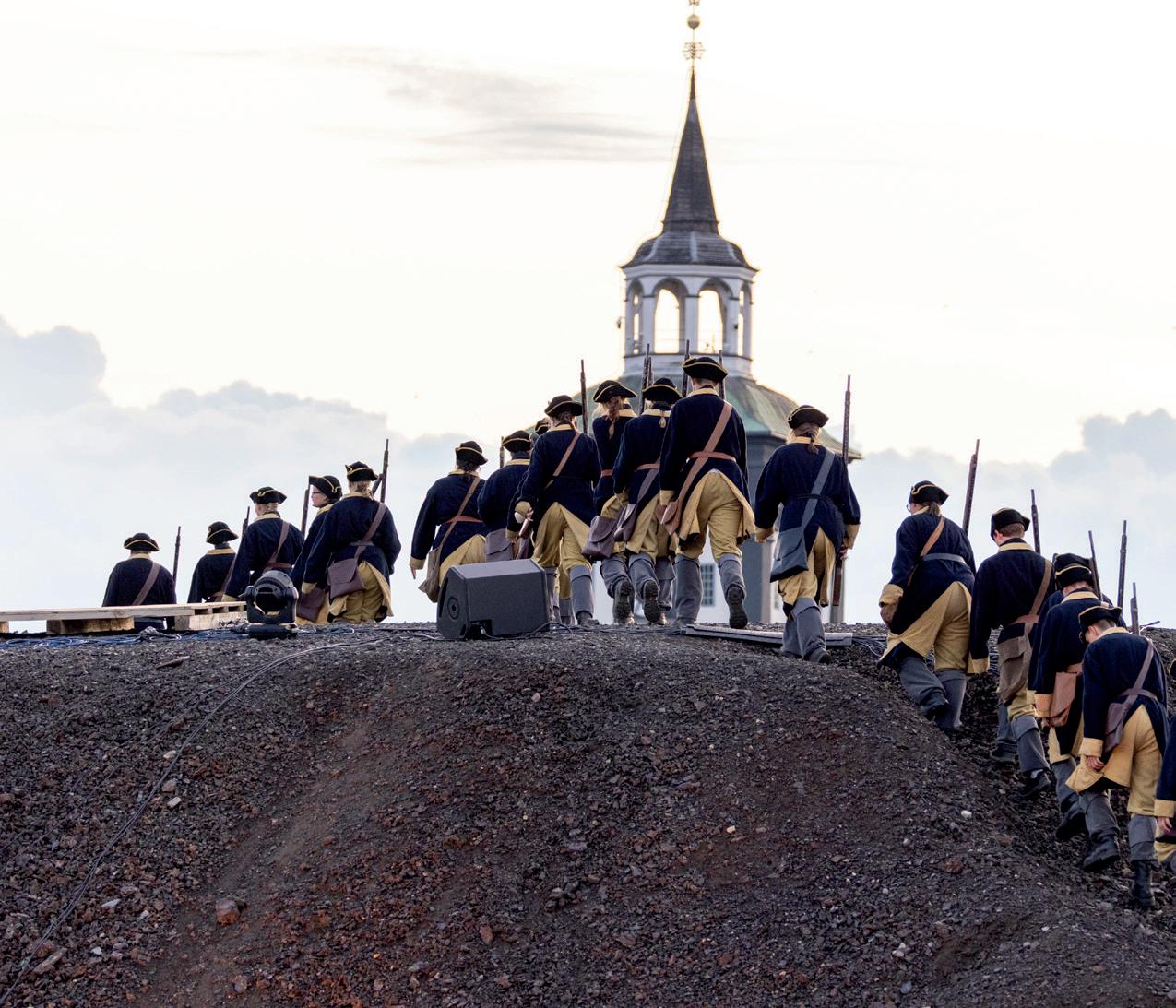
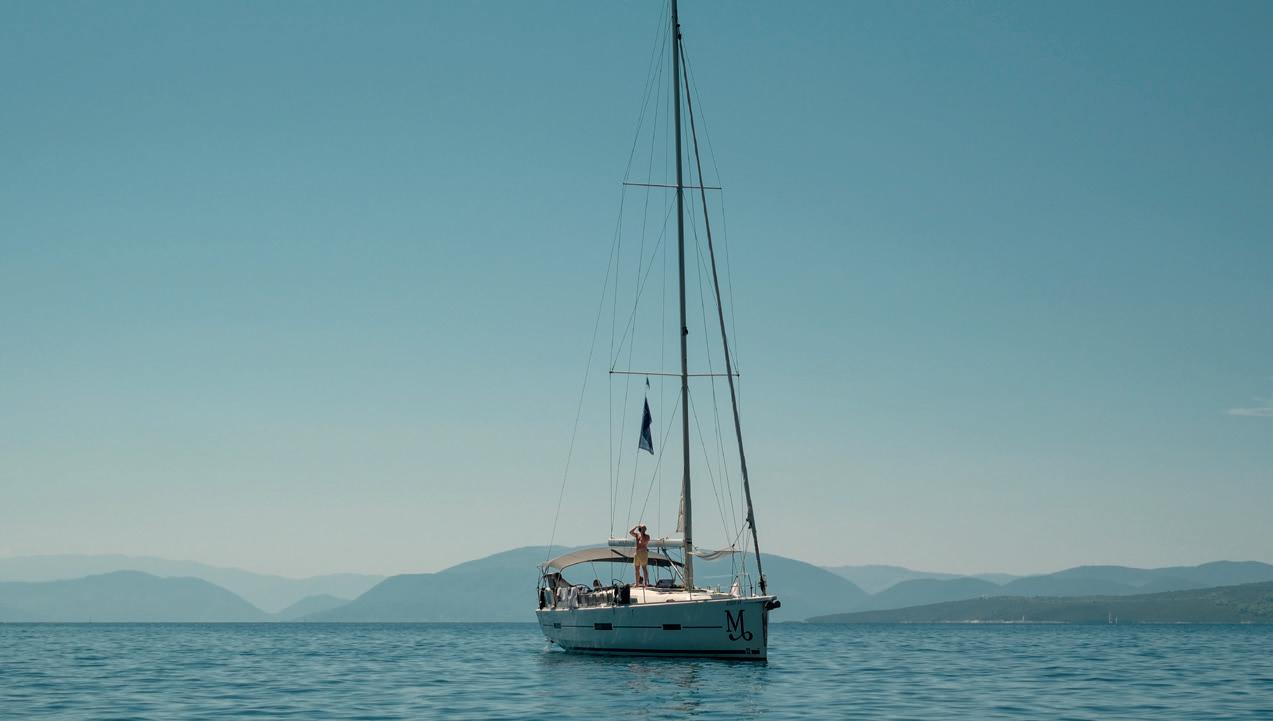
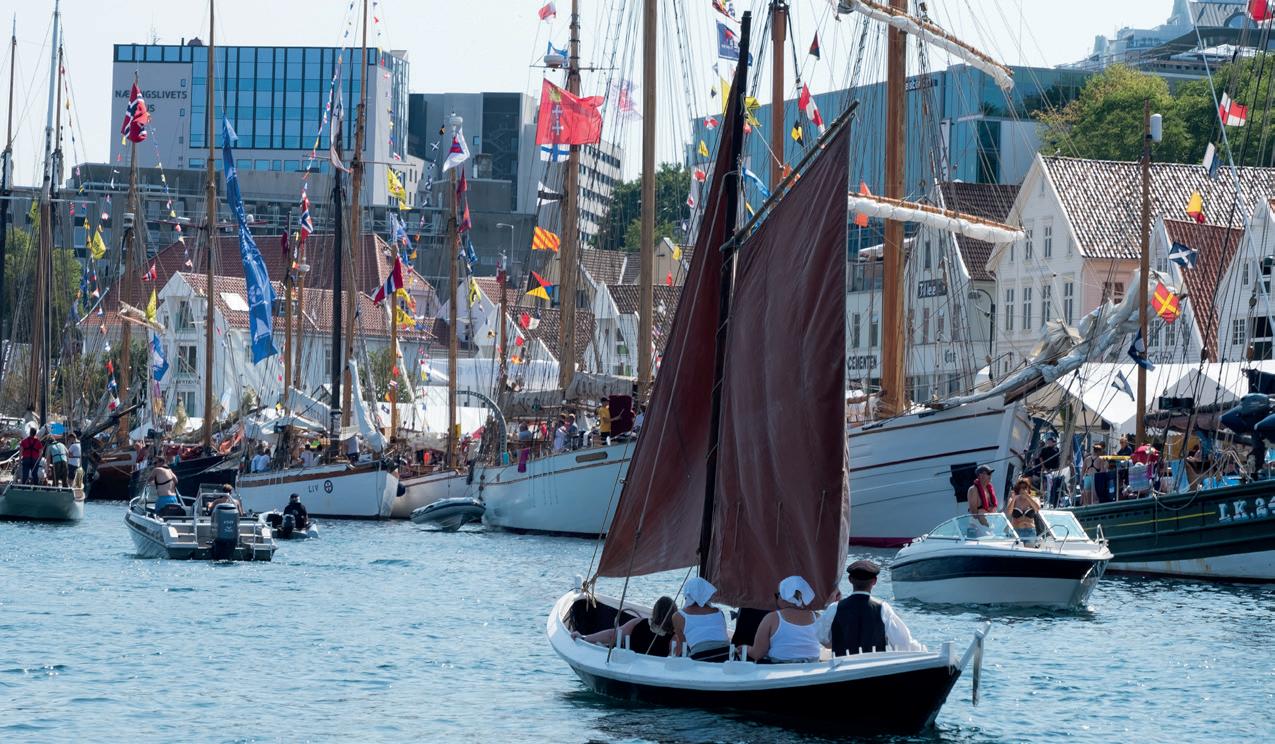
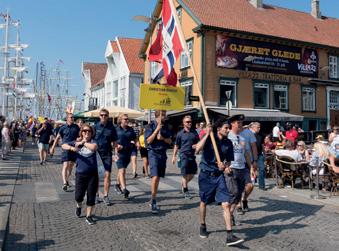
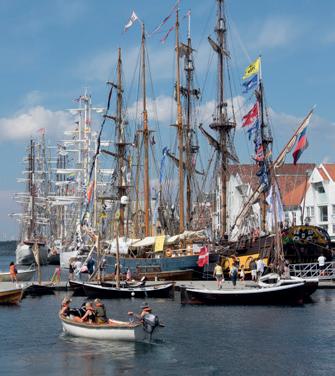
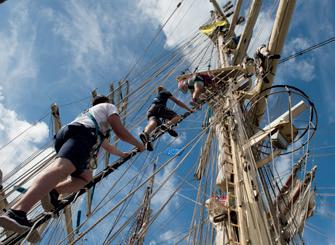
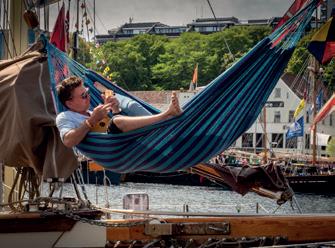
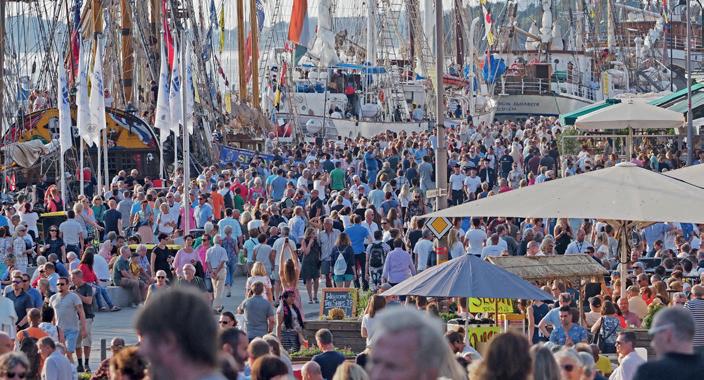
Stop by Stavanger on your summer holiday this year for a unique maritime experience.
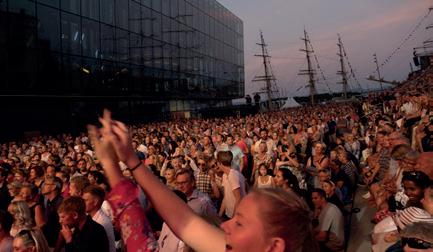
July 22–25 2026 the harbour of Stavanger will be filled with impressive ships, food stalls and a fun-filled program of arts and culture when The Tall Ships Races enter the city. A feast for all your senses – and for the whole family – awaits!
Learn more at tallships.no
Editor’s Note
Summer is starting to open up its warm embrace, and with it comes a host of delights – some of them fluttering through the air in almost nonsensical, beautiful colours and patterns. I’m talking about butterflies, of course. And if you’re wondering why, the answer is: because butterflies, as it turns out, have a great deal to tell us about life, death and everything in between.
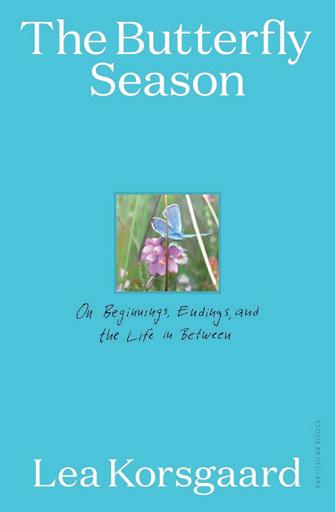
Turn to page six, where Danish author Lea Korsgaard tells us how an ambition to see all 64 of Denmark’s butterfly species led her into some of life’s most fundamental questions. The result is her bestselling book, The Butterfly Season, which arrives in English bookshops on 11 June. If youre’ looking for a summer read to inspire and awaken you, this is one to bring on holiday.
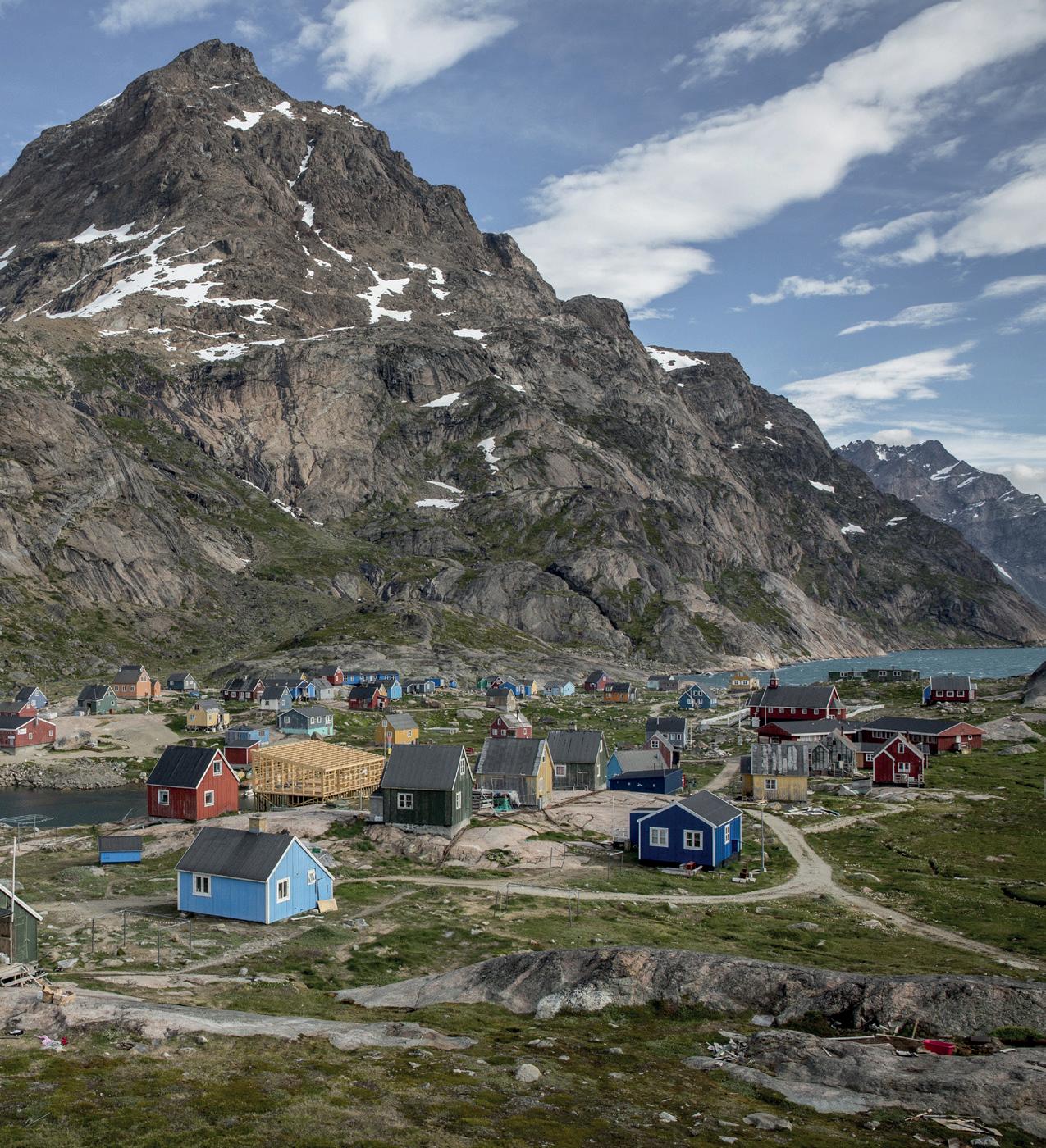
Summer, of course, is also the time to explore and visit new places, and in this issue, we offer plenty of inspiration for where to go. Our special feature on Greenland looks at the country’s growing appeal as a travel destination, while our Swedish summer theme takes in striking coastal landscapes, wellness escapes and culinary delights.
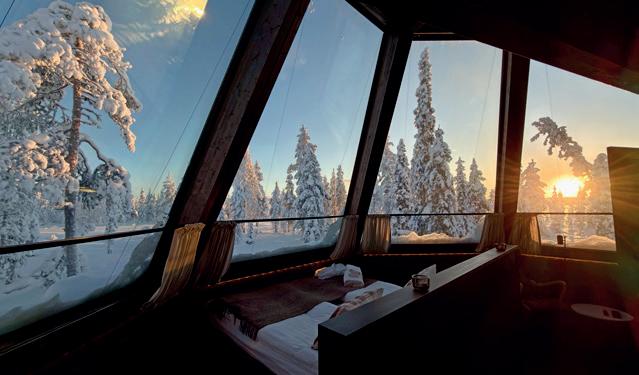
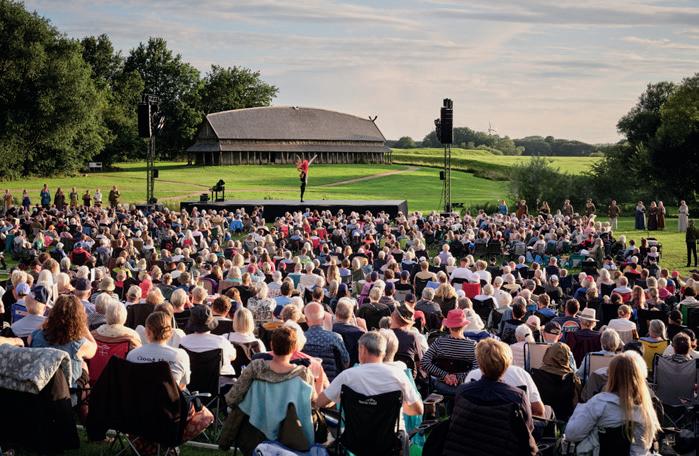
If that’s not enough to get you daydreaming, our Travel Highlights may provide the final push: glass lodgings in the serene wilderness of Lapland, open-air theatre in a dramatic Norwegian landscape, and out-of-the-ordinary cultural experiences in Oulu, European Capital of Culture 2026.
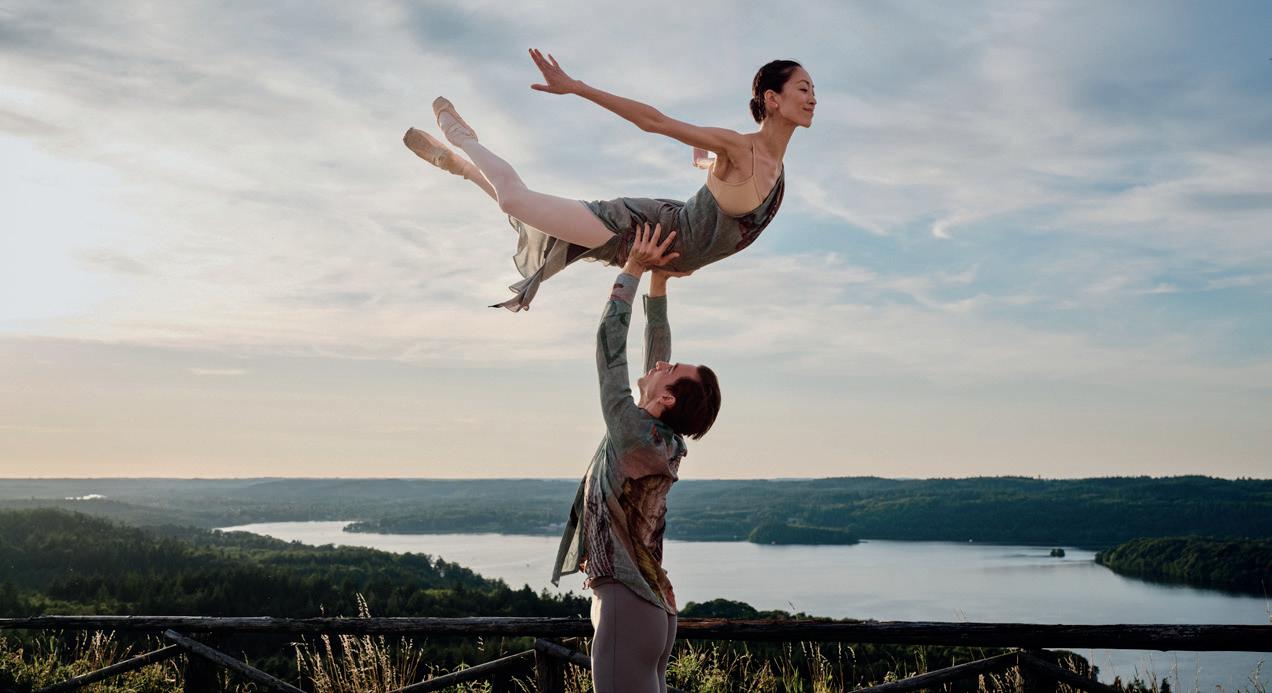
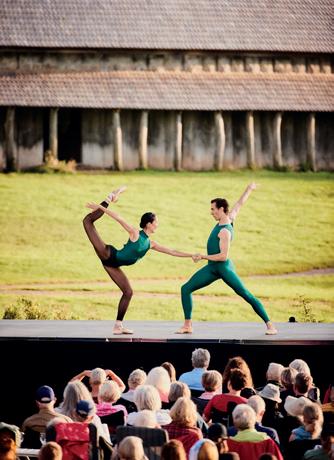
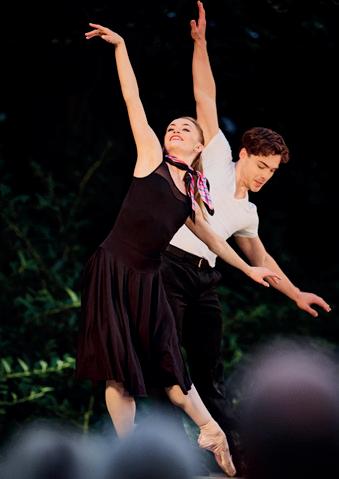
As always, we also bring you a wealth of striking and innovative Scandinavian design, tempting culinary experiences and summer highlights, including open-air Danish ballet performances in some of the country’s most beautiful settings.
We hope you enjoy reading our magazine as much as we enjoyed making it.
Signe Hansen, Editor
SCAN MAGAZINE
In this issue
COVER FEATURE
6 Lea Korsgaard – on butterflies and the big questions in life
Releasing her bestseller The Butterfly Season in English this month, Danish author and journalist Lea Korsgaard tells Scan Magazine how an odd idea to see all of Denmark’s 64 butterfly species turned into an existential narrative about humanity and its relationship to nature.
DESIGN
10 Colourful sandals, warming surfaces, and a fusion of ceramics and Arctic flavours
From a Danish jute sandal that has won over the world with its massage-like qualities to The Warming Surfaces Company, a Finnish company determined to change the way we think about heating – our Design pages are bursting with innovation and creativity. We also visit Tundra, a unique destination combining gastronomy, ceramics and the Finnish wilderness, and explore a collection of Scandinavian design essentials for your outdoor summer feast.
FOOD & DRINK
34 Beer in Philadelphia and love in a pastry
Our in-house beer expert, Malin Norman, explores Philadelphia’s beer attractions, from characterful dive bars to world-class mixed fermentation breweries. Meanwhile, award-winning food writer Sofia Nordgren shares her recipe for a sweet heartshaped treat, perfect for someone you love.
TRAVEL HIGHLIGHTS
36 Northern Lights, outdoor theatre, and Arctic culture
From the serene glass huts of Nivunki Village in Finnish Lapland to Elden, Norway’s largest outdoor historical theatre production staged among the slag heaps of Røros, our Travel pages head north for stillness, spectacle and history. We also look ahead to Oulu2026, as the Finnish city celebrates its year as European Capital of Culture with a programme shaped by creativity, community and northern identity.
SPECIAL THEMES
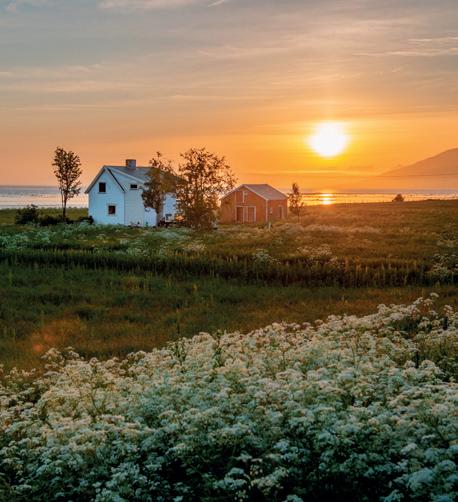
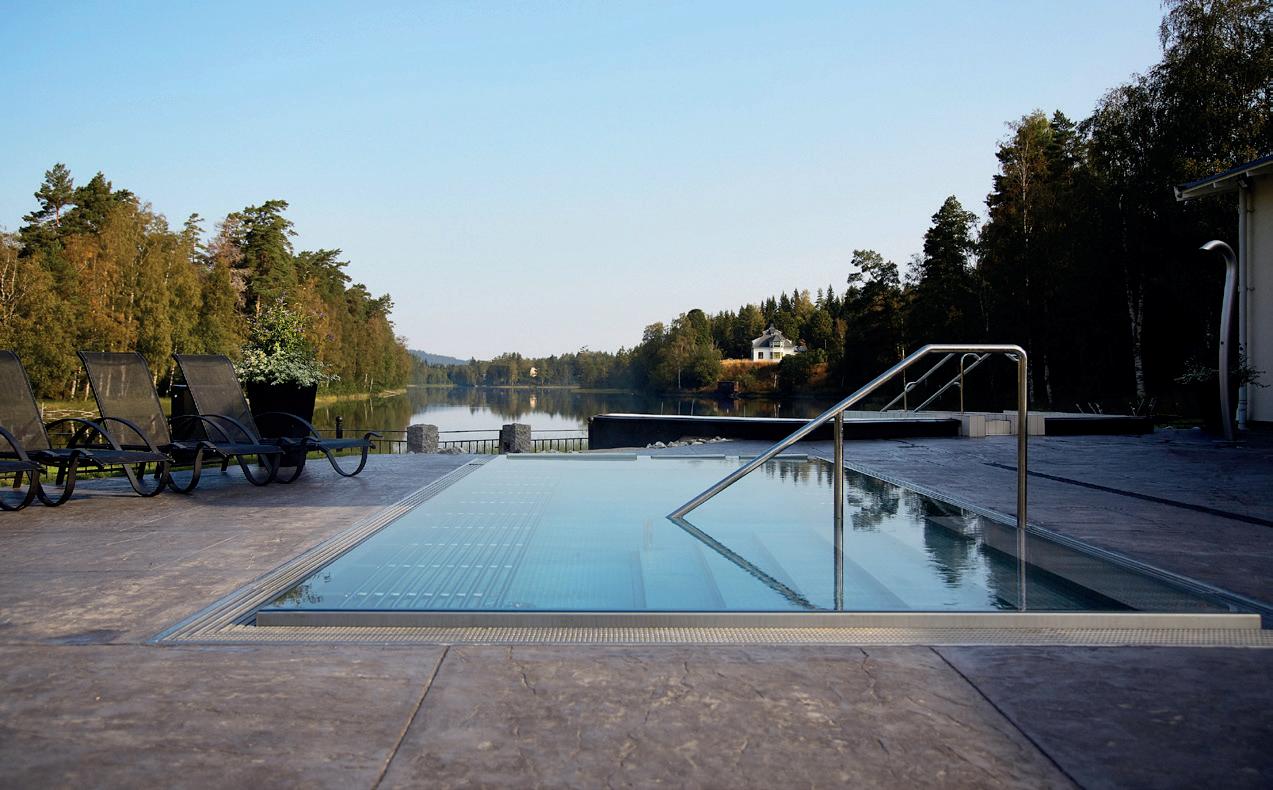
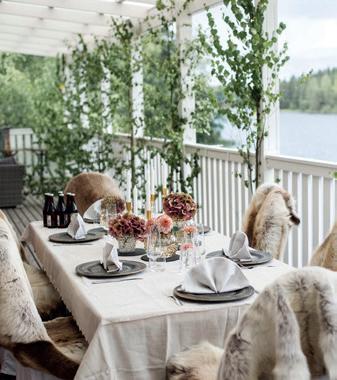
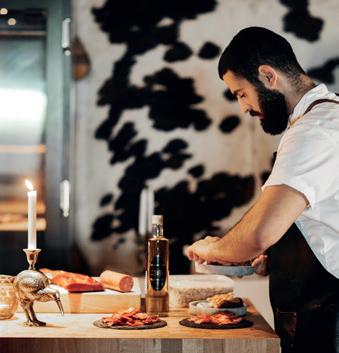
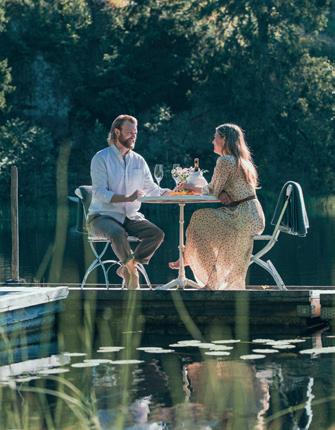
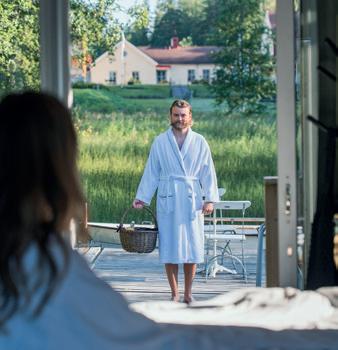
50 Top summer experiences in Sweden Waterside resorts, local flavours, lifestyle destinations and wellness treats for body and soul – the days when summer in Sweden meant little more than a basic cabin in the woods are long gone. In this theme, UNESCO-listed landscapes, boutique getaways and urban food experiences come together to show just how varied a Swedish summer can be.
SPECIAL FEATURES
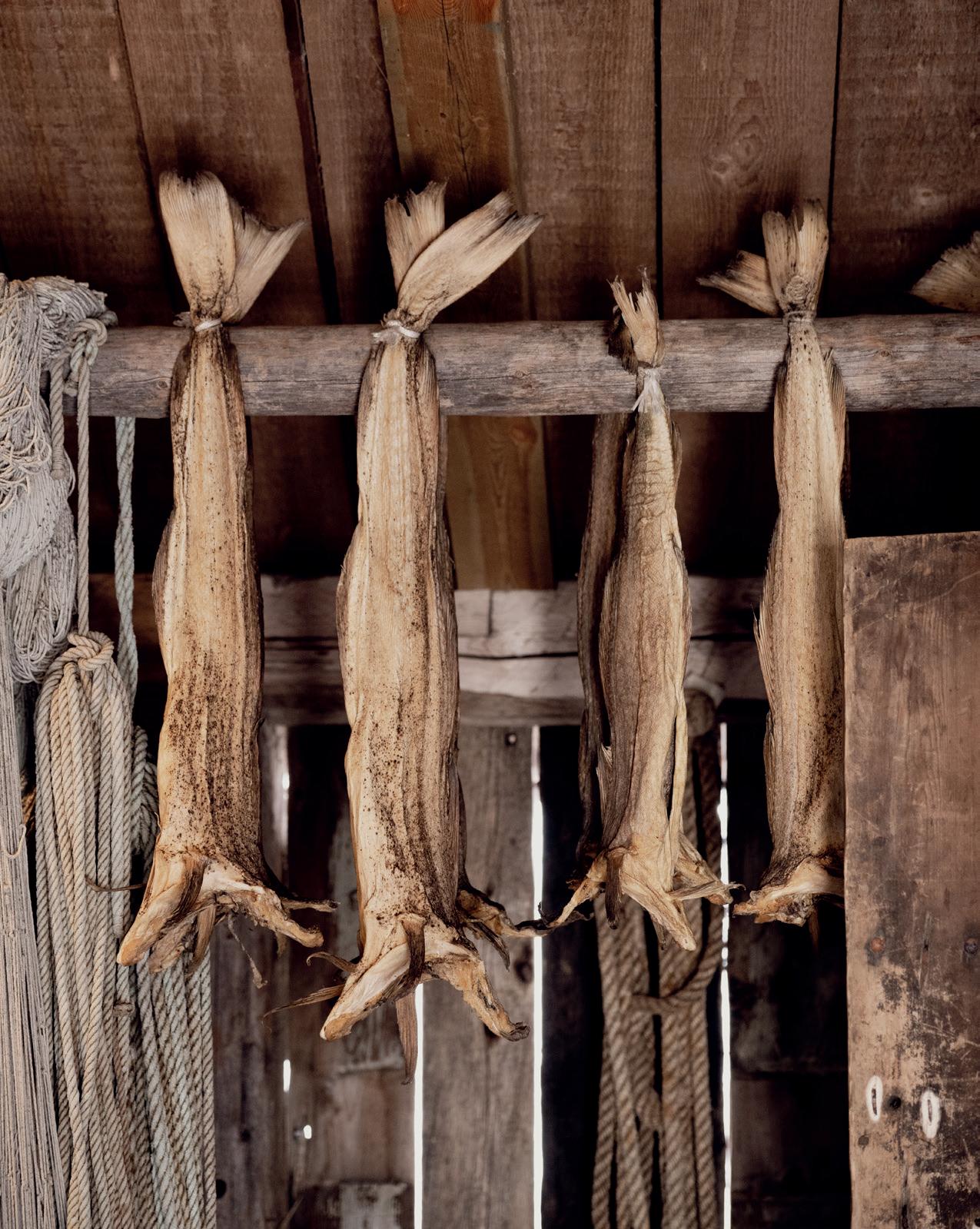
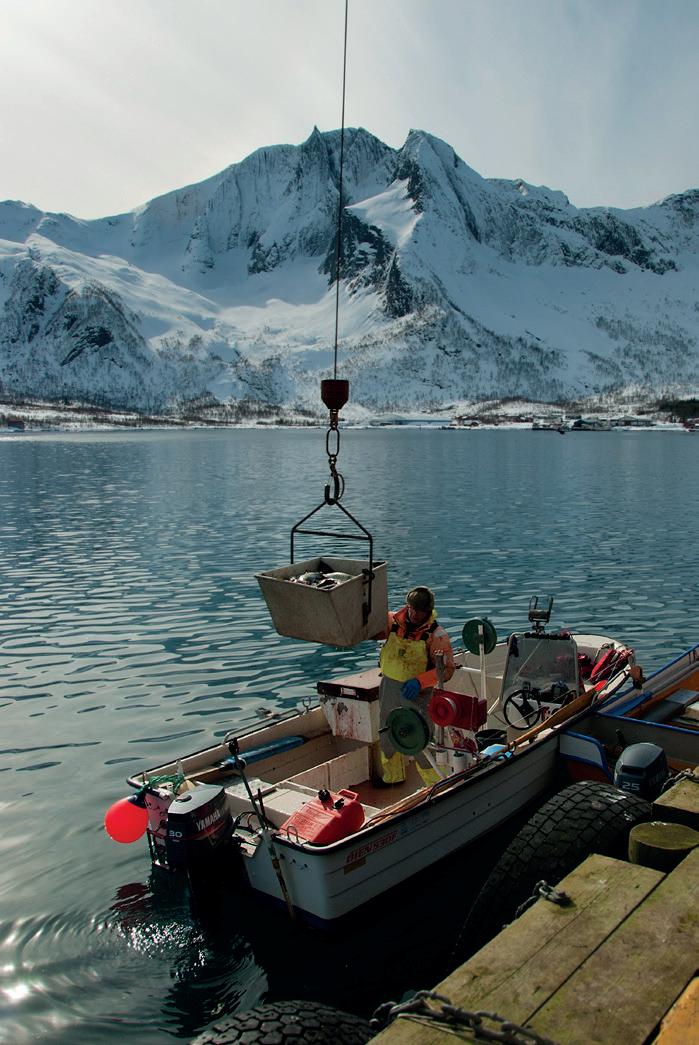
44 Cod: the fish that built Norway
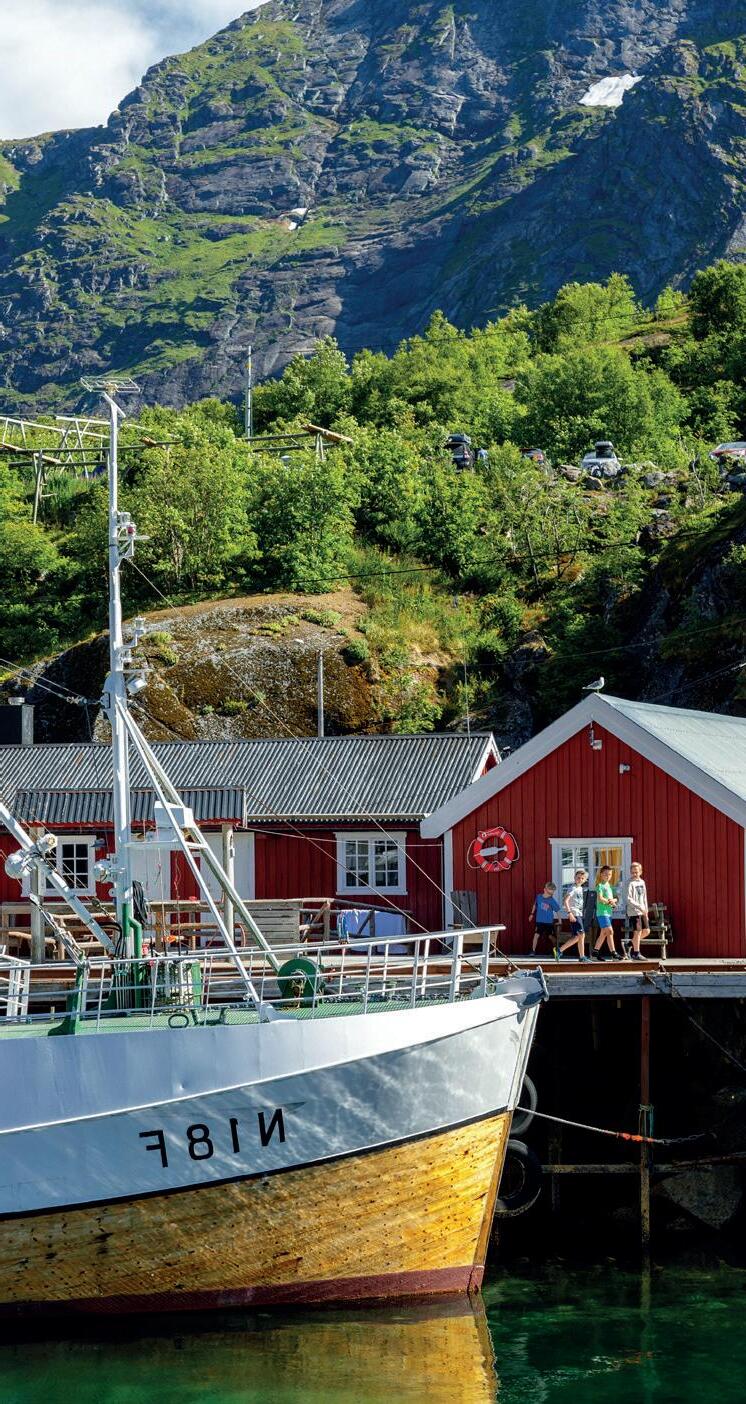
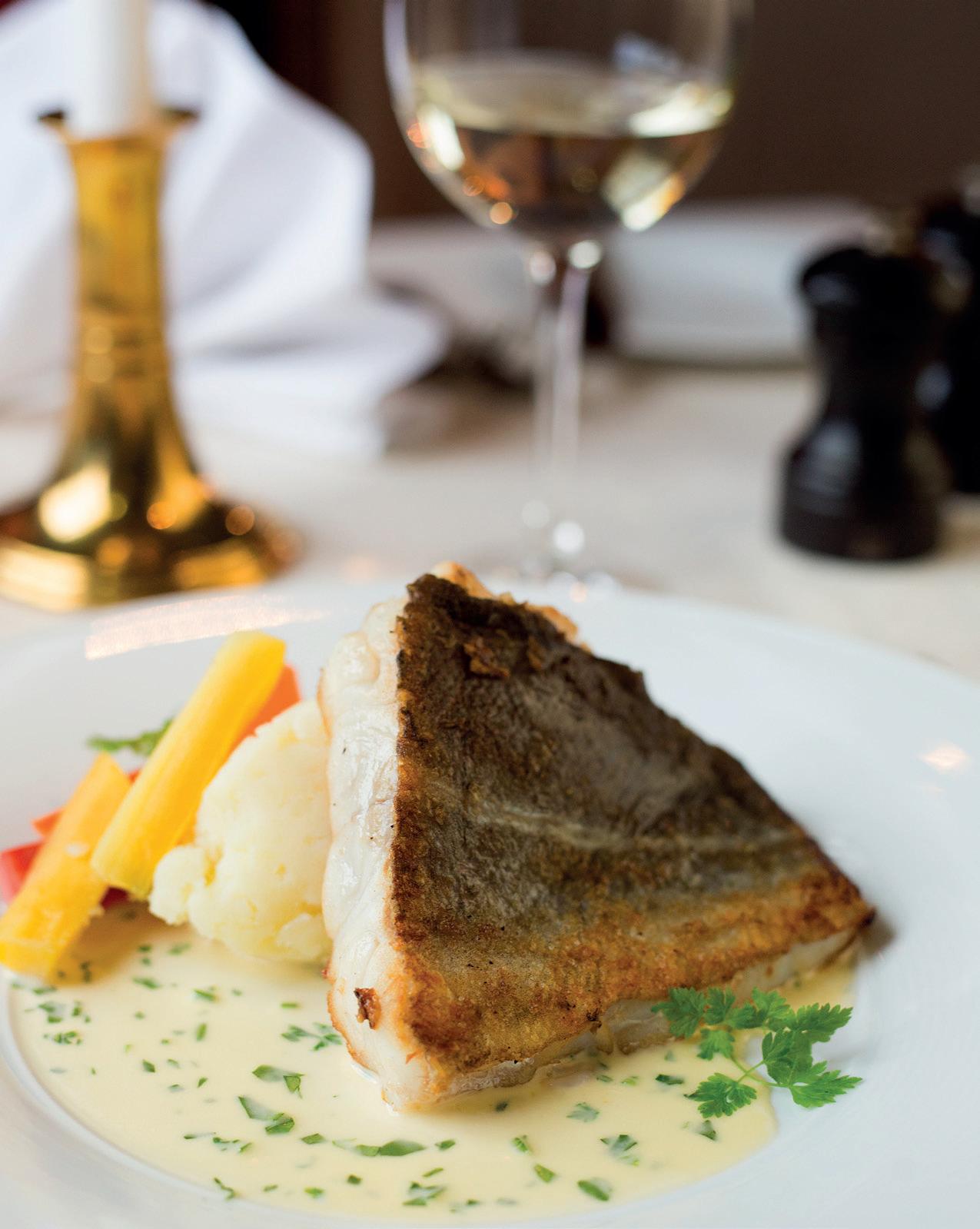
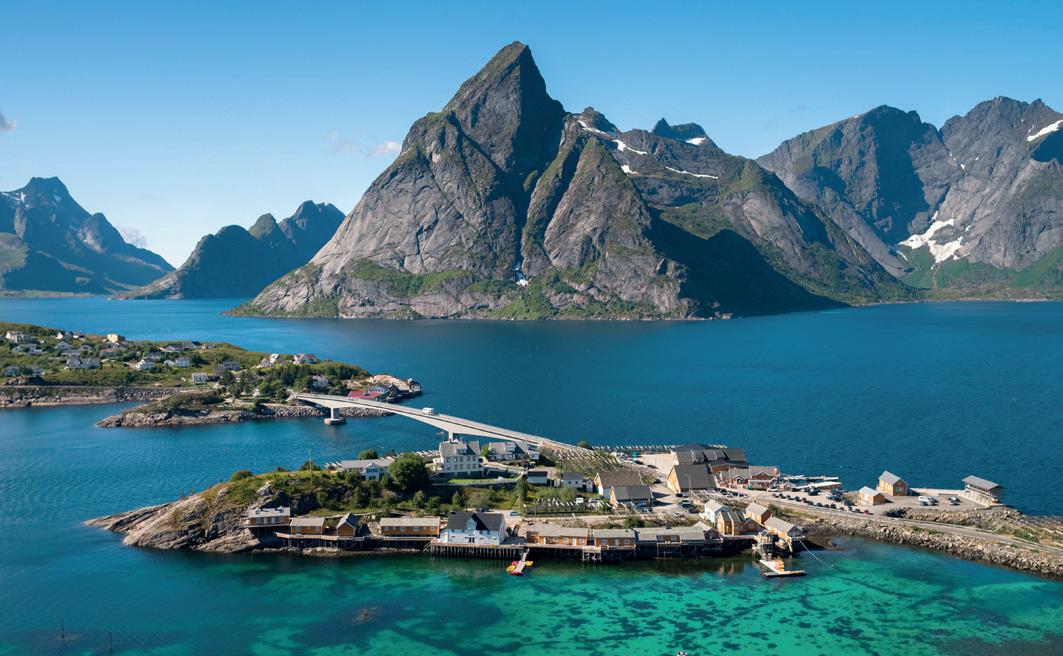
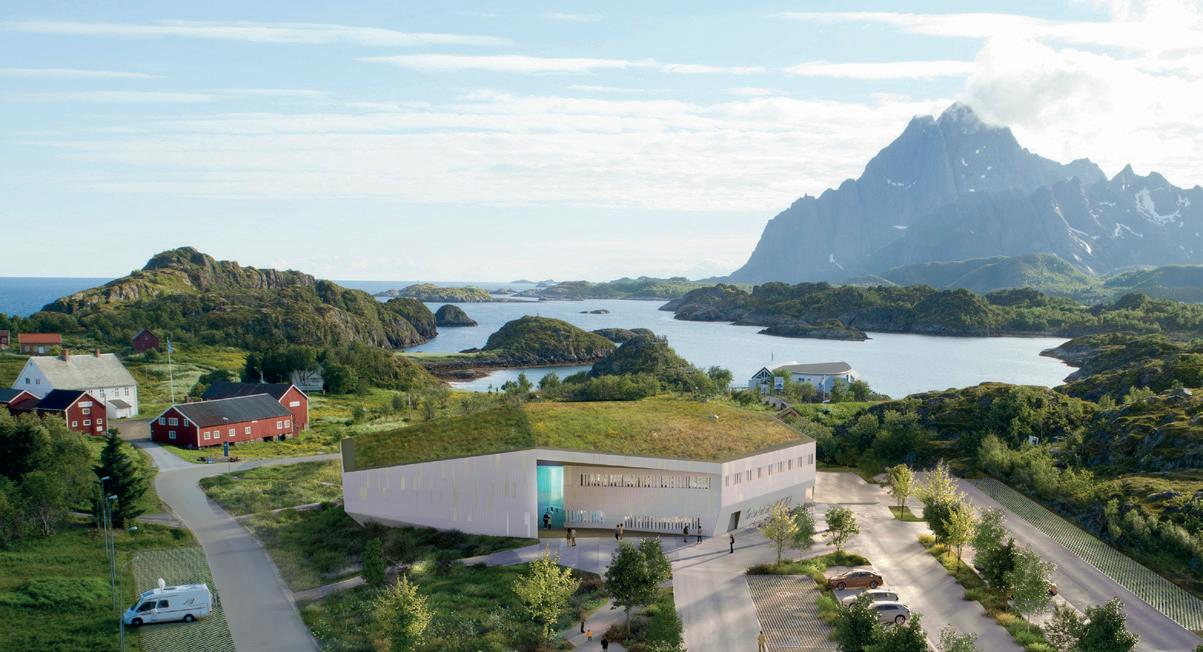
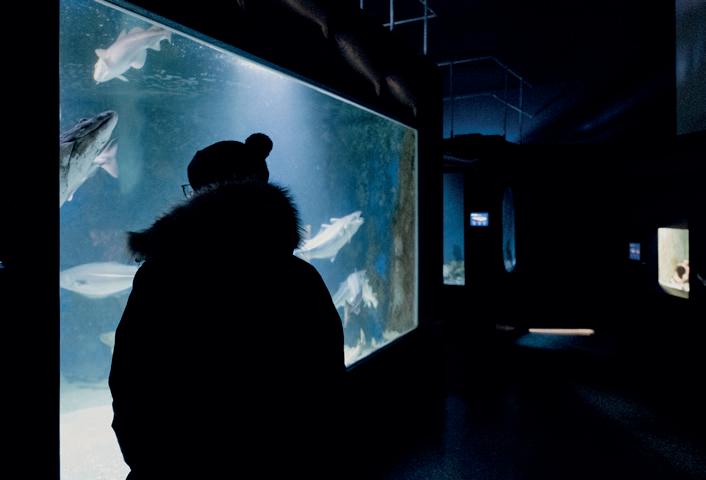
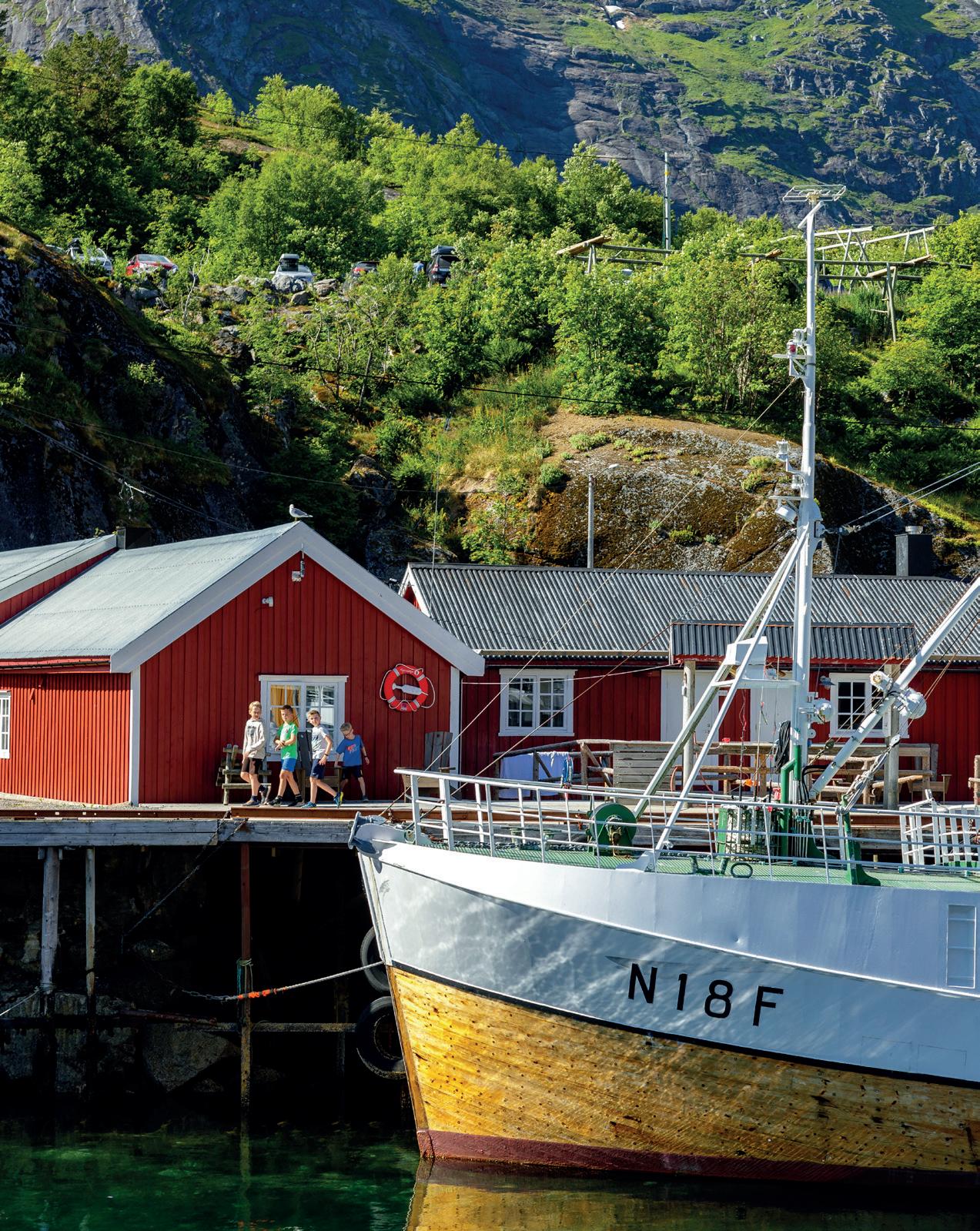
For centuries, cod has shaped Norway’s history, economy and coastal identity. This special feature looks at the role the fish has played in Norwegian society, with a particular focus on Lofoten during skrei season, when harbours, menus and local events centre on the migratory Arctic cod.
58 Greenland – waiting to be explored
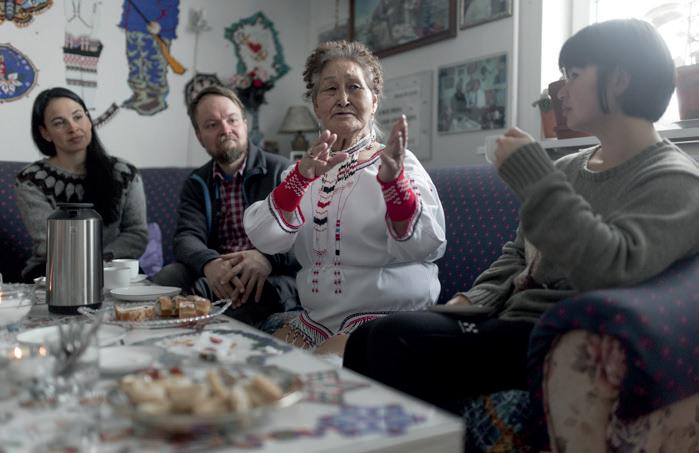
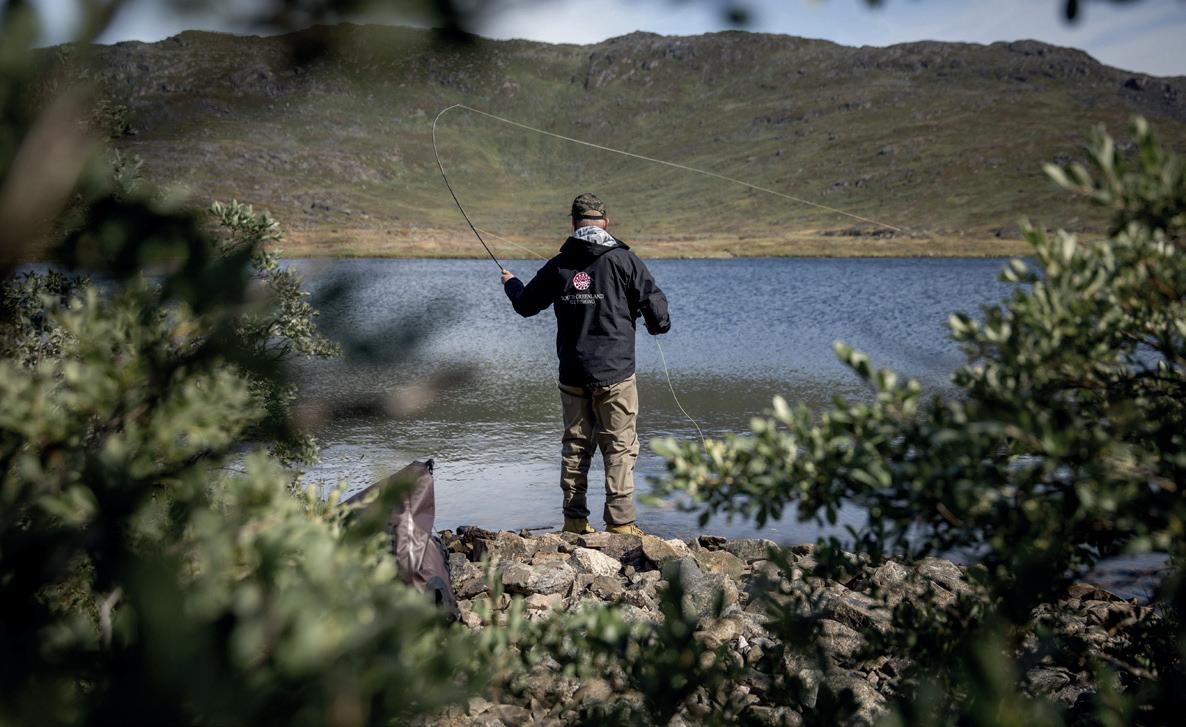
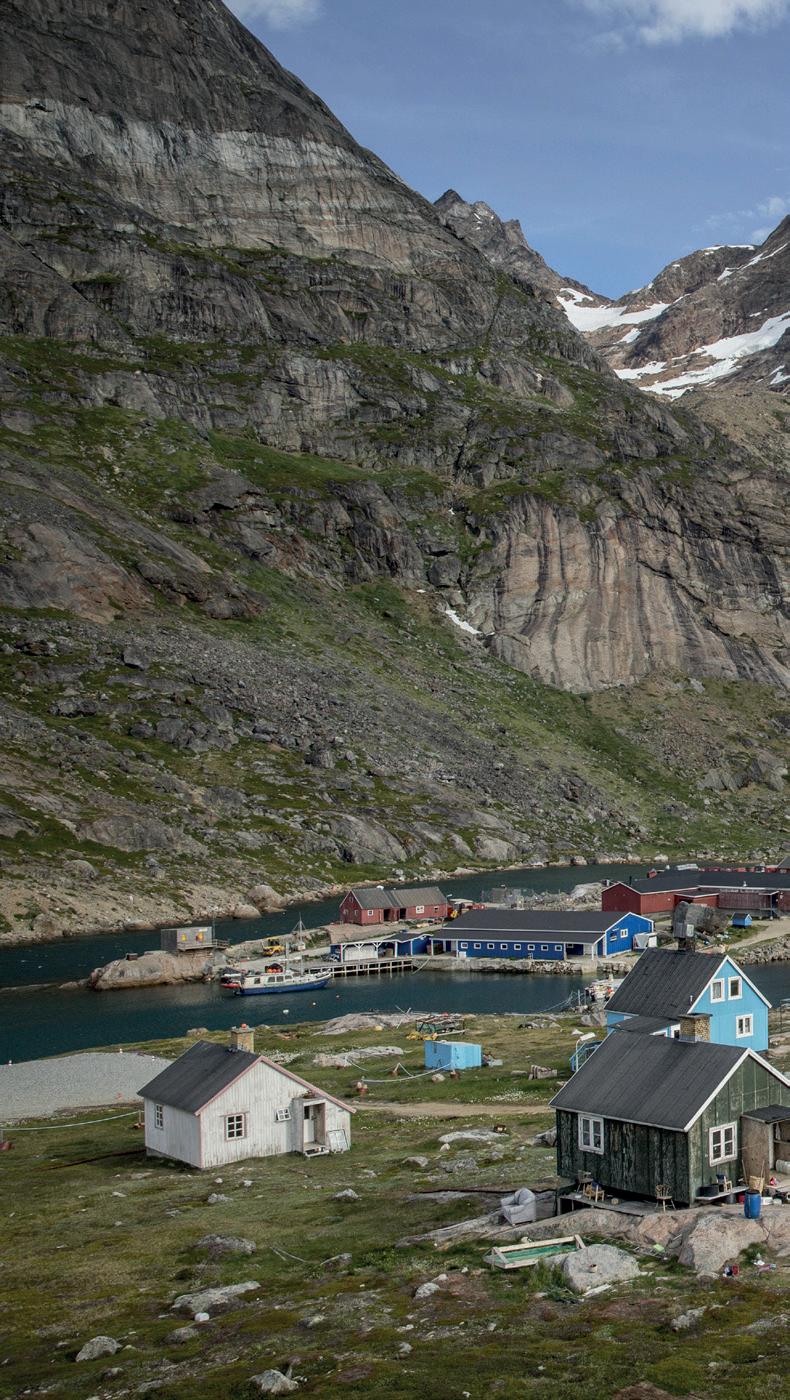
Xander Brett travels to Greenland to experience the Arctic wilderness up close, from icy landscapes and cultural encounters to the country’s growing appeal as a destination. With Nuuk’s airport expansion complete and further airport developments improving access, Greenland is becoming easier to reach than ever before. But greater accessibility also raises questions about how visitors should approach one of the world’s most extraordinary places – with curiosity, awe and respect.
TOP SUMMER EXPERIENCE IN DENMARK
64
World-class ballet beneath the open sky
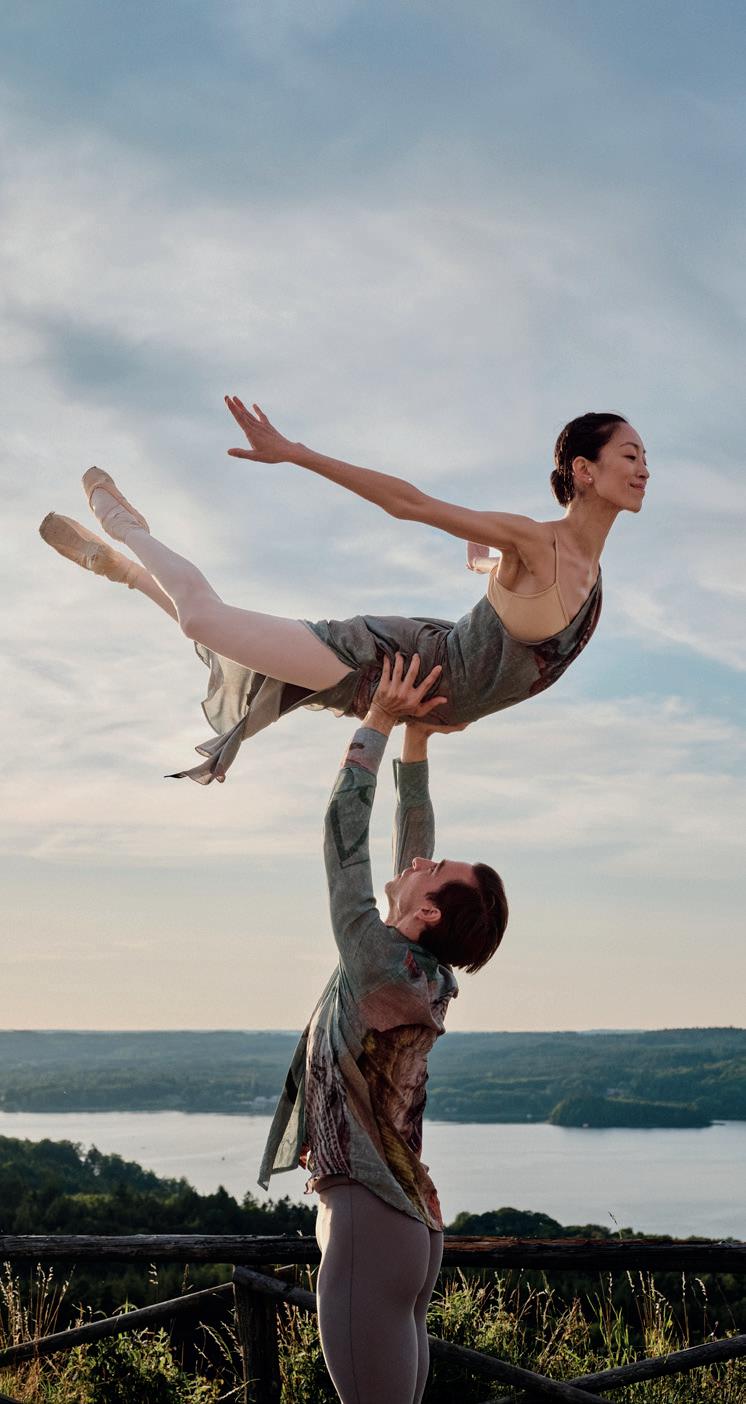
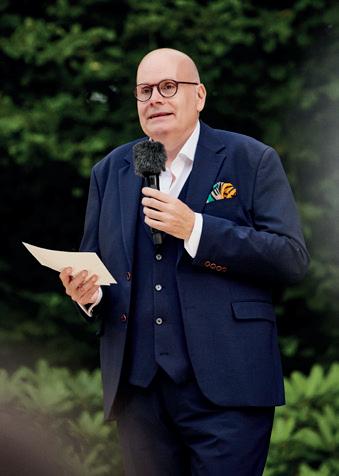
Scan Magazine talks to artistic director JensChristian Wandt about Verdensballetten, the summer ballet that brings classical dance and music out of the theatre and into Denmark’s historic monuments and natural landscapes. What began in 2008 as a single open-air performance has grown into two weeks of shows with internationally renowned artists, loyal audiences and dates now also planned abroad.
CULTURE
98 Culture – events, music and film highlights
Where to go and what to experience this month?
Our Culture Calendar rounds up the best arts events across the Nordics, music columnist Karl Batterbee recommends new Nordic pop numbers to sing along to, and illustrator Gabi Froden ponders the advantages of Scandinavian bed manners. Meanwhile, film and TV columnist Anders Lorenzen takes a look at the Scandinavian winners at this year’s Cannes Film Festival.
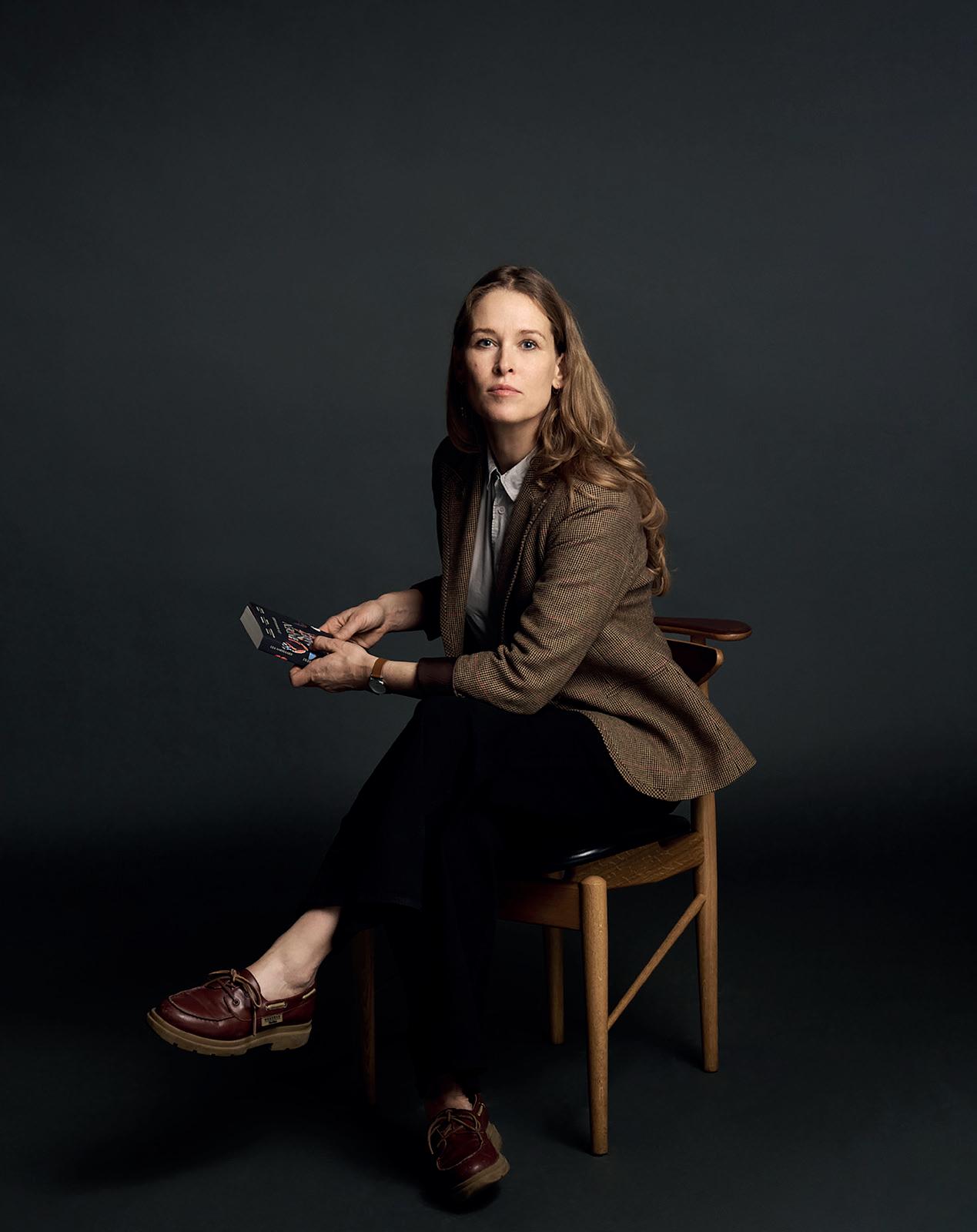
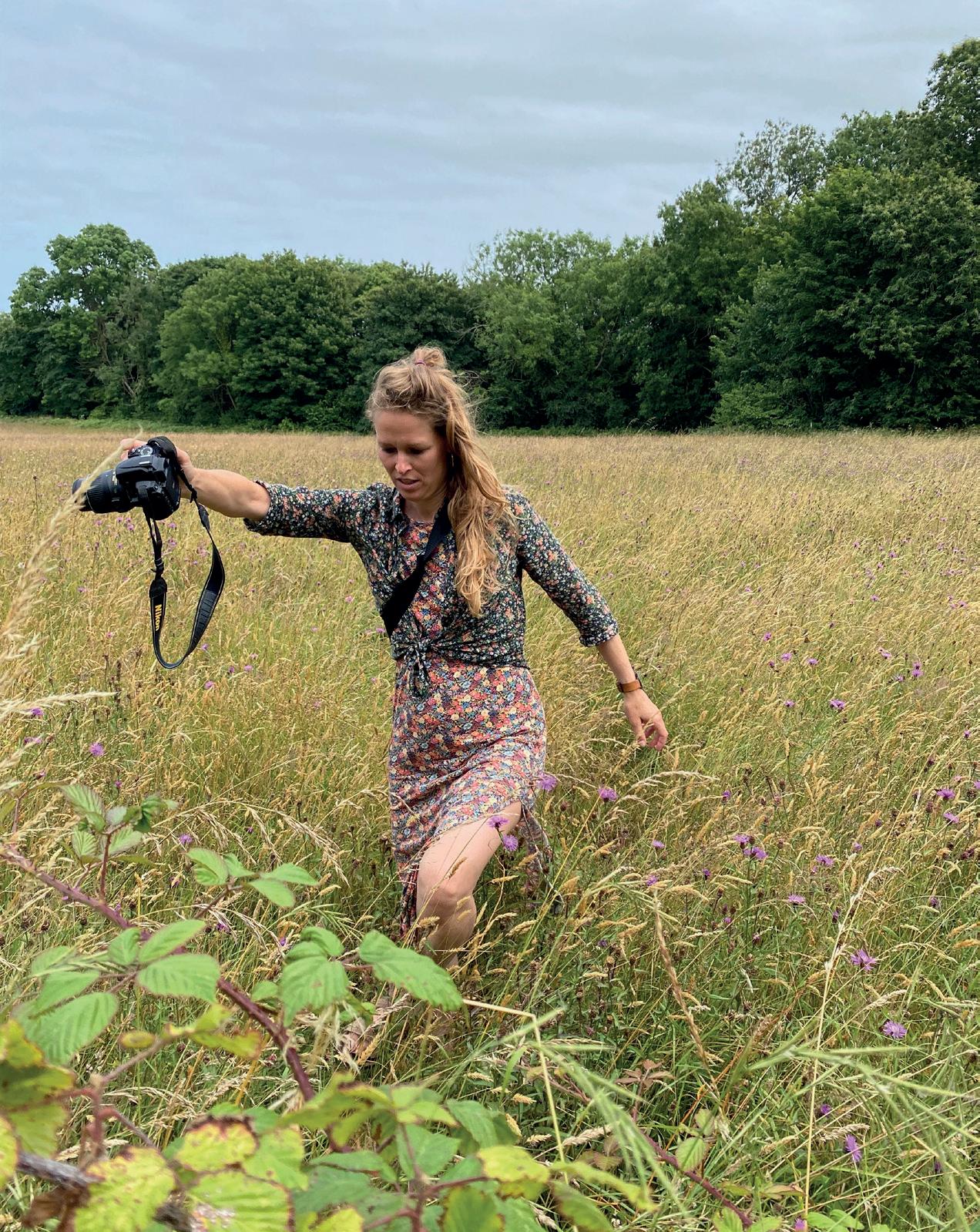
Lea Korsgaard on chasing butterflies and learning the language of nature
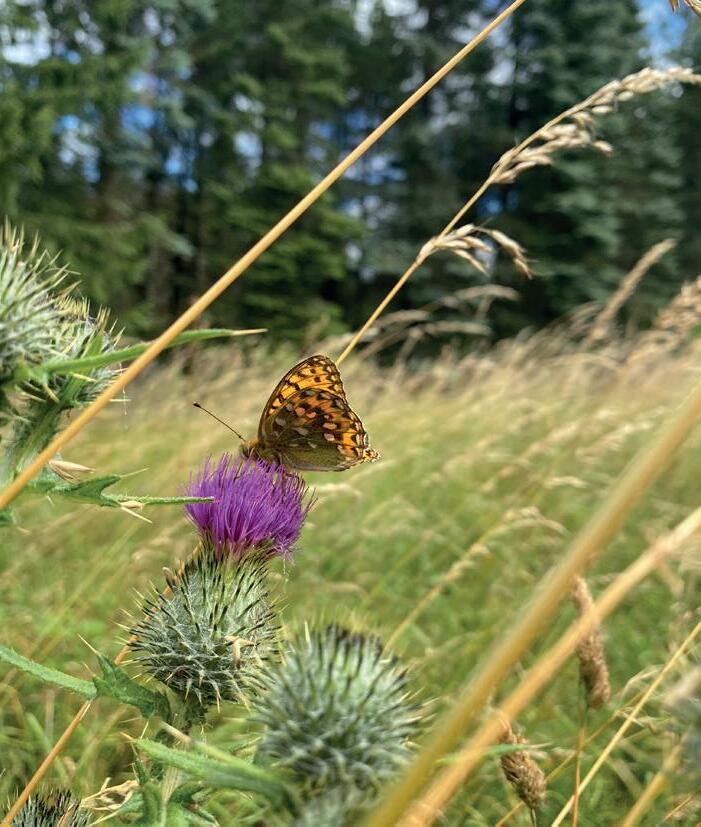
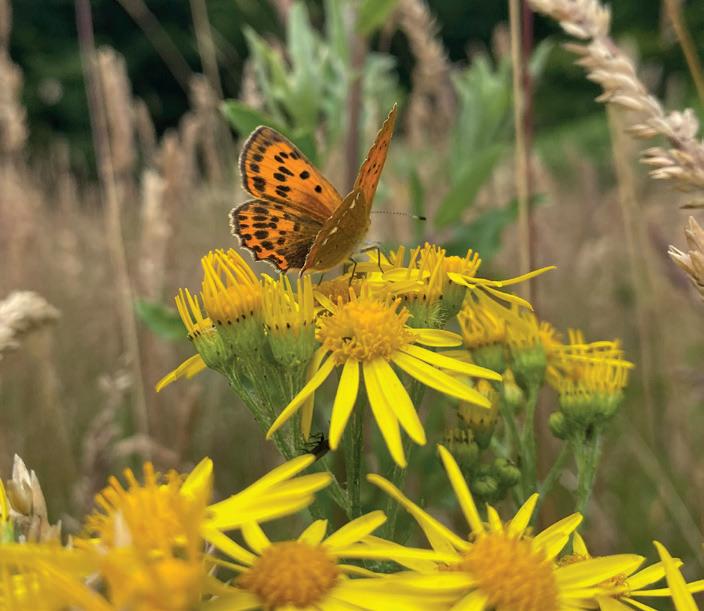
With her bestseller The Butterfly Season, published in English this month, Danish journalist and author Lea Korsgaard tells Scan Magazine how a seemingly quirky ambition to see all 64 of Denmark’s butterfly species became an existential journey through nature, death and life.
By Signe Hansen | Photos: Lea Korsgaard
Photo: Robin Skjoldborg
From Aristotle’s foundational observations of the living world, through the 17th century Dutch microscopist Jan Swammerdam’s unsettling discoveries about metamorphosis, to the butterfly obsession of Victorian-era collector Margaret Fountaine – whose vast collection of 22,000 specimens invites its own psychological analysis – The Butterfly Season is a tour de force. Not only of Lea Korsgaard’s superb writing, but also of the mind-blowing work carried out by a diverse cast of humans, all trying to understand, categorise and document one of our most intriguing fellow inhabitants on planet Earth: the butterfly.
In Denmark, the book has drawn rave reviews, with publishing rights sold to 18 countries. For Korsgaard herself, however, the book began less as a writing project than as a way to legitimise what some might call an odd idea: to see all of Denmark’s butterfly species in a single season. Asked whether she knew from the start that the project would become a book, she replies: “No, the longing came before the idea of the book.”
“Really, it was an idea I ended up taking seriously simply because, on some level, I had to,” she explains. “But I used the idea of a book – or a podcast series, or whatever it might become – more as an excuse. Fairly quickly, I began saying to people: well, maybe it will end up as a book one day, and perhaps it could become a podcast too. That made it easier to reach out to the experts who helped me along the way.”
As the author of five books and the co-founder and editor-in-chief of Zetland, a Danish digital newspaper known for its in-depth, engaging journalism, Korsgaard is used to turning complex subjects into compelling narratives. In this book, however, one might say she does the opposite – she takes what first appears to be a simple, quirky story about a woman hunting butterflies in the Danish landscape and turns it into a profound reflection on humanity’s relationship with nature.
From orgasms to butterflies
Despite her leading role in Danish media, Korsgaard knew she wanted to become
a writer long before the idea of studying journalism occurred to her. “Writing in that kind of long, continuous, scenic manner is simply one of the things I love most,” she explains.
In fact, the route to journalism was not one she had planned, but calling the training the best tool in the world, she stresses it is one she is very grateful she ended up taking. Impressively, alongside her work and family life, she has found time to write or co-write no less than five books, including Orgasmeland, a book on the psychoanalyst Wilhelm Reich’s years in Denmark and the Sexpol group, as well as a biography of Danish actress Ghita Nørby and a journalistic reconstruction of a mysterious Danish book theft.
When asked how The Butterfly Season fits into her seemingly eclectic author-
ship, Korsgaard answers without hesitating: “I definitely feel that this is the book I have written most from the heart, and I see all my other books as a kind of preparation within a specific subgenre, leading up to this one.”
While taking the reader through her personal journey in search of Danish butterflies, The Butterfly Season also sees Korsgaard use her journalistic instincts to full effect. Alongside engaging portraits of past and present lepidopterists, Korsgaard’s investigations take her from gardens on Bornholm to a French field and a police station in Aalborg. There are stories of sexual frustrations channelled into butterfly collections, reflections on the minute scale of humanity and Earth, and, through it all, a subtle meditation on the relationship between humans and nature.
Speaking the language of nature
As the season unfolds, that meditation deepens. Drawing on writers, scientists and thinkers who have tried to understand the living world before her, Korsgaard begins to ask larger questions about what it means to be alive, and what it means to belong to nature rather than simply move through it.
Yet the book’s most profound insights do not come from the literature she encounters, but from nature itself. At Råbjerg Mose in North Jutland, nature demonstrates that its splendour is not found only in the grand landscapes that immediately take our breath away. “It looked completely ordinary,” she recalls. “There were trees, grass, a field, and everything was green. I remember thinking: I have driven all the way to North Jutland, and this looks like something I could have seen at home in North Zealand.”
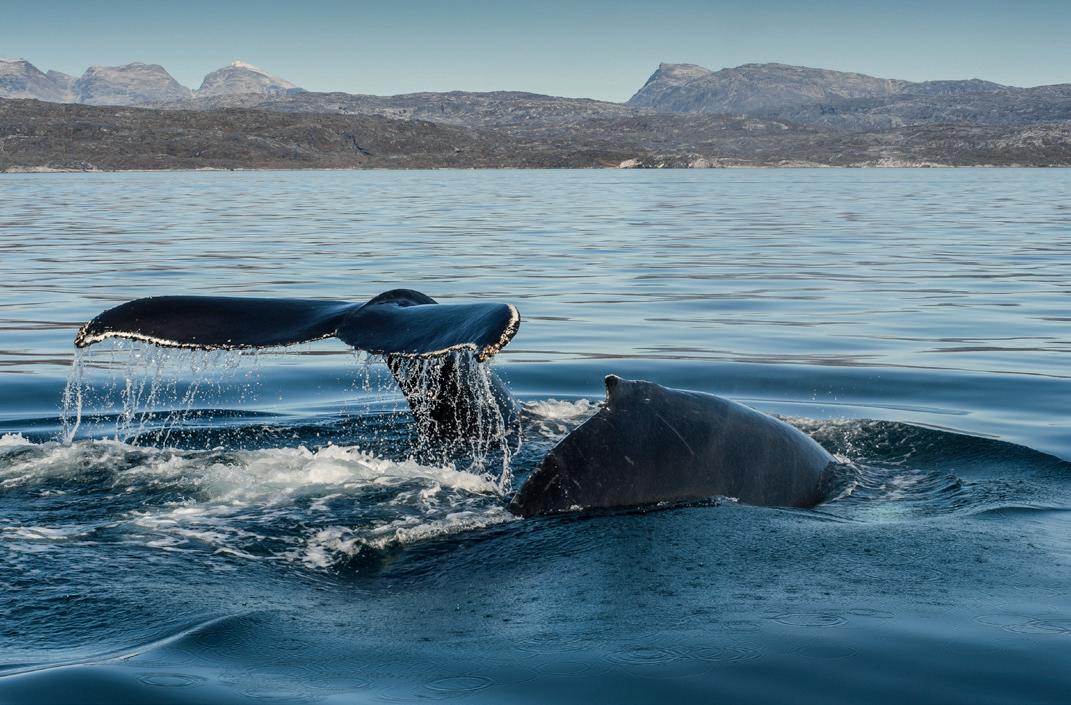
But as she began moving down among the grasses, the landscape changed. Or rather, her way of seeing it did. The green was no longer simply green, but full of shades, textures and hidden colour. Leaves appeared sticky, smooth, knobbly or serrated. Beetles and flowers
emerged from what had first seemed an unremarkable field. “For me, it became a realisation of what it actually means to see,” she says. “Not just to look with the ordinary gaze we walk around with, almost in a fog, but to have the words for what we are part of and really focus our attention on it. Then it appears so clearly and so wonderfully.”
That experience became one of several turning points in the book, moving Korsgaard towards a stronger feeling of connection with the living world. The book, she says, is not written with one intended reading, but for her it describes a longing “to learn to speak the language of nature” –and through that language, to understand what humans are part of and therefore responsible for.
“I don’t think we can take responsibility for nature on an abstract level,” she says. “We have to enter into the very concrete nature we are part of, to feel the deep joy of being allowed to belong to it – and, hopefully, a deep sense of responsibility towards it.”
Follow your passion
Even if Korsgaard says the book does not have a single meaning, The Butterfly
Season leaves the reader with a lasting sense that something great can be found in the seemingly ordinary – and that giving serious attention to what draws us can have profound consequences. Asked how she found time for the project alongside her work as editor-in-chief of Zetland, her role as chair of the board of the Danish School of Media and Journalism, and family life with three boys, then aged nine, 11 and 12, Korsgaard answers: “I think you have to commit to your passions. It’s absolutely crucial for your life energy that you follow the current moving through your body and sending you in one direction or another. Whether that means getting out into nature, building kites, starting winter bathing – whatever it is, you have to go.”
For some readers, that current could well lead straight to butterflies. With the success of her book, Korsgaard may inspire many to follow in her footsteps –though fortunately for the butterflies, the collectors of our age tend to carry lenses rather than nets. Since publication, she says, hundreds of readers have already emailed her their own butterfly photographs.
The Butterfly Season ‒ On Beginnings, Endings, and the Life in Between arrives in bookshops on 11 June.
Fashion Diary
June is finally here. As we head into the height of summer, it’s easy to get swept up in the season’s warmth and pleasures. But even as we build our summer wardrobes, it’s worth remembering the importance of caring for the climate that shapes this favourite time of year. For this month’s Fashion Diary, we’re looking at good quality fabrics, ethically minded brands, and timeless pieces that not only celebrate summer and its bursting blooms but also reflect a thoughtful approach to the environment around us.
By Celina Tran | Press photos
Knowledge Cotton Apparel was founded with the aim of producing menswear responsibly, using low-impact materials like cotton, limiting chemicals, water, and waste, and taking action to reduce greenhouse gas emissions. Knitted stripe polo in brown stripe, 90 EUR www.knowledgecottonapparel.com
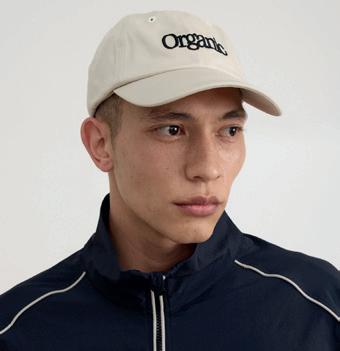
Based and designed in Copenhagen, Organic Basics tracks the environmental footprint of every product with Life Cycle Assessment data and a breakdown of total carbon emissions of each product. Moreover, a part of your payment will go directly towards environmental initiatives like Cool Earth, the Or Foundation, and Big Blue Ocean Cleanup. In other words, there are plenty of good reasons to buy this sleek, versatile cap. Core casual cap in sandstone, EUR 19.50 www.organicbasics.com
Made from a 100 per cent recycled premium Japanese fabric, these green striped shorts from Marda are light, soft, and only take a few minutes to dry post-swim. With back pocket sippers and stainless-steel cord stoppers, they’re stylishly minimalist while having everything you might need from a pair of swimming togs. One per cent of all their swim short sales will also be donated to The Ocean Cleanup. Happy bathing. Green striped mid-length swim shorts, USD 149 www.mardaswimwear.com
When Fanny Kaiser founded Kaiserin in 2018, her goal was to create swimwear for every body type. Hugging the body in all the right places to leave you both comfortable and confident, the stunning Nelly Swimsuit in Kaiserin is a one-piece swimsuit with a deep neckline and high cut leg, elongating the figure while providing full coverage. With a double lining and layer, the swimsuit offers reliable support for bigger busts while keeping its shape and colour over time, making it perfect for a capsule wardrobe.
Nelly swimsuit in cream, EUR 145 www.kaiserin.com
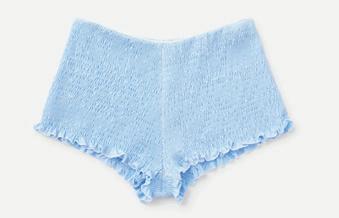
These stunning smocked pearl blue shorts have a luxuriously delicate frill at the hem and are fully lined for confident coverage and ease. Draping beautifully over the hips, they’re perfect for beach holidays or a Scandi summer day of picking berries, lake dipping with friends, and barbecuing at night.
Sea smocked shorts in pearl blue, EUR 158 www.seaquelle.com
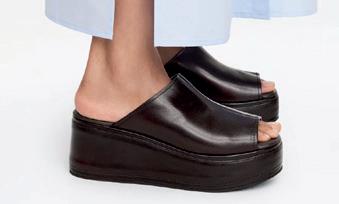
Summer holidays, whether by the coast or in a city, means a lot of strolling. These cow leather platform sandals do not only look incredibly cool and elegant, but also give you a boost without sacrificing comfort. Wear a matching bag and some gold jewellery et voilà, you’ll be ready to hit the town.
Leather platform heels in dark brown, EUR 159 www.arket.com
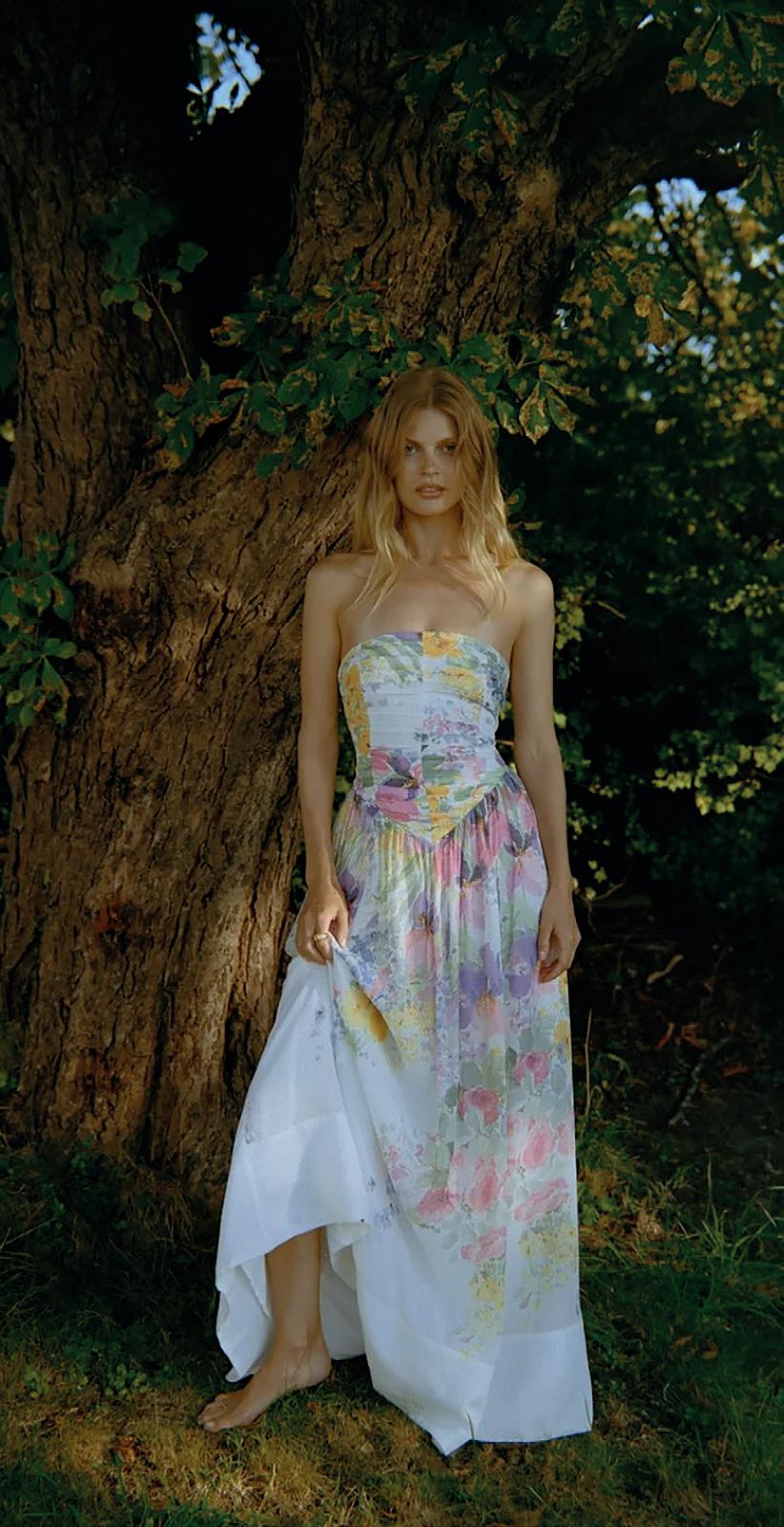
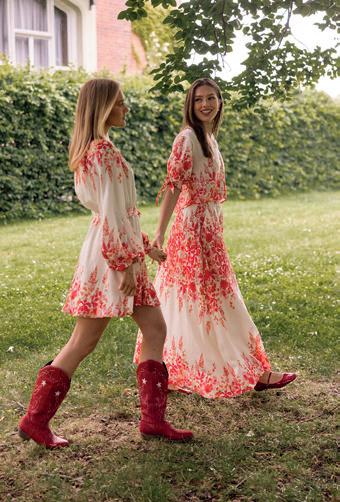
Of course, it wouldn’t be summer without a floral dress. Made from FSC certified viscose, the dotted Georgette bandeau dress is a maxi-length, delicately feminine summer dress with beautiful rouching in the front and smocking in the back. Without sleeves and a V-shape at the front to flatter the body, it’s a timeless piece that can be used at garden parties, events or date nights. Pair with some simple jewellery and heels, but let the floral pattern speak for itself.
Dotted Georgette bandeau dress in flower meadow, EUR 425 www.bytimo.com
Experience the serenity and warmth of Lapland, whatever the season
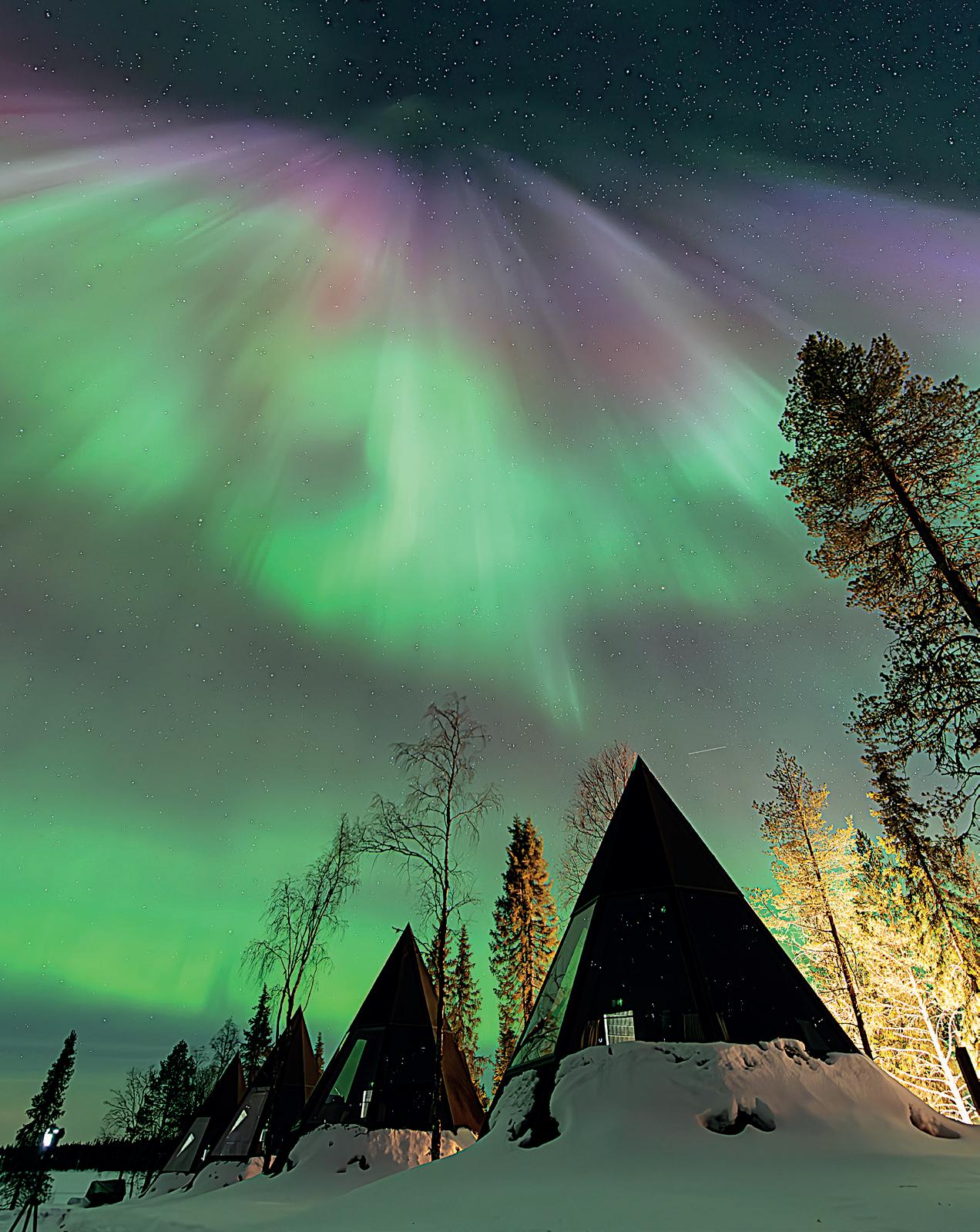
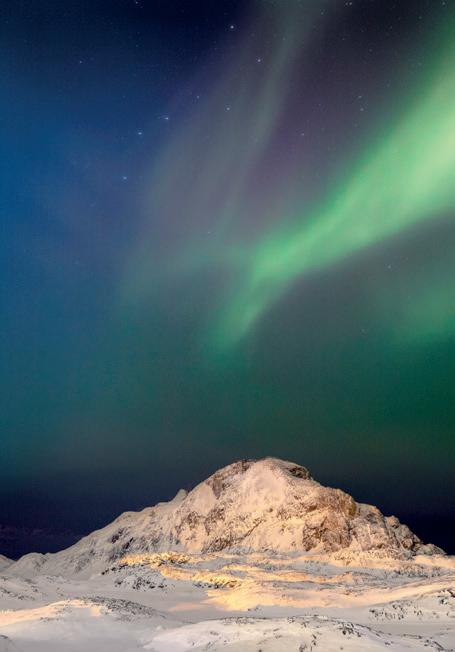
Seeing the Northern Lights in Lapland features high on many travel bucket lists. At Nivunki Village in Muonio, close to the Arctic Circle in the far north of Finland, that experience is given a quieter, more intimate setting, with an adults-only resort and uniquely designed glass huts emphasising privacy, stillness and peace.
By Molly McPharlin | Photos: Nivunki Village
Founded by legendary local Lappish entrepreneur Mauri Kuru, the concept behind Nivunki Village is rooted in Lappish väärti culture, where hosts and guests share a close and respectful relationship. “Working in hospitality has been part of the Kuru family for nearly 100 years, beginning with Mauri’s grandparents hosting travellers under their own roof in the early days of tourism in Lapland,” says Sami Luoto, head of Nivunki Village. “The mission of Nivunki Village is to return to those roots of Lappish hospitality and create a place built around nature, with authenticity, local culture, personal service, and meaningful experiences at its core.”
A different kind of glass house experience
Many glass accommodations in Lapland focus on architecture or Northern Lights visibility. Nivunki Village offers something deeper. Far away from crowded resort centres and light pollution, the village is situated lakeside on approximately 300 hectares of private land. Guests often mention the silence, calmness, and relaxed pace of life as the most memorable parts of their stay. Another difference is that the entire concept is deeply rooted in local heritage. The guides, hosts and owners are local people who grew up in Lapland. Activities begin from the village in small groups, with a focus on personal encounters rather than mass tourism.
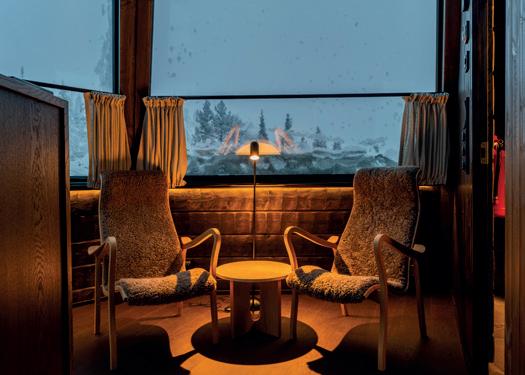
The architecture itself is also unique. “The glass huts were designed specifically for Nivunki Village in Finland, inspired by the traditional Sámi kota, a mobile teepee-like shelter historically used by Sámi people travelling with reindeer,” says Luoto. Combining modern comfort and simple Nordic design, each hut has heated floors, air conditioning, private bathrooms, and large glass surfaces through which guests can observe the surrounding wilderness from a cosy bed or armchair.
Exquisite local cuisine in historic settings
Although the restaurant building is new, it was built by local craftspeople in a time-honoured style, using whole logs. It is a culinary haven in the middle of the wilderness, highlighting local ingredients such as fish, wild berries, mushrooms, and game in classic Finnish dishes.
At the centre of Nivunki Village is a traditional farmyard that feels lifted from historic Lapland, with several 200-yearold wooden buildings still standing. While much of the region was destroyed towards the end of the Second World War, Nivunki’s buildings survived. They have since been carefully renovated and are now protected as cultural landmarks by the National Museum of Finland. Today, the main house serves as a lounge for guests.
Explore Lapland at any time of the year
With spring and summer still relatively undiscovered by international visitors,
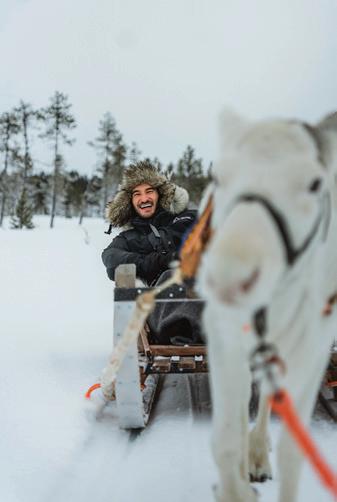
the quiet of these seasons makes them an especially rewarding time to visit. In spring, bright snowy days still offer the possibility of skiing and snowshoeing. Meanwhile, summer brings uninterrupted sun, perfect for hiking, fishing, canoeing, and cycling. “Many guests are surprised by the peacefulness of summer in Lapland, when forests, lakes, and fells can feel almost untouched,” says Luoto. Autumn is also becoming increasingly popular because of the beauty of the changing leaves and the excellent visibility of the Northern Lights. During winter, Lapland’s most favoured season, guests can experience husky safaris, reindeer rides, snowmobiling, snowshoeing, ice fishing, cross-country skiing, and spectacular shows of aurora borealis.
The friendliness and creativity of Lappish people
Rather than urban attractions, the region around Muonio is defined by nature, local culture, and small northern communities. Guests can explore handicrafts, artists’ studios, galleries, reindeer farms, and traditional northern ways of life, while the nearby Pallas-Yllästunturi National Park offers open fell landscapes and air considered among the cleanest in the world. For Luoto, Nivunki Village’s collaboration with local businesses and artists adds further depth to the guest experience, connecting the resort more closely to the place around it. “We collaborate with local reindeer herders, fishing guides, artists, and storytellers to create authentic moments connected to the
region. Most are arranged by our own guides, all of whom are locals with more than ten years of experience.”
For Luoto, what makes Lapland special is difficult to capture through images alone. “It’s the feeling of space, silence, darkness, clean air, and the connection to nature that people remember most vividly,” he says. “In Lapland, we really have eight distinct seasons. They’re all so different from each other, and each one offers a reason to visit.”
nivunkivillage.com
Facebook: Nivunki Village
Instagram: @nivunkivillage
Trip Advisor: Nivunki Village
LinkedIn: Nivunki Village
Photo: Filippo Dias
Shangies by Stilov –colour, comfort and character
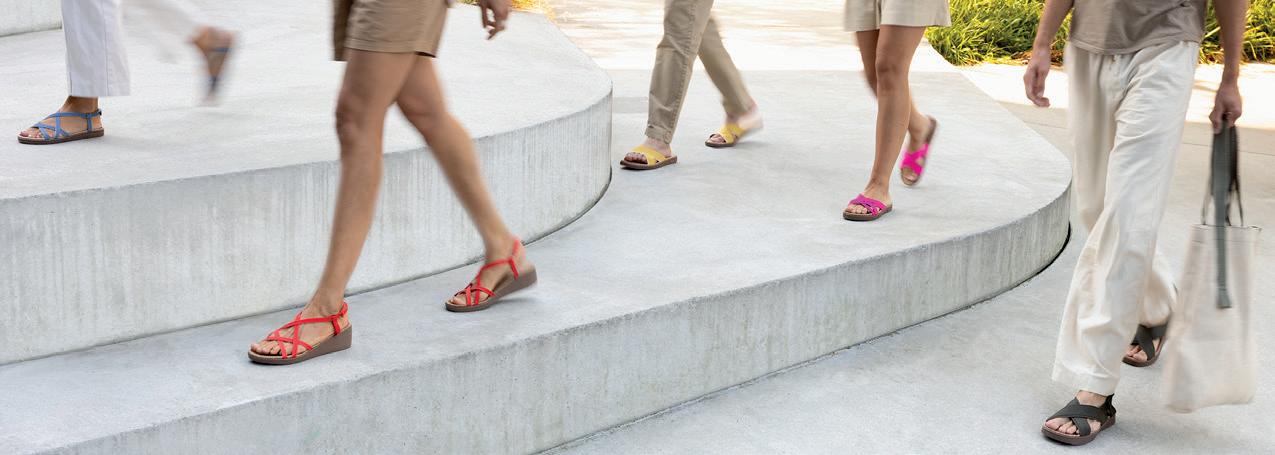
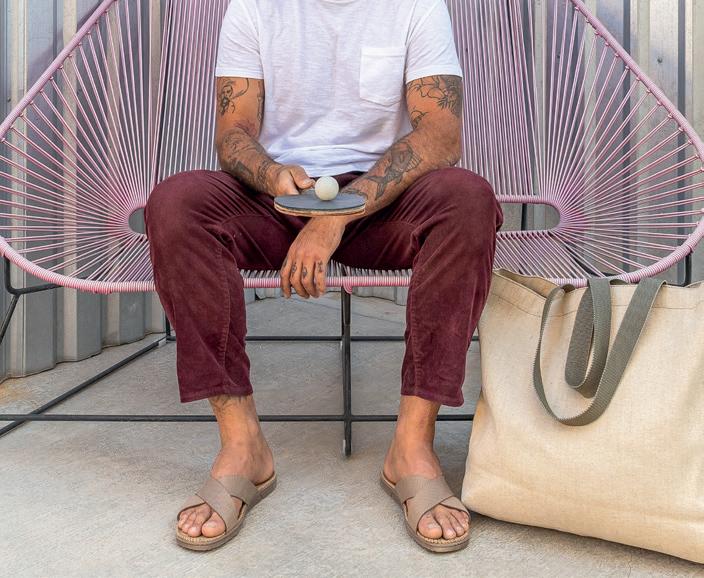
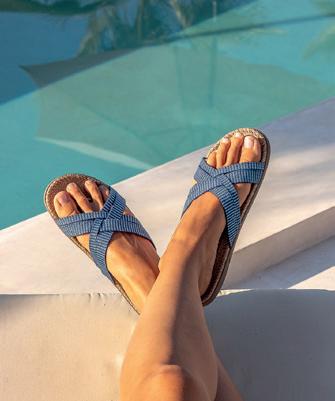
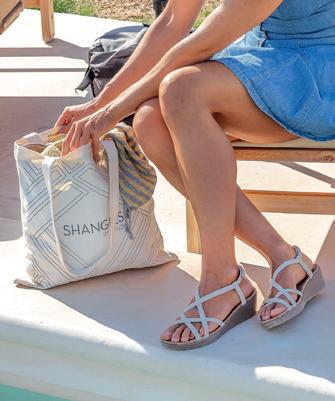
Lightweight, durable, and available in a wide range of colours, the natural jute sandals from Danish brand Shangies by Stilov have grown into an international success. Combining a clean Nordic aesthetic with everyday comfort, they are now sold by close to 400 unique retailers worldwide.
By Signe Hansen | Photos: Stine Albertsen
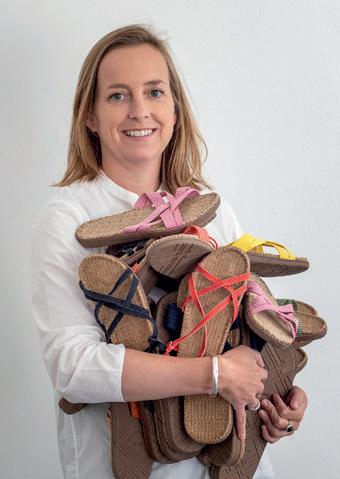
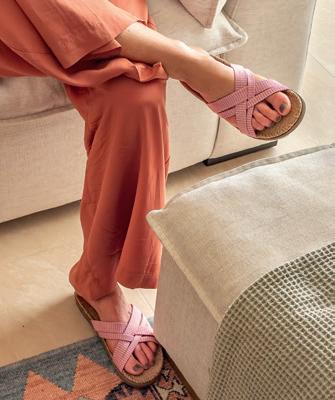
Shangies began with a fascination for jute as the natural material caught the attention of founder and owner Maria Stilov. Jute gives the sandals their distinctive texture and a gentle, almost massage-like feel. It also makes the sandals more versatile than a conventional summer shoe. “Thanks to the breathable and temperature-regulating qualities of jute, our Shangies sandals are versatile enough to be worn all year round — offering a warm, hug-like comfort indoors as slippers, while feeling airy and cooling outdoors in the summer heat,” Maria explains.
This combination of comfort, colour, and effortless versatility has shaped the brand from the beginning and helped Shangies become a distinctive Danish lifestyle brand first in Denmark and now internationally. This year, Shangies celebrates its 10th anniversary with a growing team of six employees, a 100-square-metre showroom and store in Copenhagen’s Østerbro neighbourhood, and a warehouse north of the city.
From car boot to boutique
The idea behind Shangies began during Maria’s seven years in Shanghai, where she worked for a premium Danish furniture company. Surrounded by Scandinavian design traditions and natural materials, she discovered jute and be -
gan imagining a product built around the natural fibre. “Then the idea of making sandals in different colours began to take shape, and the idea of developing a sandal brand grew,” she explains.
The first sandal was developed with a designer Maria already knew and who still designs Shangies products today. From the outset, she wanted the sandals to be colourful and comfortable, but also accessible in price and independent of the fashion calendar. That instinct also shaped the way she approached shops.
In the beginning, while Maria was still partly based in Shanghai, a friend cycled around Copenhagen looking for the small, unique places she felt would suit the brand. Later, Maria drove around Denmark herself in her father’s car, with a car boot full of sandals and an old-fashioned map beside her. “It was high summer, and if a shop asked how quickly I could deliver, I said: in ten minutes. I just went out to the car, packed the order, and delivered it straight away,” she recalls.
From early on, the business also became a family effort, with Maria’s mother helping to build up the warehouse, take care of bookkeeping, and pack orders. Today, at 80, she still lends a hand when needed.
Founder and owner of Shangies by Stilov, Maria Stilov.
The fashion of feeling good
The focus on carefully selected retailers has remained important to Shangies. Rather than aiming for shoe shops or large fashion chains, the brand is found in interior shops, lifestyle stores, flower shops, boutique hotels, and other places where sandals are not necessarily expected. “The fewer products there are like ours in a shop, the more fun I think it is,” says Maria. “We would rather be in small, special shops than in all the big chains.”
That approach has not limited the brand’s reach. Today, Shangies is represented in more than 30 countries – from Iceland across Europe and overseas to destinations such as the Caribbean and the USA. Still, the product itself remains deliberately consistent. Rather than following seasonal colour trends, Shangies works with a broad and enduring colour palette that changes only gradually over time.
Today, the Shangies universe spans an impressive 45 colours across six different styles. “I don’t come from the fashion industry, so I didn’t want to make designs based on fashion colours but focus more on timeless designs,” Maria says. “We keep the colours that feel right and occasionally add new styles and colours. “For many customers our Shangies sandals have turned into something collected over time, with many customers returning each year to add another colour. “We have many Shangies fans – I think fash-
ion has moved towards shoes you can actually feel good in, and I hope people feel that in our sandals,” Maria says.
To match or not to match
Over time, the Shangies universe has gradually expanded beyond the original Woman#1 sandal. Today, the collection includes styles with heel straps, wedges and kids’ sandals, while growing demand from men has been met with several unisex designs, available in sizes 35–47.
Shangies are very versatile, making them suited to holidays, beach trips, the
spa, everyday family life and much more. “They’re designed for everyday life, and they can be washed too,” says Maria.
Indeed, with summer around the corner and Shangies’ combination of comfort, affordability and colour, there is really only one question left – should everyone in the family choose their own favourite colour, or is this the year to wear matching family sandals.
www.shangies.com
Facebook: shangiesbystilov
Instagram: @shangies_by_stilov
Finding beauty in details with Secrets by B
True luxury often lies in the small things: the soft drape of a blouse, the shimmer of gold catching the light, or the confidence that comes from wearing something that feels thoughtfully made. At Secrets by B, these details are the very heart of the brand.
By Celina Tran | Photos: Secrets by B
Founded by Benedikte Bruknapp, Secrets by B is a Norwegian jewellery and clothing brand built around timeless femininity, everyday elegance and carefully considered design. Every collection is created with one goal in mind: to help women feel beautiful, confident and effortlessly glamorous in their daily lives.
“Secrets by B was founded in 2011, when I began designing jewellery that combined gold, stones, colours and crystals in a way that added that little something extra. My pieces were meant to be timeless, feminine and of a quality that felt luxurious without having to cost a fortune,” says Bruknapp.
As the brand evolved, clothing, and eventually also toiletry bags, became a
natural extension of the jewellery universe. Today, the collections all share a distinct classic Scandinavian simplicity softened by romantic details, elegant textures and feminine silhouettes. Each garment is designed to feel elevated enough to feel special, while still fitting comfortably into everyday life.
That balance between practicality and beauty lies at the heart of Secrets by B.The brand speaks to modern women navigating busy schedules, endless todo lists and fast-paced routines, while still wanting to feel polished, feminine and like themselves.
Defined by details
For Bruknapp, details are what add the magic to a piece. “We believe true beauty lies in the whole, but the whole is created through the details. That’s why we are uncompromising in our search for the small elements that give our collections character, personality and that special feeling of everyday glam.”
That philosophy is visible throughout every collection. Buttons are carefully selected for function and aesthetics, fabrics picked based on how they move and feel against the skin; delicate lace, soft draping and subtle textures add depth and femininity without overwhelming the clean look. “In the design process, I often find the balance between the timeless and the modern, a combination that has become a signature of Secrets by B,” Bruknapp explains.
The brand’s collections are intentionally versatile, making them wearable season after season. Whether it is how a flowing blouse can be styled casually during the day before transitioning effortlessly into an evening look, or how jewellery is designed to elevate even the simplest of outfits, Secrets by B is defined by its concept of everyday glam.
“Rather than reserving elegance for special occasions, we encourage women to embrace beauty in the everyday moments: a lunch meeting, coffee with friends or even an ordinary Tuesday that simply feels brighter with the right outfit or accessory.”
More than just fashion
“For us, design is not only about clothing or jewellery alone,” Bruknapp says. “It’s about moods, emotions and the love of beauty in the little things.”
This connection is one of the reasons why Secrets by B resonates so strongly with customers. In an era dominated by fast fashion and rapidly changing trends, the brand focuses on longevity, quality and pieces designed to be worn and loved for years. “What makes our clothing and jewellery unique is the strong focus on detail and durability. We love that our garments radiate femininity, and we deliberately use details such as buttons, lace and beautiful fabrics to enhance the feeling of each piece. Everything we design should not only look beautiful; it should also feel beautiful to wear.”
That commitment to quality extends beyond the products themselves. As a Norwegian company with its warehouse based in Norway, Secrets by B also prioritises transparency and reliability
for Scandinavian customers, offering straightforward shopping without hidden customs fees or unexpected costs.
The brand has continued to grow steadily through social media and a loyal customer base drawn to its soft, feminine universe. On Instagram, Secrets by B presents not only fashion and jewellery, but an entire lifestyle aesthetic centred around elegance, textures and everyday inspiration.
Still, despite the brand’s growth, the core philosophy remains unchanged: celebrating beauty through thoughtful design and carefully curated details. “Our vision is to make it easier for Scandinavian women to shine in their everyday lives,” Bruknapp says. “We want to offer high-quality products at fair prices so everyone can treat themselves to something beautiful and lasting.”
Sometimes, true glamour is not found in grand gestures at all. Sometimes, it is found in the softness of a fabric, the sparkle of a bracelet, or the perfect button placed exactly where it should be.
www.secretsbyb.com
Facebook: Secrets by B Instagram: @secretsbyb
Use the code SECRETS for 15% off sitewide.
Weaving connections
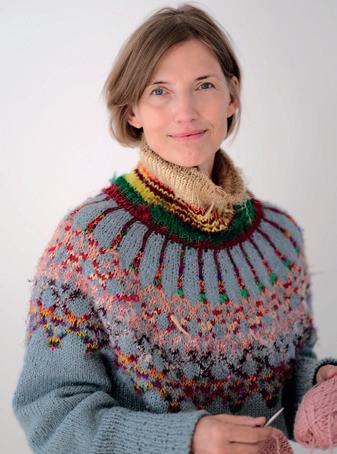
For Icelandic architect and yarn designer Kristín Brynja Gunnarsdóttir, knitting has always been a way to slow down and enter a space where patience, creativity and the pleasure of making something by hand intertwine.
By Ndéla Faye | Photos: einrúm
“The Icelandic word einrúm signifies a kind of solitude: a way of tuning out the outside world and immersing yourself in your own space,” Kristín Brynja says. “At the same time, knitting is deeply rooted in community and connection. Solitude doesn’t necessarily mean being alone, but rather sharing a collective state of flow – a kind of cocooning together.”
That philosophy runs through einrúm, the Denmark-based yarn and knitwear studio Kristín Brynja founded alongside the architecture practice she runs with her husband, Steffan. Although she still contributes creatively to selected architectural projects, today, her primary focus is yarn design and knitwear.
Kristín Brynja’s connection to knitting began in Iceland, where she would sit and knit in her grandmother Katrín’s kitchen – the place where she found her first creative refuge, her einrúm. There, she also fell in love with Icelandic wool, which has evolved over more than a thousand years in relative isolation, as Icelandic sheep
developed a double-coated fleece perfectly suited to the harsh climate.
Wanting to preserve Icelandic wool’s unique qualities while introducing something unexpected, Kristín Brynja travelled to Thailand to observe rural mulberry silk production firsthand. The soft sheen and delicate – yet strong – texture of the silk offered a striking contrast to rugged Icelandic wool, revealing an unexpected harmony between the two materials.
After a lot of experimentation, Kristín Brynja developed a yarn that twines Icelandic wool and mulberry silk into a singular material, creating garments that naturally regulate body temperature while remaining breathable and durable.
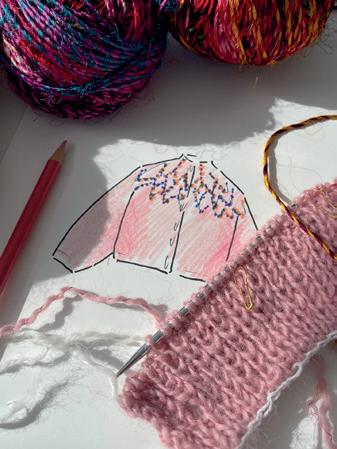
In addition to a variety of yarns, einrúm features knitting patterns designed by Kristín Brynja, reflecting her architectural approach and highlighting the quality of the yarn. “Knitting is the ultimate slow fashion: a lot of love, care and thought is put in each garment,” Kristín Brynja says.
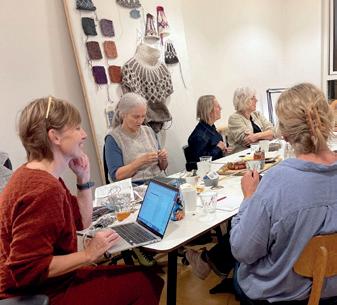
einrúm recently opened a new studio in Copenhagen’s Vanløse district, designed as both an architectural office and a communal creative space for yarn lovers. The studio space hosts regular knitting cafés and workshops, where people gather with ongoing projects, exchange techniques, and knit together over coffee and tea. “Whether you’re an experienced knitter or just starting out, everyone is warmly welcome,” Kristín Brynja says.
The studio reflects the spirit of einrúm itself: an intentionally informal and restorative space centred on slowness, conversation and creative immersion.
www.einrum.com
Facebook: einrum
Instagram: @einrum
Kristin Brynja Gunnarsdóttir calls knitting “the ultimate slow fashion,” with each knitted garment requiring a lot of time, love, care and attention.
Yarn, needles, and time to breathe
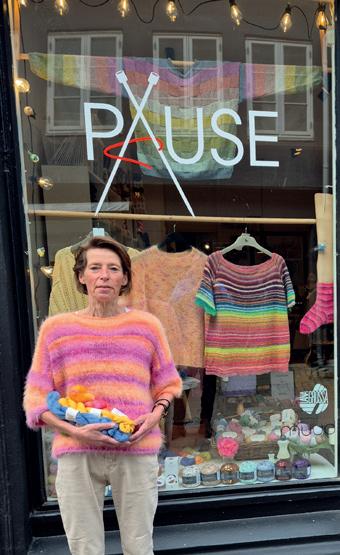
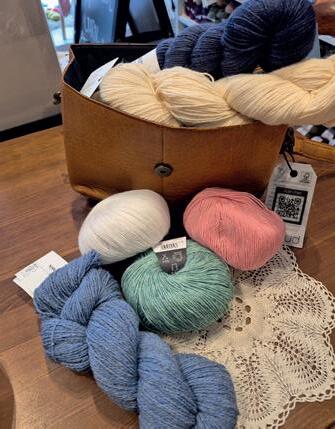
Set in the heart of Elsinore, Butik Pause is the sort of shop people visit for more than yarn. For owner Karina Sivertsen, it is the realisation of a long-held dream shaped by a lifelong love of knitting and the calming effect of working with one’s hands. For customers, it offers guidance, inspiration and, true to its name, a pause from the rush of everyday life.
By Signe Hansen | Photos: Butik pause
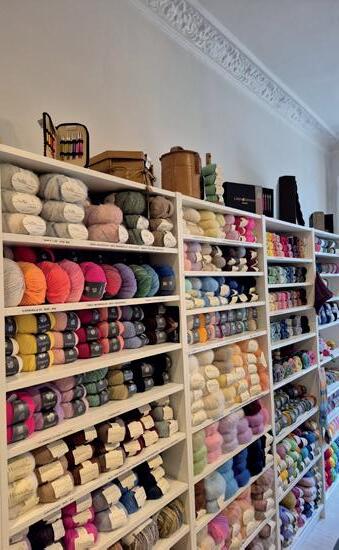
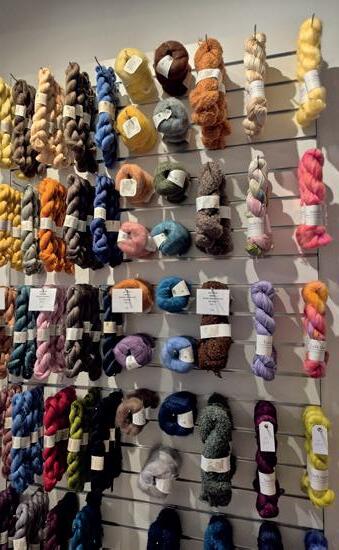
In Elsinore’s charming Bjergegade quarter, Butik Pause brings together carefully chosen yarns alongside knitting accessories, crochet tools and project bags; all selected with an eye to both quality and distinctiveness. More than anything, however, the ambition is to create an inviting little oasis of calm. “The name says a lot about what the shop is meant to be,” says Sivertsen. “Knitting should provide a pause from the rush of everyday life.”
For her, that is not just an idea attached to the shop, but something she knows from her own life. After more than 20 years in the hotel industry as a housekeeping manager, knitting was what helped her unwind when she got home. “It was my way of switching off, of letting my hands work and my head become quiet,” she says. When the opportunity arose to buy
Butik Pause last November, it was, she says, a dream come true. “Suddenly, I had the chance to turn my hobby into my livelihood.”
Since taking over, Sivertsen has focused on preserving the warm atmosphere that existing customers loved while adding the products and qualities that matter most to her. The response has been strong, with local regulars pleased that the shop continues, and tourists also dropping by in large numbers. Many come to Elsinore to visit the UNESCO-listed Kronborg Castle, and then step into the shop looking for Danish yarn to take home instead of a conventional souvenir. Locals, meanwhile, often come as much for help as for shopping. A table in the middle of the store is frequently used for exactly that purpose – whether
by beginners, knitters with a problem in a pattern, or crocheters in need of encouragement. “The best part of having the shop is helping people,” Sivertsen says. “It is wonderful when someone comes in frustrated and leaves again with the feeling that now they can do it.”
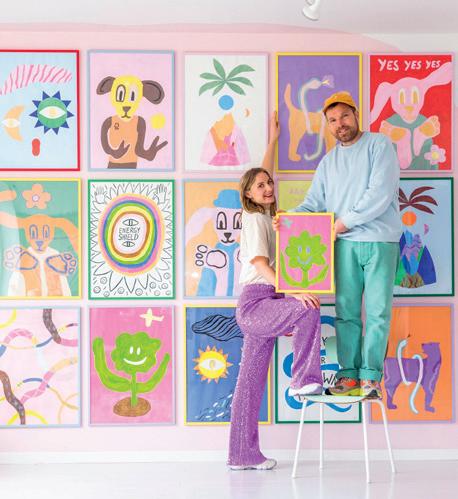
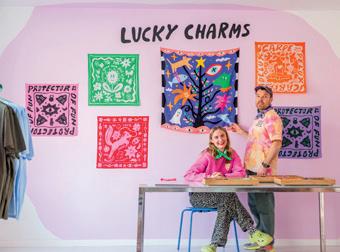
If your home is in need of a mood boost, Tropical Scandinavia’s playful designs offer just that. With modern interpretations of totems and vibrant patterns, the lifestyle brand provides inspiration for living a more colourful life – helping you become the best version of yourself.
By Malin Norman | Photos: Tropical Scandinavia
Using symbols that encourage joy and fulfilment, the founders of lifestyle brand Tropical Scandinavia see themselves as protectors of fun. With bold prints in vibrant colours, their designs are meant to empower people. “We believe that the objects and colours that we choose to surround ourselves with have a direct impact on our well-being and inner strength,” says Johanna Stark, who founded the brand with her husband Emil in 2019. “In a way, what we create is self-help design.”
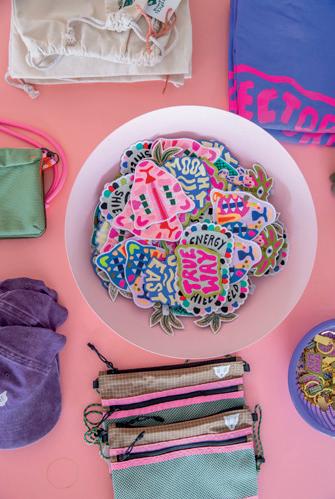
Inspired by surfing and travels around the world, the designers cleverly blend Scandinavian minimalism with tropical vibrancy – celebrating the joys of life, often with symbols. The designs are a form of modern totems, seen across the collection of apparel, home décor and textile art. Not working with seasons or trends, Tropical Scandinavia is driven by a firm belief that products should last longer than that. “We love tropical motifs and we want these
vivid colours all year round, not just for summer,” says Johanna.
One of the creative duo’s best-selling designs is The Protector. Inspired by ancient masks from around the world, this design is a symbol of protection and positivity – with three pairs of eyes, as they believe that it is simply not enough with one pair to get new perspectives. Another design is Tree of Life, reminding us of the fullness of life and the importance of appreciating it all. “There will always be things or events we don’t like, even if it’s just the weather,” says Emil. “But what we can actually change is our own thoughts. Perhaps we can go through life with a bit more ease and joy – we can choose the light.”
Both Johanna and Emil have a creative background and enjoy an intuitive process. “Every design evolves through a dialogue where we send sketches back
and forth between us, until we land on the final design,” says Johanna. “This shared process, where ideas bounce and develop in multiple stages, is the core of our entire creation.”
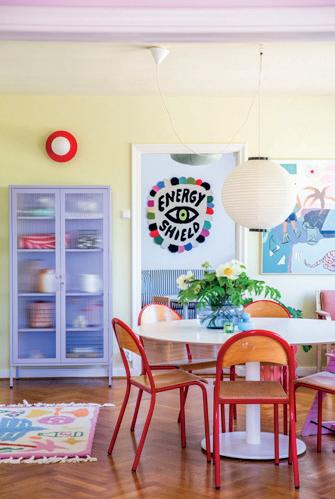
Based in Hammenhög, southern Sweden, the design studio is a colourful universe. Everything here seems to blend together, as the founders also run a showroom in their house where they welcome thousands of visitors in summer to browse, get inspired, and have a chat. “Our showroom has become a destination,” adds Emil. “This lifestyle really suits us. It’s the kind of life we don’t need to take a vacation from.”
We Love This –outdoor feasts in Scandinavian style
As soon as the sun appears for more than seven consecutive minutes, Scandinavians start moving meals outside. Picnics, garden parties, barbecues, beach snacks, late-night candles – it all counts. Rain will, of course, turn up uninvited from time to time, but that is no excuse for eating outdoors without style. From serious grills to soft blankets and bottles that keep drinks properly chilled, these summer essentials help turn outdoor eating into an occasion.
By Signe Hansen | Press photos
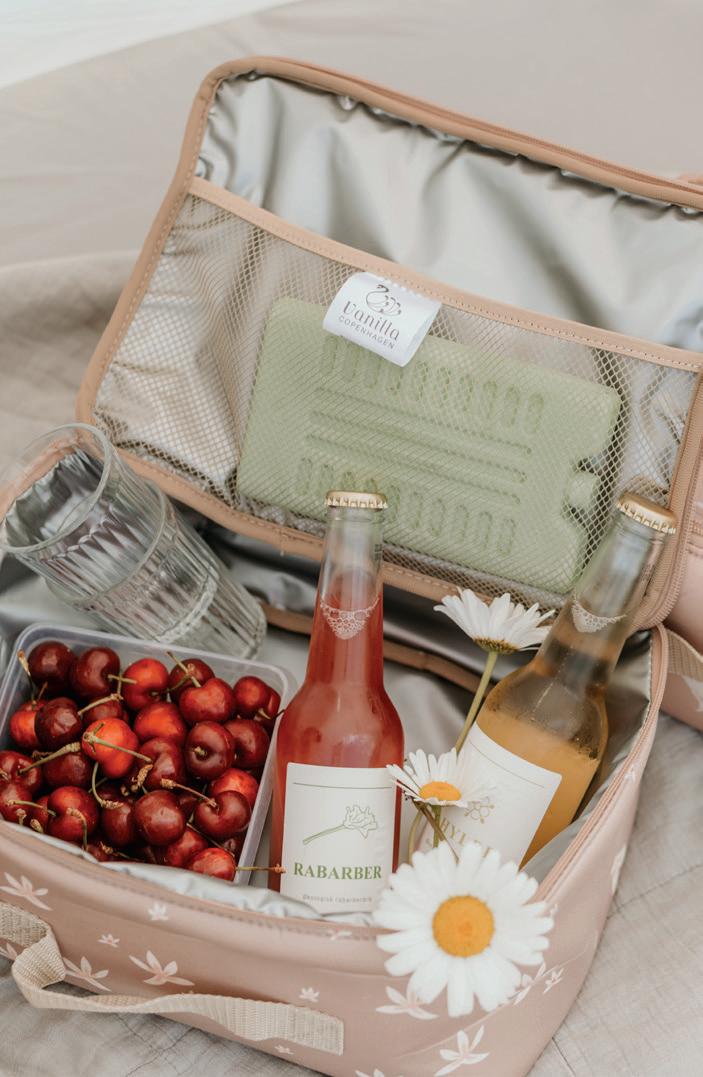
Craby cooler backpack – Vanilla Copenhagen
Once upon a time, a Scandinavian beach picnic meant warm cordial, sandy biscuits and at least one disappointed child. Vanilla Copenhagen’s Craby cooler backpack is here to raise standards. The insulated children’s backpack is designed to keep berries, drinks and homemade snacks cool on the way to the beach, park or garden party, while being small enough for children to carry themselves. Made by the Danish children’s brand founded by mother-of-four Susanne Mikkelsen, it’s practical, OEKOTEX® certified and cute enough to make lunch logistics feel almost charming. DKK 239 www.vanillacopenhagen.com
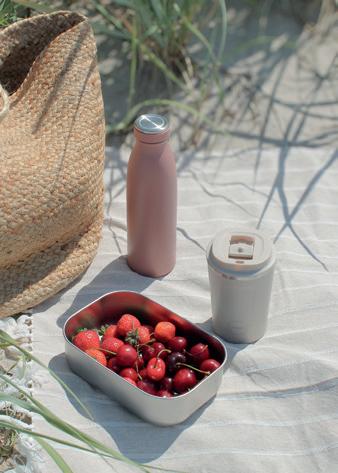
Drinking bottle, Ash Rose 1000ml – AYA&IDA
Hydration may be sensible, but it need not be dull. AYA&IDA’s reusable one-litre drinking bottle in Ash Rose is made from 18/8 stainless steel with a durable powder-coated finish, keeping drinks cold for up to 24 hours or warm for up to 12. Bring it to the beach, the picnic, the barbecue or simply to the garden chair you refuse to leave. As a bonus, every AYA&IDA product sold helps donate 100 litres of water to children in need through UNICEF. DKK 249 www.ayaandida.dk
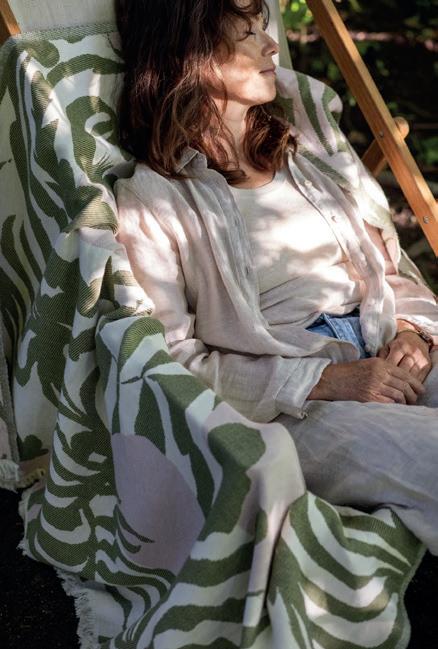
A picnic blanket is rarely just a picnic blanket in the Nordics. It’s also a tablecloth, shawl, wind shield, child-wrapper and emergency layer when optimism about the weather proves misplaced. Finnish brand Lapuan Kankurit’s KUUTAMO wool blanket is made from organic cotton and soft merino wool, with a rich pattern and calm Nordic colour palette. Spread it out for a summer picnic, wrap it around your shoulders after dinner, or keep it close for that familiar Scandinavian moment when sunshine turns brisk. EUR 169 www.lapuankankurit.fi
Pelagus™ armchairs and table – Fritz Hansen
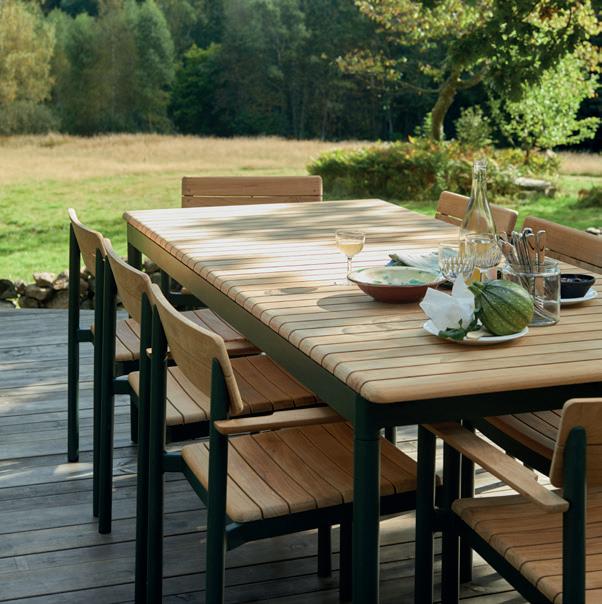
From Fritz Hansen’s Skagerak Collection, the Pelagus™ armchairs and table bring Scandinavian restraint to the outdoor dining scene. Made from sustainably sourced materials, the design is simple, durable and quietly elegant – exactly the sort of furniture that lets the food, flowers and slightly overambitious summer salads take centre stage. Whether used for long lunches, grilled dinners or coffee that somehow becomes wine, it gives the garden party a polished Nordic frame. Armchair: DKK 6,699. Table: DKK 27,499 www.fritzhansen.com
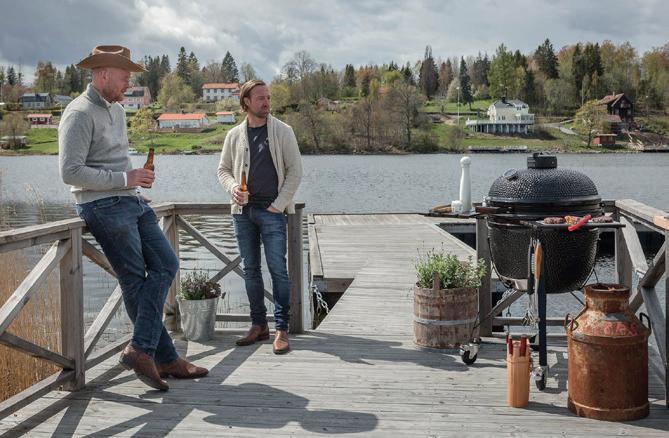
For those who believe outdoor cooking deserves more than a disposable grill and a packet of sausages, Kamado Sumo’s Maxi is a serious upgrade. The Swedish-designed ceramic grill combines ancient Asian cooking principles with Scandinavian precision, holding steady temperatures whether you are searing, smoking, baking or slow-cooking. It’s built for year-round use too, because in Scandinavia barbecue season is more a mindset than a weather condition. DKK 10,999 www.kamadosumo.se
Lyric candle holder – Tell Me More
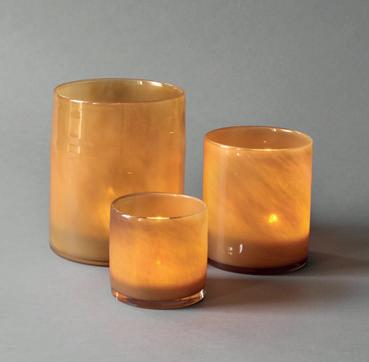
No Scandinavian gathering is complete until someone lights a candle, even if it’s technically still bright outside. Tell Me More’s Lyric candle holders are mouth-blown, coloured by hand and full of subtle shifts in the glass, making each piece unique. Place them on the table as the sun begins to drop and they will carry the garden party gracefully into the evening. With several colours and sizes available, mixing and matching is not only allowed – it’s practically required. From SEK 199 www.tellmemore.se
Kamado Sumo Maxi – Kamado Sumo
KUUTAMO wool blanket – Lapuan Kankurit
Where ceramics and gastronomy meet the Finnish wilderness
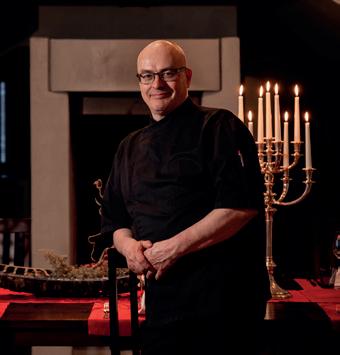
Looking for a dining experience beyond the ordinary? At Tundra in northern Finland, chef and ceramic artist Jarmo Pitkänen combines seasonal Arctic flavours with handmade ceramics to create unforgettable evenings inspired by the surrounding wilderness.
By Celina Tran | Photos: Tundra
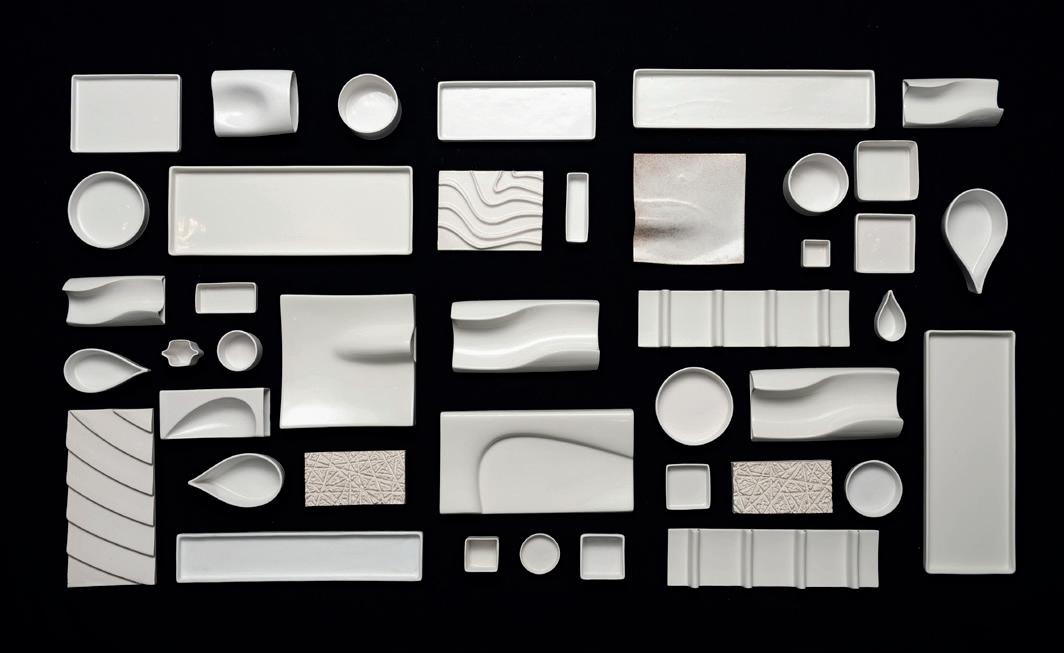
Deep in the forests of Kuusamo, dinner at Tundra begins long before the first course arrives. Travel through the northern landscape, and you will reach what feels like a hidden retreat in the wilderness. Here, you will be welcomed by candlelight flickering across handmade ceramic sculptures, soft music, and plates designed by the chef himself.
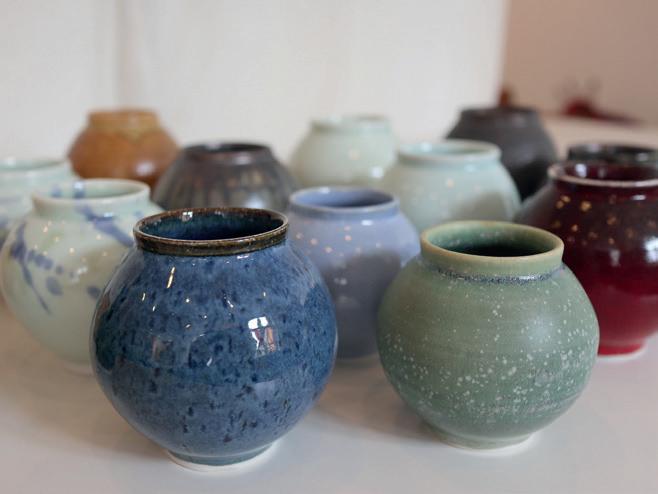
At Studio Restaurant Tundra, gastronomy and ceramics are inseparable. The man behind the concept, Jarmo Pitkänen, has spent decades combining two demanding crafts into one immersive experience. During winter, he works in the kitchen creating tailor-made dining experiences for guests. In summer, he moves downstairs to the ceramic studio, where kilns replace ovens and clay replaces ingredients. “It’s a lifestyle,” Pitkänen says. “During summer, I do ceramics, and during winter, I cook. That’s how I can combine both crafts.”
Located around 25 minutes from Ruka, Tundra operates as both a private res-
taurant and ceramics atelier, offering fine-dining dinners, catering, cooking courses and handcrafted ceramic works. This allows Pitkänen to tailor every single detail, from the atmosphere of the dining room to the texture and shape of the serving pieces. “You only have one
chance to make an impression,” Pitkänen says. “Through taste, senses and what people see.”
An odyssey of culinary art and clay Pitkänen’s journey might have started in Northern Finland, but it has been anything but a straightforward path to Tundra. As a teenager in Kuusamo, he was convinced that he would never return. In the 80s, opportunities in the remote region were limited, and tourism had not yet transformed the area into the international destination it is today.
His culinary career instead took him around the world. After studying in Finland, he worked in Stockholm before travelling to China, Switzerland, Australia, Venezuela and beyond. Along the way, he absorbed techniques, ingredients and food cultures that still influence his work today.
China left a particularly strong impression on him, especially the respect for ingredients and the skilled use of every
part of the animal. Switzerland taught him discipline and speed in professional kitchens, while years abroad broadened his understanding of how food reflects culture and place.
At the same time, Pitkänen discovered another passion: ceramics. “Clay suited my idea of craftsmanship,” he says. “The work of a ceramic artist and a chef has a lot in common: both are small-scale crafts where the line between success and failure is very thin.”
The idea for Tundra began to form during ceramics training in Sydney. There, Pitkänen realised how naturally food and ceramics complemented one another. Returning to Kuusamo years later, he also noticed how dramatically the region had changed thanks to tourism and international visitors.
“When we came back to Kuusamo, things were completely different,” he says. “But I did learn that in order to make it here, you have to stand out from
the competition.” Rather than choosing between his two professions, Pitkänen decided to build a concept where both could exist side by side. In 2005, Tundra welcomed its first guests.
Food, ceramics, and wild flavours
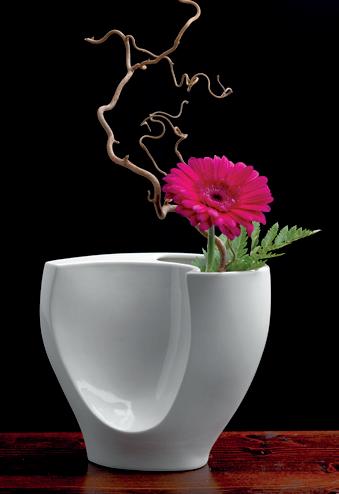
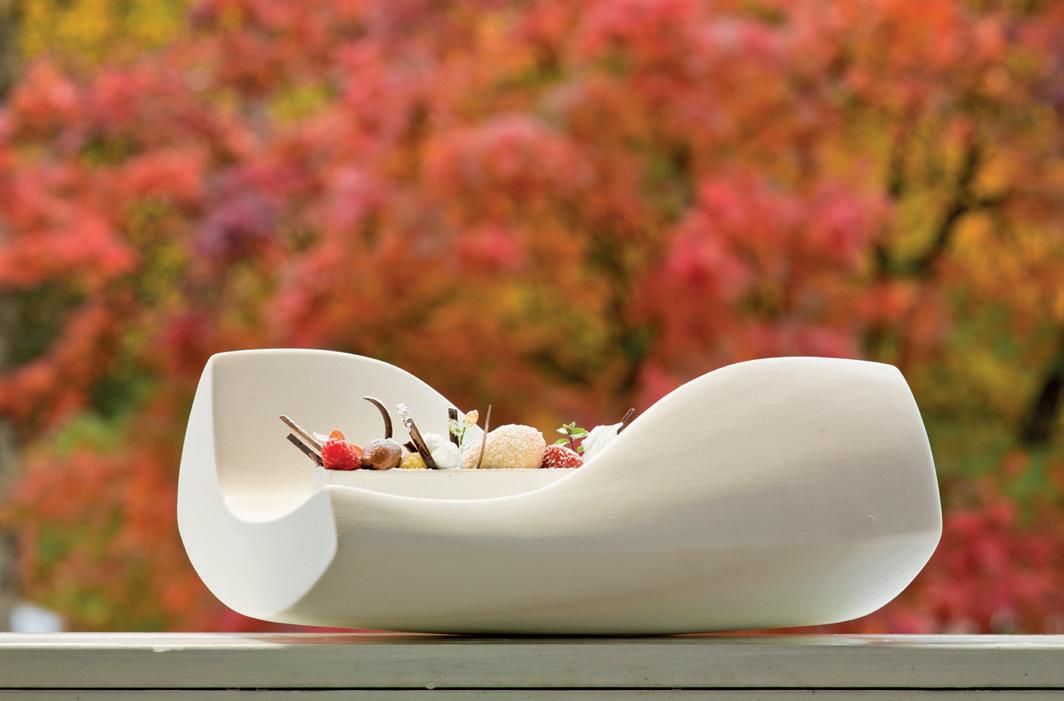
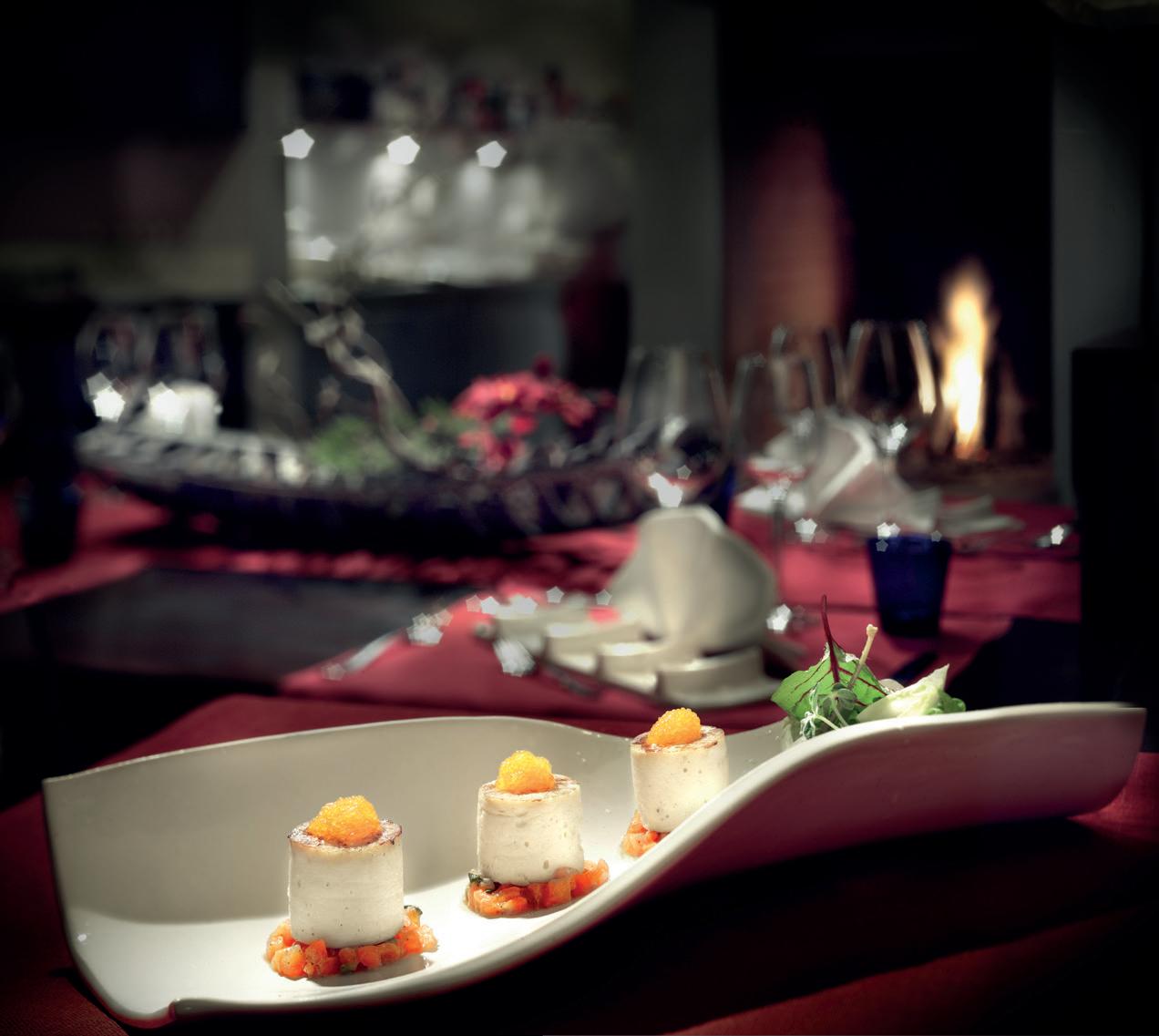
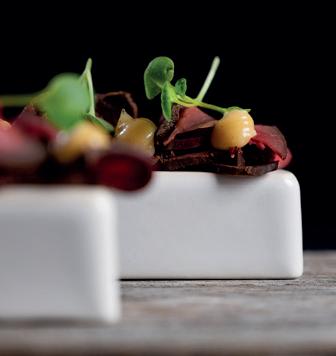
At Tundra, the connection between gastronomy and ceramics is visible everywhere. Every platter, bowl and serving sculpture is handmade by Pitkänen himself, often specifically designed for individual dishes. Some pieces are functional
tableware, while others resemble sculptural art installations. A dinner at Tundra is almost like an art exhibition. “As a ceramist, I’m first and foremost a form maker,” he says. “Nature gives you endless expressions. For food, you need new dishes, new platforms and new objects.”
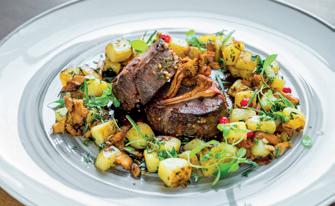
Northern nature is both the visual and culinary inspiration behind the ceramics and culinary experiences at Tundra. Pitkänen works extensively with what he calls wild food: fish from local freshwater lakes, game meats, forest herbs, mushrooms and berries gathered from the surrounding wilderness.
Wild herbs also play a central role in his cooking. Spruce tips, once used in traditional folk medicine, now appear in syrups and sauces. Meadowsweet adds floral aromas to cream dishes, while angelica grows in his own garden. These ingredients create flavours that feel unmistakably tied to the region. “People are interested in local food now,” Pitkänen says. “But locality isn’t only about traditions; it’s also about interpreting them in today’s world.”
The menus follow the rhythm of the northern seasons. “Autumn is the best season for chefs,” he says. “It’s the time when game, mushrooms and harvest ingredients are at their peak.”
While Tundra’s cuisine is rooted in classical fine dining, it is shaped by Scandinavian simplicity and Pitkänen’s global influences. Reindeer, whitefish roe, smoked fish and lesser-used cuts of meat frequently appear on the menu, often presented on dramatic ceramic serving pieces inspired by the Arctic landscape.
As a result, this is an experience where food and design become inseparable –guests enjoy a fine meal while stepping into an artistic environment shaped by scent, flavour, texture and form. “I want every meal to feel unique,” Pitkänen says. “The artistic experience comes from the interaction between environment, design and food.”
The Warming Surfaces Company brings heating to the age of sustainability with its Halia® digital warming technology, which turns surfaces in our living spaces into smart warming surfaces. The company’s ambition is to redefine heating as a distributed, material property of built environments rather than a central utility system.
By Ndéla Faye | Photos: The Warming Surfaces Company
As Europe accelerates its transition toward electrification and decarbonisation, sustainability and energy costs are taking on new urgency. Finnish start-up
The Warming Surfaces Company believes that the answer is not to heat air more efficiently, but to rethink where heat lives.
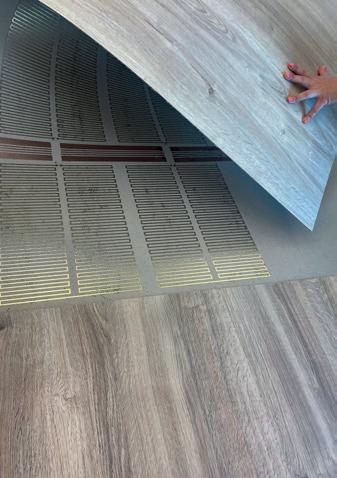
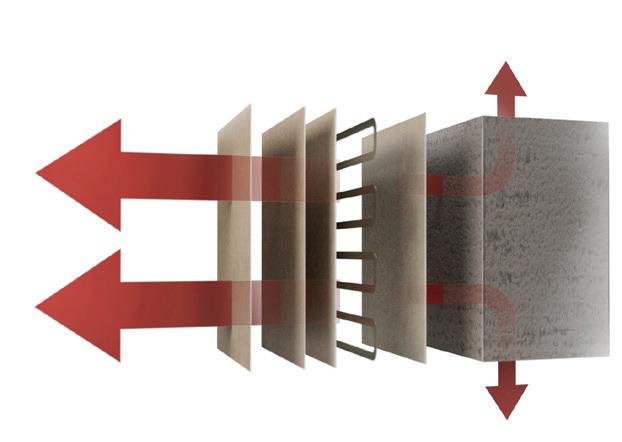
At the centre of that vision is Halia warming, a new kind of digital heating technology that turns everyday surfaces into intelligent sources of warmth. Rather than relying on conventional convection heating systems that warm entire rooms, Halia warming focuses on what the company calls pockets of warmth: targeted,
localised heat delivered directly where people are sitting or interacting.
Warming designed for comfort, built for efficiency
The Warming Surfaces Company was founded in 2022 by a team with over 75 years of combined experience in translating research-based technologies into commercial solutions. According to cofounder and CEO Jani-Mikael Kuusisto, the initial innovation did not begin with a single application in mind. Instead, it was the potential of the underlying novel means to embed heating inside of
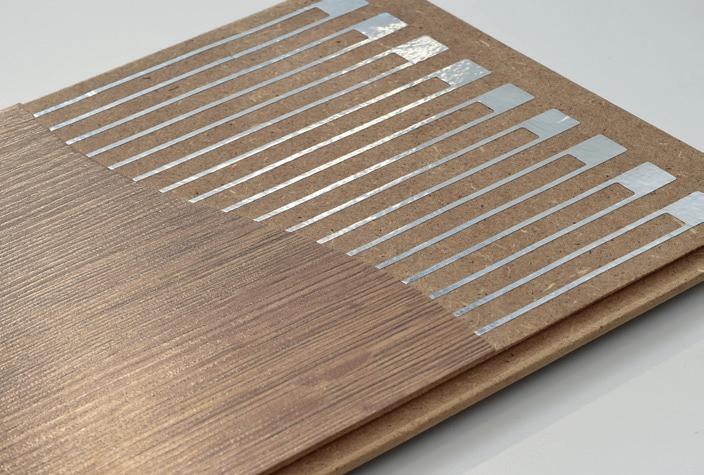
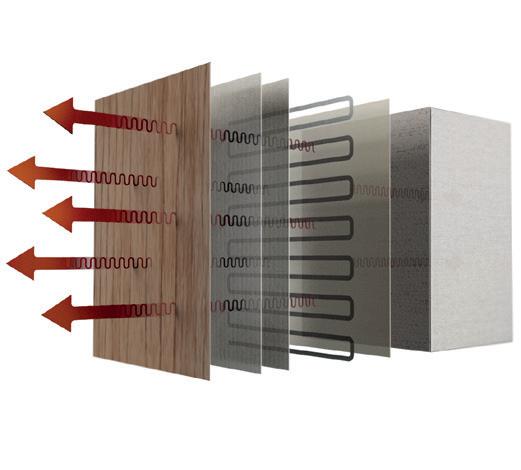
Halia® digital warming elements allow the control of temperature across different surfaces.
surface materials, followed by a search for meaningful use cases with maximum societal impact.
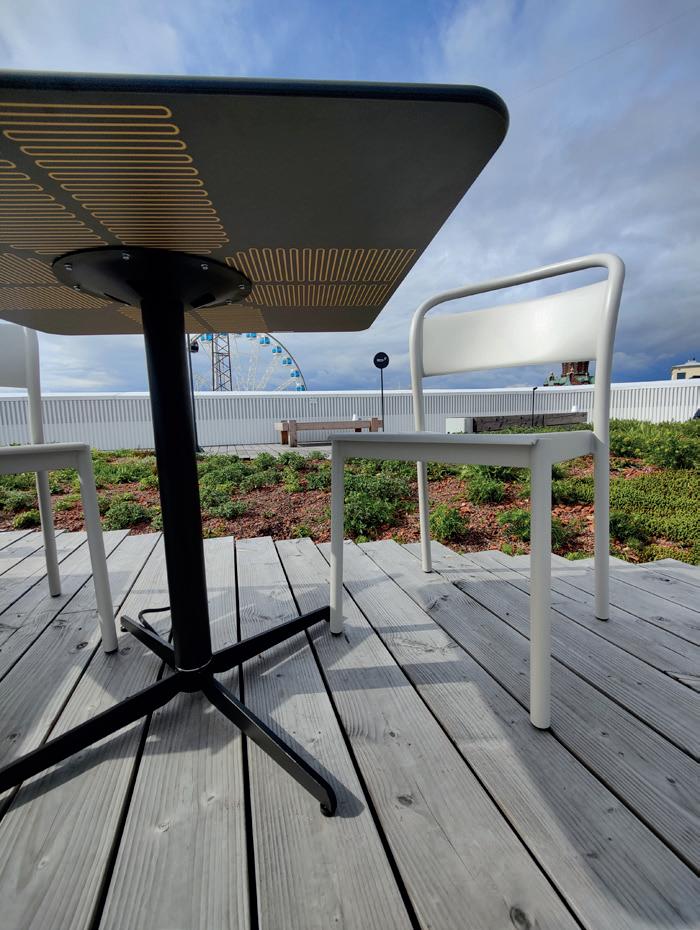
At its core, Halia rethinks the relationship between people, objects, and temperature. The technology can be integrated into interior and exterior surfaces such as tables, walls, floors and furniture, creating controllable heat zones within existing environments.
“Just as LEDs shifted illumination from bulky and resource-intensive systems to small, energy-efficient solutions embedded in everyday objects, Halia warming seeks to bring that same approach to heating, moving away from
room-level systems toward intelligent surfaces,” Kuusisto says.
The principle is simple, but its implications are broad, especially in buildings where energy efficiency is becoming both an environmental and economic necessity.
First uses in outdoor applications
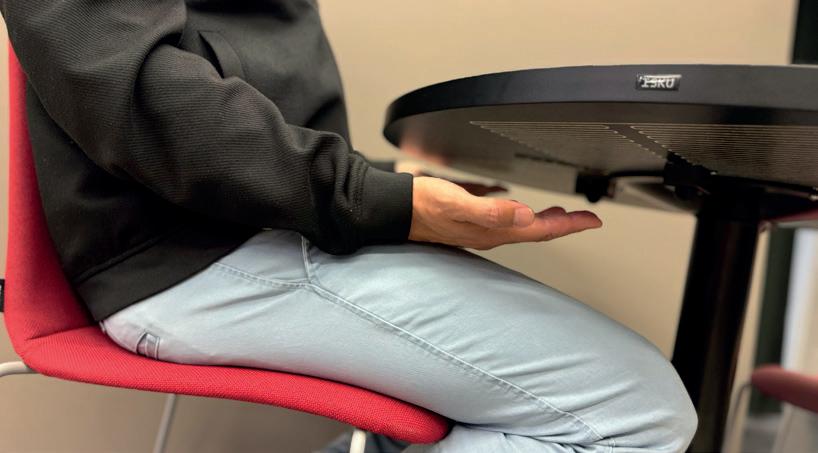
One of the first commercial applications for Halia warming is the Quatro warming terrace table, developed as a demonstration of how the technology performs in real-world environments. According to the company, the system uses less than five per cent of the energy of conventional terrace heaters.
“We didn’t expect to begin from outdoor applications, but then France – a nation where 1/3 of meals are served outdoors –banned terrace heating. Emissions were equal to around 300,000 cars in traffic. We saw an opportunity to keep people warm, without those emissions,” the CEO explains. “With our technology, we can bring emission-free, energy-efficient warmth back into terraces, in France and elsewhere.”
The Quatro tables also incorporate motion and presence sensing. Sensors detect when someone is seated, activating heat only when needed and switching off automatically when the space is empty. This, the company says, reduces
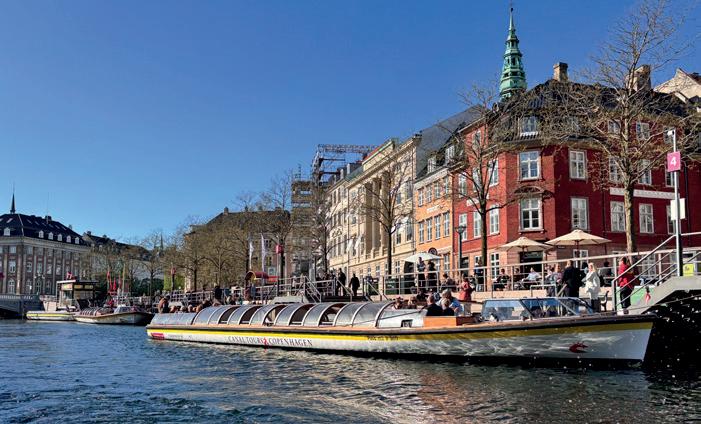
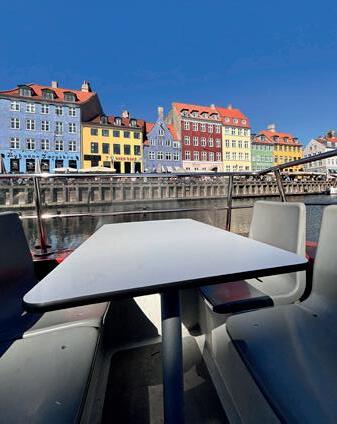
Warming tabletops on a Stromma Group sightseeing boat in Copenhagen.
unnecessary energy consumption while maintaining comfort.
“The technology creates pockets of warmth that heat up the large muscles in the body. You can control the temperature, and thanks to the sensors, it only activates when someone is actually sitting at the table and turns off when they leave,” says Kuusisto.
The approach reframes heating not as a constant background condition, but as an on-demand experience tied to human presence.
Energy efficient warming on land and on water
Halia’s first deployments are already proving their value in real-world set-
tings both on land and on water. After initial use in the hospitality sector, the company’s warming tabletops have been installed in a Stromma Group sightseeing boat in Copenhagen, where the shift toward electrification has introduced new challenges for onboard heating systems.
As Kuusisto explains, Halia warming delivers localised radiant heat directly at seating areas, reducing system-wide load while maintaining passenger comfort. The tables automatically activate only when in use, helping to extend the operational season of boats without significantly increasing energy consumption.
Mads Vestergaard Olesen, CEO of Stromma Danmark, highlights the impact:
“Danish weather can be unpredictable, but Halia’s new technology allows guests to enjoy outdoor seating even in early spring and late summer. As we move toward electrifying our fleet, solutions like this are essential. They deliver comfort without increasing energy consumption to a level that would compromise vessel range, all while remaining emission-free.” Ultimately a response to energy poverty and inefficient buildings
Beyond hospitality and sustainable tourism, the urgency behind such innovation is very real: across the European Union, an estimated 43 million people experience energy poverty, meaning they cannot maintain adequate indoor temperatures. At the same time, a large share of Europe’s building stock remains energy inefficient and is in need of renovation.
In most homes and commercial spaces, heating represents the single largest energy expense. Halia positions itself directly within this challenge, offering an alternative model: rather than heating entire volumes of air – most of which goes to waste – energy is directed toward surfaces and people near them.
Kuusisto draws a simple comparison to heated car seats. The concept of warm surfaces is familiar, but Halia warming technology expands it from isolated features into architectural systems, materials and items that can be embedded into interior and product design itself.
Halia® heating elements embedded inside surface materials allow effective creation and direction of heat where it is needed.
The company also highlights historical precedents for this way of thinking. From Persian korsi tables to Japanese kotatsu and Spanish mesa camilla traditions, cultures around the world have long created warm zones within colder environments by heating objects rather than entire rooms.
These systems were not only practical, but social: they were centres of communal life, rest and shared warmth. The name Halia, derived from the Finnish word for hug, reflects this dual meaning of thermal and human closeness.
A new model for heating
Halia warming surfaces are designed to be lightweight, recyclable, and material-efficient, with the company claiming up to 95 per cent material reduction compared to conventional heating systems. According to Kuusisto, in the terrace tables, the combination of reduced material use, targeted energy delivery and demand-based activation results in a payback period of under a year in energy consumption terms.
The Warming Surfaces Company’s vision is to provide warmth sustainably –for the environment, as much as for businesses and people. “Our mission is to help improve the lives and health of people and our planet through more efficient warming solutions, and become
a household name in the world of heating,” says Kuusisto.
More broadly, the company frames its mission as a shift in how comfort itself is produced: moving away from energy-intensive systems toward localised, human-centred thermal design. In doing so, Halia challenges a long-held assumption –that warmth is something we generate for entire spaces – by proposing instead that it can be designed more precisely, around people.
www.halia.fi
Instagram: @haliawarming
LinkedIn: The Warming Surfaces Company
Photo: Jane Bay
The beauty of imperfection
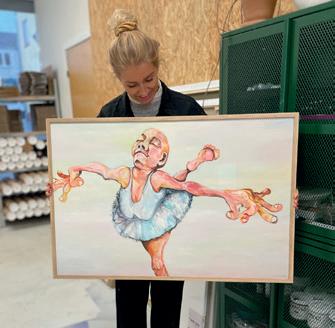
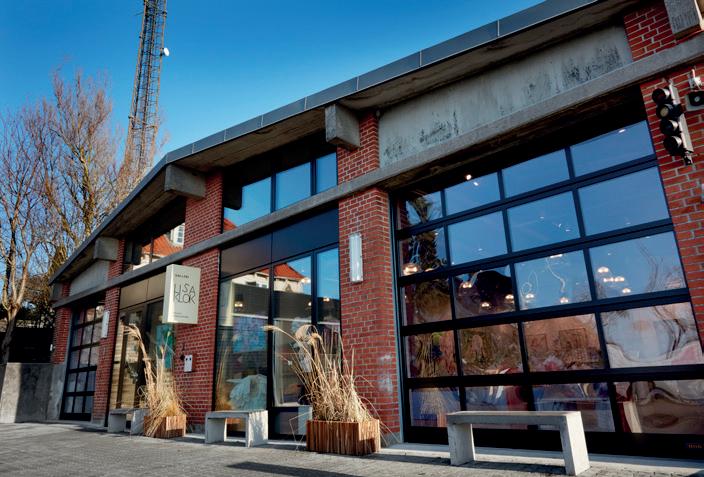
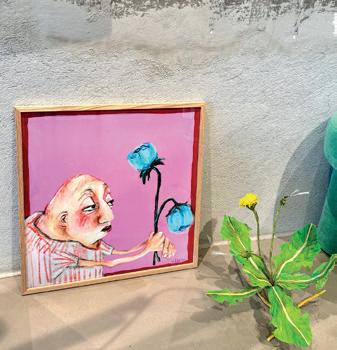
There is something immediately compelling about Lisa Klok’s figures. At once humorous, vulnerable and unmistakably human, they seem to carry entire inner lives in a glance, a gesture or an exaggerated hand. Working across painting, watercolour, prints and stoneware, the Danish artist has built a distinctive visual universe around imperfect beauty. Today, that universe unfolds at her gallery and studio in Rønde’s old fire station, where art, café life, events, and changing exhibitions combine to create a unique art destination 30 minutes from Aarhus.
By Signe Hansen | Photos: Mia Kinly
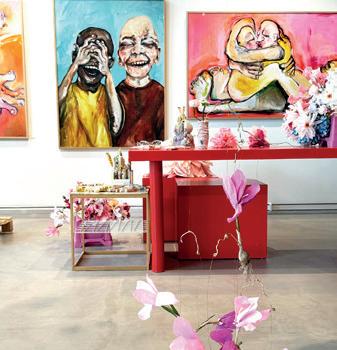
Stepping into Lisa Klok’s gallery means entering a world where expressive faces, raw tenderness and a warm streak of humour unfold across walls, shelves and tables. Some visitors arrive as seasoned collectors, others as first-time buyers, drawn in by the accessibility of her numbered prints as much as by the originality of the paintings themselves. What unites them, perhaps, is the sense that these are works one can recognise something of oneself in. “I like that there is something people can identify with,”
says Klok. “There is so much filter on everything today, and I like to speak into this imperfect beauty, the passing of life, how we age, and the expressions and body language we can all relate to.”
That distinctive expression has been present in Klok’s work since she turned to art full-time in 2019. Originally trained as a designer, she had long painted alongside her work, but when the pandemic halted plans for a clothing brand, painting quickly took centre stage. Since then, social media, exhibitions and her own online platform have helped her reach a wide audience.
Figures with feeling
The roots of Klok’s artistic language go back to her design education, where she grew tired of drawing anonymous fashion mannequins and began to alter them, giving them more edge, ambiguity and per-
sonality. That is also why many of her figures are bald: they began as mannequins, but evolved into something more layered –characters that resist easy definition. “I thought there was something interesting in the fact that you could not always tell whether it was a man or a woman,” she explains. “It speaks a little to diversity, and to the idea that you do not always feel inside the way you look on the outside.”
The works themselves often begin modestly, as pencil sketches on paper, before changing shape on the canvas. Sometimes a colour starts the process, sometimes a mood, a state of mind or the memory of a fleeting interaction. Across media, Klok continues to experiment, mixing acrylic, oil, spray paint and watercolour, and also translating her painted characters into stoneware sculptures
when she feels the need to move creatively in a new direction.
The old fire station
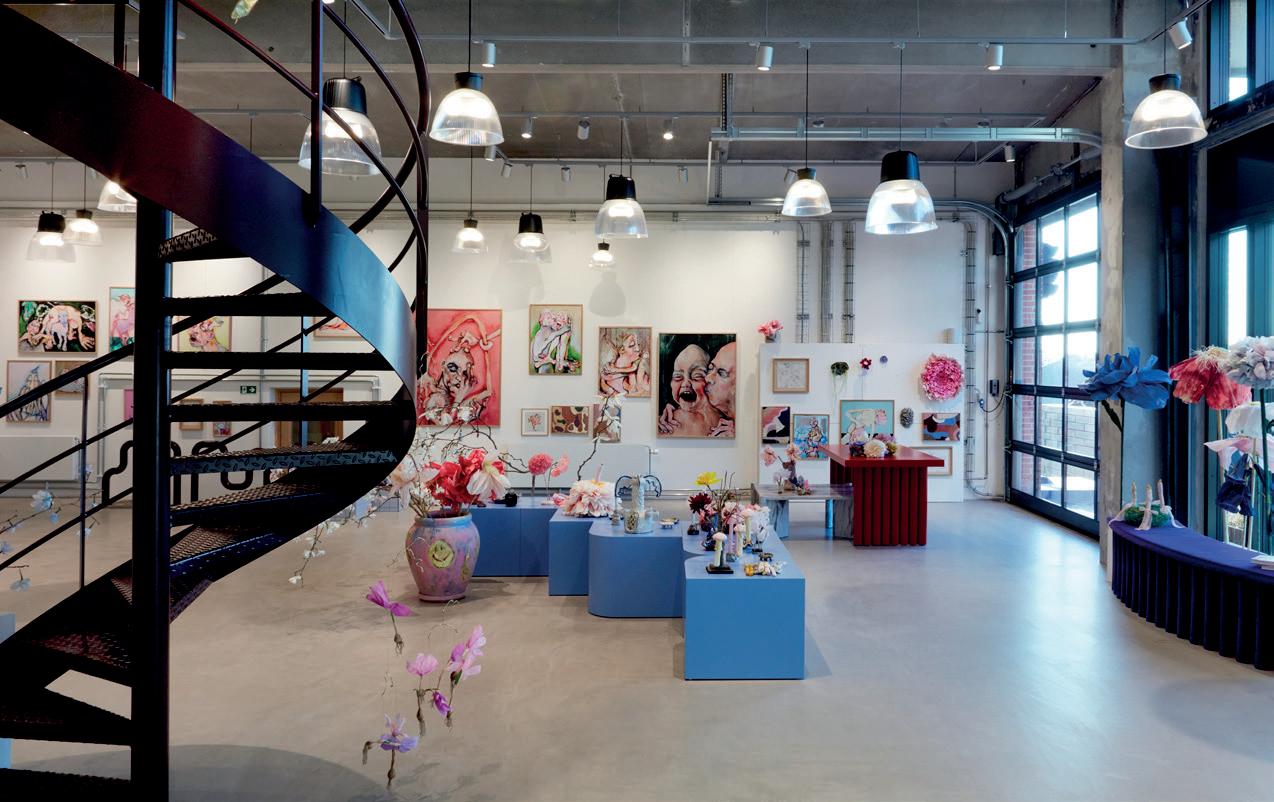
Last year, the urge to keep evolving led the artist to purchase the town’s old fire station and turn it into an inclusive art venue, with opening hours throughout the week. On top of a gallery featuring original paintings, watercolours and oil pastels, giclée prints, sculptures, and sketches, the old fire station houses Klok’s workspace as well as a framing workshop and the locally rooted Café RöD.
The gallery and café are physically connected, and visitors are free to move between the buildings with a coffee in hand. For Klok, that overlap has become an important part of opening the space up. “People often tell me that they have
passed by before and been curious to come in, but that ‘you do not just walk into a gallery’,” she says. “Now they come in for the café and discover the art – or they come for the art and stay.”
The result is a place where visitors move more freely between gallery and café, and where brunch, lunch, dinner and events become part of the wider experience.
A lived-in philosophy
That openness also shapes Klok’s plans for the future. Rather than simply presenting her own work, she has begun using the space for exhibitions with other artists, choosing pieces that bring something different while still complementing her own. The ambition, however, is broader than exhibitions alone – it is to fully unfold the possibilities of the old fire station as a place where art, food and atmosphere can strengthen one another.
“It is much more inspiring to step into a place where there is more than just pictures on the walls,” she says. “We want to work much more with the whole experience of coming here – not just the art, but also events, wine tastings, the café and everything that makes people want to stay a little longer.”
lisaklok.com
Facebook: lisaklokstudio
Instagram: @lisaklok
Lisa Klok has turned the old fire station in Rønde into an art hub. Photo: Jane Bay
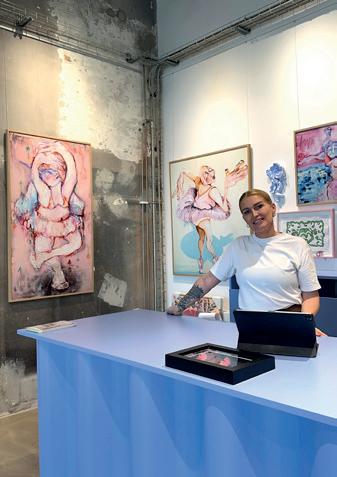
Artist Lisa Klok.
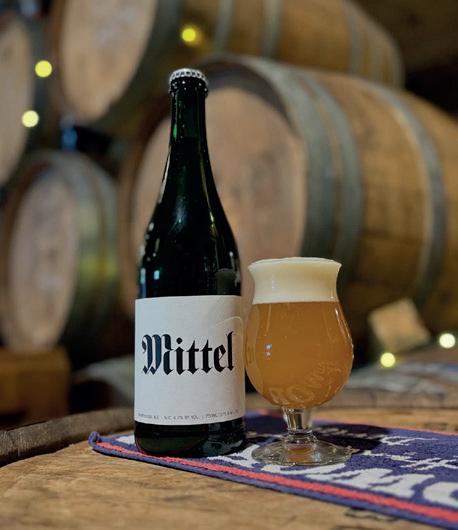
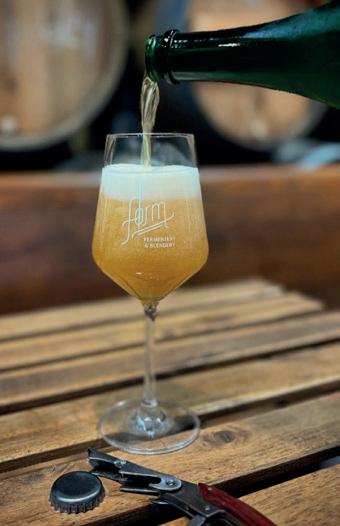
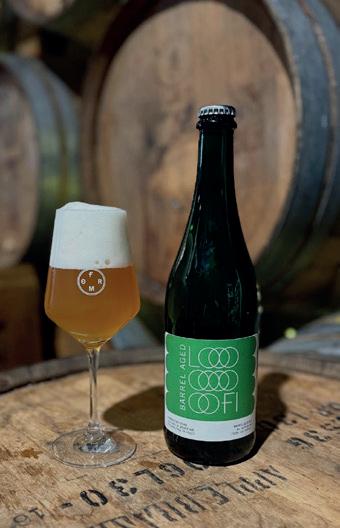
From shabby dive bars to world-class beer in Philadelphia
By Malin Norman | Photos: Fermentery Form
Apart from the famous Rocky Steps and Philly cheese steaks, what does Philadelphia have to offer? Plenty, I found out during a visit in April: trendy taprooms, authentic dive bars, and world-class mixed fermentation beer.
Having only visited Philadelphia briefly years ago, I was keen to explore more together with some beer colleagues. The breweries and taprooms in the vibrant Fishtown area turned out to be a hit, for instance Yards Brewing and Love City Brewing. We also went to Evil Genius Beer Company where, unbeknownst to us, a speed dating event was taking place, with regular buzzers going off to indicate that it was time to swap. We didn’t take part in the speed dating, by the way, only drank tasty beers.
The most memorable experiences were probably the city’s shabby dive bars though. In El Bar, which is located under an elevated rail track, we were handed cans of Pabst Blue Ribbon (called PBR) and Love City’s Unity IPA, but no glass in sight. Like typical dive bars, it’s cash-only. A bunch of chatty locals were playing pool whilst drinking boilermakers, a beer accompanied by a shot of whisky. And a cat casually walked in from the street, it’s
unclear if it lived there or just paid a visit. I would go back there, any time.
Another dive bar, Dirty Franks, was the only item on one of my friend’s to-do list whilst in town. Squeezed around a small table, we had countless cans of PBR and Hamm’s Beer, easy-going American lagers, a far cry from trendy Hazy IPAs. What we chatted about? Whether the waitress really said that she was 60, although she didn’t look a day over 35. And that local guy, who was wearing a t-shirt with “If found please return to” followed by the bar’s address. Proper local vibes, is what you get. Isn’t that what we’re looking for, when exploring a new city?
Another unforgettable place was Fermentery Form in West Kensington. This small artisan brewery, located in an alley and with no sign indicating it’s there, produces elegant mixed fermentation beers that are out of this world. Sitting at simple
tables next to a pyramid of oak barrels, we enjoyed some of the city’s best beers. Outstanding, refreshing, inspiring.
My main reason for being in Philadelphia was judging the World Beer Cup final, and many world-class beers were evaluated and given medals, but more on that another time.
Malin Norman is a Certified Cicerone®, a certified beer sommelier, a BJCP certified beer judge, and a member of the British Guild of Beer Writers.
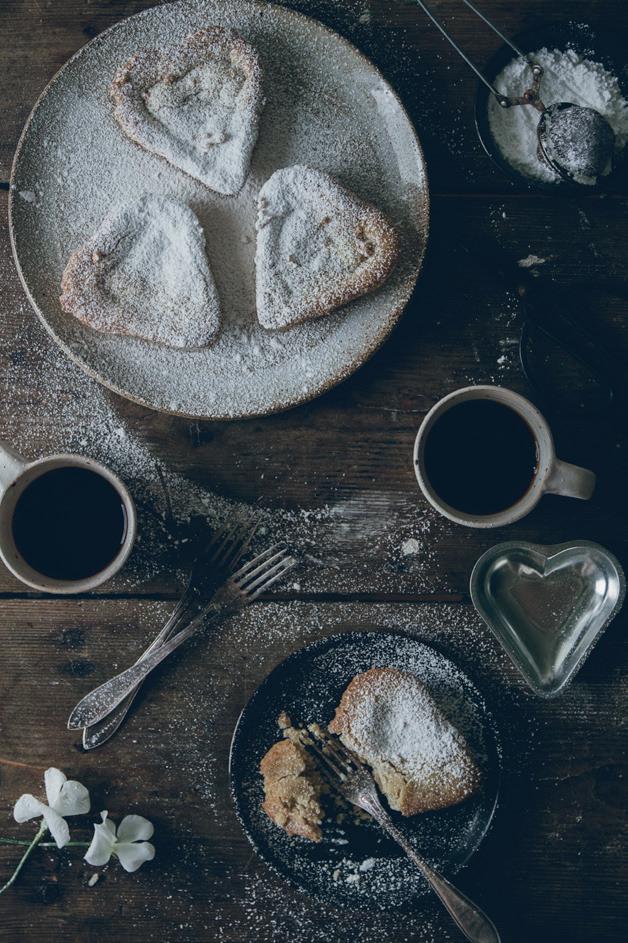
Vanilla custard hearts
Crispy, heart-shaped pastries with a hidden treasure of vanilla custard. Not just wonderfully delicious, but also beautiful to look at.
By Sofia Nordgren
This month, I’m challenging you a little. Making these pastries takes a little time and effort; it’s like making a little piece of art. But try to enjoy the process – it will make it both easier and a lot more fun.
To make these, you’ll need small heart-shaped pans, about 6x7cm. You’ll find them in well-sorted stores that sell kitchen supplies. If you can’t find them, any other small pans will do. Or you can try making them in muffin tins. Good luck!
Amount: 12 vanilla hearts
Ingredients:
Pastry dough
200 g cold margarine or butter
240 g all-purpose flour
80 g potato starch
60 g caster sugar
1 tsp bourbon vanilla powder
Pinch of salt
Instructions:
Vanilla custard
300 ml oat milk
2 tbsp potato starch pinch of salt
2 tsp bourbon vanilla powder
4 tbsp caster sugar
20 g vegan margarine
1. Start with the pastry dough. Place all ingredients in a baking bowl. Mix together using your hands and work the dough until it just comes together. If it’s not coming together, try adding 1/2 tsp water.
2. Wrap the dough in plastic and place in the fridge to rest for about an hour.
3. Meanwhile, prepare the vanilla custard.
4. Vanilla custard: in a saucepan, combine oat milk and potato starch. Stir continuously while heating it over medium heat until it thickens.
5. Remove the saucepan from the stove and add salt, vanilla, sugar, and margarine. Let cool.
6. Preheat the oven to 225°C.
7. Grease the pans with a generous amount of margarine.
8. On a floured surface, roll out the dough to a 2-4mm thick plate. Use one of the heart-shaped pans, turn it upside down and cut out heart-shaped pieces of the dough that are a few millimetres bigger than the pan.
9. Cover the pans with the heart-shaped dough pieces, press with your thumbs to make sure the dough sticks to the pan. Remove any excess dough that is hanging over the edges of the pans.
10. Add about a tablespoon of vanilla custard to the pans.
11. Cut out lids of dough and cover each heart pan with it. Press with your thumbs around the pan to make sure the two layers of dough are stuck to each other. Remove any excess dough with a sharp knife.
12. Bake in the lower part of the oven for 12-15 minutes, or until slightly golden.
13. Carefully turn the pans upside down to remove the pan from the cookie. Place the cookie on a parchment paper and let cool.
14. Sprinkle with powdered sugar before serving.
Winner of the best Regional Cookbook at the Guild of Food Writers Awards 2022, Sofia Nordgren lives with her family in a small town in Sweden, working as a photographer, content creator and plant-based cookbook author. Cooking and baking have always been a hobby of hers and on top of that, she has a passion for nature, gardening and slow, seasonal living. Foggy mornings, cinnamon buns, and playing with her kids are among her favourite things in life. Sofia Nordgren also runs the successful blog, The Nordic Kitchen
Where culture, art and music take centre stage
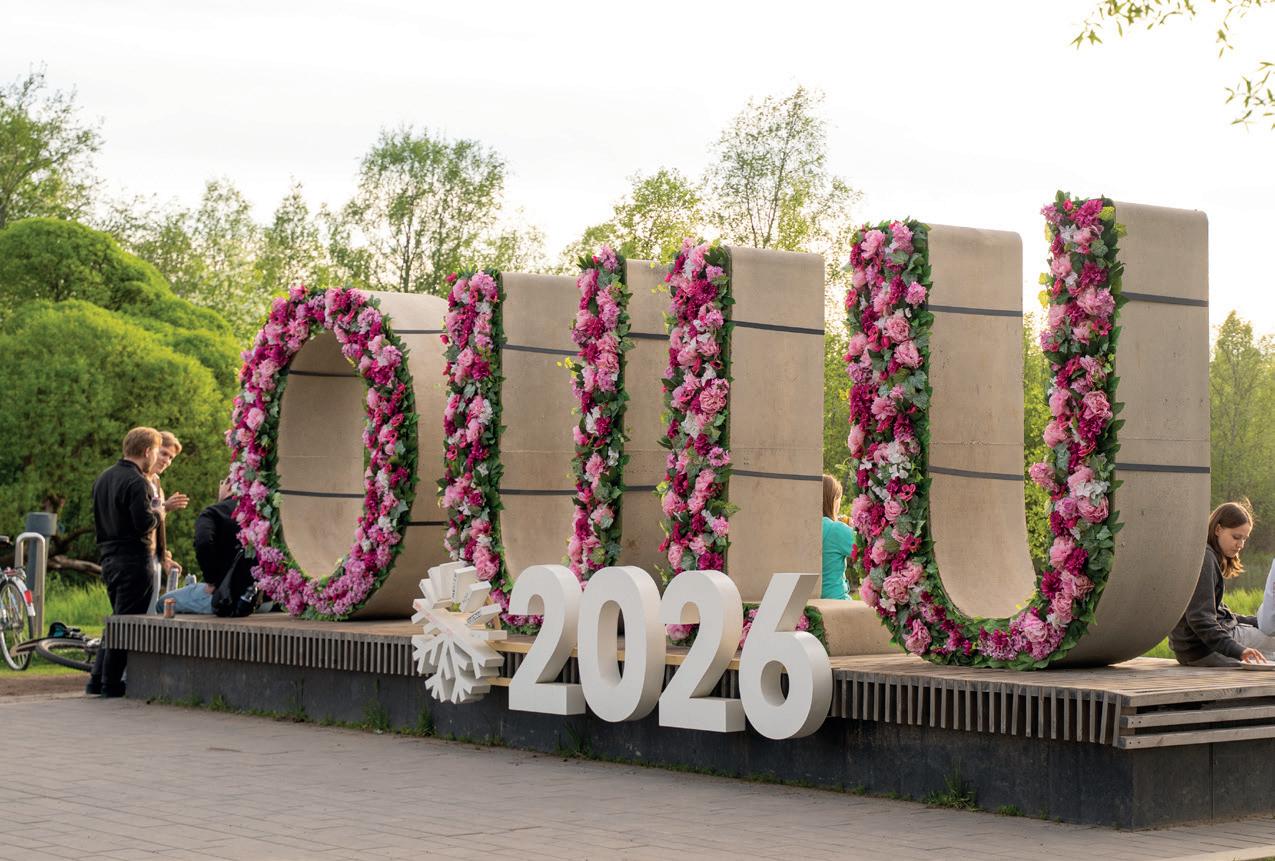
As European Capital of Culture 2026, Oulu is stepping into the international spotlight as one of this year’s most intriguing travel destinations, where culture, nature and innovation meet. The opening festival of Oulu2026 was one of the largest events in the city’s history, and this summer and autumn will see highlights such as the Lumo Art & Tech festival, the famous Air Guitar World Championships and Climate Clock.
By Malin Norman
The city of Oulu is proud of how its geography has shaped its identity: this is an Arctic city where dense urban life exists side by side with snow-covered forests, frozen rivers, coastal paths and vast open skies. “Oulu is unique because the Arctic and the urban environment intertwine effortlessly here,” says Lasse Launimaa, marketing and communications specialist of Oulu2026. “Locals and visitors alike can
experience high-level culture, creativity, and technology in the middle of a northern landscape that shapes everyday life.”
With its friendly atmosphere, strong sense of community, and reputation as a digital innovation hub, Oulu is a place where Arctic heritage, modern technology, and joyful creativity come together. As European Capital of Culture 2026, the
city offers an extensive programme that includes nearly 200 projects and thousands of events for both tourists and locals to enjoy, from Sámi culture and contemporary art to pop-up festivals, food events, and tech-driven light and digital installations.
Massively successful programme so far
The countdown to the European Capital of Culture Year at Ouluhalli on 31 December proved popular, and the main Oulu2026 Opening Festival in the middle of January attracted an impressive 250,000 visits. “It’s a fantastic turnout for a festival that took place at the coldest and darkest time of the year – the whole city was packed with people,” says Launimaa.
Photo: Visit Oulo, rosaruuskanen
Frozen People, an electronic music and northern art festival held on ice this spring, was incredibly popular, too. The programme included installations, light art, participatory numbers and performances. This was an example of how culture in Oulu can be experienced outdoors, in winter and in close connection with the surrounding environment.
Stepping into the international spotlight Through Oulu2026, the city has gained a place on the international travel radar, with leading media taking notice. “We’re humbled by the media attention and positive reactions,” says Launimaa. “For the opening festival, we had around 80 international journalists coming, sharing stories from our wonderful city.”
The Guardian portrays Oulu as a distinctive northern tech city where creativity, community and a touch of playful ec-
centricity define life in the Arctic, while The Independent describes it as an unconventional capital of culture where screaming choirs and air-guitar championships reign. Furthermore, National Geographic has named Oulu one of the best places in the world to travel to in 2026, BBC Travel highlights it as one of Europe’s most intriguing destinations this year, and Condé Nast Traveler presents it as a forward-looking northern city where climate action, culture and creativity meet.
The resilience and adaptability of nature Climate Clock, which opens on 13 June, is one of the key productions of Oulu2026. It intertwines art with science and nature to inspire environmental awareness, with seven major artworks that stress the resilience and adaptability of nature.
The production curated by Alice Sharp features several public artworks, which are located – with the exception of the ones in Oulu city centre – in natural set-
Frozen People. Photo: Harri Tarvainen
Photo: Harri Tarvainen
tings such as forests, rivers and seashores. In each location, the artworks will invite us to consider what we can do now, in the present moment, to preserve and strengthen our connection to nature.
“The series brings together art, science and nature to strengthen environmental awareness and deepen our connection to nature’s time,” explains Launimaa. “The artworks highlight local pride in nature while exploring ways to preserve and strengthen our relationship with it. Each work presents an artistic perspective on how creativity and responsibility can come together, with artists collaborating with scientists to bring new awareness to natural cycles.”
Hub for innovation, art and technology
In the autumn, attention turns to one of Oulu’s longstanding strengths: technology. Known for decades as an Arctic and northern IT hub, the city uses Oulu2026 to explore the intersections of art, innovation and future thinking. Oulu’s ambition is clear: to position itself as a city where creative experimentation and technical expertise complement one another.
Lumo Art & Tech is a new international festival that combines art and technology through a variety of encounters at multiple venues, from light art and sound art to diverse forms of digital art. Building on the success of the Lumo Light Festival, it is expanding into a broader art and technology programme. “The festival brings together art and technology in a spectacular way,” says programme manager Henri Turunen. “The Lumo Light Festi-
val has usually attracted around 100,000 visits, and we expect even more this year with the extended programme. It will put Oulu on the map as a leading Northern European city for art and technology.”
The Lumo Art & Tech festival, which takes place in November, will welcome creative professionals from the digital art and technology sectors worldwide,
with a range of seminars, conferences, and other inspiring events. And audiences will be fully immersed in the fascinating world where art and technology intersect.
www.oulu2026.eu
Facebook: Oulu2026 - European Capital of Culture 2026
On your marks, get set, Oulu! Oulu2026 Opening Festival, Market Square, 16 January 2026. Fire Duo Tuluxxia Show. Photo: Linnea Laatikainen
A few highlights in the year:
13 June, Climate Clock opening
The artists of the permanent artworks: Ranti Bam (UK), Rana Begum (UK), Takahiro Iwasaki (Japan) Gabriel Kuri (Belgium), Antti Laitinen (Finland) & SUPERFLEX (Denmark). Climate
Clock is curated by Alice Sharp and produced by Claudia Woolgar. The opening will be celebrated in each artwork location.
18-21 June, Solstice Festival
The event will feature a comprehensive line-up of foreign and Finnish artists and performers. In addition to three stages, the festival area will include several bars serving high-quality cocktails, wines and beers.
31 July – 1 August, Pohjanoteeraus – some kind of pessimism festival
Pohjanoteeraus celebrates the 20-year history of the Puolanka Pessimists and tries to sink the Puolanka Pessimists into the final rock bottom from which there is no more rising.
The Summer Night’s Dinner invites locals and visitors to enjoy food, entertainment and time together in the city centre. Around one kilometre’s worth of tables will be set up across Oulu city centre, and there will be a varied programme across three stages and along the streets.
27 August, Air Guitar World Championships 2026
The Air Guitar World Championships will be a highlight of the summer and part of Oulu August Festivals’ Delta Life Grand Finale. In the threeday event, air guitarists will compete on the delta stage built on water at Oulu’s birthplace.
13-22 November, Lumo Art & Tech
A ten-day international festival of art and technology, showcasing a variety of art and technology encounters at multiple venues, from light art and sound art to diverse forms of digital art.
Inside three decades of Elden: History and theatre on the slag heaps
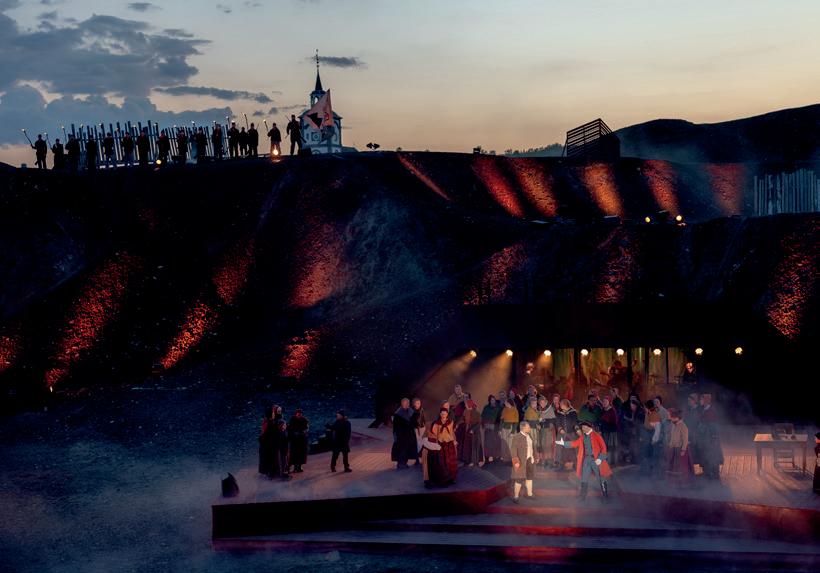
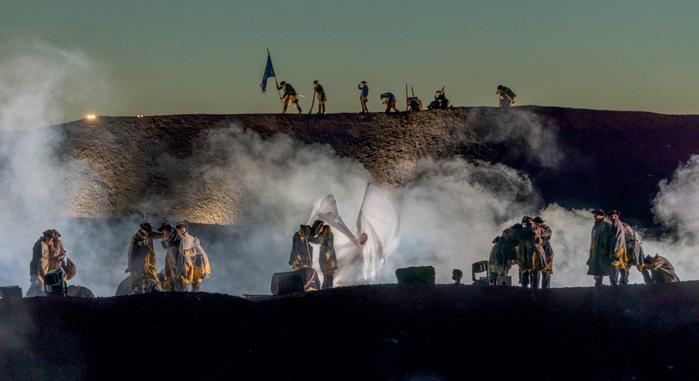
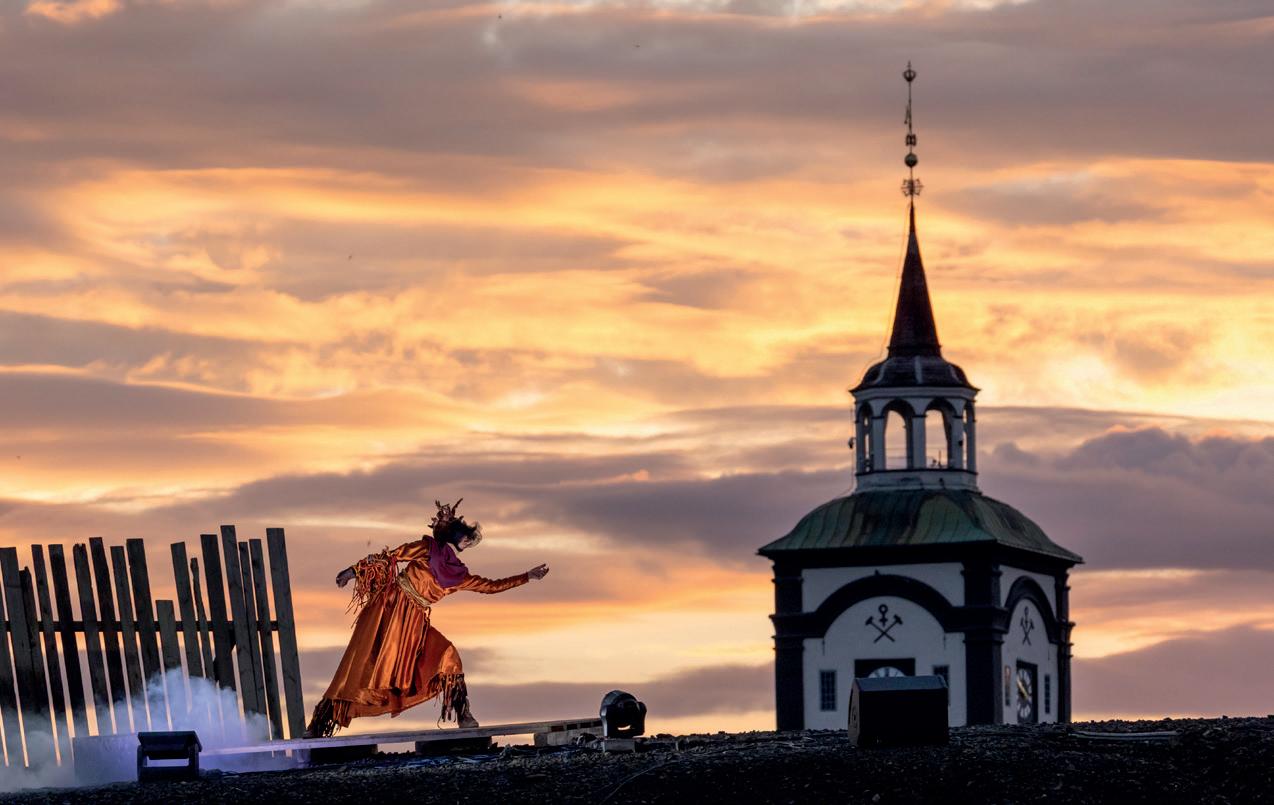
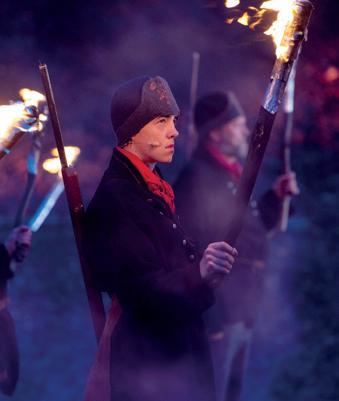
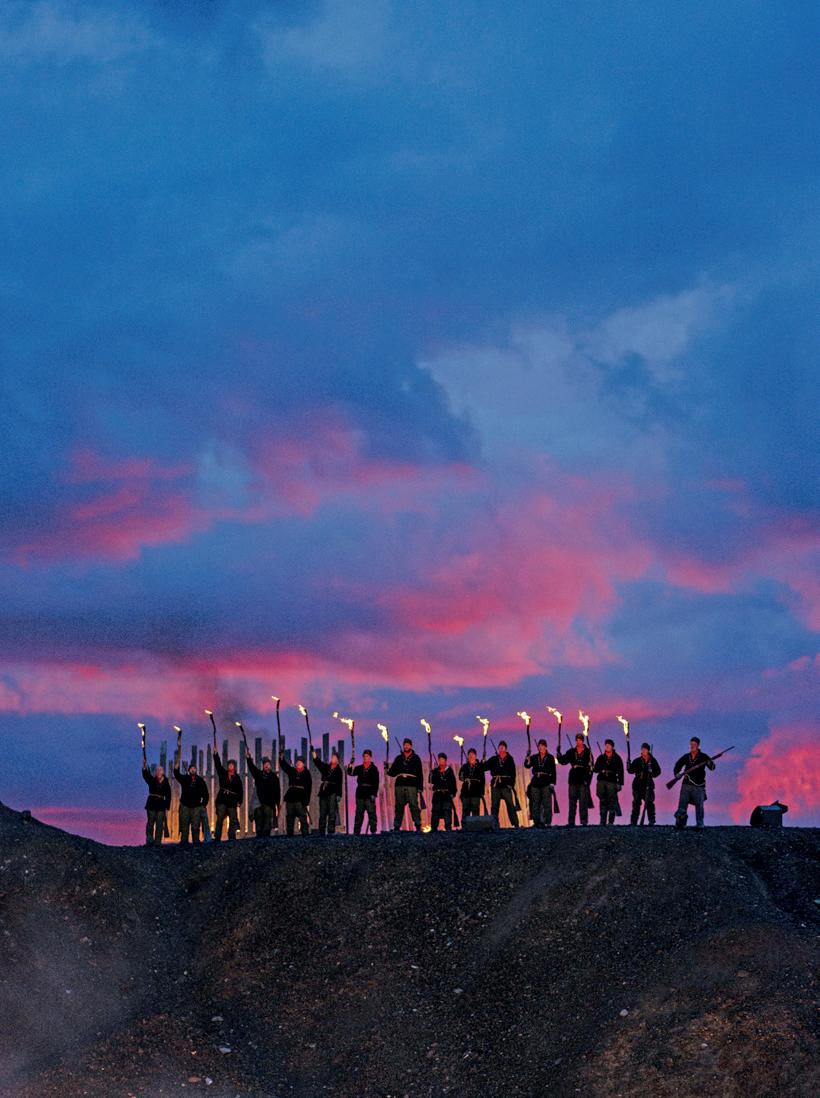
Every summer, as evening settles over the dark slag heaps of Røros, flames, music and voices rise into the mountain air; what was once an industrial mining ground transforms into an open-air theatre. Against the towering black slag heaps left behind by centuries of copper production, the drama of Elden, Norway’s largest outdoor historical theatre production, unfolds.
By Celina Tran | Photos: Atle Auran
Today, more than 12,000 people travel to Røros each summer to experience Elden, including around 400 volunteers, professional actors, musicians and stage artists, all helping bring the production to life. But despite its current scale, the story of Elden began far more modestly.
Long before its official premiere in 1994, the production began to take shape in the late 1970s. At the time, it existed primarily as a concert inspired by the dramatic history of the Carolean Death March, one of the most tragic military disasters in Scandinavian history.
The combination of music, local history and the dramatic mining landscape quickly revealed a larger potential. Over time, the idea evolved from a musical performance into a fully staged outdoor theatre production rooted in Norway’s long spel tradition.
“What began as a concert eventually developed into something much larger,” says manager Jo Inge Nes. “The historical material, the location and the involvement from the local community created a foundation for a production that kept growing year after year.”
The official theatre premiere took place in 1994, and since then, Elden has steadily expanded into one of the country’s most recognised cultural events. While many Norwegian historical productions remain regional traditions, Elden has become a national attraction, drawing audiences from across Norway and abroad.
The historical events behind Elden
The play is set during the closing years of the Great Northern War. Swedish King Karl XII sent General Carl Gustaf Armfeldt and his army of approximately 10,000 sol-
diers toward Trondheim in an attempt to conquer Norway.
Due to the challenging weather conditions of 1718–1719, the campaign quickly became a struggle for survival, and soldiers faced hunger, disease and brutal winter conditions even before reaching Norwegian territory. When King Karl XII was killed during the siege of Halden in southern Norway, the Swedish troops received orders to retreat back across the mountains toward Sweden.
What followed became known as the Carolean Death March. As Armfeldt’s army crossed the mountain plateau near Røros, a violent snowstorm struck. Thousands of exhausted soldiers froze to death in the mountains. Nearly 3,000 men lost their lives during the retreat, making it one of the worst military catastrophes in Scandinavian history.
This historical tragedy forms the backdrop of Elden, but the production focuses just as much on the human stories
surrounding the war as on the military events themselves. Young lovers are separated as soldiers march toward an uncertain fate. Families in the mining town wait anxiously for news. Officers, miners and civilians all struggle with fear, loyalty and survival as war moves closer to their community.
“We’re telling the story of one of the darkest moments in Swedish war history, but also about Røros, its people and the community here,” explains Nes. “At its core, Elden is really about people; about their losses, loves, fears and hopes, and while the history itself is one of terrible war and conflict, we also want to tell a story of peace.”
Norway’s largest spel
Historical outdoor theatre productions, commonly known in Norway as spel, occupy a distinctive place in the country’s
cultural life. Each summer, communities across Norway stage productions rooted in historical events, folklore and local legends, often with many members of the local population involved both on stage and behind the scenes. “Spel is a distinctly Norwegian art form,” says Nes. “We have
around 170 spel productions in Norway, and Elden is the biggest.”
Part of what distinguishes Elden is its combination of professional theatre and local participation. The production includes experienced actors and musicians from
across Norway and the Nordic region, as well as hundreds of local volunteers. At the heart of the project, volunteers help with costumes, stage construction, catering, logistics, technical production and performance. Children and young people are also deeply involved, making Elden one of the largest youth theatre initiatives in Scandinavia.
“Almost ten per cent of the population of Røros participates in some way,” Nes explains. “That means Elden doesn’t simply take place here – it belongs here.”
Although the production has grown considerably since the 1990s, the location remains central to the experience. The slag heaps beside the old copper works create a natural amphitheatre shaped by history itself.
The dark stone ridges, mountain weather and open skies become part of the storytelling; fire, smoke, live music and shifting light transform the mining landscape into a dramatic stage that changes character throughout the evening. For many visitors, this very setting is what makes Elden feel different from traditional theatre.
While the play is performed primarily in Norwegian, international audiences continue to grow. Historical introductions and contextual information help visitors unfamiliar with the language follow the narrative and understand the historical events behind the performance. “It works
almost like opera,” says Nes. “Even if you don’t understand every word, you still understand the emotions and the scale of what’s happening.”
More than 30 years after its official premiere, Elden continues to evolve. What began as a small concert project in the late 1980s has become a major cultural institution and one of Norway’s most distinctive theatre experiences.
This summer, history, music and community once again gather beneath the mountain sky of Røros. Come to Røros for any of the 10 performances (22 July to 1 August) to see how Elden honours both the memory of the Carolean tragedy and the unique theatre tradition that grew from it.
www.elden-roros.no
Facebook: Elden
Instagram: @eldenroros
Photo: Johnny Mazzilli / nordnorge.com
The fish that built Norway
For centuries, cod has been central to Norway’s survival and prosperity. It is woven into the country’s history, identity and coastal way of life – so much so that Norway can, quite literally, be said to have been built on cod.
By Nane Steinhoff
Visit Lofoten in northern Norway, and cod is everywhere – especially during skrei season, where harbours, menus and local events centre on the migratory Arctic cod. The word skrei comes from the Old Norse skreið, meaning the wanderer, a reference to the remarkable journey that these cod make each winter from the Barents Sea to the Norwegian coast to spawn. That long swim gives skrei its firm, lean, snowy-white flesh and helped make it one of Norway’s most prized seasonal catches.
For centuries, it has fed communities, driven trade and shaped life in the north. As early as the Viking Age, dried cod, or stockfish, was a valuable
commodity, and as trade with southern Europe took hold, it became Norway’s most important export. “For close to 400 years, skrei accounted for around 80 per cent of the value of Norway’s exports,” explains Barbra Elise Grøgaard, communications and marketing manager for Lofoten’s new SKREI centre.
As a result of the growing trade, Northern Norway saw a large number of small fishing villages and trading cities appear all along its coastline.
Centuries of catches
In the 1800s, during the heyday of the Lofoten fishery, thousands of fishers from across Norway gathered in Lo-
foten to catch the migratory Arctic cod arriving in their millions. The season still runs from January to April, peaking in February and March. Remarkably, catches remain close to historic levels: where seasonal landings once reached 40 to 50 million kilos, similar volumes are still landed today, making Lofoten the world’s largest seasonal cod fishery.
In the peak year of 1895, around 32,000 fishers and 6,000 open or sail-powered boats were active participants in the cod fishing season, while today, due to advanced technology and better boats, the season sees around 2,000 to 4,000 active fishermen. Despite the smaller number of active fishers, the importance of cod or skrei has remained undiminished as it has grown into a billion-dollar export market, which sustains coastal communities around Norway and boosts tourism. “Even today, the Lofoten fisheries remain an active industry, and we
Reine in Lofoten. Photo: Hallvard Kolltveit / Destination Lofoten
still dry the cod to create stockfish in the same way we did a thousand years ago,” says Grøgaard.
Travels shaped by skrei
Besides marvelling at gorgeous views and hiking amid breathtaking landscapes, Lofoten visitors can delve deeper into the importance of skrei by visiting one of the many fishing villages dotted along the coastline or joining a guided cod-fishing trip throughout the fishing season. Some picturesque fishing villages with rich fishing history include Henningsvær, Kabelvåg, Nusfjord, Røst and Å in Lofoten, Nyksund in Vesterålen as well as the old trading post Kjerringøy.
In many of these villages, visitors can stay in a rorbu, the traditional fishermen’s cabins that have long been part of life along the coast. Introduced by King Øystein Magnusson in the 12th century, they gave seasonal fishers a proper place to sleep, replacing the makeshift shelter they once found beneath their boats. And, if you are lucky, you might come across the unmistakable scent of
stockfish, known locally as the scent of money, and rows and rows of wooden fish-drying racks.
Of course, no cod-inspired trip would be complete without tasting the actual produce. In Lofoten, skrei reaches the table in two main forms: fresh and dried. During the winter fishing season, fresh-
ly landed skrei appears on traditional and modern menus across the islands and in the big cities like Oslo, Trondheim or Bergen further south. Just as visible, however, is Lofoten stockfish – a commodity that is protected under European geographical indication rules. The dried fish gets rehydrated and used in stews, baked dishes and other regional recipes.
The Lofoten Aquarium. Photo: Marie Nystad Helgesen / nordnorge.com
Especially recommended is the Boknafisk, a semi-dried cod, which is a local staple and impresses with a dry exterior and a tender, slightly sour, moist interior.
Still central to Norway’s culinary history, the near-total use of the skrei, from roe and liver to dried heads, also reflects a long-established culture of using the catch as fully as possible. Nigeria, for example, imports Norway’s dried cod heads to be used in their country’s national dish, while cod milt, the sperm
sac of the male cod, is primarily sold to sushi restaurants in Asia.
A new chapter for Lofoten’s cod heritage
A major new addition to Lofoten’s cultural landscape arrives on 30 June 2026 with SKREI, a museum experience in Storvågan, Kabelvåg, devoted to the history of the Lofoten fishery and the migratory cod that has shaped Northern Norway’s coastal culture. At its heart stands The Otolith, a striking new 5,000-square-metre building inspired by the fish’s ear
stone, where events, an innovative main exhibition and changing exhibitions will use sound, light and atmosphere to tell the story of the Lofoten fishery from past to present and into the future.
“The main exhibition is an immersive experience that follows the journey of Norway’s most important fish through the lens of marine biology, cultural history, art and current research,” explains Grøgaard. Together with the historic Lofoten Museum, the Lofoten Aquarium and the Espolin Gallery, the new centre will offer visitors a rich, multi-layered way to understand how skrei has influenced life, work, trade and identity in northern Norway.
“For a long time, the history and culture of the coast have been slightly overlooked, despite its obvious importance for Norway as a nation,” Grøgaard says. “We believe it’s very important to tell the story of skrei at this moment in time, precisely because fish stocks are at a lowpoint and sea temperatures are rising.” That is why an important aim of SKREI’s work is to help a broad audience better understand the region’s history and marine life, she explains. “Knowledge is the basis if we want to manage the resources of the sea in a sustainable way. Only then can we hope to live both with and from the sea, well into the future.”
Photo: Reiner Schaufler / www.nordnorge.com
Photo: Petr Pavlíček / Visit Lyngenfjord
A healing experience in the heart of mystical Bergslagen EXPERIENCESTOPSUMMERINSWEDEN
Nestled deep in the forests of Bergslagen lies a destination where history, nature and luxury exist in perfect harmony. Together, Loka Brunn Hotel & Spa and Grythyttans Gästgivaregård offer guests what can only be described as the best of two worlds: world-class gastronomy and relaxing spa facilities combined with history, healing waters and complete tranquillity.
By Nina Bressler | Photos: Loka Brunn Hotel & Spa
From magical lakes and forest trails to historic wine cellars and Nordic wellness rituals, a visit to the Bergslagen area of Sweden is not just another hotel stay or spa weekend. It is a complete experience rooted in Swedish nature and centuries of unique traditions. “Loka Brunn Hotel & Spa and Grythyttans Gästgivaregård are located approximately ten minutes apart and both represent experiences unlike any other. They’re designed to bring out the defining features of this area: the water, forests, serenity, and the rich history,” says Marie Dahlgren, CEO of Loka Brunn Spa & Hotel.
A living destination with vibrant history
The history of Loka Brunn Spa & Hotel stretches back to the 16th century,
when the healing properties of the natural spring water first became known. Over time, the spa town grew into one of
Sweden’s most celebrated health resorts, attracting visitors seeking rest and recovery. The area has been frequented by royalties on several occasions and in 1761, King Adolf Fredrik visited Loka to cure his severe migraines with the famous spring water and warm mud treatments. His son, Gustav III, enjoyed the area so much that he had his own house built there, Kungsbyggnaden, which is still in use today.
Despite its remarkable history, Loka Brunn is far from a museum frozen in time. Today, the property functions as a modern meeting place and includes 54 individual houses spread across the grounds. “The identity of Loka Brunn is naturally rooted in the place. We don’t need to build a new narrative, but simply continue to bring out the unique features that have been cultivated in this area for centuries,” says Dahlgren.
Water, forest and stone
The surrounding forests, lakes and dramatic landscapes have inspired every aspect of the experience, particularly the
Vattensalongen spa. “Vattensalongen was inspired by Murstensdalen, a nearby valley known for its dark forest lakes, waterfalls, steep cliffs and deep ravines. This summer we will launch Loka Nordic Spa, which is a holistic experience designed to give guests an authentic experience of what this area has to offer,” Dahlgren continues.
The newly launched spa concept Nordic Zen is a collection of treatments inspired by local traditions that date back hundreds of years. The new treatments, developed in collaboration with luxury skincare company Kerstin Florian, includes both facial and body treatments inspired by Swedish nature and locally sourced ingredients unique to the area. “Water, pine needle oil and mud are reasons why Loka became a spa destination in the first place. The Nordic Zen treatments are an exploration of these elements, aimed at
capturing the very soul of Loka Brunn,” Dahlgren explains.
Various ingredients, such as juniper, sea buckthorn, and pine needle oil, are combined with methods and tools, such as the locally sourced organic mud, linen cloths and hot stones, to bring out an experience connecting the guests with Loka’s healing traditions.
Gastronomy in extraordinary settings
Gastronomy is at the centre of Grythyttans Gästgivaregård. This boutique hotel, dating back to 1641, consists of 21 buildings and combines historic charm with refined gastronomy and exceptional hospitality. Guests can choose between two-course dinners or elaborate seven-course tasting menus paired with carefully selected wines from the property’s greatest treasure: a wine cellar hidden inside historic stone vaults dating back to the 17th cen-
tury. The cellar features both the classics of the Old World alongside wines from the New World, reflecting the team’s own experience and passion for international wine culture.
Both Loka Brunn and Grythyttans Gästgivaregård focus on classic French cuisine with influences from other international kitchens, always with a strong emphasis on local Swedish ingredients. Wild game and seasonal produce from the local area often appear on the menu, creating a strong connection between plate and nature.
Luxury in the wilderness
One of the most unique experiences available at Loka Brunn is Loka on Lake –an exclusive floating accommodation concept that allows guests to spend the night not just by, but on the water. The luxurious suites include panoramic lake views, a private sauna, a dock and even a rowing boat.
Whether guests arrive for fine dining, wine tastings, wellness weekends, or corporate retreats, the common thread remains the same: forest, nature and water. It is in this balance that the best of two worlds is brought together in the heart of Bergslagen.
www.lokabrunn.se
www.grythyttansgastgivaregard.se
Instagram: @lokabrunn.se
@grythyttansgastgivaregard
Why ERTH should be your first stop in Stockholm
In the heart of Stockholm’s vibrant food hall Hötorgshallen, ERTH is redefining what a modern meat experience can be. Combining restaurant, deli and butcher under one roof, the concept serves as both a destination for conscious food lovers and a showcase for the wider Globe Foods group.
By Linnéa Mitchell | Photos: Philip Norberg
ERTH stands for environment, responsibility, taste and happiness, reflecting the vision behind the company’s founding in 2022: to bring greater transparency, quality, and understanding to the meat industry. “We want to make it easier for people to make informed choices,” says CEO Johan Fors. “It’s not always obvious where food comes from or how it’s produced.”
At the core of the concept is a strong belief that quality goes beyond geography. Rather than focusing on origin alone, ERTH carefully selects producers based on animal welfare, farming practices, and craftsmanship. “Not everything local is automatically best, and not everything imported is worse,” Fors explains.
A visit to ERTH is an experience. The raw ingredient takes centre stage, whether guests are dining in or shopping from the deli, and the knowledgeable staff are
always ready to give the full background of that one specific piece of meat – from farm to fork. Should you still need more details, you have full access to the always present black leather-bound book called The Meat Bible. In a unique setup, visitors can even choose any cut directly from the butcher’s counter and have it prepared in the kitchen.
Education and accessibility are equally important. Through popular meat tastings
and daily interactions, ERTH aims to guide customers toward better choices and new discoveries. “It’s okay not to know,” says Sebastian, head of brand. “That’s why we’re here.” The idea is simple: eat less meat but choose higher quality and make it an experience.
Located in one of Stockholm’s most diverse and welcoming food markets, ERTH mirrors the city’s international culinary identity. The atmosphere blends premium dining with the relaxed, social feel of a traditional market hall – what the team describes as a modern meat bistro.
For many visitors, the experience leaves a lasting impression. As Fors notes: “A common reaction we hear from tourists is: ‘We’re leaving tomorrow – if only we had found this place on our first day.’”
At ERTH, sustainability, flavour, and knowledge come together – inviting guests to rethink not just what they eat, but how and why they eat it.
erth.se
Facebook: ert.hotorgshallen
Instagram: @erth.se
Bruket – a place to fall in love with
What started as the founders’ vision for a creative place where people could meet, has become that and much more. Bruket i Wiared is a lifestyle destination with accommodation, food and drink, shopping, and entertainment – all in one fantastic countryside location.
By Malin Norman | Photos: Bruket i Wiared
Located in the old industrial community of Viared, just outside Borås, Bruket i Wiared has become somewhat of an oasis. Visitors come to this countryside destination to enjoy a coffee or lunch, buy freshly baked bread from the bakery, browse the interior boutique, listen to music or attend an event, and perhaps stay the night in a glamping tent or a cosy room in the villa.
With around 200,000 visitors per year, Bruket has become an incredibly popular destination in just a few years’ time. “Coming to Bruket is an experience,” says Albert Alexandersson, CEO. “The setting is beautiful and all the creative people in this area, who put their heart and soul into what they do, open up for conversations and inspire new ideas. In a way, Bruket is a celebration of the people who once lived and worked here. We want to respect that heritage and continue to use this place, our way.”
Everything here is made by hand and with care, honouring traditions but with a modern take. In the café, the team serves home-cooked meals and the bakery makes delicious bread, cakes and more. There is more to discover at Bruket. Housed in an old barn, the interior boutique Hjärterum offers beautiful designs from around the world. Across two floors, you will find a mix of timeless pieces and rustic charm – things to give your home personality.
For those who want to stay the night, check in at Brukets Camp. “With 12 glamping tents, this is a countryside oasis,” says Sandra Stefansson, co-founder of Bruket. “You get a bit of luxury and comfort, while being close to nature. It’s a mix of the simple life and the good life.” If you prefer a bit more comfort, there are three cosy hotel rooms available in the villa.
Overnight guests can also use the sauna and outdoor gym, borrow a bike and explore the surroundings, or just enjoy the chilled-out atmosphere. As if that was not enough, Bruket also has a programme with concerts and other events. Stefansson adds: “This is a place where people end up staying longer than planned, just because they love spending time here.”
bruketiwiared.se
Facebook: Bruket i Wiared
Instagram: @bruketiwiared
A selection of events at Bruket:
13 June, Molly Sandén
4 July, Thomas Stenström
18 July, Danny Saucedo
1 August, Viktor Norén
5 September, Hammerfall
Privacy, simplicity and closeness to nature at Näs Gård
Tucked away on a large lakeside property along the beautiful High Coast in Sweden, a UNESCO world heritage site, Näs Gård is the ideal place for a relaxing summer holiday, a workation with smaller groups, or perhaps just some time by yourself. With its private location and closeness to nature, this is where to experience luxury of a different kind.
By Malin Norman | Photos: Näs Gård
The picturesque Näs Gård offers a different kind of experience. With its peaceful setting and cosy ambiance, the 120-year-old homestead has everything you need for a relaxing stay – and heaps of rustic charm. The two cottages available to rent, Storstugan and Lillstugan, exude a warm character and a peaceful soul. In addition to eight bedrooms, Näs Gård features a conference room, an office, two lounges, two fully-equipped kitchens, bathrooms and a sauna, and terraces with a view of the lake.
“Whether you’re coming for a family holiday, organising a small-scale conference, a business meeting, a team building activity or a course, or perhaps a workation for yourself, this is a relaxing and sustainable alternative,” says Madeleine Person, who runs Näs Gård.
“We have everything you need and we can rearrange the rooms, including our versatile loft space, depending on the setup you need.”
At your own pace, you can explore the area or just enjoy the privacy and stillness of the large property, which also encompasses the lake, forest trails and a viewpoint on a nearby hill. In summer, you can experience the magic of the bright summer nights. By the lake, you can go for a swim or try activities such as canoeing or fishing, just a hundred metres from the cottages. “Guests appreciate the mix of privacy, nature and simplicity here,” says Person. “The peace and quiet does something to you; this is like a digital detox, slow travel at its best.”
Näs Gård is located just a few kilometres from the landmark High Coast Bridge, where you can enjoy the view at the restaurant or set off on one of Sweden’s signature hiking trails. Ony 30 minutes away, you will find the regional capital Härnösand, with northern Sweden’s highest ranked beach, as well as muse-
ums, spa, golf, boat trips, local shows, concerts, and more.
For culinary excursions, visit Fiskafänget in the old fishing village Norrfällsviken, Gårdsbutiken in Nordingrå or Björkudden, only minutes away, all serving treats made from local produce. “Even though a stay here is on a self-catering basis, we often leave freshly-baked bread and locally made marmalade and cheese for guests when they arrive,” adds Person.
nasgard.se Instagram: @nasgard25
Rejuvenate your body and soul by the sea
Perched along the beautiful seashore in Malmö, the outdoor bathing establishment, spa and restaurant Ribersborgs Kallbadhus offers a moment of relaxation. Come for the fantastic bathing facilities, a massage, a tasty meal, or just a rejuvenating walk along the sea.
By Malin Norman | Photos: Ribersborgs Kallbadhus
The historic Ribersborgs Kallbadhus, also called Kallis, is one of Sweden’s oldest and best-preserved facilities of its kind. Malmö residents have been able to enjoy cold swimming here since 1898, and the pools, sun decks and cabins tell the story of the city’s bathing history. Over the years, various parts have been exposed to the forces of the sea and winds, and the listed building has gradually been repaired yet maintains its beauty.
With around 300,000 people using the cold bathing facilities every year, Ribersborgs Kallbadhus is one of the most visited destinations in Malmö. Many also come here to enjoy a fika or lunch in the restaurant, attend one of the many events, or perhaps just to go for a walk along the sea. “This is a real gem in Malmö, and appreciated by locals as well as visitors from further afield,” says Jonas Rincon-Dahlberg at Hekajo, the company that has run Ribersborgs Kall-
badhus since 2009. “The sensation of being this close to the open sea and still just a short walk from the city centre offers instant relief and relaxation.”
The cold bathhouse is open all year round and features two large outdoor unheated sea pools, hot tubs, and several saunas, including a wood-fired sauna, a dry sauna, a humid sauna and an IR sauna –with fantastic views of the sea. You can also treat yourself to a range of different massages. The bath is divided into a ladies’ and a men’s section, but Ribersborgs Kallbadhus also hosts mixed sessions on the first Monday of every month, when the bathhouse is open to everyone regardless of gender, body type and identity.
“Our ambition is that Kallis will always be an inclusive and welcoming oasis,” says Rincon-Dahlberg. “Coming here is an experience. In addition to our bathing and treatment options, you can also just come
to enjoy Malmö’s best sunset. Regardless, you will leave feeling a bit lighter.”
There is plenty more happening at Ribersborgs Kallbadhus, such as after beach events with DJ, jazz gigs and stand-up comedy. On 3 July, the venue hosts a seafood night celebrating fresh coastal flavours. It is also a popular setting for weddings, birthdays and other celebrations, as well as corporate gatherings. “We have a wonderful mix of events,” adds Rincon-Dahlberg. “It’s well worth coming here, just a short walk from downtown Malmö. And it’s just as beautiful in winter.”
www.ribersborgskallbadhus.se
Facebook: Ribersborgs Kallbadhus
Instagram: @ribersborgskallbadhus
Boutique hotel in Stockholm’s archipelago
Just a short journey from Stockholm’s hustle and bustle, the charming boutique hotel Siggesta Gård is surrounded by forests and fields – perfect for a relaxing summer weekend, culinary experiences with produce from its own garden, and fruitful meetings by the sea.
By Malin Norman | Photos: Siggesta Gård
Siggesta Gård is a great countryside destination in Värmdö, which is part of the Stockholm archipelago, where nature defines the experience. “When coming here, you will experience the Swedish countryside. Nature is not just a backdrop, it’s the real thing,” says Lisa Guldvarg, marketing director. “Staying at our small boutique hotel, surrounded by lush forests and fields, will make your shoulders drop –this is a destination to truly unwind, relax and feel inspired.”
Rural charm meets modern comfort in the hotel, with individually decorated rooms featuring warm, rustic aesthetics with natural materials that blend beautifully with the landscape outside the window. Siggesta Gård is popular for conferences, where meaningful conversations flourish when the pace slows down. Unsurprisingly, it is also a popular venue for summer parties, weddings and private celebrations.
In the impressive kitchen garden, covering some 1,500 square metres, the team grows and harvests over a ton of vegetables that end up on the plates at Restaurang Ladugården, Siggesta Gård’s rustic and cosy restaurant. The food reflects the character of the farm and the changing seasons dictate the menu. “We use as much locally produced and sustainable ingredients as possible, preferably from our own farm and from producers
in the surrounding area,” says Guldvarg. “Bread and pastries are often baked in our own bakery to give the meal that little something extra.”
The lush Orangery tempts with delicious sandwiches, soup and homemade pastries, while a food truck and an ice-cream & sweet shop add to the experience. This summer, Siggesta Gård also welcomes Dahlia District, a new flower farm created by Hanna Borg, a local Värmdö resident. where guests can stroll among the flowers and pick their own bouquets.
Being located in the archipelago, the hotel offers plenty of outdoor activities, including canoeing, cycling, paddling, hiking, adventure golf, and a forest obstacle course, just to mention a few. The hotel is also family-friendly, with plenty of space for children to run around. At the farm, guests can get up close to the animals, including feeding the alpacas. By the edge of the forest, Siggesta Gård also offers glamping for those who want a comfortable stay even closer to nature.
siggestagard.se
Facebook: Siggesta Gård
Instagram: @siggestagard
Greenland: An Arctic wilderness that inspires awe and demands respect
You get a special feeling setting foot on a landmass where fewer than 60,000 inhabitants have over two million square kilometres between them. As we descended towards Nuuk, Greenland’s capital, passing mountains of all shapes, there was no sign of human habitation until the final moments before landing.
By Xander Brett
Photo: Camilla Hylleberg/Visit Greenland
Fellow passengers, speaking in different languages, were taking photos within seconds of stepping onto the tarmac, and like them, this writer was captivated by the reality of having reached somewhere so remote.
But while Greenland’s seclusion is its draw, getting to the territory from overseas has never been easier. A new airport at Qaqortoq, in southern Greenland, opened this year, following the 2024 inauguration of an expanded Nuuk Airport, which has enabled direct flights from both Europe and North America.
In Nuuk, the impact already feels visible. Magdalene Hansen, store manager at the Qiviut traditional clothing shop, was arranging products when we met, and said she believed the recent increase in visitors was partly linked to the expansion of Nuuk’s runway.
Greenlandic pride
Qiviut sits across the road from fashion designer Bibi Chemnitz’s boutique, where hoodies and bags emblazoned with “Greenland is not for sale” among the items on display. The slogan, a pointed response to President Trump’s statements about wanting to acquire Greenland, also appeared on a poster placed outside in the street. Trump’s most recent rhetoric brought an influx of world leaders and foreign journalists to Nuuk, but it may also have given local tourism an unexpected boost.
“Trump has given Greenland the best marketing it has ever had,” declared Jørgen Bay-Kastrup, CEO at Hotel Hans Egede, the establishment at which I was staying. “I didn’t like the way he mentioned us, but in a commercial sense, it was useful.”
Further up the thoroughfare from Qiviut and Chemnitz’s store, I noticed a large Greenlandic flag stuck to the side of a green building. It was one of many; the flag, with its distinctive counter-changed red and white disc, was omnipresent around Nuuk. It fluttered from a crane downtown, flew from a pickup truck parked outside the Greenlandic parlia-
ment and was displayed in countless office and residential windows. The Danish flag, representing the Realm of Denmark of which Greenland is part, appeared less often, though the Danish language was everywhere, from signage to packaging.
As I looked towards a statue of Hans Egede, Nuuk’s founder, I got chatting to a British tourist who had lived in the USA for 18 years and whose trip to Greenland also included the smaller settlements of Aasiaat and Ilulissat. “I’ve flown over Greenland many times,” he explained, sunglasses on and a rucksack slung over his shoulder. “I thought: ‘I have to go and see that place’. So, I’m here out of curiosity.”
As we parted, I told him that I would probably see him around, as in a city where walking around the centre takes less than half an hour, there was a good chance of that happening. This is a capital where consulates are huts and the tallest building is but ten stories high. In mid-March, snow coated the ground, and an iceberg, bright blue in appearance, had found its
way to the shoreline. The jingling of snow chains was a morning soundtrack.
Not just Nuuk
The cottage capital is home to around a third of Greenland’s inhabitants. It sits, facing Canada, in the territory’s southwestern sector. Other towns in this sec-
tion of the island (though there are also settlements in the north and on the east coast) help house most of the remaining population. Greenland’s centre is empty and blanketed by an ice sheet.
But while the interior stays untouched, there is such an array of delights along
Photo: Mads Pihl/Visit Greenland
A kaffemik gathering at a home in Tasiilaq. Photo: Mads Pihl/Visit Greenland
the coast that condensing the countless pursuits into a manageable menu is a challenging, if not impossible, task. This is a stunning land whose climate and geography naturally lend themselves to adventure.
With settlements scattered sporadically, long car journeys are not possible, and inter-settlement movement is by sea or air. Seaborne connections include the Arctic Umiaq’s weekly Sarfaq Ittuk ferry, complete with dining, accommodation and entertainment. It departs Qaqortoq (home of the new airport) and arrives, having stopped regularly during its journey up the west coast, about three days later in Illulissat, where there are air connections to Nuuk, seasonal flights to Reykjavik and, from October, when a new runway opens, a weekly flight to Copenhagen.
The Sarfaq Ittuk travels (weather permitting) year-round, but Greenland is a tourist destination shaped by the sea-
sons. The arrival of summer and the thawing of snow render kayaking, fly fishing, hiking and cycling accessible along the island’s shores. Come winter, those options are replaced by the likes of snowmobiling, ice fishing, snowshoeing and skiing (whether it be of the touring, cross-country or even heli variety).
Greenland Travel and Visit Greenland are among organisations advertising an Arctic Big Five of experiences that visitors to Greenland should take in, namely dog sledding, viewing the Northern Lights (you have a good chance of glimpsing them from late summer to mid-spring), experiencing ice and snow, whale watching and discovering what the organisation refers to as Greenland’s pioneering people.
Greenland has its own breed of dog, and sledding is an activity synonymous with the territory, offered either as a standalone experience or wrapped up as part of a package itinerary. It falls, of course,
Photo: Mads Pihl/Visit Greenland
Nasaasaaq lit up by the Northern Lights. Photo: Mantas Hesthaven/ Visit Greenland
while whale watching, conversely, is perhaps best left to the summer months. Indeed, the yearly return of humpbacks is, to residents of Nuuk, a signal that summertime has arrived.
Flying to a faraway wilderness
According to Visit Greenland, airport developments and new routes are key drivers for tourism growth. Current projections indicate an average annual growth in air travellers of around four per cent towards 2050, and it is expected that new routes will not only help distribute tourism more evenly across Greenland, but will also support a longer tourist season, beyond the traditional summer peak.
“Importantly,” it made clear in a statement, “this growth is being approached with a strong focus on sustainability and value creation, ensuring that increased visitor numbers translate into positive economic and social impacts for local communities.”
Those communities of pioneering people might be the most important item on the Arctic Big Five checklist. For, wild and empty as this land largely is, to the Greenlanders it is home. Modernisation has reached these communities without erasing their culture, and visitors can encounter it both at the main points of arrival and through internal travel connections. For tourists, there is the opportunity to join locals for a kaffemik: a gathering over coffee often arranged at times of celebration. Fine-tuning the balance between proudly sharing Greenland – its nature, culture and communities – and respecting Greenlanders’ privacy and pristine landscapes is an ongoing task.
As new flight routes bring more visitors from both Europe and North America, that balance will become even more important. Done carefully, however, greater access need not diminish what makes Greenland exceptional; it can help more people understand the country on its own terms. After a visit, one thing feels as clear as the waters around its shores: Greenland is not simply a destination to be explored, but a place to be approached with respect.
Aappilattoq in Greenland’s south. Photo: Mads Pihl/Visit Greenland
World-class ballet beneath the open sky
For almost two decades, Verdensballetten has brought ballet and classical music out of the theatre, away from plush armchairs and chandeliers and straight into the historic monuments and natural landscapes of Denmark. What began in 2008 as a single openair event has grown into two weeks of summer performances with internationally renowned artists, a loyal audience, and dates now also planned abroad.
The unique settings have been at the core of the concept from the very beginning. The surroundings had to contribute something of their own, explains founder, host and artistic director Jens-Christian Wandt. “We were very clear that it had to be somewhere spectacular,” he says of the first performance in Skagen. “It should not just be in front of a supermarket car park. We perform under the open sky, and the setting itself becomes the scenery.”
That principle still shapes the choice of venues today, from manor parks and beaches to former prisons and hilltop landmarks. The ambition is both to give seasoned ballet audiences access to world-class performers in unusual
settings and to open these art forms to people who might never otherwise seek them out.
From Sweden to Denmark
The origins of Verdensballetten lie in Sweden, where Wandt took part in a series of outdoor performances created in collaboration the renowned flower artist Tage Andersen. When that project came to an end, he and principal dancer Johan Kobborg saw the potential to bring the concept to Denmark. Kobborg, who had by then become a principal dancer with The Royal Ballet in London, helped give the project its first access to the international ballet world.
Today, the artistic leadership is shared by Wandt and Steven McRae, principal dancer with The Royal Ballet in London. McRae plays a key role in selecting the dancers and shaping the ballet programme. “When Steven asks people to join, they say yes,” says Wandt. “But he also chooses dancers who can handle the challenges we work with. It is not the same as standing on an
indoor stage – there are other things to take into account.”
What makes some of the world’s best dancers return year after year, however, is not only the artistic level, but also the atmosphere on the tour. The company travels together, eats together and experiences the country along the way, and over time, a sense of familiarity within the group has developed.
A programme shaped by place Contributing to the relaxed atmosphere, is also the fact that rather than staging fulllength ballets, Verdensballetten builds an evening from excerpts, shorter works and specially created pieces, making for a less strenuous programme for performers.
For the audience, the repertoire provides a uniquely tailored experience, mixing recognisable classical ballet, more modern works, and new choreography made specifically to speak to the settings. “We tell the choreographers that they are working in raw surroundings, and that the piece has to enter into dialogue with nature in one way or another,” says Wandt. “It may be windy, or it may be the most beautiful sunshine, but the setting has to become part of the work.”
The surrounding experience is shaped in a similar way. Guests may arrive to picnic baskets, dinners or local hospitality pack-
ages depending on the venue, and Wandt sees this as part of the same overall intention: that from the moment people first visit the website to the moment they return home after the performance, the experience should feel coherent and welcoming. “It should not be too solemn,” he says. “People may sit with a glass of wine, they may laugh, and I guide them through the programme with a bit of humour. That is part of making it accessible.”
Broadening the audience
Over the years, the combination of the open sky, informal atmosphere and carefully curated programme has proved remarkably effective in doing just that,
making world-class art accessible to a new audience. As an example, Wandt recalls the fishermen in Skagen who, as he puts it, had clearly been brought along by their wives. “They sat there looking as though they would much rather have been somewhere else,” says Wandt with a small laugh. “But afterwards some had tears in their eyes, and later I heard that several arranged to see ballet at the Royal Danish Theatre on a trip to Copenhagen. That is when you feel that you have succeeded in truly reaching people.”
Wandt and his colleagues are, however, not resting on their laurels. Instead, they are looking to bring the concept beyond Denmark, allowing more people to experience the magic that arises between the might of nature and the power of human artistry.
verdensballetten.dk
Facebook: Verdensballetten
Instagram: @verdensballetten
Verdensballetten’s 2026 programme, running across two weeks in late July and early August, spans places as varied as Frederiksberg, Møllerup Gods, the SandCovered Church in Skagen, Trelleborg, and Sylt in Germany. Moreover, this year sees the addition of two performances in Zürich and Lausanne, Switzerland, in late August. For the full programme and dates, see the website.
Performance at Trelleborg, one of Denmark’s best-preserved Viking ring fortresses.
Host and artistic director Jens-Christian Wandt.
Natural, organic skincare –made in Sweden
The idea behind skincare brand Camilla of Sweden is that all products should be made sustainably with natural ingredients of the highest quality. In addition to popular products such as Face Oil Age Limit and Tan Oil, this spring sees the launch of Sun Mist SPF 30 and Sun Mist SPF 50, two new sunscreen products that your skin will love.
By Malin Norman | Photos: Camilla of Sweden
Combining natural, organic and affordable skincare with Swedish craftsmanship, Camilla of Sweden makes popular products that are free from sulphates, silicones and mineral oils. The range includes everything from nail oils, face creams and tan oils to softening lip balms, all with enticing scents.
“We love being able to offer Swedish-made skin care that is also natural and organic. We want you to get the best for your skin,” says Camilla Liljeros, who founded the company 21 years ago. “Quality and transparency are important, so that the customer feels safe and secure about how the products are made and what they contain, and we choose our retail partners carefully.”
From nail oil to blueberry stem cells
It all started with Nail Oil, a product that strengthens and nourishes nails and cuticles. “We were one of the first to offer a nail oil with refill, and this is where
things really took off,” says Liljeros. The elegant nail oil has a silky formula enriched with nourishing oils that moisturise dry cuticles, strengthen brittle nails, and give a beautiful shine. It is available in irresistible scents such as white lily, coconut, fruity pear, and sweet candy.
Another popular product is Face Oil Age Limit, an anti-ageing oil that deeply nourishes and moisturises the skin. The unique formula helps counteract fine lines and
gives the skin a natural glow and softness –perfect for your daily skincare routine. “This is the first product in the Nordics, as far as we know, with blueberry stem cell treatment,” explains the founder.
The long-term best-seller in Tan Oil, a sophisticated sun oil created for those who do not want to compromise between results and content. With a base of cold-pressed botanical oils and powerful carotene, it gives your skin an instant sun-kissed finish and a scent of endless summer.
Sun Mist: the reef friendly sunscreen
New this year is a duo of sun protection products: Sun Mist SPF 30 and Sun Mist SPF 50. The advanced sun protection is enriched with antioxidant power and probiotics. “You will protect your skin in an instant with Sun Mist,” says Liljeros. “This ultra-light sun spray combines highly effective, modern filters with caring ingredients to provide invisible protection that keeps skin hydrated, calm and resistant to premature ageing.”
Designed for the poolside, Sun Mist comes in a sleek and durable aluminium bottle that is as practical as it is stylish.
“Unlike glass bottles, aluminium is shatterproof – ideal for pool areas, tiled surfaces and the beach where glass is undesirable,” adds Liljeros. “Also, aluminium protects the active ingredients from light and temperature changes, while the packaging is 100 per cent recyclable.”
Not only is Sun Mist produced with ingredients as natural as possible, it is water resistant, fragrance-free and gentle for the skin, and the product is also considered reef friendly. The brand’s prod-
ucts are all made in Sweden, including the sunscreen, with production outside Gothenburg.
www.camillaofsweden.com
Facebook: Camilla of Sweden
Instagram: @camillaofsweden
Scan Magazine readers will get 20 % discount when using code ScanMag2026.
Camilla Liljeros, founder.
Small bar – big ambitions
Inika was founded with the vision of making it easier to choose clean, natural superfood bars without compromising on taste or quality. The name Inika means little earth and reflects the company’s philosophy of holistic health: creating a better world through personal well-being, starting with the small details that can have a big impact.
By Nina Bressler | Photos: Inika Superfoods
Founded in 2020 by Gabriella Åfeldt and Nicole de Geer, the company is built on their shared belief that healthy food made from natural ingredients is essential to a calm and balanced body and mind. They began experimenting in a home kitchen and started selling through handpicked vendors, such as yoga studios, select grocery stores and wellness retailers. The brand quickly gained popularity and in in 2024 Caroline Dinkelspiel, one of the brand’s many longstanding devotees, joined the venture as the new owner and CEO. “I immediately saw the potential in what Nicole and Gabriella had created, and becoming a part of this journey felt like a natural step,” says Dinkelspiel.
Inika’s main range consists of their premium bars designed to be both clean and indulgent; a small and nutrient-packed
treat. The list of ingredients is short and simple but filled with essential goodness: nuts, vegan chocolate, berries, seeds, coconut. The result is a luscious bar with naturally occurring protein and no unnecessary additives or sugars. “We’ll never claim that a bar will change your life, but we’re aiming to be a cog in the big machinery of life by offering a healthy choice to our customers and being an entrepreneurial force for good. For us, it’s about balance – taking a break, enjoying something good, and finding well-being in the small moments,” says Åfeldt.
The company’s small size allows it to stay flexible and closely attuned to customer needs. In a fast-moving world, Inika aims to stand for something simple, authentic, and uncompromising. ”Our vision is clear: we will continue to stay
true to our brand by providing delicious nourishment held to the highest standards,” Dinkelspiel says, and concludes: “My ambition is for the company’s future surplus to support charitable and socially beneficial causes. Every Inika bar can help contribute to that vision.”
www.inikasuperfoods.com
Instagram: @inikasuperfoods
TikTok: Inika Superfoods
Gabriella Åfeldt and Nicole de Geer.
Experts in optimising technical-chemical solutions
For specialised application-based technical advice on plastics, rubber and specialty chemicals, Biesterfeld provides the know-how needed. With carefully selected materials optimised for industrial applications, the company fosters longterm supplier partnerships.
By Malin Norman | Photos: Biesterfeld Nordic AB
Biesterfeld Group is one of the world’s leading distribution and service companies in the field of plastics, rubber and specialty chemicals. Founded in 1906 in Hamburg, Germany, the family-owned company has more than 1,000 employees at 50 locations in Europe, North and South America, Asia and Africa.
In Sweden, Biesterfeld Group is represented by two entities. Biesterfeld Nordic AB offers engineering and standard polymers, as well as elastomers and special additives to customers in Sweden and other Nordic countries. Biesterfeld Sweden AB focuses on the distribution of speciality chemicals such as raw materials and formulated products for adhesives, composites, electronics, oil/gas and lubricants.
“Our goal is to be a supplier of complete technical chemical solutions,” says Markus Olofsson, head of sales at Biesterfeld Nordic. “Our philosophy is to have good knowledge of the use of our products, ensure fast and safe delivery from
our own or our distributors’ warehouses, have the necessary expertise in quality assurance and health, safety and environment (HSE), and provide good service to our customers.”
Constantly expanding the range to meet industry expectations, the company has all types of excipients and specialty chemicals that can give customers a competitive advantage. Business areas include polymers and composites, electronics, joining and sealing, lubricants and oils,
additive manufacturing, as well as design, prototyping and tooling.
“Solutions should not be over-engineered, though,” says Olofsson. “More than anything, we’re looking at finding the right material for the right place. And opportunities for recycling should be considered from the start. This is a key step in providing sustainable solutions.”
Biesterfeld provides expertise to clients in numerous industries, including automotive – a fast-moving sector where the race to reduce emissions is more intense than ever before, on the road and throughout the supply chain. “The right material choice makes all the difference,” reiterates Olofsson. “Ultimately, sustainability is not about compromising; it’s about smart selection and optimising material choices.”
As part of its focus on long-term supplier partnerships, Biesterfeld Nordic is proud to have secured an extended collaboration as pan-European supplier for Celanese, a leading manufacturer of engineering plastics. Olofsson adds: “Whether you’re looking for alternatives, planning a new project or need support with deliveries, our expert team is here for you.”
biesterfeld.se
Markus Olofsson, head of sales.
Your dream house: customised and delivered
By Nina Bressler | Photos: Skandlink
Skandlink was founded ten years ago by Armands Sils, who recognised a growing demand for small houses among businesses and private buyers. Today, the company consists of approximately 30 employees operating from a factory in Latvia. Their focus is clear: to deliver wooden houses of the highest quality, ranging from compact cabins and cottages to tiny homes and larger summer houses.
tirely new project from scratch. It is our ability to deliver tailored solutions that has made us the first choice for thousands of homeowners across the region,” says Sils.
The company’s emphasis on custom-built solutions means that, alongside its catalogue of pre-designed models, many customers also bring their own blueprints or ideas. The team reviews each project, suggests technical adjustments when necessary, and adapts layouts, materials, facades, interiors, flooring, and construction details to meet customer preferences.
Production typically takes around 16 weeks from confirmed order to completion. Smaller homes are delivered almost fully
“While we have an extensive catalogue of ready-made models that customers can choose from, what truly sets us apart is our flexibility. All models can be tailored to suit the customer’s vision, and we can also build from an existing blueprint or create an enSkandlink is a manufacturer of custom-made and pre-constructed houses that has built a strong reputation for creating quality homes for customers across Scandinavia. The company provides a comprehensive service from blueprint to completion, including both exterior and interior solutions for projects ranging from tiny homes and cabins to large summer houses.
finished from the factory, including kitchens, bathrooms, interiors, and appliances. Larger homes are assembled on-site, usually within just two to three days.
www.skandlink.lv Instagram: @skandlink
Sauna of the Month, Norway
Sweat your problems away with Booksauna
In recent years, interest in Nordic wellness has grown far beyond the traditions’ icy origins. Among fjords, forests, and cold waters, the humble sauna has become a place of community, a cultural symbol, and a timeless well-being ritual. In Norway, Stavangerbased company Booksauna is redefining how people experience this tradition.
By Celina Tran | Photos: BookSauna
On a calm Norwegian fjord, a soft plume of steam rises into the cold air. Inside a glowing cabin, a gentle hiss of water sounds from the hot stones. Here, at the intersection of fire and ice, you find the very essence of Booksauna, a Stavanger-based company.
Founded in 2022 by Stefan Kunnas, Booksauna AS is run by a small team of sauna enthusiasts and offers both floating and land-based saunas in carefully chosen locations in Norway. Every sauna session is completely private, meaning you get the whole sauna to yourself in the reserved time slot.
“Our goal is to make the authentic Nordic sauna available to as many as possible, keeping it affordable and with top-level customer service,” says Kunnas.
Every site, whether in Stavanger, Sandnes or Jæren, is chosen for its particular atmosphere – from lively waterfront settings to quieter locations
immersed in nature. The aim is to help guests feel connected to their surroundings while relaxing in warmth and calm.
“We seek to distinguish ourselves through high quality, a Nordic architectural expression, and saunas built according to a ‘Finnish recipe’,” Kunnas explains. “These are developed under the supervision of our own sauna specialist, who ensures proper ventilation and convection in the sauna room for the best possible löyly – the way steam spreads in the room,” Kunnas explains.
More than just heat
For Booksauna, the sauna experience is about far more than design or technical detail. Rather, it is about people and wellbeing. “Freestanding saunas in nature or urban settings give people a unique break from everyday stress,” he says.
Studies have found that regular sauna use is associated with a lower risk of cardiovascular disease, high blood
pressure and stroke. It is also amazing for sleep, a way to relax muscles, and a proven serotonin booster. When the body experiences mild heat stress, it triggers brain neurons to release chemicals that improve mood, reduce anxiety, and promote calm – all of which the Booksauna guests often report.
Some visitors arrive with friends and family, while others seek solitude. Regardless of whether you want social time with loved ones, use the sauna to alleviate muscle aches or other problems, or simply just want some quiet time for yourself, Booksauna has a steaming hot sauna waiting for you somewhere along the Norwegian waterfront.
www.booksauna.no
Facebook: BookSauna
Instagram: @booksauna.no
of the Month, Sweden
Timeless elegance at Grand Hotel Lund Hotel
One of the most iconic hotels in the south of Sweden charms visitors with a mix of history, international presence and lively atmosphere. Grand Hotel Lund is not just a hotel – it is a place where people come to meet, enjoy first-class food and wine, and stay the night.
By Malin Norman | Photos: Grand Hotel Lund
Grand Hotel opened in 1899, and for generations it has been run by the Paulsson family. Visitors will sense its history as soon as they walk through the doors. With many well-preserved original features, for instance in the lobby and the elegant banquet hall, this luxury hotel has soul.
Clearly, Grand Hotel Lund knows the art of throwing a party as people have gathered here to eat, drink and dance for decades –academics, entrepreneurs and international and local profiles – all adding to the buzzing atmosphere. The family-run hotel has 84 rooms and suites of premium standard, including four tower rooms, all oozing sophistication.
“Grand Hotel Lund has a festive character. It’s historic and vibrant at the
same time,” says Rikard Paulsson, CEO. “When you step inside, you’ll immediately feel that lots is going on here, from morning to night. This is a natural meeting place in Lund with a mix of guests dressed in ball gowns and tailcoats, business travellers and loyal locals, all having a fantastic time.”
Gambrinus, Ingrid and a renowned wine cellar
The hotel’s popular bistro Gambrinus is the go-to place in Lund. Open for breakfast, lunch and dinner every day of the week, guests can also enjoy brunch and afternoon tea on weekends. “Gambrinus is buzzing with life, movement and meetings throughout most of the day,” says Paulsson. “People come here for a delicious meal, or just a cup of coffee or a drink.”
The team’s passion for well-cooked food is obvious. “We’re privileged to have Skåne’s rich pantry on our doorstep,” says the CEO. This is also reflected in the menu, which breathes local food culture.
Whilst the menu changes according to season, popular Swedish classics are always available.
Ingrid is Grand Hotel Lund’s summer restaurant – home to the sunniest and most stylish outdoor terrace in the city, overlooking Bantorget. Here, you can soak up the sun, enjoy the hustle and bustle of the city, and settle in for a coffee, drink, smørrebrød or ice cream.
The renowned wine cellar is part of the experience at Grand Hotel Lund and guests travel from all over the world for the wine collection, which features exquisite wines and is certified with the Best Award of Excellence. “Since the 1980s, we’ve collected some of the world’s best wines and we’re constantly buying new ones,” says Paulsson. “It happens that we
have wine-interested parties from, for instance, the USA and Singapore, who travel here just because of our wine cellar.”
For those who want to explore Skåne’s wines further, a visit to Flädie Vineyard in Bjärred is recommended.
Celebrate Midsummer at the palace-like hotel
Grand Hotel Lund offers some fantastic packages, including a Midsummer special. Combine festivities at Kulturen, Lund’s cultural history museum, with a three-course Midsummer menu in bistro Gambrinus and a relaxing stay at the hotel. Upon check-in, you will even receive a small bouquet with seven types of flowers. According to Swedish Midsummer tradition, these are to be placed under the pillow, and you will dream of your future partner.
During summer, Grand Hotel Lund offers family-friendly activities such as summer cinema for the kids – so that parents can leave their little ones for some peace and quiet for a while – and there will also be a cart with sweets and fruit available in the lobby.
Beyond the hotel itself, Lund is a fantastic destination to explore, from rich cultural history to research and innovation, picturesque cobbled streets in the well-preserved city centre, and scenic nature. The city is easily accessible, with Malmö Airport only 25 minutes away by train and Copenhagen Airport just a bit further, with around 40 minutes by train.
www.grandilund.se
Facebook: Grand Hotel i Lund
Instagram: @grandilund
4 June, Gin & Tonic tasting
On the first Thursday of the month, Grand Hotel Lund hosts Gin & Tonic tastings, with classic combinations and unexpected flavours.
13 June, cocktail course
In this inspirational cocktail course by Grand’s bar master Björn Olsson, you will learn to mix classic summer cocktails and get useful tips.
14-15 August, Crayfish party
This is an opportunity to feast on freshly cooked crayfish from Småland, aged Swedish cheeses, homemade pies, and more.
20 August, Fermented herring party
Come and try fermented herring with classic side dishes such as almond potatoes, red onion and sour cream. The event takes place at Ingrid’s outdoor terrace.
Gallery of the Month, Denmark
Celebrating two decades of art experiences in Aarhus
For 20 years, Charlotte Fogh Gallery has helped shape the experience of contemporary art in the heart of Aarhus. Inviting people in to let them explore art their way, the gallery has built its reputation on a combination of strong artistic quality, openness and curatorial clarity. This year, the gallery marks its anniversary with the exhibition All that Stays. All that moves.
By Signe Hansen | Photos: Charlotte Fogh Gallery
From the beginning, founder Charlotte Fogh wanted the gallery to be more than a place where works were simply displayed and sold. “Charlotte Fogh Gallery arose from a strong wish to create a place where contemporary art could meet people in a present and engaging way,” she says. “From the outset, the vision was to build a gallery that could present art of high quality while also functioning as a living space for dialogue, curiosity and immersion.” That balance – between artistic ambition and openness – still defines the gallery today.
Over the years, what began as a local initiative has developed into a gallery with
a clear national and international profile. Today, Charlotte Fogh Gallery works with a number of artists whose practices are rooted in Denmark while also unfolding in a broader international context. At the same time, Fogh remains clear that one of the gallery’s most important achievements has been the building of a loyal audience and a genuine sense of community around the space.
Artistic integrity
The story of the gallery is closely tied to Fogh’s own sense of what was missing from the art world when she started out. What she wanted to create was not an easier version of contemporary art, but a more welcoming encounter with it. “I missed a place where you could experience contemporary art at eye level – a place with high professionalism, but without elitist distance,” she explains.
That approach is reflected not only in the atmosphere of the gallery, but also in the
Work by Erik A. Frandsen.
artists Fogh chooses to work with. She describes herself as drawn to practices marked by artistic quality, integrity and relevance – artists with a distinct voice and a sustained commitment to investigating material, form or content. “It does not necessarily have to be spectacular,” she says. “Often, it is precisely the immersion and consistency in an artistic practice that makes it interesting over time.”
In line with this approach, Fogh places great value on the long-term relationship between artist and gallery, and the gallery’s programme has been shaped through sustained collaborations rather than short-term momentum.
Memory and movement
The 20th anniversary exhibition, All that Stays. All that moves, brings many of these ideas together. On view until 8 Au-
gust, it gathers 20 artists who, in different ways, have helped shape the gallery over the years. Rather than serving simply as a retrospective, the exhibition reflects both on what has endured and on what continues to evolve – in the gallery itself, in the artists’ practices and in contemporary art more broadly.
For Fogh, the exhibition is a way of looking both backwards and forwards. The participating artists represent continuity in the gallery’s work, but they also point towards new directions and new conversations. The range is wide, stretching from strongly locally anchored artists to internationally recognised names.
The exhibition also reflects the gallery’s broader way of working. “We generally work with exhibitions where the art-
ists have the opportunity to develop new works specifically for the room,” she explains. “That allows us to create more curated and coherent experiences.”
Looking ahead
That ambition extends beyond the gallery’s own walls. In recent years, Charlotte Fogh Gallery has also prioritised collaborations and presentations elsewhere, partly as a way of reaching new audiences and partly to place artworks in new contexts. The gallery’s role, in Fogh’s eyes, is not only to support artists professionally, but also to take responsibility for communicating and developing contemporary art as a field. This means making space for work that may challenge audiences or open up unfamiliar perspectives.
It is that combination of seriousness and welcome that perhaps best explains the gallery’s continued relevance. Fogh does not see artistic ambition and accessibility as opposing values. Rather, she sees them as dependent on one another if a gallery is to remain vital over time.
“For me, it has always been important that people feel welcome in their encounter with art, regardless of whether they are experienced collectors or visiting a gallery for the first time,” she says. “I wanted to create a space where art could open conversations, create reflection and become something people could engage with personally.”
www.charlottefogh.dk
Facebook: Charlotte Fogh Gallery
Instagram: @charlottefoghgallery
Charlotte Fogh (centre) with her team.
Work by Kaspar Bonnen.
Getaway of the Month, Finland
Experience authentic Finnish tranquillity at historic Rauhantorppa
Escaping the hectic pace of daily life creates time for reflection and consideration of who we are and where we are going. It also offers the opportunity to focus on a new skill, enjoy the surroundings, or simply be. At Rauhantorppa, an estate and heritage farm in Kouvola, southeastern Finland, visitors can enjoy all these possibilities. Rauhantorppa represents a return to connection with nature, heritage, and oneself.
By Molly McPharlin
Surrounded by forests, fields, and traditional Finnish rural landscapes, Rauhantorppa lives up to its name, which translates roughly as croft of peace. Founded by Iisa and Mikko Nihtilä, the estate has been carefully restored and retains its historical character and authenticity. With varied backgrounds in healthcare, event production and design, the Nihtiläs wanted to create a space rooted in nature, history, well-being, and Finnish heritage skills. “We discovered Rauhantorppa during a period of burnout and life transition,” says Iisa Nihtilä. “This shaped the
mission of the place for us – to create a place for reconnection with nature, history, community, and playfulness. Modern
life is often filled with stress, schedules, and screens. We wanted to create a place where visitors could experience silence, firelight, forests, traditional food, and authentic encounters with others.”
A hub for events and experiences
Throughout the year, Rauhantorppa offers a wide variety of events and experiences. Guests can explore well-being and recovery activities, cultural evenings such as concerts, seasonal festivals, sauna and gastronomy, as well as educational events and workshops. Rauhantorppa also organises stays for larger groups, such as company retreats and team-building experiences. “The atmosphere is intentionally intimate and authentic,” says Iisa. “Visitors aren’t just spectators – they actively get involved in the experience.” Recent examples of offerings include a traditional food and folk music evening, Wool
Photo: Videotoimisto Ikimedia
Photo: Videotoimisto Ikimedia
Sock Concerts by Candlelight, and a jazz & blues speakeasy inspired by the 1920s.
At Rauhantorppa, visitors are also encouraged to slow down and experience nature with all their senses — walk in the forests, dine by the bonfire, and enjoy the quiet moments without digital distractions. Through it all, the estate draws inspiration from Finnish folklore and mythology, including forest spirits, sacred trees, and the mystical relationship Finns traditionally have with the forest.
Education at the heart of the vision
Education is an important aspect of Rauhantorppa’s vision. The estate is well-suited for visits by schools and community groups, organising educational days that focus on Finnish traditions and cultural heritage. Courses are hands-on and give a deeper connection to the history of the estate. “The goal is not only to entertain but also to help younger generations reconnect with nature and creativity,” says Mikko Nihtilä. “We believe it’s important to preserve and pass down traditional skills and the silent wisdom connected to Finnish rural culture. Many traditional crafts are disappearing from modern life, and it’s important to keep this knowledge alive.” Whether it is log-building or restoration, the Nihtiläs believe these skills offer something deeper than craftsmanship alone. “They help strengthen creativity
and give a sense of belonging in today’s fast-paced world.”
A place for renewal and celebration
Rauhantorppa offers a variety of atmospheric spaces for guests to relax, unwind, and enjoy their surroundings. Facilities include indoor and outdoor dining, open fires, event and meeting spaces, and wellness services in the form of a traditional Finnish barn sauna. The estate focuses on carefully curated experiences and high-quality gatherings in an intimate environment.
Rather than mass tourism, Rauhantorppa attracts visitors from around Finland and increasingly globally who are looking for meaningful experiences. “Many guests come because they’re searching for rest, inspiration and a slower rhythm of life,” says Iisa. “Others are drawn by the history, the events, Finnish sauna culture or the chance to experience nature in a more personal way.” Guests include families, companies, and work communities, those seeking to experience Finnish ways of life, and people looking to enjoy a quietcation.
Private celebrations also find an ideal setting at Rauhantorppa. The estate hosts gatherings such as weddings, birthdays, private dinners, and company retreats. “The original wooden buildings, candlelight, and surrounding nature create a very
distinctive setting that many guests feel is difficult to find elsewhere,” says Iisa. Food served focuses on seasonal and local ingredients and dishes centre on traditional Finnish cuisine, open-fire cooking, home baking, and a tempting combination of rustic and modern flavours. Food at Rauhantorppa is not only about eating — it is part of the emotional and sensory experience of the place.
Authentic experiences year-round
Every season brings different reasons to visit Rauhantorppa, from the bright nights and lush greenery of spring and summer to cosy, chilly evenings in autumn, and the peaceful quiet of a Nordic Christmas with firelight and snowy forest walks. Throughout the year, Rauhantorppa organises themed events such as harvest festivals, Christmas experiences, concerts, and cultural evenings.
Regionally, the wider Kouvola area is also known for nature tourism, lakes, forests, and outdoor recreation opportunities. “Our overall philosophy is highly human-centred,” says Mikko. “Visitors are welcomed personally at any time of the year. Experiences are designed thoughtfully. Rauhantorppa is intended to feel warm, inclusive and genuine rather than commercial.”
www.rauhantorppa.net
The founders and owners Iisa and Mikko Nihtilä.
Photo: Salla Ukkonen, Sammalsydän
One of the original buildings of the estate. Photo: Salla Ukkonnen, Sammalsydän
Photo: Salla Ukkonen, Sammalsydän
Relaxing holidays at sea Experience of the Month, Sweden
Crystal-clear water, white sails, breakfast in the sunshine? All undeniably compelling, but what guests on More Sailing’s trips appreciate most is the shared experience with other people. Unforgettable adventures at sea await in the Mediterranean, the Caribbean and along Sweden’s west coast.
By Malin Norman | Photos: More Sailing
With the vision of providing memorable experiences for guests on sailing trips around the world, More Sailing was founded in 2009 by two passionate sailors: Einar Halldin and Malin Stom. “Our founders went on a sailing trip to Croatia with family and friends, and the idea for More Sailing was born,” says Zanna Bäckman, web and content manager. “They wanted to make sailing accessible and let more people experience freedom at sea.”
Driven by a passion to fulfil dreams, build relations and spread joy, More Sailing now organises relaxing holidays in Croatia, Greece, Italy, the Caribbean and along Sweden’s west coast. “Regardless of
destination, we take care of the planning, sailing and cooking – so that you can relax and enjoy the beautiful surroundings, picturesque villages and lovely beaches,” explains Bäckman.
More Sailing has an impressive 4.9 in Google reviews, and one of the reasons for the high score is the food. “Our staff onboard cook food with fresh ingredients from the destinations – often found at local markets, which is appreciated by our guests,” says Bäckman. “Breakfast, lunch and snacks are served with passion and care. Freshly baked bread in the morning means more than you might think, and anyone who has travelled with us knows exactly what we mean.” In the evenings, guests often go ashore for dinner, discovering local delicacies in lively Greek tavernas, cosy Croatian konobas, and authentic Swedish fish restaurants.
Destinations to discover at sea
The Mediterranean is fantastic for sailing trips, with the season stretching from early spring to late autumn. Croatia is one of Europe’s most beautiful sailing paradises, as the founders themselves discovered years ago. Thousands of islands and his-
toric coastal towns make the area a perfect destination to explore at sea.
Greece is an incredible sailing destination too, with one of the longest coastlines in Europe. Imagine hidden coves with azure waters, white beaches and plunging limestone cliffs, lively port towns with cosy tavernas, and a Greek pace that makes your shoulders drop. And a sailing trip in Italy combines relaxation and activities in the fabulous archipelago of La Maddalena.
Meanwhile, the Swedish west coast offers a sailing idyll that flourishes in summer. Here you will find well-preserved fishing communities, pristine islets and skerries with crystal-clear waters and local fish restaurants that make the area a delightful destination to discover at sea.
This winter, More Sailing also has a boat in the Caribbean, so you can extend your summer well into the high season there. Saint Vincent and the Grenadines is one of the world’s most beautiful sailing destinations and consists of a string of islands, for instance Tobago Cays with its coral reefs and sea turtles. Expect rocking reggae, swaying palm trees, turquoise waters, white beaches and hospitable locals.
Senior, solo and private sailing trips
More Sailing also organises senior sailing trips, tailored for those in upper mid-
dle age and older who want to sail with like-minded travellers, enjoy beautiful environments and life at sea on a sailboat. These trips usually take place during the early and late season when there are fewer tourists, temperatures are more pleasant and the ports are calmer.
A solo sailing trip is a great way to discover the world with like-minded travellers. During these social, relaxed and active trips you will make new friends, have amazing experiences and get memories to last a lifetime. “Our solo sailing trips are tailored for those of you who travel alone and want to meet like-minded travellers, discover new places and enjoy total relaxation,” says the web and content manager.
Families and groups can also book an all-inclusive, private sailing trip. You book the entire boat and choose your own company, whilst More Sailing takes care of navigation, planning, food and
all the practicalities – so you can focus on each other.
“Sailing trips are for everyone,” adds Bäckman. “Many of our guests have never been on a sailing trip, but once they try it, they get hooked!” As with other More Sailing trips, you do not need any previous sailing experience as the certified skippers will take care of all the practicalities – from route planning to sailing. Your job is just to sit back and enjoy the journey.
moresailing.com
Facebook: More Sailing
Instagram: @moresailing
Tel: +46 31 309 63 00
Last-minute sailing trips
If you are longing for sun and sea, take a look at More Sailing’s lastminute trips for great deals.
of the Month, Sweden
The warmth of Mexico in central Stockholm Restaurant
Xulo is not just another taco spot. It offers a direct connection with Mexico, intentionally designed to evoke the energy, flavours and aromas that define the country. For founder and chef Jonathan Gomez, Xulo is not simply a business, but a deeply personal project – a way of sharing his culture, his memories, and the spirit of Mexico with the people of Stockholm.
By Nina Bressler | Photos: Xulo
“Many people have the wrong idea of Mexico, often connecting it to danger and crime,” Jonathan Gomez, founder and CEO, explains. “But Mexico is warm and vibrant, defined by good people, hospitality, sunshine, joy – and, what I truly believe is some of the best food in the world. That’s what I wanted to bring when I decided to open Xulo in 2021.”
From Guadalajara to Stockholm Gomez grew up in Guadalajara, where his love for cooking started early. At just 17 years old, he began working in restaurants, learning the foundations of hospitality and discovering how food could create powerful connections between people. Now 42, he has spent 25 years in kitchens, but the emotional connection to his craft remains unchanged.
His journey eventually took him far from home. While working at a small restaurant in Holbox, a Caribbean island off Mexico’s Yucatán Peninsula, he met his future wife. They decided to move to Sweden, his wife’s homeland, and when Jonathan arrived in 2014 he brought a dream of building something authentic – a place that captured the warmth and spirit he missed from home.
“It can be difficult to move to another country as an adult. You don’t speak the language, it’s hard to connect with people and make friends,” Jonathan says. “But when Xulo opened, those connections came naturally. People instantly understood the concept and my vision. Some of my first customers became my friends and Xulo has become more than just a restaurant, both for me and for my guests.”
Mexican food beyond tacos
At Xulo, the menu reflects the diversity of Mexican cuisine. “Mexico is not only tacos,” Gomez says with a laugh. Instead, the restaurant offers dishes from across the country: ceviches inspired by
the northwest coast, quesadillas from Guadalajara, and recipes rooted in Mexico City traditions. Every sauce is made from scratch in-house, and many ingredients are sourced directly from Mexico to preserve authenticity. The restaurant changes its menu two or three times a year, balancing traditional roots with fresh ideas. Yet the core mission remains unchanged: delivering a true Mexican experience through authentic recipes and produce, focusing on quality, warmth, and hospitality.
The drinks reflect that same core commitment. The spirits used in the cocktails –including tequila, rum, gin, whisky and even an orange liqueur from Yucatán – all come from Mexico. Xulo also recently collaborated with Dugges Brewery in Gothenburg to create its own Mexican-style lager. Crisp and refreshing, the beer is designed specifically to pair with the restaurant’s food, echoing the easy-drinking style of traditional Mexican lagers.
Restaurant and community
What began as a tiny restaurant with just two tables and a small bar has grown steadily through word of mouth and loyal guests. The current location offers seats for 38 guests indoors and another 32 on the outdoor terrace. The restaurant sits just 100 metres from the Mexican Embassy in Stockholm and received recognition from Mexican officials for promoting the country’s culture abroad. Both the Mexican Embassy and Mexico’s Secretary
of Tourism have acknowledged Xulo’s role in sharing authentic Mexican culture throughout Scandinavia.
Still, for Gomez, success is measured less by awards than by human connection. “It’s about people leaving happy,” he says. “Good service, great atmosphere – this is not just a job for me. It’s my life.”
The future of Xulo
The ambitions are high: plans are already underway for a food truck that will serve festivals and catering events around Sweden, more food and drinks collaborations are in the works, and Jonathan hopes to eventually expand the concept beyond
Stockholm. But despite the ambitious plans, the vision remains deeply personal.
“Xulo will always be centred around conveying true Mexico and delivering an authentic experience through good vibes and exceptional food. That will always be the most important thing,” says Gomez. At its core, Xulo is built on emotion, memory, and hospitality. A place where Stockholm meets Mexico, where strangers become friends, and where every plate carries a story from home. ¡Qué Xulo!
www.xulo.se
Facebook: Xulo
Instagram: @xulo.se
Jonathan Gomez, founder and CEO of Xulo.
A harbour wide open Event of the Month, Norway
In July 2026, Stavanger’s historic harbour will transform into a sea of sails, music and international camaraderie. As dozens of majestic tall ships arrive for the Tall Ships Races, the city opens its harbour, and its heart, to visitors from around the world, offering a rare chance to experience Norway’s maritime heritage and warm hospitality up close.
By Andri Papanicolas | Photos: Øyvind Hagen
From 22–25 July, Stavanger hosts The Tall Ships Races, one of Europe’s largest free family festivals, marking the event’s 70th anniversary. Between 350,000 and 450,000 visitors are expected to fill the waterfront during the four-day celebration, where historic sailing vessels, cultural events and youthful energy come together in the very heart of the city.
A city shaped by the ocean
Stavanger’s relationship with the sea stretches back over 900 years. When construction began on Stavanger Cathedral in 1125, craftsmen travelled
across the North Sea from England, arriving by ship. From that moment, the ocean became the region’s main connection to the outside world. Therefore,
hosting the Tall Ships Races is a natural continuation of this story.
During the festival, tall ships from around the world sail directly into the historic harbour basin, docking along quays just within walking distance of cafés, parks, museums, and medieval streets.
“You sail straight into the historic city centre,” says Knud Helge Robberstad, from the Tall Ships Races Stavanger organisation. “Everything is within walking distance – the cathedral, the harbour, the old wooden houses and the city parks. That closeness creates a very special atmosphere.”
Sailing, friendship and young adventurers
At the heart of the Tall Ships Races is not just the ships, but the young people sailing them. Around 2,000 young sailors, mainly aged 15–25, will arrive in Stavan-
ger on board the vessels. At least half of every crew must fall within this age group, a core value that has shaped the races since the beginning in 1956.
The concept was created as a farewell to the era of sailing ships, but it quickly became something more meaningful: a way of bringing young people together across borders and cultures in the years following World War II.
Life on board the ships is far from leisurely. Trainees stand watch, climb the rigging, handle sails and help navigate across open water. The experience often pushes the youngsters far outside their comfort zone, but it also creates strong bonds and unforgettable memories. Many participants describe the voyage as a life-changing experience. “Very quickly, a sense of community develops on board,” says Robbestad. “You may arrive not knowing anyone, but you leave with friends from all over the world.”
A festival open to everyone
One of the most distinctive aspects of the Tall Ships Races is its accessibility. The entire harbour festival is free and open to the public. Visitors can stroll along the quays, board the ships, meet international crews and experience the vessels up close. Cultural events, concerts and performances take place throughout the waterfront area, with a strong focus on regional artists and emerging musicians. The festival stretches for roughly one and a half kilometre along Stavanger’s harbour, from the Stavanger Concert
Hall to the Norwegian Petroleum Museum. There are no gates, fences or ticket checkpoints, and the city itself becomes the festival ground.
For locals, the event feels like a grand community celebration. Families walk along the harbour together, children explore the ships, and grandparents share stories of Norway’s maritime past.
Discovering western Norway
For international travellers, Stavanger also offers an ideal gateway to the landscapes of western Norway. Within a short distance of the city, visitors can hike to the world-famous Preikestolen (Pulpit Rock), which towers above the Lysefjord. The nearby Ryfylke islands offer peaceful villages, fruit farms and scenic cycling routes, while the long sandy beaches of Jæren provide an unexpected coastal landscape rarely associated with Norway.
Back in the city, visitors can explore Gamle Stavanger, one of Europe’s best-preserved wooden house districts, with narrow streets and thousands of historic wooden homes.
Stavanger has also developed a reputation as Norway’s culinary capital, with restaurants focusing on local produce, fresh seafood and regional flavours shaped by the mild coastal climate and long summer daylight.
When the sails fill the harbour
The highlight of the Tall Ships Races often comes at the very beginning and at the very end. When dozens of tall ships sail into Stavanger’s harbour together, their massive masts creating a forest of rigging against the summer sky, the spectacle is unforgettable. Just as memorable is the departure, the fleet leaves the harbour and heads back to sea, sails catching the wind as the race continues towards the next port.
For a few days in July, Stavanger becomes a meeting point between nations, generations and cultures. A harbour open to the world, just as it has been for centuries.
Skill and teamwork are required to sail these traditional ships.
A forest of masts fills the harbour.
International Design Brand of the Month, Germany
Luxury with a traceable
touch:
Inside Pascuali’s world of conscious yarns
In a crowded luxury market, Pascuali stands apart by treating softness, rarity and sustainability as inseparable. From cashmere and vicuña to innovative vegan yarns, the German brand has built a reputation for fibres with a clear provenance.
By Nane Steinhoff
Founded in 2008 and based near Cologne, Pascuali has grown into one of the most distinctive names in premium knitting yarns. The original ambition was simple but unusual: to offer mulesing-free merino and build a company where quality and sustainability would reinforce one another rather than compete. Today, the range stretches from alpaca, yak and camel to organic cashmere, mohair and plantbased alternatives, all presented with a luxury sensibility that appeals to discerning knitters, designers and specialist retailers alike.
From Patagonia to premium positioning
The company’s work with GOTS- and RAS-certified yarns gives the brand much of its texture. Raised in Argentina and later
settled in Germany, Paul Pascuali first imagined bringing products from his home country to Europe. Early experiments with ponchos did not take off, but the fibres themselves did. “I brought my first suitcase full of wool from Patagonia,” he
recalls, describing the moment curiosity turned into a lasting fascination.
That curiosity soon widened beyond sheep’s wool to llama, alpaca and other rare fibres, and eventually led him to study textile technology in Germany. From there came a sharper vision: luxury yarns should not only feel exceptional, but be made with better fibres, better processing methods and a fairer framework for the people at the beginning of the chain.
As Pascuali puts it, the ambition was to become the Rolls-Royce of yarns, but with sustainability built into the concept from the start.
Luxury fibres, verified standards
Today, the same philosophy is visible in the way Pascuali sources and develops its yarns. The company works with certified suppliers and production partners in Italy, Portugal, South Africa, Peru and Bolivia, while fibres such as merino are sourced from Patagonia and cash-
Photo: Katja Schubert
mere from the Mongolian highlands. “I know the entire production chain from the animal, through the farmer, through the spinning mills to us,” says Pascuali. Crucially, he adds that certificates alone are not enough: the company also checks conditions firsthand. This hands-on approach supports a broader sustainability model already visible across the brand’s public messaging, from 100 per cent natural fibres and plastic-conscious packaging to carbon-neutral shipping and the reforestation initiative Knit Your Tree. In a sector where green claims can sound interchangeable, Pascuali’s case is strengthened by specificity and by the founder’s insistence on traceability.
The product line gives that philosophy tangible form. Pascuali’s cashmere, for example, is unlike much of the cashmere available on the market. Cashmere Delizia is spun in Italy by Cariaggi, a spinning mill also used by brands such as Chanel, using cashmere sourced from the Mongolian highlands – unusually soft, strikingly light and produced to a level that Pascuali describes as “very, very high.” Pascuali also stresses that sustainability is essential to this fibre: certification helps protect grazing land, supports animal welfare, and promotes fairer conditions for nomadic communities.
Vicuña Sensa, coming out in September this year, will bring exceptional rarity to Pascuali’s collection, blending 80 per cent
ultrafine merino with 20 per cent vicuña –widely regarded as the finest fibre in the world. Once reserved for royalty, vicuña remains one of the most exclusive natural fibres, valued for its extraordinary softness and lightness. Pascuali also highlights its role in a carefully managed conservation model in South America, where vicuñas – rare camelids threatened by extinction – are protected, shorn only at intervals, and help support local communities.
The Tibetan yarn, meanwhile, pairs yak from Mongolia with 17-micron merino from Patagonia for a yarn that feels both refined and grounded in place. Alongside these are bestselling mohair yarns from certified South African sources, including Mohair Bliss, and a notably strong vegan range developed for makers who want softness and performance without animal fibres. “We use no synthetic fibres,” adds Pascuali, a point that also explains the
brand’s emphasis on biodegradability and its resistance to microplastics. Pascuali’s vegan range includes Suave, a fluffy organic cotton yarn designed as a mohair alternative, Nepal, a blend of organic cotton and linen, Cumbria, a compostable bamboo-viscose yarn free from microplastics, and other plant-dyed linen yarns that combine softness, performance and low-impact innovation.
Today, Pascuali sells directly to private customers, works with more than 400 specialist shops worldwide and supplies fashion designers as well as small-scale and industrial production clients. In short: Pascuali has grown into a luxury yarn house whose appeal lies not just in how its fibres feel, but in how carefully their journey has been considered.
Perfectly imperfect linen International Design Brand of the Month, Lithuania
Lithuanian design brand not PERFECT LINEN has built its identity around a simple idea: linen should be allowed to behave like linen. Made to order on site, the familyrun company offers clothing that values natural texture, comfort and durability over polish and speed. Behind the company stands a mother-daughter team, determined to make clothing that respects both the wearer, the material and the world surrounding it.
By Signe Hansen | Photos: not PERFECT LINEN
One of the defining traits of not PERFECT LINEN is that it does not try to force linen into the smooth, uniform finish expected of many modern garments. Instead, the design work begins with the qualities of the textile itself. “Linen is a fabric that lives very naturally – it wrinkles, softens, changes with time, and carries traces of real life,” says co-founder Simona Rimkiene. “Instead of trying to fight those qualities, we wanted to embrace them. A completely wrinkle-free linen often means the fabric has been heavily altered, blended, or treated to
behave differently from its natural state. To us, those soft creases are not flaws –they’re part of what makes linen feel alive, relaxed, and real.”
That approach has helped shape the company as it has grown from a small family venture into an international business with customers well beyond Lithuania.
A shared love for textiles
That not PERFECT LINEN would one day be shipping products far and wide was not part of the original business plan. In
fact, the foundation of the brand did not include a business plan at all; it was built through work and passion, quietly developing and growing over the years.
Although trained as an engineer, Rimkiene’s mother spent most of her life working with textiles, drawing a deep-felt satisfaction from garment-making and sewing. Rimkiene herself took a very different route, studying law and working as a consultant. Still, she found herself drawn to the world of textiles.
“The original idea behind not PERFECT LINEN came very naturally, almost quietly,” she says. “For a long time, I believed I needed to choose a more serious path for myself. But I would constantly return home after work and help my mother with fabrics, orders, ideas, and design discussions late into the evening. It never felt like work – it felt natural.”
Over time, however, the company grew beyond the two of them. Other family members gradually joined, each bringing different skills and perspectives that helped shape the business and its identity.
Made responsibly and close to home
The company’s production model reflects its origins. Everything is designed, made, packed and shipped from the studio in Lithuania. Fabric comes from a nearby manufacturer, and packaging is also produced locally. “For us, timeless design is very closely connected to responsibility. We’re usually much more interested
in longevity and emotional attachment than in constantly chasing trends,” explains Rimkiene. “Ethical production also becomes easier to protect when you stay closely connected to the making process itself. Decisions feel much more human when the people creating the garments are not distant or invisible to you.
That closeness begins with the fabric itself. not PERFECT LINEN uses OEKOTEX® Standard 100 and EUROPEAN FLAX® certified linen, produced entirely in Europe and woven locally to reduce transport and overall footprint. In the studio, the garments are then made by skilled local women artisans, whose work ensures the level of quality and durability the brand aims for in every piece.
Respect as a business principle
Another defining feature of the brand is its commitment to working on a pre-order basis. From the outset, the aim was to avoid a system built around stockpiling, discounting and unnecessary waste. Instead, each garment is made because someone has actively chosen it and is prepared to wait for it – a model that, according to Rimkiene, changes the entire energy of the process.
That choice shapes the relationship with customers as much as it does the rhythm of production. Waiting may run against the logic of fast retail, but Rimkiene has found that many people drawn to linen are equally drawn to a slower and more thoughtful way of living.
In that sense, the slower pace is not simply a practical decision, but part of a wider company ethos centred on respect – for the material, for the making process, and for the women who wear the clothes. “More than anything, we hope women feel respected when they wear not PERFECT LINEN. Respected through the quality of the fabric, the thoughtfulness of the construction, the comfort of the garment, and the care behind every small detail,” Rimkiene says and concludes: “We believe that clothing should never feel disposable or temporary. The way something is made reflects how much value and dignity we place on the person wearing it.”
www.notperfectlinen.com
Facebook: not PERFECT LINEN
Instagram: @notperfectlinen
Co-founder of not PERFECT LINEN, Simona Rimkiene.
Historic luxury on the island of Syros International Hotel of the Month, Greece
On the Greek island of Syros, a 19th century mansion has been carefully restored into a small luxury hotel centred on history and design, and proudly offers exquisite service. The mansion hotel offers guests an exceptional stay steeped in history, just steps from the shimmering shores of the Aegean Sea.
By Ndéla Faye | Photos: Palazzo Santa Maria
Palazzo Santa Maria is a neoclassical mansion on the Greek island of Syros, now operating as a small, adults-only luxury hotel for couples and solo travellers.
Syros is part of the Cyclades, a group of islands that also includes destinations such as Mykonos and Santorini. Its capital, Hermoupolis – also the administrative centre of the Cyclades – was once a major maritime and commercial hub, which continues to shape the island’s identity as a distinctly cosmopolitan destination steeped in history.
Built in 1874, the property features intricate frescoes and has been officially designated a monument by the Greek Ministry of Culture. The neoclassical mansion offers guests a direct connection to the
island’s history, combined with contemporary luxury and modern comforts.
Recent renovations have been carried out with care, restraint and precision, preserving most of the original architectural features including original frescoes and structural details to maintain the building’s historical character, while subtly introducing modern comforts.
Breakfast is served in the lounge, a space dedicated to the island’s 19th century merchant marine heritage. The selection focuses on local flavours, including artisan cheeses, seasonal fruit, homemade specialities, freshly baked bread and traditional pies.
Each room has been designed to tell its own story, inspired by personalities di-
rectly or indirectly connected to Syros, such as the legendary 19th century French actress Sarah Bernhardt and the ballet dancers and choreographers who once stayed on the island. Several pieces of furniture in the rooms and suites were also once used by renowned celebrities, including Maria Callas, Marlon Brando and Frank Sinatra.
For owner and host Nicolas Roussos, Palazzo Santa Maria is a deeply personal project. “This is the culmination of a lifelong dream and commitment to hospitality. I want to preserve the essence of the past while offering unforgettable luxury hotel experiences for our visitors,” he says.
That commitment is perhaps most tangible in the hotel’s approach to service: discreet, attentive, drawing on Roussos’ five decades in international luxury hospitality.
Exploring enchanting Syros
The beaches of Syros are among the most appealing in the Cyclades, with a range of options for different types of travellers. Along the coastline, visitors can try a range of water sports, explore quieter coves and sandy stretches, and swim in the crystal-clear waters of the Aegean Sea.
Palazzo Santa Maria’s mansion is within walking distance of the island’s many bars, tavernas and restaurants as well as all the city’s key attractions. The main sights include the Hermoupolis Town Hall and the elegant Apollon Theatre – often described as a miniature La Scala.
The medieval settlement of Ano Syros and the Cathedral of Saint George –home to the oldest church organ in Greece – along with the neoclassical Orthodox Church of Saint Nicholas, reflect the island’s cultural diversity and its long
history of coexistence between Catholic and Orthodox communities.
Archaeological sites such as Kastri and Chalandriani reveal Syros’ history, tracing it back as far as 2,800 BC. There is even a poetic thread connecting Syros to Greek antiquity: in the Odyssey, Homer refers to an island named Syriē, a prosperous land “beyond Ortygia.” Many scholars have long associated this place with modern-day Syros.
“Whether you are here to explore the rich cultural heritage of Hermoupolis or simply relax in a stunning setting, our mansion offers an unparalleled escape into a world of elegance and historical splendour,” the owner concludes.
www.palazzosantamaria.gr
Facebook: Palazzo Santa Maria - Historic Hotels of Europe
Instagram: @palazzo.santa.maria
The Apollon Theatre in Hermoupolis is one of Syros’ most significant landmarks. Photo: Apollon Theatre
The 19th century mansion’s rooms have each been inspired by personalities directly or indirectly related to the island of Syros.
An experience you will never forget International Hotel of the Month, Gran Canaria
With more than 50 years’ commitment to luxury hospitality, outstanding personal service and refined culinary experiences, Seaside Collection has received plenty of international recognition for its hotels. For your next trip to Gran Canaria, two exceptional hotels with prime beachfront settings, serene pools and subtropical gardens await. This is pure relaxation, designed to exceed your expectations.
By Malin Norman | Photos: Seaside Collection
Thanks to its mild year-round climate, varied landscapes and relaxed way of life, Gran Canaria is one of Europe’s most appealing destinations. Its capital, Las Palmas de Gran Canaria, is often said to have one of the best climates in the world, with average annual temperatures ranging from 18°C to 25°C.
The first Seaside Collection hotel was established here in 1974. Its founder, hotelier Theo Gerlach, once said: “We would like to offer the guest what we ourselves expect from a hotel.” These days, the family-owned business includes eleven
exquisite properties in Germany, Spain and the Maldives. Properties with premium design aesthetics, personal service characterised by exclusivity, discretion and attention to detail, and refined cuisine
– with the aim to create unforgettable experiences for guests.
One of the leading hotels in the world
The south of the island, where Seaside Collection’s two outstanding hotels Seaside Grand Hotel Residencia and Seaside Palm Beach are located, is renowned for its Maspalomas dunes, breathtaking Atlantic Ocean views and endless spring-like weather. “Within a short distance, visitors can discover golden beaches, volcanic scenery, lush mountains and picturesque traditional villages,” says Elena Perera, sales and marketing manager. Here, guests can also enjoy golfing, hiking, cycling, wellness experiences and water sports in a naturally beautiful setting.
Seaside Grand Hotel Residencia stands as the island’s most exclusive retreat and the only member of The Leading Hotels
Grand Hotel Residencia.
Grand Hotel Residencia.
of the World in Gran Canaria. Its 94 elegant rooms and suites are arranged in two-storey villas around a spacious heated pool. “The hotel is built in a Spanish colonial style. It’s so familiar, like visiting an old friend’s house,” says Perera.
The hotel is loved for its warm, intimate atmosphere and excellent personalised service – every detail is thoughtfully curated for a real sense of well-being. Here, guests can enjoy gourmet dining with panoramic views of the dunes and mountains, as well as a renowned wellness and therapy centre offering an extensive choice of treatments.
Relaxed atmosphere at chic seaside hotel
Just a short stroll away, Seaside Palm Beach blends a distinctive 70s retro-chic style with contemporary comfort. The iconic Miami-style hotel with its curved facade is a signature of interior designer Alberto Pinto and a member of Design Hotels.
“At Seaside Palm Beach, guests particularly value the hotel’s privileged location beside the Maspalomas dunes, just a short stroll from the exclusive Meloneras promenade, with its elegant boutiques, restaurants and oceanfront atmosphere,” says Perera. “It’s a unique holiday experience where relaxed luxury and vibrant lifestyle blend effortlessly.”
Guests appreciate the relaxed outdoor lifestyle that defines the Seaside Palm Beach experience, from Taichi sessions beneath the palm trees and aqua gym in the saltwater pools to moments of pure relaxation in the hotel’s spa and wellness area.
Culinary experiences and local touches
Increasingly, Gran Canaria is also becoming recognised as a refined gastronomic destination, offering excellent local wines, fresh seafood and high-quality produce, all complemented by the warm hospitality of the Canary Islands. “Gastronomy is one of the defining pillars of Seaside Collection, with both our hotels offering exceptional culinary experiences inspired by local flavours, seasonal ingredients and international excellence,” assures Perera.
Seaside Grand Hotel Residencia has recently been included as a recommended hotel in the prestigious Michelin Guide
and is recognised as a Michelin Key Selected Hotel, further reinforcing its position among Europe’s most distinguished luxury escapes. The team here offers refined Canarian cuisine with sophisticated contemporary touches, crafted using premium ingredients sourced from local producers.
At Seaside Palm Beach, the recently opened Italian restaurant Il Giardino has quickly become a culinary highlight. Chef Lorenzo Fauri, trained in Michelin-starred restaurants in London, elevates the traditional cucina di mamma by refining treasured family recipes with contemporary techniques. The result is authentic Italian cuisine with elegance, personality and a modern Mediterranean touch.
While the main restaurant offers elegant dining experiences, guests can also enjoy the relaxed atmosphere of the tapas restaurant La Bodega, as well as the hotel’s celebrated Seaside Barbecue, a longstanding favourite among returning guests.
Quiet children’s areas, relaxing pools, and dedicated wellness spaces ensure an exclusive, relaxed atmosphere across both properties, inviting guests to unwind, rejuvenate, and savour an exceptional holiday experience. Both hotels are also deeply committed to responsible luxury and sustainability, with internationally recognised Biosphere and Travelife certifications, reflecting Seaside Collection’s dedication to environmental responsibility, local communities and sustainable tourism practices.
www.seaside-collection.com
Facebook: Seaside Collection
Instagram: @seasidecollection_official
Palm Beach.
Palm Beach. Palm Beach.
Organic, local, seasonal International Restaurant of the Month, Ireland
Tucked away on Ireland’s wild western edge, Homestead Cottage has become a must-visit for food enthusiasts and travellers seeking a truly authentic culinary experience. Nestled beside the Atlantic Ocean and set amidst the rugged beauty of the Burren, the Michelin-starred restaurant invites guests to savour the flavours of Ireland in a setting that is as captivating as the cuisine itself.
By Nane Steinhoff
“What we have created is a relaxed restaurant set in a traditional Irish cottage that champions the seasons and the local larder,” says Robbie McCauley, head chef and owner. “We believe that this space is an extension of our own home and we want people to feel that warmth upon arrival. This is matched with food that we have grown, farmed and foraged, which changes based on what we can source locally.”
Just a short drive from the Cliffs of Moher, Homestead Cottage and its gourmet
lunch and dinner dining experiences have become a firm favourite for visitors and locals alike. Set in a traditional 200-yearold Irish cottage, the special food is complemented by a welcoming atmosphere, as Sophie McCauley, who has brought Homestead Cottage to life alongside husband Robbie, explains: “Our interiors are very homely, showcasing the old cottage while adding some of our personality with artwork from our travels. We play with bold colours, mixing traditional Irish materials like local flagstone and wood with bold colour palettes.” The result is an atmosphere that is both relaxed and welcoming – true to Ireland’s tradition of Céad Míle Fáilte (a hundred thousand welcomes).
Modern cooking, sourced locally Irish food heritage is at the heart of Homestead Cottage’s ethos, though their
Robbie McCauley in front of Homestead Cottage. Photo: Anthony O’Connor
Photo: Kirsty Lyons
menu is not about reinterpreting classic Irish dishes, “but showcasing Irish ingredients and larder,” Robbie explains. “Since the formation of the Republic, Ireland has gone through huge changes and sadly lost a lot of its food history. We don’t have the same connection or culture to food traditionally as the likes of France or Italy. However, we can compete and surpass most other countries based on the quality of the ingredients that we grow, fish and farm.”
That is why Homestead Cottage’s culinary approach is rooted in the land, sea, and the changing seasons, utilising seaweed, game and foraged foods, and highlighting the outstanding seafood, lamb and beef that Ireland offers.
The restaurant’s own three-acre vegetable farm dictates much of what appears on the ever-changing menu, ensuring that each dish reflects the freshest ingredients available. In the autumn and winter months, the weekly changing lunch and dinner menus feature meat and game –some hunted by Robbie himself, root vegetables and mushrooms, while spring sees lamb, spring green, locally grown asparagus, wild seabass and wild garlic. In summer, the focus shifts towards fish and shellfish, locally sourced vegetables and fruits. “We are lucky to have such brilliant suppliers on our doorstep in County Clare and Ireland as an island,” adds Robbie. Sophie adds: “We will always try to support local where possible, such as
local growers with regenerative growing, farmers farming the rocky Burren to local fishermen risking everything to bring us the freshest fish and shellfish.”
It is this dedication to showcasing the finest local and seasonal ingredients, simply prepared and served fresh beside the breathtaking Cliffs of Moher, that led Homestead Cottage to earn its first Michelin star in February 2024 – remarkably, just six months after opening its doors.
Nestled in rugged beauty
But it is not just the food and atmosphere that make Homestead Cottage an essential stop. The restaurant’s accessibility and proximity to some of Ireland’s most iconic attractions enhance its appeal. Located just a stone’s throw from Shannon
Airport, Homestead Cottage is open yearround, while the Cliffs of Moher and Doolin village are only moments away. Golf enthusiasts will appreciate the proximity to Lahinch Golf Course, set to host the Walker Cup in 2026, while Adare Manor and Doonbeg are also within easy reach.
Homestead Cottage is a place where the wild West Irish landscape, local produce, and warm Irish hospitality combine to create an exceptional dining experience. Whether you are drawn by the natural beauty, the ever-changing menu, or the promise of a genuine welcome, the restaurant offers a taste sensation that embodies the best of Ireland.
www.homesteadcottage.com
Facebook: Homestead Cottage Doolin
Instagram: @homesteadcottage_doolin
Photo: Anthony O’Connor
Photo: Kirsty Lyons
Robbie and Sophie McCauley. Photo: Anthony O’Connor
Restaurant of the Month, Lisbon
A Michelin-starred culinary journey through Portugal International
Set within the five-star hotel The One Monumental Palace, Le Monument restaurant brings the soul of Portuguese gastronomy to the heart of Porto. With its Michelin star, immersive ambiance, and culinary artistry, Le Monument offers guests an exciting voyage across Portugal’s terroir and tradition on their plates.
By Nane Steinhoff | Photos: The One Monumental Palace, Le Monument
From the outset, Le Monument distinguishes itself with a thoughtful approach. Guests are welcomed by name, then guided to a dedicated transition space where images of the Douro Region introduce the restaurant’s cultural roots, before guests begin their meals in the main restaurant, which combines the building’s historic architecture with a modern, comfortable atmosphere.
The chosen materials and lighting highlight the restaurant’s heritage while maintaining an inviting feel that balances tradition with contemporary design and timeless elegance. Another highlight is the kitchen ritual in a breathtaking Art Deco setting, offering guests an intimate introduction to the chef and a behind-thescenes look.
At the core of Le Monument’s culinary offering are curated tasting menus conceived as sensory voyages through Portugal. Each chapter within these menus pays tribute to the country’s diverse terroir, celebrating seasonal products sourced directly from their regions of origin. French chef Julien Montbabut and his team approach Portuguese flavours as a continuous exploration, blending traditional soul with modern technical precision.
At the opening of the meal, guests are treated to a trio of amuse-bouches with biological olive oil and artisanal breads to focus on pure product origins. Julien Montbabut explains: “This initial trio of amuse-bouches sets a high standard for what follows: an approachable yet ele-
vated journey through the Portuguese terroir. And, in line with recent global trends and the increasing availability of high-quality products, we offer a non-alcoholic pairing option.”
Among signature dishes, the Vila do Conde Brown Crab stands out. “The crab is hand-selected by a dedicated local fisherman from the shores of Vila do Conde and delivered directly to the Le Monument kitchen to ensure peerless freshness,” says Montbabut. And, to ensure that every dish is also a reflection of respect for nature, sustainability, local sourcing, waste reduction and the use of seasonal produce stand at the core of Le Monument’s philosophy.
Le Monument invites international travellers and locals alike to discover the essence of Portugal – one unforgettable menu at a time.
Located in the charming Meriton Old Town Garden Hotel, in the historic heart of Tallinn, Restaurant Trofé serves up authentic Nordic flavours with a twist.
Since opening its doors in 2015, Trofé has delighted guests with a modern take on classic Estonian and Scandinavian cuisine. The restaurant’s name, inspired by the Norwegian word for hunting trophy, reflects its focus on game, meat, and fish sourced from the Baltics and Scandinavia.
Located in a historical building whose earliest mention dates back to 1355, the
restaurant celebrated its 10th anniversary in 2025 and features two separate halls in the cosy medieval cellar. Additionally, during summer, guests can dine on the terrace on Pikk Street or in the hotel’s courtyard. Here, guests can savour signature dishes such as salmon tartare, chicken-mushroom dumplings, slow-cooked wild boar or tender deer meat. Vegetarians will love the
By Nane Steinhoff | Photos: Sergei Krasii
chickpea steak or the sorrel soup. “Our new stars are the quail fillet and the Tiramisu with Vana Tallinn liqueur,” adds general manager Rasmus-Rai Kuuspu. “Our new summer menu also includes cod fillet with pea puree and a gooseberry dessert.”
Trofé invites guests to experience a hidden gem where Nordic hospitality and culinary excellence come together in every meal.
Hans-Henrik Nielsen, co-developer of the 3-Point Playbook, shares the principles behind the successful investment strategy and a case study of the Danish ISS Stock.
By Hans-Henrik Nielsen, MyStockScanner.com
A Danish case on the radar: a systematic analysis of ISS
In a volatile stock market, discipline is often the difference between success and failure. Having a firmly defined strategy to execute on every single trade is essential. Over the years at MyStockScanner, we have refined our approach to investing in what we call the 3-Point Playbook. The strategy is built around three non-negotiable questions that a stock must answer “yes” to before it finds a way into our portfolio:
1. Is it a quality company? (Fundamental data)
2. Is there attractive potential? (Valuation)
3. Is the timing optimal? (Technical momentum)
Below, I review a current case on the Danish company ISS.
1. Is ISS a quality company?
When assessing quality, we remove gut feeling and let the data speak. We look for companies with a solid track record and positive future outlooks.
The Danish company ISS currently achieves a quality score of 83 out of 100 in our quantitative model. This is quite impressive. Revenue is growing steadily year over year. Earnings per share (EPS) have been somewhat volatile over the past five years, but they appear to be in a good upward trend right now. Margins are a bit on the lower side, but that is not unusual for a company of this nature. The return on capital is strong, with a ROCE of approximately 17% and a ROIC of 33%. The company carries a fair amount of debt, but its interest coverage ratio sits between 5 and 7, meaning they are not too heavily impacted by higher interest rates.
2. Is there attractive potential?
Quality alone is not enough; the price must also be right. We use our proprietary valuation graph to look 1–2 years into the future. Here, we compare analysts’ expected earnings against the historical multiples (P/E ratios) that the market has previously been willing to pay for the stock.
For ISS, analysts expect earnings of 21.64 DKK per share in two years. Based on this estimate, we have outlined three scenarios for the potential return:
• Bear case: +0.4%
• Standard case: +22.9%
• Bull case: +50.6%
These cases are based on Price/Earnings ratios ranging from 12.8 to 19.2, which is very conservative when looking at the stock’s history.
Although historical returns are never a guarantee, this range indicates an asymmetrical risk/reward profile with significant upside. While there is no guarantee that these returns will materialise, they point toward a good, solid case with strong upside.
3. Is the timing optimal?
When looking at a stock, we have developed a unique tool to help us see if a stock is moving faster than the overall market. This is the MSS StockMap shown below. This tool tells us if ISS has outperformed the market and if the momentum seems to be accelerating. In the chart here, we can see that ISS (at the red arrow) is accelerating into the green quadrant, which means it is a stellar pick from this perspective.
Now that we know ISS is a strong stock compared to the benchmark, we still need to check the price chart to make sure it fulfils our criteria.
Even the best stock can remain stagnant for years if the market is looking the other way. Therefore, we only buy into stocks that demonstrate an established upward trend.
Looking at the stock price for ISS, the stock is in an upward trend, and the price is tracking above the moving averages on the chart. The price has found support at a previous peak level, and both of our MTI indicators at the bottom of the chart have turned green.
Conclusion
At the time of writing, ISS meets our criteria for quality, potential, and timing.
Of course, this can change quickly, but we find it to be an exciting candidate.
We currently hold the stock in our model portfolio – a portfolio that generated a 34.5% return in 2025 alone by following this exact, stringent 3-PointPlaybook model.
3 Other Scandinavian stocks at MyStockScanner
• Norway: Subsea 7
• Sweden: Getinge
• Denmark: Carlsberg
Who am I?
Hans-Henrik Nielsen Co-owner of MyStockScanner. Together with British Fintech expert Liam Flavelle, he developed the analysis tool 3-Point Playbook. The tool is available to private investors via membership.
Hans-Henrik has traded stocks since 1987 and has spent the last 15 years teaching thousands of private investors how to achieve stable returns with peace of mind through a solid strategy and the right tools.
In 2025, the 3-Point Playbook Model Portfolio on MyStockScanner delivered a return of 34.48%.
Disclaimer: Investment involves risk. Past performance is not indicative of future results. Consult with a financial advisor before making investment decisions.
New Junes, new jams!
It’s the era of the Swedish pop queens ascending to A-list status around the globe once again, with Tove Lo now joining Zara Larsson and Robyn in their 2026 renaissance period.
Tove’s comeback single I’m Your Girl, Right? starts with the sound of sirens, which is the appropriate level of noise to herald her much-anticipated return. The new song takes the listener to the club; specifically the 4am state of delirium as opposed to the 2am point of euphoria. It’s the first song to be lifted from her sixth LP which arrives in September, titled ESTRUS, which is the term used to describe (what else but?) a female mammal in heat.
Elsewhere from Sverige to the rest of the world, Zara Larsson has capitalised on the delayed reaction to her Midnight Sun smash by releasing a very special edition of the album of the same name that accompanied it. And while it might have taken the world a full year to realise the hit potential of that song, a
slew of top-tier artists have wasted no time in queuing up to guest on Midnight Sun: Girls Trip, the new edition of the album. From Madison Beer to Kehlani to Tyla, the star contributions are on every track, but special mention must go to Eurosummer featuring Shakira, the summer hit of 2026 that’s waiting to happen.
Also featured on the Zara album is Robyn (on the cute closing track that’s partially ‘på svenska’, Puss Puss), who is still basking in the glow of her Sexistential album released a couple of months back. The superstar Swede spent a lot of May supporting Harry Styles on the continental leg of his tour. One song that wasn’t afforded the single treatment from that album, but which has become a firm fan fave amongst
Monthly Illustration To share or not to share
If you’ve ever shared a bed in the UK, you know what it’s like to wake up cold and with a sense of betrayal in the middle of the night.
In the UK, couples are expected to cohabit under one giant, unified sheet of fabric. Sounds like a great idea, perfect for couples. But it’s not. It’s the worst idea ever. You wake up in the middle of the night, realising that your partner has stolen the duvet by rolling themselves up into it, and if you try to take your part of the duvet back, you’re met with angry grunts. As if you had done something wrong. And even if they don’t steal it, both of you are struggling with body temperature. One person is constantly cold; one person is sweating.
The UK method requires constant negotiation. As if a relationship doesn’t already have enough of that. Scandinavians, however, are absolute bedtime genius.
In the Scandi lands, they looked at the one-duvet system and said: “Nej.” Instead, a standard Scandinavian double bed has two separate single duvets. Side by side. If you like your side of the bed to feel like a crisp Arctic tundra, you get a lightweight duvet. If your partner prefers the temperature of a pizza oven, they get the heavy-duty down.
By Karl Batterbee
her following, is Light Up; destined to become a cult Robyn classic of the future. Get on board now, if you’ve yet to.
www.scandipop.co.uk
By Gabi Froden
You can toss, turn, and star-fish to your heart’s content without ripping the covers off your significant other.
Since deciding to go down the Scandinavian duvet route, my sleep is better, my relationship stronger – and if there are disagreements and negotiations, they’re not about duvets. Plenty of other things to argue about.
Gabi Froden is a Swedish illustrator and writer, living in Glasgow with her husband and two children. Her children’s and YA books are published in Sweden by Bonnier Carlsen and Natur&Kultur. www.gabifroden.com
Nordic co-production Fjord wins Cannes’ top prize
Following last month’s preview of the Nordic films heading to Cannes, June brings the result: Cristian Mungiu’s Norway-set drama Fjord has won the Palme d’Or, the festival’s highest prize.
By Anders Lorenzen
This marks the second year in a row of Nordic Cannes success after Joachim Trier’s 2026 Oscar-winning Sentimental Value won the Cannes Grand Prize of the Festival award in 2025.
Fjord is Romanian filmmaker Cristian Mungiu’s sixth feature and his first to be filmed and set outside Romania. The film, a Nordic co-production between Norway, Denmark, Finland and Sweden, features an accomplished Nordic and international cast led by Sebastian Stan and Renate Reinsve. Stan previously portrayed Donald Trump in Danish-Iranian filmmaker Ali Abbasi’s award-winning The Apprentice
In Fjord, a Romanian-Norwegian couple move from Romania to Norway with
their five children, hoping to live closer to their faith. Their new life in an isolated coastal village seems idyllic at first, but their strict religious upbringing is called into question when their daughter turns up at school with bruises.
After receiving the award, Mungiu used the moment to reflect on values, coexistence and social division. He said it was important to recognise that “there is no single truth” and that people can live alongside one another without sharing the same values. Without dialogue, he warned, society risks “high levels of social violence.”
The film’s multilingual production reflects its cross-border story. Alongside Stan and Reinsve, Fjord features Ro-
manian and Nordic actors and moves between English, Romanian and Norwegian. It is co-produced by Romania’s Mobra Films, France’s Why Not Productions, Norway’s Eye Eye Pictures, Finland’s Aamu Film Company, Denmark’s Snowglobe Films, Sweden’s Filmgate Films and Garage Film International.
Anders Lorenzen is a Danish blogger and film and TV enthusiast living in London.
Cristian Mungiu at 2026 Cannes Film Festival.
Photo: John Sears
Fjord. Photo: Tudor Panduru
Scandinavian Culture Calendar: June 2026
Festival season well and truly kicks off in the Nordics in June, with multi-day events dedicated to music, film, photography, fashion and more. As if the midnight sun wasn’t reason enough to be outside this month, here we highlight a few more occasions to mark in your calendars.
By Karl Batterbee
Rasmus Georgiadis presenting its collection at the 2025 edition of Stockholm Fashion Week. Photo: Stockholm Fashion Week
Ravenheart International Film Festival (3 – 7 June)
For the eighth year in a row, Ravenheart International Film Festival will be bringing together audiences and filmmakers for five days dedicated to the most innovative and boundary-pushing works in horror, science fiction, fantasy and animation. Since 2019, Ravenheart has established itself as one of Norway’s leading festivals for fantastic cinema, with a strong focus on artistic quality, original voices and films that challenge, excite and engage. Here, attendees can discover tomorrow’s cult films before anyone else, alongside emerging talents and special screenings of genre-defining classics. Based at Cinemateket in Oslo. For the 2026 edition, organisers have curated a line-up of films that reflects diverse sto-
rytelling perspectives, inviting audiences to explore the limitless possibilities of the cinematic world.
Cinemateket, Oslo www.ravenheartfilmfestival.com
Stockholm Fashion Week (8 – 11 June)
It’s that time again… Fix up, look sharp! Stockholm Fashion Week 2026 is all set to bring together fashion, design and creativity over four days filled with shows, events and new encounters. International guests, Swedish designers and emerging talents will be taking over venues aplenty across the city, as the Swedish capital transforms into a stylish stage showcasing the future of fashion. Throughout the week, runway shows, pop-ups and evening events are held
Cinemateket in Oslo will play host to the eighth edition of Ravenheart International Film Festival. Photo: Ruben Ratkusik
Imaskopi (left) and LEONÍ (right) presenting its collection at the 2025 edition of Stockholm Fashion Week. Photos: Stockholm Fashion Week
at various locations around Stockholm.
Scandinavian design, innovation and new creative expressions come together in an atmosphere that attracts both industry professionals and members of the public who identify as fully-fledged fashionistas.
Various locations, Stockholm www.asfb.se
Copenhagen Photo Festival (11 – 21 June)
Copenhagen will be transformed into a city-wide gallery for the striking photography throughout June. For the 15th year in a row, the Copenhagen Photo Festival will be attracting locals and visitors alike, as it offers up visuals with a difference. The festival is planning over 55 exhibitions all over the city, in public streets, metro stations and, of course, a selection of galleries and museums. Copenhagen Photo Festival is one of the leading festivals of its kind and every year, 250-300 photographers from all over the world take part in the programme. The festival’s centre is located in Copenhagen’s old industrial neighbourhood turned cultural hotspot, Refshaleøen. Here, visitors can experience talks linked to the exhibitions, with everyone encouraged to combine their visit with the acclaimed street food from Reffen.
Various locations, Copenhagen www.copenhagenphotofestival.com
Helsinki City Festival (12 – 14 June)
A total of more than 50 artists from Finland and abroad will perform at Helsinki City Festival taking place across three days this summer. The 2026 edition of the festival will take over the Helsinki Ice Hall from Friday to Sunday inclusive. Finnish pop favourites on offer to festival goers include Isac Elliot, KUUMAA, The Rasmus and Haloo Helsinki. And the line-up also features some big-hitters from across the globe, from the United Kingdom (Lewis Capaldi and Basement Jaxx), to the United States (Macklemore, Black Eyed Peas, Flo-Rida and Chamillionaire), Jamaica (Shaggy and Brick & Lace) and much more besides. It’s the event that claims to be the kick-off of
The performance Playing Killjoy by Alice Presencer, is part of VÆKST Creatives, Copenhagen Photo Festival’s initiative to support emerging talents. Photo: Rebeca Buenrostro
Knit Club. Photo: Carolyn Drake
Glorify Yourself by acclaimed photographer Carolyn Drake, whose exhibition is described as the highlight of Copenhagen Film Festival.
Nordic music festival season, and with a lineup like that it’s hard to argue there could be a better way to start!
The Helsinki Ice Hall, Helsinki www.helsinkicityfestival.fi
Def Leppard (13 and 16 June)
The British arena-rock band Def Leppard will be coming to Sweden and Finland as part of their Live 2026 tour. Having sold over 110 million albums worldwide and been inducted into the Rock & Roll Hall of Fame®, Def Leppard has released a series of classic albums that have inspired generations of fans and musicians alike. The 2026 tour marks the band’s first solo arena shows in Europe and the United Kingdom for some time, following on from the hugely successful 2023 tour with Mötley
Crüe. That European tour took Def Leppard to arenas across Europe, including a sold-out Wembley Stadium, and would become part of a two-year world tour that sold over two million tickets and visited 27 countries. The reviews were raving, and now Def Leppard are back without having to share the billing with anyone else!
Dalhalla, Sweden (13 June) and Helsinki, Finland (16 June)
www.defleppard.com
Eero Nelimarkka in Helsinki (now until 13 September)
A new exhibition covering the entire career of Eero Nelimarkka (1891–1977) takes a fresh look at the versatile artist and sheds light on his view of the world. The artist’s fascinating life story trac-
KUUMAA are just one of the many Finnish favourites included in the line-up of the threeday Helsinki City Festival happening this month.
Photo: Press image
Isac Elliot is among the many Finnish favourites in the lineup of the three-day Helsinki City Festival happening this month.
Photo: Press image
es his journey from the son of a washerwoman in Vaasa to one of Finland’s most popular artists. Eero Nelimarkka is known as a painter of the landscapes of South Ostrobothnia, but he was also particularly skilled in portraying people. In Finnish visual art, the 1910s was a decade of searching for something new, and at the time, Nelimarkka’s paintings displayed a reduction of colour and form, in keeping with the modern spirit of the era. During his career, in addition to rural landscapes, he often portrayed cities, including Helsinki as well as views from his many trips abroad. This will be the first exhibition of Nelimarkka’s work in a museum to comprehensively present the artist’s entire career, and the curator is the director of collections management at the Finnish National Gallery. Ateneum Art Museum, Helsinki www.ateneum.fi
Alesso (27 June)
Superstar Swedish DJ and producer Alesso has announced his first show in his home country in ten years. At the end of June, the award-winning talent will headline Solliden in his native Stockholm with a special show celebrating the evolution of his music. The performance will revisit his biggest hits, showcase new material and offer a tantalising glimpse of what’s next in his career. With the gig taking place at the beautiful Skansen, it promises to be a unique summer evening with one of Sweden’s most renowned names in music. Over the past year, Alesso has delivered a series of huge collaborations, including Surrender with Becky Hill, Inside Our Hearts alongside Martin Garrix, and FADE featuring Pendulum. Skansen, Stockholm www.alessoworld.com
The British arena-rock band Def Leppard will be coming to Sweden and Finland as part of their Live 2026 tour. Photo: Ross Halfin
Superstar Swedish DJ and producer Alesso has announced his first show in his home country in ten years. Photo: Sammy Dean Photo
Scan Magazine Issue 191 June 2026
Published 06.2026
ISSN 1757-9589
Published by
Scan Client Publishing Print H2Print
Executive Editor
Thomas Winther
Creative Director
Mads E. Petersen
Editor
Signe Hansen
Copy-editor
Malin Norman
Graphic Designer
Mercedes Moulia
Cover Photo
Robin Skjoldborg
Contributors
Anders Lorenzen
Andri Papanicolas
Celina Tran
Gabi Froden
Hans Henrik Nielsen
Karl Batterbee
Linnea Mitchell
Malin Norman
Molly McPharlin
Nane Steinhoff
Ndela Faye
Nina Bressler
Signe Hansen
Sofia Nordgren
Thea Johansen
Xander Brett
Sales & Key Account Managers
Emma Fabritius Nørregaard
Evelina Duned
Mette Tonnessen
Veronica Rafteseth
Advertising marketing@scanmagazine.co.uk
To Subscribe scanmagazine.co.uk/subscribe
Scan Magazine Ltd
3rd floor, News Building, 3 London Bridge Street, London SE1 9SG, United Kingdom www.scanclientpublishing.com info@scanmagazine.co.uk www.scanmagazine.co.uk
Scan Magazine® is a registered trademark of Scan Magazine Ltd.
This magazine contains advertorials/promotional articles
A new exhibition covering the career of Eero Nelimarkka takes a fresh look at one of Finland’s most renowned names. Photo Kansallisgalleria / Hannu Pakarinen adventure.
OVER 40 000 SOLGTE BILLETTER
ADRESSEAVISEN
DAGSAVISEN
TRØNDER-AVISA
QUEEN-MUSIKALEN ALLE SNAKKER OM
Opplev det eksplosive rockeshowet som gir både gåsehud og hakeslepp! Spilles i hjertet av Trondheim ut juni – tilbake i høst.