Issue 98 | October 2022 THE MAGAZINE PROMOTING GERMANY, SWITZERLAND & AUSTRIA CULINARY TRAVELS EXPLORE BAVARIA DIFFERENTLY PLUS INTERIOR DESIGN & ARCHITECTURE FILM PRODUCTION AND PROCESSING COMPANIES FOCUS ON CYBERSECURITY TRAVEL, CULTURE, BUSINESS & MORE


 Fotos: Marianne Moosherr, Tom Wagner, Stephan Pick, Robert Eikelpoth, Claus Heymann, Alena Schmick
Gaby Köster Queen of Comedy
Michael „Curse“ Kurth Rapper & Mental Coach
Dr. Matthias Manke Orthopäde
Diana Doko Gründerin Freunde fürs Leben e.V.
Bastienne Neumann Ernährungswissenschaftlerin
Carola Kleinschmidt Diplom-Biologin & Autorin
Frédéric Letzner Gesundheitsexperte
Benthe Untiedt Diplom-Psychologin
Alexa Ahmad CEO pme Familienservice GmbH
Pia Grocholl & Michèle Penz Leitungen BGM pme Familienservice GmbH
Fjodor Kendzierski Personal Coach & Yogalehrer
Jessica Mina-Knopp Führungskräfte-Coach & Moderatorin
Fotos: Marianne Moosherr, Tom Wagner, Stephan Pick, Robert Eikelpoth, Claus Heymann, Alena Schmick
Gaby Köster Queen of Comedy
Michael „Curse“ Kurth Rapper & Mental Coach
Dr. Matthias Manke Orthopäde
Diana Doko Gründerin Freunde fürs Leben e.V.
Bastienne Neumann Ernährungswissenschaftlerin
Carola Kleinschmidt Diplom-Biologin & Autorin
Frédéric Letzner Gesundheitsexperte
Benthe Untiedt Diplom-Psychologin
Alexa Ahmad CEO pme Familienservice GmbH
Pia Grocholl & Michèle Penz Leitungen BGM pme Familienservice GmbH
Fjodor Kendzierski Personal Coach & Yogalehrer
Jessica Mina-Knopp Führungskräfte-Coach & Moderatorin
Jahre
Innovative Ansätze, spannender Austausch und Prävention, die Spaß macht. Das Programm und alle Speaker:innen: pme.link/healthday Health Day 2022 Ihr Gesundheitstag im Livestream am 08. November 2022 von 14:00 bis 20:00 Uhr Top-Speaker:innen zu den Themen: Gesundheitsmanagement, Mental Health, Körperliche Gesundheit, Ernährung. Jetzt anmelden! I.Need.Somebody. Health
Kostenloser Livestream aus Hamburg Scan mich!
Contents
2022
COVER FEATURE
26 CULINARY TRAVELS IN BAVARIA
If you love travelling, there is a good chance that you love food too, as the two go hand in hand. And so, to ex plore Bavaria properly, you will need to discover its culinary delights.
SPECIAL THEMES
18 INTERIOR DESIGN AND ARCHITECTURE
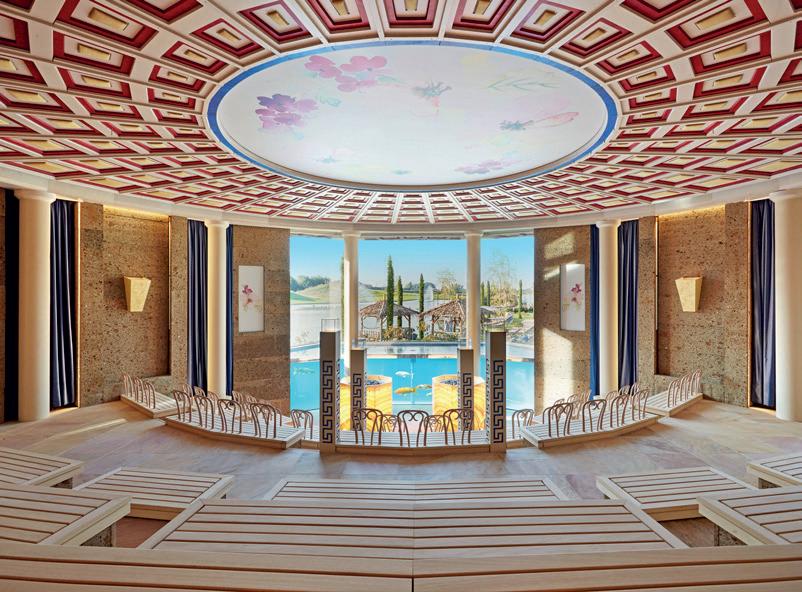
This special theme gives an exciting insight into what is ‘en vogue’ in the architecture and interior design land scape in autumn 2022.
34 TOP GERMAN FILM PRODUCTION AND FILM PROCESSING COMPANIES
In need of a film partner that produc es stunning results? Take a look at this special theme where we introduce some of Germany’s top film production and film processing companies.
56 INNOVATIVE CYBERSECURITY COMPANIES
Whether doing so as an individual or as a company, looking after one’s cyber security has become increasingly im portant. Find out more about this vital topic in this theme.
60 EFFICIENT BIOTECHNOLOGY COMPANIES
Want to learn more about the biotechnol ogy sector in Germany? We have got you covered.
FEATURES
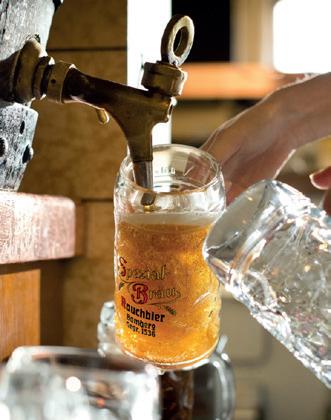
32 BREWERY OF THE MONTH
The Badische Staatsbrauerei Rothaus has been closely associated with the Black Forest for over 229 years. Home land, tradition and modernity unite the brewery and the region.
46 STAR INTERVIEW: IRIS MAREIKE STEEN
Actress Iris Mareike Steen has been a staple of German cult soap Gute Zeiten, Schlechte Zeiten for a while. She talks to Discover Germany, Austria & Switzerland about what goes on behind the scenes, Let’s Dance, and much more.
48 CLEAR YOUR MIND AND YOUR SKIN
As we head deeper into autumn, the tem peratures outside are inevitably dropping. So too is the availability of daylight, mean ing less time to participate in outdoor activities. Consequently, the prospect of spending an evening enveloped by the heat of a sauna becomes increasingly attractive. And few places on this planet
have a sauna culture quite like that strad dling the border of Austria and Germany.
REGULARS & COLUMNS
6 DEDICATED TO DESIGN
Whether you are searching for trendy interior items, gorgeous decoration ide as or unique fashion pieces, be sure to take a look at our Design section.
52 BUSINESS
Our Business section is filled with in novative companies, architects, interior designers, coworking service provid ers, coaching experts, and much more.
75 WINE COLUMN
Iris Ellmann, the managing director of The WineBarn, a multi-award-winning wine merchant, introduces some of her favourite wines of this time of year.
76 CULTURE CALENDAR
Discover Germany, Austria & Switzer land’s Culture Calendar is your perfect guide to what not to miss in October
82 BARBARA GEIER COLUMN
This month, our columnist Barbara Geier discusses the things people in Germany are now doing to save energy.
Photo: BAYERN TOURISMUS Marketing GmbH/ FrankenTourismus/BAMBERG TKS/ Photographer: A. Hub
Photo: Therme Euskirchen
October 2022 | Issue 98 | 3 5029
OCTOBER
Discover Germany
Issue 98, October 2022
Published 10.2022 ISSN 2051-7718
Published by Scan Magazine Ltd.
Print
H2 Print
Executive Editor
Thomas Winther
Creative Director
Mads E. Petersen
Editor
Nane Steinhoff
Assistant Editor
Marilena Stracke
Copy-Editor
Karl Batterbee
Graphic Designer
Mercedes Moulia
Contributors
Barbara Geier
Cornelia Brelowski
Marilena Stracke
Silke Henkele
Stuart Forster
Cover Photo
BAYERN TOURISMUS Marketing GmbH/erlebe.bayern
–Bernhard Huber
Sales & Key Account Managers
Julia Freisinger
Lawinia Toth
Sophie Blecha
Jörg Schmid
Publisher:
SCAN CLIENT PUBLISHING
SCAN MAGAZINE LTD
The News Building, 3 London Bridge Street SE1 9SG, London
Phone: +44 (0)870 933 0423
Fax: +44 (0)870 933 0421
Email: info@discovergermany.com
For further information please visit www.discovergermany.com
Dear Reader,
We can really feel the autumn slowly drawing in. But that doesn’t need to be a bad thing. Autumn is all about cosiness, enjoying colder walks through beautifully coloured forests, and looking after ourselves. Autumn also makes for a great travelling month, with crowds getting smaller in tourist hotspots and prices getting cheaper in places.
To give you some travel inspiration, we head to Bavaria to discover the German state’s culinary fare. After all, if you love travelling, there is a good chance that you love food too, as the two go hand in hand. As travel writer Deborah Cater once put it: “You have to taste a culture to understand it”. And so, to explore Bavaria properly, you will need to discover its culinary delights. If you want to pamper yourself, why not head to one of the local saunas too? For this issue, travel writer Stuart Forster delves deeper into the benefits of this treatment and explores how Germany and Austria’s sauna traditions hold up to the rest of Europe.
Other topics covered in our latest issue are an interview with soap star Iris Mareike Steen, top seasonal wine picks, modern fashion that reinvents traditional German outfits, including the dirndl, a special focus on one of the DACH region’s most famous breweries, Germany’s top film production and film processing companies, a look at interior design and architecture trends, the cybersecurity and biotechnology sectors in Germany, and much, much more.
Sit back, relax and thanks for reading.
© All rights reserved. Material contained in this publication may not be reproduced, in whole or in part, without prior permission of Scan Group – a trading name of Scan Magazine Ltd.
This magazine contains advertorials/promotional articles.
Nane Steinhoff Editor
4 | Issue 98 | October 2022



 Fotos: Felix Gänsicke, Mirko Runge
Fashion Finds
This time of year is known for folk festivals, beer in large glasses and dirndls. Inspired by the yearning desire to celebrate traditional festivals with a carefree zest for life, Vienna-based fashion designer Lena Hoschek creat ed a traditional costume collection that is just right for now. While the label Lena Hoschek Tradition stands for closeness to nature, a sense of home and quality, the autumn/winter collection combines hedonism, traditional craftsmanship and a harmonious interplay of different natural materials and pattern combinations.
Bright colours meet different autumnal floral patterns and textures in this very special look – we absolutely love this combination. £POA. www.lenahoschek.com
The intricate stitching and pattern make this jumper an eye-catcher of the special kind; perfect for the colder season. £POA. www.lenahoschek.com


Looking for the perfect dirndl? Well, here it is! Beautiful craftsmanship, feminine fit and gorgeous, fresh colours make this one a top pick. £POA. www.lenahoschek.com
 EDITOR’S PICKS I PHOTOS: LENA HOSCHEK & AIDA DAPO – IDDA VON MUNSTER
Discover Germany | Design | Fashion Finds
6 | Issue 98 | October 2022
Traditional doesn’t need to equate to the standard dress. This contemporary look combines traditional elements with a show-stopping pair of trousers – perfect for either a beer festival or a day out in town. £POA.

www.lenahoschek.com
Looking for a somewhat different jacket that perfectly accentuates your weight? Look no further. This versatile olive-green jacket can be worn with a dirndl or jeans. £POA.

www.lenahoschek.com
Beautiful with a more traditional look or a minimal white T-shirt, this flowy skirt manages to be both feminine and playful at the same time. £POA.
www.lenahoschek.com
 Fashion Finds
Design
Fashion Finds
Design
|
| Discover Germany
October 2022 | Issue 98 | 7
Dedicated to Design
We are all about dreamy blues this month. The calming hues, inspired by shades of the sea and sky, are the perfect way to revitalise your space. While often popular during the spring and summer season, these beautiful blue shades can be used year-round to provide a breath of fresh air and create a calming, comforting and serene environment within your home.
BY: NANE STEINHOFF I PRESS IMAGES
1. The right pillows can always transform any interior space. So, to easily introduce some blue hues, choose this diverse collection of indoor cushions. POA. www.hock-dich-hin.de

2. Designed by Tom Tailor, in cooperation with interior blogger Anne Dirfard (Instagram @170QM), graphic shapes combine with the core colours of our collection. The result is a striking design which can be combined with most styles. £213. www.traumteppich.com/de

3. A sofa to transform any room, this eye-catching design combines elegance with art deco elements, creativity and ultimate comfort. £4,150. www.uk.jonathanadler.com

4. These are called pudding bowls, but they’re equally good for porridge, soup, pasta and other meals at any time of the day. Handmade to imperfection, with a lovely crackle glaze. £28. www.loaf.com

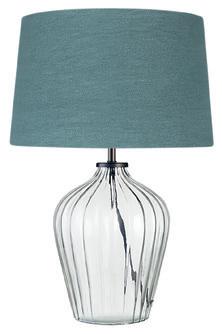
5. This small table lamp is effortless and classy. It comes with a glass base and a gorgeous lamp shade. £85. www.loaf.com
8 | Issue 98 | October 2022
1 Discover Germany | Design | Dedicated to Design 3 5 2 4

Kramis Teppich Design AG Talbachmatte 9 | 6147 Altbüron Tel. 062 927 15 61 info@kramis-teppich.ch www.kramis-teppich.ch Die familiengeführte Teppichmanufaktur aus der Zentralschweiz hat sich als Luxusmarke in der Schweizer Einrichtungsbranche etabliert und setzt alles auf Qualität, Individualität, Nachhaltigkeit und Tradition. The family-run rug manufacturer from central Switzerland has established itself as a luxury brand in the Swiss furnishing industry and focuses everything on quality, individuality, sustainability and tradition. KRAMIS erschafft Lebensqualität –Schweizer Luxusteppiche für höchste Ansprüche KRAMIS creates quality of life –Swiss luxury rugs for highest standards
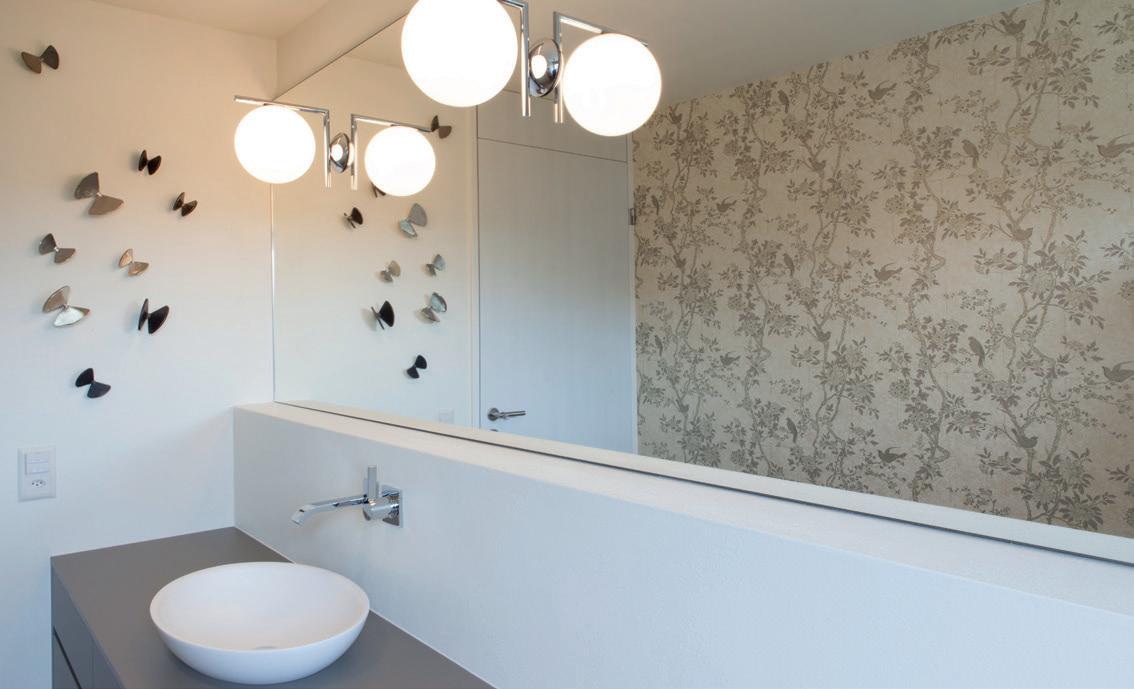
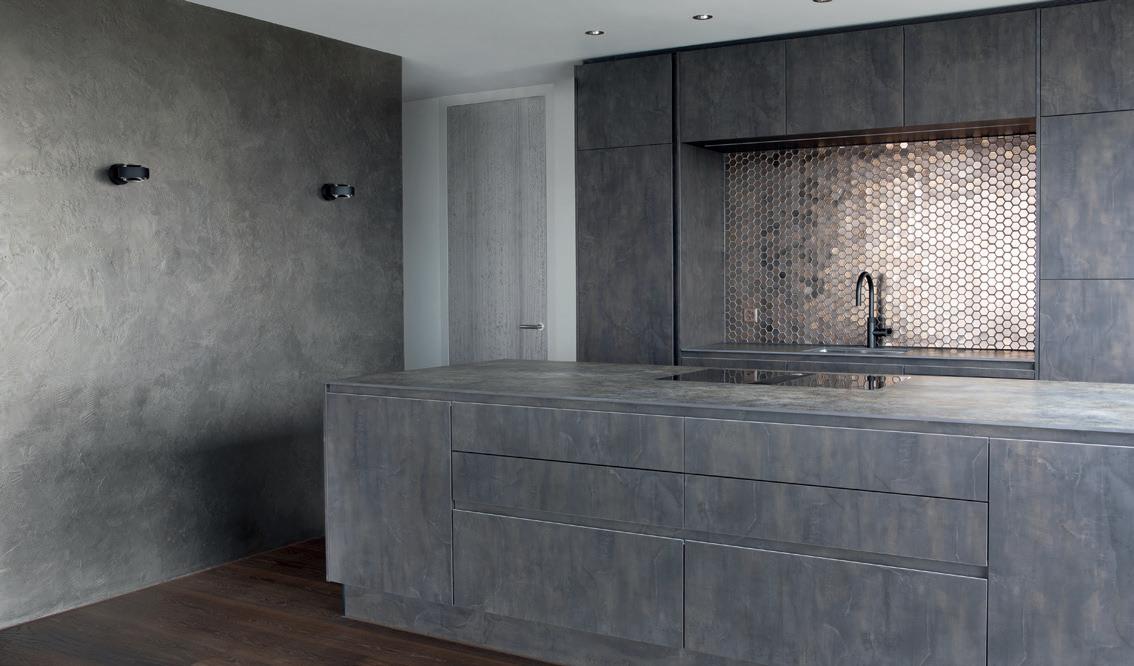
Harmonisches Interior Design Auf Mensch und Raum abgestimmte Farben und Materialien: spürbar schön. +41 789 24 89 84 bgood@goodinteriors.ch www.goodinteriors.ch


SAFE AND COMFORTABLE: ENJOY YOUR TWO-WHEELED FREEDOM

When it comes to biker and cycling clothing, one aspect is paramount: it has to be safe and comfortable. The innovative Swiss brand iXS goes even further and offers state-of-the-art protective biker clothing and accessories made from premium materials, which also happen to look stunning. Fancy going for a little ride?
Founded in 1979, iXS has long been estab lished as a brand for superb protective and functional clothing for bikers and cyclists. At the heart of the production is the continuous research, which allows for sophisticated and solution-driven motor and mountain bike gear.

“We are very passionate about innovation and want each product to reach its full potential – a little more ingenious each time,” says manag ing director Pascal Haf, who leads iXS together with Anselm Zessler. “Proven by the various design and innovation awards honouring our MTB, helmets, gear and protector section, or by receiving the Red Dot Award for our innova tive protective biker clothing.”
Managing director Anselm Zessler adds: “We carry out rigorous testing in the ‘real’ world, such as during downhill racing on the bicycle
or under extremely hot and cold conditions during motorbike trips around the world. In ad dition, our products are certified in the lab to be pollutant-free and to meet the highest standard regarding abrasion and impact protection.”
When developing this highly complex protec tive gear it’s paramount to use premium mate rials and work with a top qualified team of ex perienced product developers and specialists. Across the globe, there are very few production sites which meet the high-quality demands of iXS. An international quality-management team continuously checks procedures and ensures the requirements are being met – particularly regarding the products’ sustainability.
It should come as no surprise that iXS is ex tremely popular. Their open face helmet, Trail Evo Helmet, has been in the market for many
years and is a firm favourite. Another best seller is the award-winning full face helmet, Trigger FF Helmet (one of the most lightweight full-protection helmets available), which Haf himself loves to wear.
Among bikers, the RS 500 Sports combi nation 1.0 and the suit Montevideo-Air 2.0 Gore-Tex are very popular. “I love going for a little ride on my motorbike after work, and I enjoy a straight-forward, comfortable style,” says Zessler. “My personal favourites are the stretchy iXS blue jeans with full protective gear and the casual iXS classic leather jacket Andy.”
www.ixs.com
12 | Issue 98 | October 2022
TEXT: MARILENA STRACKE I PHO TOS: IXS
iXS TRAIL EVO HELMET iXS SPORTS LT JACKET RS-500
SICHER UND KOMFORTABEL DIE FREIHEIT
AUF ZWEI RÄDERN GENIESSEN
Bei Biker- und Fahrradbekleidung steht vor allem eines im Fokus: Sie muss sicher und bequem sein. Die innovative Schweizer Marke iXS geht noch einen Schritt weiter und sorgt für raffinierte Schutzbekleidung und Accessoires aus top Materialien, die dazu auch noch super aussehen. Lust auf eine kleine Spritztour?


Seit der Gründung von iXS im Jahr 1979, bietet die bekannte Marke unglaublich hoch wertige Funktions- und Schutzbekleidung im Zweiradsport Bereich. Im absoluten Mittel punkt steht hier die immer weiterlaufende For schung und die daraus entstehende, lösungs orientierte Motorrad- und MTB-Ausrüstung.
„Wir legen hohen Wert auf Innovationskraft, indem wir mit Leidenschaft das Beste aus unseren Produkten rausholen und diese im mer ein kleines Stück raffinierter ausrüsten“, erzählt Geschäftsführer Pascal Haf, der zu sammen mit Anselm Zessler iXS leitet. „Das belegen die vielen Design und Innovation Awards im Bereich MTB Helme, Ausrüstung und Protektoren oder der Red Dot Award für innovative Motorrad Schutzbekleidung.“
Geschäftsführer Anselm Zessler fügt hinzu: „Wir testen unsere Produkte unter extremen Bedingungen in der Praxis, beim Downhill Rennen mit dem Bike oder bei Hitze und Kälte auf der Motorrad-Weltreise. Im Labor werden ergänzend nach höchsten Normansprüchen Abriebschutz, Schlagschutz und der Aus schluss von Schadstoffen zertifiziert.“
Bei der Entwicklung dieser sehr komplexen Schutzbekleidung und -ausrüstung sind erstklassige Materialien genauso wichtig wie das hochqualifizierte Team aus erfahrenen Produktentwicklern und Spezialisten. Welt weit gibt es nur wenige Produktionsstätten, die den hohen Ansprüchen von iXS ent sprechen. Ein internationales Qualitätsma nagement-Team kontrolliert konstant die Ver arbeitung und Vorgaben - insbesondere zur Nachhaltigkeit der Produkte.
Kein Wunder also, dass iXS überaus beliebt ist. Der Open Face Helm ‚Trail Evo Helm‘ ist be reits seit vielen Jahren auf dem Markt und nicht
mehr wegzudenkenden. Ein weiterer Bestseller ist der preisgekrönte Full Face Helm ‚Trigger FF Helm‘ (einer der leichtesten Vollschutz Helme im Markt), den Haf selbst gern trägt.
In Sachen Motorrad-Bekleidung findet sich die RS 500 Sportkombi 1.0, sowie der An zug Montevideo-Air 2.0 Gore-Tex unter den Bestsellern. „Auf dem Motorrad bin ich ger ne nach Feierabend eine kleine Runde unter wegs, mag es unkompliziert und bequem“, verrät Zessler. „Meine Lieblinge sind eine stretchige iXS Blue-Jeans mit voller Schutz ausrüstung, dazu die lässige iXS Classic Le derjacke Andy.“
iXS TRIGGER FF HELMET
iXS CLASSIC LD JACKET ANDY
October 2022 | Issue 98 | 13 iXS | Design | Discover Germany
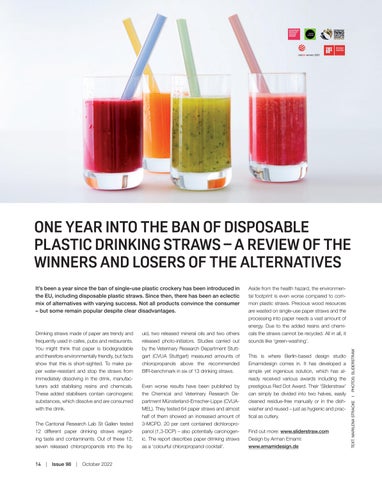
ONE YEAR INTO THE BAN OF DISPOSABLE PLASTIC DRINKING STRAWS – A REVIEW OF THE WINNERS AND LOSERS OF THE ALTERNATIVES
It’s been a year since the ban of single-use plastic crockery has been introduced in the EU, including disposable plastic straws. Since then, there has been an eclectic mix of alternatives with varying success. Not all products convince the consumer –but some remain popular despite clear disadvantages.
Drinking straws made of paper are trendy and frequently used in cafes, pubs and restaurants. You might think that paper is biodegradable and therefore environmentally friendly, but facts show that this is short-sighted. To make pa per water-resistant and stop the straws from immediately dissolving in the drink, manufac turers add stabilising resins and chemicals. These added stabilisers contain carcinogenic substances, which dissolve and are consumed with the drink.
The Cantonal Research Lab St Gallen tested 12 different paper drinking straws regard ing taste and contaminants. Out of these 12, seven released chloropropanols into the liq
uid, two released mineral oils and two others released photo-initiators. Studies carried out by the Veterinary Research Department Stutt gart (CVUA Stuttgart) measured amounts of chloropropanols above the recommended BfR-benchmark in six of 13 drinking straws.
Even worse results have been published by the Chemical and Veterinary Research De partment Münsterland-Emscher-Lippe (CVUAMEL). They tested 64 paper straws and almost half of them showed an increased amount of 3-MCPD. 20 per cent contained dichloropro panol (1,3-DCP) – also potentially carcinogen ic. The report describes paper drinking straws as a ‘colourful chloropropanol cocktail’.




Aside from the health hazard, the environmen tal footprint is even worse compared to com mon plastic straws. Precious wood resources are wasted on single-use paper straws and the processing into paper needs a vast amount of energy. Due to the added resins and chemi cals the straws cannot be recycled. All in all, it sounds like ‘green-washing’.
This is where Berlin-based design studio Emamidesign comes in. It has developed a simple yet ingenious solution, which has al ready received various awards including the prestigious Red Dot Award. Their ‘Sliderstraw’ can simply be divided into two halves, easily cleaned residue-free manually or in the dish washer and reused – just as hygienic and prac tical as cutlery.
Find out more: www.sliderstraw.com Design by Arman Emami: www.emamidesign.de
DIVIDED INTO TWO HALVES, SIMPLY RINSE BY HAND OR CLEAN IN THE DISHWASHER AND ENJOY
THE OPEN-TO-CLEAN PRINCIPLE DIVIDED INTO TWO HALVES, SIMPLY RINSE BY HAND OR CLEAN IN THE DISHWASHER AND ENJOY AGAIN.
14 | Issue 98 | October 2022
TEXT: MARILENA STRACKE I PHO TOS: SLIDERSTRAW
EIN JAHR VERBOT FÜR EINWEGTRINKHALME AUS PLASTIK – EIN BLICK AUF DIE NIETEN UND GEWINNER DER TRINKHALMALTERNATIVEN
Seit einem Jahr gilt in der EU das Verbot von Einweg-Plastikgeschirr und damit auch für Einweg-Kunststofftrinkhalme. Seitdem treibt der Markt für Trinkhalmalternativen die unterschiedlichsten Blüten. Nicht alle Produkte setzen sich durch - und manche gewinnen die Gunst des Konsumenten, obwohl sie deutliche Nachteile haben.
Trinkhalme aus Papier sind im Trend und werden in Cafés, Bars und Restaurants im mer häufiger verwendet. Man könnte den ken: „Papier ist biologisch abbaubar und somit umweltfreundlich“. Die Fakten zeigen jedoch, dass das „zu kurz gedacht“ ist. Um das Papier wasserfest zu machen, damit die Papierhalme sich nicht sofort in den Geträn ken auflösen, fügen die Hersteller stabilisie rende Harze und Chemikalien hinzu. Diese beigesetzten Stabilisatoren beinhalten krebs erregende Schadstoffe, die sich auflösen und mitgetrunken werden.
Das Kantonale Untersuchungslabor St. Gal len hat 12 verschiedene Papierstrohhalme auf Geschmack und Schadstoffe getestet. Sieben von 12 Proben gaben Chlorpropanole an die Flüssigkeit ab, zwei setzten Mineralöle frei und zwei weitere Photoinitiatoren. Auch
bei den Untersuchungen des Veterinärunter schuchungsamtes Stuttgart (CVUA Stuttgart) wurden bei sechs von 13 Trinkhalmen Werte für Chlorpropanole gemessen, die über dem Richtwert der BfR-Empfehlungen lagen.
Die Untersuchungen des Chemischen und Veterinäruntersuchungsamt MünsterlandEmscher-Lippe (CVUA-MEL) stellen ein noch schlechteres Zeugnis aus: Bei insgesamt 64 getesteten Papierhalmen waren fast die Hälfte mit einer erhöhten Menge an 3-MCPD belas tet gewesen. Bei 20 Prozent wurde Dichlor propanol (1,3-DCP) gefunden - ebenfalls un ter Verdacht krebserregend zu sein. Das Amt beschreibt die Papier-Strohhalme als einen „kunterbunten Chlorpropanol-Cocktail“.
Abgesehen von diesem Gesundheitsrisiko fällt die Ökobilanz gegenüber herkömmlichen
Kunststoff-Strohhalmen sogar noch schlech ter aus. Für den einmaligen Gebrauch eines Strohhalms werden wertvolle Holzressour cen verwendet und für deren Aufarbeitung zur Papierherstellung wird ein enorm hoher Gesamtenergiebedarf benötigt. Die zuge setzten Harze und die chemische Behand lung verhindern das die Halme recycelt werden können. Insgesamt eher ein Fall von „Greenwashing“.
Genau hier hat das Berliner Designbüro Emamidesign angesetzt und eine simple, aber geniale Lösung gefunden, die mittler weile schon viele Preise, wie den Red Dot Award, abgeräumt hat: Nach dem Trinken lässt sich der Sliderstraw-Strohhalm einfach in zwei Hälften teilen und kann unkompli ziert per Hand oder im Geschirrspüler rück standslos gereinigt und dann immer wieder genutzt werden – genauso hygienisch und praktisch wie Besteck.


Mehr unter: www.sliderstraw.com Design by Arman Emami: www.emamidesign.de
 THE OPEN-TO-CLEAN PRINCIPLE Divided into two halves, simply rinse by hand or clean in the dishwasher and enjoy again.
October 2022 | Issue 98 | 15 Circular Economy | Design | Discover Germany
MÖBEL AUS STAHL
Ein gut eingerichteter Arbeitsplatz mit optimal durchdachten Büromöbeln, Arbeitsund Ablageflächen, die den Anforderungen der modernen hybriden Arbeitswelt ent sprechen, hat einen großen Anteil am wirtschaftlichen Erfolg eines Unternehmens.

Wurden Designmöbel lange Zeit eher als Aus stellungsstücke interpretiert und in der Kate gorie ‚optisch durchaus interessant, aber eher unpraktisch’ eingeordnet, sind sie mittlerweile in den modernen Arbeitswelten angekommen. Intelligent und in ansprechender Optik, sind sie die heimlichen Stars der Arbeitswelt.
Wenn es um hochfunktionales Bürodesign geht, dann muss auf jeden Fall über die Mö belsysteme von mauser gesprochen werden. Das 1896 gegründete familiengeführte Tradi tionsunternehmen aus dem hessischen Kor bach ist einer der wenigen Hersteller, der in Deutschland Möbel aus Stahl produziert. Klar durchdachte Designinnovationen am Puls der Arbeitswelt zeichnen die ‚Marke des Jahrhun derts 2022’ in der Produktgattung Stahlmöbel aus. Mit einem spannenden Angebot an Tischund Schranksystemen, Containern, Wandele menten, Sitz- und Loungemöbeln, Lager- und Regalsystemen hat sich das Unternehmen fest am Markt etabliert und deckt die Bedürfnisse ganz unterschiedlicher Branchen ab.
Die modularen Systeme des Unternehmens bestehen zu 60 Prozent aus recyceltem Stahl und passen sich der zunehmenden Digita


lisierung von Arbeitsprozessen spielend an. Sie ermöglichen es den Kunden, Büroflächen besonders flexibel zu gestalten, können wei tere ohne Komplikationen neu erschaffen und haben somit die Freiheit, neue Teams oder Arbeitsgruppen spontan neu zu bilden. Sich verändernde Arbeitswelten ‚denkt’ mauser bei der Entwicklung seiner designorientierten Bü romöbel ‚quasi gleich mit’.
Mehrfach prämierte und ausgezeichnete Serien wie Element.X oder Xitan.S (Design Markus Bischof) sowie Conexius.W (Design Florian Seemüller) und die Regalsysteme 409 überzeugen nicht nur durch die bereits be schriebene Flexibilität, sondern auch durch ihr zeitloses, mauser-typisches Design.
So sind es nicht nur die bekannten mauserDesigns oder das praktische modulare Sys tem, das die Möbel besonders macht. Auch die Vorzüge des Materials liegen für Marketing chefin Claudia Vesper klar auf der Hand: „Man che mögen bei Stahl erst einmal zusammen zucken. Ungemütlich, langweilig, grau sind Stichworte, die einigen dabei durch den Kopf gehen mögen. Dank der nachhaltigen Qualität unserer Möbel, der modernen Designs und der
Farbvielfalt sind eventuelle Zweifel allerdings schnell ausgeräumt. Das Material ist robust, langlebig, lässt filigrane Designinterpretationen zu und ist, getreu unserer Philosophie ‚just do it sustainably!’, ohne Qualitätsverlust zu 100 Prozent recycelbar. Zum anderen erreichen wir mit den Möbeln aus Stahl leicht eine hohe akustische Wirksamkeit, was beispielsweise in Großraumbüros oder Co-Working Spaces sehr wichtig ist.”
Unter dem Leitsatz ‚Ideen aus Stahl’ bietet mauser die Möglichkeit, auch Maßanfertigun gen in Form individueller Industriezulieferteile zu produzieren. Anfragen erwünscht!
www.mauser-moebel.de
TEXT: SILKE HENKELE I FOTOS: MAUSER EINRICHTUNGSSYSTEME GMBH & CO. KG
Büroschranksystem xitan.s (Design Markus Bischof): Auch für die Geschäftsführung und ihre Assistenz.
Rollregalsystem RR409: Effizienter Stauraum auf mobilem Podest.
Stauraumsystem kontoro und Sichtblenden conexius.w optimieren die Raumakustik in Großraumbüros.
Designmöbel element.x schaffen Stauraum und bereichern das Innendesign eines jeden Büros.
16 | Issue 98 | October 2022 Discover Germany | Design | Top Office Furniture Manufacturer Germany
A PASSION FOR LEATHER
Leather studio dos santos has been based in Berlin for 24 years now. Owner Petra dos Santos combines her tailoring production workshop and the showroom, where a phenomenal variety of high-quality handmade leather wear and items awaits visitors.
Customers visiting the workshop studio for the first time are often surprised when they see the sewing machines, worktables and the wall draped with leathers of all colours. dos santos follows traditional craft pro cedures, including pattern making, handselecting materials, and fitting her designs to individual customers. “Recently, I have specialised in stretch leather, as it allows for tight-fitting designs that were difficult to achieve with regular leather. Stretch leather allows you to breathe and bend over even in the tightest dress,” she explains.
Each piece is ‘Made in Berlin’, designed and produced by Petra dos Santos and her team. The leather is exclusively from Germany and Europe, quality certified by German regu lators. For dos santos, it’s important that it doesn’t just look beautiful, but that it’s also toxin-free and ethically sourced.

Her customers are fashion-conscious people of all genders who share a passion for spe


cialty leather outfits with individual style and preferences. They value the top quality, the craftsmanship, the safety and pleasure dos santos guarantees for their special private passions.

Choosing leather is not a purely functional process. The material’s unique properties and texture raise questions about desire, sensuality, and passion. Leather keeps its special scent. It feels supple and strong. It embraces the body and gives it shape and firmness at the same time. Worn over years, leather grows with its owner, almost be comes a second skin.
Aside from the dos santos’ collection for women, men and non-binary people that can be worn in daily life, there is also a vast vari ety of playful accessories, restraints, masks, collars and many more, for every individual adult playground. Petra dos Santos’ special ty are customised leather goods that will last a lifetime.
Visit the studio (by appointment only) or find your next favourite piece in the online store.
www.petradossantos.de www.dossantosshop.de
dos santos Lederatelier Mehringdamm 119 10965 Berlin Phone: +49-30-50599919 kontakt@petradossantos.de
TEXT: MARILENA STRACKE I PHOTOS: MARCEL STEGER, © DOS SANTOS
October 2022 | Issue 98 | 17 Fabulous Fashion | Design | Discover Germany
Trends to look out for in late 2022
Creativity, know-how and talent – those are the pillars of superb interior design. But what are this year’s top interior design and architecture trends? We find out below.

 TEXT: NANE STEINHOFF, PRESSLOFT I PHOTOS: UNSPLASH
SPECIAL THEME: INTERIOR DESIGN AND ARCHITECTURE
1. RETURN TO NATURE AND SUSTAINABILITY
Sustainability is advancing in the design world, and key brands are earnestly em bracing a path of greater respect for the en vironment by offering a conscious vision of living, with furniture and decor made entirely from recycled materials and using optimised production processes. Furthermore, organic textures and natural materials are as popu lar as ever, creating a refreshing, grounded space with a bit of retro flare. With us having spent more time indoors than ever before, we’re all seeking to strengthen our connec tion with nature. Elements of stone, wood, wicker and rattan effortlessly breathe new life into any interior space, so we’ve pulled together a collection of our favourites to get you inspired – check them out below!
2. WOOD IN ARCHITECTURE

Yet again, sustainability and the responsible use of materials are of utmost importance to architecture bureaus all over in 2022. Many are choosing wood as the main building ma terial, as it is known to have a positive im pact on the environment, as well as on hu

man well-being. Wood has a lighter carbon footprint than concrete or steel, and it is now common to see many new buildings feature wood such as timber.
3. DULUX COLOUR ‘BRIGHT SKIES’
Dulux have announced Bright Skies as their Colour of the Year 2022. The colour experts at Dulux describe Bright Skies as “an airy and fresh tone that opens up and breathes new life into any space”. We’ll be seeing a lot more of this hopeful and optimistic colour in the coming months.
4. NEUTRAL COLOURS AND EVOCATIVE FORMS
This year’s interior designs seem to heavily focus on light, muted colours, and many fur nishings are in enveloping and relaxing earth tones: ochre, cream, beige, grey and end less delicate variations. These colours are used for more intimate spaces in the home, starting with bedrooms, but also adapt well to all spaces including living rooms, terraces and bathrooms. Combine this with evocative forms and you have eye-catching designs that will transform an entire room instantly.
The following pages give an exciting insight into what is ‘en vogue’ in the architecture and interior design landscape in autumn 2022.
October 2022 | Issue 98 | 19 Interior Design and Architecture | Special Theme | Discover Germany
INNOVATIVE GREEN INTERIOR DESIGN TRENDS FÜR NATÜRLICH GESUNDE RÄUME


Pflanzen und Menschen ergänzen sich: wir atmen CO2 aus und Pflanzen wandeln es wieder in Sauerstoff um. Klar, dass wir in Räumen mit Pflanzen gesünder leben und uns einfach wohler fühlen. Genau hier setzt das Stuttgarter Unternehmen Wabito an und hat sich auf nachhaltige Begrünung in Form von eindrucksvollen Wandbiotopen spezialisiert. Das Resultat? Mehr Wohlfühlfaktor in der Gastronomie, in Büros – oder direkt zuhause.
TEXT: MARILENA STRACKE
Die Idee Aquaponik als Wandgarten für eine innovative Innenraumbegrünung zu nutzen ist neu – aber sie hat großes Potenzial. WabitoGründer Marius Weitzer zeigt, welche Vorteile Aquaponik hat und warum sie für die Innen raumbegrünung perfekt geeignet ist.
„Aquaponik ist ein geschlossener Kreislauf, in dem die Natur nachempfunden wird. Ein Aquarium wird mit einem Wandgarten kom biniert – ohne Einsatz von chemischen Dün gemitteln“, erklärt der Jungunternehmer. „Da diese Wandbiotope automatisiert laufen, be nötigen sowohl der Wandgarten als auch das Aquarium weniger Pflege als normal.“
Ein weiterer Vorteil ist die Aquaponik als Design Wandbiotop. Sie ist eine ökologisch sinnvolle, ressourcenschonende und nachhaltige Metho
de, um Innenräume zu begrünen. „Durch die ses Prinzip kann ein Innenraum in eine echte Wohlfühl-Oase verwandelt werden“, sagt Ma rius begeistert. Dekorativ und mehr Wohlfühl atmosphäre? Darin ist Wabito echter Experte.
Neben Aquaponik Wandgärten finden sich im Sortiment auch Pflanzen- und Kräuter wände, Felswände, Moosbilder/wände, Aquarien und bepflanzte Paletten (Upcyc ling). Alle Produkte können kombiniert wer den und da alles in Handarbeit entsteht, sind Maße und Gestaltung frei wählbar. Kunden können sich dementsprechend auf wirklich einzigartige Unikate freuen.

„Beim Erstellen eines Wandgartens muss das Gesamtkonzept aufeinander abgestimmt sein“, erklärt Marius. „Pflanzen, Belichtung, Be
wässerung, Substrat und Düngung. Dann hat man lange Zeit etwas von seinem Wandbiotop. Es ist auch möglich das ganze Jahr über Kräu ter oder Gemüse zu ernten.“
Seine Kreationen sind etwas ganz Besonderes und rücken den Lebensraum von Menschen und Pflanzen wieder enger zusammen. Sie geben damit der Natur wieder ihren Platz in unserem direkten Lebensraum. Kein Wunder also, dass der Kundenstamm aus begeister ten Wandbiotopen-Fans weiter wächst und breit gefächert ist. Von Restaurants, Bars und Büros bis hin zu Arztpraxen und WohnzimmerBiotopen – wer sich mehr Natur wünscht, ist bei Wabito goldrichtig.
Email: hallo@wabito-wandbiotope.de www.wabito-wandbiotope.de
Foto: Wabito
Foto: Simon Wallenda
Foto: Simon Wallenda
Foto: Bild Wabito
20 | Issue 98 | October 2022
Discover Germany | Design | Interior Design and Architecture
SPACE MATTERS
Berlin-based designer Raini Peters takes a holistic, biophilic and sophisticated approach to interior design that places well-being and sustainability at the forefront.
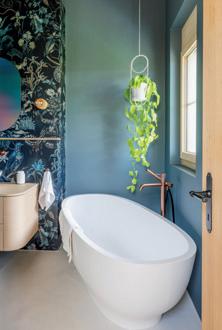
Informed by the psychology of space, Raini Peters’ design philosophy balances the principles of holistic living with aesthetic beauty and functionality to create smartly designed spaces that reflect the essence of her clients.
Her unique, multidisciplinary E-Design service offers clients greater flexibility and makes interior design and styling a more flexible process and affordable investment.

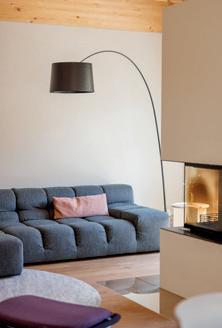
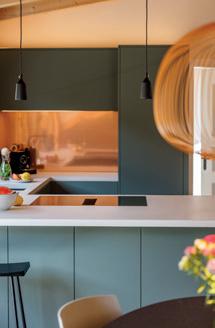

The Australian-born designer espouses conscious consumerism and intentional, ethical design and strives to educate clients on the importance of designing with people, communities and the environment in mind. She partners with sustainable Berlin and EUbased artisans and international brands.

Her creative path is closely linked to her upbringing: “Growing up in the Australian bush, surrounded by nature, I was always absorbed wanting to bring that connection and feeling of outside to the interior through form, texture, space, hues, patterns, line and light.”
Besides her work as a designer, Raini Peters will soon publish her E-book on the psychology of space, complete with an online interior design 12-module course and sustainable material guide. She believes there is no better designer than nature itself.
www.rainipeters.com
CORNELIA
RAINI PETERS, RETO
TEXT:
BRELOWSKI I PHOTOS:
CORTESI Interior Design and Architecture | Special Theme | Discover Germany Subscribe in Print only £39 / Year (UK only) Subscribe online only £20 / Year
THE GREAT RESPONSIBILITY AND HIGH ART OF PLASTIC-AESTHETIC FACIAL SURGERY
As a specialist within plastic and aesthetic surgery, Dr. Christian Schrank is an expert in facelifts and eyelid corrections. He puts special emphasis on natural and long-lasting results at the ‘Ästhetik am Ammersee’ plastic surgery practice. Thereby, they warn against treatments that are advertised as minimally invasive. Discover Germany, Austria & Switzerland visited him to find out more.

to be the foundation. Ultimately, the medical layperson needs to know where ‘the journey is heading’ before embarking on a common path towards a clearly defined goal. When this has been achieved, in most cases it doesn’t only make the patient happy, but also myself,” says Dr. Schrank.
A TOP-CLASS COOPERATION
Many people often wish for younger, fresher looks, but the fear of looking anything but natural after a treatment often stops many of us from pursuing it further. The experienced medical specialist Dr. Schrank can help with these concerns. As a leading expert in facelifts, he puts the highest emphasis on the aesthetic harmony of a human’s overall appearance and understands the importance of a trusting relationship between patient and surgeon. Their ultimate goal is to allow pa-
tients to experience their diversity, emphasise individuality and maintain their natural looks.
“Of course, we try to find out which changes that aging inevitably entails bother and affect our patients’ vitality and quality of life. Empathy for the individual and their ‘issues’ is absolutely crucial in finding the suitable treatment concept, along with its possi bilities, limitations and also complications.
Naturalness and ‘non-operated’ looks have
The surgeon has had many years of training in plastic surgery, in treating burns victims, reconstructive- and microsurgery, as well as in the field of aesthetic surgery. “The re construction of severe burns victims’ faces places the highest demands on the creativity, the surgical-manual skills and the aesthetic sense and understanding of the treating sur geon,” Dr. Schrank says. He manages the face-neck-lift sector of Germany’s Society
TEXT: NANE STEINHOFF I PHOTOS:
AMMERSEE
22 | Issue 98 | October 2022
ÄSTHETIK AM
DIE GROSSE VERANTWORTUNG UND HOHE KUNST DER PLASTISCH-ÄSTHETISCHEN GESICHTSCHIRURGIE
Dr. Christian Schrank ist als Facharzt für plastische und ästhetische Chirurgie ein Experte für Facelift und Lidkorrektur. In der Praxis für Plastische Chirurgie ‚Ästhetik am Ammersee‘ legt er nicht nur größten Wert auf ein natürliches, sondern auch ein lang anhaltendes Resultat. Dabei warnt er vor als minimal angepriesenen Eingriffen. Discover Germany, Austria & Switzerland hat ihn besucht, um mehr zu erfahren.

Ein frisches, jüngeres Aussehen wünschen sich viele von uns und doch stoppt uns die Angst davor, dass das Gesicht hinterher al les andere als natürlich wirkt. Der erfahrene Facharzt Dr. Schrank schafft Abhilfe. Als füh render Experte auf dem Facelift Gebiet, legt er höchsten Wert auf ästhetische Harmonie des Gesamtbildes eines Menschen und versteht wie wichtig eine vertrauensvolle Beziehung zwischen Patient und Chirurg ist. Das ultima tive Ziel: Patienten in ihrer Vielfalt zu erleben, Individualität zu unterstreichen und deren na türliches Aussehen zu bewahren.
„Natürlich versuche ich, im Gespräch mit dem Patienten herauszufinden, welche Verände rungen, die das Altern ja unweigerlich mit sich bringt, ihn stören und seine Lebensfreude und -qualität beeinträchtigen. Die Einfühlsamkeit in den einzelnen Menschen und seine ‚Pro blematik‘ ist ganz entscheidend dafür verant wortlich, das für ihn passende Behandlungs konzept mit seinen Möglichkeiten, Grenzen und auch Komplikationen zu finden. Natürlich keit und unoperiertes Aussehen müssen die Grundlage sein. Schlussendlich muss der me dizinische Laie eine klare Vorstellung haben, wo ‚die Reise hingeht‘ und ein gemeinsamer Weg zu einem klar definierten Ziel eingeschla gen werden. Wenn dieses dann erreicht wird, macht es in den meisten Fällen nicht nur den Patienten glücklich, sondern auch mich“, sagt Dr. Schrank.
EINE KOOPERATION DER EXTRAKLASSE
Dr. Schrank verbindet die langjährige Aus bildung in der Plastischen Chirurgie mit der Behandlung von Schwerbrandverletzten und der Wiederherstellungs- und Mikrochirurgie, ebenso wie auf dem Gebiet der Ästhetischen
Chirurgie. „Die Rekonstruktion von Gesichtern schwerbrandverletzter Patienten stellt höchs te Ansprüche an die Kreativität, die chirur
gisch-manuellen Fähigkeiten und schließlich den ästhetischen Sinn und das Verständ nis des behandelnden Chirurgen“, sagt Dr. Schrank. Er leitet die Sektion Face-Neck-Lift der Gesellschaft für Ästhetische Chirurgie Deutschlands, gibt Operationskurse und er möglicht die Weiterbildung für Fachärzte in der eigenen Abteilung. Darüber hinaus hält er Vorträge auf nationalen und internationalen Kongressen.
Dr. Christian Schrank.
October 2022 | Issue 98 | 23 Germany’s Top Beauty Expert | Design | Discover Germany
for Aesthetic Surgery, gives surgery cours es and enables continuing education for medical specialists in their own department. Moreover, he holds lectures at national and international congresses.
“I care about the constant further develop ment and improvement of established opera tional methods which are performed by lead ing specialist colleagues all over the world. I constantly try to improve myself and refine the smallest details. After all, a beautiful, satisfactory treatment result comes primar ily from the effort to give and achieve one’s best,” explains Dr. Schrank.
WARNING AGAINST ‘MINIMALLY INVASIVE’ PROCEDURES
“We live in a time where individuals are un der unbelievably high pressure. They need to function perfectly at work, be successful, have a sculpted body, look fresh and hap py and have a harmonious family life. Quick treatments, minimally invasive procedures, so-called ‘new’ techniques, advertise short downtimes for the patient,” explains Dr. Schrank. But the experts warn against these very procedures that are advertised as min imally invasive, such as thread liftings, vol ume injections or the so-called vampire lifts,
which are hyped on numerous social media channels.
“After all, these procedures merely want to lure in patients with ‘minimally invasive lunch treatments’. And because most people hope to achieve a maximum result with minimal effort, they fall for these offers and are dis appointed in the end. Of course, a ‘weekend lift’ doesn’t work. On the contrary, it more often triggers distortions, tightened, masklike looks and unnatural facial expressions,” says Dr. Schrank, and adds: “However, when thinking about this a bit more, reading spe cialist literature on the topic or talking to an experienced plastic surgeon, patients quick ly come to realise that this can’t be possible.”
In the ‘Klinik am Ammersee‘, it is evident that a top outcome can only be achieved through personalised procedures which need great er efforts. That’s why Dr. Schrank offers the face-neck lift with SMAS – the most successful method to restore a natural and youthful look, according to science. Dr. Schrank explains: “The times of skin-tightening facial surgeries ought to be a definite thing of the past, since the operational method that seeks to reduce and elevate the droopy muscle tissue that can be found under the skin (called SMAS) has

been developed. You can imagine the SMAS muscle tissue as a trampoline on which you jump around for 50 years. Afterwards, the springs are worn-out and the outer tarp sags. We can shorten or raise these springs (mus cular layer) to bring in tension and dynamics once again. The surplus skin can be removed without having to pull it, and therefore caters for ‘coverage’, without being tightened and taking its remaining elasticity. With this, a natu ral, non-tightened and non-operated outcome develops, which maintains and refreshes one’s individual charisma.”
Dr. Schrank is a surgeon with both heart and soul. “I believe that we don’t only owe atten tion and empathy to our patients, but that we also need to meet them at eye level as advisors,” concludes Dr. Schrank.
Find out how the Dr. Schrank can help you, too.
www.dr-schrank.de
Ästhetik am Ammersee Seestrasse 43 82211 Herrsching am Ammersee
Phone: +49 (0) 8152 29150
24 | Issue 98 | October 2022
„Die ständige Weiterentwicklung und Verfei nerung von etablierten Operationsmethoden, die von den führenden Fachkollegen weltweit durchgeführt werden, liegt mir sehr am Herzen. Ich versuche, mich ständig zu verbessern, und feile an kleinsten Feinheiten. Denn ein schönes, zufriedenstellendes Behandlungsergebnis ent scheidet sich vor allem durch die Bemühung, bis ins kleinste Detail das Beste zu geben und zu erreichen,“ erklärt Dr. Schrank.
WARNUNG VOR ‚MINIMALEN EINGRIFFEN‘
„Wir leben in einer Zeit, in der ein unglaublich hoher Druck auf jeden Einzelnen entsteht. Er soll in seiner Berufswelt perfekt funktionieren und erfolgreich sein, einen trainierten Körper haben, frisch und glücklich aussehen und ein harmonisches Familienleben gestalten. Schnelle Eingriffe, minimalinvasive Behand lungen, sogenannte ‚neue‘ Techniken, sollen dem Patienten eine kurze Rekonvaleszenzzeit vermitteln“, erklärt Dr. Schrank. Aber genau vor diesen als minimal angepriesenen Ein griffen, wie zum Beispiel Fadenliftings, Volu menunterspritzungen oder den sogenannten Vampirlifts, die auf diversen Social Media Ka nälen gehypt werden, warnt der Experte.
„Denn hier geht es lediglich darum, die Pa tienten mit ‚minimalinvasiven‘ ‚Lunchoperatio nen‘ zu ködern. Da die meisten darauf hof fen, mit minimalem Aufwand ein maximales Ergebnis erhalten zu können, fallen Sie dann darauf hinein und sind später enttäuscht. Ein ‚Weekend Lift‘ funktioniert natürlich nicht. Im Gegenteil! Es kommt öfters zu Verziehungen,
gestrafftem, maskenhaftem Aussehen und unnatürlich ‚fratzenhafter‘ Mimik“, sagt Dr. Schrank und fährt fort: „Bei genauerem Über legen, Studieren von Fachlektüren oder auch im Gespräch mit dem erfahrenen Plastischen Chirurgen erkennen Patienten jedoch sehr schnell, dass dies nicht möglich sein kann.“
In der ‚Klinik am Ammersee‘ ist völlig klar, dass ein optimales Ergebnis nur durch einen individuell angepassten Eingriff gewährleistet werden kann, der nunmal größeren Aufwand erfordert. Dr. Schrank bietet daher das FaceNeck Lift mit SMAS an – laut Wissenschaft die erfolgreichste Methode für die Wiederherstel lung eines natürlichen und jugendlichen Aus sehens. Dr. Schrank erklärt: „Die Zeiten der hautstraffenden Gesichtsoperationen sollten eigentlich seit der Entwicklung der Operati onsmethode mit der Kürzung beziehungswei se Hebung der erschlafften Muskelbindege websplatte, die sich unter der Haut befindet und SMAS genannt wird, endgültig vorbei sein. Man kann sich die SMAS-Muskelschicht gut wie ein Trampolin vorstellen, auf welchem

man 50 Jahre lang herum springt. Dann sind die Fe dern ausgeleiert und die Plane hängt durch. Diese Federn (Muskelschicht) können wir kürzen oder anheben und so wieder Spannung und Dynamik reinbringen. Die überschüs sige Haut kann - ohne an ihr ziehen zu müssen - ent
fernt werden und dient somit zur ‚Bedeckung‘ ohne gestrafft zu werden und ihr die übrig ge bliebene Elastizität zu nehmen. Auf diese Wei se entsteht ein natürliches, nicht gestrafftes und unoperiert aussehendes Ergebnis, das die individuelle Ausstrahlung beibehält und wieder auffrischt.“
Dr. Schrank ist mit Leib und Seele Chirurg „Ich glaube, wir schulden den Patienten nicht nur Aufmerksamkeit, und Einfühlungsvermö gen in ihre Lebenssituation, sondern auch die Verpflichtung, ihnen als Ratgeber auf Augen höhe entgegenzutreten“, schließt Dr. Schrank ab. Finden Sie heraus, wie Ihnen der Experte behilflich sein kann.

www.dr-schrank.de

Ästhetik am Ammersee Seestrasse 43 82211 Herrsching am Ammersee Phone: +49 (0) 8152 29150
 Patientin nach einer Behandlung. Foto: Markus Gmeiner
Patientin nach einer Behandlung.
Patientin nach einer Behandlung.
Patientin nach einer Behandlung. Foto: Markus Gmeiner
Patientin nach einer Behandlung.
Patientin nach einer Behandlung.
October 2022 | Issue 98 | 25 Germany’s Top Beauty Expert | Design | Discover Germany
 Photo: Bernhard Huber
Discover Germany | Cover Feature | Culinary Travels in Bavaria 26 | Issue 98 | October 2022
CULINARY TRAVELS IN BAVARIA
If you love travelling, there is a good chance that you love food too, as the two go hand in hand. As travel writer Deborah Cater once put it: “You have to taste a culture to understand it”. And so, to ex plore Bavaria properly, you will need to discover its culinary delights.

Culinary Travels in Bavaria | Cover Feature | Discover Germany
TEXT: NANE STEINHOFF | PHOTOS: BAYERN TOURISMUS MARKETING GMBH/ERLEBE.BAYERN October 2022 | Issue 98 | 27
Bavaria, a state situated in the south-east of Germany, is best known for its breweries, the Oktoberfest and its hearty meat dishes. But how do you start exploring a state when you want to learn more about its culinary history? We present five top tips on how best to im merse yourself in the tasty food of Bavaria.


1. EXPERIENCE MUNICH’S PUBLIC HOUSE CULTURE
No visit to Bavaria would be complete without at least a short trip to its capital of Munich. Here, numerous traditional taverns or inns serve the best food and the best beer. Whether in one of the spacious beer gardens or in the cosy inner rooms that are characterised by dark wooden tables, rustic interior and corner seats, be sure to try some of the local delicacies here. We suggest trying Weisswurst, or veal sausage, an iconic dish of Bavaria. Traditionally, it is eaten as breakfast and served with pretzels, sweet mustard and a Bavarian wheat beer. But be sure to not eat the skin. Cut the sausage diagonally in half and eat the meat right out of the skin. Or, if you want to look like a proper local, dip the entire sausage in the sweet mustard using your hands, and suck the meat out of the skin. Enjoy!
Other meals not to be missed are pig knuckle with dumplings, as well as Obatzda, a cheese
dish with onions and camembert. While, tra ditionally, the Bavarian cuisine doesn’t cater for vegetarians too much, there are some traditional meat-free options such as ‘Rahm schwammerl’, dumplings with mushrooms, and ‘Kässpatzn’, cheese noodles.
2. A WINE HIKE IS ALWAYS A GOOD IDEA Did you know that Bavaria is also home to a long-standing wine tradition and produces
award-winning wines? In Franconia, Bavaria’s northern district, the local vineyards produce whites such as Silvaner, Müller-Thurgau, Bacchus and Riesling, while popular red varieties include Spätburgunder and Domina. Many winemakers offer scenic vineyard walks, wine tastings, and overnight stays. Some of them even offer you the opportunity to help out during harvest season, where you can learn the ins and outs of wine production first-hand.
 Culinary Travels
Bavaria
Photo: Gert Krautbauer
Photo: Peter von Felbert
Photo: Gert Krautbauer
Culinary Travels
Bavaria
Photo: Gert Krautbauer
Photo: Peter von Felbert
Photo: Gert Krautbauer
28 | Issue 98 | October 2022 Discover Germany | Cover Feature |
in
3. BEER, BEER AND MORE BEER
A visit to Bavaria would not be complete with out tasting some of the tasty beers produced here. Despite hosting the world’s largest beer festival, the Oktoberfest, there is another beer tradition in Bavaria that is well worth mention ing. In the region, monks have been making beer for over 1,000 years in gorgeous abbeys and monasteries. In Upper Bavaria, Andechs Monastery, one of the last genuine monastery breweries managed by an active religious or der, is world-famous. Go on a hike, taking in the beautiful landscape, and reach the monas tery where you can sit in the large beer garden, tasting wonderful beer. What’s not to love?
Another old beer production entity worth vis iting is Weltenburg Abbey, which impresses with a spectacular location on the Danube Gorge with its steep rocky sides. It is be lieved that Weltenburg Abbey was founded in the year 600, while award-winning beer has been brewed here since 1050.
If you want to hike, while tasting beer, head to the ’13 breweries trail’ that leads you from brewery to brewery between Memmels


dorf and Strullendorf near Bamberg. Learn about Bavaria’s famous purity law and see the beer-brewing process in action. In some of these, you can even visit the hop gardens that stand up to seven metres tall. Many of the producers still produce their products by hand using traditions that date back centu ries. The trail is 34 kilometres long and has
gorgeous landscapes on offer too… if you can still see them by the end of it!
4. CHEESE ROUTE ANYONE?
A great way to discover a country’s culi nary heritage is by hiking, as can be seen on Bavaria’s cheese routes. Cheese from this region is famous for its Alpine meadow
 Culinary Travels in Bavaria
Photo: Dietmar Denger
Photo: FrankenTourismus/ BAMBERG TKS/ Photographer: A. Hub
Photo: Gert Krautbauer
Culinary Travels in Bavaria
Photo: Dietmar Denger
Photo: FrankenTourismus/ BAMBERG TKS/ Photographer: A. Hub
Photo: Gert Krautbauer
October 2022 | Issue 98 | 29
| Cover Feature | Discover Germany
 Discover Germany
Feature
Travels in Bavaria
Photo: Bernhard Huber
Discover Germany
Feature
Travels in Bavaria
Photo: Bernhard Huber
| Cover
| Culinary
30 | Issue 98 | October 2022
taste, while the region is known as one of the world’s largest cheese producers. From the Alps to Lake Constance, The ‘Allgäu cheese route’ is 150 kilometres long and leads visi tors through southwestern Bavaria on seven selected stages. On the way, you can find a network of cheese producers, including Alpine pasture dairies and plenty of farmbased cheese dairies.
If you have enough time, be sure to stop at Thomas Breckle’s cheese shop in Kempten. The hard cheese connoisseur has delicate, aged cheeses that are aged in a beautiful, old monastery vault. The cheese route can be travelled by bike, car, or on foot.

5. GET FISHY
Considering Bavaria is entirely landlocked, fresh fish might be the last thing you think about when considering products from Ba varia. However, due to the region’s plentiful number of lakes, there is one freshwater fish that has a longstanding reputation here: the carp. With its firm and moist flesh, a high per centage of healthy fish oils, a relatively sus tainable footprint compared to ocean fishes, and a distinctively nutty taste, it’s a favourite for many. For learning more about this deli cacy, we suggest heading to northern Bavar ia between September and April. The region that includes Bad Windsheim, Neustadt and der Aisch, and Höchstadt, goes carp crazy in late summer, when the carps get harvested from over 5,000 farmed ponds that border the river Aisch.
Here, the carp farming tradition dates back over 1,200 years. While carp originated in Asia, they were brought to Europe with the Romans. who built the first drainable ponds at the Franconian royal courts. One of these can be visited in Riedfeld. The tradition has persisted and carp farmers still use these drainable ponds that can be found all over the region. Worth mentioning here are the long chains of ponds which use water clever ly. Once one of the ponds is fished and emp tied, the pond below catches its water for the following year, and so on. So, visiting one of these masterpieces of farming architecture is certainly a great idea. And why not combine it with a visit during the carp gourmet weeks in autumn?
Culinary Travels in Bavaria | Cover Feature | Discover Germany
October 2022 | Issue 98 | 31
TASTE THE BLACK FOREST
Rothaus Brewery was established some centuries ago, yet you can still find it right where it’s always been, in the Upper Black Forest. Here, you can not only find traditional craftsmanship, but also heartfelt passion for the art of brewing. That’s how crystal-clear water and regional ingredients are turned into premium beers –including the undisputed favourite of the range: Tannenzäpfle.
The history of Rothaus Brewery goes back all the way to 1791. The special location, 1,000 metres above sea level, and the passion for beer making, have remained unchanged ever since. “The answer to the question of what our secret is begins with the raw ingre dients,” says sole director Christian Rasch. “We source all our ingredients locally. This guarantees short delivery routes and premi um freshness. Rothaus Brewery uses a cold fermentation process and allows the beer to mature in our storage tanks for a long time. That’s what gives the Tannenzäpfle time to develop its uniquely spicy and fresh flavour.”
The Tannenzäpfle is the firm favourite among the Rothaus beers and a must-try for all beer enthusiasts. “In the newly designed rooms of our ‘GenussWelt’ you can experience the taste of our homeland – a cross between
Black Forest cosiness and contemporary vibes,” he says. “All year round, we offer our guests seasonal and regional dishes. This ensures freshness and high quality. In our sunny beer garden, you can sit back, re lax and enjoy traditional dishes with freshly tapped Rothaus beer. Our beer garden is open from May to October, depending on the weather.”
If you want to dive deeper into the world of Rothaus, the exciting brewery tour (an inter active exhibition about traditional brewing craftsmanship and innovative production methods at the ZÄPFLE-home), or a walk on the ZÄPFLE path around the brewery grounds, come highly recommended.

There’s also a diverse range of typical Black Forest events: barbecue courses at the bar
becue and cooking academy, themed eve nings such as Whisky Tasting Dinners, the international food festival, and much more. Current dates are displayed on their website where you can also find Rothaus Whisky in the online shop.
The gated brewery premises have seminar and conference rooms with state-of-the-art equipment. Rasch adds: “For tourists and business travellers, our main building has comfortably furnished double rooms, and additional lovingly designed rooms are locat ed in our Alpenblick building.”
Crisp air, breathtaking views and delicious beer – what else could you ask for?

32 | Issue 98 | October 2022
TEXT: MARILENA STRACKE I PHOTOS: BRAUERERI ROTHAUS
SCHWARZWALD IM GLAS
Die Brauerei Rothaus gibt es bereits seit vielen Jahrhunderten. Nach wie vor mitten im Hochschwarzwald gelegen, wird hier mit Leidenschaft die traditionelle Brauereikunst gepflegt. So entstehen aus kristallklarem Wasser und regionalen Zutaten Qualitätsbiere wie auch der unumstrittene Liebling: Das Tannenzäpfle.


Die Geschichte der Brauerei Rothaus geht weit zurück, und zwar bis zur Gründung im Jahr 1791. Der besondere Standort auf 1.000 Metern Höhe und die Liebe zur Handwerkskunst des Bierbrauens haben sich allerdings seitdem nicht verändert. „Die Antwort auf die Frage, worin das Geheimnis der Rothaus Qualität liegt, beginnt bei den Rohstoffen”, erklärt der Alleinvorstand Christian Rasch. „Alle Zutaten können wir direkt aus unserer Heimatregion beziehen. Dies garantiert kurze Lieferwege sowie absolute Frische. Das Rothaus Brauverfahren mit der kalten Gärung und der langen Reifezeit in unseren Lagertanks gibt dem Tannenzäpfle Zeit für seinen einzigartig würzigen und frischen Geschmack.”
Das Tannenzäpfle ist der absolute Klassiker unter den Rothaus-Bieren und für alle Bierliebhaber ein klares Muss.
„In den neu gestalteten Räumlichkeiten unserer ‚GenussWelt‘ fühlt man den Geschmack unserer Heimat zwischen Schwarzwälder Gemütlichkeit und hellen, modernen Elementen“, so Rasch. „Unseren Gästen bieten wir das ganze Jahr hindurch saisonale und regionale Speisen an. Dies ist ein Garant für die Frische und hohe Qualität unserer Gerichte. In unserem sonnigen Biergarten kann man sich entspannt zurücklehnen und herzhafte Gerichte mit frisch gezapftem Rothaus-Bier genießen. Bei schönem Wetter ist unser Biergarten von Mai bis Oktober geöffnet.”
Tiefere Einblicke in den Rothaus-Alltag bekommt man bei einer der spannenden Brauereibesichtigungen, einer interaktiven Ausstellung über traditionelle Braukunst mit innovativen Produktionsmethoden in der ZÄPFLE Heimat oder bei einem Spaziergang auf dem ZÄPFLE Weg über das Brauereigelände.
Es werden außerdem schwarzwaldtypische Events wie Grillkurse in der Grill- und Kochakademie, Themenabende wie das Whisky Tasting Dinner, das internationales Food Festival, und vieles mehr angeboten. Aktuelle Termine findet man auf der Website, wo im Online-Shop auch die Rothaus Whiskys erhältlich sind.
Seminar- und Tagungsräume mit ausge zeichneter technischer Ausstattung befinden sich auf dem zugangsgeschützten Gelände der Brauerei. Rasch fügt hinzu: „Für urlaubs freudige Gäste und Geschäftsreisende ver fügt unser Haupthaus im Brauereigasthof über gemütlich eingerichtete Doppelzimmer –weitere Wohlfühlzimmer befinden sich in unserem Haus Alpenblick.“
Frische Luft, grandioser Fernblick und ein köstliches Bier – was will man mehr?
www.rothaus.de
Brauerei Rothaus, Hochschwarzwald.
October 2022 | Issue 98 | 33 Brewery of the Month | Wine & Dine | Discover Germany
SPECIAL THEME: THE BEST FILM PRODUCTION AND FILM PROCESSING COMPANIES IN GERMANY - A REGIONAL SELECTION
3, 2, 1… and action
In need of a film brand that makes a difference or a film partner that produces stunning results? Take a look at the following pages where we introduce some of Germany’s top film production and film processing companies.

 TEXT: NANE STEINHOFF I PHOTOS: UNSPLASH
34 | Issue 98 | October 2022

FILMS WITH ADDED VALUE
In order to produce commercials that leave a positive impression in the minds of consumers, one needs, above all, a good connection to the recipients and an open eye for the product and its message.
“Considering the large number of commer cials, it is difficult to stand out from the mass es,” notes Benedikt Sittko from Leipzig-based Sittko Werner Filmproduktion GbR. “We therefore take an approach that allows us to make commercials that sustainably inspire audiences and clients alike. Commercials with added value!”
What began in 2010 as a student film produc tion project has since become a production company with an international reputation. A wide variety of industries rely on Sittko Wer ner Filmproduktion’s catchy and entertaining commercials. Its clients include the world-fa mous Leipzig Gewandhaus Orchestra and large corporations such as Total Energies and Volkswagen, Porsche in particular.
Michael Werner describes the above men tioned approach: “Storytelling is our passion and we strongly believe that every product, every service should satisfy a deeply-root ed human need. Finding and naming it is the
most exciting journey for us, and probably for our clients as well. We see our work as a com mitment to the audience. Films, in our opinion, should not be produced solely as an end in themselves. They should inform the audience in an entertaining manner, captivate it. We promise the audience films with added value.”
Sittko Werner Filmproduktion’s portfolio in cludes classic commercials, image-building formats, as well as comprehensive recruiting campaigns. “The format or type of film entirely depends on the client,” stresses Sittko, “as we believe that it is pointless to impose some thing on a client that doesn’t suit their style. That’s why we, in cooperation with our fabu lous team and of course in close consultation with our clients, develop a unique language and style for every project.”
“Ultimately,” adds Werner, ”we do not follow trends, but try to create a timeless work that the client could still show in ten years’ time. This may be bad for us as there is then no
need for new commercials, but it mirrors per fectly our artistic, content-related claim.”

In order to further develop their artistic horizon and to remain open for new inspirations, Sittko and Werner collaborate with a number of out standing filmmakers; and successfully, at that! The production La Violinista has already been shown on German and Italian television. Their commercials have won at Cannes, and the widely acclaimed thriller The Echelon Syndi cate shows real cinematic potential.
www.sittko-werner-film.de
 CHRISTIAN SCHRÖDER
36 | Issue 98 | October 2022
TEXT: SILKE HENKELE I PHOTOS:
FILME MIT MEHRWERT

Um mit Werbefilmen bei den Konsumenten positiv im Gedächtnis zu bleiben, bedarf es vor allem eines guten Zugangs zu den Empfängern und eines offenen Blicks für das Produkt und seine Botschaft.
„Bei der Vielzahl an Werbefilmen ist es schwer, aus der Masse herauszustechen”, stellt Bene dikt Sittko von der in Leipzig ansässigen Sittko Werner Filmproduktion GbR fest. „Wir verfol gen daher einen Ansatz, der es uns ermög licht, Werbefilme zu drehen, die Publikum und Auftraggeber gleichermaßen nachhaltig be geistern. Werbefilme mit Mehrwert!”

Was 2010 als studentisches Filmproduk tionsprojekt begann, ist mittlerweile eine Produktionsfirma mit internationalem Re nommee geworden. Die unterschiedlichsten Branchen setzen auf die einprägsamen, un terhaltsamen Werbefilme der Sittko Werner Filmproduktion.

Zu ihren Kunden zählen unter anderem das weltberühmte Gewandhausorchester und Konzerne wie Total Energies und Volkswa gen, dabei insbesondere die Marke Porsche.
Michael Werner beschreibt den bereits er wähnten Ansatz: „Das Erzählen von Ge schichten ist unsere Passion und wir sind der festen Überzeugung, dass jedes Produkt, jede Dienstleistung ein tiefsitzendes mensch
liches Bedürfnis befriedigen sollte. Dies zu finden und zu benennen ist die spannendste Reise für uns und wahrscheinlich auch für den Kunden.
Daher sehen wir unsere Arbeit als eine Art Verpflichtung gegenüber den Zuschauen den. Aus unserer Sicht sollten Filme nicht aus reinem Selbstzweck produziert werden, sondern das Publikum unterhaltsam infor mieren, in seinen Bann ziehen. Wir verspre chen dem Publikum Filme mit Mehrwert.”
Das Portfolio der Sittko Werner Filmproduk tion umfasst den klassischen Werbefilm, imagebildende Formate bis hin zu umfassen
den Recruitingkampagnen. „Welches Format oder welche Art Film wir wählen, hängt ganz allein vom Kunden ab”, betont Sittko. „Denn wir glauben, dass es keinen Sinn ergibt, ei nem Kunden etwas aufzuzwingen, das nicht seinem Stil entspricht. Daher entwickeln wir in Zusammenarbeit mit unserem tollen Team und natürlich in enger Absprache mit unseren Auftraggeber:innen für jedes Projekt eine ganz eigene Sprache, einen ganz eigenen Stil.”
„Letztendlich”, ergänzt Werner, „folgen wir keinen Trends, sondern versuchen ein zeit loses Werk zu schaffen, das der Kunde noch in zehn Jahren zeigen könnte. Ist eigentlich schlecht für uns, weil der Bedarf an neuen Filmen nicht so schnell wiederkommt, aber das ist eben unser künstlerischer, inhaltlicher Anspruch.”
Um ihren künstlerischen Horizont weiterzu entwickeln und für neue Inspirationen offen zu bleiben, kollaborieren Sittko und Werner mit einer Vielzahl außergewöhnlicher Film emacher:innen. Mit Erfolg! Die Produktion ‚La Violinista’ wurde in der ARD und im ita lienischen Fernsehen ausgestrahlt, ihre Wer befilme haben in Cannes gewonnen und der vielfach gelobte Thriller ‚Das Echelon-Syndi kat’ zeigt echtes Kinofilmpotential.
www.sittko-werner-film.de
 Benedikt Sittko und Michael Werner schaffen zeitlose Werbefilme.
October 2022 | Issue 98 | 37 The Best Film Production and Film Processing Companies in Germany – A Regional Selection | Special Theme | Discover Germany
VINTAGE FILMS IN COLOUR
–AT YOUR FINGERTIPS
The concept is as simple as it is beautiful: beloved silent film classics, but now presented in colour. The brand-new streaming platform BrightFlixx® is offering exactly that. It’s a dream come true for film buffs across the world.


“We wanted to bring classic content to a modern audience using modern technolo gy,” co-founder and CEO Christian Aberle explains, on the backstory of BrightFlixx®.
What started as an ambitious idea of the three film fans, Kassem Lahham, Christian and Peter Aberle, is launching this autumn with around 1,000 films available for stream ing on the platform right away – and many more to come.
The team behind BrightFlixx® uses artificial intelligence systems to improve image qual ity, reduce the data rate and increase the frame speed of vintage content so that view ers can fully enjoy this new entertainment experience. And, of course, they add vibrant colour to the black-and-white classics.
Since their mutual interest in the film indus try brought the founders together, it goes without saying that they all have their own favourite films. Among them are the classic western Stagecoach with John Wayne, The Snows of Kilimanjaro and the Laurel and Har
dy classic March of the Wooden Soldiers. “I think I have seen The Thief of Baghdad more than ten times on our platform,” co-founder and CFO Kassem Lahham adds. “Now I’m checking out Bruce Lee again.”
BrightFlixx® is currently available in English, French, Spanish, German and Chinese but the team hopes to make the platform even more accessible. The company itself was created in Dubai, as Lahham explains: “The city is not only known as one of the most prestigious and famous business hubs in the world, but it’s also great to have a lot of sup port from the leadership of the UAE.”
Stay tuned for what BrightFlixx® might be doing next. As the founders say, they have some exciting scripts on their desks, and there might well be in-house productions in the future.
The past certainly just got a little more col ourful.
www.brightflixx.com
Charlie Chaplin in colour.
38 | Issue 98 | October 2022
TEXT: MARILENA STRACKE I PHO TOS: BRIGHTFLIXX®
FILMKLASSIKER IN FARBE
–BEQUEM ZUM STRE AMEN
Das Konzept ist so einfach wie genial: Beliebte Stummfilm-Klassiker, aber in Farbe. Die brand-neue Streaming Plattform BrightFlixx® bietet genau das – und realisiert so den Traum vieler Filmliebhaber auf der ganzen Welt.

Wir wollten klassische Filme für ein moder nes Publikum aufbereiten, mithilfe moderner Technologie“, erzählt Co-Founder und CEO Christian Aberle darüber, wie es zur Grün dung von BrightFlixx® kam. Was als ambi tionierte Idee der drei Filmfans Kassem Lah ham, Christian und Peter Aberle anfing, wird diesen Herbst live geschaltet – und zwar mit einer Streaming-Auswahl von ungefähr 1000 Filmen, zu welcher noch viele mehr dazu kommen werden.

Das Team von BrightFlixx® benutzt auf künstlicher Intelligenz basierende Systeme, um die Bildqualität zu verbessern, die Daten rate zu reduzieren und die Bildfrequenz der Vintage-Filme zu erhöhen. Dazu werden die schwarz-weißen Klassiker in Farbfilme umge wandelt und die Zuschauer erwartet dadurch eine neue Form der Unterhaltung.
Es ist klar, dass das Gründer-Trio mit seiner Leidenschaft für Filme auch selbst eine Reihe
von Lieblingsfilmen hat. Darunter ist der klas sische Western Stagecoach mit John Way ne, The Snows of Kilimanjaro und der Laurel und Hardy Klassiker March of the Wooden
Soldiers. „Ich glaube, ich habe The Thief of Baghdad schon über zehn Mal auf unserer Plattform gesehen“, fügt Co-Founder und CFO Kassem Lahham hinzu. „Jetzt kommt Bruce Lee wieder dran.“
BrightFlixx® gibt es momentan auf englisch, französisch, spanisch, deutsch und chine sisch aber das Team hofft die Plattform zu künftig noch mehrsprachiger zu gestalten. Das Unternehmen selbst wurde in Dubai gegründet wie Lahham erklärt: „Die Stadt ist nicht nur eine der angesehensten und be kanntesten Business-Metropolen der Welt, es ist auch wunderbar so viel Unterstützung von den Vereinigten Arabischen Emiraten zu bekommen.“


Es bleibt auf jeden Fall spannend, denn es liegen wohl schon so einige gute Drehbücher auf dem Schreibtisch der BrightFlixx®-Grün der und es könnte gut sein, dass eigene Pro duktionen in Zukunft auch eine Rolle spielen.
Die Vergangenheit ist definitiv schon ein biss chen bunter geworden.
www.brightflixx.de
Gründer Peter Aberle, Kassem Lahham und Christian Aberle.
Kassem Lahham als Chaplin zu Besuch bei Chaplins World, Genf.
October 2022 | Issue 98 | 39 The Best Film Production and Film Processing Companies in Germany – A Regional Selection | Special Theme | Discover Germany
“IF YOU’RE LOOKING FOR THE HUMAN ANGLE, YOU’VE COME TO THE RIGHT PLACE.”
Whether corporate video, social media clips, recruitment films or documentaries –the Magdeburg-based production company lichtempfindlich offers the perfect symbiosis of authentic storytelling, marketing and the human touch.

Matthias Fingerhut has been passionate about film since his childhood. When he was around 12 years old, he was fascinat ed by his grandfather’s HI-8 camera and experimented with it on an abandoned air field. “I then used the VHS recorder to edit,” he remembers. “Pressing start-stop for the scenes I wanted to keep in the film. Later, my school had an open channel and, for tunately, gave me access to professional equipment.”
This passion grew into his production company lichtempfindlich. Today, the focus lies on corporate films, as Matthias Fingerhut explains. His expertise lies in image films, short social-media clips and business-related coverage such as location marketing to acquire new investors. But video messages of politicians, live streams together with business partners and informational films – as well as documentaries and sometimes music videos –are also part of the portfolio. “However, we
mostly specialise in films, which put business locations into the limelight and not only present the hard facts, but emphasise the softer, human aspects,” he adds.
Budgets vary from project to project, and small to medium-sized companies as well as clients from the public sector turn to lichtem findlichkeit – among them, for example, DB Cargo (formerly known as TEL). “Above all, our work is always different,“ the filmmak er says. “Each client opens the door to a

new environment, new people and exciting things. Not many people can say they wit nessed lung surgery or had train carriages move above them in a large workshop.”
Clients particularly value the straight-forward approach. “Many clients avoid film produc tions because they are scared that it will com pletely disrupt their companies for days,” he reveals. “We try to be as invisible as possible and no production chain has to be switched off for us. We work efficiently and recognise quickly which aspects of a company could be important for a film. Authentic corporate films and effective storytelling are our focus. In short: If you’re looking for the human an gle, you’ve come to the right place.”
 SWM TalentVerstärker company anniversary film. Photo: Marco Sensche
Asse informational video. Photo: Matthias Fingerhut
MDR Clubsession. Photo: Matthias Fingerhut
SWM TalentVerstärker company anniversary film. Photo: Marco Sensche
Asse informational video. Photo: Matthias Fingerhut
MDR Clubsession. Photo: Matthias Fingerhut
40 | Issue 98 | October 2022
TEXT: MARILENA STRACKE
„WER ES MENSCHLICH HABEN WILL, KOMMT ZU UNS.“
Ob Imagefilm, Social Media Clips, Reportagen, Recruitmentvideo oder Doku: Wer mit der Magdeburger Filmproduktionsfirma lichtempflindlich zusammen arbeitet, bekommt die perfekte Mischung aus authentischem Storytelling, Marketing und Menschlichkeit.


Matthias Fingerhut hatte schon immer eine Leidenschaft für Film. Schon mit circa 12 Jahren faszinierte ihn die HI-8 Kamera seines Großvaters, mit der er loszog, um auf einem verlassenen Flugplatz experimentelle Filme zu drehen. „Der Schnitt kam dann direkt am VHS Rekorder,” erinnert er sich. “Start-Stop bei den Szenen, die ich im fertigen Film haben wollte. In meiner späteren Schule gab es dann glücklicherweise einen offenen Kanal und den Zugang zu professionellerer Technik.”
Aus dieser Leidenschaft wurde später seine heutige Produktionsfirma lichtempfindlich. Hier liegt der Fokus vor allem auf dem Wirt schaftsfilm, wie Matthias Fingerhut erläutert. Imagefilme, kurze Social Media Clips, Repor tagen zu Wirtschaftsthemen wie zum Beispiel Standortmarketing zur Akquise neuer Inves
toren gehören zu seiner Expertise. Auch Vi deobotschaften für die Politik, Live-Streams in Zusammenarbeit mit anderen Wirtschafts partnern und Informationsfilme – sowie Do kus und manchmal Musikvideos – sind fester Bestandteil des Portfolios. „Spezialisiert sind wir aber auf Filme, die Wirtschaftsstandorte ins richtige Licht rücken und dabei nicht nur die harten Fakten spielen lassen, sondern vor allem die weichen und menschlichen As pekte beleuchten“, fügt er hinzu.
Der Kundenstamm besteht größtenteils aus KMUs und öffentlichen Auftraggebern, dar unter zum Beispiel DB Cargo (früher TEL). Die Budgets variieren dabei von Projekt zu Projekt.
„Die Arbeit ist vor allem eins: Abwechslungs reich“, so sagt der Filmemacher „Mit jedem Auftrag kommen wir in eine neue Umgebung,
treffen neue Menschen und sehen interes sante Dinge. Wer kann schon behaupten live bei einer Lungen-OP dabei gewesen zu sein oder Eisenbahnwaggons in einer riesigen Werkhalle über sich schweben zu haben.“
Was die Kunden von lichtempfindlich be sonders zu schätzen wissen, ist die unkom plizierte Herangehensweise. „Viele Auftrag geber scheuen sich vor Filmproduktionen, weil sie Angst haben, es könnte das Unter nehmen für mehrere Tage lahm legen“, er läutert Matthias Fingerhut. „Wir versuchen so unsichtbar in einem Unternehmen zu agieren wie möglich - für uns müssen keine Produktionsketten abgestellt werden. Wir arbeiten effizient und wissen schnell, wel che Bereiche in Unternehmen für einen Film wichtig sein können. Unsere Spezialisierung liegt auf authentischen Imageprojekten und vor allem den kleinen Geschichten auch in den Firmen. Kurz: Wer es menschlich haben will, kommt zu uns.“
www.lichtempfindlich.org
Zoo Magdeburg Imagefilm. Foto: Stefan Deutsch
Lisbeth Kurzfilm Dreh. Foto: Frederik Günther
Zoo Magdeburg Imagefilm. Foto: Stefan Deutsch
October 2022 | Issue 98 | 41 The Best Film Production and Film Processing Companies in Germany – A Regional Selection | Special Theme | Discover Germany
PURE EMOTION!
There are films that can sweep you away, churn your emoti ons and captivate your mind. Munich-based NAUMANN FILM has been producing such films since 1987 and knows preci sely what it takes to make them.

“Our goal is,” says director and producer Klaus Naumann, ”to stage films so exciting, convincing and entertaining, that viewers will want to see them more often and recommend them to others.”

NAUMANN FILM produces high-class commercials and thus ena bles companies to attract clients even more effectively by means of fascinating moving images and perfect sound. Films by NAUMANN FILM have won numerous international awards. These films have been awarded no less than 331 times, including 71 major awards such as Best Commercial, Best Director, and Best Cinematography. Clients in clude BMW, Hapag-Lloyd, LIEBHERR, LG, Lufthansa, MAN, Siemens, Villeroy & Boch and Toshiba.
“We are not solely interested in information, but above all in emotions,” emphasises Klaus Naumann. “Information conveys facts and creates credibility. But it is emotions that arouse the viewers’ interest in this infor mation. Interacting very closely with our clients, we therefore develop ideas with a high audience impact.
In the realisation phase we make sure that all scenes are filmed at a visually striking and dramaturgically coherent level. Engaging perspec tives, atmospheric lighting, dynamic editing and an excellent music and sound design in combination with authentically staged scenes ensure an extraordinary film experience.”

EMOTION PUR!
Es gibt Filme, die mitreißen, aufwühlen, in den Bann ziehen. Solche Filme produziert NAUMANN FILM aus München bereits seit 1987. Und weiß ganz genau, worauf es dabei ankommt.
„Unser Ziel ist es“, so Regisseur und Produzent Klaus Naumann, „Filme so spannend, überzeugend und kurzweilig zu inszenieren, dass die Zuschauer sie öfter sehen wollen und weiterempfehlen.”
NAUMANN FILM ist eine Produktionsfirma für hochklassige Werbefilme und unterstützt Firmen, durch die Faszination von bewegten und vertonten Bildern, Kunden noch effektiver zu gewinnen. Die Filme von NAUMANN FILM haben zahlreiche internationale Preise gewonnen und wurden bereits 331 Mal ausgezeichnet, darunter 71 Hauptpreise wie mehrfach ‚Bester Film’, ‚Beste Regie‘ und ‚Beste Kamera’. Zu den Kunden zählen u.a. BMW, Hapag-Lloyd, LIEB HERR, Lufthansa, MAN, Siemens, Villeroy & Boch, LG und Toshiba.
„Es geht uns dabei nicht nur um Informationen, sondern vor allem um Emotionen“, betont Klaus Naumann. „Informationen vermitteln Fakten und schaffen Glaubwürdigkeit. Aber nur auf Grundlage von Emotionen wird das Interesse des Zuschauers an diesen Informationen geweckt. In enger Abstimmung mit unseren Kunden entwickeln wir deshalb Ideen, die eine hohe Publikumswirksamkeit entfalten.
Bei der Umsetzung achten wir darauf, dass alle Szenen auf einem visuell eindrucksvollen und dramaturgisch stimmigen Niveau gefilmt werden. Interessante Perspektiven, atmosphärisches Licht, ein dynamischer Schnitt und eine exzellente Musik- und Tongestaltung sorgen im Zusammenspiel mit authentisch inszenierten Szenen für ein außergewöhnliches Filmerlebnis.“
www.naumann-film.de +49 / 89 / 45 87 98 98
 & Boch
Eltje Rick Modedesign
MANemma
& Boch
Eltje Rick Modedesign
MANemma
42 | Issue 98 | October 2022 Discover Germany | Special Theme | The Best Film Production and Film Processing Companies in Germany – A Regional Selection
TEXT: SILKE HENKELE
Villeroy


 Lufthansa Cargo
Sonepar Hapag-Lloyd
Lufthansa Cargo
Sonepar Hapag-Lloyd


 Discover Germany | Special Theme | The Best Film Production and Film Processing Companies in Germany – A Regional Selection
Behind the scenes of the new Imagefilm for ETTINGER Elektronik-Bauelemente
Discover Germany | Special Theme | The Best Film Production and Film Processing Companies in Germany – A Regional Selection
Behind the scenes of the new Imagefilm for ETTINGER Elektronik-Bauelemente
44 | Issue 98 | October 2022
FOR ETTINGER ELEKTRONIKBAUELEMENTE, NAUMANN FILM VENTURES INTO INFINITY.

In their latest film production, a female astronaut floats on wire ropes in front of a blue screen, guided by a stunt coordinator. Space, earth and the space station are later added by CGI. The film will premiere in November at the electronica Trade Fair in Munich.
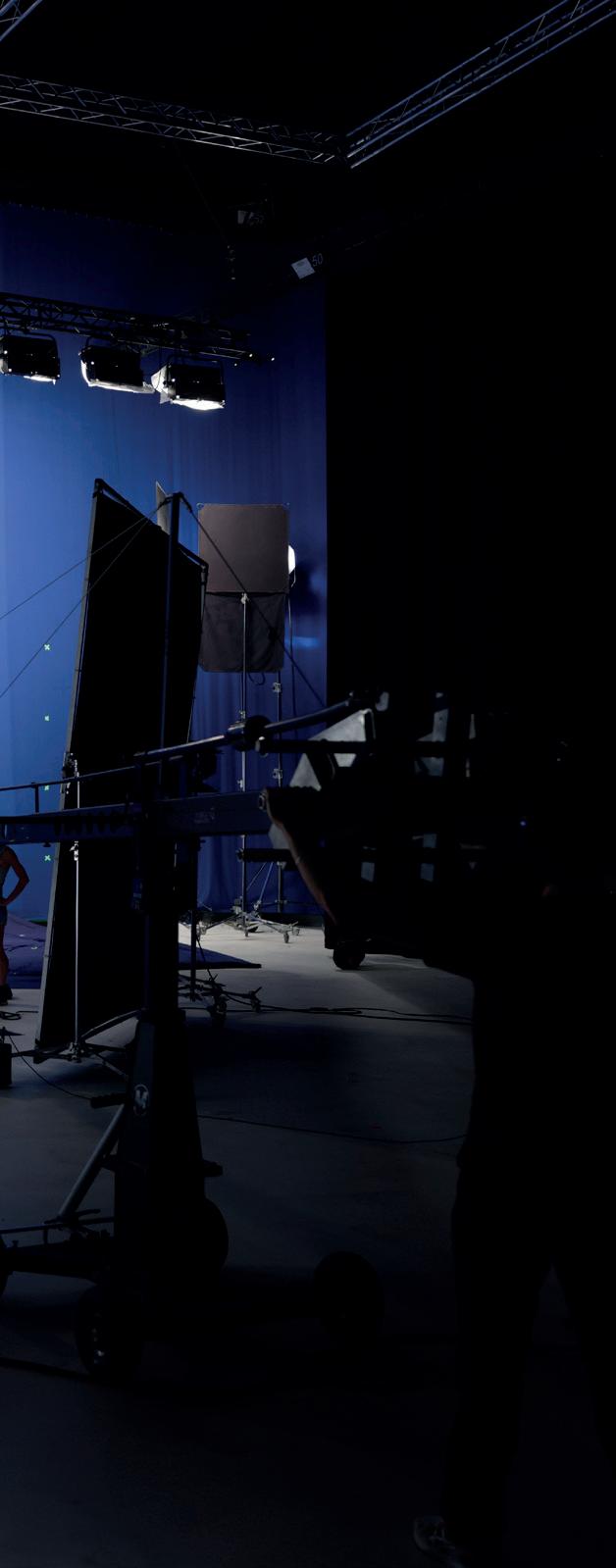
From their wide range of products, ETTINGER GmbH has been supply ing electromechanical components to international business customers from the industry and trade sector since 1964: High-quality compo nents for electrical engineering, automation, medical and agricultural technology, electro mobility, the energy industry, mechanical engineer ing and many other areas.
www.ettinger.de/en www.naumann-film.de
FÜR ETTINGER ELEKTRONIKBAUELEMENTE HAT NAUMANN FILM SICH IN DIE UNENDLICHKEIT GEWAGT.
In der neuesten Werbefilmproduktion schwebt eine Astronautin vor Bluescreen an Drahtseilen in einem Raumanzug über den Boden, geführt von einer Stuntkoordinatorin. All, Erde und Raumstation werden später über CGI in die Aufnahmen integriert. Der Film feiert im November auf der electronica Messe in München Premiere.
Die ETTINGER GmbH liefert seit 1964 aus einem breiten Sortiment elek tromechanische Bauteile weltweit an Geschäftskunden aus Industrie und Handel: qualitativ hochwertige Komponenten für die Elektrotechnik, Automatisierungstechnik, Medizintechnik, Agrartechnik, Elektromobili tät, Energiewirtschaft, den Maschinenbau und viele weitere Branchen. www.ettinger.de www.naumann-film.de
Klaus Naumann, founder and director.
October 2022 | Issue 98 | 45

‘IT’S REALLY FUN TO EMBODY THIS ROLE’
Actress Iris Mareike Steen has been a staple of German cult soap Gute Zeiten, schlechte Zeiten for a while. She talks to Discover Germany, Austria & Switzerland about what goes on behind the scenes, Let’s Dance, and much more.
Iris Mareike Steen: As a teenager I played in the ZDF series Da Kommt Kalle for six years and was able to learn a lot during that time. It was great for me to be able to regu larly pursue my passion alongside school. I will always have fond memories of that time.
DISCOVER GERMANY: How did you get into acting? Has this always been your dream job?
Iris Mareike Steen: Acting has always been a big hobby of mine, so I never really saw it as a job. I was able to gain filming experience as a child and I’m really grateful that after graduating from high school I started work ing on the RTL series Gute Zeiten, schlechte Zeiten and was therefore actually able to turn acting into my profession.
DISCOVER GERMANY: To what extent has your role in GZSZ promoted or furthered your career?
Iris Mareike Steen: I owe a lot to GZSZ. If I hadn’t been accepted in 2010 and packed my things to move from Hamburg to Berlin, I probably would have studied psychology and acting would have remained a hobby.
DISCOVER GERMANY: What is the best thing about the GZSZ shoots behind the scenes?
Iris Mareike Steen: We are an extremely well-rehearsed team in front of and behind the camera. I’ve made a lot of incredibly val uable friendships over the years and even if the day-to-day shooting can sometimes be very intense, we have a lot of fun and really nice interactions with each other. It is a great
gift to come to a place every day where you feel so comfortable and where you meet so many people close to your heart.
DISCOVER GERMANY: What do you love most about your GZSZ role, Lilly Seefeld?
Iris Mareike Steen: I think it’s nice that the role has practically grown up with me. Initially a very shy character, Lilly is now a confident young doctor with a big heart and a great sense of humour. It’s really fun to embody this role.
DISCOVER GERMANY: Let’s talk about Let’s Dance; how was that for you? Do you remember particularly difficult moments?
Iris Mareike Steen: In hindsight, Let’s Dance was an extremely valuable experience. While I was doing it, I was struggling a lot, how ever. I had totally underestimated the double burden. And, of course, it wasn’t nice that I was rarely able to excite the jury. I was pretty much at my limit, both physically and emo tionally. But in hindsight, the good memories outweigh the bad ones, and I am glad that I was able to have this experience.
DISCOVER GERMANY: You have already worked in a number of productions. Which role do you remember particularly fondly and why?
DISCOVER GERMANY: What role would you most like to play one day?
Iris Mareike Steen: Up to now I have played mostly ‘nice’ roles. Of course, it would be fun to play a really bad, maybe mentally ill character. You could really let off steam there as an actor.
DISCOVER GERMANY: What dreams and wishes do you have for the future?
Iris Mareike Steen: As trite as it always sounds: the greatest good is our health and that of our loved ones. As far as dreams are concerned, I would like to fulfill my dream of pursuing my second great passion, music. I’m already at it and it makes my soul very happy.
DISCOVER GERMANY: Other plans for 2022? What’s coming up? Can you tell us about any future endeavors?
Iris Mareike Steen: I have a lot planned for the coming months, which unfortu nately I can’t talk about yet – I don’t like it when people say things like that, but now I couldn’t avoid making this statement my self and a little tension building can’t hurt (laughs). But I can say I’m incredibly excited to share it soon.
TEXT: NANE STEINHOFF I PHOTO: © RTL, SEBASTIAN GEYER
October 2022 | Issue 98 | 47
Star Interview | Culture | Discover Germany
CLEAR YOUR MIND AND YOUR SKIN
As we head deeper into autumn, the temperatures outside are inevitably dropping. So too is the availability of daylight, meaning less time to participate in outdoor activities. Consequently, the prospect of spending an evening enveloped by the heat of a sauna becomes increasingly attractive. And few places on this planet have a sauna culture quite like that straddling the border of Austria and Germany.
TEXT: STUART FORSTER | PHOTOS: UNPLASH
Newbies from elsewhere often comment that entering a sauna in either of those countries can be initially a little intimidating. Even a little embarrassing. The reason? It’s common for saunas to be textile-free zones. That means sauna users are expected to strip off their bathing costumes and go naked in the vicinity of strangers.
The region’s Freikörperkultur, meaning ‘free body culture’, encourages people to embrace nudity. Healthily, it shuns the notion that na kedness should be a cause of shame. Being naked is seen as perfectly natural.
Foreign visitors who like the idea of using their hotel sauna or the facilities at public pools are often shocked that there’s an expectation that they too should remove their swimwear. Years of social and cultural programming are inevi tably significant barriers to accepting cultural differences. Yet ask a local and they will tell you that it’s simply not healthy to sweat into your swimwear, so it’s better to remove it.
More often than not, men and women share the use of saunas and steam rooms. Inevitably, that can be a significant mental hurdle to over come and cause some people to stay away.


Yet saunas tend to have zones, set times or even entire days restricted to men or women.
While swimwear is not worn, it’s common for sauna users to wrap themselves in their tow els while moving between the various rooms. In Finnish saunas, it’s common to lay down a
48 | Issue 98 | October 2022
towel on the pinewood bench and sit or lie in the heat for around 15 minutes. Afterwards, a cooling shower and a dip to cool off help close the pores.

Resting between using rooms is an essential part of a sauna visit. Away from mobile phones and other outside disturbances, sauna complexes offer an opportunity to escape the stresses of the modern world. They are a space to appreciate downtime and experience a mental reset.
Observe the behaviour of other sauna users and you’ll note that most adopt a relaxed pattern of moving between the rooms and then repeat the process, typically three times. It’s a ritual that feels both purifying and relaxing. The experience should not be rushed. Consequently, it’s common to spend three to four hours in the sauna complex.
A key element of the ritual is the Aufguss. Translated literally, the term means ‘infusion’. In the context of a sauna, it involves a Saunameister pouring water infused with essential oils over the hot stones. They then skilfully rotate and waft a towel to evenly distribute the aroma and heat.
Usually hourly, the Aufguss is typically the busiest time to visit a sauna. People sit side by side on their towels while enduring the waves of hot, aromatic air. It is frowned upon for latecomers to enter the room after the Saunameister closes the door as that would allow the hot air to escape. The intensity of the heat during an Aufguss is what makes the ritual worth experiencing.
Of course, saunas are an integral element of the German-speaking region’s diverse wellness culture. Sauna facilities feature as part of public swimming baths in many cities, making them accessible and, despite recent price rises due to the hike in energy costs, relatively affordable.

Historic sauna complexes including BadenBaden’s ornate Roman-Irish style Friedrichsbad, Munich’s Art Nouveau-influenced Müllersches Volksbad and Wiesbaden’s Kaiser Friedrich Therme mean opportunities to combine experiencing a sauna with viewing an architectural gem. Each of those characterful bathing complexes is more than a century old.
By contrast, more modern facilities offer the likes of mood lighting and saunas with crys-
tals. Larger complexes such as the Aqua Dome at Längenfeld in the Tirol and the Therme Erding in Bavaria mean a choice of saunas and plenty of space to enjoy the experience.
Autumn is an ideal time of year to spend time in a sauna but regulars will tell you that it feels right whatever the season.
Photo: Pixabay
Clear Your Mind and Your Skin | Travel | Discover Germany
ENTSPANNUNG PUR IN DER THERME EUSKIRCHEN SÜDSEEPALMEN UND URLAUBSGEFÜHLE

Den Alltag hinter sich lassen, neue Kraft und Energie tanken. Eine entspannte Wellnessauszeit gibt’s in der Therme Euskirchen. Entdecken Sie die 12 Saunawelten und tauchen Sie ein in die kristallklaren, türkisblau glitzernden Lagunen.


Wenn über dem 33 Grad warmen Wasser im Außenbecken der Lagune magische Nebelimpressionen aufsteigen, dann ist es Zeit für Wellness im Warmen. Die Therme Euskirchen bietet ein vielfältiges Programm zum Erholen und Entspannen.
Das Palmenparadies lässt Sie in tropischer At mosphäre unter mehr als 500 echten Südsee palmen auf einer der vielen Sprudelliegen die Seele baumeln, in den Quellen der Gesundheit neue Kraft tanken oder verwöhnt Sie sanft mit den Massagedüsen in der großen Lagune.
In den Themensaunen gehen Sie auf eine Sinnesreise um die Welt. Vom fernen Osten der Koi-Sauna aus geht es Richtung Orient. Exotisch lädt die Tropen-Sauna zum Abschalten inmitten des Bambushains. Der griechische Sonnengott entführt in seine antike Tempelanlage. Weiter Richtung Westen thront der Palast Spaniens mit der maurisch gestalte-
ten Alhambra. Ein wahres Genussfeuerwerk erwartet die Gäste im Wiener Kaffeehaus im Jugendstil, bevor es rauf auf den Berg zum Holzstadl geht. Eine Kraftquelle, ebenso mächtig wie der Keltenthron, der ganz mystisch die Reise im Norden beendet. Fühlen Sie die Wärme auf Ihrer Haut, lauschen Sie den Klängen, riechen Sie die Düfte. Blicken Sie hinaus in den Vitalgarten und schmecken Sie frisch gepresste Säfte und wohltuende Tees. Von Aqua-Fit am Morgen über Infrarotliegen, die wohltuenden Gesundheitsbecken, die vielen Whirlpools und Sprudelliegen bis hin zu den Aufgüssen und Dufterlebnissen in den thematisierten Saunen. Heiße Saunagänge mit erfrischender Abkühlung kurbeln den Organismus und das Immunsystem richtig an.
WELLNESS-EVENTS IM HERBST 2022
Bei der Langen Thermennacht am 7. Okto ber gibt es im Palmenparadies Live-Musik mit einem stimmungsvollen Gesangs-Duo,
begleitet von Gitarrenklängen. In der Vital therme & Sauna verwöhnt an diesem Abend ein besonderes Aufguss- und Wellnesspro gramm bis Mitternacht. Im November erle ben Gäste einen außergewöhnlichen Film abend bei Kino unter Palmen. Freuen Sie sich auf Blockbuster, die Sie auf der großen Leinwand in der Lagune verfolgen werden. Der Herbst und die Vorweihnachtszeit mit funkelnden Sternen am Thermenhimmel bie ten perfekte Momente, um Ihre Wohlfühlzeit in der Therme zu verbringen.
Informationen und Reservierungen online unter www.badewelt-euskirchen.de.
TEXT & FOTOS: THERME EUSKIRCHEN
50 | Issue 98 | October 2022
Discover Germany | Travel | Badewelt Euskirchen



IHRE AUSZEIT UNTER PALMEN Entdecken Sie: Das Palmenparadies mit 500 echten Südseepalmen • 12 Saunawelten • Poolbars Massage &Wellness • 33°C warmes Wasser • Callablüten Dusche Sprudelliegen &Whirlpools Relaxmuscheln • Paradise Beach mit Beach Club • Textilsauna Natursee mit Fontänen Kulinarische Erlebnisse • Blaue Lagunen und vieles mehr! Online Tickets & Gutscheine unter badewelt-euskirchen.de
HARMONIOUS INTERIORS OF TANGIBLE BEAUTY

For designer Branca Good from Good Interiors, harmony is the most important mission.
“We talk to people and ‘communicate’ with spaces. Understanding both is the foundation of our designs,” emphasises the owner of the Zurich interior design studio, which offers a whole range of services. These services start with advice on material and run all the way to the realisation of interior architecture and holistic interior design con cepts, including furnishing.
“Our singular materials’ library – a collection of materials for interior design – includes all kinds of floor and wall coverings, kitchen fronts, worktops etc. We combine the materials so that they speak a uni form language. Offering material concepts for interior design as a service is our core competence.”
“Our clients,” says the interior designer, “are private house owners and architects who value the harmonic interplay of colours and ma terials in interior spaces. They are people who want to enjoy their morning coffee in a beautiful kitchen every day. Architects commis sion us with the materialisation of the interior when they want to generate visible added value to their project.”
“The harmony of our designs,” concludes Good, “comes from the balance of all materials, colours and shapes. Nothing is too much, nothing is missing. Everything has its place, speaks the same lan guage and thus contributes significantly to the beauty of the whole. What we wish to see in the world, we create in interiors.”
www.goodinteriors.ch

HARMONISCHE INNENRÄUME VON SPÜRBARER SCHÖNHEIT
Für Designerin Branca Good von Good Interiors die wichtigste Mission.
„Wir sprechen mit den Menschen und ‚kommunizieren’ mit den Räumen. Beide zu verstehen, ist die Basis unserer Gestaltung“, betont die Inhaberin des Zürcher Innendesignstudios. Dieses bietet eine Bandbreite an Dienstleistungen an: Angefangen bei der Materialberatung bis hin zur Umsetzung von Umbauten und ganzheitlichen Raumgestaltungskonzepten inkl. Möblierung.
„In der einzigartigen Materialothek für den Inennausbau, die alle Arten von Bodenbelägen, Wandverkleidungen, Küchenfronten, Arbeitsplatten etc. umfasst, stellen wir die Materialien so zusammen, dass sie eine einheitliche Sprache sprechen. Materialkonzepte für den Innenausbau als Dienstleistung anzubieten, ist unsere Kernkompetenz.”
„Unsere Kunden”, so die Designerin, „sind private Bauherren und Architekten, die Wert legen auf das harmonische Zusammenspiel von Farben und Materialien im Innenraum. Es sind Menschen, die sich jeden Morgen über ihre wunderschöne Küche freuen möchten. Architekten beauftragen uns mit der Materialisierung des Innenausbaus, wenn sie sichtbaren Mehrwert in ihrem Objekt generieren möchten.“
„Die Harmonie unserer Gestaltungen”, beschreibt Good abschließend, „entsteht durch das Gleichgewicht aller Materialien, Farben und Formen. Nichts ist zu viel, nichts zu wenig. Alles hat seinen Platz, spricht eine einheitliche Sprache und trägt so wesentlich zur Schönheit des Ganzen bei. Das, was wir uns in der Welt wünschen, erschaffen wir in den Räumen.”
52 | Issue 98 | October 2022 Discover Germany | Business | Interior Designer of the Month
TEXT: SILKE HENKELE I PHOTOS: GOOD INTERIORS GMBH, SIBYLLE MEIER


THE NEW KIND OF WORKING TOGETHER. INNOVATIVE OFFICE SPACES DIRECTLY AT MUNICH AIRPORT. WWW.LABCAMPUS.DE/EN JOIN CURIOUS? THE OFFICE IS DEAD.
EFFICIENT CUSTOMER DATA
Strong customer ties will always remain essential, even as internet sales continue to rise. Perfect customer experience is one of the keys to great success.

That perfect customer experience, however, can often be lost across various channels, or ganisational and data silos, as Frank Trefzer, managing director DACH at customer data specialist Tealium knows. “As mentioned be fore, a good, personalised customer experi ence is a prerequisite for most clients in the year 2022. Always remember: the competi tion is just a mouse click away!”
But why do some companies have such a hard time with a customised approach? “In my experience, this is largely due to the fact that customer data cannot be accessed cen trally, but is stored across various technolo gies; on websites, in apps, CRM software, BI-tools, data warehouse platforms etc. With this lack of data logistics, it is difficult to real ise a targeted user approach and implement seamless customer experiences.”
The leading CDP player Tealium recognised the issue of data logistics as early as 2008,
and subsequently launched a solution in 2013. Other providers only really began fol lowing in 2019. As a pioneer of customer data platforms, Tealium has a huge head start in terms of experience and supports a large number of different channels and tools, re gardless of providers.
Trefzer: “The Tealium Customer Data Platform (CDP) enables the customised connection and organisation of customer data via the internet, mobile, offline, CRM and IoT. Our business cli ents have access to our turnkey infrastructure, which supports more than 1,300 integrated, standardised connectors in real time, creat ing optimised customer data logistics within a very short time. It is a platform that learns independently through machine learning and will generate new, optimised customer expe riences virtually all by itself. With integrated tag-management, API hub and innovative data management solutions, businesses can use their customer data more securely, more
comprehensively and in compliance with data protection laws. The data not only becomes more valuable for the company, but generates seamless positive customer experiences.”
With the increased data efficiency, Trefzer al ready addresses one advantage of a CDP. Are there others? “Several. An optimised cus tomer data platform facilitates the acquisition of new customers and supports the growth of the customer base. Targeted, personalised communication promotes customer loyalty. A customer platform also offers the possibility to identify trends through targeted customer anal ysis and to investigate and anticipate customer buying behaviour. A CDP contributes to sales growth and increased efficiency.
A recently published study by Forrester found that over a three-year-period, Tealium’s CDP generated a return on investment (ROI) of 363 per cent for its clients, which is equivalent to nearly seven million US dollars.” So, optimised customer data can be measured by ROI? “Yes. The numbers speak for themselves.”
www.tealium.com
With the help of a CDP, brands can combine all offline and online data to create a single customer view so they can deliver the moments their customers deserve.
Photo: ©shutterstock/Monkey Business Images
54 | Issue 98 | October 2022
TEXT: SILKE HENKELE
LEISTUNGSSTARKE KUNDENDATEN
Ein guter Draht zu den Kunden bleibt auch angesichts der weiter steigenden Internetumsätze wichtig. Perfekte Customer Experience lautet hier das Stichwort.
Perfekte Customer Experience, die oft über die verschiedensten Kanäle, organisatori sche und Datensilos verlorengehen, wie Frank Trefzer, Geschäftsführer DACH vom Kunden datenspezialisten Tealium, weiß. „Es ist, wie eingehend gesagt: Eine gute, personalisierte Customer Experience wird im Jahr 2022 von den allermeisten Kund:innen vorausgesetzt. Wichtig hierbei: Der Wettbewerb ist stets nur einen Mausklick entfernt!”

Warum aber tun sich manche Unternehmen mit einer maßgeschneiderten Ansprache so schwer? „Meiner Erfahrung nach liegt das zum größten Teil daran, dass Kundendaten nicht zentral abrufbar sind, sondern in verschiedenen Medien gespeichert werden. Auf Webseiten, in Apps, in CRM-Software, BI-Tools, Data Warehouse-Plattformen usw. Bei dieser fehlenden Datenlogistik ist es schwer, eine gezielte Nutzeransprache zu realisieren und nahtlose Customer Experiences umzusetzen.”
Der Branchenführer Tealium hat das Prob lem der Datenlogistik bereits im Jahr 2008
erkannt und 2013 eine Lösung auf den Markt gebracht. Andere Anbieter zogen erst 2019 nach. Als Pioneer der Customer Data Platforms hat Tealium damit einen riesigen Erfahrungsvorsprung und unterstützt an bieterunabhängig eine große Anzahl unter schiedlicher Kanäle und Tools.
Hierzu Trefzer: „Die Tealium Customer Data Platform (CDP) ermöglicht die passgenaue Verbindung und Organisation von Kunden daten über das Internet, mobil, offline, CRM und IoT. Unseren Unternehmenskunden steht dafür unsere schlüsselfertige Infrastruk tur zur Verfügung, die mehr als 1.300 integ rierte standardisierte Konnektoren in Echtzeit unterstützt und so innerhalb kürzester Zeit eine optimale Kundendatenlogistik erstellt. Eine Plattform, die durch Machine Learning selbstständig dazulernt und so quasi selbst neue, optimierte Customer Experiences ge neriert. Mit integriertem Tag-Management, API-Hub und mit innovativen Datenmanage mentlösungen können Unternehmen so ihre Kundendaten datenschutzkonform, sicherer und besser nutzen. Die Daten werden damit


nicht nur für das Unternehmen wertvoller, sondern generieren eine nahtlose Customer Experience.”
Mit der gesteigerten Dateneffizienz spricht Trefzer bereits einen Vorteil einer CDP an. Gibt es weitere Vorteile? „Mehrere. Eine optimierte Customer Data Platform erleichtert die Gewin nung von Kunden und unterstützt das Wachs tum des Kundenstamms. Gezielte, personali sierte Ansprachen fördern die Kundenbindung und -treue. Zudem bietet eine Customer Data Platform auch die Möglichkeit, durch gezielte Kundenanalysen Trends zu erkennen und das Kaufverhalten der Kund:innen zu untersuchen und zu antizipieren. Eine CDP trägt damit zu Umsatzwachstum und Effizienzgewinnen bei.
Eine kürzlich veröffentlichte Studie von Forrester hat ergeben, dass über einen Zeitraum von drei Jahren gerechnet, die CDP von Tealium für die Unternehmenskunden einen ROI von 363 Prozent in Höhe von knapp sieben Millionen US-Dollar generiert hat.”
Optimierte Kundendaten lassen sich also am ROI abmessen? „Ja, die Zahlen sprechen für sich.”
www.tealium.de
damit
sich mit Ihren Kunden verbinden können. Foto: ©Tealium Inc./shutterstock
October 2022 | Issue 98 | 55 Innovative Software Company Germany | Business | Discover Germany
Mithilfe der Tealium CDP sammeln, vereinheitlichen und aktivieren Sie Ihre Kundendaten in Echtzeit und begeistern Ihre Kunden mit einer personalisierten Customer Experience. Foto: ©Tealium Inc. Kundendaten werden die Zukunft der Customer Expe rience und den Erfolg eines Unternehmens bestimmen - eine CDP treibt dies voran. Foto: ©Tealium Inc. Tealium verbindet Ihre Daten,
Sie
Protecting data and more

Whether doing so as an individual or as a company, looking after one’s cybersecurity has become increasingly important as it protects sensitive data from ever-evolving threats of theft and damage. In the following special theme, some of Germany’s top cybersecurity firms introduce themselves.
 TEXT: NANE STEINHOFF I PHOTOS: UNSPLASH
SPECIAL THEME: THE MOST INNOVATIVE & EFFICIENT CYBERSECURITY COMPANIES IN GERMANY – A REGIONAL SELECTION
STRONG CYBERSECURITY STARKE CYBERSECURITY
The topic of IT security is currently receiving a lot of attention. Almost daily, there are new reports of hacker attacks on companies, authorities or critical infrastructures. So how to best protect a corporate network?
“The best protection is a security concept tailored to the compa ny’s needs that is continuously adapted to meet new requirements,” explains Jens Albrecht, managing director at Dortmund-based IT security expert concentrade. “Good solutions create a high level of security. However, there is no such thing as one hundred per cent protection and the damaged caused by such attacks can be sub stantial. We are not just talking about production downtimes, but also about the leakage of sensitive data and the associated loss of image and trust.”
“Our motto ‘Strong protection for your company’ means exactly that. Our core competence is IT security. We assist companies beyond the duration of their individual projects with a comprehensive portfo lio of security solutions and benefits such as managed services. The quality of our work and the well-founded know-how of our employ ees are decisive in this. We test solutions in our own laboratory and ensure continuous training and further education in order to always remain up to date with the latest technical developments. This is the only way we can actually provide ‘strong protection’.”
Das Thema IT-Sicherheit ist aktuell in den Fokus gerückt. In den Nachrichten wird fast täglich von Hackerangriffen auf Unternehmen, Behörden oder kritische Infrastrukturen berichtet. Wie schützt man sein Unternehmensnetz am besten?
„Der beste Schutz ist ein auf das Unternehmen zugeschnittenes, kontinuierlich an neue Anforderungen angepasstes Sicherheitskonzept”, so Jens Albrecht, Geschäftsführer des IT-Security-Experten concentrade aus Dortmund. „Gute Lösungen schaffen ein hohes Maß an Sicherheit. Hundertprozentigen Schutz gibt es aber nicht und die Schäden, die solche Angriffe anrichten, können enorm sein. Wir sprechen hier nicht nur von Produktionsausfällen, sondern auch vom Abfluss sensibler Daten und einem damit verbundenen Image- und Vertrauensverlust.”

„Unser Motto ‚Starker Schutz für Ihr Unternehmen’ ist genau so gemeint. Unsere Kernkompetenz ist IT-Security. Mit einem umfassenden Portfolio an Sicherheitslösungen und Leistungen wie Managed Services begleiten wir Unternehmen über die Dauer einzelner Projekte hinaus. Die Qualität unserer Arbeit und das fundierte Know-how unserer Mitarbeitenden ist dabei entscheidend. Im eigenen Labor testen wir Lösungen und sorgen für kontinuierliche Aus- und Weiterbildung, um stets auf dem neuesten Stand technischer Entwicklungen zu bleiben. Nur so können wir wirklich ‚starken Schutz’ realisieren.“
www.concentrade.de

 Managing directors (f.l.t.r.): Jens Albrecht, Philip Goerdt, Horst Dahlhaus.
October 2022 | Issue 98 | 57
www.concentrade.de
TEXT: SILKE HENKELE I PHO TOS: CONCENTRADE GMBH The Most Innovative & Efficient Cybersecurity Companies in Germany – A Regional Selection | Business | Discover Germany
COMPREHENSIVE PROTECTION FROM SOPHISTICATED CYBER THREATS… ON A SINGLE PLATFORM
The cybersecurity solution by SentinelOne offers autono mous endpoint protection and successfully prevents attacks across all important vectors – thanks to AI-powered automation.
SentinelOne offers a cybersecurity solution that uses a single agent to recognise cyber-attacks and react accordingly. “SentinelOne’s tech nology doesn’t rely on signature-based or heuristic analysis, which only works with files,” regional director Matthias Canisius explains. “It recognises threats in a dynamic way by their malicious behaviour.” The integration of behaviour-based AI enables customers to block threats automatically in real-time – for both endpoints and the cloud.
SentinelOne Singularity XDR (Extended Detection and Response) has an increased ability to recognise and react to threats across mul tiple security levels. It not only delivers a central end-to-end corpo rate transparency for security teams, but it also offers powerful ana lytics and automatised reactions across the entire technology stack.
The cybersecurity solution is also incredibly user-friendly and can easily be scaled to purpose – all in all a clear choice for companies of any size.
www.sentinelone.com
UMFASSENDER SCHUTZ
VOR HOCHENTWICKELTEN CYBERBEDROHUNGEN… AUF EINER ZENTRALEN PLATTFORM
Die Cybersecurity-Lösung von SentinelOne bietet einen au tonomen Endpunktschutz, der Angriffe über alle wichtigen Vektoren hinweg erfolgreich verhindert – dank verhaltensba sierter künstlicher Intelligenz.
SentinelOne bietet eine Cybersecurity-Lösung, die durch einen einzigen Agenten Cyberangriffe erkennt und darauf entsprechend reagiert. „Die Technologie von SentinelOne verlässt sich nicht auf Signaturen oder heuristische Analysen, die nur bei Dateien funktionieren”, erklärt Regional Director Matthias Canisius. „Sie erkennt Bedrohungen aufgrund ihres Verhaltens dynamisch.” Die Integration von verhaltensbasierter künstlicher Intelligenz ermöglicht die automatische Beseitigung von Bedrohungen in Echtzeit für standortbasierte und Cloud-Umgebungen.

SentinelOne Singularity XDR (‚Extended Detection and Response‘) sorgt für eine einheitliche, erweiterte Erkennungs- und Reaktionsfähigkeit über alle Sicherheitsebenen hinweg. Es ermöglicht Sicherheitsteams nicht nur eine zentralisierte End-to-End-Unternehmenstransparenz, sondern auch leistungsstarke Analysen und automatisierte Reaktionen, und zwar über den gesamten Technologie-Stack hinweg.
Die Cybersecurity-Lösung ist zudem einfach zu bedienen und problemlos skalierbar – rundum eine klare Sache für Unternehmen jeglicher Größenordnungen.
 Matthias Canisius, Regional Director at SentinelOne.
Singularity XDR.
Matthias Canisius, Regional Director at SentinelOne.
Singularity XDR.
58 | Issue 98 | October 2022 Discover Germany | Business | The Most Innovative & Efficient Cybersecurity Companies in Germany – A Regional Selection
TEXT: MARILENA STRACKE I PHOTOS: SENTINELONE
„UNSERE MISSION: EINE SICHERE DIGITALE WELT“
Die Welt wird immer komplexer, aber eine Sache bleibt konstant: Kaspersky setzt sich dafür ein, Kunden auf der ganzen Welt vor Cyberbedrohungen zu schützen. Derzeit können Unternehmen und Organisationen einen kostenfreien Zugang zu Kaspersky Threat Intelligence anfordern – ganz bequem per Link.
Echtzeitsuche können Kunden Informationen aus allen Datenbanken abrufen. Hierzu zäh len APT-, Crimeware-, ICS- und Digital Foot print Intelligence-Berichte, Profile bestimmter Akteure sowie Quellen des Dark Web, Surfa ce Web und validierte OSINT IoCs.
Als internationales Unternehmen ist Kaspersky davon überzeugt, dass eine sichere digitale Welt nur durch gemeinsame Anstrengung möglich ist und auf Dialog, Expertise und Transparenz beruhen muss.
„In diesem Sinne werden wir bei Kaspersky immer das tun, was wir am besten können: die Cybersicherheit aller gewährleisten –mit Transparenz, Professionalität sowie den besten Lösungen und Services“, so Waldemar Bergstreiser, Head of Channel Germany bei Kaspersky.


„Neben der technologischen Schutzkompo nente sind wir bei Kaspersky vor allem auf unsere Threat Intelligence stolz, die auf 25 Jahren Erfahrung in der Suche, Erkennung und Bekämpfung von Cyberbedrohungen sowie auf globalen Daten beruht. Wir freuen uns besonders über die jüngste Kooperation zwischen Kaspersky und Microsoft, durch die unsere Threat Data Feeds jetzt in Microsoft Sentinel integriert sind.“
KASPERSKY THREAT INTELLIGENCE Bedrohungsakteure weltweit nutzen unsiche re Zeiten, um Kampagnen gegen Unterneh men aller Größen und Branchen aufzusetzen, und passen dafür ihre Methoden an. Mit Thre at Intelligence gewinnen Unternehmen umfas sende Einblicke in die Bedrohungslandschaft und können so Risiken antizipieren. Deshalb bietet Kaspersky derzeit Unternehmen und Organisationen einen kostenfreien Zugang zum Kaspersky Threat Intelligence-Ressource Hub. Kaspersky Threat Intelligence hilft dabei, komplexe Bedrohungen in Unternehmen auf zudecken. Dazu entwickeln hochqualifizierte Sicherheitsexperten proaktive Techniken zur Bedrohungssuche. Das Global Research and Analysis Team (GReAT) von Kaspersky be steht aus mehr als 40 internationalen Sicher heitsexperten und ist weltweit anerkannt.
Der leistungsstarke Service unterstützt die Suche in verschiedenen Daten-Quellen in ei ner einzigen Benutzeroberfläche. Durch eine
Der kostenfreie Zugang wird zunächst für einen Monat gewährt. Das spannende Angebot fin det man unter: kas.pr/threat-intelligence
Bei weiteren Fragen steht Kaspersky jederzeit als verlässlicher und transparenter Ansprech partner zur Seite: kas.pr/vertrauen
TEXT: MARILENA STRACKE / KASPERSKY I FOTOS: KASPERSKY
CEO und Firmengründer Eugene Kaspersky im Datenzent rum in Zürich. Cyberbedrohungsbezogene Nutzerdaten aus Europa speichert Kaspersky in der Schweiz – ein Land, das für seine strengen Datenschutzgesetze bekannt ist.
Weltweit anerkannte Bedrohungsjäger: das Global Research and Analysis Team (GReAT) von Kaspersky.
October 2022 | Issue 98 | 59
The Most Innovative & Efficient Cybersecurity Companies in Germany – A Regional Selection | Business | Discover Germany
IN
THE MOST INNOVATIVE &
REGIONAL SELECTION
Harnessing the power of biology
Want to learn more about the biotechnology sector in Germany? We have got you covered. Meet some of the companies that work in this field over the following pages, and find out more about what they are doing to improve lives and develop innovative products.
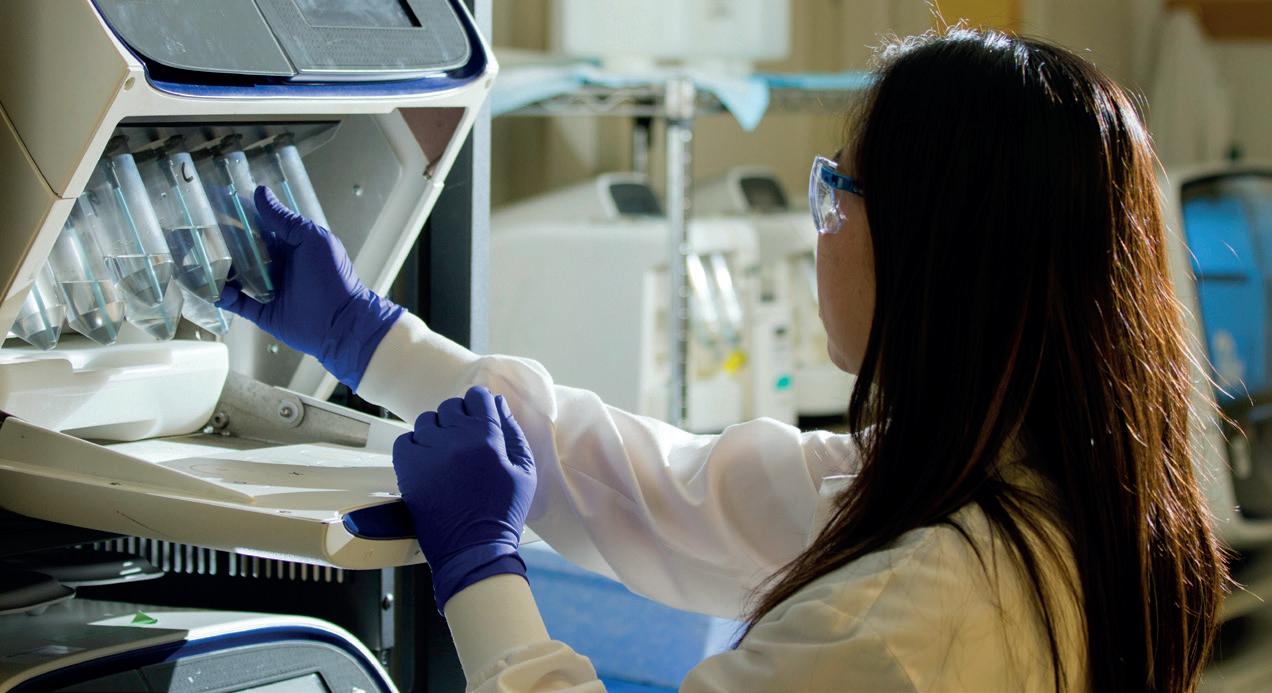
 TEXT: NANE STEINHOFF I PHOTOS: UNSPLASH
SPECIAL THEME:
EFFICIENT BIOTECHNOLOGY COMPANIES
GERMANY – A
SHARE THE LOAD NIMM’S LEICHT!
In the worst cases, hard physical labour can cause lasting damage to the body. Exoskeletons have been developed to combat this – helping to prevent injuries, protect the body and teach ergonomic movements.
Inspired by his own experiences, Jonas Mast developed the idea of linking human sensory characteristics with a mobile strength support worn on the human body.
“We want to provide industrial athletes with the right equipment for their daily marathon! Our exoskeletons are intended to strengthen people, to make them more resistant to external circumstances while still paying respect to the uniqueness of the respective wearer,” em phasises the founder and owner of HUNIC GmbH in the Swabian town of Baiersbronn.
Exoskeletons by HUNIC have distinct advantages: They fit very closely to the body thus following the wearer’s movements while giv ing a lot of freedom of movement. Harder materials are used where too much movement is harmful. In this way, wearers quickly receive feedback when they are moving in an ergonomically incorrect man ner, which helps to achieve a healthy posture in the long term. In novations such as the SoftExo Carry hip belt with a lateral support surface, for example, prevent the development of a hollow back. “Besides this,” adds Mast, “our patented gliding back splint guides the spine into a straight posture and prevents additional pressure being exerted on the intervertebral discs.”
Exoskeletons from HUNIC have a clear aim: to make sure that heavy loads can be carried easily and ergonomically correctly.
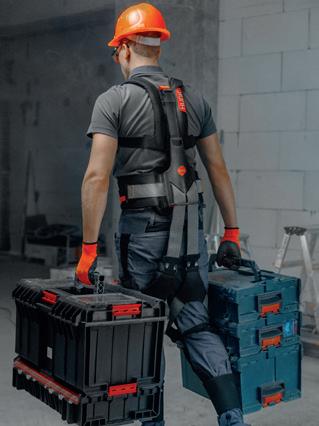
Harte körperliche Arbeit kann den Körper im ungünstigsten Fall nachhaltig schädigen. Exoskelette helfen, Verletzungen vorzubeugen, den Körper zu schonen und ergonomischere Bewegungen zu erlernen.
Inspiriert von den eigenen Erfahrungen, wuchs in Jonas Mast der Ge danke, die sensorischen Eigenschaften des Menschen mit einer mobilen, am menschlichen Körper getragenen Kraftunterstützung zu verknüpfen.
„Wir möchten Industrieathleten die passende Ausrüstung für ihren tägli chen Marathon zur Verfügung stellen! Unsere Exoskelette sollen die Men schen stärken, sie gegenüber äußeren Umständen resistenter machen. Dabei aber keineswegs die Einzigartigkeit der jeweiligen Träger überge hen”, betont der Gründer und Eigentümer der HUNIC GmbH im schwä bischen Baiersbronn.
Die Exoskelette von HUNIC haben hier entscheidende Vorteile: Sie liegen sehr eng am Körper an, folgen damit den Bewegungen der Träger und geben gleichzeitig viel Bewegungsfreiraum. Dort, wo zu viele Bewegun gen eher schädlich sind, werden härtere Materialien verwendet. So be kommen Nutzer schnell eine Rückmeldung, wenn sie sich ergonomisch ungünstig bewegen, womit nachhaltig eine gesunde Haltung erreicht werden kann. Neuentwicklungen wie der SoftExo Carry-Hüftgurt mit seitli cher Ablagefläche beugen beispielsweise der Ausbildung eines Hohlkreu zes vor. „Außerdem”, fügt Mast hinzu, „führt unsere patentierte gleitende Rückenschiene die Wirbelsäule in eine gerade Haltung und vermeidet, dass zusätzliche Druckkräfte auf die Bandscheiben ausgeübt werden.”
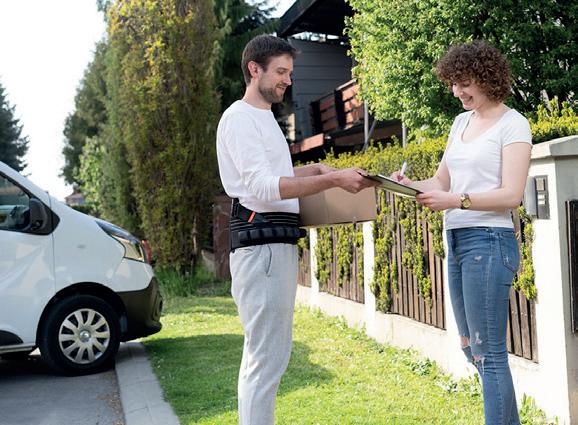
Exoskelette von HUNIC: Damit schwere Lasten auch in Zukunft leicht und ergonomisch richtig getragen werden können.
www.hunic.com
CEO and founder Jonas Mast.
October 2022 | Issue 98 | 61
www.hunic.com/en
TEXT: SILKE HENKELE I PHO TOS: HUNIC GMBH The Most Innovative & Efficient Biotechnology Companies in Germany – A Regional Selection | Special Theme | Discover Germany
INNOVATIVE RESEARCH TOOLS FOR PROTEIN ISOLATION

IBA Lifesciences has been a provider for the life-science research sector for over 20 years. From day one, the Gottingen-based company has specialised in affinity-tagbased purification of target proteins and has become a true champion in its field.
TEXT: MARILENA STRACKE
The Strep-tag® technology was developed in the Max-Planck-Institute to isolate desired pro teins in a single step with a gentle purification method. Based on this fascinating technology, IBA Lifesciences was founded in 1996.
The Strep-tag® technology derives from a highly selective natural process: the bind ing of vitamin H (biotin) and streptavidin (a
protein produced by a bacterium). “Proteins are involved in all bodily functions, spanning from visible ones, such as muscle function, to invisible ones that control the internal chemical functions or the immune system,”
Dr. Isabel Schuchardt, director product man agement, IBA Lifesciences, explains. “Insulin, for example, is responsible for the cells’ glucose absorption, and a lack of it causes diabetes. Foreign proteins like the SARSCoV-2 spike protein can be recognised by the body and trigger an immune response. To analyse and harness the functions of these different proteins, researchers need a tool to separate them from the complex mix ture of other molecules.”
That is where the Strep-tag® technology comes in. It’s an amino-acid sequence that is fused to a target protein, where it acts like
a hook. This hook specifically fits into the biotin binding pocket of a genetically engineered streptavidin, called Strep-Tactin®. The two components have a strong bond which allows all other molecules to be washed away during protein purification. After washing, the bond can be reversed by adding biotin, resulting in the isolation of a highly pure target protein –ready for further analysis such as the charac terisation of its structure and function.
Dr. Schuchardt adds: “Compared to other protein purification methods, our technology is easy to use and results in a highly pure target protein. It can also be used in protein analysis, for example, to recognise specific proteins, or to isolate specific cells from an organism.”
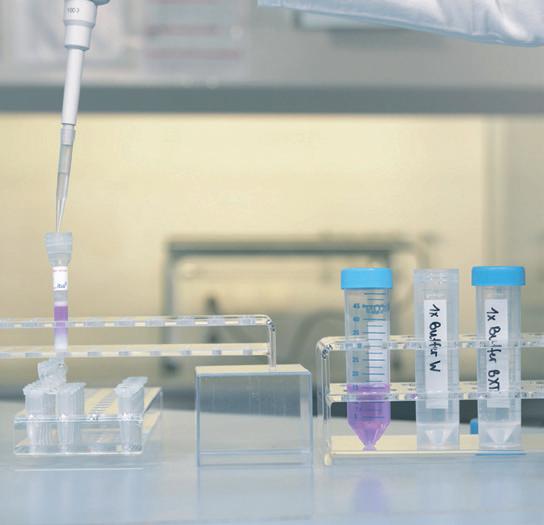
Today, universities and companies around the world use the technology to further un derstand biochemical processes that influ ence our daily lives or to develop medicines such as vaccines.
www.iba-lifesciences.com
 Protein molecules. Photo: Adobe Stock, Christoph Burgstedt
Purification of proteins in a biotechnology lab. Photo: Sebastian Dohm
Studying proteins helps to understand different processes in a human body.
Photo: Adobe Stock, sdecoret
Protein molecules. Photo: Adobe Stock, Christoph Burgstedt
Purification of proteins in a biotechnology lab. Photo: Sebastian Dohm
Studying proteins helps to understand different processes in a human body.
Photo: Adobe Stock, sdecoret
62 | Issue 98 | October 2022 Discover Germany | Special Theme | The Most Innovative & Efficient Biotechnology Companies in Germany – A Regional Selection













WIR KÜMMERN UNS UM DIE WÄLDER Wir sind sehr stolz auf das nachhaltige Management, das wir täglich betreiben. Auf diese Weise schaffen wir einen besseren Planeten mit sauberer Lu zum Atmen. >Durch Wiederaufforstung (in unseren Baumschulen werden jedes Jahr 24 Mio. Setzlinge angepflanzt) sorgen wir für nachwachsende Wälder. >Unsere Wälder beherbergen 800 Pflanzen- und 241 Tierarten. >Sie sind FSC-zertifiziert und Discovery trägt das EU-Umweltzeichen und ist FSC-Rainforest-Alliance-zertifiziert. >Sie speichern 6,1 Mio. Tonnen CO₂. > Durch > Unsere > Sie





































































iPhone und Apple sind eingetragene Marken von Apple Inc. in den USA und anderen Ländern und Regionen. Apple ist kein Teilnehmer oder Sponsor dieser Werbeaktion. Teilnahmeberechtigt sind Personen ab dem 18. Lebensjahr in der Zeit vom 1. September bis 31. Dezember 2022. Alle Navigator-Packungen können am Gewinnspiel teilnehmen. NAVIGATOR WIRD 30 UND LÄDT SIE ZUM MITFEIERN EIN Ohne Ihre tatkräftige Mitwirkung, inklusive aller Kunden, die sich nach wie vor für Navigator entscheiden, wäre dieses denkwürdige Jubiläum gar nicht möglich. MITFEIERN UND GEWINNEN Apple130 www.navigator-paper.com
WELCOME TO YOUR ASSET-LIGHT FUTURE –WITH A VIRTUAL OFFICE
Over ten years ago, when coworking-freiburg first opened its doors, it was a true pioneer of coworking and virtual offices. What started rather small has turned into a top provider located on a popular Freiburg high-street – driven by experience, straight-forward processes, and a great deal of passion.
Cosy yet sophisticated, coworking-freiburg is in high demand thanks to its modern facilities, the unbeatable location and its ‘office fam ily’ atmosphere – attracting clients from across the globe. “We all know each other personally and enjoy going out for lunch together,” managing director Mathias Doenitz, who is on site almost every day, explains. “If someone is new in town, we are glad if we can help in making Freiburg feel like ‘home’.”
coworking-freiburg is equally popular as a virtual business address. Existing companies like to save costs with a virtual office, while startups often prefer to start asset-light. Freelancers, who like to keep their work separate from their personal address, also turn to cow orking-freiburg. As with the coworking space, there’s no minimum contract length, allowing for maximum flexibility. The offering includes notifications, mail forwarding and/or a scanning service.
Curious? You can check out their website to find out more. coworking-freiburg.de
‚ASSET-LIGHT‘ IN DER ZUKUNFT ANKOMMEN: DIE VIRTUELLE FIRMENADRESSE
Bei der Eröffnung vor über 10 Jahren war coworking-freiburg noch ein echter Pionier in Sachen Coworking und virtuellem Büro. Aus dem damaligen Nischenkonzept ist heute eine top Adresse in Freiburgs bekanntester Einkaufsstraße geworden – dank großem Erfahrungsschatz, unkomplizierter Abwicklung und jeder Menge Herzblut.
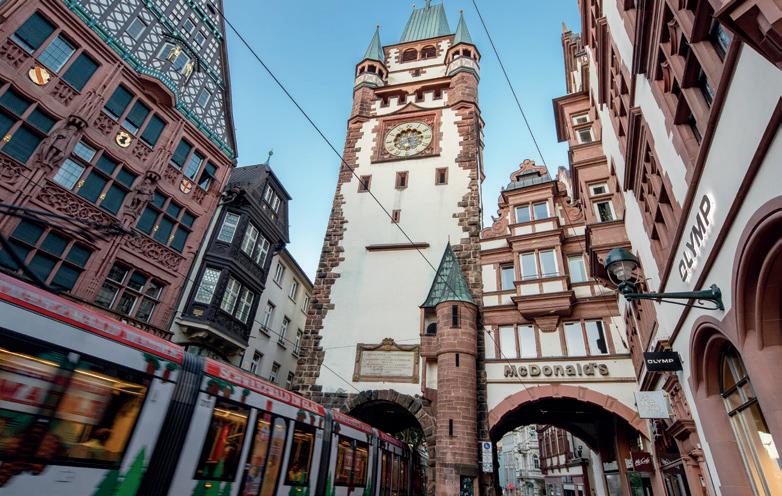
Es ist ein kleiner, aber feiner Space, den coworking-freiburg anbietet. Familiäre Atmosphäre, moderne Ausstattung und eine top Location sorgen für hohe Nachfrage – mit Kunden aus aller Welt. „Wir kennen uns praktisch alle persönlich, gehen gerne zusammen Mittag essen und freuen uns, wenn wir Neuankömmlingen den Start in Freiburg etwas erleichtern können“, erzählt Geschäftsführer Mathias Doenitz, der täglich vor Ort ist.
Aber auch als virtuelle Geschäftsadresse ist coworking-freiburg höchst beliebt. Existierende Firmen, die durch ein virtuelles Büro Kosten sparen, Neugründer, die ‚asset-light‘ anfangen wollen oder Freelancer, die ihre Privatadresse aus geschäftlichem heraushalten möchten, sind hier wunderbar aufgehoben. Wie beim CoworkingKonzept wird statt Vertragsbindefristen maximale Flexibilität geboten. Neben der Postannahme sind Benachrichtigung, Weiterleitung sowie ein vollwertiger Scan-Service inklusive.
Klingt gut? Einfach mal auf der Website vorbeischauen: coworking-freiburg.de
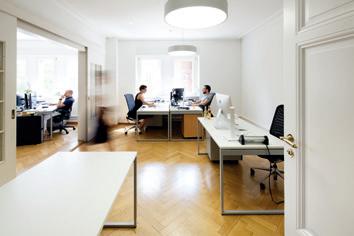 Martinstor Freiburg.
Postfächer. Photo: M. Doenitz
coworking-freiburg.
Martinstor Freiburg.
Postfächer. Photo: M. Doenitz
coworking-freiburg.
October 2022 | Issue 98 | 65
TEXT: MARILENA STRACKE | PHO TOS: S. DÜSENBERG Coworking Service Company of the Month | Business | Discover Germany
TECHNICAL DOCUMENTATION THAT IS USER-FRIENDLY AND QUICKLY AVAILABLE ANYWHERE

If, as a layman, one tries to repair a kitchen appliance, one quite often fails due to incomprehensible, incomplete or simply non-existent instructions for use and repair.
Experts often face the same problems when they have to repair or set up new production plants or machines. Searching and finding the appropriate documentation can take hours because, in some cases, the appropriate documentation is hidden away amongst a jumble of paperwork.
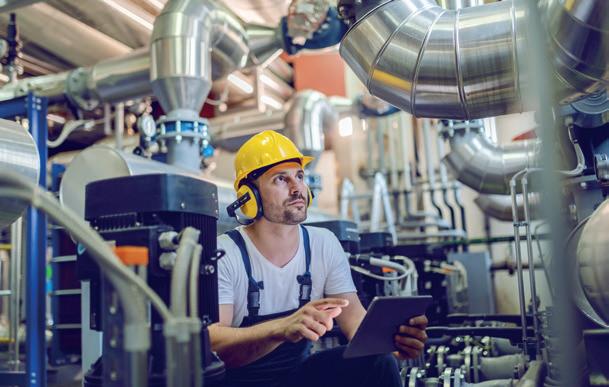
“Unfortunately, again and again, we experience that service informa tion is treated with neglect, so field and customer service advisors often help themselves with hand-written notes, which are easily lost or misplaced,” believes Manuel Welter from Kempen-based full-service provider kothes GmbH.
kothes has taken on this very problem and now specialises in the all-round support of technical documentation, i.e. the provision and organisation of operating manuals, service information, risk assess ments, maintenance and repair manuals and much more. “However, often our clients need more support; for example, in the design of concepts for information solutions, the structuring and digitisation of information, the optimisation of internal processes etc.,” Welter points out.
As a full-service provider, kothes goes that extra step further and also serves as a competent and committed documentation partner in all matters that go beyond mere technical documentation.
www.kothes.com/en
TECHNISCHE DOKUMENTATION NUTZERFREUNDLICH UND ÜBERALL SCHNELL VERFÜGBAR
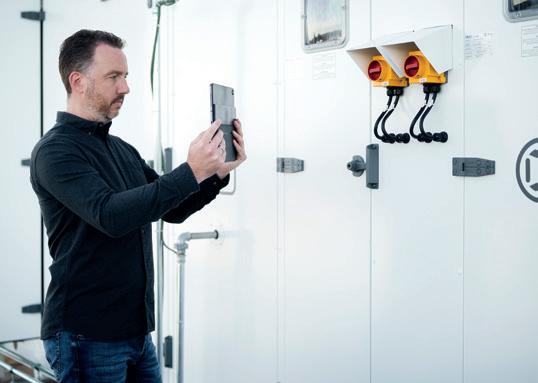
Versucht man als Laie, ein Küchengerät zu reparieren, scheitert das oft an unverständlichen, unvollständigen oder schlichtweg nicht existenten Gebrauchs- und Reparaturanweisungen.
Experten stehen oft vor den gleichen Problemen, wenn sie Produktions anlagen oder Maschinen reparieren oder neu einrichten sollen. Allein das Suchen und Finden der passenden Dokumentation kann Stunden in An spruch nehmen, weil die passende Dokumentation in manchen Fällen in einem Wust von Unterlagen versteckt ist.
„Leider erleben wir immer wieder, dass Serviceinformationen sehr stief mütterlich behandelt werden, so dass der Field Service und Kundendienst sich oft mit eigenen, handschriftlichen Aufzeichnungen weiterhilft, die aber im schlimmsten Fall irgendwann verloren gehen”, bestätigt Manuel Welter vom Kempener Full Service-Dienstleister kothes GmbH.
kothes hat sich dieses Missstandes angenommen und sich auf die Rund umbetreuung technischer Dokumentationen spezialisiert, sprich, auf die Bereitstellung und Organisation von Betriebsanleitungen, Serviceinforma tionen, Risikobeurteilungen, Wartungs- und Instandhaltungsanleitungen uvm. „Oftmals benötigen unsere Kunden aber weiterreichende Unterstüt zung, beispielsweise bei der Erstellung von Konzepten für Informations lösungen, der Strukturierung und Digitalisierung von Informationen, der Optimierung interner Prozesse usw.”, gibt Welter zu bedenken.
Als Full Service-Dienstleister geht kothes nämlich hier den entscheiden den Schritt weiter, und ist auch in allen Belangen, die über die reine tech nische Dokumentation hinausgehen, kompetenter und engagierter Doku mentationspartner.
www.kothes.com
Digital information for support. Photo: AdobeStock/dusanpetkovic1
Technical editor doing some research. Photo: kothes GmbH
66 | Issue 98 | October 2022
TEXT: SILKE HENKELE Discover Germany | Business | Top Technical Documentation Provider

WOZU BIN ICH HIER? ART OF ESSENCE Mehr Infos zu einem Essenzcoaching: www.essenz-finden.de
TALENTE GESUCHT! UND GEFUNDEN
Fachkräfte werden händeringend gesucht. Gleichzeitig bleiben immer mehr Stellen unbesetzt. Woher kommt dieses Missverhältnis? Und wie kann Abhilfe ge schaffen werden?
Software, die unterschiedliche Social-MediaPlattformen bespielt, klassische Personalbe schaffungskanäle wie z. B. Jobbörsen über flüssig zu machen.”
„Den einen Grund gibt es eigentlich nicht”, weiß Nils Schlomann vom Hamburger Recruiting-StartUp TalentBait. „Es sind meh rere Faktoren, die zusammenspielen. Unter nehmen veröffentlichen ihre Stellenangebote oft in lokalen Zeitungen. Allerdings liest diese Anzeigen keiner mehr. Oder sie veröffent lichen offene Jobpositionen auf diversen Jobbörsen, weil das früher auch immer gut geklappt hat. Aber die Zeiten haben sich geändert, denn heute befindet sich kaum je mand mehr aktiv auf Jobsuche und besucht diese Jobbörsen deswegen gar nicht. Die Zahl aktiv suchender Bewerber geht also zu rück, immer mehr Stellen bleiben unter den
beschriebenen Bedingungen unbesetzt. Die Lücke wird immer größer, der Arbeitskräfte mangel stetig spürbarer.”
VERÄNDERTE JOBSUCHE
Aber wie wird heute nach Jobs gesucht?
Müssen Stellenangebote neu gedacht wer den? Wie denkt man bei TalentBait darüber?
„Auf jeden Fall sollten Unternehmen auf diese Veränderungen reagieren, wenn Jobs nicht auf längere Zeit unbesetzt bleiben sollen. In telligente und nachhaltige Personalgewinnung ist besonders in Zeiten des Fachkräfteman gels wichtiger denn je. Wir sind überzeugt, mit unserem modernen Ansatz und einer
TalentBaits Ansatz ist hier so genial wie erwie senermaßen wirkungsvoll: „Als Social Recrui ting Softwarelösung helfen wir Unternehmen mit zielgerichteter, proaktiver Online-Werbung auf Social-Media-Kanälen zu ihren Wunsch kandidat:innen. Wir fokussieren uns auf das Zusammenspiel von moderner Kandidaten ansprache, die zielgruppengenau den passen den Empfänger findet, zeitgemäßes Anzeigen design, ansprechende Formate und künstliche Intelligenz. Abgerundet wird der Prozess mit zeitgemäßer Bewerberkommunikation über moderne Messenger-Medien wie WhatsApp. Hierfür haben wir ein Tool entwickelt, das es unseren Kunden ermöglicht, ihre Stellenanzei gen auf bis zu 15 Social Media-Kanälen zu ver
 TEXT: SILKE HENKELE I FOTOS: TALENTBAIT GMBH
Ein Teil des TalentBait-Teams, das aus Personalmarketing-Experten, Softwareentwicklern, Produktdesignern, Mediaplanern, Kampagnenmanagern und Data Scientists besteht.
TEXT: SILKE HENKELE I FOTOS: TALENTBAIT GMBH
Ein Teil des TalentBait-Teams, das aus Personalmarketing-Experten, Softwareentwicklern, Produktdesignern, Mediaplanern, Kampagnenmanagern und Data Scientists besteht.
68 | Issue 98 | October 2022
öffentlichen. Auf Plattformen also, auf denen potenzielle Bewerber:innen sich ohnehin jeden Tag aufhalten und ihre Zeit im privaten oder be ruflichen Kontext verbringen. Unternehmen mit freien Stellen haben die Chance, sowohl aktiv Jobsuchende als auch sog. Latentsuchende zu erreichen, also den gesamten zur Verfügung stehenden Bewerbermarkt.”
DIE PASSENDE ZIELGRUPPE
Die genaue Zielgruppe ausfindig zu machen, ist oftmals schwer. Viele Faktoren spielen hier eine Rolle. Wie findet man nun aber auch noch die richtige Plattform? „Auch hier liegt die Ant wort in der TalentBait-Software. Wir arbeiten mit einer Empfehlungs-KI, die für jede Stelle die passende Kanalzusammenstellung sowie passendes Budget berechnet. Hierfür müssen Unternehmen lediglich drei Informationen zur Verfügung stellen: den Stellentitel, den Link zur Stellenausschreibung und die zu bespielende Region. Auf Basis dieser Daten wird in Echtzeit ein Angebot erstellt, das die seit 2017 mehr als 10.000 geschalteten Stellen auswertet. Unser Algorithmus lernt mit jeder Schaltung dazu. Durch diesen datengetriebenen Ansatz wird die KI-Empfehlung immer genauer. Davon pro fitieren unsere Kunden natürlich.”
DIE VORTEILE VON SOCIAL MEDIA RECRUITING
Die Vorteile für diese Art der Kandidat:innen suche mit Hilfe der Self-Service-Software von TalentBait liegen auf der Hand, oder? „Auf je den Fall. Zum einen ist auf Social Media die moderne Zielgruppe unterwegs. Die Kandi dat:innen werden dort abgeholt, wo sie sich wohlfühlen und aufhalten. Zweitens haben Un ternehmen mit unserem Tool die Möglichkeit, auf den Social Media-Plattformen die passen den Bewerber:innen zielgenau und vor allem ohne eigene Social Media Accounts anzu sprechen. Denn dank unseres Tools bzw. des Algorithmus wird nur jemand das Stellenange bot bekommen, der oder die für den Job auch tatsächlich infrage kommt. Drittens können über Social Media auch direkt moderne, nied rigschwellige Bewerbungswege angeboten werden. Man bewirbt sich heute meistens on line. Mit der Kommunikation über WhatsApp und einem entsprechenden, einfach auszu füllenden Schnellbewerbungsformular steigen die Chancen der Unternehmen, passende Be werbungen dann vom eigenen Unternehmen zu überzeugen, enorm. Da spielt es dann gar keine Rolle mehr, ob jemand gerade in der
Bahn sitzt, im Fitnessstudio ist oder auf der Couch durch seinen Instagram-Feed scrollt. Viertens und last but not least arbeiten wir zu 100 % transparent. Das heißt, unsere Kunden haben jederzeit Einblick in die Metriken ihrer Schaltungen und wissen genau, wo es Opti mierungspotenziale gibt, mit welchen Plattfor men sie besonders erfolgreich rekrutieren und an welchem Punkt sie ihre Interessent:innen für sich gewinnen – oder verlieren. Dadurch können sie ihre Annoncen immer wieder an passen und verbessern.”
DIE ZUKUNFT
Die Situation am Arbeitsmarkt bzw. der Fach kräftemangel wird sich in der Zukunft noch ver schärfen. Die Babyboomer Generation steht kurz vor der Rente, dann noch verfügbare
Arbeitskräfte werden bereits in einem Arbeits verhältnis stehen, können also nur noch durch passive Kanäle wie Social Media erreicht und vom bisherigen Arbeitgeber abgeworben wer den. Auch ausländische Arbeitskräfte werden immer wichtiger für den deutschen Arbeits markt werden.
Mit TalentBait haben Unternehmen die Chance, sich als moderner, proaktiver Arbeitgeber am Arbeitsmarkt zu etablieren, sich für die Social Media-Kanäle zu öffnen und, sozusagen auf Knopfdruck, das Social Recruiting in die eigenen Rekrutierungspro zesse zu importieren. So finden sie die per fekten Arbeitnehmer:innen.
www.talentbait.de
Interesse am Social Media Recruiting? Registrieren Sie sich einfach kostenlos in der TalentBait-WebApp und buchen Sie Ihre erste Social Media Kampagne ab 500€.
 Start-up Company of the Month
Wer selber einen Blick in die Software werfen möchte, kann das Team von TalentBait z.B. am 25.10. auf der Personal messe München treffen.
October 2022 | Issue 98 | 69 Recruiting Ein Blick in die TalentBait-Software: Während Bewerbe rInnen Nachrichten direkt auf ihr Smartphone erhalten, arbeiten Unternehmen im sog. BewerberHub.
Start-up Company of the Month
Wer selber einen Blick in die Software werfen möchte, kann das Team von TalentBait z.B. am 25.10. auf der Personal messe München treffen.
October 2022 | Issue 98 | 69 Recruiting Ein Blick in die TalentBait-Software: Während Bewerbe rInnen Nachrichten direkt auf ihr Smartphone erhalten, arbeiten Unternehmen im sog. BewerberHub.
| Business | Discover Germany
THE PERFECT ONLINE PRESENCES WITH SOCIAL MEDIA MARKETING AND GOOGLE ADS
Not only since the corona-induced temporary closures of shops has internet trad ing been booming. The numbers of online purchases have long been increasing every year – and are unlikely to stop.
For this very reason, it is important for compa nies and service providers to be properly rep resented on the internet, provide customers with a perfect buying experience and generate a convincing customer experience that is posi tively remembered. It should be a given to seek advice from the best, i.e. from experts such as the professionals from WERBAGO in Solingen, who have been designing, implementing and optimising websites for over 20 years.
“We started with the programming of web sites. However, we quickly realised that clients often needed much more than simple pro gramming services. For often, it is unclear what the homepage should be capable of, whether an idea is feasible or generates a noticeable benefit. ‘What does the website need?’, ‘How will it be positively remem bered by the users?’, or ‘Will it generate an optimised customer experiences?’ are just some of the questions we answer in coopera tion with our clients,” relates project manager
and trainer for media designers, Shahram N. Hashemi.
For the second year in a row, the rating por tal Proven Expert lists advertising agency WERBAGO GmbH, known for its prompt ness, quality and professionalism, among the Top Recommendations and Top Service Providers. Almost 100 per cent of the review ers recommend the team around Hashemi. Convincing figures indeed.
What can companies expect from a coop eration with WERBAGO? “Well, we basically take care of our clients’ entire presence on the internet, i.e. the professional concep tion and programming of websites, affiliat ed shops or advertising campaigns. For us, this also includes international social media marketing, SEO optimisation and, if required, professional photo shoots or video sessions, as well as the precise analysis of the compet itors: Who are they? How are they presented on the internet? What do their websites have to offer?” explains Hashemi.
The majority of the 1,000+ clients have trust ed the professionals from WERBAGO for more than 20 years. “We consider ourselves our cli ents’ partner even beyond their current website project. Their loyalty and satisfaction may thus also be grounded in the fact that WERBAGO proactively lets its clients participate in market developments by inviting the website owners to biannual strategy meetings. Together we evaluate access statistics, discuss our compe tition analysis, assess current trends and derive further strategies from this information.”
www.werbago.com
 Shahram N. Hashemi, Senior Account Manager, with Sanaz Yarkhodaei, Creative Designer & Photographer.
70 | Issue 98 | October 2022
TEXT: SILKE HENKELE I PHOTOS: WERBAGO GMBH
PERFEKTE INTERNETAUFTRITTE MIT SOCIALMEDIA-MARKETING UND GOOGLE ADS
Nicht erst seit den coronabedingten temporären Schließungen von Geschäften erlebt der Internethandel einen Boom nach dem anderen. Die Zahlen der online ge tätigten Käufe steigen von Jahr zu Jahr. Ein Ende ist nicht abzusehen.
Genau aus diesem Grund ist es wichtig, dass sich Unternehmen und Dienstleister mit ihrem Onlineauftritt perfekt positionie ren, Kund:innen ein optimales Kauferlebnis ermöglichen und mit einer überzeugende Customer Experience lange positiv im Ge dächtnis der Konsument:innen bleiben. Sich hierbei von den besten Ihres Fach beraten zu lassen, sollte selbstverständlich sein. Experten, wie den Profis von WERBAGO in Solingen, die seit über 20 Jahren Inter netauftritte konzipieren, realisieren und op timieren.
„Unsere Anfänge liegen in der Program mierung von Webseiten. Schnell wurde uns allerdings klar, dass Kunden in vielen Fällen viel mehr benötigen, als einfache Programmierungen. Oftmals ist nämlich gar nicht klar, was die Homepage überhaupt können soll. Und ob das, was angedacht ist, überhaupt Sinn macht bzw. einen spür baren Nutzen generiert. ‚Was benötigt die Webseite?’, ‚Wie bleibt sie den Nutzenden positiv im Gedächtnis, bietet eine optimale Customer Experience?’, sind nur einige Fra gen, auf die wir zusammen mit den Kunden Antworten suchen und finden”, erzählt Pro jektmanager und Ausbilder für Medienge stalter:innen Shahram N. Hashemi.
Das Bewertungsportal Proven Expert listet den für Schnelligkeit, Qualität und Professio nalität bekannten Werbeagentur WERBAGO GmbH bereits im zweiten Jahr in Folge unter den Top Empfehlungen und Top Dienstleis tern. Knapp 100 Prozent der Bewertenden empfehlen das Team rund um Hashemi wei ter. Zahlen, die überzeugen.


Was bedeutet eine Zusammenarbeit mit WERBAGO für Unternehmen? „Grundsätz lich kümmern wir uns in enger Absprache mit unseren Kunden um deren gesamten
Internetauftritt, also um die professionelle Konzeption und Programmierung der Web seiten, eventuell angegliederte Shops und um anfallende Werbekampagnen. Hierzu gehören für uns auch internationales SocialMedia-Marketing, SEO Optimierung sowie, falls gewünscht, professionelle Fotoshoo tings oder Videosessions und, last but not least, eine genaue Analyse des Mitbewer berfelds: Wer sind die Konkurrenten?, Wie präsentieren sie sich im Internet?, Was kön nen deren Webseiten?”, so Hashemi.
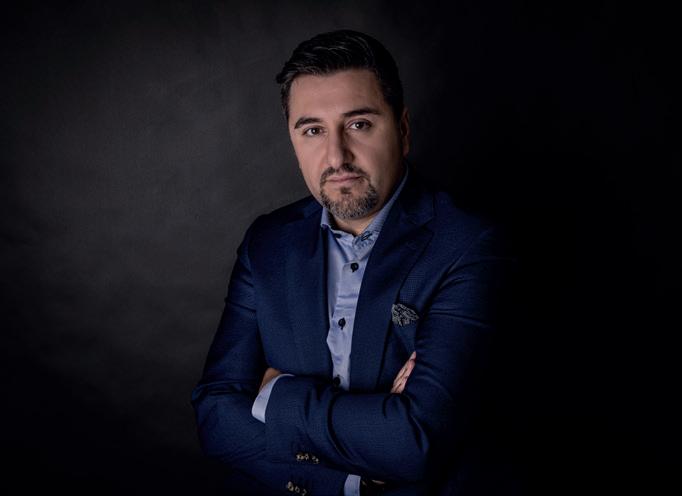
Ein Großteil der mittlerweile über 1.000 Kun den vertrauen den Profis von WERBAGO seit mehr als 20 Jahren. „Wir sehen uns als Partner unserer Kunden auch über das ak tuell anstehende Webseitenprojekt hinaus, so dass die Treue und Zufriedenheit unserer Kunden vermutlich auch daran liegt, dass WERBAGO seine Kunden proaktiv an den Marktentwicklungen teilhaben lässt und die Webseiteninhaber zweimal pro Jahr zu per sönlichen Strategiebesprechungen einlädt. Gemeinsam werten wir die Zugriffsstatistiken aus, besprechen unsere Analysen des Mitbe werbermarkts, bewerten die aktuellen Trends und leiten daraus weitere Strategien ab.”“
www.werbago.com
Shahram N. Hashemi, Senior Account Manager.
October 2022 | Issue 98 | 71 Top German Agency | Business | Discover Germany
PERMISSION TO FEEL AT EASE…
Whether as an executive or private person: increase your productivity and your happiness to a profound level through mindfulness, whilst using neuroscience to deliberately improve leadership. This is the comprehensive package which Nicole Lehrer, and her coaching company Equilera, offers to her clients – and successfully delivers with the assistance of her impressive colleagues on four hooves.
Innovation, in-depth expertise, and a holis tic approach are the foundation of the Swiss coaching company Equilera, for executives, teams, companies and individuals. In con versation with founder Nicole Lehrer, her genuine passion is immediately apparent. Her profession is without a doubt also her calling. With a great deal of empathy, Nicole Lehrer doesn’t (only) see the executive in front of her, but more importantly the human being – behind everything.
“If you want change, you need to have the subconscious onboard,” she explains. “Sub conscious motives and debilitating beliefs that don’t coincide with our cognitive thinking, block long-term changes. My methods aim at accessing the deeper level to ensure effective and sustainable personal growth.”

As a mirror of these hidden patterns, Lehrer incorporates horses as fascinating coaching partners. “Horses offer a valuable way to re
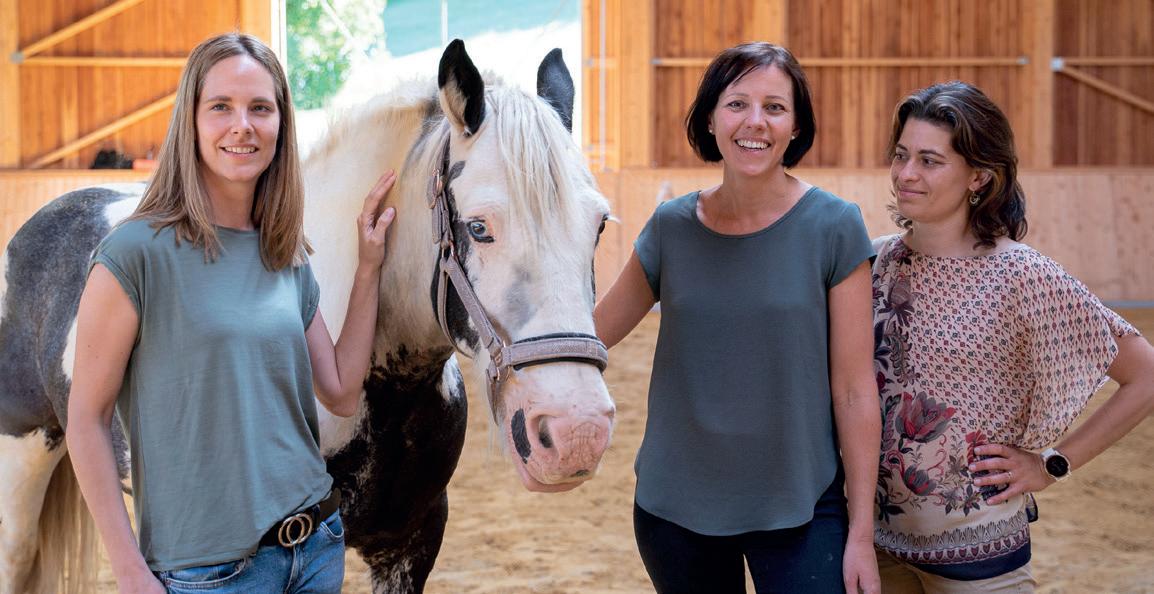
flect intensively and become aware of your own attitude, values and subconscious mo tives – and to transform them into strengths,” the coach says.
The most recent Equilera fields ‘Happiness at work’ and ‘Top performance through mind fulness’ also feature working with horses, as well as including the latest neuroscien tific research. “On the one hand, the aim is for leaders to understand what framework to provide in order to consciously not demoti vate people,” Nicole Lehrer emphasises. “And what everyone – including executives – can do to increase their personal level of happi ness. While horses help to discover where the biggest button is to experience happiness from within, neuroscience-based methods are used to practice a profound outcome.”
Additionally, productivity and humanity are de veloped further, and health, cooperation and mental resilience are being strengthened.
Aside from the in-house programmes for companies, Equilera offers personal develop ment coaching, which can also take place in stunning locations such as Soma Bay, Egypt and South Tyrol. These special retreats also include horses and use the well-established Zurich Resource Model (ZRM ® ). One of the goals is to learn how to feel light and be happy without reason. Giving yourself permission to grow with ease, to experience happiness dai ly without it being a hindrance to performing at a top level, is a true gift in today’s modern world.
www.equilera.com
Nicole Lehrer at work. Photo: Art of Photography - by Angelika Müller
72 | Issue 98 | October 2022
TEXT: MARILENA STRACKE | PHOTOS: STEFAN JURECEK
ES DARF SICH LEICHT ANFÜHLEN…
Ob als Führungskraft oder Privatperson: durch Achtsamkeit die Produktivität steigern und den persönlichen Happiness-Grundpegel erhöhen. Gleichzeitig neurowissenschaftliche Erkenntnisse in der Mitarbeiterführung nutzen: Es ist ein umfassendes Paket, welches Nicole Lehrer mit ihrem Coaching-Unternehmen Equilera für ihre Kunden schnürt - und überaus erfolgreich vermittelt. Dabei bekommt sie Hilfe von ihren eindrucksvollen Kollegen auf vier Hufen.
Innovation, fundiertes Fachwissen und eine holistische Herangehensweise sind die Grundpfeiler des Schweizer Coaching-Un ternehmens Equilera, welches sich an Exe cutives, Teams, Firmen und Einzelpersonen richtet. Im Gespräch mit Gründerin Nicole Lehrer spürt man die ehrliche Leidenschaft –ihr Beruf ist klar auch Berufung. Mit viel Einfühlungsvermögen sieht sie nicht (nur) die Führungskraft vor sich, sondern den Men schen selbst – mit allen Facetten.
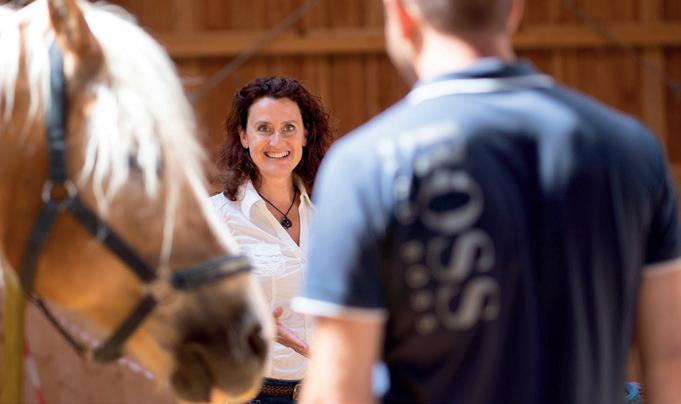
„Möchte man Veränderung erzielen, braucht man das Unbewusste mit im Boot“, erklärt sie. „Hemmende Glaubenssätze und unbe wusste Motive, die nicht mit unserem kog nitiven Denken kongruent sind, blockieren nachhaltige Veränderung. Meine Methoden zielen darauf ab, Zugang zum Unbewussten zu bekommen, um eine effektive und nach haltige Entwicklung zu gewährleisten.“
Spannende Interaktionspartner sind dabei Pferde als Spiegel dieser unbewussten Ver haltensmuster. „Sie liefern wertvolle Refle xionsmöglichkeiten, um die eigene Haltung und unbewusste Motive aufzudecken und gekonnt in Stärken zu transformieren“, fügt die sympathische Trainerin hinzu.
Bei den neueren Coaching-Themen ‚Hap piness at Work‘ und ‚Spitzenleistung dank Achtsamkeit‘ spielen neben Pferden auch die neuesten Erkenntnisse der Neurowis senschaften eine besondere Rolle. „Das Ziel ist einerseits als Arbeitgeber zu wissen, welchen Rahmen man liefern kann, um die Mitarbeiter bewusst nicht zu demotivieren“, erzählt Nicole Lehrer. „Und was jeder einzel ne - inklusive Führungskraft - tun kann, um seinen persönlichen ‚Happiness Grundpe gel‘ zu erhöhen. Die Pferde helfen herauszu finden, wo der größte Hebel sitzt, um noch
mehr Happiness aus dem Inneren zu erleben und mithilfe neurowissenschaftlich fundierter Methoden zu trainieren.“
Gleichzeitig werden Produktivität und Menschlichkeit auf ein neues Level entwi ckelt, sowie Gesundheit, Kooperation und mentale Stärke gefördert.
Neben unternehmensinternen Programmen bietet Equilera Persönlichkeitsentwicklung an, die auch an herrlichen Orten wie beispielswei se Soma Bay, Ägypten und Südtirol stattfin den. Ein Ziel dieser besonderen Retreats, die ebenfalls auf Pferde und das Züricher Res sourcen Modell (ZRM ®) setzen, ist es zu ler nen, dass „es sich leicht anfühlen“ darf. Diese Erlaubnis sich mit Leichtigkeit entfalten zu dürfen, im täglichen Leben glücklich zu sein, ohne dabei im Widerspruch zur karrieretech nischen Hochleistung zu stehen, ist in unserer modernen Welt ein wahres Geschenk.
www.equilera-choaching.ch www.equilera.com
 Nicole Lehrer bei der Arbeit. Retreat in Soma Bay. Photo: Art of Photography - by Angelika Müller
October 2022 | Issue 98 | 73 Switzerland’s Coaching Expert | Business | Discover Germany
Warmer weather means more powerful, full-bodied & riper German wines

Weingut Dr Heger is a winery based in Germany’s south-western most tip – the village of Ihringen am Kaiserstuhl. A mere speck on the map to many, the village has a magnetic appeal for wine lovers, and rightfully so, as Dr Heger are members of the VDP. The VDP is Germany’s association of elite wine producers and a guarantee of superior quality wine. Dr Heger specialise in producing exceptional Spätburgunder (Pinot Noir), Grauburgunder (Pinot Gris), Weissburgunder (Pinot Blanc) and Riesling wines.
BY IRIS ELLMANN
The estate’s name is inextricably bound with the Ihringer Winklerberg, one of Germany’s most renowned vineyards, and the Achkar rer Schlossberg. Extremely steep, extremely warm and extremely stony, these conditions produce distinctive wines that express their unique terroir, recognisable minerality and subtle grace. A family-run estate, Dr Heger is led by Joachim Heger and his wife Silvia. Their daughter, Katarina Heger, has recently provided a vintage report.
2022 VINTAGE REPORT
The extremely hot, dry weather during this year’s growing season reduced the risk of fun gal diseases, such as downy mildew, which was a huge problem in the Baden region in 2021, due to frequent rainfall.
The big challenge this year was to ensure a sufficient water supply for the vines. The Dr Heger team already started picking grapes in mid-August in order to relieve the old vines and to prevent exceeding the perfect maturity stage of the grapes.
As the outside temperatures were still quite hot, they started picking before sunrise, so that the day’s harvest could be completed be fore the midday heat set in. This means the grapes were not too warm for processing.
2021 brought wines of a lighter style that are characterised by freshness and acidity. Despite the small quantity of that vintage, Dr Heger and The WineBarn are extremely pleased with the quality of the wines. Before the 2022 vintage is available next year why not sample some of Dr Heger’s current vin tages?
DR HEGER – 2016 SPÄTBURGUNDER
SONETT DRY
This Spätburgunder (Pinot Noir) has a fine, ripe and unobtrusive bouquet of preserved wild strawberries and red cherry compote. Lean and lively on the palate, it is full bodied and complex, yet easy to drink and with very discreet tannins. It has a slightly smoky aroma of dried berries in the finish.
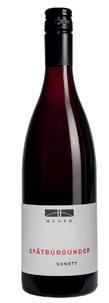
DR HEGER – 2020 IHRINGER
WINKLERBERG WEISSBURGUNDER
PREMIER CRU DRY
Complex and delicate, this Weissburgunder (Pinot Blanc) has aromas of fresh citrus fruits and linden blossom combined with a certain spiciness. On the palate, it has day-bright aro mas, hints of Granny Smith apples and pome lo. It has a dense, fruity body with a refreshing and well-balanced acidity. A long lasting and brisk finish with fine citrus notes.
DR HEGER – 2020 GRAUBURGUNDER SONETT DRY

With wonderfully juicy aromas of fully ripe cantaloupe melon and yellow pears, this Grauburgunder (Pinot Gris) is round and smooth. It has a full-bodied character on the palate with perfectly integrated acidity. Exceptionally well-balanced and harmonious in aroma, with a subtle, unobtrusive spice in the finish.
To find your new favourite German wine, you can contact the awardwinning merchant The WineBarn now.
Visit: www.thewinebarn.co.uk
Call: 0044 (0)1962 761 215
Email: wine@thewinebarn.co.uk
Iris Ellmann is the managing director of The WineBarn, a multi-award-winning wine merchant that has been importing premium German wines to the UK for over 20 years. The WineBarn team lives, breathes and loves wine.
Iris Ellmann presents The WineBarn’s IWC Specialist Merchant of the Year 2022 award.
Photo: Iris Ellmann
October 2022 | Issue 98 | 75
Wine Column | Discover Germany
Culture Calendar
Beautiful autumn colours, a cool breeze and a fantastic line-up of events await us this month. Who is ready for film festivals, light shows, theatre and great music across the board? Bring it on, October.
 TEXT: MARILENA STRACKE
Discover Germany | Culture Calendar 76 | Issue 98 | October 2022
 FESTIVAL OF LIGHTS 2021, Berlin Dom.
Photo: Frank Hermann
FESTIVAL OF LIGHTS 2021, Berlin Dom.
Photo: Frank Hermann
Culture Calendar | Discover Germany
October 2022 | Issue 98 | 77
ZURICH FILM FESTIVAL, ZURICH (22 SEPTEMBER – 2 OCTOBER)
This festival is Switzerland’s place to be when it comes to the world of film. Celebrities, di rectors and actors join from all over the world to celebrate international film in Zurich. The week is packed with great premieres and a range of fabulous talks. This year’s guest country is Spain.
www.zff.com
ORF LONG NIGHT OF MUSEUMS 2022, ACROSS AUSTRIA (1 OCTOBER)
Austria’s Long Night of the Museums is or ganised by ORF and promises to be great fun. The Austria-wide event kicks off at 6pm and lasts until 1am. With so many museums
and galleries opening their doors to the night owls among us, it is set to be a truly special event. Workshops and concerts accompany the Long Night of the Museums and turn Aus tria into a glamorous background for a magi cal night of culture.
www.langenacht.orf.at
FESTIVAL OF LIGHTS, BERLIN (7 – 16 OCTOBER)

Once again, the Festival of Lights will illu minate Germany’s capital in October. With a wealth of colourful lights, these beautiful illuminations put some lesser known (yet significant) buildings across the city into the limelight. The stunning installations and pro jections can be found all over Berlin.
www.festival-of-lights.de
HEINRICH SCHÜTZ MUSIKFEST, DRESDEN (7 – 16 OCTOBER)
This year the Heinrich Schütz music festi val follows the theme ‘Because I am alive’. Guests are invited to enjoy a marvellous range of classical concerts and to reflect on what it means to be alive. This year’s edition marks 350 years since the famous compos er’s passing and the festival team wants to make this year extra special.
www.schuetz-musikfest.de
FRISCÈNES THEATRE FESTIVAL, FRIBOURG (8 – 15 OCTOBER)
The international theatre festival FriScènes is widely seen as an open creative space that has artistic dialogue at its heart. It merges
FESTIVAL OF LIGHTS 2021, Potzsdamer Platz.
Photo: Frank Hermann
78 | Issue 98 | October 2022 Discover Germany | Culture Calendar
Alles begann 2013 als simple idee
Jeden Tag landen unzählige Brote, Gipfeli & Sandwiches am Abend im Müll. Dass diese immer noch in absolut einwandfreiem Zustand und viel zu schade für die Tonne sind, erkennen mittlerweile viele.
Inspiriert wurden die vier Gründer von Unternehmungen in Deutschland und Frankreich. Die Äss-Bar trifft den Nerv der Zeit haargenau.
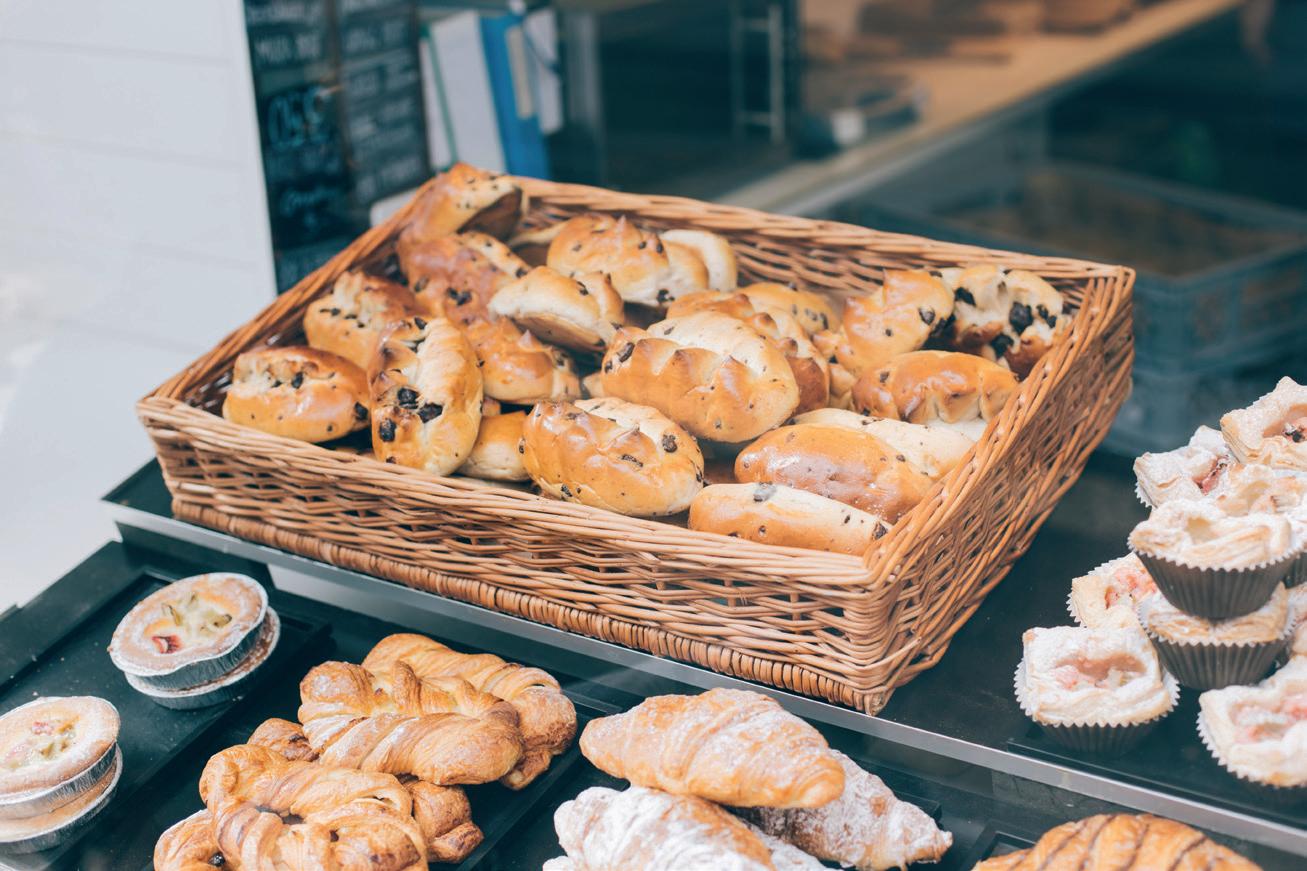
Aus diesem Grund hat es sich die Äss-Bar zur Aufgabe gemacht, Brot und Backwaren vom Vortag noch an den Mann oder die Frau zu bringen.

In verschiedenen Bäckereien aus dem jeweiligen Umkreis werden die Backwaren jeden Morgen abgeholt.
Dabei wurden bereits einige hundert Tonnen «gerettet» – und nicht nur die Umwelt freut sich, sondern auch das Portemonnaie, denn die Backwaren werden zu stark vergünstigten Preisen abgegeben.
Heute zählt die Äss-Bar rund 90 Mitarbeiter*innen schweizweit inklusive der Franchisepartner in der Romandie.
Basel - Bern - Biel - Lausanne - Luzern - Winterthur - Zürich | info@aess-bar.ch | www.aess-bar.ch
Discover Germany
professional and amateur theatre and pre sents a vibrant platform for future collabo rations and networking among the partici pants. A joy to watch.
www.friscenes.ch
JAZZ & THE CITY, SALZBURG (13 – 16 OCTOBER)
Jazz & The City fills Salzburg with rich sounds across 50 locations. Music fans can look for ward to around 100 concerts and the pro gramme includes anything from world music to jazz and electronic. Both established in ternational artists and local newcomers will be performing.
www.salzburgjazz.com
VIENNALE FILM FESTIVAL, VIENNA (20 OCTOBER – 1 NOVEMBER)

The prestigious international film festival in Vi enna is, without a doubt, one of the most ex citing events in Austria’s calendar. Celebrities, filmmakers and guests from all over the world flock to Vienna to see premieres, attend work shops and talks. Certainly, a glamorous affair. www.viennale.at
RENDEZ-VOUS BUNDESPLATZ, BERN (22 OCTOBER – 26 NOVEMBER)

Rendez-vous Bundesplatz is an absolutely magical event. Every evening at 7pm and 8.30pm (right outside the parliament build
ing), a beautiful show is projected onto the old building. This year’s show is called FIRST STEP and examines the moon landing from all angles.
www.rendezvousbundesplatz.ch
ORF Long Night of the Museums. Photo: Hans Leitner
Photo: Pixabay
80 | Issue 98 | October 2022
| Culture Calendar
NIEMAND
BEWIRBT SICH AUF IHRE
VERFLUCHTEN STELLENANZEIGEN.
Das wissen wir. Den meisten Unternehmen geht es ganz genauso. Deshalb haben wir nach neuen Möglichkeiten gesucht, Problemstellen zu besetzen und den gesamten Bewerbermarkt zu erreichen. Und wir haben sie gefunden! Dank der Kraft von Social Media Recruiting hat TalentBait Deutschlands beste Technologie entwickelt, um passive Bewerber zu gewinnen.

.de
Saving energy… by showering?
“I have once again considerably reduced my shower time”. The things people do now to save energy. This is the German vice chancellor and economy minister Robert Habeck, who seems to be quite proud of his ability to have a quick shower. In an interview with German magazine Der Spiegel a few months’ back, he said that he “had to laugh” when his Dutch colleague told him about a campaign to encourage people to reduce average shower time from ten to five minutes, claiming that he has never in his life showered for five minutes. And, see above, doing his bit to cope with the energy crisis, the fast-showering politician has now become even quicker.
In doing that, he is following his own ministry’s recommendations that published tips on how to save energy, including these short showers. In the Spiegel interview, he also suggested taking it easy on the heating in winter, talking about his own habit of “heating sparingly in winter”. In fact, his busy job seems to come with energy saving advantages as he comes back home late, gets up at 6am, leaves at 7am – “there is no need to heat in winter then”. Hmm, should we take him by his word?
Apart from Mr Habeck inviting us into his shower (kind of), another politician is interfering with German hygiene habits –and Winfried Kretschmann, the ministerpresident of Baden-Württemberg, is actually advising people to step out of the shower altogether. “You don’t have to shower all the time”, he said in an interview, as “the flannel is also a useful invention”. And, of course, he also had some heating tips, saying that in his home usually only one room is heated.
Both Habeck and Kretschmann are members of the Green Party, so energyconscious behaviour is expected, irrespective of the current situation – and also expectedly, their remarks did not go down well with everyone. One politician, a member of the SPD (which, together with the FDB and Green Party, forms Germany’s three-party coalition government) said that he finds it “weird” when people with fivefigure monthly incomes tell others how to save. In any case, I leave these ideas with you. Like them or not, they are probably more effective than Boris Johnson’s “buy a new kettle” advice. I might give the shorter shower a try, just to see if I could undercut the speedy German economy minister.
 Barbara Geier is a London-based freelance writer, translator and commu nications consultant. She is also the face behind www.germanyiswunderbar.com, a German travel and tourism guide and blog that was set up together with UK travel writer Andrew Eames in 2010.
82 | Issue 98 | October 2022
Discover Germany | Barbara Geier Column

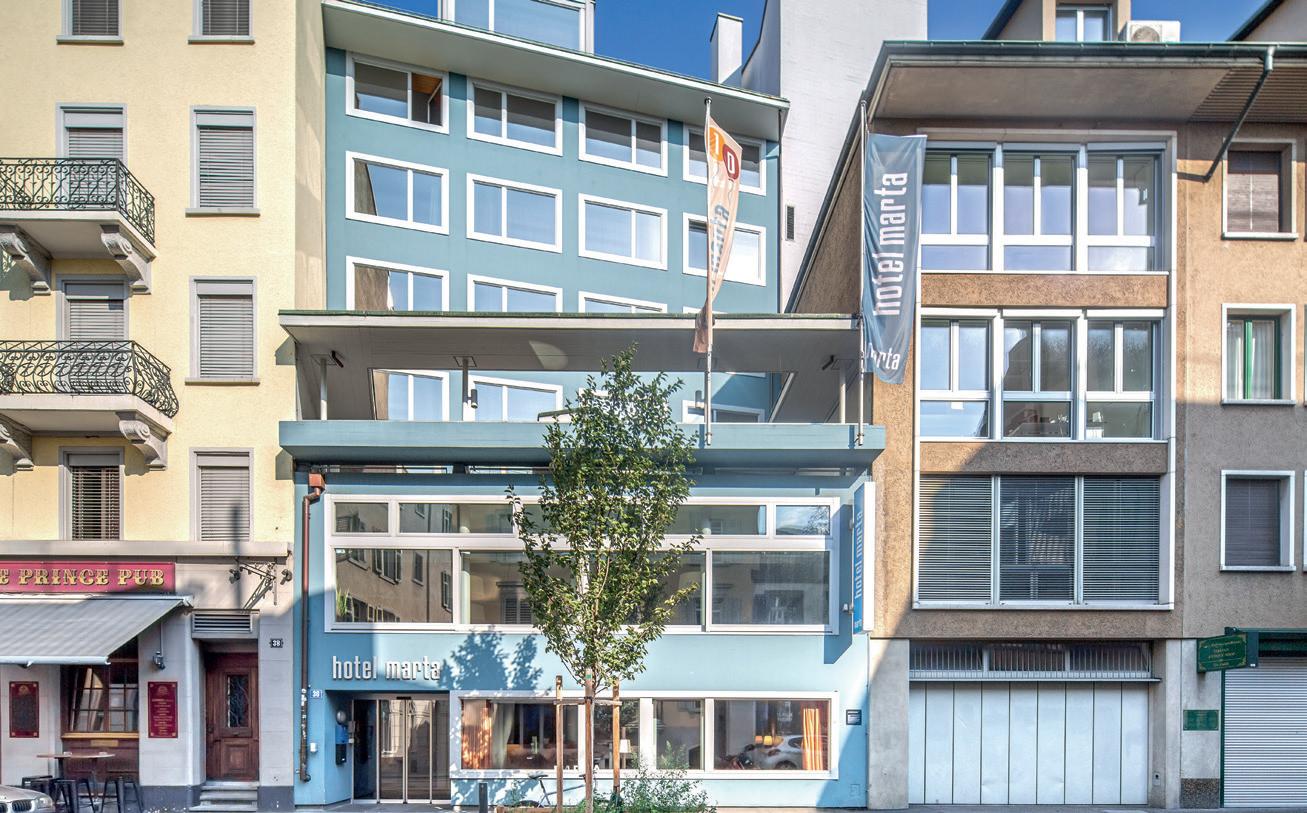
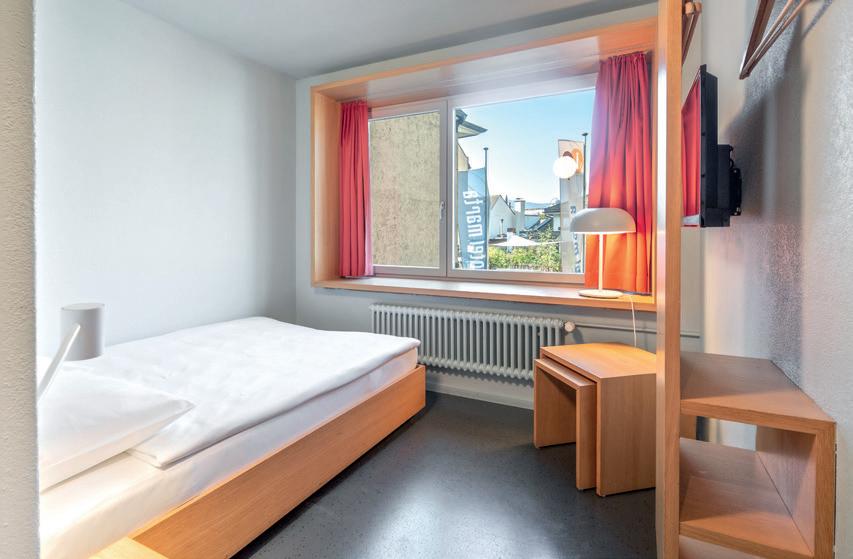
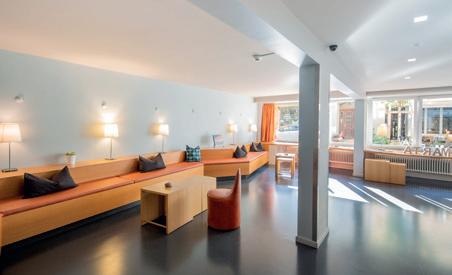
MARTA’S WINTER SPECIAL! 3 NÄCHTE ZÜRICH GENIESSEN - NUR 2 BEZAHLEN! ENJOY 3 NIGHTS IN ZÜRICH - PAY ONLY 2! Die Aktion ist von November 22 Februar 23 buchbar The promotion is bookable from November 22 - February 23 www.hotelmarta.ch