Dear Reader,
Do you have your cup of coffee ready? In this issue of Discover Benelux, we have so much fantastic content for you, including a special feature about the coffee culture in the Netherlands – the Dutch are amongst the top coffee drinkers in the world – and tips on great coffee places in Amsterdam. I can’t wait to explore more on my next visit.
Of course, we have more tasty treats up our sleeve. For instance, nine knowledgeable beer experts share their favourite Belgian-themed beer and food combo. How does gueuze with Chinese dumplings sound? Or Argentine choripán – a grilled chorizo in crusty bread with chimichurri – paired with Belgian pale ale? Don’t miss this!
In our guide to Bruges, the city of history and romance, we also have some beery escapades with insider tips from Paul Davies, founder of AleHunters. He’s an expert on all things Belgian beer, so make sure to read his trusted recommendations. By the way, Bruges is a fabulous summer destination with plenty going on in the cultural scene, such as the opening of the brand-new art gallery BRUSK. In case you haven’t firmed up your summer plans yet, Bruges is a great option.
For more ideas on what to do this summer, look no further than our theme on the vibrant art scene in Benelux. And also check out Art Brussels, our colourful cover feature in this issue. What an inspirational fair, with international galleries, local artists, and contemporary art experiences.
There is plenty more to read, for instance our dedicated music columnist Karl Batterbee covers the 70th anniversary of the Eurovision Song Contest with a deep-dive into contributions and stories from Belgium, the Netherlands and Luxembourg. And our film & TV columnist Andes Lorenzen takes a look at Benelux nominations for the Cannes Film Festival.
Enjoy our summer issue of Discover Benelux (and your cup of coffee)!

Malin Norman Editor
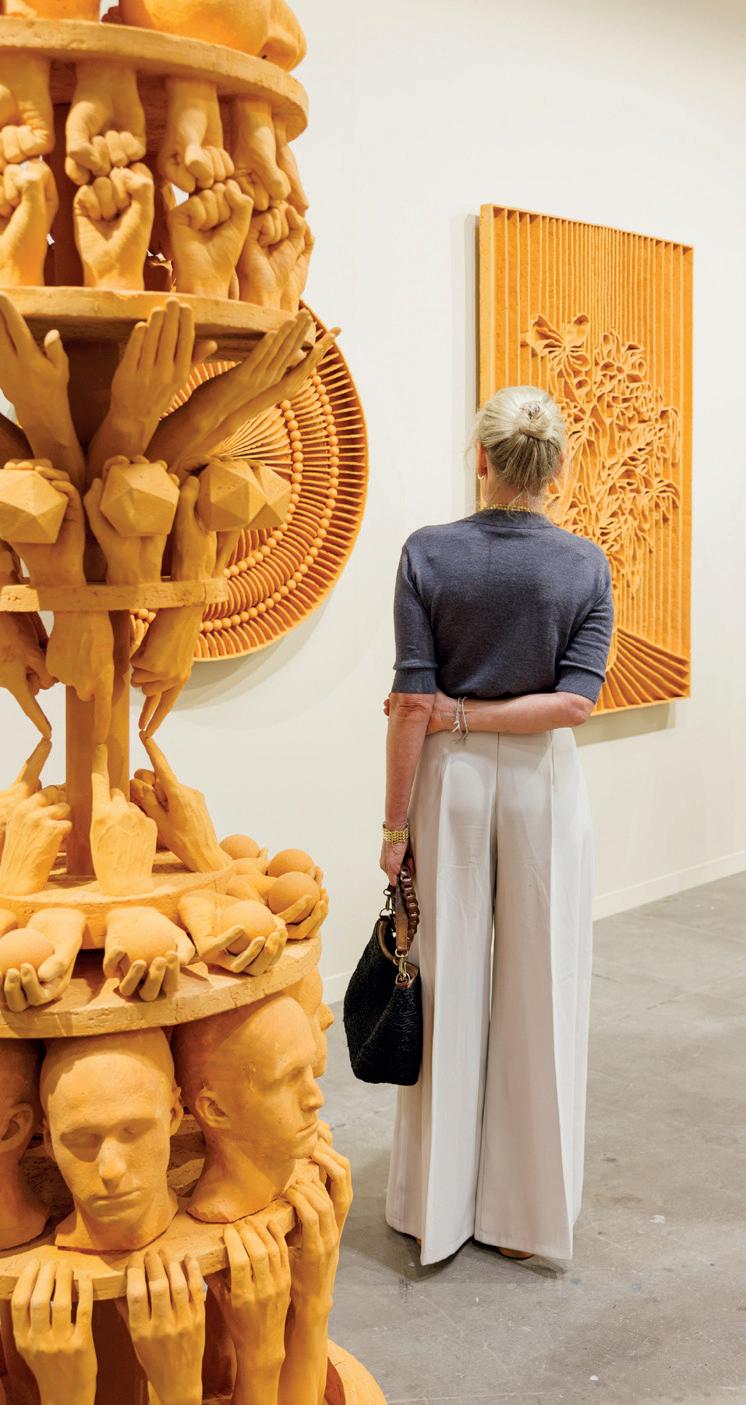
8 International fair rooted in a dynamic local scene
Art Brussels is a one of a kind fair for contemporary art that brings together international galleries, artists, curators and collectors. We take a look at the latest edition, which took place 23-26 April at Brussels Expo.
16 Vibrant art scene in Benelux
In this theme, we check out one of Europe’s leading museums for Modern Realism, discover The Hague through art in public spaces, explore a historic shipyard turned cultural space in Amsterdam, and get inspired in the artists’ village of Bergen.
28 Impactful stories in brand-new art gallery
BRUSK opens its doors in Bruges this month, with not one but two world-class exhibitions; a cultural-historical perspective (Bigger Picture) and a pioneer in AI-driven art (Refik Anadol. Latent City)
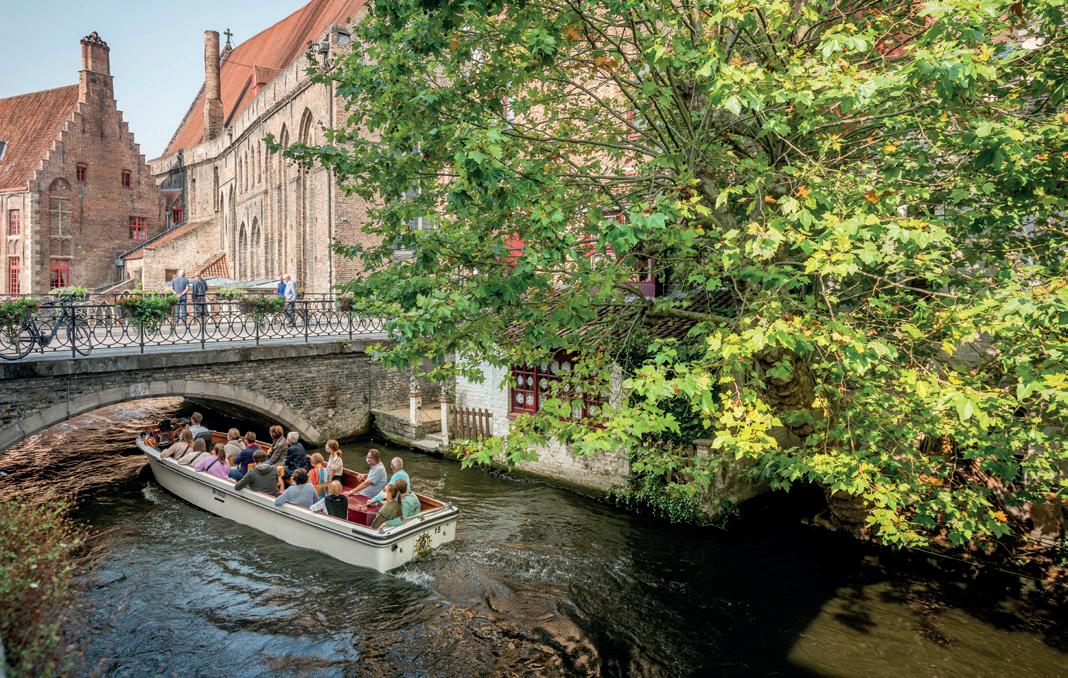
32 City of history, romance and beer
Bruges is the unofficial capital of romance with preserved centuries-old buildings, cobbled streets, winding canals and arched bridges that breathe history. But it is also a great beer destination, with a popular beer festival, an informative beer museum, and many charming beer bars.
38 Unbeatable beer and food pairings
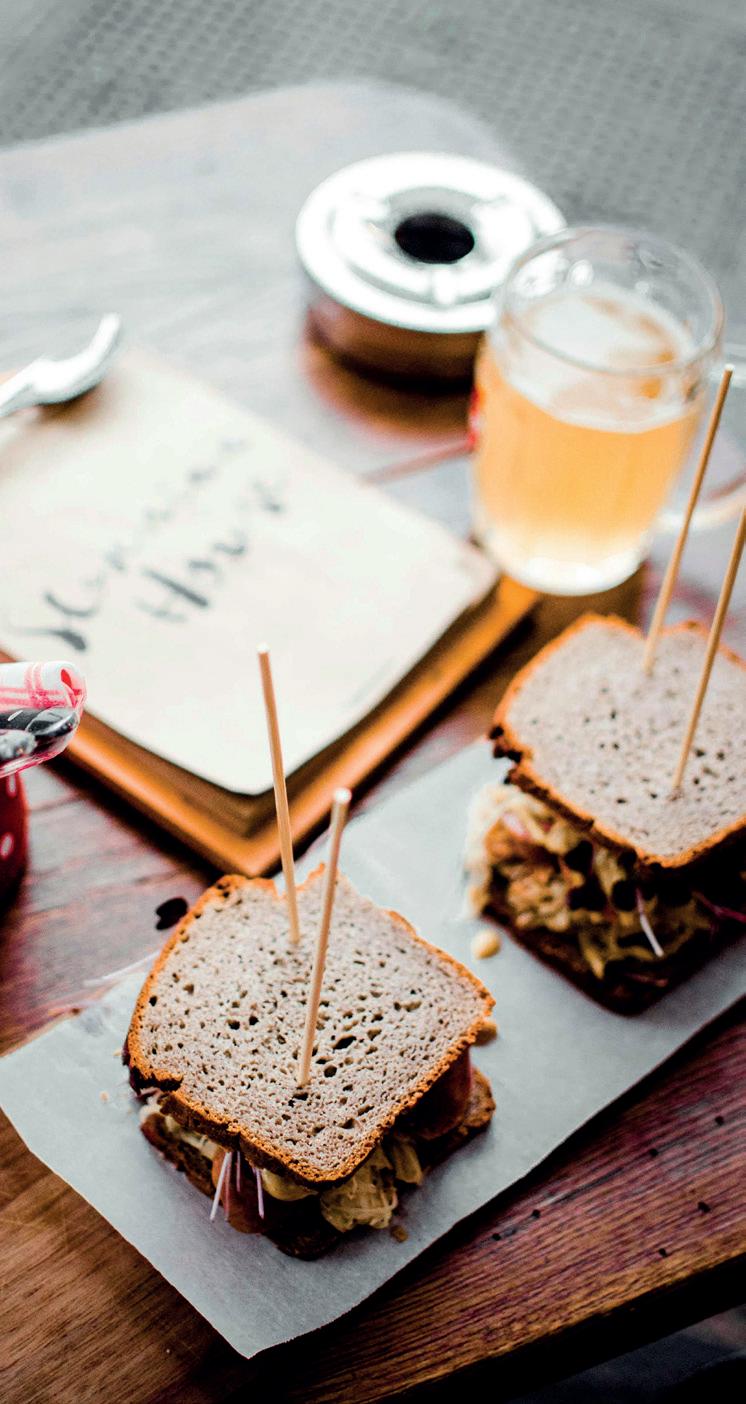
Nine beer writers, judges and educators from around the world share their favourite Belgian beer and food combo. Irresistible pairings to entice your tastebuds.
54 A taste for coffee
The Netherlands is a paradise for coffee lovers and the Dutch rank among the top coffee drinkers in the world. In this special feature, you can read about the Dutch coffee market, Amsterdam Coffee Festival, and some great spots to have a nice cup of coffee.
66
Good evening, Europe! This is Belgium, the Netherlands and Luxembourg calling.
The Eurovision Song Contest celebrates its 70th anniversary later this month and our music columnist Karl Batterbee does a deep-dive into contributions and stories from the Benelux region.
69 The best events, film and music in Benelux
There are plenty of reasons to head out into the streets in Belgium, the Netherlands and Luxembourg this summer. We highlight some of the best cultural happenings to add to your diary.
Add summer-friendly vibes to your wardrobe with two Amsterdam-inspired brands; Scotch & Soda and POM Amsterdam. With these effortless yet elegant styles, you will be ready for summer in a flash.
Editor’s Picks | Press photos
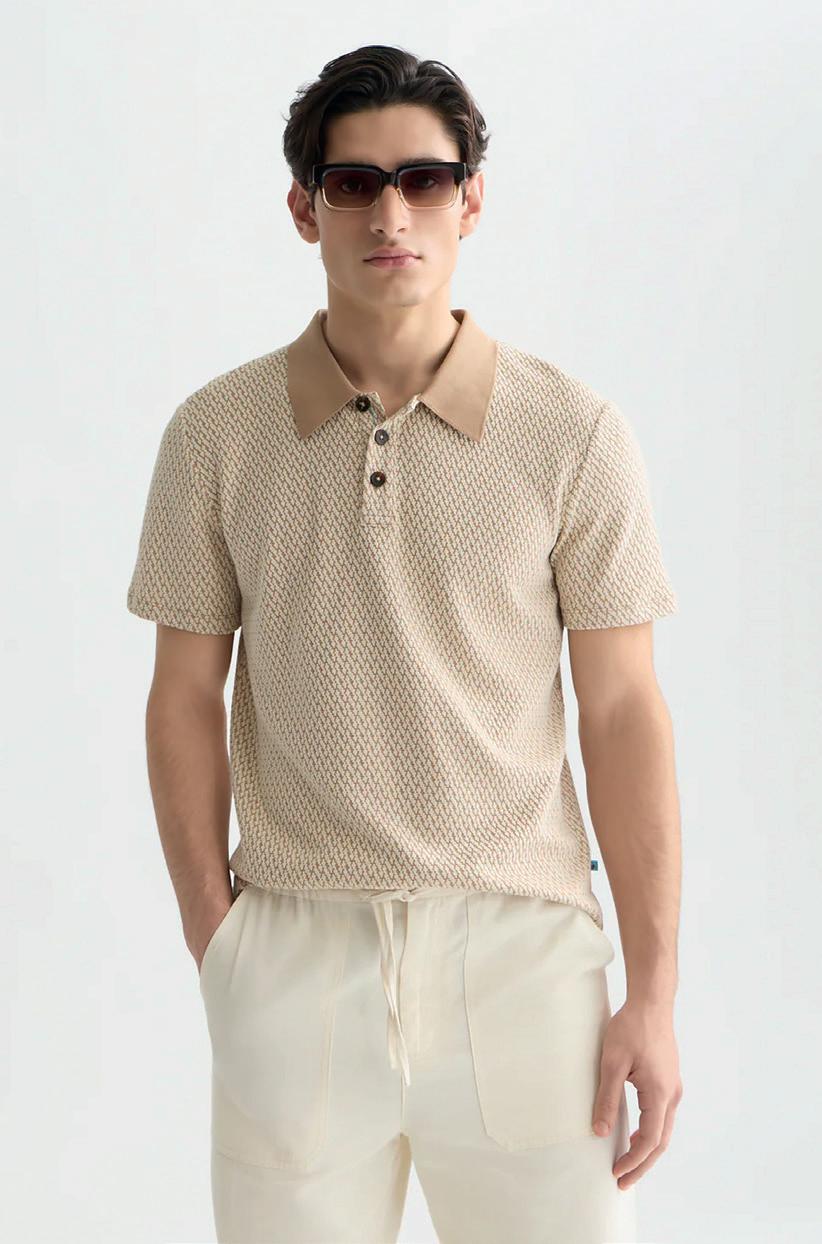
Celebrating the free spirit of Amsterdam, the designs by Scotch & Soda are stylish and endlessly optimistic. Like this jacquard polo in a relaxed fit, which has a modern and refined expression with clean detailing and subtle texture. Scotch & Soda, Jacquard relaxed-fit polo in amphora, USD 98 scotchandsoda.com
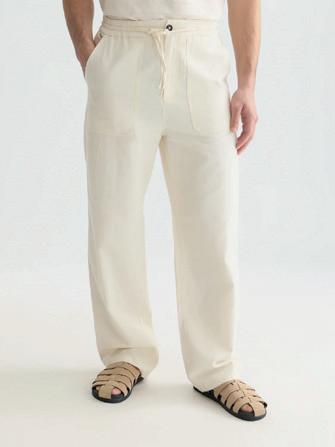
For everyday sophistication, match the polo with the Otis linen-blend jogger. The relaxed straight cut gives a simple, natural look that works as well in the city as on the beach and at the garden party.
Scotch & Soda, Otis linen-blend relaxed jogger in eggnog, USD 148
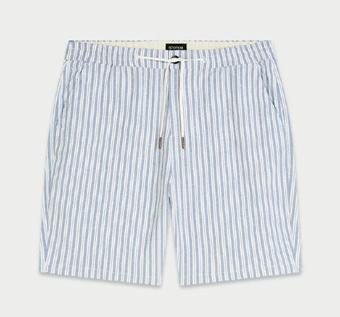
No summer is complete without Bermuda shorts. These striped shorts are made from breathable cotton-linen and have a drawstring waist – the perfect holiday go-to.
Scotch & Soda, Fave cotton-linen yarn-dyed Bermuda shorts in Infinity Stripe, USD 128
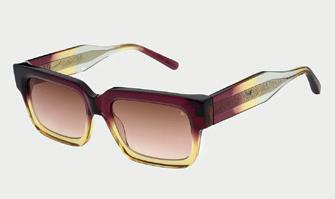
Blend classic design with modern sensibility, with these anniversary edition sunglasses. Scotch & Soda, The 40th Anniversary Sunglasses in Burgundy Grad, USD 162
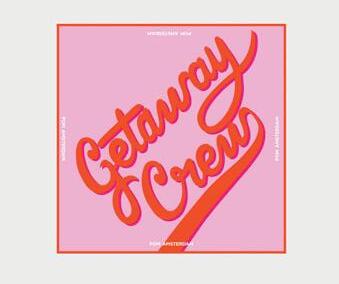
Wear this silk scarf casually around your neck, in your hair, or tied to your bag. Light, soft and stylish, the playful design is quite irresistible.
POM Amsterdam, Getaway Crew shawl, EUR 49
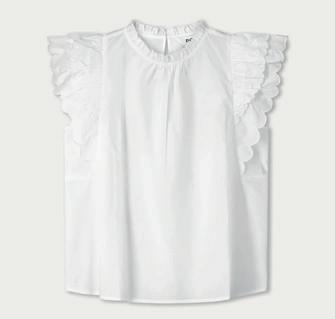
The sleeveless design with double ruffles and scalloped edges give this top a sophisticated touch. In a flash, you get sunny feel-good vibes. Available in colours crispy white and lavender.
POM Amsterdam, Top Ruffles, EUR 109
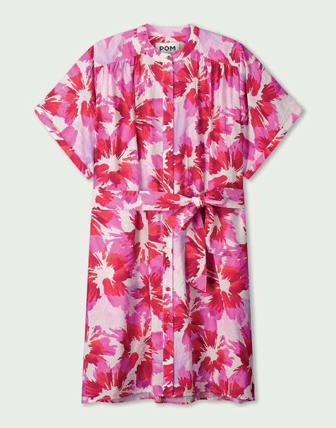
For a vibrant and cheerful style, go for this dress with red and pink floral print. Thanks to the lightweight fabric, it drapes beautifully, and the belt adds shape. Easy and very chic.
POM Amsterdam, Dress Bubble Bloom in lavender, EUR 159
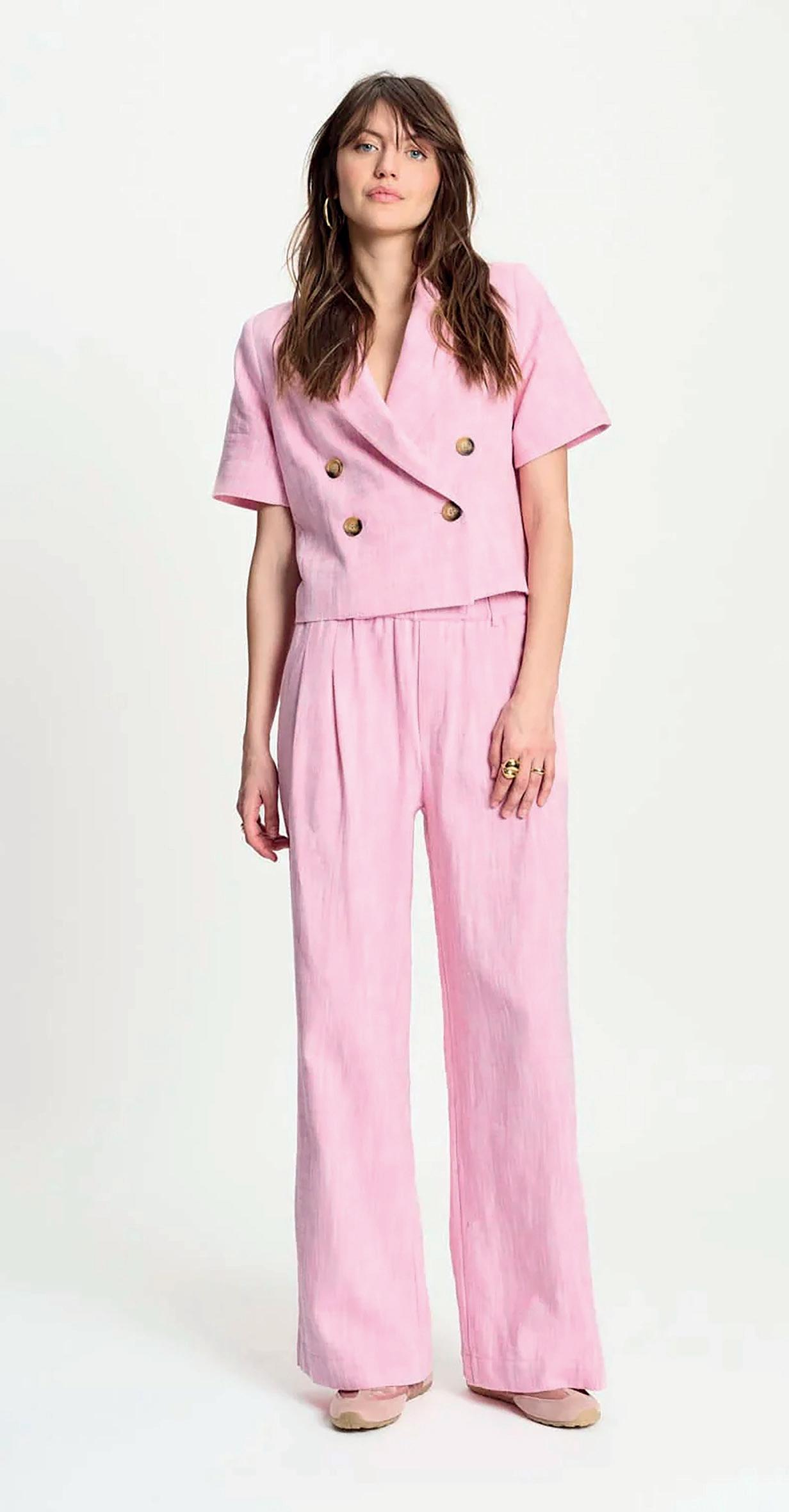
This light pink set with a cropped blazer and trousers gives an instant summer feel. Both pieces are crafted in a sturdy twill fabric with a straight, comfortable fit. Combine or wear the blazer on its own with jeans, and the trousers will look fabulous with a white sleeveless top. Available in shell pink and palm green.
POM Amsterdam, Blazer EUR 159, Pants EUR 139 www.pom-amsterdam.com

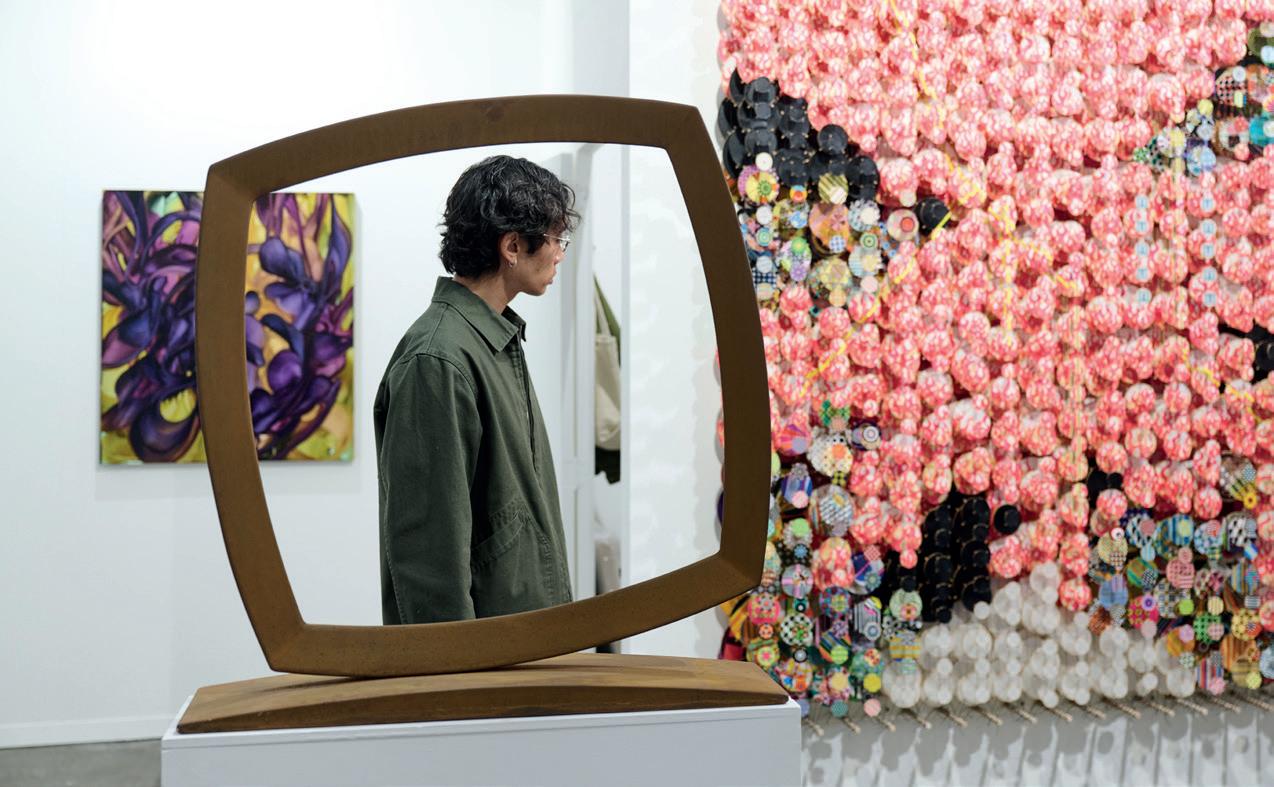
With its rich history, diverse communities and thriving art scene, Brussels is undoubtedly a top destination to visit. In April, Art Brussels once again offered a one of a kind art fair where visitors could meet international galleries, discover local artists, and experience contemporary art up close.
By Malin Norman
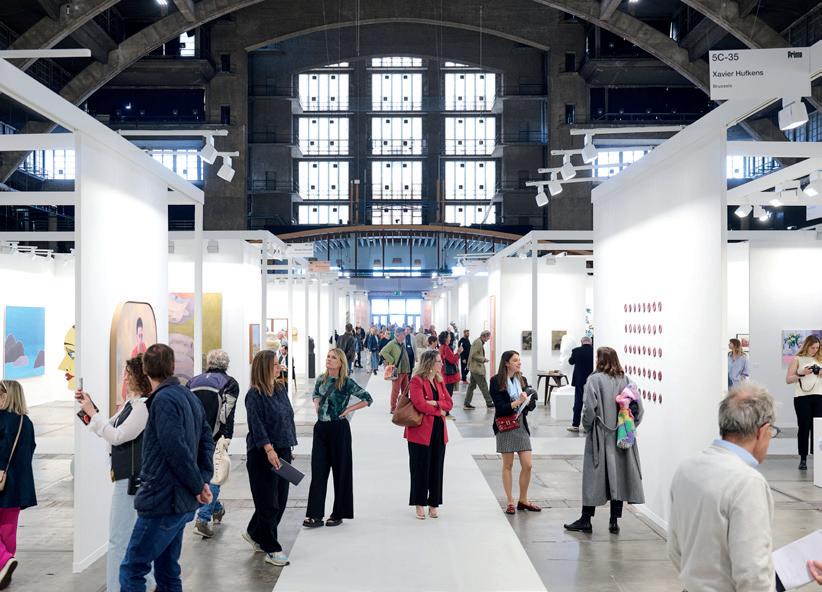
Considered one of Europe’s leading hubs for contemporary art, Brussels is home to numerous galleries, artist-run spaces, and internationally recognised museums, contributing to a dynamic and evolving cultural landscape. Recently, CNN Travel even named Brussels one of its top 20 destinations to visit in 2026, praising the artistic hub.
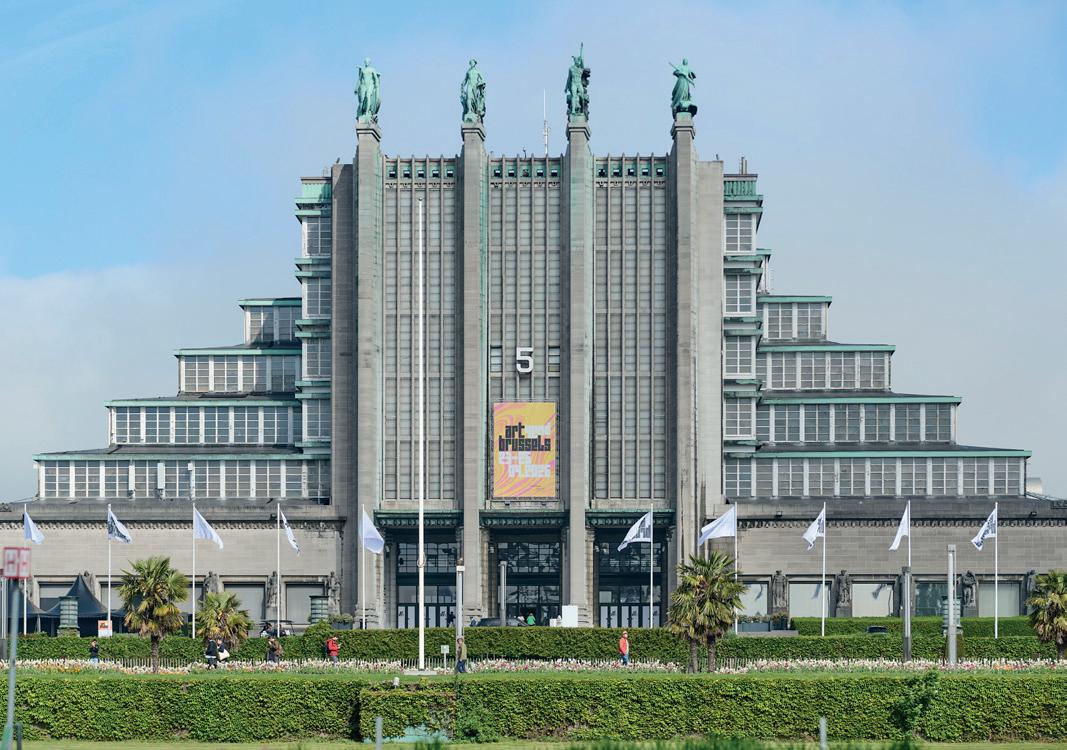
Bringing together international galleries, artists, curators and collectors for decades, Art Brussels has reinforced the
city’s position within the contemporary art scene. Founded in 1968, it is the second oldest contemporary art fair in Europe, after Art Cologne. The 42nd edition took place 23-26 April at Brussels Expo; a focused, curatorially driven fair with new key players – and a total of 139 galleries.
“Art Brussels 2026 was a more refined and focused version of its previous editions, while maintaining its international profile,” says Nele Verhaeren, managing director of Art Brussels and Art Antwerp. “This year, 29 per cent of our galleries were Belgian, within a line-up spanning 26 countries – a clear sign of the strength of the local scene and our place in an internationalised market.”
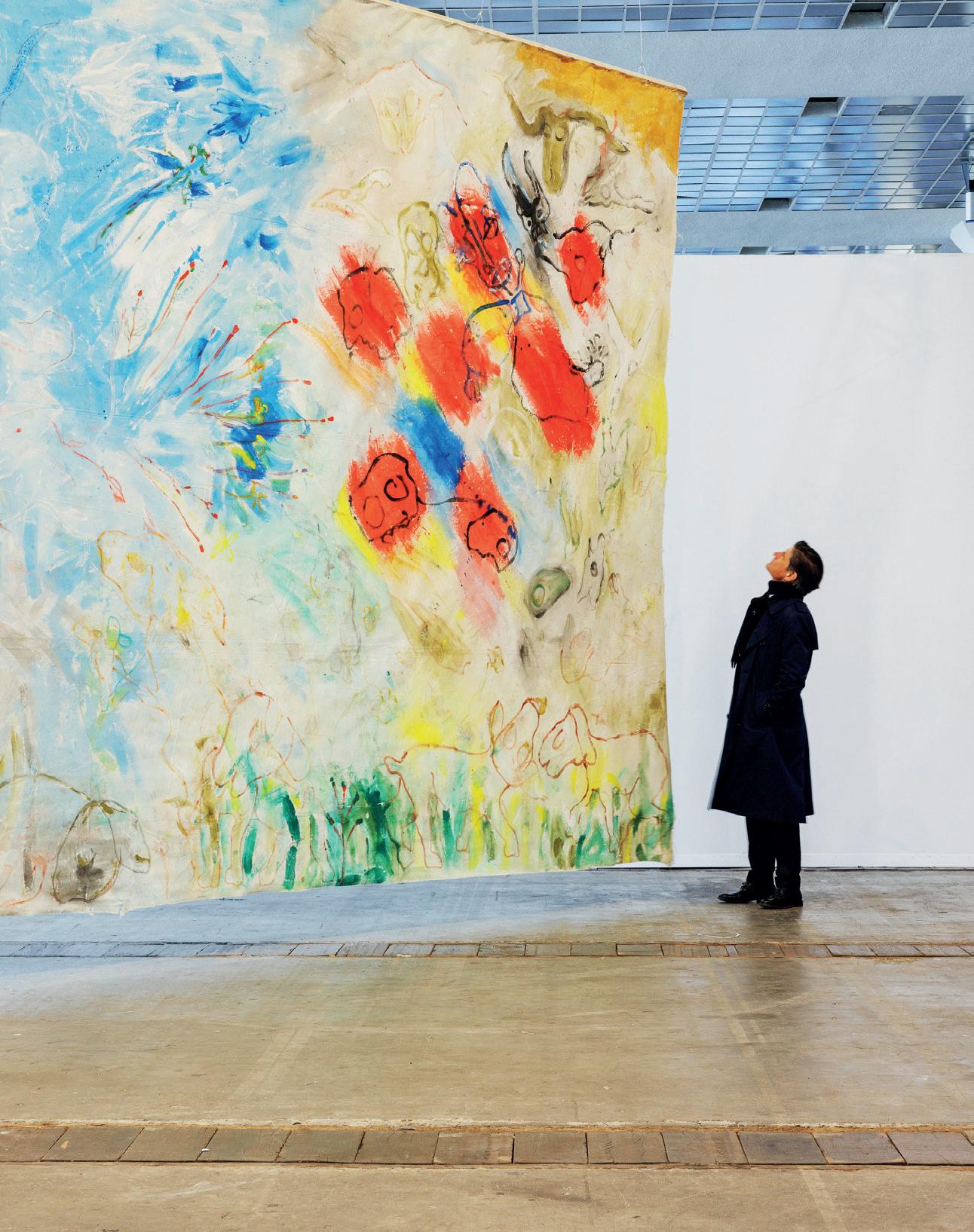
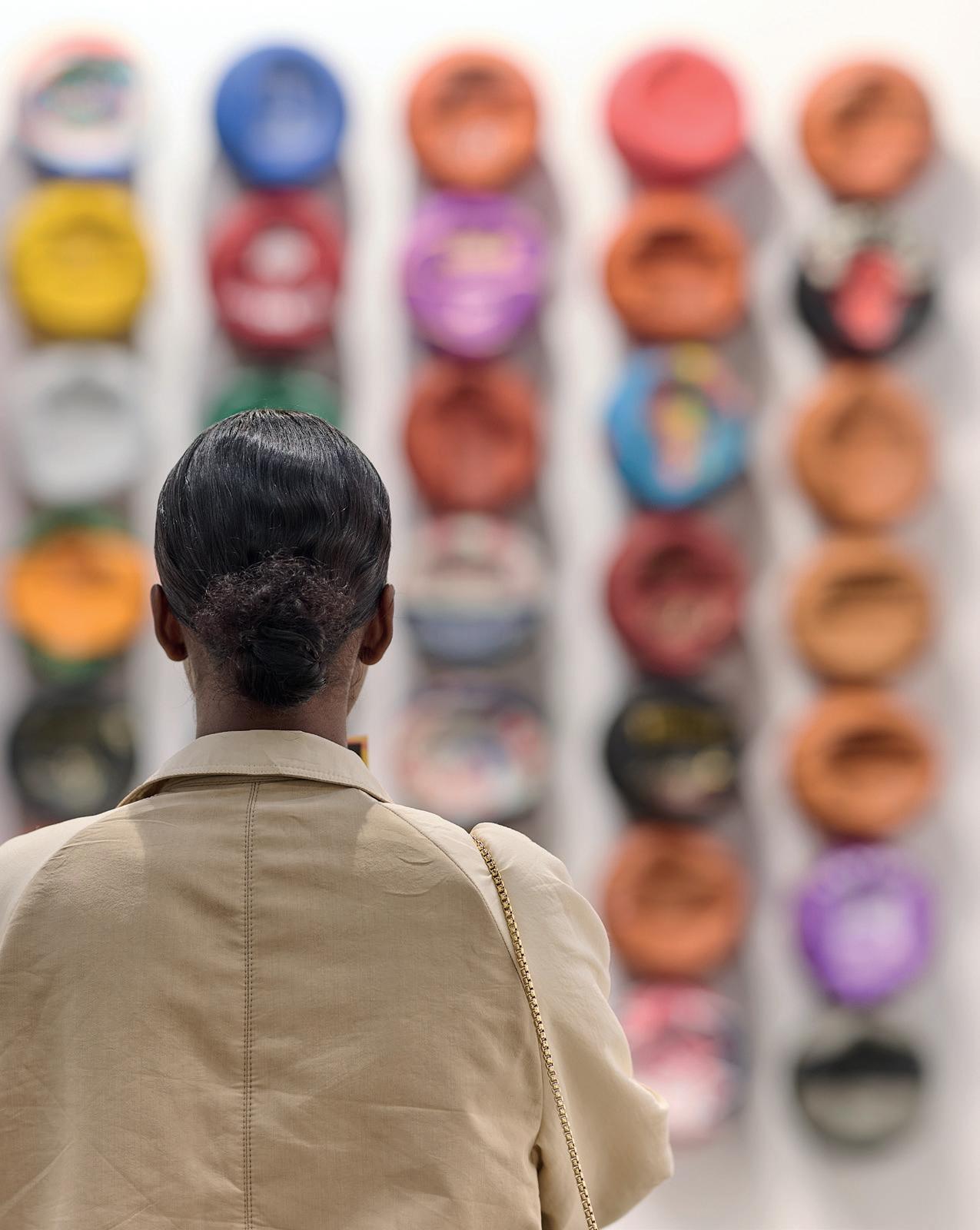
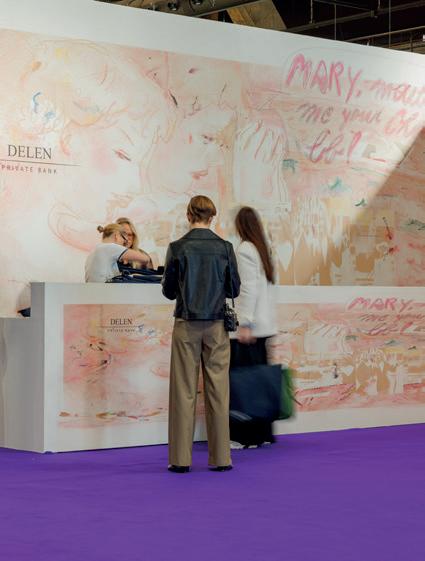
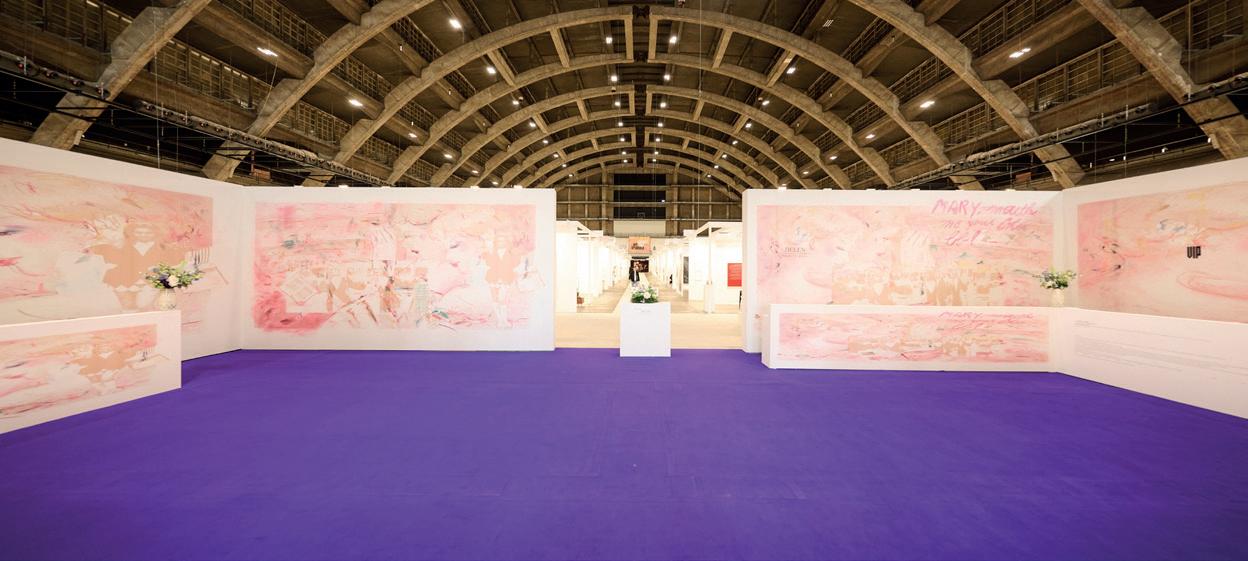
Every year, Art Brussels attracts around 25,000 visitors. This time, visitors were met by a compelling, site-specific installation already at the entrance to the fair. Cher mouths Mary, Mary mouths Cher, created by Belgian artist Natasja Mabesoone, represented by Gallery Sofie Van de Velde in Antwerp, set the tone for the renewed and ambitiously curated edition.
To give visitors a clear overview of the wide range of works presented by the

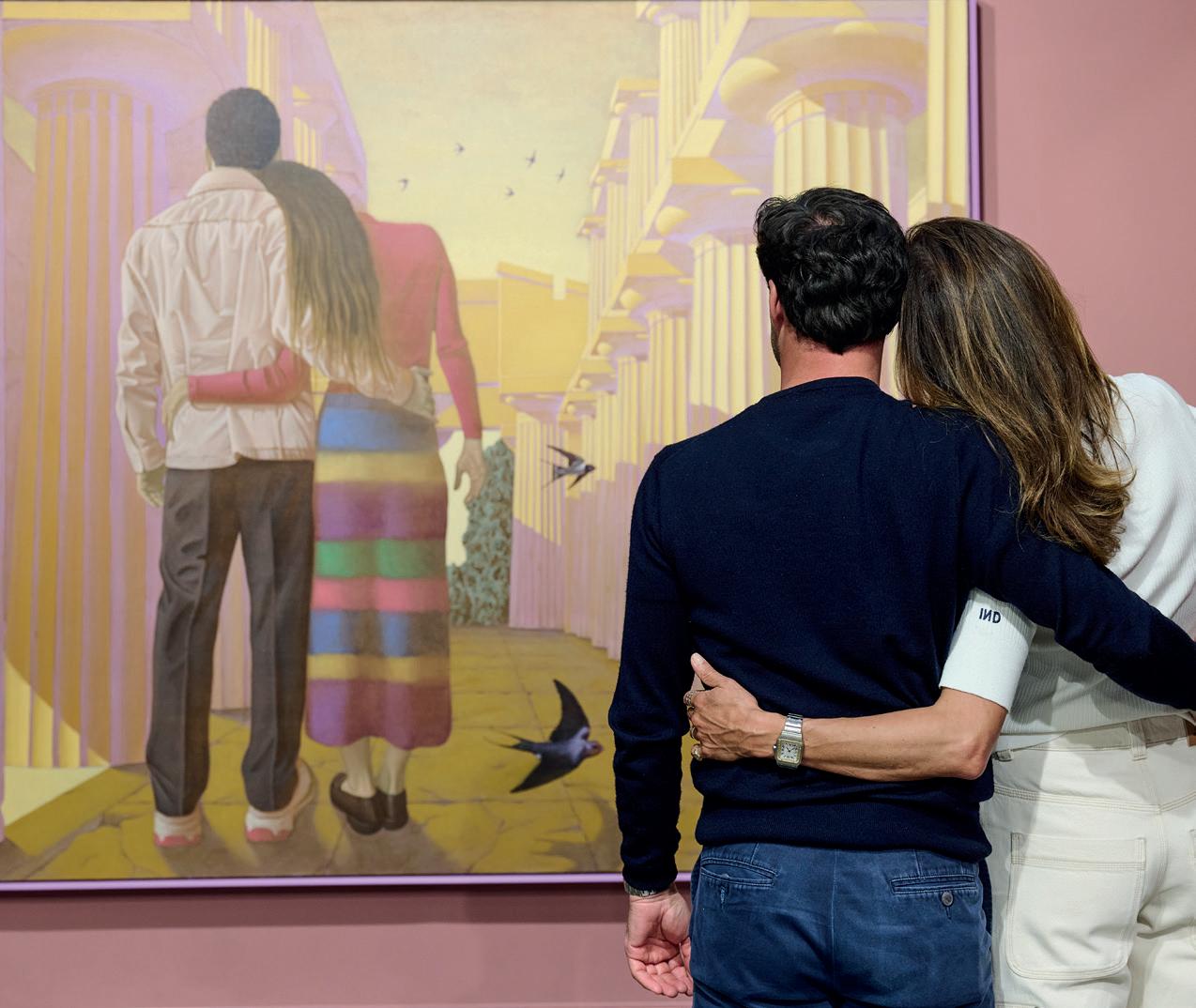
139 contemporary art galleries at Art Brussels, five sections had been defined – guiding visitors and continuing to articulate the fair’s identity.
Prime brought together 83 galleries presenting modern and contemporary masters alongside established international artists, including notable returning galleries from Vienna such as Krinzinger, Galerie Elisabeth & Klaus Thoman, and Galerie nächst St. Stephan Rosemarie Schwarzwälder. And the section called ’68 Forward highlighted 11 galleries engaging with artistic developments since 1968, such as the Stockholm-based gallery LARSEN / WARNER, presenting the work of Iria Leino.
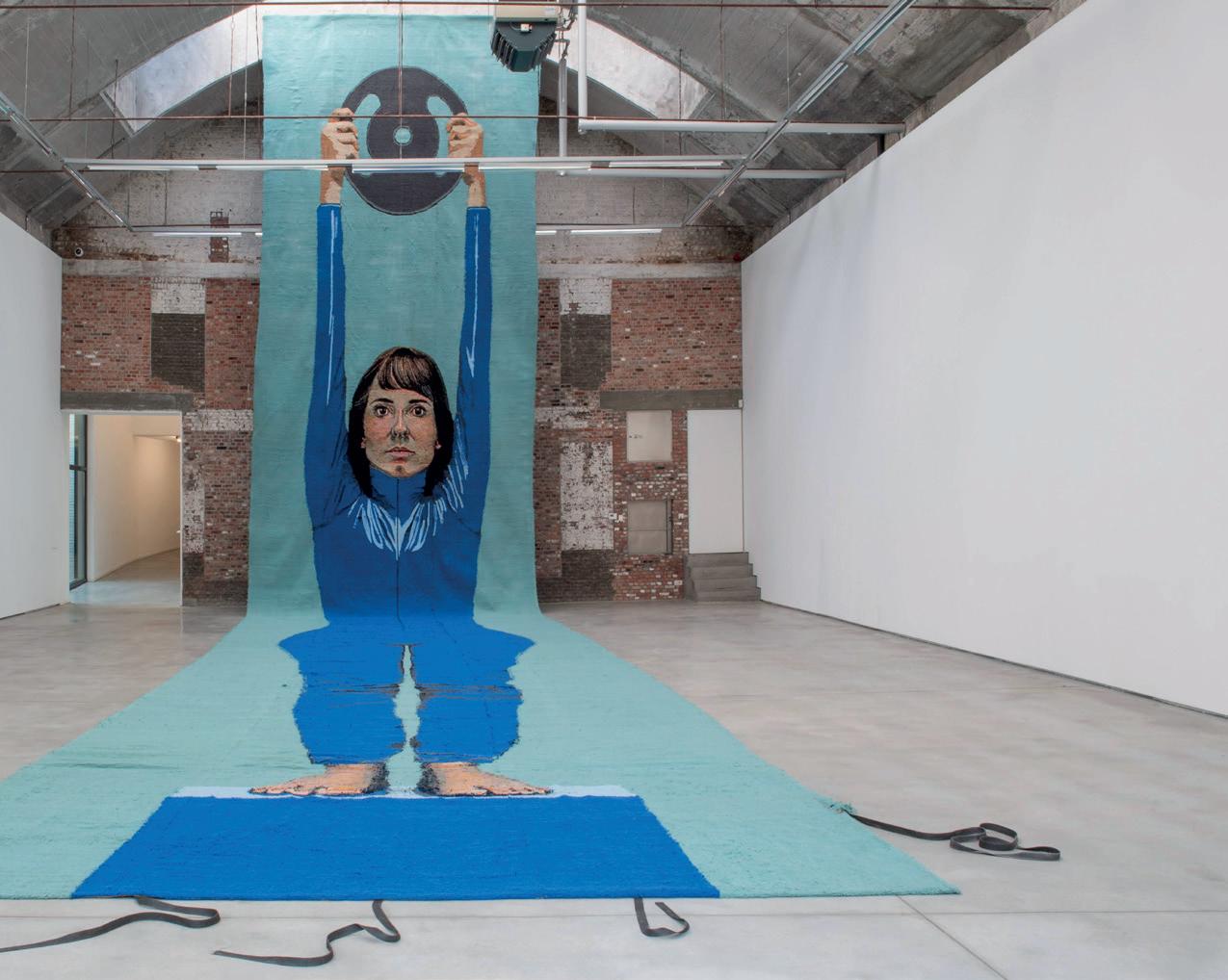
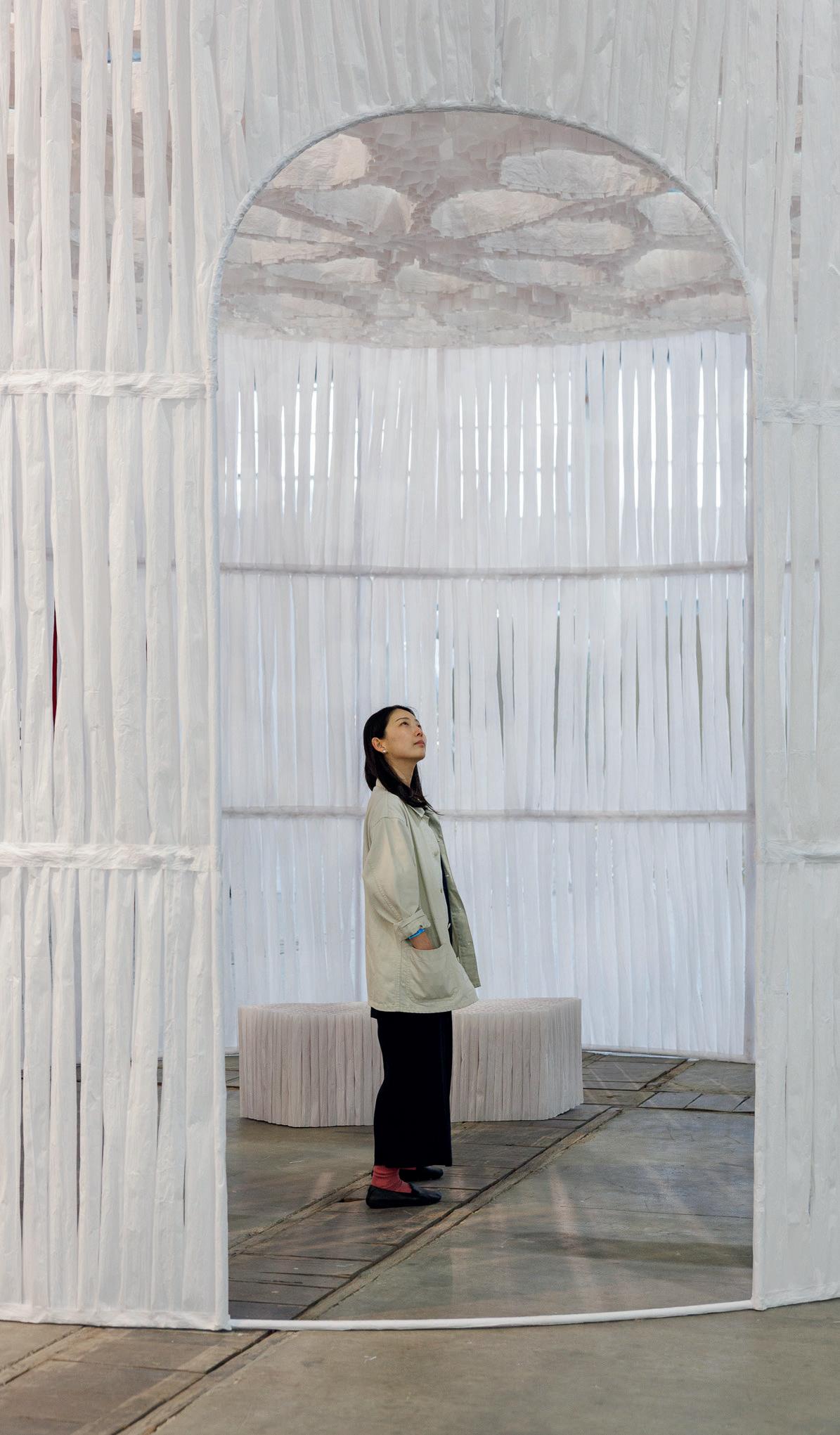
The 2026 edition of the fair introduced Horizons curated by Devrim Bayar, senior curator at Kanal-Centre Pompidou in Brussels. This new section brought together large-scale works that could not be presented in traditional booths, in an exhibition conceived as a scenographic parcours within the fair. Bayar selected seven proposals, most by female artists: Aglaia Konrad, Elen Braga, Ymen Berhouma, Jacqueline de Jong, Pao Hui Kao, Oswald Oberhuber and Zuzanna Czebatul. “In Horizons, visitors could explore art at a slower pace,” says Verhaeren. “By bringing together these bold and varied
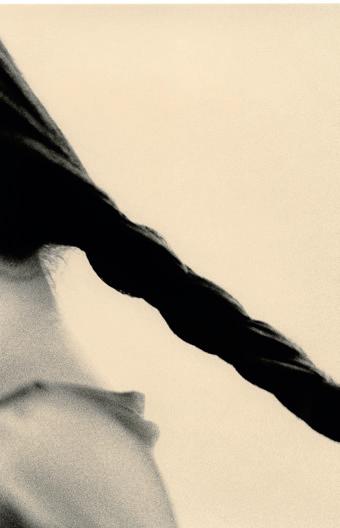
works, we invited the public to rethink the space, the gaze and the narratives that permeate our societies.”
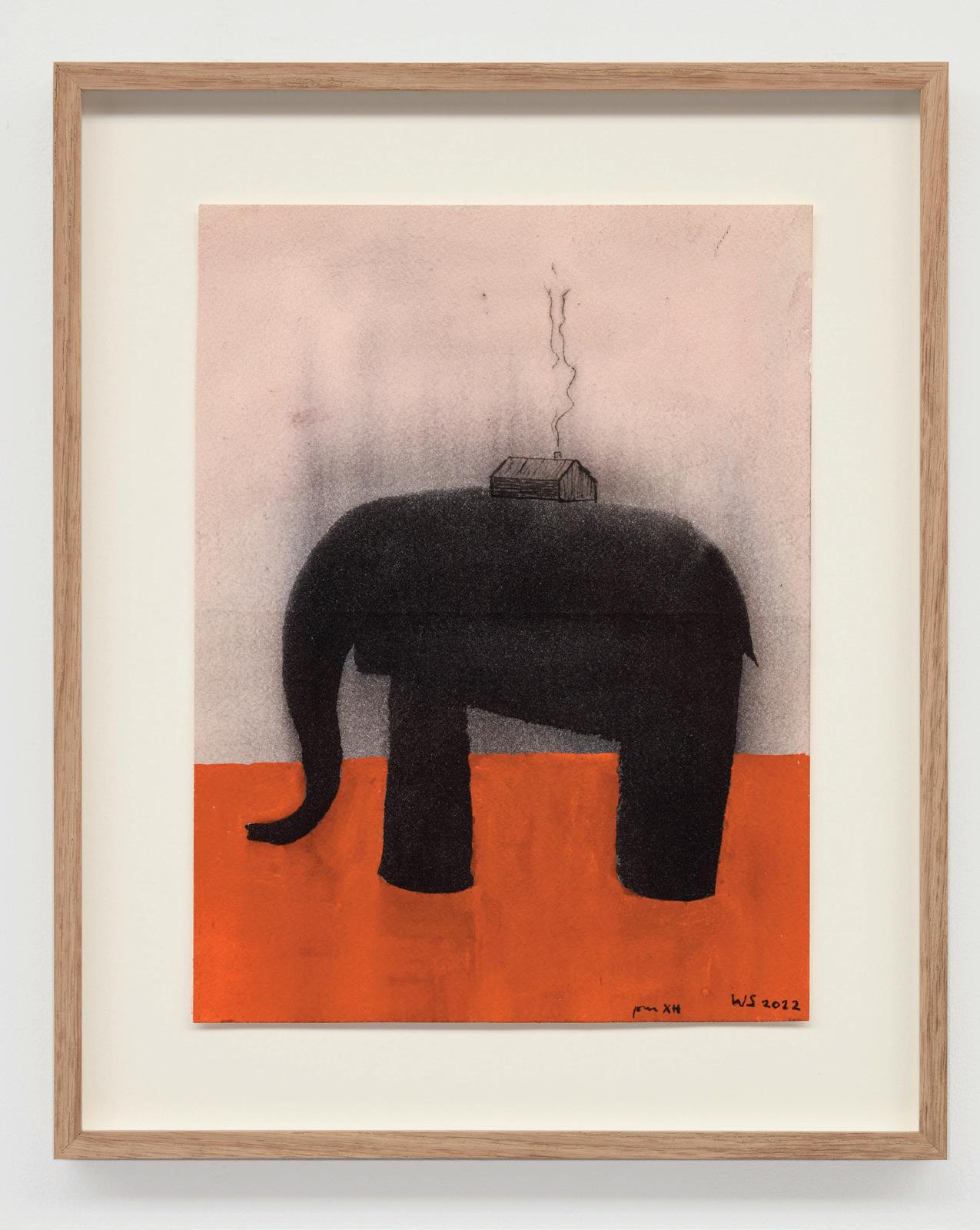
Besides Horizons, Art Brussels also featured bold statements in the Solo section, which slowed down the pace for visitors. Solo featured 26 monographic presentations, including the Belgian gallery Xavier Hufkens (Brussels) presenting the work of Cassi Namoda; Mendes Wood DM (São Paulo, Brussels, Paris, New York) with artist Laís Amaral; Axel Vervoordt Gallery (Wijnegem, Hong Kong) with Sopheap Pich; and Artemis Gallery (Lisbon, Vienna) with Joana Vasconcelos.
Finally, Discovery supported 38 galleries presenting emerging artists through curated dialogues and solo presentations, including Robert Grunenberg (Berlin) with Filip Henin, and Reservoir (Cape Town) with a dialogue between Luis MS Santos and Richard Mudariki.
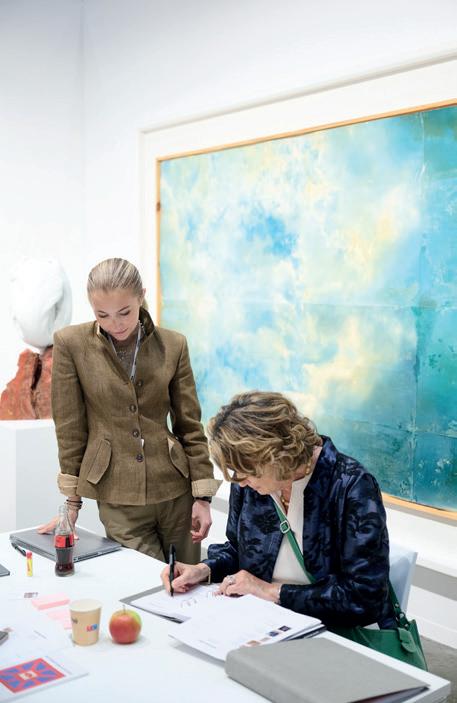
This year, Art Brussels also introduced an Art Advisory Desk with personalised guidance for potential buyers. “Big fairs can be overwhelming. At our new dedicated space, visitors could connect directly with experienced art advisors and
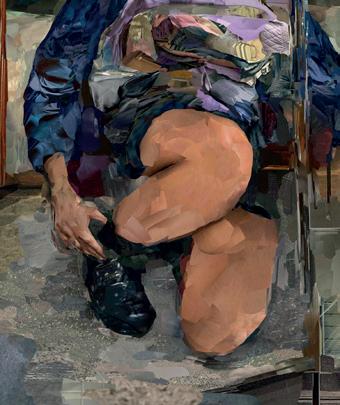
receive personalised guidance for their art acquisitions,” says the managing director. “Our advisors offered tailored insights to help navigate the fair’s diverse selection of galleries and artists, understand the context and significance of artworks, and identify pieces that resonated with their taste and ambitions.”
There was plenty more. Returning for the fourth year, the KickCancer Collection invited visitors to experience small art with a big heart. “It featured postcard-sized artworks donated by participating galleries, sold anonymously at a fixed price of 400 euro. The name of the artist was only be revealed after the purchase, adding a
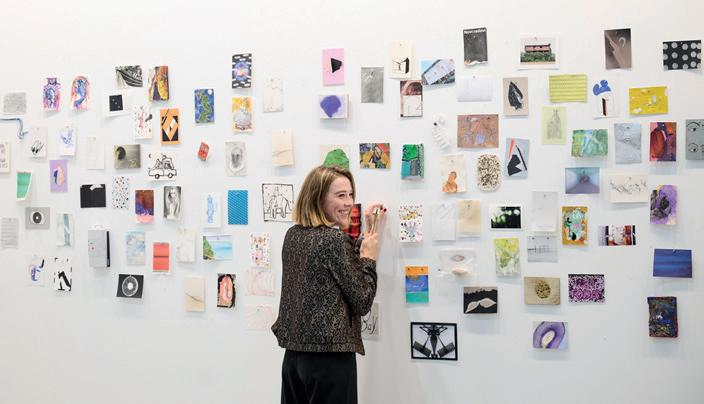
touch of surprise,” smiles Verhaeren. “And all proceeds went directly to the Belgian KickCancer Foundation, supporting their mission to cure every child with cancer.”
Another highlight was Not Everything is for Sale, an exhibition paying tribute to 15 Belgian galleries with over 25 years
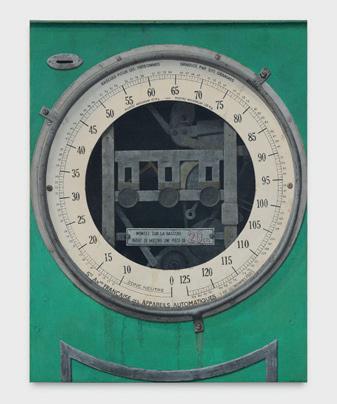
of activity. Curated by Bernard Marcelis and Anne Vierstraete, each gallery owner presented art with deep personal significance, a work that they would never part with for anything in the world. “This exhibition showed the importance of the local scene and the passion and loyalty of galleries that have shaped Belgium’s contemporary art scene,” says Verhaeren.
Ultimately, Art Brussels is an inspiring platform where visitors can meet creators, artists and galleries. During the fair, Brussels’ major museums and art institutions further contributed to the cultural momentum, with a programme of exhibitions and events that coincided with Art Brussels.
“Belgium may be small, but it’s exceptionally well connected,” adds Verhaeren. “Brussels, as the capital of Belgium and of Europe, offers easy access for international visitors and professionals, which remains a key asset for Art Brussels.”
artbrussels.com
Facebook: Art Brussels Instagram: @artbrussels
Every year, Art Brussels celebrates artistic excellence by awarding a series of prizes that recognises outstanding presentations across the fair’s various sections.
• Solo Prize: awarded to the best solo booth presentation, granting the winning artist 15,000 euro.
• ’68 Forward Prize: awarded to the gallery with the best booth in the ’68 Forward section, granting the winning gallery 5,000 euro.
• Discovery Prize: supports emerging artists while enriching public museum collections. With an acquisition budget of up to 10,000 euro, it enables the purchase of an artwork from the Discovery section for a museum collection.
Save the date for upcoming editions:
Art Antwerp: 10-13 December, 2026, Antwerp Expo
Art Brussels: 15-18 April, 2027, Brussels Expo
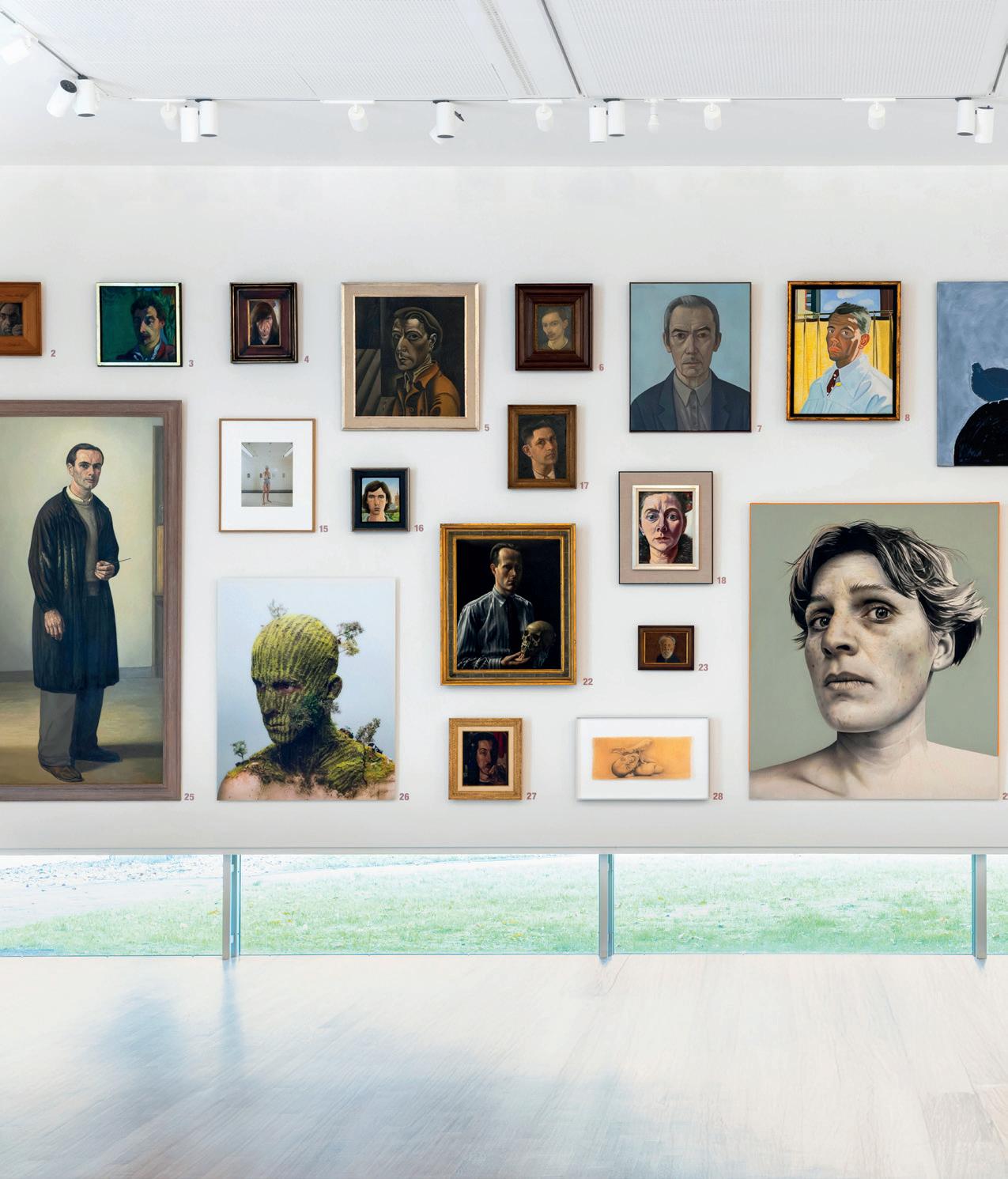
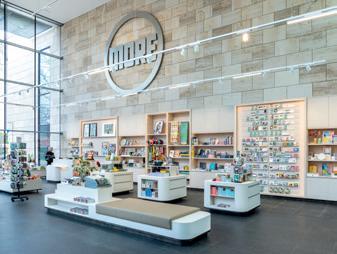
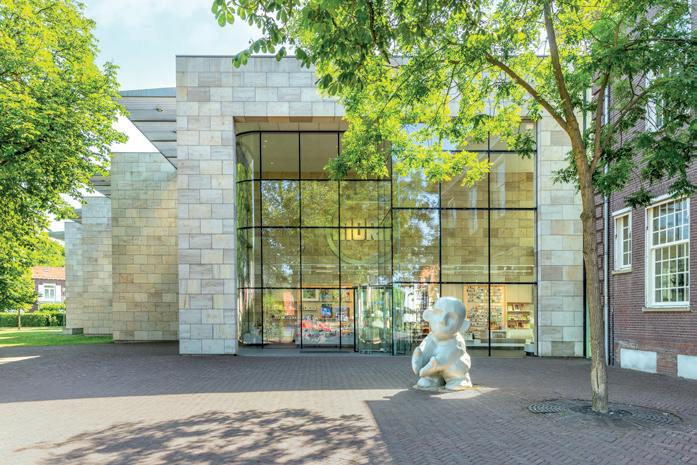
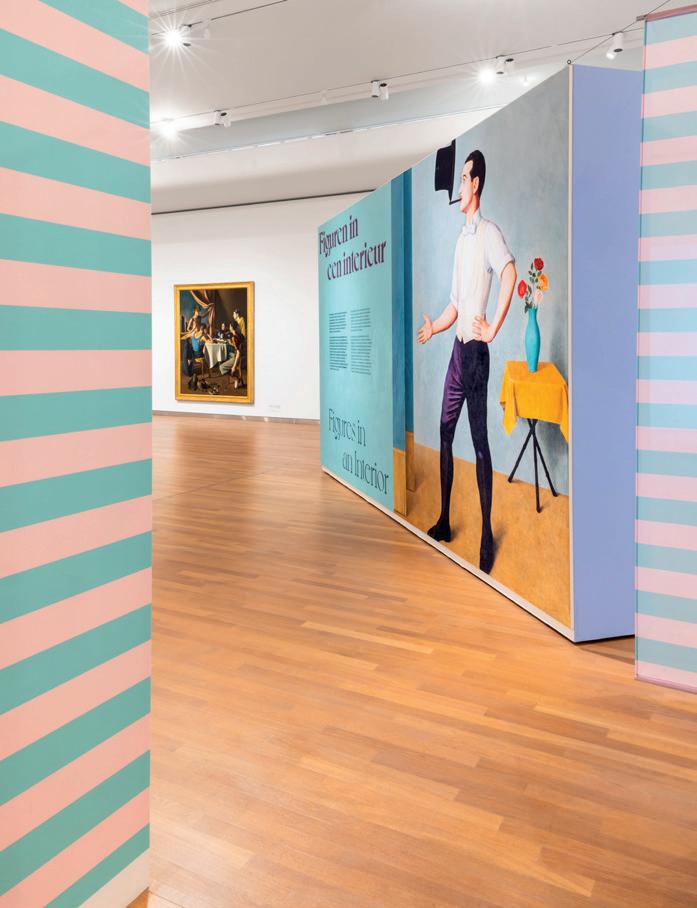
Museum MORE is one Europe’s largest and leading museums dedicated to Modern Realism. From 20th century masters to contemporary realists, it presents world-class exhibitions at two outstanding locations; the bright and airy Museum MORE in Gorssel and the breathtaking Museum MORE | Ruurlo Castle.
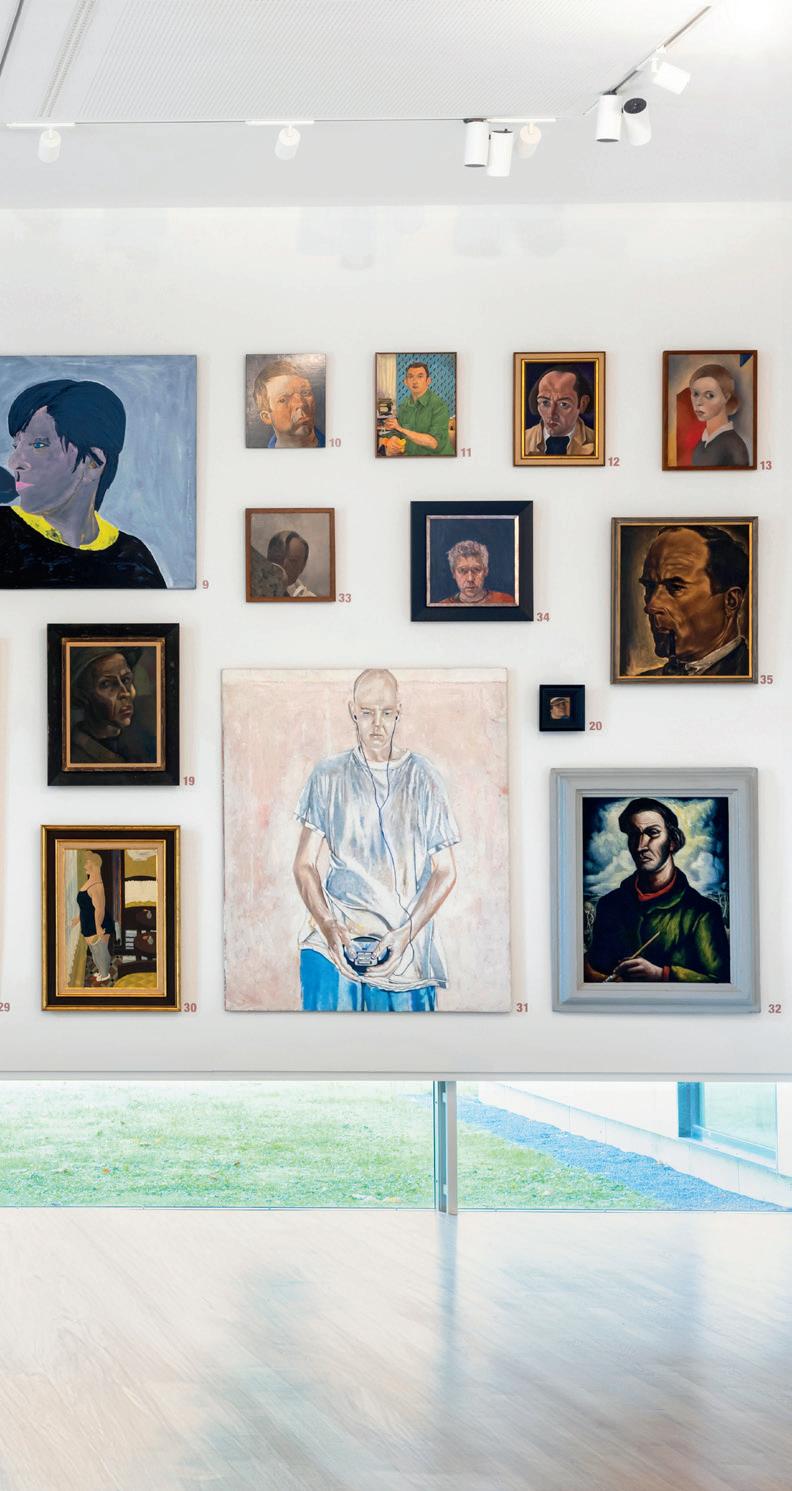
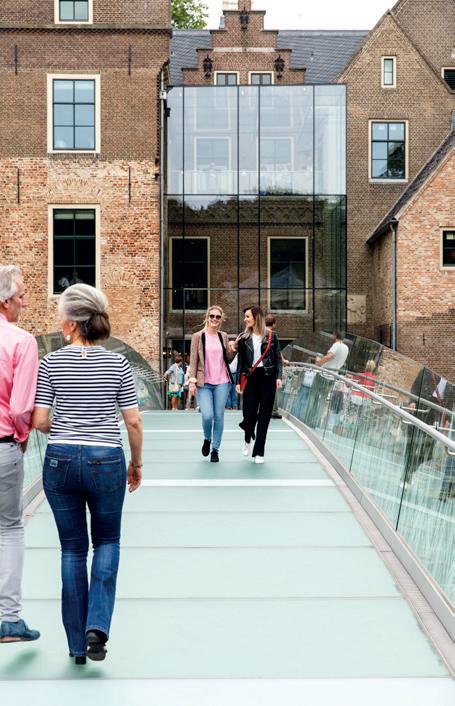
Founded in 2015 as a private initiative, Museum MORE is an ambitious and vibrant museum presenting the rich spectrum of high-quality figurative art from the 20th century to the present day. Attracting around 250,000 visitors per year to its two locations, the museum is one of the largest of its kind in Europe.
With its own collection and temporary exhibitions featuring art from the Netherlands and abroad, MORE presents works that demonstrate mastery and imagination; art that seduces, moves, convinces and challenges. “MORE deliberately explores the boundaries of what realism can be, breaking down conventions in unexpected ways,” says Ellen van Slagmaat, head of marketing and communications.
Fong-Leng & Mathilde | Chic Le Freak will be on view at Museum MORE | Ruurlo Castle until 28 June, in collaboration with Museum JAN. This exhibition shows revolutionary creations by Chinese-Dutch fashion
Exhibition at Museum MORE | Ruurlo Castle: Fong-Leng & Mathilde | Chic Le Freak
Until 28 June, 2026
www.museummore-kasteelruurlo.nl
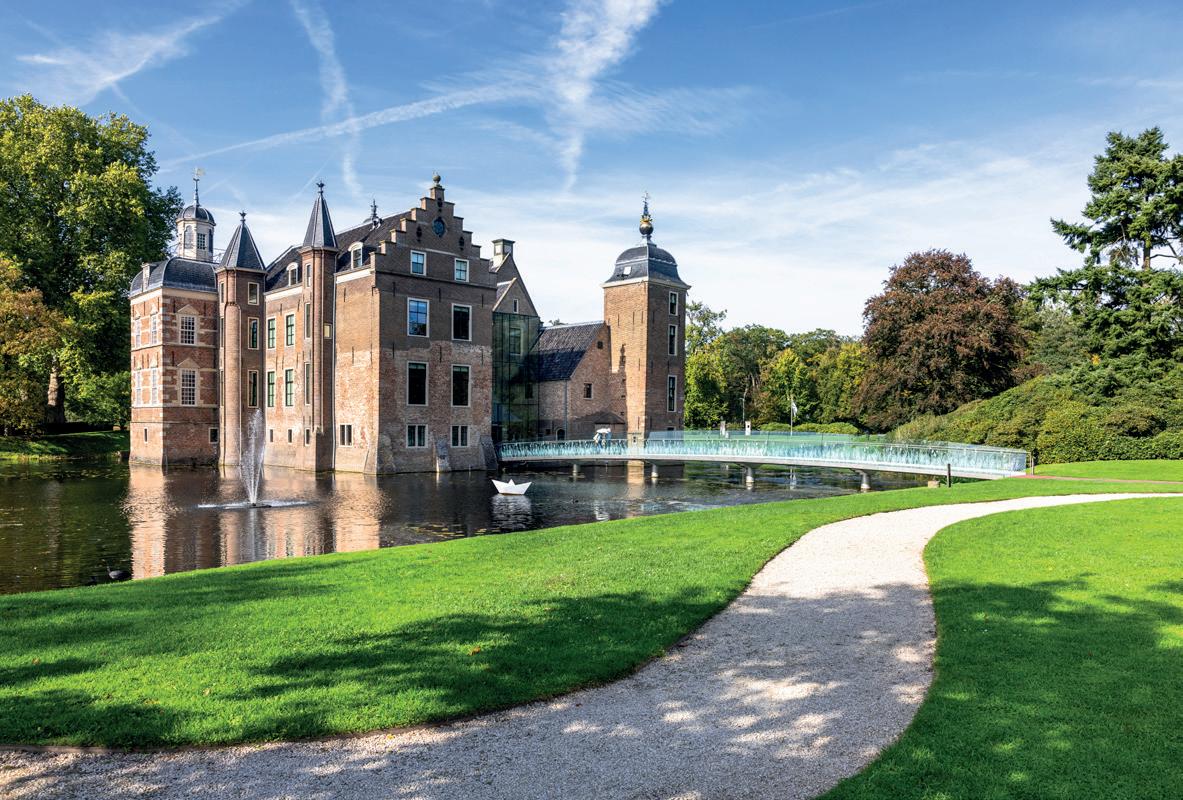
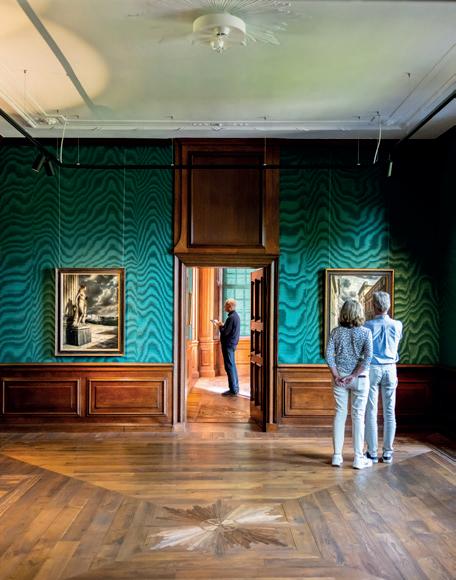
designer and artist Fong-Leng, as seen worn by celebrities such as British popstar Kate Bush. “It also focuses on Fong-Leng’s relationship with her muse, the eccentric Mathilde Willink,” says van Slagmaat. “Mathilde often wore Fong-Leng’s extravagant designs and brought them to life. Think Lady Gaga, but in the 1970s.”
Mathilde Willink was married to Dutch painter Carel Willink. The grandmaster of neorealism, he was known for painting elegant, enigmatic and stately architectural settings. Museum MORE owns the largest collection of his works, and around 30 of his masterpieces are on display at Ruurlo Castle.
The exhibition Magico! Italian Realism 19201970, in collaboration with 24 ORE Cultura, will be available at Gorssel until 7 June. The
first exhibition in the Netherlands to introduce the development of 20th century modern realist painting in Italy, it features 70 selected works by artists such as Edita Broglio, Felice Casorati, Giorgio de Chirico, Cagnaccio di San Pietro, Antonio Donghi, Leonor Fini, Domenico Gnoli, Ubaldo Oppi and Gino Severini.
Another exhibition at Gorssel is Robin Wen & Bobbi Essers, opening on 14 May. French-Taiwanese artist Wen and Dutch artist Essers Drawing base their work on own lived experiences – intimate and fragile at times, powerful at others. Together, they explore themes of friendship and adventure: moments of togetherness in a bedroom, or solitary dancing at a rave. For the opening, expect nothing less – there will indeed be a DJ and a rave party.
Also opening on 14 May at Gorssel, the solo exhibition Kabinet | Maeve van Klaveren
features a selection of 11 works. With a combination of materials and techniques – charcoal, watercolour, pastel and coloured pencil – van Kaveren creates vibrant scenes that centre on everyday life, providing a sense of warmth and intimacy.
From 21 June, visitors can explore the duo exhibition Charley Toorop & Pyke Koch | Alles of niets at Gorssel. Widely regarded as two of the most important figurative Dutch painters of the 20th century, the two artists are displayed together for the first time. This is an unprecedented artistic encounter, revealing surprising connections between Toorop and Koch.
In collaboration with the Amsterdam street art museum STRAAT, Museum MORE presents Junkspace from 8 November. It includes reflections by 40 contemporary Dutch and international artists on the uniform and anonymous spaces of our built environment. “For this exhibition, we selected dozens of contemporary Dutch artists, complemented by a small number of artists from elsewhere in Europe, who engage with our living environment in original, surprising or confrontational ways,” says van Slagmaat.
Another exhibition in the pipeline is Love & Lust, opening on 29 November. The exhibition unites visual art created after 1900 by Dutch artists with poetry by some of the country’s leading poets. van Slagmaat adds; “Few subjects in art have been explored so extensively as love. Whether expressed as courtly love, compassion, romantic love or pure lust, it has continued to inspire painters, photographers and poets to this day.”
Until 7 June, 2026
Robin Wen & Bobbi Essers
14 May to 15 November, 2026
Kabinet | Maeve van Klaveren
14 May to 15 November, 2026
Charley Toorop & Pyke Koch | Alles of niets
21 June to 25 October, 2026
Junkspace
8 November, 2026 to 28 February, 2027
Love & Lust
29 November, 2026 to 17 May, 2027
www.museummore.nl
Stroom Den Haag is on a mission to support artists, address socially relevant themes, and stimulate the imagination of the public. The art centre has an extensive programme of activities – so that visitors and locals can explore the city of The Hague, through art.
By Malin Norman | Photos: Stroom Den Haag
Founded in 1990, Stroom Den Haag serves as a centre of expertise for art and society, and specifically art in public spaces in The Hague. “Together with contemporary artists, we explore what it means to live together, not only with fellow humans, but with all organisms. In our programmes, we foster this great diversity of voices and examine forward-looking societal perspectives, and aim to ignite the public’s curiosity and imagination,” says Alexandra Landré, artistic director.
Through its activities, Stroom Den Haag focuses on three areas; stimulating local artists and their practice, addressing socially relevant themes, and actively promoting new artworks and art in public spaces. “We advise on and facilitate art in public spaces, support artists and
initiatives in the urban community, and present a programme at our location and throughout the city,” says Landré. “The city offers a unique stage for art. It’s this exchange and connection that strengthens the relationship with our audience
and our partners, as well as creating new artworks to meet the world.”
EXPERIMENTS
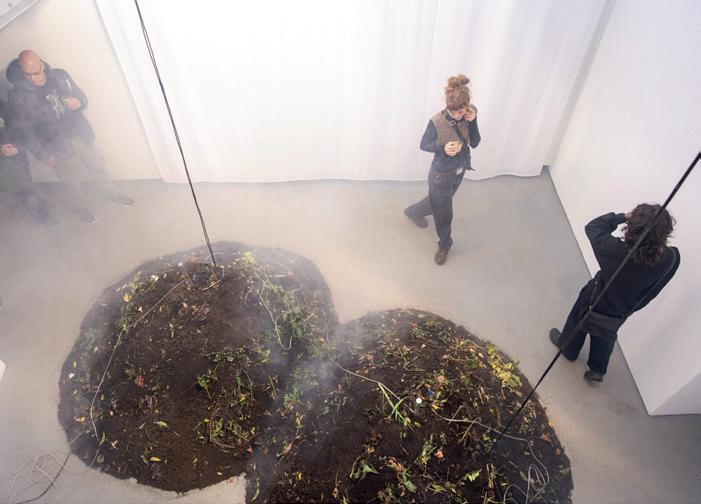
One of Stroom Den Haag’s many praised exhibitions was Finnish artist Jenna Sutela’s first solo exhibition in the Netherlands – ave bossa, bow ole. An immersive environment unfolded as Sutela invited the public to step into a world in which everything is connected; from microscopic life to self-built technologies, from intuition to compost. More than an exhibition, it was a sensory experience and an invitation to look, listen, and feel differently. Sutela has been chosen to participate in The Finish pavilion at Venice Art Biennial this year.
This year, the art centre presents Ø [dia] by Ana María Gómez López. Opening on 29 May, her first solo exhibition in the Netherlands focuses on ten self-experiments where tension between control and surrender becomes tangible. “Gómez López uses the body as an instrument through
which the world can be explored, questioned, and experienced,” explains Landré. “It’s a sensorial practice where, for instance, she germinates a seed in her eye. Some experiments unfold as works in progress, others remain unresolved.”
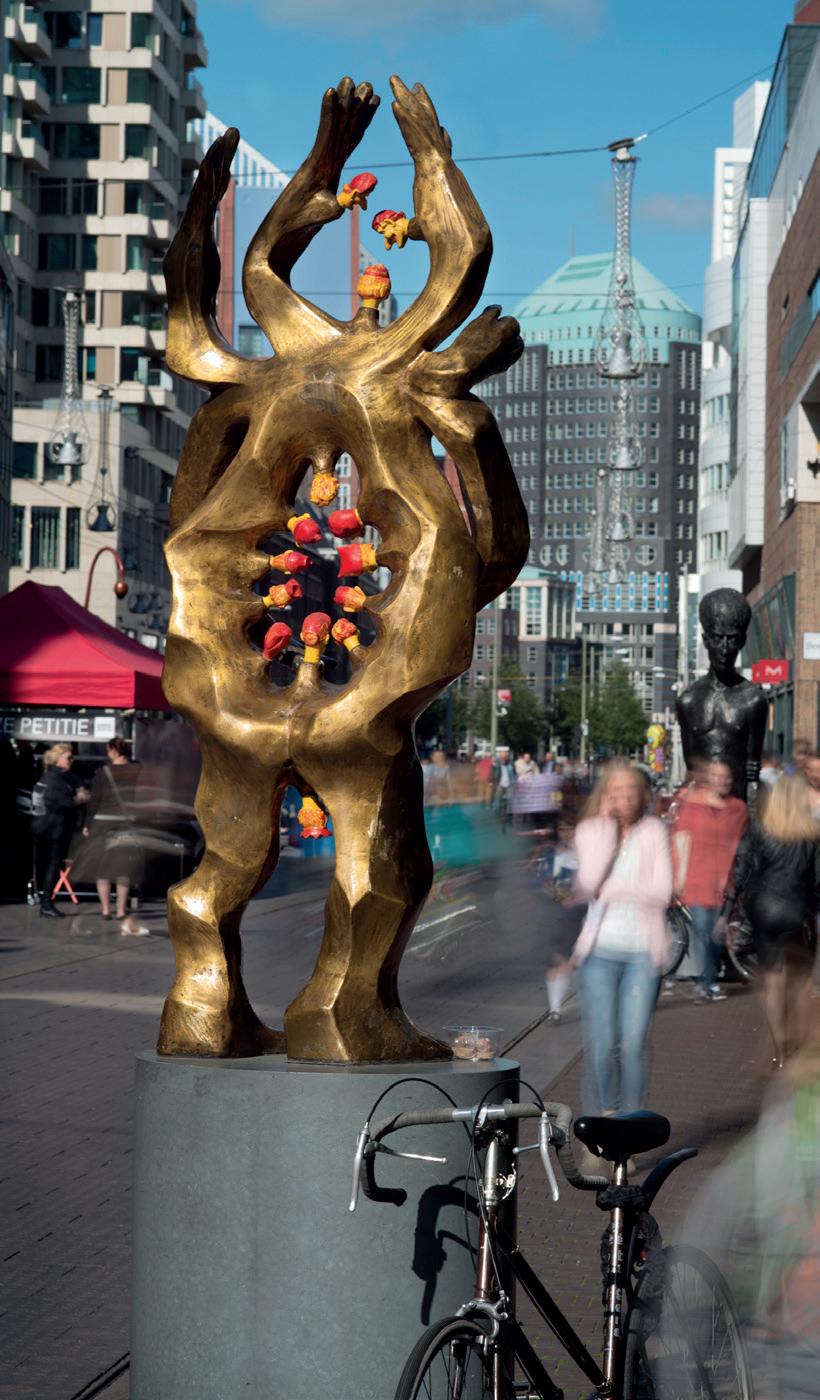
The Hague has a rich collection of works of art in public spaces with hundreds of statues, plaques, sculptures and reliefs
on display. “The quality and diversity of art here is quite impressive,” reflects the artistic director. She recommends joining one of the tours provided by Stroom Den Haag, which can be downloaded from bkdh.nl/en, to explore the city through art at your own pace.
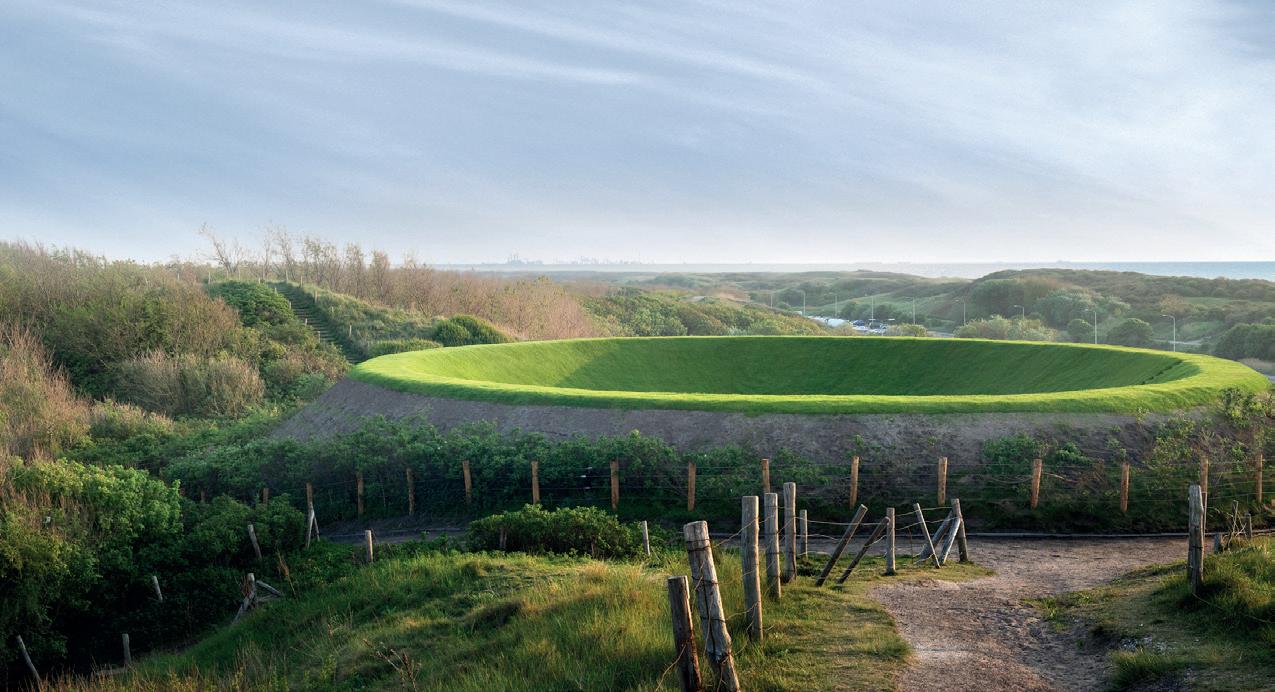
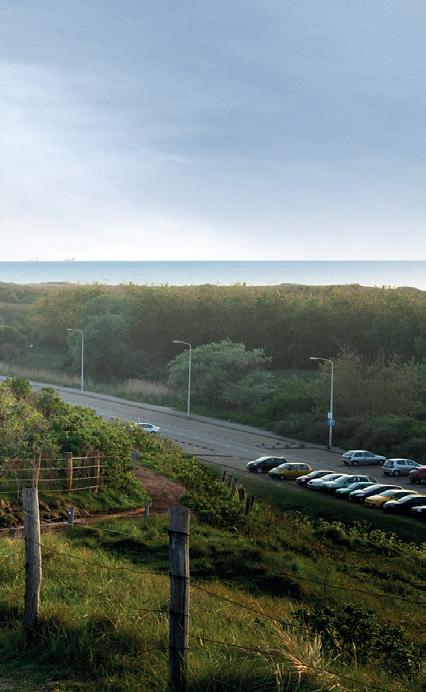
The Hague is home to a few iconic land art projects such as Celestial Vault, built by artist James Turrell in 1996. The monumental earthwork resembling a large
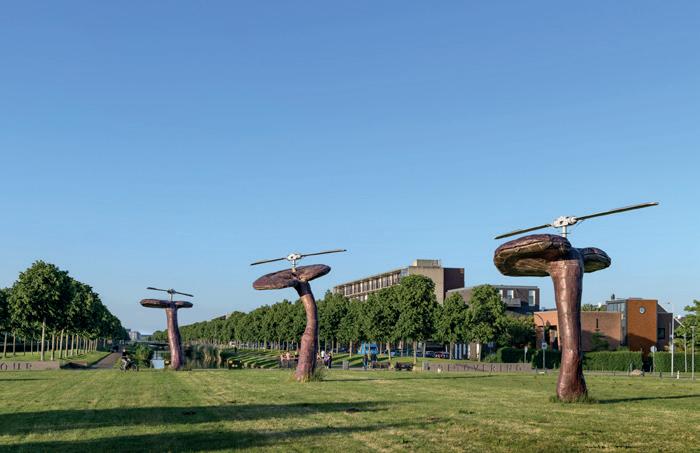
crater celebrates its 30th anniversary, and is well worth a visit. Another enormous work is Ling Zhi Helicopters by the late Chinese-French artist Huang Yong Ping, which looks like three giant mushrooms with helicopter blades. And not too far from there, The Hague is enriched by Michael Rakowitz’ impressive outdoor work Be longing.
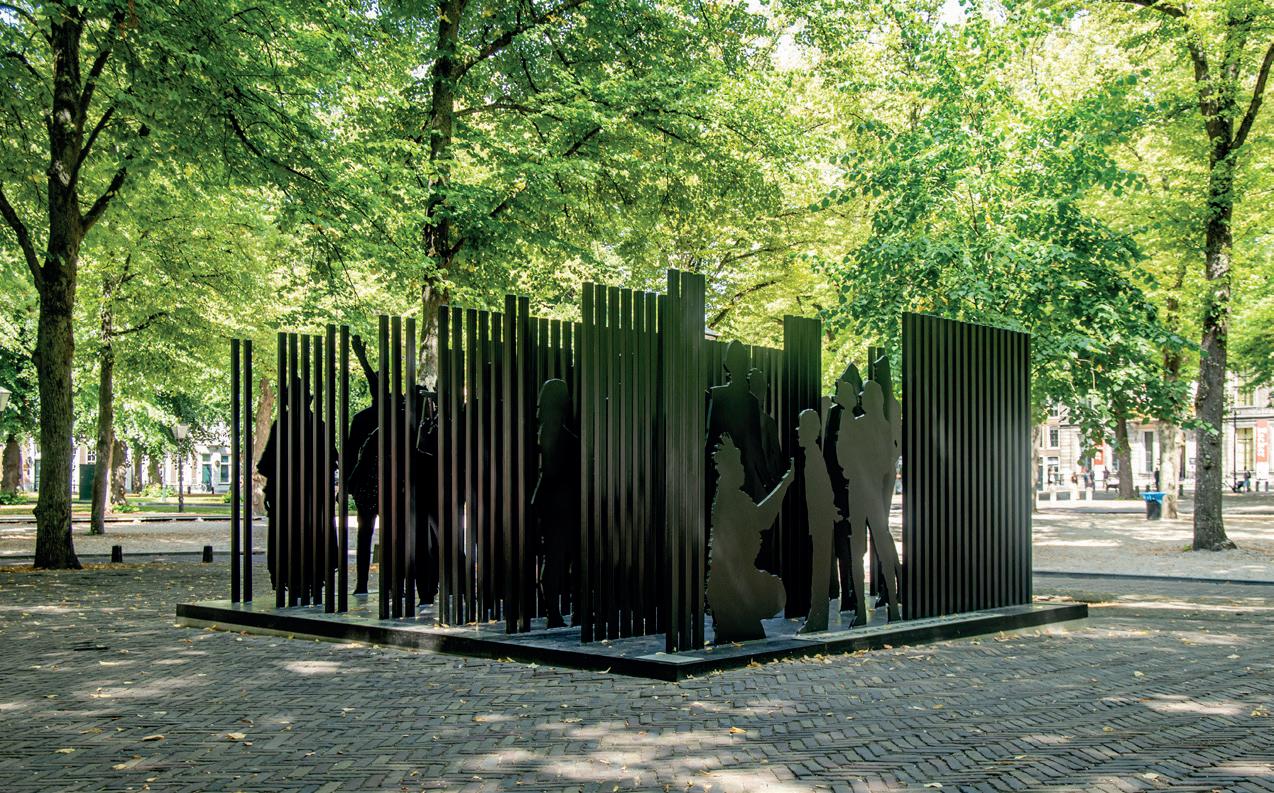
During a tour in the city centre, you will learn more about the history of The Hague. Last year, the city welcomed a new monument commemorating the transatlantic history of slavery. The memorial titled Remember Our United Beginning was designed by artist Buhlebezwe Siwani. And not to be missed is The Sculpture Gallery, conceived and designed by artist P. Struycken on behalf of Stroom Den Haag. On 40 pedestals, alternating sculptures by renowned international artists are displayed, making this one of the most eye-catching collections in the city. Every two years, a new artwork is added.
For the more architecturally adventurous, the Central Innovation District (CID) is a fascinating area to explore. The former industrial area is undergoing a large trans-
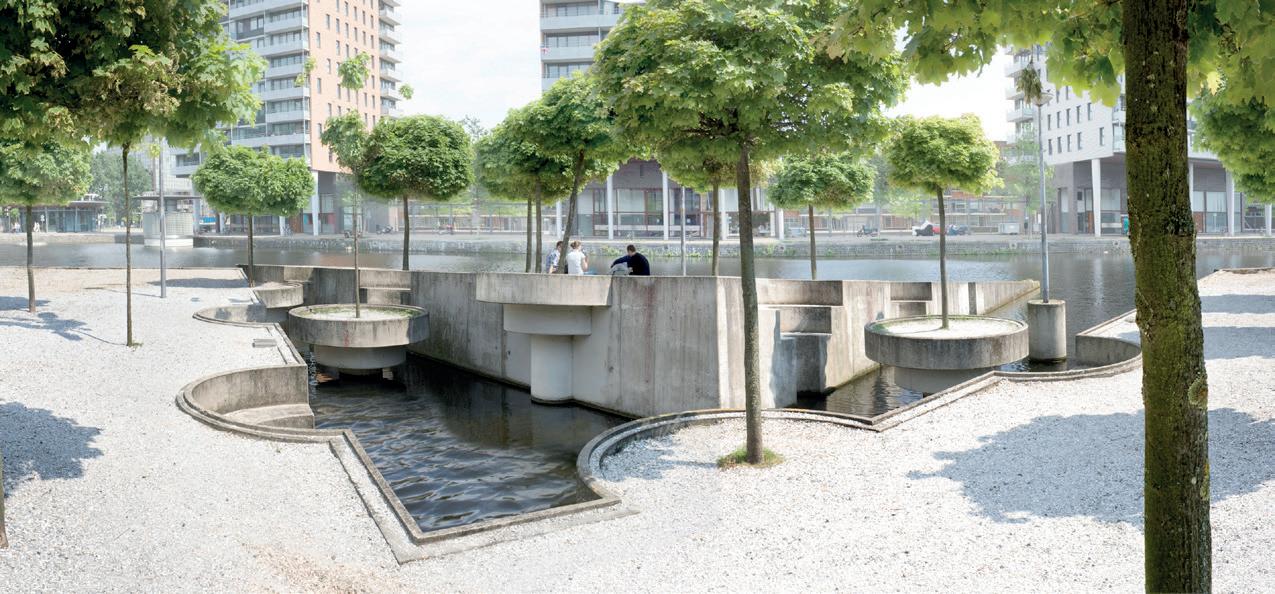
formation with new offices, accommodation, and attractive amenities planned. Park in the Water by Vito Acconci is one of the landmarks, a central point in the shifting urban fabric and a prime example of the synergy of urban development and contemporary art.
On Friday evening 29 May, you will be able join a free contemporary art tour. Organised by The Haagse Rondgang Foundation four times a year, the HOOGTIJ tour visits more than 20 locations; from white cube to hidden artist initiatives, from established art in galleries to experimental art, installations and performances.
Passing art institutions such as Kunstmuseum Den Haag, with around 400,000 visitors per year and a broad music programme, the bustling new square Spui, and smaller museums with private collections such as Huis van het Boek and Panorama Mesdag – through art tours like HOOGTIJ, you will experience the city differently.
“In The Hague, art isn’t tucked away, it spills into the streets” adds Landre. “A vibrant and very accessible art scene turns the city into an open-air museum, ready to be explored.”
Upcoming exhibition:
Ø [dia] by Ana María Gómez López Opening on 29 May, 2026
stroom.nl Facebook: Stroom Den Haag Instagram: @stroom_den_haag
Website on outdoor art: Stroom Den Haag hosts a user-friendly website where you can find all relevant information on outdoor art in The Hague: bkdh.nl/en
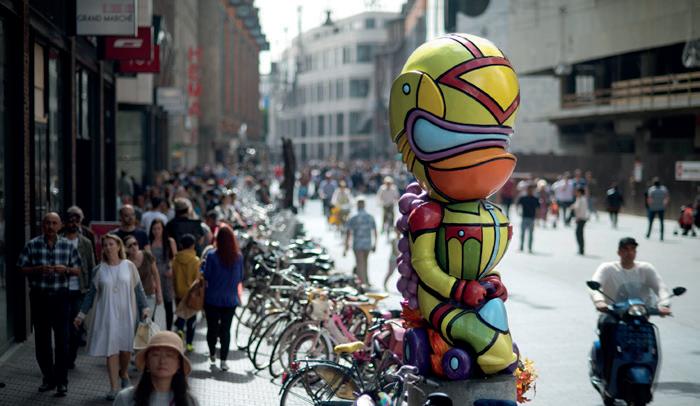
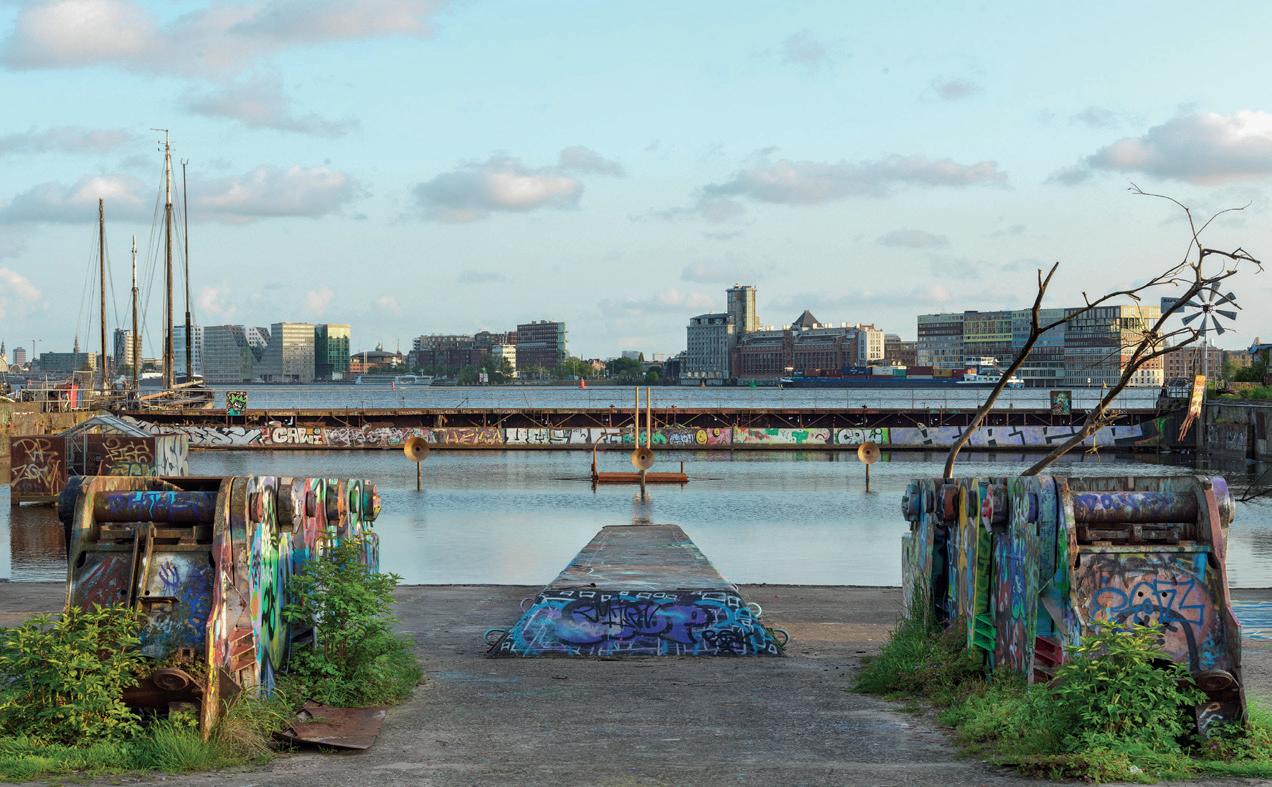
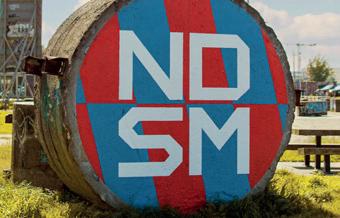
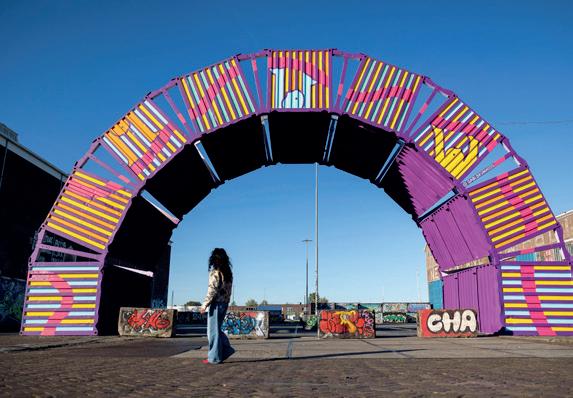
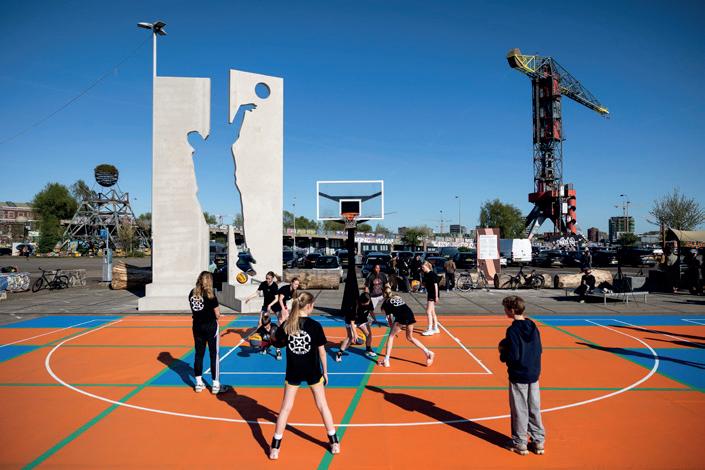
On the northern bank of the IJ in Amsterdam, the NDSM-werf has transformed from a historic shipyard into one of the city’s most dynamic cultural spaces. At the heart of this transformation is Stichting NDSM-werf, the organisation responsible for programming, managing, and developing the site as an open and experimental cultural hub.
By Paola Westbeek | Photos: Stichting NDSM-werf
For Ludmilla van der Kroon, manager of marketing and communications, the mission of the organisation is closely tied to the spirit of the place. “Stichting NDSM-werf is committed to developing and maintaining NDSM as a free and programmable cultural site on a historic shipyard,” she explains. “It’s a place for experimentation and initiatives that contribute to urban liveability and meaningful public spaces.”
The former shipyard offers ten hectares of open space shaped by industrial heritage and creative energy. The history, physical space, and expressive heritage of the shipyard, with its rawness and pio-
neering spirit, form the starting point for everything they do.
Stichting NDSM-werf acts as programmer, curator and manager of the outdoor area. It connects cultural organisations, stimulates new initiatives, and
safeguards the unique character of the site. The foundation works with a wide network of partners as well as creative hubs and educational initiatives. Together, they form a cultural ecosystem where makers and cultural entrepreneurs collaborate on innovation and the sustainable embedding of culture at the wharf.
Art in public spaces is one of the defining features of the NDSM-werf. Monumental installations regularly appear, turning the outdoor area into a constantly evolving exhibition. “By placing large-scale artworks in the public space, the wharf functions as a continuous exhibition,” says Van der Kroon. “It creates a tangible connection between the past, present, and future of this unique place.”
Recent projects include the installation Schattige babyvoetjes by artist Lily van der Stokker. It presents a soft green text statement placed at the top of the Y-slope
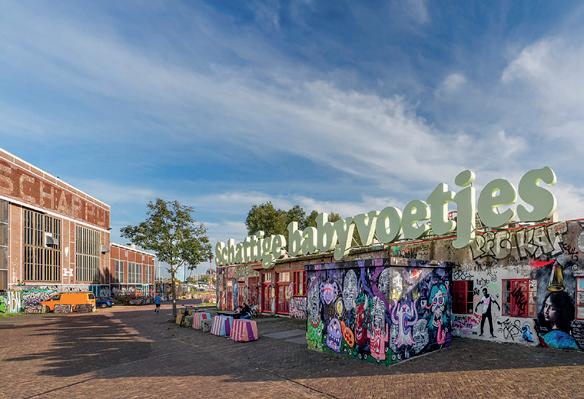
of the wharf. The artwork, visible until 2027, offers a playful yet critical contrast to the historically rough, male-dominated character of the shipyard.
Another striking project is IN TUNE, a large sound installation by NDSM artist Henk Schut. The work consists of a three-metre bronze tuning fork accompanied by three horns that project sound reminiscent of ship horns. Every five minutes, the fork retunes the space, producing new vibrations as it interacts with water and concrete across the site.
The NDSM-werf is also known for its large-scale music events, markets, tours, and cultural gatherings. What makes these events stand out is the set-
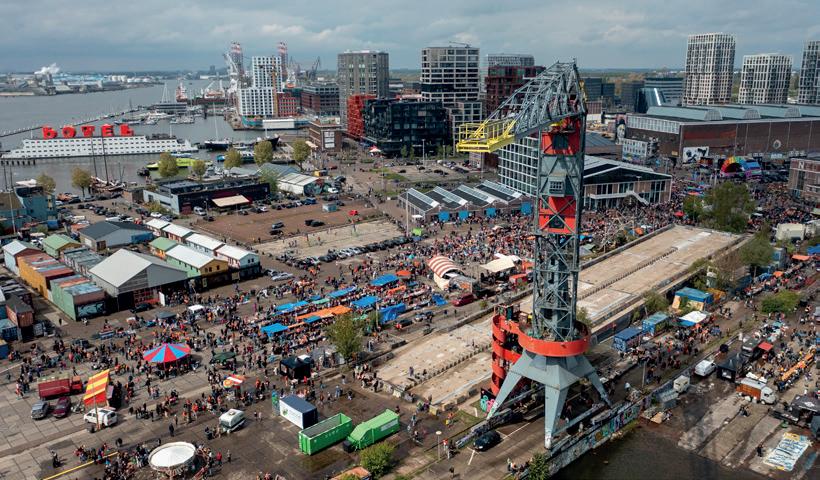
ting itself. The vast open spaces and the sweeping views across the IJ give the NDSM-werf a character unlike any other cultural venue in the city.
Looking ahead, the aim is to keep involving artists, makers, residents, and cultural institutions in the development of the site – in order to remain diverse and meaningful. After more than a century, the NDSM-werf has evolved from industrial dockyard to international cultural hotspot where creativity and community continue to shape the identity of Amsterdam’s northern waterfront.
www.ndsm.nl
Facebook: NDSM
Instagram: @ndsm
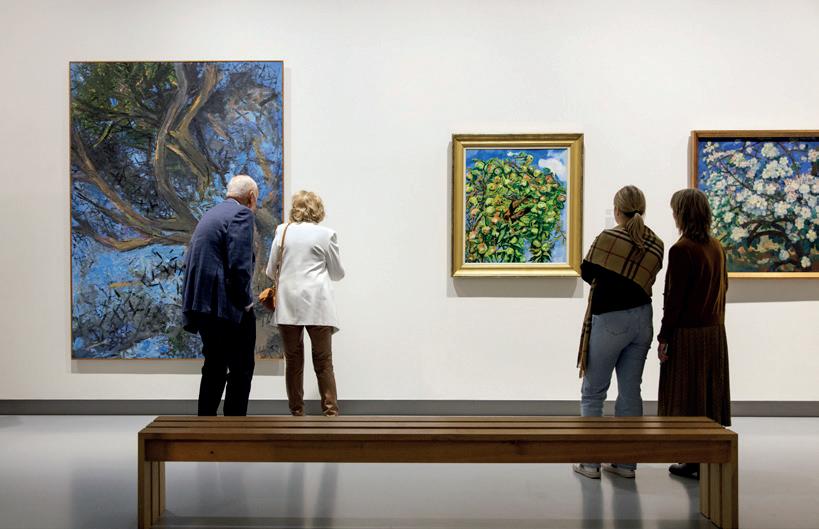
Museum Kranenburgh, located in the Dutch artists’ village of Bergen, offers a rich blend of art, history and nature. Founded in 1993 in the historic Huize Kranenburgh, the museum has grown into a dynamic cultural institution. Its expansion in 2013 introduced a striking modern wing, reflecting its commitment to both heritage and contemporary artistic expression today.
By Paola Westbeek
The museum’s origins lie in its dedication to preserving and presenting the artistic legacy of Bergen, a place long admired for its unique light and varied landscape of dunes, forests and polders. From around 1900, artists settled in the area, drawing inspiration from their surroundings. This led to the emergence of the Bergense School, an important Dutch expressionist movement characterised by strong forms and contrasting, earthy tones. Key figures such as Charley Toorop and Leo Gestel played a central role, supported by patrons who enabled experimentation and collaboration.
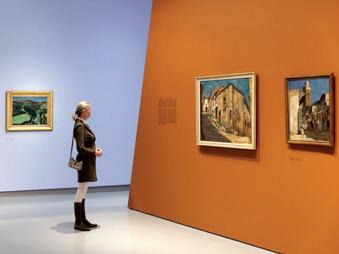
Over time, Museum Kranenburgh has expanded its scope beyond this early 20th century movement. Its collection now spans from 1900 to the present day, including works by later modern and contemporary artists. Rather than maintain-
ing a fixed display, the museum rotates exhibitions regularly, ensuring a fresh perspective with each visit. Around six exhibitions are organised annually, often combining pieces from the collection with new artistic voices.
The museum is equally known for its sculpture garden, where art and nature merge seamlessly. Visitors encounter works that
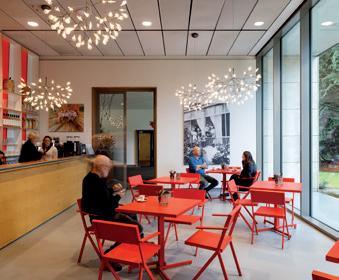
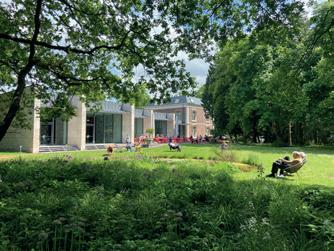
respond directly to the environment, reinforcing the institution’s identity as a museum in the green. This connection to nature remains central to its programming and philosophy.
As Loïs Geerlings, head of marketing and communication, explains: “Because the exhibitions are always changing and cover a wide range of themes, there is something for everyone to discover. Visitors often come for a specific show and then find themselves drawn to other artists and works that capture their interest.”
www.kranenburgh.nl
Facebook: Museum Kranenburgh
Instagram: @museumkranenburgh
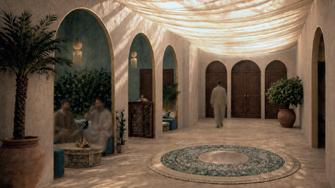
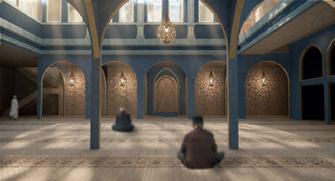
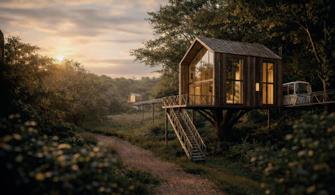
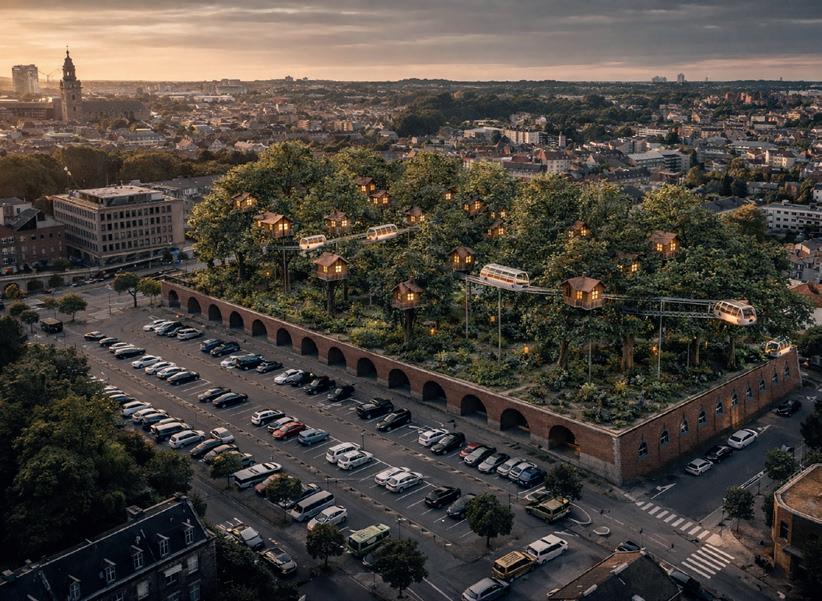
BFArchitecture positions itself as a post-academic architectural institute, where each project is approached through rigorous research and interdisciplinary collaboration. Based on close ties with international universities, the studio blends design innovation with legal and technical precision. From concept to completion, BFArchitecture develops tailored solutions that respond to client ambitions, while integrating cutting-edge architectural thinking and a personal, trust-based process.
By Paola Westbeek | Photos: BFArchitecture
Founder Bobby Fogel emphasises that every project begins with listening carefully to the client’s wishes and translating those into legal and spatial feasibility. The firm also distinguishes itself through its ‘haute-architecture’ approach. Fogel explains: “By haute-architecture, we mean exclusivity in which true expert research is conducted in order to meet the client’s expectations.” It is this combination of technical rigor, artistic sensitivity and commitment to the client that shapes every stage of the design process.
Projects range from private residences to large-scale public buildings, including the development of a mosque exploring a new architectural typology. Fogel describes
the practice as an ongoing relationship with clients throughout the entire trajectory. “Personal contact is key,” he says. “Without mutual trust, no agreement is reached. The building process is an adventure in itself, so it should be a pleasant experience. That’s why I remain reachable for the client throughout the process and am often later on considered a friend. Of course, work and pleasure remain separate, but sometimes a relaxed approach is also allowed.”
What also sets the firm apart is teaching students through the process. “Top students regularly visit and are offered accommodation in our own building,” adds Fogel.
With its research-driven ethos and commitment to client-centred design, BFArchitecture continues to redefine contemporary architectural practice through innovation, collaboration, and a strong belief in architecture as both science and art. This results in bespoke spaces that merge academic insight with practical execution – for every client.
www.bfarchitecture.be
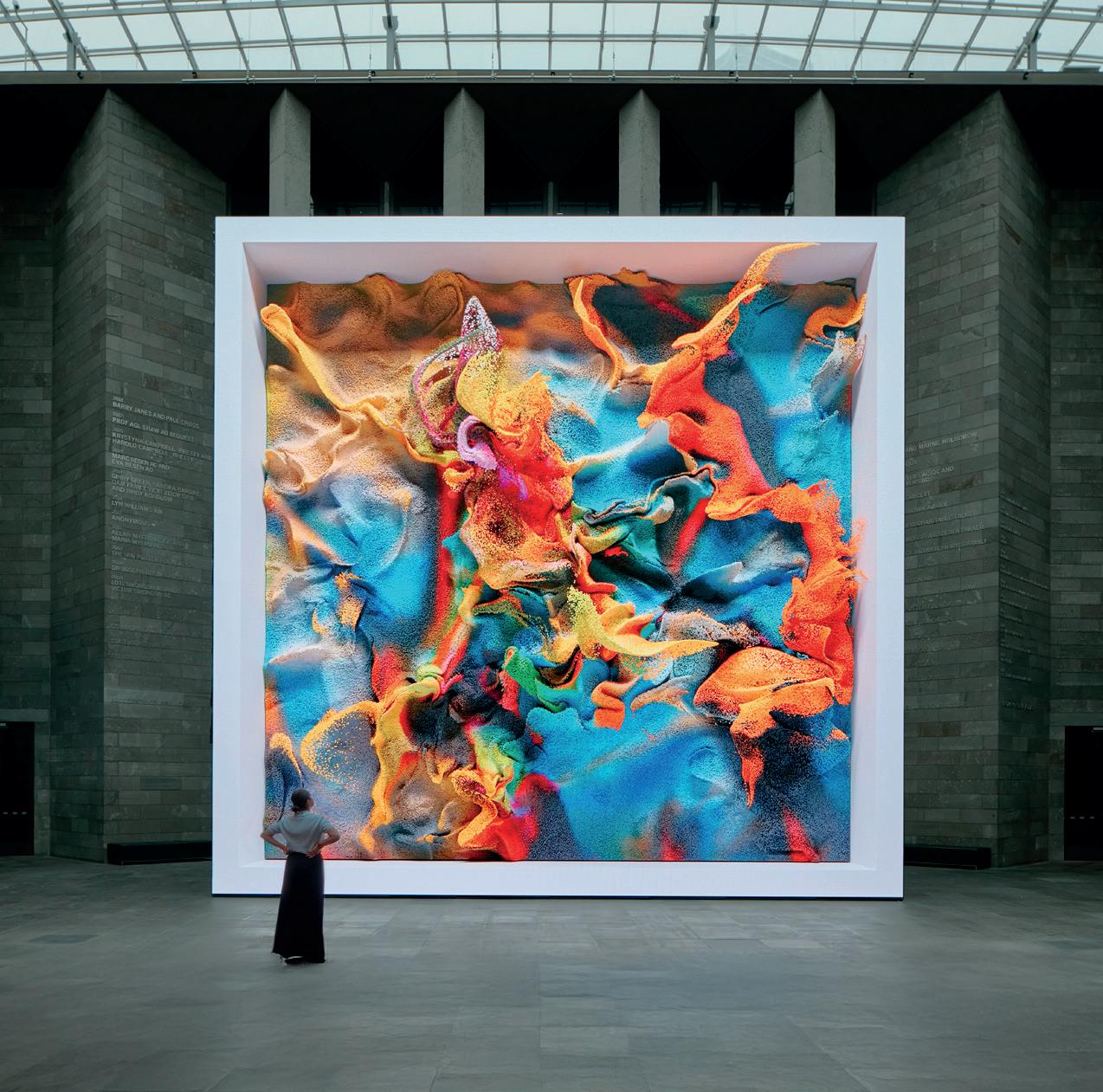
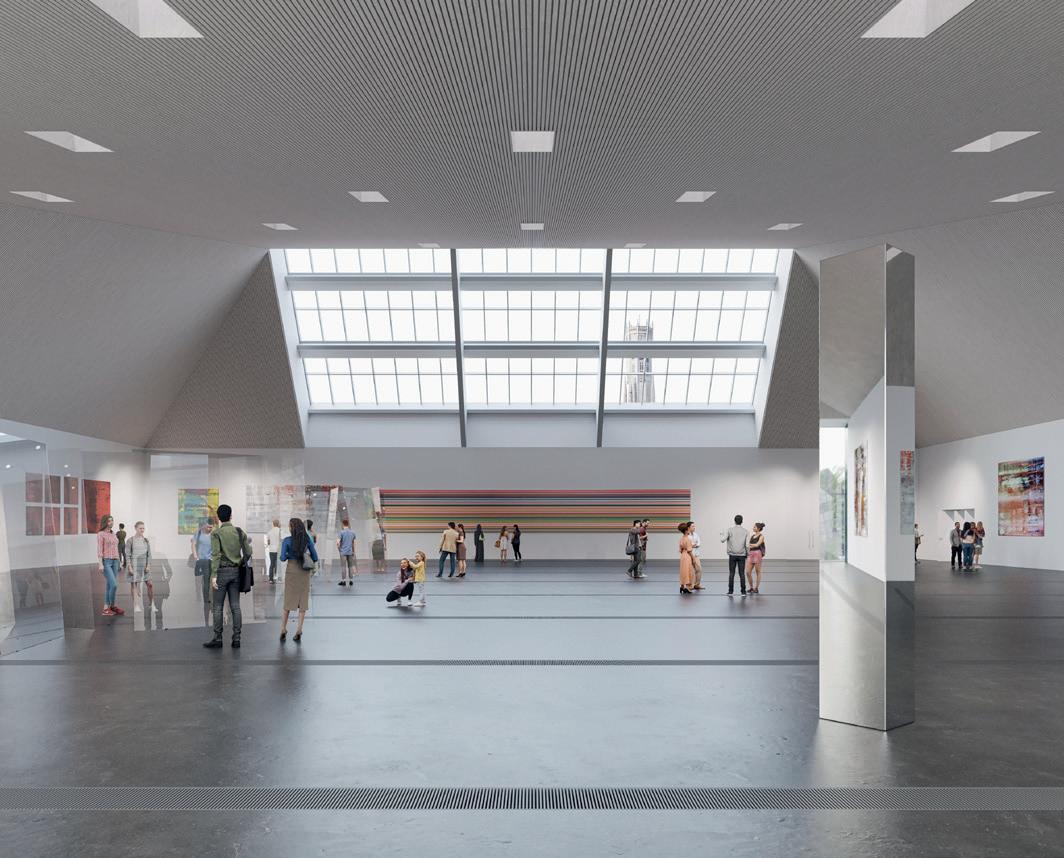
This month sees the opening of an art gallery in Bruges. In the heart of the city’s Museum Quarter, BRUSK officially opens its doors with not one but two world-class and socially relevant exhibitions; one with a pioneer in AI-driven art, and the other offers a cultural-historical perspective. No doubt, this brand-new landmark is set to surprise and inspire.
By Malin Norman
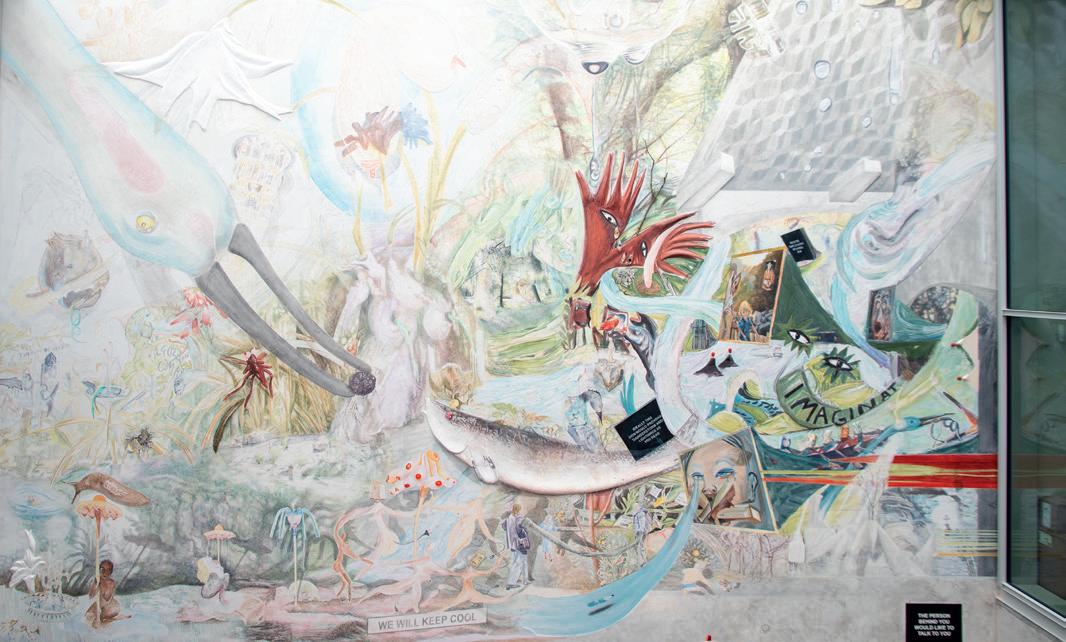
BRUSK is more than a museum; it is a multi-faceted art gallery with surprising exhibitions and a programme with exciting activities. More than 30,000 visitors came for the pre-opening in September. The official opening is on 8 May, with two toptier exhibitions that will put BRUSK on the international map of art and culture.
Together with BRON research centre, which opened last year, the renovated Groeninge Museum and a museum park along the canals – both due to open in 2030, BRUSK forms the heart of the new Museum Quarter. The building itself, with two museum rooms of monumental scale, was designed by Robbrecht & Daem architects and Olivier Salens architects.
French artist Laure Prouvost has created a four-part fresco for the central staircase. Spanning a total of 350 square metres, it takes visitors on a journey through the artist’s playful universe. Titled The Whispering Walls Rêve, this permanent addition is a true eyecatcher.
A place to view, experience and discuss art, BRUSK is set to be an inspiring oasis buzz-
ing with creativity. In a press release, mayor Dirk De fauw states: “For centuries, Bruges has been a city of connections between worlds, ideas and people. With BRUSK, we continue this tradition in a way that brings
together art, artists, visitors and residents. Here, our heritage inspires tomorrow’s imagination. Bruges demonstrates its own world-class strengths: innovative, multi-layered and connected to its time.”
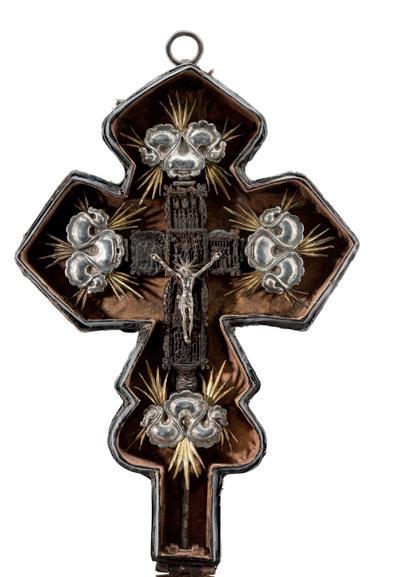
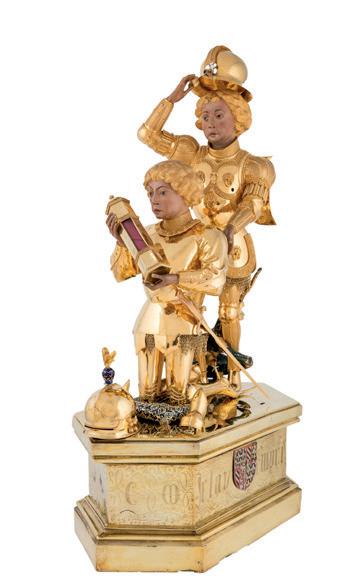
Reliquary of Charles the Bold, Trésor de Liège.
Photo: KIK-IRPA
DIGITAL ART AND HISTORIC METROPOLIS
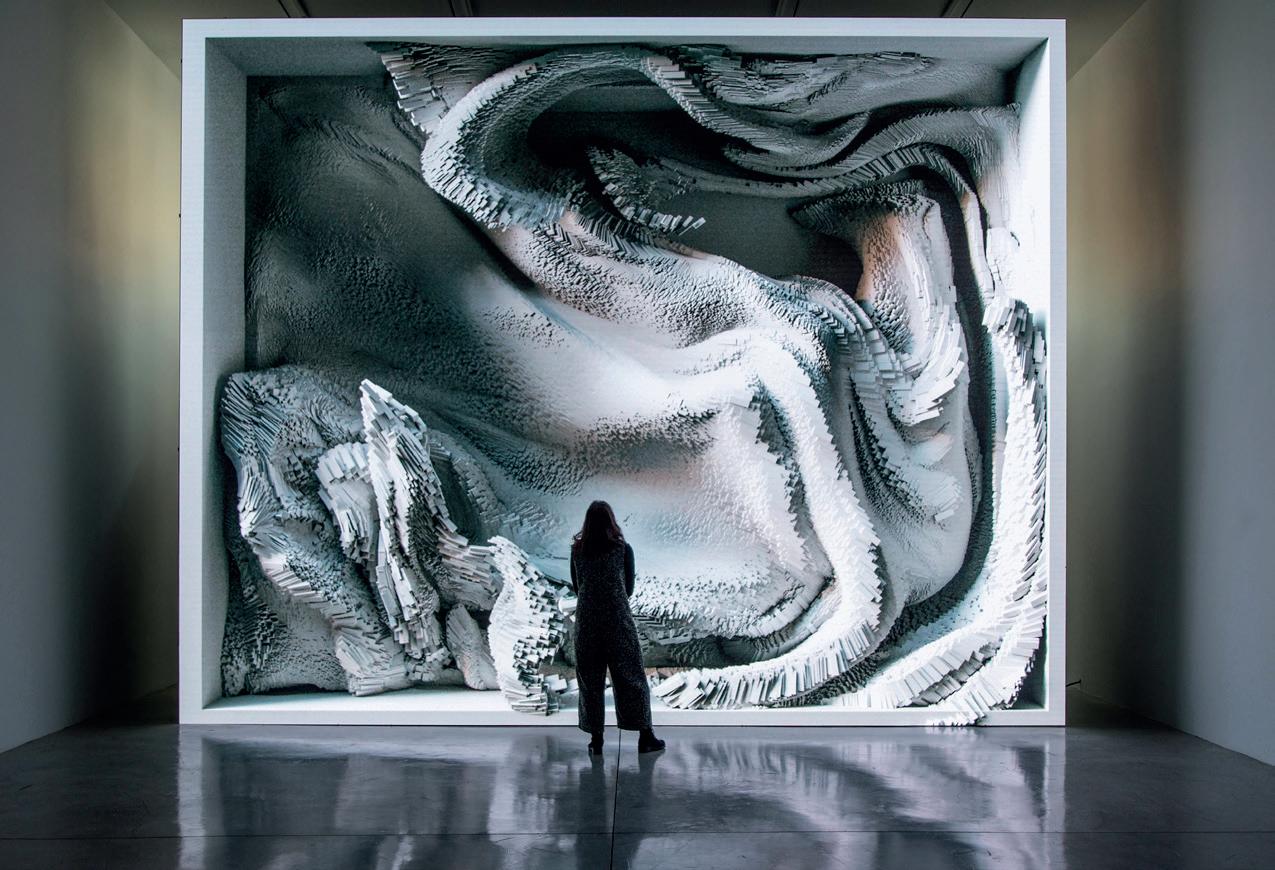
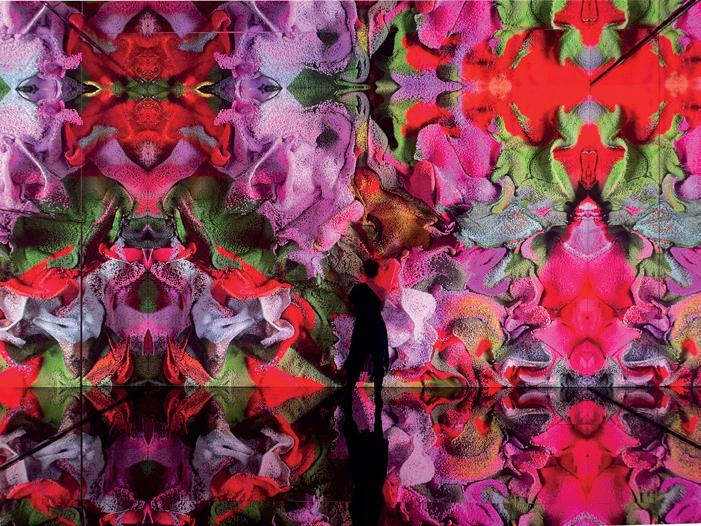
BRUSK opens with Turkish-American contemporary artist Refik Anadol, a pioneer in large-scale AI-driven art with exhibitions at for instance Guggenheim Bilbao and MoMA New York. Refik Anadol. Latent City marks the start of new museum-based series on urban imagination.
For his first solo exhibition in Belgium, Anadol has created an installation powered by data from Bruges. His AI models trained on millions of images from cities like Stockholm, Seoul and New York transform urban data into immersive visual experiences –blurring the boundaries between humanity, nature and technology.
In contrast, the cultural-historical exhibition Bigger Picture. Connected worlds of Bruges 900-1550 offers a new perspective on Bruges as a medieval metropolis. The collaboration with British historian and author Peter Frankopan at Oxford University
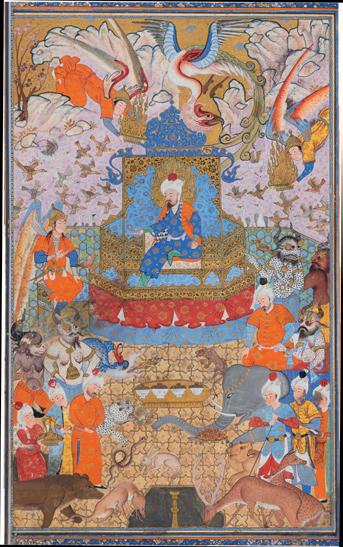
and a team of national and international experts reveals the untold stories about the city’s past as a hub for global trade, culture and politics.
Showcasing artworks and objects from different ages and continents, the exhibition highlights the interactions between medieval Bruges and the rest of the world. Visitors will be able to see for instance Bellini’s iconic Portrait of Mehmed II, from the National Gallery in London, as well as manuscripts from the Vatican Apostolic Library.
This opening duo spans centuries of history and yet, it is firmly rooted in the present. Alderman of Culture Nico Blontrock says in a statement: “BRUSK will be a place where art dares. Where old and new stories challenge, surprise, and inspire one another. Here, there is no need to choose between past and present: BRUSK
brings them into dialogue. Flemish Primitives alongside AI art, the painter’s hand next to the data network. The combination of “Bigger Picture” and Refik Anadol is no coincidence but a statement. All of this is embedded within a strong public programme featuring an inspiring range of activities – from introductory tours, workshops and performances to lectures and events for children. From day one, BRUSK aims to be a place for everyone.”
Bigger Picture. Connected worlds of Bruges 900-1550
8 May to 6 September, 2026
Refik Anadol. Latent City
8 May to 8 November, 2026
For more information, see www.bruskbrugge.be/nl
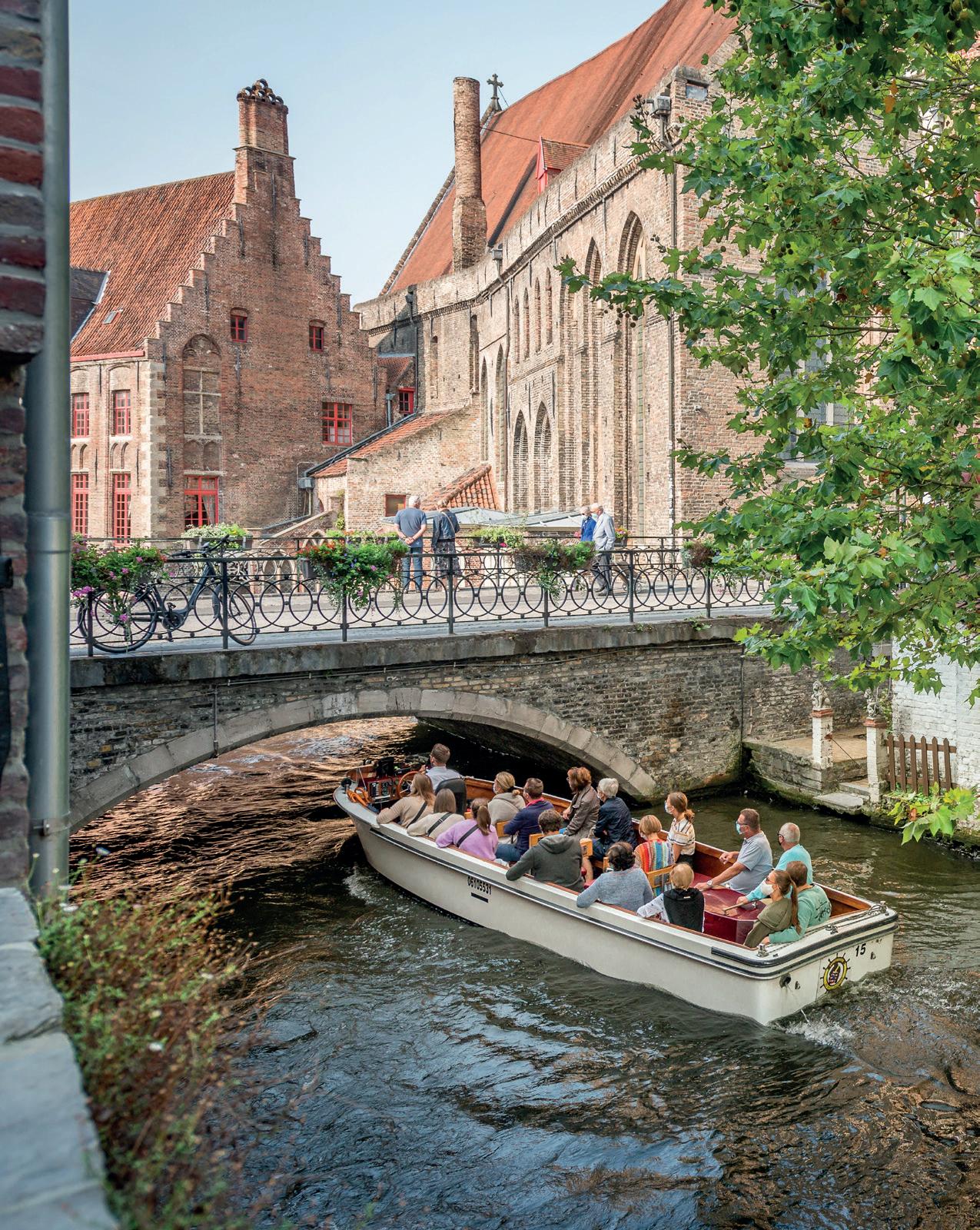
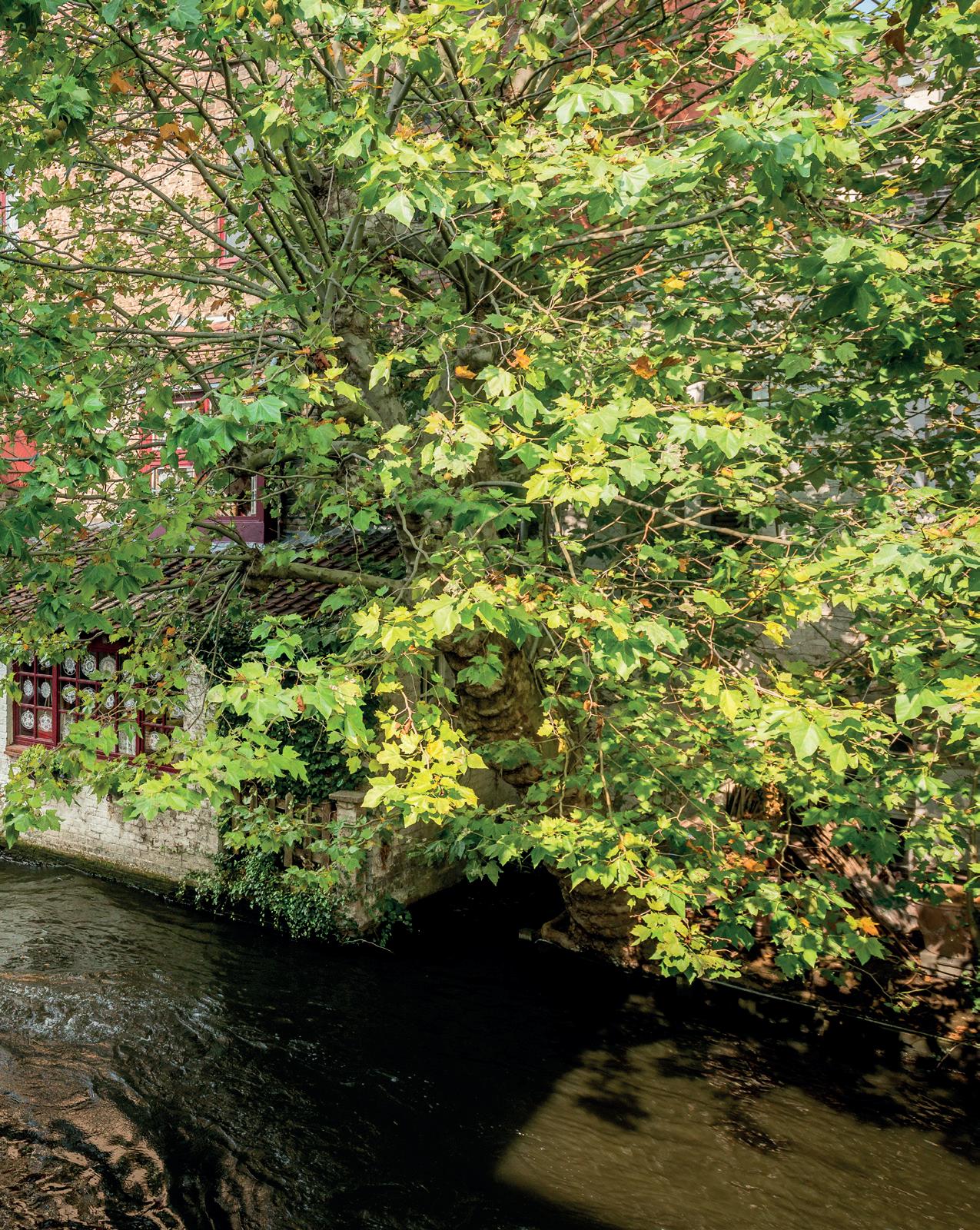
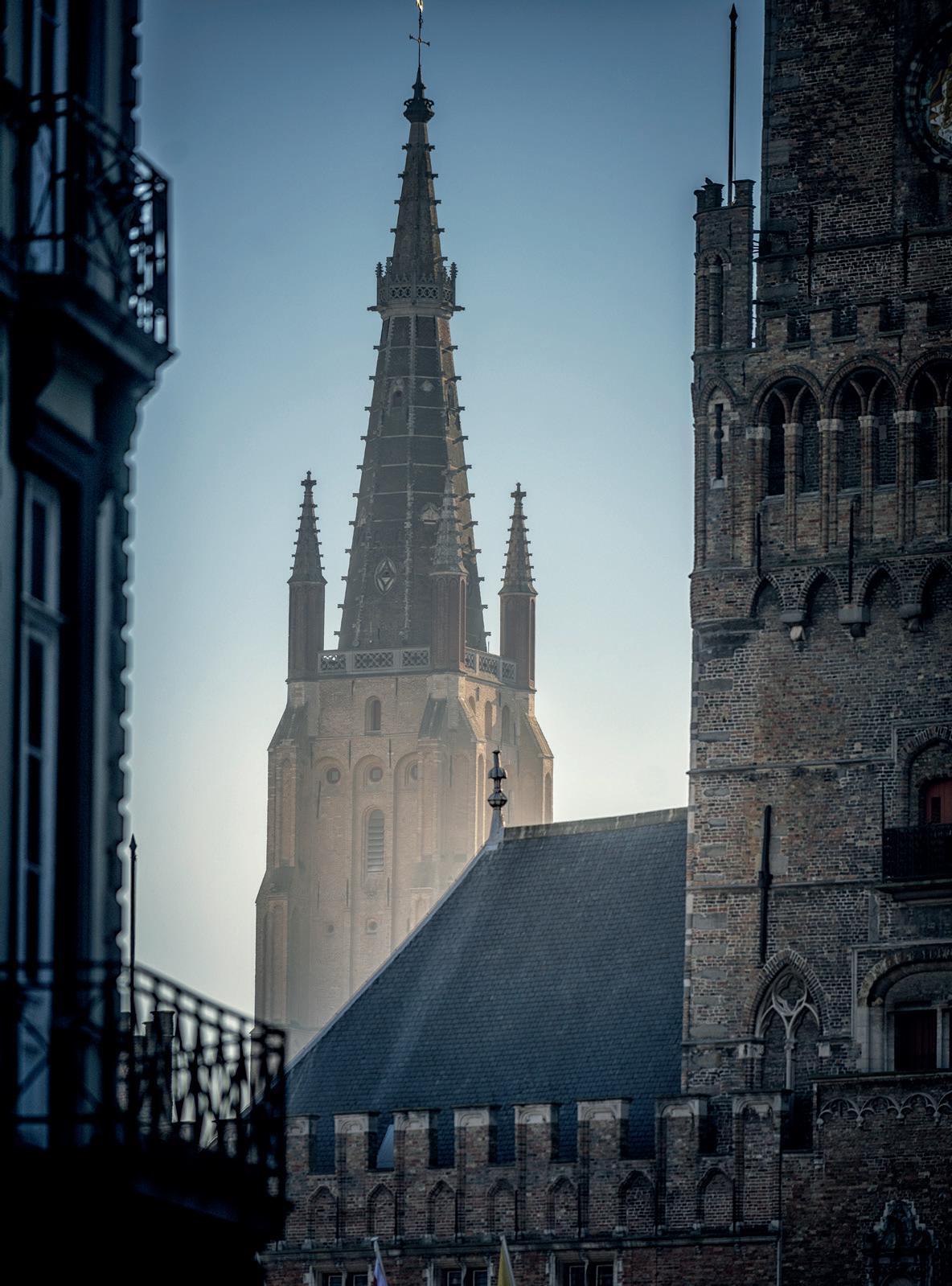
Bruges is one of Europe’s most picturesque cities. With its dreamy backdrop, this is the unofficial capital of romance. But the Venice of the North is also a great beer destination, with charming beer bars, a popular long-standing beer festival, and even a beer line running underneath the city.
By Malin Norman
Cultural highlights in Bruges: BRUSK
Opening on 8 May
The new art gallery BRUSK opens in the historic city centre. Two exhibitions will be on show: the prestigious cultural-historical exhibition Bigger Picture and the digital art exhibition Refik Anadol. Latent City. www.bruskbrugge.be/nl
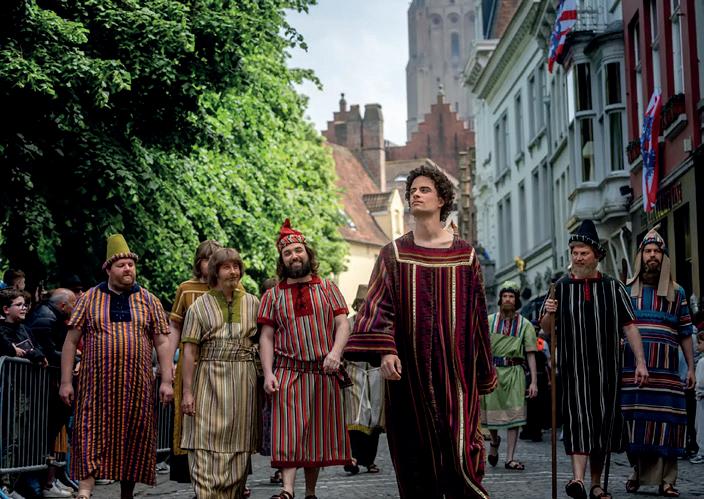
Procession of the Holy Blood 14 May, from 2.30pm at the Dijver Taking place every year on Ascension Day, the historic-religious event brings to life the story of faith, culture and connection. Dating back to 1304, the tradition has stood the test of time. www.bloedprocessiebrugge.be
SMA(A)K Food Truck Festival - Zeebrugge x Seafront 14-17 May
The food truck festival SMA(A)K is coming to Zeebrugge, transforming the Old Fish Market into an atmospheric open-air festival. Come and enjoy delicious food and drinks, listen to live music, and unwind by the seafront. www.smaakfestival.be
Sculpture Trail in the White Village 12 June to 20 September
The Sculpture Trail in Lissewege takes you through the picturesque village, where contemporary art and historical heritage blend seamlessly. Discover a variety of artworks outdoors and indoors. www.visitbruges.be
Feest in ‘t Park 27 June
For one day, Feest in ‘t Park kicks off summer in Minnewater Park. The 35th anniversary of the free festival offers concerts, workshops, exhibitions, the world market, and delicious world cuisine. www.feestintpark.be
MA Festival
31 July to 9 August
The MA Festival aims to bring innovation to the world of music. A dialogue between today’s artists and audience, the festival combines tradition with a contemporary vision and presentation. This year, the ten-day festival opens with the Baroque orchestra Il Pomo d’Oro. www.mafestival.be
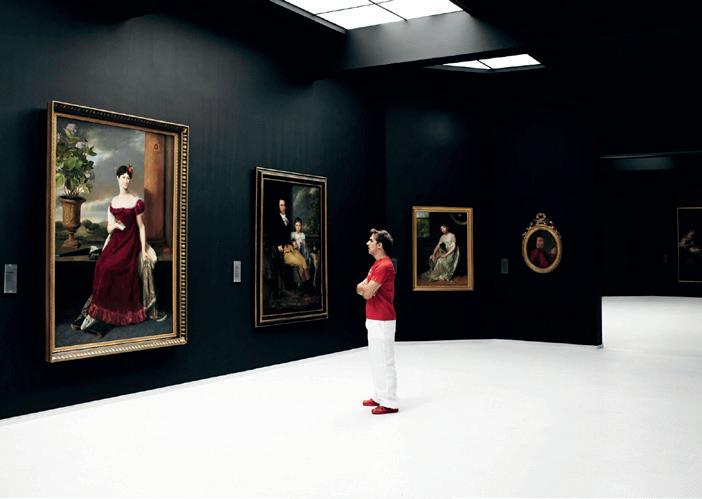
In the Middle Ages, Bruges was one of the most important trading centres in Europe, and the historic city centre is now listed as a UNESCO heritage site. The preserved centuries-old buildings, cobbled streets, winding canals and arched bridges breathe history. Often called the capital of romance, Bruges is the perfect destination for a summer break.
The arteries of the city for centuries, the canals wind through Bruges with treelined benches and stunning views around every bend. Discover the secret gardens and medieval facades during a stroll or a canal boat trip. One of the most beautiful, and most photographed, spots in the city is the Rosary Quay, where the Dijver and Groenerei canals meet.
For some proper romantic scenery, the Lake of Love Park (Minnewaterpark), is a must. Tucked between the green Ramparts and the Lake of love, it is just a short stroll from Beguinage. This world heritage with white-painted houses, tranquil garden and cobblestone streets was founded in 1245. For centuries, it has been a serene site inhabited exclusively by women.
Bruges is considered to be the birthplace of the Flemish Masters. The group of
painters elevated the city’s status to that of an internationally renowned centre for art in the 15th century. You can still see many of their works, for instance at the Groeninge Museum. Must-sees include The Virgin and Child with Canon van der Paele by Jan van Eyck, the famous Moreel Triptych by Hans Memling and masterpieces by Hugo van der Goes, Hieronymus Bosch and their contemporaries.
The art gallery BRUSK is set to become the city’s new artistic hotspot. Located in the Museum Quarer, the brand-new gal-
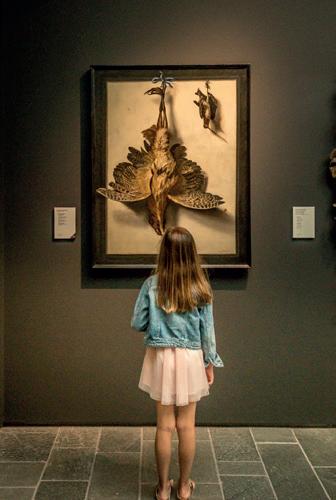
lery opens on 8 May with two leading exhibitions; one gives a cultural historical perspective to Bruges’ historic past (Bigger Picture) and the other is an AI-driven digital art experience (Latent City).
Apart from its impressive art scene, Bruges is also home to one of Europe’s best concert halls, the iconic Concertgebouw Brugge, which attracts more than 150,000 visitors per year. The internationally renowned MA Festival is a must too, with concerts and experiences in some of the city’s most beautiful locations.
BRUGSE ZOT AND BOURGOGNE DES FLANDRES
Not only does Bruges offer beautiful architecture, romantic sites and an outstanding art scene, it is also a fantastic beer destination with rich brewing traditions, famous breweries and cosy beer bars.
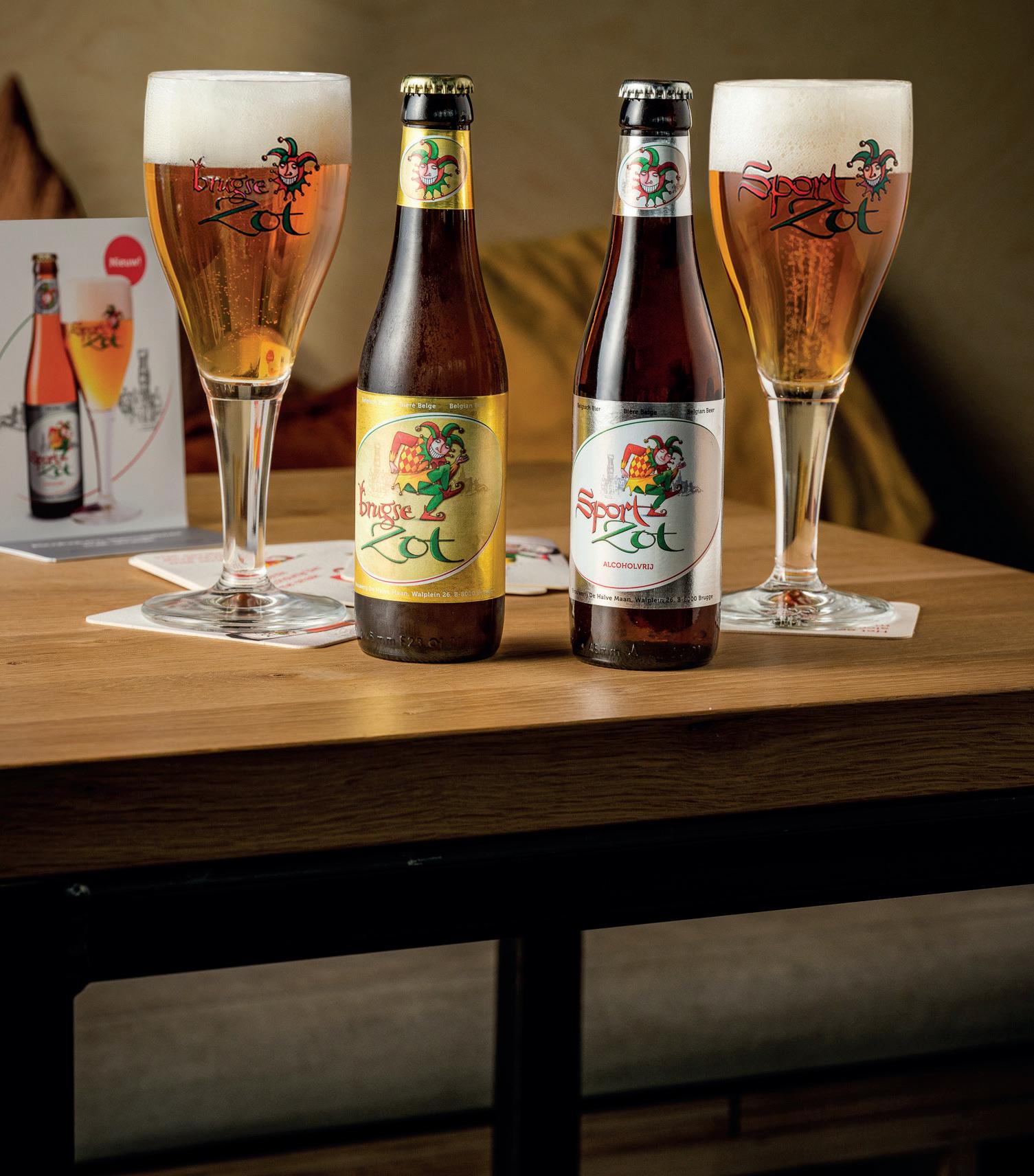
The beer of the city is Brugse Zot, brewed by De Halve Maan. The family brewery stretches back six generations to 1856, and is the last remaining brewery within the city walls. In 2016, the brewery laid a three-kilometre underground beer pipeline to the bottling plant – with beer flowing directly under the city. Join a tour and taste an unfiltered version of Brugse Zot.
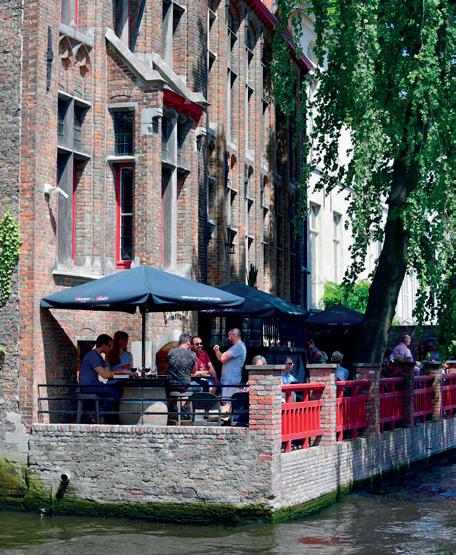
If breweries can be considered romantic, Brouwerij Bourgogne des Flandres certainly is with its brewing loft, courtyard and waterfront terrace. Dating back to the 19th century, this brewery is behind the iconic Bourgogne des Flandres. An example of Flemish beer blending tradition, Bourgogne des Flandres Pure is brewed on site and blended with lambic from Timmermans.
Just outside the centre of Bruges, you will find Brewery Fort Lapin. Established in 2011, Fort Lapin is focused on the best quality and only brews with Belgian hops.
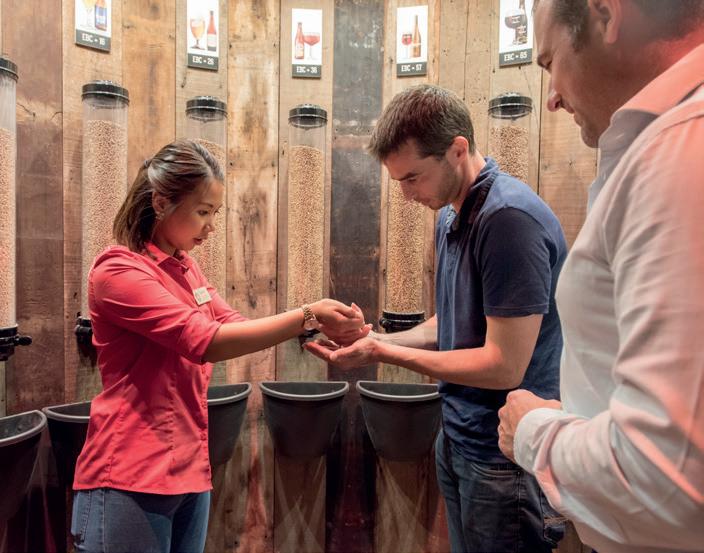
The line-up includes for instance Tripel Fort Lapin 8 and Quadrupel Fort Lapin 10.
For a classic beer café, head to Café Vlissinghe. First licenced as a bar in 1515, this is the oldest in Bruges yet full of life. “I’ll admit the beer list isn’t huge, but all the classics are on the menu. But I don’t go there to tick off new beers, just sitting in this wonderful room is enough for me,” says Paul Davies, founder of AleHunters and UK ambassador for Belgium Beer Week. “Attentive servers keep you stocked up with beer, the best cheese and salami plate in town and local Flemish crowd pleasers on the food menu. In summer, you can seat yourself in the beer garden and even try your hand at krulbol on the rink next to it. This place exudes magnificence.”
More than a museum, Bruges Beer Experience is essential for those who want to discover more about the Belgian beer heritage, with interactive experiences for all the senses. Learn about brewing and ingredients, women and beer, food pairing, Trappist and abbey beers, and more. There is also a kids’ tour with an exciting story about the Bruges bear. The bar offers tasty beers and a view of the Market Square.
Not to be missed is the 18th edition of Bruges Beer Festival, which takes place 12-13 September at Bruges Meeting & Convention Centre (BMCC). Around 50 breweries will take part and more than 350 beers will be served to thirsty visitors. The 2026 edition is set to be extra festive, as it also marks the 10th anniversary of the UNESCO recognition of Belgian beer culture as well as the 20th anniversary of the organiser, Bruges Autonomous Beer Tasters (BAB).
Bruges Beer Experience
Open seven days a week
Museum: 10am to 6pm
Bar/Shop: 10am to 6.30pm
mybeerexperience.com
Bruges Beer Festival 2026 (BBF26)
When: 12-13 September, 2026
Where: Bruges Meeting & Convention Centre (BMCC)
www.brugsbierfestival.be
More information on what to see and do in Bruges: www.visitbruges.be and www.visitflanders.com
‘t Brugs Beertje, Kemelstraat 5
World-famous for good reasons. This brown bar has a relaxed vibe and exudes excellence. I’ve been visiting for 34 years and never tire of it. The beer list is huge as always. When founder Daisy sold it, new owner Dries kept the vibe the same with some added touches. The rare beer list from my friend Jef’s former beer collection contains many rare beers. But the guest beers at the back of the menu feature newer, smaller producers and more session-strength beers. Wonderful.
Le Trappiste, Kuiperstraat 33
If a loud, heavy playlist backed up by a draft list of 27 classic and rare Belgian beers appeals to you, then Regnier’s basement bar is for you. Loud, hot and beery, there’s an amazing bottle list to back up the taps if you just can’t get enough good beer. Regnier used to run the Bier Temple shop on Maarkt many years ago and knows how to curate a good menu.
De Garre, De Garre 1
Infamous as the bar that’s hard to find, unless you know where to look. Expect classical music, free cheese on doilies, a superb beer list and their house Tripel brewed at Van Steenberge (who now own the bar). It’s hard to get in despite the bar now having three floors. Once seated, it’s hard to leave. A place to contemplate over a beer and cheese. And decide on your next beer.
Paula Mostaert, Gelmundstraat 9
Situated on the lesser of Brugge’s two main shopping streets, this wonderful little bar is an inclusive space for everyone. The trendiest bar serving in the city will keep you hydrated with up and coming Belgian craft beer. The playlist is very cool and doesn’t interfere with conversation. Board games, conversation and the best hot dogs anywhere, apparently.
‘t Hof van beroep, Langestraat 125
Locals’ café down the end of Langestraat towards the Kruispoort. The usual banter of folks returning home from work and having a cheeky one or groups planning a night out together and ending up stuck at this excellent bar – you don’t want to leave! Belgian craft beer, lambic, quality wine and spirits plus local events. Light snacks are served, but if you want something more substantial, try Lion Belge nearby.
Cafe DeHOPtimist, Rijselstraat 60
If you fancy leaving the city centre and exploring the outskirts of the ring road. Packed full of local lads, lasses, families, grannies – there’s lots of laughter, all encouraged by an excellently curated beer list. It’s a decent stroll behind the railway station and if you’ve had one too many, you can hop on a bus back to the centre. Hungry? The cheese and meat platter is legendary. Wear your big pants, the plates are daunting. They hold their own Toer de Geuze on 19 May.

For inspiration on how to pair beer and food, we asked nine knowledgeable beer writers, judges and educators from around the world for their favourite Belgian-themed combo. From pale ale with Argentine choripán to blonde ale with Mexican shrimp tacos, gueuze with Chinese dumplings and saison with fries – here are some irresistible, and perhaps surprising, pairings to entice your tastebuds.
By Malin Norman
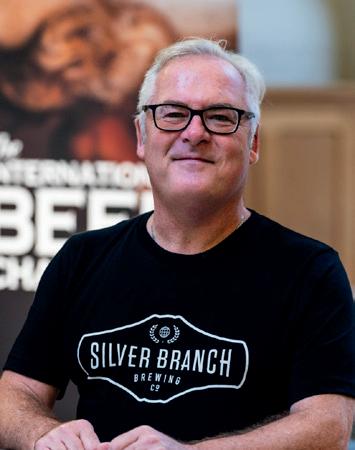
Shana Solarte
Advanced Cicerone® & communications manager for John I. Haas
Rather than overthinking beer and food pairing, I love to keep it simple. One of Belgium’s greatest exports, the humble frite, with its pillowy soft insides and shatteringly crisp exterior, is basically built to be enjoyed with beer. My go-to frites pairing is Brasserie De La Senne’s Taras Boulba, a beer I often reach for on its own but especially alongside a paper cone of freshly fried potatoes. Its effervescence and elevated bitterness help to temper the oil and salt on the frites, while the huge lemony-floral hop bouquet melds with the natural sweetness of the potatoes, making it a bite worth returning to over and over (and I do!).
Instagram: @etralos
Anaïs Lecoq
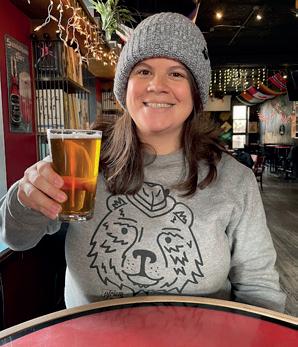
A favourite beer and food pairing memory was eating a Kippenwaterzooi at a restaurant in Brugge, Flanders. Actually, ‘t Huidevetterhuis was my first restaurant experience in the city, when I first visited in 1990. The dish is a chicken stew with onions, celery, carrots, and other vegetables and herbs. The broth is thickened through reduction or can sometimes use a thickener such as cream or egg yolk. This was paired perfectly with a St Bernardus Tripel – you could use the beer to construct the broth too – I believe the much missed Den Dyver restaurant did this with its beer and food pairings, presenting the beer with the dish. At 7.5%, this tripel is more sweet-forward, lightly hopped and solidly carbonated. The sweetness from the malt complements the broth’s rich flavours, and the assertive carbonation and gentle bitterness provide a nice complimentary balance to the dish.
www.alehunters.co.uk
Facebook: AleHuntersBreweryTours
Instagram: @alehunters6
French journalist, award-winning drink writer, author
Since I’ve never been a fan of pairing a meal with heavy beers, I’ll go for something dry and refreshing from Brasserie Dupont – not their famous saison though. My pick is one of their lesser-known beers; the Rédor Pils, created in 1945 by the current owner’s grand-mother, Sylva Rosier, and the only one they brew without their distinctive yeast strain. It just works wonders with a galette bretonne, a savoury buckwheat crepe from Brittany, where I live. My perfect homemade galette is filled with crispy bacon, gently candied pink Roscoff onions, a fried egg with a runny yolk, and a generous handful of cheese (something like a mild cheddar or a local Tomme de Rhuys). Galette is traditionally enjoyed with cider, but the Rédor’s clean bitterness cuts right through the richness of the cheese while the subtle grain aromas echo the nuttiness of the buckwheat. A true delight!
anaislecoq.fr
Instagram: @anahlcq
Bluesky: @anahlcq
LinkedIn: Anaïs Lecoq
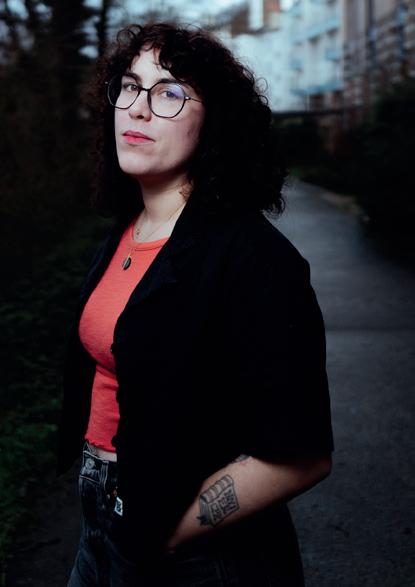
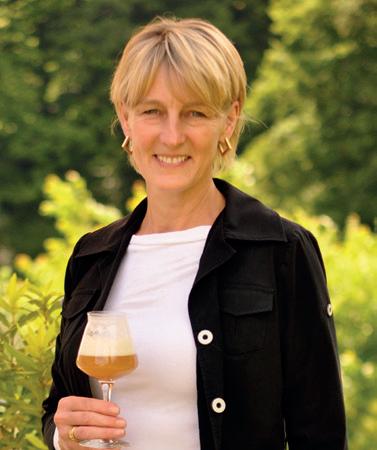
Anja Kober-Stegemann
Beer sommelier, international beer judge, BJCP
Rochefort 8, with its 9.2% ABV, is always a safe bet as a closing beer for tastings. Its typical Trappist character unfolds aromas of ripe figs, leather, and star anise, followed by a surprisingly refreshing first impression and a long, warming finish of raisins and spice. Alongside it, Gewitterkäse – a distinctive Swiss mountain cheese celebrated for its origin story and bold flavour – offers a powerful companion: crystalline saltiness, creamy melt, and an intense, mature spiciness that fills the palate and refuses to let go. Served at the right temperature, the pairing creates a deeply satisfying finale.
As a popcorn lover, I always try to squeeze it in when doing tastings, for instance walnut popcorn glazed in maple syrup. The buttery crunch adds texture and contrast, while the walnut brings a gentle bitterness and warmth that lifts this pairing to another level. What had been a harmonious, comforting combination gives way to a thrilling intensity – layered, dynamic, and utterly memorable.
www.die-biersommeliere.de
Facebook: anja_diebiersommeliere
Instagram: @anja_diebiersommeliere
LinkedIn: anja-kober-stegemann
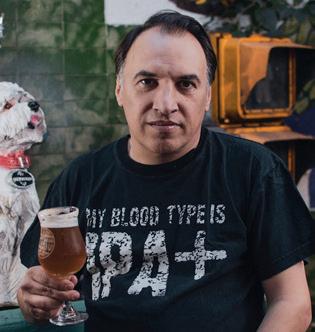
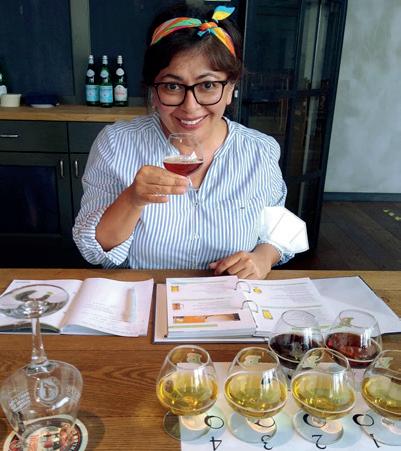
Yadira Espinoza
Martin Boan
Beer sommelier, co-founder of Centro de Cata de Cerveza
Choripán Argentino is a grilled chorizo in crusty bread with chimichurri – rich pork fat and beef, smoke, salt, and the bright acidity of parsley, garlic, and vinegar. A Belgian pale ale complements this interplay with precision. Its moderate bitterness and lively carbonation cut through the sausage’s richness, cleansing the palate. The beer’s malt profile – light caramel and toasted notes – echoes the browned crust of the chorizo and bread, creating a natural bridge. Meanwhile, the expressive Belgian yeast contributes subtle fruity esters and gentle spice, which resonate with the herbal intensity and slight heat of the chimichurri. The result is a balanced, highly drinkable pairing between Argentina and Belgium.
Instagram: @martinboan
Beer sommelier, beer writer, author of The Beerfulness
I love all Belgian beers, and I think the Belgian blonde ale stands out for its versatility and year-round appeal. I remember one particular moment in Brussels, after a long day wandering through its streets, discovering the comic route and iconic city architecture. Tired and hungry, I stepped into a small restaurant and was greeted with a perfectly served Grimbergen blond ale. Paired with a pot of mussels, it felt like the ideal match: simple, comforting, and full of flavour.
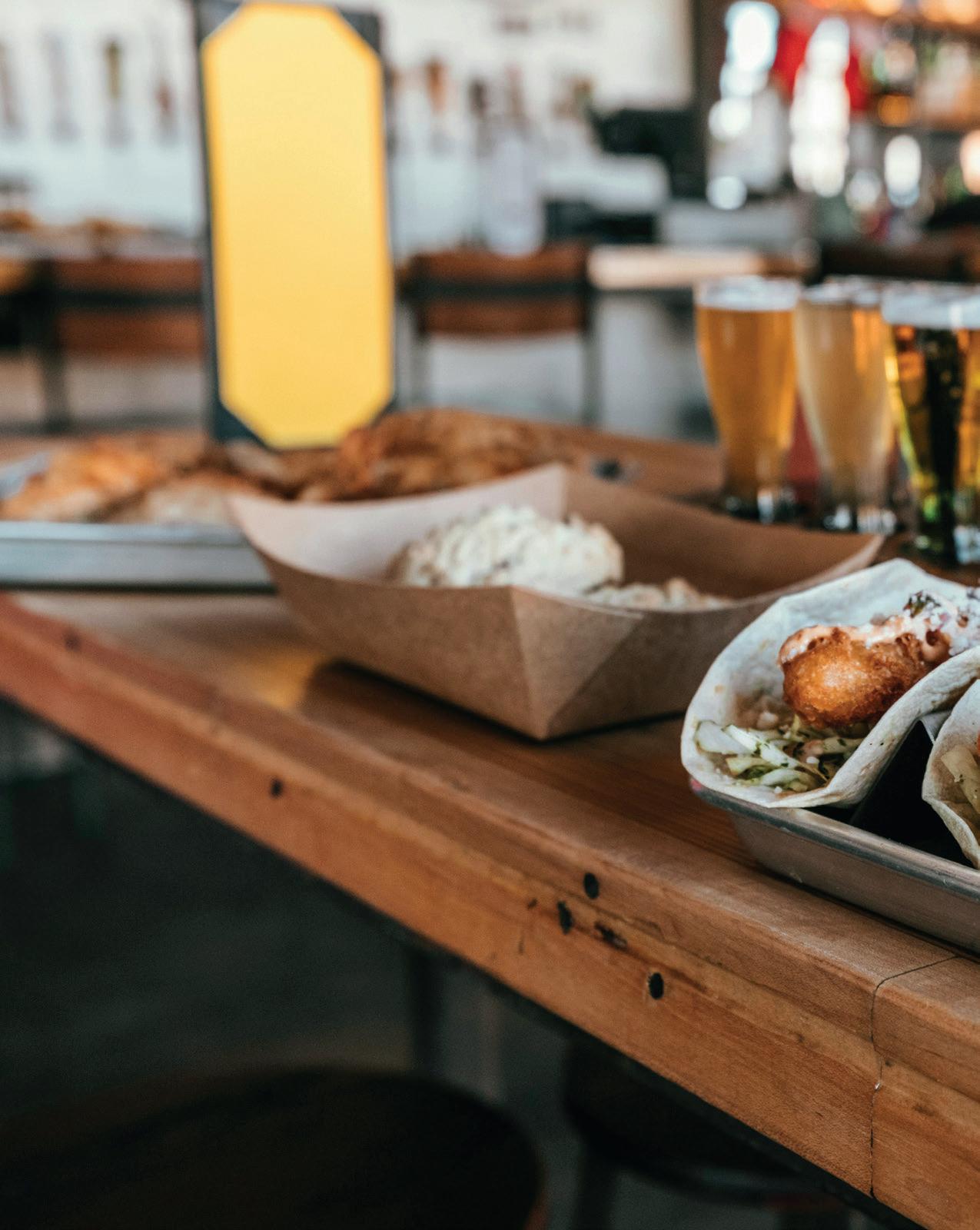
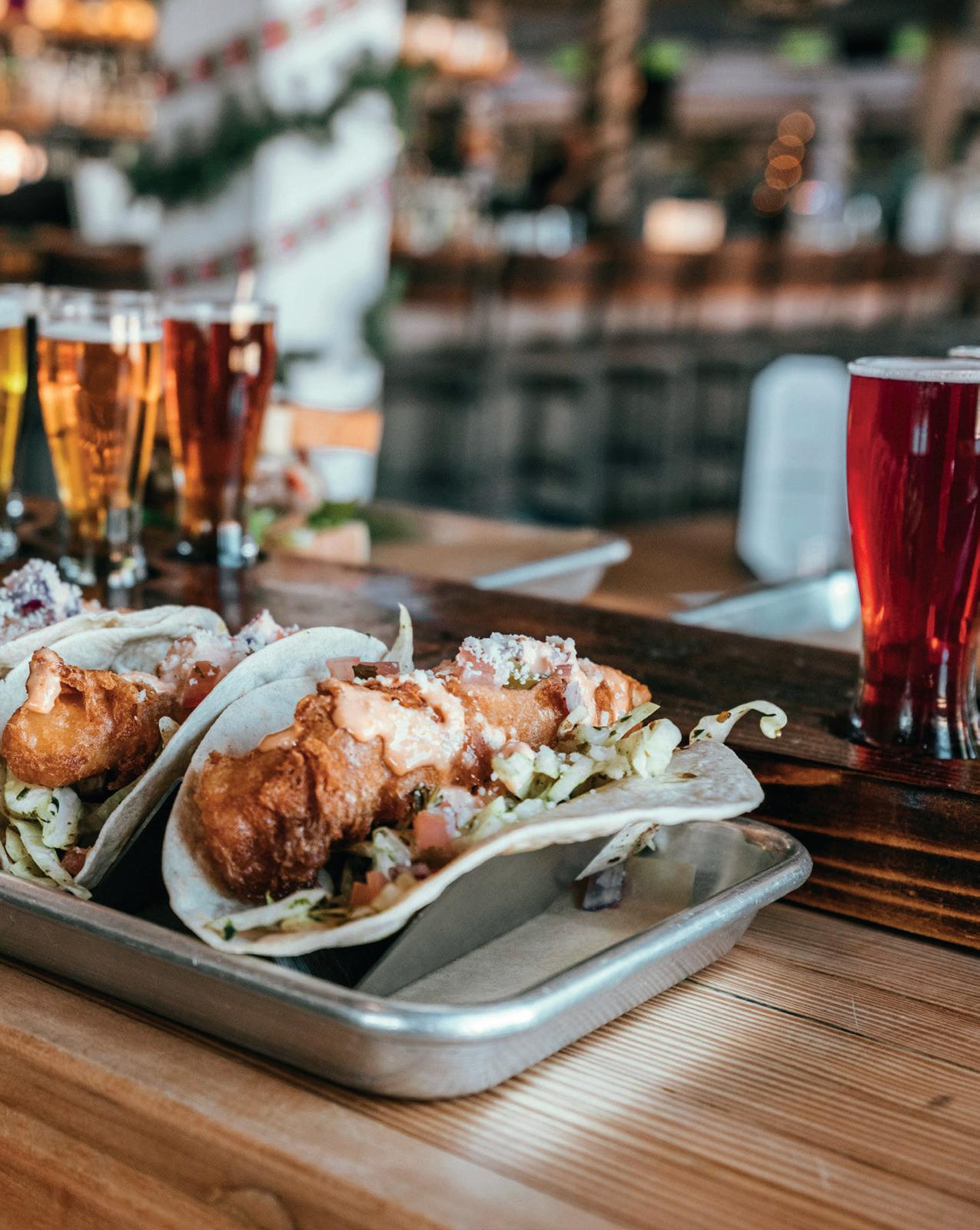
Back home in Mexico, my pairings are different, more vibrant. For example, I love a Belgian blonde ale with Baja-style shrimp tacos: crispy battered shrimp, tender and juicy inside, tucked into a warm corn tortilla with lime, small pieces of tomato, cabbage, cream, and a touch of chili. This beer style works beautifully here; the lively carbonation cuts through the crispiness, while its fruity esters and soft honeyed malt echo the natural sweetness of the shrimp and corn tortilla. A gentle spice balances the flavours, bringing everything into a satisfying harmony. yadiraespinoza.bierlinerin.de Instagram: @bierlinerin.de
Lotte Peplow
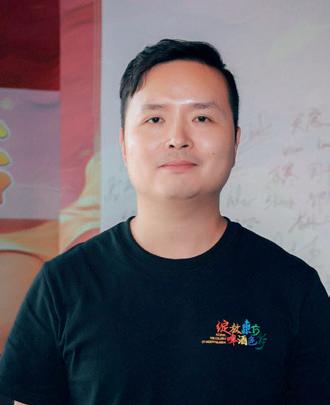
Tian Zhou
Founder of Beer Matters, China’s leading beer community platform
Some pairings sound like sommelier theory. Others are accidental cross-border miracles discovered by drinkers after “just one more.” Gueuze and jiaozi (aka dumplings) is exactly that. In China, dumplings are edible symbols of reunion, especially during the Chinese New Year. Fillings vary endlessly, but traditional recipes often need fat to taste rich and satisfying. Because of this richness, dumplings are classically dipped in vinegar. Vinegar cuts through the grease, and Oude Gueuze does the same job, but with Belgian bubbles. Its acidity echoes the vinegar dip, while high carbonation refreshes the palate after boiled, pan-fried, or deepfried dumplings. Its funky, earthy, orchard-fruit notes also work beautifully with complex fillings like smoked meat, mushrooms and Chinese cured bacon. In Chinese beer bars, we joke: jiaozi jiu jiu — dumplings go with booze. Playful in pinyin, serious on the palate.
beermatters.cn
WeChat: tzhou530
Brewers Association American craft beer ambassador for Europe
Beer’s wide spectrum of flavours make it the perfect pairing partner for almost any food dish, but my undoubted favourite is the classic combination of a Belgian witbier with moules frites. Being an American craft beer aficionado, my go-to beer is award-winning Allagash White from Allagash Brewing Co in Portland, Maine – a classic Belgian-style witbier brewed with oats and wheat, and spiced with a special blend of coriander and Curaçao orange peel. It’s zesty, light, dry and refreshing, and pairs perfectly with the briny minerality of seafood without overpowering it. The delicate combination of citrus and spice interacts with the salinity of the mussels, giving a wonderful harmony on the palate while the refreshing carbonation scrubs the mouth clean after every bite. Mussels are traditionally steamed in white wine, garlic and herbs, but the broth can also be made from cream or beer to really double-down on the witbier and moules frites experience!
www.brewersassociation.org
Instagram: @lotte_peplow1
Mikel Rius
Co-director
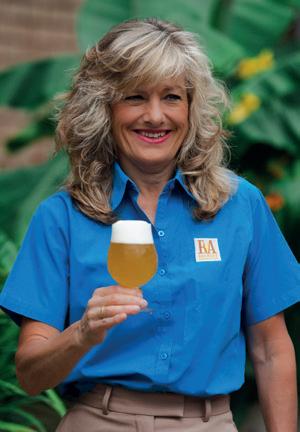
of Barcelona Beer Festival and InnBrew
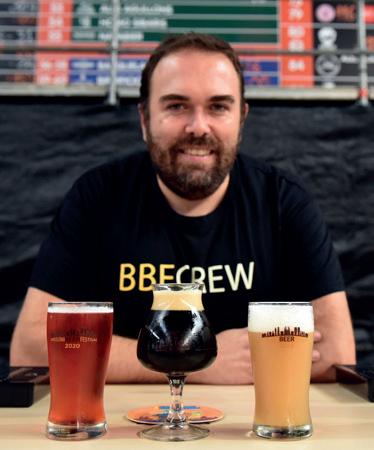
More than ten years ago, I met the Janssens family of Hof ten Doormal, almost by chance. I wanted to invite them to Barcelona Beer Festival and, while on a trip to Leuven, I simply showed up. As it happened, it was one of the grandchildren’s birthday, and I found myself sitting at the family table, singing Happy Birthday in Catalan, sparking unexpected laughter. That day, I discovered their farmhouse brewery project, walked through the hop fields, and tasted their classic beers and barrel-aged creations.
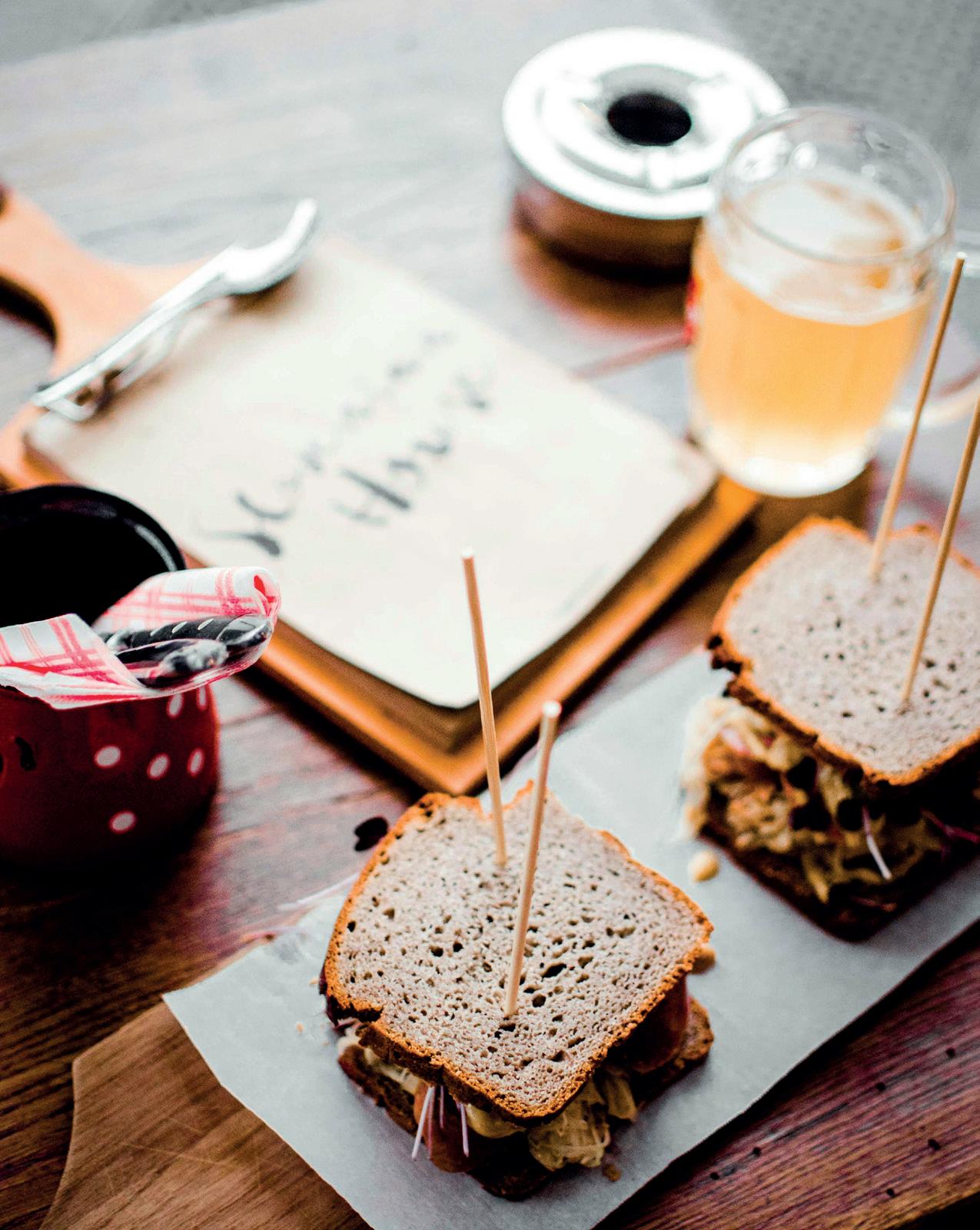
The perfect pairing wasn’t anything sophisticated; it was giant, endless bowls of fries – the birthday kid’s favourite – shared by everyone, without measure and without hurry, with a saison from the house in hand. That simple contrast had everything, but what truly mattered wasn’t on the plate or in the glass. It was the feeling of being at home, of being part of something bigger. That day, I understood that when beer is honest, it speaks straight to the heart.
Instagram: @mikelrius
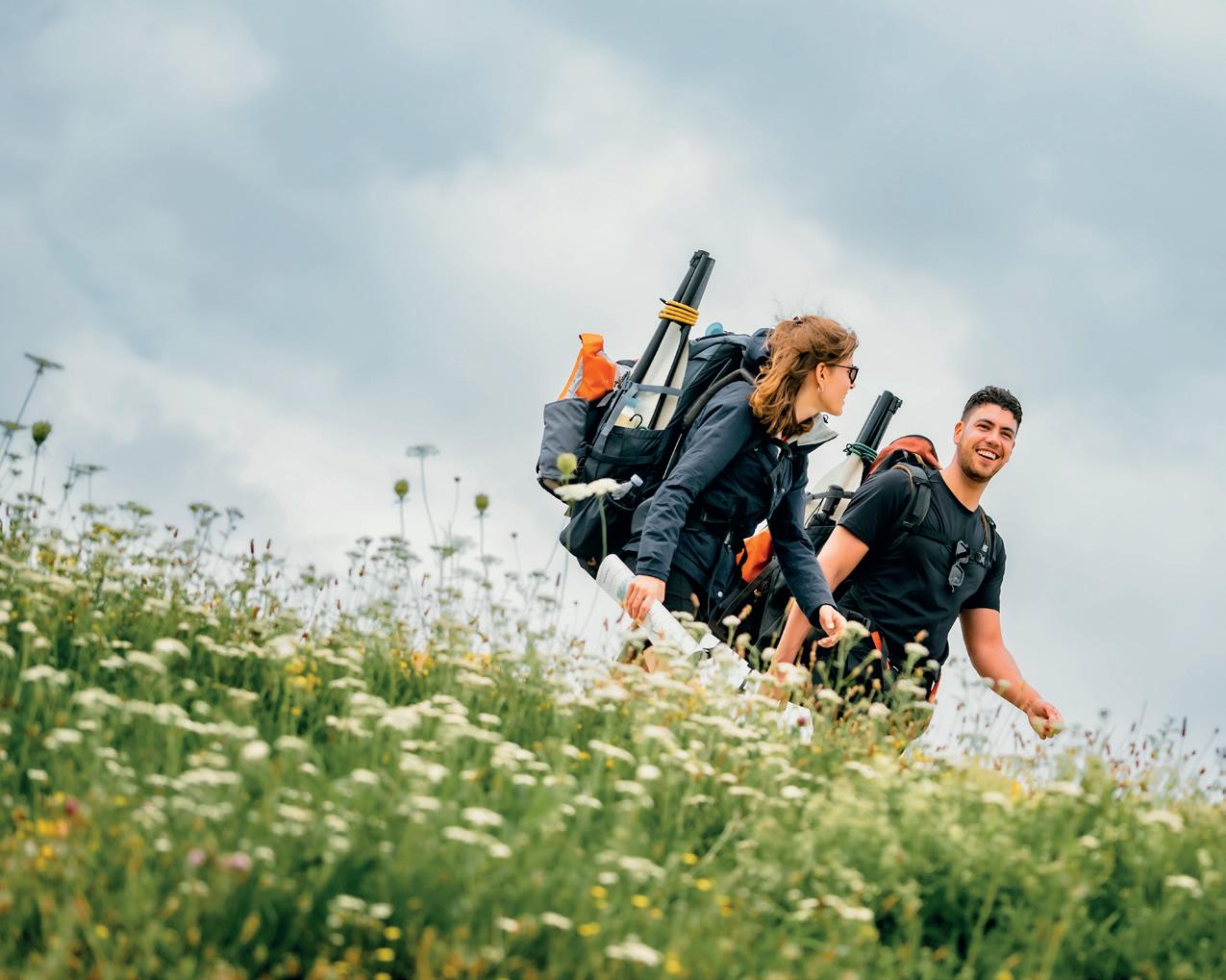
Redefining the concept of a travel organisation, Travelbase focuses on the experience and not just the destination. Its trips are designed for travellers who love nature and adventure.
By Malin Norman | Photos: Travelbase
The story of Travelbase began in 2010, when Charles and Simon, two friends from university, organised a hitchhiking race to Barcelona for Belgian students, which gained media attention. The success sparked a series of adventurous travel
concepts, and a few years later, Taco and Gido joined after launching innovative surf villages on the Atlantic coast. Together, the team expanded into unique adventure trips across Europe and beyond. Today, Travelbase offers over 100 experiences in
more than 30 countries around the world, with a mission to push people out of their comfort zone and create unforgettable travel stories.
“We want to make adventure travel accessible to as many people as possible,” says Kyana Salliau, PR manager. “Whether you’re hiking, road tripping, or canoeing, you’ll explore breathtaking landscapes, either independently or with like-minded explorers. What matters most is what

you live along the way: unique activities, discovering hidden gems, reconnecting with nature, and immersing yourself in local cultures.”
The Travelbase team includes over 80 passionate adventurers, who work daily to design one-of-a-kind trips that take people off the beaten track, with authentic adventures in nature. “Our team
creates unexpected adventures for every type of traveller,” says Kyana. “We work with specialists, guides, and passionate locals who take care of everything, so you can leave with peace of mind and enjoy your trip to the fullest.”
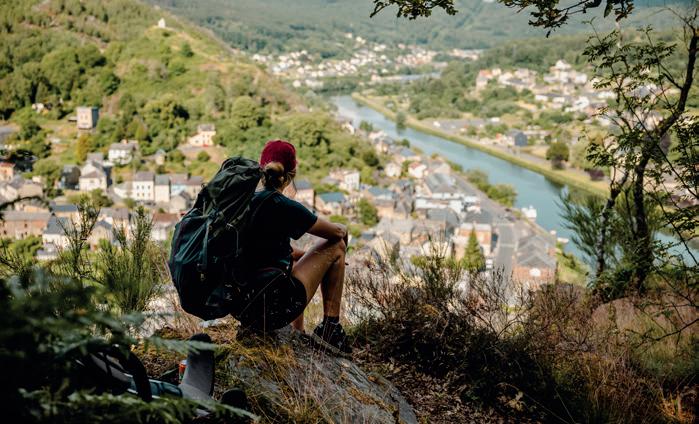
In the Benelux region, Travelbase offers many close-to-home microadventures. For instance, treks in remote and beautiful locations are a sure hit. Kyana recommends the Mullerthal Trail in Luxembourg,
a 3-4 day microadventure with scenic deep forests, spectacular rock formations and waterfalls. Travelbase also organises a family-friendly version of the hike, with shorter, playful hiking stages and plenty of variety for young explorers.
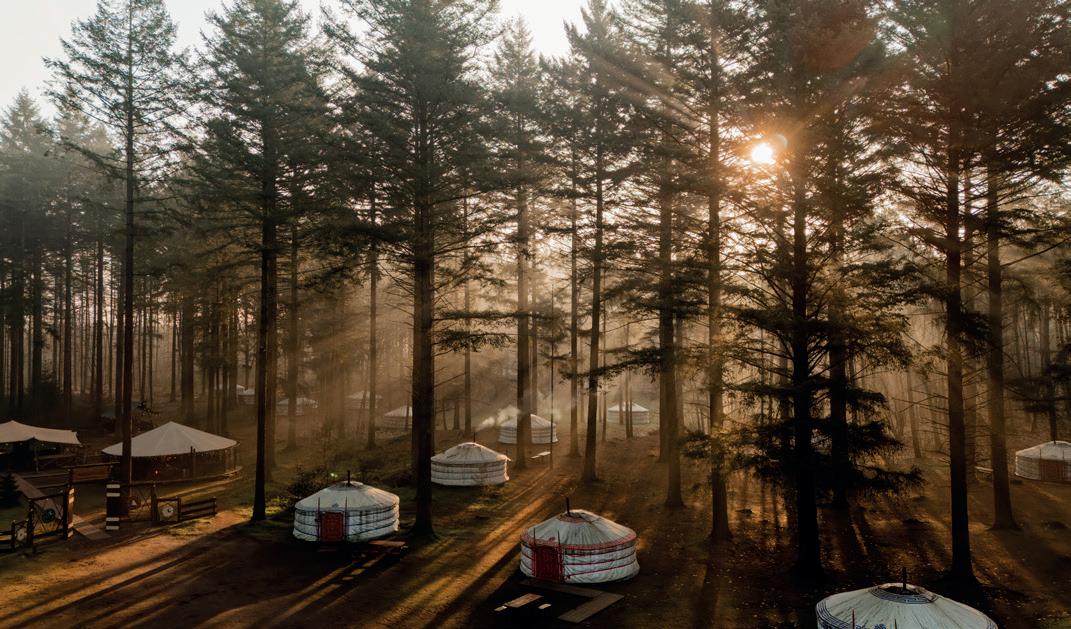
“The route winds through green valleys and past imposing sandstone cliffs, and we have selected the most gorgeous sections for you to create an experience that is both accessible and surprising,” she says. “After a day full of impressions, you arrive at the campsite, where a comfortable tipi with a real bed is already waiting for you. Here, you can unwind under the starry sky, and get ready for another day of hiking in this region.”
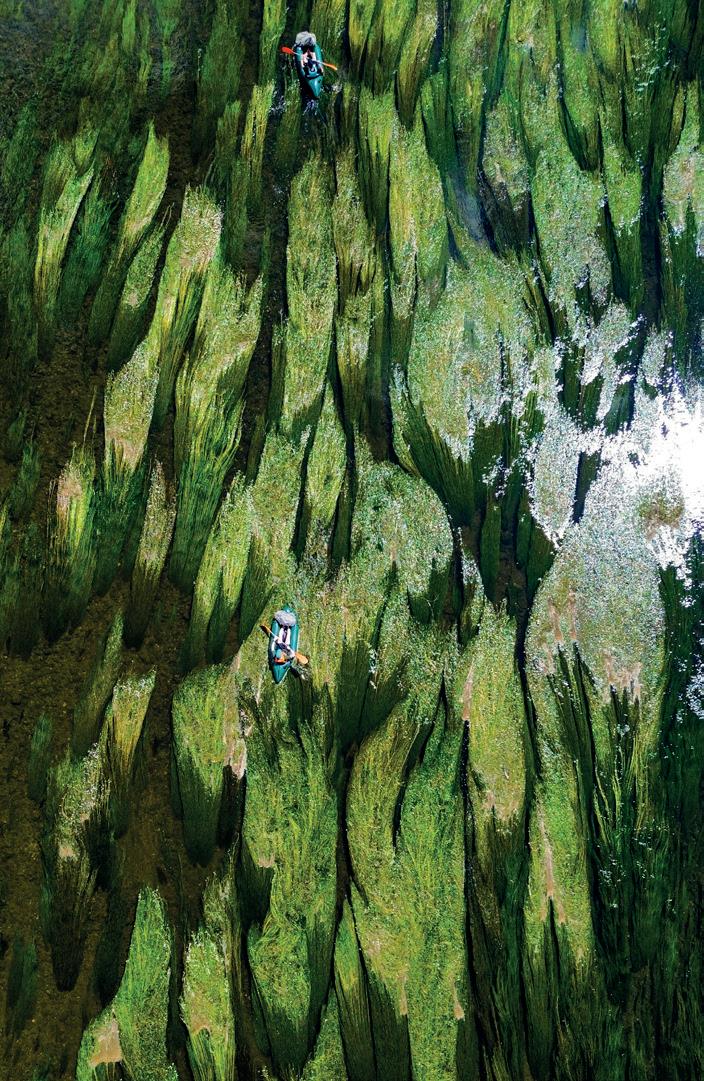
Canoeing is another great way of exploring. “Our Canoe Trip Friesland is a popular microadventure, which is also familyfriendly,” says the PR manager. This is a relaxed 2-day canoeing adventure through lakes and canals in Friesland, the Netherlands, with an overnight stay at a campsite. “Whether you’re travelling
with your partner, family, or solo, you determine the pace and the route yourself. Along the way, you will enjoy peace and quiet, nature – including De Alde Feanen National Park – and the freedom of wild camping, far from the hustle and bustle.”
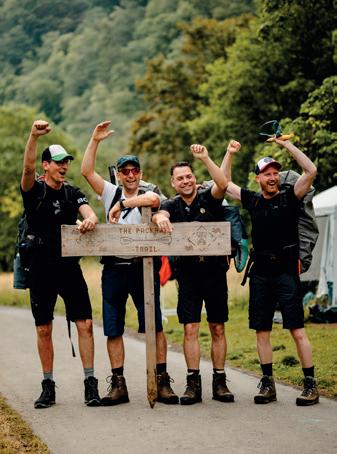
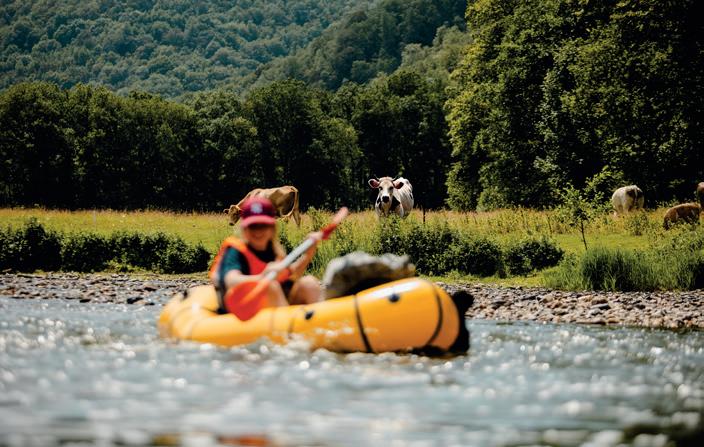
With the Packraft Trail, a 2-day adventure available in the Ardennes, Biesbosch and Mullterthal, you will combine hiking and packrafting, carrying a small raft in your
backpack. You will alternate between walking and paddling, and the scenery depends on the region, from wetlands to hills and rocky forests.
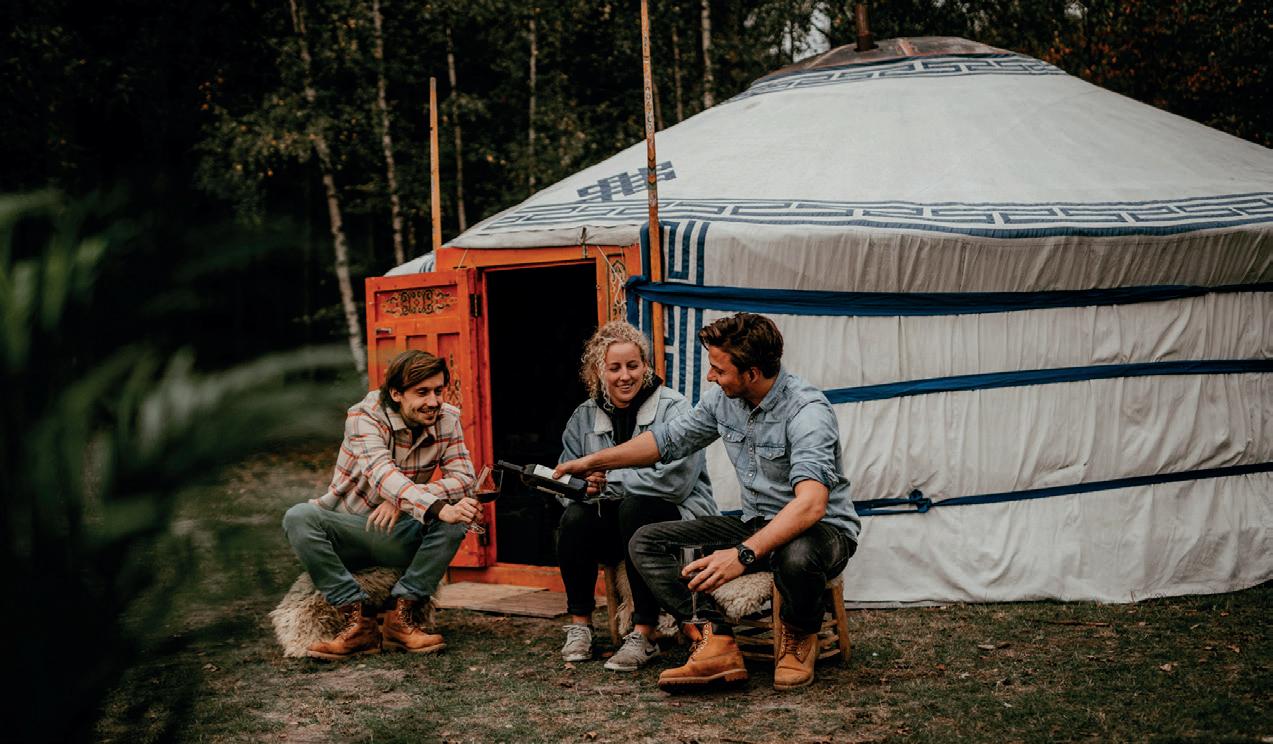
For a short winter getaway focused on just relaxing in nature rather than going on an activity-based holiday, the microadventure Winterwoods in Drenthe, the Netherlands, is a great option. Activities include light hiking and just unwinding by
the campfire. You stay in a fully equipped yurt with real beds and a wood stove, with access to an outdoor spa with wood-fired saunas and a hot tub. Beyond trips in the Benelux region, Travelbase offers adventure packages around the world.
By supporting local projects and partners on-site and by reducing CO2 emissions, Travelbase strives to minimise its footprint and maximise its positive impact. “We take our responsibility seriously and are constantly working to reduce our negative impact while giving back to nature and creating positive change in the destinations we explore,” says Kyana.
To support this mission, Travelbase has set up the Butterfly Foundation, a non-profit organisation focused on maximising the positive impact of journeys. Travelbase also has a team of Green Guardians, committed to making its trips more sustainable and ensuring collaboration with local charities.
“By embarking on adventurous travels, we broaden our horizons, cultivate a love

for diverse places and cultures, and return home with a fresh mindset and new priorities,” Kyana adds. “However, as we explore this beautiful world, we undeniably impact the nature and environment we admire.”
travelbase.eu Facebook: Travelbase Instagram: @travelbase.world, @travelbase_
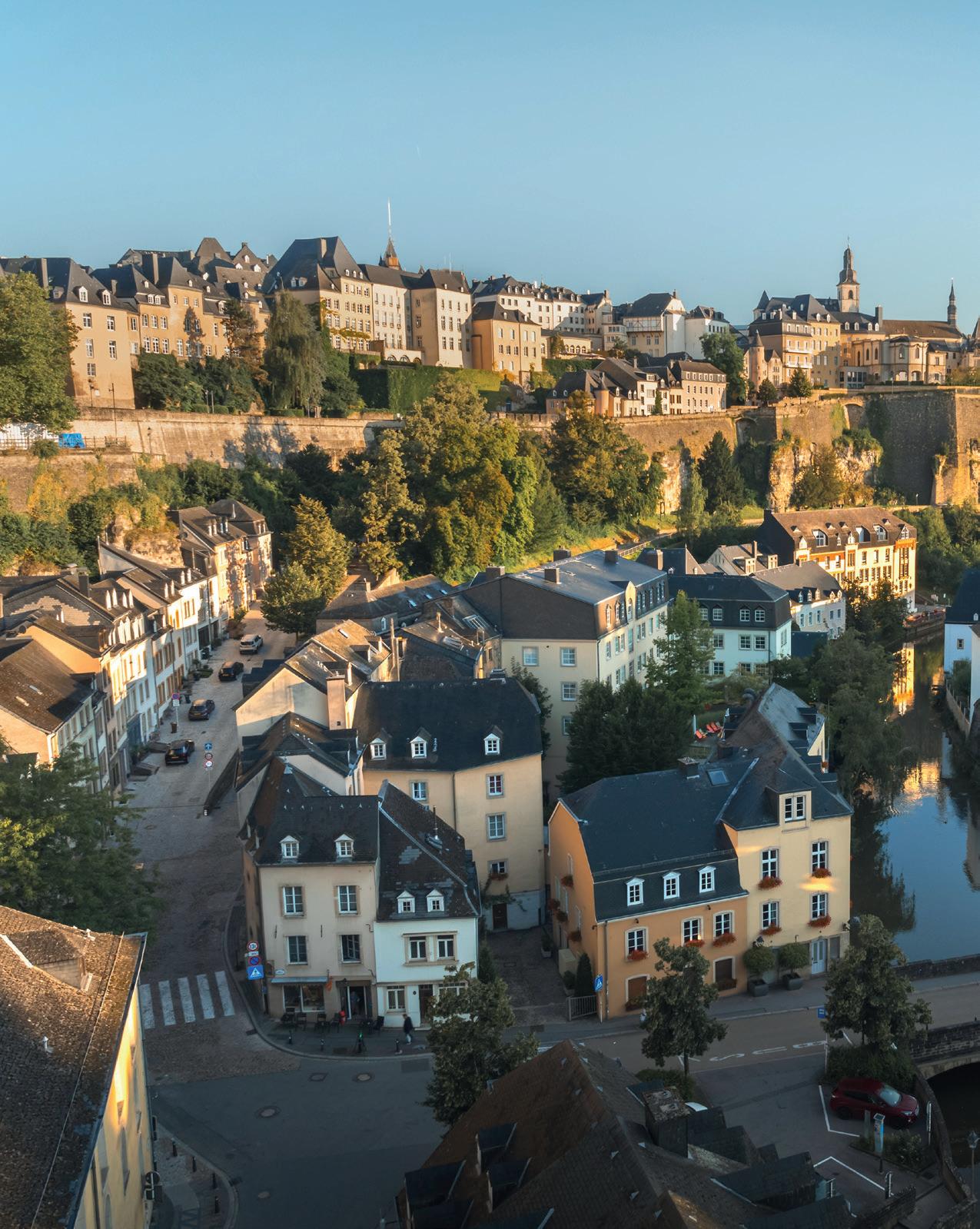
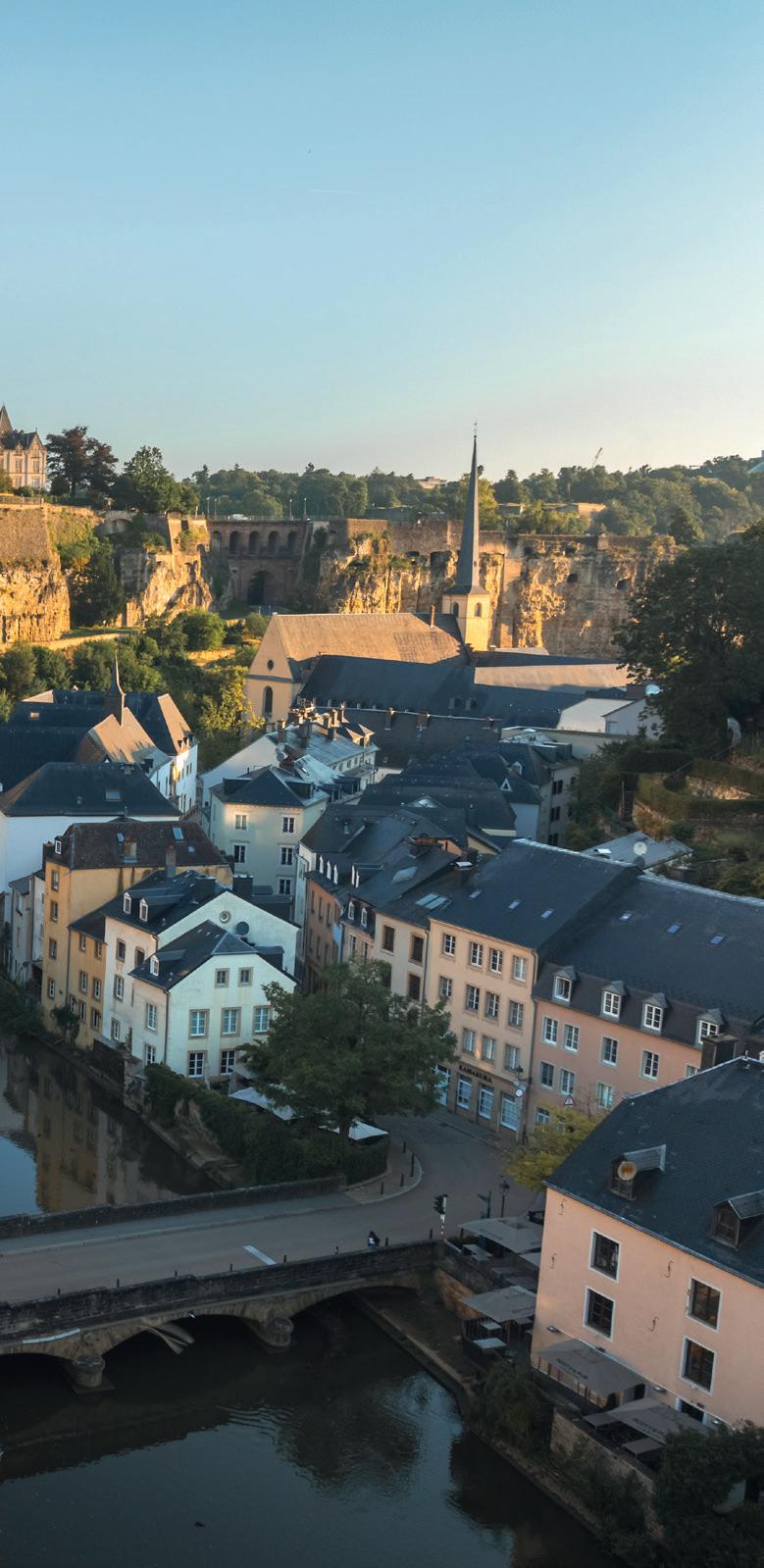
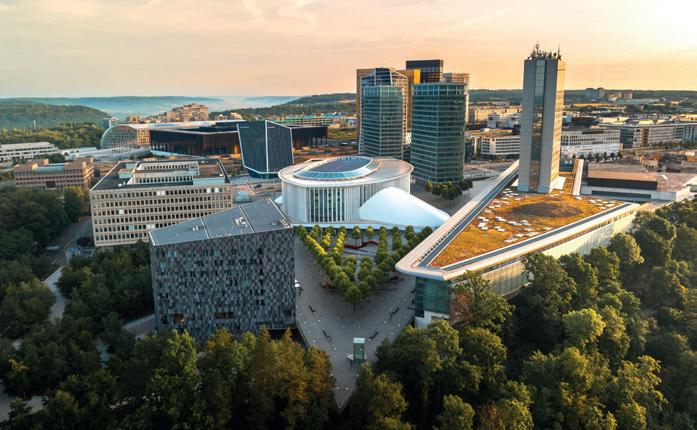
Luxembourg City may be small in size, but it delivers an experience that rivals Europe’s largest capitals. Blending spectacular landscapes, rich history and a vibrant international spirit, the city offers visitors a unique mix of culture and calm – all within minutes of each other.
By Paola Westbeek
What immediately sets Luxembourg City apart is its extraordinary setting. Built across deep valleys and steep cliffs, the city feels almost sculpted by nature itself. Bridges stretch across dramatic drops, connecting districts that seem worlds apart yet are only moments away. According to the Luxembourg City Tourist Office (LCTO), “Luxembourg City stands out for its rare combination of nature, history, and international flair – all within a very compact space.”
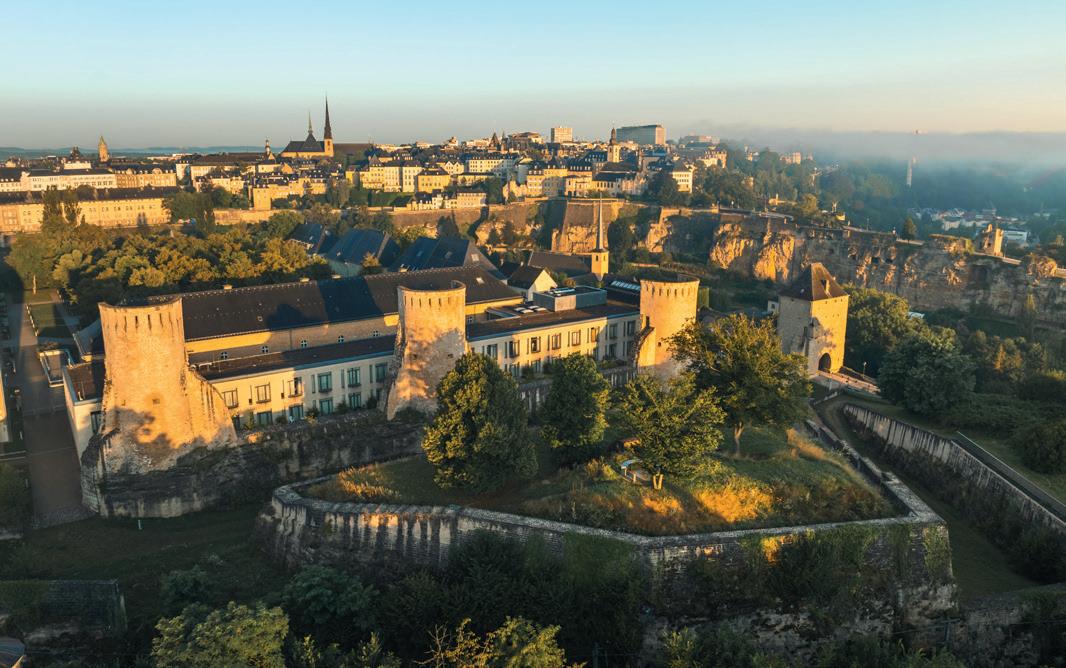
This unique topography has shaped not only the city’s appearance but also its identity. The historic fortifications, expanded over centuries, are among the most impressive in Europe. These structures earned the old town its UNESCO World Heritage status in 1994 and continue to tell the story of a place that was once a strategic stronghold.
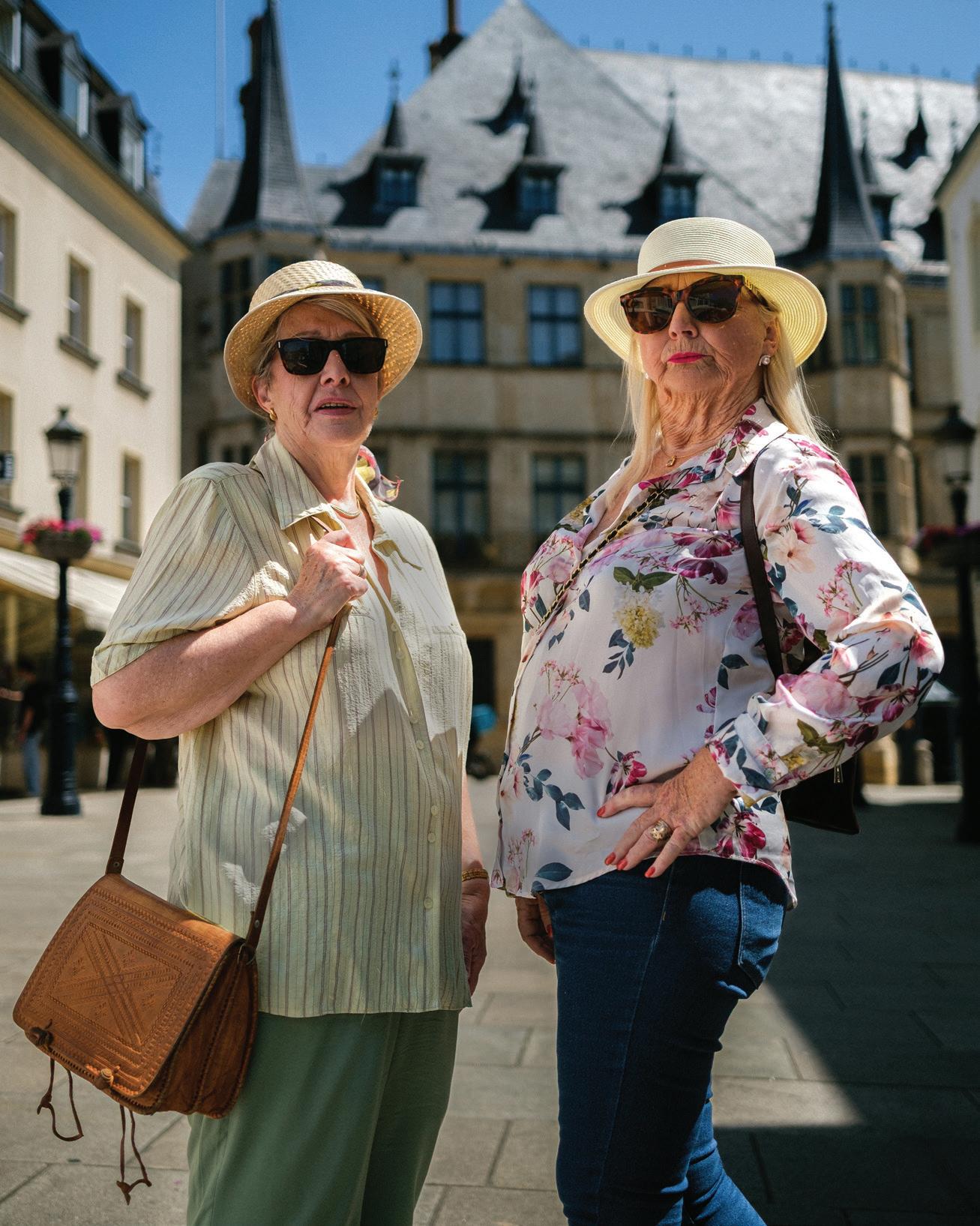
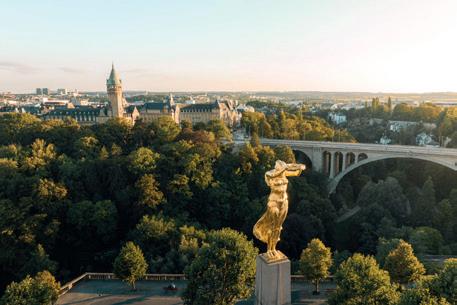
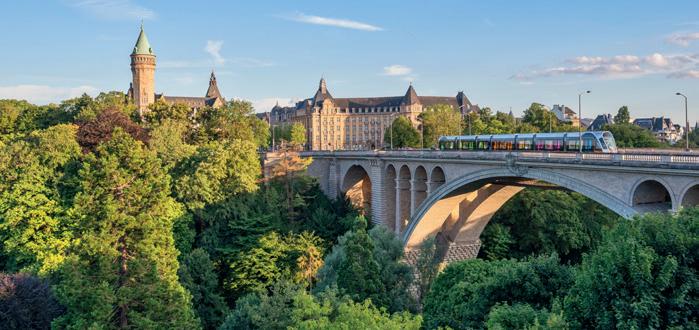
Walking through the city, visitors encounter layers of history at every turn, from mediaeval ramparts to elegant squares. Landmarks such as the Grand Ducal Palace (dating back to the late 16th century and the residence of the ducal family), the Cathédrale Notre-Dame (situated on the edge of town and built by the Jesuits between 1613 and 1621) and the double-arched Adolphe Bridge (spanning the
Pétrusse Valley since the early 20th century) reveal how the city evolved through the ages.
Despite its historic roots, Luxembourg City is remarkably modern. Nearly 70 per cent of its residents come from abroad, creating a multicultural environment that
shapes everyday life. Visitors can expect a relaxed, safe and welcoming atmosphere, paired with a distinctly international and cosmopolitan vibe.
This diversity is reflected in the city’s multilingual culture. Luxembourgish, French, German and English are widely spoken, making it easy for visitors to navigate daily life. Whether ordering in a café or
exploring a museum, communication feels effortless.
Yet the city has managed to preserve a strong sense of identity. Its customs, local cuisine and historic neighbourhoods remain central to its character. The result is a place that feels both peaceful and vibrant, where international influences blend naturally with local traditions.
This balance is perhaps most evident in the city’s rhythm. It is lively yet relaxed, combining the energy of a European capital with peaceful corners to unwind. Visitors can spend the morning exploring historic sites and the afternoon relaxing in a park or along a quiet riverside path.
Luxembourg City’s urban layout makes it ideal for exploration. Many of its highlights are within walking distance, allowing visitors to move effortlessly between UNESCO-listed heritage sites, historical treasures, cultural landmarks and natural retreats.
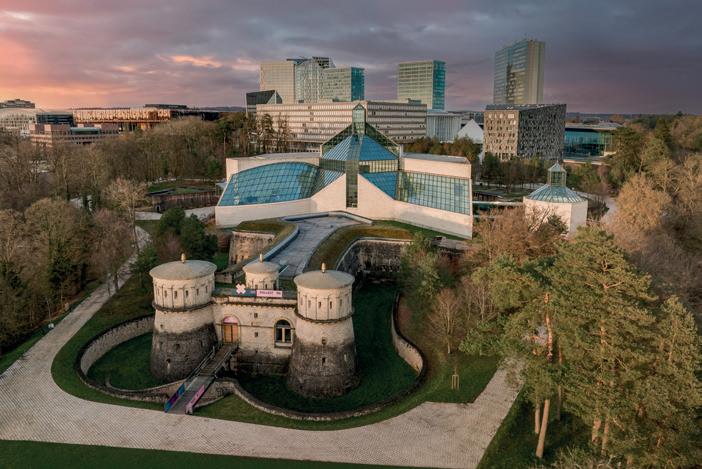
Among the must-see spots are the Bock Casemates, a vast network of underground galleries, and the Chemin de la Corniche, often called Europe’s most beautiful balcony for its sweeping views. The Pfaffenthal Panoramic Elevator offers a striking transition between the upper and lower city, while viewpoints like the Place de la Constitution provide unforgettable vistas over the Pétrusse Valley.
Nature is never far away, making Luxembourg one of Europe’s greenest capitals. The valleys of the Pétrusse and Alzette rivers cut through the city, offering green corridors perfect for walking, jogging or simply unwinding. Thanks to its unique topography and abundance of green spaces, visitors can spend the day exploring historic sites before unwinding in nature, often just a few minutes away.
In summer, the city truly comes alive. Outdoor terraces fill with life, rooftop bars buzz with activity and riverside districts like Grund and Clausen take on a relaxed, festive atmosphere. A rich cultural programme, including open-air concerts, exhibitions and traditional events, adds to the city’s energy.
Food is another highlight. Visitors can sample traditional dishes such as Judd mat Gaardebounen or Gromperekichelcher, often paired with wines from the nearby Moselle region. At the same time, the
city boasts a remarkable range of international cuisine, including a high concentration of Michelin-starred restaurants.
For active travellers, Luxembourg City offers plenty of options. Urban walking trails, scenic cycling routes and panoramic viewpoints make it easy to stay active while sightseeing. As a fully walkable destination with free public transport across the country, getting around is both simple and efficient.
What ultimately makes Luxembourg City special is how much it offers within such a small area. Few capitals combine spectacular scenery, rich history and a cosmopolitan lifestyle quite like this Benelux gem does. Whether drawn by its historic fortifications, its panoramic views or its vibrant cultural scene, Luxembourg City delivers an experience that is intimate yet expansive. It is a place where every corner reveals something new – and where everything is closer than you expect.
www.luxembourg-city.com
Facebook: Luxembourg City Tourist
Office - LCTO
Instagram: @my_luxembourg
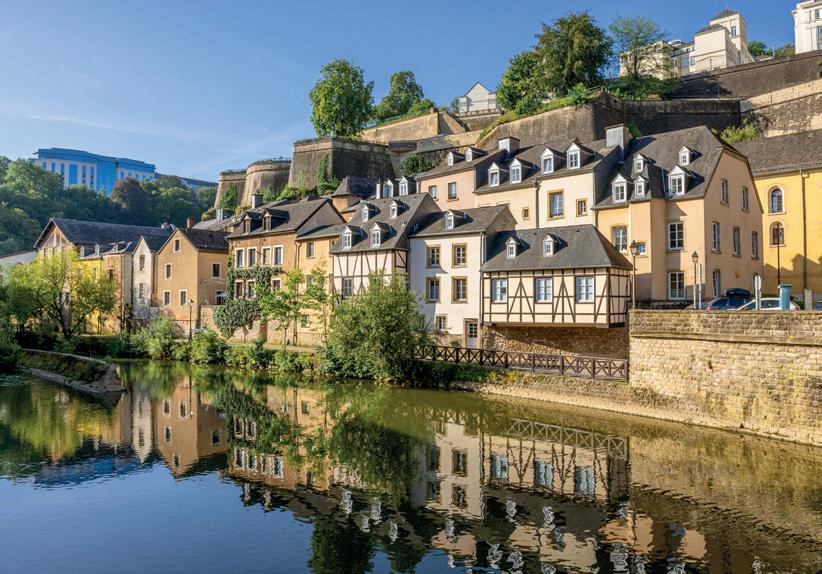
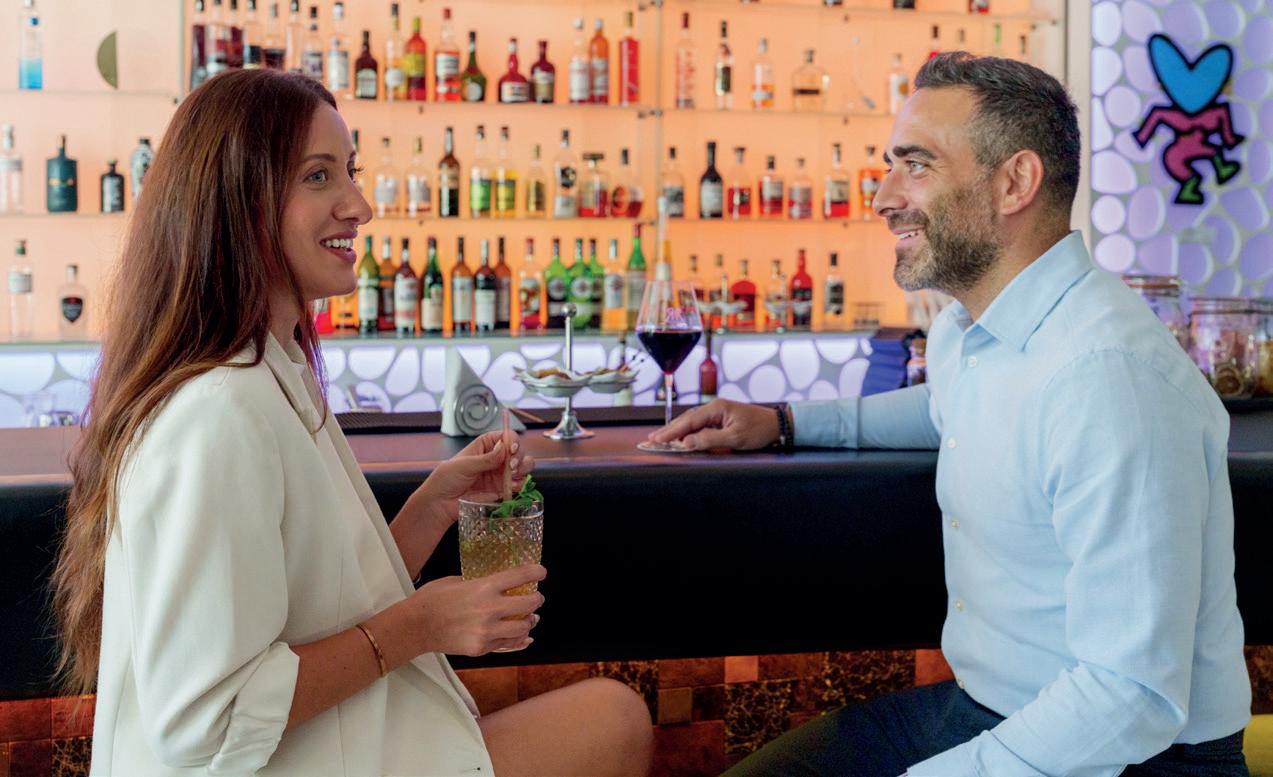
In the heart of Luxembourg City, elegance and comfort meet at Le Royal Hotel Luxembourg, a landmark known for its refined atmosphere and exceptional service. Sales and marketing manager Iuliana Gana offers insights into what makes this hotel a standout destination for both leisure and business travellers.
By Paola Westbeek | Photos: Hotel Le Royal Luxembourg
As a member of The Leading Hotels of the World, Le Royal Hotel Luxembourg has built a reputation for timeless elegance and discreet luxury. The five-star property combines classic European refinement and contemporary luxury with warm, personalised hospitality. This balance is central to the hotel’s identity and appeal.
What truly distinguishes the hotel, however, is what the teams at Le Royal call its ‘Art de Vivre’. As Iuliana explains, “It’s a rare sanctuary where guests can enjoy a quiet, residential retreat while being only a few steps away from the city’s vibrant pulse.” This duality – tranquillity paired with accessibility – creates a unique ex-
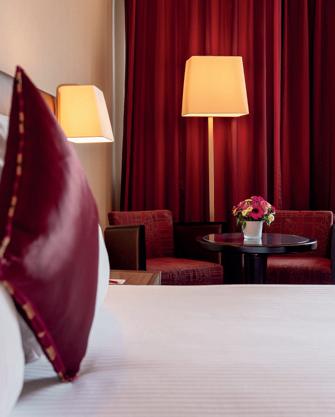
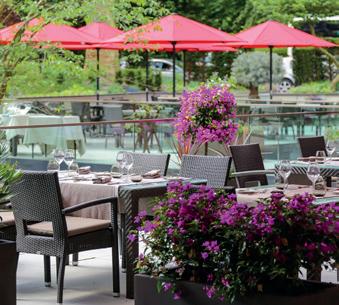
perience for visitors. Located on Boulevard Royal, the hotel sits at the intersection of the historic centre and the modern business district, offering both convenience and scenic views over the city’s lush parks.
Guests stepping outside the hotel find themselves immersed in Luxembourg’s cultural and commercial life. Within walking distance are iconic sites such as Place d’Armes, the Grand Ducal Palace, and the UNESCO-listed Casemates du Bock. Iuliana highlights the experience of strolling along the Chemin de la Corniche, “rightfully hailed as Europe’s most beautiful balcony, offering breathtaking scenery.”
Inside the hotel, guests can expect what the hotel teams describe as “a stay defined by uncompromising comfort, highly attentive service, and a truly distinguished luxury experience.” Every detail, from elegantly appointed rooms to refined
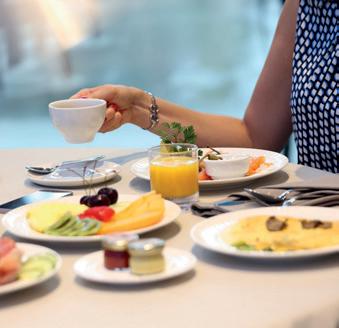
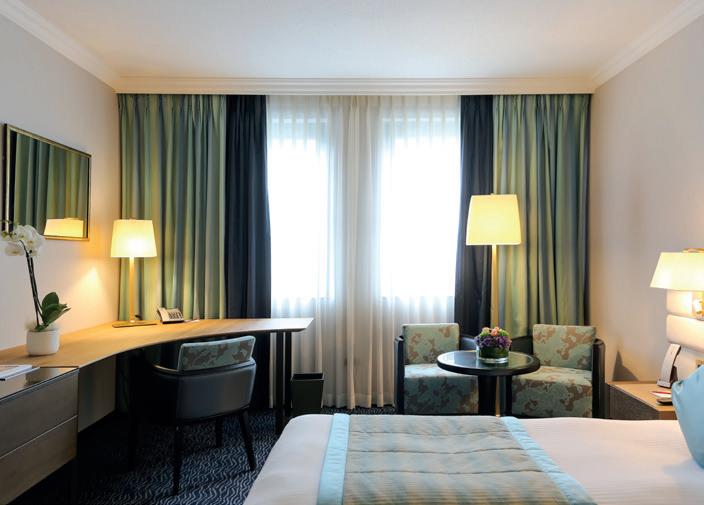
dining options, is crafted to leave a lasting impression. The rooms themselves blend classic décor with modern functionality, offering thoughtful touches such as personalised pillow menus, a complimentary minibar, and a Nespresso machine for that perfect morning coffee.
The hotel’s facilities further enhance the guest experience. A full-service Health Club, complete with a heated indoor pool, sauna, hammam, and fitness centre, provides a space for relaxation and rejuvenation.
In the mood to really treat yourself? “Our signature Relax & Savour package features a stay in a traditional room, including our celebrated Royal Buffet Breakfast and a gourmet three-course dinner at our Amélys restaurant,” Iuliana points out. “Guests are
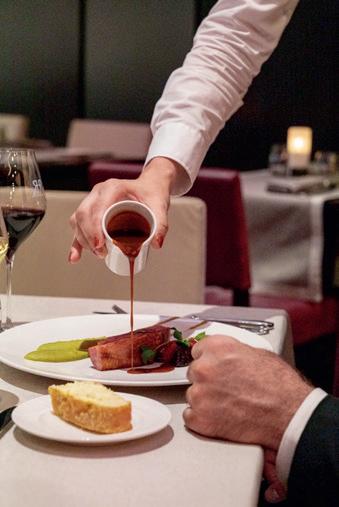
also welcomed with a chilled glass of local Crémant at the Royal Lounge. They can enjoy the Chef’s homemade madeleines in the room, full access to our exclusive Health Club, and complimentary parking, all for 399 euro for two people.”
Le Royal caters to both business and leisure travellers. With modern meeting spaces and a central location, it functions as a prestigious business hub while remaining a haven for those seeking relaxation. Iuliana summarises this versatility: “At Le Royal Hotel, these two worlds coexist in perfect harmony.”
Ultimately, the hotel’s philosophy goes beyond accommodation. As the teams like to say with a touch of passion, “We don’t just host guests. We curate memories.” Whether visiting Luxembourg for
the first time or returning once again, guests are welcomed into an environment designed to feel like an elegant home in the heart of Europe.
luxembourg.leroyal.com
Facebook: Hotel Le Royal Luxembourg Instagram: @leroyalluxembourg
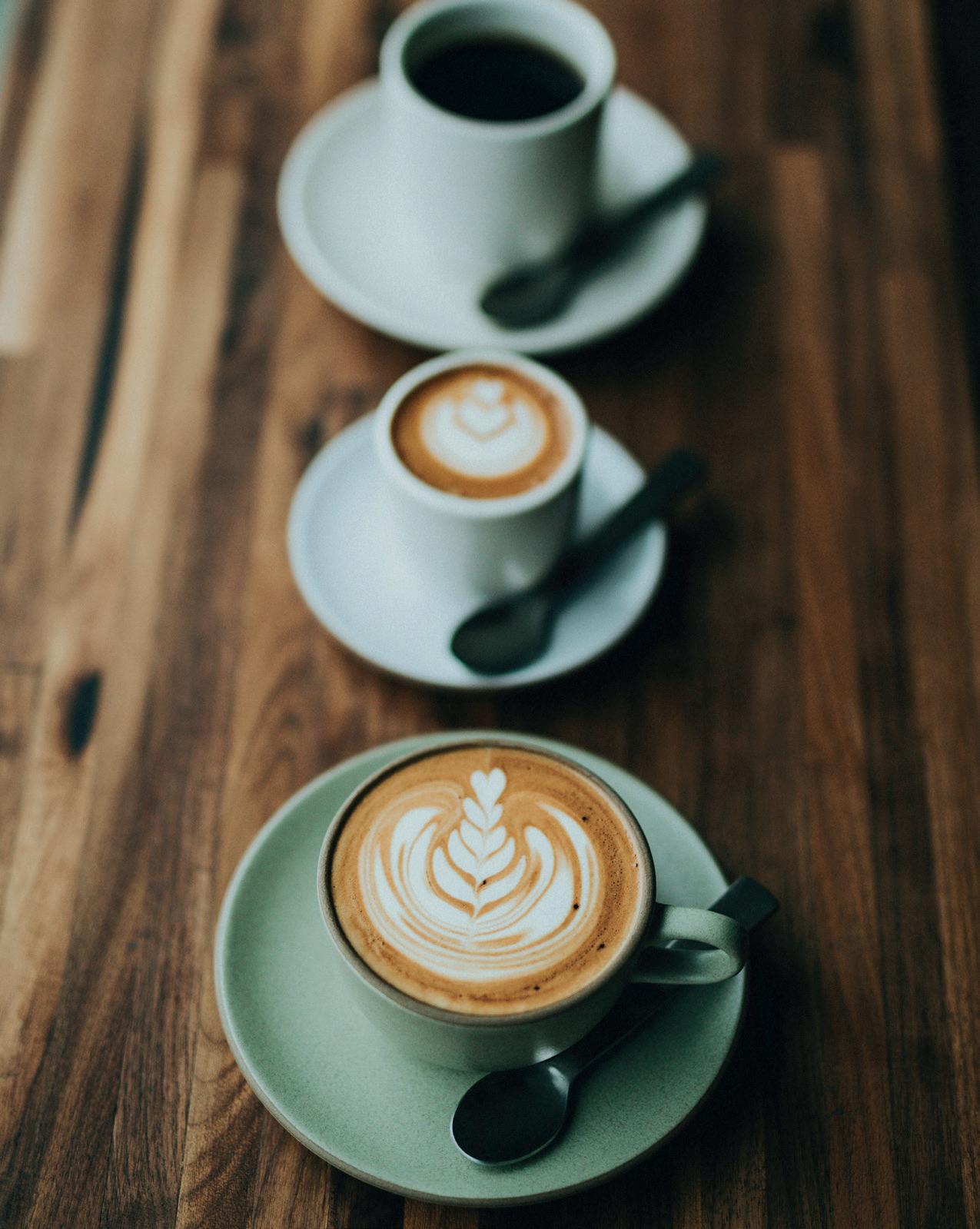
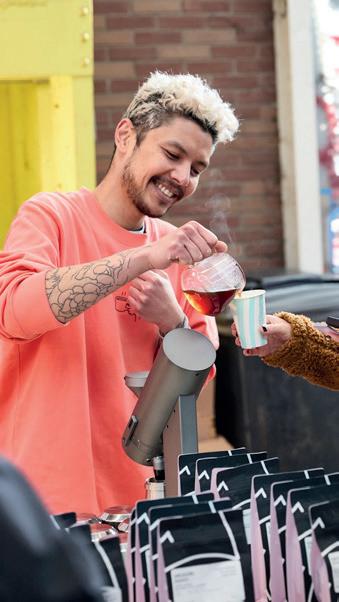
With a long history in importing coffee beans and exporting roasted coffee, the Netherlands has a deeply rooted coffee tradition and its people rank among the top coffee drinkers in the world. Check out our feature on the Dutch market, with a nice cup of coffee in hand.
By Malin Norman
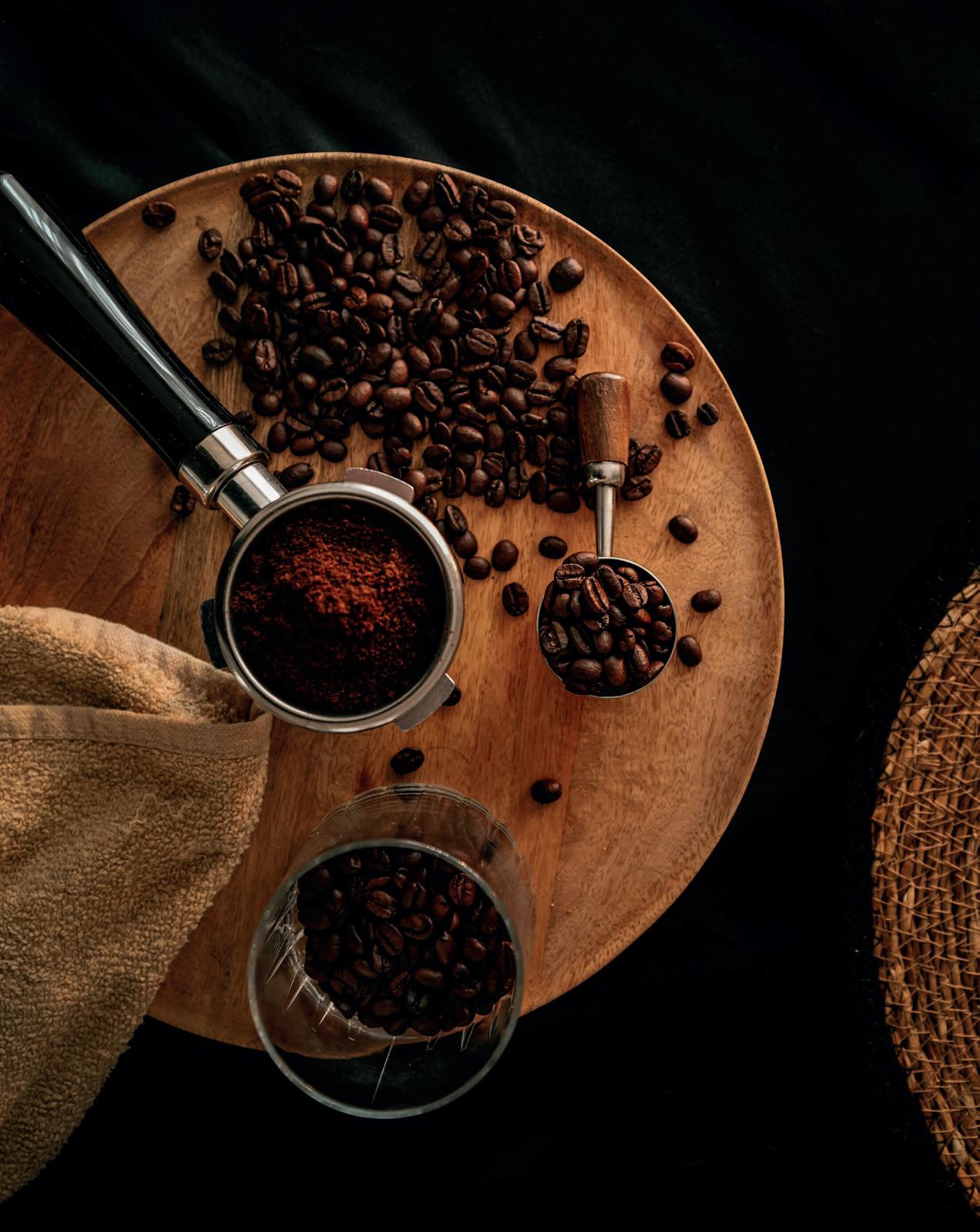
Coffee is deeply embedded in Dutch culture. According to CBI (Centre for the Promotion of Imports from developing countries), 83 per cent of the population consume coffee, with the average drinker consuming 3.6 cups per day – among the highest in the world.
The report on the Dutch market potential for coffee also states that the total value of the coffee market in the Netherlands is around 1.2 billion euro. Consumers value quality and sustainability, and certified
products have a strong presence. Did you know that the Fairtrade certification label has Dutch roots? Started in 1988 under the name Max Havelaar, with fair distribution of profits as the goal, it changed name in 2021 to Fairtrade Nederland.
The CBI report also states that the Netherlands is the sixth largest importer of green coffee in Europe with around 222,400 tonnes in 2024. Meanwhile, the country
is one of the largest exporters of roasted coffee in the world, exporting some 96,000 tonnes. Only Italy, Germany and Switzerland export larger volumes of roasted coffee.
One of the oldest and most famous Dutch coffee brands is Douwe Egberts. Established as a grocery store in Joure, Friesland, by Egbert Douwes and his wife Akke Thijsses back in 1753, Douwe Egberts is still a trusted, qualitative coffee brand.
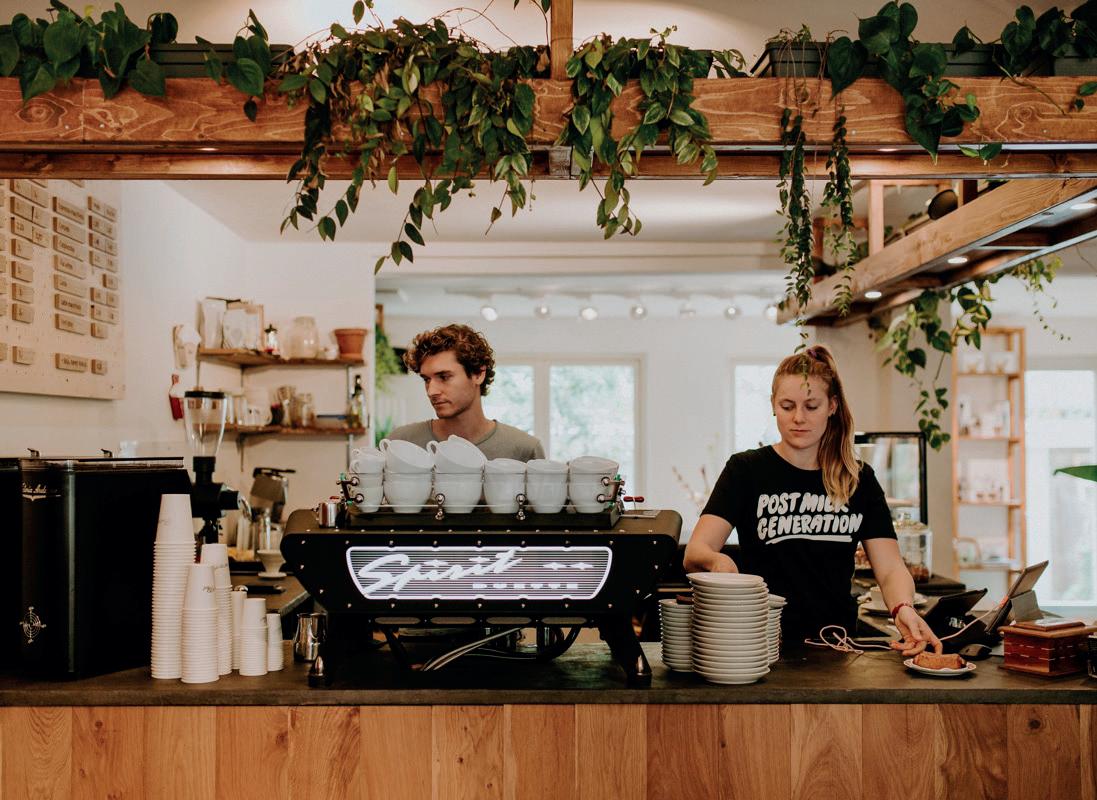
The demand for speciality coffee is high and growing, however, and the Netherlands is home to some of the finest speciality coffee roasters in Europe, including Koffiestation, 30ML and Friedhats. Arabica remains the dominating coffee, with Robustas appearing as an interesting alternative.
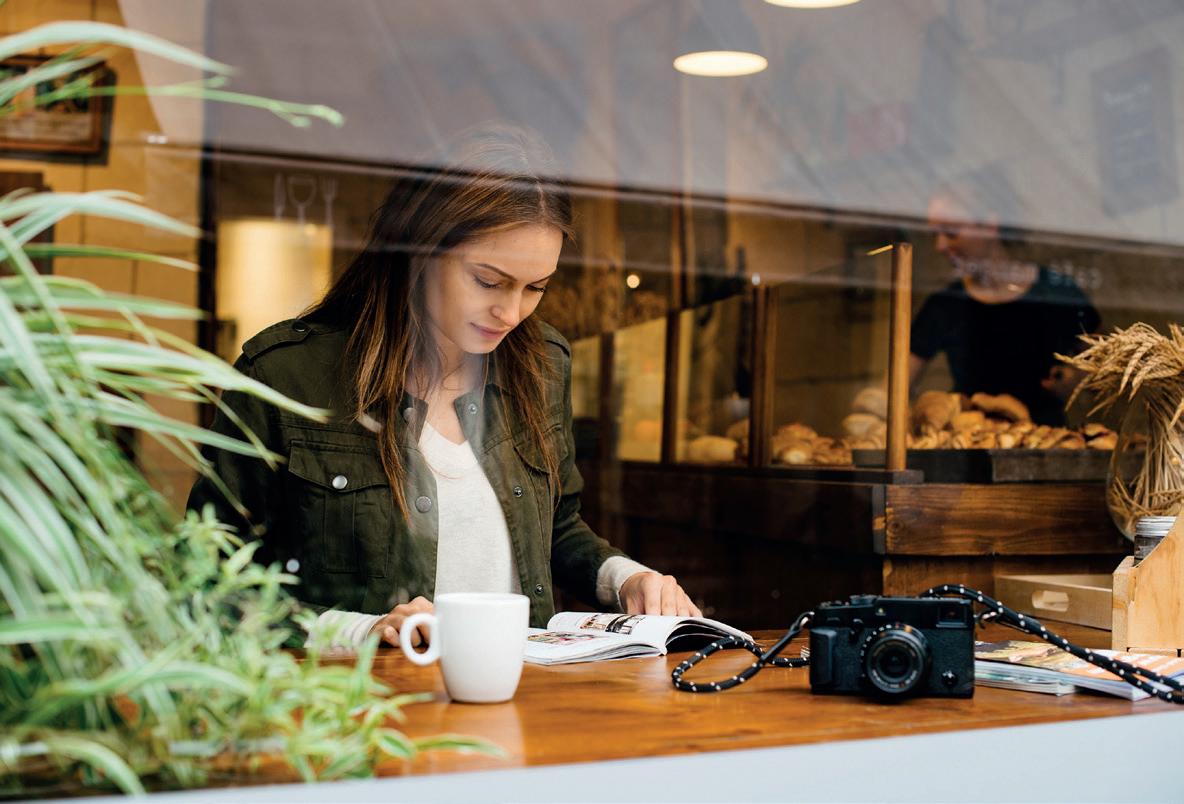
Another famous Dutch brand in the world of coffee is Technivorm, most known as the manufacturer of the popular coffee maker Moccamaster. Handcrafted in the Netherlands since 1964, the Moccamaster is designed to make the best cup of coffee –with precision and care. Over the years, Technivorm has developed into a global leader in premium coffee solutions.
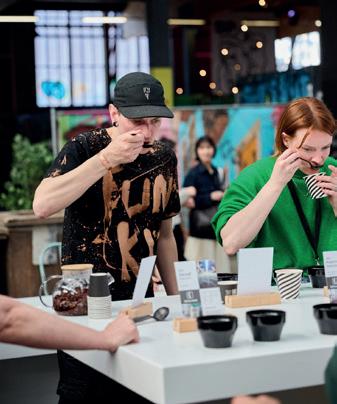
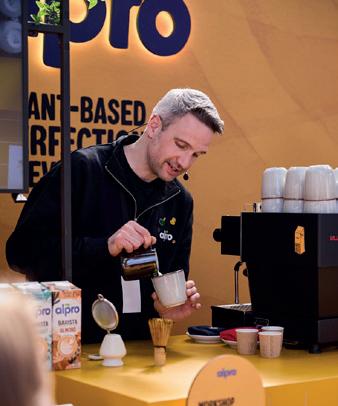
Started in 2015, Amsterdam Coffee Festival (ACF) is a not-to-be-missed event for coffee connoisseurs. Attracting around 12,000 visitors, the festival celebrates the vibrant Dutch coffee culture and fosters cutting-edge innovation with mustsee booths, hands-on workshops, tastings and demonstrations, live sessions and competitions, plus more.
Visitors can see the barista champions show off their skills, meet experts from
around Europe and hear about new products and trends, and taste what some of the best coffee bars have to offer.
Amsterdam Coffee Festival returns next spring for a new edition of the worldclass celebration of coffee and creativity.
Some of the best coffee spots in Amsterdam: Monks Coffee Roasters
Opened in the bustling Oud West district in 2016, Monks is committed to offer great coffee, responsibly and sustainably. monkscoffee.nl
The Coffee Virus
Coffee fanatics that take coffee seriously. They have two locations; Amsterdam A Lab and Amsterdam Startup Village. thecoffeevirus.nl
Screaming Beans Coffee Roasters
Will provide you with a proper caffeine fix. Currently in three locations: Runstraat 6, Utrechtsestraat 75, and Waterlooplein 129. screamingbeans.nl
Lot 61
Run by two Australians, who by way of New York came to Amsterdam. Exists at a number of locations, including Amsterdam Centraal Station. lot61.com
Bocca Coffee
A pioneer in speciality coffee, the first in the Netherlands to control the process from bean to cup – setting the standard for third-wave coffee. bocca.nl
Back to Black
Quality and sustainability are at the core of this speciality coffee bar and concept store. Back to Black also sells art and design products. backtoblackcoffee.nl
Five Ways Coffee
Five Ways has been making waves since 2017. Working with trusted green bean importers and roasting on a S35 Loring roaster, they aim for unmatched coffee experiences. fivewayscoffee.com
For more tips on where to go for great coffee, see www.iamsterdam.com
Housed in an old farm dating back to 1642 and surrounded by fruit orchards, Brouwerij Wilderen makes prized beers and spirits. Its café is a hit, especially in summer, with plenty of space both indoors and in the garden. Make sure not to miss this gem, in the small village of Wilderen, and enjoy a Tripel Kanunnik, Cuvée Clarisse or Wilderen Goud, or perhaps one of the whisky- or rum-infused beers.
By Malin Norman
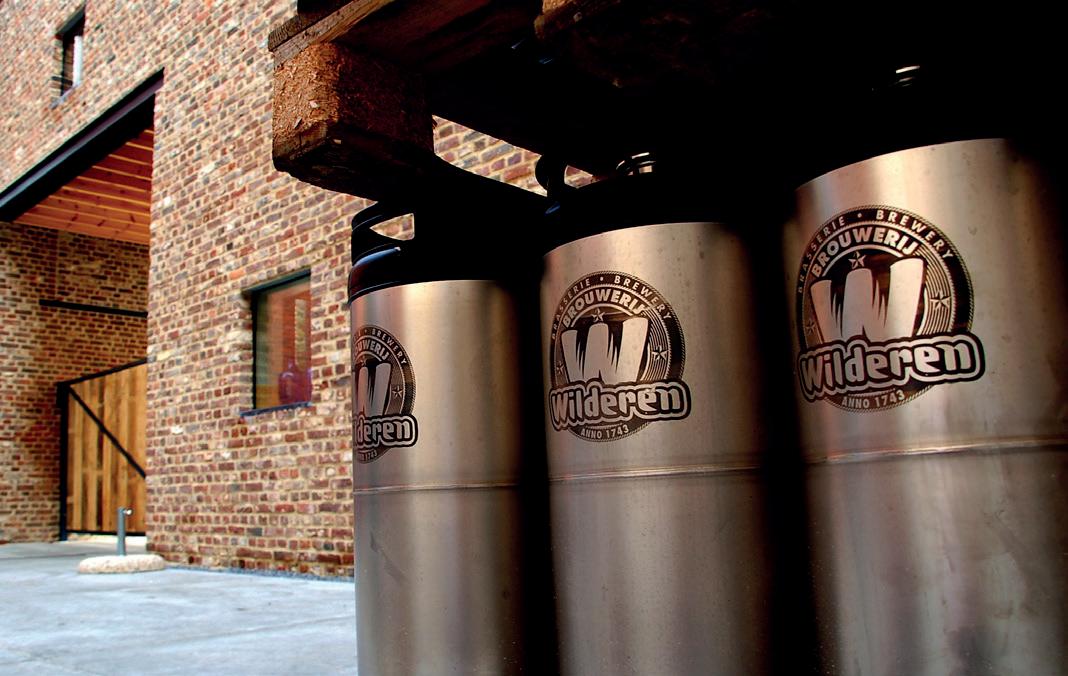
Those who have met Mike Janssen know that he is an experienced, and energetic, entrepreneur in the Belgian brewing scene. Together with his wife Roniek Van Bree, he runs Brouwerij Wilderen since 2011. The couple bought an old farm a few years earlier, in the heart of the village Wilderen. Dating back to 1642, the farm’s previous generations had also added a small brewery in 1743 and a distillery in 1890. Janssen could see the potential, and that was the beginning of brewery and distillery Wilderen.
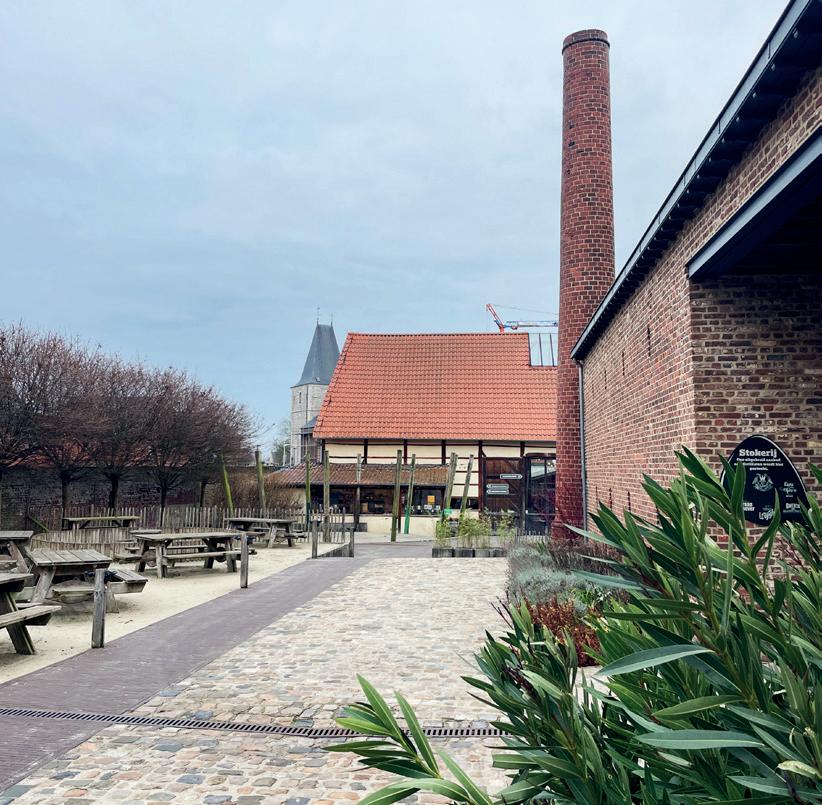
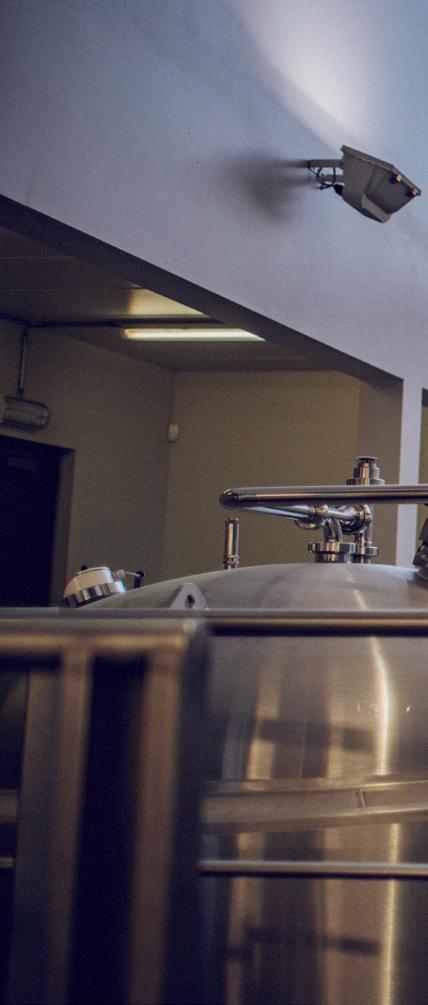
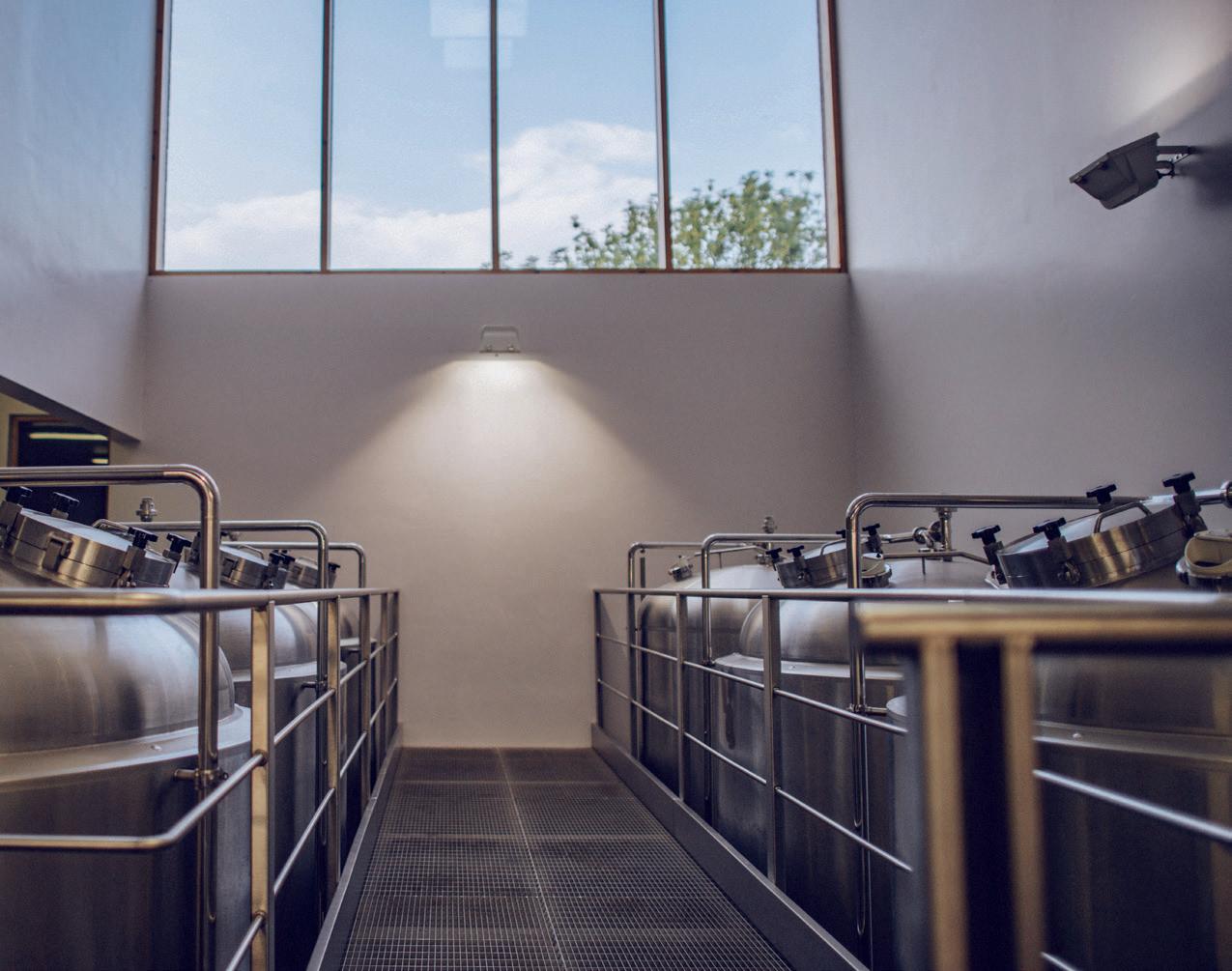
“This was a place that nobody wanted, but I’m crazy about old buildings and I like finding solutions for them. Walking into the old distillery is like stepping into a time-machine,” Janssen says. “Even though we’ve added a modern, fully automated brewery next to it, where the stables used to be, we can also show people the original distillery and the equipment that was used.”
After a few years of renovating extensively, Brouwerij Wilderen opened its doors in 2011 and it became an instant hotspot.
Amazingly, it has around 120,000 visitors per year, 20,000 of which take part in the brewery and distillery tour. The rest come to eat and drink in the restored, half-timbered farmhouse, which is now the brewery’s café, and the surrounding garden.
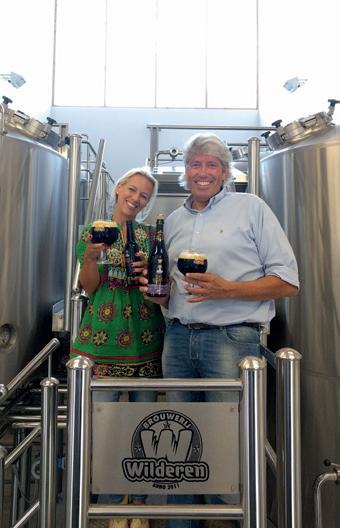
WILDEREN, A PLACE FULL OF FLAVOUR Brouwerij Wilderen sits in a fantastic spot. The village Wilderen has around 1,500 inhabitants, an old church from 1190, and of course the site for the brewery and distillery. But this is also a significant fruit region in Europe, with an abundance of apples, pears, cherries, and more. Clearly, it is a place for entrepreneurs with a focus on flavour, with for instance De Gebrande Winning, named the world’s best beer restaurant, nearby.
“It’s amazing, we can have up to 2,000 people in our garden on a sunny day –eating, drinking, and just enjoying the setting. People come to Wilderen because there’s always room here, even for the kids with our dedicated playground,” says Janssen. “And it’s such a beautiful place. Buying this old farm is one of the best things I’ve done in my life.”
Celebrating the 15th anniversary of Brouwerij Wilderen this year, Janssen shares; “We opened on 9 July in 2011, however this is in the middle of the busy holiday period. So, we’ve decided to have the
anniversary during the last weekend of September. Come celebrate with us then, if you can.”
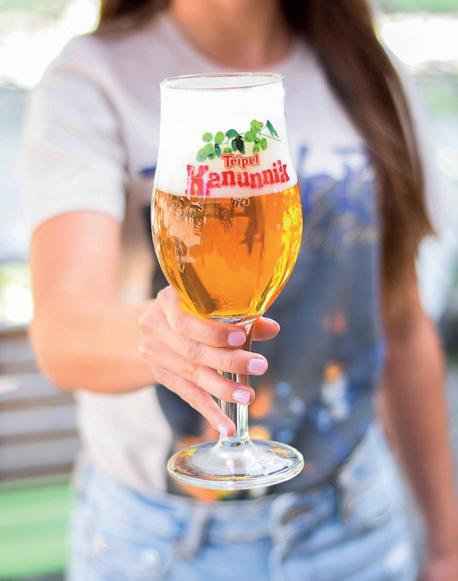
As for the beers, they are brewed with Belgian craftsmanship in mind. Combining classic styles with modern influences, the Wilderen team creates a relatively small range of beer. The flagship is Tripel Kanunnik, with around half of the production. The four-grain tripel –described as smooth, sweet and fruity – is brewed with barley, wheat, oats and rye, and noble hops.
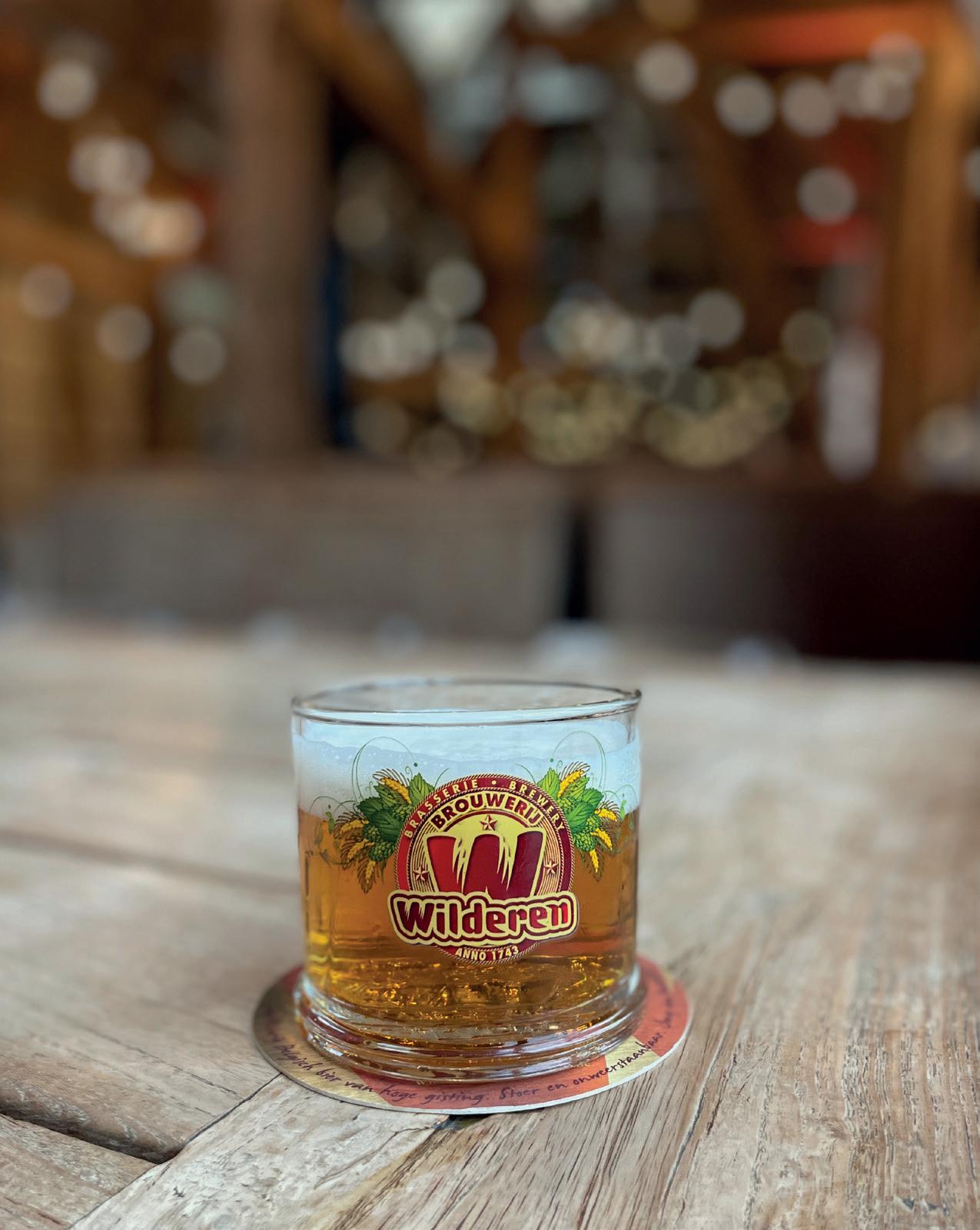
Another popular beer is the Belgian blonde called Wilderen Goud, a great alternative to a thirst-quenching lager. It is served in a different type of glass, an original design that resembles one of the vessels in the old distillery, now considered an icon among beer glasses.
The Belgian dark strong ale Cuvée Clarisse is a must-try too, winning numerous medals including Brussels Beer Challenge and World’s Best Dark Style Beer at World Beer Awards. The team has also created whisky- and rum-infused versions of Cuvée Clarisse. And not to mention a range of prized artisanal spirits, in the onsite distillery – they are strong, balanced, and dangerously tasty.
www.brouwerijwilderen.be
Facebook: Brouwerij & Distilleerderij Wilderen
Instagram: @brouwerijwilderen
“When I think of Wilderen, I think of the iconic shaped glass. Only recently I found out that the glass is designed in the shape of the old brewing kettle and pays homage to this place. And that captures exactly what Wilderen is; innovation with respect for heritage.
You can sip away on Belgian classics like Goud or Tripel Kanunnik, but once you look closer you’ll see a brewery that’s exploring new worlds like non-alcoholic beer or the opposite of the ABV spectrum – infused beers. Infused with their own spirits, because that’s also what they do here, distil their own spirits. All worthwhile to try, preferably on site.
In the picturesque village, you will find this beautiful wooden taproom where you can try all the beers, spirits and catch the Wilderen vibe. Maybe you’ll even run into the founders, Mike and Roniek. No-one can tell the amazing story of this extraordinary brewery like Mike – its past, present and future – and show you the heritage and future of this place. I highly recommend a visit.”
- Ferry Wijnhoven, beer sommelier and founder of Beer Geeks
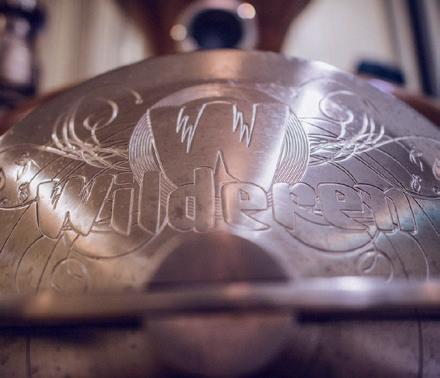
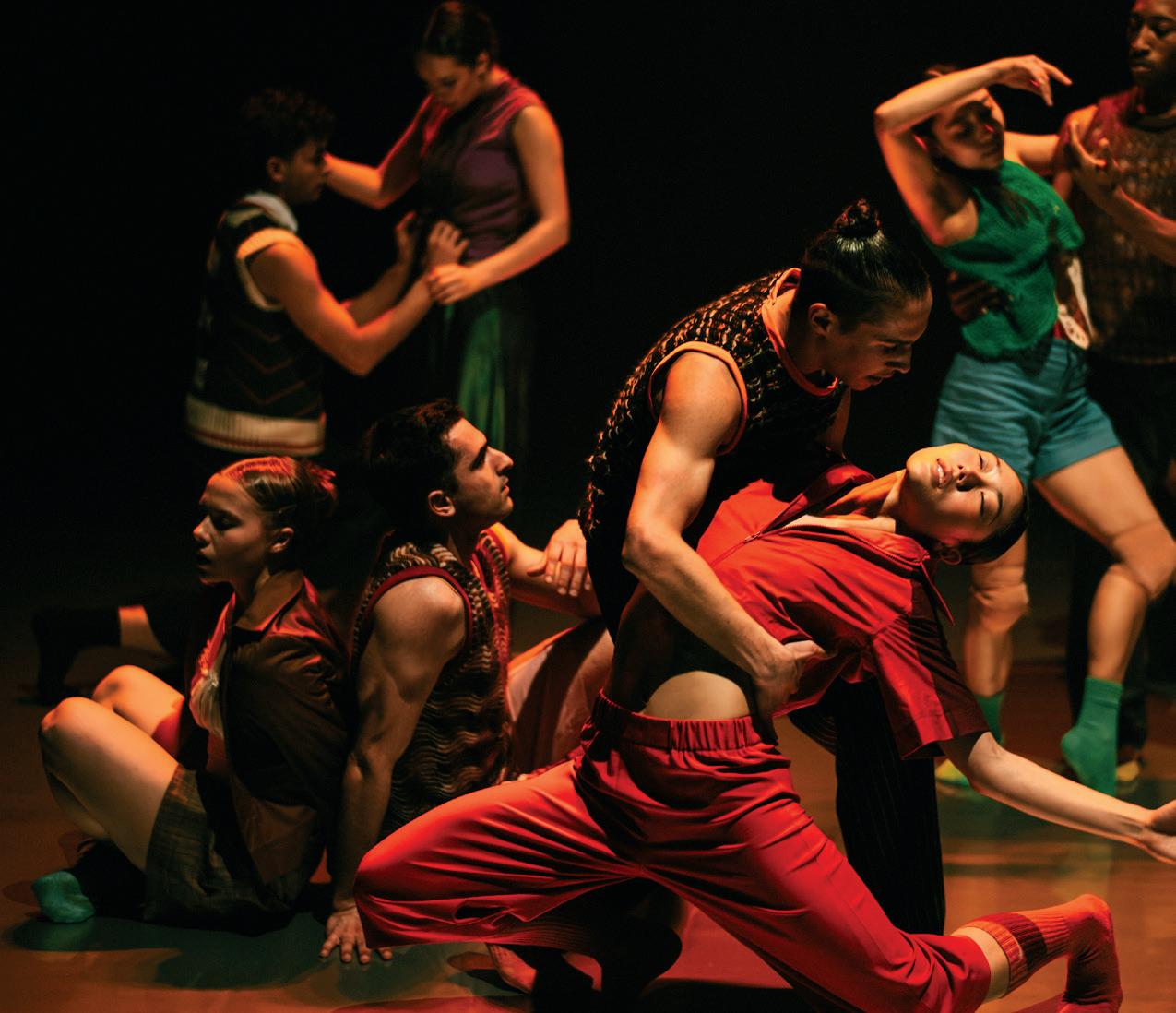
For over 65 years, Nederlands Dans Theater (NDT) has been a leading international dance company based in The Hague. The new season, starting from September 2026, is filled with striking world premieres alongside the return of celebrated works. Whether you are a long-time admirer of NDT, just discovering contemporary dance, or somewhere in between, there is something for everyone.
By Nederlands Dans Theater | Photos: Rahi Rezvani
When NDT was founded in 1959, curiosity, innovation, and the talent development were at its core, and that spirit has remained unchanged. Today, the company has grown into a house of creation dedicated to contemporary dance, bringing together 46 dancers alongside lighting
and sound technicians, costume designers, set builders, a medical team, and many others.
Together with its various departments, creative talents and theatre professionals, NDT is considered one of the world’s lead-
ing dance companies, collaborating with both emerging and established choreographers. Each year, the company reaches around 150,000 visitors worldwide!
What audiences experience most directly, are the extraordinary dancers on stage. They come from all over the world, with diverse backgrounds and at different stages of their careers, yet they share a remarkable passion and exceptional talent for dance. While all have trained at leading dance academies, their paths differ: some began dancing at a young age, while others discovered it a bit later.
Within NDT, dancers are part of one of two companies: NDT 1, the main company, and NDT 2, for emerging dancers up to the age of around 25. Life as a dancer demands full commitment: they train and rehearse six days a week, perform regularly, and tour extensively across the Netherlands, Europe, and beyond.
Each NDT season is carefully curated by artistic director Emily Molnar, who has led the company since 2020. Acting as a curator, she brings together programmes that reflect a wide range of choreographic voices, while considering the strengths
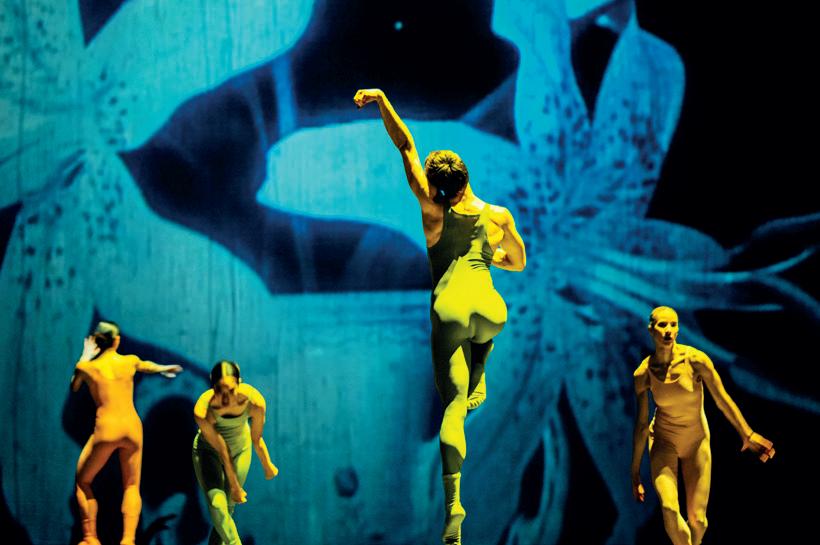
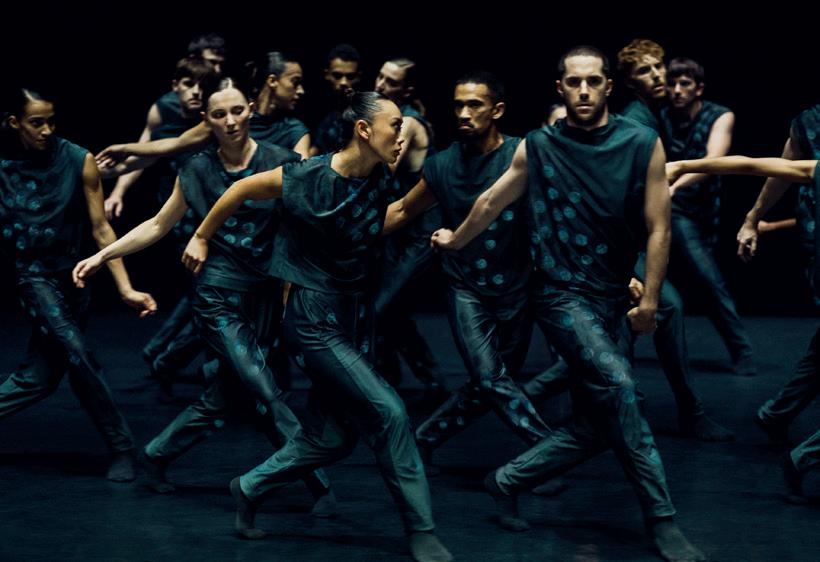
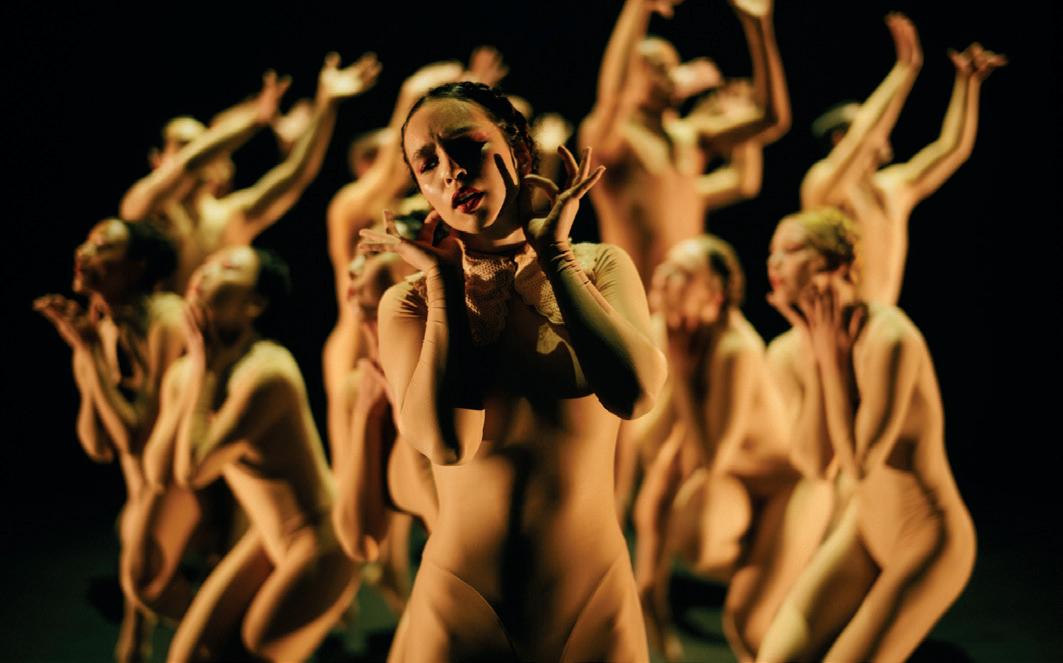
and development of the dancers, and, above all, the experience of the audience.
“I’m always deeply focused on our audience: their experience, their trust in us, and how they become part of the world of NDT,” says Molnar. “When I begin shaping a new season, such as 2026–2027, I try to see it from their perspective. Which new makers will draw them to the edge of their seats? Which works might they wish to encounter again? At the same time, I want to create space to surprise and challenge them, because that’s when something begins to shift; when it sparks thought, opens dialogue, and something genuinely happens within. That is, ultimately, what art is about. Our new season, I hope, offers all of this. From works of striking power and beauty to pieces that are poetic, humorous and theatrical, there’s much to discover.”
In the new season, the creative versatility of both NDT 1 and NDT 2 takes centre stage, with multiple programmes presented throughout the year. The companies will perform world premieres by renowned choreographers such as Crystal Pite,
Marco Goecke and Marcos Morau, alongside the return of audience favourites by Jiří Kylián, Hofesh Shechter, Christos Papadopoulos, Johan Inger, Gabriela Carrizo,
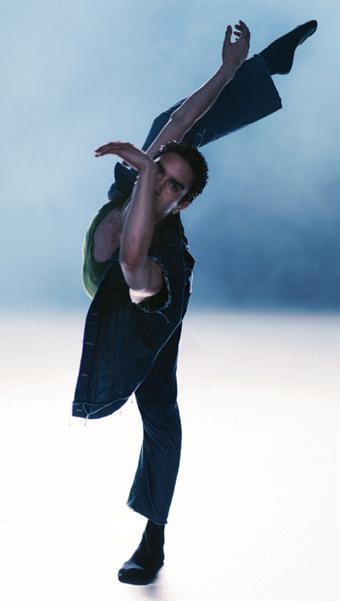
Kill Your Darlings.
Edward Clug and Noé Soulier. New to contemporary dance? Each NDT programme consists of two or three works, offering variety and ensuring there is always something to connect with. Every performance features carefully crafted set design, costumes created in NDT’s own atelier, and in some cases, live music.
Alongside performances in theatres, NDT has also developed its Digital Theatre, where selected productions are available to watch online each season. This allows audiences around the world to experience NDT at home. These online performances include livestreams of premieres as well as high-quality recordings, captured from multiple camera angles so that no detail is lost and the experience feels closer than ever.
Curious to discover more about Nederlands Dans Theater and the new season? Visit NDT.nl/en/26-27/ to explore the full programme.
www.ndt.nl
Facebook: Nederlands Dans Theater (NDT) Instagram: @ndtdance
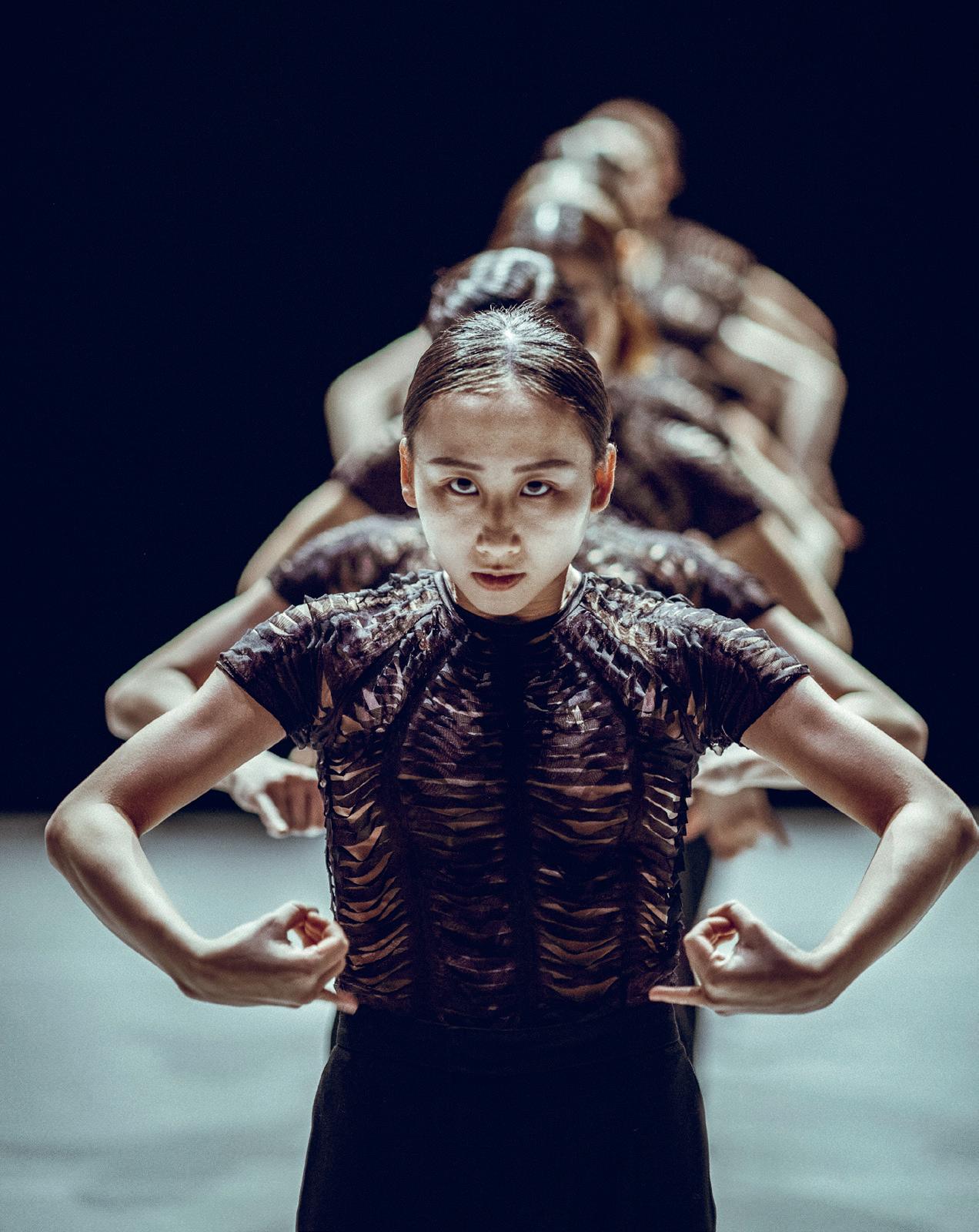
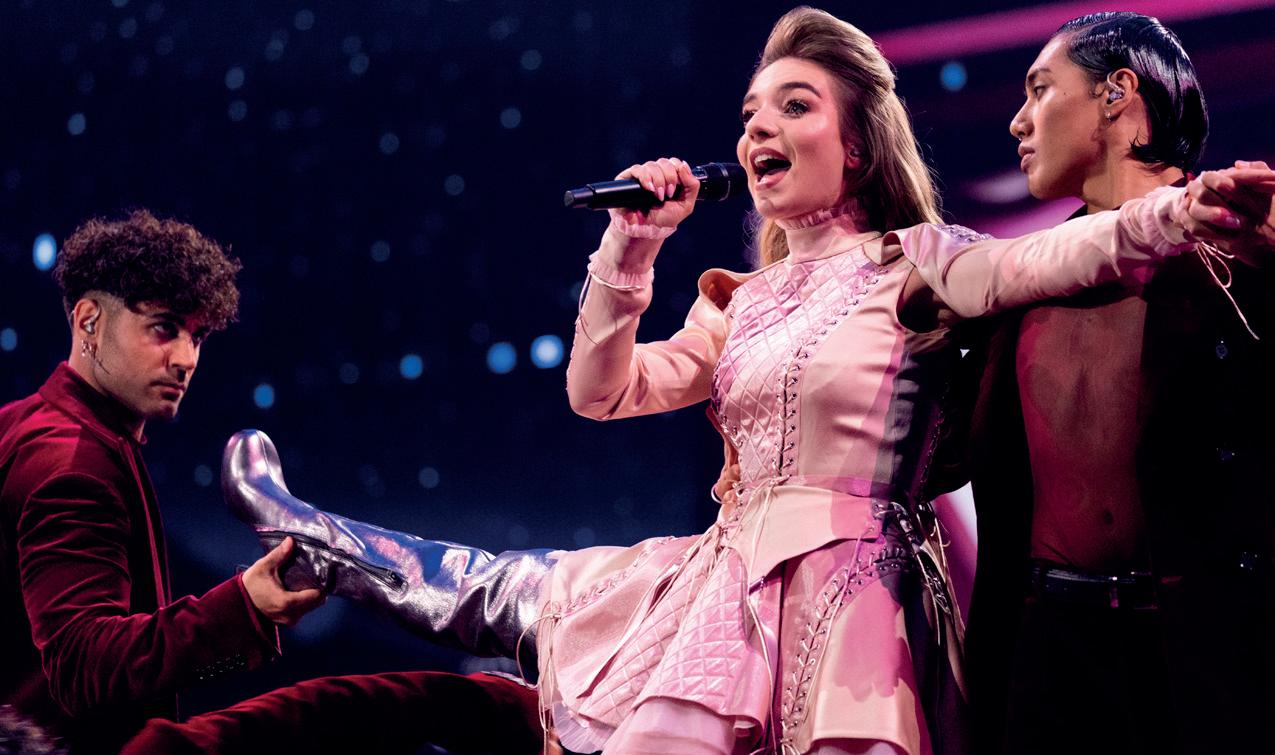
As the Eurovision Song Contest celebrates a new milestone in May 2026, Discover Benelux looks back over the most iconic contributions that the three countries have made towards the long-running competition, as well as the stories they continue to write in song.
By Karl Batterbee
70 years ago, the Eurovision Song Contest held its very first edition in Lugano, Switzerland. Back in 1956 there were just seven countries taking part, but Belgium, the Netherlands and Luxembourg were right there from the very start. Across the 69 Contests to have happened since, the Benelux region has made quite the impression, with compositions from the trio being responsible for 11 victories (so far!).
The Netherlands in particular was a Eurovision powerhouse in the early years of the competition. It was the first nation to win the Contest twice, just four years in,
at Cannes 1959. And by the time the Eurovision Song Contest was celebrating its 20th anniversary in 1976, the Netherlands was actually hosting it thanks to its fourth victory (and we are all familiar with Ding-aDong, right?). At that point the Dutch were tied as the record holders for most wins with two other countries: France and Luxembourg.
PARLEZ-VOUS FRANÇAIS?
Luxembourg, back then another major player on the international stage of song, was chalking up victories and top-tier results at a rate that seemed to be punching
above its size. But no one could deny that The Grand Duchy had a fantastic skill for spotting international talent and drafting them in to fly the Luxembourg flag at Eurovision. Greece’s Nana Mouskouri was an early representative of Luxembourg in 1963, while they ended up doing even better on the scoreboard with another Greek artist a decade later – Vicky Leandros, who brought Luxembourg its third victory with Après Toi. Later in the ‘70s they would be represented by the beloved Spanish duo Baccara (Parlez-Vous Français?), and they even managed to convince Belgian superstar Lara Fabian to sing for them before Belgium had a chance to, with Croire giving them a fourth-place finish in 1988.
Belgium might be trailing behind its Dutch and Luxembourg neighbours on Eurovision trophy hauls (one to their five apiece), but that victory did end up changing the course
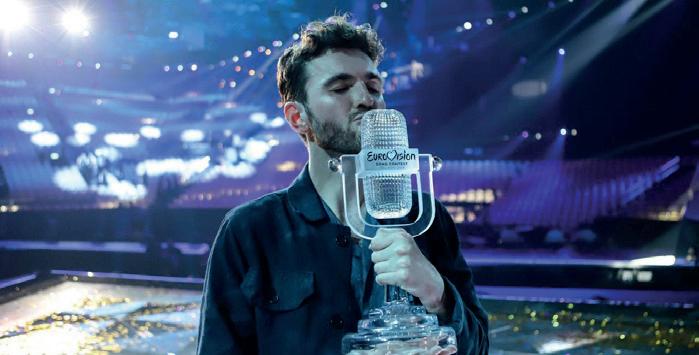
of the Contest forever. At Bergen 1986, Belgium claimed its sole win with J’aime la Vie, performed by 13-year-old Sandra Kim. It made her the youngest winner in Eurovision history – a record that will likely stand forever due to the increased minimum age requirement that was implemented the following year!
In recent years, major new records have been set courtesy of the Netherlands. Their win in 2019 came thanks to Arcade
by Duncan Laurence and was the nation’s long-awaited fifth trophy, coming a whole 44 years after its fourth. Arcade went on to chart in 26 countries across Europe following its win, but 18 months later, in late 2020, the song started to have a big viral moment on the social media platform TikTok. By the spring of 2021, Arcade had become the first Eurovision song of the 21st century to chart on the US Billboard Hot 100, where it would eventually peak at number 30. And in August 2023, it became the first Eurovision song to surpass the one billion streams
milestone on Spotify, where it currently remains the most played Eurovision Song Contest entry of all time.
As well-received as the Dutch Eurovision winner was across the pond, however, it pales in comparison to the US chart success that Luxembourg was responsible for with one of its entries back in the late ‘60s. Some years before winning the Eurovision Song Contest for Luxembourg with Après Toi, Vicky Leandros had attempted victory in 1967, representing them with L’amour Est Bleu, which achieved a more modest result of fourth-place. Recognising the Contest for the unique platform it is to showcase your song, Greek-born Vicky had recorded L’amour Est Blue in multiple languages all set for release across Europe and beyond. A year later, an instrumental recording of the song by conductor Paul Mauriat would be released in the United States as Love Is Blue. The single went on to spend five weeks at number one on the US Billboard Hot 100 and its imprint on pop culture is such that it has been used in television shows ranging from Mad Men to The Simpsons, half a century on.
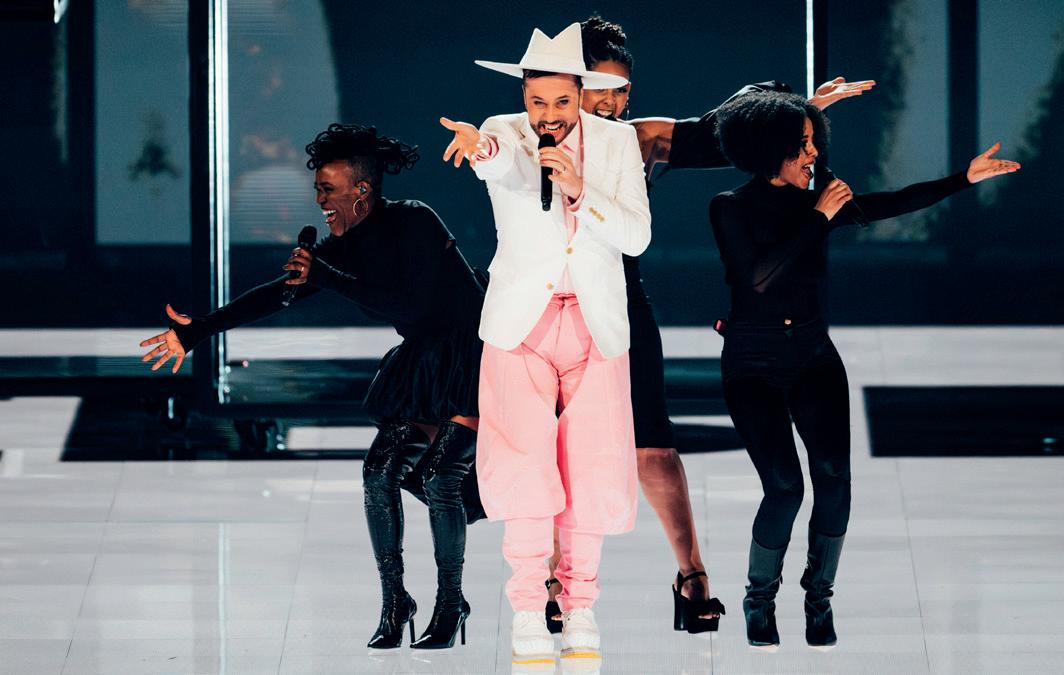
THE SOUNDS HAVE CHANGED, AND SO HAVE THE DOLLS
70 years into its run and the Eurovision Song Contest has come a long way from its ballad beginnings. Belgium has managed to adapt very well to changing tastes in the 21st century, with a firm reputation as a reliable bringer of beats! The country sent dance-pop icon Kate Ryan to represent them in 2006, and has scored some of its best results in recent years with electro anthems Rhythm Inside (by Loïc Nottet in 2015) and City Lights (by Blanche in 2017). But few Belgian entries have been celebrated quite like Gustaph’s Because of You. At Liverpool 2023 the piano-house inspired vogueing spectacle brought the house down, giving Belgium a Top 10 finish despite having been poorly favoured in the odds prior to the show. And at Basel 2025, Belgium took audiences to the club once more, thanks to Red Sebastian’s bpm-smashing Strobe Lights
Luxembourg’s Eurovision chapter in the 21st century has been much, much shorter. In fact, it was not until Malmö 2024 when it even started. The Grand Duchy, who had once held the record for most victories with France (on five apiece, from 1983 until Ireland claimed a sixth in 1994)
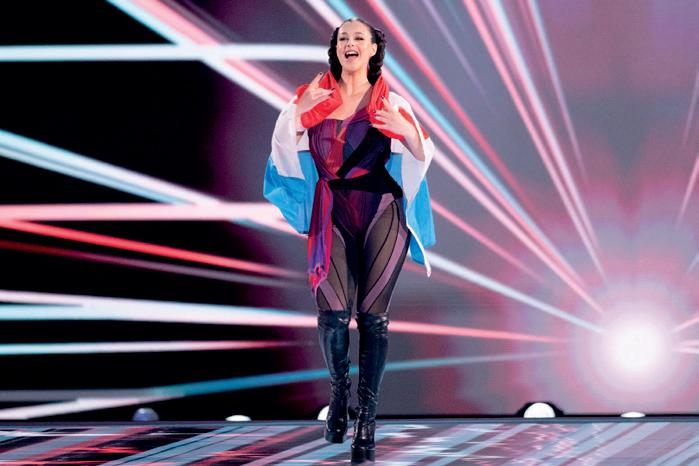
had not participated at the Contest since Dublin 1993. Their return in 2024 after 31 years brought with it much attention, with their comeback song – Fighter by TALI – going on to finish in 13th place in the Grand Final. One year on and Luxembourg was already paying tribute to its glorious Eurovision part. At Basel 2025 their entry was La Poupée Monte Le Son, performed by Laura Thorn. Picking up where a classic Eurovision winner for Luxembourg left
off – Poupée De Cire, Poupée De Son by France Gall – Laura’s present-day ‘poupée’ is a more empowered doll. The tribute to the 1965 classic is also a role reversal of the lyrics, which were penned by iconic singer, actor and director of that era, Serge Gainsbourg. Whereas the doll in the France Gall song was controlled by a man, things are mercifully a lot different 60 years later in 2025 – this doll is pulling her own strings now!
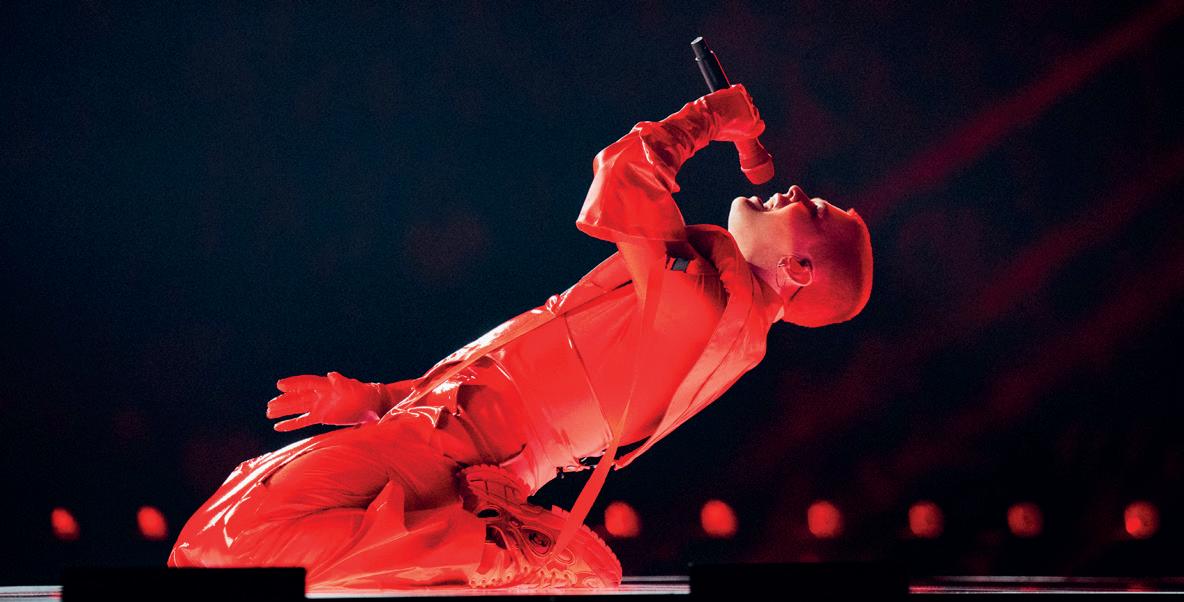
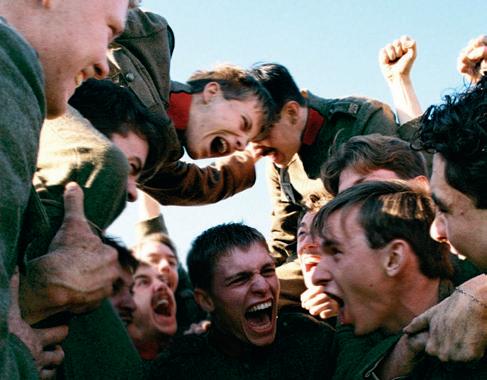
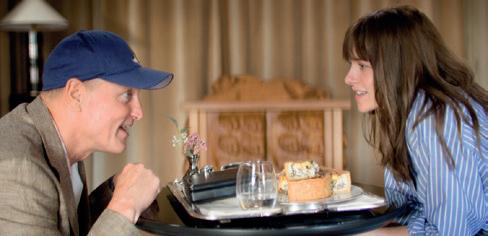
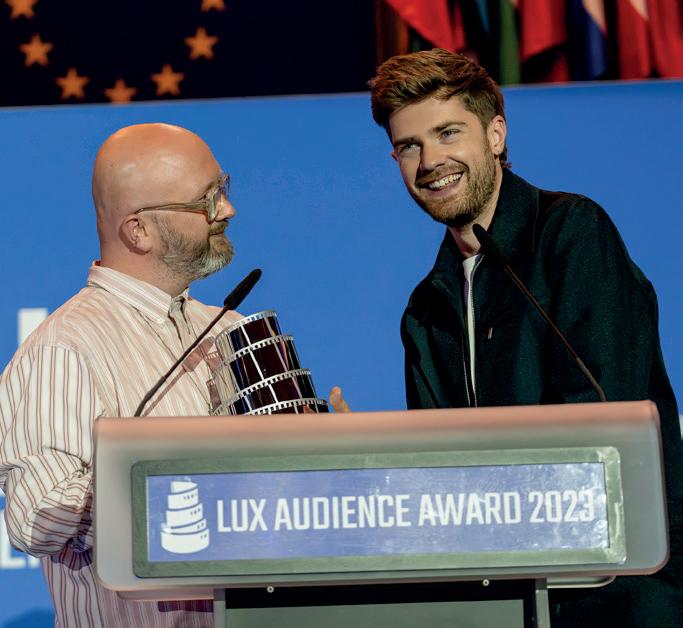
Films from the Benelux region have been given every opportunity to shine in Cannes. For our summer edition, we’re highlighting the most noteworthy nominations.
By Anders Lorenzen
The most prestigious film festival in Europe, Cannes Film Festival, has selected films from all corners of the Benelux region in the 2026 edition of the iconic festival, which takes place between 12 and 23 May.
The Belgian, French, Japanese and German co-production, All of a Sudden (Soudain), is filmed in Paris and Tokyo. The cast is headed up by Belgian/French actress Virginie Efira and the Japanese model turned actress, Tao Okamoto. It’s directed by Japanese filmmaker Ryusuke Hamaguchi, marking what is his first French language feature. The plot plays out in a nursing home in the Parisian suburbs, where the director attempts to introduce a humane care technique known as Humanitude, despite resistance. Her life is changed when she meets a terminally ill Japanese playwright.
World War I drama Coward is directed by Belgian filmmaker Lukas Dhont, and is a Belgian, Dutch and French co-production. Set in 1916 during World War I at the Belgian front. Behind the trenches, two soldiers strike up a friendship. In their efforts to keep their spirits up, they counter the rhetoric of war and the omnipresent misery and decide, with their comrades, to put on a theatrical revue.
Full Phil is something as unusual as an English-language French, Belgian and Luxembourg co-production, featuring an international a-list cast including Woody Harrelson, Kristen Steward and Charlotte de Bon, plus others. The storyline is centred around a rich American industrialist’s Paris trip with his estranged daughter Madeleine. However, it goes terrible off track when French food, a vintage
horror movie, and a meddling hotel worker interfere with their plans.
From the Amsterdam-based ScottishYemen filmmaker Sara Ishaq, we have The Station, which is set in a war-torn Yemen. It is a Dutch, Yemen and US co-production.
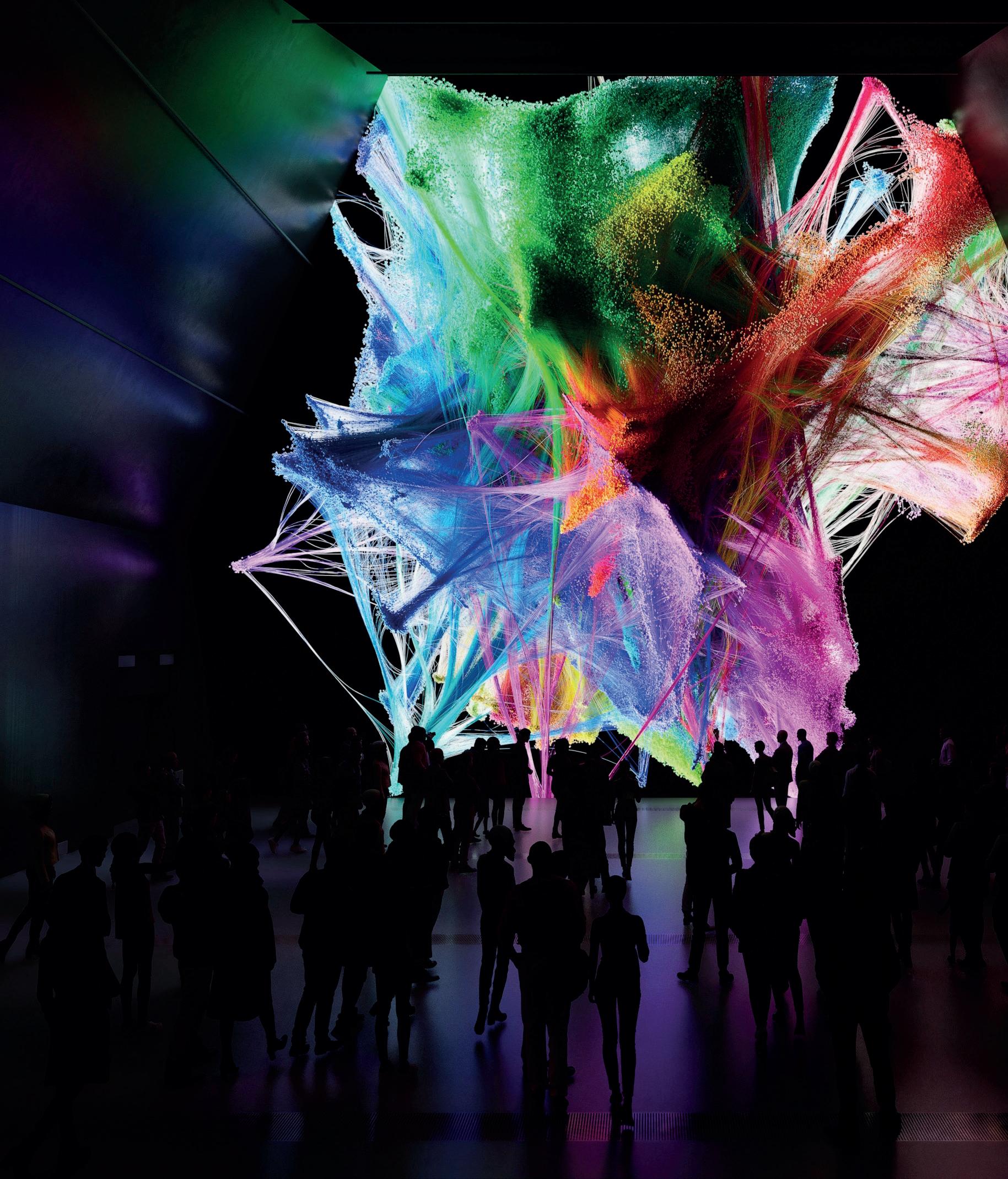
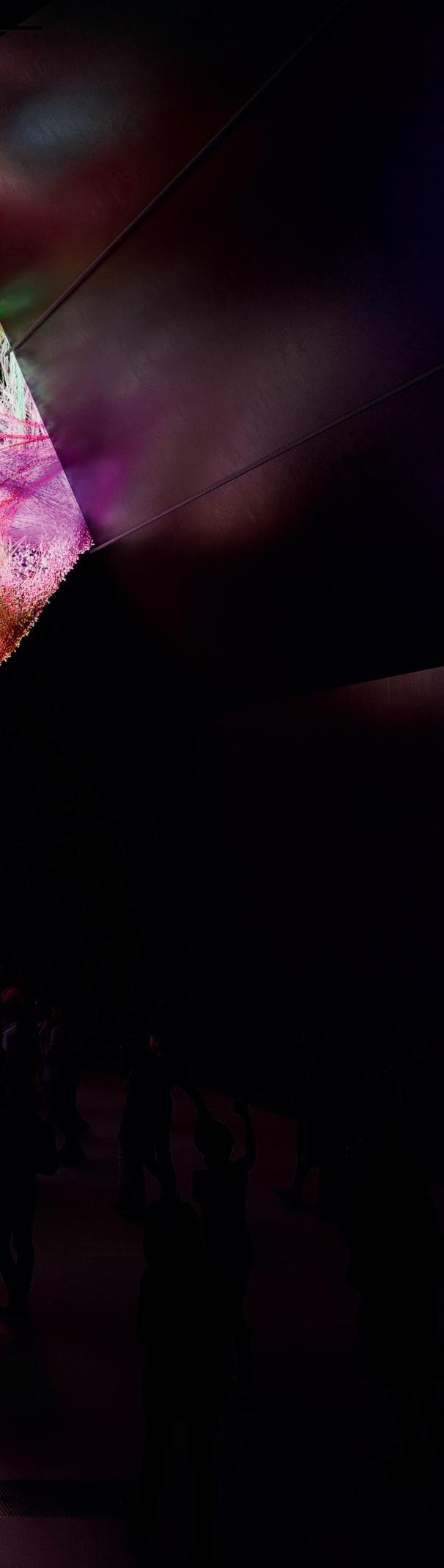
Summer is festival season and there are plenty of reasons to head out into the streets of the Benelux region across May, June and July. From poetry to pop and from film to folk, we highlight some of the best cultural happenings to add to your diary during these warmer months.
By Karl Batterbee
BRUSK (from 8 May)
A brand-new artistic hotspot and architectural landmark is opening in the heart of Bruges this summer. An art gallery that’s promised an international flavour and leading exhibitions, locals and visitors can soon get acquainted with BRUSK. Located in the museum district, the art gallery is within walking distance of iconic places such as the Groeninge Museum, the Gruuthuse Museum, the Museum of the Church of Our Lady, the Museum St. John’s Hospital and the Belfry. BRUSK is setting out to connect art and heritage from different eras across all continents, with contemporary themes always in mind. Its upcoming programme has
already been said to offer new perspectives, inviting a wider audience to engage in dialogue and wonder. Bruges has got a new item to offer the to-do list of everyone seeking a cultural day out in the city! Bruges, Belgium www.bruskbrugge.be
Conan Gray (14 and 15 May)
Multi-platinum singer and songwriter Conan Gray is back on the road – this time on his biggest world tour to date. The Wishbone Tour will take him to 42 venues worldwide, starting in North America, spanning Europe and eventually landing Down Under. In May, Conan will touch
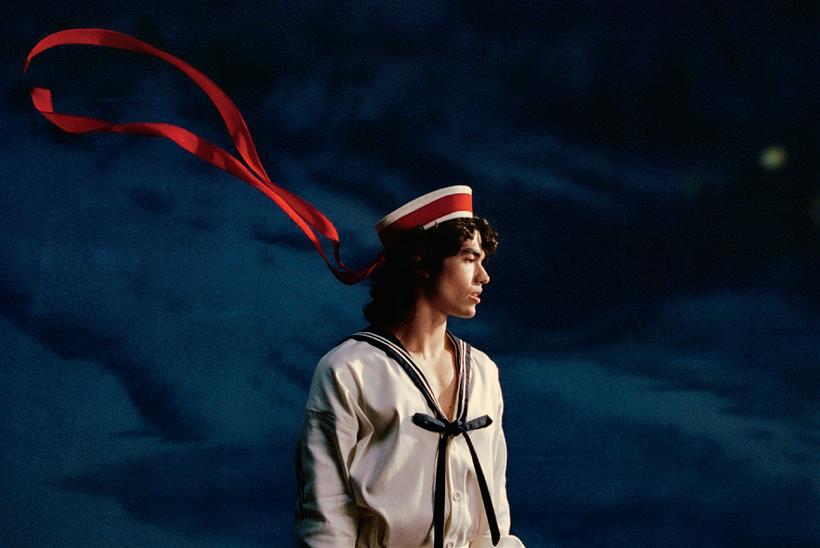
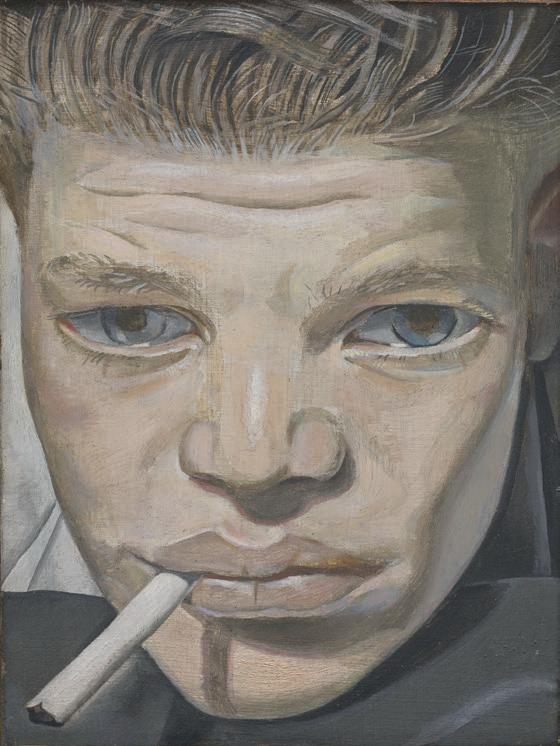
down in Amsterdam and Antwerp for two massive arena gigs that promise to be unforgettable evenings full of energy, emotion and epic pop. These will be the only Benelux performances on the tour and the dates follow the success of Conan’s fourth studio album Wishbone, which debuted at #1 on the Billboard Album Sales Chart and Top 3 on the Billboard 200. With over 12 billion streams, a strong visual expression and an influence that extends far beyond music, he’s already been selling out venues like Madison Square Garden, Kia Forum and Wembley Arena; so we know by now he’s got a reputation for putting on quite the show! Amsterdam, Netherland (14 May) and Antwerp, Belgium (15 May) www.conangray.com
Poetry International Festival (4 – 7 June)
For four days, the most powerful voices in poetry from around the world will come together for an event you’ve possibly never
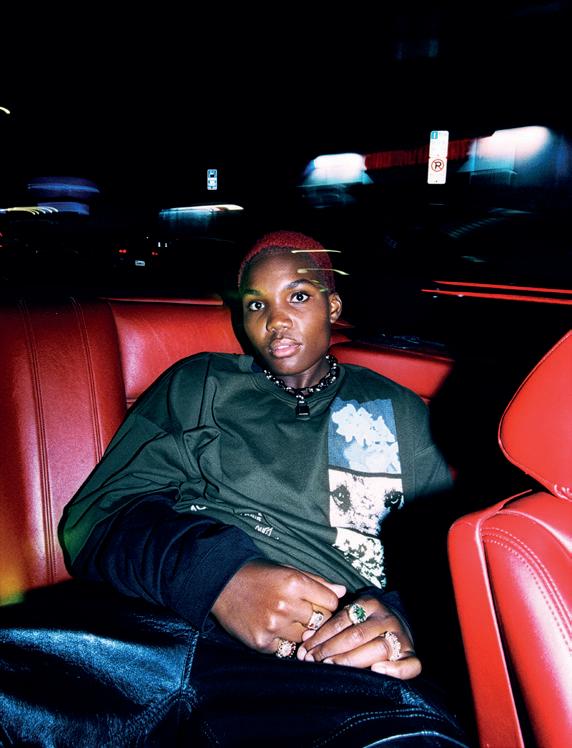
experienced before. Whether you’ve been a poetry lover for years or are just taking your first steps into the world, this festival promises moments of wonder, reflection and celebration. On the programme are captivating performances that will linger in the mind, discussions that will change your perspective on poetry, and the chance to connect with the poets whose words shape our world. For 2026, the festival is bringing together some of the most revered voices in poetry. So clear your calendars, spread the word and get ready to immerse yourself in this beautiful world.
Rotterdam, Netherlands
www.poetryinternational.com
London Calling (until 7 June)
It’s one last chance to see what the reviews have been raving about! Until 7 June, Kunstmuseum Den Haag, in collaboration with Tate, will present the major retrospective exhibition London Calling. For the first time in the Netherlands,
highlights of post-war British paintings will be shown in a carefully curated overview. Featuring work by 13 artists, the exhibition offers a cross-section of British painting while also providing insight into parallel movements and artists who also used paint to express the world around them, but who have remained underexposed in the mainstream narrative. In total, the exhibition will be displaying almost 70 works until it packs up in the first week of June.
The Hague, Netherlands www.kunstmuseum.nl
Bruxelles fait son cinéma (16 June to 18 July)
For four weeks this summer, you’re invited to experience cinema in a fresh format and at plenty of different settings. Every summer, Brussels offers free open-air film screenings to all. From blockbuster movies to little-known independent pictures, the 19 municipalities of the Belgian
capital are catered to. As well as a welcome chance to view some film culture, this annual event is also a great opportunity to rediscover Brussels in all its wonder and diversity.
All over Brussels, Belgium www.bruxellesfaitsoncinema.be
Ever since the inaugural festival back in 1953, this unparalleled open-theatre event, with a grand castle as its setting, has become an annual appointment for many artists, as well as theatrical and musical ensembles, on an international and national scale. Now, it returns at the end of June with a new cultural offering. At its first edition in 1953, a handful of people from Wiltz had the foresight to create a one-of-a-kind festival that Luxembourg could call its own. Since then, it’s been able to attract some of the biggest artists through the decades; a lot of times it’s even been the performer’s first time in the country. In 1991 a removable roof was installed, which covers the main area of the stage and also offers protection from the weather to spectators. And as an added bonus, the public got to enjoy improved acoustic conditions! Listen out for them in June.
Wiltz, Luxembourg www.festivaldewiltz.lu
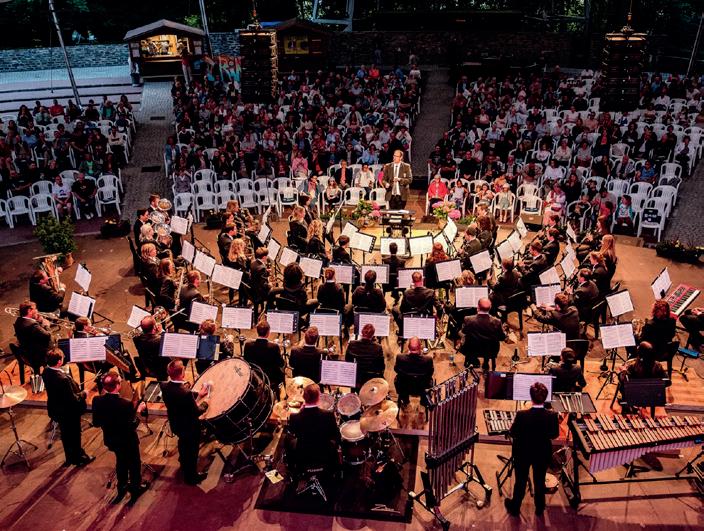
Consider this your ticket to a festival packed with culture. This annual event is unique in Belgium, known for its varied (and free!) offering of music performances, street theatre, exhibitions, children’s animation, fairs, parades and plenty more besides. The Ghent Festivities is now one of the biggest and most popular festivals in Europe, having been recognised as an item of Flemish intangible heritage. Festi-
val goers can attend concerts and a whole host of performances all across the city. And you won’t go hungry or thirsty, thanks to the many food and drink stalls popping up every year. From well-known artists to street performers, everyone gets a chance to perform their act for the gathered crowds. This is a place to come and experience something fresh and new, every time.
All over Ghent, Belgium www.visit.gent.be/en
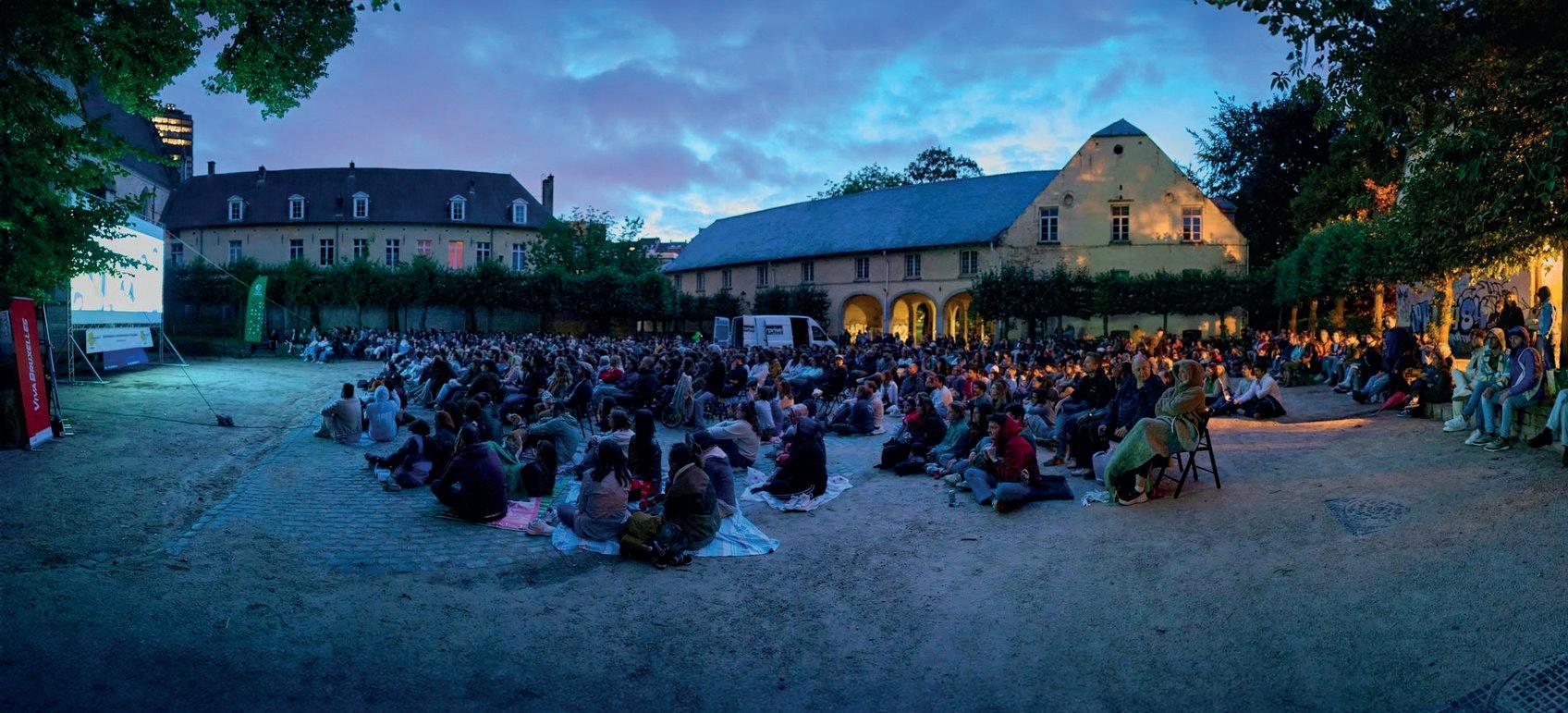
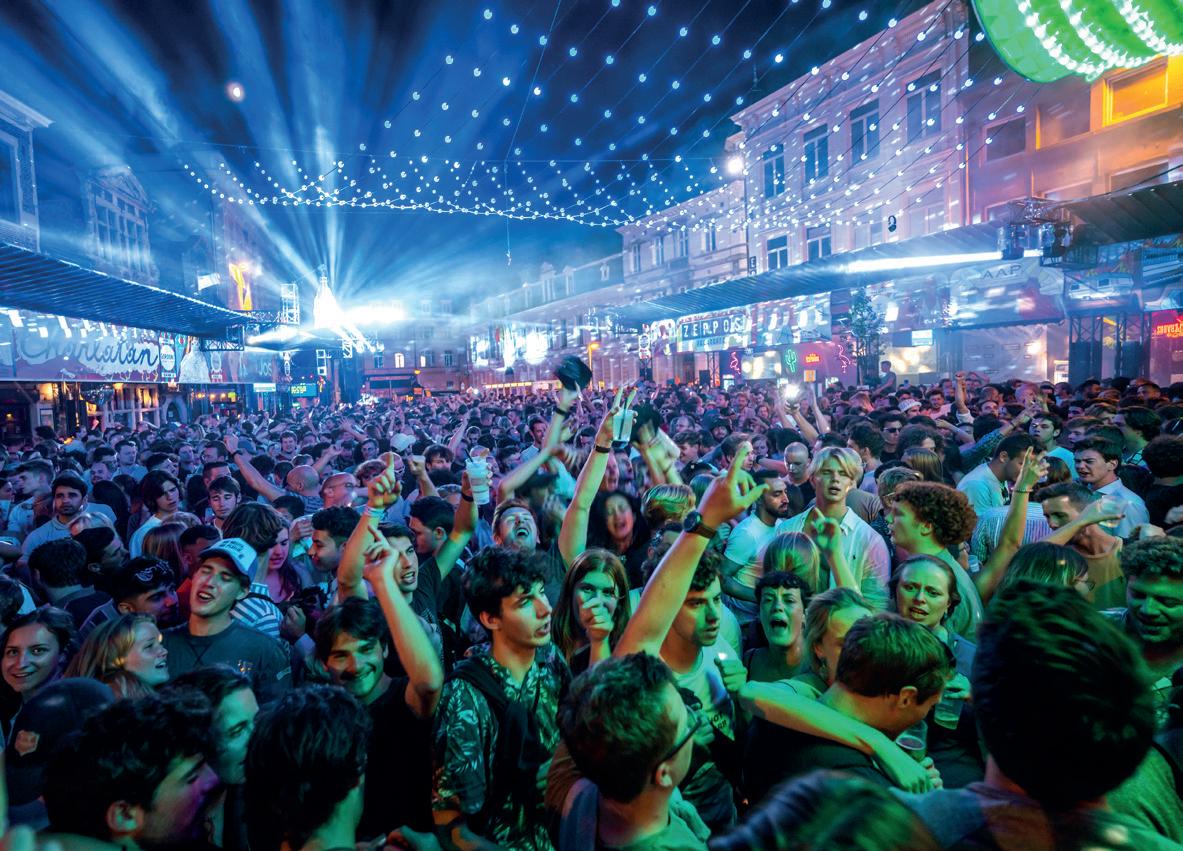
Discover Benelux Summer 2026
Published 05.2026
ISSN 1757-9589
Published by
Scan Client Publishing
H2Print
Executive Editor
Thomas Winther
Creative Director
Mads E. Petersen
Editor
Malin Norman
Graphic Designer
Mercedes Moulia
Cover Photo
Martin Pilette for Bureau Rouge
Sales & Key Account Managers
Julia Kabir
Veronica Rafteseth
Contributors
Anders Lorenzen
Karl Batterbee
Malin Norman
Paola Westbeek
Advertising marketing@scanmagazine.co.uk
To Subscribe scanmagazine.co.uk/subscribe
Scan Magazine Ltd 3rd floor, News Building, 3 London Bridge Street, London SE1 9SG, United Kingdom www.scanclientpublishing.com info@scanmagazine.co.uk www.scanmagazine.co.uk
© All rights reserved. Material contained in this publication may not be reproduced, in whole or in part, without prior permission of Scan Magazine Ltd.
Scan Magazine® is a registered trademark of Scan Magazine Ltd.
This magazine contains advertorials/promotional articles