

BEND
CURATED TRAVEL + LIFESTYLE








WELCOME TO CENTRAL OREGON 28
Local Vibe
Fragance of the High Desert ... Cone Zone...
Unsung Native ... Dog Town
Lay of the Land
Getting familiar with Central Oregon
Mindful Traveler
Make a positive impact during in Central Oregon during your stay.
Wychus Canyon Preserve
Restoring floodplain habitats is critical for water preservation in the high desert.

PRESERVING SPACES



Urban Escape
Thanks to early, enthusiastic citizens, a 13-acre public park resides in the heart of Bend.
Trail Blazers
The volunteer-led Central Oregon Trail Alliance has been creating and maintaining mountain bike trails for over 33 years.
Fire Starter
After 200 years of logging, ranching and urban development, big changes to Central Oregon’s ecozones affect how land carries fire.
Destination: Redmond
Just a short drive from Bend lies the town of Redmond, with a lively downtown and access to adventure.
The Hot Spot
Culture, community and cocktails at the eclectic Dogwood at the Pine Shed
Market Season
Central Oregon’s farmers markets offer flavor, community and unique experiences.
What We Love Now
Trends on the culinary scene—basement beers, get axed and family dreams.
Experience Central Oregon
Start planning your trip with curated guides.

PARK & FLOAT ON SIMPSON AVE.


Start at Park & Float on Simpson Ave. for parking, tube rentals, life jackets and shuttle service - everything you need for a great day on the river.
Start at Park & Float. Return via the shuttle. Gear up. Go float.
Rental and shuttle information, maps and more details at bendparksandrec.org/float
public parking at Simpson Ave. & Bradbury Way,













Frangrance of the High Desert
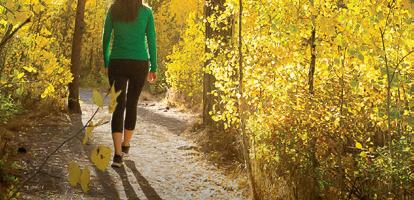
Long before you see it, you smell it — that dry, spicy-sweet scent that rides the wind through Central Oregon’s open country. It’s the perfume of sagebrush and bitterbrush, two hardy plants that define the high desert not just by appearance, but by atmosphere. Big sagebrush (Artemisia tridentata), with its silvery, gray-green leaves and earthy aroma, carpets the basalt plains, offering cover for quail and songbirds. Antelop Bitterbrush (Purshia tridentata)is the primary species of bitterbrush that is typically found in the eastside forests of Central Oregon, growing taller and more angular than sagebrush, blooms each spring with soft yellow blossoms that draw native bees and mark the seasonal shift. In winter, mule deer browse its branches when little else remains.
Together, they create a kind of living signature — resilient, understated, beautifully adapted. After a summer thunderstorm, the desert exhales, and these plants release their full character — notes of resin, dust, sunlight and time. It’s a scent locals recognize instantly, even if they can’t name it.

Cone Zone
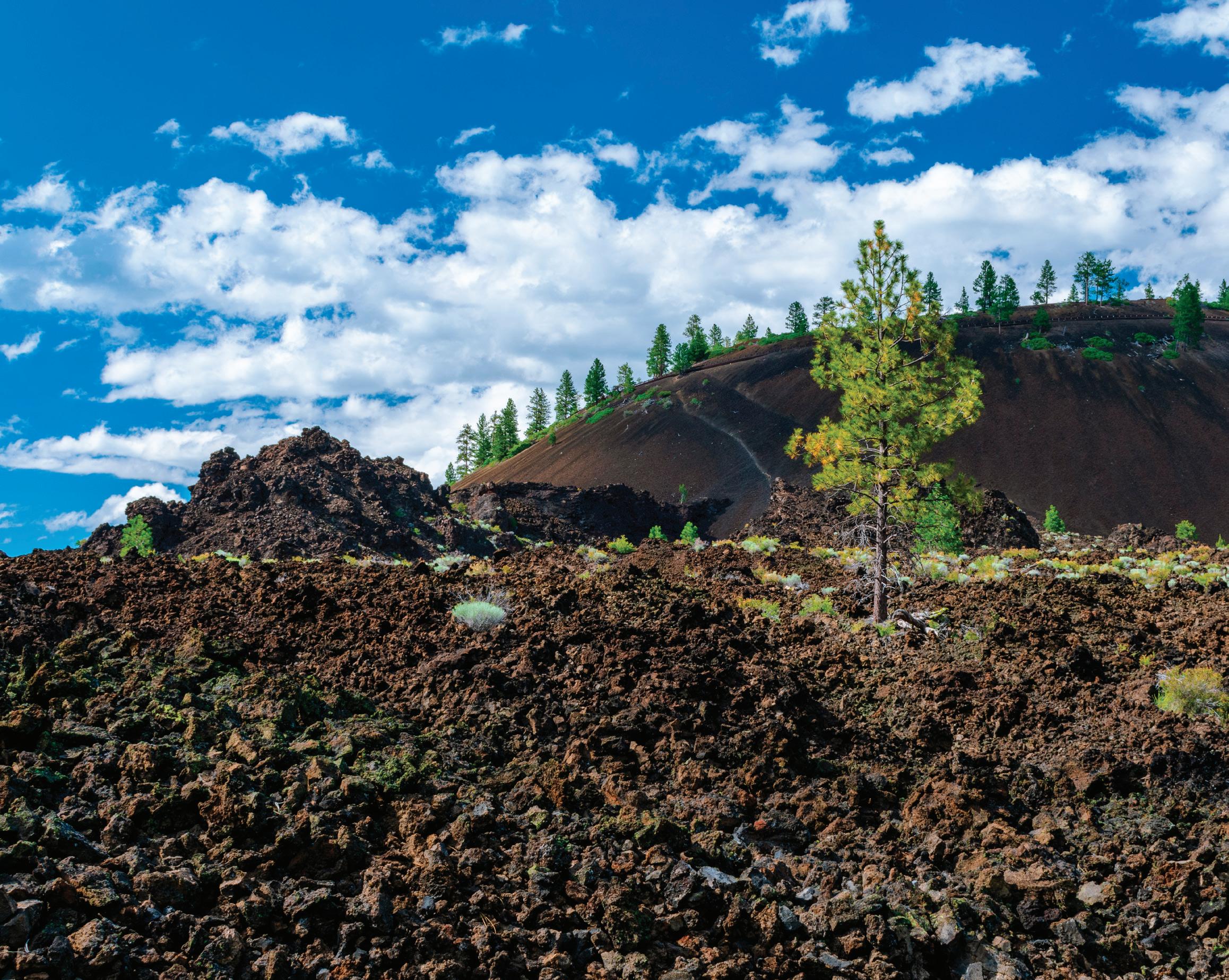
Locals sometimes refer to the terrain around Bend as “the cone zone” — a nod to the cinder cones, lava buttes and blackened flows that ripple across the high desert like frozen waves. It’s playful shorthand but also a quiet acknowledgment of the region’s dramatic volcanic origins. This is a place born of fire. Pilot Butte rises right in town—a reminder that Bend is one of the few U.S. cities with a volcano in city limits. Venture further and you’ll find a rugged constellation of cones and craters: Lava Butte, Tumalo, Newberry Caldera. Each marks a chapter in a story still unfolding deep beneath the surface.
The soil here is loose and mineral-rich, forcing plants to dig deep and adapt. Trails wind through jagged flows where lichen paints the rock in rust and sage. Even the language of the landscape — “butte-hopping,” “lava bombing,” “flow country” — carries the edge of something elemental. To hike, bike or simply breathe in this region is to stand on the bones of ancient eruptions. In Central Oregon, geology isn’t just a backdrop. It’s character.


Unsung Native
In the clear, cold currents of the Deschutes, not every fish earns fame. The Mountain whitefish is a native, a quiet regular beneath the surface, often overshadowed by its flashier neighbors. But for those who know the river well, the whitefish is more than worthy of attention — it’s a sign of a healthy watershed and a steadfast part of the aquatic rhythm in Central Oregon. Slender and silver, with a graceful forked tail and downturned mouth, the whitefish feeds along the riverbed, sifting through gravel for insects and larvae. They're abundant, resilient and active when other fish retreat into deeper pools, especially in the colder months. Some anglers dismiss them as “bycatch,” but seasoned locals know better. Hook one on a deep-drifting nymph rig in winter, and you’ll earn a fight that belies their humble reputation. More importantly, you’ll be connecting with a species that has swum these waters for thousands of years. Good river etiquette means releasing whitefish with care, just as you would a prized trout. They may not be the target, but they’re part of the story — and the river is better for having them in it.


Dog Town
If you spend even a single afternoon in Bend, you’ll notice them — on paddleboards, in truck beds, sprawled beneath brewpub tables or trotting beside mountain bikes on dusty trails. Dogs aren’t just welcome here, they’re woven into the lifestyle. With miles of off-leash trails, dogfriendly hotels and more pet boutiques than some cities have grocery stores, Bend has earned its title as one of the most dog-friendly towns in the country. Locals plan weekend hikes with their pups in mind, and many businesses keep water bowls and treats at the door. Some breweries even offer dog menus. There’s an unspoken etiquette here — dogs are expected to be well-behaved trail companions and sociable citizens. And they often are. It’s not uncommon for a Labrador to outswim its owner at Elk Lake or for a cattle dog to know the way home from the river. In Bend, dogs aren’t pets — they’re part of the pack — with plenty of room to roam.

















Welcome to Central Oregon.
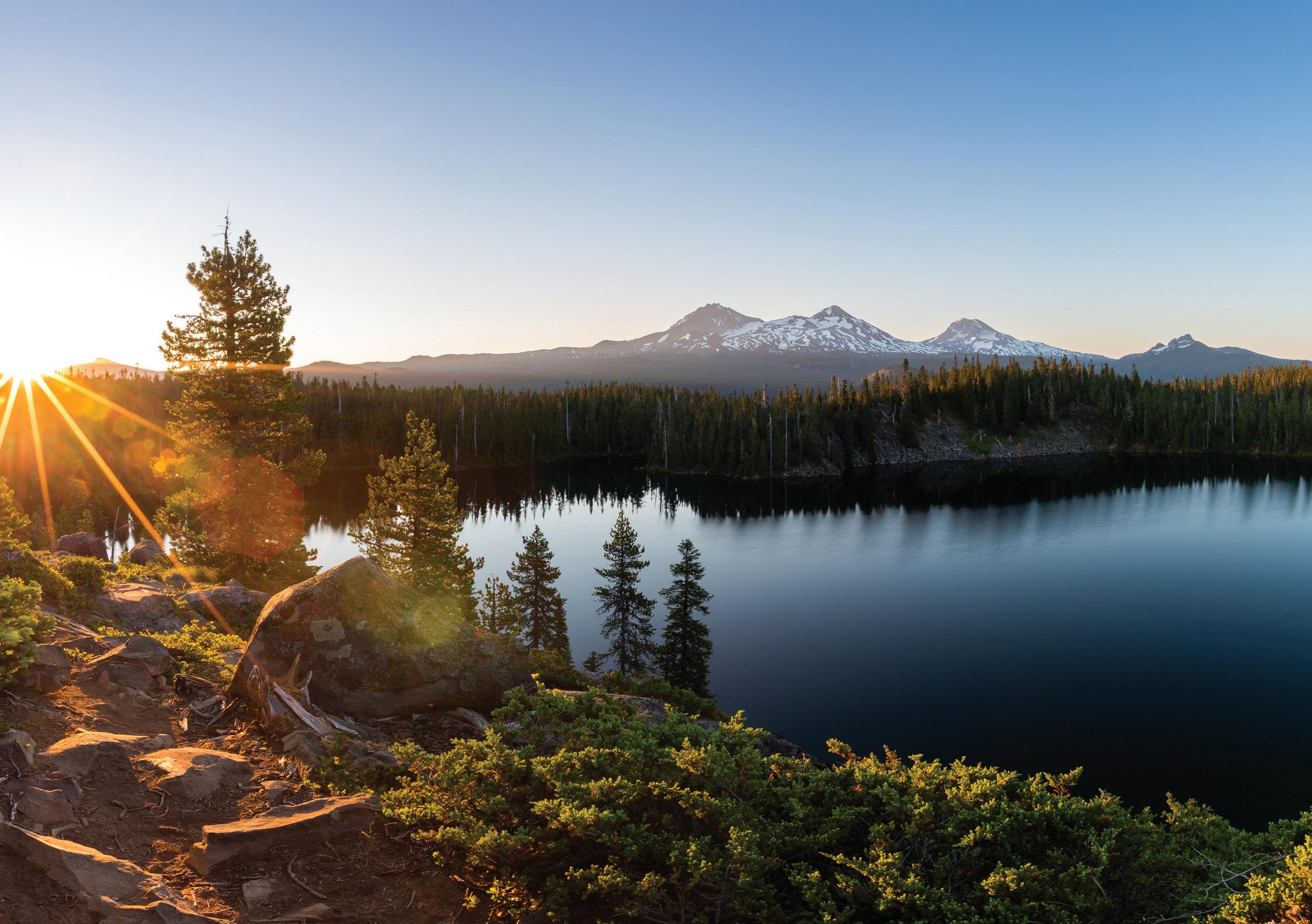
This is a place where old school meets innovation and ranchers, recreationalists, entrepreneurs and retirees come together at the end of another momentous day to cheer over a locally brewed craft beer, cider or kombucha. Whether you’re in Central Oregon for adventure in the mountains, hiking some of Oregon’s tallest peaks, riding Mt Bachelor, kayaking, flyfishing, world-class mountain biking, trail running through ponderosa pine forests or exploring lava caves and volcanic formations, Central Oregon has something for everyone. >>>


Images by Richard Bacon

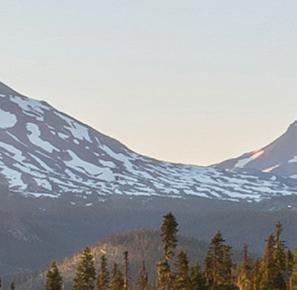
Thrill seekers can zipline off Mt Bachelor, crawl through underground lava caves or rock climb at Smith Rock State Park. Those preferring to keep their feet on solid ground have hundreds of trails, parks and nature preserves to choose from. Water lovers find plenty of river and lake access for floating, fishing and swimming. If this all sounds too outdoorsy for you, no problem. Central Oregon is home to wineries and distilleries, luxury resort spas, community theaters, art fairs and incredible museums like the High Desert Museum and the Deschutes Historical Museum. No matter what activity you choose, you’ll likely want to finish the day with a tasty drink, satisfying meal and an unparalleled view of seven incredible mountains.
BRIEF HISTORY
Before European exploration, the incorporation of the Oregon Territory and the establishment of Oregon as a state in 1859, eight Indigenous Nations—each with their own customs, movements and traditions—first claimed this land. These include the Wascoes, Warm Springs, Northern Paiutes and the Columbia River Tribes: Wasco (Chinookan), Tenino, Tygh, Wyam and John Day (Sahaptin). This place, where high desert meets evergreen forests nestled in the rain shadow of the Cascade Mountain Range, has been hugely significant to humans for thousands of years. In fact, archeological evidence shows Indigenous peoples have been living in Central Oregon since at least 13,000 years ago.
When Euro-American’s began colonizing this area in earnest in the early 1800s, they forever changed the relationships between land, people and animals. Since then, Bend has morphed from a pre-colonial landscape to a single “Farewell Bend” Ranch to a robust logging town to a bustling outdoor adventure destination. With the arrival of two colleges (Oregon State University Cascades and Central Oregon Community College),
Bend continues to emerge as one of the most attractive places to live and visit—with unique intersections of culture, activity and industry.
BEND
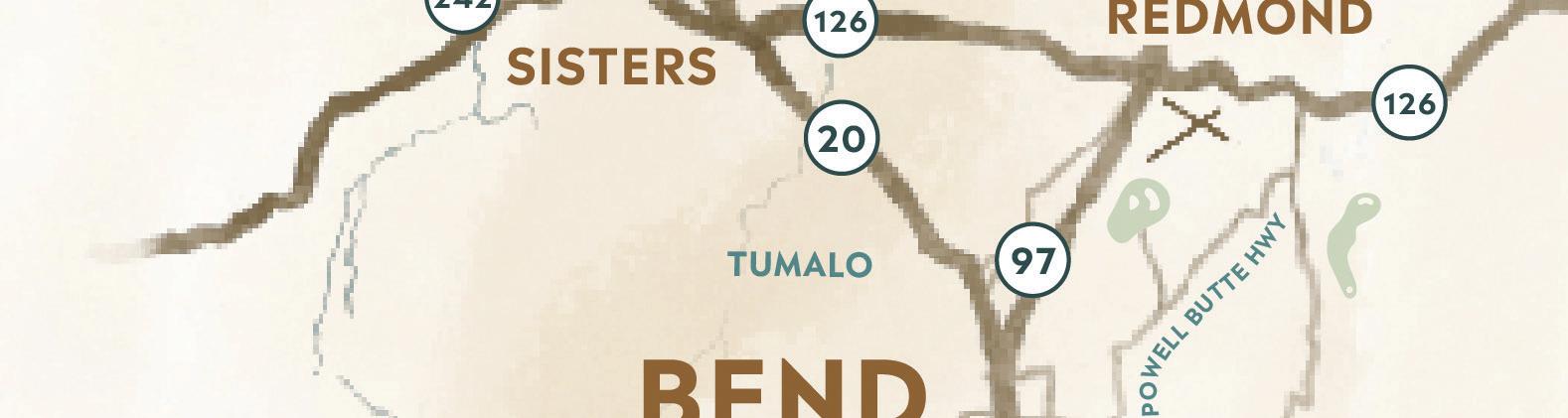
Whether it’s activity, food or entertainment you’re after, Bend (aka Beer City, USA) offers it all. With a dreamy concoction of restaurants, outdoor activity and art, it’s no wonder Bend has been one of the fastest growing towns in recent decades. With over 75 city parks, more than 25 breweries and more food trucks than one can count, Bend is one of the most vibrant and progressive towns in Central Oregon. With cultural highlights like the High Desert Museum, headliner bands playing at Hayden Homes Amphitheater, performing arts at Tower Theatre and Cascades Theatrical Company, shopping at the Old Mill District, and a bustling downtown filled with boutique shops, restaurants and style, Bend is home to myriad year-round events that means anytime is a great time to visit.
SISTERS
This sleepy town at the base of the Three Sisters Mountains entices visitors like a step back in time. Its 1880s, western-style buildings, wooden sidewalks and tight-knit storefronts house local artists, the famed Sisters Coffee Co. and Sisters Bakery, and a noticeably friendly atmosphere. From this Gateway to the Cascades, take a short drive to Suttle Lake, or drive or cycle the 82-mile McKenzie Pass-Santiam Pass Scenic Byway through old-growth forests or the 37-mile Sisters to Smith Rock Scenic Bikeway through sagebrush and juniper canyons. Don’t miss the annual Sister’s Rodeo (June), internationally recognized Sisters Outdoor Quilt Show (July), Annual Country Fair (September), and plenty of community races, music shows, street festivals and more throughout the year.


TUMALO

REDMOND
You really can tell a lot about a town by checking their events calendar. For Redmond, this includes an annual rodeo, brew festivals, BMX Nationals, summer concert series, art shows and more than one car show on the books. No matter your interests, the “Hub of Central Oregon” offers something for everyone. Whether you’re here to golf, climb, hike, shop, relax or all the above, Redmond is the place to be. With locally-owned shops, a vibrant yet historic downtown, parks, public art and several outstanding breweries, wineries and distilleries, Redmond ensures your dance cards are full. With the Redmond Caves to explore, walking tours, fishing guides, treasure hunting at antique shops, disc golfing, tennis and cycling at Dry Canyon Park, this small yet happening town is giving Bend a run for its money.
TERREBONNE
Not only is Terrebonne known as horse country, it’s also the location for the world-famous Smith Rock State Park. Located a short six-mile distance north of Redmond, Terrebonne (“good earth”) exemplifies the outdoor lifestyle with its abundant opportunities for hiking, mountain climbing, horseback riding, fishing and even activities like bungee jumping, hot-air balloon
excursions and golf at Crooked River Ranch GC. After your outdoor adventures, visit some of Central Oregon’s best-known wineries or take a self-guided tour at a working alpaca petting farm.
SUNRIVER
If the bustle of Bend is too much and the open vistas of Redmond don’t entice, then consider Sunriver where the Deschutes River meanders through lowlands, houses are tucked between ponderosa pines, and the mountain views are breathtaking. Nearby exploration sites include Newberry National Volcanic Monument, the Lava Cast Forest and the underground trail at Lava River Cave. Local resorts and shops offer year-round activities like horseback riding, bike rentals, crosscountry skiing, golfing and events, making Sunriver cute and casual.
No matter where you find yourself in Central Oregon, you’re likely in the right place. That is to say, you can’t go wrong here. So, relax, enjoy 300 days of sunshine, smile whenever you glimpse so many astounding mountain peaks and know that you’re welcome in Central Oregon anytime because this small-town feel has big-town dreams.
































TREAD LIGHTLY

More than a trendy buzz phrase, “Leave No Trace” is about being a more responsible traveler, connecting with and caring about the world around us, and leaving a place the same if not better than we found it. Using education and stewardship, non-profit LNT.org guides travelers in how to plan and be mindful of their minimal-waste travels and outdoor activities. Seven principles of “Leave No Trace” were created for all activities, whether you’re traveling or not.
1. Plan and Prepare
2. Travel and Camp on Durable Surfaces
3. Dispose of Waste Properly
4. Leave What You Find
5. Minimize Campfire Impacts
6. Respect Wildlife
7. Be Considerate of Others
No one is perfect, and yes, we will all produce some kind of waste, irrespective of how careful we are. But we all can take small steps to minimize our effect. To get involved and learn more, visit lnt.org.

IMAGE BY RICHARD BACON

WYCHUS CANYON PRESERVE

Restoring floodplain habitats is critical for water preservation in the high desert.
story MEGHAN ROBINS images RICHARD BACON
What begins as snowmelt high in the Three Sisters Wilderness fingers into tributaries that converge outside of Sisters, Oregon, to form Whychus Creek, a 41-mile river that terminates at the Deschutes River, which eventually joins the Columbia River more than 300 miles away. Water flows between steep rocky canyons, pouring over waterfalls and occasionally widening into short, flat sections of wet meadowlands. These meadowlands are critical habitats for fish, plants, birds and other wildlife; however, they were altered by homesteaders in the early 1800s, early agricultural efforts and the Army Corps of Engineers in the 1960s, who rerouted, straightened and bermed sections of the creek to reduce flood danger. Such colonial interruptions turned a meandering creek and rich habitat into a fast-flowing industrial resource.
After decades of cattle ranching, logging, farming and other Euro-American settlement activities, valuable habitat areas surrounding Whychus Creek have been reduced, compacted and developed. In 2010, Deschutes Land Trust purchased 930 acres on Whychus Creek to create the Whychus Canyon Preserve. For the past fifteen years, they have been engaged in multiple multiyear restoration projects to return sections surrounding Whychus Creek to healthy wet meadows, meandering waterways and open forests.
Their approach has been threefold: forest restoration,
The diversity of habitat creates more livable areas for fish and insects and precious green spaces where wildflowers, undergrowth and shade-giving trees flourish.
stream restoration and managing noxious weeds. In 2016, they partnered with the Upper Deschutes Watershed Council (UDWC) to focus on a 1.5-mile stretch of Whychus Creek that had been straightened and bermed, creating a straight, fast-flowing river beside a hard-packed, open paddock. In August 2016, with bulldozers and other heavy machinery, professional construction crews removed berms and shaped the floodplain so the creek could flow throughout the valley, slow down and meander. That fall, volunteers planted thousands of native trees, shrubs, wildflowers and grasses; and within a few years, the results were astounding.
Between 2021 and 2023, the Land Trust and its partners did similar work on the section of Whychus Creek that runs through Rimrock Ranch, a 1,123-acre private wildlife preserve also owned by Deschutes Land Trust. They added whole trees across the floodplain to strategically create more habitat. Today, fifteen years after the first phase of restoration, native grasses and other wetland species like cottonwood, willow and dogwood are rebounding, fish are returning to the many pools and shady alcoves, and what was once a lush complex habitat is being restored.
Why is this so important? Because water is scarce in the high desert. Wet meadows and floodplains encourage water to slow down and linger, giving it time to soak into the ground and replenish the water table. The diversity of habitat creates more livable areas for fish and insects and precious green spaces where wildflowers, undergrowth and shade-giving trees flourish. Where wildflowers grow, insects thrive. Where insects thrive, small birds and fish abound. Where small fish, amphibians and fish
abound, raptors and larger predators grow strong. All of this creates a healthy, resilient ecosystem.
Such lush oases tucked between steep basalt canyons, sagebrush plateaus and arid pine and juniper forests not only improve animals’ access to drinking water and food sources but also benefit humans by helping to protect nearby homes and neighborhoods from potential wildfire risks. Restoring Whychus Creek also has downstream effects: it filters and keeps our water clean for everyone to enjoy.
These efforts attempt to make the creek more resilient and functional for long-term restoration. Since time immemorial, the area now called Central Oregon has been the traditional lands of the Wasco (Wasq’u) and Warm Springs (Tana’ma) Peoples, with crossover from many neighboring nations including the Wasco (Chinookan), Klamath, Molalla, Tenino, Tygh, Wyam, John Day (Sahaptin) and Northern Paiute (Numu) Nations, who traveled into the area for trade, harvesting seasons and following game. In 1855, the United States government and members from multiple bands signed the Treaty of 1855, in which roughly 10 million acres were ceded to the U.S. government in exchange for money, goods and a much smaller reservation. Today, members of the Confederated Tribes of Warm Springs, which includes the Wasco, Warm Springs and Northern Paiute Nations, maintain their rights to fish, hunt and harvest at traditional locations like Whychus Canyon Preserve. Deschutes Land Trust and the Confederated Tribes of Warm Springs work in partnership to manage and restore Land Trust preserves throughout Central Oregon.


Since time immemorial, the area now called Central Oregon has been the traditional lands of the Wasco (Wasq’u) and Warm Springs (Tana’ma) Peoples.
Santiam Wagon Road
Unique to Whychus Canyon Preserve are remnants of the original Santiam Wagon Road. What likely began as an Indigenous trade route was overtaken, used and made popular by homesteaders wishing to connect the Willamette Valley to Eastern Oregon. Gold seekers, cattle and sheep drivers, and merchants traveled the Santiam Wagon Road between the busy Willamette Valley and the quieter high desert east of the Cascades. Ranchers took advantage of open grazing. Gold-seekers traveled between coastal cities and eastern mining camps. Merchants sold goods like wool, fruits and vegetables.
Near the turn of the century, the road builders happily received “free” public land to complete the Santiam Wagon Road. Between 1865 and 1939, the Santiam Wagon Road was the main corridor used by Euro-Americans traveling between Central Oregon and the Willamette Valley. Eventually, when cars entered the scene in the early 1900s, a new road over McKenzie Pass was built in the 1920s, and today’s Santiam Pass opened, shifting traffic away from the old wagon road into a more modern era.
Know Before You Visit
When you visit Whychus Canyon Preserve, you can walk through historic Santiam Wagon Road sections. From the parking lot off Goodrich Road, take the Wagon Road Trail, which joins the Meadow Loop to create a two-and-a-half-mile loop with interpretive signs along the way. Those interested in longer hikes can do the Mid-Canyon Route, a three-mile loop with stunning wildflowers and river canyon overlooks, or the Long Canyon Route. This five-mile loop leads down into the canyon with steeper, more challenging terrain
Before you go, always check deschuteslandtrust.org for the most up-to-date trail rules. Dogs are allowed
on leash only at Whychus Canyon Preserve, and horses, bikes or motorized vehicles are not allowed (pedestrian travel only). Visitors should always stay on trails to protect plants, wildlife and historical artifacts. Catch-and-release fishing is permitted, but please see rules and state-wide regulations before casting your line. Public access to Whychus Canyon Preserve is only available from Goodrich Road.
About Deschutes Land Trust
Thanks to Deschutes Land Trust, and at the time of this publishing, 18,742 acres around Central Oregon are being preserved, restored and maintained for wildlife and humans’ continual enjoyment of nature spaces. Since their inception in 1995, Deschutes Land Trust has upheld their mission “to conserve and care for the lands and water that sustain Central Oregon, so local communities and the natural world can flourish together for generations to come” by purchasing tracts of land and partnering with various land stewards including the Confederated Tribes of Warm Springs.
Their work is primarily achieved thanks to their Board of Directors, paid staff and a robust army of dedicated volunteers who help with everything from observing wildlife and collecting data to getting their hands dirty with on-the-land work parties. This community-based stewardship includes fence-pulling, trail clean-ups, event planning and leading guided walks. If you’re in Bend for a day, weekend, week or longer, consider signing up for a Deschutes Land Trust event, class, lecture, walk or hike. Get outside and get to know the impressive environmental and human history of Central Oregon and thank Deschutes Land Trust for helping preserve critical habitat areas that are so important to all of us.
Learn more at deschuteslandtrust.org.
URBAN ESCAPE
Thanks to early, enthusiastic citizens, a 13-acre public park resides in the heart of Bend.
words MEGHAN ROBINS images RICHARD BACON
The value of public lands cannot be overstated. In the 1920s, select citizens of Bend understood this, and they petitioned to preserve what is now Drake Park, a 13-acre riverfront public park at the heart of Bend’s city center.
In 1855, lands occupied primarily by Wasco, Warm Springs and Northern Paiute Nations members were ceded to the U.S. government through the Treaty of 1855 and later purchased by private U.S. citizens (or Euro-American men intending to become citizens). The first recorded homesteaders to occupy “Farewell Bend” (Bend’s original name) were Stephen Staats and Court Allen, whose disputed lot lines resulted in turning a log cabin into a school in 1883 for children of the half dozen or so families living along the Deschutes River.
In 1900, when, according to census records, 21 people lived in Farewell Bend, Alexander Drake and his wife arrived and purchased the land known today as Drake Park. In 1904, they began supplying water through their newly established irrigation company, which eventually evolved into the Central Oregon Irrigation District. Drake founded the Pilot Butte Development Company and was responsible for subdividing, platting and laying out many of the roads of downtown Bend and the surrounding neighborhoods. He built a sawmill, hydroelectric power station and a dam across the Deschutes River, which still exists (in an upgraded form) to hold Mirror Pond. By 1910, Bend’s population had grown to 536, and the Drakes sold their holdings in Central Oregon to the Bend Company, which reserved the riverfront property for further industrial use.


One of Bend’s most significant treasures is the river around which this town was built.
In 1919, when talk of home development threatened to privatize the southeastern banks of the Deschutes River near Mirror Pond, the Women’s Civic Improvement League, led by May Arnold, petitioned the city to purchase the land. In a town inhabited by roughly 5,400 citizens, they gathered 1,500 signatures to get a bond measure on the ballot, which passed and allotted $21,000 to finance the purchase. In 1921, Bend Company deeded the 11-acre park to the now incorporated City of Bend. In 1928, the city council made a resolution to rename the area from City Park to Drake Park in honor of the town’s founder.
Over the decades and over one hundred years later, Drake Park has undergone additional improvements, become a staple for city events and is maintained by Bend Park and Recreation District. Improvements include purchasing additional land for a total of 13 acres, maintaining lawns, constructing a footbridge, adding safe river access and an amphitheater, building bathrooms and picnic tables and paving walkways.
In 2023, a new boardwalk was built alongside Mirror Pond. This boardwalk improves ADA access, reduces riverbank erosion and elongates the Deschutes River Trail system by creating an important connection to Pacific Park and the First Street Rapids farther upriver.
Currently, Bend Park and Recreation District and the City of Bend are partnering to plan and design improvements to Riverfront Street, a neighborhood street on the south side of Drake Park that serves as an unofficial connection between Drake Park and Miller’s Landing Park, another popular riverfront recreation area near
the Old Mill. Such improvements will transform this currently car-centric street into a more pedestrian and bicycle-friendly area, further elongating the Deschutes River Trail. Once connected by Riverfront Street, the Deschutes River Trail will go from Farewell Bend Park on the far side of the Old Mill District to First Street Rapids.
One of Bend’s most significant treasures is the river around which this town was built. Thanks to the early foresight of particular residents and the long-standing dedication to creating and preserving public parks through Bend Park and Recreation District and the City of Bend, residents and visitors can enjoy this beautiful resource as a place to walk, run, bike, play games, picnic and enjoy with family and friends.
What’s happening at Drake Park?
In addition to organized community walks, runs, concerts and theater events, Drake Park is home to plenty of year-round activities, including:
• Bend Brews & Beyond (May)
• Bend Summer Pride (June)
• Bend Pet Parade (July 4)
• Munch & Music (July and August, weekly)
• The Great Drake Park Duck Race (September)
• And more!
Thanks to the Deschutes County Historical Society for celebrating the Drake Park Centennial and providing historical information in their June 2021 newsletter. More information can be found at deschuteshistory.org and bendparksandrec.org.

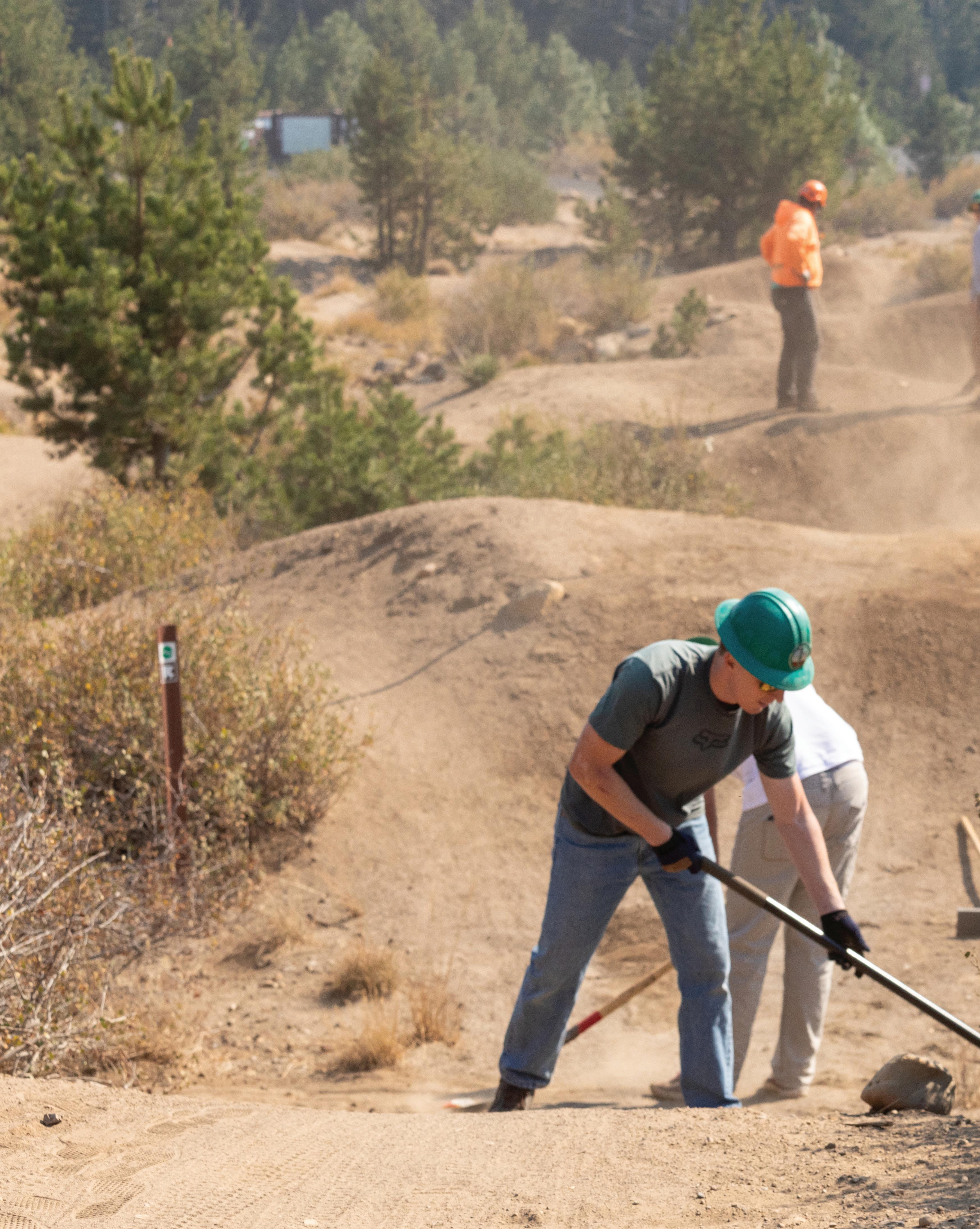

TRAIL BLAZERS


The volunteer-led Central Oregon Trail Alliance has been creating and maintaining mountain bike trails for over 33 years.
Each year, 1.5 million mountain bikers put air in their tires, grease their chains and head out to ride some of the 600 miles of Central Oregon mountain bike trails. They climb Lookout Mountain in the Ochoco Mountains, race down from Tumalo Falls on the Mrazek Trail and hit the jumps in The Lair out of Phil’s Trail Area. “Mountain biking gives you access to the thrill and a level of fun that you just don’t get in other endeavors,” explains Emmy Andrews, Executive Director of the Central Oregon Trails Alliance (COTA). For the past 33 years, COTA has focused “on the development, protection and enhancement of the Central Oregon mountain biking experience.” Of those 600 miles currently being stewarded by COTA, 90% were built by them.
The Growth of a Movement
Considering its humble beginnings, COTA’s stewardship of Central Oregon trails is even more impressive. In the early 1990s, COTA began with a group of mountain biking enthusiasts riding on United States Forest Service (USFS) and Bureau of Land Management (BLM) public land just west of Bend. That land would grow to become the internationally known Phil’s Network.
In 1998, the group gathered over 3,000 signatures, stopping the Oregon Department of Transportation (ODOT) from going ahead with a proposed surface rock extraction near Phil’s Network, which would’ve killed the nearby trails. Soon after, COTA began stewardship of the trails by organizing the first Spring Fling and other trail work parties. By the early 2000s, they began to build the Wanoga Complex Area’s 35 miles of competitive
words GREGG MORRIS
riding trails. COTA also began working with the Prineville District on long-range planning, which created the Maston Area and Cline Butte Area, and it worked with the Redmond Parks and Recreation Department to create The Radlands bike trail network.
By 2020, the all-volunteer COTA realized they needed a dedicated staff to help achieve their goals. In 2021, they decided to hire Andrews, who had been a member since 2012 and on the Board since 2016, as their first Executive Director. By 2022, they began hiring more staff to help. Andrews admits that her cycling experience before moving to Bend centered around transportation only. But it didn’t take long for her to fall in love with the sport of mountain biking. “Trails are magical,” says Andrews, who moved to Bend in 2008. “When I learned what goes into building them, I wanted to be a part of it.”
Emmy Andrews’ First Ride—Skyliner to Lower Whoops
Andrews’ first mountain bike ride was the popular Skyliner to Lower Whoops route in West Bend. To reach the Skyliner Trailhead, head west out of Downtown Bend on Galveston, which turns into Skyliner Road. Ten miles west of Bend sits the smallish Skyliner Snopark, with one toilet and a parking area for roughly 20 vehicles.
Ride east, or back towards town, on the 3.2mile Skyliner Trail until you reach the junction of Skyliner, Lower Whoops, Pinedrops and Road 310. Have fun on the 1.8-mile, downhill-only Lower Whoops Trail, looking for hazards such as jumps, berms and tight gaps between trees. If you’d like to extend your ride and do another lap, turn left at the bottom and climb Road 310 back to the beginning of Lower Whoops.
Trail Stewardship
One fact that may surprise most mountain bikers is that it costs up to $50,000 to $70,000 to build and up to $5,000 annually to maintain a single
mile of trail. COTA currently has 62 crew leaders for trail building and a horde of trail scouts who report downed trees and other trail hindrances. They hold four major Trail Love events each year: May, June, September and October. COTA staff log 10,000 hours yearly, and volunteers put in another 20,000 hours.
Perhaps their most important duty is maintaining good relationships with local and federal agencies, which have an obligation to balance the needs of all users. In addition to the USFS and BLM federal agencies, COTA collaborates with La Pine State Park, Ochoco State Park, Central Oregon county and city recreation and parks departments, the Oregon Mountain Biking Coalition, Visit Bend and Visit Central Oregon.
COTA is currently working on two major trail projects. First, in conjunction with the Deschutes National Forest, the West Bend Trails Project will oversee the building of 17.5 miles of new trails, the rerouting of nine miles of trail to improve connectivity and the decommissioning of 17 miles of unauthorized trails in the area west of Bend. Second, the Cline Butte and Cascades View projects in Redmond will add trails and connectivity between the two areas. While the Redmond work should be completed this year, the West Bend Project will extend into 2027.
Trail Work is Good for the Environment
Contrary to the belief held by some, many of the trail projects are good for the environment and local wildlife habitat in two main ways. First, the strategic routing of new official trails creates core habitats, or areas of 100 acres or larger that are more extensive and have no trails or roads. COTA works with USFS biologists to map those areas and preserve their habitat. Secondly, COTA helps to expand these core habitats by decommissioning redundant dirt roads and unofficial trails. Over 1,200 acres of new core habitats are being created in the West Bend Project alone.


“My appeal to the public would be to please stop building and making unofficial trails and roads,” says Andrews. “It can be a long and frustrating process to get new trails approved, but it’s so much better to do it in a way that’s a win for both wildlife and public lands users.”
Give Back
Those looking to get involved with COTA should consider becoming a member or volunteering. Typical trail work consists of clearing brush, repairing surfaces and improving signage along your favorite trails. If you prefer saving the dirt for your rides, try serving on the board or one of seven major committees.
EMMY ANDREWS’ FAVORITE LOCAL RIDES
After Work—Lower Whoops Laps
Andrews likes to return to where it all began for her! Park off Skyliner Road, west of Bend, near Phil’s Network. Start by climbing the one-way 310 Road, then descend on the Lower Whoops Trail. Repeat the 3.5-mile lap as necessary. With its rolling hills and berms, it won’t take long for you to realize why this trail is sometimes called the Whoopty Trail.
All Day Ride—Madras East Hills Trail System
If you want to spend the entire day on your bike in a relatively new trail network, drive about an hour north of Bend on Highway 97, then head east out of Madras on NE B Street just past Juniper Hills
Park. The roughly 12 miles of trails are open to all users, including horses and e-bikes, so be careful and respectful to others. Loaded with features such as berms, jumps and paved corners, the Madras East Hills Trail System is a fun break from Bend’s Phil’s Network.
Easy Family Ride—La Pine State Park
Located about 30 minutes south of Bend, La Pine State Park is a mellow alternative to the focused, technical riding of many other Central Oregon trails. The roughly 14 miles of scenic trails pass by the Deschutes River, pine forests and the 162-foot “Big Red,” Oregon’s largest ponderosa pine. To get a complete picture of the park, try riding 7.6 miles from the parking area to Deschutes Loop, to McGregor Loop, to Fall River Loop and back to the parking lot. The Fall River Loop includes a worthwhile overlook stop.
Hidden Gem Ride—Bandit Springs
Usually a winter Nordic ski trail, the Bandit Springs Area of Ochoco National Forest has 12 miles of lush trails just east of Prineville. These trails are known for their nature views, especially wildflowers and wildlife—antelope, deer, turkey, lizards and birds. The outer trails—Ponderosa Loop, Ochoco Way and McGinnis—are smooth, while the inner trails can be a bit bumpy. Either way, having the trails mostly for yourself is a fair tradeoff!
Visit cotamtb.com for more information.


FIRE STARTER


After 200 years of logging, ranching and urban development, big changes to Central Oregon’s eco-zones affect how land carries fire.





words MEGHAN ROBINS
On any given day in Central Oregon, you can swim in crisp snow-melt lakes, hike or ski from the tops of volcanoes, mountain bike through mixed conifer forests and meander in arid flatlands. Because Central Oregon comprises a variety of eco-zones ranging from high alpine to the sagebrush steppe, its diverse landscapes lend themselves to many habitats, recreational activities and environmental challenges. All of which have a unique and evolving relationship with fire.
Historically, before logging, ranching, urban development and intentional fire suppression, the dry forests surrounding Bend were dominated by towering conifers like ponderosa pine, Douglas fir (technically not a fir but a species of pine) and other fire-resistant species. The understory comprised shade-tolerant trees like grand fir and lodgepole pine; shrubs like manzanita, snowbrush and Woods’ rose; and native grasses and flowers whose populations and growth were contained by frequent low-intensity fires. Often started by lightning strikes or by Indigenous People after harvesting seasons, these fires helped reduce overcrowding, clear away underbrush and keep infestations like bark beetle outbreaks in check. Because these lowburning, fast-moving flames are no match for the thick, fire-resistant bark of mature conifers, the forests surrounding Bend remained ancient and thriving for thousands of years.
After the Treaty of 1855 ceded 10 million acres of Indigenous land to the United States, reserving only 578,000 acres for what has become the Confederated Tribes of Warm Springs Reservation, the Columbia River became a major east-west route for Euro-American colonizers. In 1861, construction of the Santiam Wagon Road just outside of Sisters began, following traditional Indigenous trails, and opened Eastern Oregon to ranchers, farmers and loggers from the Willamette Valley. In the mid-1800s, when Euro-Americans arrived, they brought cattle, sheep and horses that
grazed on delicate grasses and flowers, stripping the forests of their natural ground cover. Without these fuels, nature’s ability to send low-intensity fires through quickly and efficiently was diminished. Because the area’s historical fire cycles posed too many risks to livestock, timber stands, farms and newly privatized property, intentional fire suppression began in the early 1900s.
As Central Oregon’s newest residents quelled fires instead of letting them run their course, ladder fuels thrived. Shade-tolerant understory species suddenly had time to grow. Thickets of shrubs and bushes proliferated. At the same time, logging became one of Oregon’s most profitable industries, giving new homesteaders and businessmen another reason to suppress fires. As loggers systematically harvested the tallest trees to build homes, railroad tracks and fences and sold them over the mountains to build cities in the Willamette Valley, they stripped the land of its most fire-resistant conifers, forever transforming the makeup of the forests’ health.
With the conifer overstory gone and understory species thriving, the area’s relatively open forests were now thick with tangles of young trees. Additionally, western juniper, a native species to Central Oregon that prefers arid, well-draining, rocky soils, suddenly had more time to grow and expand into traditionally pine-dominated forests. Today, you can find junipers growing alongside and as tall as pines, which is cause for concern because junipers are a ladder fuel that can carry fire upwards into the overstory, catching the tops of older ponderosas and lowering the resilience of mixed conifer forests. Not only do junipers burn quickly and hot, but they also have no dormant season. They take up water year-round, putting a strain on the groundwater supply.
Without systematic fires controlling their population growth, juniper trees have spread into many new territories, creating new types of forests.
Some organizations, like the Oregon Natural Desert Association, are conducting restoration activities to prevent junipers from taking hold in open grasslands, aspen groves and along waterways where their long taproots and shallow lateral roots outcompete other critical native species. Their population boom has some fire mitigators concerned because mature junipers are extremely receptive to embers, can grow relatively tall and close to one another, and have the potential to spread fire rapidly. On the other hand, western junipers provide critical shelter and food sources for birds and animals throughout the year. Their dusty blue cones (often called berries and a key ingredient in making gin) are often still on branches during long, harsh winter months, and their thick foliage provides year-round weather and wind protection.
While the spread of Western juniper has pros and cons, a devastating invasion that negatively affects how Central Oregon’s landscapes interact with fire comes from cheatgrass. Presumably, cheatgrass traveled to Western America via European ships carrying foreigners and livestock in the mid1800s and has come to monopolize many western landscapes. Because cheatgrass goes to seed earlier than native species, grows sooner and browns by mid-summer, it creates a quick-burning fuel that spreads fires fast and relentlessly. Its seeds have sharp barbs that are perfect for catching on socks, boots and fur, and can lie dormant for years until conditions are right for sprouting. Once a fire has gone through, cheatgrass is often the first to rebound, crowding out slower-to-grow native species and exacerbating the invasive cycle.
Today, the proliferation of cheatgrass in Central Oregon and across the American West has changed how the land carries fire. Historically, the sagebrush steppe—the arid landscapes found east of Bend—was considered a fire safety zone because native plants like sagebrush, bitterbrush and rabbitbrush didn’t grow close enough together to carry fire efficiently. The fires that burned into the flatlands tended to die on their own. Now, because juniper is encroaching into new territory and cheatgrass often grows in the empty spaces
between native plants, fire behavior has become much more dynamic, intense and quick to spread. Eco-zones that would have naturally stopped a fire are now helping flames move across the landscape more quickly.
The next time you go hiking or biking east of Bend in the dry sagebrush lands, see if you can spot invasive cheatgrass. Always check your socks, sleeves, boots and furry friends to ensure you’re not carrying hitchhiking seeds. The Oregon Badlands Wilderness just east of Bend off Highway 20 is also a great place to see old-growth western juniper (trees over 1,000 years old), rabbitbrush and sagebrush—all native to Central Oregon.
When you head into the forests west of town toward Mt. Bachelor and the Three Sisters, notice the difference between tall open stands of ponderosa pines and the thick, overcrowded clumps of nascent trees. Chances are that those clean, open forests result from recent forest management efforts by both public and private landowners.
Although returning the landscape to pre-colonial conditions is impossible, many land managers like the U.S. Forest Service, tribal nations, nature conservancies, state and local governments and private landowners are doing their best to reestablish healthy, more fire-resilient landscapes. Part of that includes considering each unique acre and deciding what that landscape needs. A specific piece of land historically supported by 100 trees per acre could now have 2,000 trees per acre because of fire suppression. So, the first step is often thinning—taking out overcrowded stands of young, similar-aged trees. After thinning and trimming, the next step is piling slash and burning it. Once that’s done, the remaining trees will be more resilient and should respond positively, as they historically did, when fire is put on the ground.
One of the biggest land managers in Central Oregon is the U.S. Forest Service, which manages federal public lands like the 1.6-million-acre Deschutes National Forest that borders Bend’s west and south sides. In January 2022, Deschutes National Forest was selected as part of the Forest Service’s Wildfire Crisis Strategy (WCS) because

TODD LAKE & MT. BACHELOR


DILLON FALLS & DESCHUTES RIVER

SHEVLIN PARK
it borders one of Oregon’s fastest-growing communities. The WCS, a 10-year plan aimed at confronting the wildfire crisis across 21 landscapes spanning 48 million acres in 10 western states, identifies Central Oregon as high-risk because it has 15 communities, 228 miles of transmission lines (345 volts or higher) and 53 watersheds near fire-danger areas.
Because the U.S. Forest Service’s number one priority while managing the health of National Forest lands is to maintain public safety and because so many homes, ranches, fences and other infrastructure are within the Wildfire Urban Interface (WUI), the Forest Service can’t just let fires burn through and take their natural course. Instead, they follow a detailed “forest plan.” Every prescribed fire has a precisely calculated “burn plan.” These burn plans consider weather forecasts, ground moisture, wind speeds, air temperature, atmospheric stability, what types of material are being burned and what kinds of trees are still standing. Perhaps most importantly for those living in, visiting and recreating around Bend, each burn plan also considers smoke management, significantly affecting seasonal activities and events in nearby communities like Sisters, Redmond and Bend.
Understanding the nuance of microclimates is critical before starting a prescribed burn. For example, while February may be a perfect time for a controlled burn because the ground is wet and there are fewer tourists and outdoor community events, February often sees very stable air masses or inversions, which means the air isn’t moving. So, while the conditions on the ground may be perfect for burning, the atmospheric conditions may cause smoke to settle in town and affect the quality of life for nearby residents and communities.
Land managers rely heavily on scientific data from the National Oceanic and Atmospheric Administration (NOAA), local and regional scientists and biologists and active nonprofit organizations like the Nature Conservancy to make these decisions and calculate the best time
for prescribed burns. In places like Bend, those starting prescribed burns must consider natural habitats, recreational activities and community events, which are significant economic and social draws to the region.
Thanks to the Wyden Amendment, introduced by Oregon’s U.S. Senator Ron Wyden, which allows the Forest Service to work with private landowners on cross-border restoration projects, joint efforts in fire mitigation have been expanding the Forest Service’s reach. For example, a little over ten years ago, the Forest Service worked with the Rocky Mountain Elk Foundation to treat Cow Meadow near Sparks Lake, northwest of Mt. Bachelor, to burn away encroaching stands of lodgepole pines. If left alone, the proliferating lodgepoles would have consumed the wet meadow, an essential habitat for waterfowl and resident elk herds.
Similar joint efforts with the Forest Service have been conducted on Bureau of Land Management (BLM) land to restore meadowlands near the Little Deschutes River and with Bend Park and Recreation District at Shevlin Park to protect the Tumalo Creek watershed—a project that includes an excellent interpretive display about fire restoration that is worth visiting.
Land managers throughout the region must take the responsibility of fire mitigation seriously because today’s forests often contain too many ladder fuels and have too flammable of an understory that, if left untreated, could result in a megafire that would significantly endanger lives, property and natural habitats.
Next time you’re recreating outside, consider the immense amount of planning, hours and organizations working hard to reestablish Central Oregon’s landscapes to be healthier and more fire resilient. You may also consider signing up for wildfire and prescribed burn text message alerts at CentralOregonFire.org or by texting “COFIRE” to 888-777. Staying informed and aware of upcoming prescribed burns is an important part of making summer and fall plans.








DESTINATION











REDMOND


A quick 20-minute drive north from Bend leads to the former rural outpost of Redmond, Oregon. While its slightly warmer climate still hosts family farms and ranches on its outskirts, the growing city has developed a revitalized downtown area filled with shops, entertainment and eateries. Driven by Central Oregonians seeking affordable housing or more space to expand, Redmond is shedding its rural image for a more vibrant urban experience.
story GREGG MORRIS
images RICHARD BACON
(Clockwise from bottom left) Willow & Wild; Wild Ride Brewing; Xalisco Latin Cuisine; SCP Hotel Redmond.


Many visitors to the area know Redmond as the location of the airport and fairgrounds or as the last city before Bend on the drive south for vacation. However, in the last two decades, the city has begun to position itself as a true Central Oregon destination. Although you can still one-stopshop at national chain stores just south of town, downtown’s charming boutiques and flavorful eateries are where the action lies.
Geographically, Redmond has Highway 97 running north-south through it, with Terrebonne to the north, Bend to the south, Prineville to the east and Sisters to the west. The SCP Hotel and Odem Theater Pub anchor the city center, which consists of 5th Street and 6th Street and their cross streets just north of Highway 126. As you move outward from downtown, older houses become newer subdivisions, which turn into farms and ranches encircling the city. And like most Central
Oregon cities, public parks and trails are a constant presence throughout.
Start your day with a caffeinated beverage from Tite Knot Craft Coffee, just a few blocks west of downtown. Consistently voted best coffee in Redmond, the coffee cart and outside seating area offer homemade baked goods and coffee concoctions brewed hot or cold. If you prefer to sip your coffee in the heart of downtown, head to Junction Roastery and Social Club and hang out in their welcoming space inside the restored Patrick Building. Their old-fashioned, hospitality-first mentality invites you to visit with friends, new and old, while sipping freshly roasted coffee.
If you prefer to have your morning cup of joe on the go, consider people-watching at Centennial Park, located one block west of 5th Street. Families favor the park during the hot summer months for its Centennial Spray Park splash water feature.

If you want to get some morning exercise, head over to the Dry Canyon Trail, where, if you’re early enough, you might see mule deer, coyotes or rabbits. The aptly named paved trail and surrounding area extend approximately eight miles just west of downtown and are accessible to most users, including leashed dogs.
Afternoons in Redmond are made for shopping at local boutiques and lunching with friends. Specializing in cowboychic attire, the Desert Prairie Boutique, located in a century-old bank building, welcomes shoppers with a friendly smile and an extensive selection of women’s clothing and accessories. Make sure to check out their selection of Redmond and Oregonspecific items. If you haven’t had enough shopping, stay on 6th Street and stop by Willow Wild. Specializing in both current women’s fashion and unique Redmond gifts, Willow Wild caters to every style. Also on 6th Street, Cares & Whoas Glamour Ranch
Décor & Gifts offers something for everyone. Try on a pair of cowboy boots, buy something Western-themed for your home or treat your four-legged friend with a gift from this lifestyle boutique.


(Clockwise from left) Tite Knot Craft Coffee; Cares & Whoas: Desert Prairie Boutique; Willow Wild.

Redmond is known for its Mexican food, and one of the top offerings is Xalisco Latin Cuisine. When visiting this family-owned eatery specializing in New Mexican cuisine, try the Ahi Tuna Tostadas or the scratch-made corn tortilla tacos, which were voted the sixth best in the United States on Yelp.
If you came to Central Oregon to sample craft beer, Downtown Redmond has you covered. Initiative Brewery opened in 2019 with a fantastic selection of craft beers and a commitment to providing scratchstyle pub food made with premium ingredients. Choose a beer from the chalkboard, and if you’re feeling hungry, pair it with an Initiative Burger. The burger is a delicious representation of Oregon’s cuisine, complete with a bun from Big Ed’s Bakery in Bend, Tillamook Cheese, grass-fed beef and local veggies. If you want to try other beers, head to Kobold Brewing The Vault for an IPA, Pilsner or Stout. This family-friendly brewery hosts evening events such as Bingo and Trivia Nights to keep you entertained while you enjoy a cold brew. The quintessential Central Oregon experience features an extensive
craft beer list, outdoor seating and a lineup of food carts daily at the Wild Ride Brewing Tap Room. Be sure to try the award-winning 3 Sisters American Red Ale and see what all the fuss is about.
A few close excursions above and below ground include Cline Falls State Scenic Viewpoint and Redmond Caves Recreation Site. Cline Falls offers a respite from the hot summer sun with swimming and fishing in the Deschutes River. Picnic tables are situated on the cool grass beneath shady trees, providing a relaxing space for lunch. If the day starts to heat up, consider heading underground to explore the Redmond Caves. Located near the Redmond Municipal Airport, the caves comprise a set of five distinct caves that Native Americans have used for over 6,000 years. The caves, formed by volcanic flows of molten lava from the Newberry Caldera, are preserved in their natural state. So, be sure to bring a friend and three sources of light and follow Leave No Trace principles.
As the sun begins to set over the high desert, Redmond offers a variety of exceptional, unique dining options. In the heart of downtown Redmond, Terra Kitchen is located within the renovated SCP Hotel. Walking by, you wouldn’t expect to discover a Mediterranean-style restaurant, rooftop garden or rooftop bar and dining area. Terra Kitchen sources ingredients from local farms and SCP Hotel’s rooftop garden to serve patrons blue zone-inspired dishes. I highly recommend enjoying dinner with a view from The Rooftop restaurant, Redmond’s only rooftop restaurant with panoramic views of the Cascade Range. Handcrafted cocktails and a tapas-style menu also include ingredients from the rooftop garden. If you’re in the mood for a USDA Prime Steak, head to Brickhouse Redmond. Also serving fresh seafood and pasta, Brickhouse pairs its meals with an exceptional ambiance. And don’t forget to save room for one of their unique, delicious desserts, such as Blueberry Cannoli.
For those looking to enjoy a game with their food, try The Hideaway in Redmond. The staff at The Hideaway combines a sports-oriented atmosphere with high-quality food and gourmet cocktails. Visit the tavern for the televisions and sports channels but stay for the 22 beers on tap. The Hideaway also offers a fantastic brunch and Central Oregon’s “Best Bloody Mary.”
(Clockwise from left) Xalisco Latin Cuisine; Hideaway Bend; Art & Music; Brickhouse Redmond.


For artists, musicians and music lovers, Redmond has you covered, too. Art & Music is the go-to place for artists and musicians to acquire necessary supplies or try out new gear. Their enclosed guitar room lets musicians test-drive a Fender Telecaster with a JHS Chorus pedal and Vox AC 15 amp. They also offer art and music classes for those wishing to broaden their repertoire. If you’re seeking additional art instruction for yourself or your kids or would like to host an art party, call Selva Art Studio.
If you still have some energy left from your Redmond experience, check if High Desert Music Hall has a band performing. The beautifully repurposed, 9,000-square-foot former church features a main stage, a lounge with a full bar and an upstairs VIP balcony area. By enhancing its food, fun and fashion offerings, Redmond challenges Bend as a Central Oregon destination.


Odem Theater Pub; 349 SW 6th Street, Redmond; (541) 425-1850; odemtheaterpub.com. Movie times vary.
Tite Knot Craft Coffee; 706 SW 10th Street, Redmond; (541) 526-5568; titeknot.com; open Monday through Friday from 6 a.m. to 4 p.m. and Saturday and Sunday from 7 a.m. to 4 p.m.
Junction Roastery; 708 SW Deschutes Avenue, Redmond; junctionroastery.com; open daily from 7 a.m. to 4 p.m.
Dry Canyon Trail; visitredmondoregon.com/ attractions/dry-canyon-trail.
Desert Prairie Boutique; 404 SW 6th Street, Suite 100; (541) 527-1887; desertprairie.com; open Monday through Saturday from 10 a.m. to 5:30 p.m. and Sunday from 11 a.m. to 4 p.m.
Willow Wild; 321 SW 6th Street, Redmond; (541) 5274320; shopwillowwild.com; open Monday through Saturday from 10 a.m. to 6 p.m. and Sunday from 11 a.m. to 4 p.m.
Cares & Whoas Glamour Ranch Décor & Gifts; 498 SW 6th Street, Suite 101, Redmond; (541) 6453908; caresandwhoas.com; open Monday through Saturday from 10 a.m. to 5 p.m. and Sunday from 11 a.m. to 4 p.m.
Xalisco Latin Cuisine; 3835 SW 21st St., Suite #105, Redmond; (541) 923-3943; xalisco-latin-cuisine. restaurants-world.com; open daily from 11 a.m. to 9 p.m.
Initiative Brewing The Hub; 424 NW 5th Street, Redmond; (541) 527-4380; initiativebrew.com/thehub; open Sunday through Thursday from 11 a.m. to 8 p.m. and Friday and Saturday from 11 a.m. to 9 p.m.
Kobold Brewing The Vault; 245 Southwest 6th Street, Redmond; (541) 504-9373; koboldbrewing.com/thevault; open Monday through Wednesday from 11 a.m. to 9 p.m., Thursday through Saturday from 11 a.m. to 10 p.m. and Sunday from 11 a.m. to 8 p.m.
Wild Ride Brewing; 332 SW 5th Street, Redmond; (541) 516-8544; wildridebrew.com; open daily from 11 a.m. to 10 p.m.
Cline Falls State Scenic Viewpoint; 7100 OR-126, Redmond; (800) 551-6949; stateparks.oregon.gov/ index.cfm?do=park.profile&parkId=30; open for yearround day use.
Redmond Caves Recreation Site; SE Airport Way, Redmond; (541) 416-6700; blm.gov/visit/redmondcaves-recreation-site; open daily from 7 a.m. to 7 p.m.
Terra Kitchen in SCP Hotel; 521 SW 6th Street, Redmond; (541) 526-3608; scphotel.com/redmond/ food-drink/terra; open Tuesday through Thursday from 4 p.m. to 8 p.m. and Friday and Saturday from 4 p.m. to 8:30 p.m.
The Rooftop in SCP Hotel; 521 SW 6th Street, Redmond; (541) 526-3608; scphotel.com/redmond/ food-drink/rooftop. Visit their website or call for opening hours and to make reservations.
Brickhouse Redmond; 412 SW 6th Street, Redmond; (541) 526-1782; redmond.brickhousesteakhouse.com; open Tuesday through Saturday from 4 p.m. to 9 p.m. and Sunday and Monday from 4 p.m. to 8 p.m.
The Hideaway Redmond; 507 SW 8th Street, Redmond; (541) 526-5989; hideawaytavernredmond. com; open Monday through Thursday from 11 a.m. to 10 p.m., Friday from 11 a.m. to 11 p.m., Saturday from 8 a.m. to 11 p.m. and Sunday from 8 a.m. to 9 p.m.
Art & Music; 232 SW 5th Street, Redmond; (541) 527-4426; artandmusicredmond.com; open Tuesday through Friday from 11 a.m. to 6 p.m. and Saturday from 12 p.m. to 4 p.m.
Selva Art Studio; 515 SW Cascade Ave., Suite 5, Redmond; (541) 508-9662; selvaartstudio.com.
High Desert Music Hall; 818 SW Forest Avenue, Redmond; (541) 527-1387; highdesertmusichall.com.


Culture, Community & Cocktails


Smack dab in the middle of Bend’s buzzing up-and-coming Central District sits a whimsical oasis that’s shaking up more than just cocktails. Welcome to Dogwood at the Pine Shed, where creativity, community and craft converge under one historic roof.
Transplanted from its original downtown spot, Dogwood reemerged early in 2025 in the historic Pine Shed at 812 NE 2nd Street, a rustic gem that’s been lovingly reimagined as a community gathering space. Owners Doug and Phoebe Pedersen envisioned more than just four walls, wood beams and cocktails; they saw the chance to create something that Bend had been thirsting for—a vibrant,
story DONNA BRITT
images RICHARD BACON

eclectic hangout where everyone belongs. Dogwood has transitioned and transformed into a destination unlike any other in town—part lounge, part courtyard food haven and fully an experience not to be missed.
“We wanted to build something where creativity, craft and community come together,” says Doug. “Dogwood is more than just a bar—it’s a vibrant gathering place that inspires connection and celebration.” And it shows. Inside, the space is colorful, warm and welcoming, with cozy corners, a sprawling bar and plenty of comfy stools and private nooks. During the day, it’s the perfect hang for a laid-back lunch with a cold beer, while the nights glow with energy as lighting and music transform the space into something entirely different. It’s a gathering spot that lives two lives, both worth exploring.
Of course, true magic still happens in the glass. Dogwood’s reputation for seasonal, inventive craft cocktails remains untouchable. Think of fresh, local ingredients and wild imagination. Take the Absinthe Minded, a hypnotic mix of rye whiskey, CBD-infused absinthe and pomegranate. Or the Juan Connery—a smoky, citrusy fusion of Scotch, Pimm’s, chipotle and lemon. Craving a tropical getaway? The Thai One On delivers a basil-kissed, matcha-laced escape in every sip. And for fans of earthy, bold flavors, Up In Smoke, with mezcal and tart ruby red grapefruit, is a standout.
The menu doesn’t stop at high-proof punch. There’s something for everyone with low-ABV
options and a thoughtful zero-proof cocktail list that includes hits like the Carmine Spritz and the Funky Cold Modena—a tangy, berry-forward concoction sweetened with balsamic reduction. For daytime sipping, Dogwood offers coffee drinks and Day Drinks like the Spanish Coffee and Tokyo Toddy. Weekend-only cocktails include the spicy Firestarter, featuring a house-made fivespice Bloody Mary mix blended with a buzzy fusion of vodka and chili-crisp-infused tequila. Happy Hour happens every Tuesday through Friday from three to five p.m., when the already-welcoming vibe gets even more enticing.
What truly sets Dogwood apart is its commitment to connection and community. The Pine Shed courtyard, illuminated with lights and pulsing with the conversation of connection, plays host to a rotating lineup of some of the region’s most exciting food trucks. Curated by the Dogwood owners with an eye toward diversity and culinary creativity, the trucks offer a global smorgasbord of flavors. Among the rotating residents:
• Dinky Dau—Asian-inspired bánh mì, rice bowls and crave-worthy snacks.
• The Dominican—Authentic Dominican empanadas, la bandera and chicharrón.
• On a Wing & a Crêpe—Fusion comfort food with flair.
• Stone Pine Pizza—Artisan wood-fired pies.
• ‘Wich Doctor Sandwich Co.—Hearty, inventive sandwiches.
• Sopa—Soulful, spicy Mexican classics.


With the culinary load handled by this everchanging cast of carts, Dogwood can focus on what it does best: delivering a truly immersive experience. “We’ve always taken the road less traveled,” says General Manager Sean Lawrence. “Now we have a much bigger space to explore the possibilities, including a full outdoor patio. If you’re interested in an eclectic collection of food carts, hearing music you’re not hearing anywhere else and just experiencing something a little outside the box with a worldly influence, Dogwood at the Pine Shed is the place.”
Dogwood isn’t just a great spot to grab a drink or a bite; it’s a cultural hub, with weekly events that cater to Bend’s ever-growing creative and curious crowd. From artisan markets and pop-ups to night markets, Industry Nights and summer Latin Nights where you can learn to salsa dance, there’s always something happening. And when the sun goes down, the tempo rises with live DJs spinning eclectic sets that turn Dogwood into one of the liveliest nighttime venues in town. As Doug puts it, “I love that it’s such a melting pot in the new location, and I love making a cocktail bar approachable. The sky’s the limit. I feel like I own
several businesses in this one space.”
It’s that multi-faceted spirit that keeps people coming back. Whether you’re in the mood for an afternoon spritz in the courtyard, a candlelit cocktail in a quiet corner, a dance party under the stars or a stroll through a night market, Dogwood has something to offer to every kind of guest.
In a city known for beer and outdoor adventures, Dogwood at the Pine Shed is carving out its own niche, celebrating the whimsical, the creative and the communal. It’s not just a bar. It’s not just a venue. It’s a heartbeat for the Central District, also known as the Makers District. If you haven’t been yet, you’re missing one of Bend’s most exciting transformations. Step inside, take a sip and see why Dogwood isn’t just a spot on the map—it’s a destination.
Dogwood at the Pine Shed; 812 NE 2nd Street, Bend; (458) 666-2810; dogwoodatthepineshed. com; Open Tuesday to Sunday, 11 a.m. until late (closed Mondays); Happy Hour: Tuesday to Friday, 3 to 5 p.m.; Follow @dogwoodatthepineshed on Instagram for event updates and menus.


MARKET SEASON
Central Oregon’s farmers markets offer flavor, community & unique experiences.

A Fresh Season Begins
Farmers markets across Central Oregon are now in full bloom, welcoming locals and visitors to experience the region’s vibrant food culture, community spirit and handcrafted goods. From the high desert towns of Redmond and Madras to the mountain charm of Sisters and Sunriver and the urban energy of Bend, each market offers its own distinct flavor, making every stop a destination worth exploring.
More Than Just Fresh Produce
These markets are about more than food—they’re weekly celebrations of community, sustainability and connection. Unlike grocery store produce that may have traveled hundreds of miles, items at local markets are often harvested just hours before the market opens. That freshness means more flavor and nutrients in every bite. Willa Bauman, manager of the Sisters Farmers Market, emphasizes the economic impact, “Farmers markets have been shown to provide a lot of support to the local economy. One of my favorite stats from Farmers Market Coalition is that for every dollar spent at a farmers market, two dollars are generated for the local economy.”
words DONNA BRITT images RICHARD BACON


Bend: City Vibe, Local Roots
The Bend Farmers Market transforms downtown Brooks Alley into an open-air grocery and gathering space every week. Managed by Ann Pistacchi-Peck, the market emphasizes access and education. “In a world where many people don’t know where their food comes from, farmers markets provide a way for people to reconnect to their food system and rethink how they shop and eat,” she explains. As a nonprofit, the downtown market offers robust food access programs. SNAP shoppers can turn $26 into $92 worth of market goods—a huge boost for families looking to eat well on a budget.


Redmond: A Family-Friendly Friday Night
The Redmond Farmers Market, operated by three sisters from Harvest House Events, is a true family affair. Known for its warm atmosphere and community-centered programming, the market is adding a weekly children’s story time this season. “Our goal is to make sure children are included in the market experience and that it’s a space where the community can gather every Friday evening with the whole family,” says co-organizer Emma Meyers.
Terrebonne: Crooked River Ranch Artisan & Farmers Market
More than just a destination for the world-famous Smith Rock, Terrebonne also hosts the Artisan & Farmers Market at Crooked River Ranch from April to December. The market showcases a variety of locally made products crafted by the talented residents of the Crooked River Ranch community, including homemade canned goods, seasonal homegrown produce, fresh eggs, handmade jewelry, garden art and plants, home decor, apparel and more!


Sundays at Worthy: A New Market for East Bend
New to the scene is the Worthy Farmers Market at the Worthy Brewing Biergarten on Bend’s East Side. With over 30 food and craft vendors, live music, a coffee bar by Bohemian Roastery and on-site beer and cocktails, it’s designed to be a festive, flavorful way to wrap up your weekend. Market Manager Jeff Akers, who also owns Bohemian Roastery, believes in the more profound impact: “People who know and care about their neighbors through community events like farmers markets tend to be much kinder. We really support local!”
Sisters, Sunriver and Madras: Unique Local Flavors
Each town brings its own flair.
• Sisters Farmers Market offers small-town charm and mountain views, often accompanied by live music and artisan goods.
• Sunriver’s market pairs fresh food with a resort-town vibe, perfect for bike rides and summer picnics.
• Madras showcases a proud agricultural heritage and a diverse mix of local farmers and producers.
A Season of Flavor and Community
Central Oregon’s farmers markets are more than a place to shop—they’re a way to eat well, live well and support local. Whether filling your basket with heirloom tomatoes, chatting with a local rancher or enjoying a pastry with live music in the background, every market offers a unique and memorable experience. So, pack your tote bags, grab your family or friends and hit the markets. With something happening almost every day of the week, this abundant summer market season is one of connection, abundance and joy—one market at a time.
Market Days Across Central Oregon
Plan your week around these vibrant local markets.
Bend Farmers Market; Wednesdays, 11 a.m. to 3 p.m. (May – October); bendfarmersmarket.com
Redmond Farmers Market; Fridays, 3 p.m. to 7 p.m. (May – August); redmondoregonfarmersmarket.org
The Farmers & Artisans Market at Crooked River Ranch; first and third Saturday every month (April – December); facebook.com/FAMarketatCRR
Northwest Crossing Farmers Market in Bend; Saturdays, 10 a.m. to 2 p.m. (June – September); nwxfarmersmarket.com
Sunriver Saturday Market; Saturdays, 9 a.m. to 1 p.m. (May – September, once a month); @sunriversaturdaymarket
Madras Saturday Market; Saturdays, 9 a.m. to 2 p.m. (June – September); madrassaturdaymarket.com
Sisters Farmers Market; Sundays, 10 a.m. to 2 p.m. (June – October); sistersfarmersmarket.com
Worthy’s Farmers Market (East Bend); Sundays, 10 a.m. (April – September); @worthybrewing
Bend Moonlight Market; 4 p.m. to 11 p.m. (dates vary); bendmoonlightmarket.com

Basement Beers
This little underground nook specializes in cask-conditioned real ales, meaning “beer that is unfiltered, unpasteurized and goes through a secondary fermentation in the cask (similar to a keg) where it naturally carbonates, giving it a rich effervescence.” Brewed by Redmond’s familyowned and operated Porter Brewing Company, this real ale gets its taste from traditional brewing methods, with no forced carbonation. It is served at cellar temperature (around 50 degrees) so as not to mask the rich, complex flavors. If that weren’t reason enough to venture into Bend’s cutest underground pub, their savory handmade pies with meat, vegan and gluten-free options are a uniquely delightful treat. And if you’re still not convinced (or if cask ale is not your thing), try their noon to 4:00 pm tea service, where they pour loose-leaf tea into individual pots while you select a flowery teacup and saucer from the nearby curio cabinet. (And yes, this UK-inspired pub also serves pyramid bags of PG Tips.) Their rotating events include live music almost every night, monthly Cask Club gatherings and their Sunday Silent Book Club, where everyone eats, drinks and reads in silence for an hour before chatting with fellow book lovers. True to its name, The Cellar is a cozy, quaint and genuinely lovely place to sip, read, listen, play music and laugh.
The Cellar - A Porter Brewing Company; 206 NW Oregon Ave., Suite 2, Bend; (541) 382-1645; porterbrewingco.com; Open Monday through Saturday, 12 p.m. to 9 p.m. and Sunday from 12 p.m. to 6 p.m.


Get Axed
“There’s something satisfying about throwing axes,” says co-owner of Unofficial Logging, John Heylin. “It’s a lot like splitting firewood. It forces you to focus. It’s a workout, and that satisfying ‘chunk’ sound is gratifying when you get it right.” Since December 2019, Unofficial Logging has enlivened downtown Bend with music, beer, food and, of course, axe throwing. With 16 craft beers on tap, a full kitchen, plenty of bar seating, 12 lanes for axe throwing and expert coaches to get you going, Unofficial Logging is perfect for individuals, small groups, large groups and even families (all ages welcome, if everyone behaves!). There are regular league nights, and private groups can rent the space with or without axe throwing. It’s not just a bar and entertainment venue; the owners of Unofficial Logging are devoted to making Bend a better place, so they often host regular fundraisers and community events and stay involved in local issues. “I want my kids growing up here to have a place to return to if they want,” says John. “That means making Central Oregon as awesome a place as possible by making positive change on the local level.” So, if you’re looking for a fun indoor activity and want to feel good about the businesses you’re supporting, check out Unofficial Logging either at their downtown location or book their mobile trailer and have axe throwing come to you!
Unofficial Logging Co.; 910 NW Harriman St., Suite #100, Bend; (541) 323-8700; unofficiallogging. com; Open Monday through Friday, from 4 p.m. to 10 p.m., and Saturday and Sunday, from 12 p.m. to 10 p.m. Kitchen closed Monday through Wednesday.


Family Dream
When Dario Muciño Trujillo was a child in Mexico City, he spent hours in the kitchen with his mother. That early spark of passion led to a dream — culinary school and traveling the world. Those travels led him to Scottsdale, Arizona where he met his wife, Macy Davis, which then led to the couple dreaming, together, about a space where their love for food, family and heritage could be shared with community.
After running a wholesale bakery in Southern California, the couple visited friends in Bend and instantly fell for the Central Oregon charm. Within three weeks, they packed up everything and moved north to chase their vision. They started small, selling naturally fermented breads at local farmers markets. The community embraced them, and today, M’s Bakery has a warm, welcoming brickand-mortar home in Bend’s Old Mill District. Walk in and you’re met with the comforting
scent of freshly baked sourdough country loaves, focaccias, croissants and baguettes. There are also cookies, gluten-free options, soups and sandos. The bakery is open seven days a week for breakfast and lunch, with diverse offerings made fresh in-house daily. You can even watch the team bake behind the counter. Creative culinary genius Dario also has plans to begin showcasing his Mexican heritage through a curated collection of chocolates, coffees and wines from Mexico.
Whether you’re grabbing a loaf on your way home, meeting a friend for coffee or indulging in a seasonal pastry, M’s Bakery is about more than food — it’s about community, warmth and family.
M’s Bakery is located in the Old Mill District at 330 SW Powerhouse Drive, Suite 140 in Bend. Call (458) 206-1104 or visit ms-bend.com for more information. Open daily 7 a.m. – 3 p.m.


Elevate Your Trip



INTERACTIVE
EXPERIENCE
SEE + DO GOLF EAT + DRINK SHOP + STYLE
LIVING MAPS
TRAVELOGUE
DOWNLOAD THE SAVVY360 APP
This link will take you to the appropriate app store to install the app, where you can create a trip, start building your itinerary, collaborate with friends, and more.

Please enjoy Central Oregon responsibly. Be respectful and reduce your impact.
SEE + DO
BEND WHITEWATER PARK water activity
FLOAT THE DESCHUTES water activity
DESCHUTES HISTORICAL MUSEUM museum
LARKSPUR TRAIL hiking & park
RILEY RANCH NATURE PRESERVE hiking & park
DESCHUTES RIVER TRAIL - OLD MILL REACH hiking
PILOT BUTTE STATE SCENIC LOOKOUT sightseeing & hiking
DRAKE PARK & MIRROR POND park
PINE NURSERY PARK & TRAIL park & hiking
ALPENGLOW PARK park
SHEVLIN PARK park
SHEVLIN LOOP TRAIL hiking
SMITH ROCK STATE PARK sightseeing & hiking
TUMALO FALLS sightseeing & hiking
BOYD CAVE sightseeing & hiking
Bend Whitewater Park
WATER ACTIVITY in BEND

› OPEN DAILY FROM 5AM - 10PM!
› MULTIPLE WAVE FEATURES THROUGHOUT TWO DISTINCT CHANNELS
Located on the Deschutes River near the Old Mill District, the Bend Whitewater Park entertains whitewater users and river surfers with manmade waves, while giving river floaters, kayakers and paddle boarders a mild whitewater thrill. Owned and operated by the Bend Park and Recreation District, this river recreation park was created in partnership between the district and the Bend Paddle Trail Alliance. Popular activities include river bodyboarding, river floating, river surfing, whitewater kayaking and whitewater paddling. Depending on your experience and comfort level, there are two channels to access the water. The Fish Ladder is perfect for those who want to experience mild rapids while floating. For the experienced kayakers, paddleboarders and surfers, the Whitewater Channel has four wave features to test your expertise and sense of adventure.
Bend Park & Recreation District (541) 389-7275 • BendWhitewaterPark.com 166 SW Shevlin Hixon Dr., Bend (Map C, PG 142)
Float the Deschutes

A must-do summer activity that is fun for the whole family is floating and tubing the Deschutes River. A favorite activity with Bendites and visitors alike, beat the summer heat by cooling off in refreshing waters while you float through the Old Mill District to Drake Park. To float the river there is free parking, a shuttle service and equipment rentals at Park & Float on Simpson Ave. and Bradbury Way. Tumalo Creek Kayak & Canoe rents river tubes, paddle boards, kayaks and complimentary life jackets for all ages. The shuttle begins and ends at Park & Float with stops at Riverbend Park, where floaters put in the river and Drake Park where they exit. Services are available June 14 - September 1.
› TUBE RENTAL RESERVATIONS ARE HIGHLY RECOMMENDED
› BE READY TO GET WET!
Bend Park & Recreation District (541) 389-7275 • bendparksandrec.org 1001 SW Bradbury Way, Bend (Map C, PG 142)
Deschutes Historical Museum
MUSEUM in BEND


› OPEN TUESDAY-SATURDAY 10AM-4:30 PM
› EXPLORE STORIES AND LEARN ABOUT THE RICH HISTORY OF THE HIGH DESERT

Located south of historic downtown Bend between Wall and Bond Streets, the Deschutes Historical Museum is home to the Deschutes County Historical Society. Inside the hundred-year-old Reid School building, exhibits celebrate the stories of life in the high desert country — the traditional homelands of the Molalla, Warm Springs, Wasco, Paiute and Klamath peoples. From the early attraction of outdoor recreation and roadside tourism to a time when irrigation, the railroad, and lumber mills created new cities and towns during the early 20th century, visitors to the museum will discover the rich and unique history of this area—a living legacy that grows with each new generation. Put some history in your future.
Deschutes Historical Museum (541) 389-1813 • DeschutesHistory.org
129 NW Idaho Ave., Bend (Map C, PG 142)
Larkspur Trail
HIKING in BEND

Larkspur Trail is in the heart of East Bend and runs four miles north and south, connecting the Central Oregon Historic Canal Trail, Larkspur Park, Pilot Butte Neighborhood Park and Pilot Butte State Park. South of the state park, the trail loops around Pilot Butte Scenic Viewpoint, which is an additional one mile to the summit of Pilot Butte. North of Larkspur Park, the trail leads to the Pinewood Natural area, where you can take in views of the local wildlife, ponderosa pines and juniper trees. Amenities at the neighborhood park at the butte’s base include a picnic shelter, playground, restrooms and drinking fountain. The Coyner Trail is also nearby and connects to Ponderosa Park and Juniper Park.
Bend Park & Recreation District (541) 389-7275 • BendParksAndRec.org
Access from Larkspur Park or Pilot Butte Neighborhood Park (Map B, PG 149)
› OPEN DAILY FROM 5AM - 10PM
› DOGS MUST REMAIN LEASHED
› A VARIETY OF OPTIONS FROM THIS TRAIL
Riley Ranch Nature Reserve


› CONNECTED TO TUMALO STATE PARK
› NO DOGS OR BIKES ALLOWED
› OPEN DAILY FROM 7AM - 7PM

Running alongside the Deschutes River on the northwest edge of Bend, the 184acre Riley Ranch Nature Reserve features miles of trails through open grasslands, juniper and pine forests, lava flows, deep river canyon and riparian habitats. Even though Riley Ranch is within the Bend city limits, you’ll feel like you’re miles away, surrounded by nature with dramatic views of the river canyon, distant Cascade Mountains and an abundance of wildlife. There is a loop trail that features 1.57 miles of gravel and soft surface above the canyon and a more rugged trail on the 1.25-mile-long Canyon Loop. Another loop is made up of two smaller loops: Juniper Loop and Sage Flats Loop. Both loops are under one mile. The trail that heads down the canyon rim is called Robin’s Run and links to the Canyon Loop.
Bend Park & Recreation District (541) 389-7275 • BendParksAndRec.org
19975 Glen Vista Rd, Bend (Map B, PG 141)
HIKING & PARK in BEND
Deschutes River Trail - Old Mill Reach

This easy, level, off-street loop trail along the Deschutes River is very popular for walking, trail running, dog walking (on leash), skateboarding and bike riding. Part of the Deschutes River Trail (DRT), the Old Mill Reach is located from Farewell Bend Park to McKay Park and the Bend Whitewater Park and meanders through the Old Mill District, which was once the home of two large lumber mills, and now boasts some of the best shops, restaurants, parks and trails in Central Oregon. Open year-round, the scenic stretch of paved and unpaved trail running parallel to the river is dotted with residences, businesses, wildlife habitats and forests. Some sections of the trail are on private property, so stay on the designated trail. Parks and trails are open 5 a.m. to 10 p.m. daily. Dog “rest stops” provide disposable bags and trash cans.
Bend Park & Recreation District (541) 389-7275 • BendParksAndRec.org 1000 SW Reed Market Rd., Bend (Map C, PG 142)
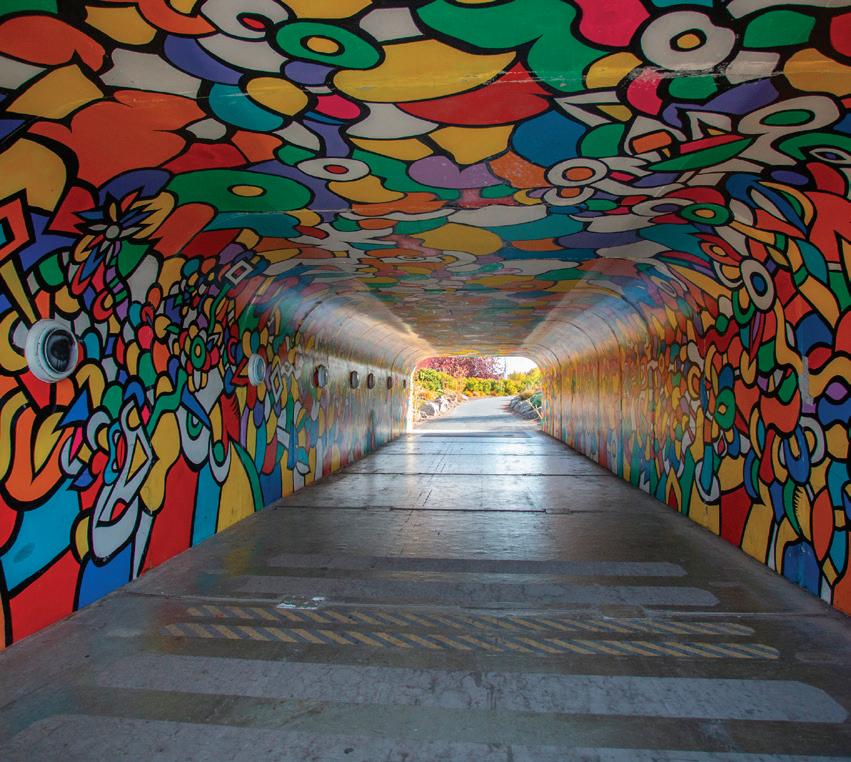

› EASY ACCESS FROM FAREWELL BEND PARK, RIVERBEND PARK, BEND WHITEWATER PARK & OLD MILL DISTRICT
HIKING in BEND
Pilot Butte State Scenic Lookout
SIGHTSEEING & HIKING in BEND

› DRIVE, BIKE OR HIKE TO THE SUMMIT
› AMAZING CENTRAL OREGON VIEWS
› CLOSE TO DOWNTOWN BEND
Pilot Butte is a popular hiking spot for locals and encompasses the Pilot Butte State Scenic Viewpoint, and Nature and Base Trails. A lava dome created from an extinct volcano and rising about 450 feet in Bend, it offers spectacular views of the snowcapped Cascade Mountains and high desert landscape. Hike up to the viewpoint on one of three trails that wind past Juniper trees and sagebrush. The paved summit road for driving access is seasonal and closed in the winter from November - mid-April. But there is year-round access from the east side parking lot via all the trails. Whether you drive, ride a bike, or hike to the summit, once you make it to the viewpoint, you’re rewarded with breathtaking views, as well as informational signs that highlight the region. Amenities include benches and restrooms.
Located near downtown Bend (541) 388-6055
NE Greenway Ave./Hwy. 20 just east of downtown (Map B, PG 141)
PHOTO
Drake Park & Mirror Pond

One of Bend’s best-known parks with locals and visitors, this popular, downtown community recreation area features open lawns, public restrooms, bike racks, picnic tables, a riverfront boardwalk and viewing areas. Fronting the Deschutes River at Mirror Pond, Drake Park is serene and idyllic, with its majestic ponderosa pines and deciduous hardwood trees scattered across its thirteen acres. The outdoor stage and acres of open lawns are usually bustling with community events throughout the spring, summer and fall, including walks/runs, Munch and Music, and the Bend Park and Recreation July 4th Pet Parade. Popular summer activities also include fishing and cooling off by floating the river. Connected to other riverfront parks by bridges and the Deschutes River Trail, it's within easy walking distance to restaurants, shopping and other businesses in beautiful downtown Bend, and street and paid parking are available.
Bend Park & Recreation District (541) 389-7275 • BendParksAndRec.org
777 NW Riverside Blvd., Bend (Map C, PG 142)
› ALSO HOME TO TWO PUBLIC ART PIECES
› DO NOT FEED THE GEESE & WATERFOWL
› OPEN 5AM - 10PM
PARK in BEND
Pine Nursery Park & Trail
HIKING & PARK in BEND

› OPEN 5AM - 10PM
› DOG-FRIENDLY
› MILES OF PAVED TRAILS


Pine Nursery Park and Trail is an easy, paved 1.25-mile loop trail in northeast Bend. Located in a former tree farm, this trail is a quick walk, averaging about 30 minutes to complete, and great for walking, running, rolling and biking. Most of the trail is relatively flat with a gentle slope in areas and navigable for those with wheelchairs and strollers. Incredible vistas abound along this trail: Pilot Butte, Mt. Bachelor and the Three Sisters can all be seen as you follow the trail. The community park is a large 159-acres and open year-round, with beautiful expansive green space, 4.5 miles of paved trails, fishing pond, a disc golf course, 16-acre off-leash dog park, athletic fields, pickleball courts, playground, picnic shelter and sand volleyball courts. Picnic tables are along the trail and throughout the park, and seasonal amenities include drinking fountains.
Bend Park & Recreation District (541) 389-7275 • BendParksAndRec.org
3750 NE Purcell Blvd., Bend (Map B, PG 141)
Alpenglow Park

This 37-acre park is in one of Bend’s rapidly growing areas and serves as a hub for recreation activities, community gatherings, opportunities to enjoy nature and connections to trails. Alpenglow Park includes an open lawn area, bouldering, accessible playground with wheelchair swing, seasonal sprayground, event pavilion, off-leash area and obstacle course for dogs, future demonstration garden and several accessible trails and multi-use pathways. There are 2.2 miles of ADAaccessible paved paths, including a 0.9-mile perimeter loop path. There are 1.3 miles of soft surface natural trail too.


› SEASONAL SPRAYGROUND
› GREAT VIEWS OF THE CASCADES
› BOULDERING AREA
Bend Park & Recreation District (541) 389-7275 • BendParksAndRec.org 61049 SE 15th St., Bend (Map B, PG 141)
PARK in BEND
Shevlin Park

› BIKES & DOGS ALLOWED
› TRAIL COVERS FOREST TO HIGH DESERT
› SEVERAL TRAILS TO DISCOVER
Shevlin Park is a 981-acre park of old-growth forest and high desert sage-covered land located about four miles from Bend and features multiple trails including: Tumalo Creek Trail, Loop Trail and Mountain Bike Trail. Popular activities are nature watching, running, hiking, biking and dog walking; and during the winter months, locals take out the snowshoes and cross-country skis. The Tumalo Creek Trail is 2.5 miles and follows the creek upstream, joining the Deschutes National Forest trail system. The 6-mile Loop Trail follows the canyon rim and crosses Tumalo Creek twice. A preferred route for bikers is the Mountain Bike Trail, which follows the canyon and connects with the Forest Service Mrazek Trail. The park is also the site of Aspen Hall (an event venue), Aspen Meadow picnic shelter and Fremont Meadow (reached via the Tumalo Creek Trail).
Bend Park & Recreation District (541) 389-7275 • BendParksAndRec.org
18920 NW Shevlin Park Rd., Bend (Map B, PG 141)
PARK in BEND
Shevlin Loop Trail


Shevlin Loop Trail is in Shevlin Park, which is about four miles west of downtown Bend, and offers a mostly easy trail that is peaceful and often populated with bikers, runners and dog walkers. At nearly 1,000 acres, Shevlin Park’s trail system connects to other paths and lies along the Tumalo Creek. The 4.75-mile Shevlin Loop Trail follows the canyon rim, has 240 feet of elevation change, winds through tall ponderosa pine forest, sagebrush, rabbitbrush and manzanita, and crosses Tumalo Creek twice. The trail is level at first, and arterial connections to other trails are well marked, so follow the signs to continue around the loop. As you make your way along the loop hike, enjoy some of the best views over Tumalo Creek and the forest below.
Bend Park & Recreation District (541) 389-7275 • BendParksAndRec.org
18920 NW Shevlin Park Rd., Bend (Map B, PG 141)
› GREAT VIEWS FROM TRAIL
› BIKES ALLOWED
› A DIVERSE LANDSCAPE
HIKING in BEND
Smith Rock State Park
SIGHTSEEING & HIKING in TERREBONNE

› ALWAYS STAY ON THE TRAIL!
› CAMPING OPEN EARLY SPRING-LATE FALL
› PARK OPEN DAILY FROM 7AM-7PM
The famous Smith Rock State Park is twenty-six miles northeast of Bend in the small town of Terrebonne. Known for its various outdoor activity opportunities — hiking, rock climbing, mountain biking, trail running, camping, horseback riding — the park covers over 650 acres with Smith Rock hovering around 3,000 feet in elevation. Famous for sport climbing, the park attracts climbers from all over the world who are looking to challenge themselves on the hundreds of climbing routes. With miles of hiking and mountain biking trails, there is no shortage of opportunities for scenic views of deep river canyons and wildlife such as beaver, river otter, golden and bald eagles and mule deer. Fishing is also a popular activity, with fishermen flocking to the upper areas of the Crooked River for some of the best fly fishing in Central Oregon.
Located near Terrebonne Take Hwy 97 to Smith Rock Way and follow the signs (Map A, PG 140)
Tumalo Falls
SIGHTSEEING & HIKING in BEND

Located within the Deschutes National Forest, about ten miles west of Bend, the Tumalo Falls area has several stunning waterfalls and scenic trails to explore. The 4.1-mile round trip hike with 550-feet of elevation change is a popular hiking area and includes a scenic overlook. The first waterfall is the tallest at 97 feet, while the second, Double Falls, drops thirty feet and then twenty feet with additional falls upstream along Tumalo Creek and its tributary, Bridge Creek. The best times to visit are May through October, and dogs are welcome but must be on a leash. In the winter months, the trailhead is blocked to vehicles. Trails that connect from this site are North Fork Trail (which passes Tumalo Falls), Bridge Creek Trail, Tumalo Creek Trail and Farewell Trail.
Located in the Deschutes National Forest
From Bend, take Skyliner's Rd. west for about 11 miles, then go west on Forest Road 4603 for about 2.5 miles
(Map A, PG 140)
› RECREATION PASS REQUIRED AND AVAILABLE ON-SITE FOR $5
› RESTROOMS AT THE TRAILHEAD
Boyd Cave
SIGHTSEEING & HIKING in BEND

› GREAT CAVE EXPERIENCE FOR ALL AGES
› PLEASE RESPECT THE OUTDOORS BY PRACTICING "LEAVE NO TRACE"
Boyd Cave is a natural lava tube within Deschutes National Forest on the northern flank of Newberry volcano. Located approximately twelve miles southeast of Bend, Boyd Cave is an 1880-foot-long lava tube with well-preserved basalt formations and is reached by a short 0.8-mile out-and-back trail. As you descend into the cave via a metal staircase that goes down into the cave about twenty feet, you will be completely immersed in darkness, so make sure to bring a flashlight or headlamp. The chilly cave is at a constant temperature just below 50 degrees Fahrenheit, so be prepared with a sweater or jacket. Because of animal-borne pathogens and diseases affecting the bat population found in this cave, dogs are not allowed inside Boyd Cave as well as surrounding caves. This is a popular destination for locals and visitors alike and is open year-round.
Located near Bend Take Arnold Ice Cave Rd. from US-97 for about 15 miles (Map A, PG 140)
GOLF
PARSCRIPTION GOLF golf equipment + simulator
BRASADA CANYONS golf course
PRONGHORN CLUB - NICKLAUS COURSE golf course
TETHEROW GOLF CLUB golf course
Parscription Golf
GOLF EQUIPMENT + INSTRUCTION in BEND

› CUSTOM FITTINGS AND LESSONS
› GOLF EQUIPMENT + APPAREL
› STATE-OF-THE-ART GOLF SIMULATOR


Since opening in 2006, Parscription Golf is Central Oregon’s only complete golf store, offering the largest selection of name-brand golf equipment and apparel for men and women, full-service golf club repair by certified technicians, custom club fitting and personalized instruction for beginners to experienced players from PGA professional and owner Andy Heinly and assistants. Voted Bend’s #1 golf shop, their goal is to ensure all customers have a great shopping experience with their demo clubs available to demo, indoor state-of-the-art golf simulators and expert service. Gift cards are available. Parscription Golf is conveniently located in Bend River Plaza next to WinCo Foods, close to Highway 97. Call to book appointments for custom club fittings and individual lessons.
Located in Bend River Plaza (541) 593-4653 • ParXGolfBend.com
100 NE Bend River Mall Dr #102, Bend (Map B, PG 149, #9)
Brasada Canyons


As undeniably one of the most beautiful and enjoyable courses in the Pacific Northwest, don't let the panoramic mountain views distract you from the course itself, where the fairways are pristine, and the greens are fast. Privacy, views and lightning fast greens are just a few of the recurring accolades. It's also great for all levels of players with five sets of tees, and yardages stretching from 4,722 yards to 7,295 yards from the tips. Brasada Canyons also boasts a 5-acre practice facility featuring a two-tiered driving range, all-new Golf Shed with a state-of-the-art Foresight Golf Simulator and heated hitting bays to accommodate practice in all weather conditions. Play at Brasada Canyons Golf Course is reserved for members, member guests and resort guests.
Located at Brasada Ranch (541) 526-6380 • Brasada.com 16550 SW Brasada Canyons Dr, Powell Butte (Map A, PG 140)
› A VERY SCENIC AND WELL-MAINTAINED GOLF COURSE
› STATE-OF-THE-ART PRACTICE FACILITIES
GOLF COURSE in POWELL BUTTE
Pronghorn Club - Nicklaus Course

› CONSISTENTLY RANKED IN THE GOLF DIGEST LIST OF THE TOP 100 PUBLIC GOLF COURSES
Designed by master golfer, Jack Nicklaus, Juniper Preserve's signature golf course plays firm and fast and accommodates golfers of every skill level. This public course provides a minimalist experience with an emphasis on the golf game itself, combining strategy with playability, beautiful transitions and true putting surfaces. Ancient lava rock ridges and outcroppings intertwine with natural landscapes and accent magnificent views of the Cascade Mountains. The Nicklaus course is also the first “desert-style” golfing experience in the Northwest. The 7,460-yard par 72 championship layout is complete with views of the Cascade Mountains, Smith Rock and numerous buttes — offering a challenging, yet strategically-designed course for enjoyment at all ability levels.
Located at Juniper Preserve (855) 998-9382 • JuniperPreserve.com 65600 Pronghorn Club Dr., Bend (Map A, PG 140)
GOLF COURSE in BEND
Tetherow Golf Club


Repeatedly voted a Top 100 Course in the USA by Golf Digest, luxury golf resort
Tetherow boasts an 18-hole, championship, semi-private course with a distinctive layout by award-winning architect David McLay Kidd — the award-winning architect of Bandon Dunes and Castle Course in Scotland. Located only seven minutes from downtown Bend, this visually striking, heathland-style, par 72 course offers a unique and diverse golf game while taking full advantage of the stunning panoramic views of the Cascade peaks, including Three Sisters, Broken Top and even Mt. Hood on a very clear day! True to the heathland style, Tetherow’s golf course meanders through a cleared forest rich with wildlife and native vegetation and has attained full status as an “Audubon Certified” golf course.
Located southwest of downtown Bend (844) 431-9701 • Tetherow.com
61240 Skyline Ranch Rd., Bend (Map B, PG 141)
› A DAVID MCLAY KIDD DESIGN
› LINKS STYLE GOLF IN THE HIGH DESERT
› FINN SCOOTERS & GOLFBOARDS
GOLF COURSE in BEND


EAT + DRINK
BRICKHOUSE STEAKHOUSE steak & seafood
NEWPORT AVE. MARKET grocery & specialty market
HOLA! mexican & peruvian cuisine
PASTINI italian cuisine
BOS TAURUS steakhouse
HABLO TACOS mexican cuisine
MIYAGI RAMEN ramen & izakaya
HIDEAWAY OREGON gastropubs
THE VICTORIAN CAFÉ brunch
RANCH HOUSE farm-to-table cuisine
ROAM regional cuisine
SUNRIVER COUNTRY STORE & SUNRIVER MARKETPLACE grocery & market
LOS JALAPEÑOS mexican cuisine
Brickhouse Steakhouse


Brickhouse Steakhouse is a fixture of Central Oregon’s dining scene and for good reason. Located in the Historic Firehall Building in Downtown Bend, Brickhouse offers a modern take on the classic steakhouse with its friendly, professional service, comfortable booth seating, very well stocked bar and a wine list winner of Wine Spectator’s “Best of Award of Excellence.” Along with the original location in the heart of downtown Redmond, Brickhouse features USDA Prime Steaks, American Kobe and Japanese A5 Wagyu Beef and specializes in prime, fresh and wild-caught seafood. Their fresh fish is flown in daily from around the Northwest, Alaska and Hawai‘i. Enjoy daily specials from their culinary team led by Executive Chef Sharon Fabiana and Head Chef Jake Phillips. USDA Prime is the highest grade of beef produced in the U.S., with less than 2% graded with that distinction.
STEAKHOUSE in BEND
Newport Ave. Market


Newport Ave. Market, a vibrant grocery store in Bend for over 30 years, is a true community hub where employee-owners share their love for food. Voted “Best Grocery Store” in Central Oregon 25 times, it offers a remarkable selection of highquality local products and gourmet items. The deli offers a range of daily, madein-store meals, including vegetarian, vegan, gluten-free and dairy-free options, complemented by fresh, hand-rolled twice-daily sushi and custom sandwiches. You can explore their 60-foot Great Wall of Beer with over 600 selections and receive expert wine pairing advice. The market also boasts a bakery with exquisite treats, fresh seasonal produce and knowledgeable cheesemongers. With unique kitchenware, local gifts and pet goodies, Newport Ave. Market is the ultimate shopping destination! Life is short. Eat good food.™
Located in River West in Bend (541) 382-3940 • NewportAveMarket.com 1121 NW Newport Ave., Bend (Map B, PG 141)
› OPEN DAILY FROM 7AM - 10PM
› ESTABLISHED IN 1991
› GREAT SELECTION OF LOCAL ITEMS

Incorporating traditional Mexican and Peruvian cooking techniques and ingredients into their culinary philosophy, the chefs at Hola! draw on traditions to create delectable dishes with a tangible sense of time and place with a twist of fun. Their ode to Mexican favorites includes dishes like the Mole Poblano, made from a 75-year-old family recipe, and probably the best reminder of their reverence to historical cooking methods, and their Carne Azada, which you can’t go wrong with, especially when combined with chimichurri sauce and fresh tortillas. Their traditional Peruvian dish Ceviche Traditional is one of several mouth-watering seafood dishes that must be tried.


Pastini

Inspired by the farms, vineyards and waters of the Pacific Northwest, Pastini in the Old Mill District is dedicated to serving up two of life’s greatest pleasures – pasta and wine. This local Italian bistro, with restaurants in Bend, Corvallis, Eugene and Portland, specializes in classic and contemporary made-from-scratch pasta dishes that are seasoned with laughter and great wine! Overlooking the Deschutes River with a beautiful patio, Pastini has something for every pasta aficionado, from classics like Fettuccini Alfredo with Chicken and Five Cheese Lasagna with Meat Sauce, to specialties like Tortellini Gorgonzola and Linguini Misto Mare. Complementing their over 25 pastas on the menu (including gluten free and vegetarian dishes) are antipasti, crisp salads and handcrafted tiramisu. Enjoy Italian and Northwest wines from their carefully-curated list or try a craft cocktail. At Pastini, each entrée is handcrafted to order using fresh ingredients.
Located in the Old Mill District (541) 749-1060 • Pastini.com
375 SW Powerhouse Dr. #3436, Bend (Map C, PG 142) › 10 VEGETARIAN DISHES › FULL KIDS' MENU › TAKEOUT + DELIVERY
ITALIAN CUISINE in BEND
Bos Taurus


This stylish, contemporary steakhouse in the heart of downtown Bend was launched in 2017 with a mission to redefine the steakhouse experience. No one can deny the appeal of a perfectly prepared, sizzling cut of meat, and Bos Taurus delivers in spades. Embark on a sensational journey unique to Bos Taurus’s oeuvre with a menu that explores steak options from Japanese A5 Wagyu to Australian Bavette cuts and everything in between. Starters and sides include unique dishes like patatas bravas, white truffle pommes frites and foie gras florets — a beautifully composed dish that delivers complex, rich flavors in every bite. With its modern and energetic vibe, world-class service and library of thoughtfully curated wines and spirits, Bos Taurus invites you to a culinary experience you won’t find anywhere else. Outdoor seating available.
Located in downtown Bend (541) 241-2735 • BosTaurusSteak.com 163 NW Minnesota Ave., Bend (Map C, PG 142)
› DINNER DAILY 5-9PM
› COCKTAIL HOUR 3-5PM
› RESERVATIONS ENCOURAGED
STEAKHOUSE in BEND
Hablo Tacos

› DAILY SPECIALS
› BREAKFAST BURRITOS FROM 8AM DAILY
› NO RESERVATIONS


If you speak taco, Hablo Tacos on Bend’s Eastside speaks your language. Combining Oregon’s locavore sensibility with the traditional Mexican taqueria experience, Hablo Tacos serves up crave-worthy tacos of barbacoa, carnitas, rockfish and al pastor cut fresh off the trompo. The options continue with vegetarian tacos, chicken, shrimp, chorizo and birria. For a more unique take, try a Vampiro. Which, if you’ve never had one, think “tostada sandwich.” This colorful and energy-rich setting also serves burritos, bowls, salads and other classic Mexican dishes. From the cocktail list, perfect your dining experience with a margarita made with fresh lime juice, paloma or go for one of the many Mexican Cervezas on ice. And don’t forget to look over the tequila and mezcal offerings if you need a little extra fiesta to go with your tacos! Open Daily.
Miyagi Ramen

Are you a ramen lover? Look no further than Miyagi Ramen if noodles are what you’re after. Located in the eclectic Box Factory shopping center near downtown, Miyagi serves up flavor-packed bowls in an energy-packed setting with a style all its own. From traditional Tonkotsu and Spicy Miso to the vegetarian smoked mushroom hazelnut, their ramens are full of that mouth-watering umami flavor you crave when ramen is on the brain. Want to explore away from noodles and broth? Miyagi has you covered with its sought-after pork belly or fried chicken sandwiches. And don’t forget about the Miyagi-style fried rice, Yakisoba, steamed buns and many other Izakaya-style dishes. But it doesn’t stop there; grab a Japanese soda or rice-lager from the cooler. Cocktail person? How about a Whiskey Hi-Ball or Yuzu Margarita to wash it all down?!
Located in the Box Factory (541) 797-7700 • MiyagiRamen.com
550 SW Industrial Way, Ste. 102, Bend (Map C, PG 142)
› KIDS' MENU
› VEGAN DISHES
› NO RESERVATIONS
RAMEN & IZAKAYA in BEND
Hideaway Oregon



With their sports bar vibes, delicious food, substantial beer selection and awardwinning Bloody Marys, Hideaway Oregon’s three locations are the quintessential neighborhood hangouts. Whether it’s sipping artfully crafted cocktails or knocking back one of the rotating 18 beer varieties on tap while cheering on your favorite sports team, Hideaway’s pubs are ideal for laid-back indoor and outdoor dining all sports season long! Hang out on comfortable leather couches and watch games on big-screen TVs adorning the walls, while chomping down on some progressive dishes like Tempura Fried Mushrooms, Stromboli, gourmet pizzas, Buffalo Cauliflower, or their famous half-pound burgers and hand-cut fries. Whether you are looking for a local sports bar filled with like-minded sports fans, searching for an inspired menu or simply desire a dining destination with a casual,
ambiance, Hideaway Oregon checks all these boxes.
The Victorian Café

An award-winning Bend stalwart all-day breakfast, brunch and lunch dining institution, The Victorian Café serves traditional food fare with a modern spin. Voted #1 breakfast in Bend for 15 years, The Vic’s menu blends classic breakfast dishes that include ten different kinds of Eggs Benedict, omelets, French toast and pancakes. Weekly specials include three versions of Eggs Benedict and other unique dishes with creative recipe twists that will surprise your taste buds into an unforgettable experience. Their indulgent breakfast options are just the beginning: lunch choices include sandwiches, burgers, salads and bowls, with vegetarian and vegan options that break free of the diner stereotype. Enjoy a true Central Oregon brunch experience with their full bar that has been serving up 17-years-in-a-row awardwinning Bloody Marys (The “Proud Mary” 23-oz. libation) and the legendary (and tasty!) “ManMosa” — a 16 oz. mimosa crafted with their private-label champagne.
Located on the west side of Bend (541) 382-6411 • VictorianCafeBend.com 1404 NW Galveston Ave, Bend (Map B, PG 141)


› OPEN DAILY 7AM-2PM
› OUTDOOR HEATED SEATING + FIRE PITS
› INDOOR & OUTDOOR DINING AVAILABLE
Ranch House
FARM-TO-TABLE in BEND


› OPEN DAILY FOR DINNER AND WEEKDAYS FOR BREAKFAST AND LUNCH
› CHECK OUT THE WEEKEND BRUNCH

If you're looking for a casual, warm, family-friendly space that serves up ranchto-table dining alongside handcrafted drinks, signature s'mores by the outdoor firepit, and stunning views of the Cascade Mountains, Ranch House at Brasada Ranch definitely checks all the boxes. Open daily for dinner and weekdays for breakfast and lunch service, Ranch House also offers a weekend brunch on Saturdays and Sundays from 7:30 a.m. to 3:30 p.m. With excellent comfort food options, a great selection of wines and micro-brews, the culinary experience is framed with amazing views of the Cascade peaks and high desert from the restaurant's wrap-around deck. An evening at Ranch House is never complete without enjoying their famous signature s'mores around the cozy firepit. Dinner reservations are recommended.
Located at Brasada Ranch (541) 526-6870 • Brasada.com 16986 SW Brasada Ranch Rd., Bend / Powell Butte (Map A, PG 140)
ROAM

Inspired by the sustainable food movement, ROAM offers a variety of urbanorganic dishes made from fresh, locally-sourced ingredients. Small plates, charcuterie, pasta dishes and the freshest local seafood, meats and produce are complemented by an eclectic list of fine wines, craft beer, cocktails and desserts. Seasonal menus draw upon flavors from around the globe and fresh, local ingredients to create a unique culinary experience. Custom furnishings and casually elegant décor define the space — while seating includes indoor, patio and bar—designed with elevated comfort in mind. Small and shared plates define the ROAM experience, where individuals and groups can sample a variety of flavors. A curated wine and cocktail lists provide the perfect pairing for dinner or dessert.
Located at Oxford Hotel Bend (541) 382-7626 • RoamBend.com 10 NW Minnesota Ave., Bend (Map C, PG 142)


› INDOOR, BAR & PATIO SEATING
› SEASONAL MENUS
› OPEN DAILY FROM 7AM-10PM
REGIONAL CUISINE in BEND
Sunriver Country Store & Sunriver Marketplace


The family owned and operated Sunriver Country Store is conveniently located in The Village at Sunriver and carries about anything you may need or want while on holiday in one of Central Oregon’s most popular resort communities. The sister store, Sunriver Marketplace on Cottonwood Rd., is located on the north end of Sunriver. These thoughtfully run, full-service grocery stores offer organic meats, seafood, fresh produce, hot and cold delicatessens including some seriously delicious BBQ, gluten-free selections, locally sourced dairy products, CBD products and onsite liquor stores at both locations, including one of Oregon’s finest wine selections. The service centers at both stores include lottery sales, faxing, photocopying, Sno-Park and trail parking permits, ATM and Wi-Fi. In addition, the Marketplace offers a Shell gas station, propane tank exchange or purchase, and a post office.
Los Jalapeños


Since opening in 1994, Los Jalapeños has been beloved by Bendites and considered one of the best Mexican restaurants in the area. Paying homage to his roots in Tlaxcala, east of Mexico City, Owner-chef Gonzalo Morales prepares dynamic, fresh and authentic dishes for every meal of the day. Made from fresh, local ingredients, Morales has cultivated an authentic and diverse menu, with something for everyone. The breakfast, lunch and dinner menus feature traditional savory options as well as several gluten-free, vegan and vegetarian dishes. In addition to indoor seating, meals and drinks can be enjoyed outside on the bricked patio in the shade of an umbrella. Los Jalapeños is located north of Juniper Swim and Fitness Center on Greenwood Avenue. Happy eating!
Located just northeast of downtown Bend (541) 383-1402 • LosJalapenosBend.com
601 NE Greenwood, Bend (Map B, PG 141)
› CASUAL DINING
› DELICIOUS MARGARITAS + HAPPY HOUR!
› OPEN MONDAY - SATURDAY
MEXICAN CUISINE in BEND



SHOP + STYLE
CASCADE VILLAGE SHOPPING CENTER shopping center
LONE CROW BUNGALOW gift shop
FAVEUR BOUTIQUE boutique
REVIVAL VINTAGE apparel & accessories
DESERT ROSE CACTUS LOUNGE plant nursery
Cascade Village Shopping Center
SHOPPING CENTER in BEND

› OPEN DAILY FROM 10AM-9PM
› SPACIOUS, OPEN-AIR LAYOUT
› A VARIETY OF SHOPPING & DINING OPTIONS


Cascade Village Shopping Center is situated on thirty-four acres on the north side of Bend with beautiful views of the Cascade Mountains and offers an environment that has an Oregon chalet-inspired, craftsman architecture. The shopping center’s open-air environment boasts pedestrian-friendly sidewalks, a Village common area and outdoor dining. Cascade Village Shopping Center has created an assembly of tenants to create a diverse shopping and dining environment to fit every need: from World Market, Dick’s Sporting Goods, PetSmart, Ashley Homestore & Outlet, Best Buy and Trader Joes to many more, not to mention a vast selection of dining such as El Rancho Grande, Shinsei Sushi, Moose Sisters, Black Steer Steakhouse & Saloon, Little Pizza Paradise, Taco Del Mar and treats from See’s Candies and Crumbl Cookies.
Located in Bend (541) 388-1495 • ShopCascadeVillage.com 63455 N Hwy 97, Bend (Map B, PG 141)
Lone Crow Bungalow



This mountain-centric mercantile has been a staple business in downtown Bend for more than 20 years. You will find an array of rustic gifts and goods that reflect the spirit of the Northwest. Home decor items like cozy Pendleton blankets and wool pillows are perfect for your cabin in the woods (or any nest, really). Find soaps, candles and room sprays with scents inspired by the surroundings. Handpainted pottery, travel posters and expertly crafted furniture are curated by artisans from Bend and beyond. The shop is chock-full of unique finds that you’ll want to gift, covet or keep all to yourself. And if you can stop in at Christmastime, you’ll be glad you did, as the shop turns into a true winter wonderland, bursting with festive finds.
Located in downtown Bend (541) 383-29922 • LoneCrowBungalow.com 937 NW Wall St., Bend (Map C, PG 142)
› GIFT CARDS AVAILABLE
› KNOWN FOR HANDCRAFTED GOODS
› OPEN DAILY
GIFT SHOP in BEND
Faveur Boutique

› LOCATIONS IN BEND & SISTERS
› HAND-PICKED STYLES
› DOG FRIENDLY!


Discover why discerning women of all ages and shapes love shopping at Faveur Eclectic Unique Boutique. With two convenient locations in downtown Bend and Sisters, the timeless style of clothing, scarves, hats, shoes, handbags and jewelry are combined with exceptional service and affordability in this lifestyle boutique. Choose from modern twists on romantic, bohemian, vintage, European and eclectic styles, all hand-picked by the owner. Helping women see their beauty and walk in confidence is what Faveur is all about, as well as imparting a positive, full sensory experience while shopping. For the dog moms, Faveur is dog friendly. If you’re looking for great style at fantastic prices and friendly service, Faveur invites you to discover why they are one of Central Oregon’s favorite fashion boutiques.
Revival Vintage

Fans of yesteryear will want to make a point to pop into Revival Vintage, a somewhat hidden gem of a boutique. This hip haunt has received the title of “Best Vintage Boutique” three years in a row, according to readers of The Source Weekly Expect to find carefully curated pieces for adults and kids — everything from denim to sequins, silk to flannel and plenty of velvet. You’ll even find an awesome array of accessories, swimwear, home decor and one-of-a-kind gifts. In addition to being a treasure trove of back-in-the-day duds, Revival Vintage is your go-to for renting an outfit for a special occasion, or to consign your own goods. Get ready for summer Porch Parties, including live music, guest vendors, drinks, snacks and plenty of vintage finds.
Located on West Side off Galveston (503) 702-3552 • RevivalVintageBend.com 550 NW 12th St., Bend (Map B, PG 141)
› FULL OUTFIT RENTALS
› 40% CONSIGNMENTS
› CURATED APPAREL & HOME DECOR
Desert Rose Cactus Lounge

› CHECK OUT THEIR SITE FOR EVENTS
› HAVE YOUR NEXT PRIVATE PARTY AT THE POTTING BAR!


Plant lovers, unite! Desert Rose Cactus Lounge is a must-stop plant shop that is as aesthetically pleasing as they come, not to mention, full of life! But don’t expect to find your run-of-the-mill flowers; the focus here is on unusual and hard-to-find succulents and cacti, tropicals, as well as those coveted houseplants that thrive in the high desert. You’ll find plenty of plants and just as many beautiful vessels to put them in. For a hands-on experience, you can visit the shop’s potting bar which is available for making your own terrarium or potting your plants. If you’re not looking to get your hands dirty, when you purchase a plant and a pot online, someone from the Desert Rose team will pot it for you for a small fee.
Located in the Old Iron Works Art District in Bend (541) 323-7585 • DesertRoseBend.com
50 SE Scott St., Bend (Map B, PG 141)
HIGH DESERT LIVING
Brasada Ranch

Amid the sweeping mountain vistas and rugged terrain of Central Oregon, discover a sanctuary crafted with unparalleled tranquility and adventure in mind. Brasada Ranch connects you and yours to panoramic living and memorable experiences year-round. Find your inspiration among The Ranch’s wide open spaces. Reconnect to what matters most. Attend one of many curated events. Indulge in deluxe resort amenities. All while enjoying the vibrant spirit and natural setting of the region. With over 1,800 acres to explore, each day at Brasada Ranch is primed for discovery. Follow your adventurous spirit to thrilling outdoor excursions, award-winning golf, and seasonal experiences that evoke a wild sense of wonder. Find your sanctuary within a range of thoughtfully designed homes, ready for rental, vacationing or full-time living.
RESORT LIVING in POWELL BUTTE


Juniper Preserve

› GREAT PROXIMITY TO BEND
› COME LIVE ALONG ONE OF THE COVETED PRONGHORN GOLF COURSES
Juniper Preserve is the pinnacle of perfection for luxury living in beautiful Bend, Oregon. An oasis among the ancient Juniper forest, the resort offers the perfect balance of a peaceful retreat and community while enjoying all that Central Oregon has to offer. Find your next home along one of the 18-hole golf courses, the coveted Tom Fazio or Jack Nicklaus signature courses. Whether you’re looking for a primary residence or a vacation home, Juniper Preserve is a great place to stay for a lifetime! Don't miss the opportunity to live where others vacation. Conveniently located less than 30 minutes to the airport or Bend’s attractions, Juniper Preserve offers a secluded feel, while maintaining a pragmatic proximity to Bend's resources. Surrounding the resort on all sides is 20,000 protected acres of juniper wilderness that safeguards your quiet sanctuary.
Juniper Preserve (541) 550-1340 • JuniperPreserve.com/live 65600 Pronghorn Club Drive, Bend (Map A, PG 140)
Holly Perzynski
REALTOR/PRINCIPAL BROKER in BEND

Holly's passion for helping her clients purchase a home in Central Oregon stems from her experience relocating to Bend and navigating the nuanced and challenging home-buying process. As a dedicated real estate professional, Holly understands the dynamics of the local real estate market and will help you find a home that balances your lifestyle, budget and goals. Everyone deserves to have a knowledgeable, trustworthy and genuinely supportive advocate in real estate, one that helps make the complex process more accessible. Holly truly cares about the people involved and wants to listen, connect and solve. She offers a holistic partnership-based concierge approach that takes clients beyond the transactional steps of buying and selling, making the process smooth, transparent and effective. She looks forward to connecting with you!
Holly Perzynski - Real Estate Specialist - Principal Broker/REALTOR®
Windermere Realty Trust (541) 241-4393 • BendRelocation.com
807 SW Industrial Way, Bend (Map B, PG 141)
› SIMPLIFIED SELLING
› BENEFICIAL BUYING
› RELAXED RELOCATION


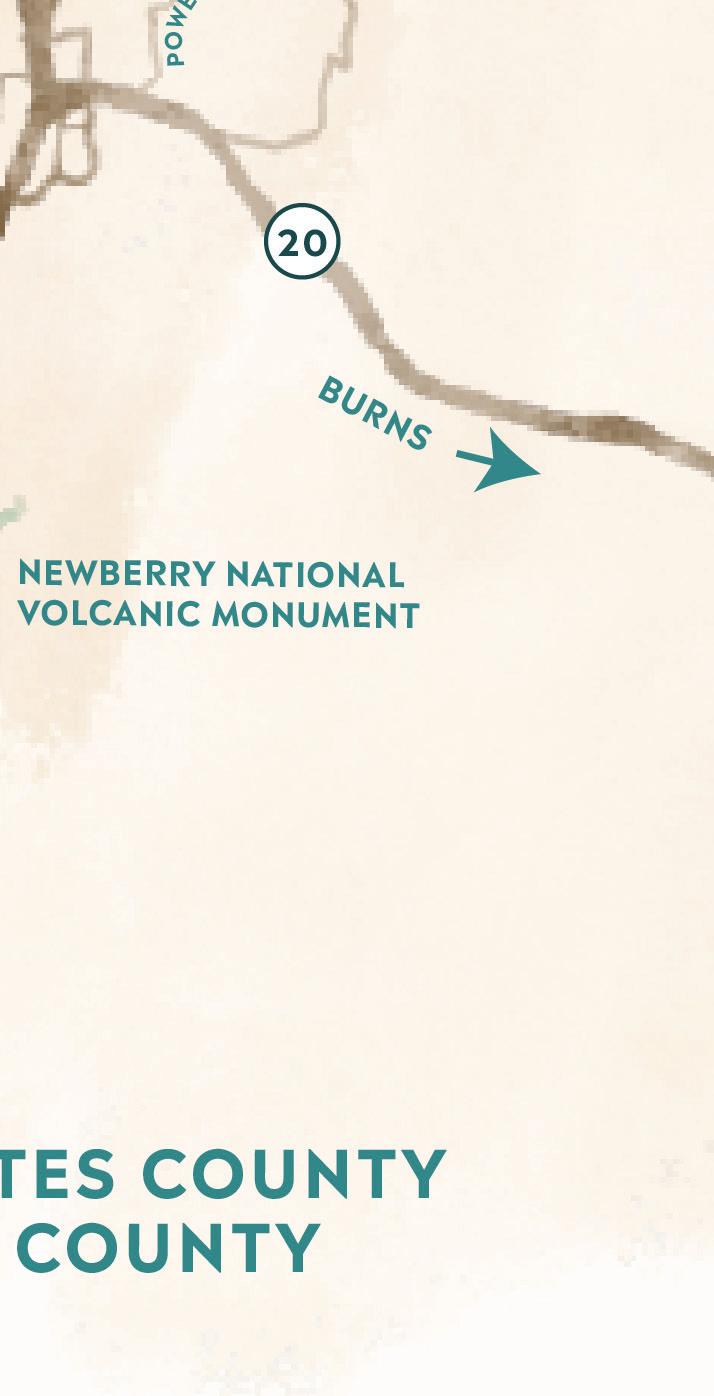


Bend Whitewater Park
Float the Deschutes River
Deschutes Historical Museum
Deschutes River Trail - Old Mill Reach
Drake Park & Mirror Pond
Old Mill District
Peterson Contemporary Art
Mockingbird Gallery
Saxon's Fine Jewelers
Faveur Boutique Hello Sunshine REI
The Box Factory
Lone Crow Bungalow
Hola! (Downtown)
Hola! (Old Mill) Pastini


Sisters Movie House
Sisters Coffee Co.
The Open Door Wine Bar
Sisters Meat and Smokehouse
Sisters Saloon & Ranch Grill
Boone Dog Pizza
Sisters Bakery
The Cottonwood Café
R Spot Takeout & Eatery
Angeline's Bakery & Café
The SweetEasy Co.
Chops Bistro
Cascade Street Distillery
Faveur Boutique
Five Pine Lodge & Spa
Ski Inn Tap House Hotel
The Scout Boutique Cottages
Rancho Viejo


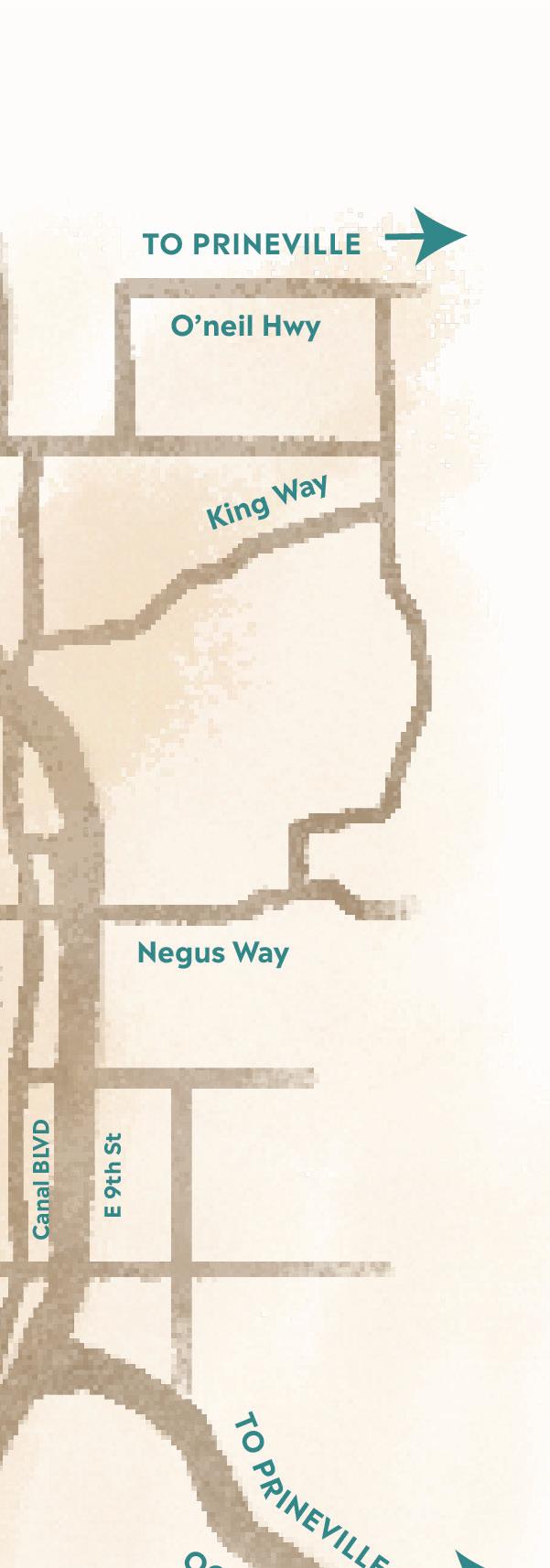

Brickhouse Steakhouse
Xalisco Latin Cuisine Hola!
Diego's Spirited Kitchen
Wild Ride Brewing Co.
One Street Down Cafe
Hideaway Tavern Carnaval Mexican Grill


TRAVELOGUE
NOTES + SKETCHES document your travel adventures, the places you visit, experiences you encounter, or something weird you saw on the river...
ITINERARY PLANNER prefer to keep it analog? You can still get the most out of your trip and start planning your itinerary here, just grab a pen and do it old school.
DOWNLOAD THE SAVVY360 APP
This link will take you to the appropriate app store to install the app, where you can explore our Central Oregon experience guides, create a trip, start building your itinerary, collaborate with friends, and more...
DATE / /
What do you want to do today?
Central Oregon MY TRIP
BREAKFAST
MORNING
LUNCH
AFTERNOON
DINNER
EVENING
DATE / /
DATE / /
BREAKFAST
MORNING
LUNCH
AFTERNOON
DINNER
EVENING
DATE / /
DATE / /
What do you want to do today?
Central Oregon MY TRIP
BREAKFAST
MORNING
LUNCH
AFTERNOON
DINNER
EVENING
DATE / /
DATE / /
BREAKFAST
MORNING
LUNCH
AFTERNOON
DINNER
EVENING
DATE / /


