





GOLETA’S OLD TOWN CHANGING ITS STRIPES

OJAI GETS SERIOUS, MUSICALLY SPEAKING RENTERS SPEAK OUT ON HOUSING CRISIS THOUSANDS OF DEAD FISH WASH ASHORE



am I worth the $120,000 p trus brad ? e








dare to ask? Indulge in live music and sip on handcrafted cocktails
Ysidro Ranch

Sustainable Heart
Sustainable Heart
Sustainable Heart ~ Transformational Life Counseling ~
Sustainable Heart
Sustainable Heart
Sustainable Heart
~ Transformational Life Counseling ~
~ Transformational Life Counseling ~
~ Transformational Life Counseling ~
Relationships
Relationships
Grief and Loss • Major Life Transitions
Grief and Loss • Major Life Transitions
Grief and Loss
~ Transformational Life Counseling ~
Sustainable Heart
Sustainable Heart
Sustainable Heart
Sustainable Heart
Sustainable Heart
~ Transformational Life Counseling ~
Sustainable Heart
Relationships • Occupation and Career • Meditation
Spiritual Issues • Communication
Spiritual Issues
~ Transformational Life Counseling ~
Relationships • Occupation and Career • Meditation
~ Transformational Life Counseling ~
Sustainable Heart
~ Transformational Life Counseling ~
~ Transformational Life Counseling ~
Sustainable Heart
Relationships • Occupation and Career • Meditation
Grief and Loss • Major Life Transitions • Anxiety
Grief and Loss • Major Life Transitions • Anxiety
~ Transformational Life Counseling ~
Sustainable Heart
~ Transformational Life Counseling ~
Relationships
~ Transformational Life Counseling ~
Relationships
• Occupation and Career • Meditation
Spiritual Issues • Communication • Conflict
Conflict
• Communication • Conflict
• Occupation and Career • Meditation
Michael H Kreitsek, MA
Michael H Kreitsek, MA
Michael H Kreitsek, MA
Transpersonal Counseling Psychology
Transpersonal Counseling Psychology
Transpersonal Counseling Psychology
Counseling From a Buddhist Perspective 805 698-0286
Counseling From a Buddhist Perspective 805 698-0286
Counseling with Wisdom and Compassion 805 698-0286
Spiritual Issues
~ Transformational Life Counseling ~
Spiritual Issues
Grief and Loss • Major Life Transitions • Anxiety
Relationships • Occupation and Career • Meditation
Relationships • Occupation and Career • Meditation
Relationships • Occupation and Career • Meditation
~ Transformational Life Counseling ~
Relationships • Occupation and Career • Meditation
• Communication
• Communication
• Occupation and Career
• Conflict
• Conflict
• Occupation and Career • Meditation
Grief and Loss
Grief and Loss
Grief and Loss
Grief and Loss
Anxiety
Anxiety
• Major Life Transitions • Anxiety
Spiritual Issues
Helping You Navigate the Uncertainty of Our Post-Pandemic World
• Meditation
Relationships
Grief and Loss
Grief and Loss
Relationships
Relationships • Occupation and Career • Meditation
Relationships • Occupation and Career • Meditation
• Communication
• Conflict
• Major Life Transitions • Anxiety
• Occupation and Career • Meditation
• Major Life Transitions • Anxiety
• Major Life Transitions • Anxiety
• Major Life Transitions • Anxiety
• Occupation and Career • Meditation
Grief and Loss
Spiritual Issues
• Major Life Transitions • Anxiety
• Major Life Transitions • Anxiety
• Major Life Transitions • Anxiety
Spiritual Issues • Communication • Conflict
Spiritual Issues
Michael H Kreitsek, MA
Michael H Kreitsek, MA
Spiritual Issues • Communication • Conflict
Grief and Loss • Major Life Transitions • Anxiety
• Communication • Conflict
Spiritual Issues • Communication • Conflict
Grief and Loss • Major Life Transitions • Anxiety
Michael H Kreitsek, MA
Spiritual Issues • Communication • Conflict
Spiritual Issues • Communication • Conflict
• Communication • Conflict
Spiritual Issues • Communication • Conflict

Spiritual Issues
• Communication • Conflict

Transpersonal Counseling Psychology
Transpersonal Counseling Psychology
Transpersonal Counseling Psychology

Michael H Kreitsek, MA
Michael H Kreitsek, MA
Michael H Kreitsek, MA
Michael H Kreitsek, MA
Michael H Kreitsek, MA
Michael H Kreitsek, MA

Michael H Kreitsek, MA
www.sustainableheart.com www.sustainableheart.com
Michael H Kreitsek, MA
Michael H Kreitsek, MA
Transpersonal Counseling Psychology
Transpersonal Counseling Psychology
Transpersonal Counseling Psychology
Transpersonal Counseling Psychology
Transpersonal Counseling Psychology
Transpersonal Counseling Psychology
Counseling From a Buddhist Perspective 805 698-0286
Transpersonal Counseling Psychology
Counseling with Wisdom and Compassion 805 698-0286
Transpersonal Counseling Psychology
Transpersonal Counseling Psychology
Counseling From a Buddhist Perspective 805 698-0286
Counseling From a Buddhist Perspective
Counseling From a Buddhist Perspective 805 698-0286
Counseling with Wisdom and Compassion 805 698-0286
Counseling From a Buddhist Perspective 805 698-0286
Counseling From a Buddhist Perspective 805 698-0286
Counseling From a Buddhist Perspective 805 698-0286
Counseling with Wisdom and Compassion 805 698-0286
Counseling with Wisdom and Compassion 805 698-0286
Counseling From a Buddhist Perspective 805 698-0286
Counseling From a Buddhist Perspective 805 698-0286










Editor in Chief Marianne Partridge Publisher Brandi Rivera
Executive Editor Nick Welsh Senior Editor Tyler Hayden Senior Writer Matt Kettmann
Associate Editor Jackson Friedman Opinions Editor Jean Yamamura Arts, Culture, and Community Editor Leslie Dinaberg
Calendar Editor Terry Ortega Calendar Assistant Lola Watts
News Reporters Ryan P. Cruz, Callie Fausey Senior Arts Writer Josef Woodard
Copy Chief Tessa Reeg Copy Editor Nathan Vived Sports Editor Victor Bryant
Food Writer George Yatchisin Food & Drink Fellow Vanessa Vin Travel Writers Macduff Everton, Mary Heebner
Production Manager Ava Talehakimi Art Director Xavier Pereyra
Production Designer Jillian Critelli Graphic Designer Bianca Castro
Web Content Manager Don Brubaker Social Media Coordinator Stephanie Gerson
Columnists Dennis Allen, Gail Arnold, Sara Caputo, Christine S. Cowles, Roger Durling, Laura Gransberry, Marsha Gray, Betsy J. Green, Melinda Palacio, Cheri Rae, Amy Ramos, Jerry Roberts, Starshine Roshell
Contributors Rob Brezsny, Melinda Burns, Ben Ciccati, Cheryl Crabtree, John Dickson, Camille Garcia, Keith Hamm, Rebecca Horrigan, Eric HvolbØll, Gareth Kelly, Shannon Kelley, Kevin McKiernan, Zoë Schiffer, Ethan Stewart, Tom Tomorrow, Kevin Tran, Maggie Yates, John Zant
Director of Advertising Sarah Sinclair Marketing and Promotions Administrator Richelle Boyd
Advertising Representatives Camille Cimini Fruin, Suzanne Cloutier, Bryce Eller, Remzi Gokmen, Tonea Songer Digital Marketing Specialist Graham Brown
Accounting Administrator Tobi Feldman Operations Administrator Erin Lynch
Office Manager/Legal Advertising Tanya Spears Guiliacci Distribution Gregory Hall Interns Riley Burke, Nataschia Hadley, Isabella Leonard, Margaux Lovely, Jack Magargee, Tiana Molony, Chloe Shanfeld, Josephine Trilling, Sierra van der Brug
Columnist Emeritus Barney Brantingham Photography Editor Emeritus Paul Wellman
Founding Staff Emeriti Audrey Berman, George Delmerico, Richard Evans, Laszlo Hodosy, Scott Kaufman Honorary Consigliere Gary J. Hill IndyKids Bella and Max Brown; Elijah Lee, Amaya Nicole, and William Gene Bryant; Henry and John Poett Campbell; Emilia Imojean Friedman; Finley James Hayden; Ivy Danielle Ireland; Madeline Rose and Mason Carrington Kettmann; Izzy and Maeve McKinley
Print subscriptions are available, paid in advance, for $120 per year. Send subscription requests with name and address to subscriptions@independent.com. The contents of the Independent are copyrighted 2023 by the Santa Barbara Independent, Inc. No part may be reproduced without permission from the publisher. The publisher assumes no responsibility for unsolicited material. A stamped, self-addressed envelope must accompany all submissions expected to be returned. The Independent is available on the internet at independent.com. Press run of the Independent is 25,000 copies. Audited certification of circulation is available on request. The Independent is a legal adjudicated newspaper court decree no. 157386.
Contact information: 1715 State Street, Santa Barbara, CA 93101 PHONE (805) 965-5205; FAX (805) 965-5518
EMAIL news@independent.com,letters@independent.com,advertising@independent.com
Staff email addresses can be found at independent.com/about-us



 by Mike Critelli | Photos by Jill Critelli


Our readers are often familiar with our writers, but it’s not too often they get to see our business staff in the paper. So, this week, we want to introduce you to our newest Advertising Representative, Bryce Eller.



What made you want to choose the Independent? What are you working on now in the advertising world, and how have you been liking sales? I have now been at the Independent for three wonderful months. Right now, my main focus is to identify the emerging new businesses joining our community and to better understand how our team can assist in putting them front of mind for our readers. The Independent has such a fantastic reputation, and it has been amazing to see how many businesses are excited to work with us to help them to succeed.
What are some of our upcoming projects you’re most looking forward to? What has been your favorite to work on so far? Best of Santa Barbara®! I can’t believe that I will be working on the inside of something that I have participated in and utilized ever since moving here. One of the best things about working for a local publication is learning the ins and outs of local businesses big and small. Best Of is such a great opportunity to put businesses on the map for both locals and visitors, and I look forward to helping facilitate that in the most impactful ways possible. Of the events we’ve held so far, I’d have to say the Indy Awards. It was so well done, and it is always inspiring to give the local arts the recognition they deserve.
When you aren’t working, how do you like to spend your free time? What are some ways you get more involved in the local community? I enjoy mountain biking, surfing, pickleball, and lots of beach days year-round. My partner and I still make it to Mammoth as often as we can to squeeze in some skiing. Concerts at the Bowl are also at the top of my list!
Thursday, June 6 | 5 - 8 pm | Construction of clay wall Sunday, June 9 | 1 - 4 pm | Interactive public performance
After 35 years in Southern India, transdisciplinary artist Ashwini Bhat now lives and works in the foothills of Sonoma Mountain, CA. Coming from a background in literature and training in Bharatanatyam, a classical Indian dance, Bhat uses sculptures, installations, video, and text to develop a unique visual language exploring the intersections between body and nature, self and other.
In this site-specific immersive performance, “Earth Under Our Feet” evolves over three days, incorporating clay and inspired by the symbols of the spiral and the mandala. Bhat invites public participation in the process, using the South Asian practice of foot wedging, urging the participants to notice our entangled connection to the ground we stand on. And in this collaborative shaping of clay, we build a sense of belonging, of repair of community, self, and place.
This performance has been made possible through the generosity of Starr Siegele. Additional support provided by Laguna Clay Company.





















 Aby Leslie Dinaberg
Photos by Ingrid Bostrom
Aby Leslie Dinaberg
Photos by Ingrid Bostrom
live with color and crowds, the 38th annual I Madonnari Street Painting Festival at the Old Mission Santa Barbara was another beautiful Memorial Day weekend celebration. Benefitting the Children’s Creative Project (CCP), a nonprofit arts education program of the Santa Barbara County Education Office, the treasured event’s featured artist this year was Emily Lostaunau. Inspired by the International Street Painting Competition in Grazie di Curtatone, Italy, I Madonnari has been a Memorial Day weekend tradition since its creation as a fundraiser in 1987 (by former CCP Executive Director Kathy Koury) as the first festival of its kind in the Western Hemisphere. Now there are more than 100 similar street painting festivals throughout the U.S., Canada, and Central and South America but as you can see from Ingrid Bostrom’s vibrant photos of the May 25-27 event (more of which can be found at independent.com/multimedia), there’s still something uniquely special about ours. n
There is no question that Santa Barbara’s housing crisis is characterized by a severe lack of affordable rentals and a massive backlog of new housing, forcing a crunch that has sent rent prices far beyond what working-class residents can afford.
But renters have also highlighted exacerbating factors such as untenable rent increases, and a method known as “renovictions,” in which property owners acquire an aging apartment complex with years of deferred maintenance before forcing the current tenants out under the legal basis of renovations.
Renters from two high-demand areas, Isla Vista and West Beach, attended recent forums to publicly address the impacts of the crisis on their neighborhoods, and to discuss how city and county leaders could continue to address the issue from all sides.
On April 24, the Santa Barbara Tenants Union hosted a “Tenant’s Panel on Renovictions in West Beach.” Present and former residents of a 52-unit apartment complex, many of whom had lived there for years, spoke about their experiences since a new ownership group acquired the property in September 2023. They described receiving confusing termination notices, harassment
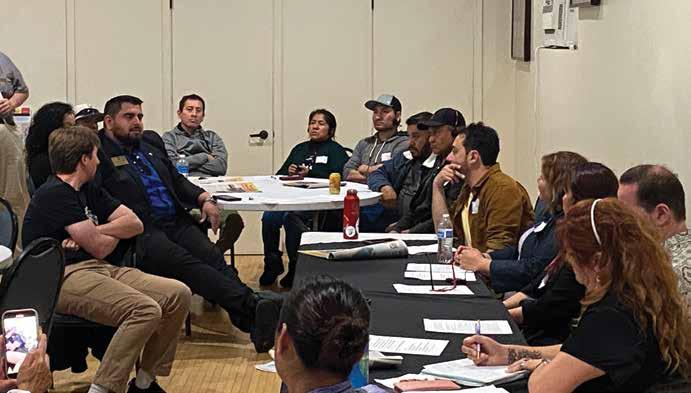
from new landlords, as well as offers of payment to relocate.
Santa Barbara city councilmembers Oscar Gutierrez, Kristen Sneddon, and Mike Jordan attended the meeting, each expressing support for the tenants. The four property owners declined repeated invitations to the meeting.
The property has been the center of a battle that spilled over to City Hall, which culminated in amendments to the city’s “just-cause” eviction ordinance earlier this year. Eventually, the city’s attorney has pressed criminal charges against property owner James Peter
Knapp of the Koto Group.
According to the City Attorney’s Office, Knapp is charged with “terminating tenancy without just cause,” failure to comply with the city’s just cause eviction ordinance, and failure to serve proper copy of permits. Assistant City Attorney Denny Wei said each charge carries a maximum of six months in jail and a fine of up to $1,000.
Knapp’s lawyer Robert Forouzandeh, an attorney who for the past 17 years has represented some of the region’s large landlords, said that this is the
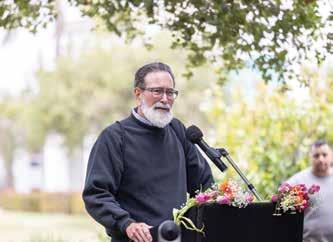
Mourners gathered in Isla Vista’s Love and Remembrance Garden on 5/23 to honor the six students whose lives were cut short that day in the 2014 Isla Vista killings: Christopher Michaels-Martinez, George Chen, Weihan “David” Wang, Chen Yuan “James” Hong, Katie Cooper, and Veronika Weiss. “Ten years ago, on this day, they lived: full of hopes, full of dreams, full of life. We must learn from the past and do better for them, for us, for those to come,” said Richard Martinez (pictured), Michaels-Martinez’s father and now an outspoken advocate for gun safety. Among the other speakers were UCSB Chancellor Henry Yang, past and present Associated Student presidents, and Jordan Killebrew, whose Project I.V. Love created the garden in response to the killings. See more of Ingrid Bostrom’s photos of the event at independent.com/multimedia.
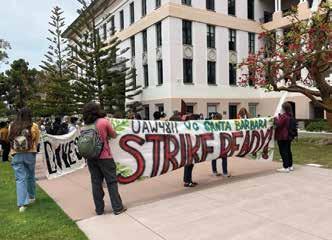
Around 200 academic workers on UCSB’s campus participated in a “Strike-Ready” Rally on 5/23 in front of Davidson Library to show solidarity with student protests across the UC system over the UC’s response to pro-Palestinian protesters arrested by police or suspended from their campuses. The rally followed the United Auto Workers 4811 (UAW) authorization to launch academic worker strikes at UCLA and UC Davis the second and third campuses to be called to strike following UC Santa Cruz. In response to the strikes, the UC filed an unfair labor practice charge with the state Public Employment Relations Board, which issued a complaint on 5/23 against UAW for what the UC calls an “illegal” strike. Read more at independent.com/labor.
The Santa Barbara Teachers Association (SBTA) is holding a strike authorization vote this week, preparing for the possibility that they may not reach a contract agreement with the Santa Barbara Unified School District by the end of the year. Voting began last 5/24 and will conclude 5/31. Should the vote pass, the SBTA executive board would have the power to set a strike date and then call a strike. However, a strike cannot be called until both parties have completed the state-mandated impasse process. The next session in the process is scheduled for 6/12.











An Artist and Two Places
Author Lynnell Jackson Burkett Photographer Hal WellsThursday 6/6, 5pm - 8pm Santa Barbara Fine Art Gallery 1321 State St., Santa Barbara
Friday 6/7, 4pm - 6pm Lantern Tree Books 892 Linden Ave., Carpinteria

As a result of the Israeli military’s aerial bombardment of the southern city of Rafah, and storm damage to a pier built by the United States military to facilitate the delivery of emergency response shipments, emergency relief shipments from Santa Barbara nonprofits Direct Relief and ShelterBox have been blocked indefinitely. To date, Direct Relief has shipped out $33 million worth of emergency supplies mostly pharmaceuticals but much of that has yet to be allowed into the country. Similarly, ShelterBox has only been able to deliver nine of their 22 truckloads of supplies to Gaza. Their remaining 16 trucks have been waiting in line at the border since at least May 7. To date, ShelterBox has shipped out 1,176 heavy-duty tents capable of sleeping 10 people each. If need be, these tents can be relocated as conditions require.
In addition, ShelterBox has also sent plastic sheets, rope, mattresses, pots and pans for cooking, tarps, and duct tape. With 85 percent of the Gazan people forced to relocate and 100 percent of the population experiencing dire food insecurity, ShelterBox CEO Kerri Murray said, it’s critical that people there have a place to prepare meals as well as a place to sleep.
Murray said she’s been struck by how much harder it’s been to raise funds in response to the crisis in Gaza compared to the outpouring of generosity the Santa Barbara–based profit experienced in the immediate aftermath of Russia’s invasion of Ukraine. “One-half the population there are kids,” Murray stated about Gaza. “How can we allow so many children to not have a place where they can call home?”
Nick Welsh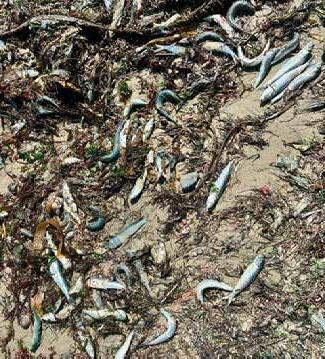
Thousands of dead sardines, and some grunion, washed onto the Santa Barbara shoreline at Leadbetter Beach and along Shoreline Drive last week.
Robert Warner, a professor of marine biology at UC Santa Barbara, tipped off the Independent when the fish first appeared on Friday, estimating that there were “3,0004,000 sardines dead on the beach.”
“No idea why they died,” he wrote, “but if from toxins, that could affect the birds,” which were feasting on the fish, and “could affect public health if they died of domoic acid, a neurotoxin from algae,” he suggested,
but “less so if it’s dissolved oxygen. One way or another, it’s a bad sign.”
UCSB research biologist Robert Miller thought it could be the result of predators, such as dolphins, pushing the fish up onto the beach. “This is not very unusual where you have dense schooling fish and lots of predators attacking they just end up jumping onto the beach and getting stranded.”
Grunion, which also were found among the dead fish, are a small species that, at this time of year, spawn at night on sandy beaches mostly from central Baja California to Point Conception, around the full moon and new moon. Since the full moon was just a few days ago, that would explain why grunion would be in nearshore waters. Sometimes, grunion get stuck behind kelp while spawning and get stranded, Miller noted.
As of Tuesday, Leadbetter smelled like it would on any other day not great, but not like a bunch of rotting dead fish, either. After the bird’s weekend buffet, the remains were likely reclaimed by the tide.
The strange phenomenon follows on the heels of a large number of sick brown pelicans being taken into the care of the Santa Barbara Wildlife Care Network. Whether the two events are related, however, is purely speculation as of now. Callie Fausey
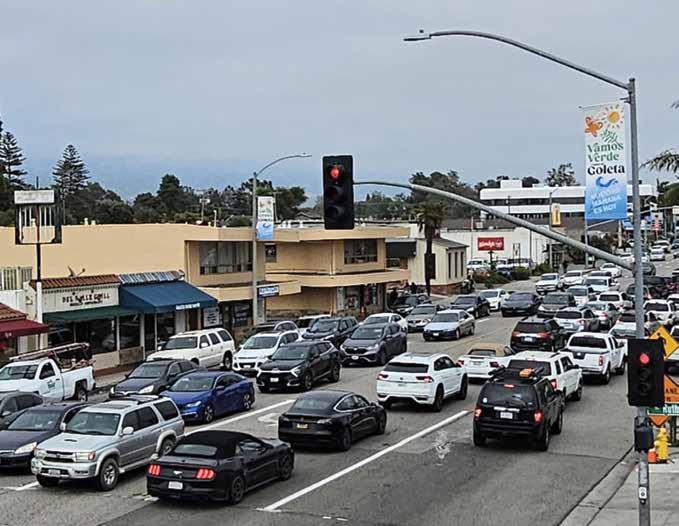
Goleta’s Project Connect intends to tame traffic along Hollister Avenue in Old Town by reducing car lanes and adding bicycle lanes and diagonal parking, but peak-hour traffic is regularly heavy on the thoroughfare.
by Jean YamamuraThe state highway used to run through Goleta’s Old Town, which became Hollister Avenue after Highway 101 was built. Today, the avenue, now lined with thriving stores, repair shops, and restaurants, still has four traffic lanes, which can require a pedestrian crossing from one side of the street to the other to make a run for it.
Plans to make the crossing simpler, and safer, is scheduled to get underway during the summer, but not everyone thinks reducing the four lanes to two will be an improvement. Opponents and proponents showed up to the City Council meeting on May 21 to make their last arguments.
What’s immediately at stake is paint. Because updating curbs, signals, and the street surface on Hollister would cost $4 million and change, the city chose to begin the first project phase by repainting Hollister with two lanes for cars, partial bicycle lanes, and back-in diagonal parking on the mountain side of the road. Paint is temporary, the city’s Public Works director had said, and the road could be restriped if need be.
The work also creates alternate routes to Hollister by extending Ekwill and Fowler, two streets in the industrial maze toward the airport. The bridge over San Jose Creek will be replaced, and two roundabouts constructed at the 217/Patterson interchange.
“The bicycle riders call roundabouts ‘meat grinders,’ ” Bob Wignot ominously told the council. A longtime advocate of all things Goleta, Wignot brought a petition

with 200 signatures urging the city to postpone the work until the heavy construction finishes, arguing the city instead use the more than $1 million for other, more needed paving projects.
Phil Unander, who has owned Larry’s Auto Shop since 1981, when his corner of Hollister and Magnolia had no curbs, said, “Hollister carries 22,000 cars a day. What happens when we go from four lanes to two?”
The Goleta Chamber of Commerce’s Dustin Hoiseth urged the city to remember that a safe place to walk, cycle, and drive, was a place where people would spend their money.
In the fight for space between two-ton vehicles and human beings, cars always win.
From 2007 to 2016, 18 cyclists or pedestrians were injured in accidents along Hollister in Old Town. Another survey from 2017 to 2021 showed 145 total collisions, 9 percent involving bikes or pedestrians, none fatal. Old Town has four times the state’s average collision rate and three times the average for injured pedestrians or cyclists, statistics the City Council emphasized.
The four councilmembers two live in Old Town agreed with Mayor Paula Perotte, who has said this project is 30 years coming and they owe it to the community to finish it.
Paradoxically, if the change is beneficial, Bob Wignot worries about gentrification. “This is the last place on the South Coast that’s affordable,” he said. “A small business can sink some roots here and stay in business.” n


When I was a child, I had very humble beginnings. I helped my family support itself by picking strawberries with my parents. Little did I realize that a studentcentered education can transform someone. The career I currently have allows me to fly worldwide and work with world-renowned thought leaders. Often, I pinch myself to remind myself that this is real. My dream has come true. Thanks to my family and the professors at Antioch. Without them, I would never have come this far.
first time in his career he has “ever seen a landlord criminally prosecuted for serving an eviction notice.”
He said that his client had acted in good faith during the entire process, even consulting with the City Attorney’s Office prior to serving the notices.
“It appears the city is caving to the pressure of the radical tenant organizations to make an example out of my client,” Forouzandeh told the Independent. “The real issue about affordability is not ‘renovictions’ or ‘rent control’; it is the draconian land use development policies of the city which have stunted growth and created a massive imbalance of supply of housing versus demand for housing.”
Forouzandeh said that the city’s just-cause ordinance is “vague and unclear,” with “no explanation on how a landlord is supposed to calculate whether a permitted renovation would take more than 30 days to complete.”
The ordinance, he added, was drafted in haste “by people who are not professional property managers or landlords” due to “political pressure from the misguided people who believe rents are too high and unsustainable due to ‘renovictions’ as opposed to lack of supply of housing.”
He plans to meet with the City Attorney’s Office prior to the June 12 arraignment to prove that necessary work cannot be completed in less than 30 days, and says he hopes the city will “dismiss the charges against my client.”


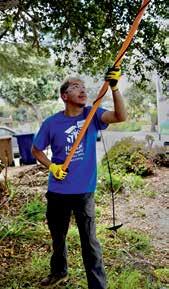
Stanley Tzankov, cofounder of the Santa Barbara Tenants Union an organization that has worked with the tenants and city

leadership disagreed with Forouzandeh’s assessment.
“There appear to be a handful of real estate developers and law firms that believe the law has gone too far,” Tzankov said. “They seem to have become comfortable operating recklessly without any semblance of accountability to anyone and baked into their business model is a practice of misleading, harassing, and ultimately displacing long-term tenants.”
On May 13, a similar forum was held in Isla Vista, hosted by advocacy groups Central Coast Alliance United for a Sustainable Economy (CAUSE) and Santa Barbara Tenants Union alongside UCSB’s Blum Center Student Leader Team and the Office of the Executive Vice President for Local Affairs. Earlier this year, the Blum Center had released an in-depth report, People’s Guide to UCSB’s Housing Crisis.
CAUSE Policy Advocate Frank Rodriguez said rent stabilization is “a critical foundation for tenant protections…. We are grateful for stronger eviction protections, but that does not mean much if families and workers can be priced out of our community,” he added. In the City of Santa Barbara, landlords can legally raise the rent up to 10 percent each year.
“If a tenant is currently paying $2,000 in rent a month today and receives a 10 percent rent increase each year, the monthly rent would will end up being $5,187.47 in 10 years,” Rodriguez said. “That is not sustainable for a worker or a family, and it’s the reason more and more cities are implementing rent stabilization measures to prevent the continued displacement of their community.” n
In a tragic accident between a forklift driven by a boardmember of the Santa Maria airport and a pickup truck, Tiffany Ann Peterson, 39, was killed on 5/2 when the truck driven by her father “collided into the forks,” according to the Santa Maria Traffic Bureau. The truck driver suffered moderate injuries, while the forklift operator, David Baskett, 81, walked away unscathed. Baskett has been a figure of controversy at the airport and was removed from his board committees months ago due to a “lack of confidence in his ability to represent the airport based on his past actions,” said Ignacio “Nash” Moreno, president of the Airport Board of Directors. While it is unclear why Baskett was driving the heavy-duty forklift, Moreno said it appeared that Baskett was moving items that used to be in his hangar, from which he had been evicted. Read more at independent.com/public-safety.
Two men ran their Subaru wagon through the plateglass window of the 7-Eleven at Calle Real and Ellwood Station Road at around 3:30 p.m. on 5/23. County Fire arrived at the scene to find the two men shaken up and the driver in need of minor medical attention. Other people were in the store at the time, but none were injured, County Fire’s Captain Scott Safechuck said. The driver, who was 90 years old, the Sheriff’s Office reported, was taken to the ER in Goleta. The store was closed, and Sheriff’s deputies are investigating. Alcohol or drugs were not suspected in the incident.
“Everything needs to go!” the ad at Craigslist reads for Old Town Antiques, the hodgepodge of reasonably priced pre-owned stuff that has hung out on West Anapamu Street for five years now, moving its store and name from Old Town Goleta to Magnolia Shopping Center, only to expire on a street corner in downtown Santa Barbara. Larry Zajic, who has run the business for 30 years with fellow antiques dealer Paul Lewis, wrote on Nextdoor that their rent had risen $1,000 per month: “Everyone is sad. Except the landlord.” For now, the discount at 33 West Anapamu Street ranges from 15 to 50 percent until the end of the month. Read more at independent.com/business. n
Jim Stubchaer, who ruled the roost as the County of Santa Barbara’s flood-control engineer from 1962 to 1986, died this past week at age 94 from complications connected to his cancer.
As flood-control czar, Stubchaer who sported closely cropped short hair, moved with a ramrod bearing that seemed more stiff than it actually was, and kept the chit-chat and small talk to a bare minimum was acknowledged by friends and foes alike to be a brilliant engineer. As a government official, he was formidable in the extreme and even more certain in demeanor. Stubchaer was always accessible, even perhaps especially when under fire by environmental critics who contended his notions of flood control gave the natural channels of the county’s creeks too short a shrift. For Stubchaer, his supporters contended, it was always about maximizing the public safety achieved at minimal public cost.
During his time with Flood Control, Stubchaer built 13 debris basins on the South Coast. He was an ardent champion of the State Water Project, approved by county voters in 1990, and an equally ardent supporter of plans to pave the lower reaches of Mission Creek. Ultimately, a much more environmentally friendly and scaled-back flood-control plan would be embraced for lower Mission Creek, but only after much
public debate and community agitation.
On his watch, Stubchaer saw firsthand the extreme violence debris flows could inflict in 1964, 1969, and 1971. “We had a saying back in the day for those canyons,” Stubchaer said in an interview immediately after 2018’s 1/9 Debris Flow, which killed 23 people in Montecito. “We said they were shotguns, loaded with rocks and set off by fire.”
Tom Fayram, who succeeded Stubchaer in his post and has since retired, would describe his former boss as “a genius” and “the Wizard of Oz behind the curtain.” Fayram said Stubchaer was way ahead of his time when it came to recycling stormwater runoff back into the ground, both to minimize damage and expand groundwater supply. “I always thought if I could be half as good as Jim was, I’d be kicking up my heels and shouting for joy,” Fayram said. “That’s the kind of mountain I was looking up at.”
Reports of the demise of Arnoldi’s Café, perhaps the most quintessentially quintessential of all Santa Barbara restaurants, appear to have been premature. According to a message posted Friday morning by Jeanette Arnoldi, granddaughter of the restaurant’s original founders, the family is in talks with a prospective new operator, and the Eastside café and bar which first opened for business in 1940 will soon be humming again. It was premature, she said, to name any names.
Word broke that the restaurant had shut down two weekends ago as news leaked out that its principal owner, Dave Peri, had died earlier in the week. Peri a major-but-quiet behind-the-scenes force in Santa Barbara’s progressive-environmental circles for more than 50 years and his wife, Kitti, took over operations of the restaurant 22 years ago, along with his sister and brother-in-law, when the eating establishment appeared to be teetering on its last legs. He and Kitti were not just owners but restaurant regulars, appearing to savor Arnoldi’s distinctive ambience as if it were their own living room. Like a lot of restaurants, the food was good enough, and the bar was a beacon. But above anything else, Arnoldi’s was always about its sense of time and place. Its back-lot patio hard-packed dirt hosted bocce tournaments long before the sport was “discovered” by nuevo hipsters. Indoors was classic old-school, sporting critters with big antler racks on the wall and Arnoldi’s signature booths, walled off so snugly they could

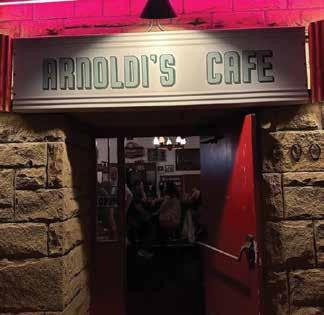
pass for confessional booths.
Peri himself was a second-generation Italian immigrant, a child of the Goleta lemon fields and no stranger to the Italian stonemasons who built most of Santa Barbara and for whom Arnoldi’s itself stands a lasting testimonial. A CPA by profession, Peri and his firms would emerge as the accountant of choice for liberal Democratic political candidates and residents with likeminded values.
Peri was tight politically, personally, and professionally with practical-minded activists such as Selma Rubin, who would help transform Santa Barbara from the sleepy Republican backwater it was in the 1960s into the Democratic stronghold it is today.
To the extent anyone was stirring the pot to make things happen the creation of Casa Esperanza, Santa Barbara’s first major homeless shelter Peri’s fingerprints could always be found on the ladle. Nick Welsh

UNMASTICATED, BUT PROBABLY TRUE:
“And then there’s always Armageddon,” my next-door neighbor chuckled as he turned to go back into his house. Spring was still warming up on its way to summer. We’d just enjoyed one of those impromptu street gatherings that magically happen. There were five of us. At issue was what to do with the antique desk in the back of his truck. Admittedly, it was a great desk. But nobody wanted it.
During our deliberations, all of life’s mysteries and absurdities were explored. Eyeballs got rolled, shoulders shrugged. Everyone and everything, we agreed, was stupid. Excepting, of course, ourselves. In my Solomon-like wisdom, I suggested the desk be put out by the side of the road in front of my place. Someone had done just that with a beat-up old ironing board in the morning. When I got home, the ironing board was gone.
They call that guerrilla recycling. Or, in the words of city planners, adaptive reuse
There’s much talk of adaptive reuse these days. It’s frequently cited as the answer to what ails State Street and downtown Santa Barbara. Translated, it means converting all the empty retail spaces and vacant office buildings into housing. If people already live downtown, we won’t have to work so hard to bring them there. I’m all for it, one million percent. But it’s a lot harder to do than just waving some magic wand.
State building codes, it turns out, are designed to protect occupants from falling concrete in case of earthquakes. The knuckleheads at City Hall and I use that term advisably and with affection cannot simply wish those codes away
Here’s another silver-bullet solution: Bring cars back to State Street
To steal a line from jazz bassist Charles Mingus, the past ain’t what it used to be. Years before the onslaught of COVID and the creation of our so-called Pedestrian Promenade, Independent writers were reporting ad nauseam about high vacancy rates on State Street and the decline of retail shopping. I mention this because there was a plot afoot recently, hatched by councilmembers Oscar Gutierrez and Eric Friedman, for councilmembers to consider returning cars to State Street. Although Friedman would have second thoughts and new City Administrator Kelly McAdoo would push back smartly, the timing seemed suspicious.
Such a proposal would have totally deepsixed any bright ideas coming from the much-maligned and eminently malignable State Street Advisory Committee, which has spent the better part of two-and-a-half years and $1 million trying to conjure a workable future for downtown Santa Barbara.
That committee made up of 17 certified big brains and movers and shakers is scheduled to unveil its final grand plans
for downtown on June 26. I am told that all the high-ranking City Hall administrators Public Works, Community Development, Public Safety are all more or less on board. That means there will be plenty for all of us to like and to hate. A lot of babies, I am told, will get cut in half.
The State Street promenade, I am told, will be shrink-wrapped down to four or five blocks, which makes sense. As for what to do about cars and bikes, I am told the recommendation is that cars will be allowed back in some limited fashion for a limited portion of the street while bike riders will be told to get off and walk their steeds for that four- or five-block stretch.
As far as parades go another key flashpoint issue the murmurings I’m hearing are disquieting in the extreme, reflecting the extent to which paranoia over mass shootings will forever now intrude into all aspects of city planning.
I am hearing competing accounts. In one, the cops don’t want any parades back on State Street at all not Solstice, not the Christmas parade, and not Fiesta because they offer too inviting a target: large populations packed in tight with lots of high buildings where those intent on mass mayhem could fire off a few hundred rounds. In another variant, the cops are more concerned about Fiesta, in part because of all of the above with the addition of all that highly spook-able horseflesh
Full disclosure: I haven’t asked the cops yet to find out.
I think the lesson of history is that angry young men with too much hate in their hearts will find a way to kill as many people as inhumanely possible whether or not parades are allowed as long as the means of mass destruction remain so readily available. But if law enforcement did not lie awake at night in a cold sweat worrying about such things, they’d be guilty of extreme negligence
As far as cars and bikes, history has demonstrated that cars failed to save State Street while they had the chance, and bikes in the four years the promenade has been in place have failed to bring it back to life Look at the 400 block, where cars have never been banned. The 99 Cents Only store, one of the few genuinely utilitarian shops in all of downtown, just went out of business. Maybe the landlord can now fill that space with a bowling alley, which is what he originally wanted. I am told he opted for the 99 Cents store as a finger in the eye of City Hall after all the grief he reportedly experienced trying to get the bowling alley approved.
Fixing State Street is like putting the genie back in the bottle after you drank the contents and threw the bottle out the window. It ain’t easy. But it beats the alternative. Like my neighbor noted, “There’s always Armageddon.”
—Nick Welsh











Readers remain divided over changes at the Miramar:
jerradb: The Miramar is a beautiful property and a bright spot after 20 years of blight. Employees’ housing makes so much sense, and the proposed shops are not going to draw huge crowds. It’s not like a Target is opening up in our neighborhood. • snohoun: This will really test the integrity of the liberal elites in Montecito. You couldn’t have a more ideal and elegant way to satisfy Montecito’s huge need for affordable housing. Caruso not only will build it on his already existing footprint, leveraging no public dollars, and employing every person in the built units. Saying no to this is just saying no to lower-income residents, period.
teamtonyandthebbqboys: I liked it better when it was a rat-infested wasteland. ’Cito used to be quaint; now it’s Rodeo Drive. • katlaurain: Caruso’s supposed “employee housing” is a ploy to get the other over-the-top, brand-infested boutiques built and high-end luxury apartments that will rent for god knows what. It won’t begin to cover his own employees’ needs. He should build 50 units of employee housing above the east parking area and call it a day. He is willing to kill the goose that laid the golden egg, that being the natural beauty and charm of Montecito.
missyma26: I thought everyone was bitching about affordable housing for workers? Now there will at least be a few. • designisgoodliving: Affordable housing without using tax dollars. There was nothing quaint about a rat-infested wasteland on the beach. And most importantly he is inclusive by listening to neighbors’ concerns, sharing the plans he has for his property, and implementing changes when there are valid concerns.
With all the brain power at work trying to meet the state housing mandate, perhaps someone could create an algorithm to tell us if we build this many thousand dwellings for this many thousands of people, will there be enough water when the next 10-year drought comes along?
Awfully quiet on this subject.
—Frank DiMarco,Goleta
I really appreciated the Memorial Day tribute by Glenn Hunter. Another San Marcos High/ Vietnam War connection is the death of Chipper Dal Pozzo in 1973. Chipper was the first death after
the cease-fire was signed. Seems the army and the Vietnamese didn’t get the memo. I remember how devastated we were.
Thanks for remembering these men.
—Sheri Lee Trichler, S.B.Day remembrance of the KIAs from my unit when I served as a patrol leader. My combat regiment was D-5/12, 199th Light Infantry Brigade (Redcatchers), in Vietnam, 1968/69: Potter, Wesley R.; Rivera, Euclides; Knutson, Vernon G.; Hahn, Harlan L.; Nickens, James; Gomez-Badillo, David. Over the course of that long war, 756 Redcatchers gave their lives.
—Daniel Seidenberg, S.B.Is America living through the most corrupt, dangerous times in its history? Will our Republic survive?
Case in point. Our border is virtually open, and our country is being flooded with terrorists, criminals, drugs, diseases, and Chinese and Middle Eastern men. Second, we have a senile, physically weak president who is incapable of leading our country. Third, the rule of law is disappearing in America. Leftist judges, lawyers, and politicians are running roughshod over our justice system.
As an example, the Department of Justice and leftists are politically persecuting a man running for president. Never mind that half of America supports him and he did nothing wrong.


Rabbi
TJ Woodward
Guest Speaker & “Manifestation to Magnification” Workshop
Sunday, June 9 @ Noon
Father’s Day Sunday, June 16
Summertime



Package only bookable by phone at 800-966-6490
Not valid with other promotions, subject to availability, not available on holidays. Does not apply to groups. Must mention this coupon when making reservations and present at check-in. Does not include tax. Valid 6/16/24 - 8/29/24. Sunday-Thursday nights. No Fridays or Saturdays. Blackout: 7/4/24
It is time for average Americans to wake up and stand up for a free, independent America. Remember, America is a Republic, not a totalitarian hell hole.
—Don Thorn,Carpinteria
¶ Due to an editing error, the news story on the 10th anniversary of the Isla Vista killings mistakenly gave California as the first state to enact red flag laws; Connecticut was the first. California was the first to enable family members to petition for a gun restraining order.
Independent welcomes letters of less than 250 words that include a daytime phone number for verification. Letters may be edited for length and clarity. Send to: Letters, S.B. Independent, 1715 State St., Santa Barbara, CA 93101; or fax: 965-5518; or email: letters@independent.com. Unabridged versions and more letters appear at independent.com/opinions



5/28/1984 - 5/2/2024

Neil Glendinning , beloved son, brother, and friend, passed away peacefully at his home in Goleta, California. He will be deeply missed by his family and friends, who cherished him deeply. Neil’s love for the beach was evident to all who knew him, he spent countless hours walking along the shoreline, his loyal companion, Bailey, was always by his side during these beach outings, their bond unbreakable.
Neil’s memorial service will be private, for those closest to him, his memory will forever live on in the hearts of those who loved him.

11/23/1942 - 5/2/2024

It is with a very heavy heart that we share the passing of our Mom, Mama, Mommy, Grammy, GMA, Great Grammy, Sister, Mother in-Law, Friend & the Best International Host Mom to Students all over the world!
After a short illness, Mom passed away peacefully, at home, with family by her side. Born in Detroit Michigan, she moved to Santa Barbara as a young girl. She attended several local Elementary Schools, La Cumbre Jr. High School, where she met the love of her life and husband of 43 years, Johnny Bowers, prior to his passing in 2004. Johnny & Glenda Graduated with the
Santa Barbara High School Class of 1961. “Once a Don always a Don” and were married in August of that same year. Mom had many hobbies that included: gardening, reading, stargazing, sewing, writing and is a published Poet with her poem “Daisy”. Mom was a Sunday School Teacher, Pioneer Girl Leader, Santa Barbara BMX Mom of the early 70’s and on the PTA and City Counsel for many years. Mom was an at home mom giving all her energy to her kids as well as the entire neighborhood, first on Calle Poniente and then Pedregosa St. since 1969. The motto at the Bowers house was “Do unto others as you would have them do unto you” with a friendly sticker on the refrigerator to remind us. Mom also worked for the Santa Barbara Medical Foundation Clinic for several years where she made many lifelong friends. Mom was a lover of all people and in their retirement, Mom & Dad hosted well over 200 + International Students, making friends all over the world. In her later years, she loved Jeopardy, Geneology and the Curse of Oak Island. She will be the brightest star in the sky for the rest of our lives!
She is predeceased by her parents, Richard Ivey Rundle, Sr. & stepmother, Barbara. Helen Louise Denmure & stepfather, Clayton, her half Brother, Richard (Richie) Ivey Rundle, Jr., her husband, John (Johnny) N. Bowers, Jr. and her twin granddaughters, Janie Louise & Kylie Rose Carrillo.
She is survived by her Brother, Dennis Rundle (Young), Sister, Melany Studley (David), her Son, Dale Bowers (Lisa) her Daughter, Donna Carrillo (Robert), three grandchildren; Jonathan Cody Bowers, Em Carrillo, Lexi Carrillo, one great granddaughter, Leah Bowers and many nieces, nephews, cousins and friends.
Glenda will be interned along side Johnny at the Santa Barbara Cemetery. Please make donations to her two favorite organizations: St. Jude’s Children’s Hospital & Central Coast Home Health & Hospice.
Services will be announced at a later date.
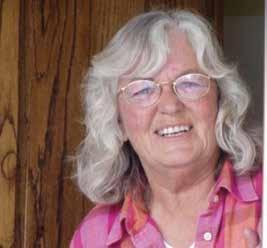
6/3/1924 - 5/3/2024
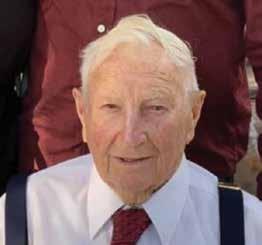
Eugene Pozzebon passed away in his sleep on May 3, 2024, one month before his 100th birthday. He was a longtime resident of Montecito and Santa Barbara. Born on a dairy in Bakersfield in 1924, he later moved when he was 13 years old with his parents Giovanni and Luigia Pozzebon to the Toro Canyon Dairy on the corner of East Valley and Toro Canyon Roads. They operated the small 32-acre dairy until 1955. Like many of the other small dairies in the Santa Barbara area, it was increasingly difficult to operate with the high costs of importing feed and competing with much larger dairy operations.
With the closure of dairy business, Eugene, or Gene as he was known by, was hired by the Carpinteria-Summerland Fire Department as a fireman. In his off hours while working as a fireman and later fire engineer, he converted the dairy into an avocado orchard. He also began operating an excavating and soil management business, which included supplying topsoil and manure, weed abatement, firewood procurement and delivery, and hay hauling. After seven years the 15-acre avocado orchard was flourishing as well as the operation of his business, Pozzebon Soil and Fertilizer. He left the fire department to work full time on his growing business which later became Pozzebon Backhoe Service with his son Dennis and grandson Anthony Pozzebon. Over the years he provided quality work to many of the properties and estates in the Montecito, Carpinteria, and Santa Barbara areas. He also partnered with a neighbor in a commercial tomato growing operation. Never one to be idle, Gene, or Gino to his family, along with his wife Ida, were active gardeners and farmers. Growing and harvesting fruits, vegetables, cattle, chickens, turkeys, and others were important activities on the Pozzebon Ranch. Summers included raising sweet corn for the family vegetable stand on East Valley
Road. He taught himself several skills such as carpentry, electrical and plumbing that enabled him to completely remodel one home and to build a dream home for himself and Ida that overlooks the valley and the Channel Islands. He also mastered auto mechanics, welding and was an excellent cook.
Gene’s hobbies included membership in the Santa Barbara Horticulture Society and the Italian Boot Club. He also actively supported the Carpinteria Future Farmers of America and was an avid hunter. With an extended Italian family, ranch reunion parties were often hosted. He also pursued wine making, enjoyed dancing, barbequing, and later traveling, especially to visit family in Italy. In addition, family and friends enjoyed his home-made tomato sauce, gnocchi, polenta, pickled cucumbers, cured and marinated olives, and venison jerky. He is proceeded in death by his wife, Ida after 54 years of marriage, sisters Lucy Sanderson, Mary Villard, and Vera Marostica. He is survived by his four children: son, Lewis Pozzebon and his wife Liz; daughter, Nancy Pozzebon; son, Dennis Pozzebon; and daughter, Christine Henry and her husband, Phil; grandsons, Rian Pozzebon, Nick Pozzebon, Anthony Pozzebon, Chad Pozzebon, Tyler Henry; granddaughters, Julie Vanderzanden, Alley Henry and Analyssa Gauvin; great grandchildren, Rially Pozzebon, Dillon Pozzebon, Brody Pozzebon, Antonia Pozzebon, Trevor Vanderzanden, Kayley Vanderzanden, Mia Pozzebon, Dacota Pozzebon, Lucas Pozzebon, Louie Pozzebon, Matteo Pozzebon, Lily Pozzebon, Ella Pozzebon; numerous nephews, nieces and friends, especially Edith Michalowsky. His tremendous love and support of family and friends will be dearly missed.
A memorial service is to be held at Mount Carmel Church, 1300 East Valley Road, Montecito on Monday, June 3, 2024, at 11 am followed by a celebration of life at Carpinteria Lions Club Lodge, 6197 Casitas Pass Rd., Carpinteria, from 1pm to 5 pm. Private burial at Calvary Cemetery.
In lieu of flowers, the family suggests contributions in memory of our father to the American Heart Association or the Italian American Foundation Scholarship Fund, Attn: David Peri, PO Box 22557, Santa Barbara, Ca 93121.
Merlyn Cummings 12/27/1927 - 5/21/2024
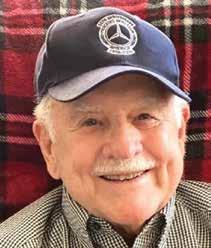
Merlyn Cummings was born on December 27, 1927, and passed away May 21, 2024, surrounded by his family in his home. He was born on a farm to Floyd and Grace Turner Cummings. He had three brothers, Everett, Dale, and Russell who preceded him in death. Merlyn taught in a rural one room school after graduating from Oran High School. He earned a BA from the University of Northern Iowa and a MA from the University of Iowa. He also served in the US Army during the Korean War from February 1951 to February 1953. On December 23, 1950, he married the love of his life Helen Staack. Merlyn taught school for a total of 37 years in Cedar Rapids, Iowa and after moving to California in 1965, he continued his teaching career at Goleta Valley Jr High, retiring in 1988. He started his real estate career in 1978, serving most of the time with Town ‘n Country Realty, retiring in 2008. Merlyn served the community in several capacities with Goleta Pride, Goleta Valley Beautiful, Goleta Historic Society, directing a neighborhood fourth of July parade, mentoring Junio High Students, and at Calvary Baptist Church and St Andrew’s Presbyterian Church in several positions. He organized and directed retired men and women maintaining the Church facilities with His Helping Hand for 25 years. He was honored as Goleta Man of the Year in 2008. Merlyn leaves his wife Helen, of 73 years, daughters Kathleen Jones, (who was married to Michael who has since passed), Karen Koeller (Karl) and five grandsons; Tim (Melanie), Jeff (Chandra), Andrew (Cindy), Joe (Alex) and Jacob, one granddaughter, Julia, five great Grandchildren; Sarah, Anastasia, Russell, Cooper and Elias. Merlyn’s Daughter Kristine welcomed her dad into heaven. A gathering to celebrate Merlyn’s life was held Saturday, May 25th at 10 AM at St Andrew’s Presbyterian Church, 4575 Auhay Dr, Santa Barbara, 93110. A reception will follow at the Church.

To many, he was Ian, but to his babies, he was Papa and, to his mom, Pooh.
Ian was born in Hollywood, California, in 1956 to his beloved mother, Helen Jane, and father, Malcolm Peters. He moved to Santa Barbara at the age of 5 and called it home for most of his life. It is in Santa Barbara that he started his family and made his mark on the music scene.
Ian’s dedication to his bass is one that couldn’t be matched. He ate, slept, and breathed the bass. He lived by the words of one of his favorite bass players Jaco Pastorius, “Music is in the air; it’s my job to pull it out.” He was a master of his craft, and he helped bring the flavor of Latin jazz to Santa Barbara.
In his late teens, Ian was influenced by the musical greats — Jimi Hendrix, Miles Davis, and Carlos Santana. He asked his mom for a bass, and she obliged. Ian was able to pick up the bass from there and play it by ear. The match was lit, and there was no turning back; he was going to be a bass player.
Ian started making a name for himself, sharpening his skills and playing in many of Santa Barbara’s Latin jazz bands of the ‘70s and ‘80s and beyond: the Ceniza, Tropical Knights, Luis Miranda’s Final Touch, Cache with Sonny Rivera, Rubaya, Mambo’n, Sabor Latino Big Band, Somos Son, Rumba Jazz, 360 Sextet, Conga Punks, Canela, Oxnard Salsa Ensemble, Bigfoot Invasion, The Lounge Trio, Louie Cruz Beltran, and the Estrada Brothers, just to name some of the bands. Ian’s versatility and talent showed. His good friend Cougar Estrada said, “He played many styles from foxtrot to bebop to rock. He was a bloody great bass player! Ahead of his time. And he knew it.”

The Estrada Brothers was one of the most notable bands Ian was a part of, giving him the opportunity to play with many skilled musicians and make lifelong connections. The band originated in the mid-1950s, and Ian joined in 1984.
The Estrada Brothers helped bring Latin jazz to Santa Barbara, playing at venues that were integral to the scene. Their hot, percussive sound was heard at Casa de la Raza, The Sea Cove Jazz Café, SOhO, Ruby’s Café, Papagallo’s, Roy’s, De la Guerra Plaza, and the Santa Barbara Jazz Festival at Leadbetter Beach.
With the Estrada Brothers, Ian had the opportunity to open for jazz giants: Stan Getz, Les McCann, Dave Brubeck, and Tito Puente, the latter of the three taking place at the Santa Barbara Jazz Festival. Not only did Ian open for these renowned musicians, but he was also able to share the stage with them, playing with percussionists Poncho Sanchez and Mongo Santamaría, trumpeter Adolfo Acosta, and drummer Cougar Estrada, who became his lifelong friend.
When the Estrada Brothers recorded with major jazz label Milestone Records (Fantasy Studios), one of Ian’s lifelong dreams was fulfilled. The sessions in 1996 landed them a hit, the infectiously danceable “Get Out of My Way.” Ian was on his upright Ampeg baby bass, playing seamlessly. He was officially a recording artist.
After recording the album, Ian went on to play with the Estrada Brothers for 19 years. He also continued playing locally in various bands, because he loved to gig whether it was with a couple of friends or with a full band. In 2016, he had the opportunity to showcase his skills yet again and played with one of his favorite groups, War.
Ian’s life was not without hardships, but if there is one thing that’s for sure, he was an artist who always remained true and had soul. Despite the number of music recordings under his belt and the noteworthy bands he’d played with, Ian always remained humble. He was always eager to learn new styles and techniques. When he wasn’t playing, he was practicing, often studying other bass players he respected: Ray Brown, Jaco Pastorius, James Jamerson, etc.
Above all else, his two greatest loves were his daughters, Tania and Ana “Booboo,” in whom he instilled his love and appreciation for music. He loved deeply, and if you were one of the lucky few, you felt it. And of course, if he didn’t like you, you felt it, too. He was as real as they come. He was never afraid to show his love and appreciation or to speak his mind. He was genuine, and, of course, very handsome.
He will be missed beyond words by all that loved him, especially his babies, Tania and Ana “Booboo”; granddaughter, Elena “Little Elena”; and best friend and brother Cougar Estrada.
Ian, Papa, we miss your deep belly laughs, warm hugs, and beautiful sense of humor. Most importantly, we miss talking about music and sharing tunes. Your tune plays on forever in our hearts. n
Jerry Dean Springer 8/5/1935 - 5/12/2024

Jerry Dean Springer, 88, beloved husband of Julia, father to Kurt, Jill, and Amy, passed away peacefully on May 12, 2024, at Serenity House in Santa Barbara.
Born in Reeve Township, Iowa, the fourth of six children, Jerry attended many different schools before finally settling in Carpinteria in middle school. After his itinerant childhood during the Great Depression, Jerry was happy to finally put down roots in Carpinteria.
He attended Carpinteria High School, where he was Student Body President, lettered in 11 varsity sports, and was awarded a lifetime pass to Carpinteria sporting events. After high school, he attended Occidental College in Los Angeles for two years with a football scholarship, and then transferred to Santa Barbara City College. After being drafted into the army for two years Jerry returned to complete his degree in physical education at UCSB while working as head lifeguard at Carpinteria State Beach Park. He met his wife, Julia, in Summerland in the summer of 1961 and they were married in 1962. They lived in La Canada/Flintridge where Jerry coached Pop Warner football and taught and coached at Mark Kepel High School in Alhambra. But he missed the waves and the beach and returned to Carpinteria in 1968, finally settling in Montecito/Summerland for 45 years, living his final years at Valle Verde Life Plan Community. Jerry loved the ocean and was an avid, world champion (in his age group) bodysurfer. Physical fitness and the ocean were his passions. He went bodysurfing at the Ventura South Jetty almost daily and entered many bodysurfing competitions up and down the State. He was a founding member of the South Jetty Swells Bodysurfing Associa-
tion, a non-profit that provides education and clinics for young people of all backgrounds and skill sets.
Jerry and his bodysurfing pals, who nicknamed him “Shorebreak” Springer, traveled annually to Mexico, Ecuador, or most often Costa Rica for two-week surfing safaris and met frequently for coffee to exchange wave stories.
Jerry exercised religiously at the Montecito YMCA up until the pandemic closed the Y, serving on the Board of Directors there in the 80s. He also served on the board of Girls, Inc. in Carpinteria and Casa Dorinda in Montecito.
He and his wife, Julia, were partners in SCB Associates, a financial services business, for 30 years, retiring in 2000. Jerry was very active in his industry’s professional organization, receiving many awards, and was appointed by Governor Pete Wilson to serve on a state commission regulating the debt collection industry. After retirement Jerry volunteered at Direct Relief International for 10 years, packing and filling care packages to send all over the world. Though a classic Californian, Jerry never lost the calm, even temperament of his native Iowa. He was a loving husband, father and grandfather, a caring employer and friend. Above all, he had a positive, can-do, optimistic attitude. His ever-cheerful nature drew people to him and kept them as lifelong friends. He will be sorely missed.
He is survived by his wife of 62 years, Julia, son Kurt (Ana), his daughters Jill (Simon) and Amy (Zeb) and grandchildren Sam, Elizabeth, Rhys, Henry, Sofia, his brothers Carl, Don, and Robert and sister, Joyce White. Tax-deductible memorial donations can be made to Planned Parenthood California Central Coast (518 Garden Street, Santa Barbara, CA 93101 or https://www. plannedparenthood.org/ planned-parenthood-california-central- coast/donate) or to the South Jetty Swells Bodysurfing Association (14845 Camino Cielo Ojai, CA 93023) There are no immediate plans for a memorial service. Jerry is now bodysurfing in the Great Beyond, free from his health problems. May he forever catch the best breaks and surf eternal waves.
Continued on page 16
Tom Garey
A Celebration of Life will be held for Charles Thomson (Tom) Garey at 1pm on Saturday, June 1 in the Garvin Theatre on the West Campus of SBCC.
Thomas A Gottwald 11/20/1957 - 6/7/2023
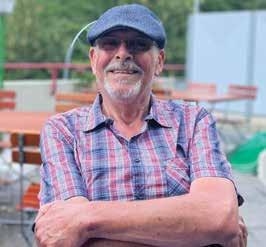
Celebrating the life of
Thomas A Gottwald
November 20, 1957June 7, 2023
Sunday, June 9th at noon.
Lions Park, 6197 Casitas Pass Rd. Carpinteria
In lieu of flowers, donations can be made to Santa Barbara City College Foundation (Thomas Gottwald scholarship)
Patrice Lorraine Summers 11/23/1933 - 3/9/2024
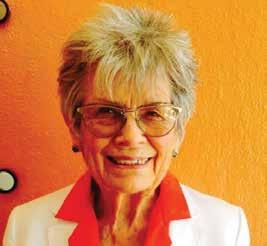
Patrice was born in Los Angeles, the oldest of 4 children, attended UCLA and married William Davidson in December 1954. Bill got a job with aerospace, and they moved to Santa Barbara where their first daughter, Erin was born in 1957. Patrice was very active with the Democratic League, graduated from UCSB with a BA in Political Science, after son, Tom was born in 1958 and Robin in 1961.
After her divorce in 1968, she opened her Mission Canyon home to many UCSB students, conscientious objectors to the Vietnam war and radicals of the time, educating herself and her children to the counter culture, marching for peace, civil, gay, farm workers and women’s rights. Her home was filled with the music of the times always on the turntable, communal meals, “smoke” and laughter.
From 1969-74, Patrice was the Community Affairs Board coordinator, matching student volunteers to many non-profit agencies
throughout Santa Barbara.
Patrice left Santa Barbara in the late 70’s and returned from the Bay Area in the early 90’s. She worked for UCSB in the Equal Opportunity Programs & Services for the students of Native American heritage to have the support to complete a degree in higher education. She retired from UCSB in 2010.
Her daughter Erin brought her to El Dorado County to live in 2014. Patrice died peacefully with Erin at her side. She lived 90 full years.
Patrice lived quite an adventurous life and inspired many people she encountered. She loved ethnic cuisine, especially sushi and taught herself to be a gourmet cook. She often said she was “crazy” meaning she wasn’t mainstream, and proud of it.
She is survived by her daughters, Erin Davidson and Robin Powers, her grand children, Jasmine and Leilani Shimoda, Danielle and Timothy Davidson and Blaize Powers. Her son, Tom passed in 1998.
Donations in her memory can be submitted online to the Snowline Hospice of El Dorado County: www.snowlinehospice.
org
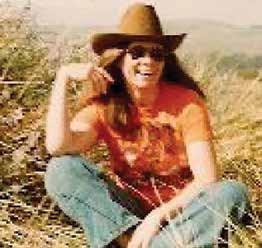
John M. Cohan
3/30/1931 - 5/12/2024
John (Jack) Cohan, of Santa Barbara, CA, passed away on Sunday, May 12 at The Oak Cottage, Santa Barbara. He was a retired attorney who had served with the Santa Barbara County Counsel’s Office.
Jack was born in Augusta, Maine, the son of Angus and Florence Cohan. His father was an officer in the U.S. Navy. The family moved frequently as his father’s home ports and other duty stations changed about once every three years. Jack saw much of East and West coasts of the United States.
In 1942, his father’s ship was transferred to the Pacific theater and the family moved to Santa Cruz, California (then a sleepy tuna fishing port). Jack got a part job at a horse ranch that raised and trained polo ponies. Jack fell in love with the sport and horses in general and became a very adept horseman. He bought a
three-year-old thoroughbred colt from his employers and trained it to become a very good polo pony.
The family moved to Stockton, CA in 1947, where Jack graduated from high school in 1949. He attended and graduated from the U.S. Military Academy at West Point, N.Y. in 1955 and subsequently joined the Air Force. He retired from the Air Force and attended UC Berkeley School of Law. After obtaining his law degree and after passing the California Bar, he joined the Marin County Counsel’s Office and later moved to Santa Barbara, where he joined the Santa Barbara County Counsel’s Office.
In the late 1980’s he retired and set out to sail around the world alone on a 28- foot-long sailboat. He was very proud of this achievement. Jack returned to Santa Barbara, where he remained for the rest of his days.
Jack his survived by a younger sister, Sue Morrow, who lives in Carson City, Nevada, her twin brother, W T Cohan, who lives in Grand junction, Colorado and three nieces and one nephew.
David Louis Peri 10/3/1944 - 5/15/2024
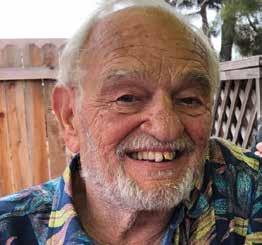
We are deeply saddened to announce the passing of David Louis Peri on May 15, 2024.
Born Oct. 3, 1944, David was a native son and life-long resident of Santa Barbara.
After graduating from Cal Poly San Luis Obispo he worked as an accountant, and started his own CPA firm in the early 1970s.
Over 20 years ago, along with his wife, sister and brother-inlaw, he added a second local business as the operator of Arnoldi’s Cafe on Olive Street in Santa Barbara.
David and his wife of 59 years, Catherine (Kitty), were passionate about and committed to giving back to the community and residents of Santa Barbara.
He was an integral part of several organizations that worked to aid the less fortunate; keep Santa Barbara’s culture alive; protect the area’s natural beauty; and preserve the city’s rich history.
Dave and Kitty’s house was a second home for many people. In good times and hard times he was a beloved Papa, offering a
place to feel welcome, a home cooked meal, or shelter for someone facing difficulties.
David loved his family, his garden, his community, helping other people, and “La Dolce Vita.” He had boundless energy to make every family event a celebration. He loved tending to the vegetables grown near the house — baskets in the kitchen filled with the garden’s bounty.
He was never happier than at a table surrounded by friends, good food, good wine, and a convivial atmosphere.
The back of the house was a veritable jungle of plants, a perfect place to enjoy some pasta, Tri-Tip and Papas’s chicken off the grill and slowly feel the heat and light of the day fade into evening.
Dave’s superpower was being a connector. He connected and stay connected with people all over the world. Exchange students in the Peri house in the 1970s and ’80s became lifelong friends, and cousins generations removed in Italy and Ireland were close family.
He was endlessly energetic in getting people together, organizing large groups on trips both near and far, especially his beloved family homelands of Italy and Ireland.
David is survived by his wife of 59 years Catherine (Becchio); children Joseph Peri, Francesca Wermlinger (Rob), Gabriel Peri (Karen), and Sara Skrinski (Bryan); and was the beloved Papa of 10 grandchildren Lucas, Samuel, Christopher, Dominic, Laila, Wyatt, Giana, Brody, Hunter and Delfina; and sister Marina (Dede) Nonn (Jim).
He was preceded in death by his father Marino, his mother Mary Margaret (Peggy), and sister Linda Williams (Alan).
Donations in David’s memory can be sent to Transition House or the California Missions Foundation.
Memorial services will be held at 11 a.m. Friday May 31 at the Old Mission.
3/11/1953 - 5/19/2024
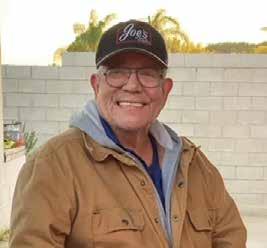
Beloved husband, father, grandfather, son, and brother. Tino was born in Guanajuato, Mexico and immigrated to the United States at the age of 17. While working during the day he attended night school and earned his High School Diploma. That’s where he met the love of his life, Bertha, and soon after they were married. Tino always loved to cook, he started working at Joe’s Café in 1977 and worked his way up to Chef. Tino worked at Joe’s Café for almost 50 years. He was a loving husband and father who always made anyone in his company smile. Tino loved music; especially while cooking it was a must for him, he loved to read and tell stories that always had a hint of humor to keep the listener chuckling. He was an avid Dodger and Raider fan but became the number one fan of any team his children or grandchildren played on. His pastime was baseball and spent many afternoons playing catch with his grandchildren. Tino passed away on Sunday, May 19th after a 4-year battle with cancer. Our family is grateful to the Medical Team at The Ridley Tree Cancer Center for the wonderful care he received.
Tino is survived by his loving wife Bertha of 51 years, his 4 children Alicia Rodriguez (J.R.), Maricela Avila (Victor), Christina Rodriguez (Gilbert), Constantino “Tino” Jaramillo Jr along with 9 Grandchildren and a Great Granddaughter on the way. His Mother Maria Jaramillo, 7 siblings, and countless nieces, and nephews. He is preceded in death by his father Dionicio Jaramillo
A Rosary will be held on May 30th at Our Lady of Guadalupe 7pm. A Memorial Mass will be held on May 31st at 12:00pm at Our Lady of Guadalupe Church, with burial service at Calvary Cemetery to follow. A Celebration of Life will be held on Saturday, June 1st at South Coast Church at 11:00am. Our Lady of Guadalupe Address: 227 N Nopal St, Santa Barbara, CA 93103. South coast Church Address: 5814 Cathedral Oaks Rd, Goleta, CA 93117; Calvary Catholic Cemetery Address: 199 N Hope Ave, Santa Barbara, CA 93110.

Dolores Ruth Hansen Toye 10/2/1929 - 4/15/2024
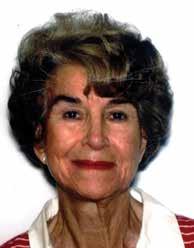
Dolores passed away peacefully on April 15, 2024.
She was born in Akron, Ohio to Susan and Joseph Koza. She worked as a secretary for the Firestone Tire and Rubber Company in Akron. Upon retirement, she moved to Santa Barbara, California where she met and married private yacht skipper Alfred Malcolm Toye. They spent many happy years sailing the seas together. Malcom passed away December 9, 2014 and her son, Mark Gregory Hansen, died 3 weeks later in a helicopter crash, December 31, 2014.
She leaves behind many greatgrandnieces in Akron, which is where she will be laid to rest. She also leaves behind her daughterin-law Augie Grace Hansen in Glendale, AZ and her lifelong friends since childhood, Joanne Miller in Hamden, CT. and Helen Smythe in Los Alamitos, CA.
In Santa Barbara she is survived by her loving cousins Bill and Solveig Bertka, Paula Oviatt and Rosemary Bertka. She loved and appreciated Peter and Cathy Weaver, Alec Chambers and Ralph and Diane Waterhouse. She was forever grateful for their care and attention, especially in her later years.
There will be a Celebration of Life for Dolores at a later date.

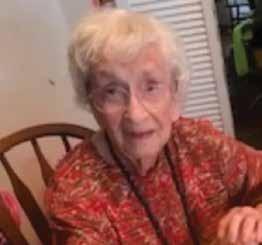
away peacefully in Santa Barbara, California at age 98. She was married for 61 years to Joseph T. Fittipaldi, of Bethesda, Maryland, until his death in 2009. Born in Pennsylvania, Mary Claire grew up in Washington D.C. She was especially proud to be an alumna of Georgetown Visitation Preparatory School. During World War II, she happened to meet a certain student (Joe) studying at the Officer Candidate School at Fort Belvoir during a mixer. After the War, they married and settled in Washington, D.C. They later moved to Maryland in 1955. Mary Claire was particularly active at St. Jane De Chantal Church in Bethesda.
Mary Claire moved to Santa Barbara in 2011 and settled in at the Maravilla Community. She loved it there and made many friends through activities such as Bingo and crocheting. Mary Claire was also a parishioner at St. Raphael’s in Goleta.
Mary Claire’s favorite vocation was as a wife, mother, and grandmother. She was especially proud to show off her four grandchildren.
Mary Claire lived a long and full life, aided in large part by her doctors and medical professionals. The Family would like to especially thank of Doctor Douglas Cummings and Doctor Darol Joseff. They helped keep her going for so long.
Mary Claire is survived by her loving sons Mark F. Fittipaldi of Bethesda, Maryland, and Brian D. Fittipaldi (Mary Elizabeth/ Molly) of Santa Barbara, California, and grandchildren Will, Charlie, Anna, and Emily. A Mass of Christian Burial was held at St. Raphael’s Catholic Church in Goleta, California in December, 2023. A private interment will be held at Arlington National Cemetery in July, 2024, where Mary Claire will join Joe once again.
Dr. Keith Schofield 7/27/1938 - 4/21/2024

Dr. Keith Schofield, Professor Emeritus at the University of California Santa Barbara and CEO of ChemData Research, Inc transitioned to eternal life Sunday, April 21, 2024 after a courageous battle with Vascular Parkinson’s Disease. He passed peacefully in the presence of his loving wife of 30 years, Kay Robinson-Schofield.
Keith’s life was well lived, as a scientist and as a devoted Chris-
tian. Born in Derby, England in 1938 to young parents Peggy Hewitt and Kenneth Schofield, Keith never forgot the war Blitz and the struggle for necessities to survive the war years. As a young student, Keith stood out with his insatiable curiosity and penchant for science.
Knowing that his parents couldn’t afford college, Keith reluctantly sat for the entrance exam to Cambridge at the urging of his high school chemistry teacher. He scored magnificently and received scholarships for college, Masters and Ph.D. Programs. Keith amazed his professors in his oral exams for his Ph.D. as he was the highest scorer, legendary to this day with highest honors in Chemistry. Keith’s professors at Cambridge included the renown Sir T. M. Sugden in Physical Chemistry and several Nobel Laureates.
Keith’s career brought him to America where he worked with the National Center for Atmospheric Research in Boulder, Colorado, General Motors Defense Research Laboratories and many years at the University of California Santa Barbara in the Physical Chemistry Department and Materials Research Laboratory. Once Emeritus at UCSB, Keith founded ChemData Research, Inc where he patented his scientific findings in the natural behavior of mercury and a blood panel to detect toxic neurotoxins in blood.
Keith wrote many academic research papers focusing on the role of heterogenous chemistry in the behavior of trace metals in combustion systems. For twenty years, Keith published in the Department of Energy bimonthly Combustion Research Bulletin. He wrote the book Combustion Emissions on the formation, reaction and removal of trace metals in combustion products. He was a member of the Combustion Institute, American Chemical Society, American Physical Society and the American Institute of Chemical Engineers.
A deeply committed Christian, Keith lived his life loving his family and friends and using his scientific findings to make the world a safer place. He treasured his time in nature, often leading hikes for the Sierra Club in the Santa Barbara hills. Referred to by his grandkids as Dr. Brow, Keith with his wildly long eyebrows especially loved the Halloween Hike and donned a witch hat while sharing his crisp British accent with his fellow hikers.
Foremost in Keith’s heart and brilliant mind was his fascination with mercury and how his discoveries could make toxic mercury air pollution less of a threat to all living things. He observed, researched and proved that the many neurological ailments of
mankind are related to mercury emissions. His work continues through those who recognized his discoveries.
Keith was preceded in death by his daughter Clare Godfrey. He is survived by his wife Kay Robinson-Schofield, his first wife Gwen Schofield, his son Jeremy Schofield and wife Alison and their children Jack, Scott, James and Oliver Schofield, Keith’s daughter Anne Clapp and her husband Lawrence and their children Matthew, Elizabeth Clapp Hostetter, Sean and Katherine Clapp and Keith’s stepdaughter Kamala Parris and her husband William Parris and their children Tianna, Celine, Amara and Brolin Parris.
Keith’s family thanks all who shared prayers, love and support during this time of loss. In lieu of flowers, please consider honoring Keith’s memory with donations to Santa Barbara Rescue Mission and to Summerland Presbyterian Church.
Dr. Keith Schofield will be laid to rest at The Santa Barbara Cemetery, a memorial service will be held on Saturday June 1, 2024, 11am at Summerland Presbyterian Church 2400 Lillie Avenue, Summerland, CA. For those who cannot attend, the service will be live streamed and then posted afterward on the Church’s website at https;//www.summerlandchurch. org.

6/7/1938 - 9/23/2024
Marilyn Jean Hopkins was born to Harry J. and Josephine Grace (Williamson) Hopkins June 7, 1938 in Chicago, ILL. She was the youngest of four children, her brothers Raymond (d) and William (d) and her sister Josephine. In 1957 Marilyn married Anthony J. Preiksa (d). Together they had seven children; Michael (Kelly Polowa) of Mt. Vernon WA, Linda (Greg Castillo) of Santa Barbara, Andrew of Twin Falls ID, Donna (Gary Gemberling) of S.B., Joseph of Lompc CA, Anthony Jr. of Santa Barbara, and Daniel (Jeannie Mello) of Lompoc, CA. She was the proud Grandma of seven; Andrew Preiksa, Joseph, Christopher and Nicholas Castillo, and Kelly, Danielle and McKenna Gemberling. In 1984 Marilyn was married to Sidney Pennington until his death in 2003. Marilyn is survived by her children, grandchildren, her sister Jo, of Kentucky and two sisters-in-law, Rita Hopkins of
North Carolina and Kathy Hopkins of Florida, and many nieces and nephews.
Marilyn loved her family and friends. She had a great sense of humor. She passed away peacefully in Mt Vernon, WA with her family by her side after a short illness. She will be greatly missed.
There will be a grave side service at Calvary Cemetary at 10:30 on June 7, followed by a gathering at Stow Park at 11:30, Area 3. Please join our family to share your memories of our mom.
Paul Edward Munch 1/22/1940 - 5/11/2024

Paul Edward Munch, a native of Santa Barbara and a resident of Maravilla Retirement Community, died at Cottage Hospital at age 84 after a brief illness Saturday evening, May 11, 2024.
He attended Dolores Grammar School and later graduated from Santa Barbara Catholic High School. Upon graduation, he served in the Navy for four years and was stationed in Guam.
He was a dedicated employee of the U.S. Postal Service for 36 years, retiring in 2005. After retiring, Paul enjoyed extensive international travel to gain new experiences and to meet new people. His ardent hobby was radio both as a listener to world-wide radio programs as well as enjoying listening to the fire scanner –he always wanted to know what was happening in the city minute by minute. He was a loyal patron of the performing arts including Santa Barbara Symphony, State Street Ballet and Santa Barbara Choral Society.
Beloved husband of Barbara Burger, a long-time resident of Santa Barbara, he was also the younger brother of Sr. Paulanne Munch of the St. Joseph of Corondelet order, living in Los Angeles. His parents were Dr. Paul F. Munch and Anne L. Munch; his late brother was Joseph Munch— all of Santa Barbara.
In lieu of flowers, donations can be made to the Santa Barbara Symphony, State Street Ballet, Santa Barbara Choral Society or to St. Joseph of Corondelet, (11999 Chalon Road, L.A. 90049).
Funeral and reception will be held at the Old Mission, Friday, June 7, 11 a.m. Interment will follow at the Calvary Cemetery. Please rsvp ladybarbara33@ gmail.com







Casting away any last doubts that the beloved smell of the greasepaint and the roar of the crowd is BACK BIG-TIME after the struggles of the pandemic, Santa Barbara’s theater community came out in wonderfully ebullient force for the 2024 Indy Awards.
Monday (the traditionally dark night for theaters), May 20, at SOhO Restaurant & Music Club, was the first time the awards have been presented since 2019, and the animated crowd was excited to come together to cheer on their fellow artists and aficionados once again in a tradition that began way back in 1991 when, as Santa Barbara Independent Editor in Chief Marianne Partridge explained, our wonderful Arts Editor Michael Smith wanted to come up with a way to really support the theater community of Santa Barbara.
“We decided we would have a ceremony where we tried to acknowledge some of the outstanding performances that have been in the theater community. In those 33 years, it grew and grew, and became even more fantastic than we ever could have really dreamed,” said Partridge. The Indy Award tradition continued on for several years under the direction of Arts Editor DJ Palladino (who received a 2024 Indy Award alongside Jim Buckley for their annual Bloomsday Celebration of the work of James Joyce), then for more than a decade under the direction of Charles Donelan (who received a shoutout from Indy Award Solo Show winner Annie Torsiglieri, for his ongoing support of the arts).
Taking over the event this year which honored work between April 2023 and April 2024 was yours truly (Leslie Dinaberg, Arts, Culture & Community Editor) with a crackerjack planning and judging team that included Indy staffers Richelle Boyd, Callie Fausey, Terry Ortega, Xavier Pereyra, Maggie Yates, and Josef Woodard.


Indy Award–winning actor and director Brian McDonald served as an affable emcee for the evening, accompanied by cellist and longtime Santa Barbara educator Gerrie Fausett and a life-sized Bruce the Shark (embodied by Santa Barbara High School actor Chase Houston), from the current Broadway show The Shark Is Broken, to make sure that award winners didn’t go over their allotted time for acceptance speeches. Encapsulating the spirit of fun that prevailed over the evening, the first person to get “sharked” off the stage for talking too long was actually the first presenter Independent Executive Editor Nick Welsh!
From high school musical singers to set designers, directors, actors, producers, and more, this was a joyous way to celebrate the work that goes into everything we see throughout the year on area stages.
New to the Indy Awards this year was a behind-the-scenes recognition for the flexible art space of SBCAW (Santa Barbara Community Arts Workshop), where award winners from Westmont College to Opera Santa Barbara and several dozen others rehearse and create theatrical works of art for all of us to enjoy. We also honored four well-deserving ushers of the year Tere Jurado, Kris Rehler, Leanne Saar, and Al Souma to represent the unsung volunteer work that all of Santa Barbara’s ushers do as one of the first and most important parts of a theatergoer’s experience.
Along with performances from students of Santa Barbara, Dos Pueblos, and San Marcos high schools, almost two dozen people gave entertaining, gracious, charming, and heartfelt acceptance speeches full of gratitude to be able to create work they love and have it be recognized and appreciated by our community. And on that joyful note drumroll please here is a roll call of this year’s Indy Award winners. n
by
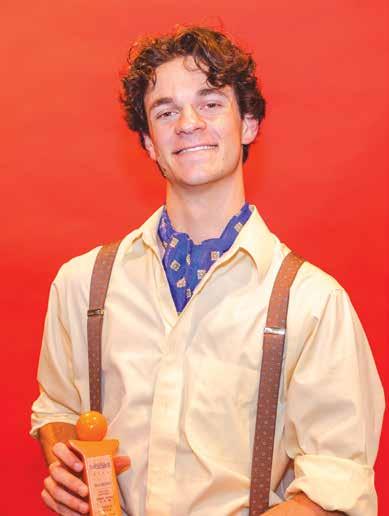


MARY BAILEY, High School Performance Award for Dos Pueblos High School’s production of Anything Goes
SIMON BLONDELL AND HELIOS BAND, Music Award for Westmont College’s production of The Capulet Black & White Ball
CASSIDY BRODERICK, Performance Award for Out of the Box Theatre Company’s production of Alice by Heart


JIM BUCKLEY AND DJ PALLADINO, Grassroots Award for Bloomsday Celebrations at the James Joyce
MILO BUSTANY, High School Performance Award for San Marcos High School productions of The Curious Incident of the Dog in the Night-Time and Singin’ in the Rain
CASEY CALDWELL representing Santa Barbara Community Arts Workshop (SBCAW), Behind the Scenes Award for supporting local performing arts organizations





BEN CROP AND PAT FRANK, Set Design Award for The Theatre Group at SBCC’s production of Treasure Island
SCOTT DEVINE, Bringing High-Level Theater to Town Award for Ensemble Theatre Company’s production of The Lehman Trilogy
SAMANTHA EVE representing Out of the Box Theatre Company, Cast Award for Out of the Box Theatre Company’s production of Jesus Christ Superstar




FOUR-YEAR





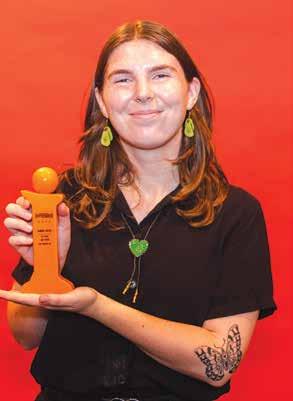
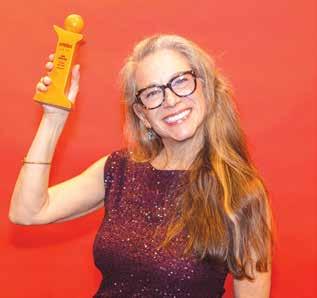

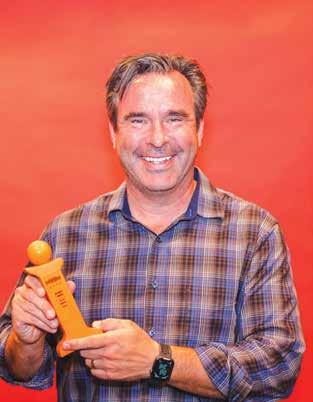

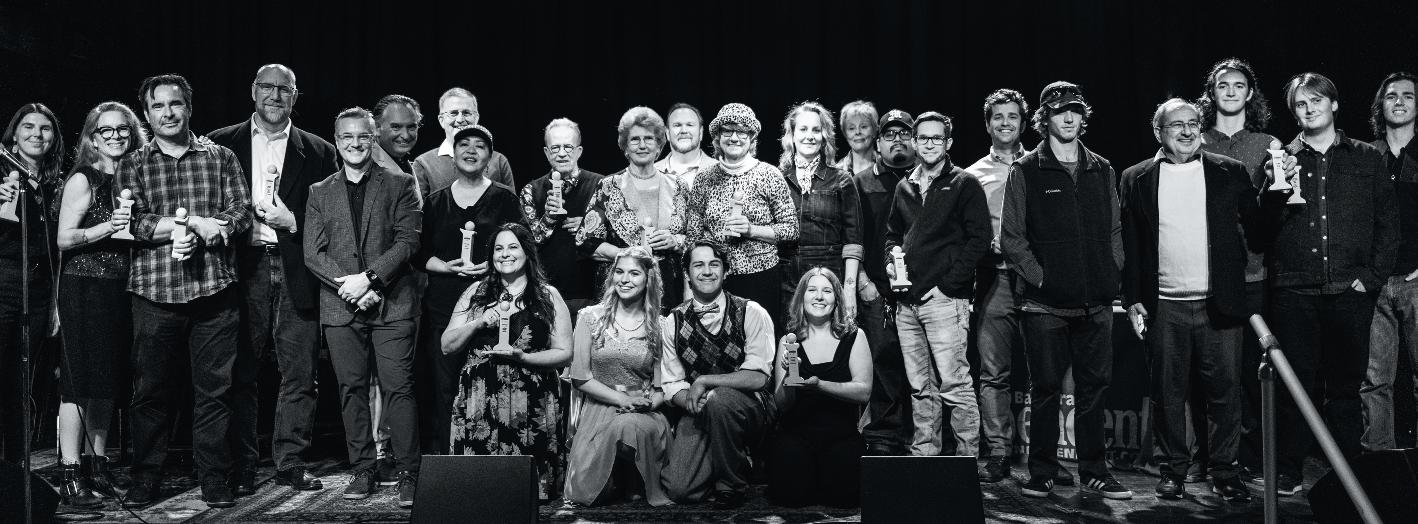
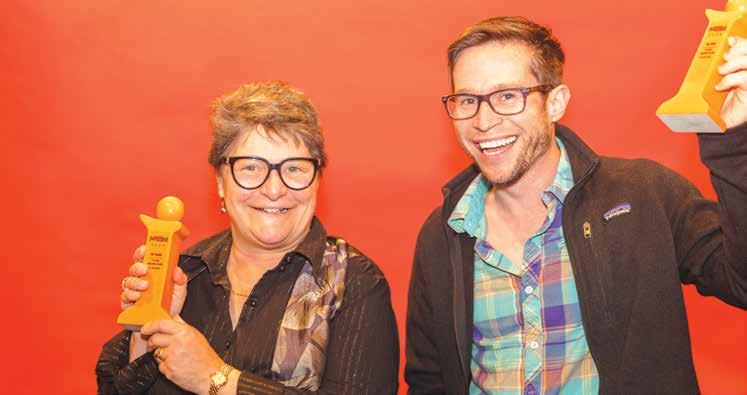
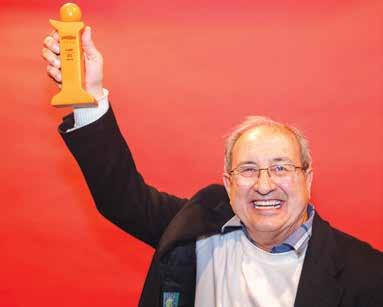
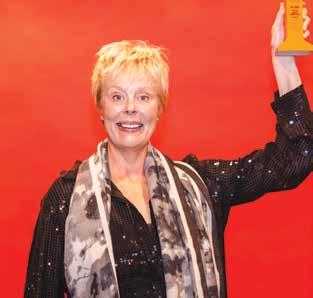

ISABELLA FABIO, High School Performance Award for Santa Barbara High School’s production of A Chorus Line
JULIE FISHELL, Performance Award for UCSB Launch Pad’s production of Everybody’s Favorite Mothers
TERE JURADO, Marjorie Luke Theatre Usher of the Year

KOSTIS PROTOPAPAS, Opera Award for Opera Santa Barbara’s production of Zorro
KRIS REHLER, Ensemble Theatre Usher of the Year
JOSAFATH REYNOSO, the Feast for the Eyes Award for the PCPA Solvang Festival Theatre production of American Mariachi
LEANNE SAAR, Granada Theatre Usher of the Year

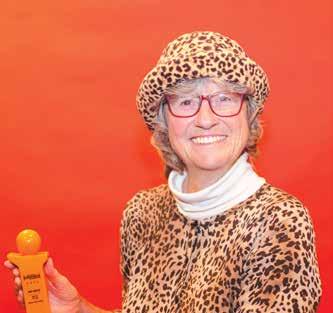
MITCHELL THOMAS, Director Award for Westmont College’s production of Godspell
ANNIE TORSIGLIERI, Solo Show Award for the Rubicon Theatre’s production of A-Train
MAGGIE WELCH, Set Design Award for UCSB Performing Arts production of Hay Fever
DANCE AWARD WINNERS
SASCHA NIKOLAI, Performance Award for The Theatre Group at SBCC’s production of John Proctor Is the Villain
AL SOUMA, Lobero Theatre Usher of the Year


Sansum Clinic is now part of Sutter Health. For more than a century, our not-for-profit organizations have provided trusted care for our communities. Together, we’re expanding access to quality healthcare on the Central Coast — recruiting more top-quality doctors, investing in new technologies and care centers, and growing our community benefit initiatives to ensure everyone in our community gets the care they need.
Learn more at BetterTogether.SansumClinic.org














































































































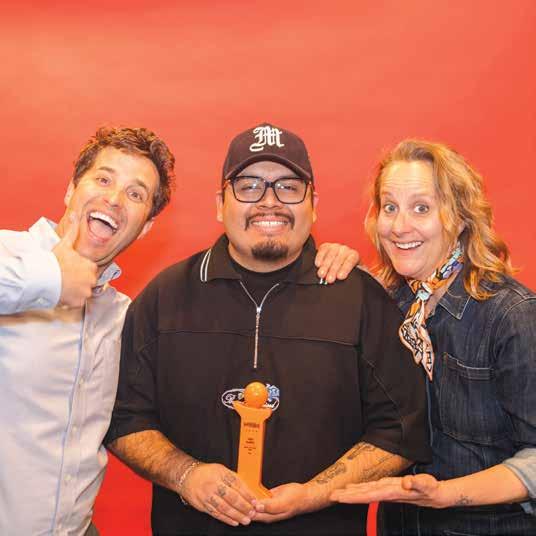



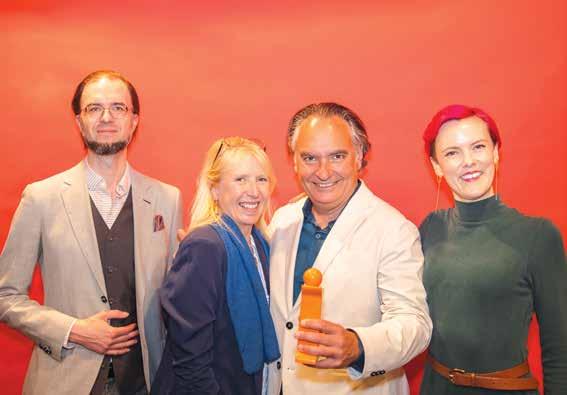
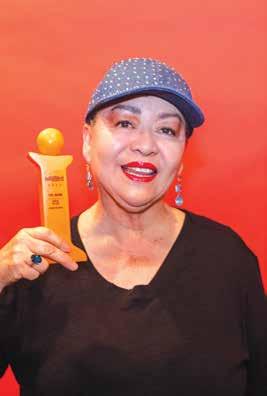



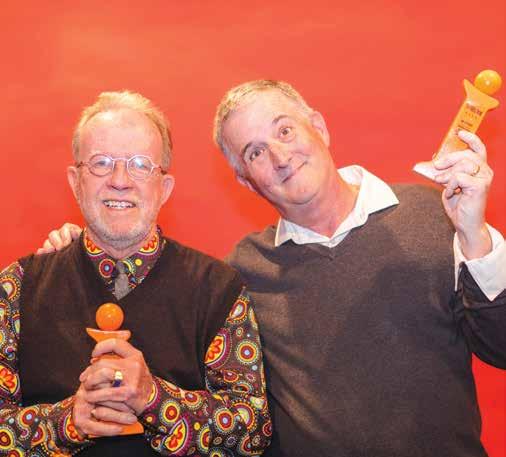



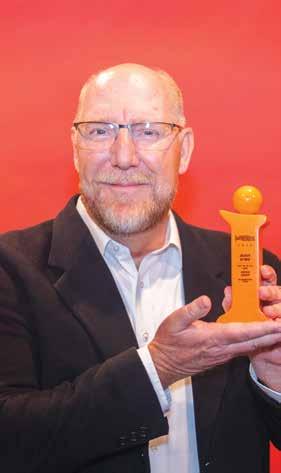
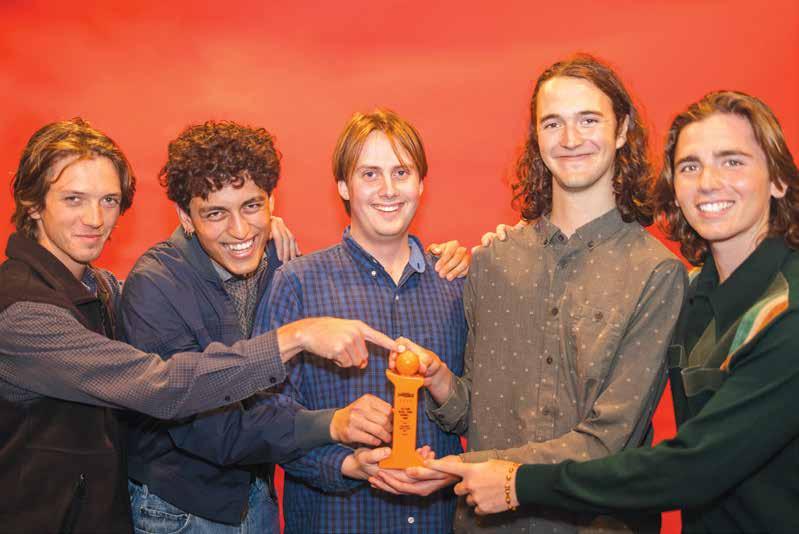







Can one person change the world?
One would hope.
Despite the urge to feel helpless in the face of huge, modern challenges a single person seemingly insignificant among eight billion the Internet has collapsed the gap between places and people. Now, a poem written in Pakistan can make someone cry in Alaska. A dance routine performed in Zimbabwe can inspire a teenager in Sweden. And a product made anywhere can be sold and shipped, well, anywhere else.
Although we access it wirelessly at short range, the vast Internet is transmitted long-distance through fibers. Multimode cable fiber optics, packets of plastic strands, each hundreds of times thinner than a human hair.
So, really, what binds us together are millions upon millions of tiny, little threads.
In mid-January, I attended a friend’s baby shower in the Funk Zone with my wife, Jill, Santa Barbara Independent Production Designer and photographer par excellence. That’s where we bumped into Jackie, the 30-year-old executive director of a Santa Barbara–based nonprofit that helps Indigenous women of Colombia sell masterfully woven handbags to a worldwide audience.
It’s natural, at functions like these, to play the “Six Degrees of Kevin Bacon” game. (“How do you know ____?”) Apparently, our mutual friend, the mama-to-be, used to live next to Jackie and her boyfriend, whose band played concerts in their driveway during COVID.
That left us with even more questions. No, really, who is this person? Where did she come from? Jackie seemed unusually poised and ambitious to be sipping a beer in a bar with us in our carefree tourist town. We talked for two whole hours about how she wound up in La Guajira, the northernmost tip of Colombia, and therefore all of South America. How her interest in water equity led her to impoverished Indigenous communities waging war against energy conglomerates tearing up their landscape to mine some of the cleanest-burning coal on earth. She told us about the drug trade, the inequality, the exploitation, and, finally, the need for justice.
“I’m heading down soon,” Jackie said. “My nonprofit, One Thread Collective, has a retreat planned later this spring to
spend time with our weavers, the women of the Wayúu tribe. It’s only board members right now, but you two should consider joining us.”
Jackie first came to La Guajira five years ago, a Fulbright researcher and activist looking to support front-line defenders blocking a major mining company from exploiting the region’s resources and people. Unfortunately, she soon discovered that nearly everyone she met including her first roommate had ties to the mining company, employed by corrupt government agencies, or else “greenwashing” firms like the Cerrejón Foundation.
The lone exception was Paula Restrepo, a former PR pro who operated an old-fashioned bed and breakfast meant as “a safe place for women,” whom Jackie met during her first week. Paula, just as intense and ambitious, became a mentor, and


after Jackie stayed at Paula’s B&B, the two kept in touch with long lunch conversations about how best to make a difference. Jackie envisioned taking part in the ongoing lawsuit against the mining company. Sue the mines! Paula advocated for a different approach. Something truly radical….
Bags.
Let’s go back even further. On Christopher Columbus’s third voyage, the Spaniards “discovered” South America. Landing on an island off the coast of Venezuela, they saw natives diving from canoes to fish while adorned with shimmering pearls, plentiful and easy to find.
The colonial reaction to finding an exotic, exploitable resource was predictably horrific and depressing. The Spaniards enslaved the natives, forcing the males to dive for pearls every waking moment. They weren’t fit for it. Their bodies gave out, lungs bursting underwater. Most native divers only lasted two to three years. This was unsustainable, of course, until an equally horrific “solution” was found: import slaves from North Africa who could survive the workload and increase productivity.
The operation was later moved to La Guajira and continued for decades until two things happened: First, the coast was picked clean of pearls and remains so to this day, and second, many of the African slaves escaped and went deep downriver, where they met and intermarried with the disproportionate number of female natives.
Centuries after Columbus, it’s hard to say what “Indigenous” means. The modern-day Wayúu a word, in their language, that means simply “the people” are descendants of Native tribes of Latin America, Spaniards, and African peoples. Their spoken-word myths say they learned to weave from a magical spider, yet they were undeniably influenced as well by crochet techniques of evangelical French and Dutch nuns who came to the Americas in the 1800s.
A true melting pot, the Wayúu people represent the best and worst of new-world colonialism: a culture rich with resilience that allowed them to adapt and survive into the modern era, and a people from whom nearly everything was stolen a very long time ago.
Paula, it turns out, is part Wayúu. She learned this in her forties, as her father kept it a secret. There’s racism and classism



down there, as here, and the darker-skinned La Guajirans were largely abandoned by the government after the marijuana and cocaine booms of the 1970s and ’80s. (Jackie can give you an earful about the harm caused by America’s obsession with cocaine, not to mention the vile chemical treatment used to distill it.) To this day, La Guajira has no clean drinking water, with two exceptions: the estates where the energy company managers live a gated community among ghettos and the ports from which their coal ships sail out to the world.
So much trauma to untangle. Yet, despite the region’s knotted past, Wayúu women have spent centuries weaving beauty.
“Mochilas” are their signature piece: crossbody bags that come in all sizes and designs. They’re durable, stylish yet minimalist, and Colombians use them as everyday functional items. Yet the majority of mochilas sold in Colombia come through middlemen, and the artisans barely break even.
When Paula explained the scope of this issue to Jackie, a light bulb went off. Selling mochilas and providing fair wages how hard could it be?
Jill and I joined Jackie in Colombia, because ... how could we not? Her passion was infectious, and a few other Santa Barbarans came, too: Gabi Pereverziev, a holistic healer and digital marketer who documented the trip for social media; and Nicole Borboroglu, a tough, funny Argentinian dancer who was Jackie’s co-lead.
Nicole remembers spotting Jackie struggling to sell bags at a festival in S.B. “This poor white girl,” she laughed. They started chatting, and soon Nicole was behind the booth herself, wheeling and dealing. Granted, much of Nicole’s success came from looking and sounding more “authentic” than Jackie, and some sales came with condescending quips: “Are you sending this money back to your family in Colombia? I hope it helps!”
(This begs the question, “What does a ‘poor white girl’ like Jackie gain by traveling across the world to help struggling people instead of those here in America?” Don’t worry, we’ll get there.)
Last but not least was Lucy Gamble, one of Jackie’s childhood friends, a tech manager with wanderlust who hiked the Appalachian trail and recently made the leap to living full-time on a catamaran in the Atlantic. She’s a One Thread Collective boardmember, too, and she recalled an early Zoom meeting where Jackie said, “Listen, I had no intention of starting a bag company!” Jackie remembered that moment. “I was young. I wanted something fiery! Impactful!” She came to Colombia to change the world all at once. But selling bags became its own crusade.
Early in Jackie’s field research about the impacts of coal mining, she visited a remote desert community called Kululumana. At first, the residents were openly hostile to alijunas (non-Wayúu), choosing to speak only among themselves in their native language, Wayuunaiki. Finally, an hour later, the coffee was ready. (Like Americans, Wayúu can’t function without coffee.) Caffeinated and fired up, they began to unload their grievances.

The Wayúu were tired of aspiring white saviors who did charity for a few weeks to feel better about themselves, or NGOs holding groundbreaking ceremonies for photo ops, then reallocating funds and leaving behind half-finished infrastructure. Everyone always used them for their own selfish gain, a tradition that went unchecked for centuries.
Jackie listened respectfully and promised she’d be different.
First, she kept her word, building trust and learning their language bit by bit. (“Good day” to an individual is “Hamayapiya.” To a group: “Hamaya-hiya.” To say “I come from a faraway place,” as Jackie had, is, “Wata-hey, wata-yah,” along with a sweeping arm gesture.) Next, Jackie kept returning, with new orders to fill, or interest-free micro-loans: $40 for a hand-cranked corn grinder here, $60 for a solar-powered charger there.
“Small is mighty,” Jackie told us. This became a guiding principle. One woman at a time, one community at a time, never rushing the process.
She also added, half-jokingly, that it’s easier to make change in an undeveloped region halfway across the world than here in America. In La Guajira, you can set up a roadside shop and sell small goods with no permit, or take a tract of land, add goats and chickens, and start a farm. A traditional Wayúu dwelling of mud and sticks goes up in a week, fortified with more mud as needed. String some cacti together for an unconventional but thoroughly effective fence, and you’re done.
In La Guajira, like nowhere else, Jackie can accomplish so much as just one person.
Then again, she isn’t just one person.
She’s got her advisory board, spread across America and the world.
She’s got her administrative team in Riohacha, the capital
a
What is Fair Trade? “First, it’s not about price,” Paula Restrepo explained. “‘Fair Trade’ doesn’t automatically mean ‘expensive,’ as some people think; it’s about where that money goes.”
For example, “Payment of a Fair Price” one of the 10 principles outlined by the World Fair Trade Organization (WFTO) could be interpreted to mean operating in regions where the median salary is $1 and paying a “high” wage of $1.50. Sadly, some companies follow the letter of the law without the spirit, doing the bare minimum to earn the coveted WFTO certification.
Fair Trade is a great start to the conversation, but it can’t be the last word. One Thread Collective is a nonprofit that operates according to Fair Trade principles without the label, and ethically goes further in terms of “Providing Capacity Building” (educational programs for women and children), as well as allocating funds for needs Fair Trade doesn’t address, like emergency medical costs.
Bottom line: a “Fair Trade Certified” logo shouldn’t just be a fashion statement, a box to be checked. All companies should be required to behave with greater ethical standards to do business in a globalized world.
of La Guajira, where One Thread Collective holds qualitycontrol meetings and workshops.
She’s got her network of more than 100 Wayúu artisans, producing the finest mochilas on the market, with clever innovations adapted to Western tastes, like makeup bags, water-bottle holsters, or laptop cases.
She’s got Martín López González, the ex-Exxon employee who swapped sides and is now a newspaper columnist and
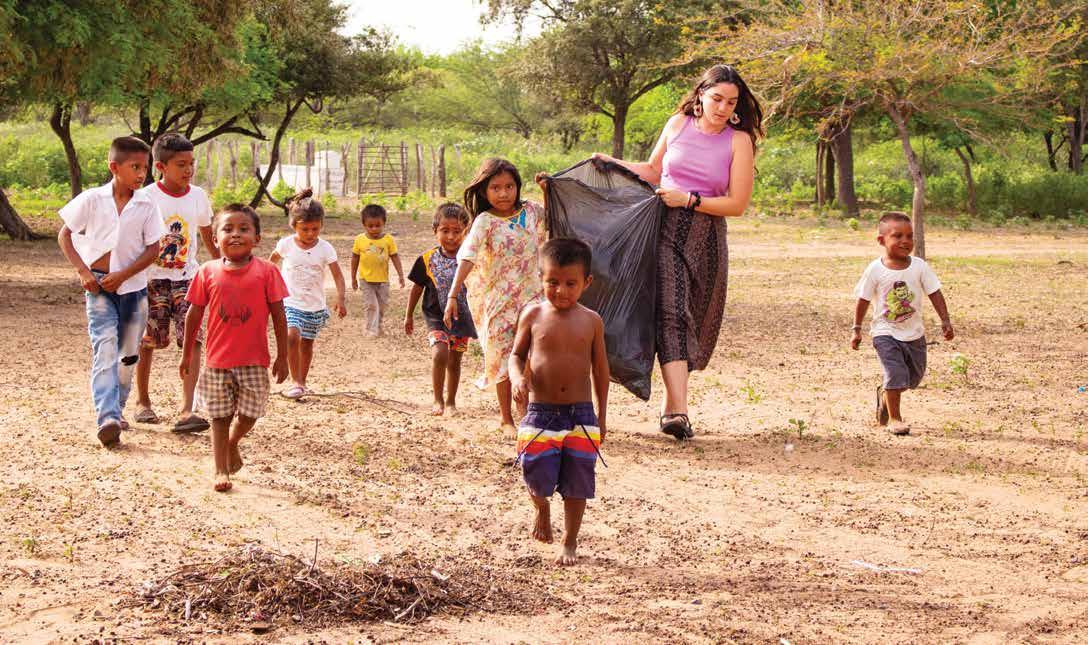 Artisanal “mojo bags” (mini mochilas) and coasters by the women of Tocoromana
Nicole leads a community cleanup activity with the chlidren of Hiotshy.
A Wayúu woman crochets a mochila.
Artisanal “mojo bags” (mini mochilas) and coasters by the women of Tocoromana
Nicole leads a community cleanup activity with the chlidren of Hiotshy.
A Wayúu woman crochets a mochila.

Featuring: Pink & Dallas Green as You + Me Plus! Kenny Loggins, Alan Parsons... more to be announced!
FRIDAY, SEPTEMBER 20, 2024
Limited ticket availability this year, so book now! TICKETS GO ON SALE THIS SATURDAY, JUNE 1ST, @ NOON AT ONE805.ORG





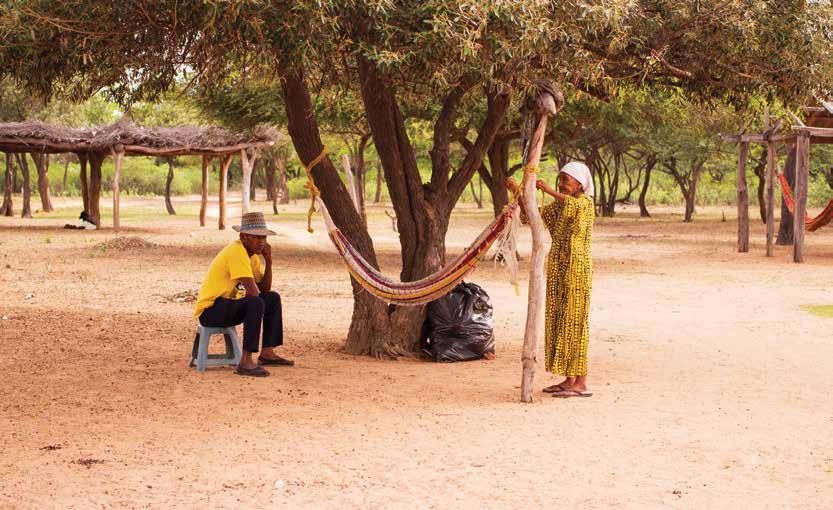
historian. (He provided the story of Columbus and the divers.)
Finally, there’s Paula, who made it her mission to show Jackie how vital this work can be. “Mochilas aren’t just bags,” Paula said, with an eye on public relations. “Make sure your story explains that.” Not old, stale knickknacks of the past, but an active culmination of art-making history for these people “the people” where every bag sold provides immediate benefit to a real person in a real place, since One Thread Collective is currently the most ethical, international mochila brand in the world.
In the end, “small is mighty” was proven true.
Most of the communities that did sue the energy companies got tied up in years of litigation. Of those that won, the sudden infusion of money wrecked families and friendships through greed and envy. The same way most lottery winners burn through their millions fast, you can’t solve big problems with nothing but cash.
One must be deliberate, strategic, and patient to make change. Start with tools you already have: the Wayúu, master weavers, and Jackie, with web commerce. This allows Wayúu women to earn enough for their families so their men don’t get desperate enough to work for the mining companies. Baby steps, to shift the trend from resource extraction to resource creation.

Although One Thread Collective is young, Jackie’s “small” business has already moved mountains. During our solidarity trip, we took a weaving class from the artisans of a rancheria called Tocoromana. We slept overnight in another village called Hiotshy, open-air, in traditional hand-woven hammocks known as chinchorros, serenaded by goats, crickets, and the Christian-Waiyuunaiki hymns of a 100-yearold elder who graciously offered Jackie a permanent dwelling, for she had become family. We drank chicha, a flavored corn porridge, and ate arepas as Jackie argued the finer points of sustainability with a village leader, and as Nicole organized a game for the children to pick up plastic litter in exchange for new school supplies and donated clothes.
We also got to see what Paula is up to these days.
With Jackie handling One Thread Collective, Paula started a school, La Casa Para los Niños, in an impoverished area where she has gradually introduced vegetables and unprocessed food into the children’s diet and is awaiting bridge funds to finish one of the town’s few working toilets. She also runs
a monthly leadership program sponsored by One Thread Collective, held in their office called “La Escuela Yala’yalaa ” (yala’yalaa is Waiyuunaiki for “valiant” or “empowered”). There, the women connect over the pressing issues facing their respective communities, and brainstorm solutions. After sharing a meal of braised goat and coconut rice, we heard their testimonies.
“I’ve developed so much, as an artist and person,” said one. “I used to be shy. Now I’m funny,” said another. Afterward, Paula pointed to each and said, “These women were our original weavers. I’ve known them for 10 years.” Looking at them, then to Jackie, Paula added proudly, “I’m lucky, when it comes to people.”
If the original sins of the Americas were led largely by men, taking and taking until nothing was left, the future may be woven by women, thread by thread, from the ground up. The pattern has been started, but will take many hands to complete: more buyers, more donors, more volunteers.
If I leave you with nothing else, it’s that amazing change can happen at a global scale, right from our own backyard. Whether we realize it or not, people, we’re all connected.
Visit onethreadcollective.org for additional information, or Flow Yoga and Wellness (sbflowyoga.com) to shop for One Thread Collective goods locally.












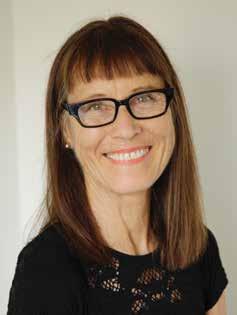














The GRAMMY® Award-winning conguero is among the most influential percussionists in jazz. For more than four decades, he’s stirred up a fiery stew of straight-ahead jazz, gritty soul music, and infectious melodies and rhythms from a variety of Latin American and South American sources.



WEDNESDAY AUG 28



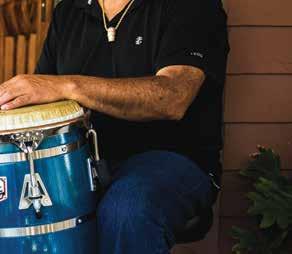










ortega Lola watts by &


5/30-6/2: Conference Celebrating Cedric J. Robinson & Elizabeth P. Robinson Archive UCSB will celebrate a recently acquired archive that features works from the late Cedric J. Robinson, who created a vast and revered body of work foregrounding the history of African diasporic ideas, Black epistemologies, and Black resistance to imperialism and racial capitalism, with a conference that will bring to UCSB pre-eminent scholars as well as keynotes and panels on racial capitalism, third world and Black internationalisms, race and media, and the Black Radical tradition. Fri.: Embarcadero Hall, 935 Embarcadero del Norte, Isla Vista. Sat.: Interactive Learning Pavilion, Rm. 1203, UCSB. Free. Call (805) 893-2424. kcsb.org/archives_unbound_conference_2024
5/30-6/1: The Alcazar Theatre’s 48-Hour Play FUNdraiser Bring your team, join as an individual, or watch as an audience member as groups compete to create a short 10-minute play in just 48 hours in support of the Alcazar’s Live Theatre and the Alcazar Ensemble. 7pm. Alcazar Theatre, 4916 Carpinteria Ave., Carpinteria. Solo: $20; Team: $85. Call (805) 684-6380 or email info@thealcazar.org tinyurl.com/AlcazarFUNdraiser
5/30: CEC Climate Talks: Dr. Flávia Maia Dr. Flávia Maia, Obama Scholar and Dalai Lama Fellow, will offer a healing space through meditation practices and readings of excerpts from Emotions and Emission: The Values Guiding the Next Generation of Climate Leaders, providing a space of joy in the midst of climate concerns. 6:30pm. CEC Environmental Hub, 1219 State St. Free. Call (805) 963-0583. cecsb.org/events
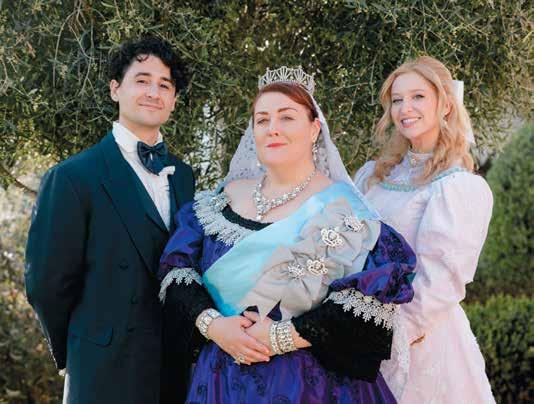
5/30-6/2,6/4-6/5: Ensemble Theatre
Company Presents: Alice, Formerly of Wonderland This enchanting musical tells the true story of the secret romance between the real-life Alice (Alice Liddell) and Prince Leopold, son of Queen Victoria and great-grand-uncle of today’s Prince Harry. This play runs through June 16. Thu., Tue.-Wed.: 7:30pm, Fri.-Sat.: 8pm, Sun.: 2 and 7pm. The New Vic, 33 W. Victoria St. $40-$86. Call (805) 965-5400 or email boxoffice@etcsb.org etcsb.org/whats-on
FARMERS MARKET SCHEDULE
THURSDAY
Carpinteria: 800 block of Linden Ave., 3-6:30pm
FRIDAY
Montecito: 1100 and 1200 blocks of Coast Village Rd., 8-11:15am
SATURDAY
Downtown S.B.: Corner of Santa Barbara and Cota sts., 8am-1pm
SUNDAY
Goleta: Camino Real Marketplace, 10am-2pm
TUESDAY
Old Town S.B.: 500-600 blocks of State St., 3-7pm
WEDNESDAY
Solvang: Copenhagen Dr. and 1st St., 2:30-6:30pm
(805) 962-5354 sbfarmersmarket.org
FISHERMAN’S MARKET
SATURDAY
Rain or shine, meet local fishermen on the Harbor’s commercial pier, and buy fresh fish (filleted or whole), live crab, abalone, sea urchins, and more. 117 Harbor Wy., 6-11am. Call (805) 259-7476. cfsb.info/sat
5/30: Film Screening: More than Just a Party Band Enjoy a screening of this feature-length documentary film about the beloved local cultural icon Spencer Barnitz, front man for the band Spencer the Gardener, and his 40-year journey to define his version of creative success. 7:30pm. Alhecama Theater, 215-A E. Canon Perdido St. $16. Call (805) 4551158 or email robert@redfieldpictures.com morethanjustapartybandfilm.com
5/30: Revisiting the Classics:
Three Good Friends Watch a screening of Wilhelm Thiele’s 1930 film Three Good Friends, one of the most commercially successful German classic films that tells the story of three close friends who face a test to their friendship during Germany’s Great Depression. A post-screening discussion featuring Jan-Christopher Horak (former director of the UCLA Film & Television Archive) and Andréas-Benjamin Seyfert (Germanic & Slavic Studies, UCSB) will follow. 7pm. Pollock Theater, UCSB. Free. Call (805) 893-4637 or email info@ carseywolf.ucsb.edu carseywolf.ucsb .edu/events/all-events

FRIDAY 5/31

5/31-6/1: After Hours at the Riviera Theatre: Point Break Enjoy a screening of Kathryn Bigelow’s Point Break (rated R), which tells the story of a federal agent, Johnny Utah (Keanu Reeves), who, after a string of bizarre bank robberies in Southern California, infiltrates the suspected gang of surfers led by the charismatic Bodhi (Patrick
9pm. SBIFF Riviera Theatre, 2044 Alameda Padre Serra. $7-$12. Email help@sbiff .org. sbiffriviera.com
5/31: ASAP Cats Presents: Basil’s Big Bash 2024 Celebrate the 10th anniversary of this annual gala, which in addition to providing a great night of music, dancing, and community, will help fund saving the lives of the cats of S.B. County and help ASAP Cats continue fighting for the welfare of cats everywhere. 5:30pm. The Carousel House at Chase Palm Park, 223 E. Cabrillo Blvd. $250. Call (805) 683-3368 or email bash@asapcats.org asapcats.org
5/31: Adult Happy Hour at the MOXI Museum It’s time for the grown-ups to play, drink, and be curious as they explore three floors of exhibits, including the rooftop Sky Garden. Beer, wine, and non-alcoholic drinks will be available for purchase. 5:30pm. MOXI, The Wolf Museum of Exploration + Innovation, 125 State St. Members: free; GA: $18. Ages 21+. Call (805) 770-5000. moxi.org/calendar
5/31: S.B. Funk Zone Live Bimonthly Event Celebrate art, music, wine, and dining in the vibrant Funk Zone of S.B. Participating venues will be open 5-8pm. Funk Zone, Santa Barbara St. Free. Call (805) 448-6873 or email jana@paintjamusa.com tinyurl.com/FunkZoneMay31
SATURDAY 6/1
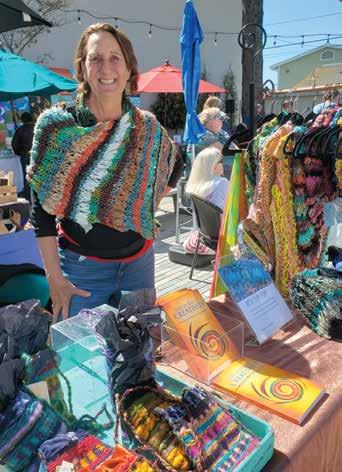
6/1: Carpinteria Arts & Craft
Faire Shop from 22 local artists presenting artwork in a wide variety of mediums, such as painting, woodwork, glass, paper crafts, pottery, and much more, with live music by the Ukulele Jammers and the Americana Cats. 10am-4pm. Lynda Fairly Carpinteria Arts Ctr., 865 Linden Ave., Carpinteria. Free. Call (805) 684-7789 or email lana@carpinteriaarts center.org. carpinteriaartscenter.org








6/1: Inaugural Walk to End Epilepsy Join in person or virtually for a walk, where each step taken and dollar raised will help to create a world free from epilepsy and free from fear of the next seizure. There is no fee to register; however, when participants raise $50 or more, they’ll earn this year’s event merchandise. 9am. 5221 Cheadle Hall, UCSB. Free. Call (800) 332-1000 or email contactus@efa.org tinyurl.com/WalktoEndEpilepsy24
6/1: S.Y.V. Children’s Museum Open House & Giving Day Make mud pies in the S.Y.V. Children’s Museum mud kitchen, dig in the dig site, paint a big pink truck a new color, donate toward their $5,000 goal, and learn more about how you can help raise funds to complete eight educational exhibits and open museum doors to the public in 2025. 10am-noon. S.Y.V. Children’s Museum, 202 Dairyland Rd., Buellton. Free. Email admin@ syvchildrensmuseum.com syvchildrensmuseum.com/events
6/1: Summer Makers’ Market Shop items inspired by the heart and soul of local makers at this single-day event. 10am-3pm. Living Faith Church, 4597 Hollister Ave. Free. Call (805) 967-5651 or email makersmarket@ livingfaithsb.org livingfaithsb.org
6/1-6/2: State Street Ballet Academy Presents: Tina the Ballerina Follow the journey of a young girl from the French countryside who dances through flower meadows to perform in the Paris Opera Ballet. Sat.: 6:30pm; Sun.: 2pm. Lobero Theatre, 33 E. Canon Perdido St. Students: $14, GA: $25. Call (805) 963-0761. lobero. org/whats-on
6/2: Ojai Wild! Guests will enjoy an afternoon overlooking the Los Padres National Forest complete with a delicious dinner, silent auction highlighting highly procured items, and an exciting live auction to benefit Los Padres ForestWatch, a small but mighty nonprofit organization that works to protect the Los Padres National Forest in Ojai’s backyard. 4-7:30pm. Pavilion Lawn, The Thacher School, 5025 Thacher Rd., Ojai. $200. Email camden@lpfw.org ojaiwild.org
MONDAY 6/3
6/3: Dance Wave This weekly dance blends rock-, soul-, and heart-centered grooves to create music that is a soulful alternative to more electronically influenced playlists. 7:30pm. Unitarian Society of S.B., 1535 State St. $15-$20 at the door. Call (805) 563-4904. tinyurl.com/DanceWave24
TUESDAY 6/4
6/4: New Beginning Tai & Qigong Join instructor Toni DeMoulin, who has 52 years of teaching experience, for a morning of Tai Chi, a gentle exercise using the mind to direct the body in slow meditative movements that is recognized by physicians and clinical studies to improve cognitive awareness and help relieve back and shoulder pain, and is well-known to improve balance and may stave off dementia. 10am. La Mesa Park, 295 Meigs Rd. $20. Call (805) 570-6194 or email taichitoni1@hotmail.com tinyurl.com/NewBeginningTaiChi24
6/4: Tuesday Lunchtime Meditation Enjoy 30 minutes of guided meditation suitable for beginners and experienced meditators. 12:30pm. Mahakankala Kadampa Buddhist Center, 1825 State St., Ste. 202. $5. Call (805) 563-6000 or email info@meditationinsantabarbara.org meditationinsantabarbara.org/classes
WEDNESDAY 6/5








SOhO Restaurant & Music Club
Thu.: A Benefit Concert for Mission Scholars ft. Pete Muller & The Kindred Souls, Bradberri, 7:30pm. $25-$88.25. All Ages. Fri.: Lucidity Pre-Party ft. David Satori, Morillo, Evan Hatfield, 8pm. $25-$30. Ages 21+. Sat.: (((folkYEAH!))) Presents: Sugar Candy Mountain, 9pm. $20. Ages 21+. Sun.: Leana Movillion presents: The Sound of Summer Piano Recitals, 12:30pm. Kids: $10; General: $15. Mon.-Tue: Young Singer’s Recital, 5:30pm. Free. 1221 State St. Call (805) 962-7776. sohosb.com
Candy Mountain

5/30-5/31: Eos Lounge Thu.: Luke Alessi + IV Underground Takeover, 9pm. Free Fri.: Com Truise, 9pm. $12.36. 500 Anacapa St. Ages 21+. Call (805) 564-2410. eoslounge.com


6/1: Hook’d Bar and Grill Out of the Blue, 4pm. 116 Lakeview Dr., Cachuma Lake. Free. Call (805) 3508351. hookdbarandgrill.com/musicon-the-water
5/30: Satellite S.B. Brett Hunter Band, 6pm. 1117 State St. Free. Call (805) 364-3043. satellitesb.com
5/30-6/2: Lost Chord Guitars Thu.: Alan Satchwell Quartet, 8pm. $11.59. Fri.: Shawn Jones, 8pm. $16.74. Sat.: Tim Flannery & The Lunatic Fringe, 8pm. $16.74. Sun.: Minor Birds, 8pm. $13.65. 1576 Copenhagen Dr., Solvang. Ages 21+. Call (805) 331-4363. lostchordguitars.com
5/31-6/2: Maverick Saloon Fri.: Flannel 101, 9pm. Sat.: Barry McGuire, noon. Tex Pistols, 8:30pm. Sun.: Teddy Spanke, 1pm. 3687 Sagunto St., Santa Ynez. Free. Call (805) 686-4785. mavericksaloon.com/eventcalendar
5/31: M.Special Brewing Co.
(Goleta) The Folice, 6pm. 6860 Cortona Dr., Ste. C, Goleta. Free. Call (805) 9686500. mspecialbrewco.com
5/31: M.Special Brewing Co. (S.B.) The Bad Neighbors, 8pm. 634 State St. Free. Call (805) 968-6500. mspecialbrewco.com
6/1: Arrowsmith’s Wine Bar Jon Firey, 7pm. 1539 Mission Dr., Solvang. Free. Call (805) 686-9126 or email anna@ arrowsmithwine.com. arrowsmithwine.com/events
6/2: SAMsARA Winery & Tasting Room Josh Jenkins, 2pm. 6485 Calle Real, Ste. E., Goleta. Free. Call (805) 8458001. samsarawine.com/events
6/3: The Red Piano Debbie Davies, 7:30pm. 519 State St. Free. Call (805) 358-1439. theredpiano.com
5/31, 6/5: S.B. Bowl Fri.: Brothers Osborne, Madeline Edwards, 7pm. $47$80. Wed.: Tedeschi Trucks Band, Little Feat, 6pm. $45.50-$155.50. 1122 N. Milpas St. Call (805) 962-7411. sbbowl.com
6/1: Carr Winery Low Down Dudes, 4pm. 414 N. Salsipuedes St. Free. Ages 21+. Call (805) 965-7985 or email info@ carrwinery.com carrwinery.com/event
6/1-6/2: Cold Spring Tavern Sat.: Oddly Straight, 1:30-4:30pm. Cadillac Angels, 5-8pm. Sun.: Tom Ball and Kenny Sultan, 1:30-4:30pm. 5995 Stagecoach Rd. Free. Call (805) 967-0066. coldspringtavern.com
6/5: Whiskey Richards Punk on Vinyl. 9pm. 435 State St. Free. Ages 21+. Call (818) 451-8206. tinyurl.com/punkonvinyl





th
Friday, June 7 at 1219 State Street
The Community Environmental Council Hub, and home to TVSB’s Downtown Video/ Podcast Center.
VIP Happy Hour: 4:30 – 5:30 pm
Main Event: 5:30 – 8:30 pm


FEATURING
local songwriter, singer and guitarist
Glen Phillips, and Georgey Taupin, the 2024 Spirit of Fiesta.
Catering by The Daisy, great auction items, and dance the evening away to the fun sounds of The New Vibe.
VIP tickets $125
General admission $75
Earlybird ticket pricing ends Friday May 31
All proceeds will support TV Santa Barbara, a 501 (c)(3) non-profit organization.






Sponsors:












Spring is in the air and so is SBHRA’s (Santa Barbara Human Resources Association) Spring Membership promotion! You won’t want to miss this limited time opportunity! Join or renew now through May 31 for $116.00that’s an amazing 20% discount off our regular membership rate of $145.00. Take advantage of this Spring Special now!
Invest in yourself and your profession – SBHRA offers professional development and certification opportunities, legal updates, valuable resources to stay informed with the latest and most current HR information and trends, and networking to connect with your HR colleagues and friends.

My friend Jacob is the sort of optimist I can’t trust for shit. He’s the guy who believes the rain is always just about to stop, the climb is nearly over, and the smalltown bike shop will carry the exact obscure part we need. A filmmaker, he focuses on the highlights the killer descent, the drool-worthy food stop, the secret swimming hole to the convenient exclusion of whatever death march stands in between us and that thing. His generous framing often verges on willful misrepresentation of facts, like the time he sold me on a 70-mile out-and-back by describing the route as “35 miles long.” We’ve been riding bikes and arguing with each other for more than 15 years. I know this about him.
But even now, when Jacob says he’s got a plan in this case, the Long Traverse across Los Padres National Forest I want to believe him. If his liability is unfounded optimism, mine is reprehensible laziness: I’m so happy when someone else volunteers to take on the tedium of logistics that I tend not to ask any questions. Plus, Jacob grew up in this part of the state, one that Bay Area kids like me associate with beach days and fish tacos. If he tells me it’s not too late in the year to cross the mountains, well, that seems plausible: It’s only SoCal.
Most importantly, Jacob is a few months away from the birth of his first child. If this trip is a dumb idea, it’s likely the last dumb idea he can have for a long time.
Aside from the two of us, our crew is Ryan and Sean, usual suspects, and Bryan, who’s never joined us for a long weekend before and after this may never do so again. As the least fit person and the only woman, I’m carrying almost none of the group gear a form of handicapping I’ve embraced since evolving my definition of feminism from “I can do anything guys can do” in my try-hard twenties to “I can make guys do anything” in my pragmatic old age.
Even having loaded them down with food and tools, I’m

anxious about keeping up with my friends. I cast about for ways to cut weight from my pack and find that all I have left to shed is extra clothing. I dump my softshell and a pair of pants. Jacob wants me to bring a wool shirt made by one of his clients so that he can shoot promo photos along the way, but it’s heavy and makes me look like a 12-year-old dressed up as a lumberjack. I refuse. “I’ll just carry it,” he tells me, magnanimous as always. “Suit yourself,” I say.
We begin the climb out of the sparse and dry Cuyama Valley. Compared to the steep, loose terrain I’d been expecting, the well-graded road is very civil but it’s also very long, and in between the complications of car Tetris and the brunch order, we weren’t on our way until noon. Sunset finds us only a third of the distance to camp. We watch a rosy glow edge the crinkled purple ridgelines between us and the horizon and begin the game of trying not to be the first person to resort to lights.
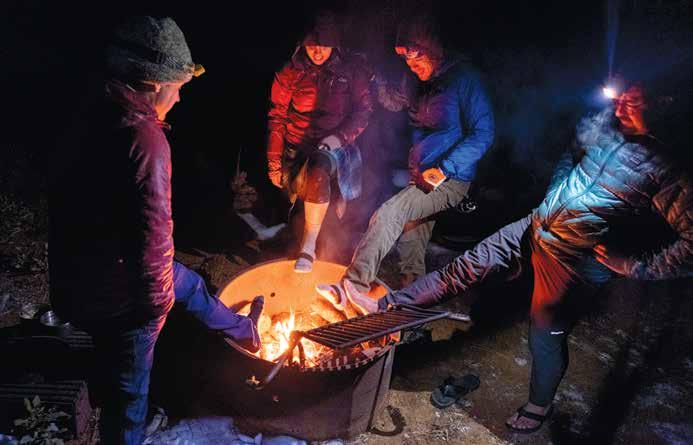
An enormous red moon rises overhead as we reach the snow line. We’ve missed a turn somewhere and are consulting a GPX track sourced from “a local rider” who finished the whole route in a day. That someone had done this before, and so quickly, was key in convincing me to join the trip despite being so out of shape. Later, Jacob will disclose that the “local rider” is in fact 25-year-old UCI World Champion Christopher Blevins. Great.
In any case, we’re following Blevins’s track when the faint trail peters out into a chesthigh wall of chaparral. In the narrow beams of our headlamps, the way back is no more

obvious than the way forward. I fall behind, and the brush snags a loose strap on my panniers and sends me careening into a ditch. When I emerge from the thicket following the faint glow of a reflector on a cattle gate below Sean is still stuck somewhere in the bushes. “Don’t go this way,” he yells, informatively. We can’t make out the rest of what he’s saying, just the sound of breaking branches and invectives.
Some time later, I came across Ryan stopped in the middle of the road. At first, I think he’s waiting for me, but when I get closer, I realize he’s clearing mud from his drivetrain with a stick. He’s the only one of us on a full-suspension bike, and the combination of mud and gravel on this stretch of lowlying ranch road is making a mess of it. We strap his bags and wheels to my hardtail, which still rolls well enough, and he hikes the last mile to camp with his frame on his back. At the time, we hope this is an anomaly, as silly as things will get.
It’s midnight when Ryan and I make it to camp. The Garmins show 10 hours’ moving time, more than double what I normally ride in a week. Overnight, cattle amble through the valley, bellowing like big-screen dinosaurs. They sound close enough to trample me, and I’m too tired to care.
Will the friends survive the weekend in the forest? See Independent .com/ 2024/05/24/bikepacking-through-los-padres-national-forest for the rest of their adventures. You can also see a video at youtube.com/ watch?v=ZlSrtvRQfhc.







































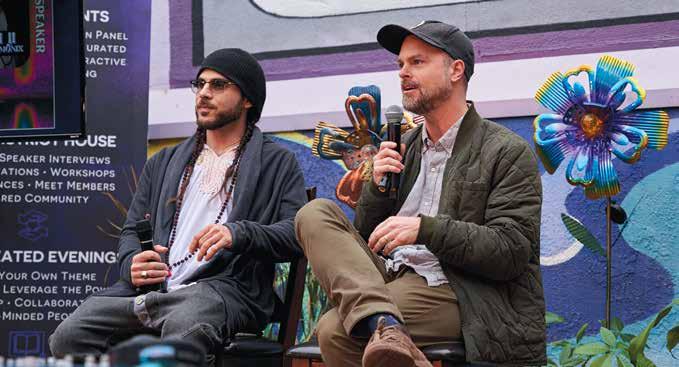



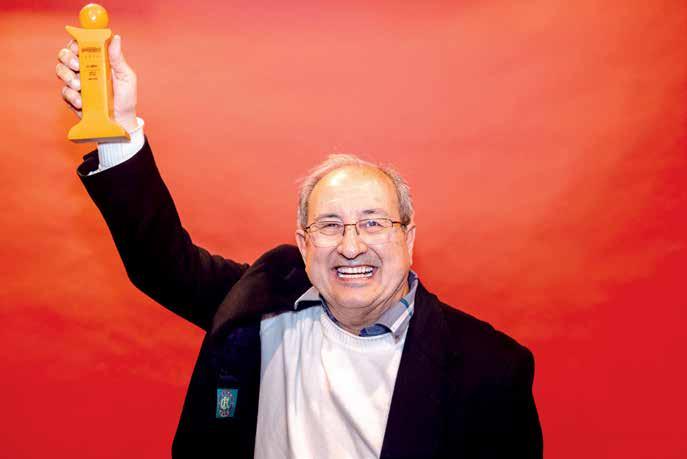
MTo learn more about volunteering, visit Lobero.org or call 805.963.0761
usic can open hearts, unlock memories, and unblock emotions. According to Torkom Ji, a “sound healer” and founder of Quantum Harmonix, “the healing is in the feeling” of different frequencies. Ji views sound as a calming vehicle to “ride.”
In terms of creating a comfortable space for peoples’ trips, Isaac Sabu, founder of sound meditation platform Biotune, said he’s “failed” at times.
During the Music & Psychedelics event hosted by District216, Ji asked attendees to close their eyes and bring themselves into a single moment as he played different white and brown noises wrapped up in a unique mix. It was an all-encompassing, deep sound. Like waves crashing and planes flying overhead combined with musical scales. In essence, it was a meditative ride. When focusing on the mesmerizing sounds, there was no room for any pesky thoughts or external distractions. Just the feelings the frequencies brought about.
Sound healing dates back centuries, to Aboriginal Australians using didgeridoos and singing bowl ceremonies in Tibetan and Himalayan cultures.
While, scientifically, it is still not fully understood how sound heals, researchers have found that music can improve mood and reduce stress, and rhythm can actually provide physical pain relief. Researchers theorize that the healing lies in tactile frequencies and stimulating vibrations, as well as how they interact with brain waves.

The Lobero Family is so proud of our friend, Al. Al represents an amazing team of ushers and we couldn’t be more thrilled for him to receive this well-deserved Usher of the Year Award from the SB Independent.



According to a study in the Journal of Evidence-Based Integrative Medicine, hour-long sound meditations (using instruments such as singing bowls, bells, and didgeridoos) can help people reduce tension, anger, fatigue, anxiety, and depression.
When psychedelics enter the picture, the mind’s normal inhibitions are lessened, opening up greater capacity for healing and therapeutic benefits, at least according to panelists at District216 on May 18.
However, he added he has learned the importance of setting intentions for those kinds of healing experiences as in, knowing and expressing what you want to achieve from a session. He emphasized that music can ground people and help them feel safe, riding on the “set and setting,” referring to mood and expectations and the physical and social environment.
When asked how music can open hearts and enhance spirituality, panelist Raghu Markus, a music producer and executive director of Ram Dass’s Love Serve Remember Foundation, said that psychedelic music experiences can help people connect with themselves and the world around them. He’s tried to create music that is transformational. And, he added, it really boils down to the music leading one to their intention, to connect with their true nature, and “there’s so many ways to pick that up. Express that. Dig deeper in,” which the rhythmic ride can help with.
But it is not all about therapy, which almost anyone who has been to a music festival can attest to. Recreation is important too, as discussed by Matt Phillips of Silverback Music. Phillips said he works to create “zones” and retreats at events, to bring out people’s carefree and happy selves. He uses different kinds of content, videos, and lights during events such as festivals to recreate the positive “journeys” he has had in the past.
Following the panel, different musical performances embraced the space. The sound was everywhere, paired with “trippy” AI visuals and wavy projections on the walls. Everyone seemed to be in a good mood, even the vendors handing out psilocybin samples and offering their psychedelic wares, despite the May gray hanging overhead. People danced, ate food, and were, generally, merry. Maybe music is healing. n

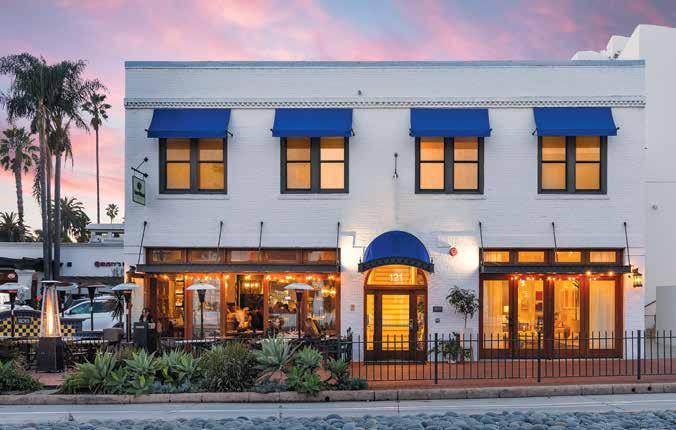
The Riviera Beach House, located in a historic 1928 structure at 121 State Street, is tough to beat if you’re looking for a great, easily walkable location. Just steps from the Funk Zone, the waterfront beach areas, MOXI, and the Amtrak station, it’s a great car-free lodging spot, as I discovered on a recent staycation. If you aren’t into walking, there are bus and trolley stops right in front of the hotel, as well as nearby bike paths to take you straight to the beach and Stearns Wharf.
the lobby, which has cozy couches and a nice assortment of books.
The front lobby space is also a nice place to relax, with a good assortment of teas and coffees available. There are also open-air lounges, as well as an art gallery curated in partnership with the Museum of Contemporary Art Santa Barbara. The current show on view is Changing Nature, featuring recent works by local artists Stephanie Dotson and Madeleine Ignon.
by Leslie DinabergFormerly known as Hotel Indigo, the Riviera Beach House boutique hotel has maintained that same urban chic vibe, with hip and oh-so-stylish “micro guest rooms” designed to make the most of their somewhat limited space. We stayed in a Deluxe Queen Garden Room, which had a nice tree-covered patio to hang out on. And it was surprisingly quiet given the buzzy location. But the room itself, while definitely well-equipped with a desk and workstation, USB-media-ready TV, and other amenities, was also definitely compact.
Even the bathroom was chic yet tiny, with what they call a European-style wet design, which means collapsible glass wall showers. But what the hotel lacks in room space it makes up for in public spaces. It’s right across the street from McConnell’s, so when we returned from an evening at the Arlington Theatre (which is 12 blocks away, so definitely walkable if one has the right shoes we drove) we took our dessert to-go and enjoyed it in the hotel’s library right off
The other attraction is easy eats, with Los Agaves’s fun spot Santo Mezcal right in the hotel, just steps from the lobby and available for room service, as well as daily dining on their menu of upscale Mexican cuisine paired with deliciously inventive cocktails. The Oaxacan Boulevard is a recommendation, with Fresnoinfused mezcal, sweet vermouth, Campari, Aztec chocolate bitters, and an orange spiral decorating the rim.
Santo Mezcal also offers breakfast from 8-11 a.m., Friday-Sunday, with classic American fare such as bacon, eggs, potatoes, pancakes, and omelets, as well as Mexican-inspired items like huevos rancheros, machaca con huevos, enfrijoladas, chilaquiles, and breakfast burritos.
During the week, try breakfast across the street at the Hotel Californian’s Goat Tree with a great patio for people-watching, and just down the street in the Funk Zone is Helena Avenue Bakery from the Acme Hospitality folks, and Dart Coffee’s beautiful garden both are locally owned favorites of mine.
With such a great location, this hotel is definitely a good choice for people who want to take the train in and not have to worry about cars. The Riviera Beach House rates start at about $190 and can go up to about $390, depending on the date.
See rivierabeachhouse.com for more information.
























































































Celebrating a Veritable Bouquet of Vino at the Historic Presidio
BY LESLIE DINABERG PHOTOS BY INGRID BOSTROMWine was more than ready for its close-up when nearly 30 wineries and multiple culinary stars gathered on May 18 for Taste of Santa Barbara’s Saturday Wine Experience. The Indy’s very own cellar master Matt Kettmann put together and moderated three noteworthy panels on the enduring impact of the film Sideways, new grape varieties like mencía and clairette blanche, and what it’s like to craft pinot noir depending where you are in your winemaking career made all the more stellar thanks to the Old Country gravitas of the historic Presidio setting.







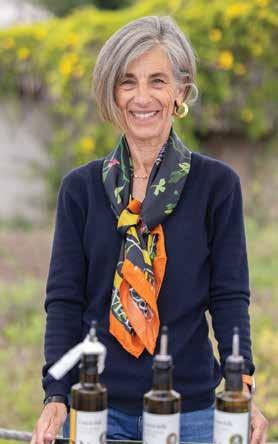




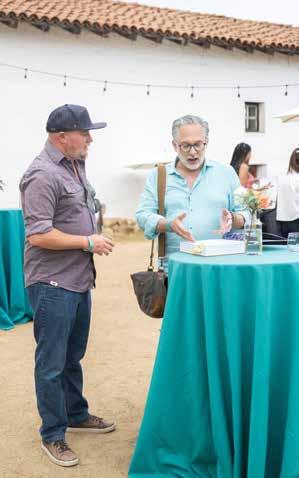







On September 8, 1991, the Socialist Republic of Macedonia declared its independence from Yugoslavia. It was an obvious move. The country was unraveling. Slovenia and Croatia seceded a few months earlier. Conflict ensued. Bosnia and Serbia were on the brink. Allies were nowhere to be found.





One evening during my senior year of college, I was studying in the front room of the sorority house when the doorbell rang. As usual, I thought, one of the girls must have forgotten her keys.
We happened to be in Macedonia that July, celebrating my cousin’s wedding. It was a spectacularly raucous affair befitting a first-born male.
We partied for weeks. Danced in the streets. Accordion players lulled us to sleep. We were exhausted and happy, avoiding the outside world, forestalling the imminent consequences.
We lived in the United States, after all. Macedonia was our second home. The burden of its history didn’t belong to us. Until one morning, gathering fresh peaches at the bustling bazaar, I realized it was us. Our ancestors. Our DNA. Our legacy. My first memory as a child eating a ripe fragrant peach was right here.
I have always joked that my entire genetic makeup originates in the Balkans. Impossible, friends would say. No one is 100 percent from one place. I sent a saliva sample to Ancestry.com. The results were stark. One tiny circle in the center of the Balkans on top of current-day North Macedonia.
That summer, sipping Nescafé frappuccinos and chainsmoking Marlboros in between party planning, the conversation inevitably turned to the north. Would war spread? How would Macedonia defend itself if Yugoslavia controlled the military? When the vote was finally cast, 95.26 percent of Macedonians voted for independence in a country without precedent for electoral politics.
At that moment, I went from being Yugoslavian for the first 20 years of my life to Macedonian for the rest. My identity and focus immediately changed.
I declared political science as my major to seize a front row seat to these historical events. I subscribed to The New York Times for its international news coverage. I interned in Washington, D.C., for Ljubica Acevska, the representative of the “Former Yugoslav Republic of Macedonia” (since Macedonia was not yet recognized by the United States, they couldn’t institute full diplomatic relations with an embassy). National Public Radio was preset in the car. We continued going to Macedonia each summer, experiencing the changes firsthand. My dad was actively involved in the Macedonian community on both sides of the Atlantic and included me in everything. I met presidents, prime ministers, and diplomats. I considered joining the Foreign Service.
I opened the door, stunned to find my mom, dad, aunt, and uncle standing in the entrance, all dressed up in lipstick, ties, perfume, and fur in the February chill, joyous and laughing. Their mood was so infectiously celebratory it traveled throughout the house. Girls ran downstairs to join the party.
They immediately embraced me and exclaimed, “The U.S. recognized Macedonia! The U.S. recognized Macedonia! The U.S. recognized Macedonia!”
It took me a second to realize the gravity of the moment, caught up in the emotion, warmed by their pride. I had always felt American, that I belonged, shielded by them from the insecurities they experienced starting over in a new country. Today they had finally felt seen and validated by both their homeland and their chosen home.
Unless you’ve always lived in a cave, you know nationbuilding is a messy affair. Since its independence, for 27 years, Macedonia had been living with the provisional name of the Former Yugoslav Republic of Macedonia. In 2018, the country finally achieved a resolution with its international partners for its new name Republic of North Macedonia.
The name “Macedonia” represents rich geographic, historic, and cultural significance for Greeks and Slavic Macedonians. While full-scale war thankfully did not come to Macedonia, the decades-long impasse over that name undermined citizen confidence and ultimately made people feel sad.
My attention to Macedonian politics waned as I became more involved with wine. Over time, the more I studied, the less I understood. Livelihoods were involved. International security. Future generations. The basics of job creation, industry, and investment, all undermined by political infighting. How important is a name?
My husband’s aunt was given her mother’s name, Dorothy, and in high school she changed the spelling of her name to “Dorothe” so her mom wouldn’t open love letters addressed to her daughter. My uncle changed his last name from Jovanoski to Jovan when he started his corporate job in the 1980s so it was easier to pronounce for promotions. He wanted to be viewed as an insider instead of perceived as an outsider.

My grandfather’s last name was changed from Magdevski to Jovanovich before World War II when Serbia controlled his village. When the Serbs left, everyone in the village changed their names right back. Ellis Island is saturated with these stories, and I am sure your families have similar circumstances, too.
For the first 20 years of this business, Casa Dumetz represented a place where I helped to plant a vineyard and made wine in the garage with a ragtag group of oenophiles. It was the birthplace of what would be created, though it isn’t the home where I was raised in wine. I was introduced to grape growing at Casa Dumetz, though I learned to savor grapes in Santa Barbara wine country.
Casa Dumetz was my provisional name until I had the confidence to vote in my own election and navigate my own historic, geographic, and cultural underpinnings. I was previously distracted by keeping the train on the tracks, the system in place, hoping not to create conflict. I had a business to run. People to employ. Bills to pay. My own identity politics to navigate.
Eventually, it simply made me sad. It no longer felt appropriate to keep the borrowed name of a place that hasn’t existed for years. People would ask, “What is Casa Dumetz?” Over time, it became more complicated for me to answer.
Welcome to Clementine Carter. I am not erasing history, simply realigning the future. Nothing will change except the name.
Clementine Carter is the name of a woman in my favorite Western, My Darling Clementine, directed by John Ford, from 1946. My dad loves Westerns, and in turn I love Westerns. Back in Michigan, each night after work, we would make dinner in the back room of our Baskin-Robbins ice-cream store. My dad would fry pork chops on a single electric burner, and I would chop salad on the freezer. He’d open a bottle of wine, pop in a VHS tape, and we’d sit on folding chairs.
I fell in love with My Darling Clementine as soon as the music started and was enthralled with Clementine the moment she arrived on screen. She is a quiet Western heroine, a halcyon on a journey, traveling alone in 1882 searching for her true love. She finds him in Tombstone, though her love was unrequited. Undeterred, through the course of the story, she finds a renewed motivation to stay in her new home as everyone departs their separate ways.
Just before Wyatt Earp (played by Henry Fonda) rides off into the sunset, he says, “Ma’am, I sure like that name Clementine.”
See clementinecarterwine.com.



The Zoo Brew is making its return to the Santa Barbara Zoo.
With unlimited tastings and unbeatable ocean views, the annual fundraiser benefiting the zoo and its many animals promises to be one “wild” time for zoo and brew lovers alike.


Featuring more than 20 vendors ranging from Figueroa Mountain Brewing and Firestone Walker to BeatBox and Mike’s Hard Lemonade, guests can try beer, cider, wine, and seltzers from across California while engaging with the craftspeople who brewed them. Pub food, non-alcoholic beverages, and merchandise will also be available for purchase.
The event is set to take place on Saturday, June 1, 4-7 p.m. General admission tickets are $75 and include unlimited tastings and a commemorative cup. VIP tickets, available for $110, expand on the general admission perks to include an hour-early entrance and complimentary appetizers.
Find more information about Zoo Brew and purchase tickets to the event by visiting sbzoo.org/zoobrew/ or calling (805) 962-5339. To request accommodations or for inquiries about accessibility, email the accessibility team at welcome@sbzoo.org Ages 21+ only. n


























































VEHICLE ENCAMPMENT PROGRAM MANAGER
VEHICLE ENCAMPMENT PROJECT COORDINATORS
VEHICLE ENCAMPMENT OUTREACH CASE MANAGERS
VEHICLE ENCAMPMENT HOUSING NAVIGATORS
VEHICLE ENCAMPMENT SERVICES COORDINATORS
VEHICLE ENCAMPMENT HOUSING LOCATORS
VEHICLE ENCAMPMENT HOUSING RETENTION
UCSB MFA EXHIBITION, INCANDESCENT , SPANS MEDIA, INSTALLATION WORK, AND PERSONAL-POLITICAL
Among the many exhibitions on the Santa Barbara art landscape in a given year, the annual MFA exhibition at UCSB’s Art, Design & Architecture (AD&A) Museum stands apart and tends to generate a buzz of challenge to the viewer. As expected, but also in unexpected ways, the current MFA show, going by the umbrella title Incandescent, dodges easy expressive routes or more commercial considerations of for-profit galleries.
Installation aesthetics rule here, as do larger conceptual issues posed through art combining media and messages in various interdisciplinary ways. And these Master of Fine Art candidates aren’t afraid of rough edges and inventive complacency-busting tactics in their work.
It should be noted that this year’s group is notably inclusive of artists beyond the white, male American contingency, with a diversity of gender and nationality/race involved. Names alone bespeak the global reach of the participants, with points of origin in Iran, Nigeria, the Philippines, Mexico, and beyond: Panteha Abareshi, Diego Melgoza Oceguera, Dannah Mari Hidalgo, Hope Okere, Lyra Purugganan, Mariana Rodela, and Lela Shahrzad Welch.
As graduate program advisor Alex Lukas explains, the exhibition as a whole involved artists working “on the cutting edge of contemporary artistic discourses that center identity, place, politics, and poetics.”
The political and protest directives are tucked within the folds of the show, starting with a wild style polemical painting by Oceguera in the entryway gallery, “Obliterate the Beast,” the beast being “profit.” The painting also serves as an apt thematic touchstone for a show about art not made for profit, necessarily, but for unhindered creative expression and exploration of identity and social issues.
Oceguera’s own “gallery within a gallery” installation inside the museum “Percussive Emancipation” is a space transformed by collaged video projections, sculptural elements integrated into a host wall, and a visual mix of color and design. An implied political and cultural statement is made in a visceral way, without blatant messages attached.
Hidalgo, a Hawaiian finding new circumstances in Santa Barbara, takes command of the first, tall-ceilinged space in the museum, blending large paintings with the cozy centering aspect of a living room karaoke setup. The installation, “It’s in the Garage,” hints at the melding of domestic detachment and comfort with surreal angles, implied in a paradoxical “double image” overlay.
Tapping into expressly current-event sta-
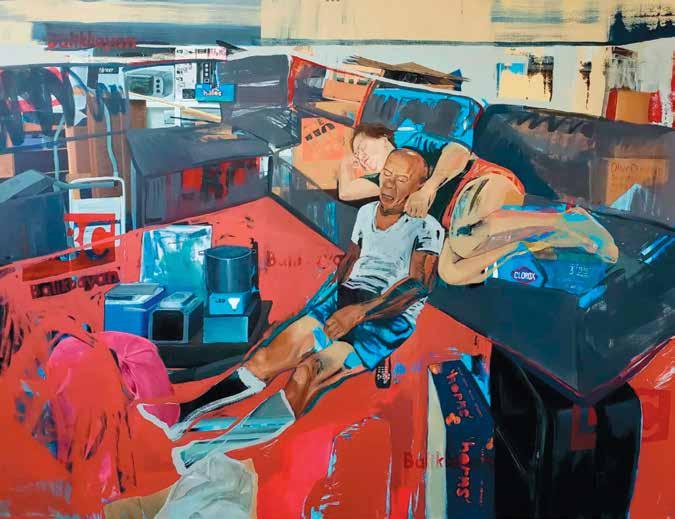

tus, the subject of campus unrest concerning the Israel/Gaza tragedy and divestment protests which relates to UCSB’s own ongoing encampment makes its way into Rodela’s edgy-cheeky installation “Jumbotron XXIV.”
Specific references to UCSB abound, in school colors, flags, and half-satirical nods to Gaucho athletics, and a component of three video monitors encased in AstroTurf includes a reference to “UCSB Divest.”
Nestled amid the Gaucho-mania of Rodela’s display, in the corner of this gallery space, Purugganan’s “from the ground up (the house extends forever)” deploys a minimalist approach to notions of home and personal grounding. She uses such simple materials as treated bricks, lace embroidery, and personal-space-implying screens, with a sly ulterior agenda in tow.
Creating her own immersive atmosphere in the dim-lit back gallery, artist and dancer Okere’s “Phenomenological Translations” explores her Nigerian roots through art and also her work as a dancer. Dance movements are projected via video on gauzy fabric sheets



and tent-like structures, examining her sense of “Afro-futurism with Orisha spiritual references.” The end result is an impression of dreamy mythos in a softly lit space all of its own.
(Okere will perform her choreographed work movement:::Water / movement:::Support at the Red Barn Gallery, at the old UCSB gym, on Saturday, June 1, at 8 p.m.)
By contrast, Abareshi’s brashly colorful and mock-playful “A Closed System” is a loaded assemblage piece, like a microcosmic urban setting with toy train-like facsimiles of buildings and imposing structures suggesting medical and political power structures at work behind the facade of order.
Unease of a different color emerges in the gallery mostly devoted to the multimedia sculptural and video construct of Iranian Shahrzad Welch’s art. Suggestions of a bondage-referential dance enliven the room in a gritty way, reflecting the sense of dark beauty amid dysfunction in the work.
Once again, the MFA show offers much to admire, inspire, perplex, and speculate upon. It’s a must-see for any aware art-watcher in these parts.
As an added bonus to the multi-sensory experience of taking it all in, the museum basks in the pleasant cognitive dissonance issuing from Hidalgo’s faux karaoke scenario. On a loop, we hear the dulcet cheesy tones of the pop tart of Bread’s soft-rock classic “Everything I Own,” while pondering serious artistic manifestations, both fine and rough.
—Josef WoodardUCSB’s MFA Exhibition, Incandescent, is on view at the UCSB Art, Architecture & Design Museum through June 9. Gallery hours are Wednesday-Sunday, noon-5 p.m. See museum.ucsb.edu.





















As a young adult, Alice Liddell (once the girl who inspired Lewis Carroll’s Alice’s Adventures in Wonderland) is rumored to have had a star-crossed romance with Prince Leopold, who was a student at Oxford where her father was a professor. Ensemble Theatre Company’s upcoming production of Mark Saltzman’s Alice, Formerly of Wonderland explores the post-Wonderland world for the now-grown-up children of the restrictive Victorian culture. Directed by Jim Fall, this world premiere will be presented onstage at the New Vic June 1-16.
Saltzman’s idea for this Alice sequel was conceived during the chapter of royal intrigue when the prince fell in love with the American actress. “It was the beginning of the Harry and Meghan romance, and somebody mentioned the history of royals and celebrity romances,” Saltzman says. “King Edward and Lillie Langtry; Prince Leopold and Alice Liddell … wait, what? Yes, a rabbit hole,” he continues, “and yes, I went down it.”
The characters in this show may be educated, upperclass, and even royal, but they are still written with depth and emotional complexity.
Alice, for instance, says Margie Mays, who portrays Alice in the show, is multidimensional in a way that’s familiar to the collective perception of the Alice character. “She’s sweet and what you’d expect, but she’s a real girl. She’s mischievous; she’s bratty; she likes to gossip.” Leopold, on the other hand, lives with heredity impediments that darken his privileged life.
An interesting aspect of this show is the traditional a cappella singing that enhances the narrative (musical arrangements by Jack Lipson). A tradition at Oxford, this style of choir is an appropriate “background” sound to fit the scenes, especially since Leopold himself was a member of the campus glee club. This production’s a cappella is a unique blend of barbershop quartet, hymn, and traditional university fare. —Maggie Yates
Now in its 78th year, the Ojai Music Festival (OMF) has been one of the most internationally acclaimed music events in the area, landing annually in the picturesque hamlet. Part of the festival’s unique identity is its ever-changing programming agenda, created by a shifting array of music directors and their particular worlds.
Luminous pianist Mitsuko Uchida is the 2024 music director. Others on the roster include the Mahler Chamber Orchestra, the Brentano String Quartet, soprano Lucy Fitz Gibbon, and accordionist Ljubinka Kulisic playing a John Cage program. The long weekend’s program, running daily from 8 a.m. through the evening, promises to be a rich and fruitful edition of this venerable and always challenging festival.
We checked in with music director Ara Guzelimian, who was involved in the festival for many years before leaving to serve as Dean of the Juilliard School but has been back as Ojai’s artistic director since 2021.
How have you seen the festival evolve over time? I think the Ojai Festival, like the world of music itself, has evolved to reflect the world around us. The classical music world has broadened in wonderful ways, embracing more fluid boundaries between genres, expanding rich traditions outside of Western music, and exploring the work of composers who have been far too long excluded. And a newer generation of composers and performers is more naturally at ease in this variety of styles and vocabularies. It’s incredibly healthy, and I’m so glad that Ojai is at the leading edge of these developments.
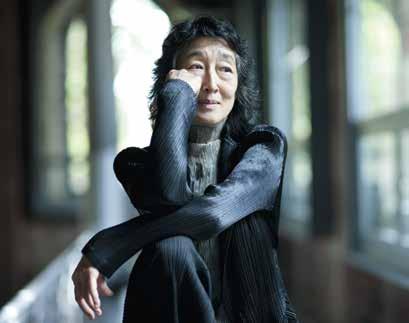
The upcoming program is an interesting mix of contemporary and earlier music. Was there an overarching thematic design that you and Mitsuko Uchida worked on? Mitsuko Uchida brings a lifetime of profound insight into the infinite world of the Mozart piano concertos, so that was naturally a cornerstone, especially given her close partnership with the Mahler Chamber Orchestra on these works over the last five years. Her championing of the music of Schoenberg, Berg, and Webern is perhaps less well known but central to her as well she has made a great recording of the Schoenberg Piano Concerto (with Pierre Boulez) as well as the solo piano works. And this is the 150th anniversary of the birth of Schoenberg, an apt moment for us to encounter the music again with fresh ears.
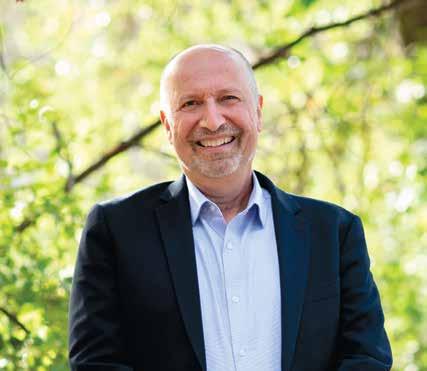
Last year’s festival literally opened with a short homage to Saariaho by Stephen Schick. How do you view Saariaho’s work in the pantheon of modern music? Kaija [Saariaho], for me, was one of the most individual voices of our time, combining superb craft, an ear for sonority and beauty, as well as a deeply intuitive, expressive core in all her music. There is such honesty and immediacy in her music, such obvious love for the musician playing her music. … We wanted to pay homage in the best way possible with her music. We are especially touched to have her daughter, Aliisa Neige Barrière, with us to conduct her “Lichtbogen” with the members of the Mahler Chamber Orchestra.
You have had some so-called “anomalies” in the music director role, including the great Vijay Iyer in 2017, and last year, Rhiannon Giddens drew a large and new crowd. Was that part of the goal, to attract a different and broader audience? Rhiannon was there because she so instantly connected with the spirit of the Ojai Festival when she first appeared during John Adams’s Music Directorship in 2021. She is so completely at ease and at home with so many musics how many other people have a life as an operatic soprano, a scholar of Black traditional music, a mean banjo player, a knockout singer/songwriter, and, oh yes, a co-composer of a Pulitzer Prize–winning opera?
While here, she didn’t have to pick and choose among her passions. … Ojai allowed her to be all that she is, so she was at home and so were we.
As someone plugged into that more international overview of classical music, how do you view OMF’s status and importance among other contemporary-leaning festivals? I’m hardly objective, but there is something about the incredible combination of intensely committed musicmaking in an informal and naturally beautiful setting to an audience that comes ready for adventure that is unique. Add to that the immersive nature of the experience, with concerts from early morning until night, and it has a joyous intensity that seems perfectly balanced. That’s not to take away from other wonderful festivals but Ojai’s is a true California free spirit.
—Josef WoodardThe Ojai Music Festival runs from June 6-9. See ojaifestival.org for info. For a longer version of this interview, go to bit.ly/3VkgFkA.

One of America’s greatest progressive roots acts, the Tedeschi Trucks Band (TTB), can be considered a family operation, on various levels.
Kinfolk associations are literally embedded in the band name and relationship of married couple Susan Tedeschi, the inspired vocalist, and Derek Trucks. Masterful slide guitarist Trucks himself is now the most highprofile offshoot of the Allman Brothers world, as the nephew of that band’s drummer Butch Trucks and also a prized member of a later constellation of the Allman organization.
We’ve heard Trucks stretch out with his highly musical virtuosity in the Allman aggregate at the Santa Barbara Bowl years ago, where we’ll hear him again with TTB on Wednesday, June 5. The eagerly awaited return to town marks their first post-pandemic visit, and the Bowl makes for a more-thansuitable, picturesque setting for their particular musical stew.
Another family connection with TTB, albeit more ambiguous and idealistic, relates to a certain palpable kinship feeling that the band generates with its most devoted listeners (we know who we are). There can be a sense of mutual trust and eclectic musical adventuring as the crowd follows the band’s journey between blues, post-Southern rock, R&B (replete with horns), gospel, and artful jam-band space explorations.
Through it all, Trucks has affirmed his place as one of the greatest slide guitarists on the scene, influenced in his early days not only by Duane Allman, but also by musical influences from around the world, including the slide tradition in Indian Hindustani music. As he told me in an interview, “Once I started playing, at 9 or 10 years old, you’re around musicians and are always picking their brains for what they’re into, and I really got turned onto a lot of stuff early that way, whether it was Ali Akbar Khan or John Coltrane or Sun Ra or Sun House or Skip James…. Luckily for me, electric slide guitar is not something that has been completely mastered or so overdone, like the electric guitar in general. It’s hard to find new ground on an instrument where there are a thousand masters.”
Tedeschi and Trucks struck up a symbiotic musical marriage along with starting a family of their own. She had a sturdy career in motion as a bold and expressive power in her voice, tinged with a warm rasp and bluesy shadings similar to Bonnie Raitt, while Trucks was keeping his mostly instrumental band going strong in its niche circuit. They merged to create TTB in 2010, and their 2011 debut album, Revelator, won a Grammy for Best Blues Album. Together, they are a dynamic pairing, with Trucks’s vocal-like slide guitar phrasings acting as a response to her vocal calls, and the powerful force of the 12-piece band with double drummers, as in the Allman Brothers is a critically integrated support system.
Their latest album, the four-disc I Am the Moon, touches on the band’s various directions, from warm-spirited songs like “Hear My Dear” and “Another Day,” to extended instrumental workouts like “Pasaquan.” “Gravity” has a loping Little Feat/N’awlins feel (which is handy since Little Feat will be joining them at the Bowl), and the title track is an emotional ballad that builds into a cathartic crescendo by song’s end.
It’s a family affair, going strong and steady, and thankfully Bowl-bound.

ALAN PARSONS JUNE 14 | FRIDAY | 8PM UB40 AUGUST 2 | FRIDAY | 8PM AIR SUPPLY



JULY 12 | FRIDAY | 8PM DANIEL TOSH
AUGUST 23 | FRIDAY | 8PM






 Rob Breszny

(Mar. 21-Apr. 19): Welcome to the future of your education, Aries! Here are actions you can take to ensure you are exposed to all the lush lessons you need and deserve in the coming months. (1) Identify three subjects you would be excited to learn more about. (2) Shed dogmas and fixed theories that interfere with your receptivity to new information. (3) Vow to be alert for new guides or mentors. (4) Formulate a three-year plan to get the training and teachings you need most. (5) Be avidly curious.
(Apr. 20-May 20): Poet Emily Dickinson was skillful at invoking and managing deep feelings. One scholar described her emotions as being profoundly erotic, outlandish, sensuous, flagrant, and nuanced. Another scholar said she needed and sought regular doses of ecstasy. Yet even she, maestro of passions, got overwhelmed. In one poem, she wondered “Why Floods be served to us in Bowls?” I suspect you may be having a similar experience, Taurus. It’s fun, though sometimes a bit too much. The good news is that metaphorically speaking, you will soon be in possession of a voluminous new bowl that can accommodate the floods.
(May 21-June 20): All of us periodically enjoy phases I call “Freedom from Cosmic Compulsion.” During these times, the Fates have a reduced power to shape our destinies. Our willpower has more spaciousness to work with. Our intentions get less resistance from karmic pressures that at other times might narrow our options. As I meditated on you, dear Gemini, I realized you are now in a phase of Freedom from Cosmic Compulsion. I also saw that you will have more of these phases than anyone else during the next 11 months. It might be time for you to get a “LIBERATION” tattoo or an equivalent new accessory.
(June 21-July 22): Bold predictions: (1) Whatever treasure you have lost or are losing will ultimately be reborn in a beautiful form. (2) Any purposeful surrender you make will hone your understanding of exactly what your soul needs next to thrive. (3) A helpful influence may fade away, but its disappearance will clear the path for new helpful influences that serve your future in ways you can’t imagine yet. (4) Wandering around without a precise sense of where you’re going will arouse a robust new understanding of what home means to you.
(July 23-Aug. 22): Denmark’s King Canute IV (1043–1086) wasn’t bashful about asserting his power. He claimed ownership of all the land. He insisted on the right to inherit the possessions of all foreigners and people without families. Goods from shipwrecks were automatically his property. But once, his efforts to extend his authority failed. He had his servants move his throne to a beach as the tide came in. Seated and facing the North Sea, he commanded, “Halt your advance!” The surf did not obey. “You must surrender to my superior will!” he exclaimed, but the waters did not recede. Soon, his throne was engulfed by water. Humbled, Canute departed. I bring this up not to discourage you, Leo. I believe you can and should expand your influence and clout in the coming weeks. Just be sure you know when to stop.
(Aug. 23-Sept. 22): Virgo-born Irène Joliot-Curie craved more attention than she got from her mother, Marie Curie. Mom was zealously devoted to her career as a chemist and physicist, which is one reason why she won Nobel Prizes in both fields. But she didn’t spend sufficient time with her daughter. Fortunately, Irène’s grandfather Eugène became his granddaughter’s best friend and teacher. With his encouragement, she grew into a formidable scientist and eventually won a Nobel Prize in chemistry herself. Even if you’re not a kid, Virgo, I suspect there may be a mentor and guide akin to Eugène in your future. Go looking! To expedite the process, define what activity or skill you want help in developing.
(Sept. 23-Oct. 22): I have a fantasy that sometime in the coming months, you will slip away to a sanctuary in a pastoral paradise. There you will enjoy long hikes and immerse yourself in healing music and savor books you’ve been wanting to read. Maybe you will write your memoirs or compose deep messages to dear old friends. Here’s the title of what I hope will be a future chapter of your life story: “A Thrillingly Relaxing Getaway.” Have you been envisioning an adventure like this, Libra? Or is your imagination more inclined to yearn for a trip to an exciting city where you will exult in high culture? I like that alternative, too. Maybe you will consider doing both.
(Oct. 23-Nov. 21): An Instagrammer named @sketchesbyboze advises us, “Re-enchant your life by making the mundane exciting. You are not ‘going to the drugstore.’ You are visiting the apothecary to buy potions. You are not ‘running an errand.’ You are undertaking an unpredictable adventure. You are not ‘feeding the birds.’ You are making an alliance with the crow queen.” I endorse this counsel for your use, Scorpio. You now have the right and duty to infuse your daily rhythm with magic and fantasy. To attract life’s best blessings, you should be epic and majestic. Treat your life as a mythic quest.
(Nov. 22-Dec. 21): I invite you to invite new muses into your life in the coming months. Give them auditions. Interview them. Figure out which are most likely to boost your creativity, stimulate your imagination, and rouse your inspiration in every area of your life, not just your art form. Tell them you’re ready to deal with unpredictable departures from the routine as long as these alternate paths lead to rich teachings. And what form might these muses take? Could be actual humans. Could be animals or spirits. Might be ancestral voices, exciting teachings, or pilgrimages to sacred sanctuaries. Expand your concept of what a muse might be so you can get as much muse-like input as possible.
(Dec. 22-Jan. 19): The Japanese have a word for a problem that plagues other countries as well as theirs: karoshi, or death from working too hard and too much. No matter how high-minded our motivations might be, no matter how interesting our jobs are, most of us cannot safely devote long hours to intense labor week after week, month after month. It’s too stressful on the mind and body. I will ask you to monitor yourself for such proclivities in the coming months. You can accomplish wonders as long as you work diligently but don’t overwork. (PS: You won’t literally expire if you relentlessly push yourself with nonstop hard exertion, but you will risk compromising your mental health. So don’t do it!)
(Jan. 20-Feb. 18): Typically, human fertility is strongest when the temperature is 64 degrees Fahrenheit. But I suspect you will be an exception to the rule in the coming months. Whether it’s 10 below or 90 in the shade, your fertility will be extra robust literally as well as psychologically and spiritually. If you are a heterosexual who would rather make great art or business than new babies, be very attentive to your birth control measures. No matter what your gender or sexual preference is, I advise you to formulate very clear intentions about how you want to direct all that lush fecundity. Identify which creative outlets are most likely to serve your long-term health and happiness.
(Feb. 19-Mar. 20): Here’s a key assignment in the coming months: Enjoy fantasizing about your dream home. Imagine the comfortable sanctuary that would inspire you to feel utterly at home in your body, your life, and the world. Even if you can’t afford to buy this ultimate haven, you will benefit from visualizing it. As you do, your subconscious mind will suggest ways you can enhance your security and stability. You may also attract influences and resources that will eventually help you live in your dream home.




























FINANCE
STRUGGLING WITH debt? If you have over $10,000 in debt we help you be debt free in as little as 24‑48 months. Pay nothing to enroll. Call Now: 1‑877‑435‑4860 (Cal‑SCAN)
HEALTH & FITNESS
DENTAL INSURANCE from Physicians Mutual Insurance Company. Coverage for 400 plus procedures. Real dental insurance ‑ NOT just a discount plan. Do not wait! Call now! Get your FREE Dental Information Kit with all the details! 1‑844‑203‑2677
www.dental50plus.com/calnews
#6258 (Cal‑SCAN)
SAFE STEP. North America’s #1
Walk‑In Tub. Comprehensive lifetime warranty. Top‑of‑the‑line installation and service. Now featuring our FREE shower package and $1600 Off for a limited time! Call today! Financing available. Call Safe Step 1‑888‑989‑5749 (Cal‑SCAN)
PROFESSIONAL ARC COUNSELOR/ COORDINATOR

EDUCATIONAL OPPORTUNITY PROGRAM
Utilizes advanced skills gained at the Master’s degree level in counseling fields (student affairs and/or higher education); exhibits culturally inclusive active listening skills (e.g., appropriately establishing interpersonal contact, paraphrasing, perception checking, summarizing, questioning, encouraging, avoid interrupting, clarifying) and provides counseling services for personal, social and academic issues, including but not limited to cultural identity, educational, relationship, family, sexuality and sexual identity issues. Designs, implements and evaluates cultural and academic services for the Asian Cultural Resource Center. Develops program designs and tools to assess quality of programs and events offered. Assists in campus efforts to recruit and retain underrepresented students. Reqs: Master’s Degree in counseling or related area or years of equivalent experience/training; Experience in providing in‑depth, wide‑ranging and complex academic advising and holistic services to undergraduates; Experience with social media management on multiple platforms, updating department website, and Emma application. Notes: Satisfactory conviction history background check. May work occasional evenings and weekends. May be called upon to reside in residence hall during summer program. On call during summer programs and campus emergencies. Salary or Hourly Range: The budgeted salary range is $62,640 ‑ $65,460/ yr. Full Salary Range: $61,700 ‑ $108,100/yr. The University of California is an Equal Opportunity/ Affirmative Action Employer, and all qualified applicants will receive consideration for employment without regard to race, color, religion, sex, sexual orientation, gender identity, national origin, disability status, protected veteran status, or any other characteristic protected by law. Open until filled. Apply online at https:// jobs.ucsb.edu Job # 64348
The Associate Director of Development, Social Sciences, reports to the Interim Assistant Dean of Development for the Division of Social Sciences and works to identify and cultivate relationships to optimize philanthropic support to benefit UC Santa Barbara and the Division of Social Sciences. Primary emphasis is on the identification, cultivation, solicitation, and stewardship of individual prospects (alumni, parents and friends) and when appropriate, foundations and corporations. Focus will be on organizing donor outreach, including frequent travel for face‑to‑face meetings, to secure new and renew annual gifts ($1,000+), with an added emphasis on building and maintaining an active pipeline of $1,000 ‑ $24,999 gifts. Tasks include managing the annual giving program, creating donor appeals, developing online and social media giving strategies, as well as helping to identify, cultivate and lay the groundwork for major gift conversations of $25,000 and above.
With regard to major gift prospects, the Associate Director, in coordination with and guidance from the Interim Assistant Dean of Development and other members of the Social Sciences development team, develops and executes individual prospect strategies to maximize philanthropic support. Focuses eighty percent (80%) of his/her time on direct fundraising, volunteer management, and fundraising outreach activities. Twenty percent (20%) is focused on administrative duties, such as planning, coordinating and follow up; partnering with departments on their alumni outreach strategies; and collaborating on strategic development events for donor cultivation and stewardship purposes. Builds and maintains an active prospect pipeline moving from an unqualified lead to donor. This development officer is a resource for the entire Division of Social Sciences, but may also have responsibility for particular initiatives and projects at the direction of the Interim Assistant Dean of Development. Travels as necessary to build the pipeline, raising annual and major gifts.
Reqs: Bachelor’s degree in related area and/or equivalent experience/ training; 1‑3 yrs Direct development experience or other relevant professional experience in higher education; 1‑3 yrs Proven success in fundraising, sales, or related business field; demonstrated track record of managing professional relationships in business, preferably in a development environment; persuasive verbal and written communication skills, and the ability to relate to and communicate with a wide array of constituents.
Notes: This is an annually renewable contract position with no limit on total duration; flexibility and willingness to travel frequently; may be called upon to work occasional evenings and weekends at various Development Office, Institutional Advancement or campus‑wide events. Budgeted salary range: $82,300 ‑ $87,000/yr. Full salary range is $82,300 ‑ $151,700/ yr. The University of California is an Equal Opportunity/Affirmative Action
Employer, and all qualified applicants will receive consideration for employment without regard to race, color, religion, sex, sexual orientation, gender identity, national origin, disability status, protected veteran status, or any other characteristic protected by law. For the University of California’s Affirmative Action Policy, please visit: https://policy. ucop. edu/doc/4010393/PPSM‑20. For the University of California’s Anti‑Discrimination Policy, please visit: https://policy.ucop.edu/doc/1001004/ Anti‑Discrimination. Open until filled. Apply online at https://jobs.ucsb.edu
Job #68713
LIBRARY
Provides administrative support for Building Operations. Monitors the physical environment including hazards, defective equipment, etc. Coordinates work requests, repair technicians, and access to facilities via JIRA and TMA software. Makes recommendations for the replacement of broken and/or damaged furniture and mechanical equipment. Reviews and responds to complaints about misuse of university property, inappropriate user behavior, and violations of university policies and practices. Is an active member of the Library Safety and Security Council. Ensures emergency equipment such as AEDs, first aid kits, and bullhorns are in working condition. Responsible for lockers and assignment to faculty, graduate, and undergraduate honors students using Alma software. Hires, trains, schedules, evaluates, and disciplines student assistants.
Secures library buildings upon closing, ensuring proper working order of doors, exit alarms, and camera system.
Assists with library event set‑ups.
Orders supplies through the campus procurement system. Additional duties include environmental health and safety and emergency services.
Reqs: Bachelor’s Degree in a relevant field of study or equivalent combination of education and relevant experience. Administrative and business operations experience in a public buildings environment. Notes: Mandated reporting requirements of Child Abuse. Satisfactory conviction history background check The full hourly range is $27.60 ‑ $46.84/hr. The budgeted salary range is $27.60 ‑ $32.00/hr. UC Santa Barbara is an Equal Opportunity/Affirmative Action Employer. All qualified applicants will receive consideration for employment without regard to race, color, religion, sex, sexual orientation, gender identity, national origin, disability, age or protected veteran status.
For more information: University of California’s Affirmative Action Policy and University of California’s Anti‑Discrimination Policy Open until filled. Apply online at https://jobs. ucsb.edu Job # 69456
THEATER AND DANCE
Responsible for full range of management functions of several disciplines in the department. Management responsibilities encompass academic administration, production unit management, academic support services, departmental computer technical support services, contract, grant, and gift/donation administration, purchasing and financial management, payroll, staff and academic personnel, facilities maintenance and renovation, space management, safety programs, and laboratory support services. Develops and implements operating policies and procedures as they relate to overall departmental goals and objectives, interprets policy for chair and faculty leadership of the Department of Theater and Dance and for departmental committee members, serves as chair’s liaison to other campus academic and administrative units. Directly supervises 7 career staff. Reqs: Bachelor’s degree in related area or equivalent experience and/or training. 4‑6 years of experience with academic administration, business administration, and/or management of multiple functional units. 4‑6 years of experience with financial management, analysis, budgeting, and reporting for instructional and programming/operational funds, gifts, endowments, and grants. 4‑6 years of supervisory experience. Note: Satisfactory conviction history background check. Hiring/Budgeted Salary Range: $101,100 to $115,000/ yr. Full Salary Range: $101,100 to $192,300/yr. The University of California is an Equal Opportunity/ Affirmative Action Employer, and all qualified applicants will receive consideration for employment without regard to race, color, religion, sex, sexual orientation, gender identity, national origin, disability status, protected veteran status, or any other characteristic protected by law. For more information, please visit: https://policy.ucop.edu/doc/4010393/ PPSM‑20 and https://policy.ucop.edu/ doc/1001004/Anti‑Discrimination. Open until filled. Apply online at https://jobs.ucsb.edu Job # 69545
UCSB, STUDENT HEALTH
Assist in the overall operation of the clinical laboratory of the Student Health Service by performing the duties of testing personnel (as specified by CLIA 88) in the specialties of hematology, urinalysis, clinical microscopy, diagnostic immunology, chemistry, microbiology, and virology/ molecular diagnostics. Other duties include specimen processing, phlebotomy, data entry and instrument preventative maintenance and troubleshooting. Must possess a high degree of accuracy and precision. Must be capable of working independently while maintaining compliance with existing laws,
regulations and policies. Must have the ability to communicate effectively with clinicians, patients, health service staff and visitors. Is capable of fast, accurate laboratory work while doing multiple procedures. Training and experience must comply with Federal CLIA 88 requirements for personnel of high complexity testing. Is familiar with common laboratory analyzers, equipment and Laboratory Information Systems. Maintains the equipment and the entire work area in a clean, presentable fashion to preclude injury to self and others. Adheres to safety and infection control policies and procedures. Reqs: Bachelor’s degree. Graduation from college with Bachelor of Science degree in major of appropriate scientific field. Current California Clinical Laboratory Scientists license at all times during employment. 3 – 5 years of training and experience sufficient to comply with Federal CLI 88 requirements for personnel of high complexity testing. Familiar with all laboratory equipment, including Hematology, Microbiology, Urinalysis, Molecular and Chemistry analyzers and other standard laboratory equipment. Notes: Mandated reporting requirements of Child Abuse. Must successfully complete and pass the background check and credentialing process before employment and date of hire. To comply with Santa Barbara County Public Health Department Health Officer Order, this position must provide evidence of annual influenza vaccination, or wear a surgical mask while working in patient care areas during the influenza season. Any HIPAA or FERPA violation is subject to disciplinary action. Student Health is closed between the Christmas and New Year’s Day holidays. Budgeted Hourly Range: $39.32 ‑ $49.88/hr. Full Salary Range: $39.32‑ $57.33/ hr. UC Santa Barbara is an Equal Opportunity/Affirmative Action Employer. All qualified applicants will
receive consideration for employment without regard to race, color, religion, sex, sexual orientation, gender identity, national origin, disability, age or protected veteran status. For the University of California’s Affirmative Action Policy, please visit: https:// policy. ucop.edu/doc/4010393/ PPSM‑20. For the University of California’s Anti‑Discrimination Policy, please visit: https://policy.ucop.edu/ doc/1001004/Anti‑Discrimination Open until filled. Apply online at https://jobs.ucsb.edu Job # 58194
FACILITIES MANAGEMENT
Under the supervision of the working Senior Lead Laborer and/or Lead Laborer, performs a wide variety of cleaning tasks and is responsible for minor maintenance and storage of equipment. Required to comply with the Physical Facilities Safety Program. Reqs: Ability to use and care for janitorial supplies and equipment. Able to observe and use safe working conditions. Ability to understand and apply University and Department policies and procedures to specific situations. Ability to exercise sound judgment in solving problems. Ability to accomplish work within deadlines; may handle more than one project at a time. Able to work effectively in a team environment and needs to receive and follow instruction from supervisors. Notes: May be required to wear an UCSB‑provided uniform. Days and hours may vary to meet the operational needs of the department. Maintain a valid CA driver’s license, a clean DMV record and enrollment in the DMV Employer Pull‑Notice Program. Satisfactory
Employer, and all qualified applicants will receive consideration for employment without regard
ANALYST 3
OF BUDGET &
The Office of Budget & Planning provides campus management with the necessary information and analysis to make decisions regarding the most effective allocation and use of campus financial resources. This position provides support in financial reporting, financial analysis, annual review coordination and compliance, and financial accounting in compliance with UCSB budget controls and reporting standards. The incumbent is expected to utilize initiative, judgment, and discretion. Responsible for the analysis, processing, and servicing of a variety of operational and financial transactions and services. Gathers, analyzes, prepares, and summarizes complex financial information for
Continued on p. 44

80,000 On‑Demand Movies, Plus Limited Time Up To $600 In Gift Cards. Call Today! 1‑866‑479‑1516
JACUZZI BATH Remodel can install a new, custom bath or shower in as little as one day. For a limited time, we’re waiving ALL installation costs. (Additional terms apply. Subject to change and vary by dealer. Offer ends 6/30/24 Call 1‑833‑985‑ 4766 (Cal‑SCAN)
BUSINESS SERVICES
AGING ROOF? New Homeowner? Got Storm Damage? You need a local expert provider that proudly stands behind their work. Fast, free estimate. Financing available. Call 1‑888‑878‑9091
WATER DAMAGE cleanup: A small amount of water can cause major damage to your home. Our trusted professionals dry out wet areas & repair to protect your family & your home value! Call 24/7: 1‑888‑872‑2809. Have zip code!
CAREGIVING SERVICES
MATURE FEMALE CAREGIVER needed 9‑1 weekdays. References requried. Reply to Kathleensreid@ gmail.com.
HOME SERVICES
AGING ROOF? NEW HOMEOWNER?
STORM DAMAGE? You need a local expert provider that proudly stands behind their work. Fast, free estimate. Financing available. Call 1‑888‑292‑8225 Have zip code of property ready when calling!
DIRECTV‑ ALL your entertainment. Nothing on your roof! Sign up for Direct and get your first free months of Max, Paramount+, Showtime, Starz, MGM+ and Cinemax included. Choice package
$84.99/mo. Some restrictions apply. Call DIRECTV 1‑888‑641‑5762 (Cal‑SCAN)
ELIMINATE GUTTER cleaning forever! LeafFilter, the most advanced debris‑blocking gutter protection. Schedule free LeafFilter estimate today. 20% off Entire Purchase. 10% Senior & Military Discounts. Call 1‑833‑610‑1936
GET DISH Satellite TV + Internet! Free Install, Free HD‑DVR Upgrade,
NEED NEW WINDOWS? Drafty rooms? Chipped or damaged frames? Need outside noise reduction? New, energy efficient windows may be the answer! Call for a consultation & FREE quote today. 1‑877‑248‑9944. You will be asked for the zip code of the property when connecting.
PEST CONTROL: PROTECT YOUR HOME from pests safely and affordably. Roaches, Bed Bugs, Rodent, Termite, Spiders and other pests. Locally owned and affordable. Call for service or an inspection today! 1‑833‑237‑1199
PROFESSIONAL LAWN service: Fertilization, weed control, seeding, aeration & mosquito control. Call now for a free quote. Ask about our first application special! 1‑833‑606‑6777
WATER DAMAGE CLEANUP & RESTORATION: A small amount of water can lead to major damage and mold growth in your home. Our trusted professionals do complete repairs to protect your family and your home’s value! Call 24/7: 1‑888‑290‑2264 Have zip code of service location ready when you call!
MEDICAL SERVICES
ATTENTION OXYGEN therapy users! Inogen One G4 is capable of full 24/7 oxygen delivery. Only 2.8 pounds. Free info kit. Call 877‑929‑9587
DENTAL INSURANCE from Physicians Mutual Insurance Company. Coverage for 400+ procedures. Real dental insurance ‑ not just a discount plan. Get your free Information Kit with details! 1 ‑855‑526‑1060 www.dental50plus. com/ads #6258
VIAGRA AND CIALIS USERS! 50 Generic Pills SPECIAL $99.00. 100% guaranteed. 24/7 CALL NOW! 888‑445‑5928 Hablamos Español
Rosal Ortega Flamenco Get fit & embrace your spicey side! Join Rosal Ortega Flamenco for an intro to Flamenco dance for two weeks of classes for $39.99. Reduce Stress, Challenge your Mind & Body, Make New Friends!

Visit www.rosalortegaflamenco.com or scan the QR code below. We can’t wait to dance with you!

DONATE YOUR Car to Veterans Today! Help and Support our Veterans. Fast ‑ FREE pick up. 100% tax deductible. Call 1‑800‑245‑0398
CARS WANTED
DONATE YOUR VEHICLE to fund the SEARCH FOR MISSING CHILDREN.
FAST FREE PICKUP. 24 hour response. Running or not. Maximum Tax Deduction and No Emission Test Required! Call 24/7: 1‑877‑434‑6852 (Cal‑SCAN)
GOT AN UNWANTED CAR???
DONATE IT TO PATRIOTIC HEARTS. Fast free pick up. All 50 States. Patriotic Hearts’ programs help veterans find work or start their own business. Call 24/7: 1‑855‑408‑6546 (Cal‑SCAN)
TIENE UN vehiculo no deseado?
Donelo a Patriotic Hearts! Recogida rápida y gratuita en los 50 estados.
Patriotic Hearts ofrece programas para ayudar a los veteranos a encontrar trabajo o iniciar su propio negocio. Llama ahora: 1‑855‑408‑7368 (24/7) (Cal‑SCAN)

Running or not. We are local to S.B. Foreign/Domestic. Porsche, Mercedes, Ford, Chevy etc. We come to you. 1-805-699-0684 Avantiauto.group




































“They’ve Got Chemistry” multiple times, even.

1. Interstate entrance
5. Accept formally
10. Beginning from
14. Lake near Buffalo
15. Burton who hosted “Reading Rainbow”
16. Nevada gambling locale
17. Noodles that translate to “little ribbons”
19. Crumbly cheese
20. Piracy venues
21. First claim, slangily
23. Traffic predicament
24. Leafy replacements for burger buns, sometimes
28. Org. that’s busy in April
31. Transylvanian count, informally
32. “Blazing Saddles” actress Madeline
33. 2019 MLB champs
35. Abbr. before a founding date
37. Some orchestral instruments
40. With 42-Across, date hinted at by a hidden sequence in the four long Across answers
42. See 40-Across
44. Horseshoe-like Greek letter
45. Sicilian erupter
47. “Star Trek” character
48. Dirt road grooves
50. Agree to another tour
52. Small peeve
53. Covert escape route
57. Maximum effort

58. Outbursts from Bart, at times
59. A head
62. “In ___ of gifts ...”
64. Slow companions at home?
68. Pilot predictions, for short
69. “The Thursday Murder Club” novelist Richard
70. Arizona mesa dwellers
71. Albanian’s neighbor
72. Makeup of Maslow’s hierarchy
73. Wild guess
1. Field arbiter
2. Greek god of war
3. Plant parasite
4. Flower fragment
5. Part of ABV
6. End-of-the-year mo.
7. Tube where eggs travel
8. Lose composure
9. Connery’s antagonist, in ‘90s “SNL”
10. Newfoundland sound
11. 1991 Joy Fielding thriller named for a line in a classic kids’ primer 12. Alternative to bottled 13. Soap pump contents 18. Not new 22. Bee formation 25. Birch, e.g. 26. Cafe au lait container
27. Flightless South American birds
28. “___ the Unknown” (“Frozen II” song)
29. Barack’s first chief of staff
Avoid
Icelandic band ___ Ros
“Damn Yankees” co-director Stanley
Roman 651 39. Sealed up
Old-fashioned
Man-goat of myth 46. “Don’t worry about it, I got you”
___ a dime
Type of review
Department that works with marketing
The 1%
“One of ___ things is not like the other”
Latticework strips
Form a scab

planning and budgetary purposes. This position will also provide support to campus departments in support of the Financial Management Modernization (FMM) project and Oracle Financials Cloud (OFC) implementation. Reqs: Bachelor’s degree in related area and / or equivalent experience / training, 1‑3 years thorough knowledge of and experience in financial processes, policies, and procedures, Service‑ orientation, creative problem solving, and analytical thinking skills as demonstrated in a professional environment, Strong knowledge of financial data management and reporting systems, Ability to solve problems, conduct research and present solutions to management.
Note: Satisfactory completion of a criminal history background check.
Hiring/Budgeted Salary Range: $67,200 to $97,000/yr. Full Salary Range: $67,200 to $119,600/yr. The University of California is an Equal Opportunity/ Affirmative Action Employer, and all qualified applicants will receive consideration for employment without regard to race, color, religion, sex, sexual orientation, gender identity, national origin, disability status, protected veteran status, or any other characteristic protected by law. Open until filled. Apply online at https://jobs. ucsb.edu, Job # 69154
2 OR 3 DFSS BUSINESS AND FINANCIAL PLANNING
FINANCIAL SVC ANL 2 and 3: Supports campus customers and Design Facilities & Safety Services (DFSS) managers in the financial management and reporting of operations, designated program funding, and projects. Assists in establishing budgets and tracking expenses. Performs, analyzes, and coordinates project and operational statement preparation and reviews, daily accounting, billing, manages encumbrances and commitments, financial transfers, and reconciliations.
FINANCIAL SVC ANL 3: Serves as one of the department’s principal accounting and financial services resource for budgets and expenses. Identifies issues, the best method to resolve them, and any process improvements required to prevent future occurrences. Analyzes, communicates, and prepares periodic and ad hoc financial reports. Supports DFSS departments: Design & Construction Services, Facilities Management, and Environmental Health & Safety, and understands their department specific needs and regular business operations. Reqs: FINANCIAL SVC ANL 2: Bachelor’s degree in Accounting, or an equivalent combination of education and work experience. 1‑3 years Relevant work experience. FINANCIAL SVC ANL 3:Bachelor’s degree in Accounting, or an equivalent combination of relevant education and work experience. 1‑3 years Relevant work experience. Notes: Satisfactory criminal history background check. Hiring/Budgeted Salary or Hourly Range: $67,000 to $86,844/yr. Full Salary Range: The full salary range for the FINANCIAL SVC ANL 2 position is $27.16 to $46.70/hr. The full salary range for the FINANCIAL SVC ANL 3 position is $67,200/yr. to $119,600/yr. The University of California is an Equal Opportunity/ Affirmative Action Employer, and all qualified applicants will receive consideration for employment without regard to race, color, religion, sex, sexual orientation, gender identity, national origin, disability status, protected veteran status, or any other characteristic protected by law. For the University of California’s Affirmative Action Policy, please visit: https://policy. ucop. edu/doc/4010393/PPSM‑20. For the University of California’s Anti‑Discrimination Policy, please visit: https://policy.ucop.edu/doc/1001004/ Anti‑Discrimination. Open until filled. Apply online at https://jobs.ucsb.edu Job #69033
STUDENTS
Under the Direction of the Associate Director of Technology & Strategic Communications, the Information Technology Administrator is responsible for the development, installation, configuration, maintenance and system integrity of the Associated Students’ servers and hosted services. Recommends technical solutions for specialized technical and communication projects in a complex and eclectic environment. Provides second tier troubleshooting and maintenance of primarily MacOS based desktop systems. May assist in software/hardware training for students and staff. Reqs: Bachelor’s degree in related area and/or equivalent experience/training; 1‑3 yrs Experience with Linux based servers and their administration; 1‑3 yrs Familiarity with content management systems including WordPress; 1‑3 yrs Knowledge and experience troubleshooting MacOS, and commonly used software packages; 1‑3 yrs Demonstrated ability to install software and troubleshoot and repair moderately complex problems with computing devices, peripherals and software; 1‑3 yrs Excellent communication skills, teamwork and customer service; 4‑6 yrs Experience installing, configuring, and documenting new applications. Notes: UCSB Campus Security Authority under Clery Act, satisfactory conviction history background check. The full hourly range is $32.18/hr ‑ $57.28/hr. The budgeted hourly range is $35.11‑$36.88/hr. The University of California is an Equal Opportunity/ Affirmative Action Employer, and all qualified applicants will receive consideration for employment without regard to race, color, religion, sex, sexual orientation, gender identity, national origin, disability status, protected veteran status, or any other characteristic protected by law. For the University of California’s Affirmative Action Policy, please visit: https://policy.ucop.edu/doc/4010393/ PPSM‑20.For the University of California’s Anti‑Discrimination Policy, please visit: https://policy.ucop.edu/ doc/1001004/Anti‑Discrimination. Open until filled. Apply online at https://jobs.ucsb.edu Job # 67859
SUPERINTENDENT
COLLEGE OF ENGINEERING, DEAN’S OFFICE
Plans, organizes and directs the operation of the COE Machine Shop. Supervises all users of the Machine Shop, including senior staff machinist, part‑time machinist, part‑time student employees and students. Schedules work, assigns job duties and provides instruction for safe work practice for all Shop tools as needed. Ensures standard shop safety practices are followed. Maintains personnel records and initiates personnel actions in accordance with UC policies and procedures. Estimates job labor and materials costs for recharges. Purchases stock, tooling and capital equipment. Set up and fabricate precision parts and assemblies in common and exotic materials, including metal, plastic, wood, glass, ceramics, intermetallic composites, and parts with mathematically defined surfaces. Designs parts, laboratory equipment, and research apparatus using CAD/CAM software. Program and operate CNC milling machines, lathes and EDM machines. Consults and advises faculty, staff and students regarding engineering and fabrication considerations. Exhibits a high level of interpersonal communications skills required to facilitate the operation of the Machine Shop in a team‑work environment. Provides excellent
customer service to researchers, students and staff while maintaining the flexibility to support the changing needs of the Mechanical Engineering Program and College of Engineering. Reqs: Bachelor’s Degree in Mechanical Engineering or equivalent experience/ training. 7‑9 years of fabrication and design experience; overall technical competence. Note: Satisfactory conviction history background check
The full salary range is $74,300 ‑ $134,500/yr. The budgeted salary range is $74,300 ‑ $99,480/yr. The University of California is an Equal Opportunity/Affirmative Action Employer, and all qualified applicants will receive consideration for employment without regard to race, color, religion, sex, sexual orientation, gender identity, national origin, disability status, protected veteran status, or any other characteristic protected by law. For more information, please visit: https://policy. ucop.edu/doc/4010393/PPSM‑20. and https://policy.ucop.edu/doc/1001004/ Anti‑Discrimination. Open until filled. Apply online at https://jobs.ucsb.edu Job #68191
MANAGER
PROFESSIONAL AND CONTINUING EDUCATION
Applies independent thought and problem‑solving skills to shape new programs and new collaboration formats between UCSB Extension and a variety of academic and non‑academic partners. Independently implements and manages collaboration and partnership agreements with: Third party curriculum providers, UCSB Departments and service providers, International universities, and recruitment agencies, Other Higher Ed organizations, including other UC Extensions. Oversees a Senior Program Manager for International Programs ensuring continual success of all programs directed to Extension’s international audience. Collaborates with the Senior Program Managers and Continuing Educators to expand academic opportunities for international students, custom programs and other initiatives. Is responsible for budgeting of all programs under their jurisdiction, working with Finance, Marketing and Customer Success and Outreach to evaluate the support impact of all and new and existing initiatives. Works with the Customer Success and Outreach Supervisor in establishing policies practices in customer relationship management, with a focus on international students, agencies, and third party partnerships. Supervises the UCSB extension Principal Designated School Official. Reqs: Bachelor’s degree in related area and / or equivalent experience / training. Continuing education in related field. Note: Satisfactory conviction history background check The full salary range is $74,300 to $134,500/yr. The budgeted salary range is $74,300 to $78,900/yr. The University of California is an Equal Opportunity/Affirmative Action Employer, and all qualified applicants will receive consideration for employment without regard to race, color, religion, sex, sexual orientation, gender identity, national origin, disability status, protected veteran status, or any other characteristic protected by law. For more information, please visit: https://policy. ucop.edu/doc/4010393/PPSM‑20. https://policy.ucop.edu/doc/1001004/ Anti‑Discrimination. Open until filled. Apply online at https://jobs.ucsb.edu, Job # 69092
ASSOCIATED STUDENTS
Support various AS units in the area of Student Financial Assistance Program Administration as an Advisor. Provides assistance to the Associate Director of Finance & Budget in AS’ responsibility to properly inform and train A.S. student leadership, organizations and student groups with regard to AS’ Financial Policies & Procedures. Conducts workshops for A.S. staff, A.S. Boards and Committees and student organizations, as needed, to communicate information on all A.S. Financial Policies and University Policies and Procedures. Trains new staff and supports procedures and activities for the Community Financial Fund and Community Financial Fund Committee, as needed. Provides general AS Financial Administration support in AS’ ongoing budget and financial activities. Reqs: Bachelor’s degree in related area and/or equivalent experience/training; 1‑3 yrs experience in a higher education administrative, student services, or academic role; 1‑3 yrs experience working in budget and/or financial analysis; 1‑3 yrs experience working in accounting, finance, or related field; basic knowledge of advising and counseling techniques. Note: Satisfactory conviction history background check; UCSB Campus Security Authority under Clery Act. The budgeted salary range is $24.95/hr. –$26.31/hr. The full salary is $24.95/hr. – $42.10/hr. UC Santa Barbara is an Equal Opportunity/Affirmative Action Employer. All qualified applicants will receive consideration for employment without regard to race, color, religion, sex, sexual orientation, gender identity, national origin, disability, age or protected veteran status. For more information: University of California’s Affirmative Action Policy; University of California’s Anti‑Discrimination Policy. Open until filled. Apply online at https://jobs.ucsb.edu Job # 68755
WORKER‑
RESIDENTIAL OPERATIONS
Under the general supervision of the Residence Hall Manager or Custodial Supervisor, performs senior building maintenance tasks on a regular and continuing basis and performs custodial work for University owned Residence Halls, Apartments and Dining Commons. May be asked to perform other duties as assigned to meet the operational needs of the department. Reqs: 1‑3 years a combination of related education, experience, and training. Training in the basics of plumbing repairs, patch and painting, simple beginning carpentry repairs, and simple (non‑licensed) electrical repairs. Experience making apprentice level repairs in plumbing, patch and paint, carpentry, and electrical. Basic knowledge of the safe use of maintenance equipment such as drills, saws, cordless screwdrivers, and some drain snakes. Experience as an exceptional customer service representative with the ability to communicate effectively and professionally with diverse student and family clientele. Demonstrated ability to work effectively with others as a team. Notes: Maintain a valid CA driver’s license, a clean DMV record and enrollment in the DMV Employer Pull‑Notice Program. Satisfactory conviction history background check. Hiring/Budgeted Hourly Range: $23.41/hr. ‑ $28.53/ hr. The University of California is
an Equal Opportunity/Affirmative Action Employer, and all qualified applicants will receive consideration for employment without regard to race, color, religion, sex, sexual orientation, gender identity, national origin, disability status, protected veteran status, or any other characteristic protected by law. For the University of California’s Affirmative Action Policy, please visit: https://policy.ucop.edu/doc/4010393/ PPSM‑20. For the University of California’s Anti‑Discrimination Policy, please visit: https://policy.ucop.edu/ doc/1001004/Anti‑Discrimination. Open until filled. Apply online at https://jobs.ucsb.edu Job #68325
DISABLED STUDENTS PROGRAM
Specializes in assisting students with a broad range of psychological conditions. Ensure that students with a broad range of permanent and temporary disabilities, including but not limited to: psychological disabilities, ADHD, learning disabilities, and medical conditions are afforded equal access to education, university sponsored programs while fostering a campus culture of inclusivity. Interpret neurological, psychological, educational assessments, and medical documentation to determine reasonable and appropriate accommodations for students with a broad range of disabilities. Counsel and advise students regarding disability management, including responding to students in a crisis state. Provide referrals to appropriate campus and community resources. Consult with University Deans, ADA Compliance Coordinator, and other staff members regarding academic adjustments for students with a broad range of disabilities. Develop and assist with the coordination of DSP programs to support students. Educate the campus community on disability‑related issues. Reqs: Masters Degree: Advanced degree in Counseling/Clinical Psychology, Special Education or Disability Studies; 1‑3 yrs Work Experience in higher education setting providing academic accommodations. Notes: Satisfactory conviction history background check. The full salary range for the position is $67,200 ‑ $119,600/yr. The budgeted salary range is $75,000 ‑ $80,000/yr. The University of California is an Equal Opportunity/Affirmative Action Employer, and all qualified applicants will receive consideration for employment without regard to race, color, religion, sex, sexual orientation, gender identity, national origin, disability status, protected veteran status, or any other characteristic protected by law. For more information: University of California’s Affirmative Action Policy; University of California’s Anti‑Discrimination Policy. Open until filled. Apply online at https://jobs.ucsb.edu Job # 69082
UNIVERSITY CENTER
Assists the Meetings and Events Manager with checking event confirmations, placing work orders, checking event set‑ups, scheduling students, recruiting, hiring and training student employees. Assists in updating event confirmation prices after events have taken place and emails invoices to clients. Reqs: Must be organized, able to adapt to difficult situations and detail oriented. Notes: May work occasional weekend hours. Satisfactory conviction history background check. Hiring/Budgeted Hourly Range: $21.02/hr ‑ $24.72/ hr Full Hourly Range: $21.02/hr ‑
$29.53. The University of California is an Equal Opportunity/Affirmative Action Employer, and all qualified applicants will receive consideration for employment without regard to race, color, religion, sex, sexual orientation, gender identity, national origin, disability status, protected veteran status, or any other characteristic protected by law. For the University of California’s Affirmative Action Policy, please visit: https://policy.ucop.edu/doc/4010393/ PPSM‑20. For the University of California’s Anti‑Discrimination Policy, please visit: https://policy.ucop.edu/ doc/1001004/Anti‑Discrimination. Open until filled. Apply online at https://jobs.ucsb.edu Job #69293
GEOGRAPHY DEPARTMENT
Serves as the primary contact for the Wildfire Resilience Imitative (WRI) in the Department of Geography. The Wildfire Resilience Initiative at UC Santa Barbara develops and applies the latest technology, resilience research, satellite data and meteorological information for the understanding, prevention and mitigation of extreme wildfire events as well as the resulting damage from such events. Manages and oversees programming, scheduling, accounting, and organizing related events. Works closely with WRI leadership to plan, coordinate, and manage all WRI outreach activities. Organizes and manages large Zoom events for the WRI. Responsible for management of website and social media content and updates for the WRI. Identifies, tracks, and engages donors and alumni as well as businesses/industry partners. Provides support for grant proposal development and researches funding opportunities. Creates graphic designs for program materials and marketing posters. Writes press releases on research activities. Builds relationships between academic and industry partners. Manages and tracks deadlines and deliverables and assists with report completion. Reqs: Bachelor’s degree or equivalent training and/or experience. 1‑3 years of experience in an administrative, clerical, or operations role. Notes: Satisfactory conviction history background check Contract position; funding secured through 6/30/26, with the possibility of renewal. The full hourly range is $28.83 to $47.23/ hr. The budgeted hourly range is $28.83 to $32.62/hr. The University of California is an Equal Opportunity/ Affirmative Action Employer, and all qualified applicants will receive consideration for employment without regard to race, color, religion, sex, sexual orientation, gender identity, national origin, disability status, protected veteran status, or any other characteristic protected by law. For more information please visit: https://policy. ucop.edu/doc/4010393/PPSM‑20 and https://policy.ucop.edu/doc/1001004/ Anti‑Discrimination. Open until filled. Apply online at https://jobs.ucsb.edu Job # 68953
ANNOUNCEMENTS
24/7 LOCKSMITH: We are there when you need us for home & car lockouts. We’ll get you back up and running quickly! Also, key reproductions, lock installs and repairs, vehicle fobs. Call us for your home, commercial and auto locksmith needs! 1‑833‑237‑1233
ATTENTION: VIAGRA and CIALIS USERS! A cheaper alternative to high drugstore prices! 50 Pill Special ‑ Only $99! 100% guaranteed. CALL NOW: 888‑531‑1192
BATH & SHOWER UPDATES in as little as ONE DAY! Affordable prices ‑ No payments for 18 months! Lifetime warranty & professional installs. Senior & Military Discounts available. Call: 1‑855‑402‑6997
DIAGNOSED WITH lung cancer & 65+? You may qualify for a substantial cash award. No obligation! We’ve recovered millions. Let us help! Call 24/7 1‑877‑707‑5707
DIRECTV STREAM ‑ Carries the most local MLB Games! Choice Package $89.99/mo for 12 mos Stream on 20 devices at once. HBO Max included for 3 mos (w/ Choice Package or higher.) No contract or hidden fees! Some restrictions apply. Call IVS 1‑866‑859‑0405 GOT AN UNWANTED CAR??? DONATE IT TO PATRIOTIC


NOTICE OF PETITION TO ADMINISTER ESTATE OF: GLENN
RAY HARVEY Case No.: 24PR00270
To all heirs, beneficiaries, creditors, contingent creditors, and persons who may otherwise be interested in the will or estate, or both of: GLENN
RAY HARVEY
A PETITION FOR PROBATE has been filed by: JACQUELINE HARVEY in the Superior Court of California, County of Santa Barbara.
THE PETITION requests that (name): JACQUELINE HARVEY be appointed as personal representative to administer the estate of the decedent.
THE PETITION requests the decendent’s will and codicils, if any, be admitted to probate. The will and any codicils are available for examination in the file kept by the court.
THE PETITION requests authority to administer the estate under the Independent Administration of Estates Act. (This authority will allow the personal representative to take many actions without obtaining court approval. Before taking certain very important actions, however, the personal representative will be required to give notice to interested persons unless they have waived notice or consented to the proposed action.) The Independent administration authority will be granted unless an interested person files an objection to the petition and shows good cause why the court should not grant the authority.
A HEARING on the petition will be held in this court as follows:
06/20/2024 AT 9:00 a.m. Dept: 5 SUPERIOR COURT OF CALIFORNIA COUNTY OF SANTA BARBARA, located at 1100 Anacapa Street, Santa Barbara, CA 93101. Anacapa Division.
IF YOU OBJECT to the granting of the petition, you should appear at
the hearing and state your objections or file written objections with the court before the hearing. Your appearance may be in person or by your attorney. IF YOU ARE A CREDITOR or a contingent creditor of the decedent, you must file your claim with the court and mail a copy to the personal representative appointed by the court within the later of either (1) four months from the date of first issuance of letters to a general personal representative, as defined in section 58 (b) of the California Probate Code, or (2) 60 days from the date of mailing or personal delivery to you of a notice under section 9052 of the California Probate Code. Other California statutes and legal authority may affect your rights as a creditor. You may want to consult with an attorney knowledgeable in California law. YOU MAY EXAMINE the file kept by the court. If you are a person interested in the estate, you may file with the court a Request for Special Notice (form DE‑154) of the filing of an inventory and appraisal of estate assets or of any petition or account as provided in Probate Code Section 1250. A Request for Special notice form is available from the court clerk. Darrel E. Parker, Executive Officer 05/7/2024 by Nicolette Barnard, Deputy. Attorney for Petitioner: John R. Rydell II, Griffith & Thornburgh LLP 8 E. Figueroa St., Suite 300, Santa Barbara, CA 93101, (805) 965‑5131 Published: May 16, 23, 30 2024.
NOTICE OF PETITION TO ADMINISTER ESTATE OF: FRANK E. DENISON Case No.: SB122195 To all heirs, beneficiaries, creditors, contingent creditors, and persons who may otherwise be interested in the will or estate, or both of: FRANK E. DENISON
A PETITION FOR PROBATE has been filed by: VIRGINIA COIL KELLY GOUGH in the Superior Court of California, County of Santa Barbara.
!!OLD GUITARS WANTED!! GIBSON, FENDER, MARTIN, Etc. 1930’s to 1980’s. TOP DOLLAR PAID. CALL TOLL FREE 1‑866‑433‑8277
AFFORDABLE TV & INTERNET. If you are overpaying for your service, call now for a free quote and see how much you can save! 1‑844‑588‑6579
BATH & SHOWER UPDATES in as little as ONE DAY! Affordable prices ‑ No payments for 18 months! Lifetime warranty & professional installs. Senior & Military Discounts available. Call: 855‑761‑1725
BATH & SHOWER UPDATES in as little as ONE DAY! Affordable prices ‑ No payments for 18 months! Lifetime warranty & professional installs. Senior & Military Discounts available. Call: 855‑977‑4240
BECOME A published author. We want to read your book! Dorrance Publishing trusted since 1920. Consultation, production, promotion & distribution. Call for free author’s guide 1‑877‑729‑4998 or visit dorranceinfo.com/ads
DID YOU KNOW
Newspaper‑generated content is so valuable it’s taken and repeated, condensed, broadcast, tweeted, discussed, posted, copied, edited, and emailed countless times throughout the day by others? Discover the Power of Newspaper Advertising. For a free brochure call 916‑288‑6011 or email cecelia@cnpa.com (Cal‑SCAN)
DON’T LET the stairs limit your mobility! Discover the ideal solution for anyone who struggles on the stairs, is concerned about a fall or wants to regain access to their entire home. Call AmeriGlide today! 1‑833‑399‑3595
ELIMINATE GUTTER cleaning forever! LeafFilter, the most advanced debris‑blocking gutter protection. Schedule a FREE LeafFilter estimate today. 20% off Entire Purchase. 10% Senior & Military
THE PETITION for probate requests that: JOHN KELLY III, KEVIN KELLY, BRIAN KELLY be appointed as personal representative to administer the estate of the decedent.
THE PETITION requests authority to administer the estate under the Independent Administration of Estates Act. (This authority will allow the personal representative to take many actions without obtaining court approval. Before taking certain very important actions, however, the personal representative will be required to give notice to interested persons unless they have waived notice or consented to the proposed action.) The Independent administration authority will be granted unless an interested person files an objection to the petition and shows good cause why the court should not grant the authority.
A HEARING on the petition will be held in this court as follows: 07/25/2024 AT 9:00 a.m. Dept: SUPERIOR COURT OF CALIFORNIA COUNTY OF SANTA BARBARA, located at 1100 Anacapa Street, Santa Barbara, CA 93101. Anacapa Division.
IF YOU OBJECT to the granting of the petition, you should appear at the hearing and state your objections or file written objections with the court before the hearing. Your appearance may be in person or by your attorney. IF YOU ARE A CREDITOR or a contingent creditor of the decedent, you must file your claim with the court and mail a copy to the personal representative appointed by the court within the later of either (1) four months from the date of first issuance of letters to a general personal representative, as defined in section 58 (b) of the California Probate Code, or (2) 60 days from the date of mailing or personal delivery to you of a notice under section 9052 of the California Probate Code. Other California statutes and legal authority may affect your rights as a creditor. You
Discounts. Call 1‑855‑424‑7581 (Cal‑SCAN)
GET YOUR deduction ahead of the year‑end! Donate your car, truck, or SUV to assist the blind and visually impaired. Arrange a swift, no‑cost vehicle pickup and secure a generous year‑end tax credit. Call Heritage for the Blind Today at 1‑844‑491‑2884 today! (Cal‑SCAN)
HOME BREAK‑ins take less than 60 seconds. Don’t wait! Protect your family, your home, your assets now for as little as 70¢ a day! Call 855‑401‑1151
JACUZZI BATH Remodel can install a new, custom bath or shower in as little as one day. For a limited time, we’re cutting installation costs in half and offering a FREE safety upgrade! Additional terms apply. Subject to change and vary by dealer. Offer ends 3/31/24 Call 1‑844‑501‑3208
PREPARE FOR power outages today with a Generac Home Standby Generator. Act now to receive a FREE 5‑Year warranty with qualifying purchase* Call 1‑855‑948‑6176 today to schedule a free quote. It’s not just a generator. It’s a power move.
REPLACE YOUR roof w/the best looking & longest lasting material steel from Erie Metal Roofs! 3 styles & multiple colors available. Guaranteed to last a lifetime! Limited Time Offer up to 50% off install + Additional 10% off install (military, health & 1st responders.) 1‑833‑370‑1234
SAFE STEP. North America’s #1 Walk‑in tub. Comprehensive lifetime warranty. Top‑of‑the‑line installation and service. Now featuring our free shower package & $1600 off ‑ limited time! Financing available. 1‑855‑417‑1306
STOP OVERPAYING FOR AUTO
INSURANCE! A recent survey says that most Americans are overpaying for their car insurance. Let us show you how much you can save. Call Now for a no‑obligation quote: 1‑866‑472‑8309
may want to consult with an attorney knowledgeable in California law. YOU MAY EXAMINE the file kept by the court. If you are a person interested in the estate, you may file with the court a Request for Special Notice (form DE‑154) of the filing of an inventory and appraisal of estate assets or of any petition or account as provided in Probate Code Section 1250. A Request for Special notice form is available from the court clerk. Darrel E. Parker, Executive Officer 05/8/2024 by Nicolette Barnard, Deputy. Attorney for Petitioner: Andrew Miller, 1505 E. Valley Road, Ste B, Santa Barbara CA 93108, (805) 969‑4451
Published: May 16, 23, 30 2024.
NOTICE OF PETITION TO ADMINISTER ESTATE OF: CYNTHIA
JUDITH O’BRIEN Case No.: 24PR00271
To all heirs, beneficiaries, creditors, contingent creditors, and persons who may otherwise be interested in the will or estate, or both of:
CYNTHIA JUDITH O’BRIEN
A PETITION FOR PROBATE has been filed by: DANIEL O’BRIEN in the Superior Court of California, County of Santa Barbara.
THE PETITION requests that (name): DANIEL O’BRIEN be appointed as personal representative to administer the estate of the decedent. THE PETITION requests authority to administer the estate under the Independent Administration of Estates Act. (This authority will allow the personal representative to take many actions without obtaining court approval. Before taking certain very important actions, however, the personal representative will be required to give notice to interested persons unless they have waived notice or consented to the proposed action.) The Independent administration authority will be granted unless an interested person files an objection to the petition and shows good cause why the court should not grant the authority.
SWITCH AND save up to $250/ year on your talk, text and data. No contract and no hidden fees. Unlimited talk and text with flexible data plans. Premium nationwide coverage. 100% U.S. based customer service. For more information, call 1‑844‑908‑0605 (Cal‑SCAN)
THE DIFFERENCE in winning and losing market share is how businesses use their advertising dollars. CNPA’s Advertising Services’ power to connect to nearly 13 million of the state’s readers who are an engaged audience, makes our services an indispensable marketing solution. For more info call Cecelia @ (916) 288‑6011 or cecelia@cnpa.com
WESLEY FINANCIAL Group, LLC Timeshare Cancellation Experts. Over $50,000,000 in timeshare debt and fees cancelled in 2019. Get free informational package and learn how to get rid of your timeshare! Free consultations. Over 450 positive reviews. Call 866‑675‑2404 (Cal‑SCAN)
YOU MAY QUALIFY for disability benefits if you have are between 52‑63 years old and under a doctor’s care for a health condition that prevents you from working for a year or more. Call now! 1‑877‑247‑6750
TREASURE HUNT ($100 OR LESS)
FREE NORDICTRACK Elite 7.4 exercycle. Take it away! (805) 698‑2145
PAYING TOP CA$H FOR MEN’S SPORT WATCHES! Rolex, Breitling, Omega, Patek Philippe, Heuer, Daytona, GMT, Submariner and Speedmaster. Call 1‑855‑402‑7109
TOP CA$H PAID FOR OLD GUITARS! 1920‑1980 Gibson, Martin, Fender, Gretsch, Epiphone, Guild, Mosrite, Rickenbacker, Prairie State, D’Angelico, Stromberg. And Gibson Mandolins / Banjos. 877‑589‑0747
been filed by: SHARADI NOBBE in the Superior Court of California, County of Santa Barbara THE PETITION for probate requests that: SHARADI NOBBE be appointed as personal representative to administer the estate of the decedent.
THE PETITION requests authority to administer the estate under the Independent Administration of Estates Act. (This authority will allow the personal representative to take many actions without obtaining court approval. Before taking certain very important actions, however, the personal representative will be required to give notice to interested persons unless they have waived notice or consented to the proposed action.) The Independent Administration authority will be granted unless an interested person files an objection to the petition and shows good cause why the court should not grant the authority.
A HEARING on the petition will be held in this court as follows: 06/13/2024 AT 9:00 A.M. IN DEPT: 5 of the SUPERIOR COURT OF CALIFORNIA COUNTY OF SANTA BARBARA, ANACAPA DIVISION, 1100 Anacapa Street, P.O. Box 21107 Santa Barbara, CA 93121‑1107.
proposed action.) The Independent administration authority will be granted unless an interested person files an objection to the petition and shows good cause why the court should not grant the authority.
A HEARING on the petition will be held in this court as follows: 06/13/2024 AT 9:00 a.m. Dept: 5 SUPERIOR COURT OF CALIFORNIA COUNTY OF SANTA BARBARA, located at 1100 Anacapa Street, Santa Barbara, CA 93101. Anacapa Division.
A HEARING on the petition will be held in this court as follows: 06/13/2024 AT 9:00 a.m. Dept: SB 5 SUPERIOR COURT OF CALIFORNIA COUNTY OF SANTA BARBARA, located at 1100 Anacapa Street, Santa Barbara, CA 93101. Anacapa Division.
IF YOU OBJECT to the granting of the petition, you should appear at the hearing and state your objections or file written objections with the court before the hearing. Your appearance may be in person or by your attorney. IF YOU ARE A CREDITOR or a contingent creditor of the decedent, you must file your claim with the court and mail a copy to the personal representative appointed by the court within the later of either (1) four months from the date of first issuance of letters to a general personal representative, as defined in section 58 (b) of the California Probate Code, or (2) 60 days from the date of mailing or personal delivery to you of a notice under section 9052 of the California Probate Code. Other California statutes and legal authority may affect your rights as a creditor. You may want to consult with an attorney knowledgeable in California law. YOU MAY EXAMINE the file kept by the court. If you are a person interested in the estate, you may file with the court a Request for Special Notice (form DE‑154) of the filing of an inventory and appraisal of estate assets or of any petition or account as provided in Probate Code Section 1250. A Request for Special notice form is available from the court clerk.
Darrel E. Parker, Executive Officer 05/7/2024 by Monica Buenrostro, Deputy. Attorney for Petitioner: Julianna M. Malis, Santa Barbara Estate Planning 14 W. Valerio Street, Suite A, Santa Barbara, CA 93101, (805) 946‑1550 Published: May 16, 23, 30 2024. NOTICE OF PETITION TO ADMINISTER ESTATE OF: DAVID M. CONNER CASE NO.: 24PR00288 To all heirs, beneficiaries, creditors, contingent creditors, and persons who may otherwise be interested in the will or estate, or both of DAVID M. CONNER
A PETITION FOR PROBATE has
IF YOU OBJECT to the granting of the petition, you should appear at the hearing and state your objections or file written objections with the court before the hearing. Your appearance may be in person or by your attorney. IF YOU ARE A CREDITOR or a contingent creditor of the decedent, you must file your claim with the court and mail a copy to the personal representative appointed by the court within the later of either (1) four months from the date of first issuance of letters to a general personal representative, as defined in section 58 (b) of the California Probate Code, or (2) 60 days from the date of mailing or personal delivery to you of a notice under section 9052 of the California Probate Code. Other California statutes and legal authority may affect your rights as a creditor. You may want to consult with an attorney knowledgeable in California law. YOU MAY EXAMINE the file kept by the court. If you are a person interested in the estate, you may file with the court a Request for Special Notice (form DE‑154) of the filing of an inventory and appraisal of estate assets or of any petition or account as provided in Probate Code Section 1250. A Request for Special notice form is available from the court clerk. Darrell E. Parker, Executive Officer Date: 5/9/2024 By: Monica Buenrostro. Attorney for Petitioner: Rebecca S. Koch, for Allen & Kimbell, LLP 317 East Carrillo Street, Santa Barbara, CA 93101; (805) 963‑8611 Published. May 16, 23, 30 2024. NOTICE OF PETITION TO ADMINISTER ESTATE OF: MARY T. JARCHOW Case No.: 24PR00256
To all heirs, beneficiaries, creditors, contingent creditors, and persons who may otherwise be interested in the will or estate, or both of: MARY T. JARCHOW A PETITION FOR PROBATE has been filed by: NANCY JARCHOW BECKSTROM and BRIAN ANDREW JARCHOW in the Superior Court of California, County of Santa Barbara.
THE PETITION requests that (name): NANCY JARCHOW BECKSTROM and BRIAN ANDREW JARCHOW be appointed as personal representative to administer the estate of the decedent.
THE PETITION requests the decendent’s will and codicils, if any, be admitted to probate. The will and any codicils are available for examination in the file kept by the court. THE PETITION requests authority to administer the estate under the Independent Administration of Estates Act. (This authority will allow the personal representative to take many actions without obtaining court approval. Before taking certain very important actions, however, the personal representative will be required to give notice to interested persons unless they have waived notice or consented to the
IF YOU OBJECT to the granting of the petition, you should appear at the hearing and state your objections or file written objections with the court before the hearing. Your appearance may be in person or by your attorney. IF YOU ARE A CREDITOR or a contingent creditor of the decedent, you must file your claim with the court and mail a copy to the personal representative appointed by the court within the later of either (1) four months from the date of first issuance of letters to a general personal representative, as defined in section 58 (b) of the California Probate Code, or (2) 60 days from the date of mailing or personal delivery to you of a notice under section 9052 of the California Probate Code. Other California statutes and legal authority may affect your rights as a creditor. You may want to consult with an attorney knowledgeable in California law.
YOU MAY EXAMINE the file kept by the court. If you are a person interested in the estate, you may file with the court a Request for Special Notice (form DE‑154) of the filing of an inventory and appraisal of estate assets or of any petition or account as provided in Probate Code Section 1250. A Request for Special notice form is available from the court clerk. Darrel E. Parker, Executive Officer 05/13/2024 by Monica Buenrostro, Deputy. Attorney for Petitioner: Howard M. Simon 25 East Anapamu Street, Second Floor, Santa Barbara, CA 93101, (805) 963‑9500 Published: May 23, 30. June 6 2024.
NOTICE OF PETITION TO ADMINISTER ESTATE OF: PERRY ALICE ORGAN CARROLL Case No.: 24PR00293
To all heirs, beneficiaries, creditors, contingent creditors, and persons who may otherwise be interested in the will or estate, or both, of: PERRY ALICE ORGAN CARROLL a/k/a
PERRY ORGAN CARROLL a/k/a PERRY ORGAN a/k/a PERRY O. CARROLL a/k/a PERRY CARROLL A PETITION FOR PROBATE has been filed by: BRENDAN C. CARROLL and CELIA P. LENNON in the Superior Court of California, County of Santa Barbara. THE PETITION for probate requests that: BRENDAN C. CARROLL and

CELIA P. LENNON be appointed as personal representative to administer the estate of the decedent. THE PETITION requests the decedent’s will and codicils, if any, be admitted to probate. The will and any codicils are available for examination in the file kept by the court. THE PETITION requests authority to administer the estate under the Independent Administration of Estates Act. (This authority will allow the personal representative to take many actions without obtaining court approval. Before taking certain very important actions, however, the personal representative will be required to give notice to interested persons unless they have waived notice or consented to the proposed action.) The independent administration authority will be granted unless an interested person files an objection to the petition and shows good cause why the court should not grant the authority.
A HEARING on the petition will be held in this court as follows:
07/25/2024 AT 9:00 a.m. Dept: SB5 SUPERIOR COURT OF CALIFORNIA COUNTY OF SANTA BARBARA, located at 1100 Anacapa Street, Santa Barbara, CA 93101. Anacapa Division.
IF YOU OBJECT to the granting of the petition, you should appear at the hearing and state your objections or file written objections with the court before the hearing. Your appearance may be in person or by your attorney. IF YOU ARE A CREDITOR or a contingent creditor of the decedent, you must file your claim with the court and mail a copy to the personal representative appointed by the court within the later of either (1) four months from the date of first issuance of letters to a general personal representative, as defined in section 58 (b) of the California Probate Code, or (2) 60 days from the date of mailing or personal delivery to you of a notice under section 9052 of the California Probate Code. Other California statutes and legal authority may affect your rights as a creditor. You may want to consult with an attorney knowledgeable in California law. YOU MAY EXAMINE the file kept by the court. If you are a person interested in the estate, you may file with the court a Request for Special Notice (form DE‑154) of the filing of an inventory and appraisal of estate assets or of any petition or account as provided in Probate Code Section 1250. A Request for Special Notice form is available from the court clerk. Darrel E. Parker, Executive Officer 05/10/2024 by Monica Buenrostro, Deputy. Attorney for Petitioner: Jeff Daugherty, 924 Anacapa Street, Suite 1‑T, Santa Barbara, CA 93101, (805)
NOTICE OF CANCELLATION OF CITY COUNCIL PUBLIC HEARING (Electronically and Telephonically) June 4, 2024 at 5:30 P.M.
General Plan Amendments Initiation –Safety Element, Open Space Element, and Either the Addition of an Environmental Justice Element, or Related Goals, Policies, and Objectives Integrated in Other Elements, as Needed, to Satisfy State Planning Law; Case No. 24-0003-GPA
NOTICE IS HEREBY GIVEN that the Goleta City Council WILL NOT conduct a public hearing on the above referenced item previously scheduled for Tuesday, June 4, 2024 at 5:30 P.M.
When the item is rescheduled for hearing before the City Council, additional notice will be provided. For further information on the project, contact Cam Audras, Assistant Planner, at 805-961-7548 or caudras@cityofgoleta.org. For inquiries in Spanish, please contact Marcos Martinez, Spanish Engagement Specialist, at 805-562-5500 or mmartinez@cityofgoleta.org.
Publish Date: Santa Barbara Independent, May 30, 2024
Continued on p. 46
963‑4567
Published: May 23, 30. Jun 6 2024.
NOTICE OF PETITION TO ADMINISTER ESTATE OF: PATRICIA BURNHAM CASE NO.: 24PR00313
To all heirs, beneficiaries, creditors, contingent creditors, and persons
who may otherwise be interested in the will or estate, or both of PATRICIA BUNNHAM
A PETITION FOR PROBATE has been filed by: CHRISTINE H. SANTI in the Superior Court of California, County of Santa Barbara THE PETITION for probate requests
that: CHRISTINE H. SANTI be appointed as personal representative to administer the estate of the decedent.
THE PETITION requests authority to administer the estate under the Independent Administration of Estates Act. (This authority will allow
the personal representative to take many actions without obtaining court approval. Before taking certain very important actions, however, the personal representative will be required to give notice to interested persons unless they have waived notice or consented to the
proposed action.) The Independent Administration authority will be granted unless an interested person files an objection to the petition and shows good cause why the court should not grant the authority.
1. OWNER: Montecito Union School District
2. PROJECT IDENTIFICATION NAME: 2024-2025-02 Library and ILab Renovation
3. PROJECT LOCATION: 385 San Ysidro Road, Santa Barbara, CA 93108
4. PROJECT DESCRIPTION: Library and iLab Renovation
This project is anticipated to start approximately July 15, 2024, and is anticipated to be completed by September 27, 2024
The Work of Project consists of:
a. Remodel of iLab
1) Paint and finishes.
2) Electrical work.
3) Provide ventilation for Owner-furnished laser cutter.
a) Includes roof penetrations with flashing and modifications to existing clay tile roofing.
4) Replace three Owner-Furnished windows
5) Install finishes to close existing openings
b. Remodel of Library
1) Installation of Owner-furnished bookcases, casework, riser seating, decorative column covers, round seats and accessories/trim (Bid Alternate 1)
2) Installation of Owner-furnished countertops (Bid Alternate 1)
a) Reinstallation of sink at countertop (Bid Alternate 1)
3) Paint touch up
4) Carpet and wall base
a) Wall base at Owner-furnished bookcases, riser seating and round seats (Bid Alternate 1)
5) Electrical work
6) Install finishes to close existing openings
c. Remodel of Media Room
1) Paint and finishes
d. IT Room
1) Electrical Work
e. Additional work as indicated.
5. BID DEADLINE: Bids are due on July 8, 2024 not later than 10:00 a.m. (per the school office clock)
6. PLACE AND METHOD OF BID RECEIPT: All Bids must be on the district-provided bid forms and sealed. Personal delivery, courier, or mailed via United States Postal Service and addressed to Montecito Union School District, 385 San Ysidro Road, Santa Barbara, CA 93108. ATTN: Virginia Alvarez, Chief Business Official
7. PLACE PLANS ARE ON FILE: Montecito Union School District, Business Department, Second Floor, 385 San Ysidro Road, Santa Barbara, CA 93108, www.tricoblue.com
8. ALTERNATES: If alternate bids are called for, the contract will be awarded to the lowest bid price on the base contract without consideration of the prices on the additive or deductive items.
9. MANDATORY JOB WALK: Meet at Montecito Union School Office on Wednesday, June 5, 2024 at 10:30 a.m. Attendance and punctuality to the entire job walk is mandatory and failure to be on time and attend the entire job walk result in your bid being rejected as non-responsive. Contact OWNER for details on required job walks and related documentation. Job walk will commence at indicated time.
10. This is a prevailing wage project. OWNER has ascertained the general prevailing rate of per diem wages in the locality in which this work is to be performed for each craft or type of worker needed to execute this contract. These rates are on file at OWNER’s office, and a copy may be obtained upon request, or at www.dir.ca.gov. Contractor shall post a copy of these rates at the job site. ALL PROJECTS OVER $1,000 ARE SUBJECT TO PREVAILING WAGE MONITORING AND ENFORCEMENT BY THE LABOR COMMISSIONER.
It shall be mandatory upon the contractor to whom the contract is awarded (CONTRACTOR), and upon any SUBCONTRACTOR, to pay not less than the specified rates to all workers employed by them in the execution of the contract.
11. A Payment Bond for contracts over $25,000 and a Performance Bond for all contracts will be required prior to commencement of work. These bonds shall be in the amounts and form called for in the Contract Documents.
12. Pursuant to the provisions of Public Contract Code Section 22300, CONTRACTOR may substitute certain securities for any funds withheld by OWNER to ensure CONTRACTOR’s performance under the contract. At the request and expense of CONTRACTOR, securities equivalent to any amount withheld shall be deposited, at the discretion of OWNER, with either OWNER or a state or federally chartered bank as the escrow agent, who shall then pay any funds otherwise subject to retention to CONTRACTOR. Upon satisfactory completion of the contract, the securities shall be returned to CONTRACTOR. Securities eligible for investment shall include those listed in Government Code Section 16430, bank and savings and loan certificates of deposit, interest bearing demand deposit accounts, standby letters of credit, or any other security mutually agreed to by CONTRACTOR and OWNER. CONTRACTOR shall be the beneficial owner of any securities substituted for funds withheld and shall receive any interest on them. The escrow agreement shall be in the form indicated in the Contract Documents.
13. To bid on or perform the work stated in this Notice, CONTRACTOR must possess a valid and active contractor’s license of the following classification(s) B No CONTRACTOR or subcontractor shall be qualified to bid on, be listed in a bid proposal, subject to the requirements of § 4104 of the Public Contract Code, for a public works project (submitted on or after March 1, 2015) unless currently registered with the Department of Industrial Relations (DIR) and qualified to perform public work pursuant to Labor Code § 1725.5. No CONTRACTOR or subcontractor may be awarded a contract for public work on a public works project (awarded after April 1, 2015) unless registered with the DIR. DIR’s web registration portal is: www.dir.ca.gov/Public-Works/Contractors.html
14. CONTRACTOR and all subcontractors must furnish electronic certified payroll records (eCPR) to the Labor Commissioner monthly in PDF format. Registration at www.dir.ca.gov/Public-Works/Certified-Payroll-Reporting.html is required to use the eCPR system.
The following notice is given as required by Labor Code Section 1771.5(b)(1): CONTRACTOR and any subcontractors are required to review and comply with the provisions of the California Labor Code, Part 7, Chapter 1, beginning with Section 1720, as more fully discussed in the Contract Documents. These sections contain specific requirements concerning, for example, determination and payment of prevailing wages, retention, inspection, and auditing payroll records, use of apprentices, payment of overtime compensation, securing workers’ compensation insurance, and various criminal penalties or fines which may be imposed for violations of the requirements of the chapter. Submission of a bid constitutes CONTRACTOR’s representation that CONTRACTOR has thoroughly reviewed these requirements.
15. OWNER will retain 5% of the amount of any progress payments.
16. This Project does not require prequalification pursuant to AB 1565 of all general contractors and all mechanical, electrical and plumbing subcontractors
17. BID PACKET will be provided at the job walk to attendees and uploaded to. www.tricoblue.com
Advertisement Dates: May 30 – June 5, 2024
Virginia Alvarez 805-969-3249 x 420
A HEARING on the petition will be held in this court as follows: 08/29/2024 AT 9:00 A.M. IN DEPT: SB5 of the SUPERIOR COURT OF CALIFORNIA COUNTY OF SANTA BARBARA, 1100 Anacapa Street, P.O. Box 21107 Santa Barbara, CA 93121‑1107. Anacapa Division
IF YOU OBJECT to the granting of the petition, you should appear at the hearing and state your objections or file written objections with the court before the hearing. Your appearance may be in person or by your attorney. IF YOU ARE A CREDITOR or a contingent creditor of the decedent, you must file your claim with the court and mail a copy to the personal representative appointed by the court within the later of either (1) four months from the date of first issuance of letters to a general personal representative, as defined in section 58 (b) of the California Probate Code, or (2) 60 days from the date of mailing or personal delivery to you of a notice under section 9052 of the California Probate Code. Other California statutes and legal authority may affect your rights as a creditor. You may want to consult with an attorney knowledgeable in California law. YOU MAY EXAMINE the file kept by the court. If you are a person interested in the estate, you may file with the court a Request for Special Notice (form DE‑154) of the filing of an inventory and appraisal of estate assets or of any petition or account as provided in Probate Code Section 1250. A Request for Special notice form is available from the court clerk.Darrel E. Parker, Executive Officer Date: 05/22/2024 By: Monica Buenrostro, Deputy. Attorney for Petitioner: Justin D. Fox of Thyne Taylor Fox Howard, LLP, 205 E. Carrillo Street #100 Santa Barbara, CA 93101; (805) 963‑9958.
Published: May 30. June 6, 13 2024.
NOTICE OF PETITION TO ADMINISTER ESTATE OF: JULIE NADEL Case No.: 24PR00255
To all heirs, beneficiaries, creditors, contingent creditors, and persons who may otherwise be interested in the will or estate, or both, of: JULIE NADEL
A PETITION FOR PROBATE has been filed by: SCOTT WEINTRAUB and HILLARY WEINTRAUB in the Superior Court of California, County of Santa Barbara.
THE PETITION for probate requests that: SCOTT WEINTRAUB and HILLARY WEINTRAUB be appointed as personal representative to administer the estate of the decedent.
THE PETITION requests the decedent’s will and codicils, if any, be admitted to probate. The will and any codicils are available for examination in the file kept by the court.
THE PETITION requests authority to administer the estate under the Independent Administration of Estates Act. (This authority will allow the personal representative to take many actions without obtaining court approval. Before taking certain very important actions, however, the personal representative will be required to give notice to interested persons unless they have waived notice or consented to the proposed action.) The independent administration authority will be granted unless an interested person files an objection to the petition and shows good cause why the court should not grant the authority.
A HEARING on the petition will be held in this court as follows: 07/25/2024 AT 9:00 a.m. Dept: SB‑5 SUPERIOR COURT OF CALIFORNIA COUNTY OF SANTA BARBARA, located at 1100 Anacapa Street, Santa Barbara, CA 93101. Anacapa Division.
IF YOU OBJECT to the granting of the petition, you should appear at the hearing and state your objections or file written objections with the court before the hearing. Your appearance may be in person or
by your attorney. IF YOU ARE A CREDITOR or a contingent creditor of the decedent, you must file your claim with the court and mail a copy to the personal representative appointed by the court within the later of either (1) four months from the date of first issuance of letters to a general personal representative, as defined in section 58 (b) of the California Probate Code, or (2) 60 days from the date of mailing or personal delivery to you of a notice under section 9052 of the California Probate Code. Other California statutes and legal authority may affect your rights as a creditor. You may want to consult with an attorney knowledgeable in California law. YOU MAY EXAMINE the file kept by the court. If you are a person interested in the estate, you may file with the court a Request for Special Notice (form DE‑154) of the filing of an inventory and appraisal of estate assets or of any petition or account as provided in Probate Code Section 1250. A Request for Special Notice form is available from the court clerk. Darrel E. Parker, Executive Officer 05/1/2024 by Monica Buenrostro, Deputy. Attorney for Petitioner: Scott Weintraub and Hillary Weintraub, 10100 Santa Monica Blvd., Suite 2200, Los Angeles, CA 90067 (310) 282‑2000 Published: May 30. Jun 6, 13 2024.
BULK SALE
NOTICE TO CREDITORS OF BULK SALE
(Division 6 of the Commercial Code) Escrow No. 043522‑ST (1) Notice is hereby given to creditors of the within named Seller(s) that a bulk sale is about to be made on personal property hereinafter described.
(2) The name and business addresses of the seller are: Kaplan Treehouse, LLC, 1345 State Street, Santa Barbara, CA 93101
(3) The location in California of the chief executive office of the Seller is: 1345 State Street, Santa Barbara, CA 93101
(4) The names and business address of the Buyer(s) are: eMotoX LLC, 4444 Hollister Ave, Santa Barbara, CA 93110
(5) The location and general description of the assets to be sold are all stock in trade, furniture, fixtures and equipment, intangible assets and goodwill of that certain business located at: 1345 State Street, Santa Barbara, CA 93101
(6) The business name used by the seller(s) at that location is: Electric Bikes of Santa Barbara
(7) The anticipated date of the bulk sale is 06/17/24 at the office of All Brokers Escrow Inc., 2924 W. Magnolia Blvd. Burbank, CA 91505, Escrow No. 043522‑ST, Escrow Officer: Stephanie Toth.
(8) Claims may be filed with Same as “7”above.
(9) The last date for filing claims is 06/14/24.
(10) This Bulk Sale is subject to Section 6106.2 of the Uniform Commercial Code.
(11) As listed by the Seller, all other business names and addresses used by the Seller within three years before the date such list was sent or delivered to the Buyer are: NONE
Dated: May 17, 2024
Transferees: eMotoX LLC, a California Limited Liability Company By:/S/ David Burkholder, Manager 5/30/24
CNS‑3816897# SANTA BARBARA INDEPENDENT
STATEMENT OF ABANDONMENT OF USE OF FICTITIOUS BUSINESS NAME The following Fictitious Business Name is being abandoned: THE CAT AND BIRD CLINIC 101 W. Mission St Santa Barbara, CA 93101 The original statement for use of this Fictitious Business Name was filed 07/01/92 in the County of Santa Barbara. Original File no. FBN 2020‑0002213. The persons
or entities abandoning use of this name are as follows: Christine E Sellers‑Stalie 432 Arundel Rd Goleta, CA 93117 The business was conducted by an Trust. SIGNED BY: CHRISTINE E. SELLERS‑STALIE/ OWNER Filed with the County Clerk of Santa Barbara County on 05/06/24, FBN 2024‑0001122, E40. hereby certify that this is a correct copy of the original statement on file in the Office of the County Clerk, Joseph E. Holland, County Clerk (SEAL). Published: May 16, 23, 30. Jun 6 2024.
FICTITIOUS BUSINESS NAME STATEMENT
FICTITIOUS BUSINESS NAME STATEMENT The following person(s) is/are doing business as: GOODLAND GLUTEN FREE 33 North San Marcos Road, Unit B Santa Barbara, CA 93111; Juliann C Lynch (santa Barbara) This business is conducted by a Individual Filed by: JULIANN LYNCH/OWNER with the County Clerk of Santa Barbara County on Apr 29, 2024. This statement expires five years from the date it was filed in the Office of the County Clerk. Joseph E. Holland, County Clerk (SEAL) by E49. FBN Number: 2024‑0001071. Published: May 9, 16, 23, 30 2024.
FICTITIOUS BUSINESS NAME STATEMENT File No. FBN 2024‑0001007 The following person(s) is doing business as: RED DOOR SAFETY, 525 S K ST LOMPOC, CA 93436, County of SANTA BARBARA. RED DOOR SAFETY LLC, 525 SOUTH K STREET LOMPOC, CA 93436; CA This business is conducted by A LIMITED LIABILITY COMPANY. The registrant commenced to transact business under the fictitious business name or names listed above on JAN 01, 2019 /s/ RICHARD BRUCE COGGIN, MANAGING MEMBER This statement was filed with the County Clerk of Santa Barbara County on 04/22/2024. Joseph E. Holland, County Clerk 5/9, 5/16, 5/23, 5/30/24
CNS‑3809775# SANTA BARBARA INDEPENDENT
FICTITIOUS BUSINESS NAME STATEMENT The following person (s) is/are doing business as: VW PROPERTIES 27 W. Anapamu St., 286 Santa Barbara, CA 93101; Joann Van Wyk (same address) Gregory D Van Wyk (same address) This business is conducted by a Copartners Filed by: JOANN VAN WYK/OWNER with the County Clerk of Santa Barbara County on May 1, 2024. This statement expires five years from the date it was filed in the Office of the County Clerk. Joseph E. Holland, County Clerk (SEAL) by E30. FBN Number: 2024‑0001091. Published: May 9, 16, 23, 30 2024.
FICTITIOUS BUSINESS NAME STATEMENT File No. FBN 2024‑0001008
The following person(s) is doing business as:
VIRTUAL HOA MANAGEMENT
2020 ALAMEDA PADRE SERRA SUITE 220 SANTA BARBARA, CA 93103, County of SANTA BARBARA. BLUE HORIZON MANAGEMENT COMPANY, 2020 ALAMEDA PADRE SERRA SUITE 220 SANTA BARBARA, CA 93103; CALIFORNIA
This business is conducted by A CORPORATION.
The registrant commenced to transact business under the fictitious business name or names listed above on JAN 02, 2024 /s/ KEVIN LEHMAN, PRESIDENT This statement was filed with the County Clerk of Santa Barbara County on 04/22/2024. Joseph E. Holland, County Clerk 5/9, 5/16, 5/23, 5/30/24 CNS‑3809874# SANTA
as: ATMOSPHEREH2O 510 High Grove Ave Goleta, CA 93117; JSH Capital Corporation (same address)
This business is conducted by a Corporation Filed by: BJORN D
SIMUNDSON/PRESIDENT with the County Clerk of Santa Barbara County on Apr 18, 2024. This statement expires five years from the date it was filed in the Office of the County Clerk. Joseph E. Holland, County Clerk (SEAL) by E49. FBN Number: 2024‑0000985. Published: May 9, 16, 23, 30 2024.
FICTITIOUS BUSINESS NAME
STATEMENT The following person(s) is/are doing business as: CRESWOOD SANTA BARBARA CRISIS
STABILIZATION SERVICES 305 Camino Del Remedio Santa Barbara, CA 93110; Crestwood Behavioral Health, Inc. 520 Capital Mall Suite 800 Sacramento, CA 98514‑4716 This business is conducted by a Corporation Filed by: GEORGE C.
LYTAL/CHIEF EXECUTIVE OFFICER with the County Clerk of Santa Barbara County on May 2, 2024. This statement expires five years from the date it was filed in the Office of the County Clerk. Joseph E. Holland, County Clerk (SEAL) by E30. FBN Number: 2024‑0001098. Published: May 9, 16, 23, 30 2024.
FICTITIOUS BUSINESS NAME STATEMENT The following person(s) is/are doing business as: BRYCE’S DEVICES 7456 San Bergamo Drive Goleta, CA 93117; Bryce W.A. Marshall (same address) This business is conducted by a Individual Filed by:
BRYCE MARSHALL with the County Clerk of Santa Barbara County on May 2, 2024. This statement expires five years from the date it was filed in the Office of the County Clerk. Joseph E. Holland, County Clerk (SEAL) by E30. FBN Number: 2024‑0001100. Published: May 9, 16, 23, 30 2024.
FICTITIOUS BUSINESS NAME
STATEMENT The following person(s) is/are doing business as: TERRASCOPE CONSULTING 5315 Plunkett Lane Santa Barbara, CA 93111; Rubi Rajbanshi (santa Barbara) This business is conducted by a Individual Filed by: RUBI
RAJBANSHI/OWNER/PRINCIPAL
with the County Clerk of Santa Barbara County on Apr 17, 2024. This statement expires five years from the date it was filed in the Office of the County Clerk. Joseph E. Holland, County Clerk (SEAL) by E30. FBN Number: 2024‑0000977. Published: May 9, 16, 23, 30 2024.
FICTITIOUS BUSINESS NAME
STATEMENT The following person(s) is/are doing business as: ANI ESTATE GROUP, VILLAGE PROPERTIES COMMERCIAL GROUP 1250 Coast Village Rd Santa Barbara, CA 93108; Village Properties, Inc. 1436 State St Santa Barbara, CA 93101 This business is conducted by a Corporation Filed by: RENEE
GRUBB/PRESIDENT with the County Clerk of Santa Barbara County on Apr 16, 2024. This statement expires five years from the date it was filed in the Office of the County Clerk. Joseph E. Holland, County Clerk (SEAL) by E30. FBN Number: 2024‑0000995. Published: May 9, 16, 23, 30 2024.
FICTITIOUS BUSINESS NAME STATEMENT The following person (s) is/are doing business as: OLIVA FLORA 265 Nogal Drive Santa Barbara, CA 93110 ; Bellavita Botanics LLC (santa Barbara) This business is conducted by a Limited Liability Company Filed by: KAREN
CHELINI/FOUNDER with the County Clerk of Santa Barbara County on May 1, 2024. This statement expires five years from the date it was filed in the Office of the County Clerk. Joseph E. Holland, County Clerk (SEAL) by E30. FBN Number: 2024‑0001094. Published: May 9, 16, 23, 30 2024.
FICTITIOUS BUSINESS NAME STATEMENT The following person(s) is/are doing business as: SCREEN ENVY, INC. 347 Daytona Dr. Goleta, CA 93117; Screen Envy, Inc (same address) This business is conducted by a Corporation Filed by: JEANINE BYERS/CEO with the County Clerk of Santa Barbara County on Apr 24,
2024. This statement expires five years from the date it was filed in the Office of the County Clerk. Joseph E. Holland, County Clerk (SEAL) by E30. FBN Number: 2024‑0001036. Published: May 9, 16, 23, 30 2024.
FICTITIOUS BUSINESS NAME STATEMENT The following person (s) is/are doing business as: RISING RESILIENCE 621 Ricardo Ave Santa Barbara, CA 93109; Tosh D Montee (santa Barbara) This business is conducted by a Individual Filed by: TOSH D. MONTEE/OWNER with the County Clerk of Santa Barbara County on Apr 23, 2024. This statement expires five years from the date it was filed in the Office of the County Clerk. Joseph E. Holland, County Clerk (SEAL) by E30. FBN Number: 2024‑0000845. Published: May 9, 16, 23, 30 2024.
FICTITIOUS BUSINESS NAME STATEMENT The following person (s) is/are doing business as: OUT OF THE BOX THEATRE COMPANY,
INC 5910 Berkeley Road Goleta, CA 93117; Out Of The Box Theatre Company (same address)
This business is conducted by a Corporation Filed by: SALLI EVE/ TREASURER with the County Clerk of Santa Barbara County on May 1, 2024. This statement expires five years from the date it was filed in the Office of the County Clerk. Joseph E. Holland, County Clerk (SEAL) by E30. FBN Number: 2024‑0001089. Published: May 9, 16, 23, 30 2024.
FICTITIOUS BUSINESS NAME STATEMENT The following person(s) is/are doing business as: FRIENDLY VENDING SERVICE 2200 White Ave Santa Barbara, CA 93109; Dawna D Davis (same address) This business is conducted by a Individual Filed by: DAWNA DEAN DAVIS/OWNER with the County Clerk of Santa Barbara County on Apr 29, 2024. This statement expires five years from the date it was filed in the Office of the County Clerk. Joseph E. Holland, County Clerk (SEAL) by E62. FBN
Number: 2024‑0001078. Published: May 9, 16, 23, 30 2024.
FICTITIOUS BUSINESS NAME
STATEMENT
File No. FBN2024‑0001118
The following person(s) is (are) doing business as:
OCEAN AIR CLEANING
SERVICES, 1482 EAST VALLEY ROAD #801, SANTA BARBARA, CA 93108 County of SANTA BARBARA
J&J PARTNERS OF ILLINOIS, LLC, 1482 EAST VALLEY ROAD #801, SANTA BARBARA, CA 93108
This business is conducted by a limited liability company
The registrant(s) commenced to transact business under the fictitious business name or names listed above on N/A.
J&J PARTNERS OF ILLINOIS, LLC
S/ JENNIFER KINSELLA, MEMBER
This statement was filed with the
County Clerk of Santa Barbara County on 05/06/2024. Joseph E. Holland, County Clerk 5/16, 5/23, 5/30, 6/6/24 CNS‑3811584# SANTA BARBARA INDEPENDENT
FICTITIOUS BUSINESS NAME STATEMENT The following person (s) is/are doing business as: STONE AND IVORY 1932 Viborg Rd. Solvang, CA 93463; Tanya J Gold PO Box 574 Solvang, CA 93463
This business is conducted by a Individual Filed by: TANYA GOLD with the County Clerk of Santa Barbara County on May 6, 2024. This statement expires five years from the date it was filed in the Office of the County Clerk. Joseph E. Holland, County Clerk (SEAL) by E30. FBN Number: 2024‑0001125. Published: May 16, 23, 30. Jun 6 2024.
FICTITIOUS BUSINESS NAME STATEMENT The following person (s) is/are doing business as: PANG
ZI NOODLE SHOP 4427 Hollister
Ave Santa Barbara, CA 93110; Pang Zi, LLC (same address) This business is conducted by a Limited Liability Company Filed by: ISAIAH OREGON/MANAGER with the County Clerk of Santa Barbara County on Apr 26, 2024. This statement expires five years from the date it was filed in the Office of the County Clerk. Joseph E. Holland, County Clerk (SEAL) by E49. FBN Number: 2024‑0001057. Published: May 16, 23, 30. Jun 6 2024.
FICTITIOUS BUSINESS NAME STATEMENT The following person(s) is/are doing business as: SAGRADO CUSTOM HOMES 583 Amber Way Solvang, 93463; David C Jonsen (same address) This business is conducted by a Individual Filed by: DAVID C. JONSEN/OWNER with the County Clerk of Santa Barbara County on May 8, 2024. This statement expires five years from the date it was filed in the Office of the County Clerk. Joseph E. Holland,
County Clerk (SEAL) by E63. FBN Number: 2024‑0001140. Published: May 16, 23, 30. Jun 6 2024.
FICTITIOUS BUSINESS NAME STATEMENT The following person (s) is/are doing business as: ALISAL OAKS APARTMENTS 1113 West Hwy 246 Buellton, CA 93427; N&G Investments, LLC 834 22nd Street Santa Monica, CA 90403 This business is conducted by a Limited Partnership Filed by: NORMAN WILLIAMS/MANAGER with the County Clerk of Santa Barbara County on Apr 3, 2024. This statement expires five years from the date it was filed in the Office of the County Clerk. Joseph E. Holland, County Clerk (SEAL) by E30. FBN Number: 2024‑0000854. Published: May 16, 23, 30. Jun 6 2024.
FICTITIOUS BUSINESS NAME STATEMENT The following person(s) is/are doing business as: OAKSIDE LANE TOWNHOUSES 1113 West Hwy 246 Buellton, CA 93427; 655
NOTICE OF PUBLIC HEARING Zoning Administrator
Hybrid Public Hearing – In Person and via Zoom June 10, 2024, at 11:00 A.M.
DEVELOPMENT PLAN TO ALLOW A 3,885 SF GAS STATION CANOPY AT 370 S. STORKE ROAD (APN 073-100-008) WITH CALIFORNIA ENVIRONMENTAL QUALITY ACT NOTICE OF EXEMPTION; CASE NUMBERS 24-0005-DP/24-0010-DRB
ATTENTION: The meeting will be held in person and via the Zoom platform.
NOTICE IS HEREBY GIVEN that the Zoning Administrator of the City of Goleta will conduct a public hearing on the merits to the Development Plan proposal described in this notice. The agenda for the hearing will be posted on the Zoning Administrator page of the City website: https://www.cityofgoleta.org/your-city/planning-and environmental-review/zoning-administrator-hearings
The date, time, and location of the Zoning Administrator hearing is: HEARING DATE/TIME: Monday, June 10, 2024, at 11:00 A.M.
LOCATION: Goleta City Hall – Council Chambers (in person and via Zoom) 130 Cremona Drive, Goleta, CA, 93117 and Teleconference Meeting; this meeting will be held in person and via Zoom (with detailed instructions for participation included on the posted agenda)
PROJECT DESCRIPTION and LOCATION:
The parcel is located in the Inland area of the City and has a C-G, General Commercial General Plan/Coastal Land Use Plan and Zoning designation. The project proposes to remove three previously approved but not yet constructed fuel island canopies (approved under 19-100-LUP and 22-0014-LUP) and replace with one 3,885 square foot canopy at the Fuel Depot gas station at 370 Storke Road, currently under construction. Maximum height of the canopy would be approximately 18 feet. No other site improvements or grading changes are proposed with this Development Plan.
The site is approximately 1 acre in size, and is accessed via Storke Road. The project would result in an increase in building/structure site coverage from 9.3% (4,047 Sq. ft.) to 17.3% (7,521 square feet) respectively. A development plan is required pursuant to GMC Section 17.59.020(B)(1)(b) as the total site coverage with the addition of the single canopy will result in over 5,000 square feet of development.
On April 9, 2024, the Design Review Board reviewed the proposal and recommended Preliminary Design approval to the Zoning Administrator. The Zoning Administrator is the decision-maker for the Development Plan and Preliminary Design review for the canopy structure.
The project was filed by agent, Gelare Macon of Flowers & Associates, on behalf of owner, John Price.
ENVIRONMENTAL REVIEW (NOE):
Pursuant to the requirements of the California Environmental Quality Act (CEQA) (Public Resources Code, §§ 21000 et seq.), the regulations promulgated thereunder (14 Cal. Code of Regulations, §§ 15000, et seq.: State CEQA Guidelines), and the City’s Environmental Review Guidelines, the project has been found to be exempt from CEQA under Section 15301(e)(2) of the CEQA Guidelines and a Notice of Exemption is proposed.
The City of Goleta is acting as the Lead Agency for this project. The project has been found to be exempt from CEQA Guidelines per Section 15301(e)(2) because commercial buildings not exceeding 10,000 square feet in floor area on sites zoned for such use if not involving the use of significant amounts of hazardous substances where all necessary public services and facilities are available, and the surrounding area is not environmentally sensitive are Categorically Exempt.
CORTESE LIST: The Project site is not listed on the EnviroStor online database of hazardous site records maintained by the California Department of Toxic Substances Control TSC in coordination with the California State Water Resources Control Board consistent with Government Code § 65962.5 (the “Cortese list”).
DOCUMENT AVAILABILITY: The hearing documents and all documents referenced therein may be obtained by contacting the Planner listed below (see the “For Further Information” section). Staff reports, project plans and related materials for the Zoning Administrator hearing will be posted on the City’s website at least 72 hours prior to the meeting.
PUBLIC COMMENT: Interested persons are encouraged to provide public comments during the public hearing in person or virtually through the Zoom webinar, by following the instructions listed on the Zoning Administrator meeting agenda. Written comments may be submitted prior to the hearing by e-mailing Caitlin Colyer at ccolyer@cityofgoleta.org. Written comments will be posted on the Zoning Administrator webpage.
ELECTRONIC PARTICIPATION: Please register for Zoning Administrator Hearing on Monday, June 10, 2024, at 11:00am via the link below:
Webinar Link: https://us06web.zoom.us/webinar/register/WN_brDvmyH6Rd65kCUv9lHMmQ Webinar ID: 899 6444 1912 Passcode: 305668
Join via audio: US: +14086380968,,89964441912#,,,,*305668# or +16694449171,,89964441912#,,,,*305668#
Or, dial:
After registering, you will receive a confirmation email containing information about joining the webinar. You wil be connected to audio using your computer’s microphone and speakers (VoIP). A headset is recommended. You can also select the option to use your telephone, but you must use the Zoom softward to interact with the meeting. Select “Use Telephone” after joining the webinar to use your telephone. Oral comments during a meeting may be made by electronic participation only.
REVIEW PROCESS: This project is subject to review by the City of Goleta Zoning Administrator with a ten-day appeal period following its decision. If no appeal of the Zoning Administrator’s decision is filed, the next steps include review final design review by the Design Review Board, issuance of the a zoning clearance, and obtaining building permits after completion of building plan check of the plans.
The Zoning Administrator’s decision may be appealed by an applicant or an aggrieved party, pursuant to Goleta Municipal Code Section 17.52.120 as part of an appeal of the Review Authority’s action on the entire project. Appeals must be filed, and associated fees must be paid, within 10 calendar days of the appealable decision. Note: If you challenge the nature of the above action in court, you may be limited to only those issues you or someone else raised at the public hearing described in this notice or in written correspondence delivered to the City on or before the date of the hearing (Government Code Section 65009(b)(2)).
Note: In compliance with the Americans with Disabilities Act, if you need assistance to participate in the hearing, please contact the City Clerk’s Office at (805) 961-7505 or cityclerkgroup@cityofgoleta.org. Notification at least 48 hours prior to the hearing will enable City staff to make reasonable arrangements. Published
on 5/30/24
Central Ave., LLC 1153 W. Hwy 246
Buellton, CA 93427
This business is conducted by a Limited Liability Company Filed by: NORMAN
WILLIAMS/MANAGER with the County Clerk of Santa Barbara County on Apr 16, 2024. This statement expires five years from the date it was filed in the Office of the County Clerk. Joseph E. Holland, County Clerk (SEAL) by E30. FBN Number: 2024‑0000960. Published: May 16, 23, 30. Jun 6 2024.
FICTITIOUS BUSINESS NAME STATEMENT
File No. FBN 2024‑0000971
The following person(s) is doing business as:
DESIGN HOUSE, 2971 GRAND AVENUE LOS OLIVOS, CA 93441, County of SANTA BARBARA. HEATHER SAARLOOS, 2971 GRAND AVENUE LOS OLIVOS, CA 93441
This business is conducted by AN INDIVIDUAL.
The registrant commenced to transact business under the fictitious business name or names
listed above on JAN 01, 2014 /s/ HEATHER SAARLOOS, OWNER
This statement was filed with the County Clerk of Santa Barbara County on 04/17/2024. Joseph E. Holland, County Clerk 5/16, 5/23, 5/30, 6/6/24
CNS‑3809976# SANTA BARBARA INDEPENDENT
FICTITIOUS BUSINESS NAME
STATEMENT The following person(s) is/are doing business as: THE CAT AND BIRD CLINIC 101 W. Mission
Para obtener información sobre como este cambio afectará su factura y/o una copia de esta notificación en español visite http://www.sce.com/avisos
NOTICE OF APPLICATION OF SOUTHERN CALIFORNIA EDISON COMPANY TO DECREASE ELECTRIC RATES APPLICATION A.24-05-007
Why am I receiving this notice?
On May 15, 2024, Southern California Edison Company (SCE) filed its application with the California Public Utilities Commission (CPUC) requesting review and approval of its 2025 Energy Resource Recovery Account (ERRA) Forecast Application (ERRA Forecast Application or Application). SCE’s proposed ERRA Forecast revenue for 2025 is $3.768 billion. This is a decrease of $1.312 billion as compared to SCE’s 2024 ERRA Forecast revenue.
Why is SCE requesting this rate decrease?
• Estimated costs for fuel and power in 2025 are projected to be lower than what SCE estimated for 2024
• The Application also requests approval of other expenses recoverable in ERRA Forecast proceedings, such as expenses related to spent nuclear fuel (stored nuclear fuel that has already been used); and SCE’s return of $1.021 billion in Greenhouse Gas (GHG) allowance revenues to eligible customers in 2025
How could this affect my monthly electric rates?
If SCE’s rate request is approved, the average residential monthly bill using 500 kWh per month would decrease by approximately $14.31 or 7.9% per month in 2025
CUSTOMER BILL IMPACT TABLE
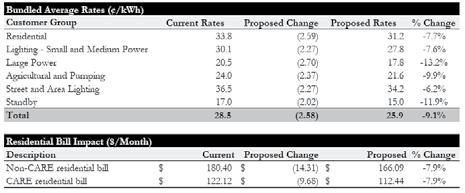
This Application and the projected rate decrease described in this notice is a forecast and is likely to change prior to including these costs in SCE’s 2025 rates. SCE will update this Application in October 2024, so that the latest forecast assumptions can be incorporated.
How does the rest of this process work?
The Application will be assigned to a CPUC Administrative Law Judge who will consider proposals and evidence presented during the formal hearing process. The Administrative Law Judge will issue a proposed decision that may adopt SCE’s application, modify it, or deny it. Any CPUC Commissioner may sponsor an alternate decision with a different outcome. The proposed decision, and any alternate decisions, will be discussed and voted upon by the CPUC Commissioners at a public CPUC Voting Meeting.
Parties to the proceeding may review SCE’s application, including the Public Advocates Office. The Public Advocates Office is an independent consumer advocate within the CPUC that represents customers to obtain the lowest possible rate for service consistent with reliable and safe service levels. For more information about the Public Advocates Office, please call 1-415703-1584, email PublicAdvocatesOffice@cpuc.ca.gov, or visit PublicAdvocates.cpuc.ca.gov
Where can I get more information?
For questions about SCE’s request, they can be contacted at:
Contact SCE:
Phone: (800) 655-4555
Email: case.admin@sce.com
Mail: Eric Lee
Southern California Edison Company A.24-05-007 – SCE’s 2025 ERRA Forecast P.O. Box 800 Rosemead, CA 91770
A copy of the Application and any related documents may also be reviewed at www.sce.com/applications by searching for the Application name or A.24-05-007
Contact CPUC:
Please visit apps.cpuc.ca.gov/c/A2405007 to submit a comment about this proceeding on the CPUC Docket Card. Here you can also view documents and other public comments related to this proceeding.
Your participation by providing your thoughts on SCE’s request can help the CPUC make an informed decision.
If you have questions about CPUC processes, you may contact the CPUC’s Public Advisor’s Office at: Phone: 1-866-849-8390 (toll-free) or 1-415-703-2074
Email: Public.Advisor@cpuc.ca.gov
Mail: CPUC Public Advisor’s Office 505 Van Ness Avenue San Francisco, CA 94102
Please reference SCE’s 2025 ERRA Application A.24-05-007 in any communications you have with the CPUC regarding this matter.
Street Santa Barbara, CA 93101; Kelsey Grunewald Meza (same address) Jonathan Meza Serrano (same address) This business is conducted by a Married Couple Filed by: KELSEY GRUNEWALD MEZA/ VETERINARIAN with the County Clerk of Santa Barbara County on May 9, 2024. This statement expires five years from the date it was filed in the Office of the County Clerk. Joseph E. Holland, County Clerk (SEAL) by E30. FBN Number: 2024‑0001156. Published: May 16, 23, 30. Jun 6 2024.
FICTITIOUS BUSINESS NAME STATEMENT The following person(s) is/are doing business as: DOS PUEBLOS AQUATIC BOOSTERS
115 S La Cumbre Ln Suite 100 Santa Barbara, CA 93105; South Coast Community Aquatic Center (same address) This business is conducted by a Corporation Filed by: ARJUN MCAVOY/TREASURER with the County Clerk of Santa Barbara County on May 3, 2024. This
statement expires five years from the date it was filed in the Office of the County Clerk. Joseph E. Holland, County Clerk (SEAL) by E47. FBN Number: 2024‑0001112. Published: May 16, 23, 30. Jun 6 2024.
FICTITIOUS BUSINESS NAME
STATEMENT
File No. FBN 2024‑0000970
The following person(s) is doing business as:
LEO SANTOS IT NETWORK SERVICES, 591 GAZELLE WAY ORCUTT, CA 93455, County of SANTA BARBARA. LEO SANTOS, 591 GAZELLE WAY ORCUTT, CA 93455
This business is conducted by AN INDIVIDUAL.
The registrant commenced to transact business under the fictitious business name or names listed above on NOT APPLICABLE /s/ LEO SANTOS, OWNER
This statement was filed with the County Clerk of Santa Barbara County on 04/17/2024.
Joseph E. Holland, County Clerk 5/16, 5/23, 5/30, 6/6/24
CNS‑3809917# SANTA BARBARA INDEPENDENT
FICTITIOUS BUSINESS NAME STATEMENT
File No. FBN 2024‑0000979
The following person(s) is doing business as:
TND APPAREL, 3986 MESA CIRCLE DR #211 LOMPOC, CA 93436, County of SANTA BARBARA.
KEITH CRUZ, 3986 MESA CIRCLE DR #211 LOMPOC, CA 93436
This business is conducted by AN INDIVIDUAL.
The registrant commenced to transact business under the fictitious business name or names listed above on NOT APPLICABLE /s/ KEITH CRUZ, OWNER
This statement was filed with the County Clerk of Santa Barbara County on 04/18/2024.
Joseph E. Holland, County Clerk 5/16, 5/23, 5/30, 6/6/24
CNS‑3809984# SANTA BARBARA INDEPENDENT
FICTITIOUS BUSINESS NAME STATEMENT The following person(s) is/are doing business as: SANTA BARBARA LIFESTYLE MEDICINE 1532 State Street, 2nd Floor Santa Barbara, CA 93105; Amanda L. Scott, M.D. Inc. 4580 Atascadero Dr. Santa Barbara, CA 93110 This business is conducted by a Corporation Filed by:


Carosam Road Santa Barbara, CA 93110; Naomi Broomberg (same address) This business is conducted by a Individual Filed by: NAOMI
BROOMBERG/OWNER with the County Clerk of Santa Barbara County on May 8, 2024. This statement expires five years from the date it was filed in the Office of the County Clerk. Joseph E. Holland, County Clerk (SEAL) by E47. FBN Number: 2024‑0001142. Published: May 23, 30. Jun 6, 13 2024.
FICTITIOUS BUSINESS NAME
STATEMENT The following person(s) is/are doing business as: THE CAT HOUSE HOTEL 1922 De La Vina Santa Barbara, CA 93101; Cat House SB, LLC 17 Hurricane St 1 Marina Del Rey, CA 90292. This business is conducted by a Limited Liability Company Filed by: OLIVER
FRIES/MANAGING MEMBER with the County Clerk of Santa Barbara County on May 10, 2024. This statement expires five years from the date it was filed in the Office of the County Clerk. Joseph E. Holland, County Clerk (SEAL) by E30. FBN Number: 2024‑0001160. Published: May 23, 30. Jun 6, 13 2024.
FICTITIOUS BUSINESS NAME
STATEMENT The following person(s) is/are doing business as: J.FLORES DESIGN 1619 Calzada Ave Santa Ynez, CA 93460; Jessica N Flores
P.O. Box 755 Santa Ynez, CA 93460. This business is conducted by a Individual Filed by: JESSICA FLORES/ CEO with the County Clerk of Santa Barbara County on May 8, 2024. This statement expires five years from the date it was filed in the Office of the County Clerk. Joseph E. Holland, County Clerk (SEAL) by E30. FBN Number: 2024‑0001148. Published: May 23, 30. Jun 6, 13 2024.
FICTITIOUS BUSINESS NAME
STATEMENT
File No. FBN 2024‑0001069
The following person(s) is doing business as: Periwinkles Mercantile, 2933 Grand Ave #C Los Olivos, CA 93441, County of SANTA BARBARA.
CYNTHIA BURDITT, 2933 GRAND
AVE #C LOS OLIVOS, CA 93441
This business is conducted by AN INDIVIDUAL.
The registrant commenced to transact business under the fictitious business name or names listed above on 10/01/2017 /s/ CYNTHIA BURDITT, OWNER
This statement was filed with the County Clerk of Santa Barbara County on 04/26/2024. Joseph E. Holland, County Clerk
5/23, 5/30, 6/6, 6/13/24
CNS‑3813280#
SANTA BARBARA
INDEPENDENT
FICTITIOUS BUSINESS NAME
STATEMENT
The following person(s) is/are doing business as: PACIFIC BLAST SUPPLY, PAC
BLAST SUPPLY, PACIFIC BLAST, PAC BLAST 5945 Daley St Goleta, CA 9317; Pacific Vibe, Inc. (same address) This business is conducted by a Corporation Filed by: DANIEL
OCHOA/OWNER/PRESIDENT with the County Clerk of Santa Barbara County on May 16, 2024. This statement expires five years from the date it was filed in the Office of the County Clerk. Joseph E. Holland, County Clerk (SEAL) by E30. FBN Number: 2024‑0001212. Published: May 23, 30. Jun 6, 13 2024.
FBN2024‑0001168
FICTITIOUS BUSINESS
NAME STATEMENT
The following person(s) is (are) doing business as: Fictitious Business Name: CENTRAL VALLEY COMMUNITY BANK
Street Address of Principal
Place of Business: 1501 State Street Santa Barbara CA 93101 County of Principal Place of Business: Santa Barbara
Name of Corporation or limited liability company as shown in the Articles of Inc. / Org. / Reg.: COMMUNITY WEST BANK, State of Inc./Org/Reg. California Business Mailing Address:
101 Fresno CA 93720 This business is/was conducted by: a corporation. Registrant commenced to transact business under the fictitious business name or names listed above on Apr 01, 2024. BY SIGNING, I DECLARE THAT ALL INFORMATION IN THIS STATEMENT IS TRUE AND CORRECT. A registrant who declares as true any material matter pursuant to Section 17913 of the Business and Professions Code that the registrant knows to be false is guilty of a misdemeanor punishable by a fine not to exceed one thousand dollars ($1,000).
Signature: Shannon Livingston Printed Name of Person Signing: SHANNON LIVINGSTON Printed Title of Person Signing: Executive Vice President and CFO Filed in County Clerk’s Office, County of Santa Barbara on May 10, 2024.
NOTICE In accordance with subdivision (a) of Section 17920, a Fictitious Name Statement generally expires at the end of five years from the date on which it was filed in the Office of the County Clerk.
Except, as provided in subdivision (b) of Section 17920, where it expires 40 days after any change in the facts set forth in the statement pursuant to Section 17913 other than a change in the residence address of a registered owner. A New Fictitious Business Name Statement must be filed before the expiration. The filing of this statement does not of itself authorize the use in this state of a Fictitious Business Name in violation of the rights of another under Federal, State, or Common Law. (See Section 14411 et seq., business and professions code).
Business Owner is responsible to determine if publication is required. (BPC 17917). Filing is a public record (GC 62506277). Filing
JOSEPH E. HOLLAND County ClerkRecorder CN106228 C67770006 May 30, Jun 6,13,20, 2024
FBN2024‑0001166
FICTITIOUS BUSINESS NAME STATEMENT
The following person(s) is (are) doing business as: Fictitious Business Name: CENTRAL VALLEY COMMUNITY BANK
Street Address of Principal Place of Business: 445 Pine Avenue, Goleta CA 93117 County of Principal Place of Business: Santa Barbara Name of Corporation or limited liability company as shown in the Articles of Inc. / Org. / Reg.: COMMUNITY WEST BANK, State of Inc./Org/Reg. California Business Mailing Address: 7100 N. Financial Drive Suite 101 Fresno CA 93720
This business is/was conducted by: a corporation. Registrant commenced to transact business under the fictitious business name or names listed above on Apr 01, 2024. BY SIGNING, I DECLARE THAT ALL INFORMATION IN THIS STATEMENT IS TRUE AND CORRECT. A registrant who declares as true any material matter pursuant to Section 17913 of the Business and Professions Code that the registrant knows to be false is guilty of a misdemeanor punishable by a fine not to exceed one thousand dollars ($1,000).
Signature: Shannon Livingston
Printed Name of Person Signing: SHANNON LIVINGSTON
Printed Title of Person Signing: Executive Vice President and CFO
Filed in County Clerk’s Office, County of Santa Barbara on May 10, 2024.
NOTICE In accordance with subdivision (a) of Section 17920, a Fictitious Name Statement generally expires at the end of five years from the date on which it was filed in the Office of the County Clerk.
Except, as provided in subdivision (b) of Section 17920, where it expires 40 days after any change in the facts set forth in the statement pursuant to Section 17913 other than a change in the residence address of a registered owner. A New Fictitious Business Name Statement must be filed before the expiration. The filing of this statement does not of itself authorize the use in this state of a Fictitious Business Name in violation of the rights of another under Federal, State, or Common Law. (See Section 14411 et seq., business and professions code).
Business Owner is responsible to determine if publication is required. (BPC 17917). Filing is a public record (GC 62506277). Filing
JOSEPH E. HOLLAND
County ClerkRecorder CN106226 C67770006 May 30, Jun 6,13,20, 2024
FBN2024‑0001167
FICTITIOUS BUSINESS
NAME STATEMENT
The following person(s) is (are) doing business as: Fictitious Business Name: CENTRAL VALLEY
COMMUNITY BANK
Street Address of Principal Place of Business: 5827 Hollister Avenue, Goleta CA 93117
County of Principal Place of Business: Santa Barbara Name of Corporation or limited liability company as shown in the Articles of Inc. / Org. / Reg.: COMMUNITY WEST BANK, State of Inc./Org/Reg. California Business Mailing Address: 7100 N. Financial Drive Suite 101 Fresno CA 93720
This business is/was conducted by: a corporation. Registrant commenced to transact business under the fictitious business name or names listed above on Apr 01, 2024.
BY SIGNING, I DECLARE THAT ALL INFORMATION IN THIS STATEMENT IS TRUE AND CORRECT. A registrant who declares as true any material matter pursuant to Section 17913 of the Business and Professions Code that the registrant knows to be false is guilty of a misdemeanor punishable by a fine not to exceed one thousand dollars ($1,000).
Signature: Shannon Livingston
Printed Name of Person Signing: SHANNON LIVINGSTON
Printed Title of Person Signing: Executive Vice President and CFO Filed in County Clerk’s Office, County of Santa Barbara on May 10, 2024.
NOTICE In accordance with subdivision (a) of Section 17920, a Fictitious Name Statement generally expires at the end of five years from the date on which it was filed in the Office of the County Clerk. Except, as provided in subdivision (b) of Section 17920, where it expires 40 days after any change in the facts set forth in the statement pursuant to Section 17913 other than a change in the residence address of a registered owner. A New Fictitious Business Name Statement must be filed before the expiration. The filing of this statement does not of itself authorize the use in this state of a Fictitious Business Name in violation of the rights of another under Federal, State, or Common Law. (See Section
14411 et seq., business and professions code).
Business Owner is responsible to determine if publication is required. (BPC 17917). Filing is a public record (GC 62506277).
Filing
JOSEPH E. HOLLAND
County ClerkRecorder
CN106227 C67770006 May 30, Jun 6,13,20, 2024
FICTITIOUS BUSINESS NAME
STATEMENT The following person(s) is/are doing business as: ABSOLUTE WOOD PRODUCTS, INC. 253 Pebble Beach Drive Goleta, CA 93117; Absolute Wood Products, Inc. (same address) This business is conducted by a Corporation Filed by: JEFFREY A. WAYCO/CEO with the County Clerk of Santa Barbara County on May 20, 2024. This statement expires five years from the date it was filed in the Office of the County Clerk. Joseph E. Holland, County Clerk (SEAL) by E47. FBN Number: 2024‑0001233. Published: May 30. Jun 6, 13, 20 2024.
FICTITIOUS BUSINESS NAME
STATEMENT
File No. FBN2024‑0001162
The following person(s) is (are) doing business as: 1. Artemisia Floral Design, 2. Artemisia Floral Design House, 3.
Artemisia, 1825 Still meadow Rd., Solvang, CA 93463 County of SANTA BARBARA
Mailing Address: 1825 Still meadow Rd., Solvang, CA 93463
Rachel M Mosti, 1825 Still meadow Rd., Solvang, CA 93463
This business is conducted by an Individual
The registrant(s) commenced to transact business under the fictitious business name or names listed above on N/A.
S/ Rachel M Mosti This statement was filed with the County Clerk of Santa Barbara County on 05/10/2024. Joseph E. Holland, County Clerk 5/30, 6/6, 6/13, 6/20/24
CNS‑3761627# SANTA BARBARA INDEPENDENT
FICTITIOUS BUSINESS NAME
STATEMENT
File No. FBN2024‑0001164
The following person(s) is (are) doing business as:
Extra Space Storage (#6422), 224 N A St., Lompoc, CA 93436 County of SANTA BARBARA
Mailing Address: 2795 E Cottonwood Pkwy. 400, Salt Lake City, UT 84121
Extra Space Management, Inc., 2795 E Cottonwood Pkwy. 400, Salt Lake City, UT 84121
This business is conducted by a Corporation
The registrant(s) commenced to transact business under the fictitious business name or names listed above on N/A.
Extra Space Management, Inc.
S/ Gwyn Goodson McNeal, Vice President, This statement was filed with the County Clerk of Santa Barbara County on 05/10/2024. Joseph E. Holland, County Clerk 5/30, 6/6, 6/13, 6/20/24
CNS‑3787684#
SANTA BARBARA
INDEPENDENT
FICTITIOUS BUSINESS NAME
STATEMENT The following person(s) is/are doing business as:
CASTANEDA PRO TINT & DESIGN LLC 12 Ashley Avenue Santa Barbara, CA 93103; Castaneda Pro Tint & Design LLC (same address) This business is conducted by a Limited Liability Company Filed by: MARIO A. CASTANEDA/OWNER with the County Clerk of Santa Barbara County on May 20, 2024. This statement expires five years from the date it was filed in the Office of the County Clerk. Joseph E. Holland, County Clerk (SEAL) by E30. FBN Number: 2024‑0001228. Published: May 30. Jun 6, 13, 20 2024.
FICTITIOUS BUSINESS NAME
COUNTY OF SANTA BARBARA BOARD OF SUPERVISORS STATE OF CALIFORINIA
NOTICE OF PUBLIC HEARING RECOMMENDED BUDGET FOR THE 2024-25 FISCAL YEAR Tuesday, June 11, 2024
Board Hearing Room
The meeting starts at 9:00 a.m.
STATEMENT The following person(s) is/are doing business as: CALIFORNIA PATIENT ADVOCACY 1190 North Refugio Rd Santa Ynez, CA 93460; Kenneth W Partch (same address) This business is conducted by a Individual Filed by: KENNETH W PARTCH/OWNER with the County Clerk of Santa Barbara County on May 15, 2024. This statement expires five years from the date it was filed in the Office of the County Clerk. Joseph E. Holland, County Clerk (SEAL) by E30. FBN Number: 2024‑0001199. Published: May 30. Jun 6, 13, 20 2024.
FICTITIOUS BUSINESS NAME
STATEMENT The following person(s) is/are doing business as: STORKE FUEL DEPOT, STORKE CAR WASH 370 Storke Rd Goleta, CA 93117; Price Properties LLC, General Partner of Channel Auto Services LP 101 W Carrillo Street Santa Barbara, CA 93101 This business is conducted by a Limited Partnership Filed by: JOHN PRICE/MANAGER OF GENERAL PARTNER with the County Clerk of Santa Barbara County on May 20, 2024. This statement expires five years from the date it was filed in the Office of the County Clerk. Joseph E. Holland, County Clerk (SEAL) by E30. FBN Number: 2024‑0001230. Published: May 30. Jun 6, 13, 20 2024.
NOTICE IS HEREBY GIVEN that on Tuesday, June 11, 2024, at 9:00 a.m. in the Board of Supervisors’ Hearing Room, Fourth Floor, County Administration Building, 105 East Anapamu Street, Santa Barbara, California; the Santa Barbara County Board of Supervisors (acting concurrently as the Board of Directors for the Santa Barbara County Fire Protection District, Santa Barbara County Flood Control and Water Conservation District, Laguna County Sanitation District, Santa Barbara County Water Agency and other special districts under the supervision and control of the Board of Supervisors) will meet for the purpose of conducting Public Hearings on:
• The Fiscal Year 2024-25 Recommended Budget for the County of Santa Barbara. The Recommended Budget for the County of Santa Barbara includes the County’s General Operational Budget as well as budgets of special districts governed by the Board of Supervisors, and;
• The Fiscal Year 2024-25 Recommended Budget for the County of Santa Barbara acting as Successor Agency to the former County of Santa Barbara Redevelopment Agency
The hearings are scheduled for June 11 and, if necessary, June 13, 2024, including the Board of Supervisors’ final deliberations. Should additional deliberations be needed, the Board may choose to extend the hearings through June 25, 2024. The hearing schedule will be available for public review on the County’s website at http://countyofsb.org on May 30, 2024; however, individual times on that schedule are subject to change.
The Santa Barbara County Board of Supervisors currently provides in-person participation as well as virtual participation until further notice. For current methods of public participation for the meetings of June 11 and June 13, 2024, please see page two (2) of the posted agenda. The posted agenda will be available on the Thursday prior to the above referenced meeting for a more specific time for this item. However, the order of the agenda may be rearranged or the item may be continued.
Any member of the public may submit written comments and speak at the hearing regarding any item in the Recommended Budgets or for the inclusion of additional items. All proposals for revisions shall be submitted in writing to the Clerk of the Board of Supervisors (the Clerk) before the close of the public hearing. The Board will receive staffs recommended final budget changes, which will be available for public review before the Board takes final action on them.
Staff reports and the posted agenda is available on the Thursday prior to the meeting at http://santabarbara. legistar.com/Calendar.aspx under the hearing date or contact the Clerk of the Board at (805) 568-2240 for alternative options.
In compliance with the Americans with Disabilities Act, if you need special assistance to participate in this meeting, please contact the Clerk of the Board of Supervisors by 4:00 PM on Friday before the Board meeting. For information about these services please contact the Clerk of the Board at (805) 568-2240.
If you have any questions or if you are participating in the hearing telephonically or electronically and need a disability-related modification or accommodation or have any issues attempting to access the hearing telephonically or electronically, please contact the Clerk at (805) 568-2240.
The Fiscal Year 2024-25 Recommended Budgets for the County of Santa Barbara and the County of Santa Barbara as Successor Agency to the former County of Santa Barbara Redevelopment Agency will be posted on the County’s website at http://www.countyofsb.org on or before Thursday, May 30, 2024 and will be available in hard copy for public review beginning on May 30, 2024, at the Clerk of the Board Office (105 East Anapamu Street, Room 407, Santa Barbara, California) between 8:00 a.m. and 5:00 p.m. on weekdays. A copy will also be available at the County’s Fifth District Office at 511 East Lakeside Parkway, Santa Maria.
Questions may be directed to the County Executive Office at (805) 568-3400.
If you challenge this project in court, you may be limited to raising only those issues you or someone else raised at the public hearing described in this notice, or in written correspondence to the Board of Supervisors prior to the public hearing. G.C. Section 65009, 6066, and 6062a.
Mona MiyasatoCLERK OF THE BOARD
OF SUPERVISORS By: Sheila de la Guerra, Deputy Clerkof Person Signing: Executive Vice President and CFO
Filed in County Clerk’s Office, County of Santa Barbara on May 10, 2024. NOTICE ‑ In accordance with subdivision (a) of Section 17920, a Fictitious Name Statement generally expires at the end of five years from the date on which it was filed in the Office of the County Clerk. Except, as provided in subdivision (b) of Section 17920, where it expires 40 days after any change in the facts set forth in the statement pursuant to Section 17913 other than a change in the residence address of a registered owner. A New Fictitious Business Name Statement must be filed before the expiration. The filing of this statement does not of itself authorize the use in this state of
a Fictitious Business Name in violation of the rights of another under Federal, State, or Common Law. (See Section 14411 et seq., business and professions code).
Business Owner is responsible to determine if publication is required. (BPC 17917). Filing is a public record (GC 6250‑6277).
Filing
JOSEPH E. HOLLAND
County Clerk‑Recorder CN106229 C6777‑0006 May 30, Jun 6,13,20, 2024
PUBLIC NOTICES
PUBLIC NOTICE
NOTICE OF PUBLIC SALE OF PERSONAL PROPERTY
Notice is hereby given that pursuant to Sections 21700 through 21716 of the Business & Professions Code, Patterson Plus Self‑Storage, will sell at public sale, the following delinquent occupant’s(s’) stored contents, by competitive bidding ending on June 6, 2024 at 11 am.
Property has been stored by the occupant(s) and is located at Patterson Plus Self‑Storage, 5325 Calle Real, Santa Barbara, California 93111. Competitive bid
auction available online only at www.storagetreasures.com The property being sold is described as:
Unit # MTN309‑ Paul Arria Furniture, helmet, toys, clothing, personal effects, bins/boxes contents unknown
Purchases must be picked up at the above location and paid for at the time of purchase with cash or credit card only. All purchased goods are sold as is, where is, and must be removed at the time of sale. The sale is subject to prior cancellation in the event of settlement between Owner and Occupant(s). Dated this 23 day of May, 2024 and this 30 day of May, 2024.
PATTERSON PLUS SELF‑
STORAGE (805) 964‑4097
For bidding technical questions ‑ Storage Treasures (480) 397‑6503
PUBLIC NOTICE
NOTICE OF PUBLIC SALE OF PERSONAL PROPERTY
Notice is hereby given that pursuant to Sections 21700 through 21716 of the Business & Professions Code, Patterson/101 Allstore Self‑Storage, will sell at public sale, the following delinquent occupant’s(s’) stored contents, by competitive bidding ending on June 6, 2024 at 11 am.
Property has been stored by the occupant(s) and is located at Patterson/101 Allstore Self‑ Storage, 98 North Patterson Avenue, Santa Barbara, California 93111. Competitive bid auction available online only at www.storagetreasures.com The property being sold is described as:
Unit #B009– Kathryn McKee or Grant McKee
Furniture, file cabinet, book case, pots, pans, personal effects, luggage, mattress, Boxes contents unknown
Purchases must be picked up at the above location and paid for at the time of purchase with cash or credit card only. All purchased goods are sold as is, where is, and must be removed at the time of sale. The sale is subject to prior cancellation in the event of settlement between Owner and Occupant(s). Dated this 23 day of May, 2024 and this 30 day of May, 2024.
PATTERSON/101 ALLSTORE SELF‑STORAGE (805) 964‑0924
For bidding technical questions ‑ Storage Treasures (480) 397‑6503
NOTICE OF PUBLIC SALE
To satisfy the owner’s storage lien, PS Retail Sales, LLC will sell at public lien sale on June 7, 2024,the personal property in the below‑listed units. The public sale of these items will begin at 08:00 AM and continue until all units are sold. The lien sale is to be held at the online auction website, www.storagetreasures.com, where indicated. For online lien sales, bids will be accepted until 2 hours after the time of the sale specified.
PUBLIC STORAGE # 25714, 7246 Hollister Ave, Goleta, CA 93117, (805) 324‑6770 Sale to be held at www.storagetreasures.com. A252 ‑ Tesfa, Fiqir
Public sale terms, rules, and regulations will be made available prior to the sale. All sales are subject to cancellation. We reserve the right to refuse any bid. Payment must be in cash or credit card‑no checks. Buyers must secure the units with their own personal locks. To claim tax‑ exempt status, original RESALE certificates for each space purchased is required. By PS Retail Sales, LLC, 701 Western Avenue, Glendale, CA 91201. (818) 244‑8080.
5/30/24
CNS‑3817855# SANTA BARBARA INDEPENDENT
HOUSING AUTHORITY OF THE CITY OF SANTA BARBARA PUBLIC NOTICE
The Housing Authority of the City of Santa Barbara (HACSB) is accepting applications for its Section 8 Project‑Based Voucher (PBV) Program. Applications will be accepted for new construction projects for properties that have regulatory agreements dictating an affordability period of no less than 40‑years and for properties serving seniors and/or special needs households. Rental subsidies for units assisted under the PBV program can be provided for a term of up to 20 years, subject to the availability of appropriations and future availability of funding under HACSB’s Annual Contributions Contract with the Department of Housing and Urban Development (HUD). HACSB anticipates that approximately 75 Project‑Based vouchers will be awarded under the proposal, for units located within the Santa Barbara City limits which HACSB determines to be most appropriate for this type of assistance.
You may log on to www.hacsb. org for more information, ranking criteria, selection procedures, owner application, and requirements. Applications must be received by 10:00 AM on July 1, 2024. Please contact Perla Vega, Housing Programs Analyst at (805) 897‑1024 with any questions regarding the PBV Program or owner application submission requirements.
STATE OF CALIFORNIA DIVISION OF WORKERS’ COMPENSATION
WORKERS’ COMPENSATION
APPEALS BOARD SPECIAL NOTICE OF LAWSUIT
(Pursuant to Labor Code section 5501.5 (a) (1) or (d).) and Code of Civil Procedure section 412.20 and 412.30)
WCAB No. ADJ9761982 Amended Application
To: DEFENDANT: CODY SELL DBA
SPERIOR LANDSCAPING
AVISO: Usted esta siendo demandado. La corte puede expedir una decision en contra suya sin darle la oportunidad de defenderse a menos que usted acute pronto. Lea la siguiente informacion.
APPLICANT (S), PABLO MANZANAREZ‑GALLARDO
NOTICES
1) A lawsuit, the attached Application for Adjudication of Claim, has been filed with the Workers Compensation Appeals Board against you as the named defendant by the above‑named applicant(s).
You may seek the advice of an attorney in any matter connected with this lawsuit and such attorney should be consulted promptly so that your response may be filed and entered in a timely fashion.
If you do not know an attorney, you may call an attorney reference service or a legal aid office (see telephone directory).
Yu may also request assistance/ information from an Information and Assistance Officer of the Division of Workers’ Compensation (see telephone directory)
2) An Answer to the Application must be filed and served within six days of the service of the Application pursuant to Appeals Board rules; therefore, your written response must be filed with the Appeals Board promptly; a letter or phone call will not protect your interests.
3) You will be served with a Notice(s) of Hearing and must appear at all hearings or conferences. After such hearing, even absent your appearance, a decision may be made and an award of compensation benefits may issue against you. The award could result in the garnishment of your wages, taking of your money or property or other relief.
If the Appeals Board makes an award against you, your house or other dwelling or other property may be taken to satisfy that award in a non‑judicial sale, with no exemptions from execution.
A lien may also be imposed upon your property without further hearing and before the issuance of an award.
4) You must notify the Appeals Board of the proper address for the service of official notices and papers and notify the Appeals Board of any changes in that address.
TAKE ACTION NOW TO PROTECT YOUR INTERESTS! Issued by: WORKERS’ COMPENSATION APPEALS BOARD Name and address of Appeals Board: Workers’ Compensation Appeals Board 130 East Ortega Santa Barbara, CA 93101; Name and address of Applicant’s Attorney: Ghitterman, Ghitterman & Feld 418 E. Canon Perdido St., Santa Barbara, CA 93101; (805) 965‑4540 Published: May 9, 16, 23, 30 2024.
NOTICE OF SEIZURE pursuant to Health and Safety Code sections 11471/11488 and Notice of Intended Forfeiture pursuant to Health and Safety Code Section 11488.4
On June 21, 2023 and June 24, 2023, Ventura County Sheriff's Office officers seized property for forfeiture pursuant to Health and Safety Code section 11470 et seq. in connection with controlled a substance violation that is listed in section 11470(f) of the Health and Safety Code. The estimated/appraised value of the property is $23,087.01. The seized property is described as follows: Property Location $16,377.01 U.S. Currency (frozen per seizure/ status quo order) Wells Fargo Bank checking account with last four digits 4489 in the name of ABEL LOPEZ as
of June 24, 2023, restrained as of that same date.
$6,710.00 U.S. Currency Seized at both a traffic stop of ABEL LOPEZ at or near the 400 block of Hope Street in Santa Barbara, California and from the master bedroom of the residence of ABEL LOPEZ located at 326 Rancheria Street, Apartment B in Santa Barbara on June 21, 2023. Pursuant to section 11488.4 of the Health and Safety Code, procedures to forfeit this property in The Superior Court of California, County of Ventura are underway. If someone has stating interest in this property, you must, within 30 days of the first publication of this Notice of Seizure, file a verified Claim Opposing Forfeiture MC‑200 in the Superior Court Clerk’s Office, room 210, located at 800 S. Victoria Avenue, Ventura, California. Case No.2023CUAF014337 has been assigned to this case. You must also provide a verified copy of the Claim Opposing Forfeiture (MC‑ 200) to the District Attorney’s Office, 5720 Ralston Street, Suite 300, Ventura, California 93003, to the attention of the Asset Forfeiture Unit. The failure to timely file a verified claim stating an interest in the property will result in the property being ordered forfeited to the State of California and distributed pursuant to the provisions of Health and Safety Code section 11489 without further notice or hearing. 5/16, 5/23, 5/30/24 CNS‑3809927# SANTA BARBARA INDEPENDENT IN ACCORDANCE with Sec. 106 of the Programmatic Agreement, AT&T plans to PROPOSED SCREEN WALL ON EXISTING ROOFTOP at 29 CALLE LAURELES SANTA BARBARA, CA 93105. Please direct comments to Gavin L. at 818‑391‑0449 regarding site CSL04367. 5/23, 5/30/24
CNS‑3801767# SANTA BARBARA INDEPENDENT
INTERESTED PERSONS are invited to comment on the following wireless telecommunications facility named “SV00042A” located at 3035 Gibraltar Rd., Santa Barbara, Santa Barbara County, CA, and specifically on potential effects to historic properties located at or near this facility, if any. The site consists of a proposed antenna modification to 2 existing ground mounted poles. Comments regarding potential effects to historic properties should be submitted by email to KerryWilloughby@ AceEnvironmentalLLC.com. Address: 9976 Peak Lookout St., Las Vegas, NV 89178, (702) 614‑4431.This notice is provided in accordance with the regulations of the FCC 47 CFR Part 1,Subpart I and Appendices B and C.
SUMMONS
PUBLISHED CITATION WELFARE AND INSTITUTIONS CODE SECTIONS 294 & 366.26
SITTING AS THE JUVENILE COURT SUPERIOR COURT OF THE STATE OF CALIFORNIA FOR THE COUNTY OF SACRAMENTO In the Matter of: BRISTOL EASTON WOLF Minor born: 8/31/2023 Case No(s): 242644 THE PEOPLE OF THE STATE OF CALIFORNIA TO: JENNIFER NICOLE WOLF OR ANYONE CLAIMING TO BE THE MOTHER OF THE ABOVENAMED CHILD BORN ON 8/31/2023.
PUBLISHED NOTICE OF HEARING AND NOTICE TO PARENT OF RIGHTS AND PROCEDURES PURSUANT TO WELFARE AND INSTITUTION CODES SECTIONS 294 and 366.26
1. YOU ARE HEREBY NOTIFIED THAT on July 11, 2024, at 8:30 a.m. in Department 133 of the Sacramento County Juvenile Court, Superior Court of California,
located at 3341 Power Inn Road, Sacramento, CA 95826, a hearing will take place pursuant to Welfare and Institutions Code, Section 366.26, to either terminate your parental rights or to establish a guardianship for your child or to place your child in long‑term foster care. 2. Effective Monday, January 3, 2022, Juvenile Dependency Division will be open to parties for in‑person hearing at the Family Relations Courthouse. Parties may also appear remotely if they choose. We strongly encourage you to contact the current carrying case Social Worker, Ricky Vang at (916) 876‑7547 prior to the court hearing date to verify whether the hearing will be held in person or through teleconference. The zoom hearing (videoconference) link is https:// saccourt‑ca‑ gov.zoomgov.com/ my/sscdept133 if you opt to call in (teleconference), the telephone number is: (833) 568‑8864 Meeting ID: 161 1961 8560. 3. You are further notified that the Sacramento County Department of Family, Child and Adult Services, Petitioner, will recommend the following action: termination of parental rights permanently and a court order that the above‑named minor be placed for adoption.
4. You have the right to personally appear in court and be heard in this matter.
5. On the above date the Court will determine the best permanent plan for your child. Evidence will be presented. After hearing the evidence presented by the parties, the Court will make one of the following orders: a. Terminate your parental rights permanently and order that the child be placed for adoption. b. Without permanently terminating your parental rights, identify adoption as the permanent placement goal and order that efforts be made to locate an appropriate adoptive family for your child for a period not to exceed 60 days.
c. Without permanently terminating your parental rights appoint a legal guardian for your child and issue letters of guardianship; or, d. Order that your child be placed in long‑term foster care, subject to the regular review of the Juvenile Court.
6. You may have the right to have
an attorney represent you at the hearing. If you cannot afford an attorney, the Court will appoint an attorney for you, unless you knowingly and willingly waive your right to representation by an attorney. You have the right to present evidence at the hearing. 7. You have the right to request a trial on the issue of what permanent plan is best for your child. You have the right to present evidence. You have the right to use the Court’s power to compel the attendance of witnesses to testify on your behalf. You have the right to confront and cross‑examine any adverse witnesses. You have the right to confront and cross‑examine the preparers of any reports submitted to the Court by the Sacramento County Department of Family, Child and Adult Services, Petitioner. You have the right to assert the privilege against selfincrimination. 8. Any Order of the Court permanently terminating your parental rights shall be final and you shall have no legal rights to the care, control or custody of the child. 9. The Sacramento County Department of Family, Child and Adult Services, Petitioner will prepare and file an assessment report containing its recommendation in this matter at least ten (10) calendar days before the hearing. You have the right to be provided with and obtain a copy of the report. You should immediately contact the social worker assigned to your child dependency case or your attorney if you have any questions or if you would like to read and obtain a copy of the report. 10. If you fail to appear at the hearing, the Court will proceed in your absence to adopt one of the above‑mentioned permanent plans. Such proceedings may include the termination of your parental rights so that your child may be placed up for adoption. If you have any questions regarding this procedure, please contact the specified below or an attorney.
DATE: May 2, 2024 Michelle Callejas, Director /s/ By, DCFAS Paralegal, D. Rivas Department of Family, Child, and Adult Services Phone: (916) 541‑8027 5/9, 5/16, 5/23, 5/30/24 CNS‑38106 CNS‑3810604#
SANTA BARBARA INDEPENDENT
CITATION FOR PUBLICATION UNDER WELFARE AND INSTITUTIONS CODE SECTION 294 CASE NUMBER: 21JV00261
1. To (names of persons to be notified, If known, including names on birth certificate): Ana Christina Sevilla and anyone claiming to be a parent of (child’s name): Jayden
J. Lemmons born on (date): 02/24/2009 at (name of hospital or other place of birth and city and state): Cottage Hospital ‑ Santa Barbara, California
2. A hearing will be held on (date): 07/11/2024 at (time): 01:30 PM
In Dept.: SMJ 1 Room: located at court address above SUPERIOR COURT OF CALIFORNIA COUNTY OF SANTA BARBARA 4285‑B CALIFORNIA BLVD, SANTA MARIA, CALIFORNIA 93455 SANTA MARIA JUVENILE DIVISION
3. At the hearing the court will consider the recommendations of the social worker or probation officer.
4. The social worker or probation officer will recommend that your child be freed from your legal custody so that the child may be adopted. If the court follows the recommendation, all your parental rights to the child will be terminated.
5. You have the right to be present at the hearing, to present evidence, and you have the right to be represented by an attorney. If you do not have an attorney and cannot afford to hire one, the court will appoint an attorney for you.
6. If the court terminates your parental rights, the order may be final.
7. The court will proceed with this hearing whether or not you are present.
Date: 04/03/2024 Clerk, by DAISY SOTELO Published: May 9, 16, 23, 30 2024.
T.S. No.: 24‑10575
Notice of Trustee’s Sale Loan No.: ******0723 APN: 077‑204‑010 You Are In Default Under A Deed Of Trust Dated 9/29/2020. Unless You Take Action To Protect Your Property, It May Be Sold At A
COUNTY OF SANTA BARBARA BOARD OF SUPERVISORS STATE OF CALIFORINIA NOTICE OF PUBLIC HEARING Tuesday, June 4, 2024 Board Hearing Room
The meeting starts at 9:00 a.m.
NOTICE IS HEREBY GIVEN that a public hearing will be held by the Board of Supervisors of the County of Santa Barbara, State of California on Tuesday, June 4, 2024 at 9:00 a.m. or shortly thereafter, in the Board of Supervisors Hearing Rooms, 105 East Anapamu Street, Santa Barbara, CA, and 511 East Lakeside Parkway, Santa Maria, CA, on proposed tipping fees charged at county solid waste facilities, and collection rates and parcel fees for the collection of municipal solid waste in the unincorporated area.
Copies of the proposed rates will be posted at the County of Santa Barbara website at http://santabarbara.legistar.com/Calendar.aspx for the June 4, 2024 Board Hearing by May 30, 2024. Hard copies of the rates will be available by May 30, 2024 at the clerk of the board’s office at 105 East Anapamu Street, Santa Barbara, California. Hard copies of the rates will also be available at the office of the Resource Recovery & Waste Management division located at 130 E. Victoria Street, Suite 100, Santa Barbara, California. Questions can be directed during business hours to (805) 882-3600.
For current methods of public participation for the meeting of June 4, 2024, please see page two (2) of the posted Agenda. The posted agenda will be available on Thursday prior to the above referenced meeting for a more specific time for this item. However, the order of the agenda may be rearranged or the item may be continued.
Staff reports and the posted agenda is available on the Thursday prior to the meeting at http://santabarbara.legistar.com/Calendar.aspx under the hearing date or contact the Clerk of the Board at (805) 568-2240 for alternative options.
In compliance with the Americans with Disabilities Act, if you need special assistance to participate in this meeting, please contact the Clerk of the Board of Supervisors by 4:00 PM on Friday before the Board meeting. For information about these services please contact the Clerk of the Board at (805) 568-2240.
If you challenge this project in court, you may be limited to raising only those issues you or someone else raised at the public hearing described in this notice, or in written correspondence to the Board of Supervisors prior to the public hearing.
G.C. Section 65009, 6066, and 6062a.
Mona Miyasato CLERK OF THE BOARD OF SUPERVISORS By: Sheila de la Guerra, Deputy ClerkPublic Sale. If You Need An Explanation Of The Nature Of The Proceeding Against You, You Should Contact A Lawyer. A public auction sale to the highest bidder for cash, cashier’s check drawn on a state or national bank, check drawn by a state or federal credit union, or a check drawn by a state or federal savings and loan association, or savings association, or savings bank specified in Section 5102 of the Financial Code and authorized to do business in this state will be held by the duly appointed trustee as shown below, of all right, title, and interest conveyed to and now held by the trustee in the hereinafter described property under and pursuant to a Deed of Trust described below. The sale will be made, but without covenant or warranty, expressed or implied, regarding title, possession, or encumbrances, to pay the remaining principal sum of the note(s) secured by the Deed of Trust, with interest and late charges thereon, as provided in the note(s), advances, under the terms of the Deed of Trust, interest thereon, fees, charges and expenses of the Trustee for the total amount (at the time of the initial publication of the Notice of Sale) reasonably estimated to be set forth below. The amount may be greater on the day of sale.
Trustor: Saman Razani And Layla Razani Husband And Wife As Community Property With Right Of Survivorship Duly Appointed Trustee: Prestige Default Services, LLC Recorded 10/1/2020 as Instrument No. 2020‑0054120 in book ‑‑, page
‑‑ of Official Records in the office of the Recorder of Santa Barbara County, California, Date of Sale: 6/26/2024 at 1:00 PM Place of Sale: north door main entrance to County Courthouse, 1100 Anacapa Street, Santa Barbara Amount of unpaid balance and other charges: $895,761.05 Street Address or other common designation of real property: 6211 Guava Ave Goleta California 93117‑2041 A.P.N.: 077‑204‑010 The undersigned Trustee disclaims any liability for any incorrectness of the street address or other common designation, if any, shown above. If no street address or other common designation is shown, directions to the location of the property may be obtained by sending a written request to the beneficiary within 10 days of the date of first publication of this Notice of Sale. Notice To Potential Bidders: If you are considering bidding on this property lien, you should understand that there are risks involved in bidding at a trustee auction. You will be bidding on a lien, not on the property itself. Placing the highest bid at a trustee auction does not automatically entitle you to free and clear ownership of the property. You should also be aware that the lien being auctioned off may be a junior lien. If you are the highest bidder at the auction, you are or may be responsible for paying off all liens senior to the lien being auctioned off, before you can receive clear title to the property. You are encouraged to investigate the existence, priority, and size of
outstanding liens that may exist on this property by contacting the county recorder’s office or a title insurance company, either of which may charge you a fee for this information. If you consult either of these resources, you should be aware that the same lender may hold more than one mortgage or deed of trust on the property. All checks payable to Prestige Default Services, LLC. Notice To Property Owner: The sale date shown on this notice of sale may be postponed one or more times by the mortgagee, beneficiary, trustee, or a court, pursuant to Section 2924g of the California Civil Code. The law requires that information about trustee sale postponements be made available to you and to the public, as a courtesy to those not present at the sale. If you wish to learn whether your sale date has been postponed, and, if applicable, the rescheduled time and date for the sale of this property, you may call (877) 440‑4460 or visit this Internet Website https://mkconsultantsinc. com/trustees‑sales/, using the file number assigned to this case 24‑ 10575. Information about postponements that are very short in duration or that occur close in time to the scheduled sale may not immediately be reflected in the telephone information or on the Internet Web site. The best way to verify postponement information is to attend the scheduled sale. Notice To Tenant: You may have a right to purchase this property after the trustee auction pursuant to Section 2924m of the California Civil Code. If you are an “eligible tenant buyer,” you can purchase the property if you match the last and highest bid placed at the trustee auction. If you are an “eligible bidder,” you may be able to purchase the property if you exceed the last and highest bid placed at the trustee auction. There are three steps to exercising this right of purchase. First, 48 hours after the date of the trustee sale, you can call (877) 440‑4460, or visit this internet website https:// mkconsultantsinc.com/trustees‑ sales/, using the file number assigned to this case 24‑10575 to find the date on which the trustee’s sale was held, the amount of the last and highest bid, and the address of the trustee. Second, you must send a written notice of intent to place a bid so that the trustee receives it no more than 15 days after the trustee’s sale. Third, you must submit a bid so that the trustee receives it no more than 45 days after the trustee’s sale. If you think you may qualify as an “eligible tenant buyer” or “eligible bidder,” you should consider contacting an attorney or appropriate real estate professional immediately for advice regarding this potential right to purchase. Date: 5/13/2024 Prestige Default Services, LLC 1920 Old Tustin Ave. Santa Ana, California 92705 Questions: 949‑427‑2010 Sale Line: (877) 440‑4460 Patricia Sanchez, Trustee Sale Officer
NOTICE OF PENDING ACTION BY DIRECTOR OF PLANNING AND ENVIRONMENTAL REVIEW
The Grange As-Built Development Plan Time Extension 250, 260, & 270 Storke Road APN: 073-100-032
Case No. 24-0001-TEX / 19-024-DP
NOTICE IS HEREBY GIVEN that the Planning and Environmental Review Director intends to consider the merits of a proposed Time Extension (TEX) and take action.
DECISION DATE AND TIME: June 10, 2024, at 5:00PM
PROJECT DESCRIPTION:
The applicant, Marc Winnikoff of Storke Road II, LP, is requesting approval of a TEX to Case No. 19-024 that would extend the validity of the As-Built Development Plan for one additional year to October 14, 2025.
The As-Built Development Plan was approved on October 14, 2019, by the Director of Planning and Environmental Review. The As-Built Development Plan memorialized the existing development on-site including the existing site development modifications, as well as approved minor site changes. The As-Built Development Plan approved the following:
1. The addition of landscape islands at the end of all parking lanes.
2. The addition of stop signs within the parking lot to improve circulation.
3. The re-stripping of the existing Storke Road driveways.
4. The provision of a new pedestrian path of travel between building 270 and 250.
5. The approval of a modification to allow for the parking along the southern property line to continue to encroach approximately three feet into the side setback.
6. The approval of a modification to allow for the buildings addressed as 270 Storke and 250 Storke to continue to encroach ten feet into the front setback.
LOCATION:
The subject property consists of one parcel located at APN 073-100-032. The parcel is zoned Community Commercial (CC), and the land use designation is Community Commercial (CC).
ENVIRONMENTAL REVIEW FINDINGS:
This project is exempt from the California Environmental Quality Act (CEQA) per CEQA Guidelines section 15061 (b)(3). Section 15061 (b)(3) states that “CEQA applies only to projects which have the potential for causing a significant effect on the environment. Where it can be seen with certainty that there is no possibility that the activity in question may have a significant effect on the environment, the activity is not subject to CEQA.” There is no possibility that this project may have a significant effect on the environment and since no new development is proposed beyond what has already been approved under Case No. 19-024, the project is not subject to CEQA.
NEXT STEPS: If the Director grants the applicant’s request, the next steps include: (1) a 10-day appeal period. DOCUMENT AVAILABILITY: The applicants request for the Director Decision will be available at least 72 hours prior to the action date of June 10, 2024.
PUBLIC COMMENT: A public hearing will not be held. Anyone interested in this matter is invited to submit written comments regarding the proposed TEX. All letters should be addressed to Planning and Environmental Review, 130 Cremona Drive, Suite B, Goleta, CA 93117, attention: Darryl Mimick or email at dmimick@cityofgoleta.org Letters or emails must be received by the City Planning and Environmental Review Department at least 24 hours prior to 5:00 PM on the action date of June 10, 2024.
FOR FURTHER INFORMATION: Additional information is on file at the Planning and Environmental Review Department, Goleta City Hall, 130 Cremona Drive, Suite B, Goleta, CA 93117. For more information, contact Darryl Mimick, Senior Planner at 805-961-7572 or dmimick@cityofgoleta.org
Note: If you challenge the City’s final action on this Project in court, you may be limited to only those issues you or someone else raised in written or oral testimony and/or evidence provided to the City on or before the date of the public hearing (Government Code Section 65009(b) [2]).
Publish: Santa Barbara Independent, May 30, 2024