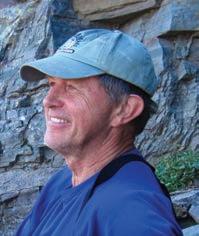
I wrote a lengthy review of director Christopher Nolan’s blockbuster The Odyssey on Page 19; and, while I mentioned that I saw it with my 14-year-old son last week, I didn’t have room in the piece to talk about how that added so much to the experience for me. My son and I don’t get to do a whole of things together these days, considering that as he’s grown older his interests and abilities have veered away from mine — which is good and natural — and also that I’m working whenever he has time off from school. So one of the things that we’ve most been able to do together is see movies in the theater. My favorite memories from seeing The Odyssey with him were when he’d lean over and whisper stuff like, “I bet this is going to be the cyclops’ cave.” Sure enough, it was. Later, as Odysseus and his crew rowed toward an obscure, forested shore, he prophesied that it would be the island of the giants. And he was right. I was impressed at his foreknowledge of the story, and asked him how he knew so much about this 3,000-year-old tale. “You read it to us,” he whispered back. Then I remembered that I had read it to his sister and him many years before, and got a little teary that he’d been listening. Also, because I’m getting older and more sentimental, the scenes featuring Telemachus and his dad Odysseus kept making me go misty-eyed, and I had to hide my open weeping when the latter put his hand on the shoulder of the former and called him “my worthy son.” Who knew The Odyssey was a father-son bonding film? That story really does have it all.
Truth hurts
In the past week or so I’ve had a couple of people email me with complaints that my opinion writing on politics has become too “bitter.” This has apparently made at least one reader “sad,” and they encouraged me to lighten up and be more constructive. I’ve also been advised that more “civility” is needed in our day and age. I’ll take that advice for what it’s worth, which is essentially like telling someone they’d be prettier if they smiled. Am I bitter? Yes. What exactly is there not to be bitter about on the political scene? I can’t go to any local store, restaurant or gas station without walking out at least $30-$75 poorer no matter what I’ve purchased; gibbering idiots, liars and scofflaws are in charge of basically everything; and there’s no end in sight to any of it. Is bitterness constructive? No, but is the truth more often than not bitter? Yes. As for civility, my take is that it’s the same as respect — it’s earned, and when offered unearned is dishonest. So sorry, folks, I don’t intend to stop being bitter and uncivil when it’s called for until there’s a reason not to be either of those things, which of course I’d much prefer.
Advice from the life of Edgar Allan Poe
“Why be basic? Cultivate the conflicted, overthinking, anxious mess you already are.”
— Poe for Your Problems: Uncommon Advice from History’s Least Likely Self-Help Guru, by Catherine Baab-Muguira
DEAR READERS,
Welcome to Week 1 of the annual Festival at Sandpoint summer concert series. This beloved event has been a part of Sandpoint’s cultural landscape since 1983, only missing one year in 2020 due to the COVID-19 pandemic.
We’ve seen a lot of great performers over the years, and here’s hoping this year brings another batch of memories.
If you’re new to town, check out a quick guide on what to expect on Page 21. If you’re a local, you might also want to check the guide to keep up on any potential changes since the last concert you attended.
For this week and next, sit back and chill out for a little while. Put your phone on silent, catch up with old friends and let the sounds of summer take you somewhere special.
Kudos to the Festival staff and volunteers who make this happen every year. Now get out there and listen to the music!
– Ben Olson, publisher
111 Cedar Street, Suite 9 Sandpoint, ID 83864 208-946-4368 sandpointreader.com
Editors Emeriti: Lyndsie Kiebert-Carey Cameron Rasmusson John Reuter
Advertising: Ben Olson ben@sandpointreader.com
Contributing Artists:
Racheal Baker (cover), Kelly Price, Susan Drinkard, Roland Hort, Martin Hoffman, Michele McGeachy, Saundra Gillette, Bill Borders, Ren Fox
Contributing Writers: Zach Hagadone, Ben Olson, Soncirey Mitchell, Lorraine H. Marie, Brenden Bobby, Sandy Compton, Rep. John Gannon, Marcin Prokop
Submit Stories To: stories@sandpointreader.com
Printed Weekly At: Tribune Publishing Co. Lewiston, ID
Subscription Price: $200 per year
Website Designed By: Keokee
The Sandpoint Reader is a weekly publication owned by Ben Olson and Keokee. It is devoted to the arts, entertainment, bluster, politics and lifestyle in and around Sandpoint, Idaho.
We hope to provide a quality alternative by offering honest, in-depth reporting that reflects the intelligence and interests of our diverse and growing community.
The Reader is printed on recycled paper using soy-based ink. Leftover copies are collected and recycled weekly, or burned in bonfires to appease the gods of journalism. For back issues, contact the publisher. Free to all, limit two per person, please.
Letter to the Editor Policy:
We welcome letters to the editor on all relevant topics. Please, no more than 200 words, no excessive profanity or libelous statements and no trolls. Please elevate the discussion and stay on topic. Letters will be edited to comply with the above requirements. Opinons expressed in these pages are those of the writers, not necessarily the publisher. Send to: letters@sandpointreader.com
About the Cover:
This week’s cover photo was taken by the inimitable Racheal Baker, whose Festival at Sandpoint photos are legendary.
Recall effort aimed at Sandpoint mayor and council president is official
By Zach Hagadone Reader Staff
The Sandpoint City Council is poised to reconsider the parking ordinance at its regular Wednesday, Aug. 5 meeting — likely addressing a raft of complaints and frustrations shared by area residents related to the paid parking program that was rolled out on July 1 — but one group of disgruntled community members are still proceeding with an effort to recall Mayor Jeremy Grimm and City Council President Deb Ruehle over the issue.
Supporters of the recall have, since July 1, contended that the paid parking program is unfair, financially wasteful, harms local businesses and residents, exposes users to digital surveillance, is otherwise damaging to the community and was adopted improperly without a fully updated ordinance enacted to enforce it.
City legal staff has disagreed with that assessment, and the Aug. 5 council meeting agenda’s inclusion of an action item related to an updated parking ordinance is intended to bring the Code into alignment with the policy. City officials have previously said that paid parking is authorized by other Code sections related to parking signage, and fees — including for overstaying parking time limits — can be set by resolution.
In a conversation with the Reader over Facebook messenger, Lohman recognized that but added that “while passing a resolution that overrides existing Code is not legal, it is also not technically illegal, as the term ‘illegal’ means criminal and this is considered a ‘procedural error’ and government overreach ‘ultra vires.’
“There has been little to no coverage on this aspect of the ordeal, but it matters,” she wrote. “I have sought legal guidance and was informed that the city is open to tort claims due to acting ‘ultra vires’ by implementing the
parking metering system without associated ordinances.”
Lohman, who has a Sandpoint address but lives in the county, made the recall drive official as of July 24, when she successfully submitted a form to the Bonner County Clerk’s Office including 20 signatures from verified city of Sandpoint voters requesting that the recall go forward.
“The recall is not only about holding them accountable, it’s about putting into place the framework for a referendum,” Lohman told the Reader, later adding, “... the council, mayor and [Planning and Community Development Director Jason] Welker knew the people were against it. They spent a stupid amount of money on it anyways. They are trying to justify moving forward with their dumb idea because they spent a stupid amount of money, and then shaming the people for boycotting and taking action in the form of a recall in order to hold them accountable because it will cost taxpayers money if those recalled decide not to resign.
According to Bonner County Clerk Michael Rosedale, the 20 signatures submitted on July 24 now “revert to zero and they start the whole process over.”
“That started the clock,” Rosedale told the Reader, referring to the July 24 filing.
But that clock is ticking fast.
Now that the process has begun, the recall group needs to collect a total of at least 1,048 signatures attesting to the desire for a recall of each elected official — requiring two separate filings — and then resubmit them to the Clerk’s Office to make the recall petitions valid. That has to happen no later than Oct. 7.
If that threshold is cleared, the Clerk’s Office has up to 15 business days after submission to verify the signatures and certify that they are valid. To be valid, the signatories must all be eligible voters who reside within Sandpoint city
limits. Those with Sandpoint addresses but who live outside city limits are not accepted, Rosedale said. Based on that, the originator of the petition — Lohman — is not an eligible signatory for her own effort.
Assuming the appropriate number of signatures are found to be legitimate, the targeted elected officials then have five business days to either resign or make plain their intent to stand for a recall election.
If they don’t resign, Grimm and Ruehle would be given the opportunity to provide a rebuttal statement, which would be included with the recall measure on the ballot of the next available election. In this case, the next election is on Tuesday, Nov. 3, which, given the process timeline, gives the recall a vanishingly small chance of going before voters this year.
Irrespective of the recall effort, there are other election deadlines looming. The last date to file for an item’s inclusion on the November ballot is Friday, Aug. 28, Rosedale said. Given that, if petitioners take until Oct. 7 to submit their signatures, they will be long past the eligible period for the November ballot, and — even assuming their filings are approved — that would push the measure to the May 2027 election.
Based on all those deadlines and moving parts, the only chance for the Grimm-Ruehle recall to go before voters this November is if all signatures are gathered and submitted in the first week of August, found
to be valid and certified, and Grimm and Ruehle submit their rebuttal language prior to Aug. 28.
Regardless of the timing, if the 1,048 signatures are accepted for each petition and a recall question is added to the ballot, Grimm and Ruehle would only be ousted if at least one more voter opts to remove them from office than originally elected them. Grimm was elected to his four-year term in 2023 with 1,776 votes, meaning at least 1,777 people must vote to un-elect him. Likewise, Ruehle received 1,079 for her four-year term in 2023, requiring at least 1,080 votes to remove her from office.
Grimm has already gone on the record that he won’t seek another term, and Ruehle declined to comment.
“I respect the right of citizens to pursue a recall. That is part of our democratic process and I respect all those who play by the rules and follow the rules and leverage the law and the options they have,” Grimm told the Reader in an interview.
He went on to say that, “I would also point out that as the Executive Branch, I did not vote on the parking policy. I did not vote on the parking contract and I did not vote to go a 180 [degree] on it, either,” he added, referring to some councilors’ indication at the July 15 meeting that they would like to see critical components of the parking program removed, such as the paid parking kiosks in the downtown two-hour zone.
Lohman pushed back at that, saying that while Grimm may not have voted for the parking policy, “he was in favor of it and signed the resolution. So when he says he doesn’t plan to run again it means nothing to me. Additionally, why let poor leadership continue to make bad and costly decisions?”
“The individual who is pursuing this thinks this is of my making and doing, and I respectfully encourage them to review the process of how policies and laws are made and adopted, and the fact that the Executive Branch simply needs to implement to the best of their ability — with the staff and the tools they have — the desires of the council,” Grimm said.
If the recall efforts are both successful — whether in November 2026 or May 2027 — and both Grimm and Ruehle are removed, it would be up to the remaining council members to appoint a new mayor, either from among their own colleagues or another member of the community, and that interim mayor would serve the remainder of the current term. Meanwhile, a new council president would have to be selected, and the resulting council vacancy or vacancies would also be filled by appointment for the duration of the term until the next regular election.
“We will move forward with the recall,” Lohman told the Reader. “Hopefully, if we are successful, the mayor and councilor will do the honorable thing and resign. While doing so we will gather contact info so that once they pass the ordinance updates we have the framework in place to collect the signatures required to do the referendum and prevent them from being able to enforce the paid parking anyways.
“The remaining council members can either be with the people or against them,” she added.
Sandpoint Mayor Jeremy Grimm and Council President Deb Ruehle. Courtesy photos
Zoning Commission recommends denial of Ellisport Bay rezone
By Soncirey Mitchell Reader Staff
The Bonner County Zoning Commission met for a grueling seven-and-ahalf-hour meeting July 23 to discuss, among other topics, the proposed rezone of a 15.6-acre property along Ellisport Bay from Rural-5 to Recreation. After several hours of public comment and deliberation, the commission voted unanimously to recommend denial of the rezone to the Bonner County Board of Commissioners, finding that it would not align with neighboring zoning.
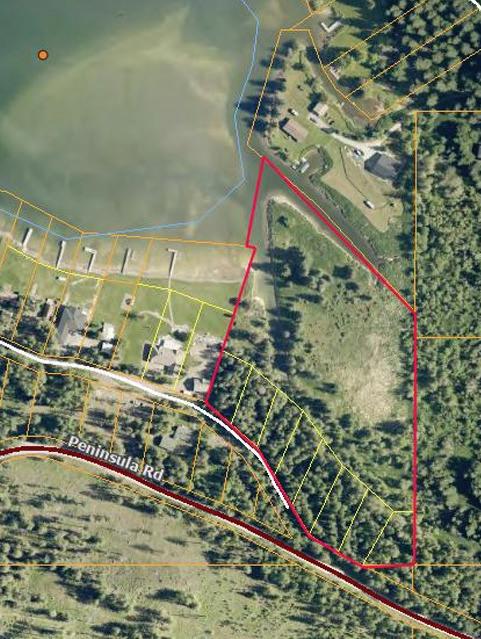
Stonehedge Partners, LLC, owns the property off of Cedar Lane toward the back of Ellisport Bay, which is divided into eight lots and one larger parcel. Of the more than 15 acres, only 9.23 are buildable, with the rest classified as mapped wetlands, including areas that are entirely submerged at Lake Pend Oreille’s summer pool level. The property and surrounding area are designated as “Recreational Community” on the Bonner County Comprehensive Plan Map.
The current Rural-5 zoning
allows for low-density residential uses, as well as recreation and tourism activities “that can be supported by rural service levels.” Changing to recreational zoning would have allowed for higher-density development, commercial and private resorts, and uses that “enhance the recreational opportunities” of the area, such as boat storage, docks, marinas, hotels, recreational vehicle parks and campgrounds.
At the July 23 meeting, public comment largely sided against the rezone, citing potential negative impacts of future development; however, the owners have not indicated any plans to develop the property.
“There is no development associated with this. My clients have no idea what they’re going to do with this property,” said Jeremy Grimm, of Whiskey Rock Planning + Consulting, representing the applicants.
Though Zoning Commissioner Joe Mauk stated that the application did not indicate “adequate” sewage disposal services, water supply or roads for future development, the commissioners repeatedly stated that they could not take
such “hypothetical” issues into account.
Ultimately, Commissioner Michelle Johnson raised concerns that the proposed rezone was in conflict with the Comprehensive Plan due to the fact that much of the adjacent land is zoned Rural-5.
Among the Comp Plan’s evaluation criteria, it states that, “Areas have specific, individual land use designations, which results in homogeneity across the landscape. Islands of different land use designations defy the sense of rural context, especially if the land uses are markedly dissimilar.”
Under the current county administration, “preserving rural character” has been a high priority in land use decisions.
The commission voted 3-0 to recommend denial to the BOCC, with Commissioners Jeff Poulsen and James Pound absent.
“The decision was faulty, in my opinion, because it conflicts with the Comprehensive Plan future land use map, which designates the area as Resort Community, not Rural or Rural Residential,” Grimm told the Reader. “This designation has been in place for over
21 years.”
He went on to say that the commission’s comments about “adequate” services were “pure speculation, as the eventual development or use may not even require water or sewer beyond use equal to a single family dwelling (boat storage for example has almost no demand for water or sewer).
“As such, their finding is likely to be found invalid because no development is being proposed at this time; and, further, the county has rules and tools to ensure future uses meet requirements for water and sewer or fire protection,” Grimm added.
Sandpoint looking to ban data centers within city limits
By Zach Hagadone Reader Staff
Sandpoint City Hall is aiming to get ahead of the proliferation of large-scale data centers, which have stirred up controversy in communities big and small throughout the country and, increasingly, in Idaho.
City Council members voted unanimously at their July 15 meeting to direct staff
to propose a definition of “data center” so that the term can be applied to a future ordinance that would ban that type of development within city limits.
Councilor Pam Duquette brought forward the idea of a preemptive data center ban, saying, “I think people got the idea that we might be pushing data centers, and that is the farthest thing from my mind.”
Duquette said that the
Industrial portion of Sandpoint Zoning Code specifically allows data centers in the Industrial Park District, which describes properties that are “suitable for technology production and development, such as data centers, medical imaging processing, business incubators, biotechnology, software development, engineering and similar technology-related industry.”
The zoning map identifies
the ITP District as comprising about 19 parcels of various sizes immediately east of the airport and west of North Boyer Avenue. The Code further stipulates that, “Sites appropriate for this designation should have readily available utilities and fiber optic availability, and be characterized by large contiguous properties.”
Duquette said her effort was intended to “proactively get ahead of that so that if that
According to Grimm, the application will go before the BOCC for a final vote in “roughly five weeks,” as of press time. View the complete application online at bonnercountyid.gov/zc0002-26.
was ever anything somebody thought they were going to do in the Sandpoint area — at least in the city of Sandpoint — ... we can eliminate that data center as an allowed use, and have the City Council give staff direction to do so.”
Asked by Councilor Joshua Torrez if she meant “all data centers or specifically AI data centers,” Duquette respond< see DATA, Page 7 >
The 15.6-acre property along the back of Ellisport Bay near Hope, outlined in red. The property is owned by Stonehedge Partners, LLC. Courtesy image
Smith Creek Fire in Boundary County at 15% containment, with region under fire weather watch
By Zach Hagadone Reader Staff
While officials announced the Turner Fire was 100% contained as of July 25 — having burned about 681 acres five miles south of Copeland in Boundary County — the Upper Smith Creek Fire remained active at 15% containment, according to a July 29 update.
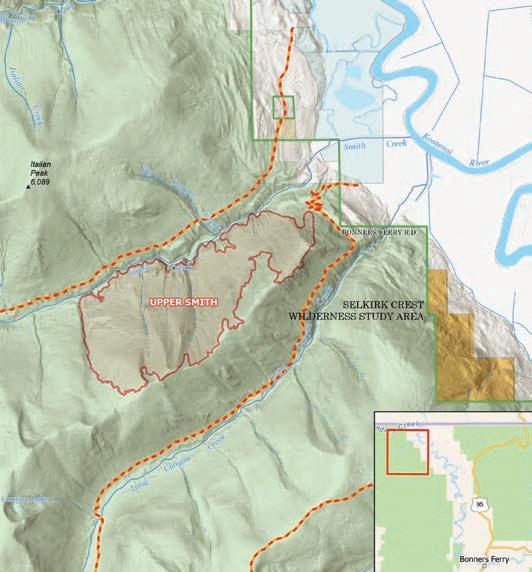
Located roughly 20 miles northwest of Bonners Ferry, the Upper Smith Fire was caused by lightning and began July 8, consuming 1,648 acres, per the latest reports by press time.
Critically, the Boundary County Sheriff’s Office issued an upgraded fire evacuation status on July 28, putting the Westside and Smith Creek zones on “GO” status.
A total of 406 personnel were working the fire, including six helicopters, seven hand crews, two bulldozers, 12 engines, two masticators, three skidgines and 12 water tenders.
As of the July 29 update, firefighters were working to strengthen control lines while being supported by helicopters running suppression efforts across the entirety of the area. Aerial bucket drops were used to slow the fire’s downhill progress on the eastern flank of the incident.
Crews also continued to expand their efforts to protect structures, including both residences and outbuildings, as well as other at-risk properties.
As ground crews and helicopters worked to back down the fire on the east slope of the Upper Smith Creek drainage, weather conditions on July 29 were expected to include lower humidity and stable temperatures, with lighter winds in the lower elevations but gusts up to 15 miles per hour on ridgetops. Warmer and drier conditions were forecast on Thursday, July 30, with persistent winds. Smoke is expected to remain visible both in the valley and surrounding areas.
Bits ’n’ Pieces
From east, west and beyond
President Donald Trump recently levied tariffs of up to 12.5% on goods from more than 60 countries, affecting 99.4% of all U.S. trade. He claimed it was to combat goods produced with “forced labor,” various media reported. Two small businesses quickly sued in the Court of International Trade, saying the new tariffs were a reinstatement of tariffs the U.S. Supreme Court ruled were unconstitutional.
After a recent visit to Ukraine, Trump ally Laura Loomer — known for her conspiracy theories — reversed her criticism of the country. She’s urging conservatives not to be duped by Russian propaganda, the Associated Press reported. Loomer confessed to having been “bamboozled” by Moscow, being led to think that Ukraine is a country “full of Nazis.” Influential podcasters can spread misinformation, she lamented, adding, “some of our leaders are being influenced by propaganda.”
However, the entire Inland Northwest is under a fire weather watch for low humidity and winds until 11 p.m. on Saturday, Aug. 1, with affected areas including the north and central portions of the Idaho panhandle, through the Washington Cascades region, Spokane and south to the Palouse.
According to a July 29 alert from the National Weather Service in Spokane, winds of 15-30 mph are expected throughout the region with gusts in some areas up to 35-50 mph. Relative humidity across the Idaho panhandle is estimated at 25-36% throughout the period, with the strongest winds forecast for Aug. 1, which “may lead to rapid fire spread with any new or ongoing fires,” officials stated.
In Boundary County, a closure order remains in effect for the Smith Creek Road and Long Canyon Trail, with more details available at fs.usda. gov/r01/idahopanhandle/alerts. Unrelated county road closures due to bridge work also continue to apply to Westside Road near Kerr Lake Road, and the fire officials strongly encourage the public to stay away from the entire Smith Creek drainage to make way for firefighting equipment and personnel.
Go to inciweb.wildfire.gov and search for the Upper Smith Fire for more updates throughout the week.
Measles cases have set a 35-year record, according to Axios. Symptoms include cough, high fever, rash and conjunctivitis, and can morph into ear infections, pneumonia and brain inflammation, potentially leading to permanent brain damage and sometimes death. Herd immunity is maintained at 95% vaccination.
Sen. Andy Kim, D-N.J., introduced the MediKids Act in Congress, which would automatically expand Medicaid to all U.S. children, ages birth through 26.
While polls show that requiring voter ID has 75% support , Democracy Docket reported that support declines when that makes it harder to vote. Trump’s SAVE America Act has just 37% support , due to concerns it would keep qualified voters from the ballot box. Trump thinks SAVE will create a long-term wave of Republican wins , but Democracy Docket pointed out that Democratic voters are more likely to have documents such as a passport, as compared to Republicans. Following that logic, the SAVE Act may actually make it harder for Republicans to vote . The House recently passed the SAVE Act, and it now faces a skeptical Senate.
Late last week, the House passed a concurrent resolution 214-218 to end the Iran war, various media reported, with four Republicans joining Democrats. Rep. Jason Crow, D-Colo., stat-
By Lorraine H. Marie Reader Contributor
ed that global actors other than Iran also pose a threat to the U.S., such as Russia and North Korea, but there’s no war with them. Crow, a former paratrooper and Army Ranger, added that “Americans are done with endless cycles of conflict in the Middle East,” which unfold while constituents lose homes, farms and health care and there is no answer to how the war is “making me safer?”
That same day, the Senate took up a joint resolution to oppose the Iran War. It did not advance after a 47-49 vote, with four Republicans not voting.
After almost two weeks of daily attacks on Iran, Trump directed the military to stop strikes on July 24, Axios reported.
A computer malfunction in New Jersey mistakenly resulted in 6,600 non-citizens being counted as registered voters between 2023 and 2034. The Lever reported that 400 incorrectly voted, amounting to 0.00936% of total ballots — what The Lever described as “negligible.” New Jersey Gov. Mikie Sherrill, who was not in office at the time of the error, said the glitch was fixed and improper registrations were revoked
In other election news, Trump has asked SCOTUS to allow a White House executive order restricting mail-in voting, according to scotusblog.com and other media.
The U.S. has signed a deal to help Saudi Arabia obtain nuclear power, according to The New York Times, with U.S. companies building and operating the plants in a deal said to leave “enrichment” of nuclear material “wide open.”
Mother Jones reported that “instant access to Trump’s thoughts [via Trumpowned online platform Truth Social] now costs $100,000 a month” through special membership pricing.
According to The Guardian, “space data centers” proposed by Elon Musk and Jeff Bezos would be “catastrophic” for the planet, citing experts who warned of “staggering” levels of pollution that would significantly alter the earth’s atmosphere.
Blast from the (recent) past: Trump’s coveted triumphal arch requires congressional approval, which has not occurred. In October 2025, when a reporter saw an arch model and asked who it was for, Trump pointed at himself and responded, “Me.”
A map of the Upper Smith Fire, courtesy of USFS
ID Dem David Roth ends campaign for U.S. Senate seat held by Risch
Despite pressure to withdraw and support independent Todd Achilles, Roth hasn’t endorsed
By Laura Guido Idaho Capital Sun
Idaho Democrat David Roth announced July 28 that he is ending his campaign for U.S. Senate.
The candidate had faced pressure from some prominent Democrats to drop out and rally behind independent candidate Todd Achilles. However, Roth had previously told the Idaho Capital Sun he had no intention of supporting Achilles.
Roth won his primary contest in May and was slated to face incumbent Idaho Republican U.S. Sen. Jim Risch, independents Achilles and Natalie Fleming, and Libertarian Matt Loesby in the November general election.
“I have concluded that I can make the greatest difference by focusing my time and energy on helping Democrats win up and down the ballot and in communities across Idaho,” Roth said in an emailed statement July 28.
His statement did not include a mention of Achilles or any other candidate in the race. Roth could not be reached for comment.
< DATA, con’t from Page 5 >
ed that “data centers, to me, are the AI [facilities], and I suppose they’re a big boom in Idaho at this point. They require huge demands of electricity and water.”
Idaho House Bill 895 was signed into law following the 2026 legislative session, requiring that data center developments in the state be built with closed-loop cooling systems, which are intended to minimize water usage and waste.
While that legislation is meant to make large data centers less demanding of surrounding resources, the effects of the growth in AI data centers is already being felt by Idaho schools. According to a July 20 report from Idaho Education News, Boise-based
Roth, 44, is an Idaho Falls resident and a consultant. He previously ran for the Idaho Legislature in 2020, and for federal elected positions in 2022 and 2024. In 2022, he became the first openly gay candidate in Idaho to win a primary contest for a federal position, he has said.
“I hope this campaign showed LGBTQ+ Idahoans, especially young people, that they belong in our politics, their voices matter and no office should ever feel beyond their reach,” he wrote in his statement.
Roth faced pressure to rally around Achilles, but did not endorse the independent
In June, former-Idaho Democratic U.S. Rep. Larry LaRocco wrote opinion pieces in local newspapers, including the Idaho Statesman and Lewiston Tribune, calling for Roth to drop out and rally behind Achilles. LaRocco argued Achilles had a better chance to defeat the longtime incumbent.
On July 8, Ada County Democrats sent a letter to Roth also encouraging him to drop out, the Spokesman-Re-
Micron Technology moved its entire consumer parts business into AI data centers in late2025, which resulted in spiraling costs for Google Chromebooks and other technology used in classrooms.
Those price increases are expected to affect tech products more broadly, as data centers are buying up “everything that’s on the market right now,” Idaho Ed News quoted Boise Director of People and Organization Services Will Goodman.
At the same time, some communities are pushing back, with the Pocatello City Council upholding its previous denial of a proposed $2.6 billion data center in the community, East Idaho News also reported on July 20.
view reported.
Achilles told the Sun in a July 7 interview, “I think if David really wants to make change, there’s an opportunity to work with us or work with others to make that change. I think just being a name on a ballot isn’t good for Idaho.”
However, Roth told the Idaho Capital Sun in a July 8 interview, that he disagreed with the reasoning behind the calls to support Achilles in an attempt to defeat Risch.
“Prior to the filing deadline, there was discussion about whether or not we should just all rally behind the independent,” Roth said, “but the reality is, I met with
According to BoiseDev, that facility was planned by Lex Developments to convert a former-polysilicon plant on 49 acres into an AI data center on the west side of the city.
Sandpoint City Councilor Kyle Schreiber said that ensuring the Zoning Code protects the community from similar potential developments is critical, as “it’s common for us to become aware of loopholes in our Code only when a developer brings forth a permit, and at that point it’s too late.”
“If we change the rules preemptively, the developers don’t have that by right, and we can always decide on a case-by-case basis later,” he added. “But it’s better to have this done before we need it
Todd, and we talked about it, and we’re just too far away on issues that I think are absolutely critical to moving our country forward, and so we decided to run the primary.”
Roth said he wanted to push forward progressive ideas, such a single-payer health care system and more substantial government housing investments. He said his stances on these issues were too different from Achilles’, who generally has taken a more moderate approach.
Roth’s campaign this year has raised about $8,600, according to Federal Election Commission data as of July 28. The Achilles campaign has
than wait until it becomes an issue here.”
Mayor Jeremy Grimm said doing so would be as simple as defining the term, swapping it out, striking through one line of the Zoning Code and replacing it.
“It’s about as easy as it gets,” he said, later adding that the process could be concluded in as little as two months.
While the vote to proceed with the effort to prohibit data centers in Sandpoint was unanimous, resident Stuart Christoph testified that a data center is nothing more than “a building with lots of computers in it.”
raised more than $692,000, and Risch’s war chest has surpassed $3 million.
“The campaign may be ending, but the work continues,” Roth wrote in his statement. “I remain committed to strengthening our party and electing leaders who will fight for Idaho families.”
This story was produced by Boise-based nonprofit news outlet the Idaho Capital Sun, which is part of the States Newsroom nationwide reporting project. For more information, visit idahocapitalsun.com.
“They run the websites you visit. They store your files. When you take a picture on your iPhone and it’s backed up to the cloud — data center. When you order new bed sheets from Bed Bath and Beyond — data center. When you send an email — data center,” he said, later adding, “This makes a bunch of concerns that people gripe about a little bit more silly and, more importantly, manageable.”
He said the noise generated by such a facility is the biggest concern, but “it’s not something to fear.”
However, resident Lorna Mitchell thanked the council for addressing the issue, saying, “it’s always good to pay attention and put measures in and not just be surprised by something happening that we wished we had figured out beforehand.”
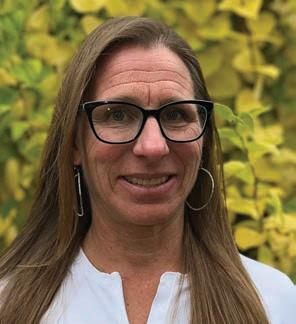
(L-R): Incumbent Republican U.S. Sen. Jim Risch, Democrat David Roth and Independent Todd Achilles. Courtesy photos
Bouquets:
• This week’s Bouquet goes out to one reader who reached out to ask if I would help inform our local population about scams that exist in our area, such as a recent one involving an Ipsos survey making the rounds on Facebook (it’s a daunting task to list all of the potential scams, so I’ll keep this general). It’s sad that most of these grifters target elderly people, including disabled veterans, with their scams. Tips to avoid scams include: never send money via gift card or wire transfer to someone you haven’t met face-to-face; avoid clicking links or opening attachments in unsolicited emails; don’t share personal information; resist the pressure to act immediately; use secure and traceable transactions; and, whenever possible, work with local businesses.
Barbs:
• U.S. Sen. Jim Risch, R-Idaho, gets the Barb this week. Seeking his fourth term in the U.S. Senate in November, Risch joined some of the worst and most extreme members of Idaho and national politics by hiring Rory McShane’s Las Vegas-based political consulting firm for his campaign. McShane’s firm, which has ties to the neo-fascist Proud Boys group, specializes in confrontational politics and has a rogue’s gallery of clients. You might recognize some of the company’s work locally in campaign attack mailers sent by Scott Herndon, who has also hired McShane for his Dist. 1 Idaho Senate bid. In fact, the Bonner County Republican Central Committee paid $476,867 to McShane’s organization, encompassing nearly a third of the total $1.65 million McShane has billed to Idaho campaigns. Risch paid McShane’s firm $403,281. If that’s not an endorsement of white nationalism, it’s an admission that he just doesn’t care about the firm’s unsavory associations. My question remains: If these candidates are so “pro-Idaho,” why are they hiring out-of-state consulting firms to whip up local unrest and generate culture wars in our state?
7B Clinic display is inappropriate for library…
Dear editor, I’m trying to understand why it was not OK for people to stand near the entrance of the library to ask people if they’d sign a petition to restore reproductive rights, but it’s OK for the 7B Clinic to display different embryological and fetal stages of development in a case that looks like a funeral arrangement.
When the 7B/pro-life group met with library staff they stated they felt assaulted by “abortion advocates” when they were going to the library with their children. The Reproductive Freedom and Privacy Act would establish a reproductive decision to be a private conversation between a woman and her physician. We lost four excellent OB-GYN physicians because of the decisions from the Legislature.
A friend who has lost late-term pregnancies felt the display was cruel. Not all pregnancies are a fairy-tale experience bathed in nests and glow lights. This display demonstrates 7B’s moral agenda and mission statement. It does nothing to defend a woman’s privacy and freedom.
As a certified nurse midwife, I felt assaulted by this display. I’ve been with women in all stages of pregnancy including nonviable pregnancies. I’ve witnessed their stories. This display is inappropriate for a library display.
Cynthia Dalsing Sandpoint
Idaho Prop. 1 deserves honesty — not fear, slogans and talking points…
Dear editor,
As Idaho prepares to decide on Proposition 1 in November, this issue deserves more than fear, slogans and political talking points. It deserves honesty.
No matter your stance, your vote should be based on what the initiative actually says — not on claims that leave out important facts. Opponents have every right to oppose Prop. 1, but saying it allows abortion “through all nine months for any reason” is simply not true. The initiative doesn’t use a fixed number of weeks. Instead, it uses fetal viability — a medical standard doctors use to determine when a fetus could survive outside the womb. After viability, the state may regulate abortion except in medical emergencies.
Claims that Prop. 1 mandates taxpayer-funded abortions or
amends the Idaho Constitution are also inaccurate. The initiative states it creates no obligation for the state to fund reproductive care. It is a statutory initiative, not a constitutional amendment.
More complex questions, such as parental consent, would likely be decided by the courts.
Whatever your position, Idaho voters deserve facts, context and clarity. We deserve better than fear-driven campaigns. Democracy depends on informed citizens willing to read the measure, ask questions and vote based on the truth — not political rhetoric.
Kari Saccomanno Sandpoint
‘Dog days’ depiction…
Dear editor,
What a perfect picture to accompany your description and introduction to the “dog days” of summer! [Reader cover; photo of 5-year-old Samoyed dog Sol, by Lydia Welp; July 23, 2026.]
Jane Holzer Sandpoint
Thanks to BoCo for denying Ellisport Bay rezone…
Dear editor,
Kudos to the Bonner County Zoning commissioners — all volunteers — who stayed at their job for almost eight hours on Thursday night, July 23, listening to three different zoning issues.
Kudos to the folks in Hope and the Hope Peninsula for presenting well-thought-out and comprehensive reasons why Stonehedge Partners, LLC, represented by Jeremy Grimm, should not be able to rezone their property at Ellisport Bay from Rural to Recreation.
The hearings started at 5:30 p.m. and did not finish until almost 1 a.m. on July 24.
Thank you for the Zoning commissioners’ conclusion that Stonehedge Partners did not have sewer or drinking water available to them at this ecologically sensitive site. Request denied.
K. L. Huntley Sandpoint
Got something to say? Send letters of up to 200 words to letters@sandpointreader.com. No trolls. Please elevate the conversation.
COMMUNITY
Test your limits at the annual Long Bridge Swim
By Reader Staff
For more than 30 years, swimmers of all ages and abilities have come together on the shores of Lake Pend Oreille for the annual Long Bridge Swim, and this summer is no different. If tradition holds, more than 800 people will take the plunge on Saturday, Aug. 1 at 9 a.m., traveling the length of the bridge in fewer than twoand-a-half hours.
The Long Bridge Swim has always provided a safe yet challenging race for everyone, and is prepared to provide all manner of accommodations. Swimmers as young as 7 and as old as 93 have completed the race, as well as athletes with visual, auditory and physical disabilities.
Race-day events begin with packet pickup from 6:30-7:30 a.m. at Sandpoint High School (410 S. Division Ave.), at which time swimmers will receive their
‘Hear
body markers, timing chips and swim caps. After attending the mandatory safety meeting at 8 a.m., participants will then bus to the starting line.
Friends and family can cheer swimmers on from the newly-reopened pedestrian bridge, keeping in mind that recent structural issues have left parts of the walkway inaccessible.
“Users will need to stay within a designated travel path that avoids areas requiring future repairs. Please observe all signage and stay on the designated path,” stated organizers.
For the complete race schedule or to register for the Long Bridge Swim, visit longbridgeswim.org.
Registration is $100 and must be completed by Friday, July 31 at 7 p.m. Proceeds from the swim will fund the nonprofit’s water safety and swim lessons, which have helped more than 9,000 Idahoans learn to swim.
What 3 Teenage Girls Can Teach Us About Resistance’
By Reader Staff
Join the Bonner County Human Rights Task Force and the First Presbyterian Church of Sandpoint for a free presentation by international author, historian and human rights lawyer Sophie Poldermans.
The program, titled “Hear What 3 Teenage Girls Can Teach Us About Resistance,” will take place on Thursday, July 30 at 4 p.m. in the church’s sanctuary (417 N. Fourth Ave.).
Poldermans is a former Sandpoint High School Rotary exchange student from the Netherlands, who has since earned degrees in Dutch Law, International Criminal Law and Human Rights, Peace and Conflict Studies, Human Rights and Democratization, and Women’s Leadership. In her professional life, Poldermans studies generational trauma and frequently works helping women in wartorn areas.
Her 2019 nonfiction book, Seducing and Killing Nazis, recounts the history of Hannie Schaft and Truus and Freddie Oversteegen, three Dutch resistance fighters during World War II who used pamphleteering, sabotage and promises of romance to lure Nazi soldiers to their deaths and otherwise disrupt the German occupation of their country.
Poldermans now shares these stories with international audiences, even making an appearance on PBS’s Women of World War II. Her hour-long presentation in Sandpoint will cover the young women’s dangerous and courageous efforts to fight back against invading Nazi forces.
Attendees can also chat with Poldermans and members of the BCHRTF from 5-6 p.m. during the ice cream social following the presentation.
Learn more at sophiepoldermans.com and bchrtf.org.
By Sandy Compton Reader Columnist
About 25 years ago, I decided to remodel the house in which I spent much of my youth. When I entered the eighth grade, we moved to a more conventional house in a nearby town, but “The Cabin” stayed in our lives as our ancestral home in the country.
It is assembled of disparate parts, the first of which was a 12-by-14-foot log cabin built by my maternal grandfather with pole rafters, a hand-split shake roof, a window in each wall and a door. It had a loft with a window at each end, accessed by a ladder. It and a twin were built in the 1920s on a bench near where “our” creek runs into the river, next to the county road in hopes that tourists would rent them. The tourists, deterred by the Great Depression never showed.
A highway replaced the county road in the 1930s, and the cabins were there, but tourists still didn’t come. World War II continued to keep them at bay. After that, tourists wanted more than the basics the cabins had to offer.
They were stout and endured with minimal maintenance, and when Washington Water Power began to build a dam that would flood that
bench and the lower half mile of the creek beside it, Grandpa prevailed upon WWP to move the cabins to higher ground. One of them was settled on the south side of the next new highway, necessitated (maybe) by the building of the dam, and that became the seed from which The Cabin grew.
My parents were married the year before construction on the dam began. In response to my mother’s attachment to her childhood home and the arrival of my brother and me in relatively short order, they acquired the cabin south of the highway and a goodly chunk of land to go with it.
With the help of my Grandpa, they put a log addition on the west end. Logs are round and they were in a hurry, so the addition was not very square, and still isn’t.
The seam between new and old was roughly sealed with large spikes, and still is. They built narrow, steep stairs to the upper floor, built a chimney of mortared shale and got a wood stove.
The Cabin did a good job of sheltering us for the next few years, during which another son was added to the
About a house’s history
family. We moved out of it several times in search of greener pastures, but returned to its refuge in deference to a mutual desire to be in the country instead of elsewhere.
When the 1950s closed, my mom was pregnant with my sister, and my dad rather hurriedly added a frame addition to the south side of the original 1920s portion. Again, the seam between the old and new was sealed with 80-penny nails — and still is. The kitchen moved to the ground floor of the frame addition and the room above became a bedroom. Because it was made of lumber instead of logs, I expected things to be a bit more uniform, but a lot of the lumber came from a neighbor’s mill, which my uncle once described as producing
the world’s longest wedges. As I began to remove the innards — my folks had added to the interior of the logs and rough cut “wedges” — I marveled at the creative use of shims, trim and furring strips to plumb and level floors, ceilings, counters, shelves, windows and door frames. I also found that more conventional materials — like the planed and kiln-dried Douglas fir rafters above the second log section and the single pane windows in the north wall — were salvage purchased from the disassembly of Farragut Naval Station in 1951.
All of these odd pieces pieced together have not made the remodel easy. In fact, calling it a “remodel” is not accurate. It has been more of a rebuild. If I ever write a book about it, the title will be Every Cut Is A Custom Cut.
Slowly, ever so slowly, it is proceeding toward finality.
Ha-ha-ha-ha. Anyone who has a house knows it’s never over. About the time you drive the last screw, something on the other end of the house needs fixing, painting, recaulking, redoing. This newest edition has many upgrades — more lights; better insulation; a larger bathroom (the fourth section attached to the second log section, not by 80-penny nails but by eight-inch Torx screws); a new roof with new rafters (excepting the pole rafters over the original 1920s section); a lot more room upstairs; and a wider, not-sosteep staircase.
The original section is nearly a century old, and the project is ongoing. It may get done one day. In the meantime, I’ll keep making custom cuts. And, the work of generations will still show in many places. As it should.
Sandy Compton. File photo
Science: Mad about
batoids
By Brenden Bobby Reader Columnist
At the library’s Citizen Science events, which take place twice a month at the Waterlife Discovery Center on Lakeshore Drive, I love to ask a fun question of guests that really gets the brain buzzing: “What form of life evolved on Earth first? Trees, grasses or sharks?”
People universally guess trees. Plant life is the foundation of terrestrial life on Earth, so it would make sense that trees would have come first.
In fact, sharks have up to 50 million years on trees. The span between the first sharks and the first trees appearing on Earth is about half the time that grasses have been on Earth at all.
In honor of Shark Week, we’re going to take a look at shark’s evolutionary cousins, “batoids,” more commonly known as rays.
Rays split from the ancestors of modern sharks around 200 million years ago, during the late-Jurassic period. They began to develop more powerful pectoral fins than sharks, which made them well suited to skimming the ocean floor to scavenge for food.
This is commonly seen in rays to this day, as they will often form a frisbee-shaped body that appears to undulate around the edges to propel them through the water. This type of propulsion isn’t unique to rays, as it is also used by cuttlefish — a mollusc related to squids and octopodes.
It is an especially ancient form of aquatic propulsion that has been used by sea critters such as Dickinsonia, a funky little creature that looked like a ribbed frisbee and inhabited the oceans during the Ediacaran Period
up to 560 million years ago.
These animals are completely unrelated, and their method of propulsion is an example of convergent evolution: A trait that evolves in multiple species independently because it is biomechanically advantageous to do so.
Not all rays travel this way, however. The most wellknown example of rays, the manta ray, will actually flap its pectoral fins like a bird flaps its wings to generate lift in water and glide through the ocean. Manta rays, much like many species of shark, need to keep moving in order to breathe. Their movement forces water through their gills, which allows them to breathe, as they lack air-filled bladders like some other forms of fish.
Smaller forms of ray do not require movement in order to breathe. Many species of stingray will bury themselves under seafloor sand and remain stationary for long periods of time. They use spiracles, which act as small tubes of muscle that pull in oxygenated water. This requires energy while at rest, but means the ray can stay stationary to breathe rather than needing to move in order to oxygenate its blood. This is a vital adaptation for smaller rays, which are more likely to be predated by larger animals like sharks.
Stingrays come with a special adaptation that isn’t shared among all rays, and that is the barbed tail for which they are named. Hundreds of people are jabbed by stingrays every year without major complications, but very rarely, a sting can be fatal. This was the case with Steve Irwin, also known as “The Crocodile Hunter,” while he was snorkeling as part of a documentary project on Sept. 4, 2006.
It is believed that his shadow startled a massive eight-foot short-tail stingray, which likely believed him to be a predatory tiger shark. It struck hundreds of times in rapid succession, ultimately piercing his heart and ending his life.
It was a tragic, and extremely rare event, as is the case with many instances of fatalities from sharks and their evolutionary cousins.
There are an estimated five to 10 fatal shark attacks per year, while one to two people die from stingrays per year. If that’s scary, put into perspective that humans intentionally kill up to 73 million sharks per year, with up to another 70 million being killed as accidental bycatching during fishing operations.
Most sharks and all rays will actually ignore humans entirely unless provoked. Only three species of shark are known for committing unprovoked attacks on humans: the great white, the tiger shark and bull shark. While one could argue that Steve Irwin’s death was an unprovoked incident, he was still close enough to the animal in its own territory to be struck by its tail, and all experts that have evaluated the incident seem to agree that it was an act of self-defense. If I lived in the neighborhood of tiger sharks, I’d probably be a little jumpy, too.
Have you ever visited a large aquarium and had the opportunity to pet stingrays? You might not know that the aquariums will trim the barbs of the rays to avoid guest injury. These rays are also regularly exposed to human contact, and so long as guests follow procedure and don’t harm or agitate the ray, they are likely to continue allowing humans to pet them.
If you have encountered a ray in an aquarium petting pool, you may have noticed that they’re a little slimy. This is true of every ray, which have a built-in mucus barrier that acts like an extra layer of skin. Our own skin exists as a wall between external bacteria and our internal organs, tissues and blood. Our blood will seep out and fill gaps in our skin when it is damaged to block bacteria from getting in. A ray’s mucus barrier does something similar, while also
reducing drag and allowing them to glide through the water with less resistance.
In many ways, this acts similarly to an ocean swimmer coating their skin in petroleum jelly. The petroleum acts as a lubricant and barrier that keeps nasty things, including jellyfish stings, out while also slightly reducing drag in the water.
We didn’t evolve to exist in the ocean, so Vaseline won’t help us quite as much as a ray’s mucus will help them.
Stay curious, 7B.
Random Corner
• Author Stephen King’s wife threatened to divorce him because he wouldn’t stop playing Lou Bega’s “Mambo No. 5,” on repeat while writing the novel 11/23/63.
• Whitney Houston was originally supposed to sing a cover of Jimmy Ruffin’s “What Becomes of the Brokenhearted” as the main theme song for the film The Bodyguard When production found out Paul Young was doing a cover of the song for Fried Green Tomatoes, Kevin Costner suggested replacing it with “I Will Always Love You.”
• Nobody in the music industry expected Nirvana’s second album Nevermind to be a success. At the time, the band was part of the underground Seattle grunge scene and its label, Geffen, only pressed about 50,000 copies of the album. When “Smells Like Teen Spirit” started gaining traction on MTV, however, the band’s popularity skyrocketed almost overnight. The album climbed the charts and eventually knocked Michael Jackson’s Dangerous out of the No. 1 spot. The album went on
to sell 30 million copies worldwide.
• “Good Vibrations” by The Beach Boys is one of the most expensive songs ever recorded. It was created in 1966 by Brian Wilson, who pieced the song together in sections instead of recording it all at once. The process stretched across months and involved more than 90 hours of recorded tape. By the time it was finished, the song cost $50,000-$75,000, which is somewhere between $525,000-$787,000 in today’s currency.
• After the 9/11 terrorist attacks, Clear Channel Communications sent an internal memo listing songs its radio stations should avoid playing during the period of national mourning. Some songs included Alanis Morissette’s “Ironic,” The Rolling Stones’ “Ruby Tuesday” and Rage Against the Machine’s entire musical catalog.
• Radiohead’s song “Creep” was a flop in the U.K. until U.S. college stations picked up the anthem and propelled it to the top of the charts.
A pelagic stingray seen off the coast of Spain. Photo by Diego Delso
Data center costs should guarantee public benefits
By Rep. John Gannon Reader Contributor
Idaho’s sales and property tax giveaways to Big Data centers — combined with their possible impact on utility costs — may become the largest subsidy since the 19th-century railroads. Today, data centers investing at least $250 million receive never-ending sales tax exemptions on construction materials and server equipment — even though they are projected to create fewer than 100 permanent jobs. That may mean a whopping $60 million tax gift for each eligible $1 billion spent.
Meanwhile, Idahoans pay a 6% tax on food, unlike 40 other states that do not tax groceries at all and several others that tax groceries at a lower rate than other items.
Data center property taxes tell a similar story. Idaho State Tax Commission repre-
sentatives informed my committee that once a qualifying project exceeds $1 billion in investment, its taxable value is capped at $400 million. A proposed $4 billion data center in Kuna, Idaho, for example, could pay property taxes on only about 10% of its actual value, the representative said. At a 0.006 levy rate, that amounts to approximately $2.4 million annually, down from the roughly $24 million annually that would provide real prop-
erty tax relief for all properties.
This generous property tax break means that properties that do pay, such as most commercial and residential, pay more. How? Property taxes are equalized. All the property value is added up, and then a levy rate is applied.
So, if there is more property value in a jurisdiction, the levy rate can go down, and your property taxes are reduced — a lot if a data center pays. If a property is exempt, the remaining properties pay more because the levy rate has to be higher.
Big Data advocates for the huge sales tax break toId legislators that property tax reductions would be a benefit to local taxpayers. A Meta lobbyist told the House Revenue and Taxation Committee, according to minutes dated Feb. 26, 2020, that there will be a “huge increase in the property tax base, which will reduce the levy rate.” A national lobbyist
for Big Data companies told the Senate Local Government Committee on March 25, 2025 that there would be a “massive” property tax reduction.
That won’t happen, according to Idaho Tax Commission representatives, because of the $400 million cap on an investment of $1 billion or more. Instead, the biggest companies in the U.S., and in the world, will pay very little. It seems a fair ask that their presence benefit our small state, especially given the electricity, water and noise issues they bring.
This session, bipartisan House Bill 897 passed the House unanimously. That’s right. Unanimous. It modernized Idaho’s approach by requiring payment of property taxes, establishing energy and water standards, and requiring regular public reporting. Unfortunately, the Senate diverted this reform attempt.
Data centers can benefit Idaho. They bring construction employment, expanded technology infrastructure and opportunities for long-term economic growth. But initial investment alone is not success. Success means Idahoans are better off because these projects came here. That means fair taxation that gives property tax relief, affordable utility rates, safeguards our water and ensures our communities share in the benefits — not just the costs.
Idaho’s current policy asks taxpayers to assume enormous costs without guaranteeing comparable public benefits.
John Gannon is a seven-term representative of District 17, in Boise, and serves on the Idaho House Ethics and House Policy; Judiciary, Rules and Administration; Revenue and Taxation; and Transportation and Defense committees.
Rep. John Gannon. File photo
A Stranger by the lake: Notes from a Pole in North Idaho
By Marcin Prokop Reader Contributor
I came to your corner of Idaho the way I try to come everywhere — without a thesis. My name is Marcin Prokop; back home in Poland I host a television series that has wandered through Alaska, Hawaii and Puerto Rico, and this summer it brought a small, sleep-deprived crew to the shores of Lake Pend Oreille. We arrive in a place as guests, not prosecutors. We point the camera and we listen. What we found here is harder to fold into a suitcase than anything we packed.
The first thing that stopped me was the water. Pend Oreille is so deep and so still that it seems to be keeping a secret, and the Selkirks stand over it like something out of my own part of the world. I have spent years chasing the Balkans on a motorcycle precisely because they refuse to be comfort-
able, and North Idaho spoke the same rough dialect to me at once.
Before I met a single soul, the landscape had already told me why a person might drive across an entire continent to live here and never explain themselves to anyone again.
Of course, I had read the headlines before I came. Aryan Nations at Hayden Lake, Ruby Ridge, the “American Redoubt,” a pastor in Moscow with friends in Washington. I confess I half-expected to land in a trench, with two armies dug in on either side of the water. Instead I kept meeting people — and people are stubbornly worse at being symbols than the internet would like.
I met two women in Sandpoint, Jen and Rachel, who described what it feels like to become a minority in your own hometown. What has stayed with me is not their politics but a question their daughters keep asking them: “Why don’t we just leave?” I have no clean answer to that, and neither, honestly, did they. They stay anyway. There is a kind of courage that never makes the news, and I think I filmed some of it.
Then there was Tim Remington, the pastor in Coeur d’Alene who was shot six times in a church parking lot and lived. He sat down at a piano and played for us with fingers that no longer feel — he has taught himself a workaround and calls it a small miracle on loan from God. Ten minutes later he was showing off his antique cars, and the grave clergyman vanished; in his place stood a delighted teenager drunk on the smell of gasoline as a Dodge Charger coughed to life.
We disagreed about a great many things. I liked him enormously. Both of those sentences are true, and America keeps insisting they can’t be.
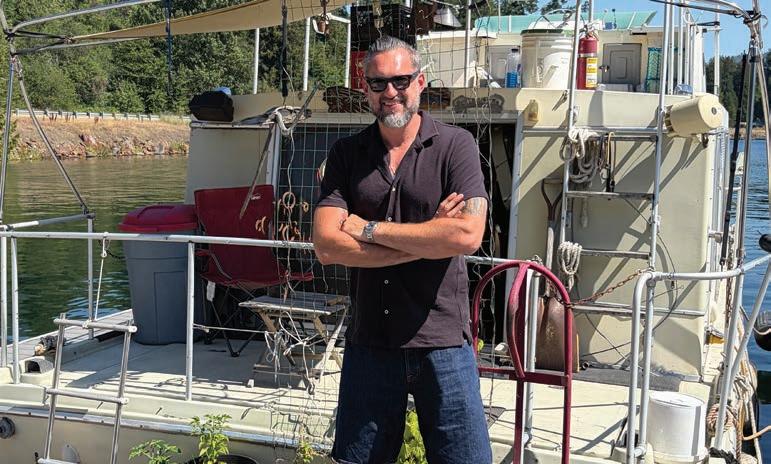
I met Captain Bob, who looks exactly like the man the coastal papers warn you about — cap, moustache, battered truck — until you notice the bumper stickers, which announce an old hippie and a lifelong liberal who lives on a boat he rebuilt himself, surrounded by his favorite books and records. He is 70, still tending bar because there was never enough to set aside, gloriously analog, faintly lonely and freer than most millionaires I know. His little boat is wedged into a corner of a marina full of gleaming
ones, and he seemed perfectly content to live just off to the side of everything.
And I met Toby, a real estate agent I teasingly called a modern Moses, because he told me God instructed him to find a land ringed by mountains and lakes and settle there. He and his friends are preppers, quietly rehearsing for a collapse — canning food, keeping livestock, teaching their children skills my grandparents’ generation in Poland had by necessity.
Some of what I heard at his kitchen table unsettled me; some of the certainties were harder than the granite outside. And yet these were among the warmest, most hospitable people we encountered on the whole trip, which complicated every neat story I might have told about them. One of his sons played guitar for us and lit up at the idea of auditioning for Poland’s Got Talent. I hope he does.
Here is where being Polish changes what a person hears. My country was erased from the map of Europe for 123 years. My own grandfather survived Auschwitz. When I meet people stockpiling for an apocalypse that has never actually visited them, I don’t feel superior — I feel a strange tenderness, because I come from a place that knows what real collapse costs, and I understand the instinct to build a wall of tins between yourself and the dark. I only wonder, gently, whether the dark they fear is out there, or whether some of it has been imported in the moving trucks.
What struck me most, in the end, was not the divide but the thing on
both sides of it. Everyone I met in North Idaho loves freedom with an almost religious intensity. Bob loves it and Toby loves it; the women in Sandpoint love it and the pastor loves it. They simply define it in opposite directions, and then treat the other definition as an invasion. But a shared love is a bridge, even between people who currently prefer to shout across the ravine.
The only question — and it is yours to answer, not mine — is whether you will one day meet in the middle of that bridge, or set it on fire.
I don’t get a vote. I’m the stranger who came to look, ate at your tables, swam in your cold lake and will now carry it all home to a country on the other side of the world.
Thank you — to Ben Olson and the Reader, to the believers and the doubters, to everyone who opened a door to a Pole with a camera and too many questions. A place is never its headlines. It is its people, standing by an astonishing lake, arguing about how to be free. I left rooting for the bridge.
Marcin Prokop is a Polish journalist, television and radio personality. He hosted Poland’s Got Talent from 2008-2022 and since 2024 he has been a judge on the program. He is also the host of a documentary road trip series called Uncommon States of Prokop, which recently filmed an episode in North Idaho.
Marcin Prokop at a houseboat in Hope.
Courtesy photo
Sandpoint Sharks host beginner 400-meter swim
By Reader Staff
The second annual Shark Attack Open Water Swim returns to Sandpoint City Beach Friday, July 31 at 9 a.m. Hosted by the Sandpoint Sharks Swim Club, the 400-meter swim is a beginner-friendly opportunity to get into the sport of swimming.
Designed for young and first-time athletes, the swim takes place in a safe environment along the shallow shoreline and helps participants grow their confidence in the water, all while promoting friendly competition. After the race, participants can stick around for tasty treats and community beach time with their fellow athletes and members of the swim club.
Register for $30 online at bit.ly/ SandpointSharkAttack anytime before 9 p.m. on Thursday, July 30. All proceeds benefit the local youth swimming club.
Woods Wheatcroft hosts art opening at new ‘Garudio’
By Reader Staff
Following the closure of his downtown Sandpoint studio a little more than a year ago, local photographer Woods Wheatcroft is now leaning into his next project: The “Garudio.”
“Part garage, part studio,” Wheatcroft wrote. “I have been transforming the interior space of my garage into a gallery and studio workspace.”
Free from the usual garage clutter and miscellany, The Garudio will house work from Woods Wheatcroft Photography.
Wheatcroft is hosting an art opening from 5:30-8:30 p.m. on Thursday, Aug. 6 at the Garudio, 44 S. Fourth Ave., in Sandpoint. The event is free to attend and open to all.
“There is a country music show at the Festival that night, so if you don’t like what your country sounds like these days, cruise by,” Wheatcroft said.
The space will be used for art openings, classes, studio tours and creative gatherings, so check back often for upcoming events.
See more of Wheatcroft’s work at woodswheatcroft.com.
Aster After Hours brings together artists, gardeners and more
By Reader Staff
Aster Garden Center will keep its doors open long past closing for Aster After Hours, a community gathering of food, drink, live music with Emmett Adams and art among the center’s native plants (924 W. Superior St., in Sandpoint).
The free party runs from 5-7 p.m. on Wednesday, Aug. 5.
“This is more than an event. It is a place to slow down, reconnect, and enjoy the people and creativity that make this community special,” stated organizers.
The get-together, hosted by the nonprofit Kaniksu Land Trust, will include a bevy of food trucks, drinks (both
alcoholic and not), music and booths with regional artisans and garden vendors. Everyone is invited to peruse the nursery, meet neighbors, and learn more about gardening and environmental stewardship in North Idaho.
Visit astergarden.org and kaniksu. org for more information.
Carnival raises funds for Habitat for Humanity
By Reader Staff
Idaho Panhandle Habitat for Humanity’s Summer Carnival is set for Saturday, Aug. 1 from 11 a.m. to 4 p.m. at its Sandpoint ReStore location (1527 Baldy Park Road).
The fundraiser includes free entry and $1 tickets per activity thereafter.
The all-day party will include a bounce house, duck pond games with prizes, challenges that test participants’ building skills and a scavenger hunt around the ReStore. Attendees can also enjoy cotton candy, snowcones and a 50/50 raffle, where the winner takes home 50% of all money earned from ticket sales.
Proceeds from the carnival will support the nonprofit’s mission to create affordable housing for all. Learn more about Habitat for Humanity’s mission, and the ReStore, at iphfh.org.
Members of the community gather at Aster After Hours at Aster Garden Center. Courtesy photo
Top left: Festival at Sandpoint Director of Operations and Programs Veronica Knowlton and Production Supervisor Sarah Morgan take a quick break from setting up the Festival at Sandpoint venue to catch up on the Reader
Top right: Peter Goetzinger, Kelly Price and friends from Seattle on the Trail of the Coeur d’Alenes near Wallace. “We bicycled 100 miles in two days wearing bee costumes while spouting out puns such as, ‘To bee or not to bee,’ ‘What the buzz?’ and ‘Bee kind!’” wrote Price.
Middle left: “Abby Slough, East Bonner County Library District gardener, stands by the newly built shed at the Sandpoint branch’s garden holding perennial flowers grown there,” wrote photographer Susan Drinkard. “The shed was purchased in part by a $3,000 donation from the Friends of the Library. The library now has a place to store garden tools and supplies.”
Middle right: Roland Hort snapped this photo of a farmer tending his field in Sagle, just south of where Cocolalla Creek runs into the Pend Oreille River.
Bottom left: A baby swallow getting ready for flight. Photograph by Martin Hoffman.
Bottom center: “I know you are done with parking issues,” wrote Irvin McGeachy. “This photo represents the future of Sandpoint.” Michele McGeachy took this photo in 2015 of a phalanx of parking signs in Aspen, Colo.
Bottom right: Reader subscriber and part-time Sandpoint resident Walt Gillette sent this photo from 2016 at the mural located on First Avenue painted by Doug Jones. “We were in Sandpoint with granddaughter Sophia, then just 5 years old,” wrote Gillette. “[My wife] Saundra took a photo of us standing at the mural. I was telling Sophia to look at the apple in the tree; although the apple was out of reach for her then, someday she’d find a way to get that apple! This is a message we and her parents Ed and Leah continued to reinforce over time: Reach for the goal. Sophia is now 15 and as an example of reaching for the apple, when 16 will get her private pilot’s license with an aim toward attending the USAFA in Colorado Springs.” The image was printed on canvas and the framed photo has hung on the wall of their Everett, Wash. home ever since.
To submit a photo for a future edition, please send to ben@sandpointreader.com.
FEATURE
‘Connect first with yourself’
By Ben Olson Reader Staff
Grounded Yoga and Movement opens along the downtown waterfront
There isn’t any better place for Mariela Rubelo to be than inside a yoga studio. After teaching her speciality of yin yoga in Sandpoint, Rubelo struck out on her own to open Grounded Yoga and Movement at 116 N. First Ave., located along the Sand Creek waterfront. With views of the mountains and lake, Rubelo and her instructors offer classes every day of the week that cover a wide range of practices, as well as pilates, fascia flow, barre and other specialties.
Grounded opened on June 15 and offers classes seven days a week, both inside the studio and outside on the back deck overlooking the water. There are even stand-up paddleboard yoga classes for those who want a bit more adventure.
Born and raised in Argentina, Rubelo remembers her first exposure to yoga when she was a young girl and her brother brought home a stack of books from a thrift store.
“I found this yoga book that was all in Sanskrit, so I couldn’t read a single word, but it had pictures of the poses,” she said. “My mom and I for a while would just sit down in the afternoon and copy the poses.”
Rubelo took her first yoga class at 14 years old and was immediately transformed.
“It was amazing,” she said. “I felt so good and then went to bed and slept really well. That kind of hooked me.”
As an adult, Rubelo began to travel and took more classes, exploring more of what yoga had to offer. She backpacked nonstop to more than 60 countries from 2012-2019, sometimes visiting Buddhist temples and learned their approach to the discipline.
In Australia, she met a friend who owned a yoga studio and agreed to train her to be a yoga teacher in exchange for her teaching him Spanish.
“That’s how I got my first 200 hours of training,” she said. “A little bit later, I ended up in Bali and I took my first yin yoga glass and it was a real experience. The first pose that I was in, I said, ‘I need to learn more.’”
Rubelo said yin is the philosophy of stillness and patience. While many types of yoga are more upbeat and flowing, yin is more meditative and deep.
“Yin invites everybody to come take a look,” Rubelo. “Yin consists in
maintaining the poses for long periods of time, so you can get beyond the muscles and get more into the deeper tissues, the fascia, the ligaments, the tendons.”
After so much travel, Rubelo never thought she’d end up living in the United States.
“I was traveling by land from Mexico down to Argentina and hitting all the countries,” she said. “By the time I made it to Costa Rica, I met who is now my husband and we traveled together for a little bit.”
After a brief long-distance relationship, Rubelo and her husband Edwin planned to move to Europe, but he called one day and asked her what she thought about moving to North Idaho because his business had taken off and he needed to be here.
That began a long journey of obtaining visas and ultimately led to her achieving U.S. citizenship.
“It was expensive, it was time consuming, but politically things had changed here,” she said. “My plan was to be on a green card ... but I kind of saw the writing on the wall and I woke up thinking I needed more protection.”
Rubelo’s path toward citizenship was a good one, she said, but she lamented the reasoning behind it.
“It was just fear,” she said. “I was hoping that having citizenship would remove that fear, but it didn’t. Especially with the climate that we’re in right now. It’s a tough time to be a Latin-American person in the U.S. That led to me creating this yoga studio.
“The idea for this place was born out of necessity for a cohesive yoga space downtown,” Rubelo continued. “Something that aligned with the values of yoga. Basically, we are a place that practices what it preaches.”
Rubelo said she didn’t feel welcome at her former yoga studio, which inspired her to create a welcoming communal space that has no expectations.
The studio is large and clean, with a communal room for students to socialize before and after classes. The interior studio has a barre along one wall and the other wall of windows, which lets in ample light and spectacular views. In the warmer months, classes take to the deck overlooking Sand Creek.
With 15 dedicated instructors each with their own specialty, Grounded has taken off. Classes include restorative yoga, yin yoga, fascia flow, slow flow yoga, functional mobility and yoga, vinyasa, power pilates, sculpt and strength as well as barre classes.
There are a multitude of membership options to reflect the diversity of her studio, she said. Students can sign up for a trial week for $50 and have unlimited access to all the 27 weekly classes to find ones that appeal to them. Unlimited access is $125 per
month, while punch passes offer various numbers of classes starting at $95 per month. Drop-in classes are $22 and are open to all. Finally, Grounded offers scholarships of up to 50% off unlimited or eight-a-month memberships to help offset fees for those in need of assistance.
For Rubelo, yoga isn’t just a way to workout, it’s a way of life.
“Yoga teaches you to connect first with yourself and then with your surroundings, and usually your surroundings are other people,” she said. “If you practice that in your class, you practice that connection. You practice that feeling of belonging in a community of oneness, and if we lose that, we’re doomed.”
To learn more or to sign up for classes, visit groundedsandpoint.com.
Top left: Mariela Rubelo leads a class inside the Grounded Yoga and Movement studio. Top right: Grounded offers classes on its outdoor patio overlooking Sand Creek and Lake Pend Oreille. Photos by Ren Fox
Send event listings to calendar@sandpointreader.com
Festival at Sandpoint: Andy Grammer with Walk Off the Earth
7:30pm @ War Memorial Field
Kickoff to the summer concert series
Anna Tivel in concert
7pm @ Panida Theater
Live jazz w/ Bright Moments
6-8pm @ The District
Festival at Sandpoint:
Aaron Lewis and the Stateliners
7:30pm @ War Memorial Field
Live Music w/ Arie VanDenBerg
5pm @ Connie’s Lounge
Live Music w/ Ian Newbill, Brian Jacobs
2-5pm, 6-9pm @ Barrel 33
Newbill at 2:30-5:30pm, Jacobs at 6-9pm
Live Music w/ Dani Bacon
6-8:30pm @ Matchwood Brewing Co.
Live Music w/ Justin Lantrip, Matt Donahue
5-8pm @ MickDuff’s Beer Hall
Festival at Sandpoint: Portugal. The Man
7:30pm @ War Memorial Field
Live Music w/ Jason Perry Band 9pm @ 219 Lounge
Live Music w/ Justin Harris & The Pocket Aces
5:30-8:30pm @ Smokesmith BBQ
Live Music w/ Arie VanDenBerg
6-9pm @ Barrel 33
Live Jazz w/ Bright Moments
6-8pm @ Arlo’s Ristorante
Live Music w/ Mason Van Stone
6-8pm @ Baxters on Cedar
Festival at Sandpoint Community Night:
Joseph with Sydney Dale, Hannah Meehan
7:30pm @ War Memorial Field
Monday Night Blues Jam w/ John Firshi
7pm @ Eichardt’s Pub
Live Trivia w/ Toshi 7pm @ Connie’s Lounge
Live Music w/ John Firshi
5-7pm @ Pend d’Oreille Winery
Festival at Sandpoint:
George Thorogood and the Destroyers
7:30pm @ War Memorial Field
Live Music w/ Natalie Hughes
5-8pm @ Barrel 33
Benny on the Deck weekly patio concert
5:30-8:30pm @ Connie’s Lounge
Festival at Sandpoint: Midland
7:30pm @ War Memorial Field
THURSDAY, july 30
Open bluegrass jam (host: Jim Rosauer)
5:30pm @ Connie’s Lounge
Weekly BCA pool tournament
6pm @ Roxy’s Lounge
Live Music w/ Liam McCoy and Friends
7pm @ Eichardt’s Pub
Live Music w/ Matt Lome 5-7pm @ MickDuff’s Beer Hall
FriDAY, july 31
The Travelin’ McCourys in concert
7pm @ Panida Theater
Bluegrass from Nashville band
Live Music w/ Justyn Priest Band 9pm @ 219 Lounge
Live Music w/ Weibe Jammin’ 5-8pm @ Pend d’Oreille Winery
Live Music w/ Bobby Patterson Band
5:30-8:30pm @ Smokesmith BBQ
Music w/ DJ Sterling 9pm @ Roxy’s Lounge
SATURDAY, august 1
Live Music w/ Headwaters 6-9pm @ The Blue Heron Cafe
Long Bridge Swim
See Page 8
Historic Walking Tours
11am @ Meet at Cedar St. Bridge Register at bit.ly/4aSe60K
Friends of the Library monthly book sale 10am-2pm @ Sandpoint library Great selection of summer reads
SunDAY, august 2
Magic with Star Alexander 5-8pm @ Jalapeño’s
July 30 - August 6, 2026
Bubble Palooza: Story Time in the Park 10-11:30am @ Lakeview Park
What 3 Teenage Girls Can Teach Us
About Resistance
4pm @ First Presbyterian Church
Discussion with historian and author Sophie Poldermans
SASi monthly breakfast fundraiser
8:30am @ Sandpoint Senior Center
$10 donation. RSVP 208-263-6860
Shark Attack Open Water Swim
8am @ Sandpoint City Beach
Beginner-friendly, public swim
Harry Potter Day at Clark Fork library
12-4pm @ Clark Fork library
Screenings of Deathly Hallows 1 and 2
Live Music w/ Mason Van Stone 6-8pm @ Baxters on Cedar
Summer Carnival
11am-4pm @ ReStore, 1527 Baldy Park Rd. Free entry, kids’ activities and more!
Hands On History
10am-2pm @ Bonner Co. History Museum Historical crafts for kids (free entry)
Sandpoint Farmers’ Market
9am-1pm @ Farmin Park
Live music w/ Bright Moments Jazz
Live Music w/ Frytz Mor and the Generals 5-8pm @ MickDuff’s Beer Hall
Live Music w/ Tucker James 5-8pm @ Pend d’Oreille Winery
Sandpoint Chess Club 9am @ Evans Brothers Coffee
monDAY, august 3
Outdoor Experience group run 6pm @ Outdoor Experience 3-5 miles, all levels welcome
tuesDAY, august 4
Injectors Car Club monthly meeting 6pm @ Serv-A-Burger
wednesDAY, august 5
Beginner Argentine tango class
7pm @ Embody Center, 823 Main St. No partner needed. $15
Sandpoint Farmers’ Market 3-5:30pm @ Farmin Park
ThursDAY, august 6
Sister Sadie in concert 7pm @ Panida Theater
All women Grammy-nominated powerhouse band based out of Nashville
Live Music w/ Kerry Leigh 3-5pm @ IPA
Trivia w/ Davey 6-8pm @ Idaho Pour Authority
Open mic/jam 6-?pm @ Idaho Pour Authority
Aster After Hours
5pm @ Aster Garden Center
Free community event with food trucks, local art, live music with Emmett Adams, vendors and more
Live piano w/ Dwayne Parsons 4-7pm @ Pend d’Oreille Winery
Live Music w/ Liam McCoy and Friends 7pm @ Eichardt’s Pub
Open Irish jam (host: Seamus Divine) 5:30pm @ Connie’s Lounge
Three millennia of relevance
Christopher Nolan’s The Odyssey proves the timelessness of Homer’s tale
By Zach Hagadone Reader Staff
There’s no point in rehashing the specific plot points of The Odyssey
To the immortal credit of Homer (or whoever actually set down the original story), the basics of the tale have been told in various translations, interpretations and forms of media for about 3,000 years.
Underscoring its timelessness, the saga of Odysseus — ruler of the ancient Greek kingdom of Ithaca — following his bloody, cunning victory at Troy to his 20-year journey home beset by the whims and foibles of gods and men alike, has received its most recent retooling in the hands of director Christopher Nolan. And suddenly The Odyssey is again at the peak of cultural relevance.
Premiering in theaters, including IMAX, on July 17 and starring Matt Damon as the titular wanderer, Nolan’s Odyssey cost $250 million to make and, as of press time, has grossed more than $720 million globally. Asking someone if they’ve seen it has become a feature of casual conversation, and those who haven’t are experiencing what The Atlantic headlined “The Fear of Missing The Odyssey” in a piece published July 23.
With five stars from rogerebert.com; a 94% and 97% rating from critics and audiences, respectively, on Rotten Tomatoes; and 8.5/10 on imdb.com, it’s fair to say that acclaim has been nearly universal.
However, the word “nearly” is doing a lot of work in that sentence.
As has become the norm in recent years, no film is safe from the winds of the culture wars; and, the bigger the movie and more stacked the cast, the harder those breezes blow.
And Nolan’s version of the ancient yarn is especially star-studded. Alongside Damon is Anne Hathaway as Penelope, the queen Odysseus left behind, and Tom Holland as their son, Telemachus. Then there’s Robert Pattinson as the slimy Antinous, who leads the swarm of suitors vying for Penelope’s hand during Odysseus’ long absence, and Elliot Page as Sinon — the young boy who Antinous manipulated into taking his place on the expedition to Troy.
John Leguizamo is Eumaeus, the
blind pig keeper, loyal servant and friend of Odysseus; Lupita Nyong’o does double duty as Helen (whose abduction sparked the Trojan War) and her sister Clytemnestra; Charlize Theron portrays the nymph Calypso, who drugs Odysseus into long years of forgetfulness with lotus flowers and love; and Samantha Morton turns in the overall most compelling, complex and terrifying performance of the film as the “witch” Circe.
Finally, Zendaya represents the only direct interaction with the ancient Greek pantheon as the goddess Athena.
With that kind of box office power and diversity, it was guaranteed that the film would be buffeted by the Charybdis and Scylla of internet trolldom, and called down no less than the world’s richest edgelord Elon Musk from his seat atop the Olympian mental dungheap of X.
The weeping and gnashing of teeth came down to the same basic beef as always: The presence of anyone other than white, heteronormative actors playing characters in an ostensibly “historical” story is “woke,” and therefore illegitimate.
The reasons why this is laughable, especially in the famously diverse world of the ancient Greeks, are too numerous, ill-conceived and frankly boring to list, so the less said about that the better.
But this version of The Odyssey has also drawn the ire of famed classicist Emily Wilson, which must have stung Nolan considering that he credited her 2017 translation of the Homeric original as the inspiration for his film.
Writing in the London Review of Books, Wilson unloaded on the director’s “usual combination of grandiosity and superficiality,” adding that the blockbuster “lacks many of the elements that make the poem great. It has nothing convincing to say about time, memory, history, war, or about the relationship between one warrior’s glorious return and the lives of his family, adversaries, comrades, friends and neighbors.”
What’s more, according to Wilson, “The writing is abysmal. None of the characters has convincing motivation for their actions or words. There are no sex scenes, and all the food looks horrible.”
While anything Musk and his ilk has to say is by definition without merit, Wilson’s critiques — though harsh
— do land much closer to legitimate judgments about the overall tone and presentation of the current Odyssey
Watching it in the theater with my 14-year-old son at Sandpoint Cinemas, we were both struck by the grandeur of the cinematography and tactile presentation of an epic world (Nolan famously eschewed most CGI for practical effects, including the awe-inspiring cyclops Polyphemus). The dialogue was purposefully modernized and no one spoke in a faux British accent, which didn’t particularly bother my son and me.
Odysseus’ encounters with the various beasts and enemies along his path were riveting — again, with special notice due to Morton’s Circe, whose sequence was like a film within a film — and flashbacks to the war were visceral to behold (every scene involving the Trojan Horse will become a classic).
However, a strong case can be made that Nolan’s vision of the Greek world is almost entirely lacking in color — literally. In this film, the Aegean looks cold and cruel, which is a far cry from its famous electric blue. The skies are often bruised with lowering clouds and the craggy hillsides and forests evoke Game of Thrones (which makes sense, because filming locations included Iceland and Scotland).
The Mediterranean world of the late-Bronze Age in which The Odyssey is set was actually exploding with vibrant hues — almost every inch of every temple and statue was slathered with the brightest, shiniest adornments available, and it’s only because of the passing of millennia that we conceive of them as glowering white marble monoliths.
Yet that austerity is what Nolan delivered (even extending to the cos-
tumes), and in so doing he injected a self-serious gloom to a story that has owed much of its longevity to a melding of tragedy, comedy, satire, wit, passion and humanity.
But here’s the thing: None of that matters. My son and I left the theater enthused about what we’d just watched, and marveled at how quickly its almost three-hour runtime flew by. More importantly, it got us talking about the universality of storytelling, and how a 3,000-year-old poem has been and should continue to be reinterpreted in as many ways and in as many forms for as many people and for as long a time as we find it meaningful.
That’s the ultimate triumph of The Odyssey, and one that Nolan has earned: He’s got us talking about it, and in so doing, we’re now part of that ancient tradition.
In theaters now.
Screenshot from The Odyssey
MUSIC
The Festival at Sandpoint — Week 1
By Reader Staff
The 2026 Festival at Sandpoint Summer Concert Series is upon us. Here’s a quick rundown of what to expect for Week 1. Purchase tickets and find more information at festivalatsandpoint.com.
Thursday, July 30
Andy Grammer with Walk Off the Earth
Andy Grammer is a pop singer-songwriter with several songs that have gone platinum, including “Honey, I’m Good” and “Fresh Eyes.”
Returning to the Festival stage is Walk Off the Earth, a Canadian indie pop group that does things a bit differently.
Gates open at 6 p.m. and the show starts at 7:30 p.m.
Friday, July 31
Aaron Lewis and the Stateliners with Dawson Steagall
First playing with the 2000s-era hard rock band Staind, Aaron Lewis returns to his roots with a series of solo and full band country projects.
Gates open at 6 p.m. and music starts at 7:30 p.m.
Saturday, Aug. 1
Portugal. The Man
John Gourley, playing under the moniker Portugal. The Man, fronts this experimental indie rock, alt-rock band.
Gates open at 6 p.m. and the show starts at 7:30 p.m.
Sunday, Aug. 2
Community Night:
Joseph, Sydney Dale and Hannah Meehan
Joseph is an Oregon-bred sister duo known for genre-blurring indie pop, folk and rock.
Sydney Dale is a singer-songwriter known for her expressive voice and emotionally detailed writing.
Sandpoint-based Hannah Meehan is a singer-songwriter who uses her voice to weave together stories of joy and melancholy.
Gates open at 6 p.m. and music starts at 7 p.m.
Wednesday, Aug. 5
George Thorogood and the Destroyers with The Robert Cray Band Welcome to “The Baddest Show on Earth.” With five decades of hits such as “Bad to the Bone,” “Move It On Over,” “Who Do You Love?” and more, George Thorogood and the Destroyers always puts on a stellar show.
Robert Cray is a blues icon, a soul man and an inveterate rock ’n’ roller. His mix of blues and soul has earned him acclaim for more than 50 years.
Gates open at 6 p.m. and the show starts at 7:30 p.m.
What you need to know:
Parking
Parking is free at the Sandpoint High School parking lot,
located at 410 S. Division St. A free shuttle will transport concertgoers to and from War Memorial Field.
Seating
Seating is first-come, firstserved. If seated in the short chair and blanket section, chairs must have back legs that are four inches or less. Guests can bring their own chairs and blankets (must be 8’x8’ or less).
Standard shows have a dance/standing area in the middle close to the stage. Seated shows have short chair/blanket seating in the same section with dancing areas to the left and right of the stage.
Cashless
The Festival at Sandpoint is an entirely cashless venue. Credit and debit cards, as well as contactless payments such as Apple Pay, are the only accepted forms of payment.
No re-entry
There is no re-entry once you’re inside the venue, with no exceptions.
Food and drink
Outside liquids of any kind are prohibited inside the War Memorial Field grounds. Empty water bottles are encouraged, with free filling stations located throughout the venue. Outside food and
soft-sided coolers are allowed. No glass, hard coolers or rolling coolers allowed.
Bars are located throughout the venue and Festival Street food vendors are located behind the grandstands.
Smoking/vaping
Smoking and vaping are only allowed inside designated areas. The use of marijuana and/or other illegal drugs is prohibited.
Prohibited items
The following items are not allowed inside the venue: glass, outside liquids, hard-sided coolers, rolling coolers, framed backpacks, personal vehicles of any kind (strollers, skateboards, etc.), gum, sunflower seeds, animals (service dogs allowed), drugs or paraphernalia, flammables, tents, umbrellas, tarps or shade stands, toy guns, water guns, sling shots, hula hoops, full face masks/helmets, large chains, wallet chains or spiked bracelets, poi, weapons of any kind, aerosol products, air horns, bullhorns or noisemakers, audio recording devices, professional cameras, drones, flyers or giveaways, laser pointers, laptop computers, tablets, massagers, selfie sticks, tripods, sleeping bags, walkie talkies. For a full list, see festivalatsandpoint.com.
A snapshot of notable live music coming up in Sandpoint
The Travelin’ McCourys, Panida Theater, July 31 Bobby Patterson Band, Smokesmith BBQ, July 31
Brothers Ronnie and Rob McCoury were raised in the bluegrass tradition, with their father Del being regarded as among the leading lights of the genre. They were also raised on the road performing with their dad, which was the perfect training for their own career as The Travelin’ McCourys. With Ronnie and Rob on mandolin and banjo, respectively, the band brings bluegrass into the 21st century
with the help of bassist Alan Bartram, Cody Kilby on guitar and fiddler Christian Ward. Catch this staple of the bluegrass scene on the Panida main stage.
— Zach Hagadone
Doors at 6 p.m., show at 7 p.m.; $42-$70. Panida Theater, 300 N. First Ave., 208263-9191, panida.org. Listen at thetravelinmccourys.com.
To hear some old-school blues that would fit right in at a ’50s shindig, look no further than the Bobby Patterson Band’s performance at Smokesmith BBQ on Friday, July 31. As seen on KSPS PBS’s Inland Sessions, the group is made up of singer-songwriter and guitarist Bobby “Fat Tone” Patterson, drummer Ken Danielson and bassist Randolph Knowles, who come together to churn out rockin’ blues hits that have
This week’s RLW by Ben Olson
READ
Every few years, I return to the Hornblower Saga, a collection of novels written by C.S. Forester about the life of Horatio Hornblower, a fictional English naval officer who served during the turn of the 18th century. The books are second only to, perhaps, the Aubrey-Maturin series by Patrick O’Brian for their historical accuracy of nautical warfare during the Napoleonic Wars. Anyone who enjoys historical nautical fiction should read these books pronto. Find them at the library.
LISTEN
earned them countless accolades from the Inland Empire Blues Society and beyond. Take an evening and enjoy this Spokane-based band’s funky, retro stylings and feel as though you’ve traveled back in time to the genre’s heyday.
— Soncirey Mitchell 5:30-8:30 p.m., FREE. Smokesmith BBQ, 102 S. Boyer Ave., 208-920-0517, smokesmithidaho. com. Listen on YouTube @bobbypattersonband9190.
Los Angeles musician Bien et Toi is hard to find information about online. I can respect that, of course. A collaboration between Bien et Toi and indie pop artist Biig Piig has been playing on repeat in my headphones for days now. The song is “Rainbow Tables” and has just the right vibe. Check it out on Spotify. Better yet, take a spin down the algorithm highway and check out the Bien et Toi Radio station.
WATCH
One of my favorite coming-of-age shows is the iconic single-season series Freaks and Geeks. Launching the careers of Linda Cardellini, James Franco, Seth Rogen, Jason Segel, Martin Starr and more, this series was set in 1980 but came out in 1999. It’s just the right mix of nostalgia and realism (we all recognize several of these characters from our own high school experiences, no doubt). Stream it on Amazon Prime.
From Pend Oreille Review, July 28, 1911
PIONEER FOUND DEAD IN ROOM
Dan House, one of the most familiar characters among the woodsmen of Bonner county, died of a complication of diseases at the Palace hotel Monday night.
The deceased came to Sandpoint some 12 years ago and worked in nearly every lumber camp of the county. Some time ago House became a partial invalid and made his living by selling goods at the camps. He was a hard working and energetic man and was always in demand when a first class workman was wanted. This summer, House seemed to be feeling better than usual and went to work in the hay fields. It is believed that the extreme heat so weakened him that it brought on the sudden attack of heart trouble with which he suffered Monday evening. Hearing of his sickness, friends of House went to his houseboat on the lakeshore and were asked by House to take him to the Palace hotel, the invalid saying that the houseboat was so cold he could hardly breathe. Aided by his friends, House walked to the Palace and Dr. Stackhouse was called to attend him. Shortly after the visit of the doctor, House fell asleep. A friend of the sick man stayed up through the night to look after him. About daylight the nurse looked into the room where House lay apparently in a restful sleep. The nurse remarked to the night clerk at the Palace that House seemed to be getting along all right. About an hour later both the nurse and the night clerk went to the room again to see if House needed anything, to find that the man had apparently been dead several hours.
The funeral was held this afternon at 2:30 at the Brower undertaking parlors, Rev. C.E. Wilson conducting the services. Interment was made in Lakeview cemetery.
BACK OF THE BOOK
Dark History: Murders rock the Priest River Italian community
By Soncirey Mitchell Reader Staff
The July 23 edition of the Reader republished a Northern Idaho News story from June 25, 1912, announcing the arrest of Joseph Caprai for the murder of one Charles Falcone, both “prominent members of the Italian colony at Priest River.” While that snippet reported the case as cut and dry, the reality of the unsolved crime is anything but.
The story began around Nov. 18, 1899, when Falcone decided to visit his hometown in the Old Country. According to his banker, Falcone had amassed $700 in savings — the equivalent of approximately $28,000 today — and shortly before his death bought a ticket to Italy and withdrew $150 in cash. He then visited his old friend Caprai, and that was the last anyone saw of him.
Most assumed he’d gone back to Italy, leaving his cattle in the care of Frank Stewart.
“Mr. Stewart said that he took the cattle and kept them for about two weeks, when Caprai came and took the cattle away, saying that he had purchased them from Falcone,” reported the News
Of course, at this point, Falcone was dead, but residents didn’t suspect anything until an “ill-mannered man” was arrested while attempting to sell Falcone’s ticket to Italy. The man confirmed that Caprai had given him the ticket “to dispose of,” and the mayor of Falcone’s hometown later confirmed that he never made it to Italy.
The case didn’t get any traction for 13 years, until Charles Bossio hired private detective Eugene Montroy to “run down the murderers of his brother,” Henry Bossio, who was shot and killed in his home on May 20, 1912. Montroy uncovered evidence linking Caprai to both crimes, and police arrested him. The News reported that Falcone was
STR8TS Solution
buried on Caprai’s farm, and that the police knew the “exact spot”; however, investigators never found the body.
The July 9, 1912, edition of the News opened its newest story with, “Released on the charge of murdering one man, only to be immediately arrested on the charge of murdering another was the fate of Joe Caprai last Saturday.”
Caprai’s lawyers had argued, essentially, “no body, no crime,” and the case of Falcone’s murder was thrown out. However, after Caprai’s arrest, residents of Priest River began to talk, and they all suspected he was Bossio’s murderer.
“Up to the time he was arrested they would not divulge anything that they were suspicious of as they were afraid that they would meet the fate of the other two men,” reported the News.
Gossip at the time maintained that Bossio and Caprai had a dispute over a “wood contract”; and, in retaliation, Bossio threatened to tell the police about crimes Caprai had committed before arriving in Idaho.
“It is stated that Bossio was killed because he knew too much concerning the past life of Caprai,” reported the News
That being said, Caprai didn’t match the description given by Bossio’s wife, the only witness to his murder. She described the murderer as a clean-shaven Swede in a black coat and derby hat. Why? Perhaps, as the News speculated, because Annie Caprai Bossio was also Joe Caprai’s niece. She later recanted her description, and The Pend Oreille Review reported, “Girlwife accuses her uncle of murder.” Annie, “a comely Italian woman of 18,” testified that on the night of the murder her husband had jumped out of bed, grabbed a shotgun and gone to investigate what he suspected was someone in the chicken coop. After hearing a shot, Annie allegedly ran out to find her husband dead and Caprai standing near the body. He shot at
Sudoku Solution
her three times while she ran to a neighboring hotel, run by a “Mrs. Krenka.” Krenka’s testimony muddied the waters, however, as she noted that Annie arrived at the hotel almost fully dressed and calm, despite the murder of her husband. That could be because, according to the defense, Bossio suspected Annie of having an affair with one or both of his brothers, Peter and Charles.
“He said if she did not mind him he would kill her,” said Krenka. “I told him he shouldn’t say that and he said she belonged to him and she would mind him or he would kill her and kill himself.”
After that, four witnesses testified to Caprai’s alibi, and the case was thrown out.
The final mention of the gruesome business came in the Aug. 14, 1914 edition of the News, which announced Annie’s marriage to Charles.
“This marriage calls to mind the Priest River tragedy of two years ago [when] Mrs. Bossio’s husband, brother of Charles Bossio, her present husband, being done to death by party or parties unknown. Her uncle Joe Capari, was accused of the crime and tried and acquitted and the affair still remains a mystery.”
I guess we were all guilty, in a way. We all shot him, we all skinned him, and we all got a complimentary bumper sticker that read, “I helped skin Bob.”
Solution on page 22
Laughing Matters
CROSSWORD
By Bill Borders
Argus-eyed /AHR-guhs-ahyd/
Week of the
[adjective] 1. extremely observant; watchful
“The Argus-eyed editor noticed the mistake before the paper went to print, saving the editorial staff a huge embarrassment.”
Corrections: Behold! The field in which we grow our corrections. Lay thine eyes upon it, and thou shalt see that it is barren.