Kia ora new students! Haere mai ki Te-Whanganui-a-Tara! For the first-years reading this: I think you’re really going to enjoy the year of magazines we’ve put together. A lot of students just like you put their free time into making Salient, and the greatest reward we could possibly ask for is to see you enjoying and participating in the magazine every week.
I want to start by offering an olive branch to those who have disregarded Salient in the past. Our most common critique is that we’re cliquey, insular, and small-minded, and I believe that at times this is true. It is never our goal to sit in a position of moral superiority and lecture others. We want this magazine to be a place for free and open discourse as much as possible, but equally - we want it to be fun! While we might discuss tough topics from time to time, the heart of student experience is always the newfound joy of independence and rebellion.
When I sat down with my close friends and comrades over the summer to conceptualise this year of Salient, we were clear from the beginning that we wanted to make steps towards something radically different. This is an odd time to be a student, much less a working student. Our education is precarious, with austerity continuing to plague the education sector. Our economy is worse than many of us can remember, and it’s hitting Porirua a lot harder than Oriental Parade. It’s not hard to feel like some sort of crisis is upon us, yet the routine motions of normalcy prevent us from confronting this feeling. We can feel the storm clouds coalescing above us, but the first drops of rain have not yet fallen.
More than just a sociopolitical crisis, though, we are also in a crisis of hearts and minds. In 2021, 21% of men reported having zero or one close friends, up from 6% in 1990. This is due in no small part to the prevailing mindset of liberalism, which tells us that we are “enough” in ourselves, that we do not need to rely on the kindness of others. Combine this with the roughshod attitude of hegemonic masculinity, and it’s no wonder that young men are increasingly turning to Andrew Tate and Jordan Peterson.
As students in this time, we desperately need institutions that bind us together. We need places that centre community over self, places that recognise education as a process of learning, thinking, and behaving critically. We must firmly reject the degree mill that churns student minds into soulless production-machines.
It is our hope that Salient will be one of these institutions. We’ve got some really fun stuff lined up for you this year, with a diverse range of writers who have worked intensely together to develop critical commentary. We’ve also introduced a range of columns, including insights on socialism, vivid debates about weekly topics, and a special Blind Date column with our friends over at Evil Twins coffee.
On our redeveloped social media pages, we’ve launched a TikTok news show (think SNL Weekend Update) and fans will be excited to see the return of our podcasts, this time with a slate of new guests who are doing positive work in the community.
We’ll see you around!
ALOK’s Hairy Situation Tour
In their new standup show, Trans and Indian comedian ALOK keeps finding themselves in hairy situations they’re excited to make you giggle with. Grab your tickets and head along to MEOW for some laughs!
Sanfran Quiz Night
Get ready for a hilarious night of music trivia at the San Fran Quiz Night, hosted by the awardwinning comedian Patch Lambert! Grab your team of up to 8 and enjoy a fun-filled evening of great food, cheap drinks, and big laughs.
The Flatliners
Enjoy a night of punk with Canadian band The Flatliners at Valhalla, with the DIY punk-rock ethos that’s at the group’s core taking over our favourite grungey venue in Te Whanganui a Tara for ONE NIGHT ONLY!!!!
ZORO
Zoro is a genreblending electronic musician from the UK whose work stretches from D&B and Jungle to Garage. On his first appearance in Aotearoa, he’s supported by local DJs Porcelain and Dons.
Solar Daze, Clova, and RENÉE
Solar Daze, a Pōneke based hip-hop-soul collective will be bumping their fusion of RnB, soul, hiphop, and much more! Supporting them are Clova, a producer and multi-instrumentalist bringing string-focused garage and jungleinfused sounds, and RENÉE, who will be opening the night with smooth and groovy neosoul.
Saturday Night DJ Sessions
Playing tonight will be Sadhoo- a versatile, passionate DJ, bumping some good tunes to ride the Dakota bull to all night long.
MONDAY ONWARDS: Trial of Restore Passenger Rail protestors
From Monday, seven activists who peacefully blocked traffic across Wellington’s motorways in 2023 and 2024 will be on trial. They face a maximum of 14 years in prison. The trial comes as Police move to expand their powers when controlling and suppressing peaceful protest. In the UK recently, Just Stop Oil activists received record five-year sentences for similar protests.
By Dan Moskovitz (he/him)
Unirec rips off students
Price-wise, Unirec is about as good a deal as you can get. For Wellington-based students, the year-long deal costs just $229, or $4.40 a week. That’s a price which blows other Wellington gyms out of the water.
But it’s not all sunshine and rainbows at Unirec. Over the 2-3 weeks throughout the Christmas and New Year period, the uni closes its doors to everyone. This includes the gym. But those dates are included in the twelve-month deal, meaning users are paying for gym access whilst barred from it. Unlike other trimester three work, you can’t bench from home.
So why is this policy in the first place?
When asked, the university dodged the question. A spokesperson told Salient how “members on a 12-month membership can put it on hold during the university shutdown, so they don’t incur charges while we are closed. This also extends their membership duration by the length of the university shutdown.
“This information is communicated proactively in December and also at the time of membership sign-up.”
The proactive communication in question was via an email sent to Unirec users, of which information about membership holds was at the bottom.
Unirec did not answer when asked if they planned to change the policy.
Living Pā set to rise from the dead
By Dan Moskovitz (he/him)
In 2021, the university announced the living pā project, seeking to turn the university’s marae precinct into a “Living Building.” Yet three years and $60 million later, and the since renamed Ngā Mokopuna is open but yet to receive the kiss of life. Living buildings, certified under the Living Building Challenge, have to be self-sufficient and regenerative. For Ngā Mokopuna, this means being carbon-positive, collecting and managing its own water systems, and generating its own electricity.
Yet currently Ngā Mokopuna is described on the university’s website as “an aspiring living building.” Not a living building proper.
Why only aspiring? According to Deputy-Vice Chancellor Māori Professor Rawina Higgins, the Living Building Challenge takes a year to achieve, as the certification is based on actual rather than modelled performance.
Te Kāhui Aua-
ha Looking to Close Doors as Government
Disestablishes Te Pukenga
An audit is scheduled for the end of 2025 where hopefully Ngā Mokopuna will arise from the dead, following the footsteps of our lord and saviour Jesus Christ.
What’s involved in the audit? There are seven performance standards. The building aims to produce 105% of its energy needs and supply 100% of its water via recycling either used or captured water.
Other criteria are slightly more interesting, One example is equity, which requires Ngā Mokopuna to provide an accessible place which facilitates human connection. Beauty is another criterion, requiring design “intended solely for human delight.”
The other criteria are about using lasting materials safe for all species, creating environments which improve human well-being, and creating a healthy relationship with nature in the building.
‘Disregarded.’ That’s how Simon Ulm, an actor, activist, and student, was left feeling after it was revealed Whitireia and WelTec, Wellington’s two major Polytechs, are considering shutting down Te Kāhui Te Auaha.
Te Auaha is located in central Wellington and houses creative arts programmes. It acts as a hub for Wellington’s arts and performance community and is deeply involved with the Wellington Fringe Festival, commencing this week with Te Auaha being a key venue.
Ulm has been providing useful information to his peers on social
media since the news broke. Speaking to Salient, he explained that he was more upset for those who would have come through the school after him. ‘Te Auaha is such a beautiful place that those potential future students won’t get to have.’
Speaking on the repercussions of Te Auaha’s potential shutdown, Ulm told Salient the school is integral to Te Whanganui a Tara’s creative community. ‘Wellington specifically is a city and community that is very much shaped around the arts, so not only does it not allow performers to hone their craft, it also removes a place of community…it will create a rift.’
Fergus Goodall Smith
The potential closure of Te Auaha affects students and teachers alike, leaving them in a state of anxiousness and uncertainty.
All this comes after the current government ordered the disestablishment of Te Pukenga as part of its 100-day plan.
Mark Oldershaw, Executive Director of Whitireia and WelTec, says part of the disestablishment process involves reviewing the long-term financial viability of the Polytech’s programmes and property.
Salient asked Oldershaw what his message to students and staff was,
What the F*CK is Tau Mai Week?
O-Week has always been the inaugural drunk fueled craze that introduces freshers to our dear beloved educational institute. But this year was a little different. Instead of O-Week, Tau Mai week served as the introduction to Wellington and the University with O-Week being in the second week. This meant first year students moved into halls two weeks prior to the start of trimester one. As a result, bonding events that would usually be held in O-Week, like harbour cruises and amazing races, were held in this earlier week.
A quick Google search reveals that the purpose of Tau Mai Week is “to help give you a solid foundation to begin your first year of study and settle you into your new hall and home in Wellington City.” But just how successful was this additional week? We spoke to some freshers to find out.
A Weir House first year told me she went to practically all of the events. Unfortunately, she felt that most of them did not offer much in forming any close relationships with people. She felt that “Most of the events such as speed friending help you form superficial relationships with many people but are not all that helpful in forming close friendships. Honestly, communal dining was more helpful
and whether there are any plans in place to support staff and students going forward.
‘It is important to note that no decisions have been made on the future of programmes that are currently delivered at our Te Kāhui Auaha campus or the campus itself. All programmes currently taught at the campus will continue as normal this year.’
‘We will consult on these matters with our staff and are committed to supporting staff and students throughout this process’ said Oldershaw.
than events in making new friends.” Interestingly, despite the insistence of the University that Tau Mai is about connecting and settling, most students were drinking just as heavily as a normal O-Week. A week of drinking followed by O-Week seems a tad excessive even for the most hardened freshers.
So, if so many students were drinking, did the bonding activities really work? Another Weir fresher told us that there was some separation between students who day-drank during Tau Mai and those who actually went to orientation events: “there’s one building here that’s just been daydrinking all week”.
The main concern for students, though, was the extra financial pressure Tau Mai week provided. Despite now having an extra week of hall rent alongside the additional cost of drinking most nights, StudyLink payments still started at the same time. The costs seemed to be compounding: “When you’re just moving into a city for the first time, it’s hard not to spend all your money. You go out and buy lunch, go thrifting, get alcohol, and just like that, you’ve lost $200”. One fresher, a Joan Stevens resident, summed up their feelings: “It feels like it’s just another way they can charge us an extra week of rent”.
Regarding Te Pukenga’s dismantlement, Ulm says the government has just tossed the arts to the side like they don’t matter. ‘I was angry because they could just do that simply because they felt like it…they’re completely out of touch.’ It remains to be seen whether Te Auaha will survive the government’s latest swipe at the arts industry, but for now students are left waiting in trepidation.
Salient Unionises!
Salient is proud to announce that its current staff have signed and ratified a collective bargaining agreement (CBA) with Te Herenga Waka Victoria University of Wellington Students’ Association (VUWSA), who employ our waged writers. The deal was co-negotiated by major trade union E Tū and became effective on 23 January 2025. It is set to have our writers working and negotiating efficiently together, by putting us on an equal footing with VUWSA. As inflation worsens nationwide, this deal makes the inevitable bargaining for more funding and better labour rights a smoother, freer process.
New Salient editor Will Irvine was stoked about the agreement. When I spoke to him in his office on 7 February he told me taking such an action was vital for the magazine’s future. Our relationship with the VUWSA is already precarious, especially as student unions / student associations are in what Irvine describes as a “collective freefall” nationwide.
It’s true. Aotearoa, the long and skinny neoliberal paradise on the edge of the earth, is not globally renowned for the freedom of its trade unions - particularly not at universities. Massey University forcibly disbanded its own student union Te Tira Ahu Pae in November last year to save money, an unprecedented action that was widely condemned for silencing student action. In light of this, Irvine said, Salient needs “an extra layer of protection” from the commercialism accelerated by university leaders and the current government’s cuts to education. Having our own collective agreement, he says, does just that.
VUWSA CEO Matt Tucker, however, is more vague about our agreement. Despite saying he was happy to facilitate it, when I sat down with him he said there would be “no greater flow-on effects” from the deal, and that it essentially made “no difference” to allow Salient to bargain independently given the eventual loss of interests in previous attempts due to staff turnover and budget constraints. Tucker said his primary concern was tough situation VUWSA finds itself in financially, given Te Herenga Waka receives the lowest proportion of funding for its students’ association of any Te Ao Pākehā-based university in New Zealand - “a mere 8-9%”, Tucker says, compared to the roughly third that much smaller Lincoln University does. This is evident of the work students need to do to gain an equal footing, Salient believes.
Tucker was ambivalent when asked if the current economic climate would respark students’ interest in unionism, claiming that for young people the cost of living has “always been bad” since at least the 1980s. Despite his pessimism, Tucker seemed pleased that the negotiating process was smooth, given that the three partiesVUWSA, Salient and E Tū - “were always keen”. Tucker’s concern is that with new students coming in every year, it could be “hard to gain [a] momentum” that lasts. Can students prove the status quo wrong?
Salient doesn’t just hope so - it recognises the damage to students’ rights if we stay idle in the face of student unions being weakened. “We need to understand that
student unions aren’t unions anymore” Irvine says, “not since we pivoted to voluntary membership. They’re now essentially a student services business.” Irvine’s bang on the money here. Despite having elected student leaders, VUWSA is managed by a CEO employed by its elected president. Despite ultimate student oversight its function chiefly as Salient understands is to manage university events. VUWSA's pessimism might have been born out of failed previous attempts to maintain CBAs with its constituent parts, including Salient. But as just one part in a rigidly anti-union university system, the burden cannot fall on Salient alone, nor can it on VUWSA. Both parties need to commit to this agreement and work together constructively. Salient hopes that its new CBA will be a turning point. “[We] have a history of flickering in and out of the worker’s movement, previously passively but always positively… we’d like to be a participant rather than an observer”. This year, Salient hopes to work with other studentlead trade associations, such as the Living Wage Movement, a group which seeks to get education providers across Wellington to pay its cleaning and tutoring staff the living wage of $27.80 per hour.
Walter Hamer Zamalis (He/Him)
Q: IF YOU WERE PRIME MINISTER FOR A DAY, WHAT’S ONE THING YOU WOULD CHANGE?
Sophie, Age In- determinate I would increase the schoolprimarystudent lunches - they need some nutrients
Matthew, 18
I would let everyone have one free food of anything. Pascal, Fees-free21education.
On 19 February 2025 VUWSA held its first executive meeting for the year. Liban Ali, the newly inaugurated President, ran a smooth meeting that chiefly focused on the financial constraints VUWSA has found itself in as Aotearoa’s most poorly funded student union per capita.
The main highlight was O-Week so far. At the parties in the hub on Monday and Tuesday, a safe drinking culture was reported. George Baker, Josh Robinson and Hugh Acton reflected positively on the comparative lack of excessive drinking this year, the good behaviour of new students, and the effectiveness of the safe space for young women and gay people. Labour leader Chris Hipkins’ cameo at Girl Pop Night was also very well received.
Xavier, 21 Free tourism between here and the Netherlands, close the borders to everywhere else.
Mia, Age Indeter- minate I’d increase the minimum wage to living so that they match. Some economics person is probably going to say that that’s wrong.
Liban expressed hopes that a student agreement working group can bring more student influence into the VUWSA governing space, and that new Chancellor Alan Judge will be interested in students’ ideas and suggestions. Liban then focused on the troubles ahead financially, and what can be done about it. Ethan Rogacion discussed his concerns regarding the loss of revenue from the Waiteata carpark as construction is ongoing there. VUWSA chief executive Matt Tucker spun his typically acerbic wit about the agricultural students down in Lincoln getting almost a fifth more funding per capita than us.
Attention was then focused on the upcoming VUWSA by-election in March 2025. The by-election will be for the post of Campaigns Officer. Voting will take place online next month, as discussed in the executive meeting of 19 February. Nominations for the election shall open on 10 March at 9am, and close on 12 March at 4pm.
Ngāi Tauira, which outrageously receives next to no funding, has been working tirelessly during O-Week to manaaki new Māori students. Ngāi Tauira were represented by their new Tumuaki, Aria Ngarimu and fourthyear law student Kaea Hudson.
Man up or Fark up?
(Trigger warning - Mentions sexual assault)
I ū atu te rōpu o Tū Tangata nō te hāhi o Destiny ki te whare pukapuka o Te Atatu kia kāti te “storytime” a tētahi kuīni whakarākei me ngā tamariki. Ko tā rātou i pōhēhētia ko te kuīni whakarākei e raweke ana i ngā tamariki nohinohi mā te kōrero mā ngā kaupapa pakeke, mā te whakaaitanga. Nā rātou i panaia i ngā kuaha o te whare pukapuka. Nā tēnei, i huna atu tōna 30 pakeke, tamaiti hoki kia haumaru ai rātou.
Ko tā rātou rautaki porotēhi ko te haka, nā kua hua mai te amuamu nā ēnei mahi.
Tā tētahi o ngā māngai mō Tū Tangata i a ia i kōrero ai ki Te Ao Māori News, kāore rātou e porotēhi ana i te hunga takatāpui, erangi kē mā te “whakaaitanga” o te tamaiti. Hākoa te hītori o tēnei hāhi me ngā mahi pāwhera ā rātou kaiarahi ki te hunga tamariki.
Cook Islands Prime Minister returns from trip to
China
I mea atu te mātanga Kapa Haka a Te Hamua Nikora ki Te Ao Māori News, “Kaua rawa rā e whakamataku i te tamaiti, especially, mā te tikanga Māori. Ko te whakaparahako tēnā i ngā tikanga o ngā tīpuna i te mea he rangatira te tamaiti.”
Tū Tangata strikes again! This time storming Te Atatu library, to interrupt a Drag Queen storytime with a haka, forcing 30 adults and children to lock themselves in a room for safety. In an interview with Te Ao Māori News, spokesperson for Tū Tangata Charles Hunia said that they are not protesting the LGBTQIA+ community, but rather are protecting children from being sexualised (which is why they have a long and dark history of sexual assault against minors).
Hunia also states that no one gets to decide what the haka can be used for. Many Māori, however, are concerned for their use of haka, which Māori leader and Kapa Haka figure Te Hamura Nikora said should never be used to intimidate children. Takatāpui have always existed and were completely accepted pre-colonisation, and so the use of the haka against the LGBTQIA+ community is considered by many to be sacrilegious.
E mura ana te ahikā o Rotokākahi
E ngana ana te Kaunihera o ngā Roto o Rotorua kia whakaū he paipa parakaingaki ki te wāhi tapu, arā, ko Rotokākahi ki te rohe o Rotorua. Nā, e noho ana te mana whenua o Rotokākahi (Tūhourangi, Ngā Tumatawera) ki te roto rā kia tū hei hunga tiaki mā tērā wāhi tapu. E ai ki te mana whenua, he kino te paipa mō te hauora o te roto ā-taiao nei, anō hoki mā te takahi o te tapu o te roto. Aini te Kaunihera ka whakaū te paipa. Nā tēnei karere, e ai ki te mana whenua ka ū pea he hunga pirihimana ki Rotokākahi. I mea mai tētahi māngai o Tūhourangi, a Te Whatanui Leka Skipwith, koia nei ko te Ihumātao, ko te Takaparawhau o Te Arawa. E karanga ana ngā uri o Tūhourangi, o Ngāti Tumatawera kia tau atu rātou e taea ana kia tapahi, kia tautoko te kaupapa.
Rotorua Lakes District Council have been planning developments to build a sewage pipe through Rotokākahi which is a significant, sacred lake in Rotorua. Mana Whenua (Tūhourangi, Ngāti Tumatawera) have been occupying Rotokākahi as hunga kaitiaki (guardians) to protect the lake from council developments, as there are environmental as well as sacred risks from putting sewage in their wāhi tapu. They have put out a call for people to support the occupation as the developments are planned to go through during the second half of February, and are expecting a police presence at the lake. Follow @protectrotokakahi on Instagram for more updates from the ground.
Cook Islands prime minister, Mark Brown, has just returned from China with an “Action Plan” which, according to RNZ, provides a structure for engagement between China and the Cook Islands.
The Cook Islands are in a free association with New Zealand which essentially means we have a close relationship with them, and consultation for diplomatic matters is usually expected. Our government is not happy about this lack of consultation, and neither are many living in the Cook Islands. According to RNZ, approximately 400 have protested against his actions including our very own te Pāti Māori co-leader, Debbie Ngārewa-Packer, who was there for her 30th wedding anniversary. This protest was led by opposition MP Teariki Heather. Although Brown has stated that this deal will “complement, not replace” the Cook Islands relationship with New Zealand, many in the Cook Islands fear that this development with China will compromise their relationship with New Zealand.
Māori and Pasifika News is written by Taipari Taua
Surviving and Thriving: A Māori Student’s Guide to Fresher Week
Starting university is like stepping into another world—one full of new faces, endless possibilities, and just a little bit of chaos. For Māori students, it can be both exciting and nerve-wracking. Will you find your people? Where’s the best place to get a decent feed? And how do you hold on to your Māoritanga in a space that sometimes feels a bit... pākehā? Don’t stress! Here’s how to make Fresher Week work for you.
Find Your Whānau
University can feel massive but trust me. The first step? Get to the pōwhiri. This isn’t just a formal welcome; it’s your first chance to connect with other Māori students, staff, and support networks. It’s where you’ll find your whānau away from home. When it comes to connection with others, you will have so many people in your corner. There are student groups such as
- Ngāi Tauira – Māori Students Association
- Ngā Rangahautira – Māori Law Students Association
- Ngā Taura Umanga – Māori Commerce Student Association
- Te Hohaieti o te reo Maori ki Wikitoria – Māori Language Society
And more! That will totally make you feel like you’re at home!
We also have Āwhina, our Māori student advisor team who make the dreams work when it comes to making sure you’re doing alright in your studies and also helping out along the way. Do not be afraid to reach out at all!
Bonus tip: Māori student advisors are lifesavers when it comes to scholarships, course advice, and general uni survival tips.
Be Proud, Be You
Claim Your Space
All facilities have an Āwhina room and with Ngā Mokopuna now open along with Te Tumu Herenga Waka, you have a space for anything you need. Whether you need a quiet place to study, a spot to eat or just somewhere to meet others, this is your home base.
Balance is Key
Yes, O-Week is about fun and your first official week of classes is a mix of anxiety and excitement, but it’s also about finding your groove. Uni life is a mix of freedom and responsibility—no one’s forcing you to go to class but miss too many and you’ll be playing catch-up. In my opinion it’s a good idea to attend in person, that way you’re able to make the most out of everything and please attend your tutorials and labs. Get involved in the social stuff but also set some goals early on. And remember: Hydrate. Eat. Sleep. Your future self will thank you.
You belong here. Your whakapapa, your reo, your tikanga—they don’t get left at the door when you enter university. Bring them with you, wear them proudly, and let them guide you. Uni is about learning, growing, and finding your place in the world. You’re not just here to survive—you’re here to thrive. So, get stuck in, meet new people, and enjoy the ride.
Shay McEwan. (she / her)
Te Aitanga-a-Māhaki, Ngāti Pāhauwera, Ngāti Porou
Your Māori Guide to your First Year at Uni
So you’ve had your O-Week, and now you’re getting into real uni life. Maybe you’ve just graduated from Kura Kaupapa, maybe you’ve just started your journey into Māoritanga, or maybe you’re somewhere in between. Either way, you’re in a completely new, and quite Pākeha environment and you’re wondering how to start and/or maintain your connection to your culture. Lucky for you, I’ve got some mean tips for you so that you can walk around campus with confidence.
First off, you’ll want to follow the Māori groups at Te Herenga Waka online so that you can keep up to date with all the kaupapa happening throughout the year. Here are a few key ones:
H @ngaitauira.vuw
H @awhina_vuw
H @reomaorisociety
H @nga_rangahautira for the Law students
These groups run all sorts of events from Kapa Haka, sports, study wānanga, workshops, and more. Give them a follow on Instagram and keep an eye out for their events and also for other Māori groups at Te Herenga Waka.
Secondly, you’ll need to know the spots on campus where you can find your people. Luckily, there are heaps! You’ve got the Ngāi Tauira common room in the Student Union building (SU211) and plenty of Āwhina Whānau Rooms:
H CO145A, Kelburn campus
H TTR107, Kelburn campus
H VZ004, Kelburn campus
H GB234, Pipitea campus (Old Government Building)
H RHMZ19, Pipitea campus (Rutherford House)
H VS128, Te Aro campus
Āwhina is here to support Māori students, and whānau rooms are great places to study, have a cuppa, and get to know other tauira Māori. These two steps are key to finding your whānau at Te Herenga Waka. You’ll find study buddies, tūākana who can give you advice (maybe even notes), and usually a feed.
If you’re not sure about where you can go to kōrero or get resources to keep exercising your reo Māori, no matter where you are on your journey, you can find plenty of resources in the library. However, the best way I’ve found to keep up my reo is to find people to kōrero to. This is even more of a reason to attend social events run by previously aforementioned groups, especially Te Hōhaieti o te Reo Māori. Te Hōhaieti runs all sorts of events throughout the year to make space for people to kōrero.
Ngā Rangahautira, the Māori Law Students Association, runs a weekly reo session every week that is run by yours truly! It’s a safe space to kōrero to others who are from all different points in their reo journey. You’ll play Māori games, learn a thing or two from each other, and maybe even get a free coffee! Keep an eye out for our socials for when we have it!
A few general tips: Sit at the front of your lectures! I know it sounds scary but what’s even scarier is trying to focus on your lecture when there are hundreds of people in front of you.
Don’t be whakamā to be a nerd. I know for a lot of us, our whānau, and indeed our tūpuna, sacrificed a lot to get us here. Please have fun, but remember what you are here for.
I know people aaaalways say this but please do keep up with your lectures and readings, especially after tri 1, and ESPECIALLY if you do law.
Don’t be afraid to talk to people! Making friends is pretty important for surviving uni. Remember that all the other freshers are in the same boat as you, so hoea tō waka!
Hei whakakapi, he mea kia tuhia ki tō rae. Lastly, remember to keep your head high - no matter what you look like, no matter where you are on your journey, you are Māori enough. Be fucking proud.
Mauri ora, Taipari Taua x
P.s My G.O.A.T Māmari Stephens runs a space for Māori staff and students on the last Tuesday of every month at Ramsey House to have a kai, a kawhe, and a kōrero.
Aria Ngarimu
Nō hea koe? - Ki te taha o tōku
Pāpā, he uri tēnei nō Ngāti Porou, Ngāti Kahungunu ki Wairoa, Rongomaiwāhine me Te Whānau-āApanui. Ki te taha o tōku Māmā, nō Amerika ōku tīpuna.
What are you studying, and in what year? - LLB / BSc majoring in Environmental Studies and Māori Resource Management & BSc
Honours in Geography, final year
Favourite waiata? - Kei A Wai Rā Te Kupu E - nā Aaria
Favourite kīwaha? - Me kāmu te pāmu! – Calm the farm!
What Event are you most looking forward to? - Pūrangiaho!
Favourite place to study? - Level 2 of Ngā Mokopuna
Favourite kai spot? - Beach Babylonbest vegetarian kai
Where can I contact you? - DM my insta! @aria.ngarimu
Kaea Hudson
Nō hea koe? - Ngāti Hine, Ngāti Awa, Tūhoe
What are you studying, and in what year? - Final year BA/LLB Majoring in Māori Resource Management
Favourite waiata? - Te Rina
Favourite kīwaha? - Tau Ana = Slay event ur most looking forward to?any Kapa Haka practice
Fav place to study? - MPI resource room in OGB
Fav place kai spot? - Greek Food Truck
Where can I contact you? - DM NT @ ngaitauira.vuw or me @kaea.h
Tauira Presidents
"i wanna put timothee chalamet into a saw trap... reverse bear trap....."
"if you've been to fringe bar you've definitely heard robbie williams' angels"
Welcome to Guest Lecture, a podcast where the syllabus changes every week! Each episode features a new guest, a new theme, and a new excuse to procrastinate. Whether it's sex, drugs, or a how-to on unionising, we guarantee you'll walk away with knowledge you never knew you needed. Or didn’t need at all. Prepare to be entertained, and mildly informed.
New episodes weekly, at Salient Podcasts on Spotify!
Tell us a bit about yourself! What did you study at undergrad?
Kia ora, I’m Joe Potter! I whakapapa to Ngāti Koata in the Tasman, Rangitāne o Wairau in Blenheim (where I grew up!), and Middlesbrough in the North of England. During my undergrad (BA), I took a mix of subjects—majoring in criminology and psychology, with a few papers in sociology and media studies. I was kinda just floating. However, I started leaning into uni when I came across more critical and inspiring lectures, ones that asked the go hard or go home questions like, “is the state also a criminal?”.
Eventually I wound up here, as an Assistant Lecturer in Sociology while also completing my PhD. Within this research, I critically explore the experiences of staff and students who have (1) faced bullying & incivility within a NZ university, and (2) navigated the reporting process.
Describe the purpose of your research.
The purpose of my research is firstly, to provide a space for stories and experience, many of which have been silenced, to be heard. Secondly, it aims to question what has gone wrong when an institution designed to support people instead becomes a mechanism for perpetuating further harm. And finally, it asks: what the fuck do we do about it now?. I think the key purpose with any research is to DO something, not just write about.
Why is this research important?
If you talk to anyone who has reached at least postgrad, everyone knows something, everyone knows someone. However, in NZ, there is little to no academic research on bullying or the reporting of it within universities, whether among staff or students. While some journalists have investigated this, there is a silence across NZ academia around these experiences. I draw from Sara Ahmed (2021, Pg 7), when she explains “To hear complaint can be to hear the silence; what is not being said, what is not being done”. I think it is important to follow these silences, and expose them.
What has been the most difficult or challenging part of this research? I’m going to name a few, sorry. Transcribing the interviews. If you know, you know. Questioning whether you still want to stay in academia after all of this Watching everyone move on with their lives (in London, or Melbourne), while you stay. Hearing people’s stories. Stories of pain, anger, sadness, exhaustion, abuse, horror. Holding people’s stories.
By
The Accessibility Atlas
Advice for Navigating Uni and Disability
Starting university can be intimidating for us all. When you add the extra challenges of navigating an inaccessible world, it’s no wonder I was such a nervous fresher. New disabled students don’t just worry about finding lecture theatres, making friends, and choosing the coolest outfits for O-Week, they’re stressing about physical access to classes and organizing accommodations like sign language interpreters or notetakers.
There’s a lot to plan and so many questions to be asked. As a fresher, I wished I knew a disabled student I could go to for advice. Advocating for myself was awkward, and I didn’t know how to explain that I was so down to be friends, but my Deaf ass had no idea what people were saying. So, I sought out some disabled VUW students and asked them about the things I wish I had known as a fresher.
What's one trick you use to make uni more accessible for you?
Myllo (he/they) recommends, “If you need a mobility aid or anything else, but you're scared it will draw attention, just do it. It’s better that you stay healthy and are able to pace yourself, than get injured or cause unnecessary hurt. We need to see disabled people out and proud living their lives. Your bravery to show your disability openly and proudly could encourage someone to finally use their mobility aid in public.”
Zia (he/they/it) says, “Sounds crazy in this city, but avoid[ing] stairs where possible. They take a while with a cane and tire me out easily. There are more lifts on campus than you think, if you
What has helped you build a community at VUW?
Zia says “Being on the executive for UniQ has made me care a lot about giving back to my community and the intersections between queerness, disability, and other marginalised groups. UniQ has been a great sauce for support and friendship.”
Myllo praises New Zealand Sign Language (NZSL) classes and Deaf Coffee Club, “I took NZSL101 in my first year as an elective. I had no intention of continuing but I fell in love with it and made so many friends. I’m now in my 3rd year and I’ve finished my minor in NZSL and all the close friends I’ve made at uni have been through those classes. So my advice for building community? Learn sign language and come along to Deaf Coffee.”
What's
your
top tip for self advocacy at uni?
Zia’s top tip is to “Trust that I know what is best for me and my body, and take myself seriously. It's a lot easier to ask for an accommodation if I am confident I need it and it will help me.”
Myllo’s biggest piece of advice is to “Be firm. Go to disability support, tell them your needs... The more open and honest you are with your disability support staff member and your tutors, the better. Everyone here wants to see you succeed.”
What's one thing you wish you could tell yourself as a fresher?
Myllo advises, “Don’t try and do everything! As much as you want to be just like everyone else and take all those classes and join all those clubs, it’s okay to set limits. If you put too much on your plate, everything suffers. In my first year, I felt like I needed to prove that I could do everything... My grades suffered, my mental and physical health suffered, it's just not something I would risk doing again. I would rather do less but do it to a high degree than do more but barely pass.”
Zia wishes they could tell himself, “YOU ARE DISABLED!!! I didn't realise or do anything about my disabilities until my third year of study because I was so convinced what I was experiencing was 'normal.' I was so focused on ignoring my disabilities that I couldn't learn how to manage them, and I wish I had learnt that earlier.”
My final advice for all our awesome disabled freshers is to make sure you’re registered with disability services if you need accommodations, join us at the Disabled Students Association and have fun! We wish you all the best of luck and we’re so excited to have you here!
You can contact University Disability Services at disability@vuw.ac.nz, the Disabled Students Association at vuwdsa@gmail.com and the Neurodiversity Club at neurodiversityvuw@outlook.com
Hope Cotton (she/her)
FREE PARTY GAME
PIN THE SHORT-SHORTS ON STICKMAN
HOW TO PLAY
■ Cut across the dotted lines to remove the page
■ Cut out the shorts and place some blu-tack on the back
■ Close your eyes, spin around and try place the shorts on Stickman!
Opinion:
Note: for legal purposes, everything in this article is alleged. Will Irvine He/Him
DEATH
To the Harvard Salient
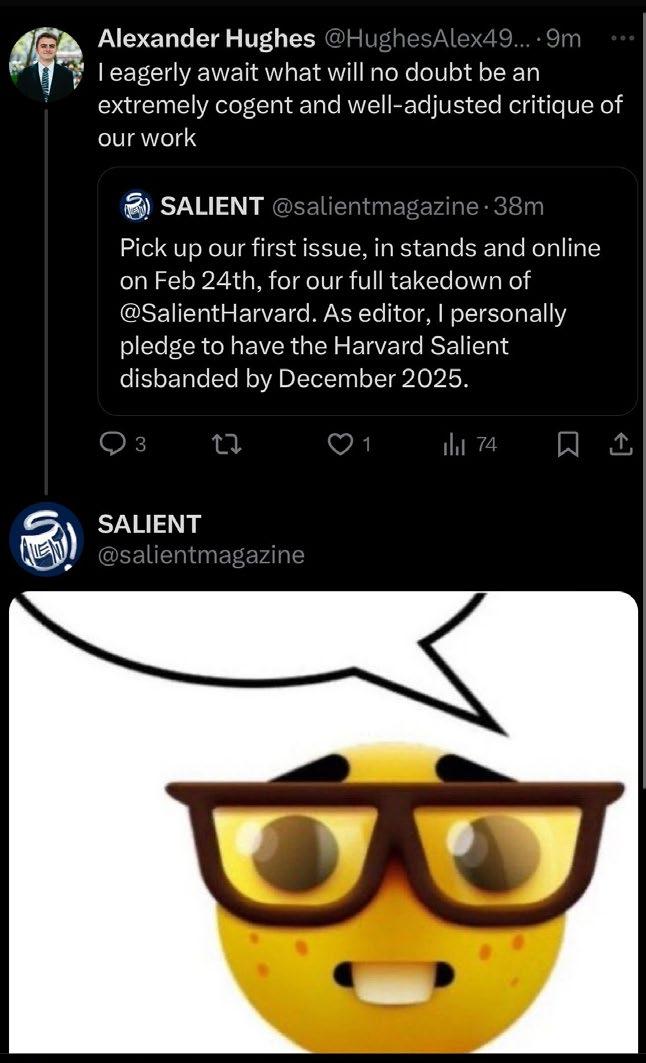
It has recently come to the attention of this magazine that our brand is being stolen. Loyal Salient fans will know that this magazine has been in circulation continuously since 1938. A sensible observer might think that this gives us the exclusive right to use the name “Salient” as a student magazine. Unfortunately, certain people are less than sensible.
At Harvard University, a coalition of socially conservative and cognitively deficient students have been running an interloper magazine, known as the “Harvard Salient”. You might be thinking - doesn’t Harvard already have a student magazine? You’d be right. The Crimson is a wellrespected and longstanding institution. The poseurs at the Harvard Salient seem to believe that they are too good for the Crimson, and that in fact they are oppressed for their conservative views. As much as I wish this were true, dear reader, the tuition of Harvard is more than $100,000 NZD annually. At this point, whether you are “liberal” or “conservative” does not make any difference - you are swine and ought to be crushed under our feet.
Let’s recap some of the Harvard Salient’s more questionable traits. Take, for instance, that they recently appointed Alex Acosta to their board - former US Secretary of Labour who famously cut Jeffrey Epstein the sweetheart deal that allowed him to evade consequences for years after his initial arrest. Given their pedophilic connections, perhaps the Harvard Salient might find common ground with our local “conservatives”.
The current iteration of our Harvard imitator is in fact a reboot. In 2021, the organisation reopened after closing down following a series of scandals. In 2002, the magazine’s editor declared in a now-infamous letter that the activities of homosexuals were “not merely immoral but perverted and unnatural”.
Not satisfied with ripping off our iconic name for the sake of some pale brand of fatherless cryptofascist politics, these charlatans have also besmirched the good name of Salient Podcasts. In 2024, they started their own show, with topics including the importance of the family and conservative values. While this is all very cute, the podcast doesn’t appear to have taken off particularly well. What a shame.
The biggest tragedy of the Harvard Salient isn’t that these people have wasted an Ivy League education on becoming staffers/blood-boys for JD Vance and Peter Thiel. After all, the purpose of these hallowed institutions is to churn out the very upper echelons of the professional managerial class.
No, the real tragedy of this magazine is just how pointless the entire endeavour is. Their attacks on the Crimson are rarely even dignified with a response. When they attempt to circulate their magazine, all they receive is complaints from students who view their pontificating as nothing more than an annoyance. These guys aren’t a threat to anyone - they’re just losers. When they look back on their rowdy Harvard years, they won’t recall the joys of wild nights in Massachusetts clubs, or that one sweetheart who got away. They’ve spent the best years of their lives at Young Republicans conferences, too busy posting cringe to make any memories.
About the Centrefold Artist:
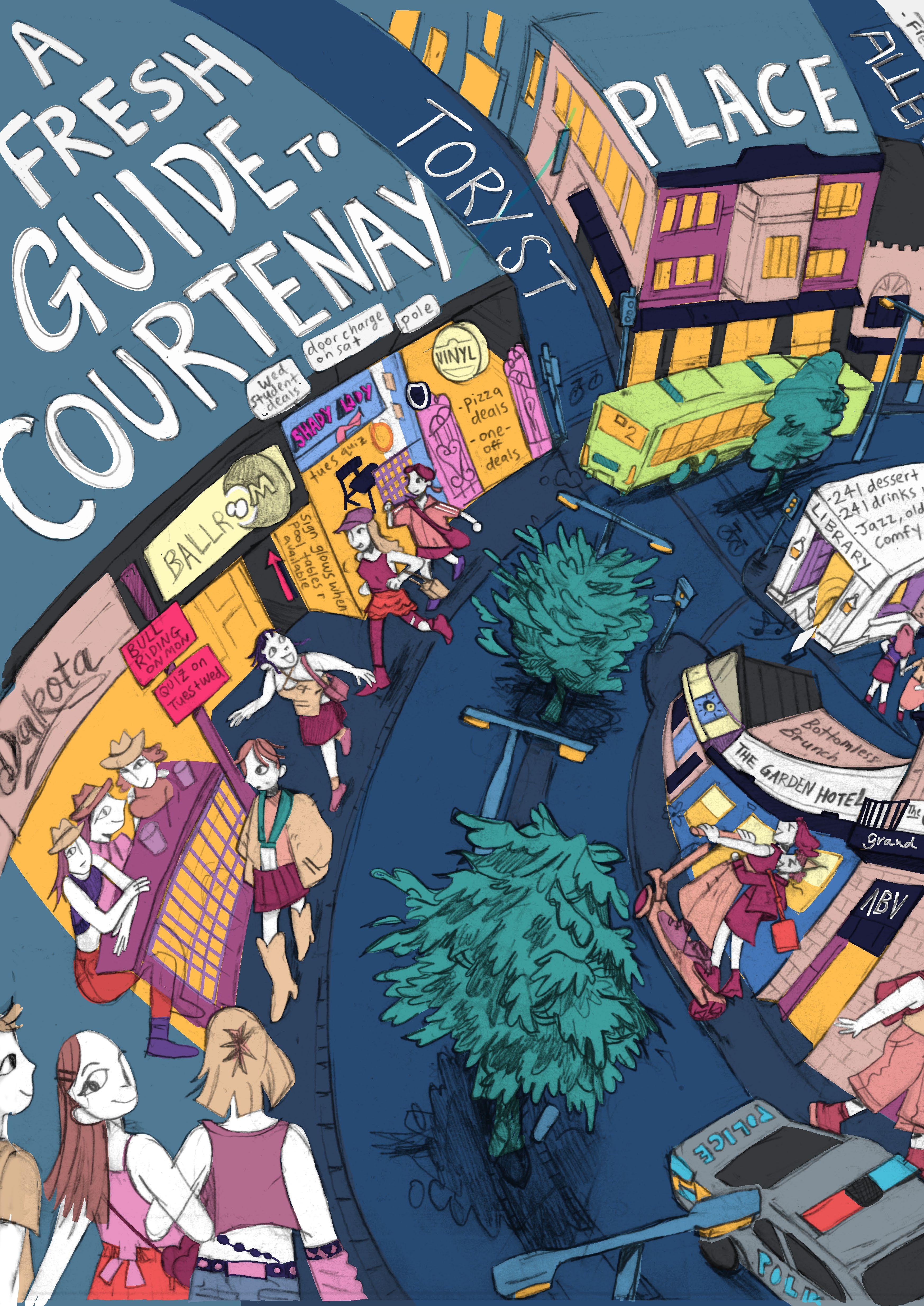
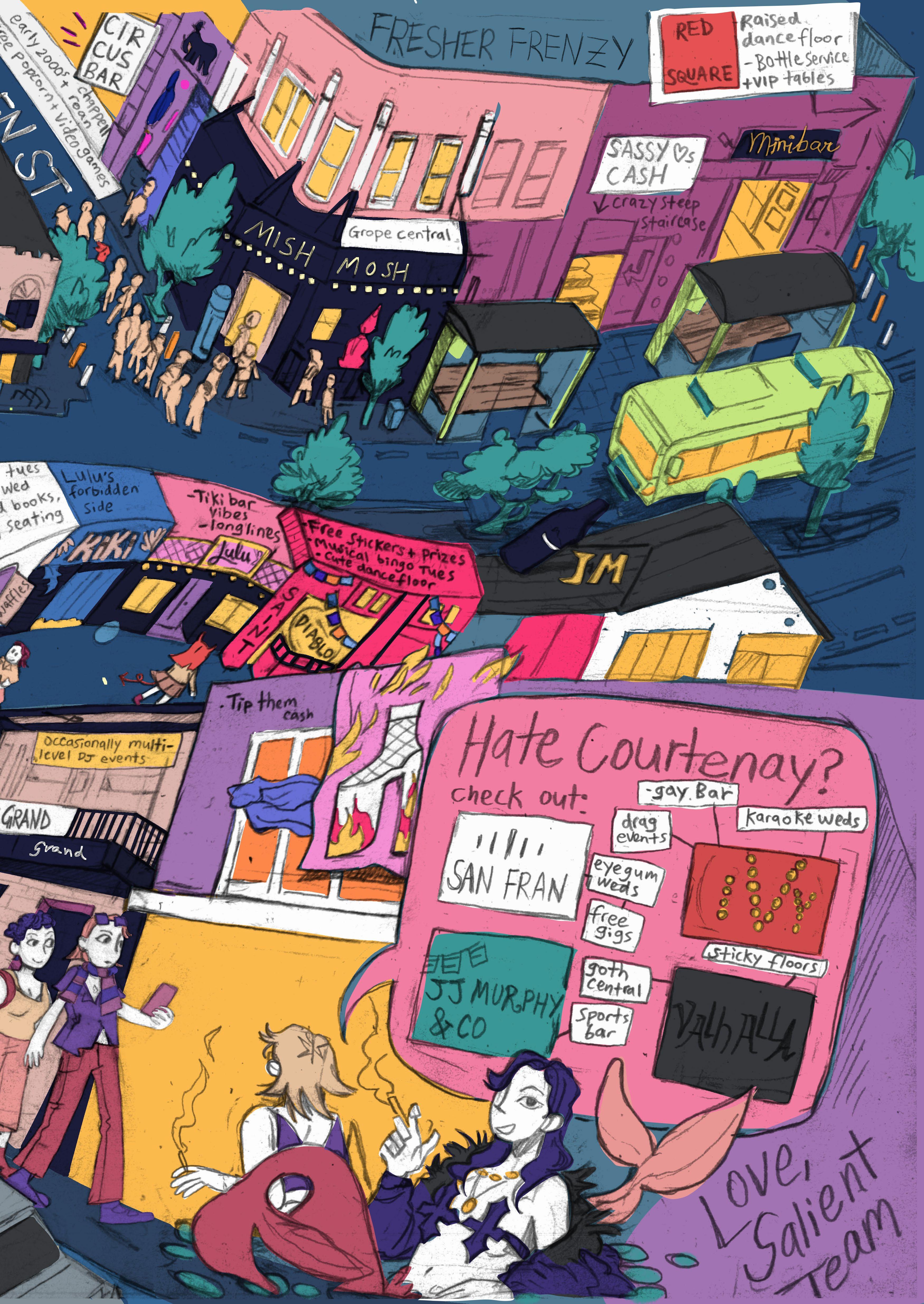
This week’s centrefold comes from the Salient team. Words by our columns editor Georgia Wearing and drawing by our designer Cal Ma. Coloured by Jake Hannah-Girven
Cal is an artist in love with the world. They are inspired by indie comics, cynical movies, and youtube animators.
Leo
The start of the year signals the start of party season. Drink in moderation, don’t lash out, lest you get a reputation of being a mean drunk.
Libra
Perhaps you’re dwelling in apathy? Turn that frown upside down, smell the roses, notice the beautiful moon. Find some pleasure in the small things. Lighten up.
Gemini
You’re inspired and ready to get started! It’s going to be a year full of productivity and excitement. Also, practice safe sex.
Cancer
Unlike Aries, you should probably hang on to your money this week. Don’t forget about your savings, and the importance of having a safety net.
Capricorn
You are the mysterious girl at the party, the one we all want to befriend. Your wardrobe holds the secrets to the universe.
Taurus
As you’re starting this year, thnk about why you’re making certain choices, or befriending certain people. Make sure you aren’t lying to yourself or others.
Scorpio
You think you’ve solved the financial crisis. Maybe you have. Or maybe your summer job is paying off nicely.
Aquarius
The saying ‘teamwork will make the dream work’ is very apt for you. Expand your circle, especially in lectures and tutorials.
Sagittarius
This is the time to try out different papers and change your major five times. Enjoy the excitement of learning.
Aries
Uni is starting! Buy your textbooks, celebrate, and shout your friends a drink. Although, watch out for that pesky instant gratification.
Virgo
Start the year strong! Start reading early, apply for some grants or jobs (even submit to Salient?)
Pisces
Love your energy, but don’t overextend it. Your initial, strong reaction might need a little taming, but this will help you listen to your gut. Balance, y’know?
Welcome or welcome back to the windy student city, I hope you’ve got your unofficial Vic uni uniform ready; doc martens, baggy jeans, and a spare sweater to lug around in case a cold front rolls in. My heart goes out to those of you who’ve spent the last seven years wearing a uniform five days a week. You are now finally presented with the opportunity to rid yourself of those scratchy wet-dog smelling sweaters and ill-fitting clothes. Truly, I encourage y’all to wear whatever you want and express yourself. From scene-queen to pilates princess, go for it. However, after three years of dressing for campus I’ve picked up some things that’ll make running from your class to your tutorial easier and still fit as fuck.
1. Embrace the American basic
My life, my wardrobe has never known more peace than when I embraced the culture of dressing like an American high schooler. Uggs, grey sweats or a bit of light washed denim, off the shoulder sweaters, fitted tops and comfy sneakers all in neutral tones and simple colourways. Those highschoolers might not be learning a lot but you will be, these basic outfits are easy to mix, match, and throw on before you run out the door, hungover from yesterday’s student night. They’ll keep you in the library for hours, and definitely not wishing you were in town, window shopping and showing off your perfectly curated
2. But what about my individuality?
I hear you, how else will you communicate your mysteriousness and itgirl energy, if not through your clothes? Accessories. It’s the era of the keychain! Clip twenty to your backpack or on the carabiner holding your keys. Wear cool skinny scarfs, go crazy with unique jewelry, or go with a fresher classic and get a tattoo.
3. There is no winning with your choice of bag. If you go with the humble backpack, whether it’s the hottest or coldest day, expect the craziest back sweat of your life, desperately trying to dry it out before you walk into class. Or go for the shoulder bag and permanently destroy your spine, it's your choice.
4. You don’t need to own docs.
I know, it's so hard. Everyone’s got them, they’re wearing them to town, to uni, down every single Wellington street. But be honest with yourself, can you bear breaking them in, when they’re basically unwearable and criminally squeaky? Plus the quality of docs have seriously plummeted, they won’t last as long as their vintage ancestors. Invest in any other shoes, or don’t. I’m not breaking them
5. Be thrifty and break free from the Fresher uniform. Ditch the blue jean-black top combo for a dash of individuality. Small townies, welcome to the big city, where you no longer have to shop at the same two shops as your peers. For style on a budget, opt to explore the many, many second-hand stores around, but don’t spend all your uni money on clothes, textbooks are also the it accessory.
Obsess over what other people think, no one cares Walk around barefoot
Wear shoes you can’t walk down the hill in
By Georgia Wearing (she/her)
while the money management seminars and hall bonding exercises are important, it’s the parties that most people look forward to. I would call it a week to remember, but if you’re doing
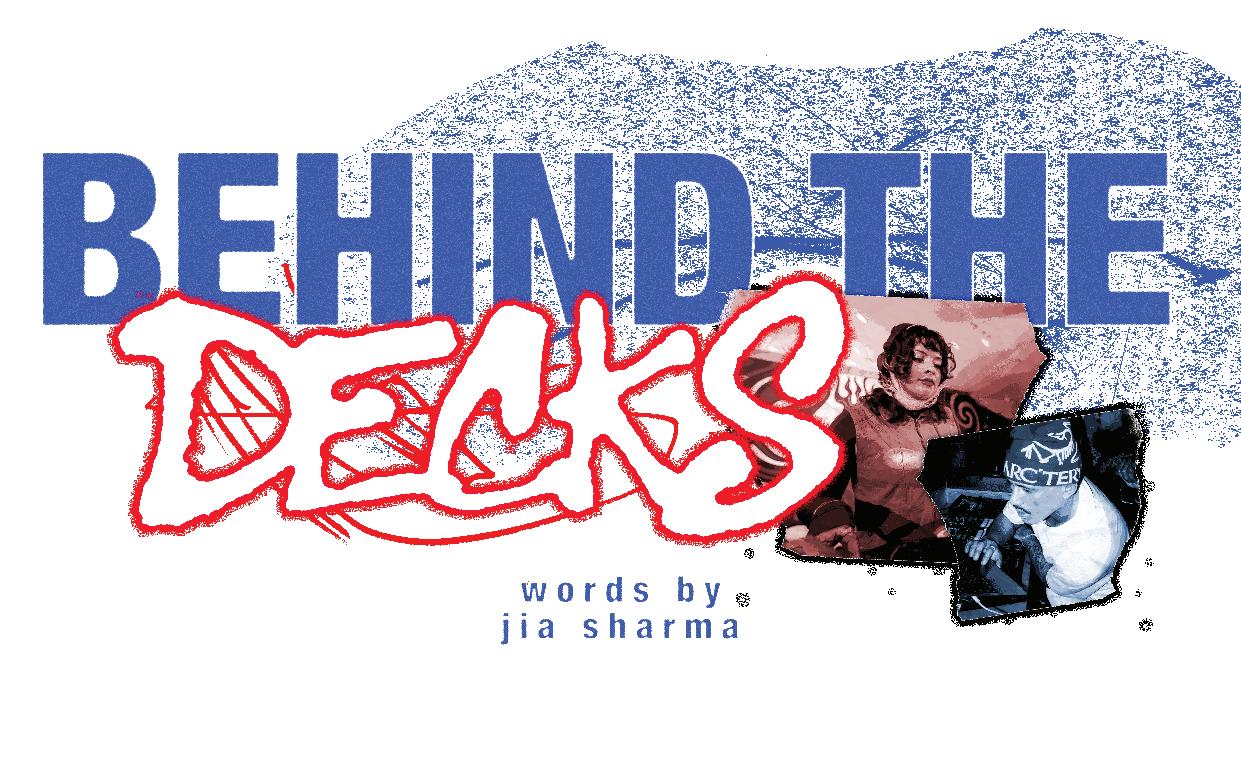
of decks on Facebook Marketplace. What started as casual fun soon turned into something bigger. She began DJing at pre-drinks and hosting gigs in her twin share room in the hall. By August of last year, she was opening a gig at B-Space. Now, Seini is a fixture at clubs and bars all around the CBD, with gigs at Valhalla, Heartbreaker, and the Garden Hotel. If you’re out on a weekend, chances are you’ll catch her behind the decks.
feeding into the energy of the crowd. Her song selection was perfect for her audience, the second the opening beats of Guess by Charli XCX started playing the crowd almost doubled. You could tell that they enjoyed Seini herself as much as they enjoyed the music she played. If you want to hear more from Seini, tune in to her radio show on Radioactive.fm every Friday, where she talks all things music.
SHAQ (@shaquillesullivan__)
As a full-time student by day and a DJ by night, Seini has had to adjust her sleep schedule drastically. After coming home from a club set, she’s often up while most people are starting their morning runs. In all aspects, it’s all about finding that “happy medium,” as she put it.
“DJing is the new ukulele,” Seini told me. “Everybody wants to do it.” But, she added, it’s not as easy as it looks. It’s more than playing a song on Spotify and tapping a few buttons. It took some practice to learn the art of mashing up songs and learning how to play off the vibe of the crowd while still staying true to your own personal style and tastes. What’s often overlooked in the world of DJing is the preparation. Seini shared how many late nights are spent curating sets and downloading music onto her USB stick in time for a gig.
- Shaq is an artist that has DJing in his blood, literally. “My dad was a DJ back in the day,” he recalls, reflecting on his childhood memories of attending gigs at just 10 years old. After studying at Te Auaha in Wellington, where he was mentored by DJ RAW, Shaq quickly jumped into the club scene. He credits his formal DJ education, explaining that students from DJ schools often find success more quickly, with clubs frequently scouting talent directly from these programs. This served as Shaq’s gateway into the industry.
Shaq’s style has evolved since he first started professionally in 2019. Originally focusing on hip hop, he has now pushed towards Global Club, showcasing a fusion of different genres and sounds from around the world. This is a genre that is reshaping dance floors across Aotearoa and Australia. “There’s Amapiano from South Africa, Baile Funk from Brazil… it’s pretty cool.”
Shaq’s approach to crafting his sets include a lot of preparation. “It’s 90% preparation and 10% performance” he notes. The art of reading the crowd is key, especially when performing at a club where the goal is to give people the music they want. But when he’s playing shows where people buy tickets and come just for him, he really gets to shine and showcase the music he loves.
After a few years of taking residencies in Wellington clubs, he relocated to Brisbane, seeking out bigger clubs, larger crowds, and more opportunities to grow as an artist. Shaq has since joined a crew of club residents, and since finishing school in 2019, DJing has been his full-time career. His next goal? To play at some of the biggest festivals in Australia.
Lennox started high school as a passionate athlete, he unfortunately tore his ACL, which meant he was off the field for a while. It was his mother who pushed him to music, which he then used to fill his time in the wake of his injury. After buying a set of decks for a bit of casual fun, those around him started to see potential. “People saw I had decks and asked if I could DJ,” Lennox recalled. “I was like, I guess I can play this house party... I went in with my 20 songs—that’s all I had.”
Lennox was inspired by the energy of DJs at Rhythm and Vines at the end of 2023, and he set his sights on making DJing more than just a hobby. When he moved to Wellington to attend university, he dived headfirst into the city’s music scene. He began meeting local DJs in clubs who took him under their wing and started soaking up as much knowledge as possible. He joined Good Things, a Dj community that helped him build experience and also got him his first gigs.
Lennox has been heavily documenting his journey on social media, with a series of daily vlogs until he achieved his goal of performing at Rhythm and Vines. “Around day 90, I found a contact at Rhythm and Vines and texted, asking if there were still spots, he said, “We’ve been watching your journey for a while, and we’ve got some work for you.” And just like that, he achieved his goal in a full circle moment.
Broderbeat’s journey as a DJ is just getting started, and is definitely one to watch along the way. With such a fast meteoric rise, who knows what he’ll achieve next.
SWIMCAP (@swmcap) - SwimCap rounds out this list of compelling DJ origin stories. After moving to Wellington to study at Massey, they fell in love with electronic music and were immersed in the electronic club community, particularly with the B-Space scene. “I just fell in love with the whole soundscape,” they said, captivated by genres like house, jungle, and other micro-genres that offered a refreshing contrast to their earlier experiences. SwimCap soon became a familiar face at B-Space, fondly recalling their time as a “club rat”, frequenting the venue so often that security no longer asked for ID. This period of exploration and communitybuilding laid the foundation for their DJ journey.
When Covid-19 hit, SwimCap found themselves isolating with friends for 16 days due to a close contact exposure. Fortunately, one of their friends had a set of decks, and during those days, SwimCap taught themselves the craft of DJing. They started downloading music and teaching themself through exploration. After emerging from the confines of isolation, they used their course related costs to buy their own set of decks.
By 2023, they were opening their first gigs, and by 2024, their career really began to take off. They’ve since become a staple at events such as the Nelson Arts Festival and Twisted Frequencies, and are gaining recognition for their unique style.
SwimCap described their style as ‘hype music’, saying “I want people sweating, I want people jumping around”. It’s all about high energy. This is reflected in their track selection, which they see as a transfer of energy between them and the crowd. When preparing for sets, they focus on choosing the beginning and end songs, letting the middle of the set take shape naturally.
With a drive to push boundaries and create inclusive, vibrant dance spaces, SwimCap is poised to become a leading voice in New Zealand’s electronic music scene.
35 Years on the Fringe of Pōneke
Whether you’re new to Wellington or you’ve been here for a few years like me, you can’t deny that the Fringe festival is a cornerstone for our city’s cultural landscape. Following on from Edinburgh and Adelaide festivals, Wellington Fringe brings artists and audiences together for a celebration of creativity and expression. 2025 marks its 35th year of providing us with art throughout February and March, continuing to thrive as a platform for innovating bold artistry from Te Whanganui A Tara and travellers across the motu.
If you’re still unsure what I’m talking about, Wellington Fringe is a festival which takes place usually from roughly mid-February until roughly mid-March, where creatives put on show after show for the city to enjoy, usually for pretty cheap, especially if you’re a student! Originating in Edinburgh, Fringe festivals began as a response to mainstream arts events, offering new (often younger and broker) creatives a platform to create and perform their art for audiences where they may not have had chances to before. Fringe Fest transforms Pōneke into a buzzing hub of artistic energy, with performances staged in both our traditional theatres, like BATS on Kent Terrace, but also in unexpected venues like cafes, clubs, gardens and random pop-ups across the city. Wherever you go, there’s bound to be a Fringe show nearby.
Setting it apart from other arts festivals is the diversity and inclusivity that Fringe consistently showcases. Inviting performers from all walks of life and artistic backgrounds results in a stunning variety of shows and experiences; from experimental theatre and cutting-edge dance to offbeat comedy and multimedia performances, there’s something for everyone. The festival embraces the bold and unconventional, creating spaces where creativity flourishes without limits.
Since moving here back in 2021, I’ve participated in every Fringe festival in one way or another. As young theatre makers, this is the peak time of the year where my friends and I are working. Every year the experience has been nothing short of transformative, always offering moments of joy, learning and artistic fulfillment, and of course, despair when you realise that your pack-in time is only six hours and not the eight your production manager promised… (Love you guys!)
It’s also just as rewarding to be part of the audience! Not only are Fringe tickets relatively cheap, attending shows is a great way to learn more about your local arts scene. You’ll discover unique performers and experience unfiltered creativity, and I know that whenever I leave a Fringe show, I feel inspired and excited to make more of my own art. Plus, by attending shows and purchasing tickets, you’re directly supporting artists and helping to sustain Wellington’s vibrant arts scene and our role as the arts capital of Aotearoa.
35 years of Fringe is a milestone that highlights the dedication of the countless artists, organisers and volunteers who work hard every year to ensure the festival’s enduring success. It’s also a reminder of the role that the arts play in fostering connection and understanding, bringing our city together under an umbrella of self expression and creativity.
This year, to those performing, tech-ing, or managing shows, break legs! I hope all of your pitches have been welcomed and supported throughout your creative process, and I can’t wait to see what you all do. Whether you’re a Fringe veteran or you're stepping into a role for the first time, let’s make the 35th anniversary a celebration to remember.
If putting on a show isn’t your calling, become a part of the audience! The sheer variety of performances ensures there’s always something to suit every taste, so hit up the Fringe website, and take a chance on a performance that sparks your curiosity. By the time you’re reading this, Fringe ‘25 has already begun! Regardless of your familiarity with the arts, I encourage you to dive right in and experience what Pōneke’s performing arts scene has to offer, because you won’t be let down. Fringe runs until March 8th, so make sure you get tickets now before you miss out!
Teddy (he/it/ia; Ngāpuhi)
Truths
Cadence Chung (she/they)
I’ve got one of those colds that sneaks in like a text to an ex-lover, and my lungs are full of salt. On Marion Street, there’s an old building I’d never noticed, faux columns painted blue and white. There is no religion greater than the Truth, it proclaims. I remember our church play — Pontius Pilate asking what Truth was — but he was played by someone’s old uncle and really it had no philosophical weight. I used to not like to write about the truth, preferring insipid fantasy where people denounced small talk and boys had auburn hair and girls were strawberry-scented accessories. Why bother about the real world? I asked. But now my past escapism has turned into an incessant thirst for the click of brogue on pavement, the taste of girl in mouth, decidedly non-strawberry. I am a changed woman. I drink Metro Top 50 Wines and I’m friends with people who write poetry. My father, on many a night, drank vodka mixed with cordial. I remember the red-shimmer powder-enticement of it. Last weekend I bought a twenty-dollar cocktail. He’s never felt so far.
-------WILL IRVINE
Kia ora gang!
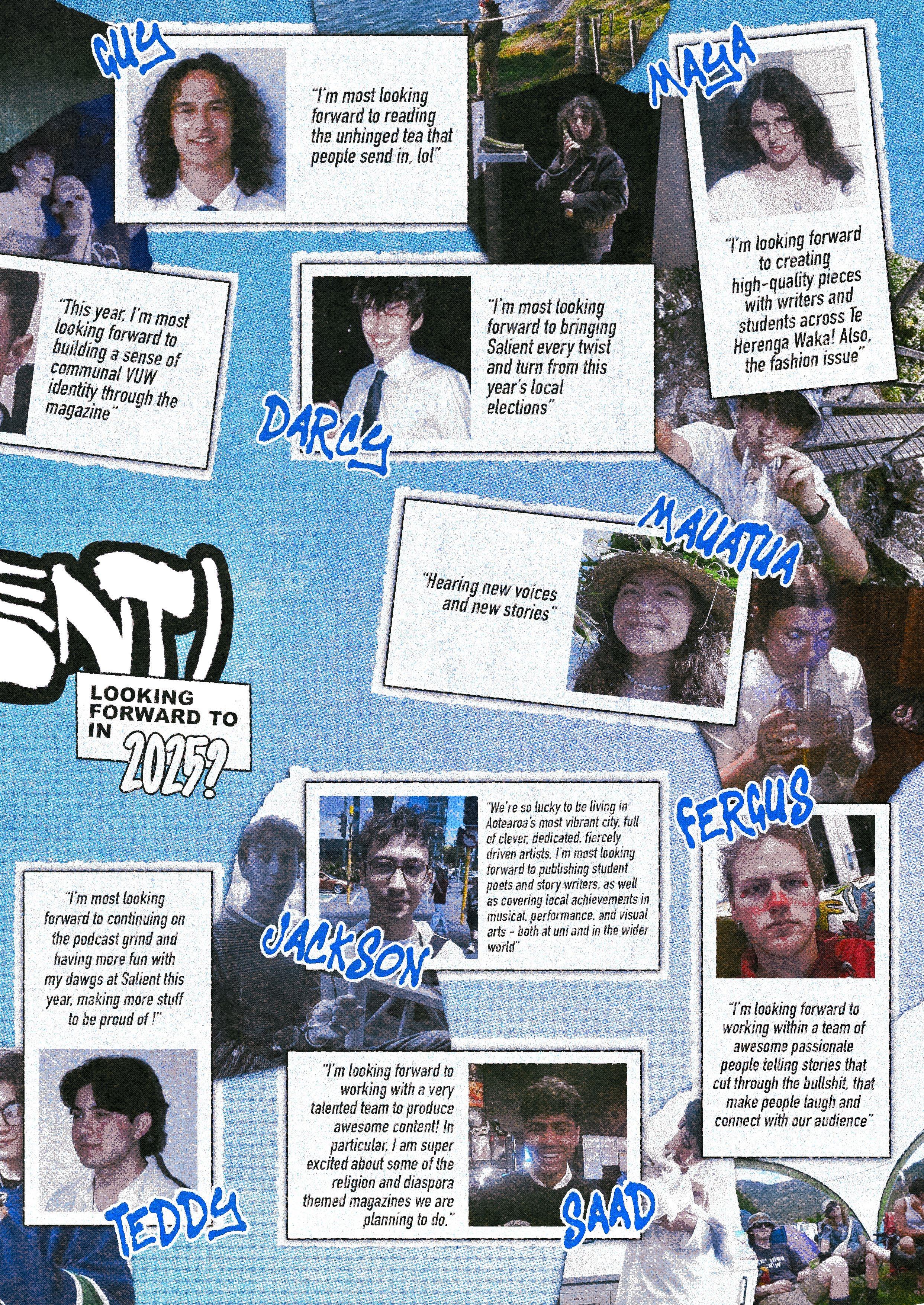
I’m the Editor-in-Chief at Salient this year, and I’m incredibly pumped to take on the mammoth task of revitalising this magazine — particularly its community connections, which have been weaker in the last few years than ever before. I’m a third-year Laws student and I’m beginning a BA in Economics this year.
Blundstone Work Boots
Looking for a new pair of Docs?
Don’t bother! Instead, buy yourself a good pair of black steel-capped work boots. They’re more reliable, cost less, and have a really cool and unique silhouette that adds texture to your outfits. Unlike docs, they’re designed to be worn all day in the toughest environments, so they won’t bruise your soles from a short walk around town.
Darkness on the Edge of Town (Bruce Springsteen)
Synecdoche, New York (dir. Charlie Kaufman)
This has been a favourite film for almost four years now. It’s genuinely mind-breaking, and one of the most ambitious projects ever conceived on a relatively small budget. It’s about a theatre director who attempts to recreate life itself, and the way that his work injects itself into his life. Heartbreaking, beautiful, genius.
I will never lose my soft spot for the Boss. This album has all the angst and romanticism you could possibly need. Go for a long walk at night in your most beat-up jacket. Walk through an industrial part of town and spit on the ground. You were born to run.
Tucked away in a small spot on Lambton Quay, this place has some of the most amazing food I’ve ever tasted. A good rule of thumb for homestyle Asian takeaways is to look for the most unassuming place possible, and Mama Kitchen ticks all the boxes.
Mama Kitchen
Freshers on the Loose
Freshers on the Loose!
Freshers on the Loose
Freshers on the Loose
Across
2. Kiwi Chris who plays for Nottingham
2. Kiwi Chris who plays for Nottingham
6. Short blonde singer; Jesus profession
6. Short blonde singer; Jesus profession
8. Ancient law school building
8. Ancient law school building
Down
1. "Flight" of Fringe festival alumni
1. "Flight" of Fringe festival alumni
3. Lily-Rose of Nosferatu
3. Lily-Rose of Nosferatu
4. Name of Salient's TikTok show
4. Name of Salient's TikTok show
5. Vivienne currently shown at Te Papa
5. Vivienne currently shown at Te Papa
Across
2. Kiwi Chris who plays for Nottingham
6. Short blonde singer; Jesus profession
8. Ancient law school building
9. The student "lounge" and oldest VUW building
Quiz
13. Theatre school that announced closure
By Ossian Lynch (he/him)
14. Toilet of internet "brainrot" fame
15. Nation forbidden from flying flag in Tennis
9. The student "lounge" and oldest VUW building
9. The student "lounge" and oldest VUW building
Down
13. Theatre school that announced closure
13. Theatre school that announced closure
7. Reptiles found in TTR building
7. Reptiles found in TTR building
1. "Flight" of Fringe festival alumni
3. Lily-Rose of Nosferatu
14. Toilet of internet "brainrot" fame
"brainrot"
15. Nation forbidden from flying flag in Tennis
10. University whose "Salient" is a competitor
10. University whose "Salient" is a competitor
11. Self-described Trump "first buddy" 12. VUWSA President ____ Ali
11. Self-described Trump "first buddy"
12. VUWSA President ____ Ali
4. Name of Salient's TikTok show
17. Giant baller / DJ profiled this week
17. Giant baller / DJ profiled this week
18. Condition suffered by PM Luxon and VC Smith
18. Condition suffered by PM Luxon and VC Smith
16. Comedian Pax of
16. Comedian Pax of O-week fame
5. Vivienne currently shown at Te Papa
7. Reptiles found in TTR building
10. University whose "Salient" is a competitor
11. Self-described Trump "first buddy"
H What kind of car did David Seymour try to drive up Parliament’s steps?
12. VUWSA President ____ Ali
16. Comedian Pax of O-week fame
H What is the name for the political persecution involving blacklisting people for being suspected communists that occurred in the United States in the 1940s and 1950s?
17. Giant baller / DJ profiled this week
18. Condition suffered by PM Luxon and VC Smith
H The Freedoms New Zealand party was founded in 2022 by which christian fundamentalist leader, who recently endangered numerous children at an event in Auckland?
H Which novel by George Orwell was banned in the Soviet Union for being anti-communist and banned in Jackson County, Florida for being pro-communist?
H What is the name of the ACT party deputy leader and Minister for Workplace Relations and Safety who is refusing to meet with the Council for Trade Unions?
Land Rover, 2. McCarthyism, 3. Brian Tamaki, 4. Nineteen
Eighty-Four, 5. Brooke Van Velden.
Need Help? VUWSA Advocates Have Your Back
University can be a lot. Between looming deadlines, frustrating bureaucracy, and the occasional existential crisis in the library at 2 a.m., it’s easy to feel overwhelmed. That’s where VUWSA’s advocacy team comes in—your go-to for support when things at Te Herenga Waka aren’t going to plan.
Meet Phoebe Robertson and Becky Cody, your VUWSA Student Advocates. Their job? Making sure you’re not left to struggle through academic or personal issues alone. Whether you’re dealing with grade appeals, special consideration applications, tenancy problems, or just need someone in your corner, they’re here to help—confidentially and free of charge.
Need help preparing for a meeting with university staff? Stuck in an unfair situation and not sure how to proceed? Phoebe and Becky will guide you through the process, making sure you’re heard and supported. They even run the VUWSA Advocacy Newsletter, keeping students in the loop on important issues.
You can find us at the Student Union Building (just ask at reception) or email us at advocate@vuwsa.org.nz. Also, the QR code below will give you a link to sign up to the advocacy newsletter.
If you ever find yourself needing advice or a bit of backup, don’t hesitate to reach out. VUWSA has your back—so use it!
Phoebe Robertson (she/her)
SOC 101 Welcome to SOC101: The Fundamentals of Socialism!
There’s been a lot of protest around lately: millions worldwide marching for Palestine, the biggest hīkoi this country has ever seen, lecturers, nurses, doctors, and supermarket workers on strike. And that’s just in the past year.
It’s no surprise people are angry with a system that multiplies billionaires’ profits while trampling on Indigenous peoples and Te Taiao. Capitalism separates us from our lands and resources, and the wealthy reap the rewards of this dispossession.
We need an approach that addresses the root of the problem. One that puts people, not profit, at the heart of society. One based on reciprocity rather than endless accumulation. One that distributes care rather than destruction.
This column makes an argument for that approach: revolutionary socialism.
Each week we’ll delve into a core socialist concept or event, break it down, and provide some context. We’ll cover the history of activism at Vic, how capitalism protects sexism, and much more.
This is not about random or abstract ideas. Everything written here will be shaped by hands-on experience with activism and organising. Theory is only useful when it can help us understand the real world, like imperialism in Palestine or unions in sex work. It’s education with a purpose.
Of course there’s much debate about what socialism actually means, so let’s be clear:
This socialism is proudly anti-colonial. It supports no borders drawn by empires, and tolerates no imperial violence—against Māori, Uighur, Ukrainian, or any other people.
This socialism stands with the oppressed. That means fighting for reproductive and climate justice, freedom of gender expression, freedom for Indigenous languages and cultures.
This is socialism from below. It supports the aspirations ofordinary people, not charismatic leaders like Stalin, Mao, or Castro.
Students have an important role to play in this project as catalysts of social change—the ones with hope for a better world and energy for its transformation. Students at Vic have protested against job cuts and held sit-ins for Palestine, but that’s just the beginning. Last year students in Bangladesh brought the whole country to a standstill. This year it’s Serbia. But we also have much to gain. Lying in bed and scrolling through Tiktok can be paralysing, but activism restores our agency and gives us community. It’s how we learn from each other outside our bubbles, alongside workers, educators, parents, experienced organisers and unionists. Here we can draw our histories and interests together: trans rights and healthcare work, teachers and Te Tiriti.
We don’t have to put up with shit jobs,rotting flats, and skyrocketing student loans, along with overworked lecturers and insecure futures. If university teaches us how to understand the world, socialism teaches us how to change it.
This column is written by the International Socialist Organisation Aotearoa (ISO), which has a club right here on campus. Each week we meet to discuss politics, get involved with activism, attend reading groups, and produce publications. Anyone is welcome to come along— no experience or knowledge required. Find us at @vuwsocialists on Instagram.
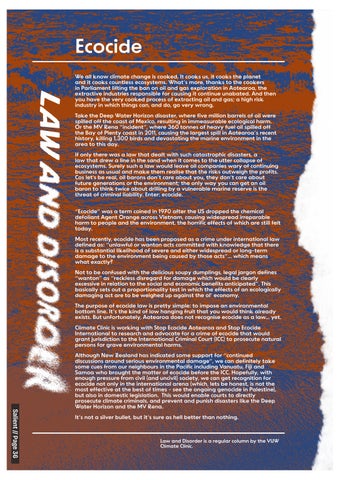
Ecocide
We all know climate change is cooked. It cooks us, it cooks the planet and it cooks countless ecosystems. What’s more, thanks to the cookers in Parliament lifting the ban on oil and gas exploration in Aotearoa, the extractive industries responsible for causing it continue unabated. And then you have the very cooked process of extracting oil and gas; a high risk industry in which things can, and do, go very wrong.
Take the Deep Water Horizon disaster, where five million barrels of oil were spilled off the coast of Mexico, resulting in immeasurable ecological harm.
Or the MV Rena “incident”, where 360 tonnes of heavy fuel oil spilled off the Bay of Plenty coast in 2011, causing the largest spill in Aotearoa’s recent history, killing 1,300 birds and devastating the marine environment in the area to this day.
If only there was a law that dealt with such catastrophic disasters, a law that drew a line in the sand when it comes to the utter collapse of ecosystems. Surely such a law would leave oil companies wary of continuing business as usual and make them realise that the risks outweigh the profits. Cos let's be real, oil barons don’t care about you, they don’t care about future generations or the environment; the only way you can get an oil baron to think twice about drilling by a vulnerable marine reserve is the threat of criminal liability. Enter: ecocide.
“Ecocide” was a term coined in 1970 after the US dropped the chemical defoliant Agent Orange across Vietnam, causing widespread irreparable harm to people and the environment, the horrific effects of which are still felt today.
Most recently, ecocide has been proposed as a crime under international law defined as: “unlawful or wanton acts committed with knowledge that there is a substantial likelihood of severe and either widespread or long-term damage to the environment being caused by those acts”... which means what exactly?
Not to be confused with the delicious soupy dumplings, legal jargon defines “wanton” as “reckless disregard for damage which would be clearly excessive in relation to the social and economic benefits anticipated”. This basically sets out a proportionality test in which the effects of an ecologically damaging act are to be weighed up against the ol’ economy.
The purpose of ecocide law is pretty simple: to impose an environmental bottom line. It’s the kind of low hanging fruit that you would think already exists. But unfortunately, Aotearoa does not recognise ecocide as a law… yet.
Climate Clinic is working with Stop Ecocide Aotearoa and Stop Ecocide International to research and advocate for a crime of ecocide that would grant jurisdiction to the International Criminal Court (ICC) to prosecute natural persons for grave environmental harms.
Although New Zealand has indicated some support for “continued discussions around serious environmental damage”, we can definitely take some cues from our neighbours in the Pacific including Vanuatu, Fiji and Samoa who brought the matter of ecocide before the ICC. Hopefully, with enough pressure from civil (and uncivil) society, we can get recognition for ecocide not only in the international arena (which, lets be honest, is not the most effective at the best of times - see the ongoing genocide in Palestine), but also in domestic legislation. This would enable courts to directly prosecute climate criminals, and prevent and punish disasters like the Deep Water Horizon and the MV Rena.
It’s not a silver bullet, but it’s sure as hell better than nothing.
Law and Disorder is a regular column by the VUW Climate Clinic.
ABOUT US
Salient is published by, but remains editorially independent from, the Victoria University of Wellington Students’ Association (VUWSA). Salient is funded in part by VUWSA through the Student Services Levy. Salient is a member of the Aotearoa Student Press Association (ASPA).
COMPLAINTS:
Complaints regarding the material published in Salient should be first brought to the CEO in writing (ceo@ vuwsa.org.nz). Letters to the editor can be sent to editor@salient.org. nz. If not satisfied with the response, complaints should be directed to the Media Council (info@mediacouncil. org.nz)
WRITE FOR US
Our magazine is run by students for students. If you want to help us put out the world’s best little student magazine, send us a pitch at editor@ salient.org.nz
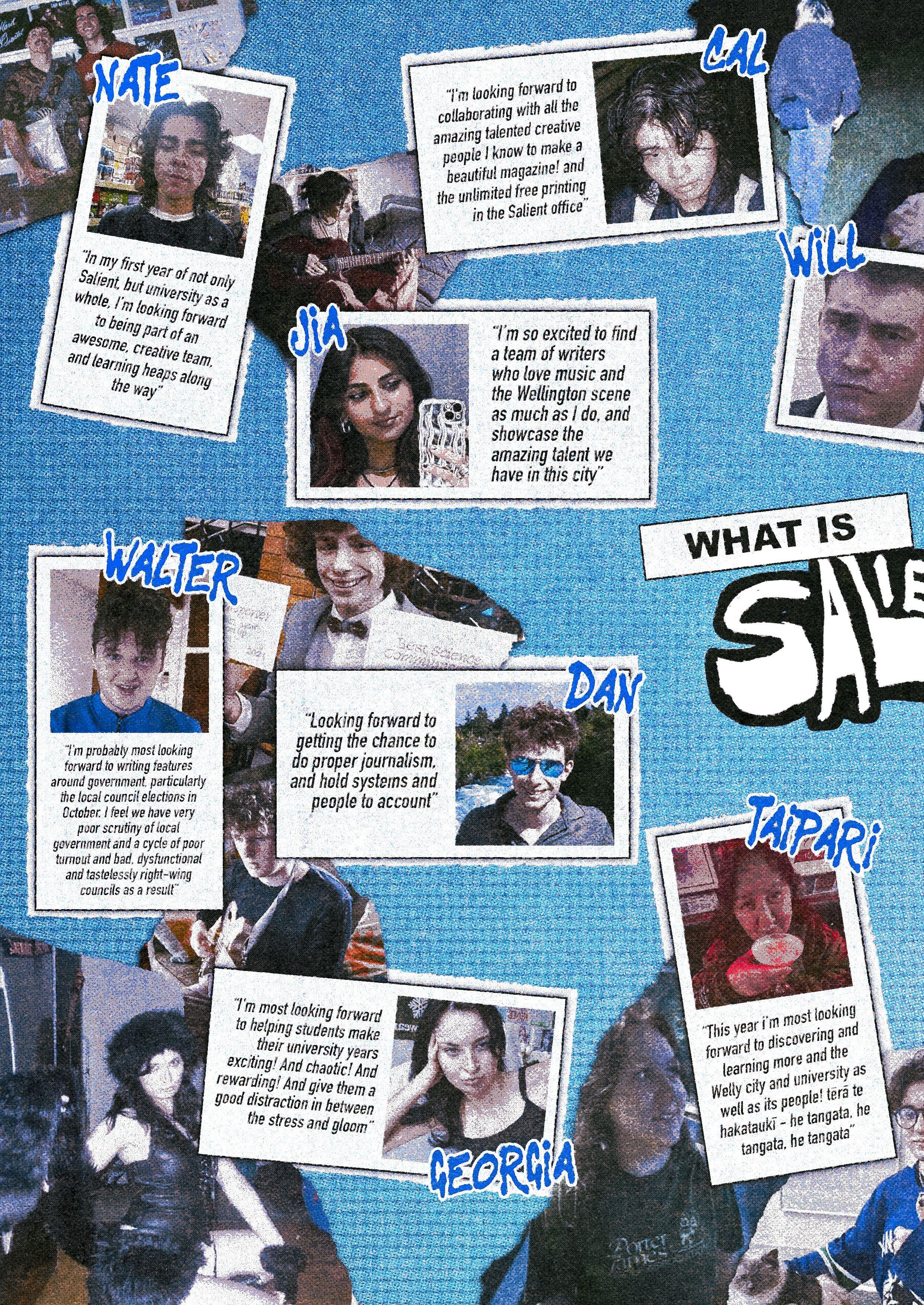
Will Irvine Editor in Chief
Maya Field Sub-Editor Cal Ma Designer
Nate Murray Junior Designer Jia Sharma Music Editor