
THE WORLD IS ON FIRE AND I'M PRETENDING IT'S FINE ISSUE 10 | VOLUME 87 | 13.05.2024
Mauatua Fa'ara-Reynolds (she/they)
Ashleigh Putt-Fallows (she/her/ia)

got something to say?
Our magazine, Salient, is run by students for students. Without the involvement of students, we wouldn't be able to operate. Every year, we welcome pitches and inquiries from individuals who are interested in writing for us. For more information, please email editor@salient. org.nz or visit our website at salient.org.nz.
complaints
Complaints regarding the material published in Salient should first be brought to the CEO in writing (ceo@vuwsa.org. nz). If not satisfied with the response, complaints should be directed to the Media Council (info@ mediacouncil.org.nz).
about us
Salient is published by, but remains editorially independent from, the Victoria University of Wellington Student's Association (VUWSA). Salient is funded in part by VUWSA through Student Services Levy. Salient is a member of the Aotearoa Student Press Association (ASPA).
The views expressed in Salient do not necessarily reflect those of the Editor, VUWSA, or the University.

page 02 contents rārangi kōrero in this issue EDITORIAL | ĒTITA PODCASTS | KŌNAE IPURANGI COLUMNS | TĪWAE HOROSCOPES PUZZLES | PANGA 03 17 38 31 37
find us Twitter @salientmagazine Facebook fb.com/salientmagazine Instagram @salientgram www.salient.org.nz Pacific Nations and Languages 18 Animal Jam: Furry MMO, or Capitalist Hellscape? Teddy (he/it/ia) 24 Plastic Fantastic Dani Maylam (she/her) 26 Bird of the Year Jasmine Starr 22 23 Jagged Little Pill Will Irvine (he/him) LETTERS | RETA GIGS & EVENTS THE NEWS | KAWEPŪRONGO 04 05 06
28 Making Waves on Norfolk Island
Fa’ara-Reynolds (she/they) POETRY & PROSE | AUAHATANGA 35
Mauatua
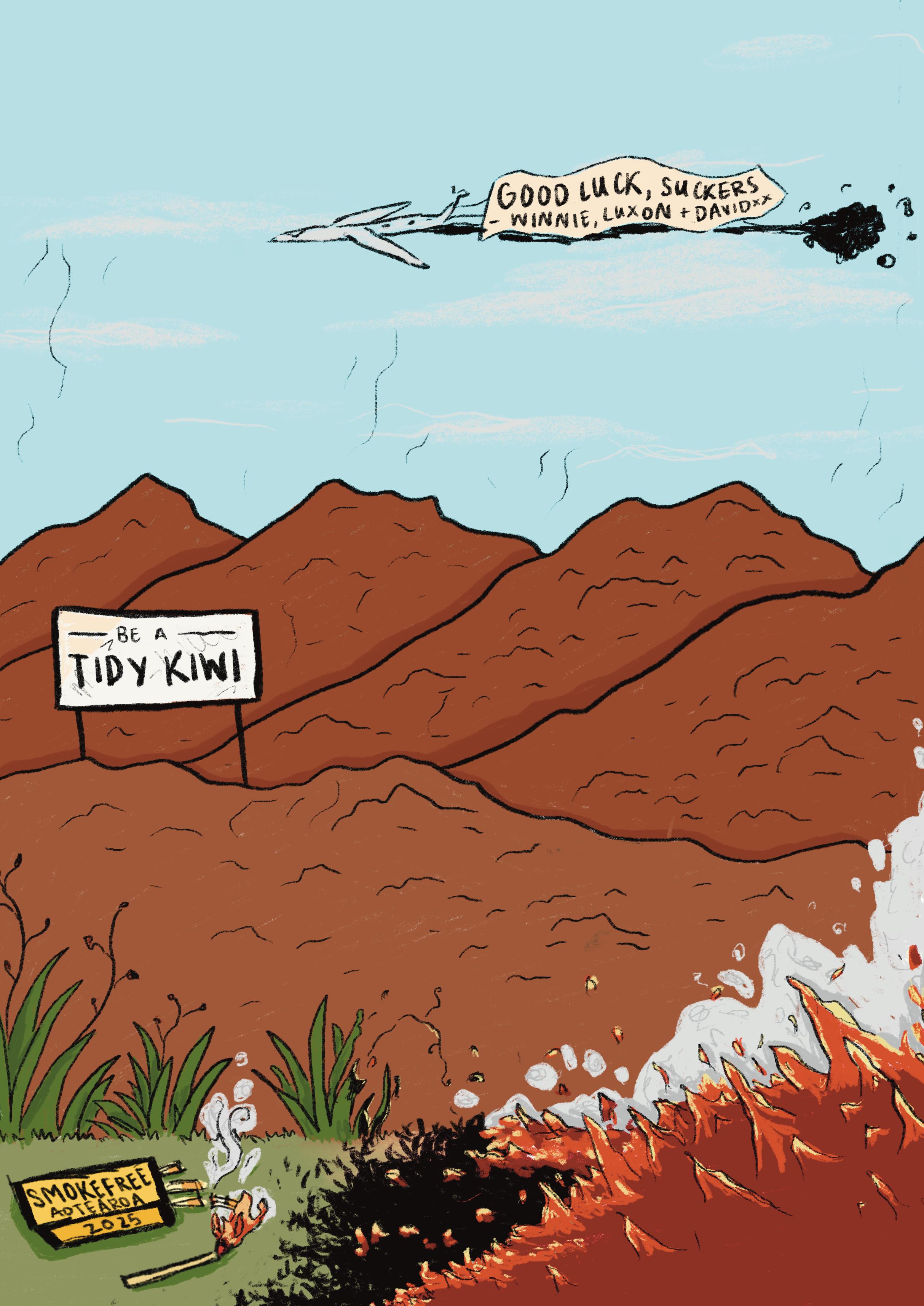
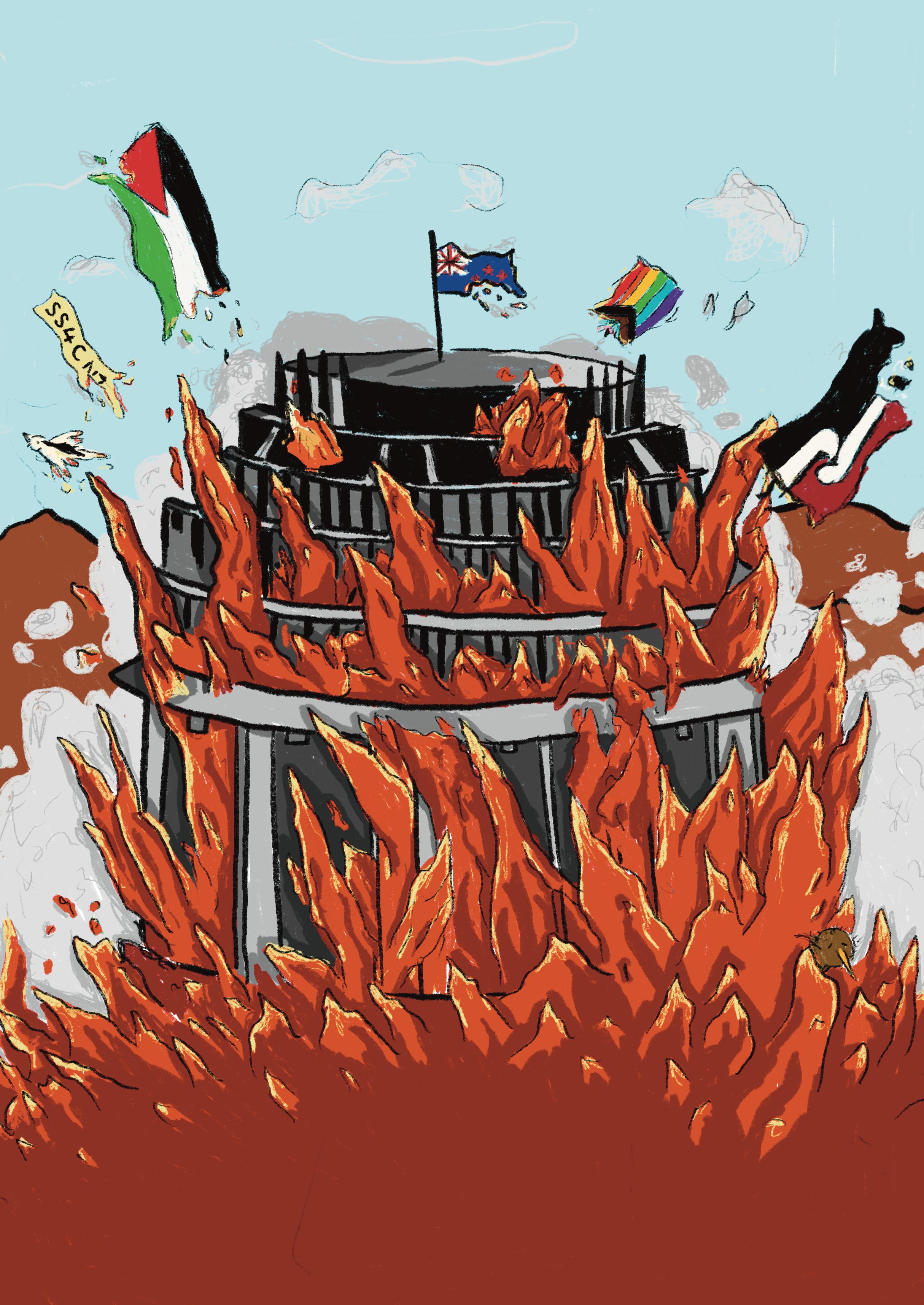
EDITORIALTHE WORLD IS ON FIRE

What do you do when each unit in an apartment complex has caught on fire but the hallways, while dangerous, aren't yet burning? How do you decide which fires are the first priority?
It’s an apt metaphor for grappling with the state of the world. There’s just so much going catastrophically wrong, all of the time. At home is an ascendant right wing launching a three-pronged assault on climate, the environment, and Te Tiriti. Internationally, Israel is committing genocide in Gaza, Russia is making gains in Ukraine, and Trump is favoured to win back the presidency.
This is Salient’s most news-heavy issue of the year, and we try and tackle some of these issues, among other things. Will and Ash have done a fantastic job all year writing about Te Tiriti and Palestine respectively, and I’m trying to do similar for Ukraine. Keep things in the spotlight.
But our resources are finite, and implicit in the act of representation is a choice— in prioritising some things, others must fall by the wayside; the ethnic cleansing of Nagorno-Karabakh, the Sudan civil war, ecosystem collapse, the melting of the permafrost, and long covid, to name a few.
But once all is said and done, after writing this editorial I’m going to go away and keep applying for graduate positions. We’ll all keep studying for our degrees because maybe it will help us save the world. The system we live in doesn’t have a way to function when everything’s not fine.
I don’t pretend to have an easy answer. There’s the obvious stuff. Write to your MP about the stuff you care about. Protest what you’re passionate about, and boycott what you have to. It’s so frustratingly indirect, and that makes it hard to not feel helpless.
But ultimately, things can change. My mum grew up in the 1970s. She tells me about how growing up, the idea of homosexuality even being decriminalised was impossible, and gay marriage out of the question. Smoking was everywhere, and Te Tiriti was never talked about. Yet here we are, having made momentous strides in one lifetime.
We just have to keep doing what we’re doing.
Dan Moskovitz Chief Reporter

bird of the week
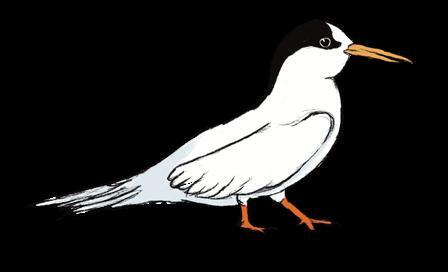
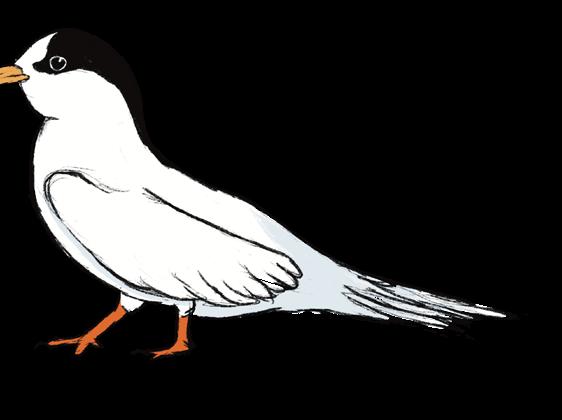
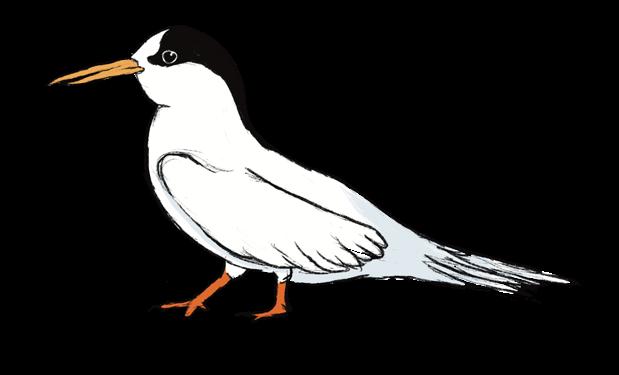
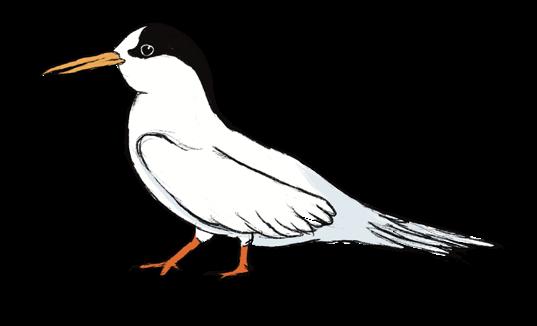
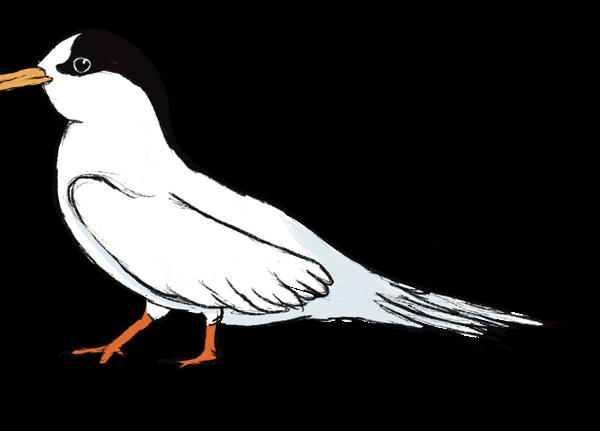
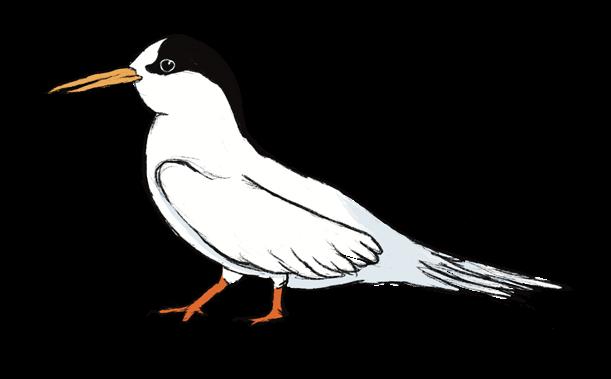
Tara Iti
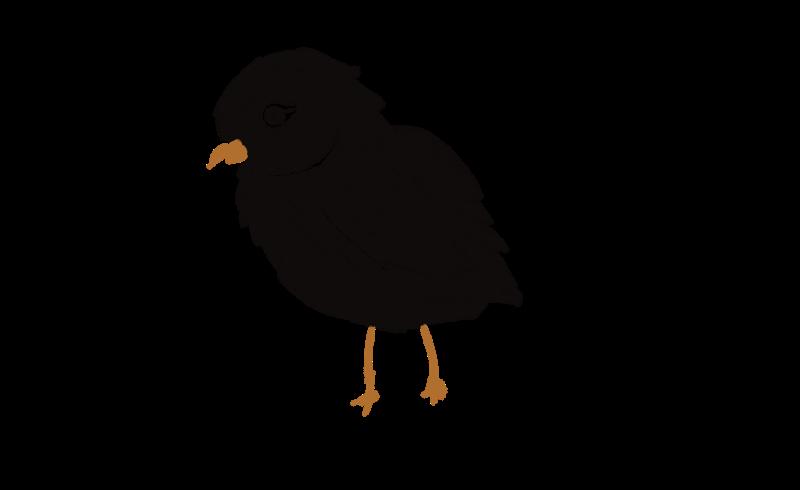
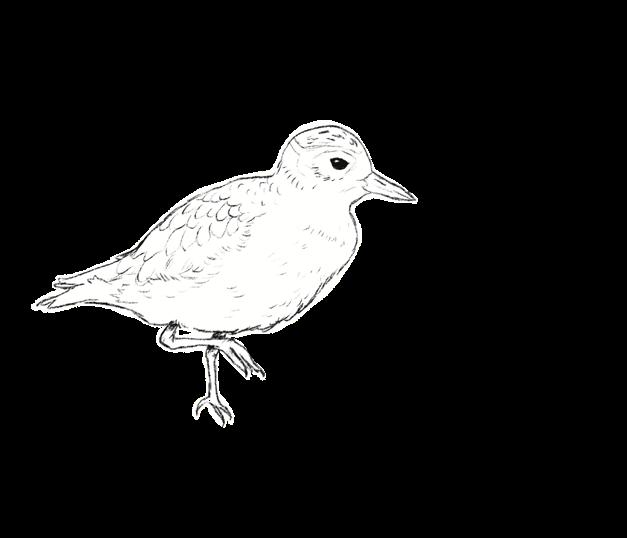
The Tara Iti, or Fairy Tern, graces the coastal landscapes of New Zealand with its small yet enchanting presence. This shorebird is endemic to New Zealand, measuring around 30 cm in length, and boasts a delicate combination of white and grey feathers. Unfortunately, their nesting sites on sandy beaches are threatened by human disturbance, which has had a significant impact on their already limited population. With just 40 individuals left, conservation efforts such as controlling predators and preserving their habitats are crucial for their survival.
editorial ētita page 03
LOVE
letters xo

I see Woke Victoria University has stopped a Free Speech Debate.
One of the speakers was deemed a "hate-speaker" BEFORE he was even allowed to have his free speech. The students, or should I say, Comrades, are






Share your thoughts
Got some strong opinions on just want to stir the pot? Send your love letters to letters@salient.org.nz them published every week.


page 04
letters reta
gig guide
WED | San Fran | 8pm
Eyegum (free) Wednesdays - Crying Club, Lipstick, & Zaira DJ
Indie kids and emos, this week at Eyegum is for you. Is every week at Eyegum for you? Crying Club will open the night with a set of their distinctive, self described ‘happy emo music’. And while they do have their calmer, Midwest influences, if you think you have to be screamed at to make a set ‘emo’, don't worry. You will be! Up and coming rock outfit Crying Club promise to invigorate the dancefloor, and DJ Zaira will take the night home. All washed down by nice cheap beer. What’s not to love? Free!
SAT | Wellington Sports Cafe | 10pm
Call Me Maybe - 2000s + 2010s Club Night
Wanna know something odd? A number of people I know have RSVP’d ‘going’ to an event at… Wellington Sports Cafe. Something is afoot. That something? The dream of the early 2000s. A club night featuring the music of Carly Rae Jepsen, Ariana Grande, Drake, Beyonce, Florence + The Machine (and anyone else you care to name-drop) certainly has pulling power. Teddy recently went to an emo night at Sports Cafe, and can shed light where I cannot. Teddy: “there were huge TVs playing emo shit!! It said Sports but everyone was very kind! The DJ was really high up!! Super fun!”.
Tickets $22
Enjoy our small, lovingly curated selection of gigs.
WED | Valhalla | 8pm
Keira & Isla Batten Coogan & Wallflower
Another set not to be missed! Opening what promises to be a fantastic Wednesday at Valhalla is Keira Batten Coogan, joined in a rare duo by her sister Isla. Keira has carved out a niche in Pōneke’s indie scene with her absolutely fantastic sound: heartwarming, bedroom-ey, and unapologetically queer. Think Welly Frankie Cosmos. Following the Batten Coogans will be Wallflower, a local self described ‘grungegaze’ outfit, pioneering a blend of dream-pop, grunge, and sad acoustic shit. Finger on the pulse.
Tickets $10
SAT | Rogue and Vagabond | 8pm
Emily Alice, Revulva
An awesome lineup this Saturday at Rogue. Joining us from Ōtepoti are Emily Alice—these guys have been wowing scarfies since 2020, and since have only improved their signature sound. Pop remains their most consistent grounding point, but their music moves fluidly through influences of jazz, funk, soul and RnB. Opening will be local legends Revulva. A lineup not to be missed.
Tickets $10
protest calendar

FRI | b.space | 10pm
Techno Gender Fluid @ b.space
Club organisers Techno Gender Fluid are throwing a big ole party this Friday at b.space. Expect a dark concrete basement, copious dry ice, a heaving dance floor, a chatty smokers area, and four 90-minute sets from some of Pōneke’s finest DJs. Jedi will treat us to a vinyl set, followed by Luke Colleran, Fluffcore, and Lazy Daisy (outstanding basslines, huge range, very cool). Running from 10pm until the wee hours. $20.00 on the door after 11pm.
Tickets $10-$20
SUN | Vogelmorn Bowling Club | 5.30pm
Ebony Lamb
Clamber your way up into the rarefied heights of Vogelmorn this Sunday. In this most niche of suburbs lies the Vogelmorn Bowling Club. They have (good) weird wines on tap, plentiful rugs, and tasteful artwork. More pertinently, brilliant musicians are playing there. Ebony Lamb will headline (alongside long-time collaborator Gram Antler) off the back of 2023’s self-titled debut LP—a warm, thoughtful album recorded entirely on analogue gear. These two will charm you, their music will transport you, and you’ll be home in time for dinner.
Tickets $25
Salient will be highlighting protest and direct action throughout 2024. In print will be a small selection.
WED | Aotea Square | 6pm
Vigil—76 Years: Honouring the Martyrs
May 15th. On this date each year, millions of Palestinans around the world commemorate and mourn the Nakba (catastrophe), the ethnic cleansing of Palestine and near total-destruction of Palestinian civil society that took place from 1947-9. Now, 76 years after this large-scale dispossession and loss of a Palestinian homeland, the Gaza strip lies in ruins, and more bombs rain down on Rafah, where more than a million people seek refuge. Join Palestinian Youth Aotearoa this Wednesday at 6pm at Aotea Square in remembrance of Palestinian martyrs, and in solidarity with those under occupation today.
TUE - THURS | Law School - Te Ngākau Civic Square
Graduate In Solidarity
Student Justice for Palestine invites those who are marching this week in their Graduation Parades to show solidarity with university students in Palestine. Every university in Gaza has been methodically destroyed. Palestinians' access to education has been revoked, with unimaginable violence. Reclaim graduation for university students in Palestine: wear a keffiyeh, bring a flag, wear a badge, or bring a banner/sign. SJ4P are happy to provide sign-making materials. Find them @poneke.sjp
Scan this code for a more comprehensive protest destination.

page 05

kawepūrongo
13.05.2024
REVEALED: The University (Finally) Explains The Advanced Graduation Debacle
(spoilers: its their own fault)
It's graduation season—if you’re marching down Lambton Quay and receiving a shiny piece of paper this week, congratulations! As you do, though, spare a thought for students that have not been able to join you in celebrating your accomplishments due to changes in University policies.
Documents recently obtained by Salient under the Official Information Act reveal that the University’s changes to advanced graduation have not been done in accordance with its own advice, which indicated that scrapping the option would only be possible if there are three graduation ceremonies per year.
Until last year, students who finished their courses but had not yet received their final grades had the option to apply for “advanced graduation”, allowing them to participate in the next graduation ceremony. For example, a student that finished their course in November of Trimester Two would be able to apply for the December graduation. Without this option, the next ceremony that students would be able to attend would be in May of the following year.
In 2023, Salient discovered that the option had been quietly removed from the University’s website, without full communication to staff and students. This had a disproportionate impact on international students; advanced graduation allows them to participate in a ceremony without having to fly back to Aotearoa the following year.
ETHAN ROGACION (HE/HIM)
Policy documents revealed to Salient via an OIA request the University acknowledged that, despite advanced graduation greatly benefiting international students and students doing thesis programmes, “The advanced graduation process is an administratively burdensome process and faculties would welcome its removal.”
In order to eliminate the administrative burden of allowing students to celebrate their graduation in a timely manner, staff came up with an alternative proposal: having three ceremonies per year. “It won’t be possible to eliminate advance graduation unless we do that,” wrote former Vice-Provost (Academic) Stuart Brock. There are still two ceremonies.
As part of the policy, the University also decided to make degree conferment an automatic process, unrelated to the graduation ceremony itself. As former Vice-Chancellor Grant Guildford explained in an email, “Council have already made the decision that [degree] conferment occurs at the Council meeting and the graduation ceremony is simply a celebration.”
The OIA request also revealed a number of documents showing miscommunication between the University and VUWSA during consultation. In its policy outline, the University told VUWSA that, “Advance graduation is removed in the expectation of having three ceremonies per year”, and also included a clause which “[allowed] flexibility to change the number of ceremonies per year.” This led to the 2021 VUWSA executive agreeing to advanced graduation’s removal on the assumption that this would be done alongside the establishment of three ceremonies per year.
page 06
IT’S THE FUCKING NEWS

VUWSA Advocate Erica Schouten was critical of this discrepancy, telling Salient that, “the move to remove advanced graduation was coupled with a decision to bring in three graduations a year, and the fact that the three graduations a year did not happen means that any of the decision making around that is invalidated.”
“Essentially, VUWSA and other student representatives would never have agreed to students finishing their degree in February and having to wait until December to graduate, because that’s just fundamentally unreasonable. But, it makes sense that we agreed with the removal of advanced graduation if we thought that there would be three graduations a year.”
The University responded to this saying that, even within its own staff, the reason for there not being three graduations a year, despite advanced graduation still being unavailable to students, is unclear. “Those involved in the decision making are no longer at the University and we are unable to provide the rationale for the decision,” said Logan Bannister, Deputy ViceChancellor (Students). However, she explained that there is potential for this to change.
“…[T]he current Te Hiwa team is focused on ensuring graduation is as good as it can be and will be looking for ways to enhance the timeliness of graduations and improve the student experience with graduation, which may include a third graduation ceremony.”
In any case, this continues to have impacts on students. As Salient has previously reported, some students that finished at the end of Trimester Three in February had been told by the University that they would not be able to attend a graduation until December.
According to revealed documents, this was because, “The Student Success advising team do not commence the auditing of the second half of Tri Three, until after the start of Tri One, and these degrees are conferred at the next available University Council meeting which will be in May.”
Some students appealed this, applying for special permission to attend May’s graduation ceremony—but this was by no means a simple process.
One case uncovered by the OIA involved a student who had moved out of Wellington due to personal circumstances, and took a Trimester Three course aiming to graduate in this week’s ceremony. They argued that they were told by their student success advisor that they would be eligible, but later found out that they were in fact not. They told Adrienne McGovern-Faircloth, the Associate Director for Tītoko that, “The lack of communication from the university has been disheartening.”
In response, McGovern-Faircloth told this student, “We are not able to check on the result for each student daily and we must use the official grade deadlines to commence processing for graduation. The student was subsequently denied an exception to attend the ceremony.
Other students faced similar rejections from Tītoko, with others saying that they were “utterly disappointed”, and felt “quite confused and frustrated, as [they had] no communication” about changes to graduation deadlines. Tītoko staff proceeded to argue that the changes had been “widely consulted upon” and were “driven from student feedback” which, as explained, is factually untrue.
Some students who cited exceptional circumstances (such as moving overseas or having loved ones already book flights and accommodation for the May graduation) were granted special permission to attend the ceremony, but this was not universal.
Bannister acknowledged student discontent, telling Salient that feedback given to Tītoko “will drive improvements for our students and will include a particular focus on communication. This includes providing clarity around what happens between grade submission and graduation to ensure a smoother transition for graduates.”
“A review of the current Graduation Procedure is currently being managed by the Academic Office.”
page 07 the news kawepūrongo
PICTURED: A large green banner at Pipitea Campus congratulates students who were told they couldn't graduate in May.
OPINION: Fuck David Seymour
racism, violence, strong language, sexual violence, hate towards minorities, mentions of David Seymour and ACT party.
(aka James Shaw’s and Salient staff’s favourite spineless creature)
Before ACT posts this on Twitter and cries about it, and despite it being apparent in the title: this is my opinion and commentary. I also want to say, if David is so against cancel culture, and so for freedom of speech, I expect he will uphold this value and not dox me on his silly lil Facebook page. Hopefully he doesn’t even get super upset about it; it is my right to say what I please, even if it shits on him and hurts his feelings.
The first thing I want to say fuck you to David for is your attitude towards youth. You may disagree with the youths but what is the point of shitting on them? You’re a government figure—you have influence, and your words carry. You’re also a 40 year old man acting pettier than me in secondary school. Get the fuck off Twitter (X) and Facebook, and do your job; it’s evident to me you haven’t been doing shit. All you do in the youth space is be a dick and, in every other area, give your mates tax breaks and take shit away.

Secondly, I want to say fuck you for doxing people— especially youth. I know you have a strong opinion. Still, you know damn well what your audience is capable of and has been doing—telling people to kill themselves, threatening harm, death and rape, threatening family members, harassing them. That is what your posts cause, and you are the figurehead for that. It’s pathetic. You should also know doxing is a tool widely used in the more harmful side of cancel culture, so not only are you being an absolute cockhead and directly causing unjust harm, but you’re being a hypocrite. If you are so fucking high and mighty and don’t want to accept criticism or different perspectives, ignore them. Like most politicians.
Thirdly, let’s talk about your racism.
1. Māori and Pasifika spaces only exist because of people like you who seem incapable of critical thought. If you engaged with the community you claim when convenient (maybe fucking talk to us?!) you would know WHY these spaces exist. It’s not to keep Pākehā out, dumbass. It’s a means of language and culture preservation. You are just jealous that despite Māori blood running through your veins, you let your Ngāti Pākehāness override it, and it stops you from partaking.
2. Joking about bombing ministries. Just what the actual fuck was that. Sure, you have “freedom of speech” to say it, but be a decent human being for once and shut up. Sidenote, on the freedom of speech bullshit: nobody is entitled to a platform, and you can’t force people to listen to you or anyone. Sure, you have the freedom to say shit, but it doesn’t mean we have to like it.
To continue the racism stuff—Te Tiriti and Te Reo Māori. Get the fuck away. Your hapū is keen to disown you over this. Stop fucking with it, stop taking it away (or trying and failing). What are you gaining from this??! Just hate? Are you really that sad and lonely that you have to piss off people for attention? It’s a part of Aotearoa New Zealand’s law. Get over it and again DO YOUR ACTUAL JOB.
You wonder why you get so much hate, but if you were a better person, maybe you wouldn’t. Watch your snapchat.
Suck a mouldy lemon, loser.
page 08 the news kawepūrongo
AsHlEIGH
PuTT-FAllOws (sHE/HER/IA) NGāTI wHāTuA, TūHOE, NGāPuHI-NGāTI HINE
CONTENT WARNING
Cop Stop and Roll
PHOEbE
On May 8th, law enforcement utilized bulldozers to disperse a group of pro-Palestine demonstrators at Amsterdam University. As a result, 120 individuals were arrested and removed from the encampments. This event follows similar protests at over 40 universities in America, resulting in an estimated 2,000 arrests of pro-Palestine protestors on campus.
In February, RNZ covered a story about police facing allegations of aggression during arrests at pro-Palestine protests in Christchurch. According to Palestine Solidarity Network secretary Neil Scott, "The police arrested seven people and pepper sprayed many, including senior citizens protesting peacefully." This was not the first instance of such actions, as seen in a video from November 2023 where a New Zealand officer rugby tackled a pro-Palestine protester into the footpath.
As protests continue to rise worldwide, it is crucial to be aware of your rights when dealing with the police in New Zealand. It is important to understand what they can and cannot legally do.
If a police officer approaches you:
First and foremost, confirm that they are an officer. If you are unsure, ask for their proof of identification. Then, ask why they’re talking to you. Are you being stopped or questioned? And most importantly, ask if you are under arrest. If not, you have the right to walk away from the conversation—the officer cannot legally detain you.
When driving, you are required by law to provide your name, date of birth, phone number and address to the police officer upon request. You also need to tell them who owns the vehicle (even if you’ve taken your mum's car out for burnouts).
Do I have to go with the police if they ask me to?
Only if they officially arrest you. And even if you say yes at first, you can still change your mind and leave at any time as long as you are not under arrest. police brutality.
Similarly, the police are only required to inform you of your legal rights if you have been taken into custody or are being interrogated by an officer, and there is evidence indicating that you may have committed a crime.
When can the police search me?
If you give them permission. You do not need to do this. If you have been placed under arrest. If they have a search warrant; if they have reasonable suspicion that you are in possession of illegal drugs or an offensive weapon; if you are in a public place with a liquor ban and they are searching for alcohol; if there is reason to believe you have evidence related to a serious crime with a potential prison sentence of 14 years or more; if you are in transit, such as at an airport or train station, and they have reason to suspect you may be carrying stolen or unlawfully obtained property.
If I am arrested, what information will they ask for?
Your name, date of birth, occupation and address. If you refuse to provide this information and are found guilty, you could face a fine of up to $5000 or imprisonment for three months. So it’s not really worth it. Otherwise, you have the right to remain silent. Lying to the police is also a crime, with a max prison sentence of three years. Again, the only legal information you have to provide to them is your name, date of birth, occupation and address.
You must also let the police take:
• your fingerprints
• your photo
• blood samples or samples from your mouth—if they suspect intoxication
When arrested you have the right to talk to a lawyer privately, without having to wait. You also have the right to: not make a statement, to be told by officers why you are being questioned, detained, or arrested. You have the right to be treated humanely and be brought before a court or tribunal as soon as possible. If in doubt, remain silent until you have talked to a lawyer.
page 09 the news kawepūrongo
RObERTsON (sHE/HER)
CONTENT WARNING
Israel Eyes Rafah Invasion as Negotiations Reach Tipping Point
wIll IRvINE (HE/HIM)

In late February, we reported that Israel had shifted the focus of its campaign of ethnic cleansing to the city of Rafah in southern Gaza. For the last few months, international pressure has forced Israel to hold off on a ground invasion. Now, though, internal tensions within Netanyahu’s cabinet have pushed the invasion into action.
On May 5, Israeli forces dropped leaflets over Eastern Rafah, urging residents to evacuate immediately. Where? Nobody knows. Shortly after, bombs began falling on Rafah once again. Gazans are now left to flee their tent cities and refugee camps, forcing an already overcrowded population into an even smaller area. Amid an aid blackout, international observers have warned that this could escalate the famine and disease that is plaguing the region.
Meanwhile, Israeli negotiators are considering a ceasefire deal put forward by Egypt and Qatar, which Hamas leaders have already agreed to. The three-phase deal would see Israeli forces gradually withdraw from Gaza, with the guarantee of a hostage exchange. Once the Israeli military exits, the deal will allow Egyptian and Qatari authorities to re-enter the Strip to begin a rebuilding effort.
However, Israeli authorities seem unlikely to accept the deal. Referring to it as the “Hamas proposal”, Benjamin Netanyahu’s office issued a statement saying that the deal was “far from Israel’s necessary requirements”, whilst indicating that negotiations would remain open.
International pressure on Israel has escalated following the finding of various war crimes in the Gaza Strip, including the discovery of a mass grave in a Central Gaza hospital, where civilians (including children) were found with their hands tied behind their back, indicating execution-style murder at the hands of Israeli forces.
Meanwhile, university students across the globe have faced brutality at the hands of various state and city police forces for raising their voices against the ongoing genocide. At Columbia University, more than 100 students were arrested after occupying a building on campus, with police employing riot gear and mass arrest techniques to disperse protestors. President Joe Biden referred to the protests as “antisemitic”, which anti-genocide organisation Jewish Voice for Peace disputes. mentions of violence.

the news kawepūrongo
CONTENT WARNING Looking to help? One way you can help make positive change from Te Whanganui a Tara is by joining Justice for Palestine. They are a local human rights organisation, and their mahi is wide ranging. They collaborate widely with other local activist/ union organisations, organise marches and rallies, publish journalism, petition MPs, run events/pop-ups across town, and more. Follow the QR code to sign up to their mailing list, become a member for as little as $5 per year, or make a one-off donation.
PICTURED: Calls for ceasefire in Palestine; Photo: Henry Broadbent.
Pūrangiaho
AsHlEIGH PuTT-FAllOws (sHE/HER/IA) NGāTI wHāTuA, TūHOE, NGāPuHI-NGāTI HINE
Over last weekend Ngāi Tauira (NT) held Pūrangiaho. Sterling Maxwell, Ngāi Tauira’s Tumuaki Takirua, told Salient: “Pūrangiaho was a great success this year that brought together our tuakana and teina to learn about the hītori of our marae, as well as our rōpū and to get to know one another! With the Living Pā set to open at the end of the year and our Marae to be re-awoken, it is more prudent than ever to ensure that tauira are geared with the knowledge of everything it has taken for us to get to this point.”
On Friday the event started in the evening, and had tuakana and teina split into two rōpū, each group focused on different kōrero. Ngā teina had a kōrero from Rhonda Thomson (Pou Hapai Senior Adviser, and Co-project manager of the Living Pā/ PVC Māori/ Iwi Studies), and the NT executive gave the ‘ko wai mātou?” or “who is NT?” kōrero.
Tuakana had wānanga time with pātai such as “How do you think the culture of Ngāi Tauira could improve?”, “What makes you feel supported as a tuakana?”, “What can we do to increase engagement with tuakana?”, “What are the values on Ngāi Tauira,
are we showing them?”, and “What would you like to see an emphasis on this year?”. The kōrero largely focuses on suggestions, and coming together like a whānau.
Both rōpū had plenty of kai for dinner, and had the option to attend the Hurricanes vs. Waratahs game afterwards for further whakawhanaungatanga.
Tuakana and teina came together for a full day on Saturday running from 9:30am-6pm. The day began with a discussion focused on hītori of Te Kawa a Māui and the Living Pā, as well as Māori activism and presence at the uni. We had haka practice followed by kai for lunch. Then came the Amazing Race, where people were sorted into rōpū to help facilitate whakawhanaungatanga. Lastly NT held a study wā, with more kai provided for dinner.
When asked about specific highlights of the weekend,
Sterling foregrounded “the wānanga session with our tuakana, our guest speaker, Rhonda Thompson, the amazing race, and all the beautiful kai prepared by our Stallions whānau!”
Old Man Shouts at Law
While you fools have been paying attention to the DrakeKendrick beef, us wily reporters at Salient have had our eyes fixed on another brewing conflict—the beef between Winston Peters and the concept of Tikanga Māori.
Last week, Koro Winnie (probably after a few too many bevvies) issued a press release condemning the integration of Tikanga Māori into the legal framework of Aotearoa as “cultural indoctrination”. Citing Gary Judd KC, Peters argued that requiring compulsory tikanga education for law students was a form of cultural indoctrination. Earlier this year, Mr. Judd made a formal complaint alleging the same thing.
Keen-eyed law students reading this piece are likely scratching their head by this point. After all, courts have successfully implemented various forms of tikanga into the common law of Aotearoa New Zealand. While usually utilised in the area of Māori family law and civil proceedings, tikanga has occasionally played a role in criminal cases even when the parties involved are not Māori. It’s important to note that these decisions were not implemented by Parliament or Cabinet,


but by the independent body of the judiciary—in other words, if there is any “indoctrination”, it’s being done by successive judges, in accordance with the doctrine of precedent.
Te Herenga Waka Law Professor Māmari Stephens said that Peters’ view on tikanga was misguided. “Law has more than one source”, she told Salient. “We’re in a position now where the highest court of this land has said that tikanga is law”. Professor Stevens said that Peters was defending a particular view of the nation-state. “There’s a coherence in the attack on the language, the attack on the concept of tikanga as law, the attack on Māori language signage, the attack on co-governance.”
Professor Stephens said that lawyers needed to have an understanding of tikanga to do their job effectively. “We here at Victoria would do our students a disservice if we did not prepare them for that”. Despite Mr. Judd’s complaints and his backing from the Deputy Prime Minister, Stephens was not deterred. “Ultimately the effect of it is racist, but I’m not threatened by the position that’s been taken here. The work will continue regardless”.
page 11 the news kawepūrongo
wIll IRvINE (HE/HIM)
Russia's War Against Ukraine: Where the World Stands
Russia’s war against Ukraine has earned nearuniversal sympathy from the West for the Ukrainian cause. Even while Israel’s war on Gaza has replaced it in the headlines, most westerners still see Ukraine favourably.
When you talk about nation-states rather than people, the reality gets more complex. $60 billion of vital American aid has been slowed down by Republicans, and the EU has been similarly sluggish in delivering Ukraine the weapons it needs. Recent Russian gains may be spurring both into action, but it’s too early to tell.
Go wider, and attitudes get even blurrier. Two years on, how has the Russian invasion of Ukraine affected global geopolitics?
Europe: Aid and the fear of being next
Europe at least remains surface-level united against Russia. This is especially true in Eastern Europe, who understandably have a lot more concern about Russia given their proximity, and shared history. As a proportion of GDP, Estonia has sent a whopping 3.5% of its GDP in aid to Ukraine; by the same measure, the top six donors to Ukraine are all Eastern European nations.
Similarly, Finland and Sweden, historically neutral nations, have both abandoned the stance for NATO. Finland’s accession was the fastest in history, and Sweden abandoning neutrality is unprecedented. Since the Napoleonic wars, Sweden has avoided conflict at all costs, including being one of the few countries in Europe to dodge both world wars.
So if the war was a response to NATO enlargement, Russia has only further cemented it.
While Ukrainian support is dependent on messy local politics, most of Europe has taken an antiRussian stance. Even in Europe, however, support is uneven. There is across the continent a growing number of (often heavily coordinated) far-right governments—much like extreme US Republicans, these parties represent an isolationist, anti-EU, and frequently pro-Kremlin position.
Go further afield, and things get even more complicated.
Africa: Colonial histories and their impact
Nowhere is this more pronounced than in the African Union, which finds itself somewhere in the middle.
“A number of African states have some sympathy for Russian rhetoric about standing up to western hegemony,” says Otago University’s associate professor of politics Jim Headley, who studies Russian foreign policy.
By way of example, on UN votes condemning Russia and its invasion, African nations make up the majority of abstentions, far more than nations in the Asian, Pacific, or Latin American regions. Why?
One reason is colonialism. Russia is the successor state to the USSR, who pushed for decolonization from the European nations which now support Ukraine. This leads to a fond collective memory of Russia in Africa.
The warm fuzzies towards Russia also extend to contemporary military assistance; Russia has aided many nations on the continent via its mercenary company Wagner.
Ukraine, by contrast, only became independent during the USSR’s collapse in 1991, meaning there is far less connection to Ukraine throughout Africa..
page 12 the news kawepūrongo
DAN MOsKOvTIZ (HE/HIM)
“Decolonization is supposed to be about preserving sovereignty, preserving borders and not allowing foreign invasions,” says Headley. “And this is a colonial war on the Russian side. They're doing a fullon invasion of a sovereign state.”
“Yet many African nations seem somewhat sympathetic to Russia invading Ukraine. I think that's because it fits into this narrative of Ukraine being a puppet of the west.”
There’s a lot of contemporary mistrust towards the west, too. Consider the double standard between Ukrainian refugees and refugees from the so-called third world. Or how the west largely failed to get Africa the vaccines it needed during the pandemic. Or the fact that African countries, poor from centuries of colonial resource extraction, are suffering the brunt of a dangerous and expensive climate crisis—while European states emit and amass capital on the back of these stolen resources. Or, as Headley points out, the fact that Ukraine is mostly backed by the same nations arming Israel—potentially tainting it by association. The African Union has historically been a supporter of the Palestinian cause.
“Aiding Israel reinforces this idea that the west is always just pursuing its own interests. So any idea of supporting Ukraine because of international law creates scepticism when the west is actively arming Israel,” says Headley.
None of this delegitimizes the Ukrainian cause. However, the chickens of western colonialism have come home to roost, and it’s Ukraine which suffers as a result.
But as you’ll get when generalising the politics of a continent, there are quirks. As Headley notes, African nations who have recently been on the UN Security Council tend to lean further towards Ukraine. Ghana, who was on the security council between 2022 and 2023 and Sierra Leone, who replaced it, released a joint statement last year decrying Russia’s war of aggression.
It might be easy to dismiss African states as far removed from the conflict compared to their European counterparts. That’s not a mistake Kyiv is making. They might have to play catch-up to match Moscow’s presence on the continent, but they’re playing it regardless. There are plans to open ten embassies in Africa, with one (notably, in Ghana) already operating.
New Zealand: Lessons for the future
So where does this all leave Aotearoa? Both the previous Labour and current National government have sent aid to Ukraine, but the war is very much at the periphery of political debate here.
Instead, according to Headley, the main takeaway is how we approach China, particularly in regards to Taiwan.
Taiwan is viewed similarly to how Ukraine was before Russia’s invasion; a potential hot spot where conflict could potentially erupt.
An island off the coast of China, Taiwan is the remnants of the capitalist faction who lost the Chinese Civil War way back in the 1950s. China still lays claim to the island, and recognizing Taiwan as a nation risks isolating yourself from China. Taiwan has full relations with just 11 nations plus the Vatican.
“I recently read about how if Russia could get a quick blitzkrieg victory over Ukraine, it would provide China a model to do the same with Taiwan,” says Headley.
“I’m wary of interpreting the war that strongly. I think there’s a danger of perpetuating an “us against them” with China. Yes, this was an unprovoked war of aggression by Russia, but in the years before the war I was quite critical of how some western policy towards Russia was just not listening to what they were saying and ultimately disregarding their interests.” “I think you have to be wary about doing so with China as well.”
As Headley explains, Russian concerns about not being consulted by the west in either the Iraq invasion, Serbian intervention, and more were continuously ignored and dismissed by the west over several decades. The same occurred when Russia tried to address these concerns in 2009 with a new European Security Treaty, but it similarly went nowhere.
By 2021 all reasonable Russian concerns had been replaced with war rhetoric, but there was something to them beforehand.
“It’s hard to work out the right response,” says Headley. “In retrospect, did the us against them mentality cause the problem? Or was Russia always going to be aggressive and should we have done more to bring Ukraine into the fold from the start?”
“It’s a very difficult question to answer. And it’s equally difficult in terms of strategy towards China.”
page 13 the news kawepūrongo

New Study in New Caledonia to Investigate Shark Presence
and Behaviour
Following shark incidents last year, a new scientific study in New Caledonia's Southern Province aims to monitor tiger and bulldog shark movements. French Research Institute IRD will collaborate on the project, deploying transmitters in 200 sharks' stomachs for tracking. Additionally, environmental DNA testing will detect shark cells in seawater samples. The four-year study, costing approximately US$2 million, will map seasonal shark presence.
Ngāti Toa Rangatira Opposes Fast-Track Bill
Last Wednesday Ngāti Toa Rangatira, joined by allied iwi and supporters, marched in protest against the Fast-Track Approvals Bill, emphasising their commitment to safeguarding their land and resources. Te Rūnanga o Toa Rangatira's CEO, Helmut Modik, asserted their unwavering stance: "Ngāti Toa will not allow degradation of our whenua. This bill risks irreversible harm to ecosystems and biodiversity, disregarding Treaty rights and our obligation to uphold Te Tiriti o Waitangi." Te Pāti Māori echoed support, while nearly 27,000 submissions to Parliament underscored widespread concern. Committee chair David MacLeod acknowledged public interest, promising thorough consideration. Modik emphasised the importance of their protest, citing past harm to Te Awarua o Porirua Harbour as a cautionary tale.
Government Agrees to Auckland Water Infrastructure Borrowing Plan
In a significant move, the government has granted Auckland's water provider, Watercare, permission to secure borrowing for infrastructure independently, alleviating pressure on the Auckland Council's balance sheet. This decision comes alongside a revision in water rates, with a 7.2% annual increase for the next three years, instead of the initially projected 25.8%. Auckland Mayor Wayne Brown hailed the move, emphasising its alignment with the council's stance against the proposed three waters.
University of Otago Unveils New ikoa Māori and tohu
The University of Otago revealed its new Māori name, Ōtākou Whakaihu Waka, and a new logo, during a ceremony alongside Te Rūnanga o Ōtākou and Kāti Huirapa ki Puketeraki. The name signifies "A place of many firsts," echoing the legacy of Sir Peter Buck, the first Māori medical graduate. Inspired by the Ōtākou channel, the symbol represents knowledge exchange. Chancellor Stephen Higgs sees it as a step towards a Te Tiriti o Waitangi-led future. The new brand will feature in all communications, marking a shift towards inclusivity and connectivity.
Royal New Zealand Navy Assists in Combating Illegal Fishing in Fiji's Waters
A 10-member Royal New Zealand Navy team has wrapped up a six-week mission targeting illegal, unreported, and unregulated (IUU) fishing in Fiji's Exclusive Economic Zone. Tasked with sweeping Fiji's waters for illicit activities, including poor crew welfare and pollution, the contingent collaborated with Fijian fishery officers. During the operation, they boarded 23 vessels, all found to be compliant with licensing terms, albeit with minor infractions in long-line fishing practices. The mission, conducted in partnership with the UK's Royal Navy vessel HMS Tamar, aimed to bolster enforcement in the region. Lieutenant Jack Walters noted the vital role of such efforts in safeguarding the prosperity of Pacific Island nations. This collaborative endeavour underscores the commitment to combat IUU fishing, crucial for preserving marine ecosystems and supporting local economies.
words by Te Huihui o Matariki Chi Huy Tran (he/him) (Taranaki Tūturu, Te iwi o Maruwharanui, Ngāti Maniapoto)
Students Aren’t the Only Ones Struggling
A Message of Solidarity to University Staff
While staff at Victoria University reel from last year’s job cuts, Massey sees no respite.
Last week the Massey University Academic Board released a report revealing that, just this year, an eye-watering 624 courses were cut—up from 114 in 2023. In total, this represents about 1/6th of all the courses at Massey. Academics and staff at Massey remain in the firing line—but no university in the motu is immune.
In a press release last month Chris Whelan, Chief Executive of Universities New Zealand, detailed how 30% of university income (~$1.3 billion dollars) comes from funding for research—and how this funding has stagnated since 2018, with inflation at nearly 25%. This problem has dogged the sector across successive governments, and is not exclusive to research funding—in general, university funding has for years failed to match inflation, this despite a $128m boost from the then-Labour government last year. There is simply not enough money being allocated to universities.
The response of prior governments has been to largely cast massive job cuts as operational matters, and choose not to interfere. This is baffling. The cuts are an explicit response to a lack of inflationary adjustments. In an environment where there are novel
HENRY bROADbENT (HE/HIM)
challenges for our universities, the answer should not be less money, fewer jobs, and fewer courses.
This is a problem for staff, for students, and for Aotearoa as a whole—and one that shows no sign of letting up. Nicola Willis will deliver Budget 2024 at the end of this month. Let us hope she sees the light, and prioritises investment in universities. But don’t hold your breath.
In the meantime: check in on your lecturer. The staff at Vic put an enormous amount of work into getting our dumb asses through our degrees. In recent years, they’ve been doing so from an increasingly precarious, increasingly underpaid position, with their livelihoods actively threatened. They are, like us, victims of neoliberal reform, a housing crisis, a cost of living crisis, and a newly callous government. We, like all workers, have more in common with one another than with any government. And though they might cajole you through The Waste Land, the history of labour reform, or the meaning of morphology from a lectern, they are in many ways in the trenches, alongside us. From Salient to all the staff at uni, we stand with you.
Whakataukī provided by Ashleigh Putt-Fallows (she/her/ia) Ngāti Whātua, Tūhoe, Ngāpuhi-Ngāti Hine
page 15 the news kawepūrongo
“Ki
te
ki te
e kore e whati” - Kingi Tūkāroto Matutaera Pōtatau Te Wherowhero Tāwhiao
te kotahi
kākaho, ka whati;
kāpuia,
Bested
by the Student Union Vending Machine? You Need a Hero
PHOEbE RObERTsON (sHE/HER)

What gets you through the day? Because for me and the Salient team, the answer is a nice cold drink from the vending machine. For Ashleigh that looks like a Blue V. For Henry it’s a Pepsi. For myself, it’s a good old fashioned RedBull.
Our Salient offices are located in the bowels of the student union building. It seemed like a miracle when this year a vending machine was installed on the level two of the building, right outside The Bubble. So, reader, tell me why this specific vending machine has stolen over $25 from the Salient team alone. It had refused Teddy service. It has refused to drop drinks for Ashleigh. And in an egregious case, it got three drinks stuck in its dispenser and refused to open for Phoebe.
[Pictured, Teddy attempting to help Phoebe retrieve her lost redbull. Not pictured: Phoebe, heartbroken.]
However, I was not willing to give up on my Redbull. I returned to said vending machine to watch another poor soul lose their money. As I was punching in the provided number for help an angel came to me. She took her belt off, unholstered a fork, and used these tools to force open the vending machine. While the Red Bull and Primo Banana milk stuck down a bottomless hole at the back of the machine were lost, she did succeed in giving me a Pure NZ water that had been trapped. To my nameless hero, thank you.

Later that day I phoned the number on the machine to find another hero on the other end of the line, who remotely operated the machine to dispense my Redbull (path cleared by my unnamed savior). A true cyberpunk moment.
I intended this article to be a hit piece. Instead I have learned about the community at Te Herenga Waka, and how we can all band together to achieve great things. Even if said ‘great thing’ is just getting me my Redbull.
Phoenix Eye-Up Championship Win
If you asked any Wellington Phoenix Men fan if they’d take a secondplace finish at the start of the season, they would have bitten your hand off.
The Nix had lost three of their best players, their best-ever manager, and had barely recruited, instead choosing to trust in their academy.
Now after a season of breaking records, shocking the league, and spending 16 weeks at the top of the table, finishing second almost feels disappointing.
But from November onwards the Central Coast Mariners, currently top of the league, only lost twice. Ultimately, the Phoenix just couldn’t keep up with their incessant march. CCM finished first on 55 points, just two ahead of Wellington’s 53.
Still, plenty of positives. The Phoenix notched record numbers of wins, goals conceded, clean sheets, points, and their best-ever placing. All of this during head coach Giancarlo Italiano’s first season managing a professional football club.
DAN MOsKOvITZ (HE/HIM)
The hunt for trophies, though, isn’t over yet. The playoffs are now underway, and by virtue of finishing top two the Phoenix are automatically through to the semi-finals, facing off against Melbourne Victory.
At the time of publication the pair will have just completed the first leg of the two-legged semifinal across the ditch. The second leg will be back in Wellington, the first time the ‘Nix have hosted a playoff in nine years.
The grand final will be hosted by the higher-placed team on the ladder—should CCM lose their semi and Wellington win theirs, the Grand Final will be in Wellington.
The last time the Nix won a playoff game was in 2012.
The Wellington Phoenix play Melbourne Victory in the second leg of their home semifinal at 6.30pm on Saturday the 18th of May. Tickets can be purchased on Ticketek.

page 16
the news kawepūrongo




Welcome back to Salient’s Pacific language learning! This week is Rotuman Language Week, or Gasav Ne Fäeag Rotuam Ta. This year's theme is “Vetakia ‘os Fäea ma Ag fak hanua”, which means “Sustaining our Language and Culture”.
Pronunciation guide

Rotuma’s settlement history is rather complex, but linguistic evidence suggests that it was first inhabited by Tahitians from Bora Bora, and was later invaded by Sāmoans and Tongans, while also maintaining connections with ‘Uvea mo Futuna, Tuvalu, and the Marquesas. For hundreds of years, their social organisation consisted of clans with Chiefs (Gagaj ne hanua) who controlled their respective territories. It is also important to recognise that they were a thriving community, establishing successful trade relationships between other islands. It wasn’t until 1881 that Rotuma was annexed by Britain as a British protectorate, and soon after became administratively linked with Fiji.
Rotuma is split into seven districts (each with multiple villages). First, the medial and northern districts: Noa’tau, Oinafa, Malhaha, and Itu’mata. Then, the capital district: Itu’ti’u and ‘Ahau (the capital). And finally, Faguta.
Today, Rotuma has a population of around 2000 people on-island and nearly 10,000 in Fiji. Its official languages are English, Fijian, Fiji Hindi, and Rotuman (Fäeag Rotuam).
• A = ‘a’ sound in car
• [A] = ‘a’ sound in paw
• [A] = long ‘a’ sound
• Ä = short ‘a’ sound
• E = ‘e’ sound in egg
• I = ‘ee’ sound in sweet
• O = ‘o’ sound in shore
• Ö = ‘u’ sound in fur (American English)
• U = ‘oo’ sound in look
• Ü = ‘u’ sound in german
• G = ‘ng’ sound in sing
• R = slightly rolled
• J = 'ch' sound in church
Email greetings/ sign offs / phrases
Noa’oa = Hello
Faiåkse’ea = Thank you
Figalelei = Please
Se fek gou kat hö'åk mijif ra se 'äe = Apologies for the delayed response
Fak ma se' pukut ne få mumuaf = As per my previous email
Gou 'oaf la haifäegag = Happy to discuss
General Phrases
Ka sei ta ‘ou asa? = What is your name?
‘Otou asa le … = My name is ...
Ka 'äe le' ne tei? = Where are you from?

Mauatua Fa'ara Reynolds (she/they)

Ashleigh PuttFallows (she/her/ia)
Gou le’ ne … = I am a person from …
Ka 'äe garue 'e tei? = Where do you work?
Gou garau ‘e … = I work at …
Ka 'äe tapen? = How are you (singular)?

= How are you (dual)?
= How are you (plural)?
= I am fine, thank you
= Congratulations!
= God is good!
barked by Teddy (he/it/ia)
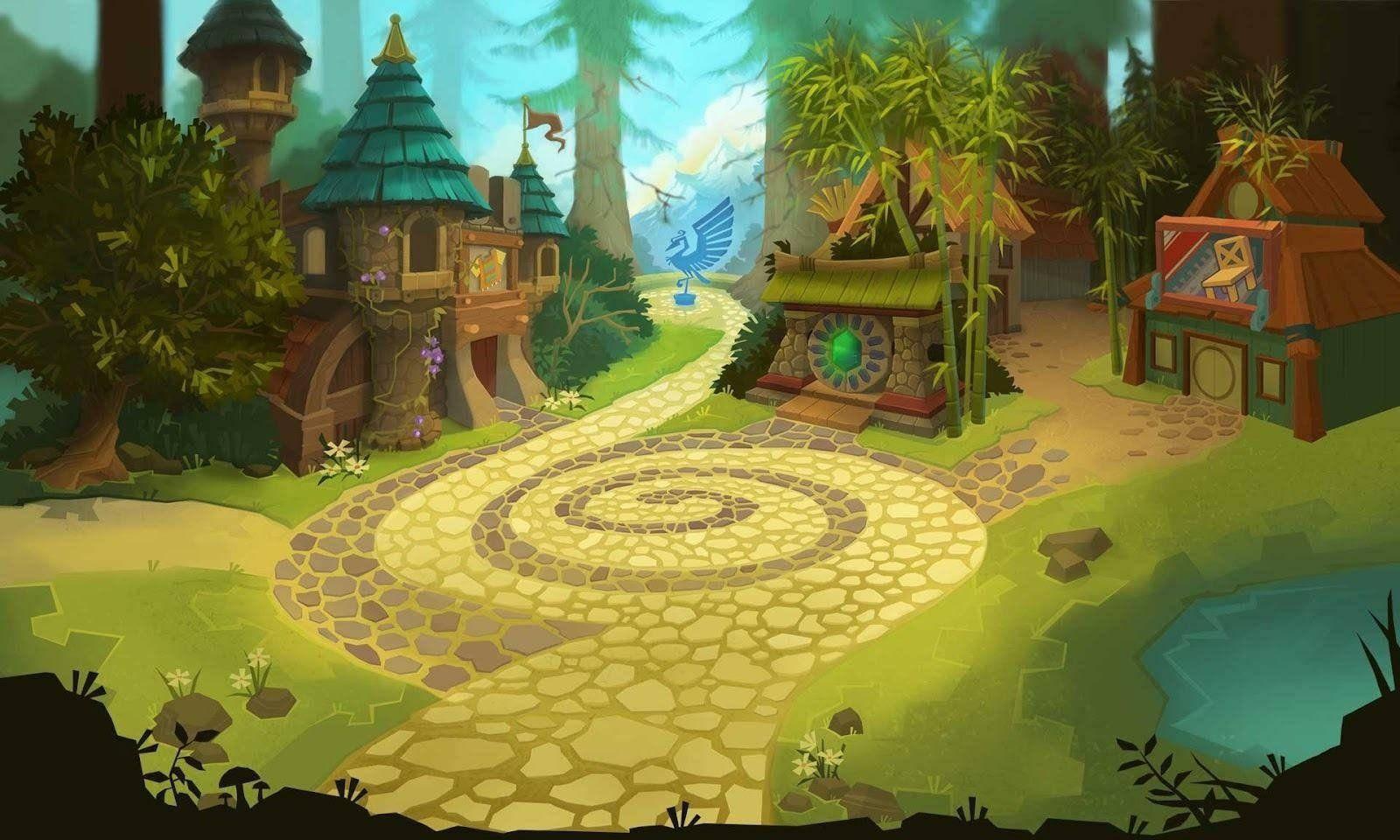



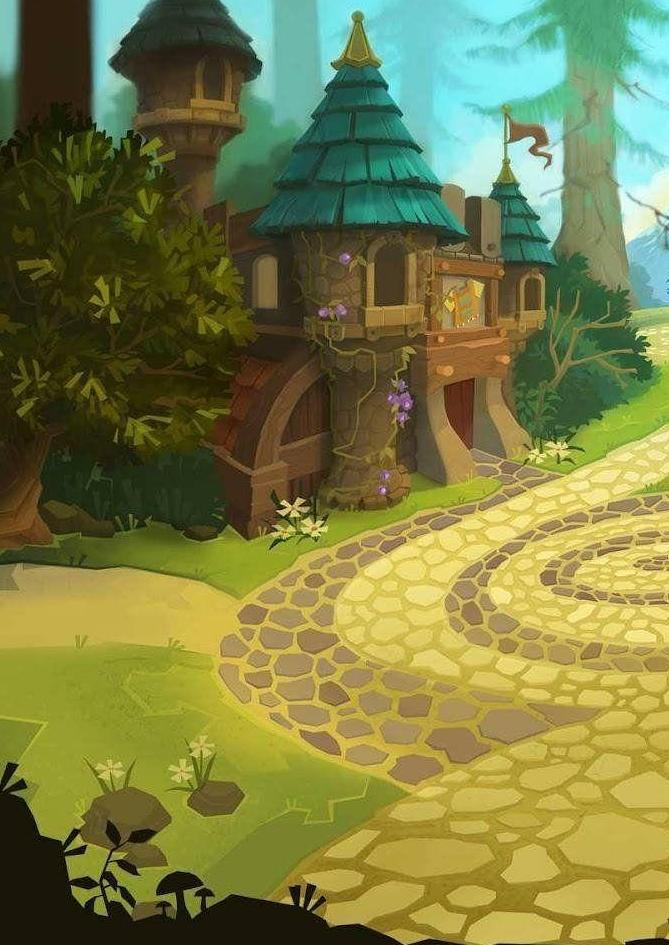
(A small caveat: this article is about Animal Jam Classic, not Animal Jam: Play Wild.)
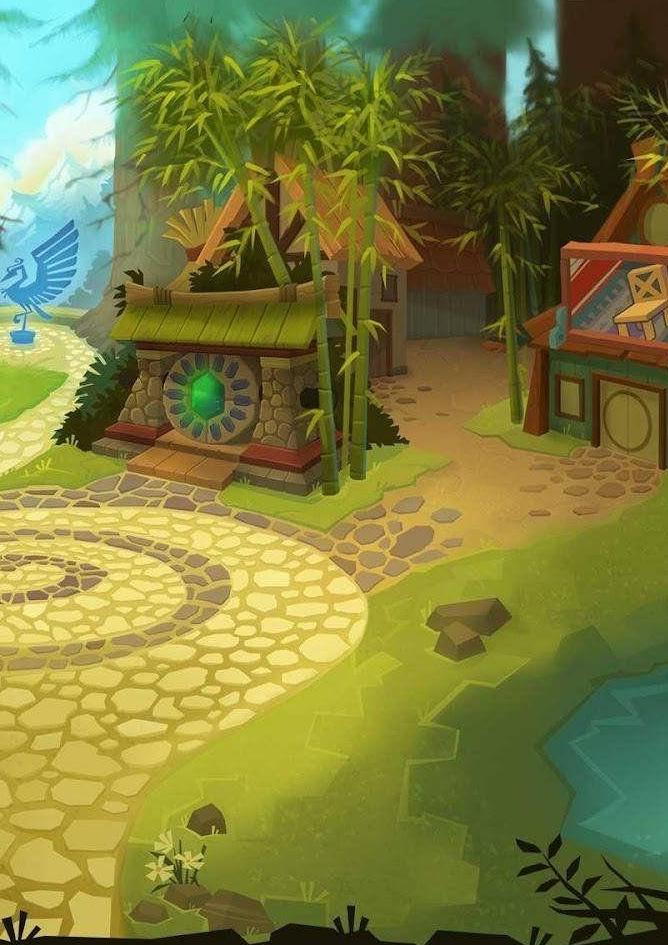
Be honest with me, who didn’t play an MMO as a kid? There used to be an endless amount: Moshi Monsters, MovieStarPlanet, Poptropica, Neopets, Habbo Hotel, the list could go on and on. The two, however, that I played the most were Club Penguin and, of course, Animal Jam. After the fall of Adobe Flash player, many of these games came to their close, servers quiet and empty as the years had gone on, but…
Many have persevered! MovieStarPlanet adapted to the times, creating a downloadable desktop version of the game. And though most other titles didn’t, I’m sure we’re all aware of the many Club Penguin remakes and remasters. We can thank older Gen Z’s, figuring out how to code websites to soothe their nostalgia. The greatest story of all, though, is Animal Jam
The game could produce a thesis. I could talk to you about its rise and fall and rise again; about how National Geographic is no longer involved in a game once created to educate kids on the wildlife of the world; about how it is now run by a dying company which invested too much time into NFTs. Wildworks, incidentally, did manage to scrape by—on the funds of children, and of furries in their 20’s dressing up their animal avatars and roleplaying as quite literally
anything you can think of (the best Animal Jam RPs are Warrior Cats themed. You can’t change my mind.)
I could talk about any of this. But today, I’m talking about capitalism.
Animal Jam is a game which relies on social class to establish status amongst its players. How do they create that social class? Rares. And what are rares, you might ask?
Well, that depends. Rare Item Mondays (RIMs) are the lowest kind of rares you can get. Every week, one of the shops around Jamaa—the world where AJ takes place—will release an item with a ‘RARE’ tag on it, declaring it as better than common items. A step above that are regular rares. These ‘RARE’ tagged items (not RIMs) are harder to come by—because they

features ahuatanga page 18
came out earlier in the game’s release, or because there are fewer of them in the world. Finally, there are Betas. These items aren’t tagged with the ‘RARE’ label, but were solely released in the Beta phase of the game, meaning they’re extremely hard to come by, and worth quite a lot.
These final two kinds of items are acquired either via trading—the best part of the game other than running around as an Arctic Wolf—or via purchase from another players' shop. There is, though, a third option: the EBay black market. Through EBay, players can purchase items from anywhere between $1 and $100—and that’s in USD!
Basically, the game runs on a laissez-faire capitalist system; a form of economy in which there’s no government intervention, and society ‘naturally’ runs it alone.
What a player chooses to wear on their current display animal, (non-members can have two, members up to 1,000, really showing the class divide) denotes how “rich” they are, and therefore their social standing. Oh, you’re a bunny wearing a head flower? You have no friends. You’re a snow leopard with a headdress, long spiked collar and worn blanket? Hellooooooo, besties!
These “rare” jammers are regarded in the same way the elite are in our real world: respected, feared, their friendship sought after. It’s always been interesting to
me how membership in Animal Jam doesn’t cause the class divide within players which membership usually would—because non-members can have just as many rares as members, access to the elite is theoretically possible for all.
Much like the real stock market, Animal Jam’s index of item worth changes weekly, sometimes daily, to keep up with ever-releasing items and trends. One week a worn blanket might be worth a few clothing Betas, the next, a few RIMs. This is all tracked and catalogued via the AJ Item Wiki, a Wikipedia which does exactly what it says on the tin. You’ve received a den item in a trade you’re not sure is a Beta? Check the Wiki! You’ll find out soon enough if you’ve been scammed.
All of this to say: I was taught about economics through an online MMO. I learnt about uptrading, a term used here to describe how you can trade from a low-worth item up to an item worth at least five times its amount. Entrepreneurial, in a way. Not only that, but I was also taught psychological manipulation. How many people have been scammed before, in the real world? Well, not me! I was scammed on Animal Jam once, when I was twelve, and have never mentally or emotionally recovered—allowing me a blissful existence of never-ending money related trust issues.
If you don’t believe me, just look at the Steam reviews!
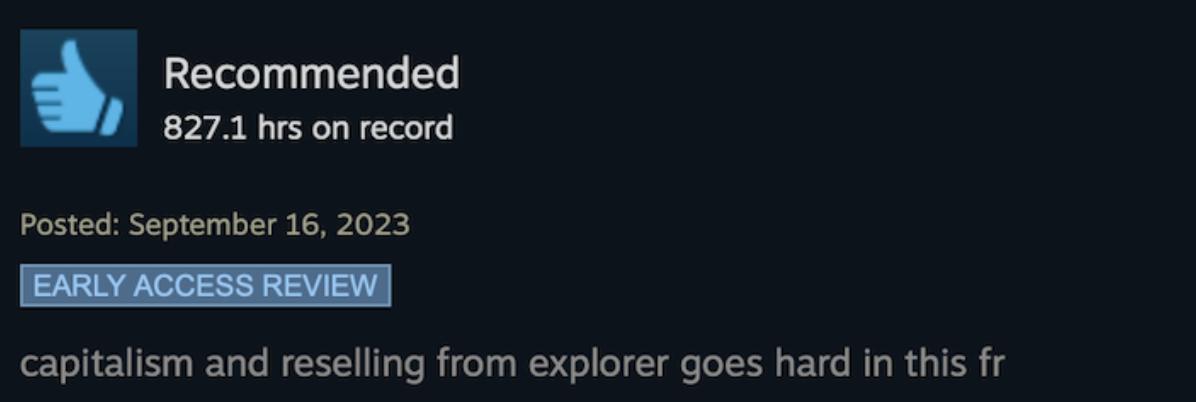
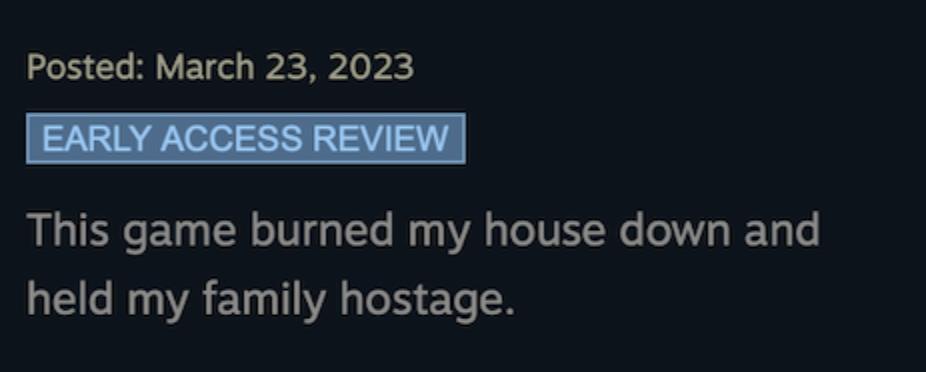
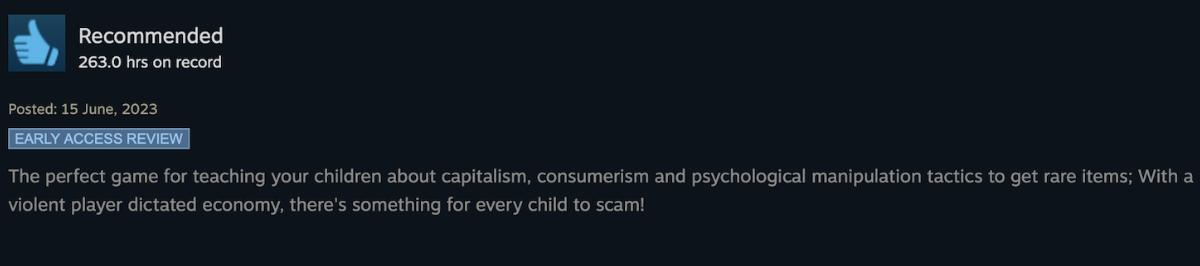
The theme of this issue is The World is On Fire and I’m Pretending it's Fine, and to be honest? Learning about deception and capitalism through what is supposed to be an animal themed dress up game is terrifyingly suited. Happy Jamming, Jammers!

page 19 features
ahuatanga
About this week's Artist
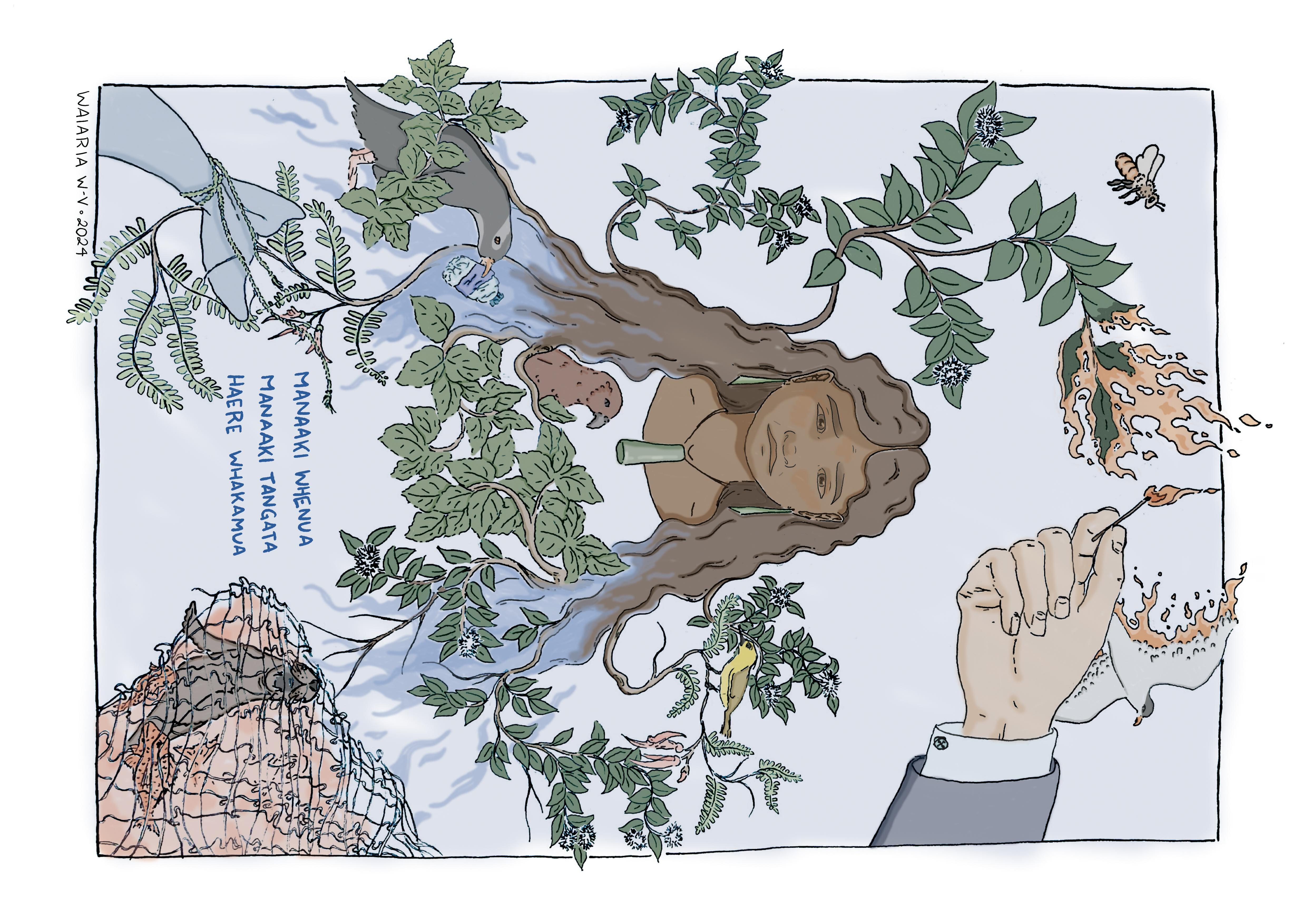
This week's centrefold is designed by Waiaria Willoughby-Viljoen Kia ora! Ko Waiaria ahau (Ngāti Kuta, Ngāpuhi). I’ve recently graduated from Vic with a major in Communication Design and minor in Māori Studies. My journey through my design mahi and studies has been one of learning about my Māori identity, but also of telling stories and empowering voices through a collaborative and creative process. Lots of coffee and sunny walks are the things that keep me fuelled for this as well as the prospects of finding a job at an advertising agency (please hire me). Check out my Instagram account @waiaria_designs if you’d like to see more
you’ve been putting out is going to come straight back to you.
boundaries drives people away, then they’re not the type of people you want around you.
kinda busy living in a fucked up society right now.”

Taking time to be alone is better than lashing out.

Pill JAGGED LITTLE
What Happens When Pharmac Tries to Murder You?
I’m awoken by the smell of sweaty balls. My eyes are blotted with gunk. There’s light streaming in through my windows onto my face—I must have passed out before closing my room for the night. More than anything, though, there’s the pain. A deep, throbbing pain at the back of my head that clings onto me, refuses to let go. The skull-pain has become the central deity of my life in the last week—a kind of personal demiurge that, attached to the crown of my skull, bleeds pain into the rest of my body. Yet I keep taking the pills. I have to keep taking the pills.
Between November and April, Pharmac carried out a routine brand change for the nation’s thousands of escitalopram users. For many, nothing changed save for the new glaring pink packaging in our medicine cabinets. For a substantial number of patients, though, the new brand came with a fresh dose of devastating side effects. I was one of these people.
A bit of background on escitalopram—it’s one of the five fully subsidised SSRIs used by the New Zealand health system to treat a range of conditions including depression, addiction, anxiety, and eating disorders. SSRIS, or selective serotonin reuptake inhibitors, work by affecting the body’s circulation of serotonin, one of the many neurotransmitters that impacts mood and energy in the human brain. Since research shows a well-established correlation between depression and low serotonin levels, GPs have become accustomed to using SSRIs as a crutch to treat mental illness where legitimate psychiatric intervention is unavailable.
Scientists like to call serotonin a “mood regulator” chemical. It keeps things at a nice baseline - you don’t try and kill yourself as often, but you miss out
on a lot of the joys of life as well. If this is raising alarm bells, good. On paper, it’s almost absurdly dystopian—a pill that you take to be less extreme, to moderate your behaviour.
I’m a rare case. I’ve been on SSRIs since I was about 11. I went through puberty, the baptism of fire in high school, and the transition into adult life all whilst on these meds. I don’t have any strong memories from before I started taking them, and I don’t really know what life is like without them. In many ways, they saved my life. Before taking them I was a depressed, suicidal, and physically violent child.
In 2018, nearly one in 10 Kiwis were prescribed some kind of SSRI—a number that only grows, as GPs increasingly try to prescribe their way out of a mental health crisis. In any circumstance where 10% of the population is using a prescription medication, a serious national conversation is needed about how these drugs impact us.
As for this year’s escitalopram brand transition? Well, for me personally, the side effects only lasted a few weeks. For that period, the head and neck pain was intense—it felt like my body was trying to force out some kind of external pathogen. But, all things considered, I was lucky. One friend of mine is still experiencing the side effects, and is turning to prescription painkillers to treat the serious headaches brought on by her antidepressant usage.
With very little community input or transparency, changes like these from Pharmac can throw off the life and mental health of a massive chunk of the population. Whilst supply chain issues make these changes often unavoidable, they speak to a real need to confront the growing number of Kiwis who depend on SSRIs to live.
page 23
words by Will Irvine (he/him) mentions of suicide.
CONTENT WARNING


Navigating Māori Identity in a Synthetic Society
Dani Maylam (she/her), Ngāti Porou
Whakataukī:
“Nāku te rourou, nāu te rourou, ka ora ai te iwi.” With your basket and my basket, the people will thrive.
We’re all aware of the phrase, ‘don’t judge a book by its cover’. How about 'don't get duped by plastic's façade; the real party is happening on the inside!’. Doesn’t seem to have the same ring to it, unfortunately.
Words often conjure different meanings across time, for better and for worse. There has been a new connotative meaning behind the word ‘plastic’ floating around in recent years—the term is sometimes used in reference to someone who is seen as not authentically themselves due to their appearance and mannerisms. The term ‘Plastic Māori’ has unfortunately latched itself onto Aotearoa’s conversational dictionary, a way to determine who can be Māori through appearance and personality. Clearly the best way to assign culture.
Growing up, in the whitest possible suburb of Tāmaki- makau-rau, I fit right into the cookie-cutter
model of a ‘white girl’. My pale complexion, combined with the yo-yo-ing phases of brunette to blonde hair (even accidentally ginger at one point), really sold the part I felt I had to perform. Yet I always felt a need to somewhat reconcile with this hidden element of my heritage, despite not knowing what that looked or felt like. I took Te Reo Māori throughout high school, as well as joining Kapa Haka and attending many Māori student hui, which opened my eyes to a side of myself that felt unconfident, yet increasingly empowered. It was at one of these inter-school hui that I was first exposed to someone using the word ‘plastic’ in the way we’ve discussed. I remember it clearly, sitting at a small lunch table, awkwardly trying
page 24

to make conversations with other school groups; three people across from me pointed out that I appeared to be “pretty plastic, aye?”, followed by a group laugh. Instinctively, I joined in, agreeing that I was the perfectly plastic person in this particular scenario, the literal embodiment of plastic. This interaction completely confirmed how I had felt entering these spaces, and the word plastic became ingrained in my perception of both myself and my
Indigenous studies lecturer Dr Rawiri Taonui defines a ‘Plastic Māori’ as a term “used by more culturally nationalistic Māori to refer to Māori who did not know te reo, tikanga or their whakapapa”. The concept of being 'plastic' originates from a rivalry over ancestral knowledge among Māori, which is undeniably the most disheartening aspect of this discourse. It’s giving, “You can’t sit with us!”. Exact, Mean-Girl Plastic behaviour, for real.
This response, of hostility towards a lack of knowledge, is paradoxical—given the enduring impact of institutionalised racism and colonial structures on modern society. We do not need to look too deeply at history to find illustrations of these structures. In 1867 the New Zealand Government passed the Native Schools Act, under which Māori were compelled to surrender land for school construction, bear financial burdens for infrastructure and educators, and adapt to an English-centric educational system. Repercussions of this single Act alone persist to the present.
I’ve heard stories from my tūpuna about being abused for speaking Te Reo Māori, their cultural existence in schools forbidden. These histories have severely impacted and aided the loss of Māoritanga. Even now, the gap of knowledge is still prominent, and our attention shouldn’t be on who is ‘the most Māori’, but rather on how we can tautoko each other, and reclaim what has been stolen through colonial crimes and erasure.
Conversely, it is important to note the privilege I do have as a pākehā wahine. I truly will not face the level of discrimination that many Māori face in Aotearoa, nor any person of colour. I am well aware that many see the idea of being plastic as being white-washed, as people only using their culture as a means; I know too that these views do not go away overnight. I have often struggled with the fact that I did not grow up around my iwi, nor my marae or hapū, and the estrangement has aided the alienation I feel from being Māori. If anything, it was my whānau that kept me aware of my whakapapa,
particularly my nana, who herself doesn’t reside by our iwi or hapū. If anything, she has shown me that being Māori transcends mere geography; it's about embracing one's identity wherever you may be, and taking pride in it, along with cherishing connections with whanau through kōrero. Te Reo Māori is the most beautiful language, is a ‘taonga tuku iho’, and is not something seen—much alike to being Māori for someone of my appearance. I prefer the term that Dr Taonui uses: “kōtuku mā’ (white herons)," used to “describe Māori with non-traditional colouring such as fair skin, blonde hair and blue eyes.” This term, while it does highlight the differences in physical appearance, forms a sense of mana and reclaims this feeling of otherness and illegitimacy that being ‘plastic’ creates.
I believe a lot of the issues at hand are due to hesitation.
Terms like plastic can form an apprehension in embracing and learning tikanga Māori, which is a big issue in younger generations. From stories I have heard, some tamariki aren’t connecting with Māoritanga because they fear being ostracised by their peers, or because it’s deemed ‘not cool’.
Personally, I have internally battled with this notion— various friend groups and comments questioning why ‘I would bother’ impacted me more than I’d like to admit. When something isn’t seen as cool or necessary, or is seen as different from the god-awful Euro-centric schooling system, people like to jump the gun and reject it. Maybe it is a result of unconscious racism, but attitudes such as these are detrimental to how future generations will view Māoritanga, and risk continuing the cycle of oppression, no matter at what scale. Terms and societal views such as ‘plastic’ have created a deterrence from learning about our Māori whakapapa, and we need to protect both our tamariki and end the colonial cycle.
From my experience, I think the best possible outcome is to continue to be open to what culture can teach us, irregardless if we are biologically connected or not. My beautiful kaiako in college (shoutout to Whaea Sarah! <3) once told me that blood quantums have historically been used in Aotearoa to negate our connections to whakapapa and our tūpuna. Being considered ½ or ¾ or whatever of a race is a colonial view that continues to perpetuate the idea that Māori are ‘dying out’ and are less important than other counterparts, or blood amounts. Dividing blood particles in our bodies does not make you more or less a part of a culture. If you are Māori, you are Māori. Plain and simple. Biology isn’t culture, and culture isn’t quantified.
features ahuatanga page 25
bird of the
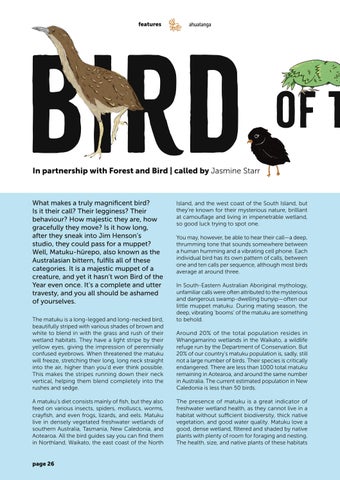
In partnership with Forest and Bird | called by Jasmine Starr
What makes a truly magnificent bird?
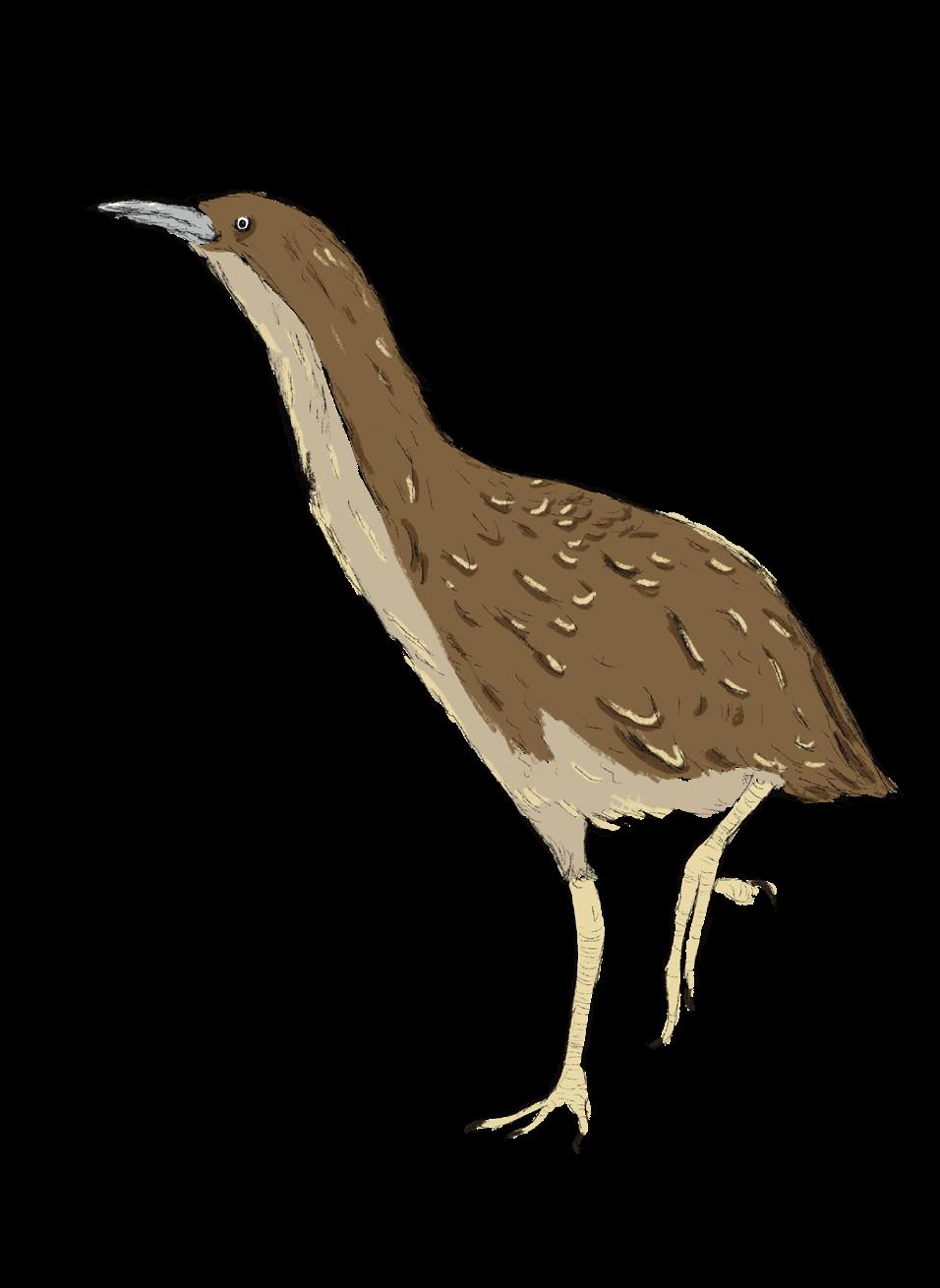
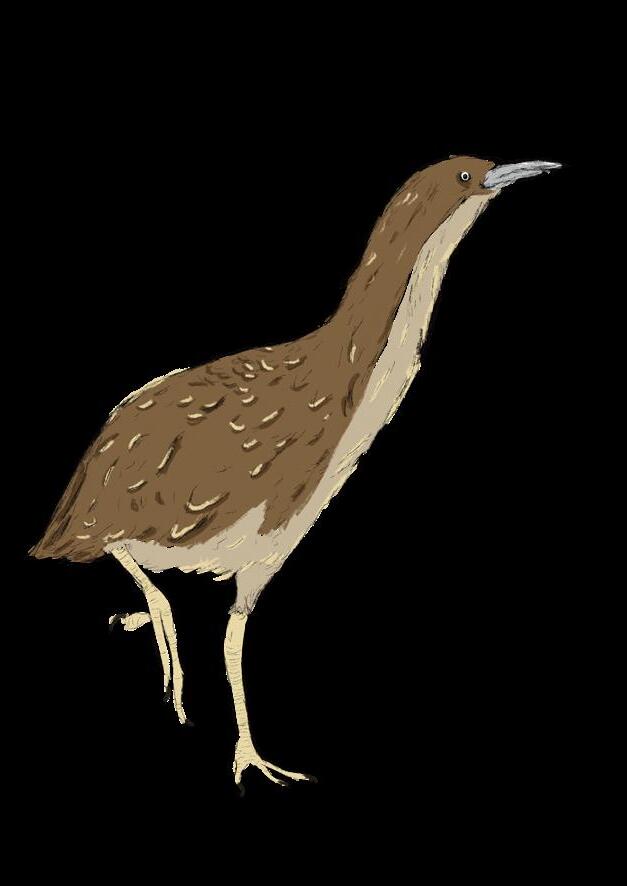
Is it their call? Their legginess? Their behaviour? How majestic they are, how gracefully they move? Is it how long, after they sneak into Jim Henson’s studio, they could pass for a muppet? Well, Matuku-hūrepo, also known as the Australasian bittern, fulfils all of these categories. It is a majestic muppet of a creature, and yet it hasn’t won Bird of the Year even once. It’s a complete and utter travesty, and you all should be ashamed of yourselves.
The matuku is a long-legged and long-necked bird, beautifully striped with various shades of brown and white to blend in with the grass and rush of their wetland habitats. They have a light stripe by their yellow eyes, giving the impression of perennially confused eyebrows. When threatened the matuku will freeze, stretching their long, long neck straight into the air, higher than you’d ever think possible. This makes the stripes running down their neck vertical, helping them blend completely into the rushes and sedge.
A matuku’s diet consists mainly of fish, but they also feed on various insects, spiders, molluscs, worms, crayfish, and even frogs, lizards, and eels. Matuku live in densely vegetated freshwater wetlands of southern Australia, Tasmania, New Caledonia, and Aotearoa. All the bird guides say you can find them in Northland, Waikato, the east coast of the North
Island, and the west coast of the South Island, but they’re known for their mysterious nature, brilliant at camouflage and living in impenetrable wetland, so good luck trying to spot one.
You may, however, be able to hear their call—a deep, thrumming tone that sounds somewhere between a human humming and a vibrating cell phone. Each individual bird has its own pattern of calls, between one and ten calls per sequence, although most birds average at around three.
In South-Eastern Australian Aboriginal mythology, unfamiliar calls were often attributed to the mysterious and dangerous swamp-dwelling bunyip—often our little muppet matuku. During mating season, the deep, vibrating ‘booms’ of the matuku are something to behold.
Around 20% of the total population resides in Whangamarino wetlands in the Waikato, a wildlife refuge run by the Department of Conservation. But 20% of our country’s matuku population is, sadly, still not a large number of birds. Their species is critically endangered. There are less than 1000 total matuku remaining in Aotearoa, and around the same number in Australia. The current estimated population in New Caledonia is less than 50 birds.
The presence of matuku is a great indicator of freshwater wetland health, as they cannot live in a habitat without sufficient biodiversity, thick native vegetation, and good water quality. Matuku love a good, dense wetland, filtered and shaded by native plants with plenty of room for foraging and nesting. The health, size, and native plants of these habitats
page 26 features ahuatanga

the
year
are dwindling, and the population of the matuku is declining alongside it.
Humans have not been especially good at preserving freshwater wetlands. We have now rendered over 90% of the matuku’s habitats in Aotearoa New Zealand uninhabitable, clearing them for farming and agriculture. Of the remaining wetlands, many have been salinised, drained, eroded, or filled with runoff from nearby farms. The native plants matuku depend on for shelter and camouflage can get overrun and destroyed by invasive species. Changes in water levels, a big problem for the ground-nesting matuku, affect even the Whangamarino conservation wetlands. These factors also drive out the creatures these birds feed on. To tack on yet another problem, introduced predators—the usual suspects of rats, stoats and cats—eat the eggs of the matuku. This problem is only worsened by increasingly shrinking habitats, and the resulting loss of hiding and camouflage spots provided by dense native vegetation.
With this beloved bird facing all these plights, it’s no wonder they’re critically endangered. The good news is, we can help. It’s not too late for the matuku.
You don’t have to wait for the government to make changes—although protesting and political publicity is always important, it’s tiring to feel like all the change lies out of your reach. You can do so much good for the matuku and the rest of our creatures with your own two hands. You can participate in trapping for Predator Free 2050, by joining your local community group, or backyard trapping egg-eating pests such as mustelids and rats. You can keep your cats indoors, or find them collars that prevent them
from munching on the native fauna. Participate in rubbish cleanups! Raise money! Join a conservation group such as (ahem) Forest and Bird!
If you live near a wetland, you can greatly help the matuku’s habitat by weeding, getting rid of invasive ‘temporary fix’ species such as grey willows, and sowing naturally filtering native plants, such as the matuku-favourite rushes and sedges, that improve water quality. Even simply putting a fence around a wetland helps significantly. There is funding available, from the Department of Conservation and some regional councils, to financially support your wetland restoration. Matuku will travel long distances to find a suitable habitat. Who knows? You might start to hear a ‘booming’ call from your very own neighbourhood.
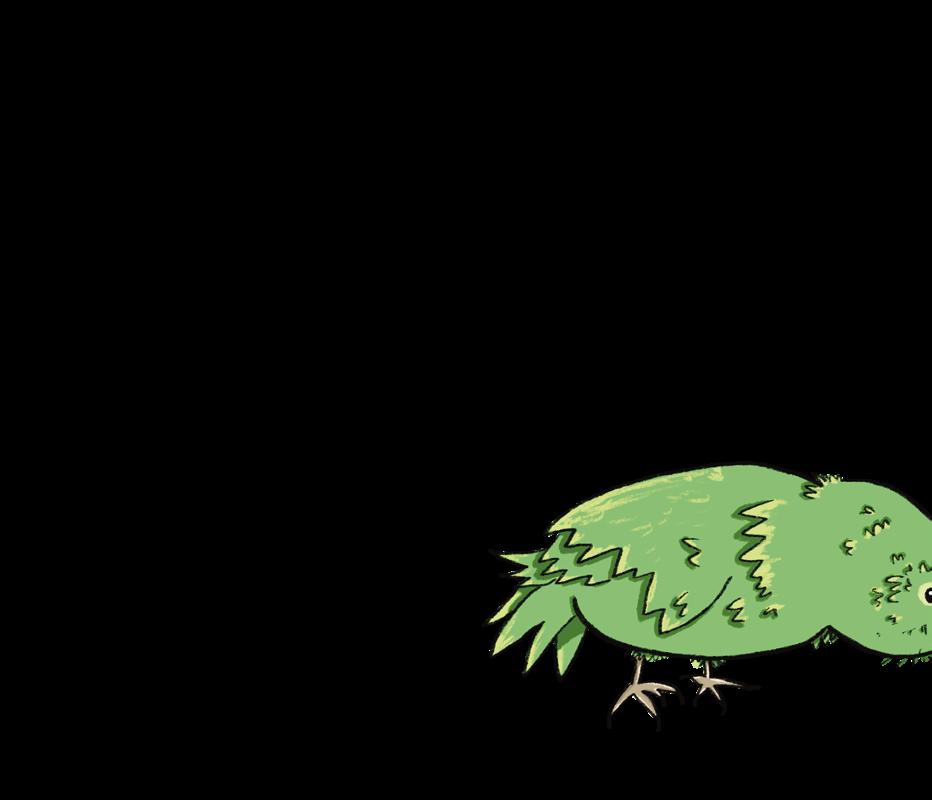
If you don’t have the time or energy for hands-on work, you can help by donating money to conservation efforts, helping out Give a Trap, or giving these efforts publicity, even just through social media, so others can trap and donate, too. Something as simple as voting for Bird of the Year later this year helps bring awareness to birds that desperately need our attention, help, and donations. We all love a good kākāpō, but there are so many underrepresented endangered birds that also need the support that comes with public recognition, donations, and habitat restoration.
Critically endangered birds need our help, before we lose yet another glorious feathered member of Aotearoa to extinction. So why not, this year, choose to support the magnificent muppet matuku?
page 27 features ahuatanga
MAKING WAVES
on norfolk island
words by Mauatua Fa’ara-Reynolds (she/they)
page 28

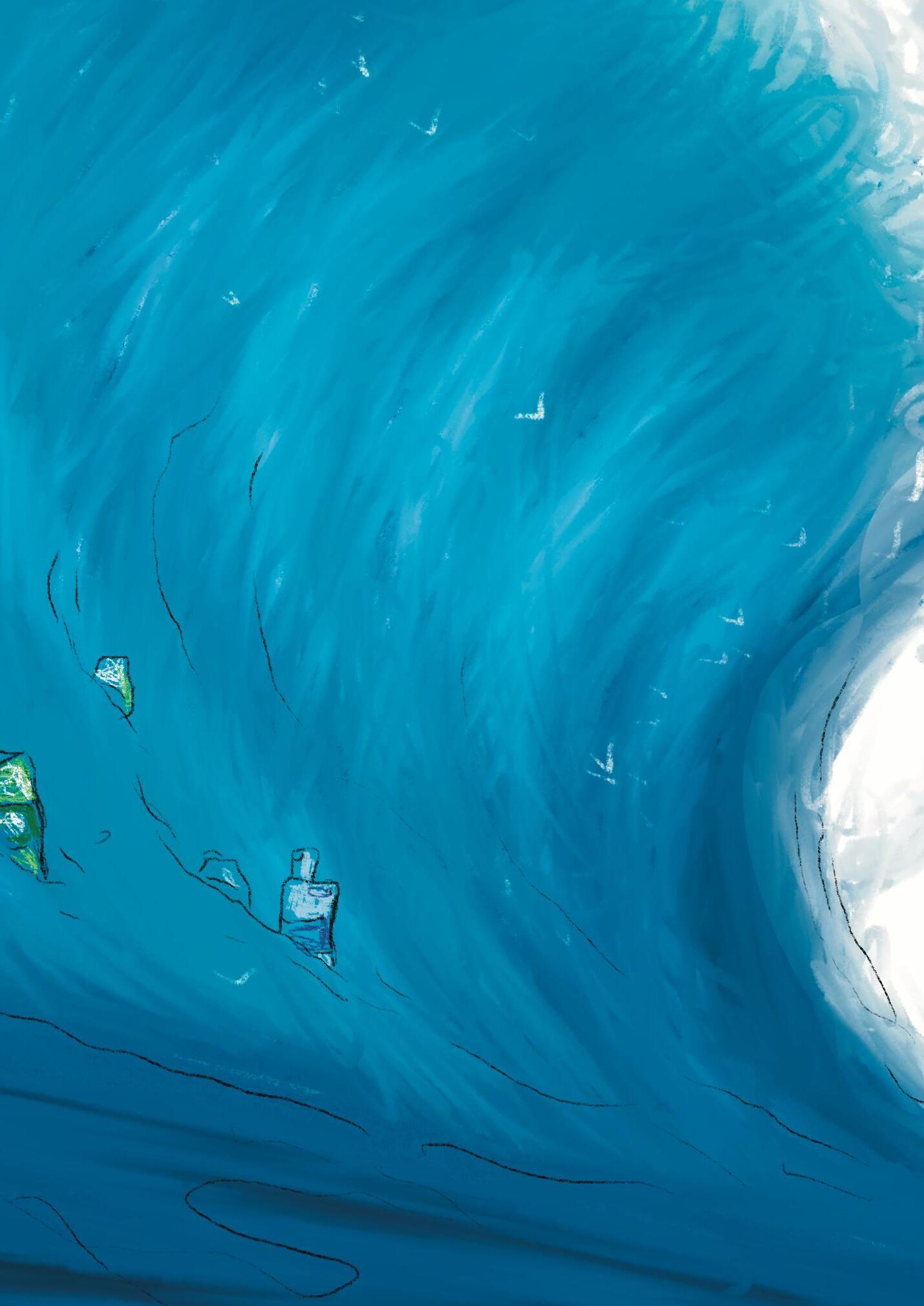
So the world’s on fucking fire, and we’re all gonna drown. We’ve just had the hottest March on record. The ice caps are still melting. And there’s a monstrous patch of garbage in the Pacific that takes up a disgusting 1.6 million square kilometres of space. We’re in a constant state of climate-related panic attacks. But there is a little island in the South Pacific doing amazing things that might ease our anxieties.
Norfolk Island’s recycling centre has been a glimmer of hope amidst rising concerns about sustainable waste disposal methods. Norf’k salan (Norfolk Islanders) have shown incredible initiative in establishing invaluable transnational relationships to create durable solutions for their people, and getting the community more involved in shaping their future.
After much deliberation, it was decided that Norfolk Island’s recycling centre would be named ‘The Norfolk Wave’—a name that holds a double meaning. On the one hand it references the lovely Norf’k practice of waving at every passing car. It might just be a lifted index finger or, if you’re lucky, a whole raised hand out the window—in fact, you’re weird if you don’t wave. It symbolises a commitment to and acknowledgment of all the vital micro-connections that exist on the Island, and how they create a tightknit and thoroughly engaged community. On the other hand, the metaphorical wave represents an aspiration to participate in the broader movement of environmental change, setting an example for other Pacific nations.
Prior to the Norfolk Wave’s establishment, Norfolk Island’s waste management was that of a regular landfill that we’d see here in Aotearoa or Australia. However, these sites are entirely unsuitable for smaller rural or Island communities who don’t have the same access to resource management services, adequate infrastructure to accommodate such operations, sufficient space, or people with the appropriate skills and training. Because the landfill proved insufficient, we resorted to open-air incineration, ocean-dumping, and exporting waste to Australian landfills.
Growing up on Norfolk, it was normal for us to burn any of our rubbish at home, or for your uncle to get
rid of his old cars and fridges by sending them off the Headstone cliff, into the ocean. When I asked my Mum about it, she said, “Everyone’s garbage used to go out to Headstone, be burnt, then chucked over the cliff. It’s just how we used to do it because we didn’t have enough space to store all our stuff.”
To this day we still export our waste to Australia, at the shocking price of $3 per kilo—accumulating to just under $2 million (AUD) each year. This puts a massive financial strain on the council rates, of only 2000 Norf’k salan.
In an interview with The Norfolk Wave’s founder and local filmmaker (Islander translation: a recorded phone call with my Aunty), Natalie Grube said before the whole campaign was even an idea, it all started with a film project she was working on for incoming tourists so they could more appropriately engage with the community. “The way [visitors] talked about Island people or skin colour, all the way down to how they viewed rubbish—everything kind of came from this colonised mindset”, said Natalie. Previously, most information provided to tourists about environmental precautions focused on prohibited items or pests and diseases in customs. This was evidently a onedimensional way of approaching environmental issues, so Natalie decided that the video had to be more comprehensive, and recognise the uniqueness of Norfolk’s nature and culture. But she was already on a roll. “I decided, if we were gonna make this film, we might as well make a campaign. Let’s make this as big as we can”.
The Norfolk Wave’s story really begins when Natalie was living in the Northern Rivers of Australia. “One day, I was just searching about stuff online, and I heard about this company that had taken the Byron Bay Beach Hotel from a recycling rate as low as 5% to 90% overnight through their resource recovery”. This was Revolve Your World, a waste collection company that creates circular recycling solutions tailored to the specific community they’re working with. The circular economy model they implement is achieved by receiving waste and then repurposing it into various products that the community can use.
Natalie reached out to them, and they were super keen to get involved, but none of this could work if the community wasn’t on board. So, Natalie sought to make the project culturally relevant to the community. She said, “I was thinking about how to get Norf’k people to reduce their waste and be more conscious. And it was really about considering how their ancestors would’ve lived, and that’s why we
MAKING WAVES page 29 features ahuatanga

came up with our motto: miekduu (resourcefulness), mainaut (mindfulness), and miekhies (hastiness)”. In our chat, she also pointed out that the linear economy we live in (where we buy something, use it, then chuck it) is an introduced model of living and that the circular model Revolve Your World implements would be a return to ancestral ways of being. Natalie said her idea was, “Let’s go back to something we know works instead of assuming our rubbish is gonna find somewhere else to go”. As an especially remote community, we’ve had to learn to thrive in isolation. It’s in our blood and goes back to our ancestral beginnings on Pitcairn Island (if you don’t know our history, do a lil Wiki deep dive). And so, with a model that replicated that of our ancestors, supported by cultural concepts, Natalie had cracked the code.
At the beginning of 2022, Revolve Your World began to design a comprehensive resource management solution for Norf’k. And in August 2023, The Norfolk Wave Recycling Centre was up and running. Within only two months of operating, The Norfolk Wave was already producing phenomenal improvements for the Island’s environment and community. Of the 231 tonnes of waste it processed during this period, a staggering 101 tonnes were recycled on the Island, 75 tonnes were recycled in Australia, and a mere 56 tonnes were sent to landfill. That’s a remarkable 75% of waste material being recycled. For comparison, Aotearoa only recycles about 28%.
But how does the Recycling Centre actually work? Well, here’s a long-winded explanation for you nerdy little Environment and Sustainability cuties. The recycling system involves a rigorous process of sorting, further processing, and redistribution. Residents come to the Recycling Centre with their rubbish already sorted into five streams: glass, organics, sanitary products, hazardous, and the Recyclapod, the star of the show. The Recyclapod is a small waste processing unit that lets workers separate and clean any recycling. From here, they’re separated again into streams for on-island processing, or export. On-island recycling includes cardboard, organics, plastics, and glass. Cardboard is compressed and fed to the carboniser, creating pure carbon. Organics become compost for local gardens. Plastics are shredded and mixed with carbon, lime, and water, before being extruded and granulated into concrete aggregate. This is an otherwise expensive building material, the availability of which reduces the mining of local raw materials (my cousin used it to make
her own kitchen countertop). Glass is processed into sand, meaning less sand is mined from our beaches. Amazing, right?
Since the Norfolk Wave started, my Mum’s been its biggest fan. The last time I went back home, one of the first things she did when I entered the house was show me her new trash set-up.
In her everyday life, “the Norfolk Wave made me super aware of all the useless plastic we buy and how dependent we are on packaged food from overseas … which is why I started getting powdered milk again!”.
Side note, you guys are sleeping on powdered milk. But Mum loves taking her sorted rubbish to the tip now, and said, “The Centre’s always playing really groovy music, the workers are super smiley and making conversation”. Good management, happy workers, great vibes—it doesn’t get much better.
With reduced greenhouse gas emissions, increased local employment, reduced waste management costs, and resource circularity, the Norfolk Wave really is the best thing to happen to the Island since 4G wireless broadband (we’re still waiting on 5G).
At the upcoming Pacific Arts Festival in Hawai’i, there’ll be a three day symposium, with one day dedicated to talking about environmental issues. Three members of The Norfolk Wave will be speaking at this event, sharing their story with other Island nations, informing them on how to get communities on board, and how the Norfolk Wave can help other Pacific nations find and adopt a similar model. It’s here that the Norfolk Wave will quite literally be creating waves of positive movement in the Pacific.
I share this story because I know how hopeless it all feels, especially when everything we see tells us that doomsday is upon us. We’re allowed to sit here in this space of worry, anger, and pain. We can let it breathe and have our moment to be mad at the world for fucking us over. But we’ll need to pick each other back up soon, put our shoes on, walk out the door, and do the fucking mahi. We’ve got a long way to go, but if we start now and do it together, we might have a chance.
I promise you, there are good people doing good things.
page 30 features ahuatanga
Aunty Vic dear,
Hey Aunty Vic! I was just wondering if you had any advice around trying to find a partner. Dating apps suck and my threesecond long eye contacts haven’t gotten me anywhere. Going into Uni I thought there would be relationships abound here, but I’m now in my last year, and still as single as ever.
Advice xxx
This advice may not be the music to your ears you were hoping for. Babe, stop searching. Dating apps are terrible, and three-second eye contact will never get you anywhere. What will change things is when you switch your mindset and start investing your energy in yourself instead of throwing yourself at people, hoping you'll stick.
University can seem like a relationship field day. Left, right, and centre, friends are hooking up, breaking up, falling in love, or just drunkenly falling over each other. Understandably so—everyone is in an environment they've never experienced before. A place where there are thousands of young, attractive, charismatic people all congregated in one city. On top of that, there are parties, alcohol, drugs, sex, and, maybe more importantly, no parents. University does facilitate the exploration of relationships, so I understand why you may have expected to have experienced one by now.
While university provides opportunities for relationships, simply attending one does not guarantee you'll be in a relationship. Furthermore, assuming you should be in a relationship just because those around you are might feel right, but it’s illogical.
Healthy relationships grow out of two secure people. To be a good partner, you need to be secure in who you are, what you want, how you like spending your time, and have a general feeling of contentment within
Need a hand?


yourself. Think about it—would you want to be in a committed relationship with a person who doesn't even have a strong sense of themselves? Who can't define their interests or values, or choose supportive friends? Fuck no! So why would you offer yourself up as a partner if you aren't there yet?
You might be wondering how to reach that point. Step one: stop actively seeking a relationship. When you're constantly searching for a partner, you drain your time and energy on people who may not reciprocate. Instead, redirect that energy into selfdiscovery and growth.
Focus on activities you love, places you enjoy, and friendships that support you. As you invest in yourself, you'll naturally gravitate toward likeminded individuals who could be better potential partners. Consider the qualities that attract you to others—confidence, charisma, interesting hobbies, and supportive friends—and aim to embody those traits yourself.
Fundamentally, start exploring who you are, and find joy in going on that journey. Happiness doesn’t only come from being in a relationship, mostly, it comes from friends, family and yourself. Stop thinking that being in one will provide such happiness. Take the pressure off, and learn more about you. I promise you, discovering yourself is much more rewarding than any relationship in your 20-somethings.

page 24 columns
Send your anonymous questions here! page 31 e Q.
Ah, student life. Lectures, two-minute noodles, that existential dread that lingers like a flatmate who won't wash the dishes. But for queer students in New Zealand, there's another layer to the chaos: the fight for basic rights that should've been granted, like, yesterday.
Look, New Zealand gets a gold star for stunning scenery and flightless birds. But when it comes to queer student rights, well, let's just say the progress report reads like a participation trophy application. Sure, there are policies in place, but the implementation? Patchy at best.
So, what's a woke, broke, and fabulous student to do? We march, we rally, we write strongly worded
Participation Trophy Progress? The State of Queer Rights on Campus words
by Khai (they/them)
emails that probably get filed under "Too Spicy—Do Not Open." We also use our student loans for good outfits (because self-expression is political, darling) and maybe a megaphone or two. Because let's face it, if the world is on fire, at least we'll look snatched doing it.
Change is slow, bureaucracy is a monster, and those single-stall bathrooms just won't budge. But we're queer students. We were practically born with glitter cannons and a microphone in one hand. The fight for our rights might be frustrating, but hey, at least it's never boring.
Plus, you don't have to fight alone! Reach out to UniQ for awesome friends, cool events, and a chance to forget the world's burning... for a little while at least.

page 32 columns tīwae
Comic supplied by: @walterzamalisss
VUWSA
You are political whether you like it or not.
Words by Sandy Taing (she/they)
As Campaigns Officer this year, I’ve learnt that a petition doesn’t do shit because most people don’t give a fuck. They’re just here for a good time, not a long time.
Imagine Brian. Brian is satisfied with a few beers, good music, video games and a night out. Brian will probably either inherit a property or make enough money in some soulless job to live happily. In Brian’s world, why should he give a fuck about injustice when he is much happier playing Baldur’s Gate and drinking beer at 6pm on a Tuesday? Thinking about the world, or pondering concepts like the end of late stage capitalism, are all just recipes for a migraine and a mental breakdown. How could he, a single person, possibly make a difference?
As New Zealanders, we love being ignorant. We are safe here, cocooned from things like war and severe poverty. And we owe this safety to the conquest and continued dominance and exploitation enabled by colonisation. Life is great when it's not political.
But the thing about Brian is that everything he does is politics. When he chooses work in a field that is actively contributing to a negative outcome for others for his own financial gain, he is actively destroying futures. When he normalises a 40 hour work week, he reinforces capitalist exploitation. When he does not speak up about racism or lack of representation for others because he’s afraid of losing his job, he is preserving a world where both job insecurity and racism are used to keep people miserable and in servitude. Or maybe he isn’t even educated enough to realise he, himself, is being racist!
Politics affects you when you sleep, when you eat, where you live, what you do for work, even who your friends are. Politics controls every part of your experience whether you like it or not. If you have the choice not to be political, you are privileged. And when you are privileged, you have power and responsibility to use that privilege for the benefit of others. It is likely that if you are at university, you are privileged.
Being political isn’t just about protests, it is about shaping the future and creating a world you’re actually proud to be a part of. It means you might be able to wake up to a world where you’re not an employer’s little bitch or being exploited by your landlord. Being political is not being complacent in a system which fucks us all over.
Being political is as simple as having influence in your own whānau or friends. You make a difference. When you live out your politics, others will follow. When you have the balls to give a fuck about others, to talk with your mates about ethics and morals, or about what they’re going to do with their inheritance, or what kind of voices they’re going to listen to when they’re at the top. Being political is trying to ensure that after you die, the world will be less shit.
Real change is living out the politics you wish to see. And if you’re happy with the status quo, then you’re probably just an asshole who is riding on the wave of privilege inherited from slaughter and colonisation.
Your choice really.
P.s if you relate, have any pātai, ideas or whakaaro, email me (Sandy). It’s my job to make being political easier for you. campaigns@vuwsa.org.nz
Sandy Taing
Te Aka Tauira - VUWSA Campaigns Officer
Whakapapa to Cambodia and South China, born and raised in NZ.
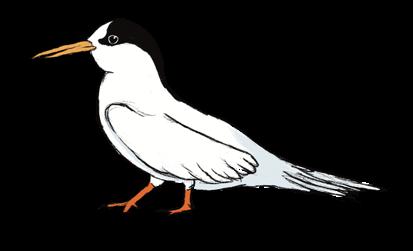
columns tīwae columns tīwae
Grant the Visas
An Open Letter to the Government
This letter was written by a range of organisations in March. Emergency visas remain un-granted; the call continues.
Prime Minister Christopher Luxon, Minister of Immigration Erica Stanford, Minister of Foreign Affairs Winston Peters,
We urgently appeal to the New Zealand government to grant emergency humanitarian visas to Palestinians in Gaza who have family ties in Aotearoa, New Zealand. Additionally, we implore the government to provide the necessary diplomatic assistance for their safe evacuation. Once these families arrive in New Zealand, we ask that robust resettlement assistance is provided for and resourced appropriately.
Approximately 300-400 individuals in Gaza have existing family connections in New Zealand, making them eligible for a visa similar to the one granted to Ukrainian families in 2022.
Over the past five months, more than 31,000 Palestinians have been killed and more than 73,000 injured. With 1.7 million (75%) internally displaced, the humanitarian crisis is rapidly worsening. Our government must act swiftly to facilitate the evacuation of Palestinians with family members in New Zealand, without unnecessary delays. New Zealand’s humanitarian response to Ukrainian and Afghan families has set a precedent. Making the necessary arrangements to ensure the safety of

Palestinian families requires the political willpower to make it happen. Our embassies in the region can be actively engaged to assist with this. The Special Ukraine Visas and Afghan Emergency Resettlement Visas were implemented within weeks. We call for a similar humanitarian pathway to be extended to Palestinians with family members in New Zealand. Australia and Canada have already established pathways; it is our turn to urgently follow suit.
Prime Minister Christopher Luxon and Foreign Minister Winston Peters and Immigration Minister Erica Stanford, please issue an urgent ministerial directive that establishes an emergency humanitarian visa for Palestinians with family members in New Zealand, and a commitment to bring these families to safety in Aotearoa New Zealand.
Signed by: Alternative Jewish Voices, Palestinian Youth Aotearoa, Greenpeace, Palestine Solidarity Network, World Vision, Amnesty International, Save the Children, Justice for Palestine, Christian World Service, Caritas Aoteara, Common Grace Aotearoa, Waikato Arab Social Club, Sakinah Community Trust, Anglican Advocacy, Dasenu, ChangeMakers, HOST International, Migrant Action Trust, Asylum Seekers Support Trust, Sudanese Society NZ, Tearfund, NZ Arab Association, Aotearoa Christians for Peace in Palestine, English Language Partners, UnionAID, Just Community, Mahi Mihinare/Anglican Action, The Refufee Alliance
PICTURED: Calls for ceasefire in Palestine; Photo: Henry Broadbent.

page 34 columns tīwae
Scan
الحرية لفلسطين
this QR Code to share the call:
Haiku for Heartbroken
Hospo Worker
Emily Gambrill (she/her),
19:30
chicken cheesecake slop fish and chips swim together orange rubbish bins
clear empty glasses old dockets, new messages nothing ever ends
19:50 there is a plate of smashed mashed potato sitting

poetry & prose auahatanga

Self Care and Baked Beans In The Face Of Armageddon
As a child, I was obsessed—perhaps too obsessed—with the idea of an apocalypse. Where would I go? What would I do? Who would I team up with, and why were my parents—or any adults, for that matter—somehow never present in any of these imaginary scenarios? I even roped some of my friends into making plans, meeting their giggles with all the seriousness that my 11 year old self could muster. We figured out whose house was the most secluded, and thus the most safe. We decided who we could trust. Most importantly we decided that, in the event of total societal collapse, our best bet for food would be to steal as many tins of Heinz Baked Beans from the supermarket as possible.
In the midst of all this I made the mistake of mentioning this to my mum; she rightly called out my weird fascination as unhealthy, even a little disturbing. I’m well past it now, and my new plan for if (when) everything goes to shit involves baking as many cakes as I can, and eating maybe half of them, before dying in a suitably tragic manner. Maybe I’ll see if I can’t finish knitting a blanket, if I’m really lost for things to do. But interestingly enough, my younger self’s fascination with how to survive societal ruin seems almost sensible these days. While New Zealand didn’t undergo any extreme crises during my childhood, now that I’m older it seems like there are miniature apocalypses happening wherever I look. There are situations so awful it seems almost impossible to comprehend them fully, such as in Gaza, Congo, and Ukraine. There are more insidious issues which it feels like we consistently don’t notice until it’s too late—climate change, human rights issues, and the healthcare crisis spring to mind. There are many more things specific to New Zealand, perhaps not quite as deadly but important all the same: inflation, housing, our economy as a whole. I mean, sure, they’re arguably not what I was picturing as a kid, but aren’t they still apocalypses of a kind?
Existing, even on its own, is a stressful thing. Even when you’re doing nothing else, your own life is more than capable of providing enough stress to last a lifetime (literally). You don’t need to have an apocalypse on your hands for life to be tough, and at times it can feel like engaging with any of these issues is an unnecessary source of concern and premature grey hair. But many people do anyway—and they’re not wrong for it! Engaging in politics and political action can be incredibly empowering, and believing in a cause enough to fight for it is a very noble pursuit. This doesn’t negate the fact that any cause can easily take all the energy you have to
Making sure that you survive the apocalypse, especially the one(s) you choose to engage with, is important. While my own survival plans for disasters, natural or otherwise, tended to involve far more time spent being on the lookout for zombies than what might be realistic right now, it definitely doesn’t hurt to have your own plan to keep yourself sane, well, and alive. Even if it doesn’t involve stealing baked beans (though if it does, more power to you).
To drop the metaphor and state the obvious, looking after yourself, especially if you’re championing something you’re passionate about, is important. Regardless of what that might look like for you, whether it’s time spent alone, or with friends, making time for your hobbies and interests, or even simply making sure you have enough money to pay rent, it absolutely, unconditionally needs to come first if you want to have any chance of holding on to your sanity and wellbeing. That’s just the way it is. But if you think you’ve found a way to keep going without stopping for self care please do let me know. It would be a world first.
poetry & prose auahatanga

PUZZLES everybody's favourite page
AROUND THE WORLD
CROSSWORD MADE BY [NAME]
ACROSS
1. Tie; sketch (4)
3. Bugs Bunny’s catchphrase (5,2,3)
10. Mexican amphibian that lives underwater (7)
11. Front tooth (7)
12. American actor Whitaker known for ‘The Last King of Scotland’ (6)*
14. Field of study that might involve painting, sculpture, or printmaking (4,4)
16. Unhappy (3)
18. 1995 Pixar film ‘__ Story’ (3)
19. Portable device for making calls (9)
21. Automobile brand that makes the Soul, Sportage, and Picanto (3)
23. Elongated ray-finned fish (3)
25. Symbol used here to denote themed answers (8)
27. British dance band known for ‘Busy Earnin’ and ‘Back on 74’ (6)*
29. Arm parts of a shirt (7)
30. Franz Josef or Fox (7)*
31. Enemy of Wile E. Coyote (4,6)
32. Stair; pace (4)
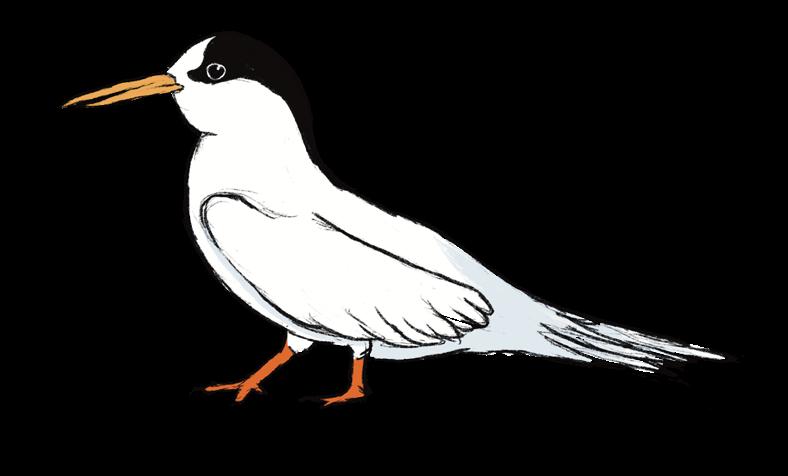
Crossword solution
Find it online at www.salient.org.nz
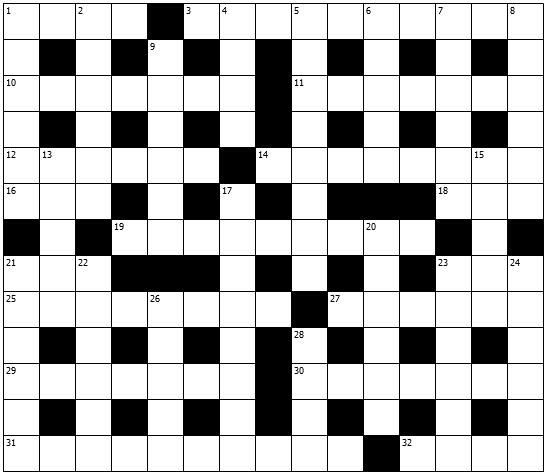
DOWN
1. Makes another look very small in comparison (6)
2. On a train, ship, or plane (6)
4. Surname of Formula 1 champions Damon, Graham, and Phil (4)*
5. Vampire romance series written by Stephenie Meyer (8)
6. Brother of one of your parents (5)
7. Abandon; leave (6)*
8. Polite bob to a royal (6)
9. Light, airy chocolate dessert; hair product (6)
13. Britpop band known for ‘Wonderwall’ and ‘Champagne Supernova’ (5)*
15. What gets wetter the more it dries? (5)
17. Nears, advances on (6,2)
20. Chewy confection in Mars, Milky Way, and Toblerone bars (6)
21. German word for emperor (6)
22. Greek goddess associated with wisdom (6)
23. One who believes human motivation comes from self-interest (6)
24. What one may do to a Beyblade? (3,3)
26. American actor Phoenix, known for ‘Stand by Me’ (5)*
28. Like Fiona or Shrek (4)
The Puzzles are brought to you by The Hunter Lounge.
For the best pizza, pool, and bevvies on campus, pop in on your next trip up the hill!


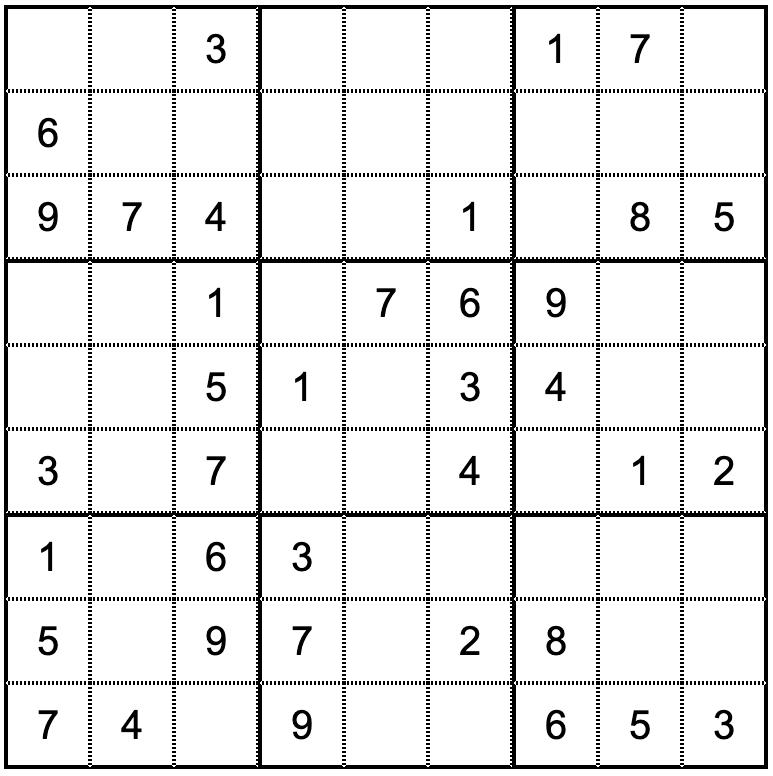
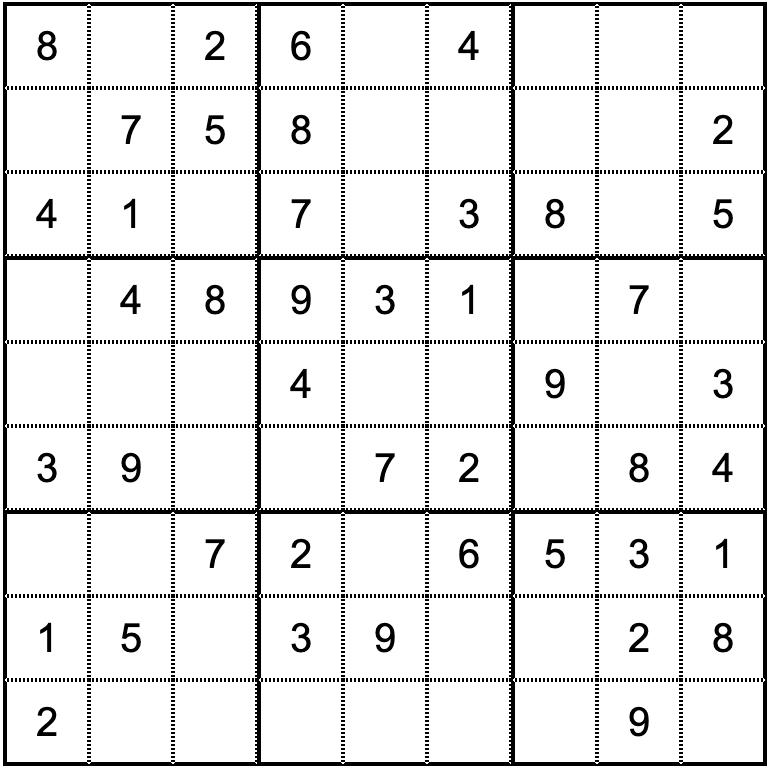
bird search
How many birds of the week can you find in this issue? Flick through the magazine, count them all and send your answer to letters@salient.org.nz and be in to win a prize!



podcasts.
with Speaker of the House Teddy O'Neill (he/it/ia)
Salient Undedited "So I'm hearing it's time to make glue out of Winston Peters?"
Arts & Culture "I'd get amongst it, get bitten early, and rise up the ranks to become the Zombie King."
- James Shaw
VUWSA Unedited "You could've gotten the Kennedy treatment, and you turned it down?!"



puzzles panga
podcasts kōnae ipurangi
SALIENT TEAM 2024
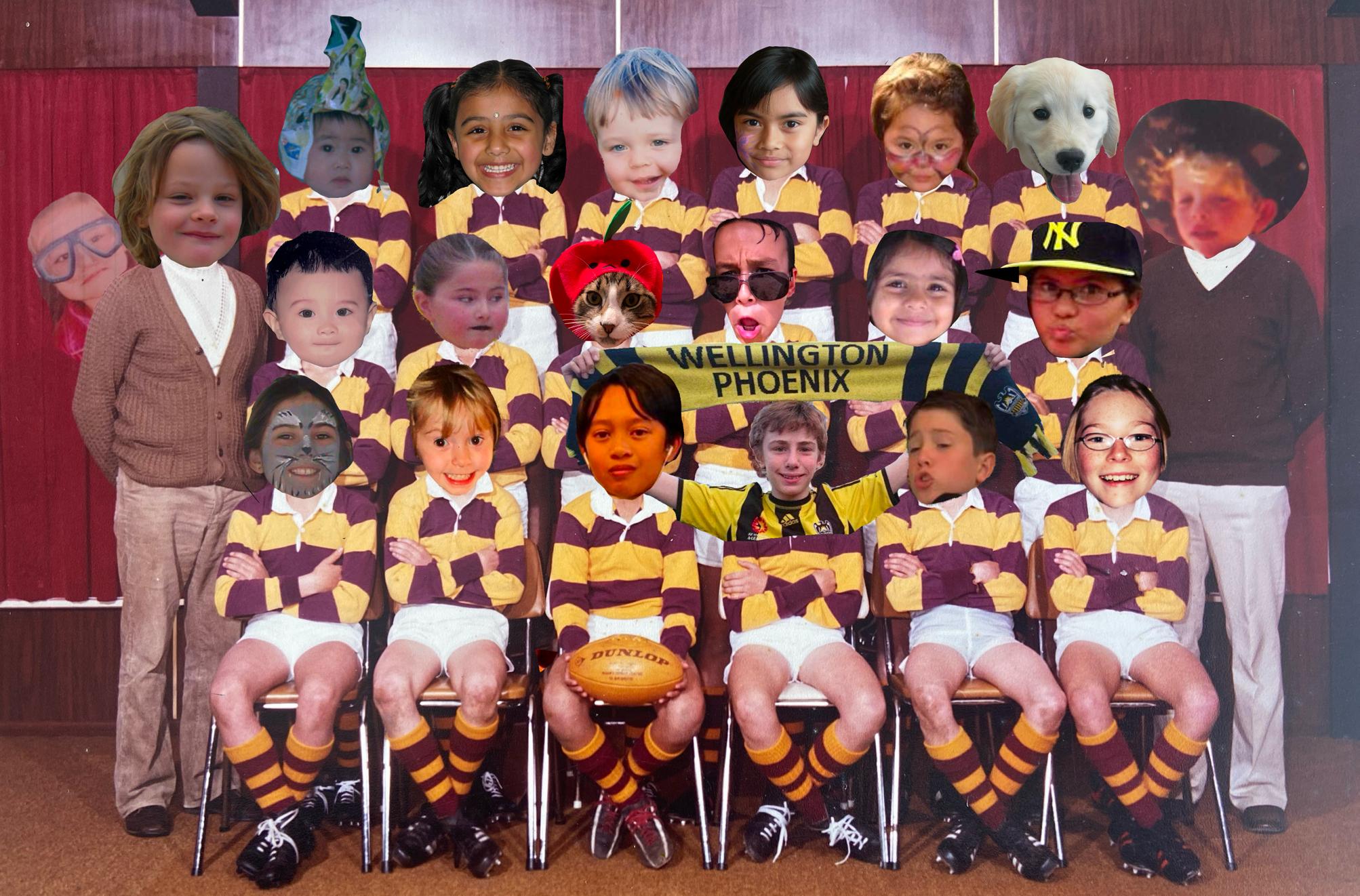
Second Row: Office Ghost (she/her) ; Phoebe Robertson (she/her, Editor) ; Te Huihui Tran (he/him, Te Ao Māori Co-Editor) ; Ashleigh Putt-Fallows (she/her, Te Ao Māori Co-Editor) ; M&M (Ash's cat) ; Guy van Egmond (he/him, Contributing Writer) ; Jia Sharma (she/her, Music Editor); Mauatua Fa'ara-Reynolds (she/her, Staff Writer) ; Henry Broadbent (he/him, Sub-Editor)
Front Row: Teddy O'Neill (he/it/ia, Speaker of the House) ; Ava O'Brien (she/her, Distributor) ; Ethan Rogacion (he/him, News Co-Editor) ; Dan Moskovitz (he/him, Chief Reporter) ; Will Irvine (he/him, News Co-Editor) ; Kate Seager (she/her, Designer)
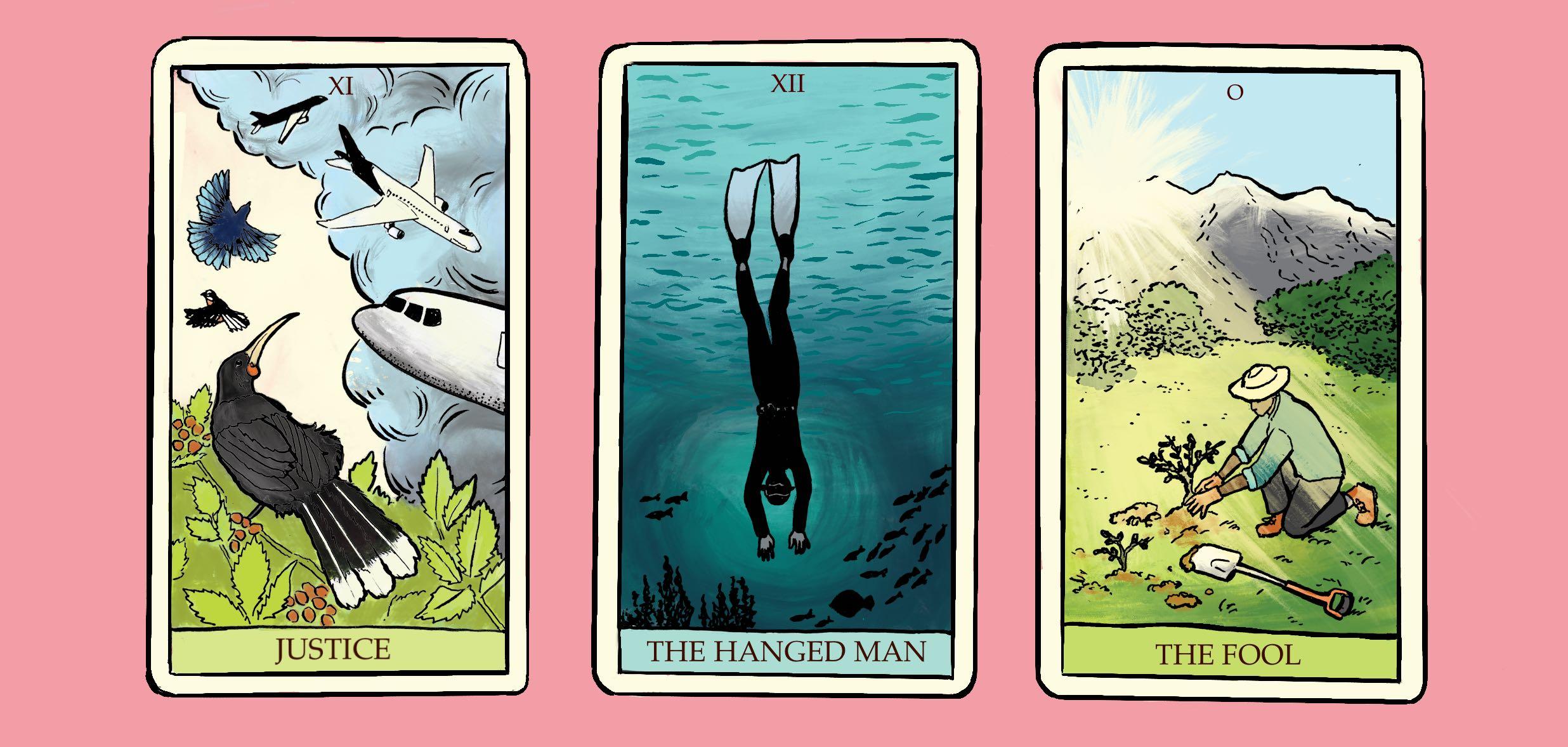
This week's comic artist: @kelly_chang_art
page 39
Submit
a comic: designer@salient.org.nz
Third Row: Ngan Dang (she/they, Staff Writer Intern) ; Monisha Dahya (she/her, Podcast Intern) ; Darcy Lawrey (he/him, Online & News Intern) ; Prunella Azzahra (she/her, Design Intern) ; Cedar Porteous (she/her, Staff Writer Intern) ; Phoebe's Dog