newscience









CELEBRATING
NEWS FOR MEMBERS, PHILANTHROPIC PARTNERS AND FRIENDS OF THE SAINT LOUIS SCIENCE CENTER SPRING 2024
Board Members
Saint Louis Science Center
Board of Commissioners
Dr. Mark S. Wrighton – Chairman
Joshua Randall – Secretary
Michael J. Baughman – Treasurer
Dr. Kelvin Adams
David Baringer
Mark Bulanda
Dr. Christine Jacobs
Dr. Glen Stettin
Frank Thurman
Dr. Jeremy Williams
Saint Louis Science Center
Board of Trustees
Simon Bailey
Barry T. Cervantes
Jim Curran
Susan S. Elliott
Beverly Estes Guyton
Richard C.D. Fleming
Paris Forest
G. Patrick Galvin
Jenna Gorlewicz
Jerome Harris – Ex-Officio
Dr. Martin H. Israel
Jamie Jabouri
Frank D. Jacobs
Tishaura Jones – Ex-Officio
David Kocs
Dr. Toni Kutchan – Ex-Officio
Erik Lindbergh
Carol B. Loeb
Gregg Maryniak
John F. McDonnell (Life Trustee)
RADM Lee J. Metcalf, USN (Ret.)
Edward Monser
Elizabeth E. Niedringhaus
Dr. Sam Page – Ex-Officio
Donn Rubin
Kathleen R. Sherby
Judy Sindecuse
Dr. Donald M. Suggs
Zar Toolan
Kenneth L. Wagner
Candace Webster – Ex-Officio
Dr. David J. Werner
Connect with curiosity.
Dear Friends of the Saint Louis Science Center,
I’m excited to welcome you to this new year and our latest issue of NewScience
As you may know, March is Women’s History Month, and in this issue we’re proud to share articles highlighting a number of women in St. Louis who have made (or are making) STEM a cornerstone of their career. Here at the Science Center, we are proud to serve as a resource to connect everyone in our community with STEM, highlighting all the ways that science, technology, engineering and math touch our lives and can impact our future.
On that note, I encourage you to take a sneak peek at our upcoming GROW Gallery exhibit, Jane’s Endangered Animal Experience, on page 13. This limited-time exhibit inspired by the life of Dr. Jane Goodall will invite guests to learn about endangered bees, their role in our ecosystem, and what we can do to help protect them.
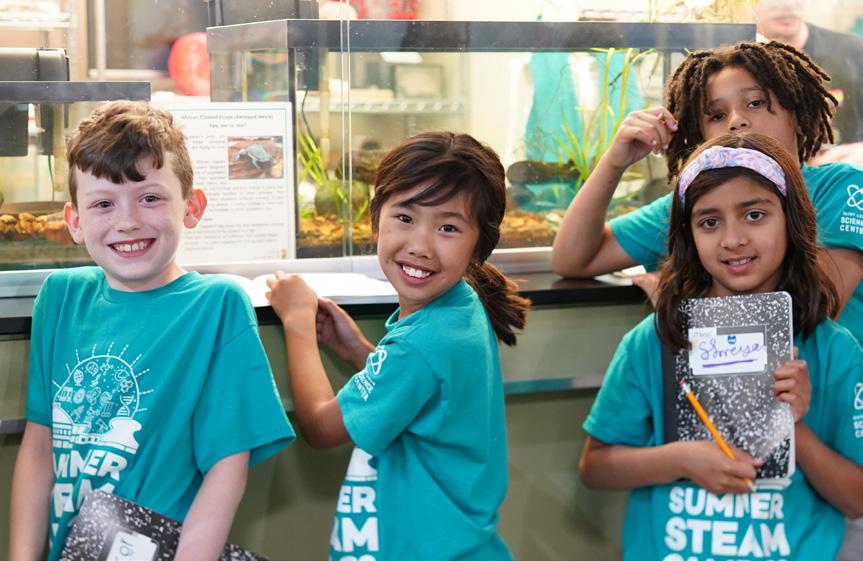
Registration is open now for our upcoming Summer STEM Explorers camps, and we can’t wait to welcome back young learners for another summer of discovery later this year. On page 28, read about our recent Educator Open House, where local teachers previewed many of the STEM experiences available to help schools spark curiosity for science and technology.
As our Youth Exploring Science (YES) Program celebrates a 25-year legacy of success in transforming lives through STEM learning, you can explore on page 24 how the Science Center and our network of community partners help welcome new teens into the four-year STEM program.
In celebration of the YES Program’s milestone anniversary, I am excited to say that our partners at the Crawford Taylor Foundation are offering a generous matching gift challenge in support of the Science Center’s Curiosity Fund and programs like YES. Turn to page 8 to learn more about how to double your donation’s impact by taking advantage of this matching gift opportunity, where the Crawford Taylor Foundation will match your donation dollar-for-dollar up to a combined total of $100,000. Whether you’re a Science Center member, a philanthropic partner or a friend of the Science Center, you are a vital part of making the work we do possible, and I welcome your charitable support as we inspire everyone to be curious and engaged in science.
From the Science Center team and me, thank you for being with us on our journey in delivering impactful STEM learning for our community, and if you haven’t visited us yet in this new year, I hope you have the chance to do so soon. We can’t wait for you to find something that sparks your curiosity at your Saint Louis Science Center.
Connect with us for updates, special events and fun science.
Sincerely,
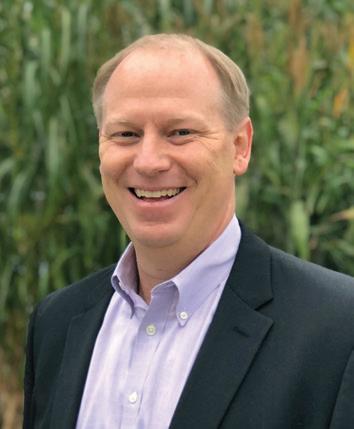
 Todd Bastean President and CEO
To inspire everyone to be curious and engaged in science. Mission of the Saint Louis Science Center

2 SPRING 2024
Smithsonian A liate Membership Program Smithsonian A liate Membership Program
Hours
Thursday–Saturday 9:30am–4:30pm
Sunday 11:00am–4:30pm
Monday 9:30am–4:30pm
Closed Tuesdays & Wednesdays
Contact 314.289.4400
slsc.org
Saint Louis Science Center 5050 Oakland Avenue St. Louis, Missouri 63110
Membership
Services & Sales: 314.289.4414 slsc.org/membership memberships@slsc.org
Member Reservations: 314.289.4424
Reservations
Advance Sales & Group Reservations: 314.289.4424
Education
Educator Resources: slsc.org/educator-resources
Programming information: education@slsc.org
Events
Host your next private event at the Saint Louis Science Center. Services and catering provided by Saint Louis Science Center Events. For information: 314.533.8179
Accessibility
Complimentary wheelchairs and strollers are available in the lobby. Motorized scooters are available for a rental fee. Personal Hearing Assistance Devices are available at the OMNIMAX® Theater and Planetarium. Captiview caption devices are available for all OMNIMAX® films.
Official Partners
The Saint Louis Science Center gratefully acknowledges the support of our Official Partners.

Spring Holiday Hours
Extended Spring Break Hours | March 9-24
Wednesday-Saturday: 9:30am-5:30pm
Sunday: 11:00am-5:30pm
Extended Easter Weekend Hours | March 29-April 1
Friday, March 29: 9:30am-5:30pm
Saturday, March 30: 9:30am-5:30pm
Sunday, March 31: 11:00am-4:30pm
Monday, April 1: 9:30am-5:30pm
Extended Memorial Day Hours | May 25-26
Friday, May 25: 9:30am-5:30pm
Saturday, May 26: 9:30am-5:30pm
In This Issue...
Membership Matters
Find out what new opportunities we’re launching for members; plus, meet Ruth Watt, one of the talented members of the Science Center team.
Science Today
Learn about the ways that art, science and collaboration have combined, with the help of guest author and intern Olivia Widdoes, to help us create some of the coolest parts of our new Life Science Lab Atrium.
Gallery Spotlight
What’s growing on in GROW? Learn about the fruits we produce right here at the Science Center, how to prune your own fruit trees and more.
Science Never Stops
Blippi and Meekah came to visit the Science Center recently! Find out what these children’s YouTube stars thought of their day spent exploring our galleries.
Join Us
Check out information on full-day summer camps, collecting and collections, Planetarium news and an interview with Florian Schulz, who starred in, directed and produced The Arctic: Our Last Great Wilderness
Community
Learn about the process for recruiting future YES Teens and find out what our current YES Teens have been up to lately; plus, enjoy a recap of our 2nd annual Snowball Smash-Out.
Partnership & Support
Meet Barry Bean of Bean & Bean Cotton, and join us in honoring the legacy of Dr. Gena Gunn McClendon.
slsc.org 3
4 10 12 14 16 22 30
UPCOMING MEMBER EVENT
THURSDAY, APRIL 25, 6:00-8:00PM
Member Mission:
Collections and Collecting
Reservations available March 28
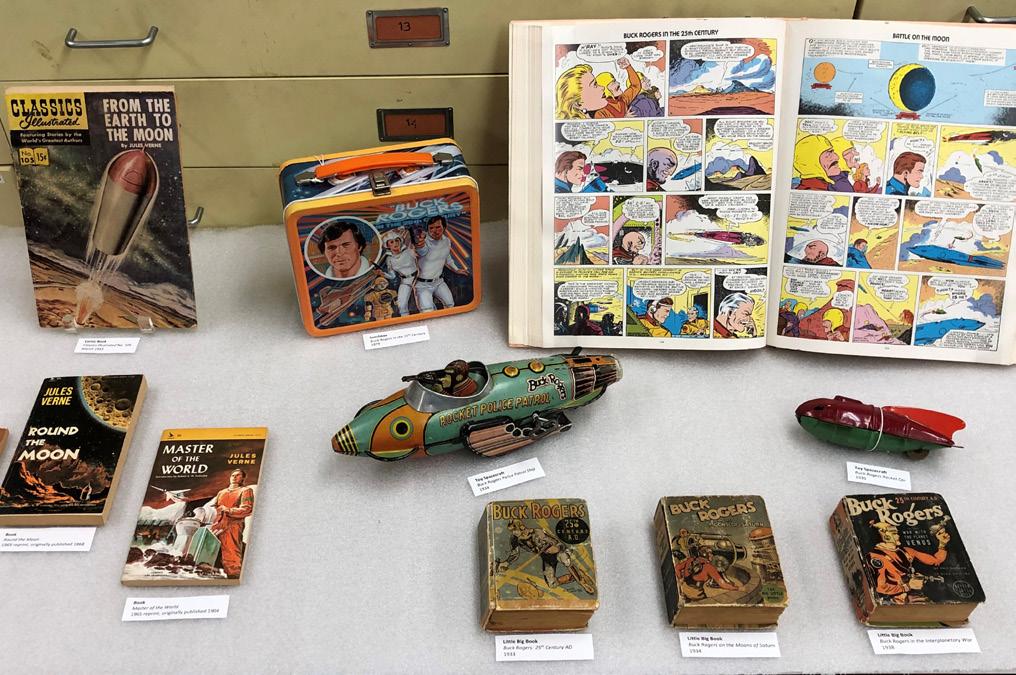
Collecting objects of wonder and curiosity is a practice as old as humanity. Why do we as humans have the urge to collect? And why is this important in the creation of museums?
Join Manager of Collections Kristina Hampton for an engaging lecture as she explores the idea of collecting using examples of collectors and artifacts from the Saint Louis Science Center’s Collections. Learn more about how the highly personal activity of collecting became public in the formation of the first museums and how it continues to shape museums today.
Our reservation line is available Mondays through Saturdays 9:00am-4:30pm and Sundays 10:30am-4:30pm at 314.289.4424.
Members get MORE!
Exciting changes are coming soon to the Saint Louis Science Center's membership program!
This spring,, we will be launching a whole new way to experience your membership. Soon, you’ll be able to reserve all your free member tickets to McDonnell Planetarium Star Shows, OMNIMAX® documentaries and Discovery Room sessions online. Plus, tickets to members-only events will be available online too! PLUS, you won’t need to worry about running out of free OMNIMAX® documentary tickets anymore – instead, memberships will include a defined number of tickets per day, the same way you
Member Opportunities at First Friday and SciFest
Members always receive free parking for First Fridays, but now we’re offering some extra-fun First Friday and SciFest opportunities just for you!
Members can now get their tickets to ticketed First Friday events starting at 4:00pm on the day of the event (onsite at the box office only)! General public [or non-member] tickets are available at 5:30pm..
We’ll also be offering more special, members-only experiences, chances to meet and greet featured speakers and much more. Keep an eye out for more information on social media, in our monthly newsletters and at slsc.org/first-fridays
We’re looking for ways to make the member experience more fun at SciFest, too; we hope to see you on April 6 at SciFest: The Great Outdoors! Visit slsc.org/scifest for the most current information.
currently enjoy a daily allotment of Planetarium and Discovery Room tickets. And this is just a glimpse of what’s coming.
Do you currently receive our monthly member newsletter, Membership Matters, or other membership emails? If not, or if we don't have an up-to-date email address for your membership, please contact us at memberships@slsc.org or call 314.289.4414 to ensure we can keep you informed about these important changes. Anticipate more information about the updates to our membership program in the coming weeks. We can’t wait to share all the NEW benefits of membership with you!
4 SPRING 2024
MEMBERSHIP MATTERS
Member Spotlight:
TONI ARMSTRONG
If you attended the Member Preview of The Arctic: Our Last Great Wilderness in January, you may have visited a table with representatives from the Alaska Wilderness League. That table was run by Toni Armstrong, along with her husband Richard, who are both activists for preservation of the Arctic Refuge as well as Saint Louis Science Center members. We asked Toni to share a bit about her experiences as a Woman in Science and as a Science Center member below.
Tell us a bit about your career as a woman in science.
I worked at Monsanto as a scientist for over forty years in three different careers. My first role was in biochemistry, trying to discover how plants regenerate; that is, how to form a whole new plant from a piece of leaf, stem or root. My second position was developing plant transformation systems and then applying the new systems. Once we had a system working in cotton, my group produced two commercial transgenic cotton plants. One was insect resistant to such pests as bollworm and pink bollworm and required significantly fewer insecticide sprays. The other commercial product was resistant to the herbicide Roundup. My third position was in plant molecular biology. We studied the role of small ribonucleic acids (RNAs) in plant development and whether small RNAs could be used for insect resistance.
How often do you visit the Science Center, and what do you like to do while you’re here?
We visit the Science Center occasionally, especially to see new exhibits or special exhibitions. The Science Center is also a great place to bring out-of-town guests. Be sure to see the new movie, The Arctic: Our Last Great Wilderness
Check out page 20 for our interview with Florian Schulz, who starred in, directed and produced The Arctic: Our Last Great Wilderness
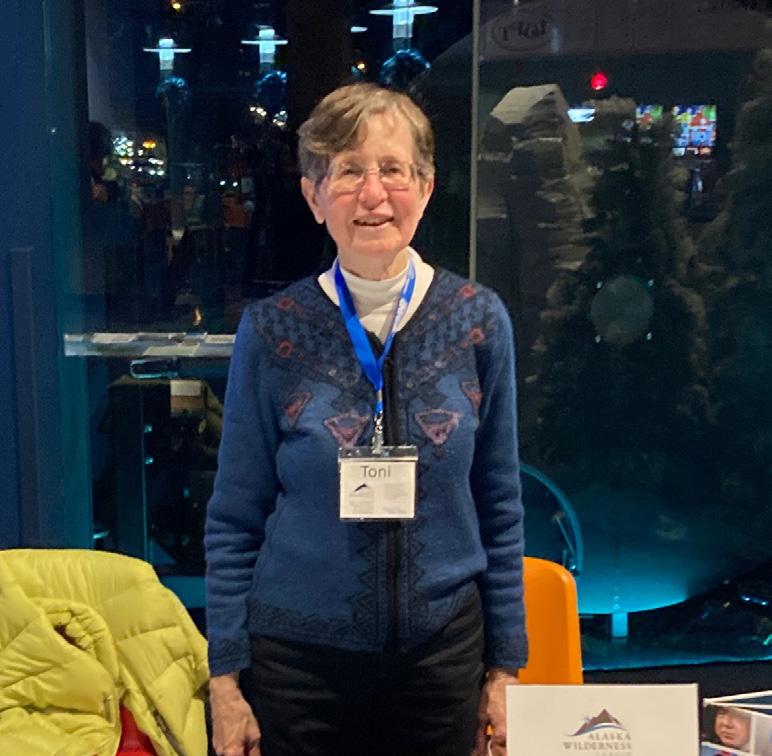
Women in Science
Tell us some of your favorite Science Center memories.
I have several Science Center memories, but the most meaningful was an exhibit many years ago exploring the world of genetic engineering in plants. The exhibit focused on the work of many of my colleagues, other scientists around the country and myself. My husband and I took our elementary school daughter to the exhibit. She saw a photo of me on the wall, and she was so impressed. Before that exhibit, having a mom who was a scientist wasn’t that special. For a time after visiting the Science Center, she wanted to be a scientist like her mom.
What are your favorite member benefits?
Free parking and passes to the OMNIMAX® Theater are wonderful member benefits.
Why would you recommend a Science Center membership to anyone considering one?
The Science Center is an important part of the St. Louis community. It helps children and adults have fun while learning about science. And I believe the Science Center makes more science accessible to everyone. With a 40-year career in science I know science is fun, but that fun can be a little harder for some people to experience, and the Science Center gives people that joyful experience. You can listen to the peals of delight from children as they experience the Science Center.
5
Meet the Team:

RUTH WATT
Ruth is the Woman in Science who connects us to fantastic scientists in our community. Ruth’s relationship-building skills tie us to STEM experts, guest speakers, presenters and STEM subjects both in and outside of the St. Louis region.
Q: Hi, Ruth! Tell us about yourself – your education, career highlights, your family – anything you’d like us to know.
A: I am a first-generation ABC (American Born Chinese). My undergraduate degree is in Biology and Physics. I came to St. Louis to pursue a master’s degree in teaching science from Washington University, and I’ve been here ever since. I taught middle school through college levels formally, and also spent several years as a research scientist in plant genetics because I thought I would be a better teacher of science after actually working as a scientist.
I came to the Science Center after having my kids and deciding I wanted to spend more time with them. So yes, I can track my years here by how old my daughter is, give or take a year (30 years now overall, I think!).
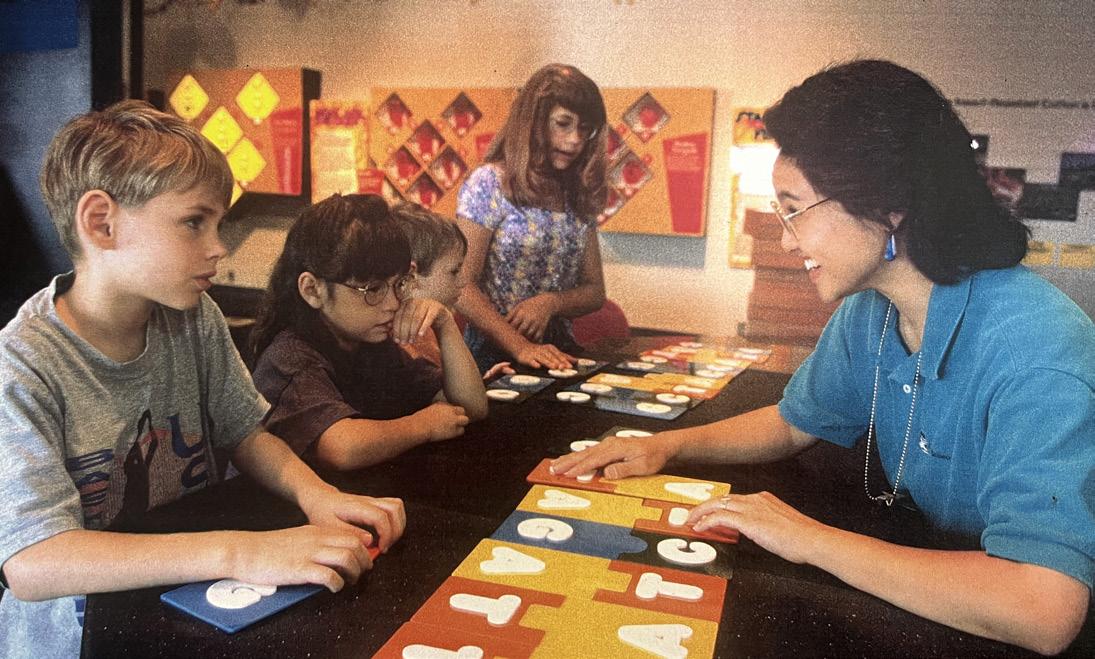
My children grew up at the Science Center—from stroller days in the Discovery Room to volunteering on the floor doing activities, to being in exhibits, photoshoots and more. Now my grandchildren are coming to the Discovery Room and appearing in photos. My father, an 85-year-old nuclear engineer who retired at age 80, still asks to come to the Science Center as well, and it’s great to have four generations enjoying this place that has been such a big part of our lives.
When I’m not working, I love going to the ocean (I grew up in California by the Pacific and am scuba certified), enjoying musical theater (which would have been my college major if my parents had allowed it) and eating good food with friends and family (my family used to spend all day making potstickers from scratch).
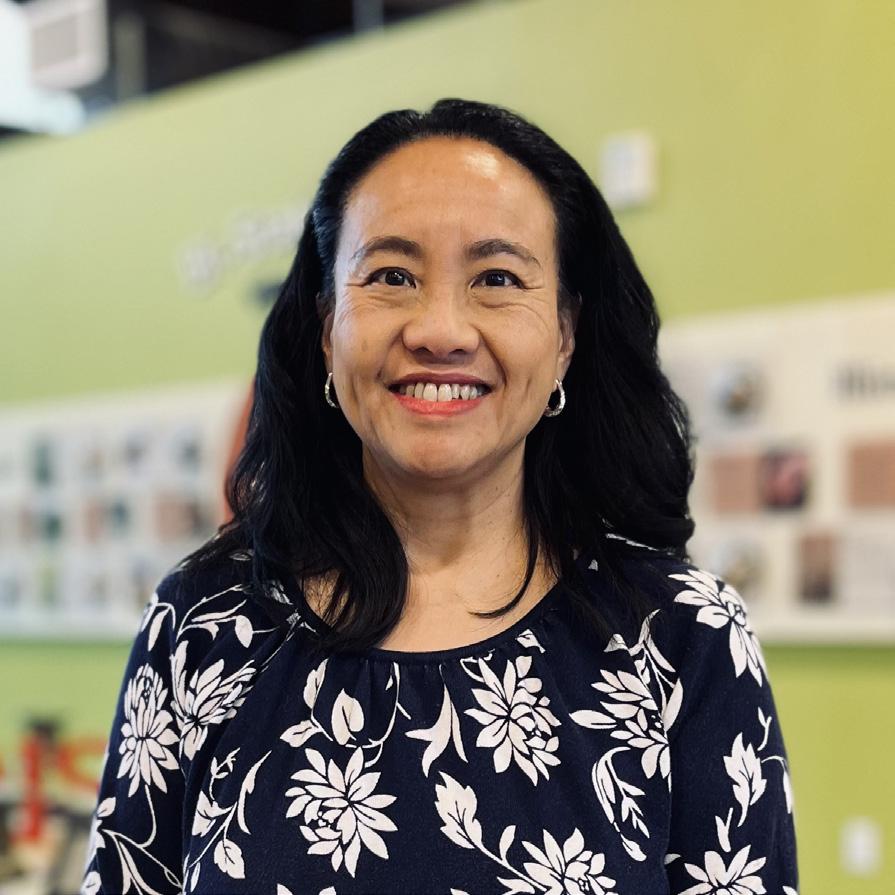
Women in Science
Q: Tell us about the evolution of your career with the Science Center.
A: I started out as a part-time team member on the floor and loved being able to reach a different audience of all ages in an informal learning setting. It was the perfect mix of science and education and being able to learn something new every day from the people around me.
I had to delay my start date after being hired because I was in a car accident and broke my neck. The ER didn’t catch the break at first—a C4 hangman’s fracture–so it was a miracle that I was still breathing and alive when they did discover it two weeks later. I was in a body cast for four months, and the gallery managers told me they would wait for me and have me join the team when I was ready. I’ve never forgotten that.
Over the years, I’ve worked on the floor with the public doing programs and activities, designed Amazing Science Demos and gallery exhibits, trained many new team members and volunteers, worked the membership desk, served on the Institutional Advancement team executing VIP and Donor events and managed all external and internal events when it was an internal position. My current role as Manager of STEM Events was a natural next position to take on following my experience with institutional events.
6 SPRING 2024 MEMBERSHIP MATTERS
Q: One of your biggest ongoing successes in your current role is planning, organizing and executing our quarterly SciFests. How has that event changed over time, and what makes you proudest of it? Anything we should look forward to in the upcoming year?
A: SciFests began in 2008 as a week-long event, modeled after a science festival in Cheltenham, England. We experimented for a few years, and, true to the scientific method, discovered what worked best for the community and audience here in St. Louis. One of the great things about SciFest is having the freedom to create something more tailored to our community interests and needs over the years. It’s now a one-day, free event that gathers STEM experts and enthusiasts from all over so anyone can come and geek out, or just get curious and explore STEM in the everyday and the cutting edge together. One can find a new interest, hobby, volunteer opportunity or career move in a building full of connections and interactions just waiting to happen.
SciFest events are a great demonstration of the Science Center serving as an essential STEM hub, directly connecting STEM experts and the community. I love hearing from guests who say they were only going to stop in for the morning and they ended up staying all day because there were so many cool activities, topics and people with which to engage. Hearing “I’m so glad we came today!” or “do you do this every day? I’m bringing my whole family back for the next one!” and watching kids and adults alike learning together is so very rewarding.
2024 brings back some popular SciFest themes (Engineering Expo, Play and Creativity Expo), helps us prepare for a total solar eclipse and other outdoor activities (The Great Outdoors Expo), and introduces a new SciFest event: Sci-FEAST. I’m so excited to bring forward the science and technology behind what we eat and how it affects us and the world around us. There are many food festivals, but this one will also incorporate food science, diet and nutrition, health and exercise, agriculture and innovation.
Q: What is a favorite part of what you do now?
A: I love meeting and learning from those around me. I’ve met so many incredible people over the years, many who have become SciFest partners and participants, shared on expert panels or presentations and more. There is fascinating and profound work being done right here in St. Louis, in Missouri and in the Midwest that has present and future impacts on multiple levels–from local to global.
Another part of my job is managing the Science Communication Training program, designed to train STEM experts in how to effectively communicate STEM concepts to the public. Researchers, students, engineers and other folks learn how to best share what they do, and then they are called upon to practice these skills at events like SciFests, member events and lectures. How cool that I get to share in the knowledge, experience and enthusiasm of so many, and help them share with others, as well.
It means a lot to be able to feature the amazing STEMbased work going on right here in our own backyard. From black holes to drone technology to chimpanzee social behavior to forestry maintenance, I continue to learn more about how things work in the world around us, and that’s what I love about science—it is the study of how things work, and we still have so much to discover!
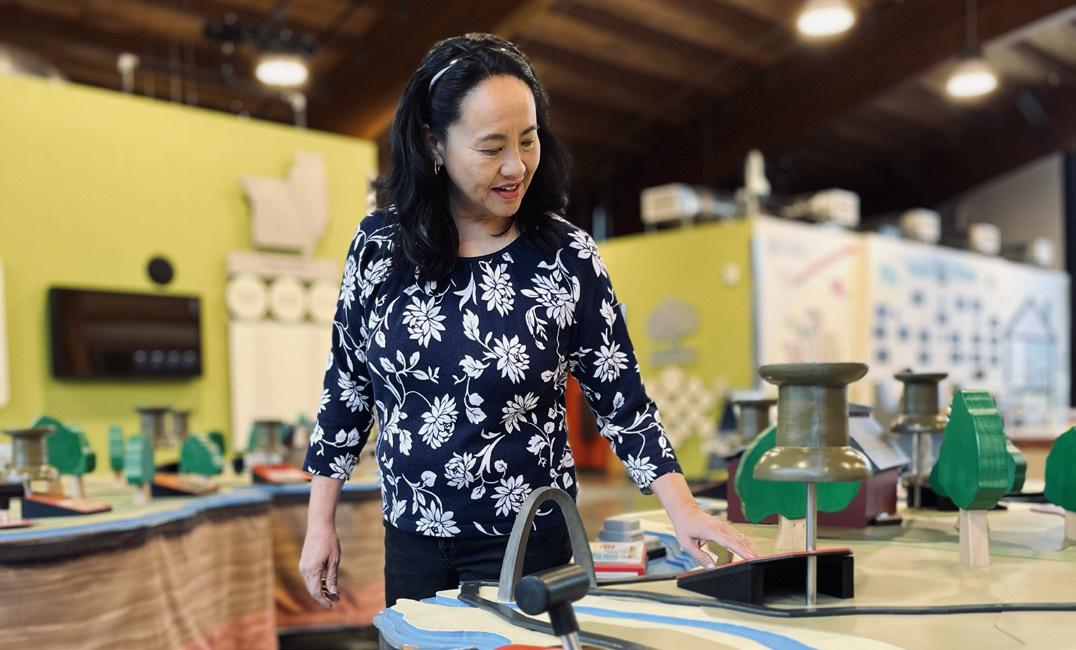
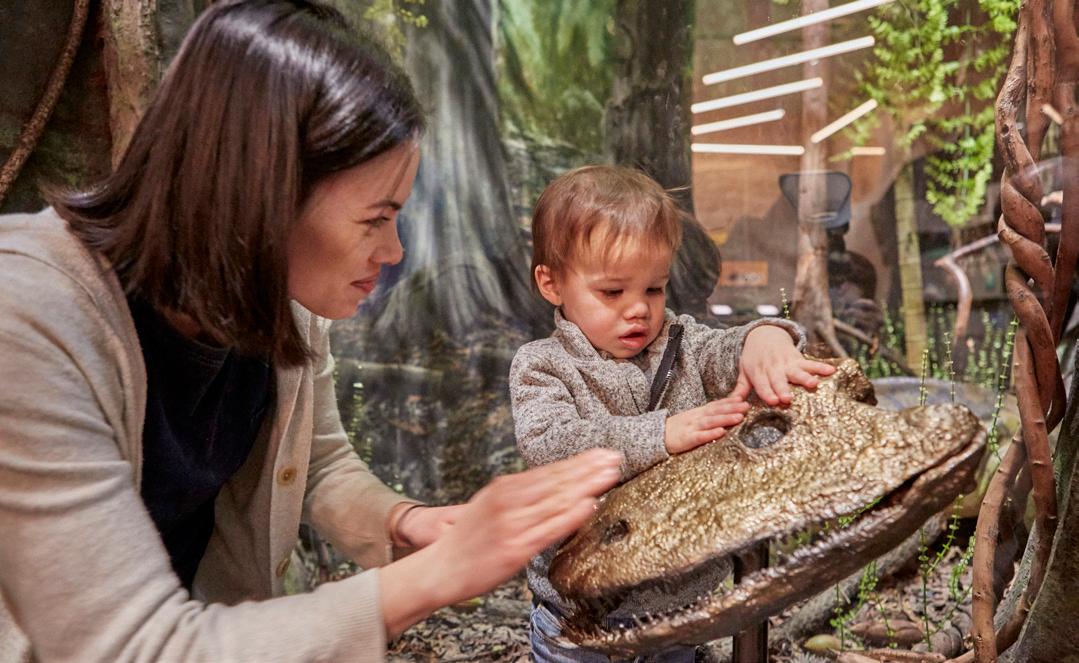
7
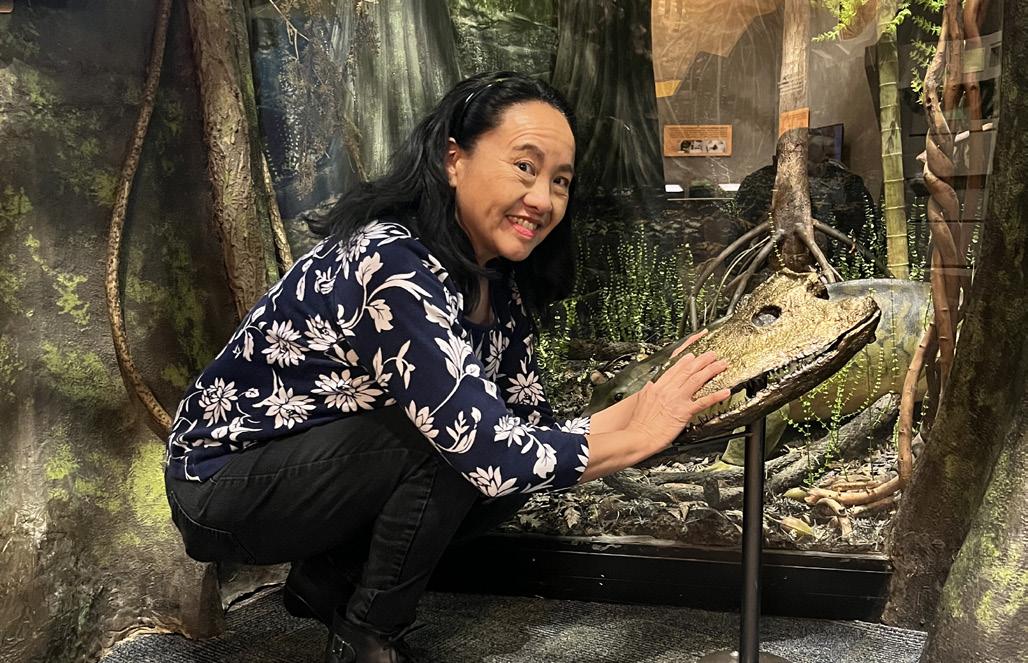
Ruth is pictured next to the same dinosaur head that her daughter and grandson viewed in a Science Center photo shoot last year.
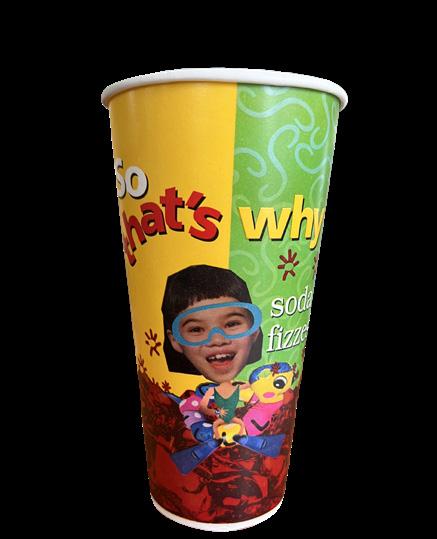
Inset: a Science Center disposable cup showing Ruth's daughter as a youngster.
25 Years of the YES Program and YES Graduates Putting STEM to Work.
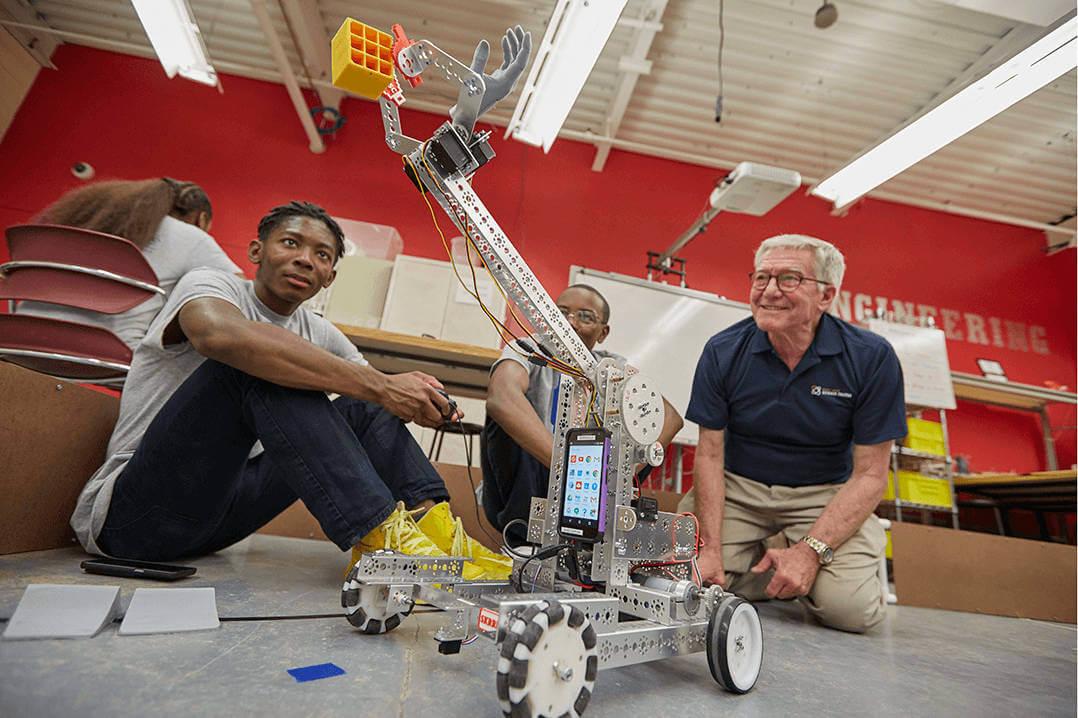
With a generous matching gift opportunity, the Crawford Taylor Foundation invites you to join their support of the YES Program’s legacy of success by making a charitable gift to the Science Center’s Curiosity Fund.
At the Science Center, we believe in the power of curiosity. Programs like our Youth Exploring Science (YES) Program a passion for STEM and impact our St. Louis community by inspiring teens from underserved St. Louis neighborhoods to discover their curiosity for science and technology. Through informal, hands-on STEM education and college and career readiness training, the YES Program helps these teens realize their potential as STEM learners, career professionals (including many right here in St. Louis!), and innovators of the future.
The Science Center is fortunate to have the longtime support of the Crawford Taylor Foundation which local St. Louis entrepreneur Jack Taylor established in 1997 to help make St. Louis a better region. Three generations of the Taylor Family continue this legacy of generous support which founded the Taylor Community Science Resource Center, the home of the YES Program’s operations. They believe in the transformative impact of the YES Program, and to celebrate their longstanding passion for YES and the program’s 25th anniversary, the Taylor Family invites you to make a charitable gift to the Science Center’s Curiosity Fund.

At the Crawford Taylor Foundation, we are passionate about programs that enhance St. Louis’s reputation and make our city and region a richer place to live.
Since its earliest days, the Saint Louis Science Center’s YES Program has inspired us by empowering young people throughout our community to be curious about science, technology, engineering, and math; pursue their potential in the STEM careers of tomorrow; and help forge a bright future for our city.
We hope that this matching gift opportunity inspires others here in St. Louis and beyond to join us in celebrating the YES Program’s legacy of success and investing in the St. Louis of tomorrow by empowering our community through science education.
– JOANN KINDLE, Chairperson, Crawford Taylor Foundation
And thanks to a generous matching gift from the Crawford Taylor Foundation, your gift to the Science Center will be matched dollar-for-dollar up to a combined total of $100,000, making your gift today twice as impactful.
To support STEM programs like YES and double your impact with this matching gift opportunity, visit slsc.org/donate or scan the QR code today to make a gift to the Science Center’s Curiosity Fund.
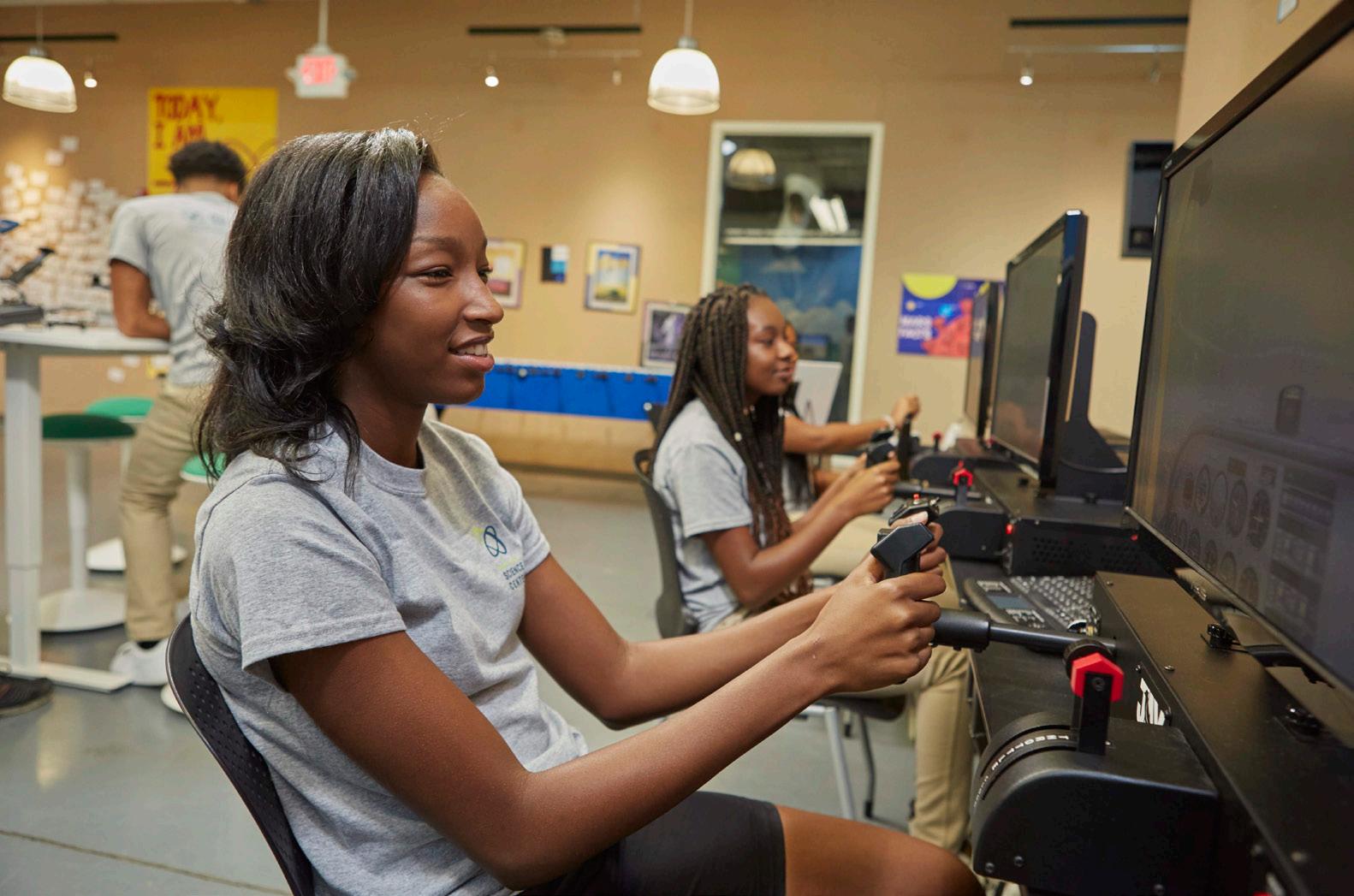
Join the Crawford Taylor Foundation in sparking our community’s passion for STEM and opening doors to the careers of tomorrow by supporting the Science Center and the YES Program’s continuing legacy of success.
Thank you to our generous philanthropic partners at the Crawford Taylor Foundation for their support of our to inspire everyone to be curious and engaged in science and helping inspire the St. Louis community to build a brighter future for St. Louis by championing science education.
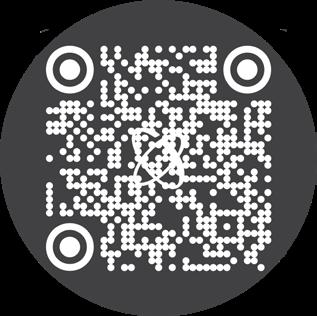

Scan here to support the Science Center’s Curiosity Fund and STEM education programs like YES!
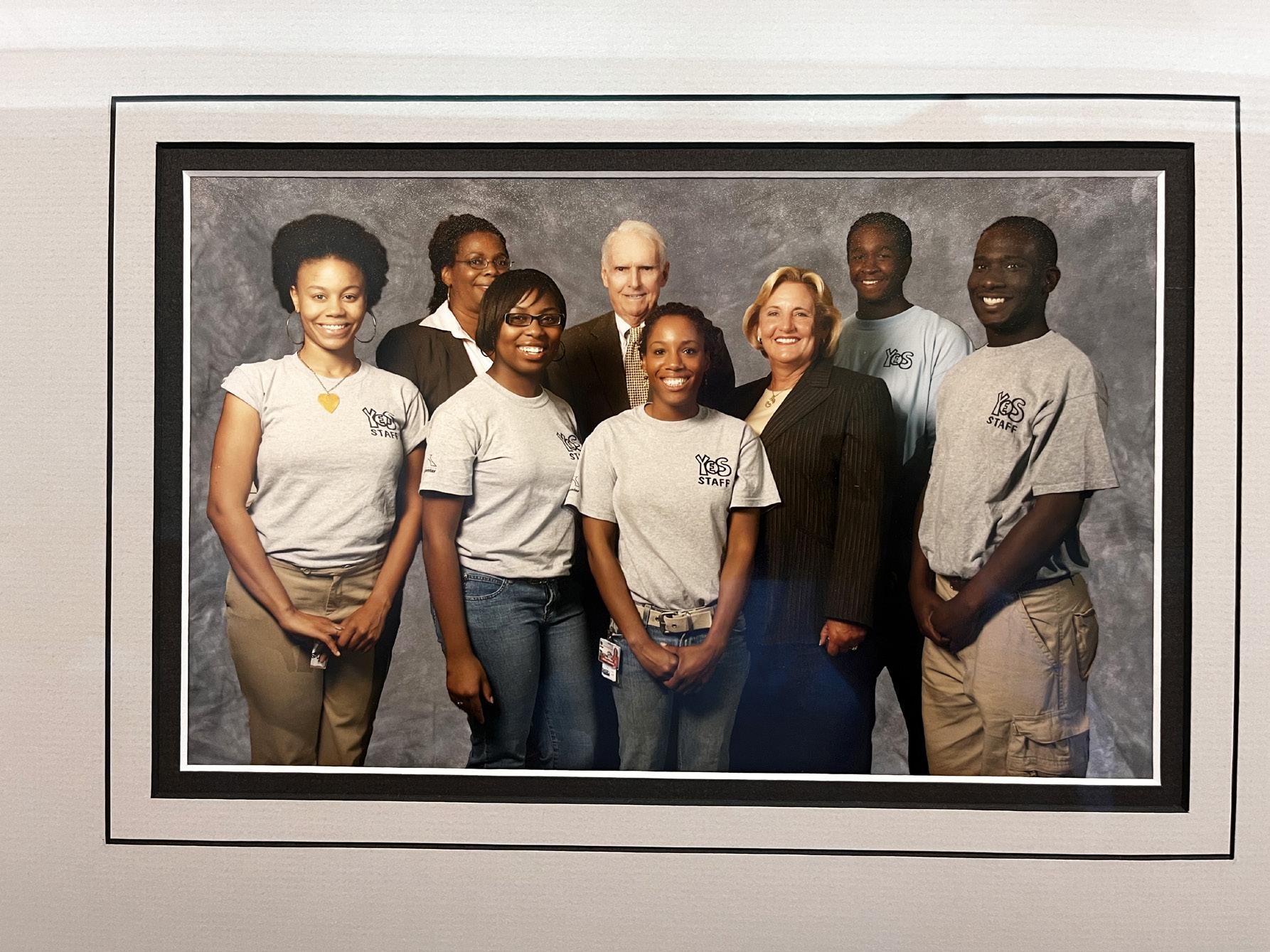
Jack Taylor and JoAnn Kindle with early participants in the YES Program.
STEM EXPERT SPOTLIGHT
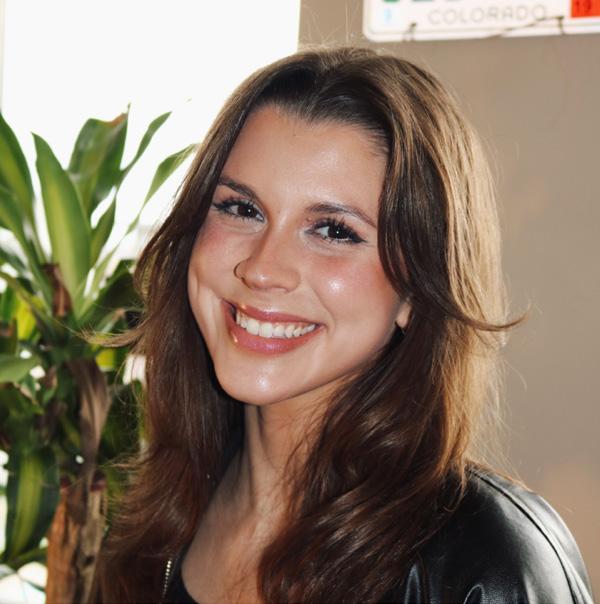

Olivia Widdoes is a graduate student at Saint Louis University, working to complete her M.S. in Biomedical Engineering. She earned a B.S. with a double major in Biomedical Engineering and Studio Art from SLU. Olivia works for Office of the Vice President for Research at SLU, creating technical illustrations for faculty publications. While she enjoys her 2D illustrative work, Olivia has also recently ventured into 3D modeling and printing, collaborating with SLU-CAM (Saint Louis University Center for Additive Manufacturing) and the Science Center for her master’s project. Olivia looks forward to her internship with the Science Center this semester, anticipating more collaborative projects that allow her to combine her passions for art, science and engineering.
Combining Art & Science
3D-PRINTING THE HUMAN BRAIN
How did you become interested in art and science?
My interest in science and engineering stemmed from a genuine passion for learning – the joy of thinking, questioning and explaining. There is so much to explore and discover about our world, from the tiniest particles to the boundless expanse of space. On the other hand, my family shaped my interest in art; with my mother and uncle extremely passionate about art, art became a natural and integral part of my life, not only as an outlet for self-expression but also to connect with family.
Confronted with choosing an academic path, I initially chose biomedical engineering, drawn to its broad coverage of scientific topics and the problem-solving creativity inherent in engineering. I also enrolled in as many art courses as my schedule allowed. Over time, these courses developed into a dual major, allowing me to fully pursue both my interests.
Despite embracing a dual major, I was unsure how to combine these separate passions in my career. I reached a turning point when taking the course "Art and the Body" with Dr. Cathleen Fleck, which delved into the historical interaction between art and science, focusing on the perception of the human body in art from medieval to modern times. This interdisciplinary class was tailor-made for students like me, bridging interests in biological sciences and the arts, and shattered my preconceived boundaries, revealing the intertwined nature of these seemingly distinct fields.
I developed an interest in technical illustration through this course, leading to conversations with my mentor, Dr. Scott Sell, who encouraged me to build my portfolio. His oversight, guidance and advocacy for combining my interests in art and engineering have been instrumental in positioning me where I am today. Connected with the Saint Louis Science Center, I ventured into the realms of 3D modeling and printing, revealing even more exciting opportunities in this field. This journey has shown me the wonderful ways art and science work together.
What is the new exhibit project you’ve been working on for the Science Center?
The central idea of the project focuses on a pharmaceutical derived from scorpion venom, aiding surgeons in distinguishing between tumor and healthy tissue during brain surgery. My role involved translating this scientific narrative into a tangible, engaging model utilizing 3D modeling and printing.
Through collaboration with the Science Center team, we refined the specifics and developed a model concept: a transparent head enclosing the skull, horizontally sectioned to reveal a segment of the brain, where a "hidden" tumor would fluoresce and reveal itself when exposed to UV light–a process controlled by exhibit guests.
10 SPRING 2024 SCIENCE TODAY

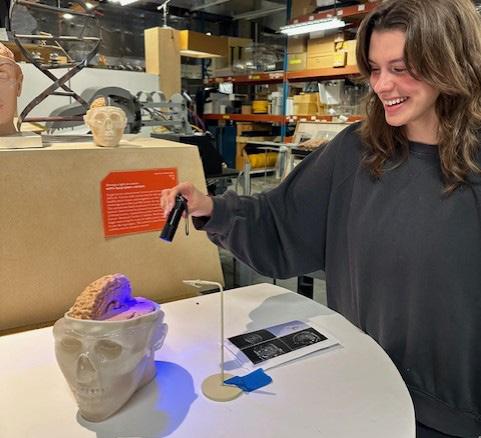
What aspects of your art and science interests and education did you apply to contributing to this project?
While my artistic skills in computer art were helpful, the bulk of my experience involved 2D illustration work, making this project an incredible learning experience. This project introduced me to new engineering software as I ventured into the compelling field of 3D art, and the integration of 3D printing revealed the exciting possibilities of materializing scientific art into a tangible reality.
Women in Science
I first worked to create a 3D model, employing Materialise Mimics, a state-of-the-art 3D medical image processing software, to extract the brain's structure from an MRI scan. The software generates a 3D model, which is then further smoothed, refined and prepared for 3D printing in 3-matic.
The next stage used Blender, a 3D computer graphics software tailored more towards artistic applications. Starting with a generic model, I sculpted the head to conform to the contours of the skull. All the components were assembled in Materialise 3-matic, where they were resized, positioned and sectioned.
With the 3D brain model complete, the next phase was fabrication. The ultimate technique incorporates a combination of 3D printing and molding. We began by printing a brain prototype using Fused Deposition Modeling (FDM), a 3D printing process that involves thermoplastic filaments fed from a large coil and extruded through a heated nozzle to create a 3D object layer by layer. After smoothing, the prototype was placed within an FDM-printed containment box designed for mold-making, where silicone was cast to create a shell mold of the brain. Then urethane was dyed and cast into the silicone mold, creating a detailed brain model.
After curing, a specific area on the brain model was drilled to create space for the tumor, and urethane mixed with UV photochromic pigment was poured into this space. UV photochromic pigment is a type of pigment that changes color when exposed to ultraviolet (UV) light. This change is reversible; when the UV light source is removed, the pigment returns to its original color. The quick, dramatic color change made this pigment ideal for representing the tumor.
A prototype of the head was also printed on the FDM, following the same process, to create a silicone mold. The skull and brain were secured into the silicone mold of the head, and transparent urethane was cast, unifying all elements to create the finalized model.
This collaborative project has also offered valuable insights into the essential considerations of the Science Center's exhibit creation process. In art, proficiency of tools is not enough— it's about adapting these skills to tell a narrative. A powerful storytelling medium, art becomes even more important when transitioning into the realm of science. It transforms intricate concepts into accessible, compelling stories, invaluable teaching tools that bridge the gap between complexity and a broader audience. It's a testament to the limitless possibilities when creativity and science come together.
This project was the perfect blend of creativity and technical precision. In the creative phase, I enjoyed exploring design elements and artistic features to create a model that not only captured the scientific story but also proved visually engaging. Simultaneously, the technical aspect demanded meticulous attention to detail, requiring an understanding and focus on anatomical accuracy, as well as precision in the fabrication process.
For others who are interested in pursuing both science and art, what advice would you give them?
Pursuing both art and science may sound intimidating, but anyone can do it! We all start somewhere; don’t let the fear of making mistakes prevent you from starting your journey or hinder your progress. Summon your courage, and with dedication and time you can do anything!
Reflecting on my childhood art lessons, mistakes were seen as opportunities for creativity. I've come to appreciate that this mindset applies not only to art but also to science. In either field, instead of seeing mistakes as failures, we can choose to view them as opportunities to explore new possibilities and develop our creativity and problem-solving skills. This perspective serves as encouragement to persevere through challenges; they are part of the process.
In my academic journey, a significant lesson I've learned is the value of learning from others. Take the time to appreciate and learn from the experiences and knowledge of those around you. For example, Michael Borovik, lead engineer at SLU-CAM, played
 Olivia shows off the finished model.
Fruit Production In
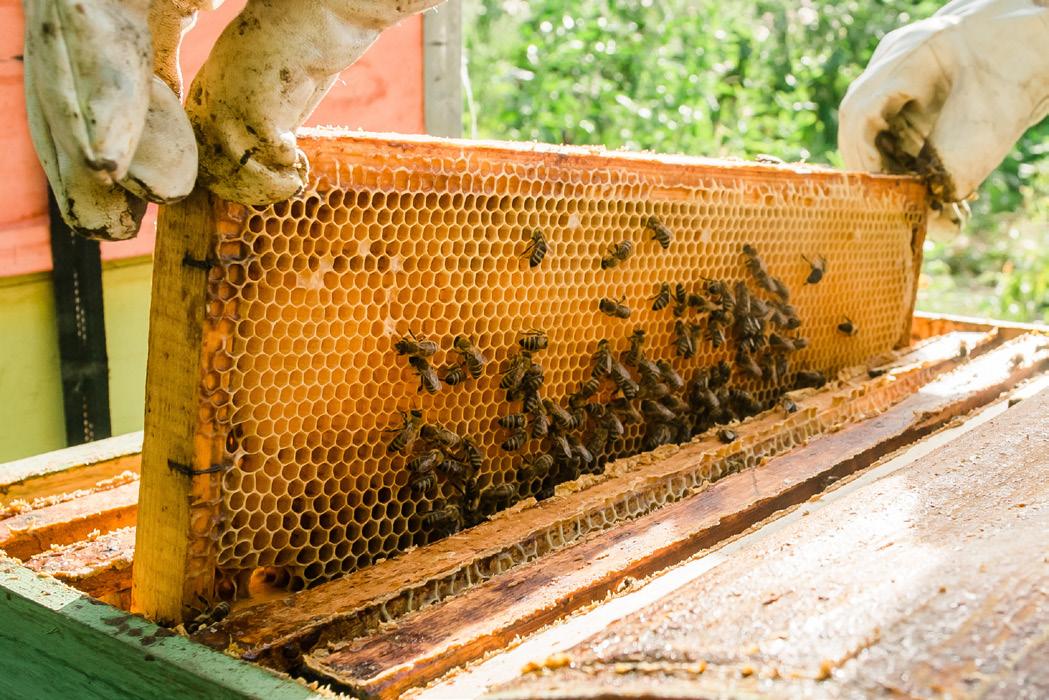
This spring, we will be installing two new honey bee “nucleus colonies” (known in the beekeeping world as “nucs”). A nuc is a small established colony containing about three pounds of bees and three frames of honey and pollen in a small five-frame box. Upon the bees’ arrival to their new home, the frames are transferred to the center of a conventional 10-frame bee box with additional frames placed on either side for the colony to grow into. With luck, the colony may thrive to the point of producing surplus honey in its first year.
While keeping honey bees isn’t necessary for the species’ survival and may in fact compete with other native bee species, it is agriculturally relevant. Not only do they produce their namesake crop (honey), but they are also valuable pollinators. About one-third of Americans’ food comes from crops pollinated by honey bees, including apples, melons, cranberries, pumpkins, squash, almonds and much more. If not for the capacity of the industrious honey bee to be transported from field to field, modern agriculture would be forced to diversify substantially to support greater biodiversity and native pollinator habitats.
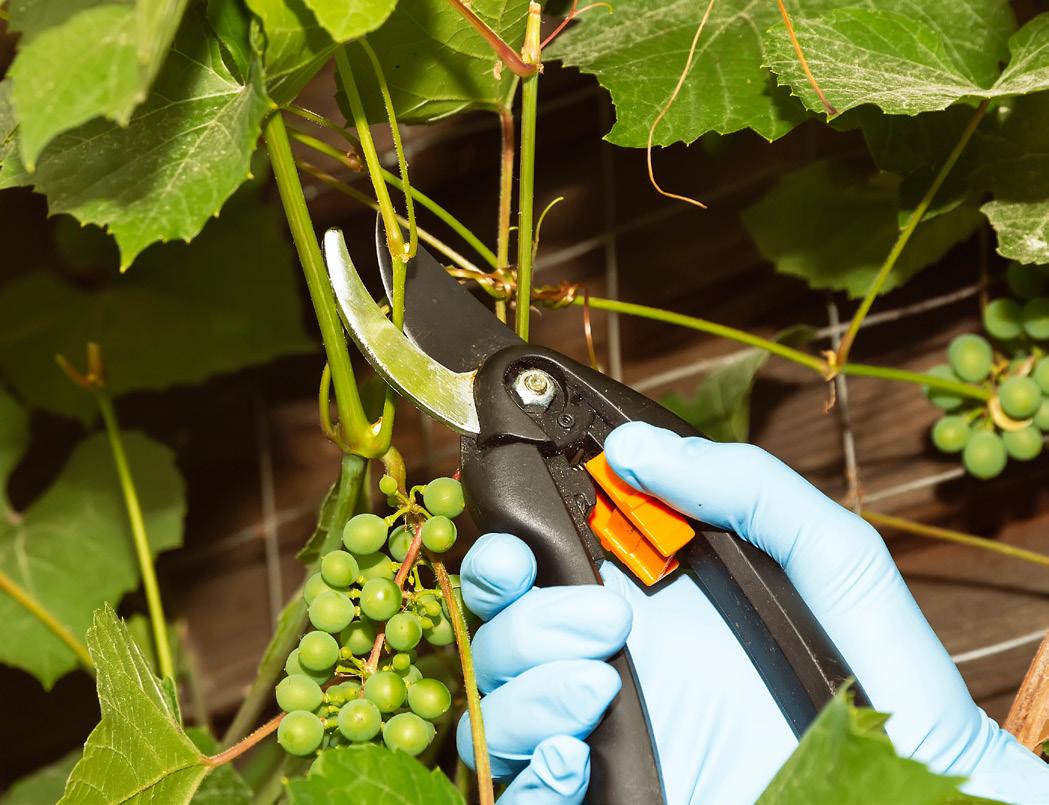
Pruning:
The GROW Orchard is a hidden gem on the west side of the Pavilion. Many of its trees were planted in conjunction with the Gallery’s grand opening in 2016, including espalier fruit trees trained to splay against fencing. Younger trees have been planted to replace failing or crowded trees in partnership with Seed St. Louis’ Community Orchard Program, which specializes in disease-resistant varieties suitable for our climate.
Every restless fruit gardener anxiously awaits the occasional warm and sunny days in late February when she can get back to work in the orchard, and it’s no different in our GROW Gallery. It is a time of hope for the growing season ahead while the pests are still burrowed underground. And it is the perfect time to prune when extreme freezes are over for the year, but the trees are still dormant.
Pruning is a fun and creative activity, because while there are a few basic rules to follow, it feels a bit like fine-tuning an art sculpture. People are often shocked by how much of the tree limbs are removed (up to 30 percent) to ensure access to light and nutrients for the remaining limbs, but it can be hard to know where to start when staring at an overgrown tree. A good way to dive in is to first remove any vertical, downward and inwardgrowing branches (there are always a lot). That step alone will often open the tree up substantially. A fun way to picture the ideal fruit-supporting branch angle is to imagine that the trees are dancing to the song “YMCA.” You’ll want to prioritize keeping the limbs that are dancing the “Y” part of the song.
Next, look at whether any branches are already touching each other or are likely to compete as they leaf out and continue to grow. This is where you’ll have to get a bit choosy and select which limbs stay or go. Finally, you’ll want to remove any branches growing too low to the ground and any small straggler branches thinner than a pencil. You might also trim the tips of remaining branches to remove the portion that will be too weak to support fruit anyway.
Once our orchard is fully pruned, we move on to tackling many of our other fruiting crops, including elderberries, blackberries, raspberries, blueberries and grapes. Each crop has its own pruning method, so feel free to approach a staff member to ask about or share growing tips!
12 SPRING 2024 GALLERY SPOTLIGHT
New Honey Bees in Spring:
GROW Fruit Harvest Schedule:
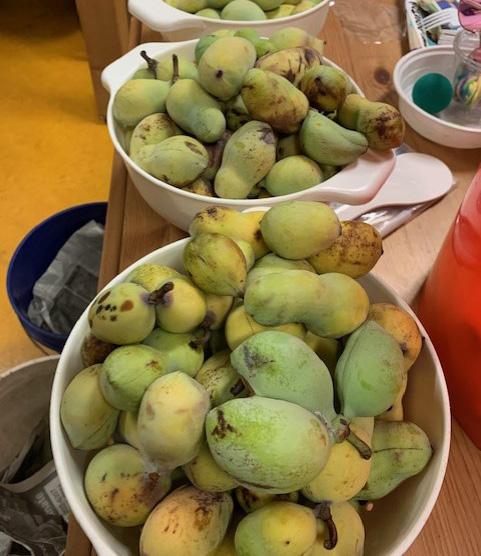
Come visit GROW throughout the growing season to find a wide range of fruit in various stages of production. While some crops will inevitably fare better than others depending on weather and pest pressure, the variety on display guarantees there’s always something to see! Please be mindful to look, but not pick, for the preservation of our exhibits. We encourage you to ask staff members for updates on our harvest progress.
MAY
Strawberries
JUNE
Strawberries
Tart Cherries
Blackberries
JULY
Blackberries
Pink Currants
Elderberries
Peaches
Raspberries
AUGUST
Elderberries
Peaches
Raspberries
Pears
Jujubes
Concord Grapes
Apples
SEPTEMBER
Pears
Jujubes
Concord Grapes
Apples
Pawpaws
Figs
OCTOBER
Figs
Jane’s Endangered Animal Experience
If you attended the special exhibition Becoming Jane, you may have learned that Jane Goodall's fascination with Tarzan, who married his own Jane, inspired her love of animals.
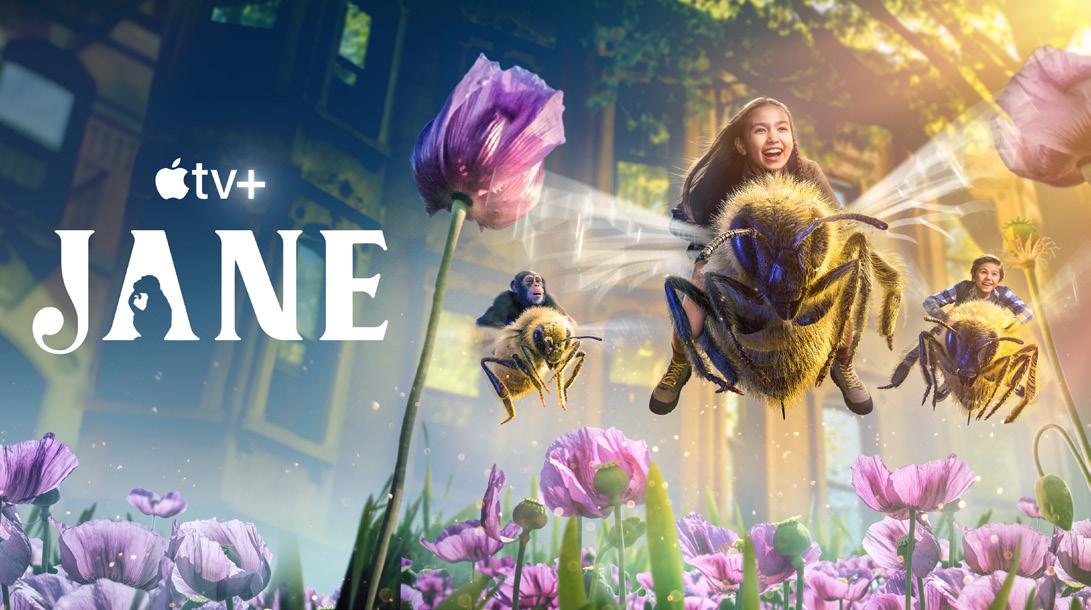
Now, Jane Goodall has inspired yet another Jane–the starring character of the Apple TV+ show Jane, which premiered in April 2023. Jane tells the story of a young girl, her friend David and their chimpanzee buddy Greybeard, all of whom are inspired by Dr. Goodall to help endangered animals. The show, made in collaboration with the Jane Goodall Institute, aims to inspire a new generation of environmentalists.
Now the Apple TV+ show is coming to the Saint Louis Science Center in the form of a temporary exhibit in our GROW Gallery! Visit GROW and learn about endangered bees, why they are important to our ecosystem and the challenges they face. Guests will be able to climb into a replica of Jane’s high-tech vehicle from the show and fly it to collect pollen and evade predators, investigate a kid-sized model of a bee and much more. Make sure to come see these bees before the exhibit flies away!
13
Blippi and Meekah Broadcast Science Center Fun Around the World
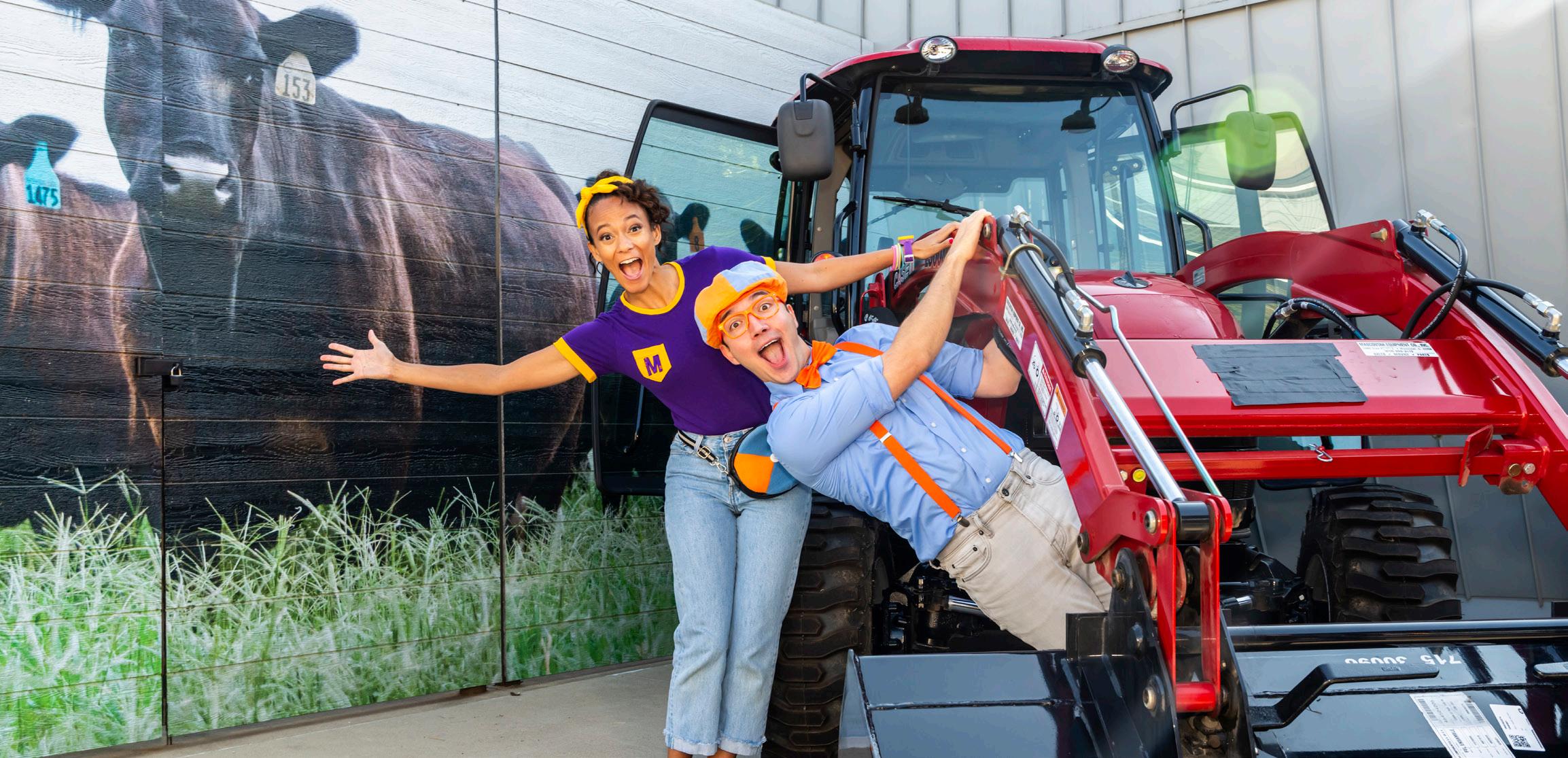
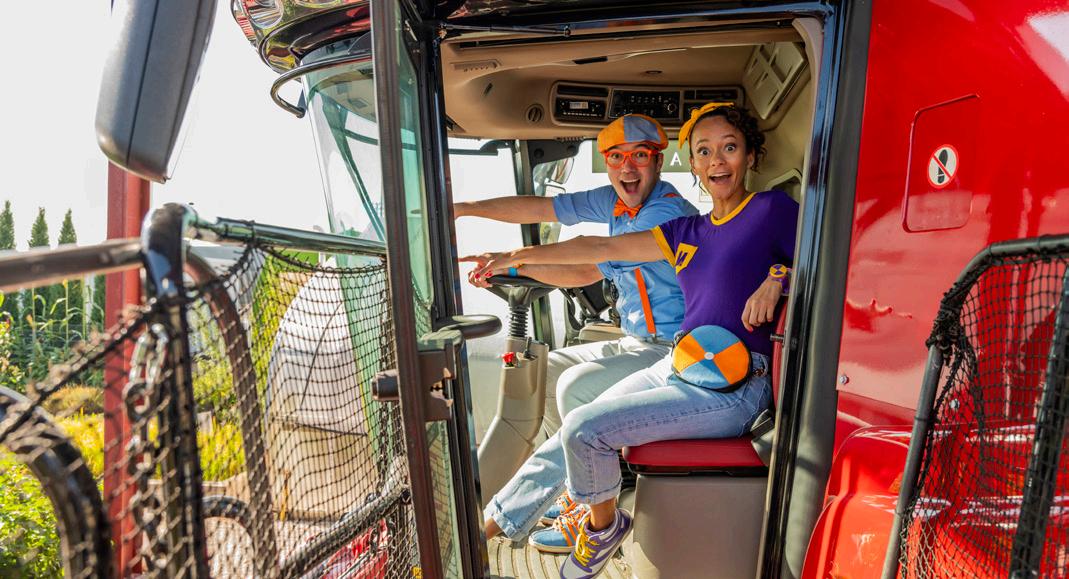
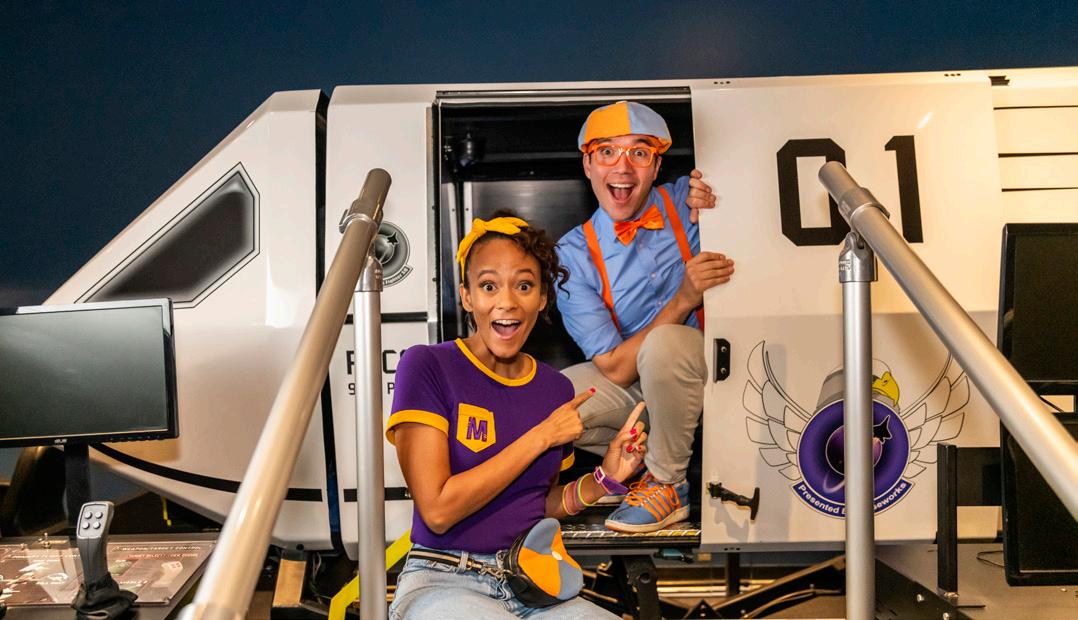
Last fall, the Science Center welcomed a pair of special guests who are recognized by kids and parents around the globe. Blippi and his friend Meekah shot an episode of their widely popular educational program that featured the many different vehicles found around the facility. The episode aired at the start of this year and can be viewed on their YouTube Channel and other outlets.
Blippi and Meekah provide young viewers opportunities to explore and learn by visiting museums, zoos and other locations to inspire curiosity about the natural world, animals, vehicles and more. Through songs, dancing and play, these programs encourage toddlers, preschoolers and other kids to develop their minds while having fun.
“Welcoming Blippi and Meekah to explore the Science Center as two of our guests provided a wonderful opportunity to connect kids and parents with a curiosity for STEM,” Science Center Public Relations Manager Doug Bolnick said. “As millions of fans watch these programs every month, this programming will help spread our story to visitors around the world. And, as a parent, I feel it’s a special treat for us to partner with these beloved characters to show how science learning can come to life through play and fun.”
Blippi and Meekah arrived at the Science Center in September, having been drawn to the many interactive, science-based exhibits and displays available throughout the facility.
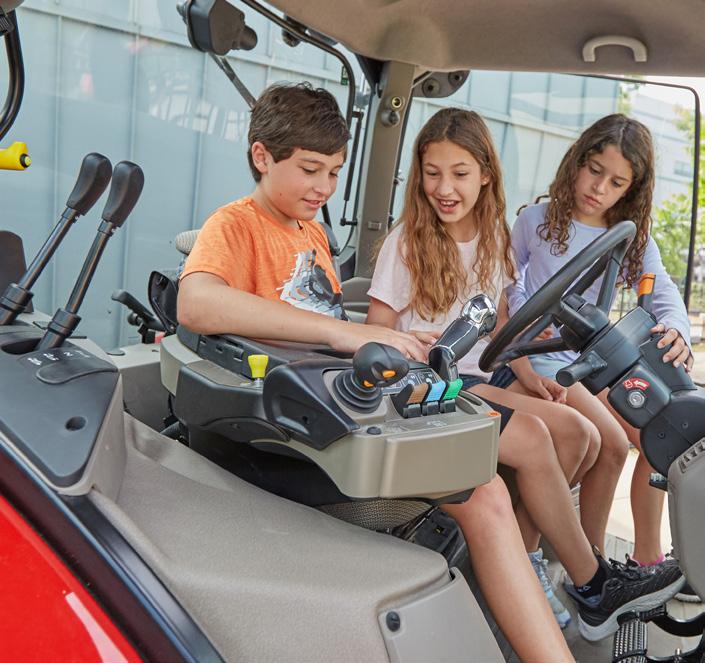
The day began with them shooting an opening introduction at the wheel and ball display in the entrance lobby and continued with visits to the combine and tractor in the GROW gallery, the Mars rovers in the Planetarium, Rigamajig in Makerspace to build a vehicle, the flight simulators in the tunnel, and the rocket ship in the Discovery Room. Blippi and Meekah shot additional video segments in GameXPloration, the Water Works exhibit in GROW, the Paleontology exhibit in Earth Sciences and Structures. They plan to air these segments later this year.
14 SPRING 2024
SCIENCE NEVER STOPS
Get a Peek into the Past
New Video on Display Highlights
Shell Creek in Punta Gorda, Florida
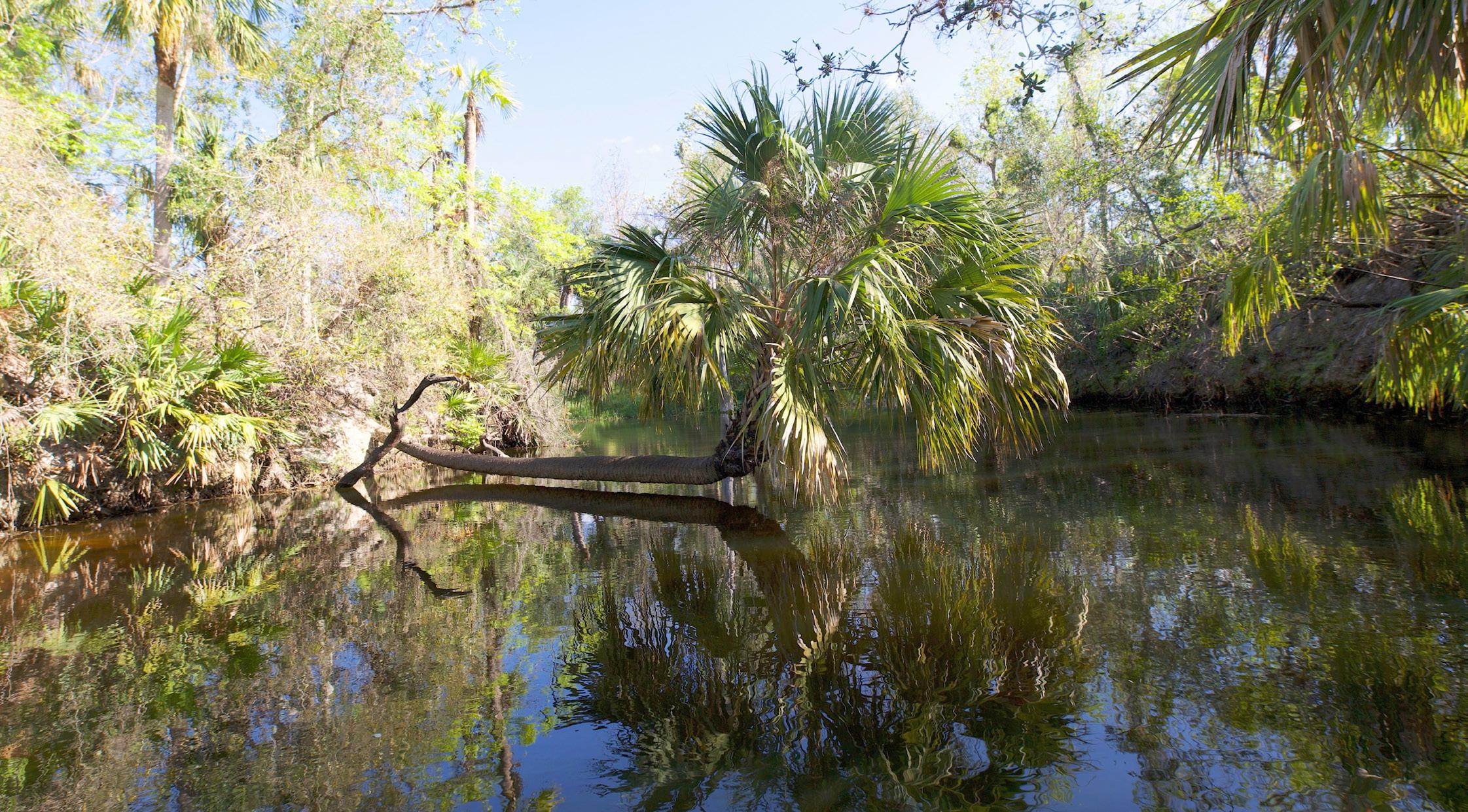
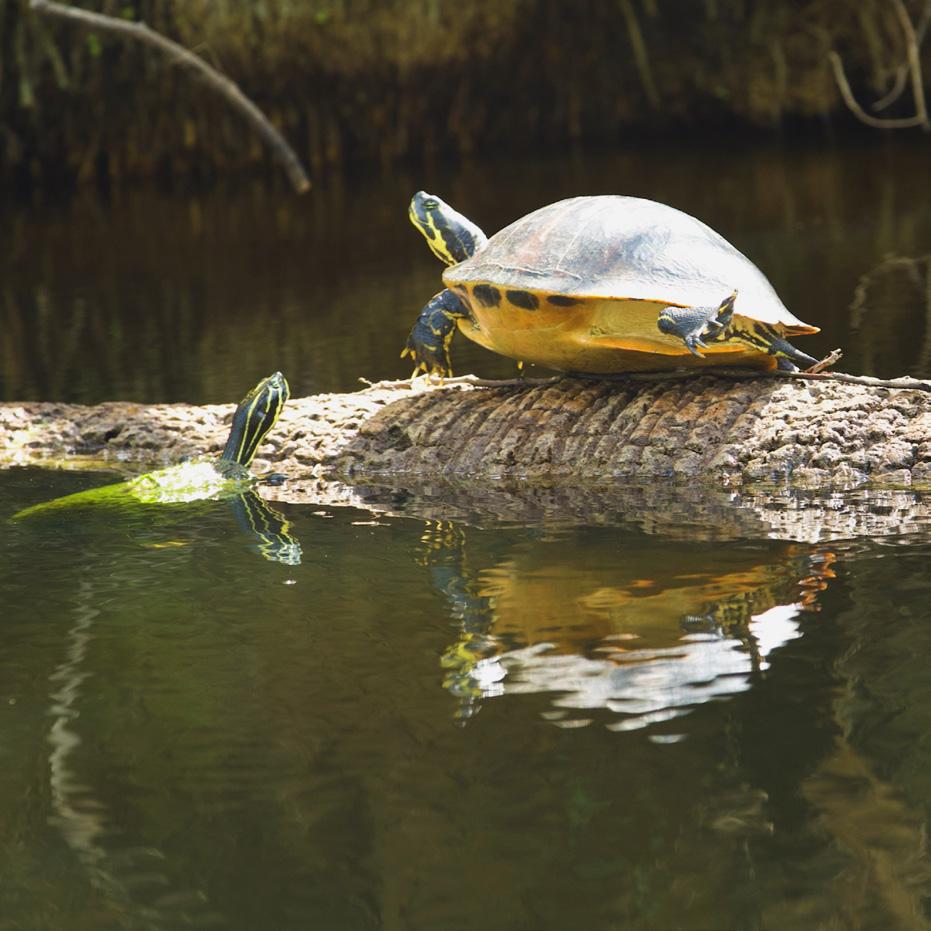
Earlier this year, we updated our Earth Sciences gallery with a new video highlighting the Shell Creek fossil site in Punta Gorda, Florida.
This waterway in southwestern Florida is home to fossils from the Pleistocene epoch, dated to within the last 2.5 million years. Shell Creek is abundant in shells, but paleontologists have also found specimens of mammoths, alligators and sharks there. The Shell Creek video, which features photographs by Glen Petersen and Sarah Hager Trulaske, will help give Science Center guests a complete picture of the history of life on Earth by illuminating fossils from different time periods as well as locations.
“Our Science & Education team looks forward to using this video to spark conversations about our planet and its history, as well as give guests a feel for how Missouri may have looked in the past,” said Maddie Earnest, associate director of galleries at the Science Center.
Photographers: Glen Petersen and Sarah Hager Trulaske
THANK YOU
Special thanks to Sarah Hager Trulaske for her generosity and making it possible for us to share this informative video with our guests.
15
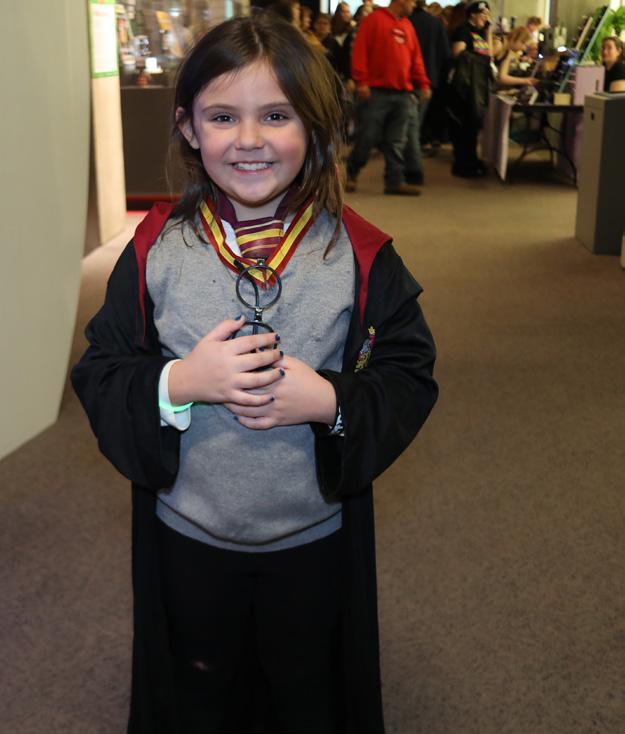
DECEMBER 2023 RECAP
Sixty Years of Time Travel
Our December First Friday, Doctor Who, was a smashing success!
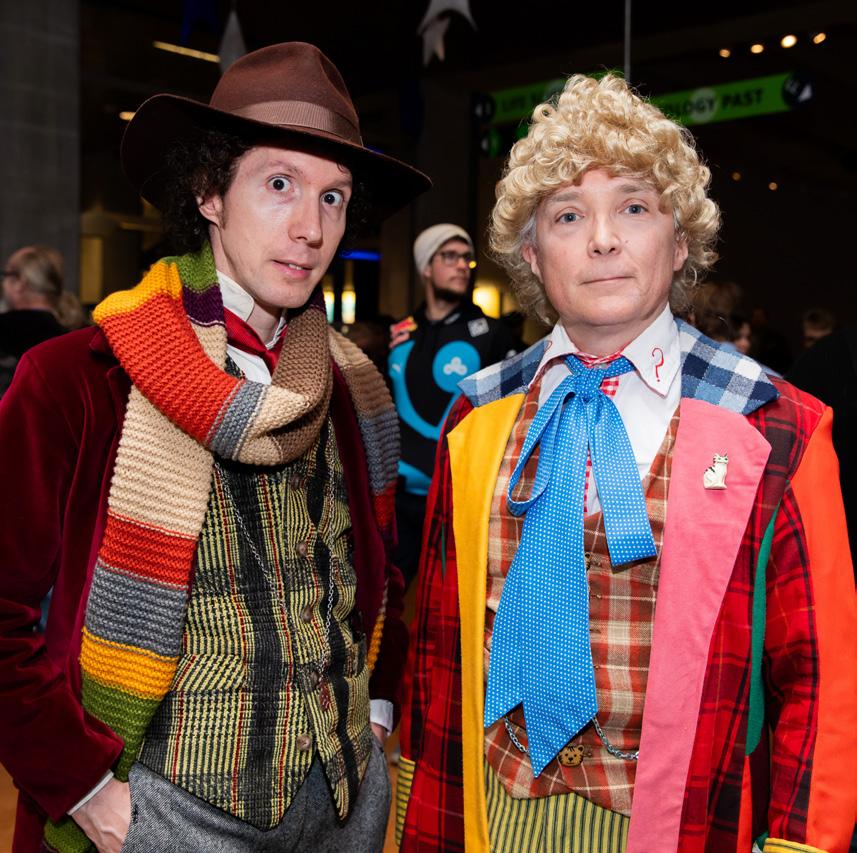
Held on December 1, First Friday: Doctor Who celebrated the 60th anniversary of this iconic franchise by welcoming more than 1,600 guests after hours to browse Doctor Who-themed items from our vendor partners, watch episodes of the show, and meet a very special guest speaker: James Sutton, prop maker for Doctor Who! There were more "timey-wimey" activities than you could shake a Sonic Screwdriver at!
Winners of our costume contest were awarded the rare opportunity to be photographed inside the real, screen-used T.A.R.D.I.S. we had on display. Find us on Instagram (@stlsciencenter) to experience more of this incredible event and see pictures of our other fun after-hours events.
Stay tuned for more First Friday fun in 2024!
16 SPRING 2024
2024
MARCH 1, 2024
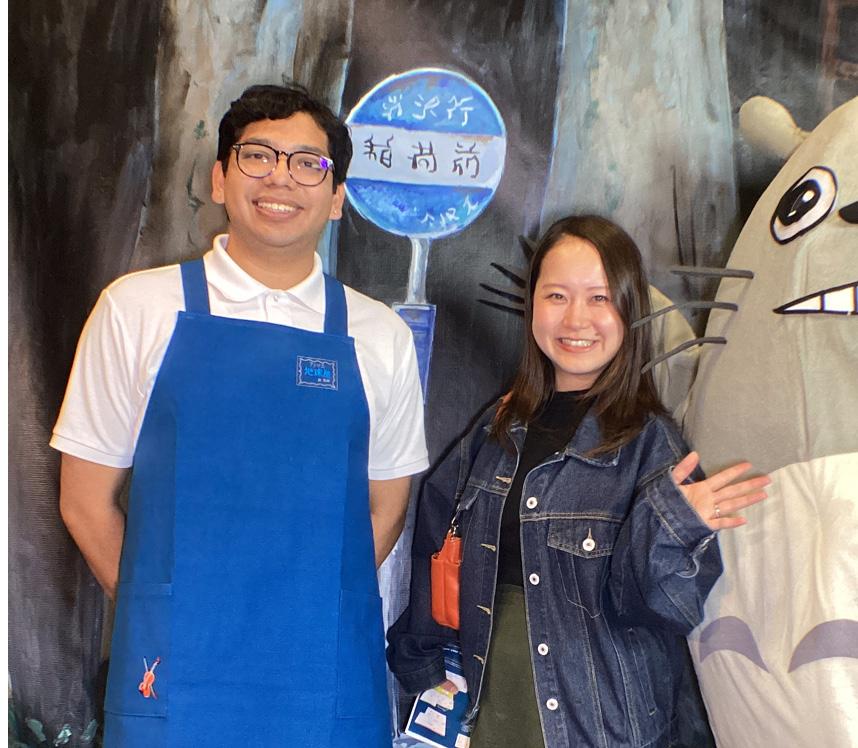
Anime Appreciation
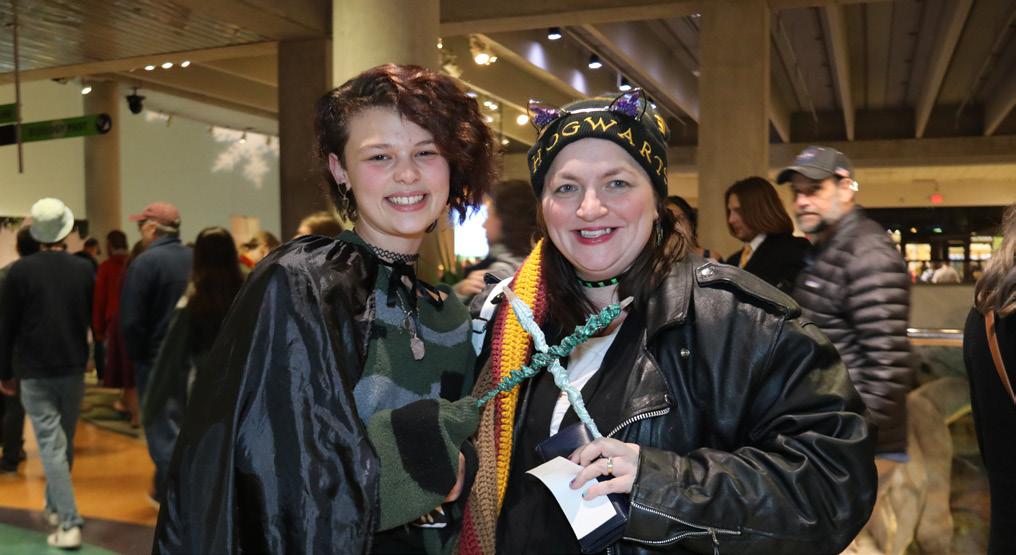
Come enjoy a night of anime appreciation at the Science Center as we explore the science behind popular anime, as well as experience our local St. Louis anime scene. Try your hand at cosplay, compete against your friends in anime trivia, challenge yourself with a building-wide game, shop from local vendors and so much more! Dress as your favorite character for fun photo opportunities and a chance to win prizes in our cosplay contest!
SUMMER STEM EXPLORERS
REGISTER NOW!
Members at the PLUS and MAX level SAVE 20% on camp sessions. Visit slsc.org/camps to learn more and sign up.
APRIL 4, 2024
Little Shop of Horrors
Don't let a plant from outer space trick you during the upcoming solar eclipse! Come to the Science Center to learn about real eclipse phenomena and see the cult classic film Little Shop of Horrors. Whie you're here, test your knowledge at trivia, participate in our building-wide game, shop local vendors and more! Don't forget to warm up your vocal cords; there might even be a sing-along!
MAY 3, 2024
I <3 the 2000s!
WASSUP?? Grab your Zune and come "chillax" with the Science Center as we roll back to the 2000s. See bits from our past pulled from the archives and relive the glorious science fiction pop culture. You can test your knowledge with trivia, participate in a buildingwide game, shop throwbacks with local crafters and vendors and catch a totally "fetch" movie! TTYL, loser!
All First Friday events will take place from 5:00pm–9:00pm. Visit slsc.org/first-fridays for updates and schedules.
SATURDAY, APRIL 6, 2024 | 9:30AM–4:30PM
SciFest: The Great Outdoors Expo
Discover a deeper appreciation for the great outdoors and get ready for the upcoming total solar eclipse at our all-day, free event! Participate in activities and engage with STEM experts and organizations related to outside life, safety, activity and work.
See the latest news about SciFest at slsc.org/scifest
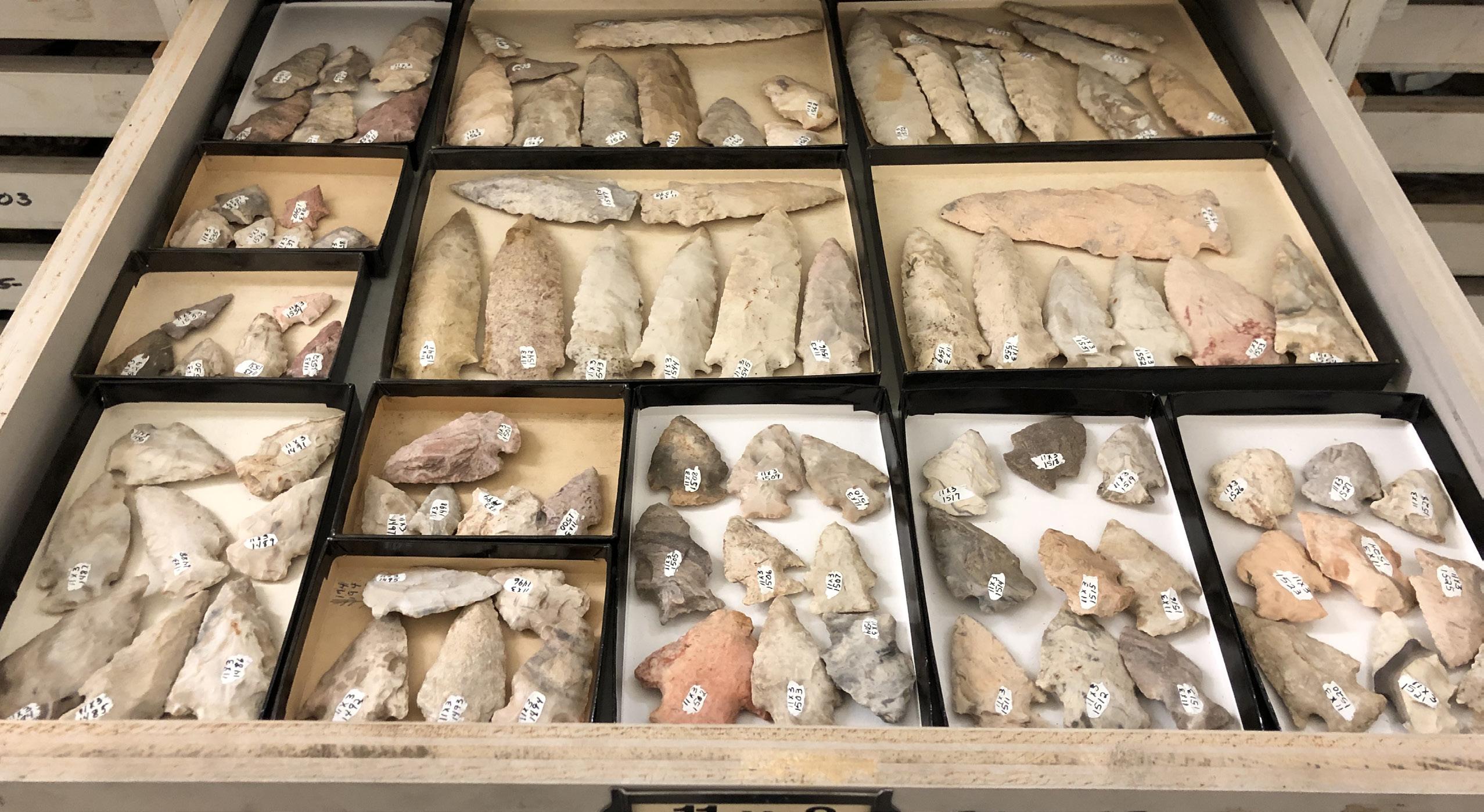
COLLECTIONS & COLLECTING
What Does it Mean to Collect?
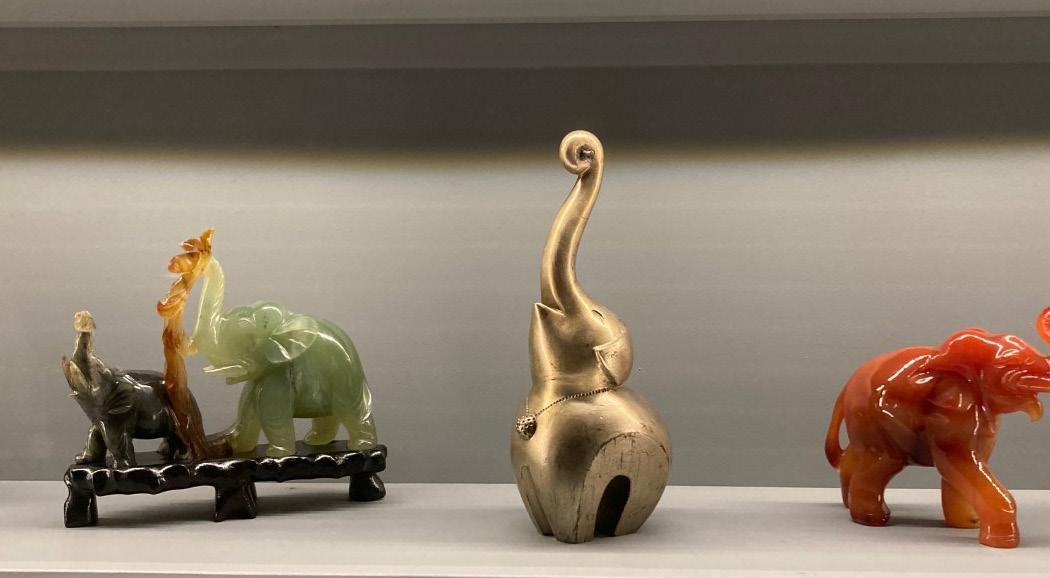
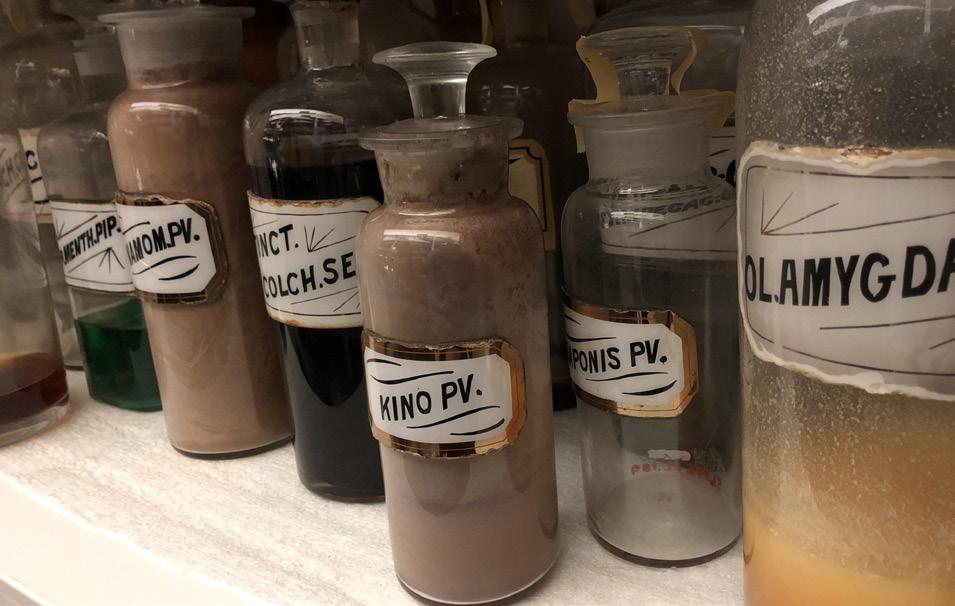
Collecting objects of wonder and curiosity is a practice as old as humanity. Why do we as humans have the urge to collect? What makes us want to possess an object we see, and then gather more objects like it?
This impulse to collect is universal, but why humans collect varies from person to person. Collecting is a highly personal activity that can center around individual interests, experiences, careers, aesthetic appeal and even nostalgia. The reason why one person collects Star Wars figurines and another collects glass telephone insulators may be drastically different, but that common drive to collect provides a connection and shared understanding between them.

18 SPRING 2024 JOIN US



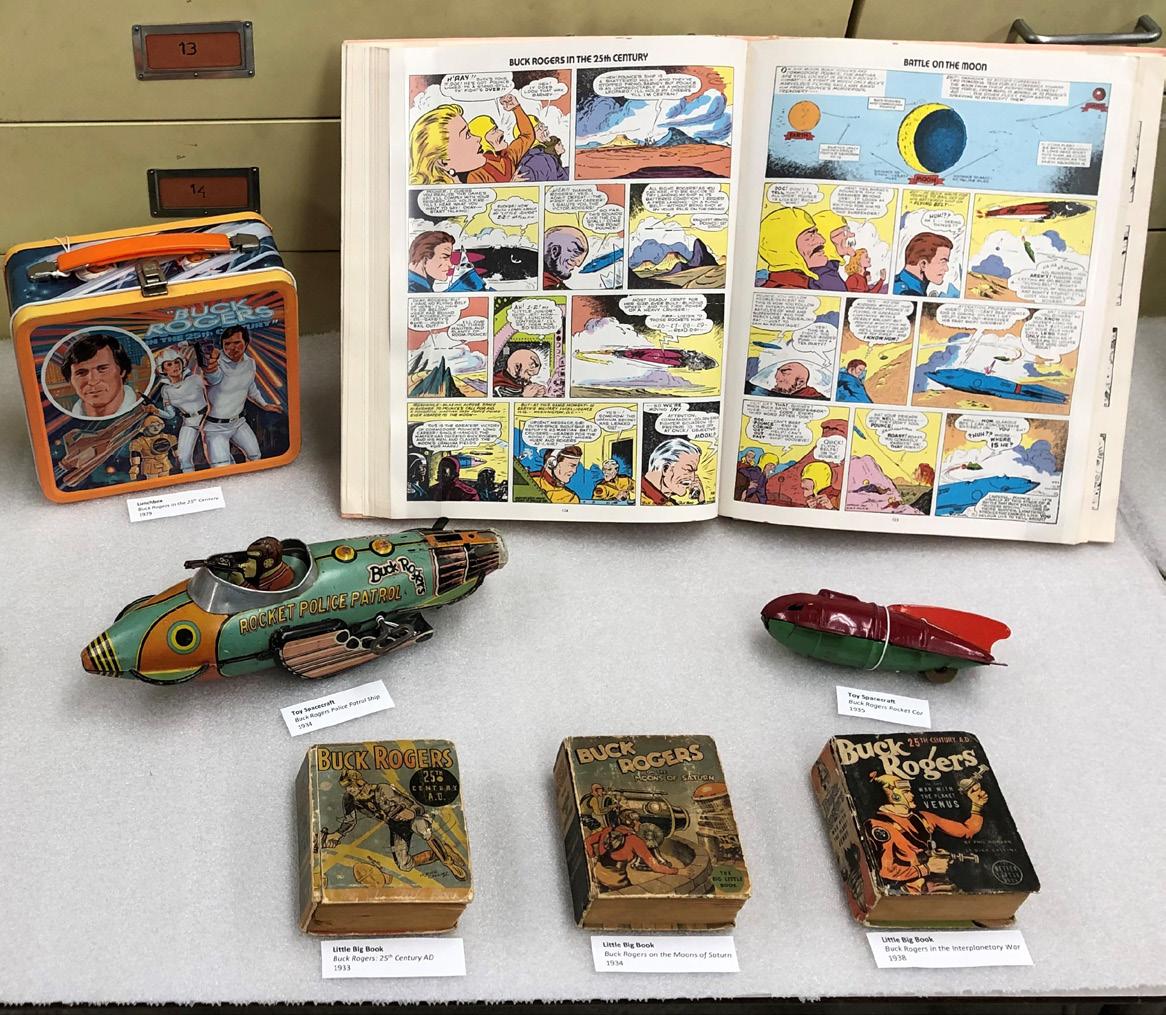
It is because of this individual need to collect that museums exist. The act of sharing objects and collections and showing them off to others prompted the creation of cabinets of curiosity during the Renaissance in Europe. These cabinets would later become the first museums and inspire the creation of others around the world. In the case of the Saint Louis Science Center, for example, several individual collectors and members of the Academy of Science of St. Louis wanted to join their collections together to share with the St. Louis community. This eventually led to the creation of the Science Center and shaped its Collections for over 150 years, building it to over 100,000 artifacts and specimens.
“The most ordinary things, the most common and familiar, take on a new importance and new meaning when placed in a larger context like a museum collection,” explains Manager of Collections Kristina Hampton. “It’s like joining together thousands of puzzle pieces that combine to show us one big story. Individual collectors provide those puzzle pieces. While every artifact, every individual collection has its own story to tell, a museum collection lets us see these artifacts in their true light, providing a deeper understanding of the bigger story and the artifacts’ place in the world.”
Members will have a chance to learn more about this topic in a lecture by Kristina Hampton at an upcoming member event! See page 4 for more details.
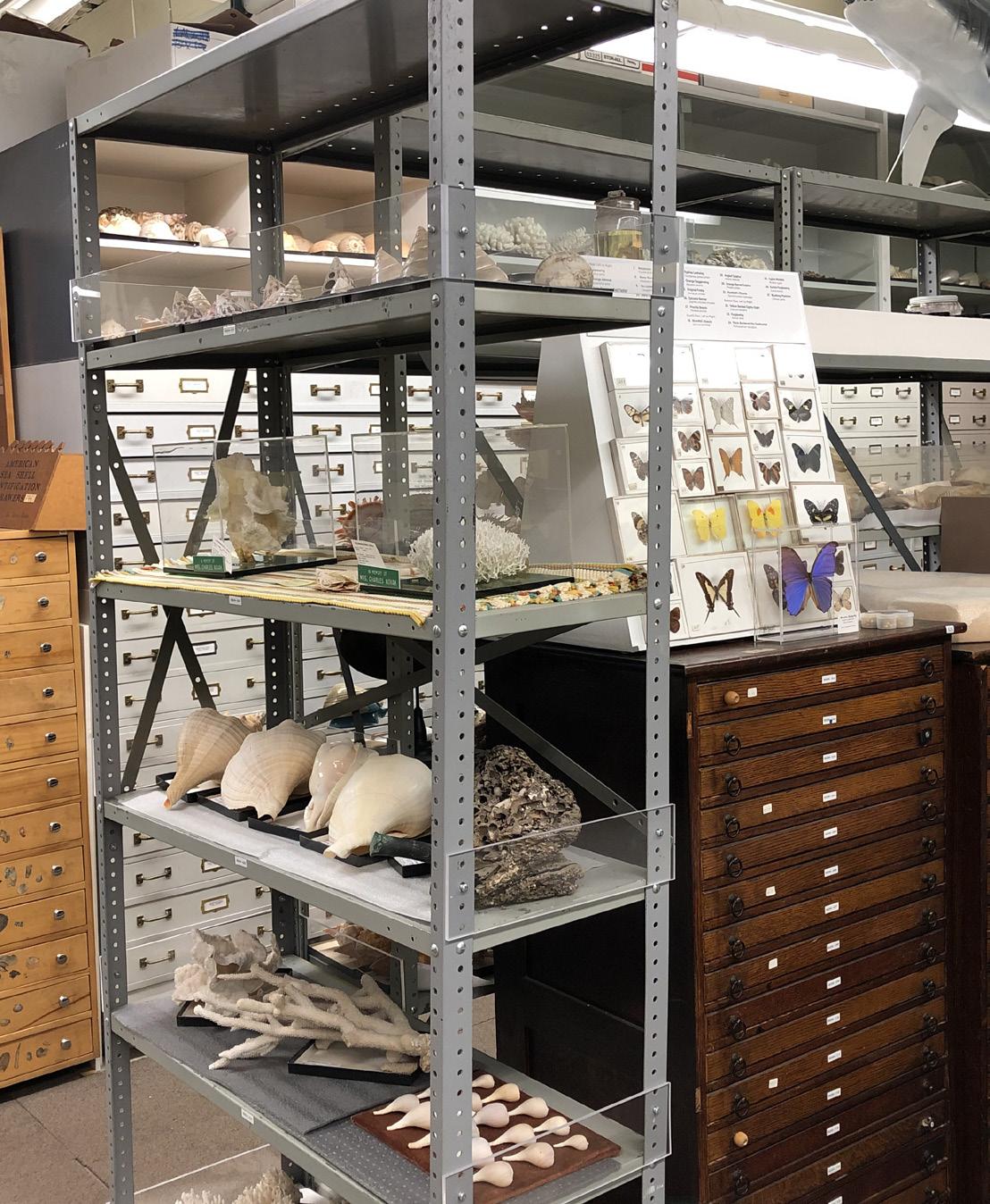
IT’S LIKE JOINING TOGETHER THOUSANDS OF PUZZLE PIECES THAT COMBINE TO SHOW US ONE BIG STORY.
19
FLORIAN SCHULZ
ANSWERS THE CALL OF THE WILD

Florian Schulz is the director, producer and star of our newest OMNIMAX® Theater film, The Arctic: Our Last Great Wilderness . We were fortunate to interview him and learn some behind-the-scenes details.
Tell us about a typical day in the Arctic Refuge and the challenges of managing food and waste.
I film in the Arctic Refuge and across Alaska’s north in all different seasons, so there’s a massive difference whether we go out in wintertime or spring or summer. In winter, the days are very, very short. Later in February, and in March, the light starts to come back for longer hours, so we mainly spend that time out there, but temperatures still can go down as far as -40 degrees. We have good tents; that doesn’t mean it doesn’t get to -40 in the tents, but we can set up a little stove and warm it up. You can make it a little bit easier by putting a hot water bottle inside the sleeping bag to get a head start on being warm. We boil the snow and keep it warm in thermoses just to have drinking water. So that’s one side.
In the summertime it’s the other extreme; the sun never sets, on the north slope it can even get warm, and what gets really difficult are the mosquitoes…a very different set of problems. Typically, we sleep during midday because we want the best warm light at night, when the sun doesn’t set, to film the animals. So, we would film from 9:00pm until 4:00am, come back, eat some breakfast which is just simple oatmeal – and that’s the same in winter. You boil water, pour oatmeal in and [add] dried nuts and mangos or craisins; all the food is very simple. And we can bring some carrots and cabbage that normally last for a longer period, and some of that we put in very simple soups like ramen. Every so often we may catch an Arctic grayling and have fresh fish with it.

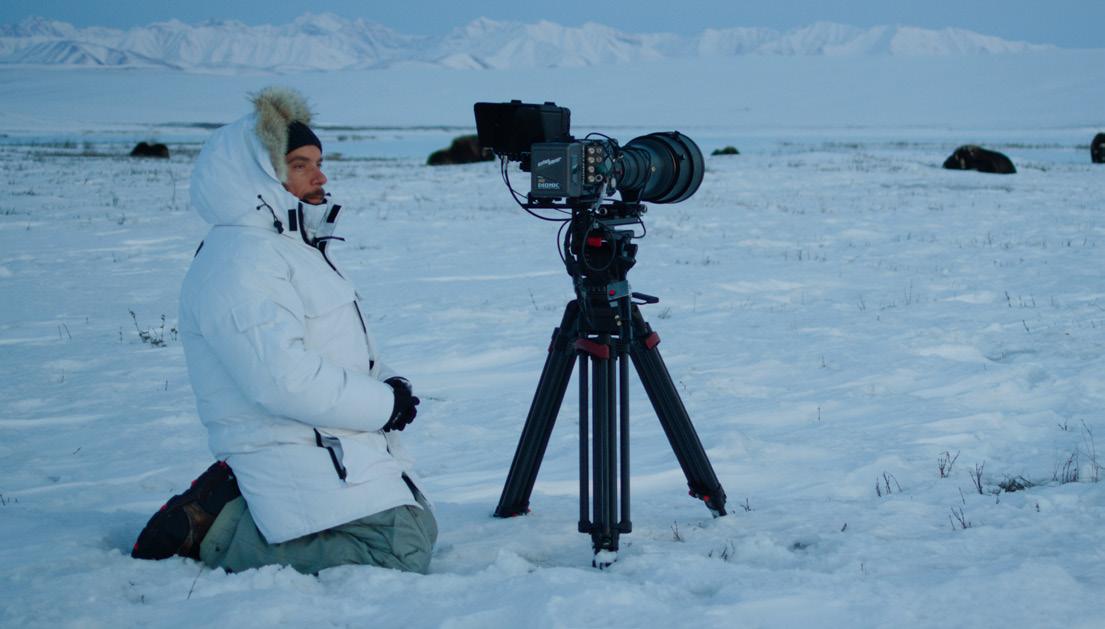
About waste, we don’t take a lot of fancy packaging. Any plastics or garbage we bring in, we compact later, and put it into dry bags in a bear-safe container, just like the food, and when we leave with the bush planes, we simply take it out again.
Can you tell us about the relationships you’ve built with Alaska's indigenous populations?
Gladly so. In the Arctic Refuge, it’s mainly Gwich’in people who live in the Arctic Village and are caribou hunters. On the Arctic coast, it’s Inupiat, and I’ve connected with different Inupiat communities, in Point Hope, further to the west, or in Kaktovik in the Arctic Refuge. For me it was specifically important to connect with the Arctic Village and the Gwich’in people because they have been fighting for decades to keep oil drilling out of the Arctic Refuge, because their food source, the caribou, is dependent on the calving grounds in the north slope area of the Arctic Refuge, the coastal plains.
I’ve regularly visited the Arctic Village and connected with families, and even taken my own family. Every other summer, the Gwich’in [hold] the Gwich’in Gathering in the Arctic Village, a celebration where they sing and dance and drum, and it’s beautiful, but they also discuss what they can do to keep the Arctic Refuge wild and protected. It was very interesting talking to elders and learning what they see in the land and why they see [protecting] it as such an important mission. Also, in the film you hear the narration of Princess Daazhraii Johnson, who is from the Arctic Village and is an important voice for the Arctic Refuge, providing the perspective of the Gwich’in.

It seems like for most of the film you’re alone, but you must have some film crew.
That’s quite right. We did this with an exceptionally small crew, and we had to keep it that way. For many months it was literally my brother, our pilot and me, and normally for a film like this there’s a big crew. When you see my family with me, it’s my brother, my family and our pilot.
In the film you say, “If I want to capture the spirit of the Arctic Refuge, it will take patience and a lot of time.”
How much time did it take?
I watched it on the IMAX® screen with my kids and my wife Emil, and I remember my boy Silvan said, “Papa, Papa! It feels like we’re right there!” That put a smile on my face. And when I saw the massive caribou migrating, or the polar bears playing or the musk oxen fighting, I thought, “You know what? This is the essence of filming there for over five years.” It did take years, and we got to know the Arctic Refuge every year more. We learned how to anticipate different wildlife movements and their behavior.
I love to go back, there’s always more to see, but I feel quite proud of how we have captured the Arctic Refuge. I spent probably 1 ½ entire years in the Refuge, on the ground, in the wild. I think we did it justice, and you could visit the Arctic Refuge year over year for many years and you would never see half of what is in the film. Friends who visit there regularly say they never saw the big caribou migration the way you see it in the film. They might have never seen polar bears playing or musk oxen fighting, or the birth of a musk ox calf. I think we were able to create something special that would take almost decades to see for yourself.
You mention borrowing a tactic from raptors: searching for wildlife from high clifftops. Did animals give you other ideas for best practices in your work?
Animals do everything by intuition. They give in a bit more to destiny and just let things unfold. And when you come to the Arctic Refuge and you say, “Okay, today I’m going to film caribou,” and you’re all obsessed, nature doesn’t really care what you want, right? In a wild place like this, weather constantly changes the overall conditions, whether you can be out filming or whether you have to hide from a storm. You have to go [with] that flow of nature.
Other than that, patience gave us the special imagery – the images of caribou migrating by the tens of thousands where we were there at the right moment, for example. Or when the musk oxen were in a large herd, and the males were competing, running and bashing together. It was an incredible, impressive sight. We had to be there from the early mornings when it was even colder to capture the moment when the calf was born. Some of that light was so magical, and that’s what we were striving for: the most beautiful light, the most interesting behavior, and incorporating the animals into the big scenes, because what’s an animal without the landscape? That’s what makes it so special: you can actually understand the place that they call home.
How can we support the protection of the Arctic Refuge? There are two aspects. One is about protecting the actual land in the Refuge. In the northern part of the mountains, between the mountains and the Arctic Ocean, are the coastal plains
of the Arctic Refuge, and there’s a lot of interest to drill for oil there. Drilling there would very much impact the wildlife because, again, it’s the birthing ground of the caribou and the myriads of birds that come every year to the Arctic Refuge to nest. So that’s the direct impact.
And [these days] we just recognize that we have more extreme weather conditions. Temperatures are rising, causing storms and flooding and droughts, and I think it has a lot to do with the burning of oil and fossil fuels. If we can keep that oil in the ground and [put] more emphasis on alternative energy, supporting that and creating awareness is what everybody can do. And you can get involved in organizations like the Alaska Wilderness League, Earth Justice, the Audubon Society or the Wilderness Society.
Which animal in the Refuge do you identify the most with, and why?
[The movie depicts] the quest to find the big caribou herd, and that resembles [our quest to make a film]. The caribou became of specific significance to me because we’ve lost big herds across North America in most places. There used to be millions of bison, pronghorn, elk and so on, and in the far north you still have herds of caribou where there might be a quarter of a million animals. When you see it moving across the landscape, it’s almost like a journey back in time where we still see nature like it always used to be and for me, that’s so valuable.
But the caribou are amazing beyond those numbers – how they survive in this harsh environment, how they migrate over 1,800 miles every year. In the winter, [the wind] might be blowing up to 50 miles an hour, and it’s -30 or -40 degrees, and they’re still out there kicking away the snow on those windblown ridges so they can get to the lichen. They eat those little lichens and survive off so little, these massive animals.
I love caribou…the sounds they make when they have their calves on the coastal plain and find the perfect nutrition, when the whole landscape explodes in the spring with flowers. But I don’t have just one favorite animal. Watching the musk ox that looks like a prehistoric animal from the Pleistocene, or the polar bears with their playful behavior, meant the world to me. And we gave each of those animals space in the film so people can relate to them the same way I did.
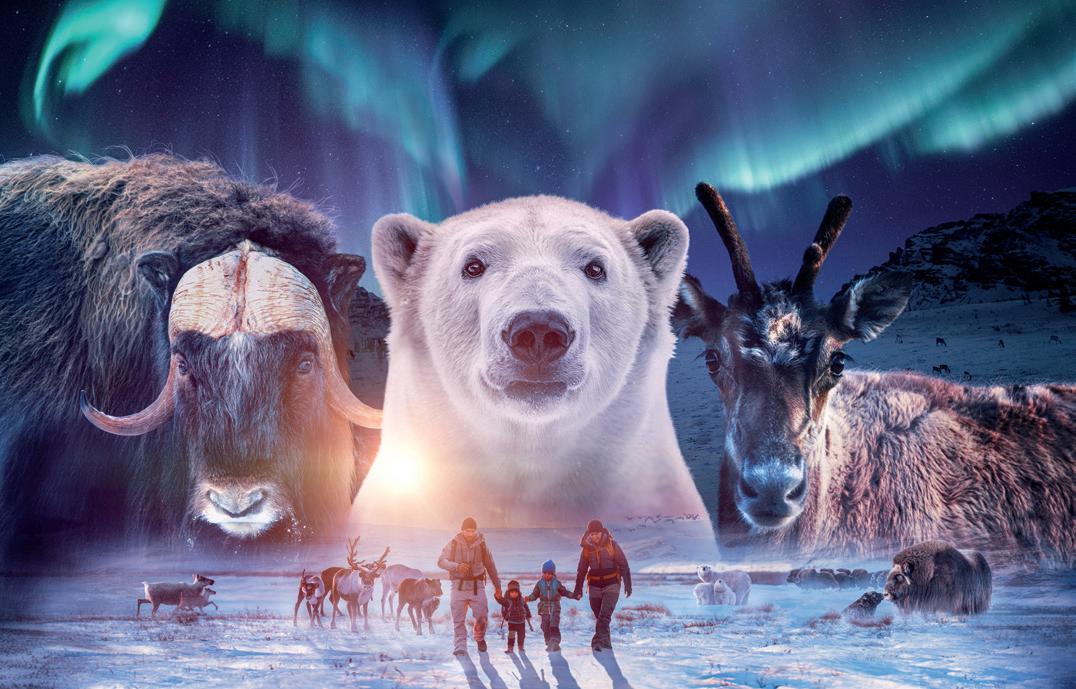
11175 THE ARCTIC - 5' X 8' HORIZ BANNER COSMIC PICTURE 08.04.20 FINAL MECHANICAL 6721 ROMAINE ST. LOS ANGELES, CA 90038 323.484.4070 F 323.484.4070 LASSOCIATES FINAL SIZE Live: Trim: Bleed: LEGEND Live: Trim: Bleed: 7' 8" W x 4' 8" H 8' W 5' H 8' 4" W x 5' 4" H MECH BUILT @ 25% Live: Trim: Bleed: 23" W x 14" H 24" W x 15" H 25" W x 16" H See The Arctic: Our Last Great Wilderness at the OMNIMAX® Theater. Visit slsc.org for showtimes.
JAMES S. MCDONNELL PLANETARIUM
See a Star Show!
ECLIPSE | ENDING IN APRIL
Are you ready to get eclipsed?
Explore the nature of eclipses and get prepared to safely observe the upcoming solar eclipse in April 2024. Each ticket includes a pair of solar glasses for safe solar viewing.
The Constellations
Explore the patterns that change overhead throughout the year in this live Star Show.
The Sky Tonight
Relax under the clearest night sky in St. Louis as our skilled presenters lead you on a tour of the best the night has to offer.
The Little Star that Could
A tradition in St. Louis for over 30 years!
Developed for our youngest stargazers, The Little Star that Could shares the timeless story of an “average” star in search of what makes him special.
New Show in Late Spring!
Telescope Programs at the McDonnell Planetarium
Do you want to see something truly out of this world?
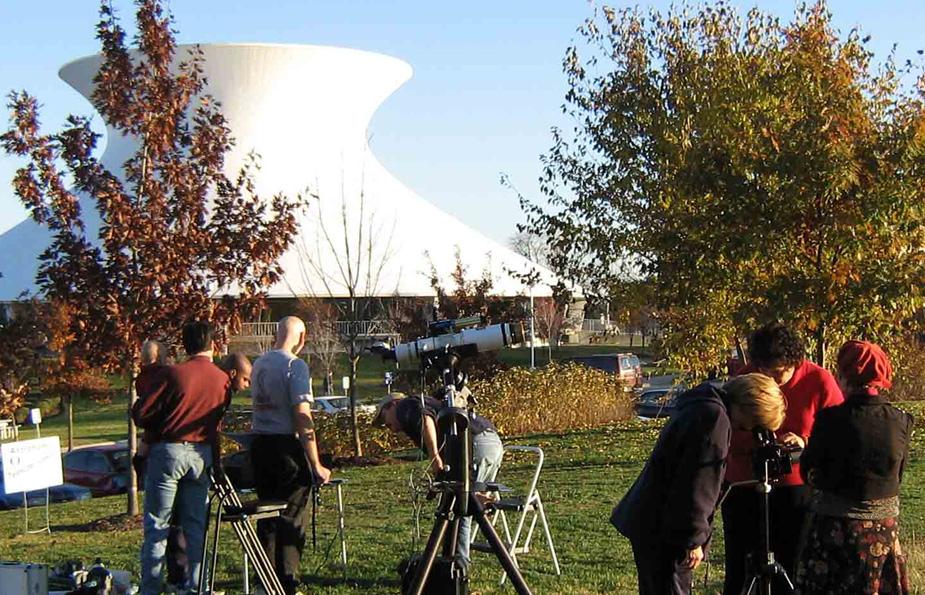
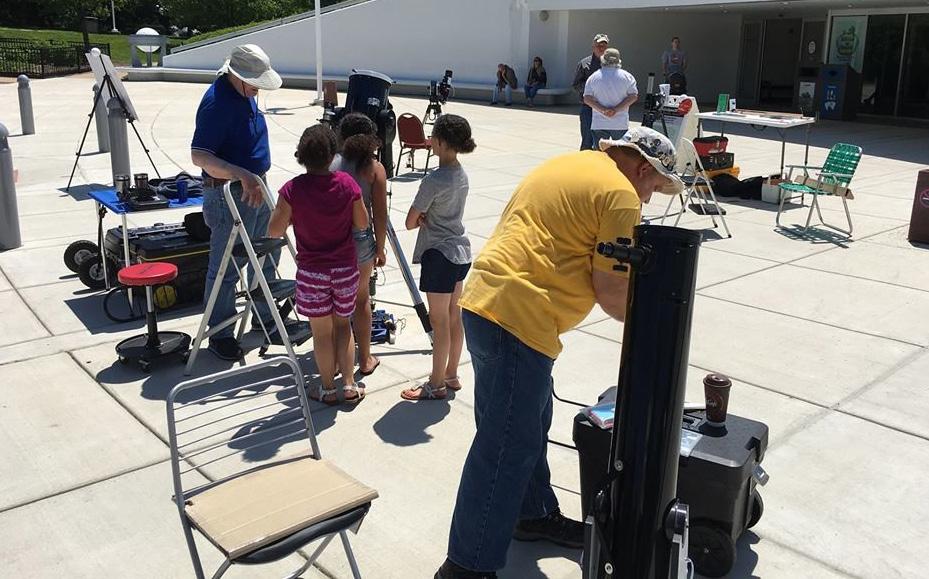
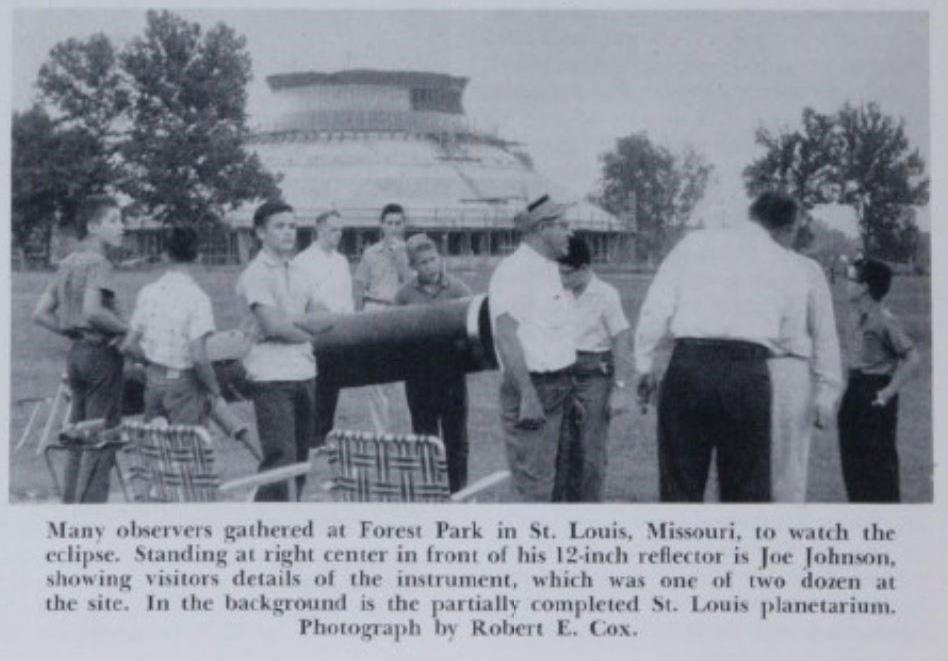
Free public telescope viewing has been offered on the grounds of our McDonnell Planetarium for over 60 years and provides our community the opportunity to look through a variety of telescopes with the help of experienced amateur astronomers from the Planetarium team and local astronomy clubs.
Nighttime telescope viewing is available most months as part of the Science Center's First Friday events. Popular evening targets include views of the moon, the planets and select deep sky objects.
Daytime solar telescope viewing is also available, providing guests safe views of the sun, including the ability to see features like sunspots and solar prominences. Solar observing is offered periodically on clear days, as well as scheduled regularly on Sundays between Memorial Day and Labor Day as part of our Solar Sundays program.
Telescope viewing at the McDonnell Planetarium is made possible thanks to partnerships with the St. Louis Astronomical Society and the River Bend Astronomy Club. Please note that all telescope sessions are weather dependent and are subject to cancellation.
22 SPRING 2024 JOIN US
For more information and a current schedule of telescope opportunities, please visit slsc.org/telescopes
Photo by Robert E. Cox
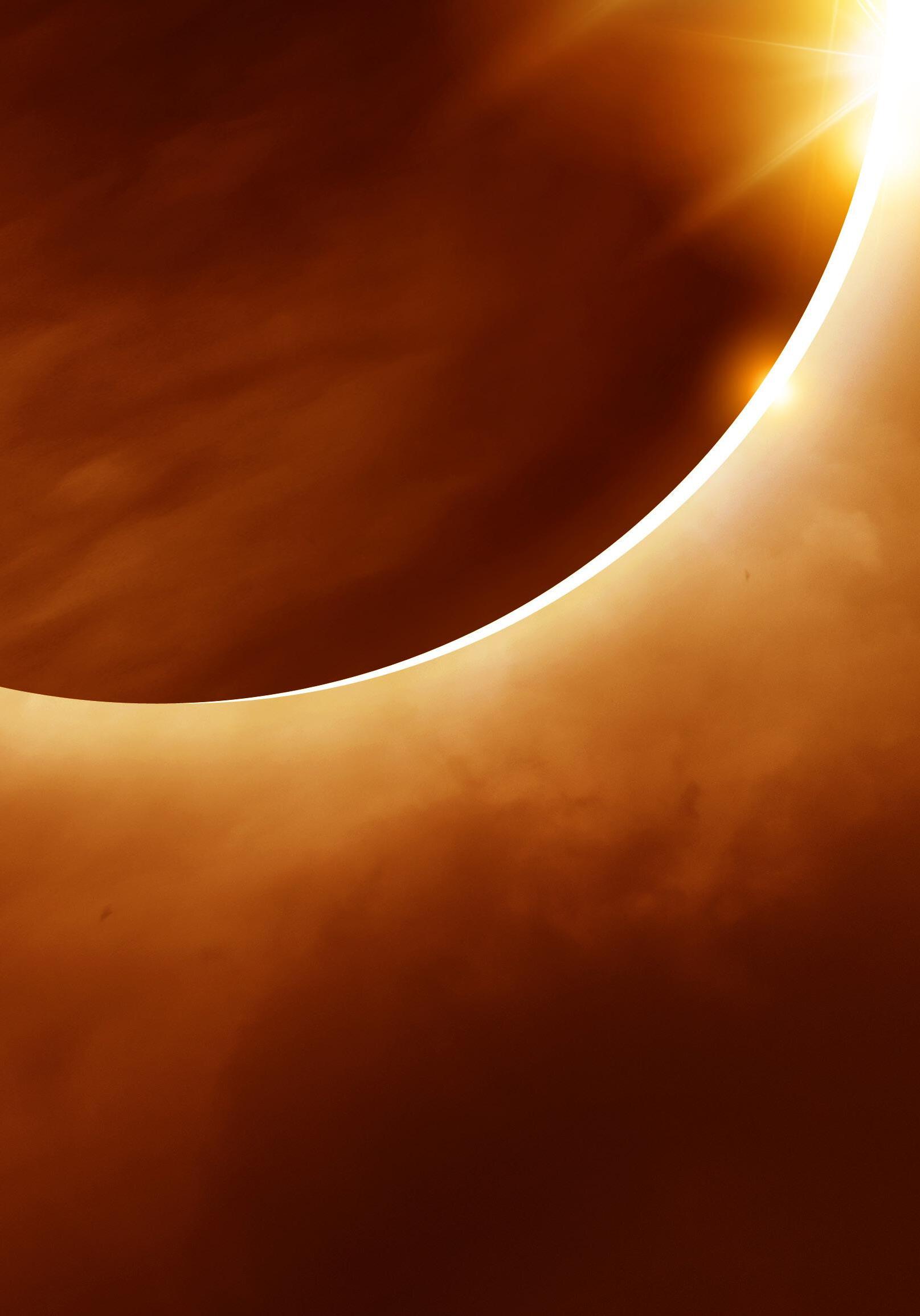
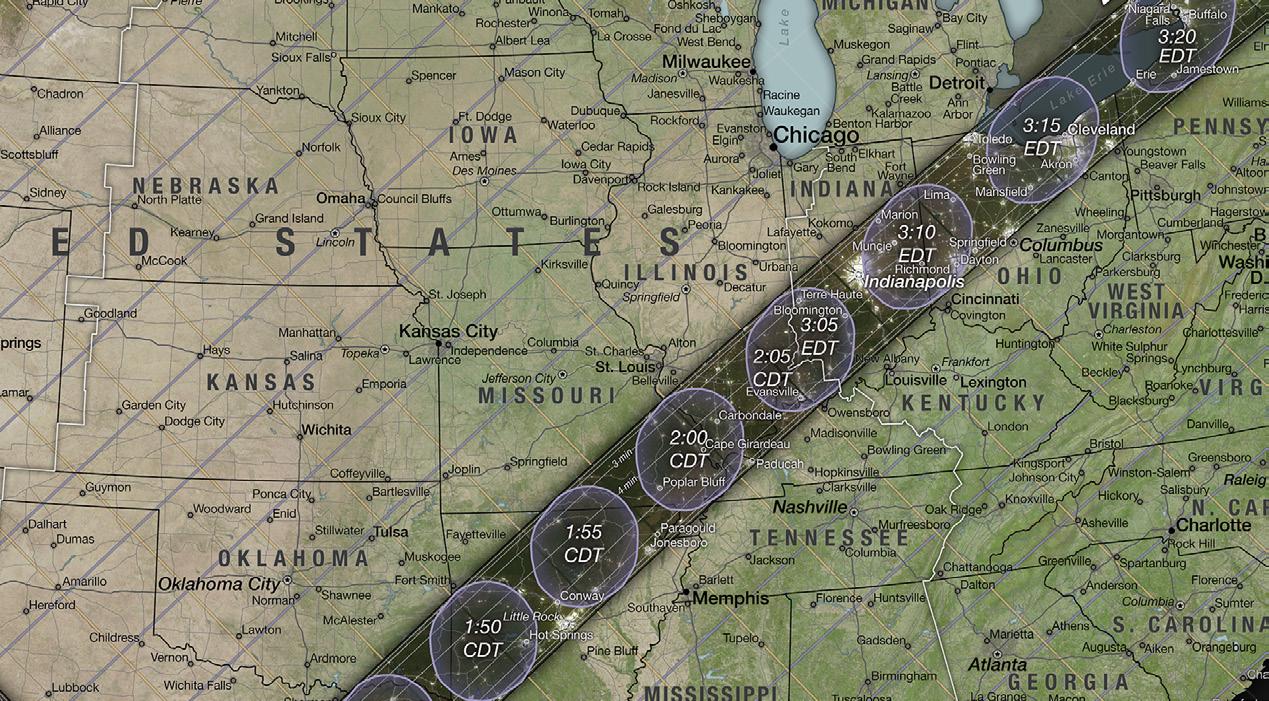
April 8 will bring the last total solar eclipse visible in the United States until 2045. James S. McDonnell Planetarium Manager Will Snyder shares his tips for eclipse viewing and education below.
First and foremost, Snyder says, come see our ECLIPSE Star Show to learn how to view the eclipse safely using eclipse glasses. The Star Show comes with a pair of eclipse glasses with each ticket! ECLIPSE will be continuing daily in the leadup to the April eclipse.
Our gift shops will be selling eclipse glasses, as well, for those who miss their chance to catch ECLIPSE in the Planetarium. And during the month of March, anyone who signs up for a new membership will receive free eclipse glasses with their membership purchase.
We will also offer special eclipse-related activities at April’s First Friday (April 5) and SciFest: The Great Outdoors (April 6). Plus, we’re hosting a special spring edition of Solar Sundays! Join us on Sundays during Spring Break (March 10, 17, 24, 31 and April 7) for a spring Solar Sundays telescope program in the leadup to the April 8 total solar eclipse.
On the dates listed above, from 11am-3pm, solar telescopes will be available for free outside the McDonnell Planetarium to provide guests safe views of the Sun, including the ability to see features like sunspots and solar prominences. Have your questions about the upcoming eclipse and sun safety answered by members of the Planetarium team and the St. Louis Astronomical Society. All telescope events are weather permitting
Finally, Snyder advises St. Louisans to travel to the path of totality if possible! But if you can’t take a drive on a Monday to totality for eclipse viewing, no worries. In St. Louis, the event will be visible as a 99% partial eclipse.
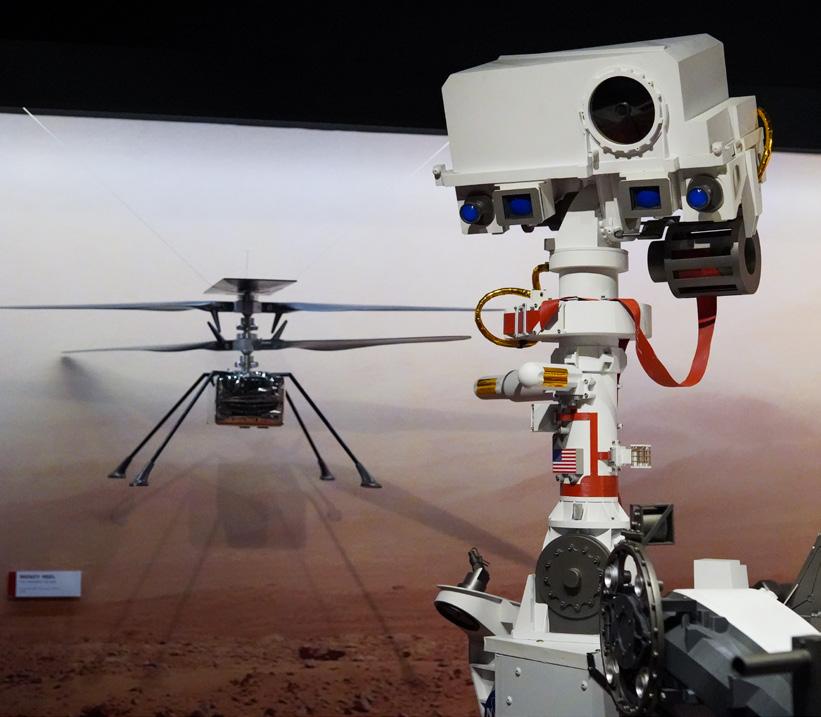
After three years on Mars, NASA Jet Propulsion Laboratory confirmed the Ingenuity Mars Helicopter has flown its final flight due to sustained rotor damage during its Flight 72 landing. Thanks, Ingenuity, for showing us what’s possible when we brave the unknown!
SPRING ASTRONOMY DATES
MARCH 20
Vernal Equinox
The vernal equinox marks the first day of spring in St. Louis. On this day, the sun shines above the celestial equator, providing equal amounts of light to both northern and southern hemispheres.
MARCH 24–25
Penumbral Lunar Eclipse
A penumbral lunar eclipse occurs when the moon passes through the outermost edge of the Earth’s shadow causing the moon to darken slightly, but not completely. Penumbral eclipses may not be as exciting as other types of eclipses, but this event means we are only two weeks away from the total solar eclipse on April 8!
APRIL
8
Total Solar Eclipse
Don’t miss the last total solar eclipse visible in the USA until 2045. In St. Louis, the event will be visible as a 99% partial eclipse. Travel to the path of totality if at all possible!
APRIL
22–23
Lyrid Meteor Shower Peak
The annual Lyrid Meteor Shower will peak in the early morning hours of April 23. Unfortunately, the glare of the full moon will block out all but the brightest meteors from the Lyrids in 2024.
23
Photo Credit: NASA/Scientific Visualization Studio/Michala Garrison; Eclipse Calculations By Ernie Wright, NASA Goddard Space Flight Center
How Do We Recruit Teens for the YES Program?
It All Starts with Our Community Partners.
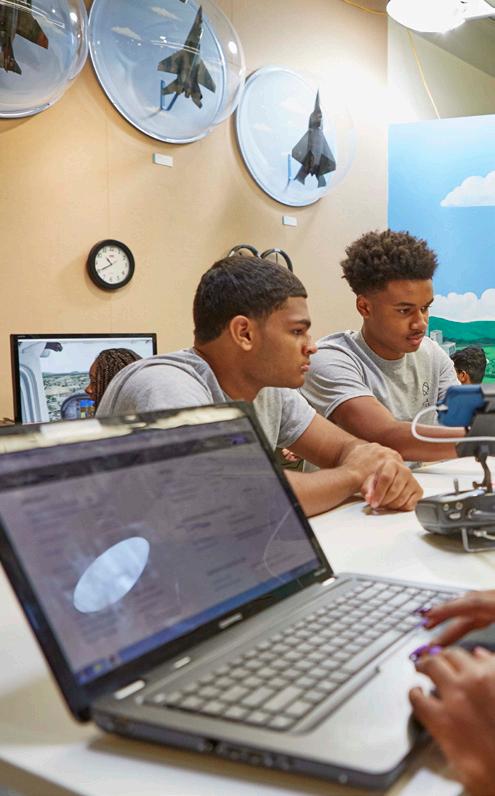
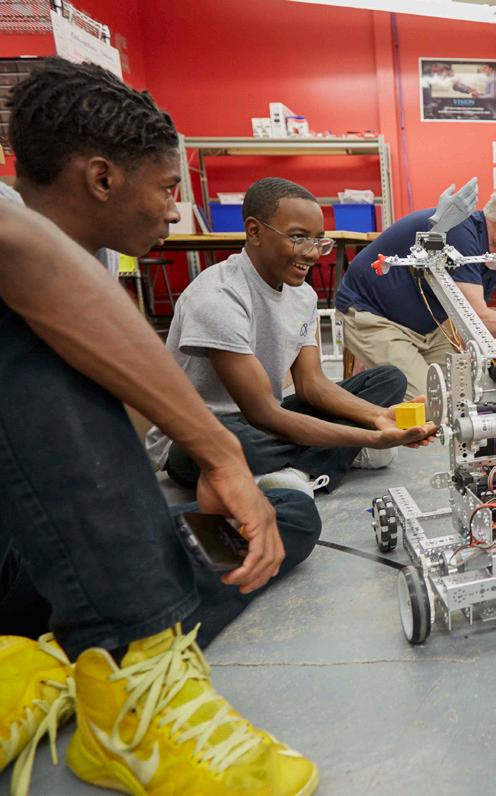
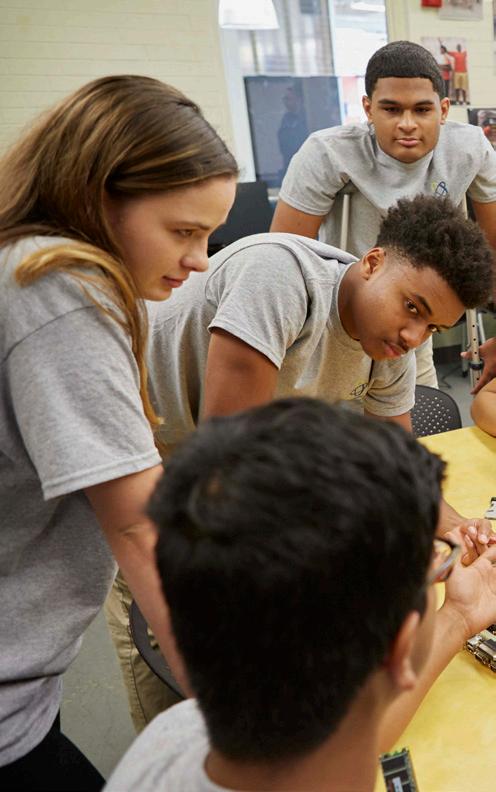
The Saint Louis Science Center’s nationally recognized Youth Exploring Science (YES) Program has created a 25-year legacy of success by working with teens from underserved and underrepresented parts of the St. Louis area throughout their high school years to help prepare them for in-demand STEM (science, technology, engineering and math) careers of the future. But where do these talented teens come from? Recruiting these local teens all starts with the Science Center’s network of community partner organizations
The YES Program works closely with a variety of organizations, collaborating on different initiatives supporting youth in the St. Louis community and recruiting teens from around the St. Louis bi-state metropolitan area to participate in the program. With a network of community partners, the YES Program works with organizations like the Riverview Gardens School District, Girls Incorporated of St. Louis, Mission St. Louis, Saint Louis Public Schools, Urban League of Metropolitan St. Louis and many more. To help recruit new YES Teens, members from the Science Center’s Community Science department visit community partner organizations to talk about and encourage interest in the YES Program.
Community partners refer teens to the program and, once recruited, the new cohort begins its time in YES—the only four-year program in St. Louis that delivers STEM learning in a work-study framework. The teens spend a semester training for their time in YES in the leadup to Summertime Science, where the YES Teens will begin facilitating STEM learning activities with members of the community.
The YES Teens then have options to explore career pathways in a range of STEM fields, including aerospace, computer science, engineering, entrepreneurial science and more. The YES Teens also engage in youth development and college and career readiness activities. By the time they graduate from the YES Program their senior year of high school, the YES Teens are an inspirational, empowered group that is prepared to succeed in their endeavors and effect positive change in St. Louis and beyond.
If you’d like to support impactful programs like YES, turn to page 8 to see how your support for the Science Center's Curiosity Fund can have twice the impact thanks to a generous matching gift from the Crawford Taylor Foundation.
Learn more about the YES Program at slsc.org/yes
24 SPRING 2024 COMMUNITY

Setting Up for Success:
The College Kids Program Helps Inspire YES Teens to Pursue and Prepare for College
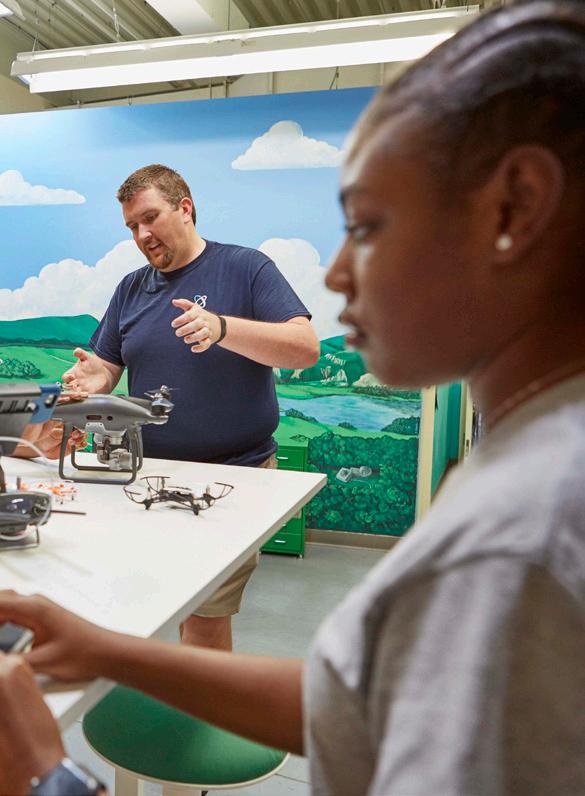
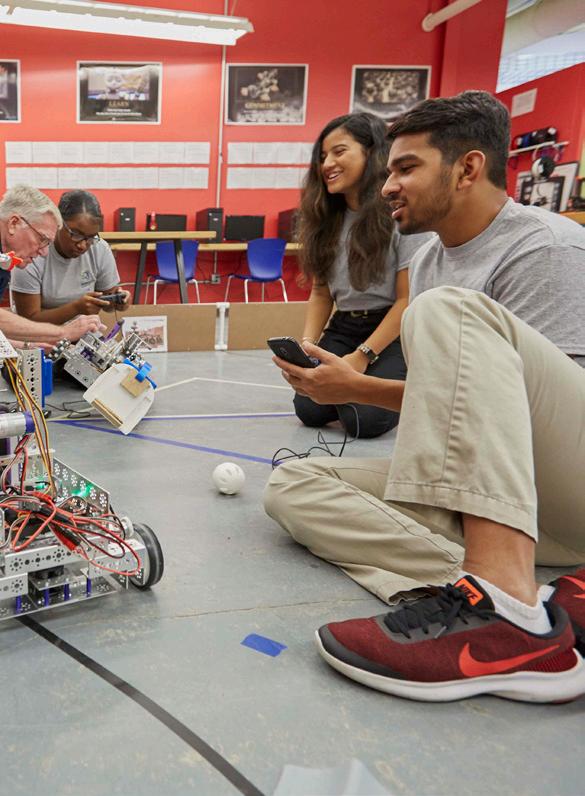
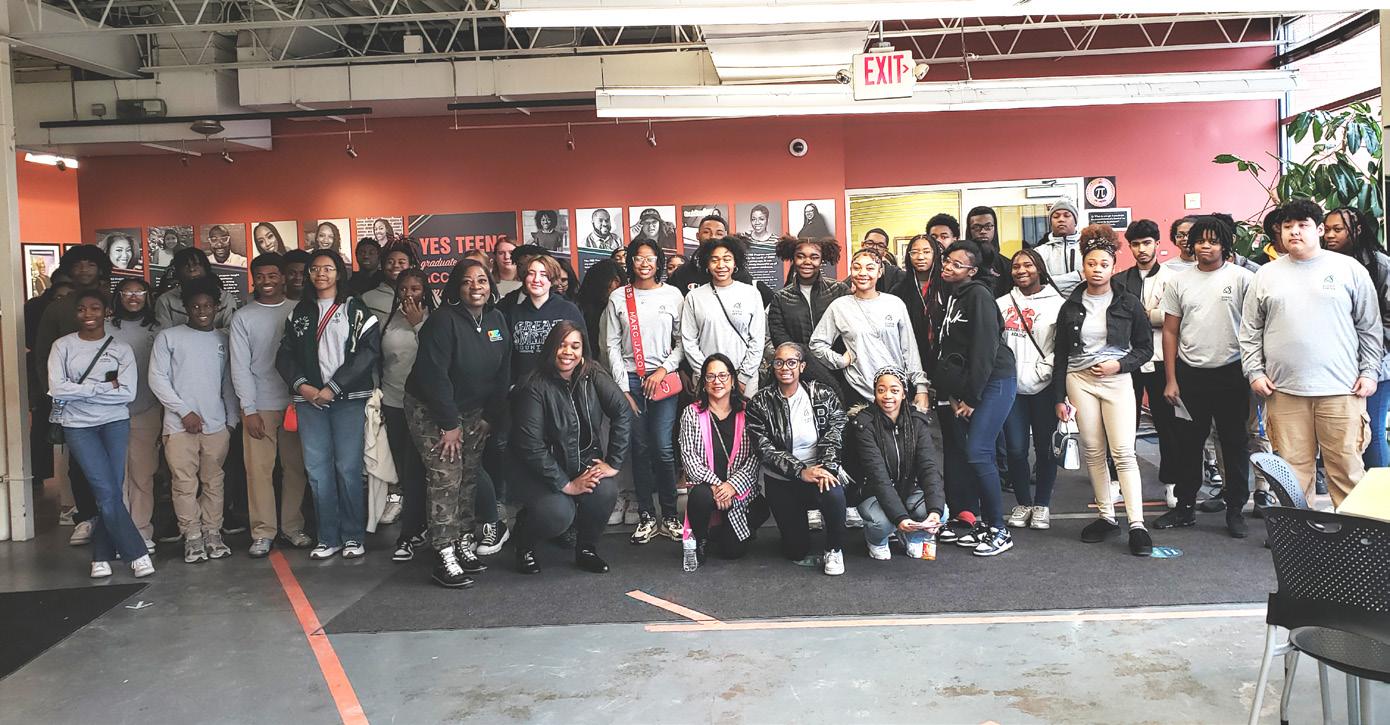
On December 2, 2023, teens in the Science Center’s YES Program participated in a special visit from the Office of Financial Empowerment, part of the City of St. Louis Treasurer’s Office. Representatives from the Office of Financial Empowerment College Kids Program visited the Taylor Community Science Resource Center to talk about college funding and a number of related topics.
Assistant Treasurer Christina Bennett provided personal stories and shared current resources for the YES Teens to learn about financial resources for college, ACT testing, college comparisons, upcoming College Kids events and more.
A core part of the YES Program is helping YES Teens develop the knowledge, aspirations and vital 21st century skills to succeed as the next generation of STEM workers. During the session, the YES Teens had the chance to learn tips on navigating the college application process, opportunities and strategies to secure financial aid and scholarships and the power of budgeting and saving for the future.
Thank you to the College Kids Program and the Office of Financial Empowerment for visiting and sharing with our YES Teens!
Learn more about the College Kids Program at stlofe.org/college-kids.
25
From the Science Center to the Classroom and the Community, STEM Learning Programs Spark Curiosity for Science
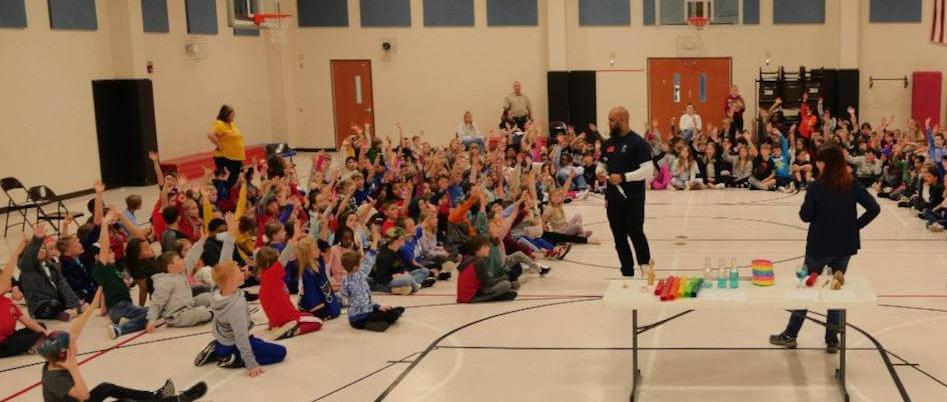
STEM learning doesn’t just happen inside the walls of the Science Center. Did you know that our Community Science team offers a range of STEM-focused activities and programs available to schools, community groups and others that bring science, technology, engineering and math learning to life practically anywhere in the St. Louis community?
Check out some of the STEM learning programs that help us bring science and technology learning to our community as part of our mission to inspire everyone to be curious and engaged in science
Amazing Science Demonstrations
Our Amazing Science Demonstrations inspire “oohs” and “aahs” with 30-minute presentations that bring science to life. With a number of options great for audiences of 100 people or more, Amazing Science Demonstrations cover a range of topics— from exploring chemistry with fire, decomposition and a bang! of an ending in Creepy Chemistry to seeing sound, frequency and pitch using singing goblets, screaming metal rods and more in Now Hear This!
Did You Know? Our Amazing Science Demonstrations are perfect for a school assembly or other gathering and can be scaled up or down to accommodate different ages, grade levels and classroom or group sizes. Contact us to learn more about pricing and availability!
Inquiry Investigations
Looking to add some STEM-filled fun to your class’s normal science lessons or your group’s after-school or activity club? Inquiry Investigations provide an hour-long STEM lesson that allows groups to explore physics, chemistry and even eclipses!
Did You Know? Inquiry Investigations can be scaled up or down to accommodate different ages and grade levels for groups of up to 30 people. Contact us to learn more about pricing and availability!
26 SPRING 2024
COMMUNITY
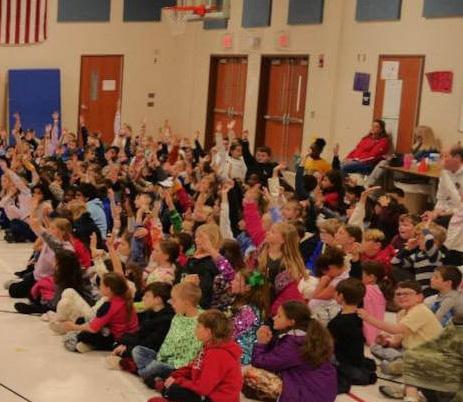
Family Math & Science Nights
With Family Math & Science Nights, schools and groups can experience a selection of STEM activities that pique their curiosity. Groups are able to choose from an assortment of activities covering topics like flight, chemistry, the natural world and even animation!
Family Math & Science Night
STEM activities include…
Simple Circuits:
Build simple circuits using wires, bulbs and batteries.
Sound Sandwich:
See and feel vibrations by making a craft musical instrument to play at home.
Cheek Cell DNA:
Use household chemicals to see your own DNA without a microscope.
Bernoulli Tricks:
Explore the science of flight by performing fun tricks demonstrating Bernoulli’s Principle.
Stomp Rockets:
Experience Newton’s laws of motion by making a rocket lift off.
And many more!
Program offerings are subject to change. To learn more about pricing and the availability of Public Program offerings or to schedule a program, visit slsc.org/off-site-school-programs or call us at 314.286.4680.
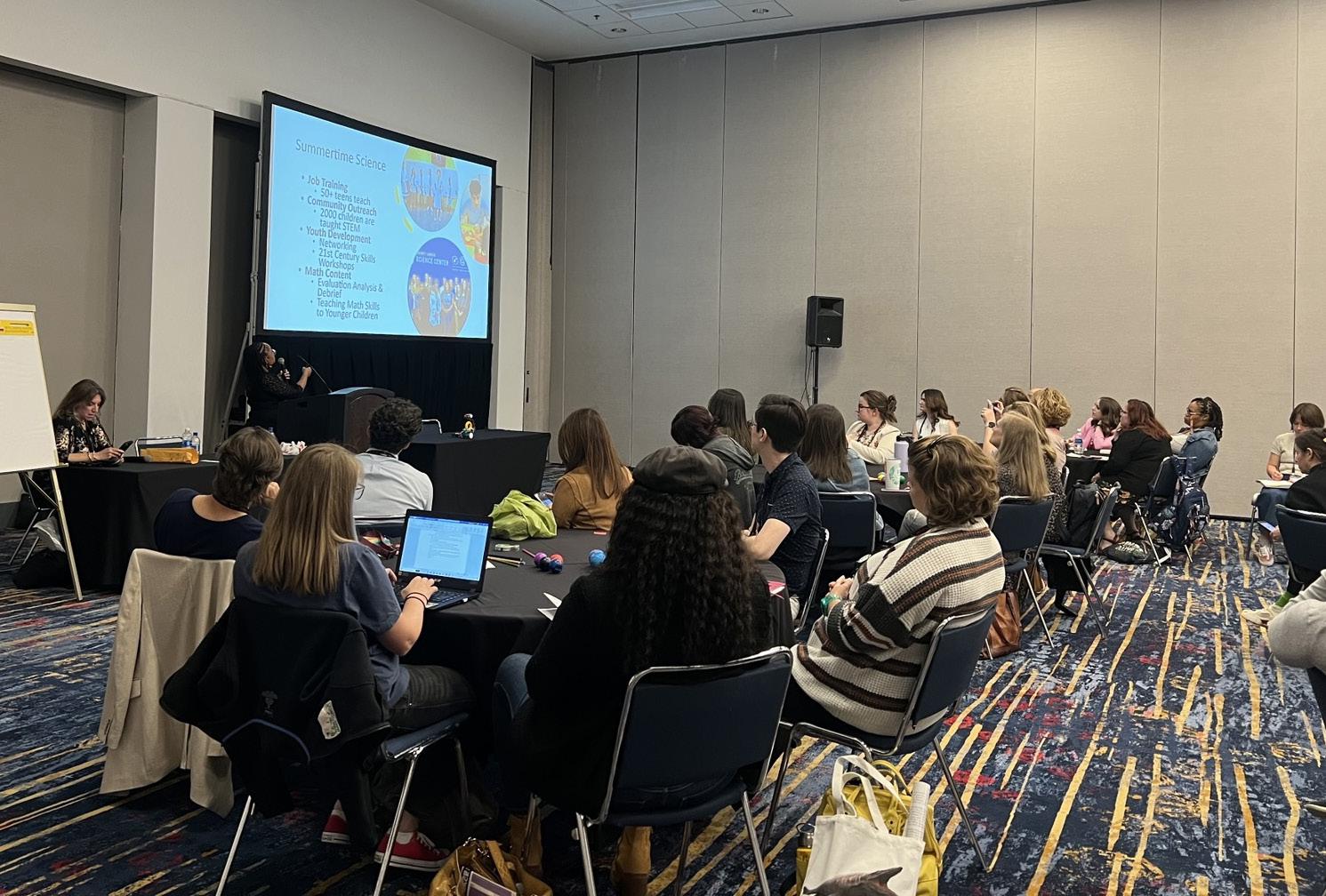
In 2023, the Saint Louis Science Center sent multiple educators to the Association of Science and Technology Centers (ASTC) Conference as presenters. One of those educators was Lauren Patrick, an educator for the Science Center for over 12 years and one of the managers of the Youth Exploring Science (YES) Program. In collaboration with other science institutions, Lauren engaged educators from around the world in a session regarding math education.
This ASTC session was designed to help meet a need for innovative, hands-on approaches to mathematics for students in traditionally underserved neighborhoods who are less likely to have access to experiential STEM (science, technology, engineering and mathematics) learning. The hands-on math activities presented during the session will be used globally by educators to further inspire youth interest and increase student confidence in math skills. Overall, the session provided practical tools for engaging all members of our communities in equitable, enriching opportunities to learn math.
27
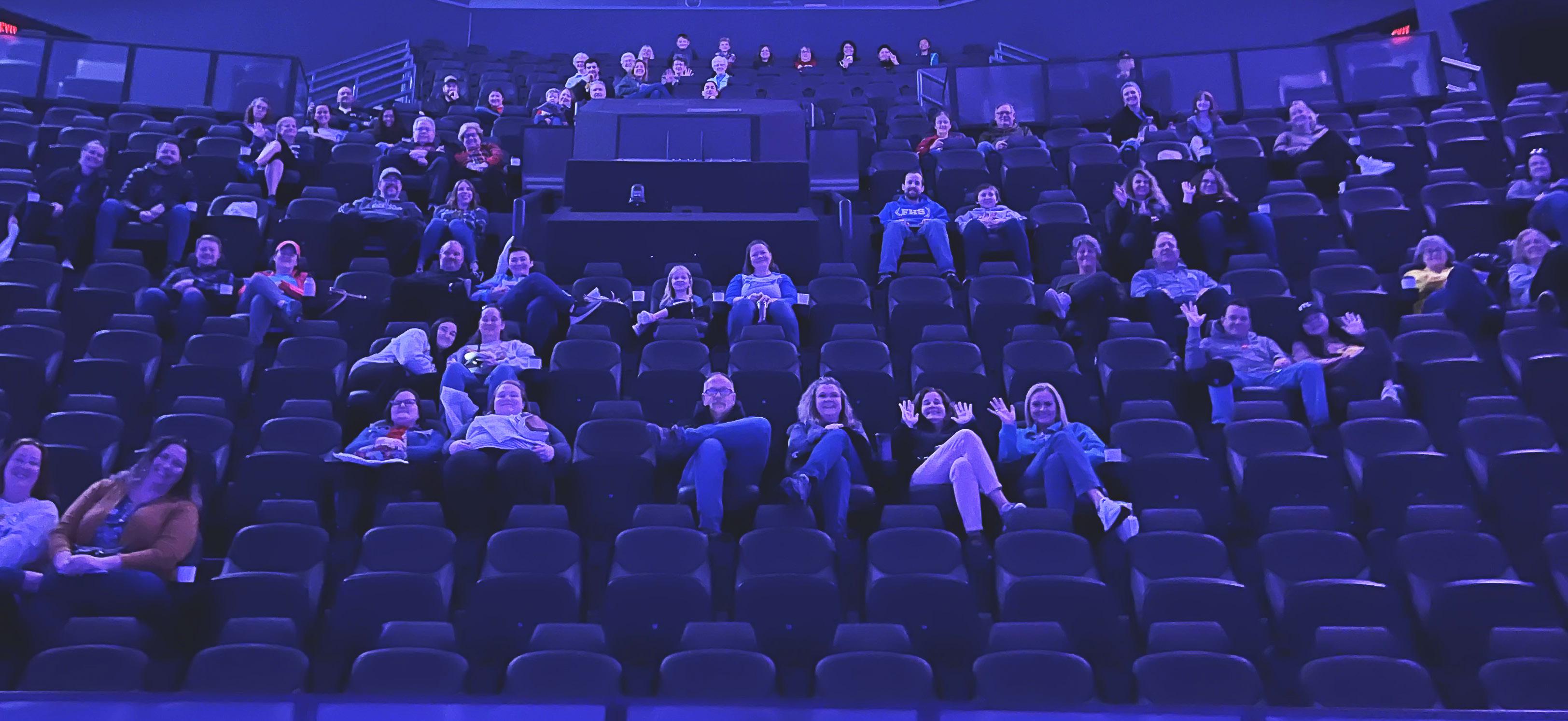
The Science Center’s Educator Open House Connects Local Teachers with STEM Offerings for the Spring 2024 Semester
St. Louis educators enjoyed a special field trip to the Saint Louis Science Center on Saturday, December 9, to take part in the Science Center’s latest Educator Open House. Teachers were invited to bring a guest to check out the many STEM (science, technology, engineering and math) education programs and experiences available both at the Science Center and to local schools for the 2024 Spring semester. Approximately 100 educators attended the free morning event.
The educators explored programs and activities throughout the Science Center’s Oakland Building and James S. McDonnell Planetarium and were invited to check out OMNIMAX® Theater films, see a Star Show in the McDonnell Planetarium’s Orthwein Star Bay, hear about new Science Center exhibits like Dream It. Build It. and more. Educators also had the chance to meet with members of other Zoo Museum District institutions including the Saint Louis Zoo and Missouri History Museum to learn about the education programs available to schools and field trips.
Stationed in the T-Rex Room on the Lower Level, teens from the Science Center’s Youth Exploring Science (YES) Program spent the morning engaging attendees with demonstrations of STEM programs like Simple Circuits,
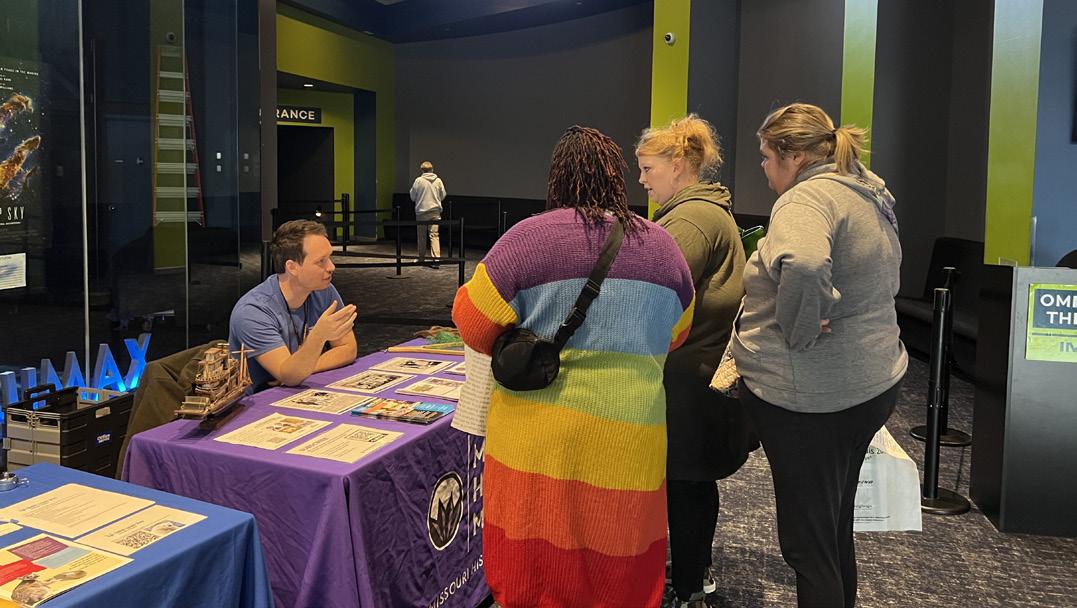
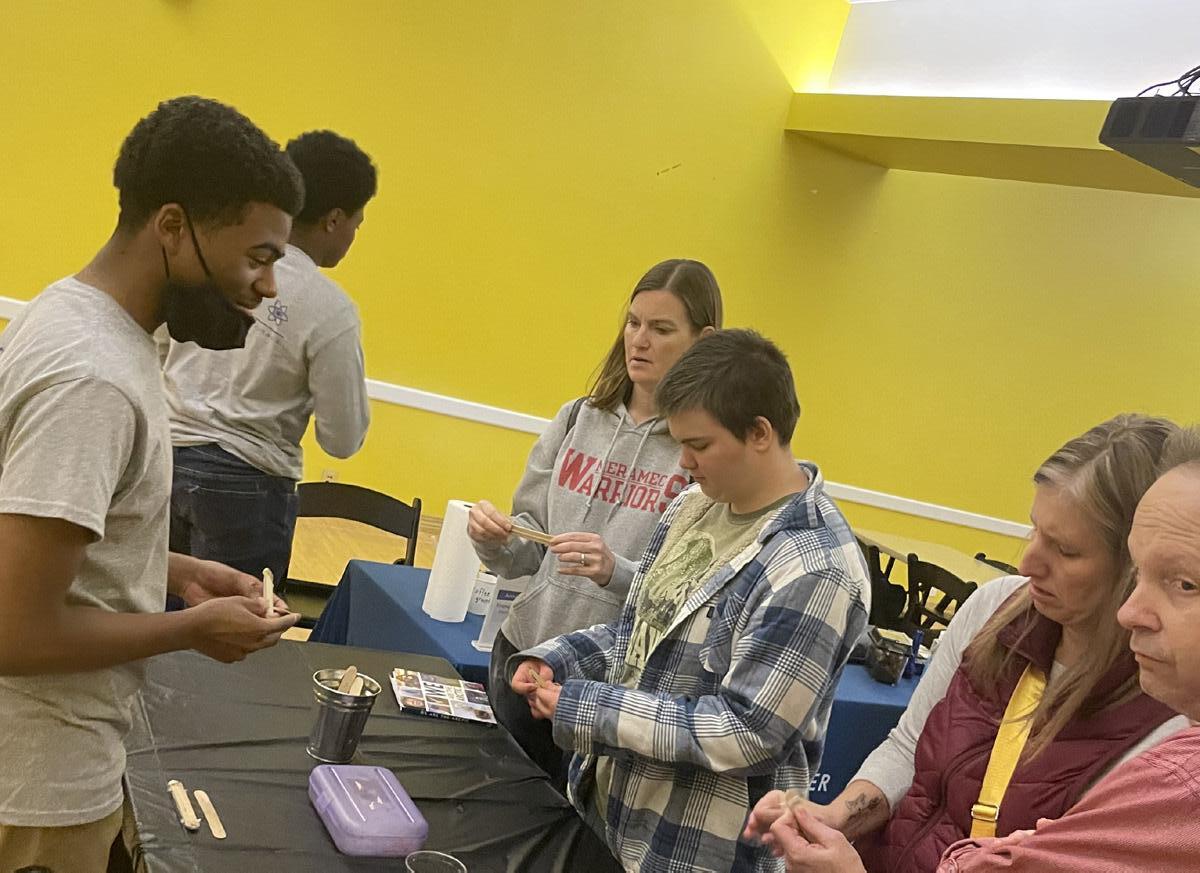
programs that the Science Center’s Community Science team can bring to schools.
In the OMNIMAX® Theater, educators and attendees gathered to watch screenings of two documentary films, Deep Sky and The Arctic. Capping off the morning, the attendees headed to the McDonnell Planetarium. There, they took seats in the Orthwein Star Bay to see a live presentation of The Sky Tonight, where Science Center educators engage audiences in a live presentation showing what sights can be seen overhead in St. Louis’ night sky.
Thank you to everyone who came out to participate in the Science Center’s Educator Open House!
28 SPRING 2024 COMMUNITY
Esports
A Smashing New Year’s Esports Event
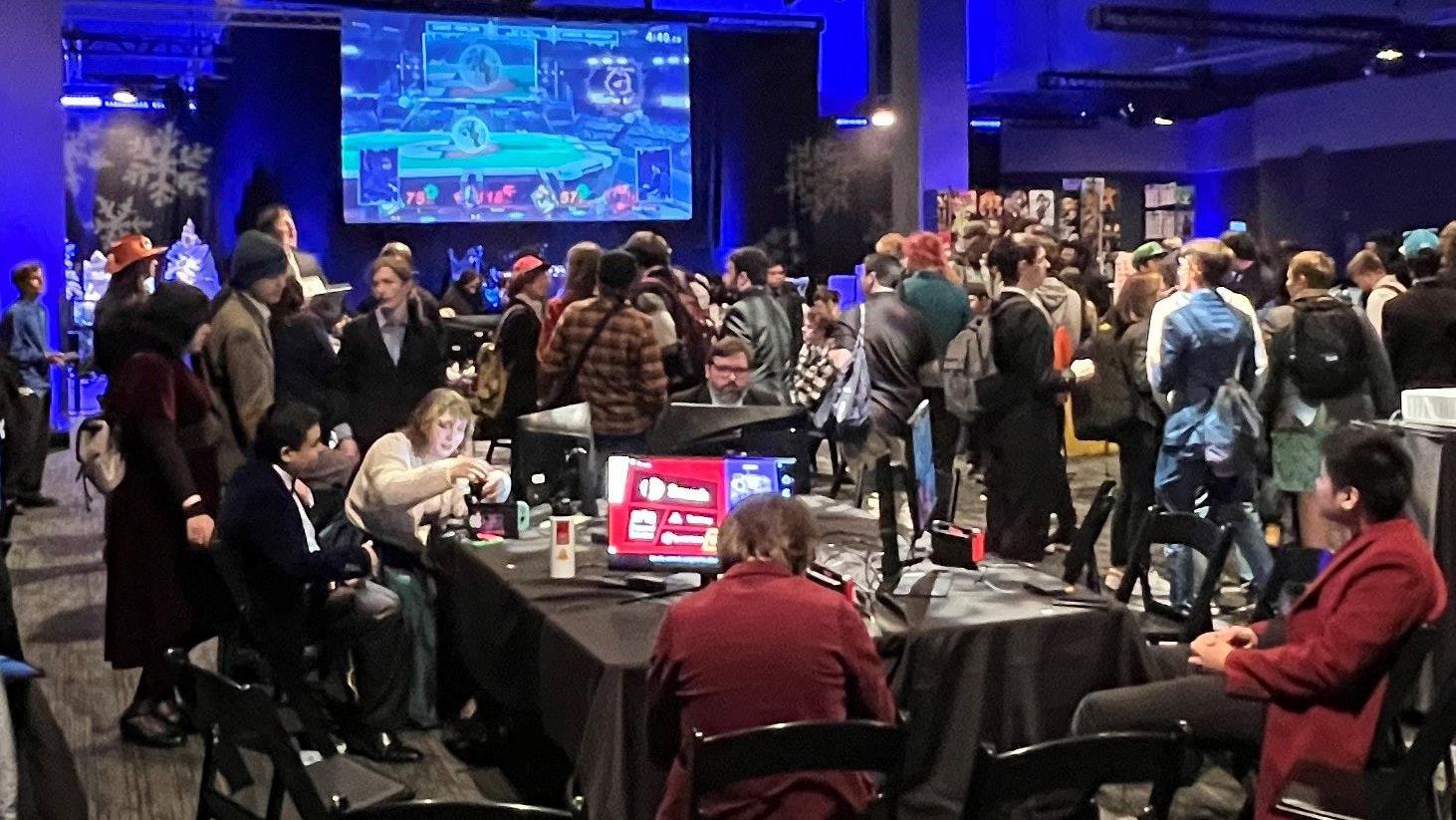
As 2023 came to an end, the Saint Louis Science Center hosted its largest esports event of the year. The 2nd Annual Snowball Smash-Out was a huge success, as the Science Center welcomed nearly 175 participants on Saturday, December 30 for a doubles and singles Super Smash Bros®. Ultimate competition. Participants traveled from all around the region for this premiere event.
Esports Coordinator Matthew Shenouda stated, “Having players travel from seven or more different states made it one of the largest regional events this year!”
Adding an element of real-life fun to the esports world, the Science Center’s event is dubbed the “Midwest’s most formal Smash event!” Competitors are encouraged to dress to impress with the opportunity to be named Best Dressed for the evening.
Another unique feature of the event is the community focus and partnerships that enhance the experience for spectators and participants alike. The Science Center worked closely with the Smash community to identify potential shoutcasters for the online streams and worked with familiar faces from First Friday events to provide retail opportunities in the vendor space, which was a new addition to the event in 2023.
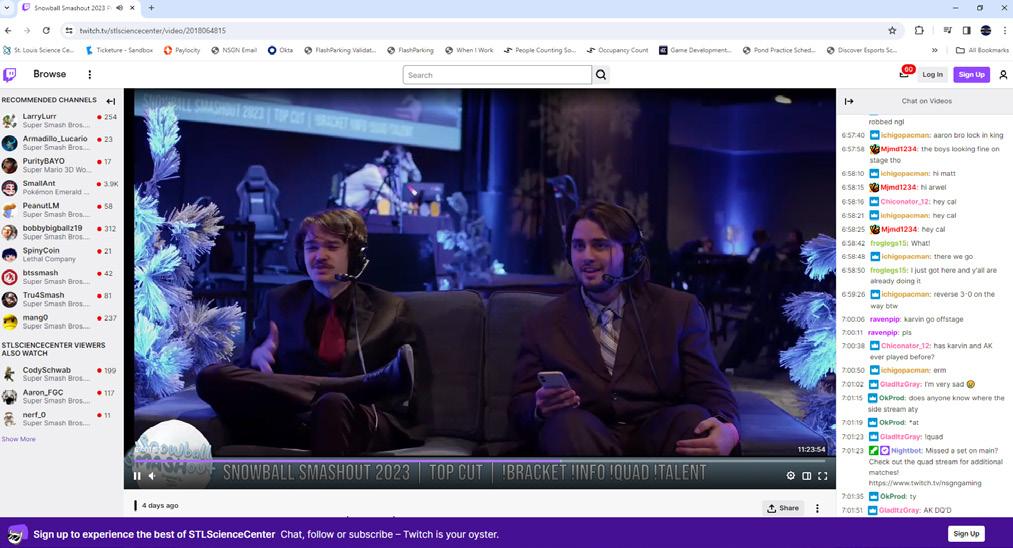
Shenouda enthused, “This event is always something special for the Midwest Smash Community, as it continues to grow each year!” This year, the seven-plus-hour event concluded late in the evening, as multiple competitors took home cash prizes and custom-printed trophies. Science Center guests were able to watch the competition along with the over 500 unique viewers who watched the contest online.
The Science Center looks forward to continuing to host events like this one over the next year and beyond. Be sure to check out slsc.org/esports for the most up-to-date esports information, including competitions, educational programming and special events!
DONOR SPOTLIGHT:
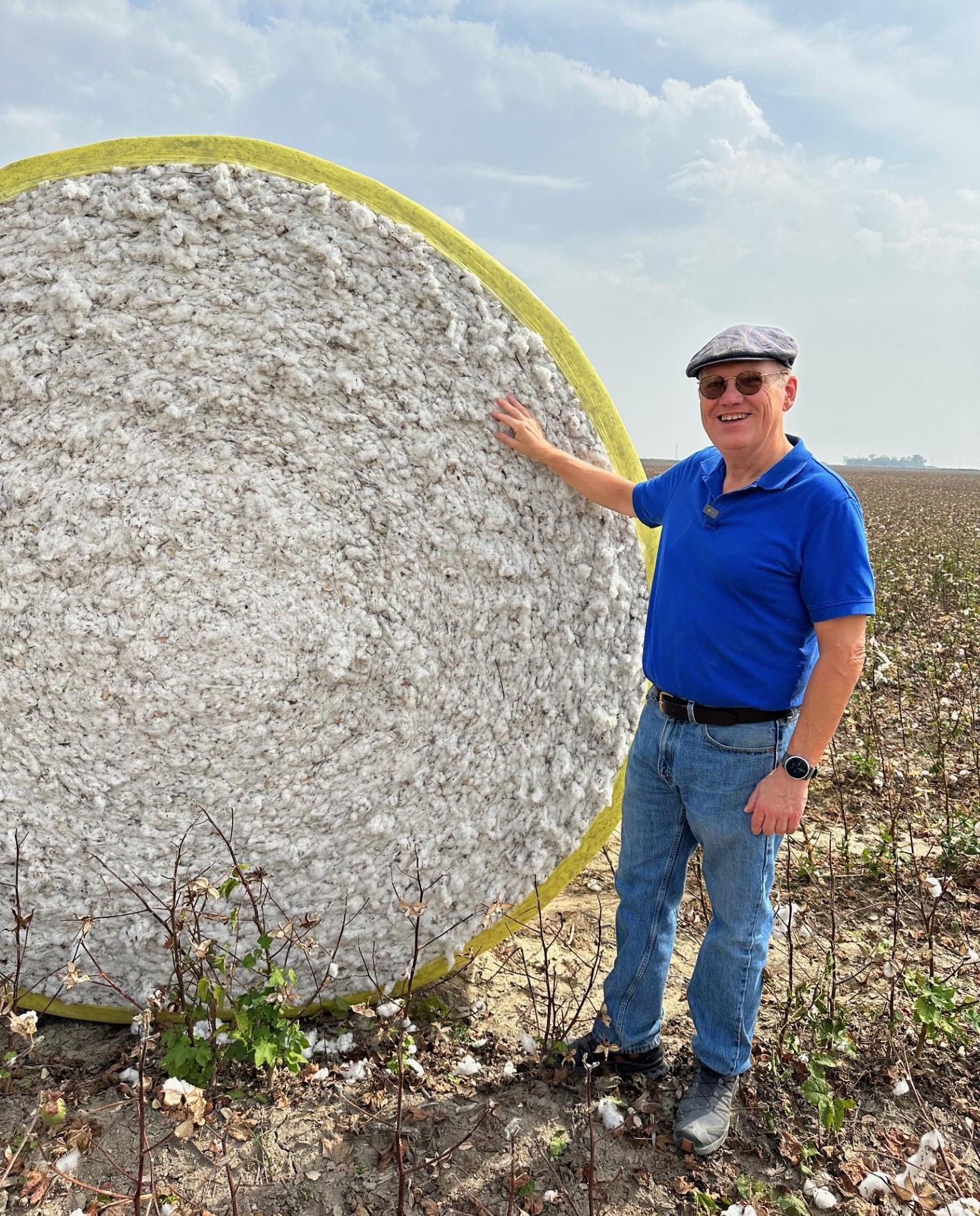
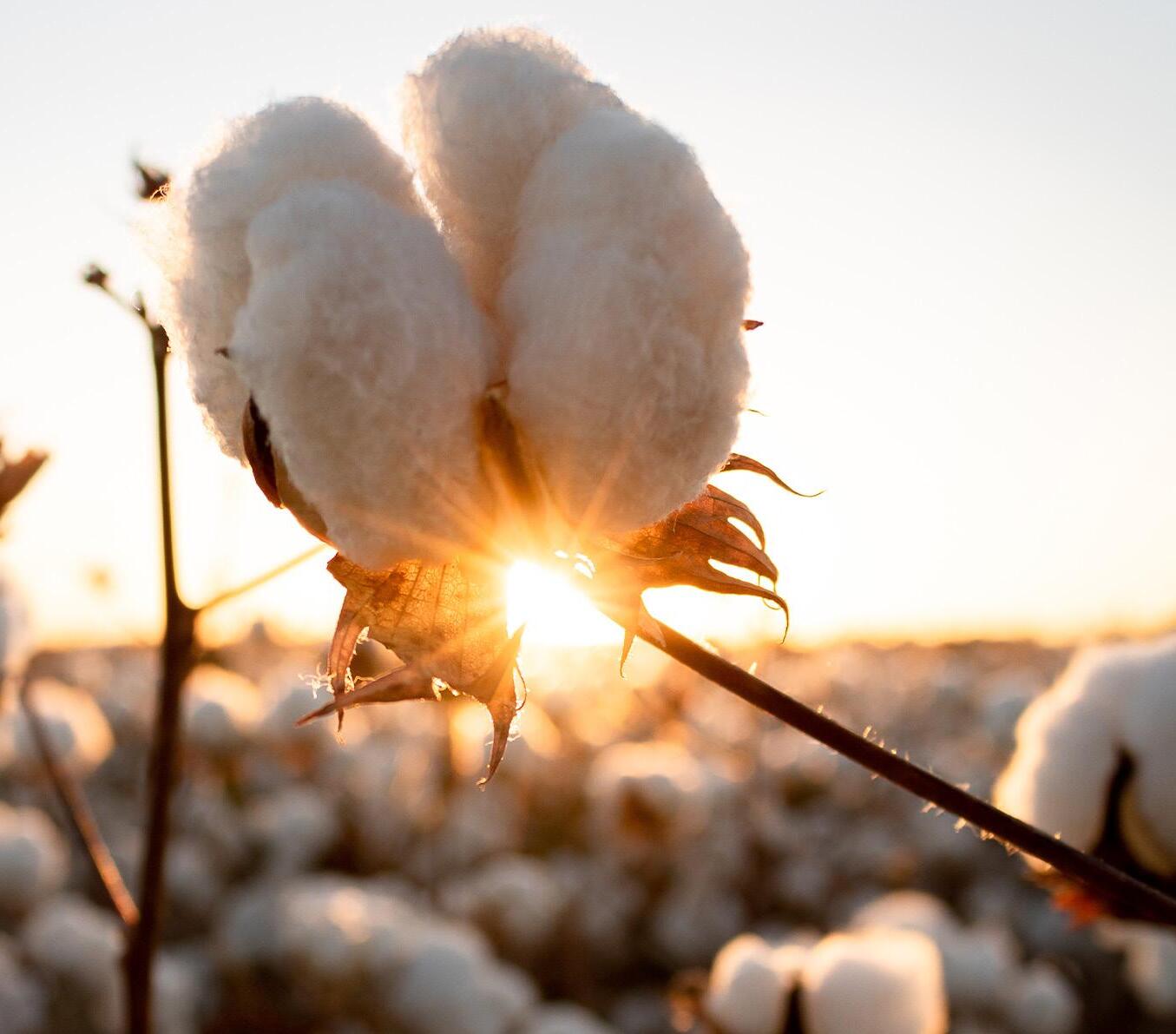
Barry Bean, Bean & Bean Cotton Company

Q: Tell us a little about your history with farming and agriculture. Do you come from a family of farmers or was agriculture something you came to on your own?
A: I’m a fifth generation Missouri farmer and agribusinessman. Like many families, my family came into the Missouri Bootheel when it was first cleared and drained in the early 1900s and built sawmills, a grain elevator, and a cotton gin. We still farm the land they originally cleared, and I operate a cotton business, buying Missouri cotton and selling it around the world.
Q: What are some of the ways science and technology play a role in how Bean & Bean Cotton grows and works with cotton plants?
A: Science and agriculture have always gone hand in hand, and we work closely with researchers at the University of Missouri Fisher Delta Center, seed and chemical companies, and our own scouts and consultants to ensure we are producing crops as efficiently, economically and sustainably as possible. We conduct seed trials, regular soil testing and pest management trials with our research partners to not only make our own operation better, but to further the current state of agriculture and be better stewards of the land
30 SPRING 2024 PARTNERSHIP & SUPPORT
Barry Bean, Bean & Bean Cotton Co.
Q: As a longtime GROW advocate, what do you feel is one of the most important experiences or opportunities the GROW gallery provides for our local community and region?
A: Despite the fact that we all rely on agriculture for our very survival, consumers, educators and policymakers are increasingly unfamiliar with where their food and fiber come from, and how it is produced. The GROW Gallery is a great tool to reach students and urban consumers and give them the opportunity to have a hands-on experience while learning about agriculture and its importance. It also showcases some of the science and tools we are using to move agriculture forward into the 21st century and meet the challenge of a hungry world.
Q: Why do you feel it's important for organizations like the Missouri Farm Bureau to support STEM education programs like those at the Science Center?
A: The GROW Gallery is an important tool to correct some of the flawed assumptions consumers make about agriculture, and STEM education gives them the tools to understand the tremendous strides we are making to be even more sustainable. It is critically important that consumers and policymakers have scientifically accurate and comprehensive information to offset the flawed and/ or biased science often presented to the public. Agricultural education has been an essential component of the Missouri Farm Bureau’s mission since its founding in 1915, and a thorough understanding of the science of agriculture is key to that education. The Saint Louis Science Center is a vital part of taking that education to urban and suburban students who might not otherwise be exposed to even basic agricultural practices or concepts.
Responses have been edited for clarity and conciseness.
IN MEMORIAM:
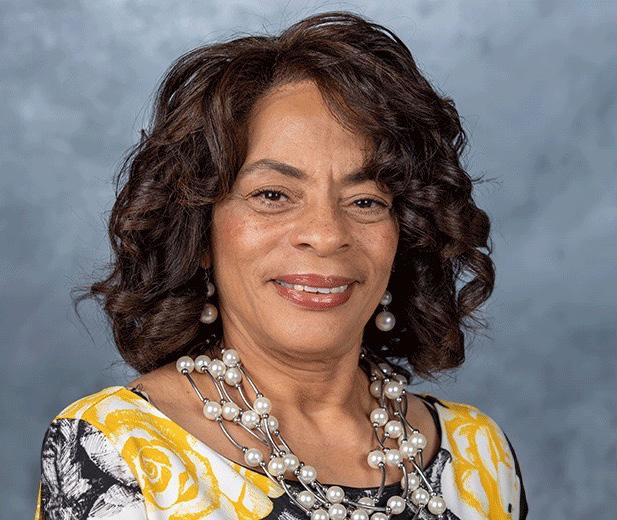
Dr. Gena Gunn McClendon
The Saint Louis Science Center team was saddened when Dr. Gena Gunn McClendon passed away on Saturday, October 21, 2023. Dr. McClendon had served as a City Advisory Commissioner leader of the Science Center since her appointment by Mayor Lyda Krewson in 2021.
Dr. Gena Gunn McClendon, PhD, served as director of Community Engagement at the Brown School’s Center for Social Development at Washington University in St. Louis. Her work primarily involved policy research analysis and consultation with community-based programs, academic institutions, state and federal policymakers and advocacy groups.
Dr. McClendon earned a PhD in Urban Higher Education from Jackson State University in Jackson, Mississippi. She received her Master of Management and Leadership from Fontbonne University in St. Louis and Bachelor of Science degree from Southern Illinois University in Carbondale.
From all of us at the Science Center, we wish to extend our deepest sympathies to Dr. McClendon’s family, friends, and the community.
31

NONPROFIT ORG U.S. POSTAGE PAID ST. LOUIS, MO PERMIT NO. 1491 5050 Oakland Ave. St. Louis, MO 63110 NewScience is always GREEN The Saint Louis Science Center is a committed steward of the environment. We are proud to continue to offer the digital and interactive version of NewScience at slsc.org/newscience If you would like to opt for a sustainable choice and only view NewScience digitally, please send an email to us at memberships@slsc.org to no longer receive a paper subscription. You can also send us an email if: • Your email address has changed • Your name is misspelled • Your address is incorrect SUMMER STEM EXPLORERS REGISTER NOW! Members at the PLUS and MAX level SAVE 20% on camp sessions. Visit slsc.org/camps to learn more and sign up.
