NEWS FOR MEMBERS, PHILANTHROPIC PARTNERS AND FRIENDS OF THE SAINT LOUIS
Board Members
Saint Louis Science Center Board of Commissioners
Dr. Mark S. Wrighton, Chairman
Dr. Christine Jacobs, Vice-Chair
Dr. Kelvin Adams, Secretary
Michael J. Baughman, Treasurer
Chris Almeida
David Baringer
Karen Branding
Mark Bulanda
Mark Sawyier
Mark Sears
Greg Sullivan
Dr. Jeremy Williams
Saint Louis Science Center Board of Trustees
Edward Monser, President
Abe Adewale
Simon Bailey
Barry T. Cervantes
Jim Curran
Beverly Estes Guyton
Richard C.D. Fleming
Paris Forest
Devin Fraley
G. Patrick Galvin
Jenna Gorlewicz
Kevin Gunn
Jerome Harris
Dr. Martin H. Israel
Jamie Jabouri
Frank D. Jacobs
David Kocs
Dr. Toni Kutchan, Ex-Officio
Erik Lindbergh
Carol B. Loeb
Gregg Maryniak
John F. McDonnell (Life Trustee)
RADM Lee J. Metcalf, USN (Ret.)
Maurice Muia
Elizabeth E. Niedringhaus
Dr. Sam Page, Ex-Officio
James Qin
Donn Rubin
Kathleen R. Sherby
Judy Sindecuse
Cara Spencer, Ex-Officio
Zar Toolan
Craig Unruh
Kenneth L. Wagner
Breck Washam
Candace Webster
Dr. David J. Werner
Letter from the President
Dear Friends of the Saint Louis Science Center,
What a busy summer it has been! We are thrilled at the incredible reception from guests for POMPEII: THE EXHIBITION, and I hope you’ve had the chance to experience it. If you haven't seen it yet, don't miss it in these final weeks—it's truly an immersive journey back in time that showcases the power of science to unlock the mysteries of our past.
In this issue of NewScience, I'm excited to share what's ahead for the Science Center. Our members have exclusive opportunities coming up, including Member Mission: Cherokee Cave, where attendees will explore historical artifacts from the fascinating caves beneath St. Louis, and a Member Preview of Secrets of Great Salt Lake in our OMNIMAX® Theater.
Our Gallery Spotlight highlights options perfect for field trips this coming school year, from dynamic Energy Stage demonstrations to hands-on Makerspace programs putting creativity and problem-solving at students' fingertips. And you can read more about the next event in our Science Center Up Late series, which invites grown-ups to explore science in a new way this Halloween.
Over the summer, our Youth Exploring Science (YES) program made tremendous impact through Summertime Science, STEMtastic Camp, and Pop-Up Science activities. On page 24, read about these efforts inspiring curiosity for STEM far beyond our walls, reaching people of all ages throughout our community.
I'm particularly excited to share news of Burns & McDonnell's generous $250,000 commitment to deepen the impact of our YES program. Read more on page 30 about this partnership and how it will help us continue giving teens essential STEM skills while empowering them to see themselves as future engineers, innovators, and leaders in their communities.
As we look toward the year end, I want to remind you that while Science Center members and friends make our mission possible, generous support for our Curiosity Fund helps us reach even further. On page 16, you can find multiple ways to help fuel our work, and I hope you will consider showing your support in a way that works best for you. We're also excited about WONDER: A Quantum Blast on October 4. Tickets are available for this new fundraising event, and I hope you'll join us for this spectacular celebration of science.
However you choose to support our work, we're grateful for your generosity and advocacy in our community. Thank you for being with us as we inspire everyone to be curious and engaged in science, and I hope to see you soon at the Science Center to spark your curiosity for something new.
With gratitude,
Ray Vandiver President and CEO
To inspire everyone to be curious and engaged in science. Mission of the Saint Louis Science Center
Host your next private event at the Saint Louis Science Center. Services and catering provided by Saint Louis Science Center Events. For information: 314.286.4667.
Accessibility
Complimentary wheelchairs and strollers are available in the lobby. Motorized scooters are available for a rental fee. Personal Hearing Assistance Devices are available at the OMNIMAX® Theater and Planetarium. Captiview caption devices are available for all OMNIMAX® films.
Official Partners
The Saint Louis Science Center gratefully acknowledges the support of our Official Partners.
In This Issue...
Science Today
Meet Dr. Samoa Asigau, whose career in food science took a path from the nature-inspired culture of her home, Papua New Guinea, to studying pathogens right here in St. Louis.
Gallery Spotlight
Ever taken a field trip to the Science Center? Find out what we do behind the scenes in our galleries to bring STEM concepts to life for field trip groups!
Science Never Stops
Meet Kathy and Jim Sherby and find out about the generations of aha moments they've shared with their family. Explore recent and upcoming events for our Corporate Partners and Einstein Society members, and join us in saying thank you to Burns & McDonnell for their generous support. 8 10 12 16 20 26
Get to know Maddie Earnest, associate director of galleries; learn about wildlife rescue from Ariana Katovich, whose workplace is featured in Wild Rescue; discover the wonder of biomaterials with Koyal Garg, and more.
Join Us
From your last chance to see POMPEII: THE EXHIBITION to your first chance to join Science Center Up Late learning about all things scientifically spooky, we have so much to offer you this fall!
Community
We’ve been bringing STEM to the community in new ways and at new places! From camps to computers, discover how we’ve been unlocking STEM learning with the St. Louis community.
Partnership & Support
Connect with us for updates, special events and fun science.
Fall Hours:
Monday, Thursday, Friday, Saturday: 9:30am-4:30pm | Sunday: 11:00am-4:30pm Closing at 3:00pm on Thursday, September 4
Closed for Thanksgiving Thursday, November 27
Cover photo by Tyler Small.
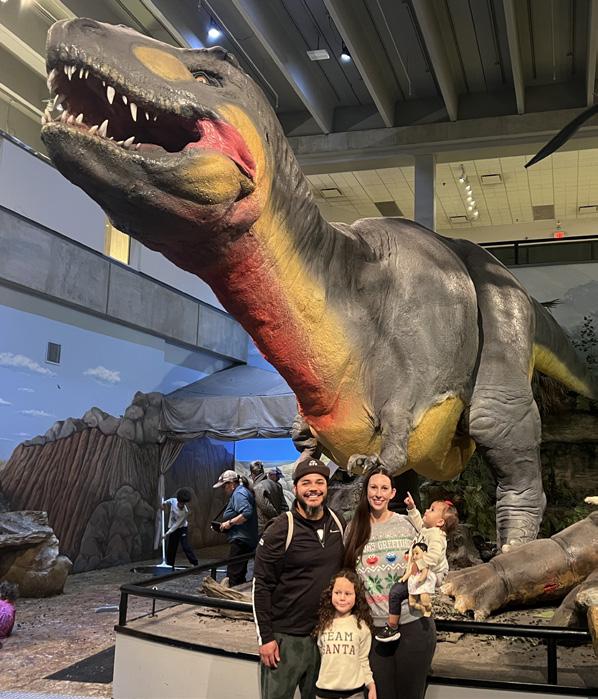
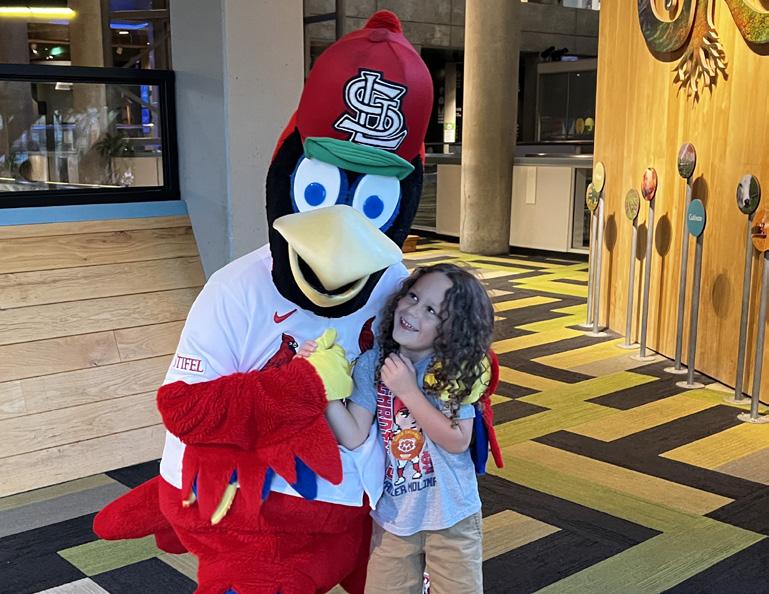
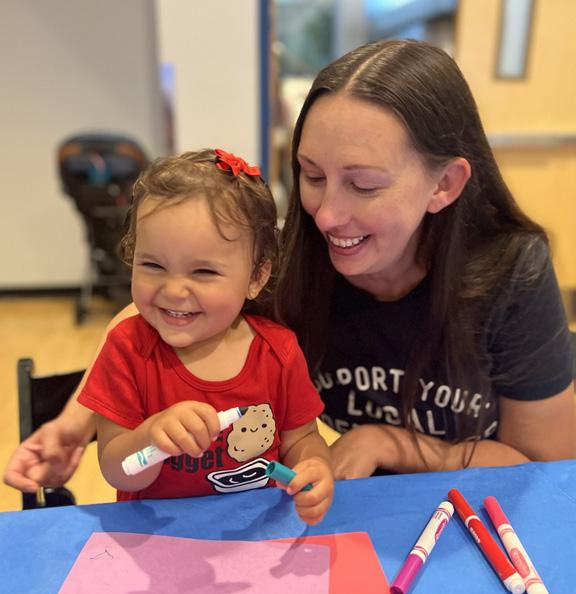
COURTNEY WILSON, DERRICK GALE, AND LINCOLN AND ALARA WILSON-GALE
What are your favorite types of member events?
We try to attend every member event — they're definitely our favorites! The after-hours events are especially magical. The Science Center takes on a whole new atmosphere at night, and it's such a special experience.
How long have you been members?
We’ve been members of the Saint Louis Science Center for two years.
How often do you visit, and what do you like to do here?
We come about twice a month. My son absolutely loves GameXPloration — it’s his favorite spot! My daughter is all about the dinosaurs, and both kids always look forward to time in the Discovery Room. As a family, we all really enjoy the Energy Stage shows, too.
Tell us a favorite memory about the Saint Louis Science Center.
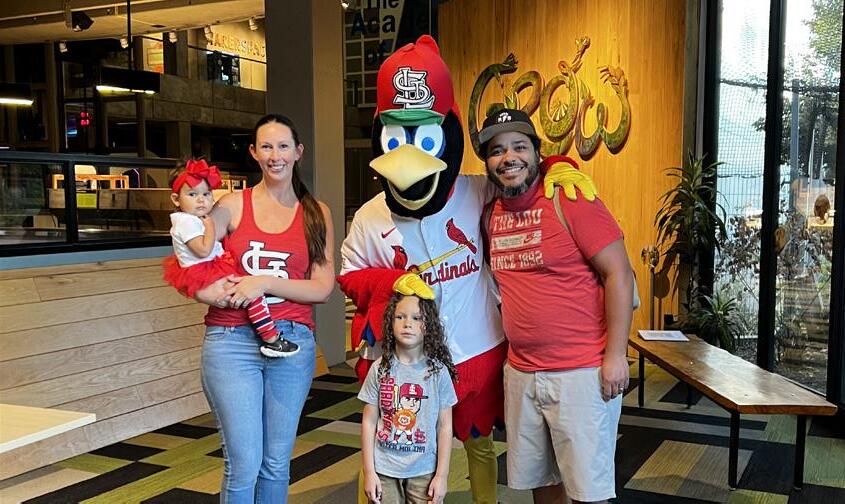
One of our favorite memories was during the GROW member event in 2024 when we got to spend a lot of time with Fredbird. We even got to feed the chickens together! It was so cool to have that extra time in a low-key setting. It made the whole experience feel personal and unforgettable.
What's your favorite member benefit, and why?
The member events really make the membership stand out from other places—they feel personal and unique. Free parking is a huge plus too! And we love that the Discovery Room is included — it’s always a hit with the kids.
For anyone considering becoming a member, why would you recommend it?
There’s so much value in being a member. It gives our family consistent opportunities to learn, explore, and have fun together. If you’re even thinking about it, do it! The experiences and memories are absolutely worth it.
UPCOMING MEMBER EVENTS
SUNDAY, SEPTEMBER 7 | 11:00AM–2:00PM
Grandparents’ Day Member Lounge
Tickets available now!
Few people are more special than grandparents, and we’re ready to celebrate them! We’re creating a special lounge where kids and their grandparents can learn all about each other and how much things have changed since the grownups were their age. We’ll also offer refreshments and crafts!
SUNDAY, SEPTEMBER 7 | 3:00PM–4:30PM
New Member Expedition
Explore Science Center Membership and other ways to support our work. Turn to page 16 to learn more.
Tickets available now!
Are you new to membership at the Science Center?
This event is perfect for you! Join other new members as we guide you through all the benefits of being a Science Center member. Be sure to join in the building tour and enjoy some refreshments, as well as a fun STEM demo led by team members from one of our galleries.
MONDAY, SEPTEMBER 29 | 6:00–8:00PM
Member Mission: Cherokee Cave
Tickets available now!
Join Manager, Collections & Special Projects Kristina Hampton as she and a special guest expert teach us about the science and history behind the caves hiding below St. Louis city streets and neighborhoods.
THURSDAY, OCTOBER 16 | 5:30 & 7:00PM
OMNIMAX® Member Preview: Secrets of Great Salt Lake
Tickets available September 18
An uplifting story of how water connects all life on Earth. Journey back to when mammoths, camels and saber-toothed cats roamed the ancient shores of Lake Bonneville and witness its transformation into Great Salt Lake, caused by one of the largest floods in history! Be immersed in a rare ecosystem where unusual creatures thrive in waters five times saltier than the ocean, and meet the inspiring community of dedicated scientists, indigenous leaders, farmers, and youth determined to sustain this vital Lake and surrounding watershed for the benefit of all.
STEM EXPERT SPOTLIGHT
Dr. Samoa Asigau is a Senior Scientist in Scientific Affairs – Industry at bioMérieux, North America. She leads pathogen testing and validation studies to ensure the accuracy and reliability of diagnostic tools that support global health in the area of food safety. She holds a Ph.D. in Biology from the University of Missouri–St. Louis, with a background in molecular biology and infectious disease. Originally from Papua New Guinea, Dr. Asigau is passionate about making science both inspiring and accessible—especially for underrepresented communities in STEM. Her work is fueled by purpose, excellence, and a heart for global impact. Hi! I’m Dr. Samoa Asigau, a Senior Scientist in Scientific Affairs – Industry at bioMérieux, North America.
I lead pathogen testing and validation studies that ensure the diagnostic tools used in food safety are accurate, effective, and reliable. In simpler terms, I work behind the scenes to help keep food safe and free from harmful bacteria. It’s a technical field, but at its heart, it’s about protecting lives—and that’s what fuels everything I do.
Growing up in Papua New Guinea (PNG), I was fascinated by nature and curious about how it sustained life. Without access to advanced labs, I found a way to spark my scientific curiosity through cultural observation and raw wonder. PNG culture is deeply inspired by nature—from traditional dances that mimic wildlife to ceremonial dress made from feathers, flowers, and leaves.
Books, documentaries, and shows like Captain Planet nurtured my sense of responsibility over the environment before I truly understood what science was. My university education opened my eyes to how science could solve real-world problems—for both ecosystems and human health.
During graduate school, I became captivated by molecular biology and the invisible world of pathogens. I was especially struck by how avian malaria and poxvirus had wiped out native bird species in Hawai’i. That realization fueled my Ph.D. research in the Galápagos Islands, where I focused on protecting vulnerable birds from similar threats. Over time, my passion expanded—from protecting bird populations to safeguarding human health from dangerous pathogens that silently shape ecosystems and communities.
The road from PNG to a global disease diagnostics company wasn’t linear. It took faith, grit, and many leaps of courage. I earned my Ph.D. in Biology from the University of Missouri–St. Louis, focusing on infectious disease and molecular biology. I developed a strong foundation in research, writing, and working across cultures.
As an international student, navigating visa challenges added another layer of complexity. Every opportunity required both scientific excellence and legal eligibility. That often meant delays, uncertainty, and closed doors.
Initially, I envisioned a tenure-track career in academia. But after facing multiple setbacks, I began to sense that my path might look different. A wise mentor encouraged me to explore industry and biotechnology—spaces I hadn’t seriously considered. That nudge, paired with one open door, led me into a field I hadn’t even known existed: food safety at bioMérieux.
Today, my work bridges research and real-world application. I help ensure our diagnostic tools meet rigorous global standards. I’ve worked on projects that detect foodborne pathogens like E. coli, Salmonella, and Listeria—bacteria that can cause serious illness if undetected. Our work helps food companies catch these pathogens before they ever reach the public.
The most fulfilling part of my work is knowing I’m helping prevent illness and protect lives I may never meet. At bioMérieux, we say, “We save lives!”—and it’s not just a slogan. Every tool we validate contributes to public safety. Whether I’m in the lab, training clients, or writing reports, I know my work touches homes, schools, and dinner tables around the world.
There’s also personal fulfillment in representation. Being a Pacific Island woman and a woman of color in STEM—especially in microbiology—is rare. Showing up in excellence is its own form of advocacy. It tells young people from underrepresented communities that their brilliance is needed, and their path is possible.
With this impact also comes great responsibility. Food safety is central to public health. We’re not just testing for pathogens—we’re validating tools that could have an impact on food regulations and global policies. That requires precision, strong documentation, and adaptability in a constantly evolving scientific and regulatory landscape.
Most people don’t think of scientists when picking up salad from the store or enjoying a burger at a restaurant. But behind those meals are scientists like me, working to ensure lettuce is free of E. coli, meat is clear of Salmonella, and dairy is tested for Listeria
My role is one link in a long chain of safety and quality—from farmers and food processors to regulators and scientists. We each play a role in protecting the food supply.
Advice for Students Interested in Food Safety or Science
+ Stay curious. Lifelong learners make the best scientists.
+ Don’t fear detours. My path was full of unexpected turns.
+ Find mentors. One conversation can shift your future.
+ Know your “why.” Purpose will carry you through the hard days.
+ Own your voice Whether you’re from a small island or a big city, your perspective matters.
5 Things Everyone Should Know About Food Safety
1. Foodborne pathogens are invisible but powerful. A tiny amount of E. coli or Listeria can cause severe illness.
2. Not all bacteria are bad. Some support gut health; others need to be controlled.
3. Consumers play a role. Wash produce, cook meat thoroughly, and store food safely.
4. Outbreaks are preventable. With the right testing and protocols, many illnesses can be avoided.
5. Science is critical. From field to fork, science is the backbone of food system safety.
Working in food safety has deepened my appreciation for the complexity of global health. It’s also reminded me that no role is too hidden to matter. Whether I’m running tests in a lab or speaking on stage, I know I’m walking in purpose—and I hope my story helps light the way for others who feel called to do the same.
Gallery Spaces Bring Field Trips to Life
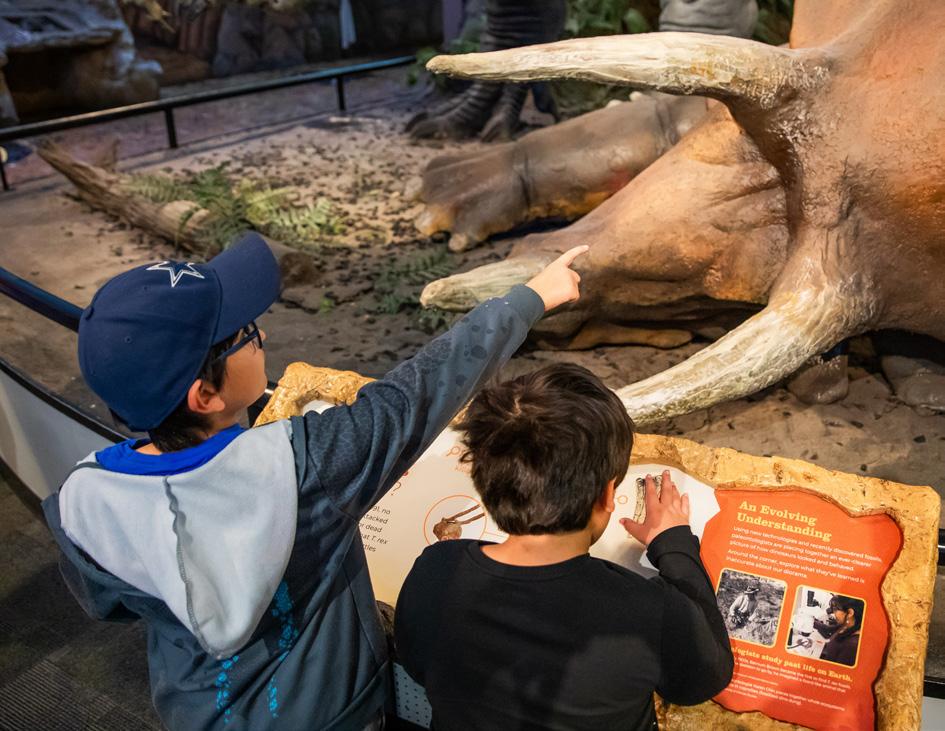
At the Saint Louis Science Center, we know that a visit to a museum can be a life-changing experience, especially for kids. For some children, their first visit to the Science Center is with their school for a field trip. It is during this trip that they first see our T. rex, build an arch with their classmates, or even see live chickens. We welcome the chance to make those visits memorable for both the kids and the grownups.
Visiting the Science Center with a school group allows students to discover science together with their friends in ways that are different from classroom learning. For adults, it is an opportunity to learn and experience science through the eyes of multiple kids. And school-aged groups who participate in a paid educational gallery experience during their Science Center visits have the opportunity for an even deeper dive, both into that gallery space and into the topics explored in those spaces.
In the 2024-2025 school year, the Science Center offered new educational experiences for school groups in our gallery spaces beyond group visits to the OMNIMAX® and Planetarium Star Shows. Makerspace, Energy Stage, and the outdoor GROW Gallery welcomed nearly 70 groups for educational programs with groups ranging in size from 20-150 people, the highest number of people in organized school groups since 2017. We develop our programs to align with NGSS Science Standards and to reinforce classroom learning with experiential, informal educational opportunities.
For more information on field trips, visit slsc.org/field-trips
Energy Stage
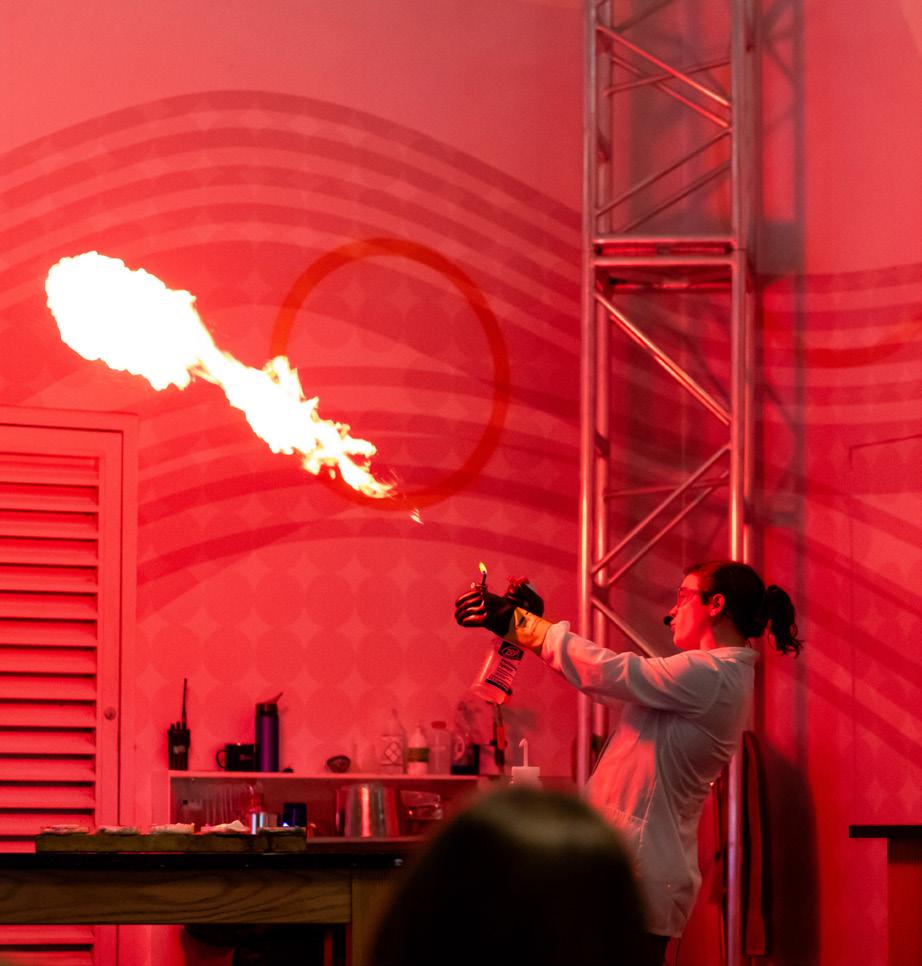
Geared primarily for grade levels 1-5, these demonstrations bring science to life with multisensory experiences. Perfect for larger groups, the 45-minute presentations provide the opportunity to have a more personal learning environment. Groups choose from presentations like Sound Science, Stormy Weather, Great Magma-tude, and Boiling Hot, Boiling Cold.
During a normal day, the Energy Stage team provides regularly scheduled STEM performances. Guests learn about electricity, physics, sound, and, of course, weather. But paid educational group experiences at the Energy Stage allow guests to go deeper into one topic.
In the Sound Science demonstration, the Rubens tube, our culminating demonstration, allows guests to see sound waves as patterns in flames. Using a speaker, a song is pumped through a tube containing small holes and filled with propane. The propane is ignited, and as the sound waves travel through the tube, there are changes in pressure. These pressure changes affect the height of the flames allowing viewers to, in essence,
Megan Linton, manager of Energy Stage, says, “Doing field trips has been my favorite way to engage with our school-aged groups. They’re so excited to be here, and I feel like they get a deeper understanding and appreciation of the concepts we cover because we focus on their group learning experience and do things that they can’t do at school or at home!”
GROW Gallery
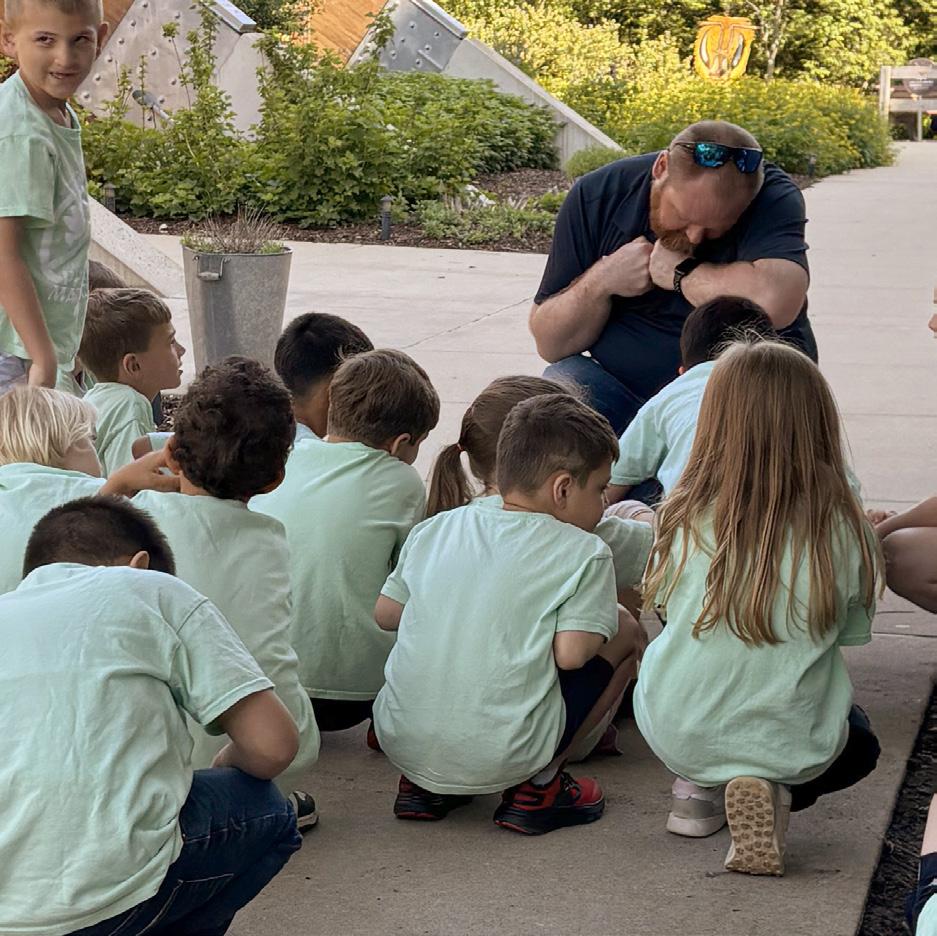
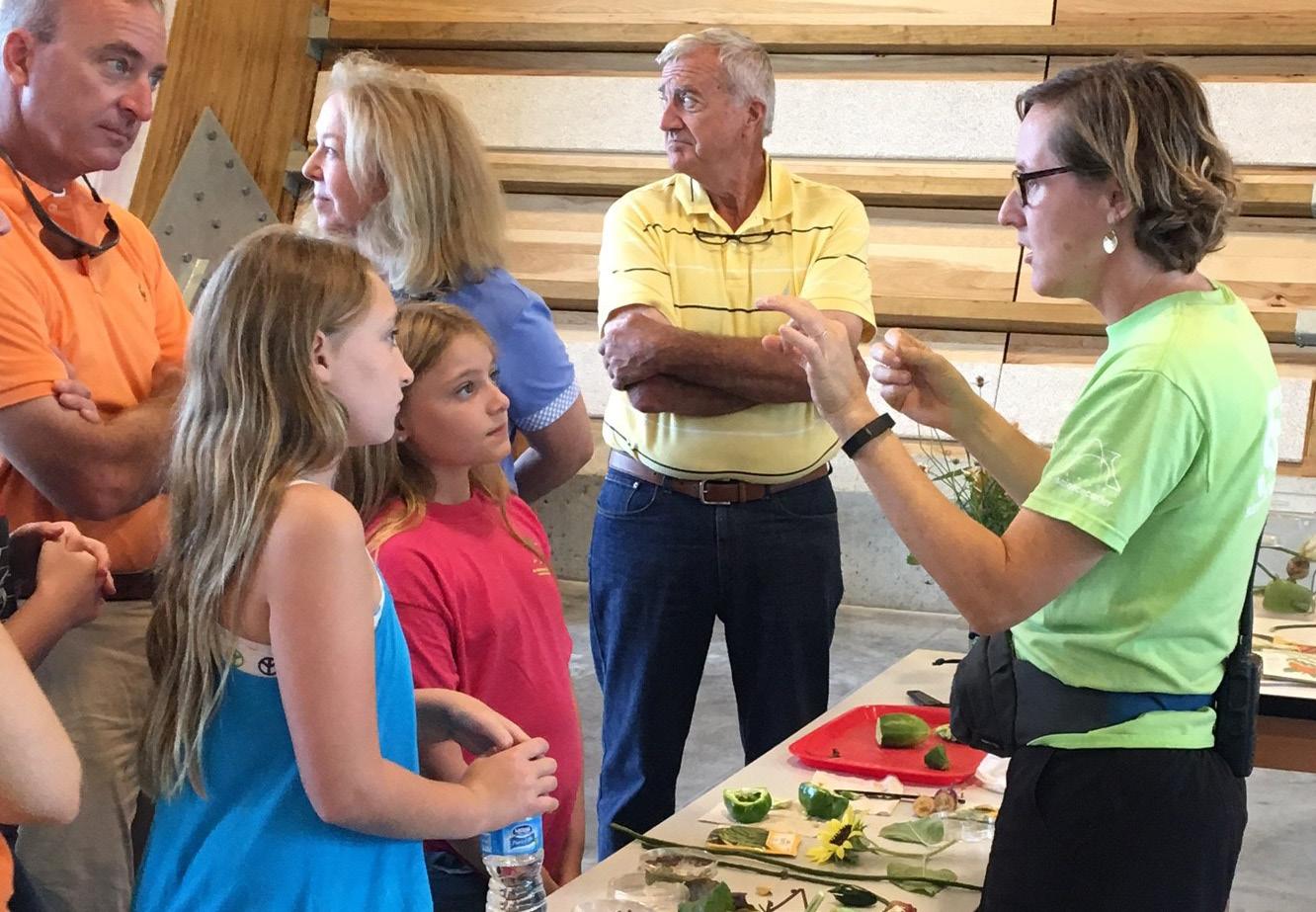
The outdoor GROW Gallery and indoor GROW Pavilion provide the perfect backdrops for applying educational standards to real-life agricultural and native plant spaces. GROW tours have been a popular field trip this year, especially with kindergarteners and first graders. Students get a comprehensive overview of the field of agriculture and how farmers grow and produce food, fuel, and even fiber. Our educators introduce our flock of chickens and help students make connections to the fields of animal husbandry. Students explore what is needed to grow plants in our aquaponics greenhouse, which houses plants and fish year-round. Kids even get excited about soil as they explore hidden creatures living in our soils that help plants grow. Depending on the time of year, groups might even catch a glimpse of our buzzing bumblebee hive with pollinators in action, which helps bring home the importance of bees and other pollinators to our food supply.
Clara Hagedorn, GROW and Life Science manager, reports that “groups love to interact with our GROW education team, and getting to go in depth with students on field trips is one of the team's favorite parts of the job. We just never know what a student will ask us about.”
Makerspace
The Makerspace Gallery is a wonderful space that brings engineering to life. Through hands-on activities and daily workshops, guests let their imaginations bloom while partaking in iterative practice and direct builds. The two workshops available to school-aged groups further these experiences for groups of up to 25 students.
The Rube Goldberg field trip is great for students in third grade and up. Our educators facilitate a workshop that engages the whole class to work together to build a machine using everyday materials like dominoes, ramps, and levers. This activity helps with problem solving, communication skills, trial and error, and helps kids learn that failure is part of success, a concept which is key to both a maker mindset and to engineering. Kids in this field trip utilize our Maker Classroom, where they are surrounded by fun creations and maker materials.
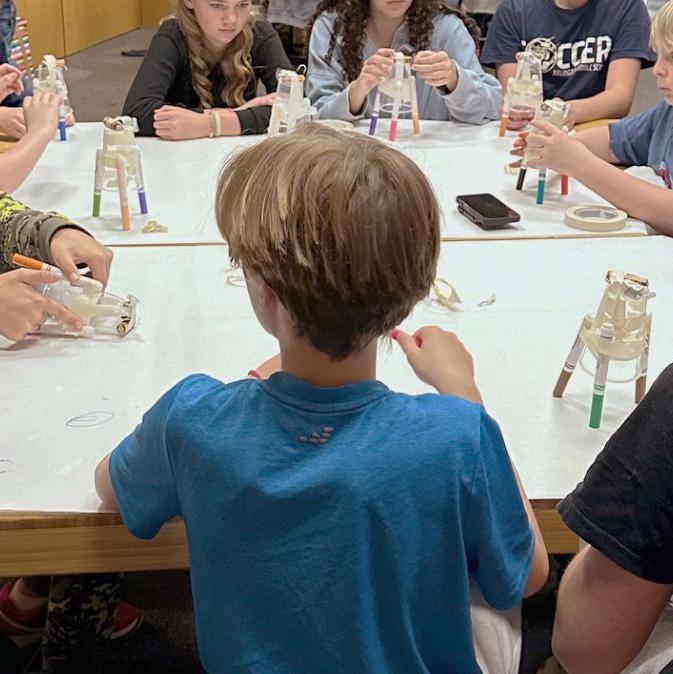
Participants in our Scribble Bots field trip also get to experience the maker mindset in very direct ways. Students work independently to make a simple “bot” with artistic capabilities. It’s a fun way to practice problem solving with light guidance from our team, and students leave with a robot-made art creation.
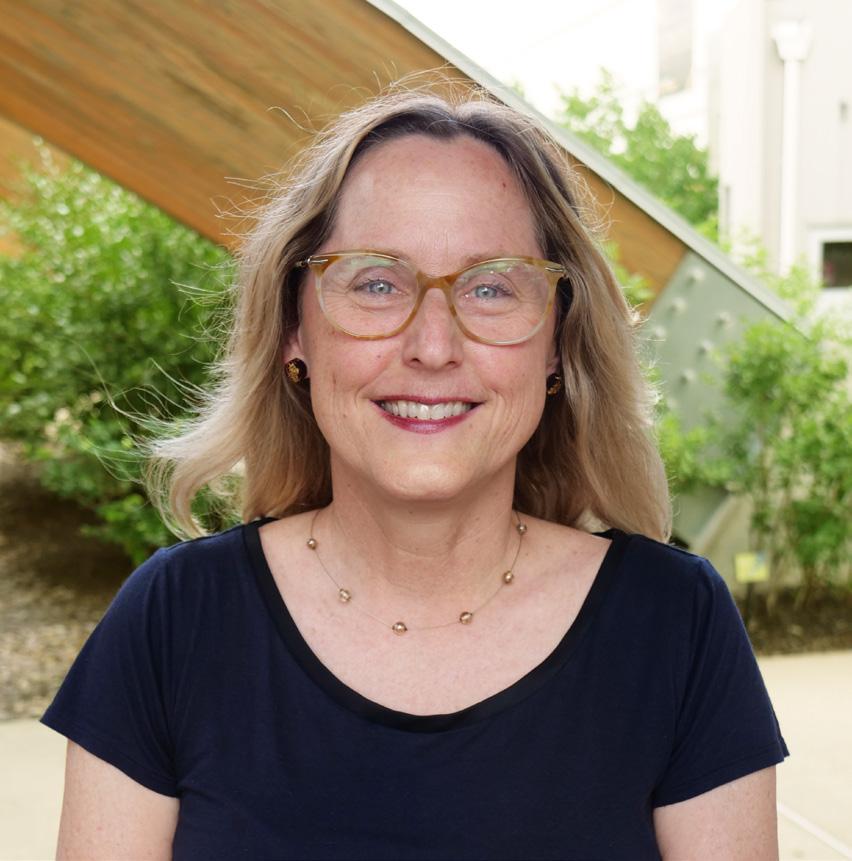
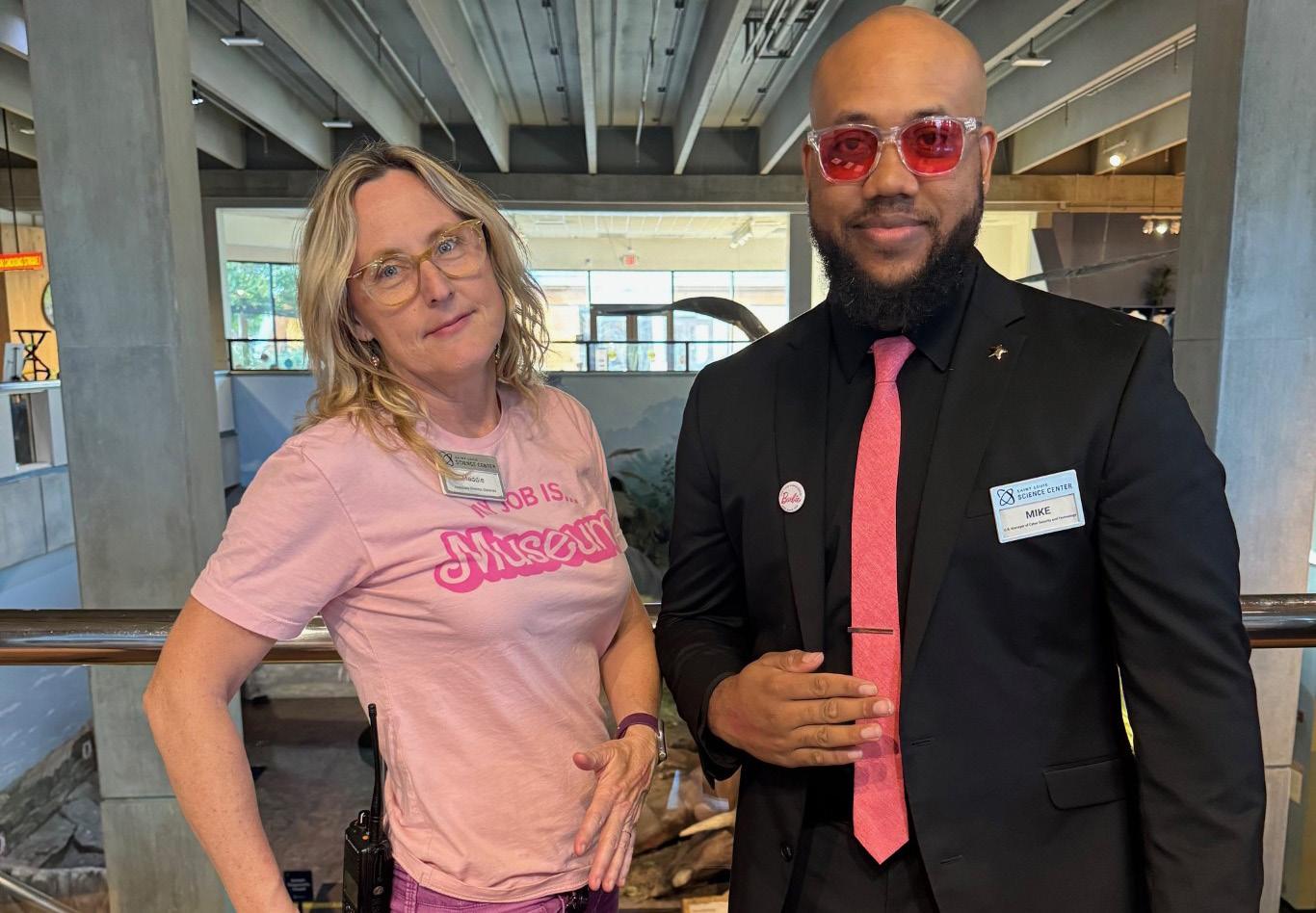
Meet the Team: Maddie Earnest
ASSOCIATE DIRECTOR, GALLERIES
If you attended our Member Mission: Pollinators event in June, you were lucky enough to take a pollinator tour led by Maddie Earnest, whose enthusiasm for bees is frankly contagious. Read on to learn more about Maddie and why we appreciate her so much!
Tell us about yourself – anything you’d like to share.
Nearly everyone who works at the Saint Louis Science Center has something that they totally geek out about. When I started, I was very much engaged in growing food for my family and friends in my yard. Now I am into growing food and providing habitats for wildlife in my small city yard. I will tell you all about native bees at the tiniest inkling that you might be interested. And I might also go on a diatribe about native plants and why it matters to include some of these in your community.
My favorite thing about planting native plants is that you can have a tangible impact for little outlay. Plants can get expensive, but there are wonderful communities of people who share plants and seeds for free, which helps cut down on the expense. Last year I planted a Beauty Berry, Callicarpa americana. This year, I have seen several species of bees on the flowers and hope that the berries will attract birds, as well.
Over the last six years, I’ve welcomed more and more wildlife as the number of native plants in my yard has increased. In summer 2025, I identified two new species of Bombus (bumble bees), and you would have thought that I discovered a cure for cancer with the amount of excitement I experienced.
How did you come to work here? Tell us about the evolution of your career with the Science Center.
When I was a kid, I saw a television public service announcement that focused on endangered animals. As an FYI and to date myself, Robert Redford was the spokesperson. I was 13 at the time and decided at that moment I wanted to be in wildlife conservation. I’m going to cut to the chase and tell you that I did not become a conservationist through my educational training, but my interests, passions, and my current career still reflect those values of protecting our natural resources and looking for ways for humans to live more lightly on the planet.
After graduating from Hendrix College in Conway, Arkansas, I landed in St. Louis, where I attended Washington University for a master’s in social work. After graduation, I had the opportunity to practice community engagement, work in fundraising and development, manage volunteers, and run employee and volunteer training. In 2007, a business partner and I opened Local Harvest Grocery. This small grocery, dedicated to sourcing from smaller local farmers and food purveyors, was a way to merge my passion for food, farming, conservation and community building. Through this business I was able to form many connections with the agriculture community and learn more about farming in our region and state while growing a small store with big goals. This store is now entering its 19th year of operation.
Nine years later, when I learned that the Science Center was opening a new gallery focused on agriculture, I knew I wanted to be involved in some way. When I saw the opening for a manager, I jumped at the chance to apply. The role helped me marry my previous non-profit work with my knowledge of agriculture and the food community. It was exciting to help open and shape that space along with the rest of the team who worked here at the time. It was fun and rewarding to meet people from all over the world who come to learn and play at the Saint Louis Science Center. I was delighted to pull from my years-ago experiences working in a state park as an interpreter and the years of customer service at Local Harvest. Working for the Science Center increased my knowledge as I engaged with different farming partners and the large community of plant scientists in St. Louis.
Tell us about what you do here, whether on a daily basis or just on occasion. Currently, I am the Associate Director of Galleries and have been since the beginning of 2024. In this role, I work with our gallery managers and their teams to create and execute “WOW” experiences for our guests. Our team strives to connect with our guests in ways that are both meaningful and memorable. This happens through big explosions on the Energy Stage, project building in Makerspace Workshops, Star Shows, and in quieter and more intimate moments at facilitated tabletop activities where a guest might learn about dinosaur adaptations or even help make soymilk.
In this role, I am fortunate to wear a lot of hats. In addition to managing a group of talented and interesting people, I also still help with program execution. I occasionally worked with Summer STEM Explorers Camp, offered a pollinator tour at a recent member event, and helped fill in when needed to run tabletop activities. I assist with event planning and manage our paid educational programming for schools, as well as engage with exhibit projects and planning.
When I first started working at the Science Center, I would walk through the building before we opened and think how cool it was that I worked here. It is still a feeling I get today nearly ten years later.
What is your favorite part of what you do?
Do you remember your first visit to a museum? Most of my early childhood was in smaller towns and communities that did not have museum spaces we could visit. When Mid-American Museum in Hot Springs, Arkansas opened, I thought it was the most amazing place. My girl scout troop used our cookie sales money to travel to Hot Springs and pay the admission to visit. The museum was and is a beautiful mix of indoor and outdoor interactive spaces including one sand table I still remember playing with every time I visited. When I was 11, my grandma took me on a bus trip to Washington D.C., where a visit to the Smithsonian Museum of Natural History helped me understand the scale of blue whales for myself. These WOW moments are what we hope to give to guests.
I love seeing a kid or grown-up get excited about an experience they are having at the Science Center, whether that is a field trip, an exhibit, a show on the stage, a Discovery Room session, or even when we are having a oneon-one conversation about a science topic. I also like being and feeling useful to guests and my colleagues.
Helping Hands for Injured Wildlife
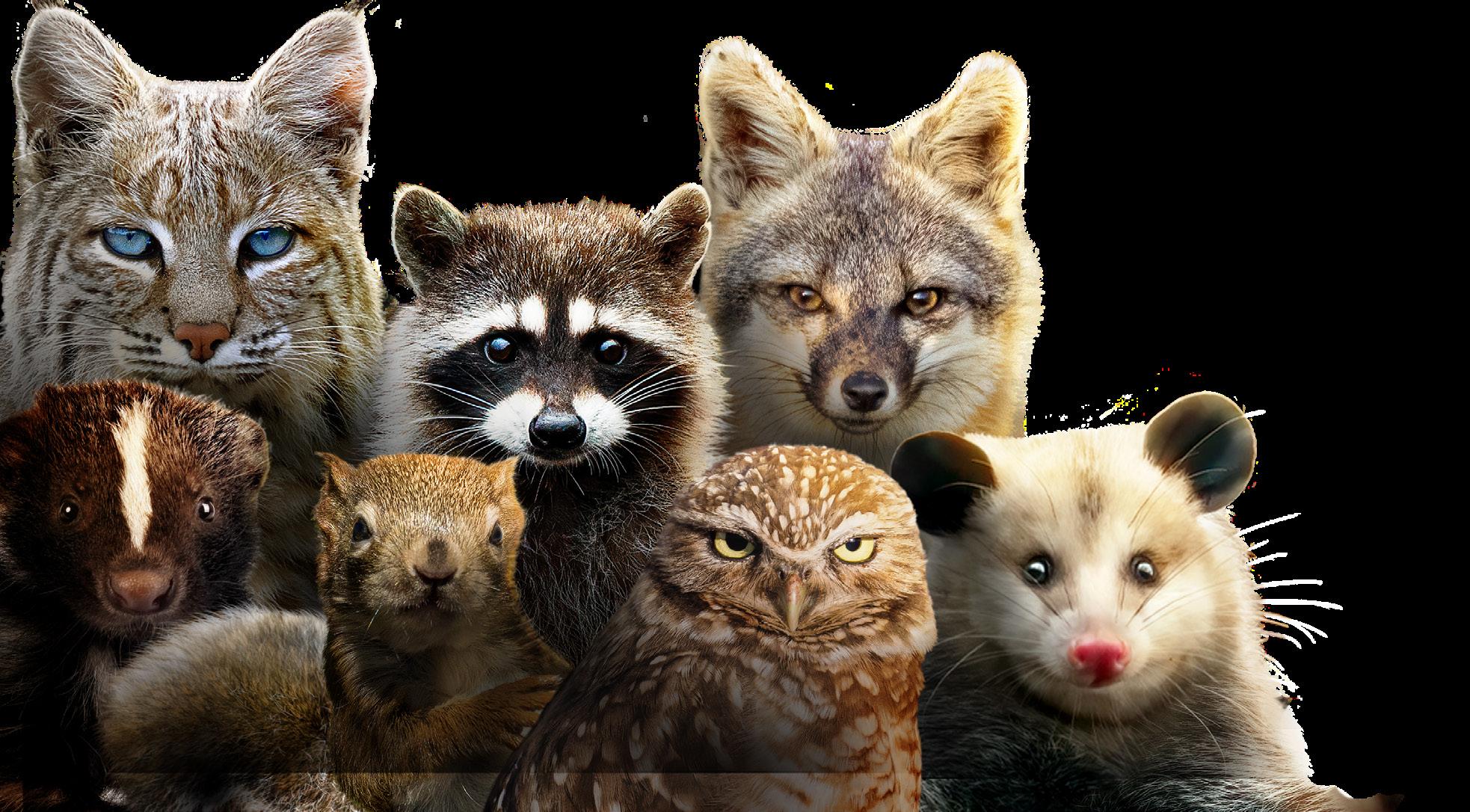
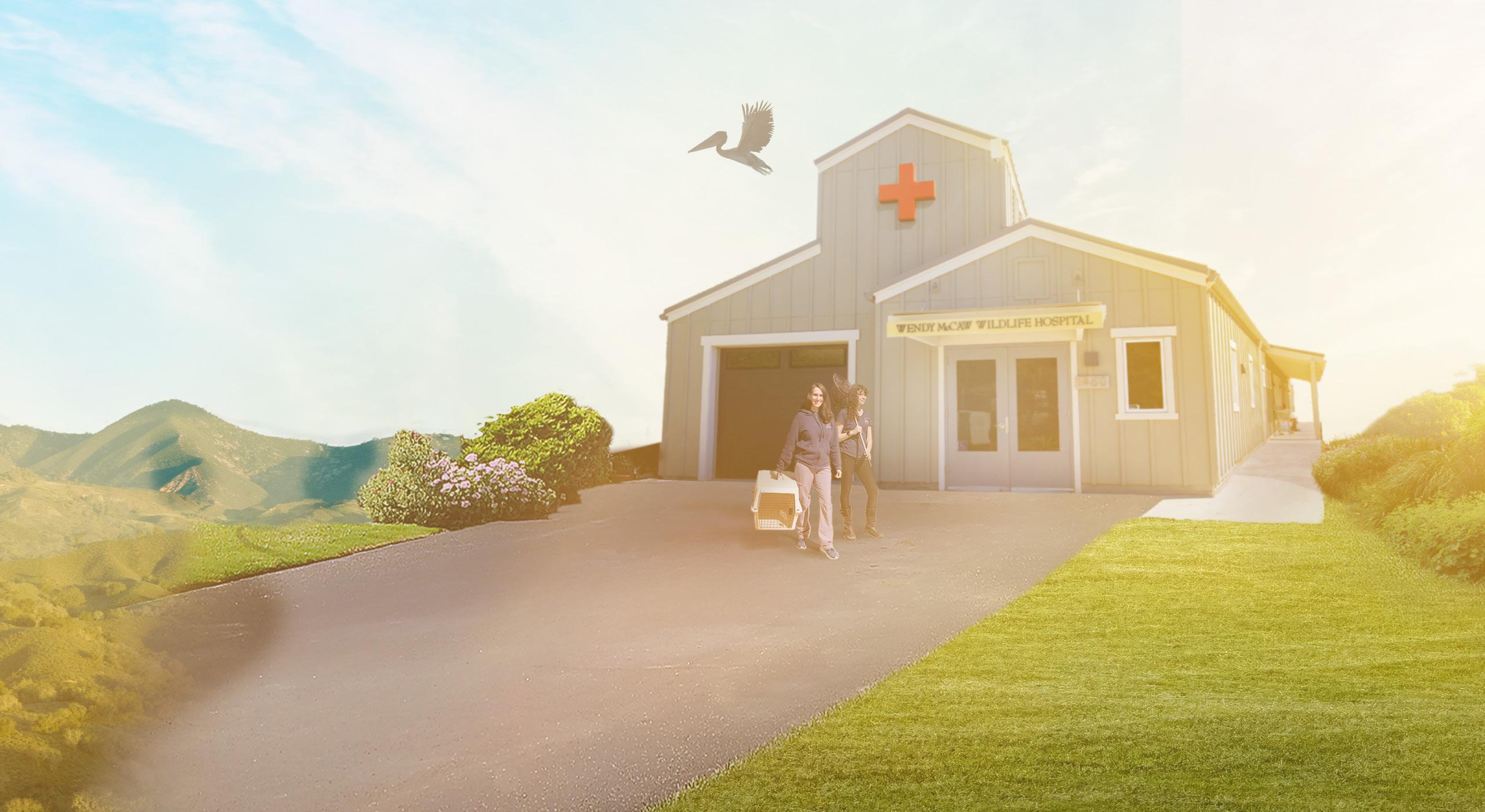
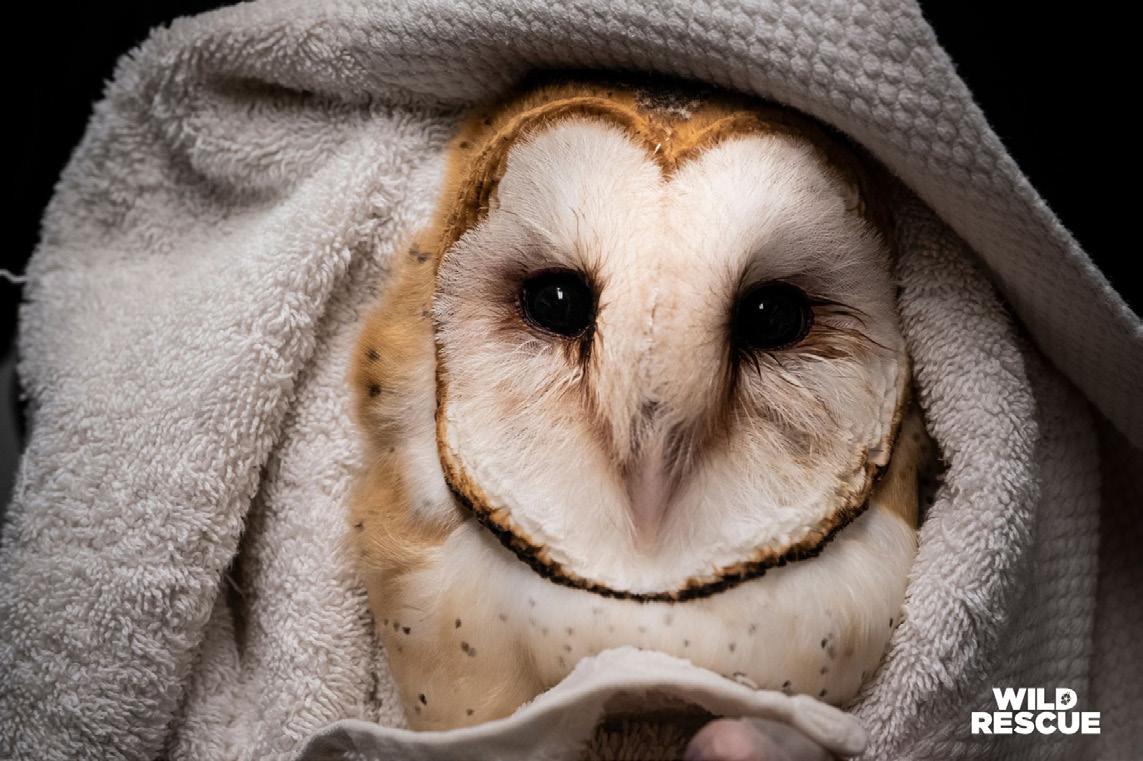
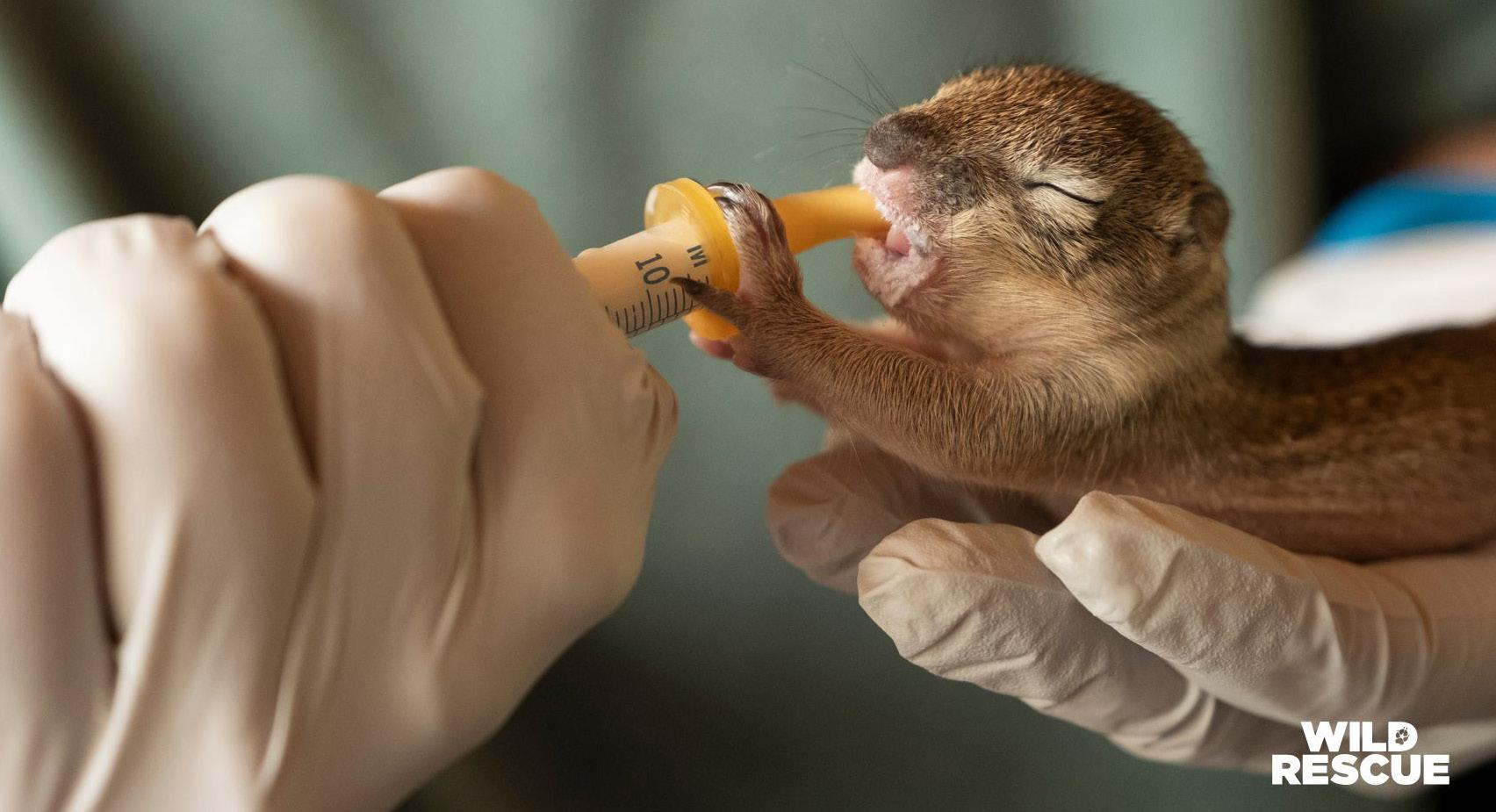
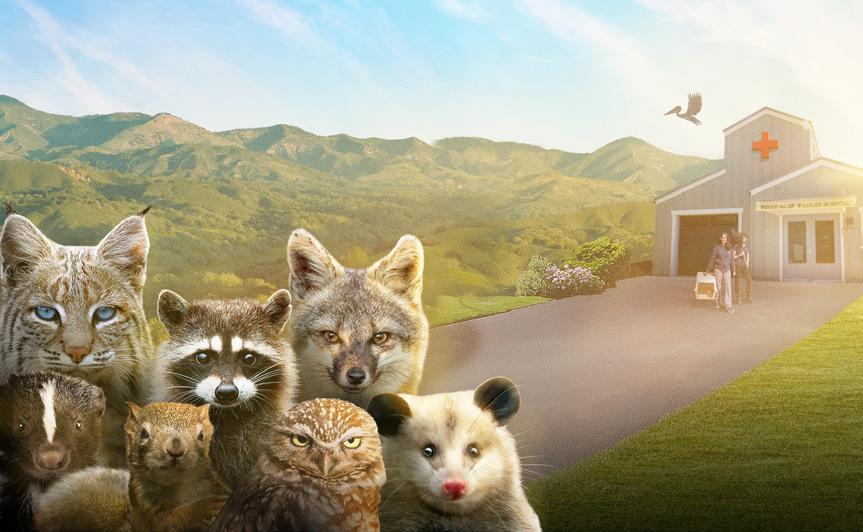
We recently spoke with Ariana Katovich, executive director of Santa Barbara Wildlife Care Network, which is featured in the OMNIMAX® film Wild Rescue, to gain some insight on what it’s like helping wild animals survive and thrive.
When asked how to tell when to intervene and when to stay out of the way of a potentially injured animal, Katovich explained, “It really depends on the species. If you can get close to a wild animal and it doesn’t run away, that’s one indication that it’s hurt or injured. Often, it’s obvious – the animal’s limping, unable to fly, caught up in a fishing line, or something like that. People wonder what to do about baby birds, because they can’t fly, but a baby bird with feathers hopping on the ground with its parents nearby is probably going to be fine. If you find a hummingbird on the ground, they usually aren't, so it might need help. We encourage people to discreetly wait to see if the parents come back, unless the animal is bleeding or visibly broken, falling over, not able to walk straight, that sort of thing.”
Katovich suggested that if people aren’t sure, they should contact their local wildlife rehabilitator, adding that many rescuers work seven days a week. “Often you can send in a photo or a video and they can look at it. We certainly do not want the public to touch animals like raccoons or bats; those are for professionals.”
When asked about advice for people who want to get involved in their local organizations, Katovich stated that most wildlife rescues run on donations and generosity, so one way to help is to connect with a wildlife rehabilitation center and see what they need. “They often have wish lists; people might be able to donate old towels or sheets. We have people who hand-knit nests for baby birds,” she enthused.
Many organizations rely on volunteers to wash linens, do dishes, prepare diets, and even feed animals when properly trained. “At Santa Barbara Wild Care Network, we have almost 250 regular volunteers who do everything from gardening tasks to cleaning enclosures.” For a further example of how intensive this work can be: “Baby birds are fed from dawn to dusk, every 20 to 30 minutes. If you have 350 animals to feed and clean and monitor, that’s thousands of feedings a day.”
Katovich’s favorite part of her job is “people who stop whatever they’re doing and make an animal a priority, even though it’s not their pet. They don’t have a connection to it, other than they see it’s in trouble and they have to get help. We see the best in people when they’re caring for animals.”
A story she shared illustrated this concept perfectly. “I was on the beach, not for work, and I saw a cormorant, a sea bird that doesn’t come on land much, standing nearby despite dogs coming close to it. I observed it for a while and decided to rescue it. I didn’t have anything with me, but one woman went home for a towel, and someone working nearby went to get a box and gloves, and one of our rescuers was in the neighborhood and brought a net, and one woman stood between the dogs and the cormorant and educated people about keeping dogs leashed, and another woman started telling the children all about cormorants. So many people made it their mission to help that bird, and we formed this community.”
How can we avoid negatively impacting our wild neighbors? Katovich emphasized that simple choices can make a BIG difference:
Watch your cats and dogs.
We lose a lot of birds and bunnies every year to cats –we love them, but they are predators!
Use humane forms of pest control.
Glue traps or snap traps often catch animals they don’t intend to catch. And avoid poisoning animals–putting out rat poison potentially poisons more than just rats.
Provide appropriate food sources.
Don’t feed bread to ducks; it’s not a good food for them. And clean your bird feeder.
Put decals on your windows so birds can see the glass and avoid striking your window.
Planting native plants is an amazing way to support wildlife –pollinators and beyond. I grow plants that attract hummingbirds, and they are constantly buzzing around.
Trim trees in months that end in “ber” – September through December – to avoid disturbing active nests.
In another example, “A gopher snake was attacked by a predator and was in our care for months. Most people wouldn’t think twice about a gopher snake, right? But they’re an important part of our ecosystem, they’re amazing rodent control, and they belong here. I loved seeing the team put energy and effort into an animal some people wouldn’t think is very exciting.”
Next, she talked about the Santa Barbara Wildlife Care Network itself. “Our organization has grown tremendously in the last several years, adding a veterinary program, building a wildlife hospital, and so much has changed in terms of what we can provide, but it’s still driven by compassion and hard work. I’m so proud of the whole team: staff, volunteers, donors, rescuers - and I just love being part of this large web of caring people.”
Katovich continued, “A dog or cat might need medical treatment, extra care at home, medication, and pet owners take on that responsibility and work with a veterinarian. Wildlife doesn’t have that. We are the safety net for these animals, and it’s extraordinary that when they’re in trouble, we have an infrastructure that can provide care and give them a second chance in the wild.”
What was it like to see her workplace on the big screen? “We are pleased to be sharing our story, but it’s a universal story. There are wildlife rehabilitation efforts all over the world, and we hope people who see the film get inspired and connect with their local wildlife rehabilitation organization.”
THE WONDER OF... BIOMATERIALS
Materials that Mend: Biomaterials Breakthroughs for Musculoskeletal Injuries
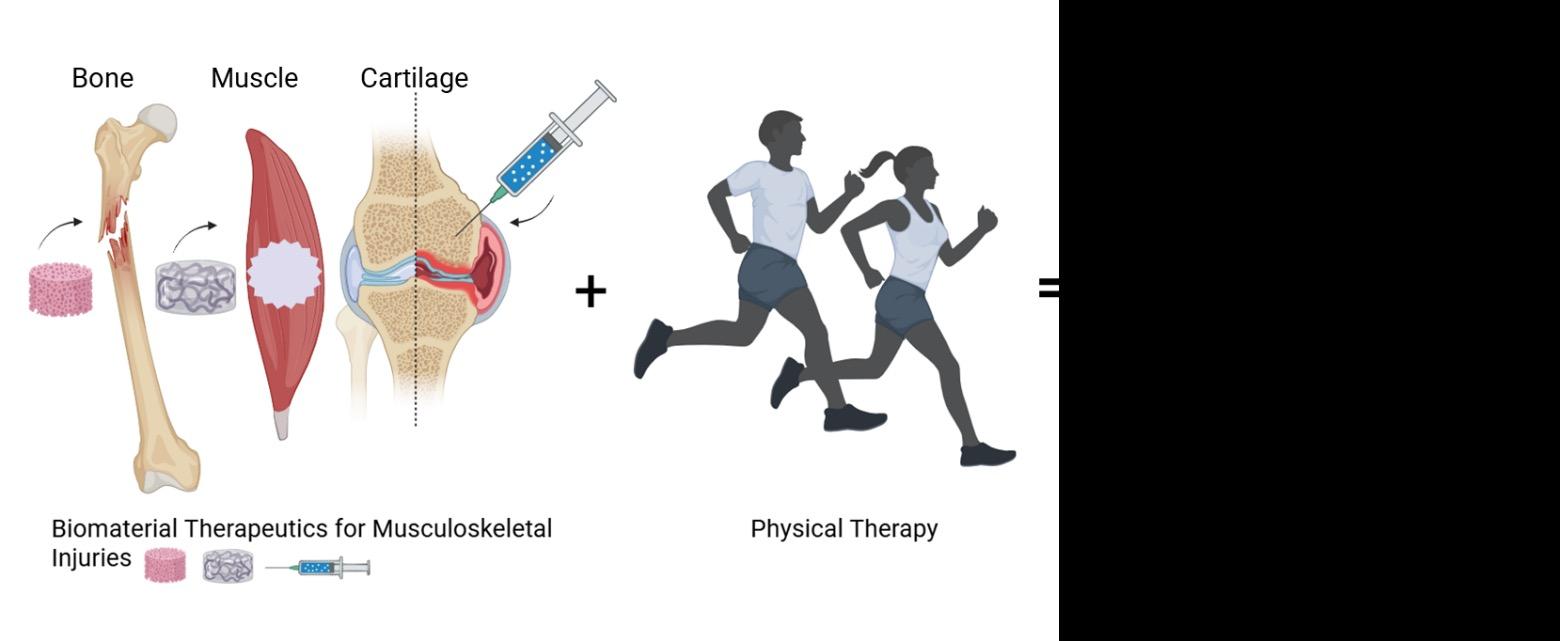
Imagine injuring a limb and being able to regrow it, just like a salamander or certain lizards. Unfortunately, humans (and most mammals) don’t have that kind of superpower. When our bones fracture, our muscles tear, or our cartilage wears down, the body’s capacity to repair itself is limited. Even after healing, the new tissue is often weaker and less functional than it once was.
That’s where biomaterial therapies come in. These are specially designed materials, ranging from as large as a screw to as small as a microscopic particle, that support the body’s natural healing processes. They can fill gaps, deliver drugs and stem cells, support new tissue growth, or provide mechanical strength during the healing process. For musculoskeletal injuries, these materials play a crucial role in helping patients regain normal movement and function.
Biomaterials come in many forms. They may be metallic, like titanium screws and plates used to hold fractured bones in place. They may be ceramic, offering stiffness and wear resistance, for joint replacements. Alternatively, they may be made of polymers designed to mimic softer tissues, such as muscle. Size matters, too. Some biomaterials are visible to the unaided eye, such as scaffolds a few centimeters in length, which are implanted into damaged tissue. Others are nanomaterials, which are thousands of times smaller than a grain of sand. These materials can also carry a cargo of drugs and stem cells to boost healing at the site of injury.
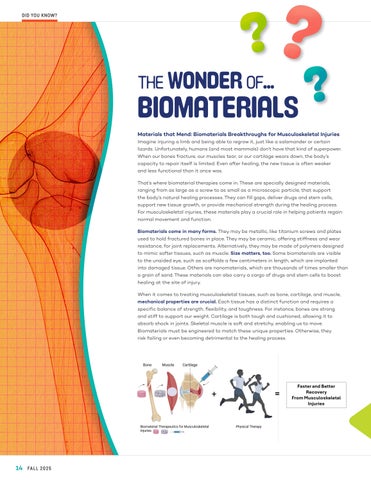
When it comes to treating musculoskeletal tissues, such as bone, cartilage, and muscle, mechanical properties are crucial. Each tissue has a distinct function and requires a specific balance of strength, flexibility, and toughness. For instance, bones are strong and stiff to support our weight. Cartilage is both tough and cushioned, allowing it to absorb shock in joints. Skeletal muscle is soft and stretchy, enabling us to move. Biomaterials must be engineered to match these unique properties. Otherwise, they risk failing or even becoming detrimental to the healing process.
Another critical challenge is biocompatibility, where the material must interact with surrounding tissues without triggering adverse reactions such as inflammation, rejection, or infection. Biodegradability is another aspect to consider. Biomaterials also must last the right amount of time. Some injuries need temporary support, while others require permanent implants. Biomaterials are chosen and designed based on the duration they need to remain in the body.
Biomaterial therapies do not function in isolation. Most musculoskeletal injuries require physical therapy, which is a vital component of the recovery process. As a result, biomaterial therapeutics must be used in conjunction with rehabilitation. Early movement and use of injured areas enhances healing after musculoskeletal injuries. Therefore, biomaterials must provide sufficient structure and strength to function effectively in conjunction with physical therapy.
Although we may never regrow body parts, biomaterials are bringing us closer to faster and more complete recovery, allowing us to return to our lives as they were before the injury.
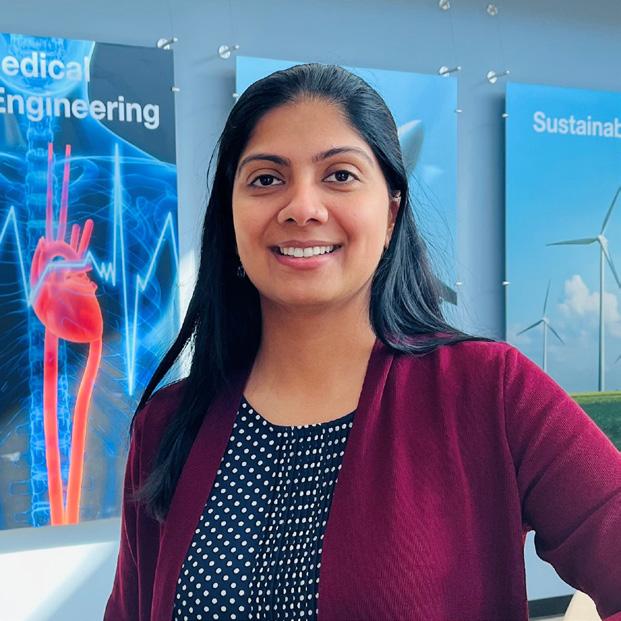
Dr. Koyal Garg is an Associate Professor in the Department of Biomedical Engineering and holds a secondary appointment in the Department of Pharmacology and Physiology at Saint Louis University. She completed her graduate work at Virginia Commonwealth University, followed by post-doctoral fellowships at the US Army Institute of Surgical Research and the University of Illinois. Dr. Garg’s Musculoskeletal Tissue Engineering Lab at SLU focuses on developing novel regenerative and rehabilitative therapies for the treatment of traumatic muscle injuries.
1. The image illustrates various treatment strategies for musculoskeletal injuries. A strong disc-shaped scaffold is placed in the bone to help it heal. A soft, gel-like material (called a hydrogel) is used for injured muscle, and a liquid-like polymer is injected into the knee joint to cushion and support it. These materials are designed to work together with physical therapy to help the body heal more effectively.
SUMMER OF QUANTUM SCIENCE:
Thinking Both Small and Large
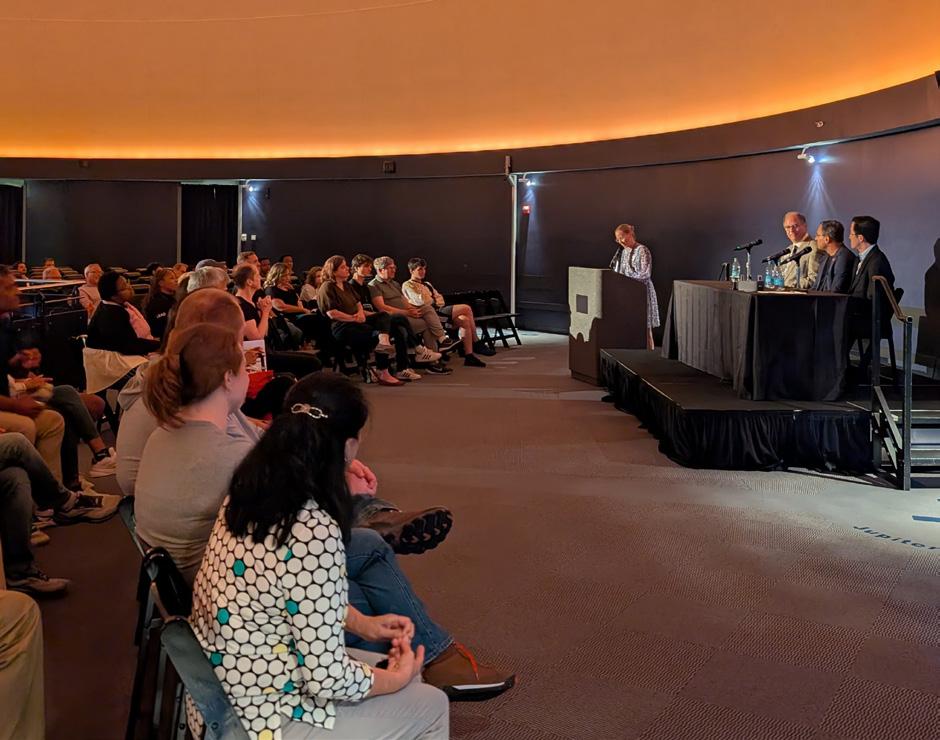
On June 6, the Science Center proudly celebrated 100 years of Quantum Mechanics with the help of our friends at Mastercard and WashU. Panelists Rahul Deshpande of Mastercard, Matthew Lew of WashU, and Science Center President Ray Vandiver discussed some of the theoretical, educational, and practical sides of this field of science. The Science Center's Chief Science and Education Officer Becky Thompson fielded questions to the group ranging from the foundational to the aspirational, and guests themselves had the opportunity to submit burning questions to our experts.
Then, on July 31, a public lecture was held featuring Dr. Klaus von Klitzing, Nobel Prize Laureate in physics, 1985. Dr. Von Klitzing’s talk, titled Celebrating Quantum: From My Nobel Prize to Your Future, explored insights from his groundbreaking discovery of the Quantum Hall Effect – the work that led to his Nobel Prize in Physics – and how that work has helped quantum science progress to the cusp of revolutionizing our daily lives through realworld innovations.
Dr. von Klitzing gave examples of “the peculiar rules of the very small,” provided a historical perspective of quantum science milestones, and explained that the study of the behaviors of matter at the quantum scale has been used in materials science, computer science, and even how we can accurately and consistently measure the world around us.
The Science Center remains committed to helping our community explore all fields of science, even those as counterintuitive as this exciting field!
Figure
Your Support, Your Way:
A Guide to Giving
Friends of the Science Center—from members and donors to corporate and community partners—help strengthen our role in making hands-on STEM education accessible for people of all ages and backgrounds in our region.
Whether you are a Science Center member looking to increase your impact or someone just discovering the Science Center’s work, there are numerous ways to help power our mission to inspire everyone to be curious and engaged in science.
Ready to show your support? Visit the links below to make a gift. To make your gift by mail, use the reply envelope attached for your convenience.
Membership
By becoming a Science Center member, upgrading your membership, or giving a gift membership, you are helping one of the few free nonprofit science museums in the country connect our region with STEM learning and ignite a passion for science in the innovators of tomorrow.
Give the Gift of Membership!
To gift someone a Science Center membership, visit slsc.org/memberships, then choose a level and select “Give.” Enter your information and complete your purchase, then receive a code that you can give to the gift recipient to activate their membership benefits.
Saint Louis Science Center
EINSTEIN SOCIETY
Elevate Your Impact in the Einstein Society. Improve lives, transform communities, and empower future generations in the Einstein Society, a catalyzing community of supporters who share our vision for a world where everyone is empowered to discover what science makes possible. Learn more about the benefits and impact of the Einstein Society at slsc.org/einstein-society or by scanning the QR code.
Curiosity Fund
The Science Center’s Curiosity Fund is our annual fund providing vital operating support for our work, helping to expand our impact by supporting free community events at the Science Center, off-site programming throughout our community, and more. Scan the QR code or visit slsc.org/donate
Make your online donation a monthly recurring gift.
Whether you're looking for more flexible giving options or simply wanting to make your support more impactful, choose the “Monthly” option when making your gift online.
Honor someone special with a tribute gift.
A tribute or memorial gift offers a meaningful way to honor or remember a family member, friend, or colleague or celebrate an important occasion while supporting STEM learning in the St. Louis region. When making your gift online, simply choose “Dedicate a donation” and enter your tribute information.
Other Ways to Support
From gifts of stock and appreciated securities to charitable IRA rollovers and planned giving options, there are many other ways to support our mission to inspire everyone to be curious and engaged in science. (Remember to consult your tax advisor or financial professional for potential tax implications or more information on these giving options.) Scan the QR code or visit slsc.org/support
Power our mission with Gifts of Stock and Appreciated Securities.
To make a stock transfer, please consult your financial professional. In addition to contacting your broker, please notify us prior to your stock transfer so that we may correctly identify, allocate, and acknowledge your generous gift.
Support the Science Center with a charitable IRA (individual retirement account) rollover. Through a qualified charitable distribution at age 70 ½ or over, you can make a tax-free gift up to $100,000 to the St. Louis Science Center Foundation from your traditional or Roth IRA.
Leave a legacy of impact in the Curie Society.
Discover how your generosity today can leave a legacy of inspiration and innovation through planned gifts like bequests, trusts, real estate, and more at slsc.org/planned-giving
See what support for the Science Center makes possible! Check out our 2024 Annual Report at slsc.org/reports.
CELEBRATING DEAF DAY:
Building Bridges Through Science and Community
SATURDAY, SEPTEMBER 20 | 10:00AM–2:00PM
The Saint Louis Science Center proudly presents our inaugural Deaf Day on Saturday, September 20, creating a fully accessible STEM experience that celebrates Deaf culture and removes communication barriers from scientific discovery. This meaningful initiative goes beyond basic accommodation – it's about creating authentic spaces where the deaf and hard-of-hearing community can engage with science on their own terms.
A Day Designed for Full Participation
Our Science Center will transform into an accessible learning environment with comprehensive ASL interpreter coverage throughout all galleries and programs. Interpreters will be stationed at Guest Services and within gallery spaces, in the OMNIMAX® Theater, and in the James S. McDonnell Planetarium.
THE DAY FEATURES AN EXCITING LINEUP OF INTERPRETED PROGRAMMING.
10:00 AM 10:15 AM 10:30 AM 11:00 AM 11:00 AM 11:30 AM
12:00 PM
12:45 PM 1:15 PM 1:15 PM
OMNIMAX Show
Planetarium Star Show
Preschool Science Series
OMNIMAX Show
GROW Agriculture Demonstration
Planetarium Star Show
OMNIMAX Show
Planetarium Star Show
OMNIMAX Show
Energy Stage special presentation
Advance registration is recommended for some programs, though walk-ins are welcome throughout our four-hour celebration.
Community Partnerships That Strengthen Science
We're collaborating closely with the Missouri Commission for the Deaf and Hard of Hearing and local deaf cultural organizations to ensure authentic representation throughout the day. These partnerships bring lived expertise that enriches everyone's experience. Local deaf educators help us understand how visual learning transforms scientific discovery, while community leaders ensure our programming respects and celebrates deaf culture rather than simply accommodating it.
Why This Celebration Matters
Science belongs to everyone, yet traditional science center experiences often rely heavily on auditory elements that can exclude deaf and hard-of-hearing visitors. This event addresses those barriers directly, creating shared learning experiences where families can explore together regardless of communication differences.
Research shows that deaf scientists bring unique strengths to STEM fields – enhanced visual processing, attention to detail, and collaborative problem-solving approaches that advance discovery. When we welcome these perspectives, science becomes stronger and more innovative.
Building Lasting Change
This single day represents the beginning of deeper institutional transformation. We're using this experience to develop year-round capacity for serving the deaf and hard-of-hearing community, training staff in cultural competency, and identifying permanent accessibility improvements that benefit all visitors. Our goal extends beyond removing barriers – we're creating meaningful experiences where deaf community members feel genuinely welcomed and valued.
A Personal Commitment to Authentic Inclusion
Lamara Warren, managing director of DEAI, explains why this work represents everything she believes about the power of science to unite communities. “When we create spaces where deaf and hard of hearing community members can engage fully with science, we're not just providing access – we're recognizing that diverse perspectives make discovery possible. Every breakthrough, every innovation, every moment of wonder should be available to everyone, regardless of how they communicate. This initiative reminds me that true inclusion means building with communities, not just for them.”
Extend Your Day with More Celebration
After exploring science with us, consider continuing the celebration at Busch Stadium for Deaf Awareness Day at the Cardinals game! This creates a full day of community connection and accessible entertainment throughout St. Louis.
Join Us for Deaf Day and Celebrate Science Without Barriers
Whether you're deaf, hard of hearing, hearing, or communicate in other ways, we invite you to experience science together. This celebration demonstrates our commitment to creating a Science Center where everyone belongs and where the next generation of scientists can see themselves in the work we do.
We're excited to learn alongside you as we explore what becomes possible when communication barriers disappear and scientific curiosity takes center stage.
TOGETHER, WE'RE BUILDING A MORE INCLUSIVE FUTURE FOR SCIENCE EDUCATION.
To learn more about the STEM-sational individuals who’ve inspired us, visit our STEM LIKE ME blog at slsc.org/stem-like-me
AGES 21+
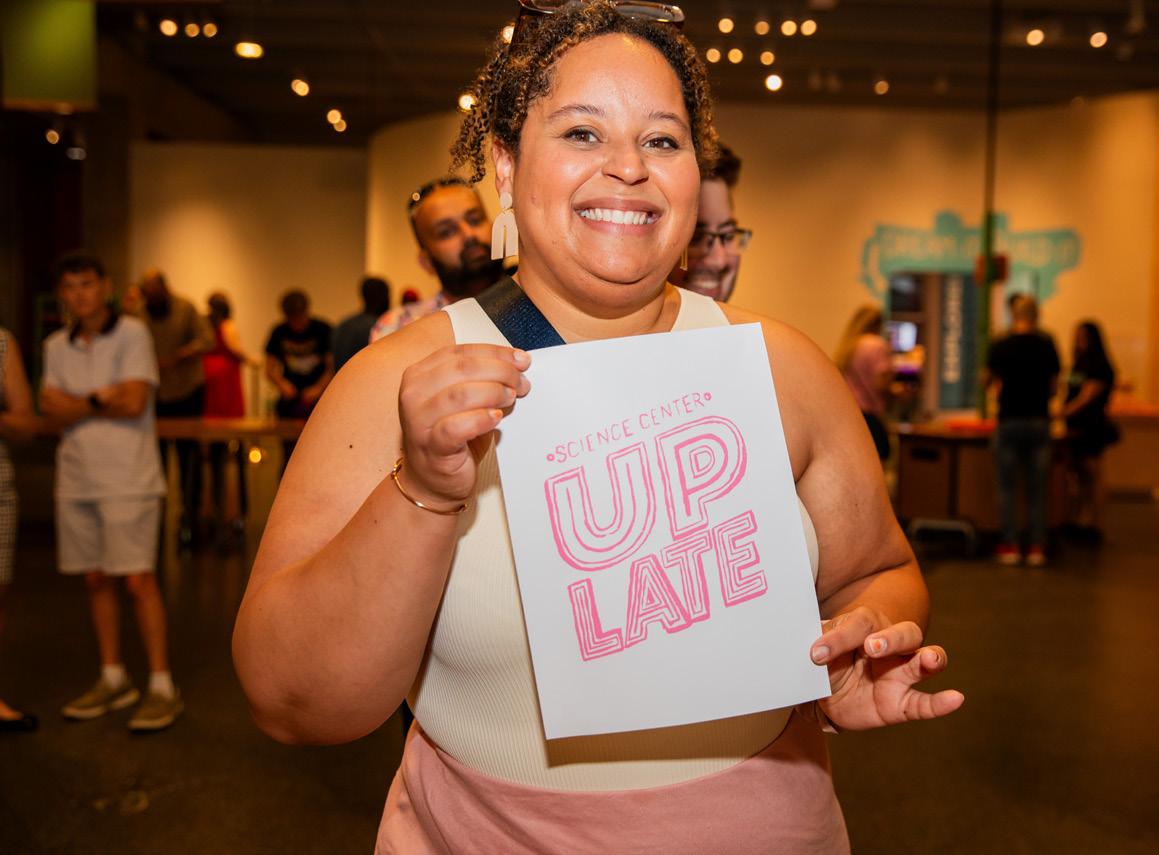
Up Late Returns October 25!
Trick-or-treat, trunk-or-treat, haunted houses... Why are the kids hogging all the fun? On October 25, we'll share a FRIGHTFULLY good time with our 21+ audience with the second event in our Saint Louis Science Center Up Late series diving into all things scary science.
Set in a fun and spooky atmosphere, we'll offer you potent potions and themed treats while exploring the origins of our greatest fears. If you've ever wondered why spiders make your skin crawl or why even familiar rooms become terrifying when the lights are off, we've got an event for you! We'll also explore why we just love being scared and why painful sensations like hot peppers can be fun!
Stay tuned to our website for updated details on the evening's activities. Up Late will take place on Saturday, October 25 from 6:00–10:00pm. Tickets are $20 ($15 with Saint Louis Science Center membership) and will go on sale soon!
OMNIMAX® Theater
COMING SOON
OPENS OCTOBER 17
Secrets of Great Salt Lake
An uplifting story of how water connects all life on Earth. Journey back to when mammoths, camels and saber-toothed cats roamed the ancient shores of Lake Bonneville and witness its transformation into Great Salt Lake, caused by one of the largest floods in history!
Member Preview: Secrets of Great Salt Lake Thursday, October 16 | 5:30 & 7:00PM | Learn more on page 5
ENDS OCTOBER 16
Dress Up and Smash!
SATURDAY, DECEMBER 27 & SUNDAY, DECEMBER 28
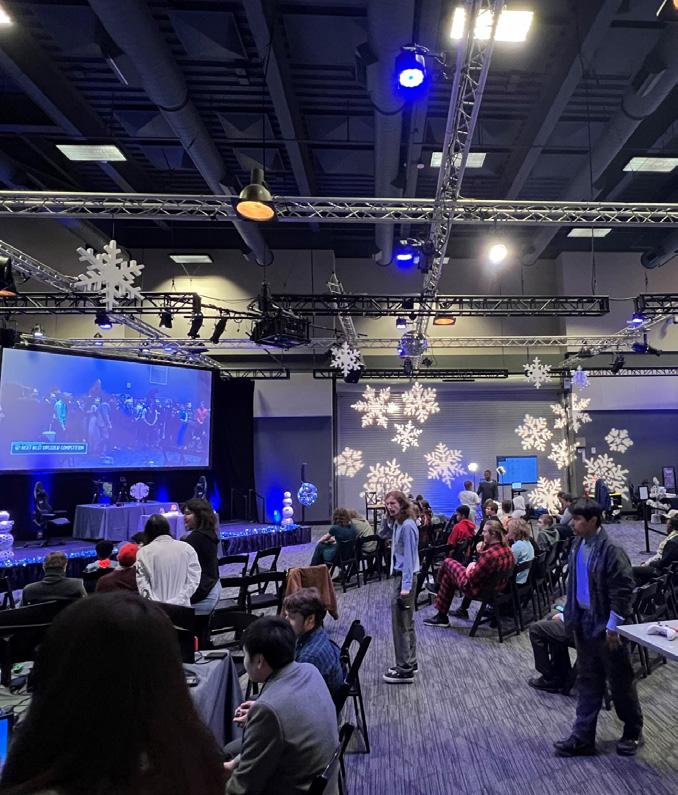
The Saint Louis Science Center is excited to welcome back our biggest esports event of the year on Saturday, December 27 and Sunday, December 28. This two-day event is the region’s only formal-dress Super Smash Bros. competition and welcomes many of the top players from around the country. The event includes competitions in titles like Street Fighter 6 and Rivals of Aether II and is a must for gamers of all ages and skill levels. Whether you plan to compete or spectate, there is plenty of competition to go around, and we have some great activities planned during the two days.
Unable to join us in person? Be sure to watch the stream on our Twitch channel (@STLScienceCenter). This is a paid event for competitors but is free for spectators. Registration will be available in October, so stay tuned and visit slsc.org/esports for updates.
SAINT LOUIS SCIENCE CENTER Esports
SEE A STAR SHOW!
Sci-FEAST
SATURDAY, NOVEMBER 15 | 9:30AM–4:30PM
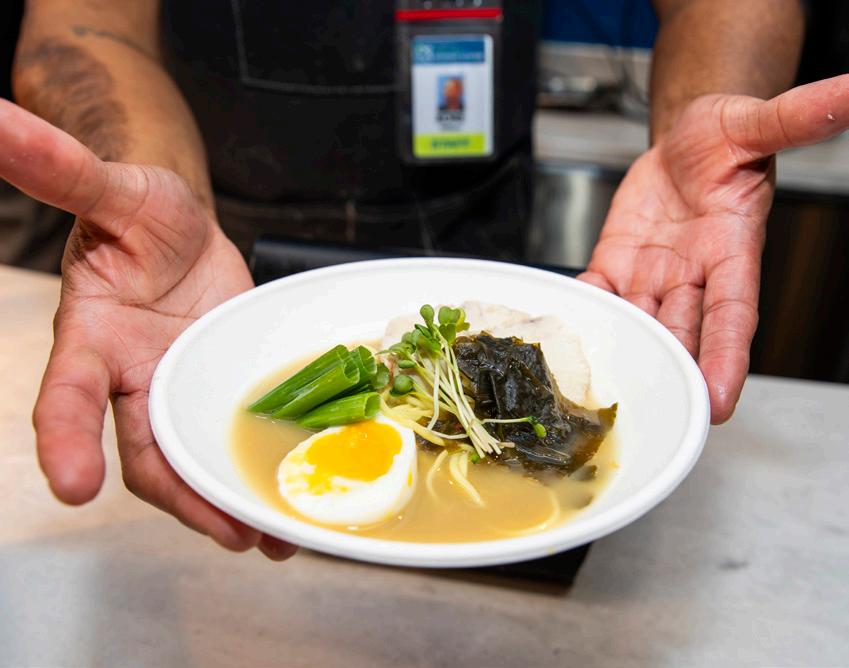
Explore and enjoy our free, all-day event all about food! Engage with STEM experts in food science, agriculture, health and nutrition, diet and exercise science, animal science, and other topics. Participate in a wide range of activities, demonstrations, sampling, and more!
Thank you to BJC HealthCare, Nestlé Purina, and St. Luke’s for your generous support of Sci-FEAST. Your sponsorship helps power our mission to inspire curiosity and celebrate science in our community.
Astronomy Dates
SEPTEMBER 22
Autumnal Equinox
The autumnal equinox marks the first day of fall in St. Louis. Contrary to popular belief, we do not receive equal amounts of day and night on the equinox. That occurs on the “equilux,” which will be September 26.
OCTOBER 20–21
Orionid Meteor Shower Peak
The annual Orionid meteor shower is produced by debris left from Halley’s Comet. The 2025 peak falls on a new moon, leaving darker skies for the best possible show.
NOVEMBER 21
Uranus at Opposition
During opposition, Uranus will be at its brightest and most visible of the entire year. The seventh planet from the Sun will still be very dim and will only be visible to the unaided eye under a very dark sky. For best observing, binoculars or a telescope are recommended.
Science Center Up Late: Experience Sound
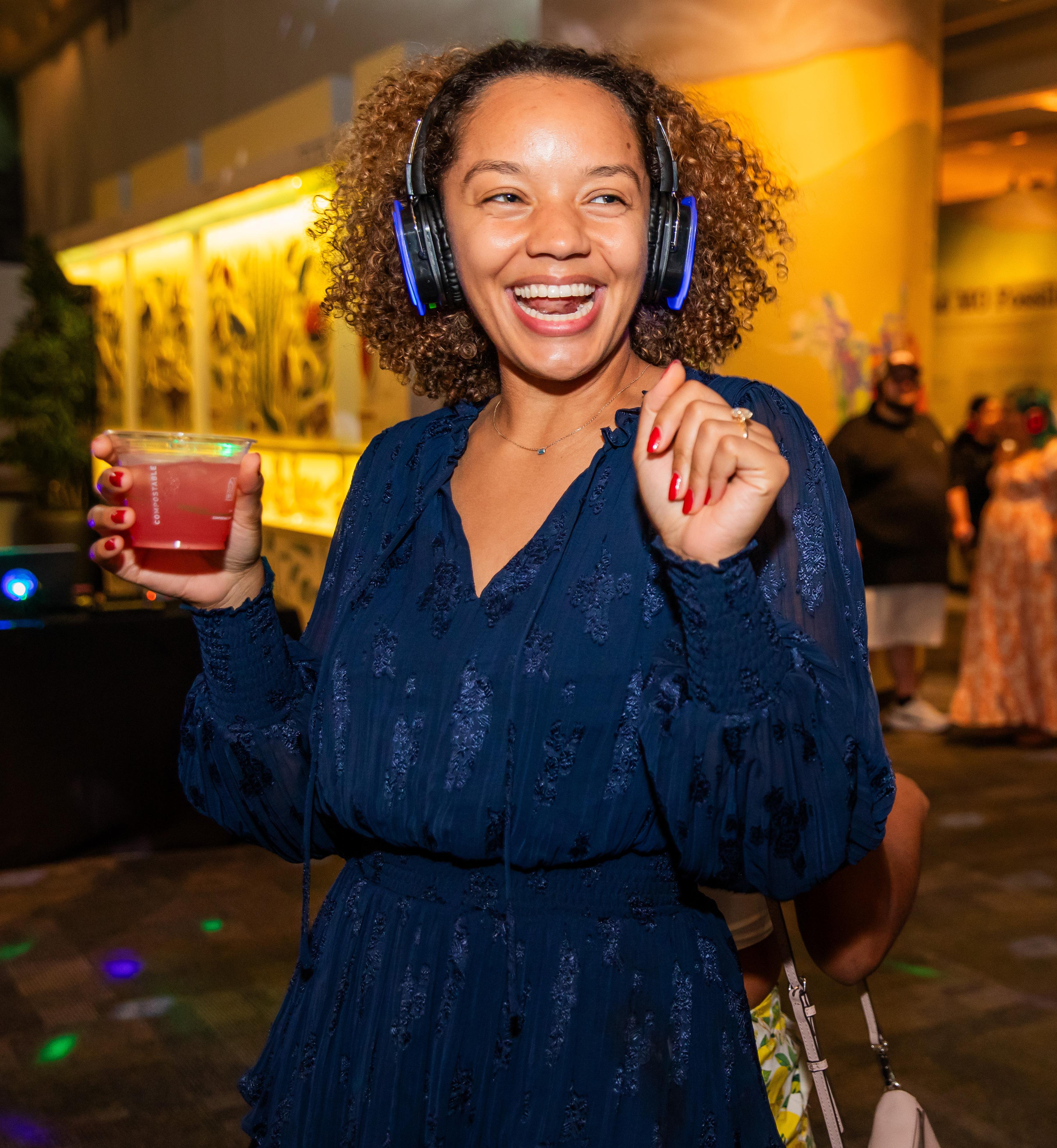
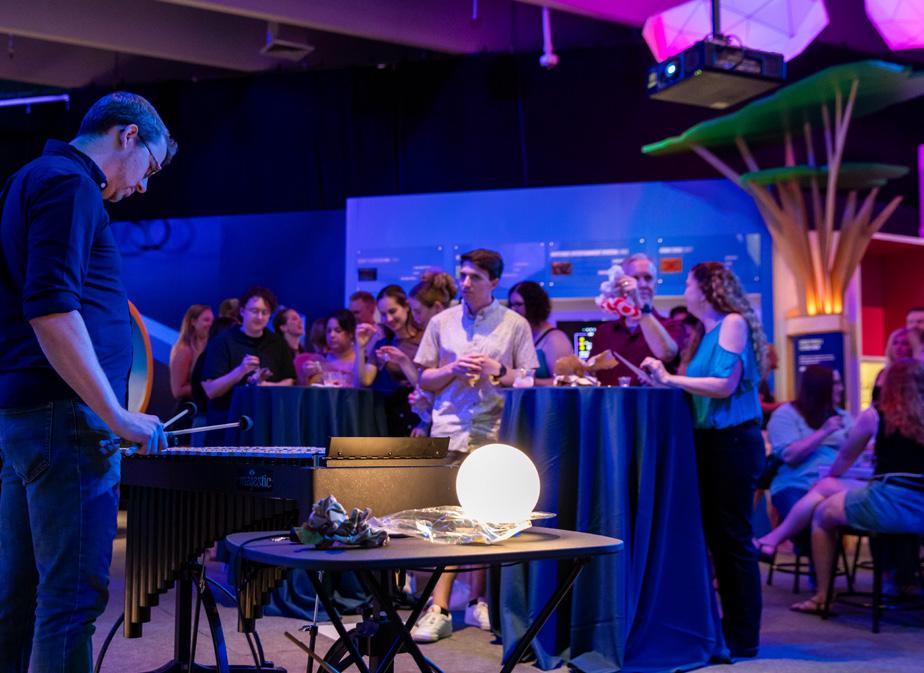
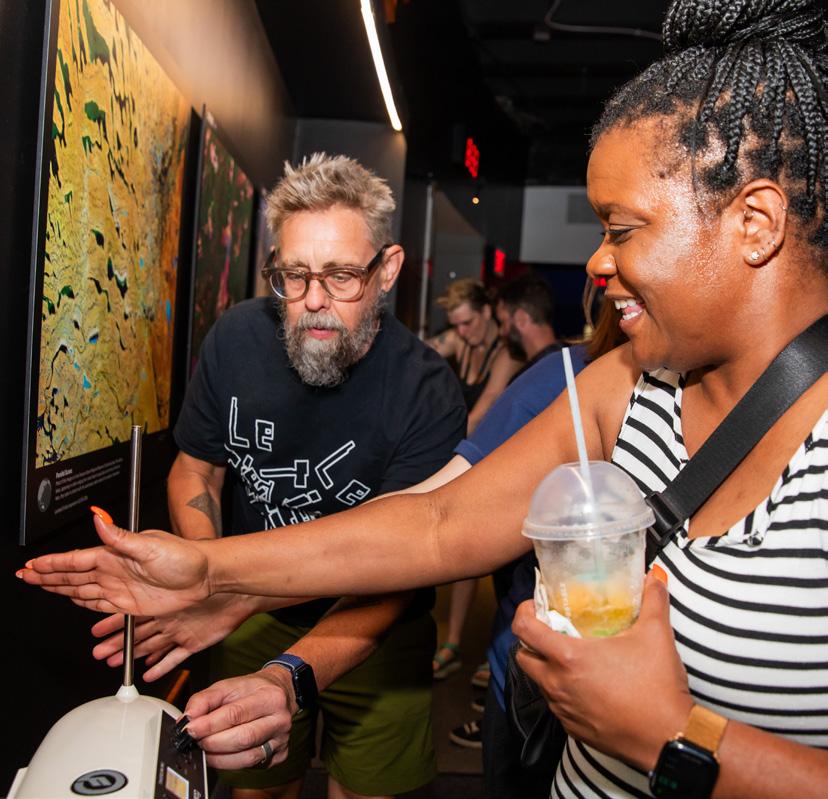
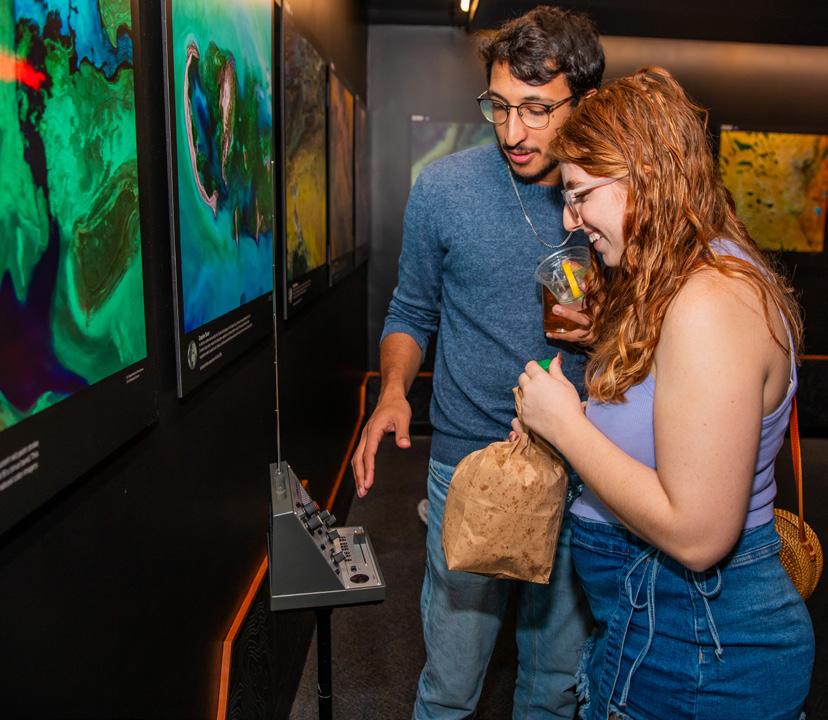
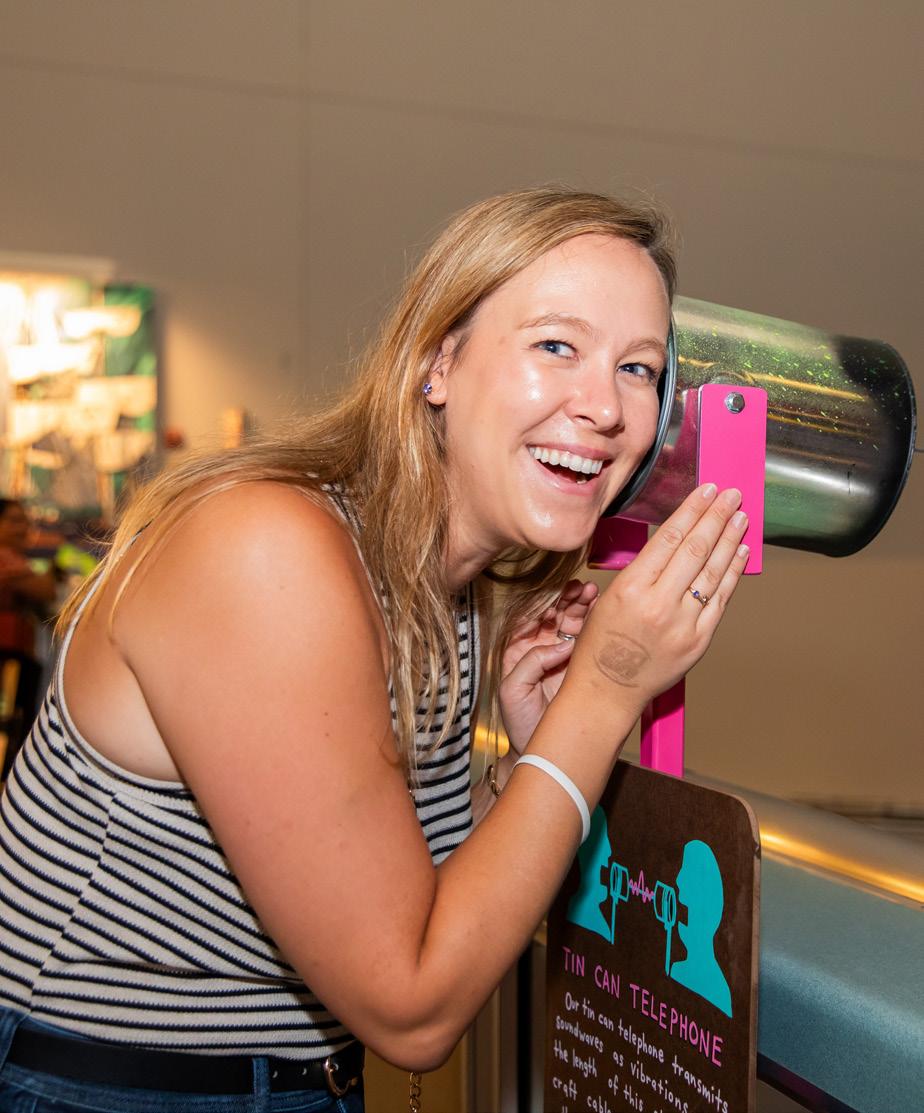
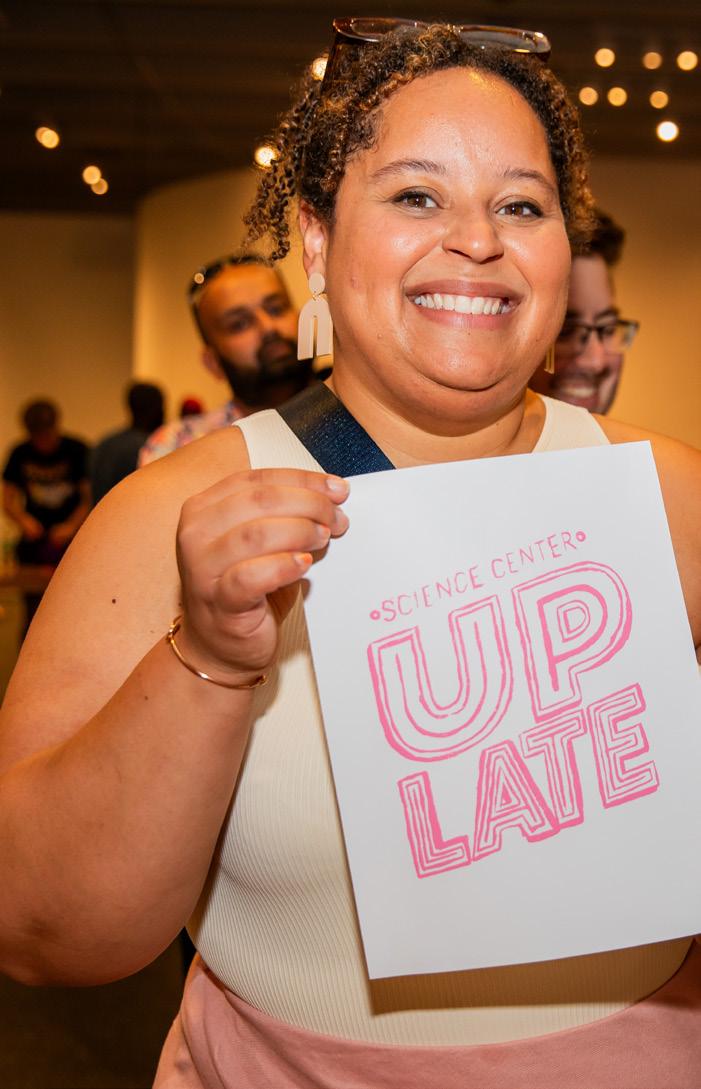
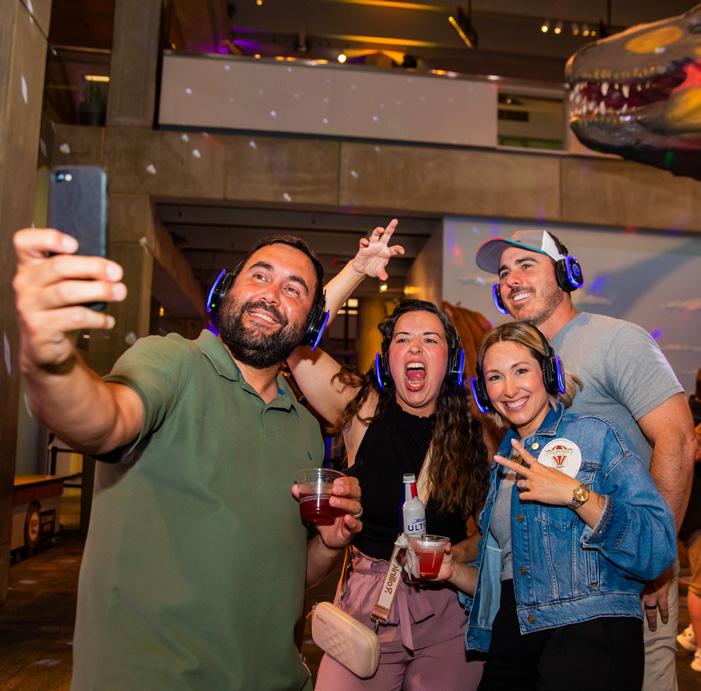
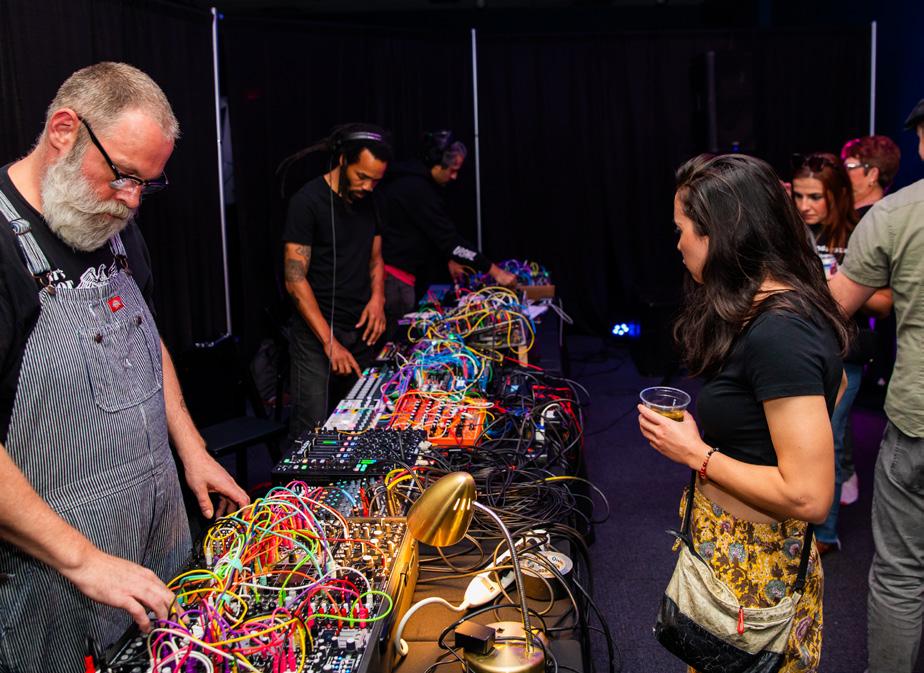
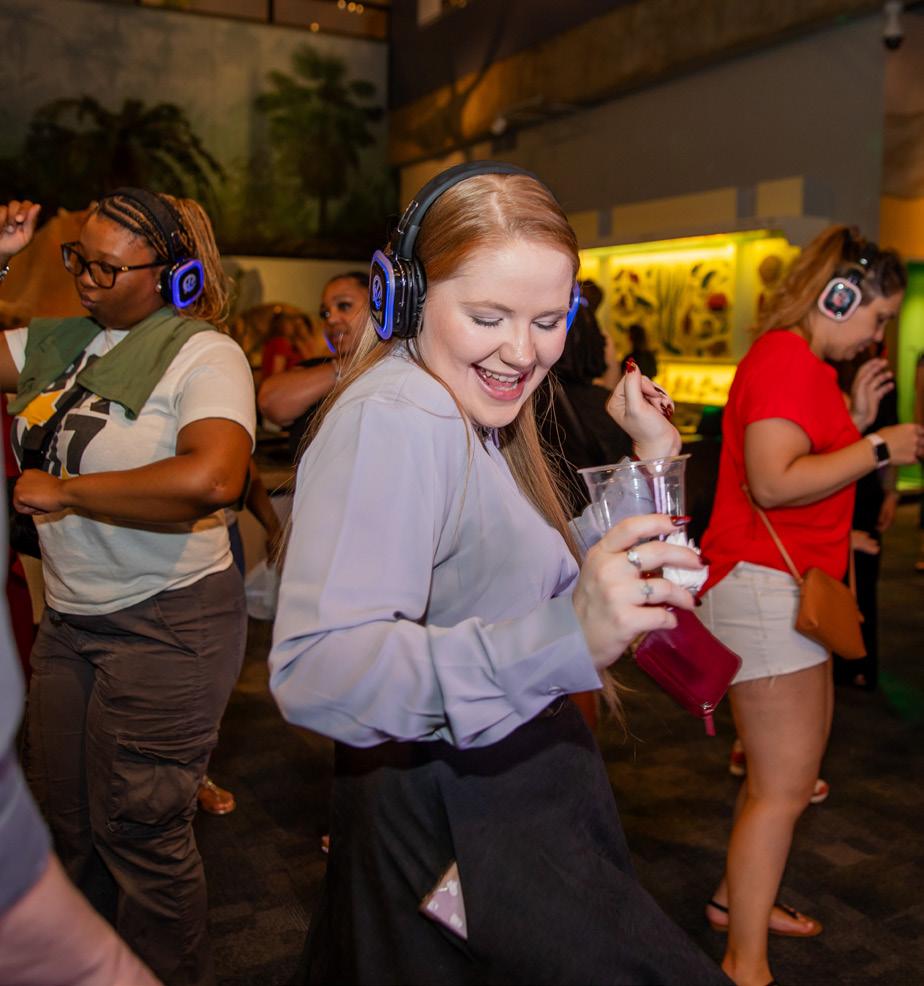
Our first event in the Up Late series ROCKED! Partners from around the region showed off their audio prowess, from silent disco dancing to superb home stereo. Our community absolutely packed the house at this SOLD OUT debut.
In a historic first, the OMNIMAX® Theater featured an experience focused on the venue’s impressive speaker array, delivering a one-of-a-kind way to get immersed in atmospheric audio. Guest performers from the local community dazzled with cutting-edge synthesizer technology and old-school punk rock vibes. STEM professionals from the region shared a STEMPUNK Lager, our limited-edition beer collaboration with Steampunk Brew Works, with guests to chat about everything from neuroscience to science fiction. Attendees even took part in an orchestra of improvised instruments and made sweet music with...a bag of keys!
Don’t miss out on our next Science Center Up Late event this October! Learn more on page 19
Pictures by Tyler Small.
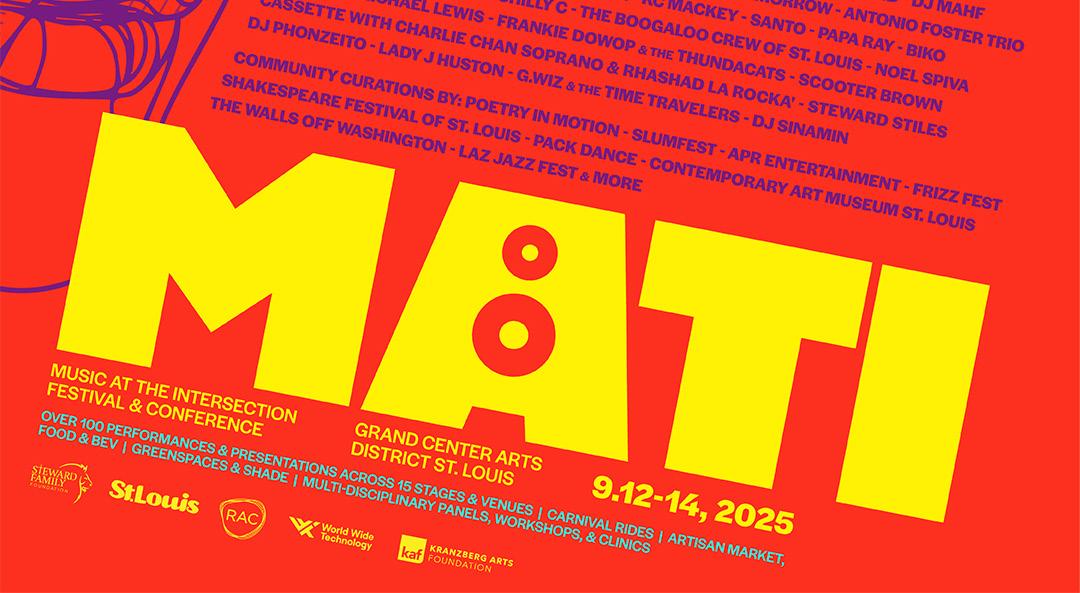
SEPTEMBER 12–14 | GRAND CENTER ARTS DISTRICT
The Science Center is excited to be participating in one of our awesome hometown music and arts festivals, MATI, formerly Music at the Intersection, which takes place September 12–14 in the Grand Center Arts District. This year’s MATI includes artists like Patti LaBelle, De La Soul, and Common!
After MATI shared a fun evening talking music and art with our guests at Science Center Up Late: Experience Sound, we'll return the favor by bringing iconic STEMbased activities to the crowd of this storied festival. We look forward to bringing STEM experiences to even more of our community’s favorite places and highlighting how STEM is everywhere and for everyone!
30TH ANNUAL LOEB PRIZE RECOGNIZES
Excellence in Teaching Science and Mathematics
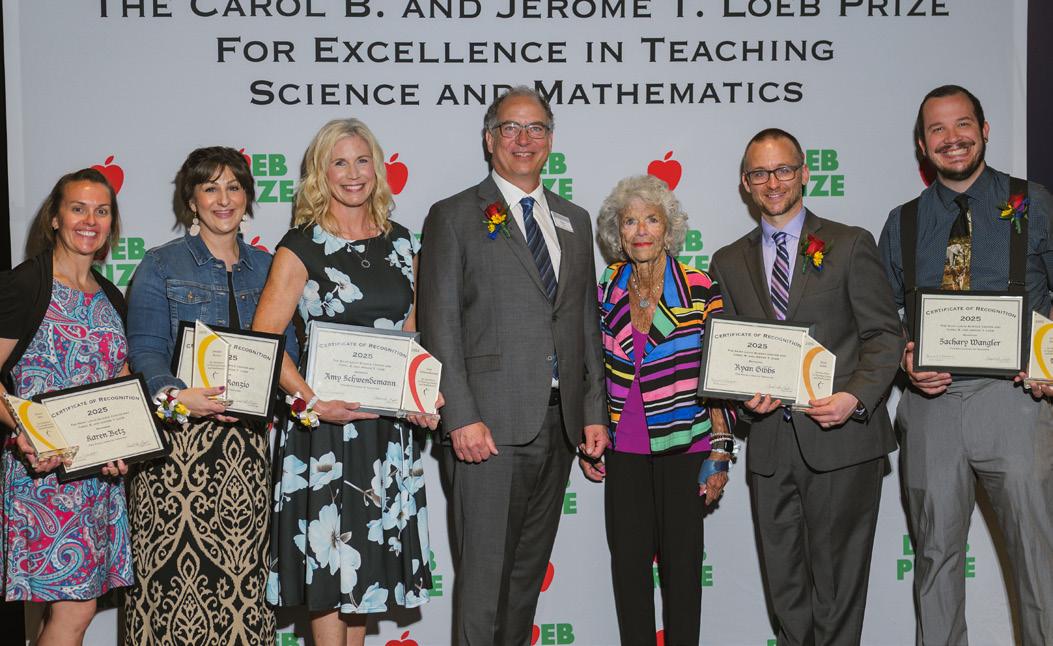
The Saint Louis Science Center held the prize ceremony for the Carol B. and Jerome T. Loeb Prize for Excellence in Teaching Science and Mathematics on May 15th inside the McDonnell Planetarium. This year’s ceremony marked the 30th anniversary of the award, which recognizes educators who significantly enhance their students’ performance in science and math.
First place this year went to Amy Schwendemann of Pattonville High School. Ryan Gibbs of Hancock Place Middle School won second place. The runners-up included Karen Betz of Crestview Middle School, Jennifer Ronzio of Queen of All Saints, and Zachary Wangler of Rogers Middle School. During the ceremony, Science Center President and CEO Ray Vandiver recognized Schwendemann and the finalists for their achievement.
Congratulations to Amy and all the other Loeb Prize winners! And thank you to all the nominated teachers who make a difference in their students’ lives every day.
Pictured, from left: Karen Betz, Jennifer Ronzio, Amy Schwendemann, Ray Vandiver, Carol Loeb, Ryan Gibbs, and Zachary Wangler.
MARK YOUR CALENDAR
With the YES Program, Summertime
Means Time for
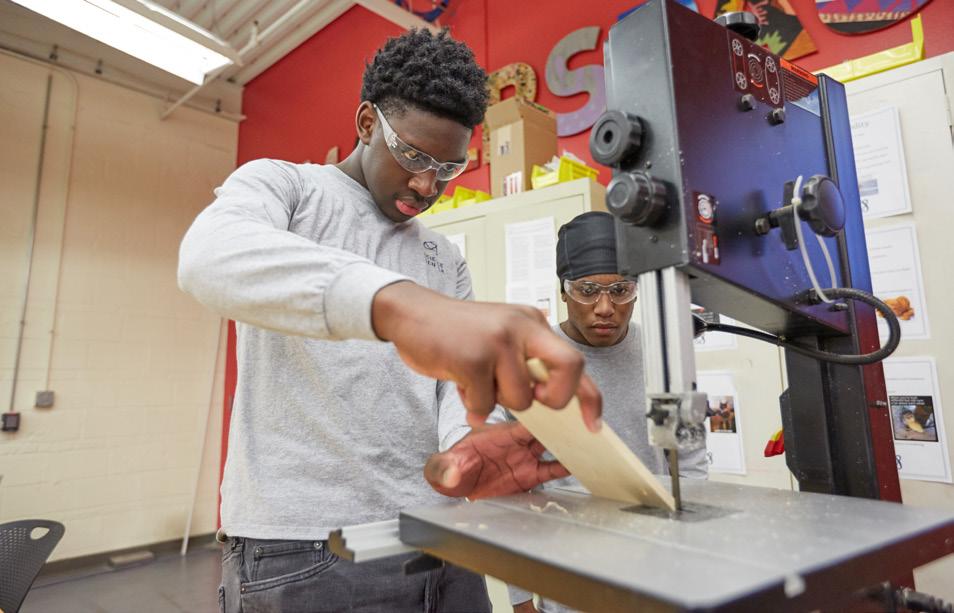
From classrooms and libraries to museums and even space camp, teens in the Science Center’s Youth Exploring Science (YES) program spent their summer sparking curiosity for STEM in people of all ages across St. Louis.
The YES program equips underrepresented high school students from across the St. Louis region with 21st century job readiness skills, hands-on technical training, and exposure to in-demand careers across STEM focus areas in aerospace, engineering, computer science, and more.
In a summer full of discovery, the YES teens’ efforts helped to educate and inspire the St. Louis community, demonstrating that the future is bright and boldly led by youth.
YES Focus Areas Take a Multi-Disciplinary Approach
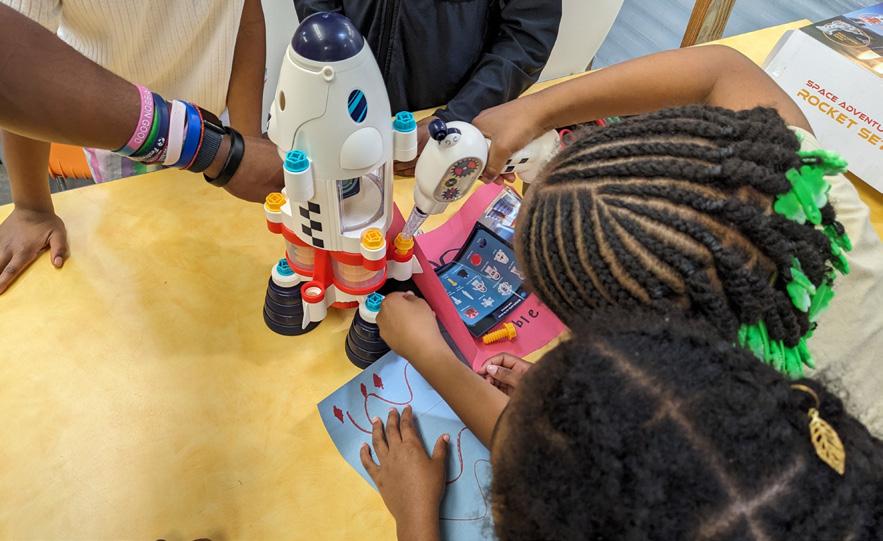
This summer, YES took a synergistic approach as teens immersed themselves in a dynamic experience blending activities from the program’s Integrative Medicine & Wellbeing and Entrepreneurship focus areas with the annual Summertime Science camp. There, the YES teens taught aerospace and engineering lessons to groups of children from the Science Center's community partners.
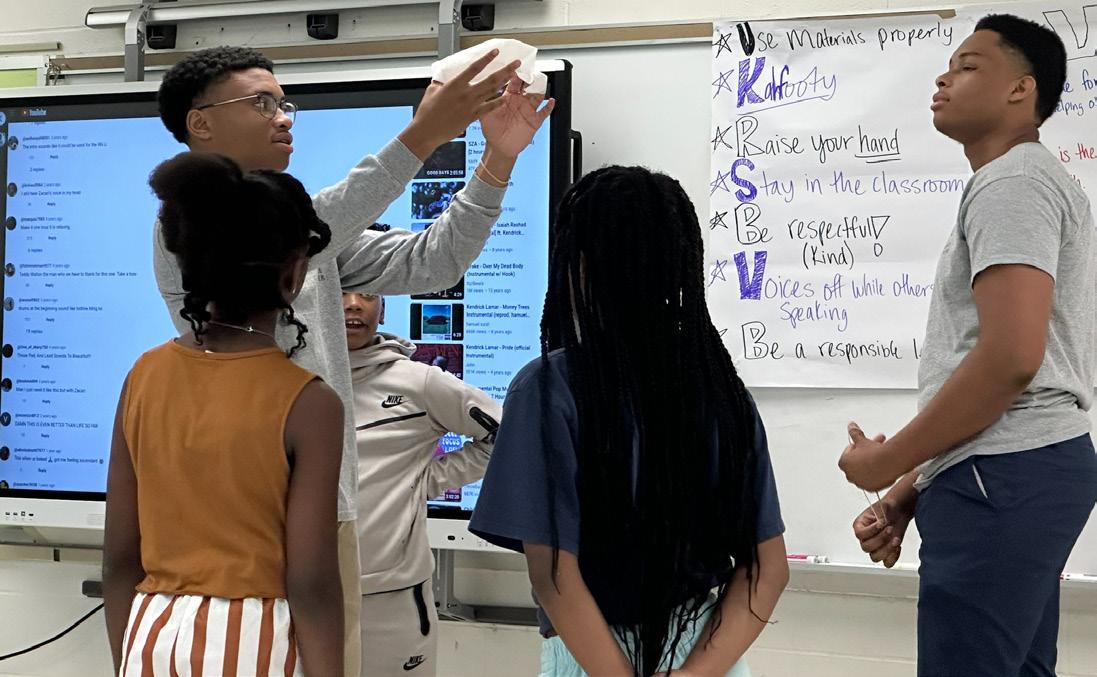
The teens developed engaging content around health and led their activities with guests in the Science Center. They also participated in the STL Tech Entrepreneurship BizCamp Challenge, organized by NFTE, the Network for Teaching Entrepreneurship. From designing and teaching aerospace engineering lessons to leading STEM demos, community events, and Energy Stage shows, the teens brought science to life for community groups and Science Center guests alike.
STEMtastic Camp Inspires Imaginations
This summer, YES teens led hands-on aviation and astronomy projects for elementary students in the Riverview Gardens School District as part of the Science Center's STEMtastic Camp, made possible thanks to the Boeing Company.
Returning for its fifth year, STEMtastic Camp saw Community Science team members and YES teens inspire campers’ imaginations with activities like a Mars Rover engineering challenge where students designed rovers to complete missions, plus a project building and testing gliders to learn about aerodynamics and iterative design. The YES teens also heard from field professionals, including Boeing engineers, for the chance to ask thoughtful questions as they explored real-world STEM careers.
Computer Science Focus Area Brings Technology to Life
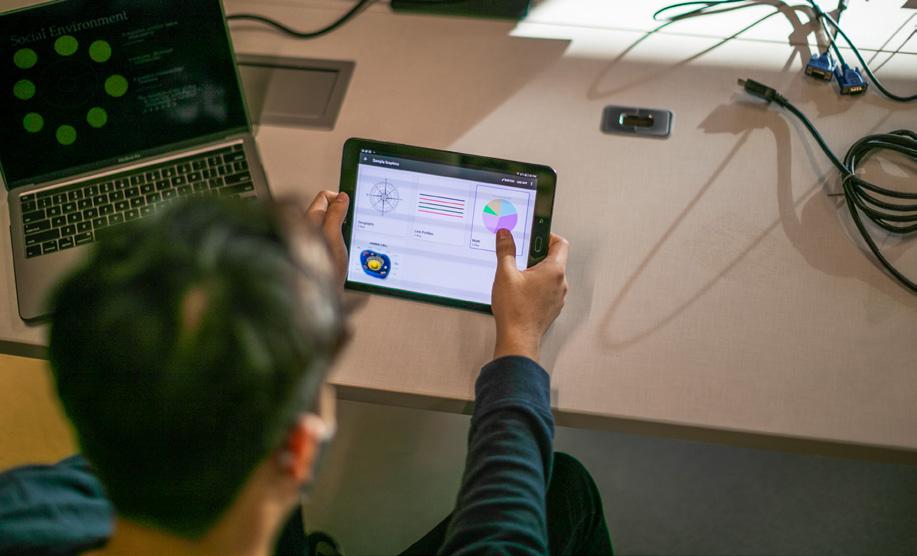
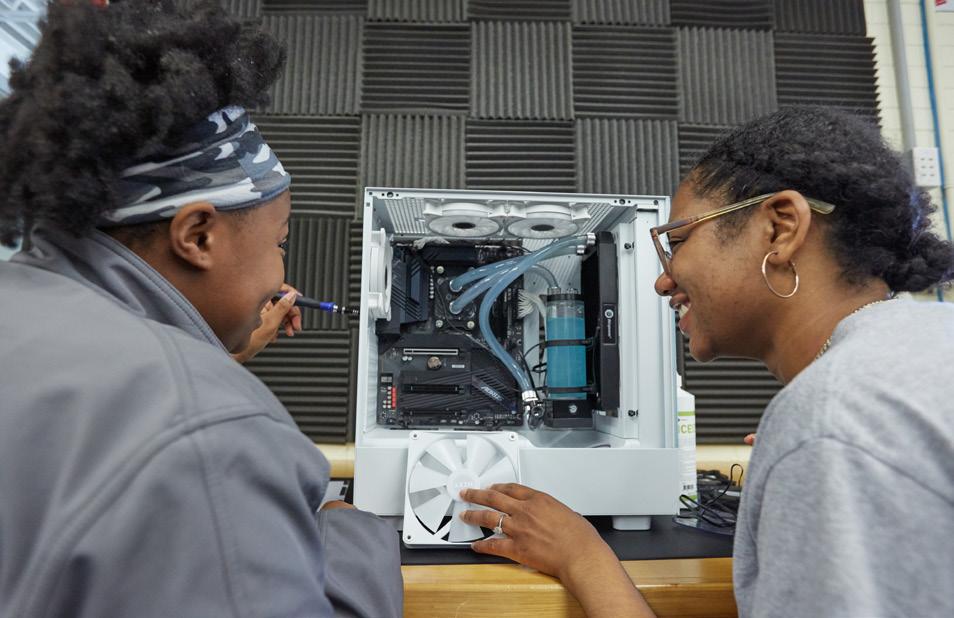
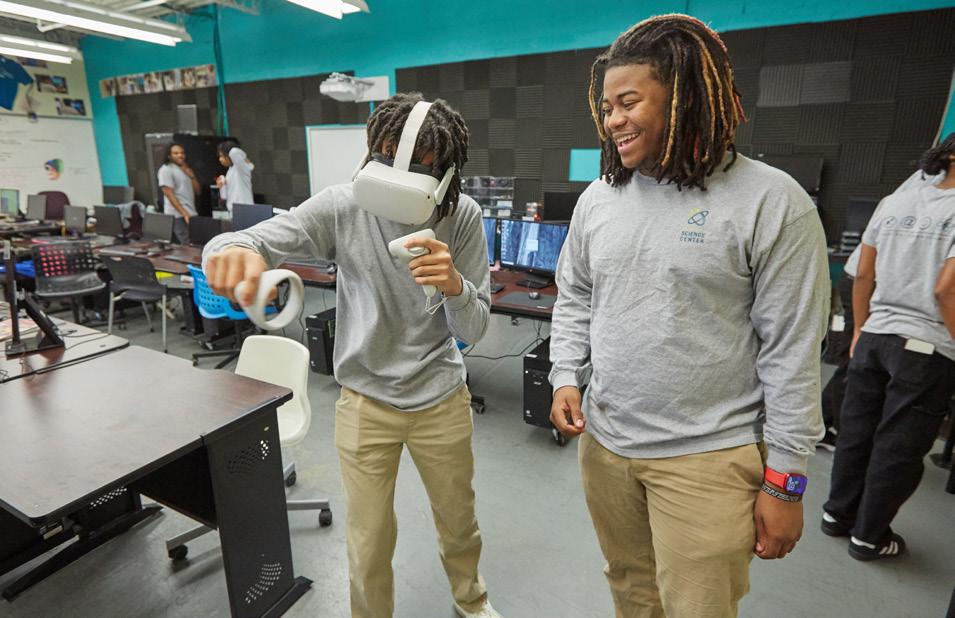
YES teens in the Computer Science focus area facilitated digital PC building simulations where Science Center guests constructed virtual computers step by step. Using gear puzzles and an analogy to the Tower of Hanoi activity (where players are challenged to solve a puzzle using skills like logical thinking and sequential reasoning), YES teens guided guests through hands-on explorations of physical PC components.
In the GameXPloration gallery, the teens helped guests program Sphero robots to navigate mazes and explained real-world automation.
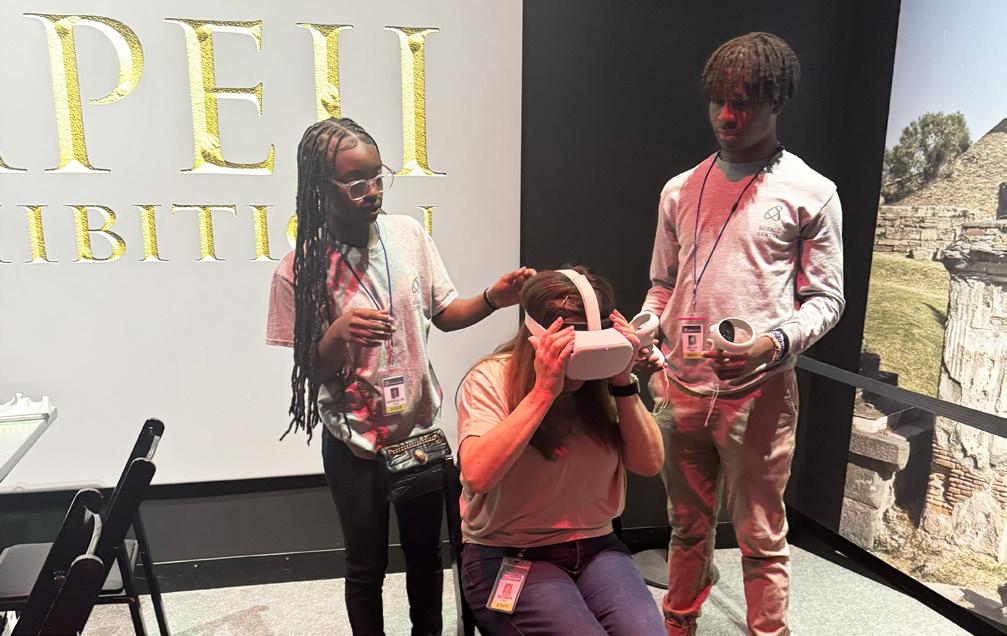
The teens also hosted a VR tour of POMPEII: THE EXHIBITION and even ran Farming Simulator sessions to demonstrate modern agricultural technology.
Pop-Up Science Takes STEM Throughout St. Louis
Pop-Up Science events at places like the St. Louis Public Library, Missouri Botanical Garden, City Museum, and other local libraries connected the YES teens with community members of all ages to share aerospace activities and help curiosity take flight.
YES Teens Practice Networking and Make Career Connections
Wrapping up the summer, July's YES Networking Extravaganza saw 62 YES teens connect with more than 50 professionals across multiple industries, allowing them to discover new careers while practicing important networking skills.
Building More Than Just Computers
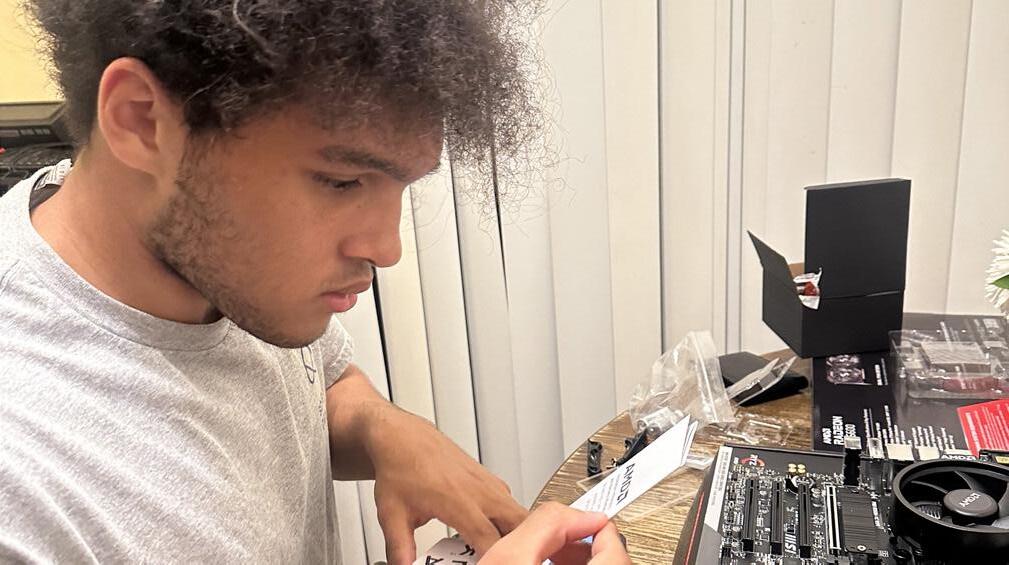
The Saint Louis Science Center's YES program is dedicated to empowering local teens through hands-on STEM education. Recently, YES teen Bryce demonstrated just some of the STEM skills he’s built up in the four-year program equipping participants with 21st century skills in science, technology, engineering, and math.
Earlier this year, Bryce announced to his mother, Joy, that he wanted to use the money he’d earned during his time in YES to build his own computer. Bryce explained he had learned the skills to build a computer from his YES group leader, Mike.
Joy agreed, but with a few caveats: before spending the $950 required to buy the various components needed, Bryce had to research each computer part, search where to find the most affordable parts, and then create a budget for his project.
Rising to the challenge, Bryce investigated each component and completed a detailed budget. Afterward, Joy took him to purchase the parts he needed.
Joy encouraged him to reach out to Mike for help if he got stuck, but Bryce—proudly wearing his Science Center shirt so he would feel like he was “at work” putting the computer together—assembled the components and built his own working desktop machine.
“ Thank you so much for all that [the YES program does] to provide an environment for teens to grow and learn STEM,” Joy says. “Bryce and I appreciate you all!”
Bryce’s success story exemplifies the Science Center’s mission to inspire everyone to be curious and engaged in science, as well as the impact of programs like YES.
By creating an environment where people of all ages are empowered to explore science and technology and develop critical STEM skills, the Science Center is empowering the next generation of innovators, STEM professionals, and builders just like Bryce.
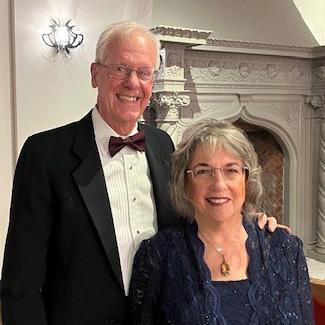
Kathy and Jim Sherby DONOR SPOTLIGHT:
Kathy and Jim Sherby have been members with the Saint Louis Science Center from the ground up—literally starting with bringing their children to the Science Center when it was located in Oak Knoll Park, Clayton.
One of their favorite memories is a morning family bike ride to Forest Park in the early 90s that ended on a hillside next to highway 40. Sitting with their three young sons, they watched large cranes lift and install the highway-spanning SkyBridge to connect the McDonnell Planetarium with the Science Center’s newly constructed Oakland Building.
By having the Science Center nearby, Kathy and Jim were able to encourage their sons’ love of science and technology. “Computers, engineering, anything scientifically oriented was their thing,” Kathy says. “The Science Center offered many opportunities to explore those interests.”
This powerful impression on children initially piqued the Sherbys’ interest in supporting the Science Center. After becoming members in 1990, they elevated their impact by joining the Einstein Society. They’ve also contributed to fundraising campaigns like Transform Tomorrow and the 60 for 60 Challenge, and they serve on the committee leading the Science Center’s signature fundraiser, WONDER. (Learn more about WONDER on page 29.)
“We support the Science Center because it opens minds to so many possibilities,” Kathy says. “Children can play and learn at the same time.”
She adds, the Science Center also educates adults who may not recognize how impactful STEM is in our world, and no admission fee means this knowledge is accessible to everyone. “This,” Kathy says, “can help more people be intrigued by science, understand science, and realize science is in their lives on a daily basis.”
The Sherbys further value the Science Center’s role as a resource for honoring high school science educators. Kathy recalls when Clayton School District chemistry teacher Nathan Peck, who was instrumental in nurturing her sons’ love of science, won the Carol B. and Jerome T. Loeb Prize for Excellence in Teaching Science and Mathematics (an annual partnership with the Science Center). “Celebrating teachers, who are critical to the whole learning equation, is important,” Kathy says.
When it comes to making a difference for the people and communities served by the Science Center, Kathy also gives her time and expertise on the organization’s Board of Trustees and the Institutional Advancement committee. She is passionate about helping individuals understand the ways they can both help the Science Center and invest in their future through planned giving. (Learn more about these options at slsc.org/support.)
Both Jim and Kathy believe the Science Center is part of what makes St. Louis special. “All of the things you can do here are family friendly, educational, and can be shared— it’s incredible,” Jim says. “And the Science Center’s Boeing Hall is a tremendous asset because the space brings large special exhibits to St. Louis, creating new experiences for everyone to enjoy and learn.”
“I like the local commercial and industrial sciences exhibited at the Science Center,” Jim adds. “The GROW Gallery is a great example. It’s fascinating to learn more about the crops grown in our region of the country, and it’s great that young people can learn and participate, too.”
“We learned that Missouri grows rice!” Kathy adds. “There are so many things that grow in this area that we take for granted.”
Jim and Kathy Sherby
“We support the Science Center because it opens minds to so many possibilities.”
Today, Kathy and Jim’s sons are all involved in STEM or STEM-adjacent careers. After earning degrees in biomedical engineering and law, their oldest son, Mike, worked in patent and intellectual property law and is currently in his fourth year of medical school. Their middle son, Bill, earned an economics degree, finding success in analytics and statistically driven marketing. Dave, their youngest, earned dual degrees in economics and psychology and works for an investment bank on Wall Street.
Now the Sherbys are turning to the Science Center to foster a future love of science and technology in the newest members of their family.
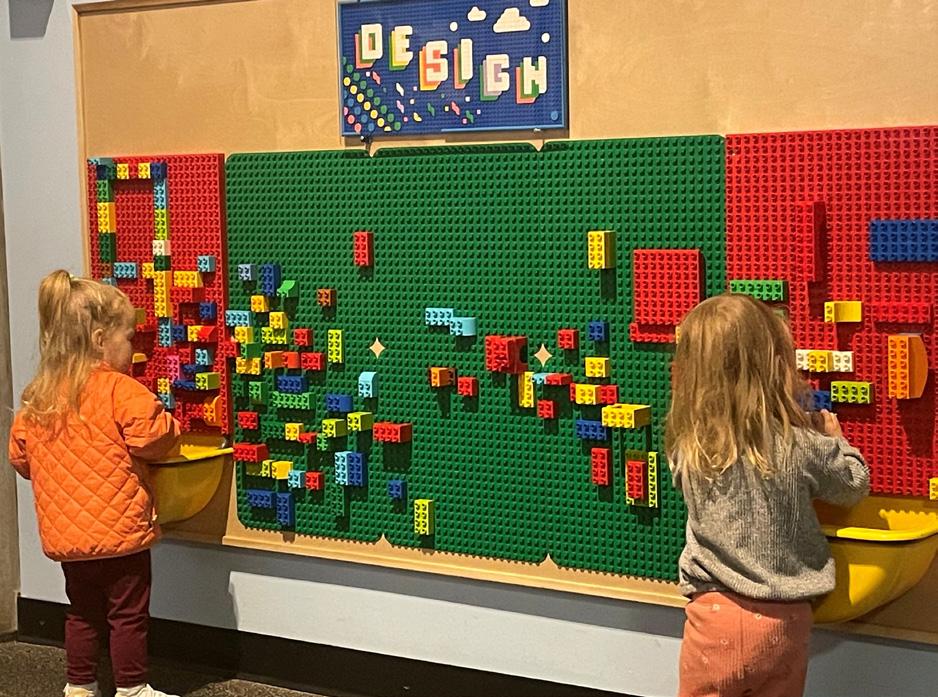
“When we brought our twin granddaughters here last year,” Kathy says, “they loved the Lego wall. We spent a half hour there and the other half of the time in the Discovery Room.”
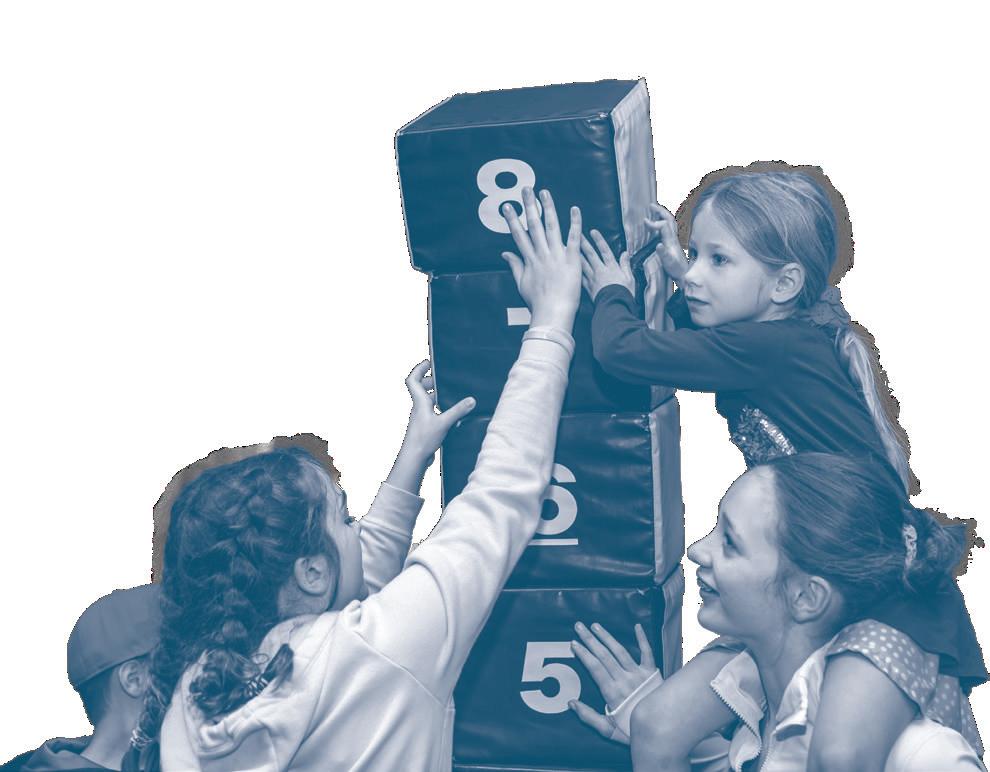
Of course, building with the iconic arch blocks was another highlight, just as Kathy and Jim experienced with their sons years ago. “They were mesmerized,” Kathy says. “To see that joy in their faces is amazing.”
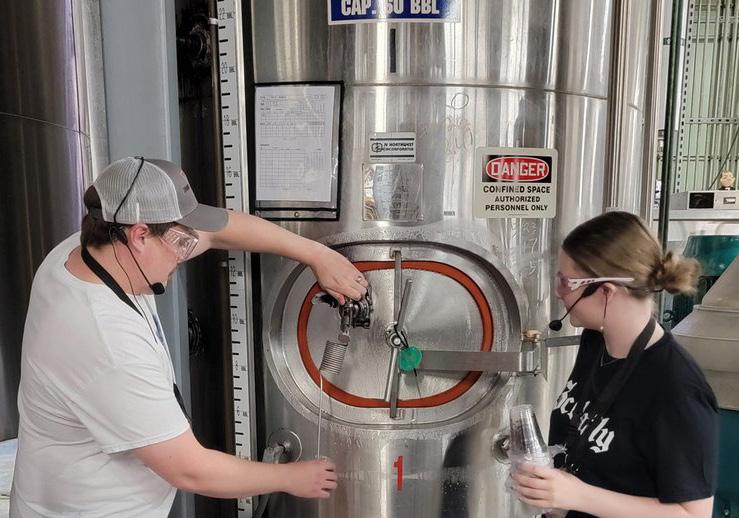
This Fall, we’re proud to launch our very first Corporate Partner Membership community event in partnership with Schlafly, one of the region’s most beloved craft breweries.
Hosted at Schlafly Bottleworks in Maplewood, the event offers our corporate partner members a unique opportunity to network in a space where science and craft brewing come together. It’s an evening designed not just to celebrate our inaugural corporate members, but to highlight how local industries and science education can align in meaningful ways.
This event marks an exciting milestone in the evolution of the Science Center. Launched in April, our new Corporate Partner Membership Program joins those of our peer institutions—like the Zoo, the Garden, and the Art Museum—in building long-term sustainability and community relevance.
This program goes beyond funding. It’s about connection— ensuring that science education in St. Louis remains dynamic, inclusive, and directly linked to the innovation happening in our own backyard. Corporate members enjoy access to special events, exhibits, and opportunities to engage with the next generation of STEM leaders.
We’re grateful to our inaugural members for leading the way:
• Safety National
• Husky Corporation
• Tarlton
• Missouri Farm Bureau
• Prairie Farms Dairy
• Mastercard
• Commerce Bank
Want to get your company involved?
Visit slsc.org/corporate-partners to learn more. Contact Christine Cox, Manager of Sponsorships and Promotions, at christine.cox@slsc.org or 314-289-4499
The Sherbys' twin granddaughters at the Science Center
Science Center Rooftop Offers Einstein Society Members a High-Level View of the Future
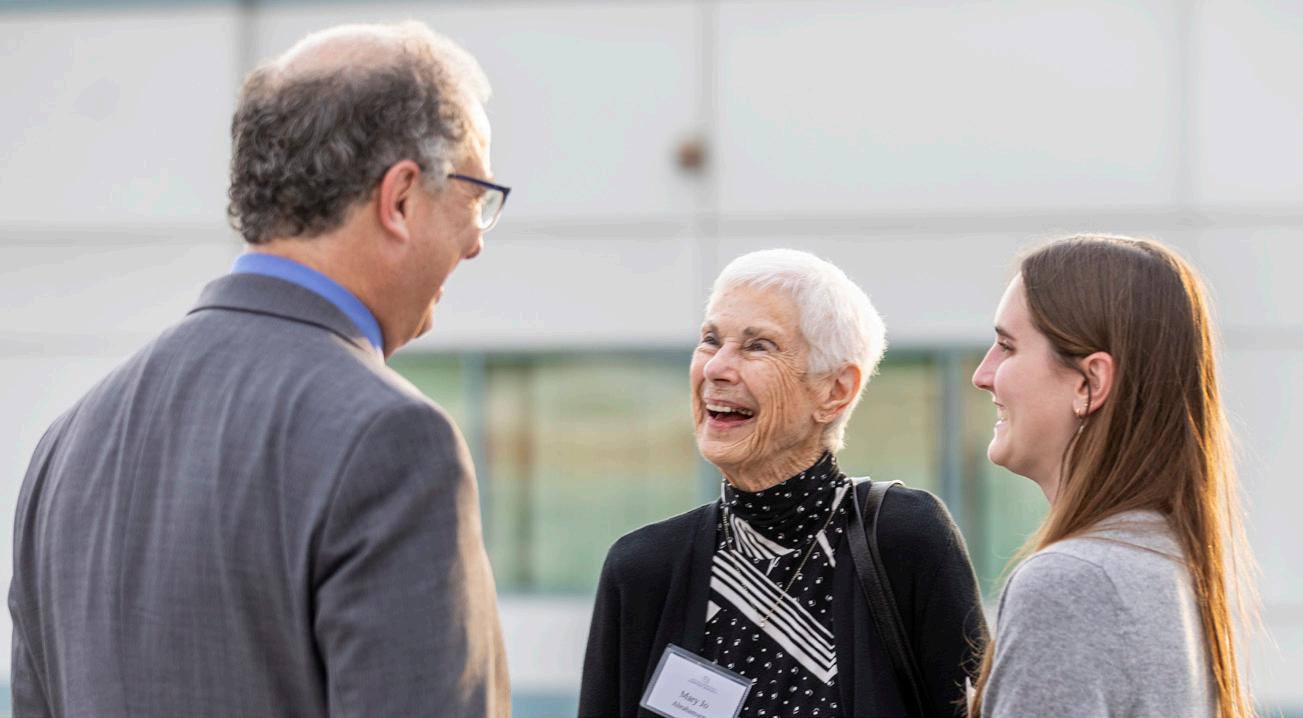
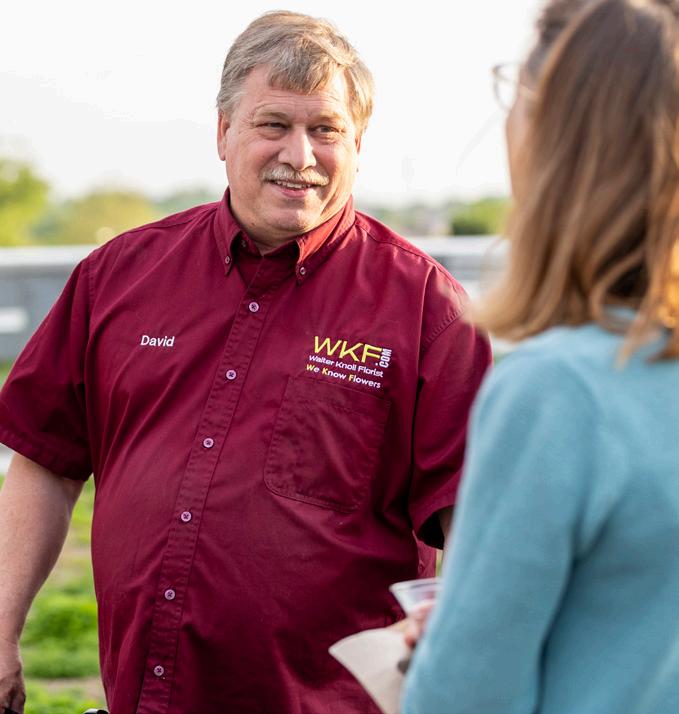
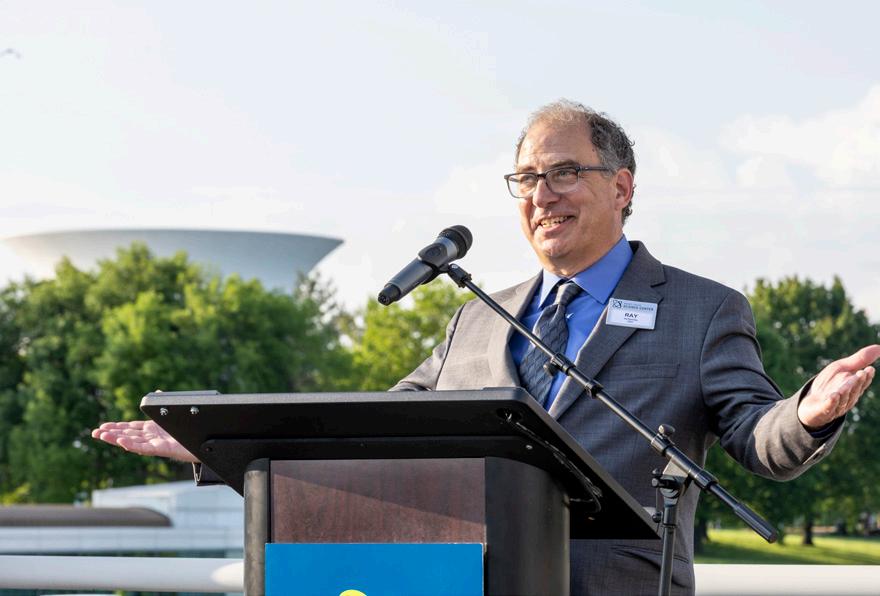
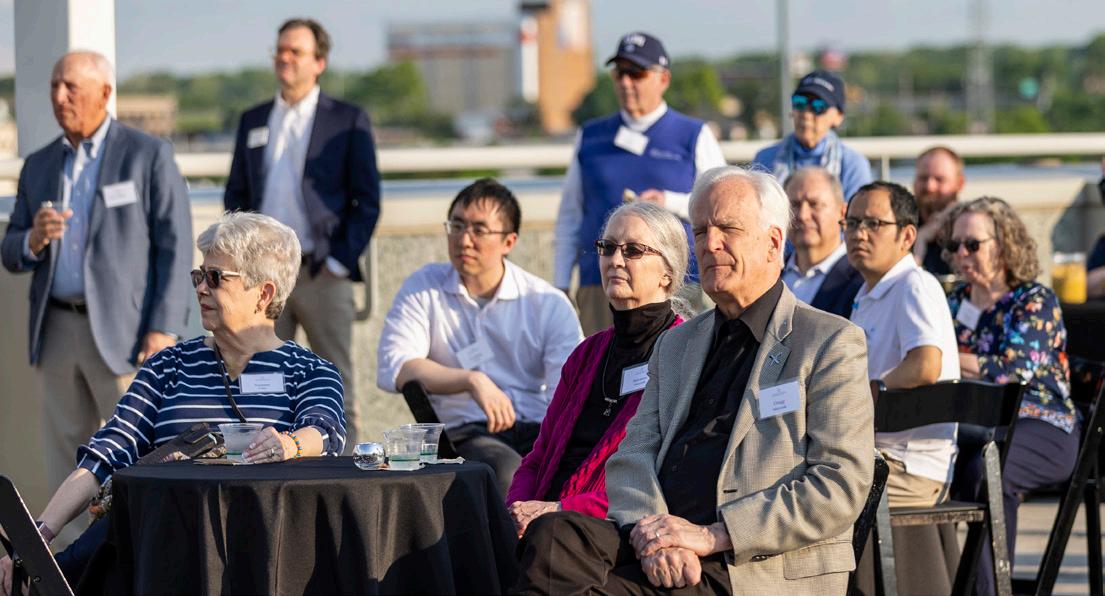
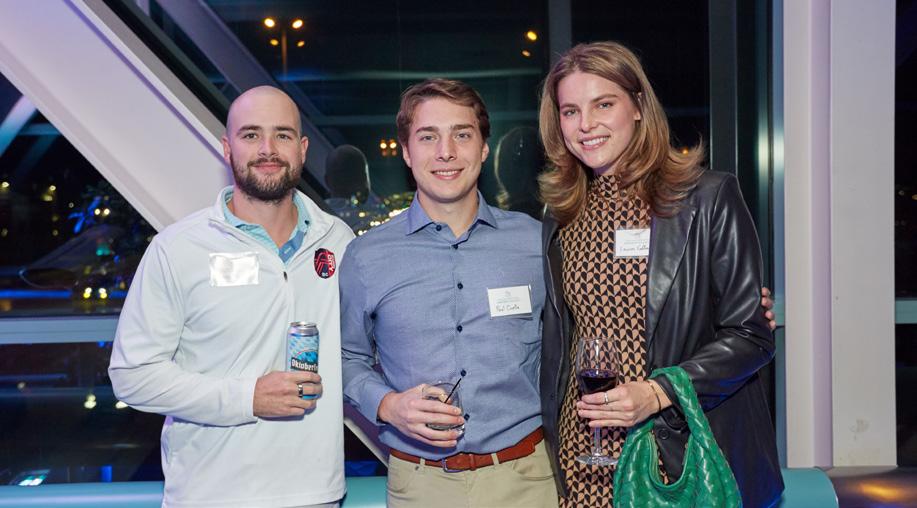
The Saint Louis Science Center hosted Einstein Society members in the spring for a rooftop reception introducing new President and CEO Ray Vandiver. Dr. Vandiver shared his vision for expanding STEM education access throughout the St. Louis region, calling St. Louis “a science city” and emphasizing how the Science Center makes STEM learning approachable and fun for all ages. The evening featured panoramic city views and educational demonstrations including exploration of the STEM behind the green rooftop with Walter Knoll Florist, as well as recognition of the Science Center's 2024 impact of reaching over 637,000 people—an accomplishment that wouldn’t have been possible without Einstein Society members’ generous support.
See more photos and details from the evening! Check out our recap blog post at slsc.org/ns-einstein-spring-25
UPCOMING EINSTEIN SOCIETY EVENTS
SEPTEMBER 10, 2025 Science on the Move
At Saint Louis University's CHROME Lab, marvel at what's possible when haptics (touch and motion technology), robotics, and mechatronics come together! Guided by Science Center Board of Trustees member Dr. Jenna Gorlewicz (Associate Dean for Research and Innovation), guests will see and touch the latest technologies augmenting human capabilities; meet the students and scientists behind the work changing lives beyond the lab; and enjoy coffee and snacks in this exciting event.
NOVEMBER 2025
Einstein Society Reception
Start the season of giving with us as we gather under the stars at the James S. McDonnell Planetarium to celebrate the generosity that makes our mission possible. Festive food and drinks will be matched with a special Star Show and display of Gemini space program artifacts from the Saint Louis Science Center's Collections..
Be part of these events bringing you closer to the Science Center's mission. Join the Einstein Society today at slsc.org/einstein-society
GET YOUR TICKETS FOR
Saturday, October 4, 2025 | 6:00pm–10:00pm Tickets: $500 per person
Join us at the Science Center for WONDER: A Quantum Blast, a night to celebrate and support the Science Center's mission and ignite the scientist in all of us!
At WONDER, guests will enjoy…
+ A cocktail reception with prototype gallery experiences
+ Dinner with hands-on scientific entertainment featuring an Amazing Science Demonstration by Dr. Mark Wrighton, chemistry professor and Chairman of the Science Center’s Board of Trustees
+ A WONDER-ful afterparty
+ Valet parking
Purchase tickets or learn more at slsc.org/wonder2025
“St. Louis is very much a science city; we’re the home of innovation in aviation, biotech, health science and more. This organization brings STEM to our local community and visitors. I feel like it sits at the intersection of a lot of great things in our city and state, and I love to support it.”
–MARK SAWYIER
This stellar event is hosted by chairs Mark and Laura Sawyier, both passionate advocates for science and innovation in the St. Louis community. They are joined on the host committee by honorary chairs Anne and John McDonnell and Risa Zwerling Wrighton and Mark Wrighton.
PARTNER SPOTLIGHT: BURNS & MCDONNELL
Building Strong Foundations for the Future
As guests in the Science Center’s Structures gallery can attest, physical infrastructure is the foundation of modern life. Our partners at Burns & McDonnell are at the forefront of designing and building safe, essential infrastructure for a growing world.
Headquartered in Kansas City and with more than 75 offices located around the globe—including one right here in St. Louis—Burns & McDonnell is driven by engineers, construction professionals, architects, planners, technologists, and scientists to deliver projects that make a difference across a multitude of industries.
But making a difference can take many forms. That’s why Burns & McDonnell’s employee-owners established the Burns & McDonnell Foundation in 1988 to invest in programs and initiatives that inspire the next generation of STEM leaders, cultivate vibrant and healthy communities, and advance civic initiatives through partnerships with schools, nonprofits, and community organizations. Fueled by a commitment to strengthening communities, the Burns & McDonnell Foundation’s total giving reached $11 million in 2024 alone.
That generosity and commitment continues in this year and beyond. Burns & McDonnell understands that science centers are critical spaces where curiosity comes to life, and they can play an important role in inspiring future scientists, engineers, innovators, and problem-solvers.
That’s why Burns & McDonnell is making philanthropic gifts to three science centers making a difference through interactive exhibits, hands-on programs, and novel learning opportunities that take STEM beyond textbooks and offer students of all backgrounds the chance to explore the wonders of science, technology, engineering, and math. The Saint Louis Science Center was honored to be chosen along with the Connecticut Science Center and The Works Museum by the organization to receive a combined total of $1.1 million over three years.
At the Science Center, Burns & McDonnell has committed $250,000 to enhance the Youth Exploring Science (YES) program, which supports students from underserved or traditionally underrepresented communities in STEM. Throughout their high school years, YES teens build the knowledge and experience needed for in-demand STEM jobs.
“This donation will allow us to deepen the impact of our YES initiative,” said Dr. Ray Vandiver, president and CEO of the Saint Louis Science Center. “By giving teens access to real-world skills, we’re not just teaching STEM but are empowering students to see themselves as future engineers, innovators, and leaders in their communities.”
For Burns & McDonnell, collaboration with the Saint Louis Science Center and other science museums is about more than science-focused exhibits, but rather sparking curiosity, expanding access, and opening doors—especially to those who may not see themselves in STEM careers. It’s a focus that helped land the company in the Top 10 of STEM Workforce Diversity magazine’s Top 50 Employers Readers’ Choice Awards in 2024.
With their generous commitment to the Science Center’s YES program, Burns & McDonnell is helping students to see their future in STEM, allowing families to experience innovation firsthand, and laying solid foundations to build the future of our region.
Thank you to Burns & McDonnell for their generous support of the Saint Louis Science Center!
Turn to page 24 to see what the YES teens have been up to this summer!
5050 Oakland Ave. St. Louis, MO 63110
NewScience is always GREEN
The Saint Louis Science Center is a committed steward of the environment. We are proud to continue to offer the digital and interactive version of NewScience at slsc.org/newscience
If you would like to opt for a sustainable choice and only view NewScience digitally, please send an email to us at memberships@slsc.org to no longer receive a paper subscription.