
Cameron Sylvester



Real-time performance tracking and analysis with LiNK Logbook™.
The fastest crews train with more than instinct.
LiNK Logbook™ brings your SpeedCoach® GPS2, CoxBox® GPS, and EmPower Oarlock™ together in one coaching and performance platform.
Stream live metrics during practice or racing. Compare boats and athletes in real time. Review stroke profiles and session data after practice to make smarter technical adjustments and build measurable boat speed.
Whether you’re coaching from the launch or reviewing sessions afterward, LiNK Logbook™ helps turn rowing data into better decisions on the water.

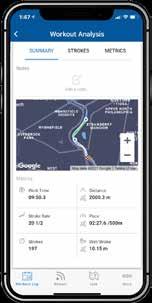

Real-time streaming from NK devices
Compare athletes & boats live
Review stroke metrics post-session
Team & Coach plans
• Instagram: rowfluidesign
Follow us on Facebook: @Rowfluid


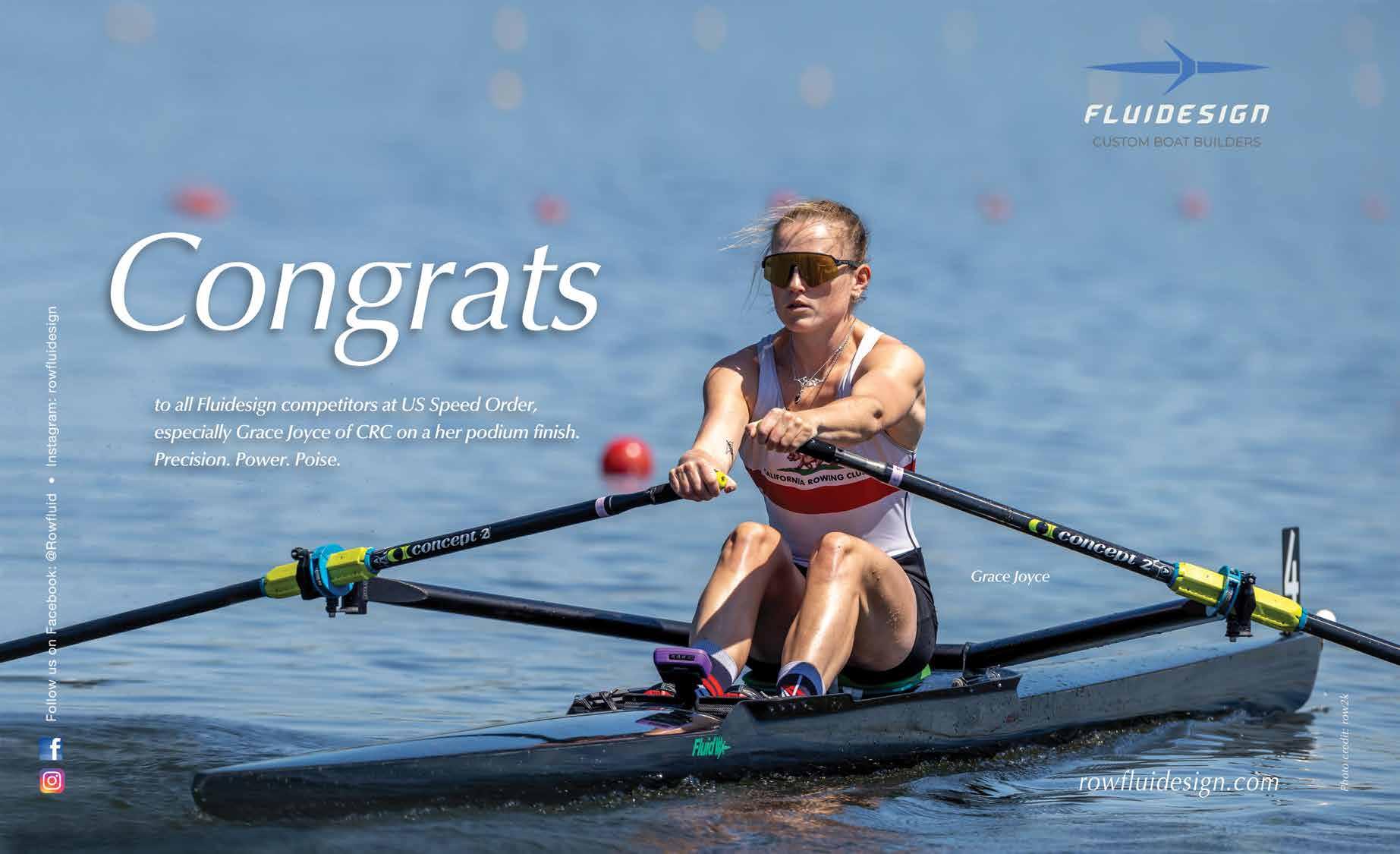
to all Fluidesign competitors at US Speed Order, especially Grace Joyce of CRC on her podium finish. Precision. Power. Poise.
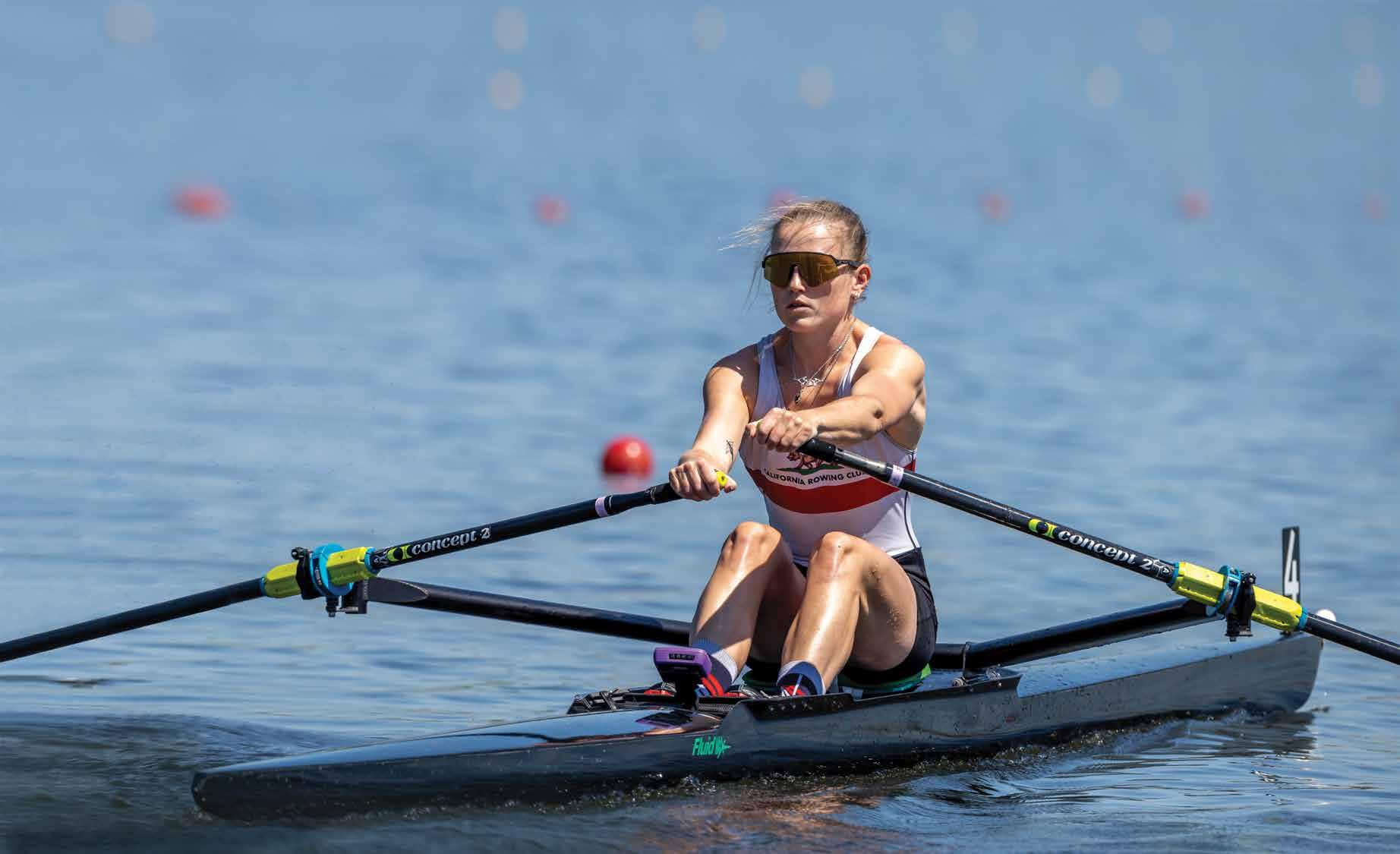

4th place, Men’s Championship 1x
HEAD OF THE CHARLES
Lightweight Cooper Tuckerman switched into a Phantom 25 after rowing a different brand boat in 2024 and was 30 seconds closer to repeat winner, Finn Hamill. An impressive 4th place both years, Cooper was 47 seconds behind Hamill in 2024 and only 17 seconds back this year, rowing the Phantom 25.
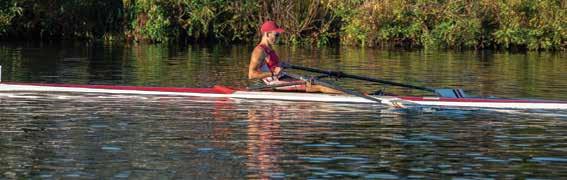
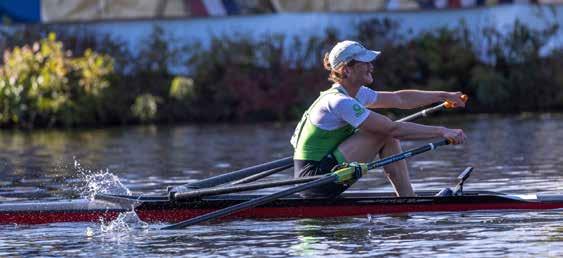
1st place Men’s Club 1X
HEAD OF THE CHARLES
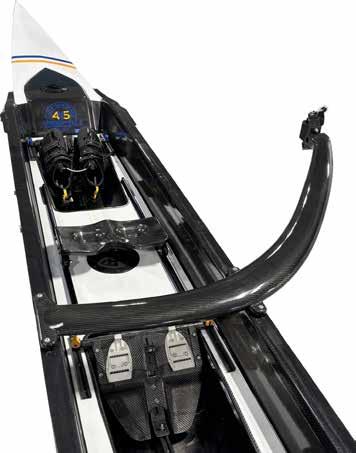
Victor Corja powering his club’s Peinert 26 with a carbon rigger.
Chip Davis PUBLISHER & EDITOR
Chris Pratt ASSOCIATE PUBLISHER
Vinaya Shenoy ADMINISTRATIVE ASSISTANT
Art Carey ASSISTANT EDITOR
Ian Parish ASSOCIATE
CONTRIBUTING WRITERS
Andy Anderson | CJ Bown | Nancy Clark
Martin Cross | Bob Ford | Mike Jensen
Trevor McGee | Volker Nolte | Marlene Royle
Robbie Tenenbaum | Hannah Woodruff
CONTRIBUTING PHOTOGRAPHERS
Jim Aulenback | Steve Aulenback
Dan Bigelow | Julia Kowacic | Karon Phillips
Patrick White | Amy Wilton | Lisa Worthy
MAILING ADDRESS
Editorial, Advertising, & Subscriptions PO Box 831 Hanover, NH 03755, USA (603) 643-8476
ROWING NEWS is published 12 times a year between January and December. by The Independent Rowing News, Inc, PO Box 831, Hanover NH 03755 Contributions of news, articles, and photographs are welcome. Unless otherwise requested, submitted materials become the property of The Independent Rowing News, Inc., PO Box 831, Hanover, NH 03755. Opinions expressed by authors do not necessarily reflect those of ROWING NEWS and associates. Periodical Postage paid at Hanover, NH 03755 and additional locations. Canada Post IPM Publication Mail Agreement No. 40834009 Return undeliverable Canadian addresses to Express Messenger International Post Office Box 25058 London BRC, Ontario, Canada N6C 6A8.
POSTMASTER: Send address changes to:
ROWING NEWS
PO Box 831, Hanover, NH 03755. ISSN number 1548-694X
ROWING NEWS and the OARLOCK LOGO are trademarks of The Independent Rowing News, Inc. Founded in 1994
©2026 The Independent Rowing News, Inc. All rights reserved. Reproduction in whole or in part without written permission prohibited.
PLEASE SHARE OR RECYCLE THIS MAGAZINE

Follow Rowing News on social media by scanning this QR code with your smart phone.

FEATURES
Perhaps it’s time for our sport to stage more regattas where the top university eights go head to head against the globe’s fastest national teams.
BY MARTIN CROSS
At San Miguel Academy, while winning is great, getting to the finish line isn’t necessarily the goal. Getting to the start line is.
BY BOB FORD
Simeon John set a record at his first Head of the Charles, and broke it a year later by 25 seconds. His forte: Being underestimated.
BY MIKE JENSEN
News USRowing Resets Race Reports Opening Day SEC Championships
Sports Science Water Ways
Coach Development Plugging the Talent Drain
Recruiting For Parents, Some Do’s and Don’t’s Fuel An Ode to Mighty Peanut Butter
Training The Six Pillars of Fitness
Coxing Firing on All Cylinders 14 From the Editor 66 Doctor Rowing

CHIP DAVIS
Late spring is the best time of the year in rowing.
And after that, the worst: Our sport effectively shoves a quarter of our community off a cliff called graduation.
Crews reach peak speed as the racing season concludes. Regional and league championship regattas deliver the defining athletic experience for most programs, and selected crews advance to national championships—where they go faster still.
May and June are also seasons of celebration—graduations, weddings, milestones that honor achievement and the beginning of new chapters.
But for our sport, this same moment exposes one of American rowing’s greatest failures: We kick out roughly a quarter of our athletes every year. Student-athletes make up more than 90 percent of our community, but when graduation arrives, the sport as it’s currently structured abandons the very people we spent four—or eight—years teaching to row, developing as competitors, and rewarding for their commitment.
We kick out roughly a quarter of our athletes every year.

After that, continuing to row becomes an obstacle course. Maybe you can get a single. Maybe you can find somewhere to store and row it. Maybe you live near a club accepting new members. More often than not, you simply stop rowing.
As CJ Bown, who has spent his career in rowing and seen it from the athlete, coach, and industry perspectives, points out in our new column “Look Ahead” (page 64), unless a rower is one of the few who will follow the elite pathway to row in the Olympics— about 50 Americans made the Paris Olympic squad—there’s really no next step. No professional tier. No post-collegiate league. Not even a meaningful regatta series.
There’s proven demand and an addressable market. Head of the Charles alumni events are oversubscribed and have a waitlist every year. Why not a series or a league? The regatta has a new chair, as we reported on RowingNews.com. Perhaps he, Zander Packard, can bring the same solution-oriented ingenuity that he and fellow Stanford rowing supporters used to save their programs from cancellation just a few years ago.
Another solution for saving rowers lost after graduation is to further professionalize coaching to make it an attractive career option. The profession has come a long way in just the first quarter of this century, but there’s tremendous potential to do more to make the job of teaching our great sport look like a viable career to college graduates. Nine-time— he just won again this year—New England Small College Athletic Conference Coach of the Year Peter Steenstra does more than talk about it, he’s continuing the coaching development legacy of the late Jim Joy with The Conference for Rowing Coaches, in addition to mentoring young coaches in his Bates College program. His ideas and experience shaped this month’s Coach Development column (page 58).
Efforts like these will determine whether rowing grows or merely replenishes itself. Right now, our sport invests years developing athletes only to discard them at graduation. In business, acquiring a new customer typically costs five to 25 times more than retaining an existing one. U.S. rowing operates in exactly the opposite way—replacing athletes every four years instead of keeping them as participants for life.
Research from Bain & Company and Harvard Business Review shows that a 5 percent increase in customer retention can increase profits by 25 to 95 percent. Imagine what a five-percent increase in retaining graduating rowers would do for our sport.
Our editorial team can be reached at editor@rowingnews.com

HOSR welcomes you back to Philadelphia October 24 & 25, 2026

Competition for Juniors, Collegiate, Masters, Veterans, Elite, Adaptive/Para, Corporate and Alumni.
Registration opens July 15th at RegattaCentral.
Purpose got us started. Passion keeps us going. Join us on the course for our 55th year.



In the April issue, we failed to credit photographer Lisa Worthy (left) for her images accompanying the feature “How Far Can Mike Herman Take it?” We regret the error.









$445 $495

Large Configurable Display (2, 4 and 6 fields)
Optional Wireless Impeller & Accessories
Easy Data Transfer via the DataFlow App



Independent review of the ActiveSpeed - Sander Roosendaal, founder of the rowing analytics site rowsandall.com, takes a deep dive into the ActiveSpeed.


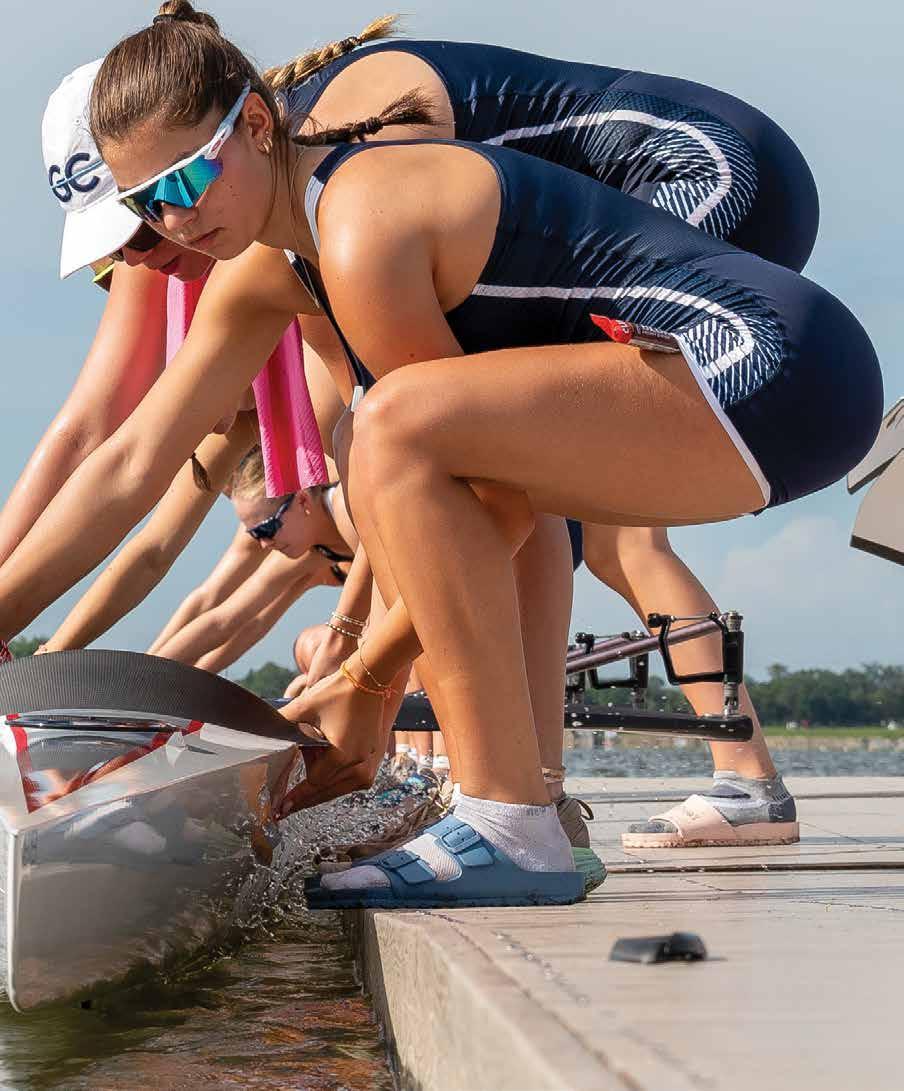
Members of Greenwich Crew put their boat on the water for the 2025 USRowing Youth National Championships. This year’s regatta runs from June 11 to 14 at Nathan Benderson Park in Sarasota, Fla., and is expected to draw nearly 900 crews from over 200 clubs.
PHOTO: LISA WORTHY
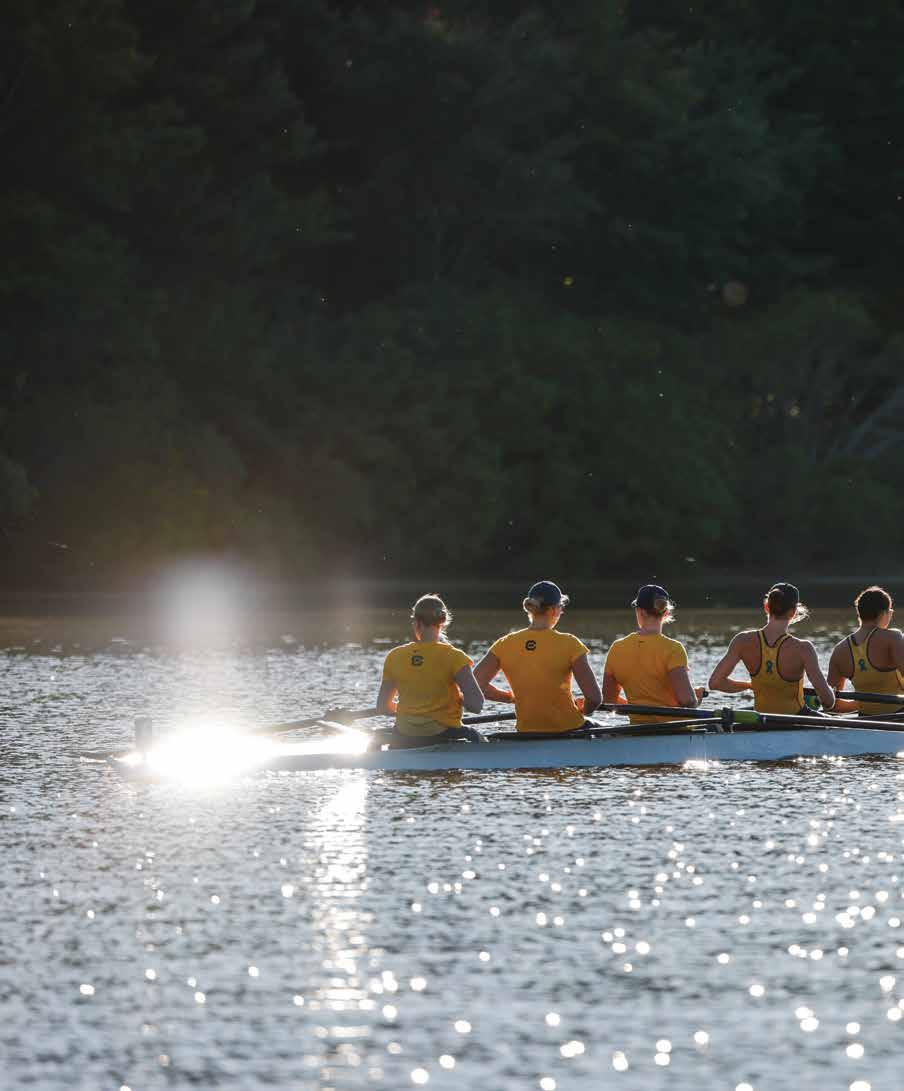
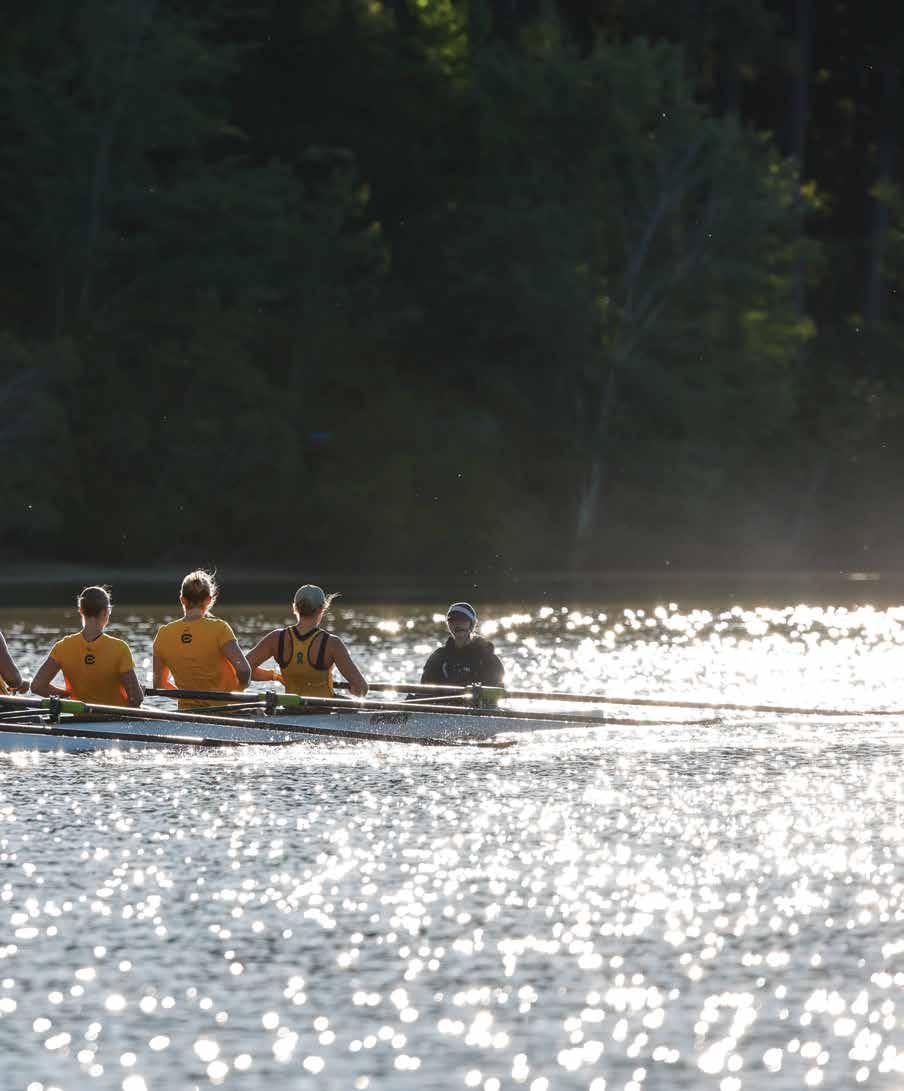
The University of California, Berkeley women raced at the ACC Rowing Championship on Saturday, May 16, at Lake Wheeler in North Carolina. Winning all five grand finals, Stanford tallied 132 points and claimed its second straight championship. Virginia scored 118 for second, and Cal totaled 108 for third, ahead of Syracuse (103) and Miami (77). A total of 12 women’s varsity rowing programs compete in the Atlantic Coast Conference, which expanded to 18 member universities in 2024.
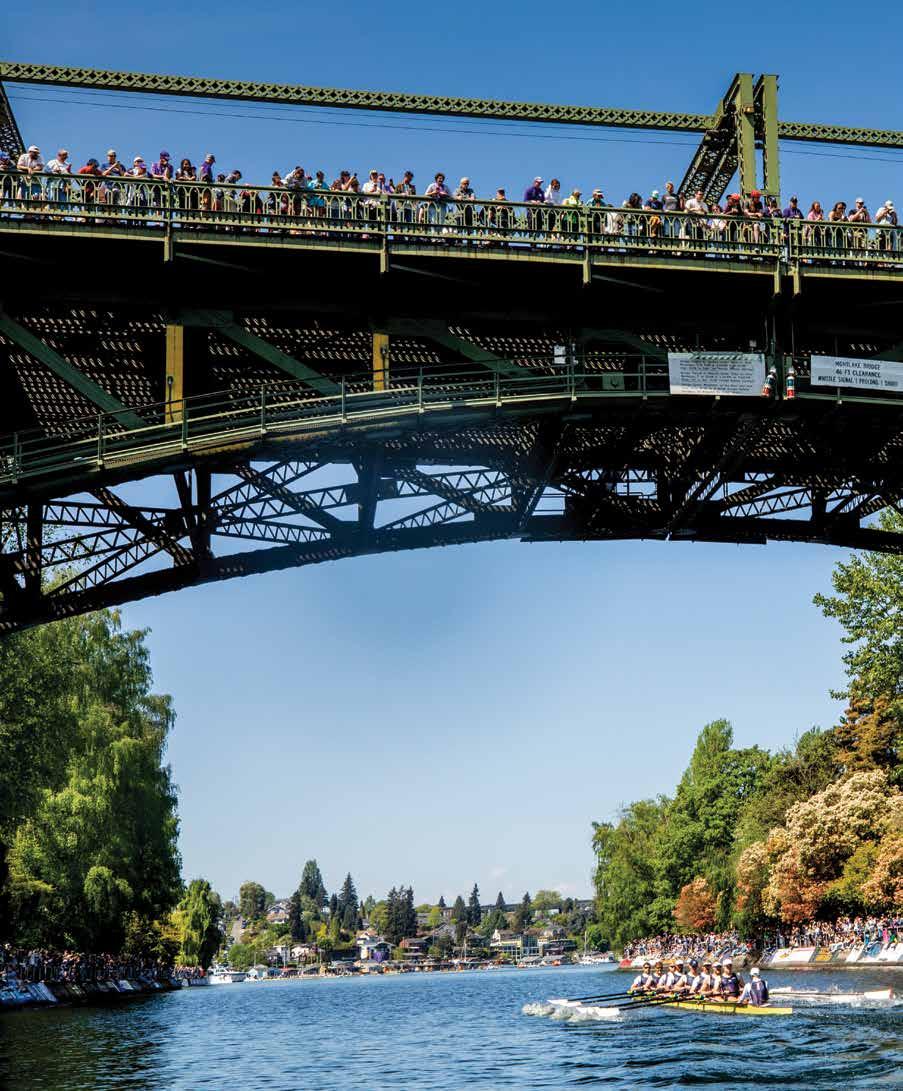
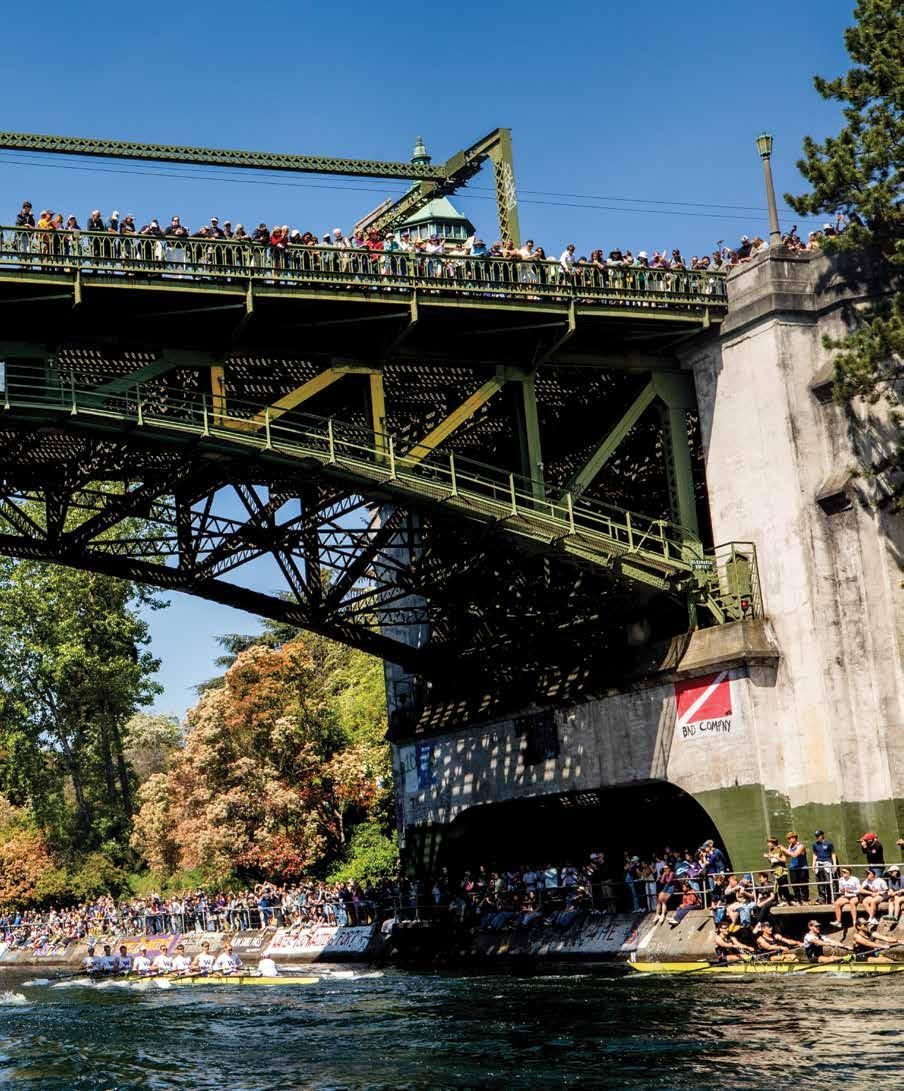
Great Britain, Washington, and Northeastern race through Seattle’s Montlake Cut, connecting lakes Washington and Union for the Windermere Cup at the Opening Day Regatta on Opening Day, May 2.
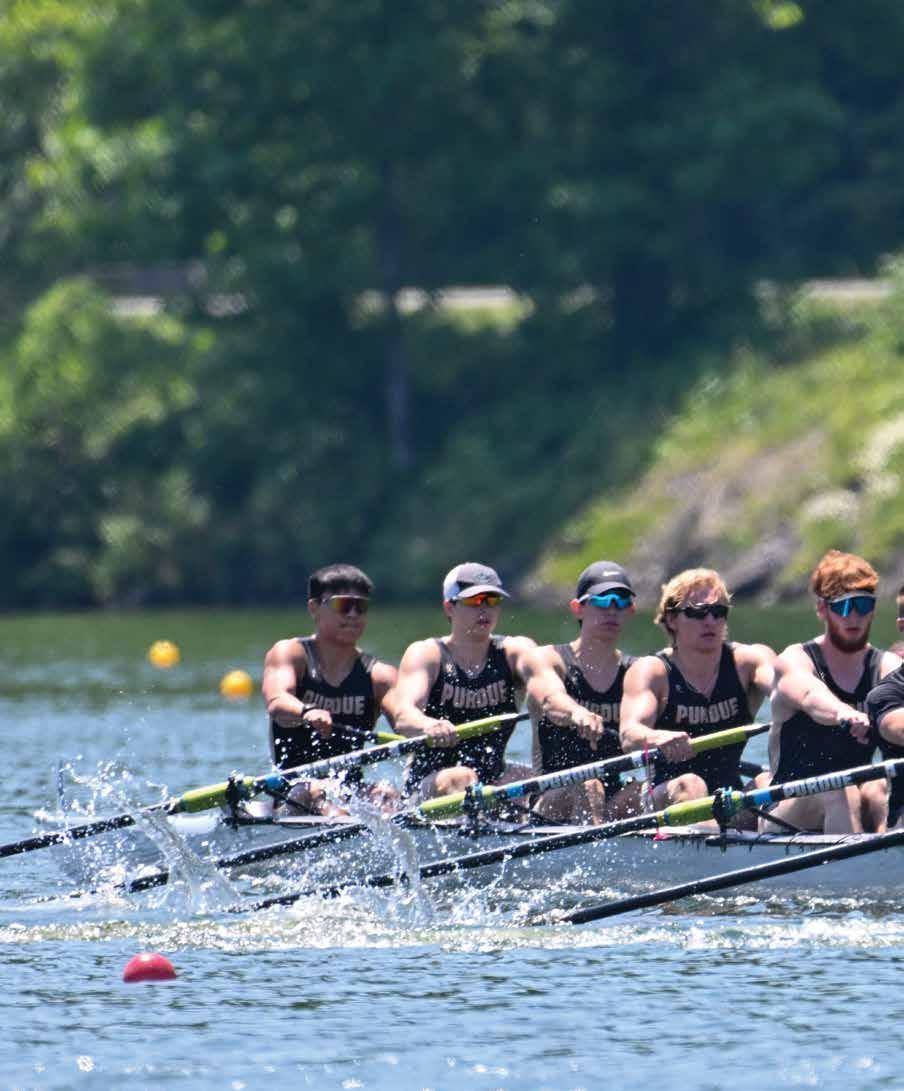
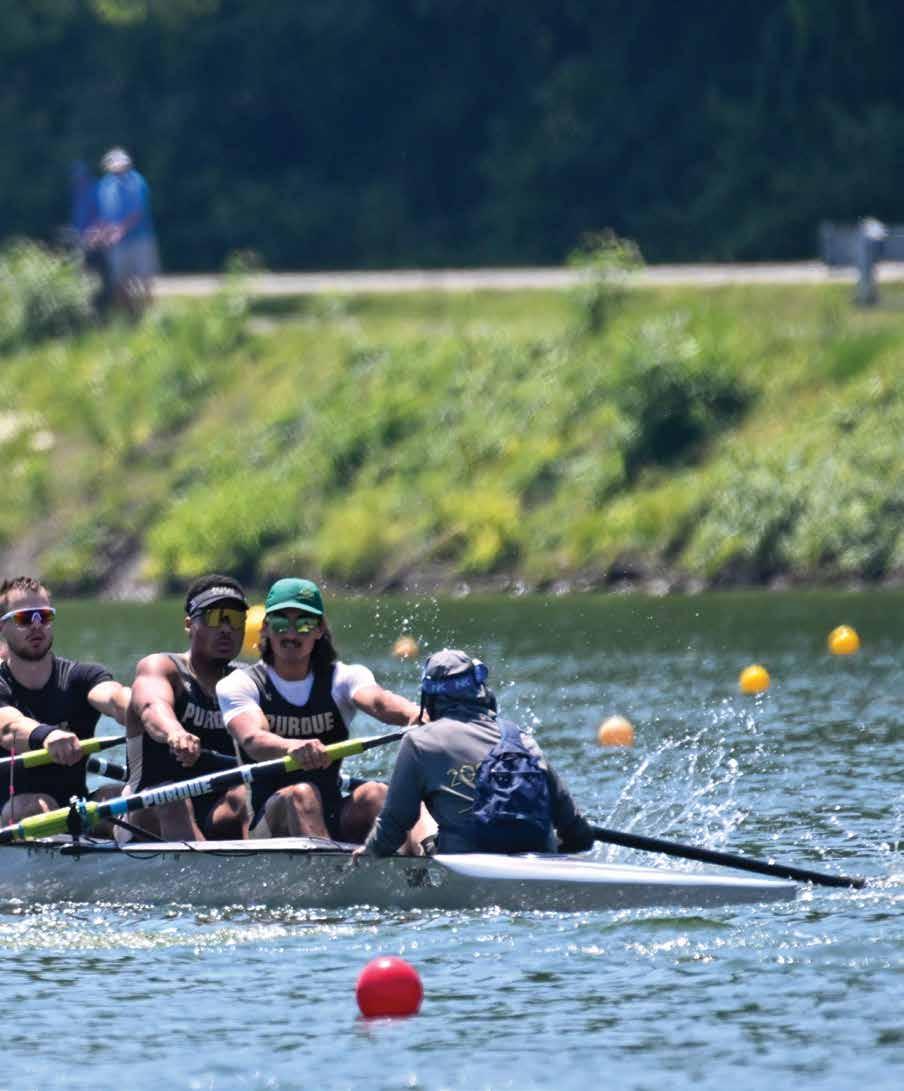
Purdue University won the men’s varsity eight grand final by open water at 2026 American Collegiate Rowing Association National Championship Regatta for collegiate club crews. Middlebury College won the women’s event, May 17, on Melton Lake in Oak Ridge, Tenn.
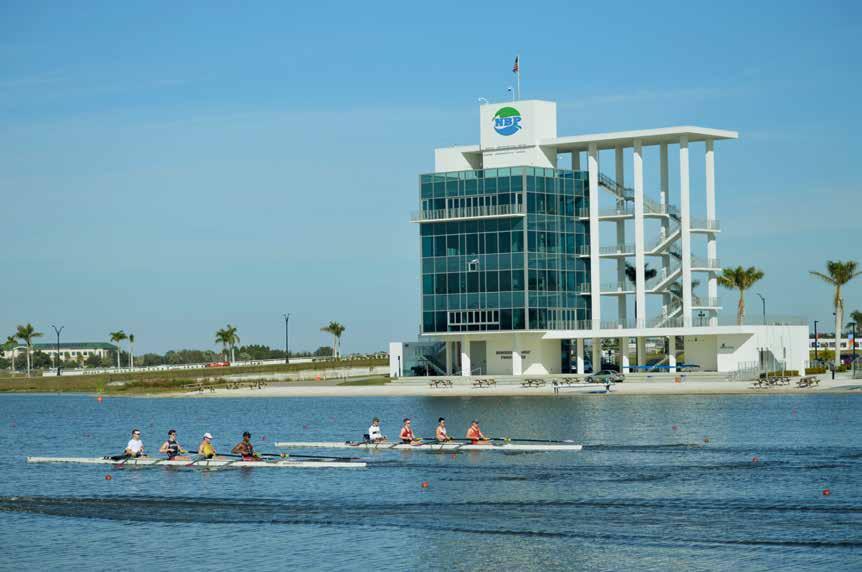




Board dysfunction causes CEO to quit, chair and vice chair to resign, as senior staff members leave and donors hold back.
At a USRowing board meeting, directors thought they had gone into executive session and proceeded to express criticisms of thenCEO Amanda Kraus. But the technology recording the meetings was still running, and the recorded minutes reached Kraus, who resigned in March.
Some of the language used was “totally unacceptable,” according to a person familiar with the situation. In early May, the USRowing Foundation, which is the official fundraising arm of USRowing and was established by Kraus and her staff in 2022, met in California to discuss how to proceed.
Within a week, USRowing board of directors chair Kirsten Feldman and vice chair Andy Merrill resigned. Don Reynolds, chair of the governance, ethics, and nomination committee, will serve as the interim chair of USRowing’s board.
Under Kraus, who was hired in 2019, USRowing achieved record annual revenues of nearly $20 million through increased fees and donations, including a $6.5-million donation pledged in October by Cameron and Tyler Winklevoss, who raced in the grand final of the men’s pair at the 2008 Beijing Olympics and founded
cryptocurrency giant Gemini.com.
“Rowing has taught us some of the most valuable life lessons, so we’re passionate about increasing access to the sport and cementing its future in the United States. With this donation, we’re supporting the U.S. National Team’s success ahead of one of its highest-visibility moments—the 2028 Olympic Games,” said Cameron Winklevoss.
USRowing announced that the senior, Para, and Beach Sprint national teams would be renamed the “Gemini.com U.S. National Team,” and U.S. rowers wore unisuits with the Gemini logo at world championships before the announcement, but recent communications from USRowing have not included the Gemini.com name.
USRowing Foundation members have said that the full $6.5 million has neither been received nor is expected in the wake of Kraus’s quitting, but support will continue for the expansion of the Caspersen Boat House, USRowing’s training center on Lake Mercer in West Windsor, N.J., and which USRowing previously announced would be named the Winklevoss Training Center.
The USRowing board had criticized Kraus and
CONTINUES ON PAGE 28
Marist University will host a symposium about rowing history on Aug. 15, with an exhibit featuring material from the Thomas E. Weil Jr. Rowing History Collection.
Rowing historian Bill Miller will give the keynote address, “The Great International University Boat Race,” followed by a panel discussion including Miller and 1956 U.S. men’s-eight Olympic champion
Bill Becklean on rowing history’s current status and future. The day will conclude with an open house at Marist’s James A. Cannavino Library. The event is free, and all are welcome. >>>
how she ran the national governing body but the same board rewarded the CEO with regular raises over her tenure. Kraus was hired in November 2020. Her total compensation, according to tax filings, rose from $243,333 in 2021 to $326,515 in 2024.
USRowing staff members contacted for this story declined to speak on the record but expressed admiration for Kraus, enjoyment working with her, and disappointment about her quitting.
A specific board criticism of Kraus was that she had too many people—nine— reporting directly to her and needed to hire a chief operating officer. A person familiar with the situation said the former CEO did not take the criticism well.
Under Kraus, USRowing failed to win a single medal at the Tokyo Games, held in 2021 due to Covid, and the women’s squad came home from the 2024 Paris Games empty-handed again.
Before those Games, from 2006 to 2016, the U.S. women’s eight was undefeated, winning every gold medal at the World Rowing Championships and Olympic Games, as well as every World Rowing Cup they entered, during a period when they were coached by Tom Terhaar and Laurel Korholz.
Kraus let Terhaar and, a year later,
SERVICES:
• Pre-Design
• Site Analysis
• Site Layout and Planning
• Space Requirements
• Equipment Layouts
• Concept Studies
• Feasibility Studies
• “Simple Boathouse” advising
• Full Architectural Services or Partner with another firm
• Rowing Tank Design
Korholz leave for Columbia University in her first two years on the job. The U.S. women’s four won the 2025 World Rowing Championships, the first gold in a women’s event since 2019.
The U.S. men’s four won gold at the 2024 Olympics, and the men’s eight won bronze at both the Olympics and last year’s worlds, but a USRowing men’s crew has not won a gold medal at a senior World Rowing Championship since 2009 (in the coxed pair).
Membership in USRowing is essentially flat since recovering successfully from Covid. USRowing’s efforts in 2024 and 2025 to force college and scholastic rowers to become members did not go well and led to major student-athlete rowing associations dropping out.
At the beginning of April, USRowing’s directors appointed Peter Roby interim CEO while they seek a permanent CEO. Roby, the former director of athletics and recreation at Northeastern University, was vice president of U.S. marketing at Reebok and head coach of men’s basketball at Harvard for six seasons.
Widely respected in the world of athletic administration, Roby served his alma mater, Dartmouth, from February 2021 through June 2022 as interim athletic director following the college’s disastrous
attempt to cancel five sports, which was reversed by a lawsuit claiming it violated Title IX.
“I am honored and excited to take on this important interim role,” Roby said. “USRowing has established incredible momentum under Amanda Kraus’s leadership. As the organization heads toward the LA28 Olympic and Paralympic Games, my focus will be on maintaining this momentum while the board identifies an experienced and proven permanent leader for the organization.”
In April, USRowing hired executive search firm Elevate Talent to help find the next CEO. Elevate’s 12-page job description lists such responsibilities as “rebuild and deepen relationships with collegiate leaders, coaches, referees, and other communities that have felt under-engaged or unclear on USRowing’s role and value.” Among 10 desired personal qualities: “low-ego leader” and “open to feedback.”
No timeline has been made public for the hiring of a new CEO or replacements for the board members who stepped down. USRowing’s May 19 statement read: “The USRowing board of directors is working diligently to fill each of the board seats and to name a long-term board chair and vice chair.”
CHIP DAVIS

ROWING PROJECTS AT:
• Bates College • Bergen County • Brunswick School • Culver Academies • Episcopal H.S. of Jacksonville • Foundry, Cleveland • Harvard University • MIT
• Mt. Holyoke College • Princeton University • St. Paul’s School
• Tufts University • University of Kansas • University of Wisconsin
• Wellesley College • Washington State University • Williams College • WPI •
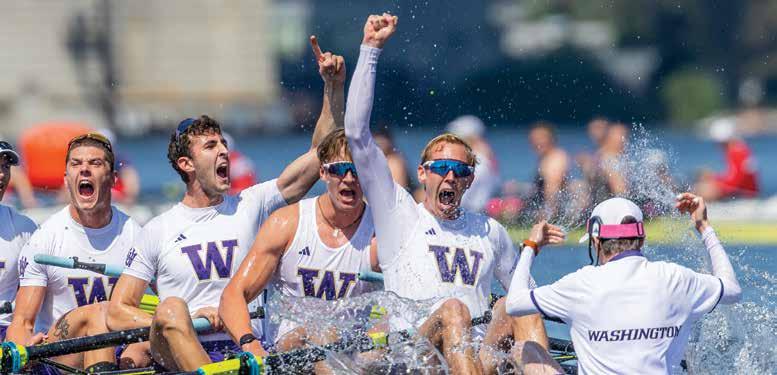
The British women finished ahead of the Huskies by a length, with Canada’s top women’s eight placing third.
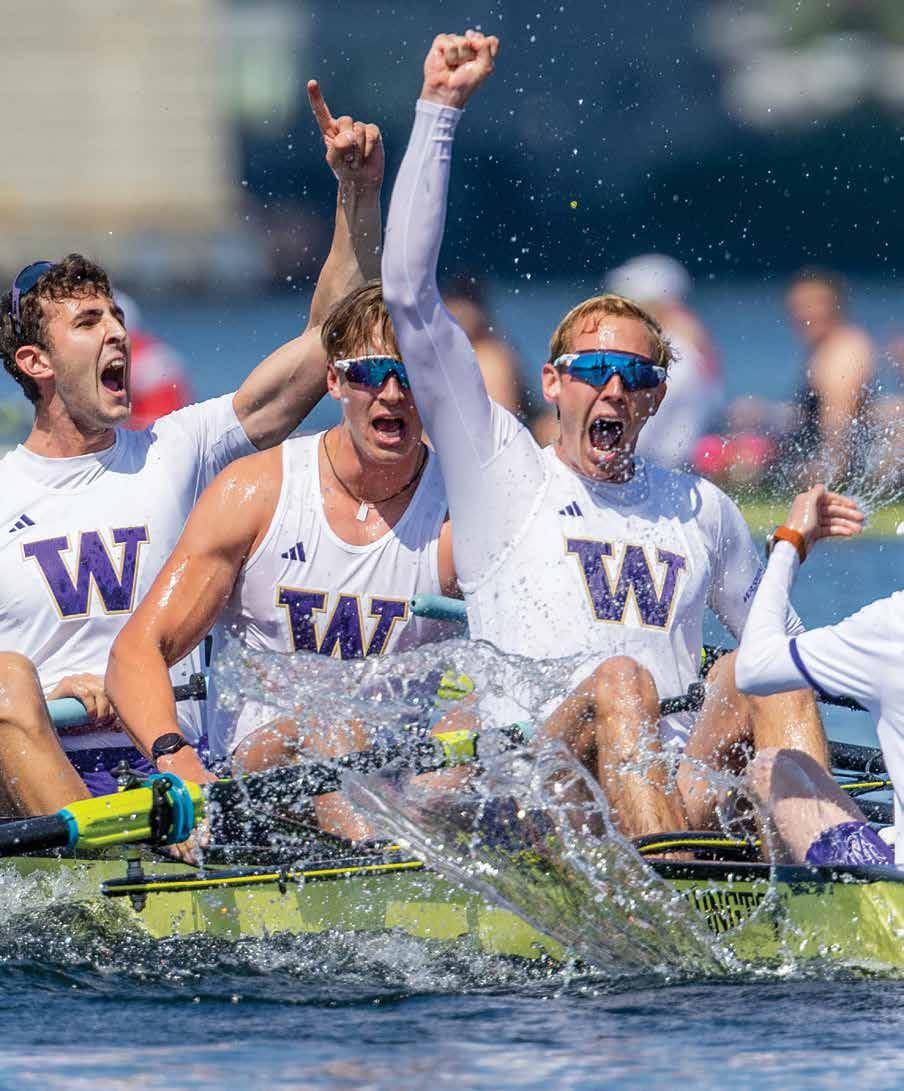
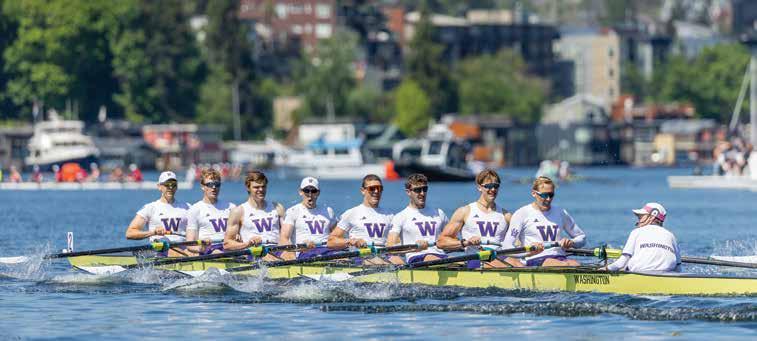
The University of Washington men’s varsity eight defeated Great Britain at Seattle’s Opening Day to win the 2026 Windermere Cup, with both crews breaking 5:30, and Northeastern University third in 5:35.
“It was a hell of a win,” said Washington coach and alumnus Michael Callahan, who has been part of most of the 40 Windermere Cups as rower or coach. “I don’t think we’ve ever raced two crews of this caliber at the same time here in my coaching career.”
Northeastern led off the start for the first 500, before Washington took the lead and held it, barely, to the end. When the crews crossed the finish line, it was not clear to the thousands of spectators lining the Montlake Cut course.
“It was a great race,” said Washington three-seat Lyle Donovan. “In the last 500, we really felt the energy of the crowd, the boat, people on shore above us on the bridge, and that really fueled us to the end.”
Great Britain’s women’s entry beat the Washington women’s varsity by a length, with the Huskies a half length ahead of Rowing Canada’s top women’s eight. Seven of the nine in the British eight medaled at either the 2024 Olympics or 2025 World Rowing Championships, while every member of the Canadian crew had worldchampionship experience.
The Windermere Cup and Opening Day Regatta, which marks the beginning of yachting season in Seattle, is a huge party day, with pleasure boats lining the rowing course, tied up along log booms
from the start to the Montlake Cut, which connects Lake Washington to Lake Union.
But it was the final regular-season event for both the No. 4 Washington women, who won the Big 10 Championships May 16 and 17 in Indianapolis, and the No. 1 Washington men, who won the Mountain Pacific Sports Federation Championships May 17 at Lake Natoma in Gold River, Calif., near Sacramento.
“One of the things about the Windermere Cup is it reminds you that racing is fun,” said Washington women’s head coach Yaz Farooq. “And to be able to square off against two world-class teams and be pushed that hard at this point in the season is something you just can’t get anywhere.”
H“His

University of Iowa rowing head coach Jeff Garbutt received a contract extension through 2029, Iowa’s Henry B. and Patricia B. Tippie Director of Athletics Chair Beth Goetz announced.
The Hawkeyes finished fifth at the Big Ten Championships in Garbutt’s first two seasons as head coach (2022, ’23). During the 2023 season, Iowa received votes in the CRCA Pocock Poll for 10 consecutive weeks. Garbutt also has expanded Iowa’s international recruiting, adding 16 international athletes since becoming head coach.
Under Garbutt’s leadership, four student-athletes have earned All-Big Ten honors, 22 have been named Big Ten Distinguished Scholars, and one earned a College Rowing Coaches Association (CRCA) All-America honorable mention.
Garbutt previously coached at Miami (Fla.) in 2013, served as an assistant at Iowa from 2013 to 2020, and returned to Iowa City from La Salle University, where he led the men’s and women’s programs in 2020-21.
Garbutt was on the Hawkeye staff in 2017 and 2018 when Iowa was named CRCA Region 4 Staff of the Year. In 2017, Iowa placed 12th nationally at the NCAA Championships. The following year, the Hawkeyes placed a program-best fourth in the Big Ten and set a school scoring record at the NCAA Championships, scoring 69 points and finishing 11th.
Last season, Iowa finished 10th out of 11 teams with 66 points at the Big Ten Rowing Championships, won by league newcomer Washington with 264 points. The 2026 Big Ten Rowing Championships took place May 16 and 17 at the Indianapolis Rowing Center.
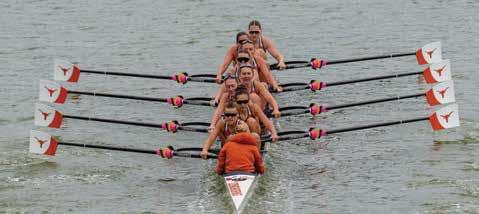
The Texas first varsity eight hadn’t lost a race all season. At the SEC Championship Regatta, a “super determined” Tennessee crew of proud “underdogs” rewrote the script.
Tennessee’s second varsity four boat had not competed together at all this season.
Lizzie Peberdy, Meg Wood, Ava Mulholland, Grace Armstrong, and coxswain Patricia Menendez had practiced together only a handful of times. They were not a regular lineup, let alone were they supposed to be a swing race.
But with more than 1,500 meters gone, and Texas still in front, the makeshift crew found another gear.
Tennessee surged late to win the race 7:12.677 to 7:14.285, claiming each of the first three races of the morning at the SEC Championship Regatta on May 10. It sent a message down the rest of the course.
“The boats on the water saw that, and to be able to race from ahead and pull off the win, but then also be able to race from behind in some of our events and win, is incredible,” Tennessee head coach Kim Cupini said.
“So the second four, we were going crazy on that, and it was a group that just got together, actually, just the other day. They rowed together a lot as a team, as a group, but just that lineup hasn’t been together. So to see them pull that off and get the win was incredible.”
Tennessee claimed four of six races for the day, including the first varsity eight, to earn the outright title win.
Seeing their teammates cross the finish line in come-from-behind fashion boosted Tennessee’s eight-girl crew with coxswain Taryn Graves.
“We just kept believing, and then we saw them cross the line first, and we were like, ‘Wow, that was incredible,’” Tennessee senior Alex Pidgeon said. “It gave us a lot of confidence going into our race as well.”
The win represented more than just momentum.
A year ago, Tennessee was chasing Texas, which was fresh off its third national championship in the last four years. The regatta came down to the first varsity eight
race, where Texas cleared Tennessee by over three seconds to claim the SEC’s inaugural conference title.
Cupini’s program was attempting to catch up to Texas. On Sunday, a lineup that had never raced together hunted them down.
“It’s easier to be the hunter than to be the hunted,” Texas head coach Dave O’Neill said. “For motivation, sometimes we learn the most from our disappointments and our losses. We’re going to learn a lot from this and move forward. It’s going to be good.”
The Lady Vols also embraced their status as underdogs.
“Everyone loves the underdog,” Flanagan said. “We love being here at Tennessee because we believe in each other and back each other. We knew Texas was going to be fast—and all credit to them, they raced amazing races—but we just wanted it more, and we knew that together we could do anything.”
Texas’s 1V8 boat had not lost a race all season. The Longhorns’ spring slate included three races against ranked teams, including No. 1 Stanford. It’s the only boat that beat the Cardinal on April 25 but it’s the boat that single-handedly propelled Texas to the top spot in the CRCA rankings the following week.
It’s the same boat that Tennessee downed wire to wire on Melton Hill Lake.
“This group has been super determined,” Cupini said. “We have great senior-class leadership and have been super determined to do some of the first-ever here at Tennessee, and they did that today. So I was so proud of them and to see that come to fruition.”
Tennessee has 13 seniors on its roster, five of whom make up the 1V8 boat. Nicole Campbell, Hannah Richardson and Flanagan were among the rowers Cupini imported from SMU when she took the Lady Vols job in 2023.
The three, along with several others, trusted her enough to transfer with the
hope of reaching the pinnacle of rowing. One step was accomplished with a team conference championship.
“To win it at home on a perfect day, we were doing it for everyone who raced before us,” Flanagan said. “We know it’s setting up Tennessee for a great, successful run for the future, and I think this is only the start of our SEC run, and I know we’re leaving the program in good hands.
“This is the only way I’d want to go, and I’m so glad we could do it with this team. This team is so special, and that’s when it’s for everyone, no matter what the results of each individual boat—this team is an SEC Championship team”
Competition pauses for three weeks as practices ramp up. Though the SEC does not have an automatic qualifier bid, both Tennessee and Texas have punched tickets to the NCAA Championships owing to their performance over the course of the spring.
The pair of SEC squads will get a chance to show the strength of the southern region at Lake Lanier Olympic Park in Gainesville, Ga., which will host the 2026 NCAA Women’s Rowing Championships.
For now, Tennessee’s rise makes two different champions in the first two years of a conference that the coaches rave about as the best.
“Heading to NCAAs, it could be that the SEC is ranked one and two,” O’Neill said. “That could be the case. We’ll see how the pollsters work it out, but yeah, it’s some good rowing out there.
“There’s some intense racing, and it keeps making us all better.”
TREVOR MCGEE
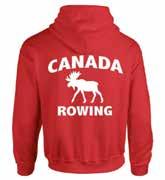
ALL AVAILABLE WITH YOUR TEAM LOGO AT NO EXTRA CHARGE (MINIMUM 12)
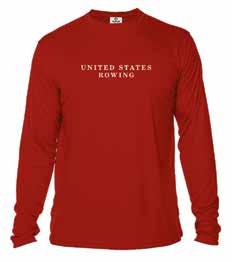
UNITED STATES ROWING UV
VAPOR LONG SLEEVE $40
WHITE/OARLOCK ON BACK
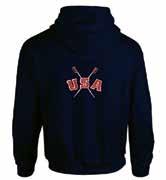
NAVY/CROSSED OARS ON BACK
RED/CROSSED OARS ON BACK
PERFORMANCE LONG SLEEVES

PERFORMANCE T-SHIRTS
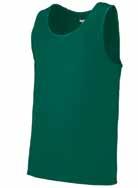
PERFORMANCE TANKS
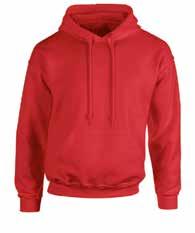
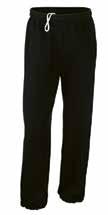
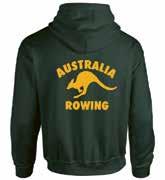
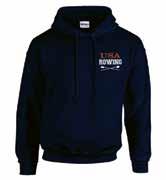
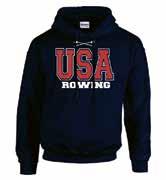
Order any 12 performance shirts, hooded sweatshirts, or sweatpants and email your logo to teamorders@rowingcatalog.com and get your items with your logo at no additional cost!




PERHAPS IT’S TIME FOR OUR SPORT TO STAGE MORE REGATTAS WHERE THE TOP UNIVERSITY EIGHTS GO HEAD TO HEAD AGAINST THE GLOBE’S FASTEST NATIONAL TEAMS.
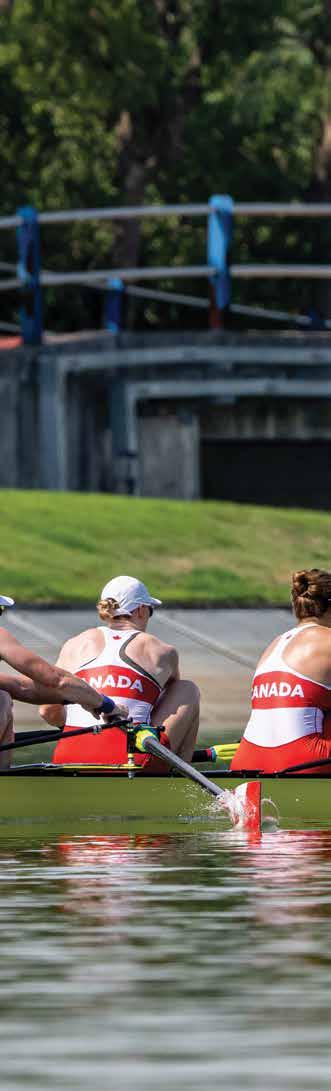
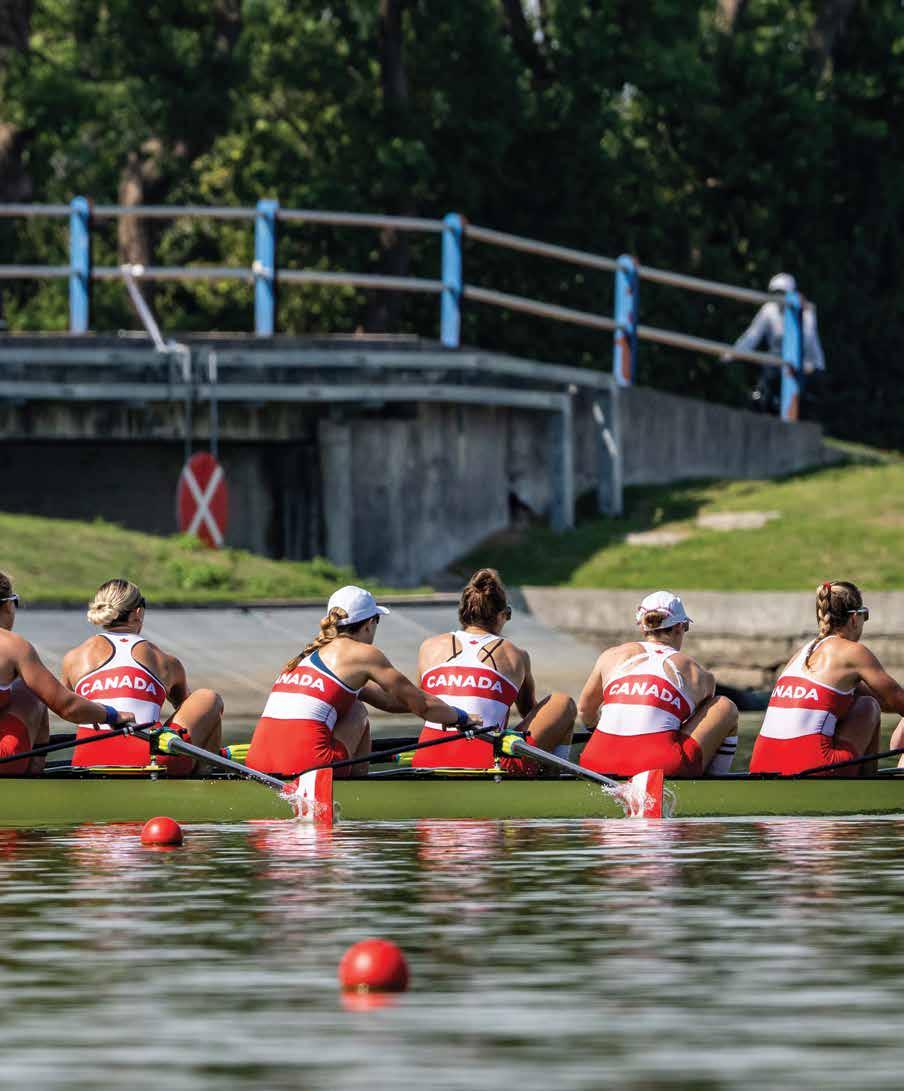
When the two crews slumped exhausted over their oars at the end of the Montlake Cut, the margin was only 0.165 seconds. But the ripples from Washington’s defeat of the British national eight spread a lot farther than the waters of the Dawgs’ Seattle lakes. If anyone needed proof that top university crews could take on and beat the best crews in the world, here it was.
The thrill of that win was summed up by UW cox Nikita Jacobs:
“It’s incredible to line up against full-time athletes who train year-round in national-team programs.
“What’s especially compelling is how, in recent years, university crews have been able to catch these world-class teams off guard and even come away with wins.
“At the core of that is belief that when you put nine people in a boat who genuinely trust that they can win, it changes everything. We didn’t need to be the fastest crew on paper, we just needed to be the fastest boat in that one race.”
After that epic contest, how could the rowing world not be hungry for more? Perhaps it’s time for our sport to stage more regattas where the world’s top university eights go head to head against the globe’s fastest national teams.
We set out to find out what the rowing community thinks of this idea. We talked to top coaches, rowers, and administrators and asked them three questions:
1) Are the top university eights fast enough to hold their own in World Rowing Cups?
2) What do you think of the top university eights competing in World Rowing Cup events?
3) How might this work?
Although World Rowing, rowing’s international governing body, currently has no plans to allow university crews to compete in World Rowing Cups, the will from the rowing community to develop something like this is most certainly there.
Simon Van Dorp, the new worldrecord holder over 2K on the Concept2 erg, an Olympic bronze medalist and proud graduate of the University of Washington, left no doubt as to where his sympathies lie.
“I always love seeing college crews getting a chance to race international opposition,” the Dutchman said.
He shared three memorable occasions when university crews raced national teams:
“The recent win by the UW Huskies over the British national eight is only one of many examples of a college eight holding their own against top opposition,” Van Dorp said.
Unsurprisingly, he mentioned the 2024 Holland Beker regatta win by the UK’s Oxford Brookes over the “Holland Acht.”
And the 2017 World Rowing Cup I win by Nereus, the Dutch student rowing club, over a British national crew.
This writer remembers that compelling race on Belgrade’s Sava river course. How could one forget it, when only the year before most of the Nereus crew had seen the Ladies Plate at Henley snatched out of their hands! The crew was disqualified, controversially, after having crossed the line first in the final. As it happened, most of their opponents from that day at Henley in 2016 were now–a year later—racing as the British national eight.
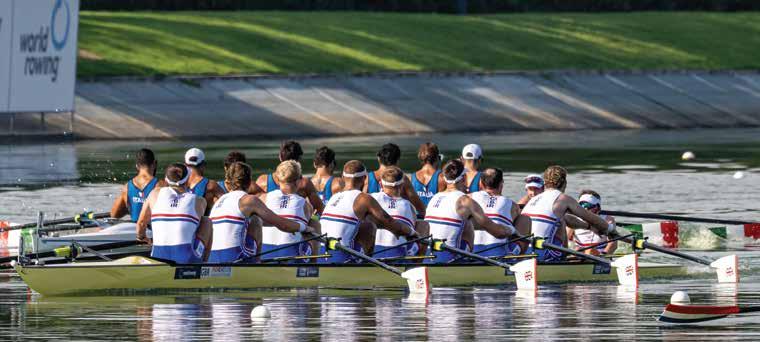
To make this rematch happen and get around the rule that only national teams can compete in World Rowing Cup events, the Dutch national team had picked the Nereus eight to represent The Netherlands in Serbia.
In that grudge match, the student eight, then stroked by current national-team coach Freek Robbers, beat the British by 0.68 of a second in the fast time of 5:30.98. What a story!
But perhaps Van Dorp’s most vivid recollection was of a defeat suffered by the Dutch Olympic eight in 2024 on their home course of the Bosbaan in Amsterdam. Then, a crew from a British university, Oxford Brookes, took on and beat the Dutch crew that would go on to win an Olympic silver medal in Paris.
It was a result that stunned the rowing world. It was made possible because the rules of the Holland Beker event allow student crews to compete against national teams. By a quirk of fate, one of the British athletes that day was Fergus Woolnough, who two years later raced in his country’s eight at the 2026 Windermere Cup.
That day, though, it was the 21-yearold’s turn to experience what it felt like to
defeat a national team.
“It was an amazing opportunity,” said the Shanghai worlds silver medalist. “It was nerve-racking and exciting to compare yourself to the world’s best. Going bow ball to bow ball into the line [in Amsterdam], we found something in ourselves we didn’t know was there.”
As fate would have it, just a few days later, the Oxford Brookes eight beat Jacobs’s Husky crew in the final of the Grand Challenge Cup, Henley’s top event.
So much for male student crews racing national teams. What about top female student eights? On the waters of The Cut in May, the Husky women lost to the British bronze-medal eight from last year’s worlds in Shanghai by over three seconds, though they did manage to take the scalp of Canada’s national crew.
It doesn’t take much imagination to envision what might have happened if the current top-ranked U.S. schools— Tennessee, Texas, and Stanford—had lined up against the British women in Seattle.
This writer estimates that the top U.S. college women’s crews are three to five seconds ahead of their Husky rivals. That means the U.S. No. 1, No. 2, and No. 3 crews would have finished, at worst, level with Britain, and maybe with their bows just in front.
Of course, at the 2025 NCAAs, it was Yale that got its bow in front. Will Porter, who has led the Bulldogs since 1999, has no doubts about the speed of his eight.
“I have said for years that the NCAA grand final is a much faster race than the U23 world-championship grand final. National-team coaches wouldn’t think twice about entering a top-level U23 crew in a World Cup race. By that logic, why not enter a top NCAA crew? Especially in the women’s eight event at the world level.
“I am all for the positive experience of young athletes getting to race at the highest level. It is exciting for them and helps the growth process.”
One of Porter’s rivals, Texas coach Dave O’Neill, whose women’s crew was ranked No. 1 at the time, expressed similar views.
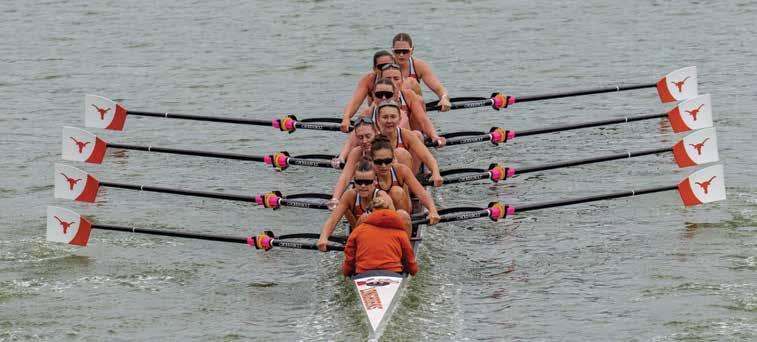
“I would love the opportunity for our top eight to race at the World Cups,” O’Neill said, “and I think it would be wonderful for our sport.
“I’ve always felt the winner of the NCAA final would win U23 worlds by open water, and I do believe they’d be competitive against senior national teams. The top NCAA eights might not win a Lucerne World Cup but they’d certainly make it more interesting, and possibly be on the podium in some years.”
Is this view shared widely?
Scott Frandsen, the Cal Bears coach whose team won the IRA title in 2022:
“I would absolutely love to bring a top crew to race in Lucerne [in a World Cup] at some point. The main benefit would be to line up next to national-team eights and test ourselves.”
For the former Canadian Olympic medalist, it would have to be a head-to-head contest pitting university crews against national teams.
“Racing in a separate university event wouldn’t be as attractive,” he said.
“I have made the claim that in years that we win the IRA, those crews would finish somewhere in the middle of the World Championships final. I’m not claiming that we would win but I think they could finish third, fourth, or fifth. It would be great to be able to test that prediction.”
Frandsen well may recall the days when university crews could compete on the
Rotsee against national teams. In 2004, the legendary coach Harry Parker took his allconquering Harvard eight (rowing as USA 2) to the Rotsee. With the likes of Cameron and Tyler Winklevoss on board—not to mention future Canadian Olympic eights champion Malcolm Howard—the Harvard crew made the final and finished sixth.
Howard remembers that season, when Harvard also raced an eight from The Netherlands in the finals of the Grand.
“Racing the Dutch eight in the Grand Challenge Cup at Henley in 2004 felt like a measure of where a top U.S. university crew stood against the best in Europe at that time. We were three-quarters of a length down at the end. It was popularized in the best Hollywood rowing scene in The Social Network.
“Every race between a college crew and a top international crew has a huge caveat,” Howard continued. “Unless it’s a blowout victory by the national team, it’s a win for the university crew. In 2013, our OUBC [Oxford University Boat Club] boat had a fixture against the Germans. We beat them decisively in the first piece. They went on to win a silver medal at worlds. We did pieces against the GB eight at Caversham; we held our ground and maybe beat them in a oneminute piece.
Howard saved his best story for last:
“In 2008, we are in Japan for our preOlympic training camp. We’ve just finished the hardest seven days of training I’ve ever done. We are out for our last workouts—4 x 2K. In our last 2K, in the last 500 meters, out of nowhere a Japanese university crew shows up. We barely beat them by a length. Less than two weeks later, we won the Olympics.”
Cambridge coach Rob Baker, now working part time with the team from The Netherlands, lamented that multinational university crews aren’t able to race in World Cups.
Baker, whose Cambridge eight recently beat an eight made up of Britain’s top oarsmen on the Thames, said:
“It’s a shame that the World Cup regattas in their old form changed some years ago to deny the opportunity for nonnational teams to compete.”
While the man who has just racked up four straight Boat Race wins appreciates the way that the current World Rowing Cup series has developed, he argued forcefully that there should be a place for top universities to compete against international eights.
“Our goal at Cambridge is to race the best and put ourselves to the test. Racing the Dutch eight at Henley last year in the Grand was an honor and a privilege, and to
run them close is something we take huge pride in.”
Having won back-to-back titles at the Head of the Charles, Baker is uniquely qualified to judge his university crew’s speed against the world’s best.
“Racing the Head of the Charles has been a fantastic experience. The quality of racing from the U.S. college crews is so high, this in itself feels like near international-team standard.”
Referring to three members of his 2025 Cambridge crew who capped a magical year by representing Britain in the Shanghai World Championships, Baker concluded:
“Last year, we had an exceptional group of athletes who went on to race and win for Great Britain in the four. When we have these years, it would be great to be able to race side by side with five international crews in the summer.”
Crucial issues must be resolved before multinational first varsity eights race in World Rowing Cups.
“The current World Cups are not configured [to allow for university entries],” said Vincent Gaillard, World Rowing’s executive director, “and as it relates to future World Cups—from 2029 onwards, with a format we’re currently developing—it’s quasi-certain that, however different the
future format is, it will remain a nations competition in all cases.
“That is not to say that one day we might not want to get involved in the creation of a completely new competition for universities.”
Paul Cooke, head men’s coach at Brown University, while broadly supportive of university crews racing national teams, mentioned some problems.
“It’s difficult to keep a crew of a very high standard together for the summer, as the athletes typically want to row for their national teams. Henley is the exception, but even bringing a full crew there is not easy to do.”
The man who led the Brown Bears to an Eastern Sprints title in 2024 offered a suggestion Gaillard might consider:
“I’d welcome the opportunity to organize a World Cup-style race with university and national teams in Sarasota at the end of March next year,” he said.
Coach Frandsen also pointed to the difficulty of keeping his top 1V crew together.
“One of the challenges would be not losing one or five of them to national teams.”
An athlete Frandsen might have in mind is powerhouse Gennaro di Mauro. The
Italian Olympian rowed as a sophomore in Cal’s 1V that took the IRA title and then returned to Europe to race in World Rowing Cup II in 2023.
Many national teams rely on getting their U.S. athletes back after the NCAAs and the IRAs. This is especially so in the last two years of the Olympic cycle when qualifying and the Olympic Games are priorities for both rowers and national-team coaches.
But in the first year of an Olympic cycle, there’s far more flexibility from national teams and, truth be told, that could stretch easily to the second year of an Olympiad.
Take, for example, three of the athletes who rowed for Cambridge in the 2025 Boat Race: James Robson, Douwe de Graaf, and George Bourne. They remained part of their university eight for the Grand Challenge Cup at Henley, in which they lost narrowly to the Dutch eight that went on to win the world championship.
Coach Baker is likely to have most of his winning 2025 Light Blue boat back to compete at Henley in 2026. They include Freddie Breuer, the German Olympian, IRA winner, and Golden Bear, and USA U23 team cox Sammy Houdaigui. After Henley, both athletes, and others, will hope to rejoin
their national teams.
Conveniently, the timing of Lucerne Regatta–one week before Henley–would allow them to race there, should the rules be changed.
Camille Vandermeer, one of the USA’s 2025 world champions who rowed for Cambridge, also will remain rowing and training with the Light Blues until late June, early July of this year. She has been cleared by USRowing High Performance Director Josy Verdonkschot to return to the U.S. for the selection trials at the beginning of July. This year, crucially, these take place the weekend after World Rowing Cup III in Lucerne.
So while there are problems, there are also possibilities.
“Lots of challenges,” Frandsen said, “but I have definitely daydreamed about bringing a top crew over to race in Lucerne, and then Henley. What an amazing trip that would be!”
There are compelling reasons why having university eights race in World Cup events would be good for the sport—besides providing the media with great copy—both in Europe and the U.S.
Entries in men’s and women’s eights are down. These days, it’s rare that Lucerne, let alone other World Rowing Cups, attracts
enough entries to run heats for both men’s and women’s eights.
At 2025’s World Rowing Cup III on the Rotsee, there were straight finals in both men’s and women’s eights. At the equivalent event in 2024, there were just five men’s eights and, sadly, only four women’s eights. In 2023, there were at least heats in the men’s eights, with seven entries (hardly optimal), but only four women’s eights were entered.
In light of these figures, allowing top university eights some kind of wild-card entry into a post-IRA or post-NCAAs World Rowing Cup would energize the sport no end.
Sholto Carnegie, the former Yale Bulldog who won the IRA championship and went on to win Olympic gold in the eights in Paris, has a unique feel for the strength of the U.S. college system.
“The numbers tell the story: 22 percent of the rowers in Paris came through the U.S. college system but they took home nearly 30 percent of the medals. That’s not a coincidence. It’s a system that throws the best young athletes from around the world into the same boats and makes them race each other every single weekend. You learn how to race and develop fast.”
Carnegie, who now runs Crew
Connection, an agency that helps rowers make the best use of the opportunities offered by the U.S. collegiate system, has a clear idea of where the top crews might stack up.
“When people ask how top IRA and NCAA grand-final crews would stack up at a World Cup, my honest answer is fourth to sixth. Washington beating GB earlier this season tells you this. At peak form, GB would have the edge at a world championship or World Cup, but in earlyseason racing against a college crew that’s been together nine months? It’s close.
“Hats off to the Washington crew. They played it all out there and were not afraid!”
The challenge for our sport is to answer that call—to show no fear and let the great college crews compete against the national teams.
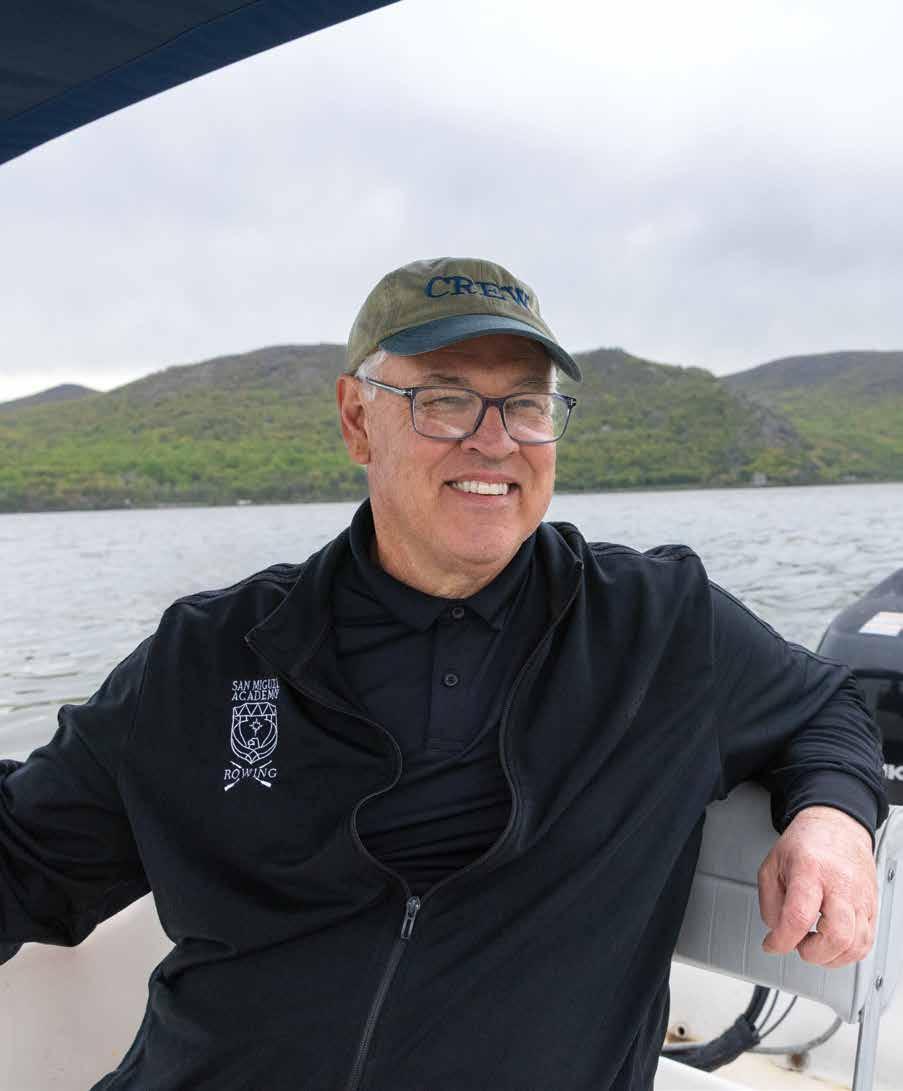
At San Miguel Academy, all the students row, and while winning is great, getting to the finish line isn’t necessarily the goal. Getting to the start line is.
There had to be an answer, and Mark Connell was desperate to find it.
Connell, a Catholic priest from the Archdiocese of New York, had already done a lot since being assigned to Newburgh, a small crime-ridden city on the Hudson River, 60 miles north of New York City. But there were pieces still to sort out, many of them, and the riddle before him may have been the most important one.
He had left his comfortable teaching position at Mount Saint Mary College and been the driving force in opening a safehaven academy for at-risk middle-school students who needed to break out of the cycle of poverty and subpar education. That was good.
Connell had become headmaster of the school, San Miguel Academy of Newburgh, and the students there soon went on not only to complete high school—in a publicschool district that graduated just one out of every 10–but also to continue their education beyond. And that was good.
From just one class of fifth-graders beginning in 2006, the academy grew steadily, adding a class every year until the program filled out and there was a graduating class of eighth-graders in 2010. And that was good, too.
“But we said to ourselves, ‘We can’t send these kids back to public school. That’s not enough of a change. We need something more dramatic,’” Connell said. “Someone said, ‘Let’s get them in boarding schools.’”
It was brilliant. There were many excellent boarding schools eager to diversify their student populations with kids from underserved communities who were motivated to learn.
“But we needed an edge. It’s a competitive market. I’ve got the Black kids that play basketball and the Hispanic kids that play soccer, but nobody was interested in basketball or soccer players. They had those,” Connell said.
“We tried lacrosse, and that was a dismal failure. You can’t teach a 12-year-old how to cradle a ball against suburban kids who have been doing it for years. We were losing like 21-1, and I didn’t think that was good for morale.”
There had to be an answer and, somewhat unexpectedly, there was. It had been right there all the time, flowing “silent but majestic … losing itself in the blue highlands,” in Washington Irving’s words
describing the Hudson, and the idea shot through Connell like a wild current.
“Rowing, let’s try rowing,” he told the academy’s board of directors.
One of the board members said, “Mark, kids like ours don’t row. It’s too damn expensive.”
“‘If I take care of the money, can I have a go at it?’ And what could they say?” Connell said.
Funding the program, figuring out the sport (Connell had rowed for one season at Poughkeepsie High School, but that apparently left room for further study), selling it to the kids, mastering the whims of the Hudson River—all of that took time.
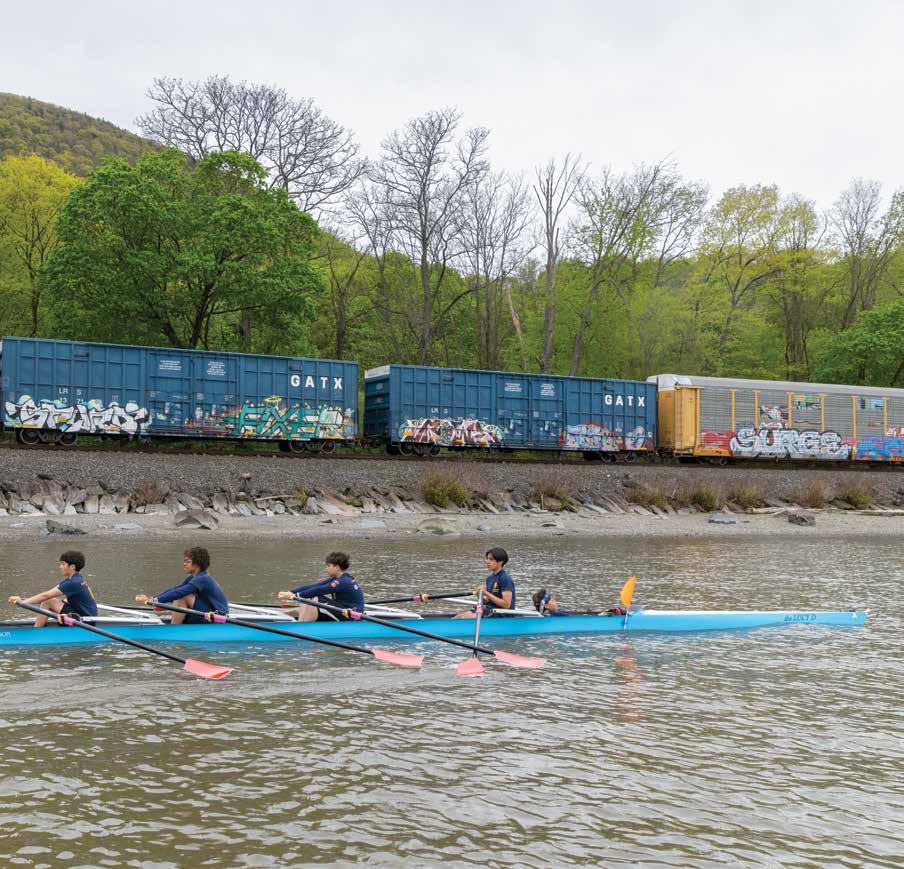
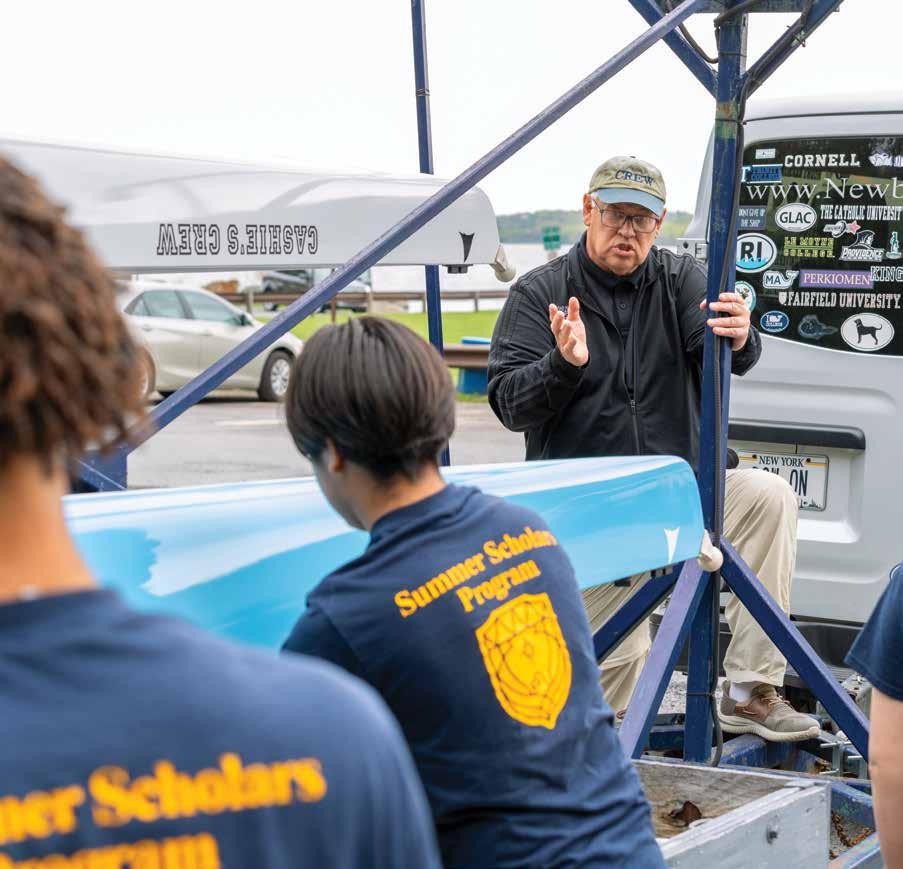
Connell was expert at crossing the river to Westchester County to raise money. He preferred the Newburgh-Beacon Bridge to sculling but once across he sold people on buying boats and ergs and all the equipment that those students could never have gotten on their own.
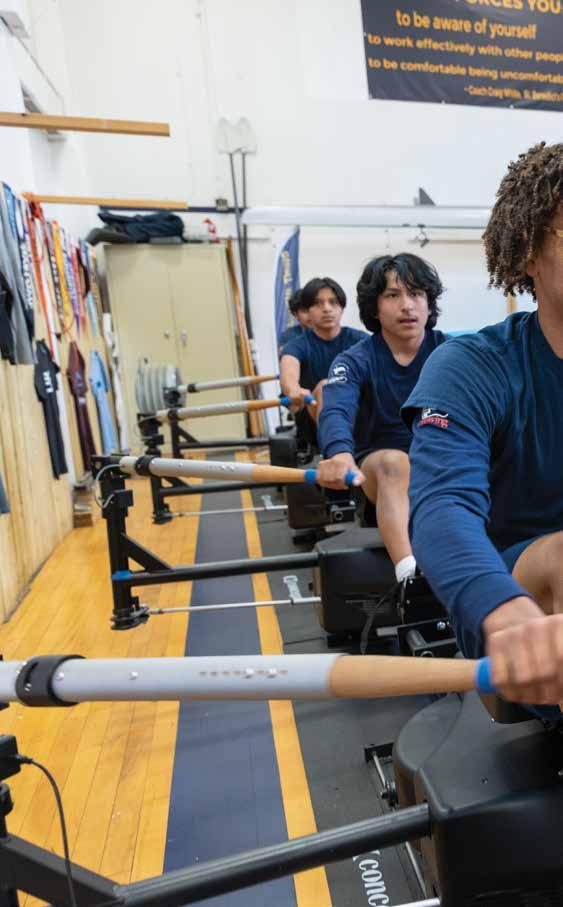
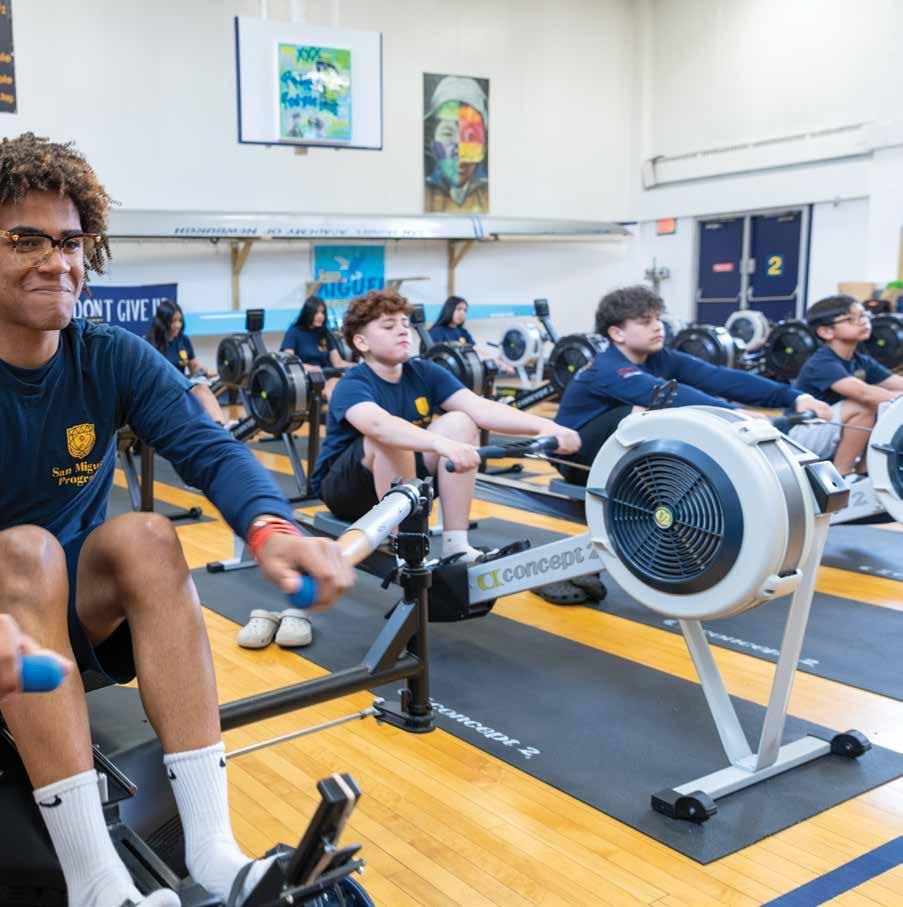
They learned to row years before entering competitions, and the erg scores soon rivaled the classroom scores.
“That’s how it grew,” Connell said. “And then I started to watch the eyes of admissions counselors when I said, ‘Oh, this guy rows,’ or ‘This girl rows.’ They knew it was a different kind of kid.
“What the rowing world might not understand about us is that this is an academic program. Our mission is to break the cycle of poverty through education, right? Rowing serves our greater purpose, and rowing singlehandedly offers them everything that’s better for their lives.
“It’s amazing. I tell people all the time that if Scrabble did the same thing, we’d all be playing Scrabble here at San Miguel.”
The racing began in 2021 as the academy and the rest of the world began to emerge from Covid. The winning didn’t take long. San Miguel finished first in the U15 division at the USRowing Northeast Championships in 2022 to qualify for nationals, where it finished 11th overall.
Medals have stacked upon medals ever since. The academy races almost exclusively in coxed quads. It has four of them, along with one double. At the USRowing Indoor National Championships, a San Miguel rower has won gold three straight years


in the U15 division: Jermain Stevens Jr. in 2024 and 2025, and Micah Fisher in February of this year. At the 2025 C.R.A.S.H.-B. Sprints World Indoor Rowing Championship in Waltham, Mass., Chanel Rodriguez won the girls’ gold; Stevens, the boys’ silver in the 2000-meter U15 race, and San Miguel also won the four-man relay. It was the first time the academy entered a relay event.
Winning is great, and a reward for the work involved, but getting to the finish line isn’t necessarily the goal. Getting to the start line is the goal.
“Who you are as a person shows when you row.” said Nicole Stevens, the mother of Jermain Stevens Jr. “Your job is to make everybody else on your team great. You have to work together. They depend on you. So you have to be disciplined. You need to practice. You need to make sure your technique is right. This is about characterbuilding. And that’s what you get out of rowing.”
Jermain Stevens Jr., who recently turned 15, is a freshman at St. Benedict’s Preparatory School in Newark. He has trained there in a single, a double, and a quad, and was recently rowing stroke seat in the eight.
“He told me the workouts are extremely difficult and that he threw up after the first workout,” Nicole Stevens said. “He told me that’s how he knew it was going to be good.”
People connected with rowing—some interested in broadening participation in a sport with an elitist reputation, some just willing to help a program that helps kids—are eager to throw in with Connell’s mission.
“I went up there and I was floored by what this guy’s able to do,” said Mike Teti, the former U.S. National Team and Cal-Berkeley coach. “Father Mark is doing God’s work. He takes the kids that are on their last hope and when they move on they are well-spoken, articulate, and they succeed.
“Every day, they go from this little school and take the boats to the Hudson, walk the boats into the water, climb into the boats— these little kids all under 100 pounds—row on whitecaps, and then bring
the boats back to the school.
“My jaw was on the ground. When you go there and see what they do, it’s a lifechanging experience.”
Teti got involved through Arshay Cooper, the Chicago rower who was part of a pioneering all-Black team and whose foundation, A Most Beautiful Thing Inclusion Fund, is a major sponsor of San Miguel (as is the New York Giants Football Foundation, the Head of the Charles/ Philadelphia Gold Cup Foundation, and USRowing).
Much of the additional funding and support for the academy and the rowing program still come from across the river in Westchester County. Connell became acquainted with the area when he was teaching at Mount Saint Mary College in Newburgh but was assigned by the archdiocese to hear Saturday confession and celebrate Sunday Mass at the Church of St. John & St. Mary in Chappaqua.
“So I’m living in these disparate environments—Monday through Friday in Newburgh, and weekends in Chappaqua, waving at Bill and Hillary across the street,” Connell said. “I would tell people from the pulpit what I was witnessing. I couldn’t believe I was even in the United States, the poverty was so bad. I would tell them what I was seeing, and I guess I got under their skin.”
Connell’s charitable ministry in Newburgh began modestly, with efforts to raise money to give out turkeys at Thanksgiving and toys at Christmas.
“You give out the turkey and realize that, two days later, the family’s going to be hungry all over,” he said.
The idea to establish a small school to help as many kids as possible grew from there. Right now, there are about 60 students in the academy, and the total number who have gone through San Miguel is over 300. Every student is in the rowing program.
“It was very organic. None of us knew what we were doing from the get-go,” Connell said. “Our kids grow up with a high level of trauma. They witness violence and see things no child should see.
“We find they are drawn to the serenity that we offer, and that the sport of rowing offers. They learn to swim. They get to go down to the river. On top of that, these kids learn the executive functioning that no one
in their lives has modeled for them.
“Guess what? If you put four athletes in a boat with a coxswain on the Hudson River, if they don’t know how to work together and take care of each other, they’re all going to die. But they figure it out.”
One of Connell’s wingmen on his fundraising excursions has been Jim Gagliano, a former longtime FBI agent who headed up the Hudson Valley Safe Streets Task Force and was later the mayor of Cornwall-on-Hudson, a town just south of Newburgh.
“I would have said about the academy and the rowing program that it may look good on paper but I don’t see how it can work. I know the streets too well. I know Newburgh too well,” Gagliano said. “But if you marry that with Father Mark’s force of personality and leadership, and, I guess, divine inspiration, then, well, you’ve got something.
“This is a holy man who believes deeply in his faith and this outreach. I’m not going to say he’s Mother Teresa in Calcutta with the lepers, but if you equate that to America, he’s doing a similar thing. And he uses the rowing as a carrot. ‘Hey, come here. We’re going to do something really cool. We’re going to put you on the water and make you part of a team.’”
The teams on the streets of Newburgh are largely gangs. The two most prominent are the Bloods and the Latin Kings, who are regularly at war over turf and drug distribution routes. They recruit kids at 10 or 11 years old to become drug runners and to lure them into gang life. That’s just about the age when San Miguel Academy is giving as many as possible an alternative.
“It’s such a great population to serve. They’re so hungry for something better,” Connell said.
They find it in the school, and they find it on the water after they put in at Cornwall Landing, an arrangement that began when Gagliano was mayor and continued after his retirement.
“As mayor, I got complaints about damn near everything,” Gagliano said. “But no one ever once complained about the San Miguel Academy kids being down there. We’re all rooting for them and Father Mark.”
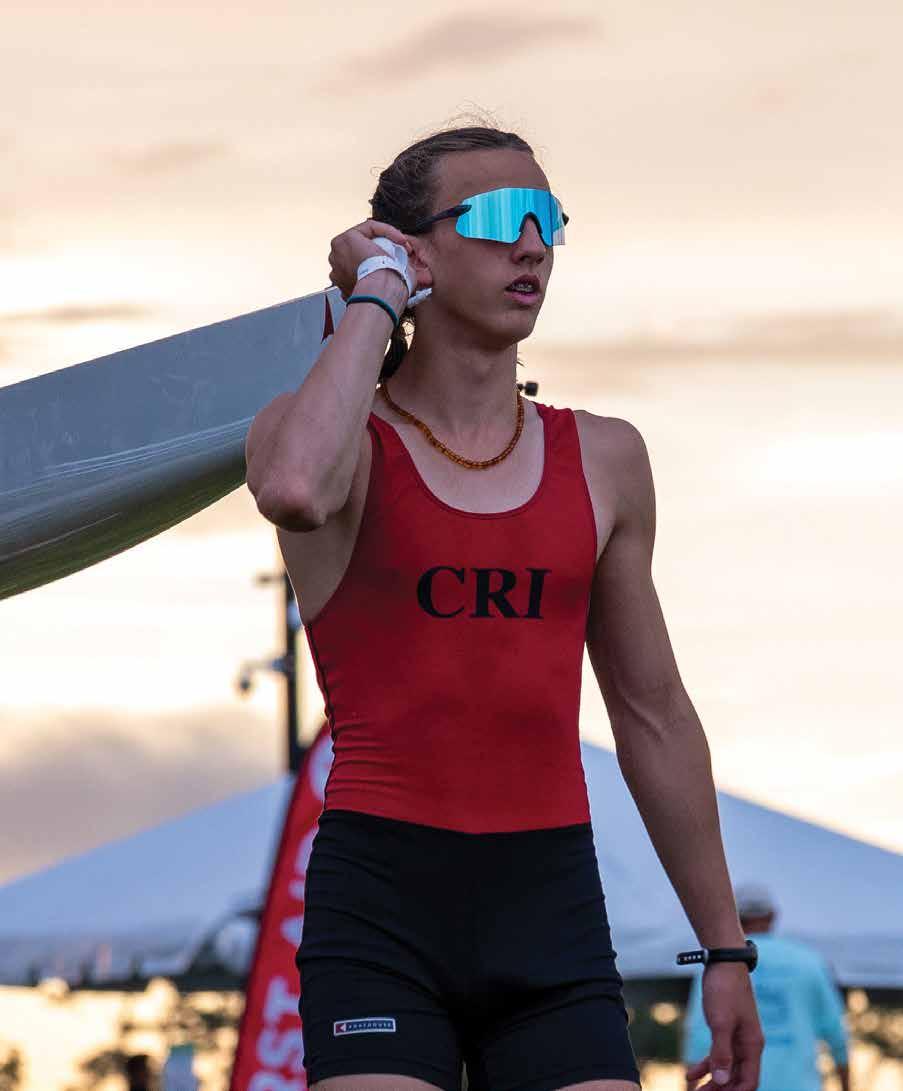
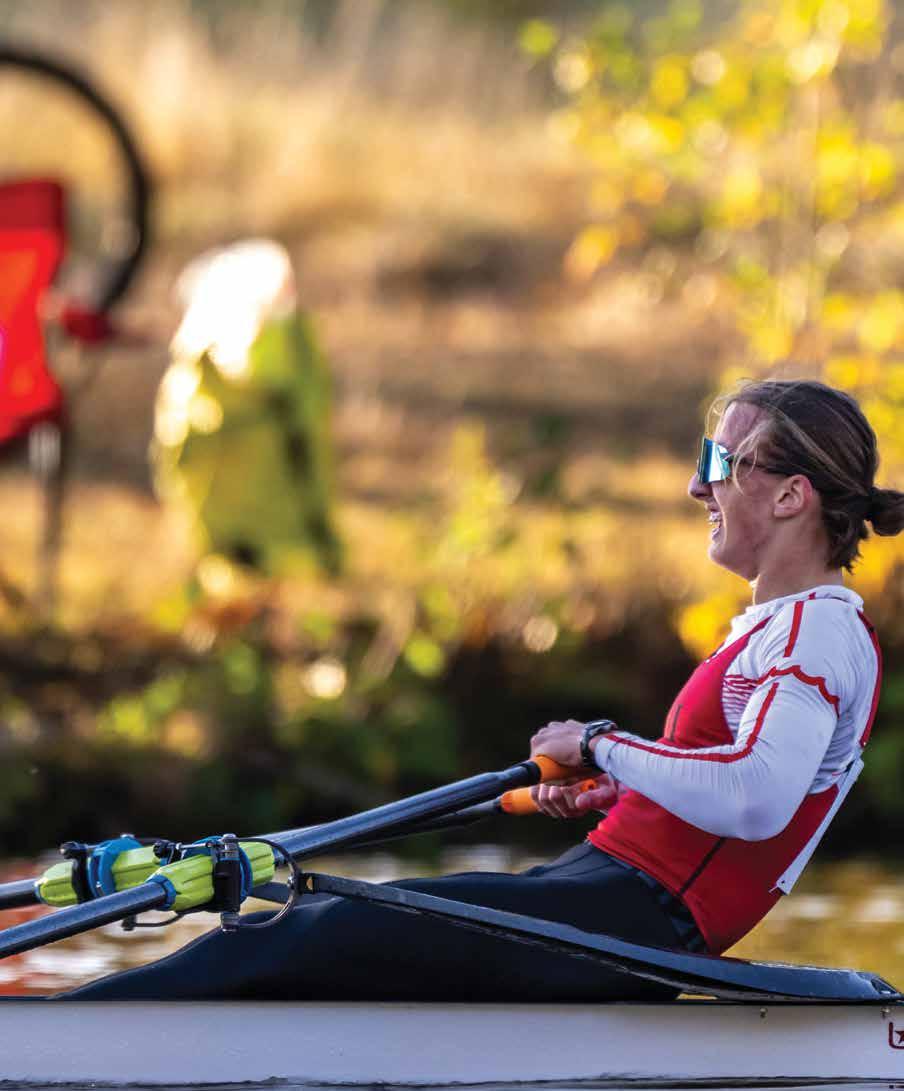
Simeon John, a fearless, pain-loving, highenergy kid from Boston, set a record at his first Head of the Charles, and broke it a year later by 25 seconds. His forte: Being underestimated.
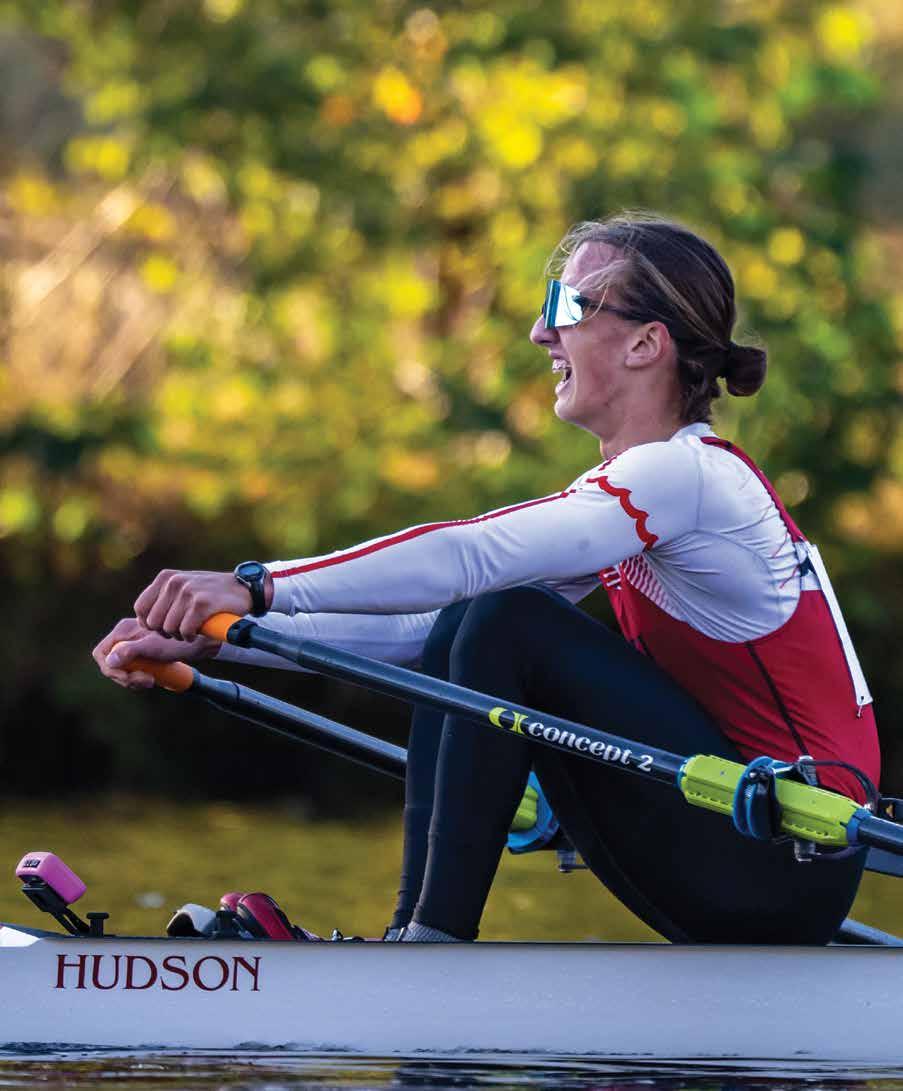
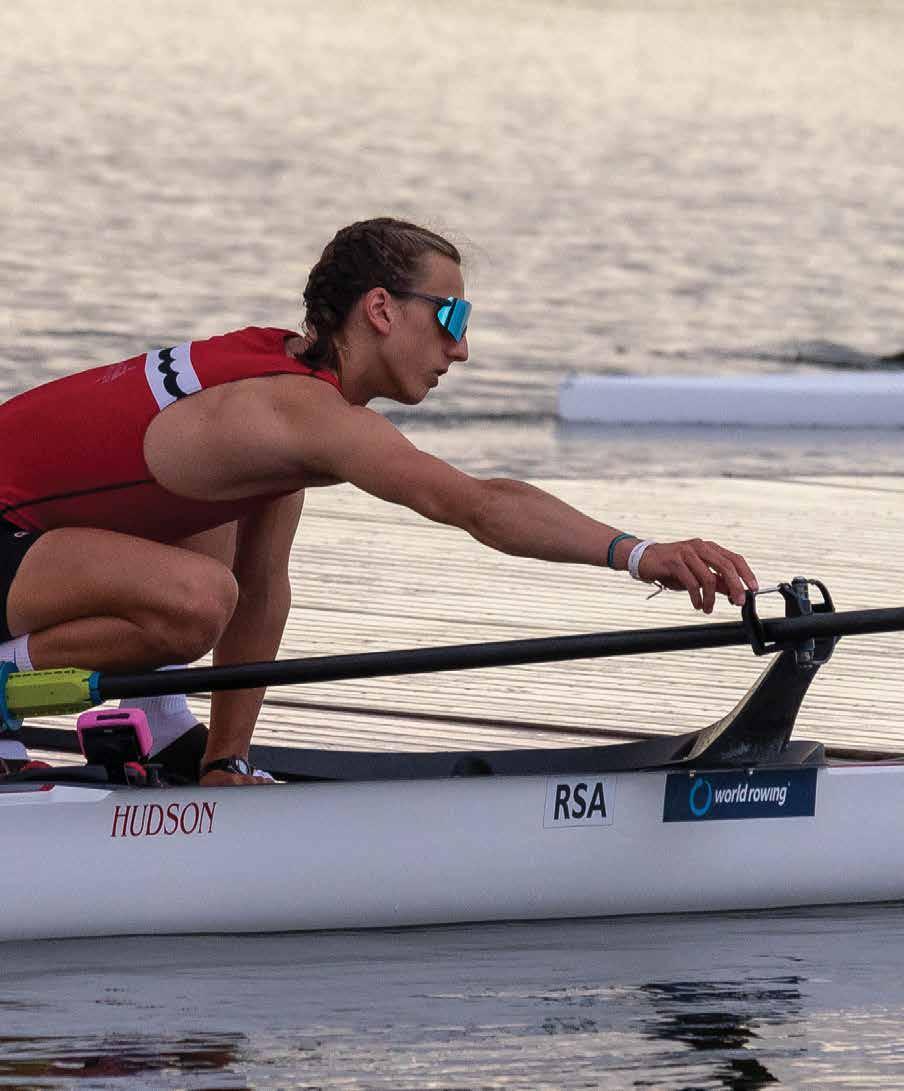
Most competitive scullers build a relationship with pain, finding out exactly when their body is telling them to stop. For novices, the plea can feel more like a demand.
“It doesn’t mean you’re at a limit,” Simeon John said over the phone between spring-break workouts. “To be at the top, you really have to be hurting.”
As a young single sculler on the Charles River, John realized he had the ability to push past his own perceived pain thresholds.
“It’s something every athlete can learn, and every top athlete does learn,” John said this spring, his last as a high schooler. “I like seeing how much I can make myself hurt. It’s just another game to play.”
You read that correctly.
“He’s a really bubbly kid. He just has a screw loose where he doesn’t view pain the same way everybody else does,” said John’s U19 coach at Boston’s Community Rowing, Inc. (CRI), Kevin McCarthy. “He views it as an opportunity just to see where he is. He’s excited by that. There’s no fear of the unknown.”
That begins to explain how this relatively undersized young man from Boston who entered the sport as something to do outdoors during Covid set a course record in the youth single at his first Head of the Charles in 2024. For an encore, John broke his HOCR record by 25 seconds in 2025. If John gets back to the Head of Charles next fall, it will be as a Dartmouth freshman.
Word of warning to his college competitors: Underestimating Simeon John fits neatly into his race plan.
This was 2022, the world beginning to open a bit but outside activities still preferred, when Simeon’s sister signed up for a Learn to Row program available to Boston public schools through CRI’s Row Boston initiative. A new sport for anyone in the family.
“I was cooped up, just bouncing off the walls,” Simeon said of realizing this program could work for him, taking him to the Charles River from the city’s Jamaica Plain neighborhood. “I’ve always liked the water, being on it or in it. I really
enjoy being in nature and moving quickly along the water.”
Because of Covid, Row Boston was putting youngsters in singles.
“I kind of did everything intuitively at first,” John said of beginning as an eighthgrader.
An interesting statement that, since rowing is not the most intuitive of sports.
“Within two weeks, he was one of the better single scullers on the river,” McCarthy said of this guy who was maybe 5-foot-6 at the time. “He was off and going.”
Katie Toth, a former Alabama rower, got to Row Boston as an assistant coach soon after John began sculling. John was always in a single, partly because he’d be wasting his talents in a novice quad or even a double. When Toth became Row Boston’s head coach, she moved those novices into competitive racing and quickly realized that even after her four years of collegiate rowing, she had taught John all she could.
“He was so far ahead,” Toth said, explaining that Simeon knows more than she ever will about certain aspects of rowing, such as rigging. “Also, the racing opportunities we were able to provide, it wasn’t enough.”
His workouts, she said, also lapped the field.
“I can’t contain this kid,” Toth told McCarthy, so the eighth-grader moved up to the main CRI youth team, which meant he was facing the region’s best—and often beating them.
John’s realization that he wasn’t ordinary came during a practice in the summer of 2024 when he was going into his sophomore year. A coach told him and another single sculler to do a 1 x Head of the Charles—one time down the full three-mile Head of the Charles racecourse.
John finished the timed piece in 18 minutes and 45 seconds— that seems very fast —so he checked the results for recent youth singles at HOCR. That time would have come in second the year before, would have won it in 2022, and been second in 2021. Conditions change year to year, even hour to hour, so times are never an exact comparison, but John was stunned.
“Wait, I feel I could have done way
faster, which was insane,” John remembers thinking. “Medaling at the Head of the Charles was not something I could imagine.”
The game had changed in his own mind. He didn’t make it through the lottery into the HOCR field that fall but the next summer at practice John did a 2 x Head of the Charles workout.
“I believe I had a cold and later that night I had a fever.”
None of that slowed him down appreciably.
“I did a piece; it was like 18:10. I was like, ‘Wait, that’s faster than the course [youth] record.’ That was when I was just learning how to head-race.”
He’s always put in the work.
“He might do a full two-hour practice with the eight, as many as 15,000 or 20,000 meters, then go out and do a couple of laps in a single,” Toth said, “So much energy. Then he says, ‘Now I’m going to run home.’ Like a six-mile run home.”
Racing older and stronger rowers in the spring taught more race lessons. Their baseline power and speed were so much faster.
“The only way to keep up was to sprint much longer than them,” John said.
How much longer?
“Basically the entire race,” he said. If it was a 2,000-meter race, “pushing through larger guys at the 1K, it would give me a boost of adrenaline,” John said. “Just enough to get me to the finish line. If you do it once, the next time will be easier. I like seeing how much I can make myself hurt by the 500-meter mark.”
There was a psychological component. Larger guys would see this flyweight going past them. Couldn’t let that happen. Meanwhile, John said, “I started playing with that. It ended up working.”
For longer head races, too. Whatever the limits were supposed to be, John began to see them as a starting point.
It’s not just John’s relationship to pain that sets him apart.
“I’ve never seen him not smiling on his way to the starting line,” said McCarthy, a former Cornell assistant coach. “I’ve encountered very few people like him. He just rows with joy.”
Now slow scullers also can row with joy; that isn’t what makes John special.
“He operates in a very disciplined way,” his coach said. “Instead of doing video games, he goes on a 25-mile ride. He’s like a kid from the ’40s. He hasn’t figured out TV and video games.
“He’s an outdoors guy. He likes to go out to Walden Pond. He soaks himself in the water. He hikes around the pond. He’s different from his peers, and he knows that, but he’s completely comfortable with himself.
“His father is Pennsylvania Dutch, from rural Pennsylvania. I think that’s why they’re so connected with healthy eating. There are a lot of unique factors about his family.”
Not technically Pennsylvania Dutch or Amish, John said, just from a line of German immigrant farmers who moved to rural Lancaster County in the 1700s. Meanwhile, John’s maternal grandfather was from the mountains of India.
All that’s cool, but it still doesn’t make you fast.
“Singles are really tippy,” Toth said. “They require an immense amount of trust in yourself. He’s the most comfortable I’ve ever seen someone in a boat.”
“His insights are elite,” McCarthy said. “He can think on multiple levels. There’s no one way Simeon rows. He adjusts the pins every time, depending on the situation. It’s all self-education.”
He’s not just in singles. He’s been in CRI doubles from the start, and in quads and now eights. When he first joined a CRI eight, McCarthy said, the veterans weren’t sure what to make of this younger and smaller sculler offering thoughts on how they could improve as a group.
“Whenever people finally shut up and listen to him, that’s when we have our best performances.”
McCarthy listens in himself. He says John has become unbelievable in an eight but chose Dartmouth partly because it has a sculling program, too.
“He messes around,” McCarthy said. “I was out with him in a single this morning. He’s triple feathering, feathering the wrong way to come out the right way, just for fun.”
Obviously, the boathouses around Boston are ideal for picking up knowledge
from all levels, and John tries to take full advantage. One of his first CRI coaches, Maggie Fellows, a national-team sculler herself, once convinced him to try switching to Concept2 Skinny oars.
“I was really against it,” John said, but he agreed to give it a shot for a 6 x 1K workout. The first two, he said, he realized he wasn’t tired at all after 400 meters. This was three weeks before regionals. Could he really switch oars? He was already moving faster than ever. He didn’t want to change things so close to a big race.
“It was a really good change,” John said. “I realized the lighter the oar, the lighter rigged the oar is, the more energy you’re going to have later in the race as a smaller guy. I don’t know if that’s true as a larger guy.”
As he reached his current 5-foot-9 and 142-1/2 pounds (according to his last weigh-in,) experimentation became his friend. John remembers one Independence Day Regatta when he raced three different shells for the time trial, the semis, and the final. The first boat, too heavy. The next one, still heavy.
“I was in the final. I felt like I can’t row either of those. I’m going to get dead last. I want to at least medal,” John said. He switched to a middleweight boat, switched oars, got third place.
“It felt good,” he said. “It didn’t feel great.”
It also felt something else.
‘It felt fun,” John said.
“He’s just naturally curious,” Jeremy John said of his son. “He is mechanically oriented. The physics of a boat’s functionality—he just has an intuitive understanding of it. In that context, he has never stopped asking questions of himself: What if I tried this?”
“I like looking at different things and trying to find the advantage in them,” Simeon said. “If everyone has a wake or a headwind, you have to figure out how to make it so it’s an advantage. Being smaller, if you look at it as a disadvantage, it’s a disadvantage. But if you’re not expecting much of me, it’s easier to come out of nowhere.”
Of the power John generates, McCarthy said, “I don’t know how he fits inside of himself.”
For last fall’s Head of the Charles, Simeon wasn’t just racing the course in a timed head race. He was racing a person—his close friend and great rival, Tony Madigan of the Potomac Boat Club.
Madigan, the U19 USRowing male athlete of the year, had gotten the better of John in spring sprints and had finished second to John in the previous year’s Head of the Charles.
“I ended up visualizing the race a few times,” John said of the 2025 Head of the Charles. “Visualizing just every single possible thing he could do that would mess with me.”
John pictured Madigan passing him after 1,000 meters or crowding right behind him, making up the starting interval. John pictured himself getting out way ahead early, and what that would mean for the rest of the race.
The week of the race, John remembers waking up in the middle of the night. Not unusual in itself. He often wakes up and gets something to eat. This was different.
“I was panicking,” John said. “I was like, why am I panicking? I love racing. I don’t ever give up and not row fast because I’m scared. Most of the stuff at this race is in my control, unlike the year before.”
The order of the race is set by previous year’s performance for the top half, but since John hadn’t raced, he started 38th in 2024, which presented both challenges and a specific opportunity. If he was moving fast, he’d have to pass boats. What if they clipped oars? What if a boat flipped right in front of him?
“All these things could happen,” he said of that mid-pack positioning.
None of them did. And the opportunity was that nobody ahead of him could have any idea how fast or slow John was moving.
Madigan started fifth based on his previous year’s performance, and had the second-fastest time to the first split, just over four minutes in. As it turned out, John had the fifth fastest, so they were both in the race. Madigan moved up to first, 10 seconds ahead of John at the Weld Bridge checkpoint, 10 minutes into the race, just over halfway through.
At the last checkpoint, John was second, five seconds behind Madigan, who then had a final split of 3:04, enough to

put over 10 seconds between himself and the rest of the field—until Bow No. 38 came roaring through, with a final split of 2:56.
John had practically blacked out near the end, he said after the race, but he had the record, and now a target literally on his back. Bow No. 1 in 2025.
“Nothing can happen unless Tony passes me,” John said. “I just can’t let him pass.”
In the weeks before the race, thoughts became obsessions.
“I was panicking,” John said. “Panicking is too small a word for it, I was so nervous. Tony was going to be right behind, and there’s a huge chance he crowds me and passes me and there would be nowhere to go.”
A conversation with his parents helped.
“They were like, what are you afraid of?” John said. “It’s not the end of the world if you lose. Nobody is going to give you crap for losing, for coming in second to Tony.”
He remembers the whole morning precisely.
“I show up at the race, I was like super chill,” John said. “My parents told me they were worried I wasn’t locked in. I was locked in. I was forcing all the panic down. Whenever I panic, I don’t enjoy the moment as much, and I wanted to enjoy this.”
A minute before the race, he realized he hadn’t checked his oarlocks or taken off his sunglasses.
“I was panicking because I wasn’t panicking,” John quipped. “I got myself together.”
The race unfolded about as he expected. Both top contenders got past the first checkpoint within half a second of each other, and their times were several boat lengths ahead of the rest of the 45boat field. Madigan closed on him early, which meant Madigan was winning the race, although it was very close past the first checkpoint, four minutes in. Ten minutes in, Madigan had almost a threesecond lead.
“I was worried,” John said. “It looks like he’s five seconds ahead. I’m going to throw Tony under the bus—he missed a buoy, and they didn’t catch it.”
In John’s mind, this meant he was
in good shape. An inquiry after the race would likely add five seconds to Madigan’s time.
“I was in a ton of pain but I was feeling pretty good,” John said. “I’m thinking because I know the river I think I’ve rowed 50 meters less. He’s got to be in more pain. It was a lot like a sprint race because every step of the way we knew who was winning, give or take a second.”
Madigan’s lead was back down to less than a second at the final checkpoint, almost 15 minutes in.
“At that point, I was not feeling great, pretty tired,” John said. “I also was struggling to steer, to see the buoys on the last turn.”
He nailed it in historic fashion. His last split, which was just the last three minutes, was over seven seconds faster than Madigan’s, who was almost six seconds faster than anyone else in the field. No inquiry necessary.
“If I don’t flip, I will win,” John told himself late in the race. “In the final stretch, I just put my head down and sent it.”
His last split of 2:53:054 was less than half a second off the winner’s final split in the championship single raced the day before. The winner of that race, Finn Hamill of New Zealand, had beaten both an Olympic champion and bronze medalist to finish second in the Diamond Challenge Sculls at Henley.
John’s winning youth time of 17:41.305 would have placed fifth the day before in the elite championship field, even though the 18-year-old was nine years younger than the average age for the top 10 championship finishers. His time would have won the men’s club single and the men’s lightweight single easily.
So here is where the variables have really changed for Simeon John—there’s no more coming out of nowhere.
He’s grown used to that, too.
“He’s not scared of any moment,” his coach McCarthy said. “He’s just like, let’s see how this comes out.”
MIKE JENSEN, wrote for The Philadelphia Inquirer for 35 years and was named Pennsylvania Sportswriter of the Year in 2023. He covered rowing on the Schuylkill River and at the Beijing Olympics and wrote the weekly Merion Mercy Academy crew newsletter for seven years while two of his daughters were champion rowers at the school. His book, Philly Hoops: How Philadelphia Transformed Basketball, will be published later this year.



Today, the hydration pendulum has swung so far the other way that having something to drink on hand at all times has become almost an obsession.
When I began rowing in the mid-1960s, my coaches insisted that we drink nothing during training.
After training—even on hot summer days—we were allowed to consume only warm beverages, preferably tea.
Back then, conventional wisdom was not to irritate the stomach with cold liquids during or immediately after strenuous physical activity.
(It would have been difficult to carry water anyway, since the wooden boats were so delicate, plastic bottles didn’t exist, and space was limited by all the ribs and cross braces needed to stiffen the hulls.)
It goes without saying that we completed our training sessions without a single sip of water and, given the state of training science and rowing equipment at the time, achieved respectable results.
Contrary to our coaches’ advice, we followed our natural urge to rehydrate
and after training on a hot day ran to the nearest water faucet to quench our thirst with cold water.
While hydration wasn’t a major concern a few decades ago, today it’s a hot topic.
In fact, the pendulum has swung so far the other way that having something to drink on hand at all times has become almost an obsession.
I’ve seen teams go out for a one-hour row in normal temperatures, with each rower carrying a two-liter bottle of water, and stop for a first drink break after just a few minutes.
Eskild Ebbesen, stroke of the famous Danish lightweight four, had to lose more than three percent of his body weight, including plenty of pounds of fluid, to make weight yet he managed to do so without compromising his performance, which included numerous worldchampionship and Olympic medals as well as a world-best time.
Michelle Darvill, former lightweight world champion, winner of several Olympic gold medals, and coach of the Canadian and Dutch national teams, says dehydration occurs in rowers who are ill-prepared for the length, intensity, and temperature of the training session and who don’t replenish body fluid adequately afterward.
“If we’re talking short term, about a twohour window where the temperature is not extreme and the athlete has not gone into the session already dehydrated, it’s more a matter of discomfort,” Darvill said.
“More people have died in marathons from hyponatremia [low sodium in the blood] than dehydration.”
Keeping college graduates in rowing means building a real profession.
Every rowing coach has seen it happen.
Seniors graduate after four years fully immersed in our sport. They love rowing. They understand training, culture, leadership, teamwork, and commitment. Maybe they even express interest in coaching. For a moment, it looks like the sport might retain another lifer.
Then reality arrives.
Student loans. Rent. Relationships. Parental pressure. Career pressure. Geographic instability. The realization that passion alone may not support a future. And rowing loses another coach before that career ever begins.
For decades, the sport has talked about “keeping people in rowing.” But veteran coach Peter Steenstra, now in his 16th year as head men’s and women’s coach at Bates College, believes the problem is larger than retention. The real issue is whether rowing has built a professional structure capable of sustaining people long term.
“I remember this conversation 25 or 30 years ago,” he said recently while driving to the New England Championships. “This has been a concern for a long time.”
In many ways, rowing has improved.
The rise of Division I assistantcoaching positions created a more legitimate entry point into the profession. A generation ago, assistant coaches often survived on stipends or volunteer roles. Today, some first assistants earn salaries that resemble real careers.
“That was part of the solution early on,” Steenstra said. “You could graduate from college, stay in the sport, and actually have a job coaching that wasn’t just a $10,000 stipend.”
For the first time, rowing appeared capable of building a coaching ladder. Graduate assistants, third-assistant roles, recruiting responsibilities, and administrative positions gave young coaches a foothold.
But the structure remains fragile.
“You get five to 10 years in,” Steenstra said, “and now you’re 33 instead of 23. Maybe you’re married. Maybe you have kids. Suddenly making a dramatic move across the country for a slightly better salary doesn’t make sense anymore.”
The result is a profession that still leaks talented people at every stage.
One of the most important points Steenstra raised has little to do with salary. Too often, young assistants spend years working hard without developing professional autonomy.
“What skills are you actually learning?” he asked. “Are you learning how to be a head coach in some of these roles?”
Many assistants organize travel, supervise novice athletes, or manage smaller boats within larger programs. But those responsibilities don’t always translate into meaningful professional growth.
A second assistant may oversee the four technically, but everyone still understands it belongs to the head coach’s program.
That distinction matters.
Young coaches stay in the profession when they feel genuine ownership—when they recruit athletes independently, design training programs, build culture, mentor crews, manage alumni relations, or develop strategic responsibilities they can truly claim as their own.
“We don’t have a fully developed coaching infrastructure,” Steenstra said. “What does that second assistant actually own? What can they put on a resume?”
For head coaches hoping to retain assistants, that question may matter as much as compensation.
Rowing’s volunteer culture remains both its greatest strength and one of its biggest obstacles.
Our sport survives because people
care deeply enough to donate time, energy, and labor. Regattas run because volunteers show up before sunrise and work past sunset. Programs exist because parents tow trailers, organize food tents, and raise money for equipment.
But that same culture can unintentionally undermine professional development.
Steenstra pushed back hard against the old-school mentality that young coaches should “pay their dues” through unpaid labor.
“I don’t like it when old-timers say all assistants should begin as volunteers anyway,” he said. “I just don’t think that’s the right way to look at it.”
That expectation creates barriers precisely when rowing should be welcoming young professionals into the sport.
“It shouldn’t be such an obstacle to be part of this sport.”
The challenge is especially acute because rowing already demands so much financially from athletes and families. Tuitions and costs to attend college are enormous. Travel costs are high—and rising. Regatta entry fees will need to go up to catch up with inflation.
Steenstra noted that entering roughly 10 crews at a championship regatta recently cost nearly $5,000 in entry fees alone. Yet even at that level, much of the event infrastructure still depends on volunteers. The economics of rowing remain deeply uneven.
Perhaps the most striking comparison Steenstra made involved youth hockey.
Kids barely into their teenage years already understand there are multiple professional pathways within that sport, not just as athletes or coaches but as referees, administrators, event staff, trainers, and development personnel.
“In hockey, those kids know you can become a referee and make a very good living,” Steenstra said. “There’s
an awareness of an entire infrastructure around the sport.”
Rowing rarely offers that visibility. Outside of coaching, our sport provides relatively few clearly defined career tracks. Even leadership positions within rowing organizations often depend on passion more than financial sustainability.
As Steenstra sees it, rowing still operates largely as a grassroots ecosystem trying to support professional expectations.
For many college rowers, coaching simply doesn’t make financial sense.
Not when graduates leave school carrying enormous debt.
Not when entry-level salaries remain modest.
Not when the ceiling itself appears limited.
“When the highest-paid rowing coach in the world maybe makes around $300,000,” Steenstra said, “it doesn’t
exactly scream that this is a career you can really do well with financially.”
Compare that to college hockey, where even mid-tier Division I coaches can surpass those numbers.
The comparison isn’t meant to diminish rowing. It simply highlights the reality young coaches are evaluating. Many collegiate rowers are pre-med students or future attorneys, management consultants, engineers, or bankers with ambitions extending far beyond what they see in our sport. They love rowing—but love alone may not justify staying.
The answer may begin with honesty. Rowing cannot rely exclusively on passion to sustain its coaching pipeline. Passion gets people started. Infrastructure keeps them.
That means:
• Paying assistants like professionals.
• Giving young coaches meaningful ownership.
• Creating clearer developmental pathways.
• Expanding opportunities beyond traditional coaching roles.
• Treating retention as organizational responsibility—not personal sacrifice.
Most important, it means recognizing that keeping student athletes in rowing after graduation is not just about cheap labor. It’s about preserving and growing the institutional knowledge, culture, and continuity of our sport.
Every rower and coach who leaves our sport takes experience with them.
Every one who stays strengthens the future of rowing.
And for a sport built so heavily on relationships, that may be the most important investment rowing can make.
Recruits need the opportunity to ask candid questions, observe team dynamics, and determine whether the environment feels like the right fit—without Mom and Dad.
During my more than three decades coaching at the university level and several years working in college-recruiting consulting through Robbie Consulting, there’s one question I hear consistently from families navigating the rowing recruiting process: How can parents best help their studentathlete, and what should they avoid?
It sounds like a simple question, but the answer is nuanced because every university coach, recruiting coordinator, and staff operates differently. Still, there are several guiding principles that can help families navigate the process effectively while empowering their athlete to succeed.
As a general rule, parent involvement in the recruiting process is not only appropriate, it’s important. In many ways, it is critically important.
Choosing a university is one of the biggest decisions a young athlete will make. Most rowers are only 17 or 18 years old when they commit to a program, and some receive verbal offers as early as 16. Families are making decisions that involve academics, athletics, finances, personal growth, and future career opportunities. Parents absolutely should be engaged and informed throughout the process.
The key is understanding how to be involved in a productive and supportive way.
Questions about parent involvement arise most often during official and unofficial visits. Since every coaching staff structures visits differently, families should ask early in the process what portions of the visit are designed for parents and which are intended primarily for the recruit.
In most cases, coaches appreciate when parents attend academic meetings, campus tours, and athletic-facility tours. These are important opportunities for families to evaluate the overall university environment,
academic-support systems, and resources available to student-athletes.
There are also moments during a visit, however, when it’s beneficial for the coaching staff to turn the experience over to current team members. Time spent with athletes—whether during meals, team gatherings, overnight stays, or informal conversations—allows recruits to experience the true culture of the program.
For parents, stepping back during these moments can be difficult. The instinct to check in every few hours is understandable. But allowing your son or daughter the space to experience campus life independently often leads to better long-term decision-making. Recruits need the opportunity to ask candid questions, observe team dynamics, and determine whether the environment feels genuinely like the right fit.
Another common question involves attending team practices during visits.
Parents always should ask in advance whether there’s room to observe practice, either from the coaching launch or inside the erg room. Sometimes coaches welcome parent observers, while other times space limitations or safety considerations make it impractical.
The important thing is to respect the daily rhythm of the team. Coaches are balancing recruiting with training preparation, athlete management, and competition schedules. Flexibility and understanding from families are always appreciated.
Phone calls and video meetings with coaches are another area where balance is essential.
For early conversations, it’s perfectly acceptable for parents to be present. In fact, many families choose to sit nearby during initial calls so they can hear information firsthand and understand the process
better.
At the same time, coaches want to get to know the student-athlete. They want to hear directly from the recruit about academic interests, rowing goals, personality, and motivations. The athlete should be the one leading the conversation.
One of the best approaches is for parents to remain available while allowing their son or daughter to take ownership of communication. On video calls, many parents stay off camera while the athlete speaks directly with the coaching staff. This creates an environment where the recruit can build confidence and communication skills while parents still remain informed and supportive.
The Goal: Support Without Overstepping
Typically, the most successful recruiting experiences involve a healthy partnership between athletes and parents. Families that provide guidance, perspective, organization, and emotional support can make an enormous positive impact throughout the process.
At the same time, college coaches are evaluating more than athletic performance. They’re also observing maturity, independence, communication skills, and how recruits handle themselves throughout recruiting interactions.
Parents do not need to disappear from the process. In fact, they should not. But the goal should be to support the athlete while allowing them gradually to take increasing ownership of their future.
In the end, recruiting is not simply about finding the fastest program or the biggest name. It’s about helping young athletes find the university environment where they can thrive academically, athletically, and personally for the next four years and beyond.
It’s one of the best sports foods around. Besides promoting health and enhancing performance, it travels well and is yummy, inexpensive, and satisfying.
“I always eat a bagel with peanut butter before my long rows.”
“PB&J sandwiches are my go-to fuel after a hard workout.”
“I stay away from peanut butter; I can’t eat just one spoonful.”
Rowers tend to have either an enjoyable or a dreadful relationship with peanut butter. Those who enjoy it welcome peanut butter into their sports diet because it’s yummy, relatively inexpensive, doesn’t need to be refrigerated (hence travels well), and is very satisfying.
Those who have a dreadful relationship with peanut butter commonly have a history of devouring it by the jarful. They fear peanut butter as a fattening enemy.
I feel badly for rowers who have a poor relationship with peanut butter (PB) because, in my humble opinion, PB is one of the best sports foods around. It is both health-promoting and performanceenhancing.
Research on peanuts validates the benefits of enjoying peanut butter daily. Doing so is simple, thanks to PB’s versatility. You can swirl it into oatmeal, make it into a sandwich, enjoy it with crackers and bananas, and drizzle Thai Peanut Sauce into stir-fries.
If you stay away from PB because you end up overeating it, think again. Overindulging in PB means you like it and you should eat it more often! Your last-chance-to-eat-PB binges are triggered by denying yourself this yummy sports food. Try enjoying PB at every meal. You’ll

tire of it and stop craving it. With no PB deprivation, you’ll have no need to binge.
Here are the health and performance benefits of including PB in your sports diet (assuming you have no peanut allergies):
PB is not inherently fattening. While any food eaten in excess can be fattening, people who eat PB (and nuts, for that matter) five or more times a week are not fatter than nut avoiders. A Purdue University study reports that subjects who ate peanuts daily did not overeat total calories for the day. That’s because peanuts and PB are satiating; they help you feel pleasantly fed. Peanut eaters tend intuitively to eat less at other times of the day.
PB with breakfast helps control blood glucose through lunchtime and into the afternoon. That means you’ll enjoy stable energy—and a reduced desire to eat.
The fat in PB is primarily health-promoting mono- and polyunsaturated fat that knocks down inflammation. People who eat PB and nuts five or more times a week have lower markers of inflammation than nut avoiders. For athletes who get tiny injuries every time they train, an anti-inflammatory food such as PB is a wise choice.
For women with type 2 diabetes, eating 1.5 ounces (250 calories) of peanuts (and/or tree nuts) five or more times a week reduced their risk of heart disease (a disease of inflammation) by 44 percent and the risk of having a heart attack by 60 percent compared to women who ate none. Routinely enjoying a simple-to-make PB
sandwich for lunch is a heart-healthy choice.
The fat in PB helps absorb fat-soluble vitamins A, D, E, and K. You want to include some (healthful) fat in each meal, and PB is an enjoyable way to do so. If you are an endurance rower, you’ll optimize your sports diet by eating at least 0.5 grams of fat per pound of body weight. The body stores some fat within muscle cells and uses it for fuel during extended exercise. Rowers who fear fatty foods as fattening can hinder their endurance. Enjoying PB in oatmeal before a long row can be a yummy and healthy way to enhance your endurance performance.
PB is a good source of arginine, an amino acid that helps keep blood vessels flexible so that blood flows more easily and reduces blood pressure. The more PB you eat, the bigger the effect on health protection.
PB eaters improve their brain-blood circulation and mental function. This contributes to enhanced processing speed and better short-term memory. Plus, a diet rich in healthy fats helps slow cognitive decline. Enjoying PB today is a wise investment in future brain health.
Peanuts offer (slightly) more protein than tree nuts. That’s because peanuts are a legume—like lentils and dried beans—and not a nut. Two tablespoons (a standard serving) of PB has eight grams of protein, while the same amount of almond butter has six grams (with a much higher price.) Athletes want to target about 20 grams of protein per meal or snack. You can get that
by swirling PB into oatmeal cooked in (soy) milk, snacking on a PB & honey sandwich plus a yogurt, or making a PB-banana smoothie. Quick, easy, inexpensive—and enjoyable.
PB contains numerous bioactive compounds (phenols) that bolster the immune system. Peanuts in a shell and Spanish peanuts are particularly wise snack choices because the peanut skin is rich in antioxidants and fiber. Fiber feeds the bacteria in your gut (your microbiome). These bacteria strongly enhance your immune system, overall health, and mood.
All peanuts are non-GMO and have low risk of pesticide residue, in part because peanuts grow under the ground.
All-natural peanut butter such as Teddie is less processed than conventional brands such as Skippy. All brands of PB need to meet the USDA’s “standard of identity.” Conventional brands might have two percent added saturated fat (palm oil, hydrogenated oils) to control the oil from separating. This small amount does not override the positive health benefits of PB. Any PB is better than no PB.
Sugar added to conventional brands is relatively insignificant. The two or three grams of added sugar is nothing compared to the 10 to 15 grams of sugar in the jelly or honey you might enjoy with the PB, or the six grams of sugar in the sandwich bread. Please fret less about added sugar—it is burned for muscle fuel—and focus more on PB’s vitamin E, zinc, folate, niacin, and selenium. PB is nutrient-rich.
Salt added to PB is relatively insignificant. The 150 milligrams of sodium (a part of salt) in a serving of PB is less than the sodium you get in 12 ounces of Gatorade or even a slice of bread. Regardless, that sodium replaces what you lose in sweat.
Really now, what more could you ask from a super sports food?
These performance and health factors matter for all rowers, but if you’re time-challenged, you can still make gains by ensuring they’re part of your program.
Unless you are a full-time athlete, it’s likely that your allocated training time needs to slot carefully into a busy school or work schedule. With limited time to row, lift, and recover, what keeps fitness moving in the right direction?
The following performance and health factors matter for all rowers, but those who are time-challenged can still make gains by ensuring key pillars are part of the program design.
The first pillar is movement. This includes your aerobic training sessions but also general movement throughout the day, such as walking and biking. A humanpowered commute to work could replace an aerobic rowing session if needed.
Building muscle and getting strong prevent injuries and improve technical efficiency. Strength days can be stand-alone sessions or combined with a rowing session. A few targeted exercises can be completed within a half hour.
Next, there are the pillars that keep you healthy: nutrition, sleep, and mental health. A solid nutritional base fuels your workouts and assists your recovery. Quality choices give you the most nutrients from your food. Sleep is a major recovery method. Without adequate sleep, focus slips, and meeting the demands of the day is difficult. Prioritize sleep.
Her best-selling Nancy Clark’s Sports Nutrition Guidebook can help you eat to win. For more information, visit NancyClarkRD.com.
The second pillar is high-intensity interval training. If you’re following the 80/20 method, most of your aerobic training is low intensity, but 20 percent is high intensity. The goal is to challenge your fitness and develop physiological adaptations for racing. If you row five days per week, devote one day to short intervals. Pillar three is strength training.
The sixth pillar is mental and emotional health. Make sure you are in a good place to do your training. If you are having a rough day, training sometimes really helps your mindset. Other days, you may need to take care of yourself, so dial it back and give yourself some breathing room.
MARLENE ROYLE is the author of Tip of the Blade: Notes on Rowing. She specializes in training for masters rowers. Her coaching service, Roylerow Performance Training Programs, provides the program and support you need to improve your competitive edge. For information, email Marlene at roylerow@aol.com or visit www.roylerow.com.
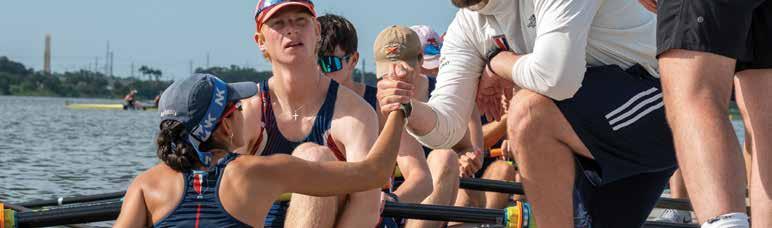
Some practices may leave you full of life, and some may drain what you’ve got, so you need to start with a full tank.
The peak of the spring season is upon us, and you might be looking for ways to differentiate yourself from your fellow coxswains. Occasionally, at the end of the season, I’ve seen coxswains try to separate themselves from the pack through weight rather than skill.
This is a mistake that will backfire every time. If you’re not eating enough— either before your practice or throughout the day—you’re not going to be a good coxswain at practice, full stop. Your performance in the boat will suffer in both the short and long term.
As a coxswain, you need your brain to be firing on all cylinders all the time. You need to absorb and retain a huge amount of information, make decisions about what to do and say continuously throughout the practice, and provide the appropriate emotional and competitive energy for your boat. Some practices may leave you full of life, and some may drain what you’ve got, so you need to start with a full tank.
I spoke to Robin Amylon, a registered dietitian, board-certified specialist in sports dietetics, and certified strength and conditioning specialist who is currently at the Mass General Center for Sports Performance and Research (and who has worked with rowing teams in the past) about the importance of fueling well for coxswains.
“Just because there’s a weight element,” Amylon said, “doesn’t mean you can’t eat. You need to make sure that you are fueling.”
Don’t fall for the canard that you don’t need to eat before practice because you’re not working out actively.
“[Coxswains] don’t necessarily need as much fuel as the rowers do but they still need to make sure they’re having balanced meals,” Amylon said.
Just as your rowers need to fuel their muscles so, too, you need to fuel your brain.
Even if you have an early-morning session and no appetite, make sure to eat on your way to the boathouse.
Eat “a granola bar, a banana, a peanut butter and jelly sandwich—anything that’s mainly carbohydrates,” Amylon said. “That’s what’s going to fuel your brain. Carbohydrates are the main source of energy not just for your muscles and body to move but also for your brain.
“That’s really the only thing that can break that blood-brain barrier, and it’s what your brain needs to function so you can think clearly, so you can remember things, so you can pay attention”—all crucial facets of a coxswain’s job.
If you have an afternoon session, make sure you’re well fed ahead of time as well. On the bright side, not having to row
yourself usually gives you more options for what to eat, and you might be able to tolerate full meals better before practice.
“They don’t have to worry as much about the digestion piece, so sometimes [coxswains] can actually get away with eating more before practice than the rowers can,” Amylon said.
Use this to your advantage and experiment with what sits well and gives you energy for the full practice. And just as with your rowers, use practices to experiment with what fuel works for you so you can replicate that on race day. Your focus on race day should be on eating to perform, not eating to weigh in.
Lastly, if you find yourself preoccupied with thoughts about your weight or about food or are distressed by weighing in, reach out for help to a nutrition or mental-health professional. We’ve come a long way in the sport on this front but we can still do better. Your weight should never be the focus of your day-to-day life or your improvement in rowing. Instead, fuel well and give yourself the energy and opportunity to be the best coxswain you can.
CJ BOWN
Thousands of post-college rowers in their 20s are still physically capable, still competitive, and still interested in racing—if only a compelling structure existed.
Rowing has a graduation problem. It’s not that rowers don’t graduate—quite the opposite, really; rowing has some of the best graduation rates in all of sports, with programs like Notre Dame achieving perfect Academic Progress Rates (APR), a key NCAA measure, of 1,000 in both 2021 and 2022, and a 16-year average of 997.
Rowing’s graduation problem is that once a rower graduates from college, she’s almost certainly done rowing, just like that.
looks at her and says: “That was fun. Good luck.”
No transition.
Just a cliff.
One day, you are in a fully built high-performance system. Coaches. Teammates. Facilities. Equipment. Training plans. Racing calendar. Team standards. Clear goals. Identity. Purpose.
The next day? Go figure it out. Find people your age. Find people your speed. Find people who still want to train.
Graduation comes, and the sport basically looks at her and says: “That was fun. Good luck.”
Rowing needs to have an honest conversation about that post-college drop-off. Look at what the top NCAA women’s staffs are doing every single year. These coaches are not running casual fitness programs. They are building highperformance athletes. They are recruiting them. Developing them. Testing them. Pushing them. Demanding more from them physically, technically, mentally, and emotionally.
They are taking 18-year-old women and turning them into elite athletes. It’s incredible.
That means real investment. Real standards and accountability. Real training loads with real pressure. These athletes are pushed to the edge of what they can handle because that is what elite sport requires.
Then graduation comes.
And unless that athlete is already in a national-team system, the sport basically
That is not a pathway. That is American rowing shrugging at our own athletes. And it’s insane because these women are not washed up at 22. Twenty-two to thirty-one should be the most exciting window in the sport.
The numbers alone show how much is left on the table by our sport currently. There are about 150 NCAA women’s rowing programs across Divisions I, II, and III. If those programs graduate an average of eight athletes per year, that means roughly 1,200 former collegiate rowers annually entering adult life with high-level rowing experience.
Even if only a fraction of them still want to compete after college, the total pool becomes significant very quickly. Over a 10-year span, that is thousands of trained rowers between the ages of 22 and 31 who are still physically capable, still competitive, and potentially interested in racing, if a compelling structure existed. That is not a gap. That is a market. That is a league.
Maybe I’m wrong. Maybe they don’t want something more. I don’t buy that. Right now, it’s national team or … whatever you can piece together on your
And right now, masters rowing is the retirement home of NCAA rowing.
Masters rowing has a place. A great place.
But it cannot be the entire adult rowing system. It cannot be the social club, the learn-to-row pipeline, the alumni landing zone, the national-team alternative, and the post-college bridge all at once. Existing masters crews don’t want to wreck their age-pegged time handicaps by letting a bunch of twentysomethings in the boat, and twentysomethings don’t necessarily dream of rowing with their parents’ peer group.
The sport needs another layer, a legitimate post-college racing league built specifically for former collegiate athletes who still want high-level competition.
Real races. Real competition. Simple formats. Visible athletes with identities.
A graduating NCAA athlete should know exactly where competitive rowing continues after college. Right now, most do not.
That is the failure.
Other sports have built these bridges successfully. Rowing largely has not. As a result, the sport continually invests enormous time, coaching, and resources into developing athletes only to watch many of them disappear during what should be their athletic prime.
This is not a talent problem. The athletes already exist. The training infrastructure already exists. The interest likely exists, too.
What is missing is the league.
The real question is whether rowing has enough ambition to build the next layer before we shove another generation of rowers off the cliff.
Active Tools 17
Concept2, Inc 68
Fluidesign 6..7
HOSR 15
Hudson Boat Works 2..3
Leonard Insurance 65
Nathan Benderson Park 26
Nielsen-Kellerman 5
Peinert Boatworks 10
Peterson Architects 28
Pocock Racing Shells 8..9
Robbie Consulting 30
Rocky rowing 30
Rowing Catalog 32..33
Shimano North America 67
SportGraphics 12..13
TWENTYSIXDIAMOND 4
Vespoli USA 16
the Revolutionary War, and that’s Paul Revere’s row in 1775 across the Charles River so that he could warn the colonials that the British were coming.
“Rowing”? you say. We’ve always been told it was his ride to Lexington and Concord. Well, how do you think he got across the river?
In a letter to Dr. Jeremy Belknap, Revere wrote, “I left Dr. Warrens, called upon a friend, and desired him to make the Signals. I then went Home, took my Boots and Surtout (overcoat), and went to the North part of the Town, Where I had kept a Boat; two friends rowed me across Charles River …. They landed me on Charlestown side.”
Joshua Bentley, a boatbuilder, and Thomas Richardson, a shipwright, were the two friends who rowed Revere to Charlestown. They were perfect for the job: local men who were expert rowers and familiar enough with the shoreline and harbor to attempt this mission in the
dark of night. As they rowed right under the hulking warship H.M.S. Somerset , Bentley and Richardson muffled the sound of the oars in the thole pins by wrapping cloth around the leathers. They deposited Revere on the Charlestown bank, where he borrowed a horse and began his ride.
Northeastern University has littleknown information about this famous event. On the website for its beautiful Henderson Boathouse, it says: “Competitive rowing made its debut on the eve of April 18, 1775, when Paul Revere did a power 20 across the Charles River basin to Cambridge to warn the countryside of the oncoming Brits.”
Paul, Joshua, and Thomas, at what rate was that 20?
DOCTOR ROWING, a.k.a. Andy Anderson, has been coxing, coaching, and sculling for 55 years. When not writing, coaching, or thinking about rowing, he teaches at Groton School and considers the fact that all three of his children rowed and coxed—and none played lacrosse—his single greatest success.
ANDY ANDERSON
We rowers trying to move boats as fast we can, as a sport, stand on the shoulders of many who rowed boats as fast as they could to help win the American Revolution.
As we commemorate the 250th anniversary of our country, it is worthwhile to reflect upon and celebrate the soldier-sailor-rowers of the early Continental Army and their pivotal role in securing the independence declared on July 4th 1776.
On Aug. 29 and 30, 1776, just 56 days after the signing of the Declaration of Independence, mariners from the seaport town of Marblehead, Mass., 16 miles north of Boston, evacuated George Washington’s troops, numbering some 9,000, from Brooklyn, N.Y.
Outnumbered by General Howe’s British and Hessian troops, and suffering from a decision not to cover the far-left battle flank, the Continental Army was pushed rapidly to land’s end, and almost certain defeat. Under cover of night, and what many consider a miraculous morning fog, the regiment, known as the Marbleheaders, used every available watercraft to transport troops, cannons, horses, wagons, and support personnel from Brooklyn across the East River to Manhattan. The army escaped successfully and lived to fight until 1783.
Paul Revere rowed across the Charles River so that he could warn the colonials that the British were coming.

Shortly after the Brooklyn evacuation, Washington lost battles at his namesake, Fort Washington, on the northernmost corner of Manhattan, and again, at Fort Lee, across the Hudson River in New Jersey. His troops then marched through New Jersey and, as 1776 was winding to a close, arrived on the Pennsylvania side of the Delaware River.
Desperate for a victory for the morale of the troops and the survival of our young country, Washington decided to cross back into New Jersey on Christmas Day to surprise the Hessian mercenaries in Trenton.
It was the indispensable Marbleheaders, led by Colonel John Glover, who made multiple trips across the formidable waters of the Delaware River, just as they did at the East River. With blisters upon blisters on bloodied hands and extreme fatigue in almost every muscle in their bodies, these men made the historic victory at Trenton possible.
It is fair to say the Marbleheaders rowed our country into existence. If they had not saved the army at Brooklyn and made the Battle of Trenton possible, most historians believe that the war would have been short-lived and England victorious. When rowers think about moving boats as fast as they can, as a sport, it is awesome to contemplate that we stand on the shoulders of many who rowed boats as fast as they could, too— to help win the American Revolution. Here’s to the Marbleheaders!
The author of the above, Gerard Henwood, is an oarsman, history buff, Syracuse grad, and loyal reader of this column. He offered this timely story about rowing’s important connection to the semi-quincentennial celebrations that will soon be upon us. Thank you, Gerry.
Doctor Rowing adds:
There’s another important link to rowing and
CONTINUES ON PAGE 65 >>>