

Every Neighborhood Deserves a Great Grocery Store. And we’re proud to be yours.


















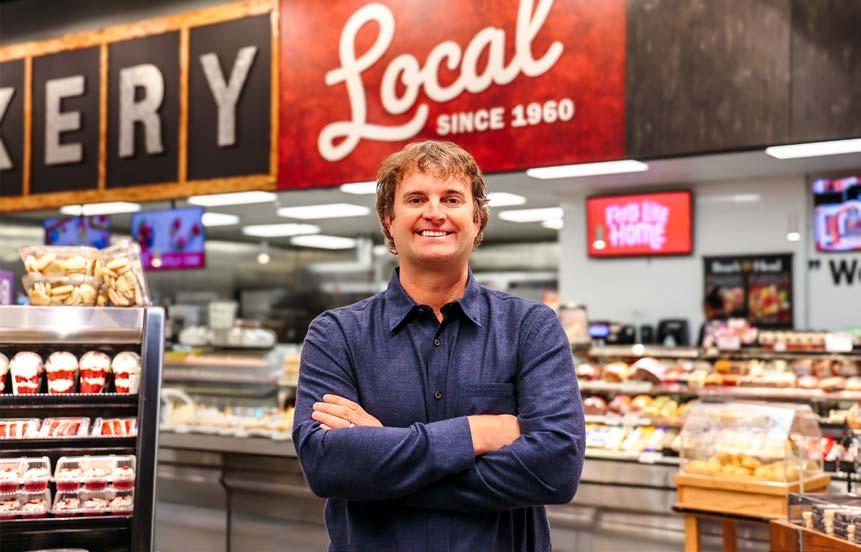
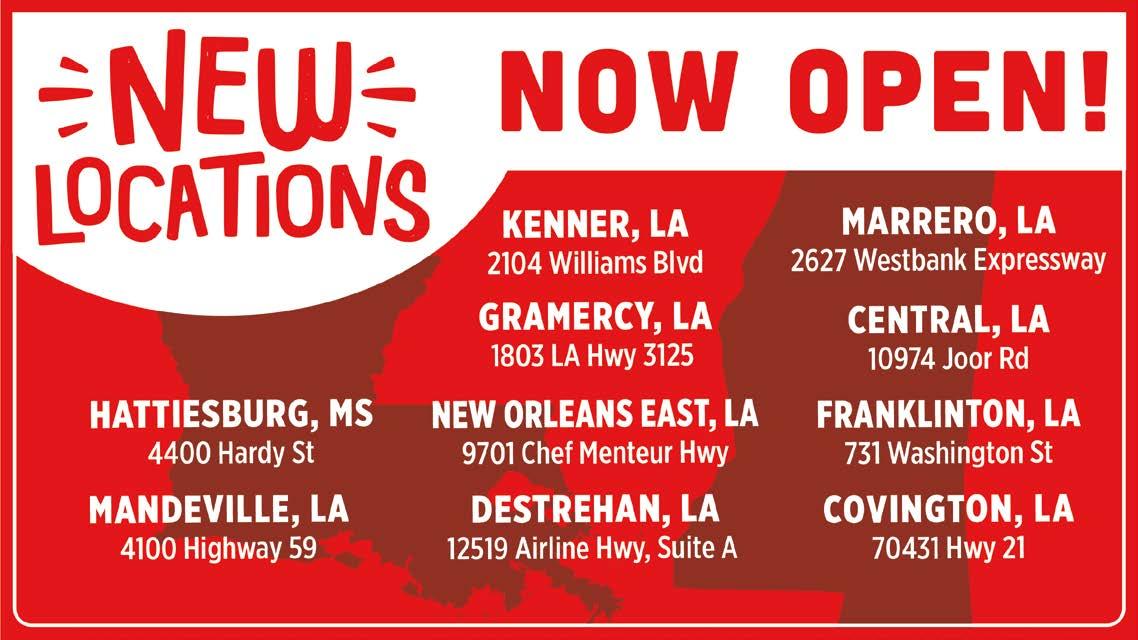
Welcoming new stores, team members and communities to the Rouses family.
In just five weeks, we did something very few grocers could do. We transformed 10 former Winn-Dixie stores into Rouses Markets, opening two stores a week, every week. In each case, we took over a location on a Monday morning and reopened it as a Rouses the following Monday.
When you walk into our new locations, you will see the same friendly faces you know and trust. We welcomed the managers and team members who already worked in these stores, and we are proud to have them continue serving their communities as part of the Rouses family.
You can’t just move into a building and call it a Rouses. Our customers wouldn’t accept that, and neither would we.
The first few days of each acquisition focused on our fresh departments. As the week went on, we reset the store, bringing in thousands of cases of product and building it the right way.
By the following Monday, every store was ready to welcome customers.
It looked like us, felt like us, smelled like us, and was filled with the great food we’re known for, with space to sit and enjoy it.
And we’re just getting started.
You can see how we did it in one store, New Orleans East, at rouses.com.
This kind of turnaround only works when everyone is pulling in the same direction. I want to thank our construction and facilities teams; our merchandisers; our operations, marketing and store teams; and the many others who worked long days and nights to make it happen. Our vendor partners deserve thanks as well. Their partnership is essential.
We are grateful for the support these communities have shown, and we are proud to be part of these neighborhoods.
To everyone who has shopped in these stores for years, we are glad you are here. We invite you to make Rouses your neighborhood grocery store.
This issue also highlights some of the chefs who inspire how we cook, eat and celebrate across the Gulf Coast. Food is at the center of everything we do at Rouses, and you will meet some of the people shaping that culture today, along with the next generation behind them.
To see photos from our recent store openings, turn to page 55.
CEO, 3rd Generation
Creative Director & Editor
Marcy Nathan
Art Director & Design
Eliza Schulze
Illustrator
Kacie Galtier
Marketing Coordinator
Harley Breaux
Copy Editor
Patti Stallard
Advertising & Marketing
Tim Acosta
Amanda Kennedy
Stephanie Hopkins
Nancy Besson
Taryn Clement
April Sins
Emily LaJaunie
Jennifer Bourgeois

ARROW-CIRCLE-RIGHT
Brett Martin is a longtime correspondent for GQ Magazine, a three-time winner and seven-time finalist of the James Beard Award, and a seven-time selectee of the annual Best Food Writing anthology. His work appears regularly in Vanity Fair, National Geographic, Bon Appétit, Garden & Gun, Smithsonian, Outside, The New York Times Magazine and The New Yorker, among others, and on public radio’s This American Life
ARROW-CIRCLE-RIGHT David W. Brown is a freelance writer whose work appears in The Atlantic, The New York Times, Scientific American and The New Yorker. His most recent book, The Mission: A True Story, a rollicking adventure about a motley band of explorers on a quest to find oceans on Europa, is in bookstores now. Brown lives in New Orleans.
ARROW-CIRCLE-RIGHT Marcelle Bienvenu is a cookbook author and food writer. A native of St. Martinville, in the heart of Cajun country, Bienvenu wrote Who’s Your Mama, Are You Catholic and Can You Make a Roux? and Eula Mae’s Cajun Kitchen with Eula Mae Dora, and other books and cookbooks. She also co-authored five cookbooks with Emeril Lagasse.
ARROW-CIRCLE-RIGHT Rochelle Oliver is the founder and editor of Island and Spice Magazine, a digital quarterly that offers readers a window into the rich ingredients and flavors of the Caribbean. She is the current chair of the James Beard Foundation’s Journalism Committee. Her experience includes serving as a breaking news copy editor and digital editor at The New York Times.
ARROW-CIRCLE-RIGHT Nick Underhill began his career covering the Saints for The Times-Picayune, The Advocate, and other local publications before briefly moving to Boston, where he chronicled the final chapter of the Belichick-Brady era for The Athletic. Upon returning to New Orleans, Underhill founded NewOrleans.Football, a subscription-based platform featuring in-depth articles and podcasts, sponsored by Rouses Markets. Underhill gained national recognition when he earned first place in the Associated Press Sports Editors’ (APSE) Explanatory Writing category in 2018 for his analysis of Drew Brees’ passing game since 2006. (That same year, he was named Louisiana Sportswriter of the Year by the National Sports Media Association.)
ARROW-CIRCLE-RIGHT Beth D’Addono is a writer specializing in travel, food, lifestyle and captivating stories about interesting people. She regularly contributes to outlets such as USAToday/10Best, AAA Traveler, AAA World, L.A. Times, Eater and more. Her latest book, New Orleans Eats, is out now.
ARROW-CIRCLE-RIGHT Susan Langenhennig Granger manages communications for The Nature Conservancy’s Southern Deltas, a region encompassing Louisiana, Mississippi, and Alabama. She previously served as editor of Preservation in Print, the monthly magazine of the Preservation Resource Center of New Orleans, and as the PRC’s communications director. She has worked as a journalist in New Orleans for more than 25 years.
ARROW-CIRCLE-RIGHT Dominic Massa is executive vice president & chief operating officer at WYES-TV, New Orleans’ PBS affiliate. He has more than 25 years of experience in documentary and cultural programming and has earned two regional Emmy awards. He previously worked at WWL-TV (CBS) as executive producer. Massa has written books on New Orleans television and radio history.
ARROW-CIRCLE-RIGHT LeBron “LBJ” Joseph has been a broadcaster in New Orleans for more than 40 years. His humor and deep knowledge of New Orleans music are unmatched. He’s the anchor of Good Morning New Orleans on WGNO and an announcer on iHeartRadio’s WYLD-FM and Voodoo 103.7. He’s known for greeting everyone with a warm “Hey, my baby!”—and he’s as comfortable on the water as he is behind the mic.
ARROW-CIRCLE-RIGHT Juan Nogueira is a media specialist at WDSU (NBC) Hearst Television in New Orleans with over 15 years of experience driving tens of millions in revenue for clients across industries — from cars to groceries. You won’t find anyone more passionate about commercials, TV, and media ratings and measurement. A creative at heart, Juan is known for crafting memorable phrases that stick (he’s quite the punster) and for writing, producing and occasionally singing the jingles you hear on TV.
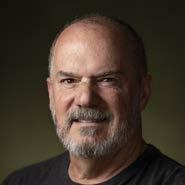
Romney Caruso photographed this issue’s cover, as well as the dishes and kitchen moments for the forthcoming cookbook from New Orleans chef Frank Brigtsen. An award-winning food photographer, he works across advertising, branding, packaging, and cookbooks, collaborating with chefs and restaurants across the country. His series Shakers, Knives, and Irons captures New Orleans chefs through the tools of their craft. He’s also a regular contributor to Rouses Magazine
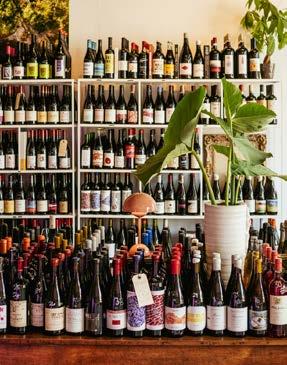
ARROW-CIRCLE-RIGHT Wild Child Wine Shop in downtown Lafayette was nominated for a James Beard Award for Outstanding Bar. Denny and Katie Culbert’s natural wine shop focuses on small-production wines and conservas — seafood preserved in cans or jars. (Tinned fish is having a moment.) Denny, a food and travel photographer, is also a contributor to this magazine. He photographed Mosquito Supper Club, the James Beard Award-winning cookbook from Chef Melissa Martin.

Hummus with

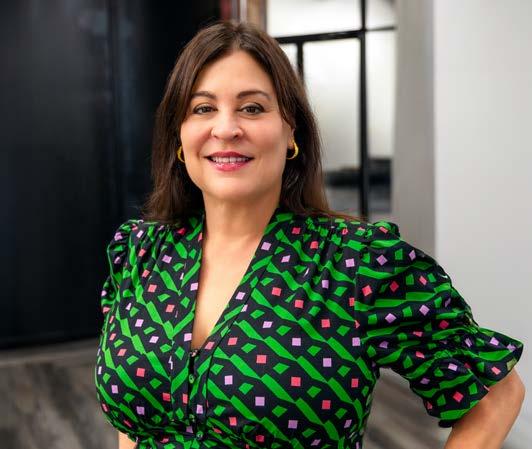
by Marcy Nathan, Rouses Markets Creative Director
Have you noticed kids calling their parents “bruh”?
Not Mom. Not Dad. Bruh.
I’ve heard it in parking lots. In checkout lines. In the cereal aisle. A 12-year-old sighs, looks at his mother and says, “Bruh.”
And somehow that one word means Are you serious right now? and I cannot believe this is my life and Please stop talking
Bruh started as a cousin to brother. Bro. Bruh. Over the years, we’ve shortened it, stretched it, flattened it, given it attitude. Now it’s punctuation.
It can stand alone. It can end a sentence. It can be the whole sentence.
Bruh. (Disappointment.)
Bruh! (Excitement.)
Bruhhhh… (You’ve got to be kidding me.)
You could probably have an entire conversation with that one sound, just by changing the tone. Say it five times in a day and mean five completely different things.
Around here, we’ve got our own version of bruh: brah. And it’s strongly associated with Kenner (or Kenna.) One of our local dialects — what people call Yatspeak (that is, the speaking style of Yats, a shorthand name derived from the local habit of saying “Where y’at?” by which we mean, “How the heck are ya?)
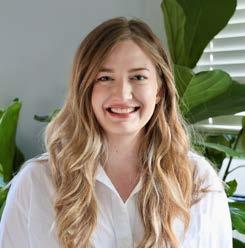
“Brooooo. Be so serious right now. Some words never leave your vocabulary. They just grow with you. Around here in Houma, it’s the kind of word that shows up when something’s really good — and this issue has plenty of those moments! ”
— Kacie Galtier, Designer & Illustrator
— shaves off the edges of words. So Kenner becomes Kenna. And sometimes, Kenna brah.
Mayor Michael J. Glaser — a lifelong Kenner resident — puts it this way: “Kenner has always had its own rhythm, its own style — and yes, its own vocabulary. ‘Bruh’ might be everywhere now, but around here it’s long been part of the culture. It’s casual, it’s friendly, and it says a lot about who we are — welcoming, authentic, and just a little bit ahead of the curve. Kenner didn’t invent ‘bruh,’ but we definitely perfected it.”
We opened 10 new Rouses Markets earlier this year, including a second one in Kenner — or Kenna, depending on who you ask — each one shaped by the community around it, each one with its own sound and rhythm.
Ten stores in five weeks. Bruh.
Turn to page 55 to read a little about each one.
“Where I’m from, Mais finds its way in front of just about everything... Mais Yeah, Mais La... you get the idea. It’s the Cajun way of adding emphasis. So when Marcy came up with this idea for our latest issue, all I could think was Mais BRUH, I love it! ”
— Eliza Schulze, Art Director
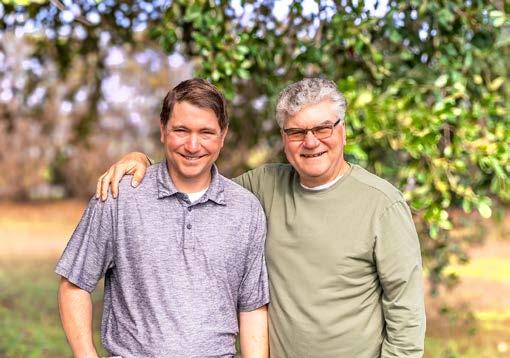
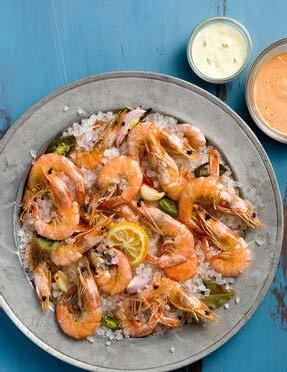
ARROW-CIRCLE-RIGHT Frog legs have earned a permanent place on our Seafood Extravaganza hot bar. They’re often compared to chicken wings, which is the shorthand people reach for, but it only tells part of the story. The meat is lighter and a touch sweeter, finergrained than chicken, with a mild natural sweetness that leans closer to freshwater fish or shellfish than to poultry.
ACOSTA’S FROG LEGS
Serves 4-6
We sell already cleaned frog legs in our Seafood Department. If you’re using fresh-caught, skin the frogs as if you were peeling off a glove, and soak the legs in cold water for at least two hours.
WHAT YOU WILL NEED :
2-2½ pounds small frog legs
½ cup whole milk
2 teaspoons vegetable oil
2 eggs, separated
2 cups all-purpose flour
Rouses Creole Seasoning, to taste Vegetable oil for deep frying
HOW TO PREP :
With kitchen shears, snip the small bone connecting the legs and remove the feet.
In a small bowl, whisk together milk, 2 teaspoons oil and egg yolks. In another bowl, beat the egg whites until stiff, then gently fold them into the milk/yolk/oil mixture.
Sprinkle frog legs with Creole seasoning. Dip each leg in milk-egg mixture, then dredge in flour to coat.
In a cast-iron pot or deep fryer, heat vegetable oil to 375°F. Fry frog legs until golden brown. Using a slotted spoon, transfer frog legs to paper towels to drain.
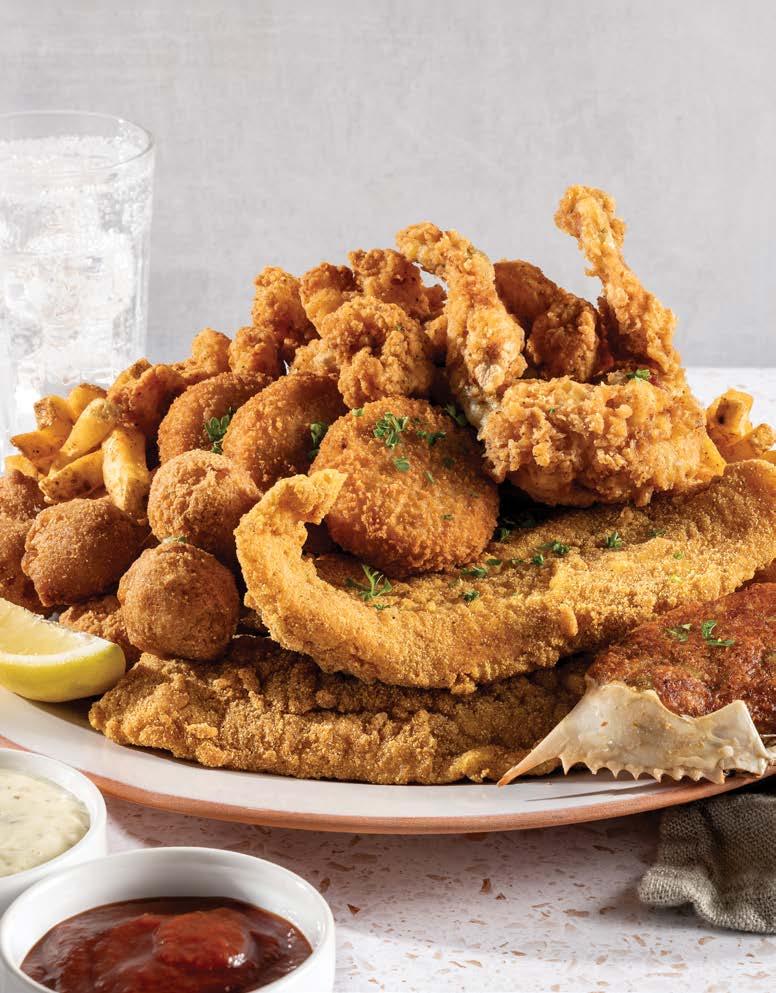
ARROW-CIRCLE-RIGHT Seafood shows up every Friday for lunch and dinner on our Seafood Extravaganza hot bar, whether it’s Lent or not. When Lent rolls around, we lean in further, with fried seafood plates and platters and the Seafood Extravaganza running all weekend.
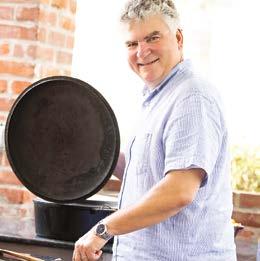
by Tim Acosta, Rouses Markets Advertising & Marketing Director
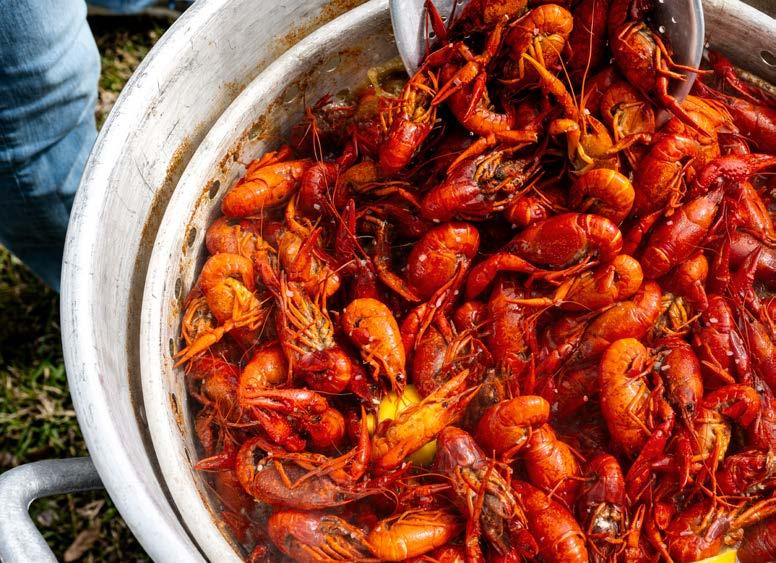
This time of year, you can smell crawfish boiling at every Rouses Market. It makes me think of that old Jimmy Buffett line: “Smell those crawfish, they’re beginning to boil.”
Apologies to my fellow Parrotheads, but Jimmy was born in Pascagoula, lived in Fairhope and Mobile, and never missed a Jazz Fest or a Saints game. He knew exactly what spring smells like down here. I figure he wouldn’t mind me swapping shrimp for crawfish. The last time I heard him at Jazz Fest, he did the same thing.
We work with as many as 30 Louisiana crawfish suppliers to keep up with the demand. In a good season, we’ll sell more than 4 million pounds
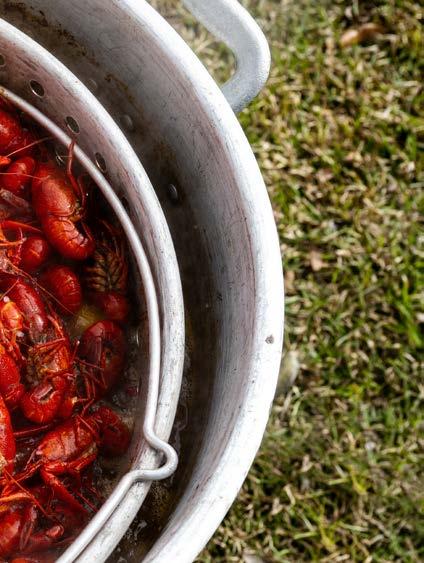
of boiled Louisiana crawfish. We also sell live Louisiana crawfish by the sack for folks who want to do it their own way.
I’ll tell you how one Cajun guy from Thibodaux does his:
Start with the prettiest crawfish. (That’s all we sell at Rouses.) One sack is about 35 pounds of crawfish; the rule of thumb is about 5 pounds per person, so that sack will feed about five people, depending on who’s coming. If you’ve got fast peelers, you’ll need to account for them eating more than everyone else!
Open the sack of crawfish and pour them into a large tub. Add enough water to cover them, and let them settle and rinse off. Soak the crawfish for about 5 minutes, then tilt the tub to drain the water out — get someone to help you, as it will be heavy. (I also use the sack as a sort of strainer to keep the crawfish in the tub while draining the water out.) Once you’ve drained the water off, transfer the crawfish into the slotted basket of your boiling pot. If you’re cooking multiple sacks, you’ll have to do this in steps. Dump the first batch of water from the galvanized tub, refill it with crawfish, and add fresh water to cover. Repeat this rinsing process until all the crawfish have been cleaned and
I use an 80-quart boiling pot, which is just the right size for a sack of crawfish, or a larger one when the whole family is coming over. I’ve had those pots for years. I’m like most Cajuns: Once they find a good pot, they keep it. Then they buy another one. You really can never have too many pots or
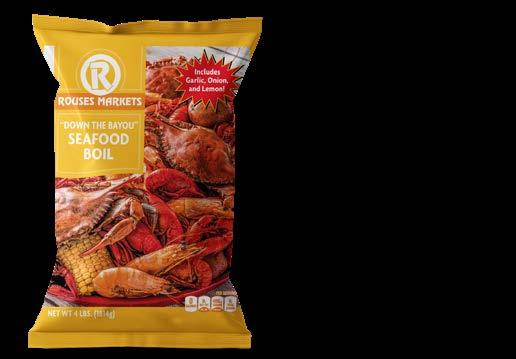
Fill the crawfish boiling pot with water, about halfway up the side. Add lemons, onions and garlic, and your seasonings and spices. I use our Rouses Down the Bayou Seafood Boil, one bag per sack of crawfish. I also add an 8-ounce bottle of Zatarain’s Concentrated Shrimp & Crab Boil and a few tablespoons of cayenne pepper, because I like a little extra spice — I eat jalapeños on just about everything.
Place the lid on the pot, set the propane burner on high, and put on some Jimmy Buffett.
When the pot begins to steam, set a timer for 12 minutes. Crack a cold beer while you wait: That part matters. You do not rush a boil, and you do not stand over it empty-handed (thus, the cold beer).
After 12 minutes, remove the lid and add the red potatoes. Let them cook until they’re almost tender. Add some hot sauce and Cajun Power Garlic Sauce. I put that in just about everything. Stir with a cooking paddle to release the heat. Then add the crawfish, mushrooms, corn on the cob and sausage. I like to use our Rouses Green Onion Smoked Sausage. Replace the lid. When the pot begins to steam again, cook for another 5 minutes, then shut off the flame and remove the lid.
Add ice to help the crawfish soak up the seasoning and to stop them from cooking any further.
Let them soak about 10 to 15 minutes (the longer they soak, the more seasoning they will pick up), then pull the basket from the water, let it drain, and toss everything onto spread-out newspaper. Then call everybody to the table.
If it’s your first time boiling crawfish, you might not be from around here. That’s alright. Don’t stress about it. There’s no one right way to do this, just like there’s no one right way to make gumbo or jambalaya. This is just how one Cajun guy from Thibodaux does it. I didn’t learn to cook from recipes. I learned by watching, tasting and standing too close to the pot.
And remember, whether it’s Good Friday or just another Friday, the best part of a boil isn’t what comes out of the pot. It’s who you’re sharing it with. Enjoy this time with family and friends and make memories with your grandkids.

by Ali Rouse Royster
The Chef John Folse Culinary Institute at Nicholls State is one of the most respected culinary programs in the country — and if you grew up in Thibodaux like I did, it’s a real point of pride.
In this issue, we caught up with two Folse Institute graduates — Michael Gulotta and Nick Cooke — to talk about their careers and how the program shaped them.
Not all Folse graduates take the same path. Christopher Price, for example, went on to found CHEF Safety Advisors.
“I’ve always felt incredibly fortunate to have a four-year culinary program of this caliber right here in our region. The discipline and mentorship I received at Nicholls gave me the technical skills and confidence I needed early in my career. I was also one of three students selected to study in Lyon, France at the then-named Institut Paul Bocuse — an opportunity I never imagined growing up in Ponchatoula.”
We’re proud to have so many Folse graduates at Rouses Markets. Greg Cox, a butcher at our Thibodaux store, is a trained chef and a graduate of the Folse Institute.
“They did an incredible job preparing me and my classmates for careers in food and foodservice. We were exposed to a wide range of beef, pork, poultry and seafood — everything you’ll find in the butcher and seafood cases at Rouses. They also taught us techniques that really let the ingredients shine on the plate. I use that knowledge every day to help customers answer one of the hardest questions out there: What’s for dinner tonight?”
We’re also proud to support the Folse Culinary Institute through scholarships for team members who want to continue their
education there, including the Anthony J. Rouse, Sr. Food Entrepreneurship Scholarship, named for my grandfather, and the Leroy Theriot Meat & Charcuterie Scholarship, honoring a longtime butcher from our family’s first store. It’s our way of helping keep Louisiana’s culinary traditions alive and close to home.
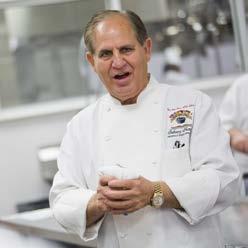
“Nicholls State is located in the heart of Cajun Country, where food, unique ingredients and a strong culture of cooking exist…. The swamp floor pantry gave rise to one of the greatest culinary cultures in the world…
—
Chef John Folse
You might have noticed lately that critics from across the country and around the world are singing the praises of Gulf Coast chefs and restaurants — and giving them plenty of awards, too.
It’s not just in Louisiana, either, which has long been on their radar thanks to Chef Paul Prudhomme, who put Cajun and Creole cooking on the national map, and Emeril Lagasse, who won a James Beard Award the first year the honors were handed out. Today, it is not unusual to see several chefs from our entire region nominated in the Best Chef: South category for cuisine of all types.
Whether it’s Michelin honors, James Beard nominations or cooking shows, these days we’re seeing Mississippi and Alabama get the attention they deserve as well. The places being celebrated include fine-dining establishments, po-boy shops, neighborhood restaurants and beloved local institutions.
Gulf Coast cuisine has never been better. So this is a great time to enjoy it, whether in our local restaurants or at your local Rouses Market, on the hot line and in the deli every single day.
David W. Brown
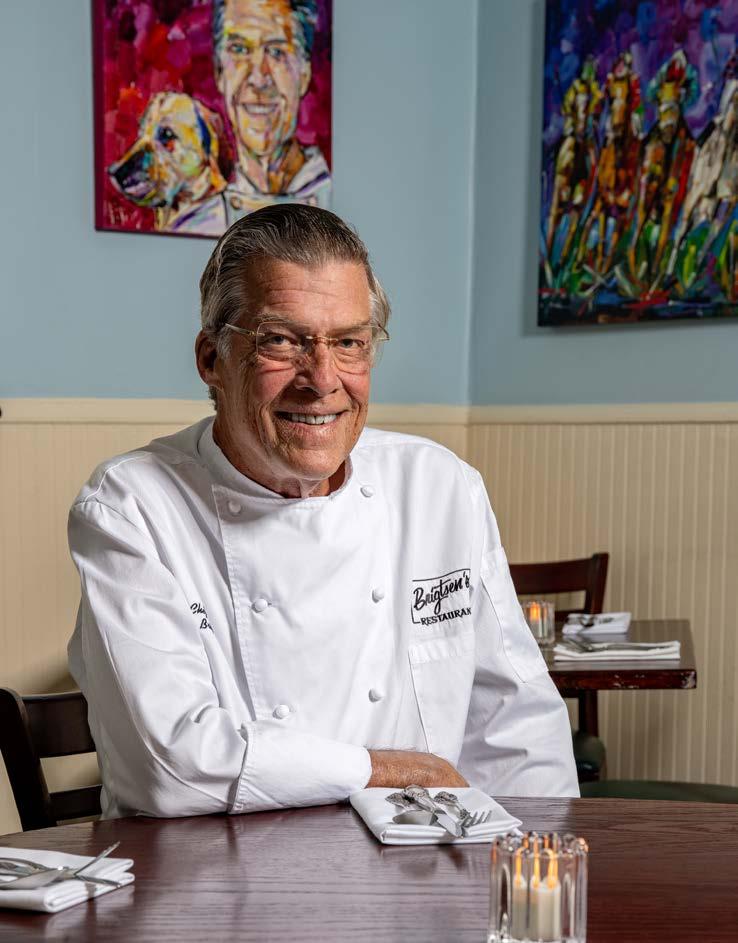
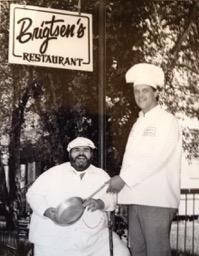
Brigtsen’s Restaurant opened its doors 40 years ago in a small shotgun cottage in the Riverbend neighborhood of Uptown New Orleans. It wasn’t a large place, but Chef Frank Brigtsen felt it was the ideal size for what he envisioned for his restaurant.
He came up through the ranks of the culinary scene in New Orleans beginning at Commander’s Palace, where he apprenticed under Chef Paul Prudhomme in the 1970s.
According to Chef Brigtsen, this is how his relationship with Chef Paul developed:
“When I came to work at Commander’s, Chef Paul was there, and he gave me a choice of working the broiler station where I could make good money, or I could be the pantry cook — with less money, but I would be able to have more time with him,” recalled Chef Brigtsen. “I took the latter, and it was the right choice. I found him to be friendly but serious and very professional.”
Over a three-week period, they met for three one-hour conversations. Chef Paul was interviewing a variety of candidates for positions in the kitchen.
“I realized that he was culling the list, and I realized I was on the short list. I had some good kitchen experience but not in fine dining — but I somehow got hired. I was 24 years old, and I realized I wanted to pursue a culinary career,” said Brigtsen.
Then fate stepped in. One Sunday before a packed house (700 covers) for Jazz Brunch, two chefs didn’t show up. One of the chefs on the line asked Brigtsen if he knew how to make an omelet.
“I assured him that was no problem, and I found myself on the sauté station, which was usually a two-man station, but I somehow made it work. I loved it, and I ended up working all the stations in the kitchen in the following months,” he recalled.
The story goes that Brigtsen was carrying a full stack of plates when Chef Paul asked him how he felt about sauces. Brigtsen replied that of course he wanted to learn all about sauces. Around that time, Chef Paul
opened K-Paul's Louisiana Kitchen while still working at Commander’s; he asked Brigtsen to work for him at K-Paul’s. It was a crazy time. Chef Paul would arrive at the restaurant early in the morning and go over things with Brigtsen, then head to Commander’s for the rest of the day. There was also a pantry cook and a dishwasher at K-Paul’s. And soon, the restaurant became the talk of the town. One day, when the place was humming, Chef Paul invited Brigtsen to come with him in the kitchen to learn how to make sauces.
“He taught me all the nuances of making sauces, how and when to shake the pan, when to add a little of this and a hint of seasoning. It was phenomenal.”
The 1980s was a transformative period for
the food industry and American cuisine, with new ingredients and cooking techniques, plus the rise in popularity of local cuisines coming to the forefront. The old guard, made up of people like Julia Child, James Beard and Craig Claiborne, was being followed by a new breed of chefs such as Mario Batali, Alice Waters, Bobby Flay, Emeril Lagasse, Daniel Boulud, Jacques Pépin and others.
“I was in my mid-20s, and I was in awe — every magazine and many cookbooks honed in on different regional cuisines such as Southwest, Cajun/Creole, Southern and others — and it made everyone in the culinary field take a different perspective on their local cuisines,” Brigtsen commented. Chef Brigtsen witnessed Chef Paul’s unique Cajun cuisine mingle with New Orleans Creole
cuisine to create a contemporary blending of the two that resounded throughout the culinary world. Brigtsen had been lucky enough to be a key participant in the rise to fame of K-Paul’s, where he was able to hone his own skills. But he had also learned well from Ella Brennan at Commander’s the art of graciousness, of seeing that his customers were tended to in every phase of the experience of dining well.
Eventually, in 1986, Brigtsen began to search for the perfect place for his own restaurant, which led him to a little white cottage at 723 Dante Street. Dining there is a little like having a cozy dinner at a friend’s house or at a family gathering. But it’s the food itself that steals the spotlight.
The menu at Brigtsen’s is seasonal (King Cakes during Carnival, crawfish in the spring) and uses local seafood and produce. When local seafood is in season, the most popular dish offered is a non-fried seafood wonder called Brigtsen’s Seafood Platter that features grilled redfish with pesto shrimp sauce, baked oyster with Herbsaint creamed spinach/artichoke, baked oyster and shrimp cornbread with jalapeño-smoked corn butter and fried calamari with cherry pepper aioli.
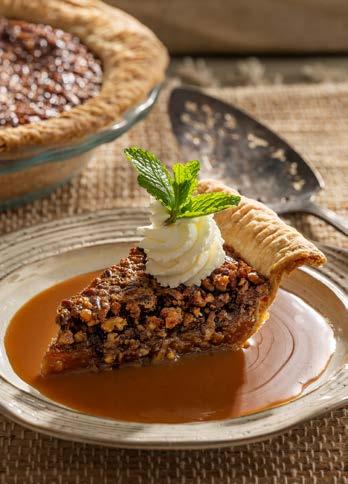
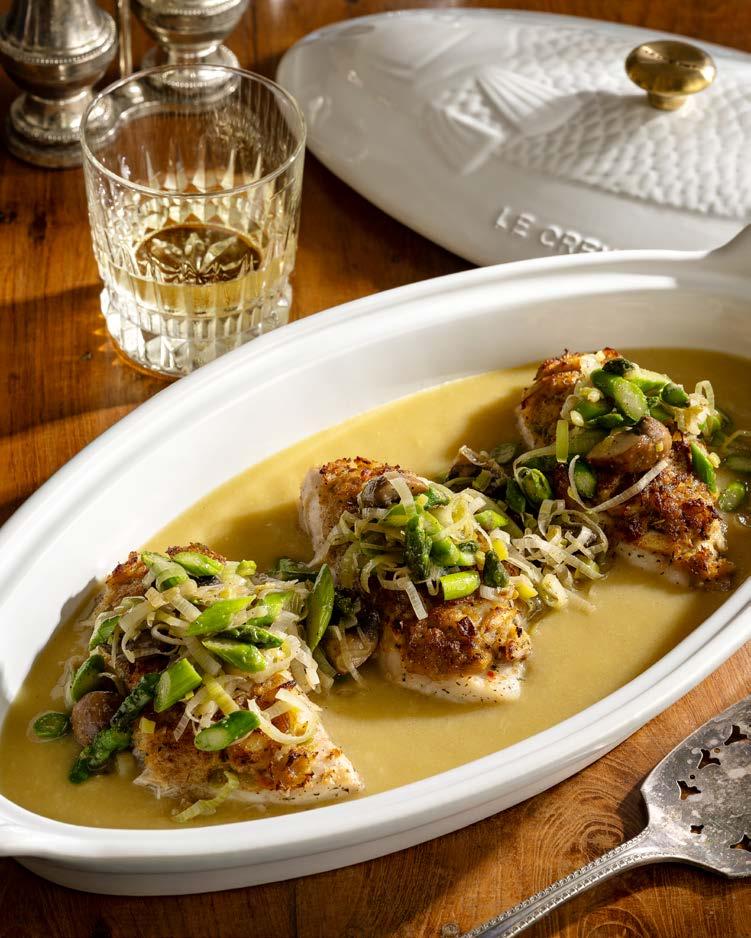
If that doesn’t make your mouth water, other items just might do the trick — dishes like filé gumbo with chicken and andouille sausage, roast duck, shrimp remoulade with guacamole and deviled eggs, pan-fried fish with roasted pecans and meunière sauce, pecan pie with caramel sauce and whipped cream, New Orleans BBQ shrimp with rice
fritters, sweet potato bread pudding and more.
And in exciting news, Chef Frank Brigtsen is finally publishing a cookbook; it’s called Color of Flavor and should be available in late spring. Look for it at Rouses. The cookbook features gorgeous color photographs and Chef Frank’s delicious recipes.
Some personal notes from this writer: When I was a food columnist for The Times-Picayune, I visited Chef Brigtsen to get his take on using local seafood and produce. Over a cup of coffee in his cozy restaurant, he explained how important it was to him to utilize local purveyors to supply his restaurant with their oysters, fish, shrimp and crawfish, as well as Creole tomatoes and other local produce, during their peak seasons.
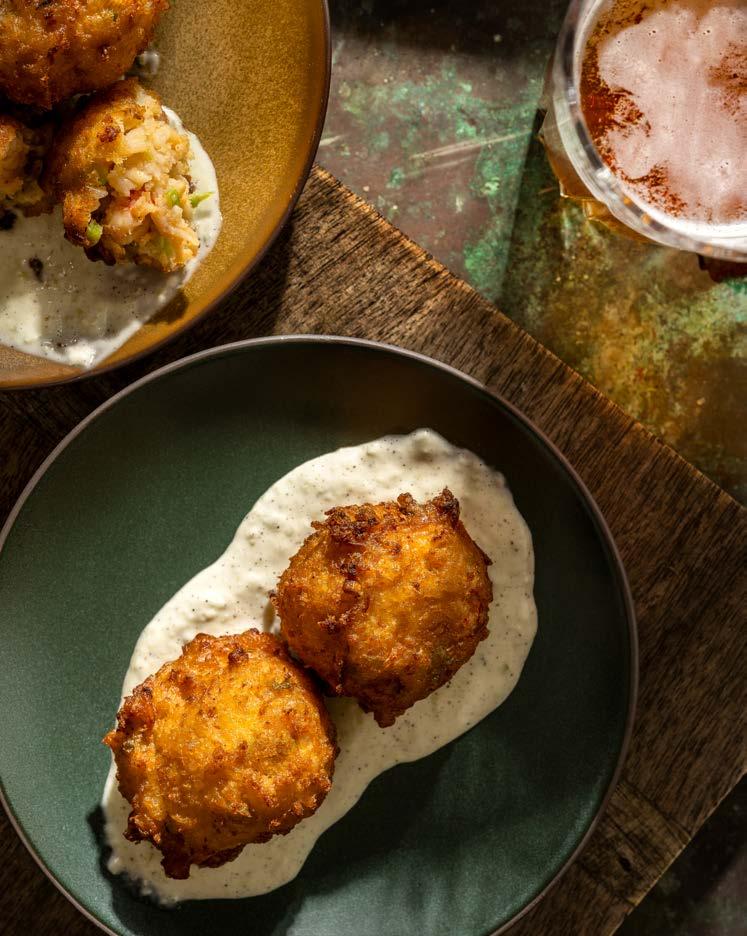
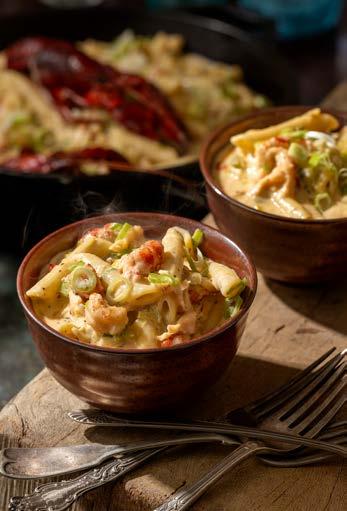
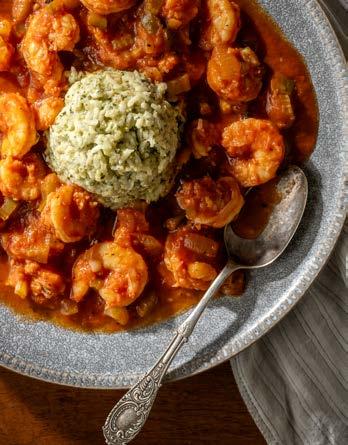
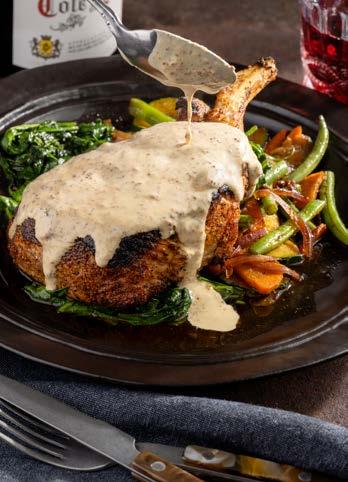
WHAT YOU WILL NEED :
5 tablespoons unsalted butter, divided
2 cups finely diced yellow onion
1 cup finely diced green bell pepper
1 bay leaf
2½ teaspoons salt
¹⁄₈ teaspoon ground white pepper
¹⁄₈ teaspoon ground cayenne pepper
1½ teaspoons finely chopped fresh jalapeño pepper
1½ teaspoons minced fresh garlic
1 teaspoon ground cumin
1 teaspoon dried whole-leaf oregano
2 cups finely chopped canned roasted green chiles
1 cup milk
1 cup cream
3 tablespoons all-purpose white flour
2¼ cups grated cheddar cheese
¾ cup queso fresco
1 pound Louisiana crawfish tails
Fried tortilla chips
HOW TO PREP :
Melt 2 tablespoons of the butter in a pot over medium-high heat. Add the onion, bell pepper and bay leaf. Cook, stirring occasionally, until the onions are soft and transparent.
Reduce heat to low. Add the salt, white pepper, cayenne, jalapeño, garlic, cumin and oregano. Cook, stirring occasionally, for 1 minute.
Next, add the roasted chiles and cook, stirring occasionally, for 2-3 minutes.
Add the milk and cream, and bring the mixture to a boil while you make a roux: In a small skillet, melt the remaining 3 tablespoons of butter. Slowly whisk in the flour and cook for 1 minute.
Add the roux to the boiling sauce mixture and whisk until fully blended. Reduce heat to low and simmer for 5 minutes.
Add the grated cheddar cheese and queso fresco. Whisk until the cheeses melt into the sauce, then add the crawfish tails and simmer for 5 minutes more.
Serve over fried tortilla chips.

ARROW-CIRCLE-RIGHT I remember the students who took Chef Brigtsen’s class on Contemporary Cajun and Creole truly enjoying both the class and the chef. In fact, many of them went on to work at Brigtsen’s. Even today, one or more can be found in the kitchen there. Chef J.P. Daigle, who also taught at Nicholls, has a close relationship with Brigtsen and often shows up in the kitchen when help is needed.
Brigtsen and his wife Marna “have created a family-like atmosphere among the staff,” says Chef J.P. “Everyone is available to help or be helped. It was such a great experience to work with Brigtsen. His menu showcases our contemporary Louisiana cuisine at its best.”
— Marcelle Bienvenu
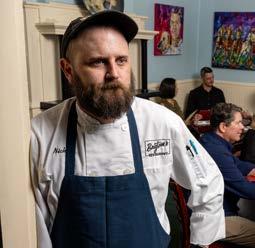
ARROW-CIRCLE-RIGHT I was excited to learn that a former student of mine and Chef Frank’s at Chef John Folse’s Culinary Institute at Nicholls has been named Chef de Cuisine at Brigtsen’s. This student, Thibodaux native Nick Cooke, has an eclectic culinary background, having worked variously in catering in a Colorado ski area, with Chef Issac Toups at New Orleans contemporary Cajun restaurant Toups’ Meatery, at Saba, and for several years at Brigtsen’s.
— Marcelle Bienvenu
Ali Rouse Royster caught up with Brigtsen’s chef de cuisine, Nick Cooke.
Ali: “Cookie, I don’t think I even realized your name is Nick?”
Cookie: (laughs) “I know — such a Thibodaux thing.”
Ali: “Okay, so where did it come from? I think I can guess…”
Cookie: “There were three Nicks in my class, so we all went by our last names. Mine is Cooke — with an ‘e’ — so, just like my dad, people started calling me ‘Cookie.’”
Ali: “What did growing up in Thibodaux teach you about food?”
Cookie: “I didn’t realize how fortunate we were to grow up with such good food. I took it for granted until I moved away for college and tried food elsewhere and thought, Oh no… this is not good. It really put things into perspective. Honestly, I think the worst cook in Thibodaux could cook in just about any restaurant in New Orleans.”
Ali: “You’re not cooking at just any restaurant in New Orleans — you’re cooking at one of the very best.”
Cookie: “I can’t thank Chef Frank enough for the opportunity. It’s an honor to be working with my hero. Chef Frank handed me a RollsRoyce — I’m just trying not to scratch it.”
“
Chef de Cuisine Nick Cooke was in my very first class at Nicholls and leads our kitchen with professionalism and grace. He is an invaluable part of Brigtsen’s success. ”
Chef Frank Brigtsen

by David W. Brown
When he was young, Chef Michael Gulotta developed a minor obsession with tasting whatever was on the stove. “I just loved that alchemical transformation of raw ingredients into something entirely different and delicious,” he told me. And there was always something new to try. “My mom always cooked, so we always had home-cooked meals. My stepdad was a firefighter, and cooking, for them, was just firehouse culture.”
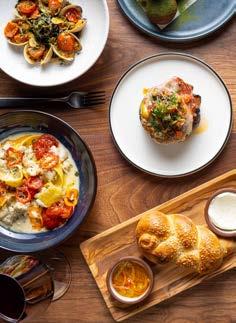
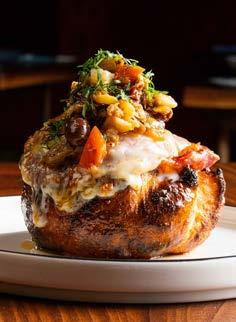
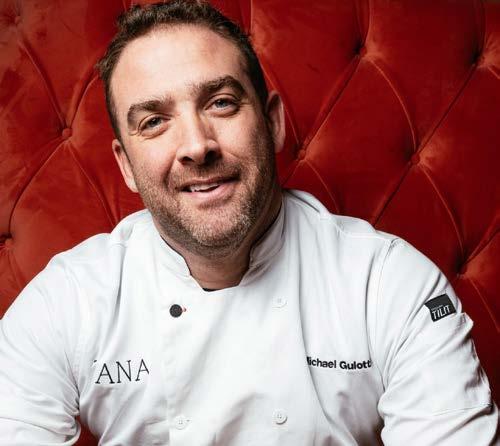
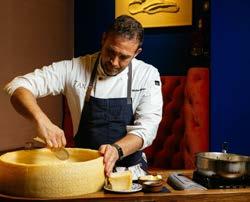
In the 1990s, when celebrity chefs went mainstream on television with shows like Iron Chef and Emeril Live, Gulotta figured out his future: He wanted to go to culinary school.
“I looked at all the big ones, and they were insanely expensive,” he said. Then he found the Chef John Folse Culinary Institute at Nicholls State University in Thibodaux. “They had scholarships, and I had good grades, and I really lucked out. I had a full ride for four years to get a bachelor’s degree. And that just changed everything for me.” Graduating without massive debt allowed him to save money to go to Europe to train in restaurants — after having already studied under John Folse himself, who taught one of his classes.
“They were good instructors, and I was in
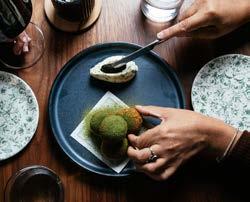
a small group of seven at the culinary school who all really pushed themselves. We all did really well in the culinary world,” he said. Among the restaurants at which he’s worked is Restaurant August in New Orleans, where he was chef de cuisine from 2006 to 2013.
The following year, Gulotta opened his first restaurant, MoPho, in the Mid-City neighborhood of New Orleans. It was acclaimed for its fusion of Southeast Louisiana and Southeast Asia cuisine. He and his business partner later opened the upscale Maypop in the Central Business District.
Today, Gulotta has embraced his Sicilian roots and experience cooking in Italy with his latest restaurant, Tana, in Old Metairie.
“I developed the idea for Tana before my other restaurants,” he said. When
raising the money necessary proved too difficult, however, he put the concept in his back pocket. Then, last year, an associate approached him about opening a high-end Italian place. “I was just supposed to consult on it, but I said, ‘You know, I have a restaurant that I’ve been wanting to do for years.’” Tana was born, with Gulotta at the helm.
The story of Tana is told in its logos. The boat of Liguria represents the harbor city in Northern Italy where Gulotta trained. The Trinacria, which is a three-legged lady, represents Sicily, where his family is from. And the fleur-de-lis stands for New Orleans, where he grew up and which has a strong Italian heritage. All three cities are represented on the Tana menu.
In opening the restaurant, no detail was overlooked, from the solid walnut custom built pasta station to the stemware and silverware. Don’t let it intimidate you, however. “The food is deceptively comforting,” he said. “I'm not doing anything crazy with tweezers or that kind of stuff. We’re just using very high-quality ingredients in our dishes, and delivering a high level of service.”
Among the items proving most popular at Tana is the Oysters Bordelaise, an “Old New Orleans” Sicilian tradition.
“It’s traditionally done with just olive oil, garlic and chili flakes, but because Italy is so close to North Africa, I wanted to pull in those spices, too,” he said. “So we make the dish with garlic, fennel and fennel seed, a little bit of coriander, chili flakes, and then we cook it all down with a little bit of sherry, and then we add a whole lot of butter to it. It ends up being just this really rich, delicious sauce.”
Gulotta is excited for New Orleans and Metairie to experience Tana’s evolution over time. “A restaurant is a living, breathing thing. New people come to the door every day, staff members change, neighborhoods change, and we grow with it. I can’t wait to watch Tana grow up,” he said.
by David W. Brown
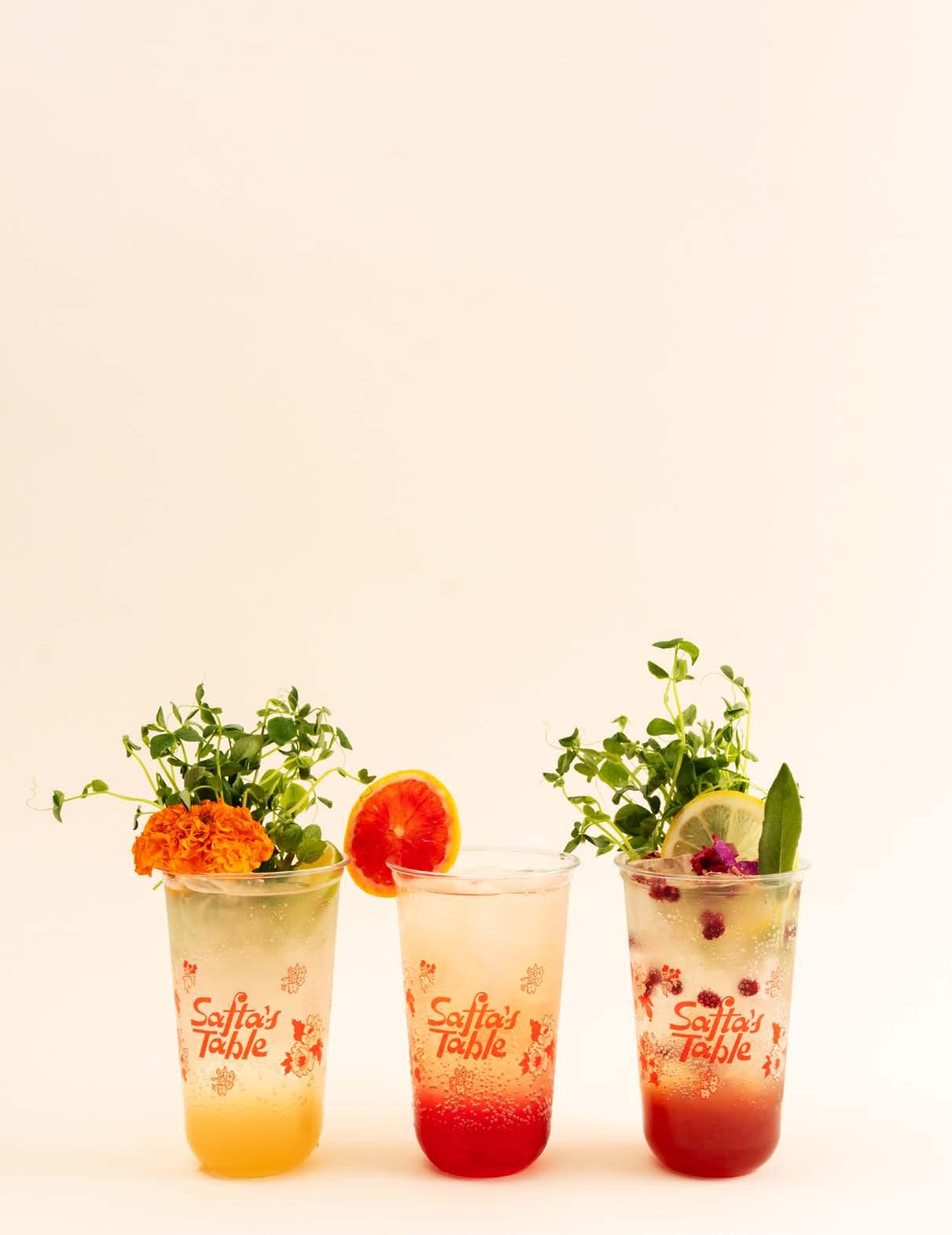
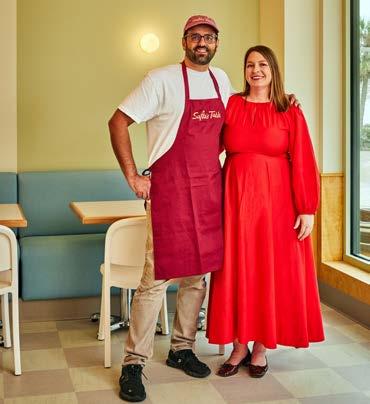
Chef Alon Shaya is a busy man. In March, he and his wife, Emily, opened Safta’s Table, an all-day Mediterranean café located at 129 Allen Toussaint Blvd. in the Lakeview neighborhood of New Orleans. That’s on top of his current restaurants, Saba in Uptown New Orleans, the best Israeli restaurant in the city, and Miss River, which serves Cajun and Creole dishes at the Four Seasons Hotel in Downtown New Orleans. Then there’s Ceci! Italian Lounge, about to open at The Source Hotel in Denver — all this when he’s not winning James Beard Awards or writing cookbooks (he has one coming out in October).
When I caught up with him to ask about Safta’s Table, he was in the carpool line at his child’s school.
“When we approach opening a restaurant, we like to tell a story,” he told me. “What means something to us that we want to share?” Safta is the Hebrew word for “grandmother,” and Safta’s Table is his way of sharing his grandmother’s recipes and the food that he grew up with. Before his grandmother passed away, he spent a lot of time cooking with her and writing down her recipes. “I've held those recipes very close to my heart,” he said.
When he and Emily began developing Safta’s Table, they knew they wanted the restaurant to be a gathering place for families in Lakeview. “It’s a place people can come by any time and get some really delicious food. We wanted it to be healthy and comforting, and we wanted to serve food that really appeals to everyone, from young kids to adults.”
Among the menu items that Chef Alon is excited to share include slow-cooked lamb and chicken schnitzel, and falafel offered in either a sandwich format or as a platter. “We’ve got a lot of really great sides to go with all the different proteins we serve: things like a beautiful jasmine rice and fresh salads. The dips and spreads are made with roasted peppers and eggplant. There’s hummus, of course, and fire-baked sourdough pita bread.”
He is particularly eager to share a meatball dish cooked in tomato sauce. “I think the whole family is going to really love it,” he said. Chef Alon said he’s emphasizing local ingredients that are sustainably grown and raised. “We have the chance to use these really incredible local products, prepared with a chef’s touch and a grandmother’s soul.”
Safta’s Table will be an all-day restaurant, breakfast through dinner, and even feature a fully stocked “Safta’s Fridge,” which he described as “a really great take-and-bake retail section. People can load up their fridge and grab dinner for the week.” They will also be offering catering for events. “We hope that people really think of us as a place that can do all the hard work for parties and other get-togethers.”
Saba (which means “grandfather” in Hebrew), on Magazine Street, was one of a handful of restaurants in New Orleans to be awarded the Michelin Guide’s “Bib Gourmand” award, which is similar to the famed Michelin Star, but for affordable restaurants. “It was a great honor, a very prestigious accolade from Michelin,” he told me. “What it translates to is really great food at a really great value — and exactly what we’re focusing on at Safta’s Table. We want people to feel like they’re getting their money’s worth, and that they’re getting something that’s super delicious and healthy — something that they want to come back for.”
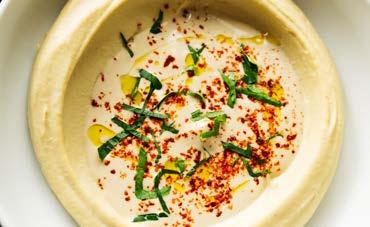
Makes about 2 cups
4½ quarts water, divided
3 teaspoons baking soda, divided
1½ cups dried chickpeas
7 cloves garlic, lightly crushed ¼ cup raw tahini
2 tablespoons lemon juice
1½ teaspoons Morton Kosher Salt
½ teaspoon ground cumin
3 tablespoons canola oil
2 tablespoons hot water
5 tablespoons extra virgin olive oil, divided ¼ cup lightly packed fresh parsley leaves, chopped
½ teaspoon Aleppo pepper (or crushed red pepper)
In a large bowl, combine 1½ quarts water and ½ teaspoon baking soda; add the chickpeas and soak overnight.
Preheat the oven to 400◦F. Drain the chickpeas and toss with 2 teaspoons baking soda, then spread in a single layer on a rimmed baking sheet and roast until the beans have visibly dried, 10 to 15 minutes. Move the chickpeas to a large sieve or colander; with cold water running over the chickpeas, start roughing them up with your hands to loosen the skins. You can grab a small handful and briskly run them between your palms, or pinch them between your fingers (don’t worry about removing and discarding the skins yet). The more you do now, the more will come off during cooking, so take some time here and don’t worry if they split. It’s good to be thorough — this is like giving them a deep-tissue massage to loosen everything up.
Combine the remaining 3 quarts of water with the remaining ½ teaspoon baking soda, this time in a pot. Add the chickpeas and bring to a boil over high heat, then reduce the heat to medium. With a small sieve or slotted spoon, skim away the foam and loose skins from the top of the water and discard. It may be helpful for you to reserve
the discarded skins in a bowl to track your progress; with enough persistence, you’re aiming to have about ¾ cup of skins by the time you’re finished.
Every couple of minutes during the cooking process, strain away the skins by plunging your sieve deep into the pot and giving a good stir, then using the sieve to catch the swirling skins, as you would fish for minnows. It’s okay to beat the chickpeas up a little against the side of the pot to speed this along. Repeat this process as much as you have the patience to do (you won’t get them all, so don’t drive yourself insane), until the chickpeas are just becoming tender, in 20 to 25 minutes.
When the chickpeas are still sort of al dente, give them one last skim to trap any skins, then add the garlic. Cook for another 25 to 30 minutes, until the beans are supercreamy. Drain and let them sit in the strainer for a few minutes so any extra moisture can evaporate.
Combine the chickpeas in a food processor with the raw tahini, lemon juice, salt and cumin. Process for several minutes, until the mixture is incredibly smooth. With the machine still going, stream in the canola oil, hot water and 2 tablespoons olive oil. Let it rip — there’s no way to overprocess this stuff, and you want it to be as light as air.
Serve the hummus at room temperature. I like to spread it in a wide, shallow bowl, where I can smear it up the sides and show off the topping. Use the back of your spoon to make a well in the center, drizzle with the last 3 tablespoons olive oil, and scatter the parsley and Aleppo pepper (or crushed red pepper) on top.
by Brett Martin
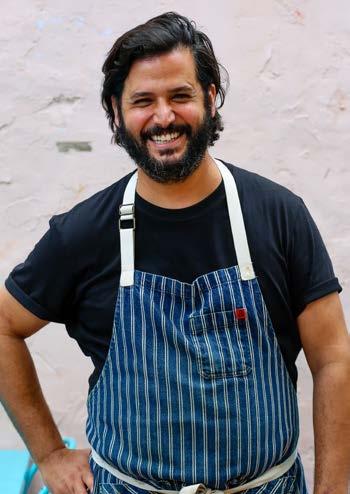
Like many South Louisiana stories, this one starts with a party and a pig. Growing up in River Ridge, Alfredo Nogueira’s sprawling family would take any excuse to host big celebrations. These overflowed with the foods of Cuba, the island where many of them were born. There were platters of croquetas and tostones, troughs of beans and rice and, always, at the center, a slowly roasting pig. This was the province of Juan Cazabon, Nogueira’s uncle and king of the feast. Cazabon would carefully tend the meat, keeping the skin crisp and the meat tender, while shooing away would-be peekers and line-jumpers, until the time was just right.
“He just liked to throw parties and cook the pig,” says Nogueira, who goes by the nickname “Fredo.” “Ever since, I’ve tried to emulate and honor him as much as possible.”
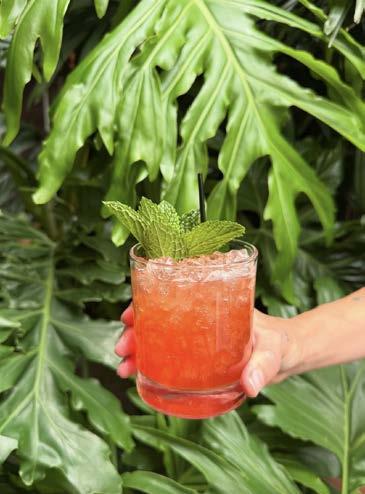
Nogueira is 45 years old, has a beard, a mop of dark hair, and a perpetual air of mild distraction that belies the fact that he’s been building a low-key New Orleans restaurant empire: There’s VALS, the breezy Austinstyle Mexican restaurant Nogueira opened on Freret Street with CureCo, the group for which he is executive chef. There’s Cane & Table, where Nogueira’s pan-Caribbean menu — along with one of the French Quarter’s loveliest courtyards and best cocktail menus — has managed to tempt

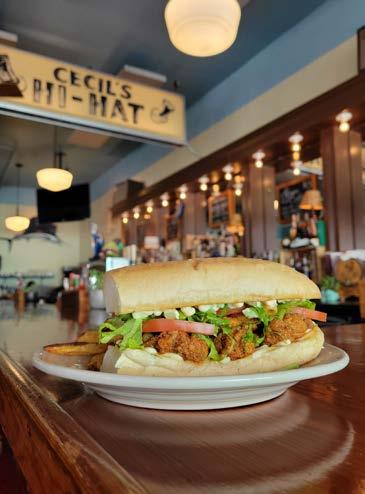


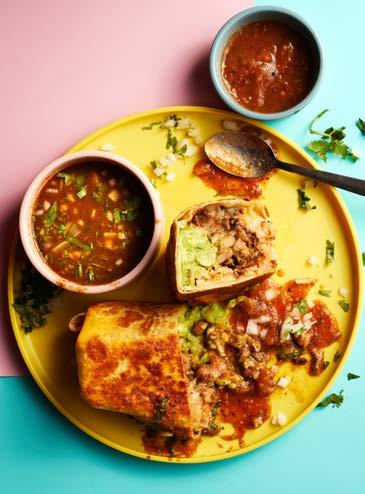
even locals to lower Decatur Street. There’s the High Hat Cafe, which he and partner Ryan Iriarte bought in 2023, saving a muchloved neighborhood stronghold of New Orleans from closure.
Now comes Nogueira’s most personal project to date: Cafe Conmigo, the tiny


lunch-counter cafe that he and Iriarte opened in late January as a love letter to their shared Cuban heritage. With it, the chef continues to quietly put his mark on New Orleans cuisine.
It took a while to get here. Growing up, Nogueira didn’t really care much about New Orleans culture: not the music (he played with bands that favored the darker shades of punk) and not the food, which he and his friends derisively dismissed under the catch-all heading “Gumbo Town.” Certainly, he wasn’t the first teenager to roll his eyes at the culture in his own backyard. (Perhaps you know a tween who can’t imagine anything more booooring than Mardi Gras, a party that half the known universe wishes it could be attending.)
Nor is he the first to take a thing for granted, then appreciate it only when it seemed in danger of disappearing forever. Nogueira was 25 when New Orleans was hit by Hurricane Katrina, followed by the failure of the federal levees. Forced out of the city, he landed in Memphis first but soon headed north, to Chicago, where he had connections in the music world. One night at a party, somebody put on a song by a growlvoiced singer that he mistook for Tom Waits. “Dude, that’s Dr. John!” somebody told him. The reeducation of Alfredo Nogueira had commenced.
At the same time, he found himself drawn into the kitchen. “Everybody in music has to work in restaurants, so that they can afford being in music,” he says. Despite having barely any experience, he began cooking Creole and Cajun food at a popular bar called Analogue. To his surprise, his cuisine was a hit: “Suddenly, I was a chef!” That led to more formal training at Chicago’s One Off Hospitality, Chef Paul Kahan’s award-winning restaurant group. Finally, in 2017, an opportunity with CureCo came up, and Nogueira answered the call of home.
Though the Cuban population of the New Orleans area is relatively small, its roots are deep. Both Cuba and the Crescent City were, for a time, Spanish territories — and both were capitals of the sugar industry. The rhythms and sounds of Cuban music were a crucial part of what would become jazz. In the 1950s (the peak of commerce between the two international ports) Cuba was
Louisiana’s largest trading partner; millions of tons of Cuban imports flowed through the Port of New Orleans, while as much as a third of all goods leaving the port were destined for Cuban shores. The economic embargo that followed the Cuban Revolution brought an end to that, but it also brought a new group of Cuban exiles and refugees to the New Orleans area.
Both Nogueira and Iriarte’s families were part of this wave to the New Orleans Cuban community — a community much smaller than those that evolved in places like Miami and New York, but still a place where Cubans carried with them the pride and traditions of their home island. Iriarte’s father narrowly avoided being one of the so-called “Peter Pan” children who were brought unaccompanied to the United States as part of the relocation program known as Operacíon Pedro Pan. (In many instances, they were never reunited with their families.) Nogueira’s father left Havana and became a cadet at The Citadel in South Carolina. He came to New Orleans as part of the school’s color guard, which performed at the Krewe of Rex ball; he fell in love with the city and soon made it his home.
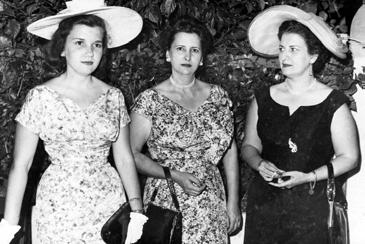
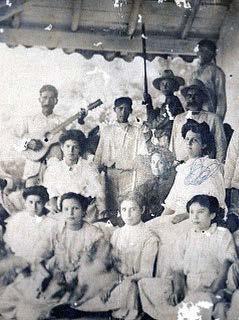
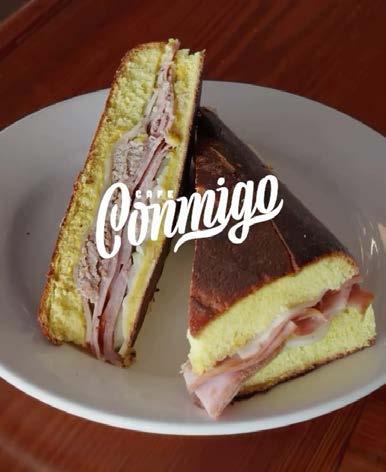
A small gallery of black-and-white photos depicting both families hangs near the back of Cafe Conmigo: Nogueira’s grandfather and namesake, Alfredo, a onetime politician, addressing a Havana crowd; Iriarte’s father and aunt toasting at a Thanksgiving dinner in their new home; and Nogueira’s mother as a child, posing with her four siblings. The restaurant is a bright, white vest pocket of a spot located in the former Ice Cream 504, a stone’s throw from High Hat. You can often catch Nogueira or Iriarte hustling back and forth between the two, as though they were one big restaurant. Leading the menu is the signature cafecito, a coffee whose cutesy name and miniature size belie its ability to levitate you several inches off of your stool; if all the caffeine and sugar on Earth could be condensed into a black hole, it would resemble this drink. A shelf behind the long counter is stacked with classic Cuban sandwiches on pan cubano (Cuban bread) — layered with ham, pork, pickles and cheese — and medianoches , which present the same ingredients on a brioche; all waiting to be toasted on the gleaming silver sandwich presses below. (It remains a mystery as to why the sweeter brioche version is more of
a “midnight” snack than its more famous cousin.) Both breads are custom-made for Cafe Conmigo by Ralph Brennan Bakery.
Less well known is a Havana street-food burger known as the frita; it’s made with chorizo-spiced beef, basted with a sauce of ketchup and vinegar, and topped with a teetering haystack of shoestring potatoes. Near the cash register, a case holds freshly baked puff pastries filled with canonical Cuban flavors: sweet guava jelly, cream cheese, guava with cream cheese and savory ground beef picadillo. Completing the transit from breakfast to cocktail hour, and perhaps helping you come down from that cafecito, there is a small cocktail menu offering a classic mojito and a Floridita daiquiri, among other libations.
The result is the kind of casual but focused cafe that any neighborhood would be lucky to call its own. It’s also Nogueira’s way of officially taking up the responsibility of stewarding his family’s traditions. His uncle Juan, master of the pig roast, passed away 18 years ago; Juan’s son Pedro, a doctor who had taken on guardianship of the familial cooking secrets alongside Nogueira, also died, at the age of 57, in 2023.
“This is the place I’ve wanted to open forever. The place I’ve needed to open,” Nogueira says. In the restaurant’s first few weeks, a steady stream of Cuban New Orleanians have stopped by — some Nogueira knows and some he doesn’t. He’s watched as they’ve peered curiously around, tasted the food, closed their eyes for a moment and then nodded quietly in approval.
“It makes me wish I’d done this 10 years ago,” he says.
Serves 10 to 12
5 pounds brisket, trimmed
32-ounce can San Marzano tomato puree
10 cloves garlic, sliced
3 onions, julienned
1 red bell pepper, julienned
1 poblano pepper, julienned
Lots of thyme
3 bay leaves
½ cup white wine
Preheat oven to 350°F.
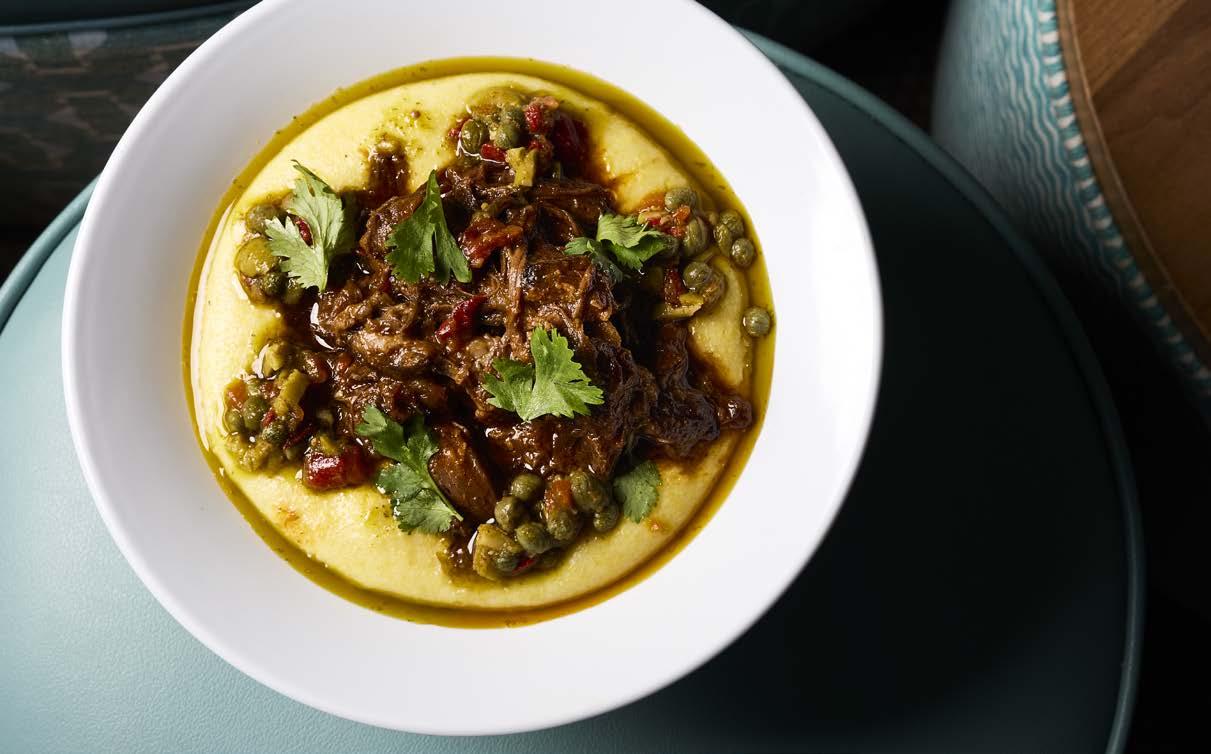
In a large pot, brown all of the meat in batches. Toast the garlic in the same fat. Add vegetables to release as much fond as possible. Deglaze with white wine. Add tomato puree and herbs. Bring stew to a boil and adjust seasoning. Add brisket back to the pot and cover.
Put ropa vieja in preheated oven and cook for 4 hours at 350◦F or until the brisket is very tender. Allow it to cool completely.
Remove brisket and shred it with two forks. Return brisket to braising liquid and adjust seasoning.
Serve with white rice.


by Juan Nogueira
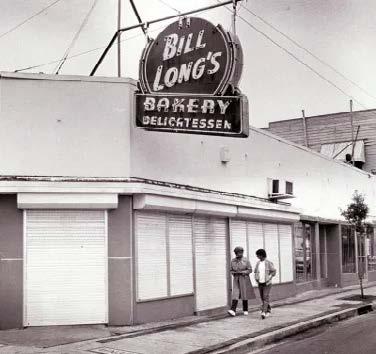
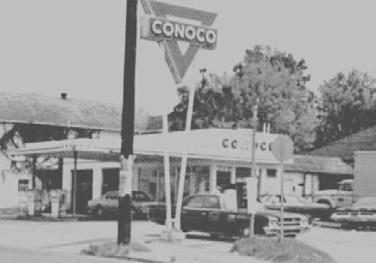
Long before the recent wave of restaurants, Freret Street was anchored by po-boy shops, corner bars, small cafés and neighborhood institutions like Bill Long’s Bakery and Mr. Dennis’ Barber Shop.
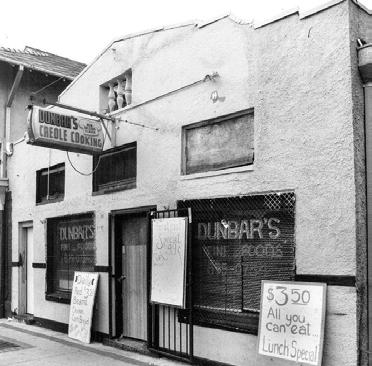
At Dunbar’s Creole Cuisine back then, they were serving fried chicken with jambalaya and red beans and rice with pork chops, the kind of plates that drew neighbors back week after week.
But after Hurricane Katrina and the levee failures, the corridor’s future felt uncertain. Freret was undercapitalized, with many storefronts vacant. Banks were not investing.
Dennis was one of the few who decided to stay.
“There were no streetlights and no customers,” he says. “But the city was good to me, and I made up my mind I was going to stay.”
When Neal Bodenheimer opened Cure in 2009, it marked a turning point. The late Rob Cooper of St-Germain liqueur fame had introduced Kurt Estopinal and Bodenheimer around 2007 at Tales of the Cocktail, then still a relatively small gathering of cocktail enthusiasts flipping through old bar manuals. Estopinal had just opened The Violet Hour in Chicago’s Wicker Park, a James Beard Award-winning bar that became a model for the modern craft cocktail movement. I was his barback in Chicago. They called me “Molasses” because of my sweet Southern hospitality (I think).

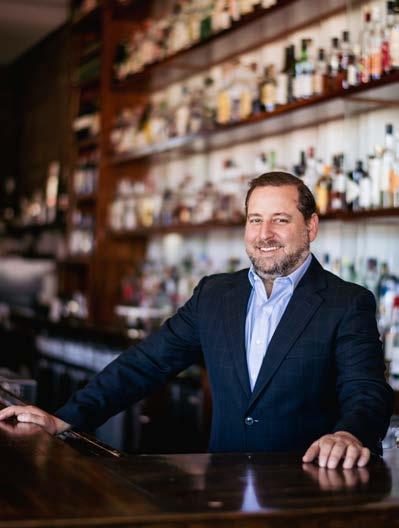
Cure was opened in an old firehouse that was acting as an electrician’s warehouse. I couldn’t see its value back then, so I can’t take credit; my childhood friend and business partner, Matt Kohnke, was obsessed with Freret, and the vision was his. Neal Bodenheimer transformed it into something ambitious, helping the street reimagine what was possible. In 2018, Cure received the James Beard Award for Outstanding Bar Program.
Soon after Cure opened, longtime restaurateur Adolfo Garcia Sr., of RioMar and La Boca, opened High Hat Café, celebrating classic New Orleans and Southern flavors with neighborhood comfort.
“When Neal told me he was opening a concept on Freret, I was like, ‘Are you serious? You’ve got to be crazy.’ There just wasn’t much going on in that area at the time,” Garcia says.
But Garcia knew the street had history. “The bones were there. Freret Street has been a commercial corridor since the ’30s and ’40s.”
“Neal knocked the big weeds down and gave us the faith. We opened High Hat and the original Dat Dog opened, and the street started to get momentum.”
Other successful concepts followed, including Company Burger. What emerged was not a chain-driven strip, but a collection of chef-owned restaurants and locally operated businesses.
“When the restaurants started popping up, the neighborhood came to a whole new life,” Dennis says. “I like that you have food options from all different parts of the country.”
Bodenheimer kept betting on Freret. In the earliest months of COVID, when most operators were closing or scaling back, he opened VALS.
“We wanted to open an outdoor taco spot and were committed by the time COVID hit,” he says.
Construction costs rose and uncertainty deepened, but the outdoor format proved prescient. VALS became another neighborhood anchor.
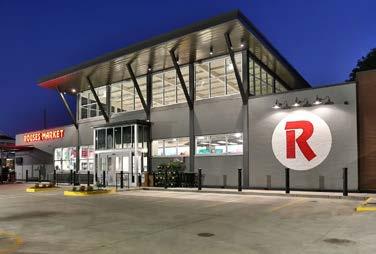
Today, the stretch of Freret between Jefferson and Napoleon includes more than 30 restaurants, bars, coffee shops and retailers, including Rouses Markets, High Hat Café, The Husky and Pigeon & Whale.
And the evolution continues.
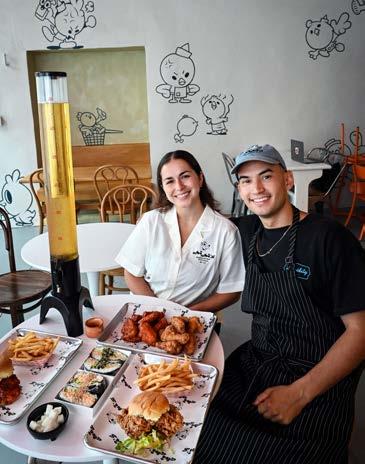
In fall 2024, Adolfo Garcia Jr. and his wife Sophia opened Chi Chi’s Chicken & Beer, serving Korean fried chicken and Japanese-inspired sushi sandos. They are now transforming the former home of Ancora into Dolfy’s, a Spanish restaurant centered around a wood-burning oven and fire-roasted dishes inspired by regional traditions, particularly Basque cuisine. It is a new chapter that builds on a family legacy rooted in New Orleans restaurants.
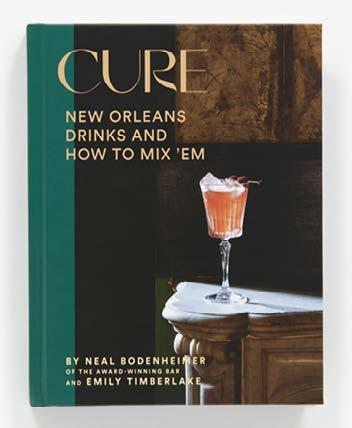
ARROW-CIRCLE-RIGHT Neal Bodenheimer and coauthor Emily Timberlake tell the city’s story through 100 cocktails, each chosen to represent New Orleans’ past, present and future, in their book, Cure: New Orleans Drinks and How to Mix ’Em. Available in bookstores.
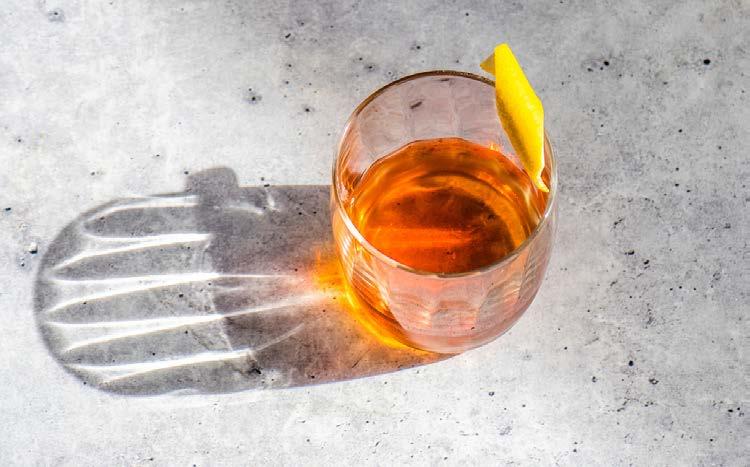
CURE’S SAZERAC
Makes 1 cocktail
Instead of relying on dashes of bitters, which can vary from bottle to bottle, the bar uses a medicine dropper for precision. The standard is 23 drops, about three traditional dashes.
4 spritzes Legendre Herbsaint, from an atomizer
2 ounces rye, preferably Sazerac ¼ ounce rich demerara syrup (2:1, demerara sugar to water)*
23 drops (3 dashes) Peychaud’s Bitters Lemon peel, for garnish
HOW TO
Spritz the Herbsaint from an atomizer into the interior of a chilled double OldFashioned glass.

Scrim Captured the Heart of New Orleans
Combine the rye, demerara syrup and bitters in a mixing glass filled with ice and stir to chill.
Strain into the prepared glass. Garnish with the lemon peel.
*In cocktails, demerara sugar (or demerara syrup) is popular because it adds depth and richness without overpowering a drink. In something like a Sazerac or Old-Fashioned, it gives a warmer, rounder sweetness than simple white sugar. Turbinado is a good substitute.
ARROW-CIRCLE-RIGHT Michelle Cheramie, owner of Zeus’ Place on Freret Street and founder of Zeus’ Rescues, has spent nearly 20 years saving unwanted dogs and cats and finding them homes. Scrim, a 17-pound Westie mix, became New Orleans’ most infamous canine escape artist after leaping from a second-story window in April 2024 and roaming the city for months. In the July 2025 issue of The New Yorker, regular contributor David W. Brown (who also writes for this magazine), chronicled the hunt for the celebrity stray. Scrim also tells his own side of the story in Scrim My Tail: As Told to Margaret Orr, a first-person account of survival, mischief and a larger-than-life New Orleans adventure, written with help from longtime WDSU meteorologist Margaret Orr.
by David W. Brown
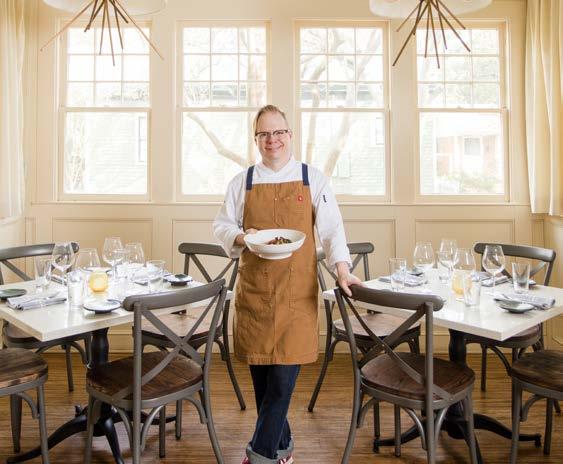
Chef Jim Smith is passionate about the role that restaurants play in our communities. Before opening The Hummingbird Way Oyster Bar in Mobile, Alabama, he was the executive chef for the State of Alabama, championing the same local ingredients and sustainable seafood he uses in his own dishes.
“Local restaurants are generators for the local economy in a way that people might not realize,” he told me. “More than 90% of the revenue that comes into my restaurant immediately goes out the door. I’m using that money to buy produce from local farmers. I’m using it to pay my employees, or the person who knocks on the back door and tells me they’re opening a mushroom farm and want to sell me what they’re growing. It’s one of those things that makes the restaurant industry so beautiful.”
Chef Smith began his culinary journey on roller skates at Sonic while in high school. When he went to college in Birmingham, he decided to work at “the nicest place I could find,” he said. “I needed to see what it was like.” That place was Bottega, an ItalianSouthern institution, where he fell in love with food, wine and service.
“I started off as a busser, and then worked all the way up to wine steward and bartender,” he said. “I worked at a couple other places, and after doing a lot of front-of-the-house work and a little bit of back-of-the-house, I decided to go to culinary school.” He attended Johnson & Wales in Charlotte, North Carolina.
“It was like Hogwarts in a lot of ways,” he said. His years in fine dining were invaluable. “I think it’s important to have that real-world experience first, and then go to learn. I knew what a braised beef cheek should taste like because I worked in such nice places. So being able to take that knowledge of what it should taste like in the end, and learning the steps to get there, and then actually doing it and doing it and doing it and practicing it

and being graded on it — I really can’t even describe how important that was.”
Afterward, he returned to Birmingham and helped open Dyron’s Lowcountry, a chic Southern restaurant. He worked for the State of Alabama, and then spent nine years as chairman of the Alabama Seafood Marketing Commission. When he and his wife decided to open The Hummingbird Way, he cashed in his retirement savings and put it all toward his dream. They opened their doors in 2020.
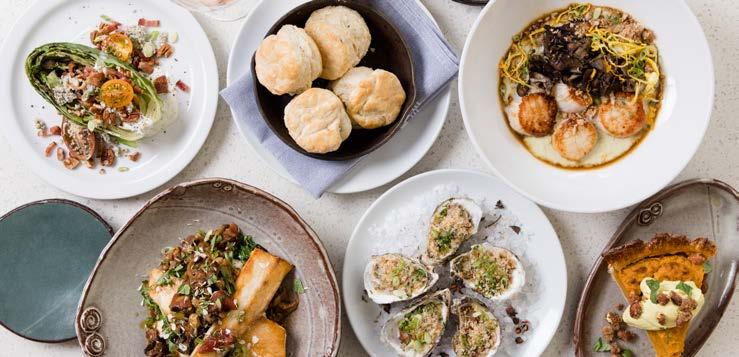
When planning a menu, he said, he always starts with what’s going to be available locally, and when. “It makes a constantly evolving menu. When tomatoes are back in season, there’s going to be an amazing tomato salad, for instance.” But you’ve got to plan for everything. “Alabama is famous for its peaches, but if there’s a really hard late freeze in Chilton County, maybe we won’t get peaches the same time we got them last year. You have to be ready.”
The other element to writing a menu is “whim and whimsy,” he said. “What do I want to eat, and encourage guests to eat?” One of The Hummingbird Way’s most celebrated dishes is a whole fish with curry. “It will probably never leave the menu. And it came about because I was really wanting a good curry. And I thought maybe other people might enjoy that too.”
When he’s not serving meals to Alabama locals, he’s serving Alabama cuisine to the world. You’ve probably seen Chef Smith on Top Chef, Last Chance Kitchen or the Great American Seafood Cook-Off (which he won). The James Beard Foundation has certainly noticed him.
“The days when chefs could hide in the kitchen are over,” he said. “People want to know their chef, because we’re telling them what they should eat and when they should eat it. Chefs are very trusted people in the community.”
And the ones who serve their communities
while maintaining impossibly high standards are an inspiration. “The chef who I’ve learned the most from, Frank Stitt at Bottega — his restaurant opened in 1988, and he’s still getting James Beard nominations for hospitality. That’s extraordinary,” he said.
Serves 4
:
1 pound fresh jumbo lump crabmeat; gently remove any shell that adheres to the crab
5 tablespoons champagne vinegar
1 teaspoon Dijon mustard
1 healthy dash Tabasco Sauce
Juice and zest of 2 lemons
Salt and white pepper, to taste
5 tablespoons extra virgin olive oil
¼ cup finely chopped flat-leaf parsley
¼ cup finely chopped scallions (both green and white parts)
¼ cup ice cubes
1 head fresh Bibb lettuce; trim the roots and pull leaves apart, keeping them intact
3 radishes, very thinly shaved
1 pint cherry tomatoes, sliced and seasoned with salt and pepper
Saltine crackers
:
In a medium mixing bowl, whisk together the vinegar, mustard, hot sauce, lemon juice and lemon zest. Season lightly with salt and white pepper. While whisking continuously, slowly drizzle in the olive oil until emulsified. Gently fold in the crabmeat, taking care to preserve the integrity of the lump. Add the parsley and scallions, plus the ice cubes to keep the mixture well-chilled and bright. Adjust the seasoning with salt and white pepper as needed. Cover and refrigerate for at least one hour before serving to allow the flavors to develop.
To serve, arrange the Bibb lettuce leaves, radishes and tomatoes in a large mixing bowl and season lightly with salt. Spoon the chilled crab mixture and its dressing over the vegetables and toss gently to combine. Taste and adjust seasoning if necessary. Transfer to a serving platter and accompany with saltine crackers. Enjoy!
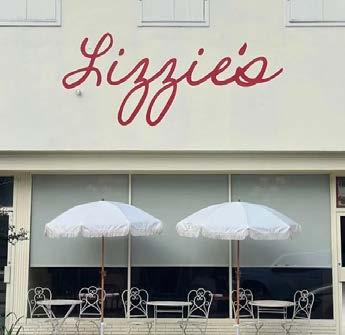
Lizzie’s Cafe, New Iberia
ARROW-CIRCLE-RIGHT Lizzie’s is a new bakery/restaurant/ bar in Downtown New Iberia that’s quickly becoming a local favorite. Baker Elizabeth Shensky Hansen and her husband, Chef Erik Hansen, met while working in Massachusetts before making their way back to Elizabeth’s Louisiana home, where they worked with her family at Caribbean Ice Company.
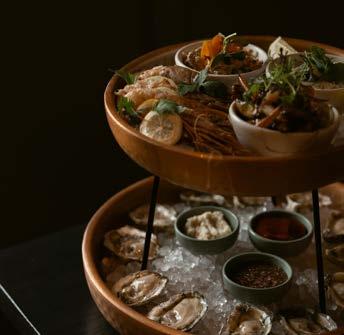
Little Bird, Fairhope
ARROW-CIRCLE-RIGHT After working with Emeril Lagasse and Donald Link, Bill Briand headed to Orange Beach, earning multiple James Beard semifinalist nods at Fisher’s. Little Bird (named for his late mother, Virginia “Ginny” Eileen) turns out coastal dishes like corn fritters stuffed with smoked Gulf fish.
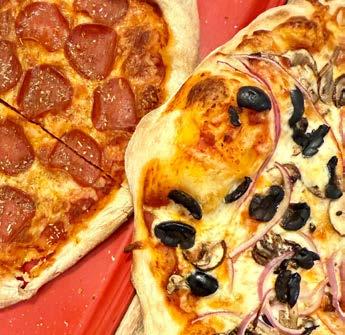
Josephine’s Italian Cuisine, Baton Rouge
ARROW-CIRCLE-RIGHT Executive Chef Russell Davis says the menu at Josephine’s is largely inspired by his Sicilian grandmother, Josephine Papia, with classics like lasagna, cannoli, pomodoro and stuffed shells rooted in her Southern Italian cooking. Davis and his wife, Sally, also own Eliza Restaurant & Bar and Jed’s Local.
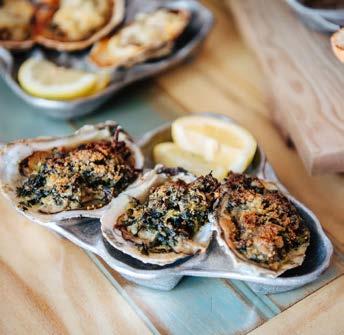
Bayes Oyster Bar, Baton Rouge
ARROW-CIRCLE-RIGHT Bayes Oyster Bar serves oysters raw on the half shell, chargrilled, and dressed every way you can imagine, including baked with boudin and grilled with bacon and brie.
by Beth D’Addono
It took almost 100 years, but the Michelin Guide finally noticed us.
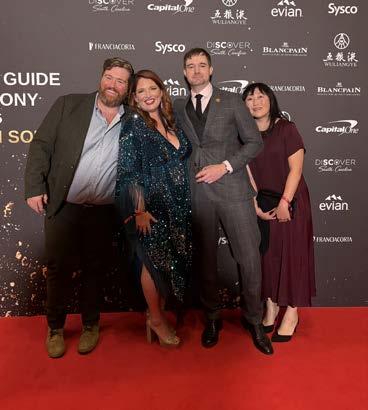
On November 3, 2025, a glittering array of chefs gathered at the gorgeous Peace Center in Greenville, South Carolina for the first-ever Michelin South Awards.
Although an Atlanta, Georgia restaurant had already been in the international guide, now restaurants in Alabama, Louisiana, Mississippi, North Carolina, South Carolina and Tennessee have been recognized with coveted Michelin stars, Bib Gourmands and Recommended status for restaurants that provide outstanding value while truly telling stories through food.
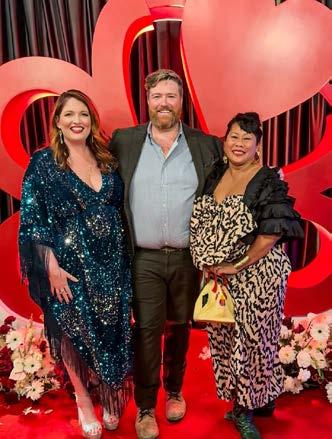
Beyond the speeches, the sponsors and the corporate speak, the love was real among so many chefs lining up to — finally — be recognized for their excellence in craft and hospitality in an international forum. Everybody was thrilled, but the lovefest peaked among the New Orleans contingency, with each chef and ally noticeably giddy while swapping hugs, selfies, group photos and congratulations all around.
The generous and genuine affection displayed by New Orleans chefs and dynastic restaurant families was profound. As Chef Edgar “Dook” Chase IV and his aunt, Stella Chase Reese, celebrated a Bib Gourmand for Dooky Chase’s Restaurant, they took photos with Saffron founders Arvinder and Pardeep Vilkhu and their son, Chef Ashwin Vilkhu — all were thrilled
to receive Michelin Recommended status. Serigne Mbaye and Effie Richardson from Dakar Nola were all smiles with Mason Hereford and his teams from Molly’s Rise and Shine, Hungry Eyes, and Turkey and the Wolf. Snappy dresser Stephen Stryjewski celebrated Cochon and Cochon Butcher Bibs along with Chef Ryan Prewitt; their Pêche was among the Recommended. Acamaya chef Ana Castro, glowing in a black cocktail dress with a plunging neckline, mingled with Dook and Stella, and on and on. It was beautiful.
What does it all mean? Turns out, a lot.
If tires come to mind at the mention of Michelin, you’re spot on. Michelin Tire founders and French industrialist brothers André and Édouard Michelin opened their tire company in the small town of ClermontFerrand in 1899; a year later, they launched their first Michelin Guide. They saw the guide as a way to promote newfangled automobile travel — rolling, hopefully, on the company’s natural rubber tires. By 1920, they were charging for the guide, and they started awarding stars to restaurants with starred rankings in 1936.
Michelin remained a primarily European designation until 2005, when the stars descended on the U.S. and Michelin created its inaugural North American guide. It took
another two decades for the American South to make the mix.
Last year, an army of anonymous Michelin judges came to the South, visiting restaurants of all stripes to determine if they made the grade. Although criteria are always subjective, theirs are also straightforward: quality of ingredients; mastery of cooking techniques; harmony of flavors; the personality of the chef as represented in the cuisine; value for money; and consistency between inspectors’ multiple visits.
Although a press release spilled the beans that morning, the formal announcements came at the evening event in Greenville. The South is home to 19 Michelin starred restaurants, (one two-star, 18 one-star), 50 Bib Gourmands and 159 Recommended restaurants. A total of 229 honorees in all represented 44 types of cuisine, from modern Mexican (Acamaya, New Orleans) to gilded Southern (White Pillars, Biloxi) to farm-to-table (The Noble South, Mobile).
Emeril’s is the only two-star, especially notable since the father-son chefs skipped over one star completely, going directly to two — which just about never happens. The Bywater’s Saint-Germain and Zasu in Mid-City both earned one star. Bib Gourmands traversed white tablecloths and counter service, recognizing value at
places from Cochon and Cochon Butcher to Domilise’s Po-Boys and Saba. The breadth of Louisiana Recommended eateries showcased a wide range, from Elsie’s Plate & Pie (Baton Rouge) to Atchafalaya in the Irish Channel and Dakar Nola Uptown.
Emeril’s, now led by his son, Chef E.J. Lagasse, was described by Michelin as “bringing contemporary refinement and vibrant originality to the fore.” E.J. Lagasse, 22, was also honored with the Young Chef award.
John F. Kennedy said it best. “A rising tide lifts all boats.” When it comes to Michelin


recognition, when one chef or restaurant wins, it creates opportunities and raises standards for everyone within the industry.
“Having Michelin come to our region puts a stamp on what we’ve always known — New Orleans is one of the great food cities in the world,” said Emeril Lagasse. “I am excited to see the spotlight on our city and what the future holds.”
For his son, being a global player matters: “I want people to feel like there is a restaurant in New Orleans that can keep up with the highest-achieving restaurants around the world. I want to represent our city, the people and the food on that sort of stage and continue to bring attention to our region,” declared Chef E.J. Lagasse.
For the folks charged with promoting tourism in New Orleans, Michelin South is the ultimate win-win.
“By attracting international culinary tourism and setting new benchmarks for excellence, Michelin’s presence inspires local restaurants to push creative boundaries,” said Walt Leger III, president and CEO of New Orleans & Company. “This milestone amplifies our culinary scene, drives economic growth, and ensures that our vibrant food culture continues to thrive for generations to come.”
ARROW-CIRCLE-RIGHT Dakar NOLA won Best New Restaurant at the 2024 James Beard Foundation Awards. In November 2025, the Michelin Guide named Dakar NOLA to its inaugural guide to the American South. Chef Serigne Mbaye, who was previously nominated by the James Beard Foundation in the Emerging Chef category, is a 2026 semifinalist for Best Chef: South. Winners will be celebrated at the James Beard Restaurant and Chef Awards ceremony on June 15, 2026, in Chicago.
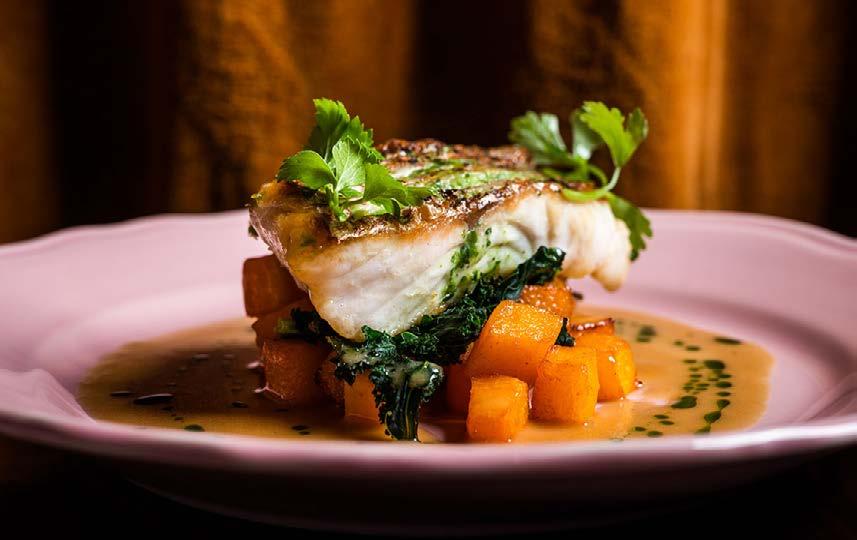
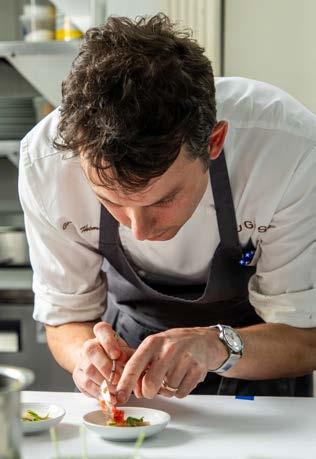

“At Restaurant August, we cook with the conviction that South Louisiana cuisine deserves to be celebrated on the world stage. This recognition affirms the work we do every day to honor the soul of the place that we call home and tell the story of Louisiana’s Creole cuisine. Our team is eager to keep growing, keep pushing boundaries, and keep celebrating the culture and flavors that make South Louisiana unlike anywhere else.”
— Executive Chef Corey Thomas, Restaurant August

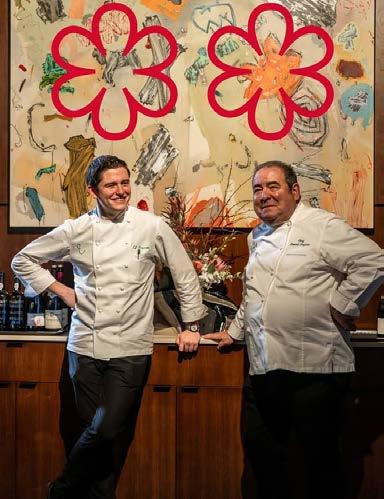
Chefs Emeril and E.J. Lagasse: Two Michelin stars, Emeril’s
What does it mean to you both to have this honor?
Emeril: Since I opened Emeril’s in 1990, it has been my goal to be a white-tablecloth restaurant that represents New Orleans. To earn two Michelin stars on a global stage is such an exciting achievement. It’s not only a historic moment for our region’s food culture, but also a huge honor for our whole team.
E.J.: When Michelin came to New Orleans, our goal was to represent the city at the highest level. It is an honor and a privilege to take our family flagship to new heights and showcase the culinary excellence of New Orleans to the world.
E.J., you were doubly honored — how will you pay this forward with your team?
I have great mentors in my life, including my dad. I want to carry that torch forward to the next generation of cooks in New Orleans. It’s incredibly important to me that young cooks can come to Emeril’s to learn, grow and take those skills into the world.

Chef/Owner Sophina Uong, Mister Mao: Michelin Bib Gourmand
What was the vibe at the ceremony in Greenville?
Walking into that room was like getting a high-voltage shot of adrenaline! It felt like an incredible mix of “first day of school” nerves and a massive family reunion. It felt like a celebration of how far our region has come. The event was glitzy, sure, but it still had that soulful, gritty heart that defines Southern cooking.
How did you feel being there?
I felt like a proud mama and a giddy kid all at once. To have Mister Mao mentioned in the same breath as these legendary institutions is humbling. Being in that room felt like a giant “YES” from the universe. It was a moment to realize that our “quirky little restaurant” on Tchoupitoulas has truly found its place in the big leagues.
Has it mattered to the bottom line?
The “Michelin effect” is real! It’s like someone turned the volume up on everything. We’re seeing new faces, specifically travelers who literally plan their trips around these guides, which is a huge boost. It’s also totally energized my team. We’re still the same “fun dining” spot, but the stakes feel a little higher now, and we’re loving the hustle.
What does the Bib Gourmand plaque mean to you?
It’s the ultimate validation that you don’t have to fit into a traditional “fine dining” box to be recognized for excellence.


Chef/Co-owner Austin Sumrall, White Pillars (Biloxi) and Siren Social Club (Gulfport): Michelin Recommended (both)
You and your wife/partner Tresse were in Greenville. What was that like?
We had an absolute blast — so many friends from New Orleans and Birmingham were there. Typically, chefs are pumping out 2,500 portions for a big event like this. It was nice that the evening was all about the restaurants being honored.
Were you surprised to be recognized? Yes! I never expected Mississippi to be inspected, much less for both of our restaurants to make the list. I said for years that it would never happen — and I was very happy to eat those words. We never thought we would see it and we know the food is great in our state.
by David W. Brown
The bad news about Elsie’s Plate & Pie is that nobody can call it a hidden gem ever again. When Chef Paul Chauvin Dupré and his wife, Chef Lindsay ZimmerleDupré, opened their doors in 2017, word-of-mouth in Baton Rouge made the restaurant an instant sensation. Soon, the Food Network — and even ESPN — discovered them, and hungry diners started arriving from all over the country. This culminated in a visit from Guy Fieri, who featured the restaurant on Diners, Drive-Ins and Dives in 2025. “It was a huge deal for us,” Chef Paul told me.
Then the Michelin Guide came to town for the first time, and gave Elsie’s a coveted recommendation — one of only two restaurants in the Baton Rouge area to earn such an accolade (and one of 33 in the entire state). That nod made Elsie’s an international destination.
“It never even crossed my mind that we would be looked at or considered for such a thing,” said Chef Paul. “We’re just a little single-location mom-and-pop. You know, we’re here every day. We just didn’t feel big enough to even be noticed! So that was just beyond our wildest expectations.”
Elsie’s, located at 3145 Government Street in Baton Rouge, is a family restaurant in the classic mold. When you walk in, one table might have high school students eating pie. Another will have senior citizens whose AARP cards are old enough to vote. Another will have a young family, complete with high chair. The next will have businesspeople trying to impress colleagues from out of town. The atmosphere is light and casual, the service on point — and price-wise, it’s
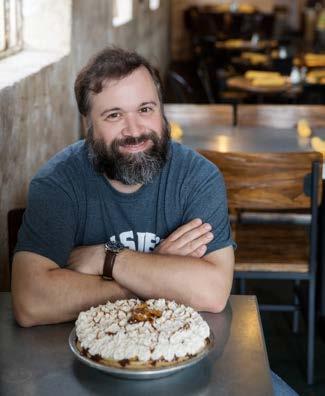
probably the best deal in town. But it’s the food itself that’s the real draw.
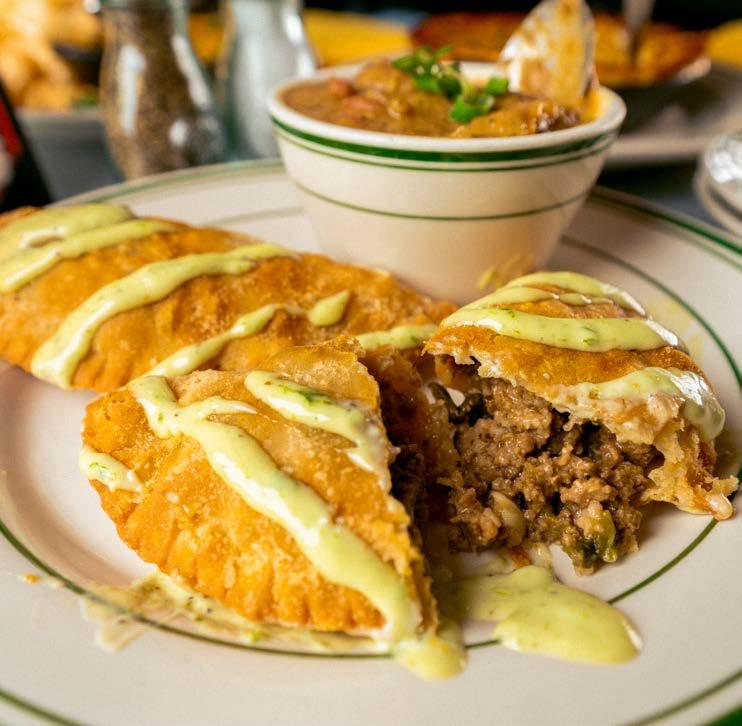
“My wife and I developed a lot of the menu together, just trying to honor our grandparents and the local culture that we came from,” said Chef Paul, who grew up in Baton Rouge. The menu is Southern Louisiana cuisine at its finest, with many dishes drawn from family recipes — things like fried okra, three-cheese pimento, and red beans and rice with fried chicken. Others cater to exploratory eaters: unexpected delights such as tomato pie, boudin cakes or crustless crab pie.
“I wanted to have creative options for foodies and people who are a little more adventurous — things like savory pies, for example. But those people might bring a friend with them who’s just not into all that, and maybe wants a burger. We’ve got everyone covered,” he told me.

Elsie’s is one of those restaurants where, even if you’ve never been there before, you know exactly what to expect. You even know what it looks like. What you don’t know, however, is just how good the food is.
“We work really hard on every dish we put out,” Chef Paul told me. “My wife and I have the most fun coming up with the specials we offer. We get to be creative and kind of show people what we can do outside of the regular menu.” They offer a new round of specials midweek, then run them through the weekend. Last week, he and his wife roasted chickens and made a stock from the bones, and turned it all into a gumbo pot pie. They also made crawfish hushpuppies served with andouille butter. Meanwhile, Chef Lindsay created a fish dish with tomato, red pepper and white wine sauce. “It was so good,” Chef Paul said.
He told me that he’d just gotten his hands on some focaccia bread from St. Bruno Bread Co., a local artisan bread maker. “I’m going to make a sandwich with that and some goat cheese and some shrimp — I think it is going to be pretty special.” They also offer different pies every week that are not on the menu.
When Chef Paul was younger, he considered going to culinary school, but he couldn’t really afford it. Instead, he found work at Baton Rouge restaurants that made everything from scratch. “I learned everything that I could,” he said. “It was 20 years before I decided that I was ready.”
When the now-celebrated restaurant first opened its doors, Government Street was a once-hopping Baton Rouge thoroughfare that had diminished so much across decades, it was known more for its traffic during the day and its sleepiness at night.
“We lived two blocks away, and we wanted a neighborhood restaurant,” Chef Paul told me. “We would want to go out, and everything was closed. We just kept saying, ‘Why is nothing on this side of town open on Sunday nights?’”
So he and his wife opened Elsie’s there, not realizing that they would become an anchor restaurant that helped lead to the neighborhood’s revitalization.
Elsie’s Plate & Pie is named for Chef Paul’s maternal grandmother, Elsie Marie Campeau Rupe of Lockport in Lafourche Parish, who could always be counted on to serve big family meals that usually ended with pie for dessert. Pie was practically a major food group at her table.
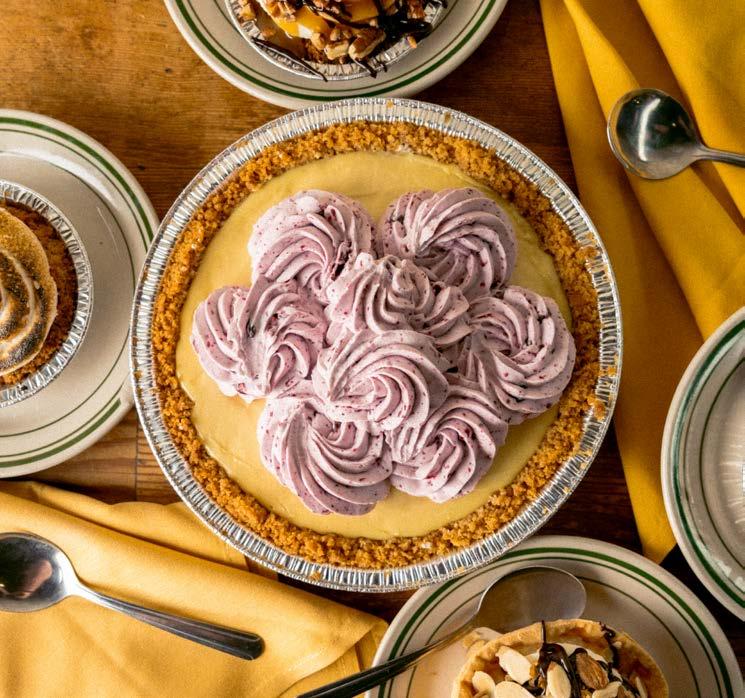
In the beginning, Chef Paul was responsible for keeping that tradition going, making all the pies they served at Elsie’s: apple, chocolate, coconut cream, s’mores and turtle, among many others. He’s since hired a pastry chef who has taken on the mantle. They also serve savory pies such as crawfish hand pies and Natchitoches meat pies (made with beef and pork and fried in a handmade crust).
The success of Elsie’s has Chef Paul and Chef Lindsay thinking about the future — but don’t expect to see a dozen new locations popping up anytime soon. “I know the trend, especially in Baton Rouge, is that once you have a successful restaurant, you open several more. But we’re focused on having quality over quantity. I would rather have one amazing restaurant than five mediocre ones, so we’re expanding the business
without opening more locations.” To that end, they just finished building a new kitchen right next to Elsie’s, where they can specialize in catering and eventually start shipping items to people everywhere. “It’s all on one piece of property where I can still be very involved with the day-to-day at the restaurant and help make sure that the quality is what we want it to be.”
Chef Paul told me that passion is the driving force at Elsie’s. “I wake up every morning looking forward to going to the restaurant and doing what needs to be done that day,” he said. “I mean, it’s pretty amazing in this day and age to be able to do something that you’re passionate about for a living. We know not everybody gets to do that, and we don’t take it for granted. We want every person who comes here to be satisfied, and to find something unique and fun on the menu that they can be excited about.”
ELSIE’S POULET POT PIE
Serves 6-8
WHAT YOU WILL NEED :
2 cups all-purpose flour, plus more for dusting
½ teaspoon kosher salt
7 tablespoons unsalted butter, chopped
4 tablespoons vegetable shortening
6 tablespoons ice-cold water
1 egg white
Filling:
1½ pounds boneless, skinless chicken thighs
3½ teaspoons plus 1 tablespoon Cajun seasoning
2 tablespoons plus ¼ cup olive oil
2 cups diced onions
1½ cups diced celery
1 cup diced carrots
4 ounces tasso, chopped
1½ teaspoons kosher salt
9 cloves garlic, minced
1 roasted jalapeño, chopped
1 roasted poblano, chopped
1 tablespoon hot sauce
1 tablespoon Worcestershire sauce
2 cups heavy cream
1 cup milk
1 cup chicken stock
8 tablespoons butter
½ cup all-purpose flour
¾ cup roasted red peppers, drained
For the pie dough: In a stand mixer, add the flour and salt. Add the butter and shortening. Mix on low speed until it resembles coarse cornmeal. You still want to have some bigger chunks of cold butter left. That’s what will make your crust flaky. Add the cold water and turn the mixer up until incorporated. Remove from the bowl, then knead the dough just 2 or 3 times to make sure it’s evenly mixed. Form into a disc. Cover with plastic wrap and chill before using.
For the filling: Sprinkle the chicken with 3½ teaspoons Cajun seasoning and 2 tablespoons olive oil. Smoke the chicken for 3 hours at 250◦F. Chill, then dice into large chunks.
Meanwhile, in a 4-quart pot over medium heat, add the remaining ¼ cup olive oil along with the onions, celery, carrots, tasso, salt and remaining tablespoon Cajun seasoning. Sweat the vegetables down until they are very soft, 20 to 30 minutes. Add the minced garlic and continue cooking for another minute or two. Add the jalapeño, poblano, hot sauce and Worcestershire. Stir thoroughly. Add the cream, milk and chicken stock. Turn the heat up to high. Meanwhile, melt the butter in a small skillet, then turn off the heat and blend the flour in to form a paste. This is a blonde roux that you will use to thicken the filling. When the liquid starts to come to a boil, add the roux and stir vigorously with a whisk to incorporate. Once the pot is simmering, the roux will be activated, and your filling should be thick. Turn the heat off, then add the diced chicken and roasted red peppers. Pour the filling into a 9” x 13” baking pan and let cool.
Preheat the oven to 375◦F.
Roll out the pie dough on a floured surface, then place on top of the filling in the baking pan. Brush the crust with the egg white. Cut a slit in the center for ventilation. Bake until the crust is golden brown and the filling is hot all the way through, about 1 hour.
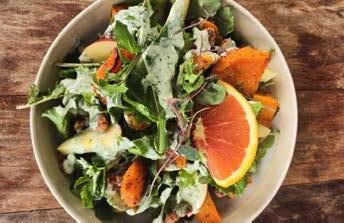
Scratch Farm Kitchen, Lafayette
ARROW-CIRCLE-RIGHT
Scratch Farm Kitchen in Lafayette began as a food truck and pop-up at Moncus Park, earning a loyal crowd before settling into a permanent space.
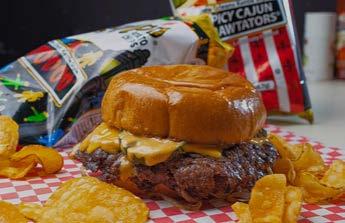
Bub’s Burgers, New Orleans
ARROW-CIRCLE-RIGHT Bub’s NOLA grew from a smashburger truck and pop-up into a Banks Street favorite in New Orleans’ Mid-City neighborhood. There are now Bub’s Burgers locations on Freret Street in Uptown New Orleans and in Mandeville.
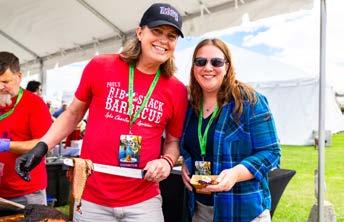
Paul’s Rib Shack Barbecue, Lake Charles
ARROW-CIRCLE-RIGHT Paul Pettefer started with a red barbecue truck in Lake Charles in 2017 before finding a permanent home for Paul’s Rib Shack Barbecue on Nelson Road, which opened in 2019.
“This is, hands down, some of the best barbecue we’ve tasted at the Louisiana Wine & Food Festival.”
— Stephanie Hopkins, Senior Designer
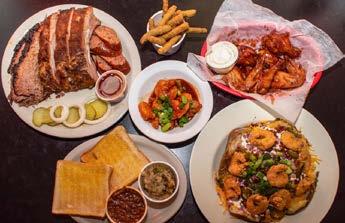
Cou-Yon’s Cajun BBQ, Port Allen
ARROW-CIRCLE-RIGHT Cou-Yon’s Cajun BBQ in Port Allen started out serving Cajun smoked meats from a truck before putting down roots in brick and mortar.
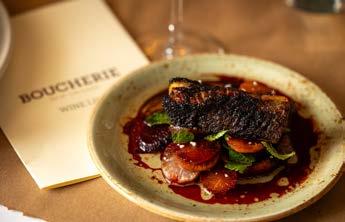
New Orleans
ARROW-CIRCLE-RIGHT Chef Nathanial Zimet rolled through New Orleans in a distinctive purple truck called the Que Crawl, serving barbecue-inspired street food wherever he parked. That mobile kitchen eventually became the Uptown New Orleans restaurant Boucherie.
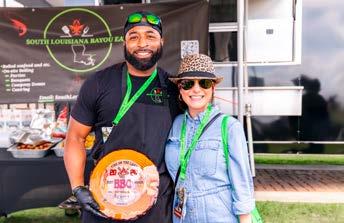
Louisiana Bayou Eats, Prairieville
ARROW-CIRCLE-RIGHT “South Louisiana Bayou Eats from Prairieville won Best Shellfish at Fire on the Lake’s Best BBQ Awards during the Louisiana Wine & Food Festival in March. The food truck served Bayou Shrimp—lightly battered and fried, with a homemade Bayou sauce—and it was outstanding. One of the owners is former New Orleans Saints receiver Michael Galatas.”
— Harley Breaux, Marketing Manager
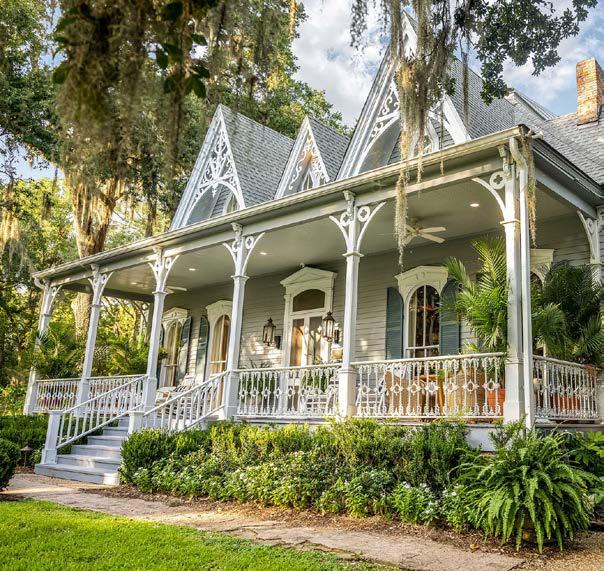
The Saint Francisville Inn
In November 2025, the Michelin Guide put Chef Michael Dardenne’s Saint Restaurant at the St. Francisville Inn on its Recommended List for the American South. I’ve only been to The Saint Restaurant at the St. Francisville Inn for brunch and lunch — dinner is still on my list — but every visit has been memorable, with such delights as the salty, sweet, spicy Shrimp Gris Gris; a beautifully ripened Heirloom Tomato Salad with a classic French vinaigrette; and a juicy, rich Short Rib Smash Burger that sealed the deal for me. And the wine list is thoughtful and well curated, making it easy to linger.
The building’s Victorian roots are reflected in the decor but tempered with bold modern touches of vibrant paint, striking wallpaper and an eclectic art collection that includes both contemporary Hunt Slonem works and antique landscapes. It shouldn’t work, but it absolutely does.
While you’re in the area, make time for Restaurant 1796 at The Myrtles. The large plates are impressive, but I’m a firm believer in gathering a small group and ordering your way through the distinctive appetizer menu: General Tso’s Cauliflower, Pork Belly Lettuce Wraps, Cajun Charcuterie, Hearth Roasted Carrots and Fried Brussels Sprouts. The service is polished, and the team’s wine knowledge runs deep. Stroll the grounds for an espresso at Elta Coffee, play a round of bocce on the courts, or take a tour of the historic property. And carve out time to explore charming local shops like Sage Hill, District Mercantile, NK Boutique and The Corbel while in St. Francisville.
— Kimberly Neal, Deli, Cold Cuts & Sushi Director at Rouses Markets
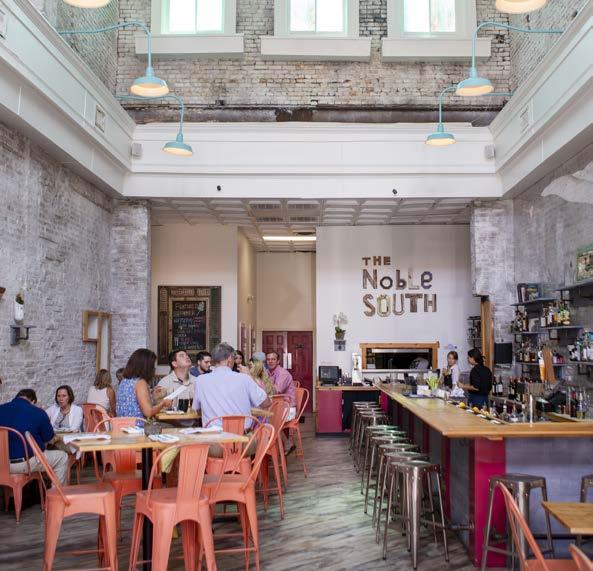
The Noble South, Mobile
It’s no wonder that The Noble South was one of five Alabama restaurants named to Michelin’s Bib Gourmand list, which recognizes great food at a great value. The Downtown Mobile eatery offers a showcase of fresh, locally sourced ingredients, from Alabama peaches and corn to Gulf Coast shrimp and oysters. The 52-seat restaurant aims to highlight produce and proteins that come from just within a few hours’ drive of Mobile.
Chef/owner Chris Rainosek’s food is unabashedly Southern and unpretentiously sophisticated. “Snacks” on the dinner menu range from pickled shrimp with saltine crackers to deviled eggs with bacon and roe. Small plates and “supper” options explore a wide range of culinary territory, from fresh Gulf shrimp and grits to a satisfying braised cabbage with oyster mushrooms, and even American-grown Wagyu steak with butternut soufflé. Vegetarians in your party need not fret, as the chef’s choice vegetable plate gets as much creative attention as all the meatier options.
— Susan Langenhennig Granger

“We discovered Noble South by chance after a long day at a nearby Rouses store, and we loved it. The Pickled Shrimp, served in a small jar with saltine crackers, were bright, tangy, and savory, with just enough bite. We created our own version for this issue (see page 45), but if you have the chance, order theirs. I couldn’t pass up the cabbage. Growing up in Louisiana’s River Parishes, smothered cabbage was always on the table. Their version delivered that same comfort, with a refined touch.”
— Amanda Kennedy, Senior Manager Brand & Marketing Strategy
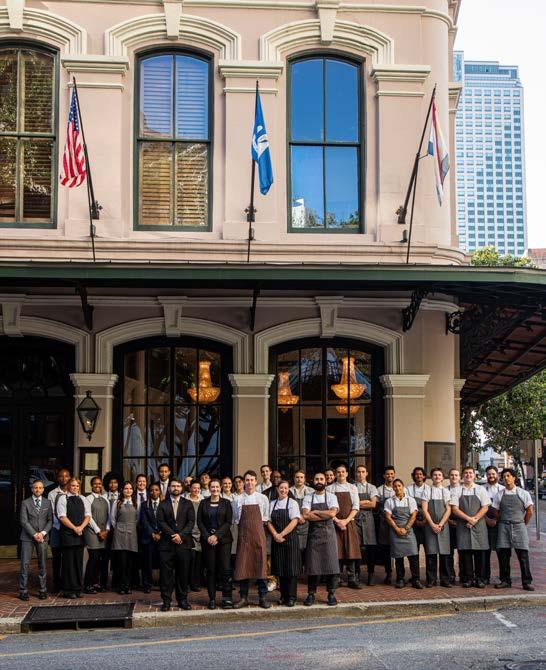
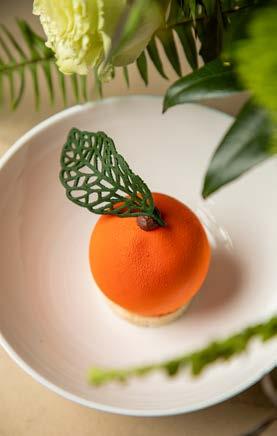
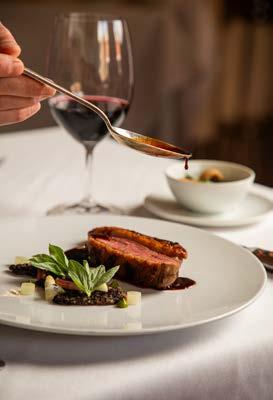
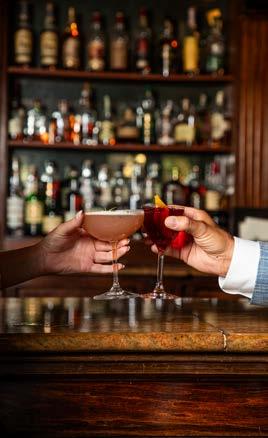
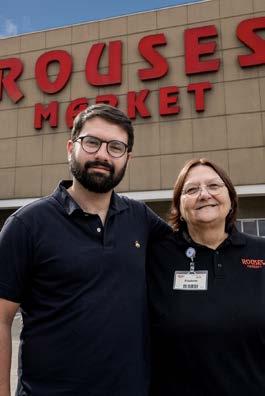
Restaurant August is one of those New Orleans institutions that feels like it’s been around for 300 years — though it was only founded in 2001. Perhaps it’s the building itself, built in the early 1800s and bearing an exquisite aesthetic that suggests it was once (or is) the French Embassy or an important treaty room. In fact, it was across the centuries a warehouse, a factory and a tailor shop. They just don’t build them like that anymore.
The menu at August is the apex of white-tablecloth New Orleans dining: an ever-evolving carousel of contemporary French and modern Creole haute cuisine. The first time I went there, moments after the sommelier poured the wine, our server presented each person at the table with an amusebouche of savory egg custard topped with truffle, served in a toasted eggshell half. It was whimsical and unexpected, but set the pace for what would be a beautifully choreographed theatrical production course through course, right down to dessert and a cup of coffee. We also took advantage of August’s deep wine cellar.
The Michelin Guide didn’t get everything right when it came to New Orleans last year, but it did give August its Recommendation award, which is one of the highest honors in the restaurant world, and a good start. Perhaps the best review I ever read of it was a comment on an online tourism forum. Someone asked whether you had to wear a jacket and tie to August — that they would only have jeans with them. A local responded that, no, you don’t have to wear a suit to August, but you should. There aren’t that many refined, rarified dining experiences in New Orleans. When you find one, you owe it to yourself, to everyone present and to the establishment to bring your best to the evening.
August really is that kind of place. You don’t need a special occasion to go there, because going there is the special occasion.
— David W. Brown
Paulette Cox works at our Rouses Markets in Covington. I ran into her recently at one of our new store openings and heard her proudly talking about her son, Tyler.
Tyler Cox is the Assistant General Manager at Restaurant August, which was recently named to the Michelin Guide’s list of recommended Louisiana restaurants. Born in Covington and raised in Galliano, Cox is an experienced manager and sommelier.
“I’m very proud of Tyler. I know what this means for him, his team and his restaurant, and how hard he’s worked throughout his career. To earn a Michelin recommendation, wow. And yes, August is my favorite restaurant.”
Our writer, David W. Brown, says August is his favorite restaurant, too.
— Marcy Nathan, Editor
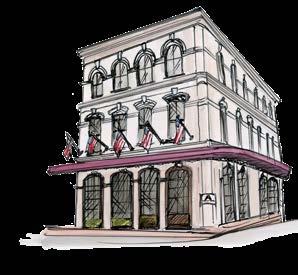
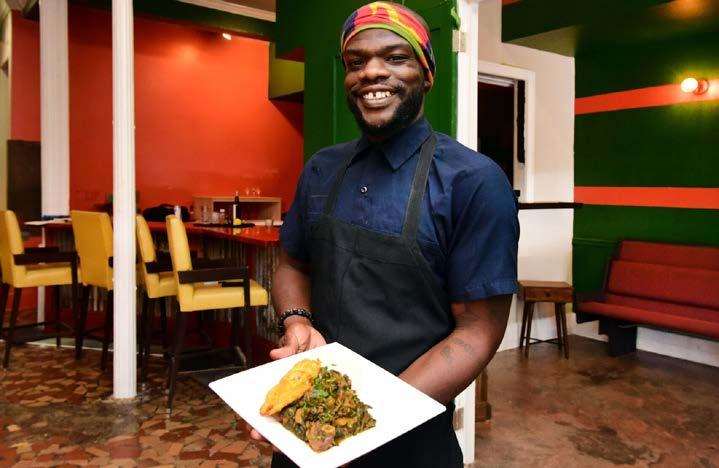
by Rochelle Oliver
New Orleans never sought recognition for its cuisine or its culture. Mothers, fathers, uncles and aunties have kept generations fed because that’s just what folks do around here. Cook, pray, eat and repeat is a Southern love language that needs no accolades.
Still, recognition is always nice.
As diners seek to experience deeply rooted cultural foods, our diverse city is uniquely situated to pique the interest of the nation.
The recent nods from the James Beard Awards; the Michelin Guide, which expanded to the American South in 2025;
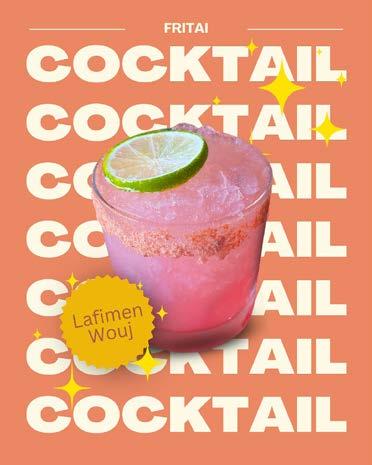
and North America’s 50 Best Restaurants, which is hosting its second annual awards in New Orleans in May, suggest that attention on New Orleans is even greater than in decades past.
In New Orleans, where food is sacred, chefs carry the added responsibility of protecting the city’s culinary heritage while moving the legacy forward. Local chefs appear to view this as an opportunity rather than a burden.
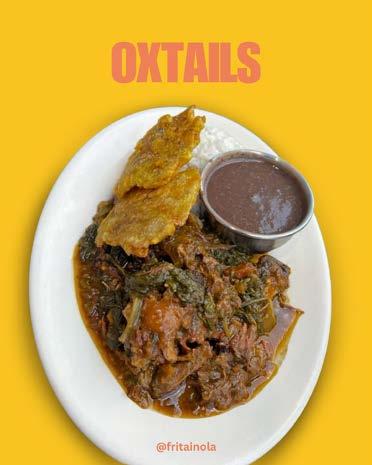
“We take our ambassadorship of New Orleans very seriously,” Dr. Effie Richardson, the restaurateur who co-owns Dakar NOLA with Chef Serigne Mbaye. After their Senegalese restaurant won the James Beard Award for Best New Restaurant in 2024, Dr. Richardson spent one month replying to emails, voicemails and messages. In 2025, Dakar was listed in the Michelin Guide.
The owners know firsthand that patrons are paying attention to who gets an award and who gets ranked on a where-to-eat list.
Acclaimed restaurants bring visitors, but that’s just a piece of the picture. Those same “visitors will dine elsewhere during their stay,” Richardson said, listing bakeries, coffee shops and even grocery stores that diners will also experience during their stay. “They fall in love with New Orleans.”
Dr. Richardson admits that the accolades are nice, but she and Mbaye want Dakar to be known as the restaurant that brought African dining to the people’s consciousness. While African culture is widely known as the foundation of Creole and Cajun cuisines, what's less understood is the depth and range of specific culinary contributions made by African nations.
Senegalese influence is formally recognized in Algiers Point, where a plaque commemorates the 1723 arrival of a ship carrying 91 enslaved people, mostly from the Senegal-Gambia region.
“There is a lineage that far back to the food,” Dr. Richardson said.
This is the sort of framing that is unique
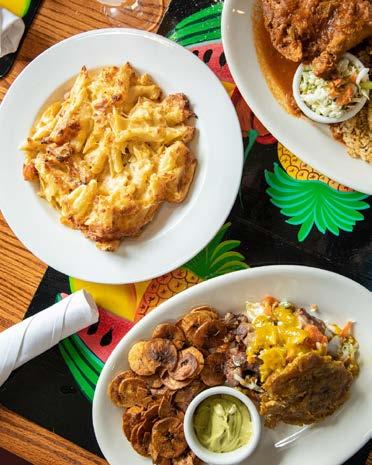
to one of America’s oldest cities — where global cuisines also carry a sense of place. These seemingly international restaurants are in the bedrock of New Orleans culture.
Charly Pierre is among the new culinary guards navigating this moment of heightened visibility. Pierre was recently named as a semifinalist for 2026 Best Chef: South by the James Beard Awards, an organization where I serve as the Journalism Awards Committee Chair. Mbaye of Dakar and Chef Ana Castro of Acamaya, whose Mexican seafood restaurant is located in the Bywater, are also in the running.
Charly and I first met around eight years ago. I had just launched Island and Spice Magazine, and was seeking to better understand my own Caribbean-American identity. When I heard there was a Haitian chef with a food stall in the St. Roch Market, I had to visit. I was elated to find that Fritai had pikliz , a spicy, vinegar-based condiment that I hadn’t enjoyed since living near Little Haiti in Miami several years earlier.
I shared Pierre’s baked macaroni with crab recipe in the magazine, and it became a reader favorite. He laughed when I told him this, because it’s still one of Fritai’s most requested dishes. Baked macaroni with cheese is a Haitian staple — adding crab simply made sense, he told me. He was right; the dish is still one of Fritai’s most requested menu items.
“Cuisine in New Orleans is so multifaceted,” said Pierre, whose restaurant (now located in the Treme) was named among the 50 best restaurants in 2021 by Esquire magazine.
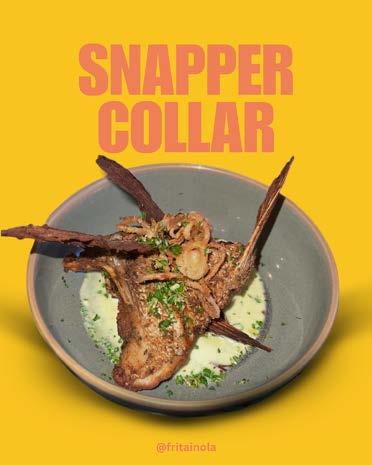
“I bring cultural history to the forefront, especially when we’re talking about what helped influence gumbo, the music, the architecture,” he said.
New Orleans is well-documented for being the northernmost Caribbean outpost. In 1809, following the Haitian Revolution that ended in 1804, more than 10,000 Haitians — white, free people of color and enslaved people — would find refuge in this city.
Pierre’s work contextualizes Haiti’s influence within the broader New Orleans story. Yet he doesn’t hesitate to give credit where it is due.
“The heart of New Orleans is the auntie who’s been stirring gumbo pots for 70 years.”
None of this attention would be possible without the elders who kept a global collective of cultures alive, one bowl at a time.
6
WHAT YOU WILL NEED :
12 ounces ziti or penne pasta
4 tablespoons butter, extra for casserole dish
4 tablespoons flour
8 ounces evaporated milk
8 ounces whole milk
2 cloves garlic
6 ounces cheddar cheese, extra for topping
4 ounces Parmesan cheese
1 tablespoon Creole seasoning
4 ounces lump crabmeat
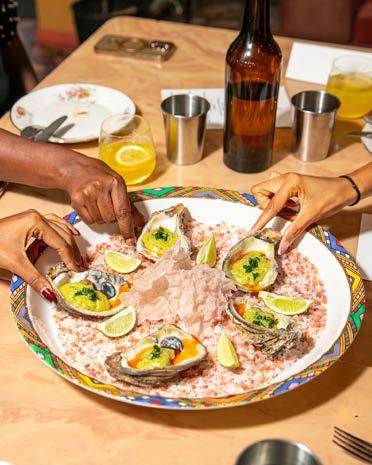
:
Preheat oven to 450◦F.
Nip ends off garlic, keeping the skin on. Place garlic in a small oven-proof dish and drizzle with olive oil, then roast in oven for 10 to 15 minutes.
Generously butter a casserole dish and set aside.
Bring a salted pot of water to a boil. Cook pasta until al dente. Drain and spread pasta on a sheet rack for drying.
Melt butter in a pot over low heat. Add flour to the melted butter. Using a whisk, incorporate the flour until smooth. Wait for the mixture to give off a subtle nutty smell before adding evaporated milk. Vigorously whisk. When the mixture begins to soften, add the whole milk and the roasted garlic. Continue to whisk until the mixture is smooth and begins to thicken. Scrape the sides and bottom constantly to avoid burning the sauce.
Add the cheeses. Continue to whisk, minding the sides and bottom of the pot. Add the Creole seasoning.
Place the crab and pasta into the casserole dish. Pour three-quarters of the cheese sauce onto the pasta. Thoroughly mix the pasta, crab and sauce. Pour the remaining sauce on top.
Sprinkle a handful of cheese on top. Place in preheated oven and bake for 10 to 15 minutes.
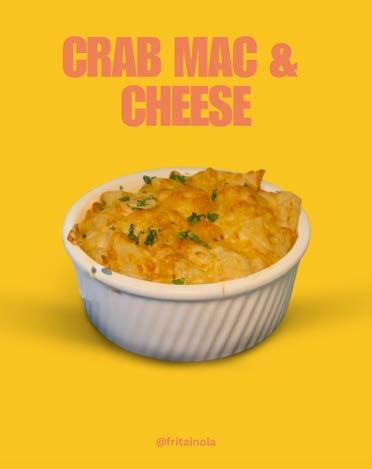

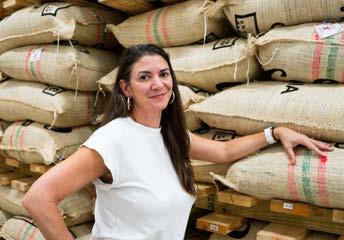
Simone
Reggie,
Director of Sales & Marketing, French Truck Coffee

Dame Simone Reggie has always had a passion for food and local. She began her career with a New Orleans culinary nonprofit, helping farmers secure microloans, and later joined Good Eggs, an online farmers market, during its New Orleans operation.
She eventually opened and operated Simone’s Market, a locally sourced, fullservice grocery store that reflected her
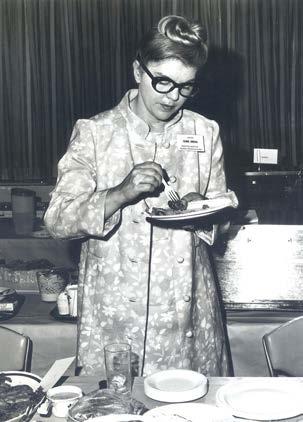
commitment to regional producers. After closing the market, she served as Brand Ambassador for the McIlhenny Company, representing Tabasco and bringing her independent retail perspective to one of Louisiana’s most iconic brands.
Today, at the New Orleansbased French Truck Coffee, she focuses on bringing the café experience into the home. She helped launch K-pods and a ready-to-drink oat milk latte that brings French Truck’s Iced coffee to a can in three flavors: vanilla, mocha and lightly sweetened, making it easy to enjoy wherever the day takes you.
“Seeing our ready-to-drink [products] on the shelves is incredibly rewarding. It took our entire team to make it happen and, thanks to our partnership with Rouses, customers across the Gulf South can now enjoy our cold brew and iced coffee.”
— Simone Reggie
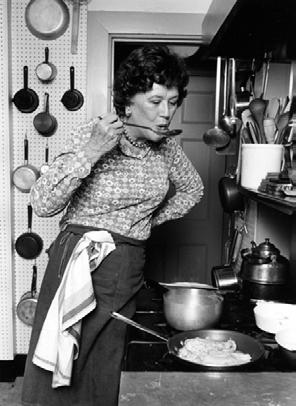

Michelle Terrebonne Becker, Senior Business Development Manager, Reily Foods; Co-founder, Louie Louie THC Seltzer
Dame Michelle Terrebonne Becker’s career has placed her in the company of some of the most recognizable names in food and beverage, including the Emeril Lagasse and Tabasco brands. She currently serves as Senior Business Development Manager at Reily Foods Company, the New Orleans-based company behind brands such as Luzianne Tea and Blue Plate Mayonnaise.
A few years ago, she co-founded Louie Louie, a New Orleans-based THC seltzer brand. Its Blackberry Lemon THC Seltzer was recently recognized by Garden & Gun with a Made in the South Award. This year, Louie Louie introduced Hurricane Punch with Mardi Gras special-edition cans. While the limited packaging marked the season, the flavor remains part of the lineup year-round — a reminder that good ideas can be both timely and lasting.
“To me, the real reward is seeing the product out in the world: a Tabasco bottle on a table; a Louie Louie at a crawfish boil, a fine dining restaurant or on the shelf at Rouses; a Blue Plate Mayo packet served with your favorite po-boy.”
— Michelle Terrebonne Becker
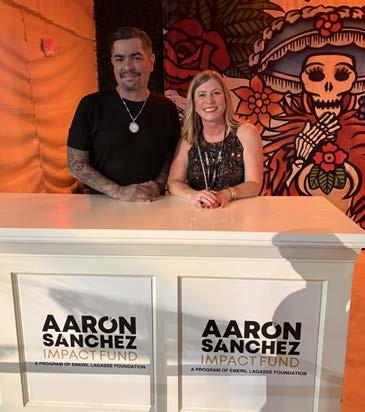
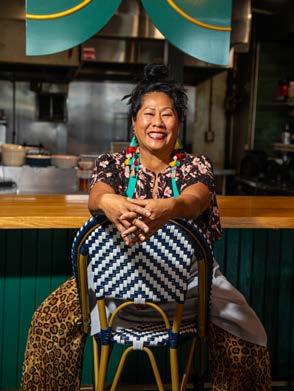
by Beth D’Addono
In Time magazine’s January 1976 story announcing its list of American women for Time’s Women of the Year, the intro, in language that feels very 1976, carefully explained: “They have arrived like a new immigrant wave in male America. They may be cops, judges, military officers, telephone linemen… or mothers and housewives, but not quite the same subordinate creatures they were before.”
If Carol Brock, founder and Grande Dame of Les Dames d’Escoffier, read that, she likely bristled.
Brock, a longtime New York women’s magazine and newspaper food editor, started her career in 1944 at just 20, stepping into a publishing industry that was very much an old boys’ club.
As she became privy to the inner workings of dining and hospitality in New York City, the question became unavoidable: Why weren’t there more women at the table?
In 1976, she answered it by founding Les Dames d’Escoffier International (LDEI), named for chef Auguste Escoffier, known as the father of modern French cuisine. It was the first professional organization for women in the culinary and hospitality industries, launched with 50 prominent members in New York before expanding to cities across the United States.
From the outset, the purpose was straightforward: “To inspire, advance and support women in the fields of food, beverage and hospitality.”
According to LDEI’s immediate past president Stephanie Jaeger, Brock’s goal was to “ensure that women could be recognized for their talent, leadership and contributions — to, as she famously put it, ‘raise the Pyrex ceiling.’” After New York, four chapters soon followed: Washington, D.C. (1981), Chicago (1982), Dallas (1984) and Philadelphia (1984).
Fast-forward five decades, and LDEI now spans 40 chapters across the U.S., Canada, Mexico, the United Kingdom and Italy, with more than 2,800 members and growing.

Its ranks include some of the most accomplished women in food.
Dames past and present include Julia Child, the first Grande Dame. Among its ranks have been culinary icons, from pioneering Southern authority and award-winning cookbook author Nathalie Dupree and Southern food icon Edna Lewis to farm-to-table trailblazer Alice Waters and television personality Carla Hall.
The group takes its philanthropic pledge seriously. Since incorporating in 1988, Les Dames d’Escoffier International chapters have raised and donated more than $10 million to support educational initiatives and community nonprofits.
When I moved to New Orleans in 2011, the plan was to transfer my LDEI membership from Philadelphia to my new home chapter. There was just one problem: There was no New Orleans chapter.
How was that possible? In a city defined by women like Leah Chase, Ella Brennan and Ruth Fertel, and carried forward by chefs and restaurateurs such as Susan Spicer and Katy Casbarian, the absence felt glaring.
So in 2017, with a small group of like-minded women, we set out to change that and founded the New Orleans chapter.
Today, the Dames of New Orleans represent the full sweep of hospitality, including James Beard Award- and Michelin-recognized chefs, restaurateurs, culinary historians and leaders shaping how this city eats, drinks and entertains. Membership is selective, reserved for women with established careers in food, beverage and hospitality and a shared commitment to mentoring, collaboration and service.
While giving back is central to our mission, the camaraderie, mentorship and steadfast support we offer one another may be the Dames’ most enduring strength.
Local food and travel writer Beth D’Addono is a co-founder and past president of the New Orleans chapter of Les Dames d’Escoffier. She is serving as 2nd Vice President on the international LDEI Board.

ARROW-CIRCLE-RIGHT Throughout my career, I’ve been fortunate to work alongside strong women in food, including Ruth Fertel; I wrote commercials for her brand and collaborated with chefs, restaurateurs and the people who championed them.
Joining Les Dames d’Escoffier International put me in the room with many of the most accomplished and influential women in our local food and wine community, including several writers who contribute to our magazine.
I also serve on the board of Women Grocers of America, working to advance and mentor women in the grocery industry. I’ve always believed the grocery category is not separate from the broader food world. It connects farmers, producers, chefs and retailers. Representing grocery and ensuring it has a strong voice within Les Dames matters.

— Marcy Nathan, Creative Director, Rouses Markets
by David W. Brown
Katy Casbarian practically grew up in Arnaud’s. The restaurant was founded in 1918 by Arnaud Cazenave, a French immigrant and wine salesman; it is one of a half-dozen “Grand Dame” eateries — historic and iconic French and Creole restaurants that are woven deeply into the city’s traditions and self-perceptions — in New Orleans.
The restaurant has been in continuous operation for over a century. In the 1970s, her parents, Archie and Jane, bought it from the Cazenave family. “My brother, Archie, and I worked here growing up, doing all the different jobs to learn the business,” she said. When they got older, their parents encouraged them to go off to college and figure out if they really wanted to remain at Arnaud’s or not. In the end, they both knew they did.
“It’s still very much a family business,” said Casbarian. “I’m proud to say that my brother and I get along very well. We are blessed to be able to work with one another and operate the restaurant together. And we have so many team members that have been with us for a really long time that help keep it going.”
The last couple of decades, she said, have been both wonderful and trying. “There was Katrina and, like everyone else, we had to rebuild. If there was a silver lining, it’s that it gave us the opportunity to welcome new guests that had not necessarily been dining with us before.” In New Orleans, she explained, especially at the old guard restaurants, diners can oftentimes be generational. A “Galatoire’s family” might not necessarily be an “Arnaud’s family.”
After the recovery, she said, the city faced a gauntlet of trials. “There was the BP oil spill, more hurricanes — and then, of course, COVID. So we had to learn to pivot as best we could without changing who we are.” Arnaud’s success, Casbarian said, lies in staying true to its roots as a traditional Creole restaurant. “We have never wavered from that, and I think that’s part of the reason why we’re still here.”
But maintaining a century of traditions while continuing to evolve is a high-wire act. “Our menu, our dishes, our service style — we are committed to upholding the standards and experience that our guests expect,” she said. “We have a lot of items that have been on the menu since the beginning.” The presentation has changed with the times, but the basic elements of the dishes are the same.
“People come here wanting to have, for instance, shrimp Arnaud, trout meunière and crème brûlée the same way they remember having it when they came with their parents and grandparents. You would think that it would be easy to provide the same dish over and over, but consistency is really, really challenging — especially in this business,” she explained.
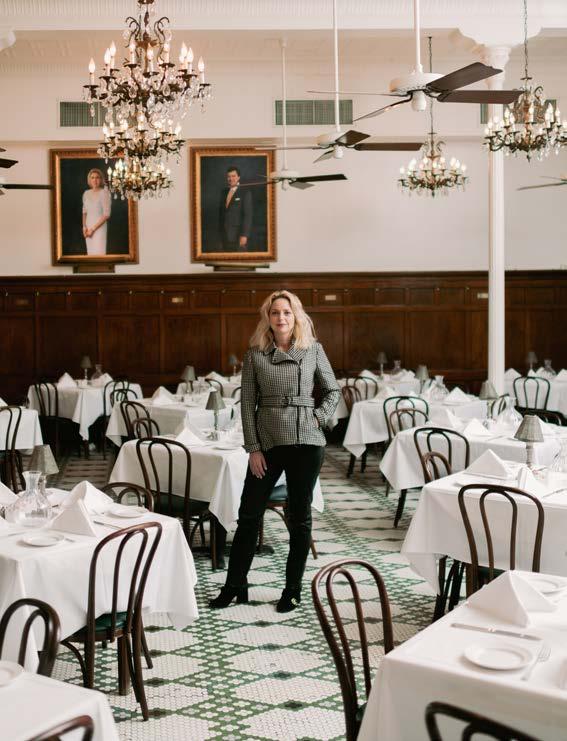
The fundamentals of service never change, she said, “…but that doesn’t mean that we don’t refresh the look of our dining rooms, or that we don’t sometimes have a DJ that plays for a fun lunch. We’re always open to different experiences to attract new guests. The invigorating part of coming to work is figuring out how to stay true to who we are — providing this consistency, while also remaining fresh and present.”
Likewise, the Arnaud’s menu is very responsive to the varying dietary restrictions of guests. “We try and have something for everyone on our menu. Most of our menu is gluten-free, for instance and, on the spot, we will always try and alter any dish to accommodate restrictions that guests may have.”
Casbarian said she is always looking for areas with a bit of play in order to make small updates. “A lot of thought goes into the silverware, the china, the seating, the environment, the decor of any restaurant. The china we have today isn’t the same as it was a century ago. Those things subtly have to change as dining styles change. We’re very present in the dining scene in a lot of ways that our guests might not even realize.”
She added with a laugh, “I get excited about changing cocktail napkins! Anything where I can invoke some kind of whimsy is always a joy.” Such small things — napkins, china, menu redesigns, dining room beautification — add up to meaningful progression over time.
It must, however, be done delicately. “Years from now, when people look back, I don’t want them to say anything was different, quite frankly. I want them to look back and say it was wonderful then, and it’s just as wonderful now,” she said.
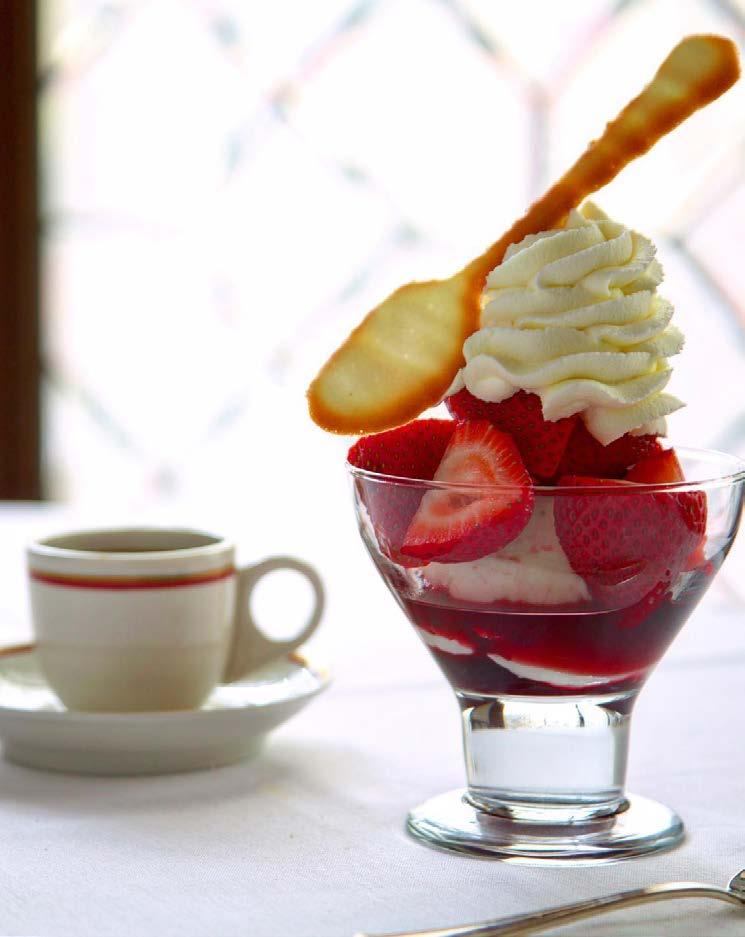
STRAWBERRIES ARNAUD
Serves 6
This dessert has appeared on the menu at Arnaud’s for decades and is offered only during Louisiana’s strawberry season.
:
1 cup ruby port
1 cup red burgundy-style wine
½ orange, sliced
1 lime, sliced
1 cinnamon stick
½ cup granulated sugar
3 cups vanilla ice cream
3 cups sliced fresh strawberries
Lightly sweetened whipped cream
Six whole, perfect strawberries with their stems
Sprigs of mint
:
In a medium saucepan, combine the port and wine and place over medium-high heat. Bring to a boil, then add the orange and lime slices and the cinnamon stick and sugar. Return to a boil, then remove from the heat and let cool for at least 30 minutes. Strain the sauce. Cover and refrigerate until serving (the sauce will keep for up to two weeks).
To serve, place a scoop of ice cream in each of 6 coupe style champagne glasses. Cover the ice cream with the sliced strawberries and drizzle generously with the port-wine sauce. Atop each, add a dollop of whipped cream, a whole strawberry and a sprig of fresh mint for show. Serve at once.
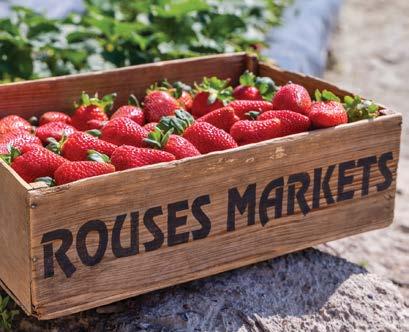

ARROW-CIRCLE-RIGHT Louisiana’s “Berry Belt” dates to the 1800s, when Italian and Hungarian immigrants began planting strawberries in the soil north of New Orleans. Centered around Ponchatoula, the state’s harvest season typically runs from February through May.
Strawberry plants continue producing fruit throughout the harvest season, which means fields are often picked two to three times a week at peak. That steady production keeps fresh berries moving into stores all spring.
Louisiana farmers like Trey Harris grow entire fields for Rouses Markets, supplying our stores during the season. We also sponsor the Ponchatoula Strawberry Festival each spring in support of the growers who make the Berry Belt possible.
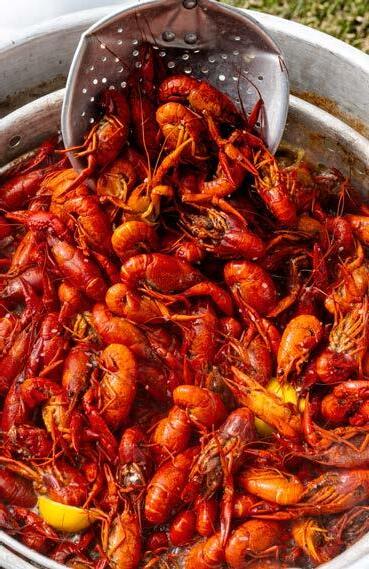
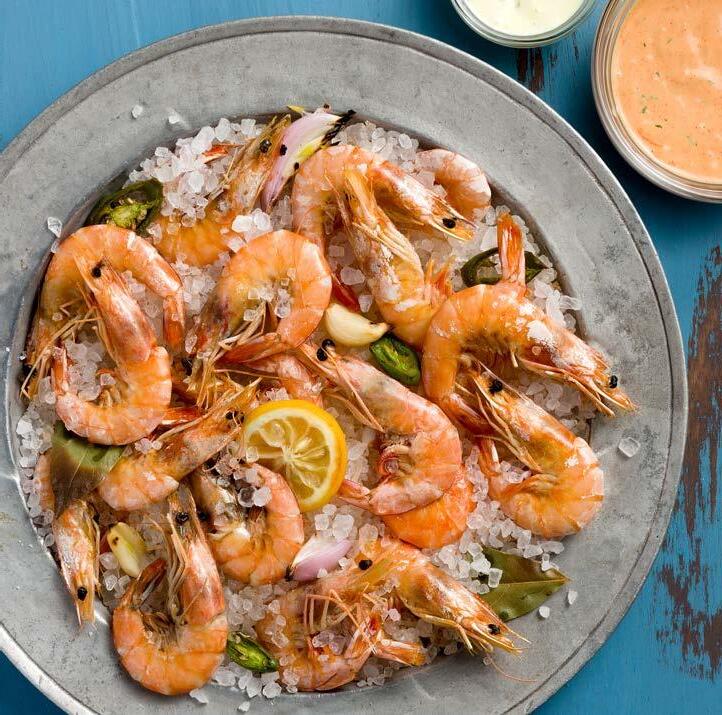
“I was a butcher at Commander’s Palace when Emeril was in the kitchen. He was one of the most knowledgeable and talented chefs I’ve ever worked with. I was cutting all the fish and meat, deboning as many as 1,200 quail a week. At Rouses, everything we sell is restaurant quality. We offer the best selection in the region, and our boil program is second to none. ”
Phil Gemus, Seafood Merchandiser, Rouses Markets
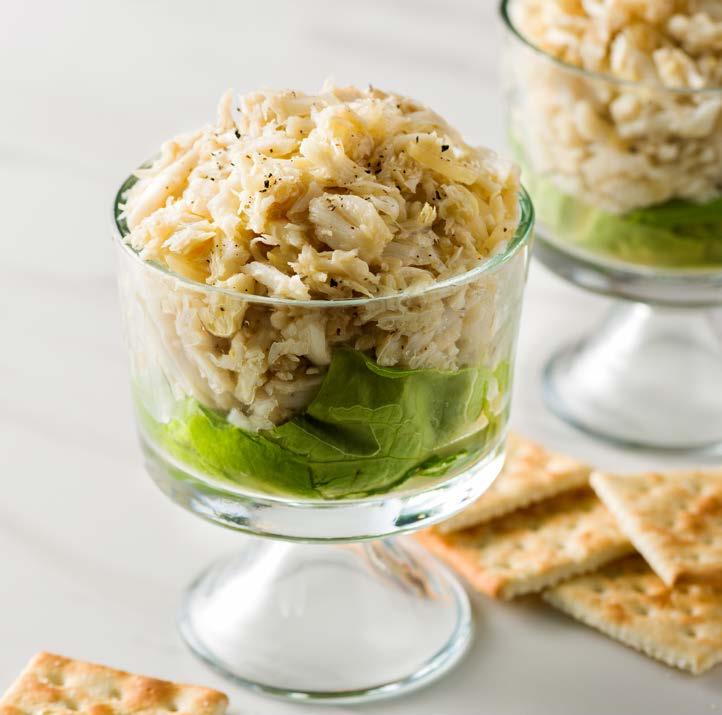
Serves 3 to 4
We loved this image and recipe when we first featured them in Spring 2016. We brought them back because this simple technique is too good not to share again. A thick layer of rock salt absorbs and distributes heat evenly, helping the shrimp cook uniformly without hot spots. Because the shrimp bake in their shells, the meat is protected from direct contact with the salt, so it does not become overly salty. The shells trap moisture while the salt concentrates flavor, so the shrimp come out juicy, evenly cooked and perfectly seasoned.WHAT YOU WILL NEED :
4 pounds coarse rock salt (ice cream salt)
1 small jalapeño, sliced into rounds
1 small lemon, sliced into rounds
1 shallot, peeled and quartered
6 whole garlic cloves, peeled
6 bay leaves
2 tablespoons black peppercorns
3 pounds head-on, wild-caught Gulf shrimp (20-25 count or larger)
Rouses Bayou Dipping Sauce (spicy or original), tartar sauce or melted butter, for serving
:
Preheat oven to 475°F.
In a large, deep baking dish, combine the rock salt, jalapeño, lemon, shallot, garlic, bay leaves and peppercorns. Place in preheated oven and bake for about 10 minutes, or until the salt is heated through.
Carefully remove the dish from the oven and arrange the shrimp in a single layer directly on top of the hot salt mixture. Return to the oven and bake until the shrimp are pink and opaque and the shells are lightly crisp, about 8 to 10 minutes, depending on size.
Discard the salt mixture. Serve shrimp hot with Bayou Dipping Sauce, tartar sauce or melted butter.
Serves 4-6
Alabama restaurateur William “Bill” Bayley created the exotic-sounding West Indies salad — layers of onions and crabmeat soaked in oil and vinegar — in 1947.
WHAT YOU WILL NEED :
1 medium onion, finely chopped
1 pound fresh crab claw meat, picked through for shells and cartilage
Salt and freshly ground pepper
½ cup vegetable oil
½ cup apple cider vinegar
½ cup ice water
HOW TO PREP :
Spread half the chopped onion over the bottom of a large bowl. Cover with separated crab lumps and then the remaining onion. Season with salt and pepper. Add the oil and vinegar.
Strain the ice through a sieve to remove the ice cubes, then add the well-chilled water to the salad. Cover and refrigerate for at least 2 hours and up to 12 hours. Toss lightly, then taste and adjust for seasoning with salt and pepper before serving.
Serves 4 to 6
Cold marinated crab claws, sometimes called crab fingers, are great alongside boiled crabs, crawfish and shrimp.
WHAT YOU WILL NEED :
1 pound Gulf blue crab claws
¼ cup extra virgin olive oil
2 tablespoons distilled white vinegar
1 tablespon fresh lemon juice
2 cloves garlic, minced
1 tablespoon chopped green onion
1 tablespoon chopped parsley
½ teaspoon kosher salt
¼ teaspoon freshly ground black pepper
½ teaspoon Worcestershire sauce
½ teaspoon hot sauce
HOW TO PREP :
In a large, nonreactive bowl, gently toss the crab claws with all the remaining ingredients until evenly coated. Cover and refrigerate at least 2 hours, preferably longer, to let the flavors develop. Serve cold.
PICKLED SHRIMP
Serves 12 to 15
Along the Alabama and Mississippi coasts, Pickled Shrimp have long had a place on the table. Like West Indies Salad, they’re dressed simply in vinegar and oil and served cold.
WHAT YOU WILL NEED :
3 pounds wild-caught Gulf shrimp, shelled, deveined and boiled just until pink
2 medium onions, quartered and thinly sliced
6 garlic cloves, thinly sliced
4 lemons, thinly sliced
12 bay leaves
1 teaspoon mustard seeds
1 teaspoon celery seeds
1 teaspoon coriander seeds
1 teaspoon fennel seeds
4 dried hot chile peppers
1 teaspoon freshly ground white pepper
1½ teaspoons kosher salt
1 cup extra virgin olive oil
½ cup champagne vinegar
½ cup freshly squeezed lemon juice
HOW TO PREP :
In a large bowl, gently toss the shrimp with the remaining ingredients until evenly coated. Transfer to a glass bowl, cover, and refrigerate at least 6 hours or overnight.
Remove from the refrigerator about 1 hour before serving to take the chill off. Discard the bay leaves. Serve with toothpicks.
With a name pronounced “Shuck,” the NFL’s Rookie of the Year is ready for his Gulf Coast moment.

There’s a moment in every NFL rebuild where the narrative shifts. Not because of a blockbuster trade or a first-round pick, but because something titanic happens to move things. When it’s bad, it’s a firing or an admission that a major investment hasn’t panned out as expected. Might be a firstround pick not working out, or finding out that the free-agent savior was really just a false prophet. That whiz kid coach or GM? Well, those dreams whizzed through the air of getting caught like a set of beads but sadly crashed to the ground and got kicked into a storm drain — lost, forgotten, discarded.
But sometimes someone or something unexpected walks through the door and changes the temperature.
For the Saints, that moment came in Week 8, and it came in the form of a quarterback most people outside of New Orleans had zero hope for, one with few expectations attached to him — and if anyone did have expectations, they were negative ones based on a video that circulated during the pre-draft process.
Tyler Shough wasn’t necessarily expected to be the guy to save the organization. He was a question, a gamble, a chance. The makeup was there for him to be a good NFL quarterback, but the makeup was also there to make him feel like a major gamble. Seven years in college, tons of injuries and — fair or not — he was old for an NFL rookie, 25 to be exact. The math said he wouldn’t make it. Quarterbacks in the second round typically don’t make it.
So when he took over that day, there was curiosity and wonder. But hope? Well, hope springs in the summer, during camps and all of that, and Spencer Rattler had beaten him
out for the starting job. As the team floundered to 1-8 and injuries piled up at all positions, it looked like the fall of the Saints was near. But that’s not what happened.
Shough actually played well enough to create hope. The thing about hope in a rebuild is that you never really know if what you see is real, but seeing something is still exciting. It’s like being stranded in a desert and spotting a canteen. Is it real? Impossible to know until you get up close to it, but you at least have a direction as soon as you see it.
But this one? Shough and the Saints and Kellen Moore. It looks real.
And because it looks real, it changes everything about how the Saints get to build this team. That’s the part that doesn’t get talked about enough. Hope doesn’t just change the mood; it changes the math. The stunning thing about where the Saints are now is that they didn’t get here by walking a meticulously laid-out path. A lot of this was about rallying and reacting to a set of circumstances that easily could have left General Manager Mickey Loomis and Head Coach Moore — and everyone else — screwed. Everything the team built last offseason — the free-agent signings, the draft picks, the roster construction — was done with Derek Carr in mind. Tyler Shough wasn’t driving anything. He wasn’t even in the car. But now he has the keys. And that changes the equation entirely.
“I think it’s pretty well documented that teams that have a quarterback on a rookie deal have been able to do some things and have some success,” Loomis said. “And part of that is just building the roster and managing it over the two-, three-, four-year period that we’re facing. It’s a different equation, really.”
It really is. The Saints get three more years on Shough’s rookie contract, then they can structure his next deal so that the real money doesn’t kick in until well down the line.
There’s lots of math and technicalities that go into that, but the simple way to put it is: You aren’t going to hear about the salary cap for a long, long time. Those days are over, and the Saints will soon have a blank slate and will only be limited by their imagination.
What that does is create a window — potentially six years of building aggressively around a quarterback who isn’t consuming much of the salary cap. Six years of spending on guards and receivers and pass rushers — without having to always build around the guy taking a penny and never leaving one.
But it only works if the quarterback is real. And if you watched Shough carry a depleted roster to wins over Tampa Bay and Carolina; if you watched him turn third-and-long into third-and-Vele; if you saw how the players and coaches and team changed with him on the field; and if you saw Chris Olave fight to stay on the field with him…you kind of have to believe.
Chase Young thinks so, too. “I do, man,” Young said when asked if he feels something getting built. “Tyler Shough, man. He’s building. Every week, I can just tell he gets more comfortable. He’s just starting to look like that guy.”
That guy. The words keep showing up. There was one player who checked in privately after the quarterback switch, sending me this text: “About to find out if we need a quarterback.” A few weeks later, I walked back up to him in the locker room to ask what he thought about Shough. I never got to ask him the question, because he hit me with his own before I could even say anything: “What weapons you think we should get?”
That’s the shift. The conversation went from whether Shough could survive to what should you put around him. And that shift is what unlocks everything for the front office. When you know who your quarterback is, you stop hedging. You stop building for contingencies.

You start building for a specific vision, and the Saints haven’t been able to do that for a while. They thought they had it with Carr for a while, but that’s one of those ideas that ended up in the storm drain.
Kellen Moore saw it early. He didn’t just swap quarterbacks and keep running the same offense. He rebuilt the passing game from the route level up, moving away from Rattler’s vertical attack toward a shorter, timing-based system built around what Shough does best. Moore found concepts that worked and went back to them.
That identity is what allows the teambuilding to get specific. You know what kind of receivers to target: guys who can win after the catch, because almost every yard the Saints gained last season was on Shough’s arm. You know the offensive line needs interior help, because the Saints were dead last in the league on inside runs. You know you need a running back who can catch and split out wide, because Moore loves empty sets, and your back can’t be a tell.
Those aren’t generic offseason needs. Those are needs tailored to a specific quarterback in a specific system, and that kind of precision is only possible when you’ve answered the most important question on the roster. The Saints believe they have.
“We don’t want to just win the division; we don’t want to be an 8-8 or 8-9 team in the
division,” Loomis said. “We want to win the division, be dominant and have a chance to make a run in the playoffs. So, that’s what our goal is going to be.”
Those are real expectations. And they don't feel unreasonable when you consider what Shough did with a roster that lost Rashid Shaheed, Brandin Cooks, Alvin Kamara, Erik McCoy and half the offensive line to trades and injuries. He beat Todd Bowles in a rainstorm with backup players at half the skill positions. He outdueled Baker Mayfield. He walked down a surging Carolina team twice.
It’s funny how some wins can change how things look, too. That age narrative? Turns out, it might be a positive. Sure, Shough is a little bit older. But it also means he’s more confident and settled in his life. I asked him about this late last season, and he pointed out one area where it really benefits him is in how he communicates with Moore. So, for instance, he’ll talk with Moore all week about the game plan and trade ideas with him, and he’s honest about the stuff he doesn’t like. A lot of ideas get thrown away during the process. But he’s not sure that would have been the case if he was entering the league as a 21- or 22-year-old QB.
“I think you’re just trying to make your coaches happy at that point,” Shough said about how he would have handled it as a younger man, “instead of having a past and
being able to say what you don’t like and have what you do like.”
Moore doesn’t see Shough’s age as a limitation. He cracked a joke about Philip Rivers playing at 44 and said there are a few more years left for his guy. Saints quarterbacks coach Scott Tolzien put it more directly: “You think about every snap, Tyler’s getting a snapshot that he’s feeding his brain with on defensive looks. And the more of those you have, the more it helps you.”
And think about this: Matthew Stafford told one of Shough’s former coaches that he didn’t feel like he hit his prime as a thrower until he was 30. Shough believes the same of himself. “I feel like I’ve gotten better that way, and I can continue to climb,” he said. “I think you see guys playing the position like Brady and Stafford and Rodgers, their best years were in their mid-30s.”
So…a quarterback who hasn’t peaked yet, on a rookie contract, with a head coach who has already demonstrated the ability to build an offense around his specific strengths: That’s the hand the Saints are holding. And now they get a full offseason to play it — Shough and the receivers are already planning a throwing session in San Diego, building on a shared language that didn’t exist a year ago when he was still a stranger getting together with guys in Oregon.
Everything Shough did in 2025 was a first draft. The concepts Moore installed midseason will become second nature with months of repetition. The timing that was sometimes off by a beat will get cleaned up. The things Moore held back because you can’t install complex wrinkles while also breaking in a new starter — those all get added to next season’s playbook. The 2026 offense won’t be a continuation of what we saw in 2025 — it’ll be built on top of it.
Maybe the canteen is real. Maybe the water is in it. And for the first time since No. 9 hung it up, the Saints aren’t just wandering anymore. They have a direction, a quarterback and a plan for how to build around him.
That’s not just hope. That’s a blueprint. Soon, it might be hydration.
When Chef Austin Sumrall first set eyes on the stately, hundred-year-old Biloxi mansion on a hill, he knew it was meant to be his restaurant. “I had to do that thing where you, like, hide your excitement from the realtor,” he told me with a laugh. Today, White Pillars is among the most acclaimed restaurants in the Gulf South, renowned for its hyper-local, hyperseasonal, farm-to-table menu.
“We do some Southern cuisine, but we also have a worldly, ingredient-driven approach to the menu,” he said. “We don’t change it four times a year; we change it every day.”
Sometimes it’s small, like finding a way to use kumquats (available only a couple of weeks out of the year), or shifting from satsumas to tangelos on their orange chocolate dessert. “If we had a less flexible menu, we couldn’t use all these local ingredients that are only around for a blink of time. I would say the coolest thing about coming to eat at our restaurant is that you get a different experience every time,” he said.
Though Chef Sumrall has worked in the restaurant business for years, White Pillars is the first restaurant he ever opened. “I wanted this to be the maximum that a restaurant could be. We make every single thing from scratch. We make the bread. We make the ketchup. We make the aioli. We cure our meats. We make all the ice creams. It is truly a scratch kitchen.” He and his wife, Tresse, have also opened Siren Social Club, a speakeasy-style restaurant in Gulfport. Both their restaurants were recently recommended by the Michelin Guide
Despite the ambience of White Pillar and its meticulous menu, he said
that you won’t find a single white tablecloth in the restaurant. “We’re in that stunning old building, but we are decidedly not ‘white tablecloth.’ It’s because when I was younger, I worked for a chef who used to say that it's not ‘food church.’ And that's something that we really believe here, too. This should be fun. You should be able to have extraordinary service, fantastic food with big flavors you can only get in peak season, and have fun while you’re eating it.”
—David W. Brown
WHAT YOU WILL NEED:
12 oysters, or as many as you feel like cooking
For the Hot Seasoning:
1 tablespoon cayenne
2 tablespoons brown sugar
2 tablespoons paprika
Salt and pepper, to taste
For the Alabama White Sauce:
½ cup homemade aioli or favorite mayonnaise
1 tablespoon apple cider vinegar
1 teaspoon chopped chives
Salt and pepper, to taste
For the Wet Dredge:
1 cup buttermilk
1 tablespoon Crystal Hot Sauce
For the Dry Dredge:
1 cup all-purpose flour
1 cup cornmeal
1 cup corn flour or masa
1 tablespoon salt
1 tablespoon pepper
Pinch of cayenne
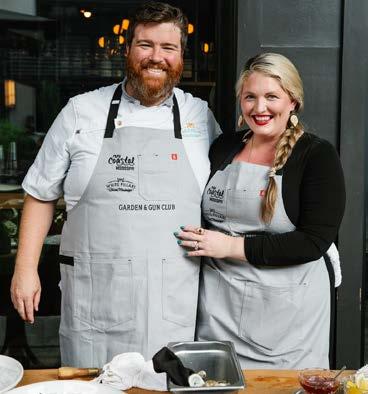
For Frying:
Vegetable or canola oil, for frying (about 2-3 inches in a fryer or heavy pot)
For Garnish:
Sliced dill pickles
Fresh parsley leaves
HOW TO PREP:
Shuck your oysters and set aside in the refrigerator to stay cold. Reserve shells for serving oysters.
Combine the ingredients for the Hot Seasoning; set aside.
Whisk together all ingredients for the Alabama White Sauce and refrigerate until ready to use. (NOTE: This will make more than you need. It keeps for about a week in the refrigerator and is delicious on almost anything.)
Whisk together the ingredients for the wet dredge and add the oysters; set aside. In a large bowl or on a large plate, combine the ingredients for the dry dredge.
Fill a deep fryer according to the manufacturer’s instructions or add 2–3 inches of vegetable oil to a Dutch oven or heavy pot. Heat to 350°F.
Lightly coat the wet-dredged oysters in the dry dredge. Carefully drop oysters into the hot oil and fry until just golden brown, about 30-60 seconds.
Right before removing the oysters from the fryer, carefully scoop ½ cup hot oil from the fryer and stir it into the Hot Seasoning mixture. Transfer the fried oysters to the bowl and toss to coat.
Place oysters in the reserved shells. Garnish each with a slice of dill pickle, a few drops of white sauce and a parsley leaf.

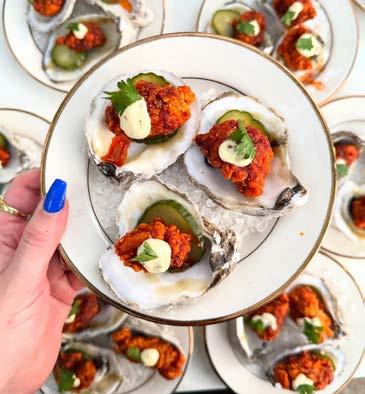
by Susan Langenhennig Granger
There’s a singular kind of Gulf Coast pleasure that comes with a sack of oysters chilling on ice and a favorite beverage at your elbow. Those with shucking skills can make quick work of that sack: Grab an oyster in a gloved hand, rinse it, insert an oyster knife into the hinge, twist and listen for the pop. Remove the top shell, cut the top muscle and slide that baby onto ice. Slurp one down raw, then toss the next one on the grill with butter and garlic.
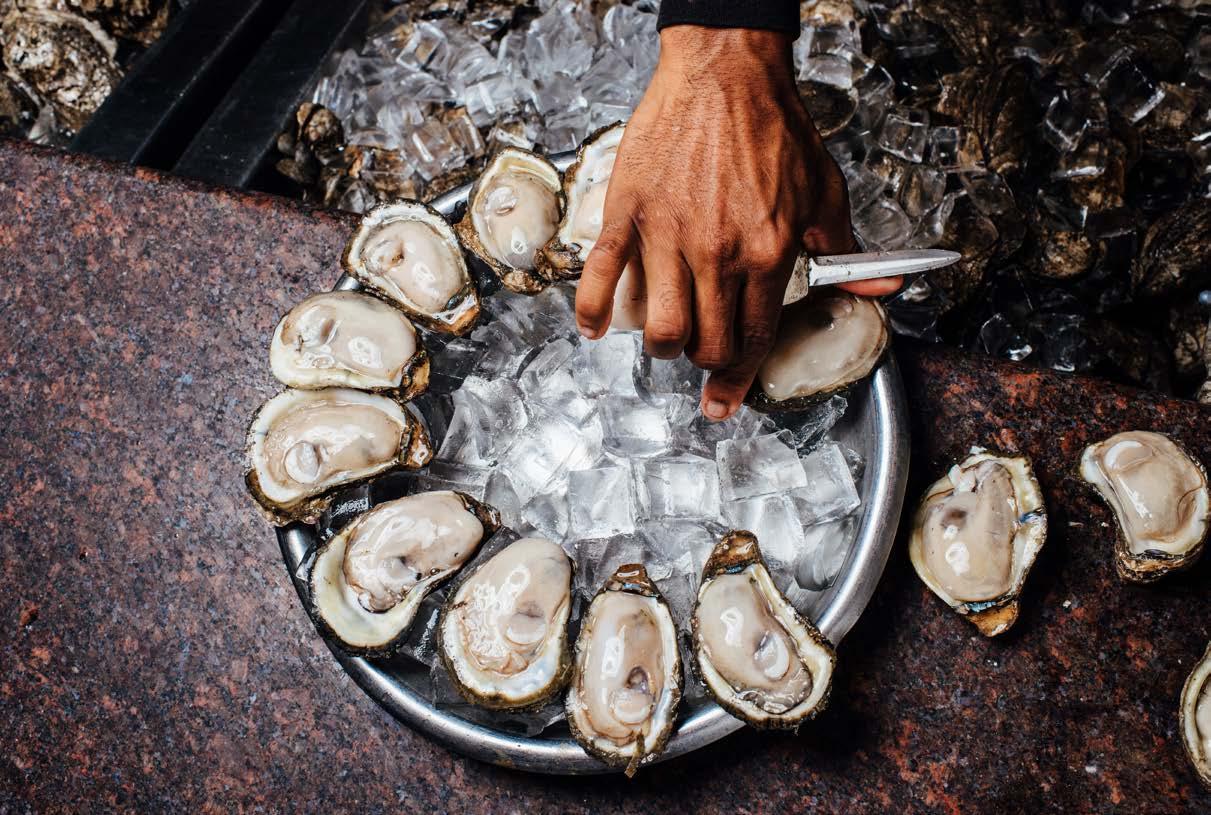
Though the process can be almost meditative, shucking an oyster rarely makes you think of the bivalve’s life stages — which is a shame, really. Oysters are fascinating creatures despite their gray appearance and sedentary lifestyle. As adults, they cement themselves to one spot, where they live for the rest of their days (much like many of us on the Gulf Coast).
For mollusks stuck in one place, oysters have some remarkable abilities. As filter feeders, they naturally clean the water. Their reefs reduce erosion, protect inland communities from storm surge and provide habitats for shrimp, crabs, fish and other marine life. Plus, they’re just delicious.
Oyster reefs support both a fishery and a living shoreline. And those shells tossed aside after guzzling a dozen on the half shell at your favorite restaurant are now going back to work to help protect the coast. In Mississippi, The Nature Conservancy operates the Save Our Shells (SOS) program, which collects and recycles oyster
shells from 17 restaurants and aquaculture companies, stretching from Pass Christian to Ocean Springs.
Recently, SOS also opened a public drop-off location at the French Hermit Oyster Company in Ocean Springs so backyard shuckers could add their used shells to the recycling effort.
Similar restaurant shell recycling programs are operated in Louisiana by the Coalition to Restore Coastal Louisiana and in Alabama by the Alabama Coastal Foundation.
Since it began in 2023, Save Our Shells has saved more than 340,000 pounds of shells from being dumped into landfills in Mississippi. The recycled shells are used to rebuild oyster reefs and living shoreline projects, including one in partnership with the University of Southern Mississippi’s Summer Field Program Marine Conservation Class.
The oysters that grow on the Gulf Coast are the eastern oyster (Crassostrea virginica). As their name implies, they’re the same
species that grows all the way from Florida to New York. But down here, they are bigger and fatter than their East Coast cousins.
Historically, natural oyster reefs were plentiful across the Gulf Coast, stretching from Texas to Florida, with Louisiana long ranking as the nation’s leader in commercially harvested oysters. Photographer Theodore “Fonville” Winans’ famous 1934 image of a shucker sitting on a giant pile of shells in Grand Isle, Louisiana, captures the feeling of oyster abundance that generations of Gulf Coast residents took for granted.
But the reality is, today, oyster reefs have declined by at least 50 percent across the Gulf (and 85 percent globally) due primarily to habitat destruction and environmental stressors, including the Deepwater Horizon BP oil spill. Nonprofit conservation organizations have joined with local, state and federal agencies to pour resources into efforts to stem that decline and build back natural oyster populations. For oyster populations, scientists know that if you build it, they will come. That’s what has happened
in Bay St. Louis, Mississippi, where The Nature Conservancy constructed a 40-acre oyster reef named for the famous Mississippi restaurant owner and avid fisherman Tony Trapani.
Oysters begin their lives as free-floating larvae, searching for a place to eventually settle down. To grow, oysters need a hard substrate, and “in Mississippi, we are substrate limited,” said Mississippi Coastal Conservation Specialist Sierra Ortiz of The Nature Conservancy. “There is no rock here, and the sediment that we have is muddy and sandy.” Without a solid surface for the larvae to land on, they will smother and die, Ortiz said.
The Tony Trapani Oyster Reef was built with 17,658 limestone pods spaced four feet apart and stacked one to two feet high. The surface area provides a place for new oysters to attach and grow. Since its construction, the SOS program has contributed 20,000 pounds of recycled oyster shells to the reef. Located in an area of the bay that’s closed to oyster harvesting, the new oysters on the Tony Trapani reef are providing brood stock for the Mississippi Sound.
SOS collects shells from Mississippi restaurants weekly and transports them to a nature preserve, where they are left to “cure” in the sun for six to 12 months. “We make sure that they’re clean before they are put back into the water,” Ortiz said, and that means ridding the shells of dried cheese, plastic straws or cast-off lemon wedges. “We don’t want to contaminate the water.”
Restaurants across the Mississippi Gulf Coast have embraced the shell recycling program. Chef Austin Sumrall, owner of White Pillars restaurant and lounge in Biloxi and Siren Social Club in Gulfport, has served on the program’s Oyster Shell Recycling Advisory Board since 2023. “Everything we do at our restaurants depends on the fragile ecosystem that is the Gulf,” Sumrall said. “We saw this as an opportunity to help. We are very proud to have all of our used shells from both White Pillars and Siren Social Club going back to the water.”
Joining the program provides a chance for restaurants to turn “what would be landfill waste into living shoreline protection,” said Executive Chef Austin Dedeaux of Coraline’s, the MGM Beau Rivage Resort & Casino’s
seafood restaurant that also participates in the program. “It’s a simple, local action with long-term environmental and economic impact.”
In Louisiana, the Coalition to Restore Coastal Louisiana (CRCL) has been recycling oyster shells from participating restaurants in the New Orleans area since 2014. The program has saved more than 16 million pounds of shells from landfills. All of the recycled shells are used to build living shoreline in Louisiana, according to CRCL’s website at CRCL.org.
In Alabama, more than 456 dump trucks worth of oyster shells have been recycled from restaurants from Mobile to Gulf Shores and Orange Beach by the Alabama Coastal Foundation. Its program began in 2016, and the shells have been used to restore 120 acres of oyster reefs off the state’s coast, according to Alabama Coastal Foundation’s website, joinacf.org.

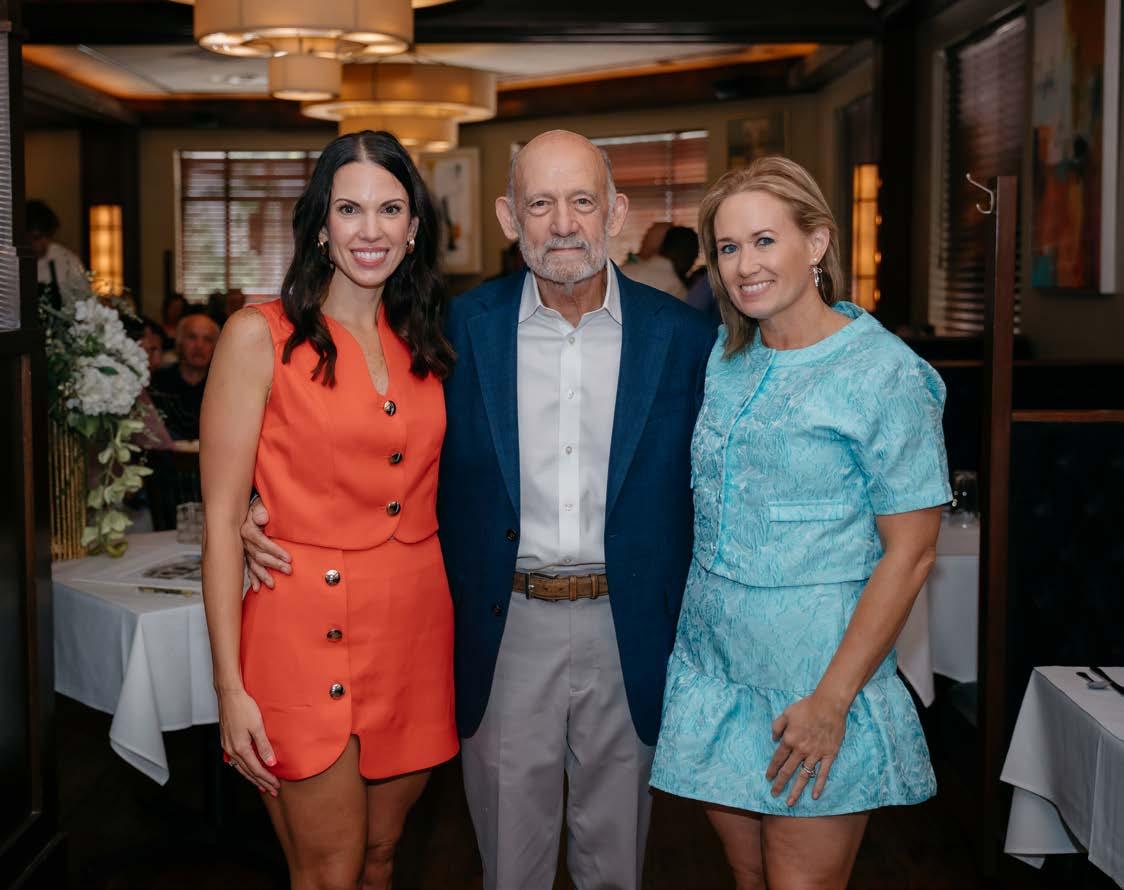
by Brandon “DJ Digital” Journet
Charlie Goodson spent more than four decades helping shape Acadiana’s dining scene, but for those who knew him best, his legacy extends far beyond the restaurants he built.
Goodson began his career in the 1970s at Judge Roy Bean’s Saloon before helping elevate Lafayette’s fine dining culture at Café Vermilionville. In 1985, he opened Charley G’s, which quickly became one of Lafayette’s most beloved restaurants, known for its signature gumbo and crab cakes.
Over the years, Goodson’s impact grew across the region. He helped open Hub City Diner and later founded Southern Hospitality Kitchens, the group behind Charley G’s, Social Southern Table & Bar, Marcello’s Lafayette, Pete’s and The Tap Room.
But for many, his greatest influence came not from the restaurants themselves, but from the people he mentored along the way.
Lafayette Travel CEO Ben Berthelot recalls Goodson not only as a respected restaurateur but also as someone who always believed in lifting others up.
“Charlie Goodson was one of the finest people I ever met,” Berthelot said. “He was a tremendous mentor to a lot of people, including myself. Over the years he was always available for a call or visit when I needed advice.”
Goodson was also one of the founding forces behind EatLafayette, the campaign created to support local restaurants during the slower summer months.
“He truly believed in the theory that a rising
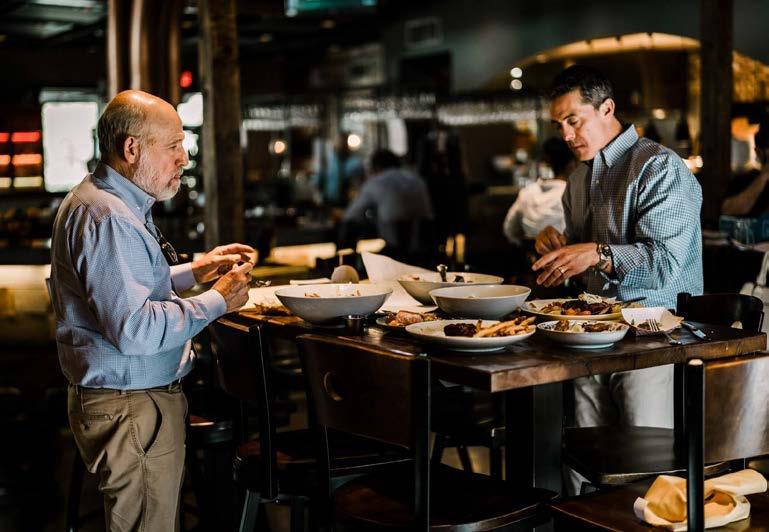
tide lifts all ships when it came to supporting our locally owned restaurants,” Berthelot added. “We will miss him, and his legacy will live on.”
For those who worked alongside him day to day, Goodson’s passion for the restaurant industry was unmistakable.
Longtime Social Southern Table & Bar general manager Armando Perry remembers that even after decades in the business, Goodson remained deeply involved in every detail.
“Charlie just loved the restaurant business. That’s the simplest way to put it,” Perry said. “He loved being in the restaurants, talking to the team, checking on guests. In Lafayette, restaurants are part of people’s lives, and he cared deeply about getting that right.”
Perry said Goodson believed no task was beneath him.
“He’d bus tables, seat guests, check reservations. Whatever needed to be done,” Perry recalled. “Even in his final weeks he was asking about Valentine’s Day reservations and specials. He was always thinking ahead.”
That curiosity never faded. Perry remembers traveling with Goodson to Houston last summer to visit restaurants and attend a food show.
“We stood in line in the summer heat for Truth BBQ,” he said. “We bounced from restaurant to restaurant trying to experience as much as we could. He loved seeing how other people did things and talking about how we could improve.”
For many people in Lafayette, Goodson’s mentorship extended far beyond the walls of his restaurants.
Although our industries, music and restaurants, may seem worlds apart, they really come down to the same thing: people and, even more important, how we treat them.
I first met Charlie in the late 2000s while filming segments for EatLafayette. Even then, I was struck by how he approached his business, how he valued his team, and how deeply he cared about the Lafayette
community. He may not have known it, but to a young DJ in the early days of his radio career, Charlie was something of a mentor.
Every time I crossed paths with him, he somehow knew exactly what I had going on. At first, I assumed it was just Charlie being good at remembering small details. But every time we met, he was fully aware of what I was working on. It was flattering, but it was also motivating. If Charlie was paying attention, I wanted to make sure I didn’t let him down.
As tributes poured in following his passing, I realized something powerful: It wasn’t just me. Charlie was genuinely invested in so many people. His interest was real. His encouragement was sincere. And that authenticity made him truly one of a kind.
Perry says Goodson’s influence can still be seen across Lafayette’s restaurant community.
“He believed in giving people opportunities,” Perry said. “A lot of careers started because Charlie was willing to take a chance on someone.”
One phrase Goodson often shared summed up his philosophy: “It’s nice to be important, but more important to be nice.”
Those who worked with him say he lived that message every day.
Charlie Goodson’s legacy will continue through the restaurants he built, the people he mentored, and the hospitality culture he helped shape in Lafayette. And for many in Acadiana, his impact will be felt every time they sit down at a table and share a meal. Because Lafayette is undoubtedly a better place thanks to Charlie Goodson.
Thank you, Charlie.
Brandon Journet, known as DJ Digital, is on-air talent for HOT 107.9 FM in Lafayette. He’s also the DJ for the New Orleans Saints’ VIP pregame experience and keeps a busy schedule DJing events across the country.




When we open a new store, it’s not just about selling groceries. It’s about becoming part of the community. That’s the thing national chains sometimes miss, and the reason they often don’t last.
We’ve learned a lot over the years, stepping in after big chains stepped away. I don’t know of any other independent grocer that could open 10 stores in five weeks — two per week — all while completely changing their interiors, cleaning them up, updating their layouts, and restocking them with new products.
And to run these stores, we offered jobs to all the employees that had worked for each WinnDixie. That was important to us because they are great, experienced people who were running good stores. They helped us make these reopenings a success.
We aren’t finished with these stores yet. We will continue to update each of them to bring them up to the Rouses standard of excellence. The Central Baton Rouge and Hattiesburg locations will be two of the first that receive complete remodels. In others, we will continue adding amenities like salad bars and lobster tanks over time. It’s a long process and it will take some time, but we are so eager for the future.
Serving our communities is at the heart of our Rouses culture. That means hiring local people, participating in local events and taking care of our customers. We’re joining communities we’ve never been a part of before — places like Destrehan, Franklin and Central — and we are enthusiastic about getting to know them.
We worked 24 hours a day to reopen these stores quickly, because we know the important role grocery stores play in people’s lives. As Leah Chase told me once, “You can build a great neighborhood around a great grocery store.” We’re proud of the tremendous progress we’ve made so far. Nothing can be done without the right people, and we know we are fortunate to have so many great people at Rouses, old and new, that enjoy what they’re doing. We’re so excited to become part of these communities.
— Donald Rouse
ARROW-CIRCLE-RIGHT When we come into a community, we don’t just open a store. We hire locally and invest locally. We partner with food banks and community organizations. We support local teams and schools. We show up. And we’re here when it matters.
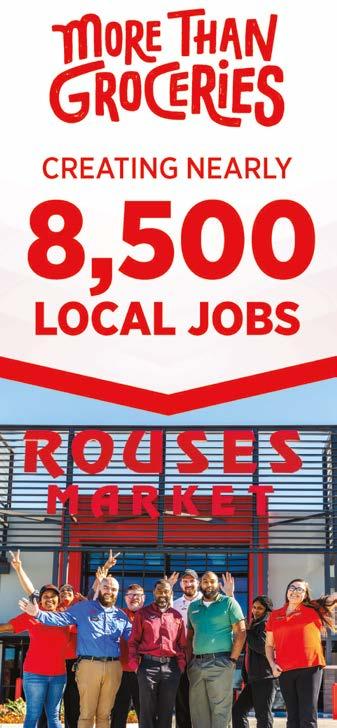
Nearly every team member from the Winn-Dixie locations we acquired chose to join us. Today, we are proud to have almost 8,500 team members across Louisiana, Mississippi and Alabama, many continuing to work in the stores they know, led by the same managers.
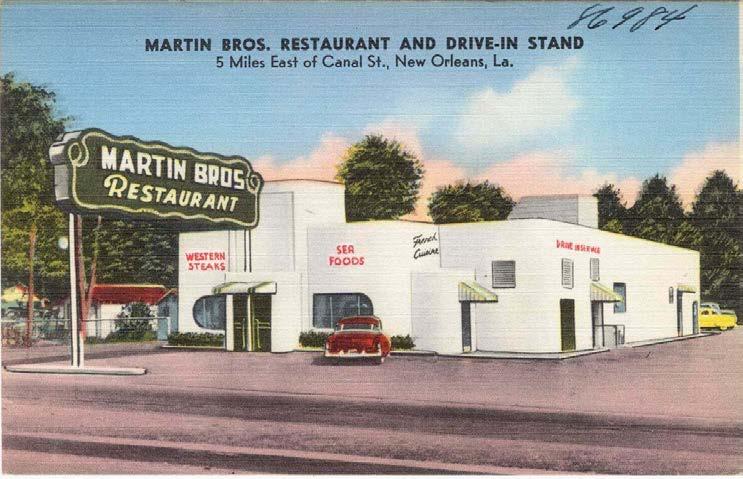

During the transition, what stood out most was how quickly our new team members fit right in with the people who had been part of the Rouses family for much longer. New friendships formed quickly, and there was genuine enthusiasm about joining a company that’s loyal to local and deeply connected to the communities it serves.
We know a great grocery store isn’t just about what’s on the shelves. It’s the team members our customers enjoy shopping with. We’re all from here. We understand our customers, our communities and what it means to take care of the places we call home.
— Lee Veillon, VP of Human Resources
ARROW-CIRCLE-RIGHT It makes sense that a sprawling restaurant like Martin Brothers would have an enormous menu to match. The 24-hour spot, a fixture from the 1940s through the 1970s at Chef Menteur Highway and Downman Road in New Orleans East, is where diners could order fried shrimp, stuffed flounder, broiled Maine lobster, seafood gumbo and oysters en brochette — at any hour. How about baked ham, prime rib, grilled chicken livers or roast turkey with oyster dressing? Not to mention 35 types of sandwiches — from fried egg and pork chop to trout and grilled cheese — and 20 different desserts. With carhop service, a lunch counter, a bar and a fancier dining room for sit-down meals, Martin Brothers was frequented just as often by truck drivers, fishermen and casual diners as by families and couples out on the town.
Bob Murret, known as “Rare on the Air” when he spins 1950s and ’60s R&B records on WWOZ radio, was one of those customers. “We ate there a lot of times after church on a Sunday. It was a nice place to eat, with great specials,” he remembers. “It was the only restaurant out there, so all the trucks and 18-wheelers that were moving through the East would also stop there to eat.”
Owned and operated by W. Clinton Martin and his brother-in-law
Louis Miramon, the restaurant had no connection to another iconic restaurant of the same name, famous for popularizing the po-boy. But you could still get a po-boy at the Eastern New Orleans Martin’s. A 1960s menu features a ham po-boy for 35 cents, roast beef for 40 cents and a combo for just 45 cents. In his 1970 book, The New Orleans Underground Gourmet, restaurant critic Richard Collin praised Martin’s po-boy selection, calling the place “good, cheap and dependable with an extensive menu covering most of the special New Orleans seafood dishes.” He also singled out the fried oysters, soft shell crabs, red beans and rice, and shrimp remoulade. “As a good all-night restaurant, a cheap quick lunch or dinner place, Martin’s is satisfactory,” Collin wrote.
Clinton Martin died in 1974 and Miramon added his name to the restaurant, which only lasted about four more years. The property was destroyed by fire in July 1978, just eight months after George Lembessis bought the restaurant. But the memories remained, summed up in the words of a 1949 article in the New Orleans Item, which called it a “flourishing, busy, thriving she-bang of a place immensely popular with hungry and thirsty people.”
— Dominic Massa
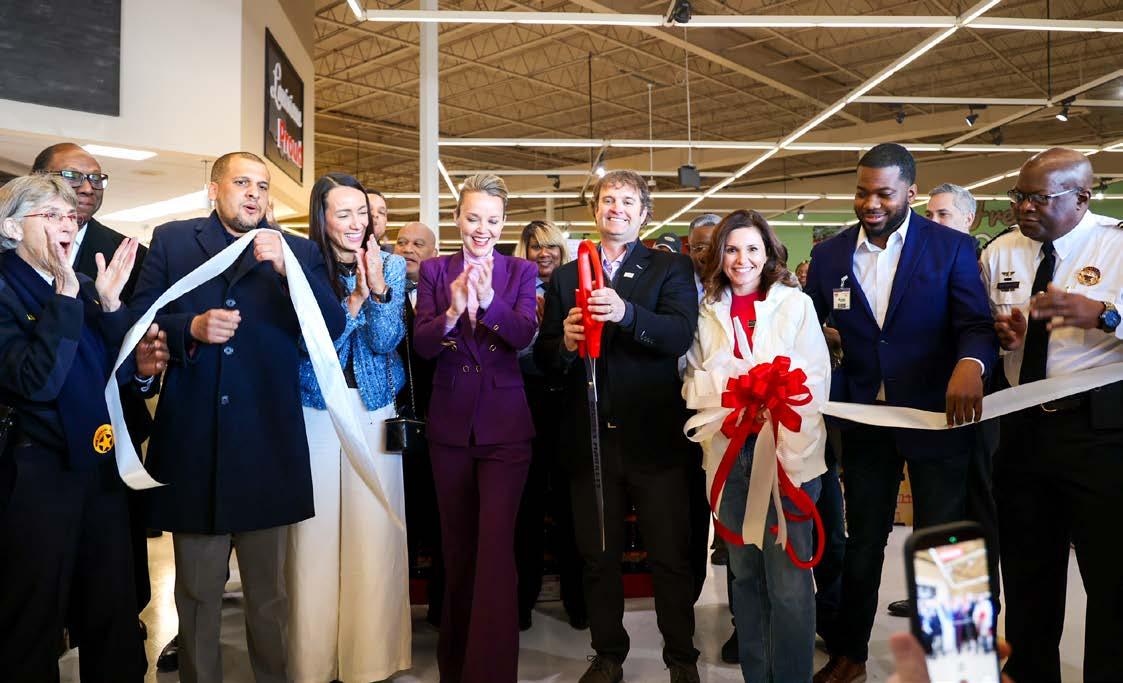
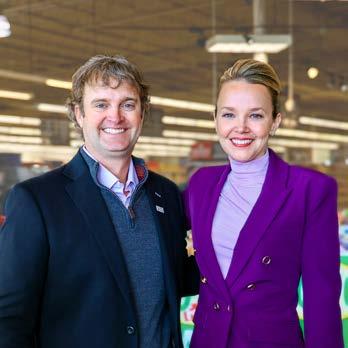
“My administration has made New Orleans East a priority from day one. You saw the immediate improvement with lighting up streets that were in the dark for so long. And the opening of Rouses Markets is a huge win for this community. Rouses has a history of stepping up when others step away. Back in 2007, when Sav-A-Center closed, Rouses filled the gap so neighborhoods weren’t left without a grocery store. That says a lot about who they are. When local businesses invest in local neighborhoods, everyone benefits. Thank you to Donny Rouse and the entire team for believing in New Orleans East.
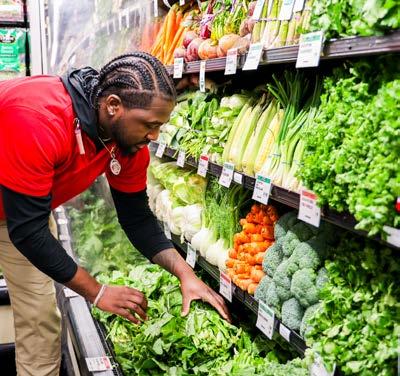
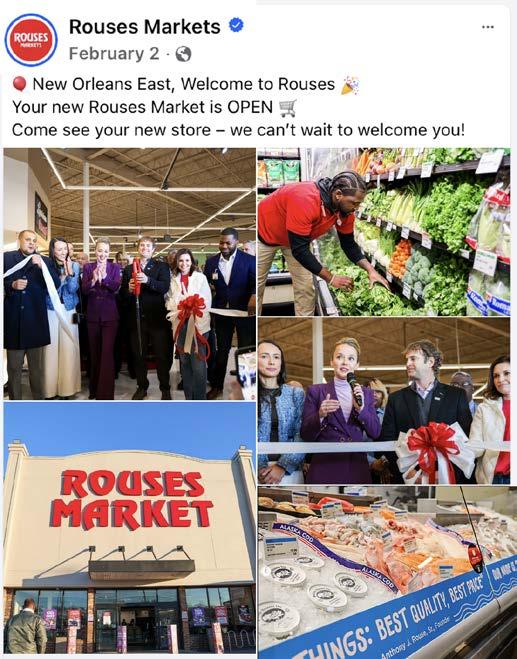
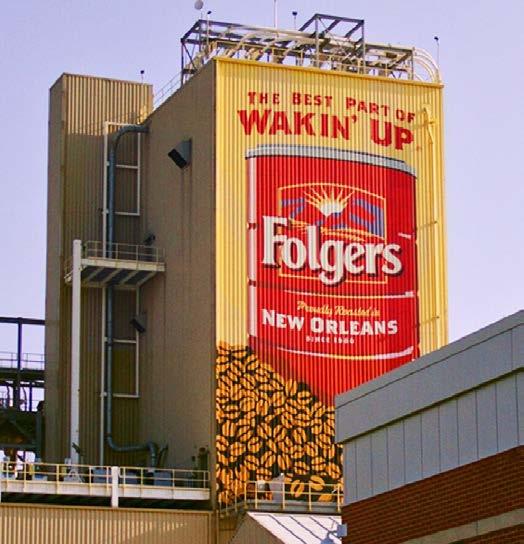
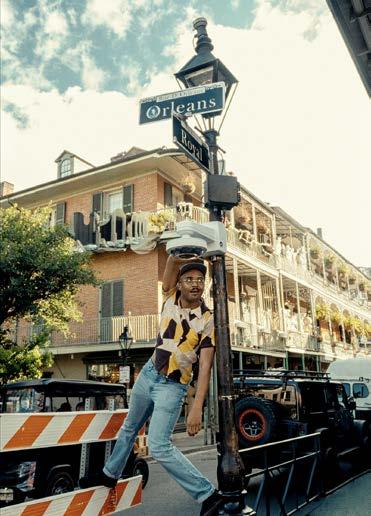
“This Rouses Market is bringing new employment opportunities to New Orleans East, with a focus on hiring locally and creating stable, accessible jobs for residents. These are the kinds of investments that strengthen communities — not just by providing services, but by creating pathways to work and advancement. Rouses Markets has consistently shown that commitment across the region, especially when other companies have chosen not to invest. We appreciate Donny Rouse and the Rouses Markets team for supporting local workers and helping New Orleans East continue to move forward. ”
Dr. Jenny Mains, New Orleans Deputy Mayor for Economic Development
ARROW-CIRCLE-RIGHT In the 1970s and early 1980s, Folgers pulled off one of the boldest stunts in advertising. The brand secretly swapped out the house coffee at some of America’s finest restaurants and replaced it with Folgers Instant. Diners sipped, nodded and complimented what they assumed was the restaurant’s usual brew, unaware they were drinking instant coffee. One of the most talked-about spots was filmed at Arnaud’s in the French Quarter.
Introduced in 1984, the Folgers jingle “The best part of wakin’ up is Folgers in your cup” quickly became one of the most recognizable lines in American advertising.
ARROW-CIRCLE-RIGHT Before he was a social media superstar, tour guide and New Orleans ambassador, Ron Orleans was a host at P.F. Chang’s. During COVID, when tourism was slow, he started making daily videos about the strange little things that New Orleanians do. “We call it a cold drink, but people not from here don’t know what that means,” he said. Or the pronunciation of Tchoupitoulas. “People in New Orleans tease people who don’t know how to pronounce it, but none of us knew how to pronounce it the first time we saw it!”
Orleans soon branched out into the city’s long and raucous history. “Being born and raised in New Orleans, I’ve seen so many amazing things, but hadn’t really wondered where they came from.” The more he learned, the more excited he became, and people really responded: Today, he has hundreds of thousands of followers across social media platforms, and even interviewed Helena Moreno during the mayoral campaign.
Among his goals is highlighting New Orleans East. “I love to show people the amazing growth and changes happening there,” Orleans said. Crime is at an all-time low, and there are world-class destinations that not even locals know about. “Things like the beautiful library on Read Boulevard, which is connected to Joe Brown Park, which just got a big renovation in terms of rides. They’re connected to Audubon Louisiana Nature Center,” he said, which features everything from a bird sanctuary to a planetarium. “And that’s just one little area. New Orleans East isn’t what some people think. It’s been thriving for quite some time now.”

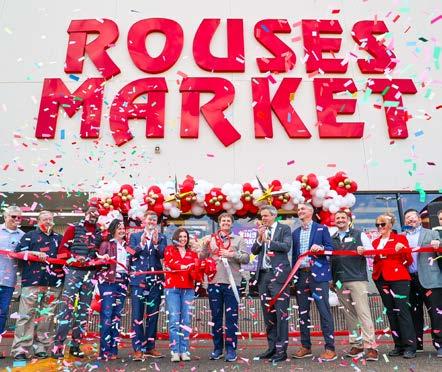
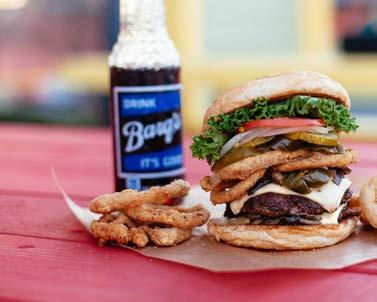
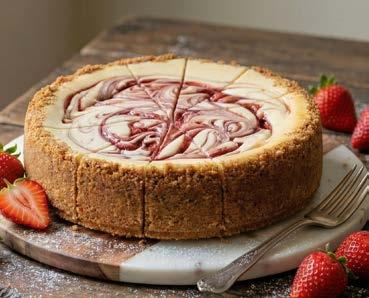

“Hattiesburg is excited to welcome Rouses Markets to the community and looks forward to the economic impact the company will have on the region. With 60,000+ cars per day traveling in front of their new store along Hardy Street, we’re confident both the company and the community will be very successful going forward.
Todd Jackson, Executive Vice President of the Area Development Partnership of Greater Hattiesburg
ARROW-CIRCLE-RIGHT Years ago, as Chris Ortego prepared to open Cotton Blues in Hattiesburg, he reconnected with local chef Shaun Davis, a Le Cordon Bleu-trained in Las Vegas pastry chef who’d been perfecting a cheesecake recipe since childhood. At its height, the restaurant served 12,000 slices a year.
Part of Shaun’s obsessive tinkering focused on one crucial detail: cooling. The faster the cheesecake chilled, the less it settled — and the lighter and fluffier the texture remained. The solution was simple yet counterintuitive: straight from the oven to the freezer. That technique proved ideal when the duo shifted from restaurant service to manufacturing. A frozen Cotton Blues cheesecake lets you slice what you need, return the rest to the freezer, and thaw each piece as you go. (Run your knife under hot water for a clean cut.)
Today, Cotton Blues Cheesecakes operates a 15,000-square-foot Cheesecake Kitchen in Waynesboro, Mississippi, where the cheesecakes are handcrafted in small batches.

ARROW-CIRCLE-RIGHT I consider myself a bit of a burger connoisseur. If there’s a burger on the menu, that’s what I’m ordering. I also manage several food allergies — which can make dining out interesting, to say the least, and usually requires a few modifications.
I knew I’d love Ed’s Burger Joint in Hattiesburg the moment I walked in. The vibe was cool and laid-back, and the place was packed on an early Tuesday evening. When I mentioned my allergies while ordering, the chef came out personally to walk me through what was safe and what wasn’t. That level of care is a big deal.
And the burger? An even bigger one. Perfectly seasoned, juicy and full of flavor. I’ll gladly volunteer to visit the new Rouses in Hattiesburg anytime if it means making a pit stop at Ed’s! — Taryn Clement, Rouses Director of E-Commerce
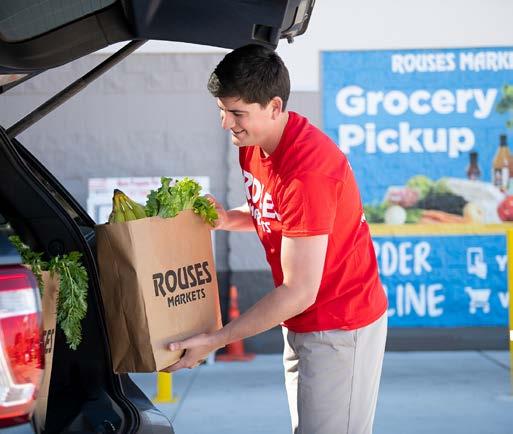
ARROW-CIRCLE-RIGHT With Rouses Curbside Pickup, you pay the same prices as in store while our personal shoppers carefully select your groceries and load them right into your car — EBT payments accepted. Download the free Rouses app for an even easier way to start shopping today. Prefer delivery? Order through our partners DoorDash, Uber Eats, Instacart or Shipt and have groceries delivered straight to your home or office — often in as little as one hour.
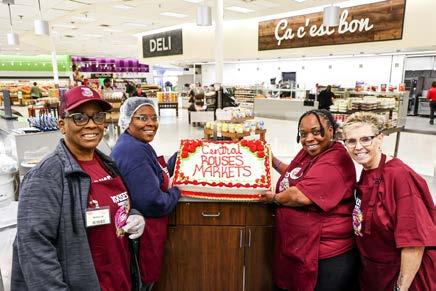
Markets store keeps jobs local, preserves access to quality groceries, and underscores the confidence businesses have in the St. Charles Parish economy.
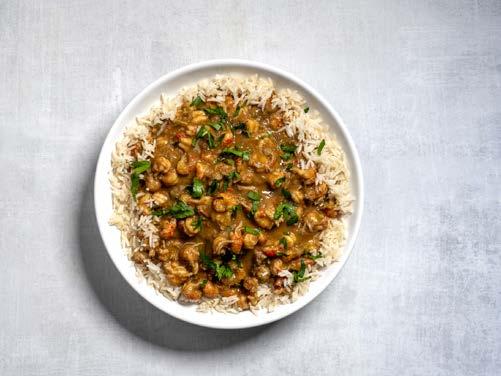
St. Charles Parish President Matthew Jewell
ARROW-CIRCLE-RIGHT River Road follows the Mississippi through communities like Destrehan, St. Rose and New Sarpy, tracing one of Southeast Louisiana’s oldest pathways. Before the interstates, it carried people, goods and commerce between New Orleans and Baton Rouge, tying river towns together along its banks.
River Road Recipes, first published in 1959 by the Junior League of Baton Rouge, began as a community fundraiser filled with recipes from families along that same stretch of river. It went on to sell more than a million copies, becoming one of Louisiana’s most beloved cookbooks. Community cookbooks are time capsules, locally produced and deeply treasured collections that reflect what was on dinner tables in each era. They rose in popularity in the mid-20th century and remain fixtures in kitchens across the Gulf Coast.
In 1971, a new committee began work on what would become River Road Recipes II: A Second Helping, published in 1976, continuing the tradition for a new generation.
Adapted from River Road Recipes I (1959)
The original recipe in River Road Recipes I included instructions for boiling crawfish. Today, most cooks begin with packaged Louisiana crawfish tails. This version, shared on the Junior League of Baton Rouge’s website, has been adapted from the original. It makes about 8 quarts, or roughly 30 servings. It freezes beautifully in airtight containers and can easily be cut in half for smaller gatherings.
WHAT YOU WILL NEED :
4½ to 5 pounds crawfish tails with fat
1 cup shortening
1 bunch celery
6 medium onions
4 cloves garlic
1 bell pepper
1 cup green onion tops
1 pimento or red bell pepper
4 teaspoons Worcestershire sauce
Salt, pepper and hot sauce to taste
:
Finely chop the celery, onions, garlic, bell pepper, green onions and pimento.
Heat shortening in a large skillet or pot and cook vegetables in shortening until tender. Add Worcestershire sauce and seasonings, and blend well. Stir in crawfish tails with the fat. Cook 15 to 20 minutes, taking care not to overcook.
Remove from heat and let stand about 30 minutes to allow the flavors to come together. Serve over rice.
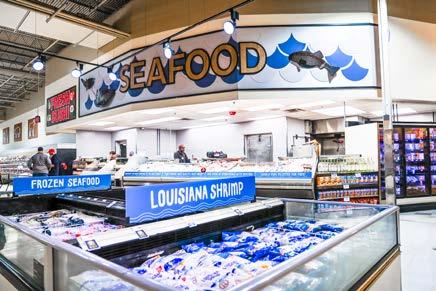
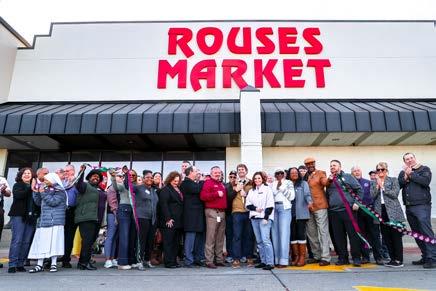
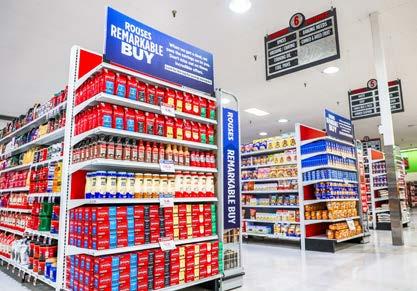

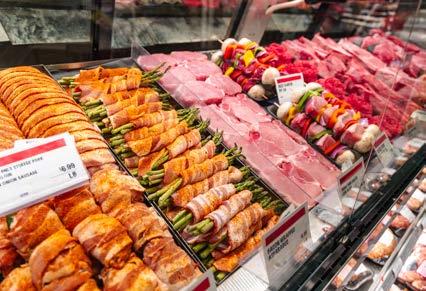




I want to express my sincere appreciation to Rouses Markets for their decision to invest in our city and expand their brand here. Their commitment reflects confidence in the City of Central’s future and in the people who call this community home.
I am especially grateful that Rouses chose to retain the employees of the former retailer. That decision preserved jobs, protected families and demonstrated respect for the workforce that has long served our residents with pride.
What makes Rouses particularly special is their ability to blend the familial culture of a small, family-owned business with the product selection, operational strength and brand recognition of a national chain. That balance matters. It means our residents receive high-quality offerings and competitive pricing, while still feeling the personal connection that defines strong local communities.
Mayor Wade Evans, Central
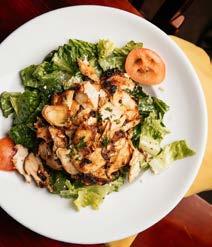

Café Phoenicia, locations in Zachary, Central and Denham Springs
ARROW-CIRCLE-RIGHT
The menu runs from chicken shawarma and gyros to kabobs and lamb, with a full spread of traditional Mediterranean starters like mujadara, a lentiland-rice dish topped with crispy caramelized onions, and stuffed grape or cabbage leaves filled with seasoned rice and ground beef. John Makeri and Menam Abdalla opened their first restaurant in Zachary in 2002, before expanding to the City of Central and Denham Springs.
Before Zapp’s became a national snack brand, it was a hometown operation in Gramercy, Louisiana, founded in 1985 by Ron Zappe. A fan of Cajun cuisine, he set out to bring those bold Louisiana flavors to potato chips. At a time when kettle-cooked chips were still a novelty, his thick, peanut oil-fried chips stood apart from national brands. Zappe’s first chip creation, Spicy Cajun Crawtator — often credited as the nation’s first spicy Cajun chip — delivered the unmistakable taste of a crawfish boil. Following Zappe’s death in 2010, the company was acquired by Utz the following year, but the flavor remains distinctively Louisiana.
ZAPP’S CAJUN CRAWTATOR-CRUSTED CATFISH
Makes 4-6 servings
WHAT YOU WILL NEED :
1 cup whole milk
1 large egg
½ teaspoon hot sauce
1½ cups all-purpose flour
3 tablespoons Creole seasoning
4 catfish fillets (about 5-6 ounces each)
1 (5-ounce) bag Zapp’s Spicy Cajun Crawtator Potato Chips, crushed
Salt and freshly ground black pepper, to taste
Vegetable oil, for frying
Lemon wedges, for serving
HOW TO PREP :
In a shallow dish, whisk together the milk, egg and hot sauce. Set aside. In a second shallow dish, combine the flour and Creole seasoning. Place the crushed potato chips in a third shallow dish. Dredge each catfish fillet in the seasoned flour, shaking off any excess. Dip in the egg wash, allowing the excess to drip off, then press firmly into the crushed chips to coat both sides.
Pour vegetable oil into a large skillet to a depth of about ½ inch and heat over medium-high until shimmering (about 350°F).
Fry the fish 3-4 minutes per side, or until golden brown and cooked through. Transfer to a paper towel-lined plate and serve immediately. Garnish with lemon wedges.
“Rouses Markets brings more than just products and services. By allowing our citizens to shop locally and hiring our citizens for their workforce, it strengthens our local economy and adds to the character of our community. What makes a business truly special is its connection to the community it serves. We are proud to welcome a company that values quality, service and community involvement. What makes Franklinton strong isn’t just our buildings or roads; it’s our people and partnership. When businesses succeed, our community succeeds, and when local leaders and entrepreneurs work together, great things happen. We’re proud to have you here, and we look forward to seeing Rouses Markets grow and thrive for many years to come.
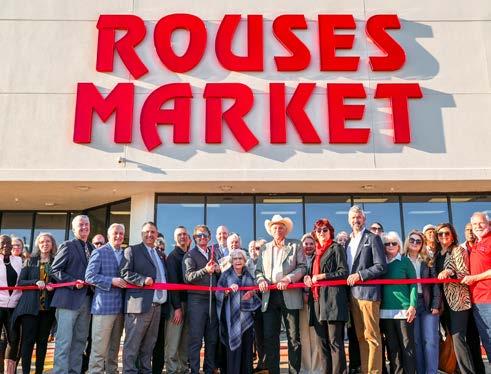
“Rouses Markets represents the kind of investment that strengthens our economy while improving quality of life for our residents. When families shop at Rouses, those dollars stay closer to home — supporting local jobs, strengthening nearby businesses and helping our parish grow. We are grateful to Rouses Market for choosing Franklinton, for hiring locally, and for investing in Washington Parish. ”
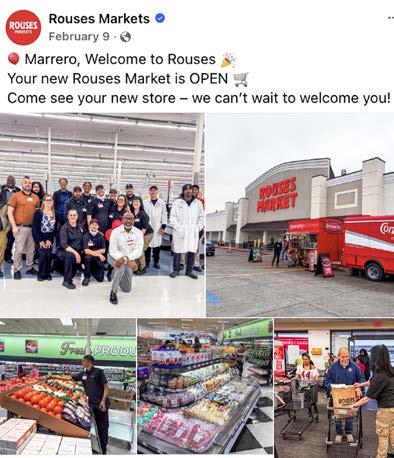
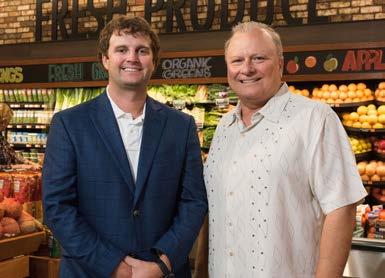
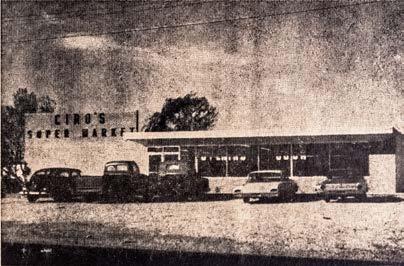
Mayor Darwin Sharp, Franklinton
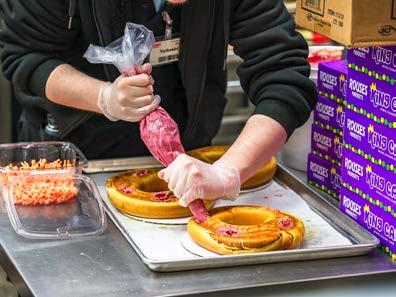
— D’Ann Davis, Washington Parish Economic Development Foundation
WASHINGTON PARISH
ARROW-CIRCLE-RIGHT Franklinton sits in Washington Parish, an area once heavily forested with longleaf pine that became part of the broader Gulf South timber economy in the late 19th and early 20th centuries. Like parts of Mississippi’s Pine Belt, Washington Parish was shaped by large-scale logging operations, sawmills and turpentine camps, with rail lines built specifically to move timber out of the forests and into growing markets.
Juneau’s Sandwich Shop, Marrero
ARROW-CIRCLE-RIGHT You can get the weenie sandwich with its secret sauce on French bread, a hamburger bun or a hot dog bun. It’s one of the shop’s most ordered sandwiches, right alongside the roast beef and shrimp po-boys. Nina and Chad Romaguera bought Juneau’s from the original owners around 21 years ago and wisely kept that sandwich on the menu.

Some of my best childhood memories are from Marrero. This was mostly around 4th Street — anybody that’s from that area will know where 4th Street is — and we spent so many holidays and weekends there. It was always about food and family. We used to go visit my Uncle Jake. His son was Ciro, who was my dad’s partner in the first store that we ever opened, in Houma.

My dad’s last living sister died a couple of years ago; I wish she were still alive. She always gave me great advice and had great stories of the past that I would enjoy listening to. She would be so proud of us having a store in that area, Marrero and Westwego.
I remember a big Nicholson & Loup grocery store there, years and years ago. We lived not far from it, and could walk to it. And I remember entering that store — it was so big, and they were so busy in there — and I would say to myself, ‘One day, we’re going to have a store like this.’ I didn’t know one day we’d have 76 of them! At the time we were just hoping for one.
Donald Rouse
“Marrero” was the 1991 hit from MC Thick that really blew up, garnering acclaim and, for a time, an Atlantic Records contract for the local artist.
Born Stewart Harris, Thick delivered a gritty, prideful boast of his hometown, sampling NWA’s reality rap anthem “Boyz-n-the Hood” and the line “Cruisin’ down the street…”
“What the fellas be yellin’?” Thanks to Thick, the answer will always be “Marrero.”
The song showed up during what were probably the halcyon days of early ’90s local rap, when our city was finding its voice, and local rap songs that gained steam in the streets were played on the radio. Thick’s anthem from “’cross the river” differed from the bounce-heavy sounds that were taking over the local scene, and demonstrated that rhyming didn’t just exist in the inner city but in the suburbs as well.

Q93’s Roland “DJ Ro” Watson has ruled the city’s airwaves for over 35 years, and has played every local hit that’s come down the pike; he says that Thick’s song was “real rap and the official West Bank anthem, regardless of what city you were from.”
Watson also contends that, “while there were other West Bank rappers, Tim Smooth and Joe Blakk, Thick’s anthem made it personal — hardcore, real and with neighborhood identity.”
Marrero the place also produced rap stars BustDown and G Slimm, but Thick is the one who made us want to be from Marrero.
And while the artists of the 9th and 17th wards and of the various neighborhoods and housing projects had proudly proclaimed their roots, this song forced the region to recognize this West Bank census designated place and forced us to know MC Thick’s reality.
Streets like Ames, Barataria, 4th Street and Lapalco…if you’ve driven these roads, you’ve been to Marrero. It’s not just a stop on the way to Avondale or Waggaman.
As for relevance today, Watson says, “A quick spin of the hit on a West Bank gig still gets a reaction.”
So what MC Thick was yelling back then is all the more applicable today: We’re here, this is home, we’re Marrero.
— LeBron Joseph
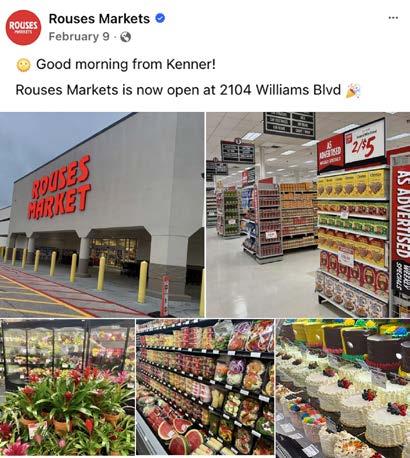
“Kenner is home to one of the most vibrant and fast-growing Hispanic populations in Louisiana, with nearly one in three residents identifying as Hispanic. With the opening of a second Rouses Market in Kenner, families will have even greater access to the foods and ingredients they know and love close to home. For many Hispanic families, having grocery stores that reflect the people who live there really matters.
Ernesto Alejandro Schweikert,
President & CEO, Telemundo New Orleans
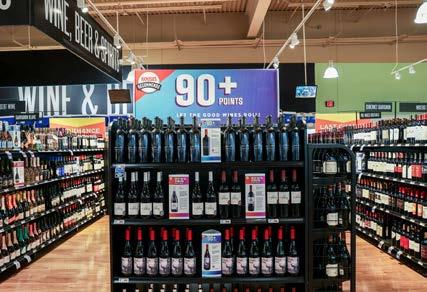
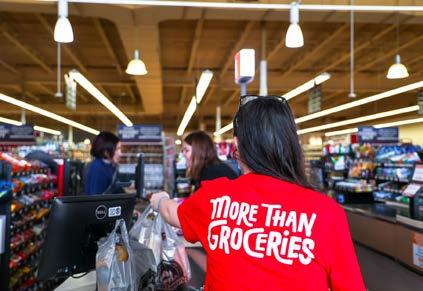
Our community is thrilled to welcome Rouses’ expansion in St. Tammany. Having Louisiana-based businesses grow here is important to us. With Rouses’ expansion comes new jobs for our residents, increased access to quality food and a stronger foundation for our economy.
Mike Cooper, St. Tammany Parish President
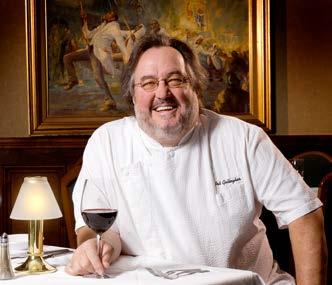
ARROW-CIRCLE-RIGHT Pat Gallagher has helped define North Shore dining for more than four decades. A Covington native, Pat opened his first restaurant, The Winner’s Circle, in Folsom in 1978, as a nod to the area’s horse country roots. Today, his growing collection includes Gallagher’s Grill and Pat Gallagher’s 527, home to dishes like Oysters Pablo, along with Gallagher’s on Front Street and Pat’s Rest Awhile. A longtime fixture at the New Orleans Jazz & Heritage Festival, Gallagher remains as committed to his community as he is to the food that built his name.
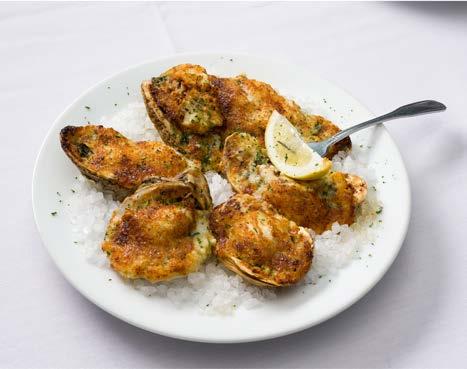
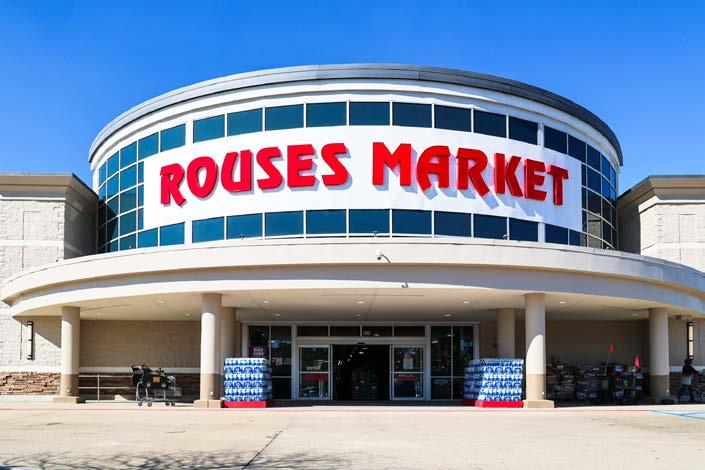
ARROW-CIRCLE-RIGHT Food writer Ian McNulty of The Times-Picayune | New Orleans Advocate has already proclaimed John Besh’s new French bistro, Feliciana, next-level Northshore dining. Both Feliciana and Paradise, the name of the related lounge, are drawn from settings in the work of novelist Walker Percy, who long made Covington his home. McNulty says the two “together raise the level of style and sophistication for Northshore dining.”
But the Northshore has been building toward this moment for decades. When The Dakota opened in 1990, it was one of the North Shore’s first true whitetablecloth restaurants. After decades on North U.S. Highway 190, Executive Chef Kim Kringlie relocated the restaurant to East Boston Street, settling into the heart of Downtown Covington, where dinner is rarely more than a short walk away.
The Hampshire, which debuted in September 2025, has quickly made its mark as a Northshore standout. Executive Chef Ryan Gall and General Manager Jonathan Cimino, who first worked together at Pardos in Mandeville, carry forward a lineage familiar to longtime diners.
Pardos helped set the standard for fine dining in the region alongside The
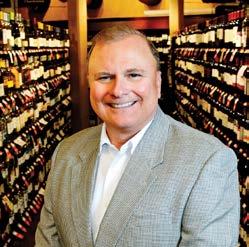

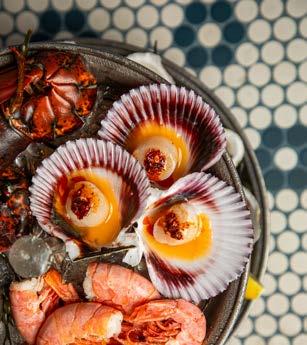
Dakota, shaping expectations for food, service and atmosphere for decades.
Today, the scene reflects a wide range of global influences. At Tavi, Chef Fariz Choumali brings Levantine flavors to the table, drawing on his time in the kitchen at Shaya in New Orleans.
DiCristina’s Italian and Seafood Restaurant leans into the Sicilian roots of co-founders Phillip and Josie DiCristina, with family recipes anchoring the menu. At Del Porto Ristorante, husband and wife chefs David and Torre Solazzo continue a legacy of polished Italian cooking that earned Best New Restaurant honors from New Orleans Magazine and multiple James Beard semifinalist nods.
Housed in a historic train depot, Lola showcases Gulf flavors with confidence under the direction of chefs Keith and Nealy Frentz, once crowned King and Queen of Louisiana Seafood.
Chef Austin Kirzner has succeeded Alex Harrell as executive chef of The Gloriette inside the Southern Hotel.
“Our first store in St. Tammany was in Covington. A friend of mine named Bill Kingsmill had a shopping center there, and he contacted me. There was a Delchamps there, and it closed, and he asked me if we would be interested in opening a Rouses there. Of course we’re always interested, but that was a big jump for us at the time! We were just down in the Houma area. That was our first store on the North Shore.
We knew we could do more in the community, so we started looking around. Al Copeland had property near the WinnDixie that was in Mandeville then. So we bought six or seven acres from him and built our own store, right there at the exit off the Causeway. Bill partnered with us to build out the rest of the shopping center beside it. Then we went to Slidell, on a property right next to where the old Schwegmann’s was. And it was, and is, a fantastic store as well.
We’ve seen a lot of these national chain stores come and go in our time. Our competition isn’t the local independent store with a couple of locations. Our competition is the national chain stores like Walmart. We are a small operator compared to them, but we fight like we are just as big as them, winning customers a little at a time. They’re tough operators, and we know we’ve got to keep up, pricewise — and when you factor in our sales and everyday prices, we’re as cheap as them, if not cheaper. We don’t take the easy way out. It’s hard work, but that’s part of giving our customers the best experience possible. ”
— Donald Rouse